
CAPE CANAVERAL, Fla. – Preparations are under way to rotate a Pratt and Whitney Rocketdyne space shuttle main engine, or SSME, inside the SSME Processing Facility, the engine shop at NASA’s Kennedy Space Center in Florida. The engine is one of the last SSMEs remaining at Kennedy and is being prepared for shipment to NASA's Stennis Space Center in Mississippi. The first two groups of engines were shipped from Kennedy to Stennis in November 2011 and January 2012 the remaining engines are scheduled to depart on April 9. Altogether, 15 shuttle-era engines will be stored at Stennis for reuse on NASA’s Space Launch System heavy-lift rocket, under development. Photo credit: NASA/Tim Jacobs
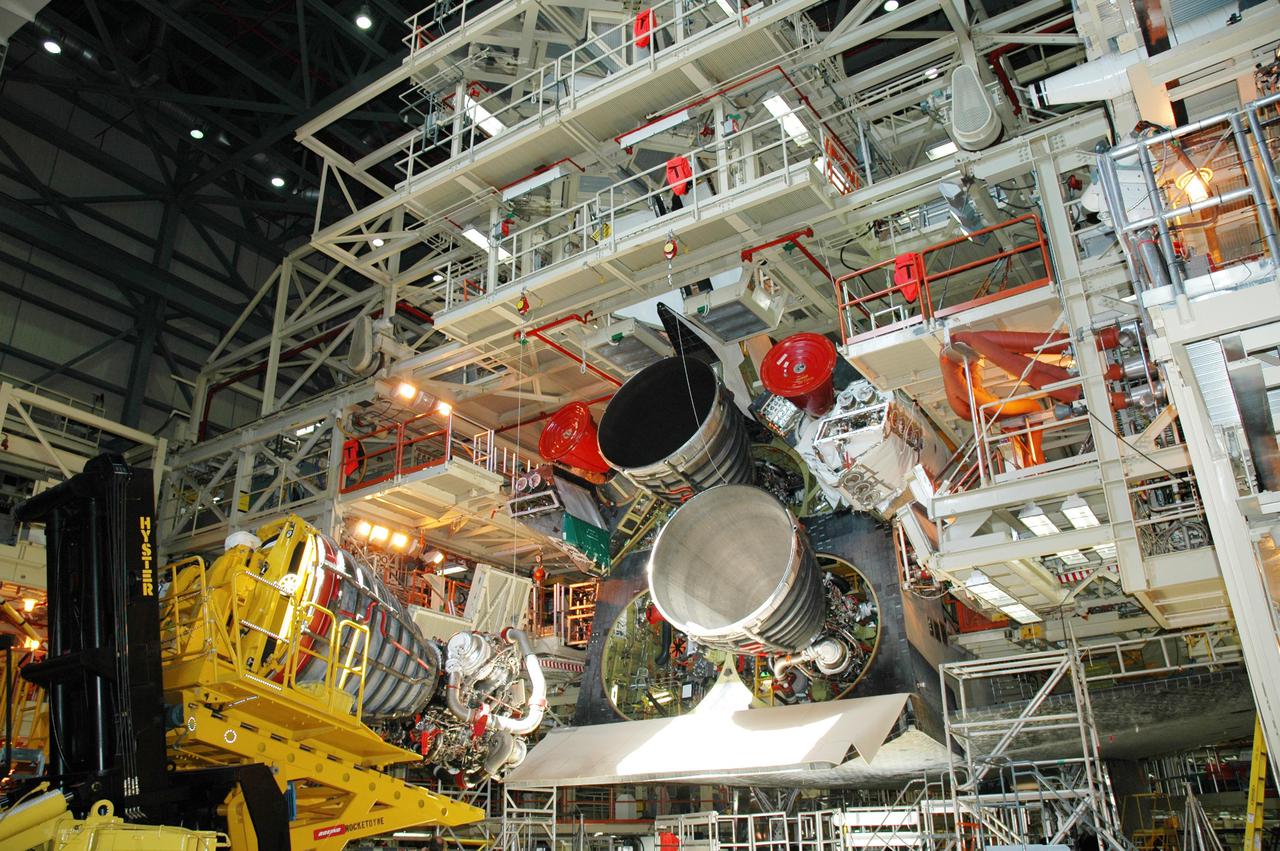
KENNEDY SPACE CENTER, FLA. - The third Space Shuttle Main Engine (SSME) arrives in the Orbiter Processing Facility for installation on Discovery. Discovery is designated as the Return to Flight vehicle for mission STS-114. Recent improvements to the SSME include the introduction of redesigned high-pressure turbopumps into the SSME fleet. The new pumps are designed and built by Pratt and Whitney at West Palm Beach, Fla. SSMEs and the Pratt and Whitney turbopumps are tested at Stennis Space Center in Mississippi. Engines and engine components are delivered to Kennedy Space Center to be prepared for flight.
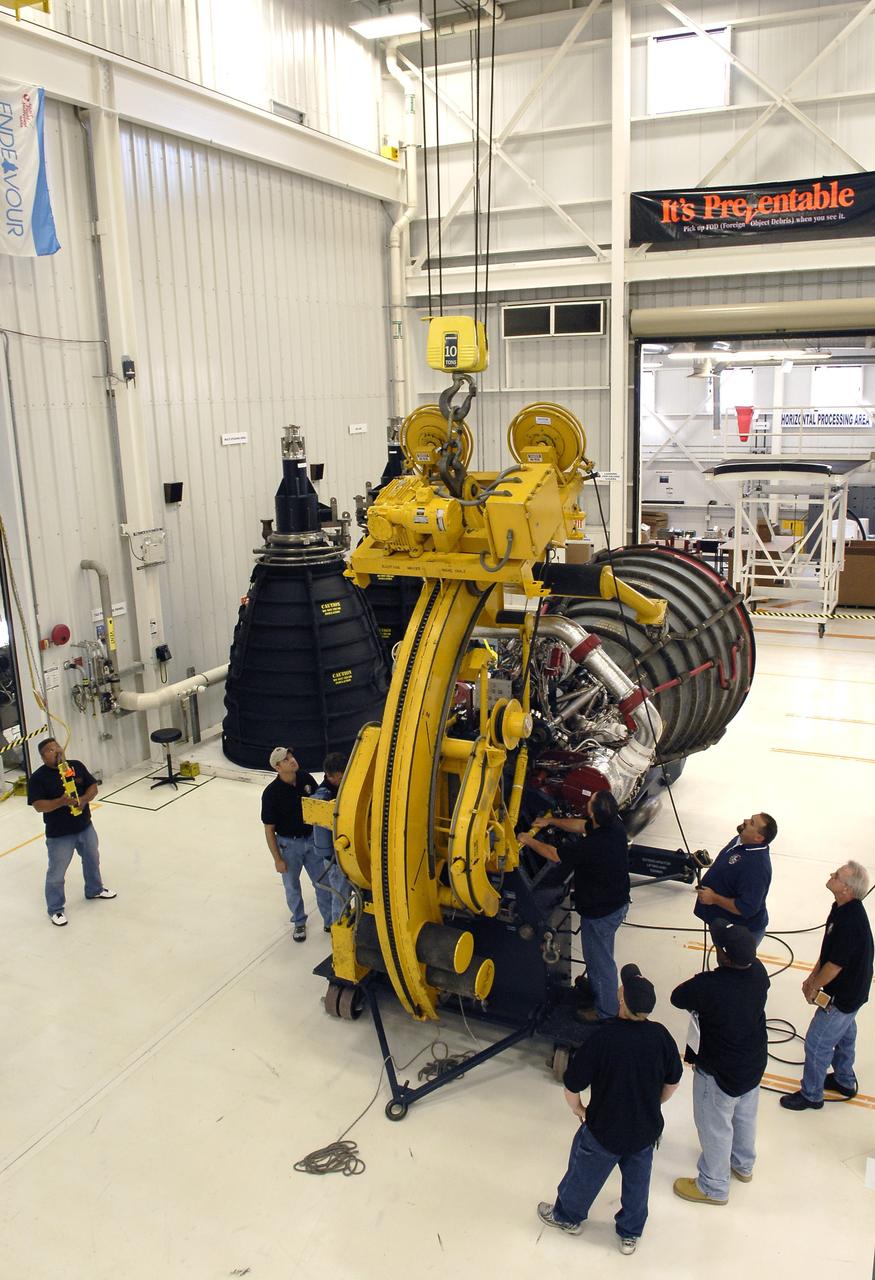
CAPE CANAVERAL, Fla. – Preparations are under way for the crane to release an engine-handling device used to rotate a Pratt and Whitney Rocketdyne space shuttle main engine, or SSME, into a horizontal position inside the SSME Processing Facility, the engine shop at NASA’s Kennedy Space Center in Florida. The engine is secured on a portable workstand before being transferred into a transportation canister. The engine is one of the last SSMEs remaining at Kennedy and is being prepared for shipment to NASA's Stennis Space Center in Mississippi. The first two groups of engines were shipped from Kennedy to Stennis in November 2011 and January 2012 the remaining engines are scheduled to depart on April 9. Altogether, 15 shuttle-era engines will be stored at Stennis for reuse on NASA’s Space Launch System heavy-lift rocket, under development. Photo credit: NASA/Tim Jacobs
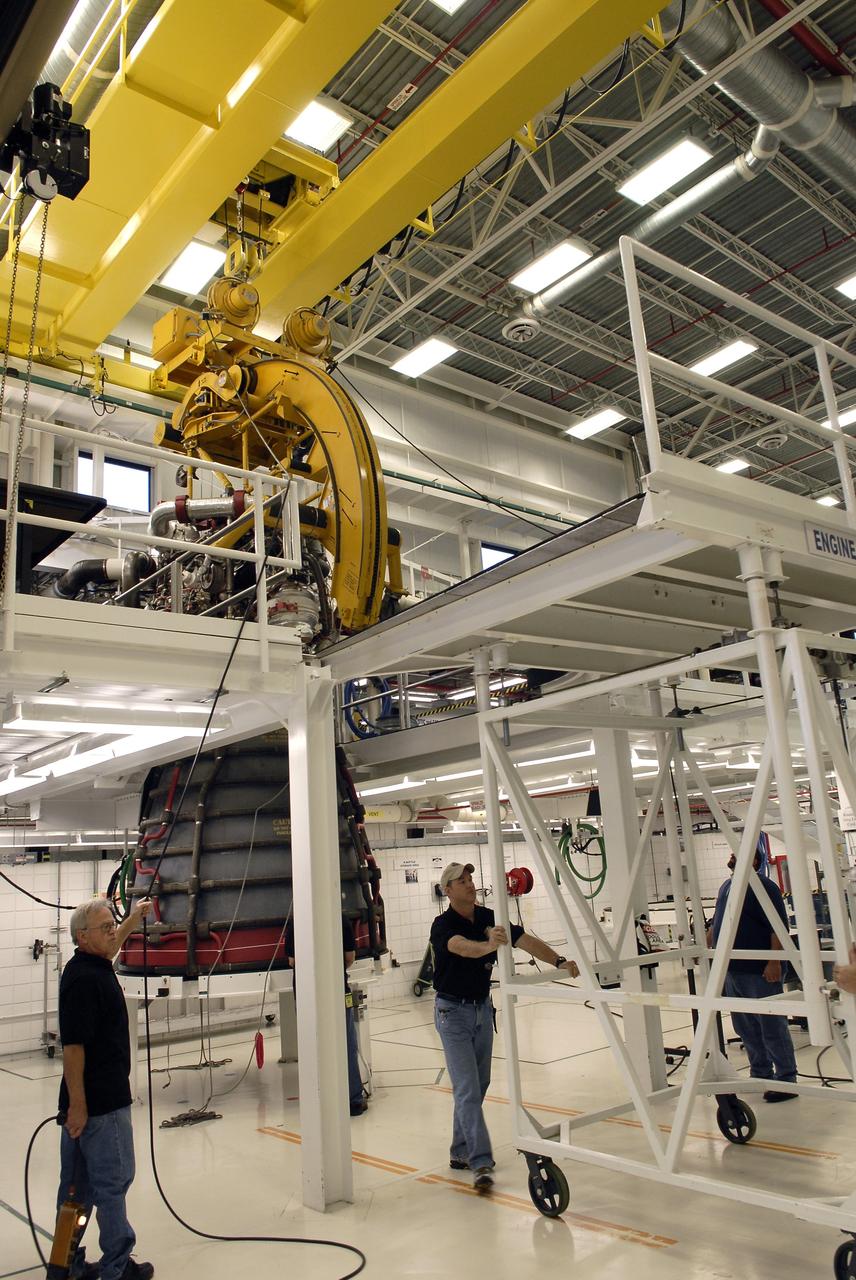
CAPE CANAVERAL, Fla. – Technicians move the work platforms away from a Pratt and Whitney Rocketdyne space shuttle main engine, or SSME, hanging above the floor inside the SSME Processing Facility, the engine shop at NASA’s Kennedy Space Center in Florida. Operations are under way to rotate the engine into a horizontal position on a portable workstand. The engine is one of the last SSMEs remaining at Kennedy and is being prepared for shipment to NASA's Stennis Space Center in Mississippi. The first two groups of engines were shipped from Kennedy to Stennis in November 2011 and January 2012 the remaining engines are scheduled to depart on April 9. Altogether, 15 shuttle-era engines will be stored at Stennis for reuse on NASA’s Space Launch System heavy-lift rocket, under development. Photo credit: NASA/Tim Jacobs
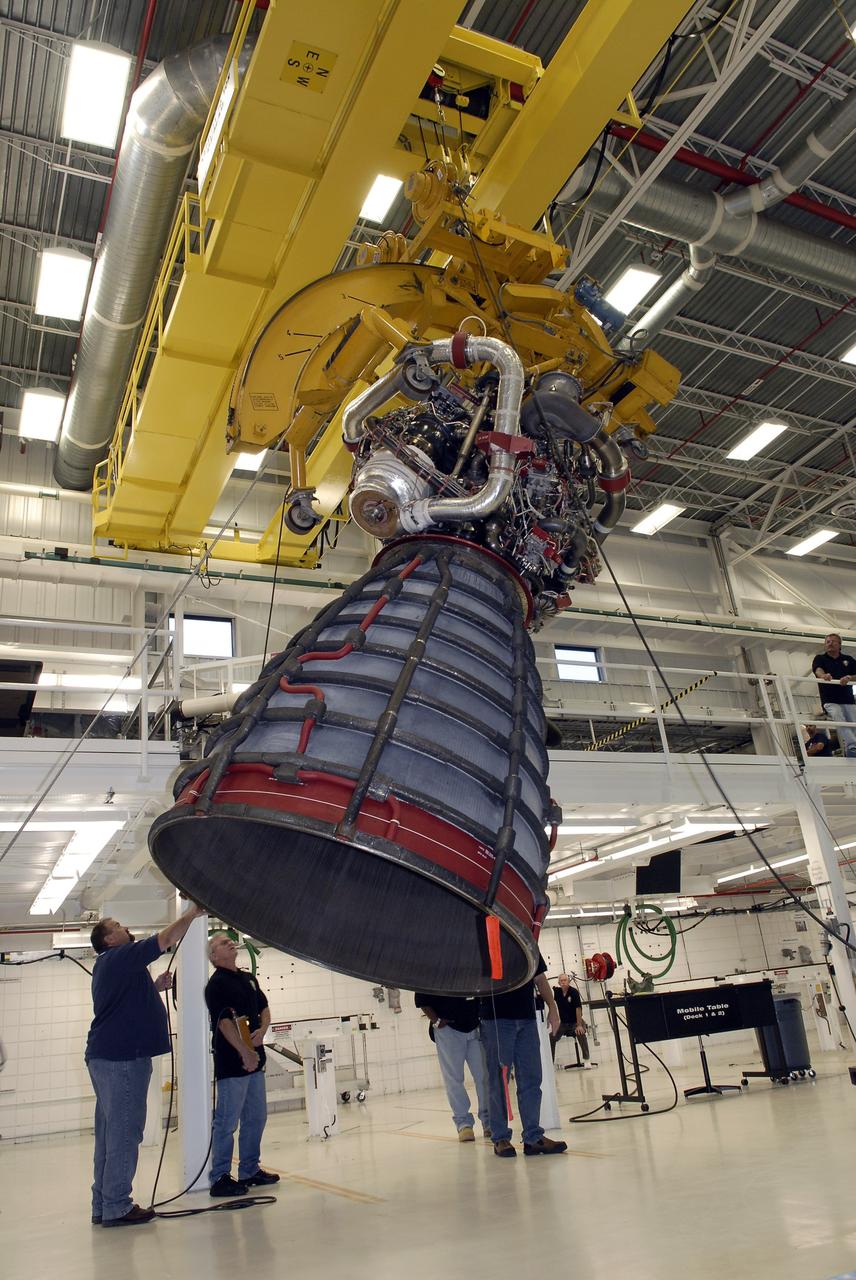
CAPE CANAVERAL, Fla. – A Pratt and Whitney Rocketdyne space shuttle main engine, or SSME, is rotated into a horizontal position with the aid of an engine-handling device attached to a crane inside the SSME Processing Facility, the engine shop at NASA’s Kennedy Space Center in Florida. The engine will be placed in a horizontal position on a portable workstand. The engine is one of the last SSMEs remaining at Kennedy and is being prepared for shipment to NASA's Stennis Space Center in Mississippi. The first two groups of engines were shipped from Kennedy to Stennis in November 2011 and January 2012 the remaining engines are scheduled to depart on April 9. Altogether, 15 shuttle-era engines will be stored at Stennis for reuse on NASA’s Space Launch System heavy-lift rocket, under development. Photo credit: NASA/Tim Jacobs
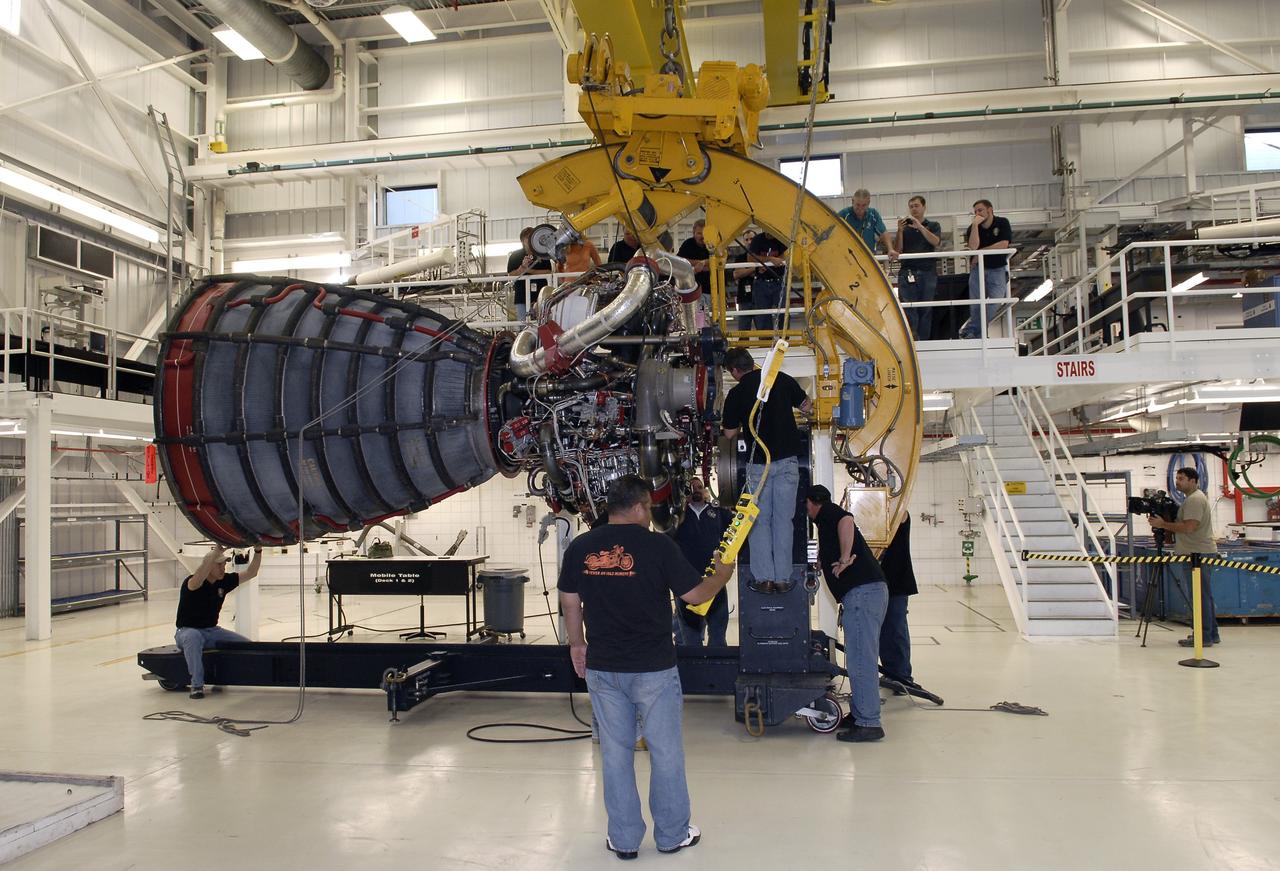
CAPE CANAVERAL, Fla. – Technicians lower a Pratt and Whitney Rocketdyne space shuttle main engine, or SSME, onto a portable workstand inside the SSME Processing Facility, the engine shop at NASA’s Kennedy Space Center in Florida. The engine was rotated into a horizontal position with the aid of an engine-handling device attached to a crane. The engine is one of the last SSMEs remaining at Kennedy and is being prepared for shipment to NASA's Stennis Space Center in Mississippi. The first two groups of engines were shipped from Kennedy to Stennis in November 2011 and January 2012 the remaining engines are scheduled to depart on April 9. Altogether, 15 shuttle-era engines will be stored at Stennis for reuse on NASA’s Space Launch System heavy-lift rocket, under development. Photo credit: NASA/Tim Jacobs
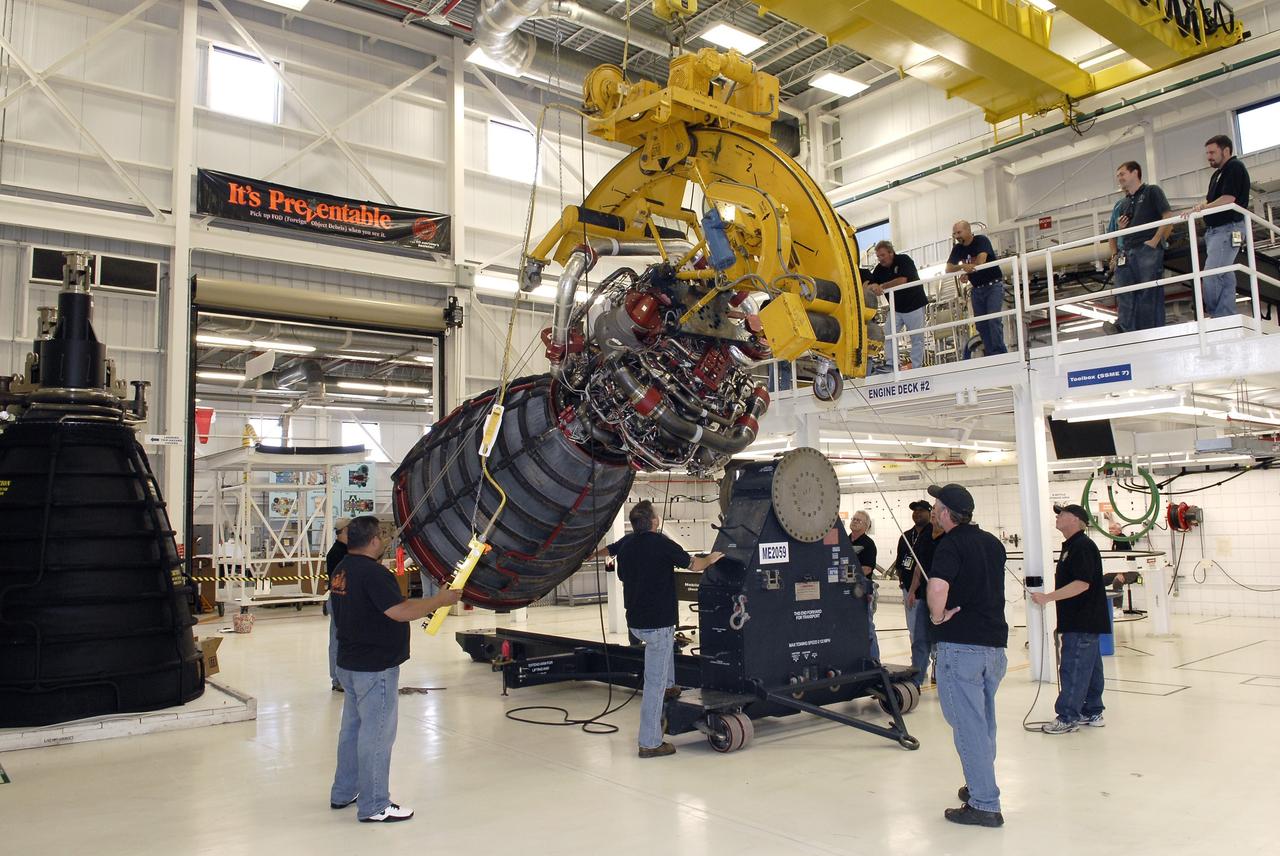
CAPE CANAVERAL, Fla. – Technicians move a portable workstand under a Pratt and Whitney Rocketdyne space shuttle main engine, or SSME, inside the SSME Processing Facility, the engine shop at NASA’s Kennedy Space Center in Florida. The engine is being rotated into a horizontal position with the aid of an engine-handling device attached to a crane. The engine is one of the last SSMEs remaining at Kennedy and is being prepared for shipment to NASA's Stennis Space Center in Mississippi. The first two groups of engines were shipped from Kennedy to Stennis in November 2011 and January 2012 the remaining engines are scheduled to depart on April 9. Altogether, 15 shuttle-era engines will be stored at Stennis for reuse on NASA’s Space Launch System heavy-lift rocket, under development. Photo credit: NASA/Tim Jacobs
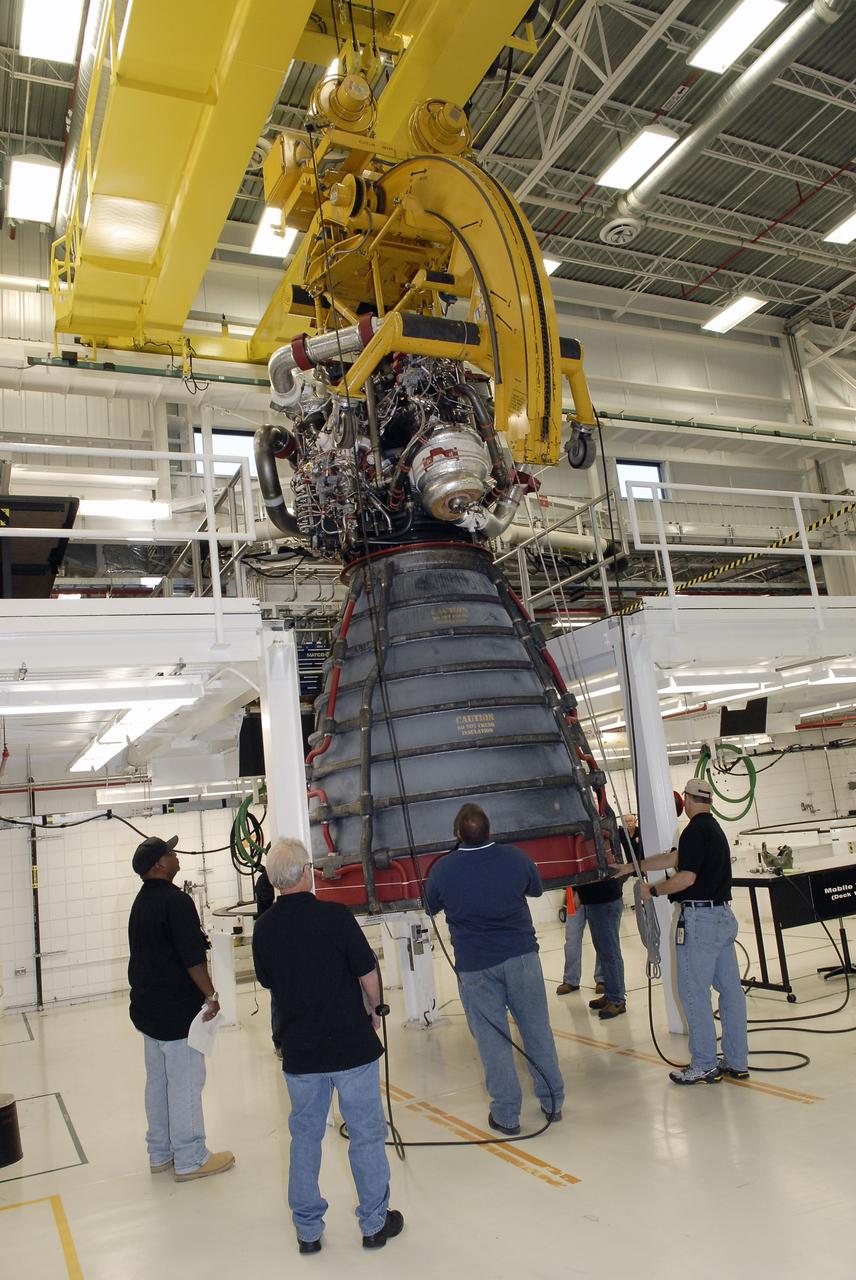
CAPE CANAVERAL, Fla. – A crane moves a Pratt and Whitney Rocketdyne space shuttle main engine, or SSME, across the floor away from the work platforms inside the SSME Processing Facility, the engine shop at NASA’s Kennedy Space Center in Florida. Operations are under way to rotate the engine into a horizontal position on a portable workstand. The engine is one of the last SSMEs remaining at Kennedy and is being prepared for shipment to NASA's Stennis Space Center in Mississippi. The first two groups of engines were shipped from Kennedy to Stennis in November 2011 and January 2012 the remaining engines are scheduled to depart on April 9. Altogether, 15 shuttle-era engines will be stored at Stennis for reuse on NASA’s Space Launch System heavy-lift rocket, under development. Photo credit: NASA/Tim Jacobs
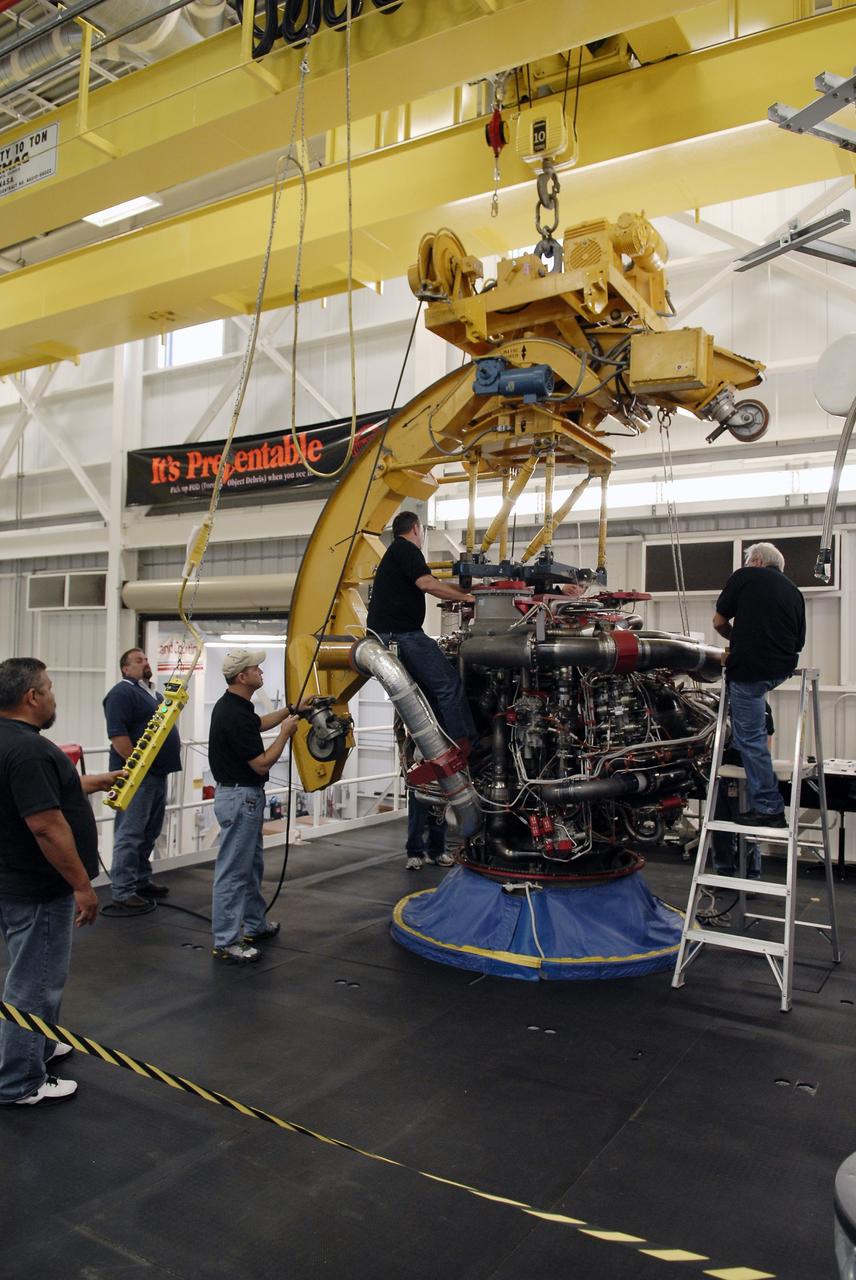
CAPE CANAVERAL, Fla. – Technicians attach a Pratt and Whitney Rocketdyne space shuttle main engine, or SSME, to an engine-handling device inside the SSME Processing Facility, the engine shop at NASA’s Kennedy Space Center in Florida. Preparations are under way to rotate the engine into a horizontal position on a portable workstand. The engine is one of the last SSMEs remaining at Kennedy and is being prepared for shipment to NASA's Stennis Space Center in Mississippi. The first two groups of engines were shipped from Kennedy to Stennis in November 2011 and January 2012 the remaining engines are scheduled to depart on April 9. Altogether, 15 shuttle-era engines will be stored at Stennis for reuse on NASA’s Space Launch System heavy-lift rocket, under development. Photo credit: NASA/Tim Jacobs
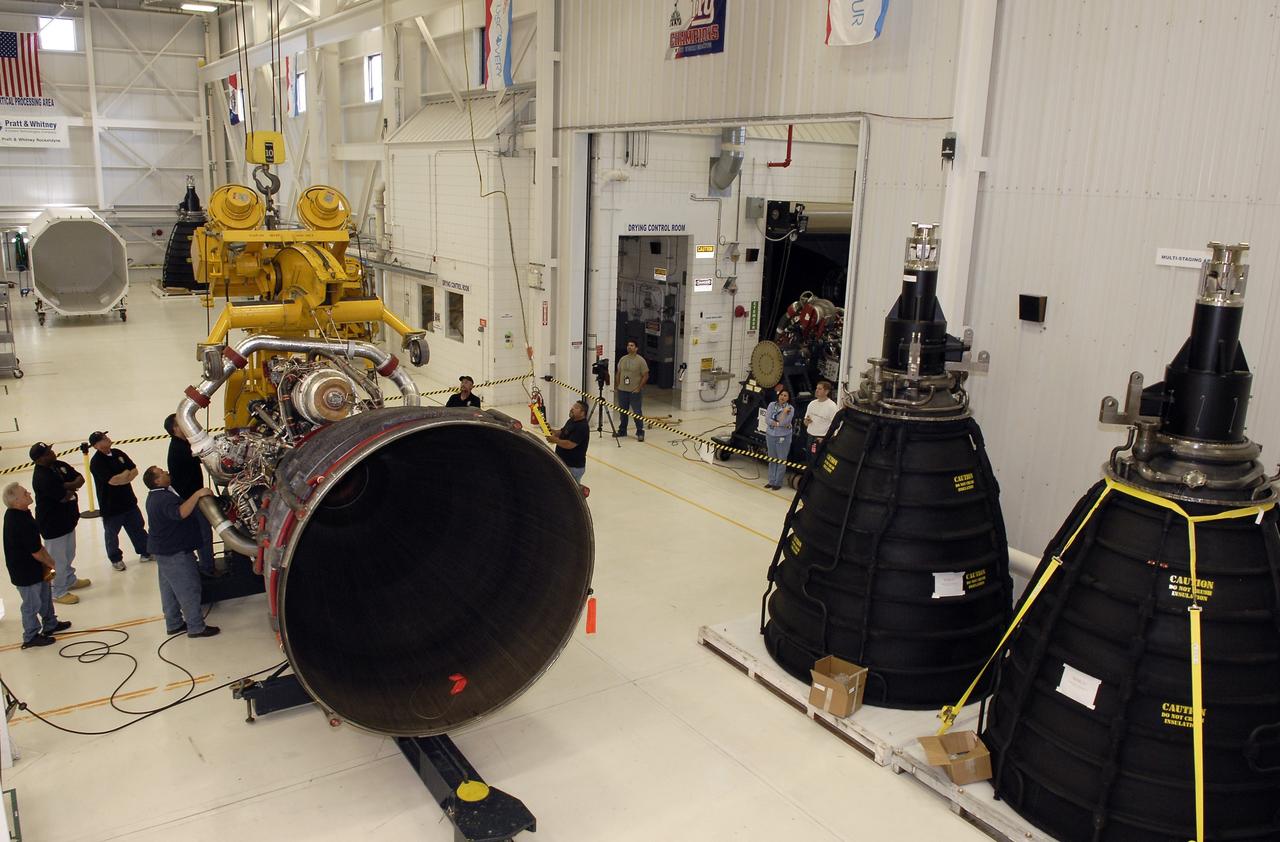
CAPE CANAVERAL, Fla. – Technicians release a crane from an engine-handling device and the Pratt and Whitney Rocketdyne space shuttle main engine, or SSME, that it rotated into a horizontal position inside the SSME Processing Facility, the engine shop at NASA’s Kennedy Space Center in Florida. The engine is secured on a portable workstand before being transferred into a transportation canister. The engine is one of the last SSMEs remaining at Kennedy and is being prepared for shipment to NASA's Stennis Space Center in Mississippi. The first two groups of engines were shipped from Kennedy to Stennis in November 2011 and January 2012 the remaining engines are scheduled to depart on April 9. Altogether, 15 shuttle-era engines will be stored at Stennis for reuse on NASA’s Space Launch System heavy-lift rocket, under development. Photo credit: NASA/Tim Jacobs

CAPE CANAVERAL, Fla. – An engine-handling device is lowered to the floor of the SSME Processing Facility, the engine shop at NASA’s Kennedy Space Center in Florida. The fixture was used to rotate the Pratt and Whitney Rocketdyne space shuttle main engine, or SSME, at right, into a horizontal position. This engine and the one at left are secured on portable workstands before being transferred into transportation canisters. The engine is one of the last SSMEs remaining at Kennedy and is being prepared for shipment to NASA's Stennis Space Center in Mississippi. The first two groups of engines were shipped from Kennedy to Stennis in November 2011 and January 2012 the remaining engines are scheduled to depart on April 9. Altogether, 15 shuttle-era engines will be stored at Stennis for reuse on NASA’s Space Launch System heavy-lift rocket, under development. Photo credit: NASA/Tim Jacobs
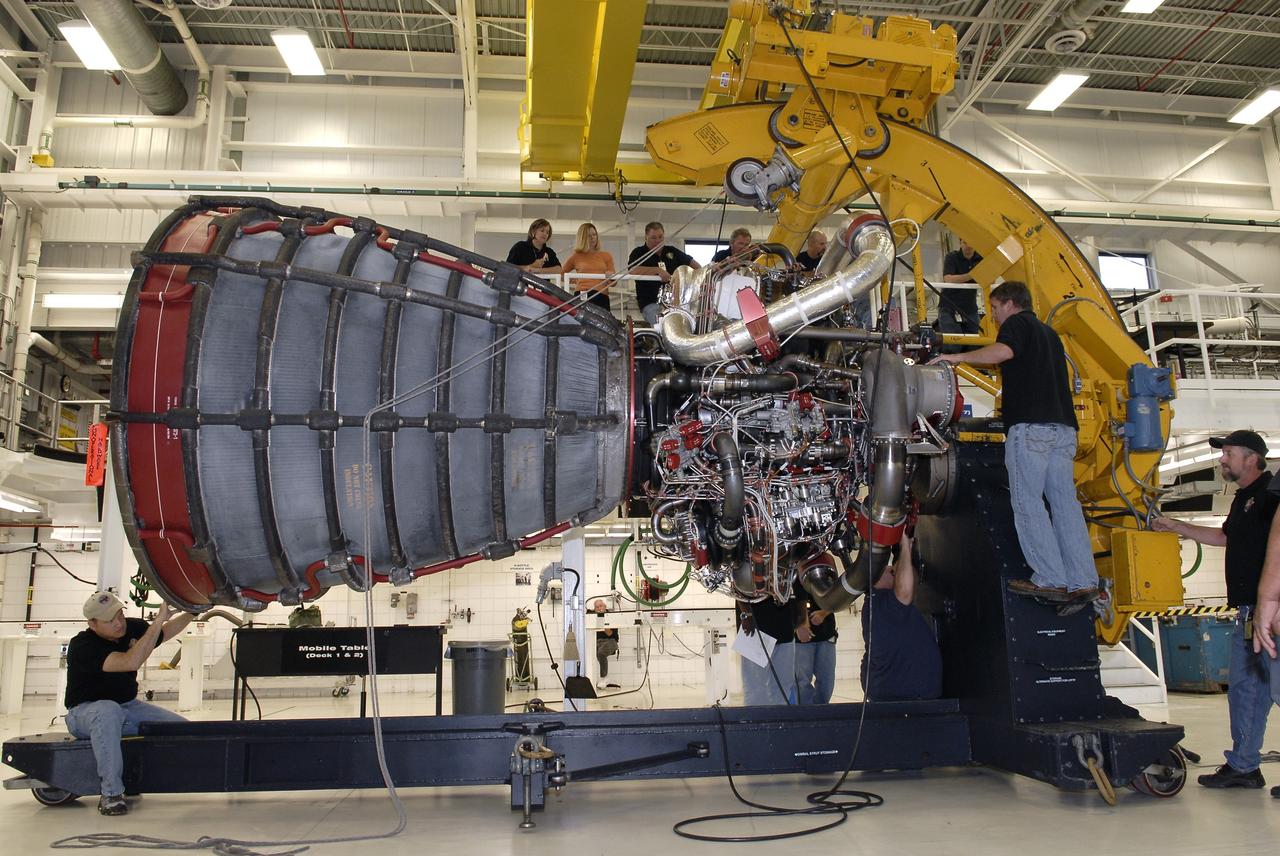
CAPE CANAVERAL, Fla. – Technicians secure a Pratt and Whitney Rocketdyne space shuttle main engine, or SSME, onto a portable workstand inside the SSME Processing Facility, the engine shop at NASA’s Kennedy Space Center in Florida. The engine was rotated into a horizontal position with the aid of an engine-handling device attached to a crane. The engine is one of the last SSMEs remaining at Kennedy and is being prepared for shipment to NASA's Stennis Space Center in Mississippi. The first two groups of engines were shipped from Kennedy to Stennis in November 2011 and January 2012 the remaining engines are scheduled to depart on April 9. Altogether, 15 shuttle-era engines will be stored at Stennis for reuse on NASA’s Space Launch System heavy-lift rocket, under development. Photo credit: NASA/Tim Jacobs
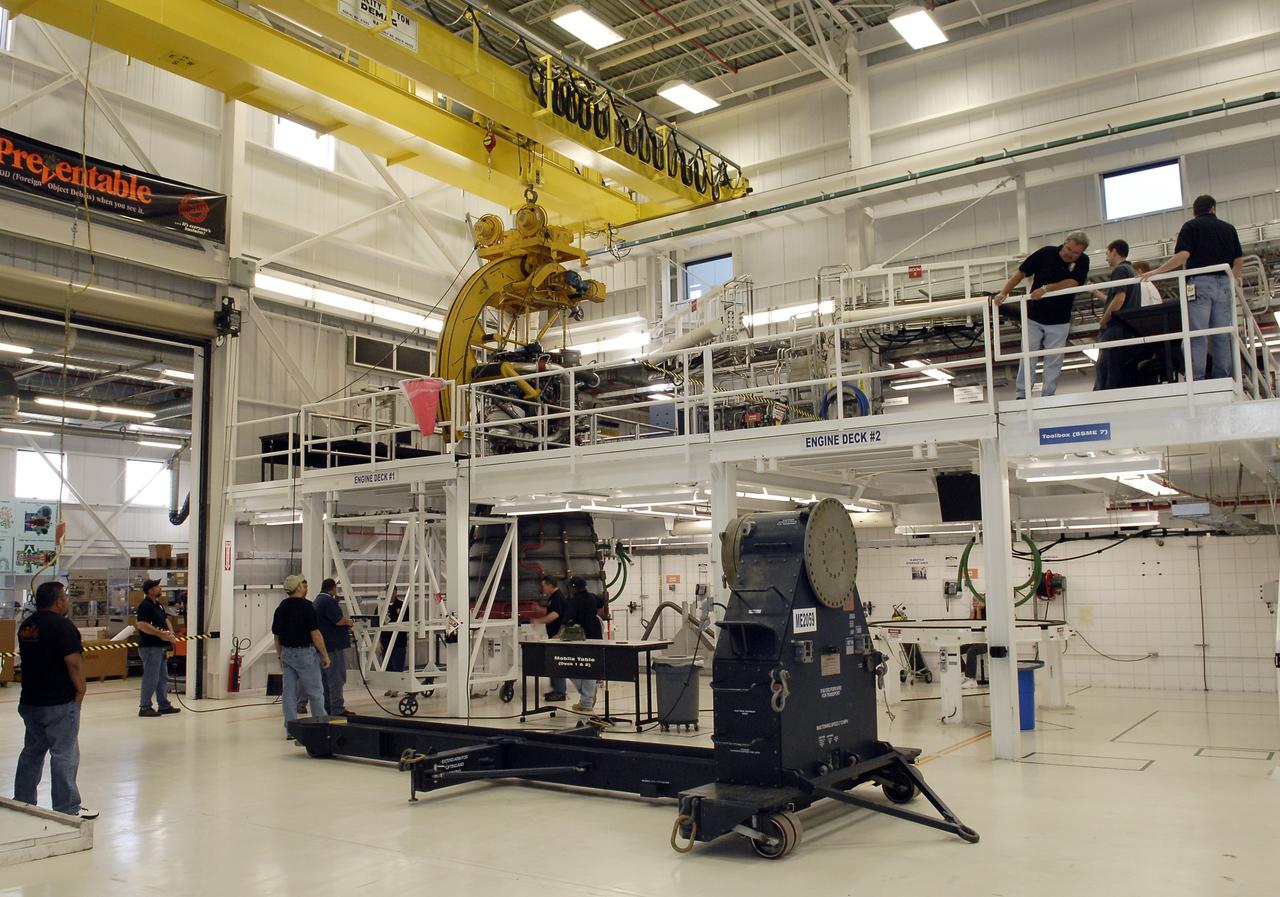
CAPE CANAVERAL, Fla. – Technicians monitor a Pratt and Whitney Rocketdyne space shuttle main engine, or SSME, as a crane lifts it off its base inside the SSME Processing Facility, the engine shop at NASA’s Kennedy Space Center in Florida. Operations are under way to rotate the engine into a horizontal position on a portable workstand. The engine is one of the last SSMEs remaining at Kennedy and is being prepared for shipment to NASA's Stennis Space Center in Mississippi. The first two groups of engines were shipped from Kennedy to Stennis in November 2011 and January 2012 the remaining engines are scheduled to depart on April 9. Altogether, 15 shuttle-era engines will be stored at Stennis for reuse on NASA’s Space Launch System heavy-lift rocket, under development. Photo credit: NASA/Tim Jacobs
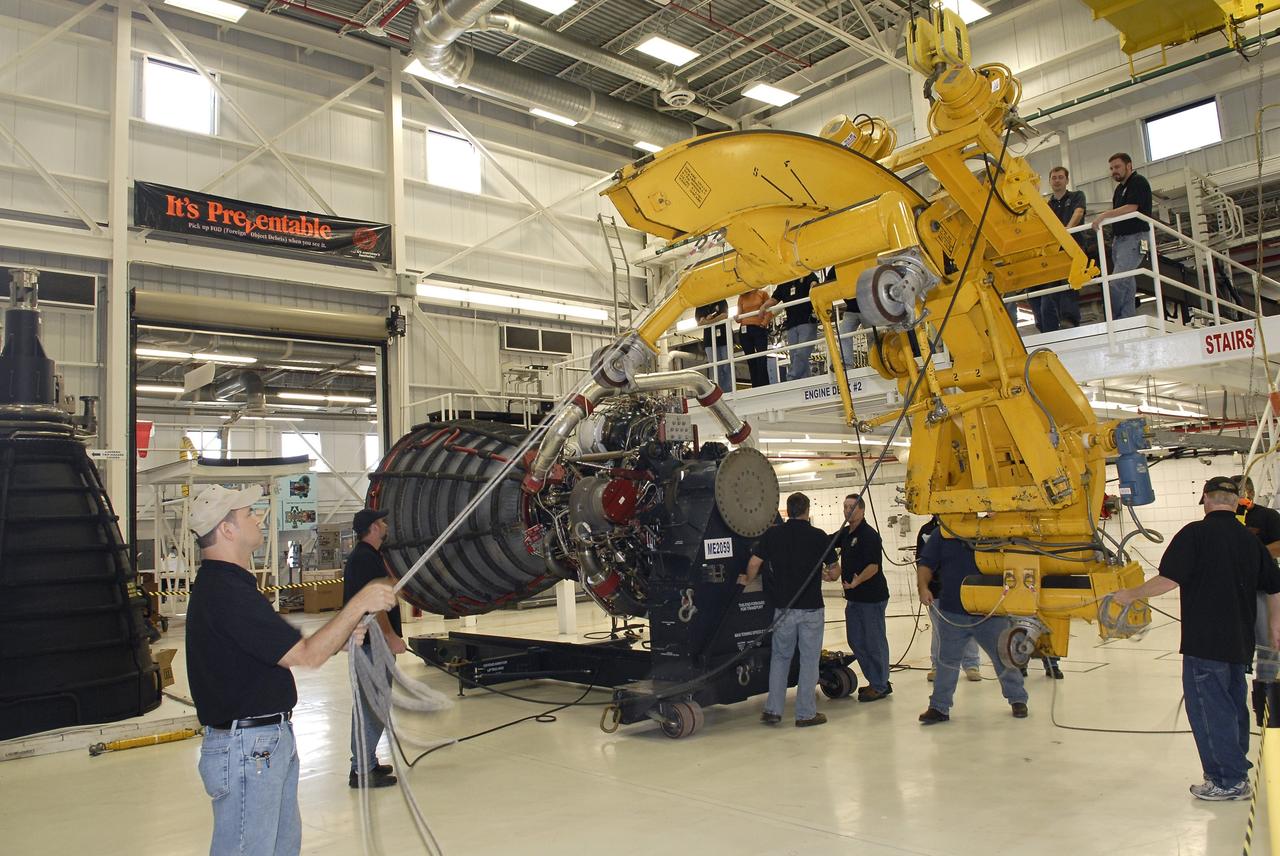
CAPE CANAVERAL, Fla. – A crane moves the engine-handling device away from the Pratt and Whitney Rocketdyne space shuttle main engine, or SSME, that it rotated into a horizontal position inside the SSME Processing Facility, the engine shop at NASA’s Kennedy Space Center in Florida. The engine is secured on a portable workstand before being transferred into a transportation canister. The engine is one of the last SSMEs remaining at Kennedy and is being prepared for shipment to NASA's Stennis Space Center in Mississippi. The first two groups of engines were shipped from Kennedy to Stennis in November 2011 and January 2012 the remaining engines are scheduled to depart on April 9. Altogether, 15 shuttle-era engines will be stored at Stennis for reuse on NASA’s Space Launch System heavy-lift rocket, under development. Photo credit: NASA/Tim Jacobs
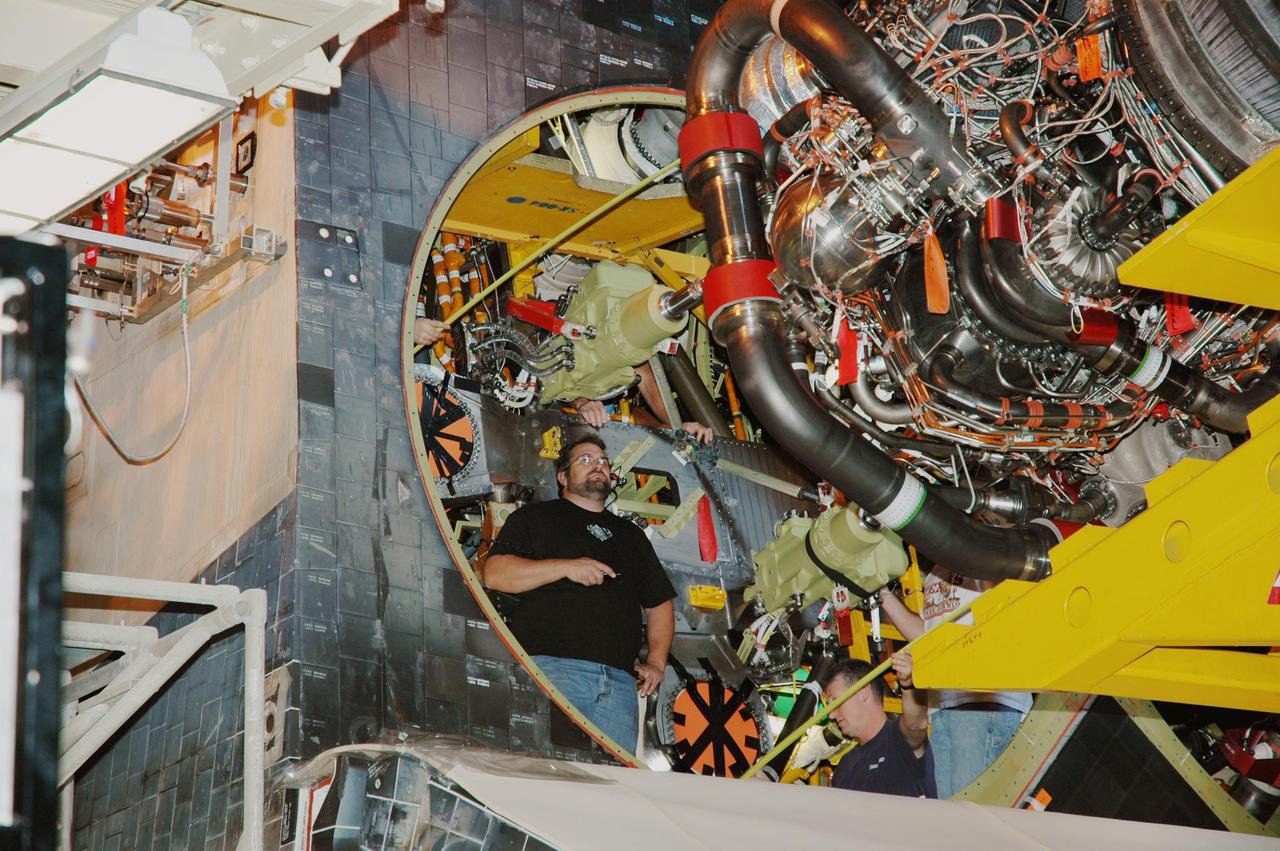
KENNEDY SPACE CENTER, FLA. - In the Orbiter Processing Facility, a technician watches closely as the third Space Shuttle Main Engine (SSME) is moved into position behind Discovery for installation. Discovery is designated as the Return to Flight vehicle for mission STS-114. Recent improvements to the SSME include the introduction of redesigned high-pressure turbopumps into the SSME fleet. The new pumps are designed and built by Pratt and Whitney at West Palm Beach, Fla. SSMEs and the Pratt and Whitney turbopumps are tested at Stennis Space Center in Mississippi. Engines and engine components are delivered to Kennedy Space Center to be prepared for flight.
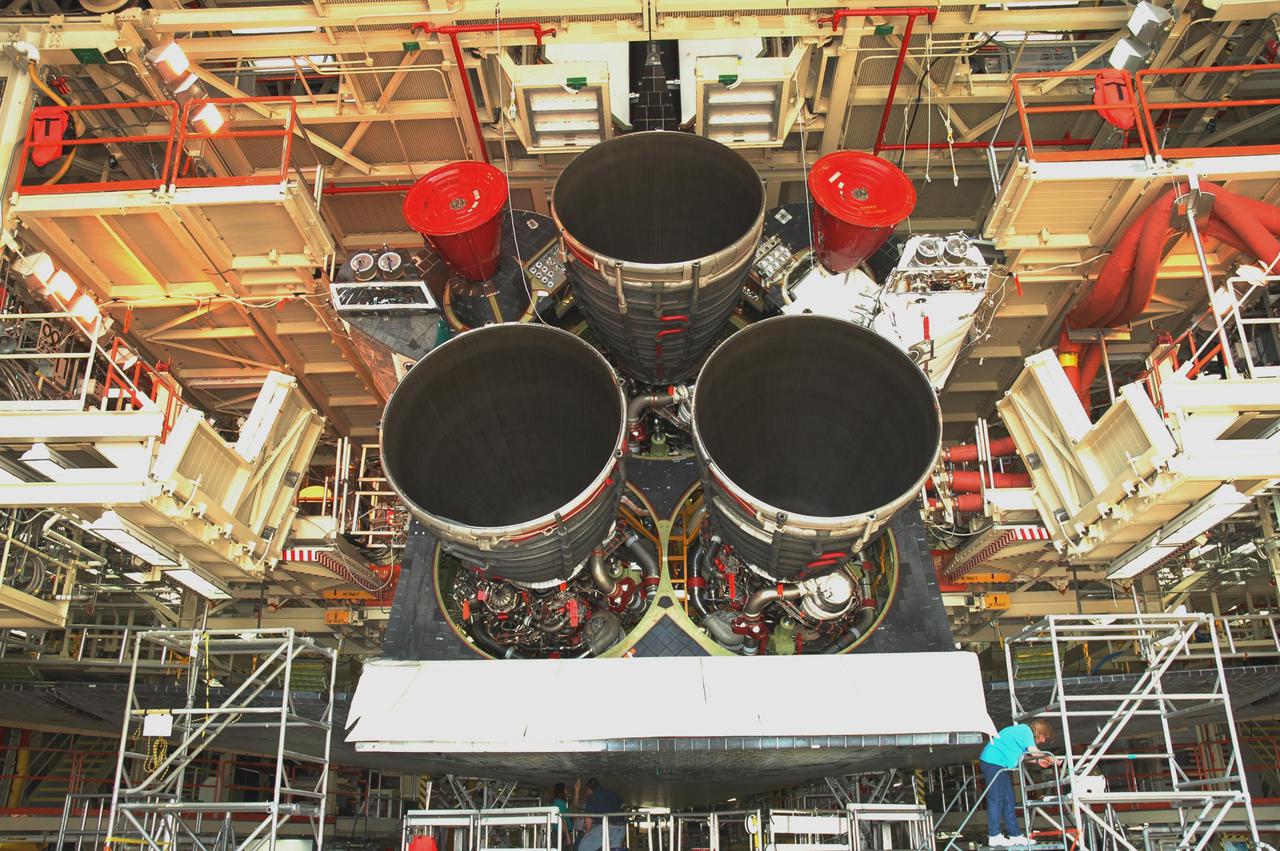
KENNEDY SPACE CENTER, FLA. - In the Orbiter Processing Facility, the aft of Discovery is shown with all three Space Shuttle Main Engines (SSMEs) installed. Discovery is designated as the Return to Flight vehicle for mission STS-114. Recent improvements to the SSME include the introduction of redesigned high-pressure turbopumps into the SSME fleet. The new pumps are designed and built by Pratt and Whitney at West Palm Beach, Fla. SSMEs and the Pratt and Whitney turbopumps are tested at Stennis Space Center in Mississippi. Engines and engine components are delivered to Kennedy Space Center to be prepared for flight.
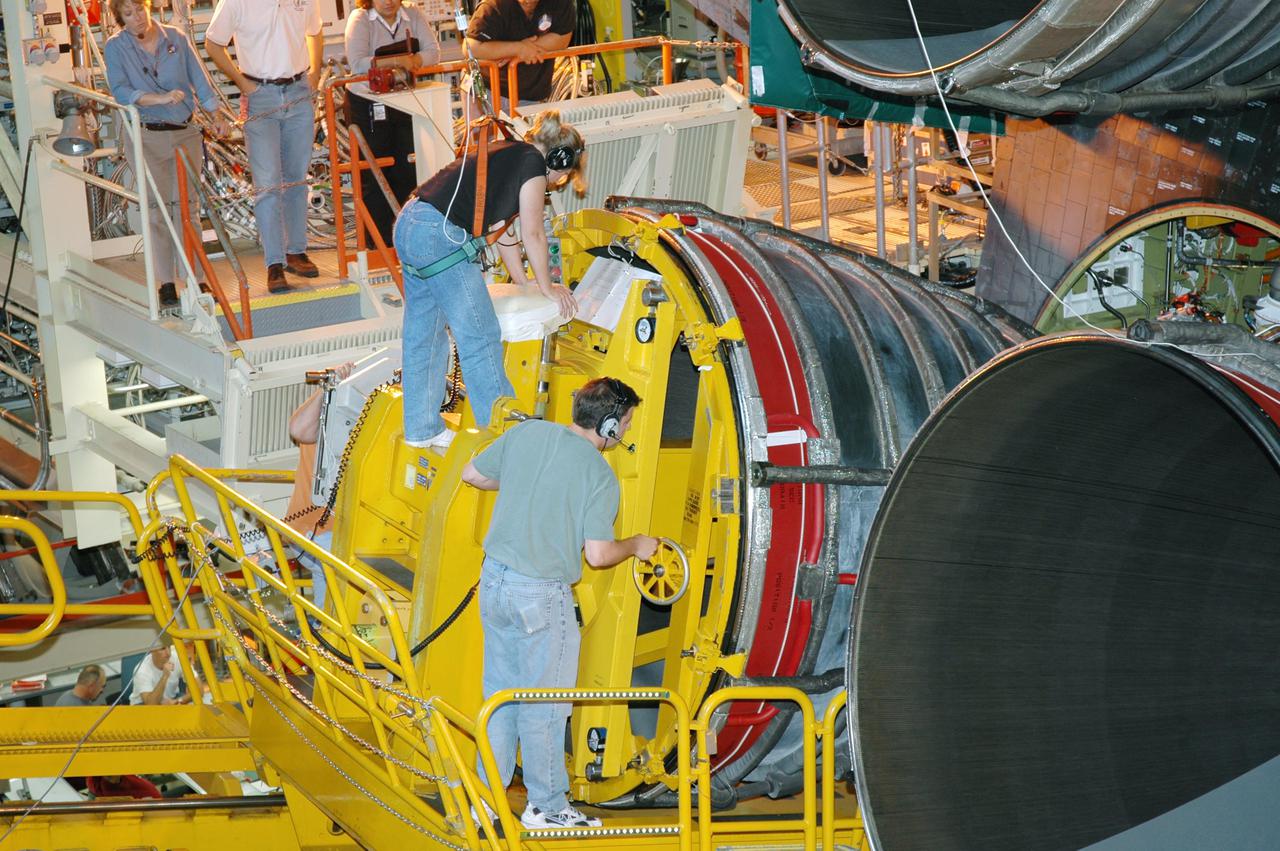
KENNEDY SPACE CENTER, FLA. - Technicians in the Orbiter Processing Facility carefully maneuver the third Space Shuttle Main Engine (SSME) into place on Discovery. Discovery is designated as the Return to Flight vehicle for mission STS-114. Recent improvements to the SSME include the introduction of redesigned high-pressure turbopumps into the SSME fleet. The new pumps are designed and built by Pratt and Whitney at West Palm Beach, Fla. SSMEs and the Pratt and Whitney turbopumps are tested at Stennis Space Center in Mississippi. Engines and engine components are delivered to Kennedy Space Center to be prepared for flight.
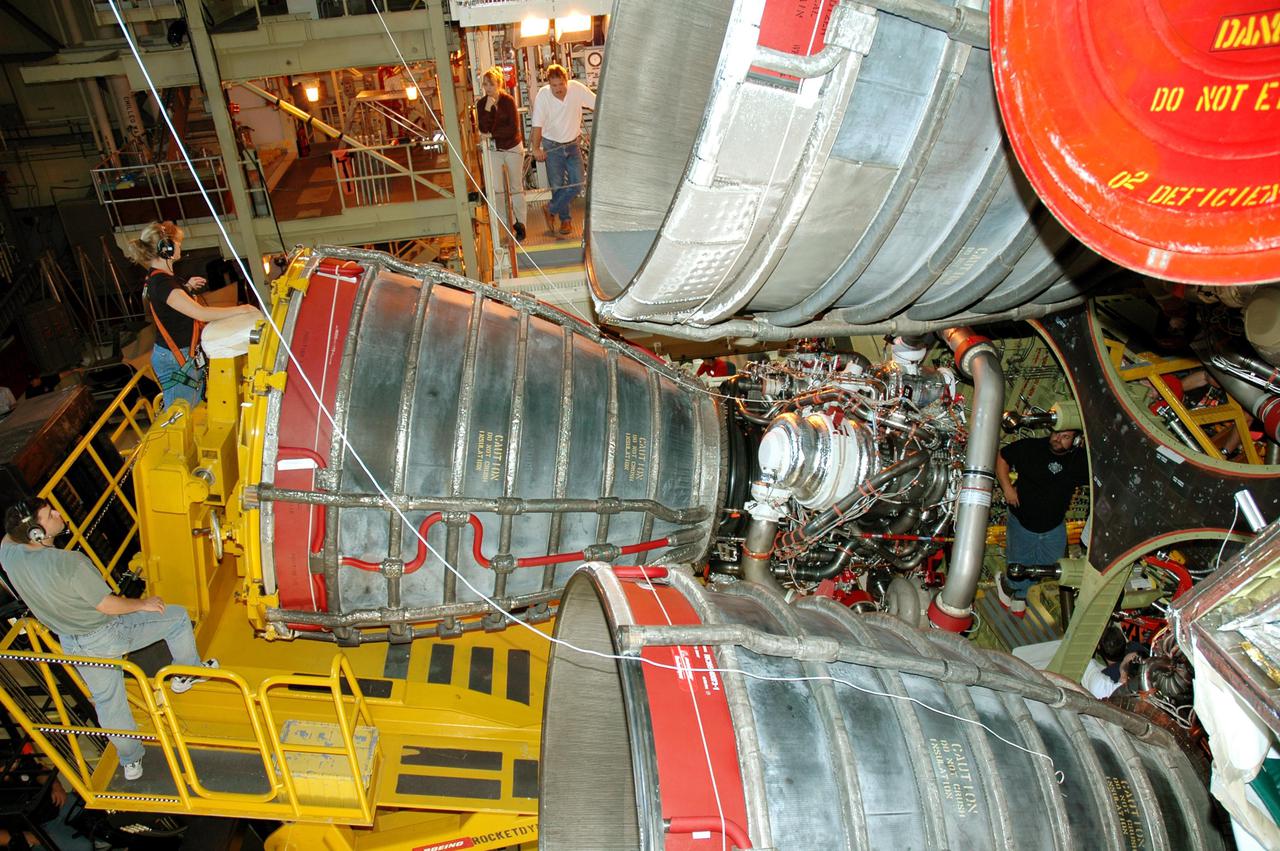
KENNEDY SPACE CENTER, FLA. - Workers in the Orbiter Processing Facility carefully guide the placement of the third Space Shuttle Main Engine (SSME) for installation on Discovery. Discovery is designated as the Return to Flight vehicle for mission STS-114. Recent improvements to the SSME include the introduction of redesigned high-pressure turbopumps into the SSME fleet. The new pumps are designed and built by Pratt and Whitney at West Palm Beach, Fla. SSMEs and the Pratt and Whitney turbopumps are tested at Stennis Space Center in Mississippi. Engines and engine components are delivered to Kennedy Space Center to be prepared for flight.
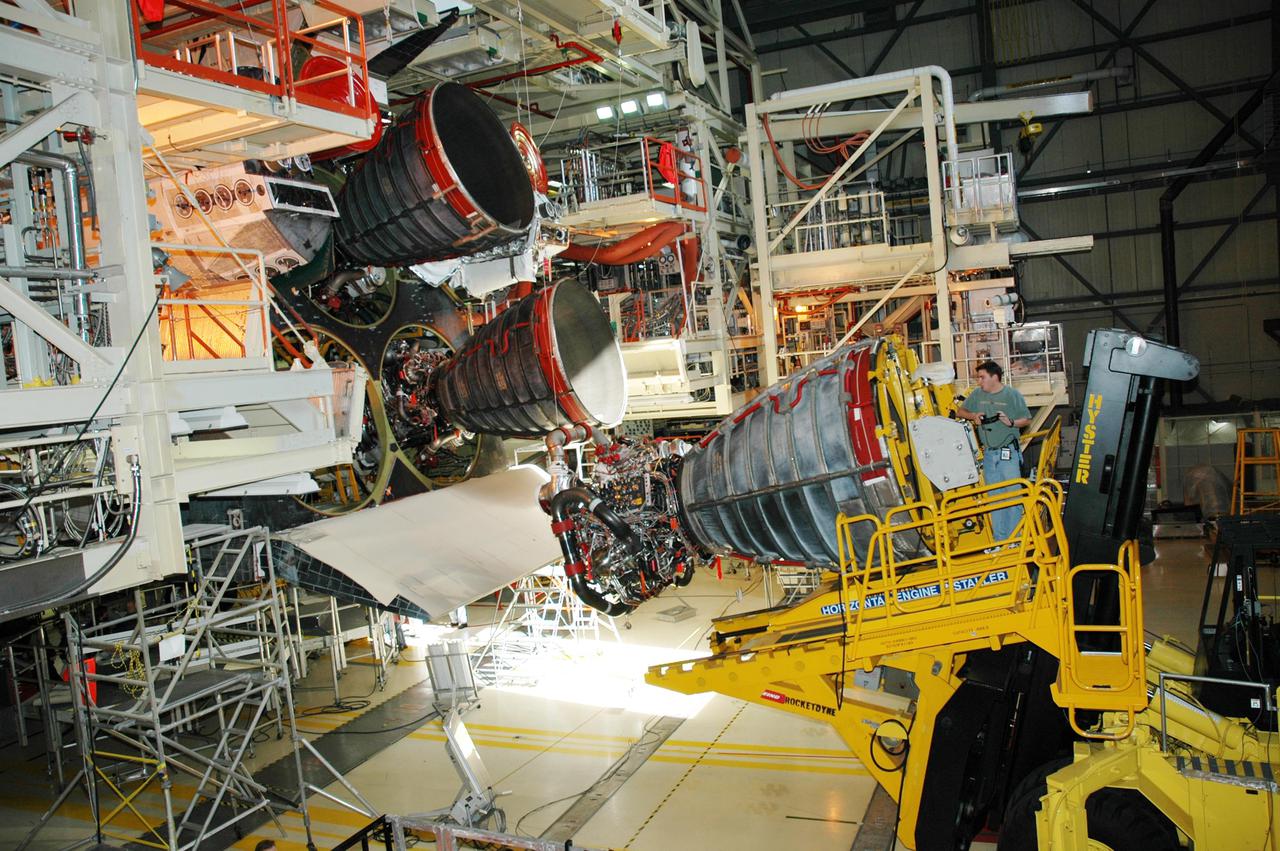
KENNEDY SPACE CENTER, FLA. - In the Orbiter Processing Facility, the Hyster lift at right moves the third Space Shuttle Main Engine (SSME) into position behind Discovery for installation. Discovery is designated as the Return to Flight vehicle for mission STS-114. Recent improvements to the SSME include the introduction of redesigned high-pressure turbopumps into the SSME fleet. The new pumps are designed and built by Pratt and Whitney at West Palm Beach, Fla. SSMEs and the Pratt and Whitney turbopumps are tested at Stennis Space Center in Mississippi. Engines and engine components are delivered to Kennedy Space Center to be prepared for flight.
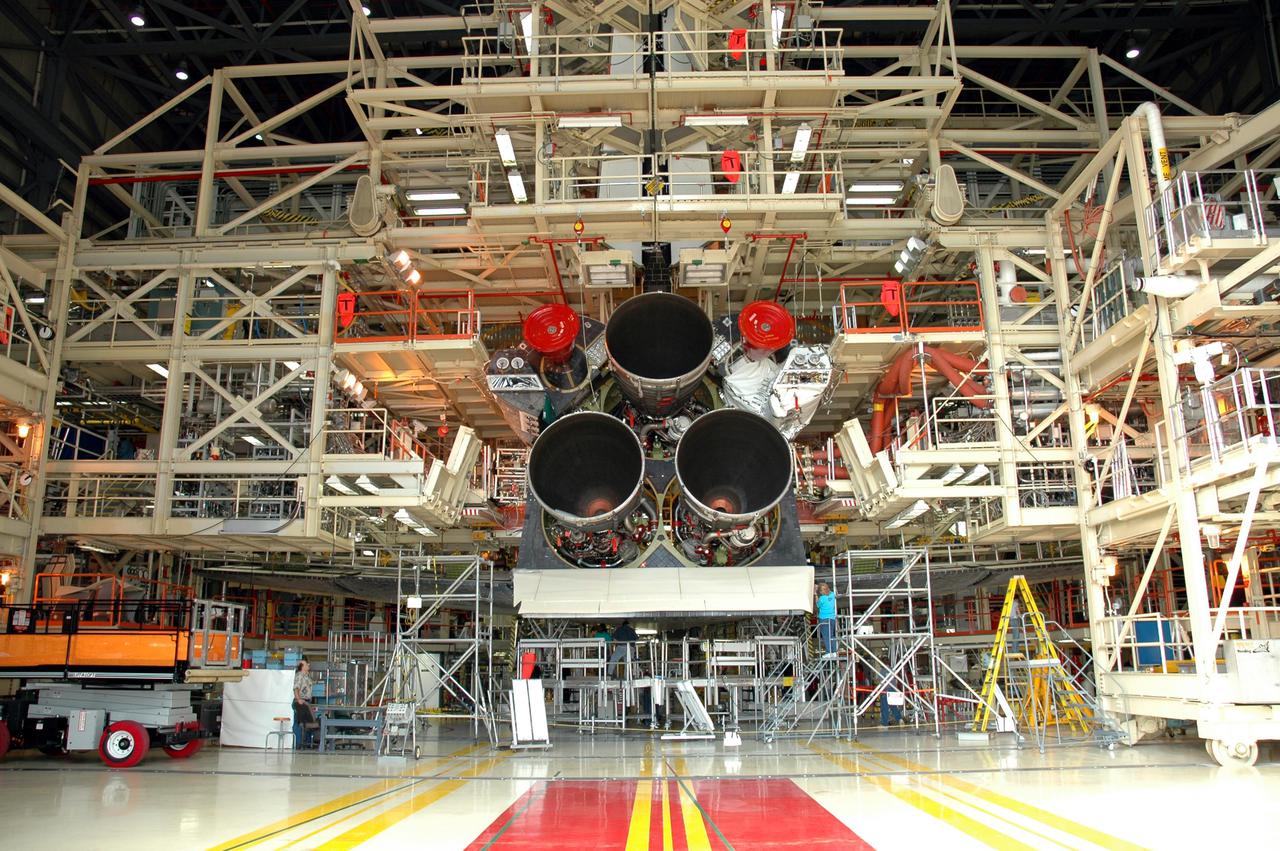
KENNEDY SPACE CENTER, FLA. - In the Orbiter Processing Facility, the aft of Discovery is shown after the third Space Shuttle Main Engine (SSME) was installed. Discovery is designated as the Return to Flight vehicle for mission STS-114. Recent improvements to the SSME include the introduction of redesigned high-pressure turbopumps into the SSME fleet. The new pumps are designed and built by Pratt and Whitney at West Palm Beach, Fla. SSMEs and the Pratt and Whitney turbopumps are tested at Stennis Space Center in Mississippi. Engines and engine components are delivered to Kennedy Space Center to be prepared for flight.
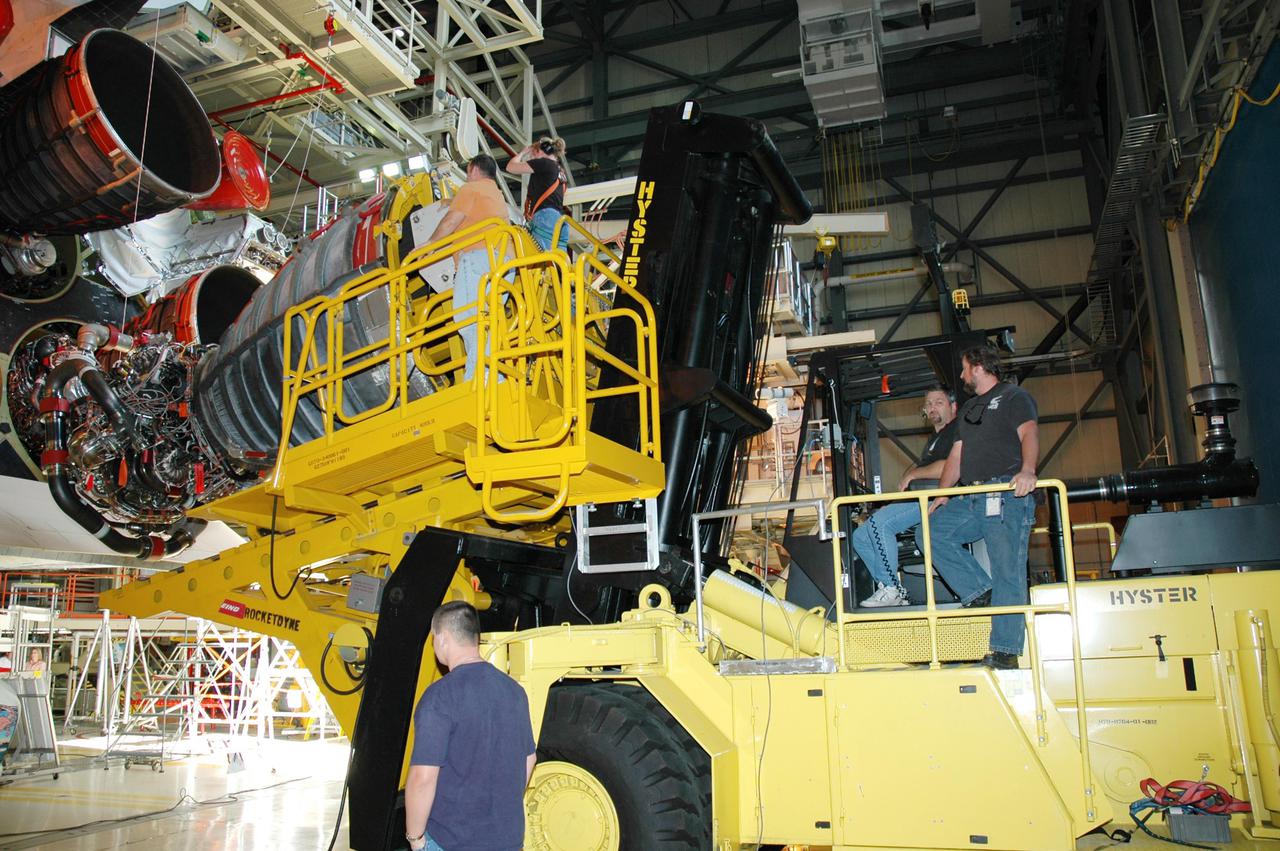
KENNEDY SPACE CENTER, FLA. - In the Orbiter Processing Facility, the Hyster lift raises the third Space Shuttle Main Engine (SSME) into position behind Discovery for installation. Discovery is designated as the Return to Flight vehicle for mission STS-114. Recent improvements to the SSME include the introduction of redesigned high-pressure turbopumps into the SSME fleet. The new pumps are designed and built by Pratt and Whitney at West Palm Beach, Fla. SSMEs and the Pratt and Whitney turbopumps are tested at Stennis Space Center in Mississippi. Engines and engine components are delivered to Kennedy Space Center to be prepared for flight.
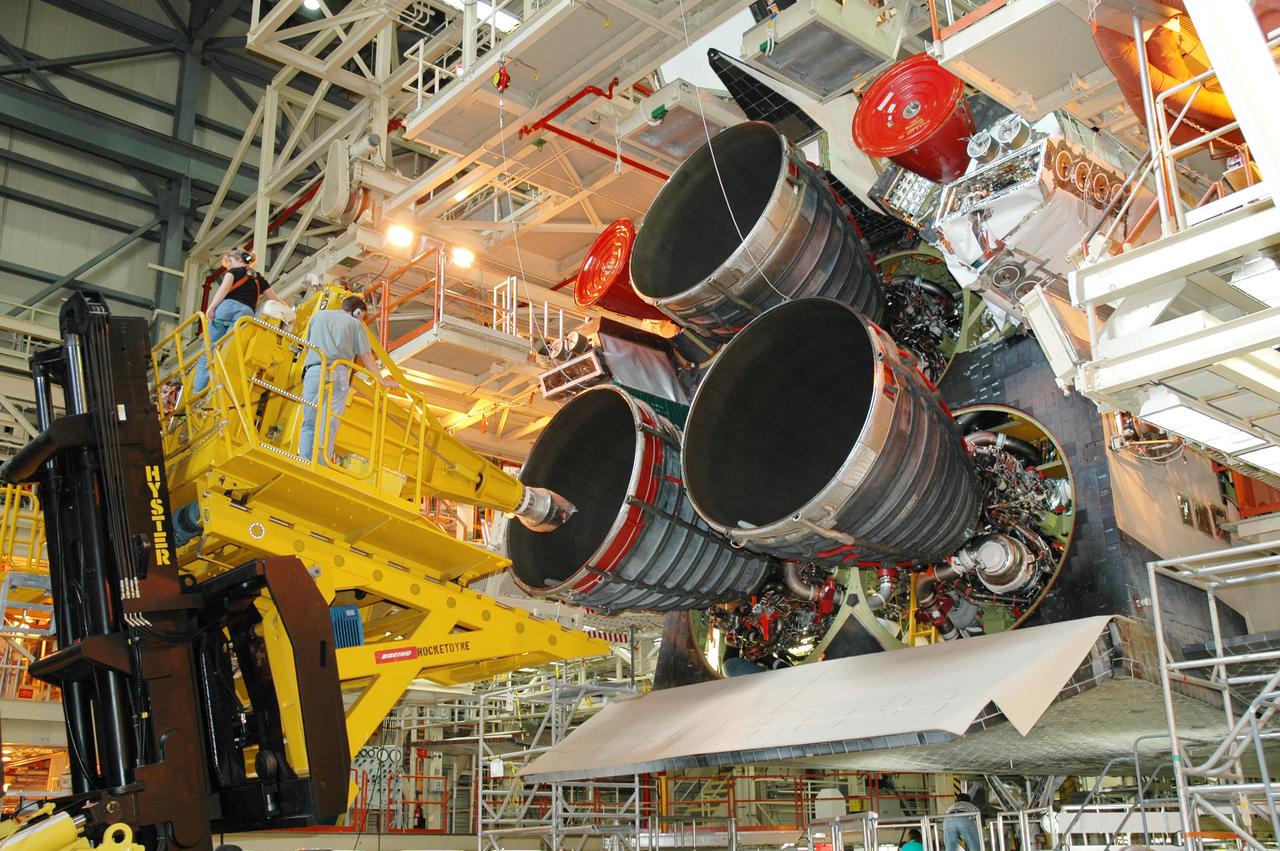
KENNEDY SPACE CENTER, FLA. - The Hyster lift is slowly backed away from Discovery after placing the third Space Shuttle Main Engine (SSME) in the orbiter. Discovery is designated as the Return to Flight vehicle for mission STS-114. Recent improvements to the SSME include the introduction of redesigned high-pressure turbopumps into the SSME fleet. The new pumps are designed and built by Pratt and Whitney at West Palm Beach, Fla. SSMEs and the Pratt and Whitney turbopumps are tested at Stennis Space Center in Mississippi. Engines and engine components are delivered to Kennedy Space Center to be prepared for flight.
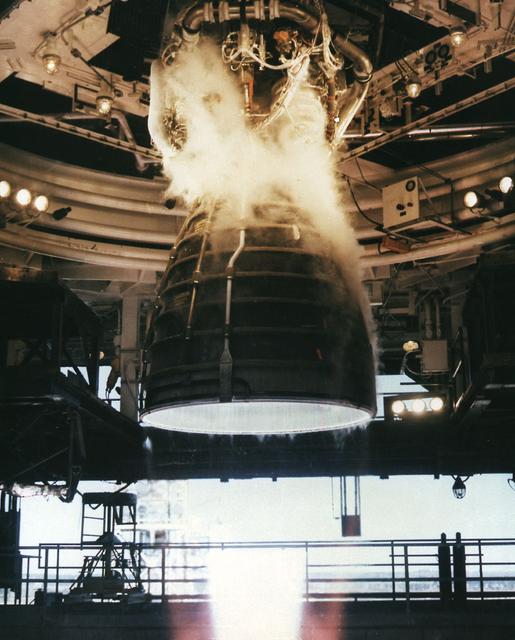
A Space Shuttle engine is shown being test fired at the Sternis, MS facility. MSFC was the managing facility for the Space Shuttle program.
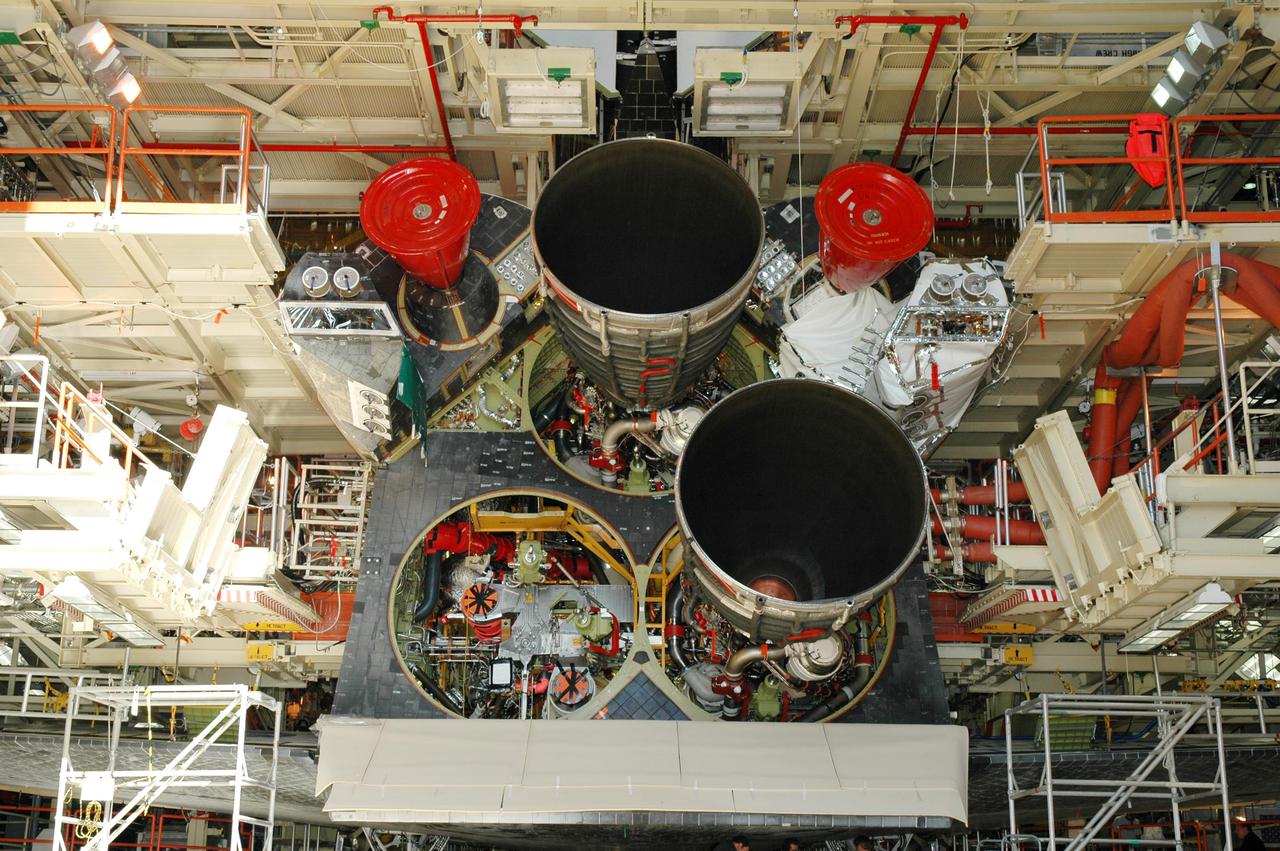
KENNEDY SPACE CENTER, FLA. - The second Space Shuttle Main Engine (SSME) has been installed on the orbiter Discovery in the Orbiter Processing Facility. Discovery is the vehicle designated for the Return to Flight mission STS-114. Overall, an SSME weighs approximately 7,000 pounds. An SSME operates at greater temperature extremes than any mechanical system in common use today. The liquid hydrogen fuel is -423 degrees Fahrenheit, the second coldest liquid on Earth. When the hydrogen is burned with liquid oxygen, the temperature in the engine's combustion chamber reaches +6000 degrees Fahrenheit -- that's higher than the boiling point of Iron. Each SSME is controlled by its own computer, which checks the health of the engines 50 times per second during countdown and ascent. The controller can shut an engine down if it detects a problem. The SSMEs are tested at Stennis Space Center in Mississippi.
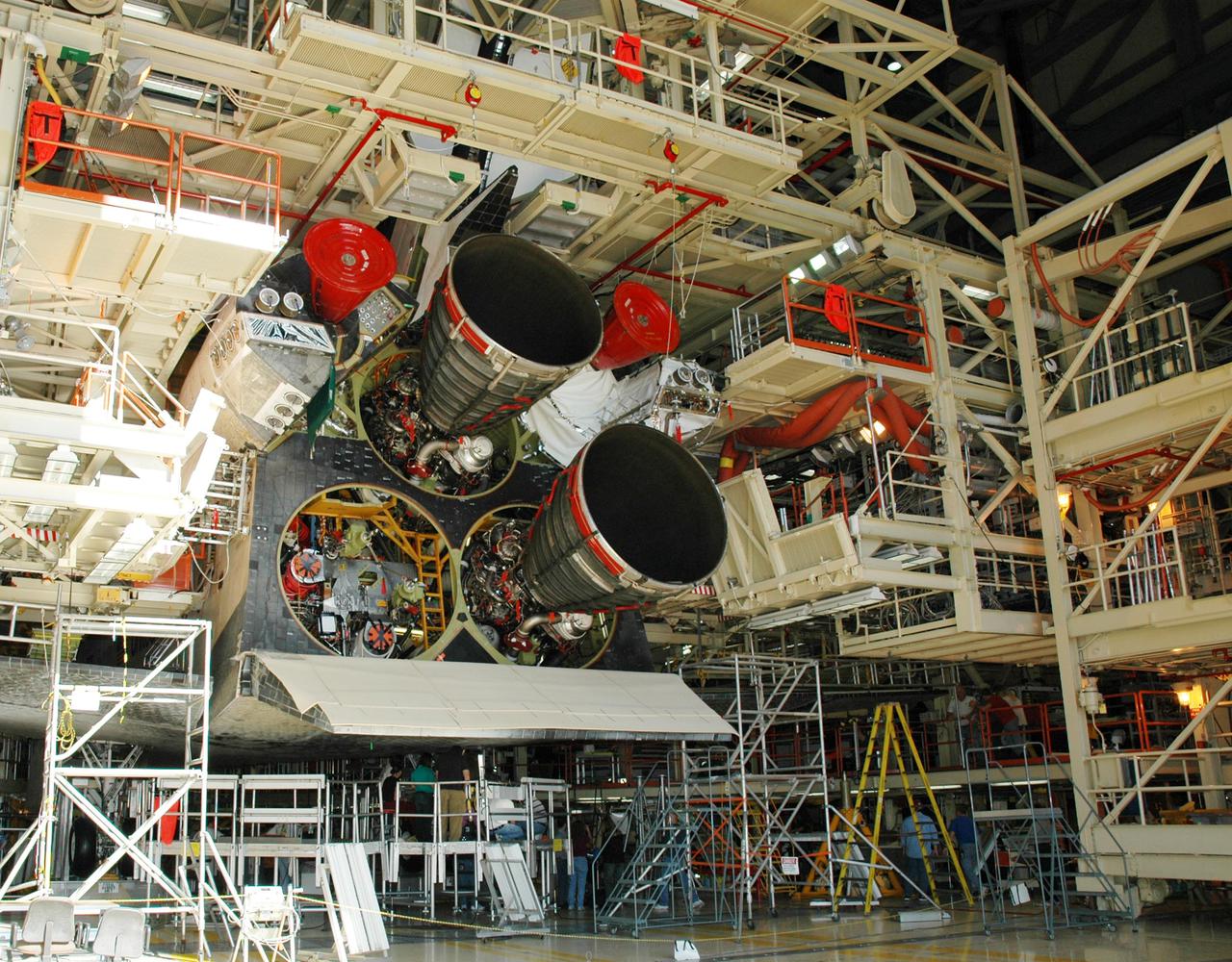
KENNEDY SPACE CENTER, FLA. - The second Space Shuttle Main Engine (SSME) has been installed on the orbiter Discovery in the Orbiter Processing Facility. Discovery is the vehicle designated for the Return to Flight mission STS-114. Overall, an SSME weighs approximately 7,000 pounds. An SSME operates at greater temperature extremes than any mechanical system in common use today. The liquid hydrogen fuel is -423 degrees Fahrenheit, the second coldest liquid on Earth. When the hydrogen is burned with liquid oxygen, the temperature in the engine's combustion chamber reaches +6000 degrees Fahrenheit -- that's higher than the boiling point of Iron. Each SSME is controlled by its own computer, which checks the health of the engines 50 times per second during countdown and ascent. The controller can shut an engine down if it detects a problem. The SSMEs are tested at Stennis Space Center in Mississippi.
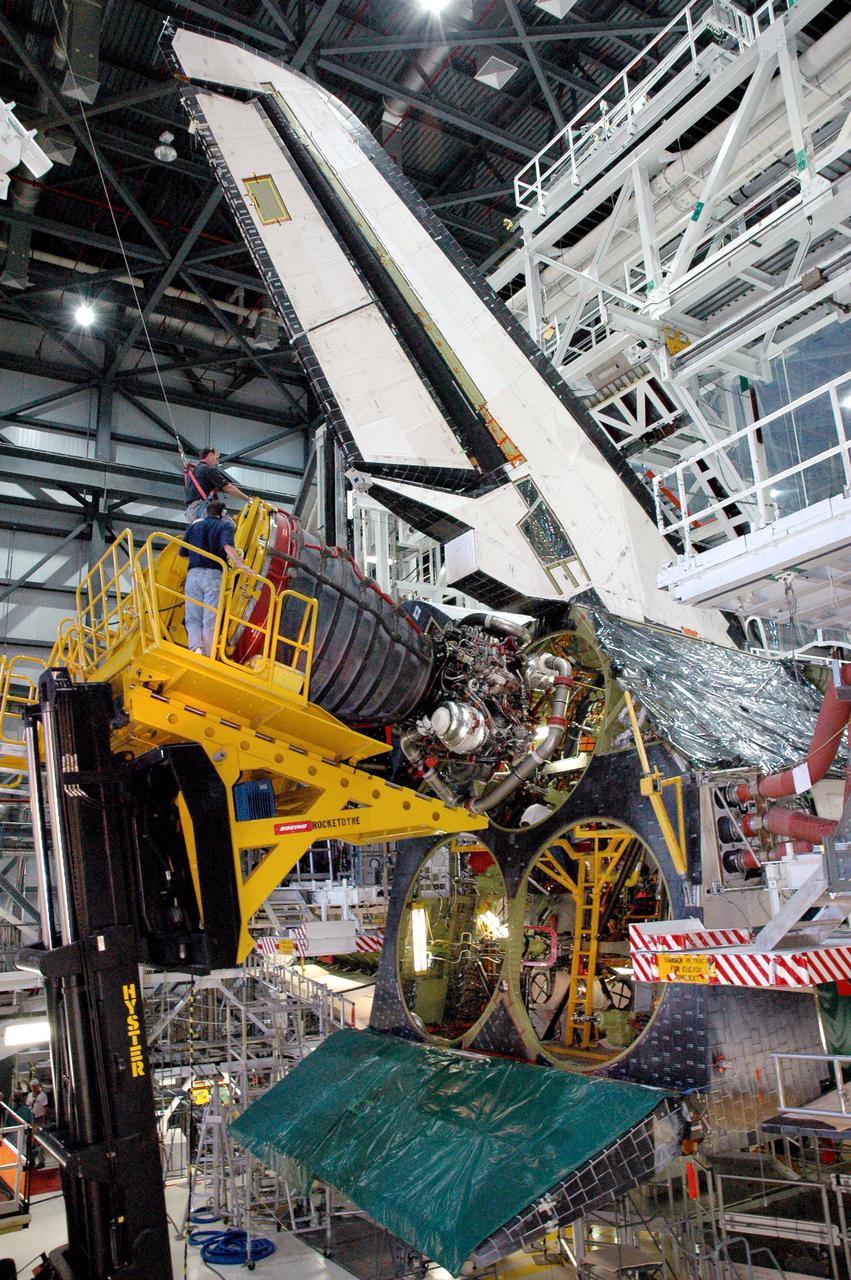
KENNEDY SPACE CENTER, FLA. - In the Orbiter Processing Facility bay 1 at NASA’s Kennedy Space Center, a Space Shuttle Main Engine (SSME), held by a Hyster fork lift, is maneuvered into place in position number one (upper chamber) in Atlantis. Overall, an SSME weighs approximately 7,000 pounds. Three engines provide the thrust, along with the two Solid Rocket Boosters, for liftoff. After about 2 minutes, the two boosters are spent and are separated from the external tank. The SSMEs continue firing for about 8 minutes. They shut down just before the craft is inserted into orbit. The SSMEs are tested at Stennis Space Center in Mississippi. Atlantis is being processed for the second Return to Flight mission, STS-121, scheduled for launch in a window from July 12 through July 31.
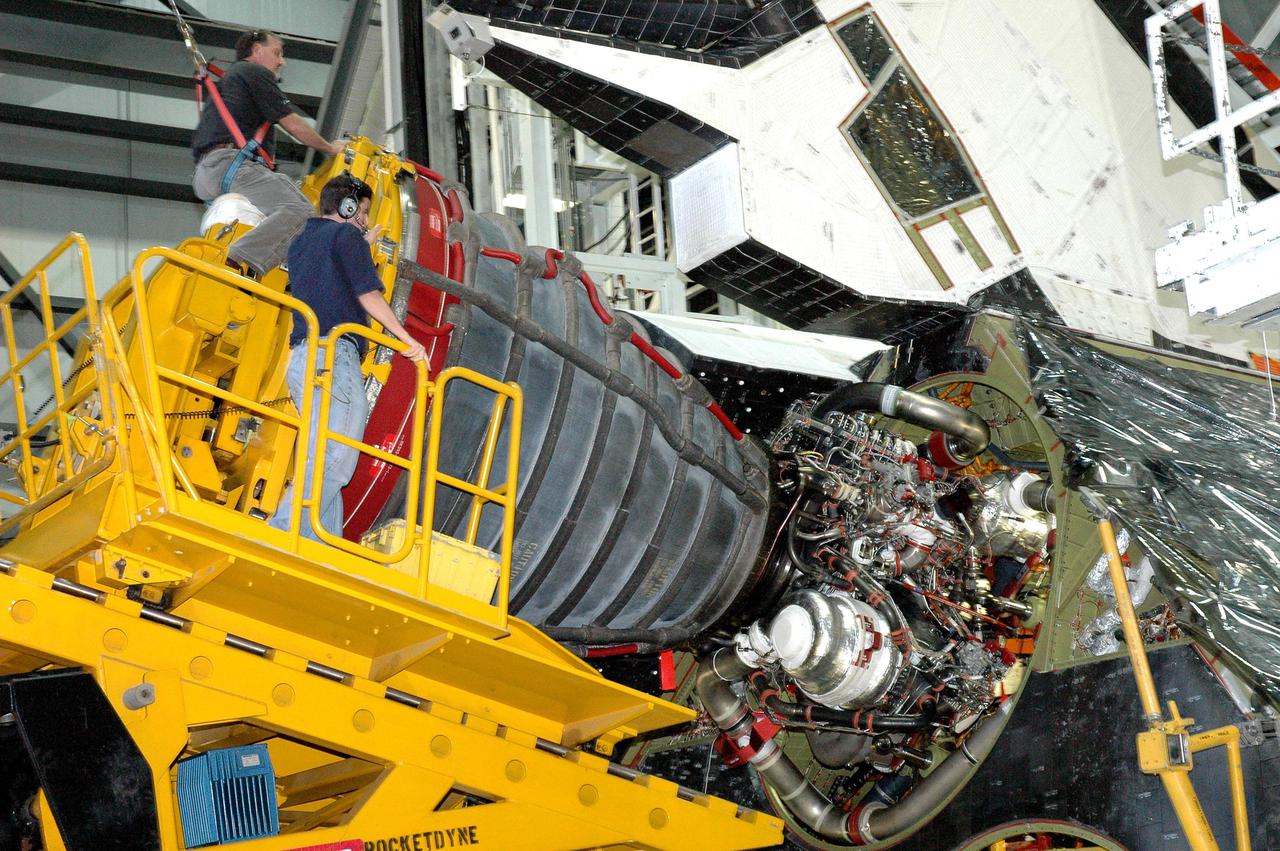
KENNEDY SPACE CENTER, FLA. - In the Orbiter Processing Facility bay 1 at NASA’s Kennedy Space Center, workers guide the Hyster fork lift close to Atlantis to install a Space Shuttle Main Engine (SSME) in position number 1 (upper chamber). Overall, an SSME weighs approximately 7,000 pounds. Three engines provide the thrust, along with the two Solid Rocket Boosters, for liftoff. After about 2 minutes, the two boosters are spent and are separated from the external tank. The SSMEs continue firing for about 8 minutes. They shut down just before the craft is inserted into orbit. The SSMEs are tested at Stennis Space Center in Mississippi. Atlantis is being processed for the second Return to Flight mission, STS-121, scheduled for launch in a window from July 12 through July 31.
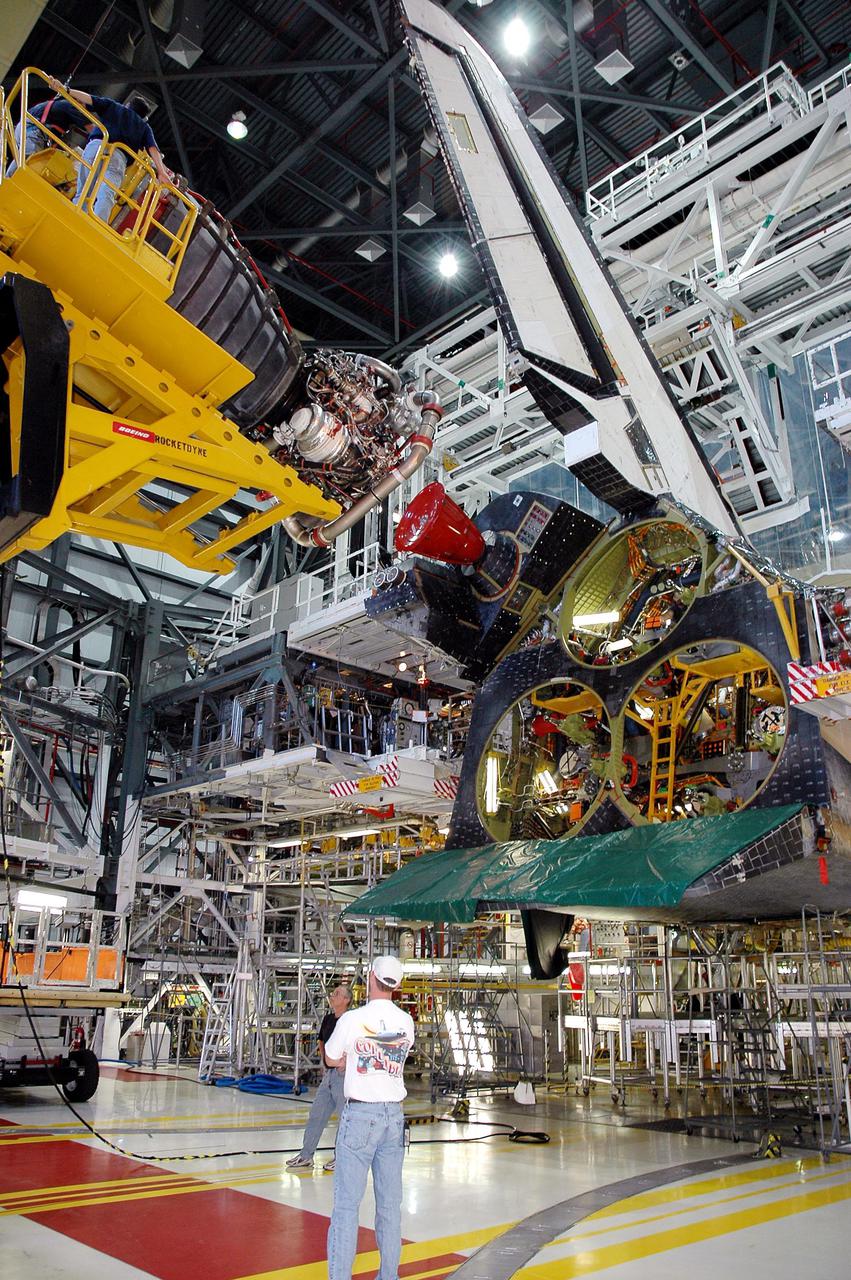
KENNEDY SPACE CENTER, FLA. - In the Orbiter Processing Facility bay 1 at NASA’s Kennedy Space Center, a Hyster fork lift (left) holding a Space Shuttle Main Engine (SSME) maneuvers into position number 1 (upper chamber) behind Atlantis for installation. Overall, an SSME weighs approximately 7,000 pounds. Three engines provide the thrust, along with the two Solid Rocket Boosters, for liftoff. After about 2 minutes, the two boosters are spent and are separated from the external tank. The SSMEs continue firing for about 8 minutes. They shut down just before the craft is inserted into orbit. The SSMEs are tested at Stennis Space Center in Mississippi. Atlantis is being processed for the second Return to Flight mission, STS-121, scheduled for launch in a window from July 12 through July 31.
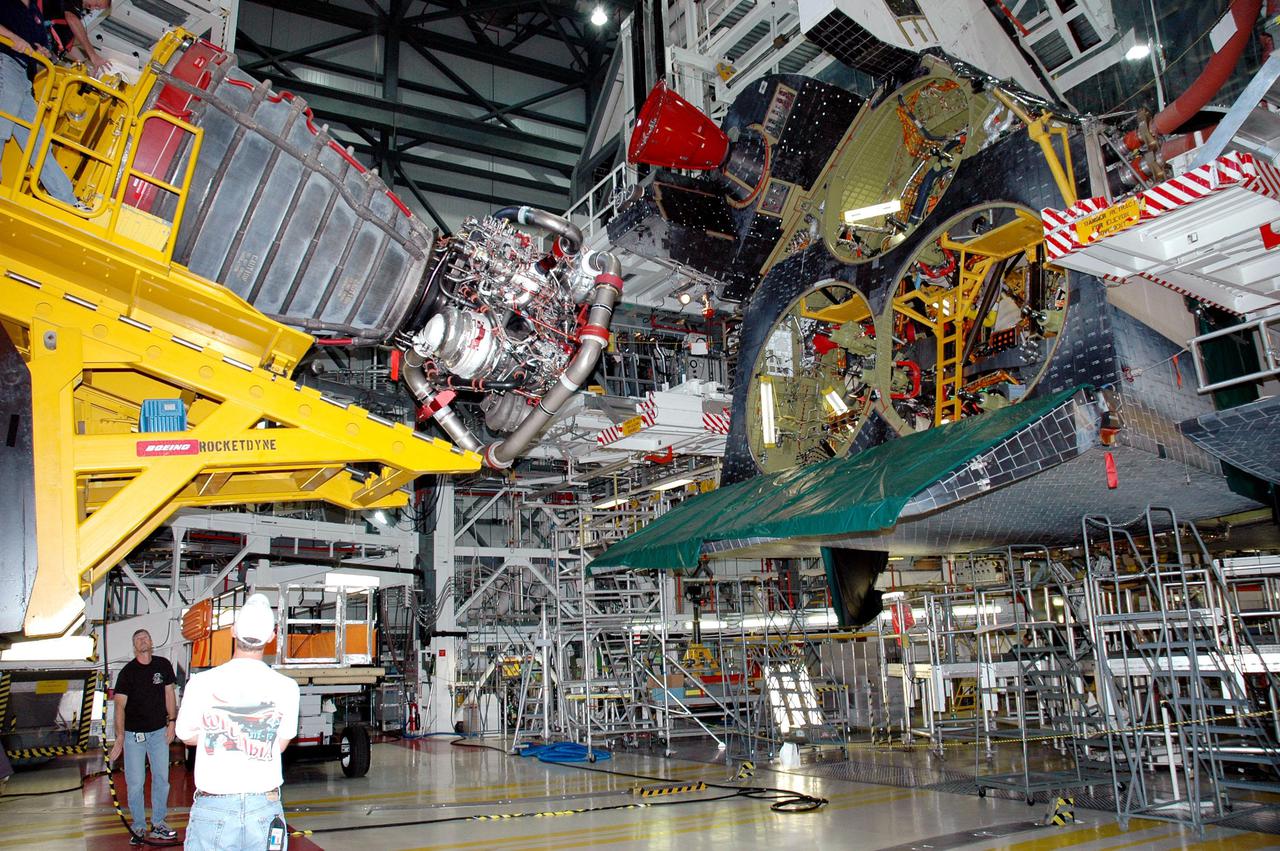
KENNEDY SPACE CENTER, FLA. - In the Orbiter Processing Facility bay 1 at NASA’s Kennedy Space Center, a Hyster fork lift (left) holding the first Space Shuttle Main Engine (SSME) maneuvers into position number 1 (upper chamber) behind Atlantis for installation. Overall, an SSME weighs approximately 7,000 pounds. Three engines provide the thrust, along with the two Solid Rocket Boosters, for liftoff. After about 2 minutes, the two boosters are spent and are separated from the external tank. The SSMEs continue firing for about 8 minutes. They shut down just before the craft is inserted into orbit. The SSMEs are tested at Stennis Space Center in Mississippi. Atlantis is being processed for the second Return to Flight mission, STS-121, scheduled for launch in a window from July 12 through July 31.
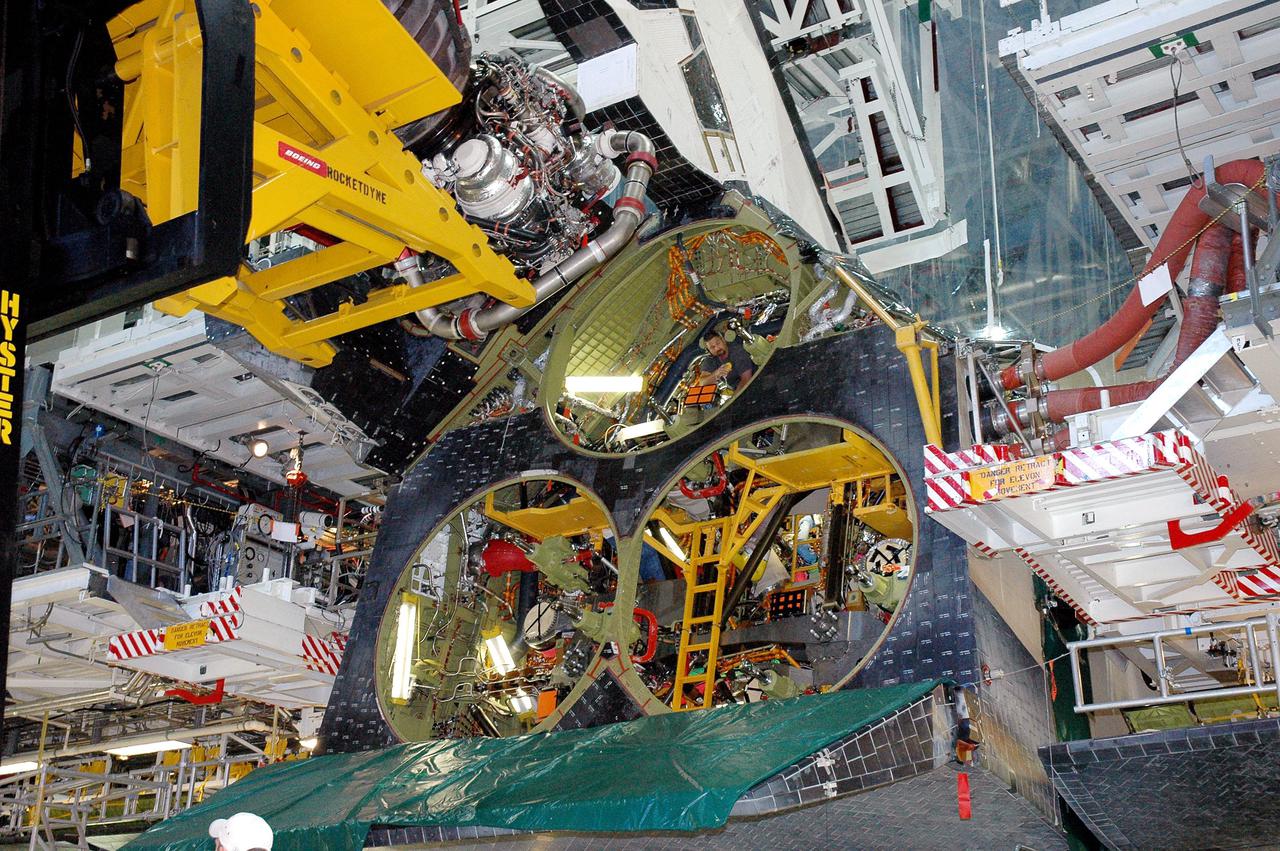
KENNEDY SPACE CENTER, FLA. - In the Orbiter Processing Facility bay 1 at NASA’s Kennedy Space Center, a worker looks out from the position number one engine opening in Atlantis as a Hyster fork lift (left) holding a Space Shuttle Main Engine (SSME) maneuvers into position for installation. Overall, an SSME weighs approximately 7,000 pounds. Three engines provide the thrust, along with the two Solid Rocket Boosters, for liftoff. After about 2 minutes, the two boosters are spent and are separated from the external tank. The SSMEs continue firing for about 8 minutes. They shut down just before the craft is inserted into orbit. The SSMEs are tested at Stennis Space Center in Mississippi. Atlantis is being processed for the second Return to Flight mission, STS-121, scheduled for launch in a window from July 12 through July 31.
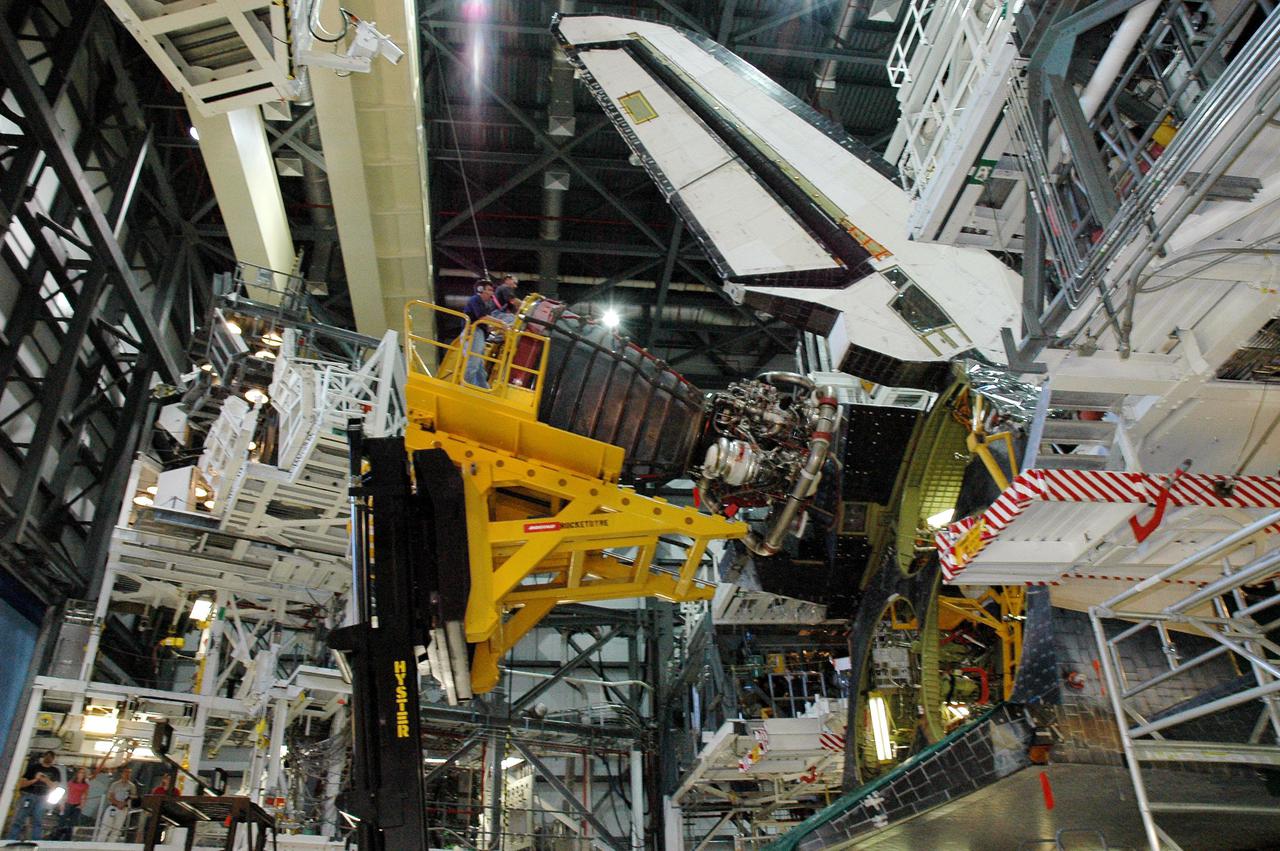
KENNEDY SPACE CENTER, FLA. - In the Orbiter Processing Facility bay 1 at NASA’s Kennedy Space Center, a Hyster fork lift (left) holding Space Shuttle Main Engine (SSME) closes in on position number 1 for installation in Atlantis. Overall, an SSME weighs approximately 7,000 pounds. Three engines provide the thrust, along with the two Solid Rocket Boosters, for liftoff. After about 2 minutes, the two boosters are spent and are separated from the external tank. The SSMEs continue firing for about 8 minutes. They shut down just before the craft is inserted into orbit. The SSMEs are tested at Stennis Space Center in Mississippi. Atlantis is being processed for the second Return to Flight mission, STS-121, scheduled for launch in a window from July 12 through July 31.
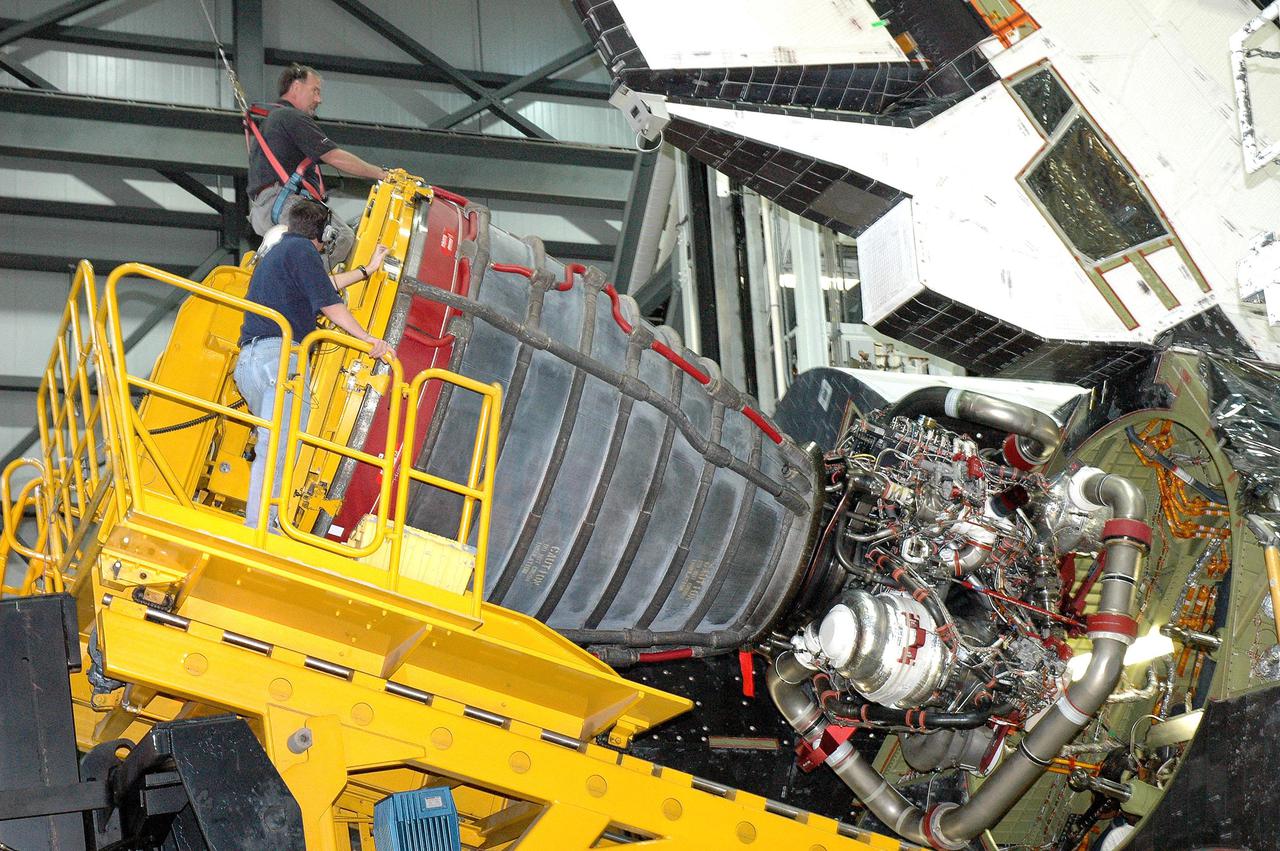
KENNEDY SPACE CENTER, FLA. - In the Orbiter Processing Facility bay 1 at NASA’s Kennedy Space Center, workers guide the Hyster fork lift close to Atlantis to install a Space Shuttle Main Engine (SSME) in position number one (upper chamber). Overall, an SSME weighs approximately 7,000 pounds. Three engines provide the thrust, along with the two Solid Rocket Boosters, for liftoff. After about 2 minutes, the two boosters are spent and are separated from the external tank. The SSMEs continue firing for about 8 minutes. They shut down just before the craft is inserted into orbit. The SSMEs are tested at Stennis Space Center in Mississippi. Atlantis is being processed for the second Return to Flight mission, STS-121, scheduled for launch in a window from July 12 through July 31.
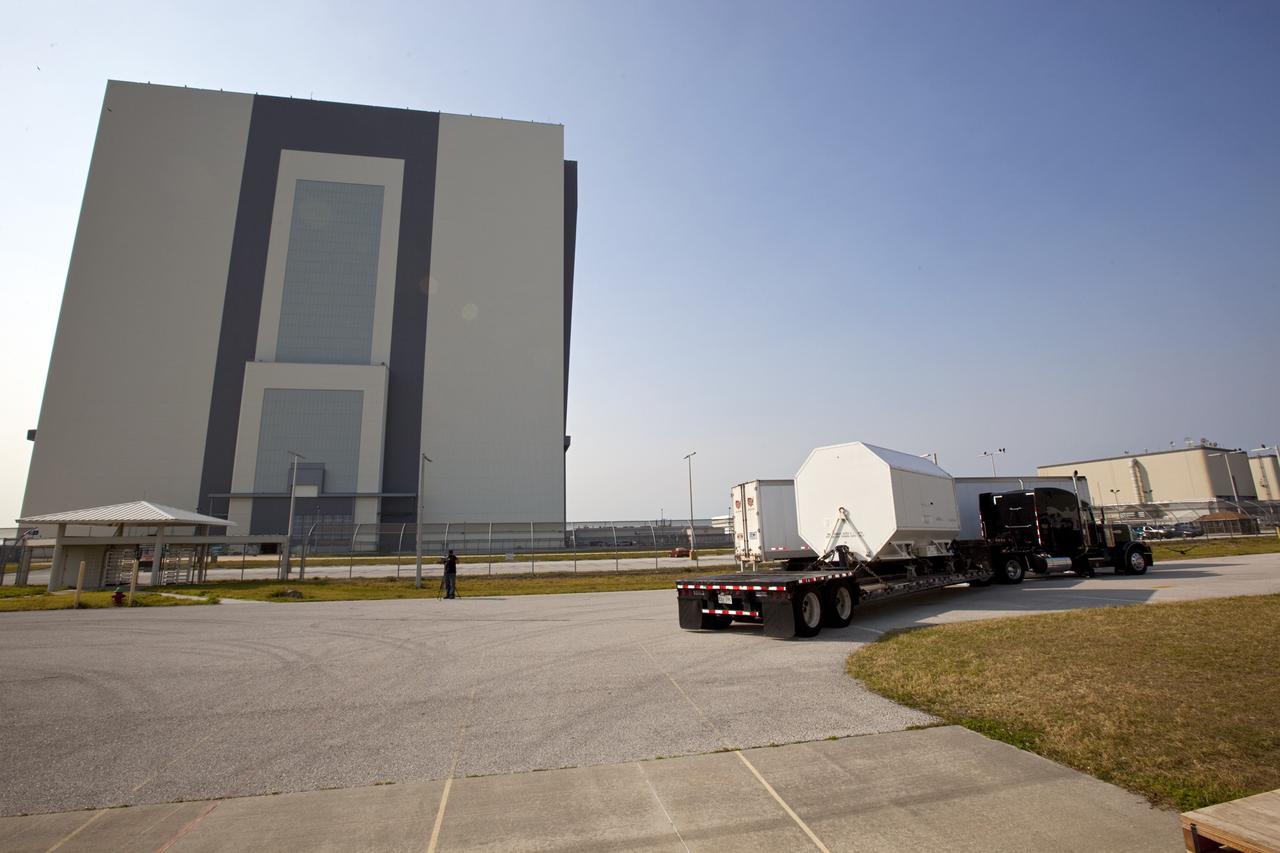
CAPE CANAVERAL, Fla. – A flatbed truck departs from the Orbiter Processing Facility-3 engine shop at NASA's Kennedy Space Center in Florida transporting the last Pratt and Whitney Rocketdyne space shuttle main engine, or SSME, to NASA's Stennis Space Center in Mississippi. The first two groups of engines were shipped from Kennedy to Stennis in November 2011 and January 2012 the remaining engines departed today. Altogether, 15 shuttle-era engines will be stored at Stennis for reuse on NASA’s Space Launch System heavy-lift rocket, under development. Photo credit: NASA/Dimitri Gerondidakis
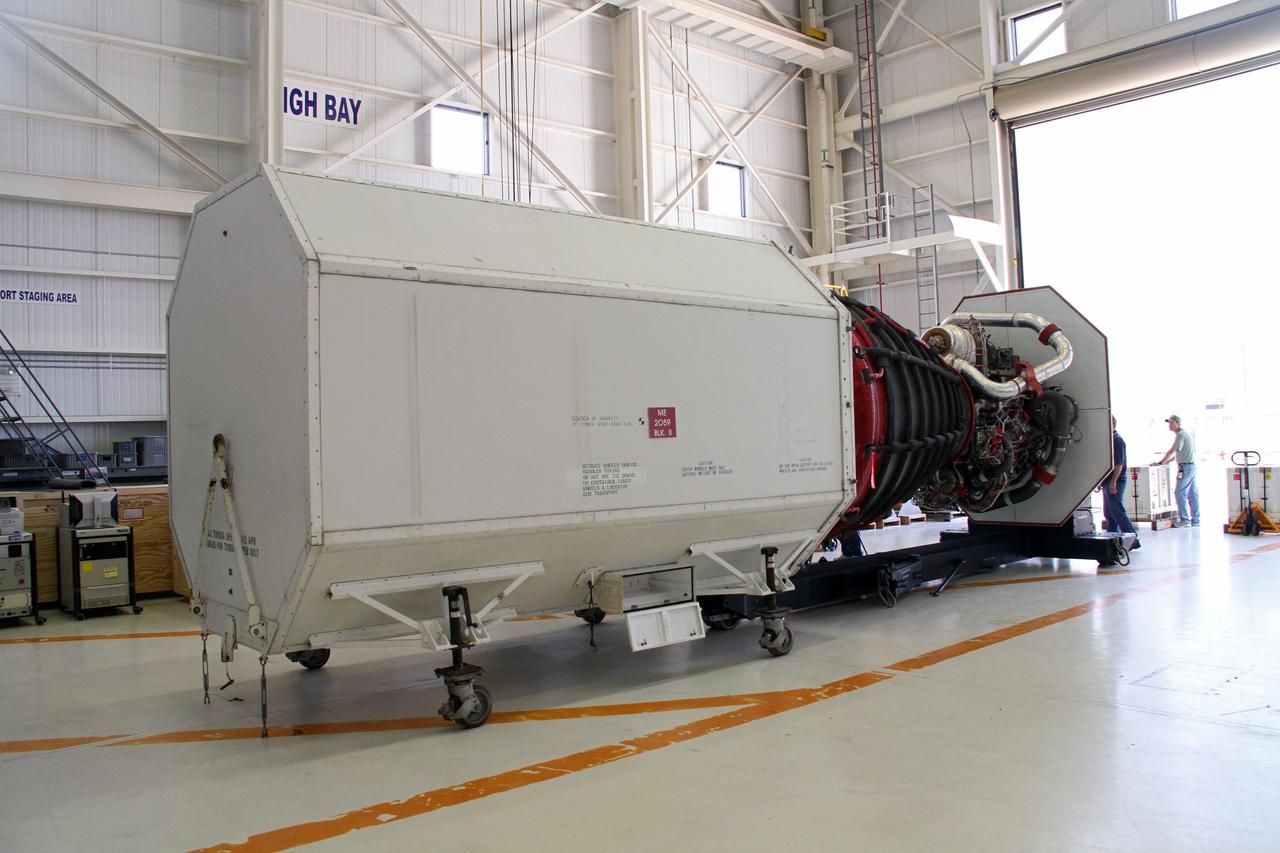
CAPE CANAVERAL, Fla. -- A Pratt and Whitney Rocketdyne space shuttle main engine, or SSME, is aligned with a transportation canister in the Orbiter Processing Facility-3 engine shop at NASA's Kennedy Space Center in Florida. The engine is the last to be packed for shipment to NASA's Stennis Space Center in Mississippi. The first two groups of engines were shipped from Kennedy to Stennis in November 2011 and January 2012, and the remaining engines are scheduled to depart on April 9. Altogether, 15 shuttle-era engines will be stored at Stennis for reuse on NASA’s Space Launch System heavy-lift rocket, under development. Photo credit: NASA/Cory Huston
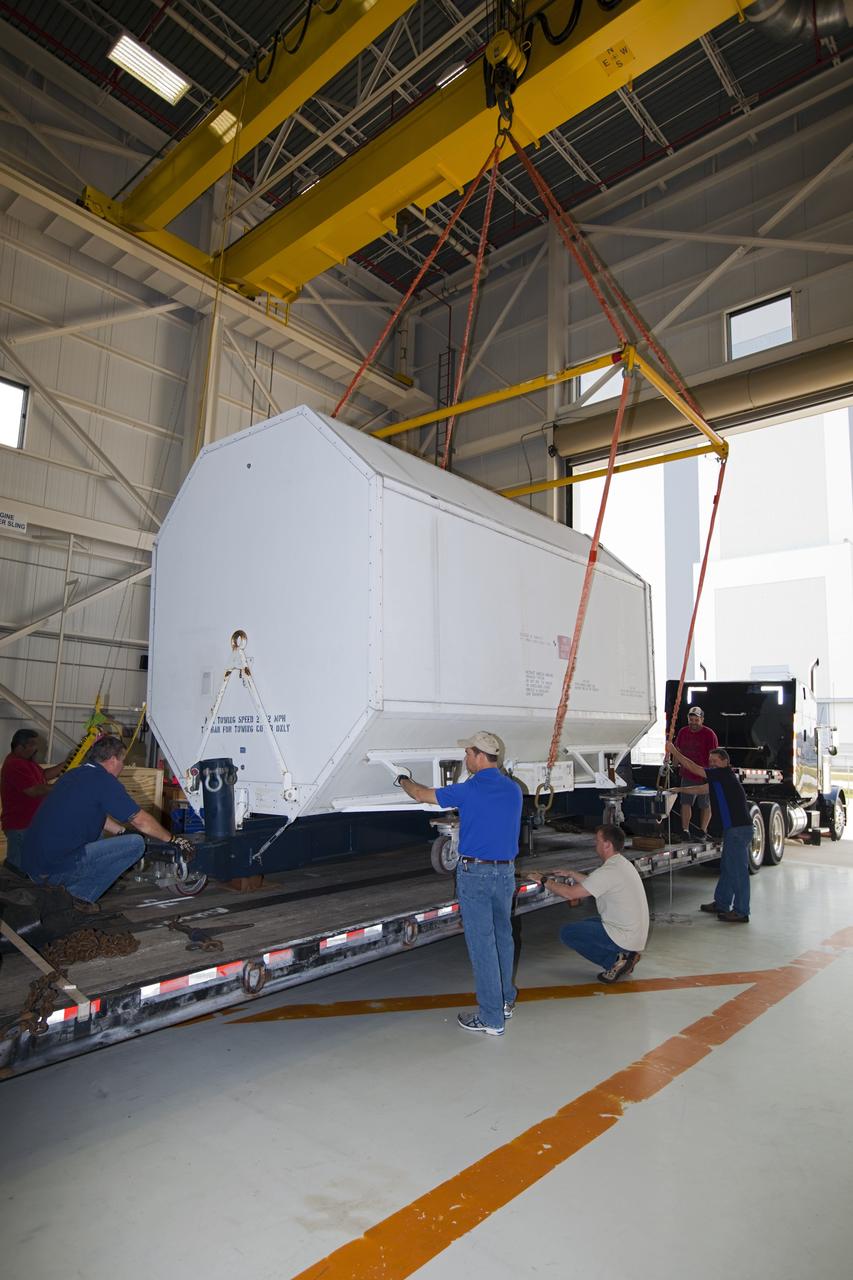
CAPE CANAVERAL, Fla. – In the Orbiter Processing Facility-3 engine shop at NASA's Kennedy Space Center in Florida, a transportation canister containing the last Pratt and Whitney Rocketdyne space shuttle main engine, or SSME, is lowered onto a flatbed truck for shipment to NASA's Stennis Space Center in Mississippi. The first two groups of engines were shipped from Kennedy to Stennis in November 2011 and January 2012 the remaining engines departed today. Altogether, 15 shuttle-era engines will be stored at Stennis for reuse on NASA’s Space Launch System heavy-lift rocket, under development. Photo credit: NASA/Dimitri Gerondidakis
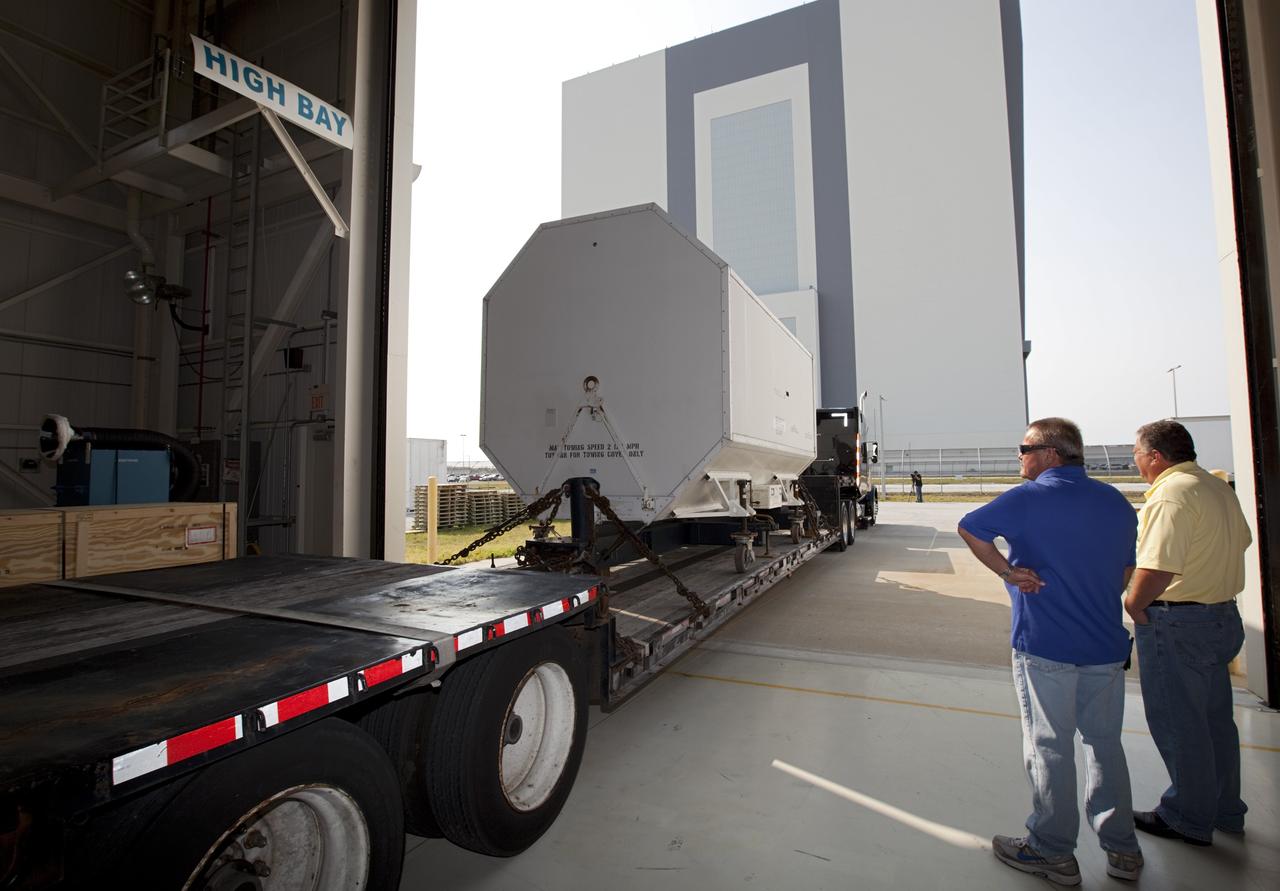
CAPE CANAVERAL, Fla. – In the Orbiter Processing Facility-3 engine shop at NASA's Kennedy Space Center in Florida, a transportation canister containing the last Pratt and Whitney Rocketdyne space shuttle main engine, or SSME, is secured on a flatbed truck and ready for departure to NASA's Stennis Space Center in Mississippi. The first two groups of engines were shipped from Kennedy to Stennis in November 2011 and January 2012 the remaining engines departed today. Altogether, 15 shuttle-era engines will be stored at Stennis for reuse on NASA’s Space Launch System heavy-lift rocket, under development. Photo credit: NASA/Dimitri Gerondidakis
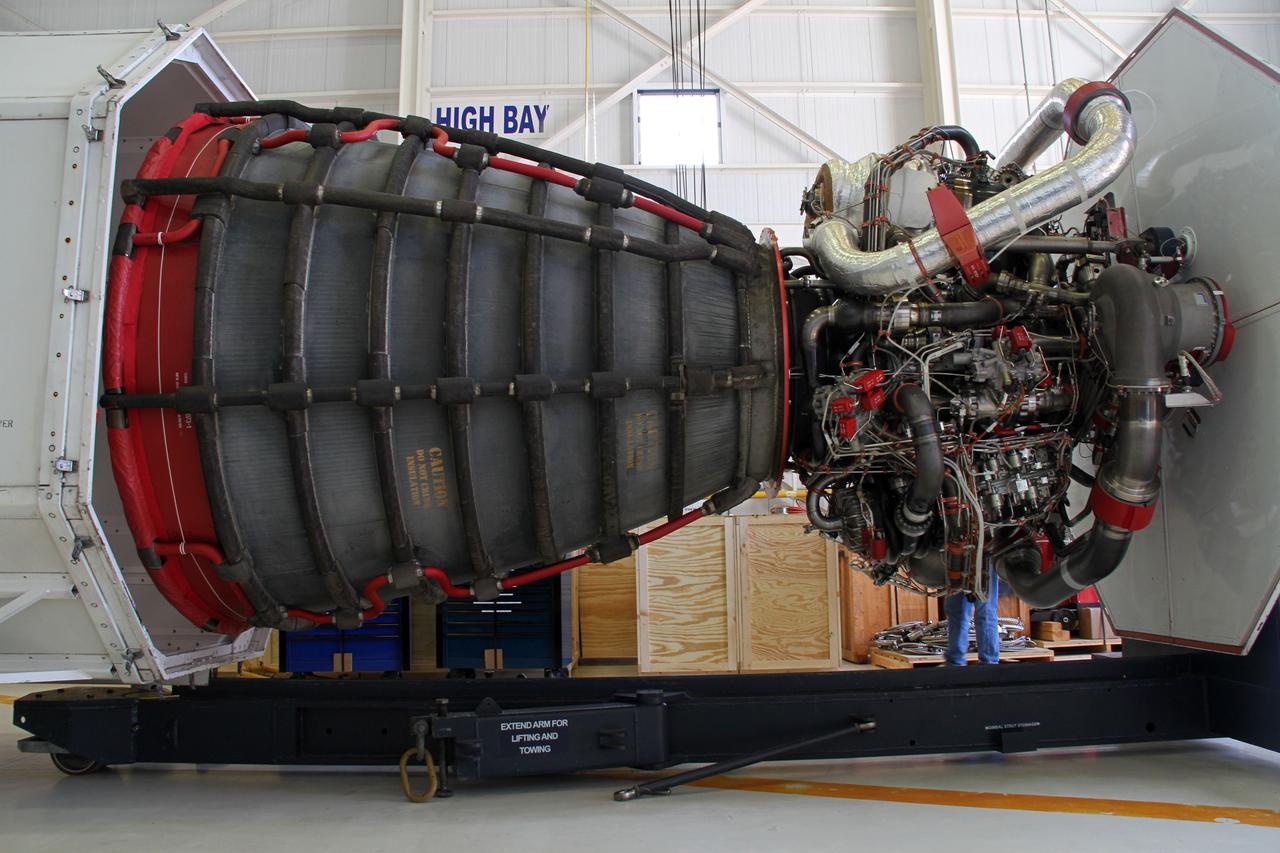
CAPE CANAVERAL, Fla. -- A Pratt and Whitney Rocketdyne space shuttle main engine, or SSME, begins to move into a transportation canister in the Orbiter Processing Facility-3 engine shop at NASA's Kennedy Space Center in Florida. The engine is the last to be packed for shipment to NASA's Stennis Space Center in Mississippi. The first two groups of engines were shipped from Kennedy to Stennis in November 2011 and January 2012, and the remaining engines are scheduled to depart on April 9. Altogether, 15 shuttle-era engines will be stored at Stennis for reuse on NASA’s Space Launch System heavy-lift rocket, under development. Photo credit: NASA/Cory Huston
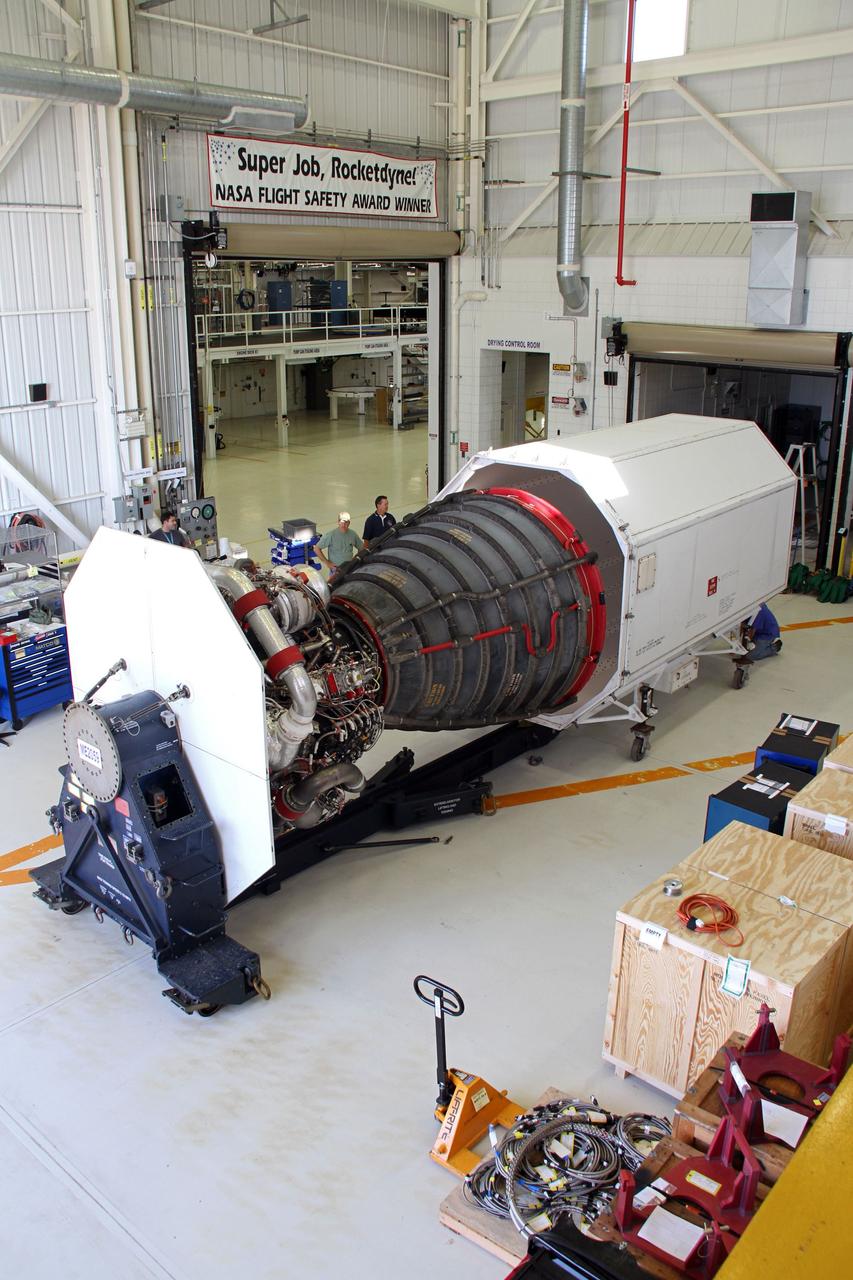
CAPE CANAVERAL, Fla. -- In the Orbiter Processing Facility-3 engine shop at NASA's Kennedy Space Center in Florida, a Pratt and Whitney Rocketdyne space shuttle main engine, or SSME, is prepared for loading into a waiting transportation canister for shipment to NASA's Stennis Space Center in Mississippi. The first two groups of engines were shipped from Kennedy to Stennis in November 2011 and January 2012, and the remaining engines are scheduled to depart on April 9. Altogether, 15 shuttle-era engines will be stored at Stennis for reuse on NASA’s Space Launch System heavy-lift rocket, under development. Photo credit: NASA/Cory Huston
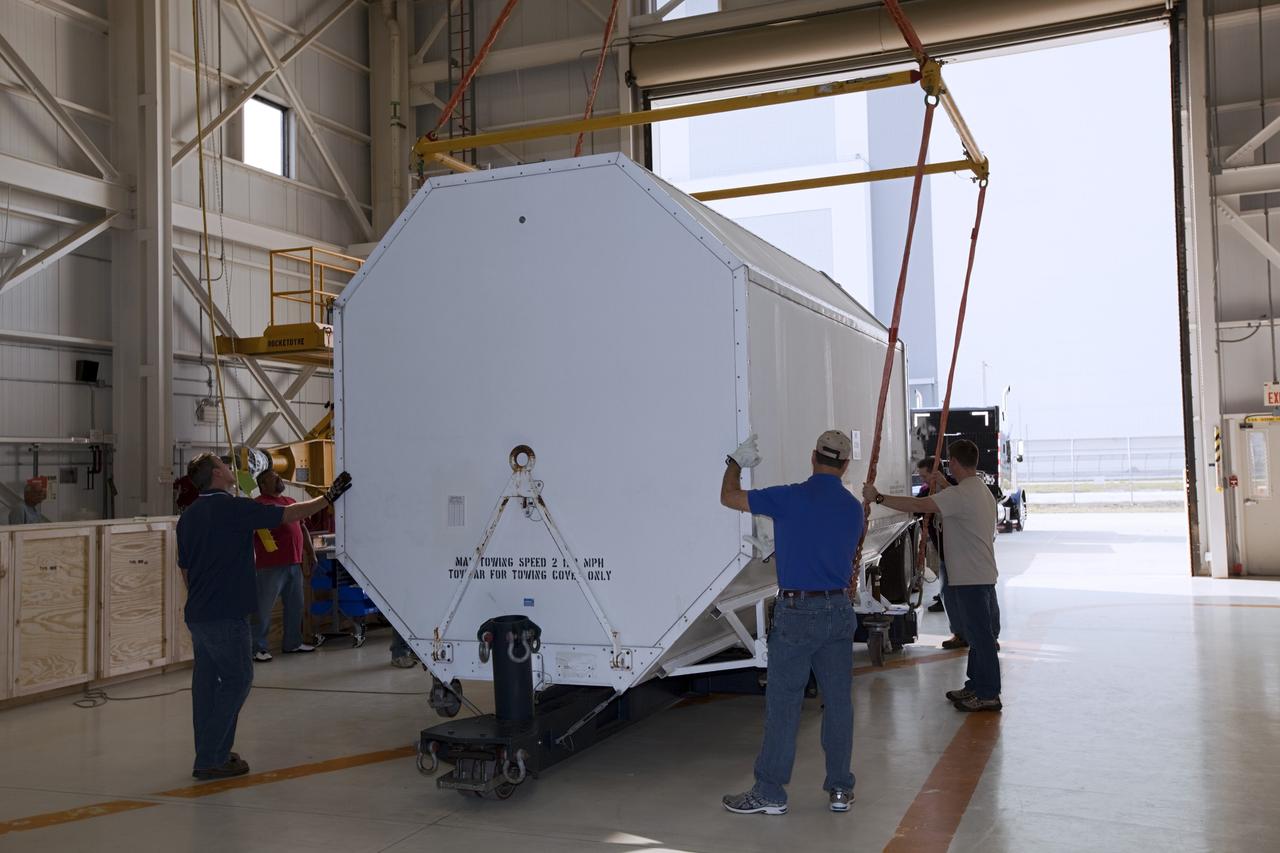
CAPE CANAVERAL, Fla. – In the Orbiter Processing Facility-3 engine shop at NASA's Kennedy Space Center in Florida, preparations are under way to load the transportation canister containing the last Pratt and Whitney Rocketdyne space shuttle main engine, or SSME, onto a flatbed truck for shipment to NASA's Stennis Space Center in Mississippi. The first two groups of engines were shipped from Kennedy to Stennis in November 2011 and January 2012 the remaining engines departed today. Altogether, 15 shuttle-era engines will be stored at Stennis for reuse on NASA’s Space Launch System heavy-lift rocket, under development. Photo credit: NASA/Dimitri Gerondidakis
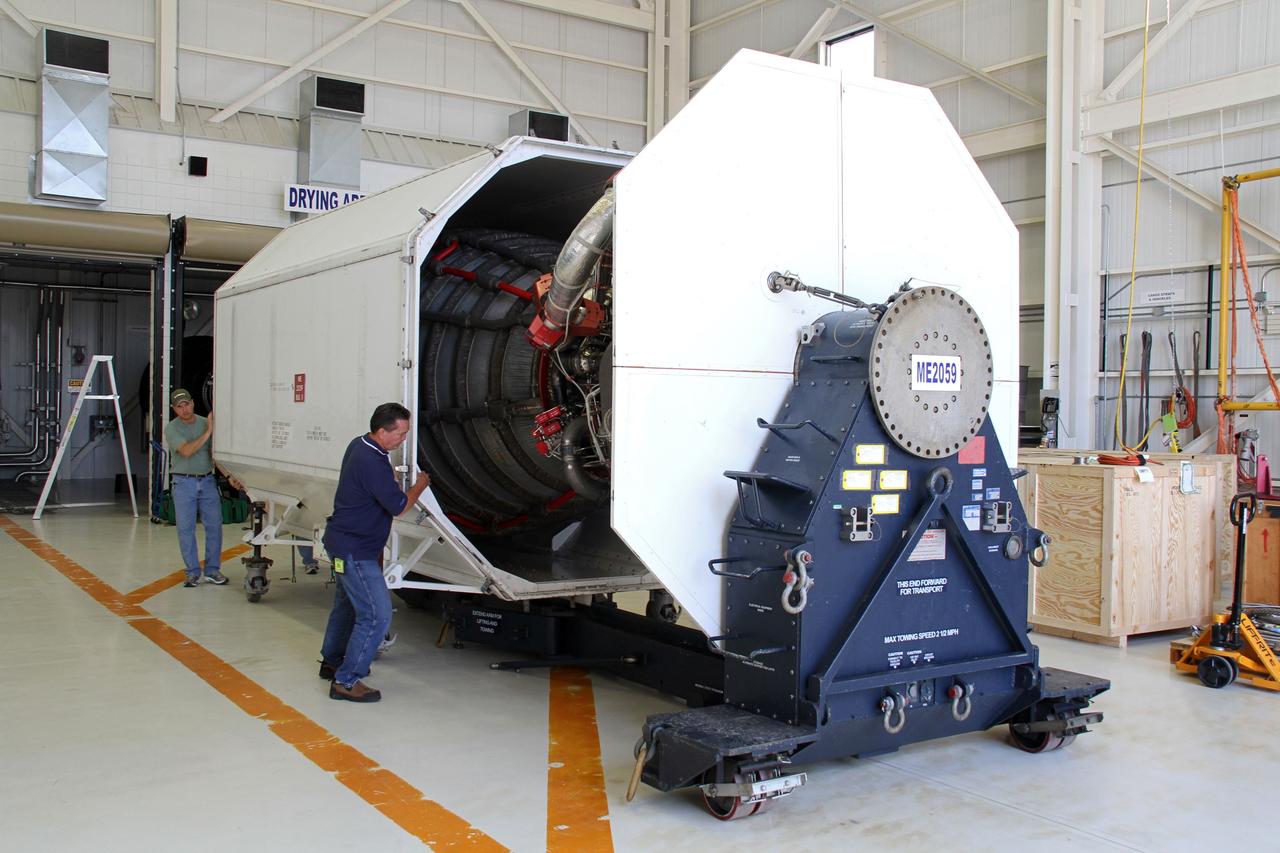
CAPE CANAVERAL, Fla. -- In the Orbiter Processing Facility-3 engine shop at NASA's Kennedy Space Center in Florida, a space shuttle main engine, or SSME, enters a transportation canister under the watchful eyes of Pratt and Whitney Rocketdyne's Jeff Huie. The engine is the last to be packed for shipment to NASA's Stennis Space Center in Mississippi. The first two groups of engines were shipped from Kennedy to Stennis in November 2011 and January 2012, and the remaining engines are scheduled to depart on April 9. Altogether, 15 shuttle-era engines will be stored at Stennis for reuse on NASA’s Space Launch System heavy-lift rocket, under development. Photo credit: NASA/Cory Huston
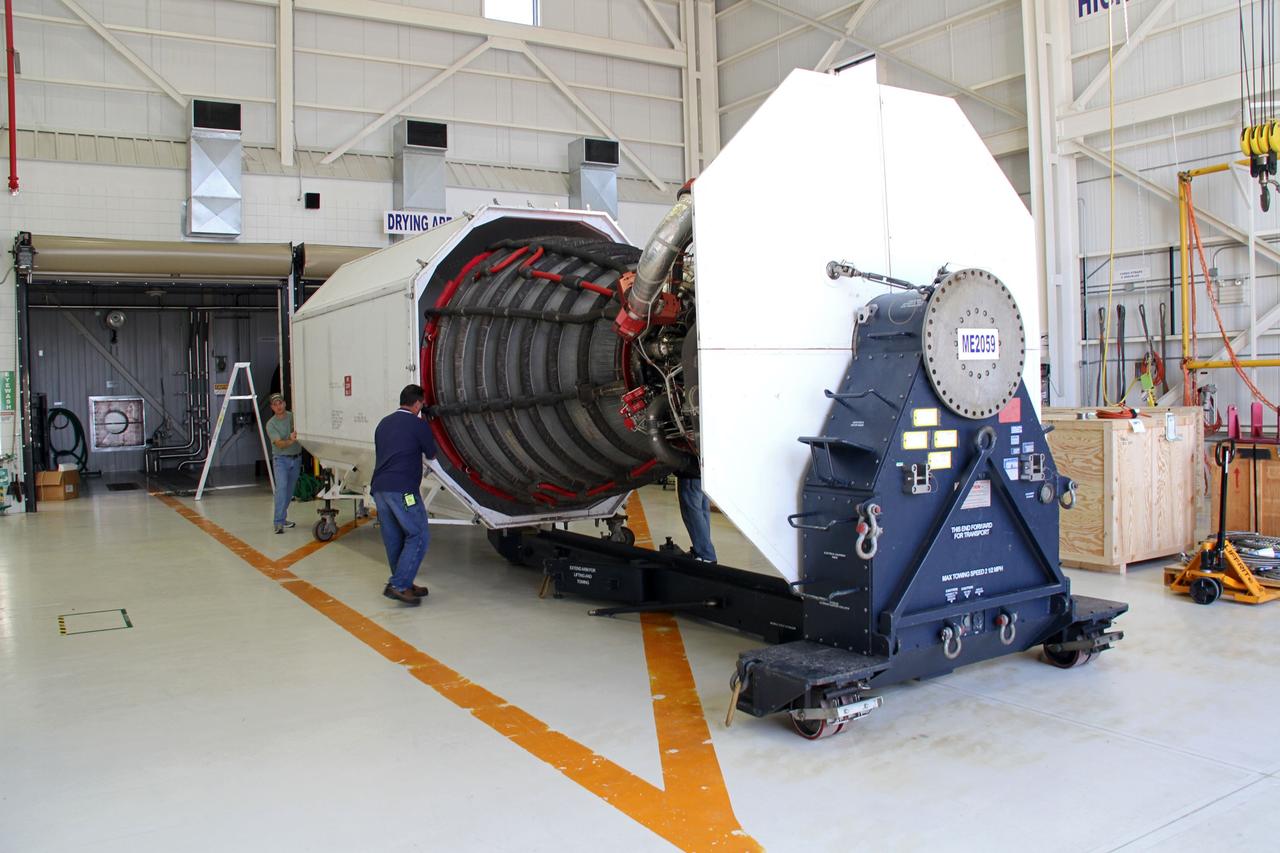
CAPE CANAVERAL, Fla. -- Jeff Huie of Pratt and Whitney Rocketdyne monitors the progress of a space shuttle main engine, or SSME, as it is loaded into a transportation canister in the Orbiter Processing Facility-3 engine shop at NASA's Kennedy Space Center in Florida. The engine is the last to be packed for shipment to NASA's Stennis Space Center in Mississippi. The first two groups of engines were shipped from Kennedy to Stennis in November 2011 and January 2012, and the remaining engines are scheduled to depart on April 9. Altogether, 15 shuttle-era engines will be stored at Stennis for reuse on NASA’s Space Launch System heavy-lift rocket, under development. Photo credit: NASA/Cory Huston
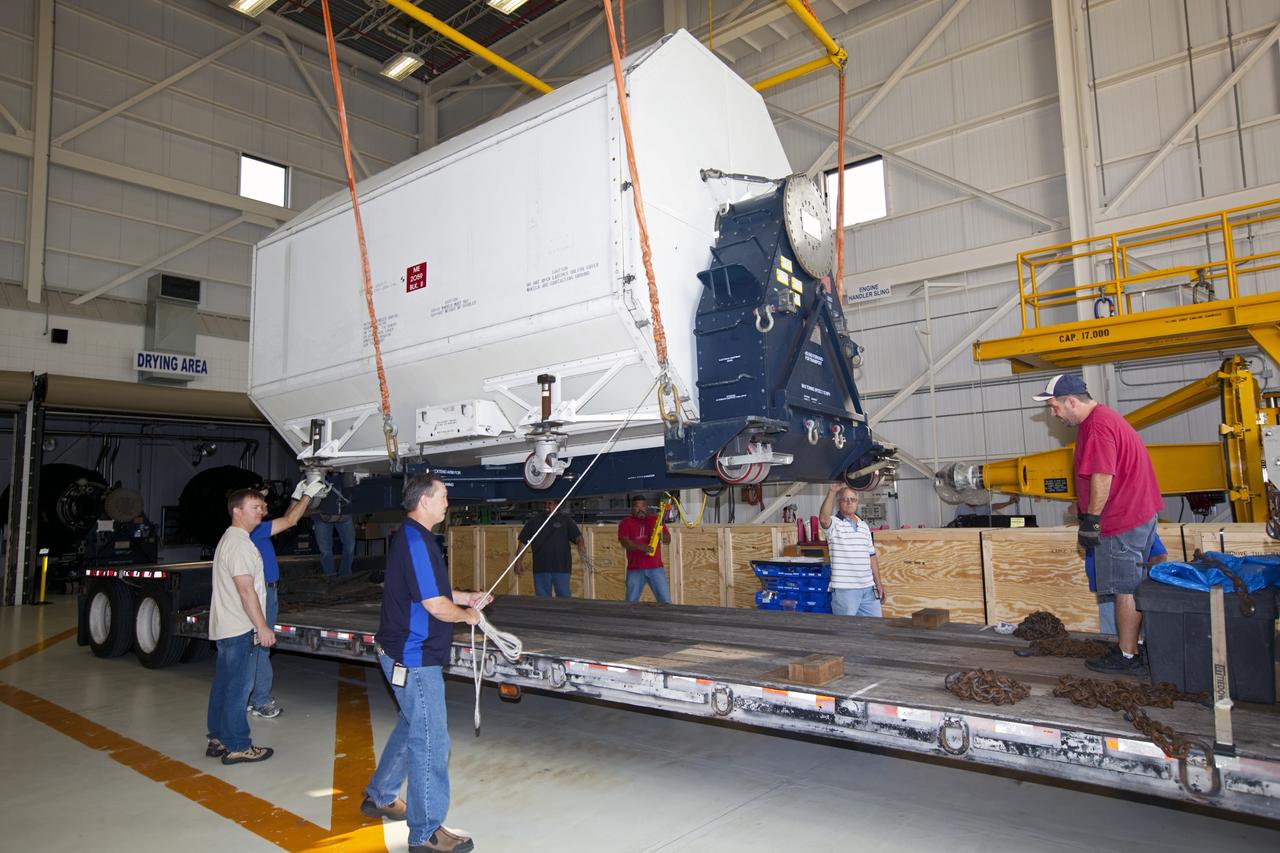
CAPE CANAVERAL, Fla. – In the Orbiter Processing Facility-3 engine shop at NASA's Kennedy Space Center in Florida, a transportation canister containing the last Pratt and Whitney Rocketdyne space shuttle main engine, or SSME, is lifted onto a flatbed truck for shipment to NASA's Stennis Space Center in Mississippi. The first two groups of engines were shipped from Kennedy to Stennis in November 2011 and January 2012 the remaining engines departed today. Altogether, 15 shuttle-era engines will be stored at Stennis for reuse on NASA’s Space Launch System heavy-lift rocket, under development. Photo credit: NASA/Dimitri Gerondidakis

CAPE CANAVERAL, Fla. -- The last Pratt and Whitney Rocketdyne space shuttle main engine, or SSME, is enclosed in a transportation canister in the Orbiter Processing Facility-3 engine shop at NASA's Kennedy Space Center in Florida. The engine was packed for shipment to NASA's Stennis Space Center in Mississippi. The first two groups of engines were shipped from Kennedy to Stennis in November 2011 and January 2012, and the remaining engines are scheduled to depart on April 9. Altogether, 15 shuttle-era engines will be stored at Stennis for reuse on NASA’s Space Launch System heavy-lift rocket, under development. Photo credit: NASA/Cory Huston
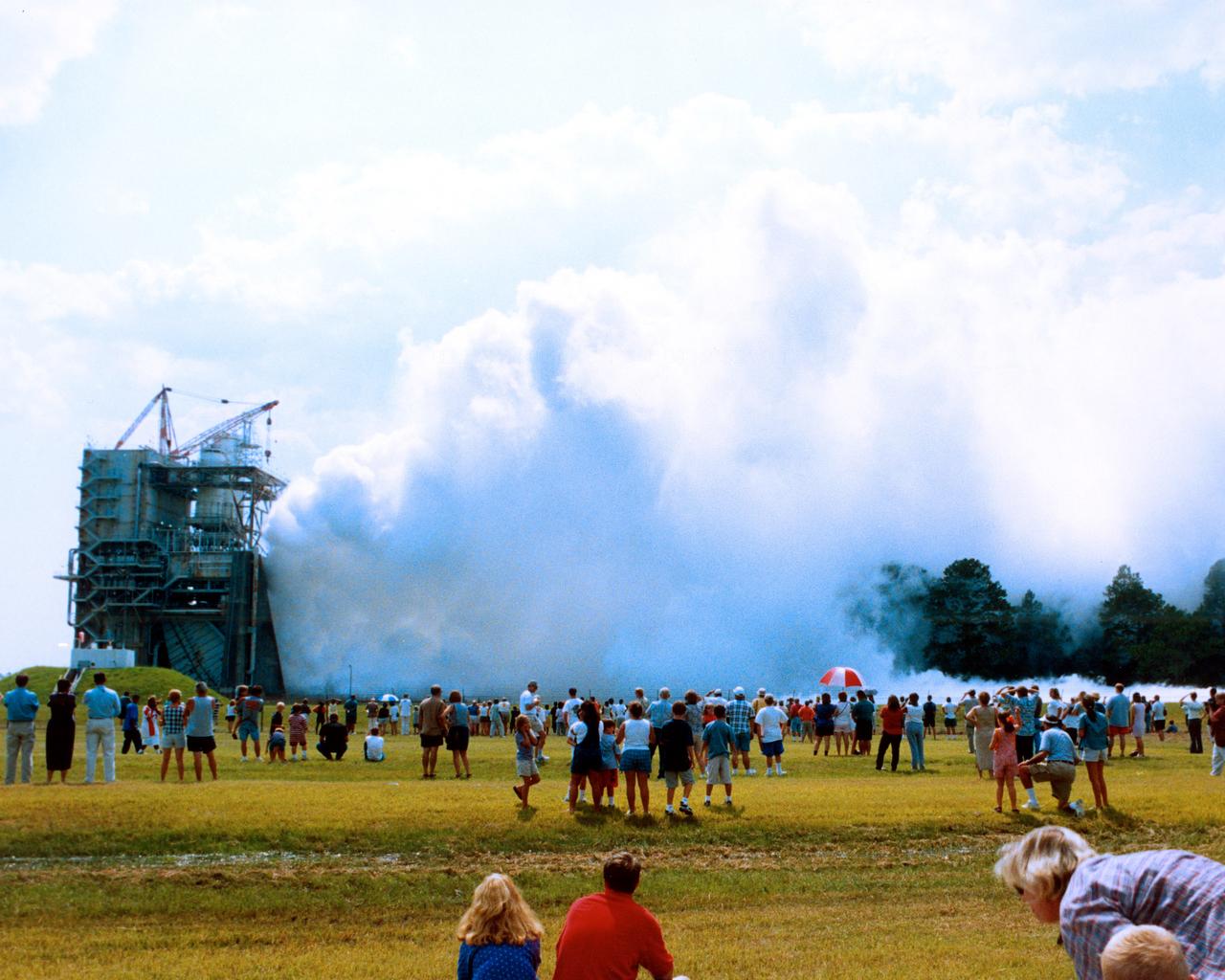
A new NASA Space Shuttle Main Engine (SSME) roars to the approval of more than 2,000 people who came to John C. Stennis Space Center in Hancock County, Miss., on July 25 for a flight-certification test of the SSME Block II configuration. The engine, a new and significantly upgraded shuttle engine, was delivered to NASA's Kennedy Space Center in Florida for use on future shuttle missions. Spectators were able to experience the 'shake, rattle and roar' of the engine, which ran for 520 seconds - the length of time it takes a shuttle to reach orbit.
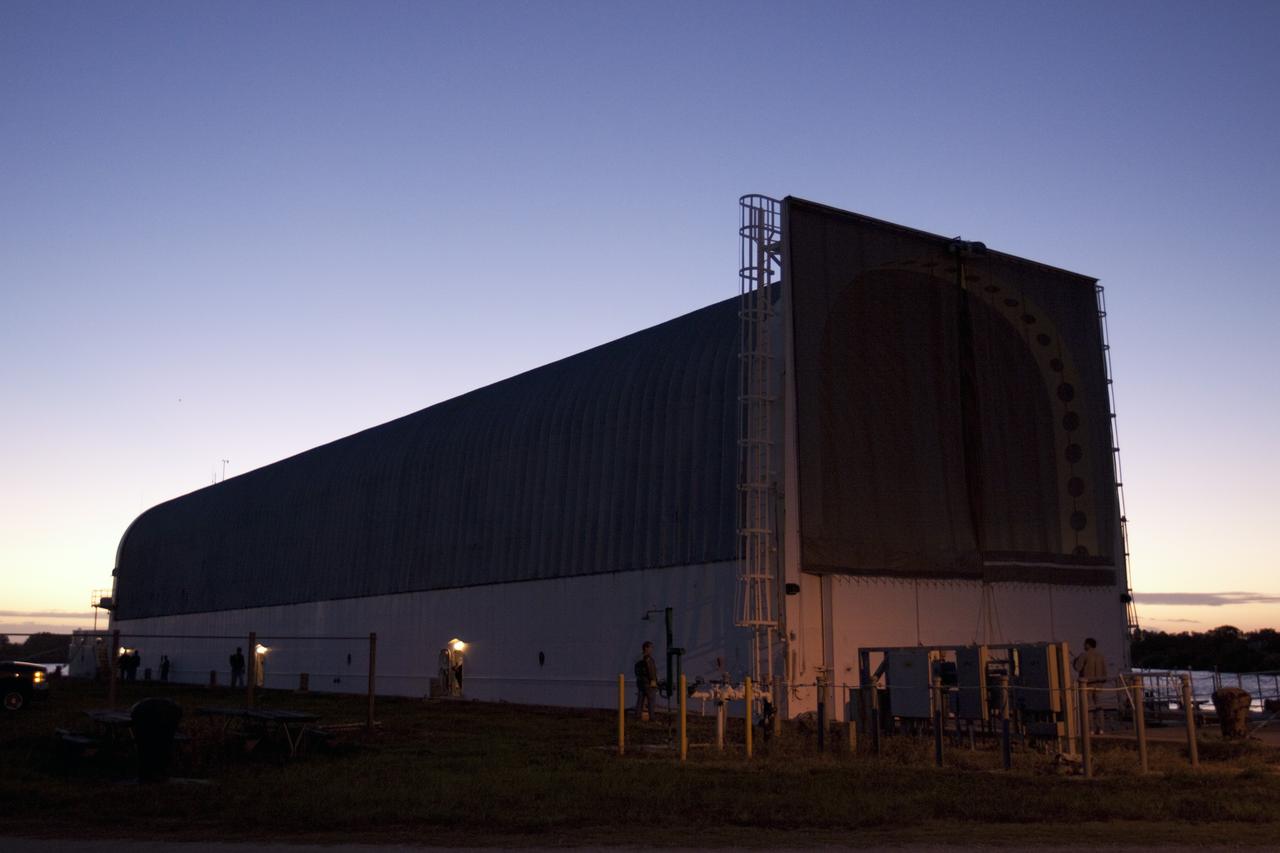
CAPE CANAVERAL, Fla. – Just before dawn, the Pegasus Barge which is moored in a secure area of the Turn Basin in the Launch Complex 39 area at NASA's Kennedy Space Center in Florida, is being prepared to deliver space shuttle main engine (SSME) ground support equipment to Stennis Space Center near Bay St. Louis, Miss. The 266-foot-long and 50-foot-wide barge will be towed to Stennis by NASA's Freedom Star ship. Since being delivered to NASA in 1999, Pegasus sailed 41 times and transported 31 shuttle external fuel tanks from Michoud Assembly Facility near New Orleans to Kennedy. The barge will leave Kennedy, perhaps for the final time. Both the barge and shuttle equipment will remain in storage until their specific future uses are determined. The SSMEs themselves will be transported to Stennis separately for use with the agency’s new heavy-lift rocket, the Space Launch System. The work is part of the Space Shuttle Program’s transition and retirement processing. For more information about Shuttle Transition and Retirement, visit http://www.nasa.gov/mission_pages/transition/home/index.html. Photo credit: NASA/ Kim Shiflett
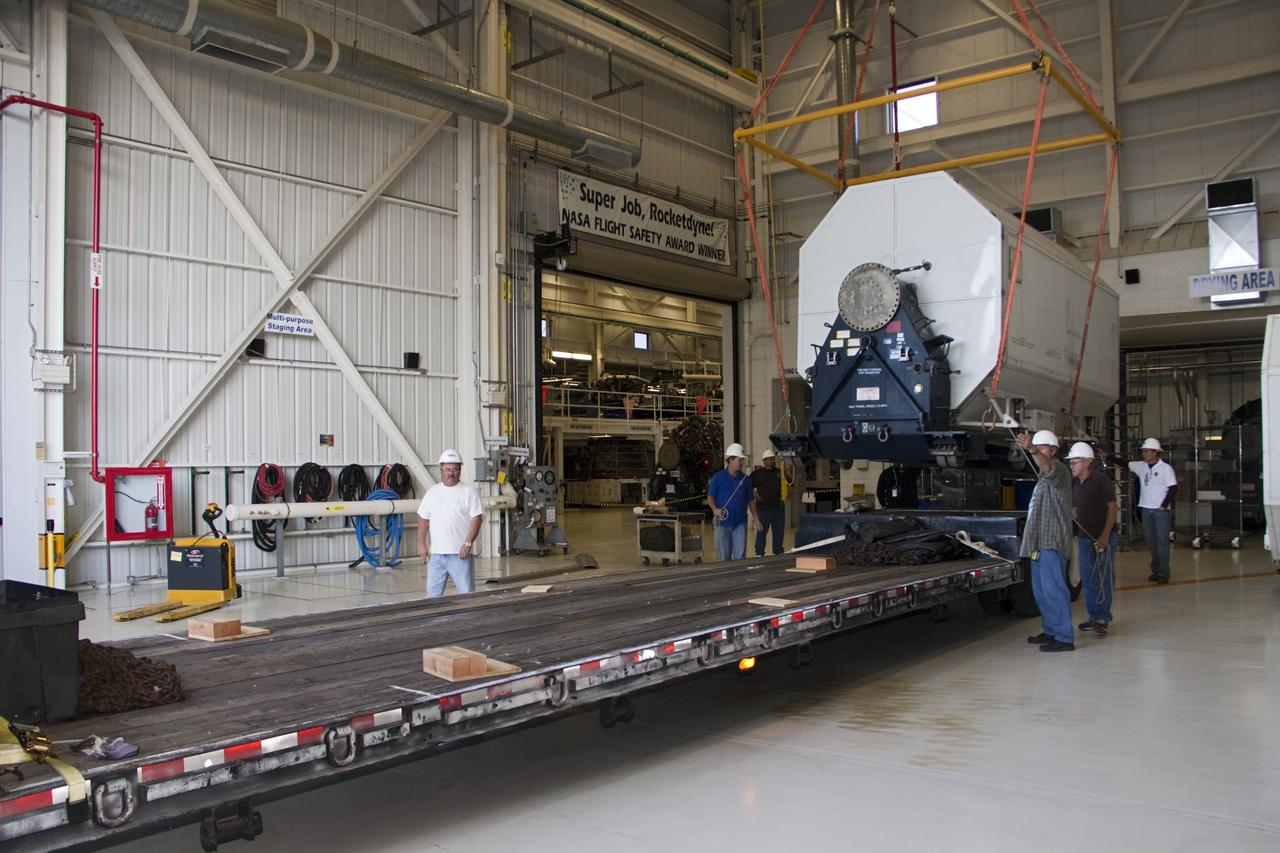
CAPE CANAVERAL, Fla. – In the Space Shuttle Main Engine Processing Facility at NASA’s Kennedy Space Center in Florida, a transportation canister containing a Pratt & Whitney Rocketdyne space shuttle main engine (SSME) is lifted into position onto a flatbed trailer. This is the second of the 15 engines used during the Space Shuttle Program to be transported to NASA's Stennis Space Center in Mississippi. The engines will be stored at Stennis for future use on NASA's new heavy-lift rocket, the Space Launch System (SLS), which will carry NASA's new Orion spacecraft, cargo, equipment and science experiments to space. For more information, visit http://www.nasa.gov/shuttle. Photo credit: NASA/Jim Grossmann
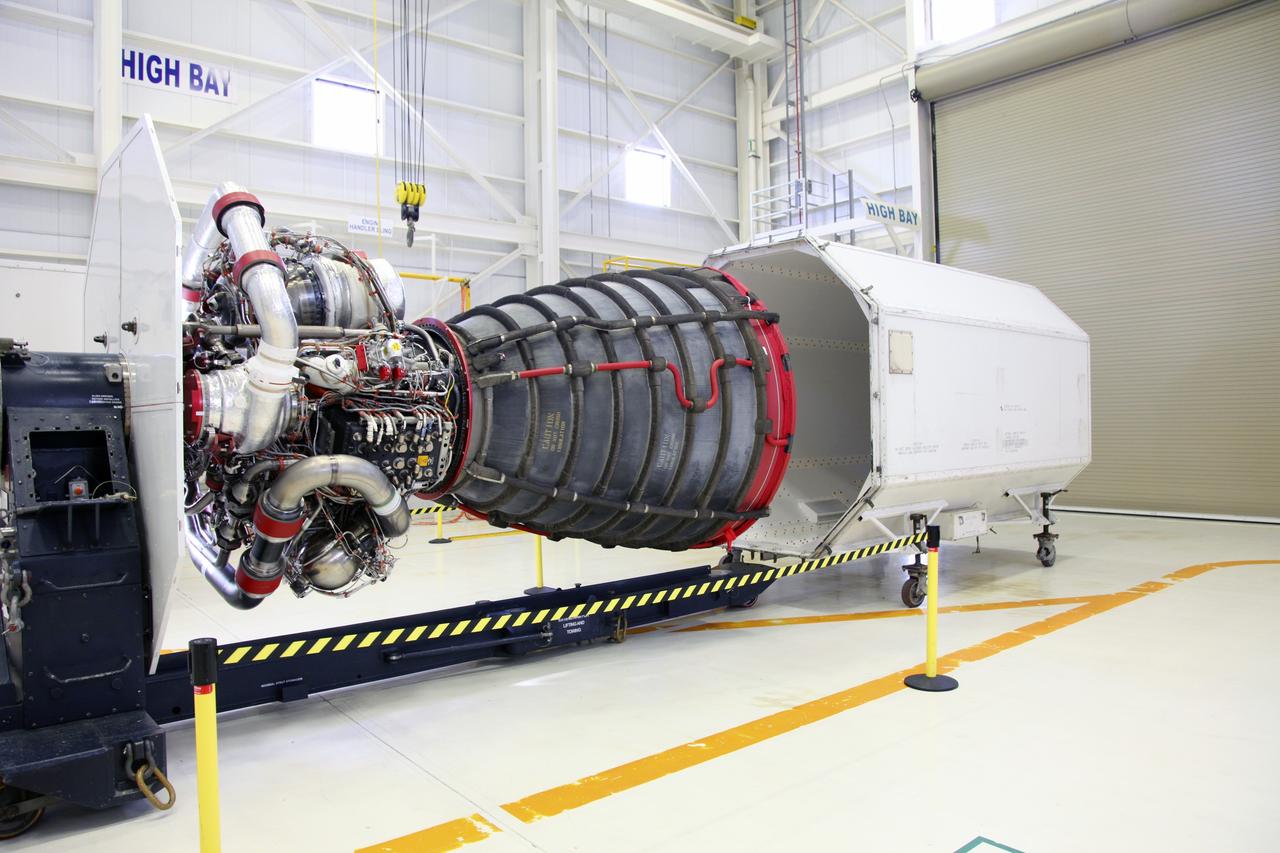
CAPE CANAVERAL, Fla. – In the Space Shuttle Main Engine Processing Facility at NASA’s Kennedy Space Center in Florida, a transportation canister rolls toward a Pratt Whitney Rocketdyne space shuttle main engine (SSME). This is the second of the 15 engines used during the Space Shuttle Program to be prepared for transfer to NASA's Stennis Space Center in Mississippi. The engines will be stored at Stennis for future use on NASA's new heavy-lift rocket, the Space Launch System (SLS), which will carry NASA's new Orion spacecraft, cargo, equipment and science experiments to space. For more information, visit http://www.nasa.gov/shuttle. Photo credit: NASA/Gianni Woods
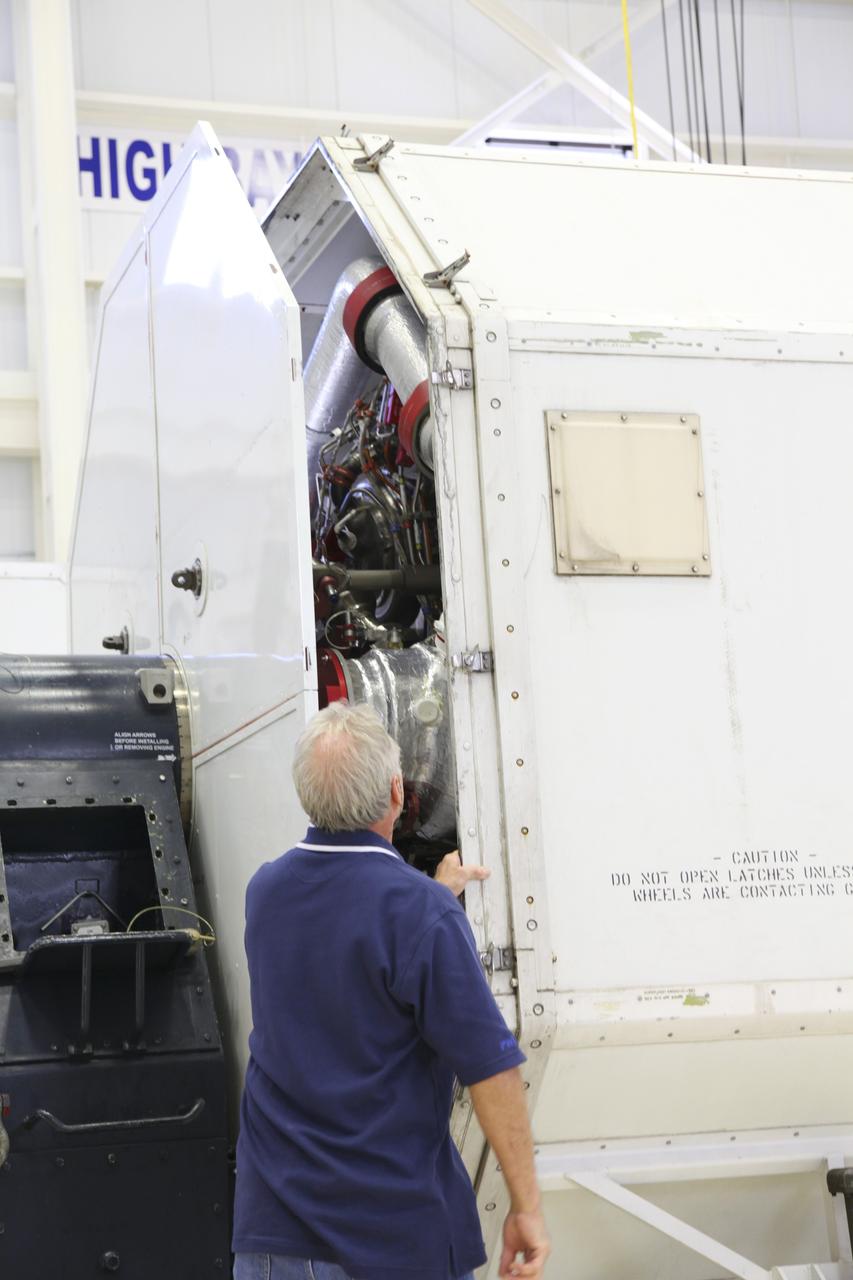
CAPE CANAVERAL, Fla. – In the Space Shuttle Main Engine Processing Facility at NASA’s Kennedy Space Center in Florida, a technician oversees the closure of a transportation canister containing a Pratt Whitney Rocketdyne space shuttle main engine (SSME). This is the second of the 15 engines used during the Space Shuttle Program to be prepared for transfer to NASA's Stennis Space Center in Mississippi. The engines will be stored at Stennis for future use on NASA's new heavy-lift rocket, the Space Launch System (SLS), which will carry NASA's new Orion spacecraft, cargo, equipment and science experiments to space. For more information, visit http://www.nasa.gov/shuttle. Photo credit: NASA/Gianni Woods
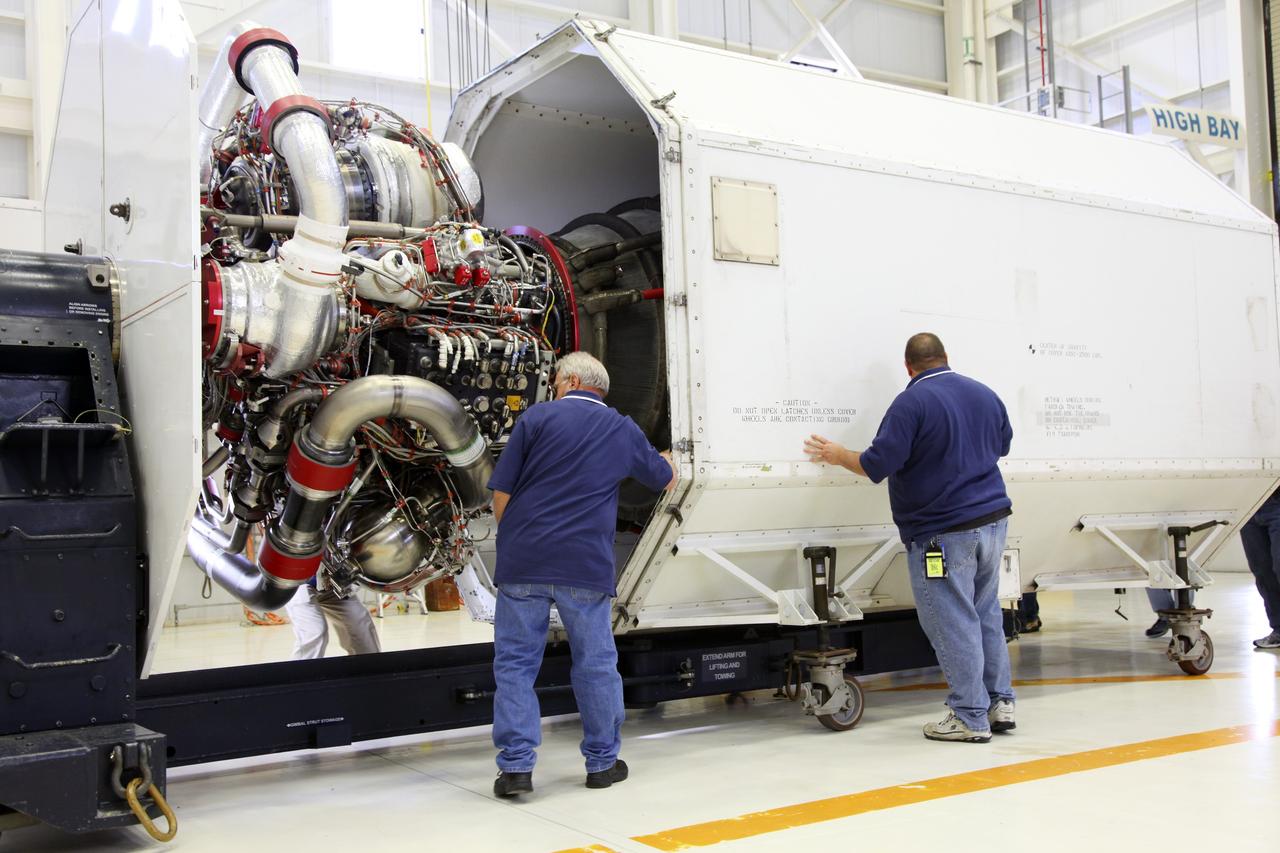
CAPE CANAVERAL, Fla. – In the Space Shuttle Main Engine Processing Facility at NASA’s Kennedy Space Center in Florida, technicians oversee the installation of a Pratt Whitney Rocketdyne space shuttle main engine (SSME) into a transportation canister. This is the second of the 15 engines used during the Space Shuttle Program to be prepared for transfer to NASA's Stennis Space Center in Mississippi. The engines will be stored at Stennis for future use on NASA's new heavy-lift rocket, the Space Launch System (SLS), which will carry NASA's new Orion spacecraft, cargo, equipment and science experiments to space. For more information, visit http://www.nasa.gov/shuttle. Photo credit: NASA/Gianni Woods
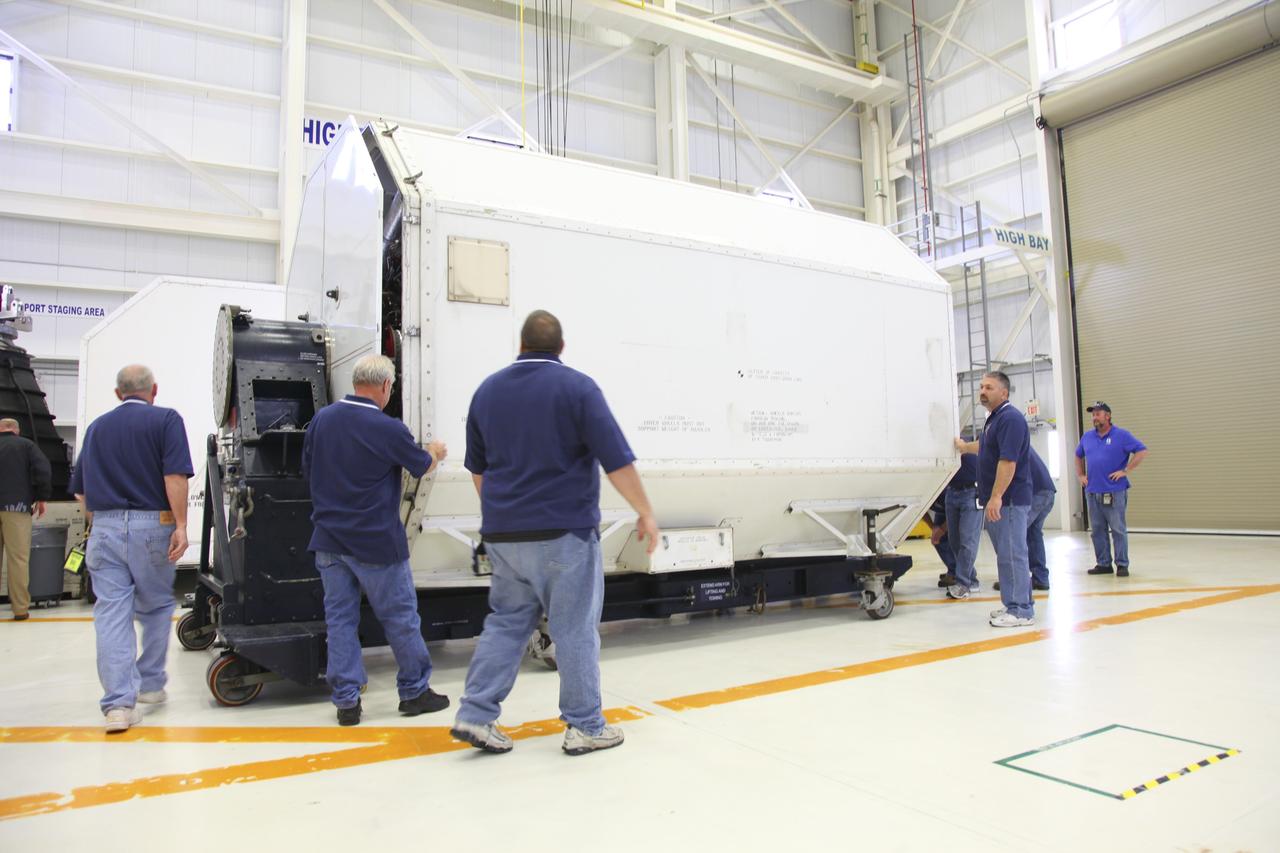
CAPE CANAVERAL, Fla. – In the Space Shuttle Main Engine Processing Facility at NASA’s Kennedy Space Center in Florida, a transportation canister is nearly closed around a Pratt Whitney Rocketdyne space shuttle main engine (SSME). This is the second of the 15 engines used during the Space Shuttle Program to be prepared for transfer to NASA's Stennis Space Center in Mississippi. The engines will be stored at Stennis for future use on NASA's new heavy-lift rocket, the Space Launch System (SLS), which will carry NASA's new Orion spacecraft, cargo, equipment and science experiments to space. For more information, visit http://www.nasa.gov/shuttle. Photo credit: NASA/Gianni Woods
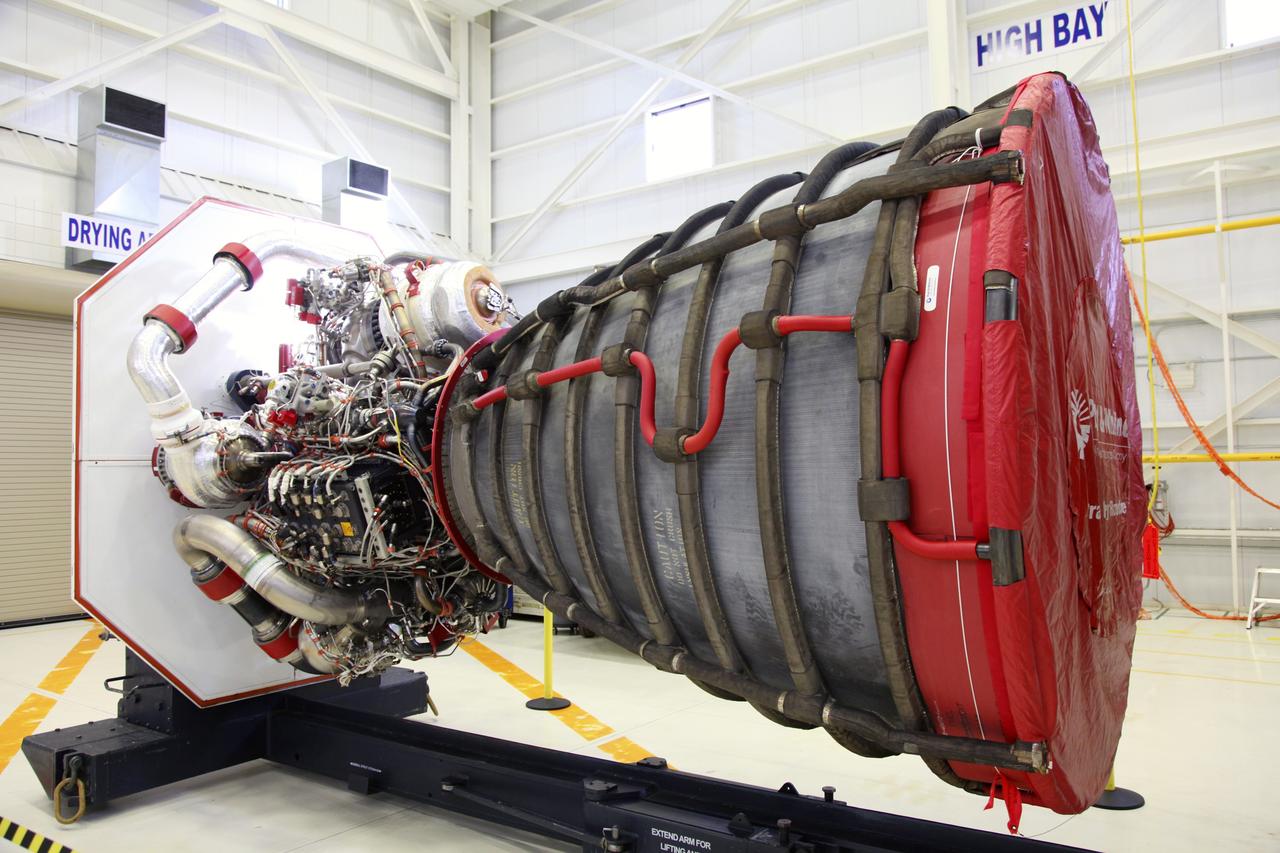
CAPE CANAVERAL, Fla. – In the Space Shuttle Main Engine Processing Facility at NASA’s Kennedy Space Center in Florida, preparations are under way to install a Pratt Whitney Rocketdyne space shuttle main engine (SSME) into a transportation canister. This is the second of the 15 engines used during the Space Shuttle Program to be prepared for transfer to NASA's Stennis Space Center in Mississippi. The engines will be stored at Stennis for future use on NASA's new heavy-lift rocket, the Space Launch System (SLS), which will carry NASA's new Orion spacecraft, cargo, equipment and science experiments to space. For more information, visit http://www.nasa.gov/shuttle. Photo credit: NASA/Gianni Woods
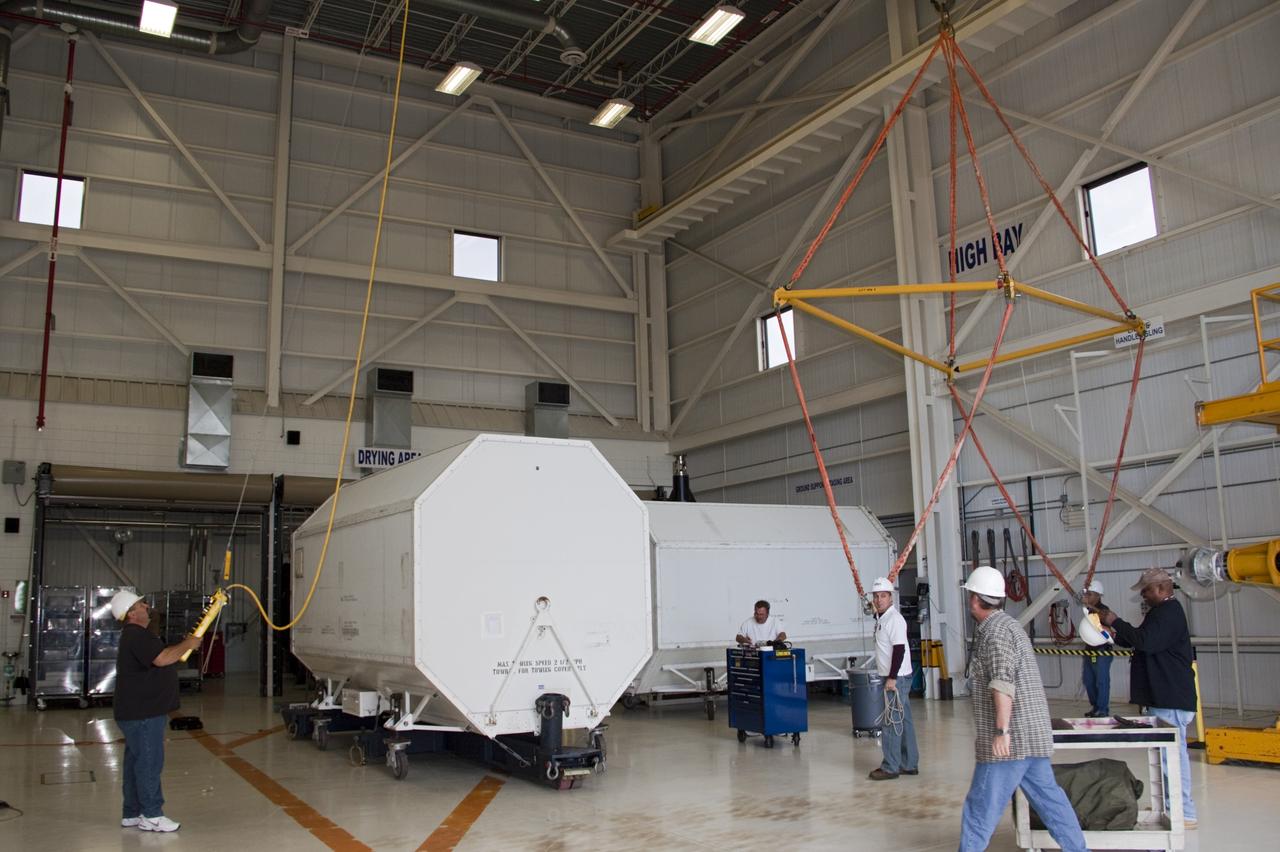
CAPE CANAVERAL, Fla. – In the Space Shuttle Main Engine Processing Facility at NASA’s Kennedy Space Center in Florida, preparations are under way to lift a transportation canister containing a Pratt & Whitney Rocketdyne space shuttle main engine (SSME) onto a flatbed trailer. This is the second of the 15 engines used during the Space Shuttle Program to be transported to NASA's Stennis Space Center in Mississippi. The engines will be stored at Stennis for future use on NASA's new heavy-lift rocket, the Space Launch System (SLS), which will carry NASA's new Orion spacecraft, cargo, equipment and science experiments to space. For more information, visit http://www.nasa.gov/shuttle. Photo credit: NASA/Jim Grossmann
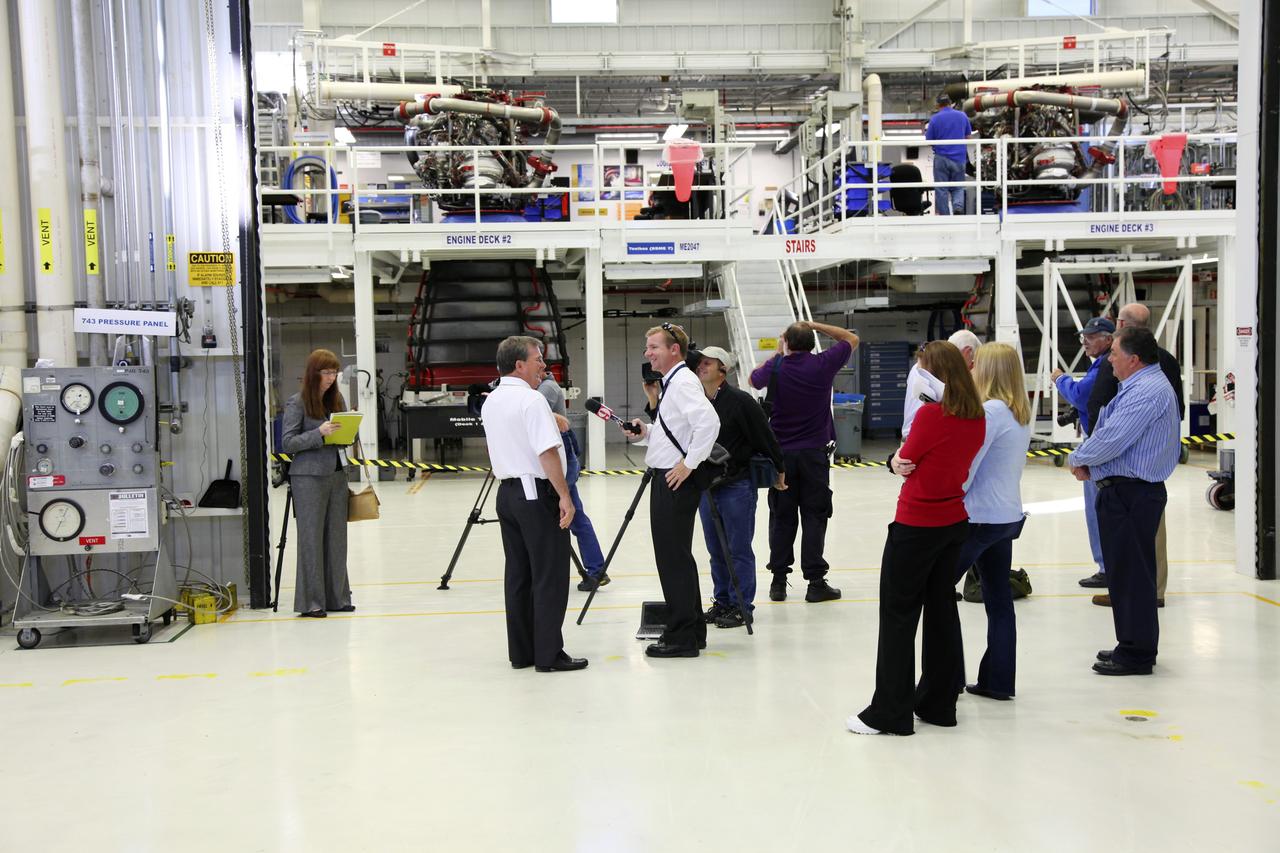
CAPE CANAVERAL, Fla. – In the Space Shuttle Main Engine Processing Facility at NASA’s Kennedy Space Center in Florida, media representatives are on hand for the installation of a Pratt Whitney Rocketdyne space shuttle main engine (SSME) into a transportation canister. This is the second of the 15 engines used during the Space Shuttle Program to be prepared for transfer to NASA's Stennis Space Center in Mississippi. The engines will be stored at Stennis for future use on NASA's new heavy-lift rocket, the Space Launch System (SLS), which will carry NASA's new Orion spacecraft, cargo, equipment and science experiments to space. For more information, visit http://www.nasa.gov/shuttle. Photo credit: NASA/Gianni Woods
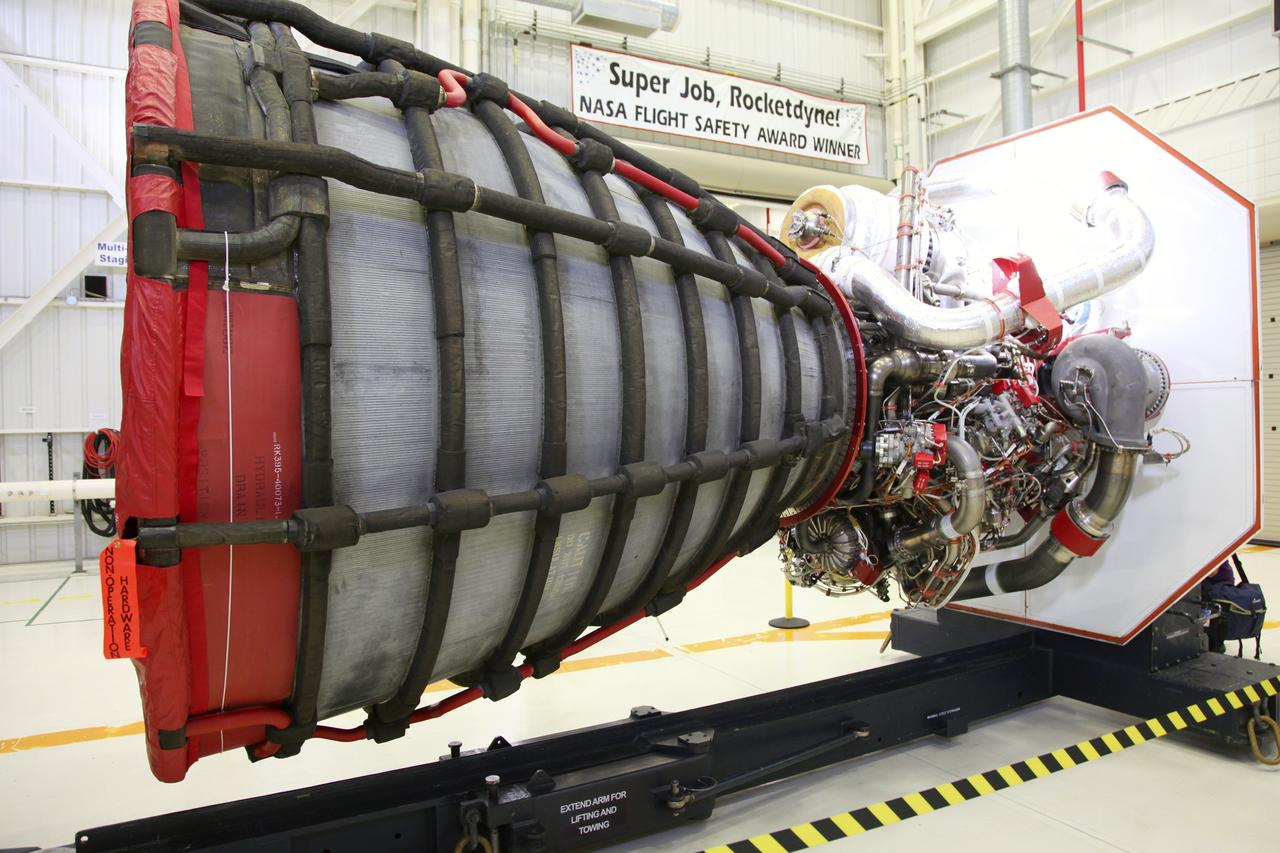
CAPE CANAVERAL, Fla. – In the Space Shuttle Main Engine Processing Facility at NASA’s Kennedy Space Center in Florida, a Pratt Whitney Rocketdyne space shuttle main engine (SSME) is ready for installation in a transportation canister. This is the second of the 15 engines used during the Space Shuttle Program to be prepared for transfer to NASA's Stennis Space Center in Mississippi. The engines will be stored at Stennis for future use on NASA's new heavy-lift rocket, the Space Launch System (SLS), which will carry NASA's new Orion spacecraft, cargo, equipment and science experiments to space. For more information, visit http://www.nasa.gov/shuttle. Photo credit: NASA/Gianni Woods
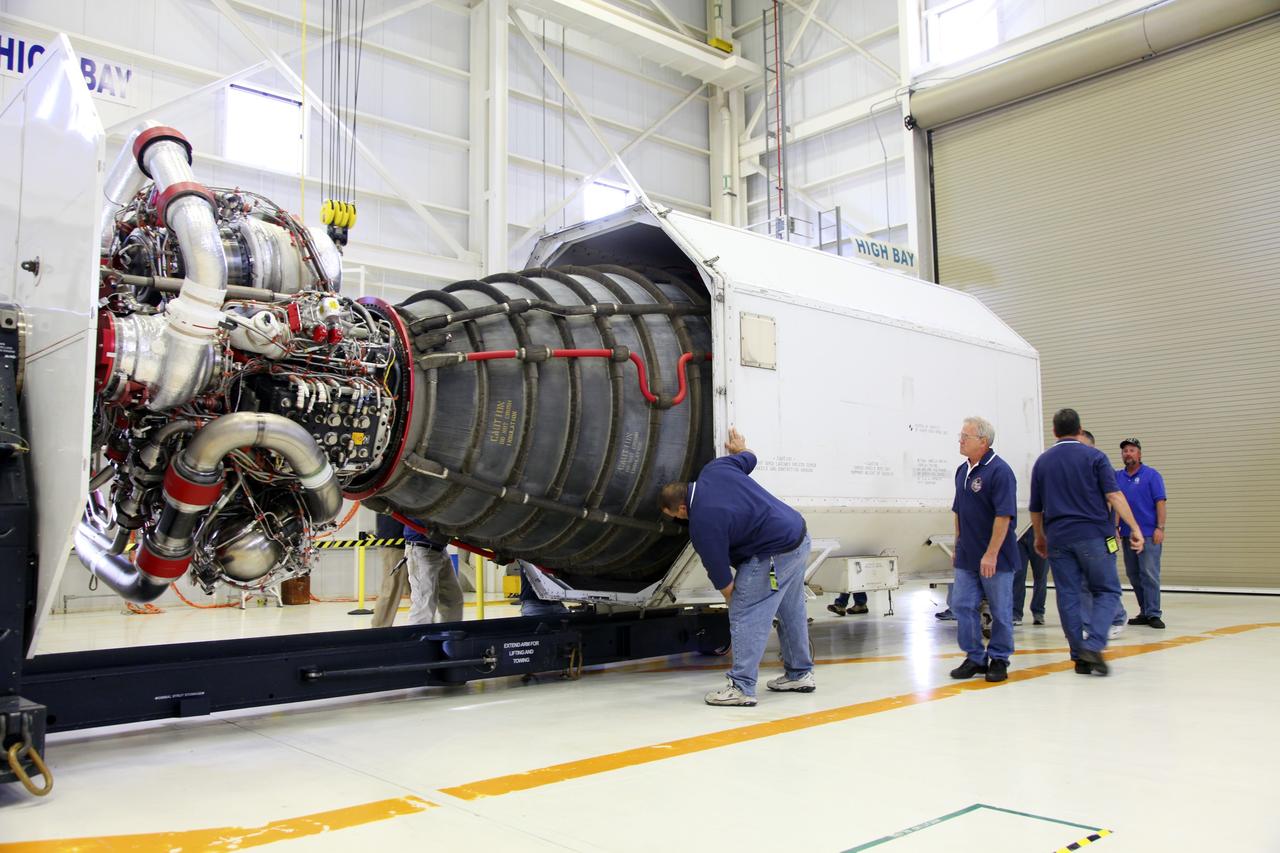
CAPE CANAVERAL, Fla. – In the Space Shuttle Main Engine Processing Facility at NASA’s Kennedy Space Center in Florida, technicians guide a transportation canister as it encloses a Pratt Whitney Rocketdyne space shuttle main engine (SSME). This is the second of the 15 engines used during the Space Shuttle Program to be prepared for transfer to NASA's Stennis Space Center in Mississippi. The engines will be stored at Stennis for future use on NASA's new heavy-lift rocket, the Space Launch System (SLS), which will carry NASA's new Orion spacecraft, cargo, equipment and science experiments to space. For more information, visit http://www.nasa.gov/shuttle. Photo credit: NASA/Gianni Woods
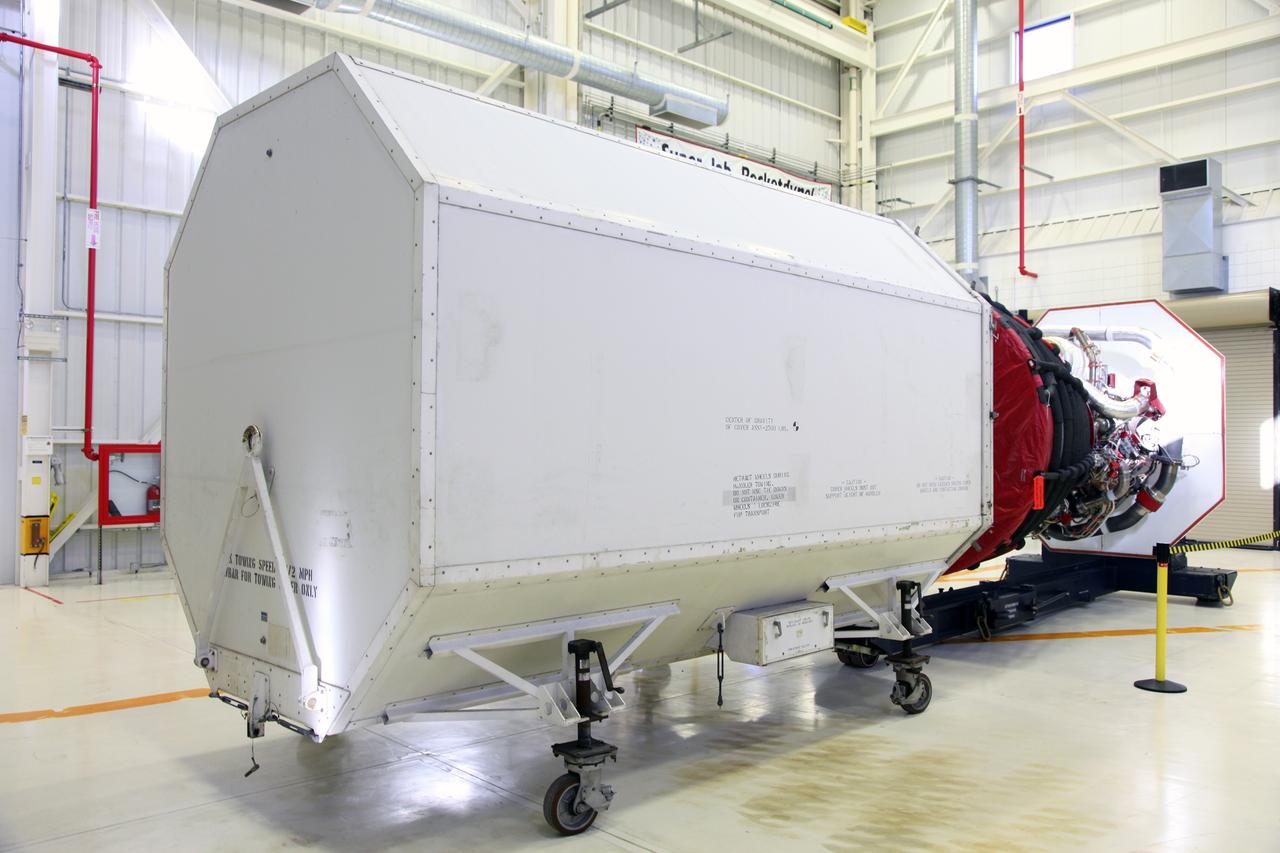
CAPE CANAVERAL, Fla. – In the Space Shuttle Main Engine Processing Facility at NASA’s Kennedy Space Center in Florida, a Pratt Whitney Rocketdyne space shuttle main engine (SSME) is installed in a transportation canister. This is the second of the 15 engines used during the Space Shuttle Program to be prepared for transfer to NASA's Stennis Space Center in Mississippi. The engines will be stored at Stennis for future use on NASA's new heavy-lift rocket, the Space Launch System (SLS), which will carry NASA's new Orion spacecraft, cargo, equipment and science experiments to space. For more information, visit http://www.nasa.gov/shuttle. Photo credit: NASA/Gianni Woods
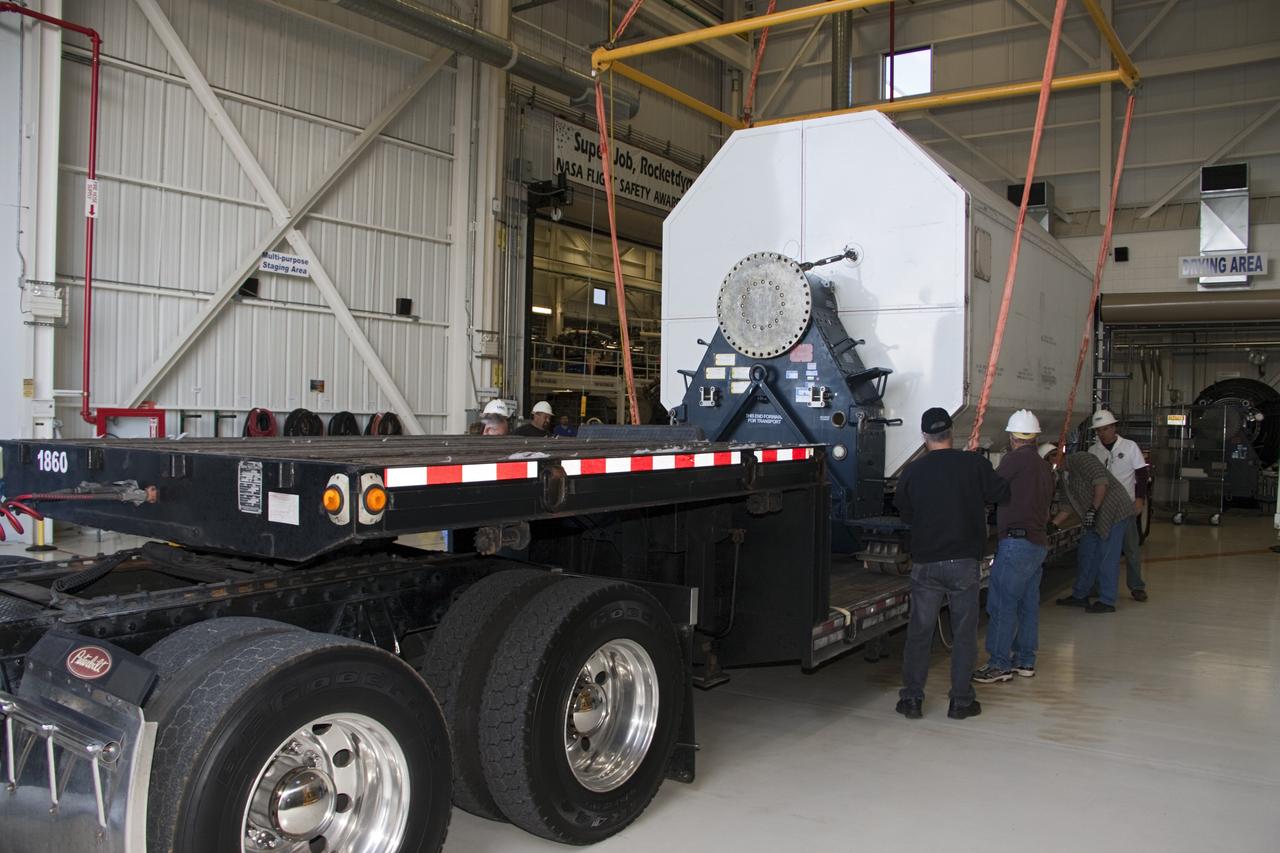
CAPE CANAVERAL, Fla. – In the Space Shuttle Main Engine Processing Facility at NASA’s Kennedy Space Center in Florida, a transportation canister containing a Pratt & Whitney Rocketdyne space shuttle main engine (SSME) is secured onto a flatbed trailer. This is the second of the 15 engines used during the Space Shuttle Program to be transported to NASA's Stennis Space Center in Mississippi. The engines will be stored at Stennis for future use on NASA's new heavy-lift rocket, the Space Launch System (SLS), which will carry NASA's new Orion spacecraft, cargo, equipment and science experiments to space. For more information, visit http://www.nasa.gov/shuttle. Photo credit: NASA/Jim Grossmann
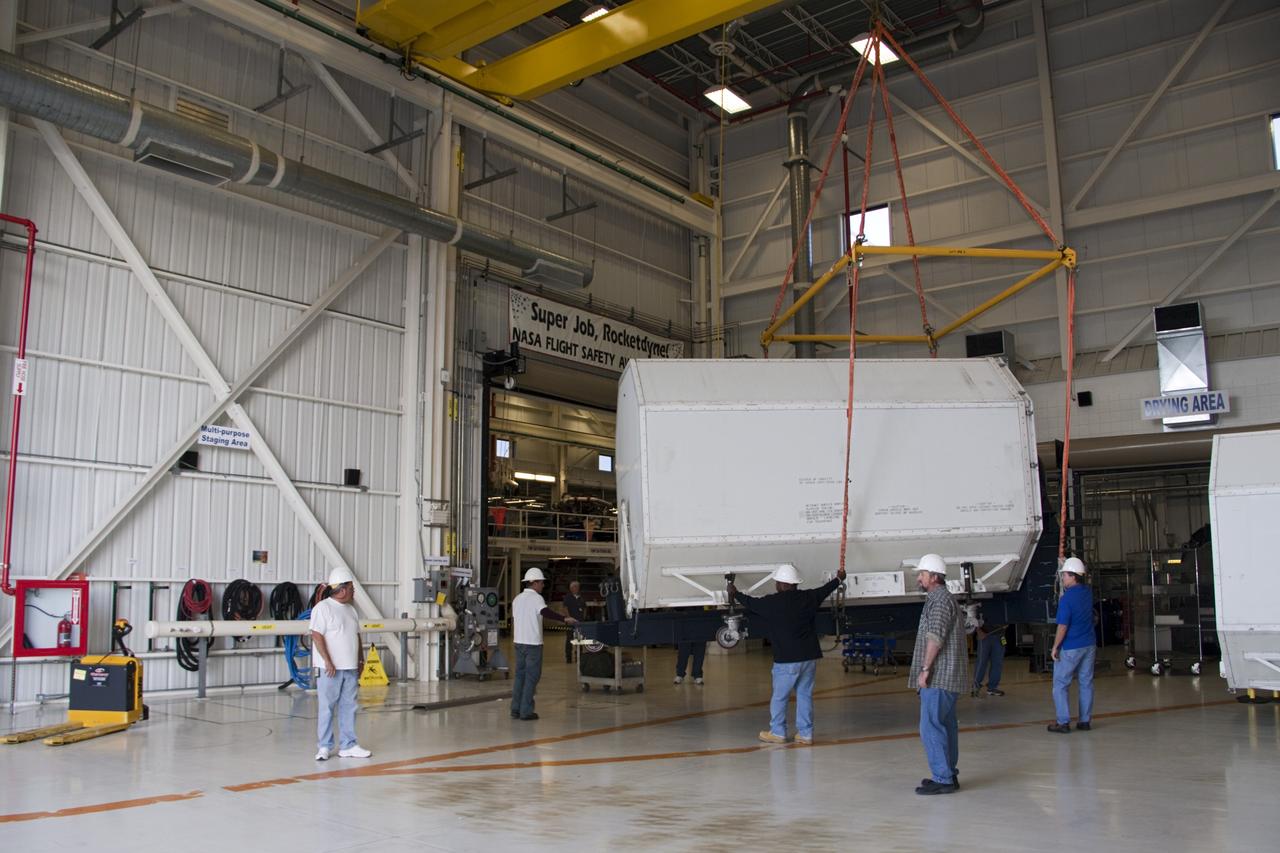
CAPE CANAVERAL, Fla. – In the Space Shuttle Main Engine Processing Facility at NASA’s Kennedy Space Center in Florida, a transportation canister containing a Pratt & Whitney Rocketdyne space shuttle main engine (SSME) glides above the floor toward a flatbed trailer. This is the second of the 15 engines used during the Space Shuttle Program to be transported to NASA's Stennis Space Center in Mississippi. The engines will be stored at Stennis for future use on NASA's new heavy-lift rocket, the Space Launch System (SLS), which will carry NASA's new Orion spacecraft, cargo, equipment and science experiments to space. For more information, visit http://www.nasa.gov/shuttle. Photo credit: NASA/Jim Grossmann
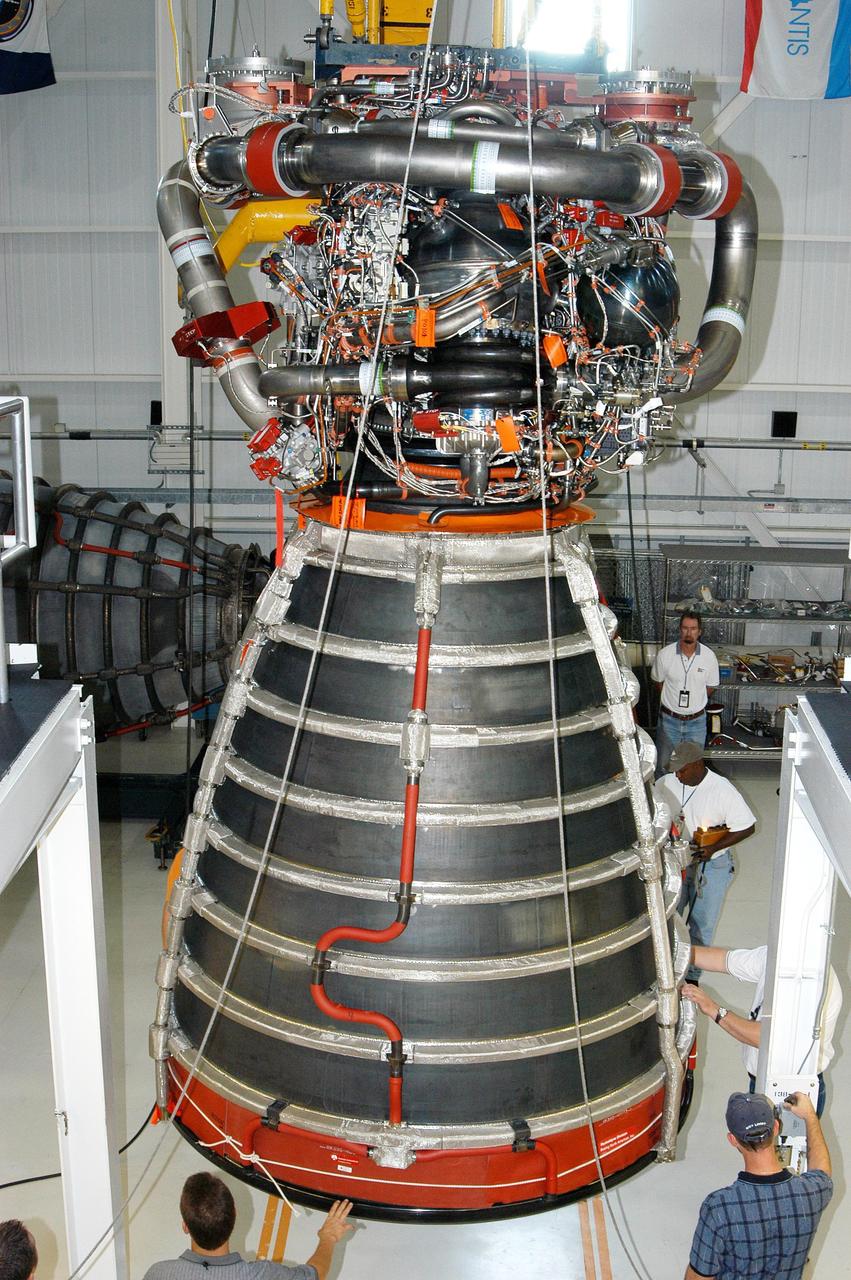
KENNEDY SPACE CENTER, FLA. - In the Space Shuttle Main Engine (SSME) Processing Facility, Boeing-Rocketdyne technicians lift SSME 2058, the first SSME fully assembled at KSC. The engine is being lifted from its vertical work stand into a horizontal position in preparation for shipment to NASA’s Stennis Space Center in Mississippi to undergo a hot fire acceptance test. It is the first of five engines to be fully assembled on site to reach the desired number of 15 engines ready for launch at any given time in the Space Shuttle program. A Space Shuttle has three reusable main engines. Each is 14 feet long, weighs about 7,800 pounds, is seven-and-a-half feet in diameter at the end of its nozzle, and generates almost 400,000 pounds of thrust. Historically, SSMEs were assembled in Canoga Park, Calif., with post-flight inspections performed at KSC. Both functions were consolidated in February 2002. The Rocketdyne Propulsion and Power division of The Boeing Co. manufactures the engines for NASA.
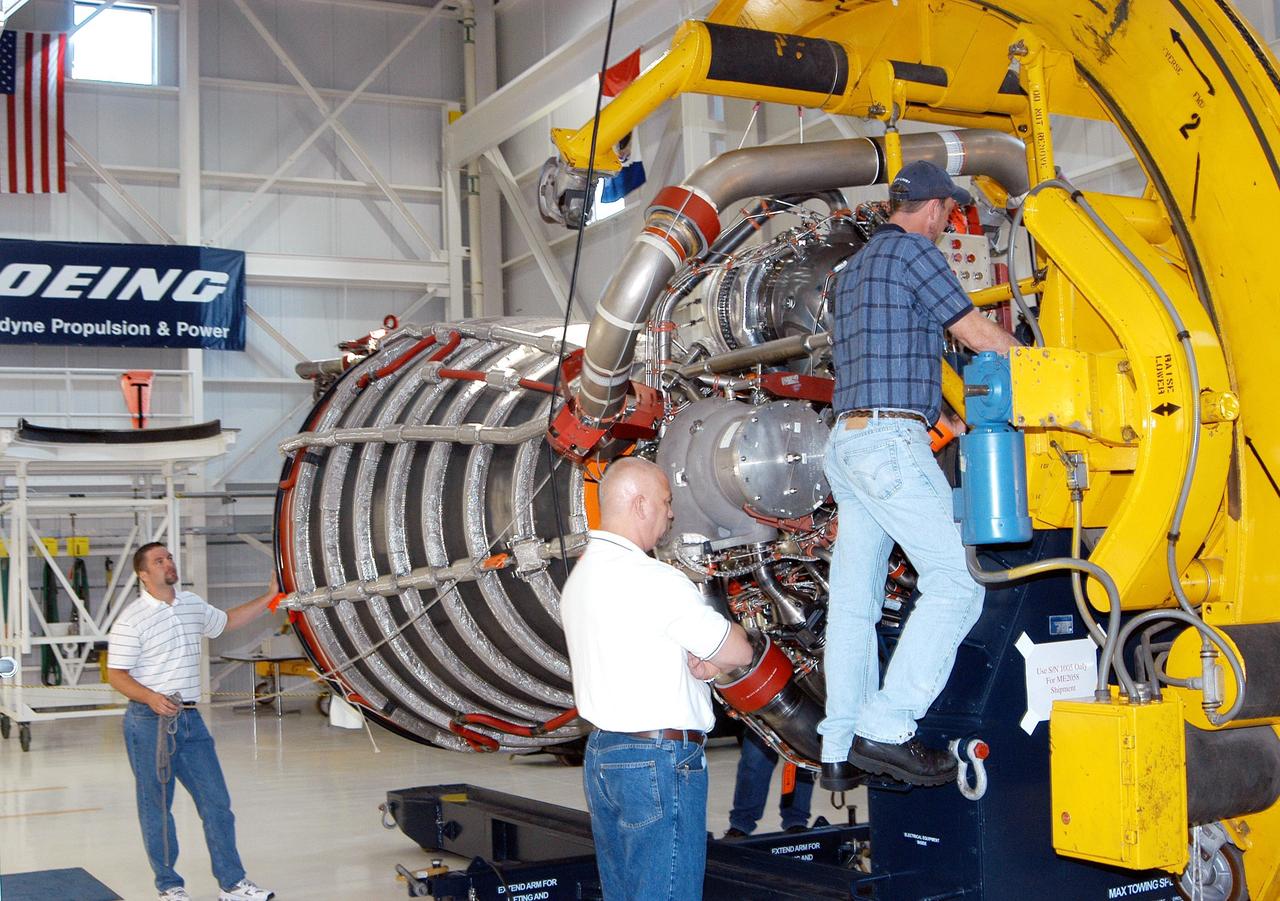
KENNEDY SPACE CENTER, FLA. - In the Space Shuttle Main Engine (SSME) Processing Facility, Boeing-Rocketdyne quality inspector Nick Grimm (center) monitors the work of technicians on his team as they lower SSME 2058, the first SSME fully assembled at KSC, onto an engine stand. The engine is being placed into a horizontal position in preparation for shipment to NASA’s Stennis Space Center in Mississippi to undergo a hot fire acceptance test. It is the first of five engines to be fully assembled on site to reach the desired number of 15 engines ready for launch at any given time in the Space Shuttle program. A Space Shuttle has three reusable main engines. Each is 14 feet long, weighs about 7,800 pounds, is seven-and-a-half feet in diameter at the end of its nozzle, and generates almost 400,000 pounds of thrust. Historically, SSMEs were assembled in Canoga Park, Calif., with post-flight inspections performed at KSC. Both functions were consolidated in February 2002. The Rocketdyne Propulsion and Power division of The Boeing Co. manufactures the engines for NASA.
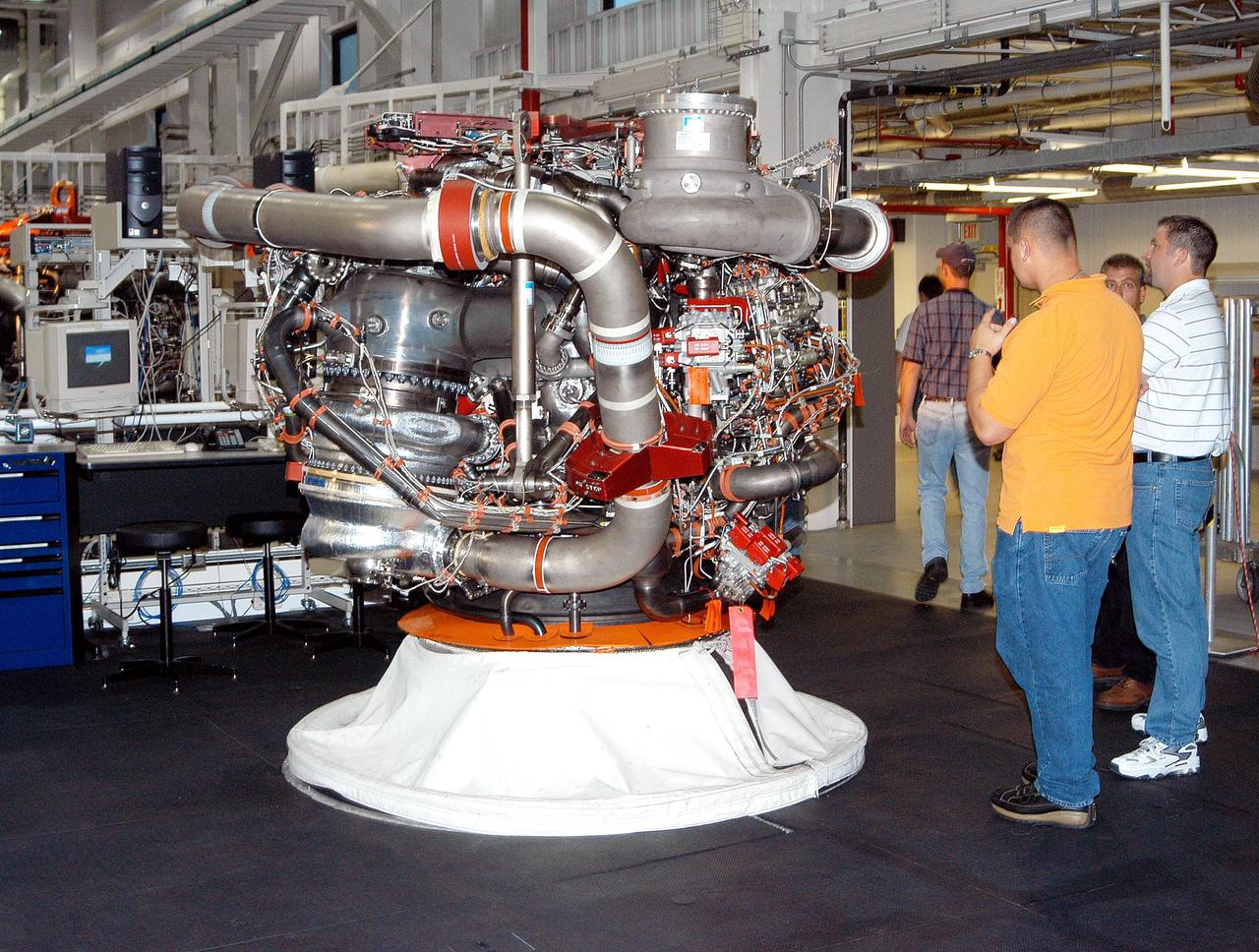
KENNEDY SPACE CENTER, FLA. - In the Space Shuttle Main Engine (SSME) Processing Facility, Boeing-Rocketdyne technicians prepare to move SSME 2058, the first SSME fully assembled at KSC. The engine will be lifted from its vertical work stand into a horizontal position in preparation for shipment to NASA’s Stennis Space Center in Mississippi to undergo a hot fire acceptance test. It is the first of five engines to be fully assembled on site to reach the desired number of 15 engines ready for launch at any given time in the Space Shuttle program. A Space Shuttle has three reusable main engines. Each is 14 feet long, weighs about 7,800 pounds, is seven-and-a-half feet in diameter at the end of its nozzle, and generates almost 400,000 pounds of thrust. Historically, SSMEs were assembled in Canoga Park, Calif., with post-flight inspections performed at KSC. Both functions were consolidated in February 2002. The Rocketdyne Propulsion and Power division of The Boeing Co. manufactures the engines for NASA.
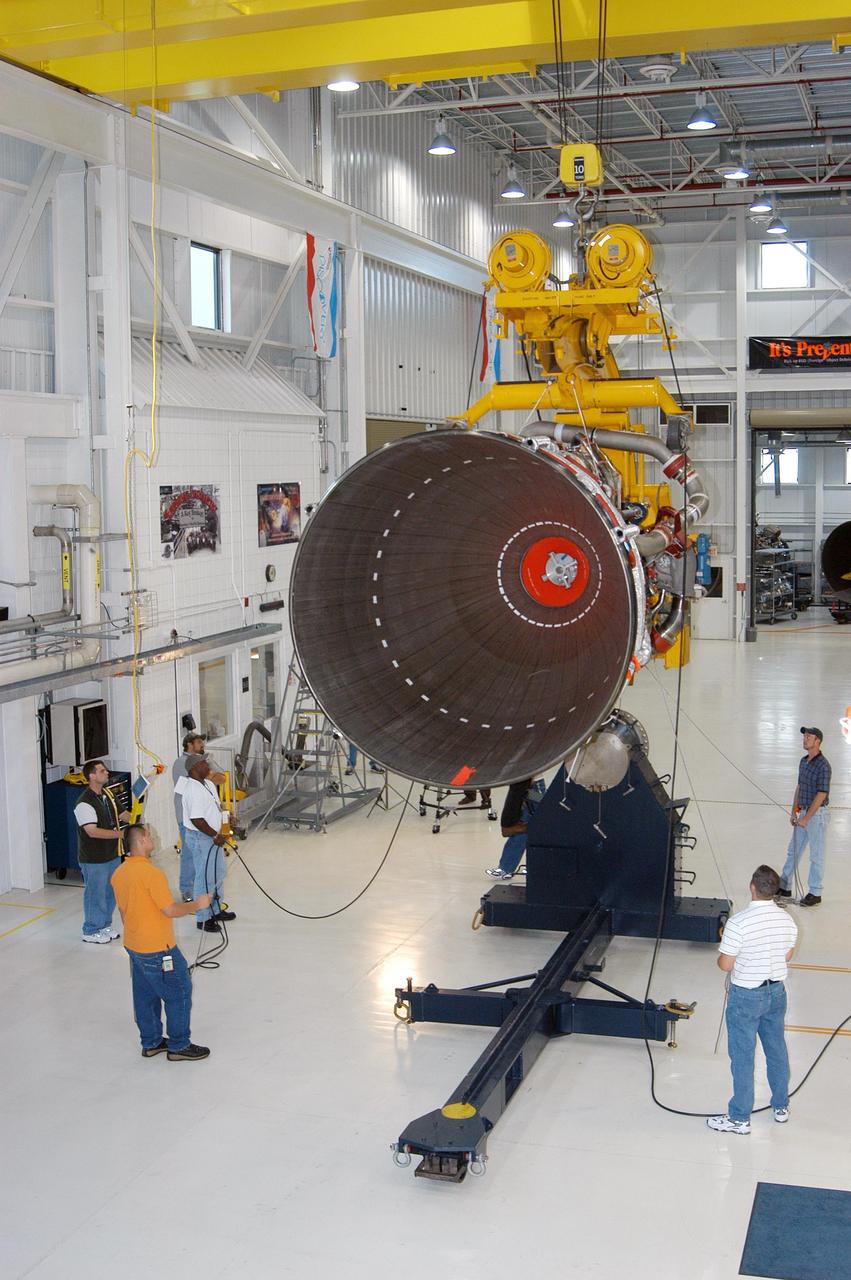
KENNEDY SPACE CENTER, FLA. - In the Space Shuttle Main Engine (SSME) Processing Facility, Boeing-Rocketdyne crane operator Joe Ferrante (left) lowers SSME 2058, the first SSME fully assembled at KSC, onto an engine stand with the assistance of other technicians on his team. The engine is being moved from its vertical work stand into a horizontal position in preparation for shipment to NASA’s Stennis Space Center in Mississippi to undergo a hot fire acceptance test. It is the first of five engines to be fully assembled on site to reach the desired number of 15 engines ready for launch at any given time in the Space Shuttle program. A Space Shuttle has three reusable main engines. Each is 14 feet long, weighs about 7,800 pounds, is seven-and-a-half feet in diameter at the end of its nozzle, and generates almost 400,000 pounds of thrust. Historically, SSMEs were assembled in Canoga Park, Calif., with post-flight inspections performed at KSC. Both functions were consolidated in February 2002. The Rocketdyne Propulsion and Power division of The Boeing Co. manufactures the engines for NASA.
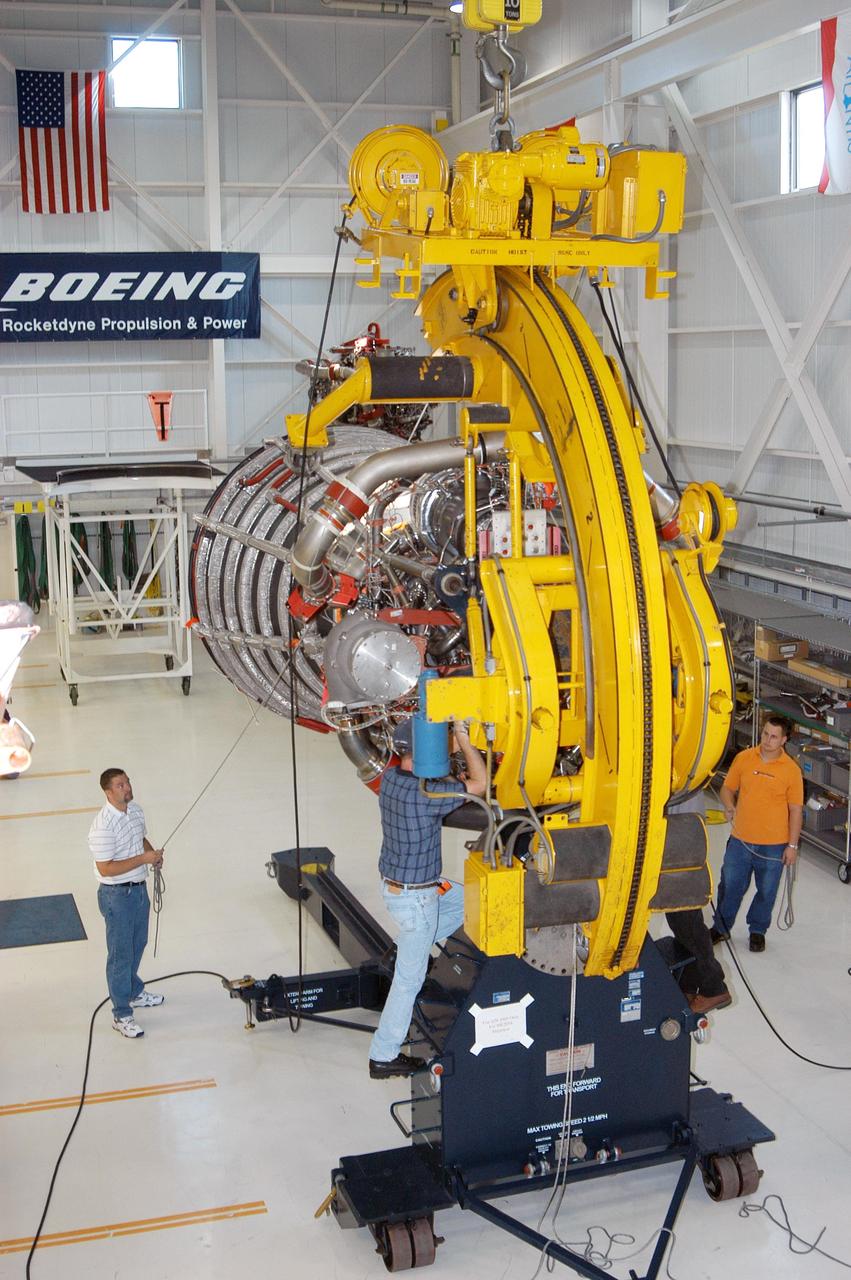
KENNEDY SPACE CENTER, FLA. - In the Space Shuttle Main Engine (SSME) Processing Facility, Boeing-Rocketdyne technicians lower SSME 2058, the first SSME fully assembled at KSC, onto an engine stand. The engine is being moved from its vertical work stand into a horizontal position in preparation for shipment to NASA’s Stennis Space Center in Mississippi to undergo a hot fire acceptance test. It is the first of five engines to be fully assembled on site to reach the desired number of 15 engines ready for launch at any given time in the Space Shuttle program. A Space Shuttle has three reusable main engines. Each is 14 feet long, weighs about 7,800 pounds, is seven-and-a-half feet in diameter at the end of its nozzle, and generates almost 400,000 pounds of thrust. Historically, SSMEs were assembled in Canoga Park, Calif., with post-flight inspections performed at KSC. Both functions were consolidated in February 2002. The Rocketdyne Propulsion and Power division of The Boeing Co. manufactures the engines for NASA.
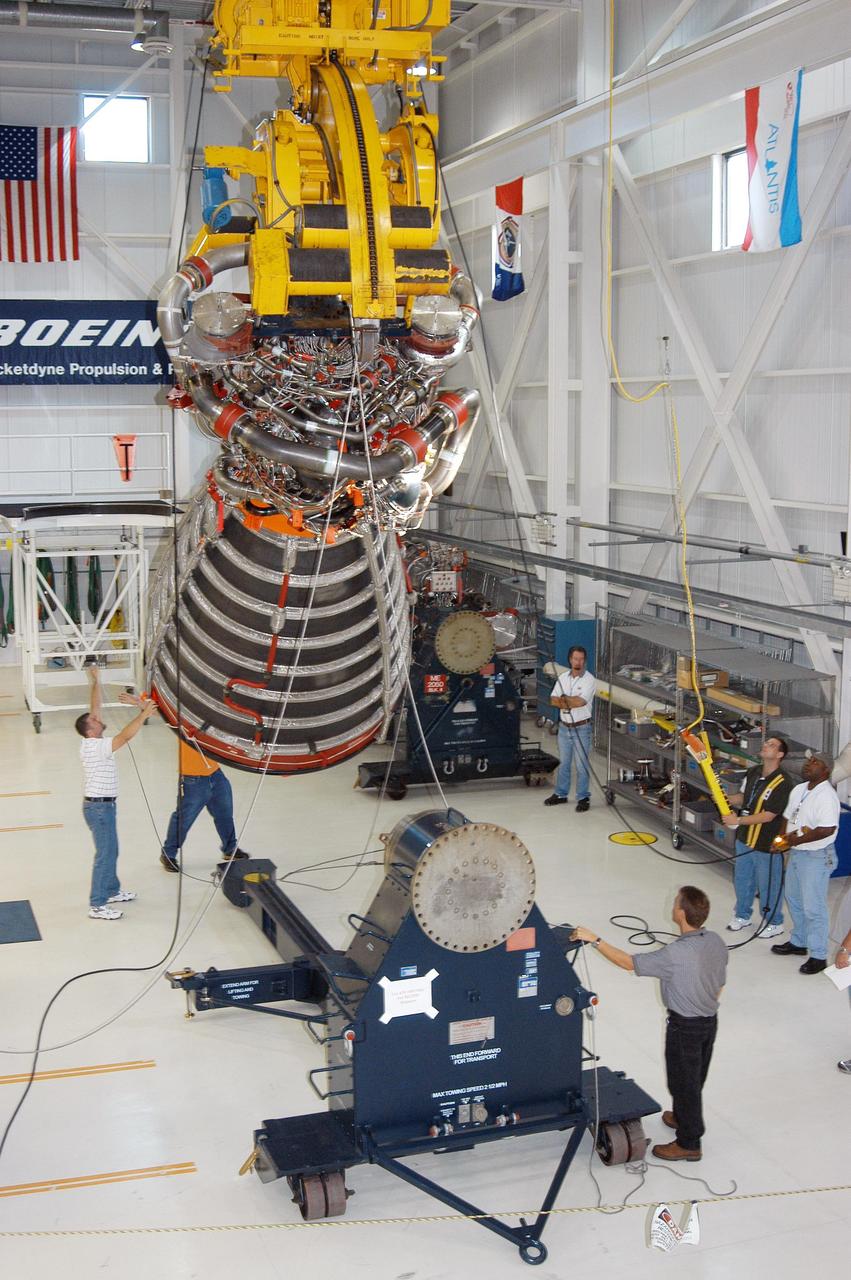
KENNEDY SPACE CENTER, FLA. - In the Space Shuttle Main Engine (SSME) Processing Facility, Boeing-Rocketdyne crane operator Joe Ferrante (second from right) lifts SSME 2058, the first SSME fully assembled at KSC, with the assistance of other technicians on his team. The engine is being lifted from its vertical work stand into a horizontal position in preparation for shipment to NASA’s Stennis Space Center in Mississippi to undergo a hot fire acceptance test. It is the first of five engines to be fully assembled on site to reach the desired number of 15 engines ready for launch at any given time in the Space Shuttle program. A Space Shuttle has three reusable main engines. Each is 14 feet long, weighs about 7,800 pounds, is seven-and-a-half feet in diameter at the end of its nozzle, and generates almost 400,000 pounds of thrust. Historically, SSMEs were assembled in Canoga Park, Calif., with post-flight inspections performed at KSC. Both functions were consolidated in February 2002. The Rocketdyne Propulsion and Power division of The Boeing Co. manufactures the engines for NASA.
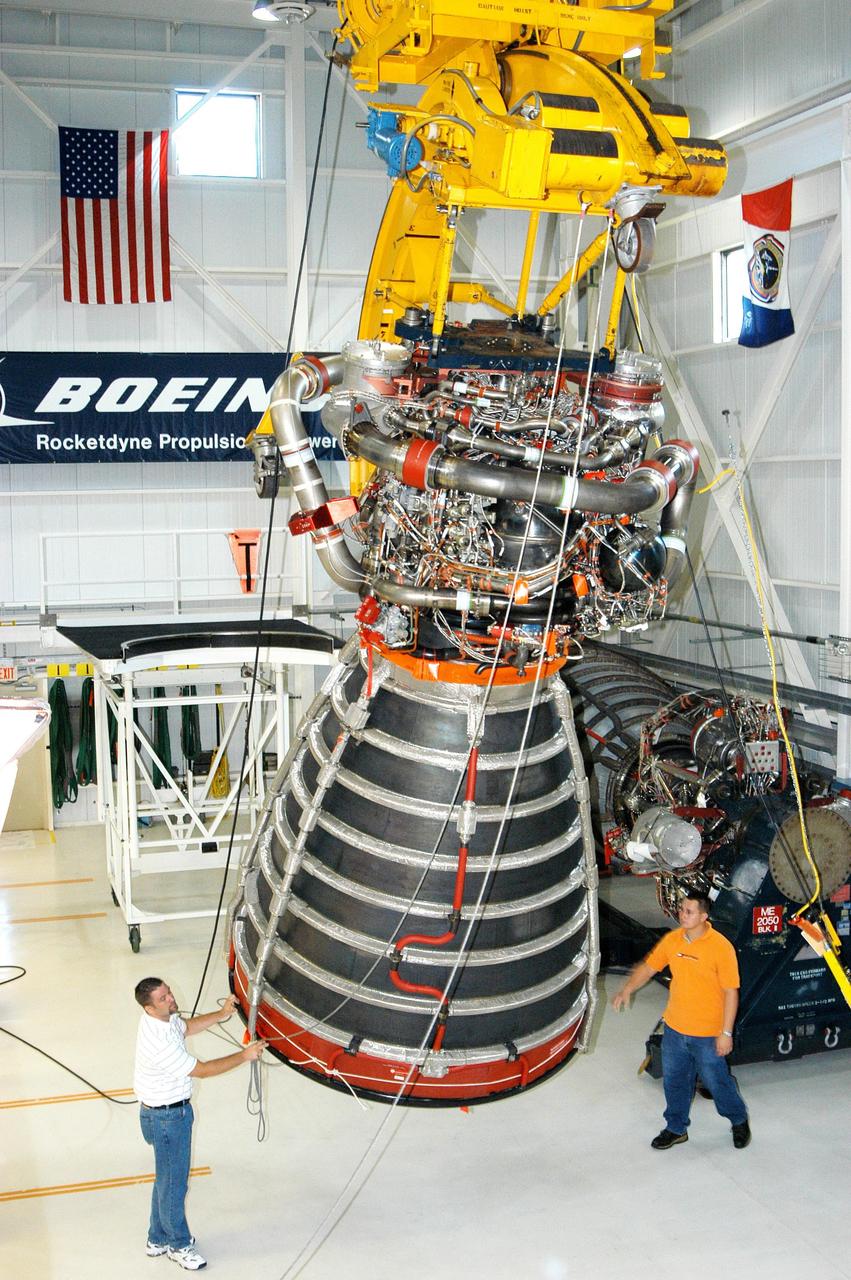
KENNEDY SPACE CENTER, FLA. - In the Space Shuttle Main Engine (SSME) Processing Facility, Boeing-Rocketdyne technicians steady SSME 2058, the first SSME fully assembled at KSC. The engine is being lifted from its vertical work stand into a horizontal position in preparation for shipment to NASA’s Stennis Space Center in Mississippi to undergo a hot fire acceptance test. It is the first of five engines to be fully assembled on site to reach the desired number of 15 engines ready for launch at any given time in the Space Shuttle program. A Space Shuttle has three reusable main engines. Each is 14 feet long, weighs about 7,800 pounds, is seven-and-a-half feet in diameter at the end of its nozzle, and generates almost 400,000 pounds of thrust. Historically, SSMEs were assembled in Canoga Park, Calif., with post-flight inspections performed at KSC. Both functions were consolidated in February 2002. The Rocketdyne Propulsion and Power division of The Boeing Co. manufactures the engines for NASA.
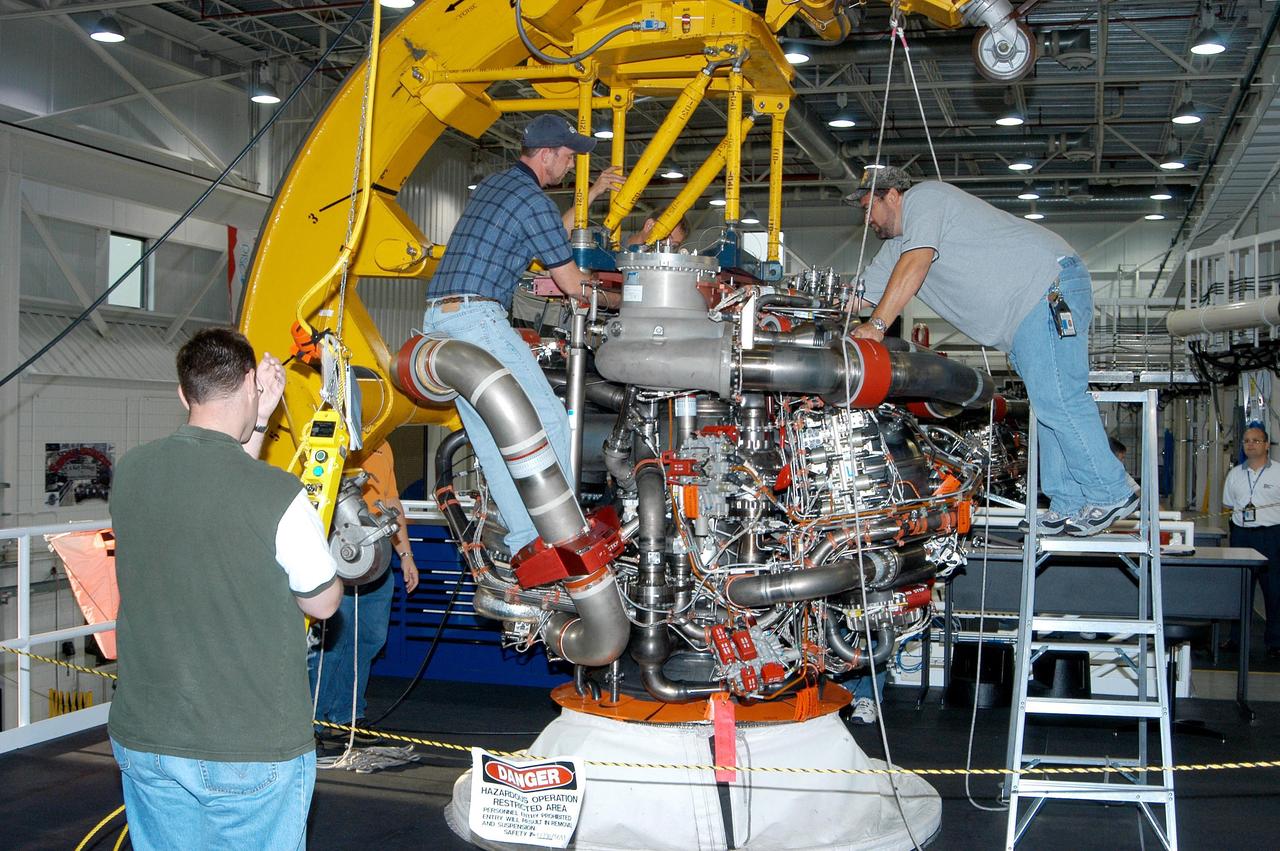
KENNEDY SPACE CENTER, FLA. - In the Space Shuttle Main Engine (SSME) Processing Facility, Boeing-Rocketdyne technicians prepare to move SSME 2058, the first SSME fully assembled at KSC. Move conductor Bob Brackett (on ladder) and technicians secure a sling around the engine under the direction of crane operator Joe Ferrante (left). The engine will be lifted from its vertical work stand into a horizontal position in preparation for shipment to NASA’s Stennis Space Center in Mississippi to undergo a hot fire acceptance test. It is the first of five engines to be fully assembled on site to reach the desired number of 15 engines ready for launch at any given time in the Space Shuttle program. A Space Shuttle has three reusable main engines. Each is 14 feet long, weighs about 7,800 pounds, is seven-and-a-half feet in diameter at the end of its nozzle, and generates almost 400,000 pounds of thrust. Historically, SSMEs were assembled in Canoga Park, Calif., with post-flight inspections performed at KSC. Both functions were consolidated in February 2002. The Rocketdyne Propulsion and Power division of The Boeing Co. manufactures the engines for NASA.
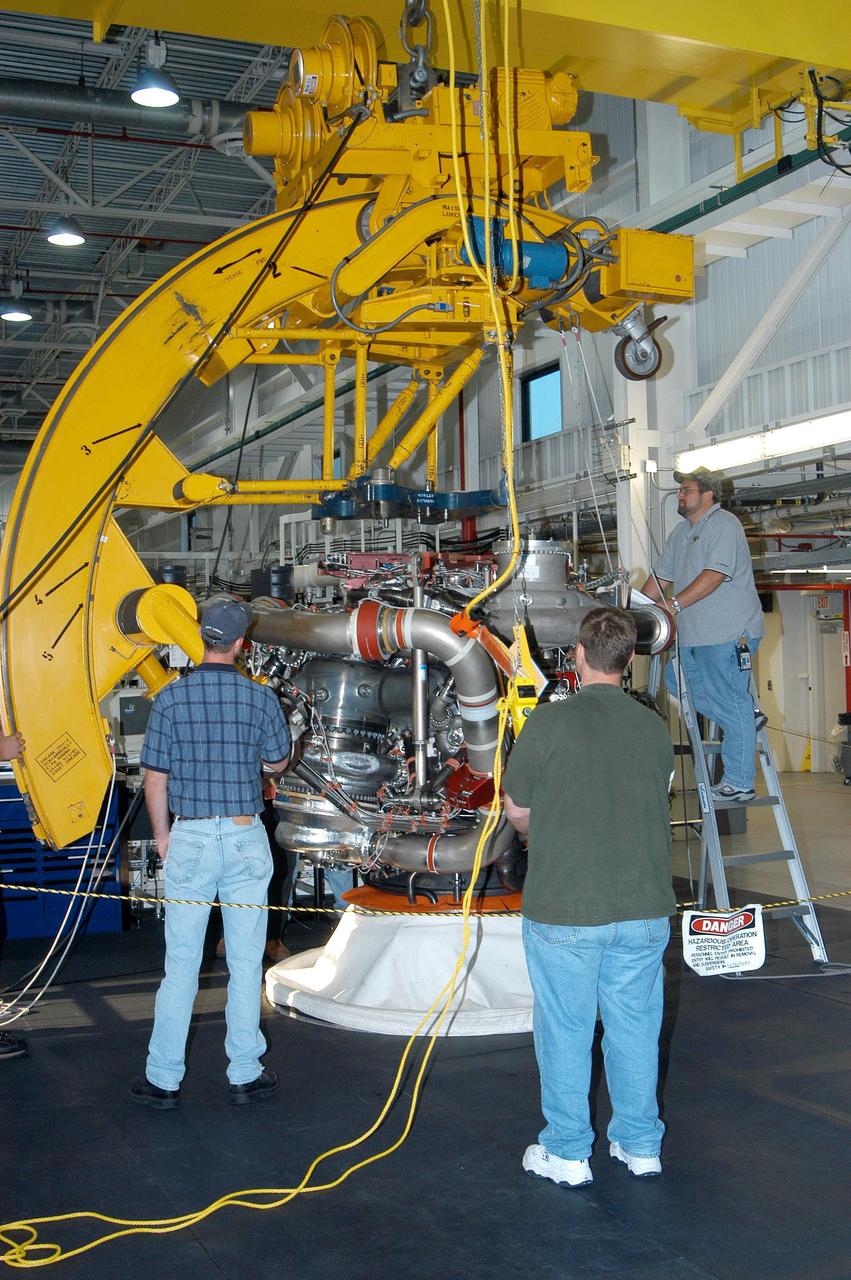
KENNEDY SPACE CENTER, FLA. - In the Space Shuttle Main Engine (SSME) Processing Facility, Boeing-Rocketdyne technicians prepare to move SSME 2058, the first SSME fully assembled at KSC. Move conductor Bob Brackett (on ladder) supervises the placement of a sling around the engine with the assistance of crane operator Joe Ferrante (center) and a technician. The engine will be lifted from its vertical work stand into a horizontal position in preparation for shipment to NASA’s Stennis Space Center in Mississippi to undergo a hot fire acceptance test. It is the first of five engines to be fully assembled on site to reach the desired number of 15 engines ready for launch at any given time in the Space Shuttle program. A Space Shuttle has three reusable main engines. Each is 14 feet long, weighs about 7,800 pounds, is seven-and-a-half feet in diameter at the end of its nozzle, and generates almost 400,000 pounds of thrust. Historically, SSMEs were assembled in Canoga Park, Calif., with post-flight inspections performed at KSC. Both functions were consolidated in February 2002. The Rocketdyne Propulsion and Power division of The Boeing Co. manufactures the engines for NASA.
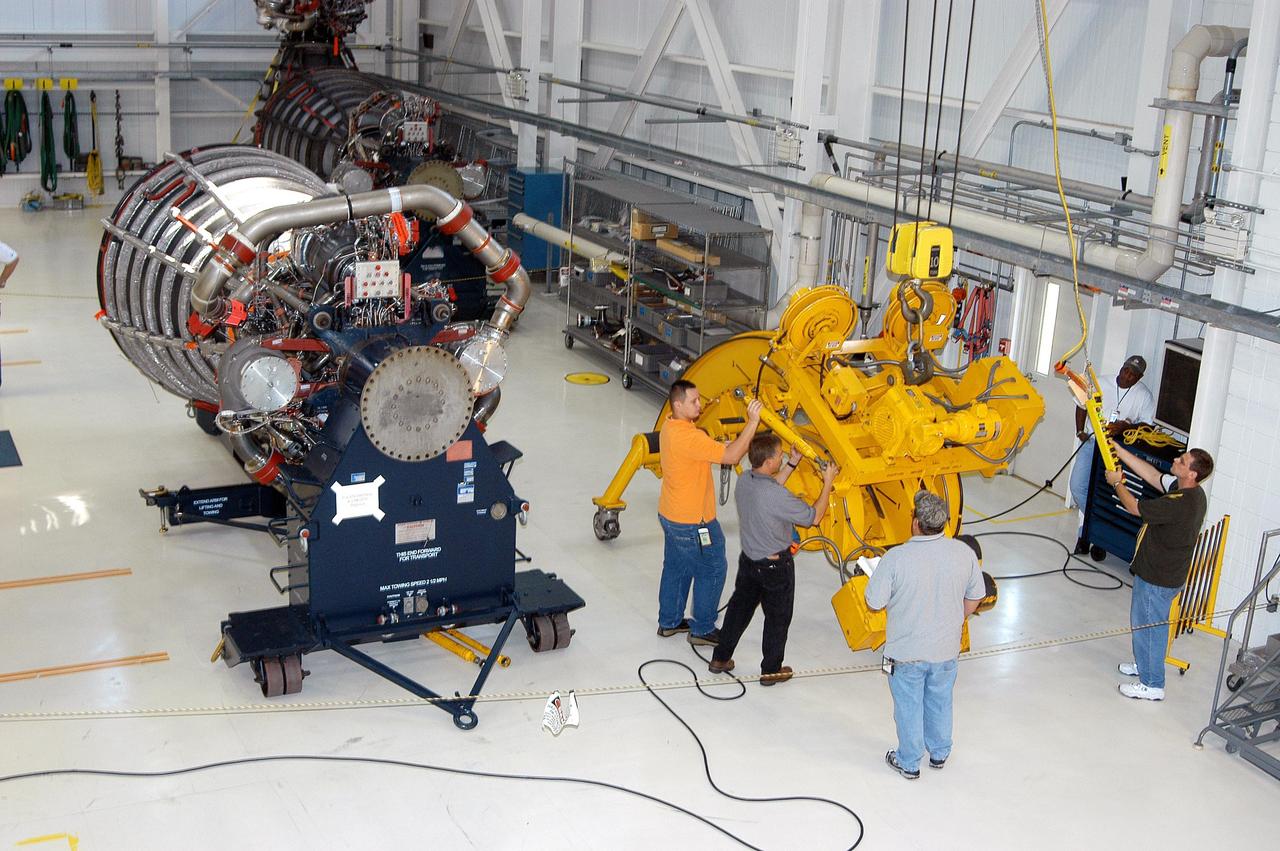
KENNEDY SPACE CENTER, FLA. - In the Space Shuttle Main Engine (SSME) Processing Facility, Boeing-Rocketdyne move conductor Bob Brackett (center) oversees the work of technicians on his team as they remove the crane used to lift SSME 2058, the first SSME fully assembled at KSC, from its vertical work stand. The engine has been placed into a horizontal position in preparation for shipment to NASA’s Stennis Space Center in Mississippi to undergo a hot fire acceptance test. It is the first of five engines to be fully assembled on site to reach the desired number of 15 engines ready for launch at any given time in the Space Shuttle program. A Space Shuttle has three reusable main engines. Each is 14 feet long, weighs about 7,800 pounds, is seven-and-a-half feet in diameter at the end of its nozzle, and generates almost 400,000 pounds of thrust. Historically, SSMEs were assembled in Canoga Park, Calif., with post-flight inspections performed at KSC. Both functions were consolidated in February 2002. The Rocketdyne Propulsion and Power division of The Boeing Co. manufactures the engines for NASA.
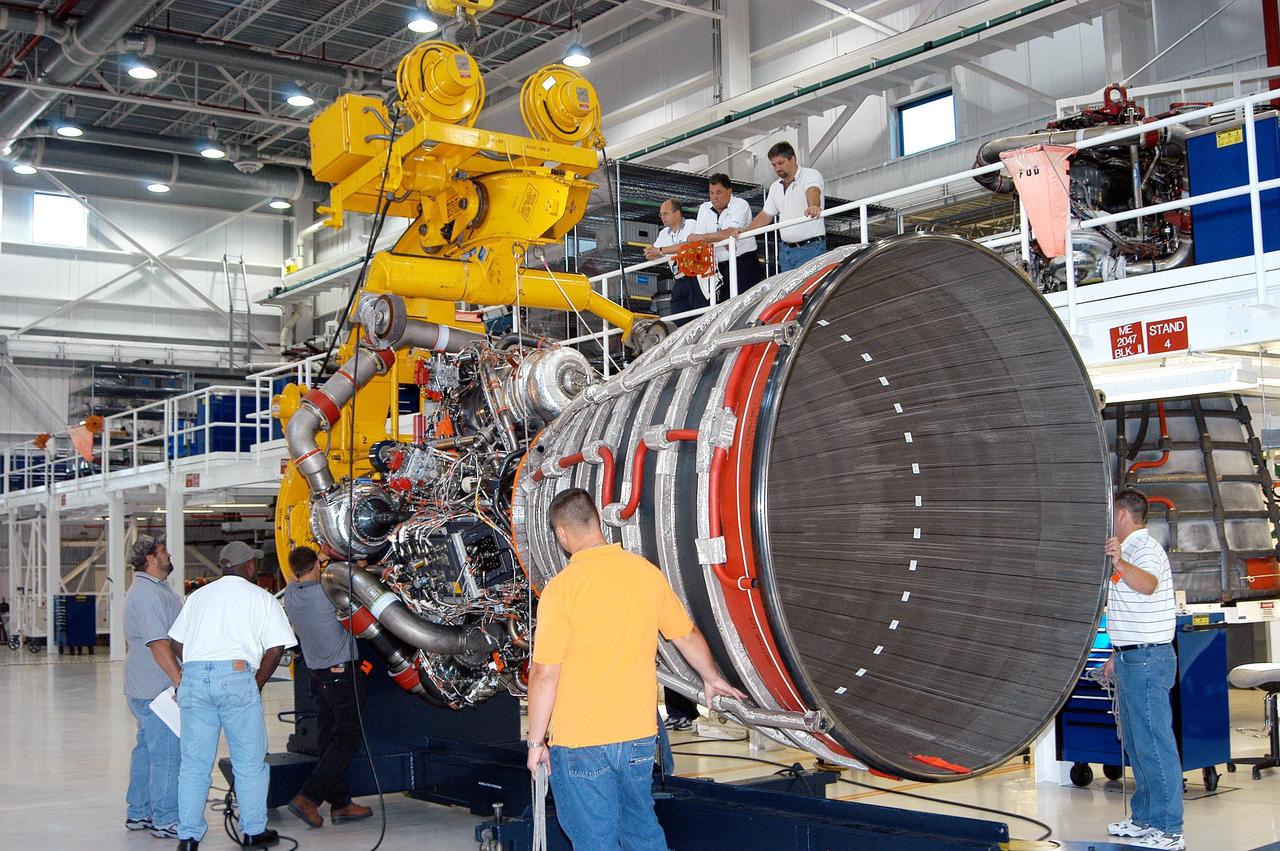
KENNEDY SPACE CENTER, FLA. - In the Space Shuttle Main Engine (SSME) Processing Facility, Boeing-Rocketdyne move conductor Bob Brackett (left) oversees the work of technicians on his team as they secure SSME 2058, the first SSME fully assembled at KSC, onto an engine stand. The engine is being placed into a horizontal position in preparation for shipment to NASA’s Stennis Space Center in Mississippi to undergo a hot fire acceptance test. It is the first of five engines to be fully assembled on site to reach the desired number of 15 engines ready for launch at any given time in the Space Shuttle program. A Space Shuttle has three reusable main engines. Each is 14 feet long, weighs about 7,800 pounds, is seven-and-a-half feet in diameter at the end of its nozzle, and generates almost 400,000 pounds of thrust. Historically, SSMEs were assembled in Canoga Park, Calif., with post-flight inspections performed at KSC. Both functions were consolidated in February 2002. The Rocketdyne Propulsion and Power division of The Boeing Co. manufactures the engines for NASA.
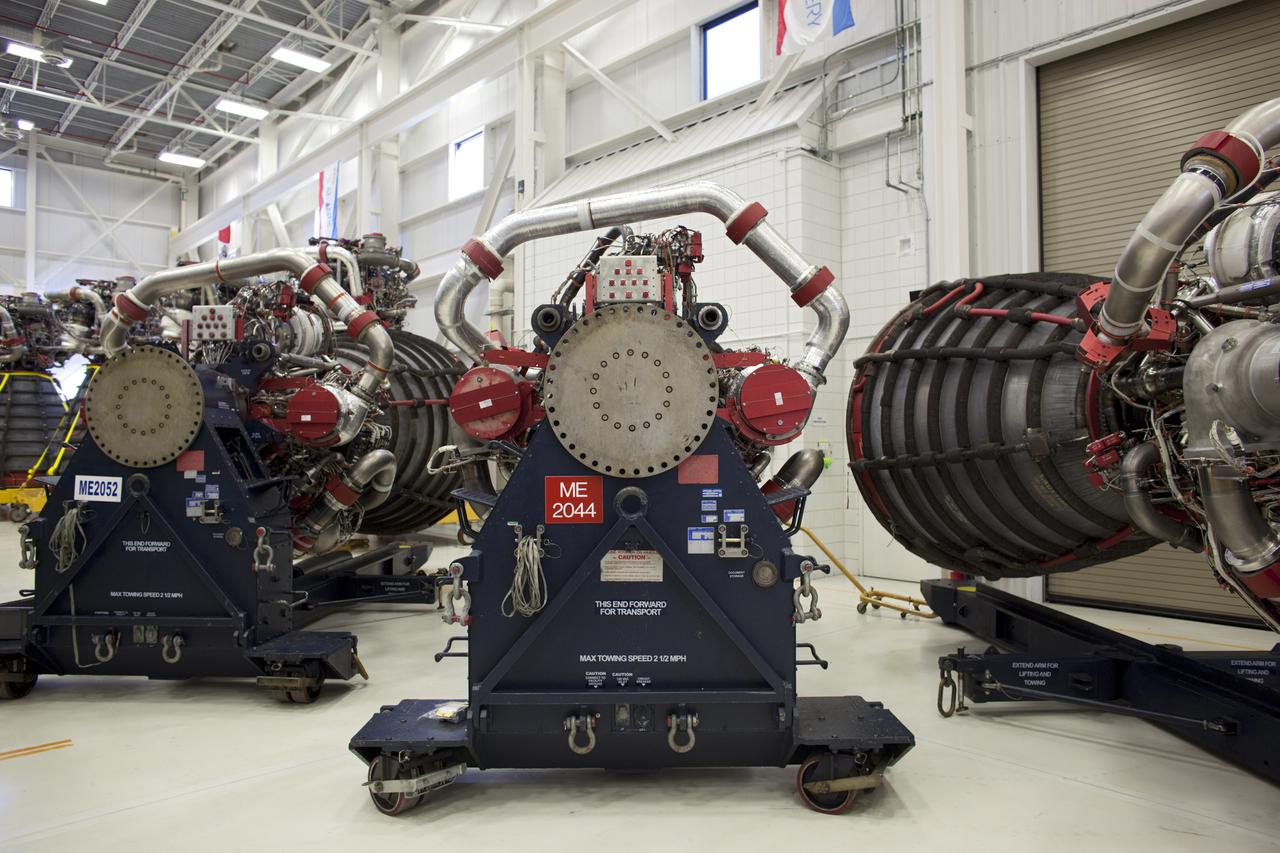
CAPE CANAVERAL, Fla. – Several Pratt Whitney Rocketdyne space shuttle main engines (SSMEs) sit on stands inside the Engine Shop at NASA’s Kennedy Space Center in Florida. For the first time, all 15 main engines are in the Engine Shop at the same time. They are being prepared for shipment to NASA's Stennis Space Center in Mississippi for storage following the completion of the Space Shuttle Program. The engines are being repurposed for use on NASA’s Space Launch System heavy lift rocket. Photo credit: NASA_Dimitri Gerondidakis
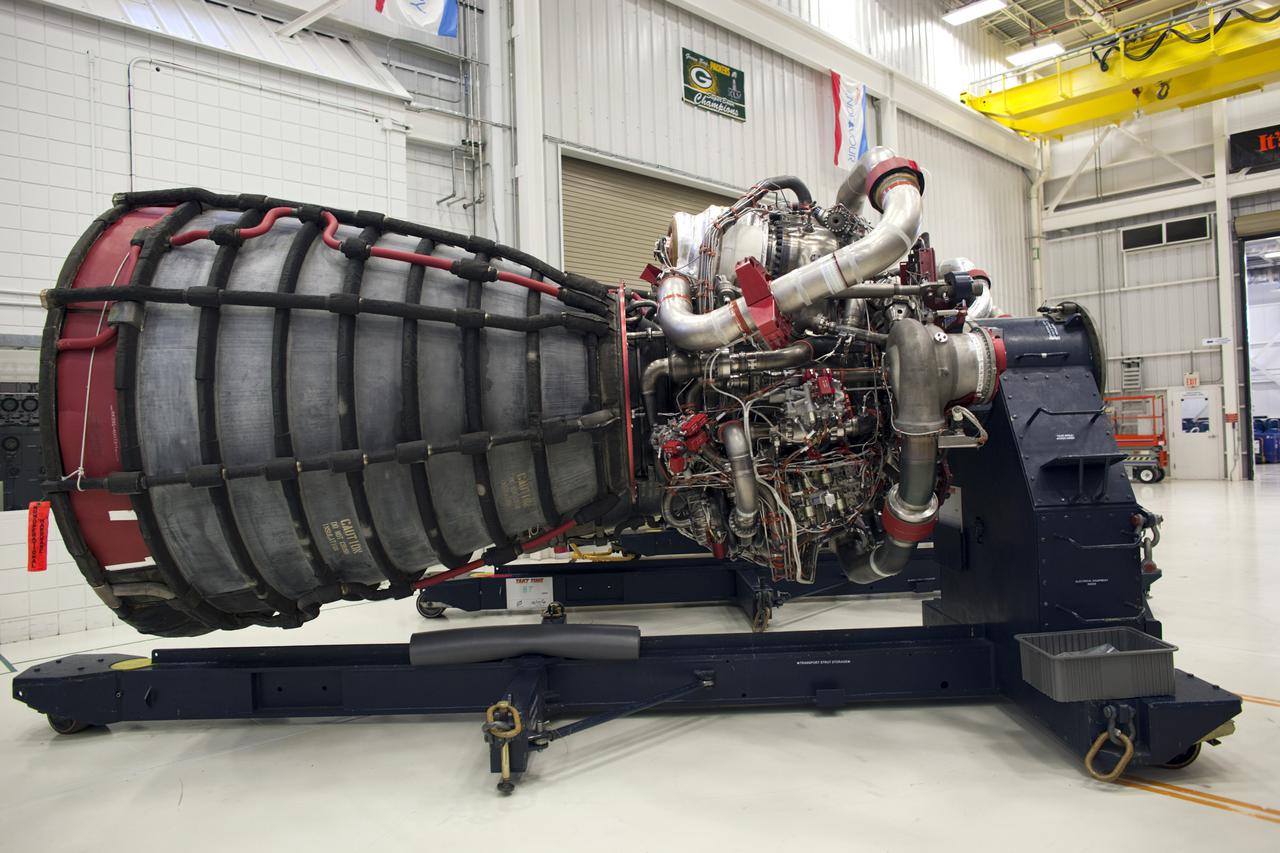
CAPE CANAVERAL, Fla. – At NASA’s Kennedy Space Center in Florida, a Pratt Whitney Rocketdyne space shuttle main engine (SSME) sits on a stand inside the Engine Shop. For the first time, all 15 main engines are in the Engine Shop at the same time. They are being prepared for shipment to NASA's Stennis Space Center in Mississippi for storage following the completion of the Space Shuttle Program. The engines are being repurposed for use on NASA’s Space Launch System heavy lift rocket. Photo credit: NASA_Dimitri Gerondidakis
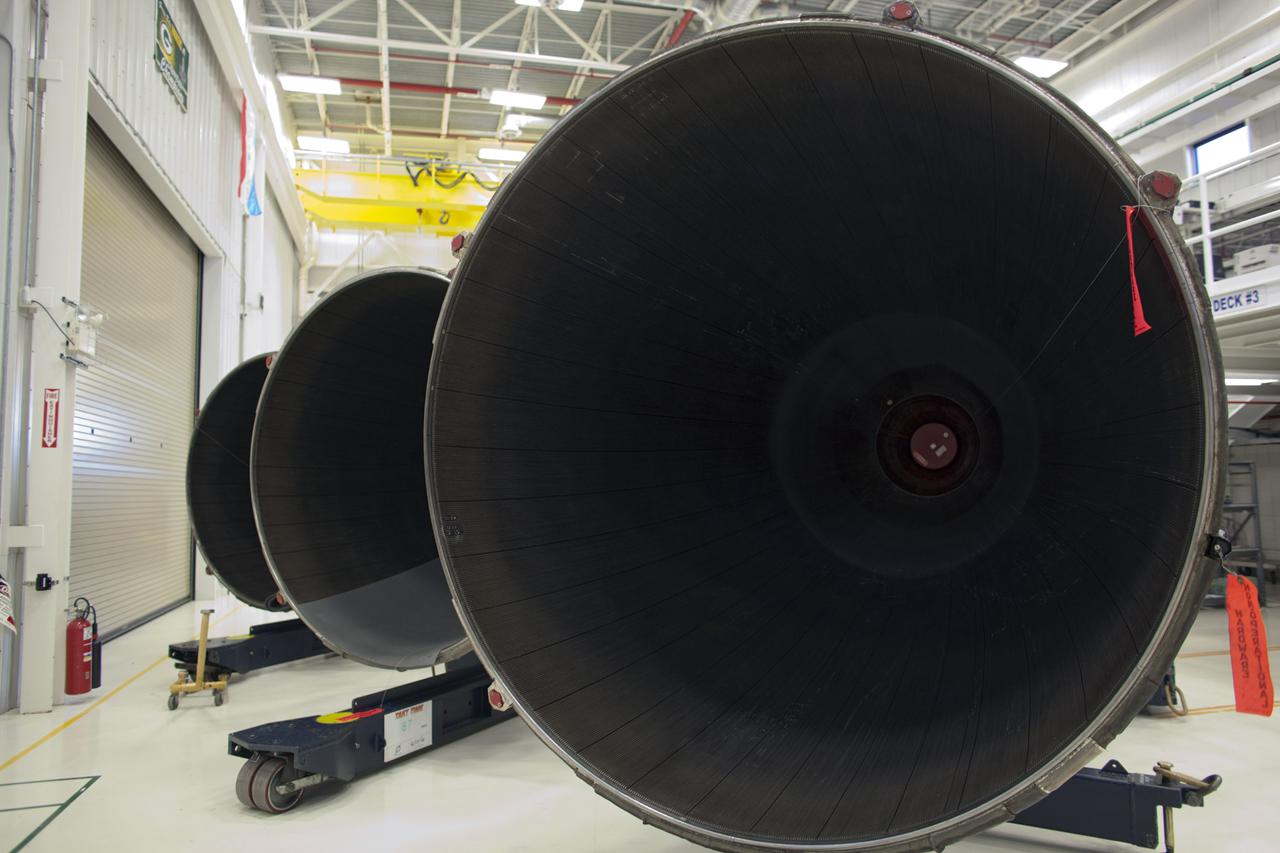
CAPE CANAVERAL, Fla. – At NASA’s Kennedy Space Center in Florida, the large engine bells of several Pratt Whitney Rocketdyne space shuttle main engines (SSMEs) are lined up inside the Engine Shop. For the first time, all 15 main engines are in the Engine Shop at the same time. They are being prepared for shipment to NASA's Stennis Space Center in Mississippi for storage following the completion of the Space Shuttle Program. The engines are being repurposed for use on NASA’s Space Launch System heavy lift rocket. Photo credit: NASA_Dimitri Gerondidakis
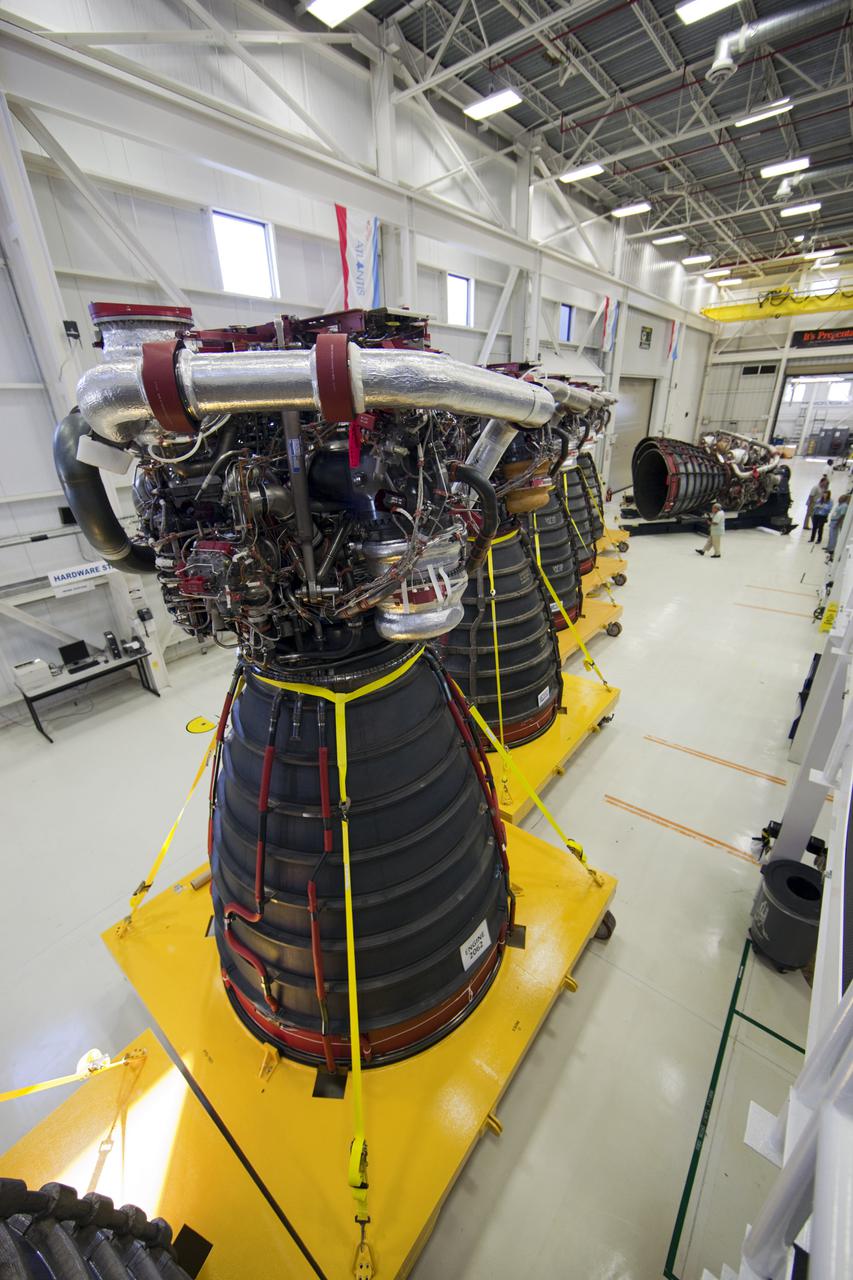
CAPE CANAVERAL, Fla. – Lined up in a row, several Pratt Whitney Rocketdyne space shuttle main engines (SSMEs) sit on stands inside the Engine Shop at NASA’s Kennedy Space Center in Florida. For the first time, all 15 main engines are in the Engine Shop at the same time. They are being prepared for shipment to NASA's Stennis Space Center in Mississippi for storage following the completion of the Space Shuttle Program. The engines are being repurposed for use on NASA’s Space Launch System heavy lift rocket. Photo credit: NASA_Dimitri Gerondidakis
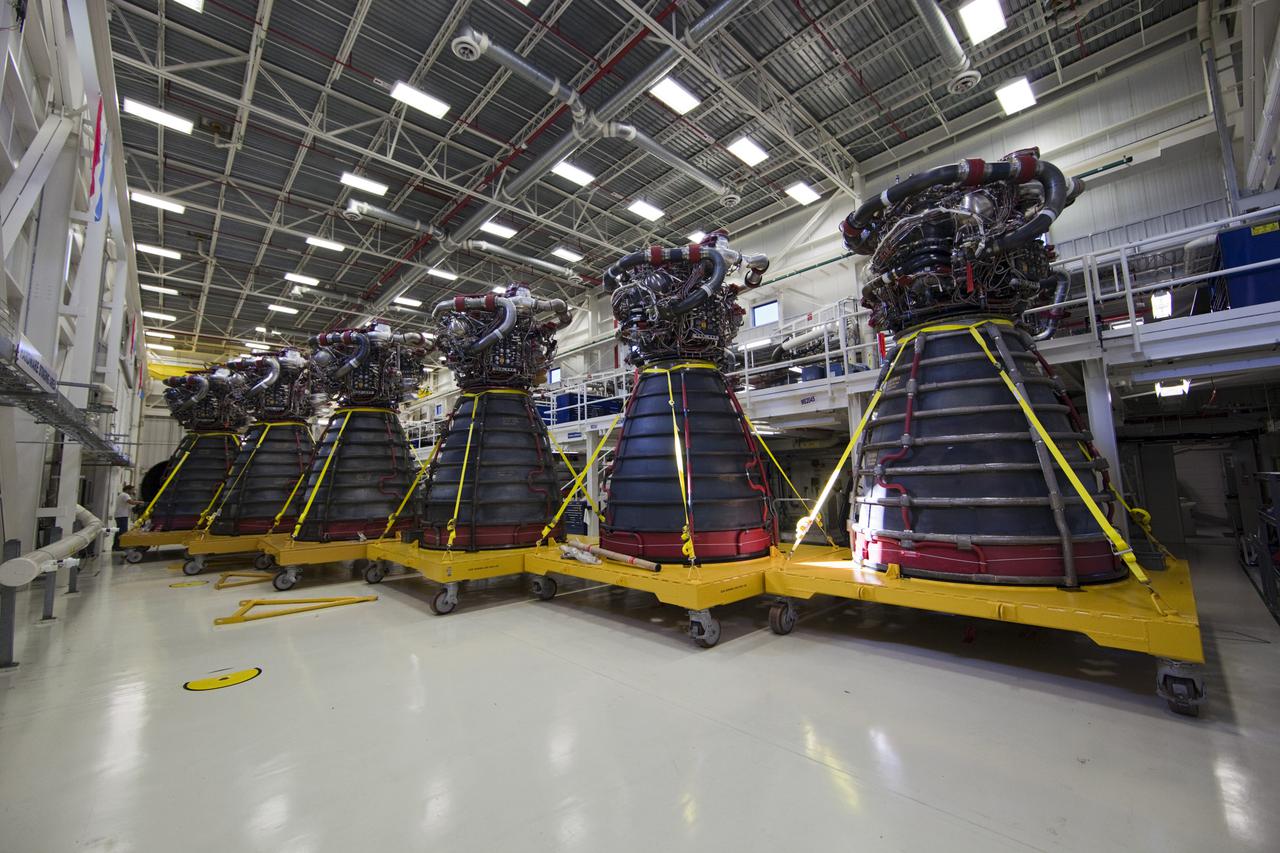
CAPE CANAVERAL, Fla. – Lined up in a row, six Pratt Whitney Rocketdyne space shuttle main engines (SSMEs) sit on stands inside the Engine Shop at NASA’s Kennedy Space Center in Florida. For the first time, all 15 main engines are in the Engine Shop at the same time. They are being prepared for shipment to NASA's Stennis Space Center in Mississippi for storage following the completion of the Space Shuttle Program. The engines are being repurposed for use on NASA’s Space Launch System heavy lift rocket. Photo credit: NASA_Dimitri Gerondidakis
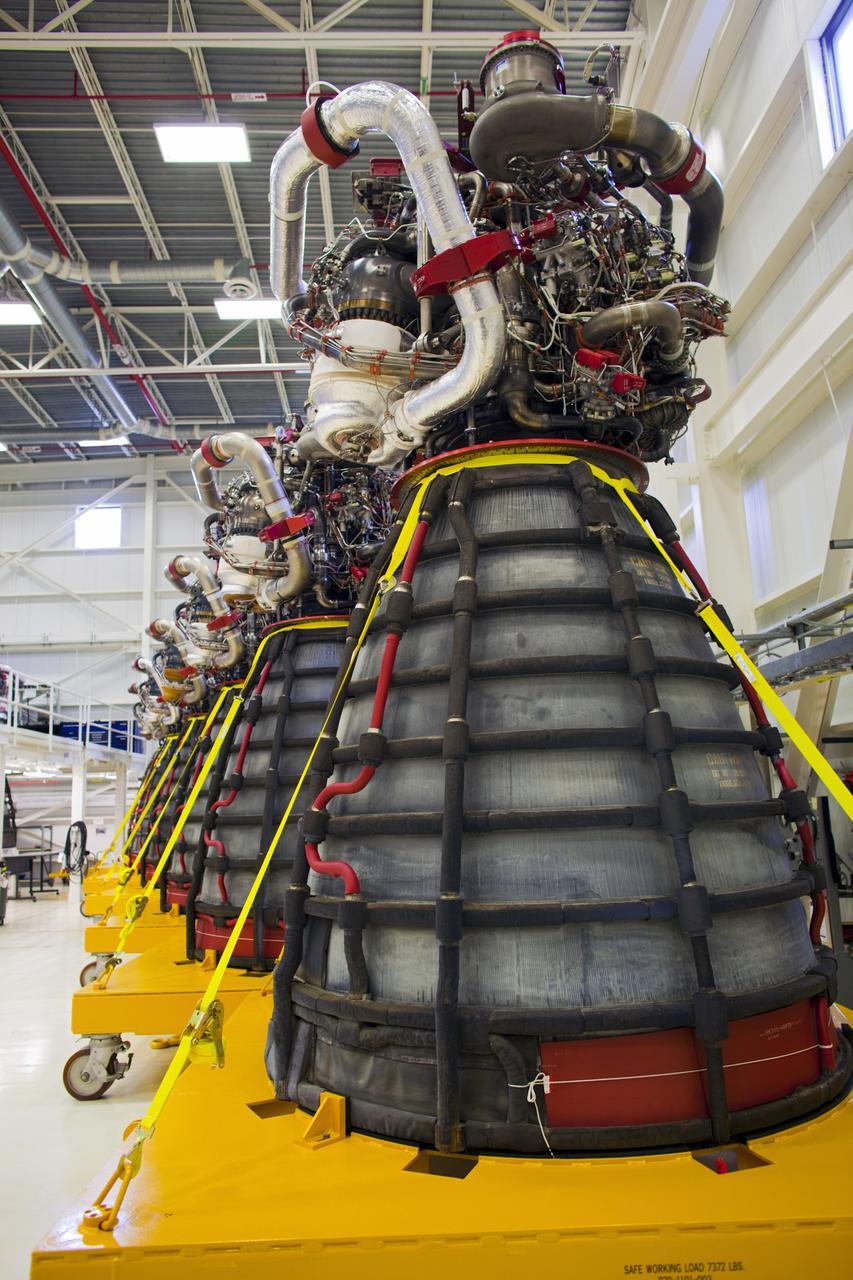
CAPE CANAVERAL, Fla. – Lined up in a row, six Pratt Whitney Rocketdyne space shuttle main engines (SSMEs) sit on stands inside the Engine Shop at NASA’s Kennedy Space Center in Florida. For the first time, all 15 main engines are in the Engine Shop at the same time. They are being prepared for shipment to NASA's Stennis Space Center in Mississippi for storage following the completion of the Space Shuttle Program. The engines are being repurposed for use on NASA’s Space Launch System heavy lift rocket. Photo credit: NASA_Dimitri Gerondidakis
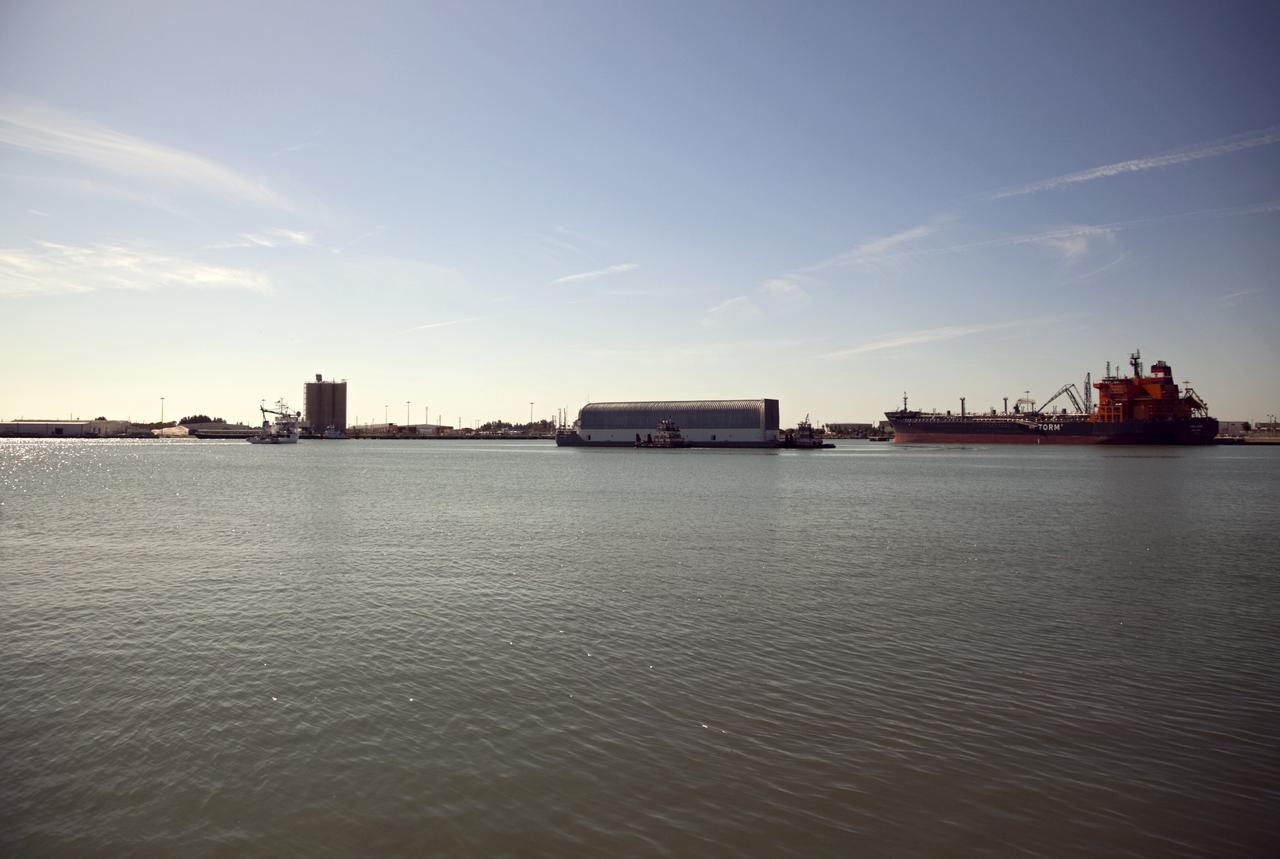
CAPE CANAVERAL, Fla. – Tugboats maneuver the Pegasus Barge through Port Canaveral after leaving NASA's Kennedy Space Center in Florida. The 266-foot-long and 50-foot-wide barge will be towed by NASA's Freedom Star ship to deliver space shuttle main engine (SSME) ground support equipment to Stennis Space Center near Bay St. Louis, Miss. Since being delivered to NASA in 1999, Pegasus sailed 41 times and transported 31 shuttle external fuel tanks from Michoud Assembly Facility near New Orleans to Kennedy. The barge is leaving Kennedy, perhaps for the final time. Both the barge and shuttle equipment will remain in storage until their specific future uses are determined. The SSMEs themselves will be transported to Stennis separately for use with the agency's new heavy-lift rocket, the Space Launch System. The work is part of the Space Shuttle Program’s transition and retirement processing. For more information about Shuttle Transition and Retirement, visit http://www.nasa.gov/mission_pages/transition/home/index.html. Photo credit: NASA/Frankie Martin
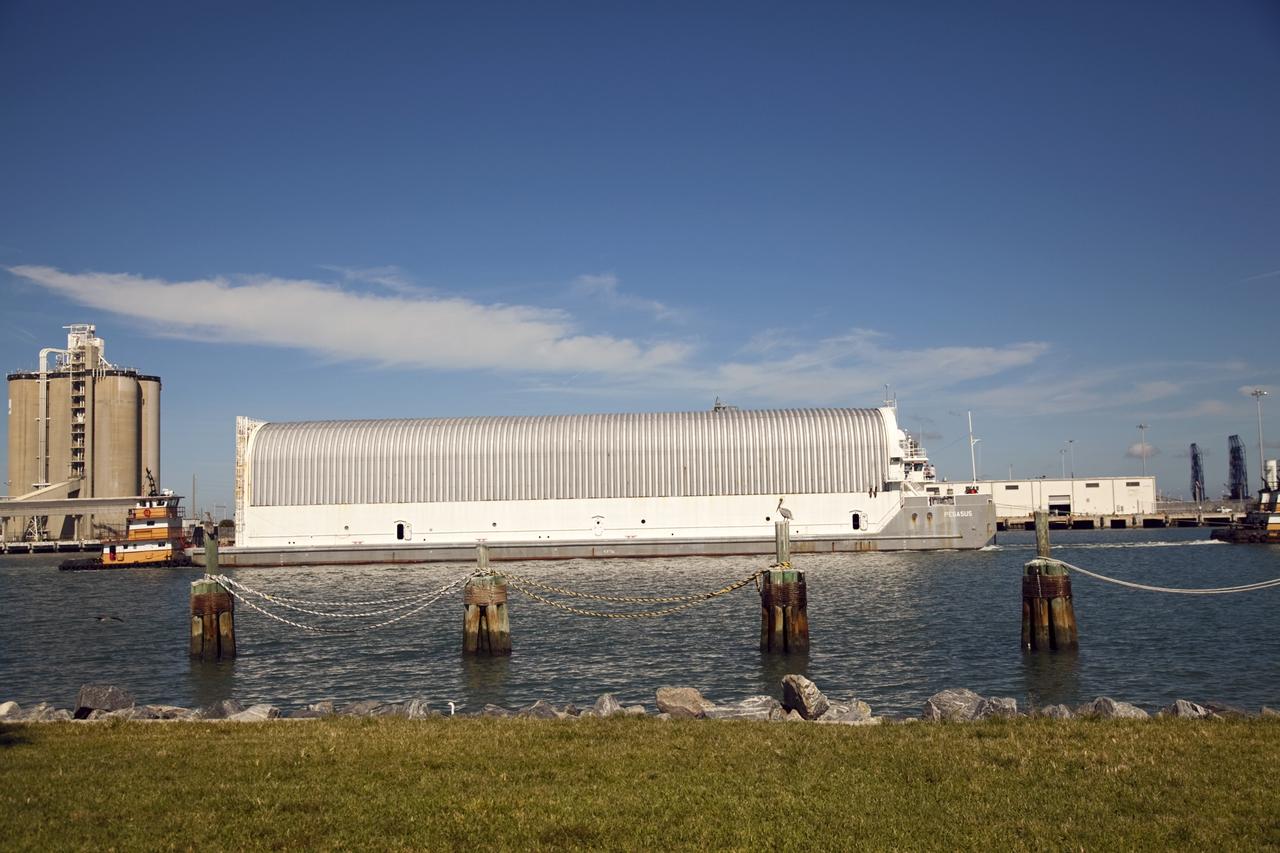
CAPE CANAVERAL, Fla. – Tugboats maneuver the Pegasus Barge through Port Canaveral after leaving NASA's Kennedy Space Center in Florida. The 266-foot-long and 50-foot-wide barge will be towed by NASA's Freedom Star ship to deliver space shuttle main engine (SSME) ground support equipment to Stennis Space Center near Bay St. Louis, Miss. Since being delivered to NASA in 1999, Pegasus sailed 41 times and transported 31 shuttle external fuel tanks from Michoud Assembly Facility near New Orleans to Kennedy. The barge is leaving Kennedy, perhaps for the final time. Both the barge and shuttle equipment will remain in storage until their specific future uses are determined. The SSMEs themselves will be transported to Stennis separately for use with the agency's new heavy-lift rocket, the Space Launch System. The work is part of the Space Shuttle Program’s transition and retirement processing. For more information about Shuttle Transition and Retirement, visit http://www.nasa.gov/mission_pages/transition/home/index.html. Photo credit: NASA/Frankie Martin
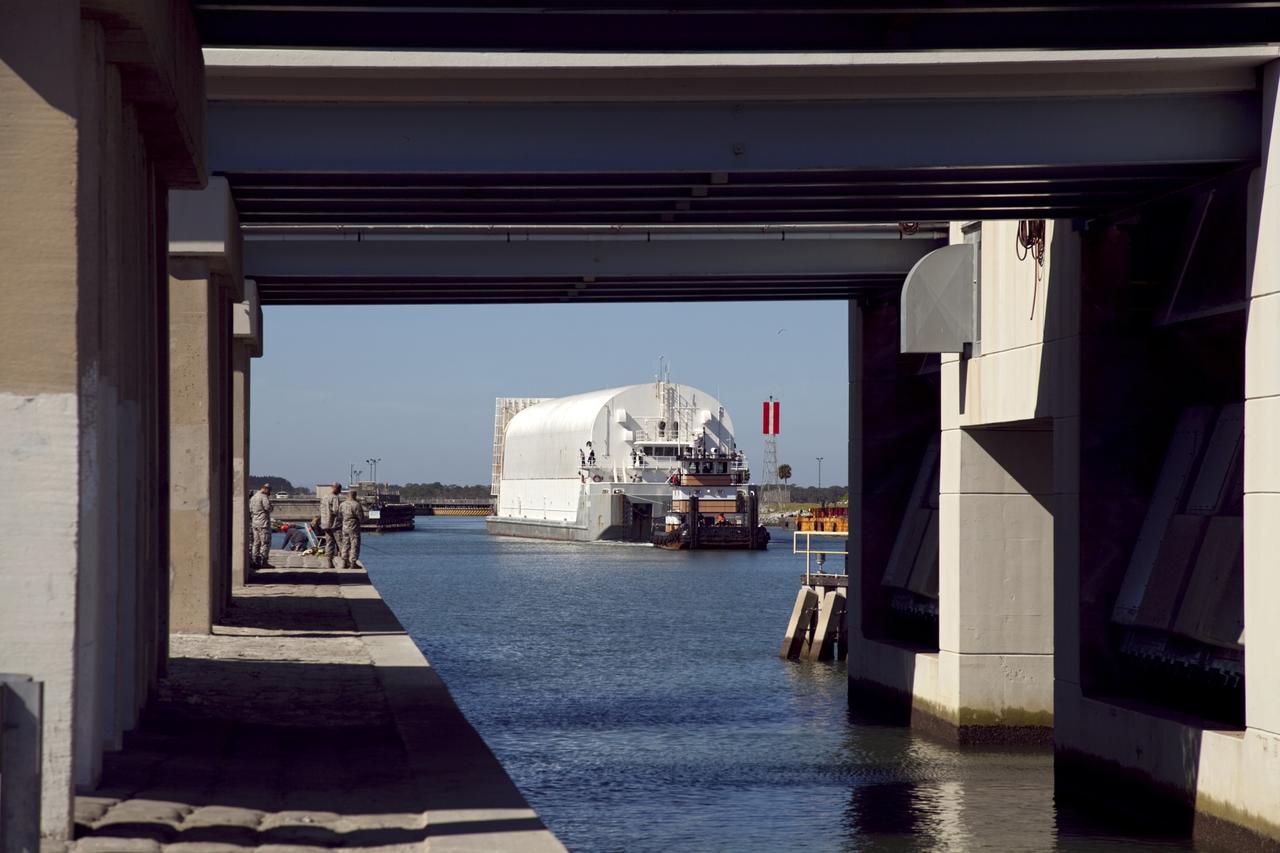
CAPE CANAVERAL, Fla. – The camera captures a unique view of NASA's Pegasus Barge as it is pulled through the Port Canaveral lock in Florida. The 266-foot-long and 50-foot-wide barge will be towed by NASA's Freedom Star ship to deliver space shuttle main engine (SSME) ground support equipment to Stennis Space Center near Bay St. Louis, Miss. Since being delivered to NASA in 1999, Pegasus sailed 41 times and transported 31 shuttle external fuel tanks from Michoud Assembly Facility near New Orleans to Kennedy Space Center. The barge is leaving Kennedy, perhaps for the final time. Both the barge and shuttle equipment will remain in storage until their specific future uses are determined. The SSMEs themselves will be transported to Stennis separately for use with the agency's new heavy-lift rocket, the Space Launch System. The work is part of the Space Shuttle Program’s transition and retirement processing. For more information about Shuttle Transition and Retirement, visit http://www.nasa.gov/mission_pages/transition/home/index.html. Photo credit: NASA/Frankie Martin
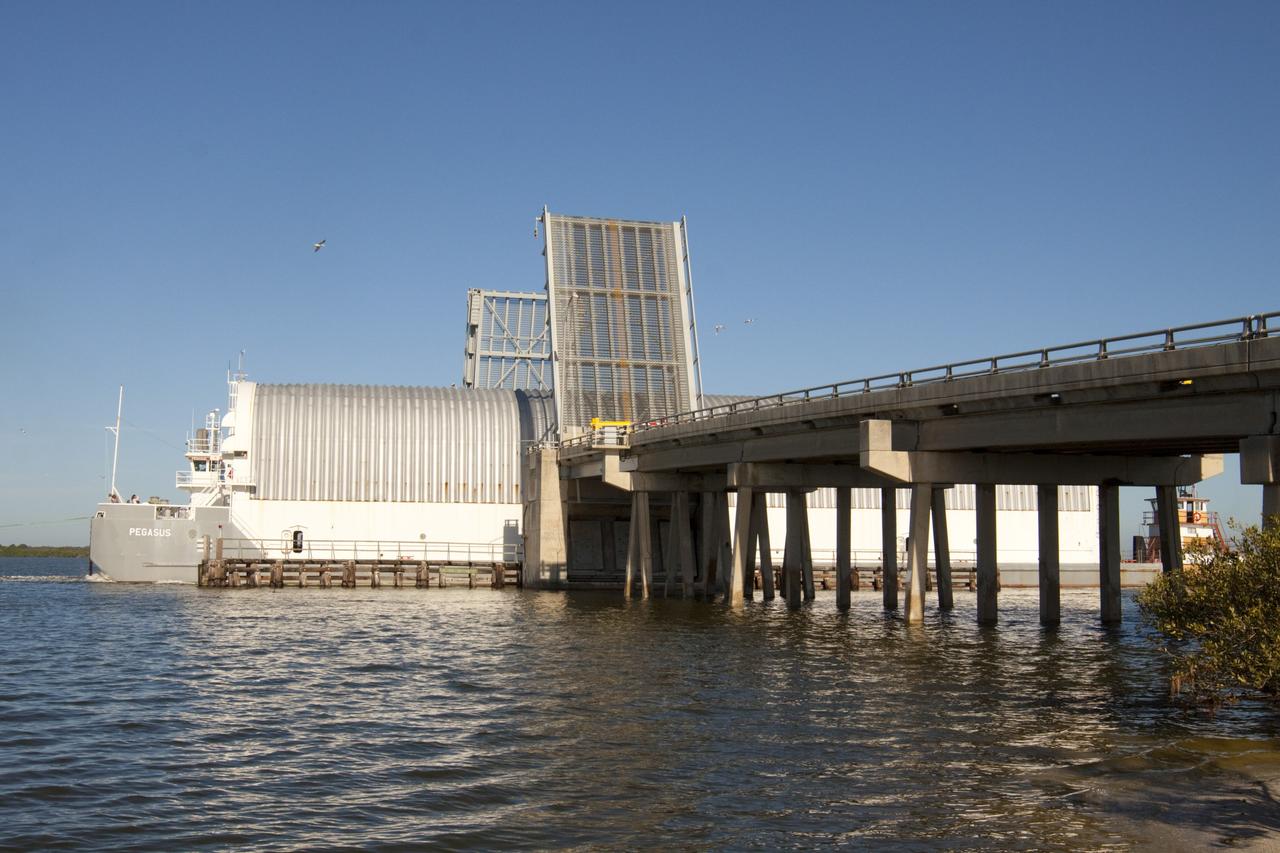
CAPE CANAVERAL, Fla. – A tugboat pushes the Pegasus Barge through a drawbridge after leaving NASA's Kennedy Space Center in Florida. The 266-foot-long and 50-foot-wide barge will be towed by NASA's Freedom Star ship to deliver space shuttle main engine (SSME) ground support equipment to Stennis Space Center near Bay St. Louis, Miss. Since being delivered to NASA in 1999, Pegasus sailed 41 times and transported 31 shuttle external fuel tanks from Michoud Assembly Facility near New Orleans to Kennedy. The barge is leaving Kennedy, perhaps for the final time. Both the barge and shuttle equipment will remain in storage until their specific future uses are determined. The SSMEs themselves will be transported to Stennis separately for use with the agency's new heavy-lift rocket, the Space Launch System. The work is part of the Space Shuttle Program’s transition and retirement processing. For more information about Shuttle Transition and Retirement, visit http://www.nasa.gov/mission_pages/transition/home/index.html. Photo credit: NASA/Kim Shiflett
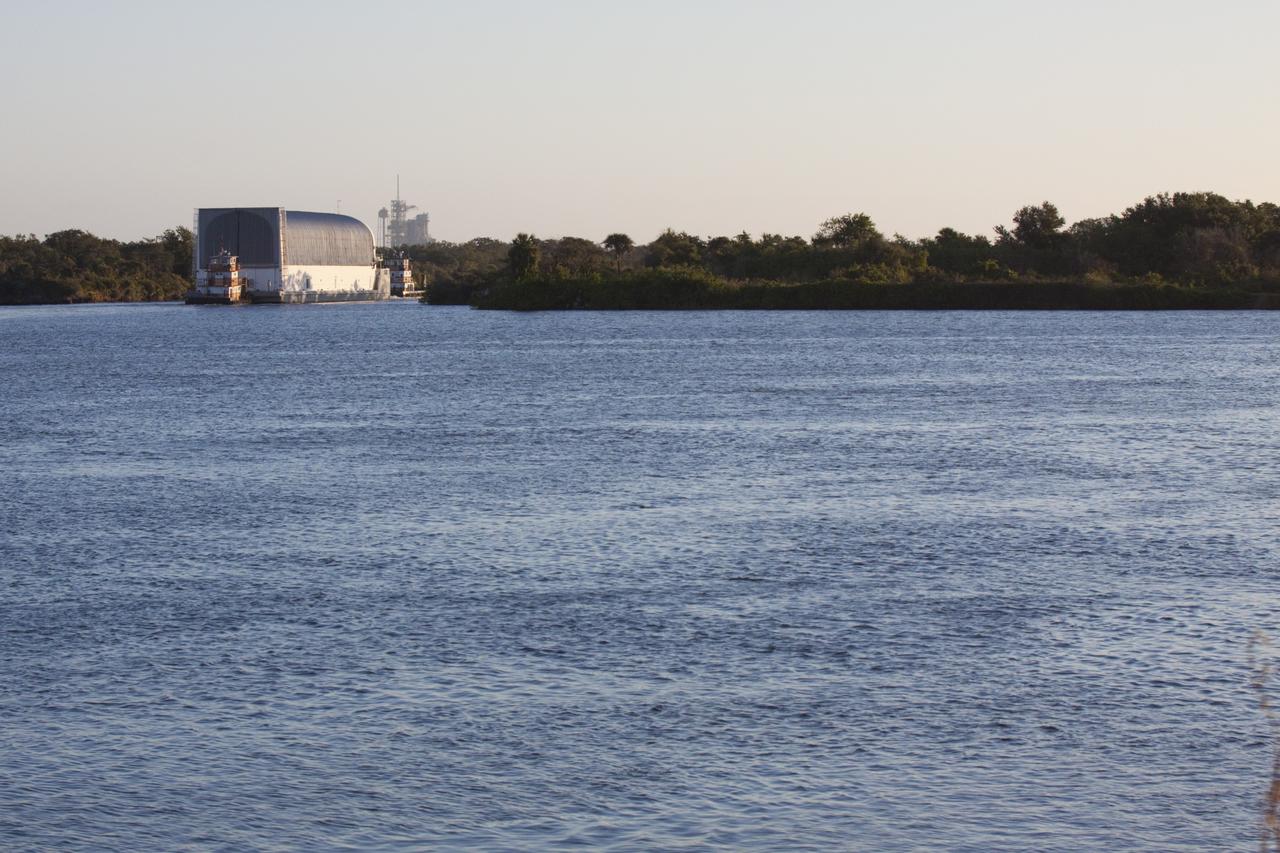
CAPE CANAVERAL, Fla. – Two tugboats move the Pegasus Barge through the Banana River near NASA's Kennedy Space Center in Florida. The 266-foot-long and 50-foot-wide barge will be towed by NASA's Freedom Star ship to deliver space shuttle main engine (SSME) ground support equipment to Stennis Space Center near Bay St. Louis, Miss. Since being delivered to NASA in 1999, Pegasus sailed 41 times and transported 31 shuttle external fuel tanks from Michoud Assembly Facility near New Orleans to Kennedy. To the right of the barge is Launch Pad 39A. The barge is leaving Kennedy, perhaps for the final time. Both the barge and shuttle equipment will remain in storage until their specific future uses are determined. The SSMEs themselves will be transported to Stennis separately for use with the agency’s new heavy-lift rocket, the Space Launch System. The work is part of the Space Shuttle Program’s transition and retirement processing. For more information about Shuttle Transition and Retirement, visit http://www.nasa.gov/mission_pages/transition/home/index.html. Photo credit: NASA/ Kim Shiflett
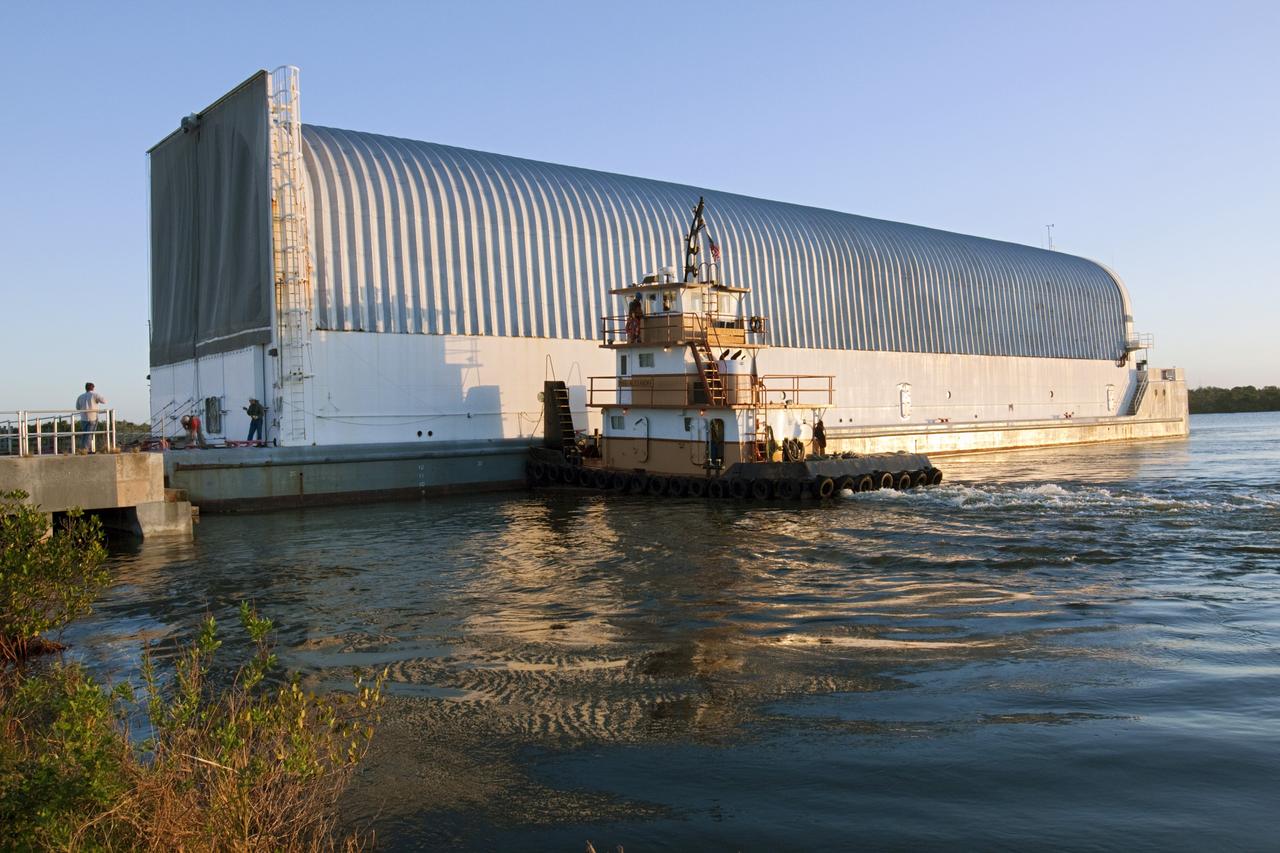
CAPE CANAVERAL, Fla. – In the early morning light at the Turn Basin in the Launch Complex 39 area at NASA's Kennedy Space Center in Florida, a tugboat begins to position the Pegasus Barge for towing. The 266-foot-long and 50-foot-wide barge will be towed by NASA's Freedom Star ship to deliver space shuttle main engine (SSME) ground support equipment to Stennis Space Center near Bay St. Louis, Miss. Since being delivered to NASA in 1999, Pegasus sailed 41 times and transported 31 shuttle external fuel tanks from Michoud Assembly Facility near New Orleans to Kennedy. The barge will leave Kennedy, perhaps for the final time. Both the barge and shuttle equipment will remain in storage until their specific future uses are determined. The SSMEs themselves will be transported to Stennis separately for use with the agency’s new heavy-lift rocket, the Space Launch System. The work is part of the Space Shuttle Program’s transition and retirement processing. For more information about Shuttle Transition and Retirement, visit http://www.nasa.gov/mission_pages/transition/home/index.html. Photo credit: NASA/ Kim Shiflett
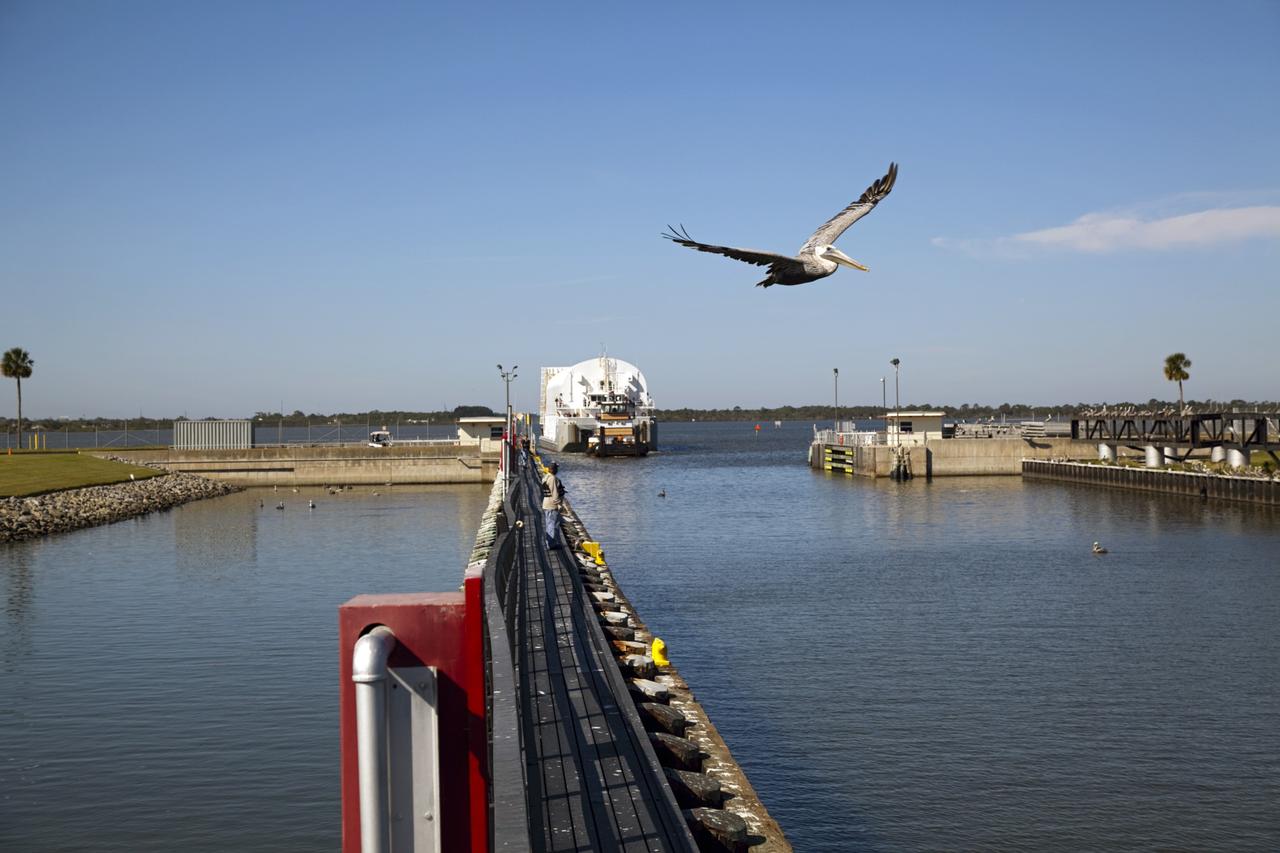
CAPE CANAVERAL, Fla. – A pelican flies overhead as tugboats maneuver NASA's Pegasus Barge to the entrance of the Port Canaveral lock in Florida. The 266-foot-long and 50-foot-wide barge will be towed by NASA's Freedom Star ship to deliver space shuttle main engine (SSME) ground support equipment to Stennis Space Center near Bay St. Louis, Miss. Since being delivered to NASA in 1999, Pegasus sailed 41 times and transported 31 shuttle external fuel tanks from Michoud Assembly Facility near New Orleans to Kennedy Space Center. The barge is leaving Kennedy, perhaps for the final time. Both the barge and shuttle equipment will remain in storage until their specific future uses are determined. The SSMEs themselves will be transported to Stennis separately for use with the agency's new heavy-lift rocket, the Space Launch System. The work is part of the Space Shuttle Program’s transition and retirement processing. For more information about Shuttle Transition and Retirement, visit http://www.nasa.gov/mission_pages/transition/home/index.html. Photo credit: NASA/Frankie Martin
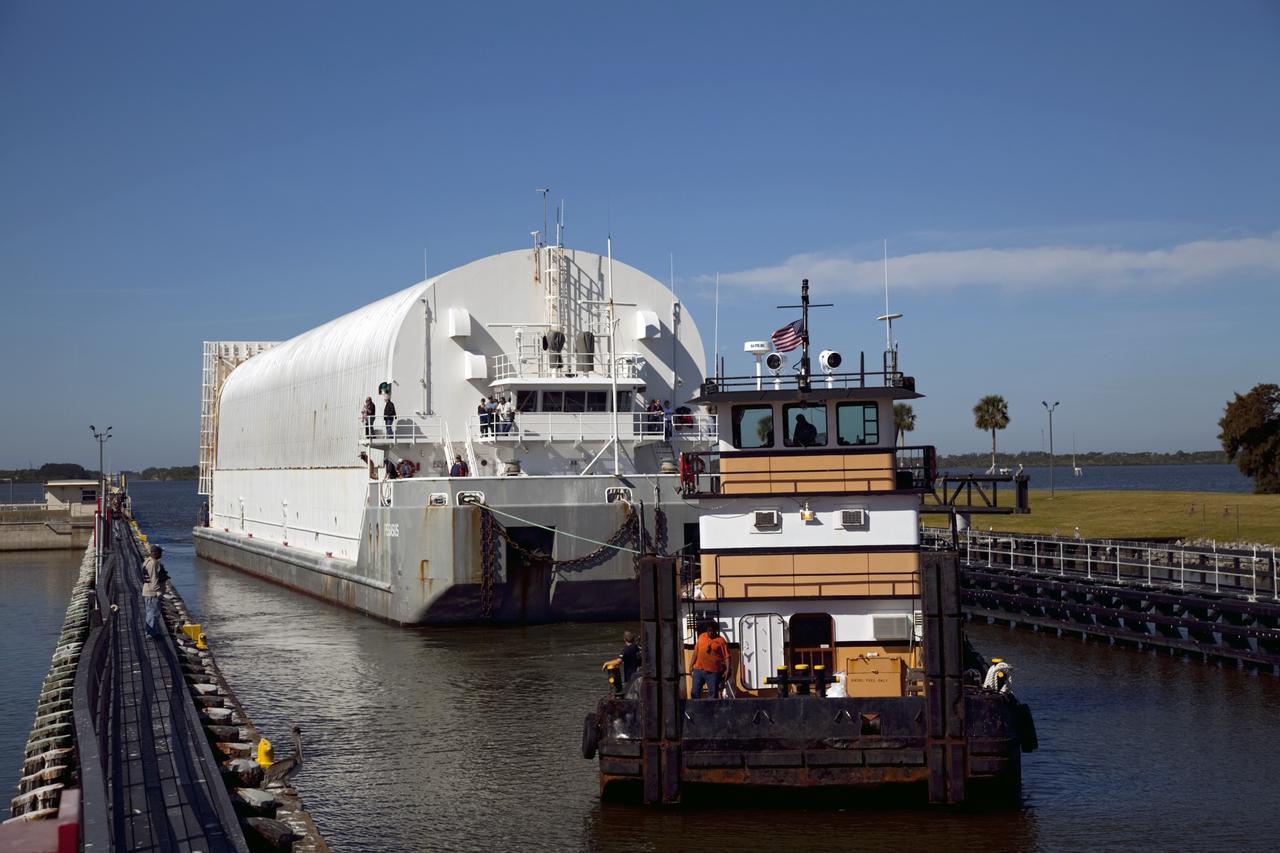
CAPE CANAVERAL, Fla. – A tugboat pulls NASA's Pegasus Barge through the Port Canaveral lock in Florida. The 266 ft long and 50 ft wide barge will be towed by NASA's Freedom Star ship to deliver space shuttle main engine (SSME) ground support equipment to Stennis Space Center near Bay St. Louis, Miss. Since being delivered to NASA in 1999, Pegasus sailed 41 times and transported 31 shuttle external fuel tanks from Michoud Assembly Facility near New Orleans to Kennedy Space Center. The barge is leaving Kennedy, perhaps for the final time. Both the barge and shuttle equipment will remain in storage until their specific future uses are determined. The SSMEs themselves will be transported to Stennis separately for use with the agency's new heavy-lift rocket, the Space Launch System. The work is part of the Space Shuttle Program’s transition and retirement processing. For more information about Shuttle Transition and Retirement, visit http://www.nasa.gov/mission_pages/transition/home/index.html. Photo credit: NASA/Frankie Martin
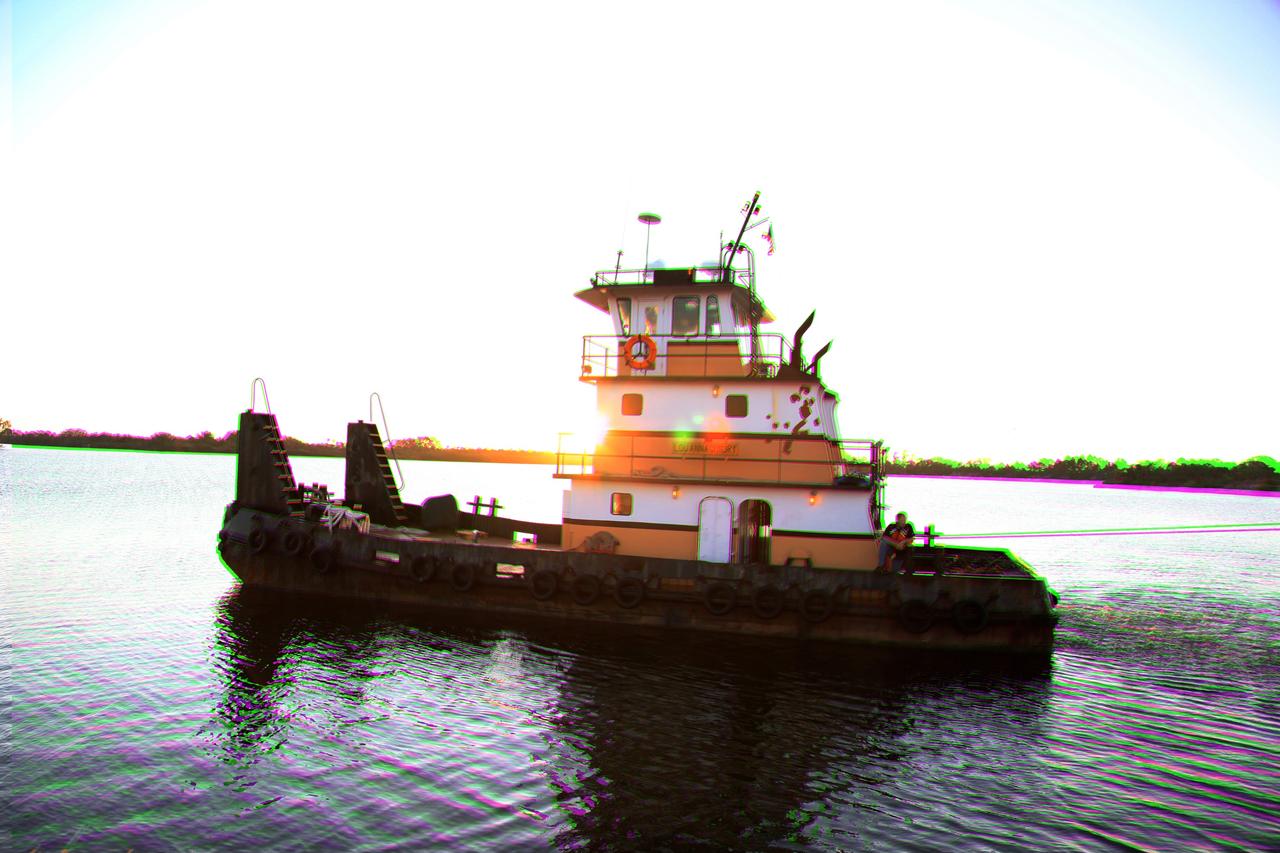
CAPE CANAVERAL, Fla. –This 3-D image shows a tugboat pulling the Pegasus Barge along the Banana River after leaving NASA's Kennedy Space Center in Florida. The 266-foot-long and 50-foot-wide barge will be towed by NASA's Freedom Star ship to deliver space shuttle main engine (SSME) ground support equipment to Stennis Space Center near Bay St. Louis, Miss. Since being delivered to NASA in 1999, Pegasus sailed 41 times and transported 31 shuttle external fuel tanks from Michoud Assembly Facility near New Orleans to Kennedy. To view this image, use green and magenta 3-D glasses. The barge is leaving Kennedy, perhaps for the final time. Both the barge and shuttle equipment will remain in storage until their specific future uses are determined. The SSMEs themselves will be transported to Stennis separately for use with the agency's new heavy-lift rocket, the Space Launch System. The work is part of the Space Shuttle Program’s transition and retirement processing. For more information about Shuttle Transition and Retirement, visit http://www.nasa.gov/mission_pages/transition/home/index.html. Photo credit: NASA/Frankie Martin
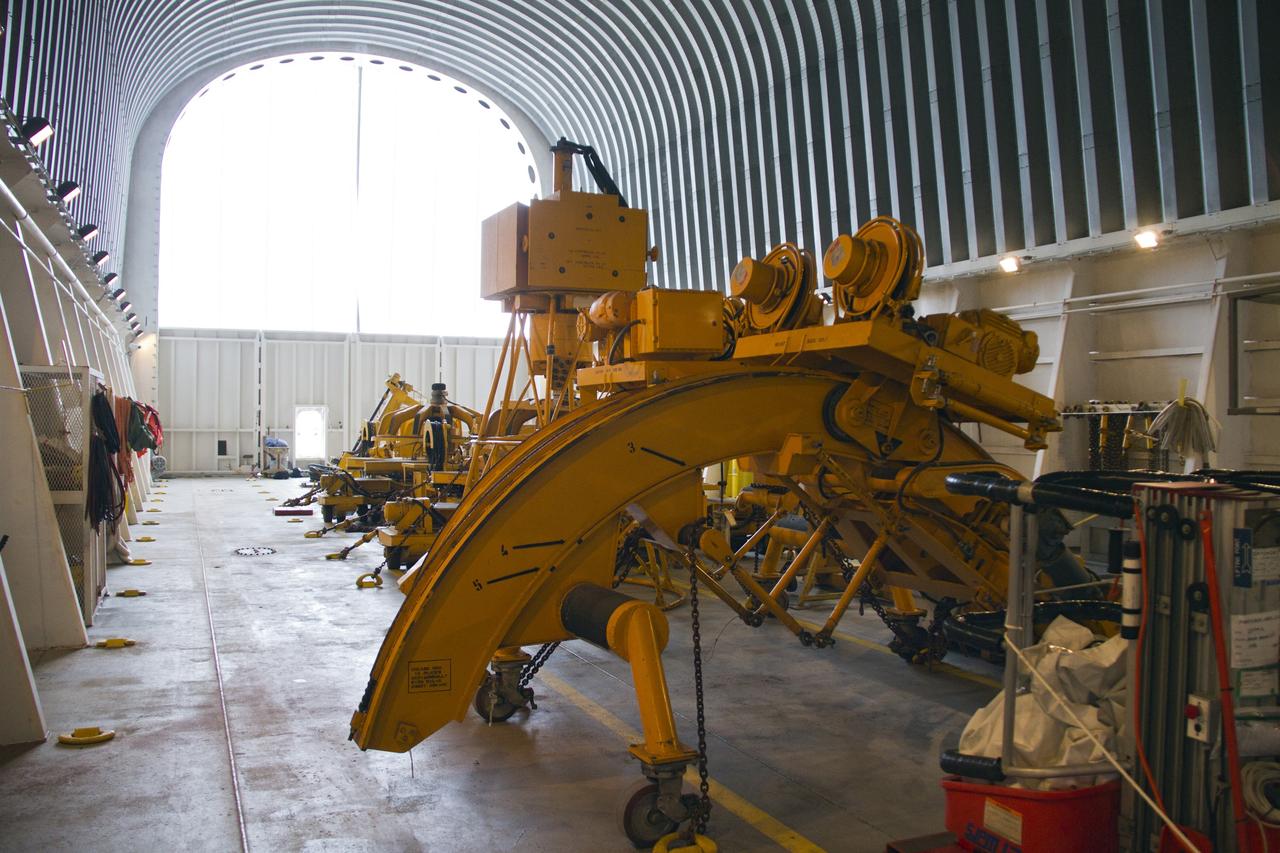
CAPE CANAVERAL, Fla. – At the Turn Basin in the Launch Complex 39 area of NASA’s Kennedy Space Center in Florida, parts of the Hyster forklift, a specially designed engine installer used in conjunction with the space shuttle main engines (SSME), are stowed away inside the Pegasus barge, ready for transport for delivery to Stennis Space Center near Bay St. Louis, Miss. Since being delivered to NASA in 1999, Pegasus sailed 41 times and transported 31 shuttle external fuel tanks from Michoud Assembly Facility near New Orleans to Kennedy. The barge will leave Kennedy, perhaps for the final time. Both the barge and shuttle equipment will remain in storage until their specific future uses are determined. The SSMEs themselves will be transported to Stennis separately for use with the agency’s new heavy-lift rocket, the Space Launch System. The work is part of the Space Shuttle Program’s transition and retirement processing. For more information about Shuttle Transition and Retirement, visit http://www.nasa.gov/mission_pages/transition/home/index.html. Photo credit: NASA/Cory Huston
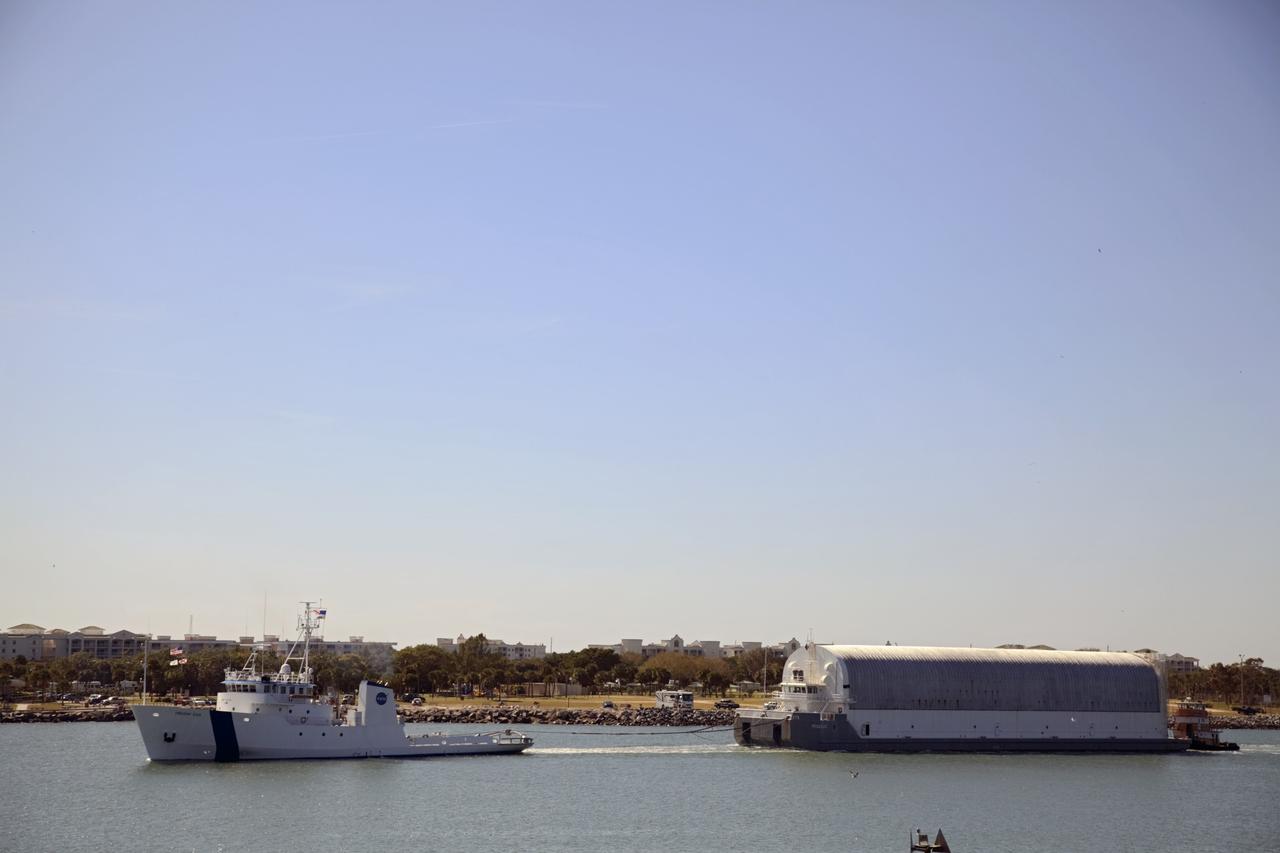
CAPE CANAVERAL, Fla. – NASA's Freedom Star ship tows the Pegasus Barge through Port Canaveral in Florida. Freedom Star is towing the 266-foot-long and 50-foot-wide barge to Stennis Space Center near Bay St. Louis, Miss. to deliver space shuttle main engine (SSME) ground support equipment. Since being delivered to NASA in 1999, Pegasus sailed 41 times and transported 31 shuttle external fuel tanks from Michoud Assembly Facility near New Orleans to Kennedy Space Center. The barge is leaving Kennedy, perhaps for the final time. Both the barge and shuttle equipment will remain in storage until their specific future uses are determined. The SSMEs themselves will be transported to Stennis separately for use with the agency's new heavy-lift rocket, the Space Launch System. The work is part of the Space Shuttle Program’s transition and retirement processing. For more information about Shuttle Transition and Retirement, visit http://www.nasa.gov/mission_pages/transition/home/index.html. Photo credit: NASA/Frankie Martin
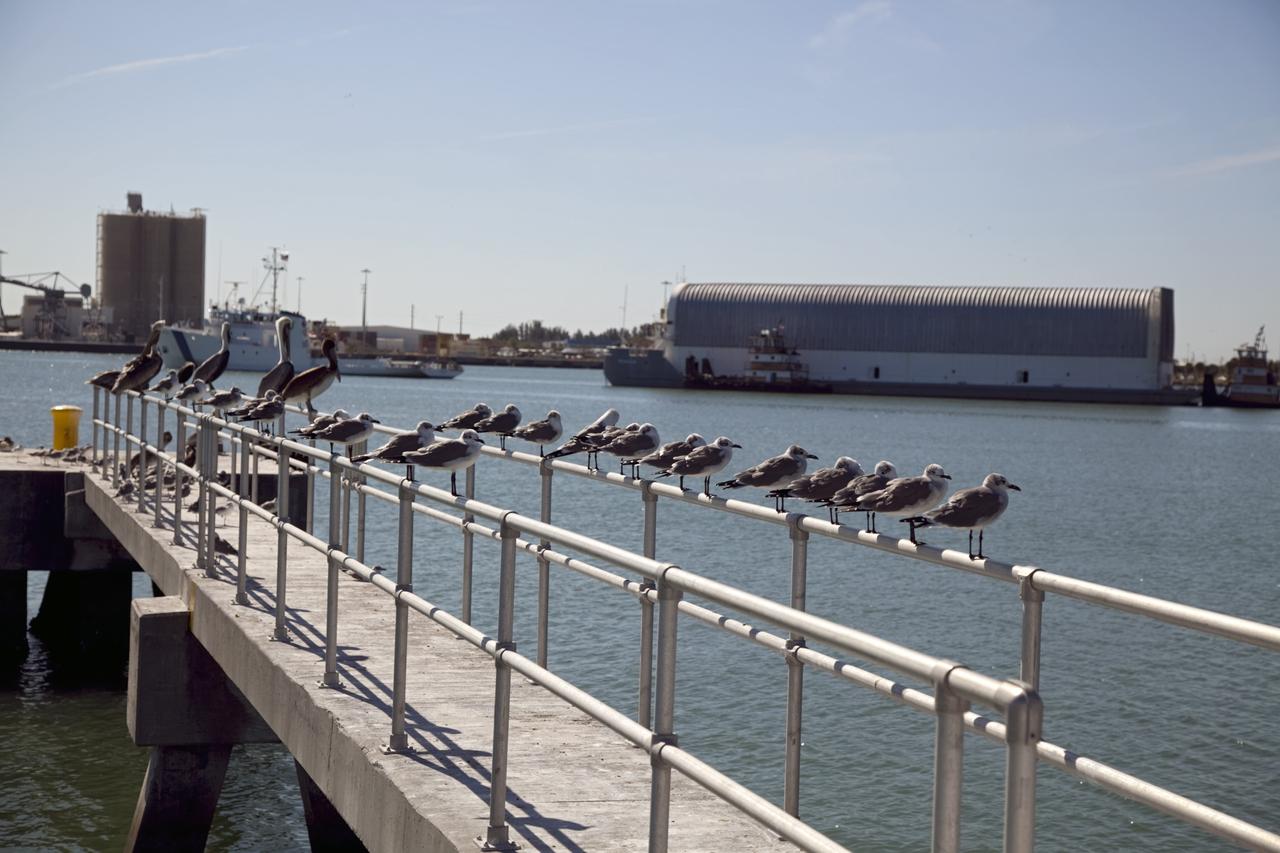
CAPE CANAVERAL, Fla. – NASA's Freedom Star ship tows the Pegasus Barge through Port Canaveral in Florida. Freedom Star is towing the 266-foot-long and 50-foot-wide barge to Stennis Space Center near Bay St. Louis, Miss. to deliver space shuttle main engine (SSME) ground support equipment. Since being delivered to NASA in 1999, Pegasus sailed 41 times and transported 31 shuttle external fuel tanks from Michoud Assembly Facility near New Orleans to Kennedy Space Center. The barge is leaving Kennedy, perhaps for the final time. Both the barge and shuttle equipment will remain in storage until their specific future uses are determined. The SSMEs themselves will be transported to Stennis separately for use with the agency's new heavy-lift rocket, the Space Launch System. The work is part of the Space Shuttle Program’s transition and retirement processing. For more information about Shuttle Transition and Retirement, visit http://www.nasa.gov/mission_pages/transition/home/index.html. Photo credit: NASA/Frankie Martin
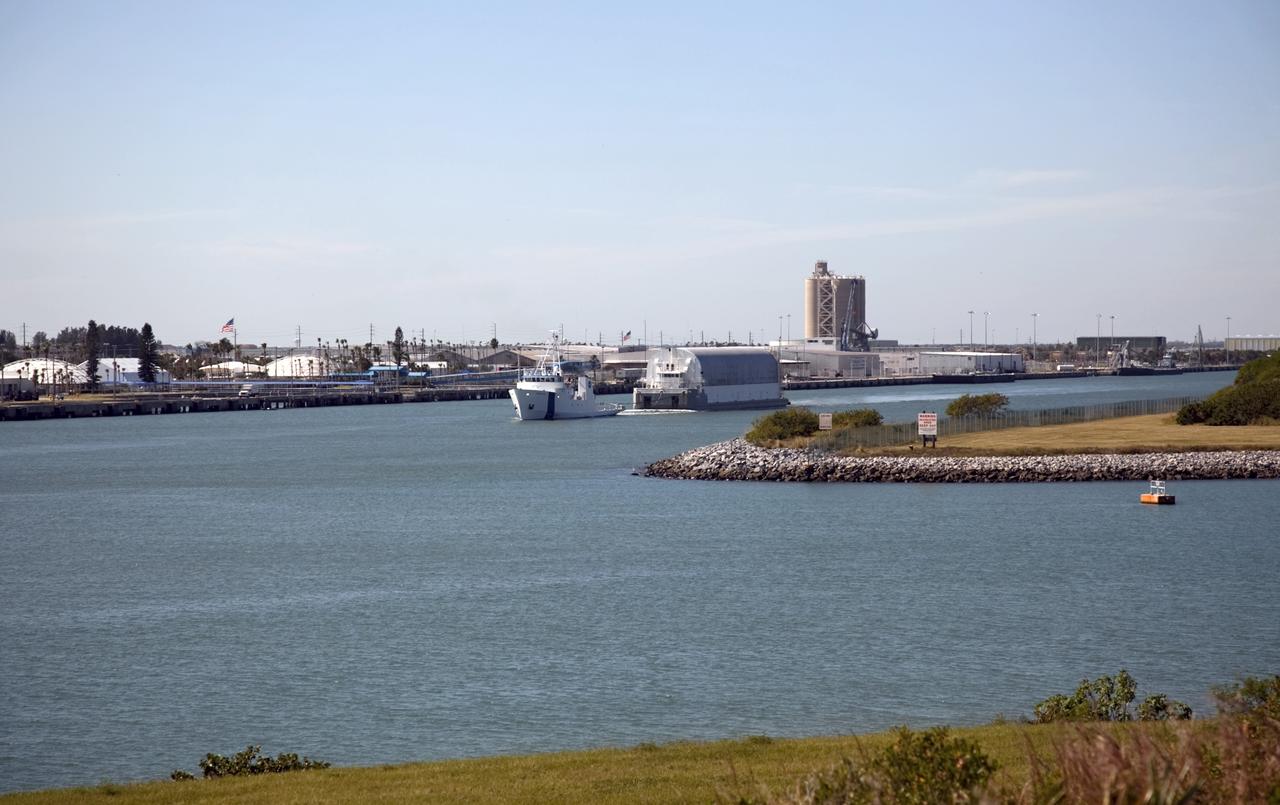
CAPE CANAVERAL, Fla. – NASA's Freedom Star ship tows the Pegasus Barge through Port Canaveral in Florida. Freedom Star is towing the 266-foot-long and 50-foot-wide barge to Stennis Space Center near Bay St. Louis, Miss. to deliver space shuttle main engine (SSME) ground support equipment. Since being delivered to NASA in 1999, Pegasus sailed 41 times and transported 31 shuttle external fuel tanks from Michoud Assembly Facility near New Orleans to Kennedy Space Center. The barge is leaving Kennedy, perhaps for the final time. Both the barge and shuttle equipment will remain in storage until their specific future uses are determined. The SSMEs themselves will be transported to Stennis separately for use with the agency's new heavy-lift rocket, the Space Launch System. The work is part of the Space Shuttle Program’s transition and retirement processing. For more information about Shuttle Transition and Retirement, visit http://www.nasa.gov/mission_pages/transition/home/index.html. Photo credit: NASA/Frankie Martin
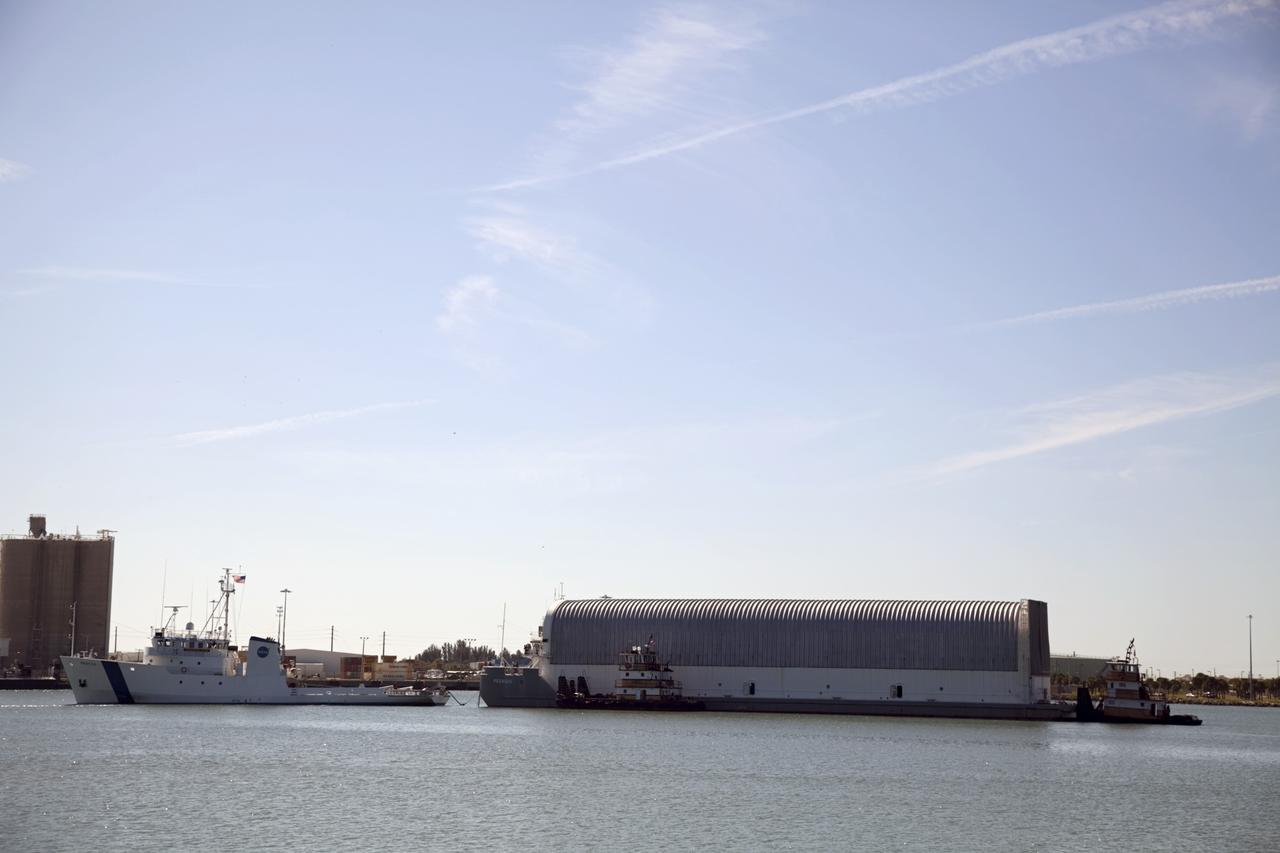
CAPE CANAVERAL, Fla. – NASA's Freedom Star ship tows the Pegasus Barge through Port Canaveral in Florida. Freedom Star is towing the 266-foot-long and 50-foot-wide barge to Stennis Space Center near Bay St. Louis, Miss. to deliver space shuttle main engine (SSME) ground support equipment. Since being delivered to NASA in 1999, Pegasus sailed 41 times and transported 31 shuttle external fuel tanks from Michoud Assembly Facility near New Orleans to Kennedy Space Center. The barge is leaving Kennedy, perhaps for the final time. Both the barge and shuttle equipment will remain in storage until their specific future uses are determined. The SSMEs themselves will be transported to Stennis separately for use with the agency's new heavy-lift rocket, the Space Launch System. The work is part of the Space Shuttle Program’s transition and retirement processing. For more information about Shuttle Transition and Retirement, visit http://www.nasa.gov/mission_pages/transition/home/index.html. Photo credit: NASA/Frankie Martin
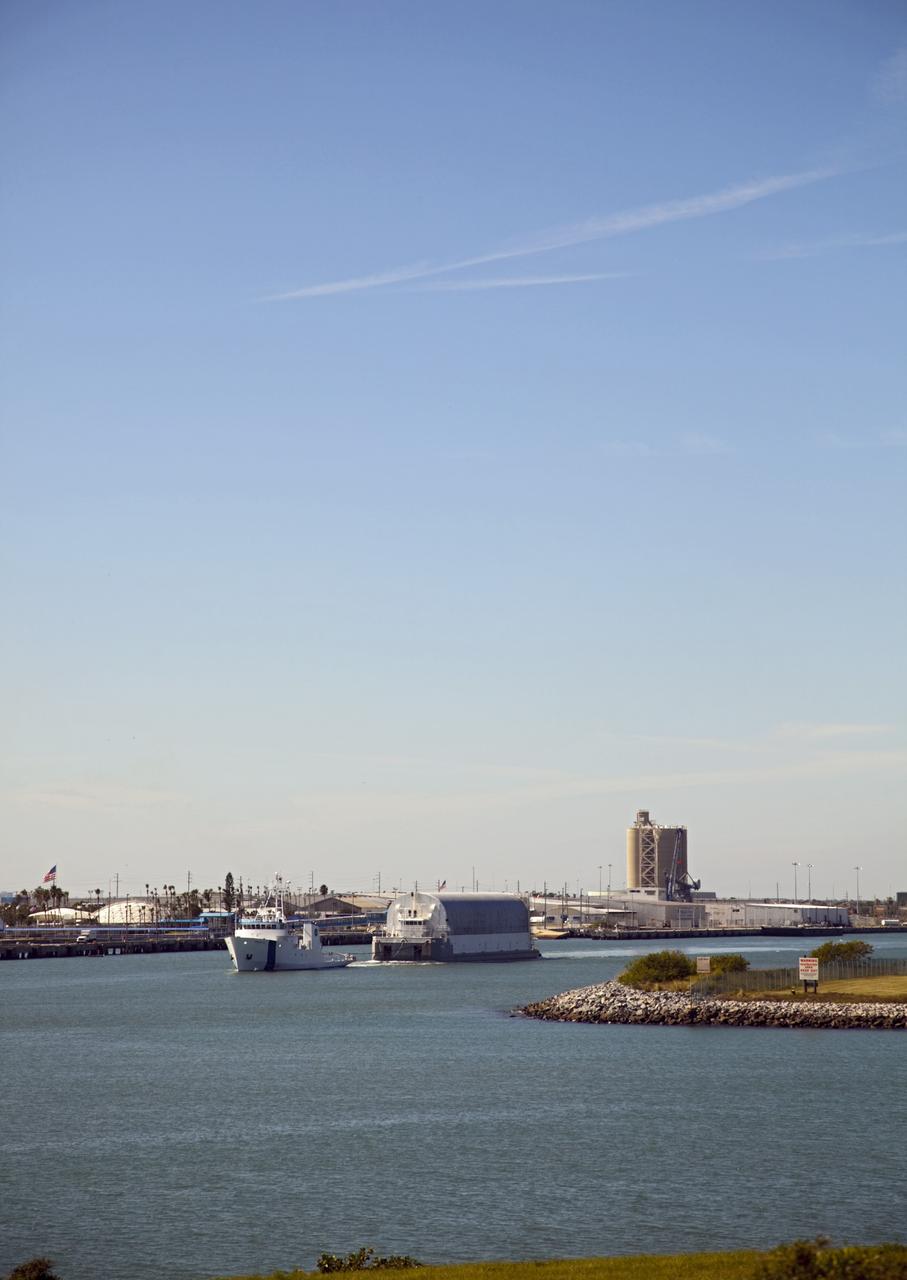
CAPE CANAVERAL, Fla. – NASA's Freedom Star ship tows the Pegasus Barge through Port Canaveral in Florida. Freedom Star is towing the 266-foot-long and 50-foot-wide barge to Stennis Space Center near Bay St. Louis, Miss. to deliver space shuttle main engine (SSME) ground support equipment. Since being delivered to NASA in 1999, Pegasus sailed 41 times and transported 31 shuttle external fuel tanks from Michoud Assembly Facility near New Orleans to Kennedy Space Center. The barge is leaving Kennedy, perhaps for the final time. Both the barge and shuttle equipment will remain in storage until their specific future uses are determined. The SSMEs themselves will be transported to Stennis separately for use with the agency's new heavy-lift rocket, the Space Launch System. The work is part of the Space Shuttle Program’s transition and retirement processing. For more information about Shuttle Transition and Retirement, visit http://www.nasa.gov/mission_pages/transition/home/index.html. Photo credit: NASA/Frankie Martin
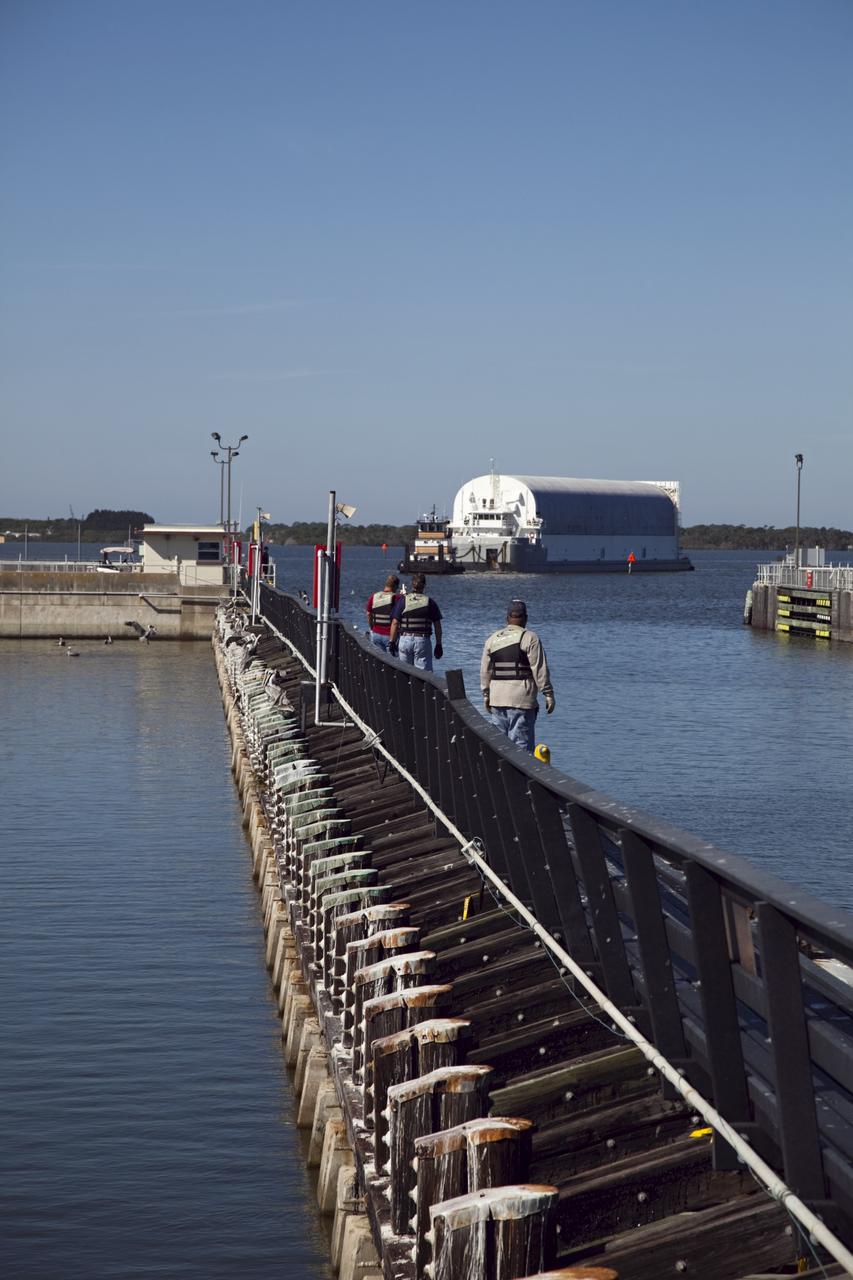
CAPE CANAVERAL, Fla. – Workers are at the ready as tugboats maneuver NASA's Pegasus Barge to the entrance of the Port Canaveral lock in Florida. The 266-foot-long and 50-foot-wide barge will be towed by NASA's Freedom Star ship to deliver space shuttle main engine (SSME) ground support equipment to Stennis Space Center near Bay St. Louis, Miss. Since being delivered to NASA in 1999, Pegasus sailed 41 times and transported 31 shuttle external fuel tanks from Michoud Assembly Facility near New Orleans to Kennedy Space Center. The barge is leaving Kennedy, perhaps for the final time. Both the barge and shuttle equipment will remain in storage until their specific future uses are determined. The SSMEs themselves will be transported to Stennis separately for use with the agency's new heavy-lift rocket, the Space Launch System. The work is part of the Space Shuttle Program’s transition and retirement processing. For more information about Shuttle Transition and Retirement, visit http://www.nasa.gov/mission_pages/transition/home/index.html. Photo credit: NASA/Frankie Martin
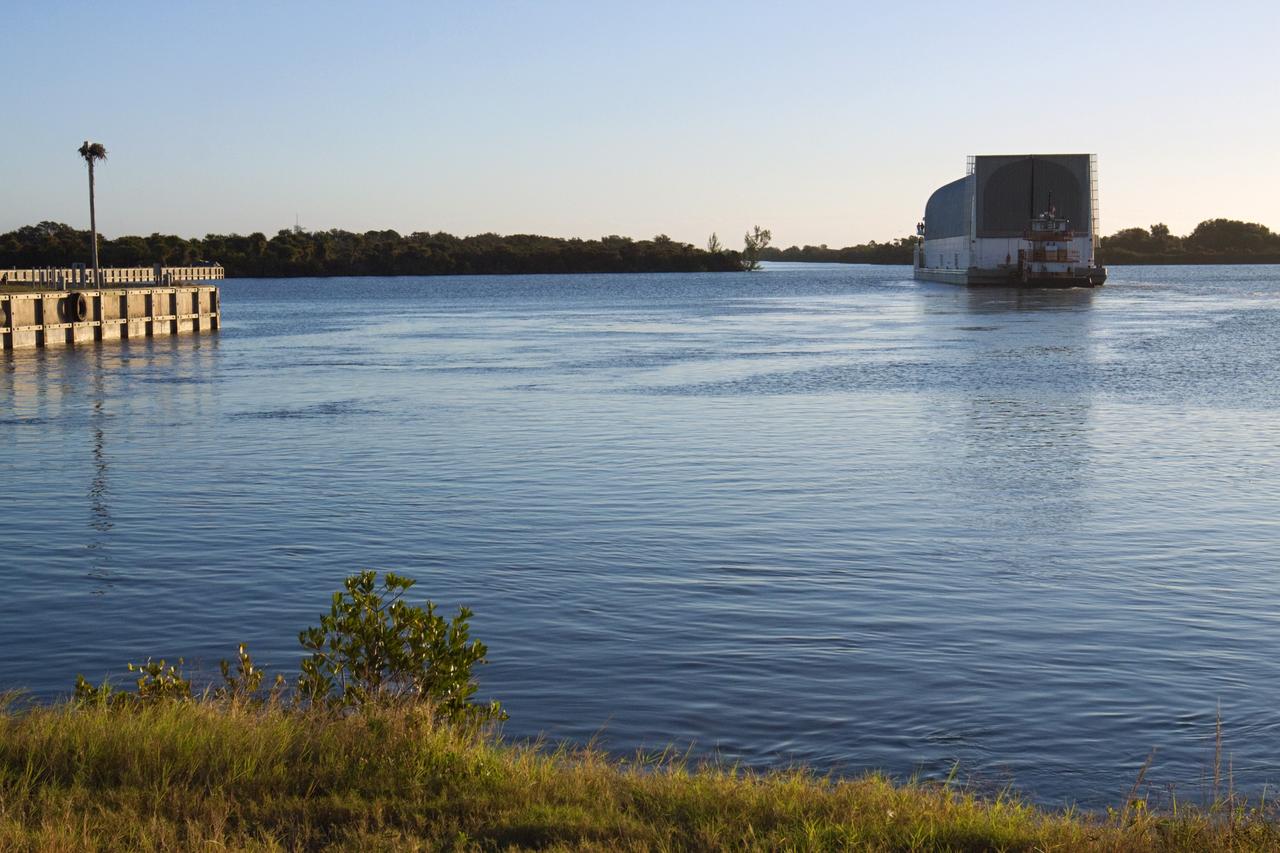
CAPE CANAVERAL, Fla. – At the Turn Basin in the Launch Complex 39 area at NASA's Kennedy Space Center in Florida, a tugboat pushes the Pegasus Barge away from the dock as it begins its journey. The 266-foot-long and 50-foot-wide barge will be towed by NASA's Freedom Star ship to deliver space shuttle main engine (SSME) ground support equipment to Stennis Space Center near Bay St. Louis, Miss. Since being delivered to NASA in 1999, Pegasus sailed 41 times and transported 31 shuttle external fuel tanks from Michoud Assembly Facility near New Orleans to Kennedy. The barge is leaving Kennedy, perhaps for the final time. Both the barge and shuttle equipment will remain in storage until their specific future uses are determined. The SSMEs themselves will be transported to Stennis separately for use with the agency’s new heavy-lift rocket, the Space Launch System. The work is part of the Space Shuttle Program’s transition and retirement processing. For more information about Shuttle Transition and Retirement, visit http://www.nasa.gov/mission_pages/transition/home/index.html. Photo credit: NASA/ Kim Shiflett
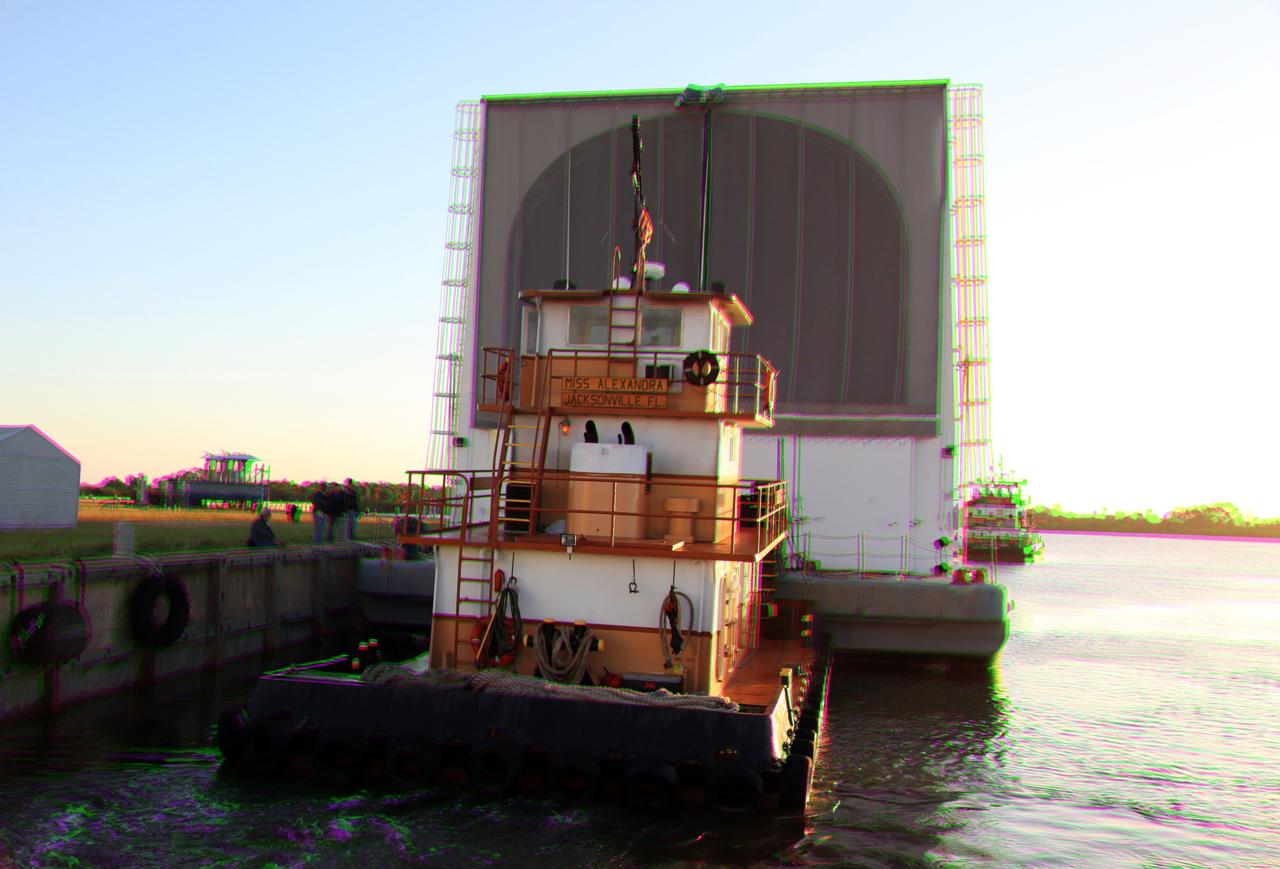
CAPE CANAVERAL, Fla. –This 3-D image shows the tugboat, Miss Alexandra, beginning to push the Pegasus Barge away from the dock at the Turn Basin in the Launch Complex 39 area at NASA's Kennedy Space Center in Florida. The 266-foot-long and 50-foot-wide barge will be towed by NASA's Freedom Star ship to deliver space shuttle main engine (SSME) ground support equipment to Stennis Space Center near Bay St. Louis, Miss. Since being delivered to NASA in 1999, Pegasus sailed 41 times and transported 31 shuttle external fuel tanks from Michoud Assembly Facility near New Orleans to Kennedy. To view this image, use green and magenta 3-D glasses. The barge is leaving Kennedy, perhaps for the final time. Both the barge and shuttle equipment will remain in storage until their specific future uses are determined. The SSMEs themselves will be transported to Stennis separately for use with the agency's new heavy-lift rocket, the Space Launch System. The work is part of the Space Shuttle Program’s transition and retirement processing. For more information about Shuttle Transition and Retirement, visit http://www.nasa.gov/mission_pages/transition/home/index.html. Photo credit: NASA/Frankie Martin
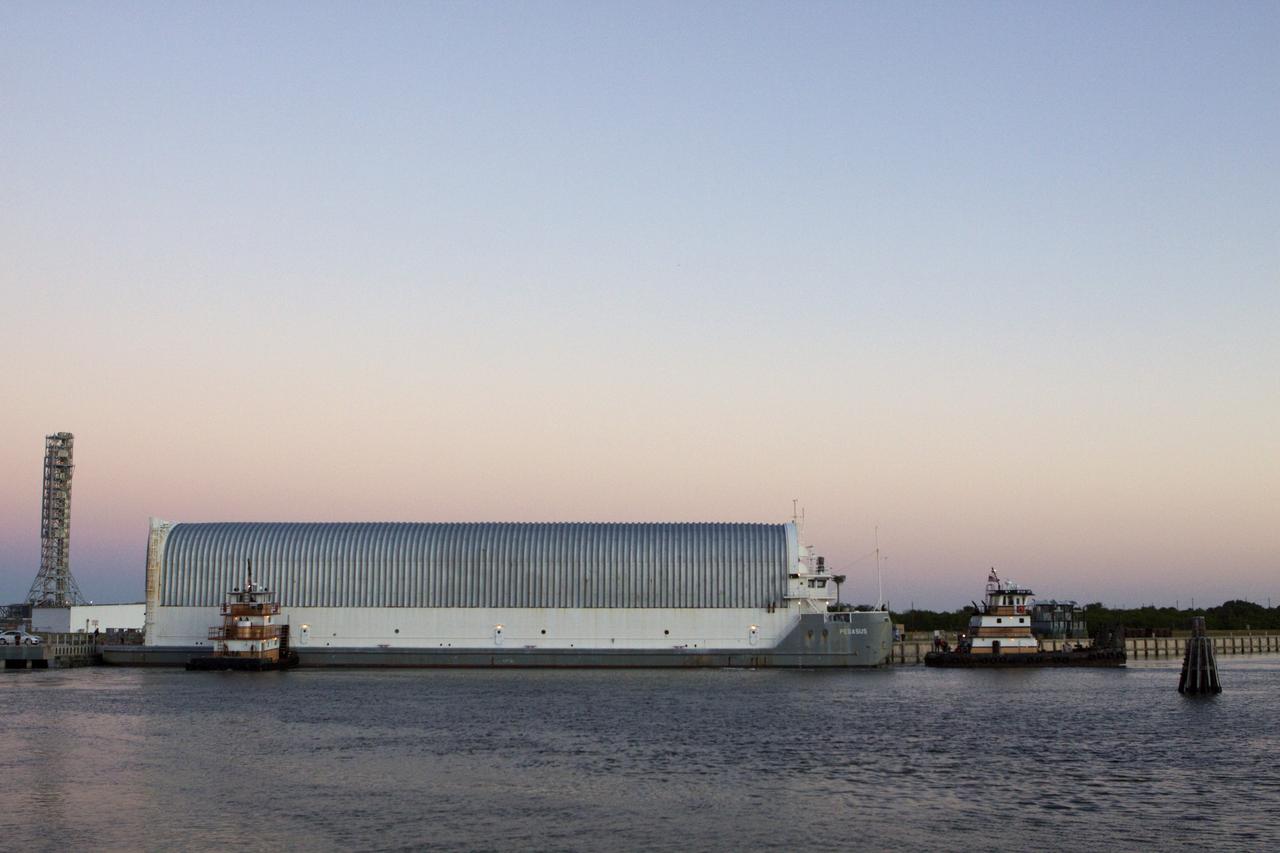
CAPE CANAVERAL, Fla. – In the early morning light at the Turn Basin in the Launch Complex 39 area at NASA's Kennedy Space Center in Florida, two tugboats begin to position the Pegasus Barge for towing. The 266-foot-long and 50-foot-wide barge will be towed by NASA's Freedom Star ship to deliver space shuttle main engine (SSME) ground support equipment to Stennis Space Center near Bay St. Louis, Miss. Since being delivered to NASA in 1999, Pegasus sailed 41 times and transported 31 shuttle external fuel tanks from Michoud Assembly Facility near New Orleans to Kennedy. The barge will leave Kennedy, perhaps for the final time. Both the barge and shuttle equipment will remain in storage until their specific future uses are determined. The SSMEs themselves will be transported to Stennis separately for use with the agency’s new heavy-lift rocket, the Space Launch System. The work is part of the Space Shuttle Program’s transition and retirement processing. For more information about Shuttle Transition and Retirement, visit http://www.nasa.gov/mission_pages/transition/home/index.html. Photo credit: NASA/ Kim Shiflett
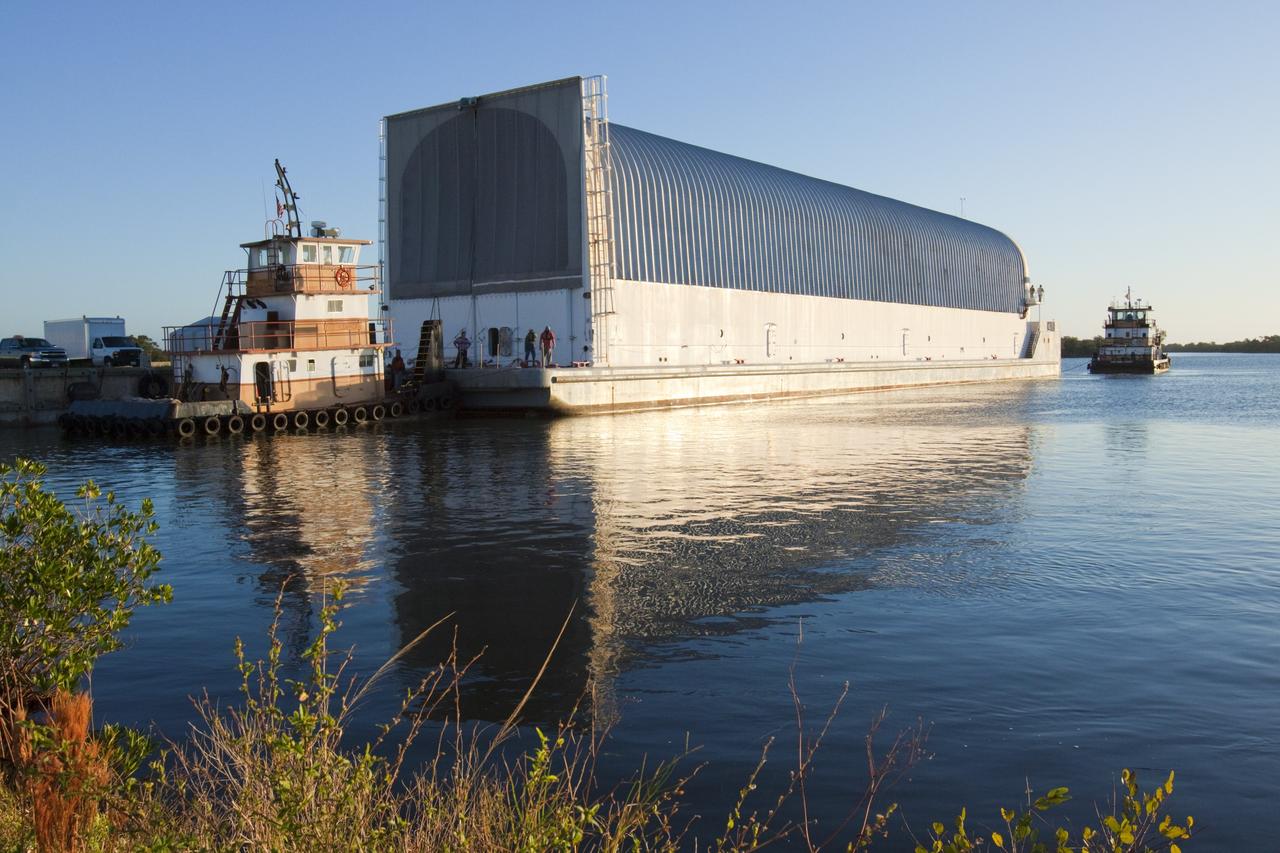
CAPE CANAVERAL, Fla. – At the Turn Basin in the Launch Complex 39 area at NASA's Kennedy Space Center in Florida, tugboats on either end of the Pegasus Barge begin to maneuver it away from the dock. The 266-foot-long and 50-foot-wide barge will be towed by NASA's Freedom Star ship to deliver space shuttle main engine (SSME) ground support equipment to Stennis Space Center near Bay St. Louis, Miss. Since being delivered to NASA in 1999, Pegasus sailed 41 times and transported 31 shuttle external fuel tanks from Michoud Assembly Facility near New Orleans to Kennedy. The barge will leave Kennedy, perhaps for the final time. Both the barge and shuttle equipment will remain in storage until their specific future uses are determined. The SSMEs themselves will be transported to Stennis separately for use with the agency’s new heavy-lift rocket, the Space Launch System. The work is part of the Space Shuttle Program’s transition and retirement processing. For more information about Shuttle Transition and Retirement, visit http://www.nasa.gov/mission_pages/transition/home/index.html. Photo credit: NASA/ Kim Shiflett
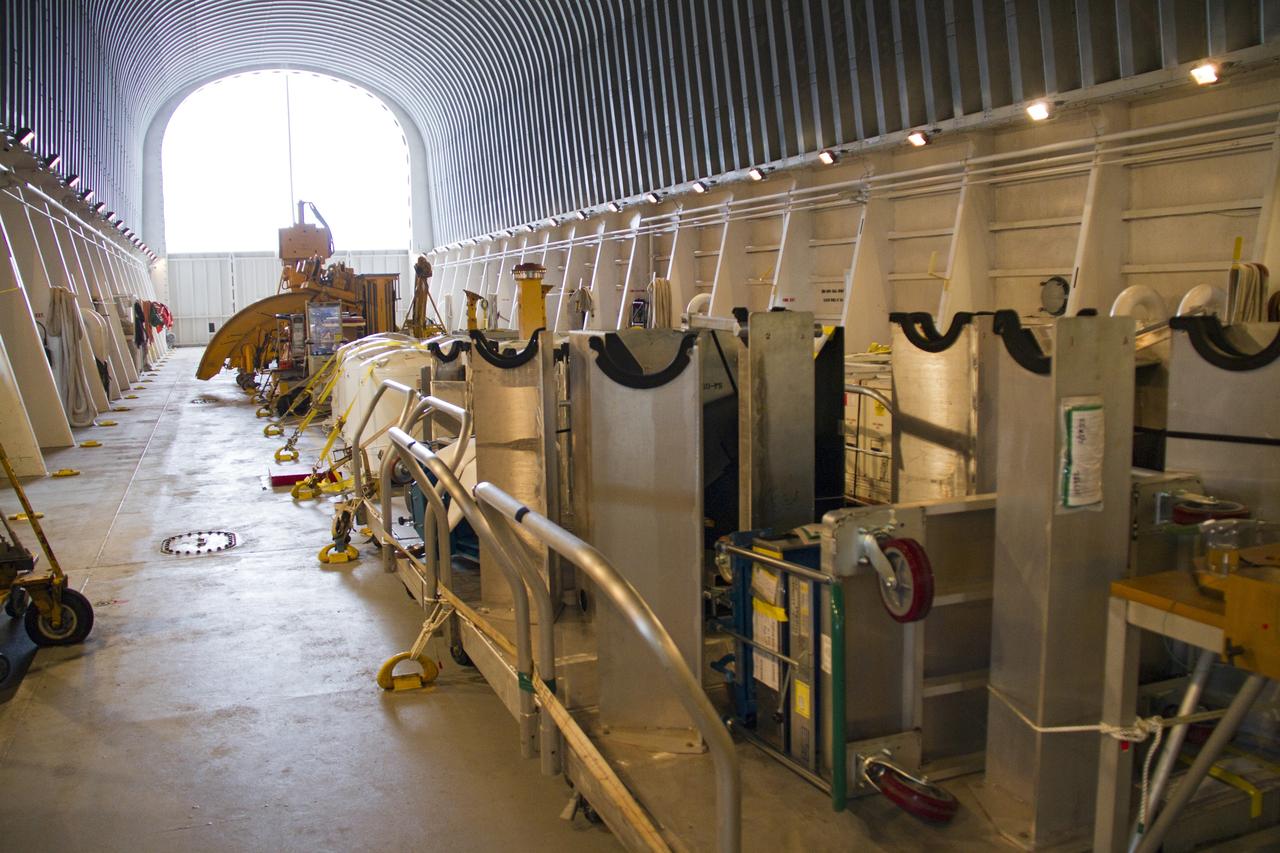
CAPE CANAVERAL, Fla. – At the Turn Basin in the Launch Complex 39 area of NASA’s Kennedy Space Center in Florida, space shuttle main engine (SSME) ground support equipment is stowed away inside the Pegasus barge, ready for transport for delivery to Stennis Space Center near Bay St. Louis, Miss. Since being delivered to NASA in 1999, Pegasus sailed 41 times and transported 31 shuttle external fuel tanks from Michoud Assembly Facility near New Orleans to Kennedy. The barge will leave Kennedy, perhaps for the final time. Both the barge and shuttle equipment will remain in storage until their specific future uses are determined. The SSMEs themselves will be transported to Stennis separately for use with the agency’s new heavy-lift rocket, the Space Launch System. The work is part of the Space Shuttle Program’s transition and retirement processing. For more information about Shuttle Transition and Retirement, visit http://www.nasa.gov/mission_pages/transition/home/index.html. Photo credit: NASA/Cory Huston
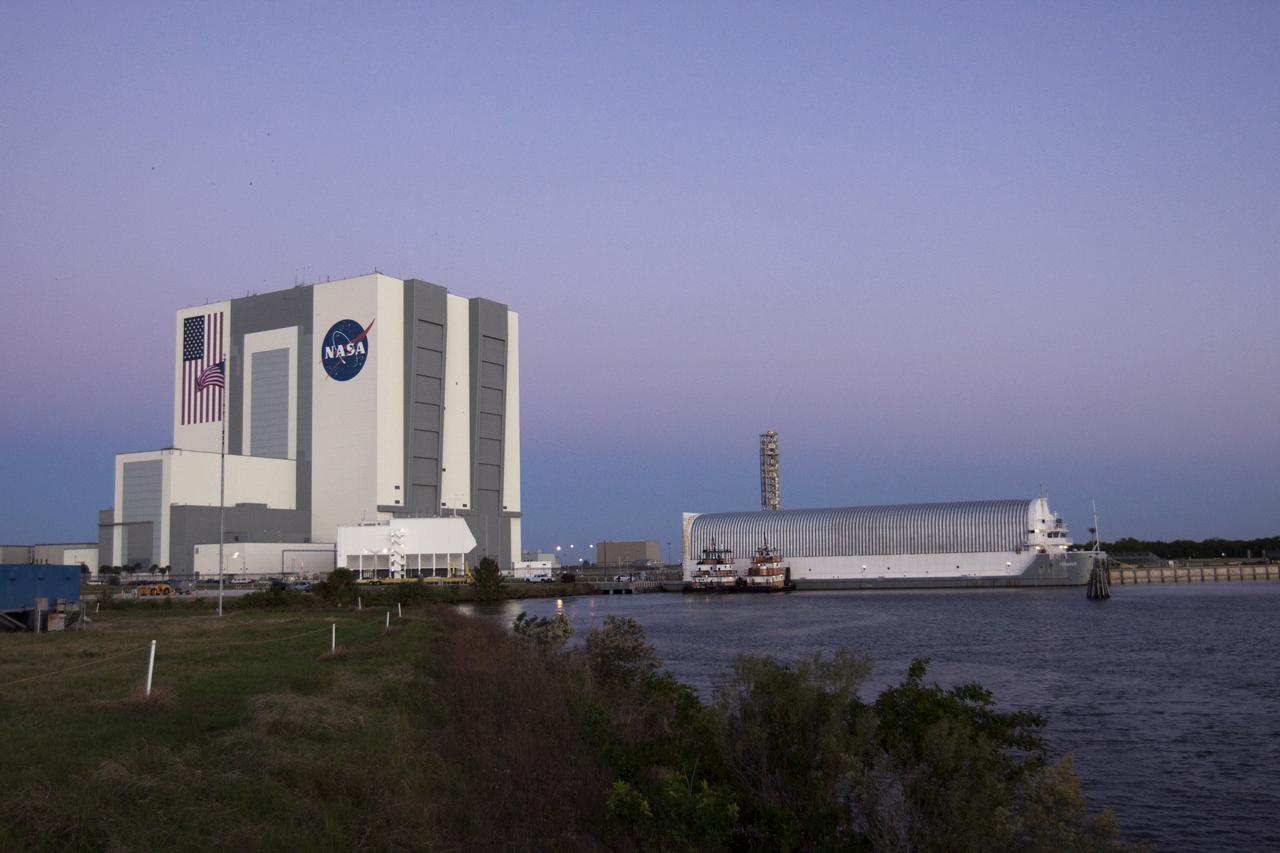
CAPE CANAVERAL, Fla. – The Vehicle Assembly Building towers over two tugboats and the Pegasus Barge moored in a secure area of the Turn Basin in the Launch Complex 39 area at NASA's Kennedy Space Center in Florida. The 266-foot-long and 50-foot-wide barge will be towed by NASA's Freedom Star ship to deliver space shuttle main engine (SSME) ground support equipment to Stennis Space Center near Bay St. Louis, Miss. Since being delivered to NASA in 1999, Pegasus sailed 41 times and transported 31 shuttle external fuel tanks from Michoud Assembly Facility near New Orleans to Kennedy. The barge will leave Kennedy, perhaps for the final time. Both the barge and shuttle equipment will remain in storage until their specific future uses are determined. The SSMEs themselves will be transported to Stennis separately for use with the agency’s new heavy-lift rocket, the Space Launch System. The work is part of the Space Shuttle Program’s transition and retirement processing. For more information about Shuttle Transition and Retirement, visit http://www.nasa.gov/mission_pages/transition/home/index.html. Photo credit: NASA/ Kim Shiflett
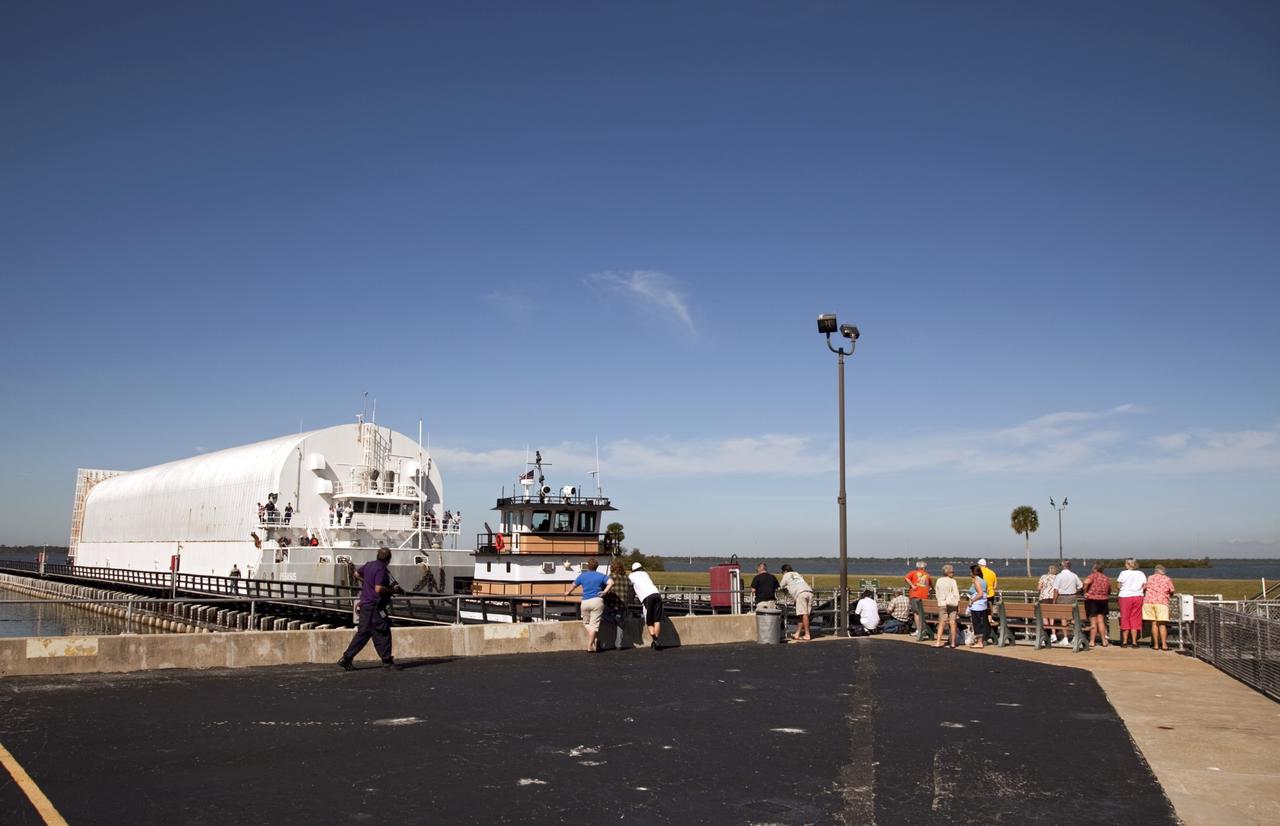
CAPE CANAVERAL, Fla. – Viewers watch from the sidelines as NASA's Pegasus Barge makes its way through the Port Canaveral lock in Florida. The 266-foot-long and 50-foot-wide barge will be towed by NASA's Freedom Star ship to deliver space shuttle main engine (SSME) ground support equipment to Stennis Space Center near Bay St. Louis, Miss. Since being delivered to NASA in 1999, Pegasus sailed 41 times and transported 31 shuttle external fuel tanks from Michoud Assembly Facility near New Orleans to Kennedy Space Center. The barge is leaving Kennedy, perhaps for the final time. Both the barge and shuttle equipment will remain in storage until their specific future uses are determined. The SSMEs themselves will be transported to Stennis separately for use with the agency's new heavy-lift rocket, the Space Launch System. The work is part of the Space Shuttle Program’s transition and retirement processing. For more information about Shuttle Transition and Retirement, visit http://www.nasa.gov/mission_pages/transition/home/index.html. Photo credit: NASA/Frankie Martin
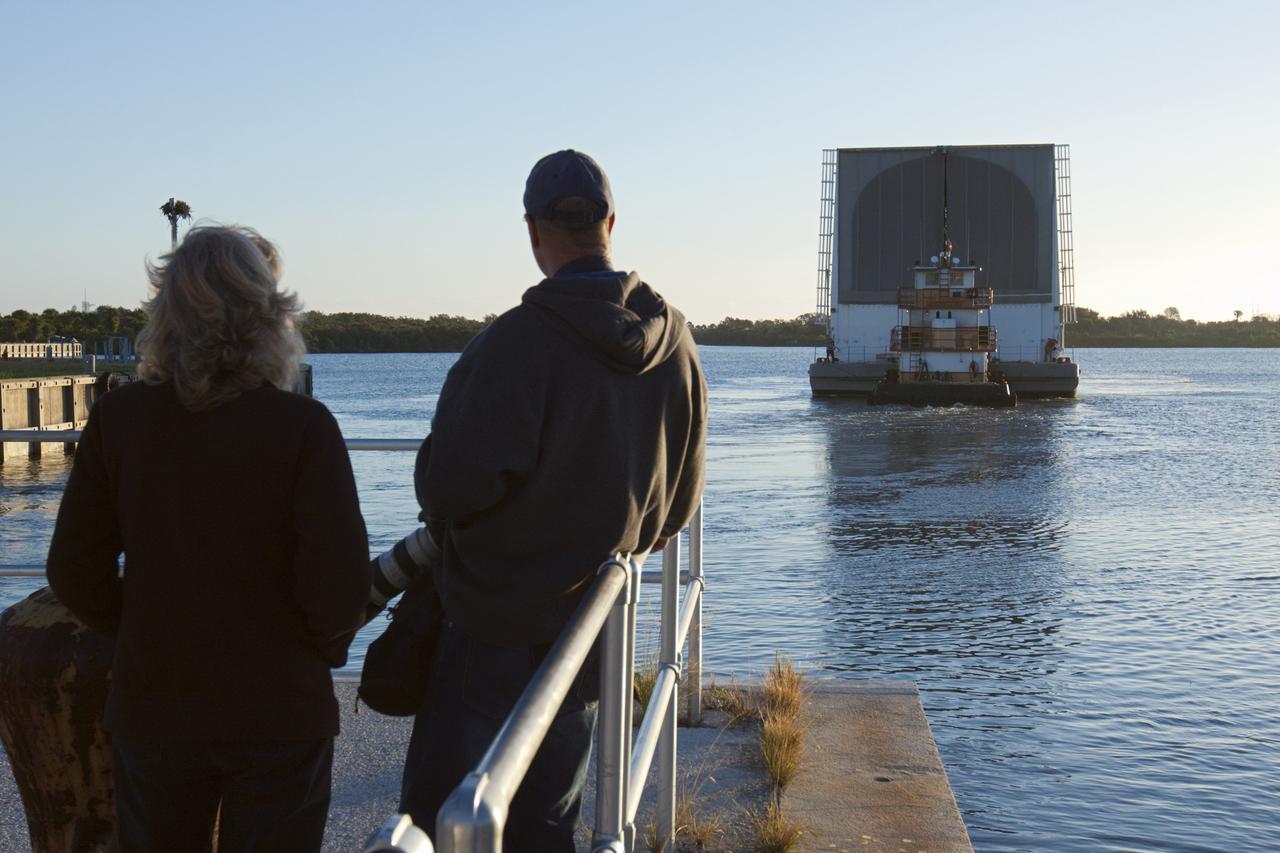
CAPE CANAVERAL, Fla. – At the Turn Basin in the Launch Complex 39 area at NASA's Kennedy Space Center in Florida, workers look on as a tugboat pushes the Pegasus Barge away from the dock. The 266-foot-long and 50-foot-wide barge will be towed by NASA's Freedom Star ship to deliver space shuttle main engine (SSME) ground support equipment to Stennis Space Center near Bay St. Louis, Miss. Since being delivered to NASA in 1999, Pegasus sailed 41 times and transported 31 shuttle external fuel tanks from Michoud Assembly Facility near New Orleans to Kennedy. The barge is leaving Kennedy, perhaps for the final time. Both the barge and shuttle equipment will remain in storage until their specific future uses are determined. The SSMEs themselves will be transported to Stennis separately for use with the agency’s new heavy-lift rocket, the Space Launch System. The work is part of the Space Shuttle Program’s transition and retirement processing. For more information about Shuttle Transition and Retirement, visit http://www.nasa.gov/mission_pages/transition/home/index.html. Photo credit: NASA/ Kim Shiflett
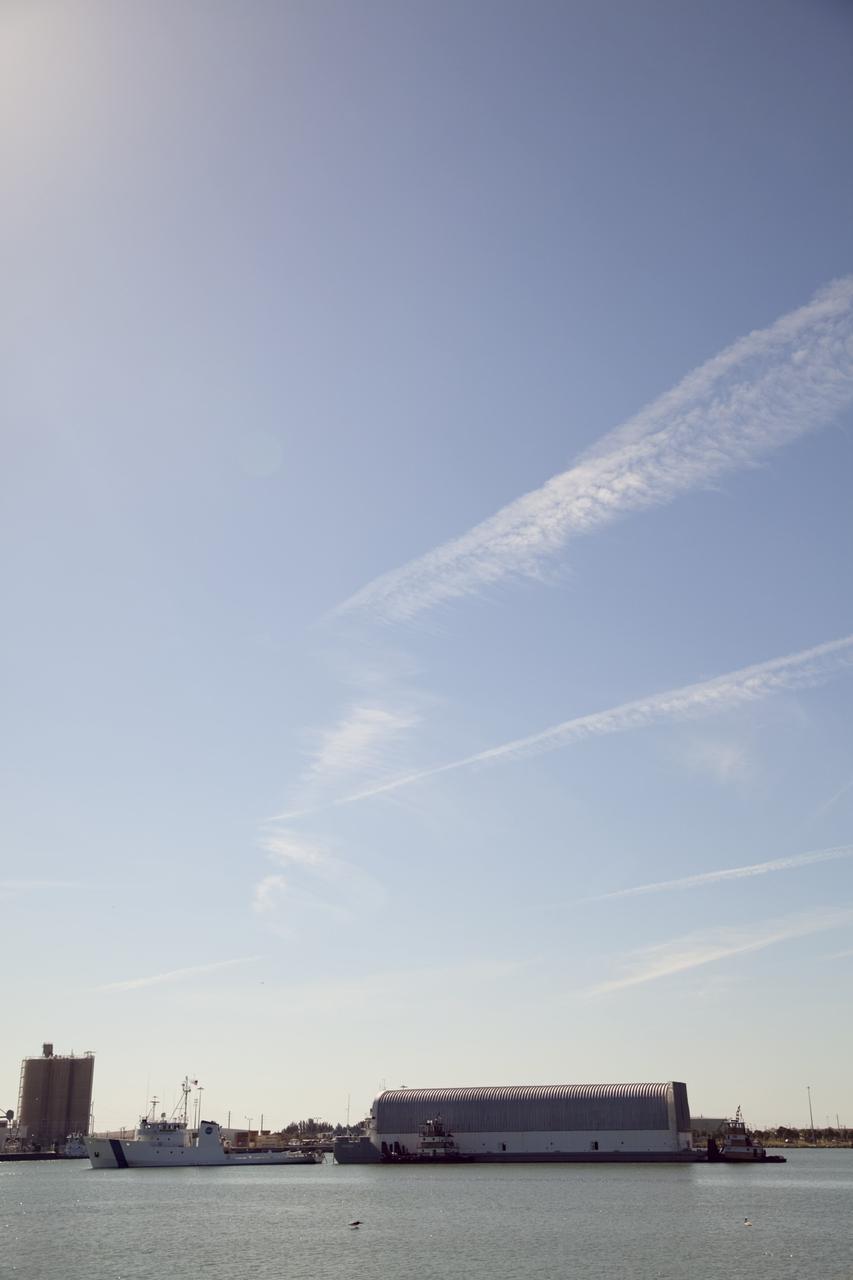
CAPE CANAVERAL, Fla. – NASA's Freedom Star ship tows the Pegasus Barge through Port Canaveral in Florida. Freedom Star is towing the 266-foot-long and 50-foot-wide barge to Stennis Space Center near Bay St. Louis, Miss. to deliver space shuttle main engine (SSME) ground support equipment. Since being delivered to NASA in 1999, Pegasus sailed 41 times and transported 31 shuttle external fuel tanks from Michoud Assembly Facility near New Orleans to Kennedy Space Center. The barge is leaving Kennedy, perhaps for the final time. Both the barge and shuttle equipment will remain in storage until their specific future uses are determined. The SSMEs themselves will be transported to Stennis separately for use with the agency's new heavy-lift rocket, the Space Launch System. The work is part of the Space Shuttle Program’s transition and retirement processing. For more information about Shuttle Transition and Retirement, visit http://www.nasa.gov/mission_pages/transition/home/index.html. Photo credit: NASA/Frankie Martin