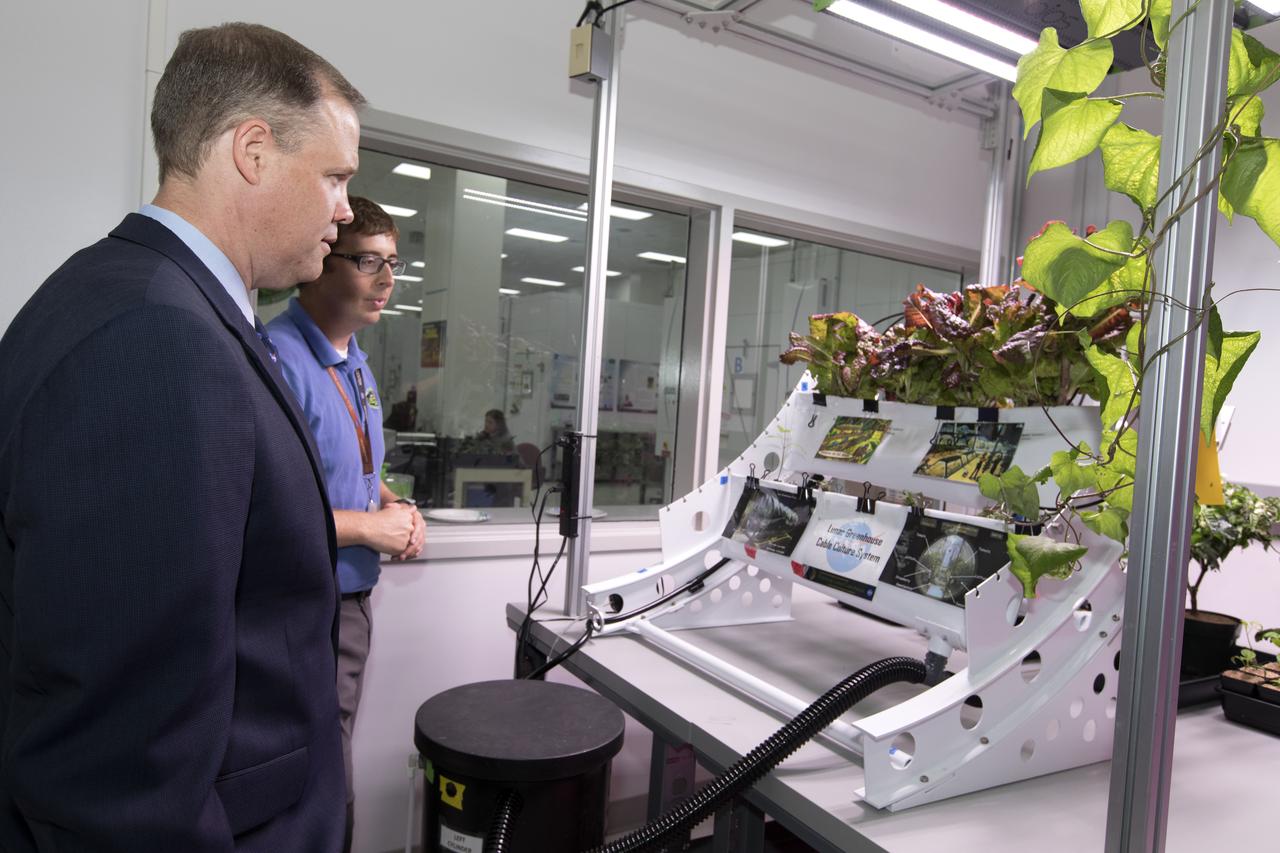
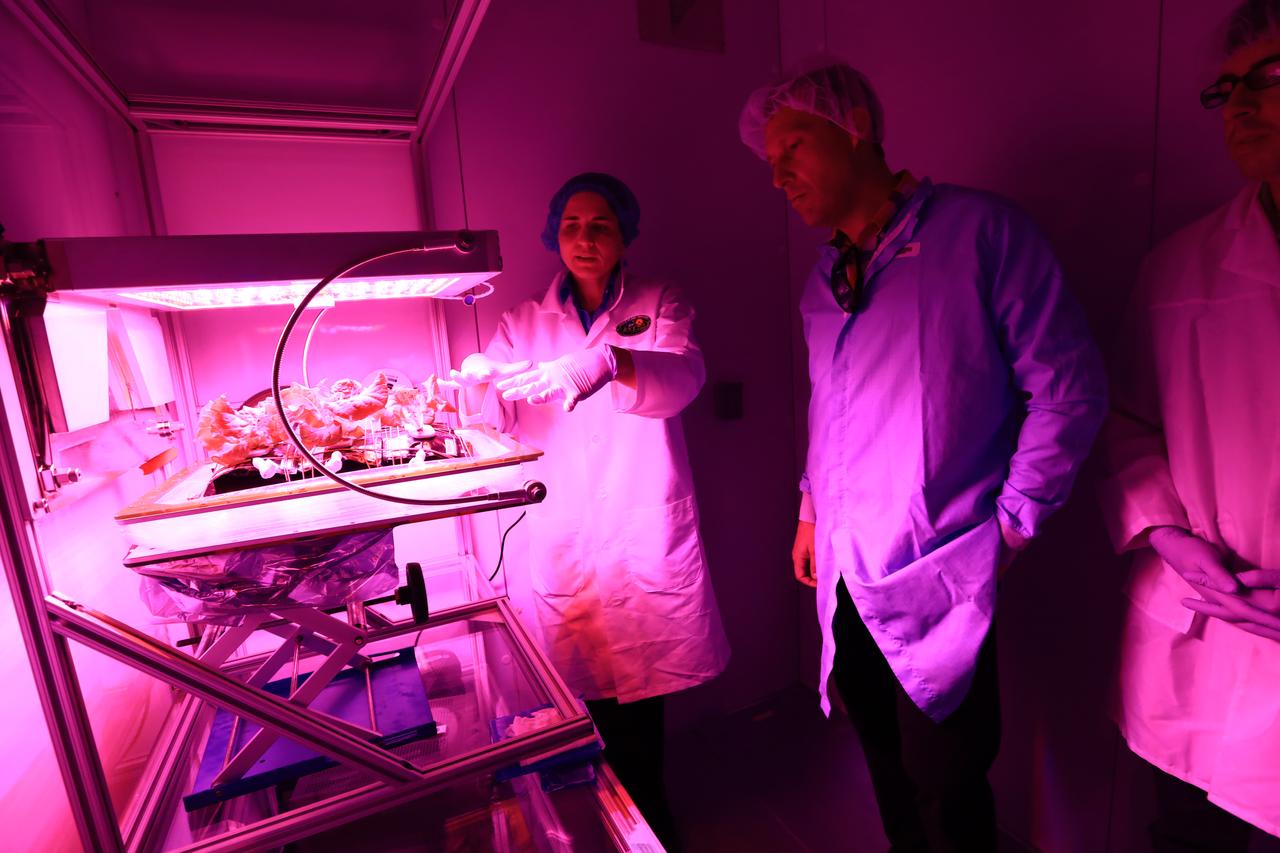
NASA Administrator Jim Bridenstine, at left, tours a plant research laboratory inside the Space Station Processing Facility (SSPF) at NASA's Kennedy Space Center in Florida, on Aug. 7, 2018. At right is Matt Romeyn, project scientist. Bridenstine received updates on research and technology accomplishments during his visit to the SSPF.
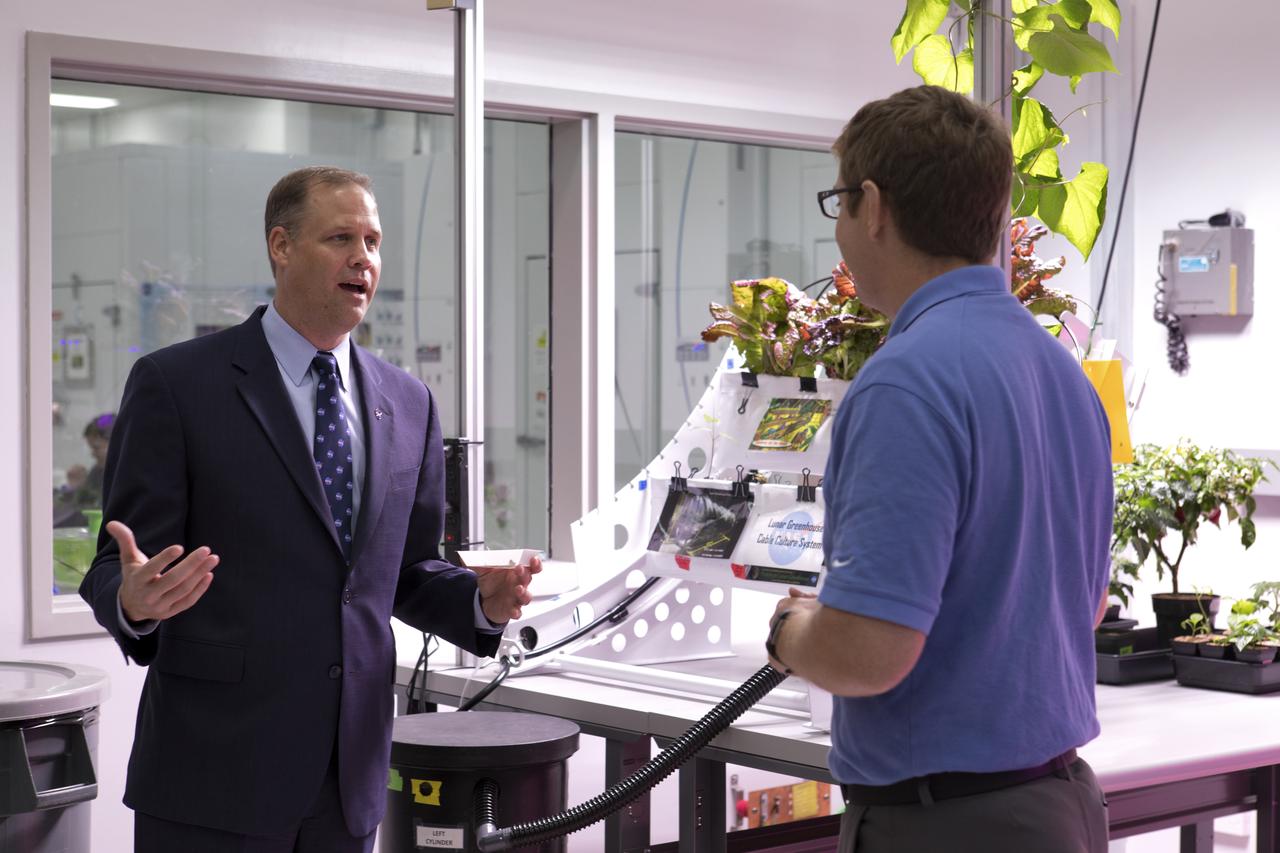
NASA Administrator Jim Bridenstine, at left, speaks to Matt Romeyn, a project scientist, during a tour of a plant research laboratory inside the Space Station Processing Facility (SSPF) at NASA's Kennedy Space Center in Florida, on Aug. 7, 2018. Bridenstine received updates on research and technology accomplishments during his visit to the SSPF.
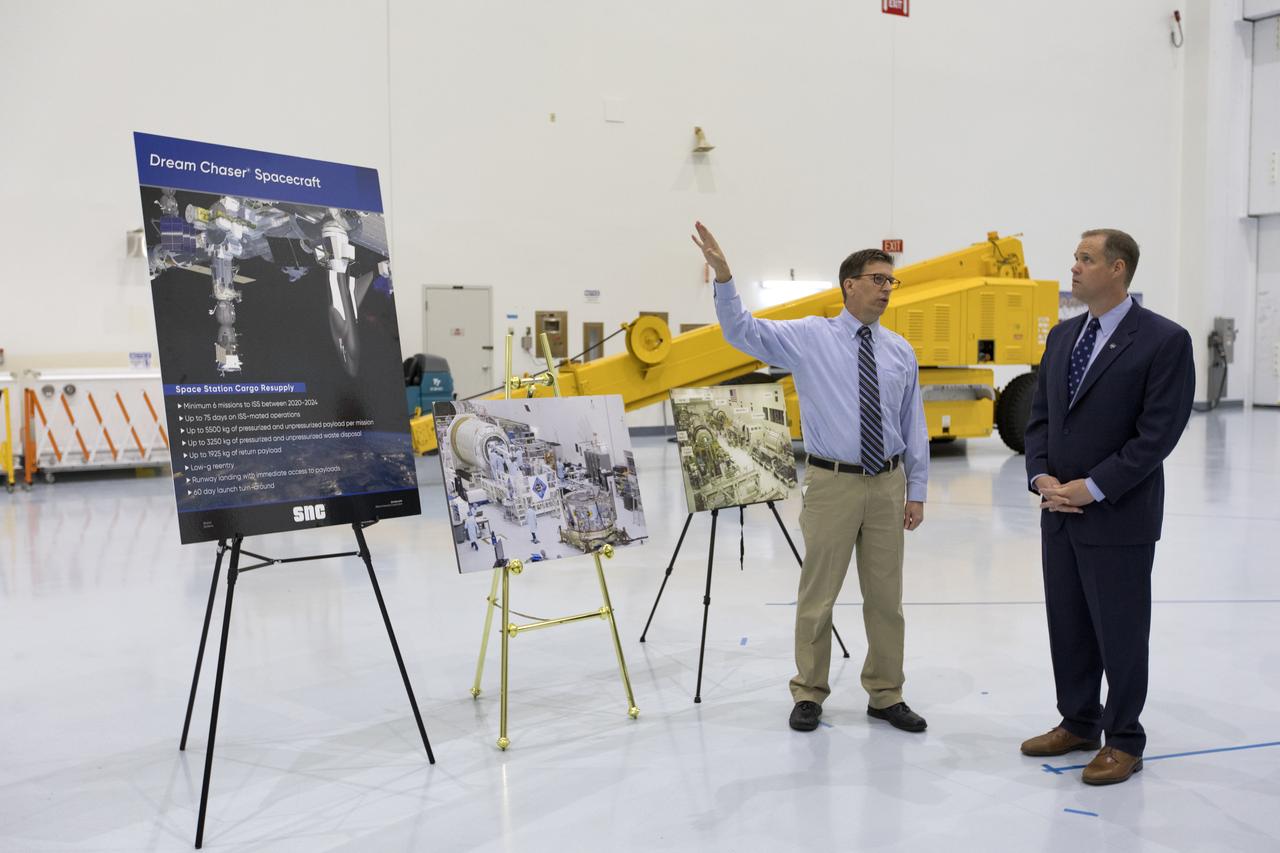
During a tour of the high bay in the Space Station Processing Facility (SSPF) at NASA's Kennedy Space Center in Florida, on Aug. 7, 2018, NASA Administrator Jim Bridenstine, hears about progress made on Sierra Nevada Corporation's Dream Chaser spacecraft. Dream Chaser will take cargo to the International Space Station. Bridenstine also received updates on research and technology accomplishments during his visit to the SSPF.
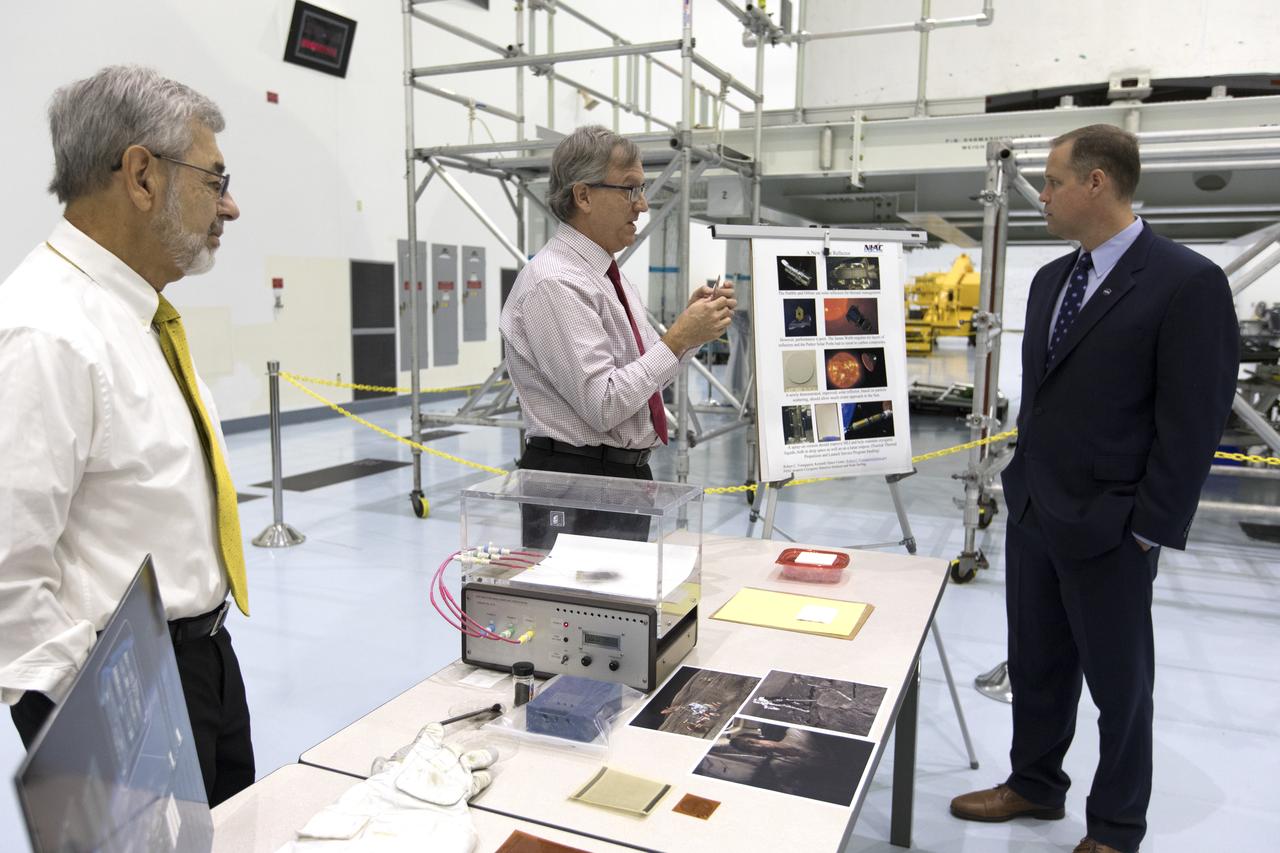
NASA Administrator Jim Bridenstine, at right, tours the high bay inside the Space Station Processing Facility (SSPF), on Aug. 7, 2018, at NASA's Kennedy Space Center in Florida. From left, Carlos Calle, lead scientist in the Electrostatic and Surface Physics Laboratory, and Dr. Robert Youngquist, lead, Applied Physics Laboratory, explain electrostatic dust shield technology. Bridenstine also received updates on research and technology accomplishments during his visit to the SSPF.
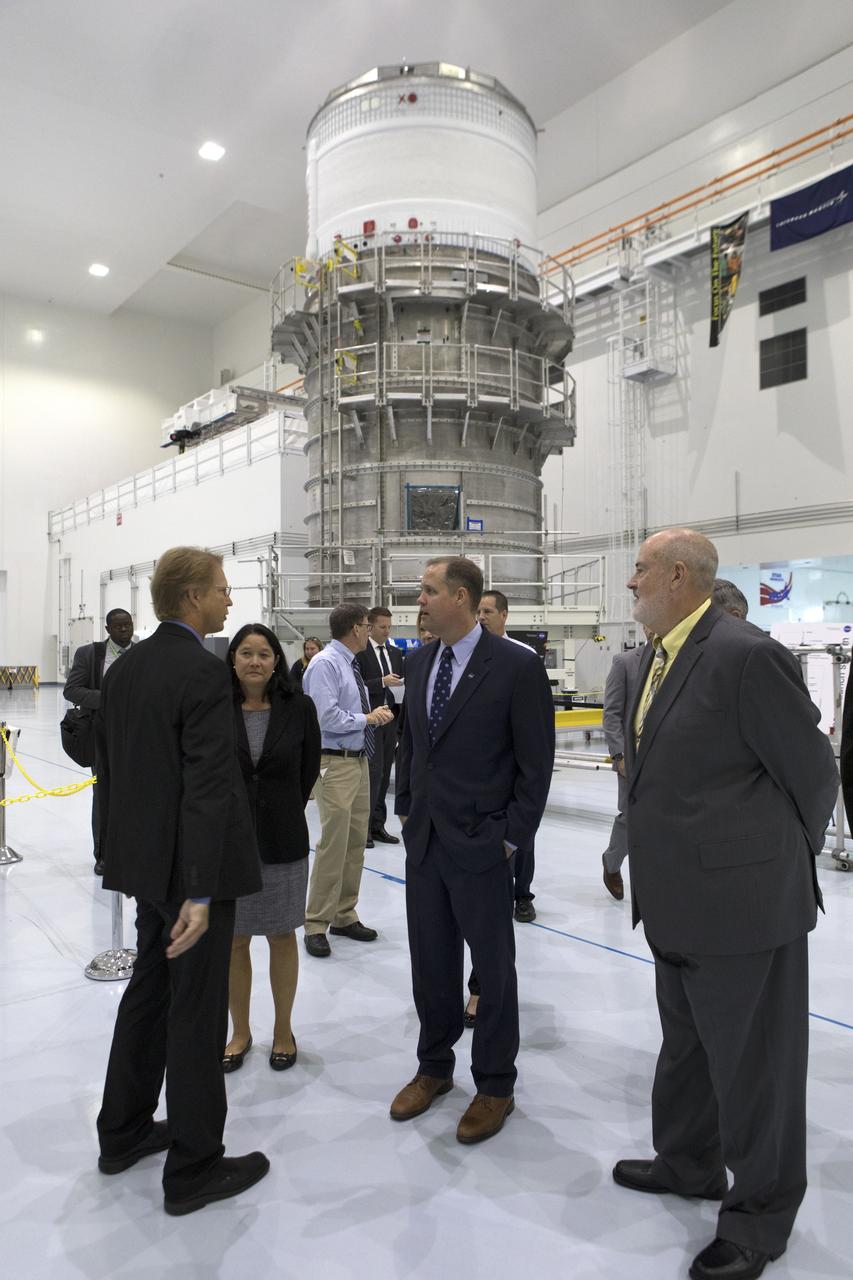
NASA Administrator Jim Bridenstine, center, tours the high bay inside the Space Station Processing Facility (SSPF) at NASA's Kennedy Space Center in Florida, on Aug. 7, 2018. To his left is Josie Burnett, director of Exploration Research and Technology. To his right is Ronnie Lawson, deputy director of Exploration Research and Technology. Behind them is the Interim Cryogenic Propulsion Stage, which will connect between the Orion spacecraft and the upper part of NASA's Space Launch System. It is being stored in the SSPF. Bridenstine also received updates on research and technology accomplishments during his visit to the SSPF.
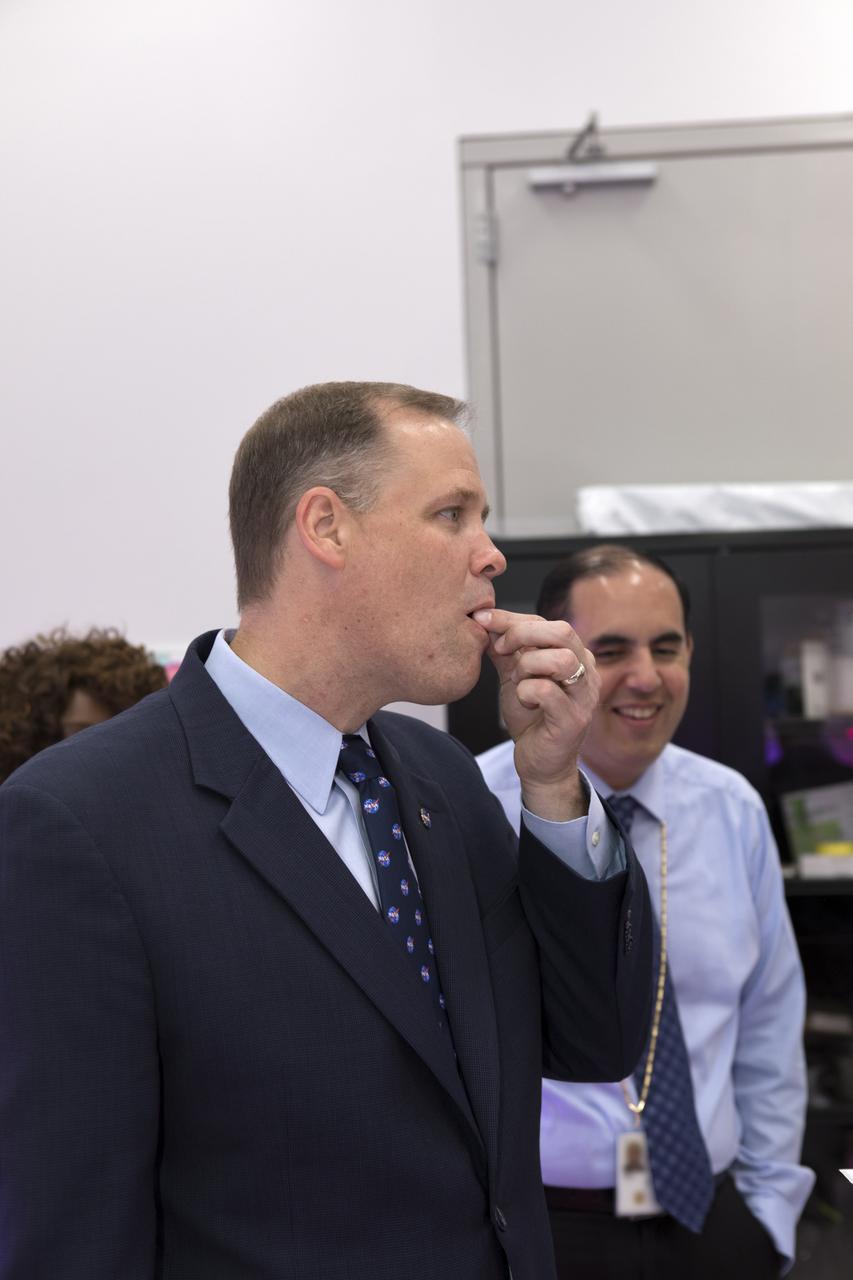
NASA Administrator Jim Bridenstine, left, tours a plant research laboratory and samples a microgreen inside the Space Station Processing Facility (SSPF) at NASA's Kennedy Space Center in Florida, on Aug. 7, 2018. Behind Bridenstine is Bryan Onate, Advanced Plant Habitat project manager. Bridenstine received updates on research and technology accomplishments during his visit to the SSPF.
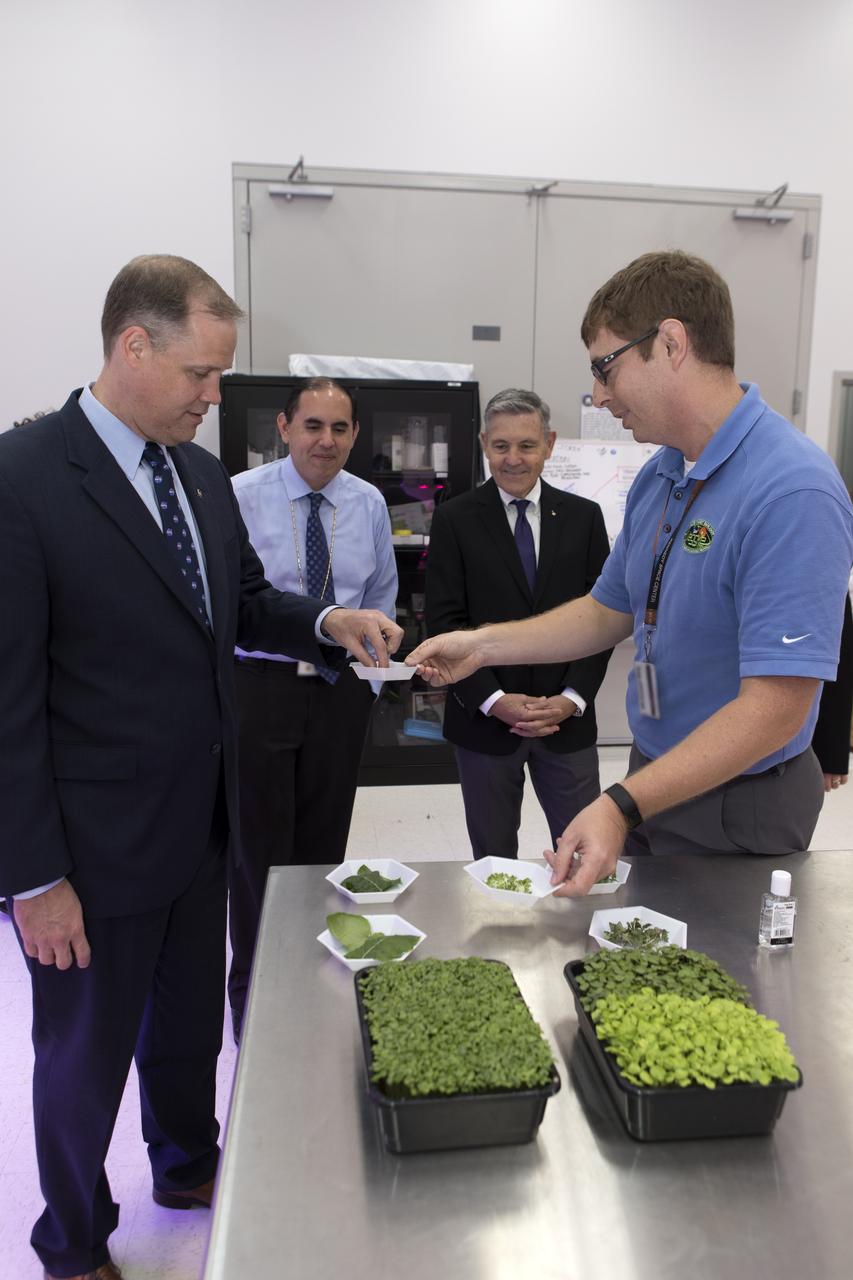
NASA Administrator Jim Bridenstine, far left, tours a plant research laboratory inside the Space Station Processing Facility (SSPF) at NASA's Kennedy Space Center in Florida, on Aug. 7, 2018. Bridenstine selects a microgreen to sample from Matt Romeyn, project scientist. Behind Bridenstine, from left, are Bryan Onate, Advanced Plant Habitat project manager, and Kennedy Space Center Director Bob Cabana. Bridenstine received updates on research and technology accomplishments during his visit to the SSPF.
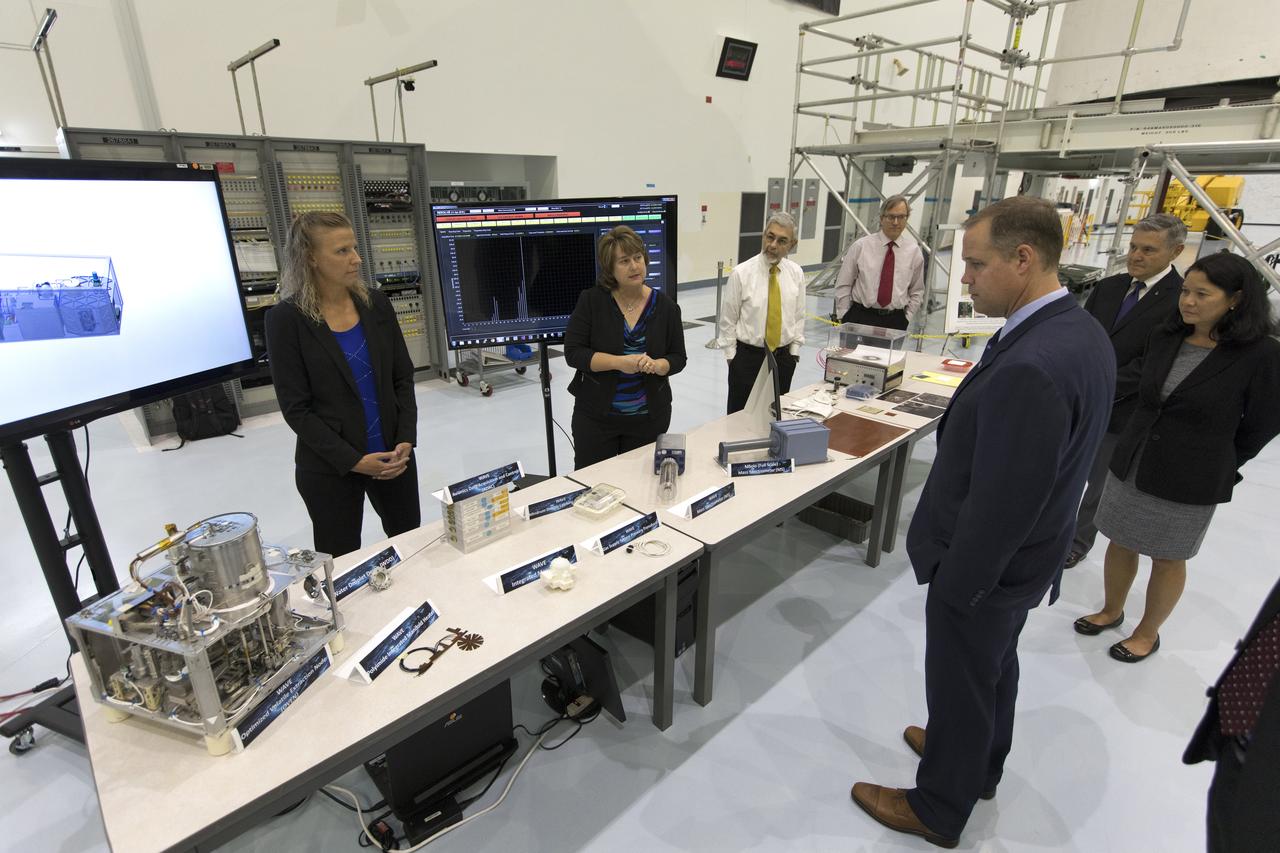
NASA Administrator Jim Bridenstine, at right, tours the high bay inside the Space Station Processing Facility (SSPF) at NASA's Kennedy Space Center in Florida, on Aug. 7, 2018. To his right are Josie Burnett, director of Exploration Research and Technology, and Kennedy Space Center Director Bob Cabana. Behind the exhibit table, from left, are Dr. Janine Captain, a chemist in the Applied Physics Laboratory; Dr. Jackie Quinn, environmental engineer; Carlos Calle, lead scientist in the Electrostatic and Surface Physics Laboratory; and Dr. Robert Youngquist, lead, Applied Physics Laboratory. Bridenstine received updates on research and technology accomplishments during his visit to the SSPF.
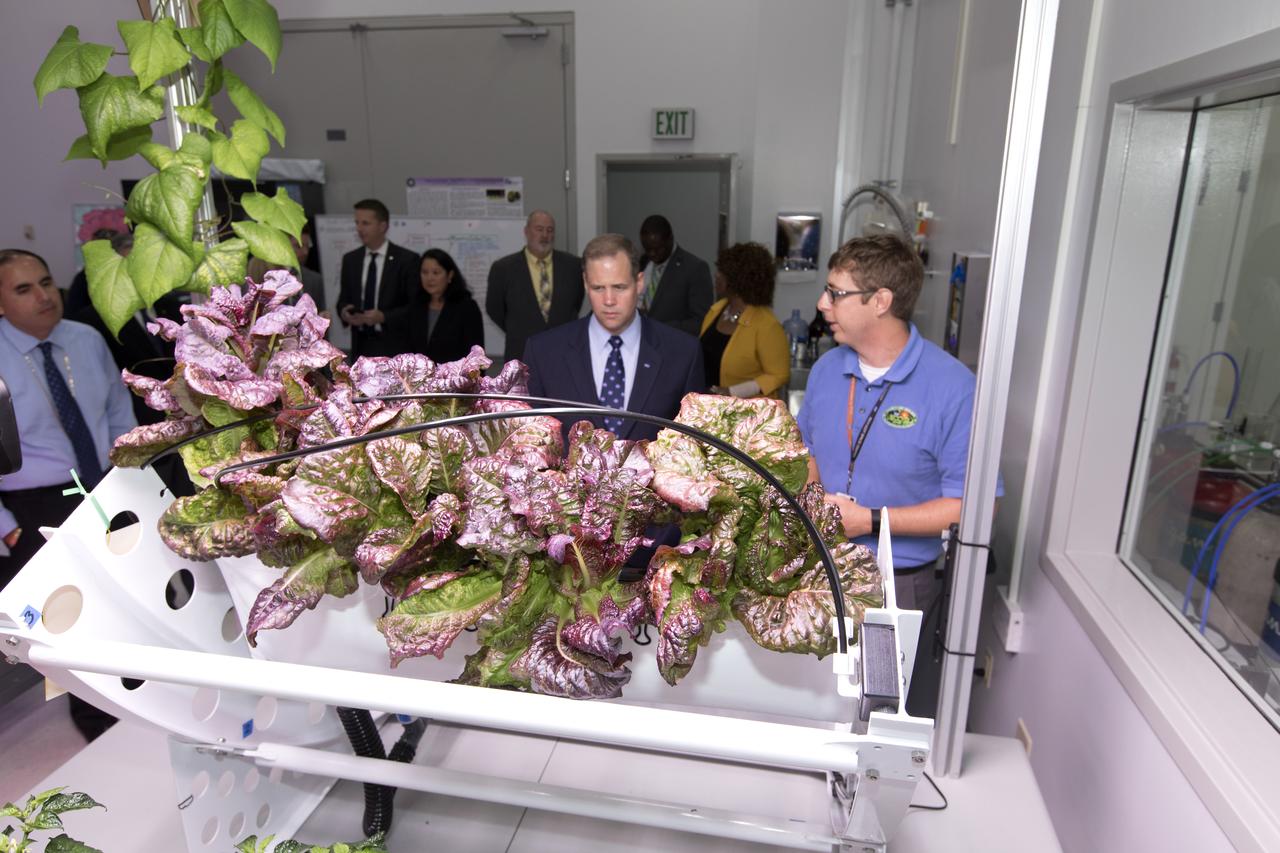
NASA Administrator Jim Bridenstine, center, tours a plant research laboratory inside the Space Station Processing Facility (SSPF) at NASA's Kennedy Space Center in Florida, on Aug. 7, 2018. To the right of Bridenstine is Matt Romeyn, project scientist. Behind him, second from left is Josie Burnett, director of Exploration Research and Technology. To Burnett's right is Ronnie Lawson, deputy director of Exploration Research and Technology. Behind Bridenstine is Barbara Brown, chief technologist. Bridenstine received updates on research and technology accomplishments during his visit to the SSPF.
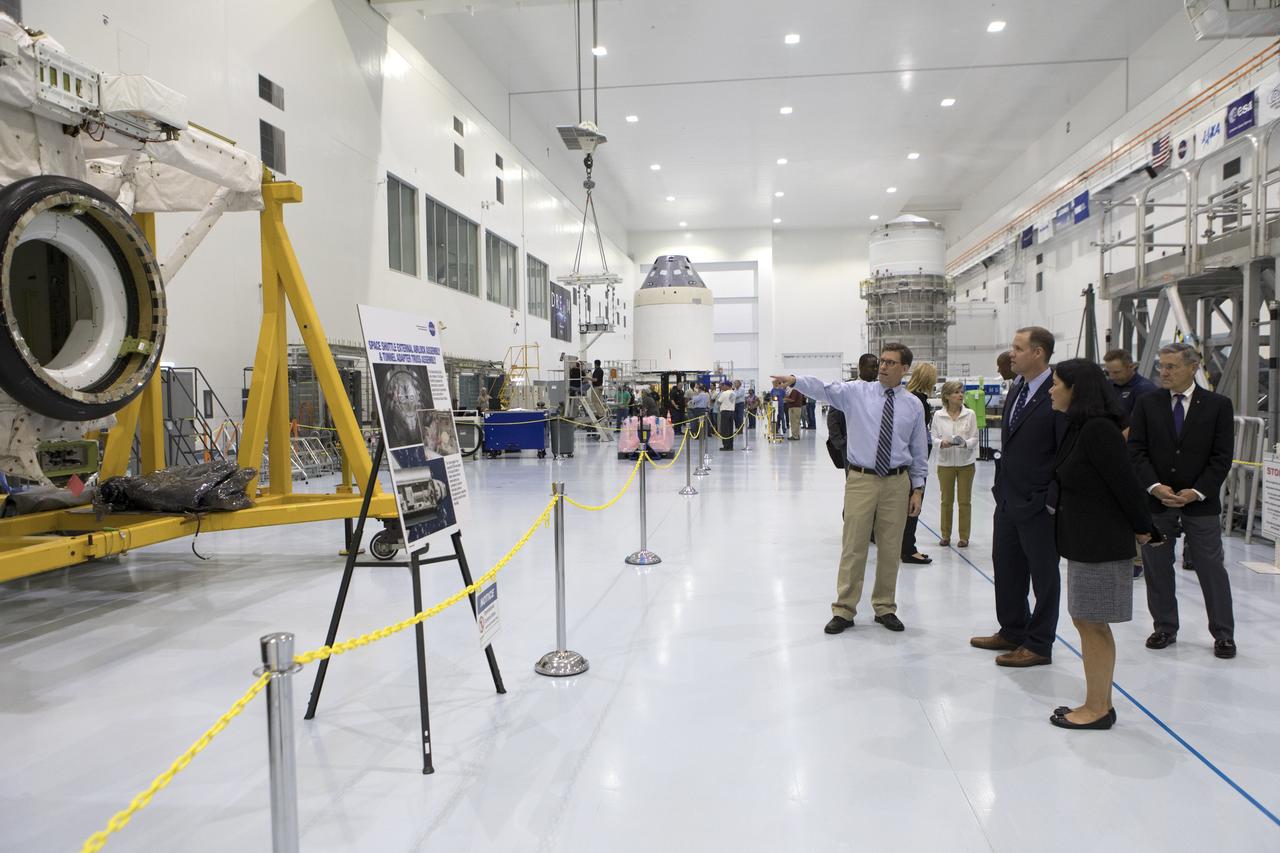
NASA Administrator Jim Bridenstine, second from right, views space hardware in the high bay inside the Space Station Processing Facility (SSPF), on Aug. 7, 2018, at NASA's Kennedy Space Center in Florida. To his right is Josie Burnett, director of Exploration Research and Technology. Behind them, at right is the Interim Cryogenic Propulsion Stage, which will connect between the Orion spacecraft and the upper part of NASA's Space Launch System. In the center is a mockup of the Orion spacecraft. Bridenstine received updates on research and technology accomplishments during his visit to the SSPF.

Technicians assist as the engine section of the Space Launch System rocket’s core stage for NASA’s Artemis III mission is moved into the high bay of the Space Station Processing Facility (SSPF) at NASA’s Kennedy Space Center in Florida on Dec. 15, 2022. The section was shipped from Michoud Assembly Facility in New Orleans on Dec. 10, 2022 aboard the Pegasus barge, was offloaded, and transferred to the SSPF. Teams will begin processing operations ahead of final integration in the Vehicle Assembly Building. Artemis III will send astronauts, including the first woman and first person of color, on a mission aboard the Orion spacecraft to the surface of the Moon.
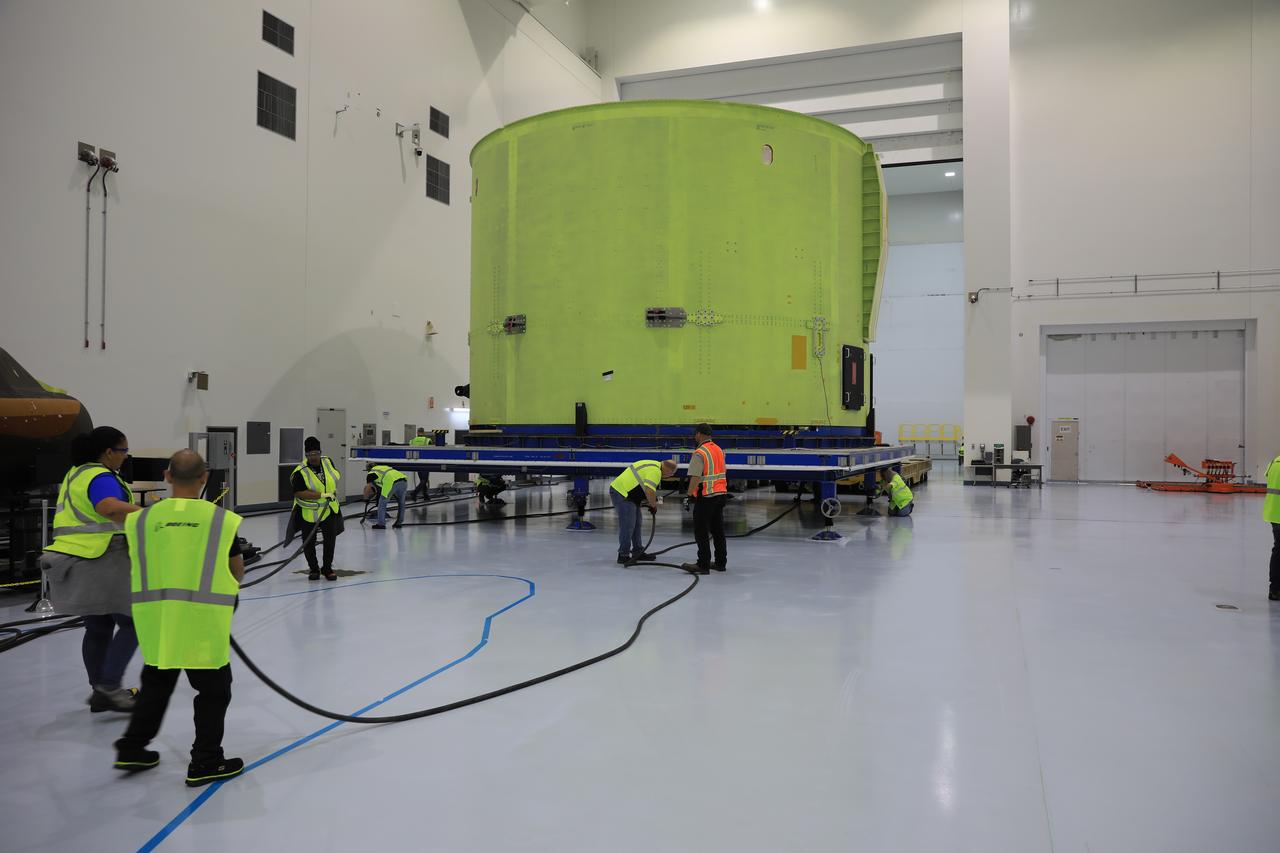
The engine section of the Space Launch System rocket’s core stage for NASA’s Artemis III mission arrives at the Space Station Processing Facility (SSPF) at NASA’s Kennedy Space Center in Florida on Dec. 15, 2022. The section was shipped from Michoud Assembly Facility in New Orleans on Dec. 10, 2022 aboard the Pegasus barge, was offloaded, and transferred to the SSPF. Teams will begin processing operations ahead of final integration in the Vehicle Assembly Building. Artemis III will send astronauts, including the first woman and first person of color, on a mission aboard the Orion spacecraft to the surface of the Moon.
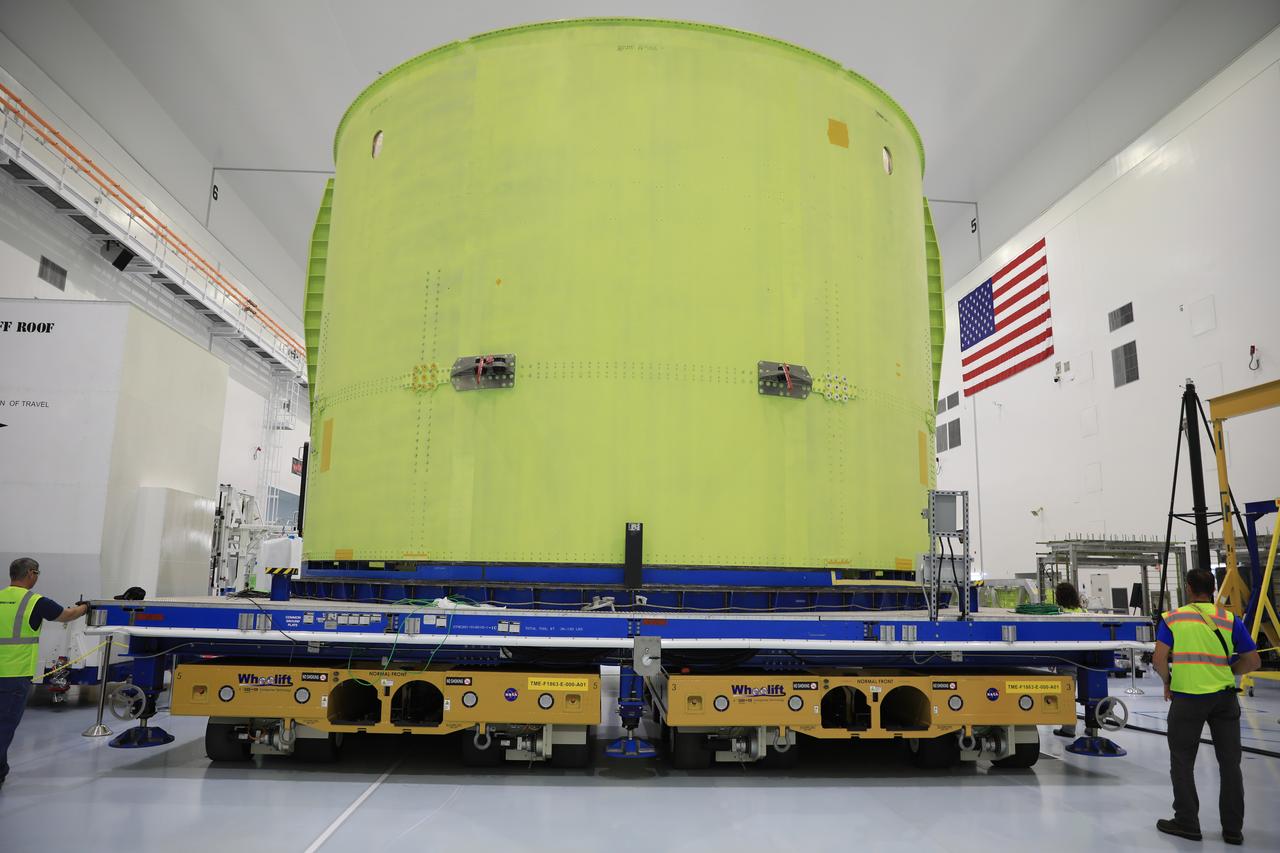
The engine section of the Space Launch System rocket’s core stage for NASA’s Artemis III mission is moved on a work stand into the high bay of the Space Station Processing Facility (SSPF) at NASA’s Kennedy Space Center in Florida on Dec. 15, 2022. The section was shipped from Michoud Assembly Facility in New Orleans on Dec. 10, 2022 aboard the Pegasus barge, was offloaded, and transferred to the SSPF. Teams will begin processing operations ahead of final integration in the Vehicle Assembly Building. Artemis III will send astronauts, including the first woman and first person of color, on a mission aboard the Orion spacecraft to the surface of the Moon.
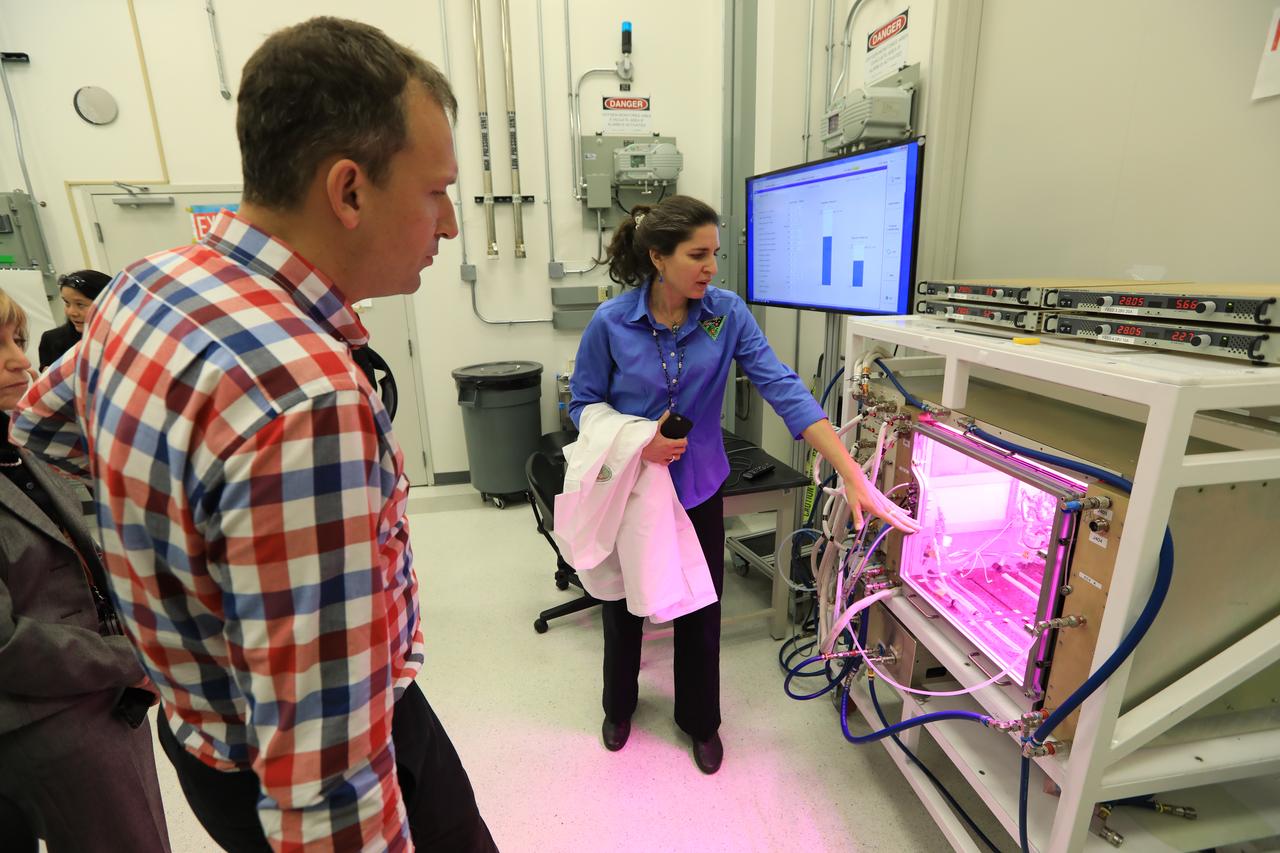
While touring the Space Station Processing Facility at NASA's Kennedy Space Center in Florida, Thomas Zurbuchen, in plaid shirt, NASA's associate administrator for the Science Mission Directorate, learns about the advanced plant habitat used to grow plants in space.
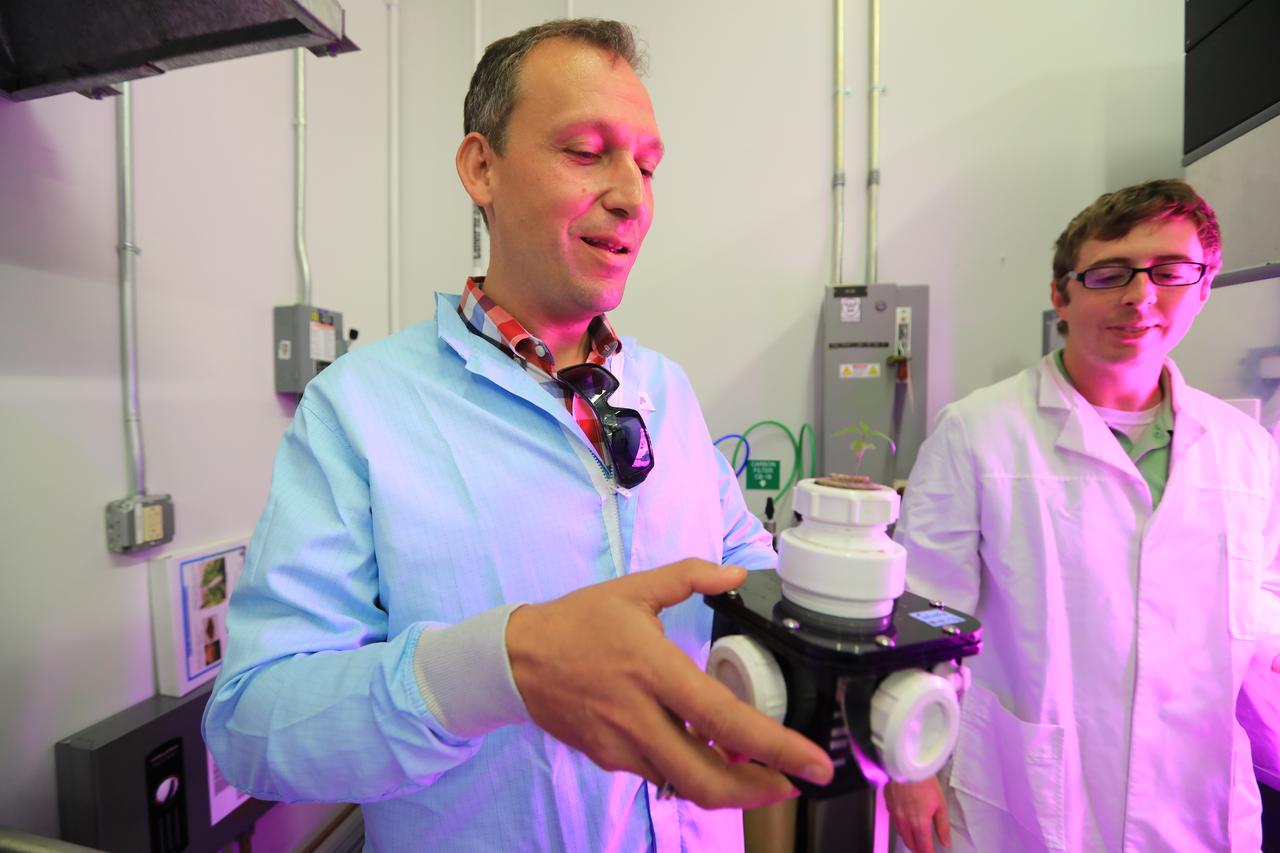
While touring the Space Station Processing Facility at NASA's Kennedy Space Center in Florida, Thomas Zurbuchen, in plaid shirt, NASA's associate administrator for the Science Mission Directorate, examines a device to grow plants in space.
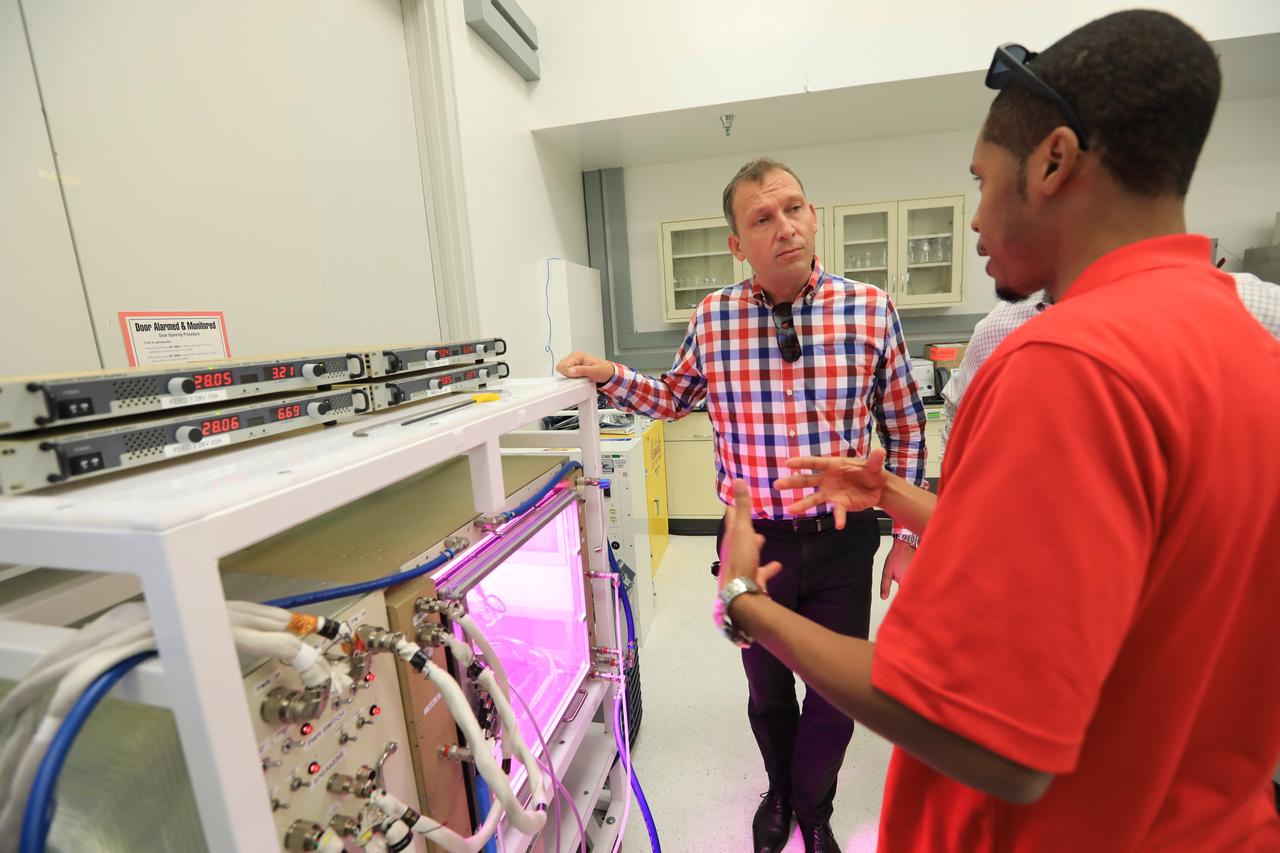
While touring the Space Station Processing Facility at NASA's Kennedy Space Center in Florida, Thomas Zurbuchen, in plaid shirt, NASA's associate administrator for the Science Mission Directorate, learns about the advanced plant habitat used to grow plants in space.
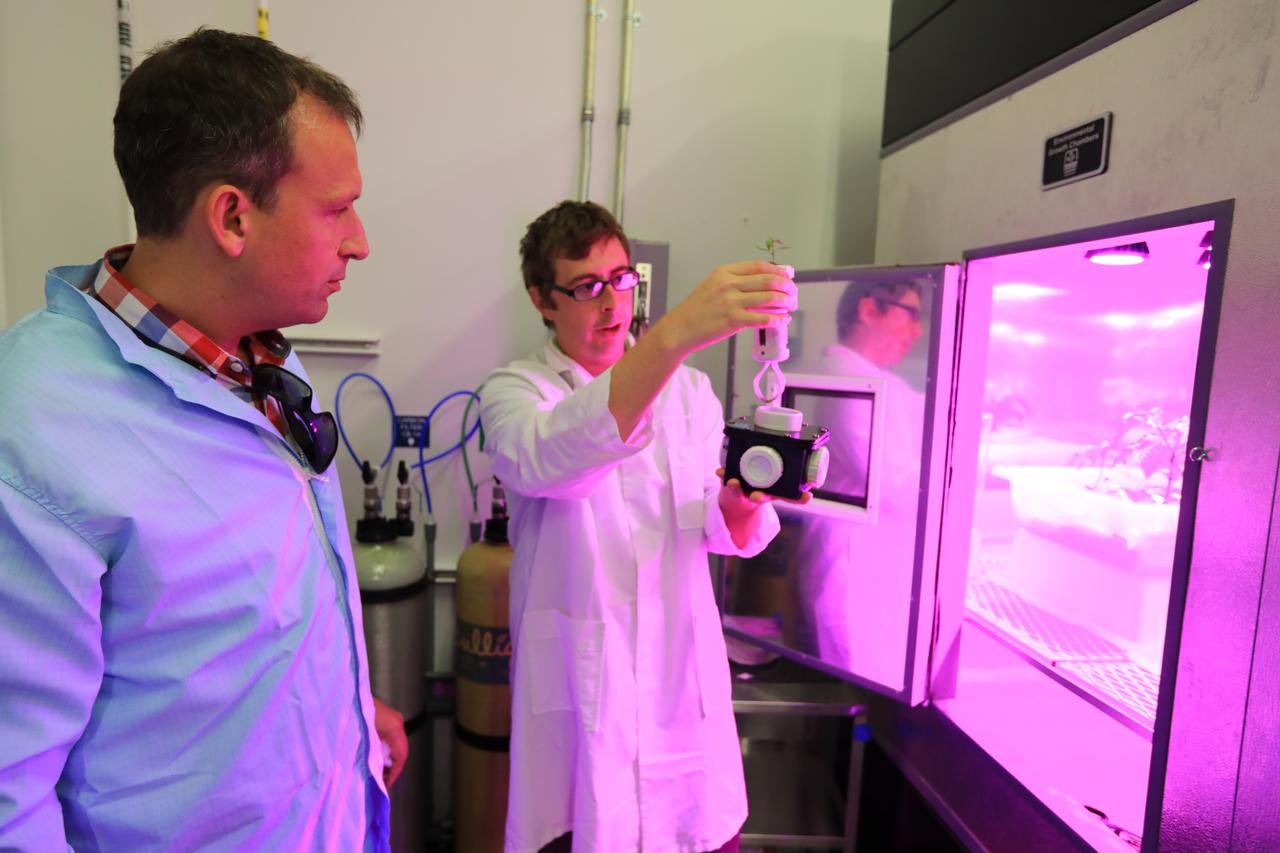
Thomas Zurbuchen, in plaid shirt, NASA's associate administrator for the Science Mission Directorate, listens to a presentation at the Space Station Processing Facility at NASA's Kennedy Space Center in Florida.
Thomas Zurbuchen, in plaid shirt, NASA's associate administrator for the Science Mission Directorate, listens to a presentation at the Space Station Processing Facility at NASA's Kennedy Space Center in Florida.
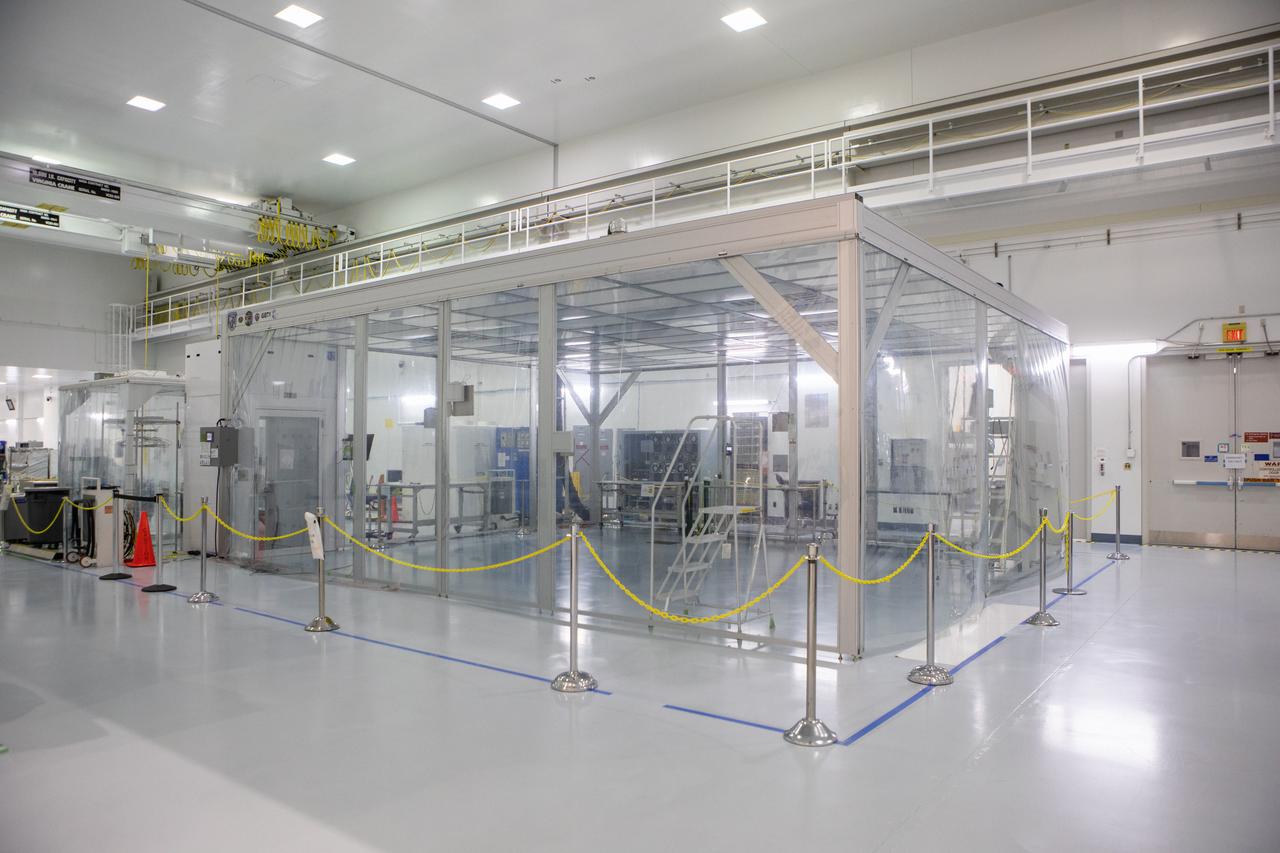
A clean room tent within the high bay of the Space Station Processing Facility (SSPF) at NASA's Kennedy Space Center in Florida, is in view on May 16, 2019. The extra clean environment is available for use by payload customers. The center is celebrating the SSPF’s 25th anniversary. The SSPF was built to process elements for the International Space Station. Now it is providing support for current and future NASA and commercial provider programs, including Commercial Resupply Services, Artemis 1, sending the first woman and next man to the Moon, and deep space destinations including Mars.
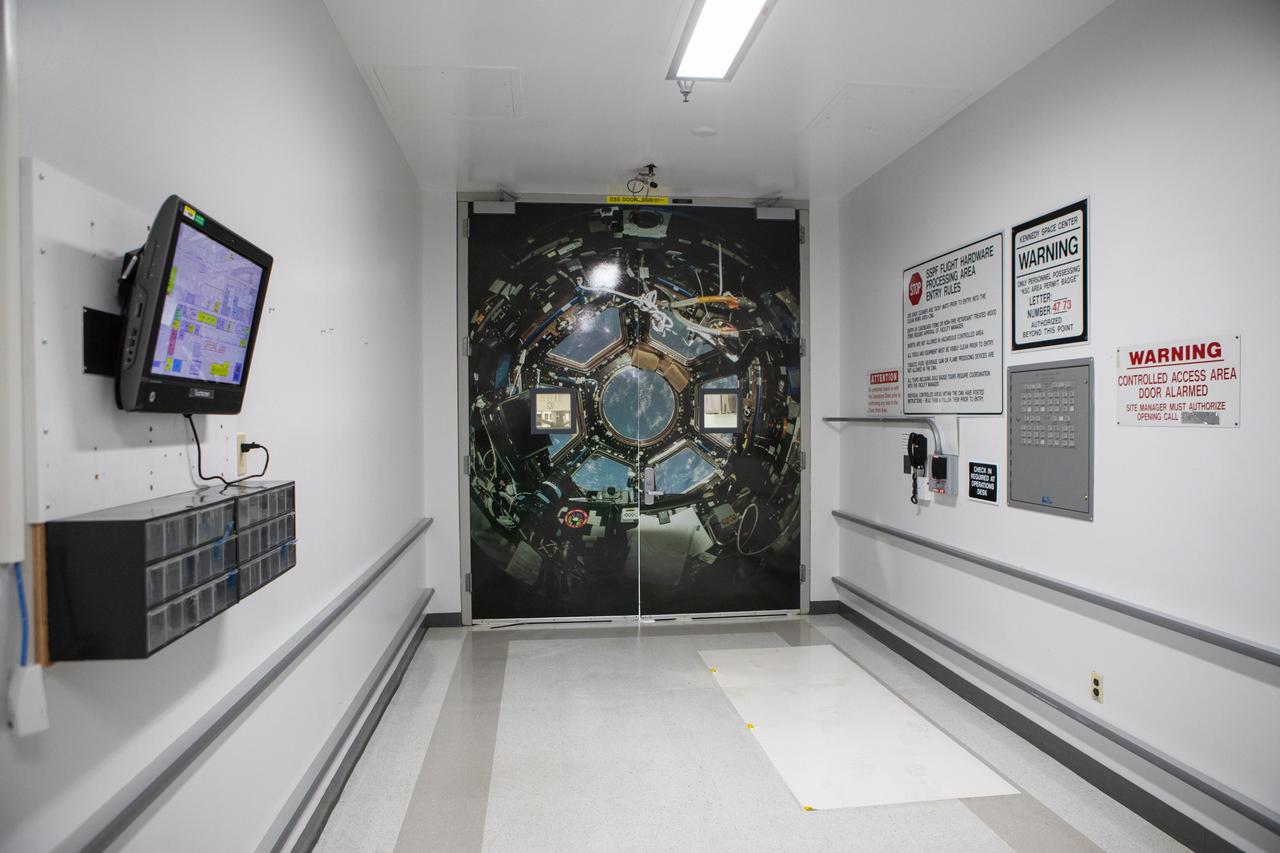
Artwork simulating a view inside the International Space Station marks the entranceway to the high bay in the Space Station Processing Facility (SSPF) at NASA's Kennedy Space Center in Florida, on May 16, 2019. The center is celebrating the SSPF’s 25th anniversary. The facility was built to process elements for the International Space Station. Now it is providing support for current and future NASA and commercial provider programs, including Commercial Resupply Services, Artemis 1, sending the first woman and next man to the Moon, and deep space destinations including Mars.
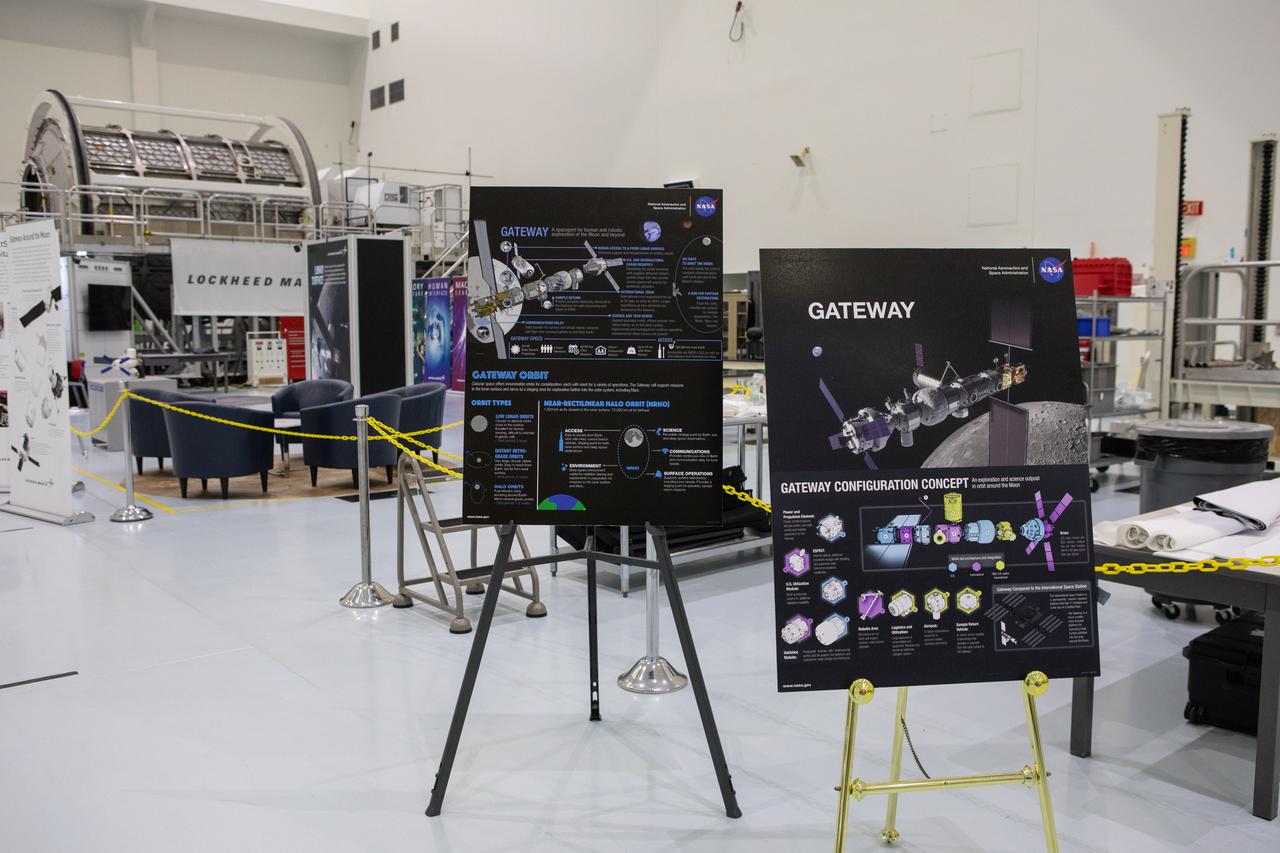
The Lockheed Martin prototype habitat for NASA’s lunar orbital platform, called the Gateway, is in view at far left in the high bay of the Space Station Processing Facility (SSPF) at NASA's Kennedy Space Center in Florida, on May 16, 2019. The center is celebrating the SSPF’s 25th anniversary. The facility was built to process elements for the International Space Station. Now it is providing support for current and future NASA and commercial provider programs, including Commercial Resupply Services, Artemis 1, sending the first woman and next man to the Moon, and deep space destinations including Mars.
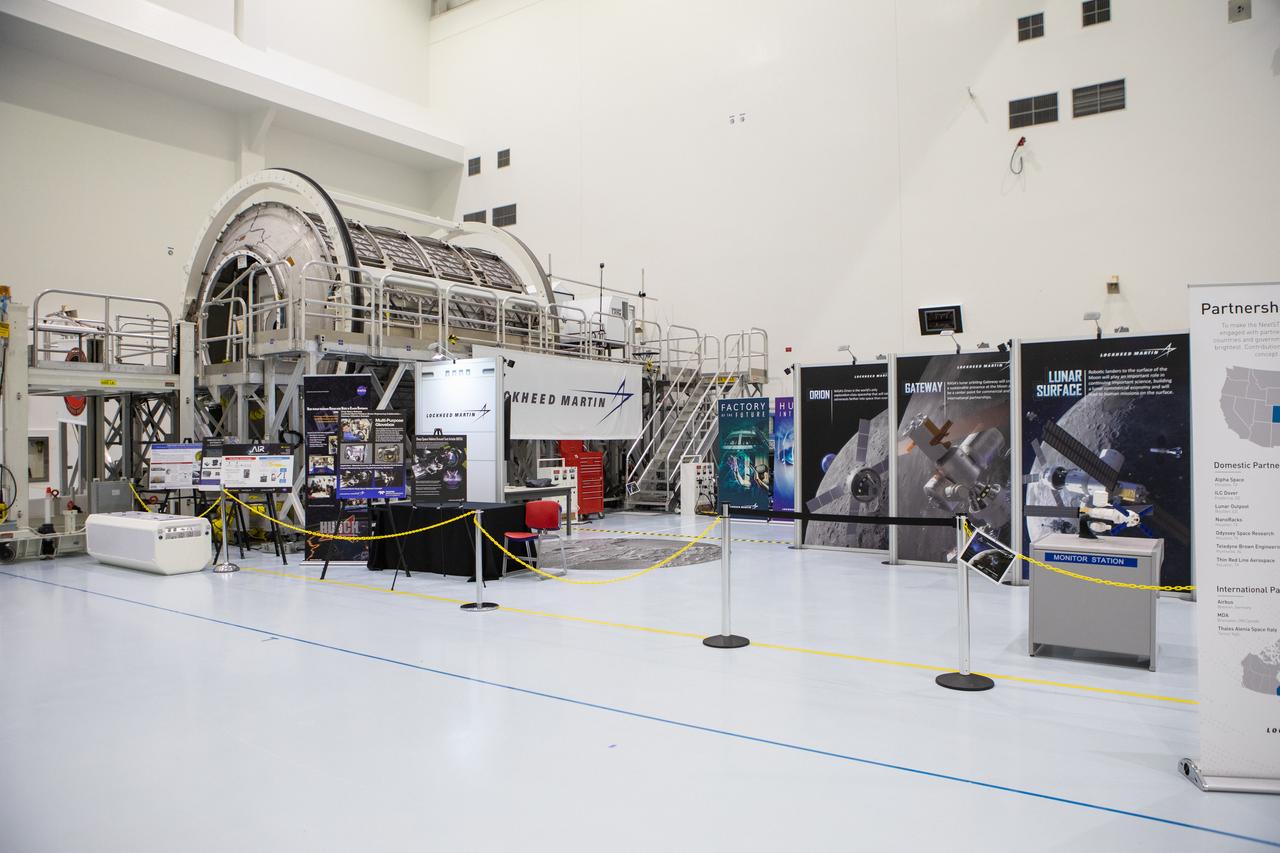
The Lockheed Martin prototype habitat for NASA’s lunar orbital platform, called the Gateway, is in view at left in the high bay of the Space Station Processing Facility (SSPF) at NASA's Kennedy Space Center in Florida, on May 16, 2019. The center is celebrating the SSPF’s 25th anniversary. The facility was built to process elements for the International Space Station. Now it is providing support for current and future NASA and commercial provider programs, including Commercial Resupply Services, Artemis 1, sending the first woman and next man to the Moon, and deep space destinations including Mars.

NASA engineers work on the Restore-L payload in the high bay inside the Space Station Processing Facility (SSPF) at NASA's Kennedy Space Center in Florida, on May 16, 2019. Restore-L, managed by the agency’s Goddard Space Flight Center in Greenbelt, Maryland, is an in-flight robotic satellite servicer spacecraft. The center is celebrating the SSPF’s 25th anniversary. The SSPF was built to process elements for the International Space Station. Now it is providing support for current and future NASA and commercial provider programs, including Commercial Resupply Services, Artemis 1, sending the first woman and next man to the Moon, and deep space destinations including Mars.
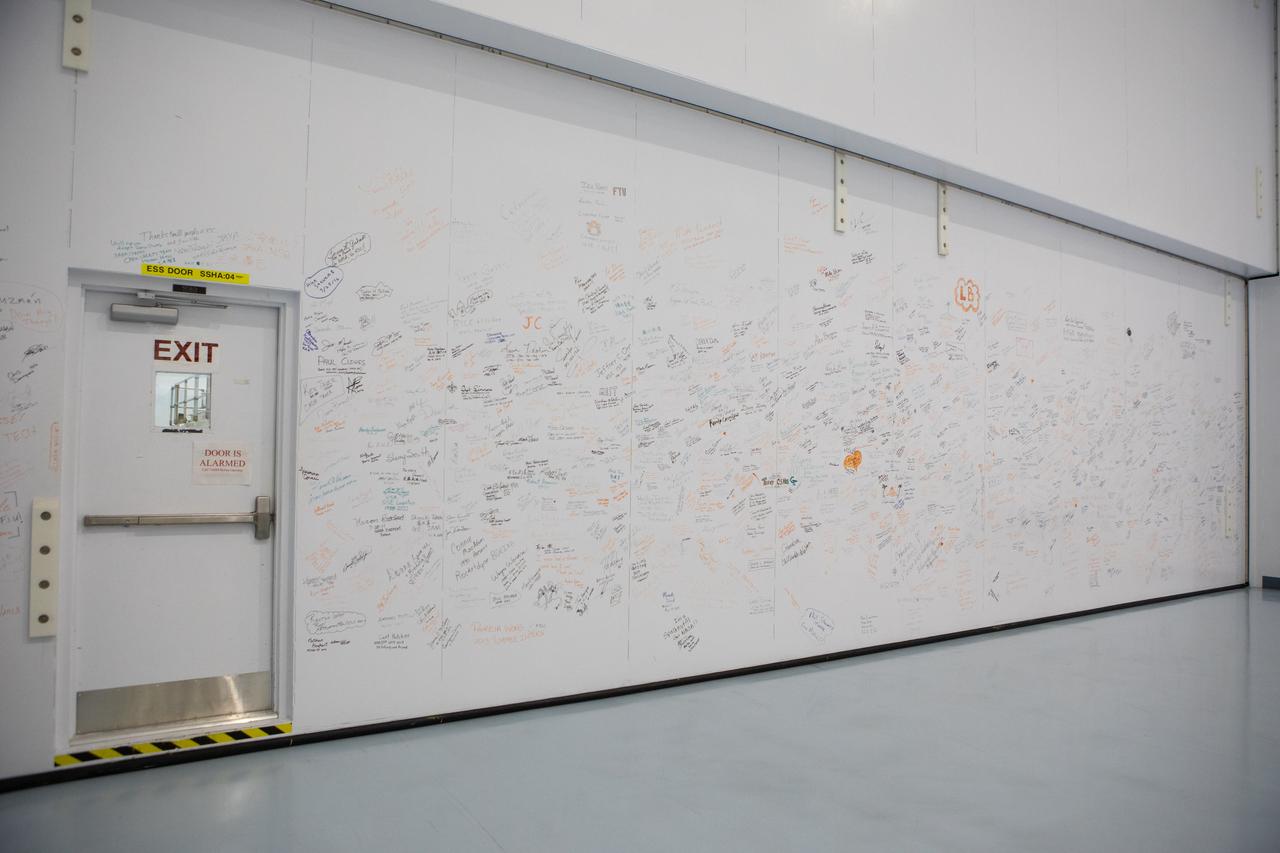
A photograph taken on May 16, 2019, shows a wall inside the Space Station Processing Facility (SSPF) at NASA's Kennedy Space Center in Florida, containing signatures of many of those who worked on the International Space Station Program. The center is celebrating the SSPF’s 25th anniversary. The facility was built to process elements for the space station. Now it is providing support for current and future NASA and commercial provider programs, including Commercial Resupply Services, Artemis 1, sending the first woman and next man to the Moon, and deep space destinations including Mars.
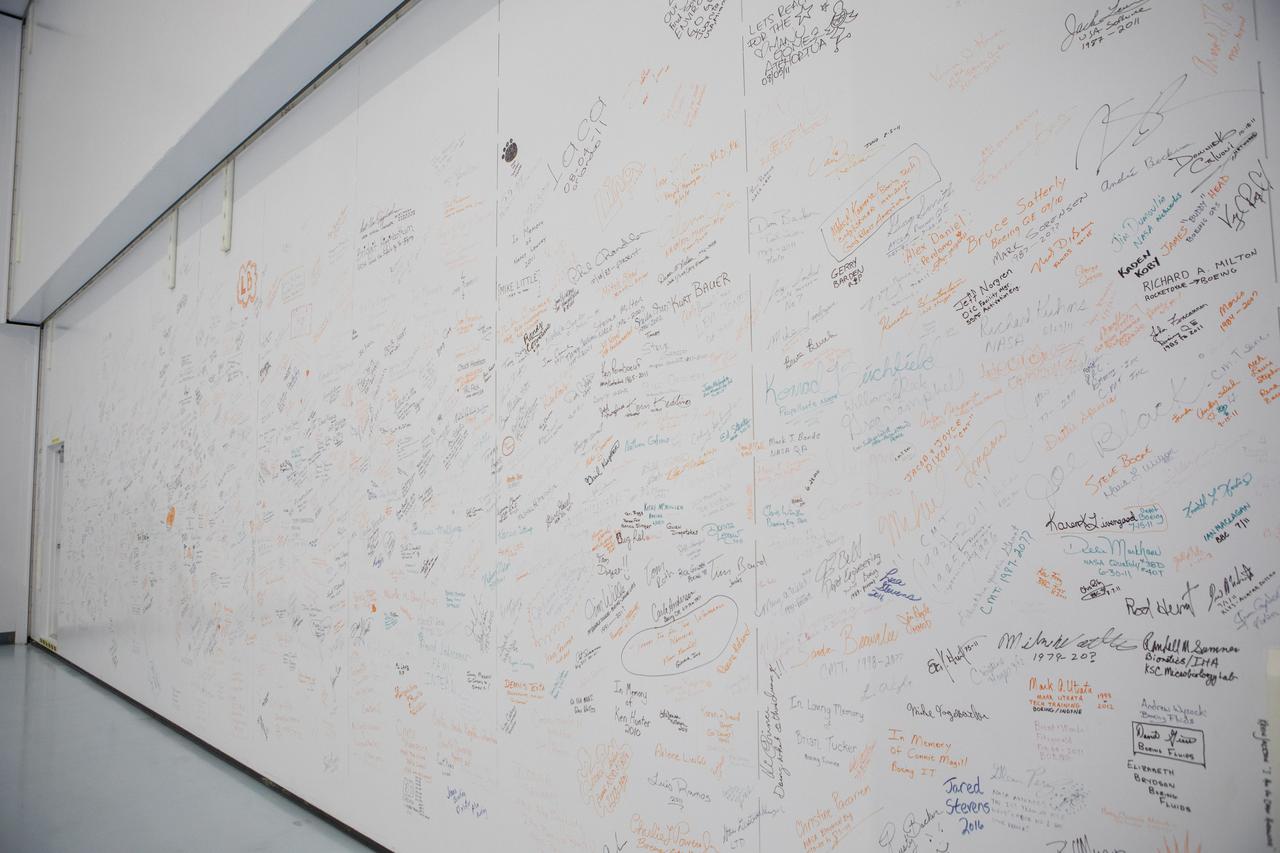
A photograph taken on May 16, 2019, shows a wall inside the Space Station Processing Facility (SSPF) at NASA's Kennedy Space Center in Florida, containing signatures of many of those who worked on the International Space Station Program. The center is celebrating the SSPF’s 25th anniversary. The facility was built to process elements for the space station. Now it is providing support for current and future NASA and commercial provider programs, including Commercial Resupply Services, Artemis 1, sending the first woman and next man to the Moon, and deep space destinations including Mars.
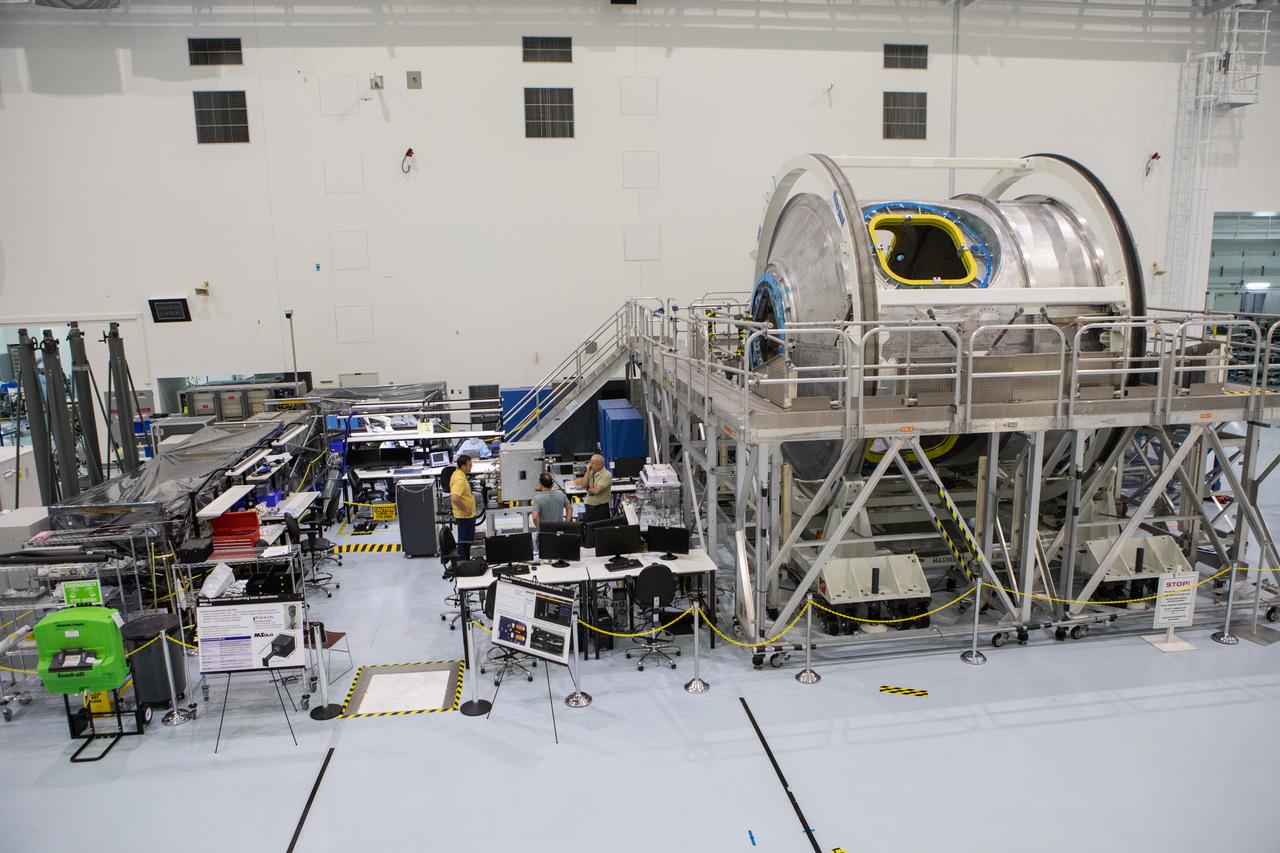
Instruments for NASA’s Mars Spectrometer observing lunar operations (MSolo) are in view at left in the high bay of the Space Station Processing Facility (SSPF) at NASA's Kennedy Space Center in Florida, on May 16, 2019. The center is celebrating the SSPF’s 25th anniversary. The facility was built to process elements for the International Space Station. Now it is providing support for current and future NASA and commercial provider programs, including Commercial Resupply Services, Artemis 1, sending the first woman and next man to the Moon, and deep space destinations including Mars.
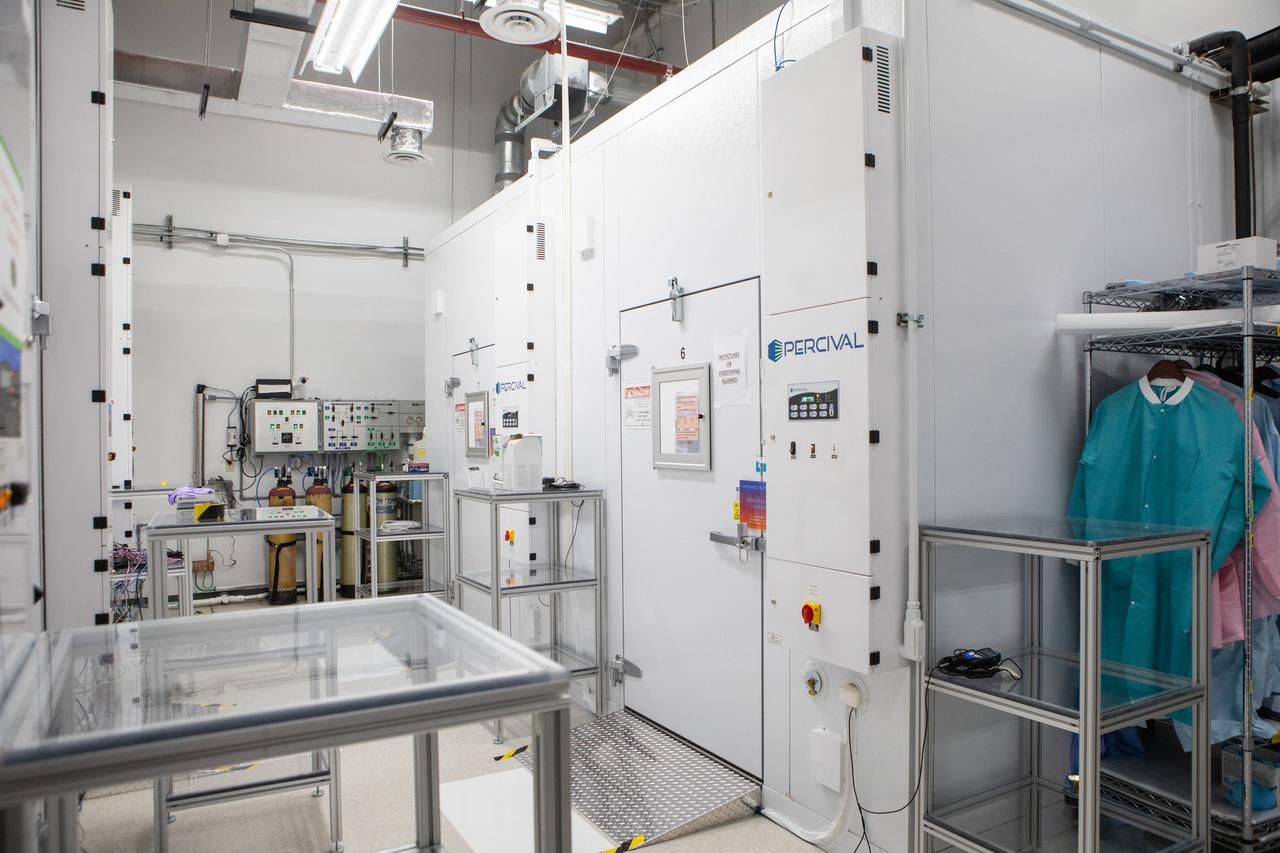
A walk-in experiment chamber for the Center for the Advancement of Science in Space (CASIS) is in view inside a laboratory in the Space Station Processing Facility (SSPF) at NASA's Kennedy Space Center in Florida, on May 16, 2019. The center is celebrating the SSPF’s 25th anniversary. The facility was built to process elements for the International Space Station. Now it is providing support for current and future NASA and commercial provider programs, including Commercial Resupply Services, Artemis 1, sending the first woman and next man to the Moon, and deep space destinations including Mars.
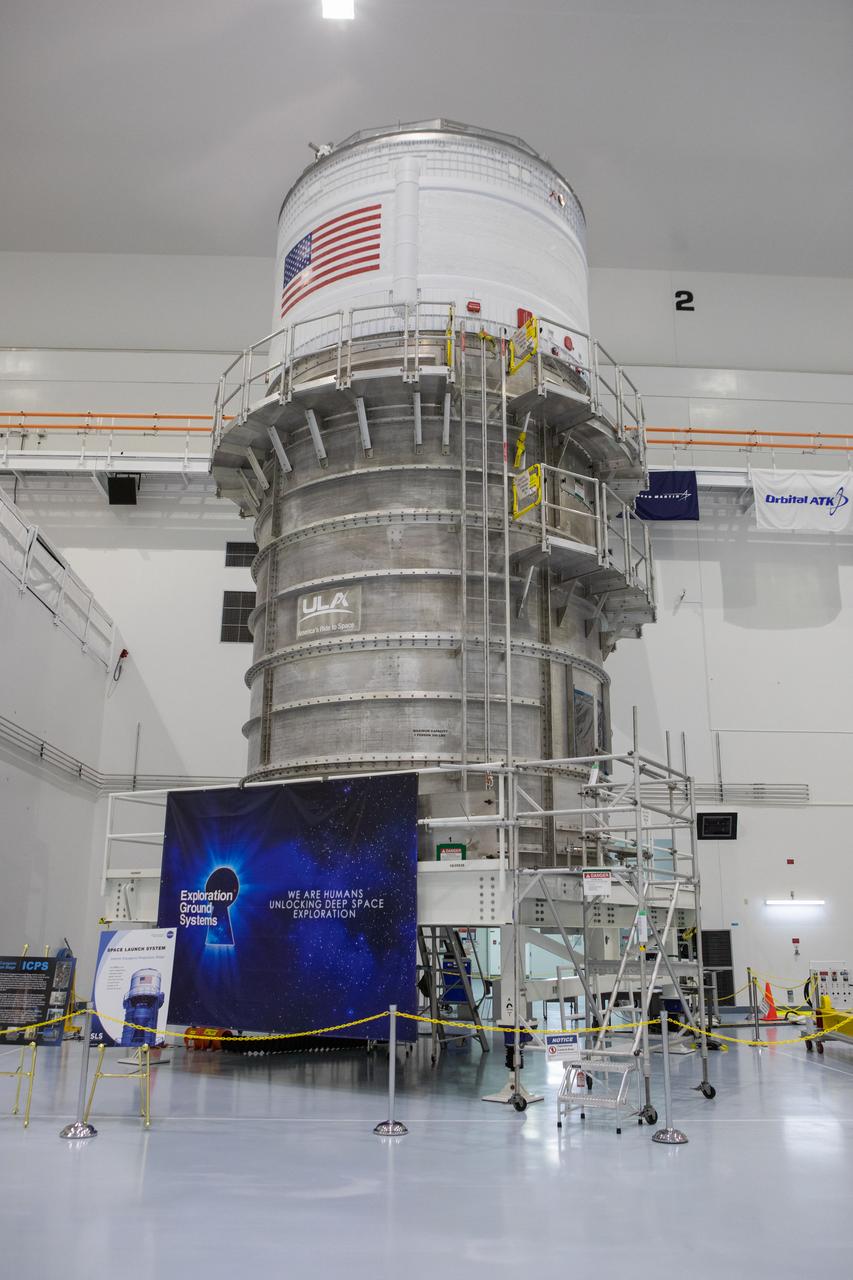
The Interim Cryogenic Propulsion Stage for Orion’s Artemis 1 mission is in view inside the high bay in the Space Station Processing Facility (SSPF) at NASA's Kennedy Space Center in Florida, on May 16, 2019. The center is celebrating the SSPF’s 25th anniversary. The facility was built to process elements for the International Space Station. Now it is providing support for current and future NASA and commercial provider programs, including Commercial Resupply Services, Artemis 1, sending the first woman and next man to the Moon, and deep space destinations including Mars.
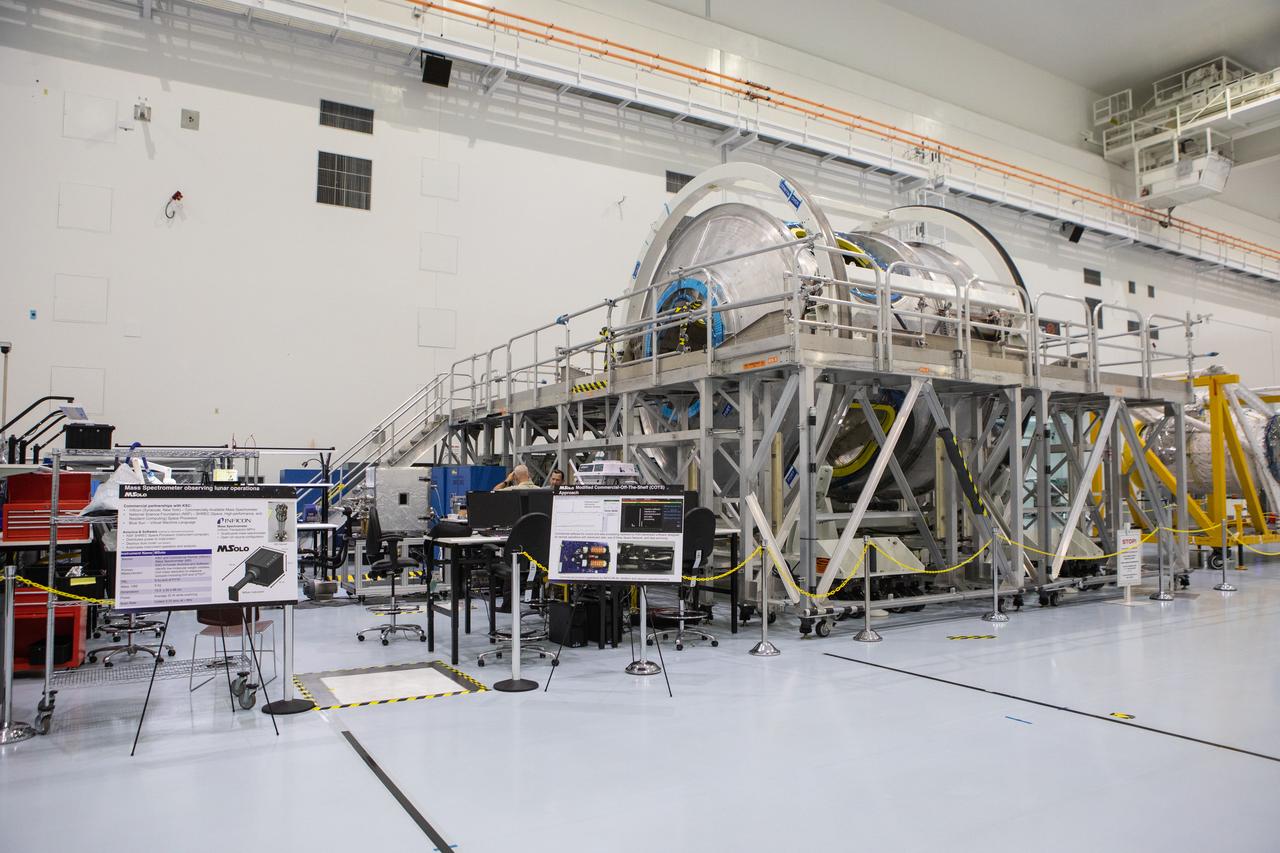
Instruments for NASA’s Mars Spectrometer observing lunar operations (MSolo) are in view at left in the high bay of the Space Station Processing Facility (SSPF) at NASA's Kennedy Space Center in Florida, on May 16, 2019. The center is celebrating the SSPF’s 25th anniversary. The facility was built to process elements for the International Space Station. Now it is providing support for current and future NASA and commercial provider programs, including Commercial Resupply Services, Artemis 1, sending the first woman and next man to the Moon, and deep space destinations including Mars.
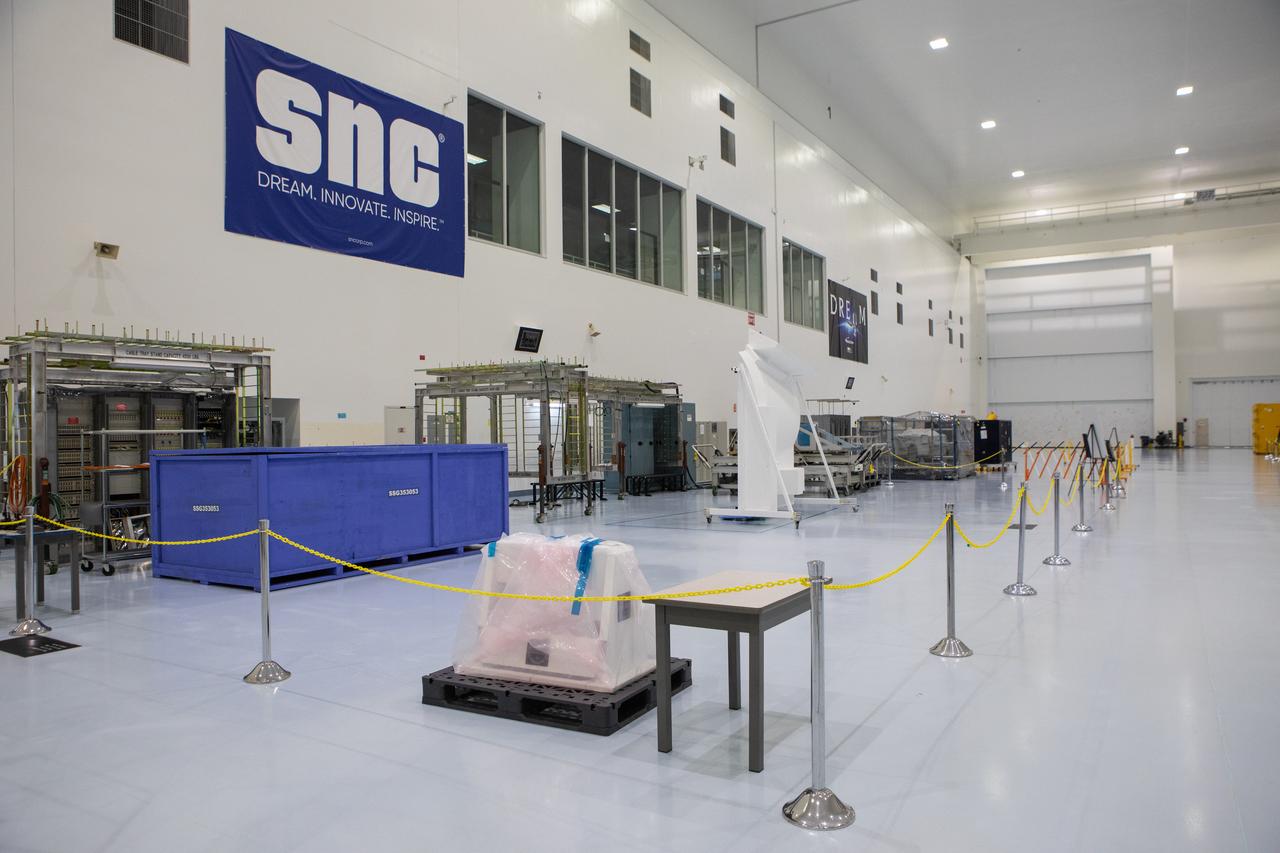
In view in this photograph, taken on May 16, 2019, is the area where the Sierra Nevada Corporation will process its Dream Chaser spacecraft in the high bay of the Space Station Processing Facility (SSPF) at NASA's Kennedy Space Center in Florida. The center is celebrating the SSPF’s 25th anniversary. The facility was built to process elements for the International Space Station. Now it is providing support for current and future NASA and commercial provider programs, including Commercial Resupply Services, Artemis 1, sending the first woman and next man to the Moon, and deep space destinations including Mars.
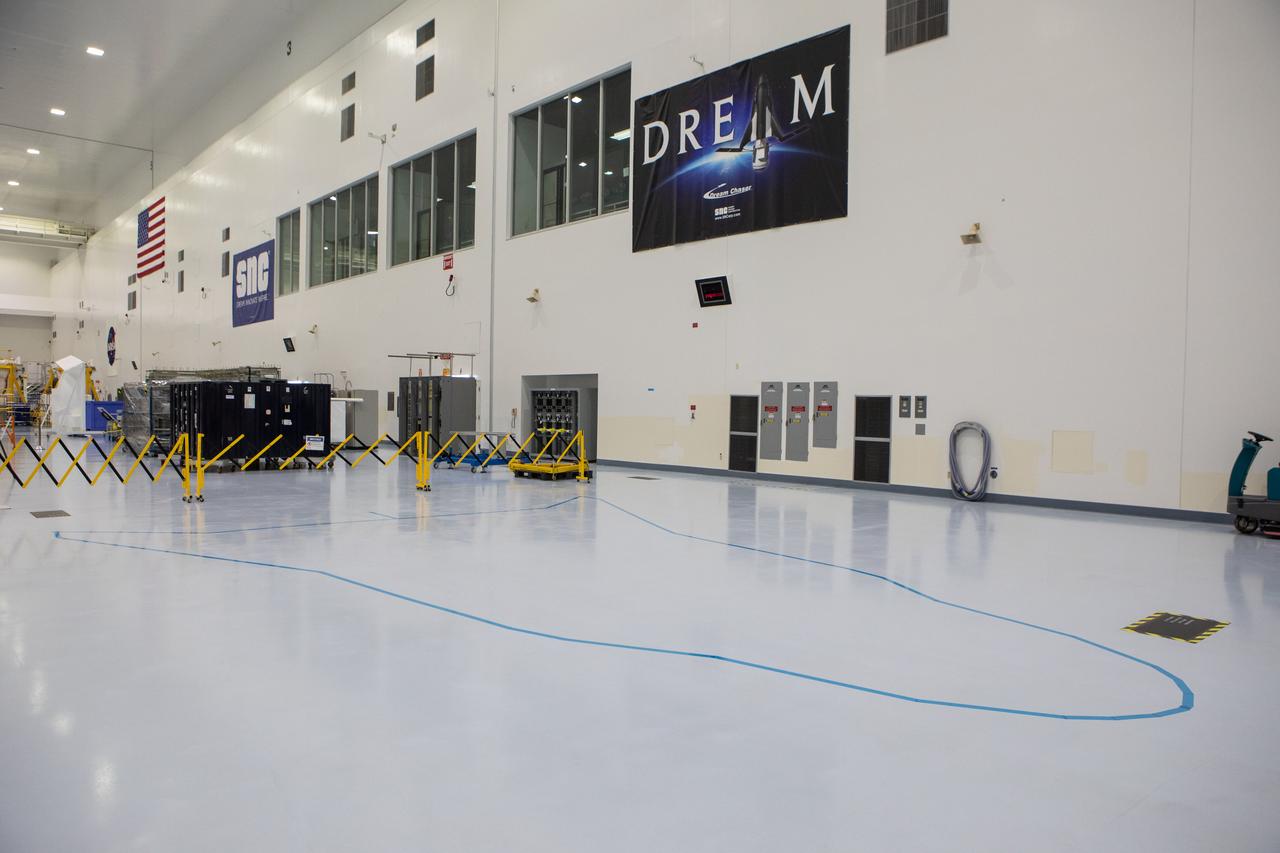
In view in this photograph, taken on May 16, 2019, is the area where the Sierra Nevada Corporation will process its Dream Chaser spacecraft in the high bay of the Space Station Processing Facility (SSPF) at NASA's Kennedy Space Center in Florida. The center is celebrating the SSPF’s 25th anniversary. The facility was built to process elements for the International Space Station. Now it is providing support for current and future NASA and commercial provider programs, including Commercial Resupply Services, Artemis 1, sending the first woman and next man to the Moon, and deep space destinations including Mars.
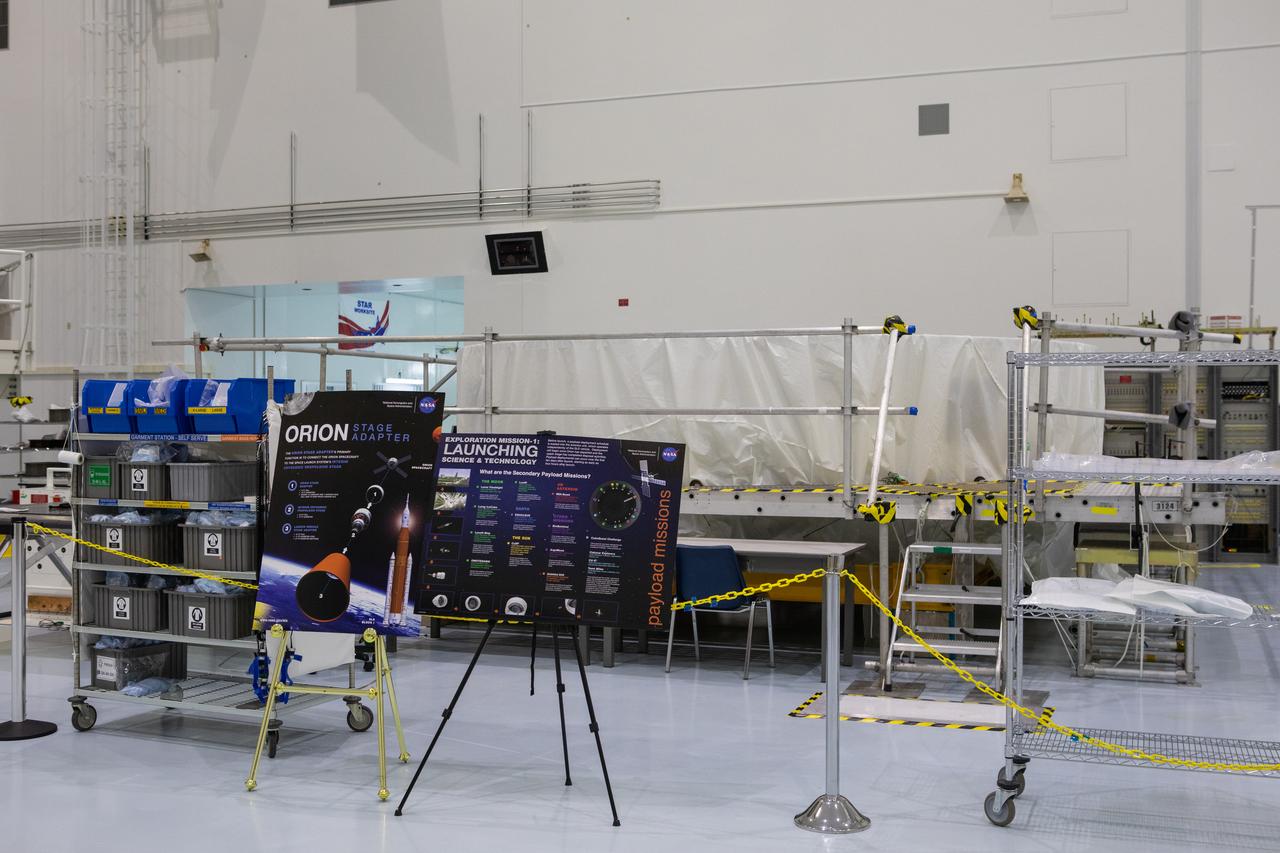
The Orion stage adapter for Artemis 1 is in view, wrapped in a protective covering, in this photograph taken on May 16, 2019, inside the high bay in the Space Station Processing Facility (SSPF) at NASA's Kennedy Space Center in Florida. The center is celebrating the SSPF’s 25th anniversary. The facility was built to process elements for the International Space Station. Now it is providing support for current and future NASA and commercial provider programs, including Commercial Resupply Services, Artemis 1, sending the first woman and next man to the Moon, and deep space destinations including Mars.
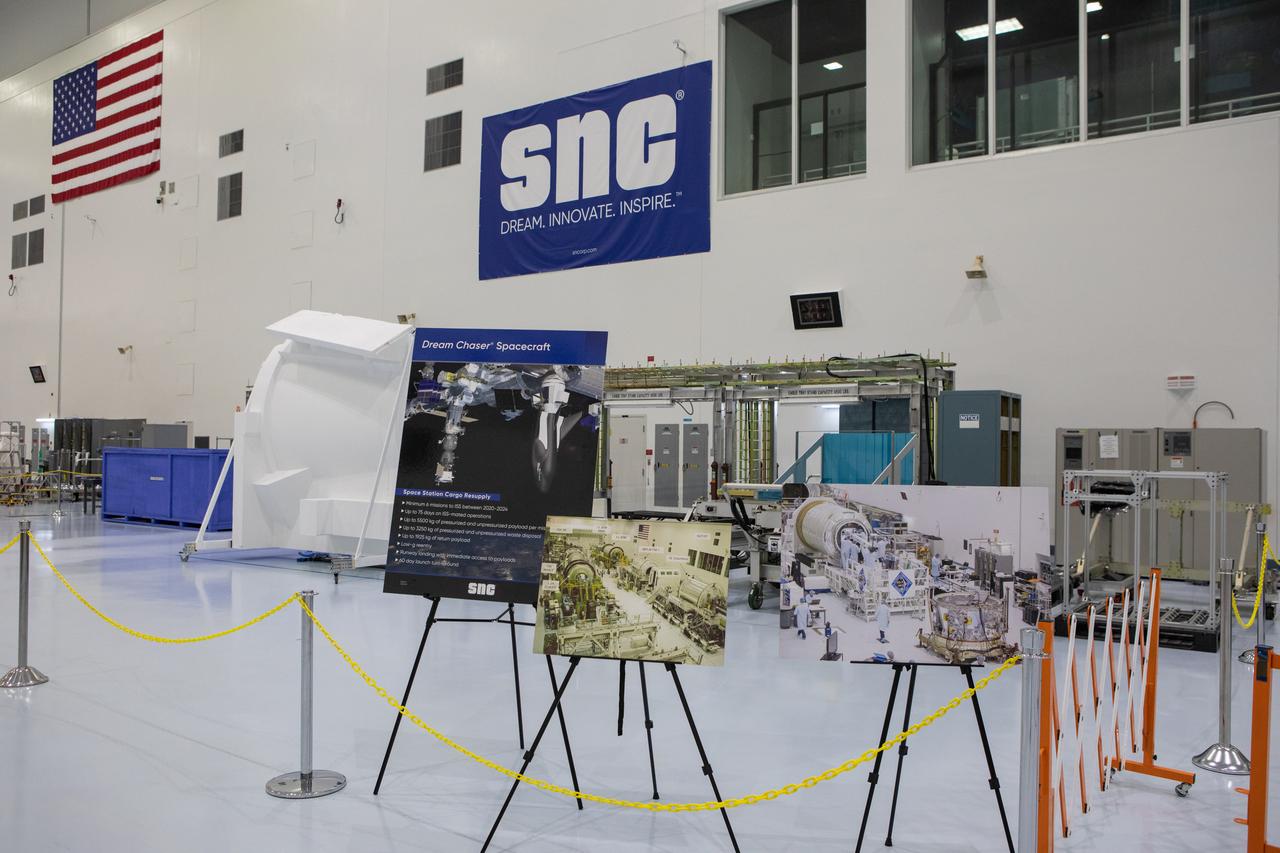
In view in this photograph, taken on May 16, 2019, is the area where the Sierra Nevada Corporation will process its Dream Chaser spacecraft in the high bay of the Space Station Processing Facility (SSPF) at NASA's Kennedy Space Center in Florida. The center is celebrating the SSPF’s 25th anniversary. The facility was built to process elements for the International Space Station. Now it is providing support for current and future NASA and commercial provider programs, including Commercial Resupply Services, Artemis 1, sending the first woman and next man to the Moon, and deep space destinations including Mars.
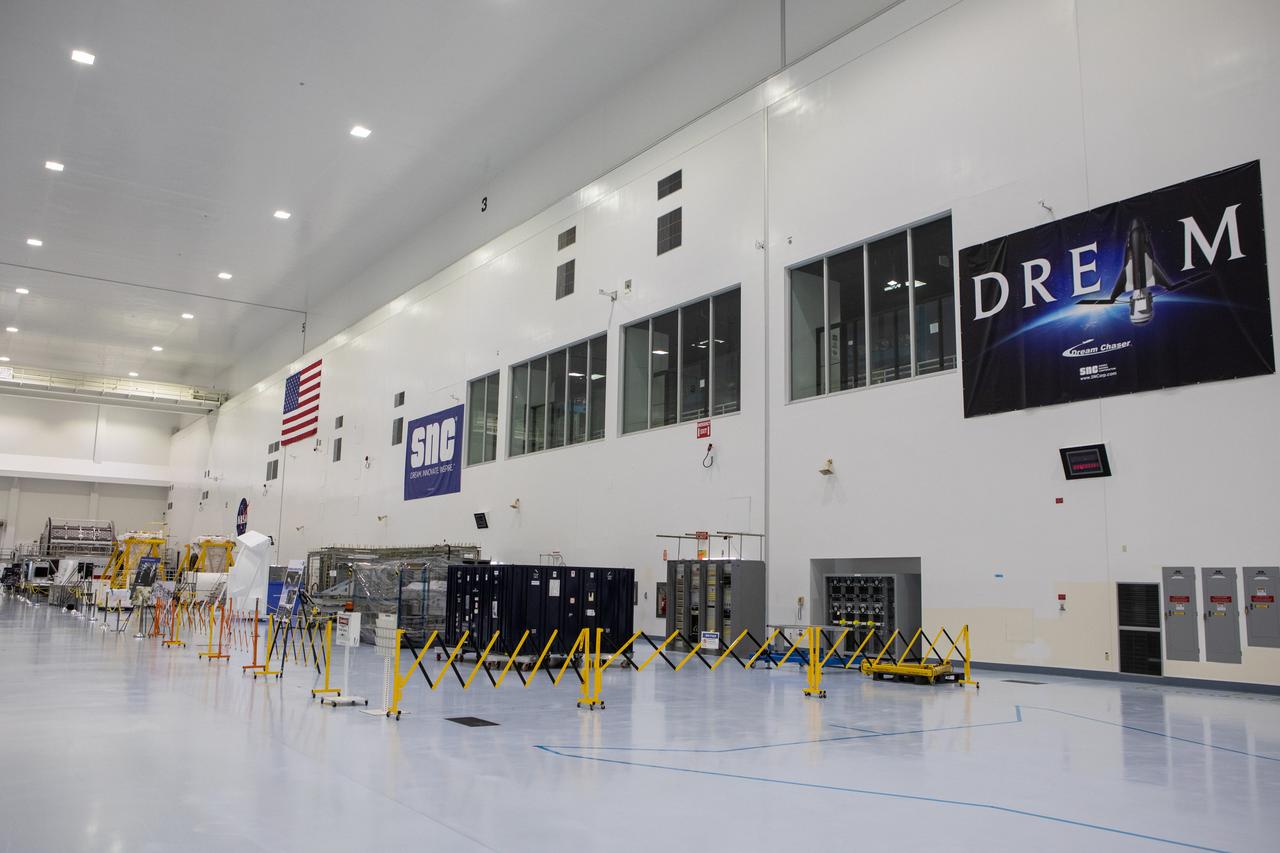
In view in this photograph, taken on May 16, 2019, is the area where the Sierra Nevada Corporation will process its Dream Chaser spacecraft in the high bay of the Space Station Processing Facility (SSPF) at NASA's Kennedy Space Center in Florida. The center is celebrating the SSPF’s 25th anniversary. The facility was built to process elements for the International Space Station. Now it is providing support for current and future NASA and commercial provider programs, including Commercial Resupply Services, Artemis 1, sending the first woman and next man to the Moon, and deep space destinations including Mars.
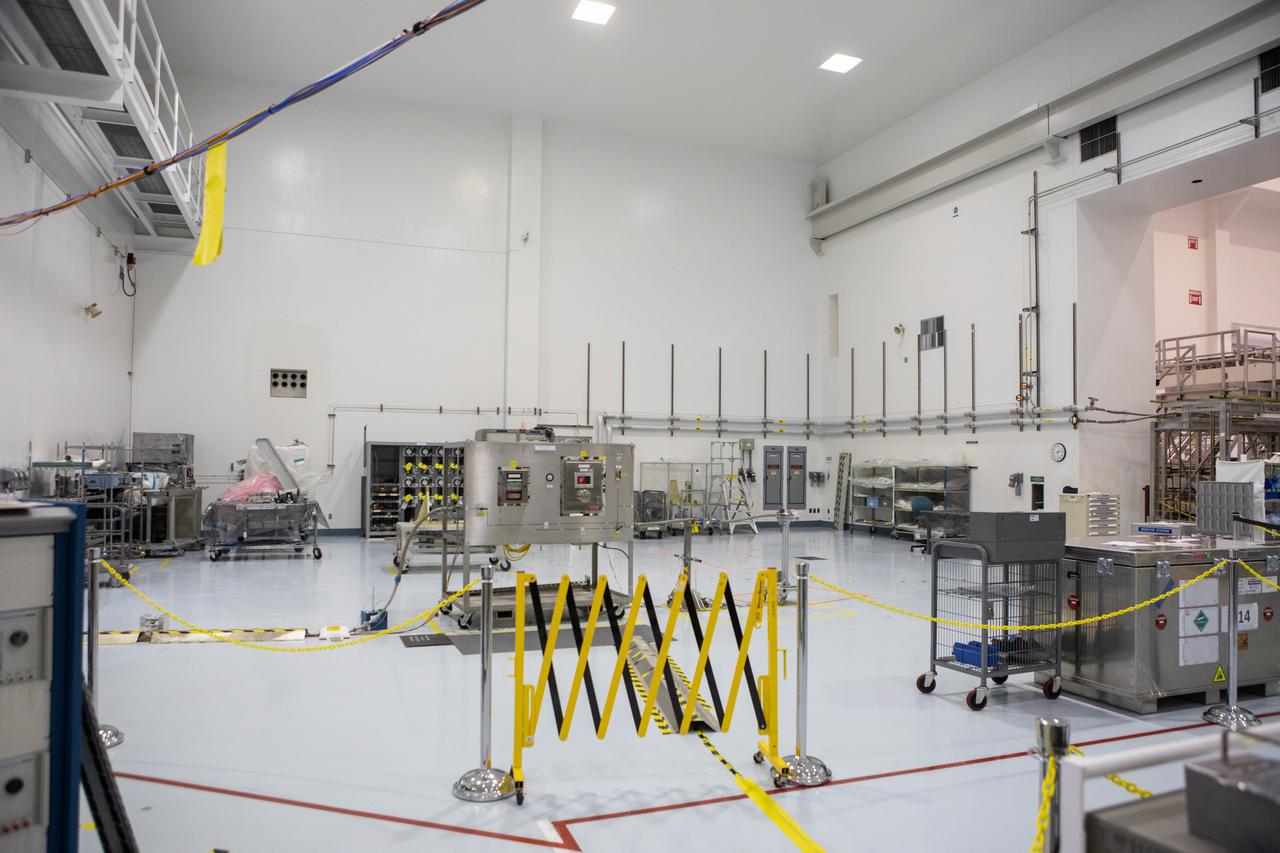
A Nitrogen Oxygen Recharge System (NORS) for the International Space Station is in view, center, in the high bay of the Space Station Processing Facility (SSPF) at NASA's Kennedy Space Center in Florida, on May 16, 2019. NORS are tanks that are used to fill the oxygen and nitrogen tanks that supply the needed gases to the station’s airlock for spacewalks and also are used as a secondary method to replenish the atmosphere inside the space station. The center is celebrating the SSPF’s 25th anniversary. The SSPF was built to process elements for the space station. Now it is providing support for current and future NASA and commercial provider programs, including Commercial Resupply Services, Artemis 1, sending the first woman and next man to the Moon, and deep space destinations including Mars.
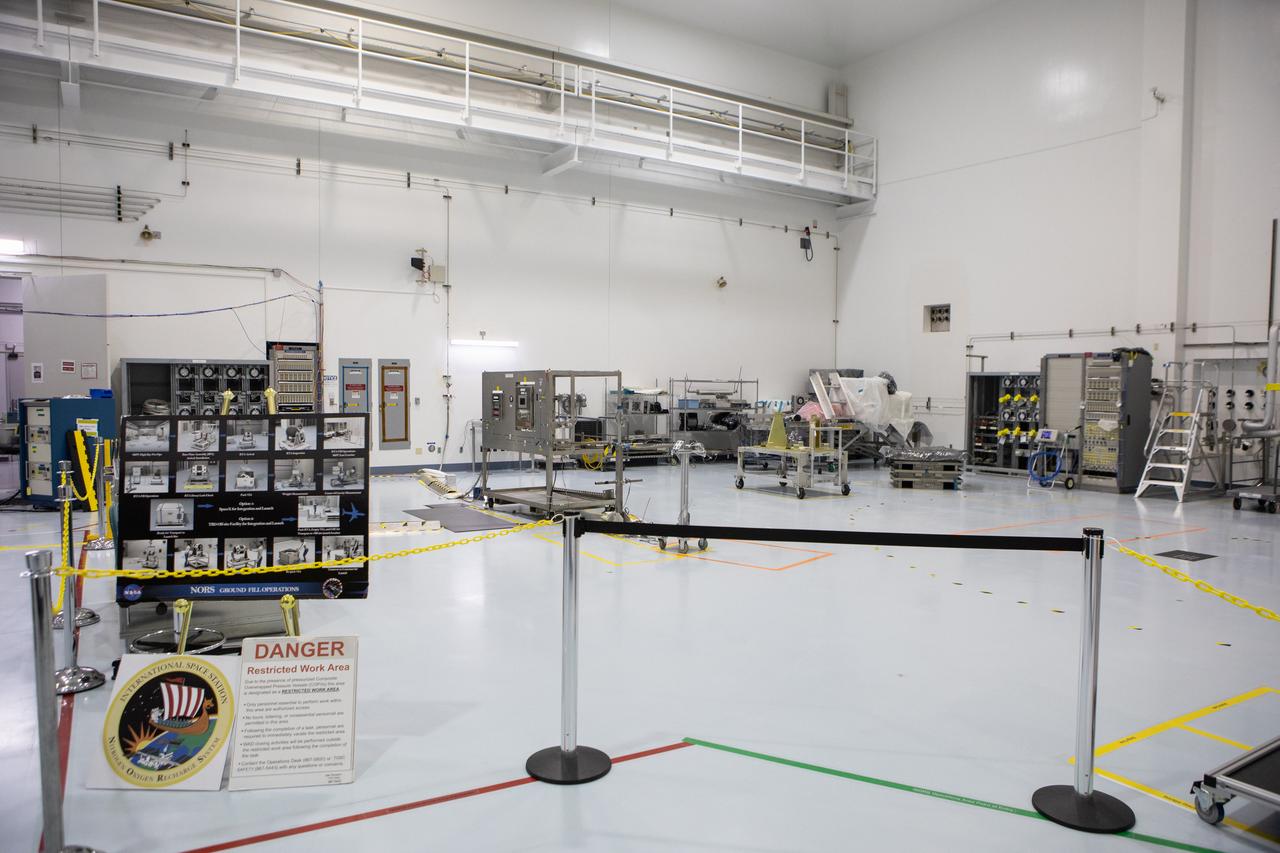
The processing area for the Nitrogen Oxygen Recharge System (NORS) for the International Space Station, is in view in the high bay of the Space Station Processing Facility (SSPF) at NASA's Kennedy Space Center in Florida, on May 16, 2019. NORS are tanks that are used to fill the oxygen and nitrogen tanks that supply the needed gases to the station’s airlock for spacewalks and also are used as a secondary method to replenish the atmosphere inside the space station. The center is celebrating the SSPF’s 25th anniversary. The SSPF was built to process elements for the space station. Now it is providing support for current and future NASA and commercial provider programs, including Commercial Resupply Services, Artemis 1, sending the first woman and next man to the Moon, and deep space destinations including Mars.
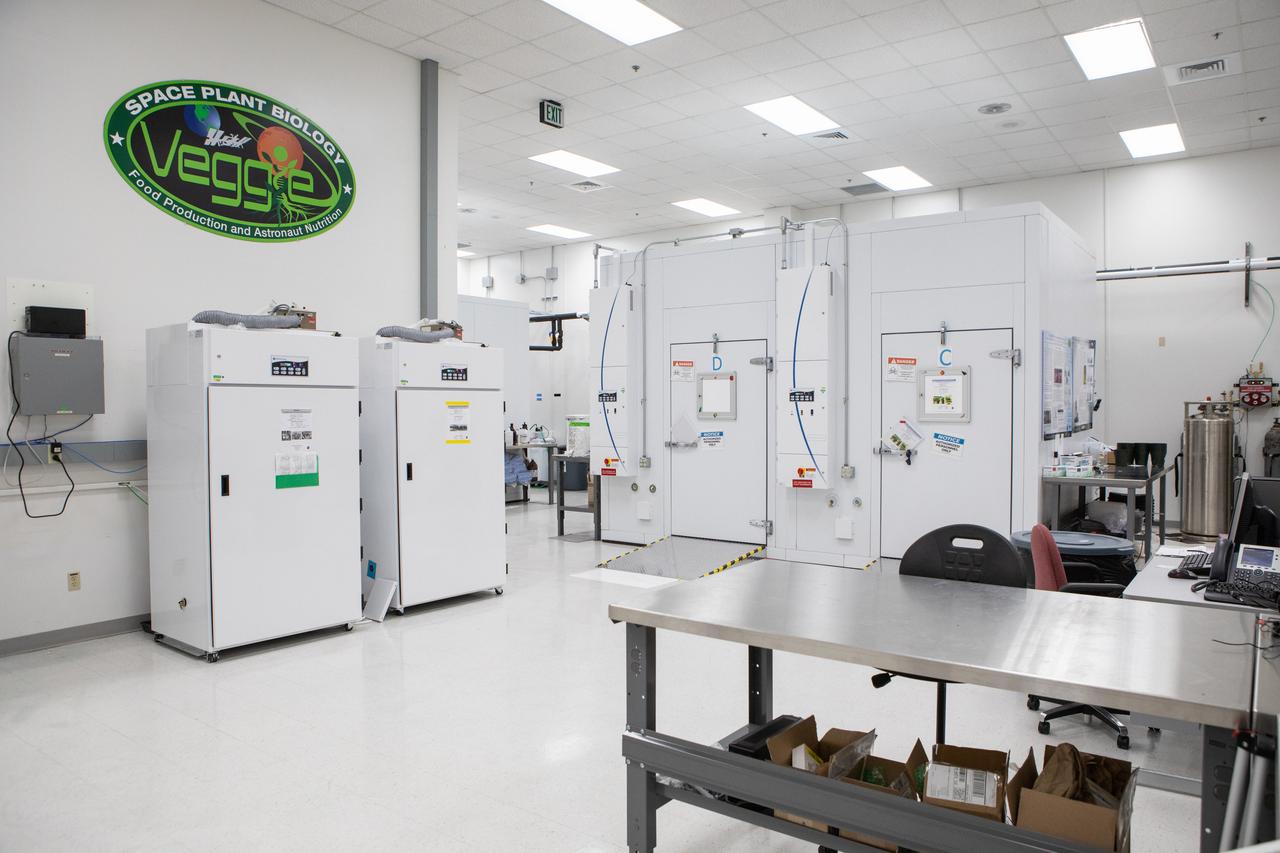
Experiment chambers are in view in the Veggie Laboratory inside the Space Station Processing Facility (SSPF) at NASA’s Kennedy Space Center in Florida, on May 16, 2019. The center is celebrating the SSPF’s 25th anniversary. The facility was built to process elements for the International Space Station. Now it is providing support for current and future NASA and commercial provider programs, including Commercial Resupply Services, Artemis 1, sending the first woman and next man to the Moon, and deep space destinations including Mars.
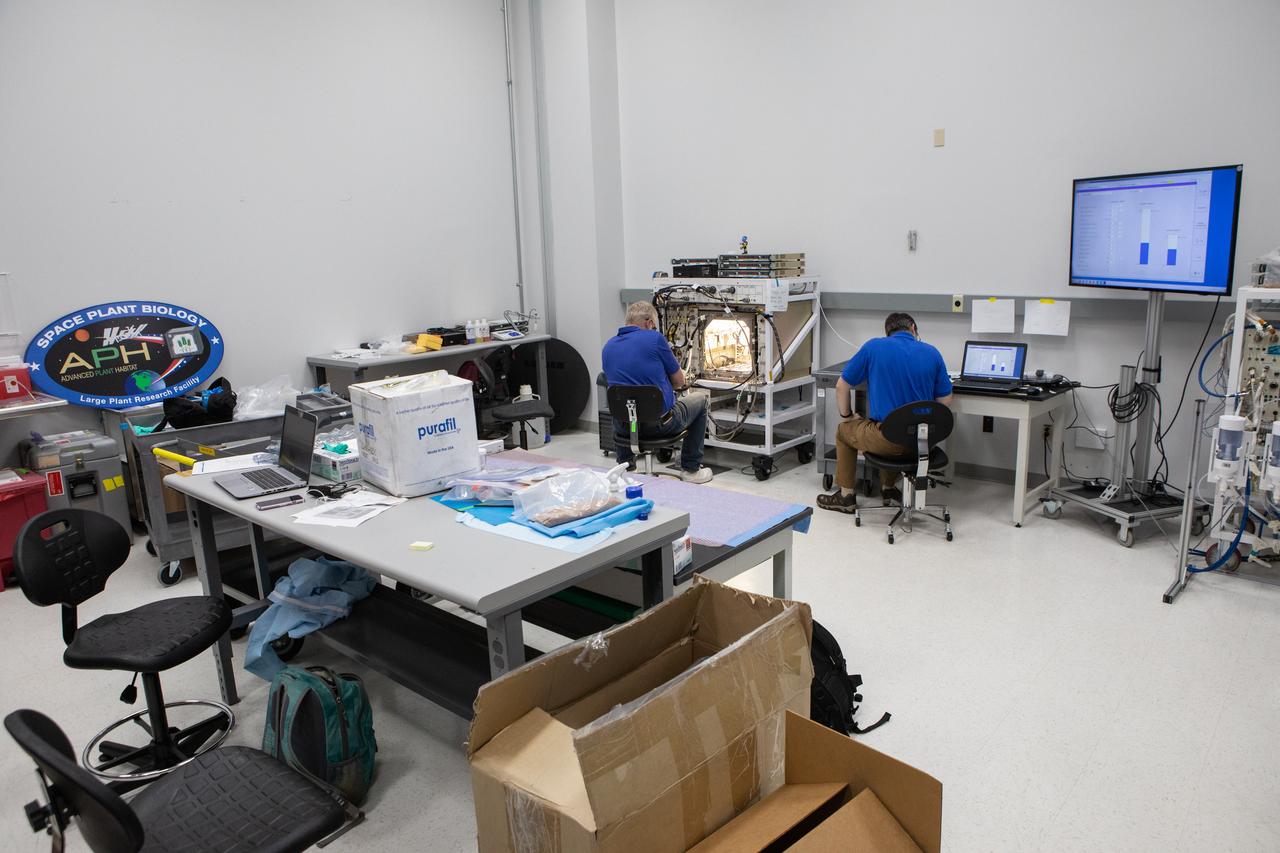
Researchers are testing plant growth in a ground unit of the Advanced Plant Habitat inside a laboratory in the Space Station Processing Facility (SSPF) at NASA's Kennedy Space Center in Florida, on May 16, 2019. The center is celebrating the SSPF’s 25th anniversary. The facility was built to process elements for the International Space Station. Now it is providing support for current and future NASA and commercial provider programs, including Commercial Resupply Services, Artemis 1, sending the first woman and next man to the Moon, and deep space destinations including Mars.
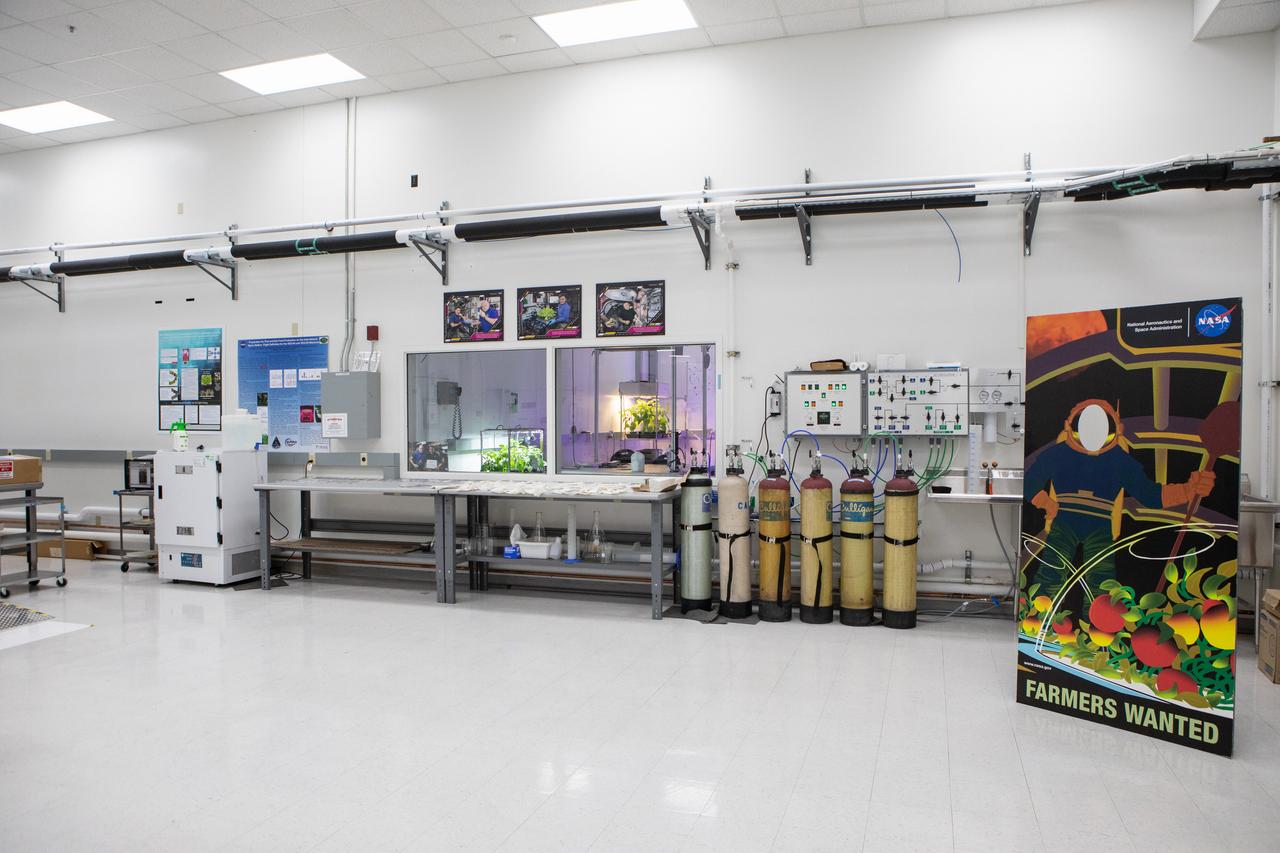
Two plant growth experiments are in view behind glass in a laboratory inside the Space Station Processing Facility (SSPF) at NASA’s Kennedy Space Center in Florida, on May 16, 2019. The center is celebrating the SSPF’s 25th anniversary. The facility was built to process elements for the International Space Station. Now it is providing support for current and future NASA and commercial provider programs, including Commercial Resupply Services, Artemis 1, sending the first woman and next man to the Moon, and deep space destinations including Mars.
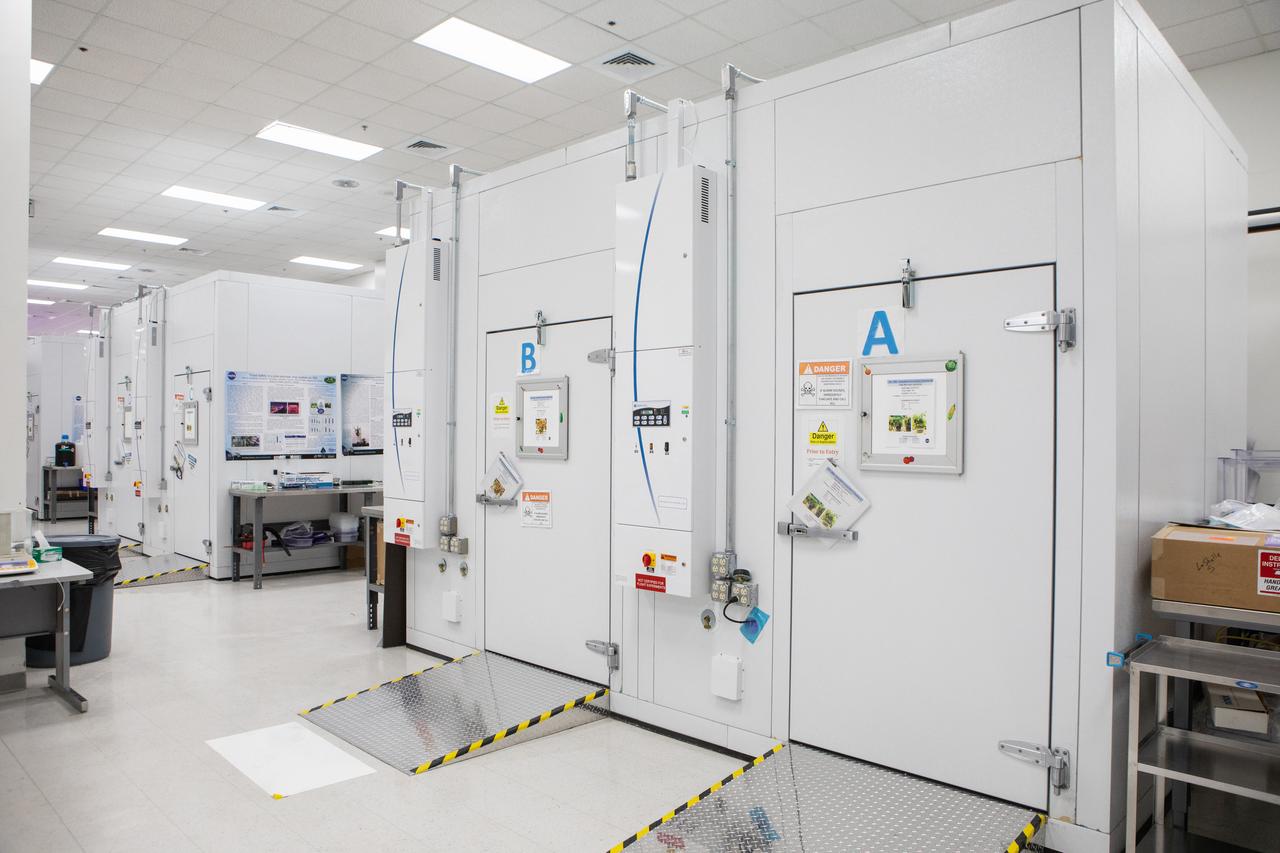
A view of the Veggie and Advanced Plant Habitat walk-in experiment chambers in a laboratory inside the Space Station Processing Facility (SSPF) at NASA's Kennedy Space Center in Florida, on May 16, 2019. The center is celebrating the SSPF’s 25th anniversary. The facility was built to process elements for the International Space Station. Now it is providing support for current and future NASA and commercial provider programs, including Commercial Resupply Services, Artemis 1, sending the first woman and next man to the Moon, and deep space destinations including Mars.
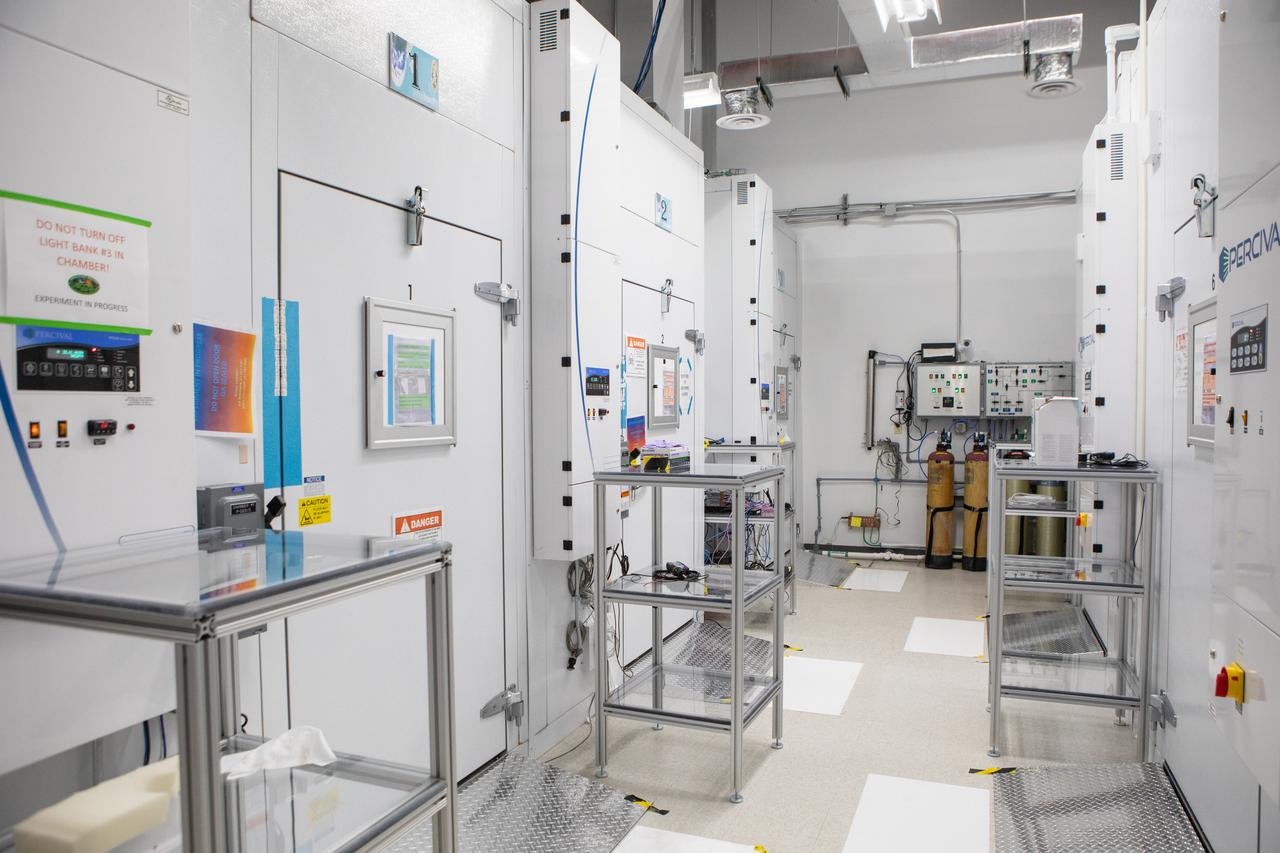
A walk-in experiment chamber for the Center for the Advancement of Science in Space (CASIS) is in view in the foreground inside a laboratory in the Space Station Processing Facility (SSPF) at NASA's Kennedy Space Center in Florida, on May 16, 2019. Further back is an experiment chamber for ground test flight experiments. The center is celebrating the SSPF’s 25th anniversary. The facility was built to process elements for the International Space Station. Now it is providing support for current and future NASA and commercial provider programs, including Commercial Resupply Services, Artemis 1, sending the first woman and next man to the Moon, and deep space destinations including Mars.
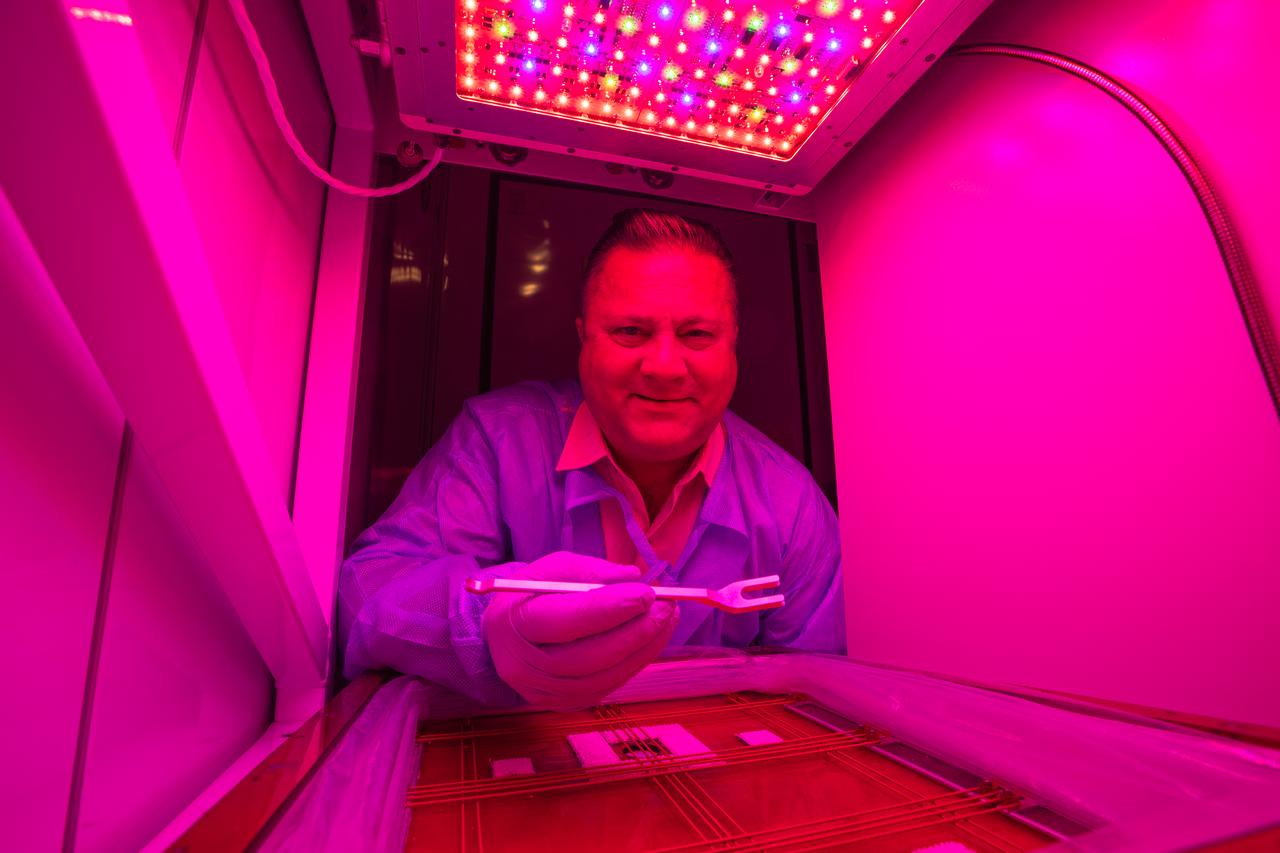
Matthew English is the Exploration Research and Technology facility manager for the Space Station Processing Facility (SSPF) at NASA’s Kennedy Space Center in Florida. English’s responsibilities include ensuring that the International Space Station teams inside the SSPF have the facilities, tools and capabilities they need to support their launch customers, thus providing the support necessary to enable further research and design discoveries within NASA.
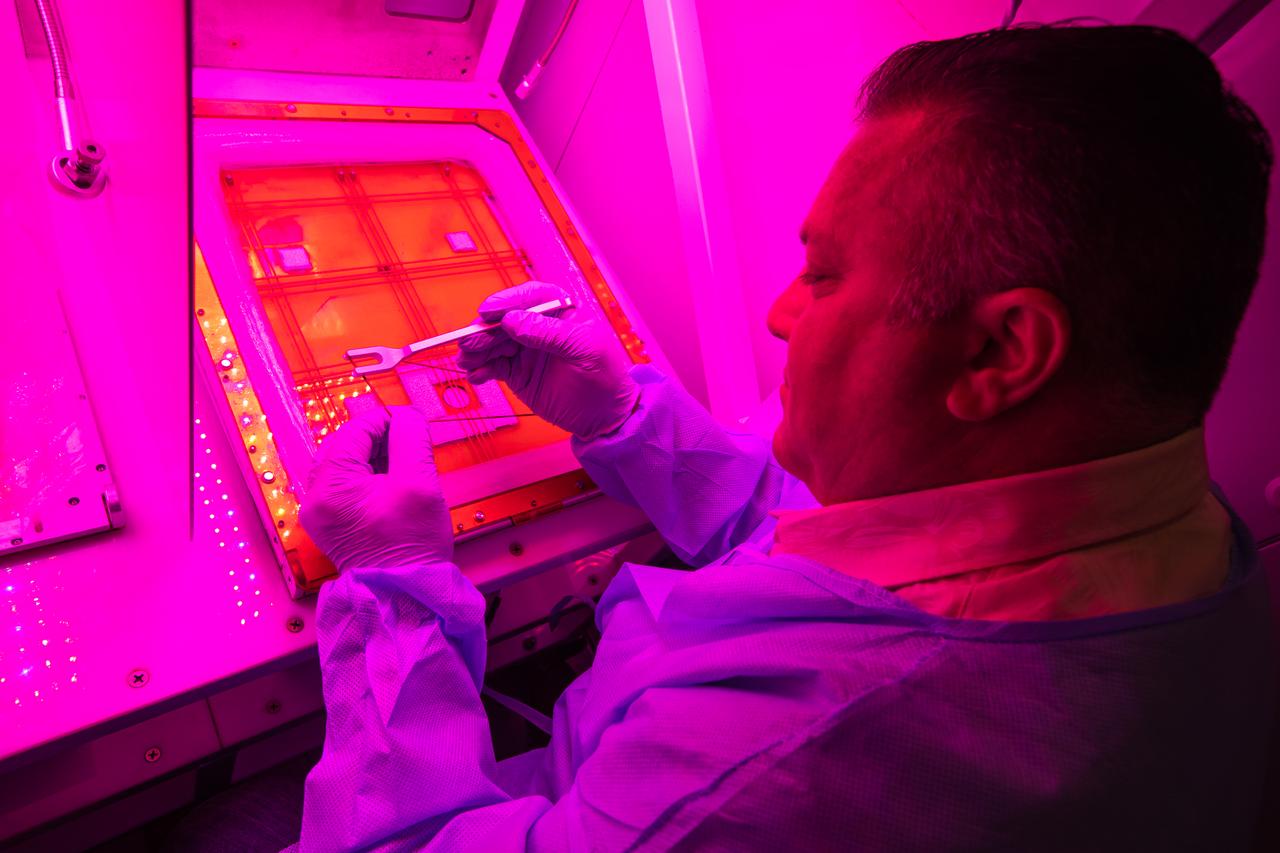
Matthew English is the Exploration Research and Technology facility manager for the Space Station Processing Facility (SSPF) at NASA’s Kennedy Space Center in Florida. English’s responsibilities include ensuring that the International Space Station teams inside the SSPF have the facilities, tools and capabilities they need to support their launch customers, thus providing the support necessary to enable further research and design discoveries within NASA.
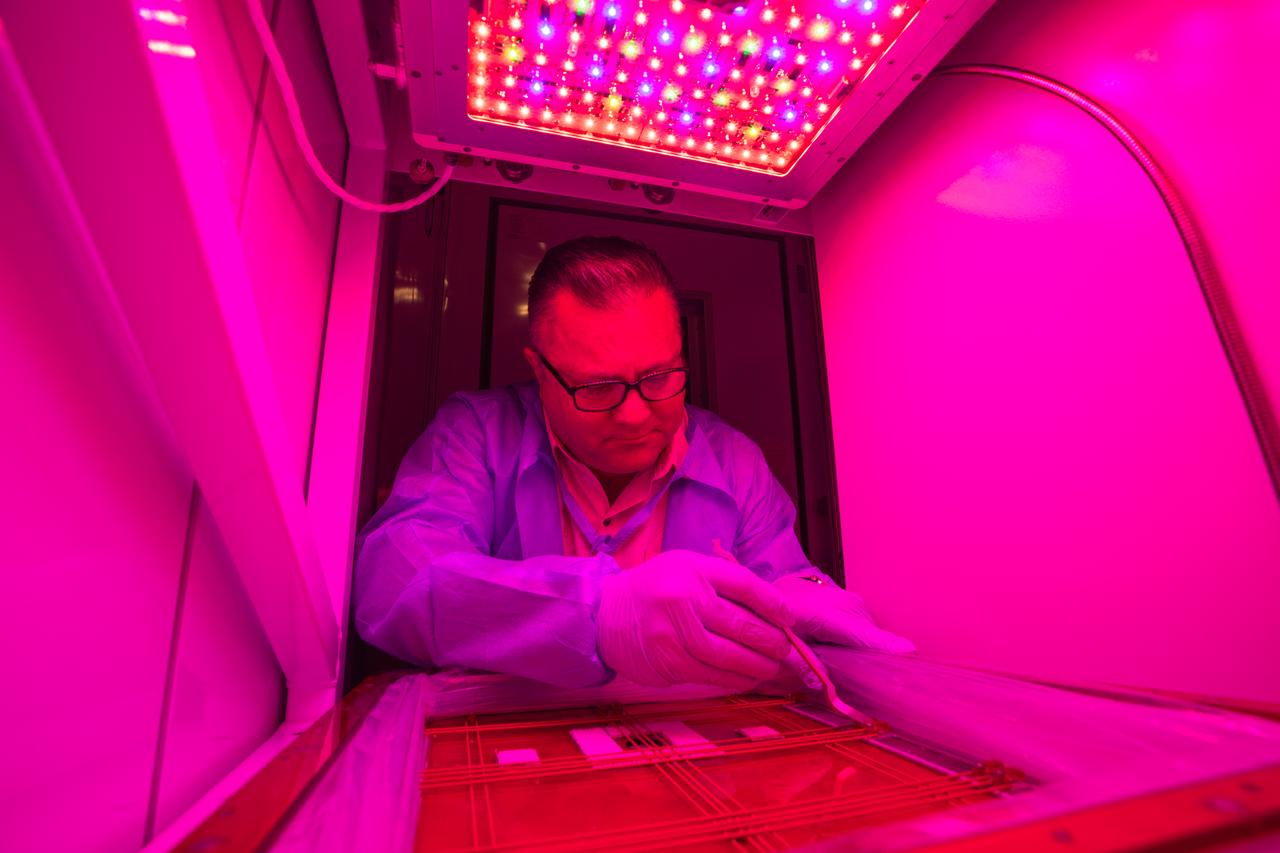
Matthew English is the Exploration Research and Technology facility manager for the Space Station Processing Facility (SSPF) at NASA’s Kennedy Space Center in Florida. English’s responsibilities include ensuring that the International Space Station teams inside the SSPF have the facilities, tools and capabilities they need to support their launch customers, thus providing the support necessary to enable further research and design discoveries within NASA.
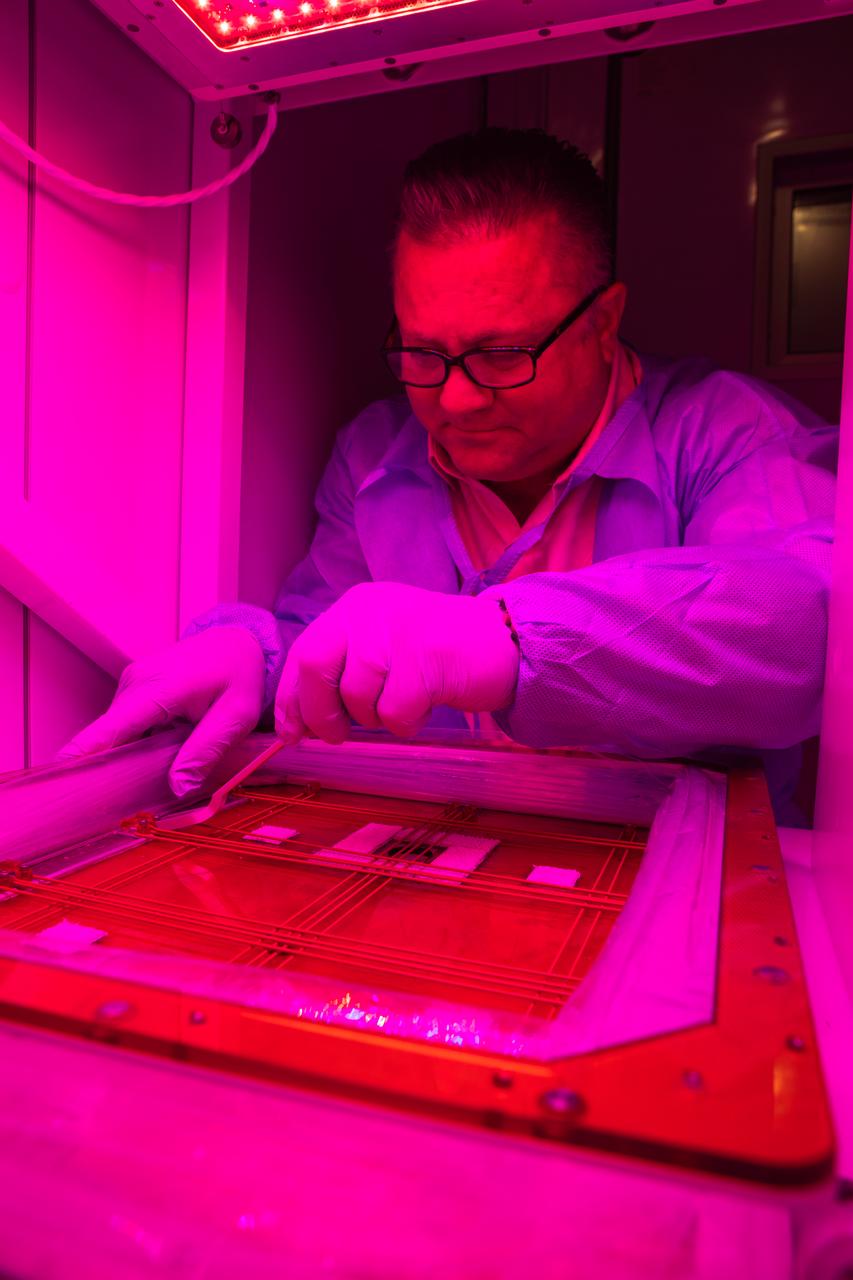
Matthew English is the Exploration Research and Technology facility manager for the Space Station Processing Facility (SSPF) at NASA’s Kennedy Space Center in Florida. English’s responsibilities include ensuring that the International Space Station teams inside the SSPF have the facilities, tools and capabilities they need to support their launch customers, thus providing the support necessary to enable further research and design discoveries within NASA.
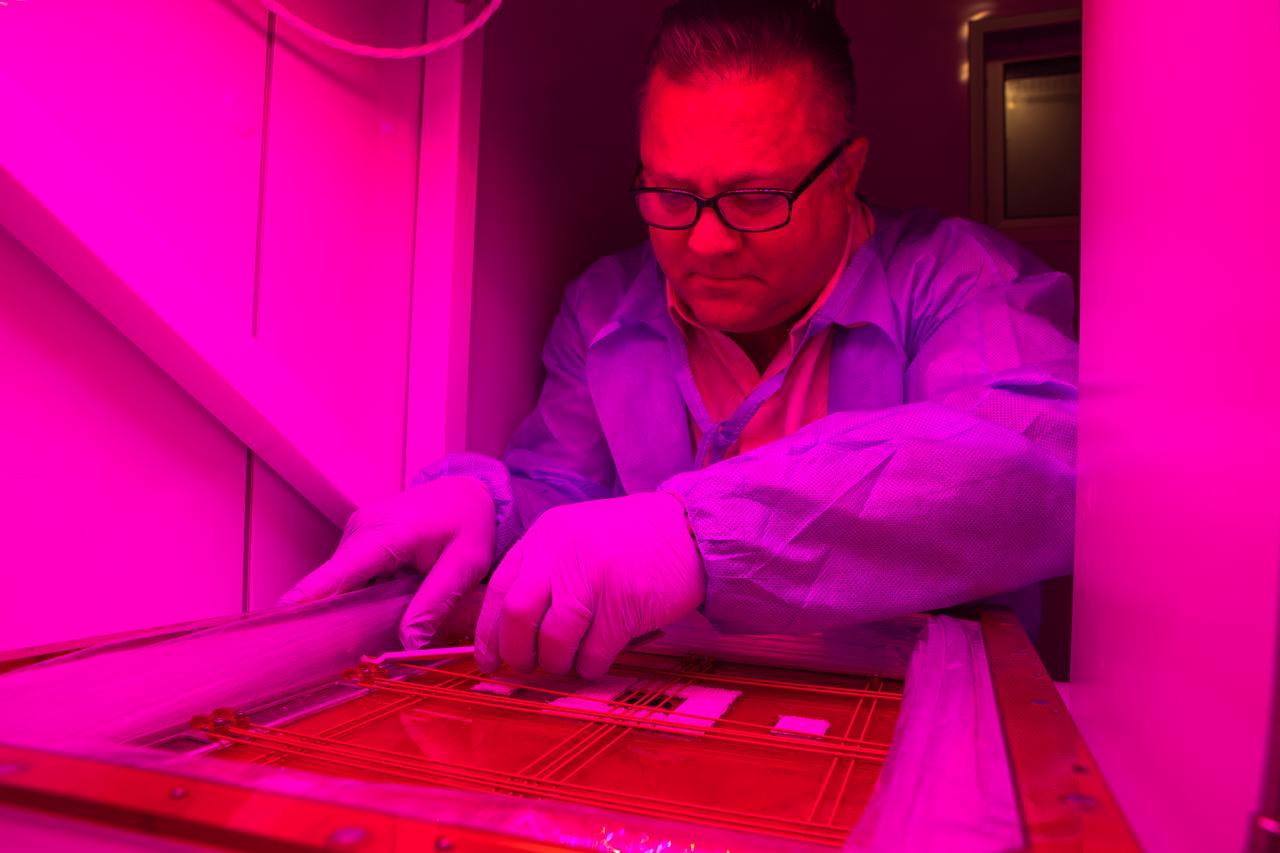
Matthew English is the Exploration Research and Technology facility manager for the Space Station Processing Facility (SSPF) at NASA’s Kennedy Space Center in Florida. English’s responsibilities include ensuring that the International Space Station teams inside the SSPF have the facilities, tools and capabilities they need to support their launch customers, thus providing the support necessary to enable further research and design discoveries within NASA.
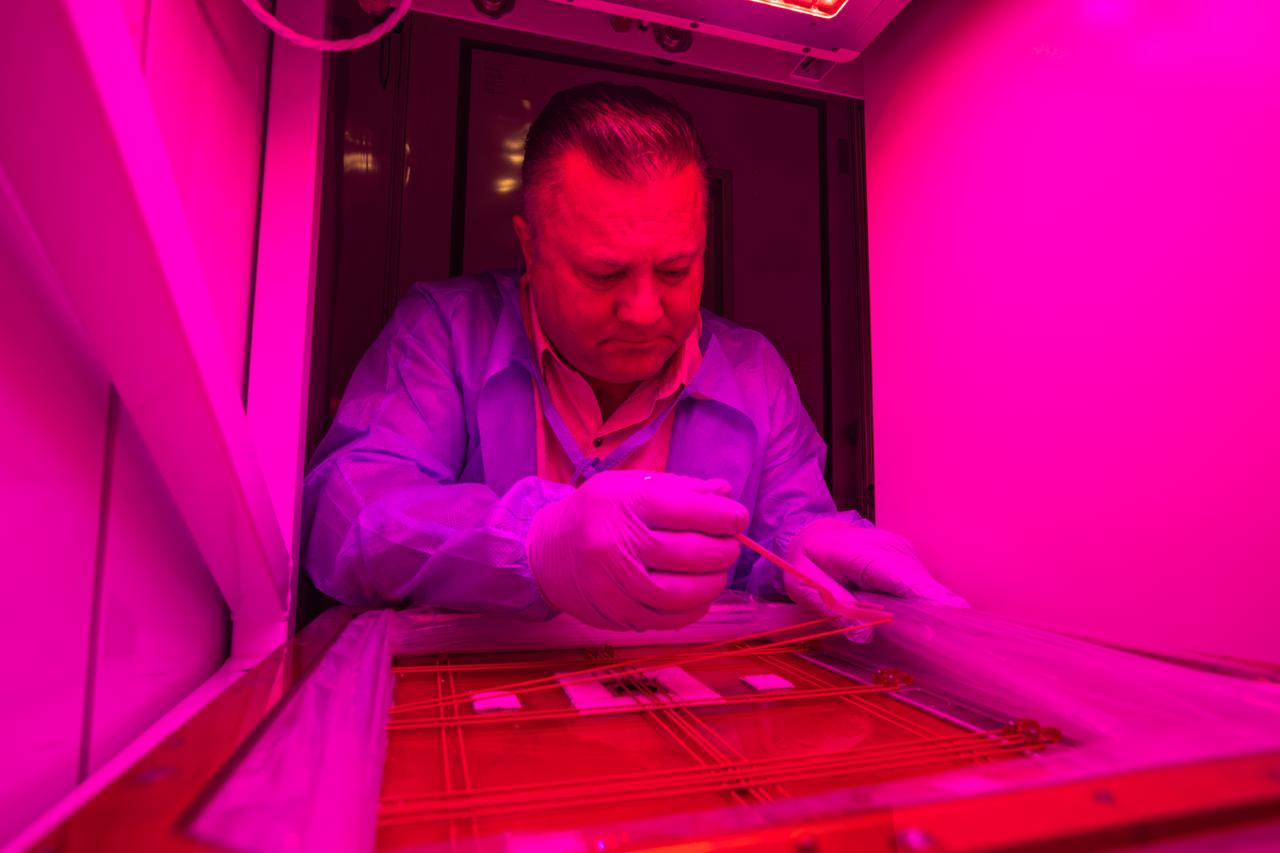
Matthew English is the Exploration Research and Technology facility manager for the Space Station Processing Facility (SSPF) at NASA’s Kennedy Space Center in Florida. English’s responsibilities include ensuring that the International Space Station teams inside the SSPF have the facilities, tools and capabilities they need to support their launch customers, thus providing the support necessary to enable further research and design discoveries within NASA.
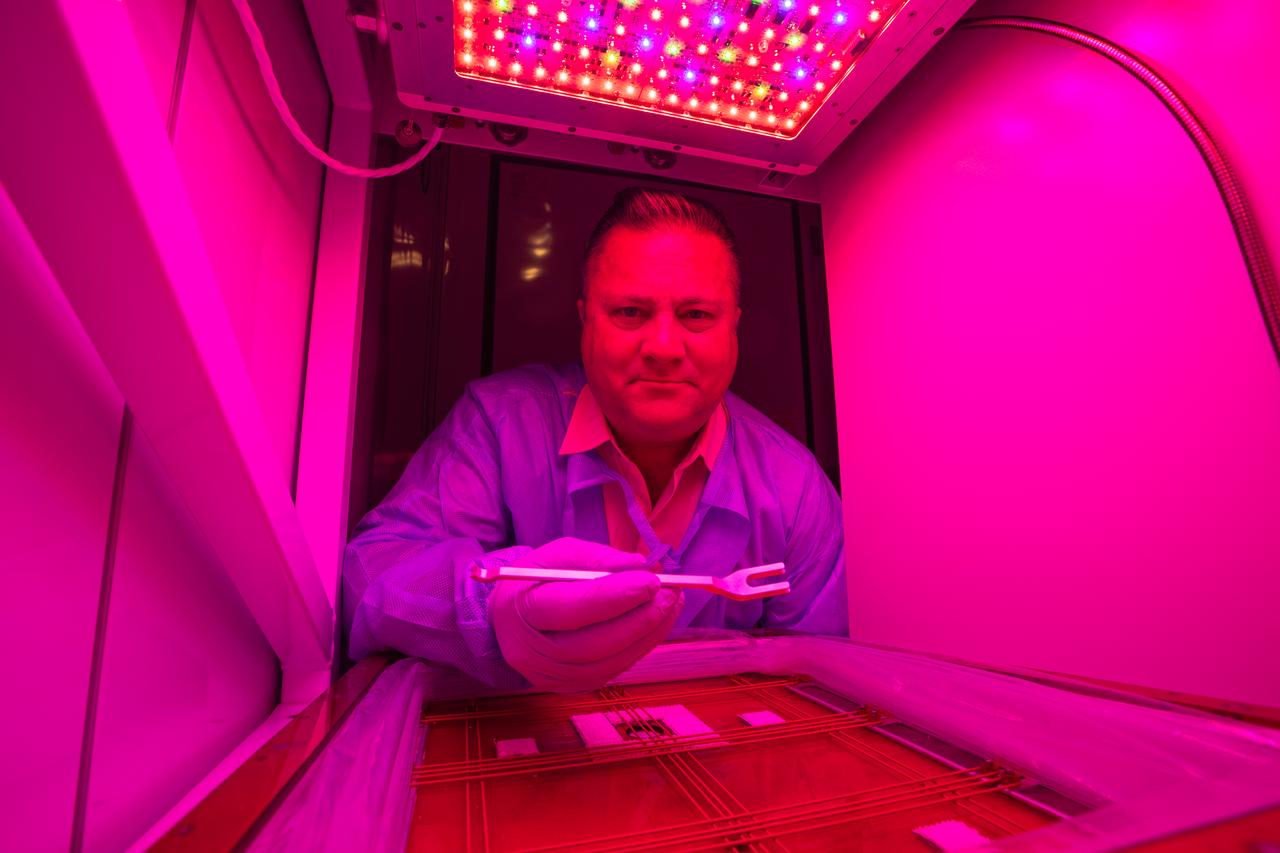
Matthew English is the Exploration Research and Technology facility manager for the Space Station Processing Facility (SSPF) at NASA’s Kennedy Space Center in Florida. English’s responsibilities include ensuring that the International Space Station teams inside the SSPF have the facilities, tools and capabilities they need to support their launch customers, thus providing the support necessary to enable further research and design discoveries within NASA.
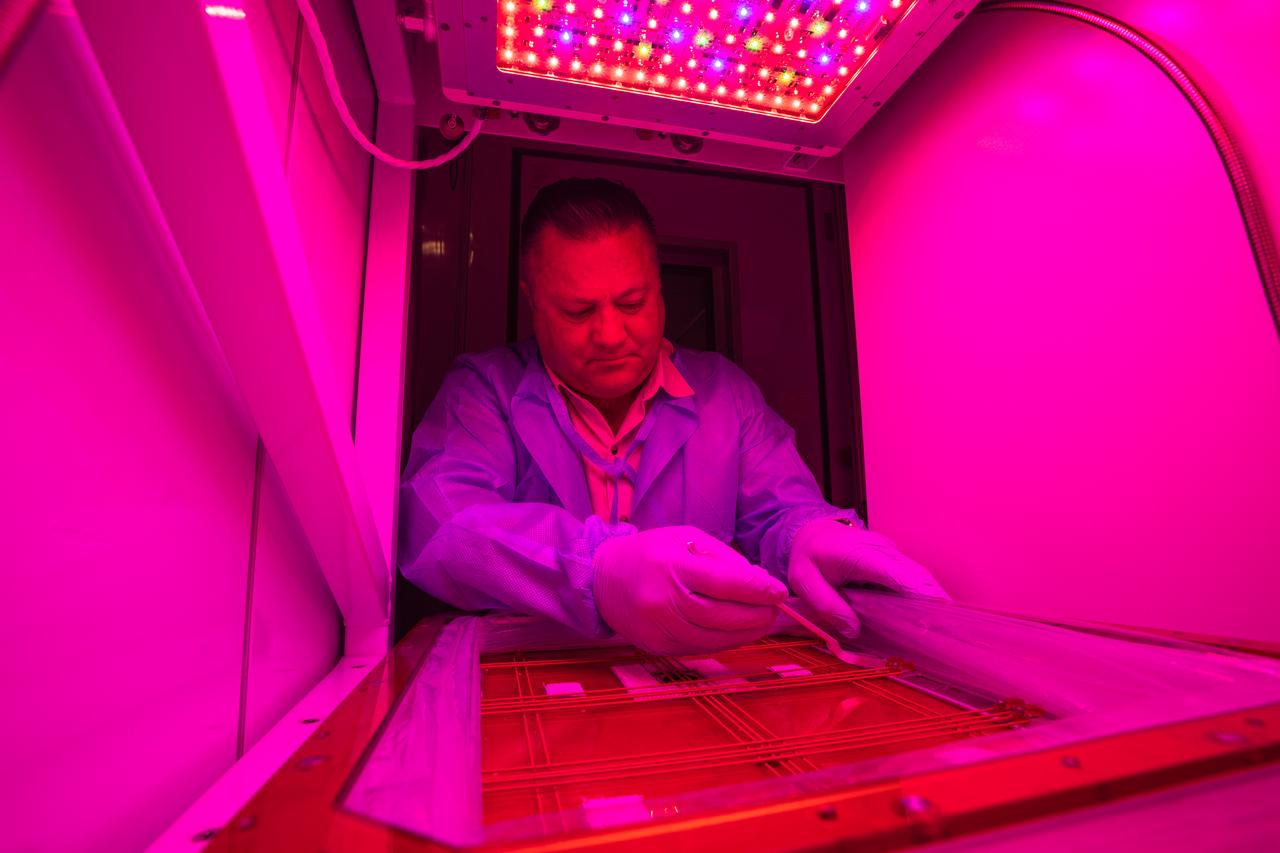
Matthew English is the Exploration Research and Technology facility manager for the Space Station Processing Facility (SSPF) at NASA’s Kennedy Space Center in Florida. English’s responsibilities include ensuring that the International Space Station teams inside the SSPF have the facilities, tools and capabilities they need to support their launch customers, thus providing the support necessary to enable further research and design discoveries within NASA.
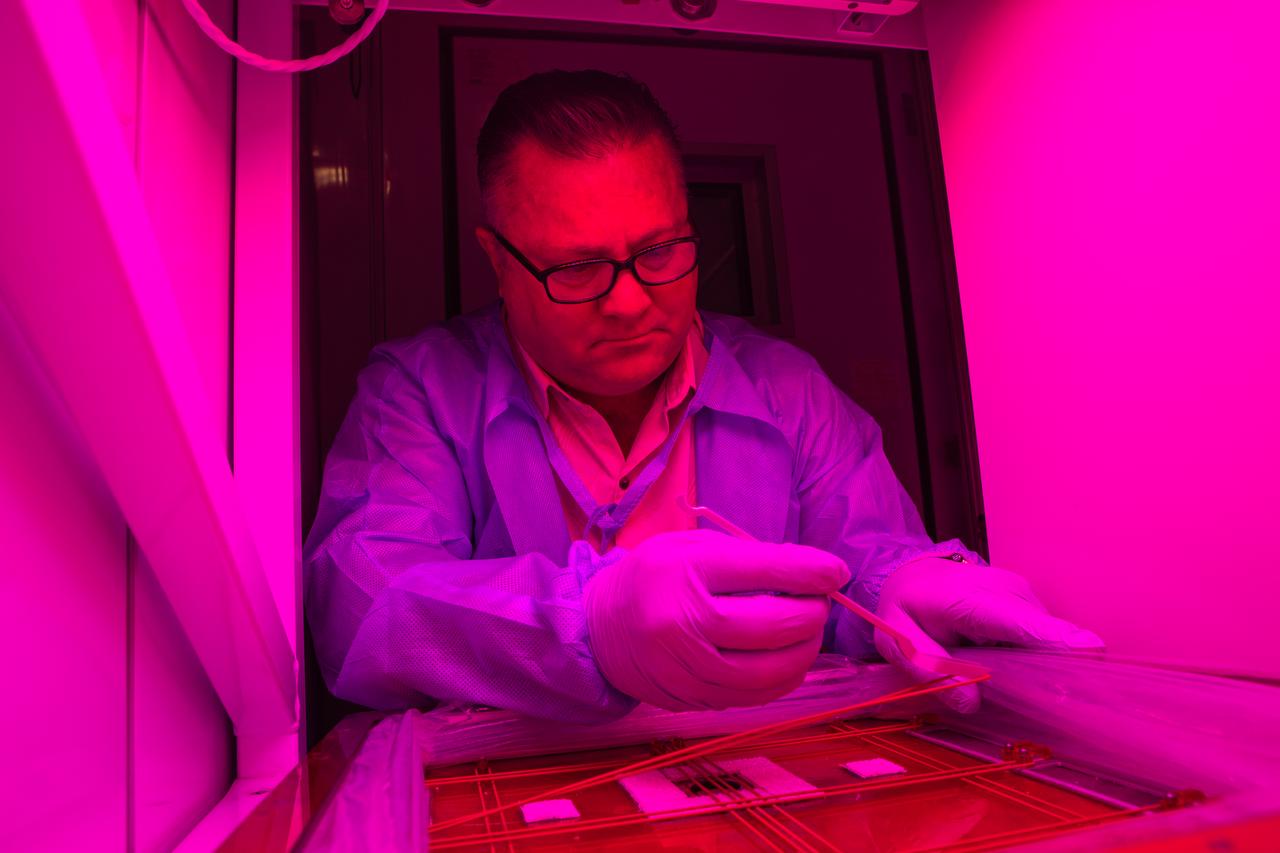
Matthew English is the Exploration Research and Technology facility manager for the Space Station Processing Facility (SSPF) at NASA’s Kennedy Space Center in Florida. English’s responsibilities include ensuring that the International Space Station teams inside the SSPF have the facilities, tools and capabilities they need to support their launch customers, thus providing the support necessary to enable further research and design discoveries within NASA.
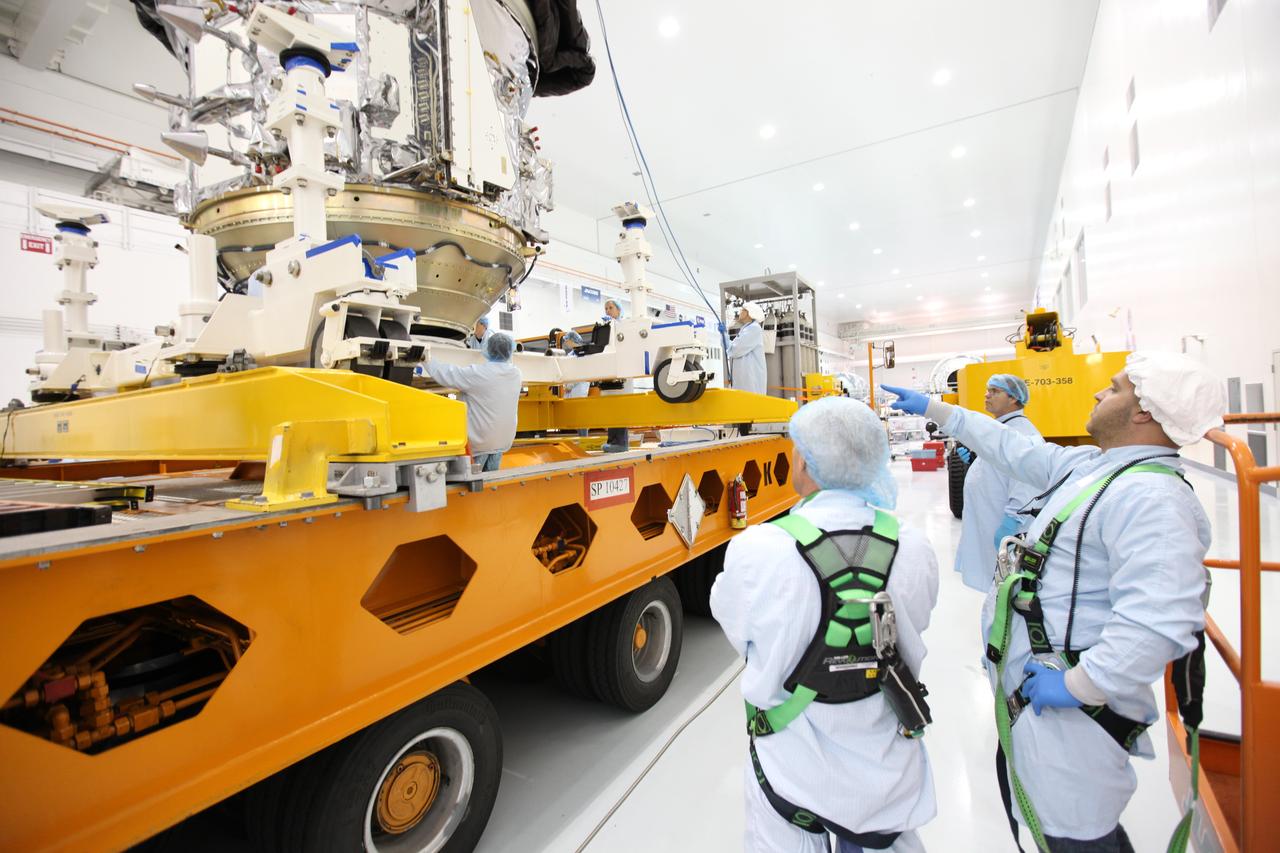
In the Space Station Processing Facility high bay at NASA's Kennedy Space Center in Florida, technicians assist as the Orbital ATK CYGNUS pressurized cargo module is secured on the KAMAG transporter. The module will be transported to the Payload Hazardous Servicing Facility. The Orbital ATK CRS-7 commercial resupply services mission to the International Space Station is scheduled to launch atop a United Launch Alliance Atlas V rocket from Space Launch Complex 41 at Cape Canaveral Air Force Station on March 19, 2017. CYGNUS will deliver thousands of pounds of supplies, equipment and scientific research materials to the space station.
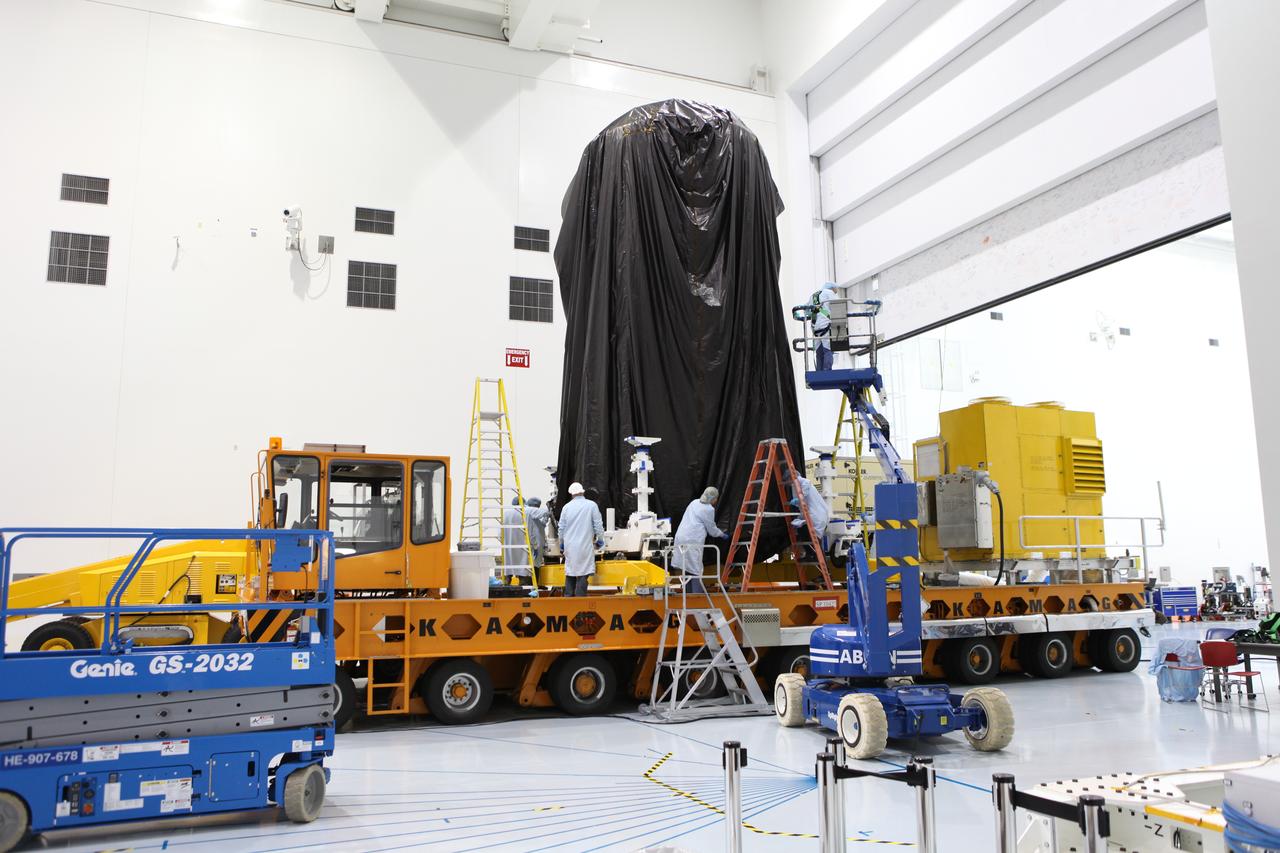
In the Space Station Processing Facility high bay at NASA's Kennedy Space Center in Florida, the Orbital ATK CYGNUS pressurized cargo module is secured the KAMAG transporter and the crane has been removed. Technicians have secured the protective covering around CYGNUS. The module will be transported to the Payload Hazardous Servicing Facility. The Orbital ATK CRS-7 commercial resupply services mission to the International Space Station is scheduled to launch atop a United Launch Alliance Atlas V rocket from Space Launch Complex 41 at Cape Canaveral Air Force Station on March 19, 2017. CYGNUS will deliver thousands of pounds of supplies, equipment and scientific research materials to the space station.
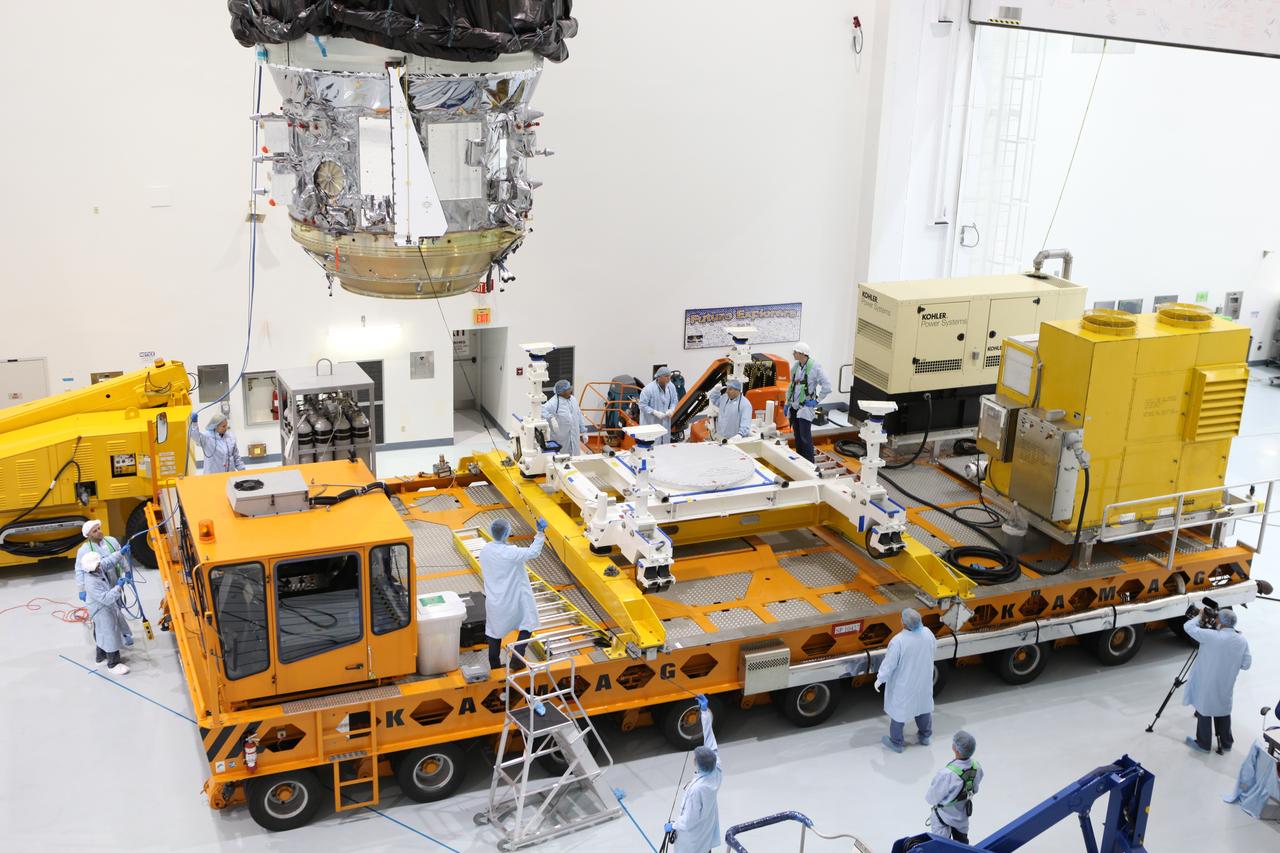
In the Space Station Processing Facility high bay at NASA's Kennedy Space Center in Florida, technicians monitor the progress as a crane moves the Orbital ATK CYGNUS pressurized cargo module closer to the KAMAG transporter. The module will be secured on the transporter and moved to the Payload Hazardous Servicing Facility. The Orbital ATK CRS-7 commercial resupply services mission to the International Space Station is scheduled to launch atop a United Launch Alliance Atlas V rocket from Space Launch Complex 41 at Cape Canaveral Air Force Station on March 19, 2017. CYGNUS will deliver thousands of pounds of supplies, equipment and scientific research materials to the space station.
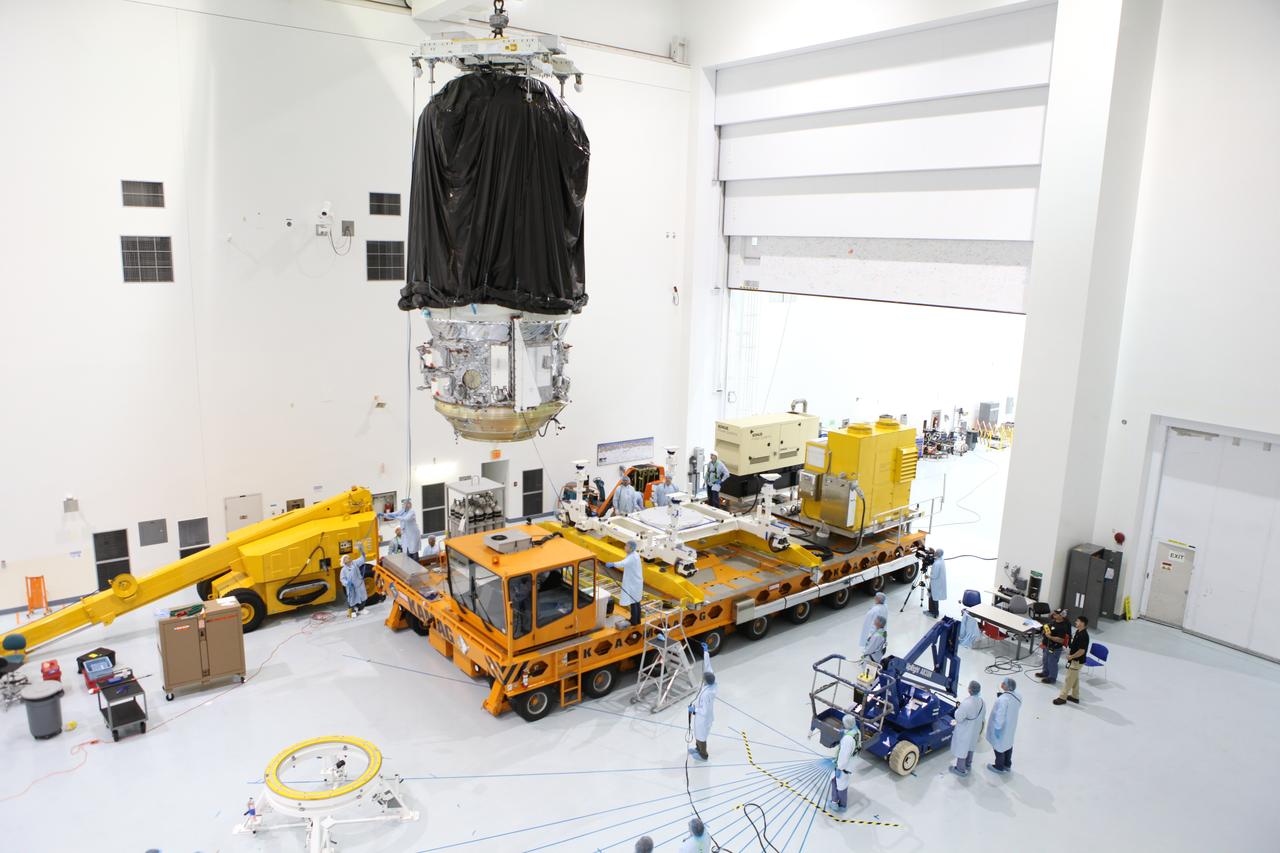
In the Space Station Processing Facility at NASA's Kennedy Space Center in Florida, a crane moves the Orbital ATK CYGNUS pressurized cargo module to the KAMAG transporter. The module will be secured on the transporter and moved to the Payload Hazardous Servicing Facility. The Orbital ATK CRS-7 commercial resupply services mission to the International Space Station is scheduled to launch atop a United Launch Alliance Atlas V rocket from Space Launch Complex 41 at Cape Canaveral Air Force Station on March 19, 2017. CYGNUS will deliver thousands of pounds of supplies, equipment and scientific research materials to the space station.
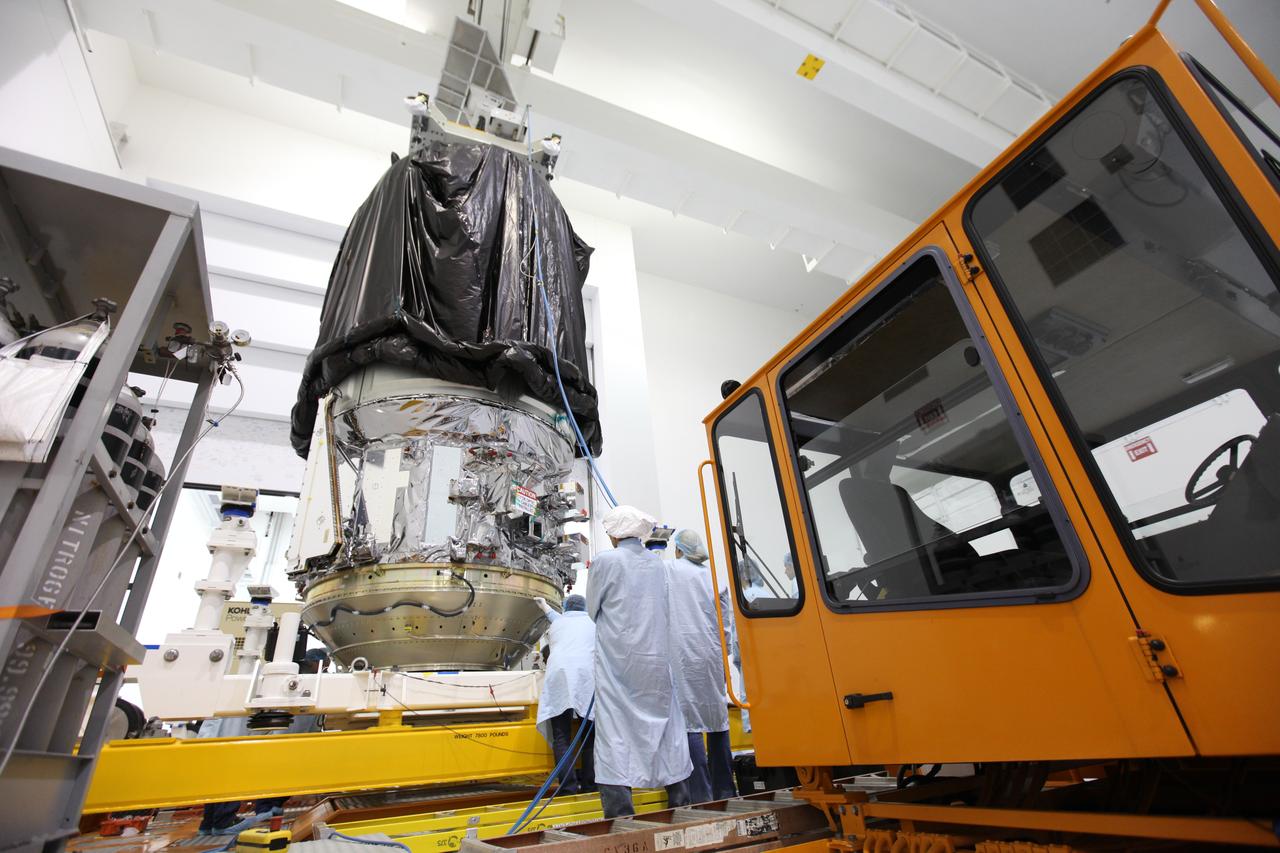
In the Space Station Processing Facility high bay at NASA's Kennedy Space Center in Florida, technicians secure the Orbital ATK CYGNUS pressurized cargo module on the KAMAG transporter. The module will be transported to the Payload Hazardous Servicing Facility. The Orbital ATK CRS-7 commercial resupply services mission to the International Space Station is scheduled to launch atop a United Launch Alliance Atlas V rocket from Space Launch Complex 41 at Cape Canaveral Air Force Station on March 19, 2017. CYGNUS will deliver thousands of pounds of supplies, equipment and scientific research materials to the space station.
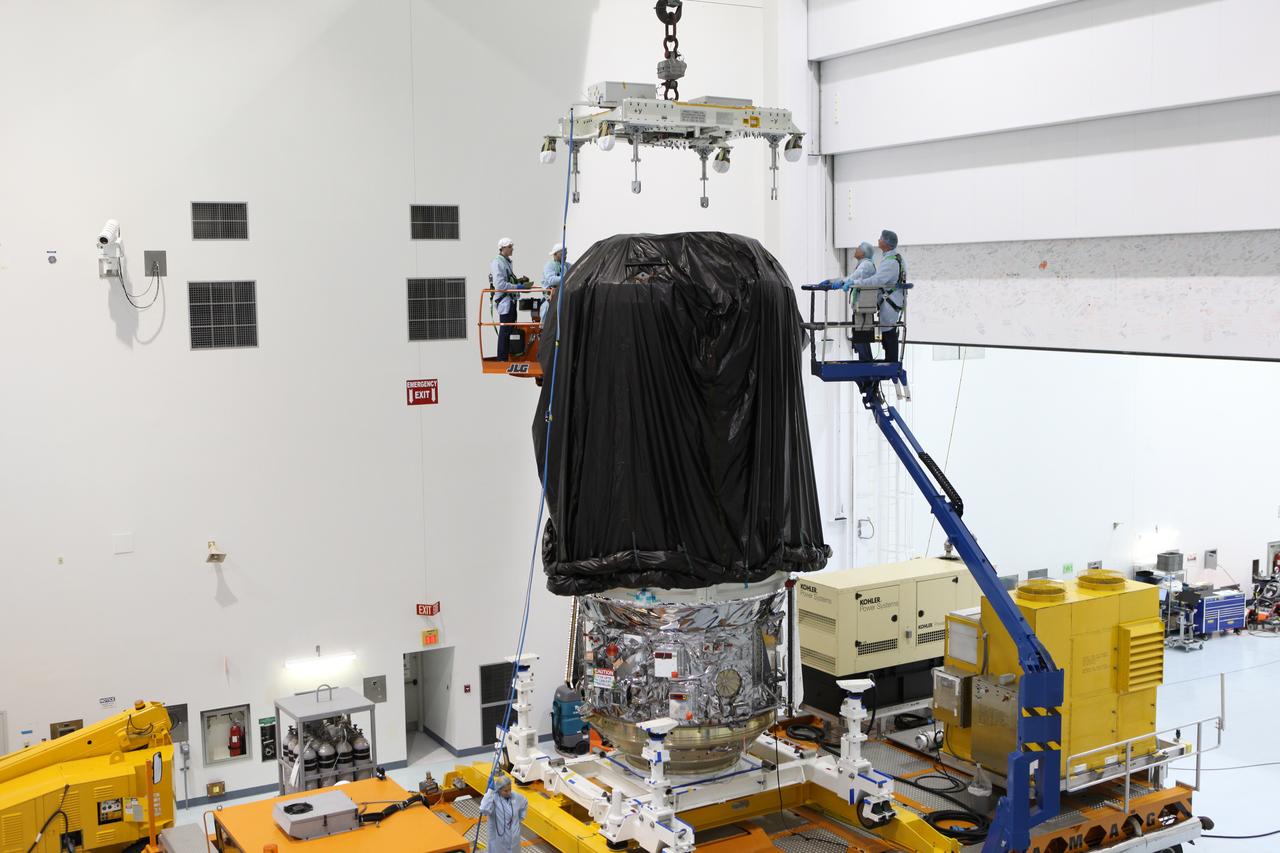
In the Space Station Processing Facility high bay at NASA's Kennedy Space Center in Florida, the Orbital ATK CYGNUS pressurized cargo module is secured the KAMAG transporter and the crane has been removed. The module will be transported to the Payload Hazardous Servicing Facility. The Orbital ATK CRS-7 commercial resupply services mission to the International Space Station is scheduled to launch atop a United Launch Alliance Atlas V rocket from Space Launch Complex 41 at Cape Canaveral Air Force Station on March 19, 2017. CYGNUS will deliver thousands of pounds of supplies, equipment and scientific research materials to the space station.
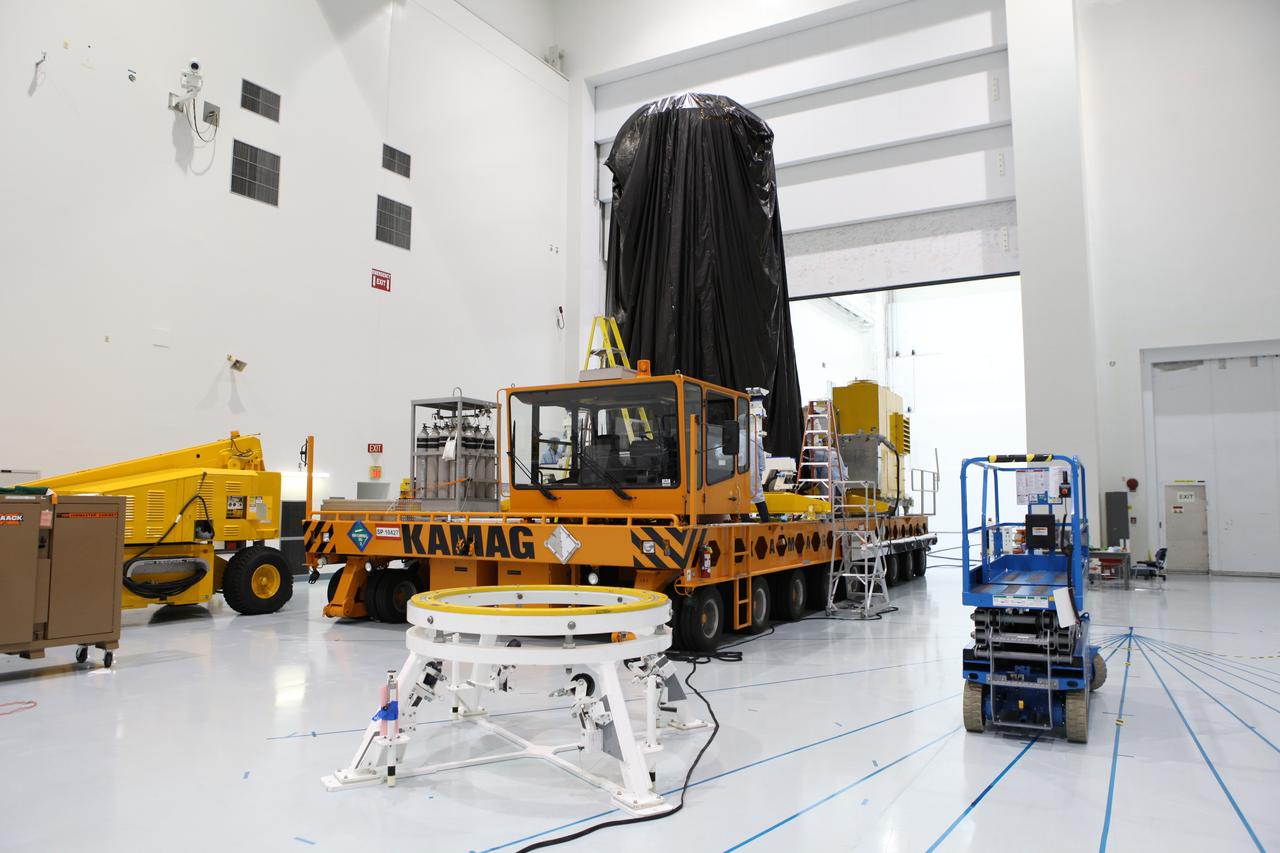
In the Space Station Processing Facility high bay at NASA's Kennedy Space Center in Florida, the Orbital ATK CYGNUS pressurized cargo module is secured the KAMAG transporter and the crane has been removed. Technicians have secured the protective covering around CYGNUS. The module will be transported to the Payload Hazardous Servicing Facility. The Orbital ATK CRS-7 commercial resupply services mission to the International Space Station is scheduled to launch atop a United Launch Alliance Atlas V rocket from Space Launch Complex 41 at Cape Canaveral Air Force Station on March 19, 2017. CYGNUS will deliver thousands of pounds of supplies, equipment and scientific research materials to the space station.
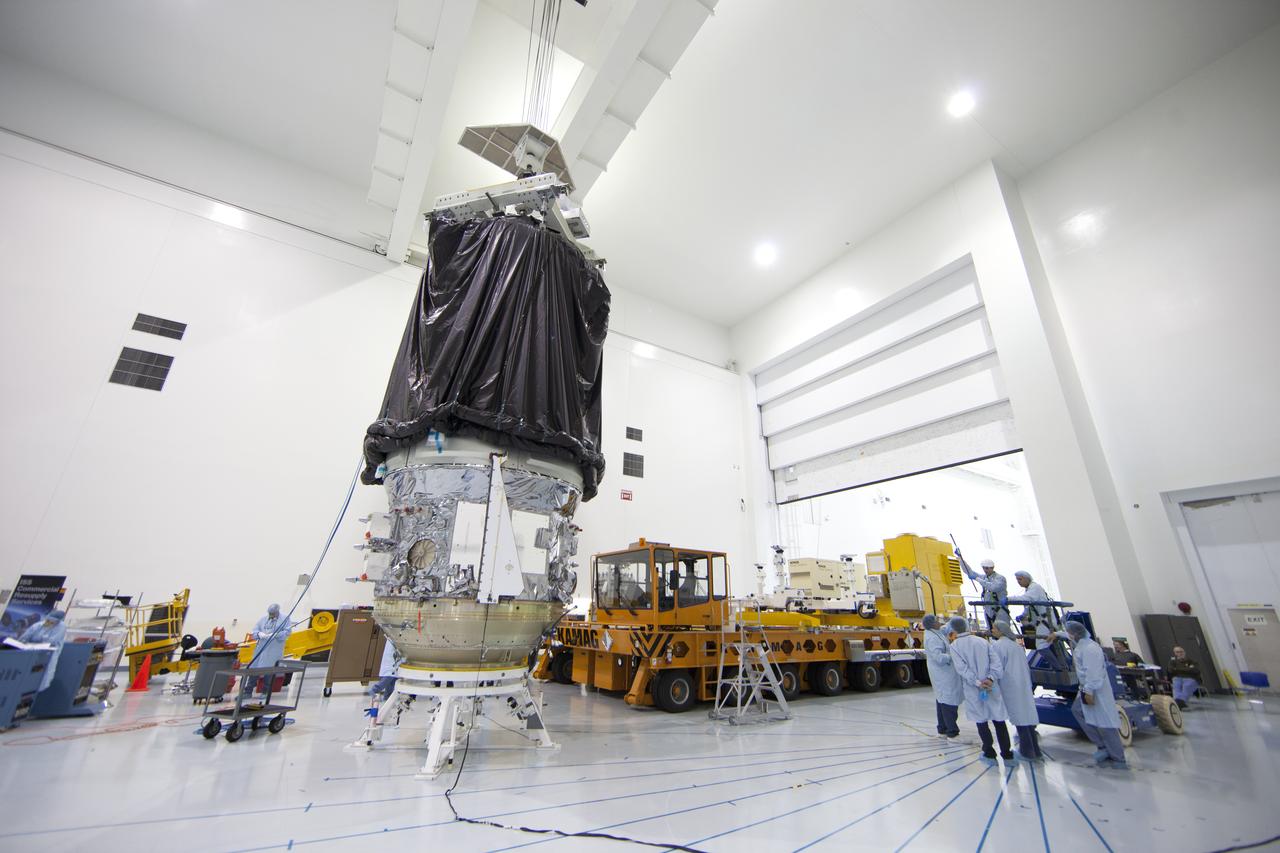
In the Space Station Processing Facility at NASA's Kennedy Space Center in Florida, preparations are underway to lift the Orbital ATK CYGNUS pressurized cargo module up from a work stand. The module will be secured on a KAMAG transporter for the trip to the Payload Hazardous Servicing Facility. The Orbital ATK CRS-7 commercial resupply services mission to the International Space Station is scheduled to launch atop a United Launch Alliance Atlas V rocket from Space Launch Complex 41 at Cape Canaveral Air Force Station on March 19, 2017. CYGNUS will deliver thousands of pounds of supplies, equipment and scientific research materials to the space station.
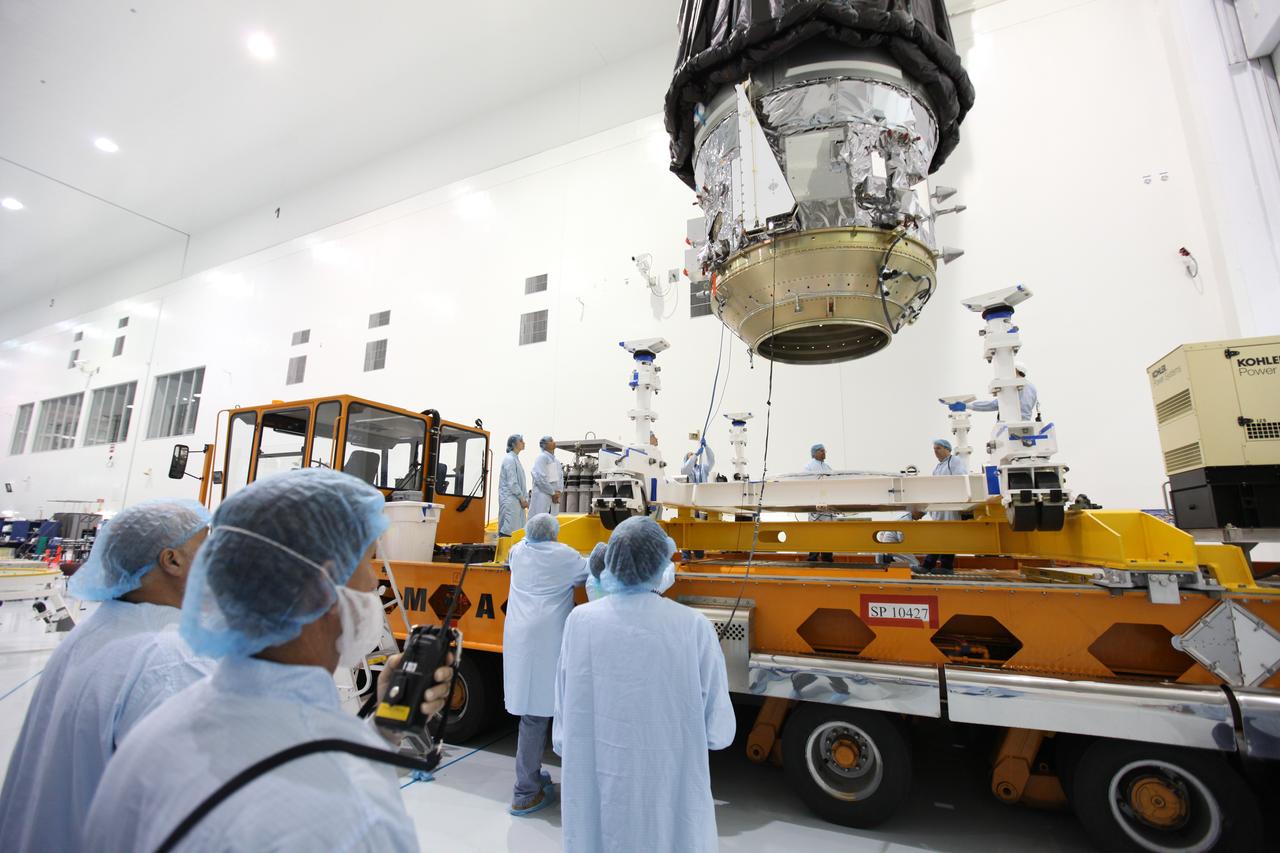
In the Space Station Processing Facility high bay at NASA's Kennedy Space Center in Florida, technicians monitor the progress as a crane lowers the Orbital ATK CYGNUS pressurized cargo module toward the KAMAG transporter. The module will be secured on the transporter and moved to the Payload Hazardous Servicing Facility. The Orbital ATK CRS-7 commercial resupply services mission to the International Space Station is scheduled to launch atop a United Launch Alliance Atlas V rocket from Space Launch Complex 41 at Cape Canaveral Air Force Station on March 19, 2017. CYGNUS will deliver thousands of pounds of supplies, equipment and scientific research materials to the space station.
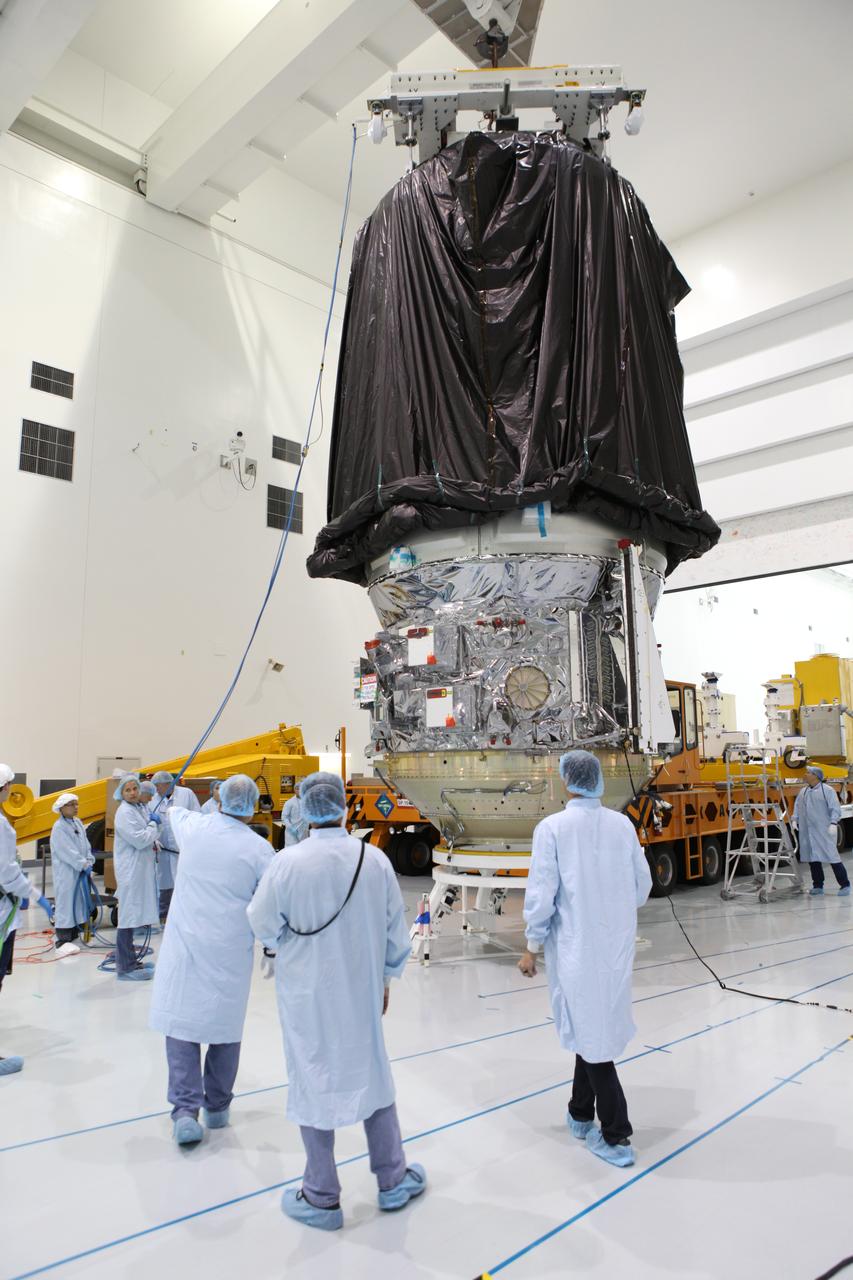
In the Space Station Processing Facility at NASA's Kennedy Space Center in Florida, technicians assist as a crane is used to lower a protective covering over Orbital ATK's CYGNUS pressurized cargo module. The module will be secured on a KAMAG transporter for the trip to the Payload Hazardous Servicing Facility. The Orbital ATK CRS-7 commercial resupply services mission to the International Space Station is scheduled to launch atop a United Launch Alliance Atlas V rocket from Space Launch Complex 41 at Cape Canaveral Air Force Station on March 19, 2017. CYGNUS will deliver thousands of pounds of supplies, equipment and scientific research materials to the space station.
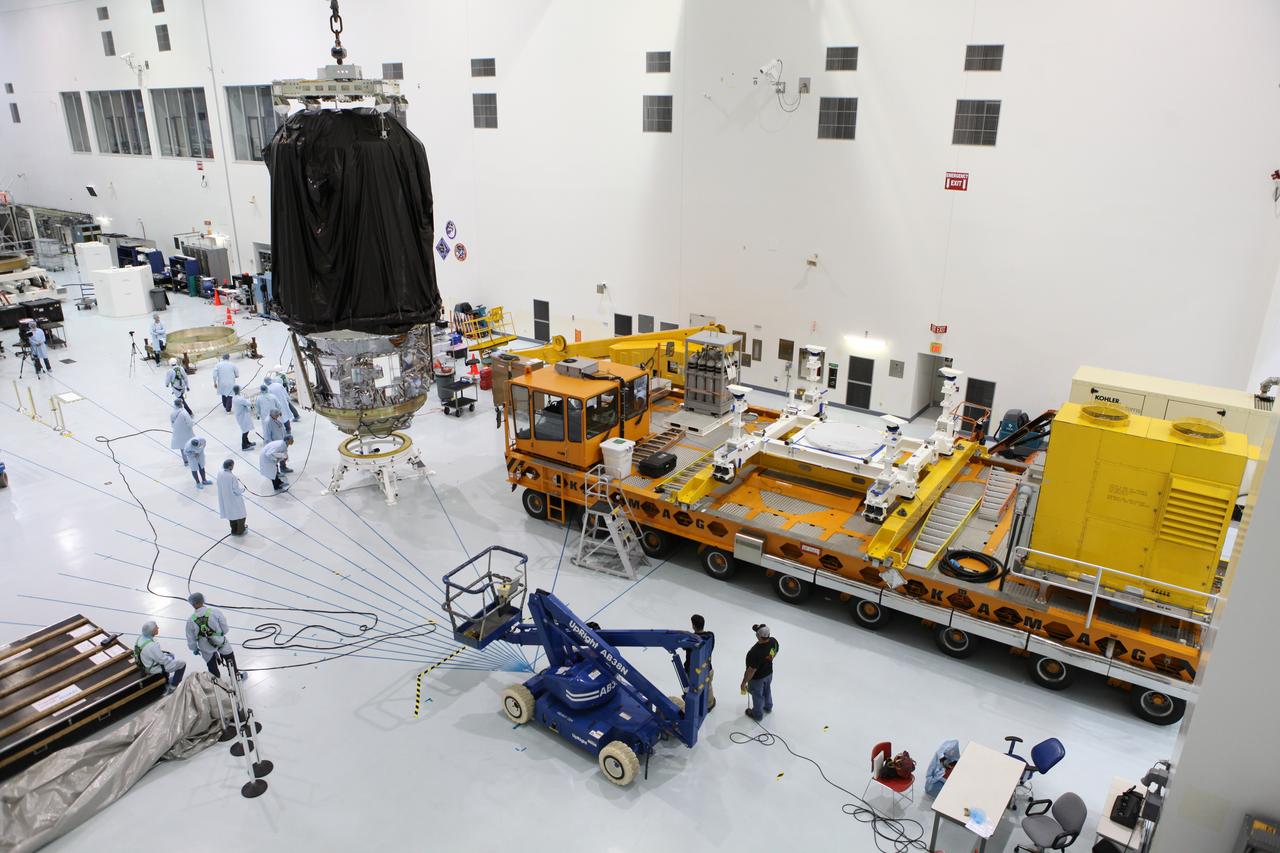
In the Space Station Processing Facility at NASA's Kennedy Space Center in Florida, the Orbital ATK CYGNUS pressurized cargo module is lifted up by crane for transfer to the KAMAG transporter. The module will be secured on the transporter and moved to the Payload Hazardous Servicing Facility. The Orbital ATK CRS-7 commercial resupply services mission to the International Space Station is scheduled to launch atop a United Launch Alliance Atlas V rocket from Space Launch Complex 41 at Cape Canaveral Air Force Station on March 19, 2017. CYGNUS will deliver thousands of pounds of supplies, equipment and scientific research materials to the space station.
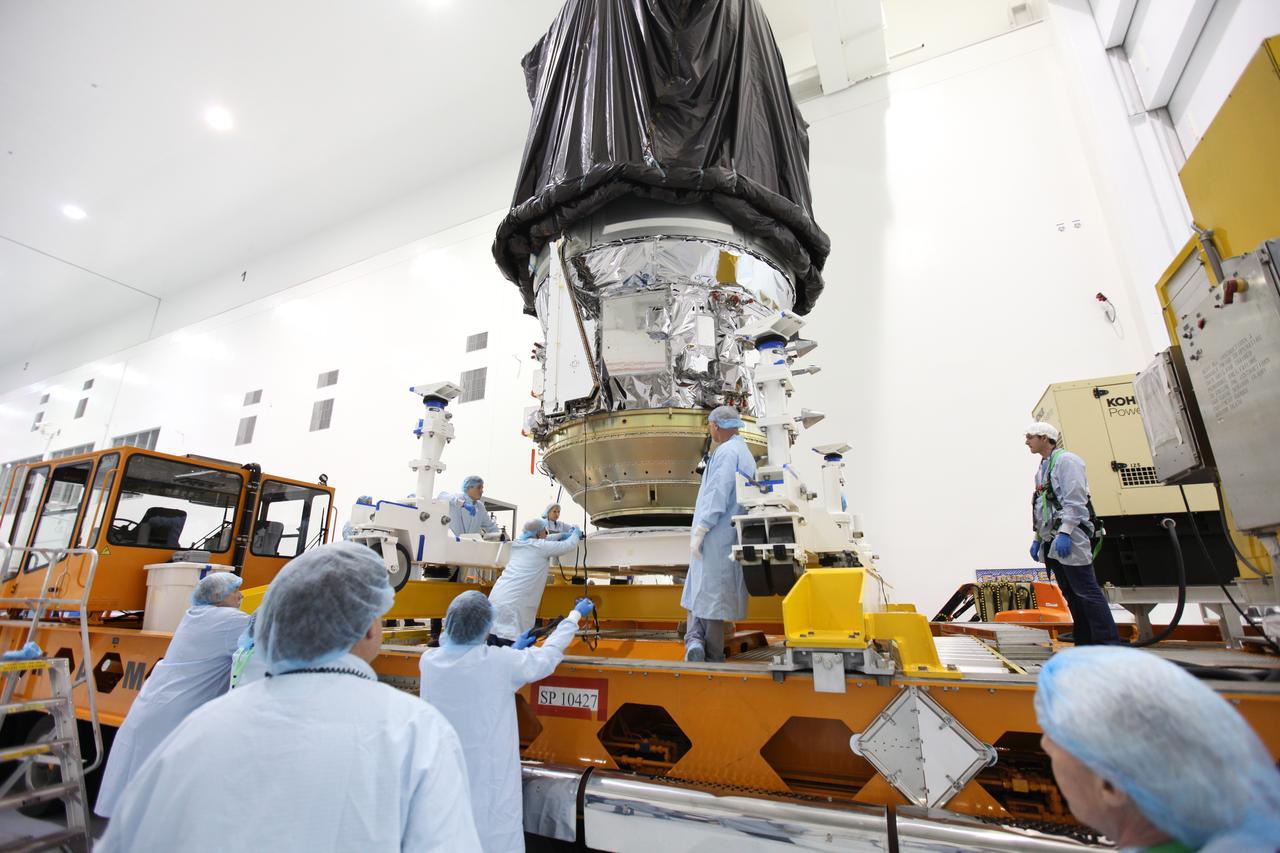
In the Space Station Processing Facility high bay at NASA's Kennedy Space Center in Florida, technicians assist as a crane lowers the Orbital ATK CYGNUS pressurized cargo module onto the KAMAG transporter. The module will be secured on the transporter and moved to the Payload Hazardous Servicing Facility. The Orbital ATK CRS-7 commercial resupply services mission to the International Space Station is scheduled to launch atop a United Launch Alliance Atlas V rocket from Space Launch Complex 41 at Cape Canaveral Air Force Station on March 19, 2017. CYGNUS will deliver thousands of pounds of supplies, equipment and scientific research materials to the space station.
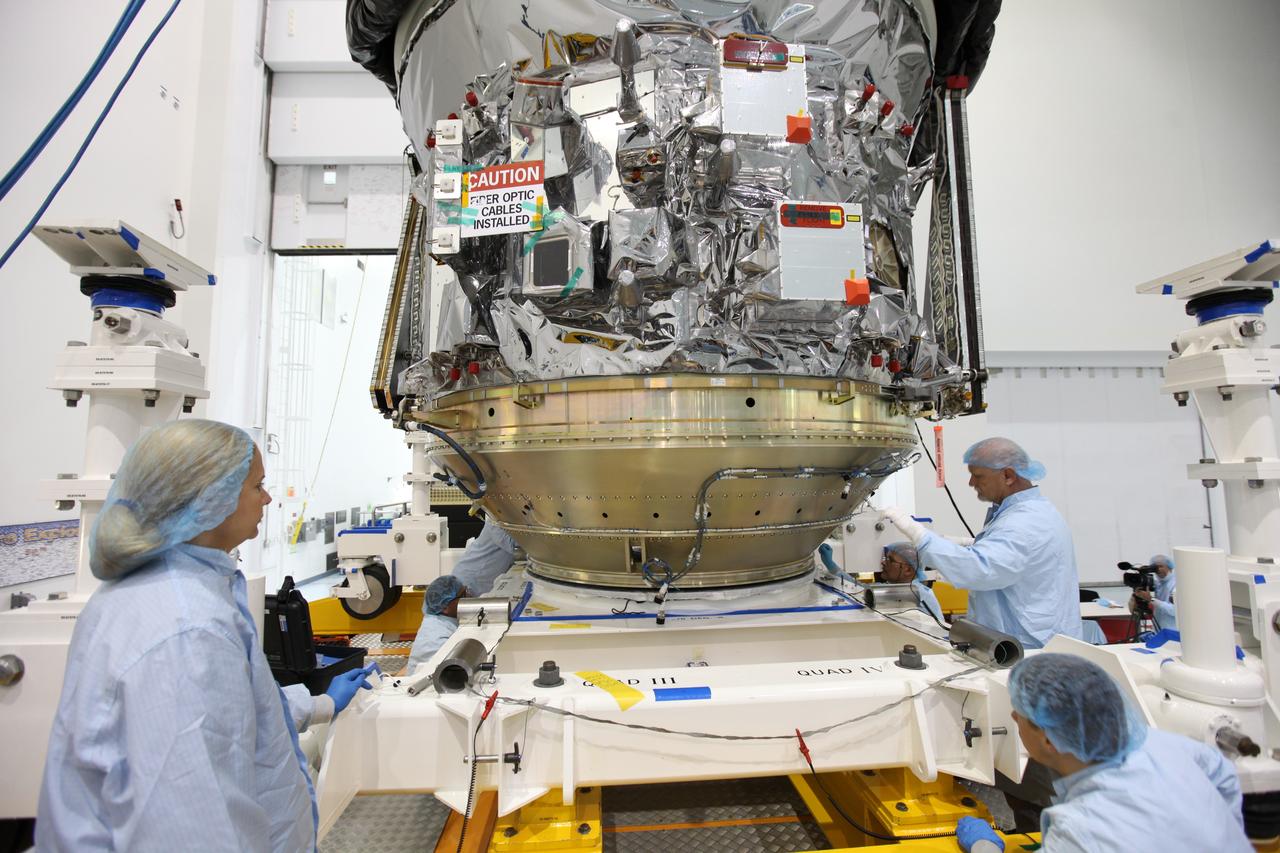
In the Space Station Processing Facility high bay at NASA's Kennedy Space Center in Florida, technicians secure the Orbital ATK CYGNUS pressurized cargo module on the KAMAG transporter. The module will be transported to the Payload Hazardous Servicing Facility. The Orbital ATK CRS-7 commercial resupply services mission to the International Space Station is scheduled to launch atop a United Launch Alliance Atlas V rocket from Space Launch Complex 41 at Cape Canaveral Air Force Station on March 19, 2017. CYGNUS will deliver thousands of pounds of supplies, equipment and scientific research materials to the space station.
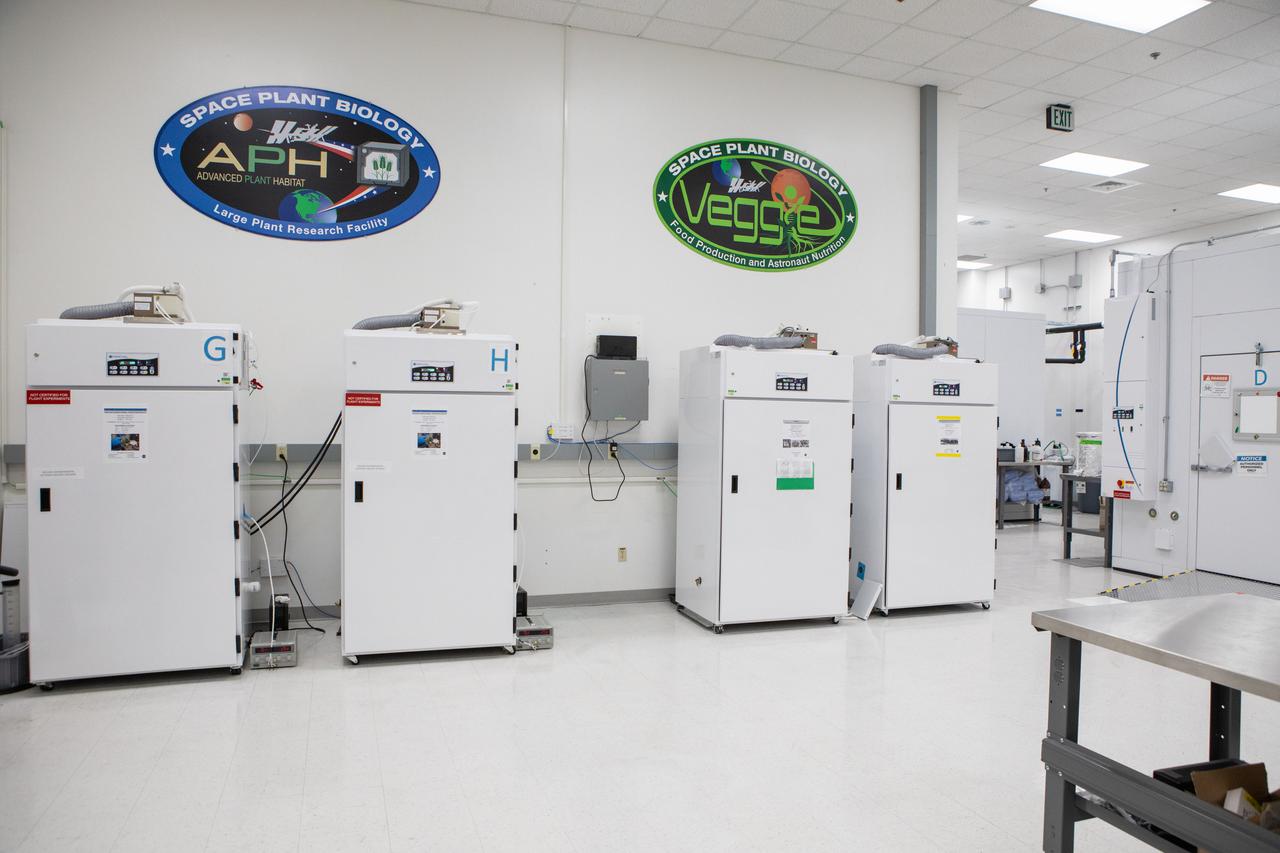
Ground unit experiment chambers for the Veggie plant growth system and the Advanced Plant Habitat are in view in a laboratory inside the Space Station Processing Facility (SSPF) at NASA’s Kennedy Space Center in Florida, on May 16, 2019. The center is celebrating the SSPF’s 25th anniversary. The facility was built to process elements for the International Space Station. Now it is providing support for current and future NASA and commercial provider programs, including Commercial Resupply Services, Artemis 1, sending the first woman and next man to the Moon, and deep space destinations including Mars.
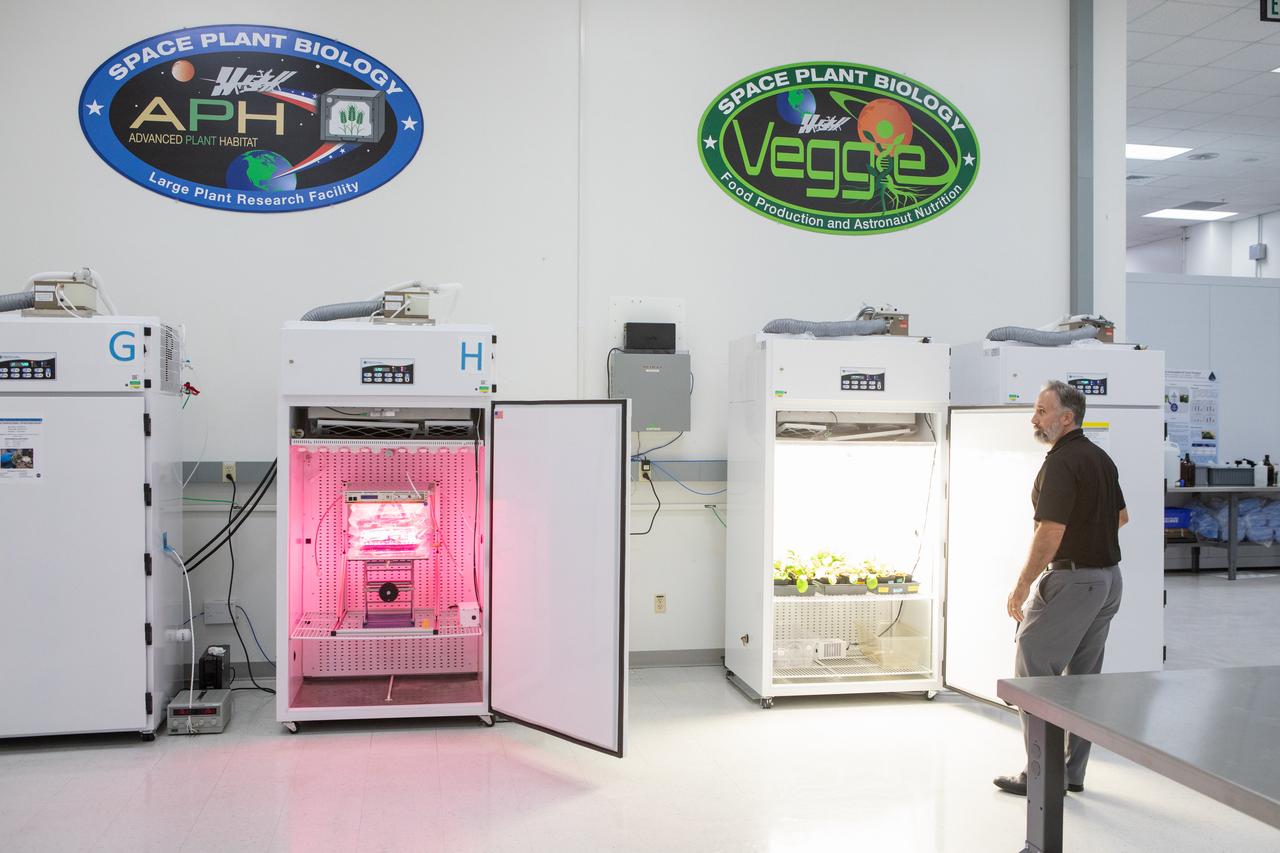
Ground unit experiment chambers for the Veggie plant growth system, at right, and the Advanced Plant Habitat, at left, are in view in a laboratory inside the Space Station Processing Facility (SSPF) at NASA’s Kennedy Space Center in Florida, on May 16, 2019. Trent Smith, Veggie project manager, Exploration Research and Technology Programs, checks the experiments. The center is celebrating the SSPF’s 25th anniversary. The facility was built to process elements for the International Space Station. Now it is providing support for current and future NASA and commercial provider programs, including Commercial Resupply Services, Artemis 1, sending the first woman and next man to the Moon, and deep space destinations including Mars.
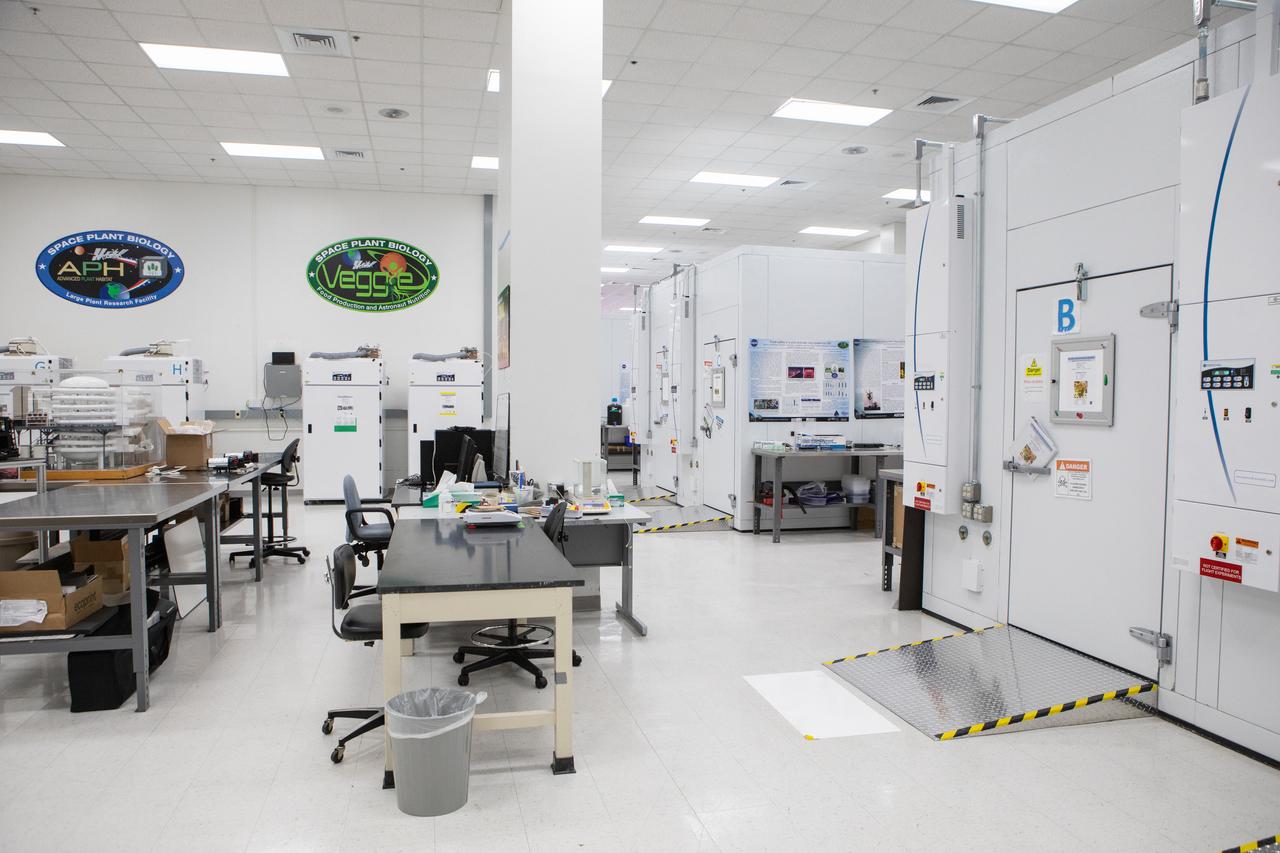
Ground unit experiment chambers for the Veggie plant growth system, at right, and the Advanced Plant Habitat, at left, are in view in a laboratory inside the Space Station Processing Facility (SSPF) at NASA’s Kennedy Space Center in Florida, on May 16, 2019. The center is celebrating the SSPF’s 25th anniversary. The facility was built to process elements for the International Space Station. Now it is providing support for current and future NASA and commercial provider programs, including Commercial Resupply Services, Artemis 1, sending the first woman and next man to the Moon, and deep space destinations including Mars.
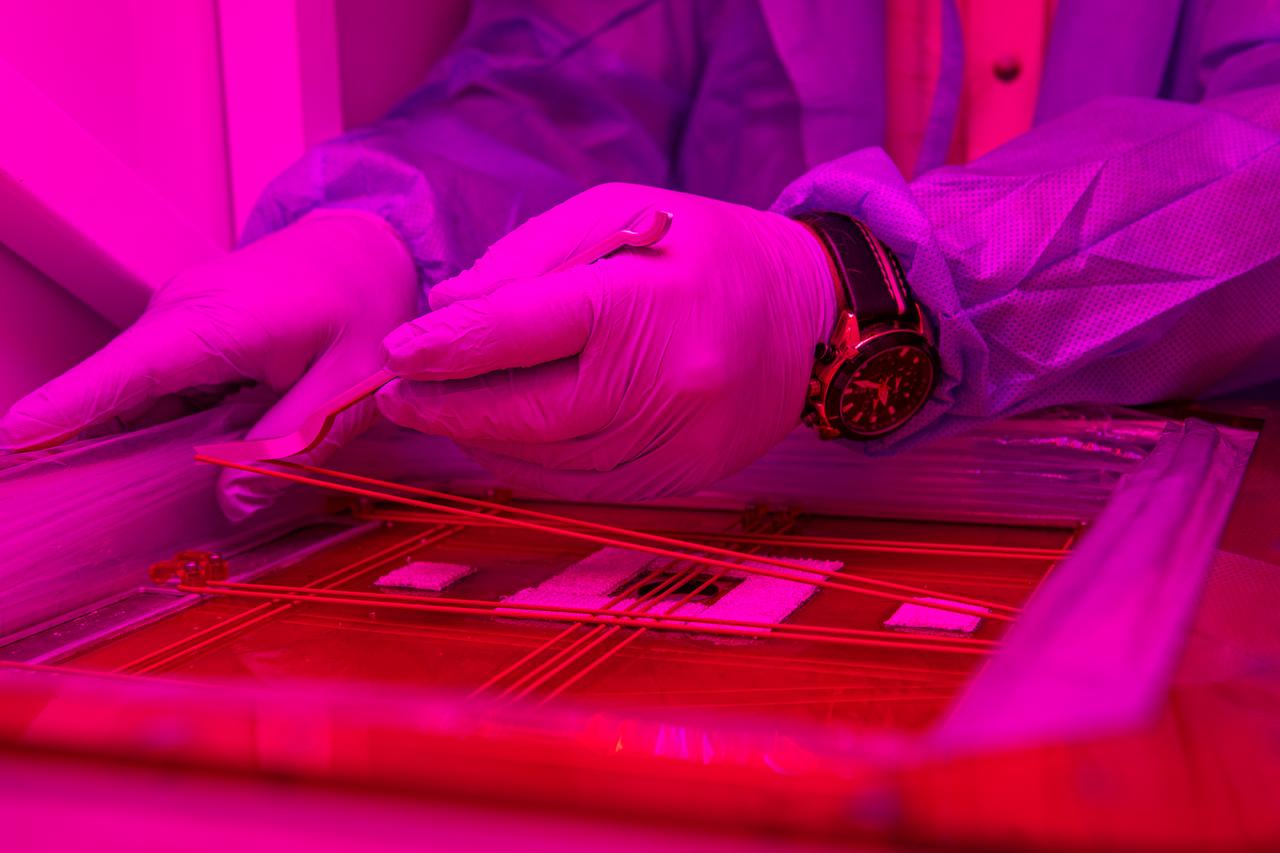
Matthew English is the Exploration Research and Technology facility manager for the Space Station Processing Facility (SSPF) at NASA’s Kennedy Space Center in Florida. In this photo, he is demonstrating how astronauts use a bungee tool to manipulate bungee cords that help secure vital parts of plant experiments in the Veggie growth chamber while they are aboard the International Space Station. This allows them to make efficient use of their time as they conduct scientific research in a microgravity environment. English’s primary responsibilities include ensuring that the space station teams inside the SSPF have the facilities, tools and capabilities they need to support their launch customers, thus providing the support necessary to enable further research and design discoveries within NASA.
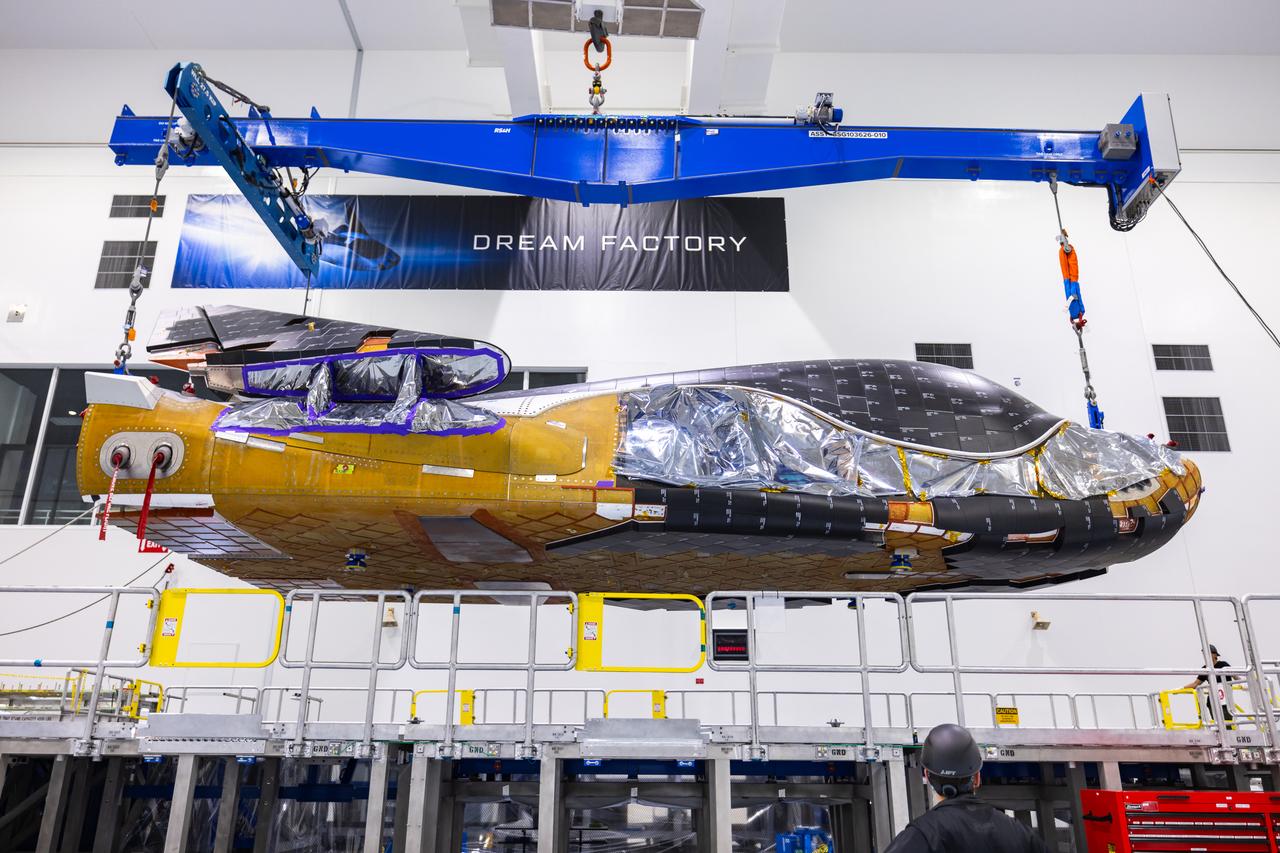
Dream Chaser Tenacity, Sierra Space's uncrewed cargo spaceplane is lifted and moved by crane inside the Space Systems Processing Facility (SSPF) at NASA’s Kennedy Space Center in Florida on Monday, May 20, 2024. Dream Chaser Tenacity will undergo final testing and prelaunch processing inside the high bay of the SSPF ahead of its inaugural launch atop a ULA (United Launch Alliance) Vulcan rocket from nearby Cape Canaveral Space Force Station. The reusable transportation system is contracted to perform a minimum of seven cargo missions to the International Space Station as part of the agency’s efforts to expand commercial resupply services to low Earth orbit.
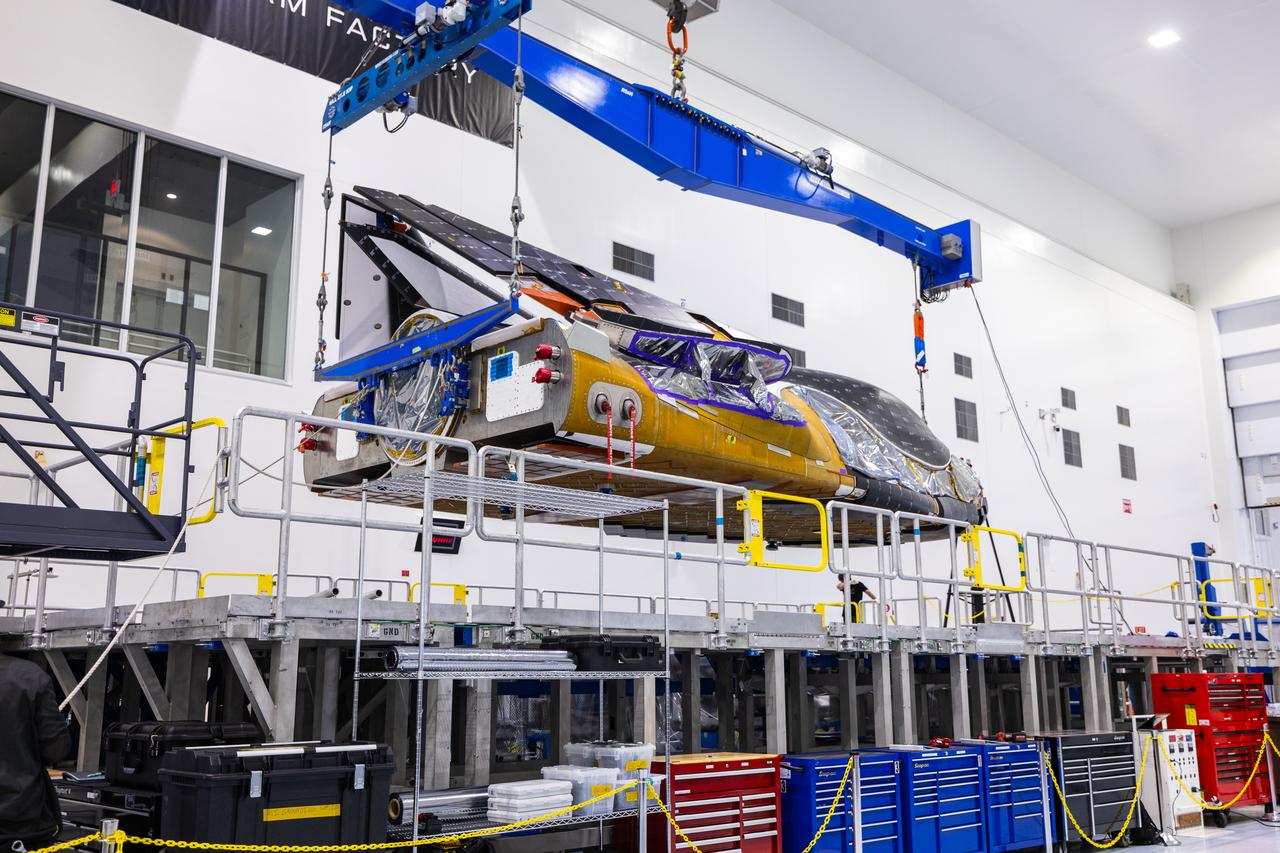
Dream Chaser Tenacity, Sierra Space's uncrewed cargo spaceplane is lifted and moved by crane inside the Space Systems Processing Facility (SSPF) at NASA’s Kennedy Space Center in Florida on Monday, May 20, 2024. Dream Chaser Tenacity will undergo final testing and prelaunch processing inside the high bay of the SSPF ahead of its inaugural launch atop a ULA (United Launch Alliance) Vulcan rocket from nearby Cape Canaveral Space Force Station. The reusable transportation system is contracted to perform a minimum of seven cargo missions to the International Space Station as part of the agency’s efforts to expand commercial resupply services to low Earth orbit.
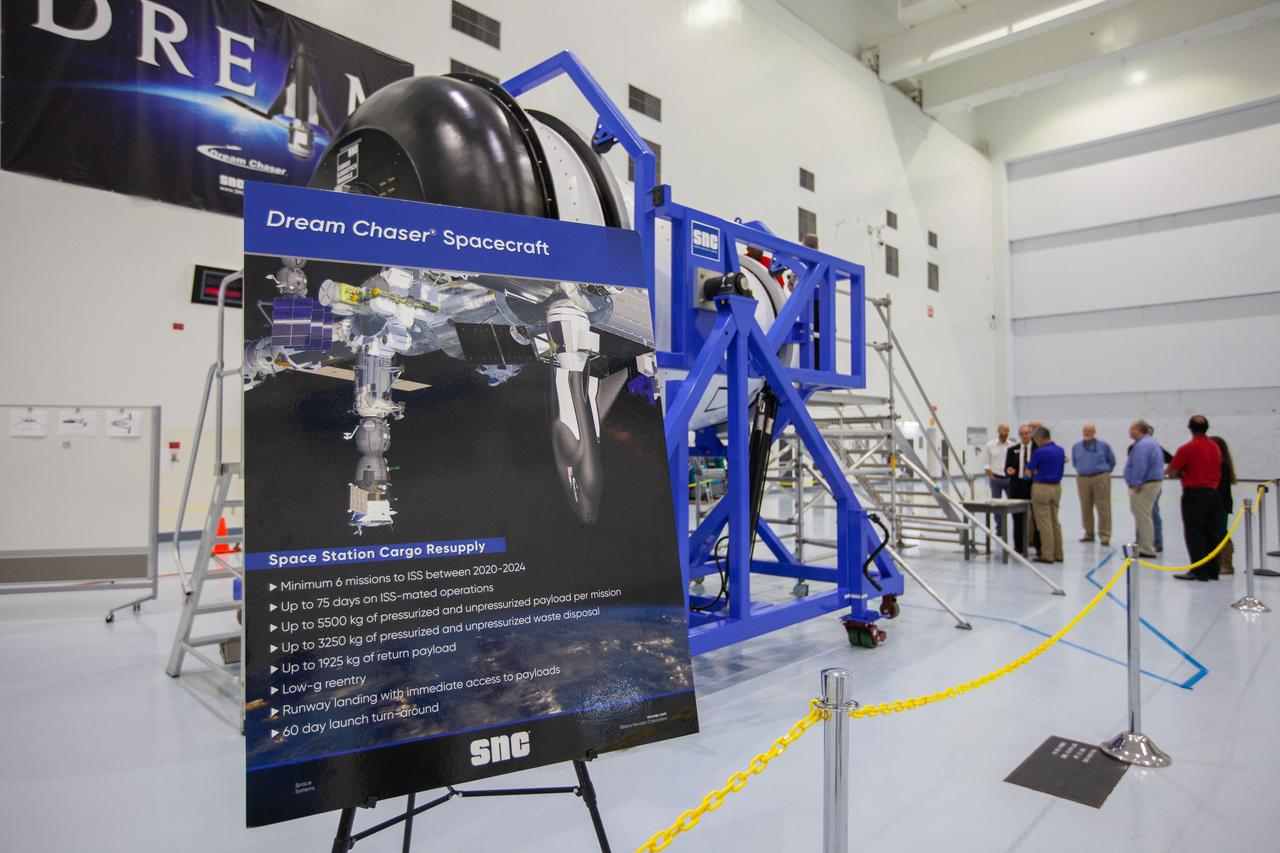
A mockup of the cargo logistics module for Sierra Nevada Corporation’s Dream Chaser, the company’s reusable spaceplane, arrived at the Space Station Processing Facility (SSPF) at NASA’s Kennedy Space Center in Florida in August. On Sept. 20, 2019, senior leadership had the opportunity to view the cargo module in the SSPF high bay. The SSPF is providing support for current and future NASA and commercial provider programs, including Commercial Resupply Services, Artemis 1, sending the first woman and next man to the Moon, and deep space destinations including Mars.
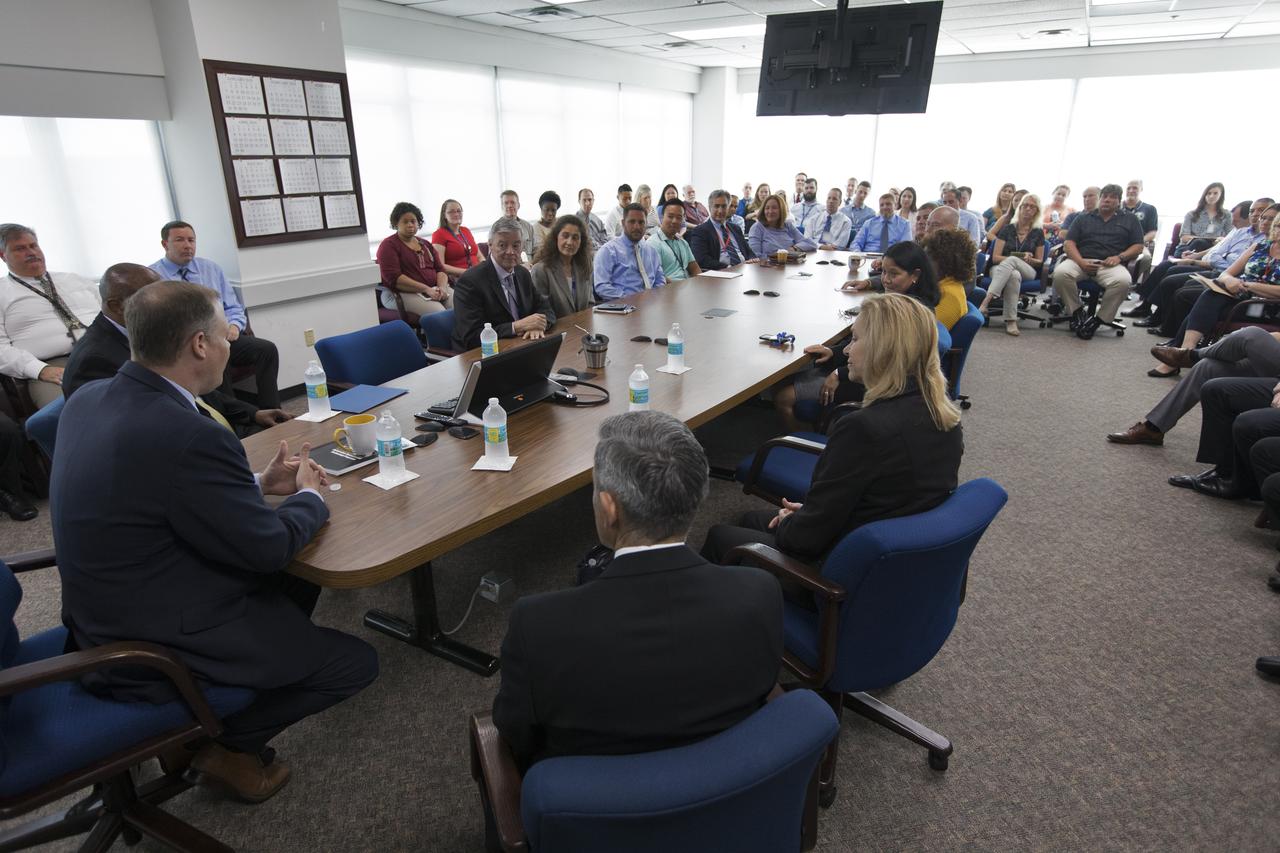
NASA Administrator Jim Bridenstine, seated at left, talks with workers in the Exploration Research and Technology directorate inside the Space Station Processing Facility at NASA's Kennedy Space Center in Florida, on Aug. 7, 2018. Seated to his right are Kennedy Center Director Bob Cabana, Deputy Center Director Janet Petro, and Josie Burnett, director of Exploration Research and Technology.
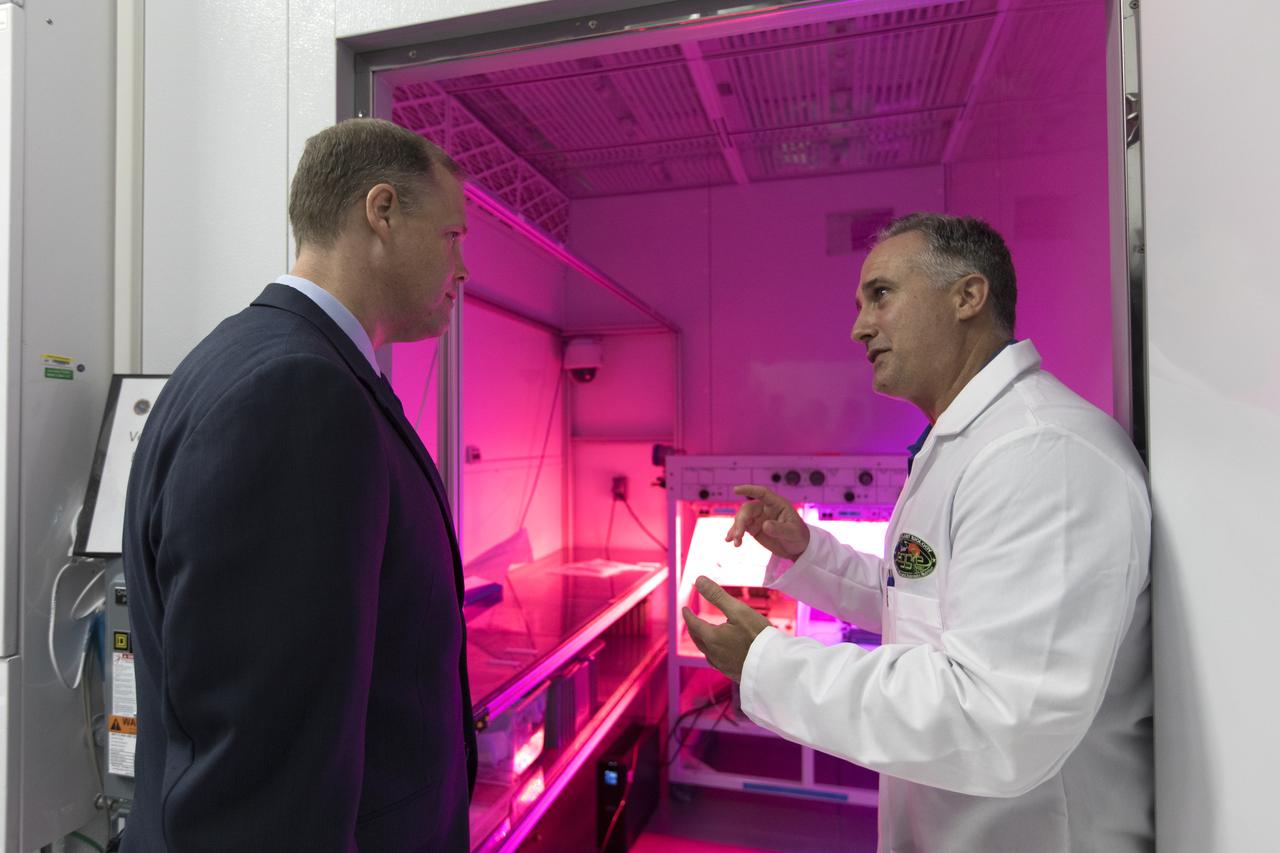
NASA Administrator Jim Bridenstine, at left, tours the Space Station Processing Facility at NASA's Kennedy Space Center in Florida, on Aug. 7, 2018. At right, Trent Smith, Veggie project manager, provides an update on the Veggie plant growth system on the International Space Station, and the control system in the laboratory. Bridenstine also received updates on research and technology accomplishments.
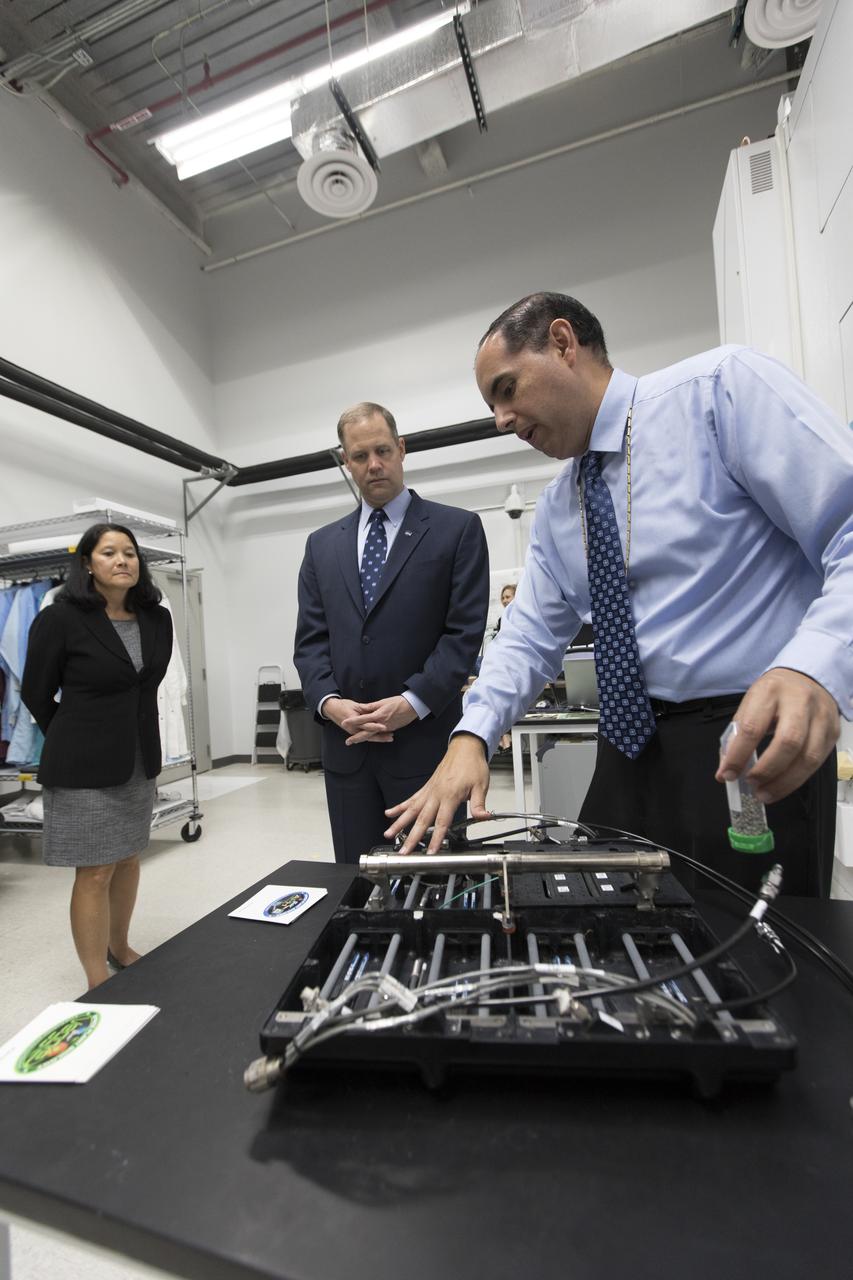
NASA Administrator Jim Bridenstine, center, tours the Space Station Processing Facility at NASA's Kennedy Space Center in Florida, on Aug. 7, 2018. At right, Bryan Onate, Advanced Plant Habitat (APH) project manager, explains a component of the APH cooling system. At left is Josie Burnett, director of Exploration Research and Technology. Bridenstine also received updates on research and technology accomplishments.
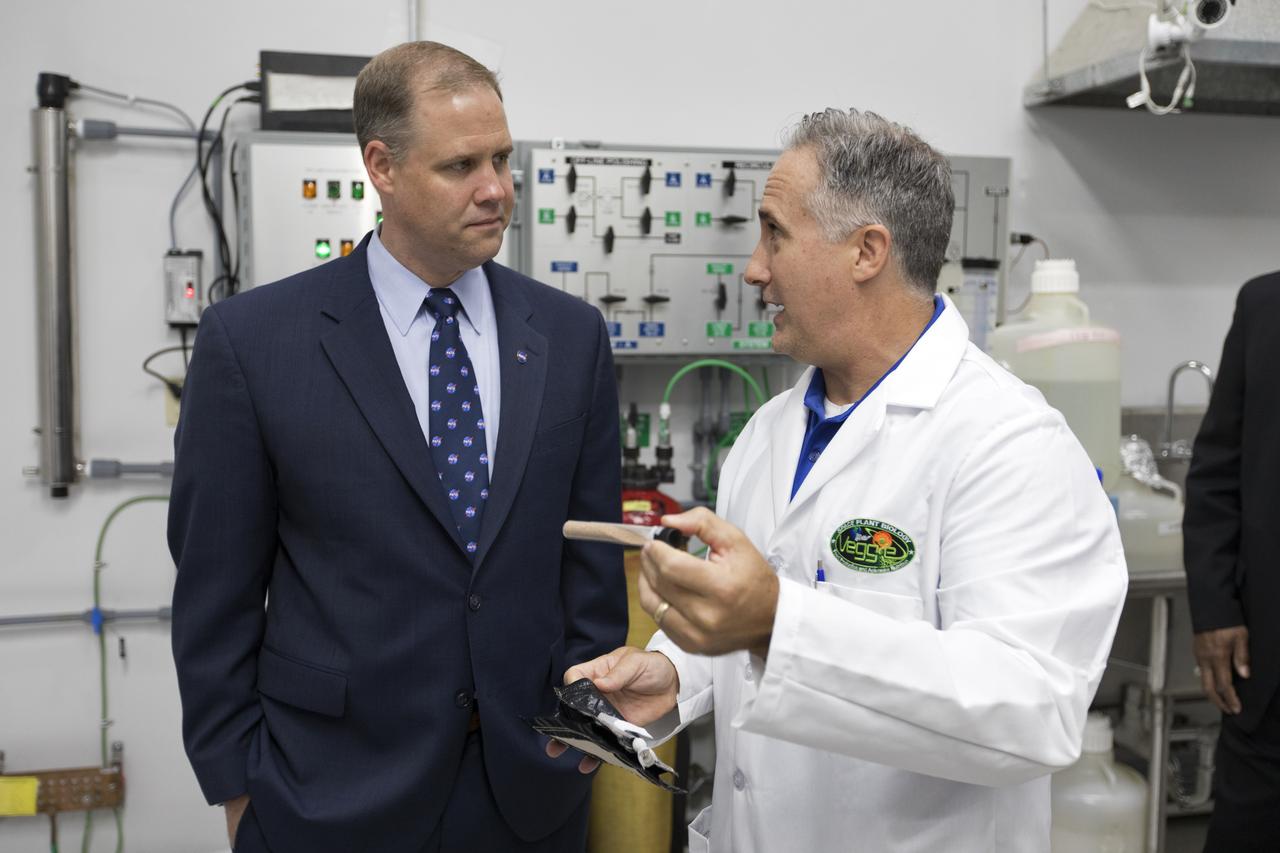
NASA Administrator Jim Bridenstine, at left, tours the Space Station Processing Facility at NASA's Kennedy Space Center in Florida, on Aug. 7, 2018. At right, Trent Smith, Veggie project manager, displays a seed packet and plant pillow for the Veggie plant growth system. Bridenstine also received updates on research and technology accomplishments.
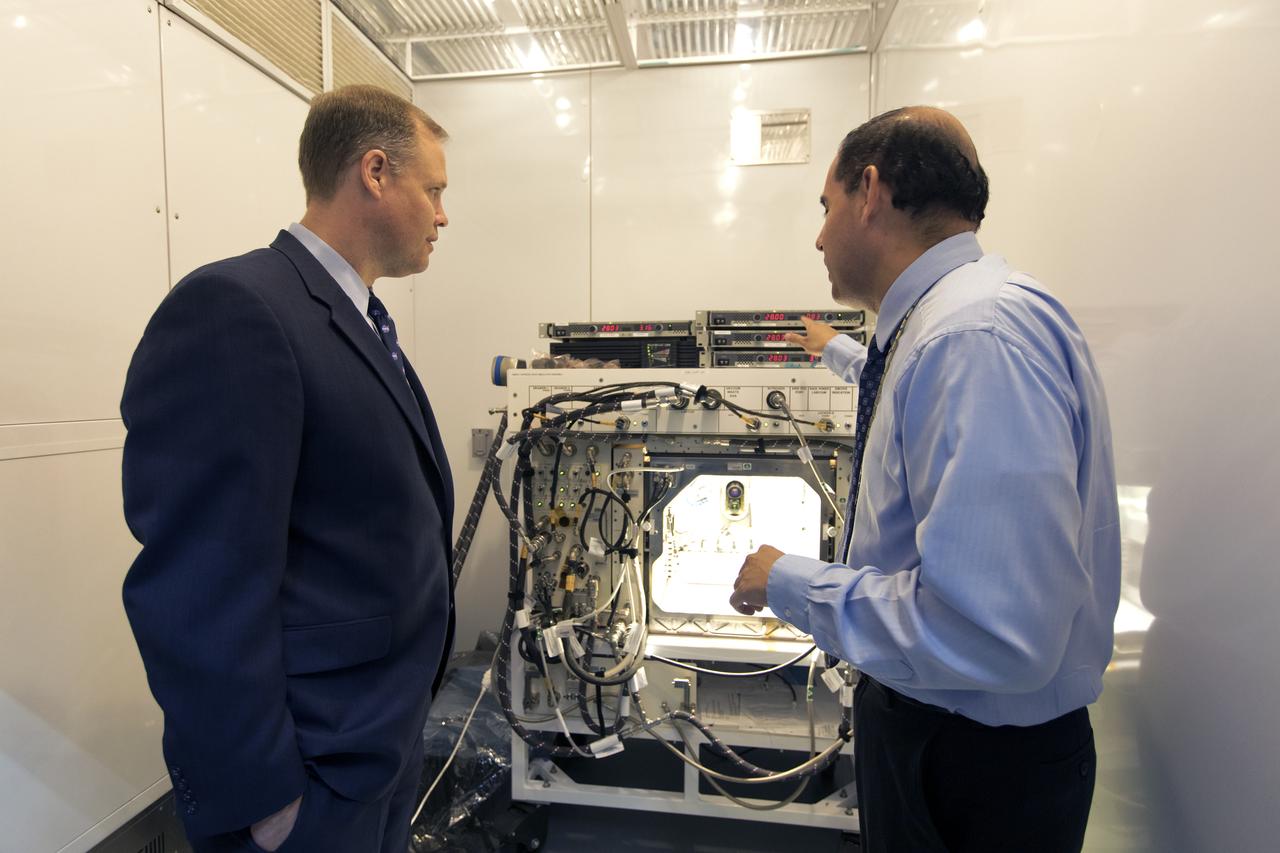
NASA Administrator Jim Bridenstine, left, tours the Space Station Processing Facility at NASA's Kennedy Space Center in Florida, on Aug. 7, 2018. Bryan Onate, at right, Advanced Plant Habitat (APH) project manager, explains a component of the APH control system. Bridenstine also received updates on research and technology accomplishments.
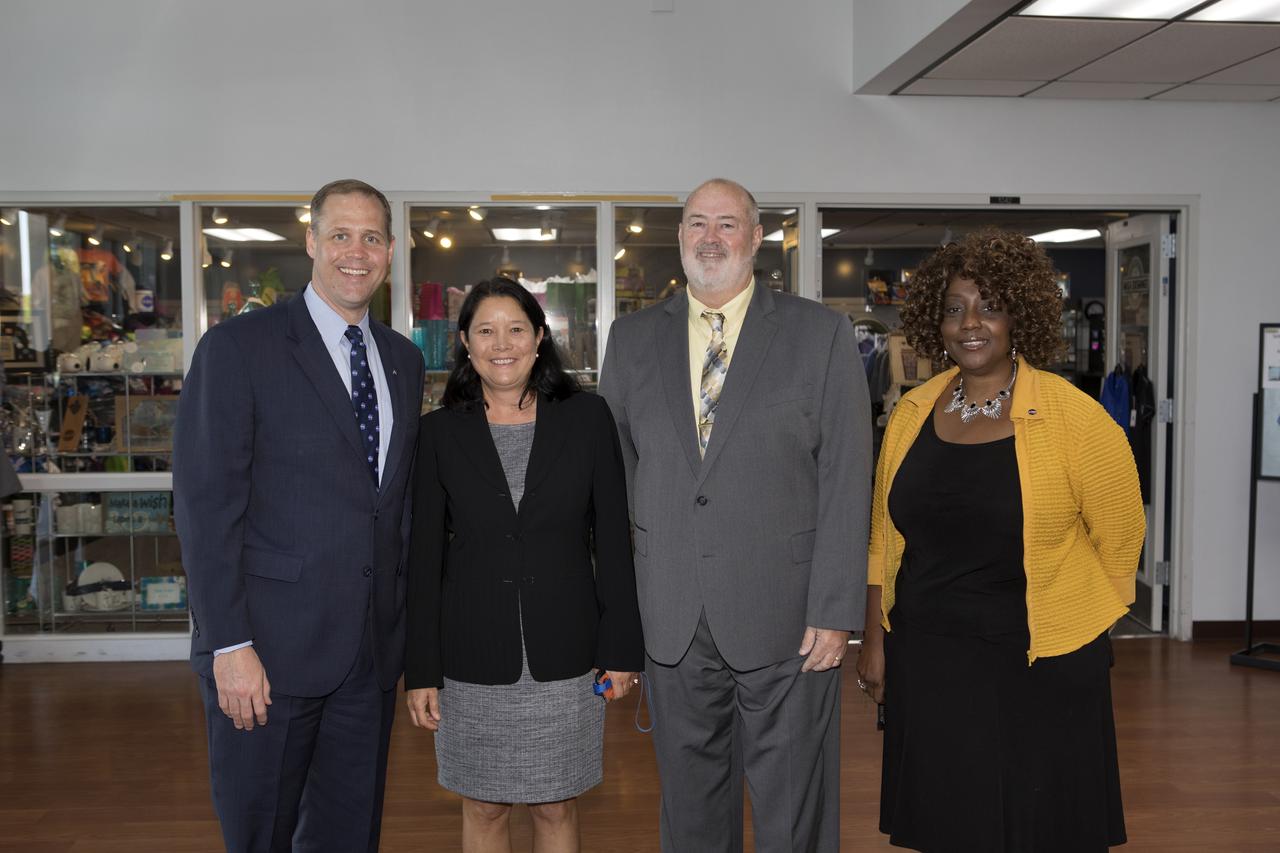
NASA Administrator Jim Bridenstine, far left, tours the Space Station Processing Facility at NASA's Kennedy Space Center in Florida, on Aug. 7, 2018. With Bridenstine, are, from left, Josie Burnett, director of Exploration Research and Technology; Ronnie Lawson, deputy director; and Barbara Brown, chief technologist. Bridenstine received updates on research and technology accomplishments.
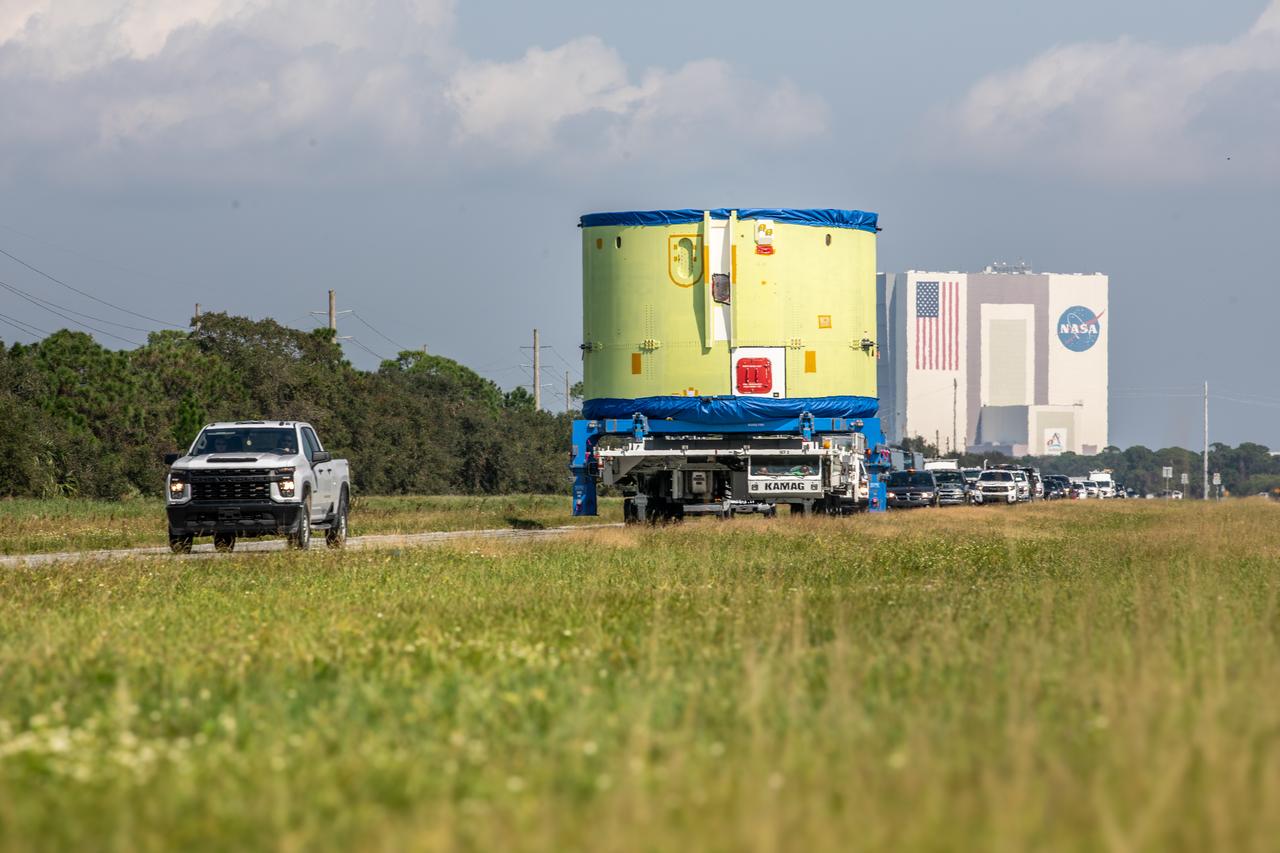
Teams from NASA’s Exploration Ground Systems transport the engine section of the agency’s Artemis IV SLS (Space Launch System) core stage from the Vehicle Assembly Building at NASA’s Kennedy Space Center in Florida to the spaceport’s Space Systems Processing Facility (SSPF) on Tuesday, Oct. 15, 2024. NASA’s Pegasus barge delivered the core stage engine section housing the four RS-25 engines from NASA’s Michoud Assembly Facility in New Orleans, Louisiana to NASA Kennedy on Thursday, Sept. 5, 2024. The engine section is one the most complex and intricate parts of the rocket stage that will help power the Artemis missions to the Moon.
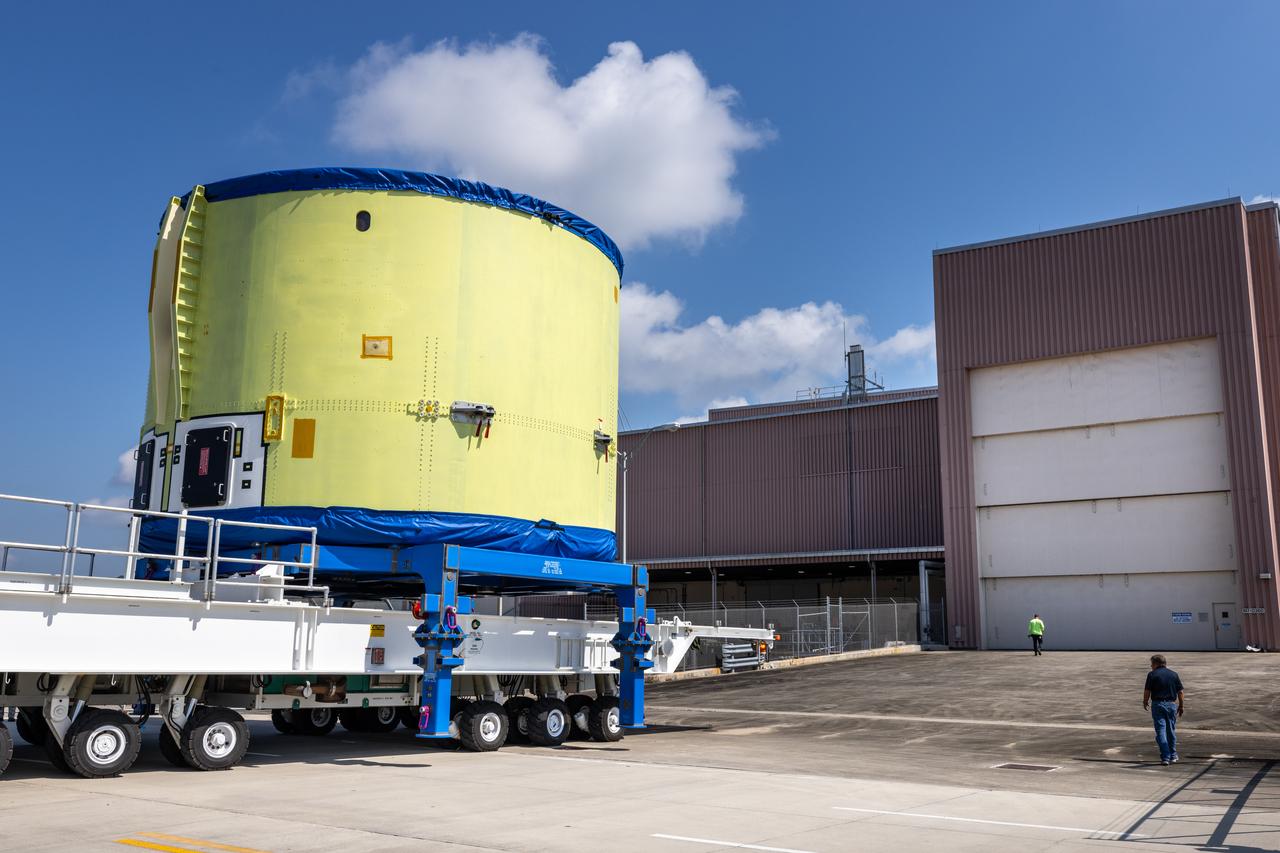
The engine section of NASA’s Artemis IV SLS (Space Launch System) core stage arrives at the Space Systems Processing Facility (SSPF) at NASA’s Kennedy Space Center in Florida on Tuesday, Oct. 15, 2024, after being transported from the spaceport’s Vehicle Assembly Building. NASA’s Pegasus barge delivered the core stage engine section housing the four RS-25 engines from NASA’s Michoud Assembly Facility in New Orleans, Louisiana to NASA Kennedy on Thursday, Sept. 5, 2024. The engine section is one the most complex and intricate parts of the rocket stage that will help power the Artemis missions to the Moon.
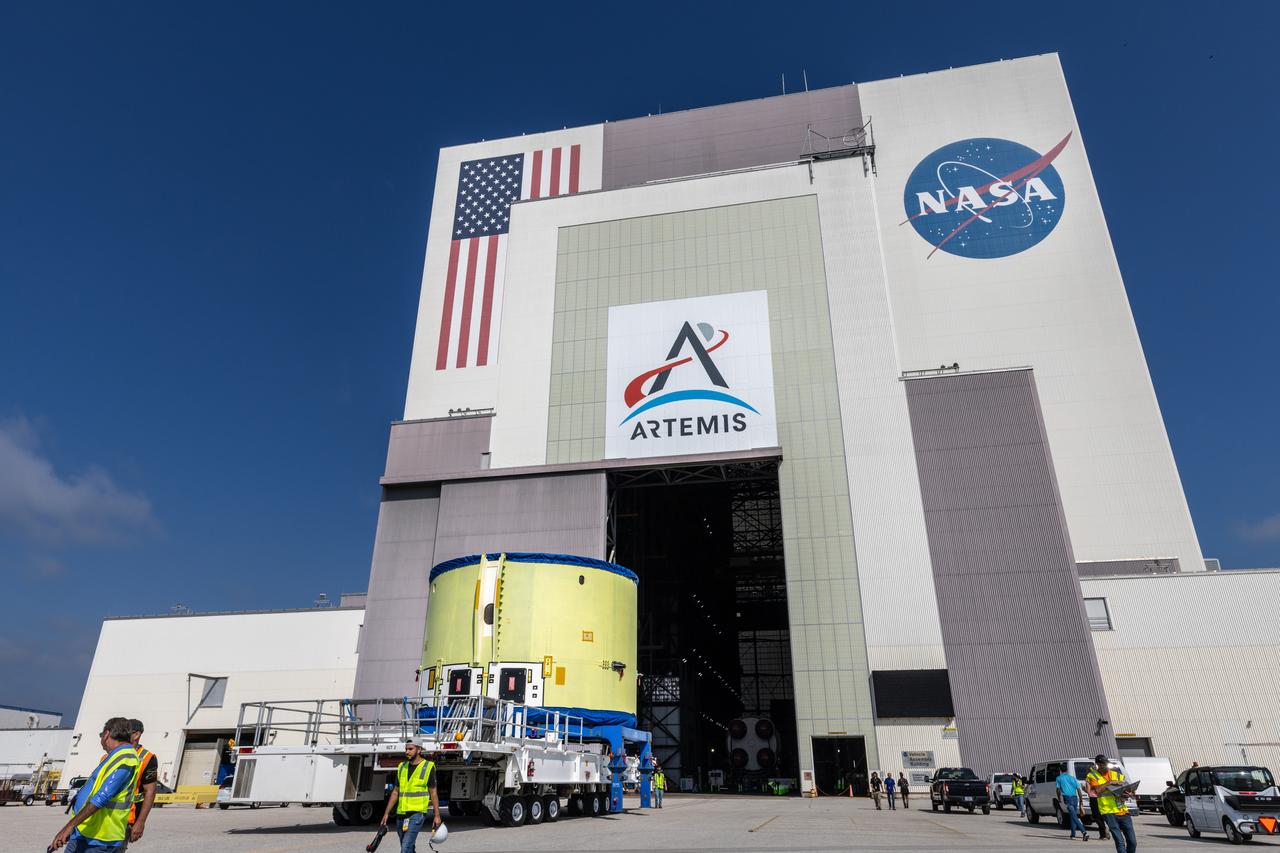
Teams from NASA’s Exploration Ground Systems transport the engine section of the agency’s Artemis IV SLS (Space Launch System) core stage from the Vehicle Assembly Building at NASA’s Kennedy Space Center in Florida to the spaceport’s Space Systems Processing Facility (SSPF) on Tuesday, Oct. 15, 2024. NASA’s Pegasus barge delivered the core stage engine section housing the four RS-25 engines from NASA’s Michoud Assembly Facility in New Orleans, Louisiana to NASA Kennedy on Thursday, Sept. 5, 2024. The engine section is one the most complex and intricate parts of the rocket stage that will help power the Artemis missions to the Moon.
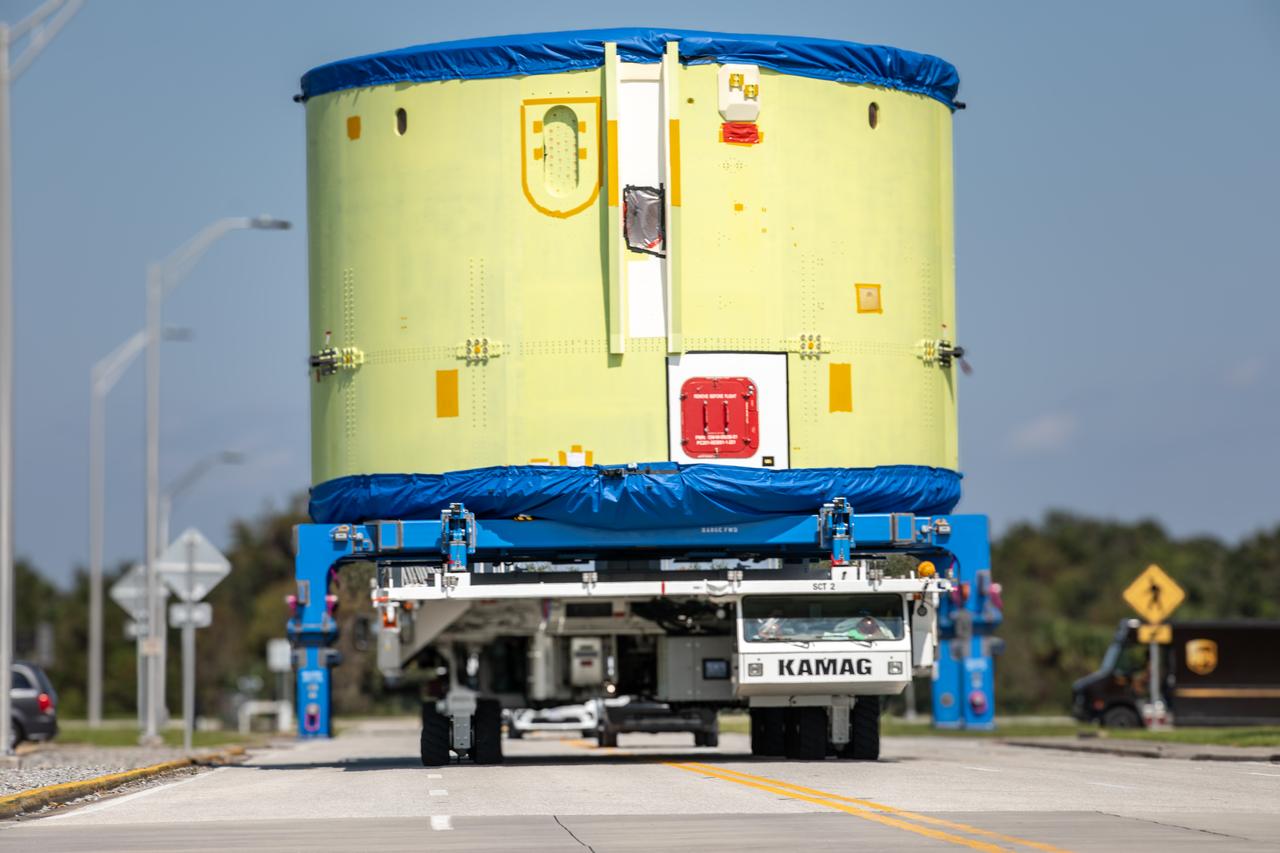
Teams from NASA’s Exploration Ground Systems transport the engine section of the agency’s Artemis IV SLS (Space Launch System) core stage from the Vehicle Assembly Building at NASA’s Kennedy Space Center in Florida to the spaceport’s Space Systems Processing Facility (SSPF) on Tuesday, Oct. 15, 2024. NASA’s Pegasus barge delivered the core stage engine section housing the four RS-25 engines from NASA’s Michoud Assembly Facility in New Orleans, Louisiana to NASA Kennedy on Thursday, Sept. 5, 2024. The engine section is one the most complex and intricate parts of the rocket stage that will help power the Artemis missions to the Moon.

A close-up view of a zinnia flower grown in the Veggie Laboratory in the Space Station Processing Facility (SSPF) at NASA's Kennedy Space Center in Florida, on Nov. 27, 2018. Seeds from zinnias growing on the space station were returned to Earth. Researchers in the SSPF planted the seeds in the Veggie control unit and grew the colorful flowers.
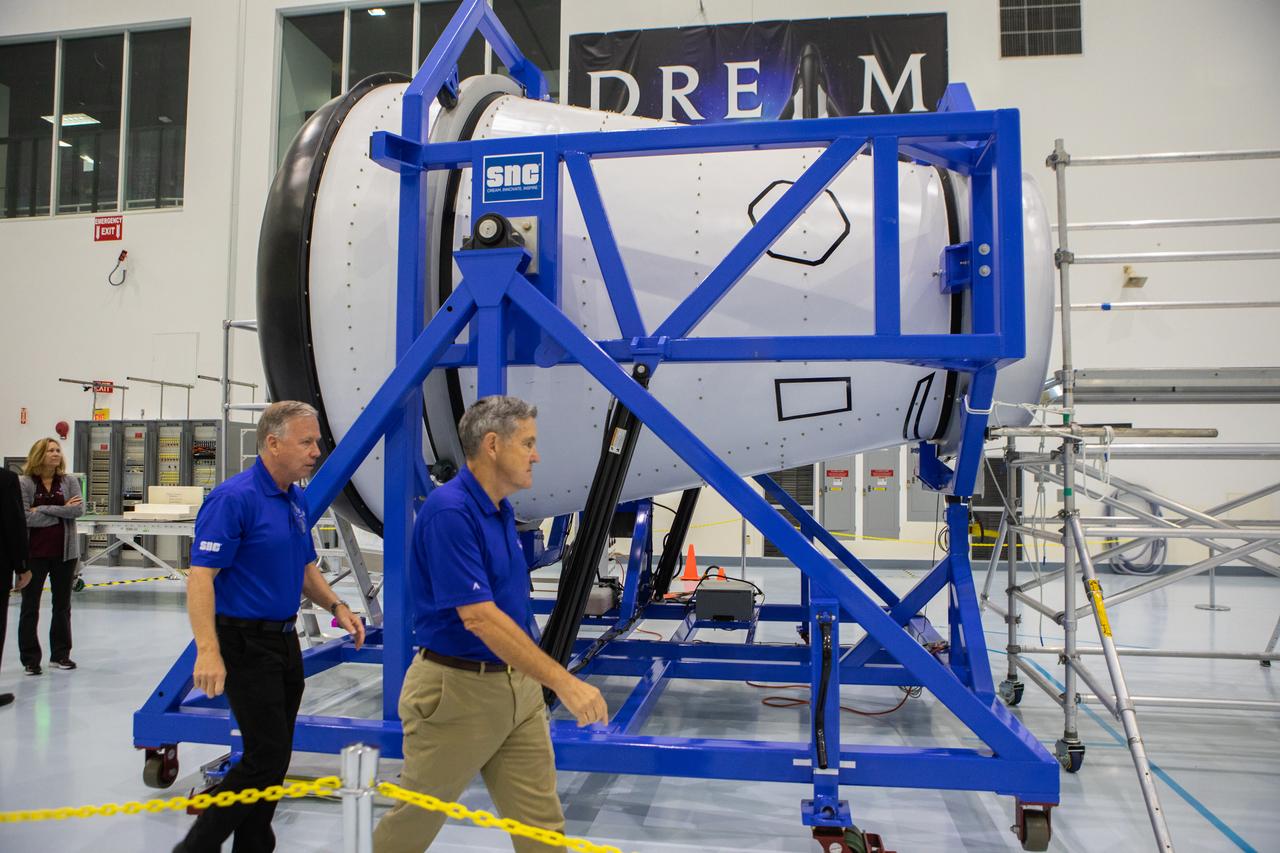
A mockup of the cargo logistics module for Sierra Nevada Corporation’s Dream Chaser, the company’s reusable spaceplane, arrived at the Space Station Processing Facility (SSPF) at NASA’s Kennedy Space Center in Florida in August. On Sept. 20, 2019, senior leadership had the opportunity to view the cargo module in the SSPF high bay. Kennedy Center Director Bob Cabana, at right, views the cargo module with Steve Lindsey, vice president, Space Exploration Systems, Sierra Nevada Corporation. The SSPF is providing support for current and future NASA and commercial provider programs, including Commercial Resupply Services, Artemis 1, sending the first woman and next man to the Moon, and deep space destinations including Mars.
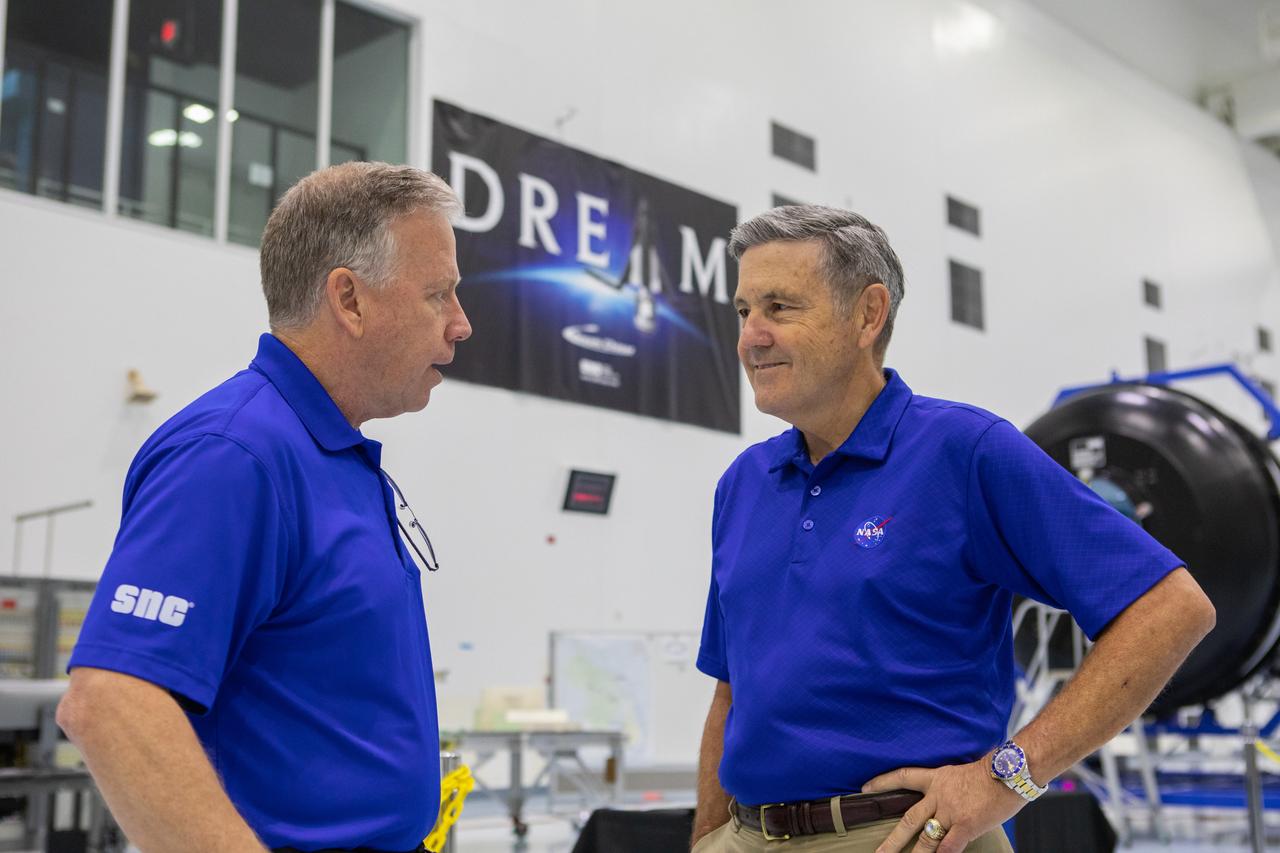
A mockup of the cargo logistics module for Sierra Nevada Corporation’s Dream Chaser, the company’s reusable spaceplane, arrived at the Space Station Processing Facility (SSPF) at NASA’s Kennedy Space Center in Florida in August. On Sept. 20, 2019, senior leadership had the opportunity to view the cargo module in the SSPF high bay. Kennedy Center Director Bob Cabana, at right, speaks with Steve Lindsey, vice president, Space Exploration Systems, Sierra Nevada Corporation. The SSPF is providing support for current and future NASA and commercial provider programs, including Commercial Resupply Services, Artemis 1, sending the first woman and next man to the Moon, and deep space destinations including Mars.
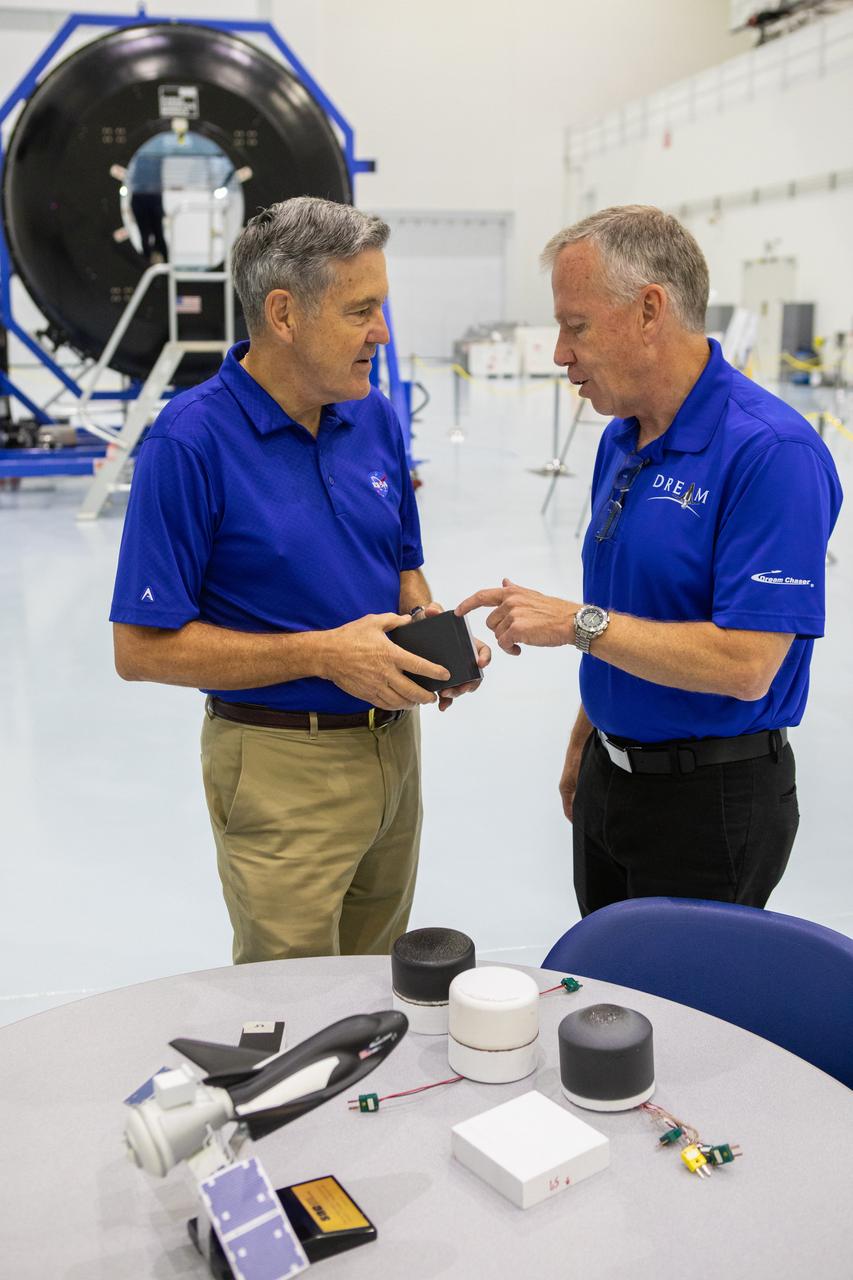
A mockup of the cargo logistics module for Sierra Nevada Corporation’s Dream Chaser, the company’s reusable spaceplane, arrived at the Space Station Processing Facility (SSPF) at NASA’s Kennedy Space Center in Florida in August. On Sept. 20, 2019, senior leadership had the opportunity to view the cargo module in the SSPF high bay. Kennedy Center Director Bob Cabana, left, speaks to Steve Lindsey, vice president, Space Exploration Systems, Sierra Nevada Corporation. The SSPF is providing support for current and future NASA and commercial provider programs, including Commercial Resupply Services, Artemis 1, sending the first woman and next man to the Moon, and deep space destinations including Mars.
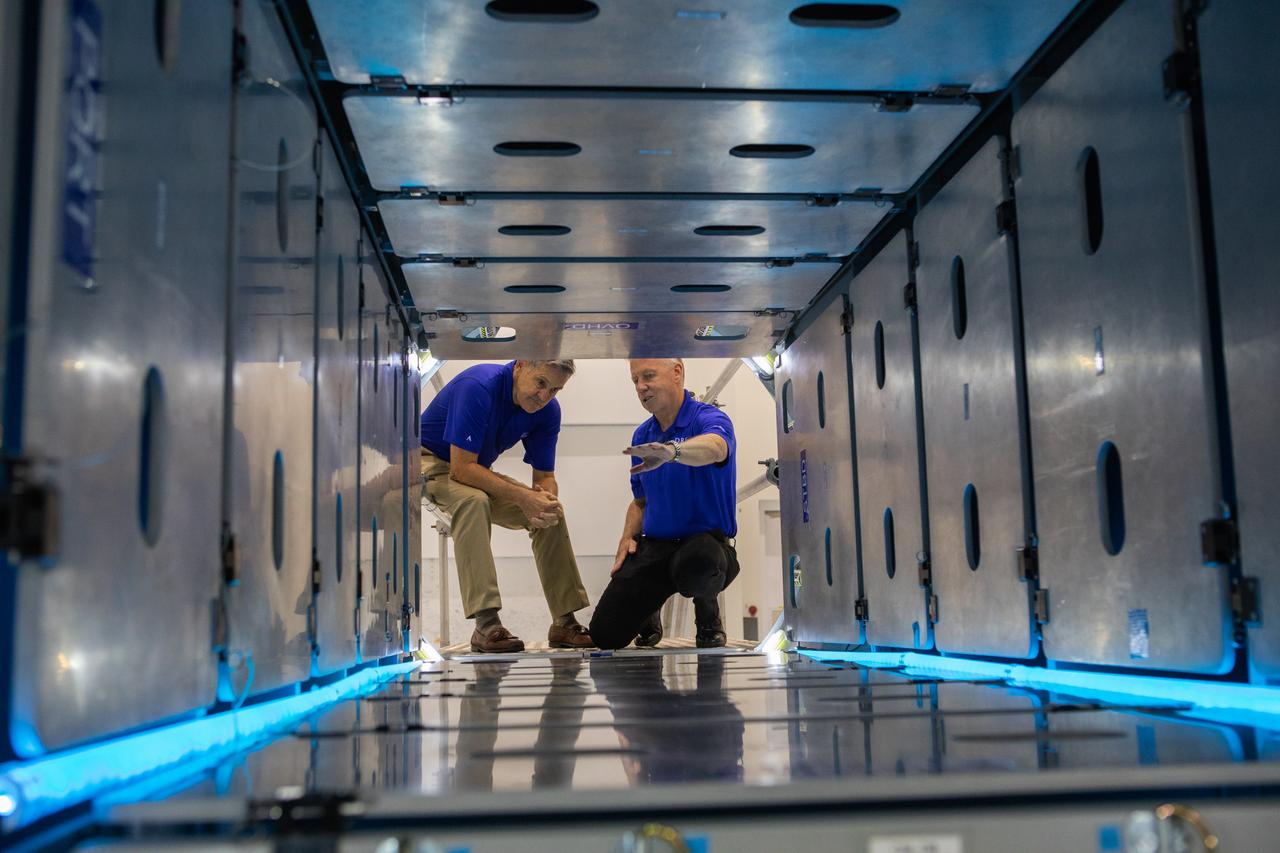
A mockup of the cargo logistics module for Sierra Nevada Corporation’s Dream Chaser, the company’s reusable spaceplane, arrived at the Space Station Processing Facility (SSPF) at NASA’s Kennedy Space Center in Florida in August. On Sept. 20, 2019, senior leadership had the opportunity to view the cargo module in the SSPF high bay. Kennedy Center Director Bob Cabana, views the interior of the cargo module with Steve Lindsey, vice president, Space Exploration Systems, Sierra Nevada Corporation. The SSPF is providing support for current and future NASA and commercial provider programs, including Commercial Resupply Services, Artemis 1, sending the first woman and next man to the Moon, and deep space destinations including Mars.
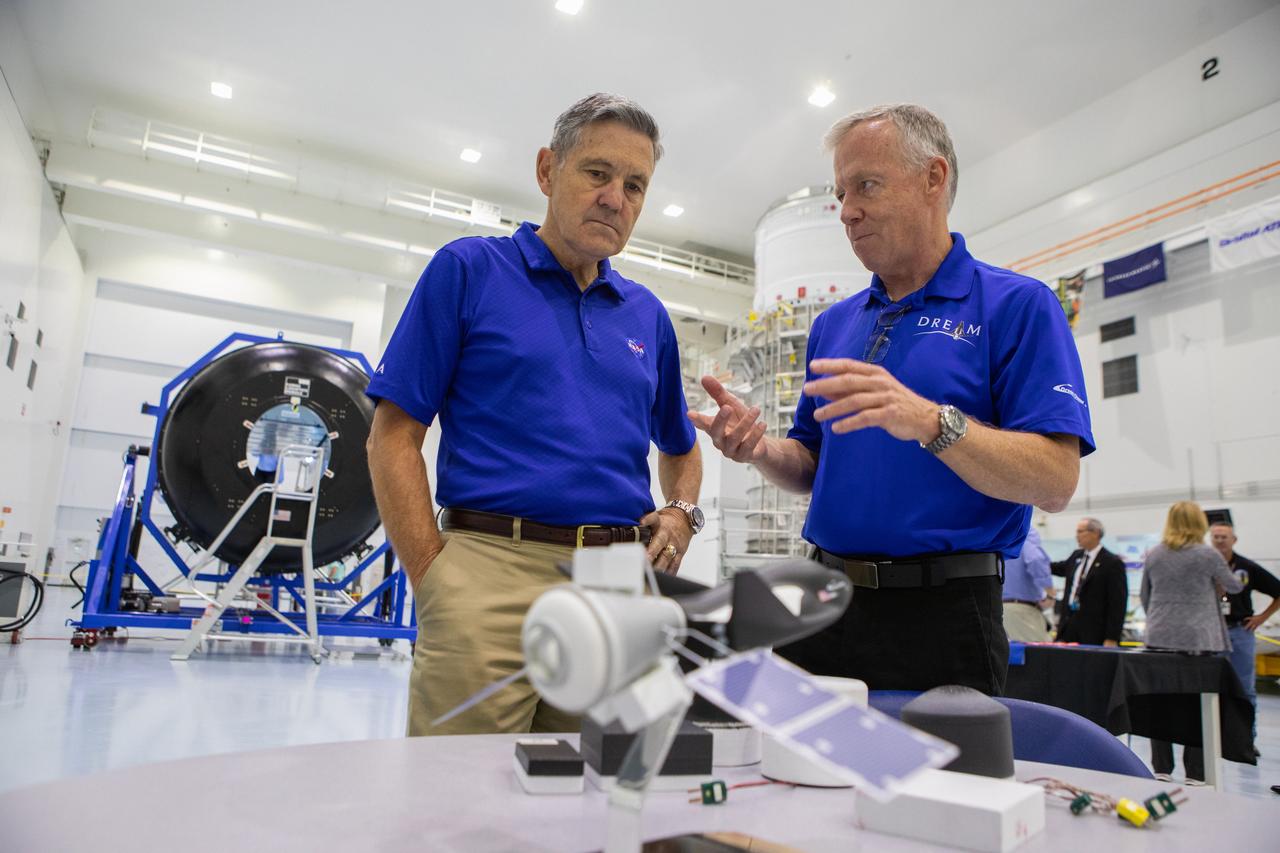
A mockup of the cargo logistics module for Sierra Nevada Corporation’s Dream Chaser, the company’s reusable spaceplane, arrived at the Space Station Processing Facility (SSPF) at NASA’s Kennedy Space Center in Florida in August. On Sept. 20, 2019, senior leadership had the opportunity to view the cargo module in the SSPF high bay. Kennedy Center Director Bob Cabana, left, speaks to Steve Lindsey, vice president, Space Exploration Systems, Sierra Nevada Corporation. The SSPF is providing support for current and future NASA and commercial provider programs, including Commercial Resupply Services, Artemis 1, sending the first woman and next man to the Moon, and deep space destinations including Mars.
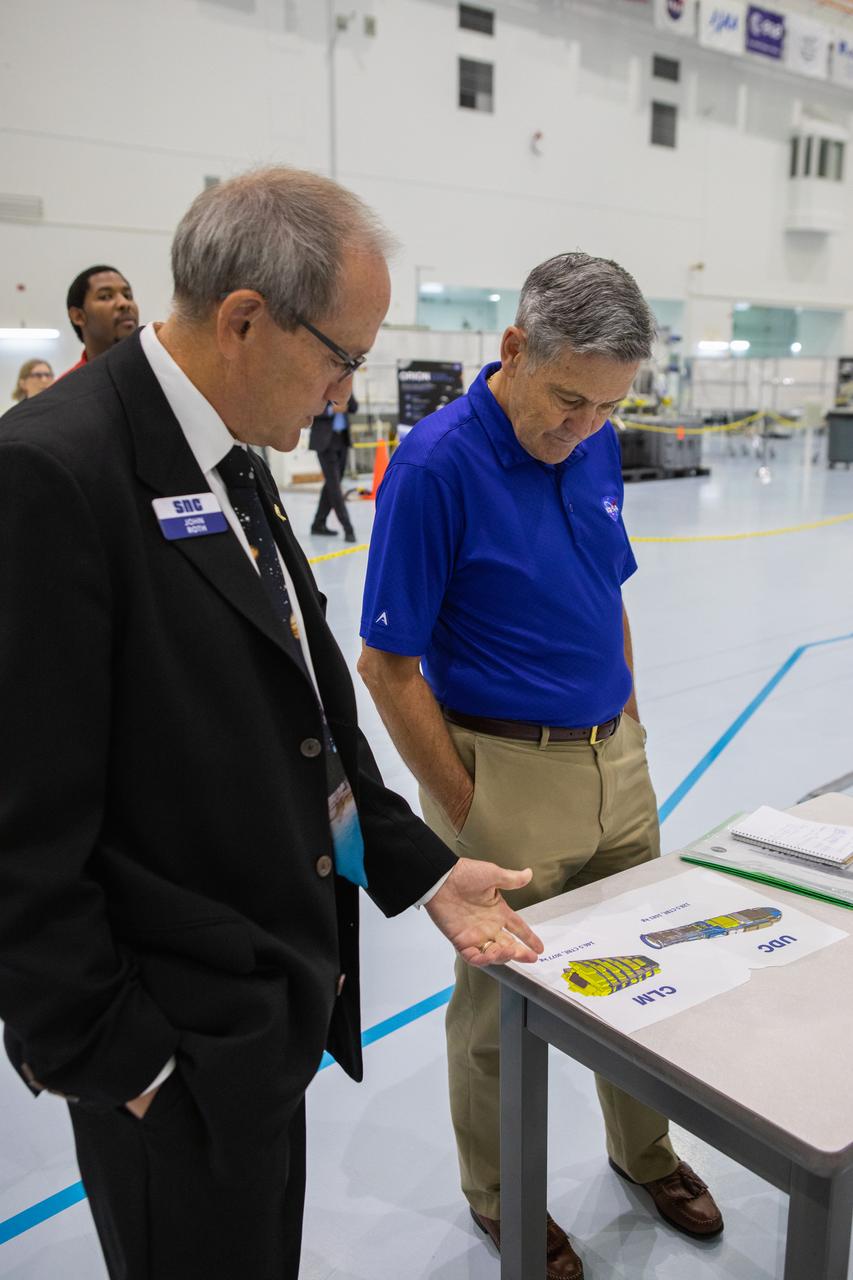
A mockup of the cargo logistics module for Sierra Nevada Corporation’s Dream Chaser, the company’s reusable spaceplane, arrived at the Space Station Processing Facility (SSPF) at NASA’s Kennedy Space Center in Florida in August. On Sept. 20, 2019, senior leadership had the opportunity to view the cargo module in the SSPF high bay. Kennedy Center Director Bob Cabana, at right, listens to John Roth, vice president, Business Development Space Systems, Sierra Nevada Corporation. The SSPF is providing support for current and future NASA and commercial provider programs, including Commercial Resupply Services, Artemis 1, sending the first woman and next man to the Moon, and deep space destinations including Mars.
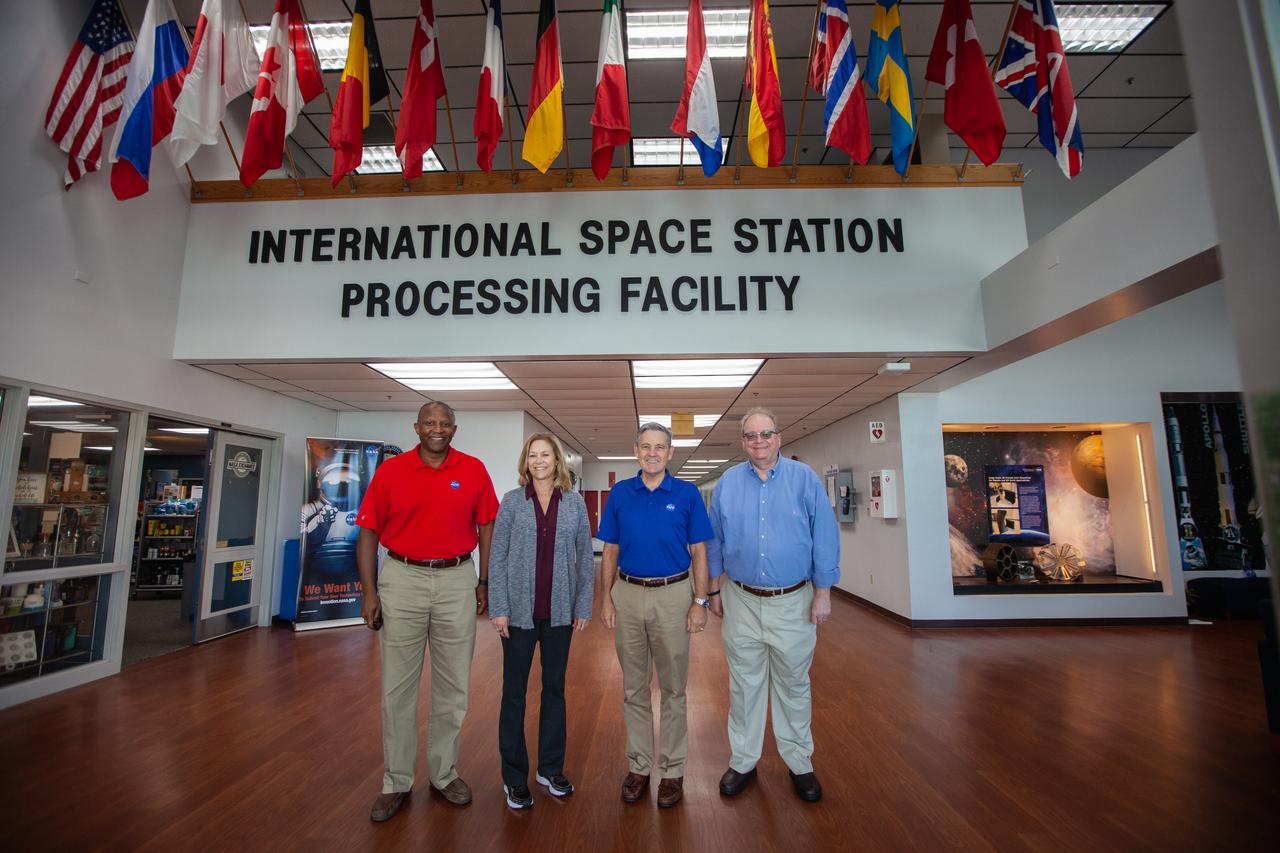
A mockup of the cargo logistics module for Sierra Nevada Corporation’s Dream Chaser, the company’s reusable spaceplane, arrived at the Space Station Processing Facility (SSPF) at NASA’s Kennedy Space Center in Florida in August. On Sept. 20, 2019, senior leadership had the opportunity to view the cargo module in the SSPF high bay. From left, are Kelvin Manning, Kennedy associate director, technical; Kennedy Deputy Director Janet Petro; Kennedy Center Director Bob Cabana; and Burt Summerfield, Kennedy associate director, management. The SSPF is providing support for current and future NASA and commercial provider programs, including Commercial Resupply Services, Artemis 1, sending the first woman and next man to the Moon, and deep space destinations including Mars.
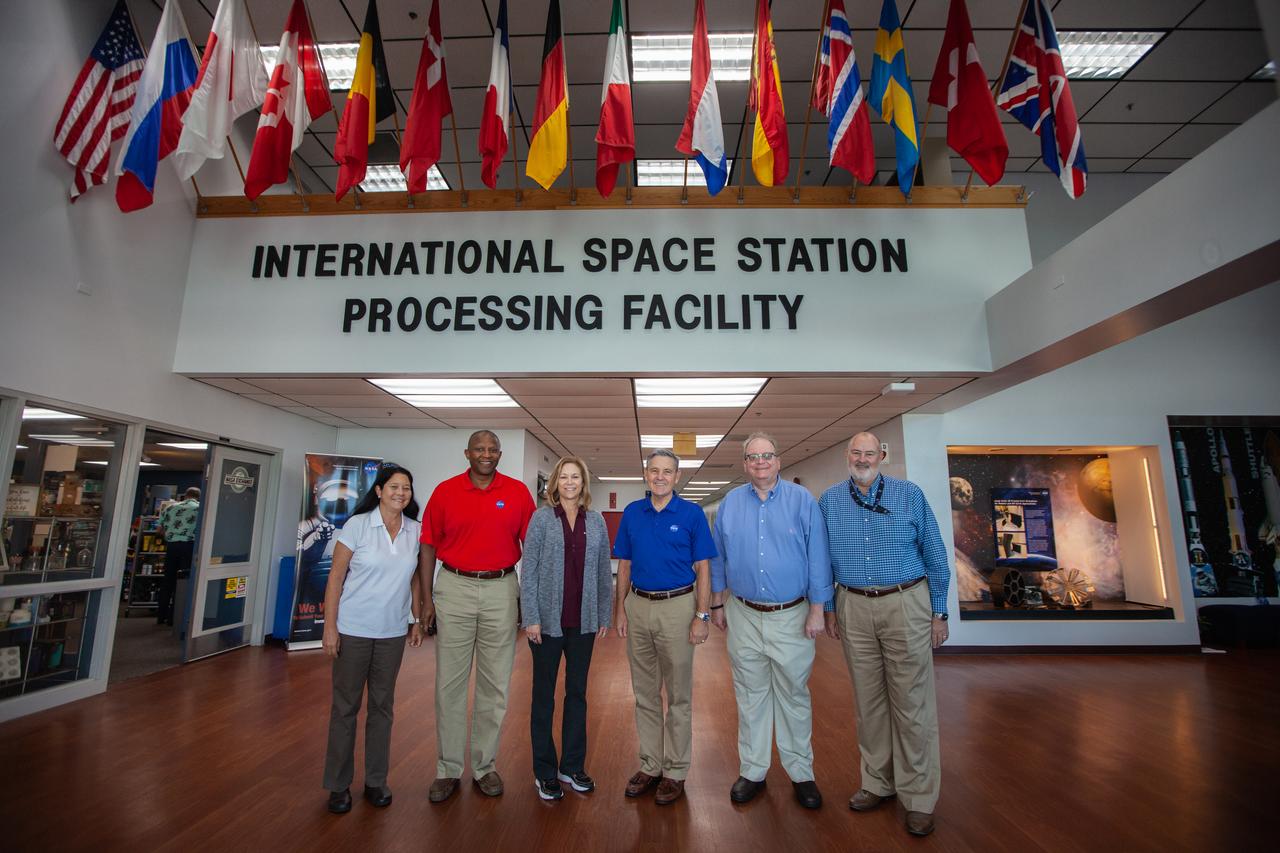
A mockup of the cargo logistics module for Sierra Nevada Corporation’s Dream Chaser, the company’s reusable spaceplane, arrived at the Space Station Processing Facility (SSPF) at NASA’s Kennedy Space Center in Florida in August. On Sept. 20, 2019, senior leadership had the opportunity to view the cargo module in the SSPF high bay. From left, are Josie Burnett, director of Exploration Research and Technology Programs; Kelvin Manning, Kennedy associate director, technical; Kennedy Deputy Director Janet Petro; Kennedy Center Director Bob Cabana; Burt Summerfield, Kennedy associate director, management; and Ronnie Lawson, deputy director of Exploration Research and Technology Programs. The SSPF is providing support for current and future NASA and commercial provider programs, including Commercial Resupply Services, Artemis 1, sending the first woman and next man to the Moon, and deep space destinations including Mars.
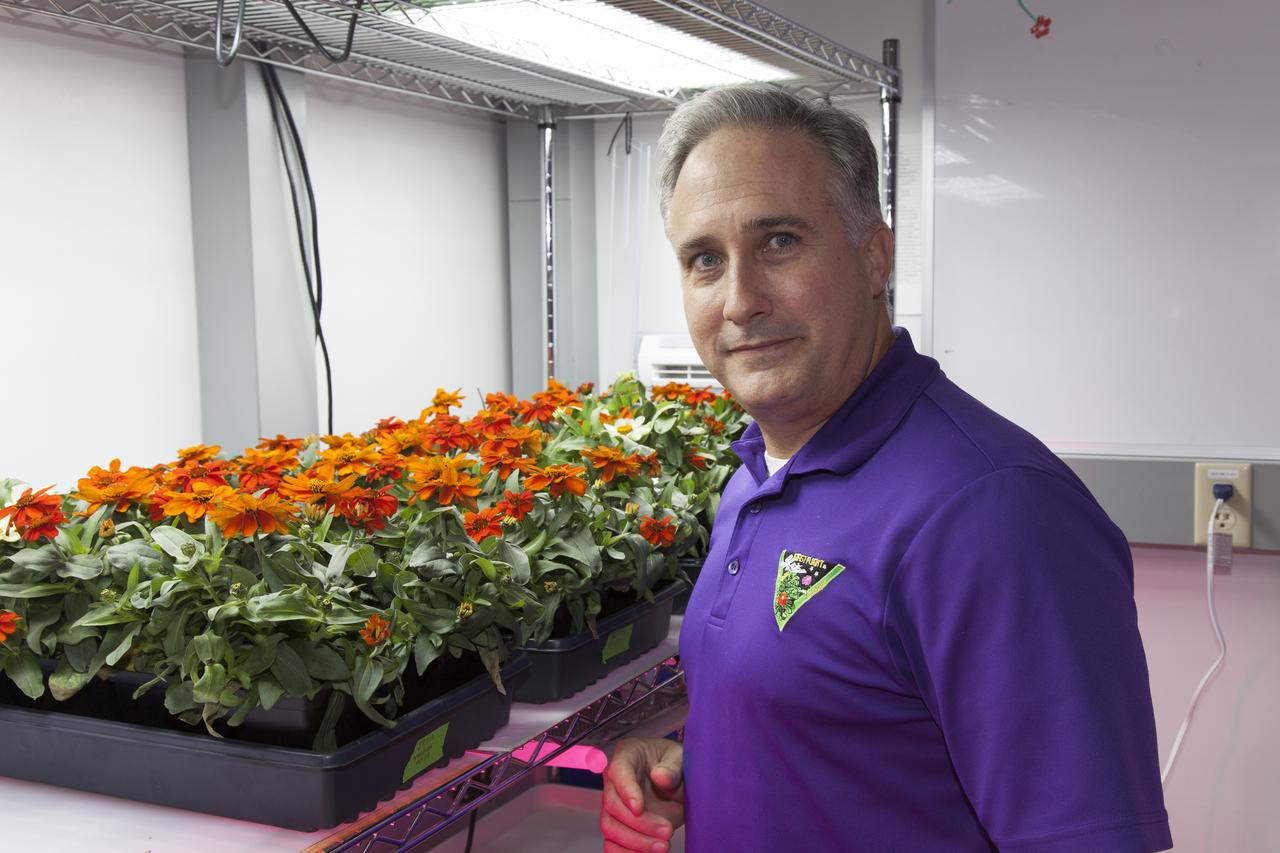
Trent Smith, Veggie project manager, Exploration Research and Technology Programs, is in the Veggie Laboratory in the Space Station Processing Facility (SSPF) at NASA's Kennedy Space Center in Florida on Nov. 27, 2018. Next to him are zinnia flowers grown from seeds germinated in the Veggie plant growth system on the International Space Station. The seeds were returned to Earth and researchers in the SSPF planted them in the Veggie control unit and grew the colorful flowers.
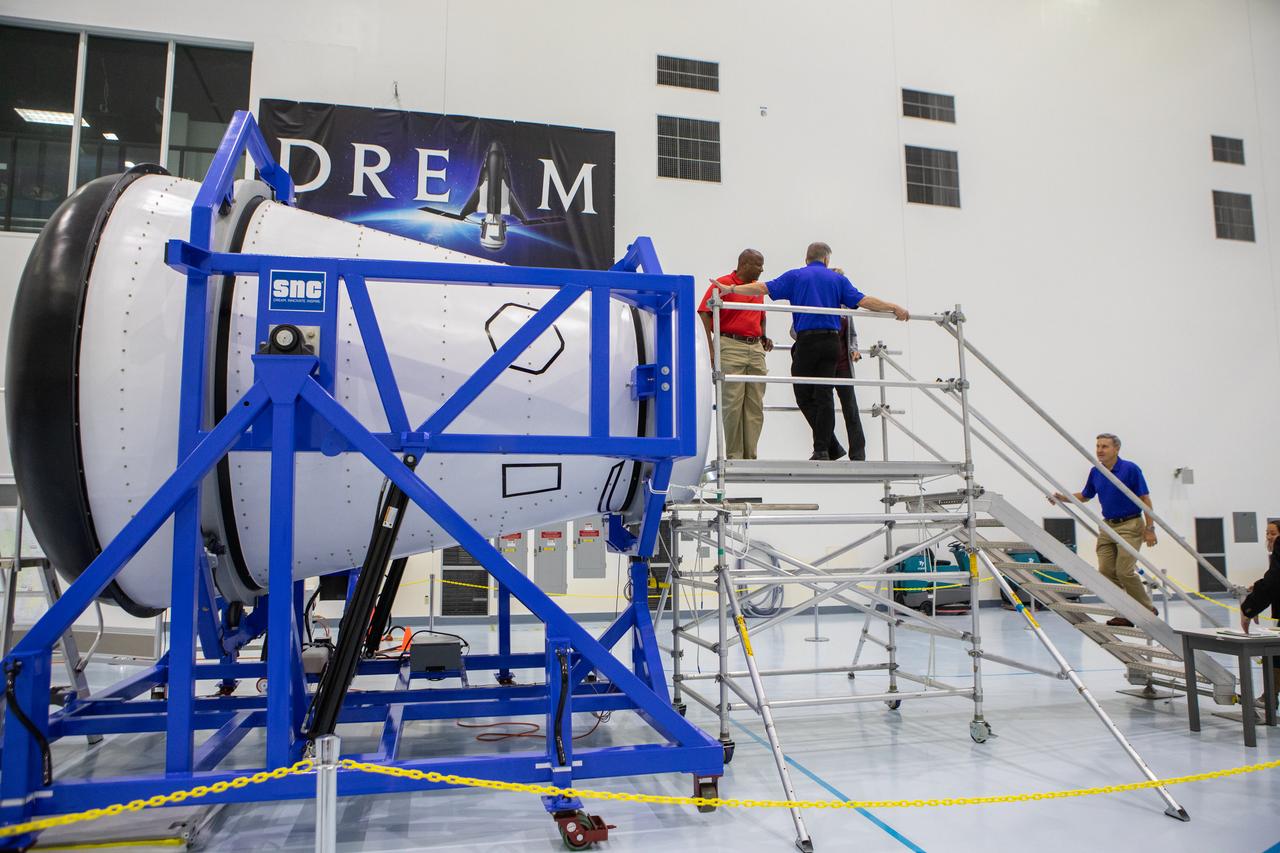
A mockup of the cargo logistics module for Sierra Nevada Corporation’s Dream Chaser, the company’s reusable spaceplane, arrived at the Space Station Processing Facility (SSPF) at NASA’s Kennedy Space Center in Florida in August. On Sept. 20, 2019, senior leadership had the opportunity to view the cargo module in the SSPF high bay. From left are Kelvin Manning, Kennedy associate director, technical; Steve Lindsey, vice president, Space Exploration Systems, Sierra Nevada Corporation; behind Lindsey is Kennedy Deputy Director Janet Petro; and ascending the stairs is Kennedy Center Director Bob Cabana. The SSPF is providing support for current and future NASA and commercial provider programs, including Commercial Resupply Services, Artemis 1, sending the first woman and next man to the Moon, and deep space destinations including Mars.
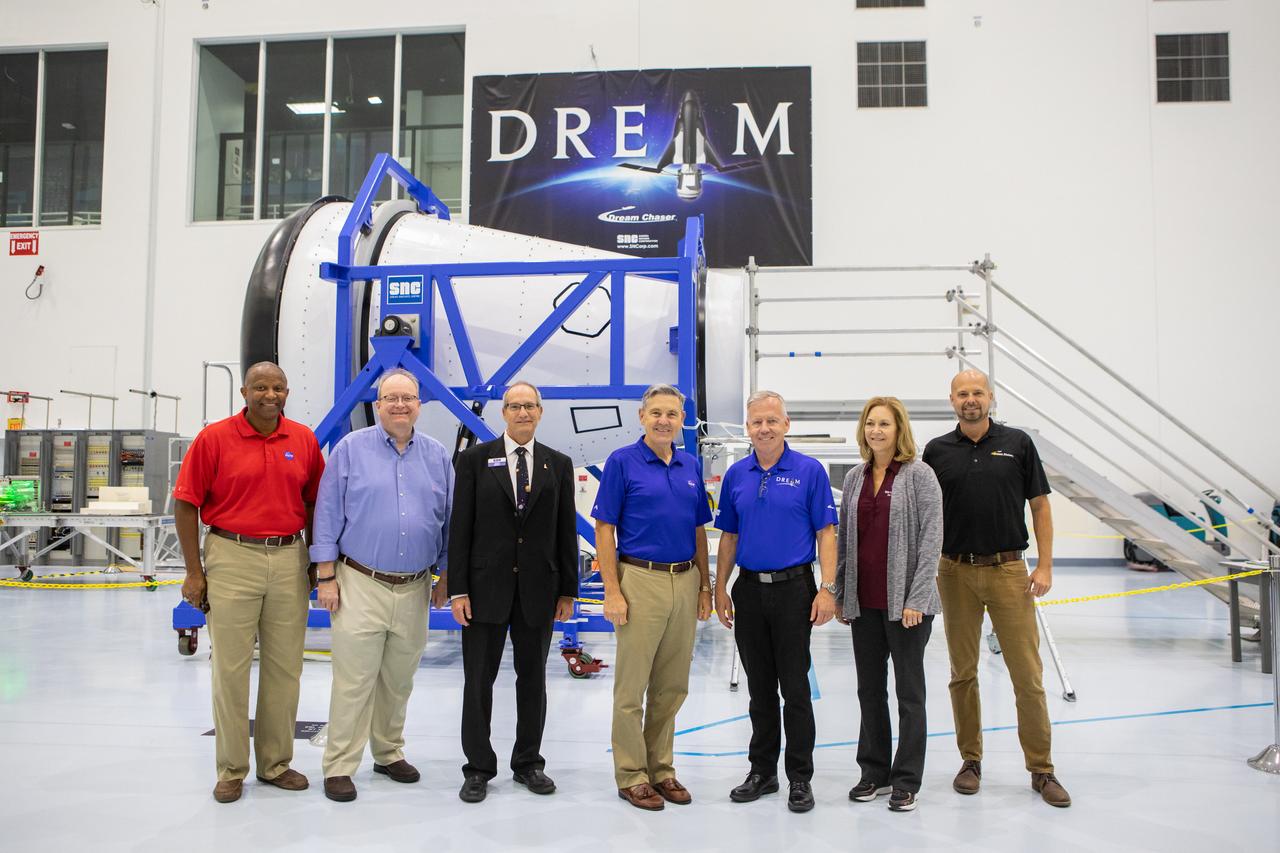
A mockup of the cargo logistics module for Sierra Nevada Corporation’s Dream Chaser, the company’s reusable spaceplane, arrived at the Space Station Processing Facility (SSPF) at NASA’s Kennedy Space Center in Florida in August. On Sept. 20, 2019, senior leadership had the opportunity to view the cargo module in the SSPF high bay. From left are Kelvin Manning, Kennedy associate director, technical; Burt Summerfield, associate director, management; John Roth, vice president, Business Development Space Systems, Sierra Nevada Corporation; Kennedy Center Director Bob Cabana; Steve Lindsey, vice president, Space Exploration Systems, Sierra Nevada Corporation; Kennedy Deputy Director Janet Petro; and Nate Wood, Sierra Nevada Corporation. The SSPF is providing support for current and future NASA and commercial provider programs, including Commercial Resupply Services, Artemis 1, sending the first woman and next man to the Moon, and deep space destinations including Mars.
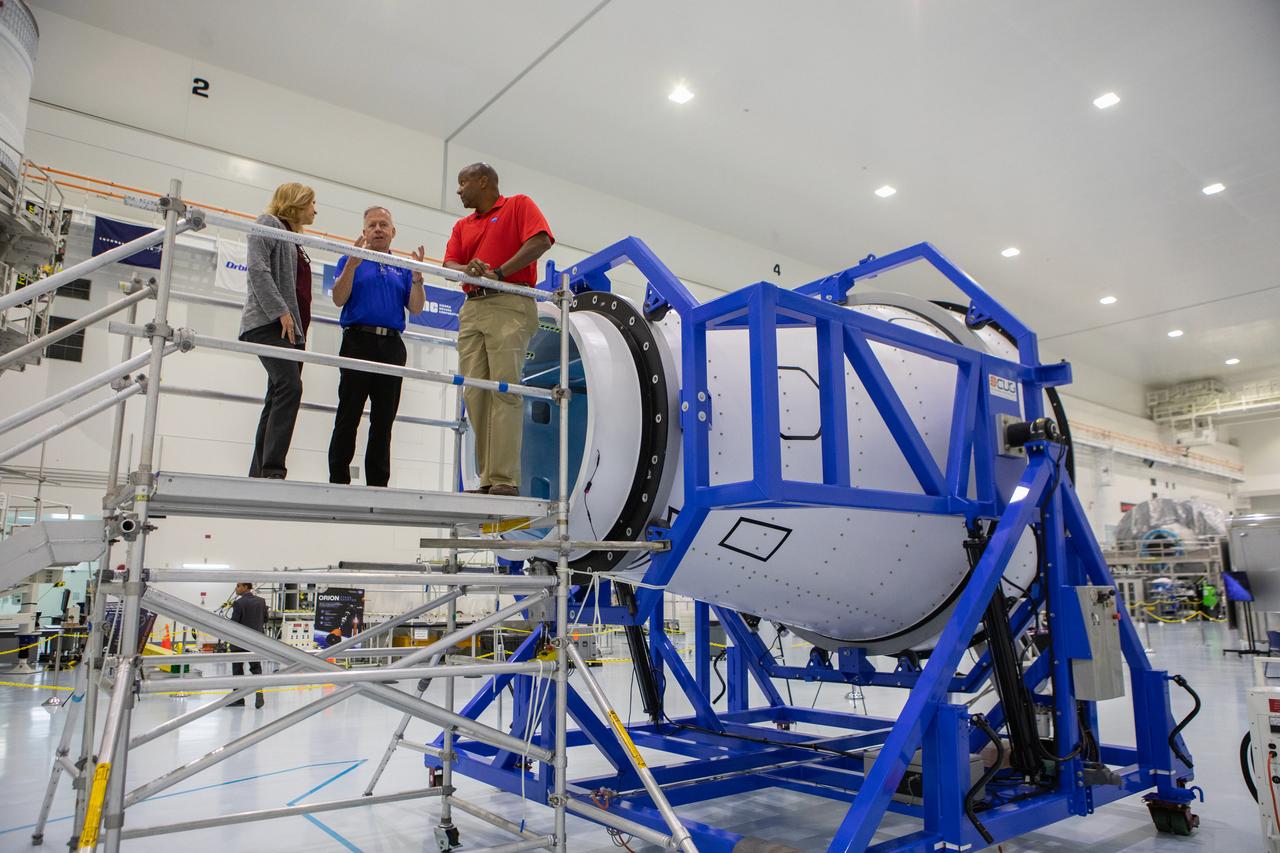
A mockup of the cargo logistics module for Sierra Nevada Corporation’s Dream Chaser, the company’s reusable spaceplane, arrived at the Space Station Processing Facility (SSPF) at NASA’s Kennedy Space Center in Florida in August. On Sept. 20, 2019, senior leadership had the opportunity to view the cargo module in the SSPF high bay. From left are Kennedy Deputy Director Janet Petro; Steve Lindsey, vice president, Space Exploration Systems, Sierra Nevada Corporation; and Kelvin Manning, Kennedy associate director, technical. The SSPF is providing support for current and future NASA and commercial provider programs, including Commercial Resupply Services, Artemis 1, sending the first woman and next man to the Moon, and deep space destinations including Mars.

A mockup of the cargo logistics module for Sierra Nevada Corporation’s Dream Chaser, the company’s reusable spaceplane, arrived at the Space Station Processing Facility (SSPF) at NASA’s Kennedy Space Center in Florida in August. On Sept. 20, 2019, senior leadership had the opportunity to view the cargo module in the SSPF high bay. From left are Kelvin Manning, Kennedy associate director, technical; Steve Lindsey, vice president, Space Exploration Systems, Sierra Nevada Corporation; Kennedy Deputy Director Janet Petro; and Kennedy Center Director Bob Cabana. The SSPF is providing support for current and future NASA and commercial provider programs, including Commercial Resupply Services, Artemis 1, sending the first woman and next man to the Moon, and deep space destinations including Mars.
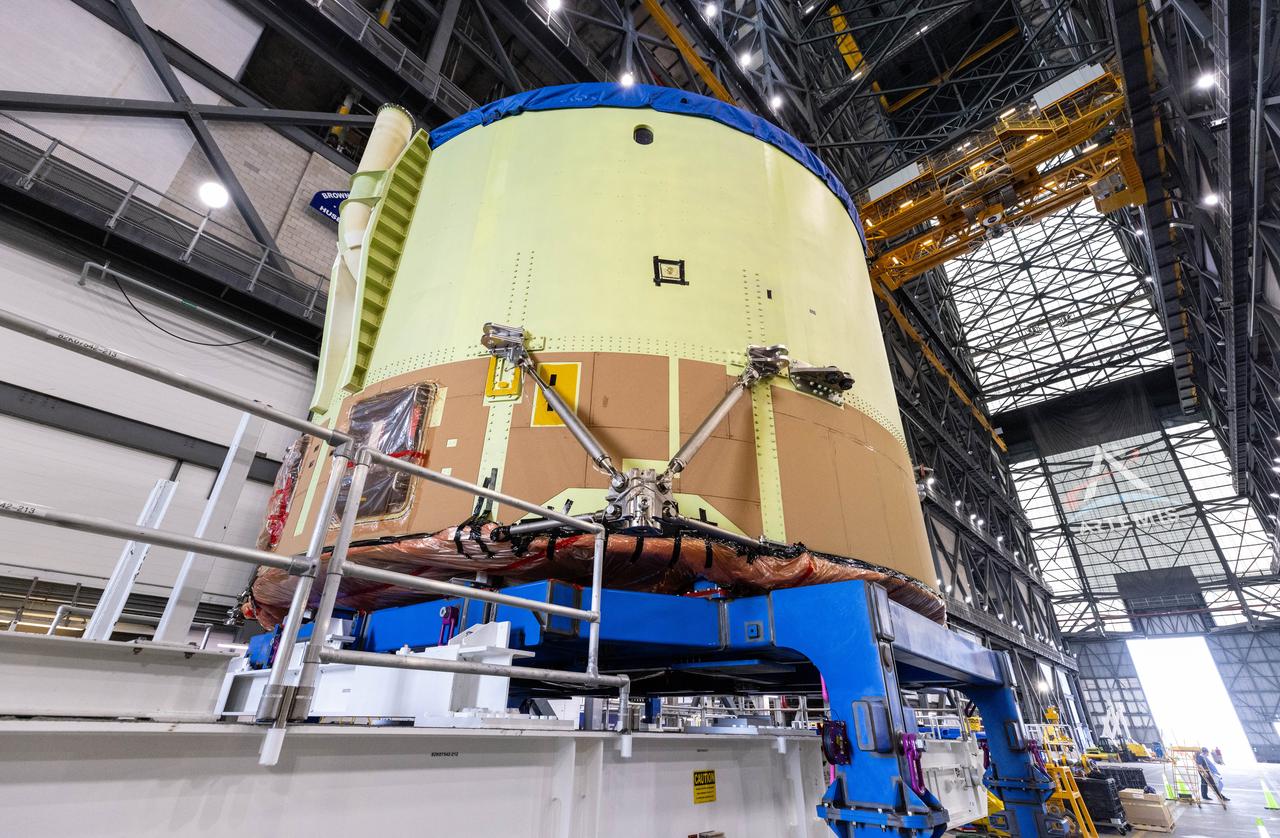
Teams from NASA’s Kennedy Space Center in Florida transport the engine section of the agency’s Artemis III SLS (Space Launch System) core stage from the spaceport’s Space Systems Processing Facility to the center’s Vehicle Assembly Building on Tuesday, July 29, 2025. The engine section is one the most complex and intricate parts of the rocket stage that will help power the Artemis missions to the Moon.
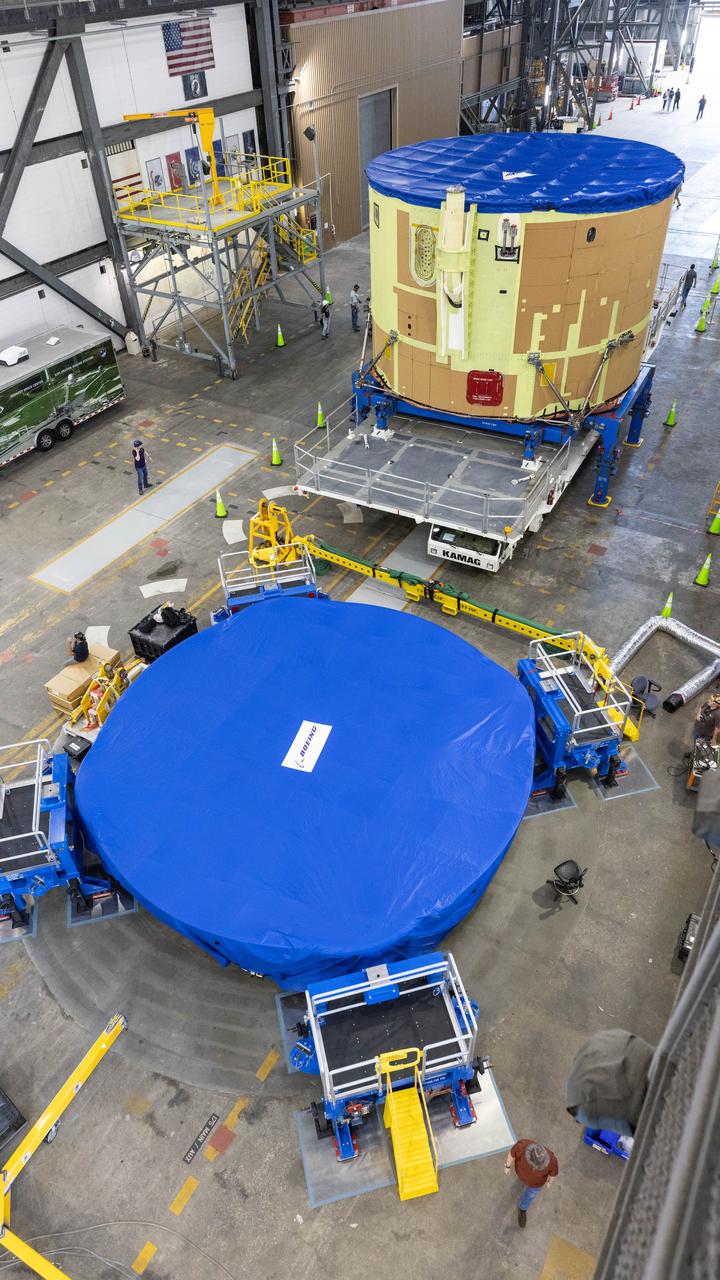
Teams from NASA’s Kennedy Space Center in Florida transport the engine section of the agency’s Artemis III SLS (Space Launch System) core stage from the spaceport’s Space Systems Processing Facility to the center’s Vehicle Assembly Building on Tuesday, July 29, 2025. The engine section is one the most complex and intricate parts of the rocket stage that will help power the Artemis missions to the Moon.
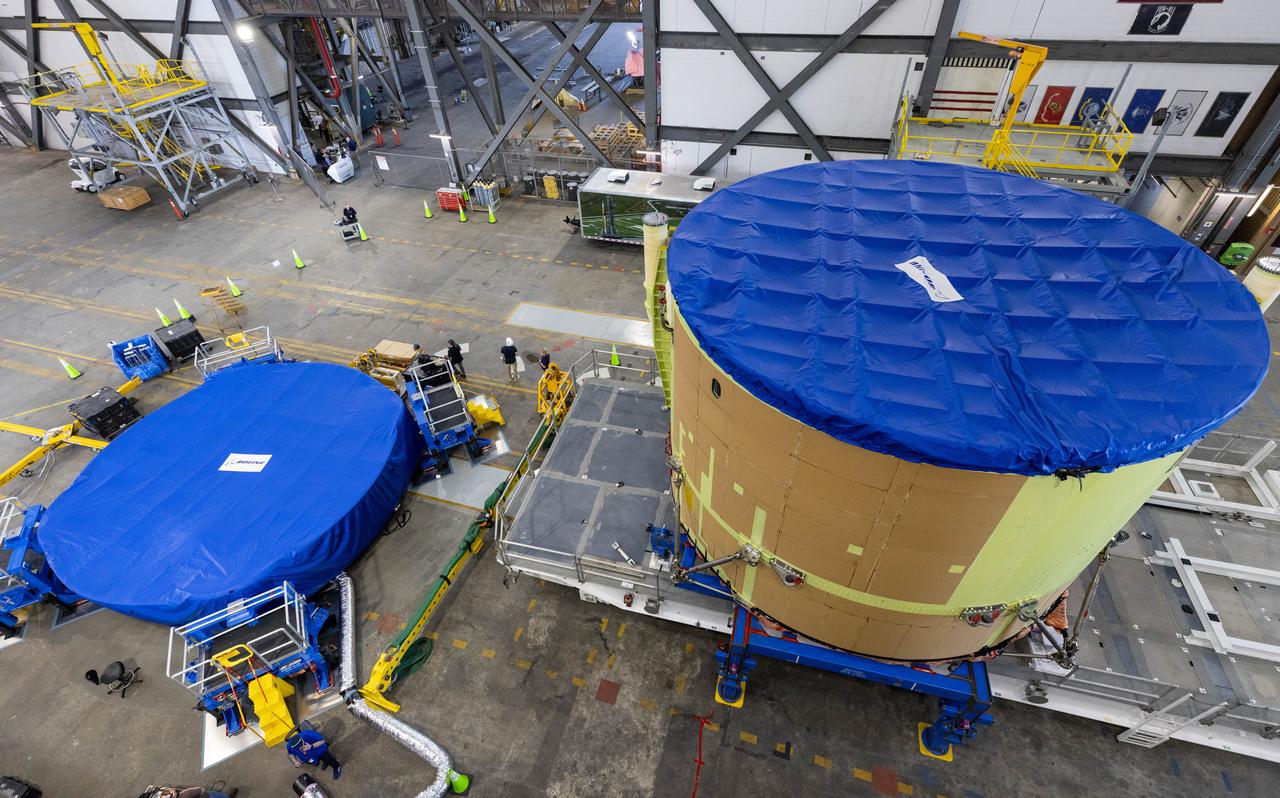
Teams from NASA’s Kennedy Space Center in Florida transport the engine section of the agency’s Artemis III SLS (Space Launch System) core stage from the spaceport’s Space Systems Processing Facility to the center’s Vehicle Assembly Building on Tuesday, July 29, 2025. The engine section is one the most complex and intricate parts of the rocket stage that will help power the Artemis missions to the Moon.
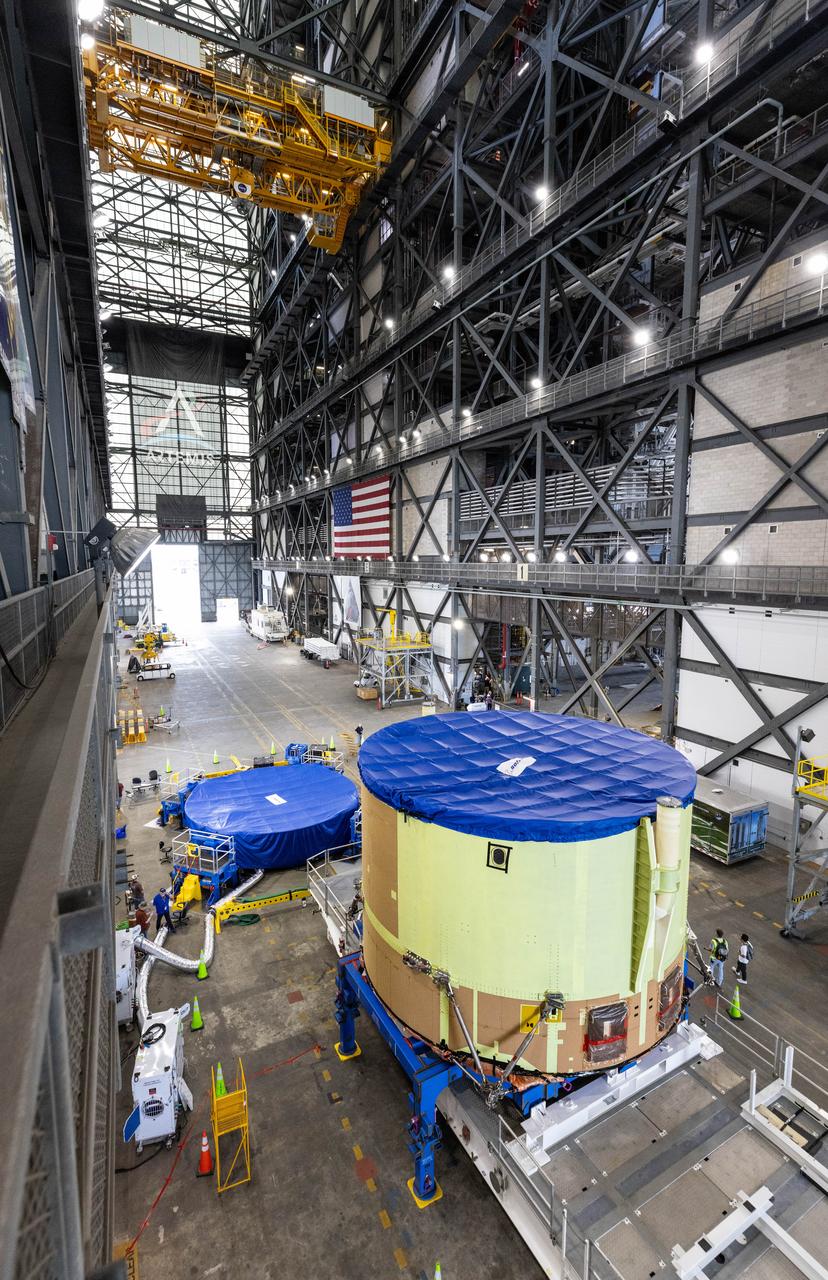
Teams from NASA’s Kennedy Space Center in Florida transport the engine section of the agency’s Artemis III SLS (Space Launch System) core stage from the spaceport’s Space Systems Processing Facility to the center’s Vehicle Assembly Building on Tuesday, July 29, 2025. The engine section is one the most complex and intricate parts of the rocket stage that will help power the Artemis missions to the Moon.
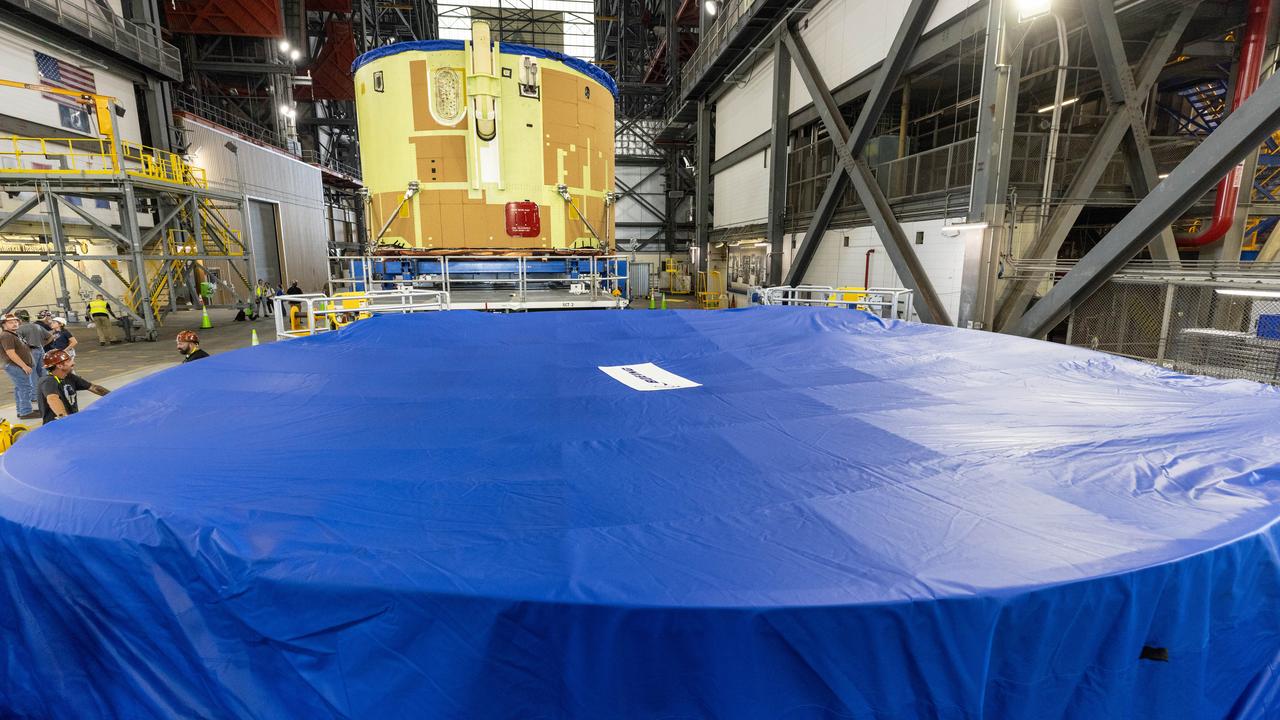
Teams from NASA’s Kennedy Space Center in Florida transport the engine section of the agency’s Artemis III SLS (Space Launch System) core stage from the spaceport’s Space Systems Processing Facility to the center’s Vehicle Assembly Building on Tuesday, July 29, 2025. The engine section is one the most complex and intricate parts of the rocket stage that will help power the Artemis missions to the Moon.
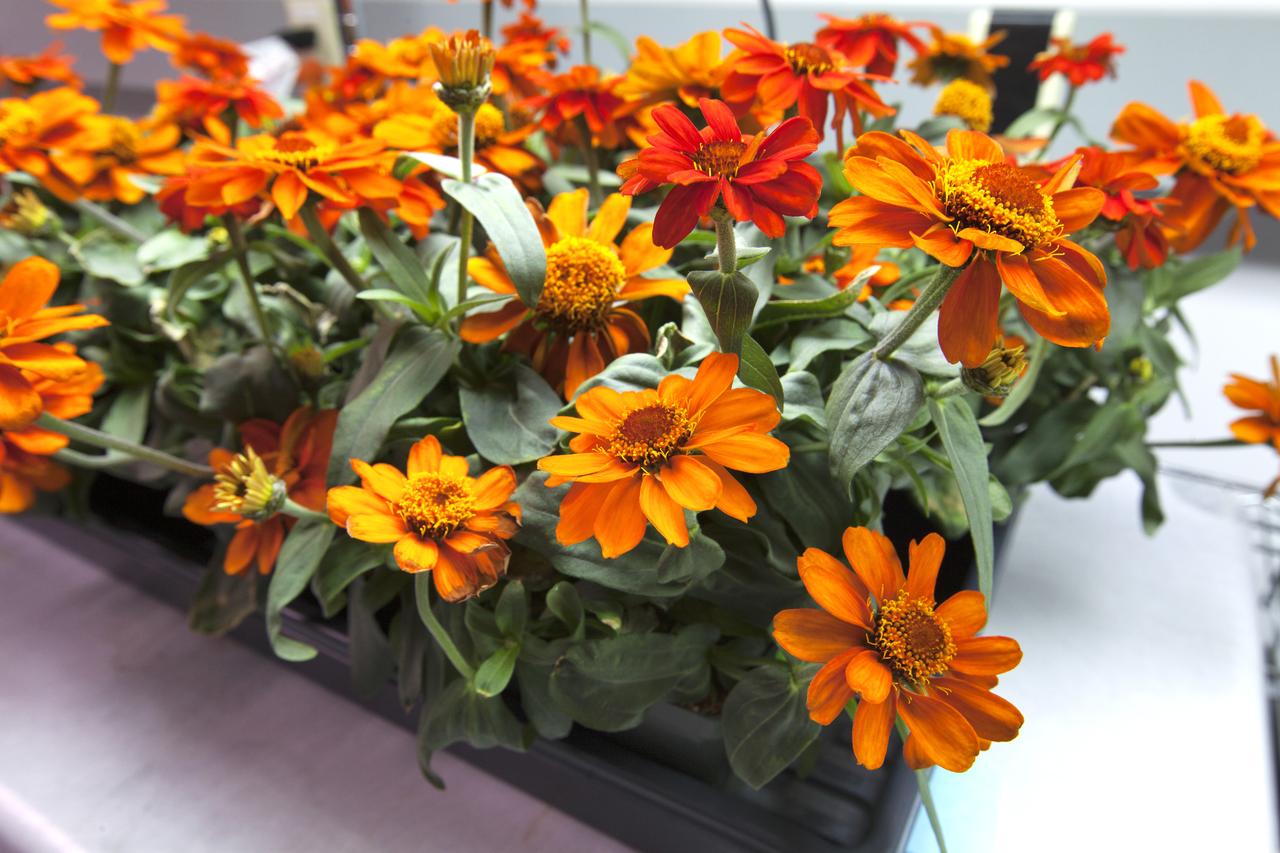
Zinnia seeds grown in the Veggie plant growth system on the International Space Station were planted and are growing in the Veggie Laboratory in the Space Station Processing Facility (SSPF) at NASA's Kennedy Space Center in Florida on Nov. 27, 2018.