
CAPE CANAVERAL, Fla. -- Inside the Space Station Processing Facility at NASA's Kennedy Space Center in Florida, the hatch of the Permanent Multipurpose Module (PMM) is closed in preparation for space shuttle Discovery's STS-133 mission to the International Space Station. Robonaut 2 (R2) and critical spare parts are packed inside the PMM, which will be left aboard the station on Discovery's final mission. Targeted to launch Nov. 1 at 4:40 p.m. EDT, Discovery and its crew also will carry Express Logistics Carrier-4 (ELC-4), which is filled with external payloads and experiments. For more information visit, www.nasa.gov/shuttle. Photo credit: NASA/Jim Grossmann
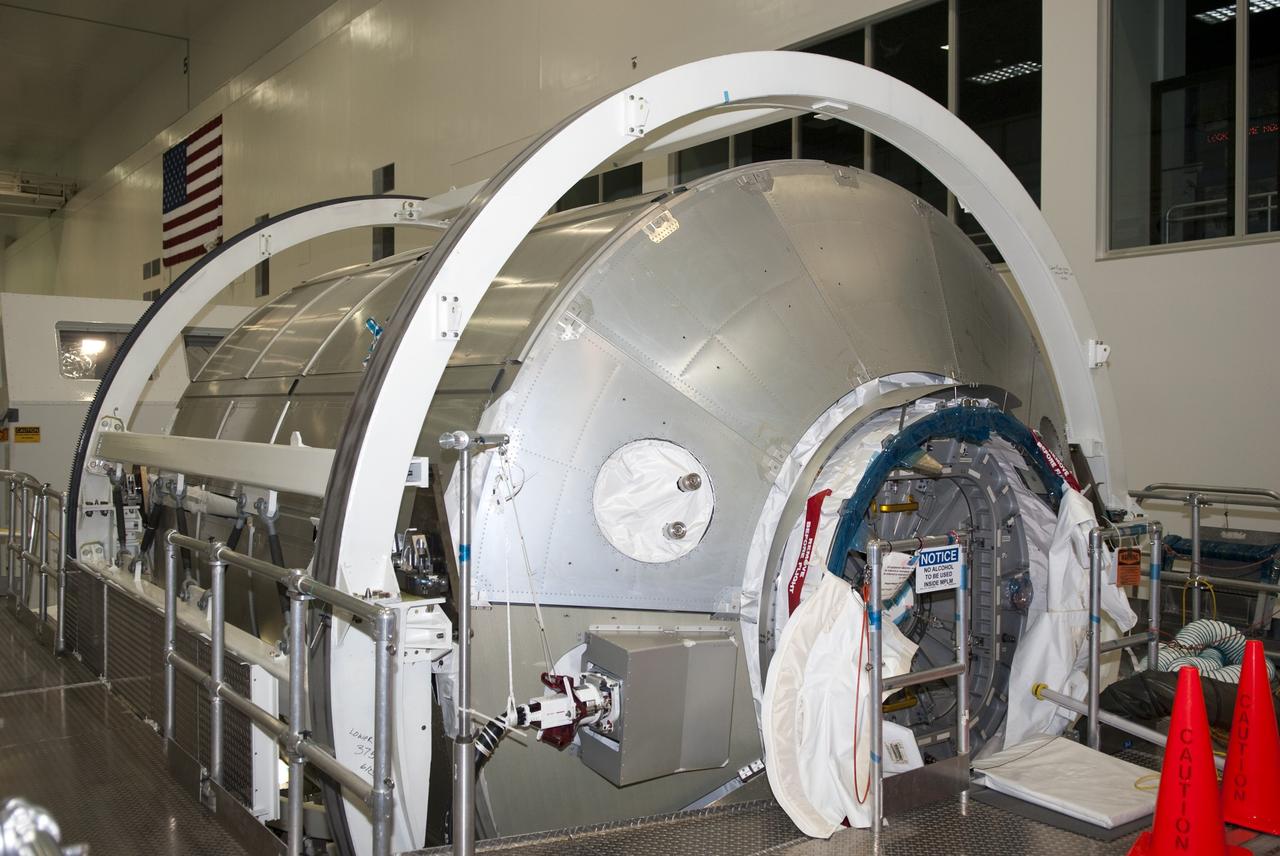
CAPE CANAVERAL, Fla. -- Inside the Space Station Processing Facility at NASA's Kennedy Space Center in Florida, the hatch of the Permanent Multipurpose Module (PMM) is closed in preparation for space shuttle Discovery's STS-133 mission to the International Space Station. Robonaut 2 (R2) and critical spare parts are packed inside the PMM, which will be left aboard the station on Discovery's final mission. Targeted to launch Nov. 1 at 4:40 p.m. EDT, Discovery and its crew also will carry Express Logistics Carrier-4 (ELC-4), which is filled with external payloads and experiments. For more information visit, www.nasa.gov/shuttle. Photo credit: NASA/Jim Grossmann
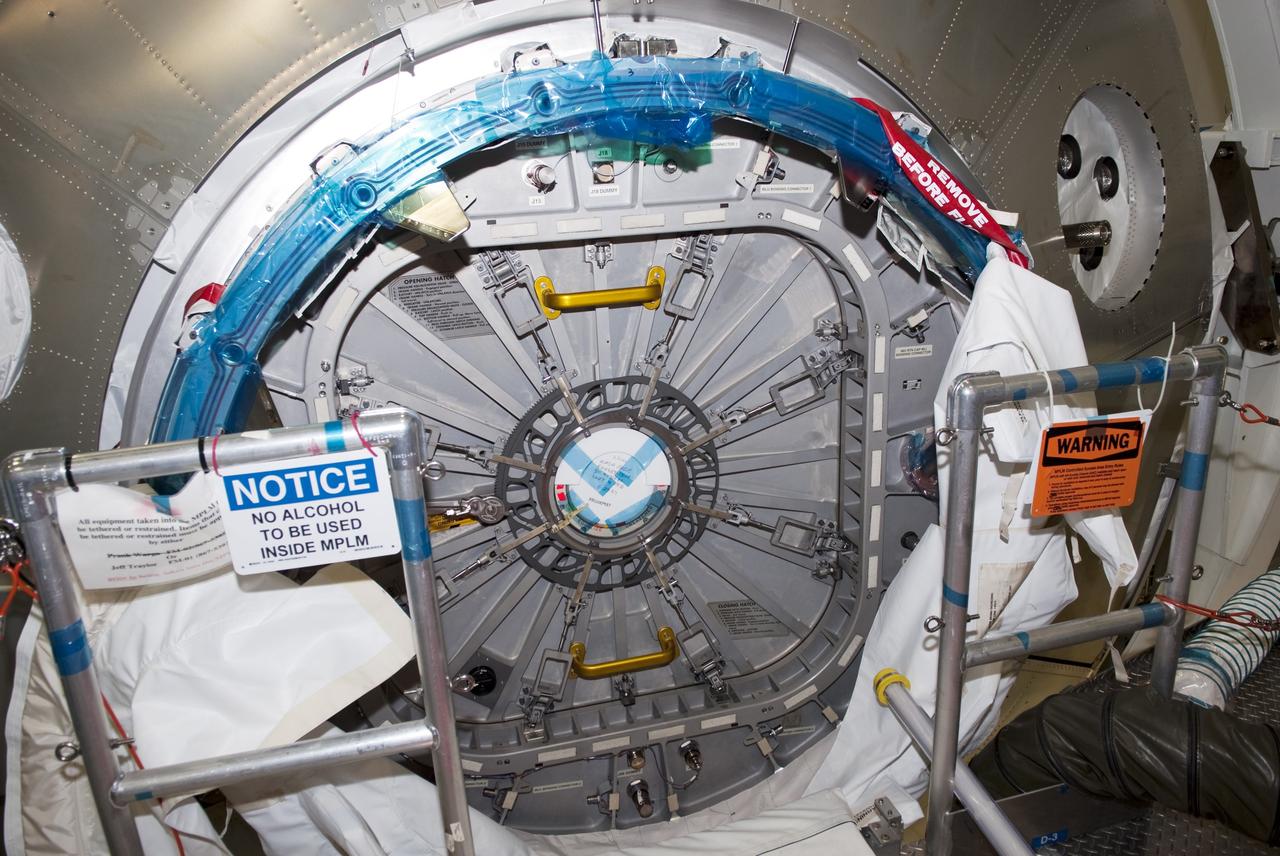
CAPE CANAVERAL, Fla. -- Inside the Space Station Processing Facility at NASA's Kennedy Space Center in Florida, the hatch of the Permanent Multipurpose Module (PMM) is closed in preparation for space shuttle Discovery's STS-133 mission to the International Space Station. Robonaut 2 (R2) and critical spare parts are packed inside the PMM, which will be left aboard the station on Discovery's final mission. Targeted to launch Nov. 1 at 4:40 p.m. EDT, Discovery and its crew also will carry Express Logistics Carrier-4 (ELC-4), which is filled with external payloads and experiments. For more information visit, www.nasa.gov/shuttle. Photo credit: NASA/Jim Grossmann

CAPE CANAVERAL, Fla. -- Inside the Space Station Processing Facility at NASA's Kennedy Space Center in Florida, workers inspect the Permanent Multipurpose Module (PMM) after its hatch is closed in preparation for space shuttle Discovery's STS-133 mission to the International Space Station. Robonaut 2 (R2) and critical spare parts are packed inside the PMM, which will be left aboard the station on Discovery's final mission. Targeted to launch Nov. 1 at 4:40 p.m. EDT, Discovery and its crew also will carry Express Logistics Carrier-4 (ELC-4), which is filled with external payloads and experiments. For more information visit, www.nasa.gov/shuttle. Photo credit: NASA/Jim Grossmann
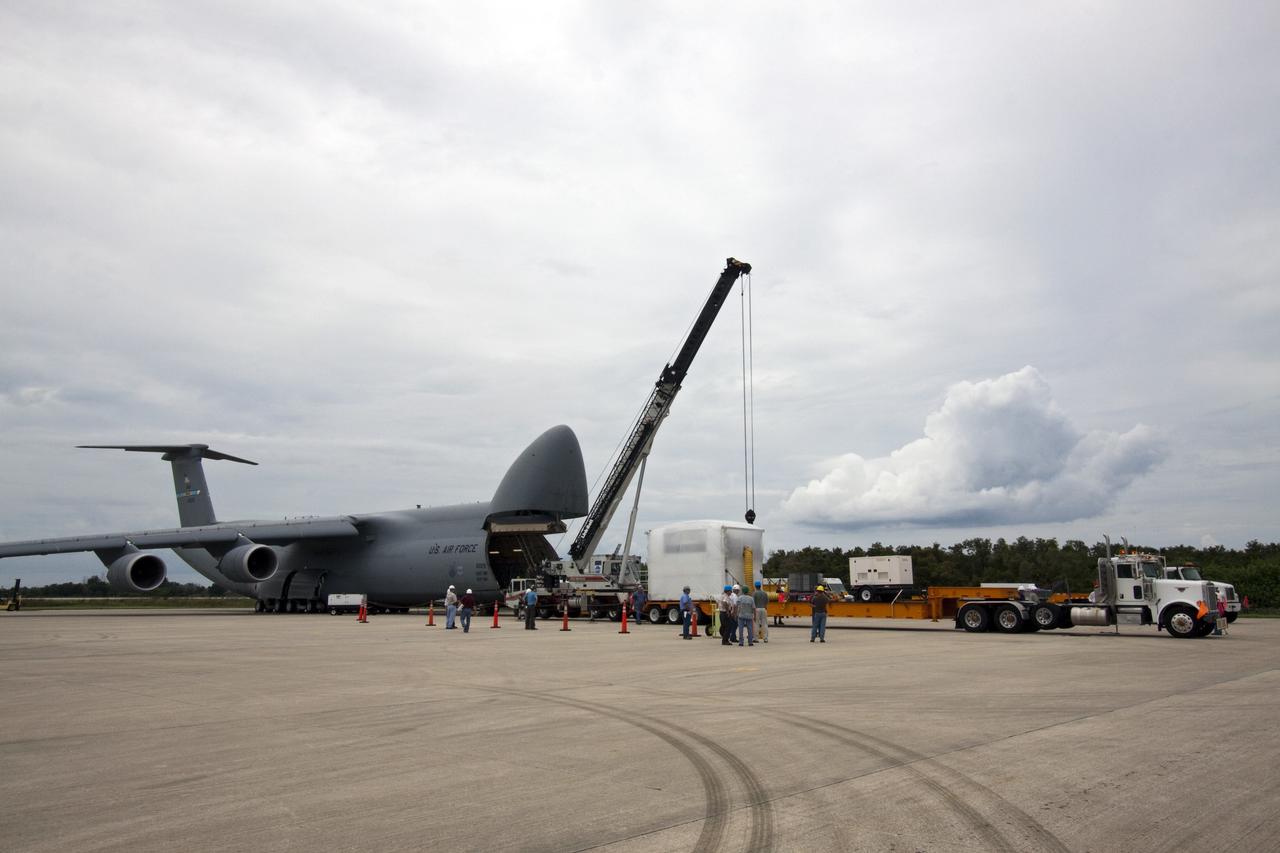
CAPE CANAVERAL, Fla. -- At NASA's Kennedy Space Center in Florida, workers begin to offload the Alpha Magnetic Spectrometer, or AMS, from an Air Force C-5M aircraft, which flew in from Europe. The tractor-trailer will transport the AMS from the Shuttle Landing Facility runway to the Space Station Processing Facility, where it will be processed for launch. The state-of-the-art particle physics detector is designed to operate as an external module on the International Space Station. It will use the unique environment of space to study the universe and its origin by searching for dark matter. AMS will fly to the station aboard space shuttle Endeavour's STS-134 mission targeted to launch Feb. 26, 2011. Photo credit: NASA/Jack Pfaller
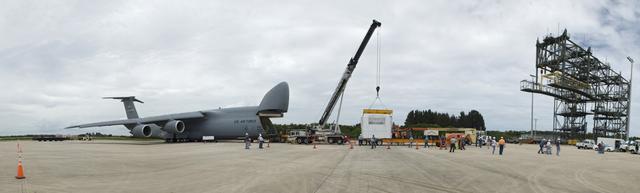
CAPE CANAVERAL, Fla. -- At NASA's Kennedy Space Center in Florida, workers offload the Alpha Magnetic Spectrometer (AMS) from an Air Force C-5M aircraft on the Shuttle Landing Facility runway. The state-of-the-art particle physics detector arrived at Kennedy from Europe and will operate as an external module on the International Space Station to study the universe and its origin by searching for dark matter. AMS will fly to the station aboard space shuttle Endeavour's STS-134 mission targeted to launch Feb. 26, 2011. Photo credit: NASA/Frankie Martin
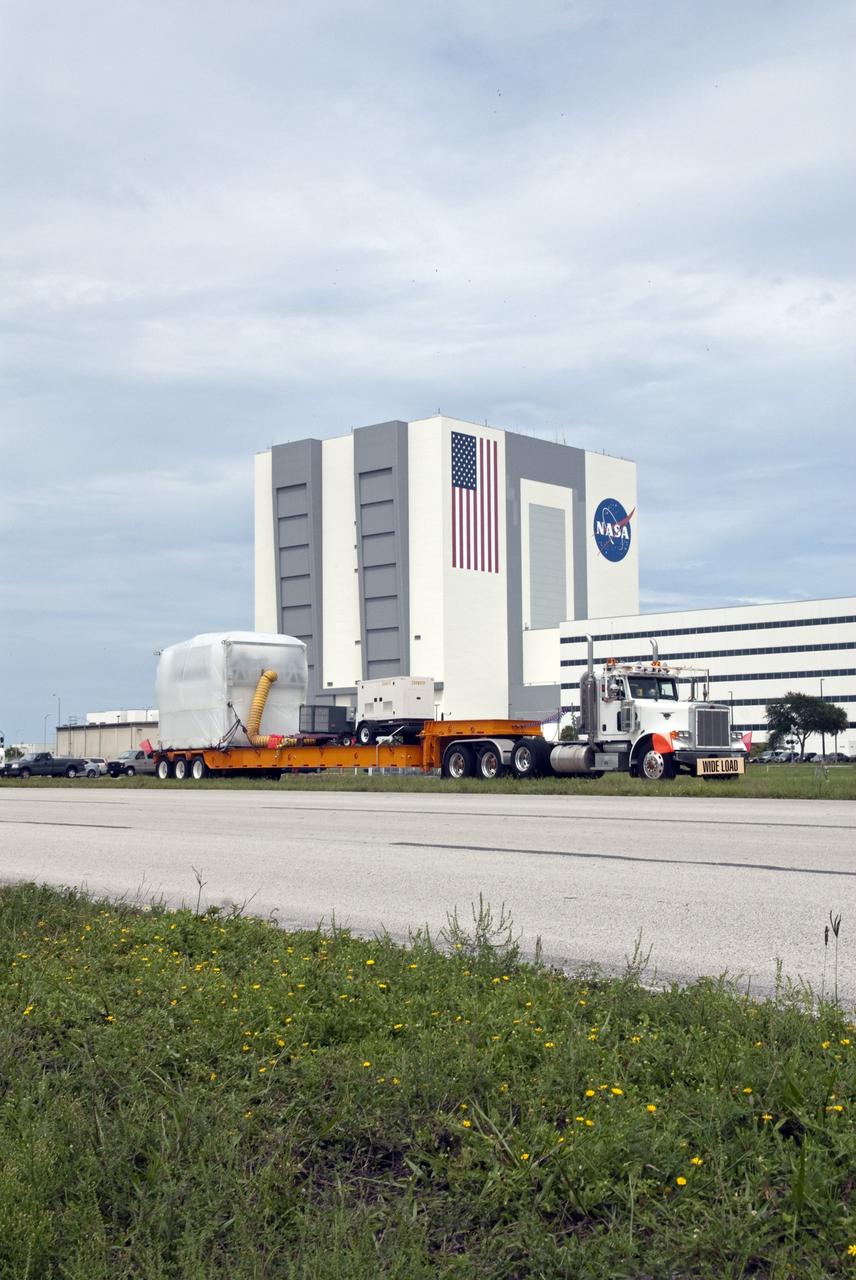
CAPE CANAVERAL, Fla. -- At NASA's Kennedy Space Center in Florida, a tractor-trailer carrying the Alpha Magnetic Spectrometer, or AMS, passes the Vehicle Assembly Building en route to the Space Station Processing Facility. The state-of-the-art particle physics detector arrived on Kennedy's Shuttle Landing Facility aboard an Air Force C-5M aircraft from Europe. It will operate as an external module on the International Space Station to study the universe and its origin by searching for dark matter. AMS will fly to the station aboard space shuttle Endeavour's STS-134 mission targeted to launch Feb. 26, 2011. Photo credit: NASA/Frankie Martin
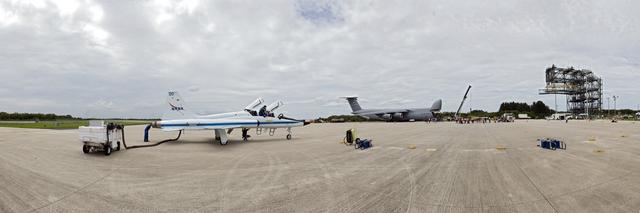
CAPE CANAVERAL, Fla. -- At NASA's Kennedy Space Center in Florida, media and workers watch as the Alpha Magnetic Spectrometer (AMS) is offloaded from an Air Force C-5M aircraft on the Shuttle Landing Facility runway. One of NASA's T-38 training jets, flown by a member of the STS-134 crew, is in the foreground. The state-of-the-art particle physics detector arrived from Europe and will operate as an external module on the International Space Station to study the universe and its origin by searching for dark matter. AMS will fly to the station aboard space shuttle Endeavour's STS-134 mission targeted to launch Feb. 26, 2011. Photo credit: NASA/Frankie Martin
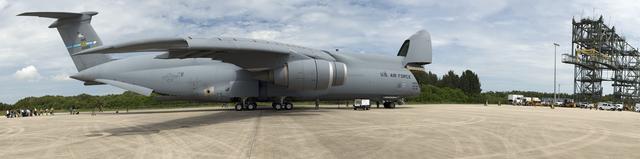
CAPE CANAVERAL, Fla. -- At NASA's Kennedy Space Center in Florida, media and workers watch as the Alpha Magnetic Spectrometer (AMS) is offloaded from an Air Force C-5M aircraft on the Shuttle Landing Facility runway. The state-of-the-art particle physics detector arrived at Kennedy from Europe and will operate as an external module on the International Space Station to study the universe and its origin by searching for dark matter. AMS will fly to the station aboard space shuttle Endeavour's STS-134 mission targeted to launch Feb. 26, 2011. Photo credit: NASA/Frankie Martin

CAPE CANAVERAL, Fla. -- At NASA's Kennedy Space Center in Florida, a tractor-trailer carrying the Alpha Magnetic Spectrometer, or AMS, arrives at the Space Station Processing Facility, where it will be processed for launch. The state-of-the-art particle physics detector arrived on Kennedy's Shuttle Landing Facility aboard an Air Force C-5M aircraft from Europe. It will operate as an external module on the International Space Station to study the universe and its origin by searching for dark matter. AMS will fly to the station aboard space shuttle Endeavour's STS-134 mission targeted to launch Feb. 26, 2011. Photo credit: NASA/Frankie Martin
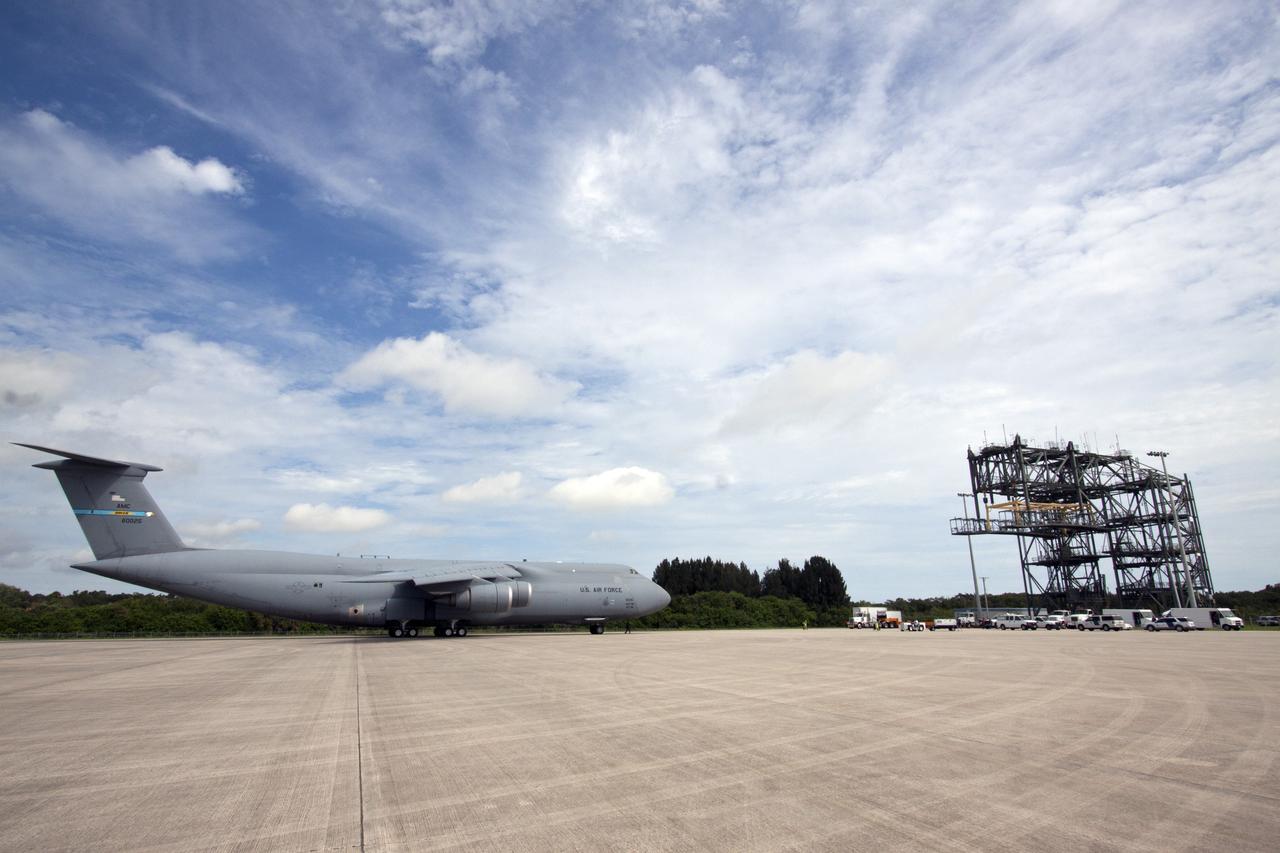
CAPE CANAVERAL, Fla. -- At NASA's Kennedy Space Center in Florida, the Alpha Magnetic Spectrometer, or AMS, arrives on the Shuttle Landing Facility runway aboard an Air Force C-5M aircraft from Europe. The state-of-the-art particle physics detector is designed to operate as an external module on the International Space Station. It will use the unique environment of space to study the universe and its origin by searching for dark matter. AMS will fly to the International Space Station aboard space shuttle Endeavour's STS-134 mission targeted to launch Feb. 26, 2011. Photo credit: NASA/Jack Pfaller
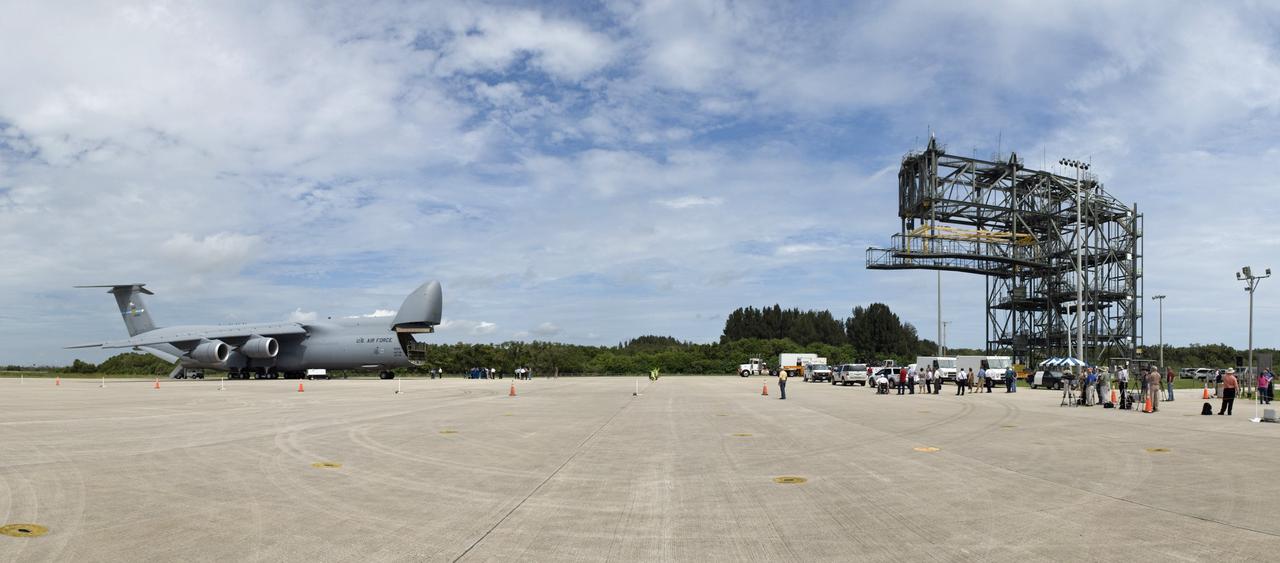
CAPE CANAVERAL, Fla. -- At NASA's Kennedy Space Center in Florida, media and workers watch as the Alpha Magnetic Spectrometer (AMS) is offloaded from an Air Force C-5M aircraft on the Shuttle Landing Facility runway. The state-of-the-art particle physics detector arrived at Kennedy from Europe and will operate as an external module on the International Space Station to study the universe and its origin by searching for dark matter. AMS will fly to the station aboard space shuttle Endeavour's STS-134 mission targeted to launch Feb. 26, 2011. Photo credit: NASA/Frankie Martin
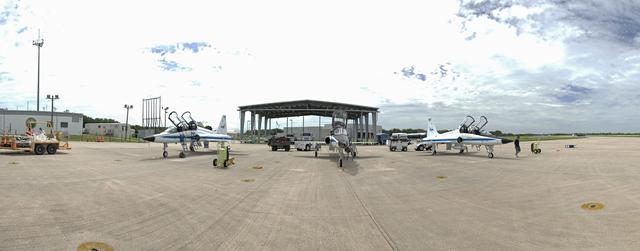
CAPE CANAVERAL, Fla. -- At NASA's Kennedy Space Center in Florida, three of NASA's T-38 training jets sit on the parking apron of the Shuttle Landing Facility. The STS-134 crew members flew the jets to Kennedy to watch the Alpha Magnetic Spectrometer (AMS) arrive aboard an Air Force C-5M aircraft from Europe. The state-of-the-art particle physics detector will operate as an external module on the International Space Station to study the universe and its origin by searching for dark matter. AMS will fly to the station aboard space shuttle Endeavour's STS-134 mission targeted to launch Feb. 26, 2011. Photo credit: NASA/Frankie Martin
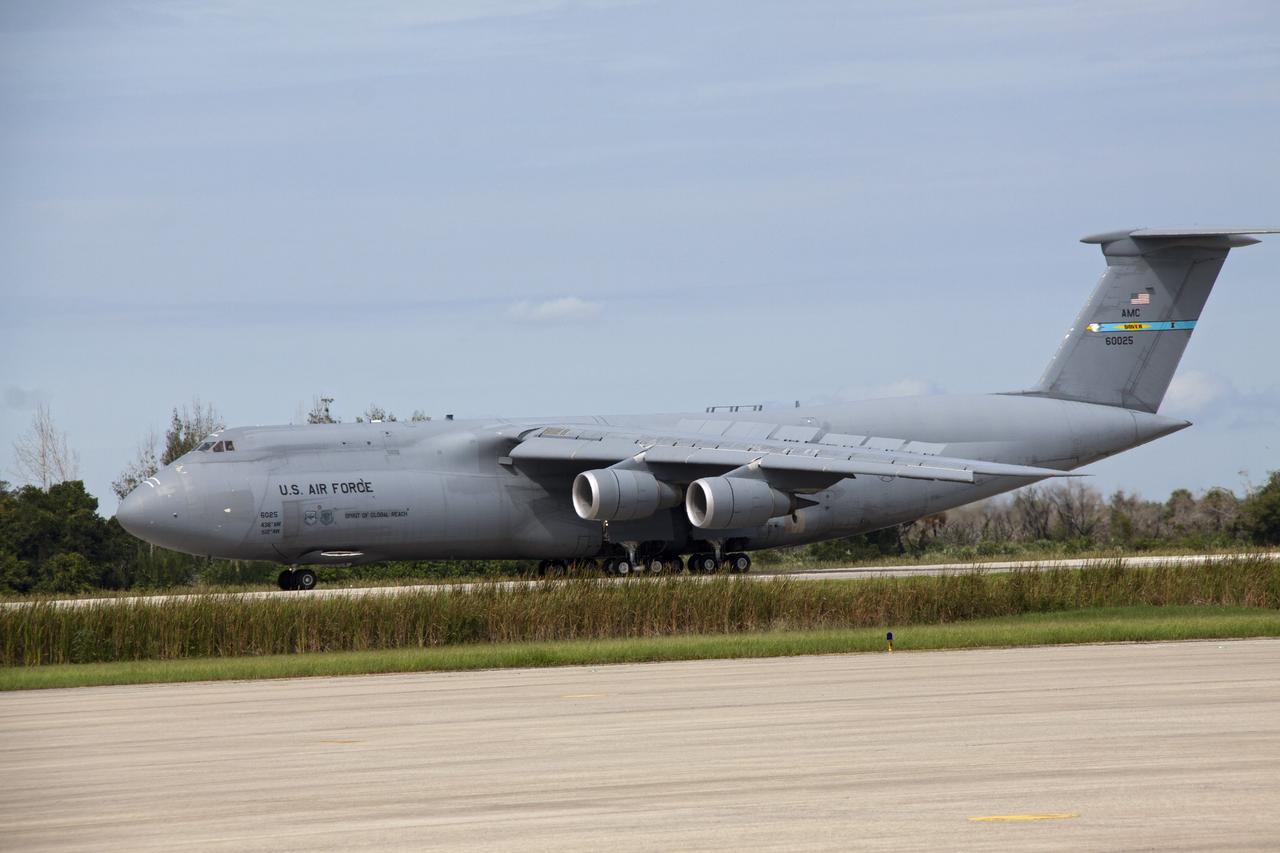
CAPE CANAVERAL, Fla. -- At NASA's Kennedy Space Center in Florida, the Alpha Magnetic Spectrometer, or AMS, arrives on the Shuttle Landing Facility runway aboard an Air Force C-5M aircraft from Europe. The state-of-the-art particle physics detector is designed to operate as an external module on the International Space Station. It will use the unique environment of space to study the universe and its origin by searching for dark matter. AMS will fly to the International Space Station aboard space shuttle Endeavour's STS-134 mission targeted to launch Feb. 26, 2011. Photo credit: NASA/Jack Pfaller
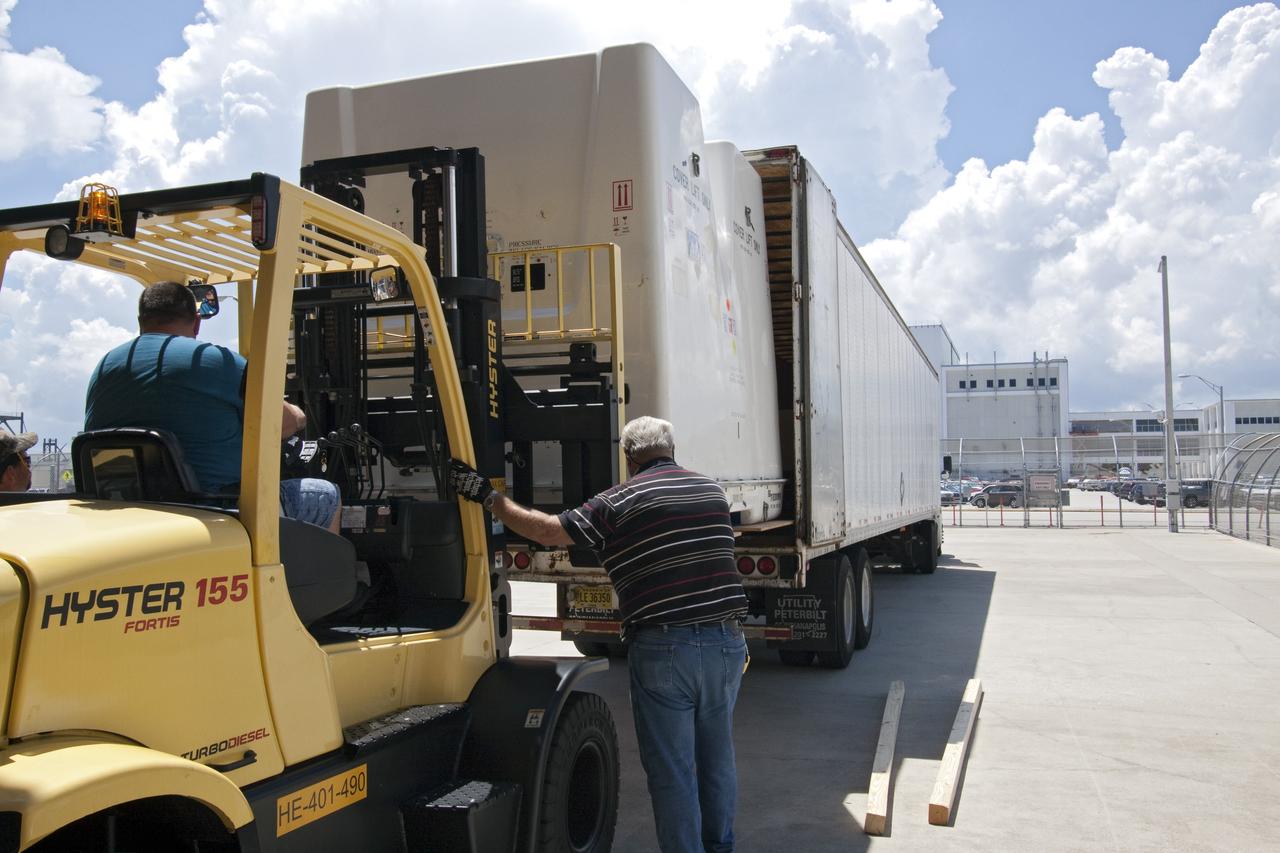
CAPE CANAVERAL, Fla. -- In the Space Station Processing Facility at NASA's Kennedy Space Center in Florida, a forklift moves shipping containers packed with tools and flight support equipment for orbital replacement units into a tractor-trailer for their trip to the Japanese Aerospace Exploration Agency's Tanegashima Space Center. There, the six units, including the flex hose rotary coupler, will be processed for launch to the International Space Station aboard HTV-2, scheduled for Jan. 20, 2011. HTV-2 is an uncrewed cargo transporter that will be launched by the H-IIB launch vehicle. It is designed to deliver up to 6 tons of supplies, including food, clothes and experiment devices to the space station. Photo credit: NASA/Jack Pfaller
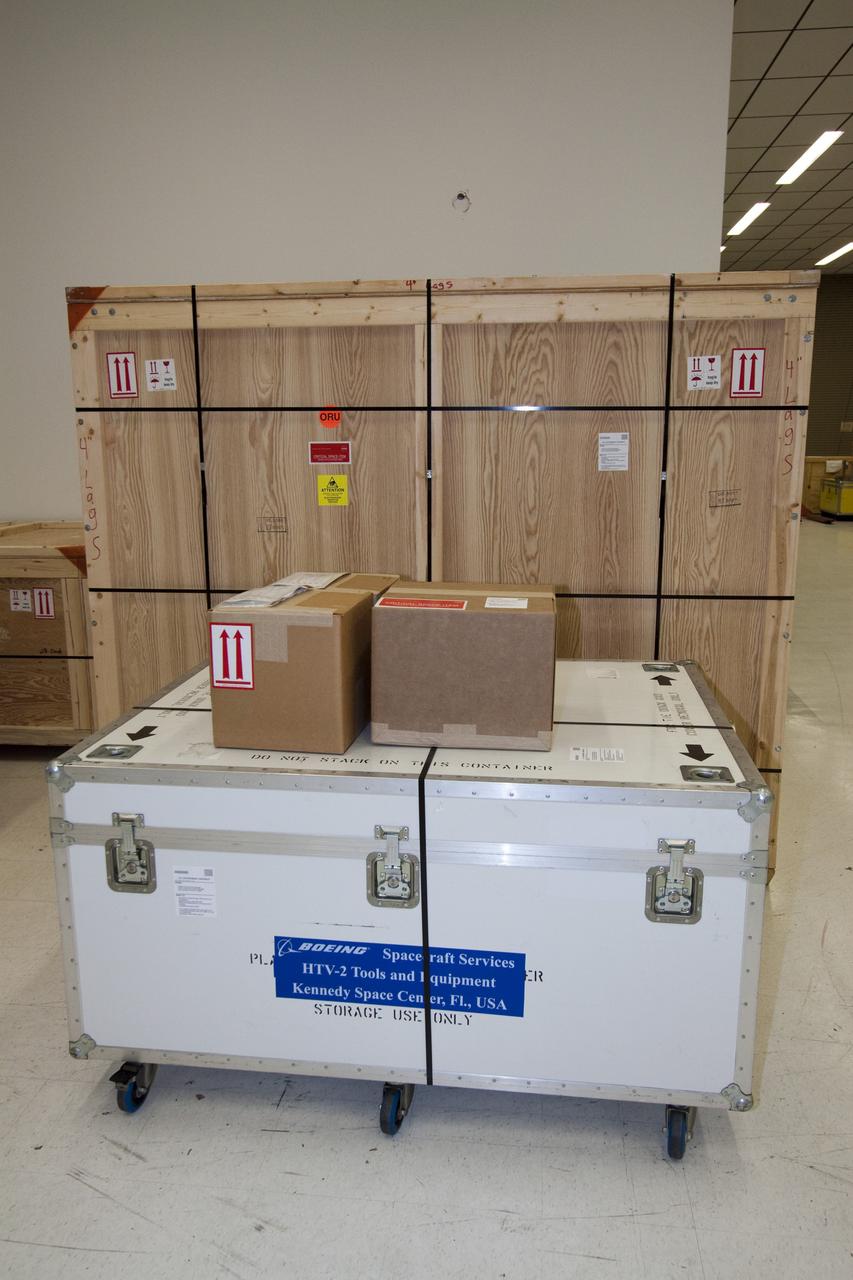
CAPE CANAVERAL, Fla. -- In the Space Station Processing Facility at NASA's Kennedy Space Center in Florida, shipping containers packed with tools and flight support equipment for orbital replacement units are ready for their trip to the Japanese Aerospace Exploration Agency's Tanegashima Space Center. There, the six units, including the flex hose rotary coupler, will be processed for launch to the International Space Station aboard HTV-2, scheduled for Jan. 20, 2011. HTV-2 is an uncrewed cargo transporter that will be launched by the H-IIB launch vehicle. It is designed to deliver up to 6 tons of supplies, including food, clothes and experiment devices to the space station. Photo credit: NASA/Jack Pfaller
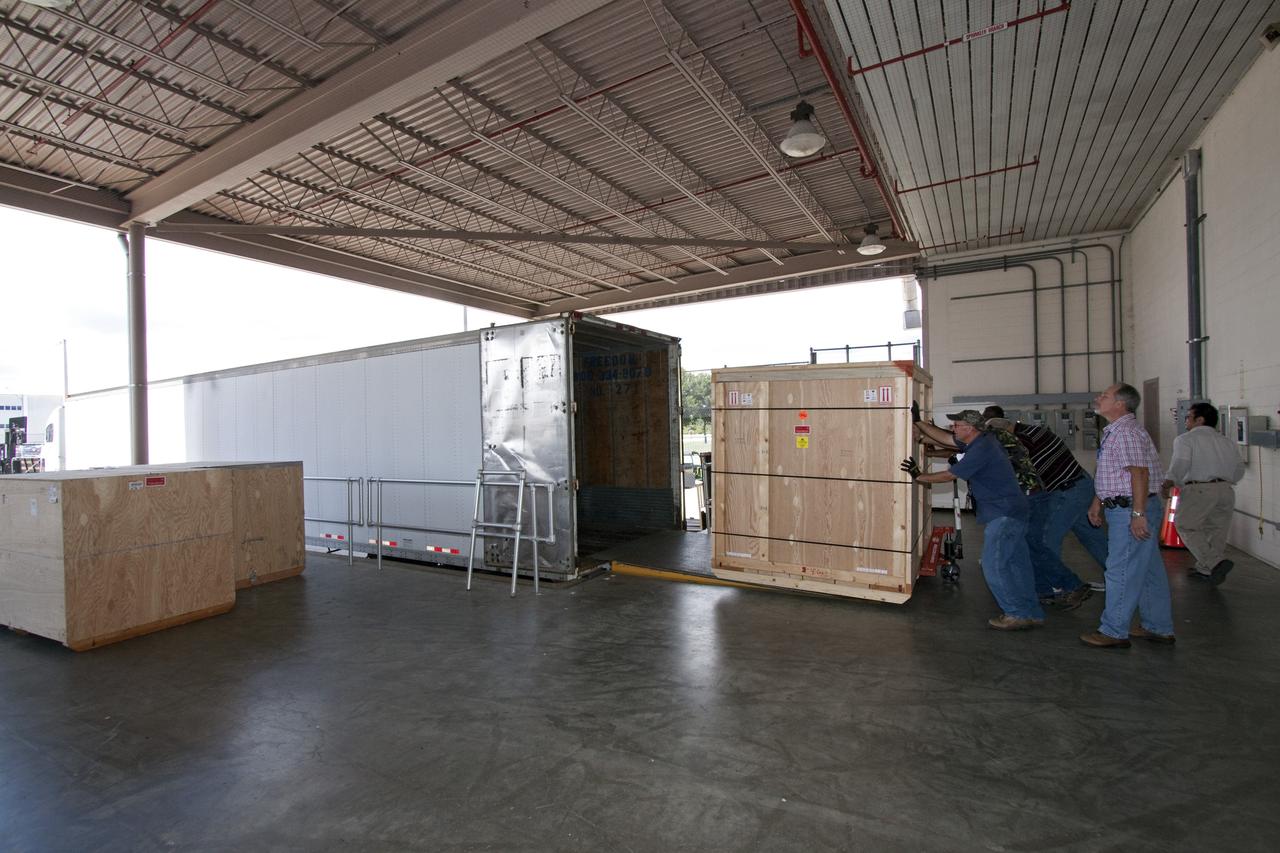
CAPE CANAVERAL, Fla. -- In the Space Station Processing Facility at NASA's Kennedy Space Center in Florida, shipping containers packed with tools and flight support equipment for orbital replacement units are loaded into a tractor-trailer for their trip to the Japanese Aerospace Exploration Agency's Tanegashima Space Center. There, the six units, including the flex hose rotary coupler, will be processed for launch to the International Space Station aboard HTV-2, scheduled for Jan. 20, 2011. HTV-2 is an uncrewed cargo transporter that will be launched by the H-IIB launch vehicle. It is designed to deliver up to 6 tons of supplies, including food, clothes and experiment devices to the space station. Photo credit: NASA/Jack Pfaller
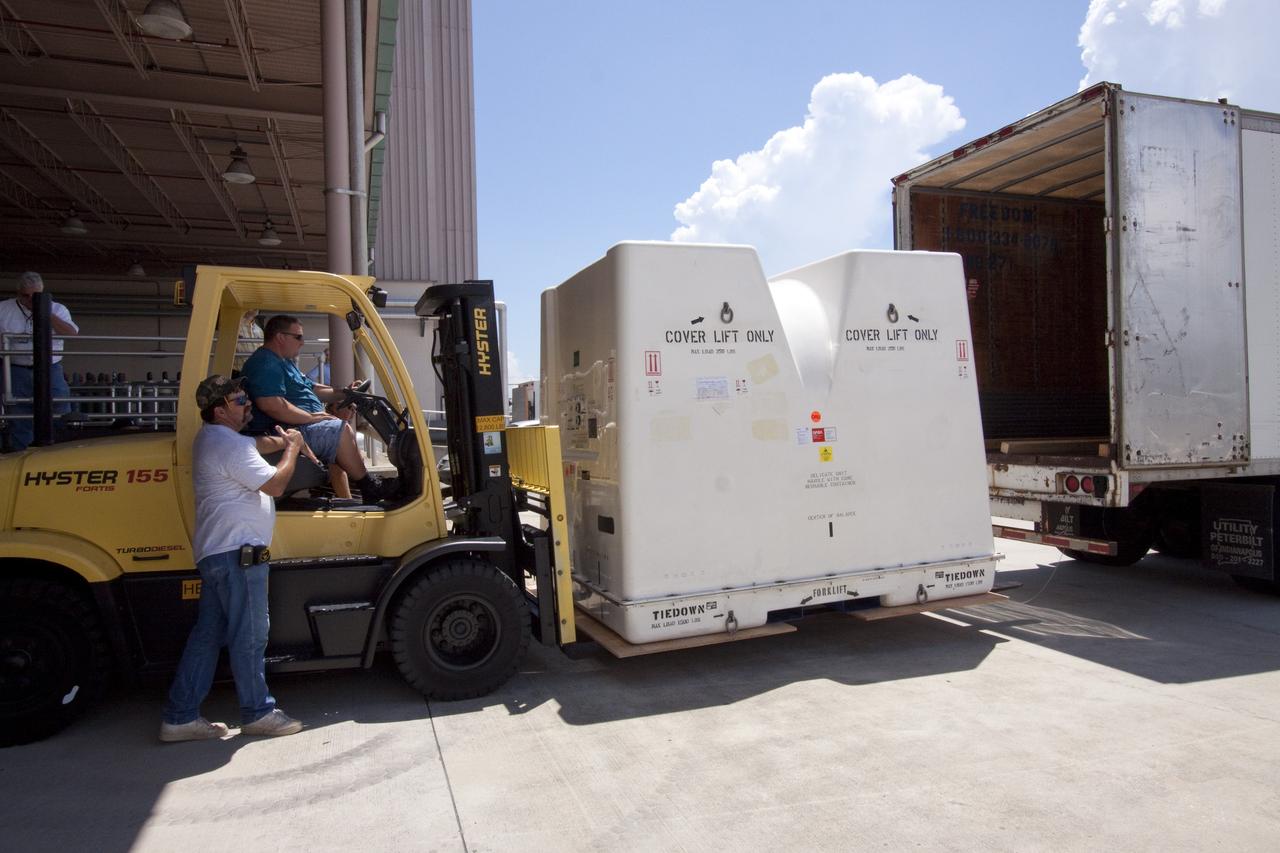
CAPE CANAVERAL, Fla. -- In the Space Station Processing Facility at NASA's Kennedy Space Center in Florida, a forklift moves shipping containers packed with tools and flight support equipment for orbital replacement units into a tractor-trailer for their trip to the Japanese Aerospace Exploration Agency's Tanegashima Space Center. There, the six units, including the flex hose rotary coupler, will be processed for launch to the International Space Station aboard HTV-2, scheduled for Jan. 20, 2011. HTV-2 is an uncrewed cargo transporter that will be launched by the H-IIB launch vehicle. It is designed to deliver up to 6 tons of supplies, including food, clothes and experiment devices to the space station. Photo credit: NASA/Jack Pfaller
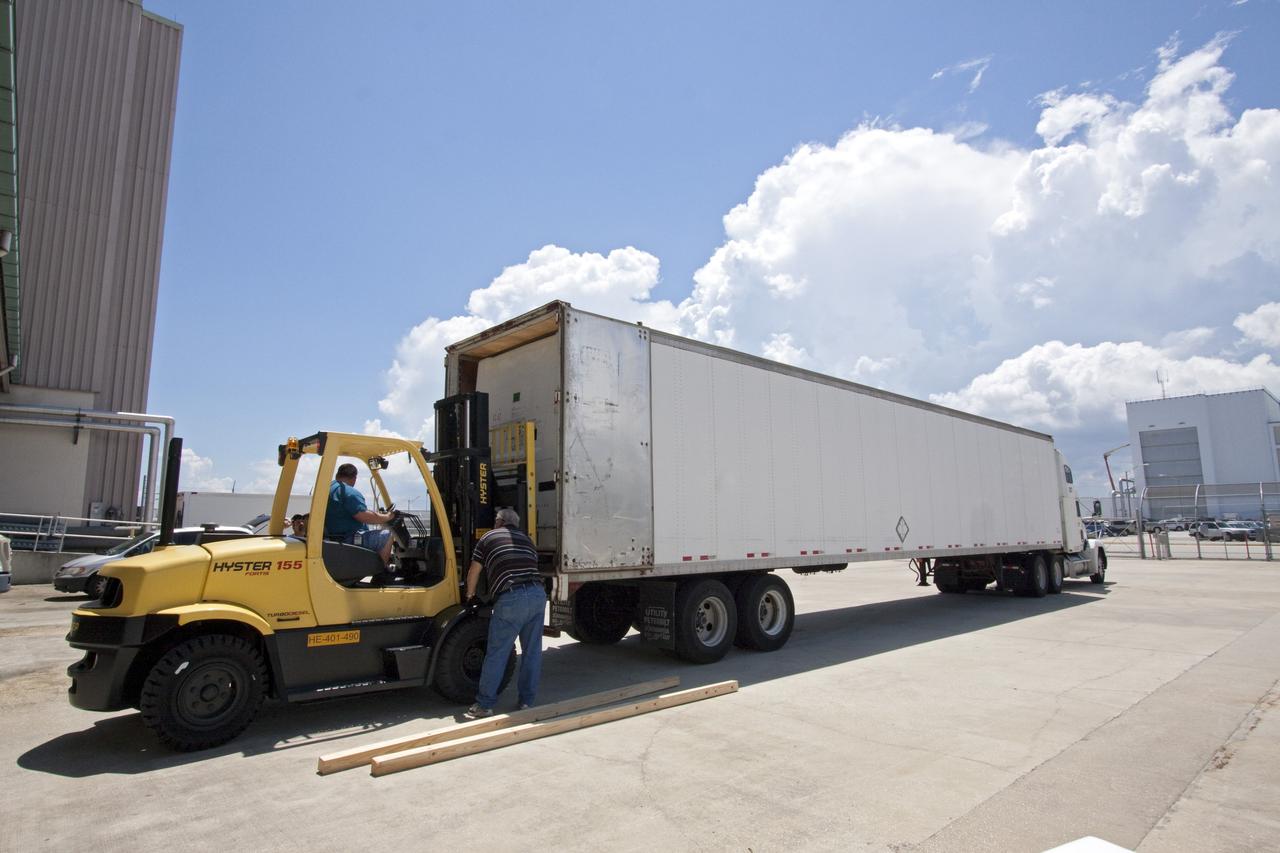
CAPE CANAVERAL, Fla. -- In the Space Station Processing Facility at NASA's Kennedy Space Center in Florida, a forklift moves shipping containers packed with tools and flight support equipment for orbital replacement units into a tractor-trailer for their trip to the Japanese Aerospace Exploration Agency's Tanegashima Space Center. There, the six units, including the flex hose rotary coupler, will be processed for launch to the International Space Station aboard HTV-2, scheduled for Jan. 20, 2011. HTV-2 is an uncrewed cargo transporter that will be launched by the H-IIB launch vehicle. It is designed to deliver up to 6 tons of supplies, including food, clothes and experiment devices to the space station. Photo credit: NASA/Jack Pfaller
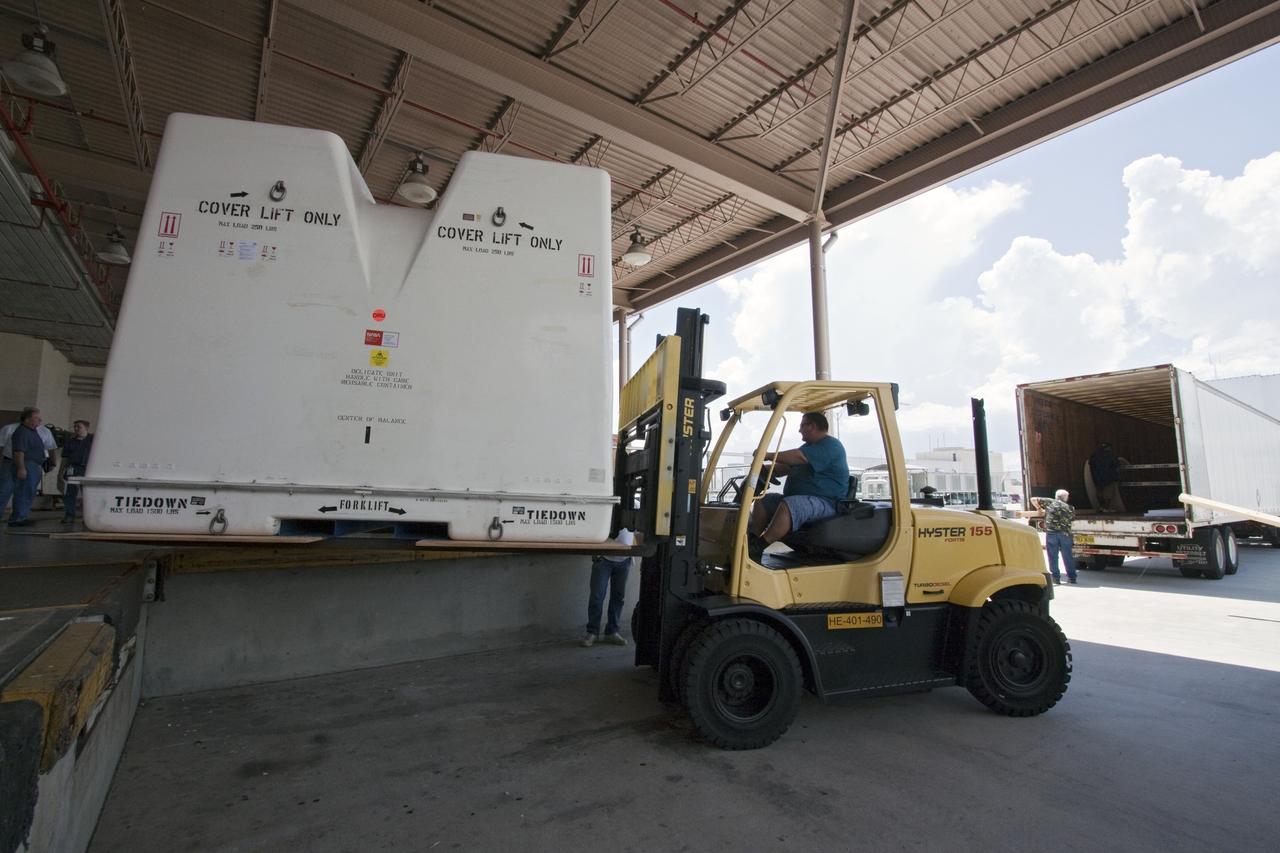
CAPE CANAVERAL, Fla. -- In the Space Station Processing Facility at NASA's Kennedy Space Center in Florida, a forklift moves shipping containers packed with tools and flight support equipment for orbital replacement units into a tractor-trailer for their trip to the Japanese Aerospace Exploration Agency's Tanegashima Space Center. There, the six units, including the flex hose rotary coupler, will be processed for launch to the International Space Station aboard HTV-2, scheduled for Jan. 20, 2011. HTV-2 is an uncrewed cargo transporter that will be launched by the H-IIB launch vehicle. It is designed to deliver up to 6 tons of supplies, including food, clothes and experiment devices to the space station. Photo credit: NASA/Jack Pfaller
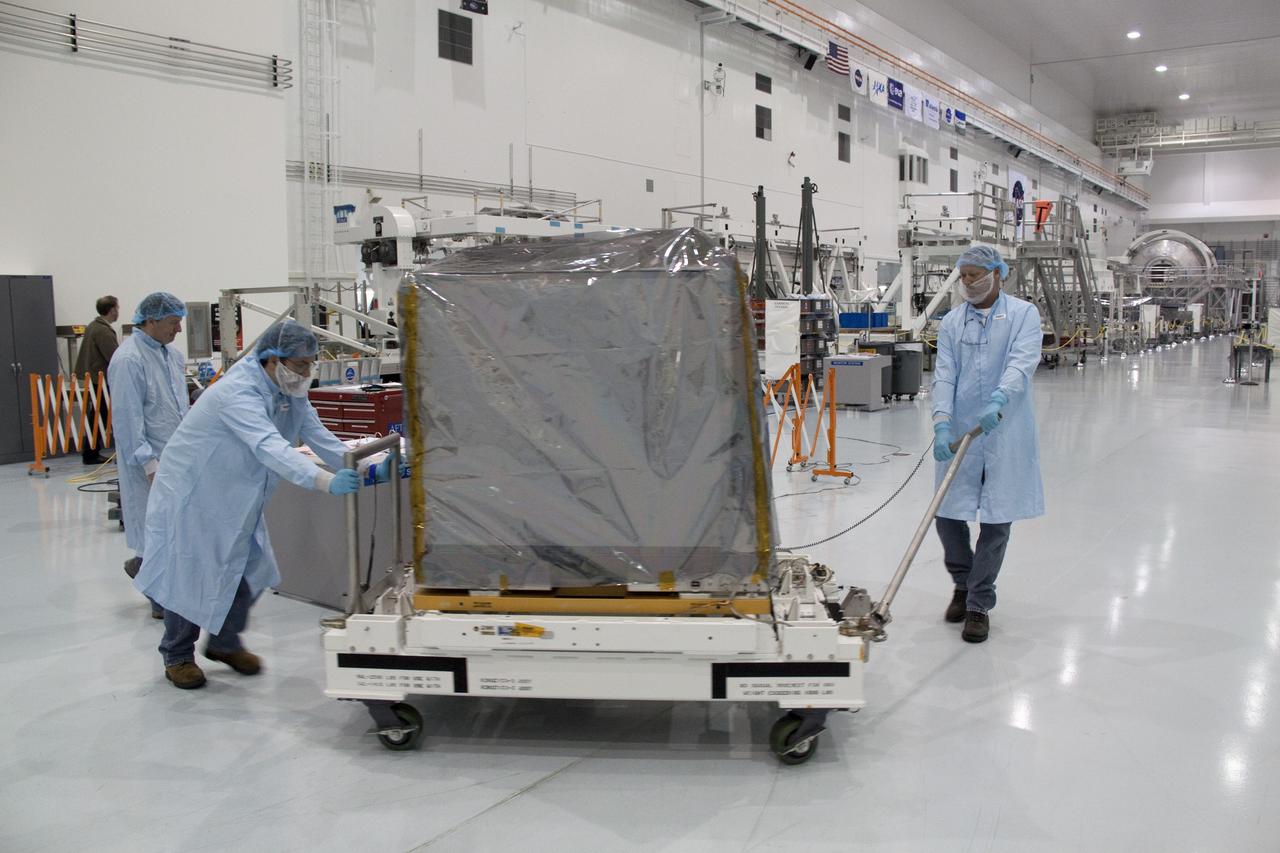
CAPE CANAVERAL, Fla. -- Technicians move a system that will investigate the potential for robotically refueling existing spacecraft in orbit from a processing lab to a high bay in the Space Station Processing Facility at NASA's Kennedy Space Center in Florida. The move prepares the system for its lift into the Lightweight Multi-Purpose Experiment Support Structure Carrier (LMC), which will carry it into orbit. Called the Robotic Refueling Mission (RRM), the system will be processed to fly aboard space shuttle Atlantis on the STS-135 mission to the International Space Station. Also going up will be the Raffaello multipurpose logistics module packed with supplies, logistics and spare parts. The mission also will return a failed ammonia pump module to help NASA better understand the failure mechanism and improve pump designs for future systems. STS-135, targeted to launch June 28, will be the 33rd flight of Atlantis, the 37th shuttle mission to the space station, and the 135th and final mission of NASA's Space Shuttle Program. For more information visit, www.nasa.gov/mission_pages/shuttle/shuttlemissions/sts135/index.html. Photo credit: NASA/Jack Pfaller
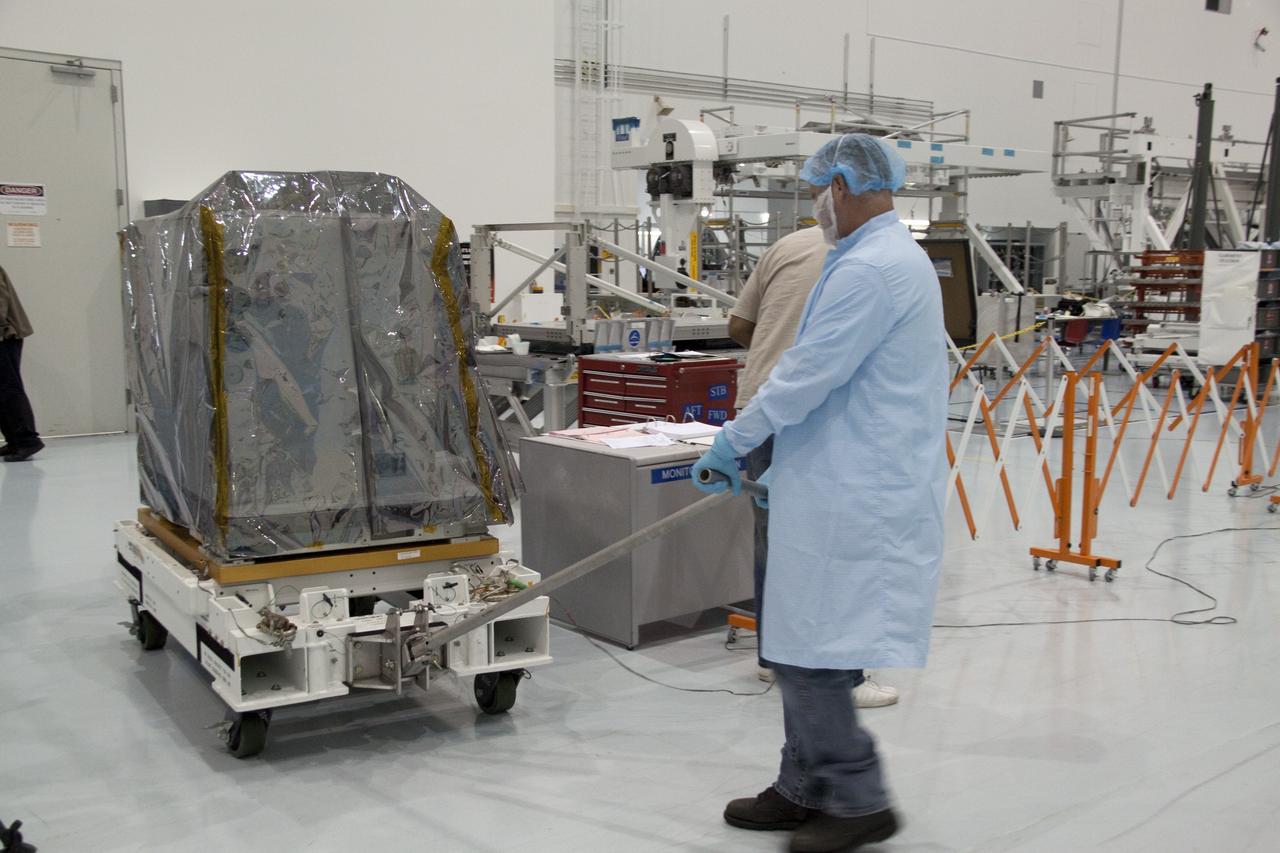
CAPE CANAVERAL, Fla. -- Technicians move a system that will investigate the potential for robotically refueling existing spacecraft in orbit from a processing lab to a high bay in the Space Station Processing Facility at NASA's Kennedy Space Center in Florida. The move prepares the system for its lift into the Lightweight Multi-Purpose Experiment Support Structure Carrier (LMC), which will carry it into orbit. Called the Robotic Refueling Mission (RRM), the system will be processed to fly aboard space shuttle Atlantis on the STS-135 mission to the International Space Station. Also going up will be the Raffaello multipurpose logistics module packed with supplies, logistics and spare parts. The mission also will return a failed ammonia pump module to help NASA better understand the failure mechanism and improve pump designs for future systems. STS-135, targeted to launch June 28, will be the 33rd flight of Atlantis, the 37th shuttle mission to the space station, and the 135th and final mission of NASA's Space Shuttle Program. For more information visit, www.nasa.gov/mission_pages/shuttle/shuttlemissions/sts135/index.html. Photo credit: NASA/Jack Pfaller
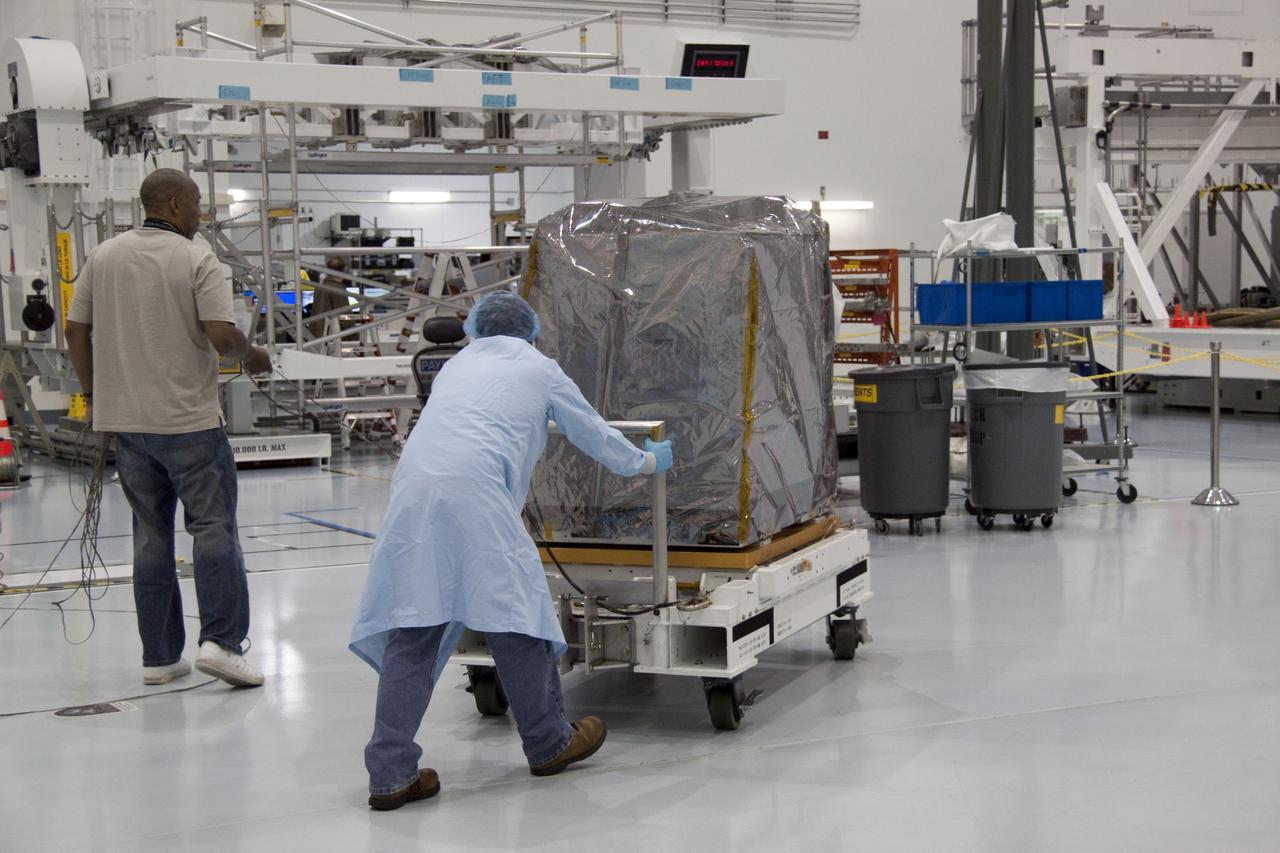
CAPE CANAVERAL, Fla. -- Technicians move a system that will investigate the potential for robotically refueling existing spacecraft in orbit from a processing lab to a high bay in the Space Station Processing Facility at NASA's Kennedy Space Center in Florida. The move prepares the system for its lift into the Lightweight Multi-Purpose Experiment Support Structure Carrier (LMC), which will carry it into orbit. Called the Robotic Refueling Mission (RRM), the system will be processed to fly aboard space shuttle Atlantis on the STS-135 mission to the International Space Station. Also going up will be the Raffaello multipurpose logistics module packed with supplies, logistics and spare parts. The mission also will return a failed ammonia pump module to help NASA better understand the failure mechanism and improve pump designs for future systems. STS-135, targeted to launch June 28, will be the 33rd flight of Atlantis, the 37th shuttle mission to the space station, and the 135th and final mission of NASA's Space Shuttle Program. For more information visit, www.nasa.gov/mission_pages/shuttle/shuttlemissions/sts135/index.html. Photo credit: NASA/Jack Pfaller
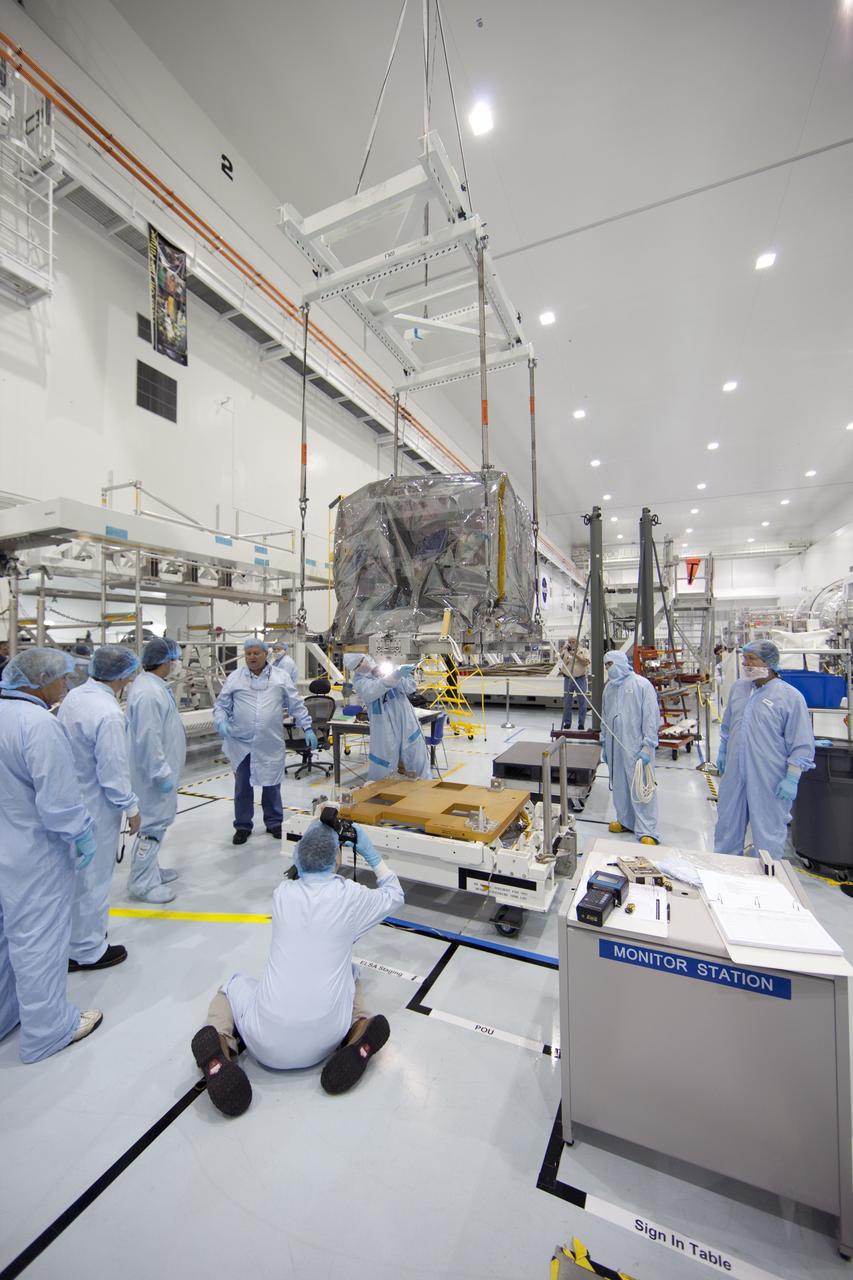
CAPE CANAVERAL, Fla. -- In the Space Station Processing Facility at NASA's Kennedy Space Center in Florida, technicians move a system that will investigate the potential for robotically refueling existing spacecraft in orbit into the Lightweight Multi-Purpose Experiment Support Structure Carrier (LMC). Called the Robotic Refueling Mission (RRM), the system is being processed to fly aboard space shuttle Atlantis in the LMC on the STS-135 mission to the International Space Station. Also going up will be the Raffaello multipurpose logistics module packed with supplies, logistics and spare parts. The mission also will return a failed ammonia pump module to help NASA better understand the failure mechanism and improve pump designs for future systems. STS-135, targeted to launch June 28, will be the 33rd flight of Atlantis, the 37th shuttle mission to the space station, and the 135th and final mission of NASA's Space Shuttle Program. For more information visit, www.nasa.gov/mission_pages/shuttle/shuttlemissions/sts135/index.html. Photo credit: NASA/Ben Smegelsky
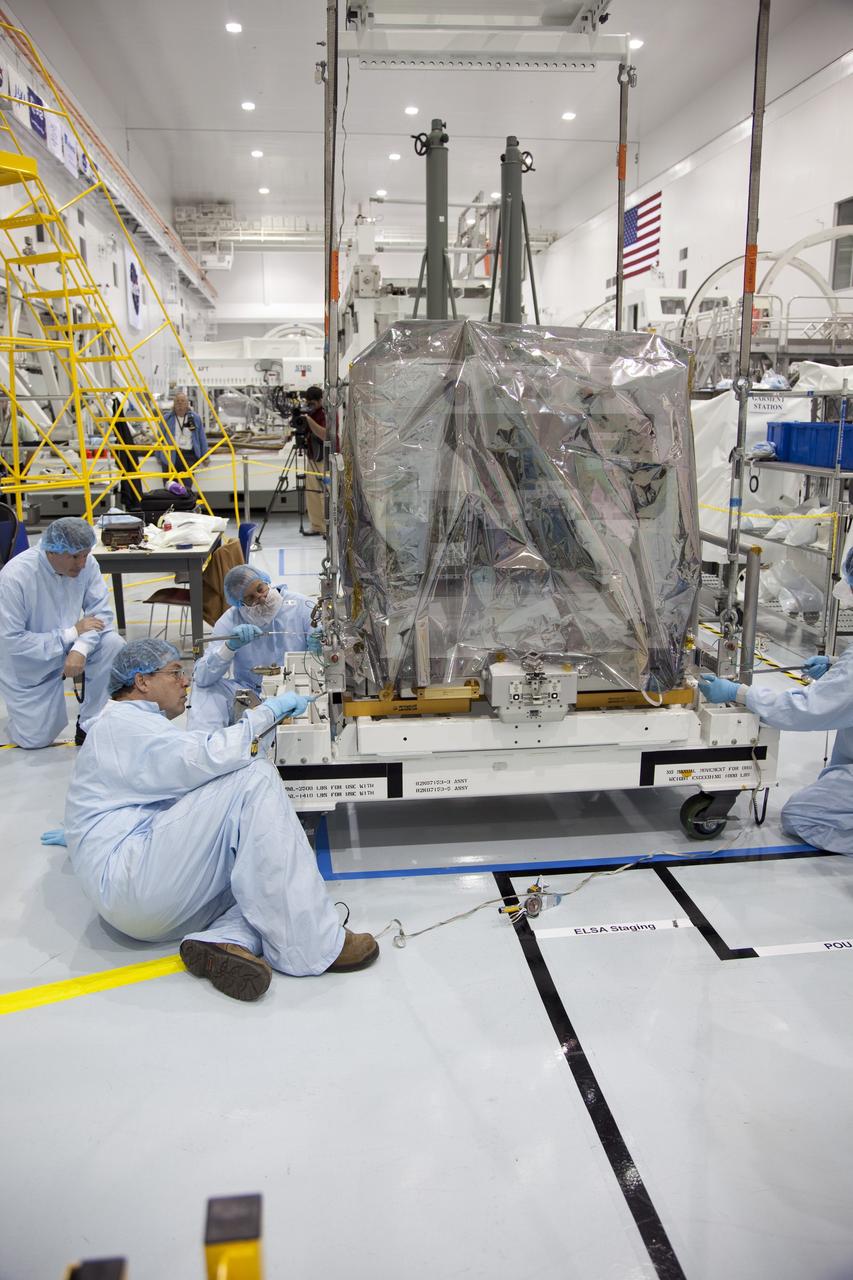
CAPE CANAVERAL, Fla. -- In the Space Station Processing Facility at NASA's Kennedy Space Center in Florida, technicians prepare to move a system that will investigate the potential for robotically refueling existing spacecraft in orbit into the Lightweight Multi-Purpose Experiment Support Structure Carrier (LMC). Called the Robotic Refueling Mission (RRM), the system is being processed to fly aboard space shuttle Atlantis in the LMC on the STS-135 mission to the International Space Station. Also going up will be the Raffaello multipurpose logistics module packed with supplies, logistics and spare parts. The mission also will return a failed ammonia pump module to help NASA better understand the failure mechanism and improve pump designs for future systems. STS-135, targeted to launch June 28, will be the 33rd flight of Atlantis, the 37th shuttle mission to the space station, and the 135th and final mission of NASA's Space Shuttle Program. For more information visit, www.nasa.gov/mission_pages/shuttle/shuttlemissions/sts135/index.html. Photo credit: NASA/Ben Smegelsky

CAPE CANAVERAL, Fla. -- Technicians move a system that will investigate the potential for robotically refueling existing spacecraft in orbit from a processing lab to a high bay in the Space Station Processing Facility at NASA's Kennedy Space Center in Florida. The move prepares the system for its lift into the Lightweight Multi-Purpose Experiment Support Structure Carrier (LMC), which will carry it into orbit. Called the Robotic Refueling Mission (RRM), the system will be processed to fly aboard space shuttle Atlantis on the STS-135 mission to the International Space Station. Also going up will be the Raffaello multipurpose logistics module packed with supplies, logistics and spare parts. The mission also will return a failed ammonia pump module to help NASA better understand the failure mechanism and improve pump designs for future systems. STS-135, targeted to launch June 28, will be the 33rd flight of Atlantis, the 37th shuttle mission to the space station, and the 135th and final mission of NASA's Space Shuttle Program. For more information visit, www.nasa.gov/mission_pages/shuttle/shuttlemissions/sts135/index.html. Photo credit: NASA/Jack Pfaller
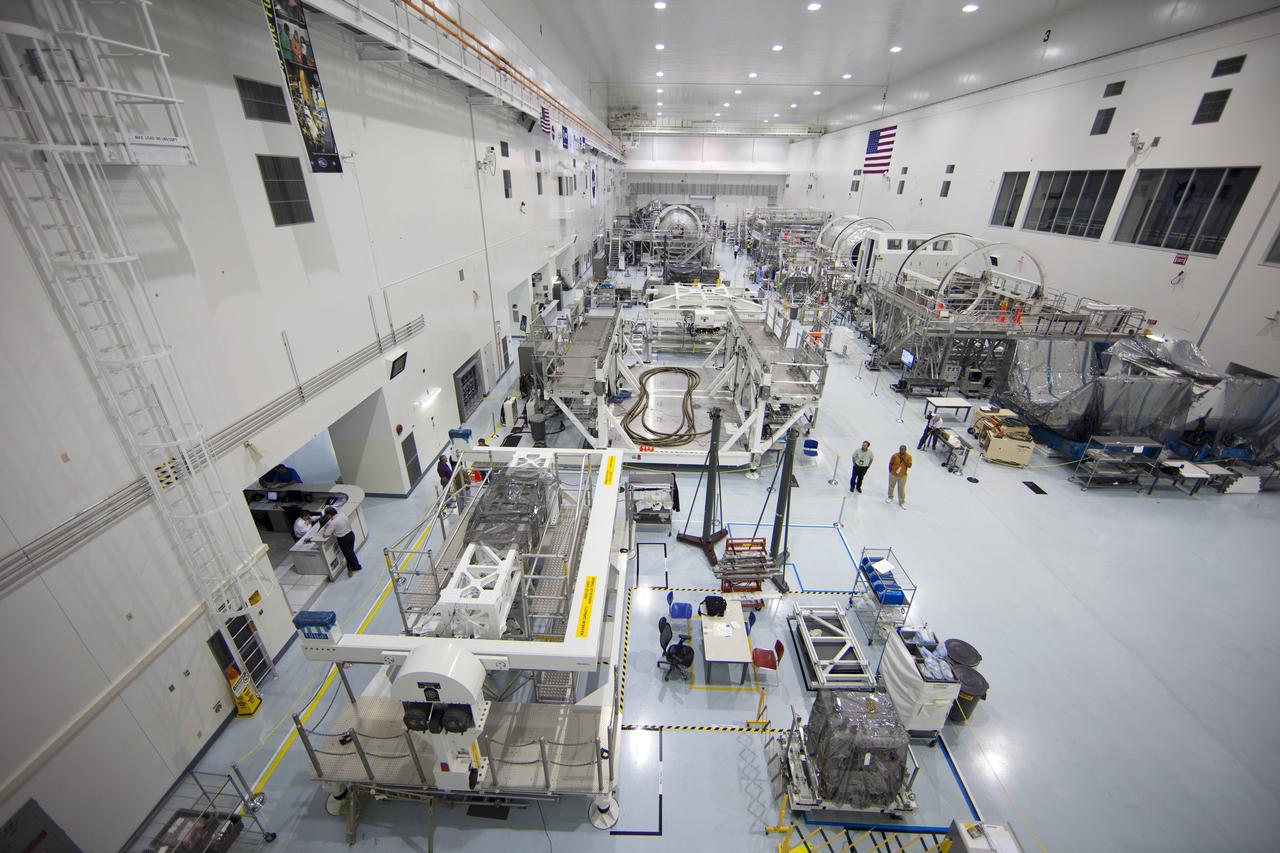
CAPE CANAVERAL, Fla. -- In the Space Station Processing Facility at NASA's Kennedy Space Center in Florida, a system that will investigate the potential for robotically refueling existing spacecraft in orbit will be moved into the Lightweight Multi-Purpose Experiment Support Structure Carrier (LMC). Called the Robotic Refueling Mission (RRM), the system is being processed to fly aboard space shuttle Atlantis in the LMC on the STS-135 mission to the International Space Station. Also going up will be the Raffaello multipurpose logistics module packed with supplies, logistics and spare parts. The mission also will return a failed ammonia pump module to help NASA better understand the failure mechanism and improve pump designs for future systems. STS-135, targeted to launch June 28, will be the 33rd flight of Atlantis, the 37th shuttle mission to the space station, and the 135th and final mission of NASA's Space Shuttle Program. For more information visit, www.nasa.gov/mission_pages/shuttle/shuttlemissions/sts135/index.html. Photo credit: NASA/Ben Smegelsky
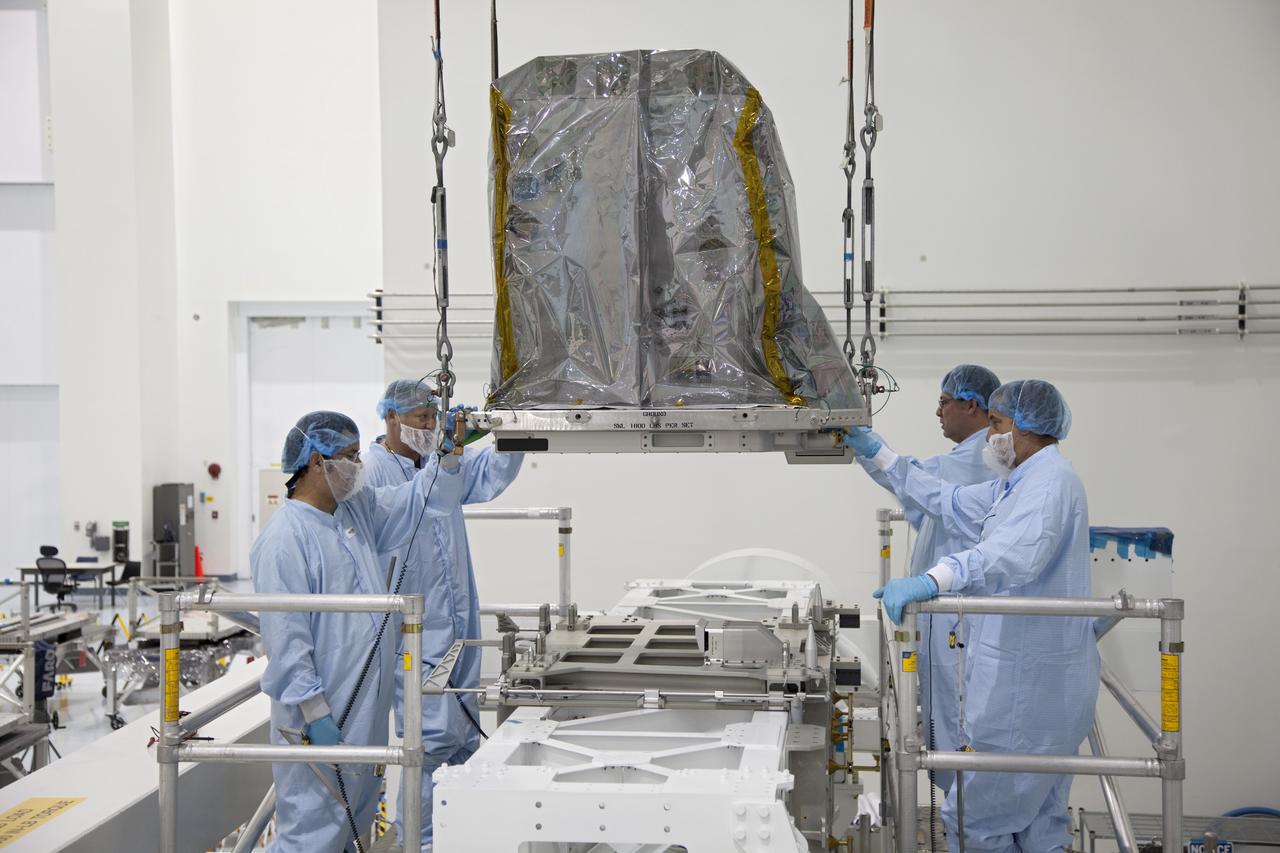
CAPE CANAVERAL, Fla. -- In the Space Station Processing Facility at NASA's Kennedy Space Center in Florida, technicians move a system that will investigate the potential for robotically refueling existing spacecraft in orbit into the Lightweight Multi-Purpose Experiment Support Structure Carrier (LMC). Called the Robotic Refueling Mission (RRM), the system is being processed to fly aboard space shuttle Atlantis in the LMC on the STS-135 mission to the International Space Station. Also going up will be the Raffaello multipurpose logistics module packed with supplies, logistics and spare parts. The mission also will return a failed ammonia pump module to help NASA better understand the failure mechanism and improve pump designs for future systems. STS-135, targeted to launch June 28, will be the 33rd flight of Atlantis, the 37th shuttle mission to the space station, and the 135th and final mission of NASA's Space Shuttle Program. For more information visit, www.nasa.gov/mission_pages/shuttle/shuttlemissions/sts135/index.html. Photo credit: NASA/Ben Smegelsky
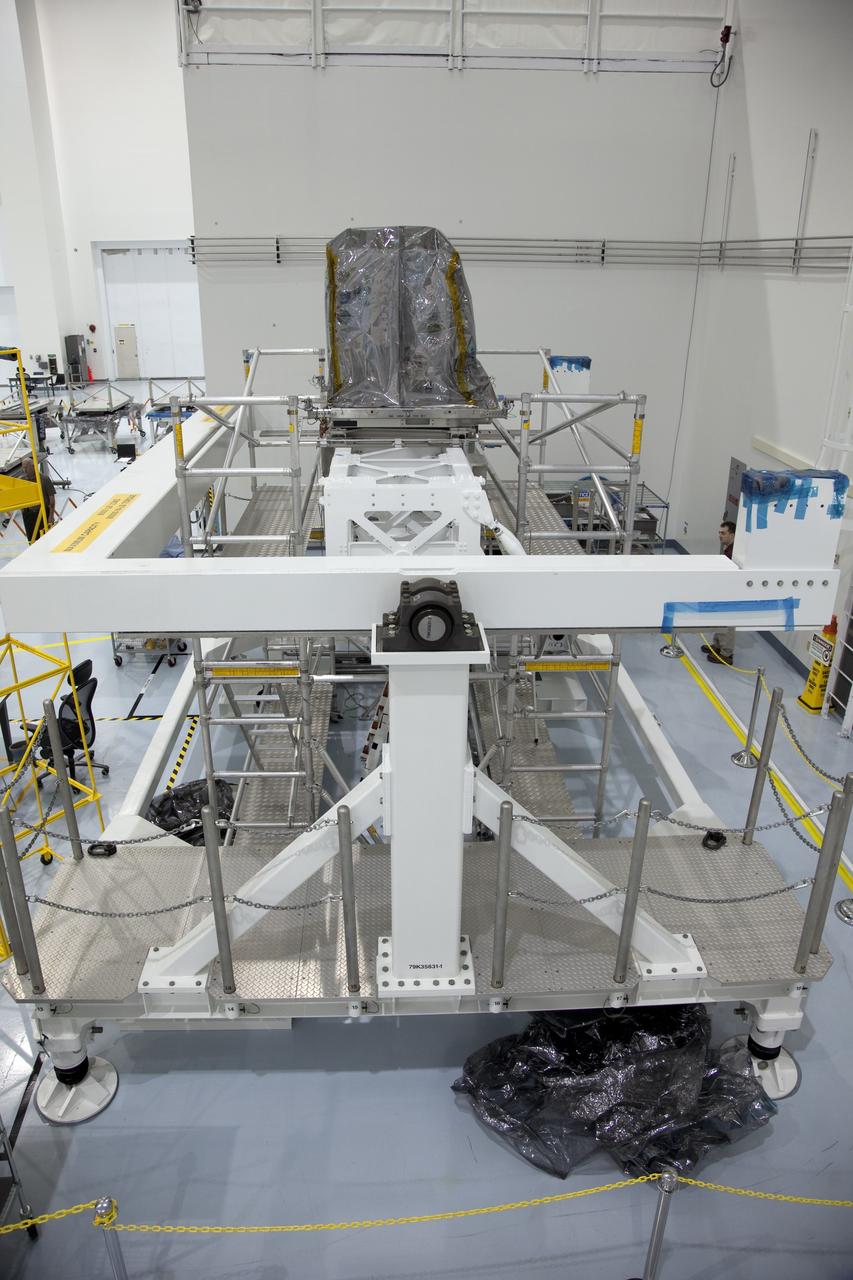
CAPE CANAVERAL, Fla. -- In the Space Station Processing Facility at NASA's Kennedy Space Center in Florida, a system that will investigate the potential for robotically refueling existing spacecraft in orbit is installed in the Lightweight Multi-Purpose Experiment Support Structure Carrier (LMC). Called the Robotic Refueling Mission (RRM), the system is being processed to fly aboard space shuttle Atlantis in the LMC on the STS-135 mission to the International Space Station. Also going up will be the Raffaello multipurpose logistics module packed with supplies, logistics and spare parts. The mission also will return a failed ammonia pump module to help NASA better understand the failure mechanism and improve pump designs for future systems. STS-135, targeted to launch June 28, will be the 33rd flight of Atlantis, the 37th shuttle mission to the space station, and the 135th and final mission of NASA's Space Shuttle Program. For more information visit, www.nasa.gov/mission_pages/shuttle/shuttlemissions/sts135/index.html. Photo credit: NASA/Ben Smegelsky

CAPE CANAVERAL, Fla. -- In the Space Station Processing Facility at NASA's Kennedy Space Center in Florida, technicians install a system that will investigate the potential for robotically refueling existing spacecraft in orbit in the Lightweight Multi-Purpose Experiment Support Structure Carrier (LMC). Called the Robotic Refueling Mission (RRM), the system is being processed to fly aboard space shuttle Atlantis in the LMC on the STS-135 mission to the International Space Station. Also going up will be the Raffaello multipurpose logistics module packed with supplies, logistics and spare parts. The mission also will return a failed ammonia pump module to help NASA better understand the failure mechanism and improve pump designs for future systems. STS-135, targeted to launch June 28, will be the 33rd flight of Atlantis, the 37th shuttle mission to the space station, and the 135th and final mission of NASA's Space Shuttle Program. For more information visit, www.nasa.gov/mission_pages/shuttle/shuttlemissions/sts135/index.html. Photo credit: NASA/Ben Smegelsky
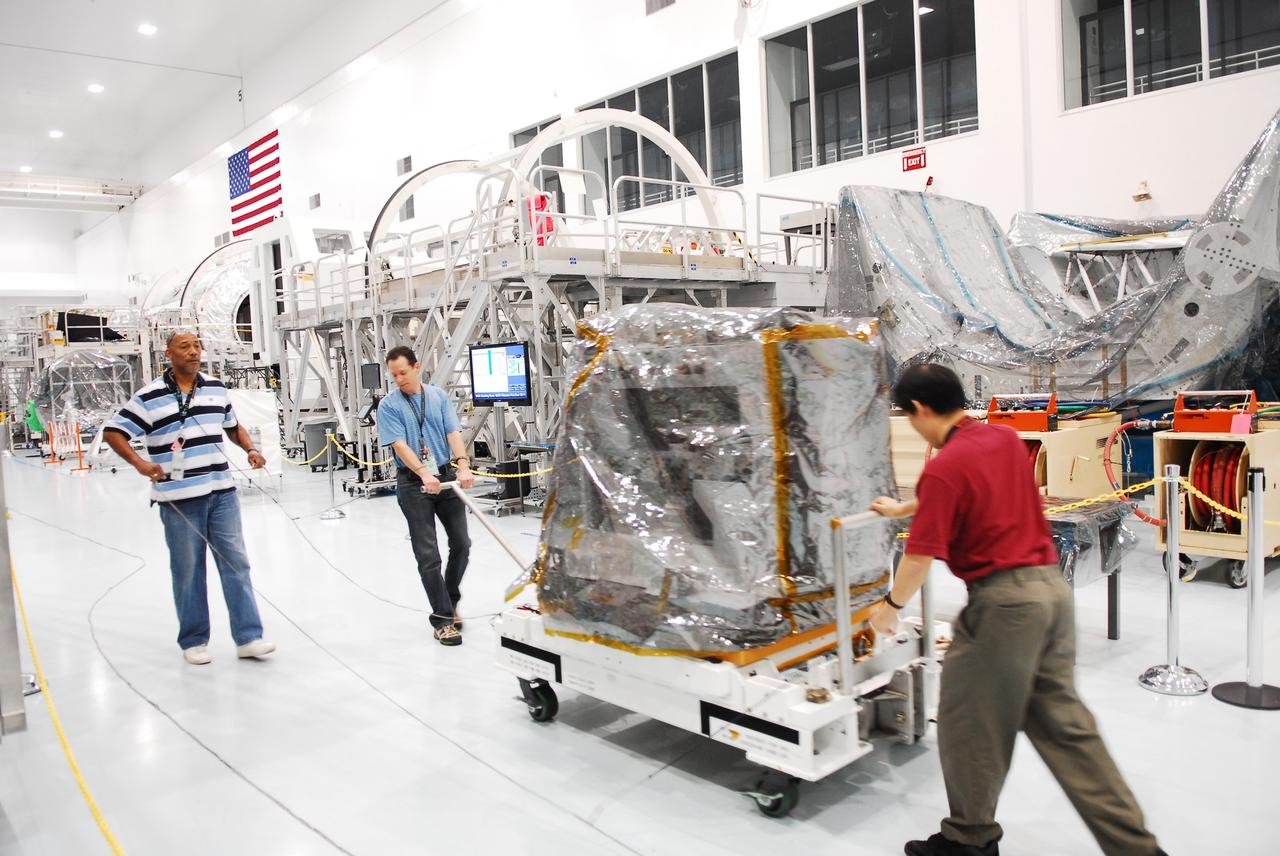
CAPE CANAVERAL, Fla. -- Technicians transport a system that will investigate the potential for robotically refueling existing spacecraft in orbit to a low bay test cell in the Space Station Processing Facility at NASA's Kennedy Space Center in Florida. Called the Robotic Refueling Mission RRM, the system will be processed to fly aboard space shuttle Atlantis on the STS-135 mission to the International Space Station. Atlantis and its STS-135 crew are scheduled to carry the Raffaello multipurpose logistics module packed with supplies, logistics and spare parts to the space station. The mission also will return a failed ammonia pump module to help NASA better understand the failure mechanism and improve pump designs for future systems. STS-135, targeted to launch June 28, will be the 33rd flight of Atlantis, the 37th shuttle mission to the space station, and the 135th and final mission of NASA's Space Shuttle Program. For more information visit, www.nasa.gov/mission_pages/shuttle/shuttlemissions/sts135/index.html. Photo credit: NASA/Jim Grossmann
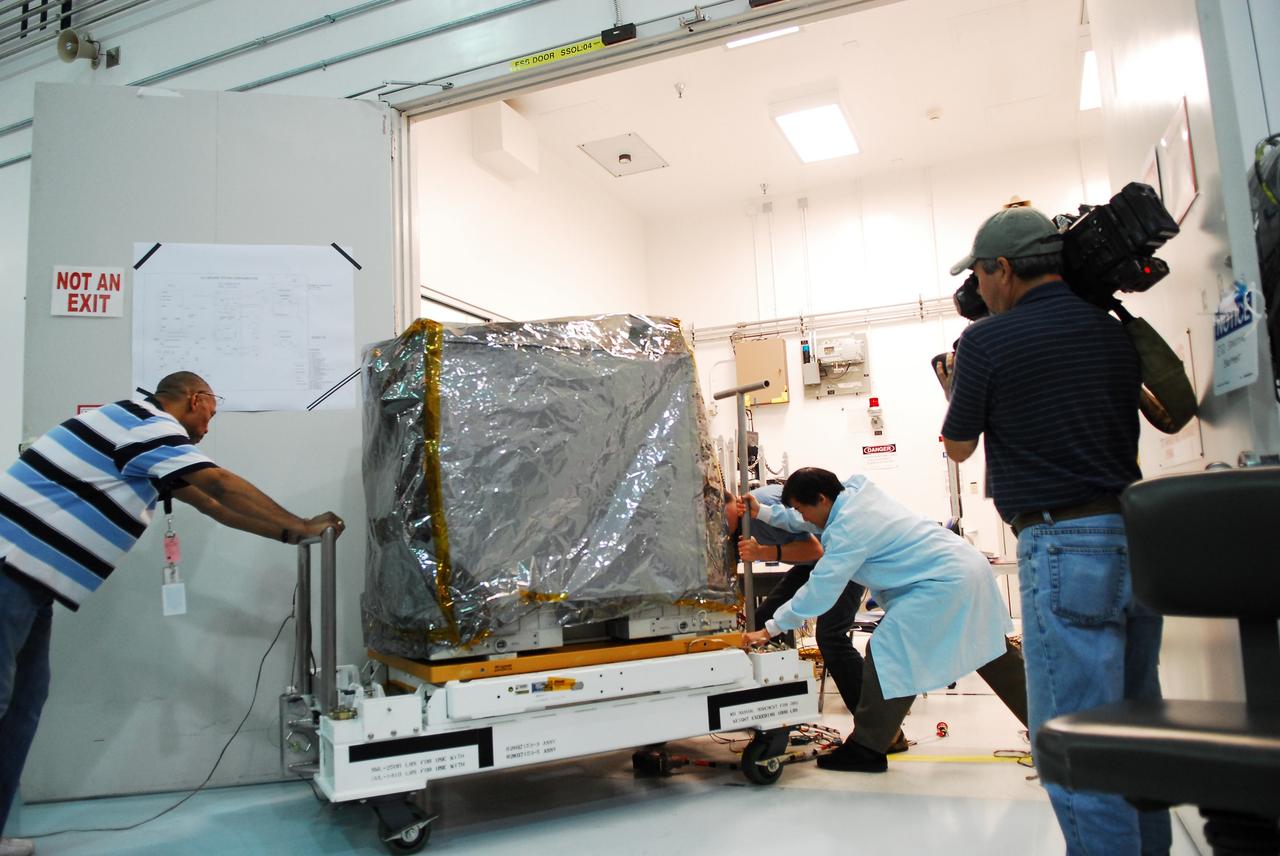
CAPE CANAVERAL, Fla. -- Technicians transport a system that will investigate the potential for robotically refueling existing spacecraft in orbit to a low bay test cell in the Space Station Processing Facility at NASA's Kennedy Space Center in Florida. Called the Robotic Refueling Mission RRM, the system will be processed to fly aboard space shuttle Atlantis on the STS-135 mission to the International Space Station. Atlantis and its STS-135 crew are scheduled to carry the Raffaello multipurpose logistics module packed with supplies, logistics and spare parts to the space station. The mission also will return a failed ammonia pump module to help NASA better understand the failure mechanism and improve pump designs for future systems. STS-135, targeted to launch June 28, will be the 33rd flight of Atlantis, the 37th shuttle mission to the space station, and the 135th and final mission of NASA's Space Shuttle Program. For more information visit, www.nasa.gov/mission_pages/shuttle/shuttlemissions/sts135/index.html. Photo credit: NASA/Jim Grossmann
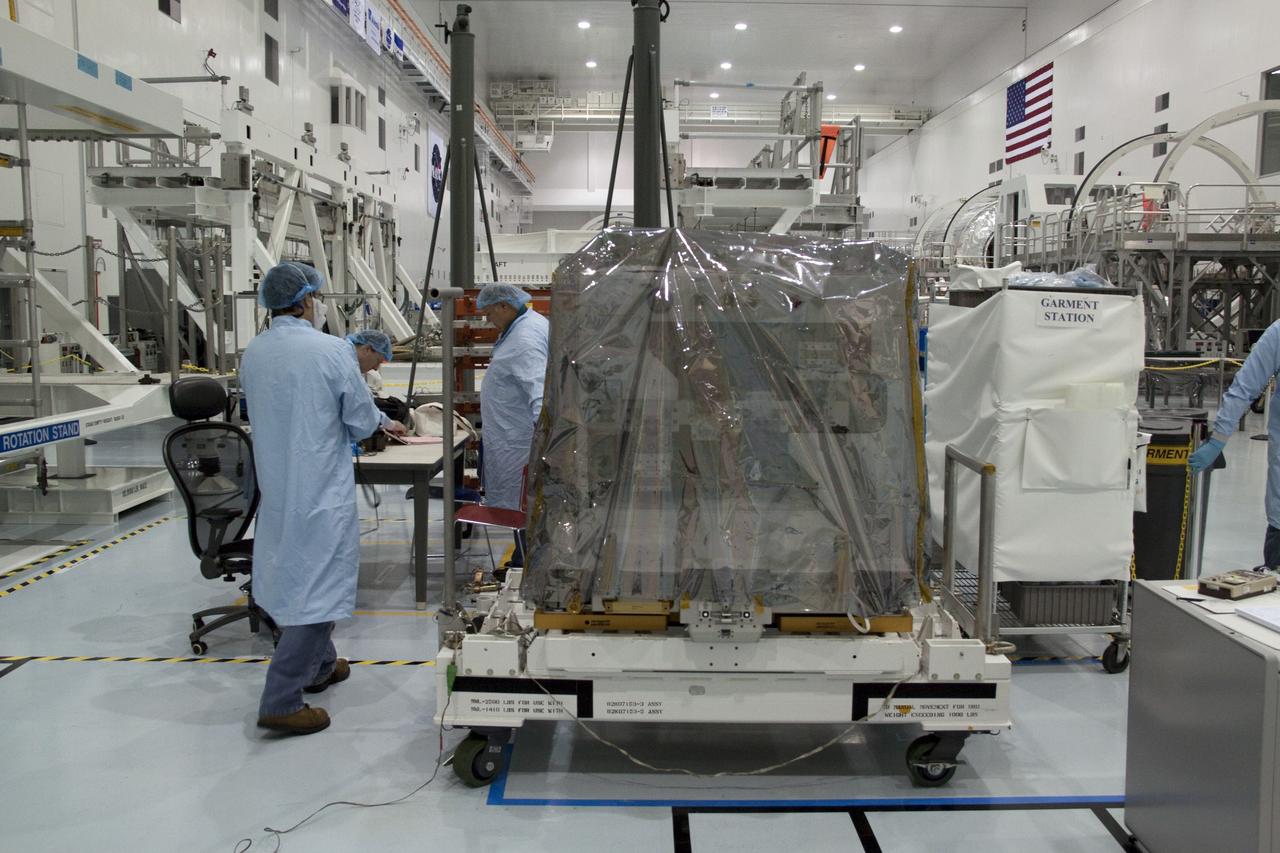
CAPE CANAVERAL, Fla. -- Technicians move a system that will investigate the potential for robotically refueling existing spacecraft in orbit from a processing lab to a high bay in the Space Station Processing Facility at NASA's Kennedy Space Center in Florida. The move prepares the system for its lift into the Lightweight Multi-Purpose Experiment Support Structure Carrier (LMC), which will carry it into orbit. Called the Robotic Refueling Mission (RRM), the system will be processed to fly aboard space shuttle Atlantis on the STS-135 mission to the International Space Station. Also going up will be the Raffaello multipurpose logistics module packed with supplies, logistics and spare parts. The mission also will return a failed ammonia pump module to help NASA better understand the failure mechanism and improve pump designs for future systems. STS-135, targeted to launch June 28, will be the 33rd flight of Atlantis, the 37th shuttle mission to the space station, and the 135th and final mission of NASA's Space Shuttle Program. For more information visit, www.nasa.gov/mission_pages/shuttle/shuttlemissions/sts135/index.html. Photo credit: NASA/Jack Pfaller
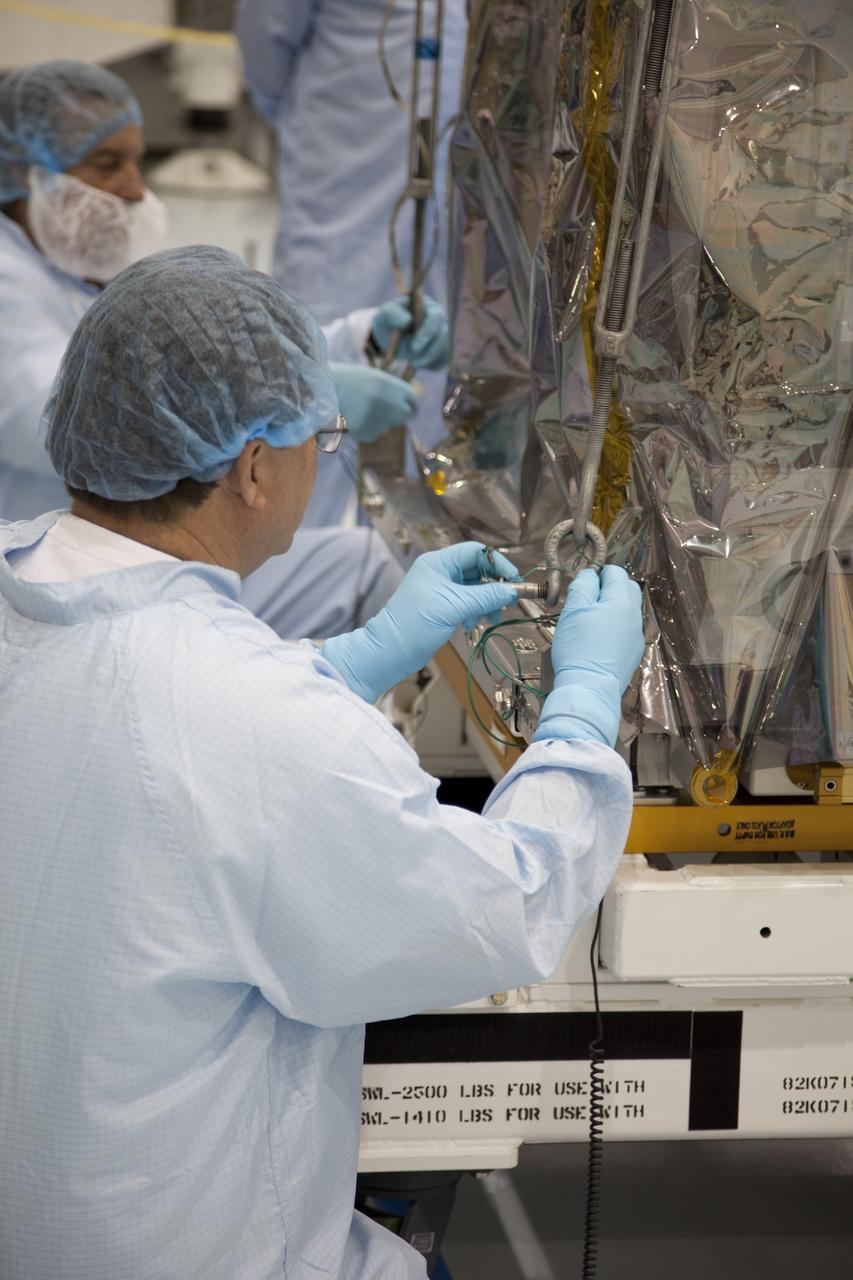
CAPE CANAVERAL, Fla. -- In the Space Station Processing Facility at NASA's Kennedy Space Center in Florida, technicians prepare to move a system that will investigate the potential for robotically refueling existing spacecraft in orbit into the Lightweight Multi-Purpose Experiment Support Structure Carrier (LMC). Called the Robotic Refueling Mission (RRM), the system is being processed to fly aboard space shuttle Atlantis in the LMC on the STS-135 mission to the International Space Station. Also going up will be the Raffaello multipurpose logistics module packed with supplies, logistics and spare parts. The mission also will return a failed ammonia pump module to help NASA better understand the failure mechanism and improve pump designs for future systems. STS-135, targeted to launch June 28, will be the 33rd flight of Atlantis, the 37th shuttle mission to the space station, and the 135th and final mission of NASA's Space Shuttle Program. For more information visit, www.nasa.gov/mission_pages/shuttle/shuttlemissions/sts135/index.html. Photo credit: NASA/Ben Smegelsky
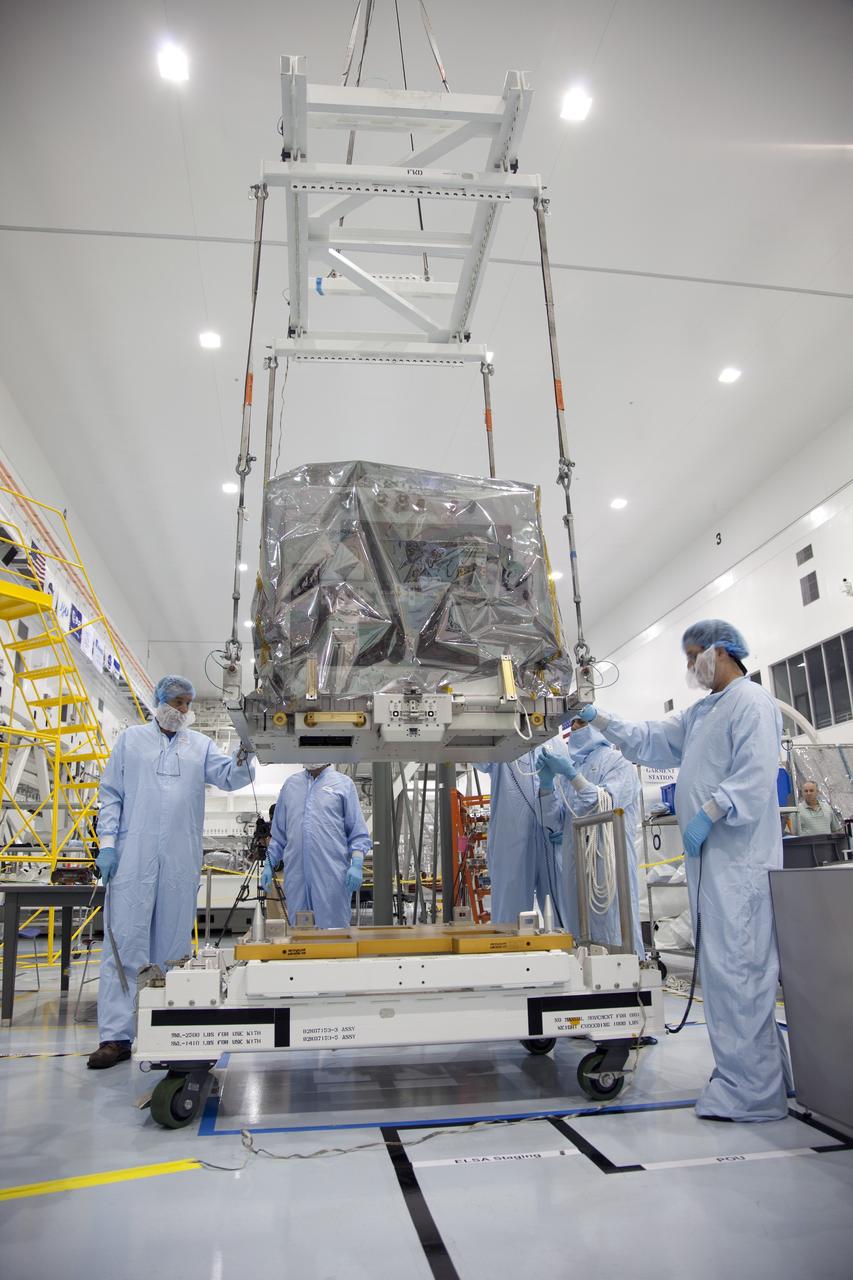
CAPE CANAVERAL, Fla. -- In the Space Station Processing Facility at NASA's Kennedy Space Center in Florida, technicians begin to move a system that will investigate the potential for robotically refueling existing spacecraft in orbit into the Lightweight Multi-Purpose Experiment Support Structure Carrier (LMC). Called the Robotic Refueling Mission (RRM), the system is being processed to fly aboard space shuttle Atlantis in the LMC on the STS-135 mission to the International Space Station. Also going up will be the Raffaello multipurpose logistics module packed with supplies, logistics and spare parts. The mission also will return a failed ammonia pump module to help NASA better understand the failure mechanism and improve pump designs for future systems. STS-135, targeted to launch June 28, will be the 33rd flight of Atlantis, the 37th shuttle mission to the space station, and the 135th and final mission of NASA's Space Shuttle Program. For more information visit, www.nasa.gov/mission_pages/shuttle/shuttlemissions/sts135/index.html. Photo credit: NASA/Ben Smegelsky
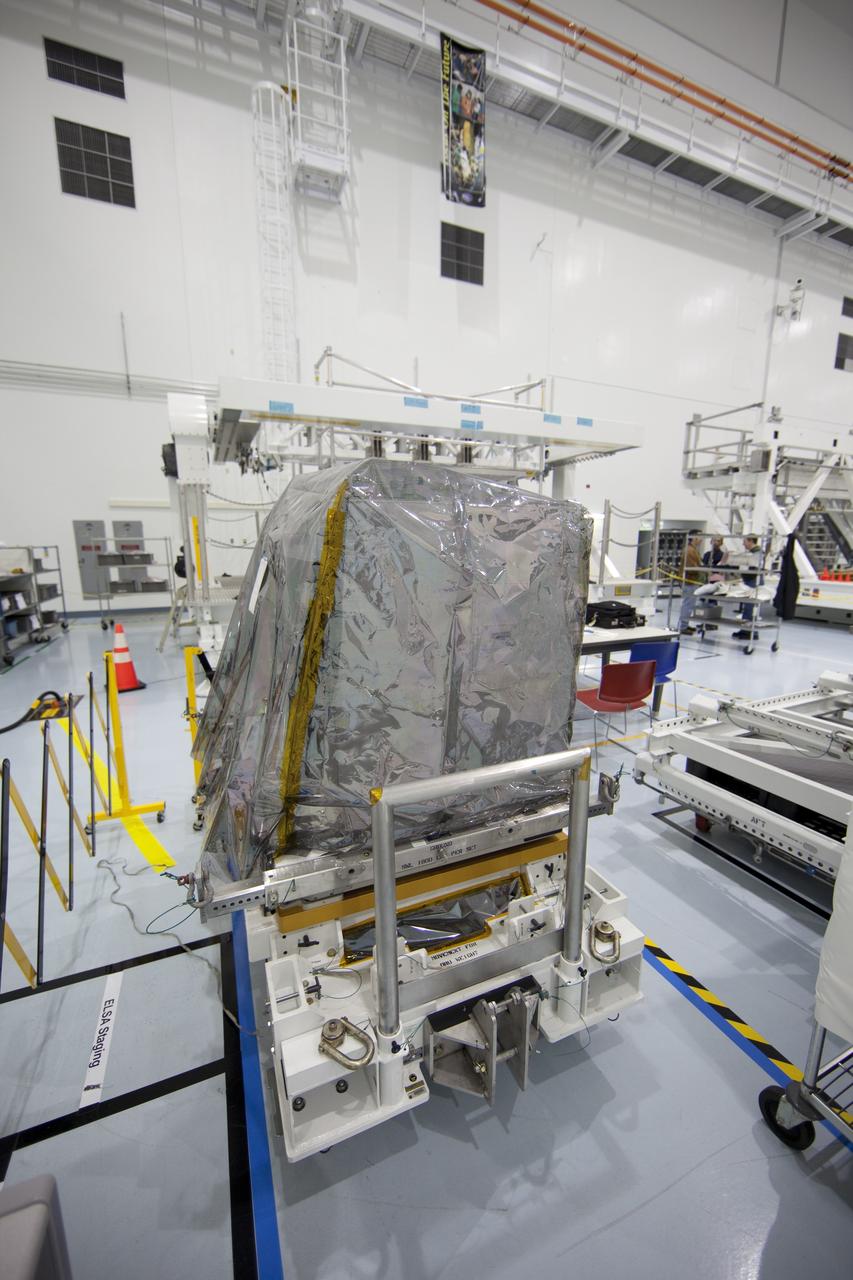
CAPE CANAVERAL, Fla. -- In the Space Station Processing Facility at NASA's Kennedy Space Center in Florida, a system that will investigate the potential for robotically refueling existing spacecraft in orbit will be moved into the Lightweight Multi-Purpose Experiment Support Structure Carrier (LMC). Called the Robotic Refueling Mission (RRM), the system is being processed to fly aboard space shuttle Atlantis in the LMC on the STS-135 mission to the International Space Station. Also going up will be the Raffaello multipurpose logistics module packed with supplies, logistics and spare parts. The mission also will return a failed ammonia pump module to help NASA better understand the failure mechanism and improve pump designs for future systems. STS-135, targeted to launch June 28, will be the 33rd flight of Atlantis, the 37th shuttle mission to the space station, and the 135th and final mission of NASA's Space Shuttle Program. For more information visit, www.nasa.gov/mission_pages/shuttle/shuttlemissions/sts135/index.html. Photo credit: NASA/Ben Smegelsky
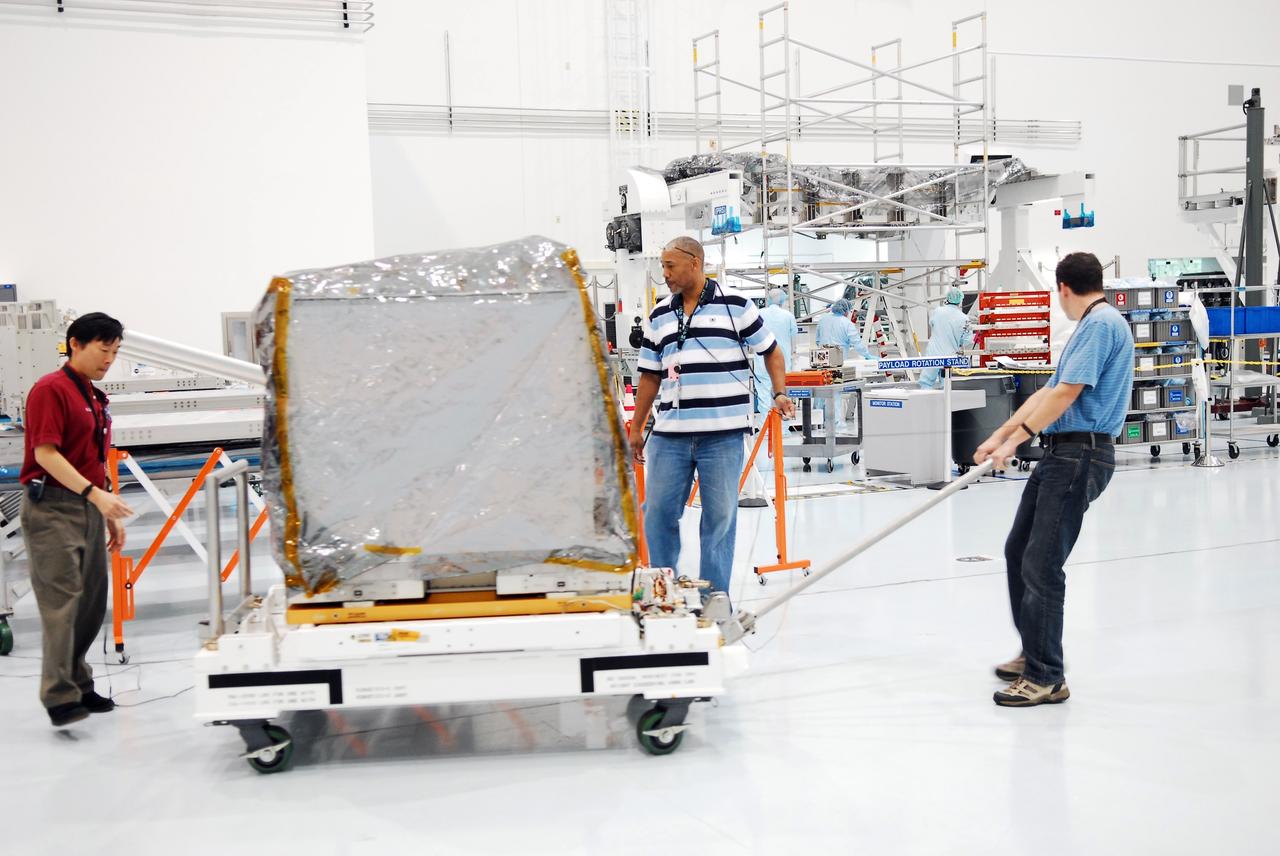
CAPE CANAVERAL, Fla. -- Technicians transport a system that will investigate the potential for robotically refueling existing spacecraft in orbit to a low bay test cell in the Space Station Processing Facility at NASA's Kennedy Space Center in Florida. Called the Robotic Refueling Mission RRM, the system will be processed to fly aboard space shuttle Atlantis on the STS-135 mission to the International Space Station. Atlantis and its STS-135 crew are scheduled to carry the Raffaello multipurpose logistics module packed with supplies, logistics and spare parts to the space station. The mission also will return a failed ammonia pump module to help NASA better understand the failure mechanism and improve pump designs for future systems. STS-135, targeted to launch June 28, will be the 33rd flight of Atlantis, the 37th shuttle mission to the space station, and the 135th and final mission of NASA's Space Shuttle Program. For more information visit, www.nasa.gov/mission_pages/shuttle/shuttlemissions/sts135/index.html. Photo credit: NASA/Jim Grossmann
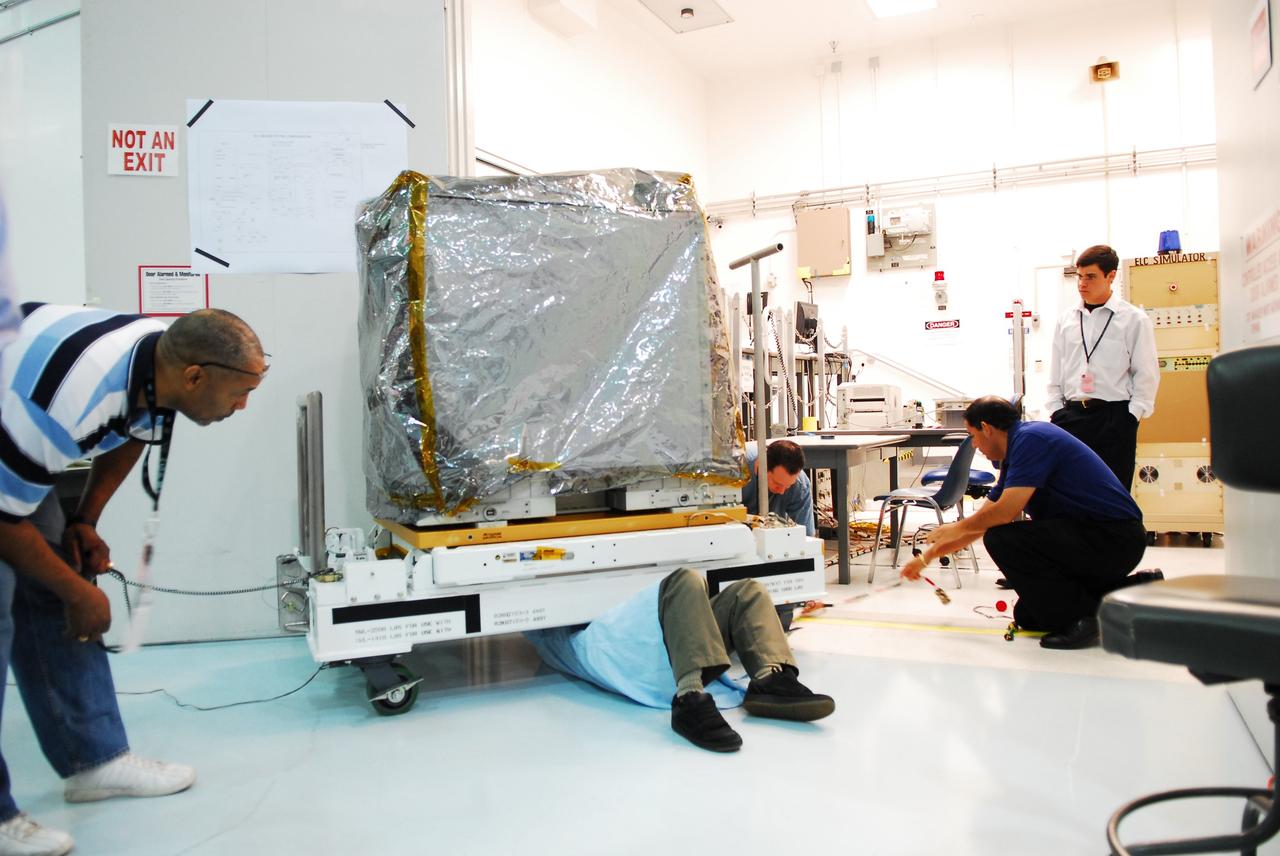
CAPE CANAVERAL, Fla. -- Technicians transport a system that will investigate the potential for robotically refueling existing spacecraft in orbit to a low bay test cell in the Space Station Processing Facility at NASA's Kennedy Space Center in Florida. Called the Robotic Refueling Mission RRM, the system will be processed to fly aboard space shuttle Atlantis on the STS-135 mission to the International Space Station. Atlantis and its STS-135 crew are scheduled to carry the Raffaello multipurpose logistics module packed with supplies, logistics and spare parts to the space station. The mission also will return a failed ammonia pump module to help NASA better understand the failure mechanism and improve pump designs for future systems. STS-135, targeted to launch June 28, will be the 33rd flight of Atlantis, the 37th shuttle mission to the space station, and the 135th and final mission of NASA's Space Shuttle Program. For more information visit, www.nasa.gov/mission_pages/shuttle/shuttlemissions/sts135/index.html. Photo credit: NASA/Jim Grossmann
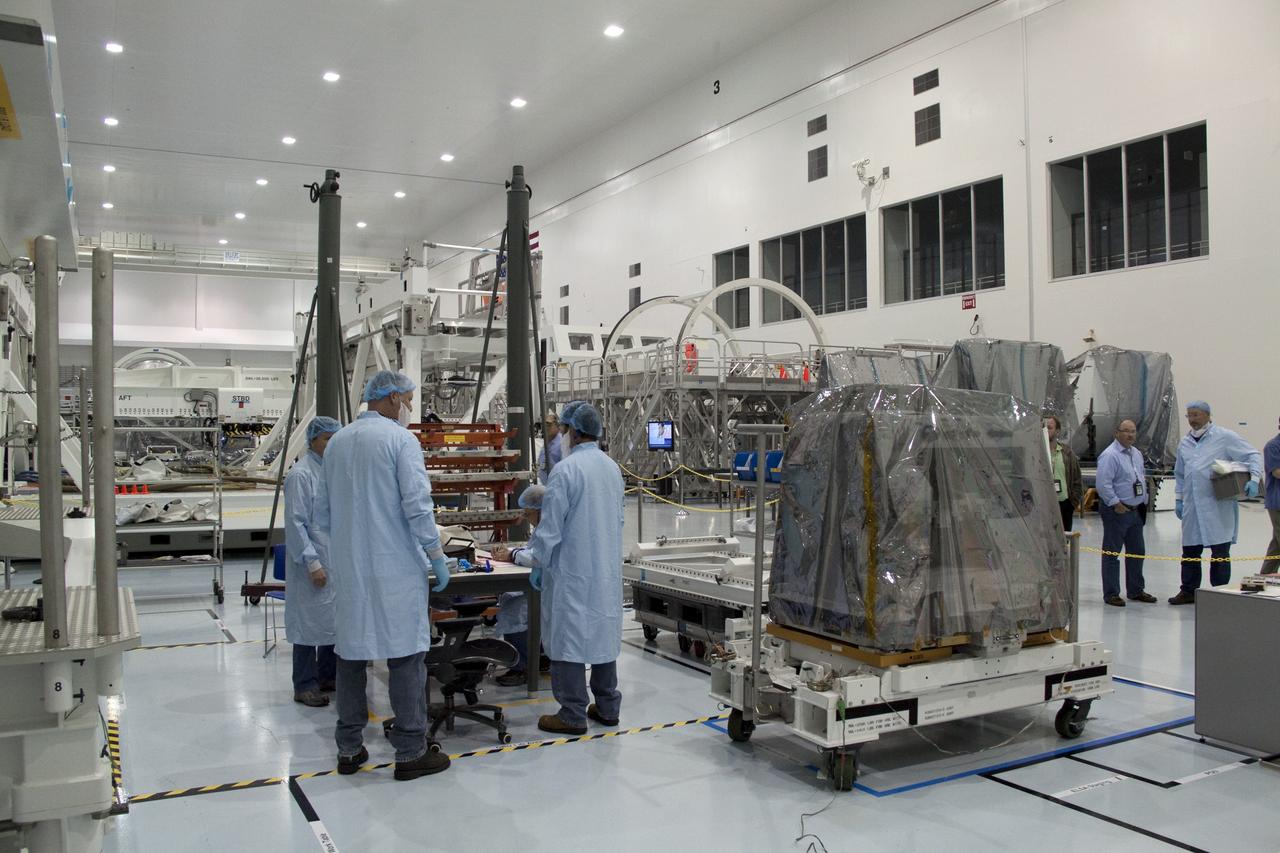
CAPE CANAVERAL, Fla. -- Technicians move a system that will investigate the potential for robotically refueling existing spacecraft in orbit from a processing lab to a high bay in the Space Station Processing Facility at NASA's Kennedy Space Center in Florida. The move prepares the system for its lift into the Lightweight Multi-Purpose Experiment Support Structure Carrier (LMC), which will carry it into orbit. Called the Robotic Refueling Mission (RRM), the system will be processed to fly aboard space shuttle Atlantis on the STS-135 mission to the International Space Station. Also going up will be the Raffaello multipurpose logistics module packed with supplies, logistics and spare parts. The mission also will return a failed ammonia pump module to help NASA better understand the failure mechanism and improve pump designs for future systems. STS-135, targeted to launch June 28, will be the 33rd flight of Atlantis, the 37th shuttle mission to the space station, and the 135th and final mission of NASA's Space Shuttle Program. For more information visit, www.nasa.gov/mission_pages/shuttle/shuttlemissions/sts135/index.html. Photo credit: NASA/Jack Pfaller
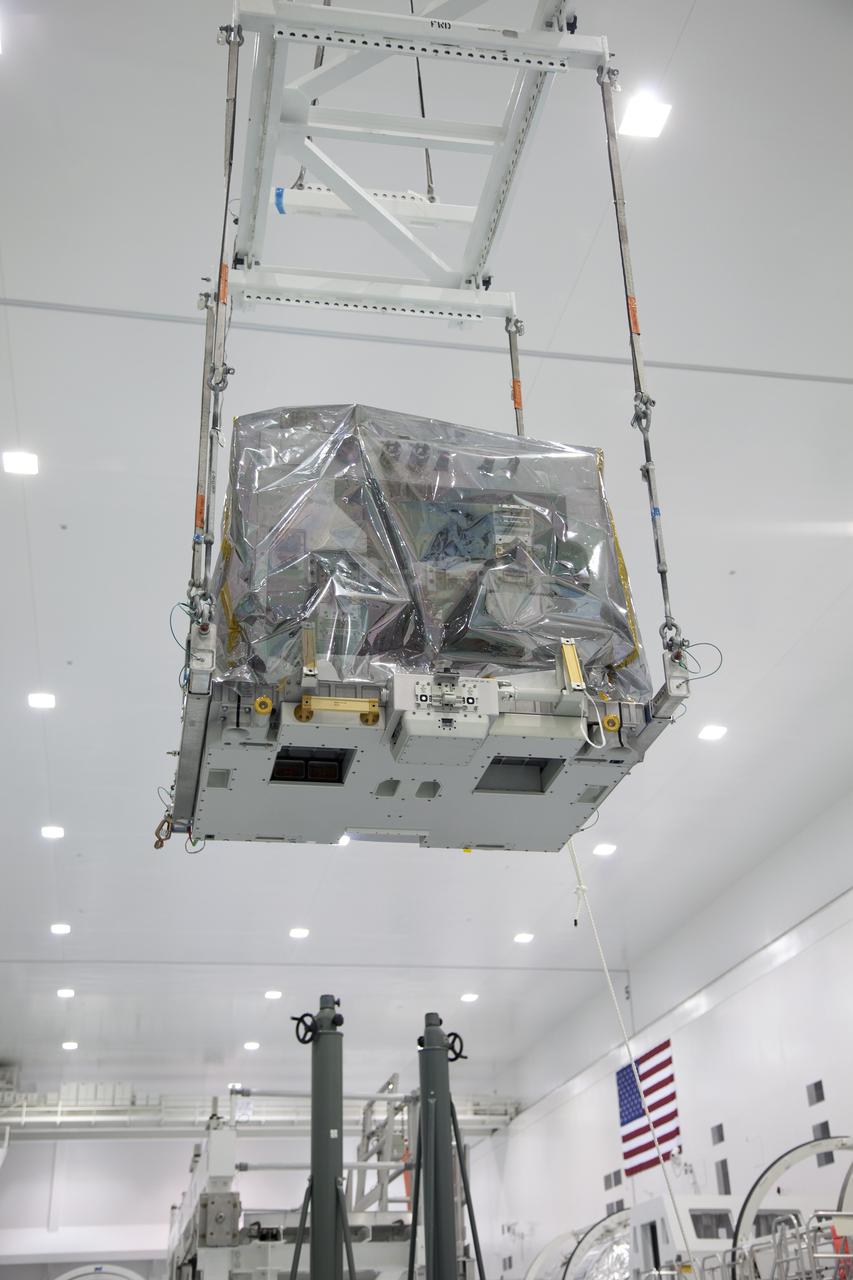
CAPE CANAVERAL, Fla. -- In the Space Station Processing Facility at NASA's Kennedy Space Center in Florida, a system that will investigate the potential for robotically refueling existing spacecraft in orbit moves toward the Lightweight Multi-Purpose Experiment Support Structure Carrier (LMC). Called the Robotic Refueling Mission (RRM), the system is being processed to fly aboard space shuttle Atlantis in the LMC on the STS-135 mission to the International Space Station. Also going up will be the Raffaello multipurpose logistics module packed with supplies, logistics and spare parts. The mission also will return a failed ammonia pump module to help NASA better understand the failure mechanism and improve pump designs for future systems. STS-135, targeted to launch June 28, will be the 33rd flight of Atlantis, the 37th shuttle mission to the space station, and the 135th and final mission of NASA's Space Shuttle Program. For more information visit, www.nasa.gov/mission_pages/shuttle/shuttlemissions/sts135/index.html. Photo credit: NASA/Ben Smegelsky
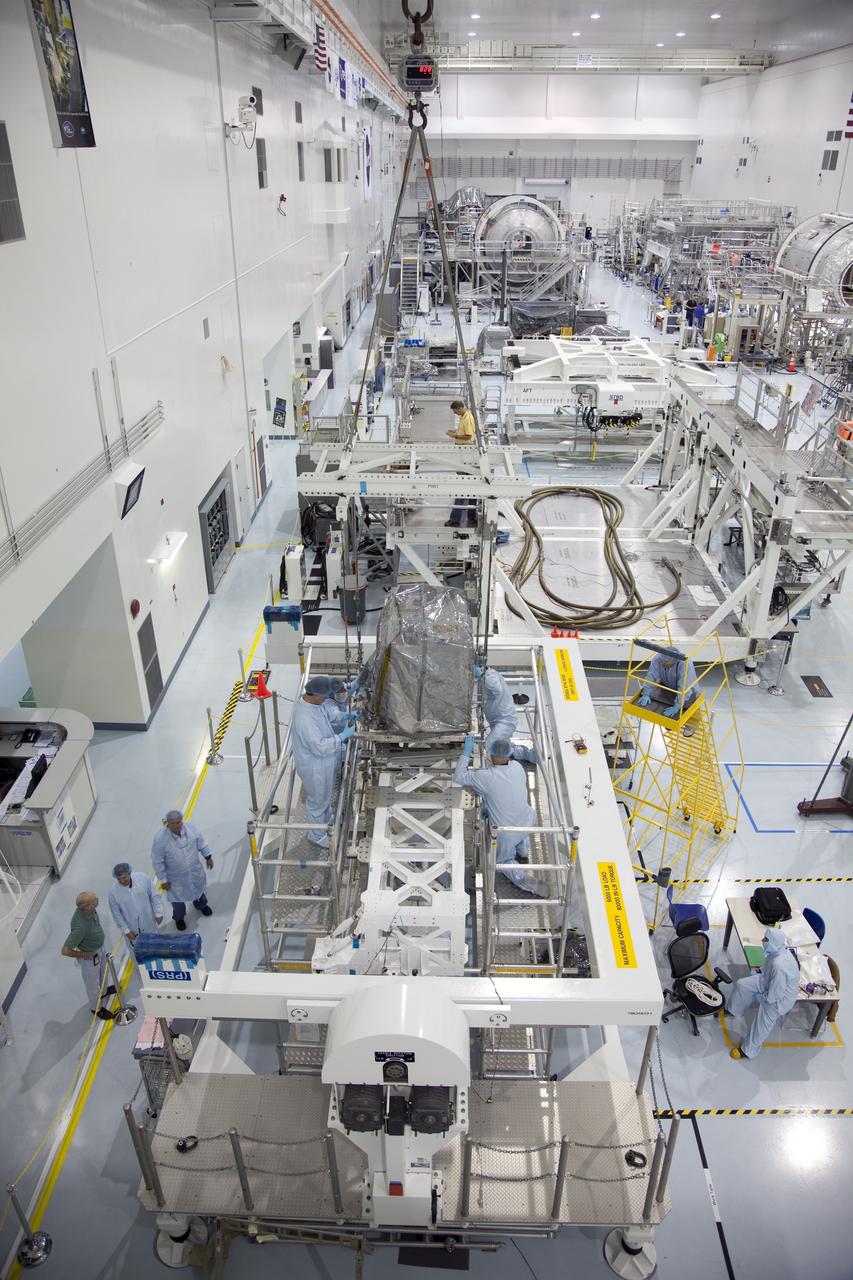
CAPE CANAVERAL, Fla. -- In the Space Station Processing Facility at NASA's Kennedy Space Center in Florida, technicians install a system that will investigate the potential for robotically refueling existing spacecraft in orbit in the Lightweight Multi-Purpose Experiment Support Structure Carrier (LMC). Called the Robotic Refueling Mission (RRM), the system is being processed to fly aboard space shuttle Atlantis in the LMC on the STS-135 mission to the International Space Station. Also going up will be the Raffaello multipurpose logistics module packed with supplies, logistics and spare parts. The mission also will return a failed ammonia pump module to help NASA better understand the failure mechanism and improve pump designs for future systems. STS-135, targeted to launch June 28, will be the 33rd flight of Atlantis, the 37th shuttle mission to the space station, and the 135th and final mission of NASA's Space Shuttle Program. For more information visit, www.nasa.gov/mission_pages/shuttle/shuttlemissions/sts135/index.html. Photo credit: NASA/Ben Smegelsky