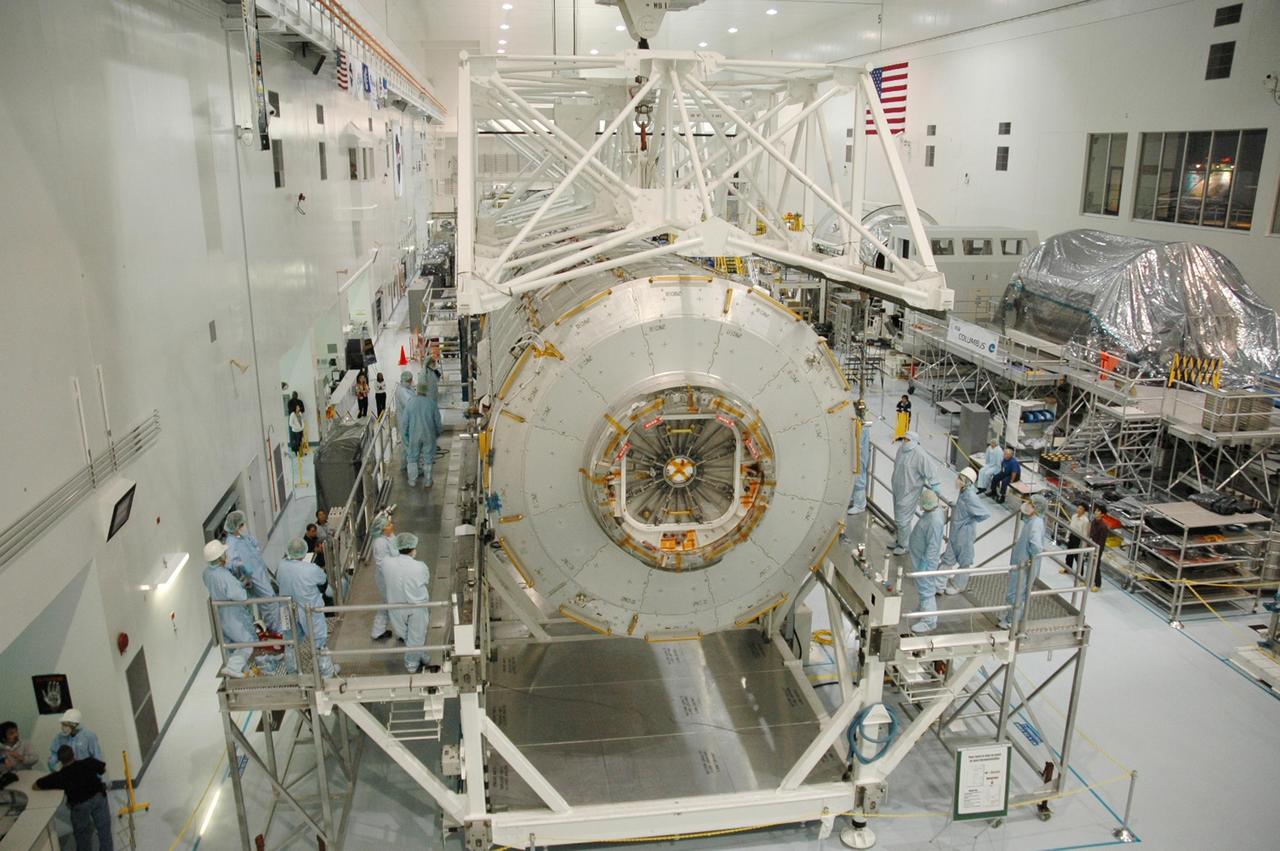
KENNEDY SPACE CENTER, FLA. -- In the Space Station Processing Facility, workers observe as an overhead crane lowers the Japanese Experiment Module (JEM) onto a weighing stand. The module will also be measured for its center of gravity. The Japanese Aerospace Exploration Agency developed the laboratory at the Tsukuba Space Center near Tokyo. It is the first element, named "Kibo" (Hope), to be delivered to KSC. The JEM is Japan's primary contribution to the International Space Station. It will enhance the unique research capabilities of the orbiting complex by providing an additional environment for astronauts to conduct science experiments. The JEM is targeted for mission STS-124, to launch in early 2008. Photo credit: NASA/Troy Cryder
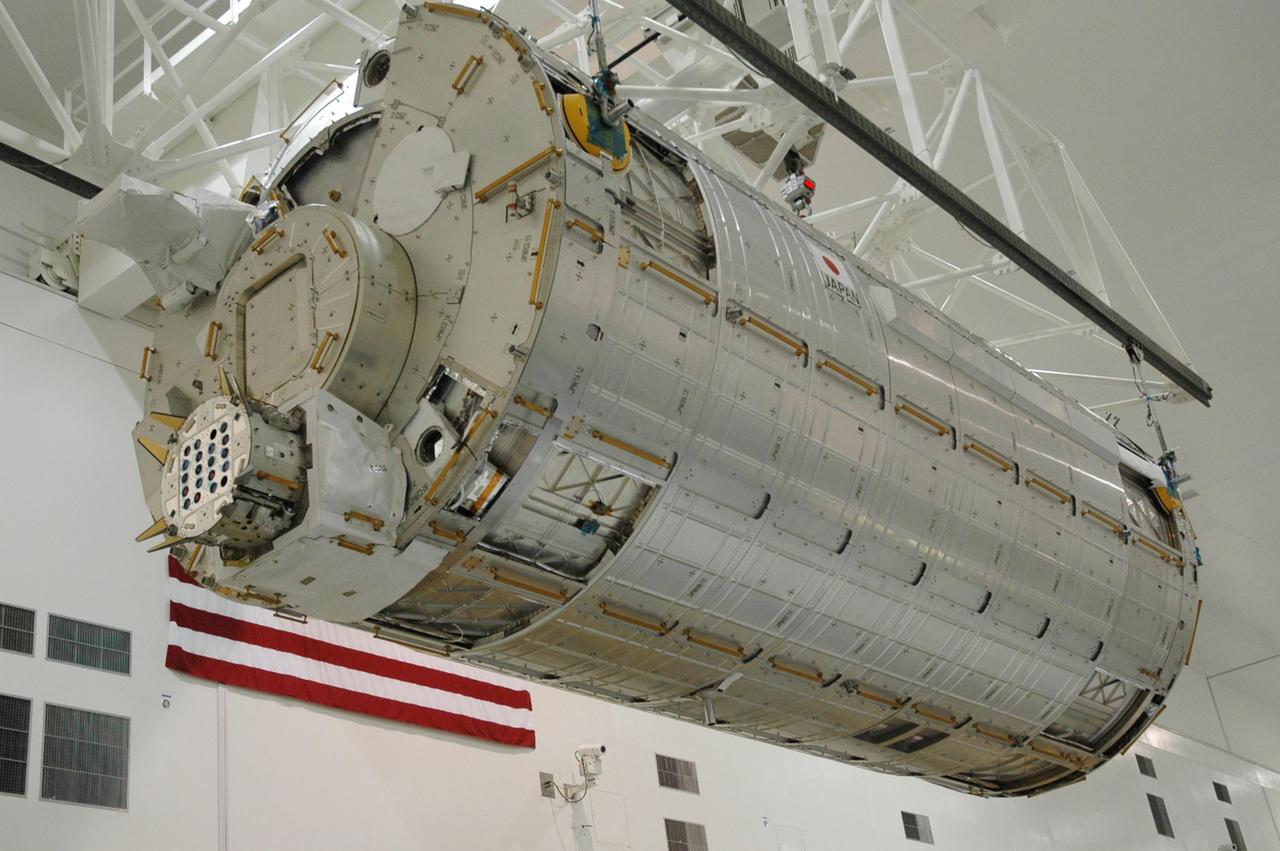
KENNEDY SPACE CENTER, FLA. -- In the Space Station Processing Facility, the Japanese Experiment Module (JEM), after being weighed, makes a return trip to its transporter. The Japanese Aerospace Exploration Agency developed the laboratory at the Tsukuba Space Center near Tokyo. It is the first element, named "Kibo" (Hope), to be delivered to KSC. The JEM is Japan's primary contribution to the International Space Station. It will enhance the unique research capabilities of the orbiting complex by providing an additional environment for astronauts to conduct science experiments. The JEM is targeted for mission STS-124, to launch in early 2008. Photo credit: NASA/Troy Cryder
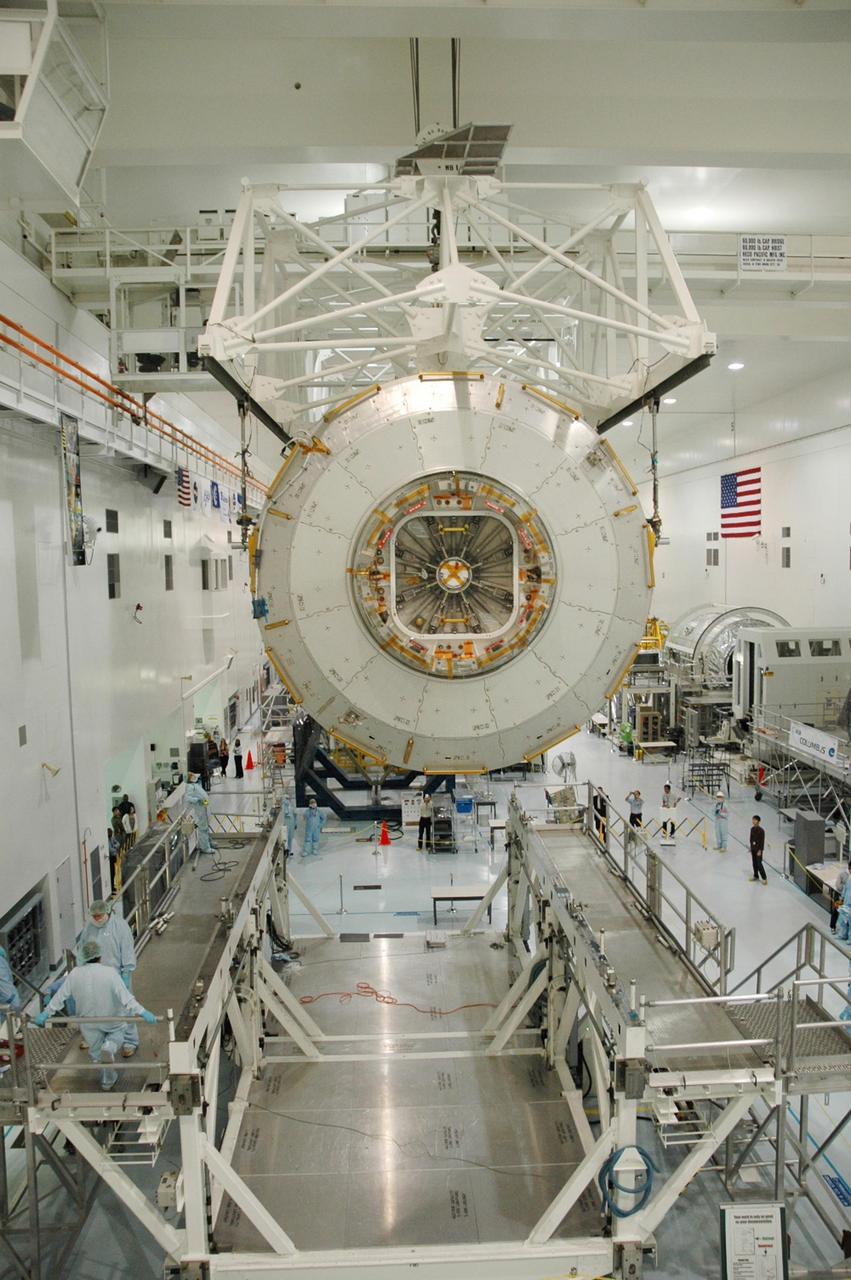
KENNEDY SPACE CENTER, FLA. -- In the Space Station Processing Facility, an overhead crane begins lowering the Japanese Experiment Module (JEM) onto a weighing stand. The module will also be measured for its center of gravity. The Japanese Aerospace Exploration Agency developed the laboratory at the Tsukuba Space Center near Tokyo. It is the first element, named "Kibo" (Hope), to be delivered to KSC. The JEM is Japan's primary contribution to the International Space Station. It will enhance the unique research capabilities of the orbiting complex by providing an additional environment for astronauts to conduct science experiments. The JEM is targeted for mission STS-124, to launch in early 2008. Photo credit: NASA/Troy Cryder
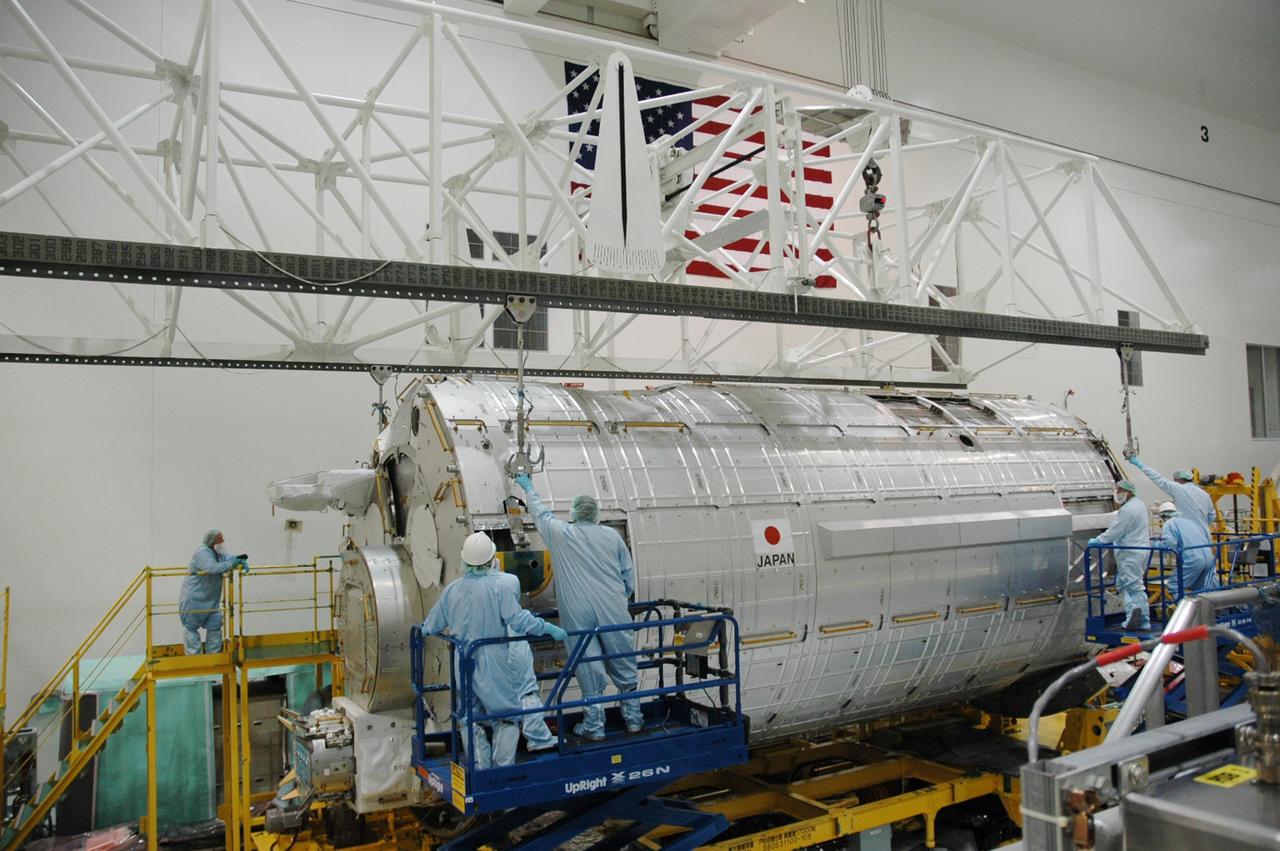
KENNEDY SPACE CENTER, FLA. -- In the Space Station Processing Facility, workers are attaching an overhead crane to the Japanese Experiment Module (JEM) in order to lift it. The module is being moved to a stand where it will be weighed and measured for its center of gravity. The Japanese Aerospace Exploration Agency developed the laboratory at the Tsukuba Space Center near Tokyo. It is the first element, named "Kibo" (Hope), to be delivered to KSC. The JEM is Japan's primary contribution to the International Space Station. It will enhance the unique research capabilities of the orbiting complex by providing an additional environment for astronauts to conduct science experiments. The JEM is targeted for mission STS-124, to launch in early 2008. Photo credit: NASA/Troy Cryder
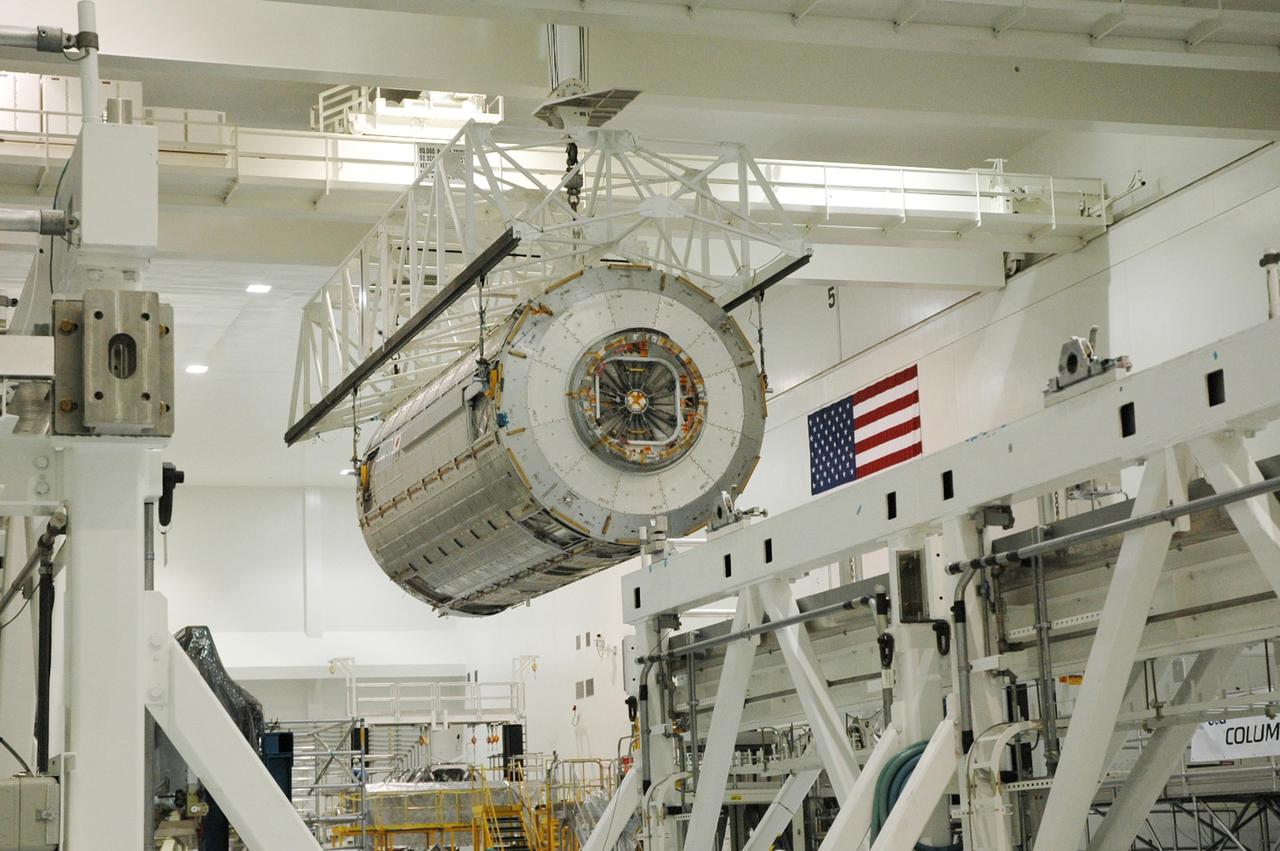
KENNEDY SPACE CENTER, FLA. -- In the Space Station Processing Facility, an overhead crane carries the Japanese Experiment Module (JEM) across the facility. The module is being moved to another stand where it will be weighed and measured for its center of gravity. The Japanese Aerospace Exploration Agency developed the laboratory at the Tsukuba Space Center near Tokyo. It is the first element, named "Kibo" (Hope), to be delivered to KSC. The JEM is Japan's primary contribution to the International Space Station. It will enhance the unique research capabilities of the orbiting complex by providing an additional environment for astronauts to conduct science experiments. The JEM is targeted for mission STS-124, to launch in early 2008. Photo credit: NASA/Troy Cryder
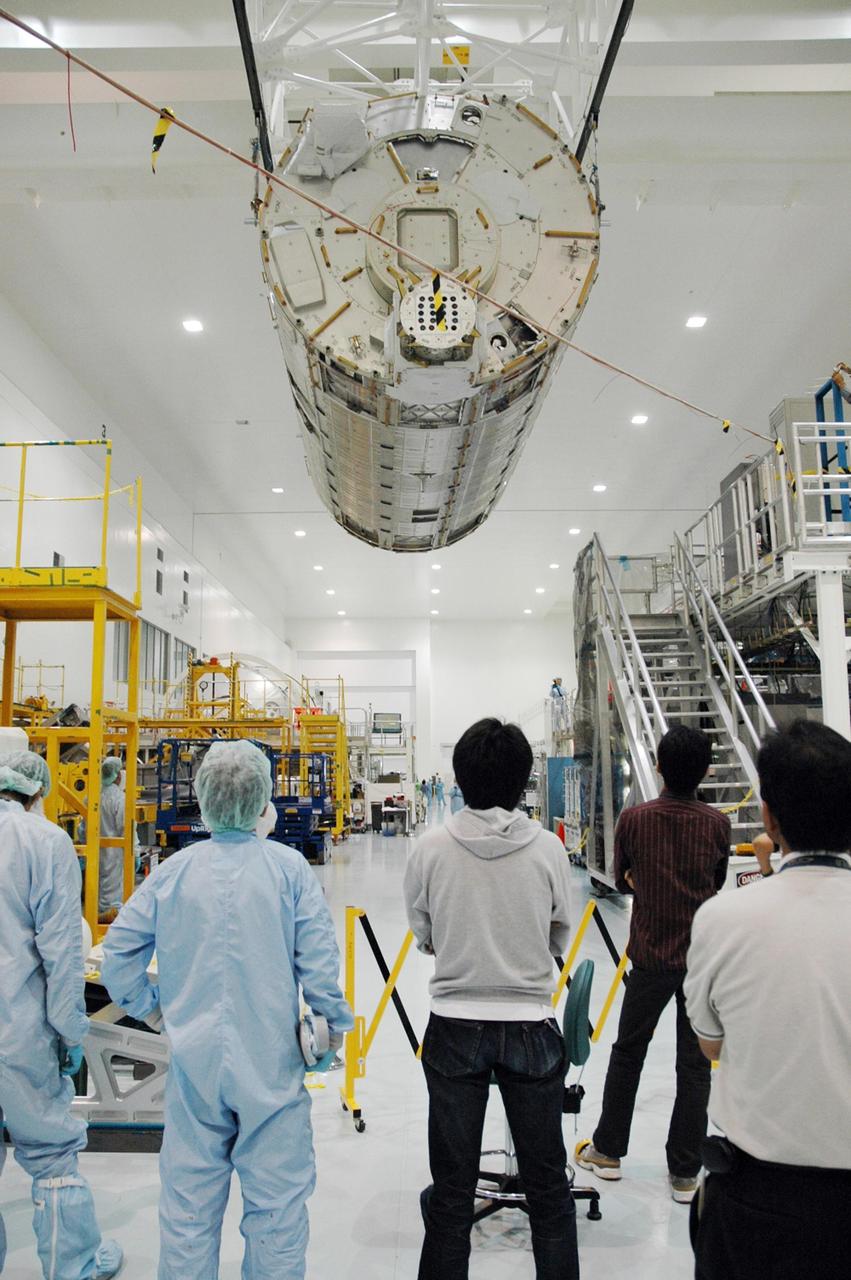
KENNEDY SPACE CENTER, FLA. -- In the Space Station Processing Facility, workers on the floor watch as an overhead crane moves the Japanese Experiment Module (JEM) to a stand for weighing. The Japanese Aerospace Exploration Agency developed the laboratory at the Tsukuba Space Center near Tokyo. It is the first element, named "Kibo" (Hope), to be delivered to KSC. The JEM is Japan's primary contribution to the International Space Station. It will enhance the unique research capabilities of the orbiting complex by providing an additional environment for astronauts to conduct science experiments. The JEM is targeted for mission STS-124, to launch in early 2008. Photo credit: NASA/Troy Cryder
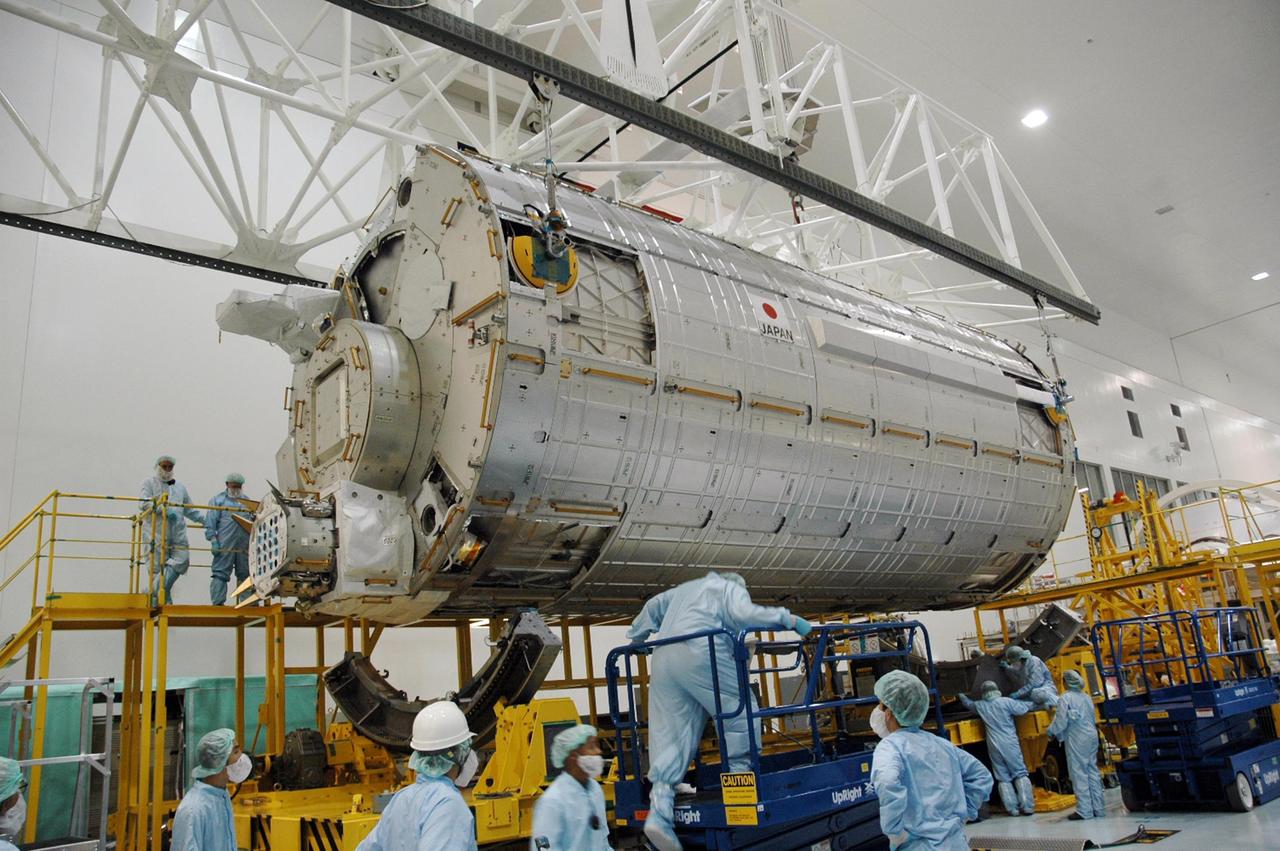
KENNEDY SPACE CENTER, FLA. -- In the Space Station Processing Facility, an overhead crane lifts the Japanese Experiment Module (JEM) off of its transporter. The module is being moved to another stand where it will be weighed and measured for its center of gravity. The Japanese Aerospace Exploration Agency developed the laboratory at the Tsukuba Space Center near Tokyo. It is the first element, named "Kibo" (Hope), to be delivered to KSC. The JEM is Japan's primary contribution to the International Space Station. It will enhance the unique research capabilities of the orbiting complex by providing an additional environment for astronauts to conduct science experiments. The JEM is targeted for mission STS-124, to launch in early 2008. Photo credit: NASA/Troy Cryder
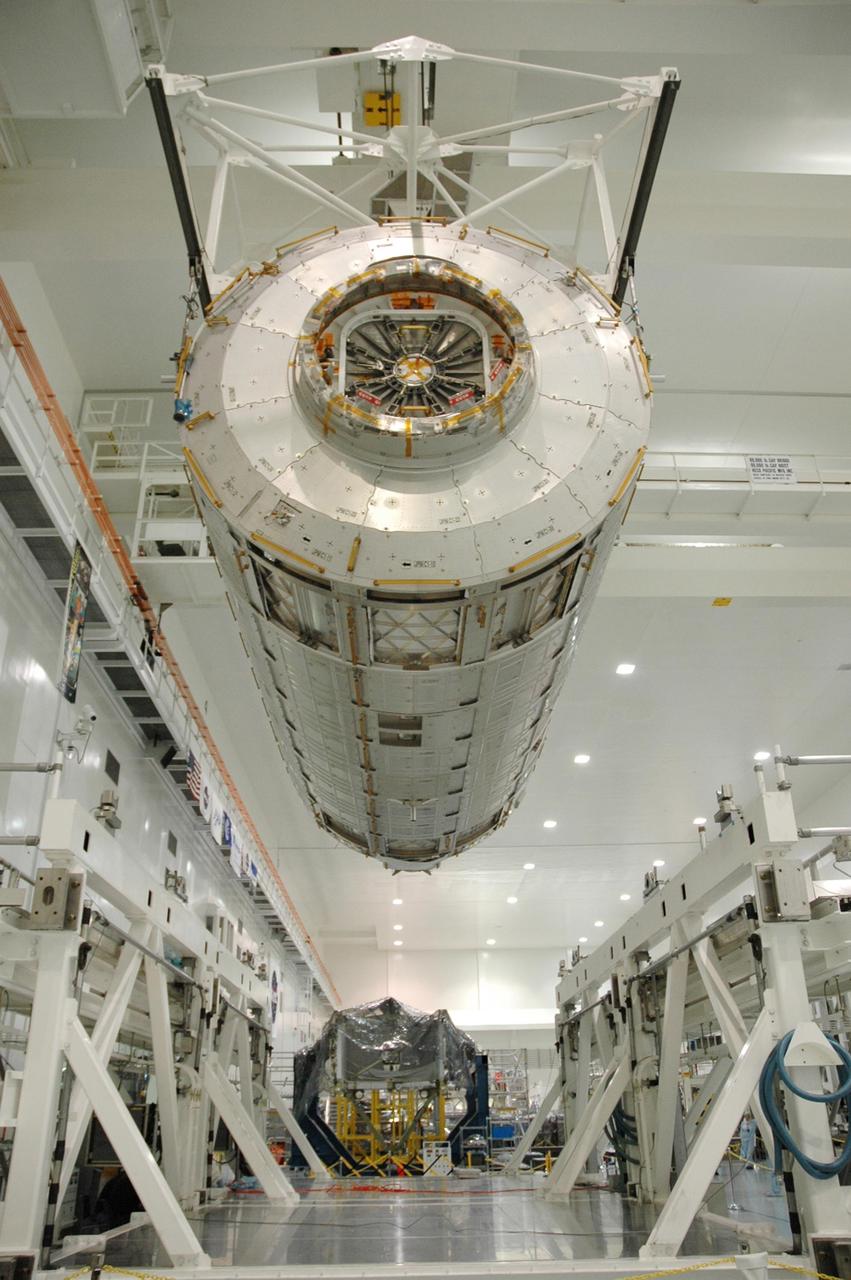
KENNEDY SPACE CENTER, FLA. -- In the Space Station Processing Facility, the Japanese Experiment Module (JEM), after being weighed, is lifted off the scale to be returned to its transporter. The Japanese Aerospace Exploration Agency developed the laboratory at the Tsukuba Space Center near Tokyo. It is the first element, named "Kibo" (Hope), to be delivered to KSC. The JEM is Japan's primary contribution to the International Space Station. It will enhance the unique research capabilities of the orbiting complex by providing an additional environment for astronauts to conduct science experiments. The JEM is targeted for mission STS-124, to launch in early 2008. Photo credit: NASA/Troy Cryder
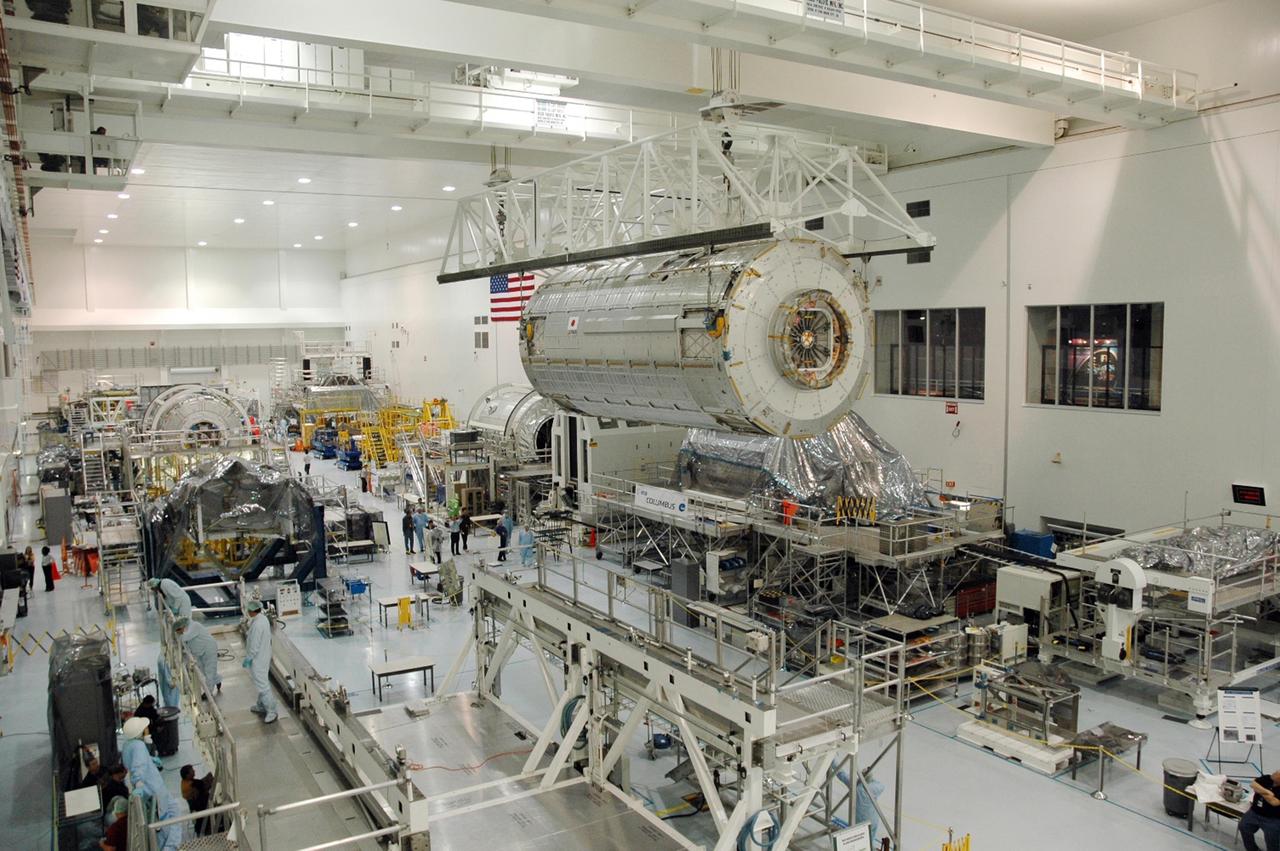
KENNEDY SPACE CENTER, FLA. -- In the Space Station Processing Facility, an overhead crane carries the Japanese Experiment Module (JEM) across the facility. The module is being moved to another stand where it will be weighed and measured for its center of gravity. Other modules intended for the International Space Station are visible on other stands. The Japanese Aerospace Exploration Agency developed the laboratory at the Tsukuba Space Center near Tokyo. It is the first element, named "Kibo" (Hope), to be delivered to KSC. The JEM is Japan's primary contribution to the International Space Station. It will enhance the unique research capabilities of the orbiting complex by providing an additional environment for astronauts to conduct science experiments. The JEM is targeted for mission STS-124, to launch in early 2008. Photo credit: NASA/Troy Cryder
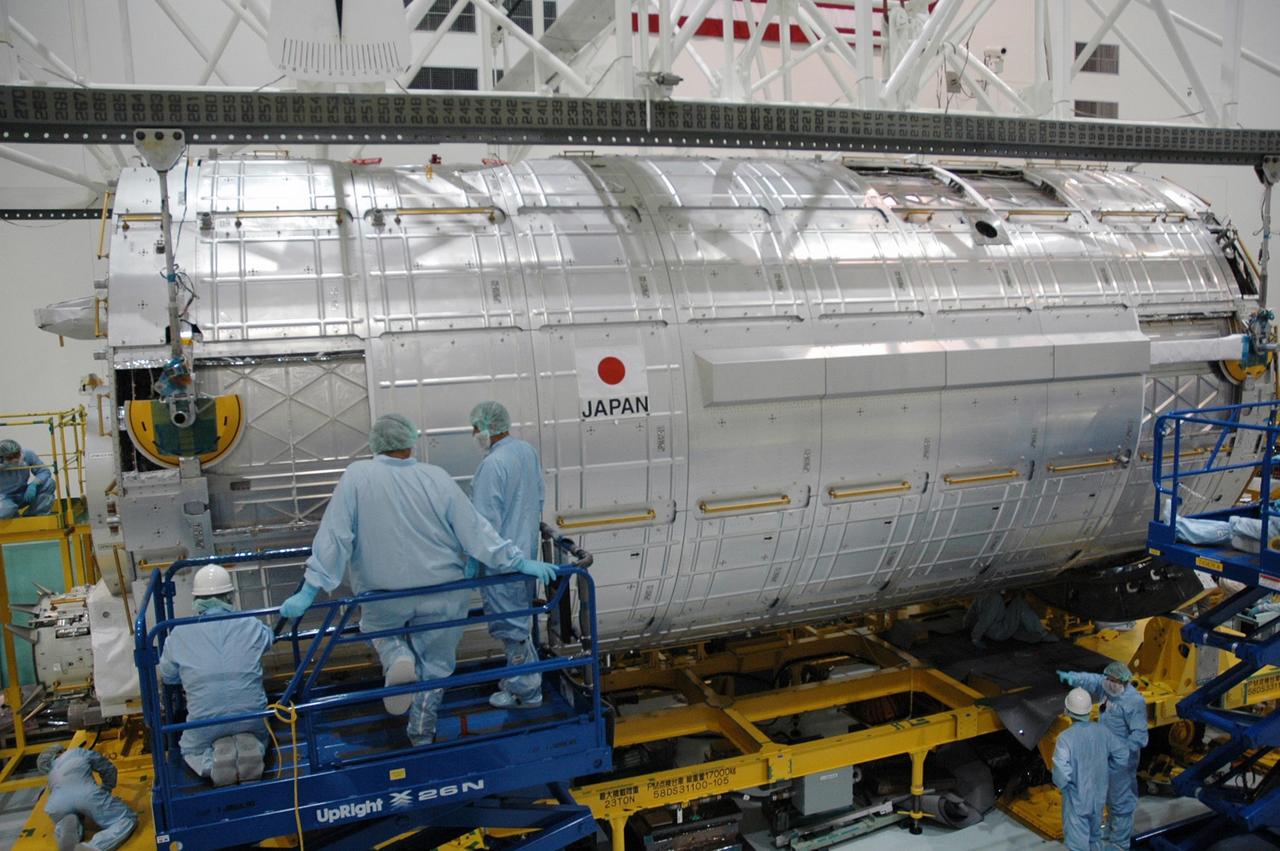
KENNEDY SPACE CENTER, FLA. -- In the Space Station Processing Facility, workers monitor the placement of the Japanese Experiment Module (JEM) onto its transporter. The JEM was moved from the transporter for weighing and to measure its center of gravity. The Japanese Aerospace Exploration Agency developed the laboratory at the Tsukuba Space Center near Tokyo. It is the first element, named "Kibo" (Hope), to be delivered to KSC. The JEM is Japan's primary contribution to the International Space Station. It will enhance the unique research capabilities of the orbiting complex by providing an additional environment for astronauts to conduct science experiments. The JEM is targeted for mission STS-124, to launch in early 2008. Photo credit: NASA/Troy Cryder
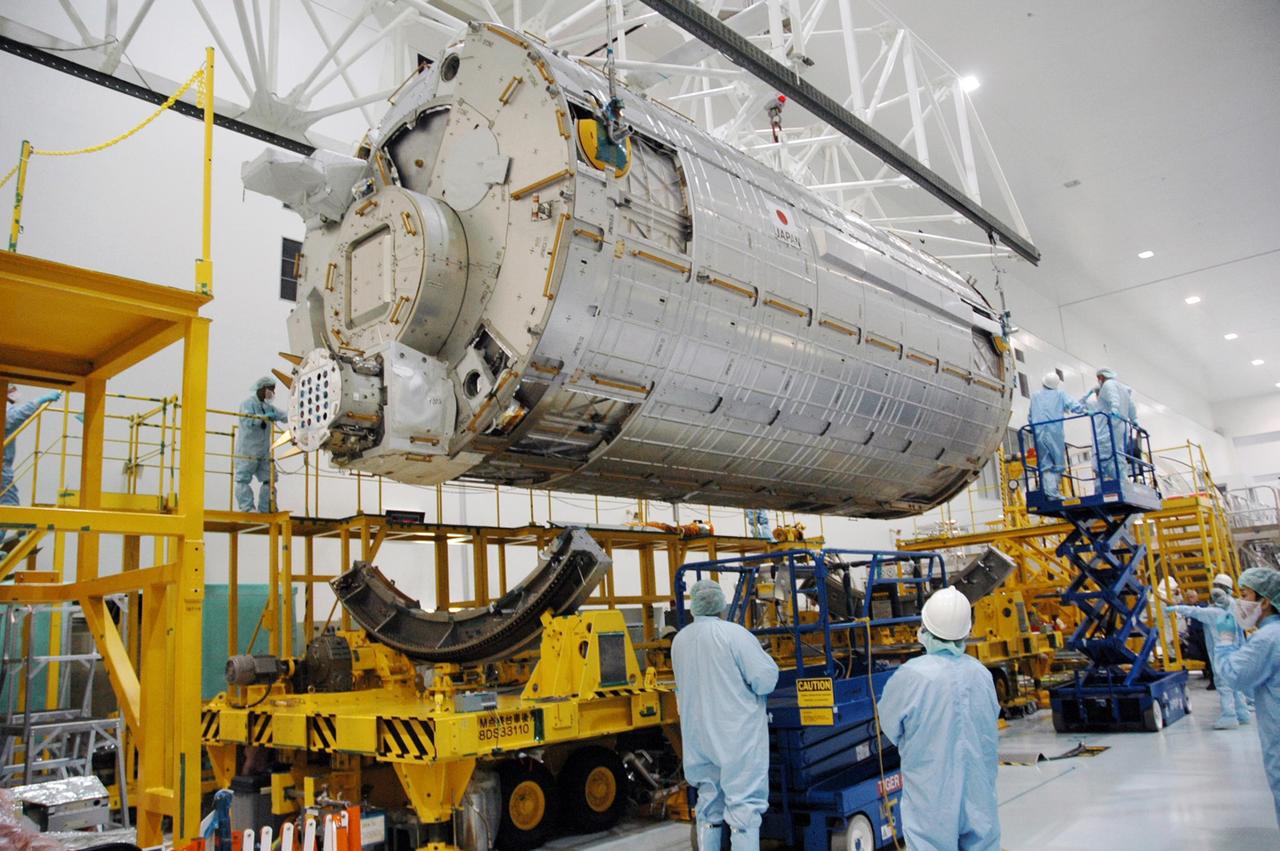
KENNEDY SPACE CENTER, FLA. -- In the Space Station Processing Facility, the Japanese Experiment Module (JEM), after being weighed, has been moved back across the facility and is lowered onto its transporter. The Japanese Aerospace Exploration Agency developed the laboratory at the Tsukuba Space Center near Tokyo. It is the first element, named "Kibo" (Hope), to be delivered to KSC. The JEM is Japan's primary contribution to the International Space Station. It will enhance the unique research capabilities of the orbiting complex by providing an additional environment for astronauts to conduct science experiments. The JEM is targeted for mission STS-124, to launch in early 2008. Photo credit: NASA/Troy Cryder
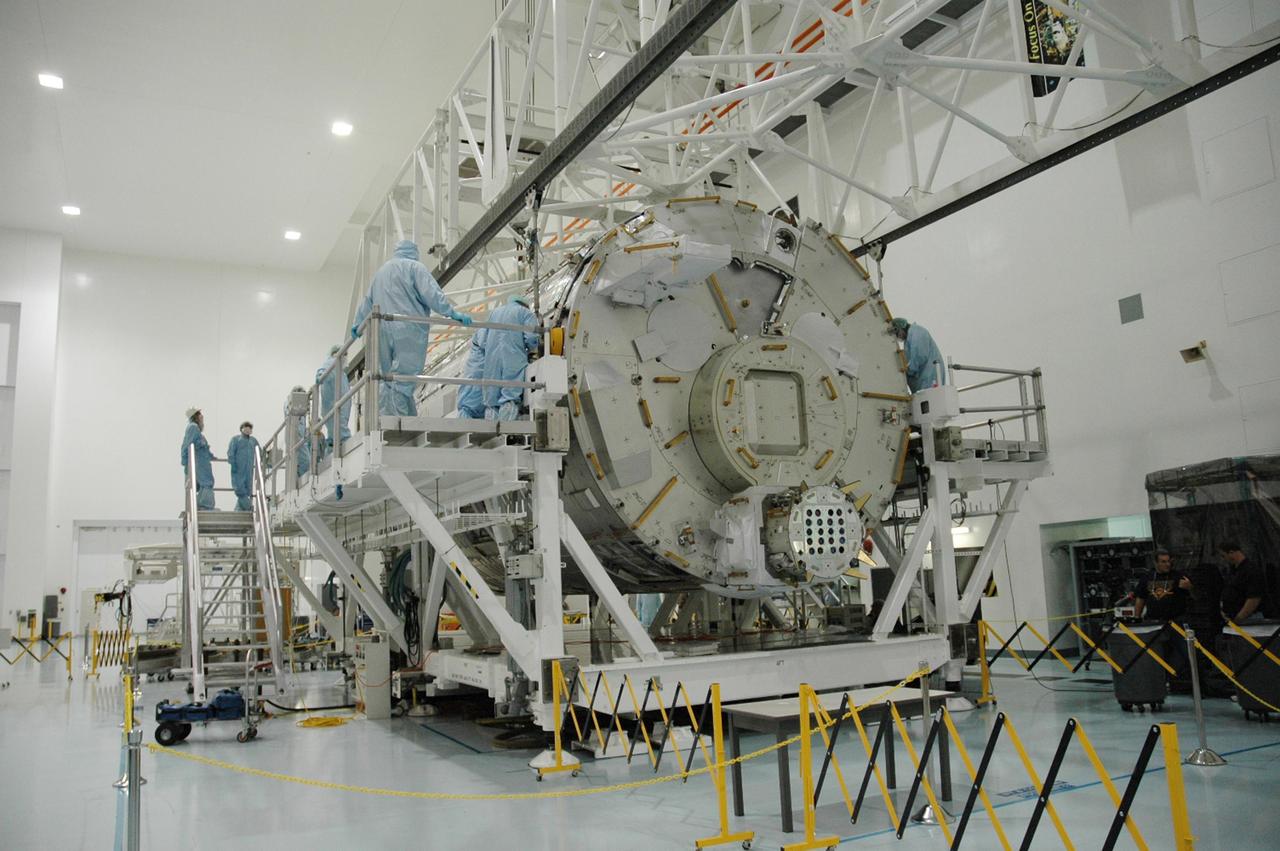
KENNEDY SPACE CENTER, FLA. -- In the Space Station Processing Facility, workers monitor the movement of the Japanese Experiment Module (JEM) as it is lowered onto a weighing stand. The module will also be measured for its center of gravity. The Japanese Aerospace Exploration Agency developed the laboratory at the Tsukuba Space Center near Tokyo. It is the first element, named "Kibo" (Hope), to be delivered to KSC. The JEM is Japan's primary contribution to the International Space Station. It will enhance the unique research capabilities of the orbiting complex by providing an additional environment for astronauts to conduct science experiments. The JEM is targeted for mission STS-124, to launch in early 2008. Photo credit: NASA/Troy Cryder