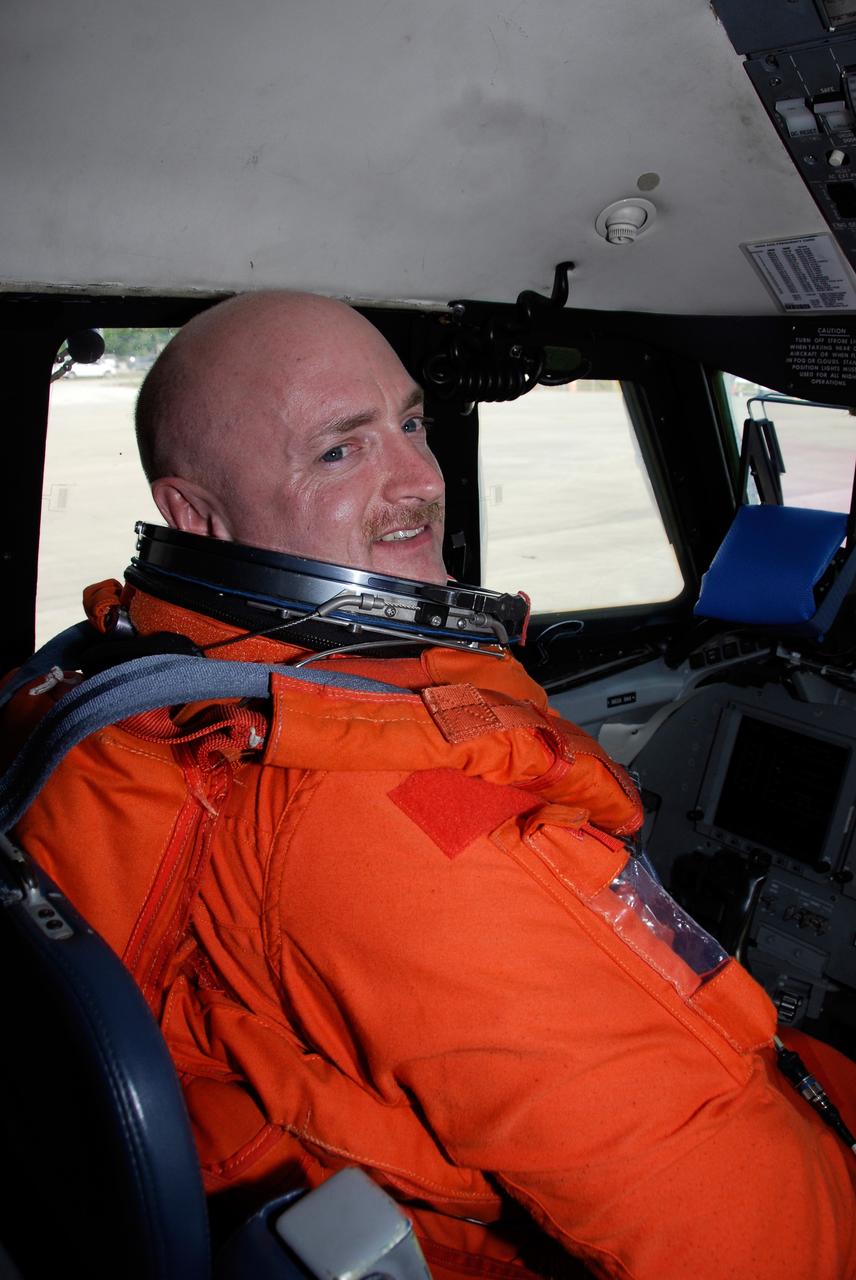
CAPE CANAVERAL, Fla. -- STS-124 Commander Mark Kelly sits in the cockpit of NASA's Shuttle Training Aircraft, or STA, preparing to practice space shuttle landings. The STA is a Grumman American Aviation-built Gulf Stream II jet that was modified to simulate an orbiter's cockpit, motion and visual cues, and handling qualities. In flight, the STA duplicates the orbiter's atmospheric descent trajectory from approximately 35,000 feet altitude to landing on a runway. Because the orbiter is unpowered during re-entry and landing, its high-speed glide must be perfectly executed the first time. The crew for space shuttle Discovery's STS-124 mission is at Kennedy for a full launch dress rehearsal, known as the terminal countdown demonstration test, or TCDT. Providing astronauts and ground crews with an opportunity to participate in various simulated countdown activities, TCDT includes equipment familiarization and emergency training. Discovery's launch is targeted for May 31. Photo credit: NASA/Kim Shiflett
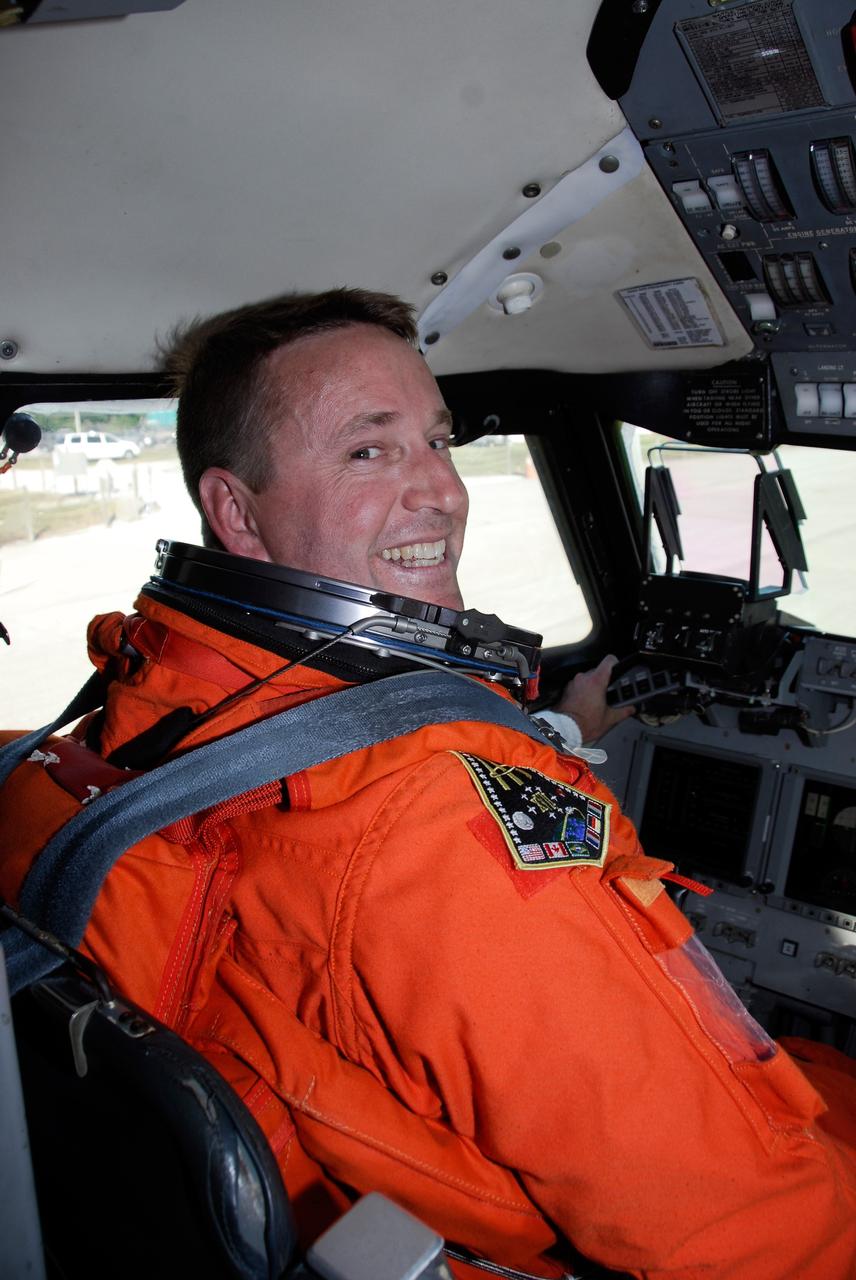
CAPE CANAVERAL, Fla. -- STS-124 Pilot Ken Ham takes his seat in the cockpit of NASA's Shuttle Training Aircraft, or STA, preparing to practice space shuttle landings. The STA is a Grumman American Aviation-built Gulf Stream II jet that was modified to simulate an orbiter's cockpit, motion and visual cues, and handling qualities. In flight, the STA duplicates the orbiter's atmospheric descent trajectory from approximately 35,000 feet altitude to landing on a runway. Because the orbiter is unpowered during re-entry and landing, its high-speed glide must be perfectly executed the first time. The crew for space shuttle Discovery's STS-124 mission is at Kennedy for a full launch dress rehearsal, known as the terminal countdown demonstration test, or TCDT. Providing astronauts and ground crews with an opportunity to participate in various simulated countdown activities, TCDT includes equipment familiarization and emergency training. Discovery's launch is targeted for May 31. Photo credit: NASA/Kim Shiflett
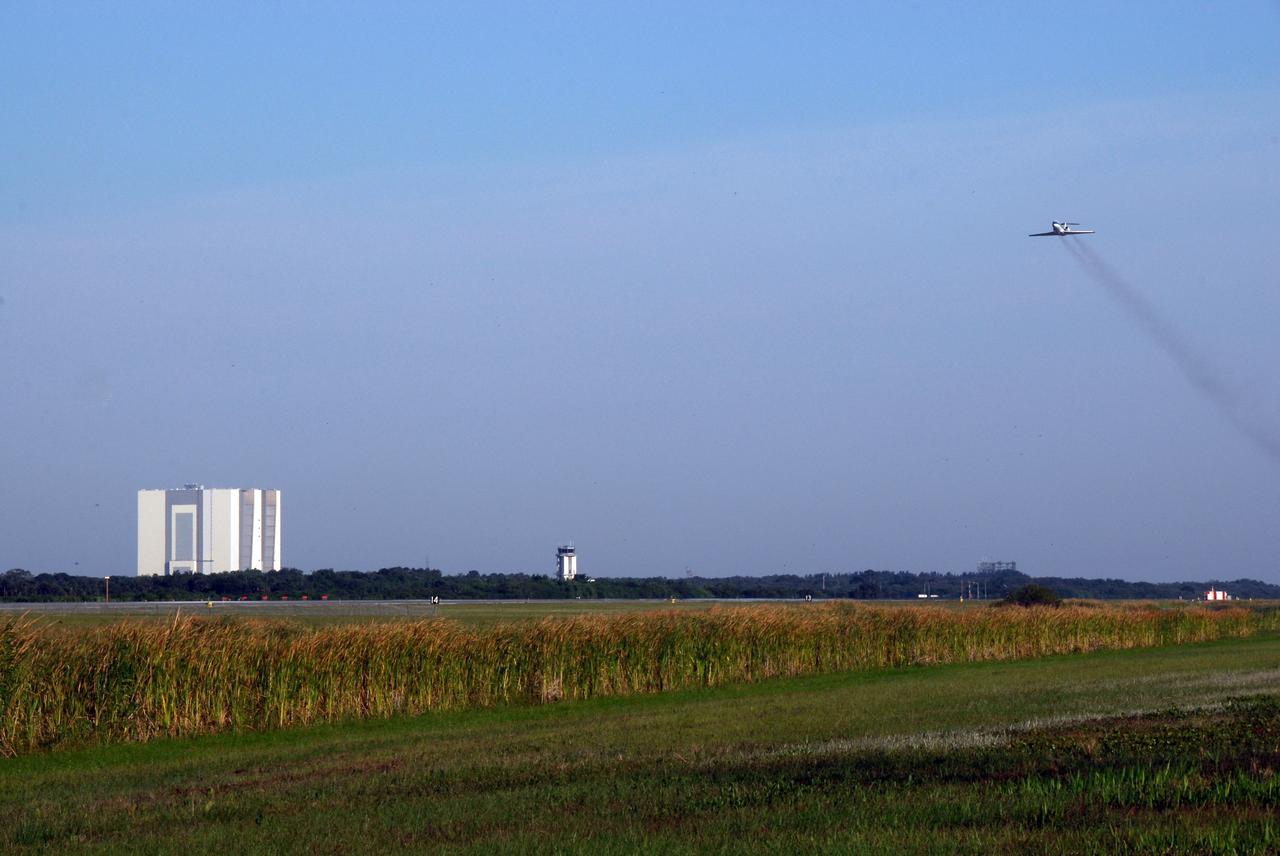
CAPE CANAVERAL, Fla. -- NASA's Shuttle Training Aircraft, or STA, soars into the sky (at right) over the NASA Kennedy Space Center Shuttle Landing Facility. At the controls is either STS-124 Commander Mark Kelly or Pilot Ken Ham, who are practicing space shuttle landings. At left, in the background, is the Vehicle Assembly Building. The STA is a Grumman American Aviation-built Gulf Stream II jet that was modified to simulate an orbiter's cockpit, motion and visual cues, and handling qualities. In flight, the STA duplicates the orbiter's atmospheric descent trajectory from approximately 35,000 feet altitude to landing on a runway. Because the orbiter is unpowered during re-entry and landing, its high-speed glide must be perfectly executed the first time. The crew for space shuttle Discovery's STS-124 mission is at Kennedy for a full launch dress rehearsal, known as the terminal countdown demonstration test, or TCDT. Providing astronauts and ground crews with an opportunity to participate in various simulated countdown activities, TCDT includes equipment familiarization and emergency training. Discovery's launch is targeted for May 31. Photo credit: NASA/Kim Shiflett
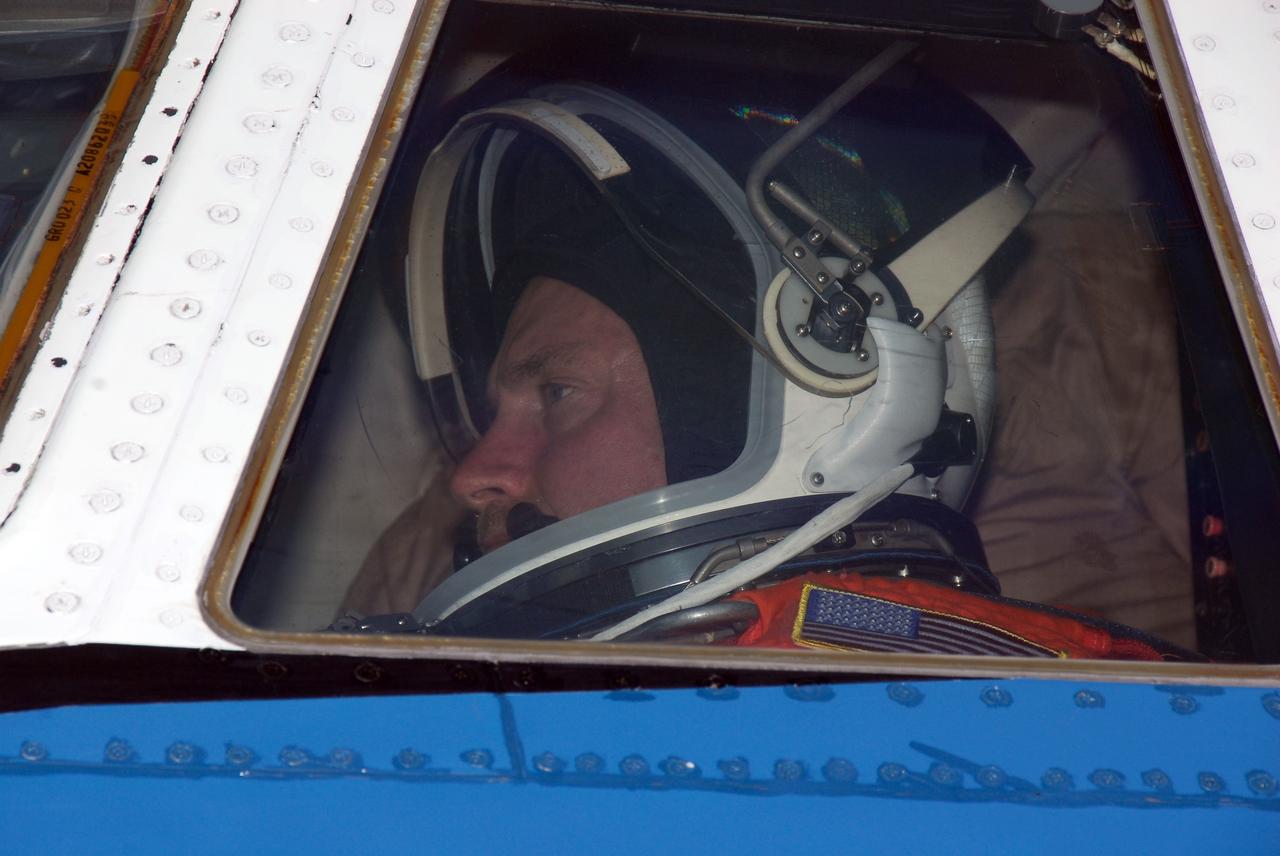
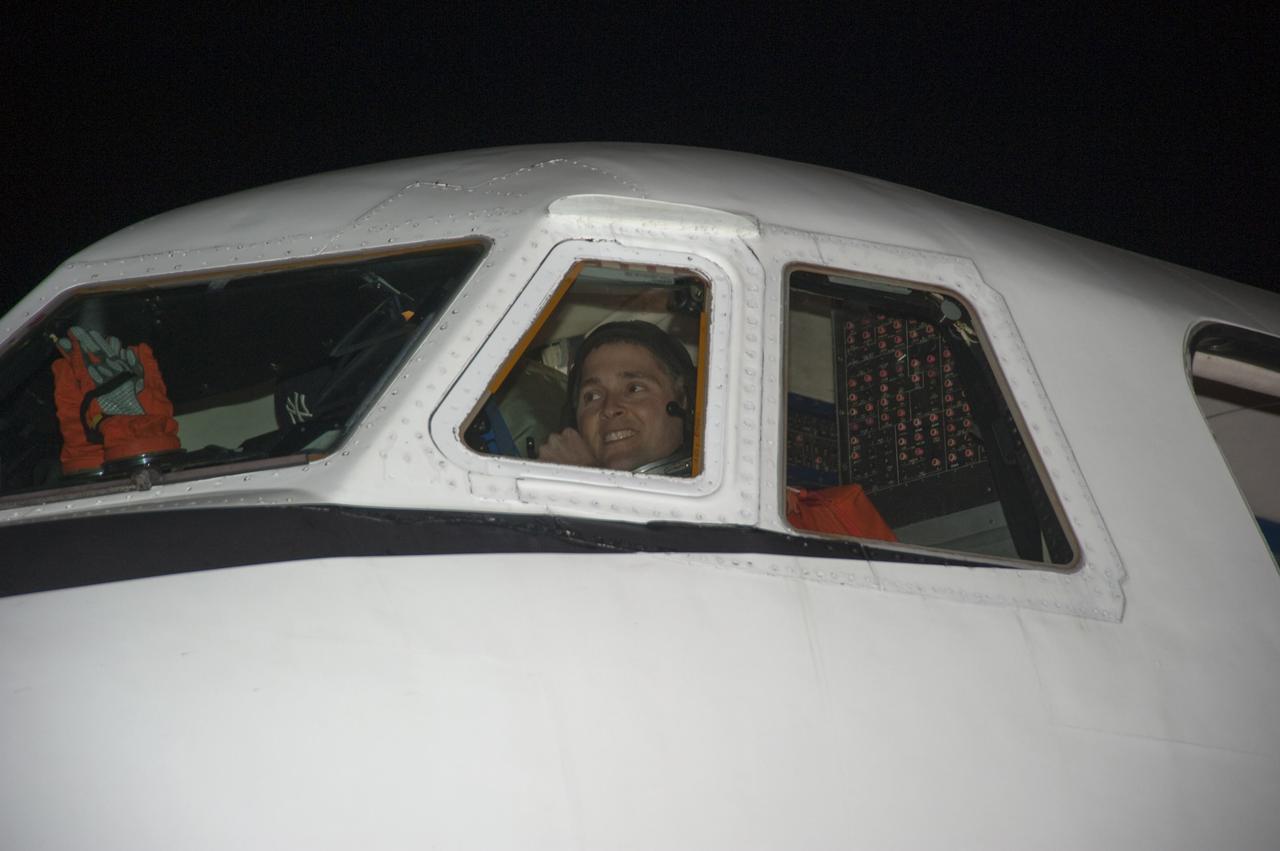
CAPE CANAVERAL, Fla. -- STS-124 Commander Mark Kelly is seen through the cockpit window of NASA's Shuttle Training Aircraft, or STA, before taxiing to the runway at the NASA Kennedy Space Center Shuttle Landing Facility to practice space shuttle landings. The STA is a Grumman American Aviation-built Gulf Stream II jet that was modified to simulate an orbiter's cockpit, motion and visual cues, and handling qualities. In flight, the STA duplicates the orbiter's atmospheric descent trajectory from approximately 35,000 feet altitude to landing on a runway. Because the orbiter is unpowered during re-entry and landing, its high-speed glide must be perfectly executed the first time. The crew for space shuttle Discovery's STS-124 mission is at Kennedy for a full launch dress rehearsal, known as the terminal countdown demonstration test, or TCDT. Providing astronauts and ground crews with an opportunity to participate in various simulated countdown activities, TCDT includes equipment familiarization and emergency training. Discovery's launch is targeted for May 31. Photo credit: NASA/Kim Shiflett
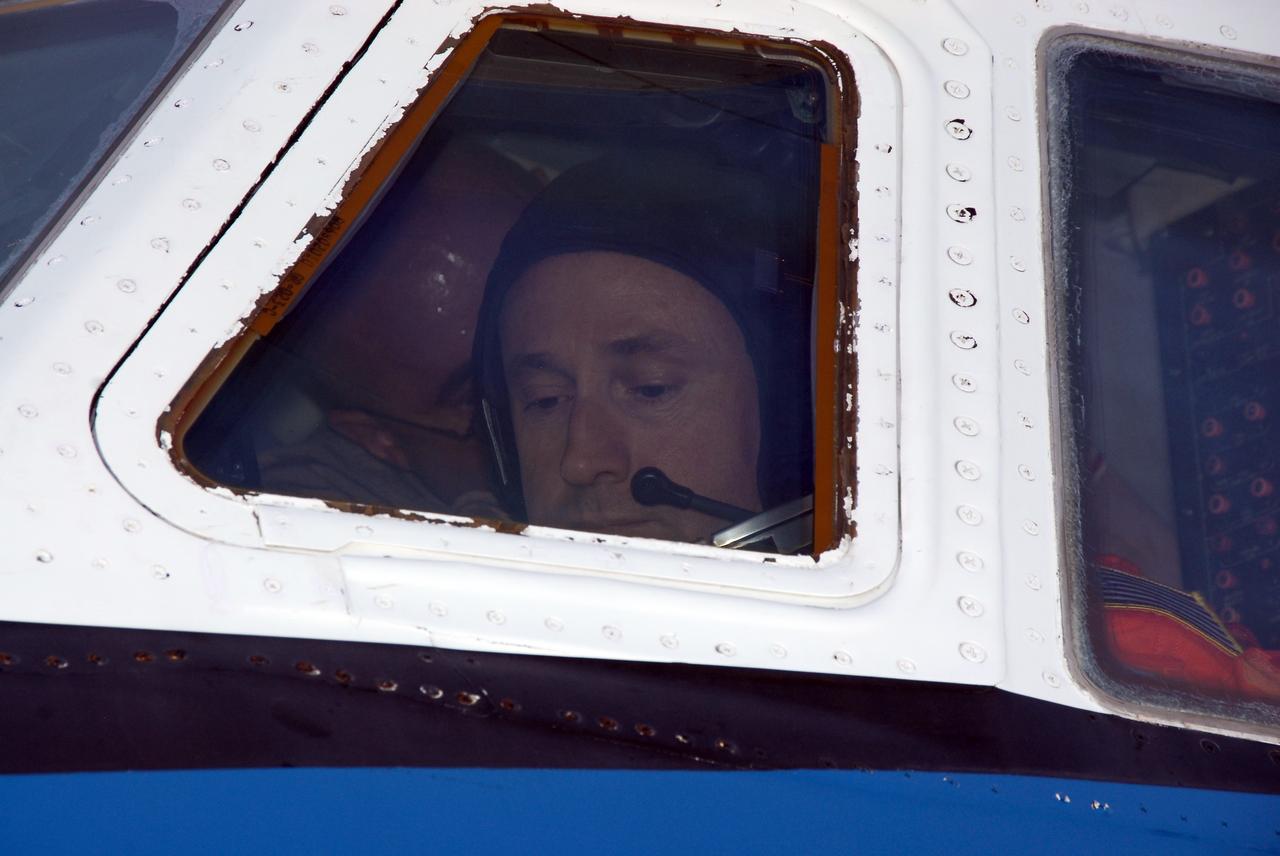
CAPE CANAVERAL, Fla. -- STS-124 Pilot Ken Ham is seen through the cockpit window of NASA's Shuttle Training Aircraft, or STA, before taxiing to the runway at the NASA Kennedy Space Center Shuttle Landing Facility to practice space shuttle landings. The STA is a Grumman American Aviation-built Gulf Stream II jet that was modified to simulate an orbiter's cockpit, motion and visual cues, and handling qualities. In flight, the STA duplicates the orbiter's atmospheric descent trajectory from approximately 35,000 feet altitude to landing on a runway. Because the orbiter is unpowered during re-entry and landing, its high-speed glide must be perfectly executed the first time. The crew for space shuttle Discovery's STS-124 mission is at Kennedy for a full launch dress rehearsal, known as the terminal countdown demonstration test, or TCDT. Providing astronauts and ground crews with an opportunity to participate in various simulated countdown activities, TCDT includes equipment familiarization and emergency training. Discovery's launch is targeted for May 31. Photo credit: NASA/Kim Shiflett
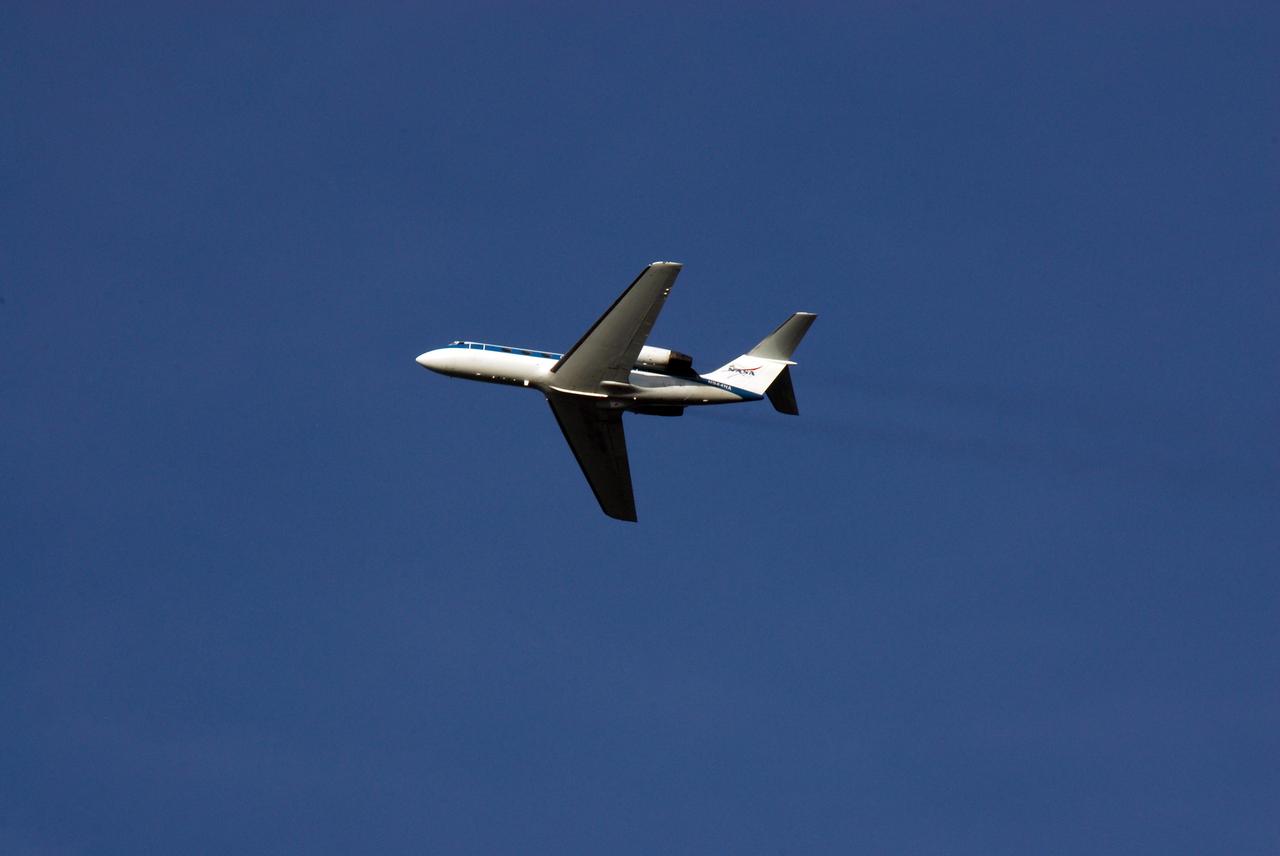
CAPE CANAVERAL, Fla. -- NASA's Shuttle Training Aircraft, or STA, soars into the blue Florida sky to begin the space shuttle landing practice. STS-124 Commander Mark Kelly or Pilot Ken Ham is at the controls. The STA is a Grumman American Aviation-built Gulf Stream II jet that was modified to simulate an orbiter's cockpit, motion and visual cues, and handling qualities. In flight, the STA duplicates the orbiter's atmospheric descent trajectory from approximately 35,000 feet altitude to landing on a runway. Because the orbiter is unpowered during re-entry and landing, its high-speed glide must be perfectly executed the first time. The crew for space shuttle Discovery's STS-124 mission is at Kennedy for a full launch dress rehearsal, known as the terminal countdown demonstration test, or TCDT. Providing astronauts and ground crews with an opportunity to participate in various simulated countdown activities, TCDT includes equipment familiarization and emergency training. Discovery's launch is targeted for May 31. Photo credit: NASA/Kim Shiflett
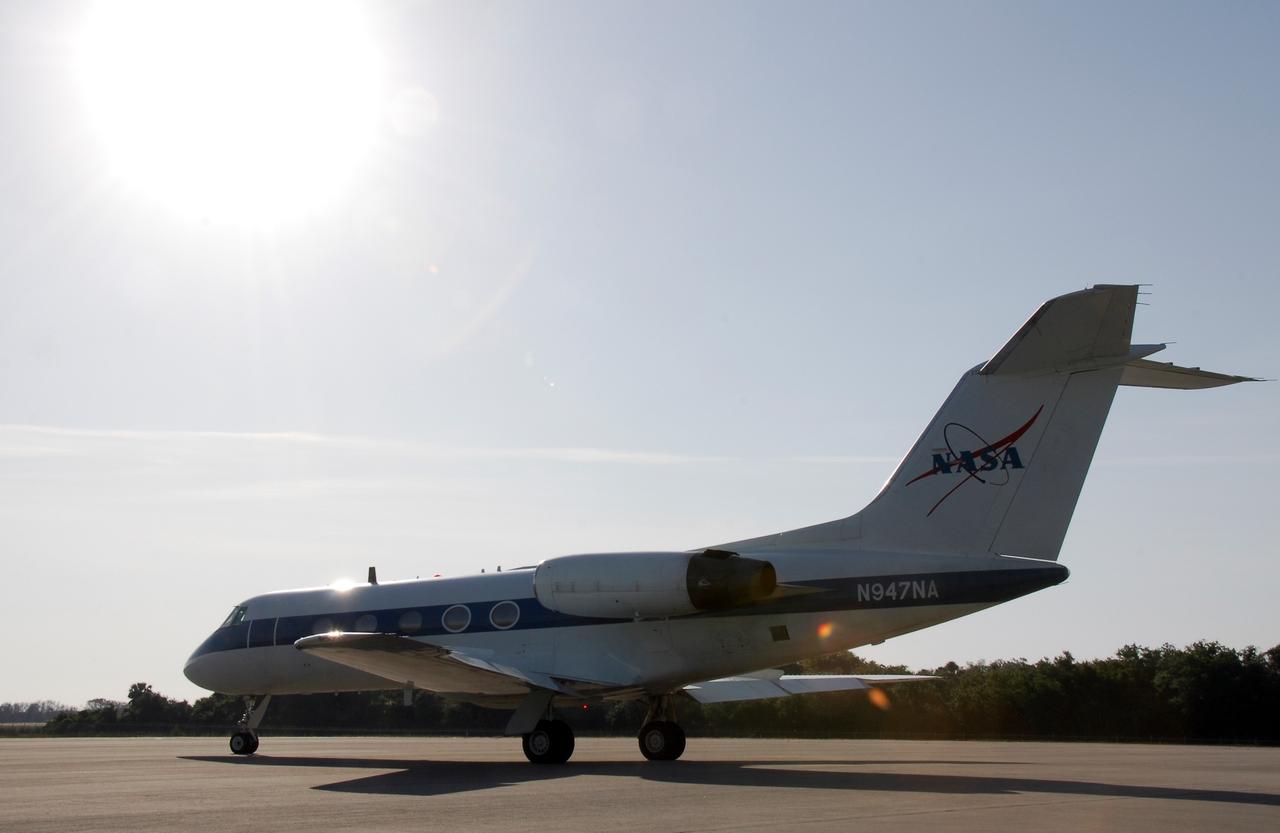
CAPE CANAVERAL, Fla. -- NASA's Shuttle Training Aircraft, or STA, taxis to the runway at the NASA Kennedy Space Center Shuttle Landing Facility. STS-124 Commander Mark Kelly and Pilot Ken Ham are practicing space shuttle landings. The STA is a Grumman American Aviation-built Gulf Stream II jet that was modified to simulate an orbiter's cockpit, motion and visual cues, and handling qualities. In flight, the STA duplicates the orbiter's atmospheric descent trajectory from approximately 35,000 feet altitude to landing on a runway. Because the orbiter is unpowered during re-entry and landing, its high-speed glide must be perfectly executed the first time. The crew for space shuttle Discovery's STS-124 mission is at Kennedy for a full launch dress rehearsal, known as the terminal countdown demonstration test, or TCDT. Providing astronauts and ground crews with an opportunity to participate in various simulated countdown activities, TCDT includes equipment familiarization and emergency training. Discovery's launch is targeted for May 31. Photo credit: NASA/Kim Shiflett
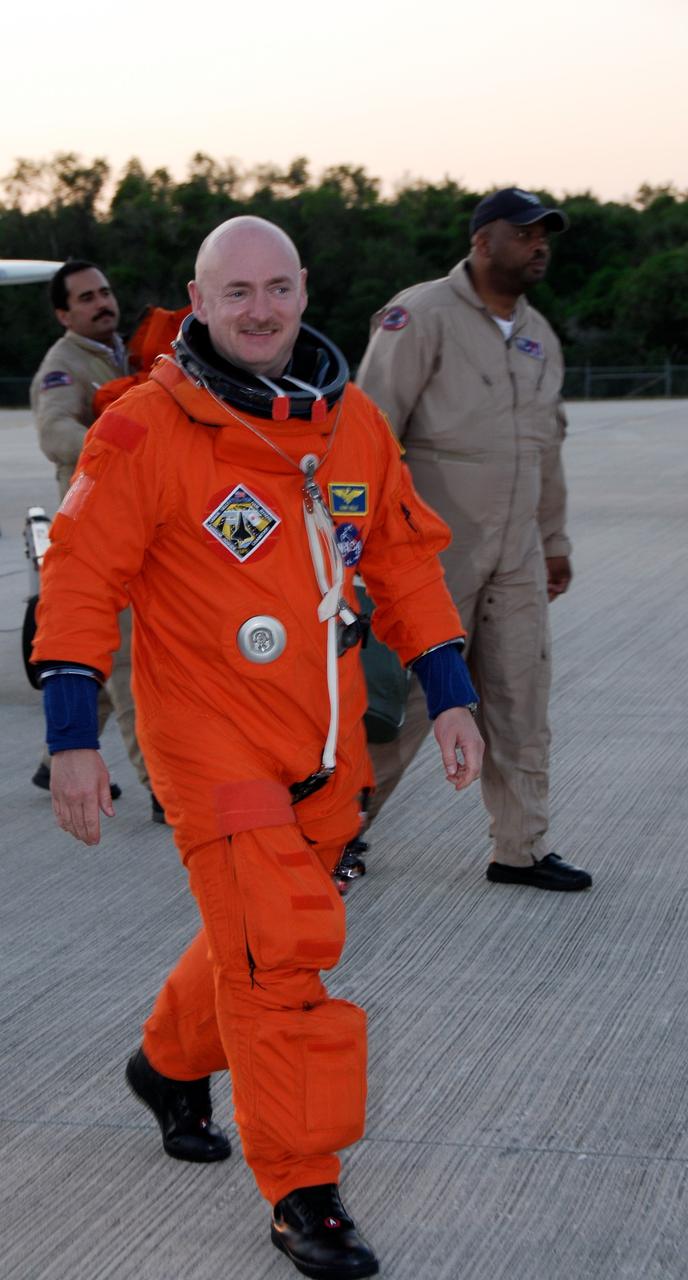
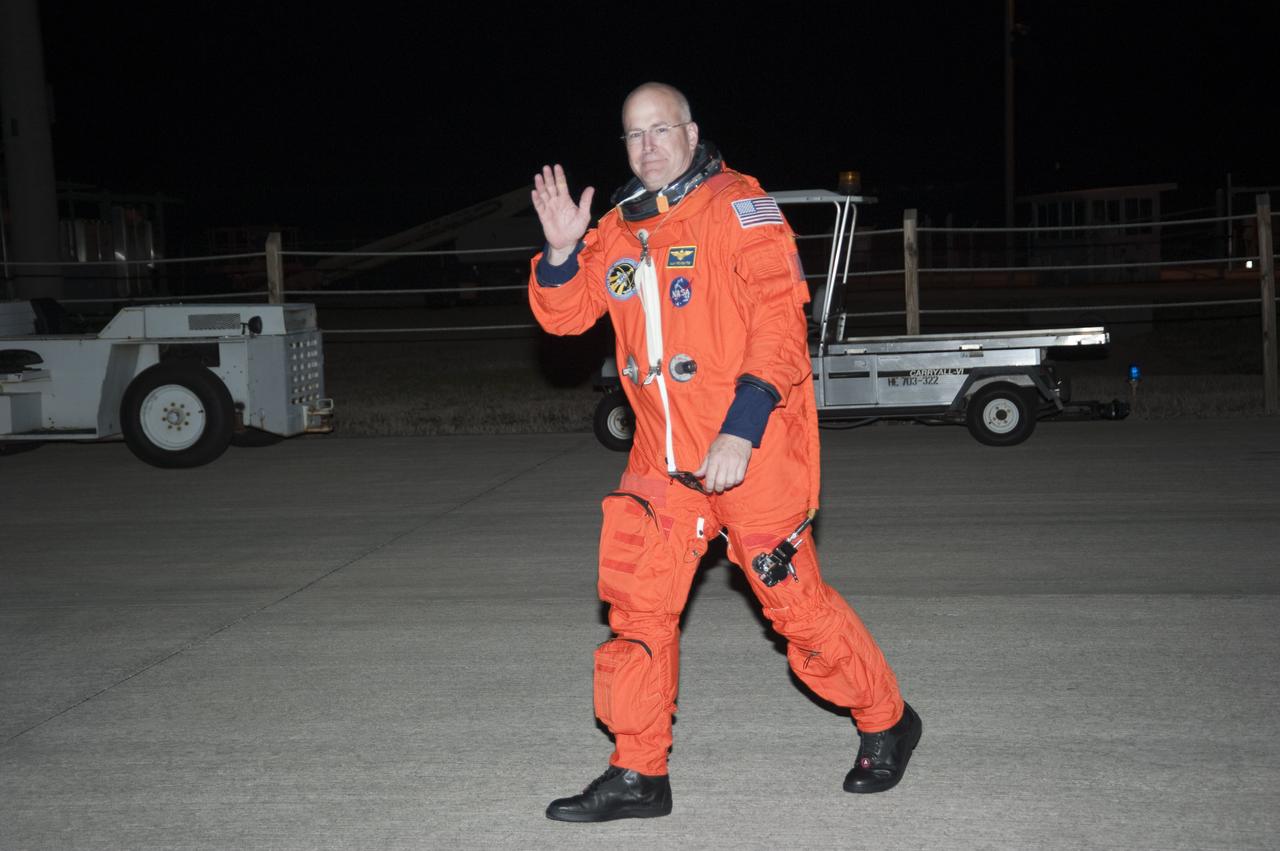
CAPE CANAVERAL, Fla. -- Back at the NASA Kennedy Space Center Shuttle Landing Facility, STS-124 Commander Mark Kelly happily crosses the parking area after the successful space shuttle landing practice aboard NASA's Shuttle Training Aircraft, or STA. The STA is a Grumman American Aviation-built Gulf Stream II jet that was modified to simulate an orbiter's cockpit, motion and visual cues, and handling qualities. In flight, the STA duplicates the orbiter's atmospheric descent trajectory from approximately 35,000 feet altitude to landing on a runway. Because the orbiter is unpowered during re-entry and landing, its high-speed glide must be perfectly executed the first time. The crew for space shuttle Discovery's STS-124 mission is at Kennedy for a full launch dress rehearsal, known as the terminal countdown demonstration test, or TCDT. Providing astronauts and ground crews with an opportunity to participate in various simulated countdown activities, TCDT includes equipment familiarization and emergency training. Discovery's launch is targeted for May 31. Photo credit: NASA/Kim Shiflett
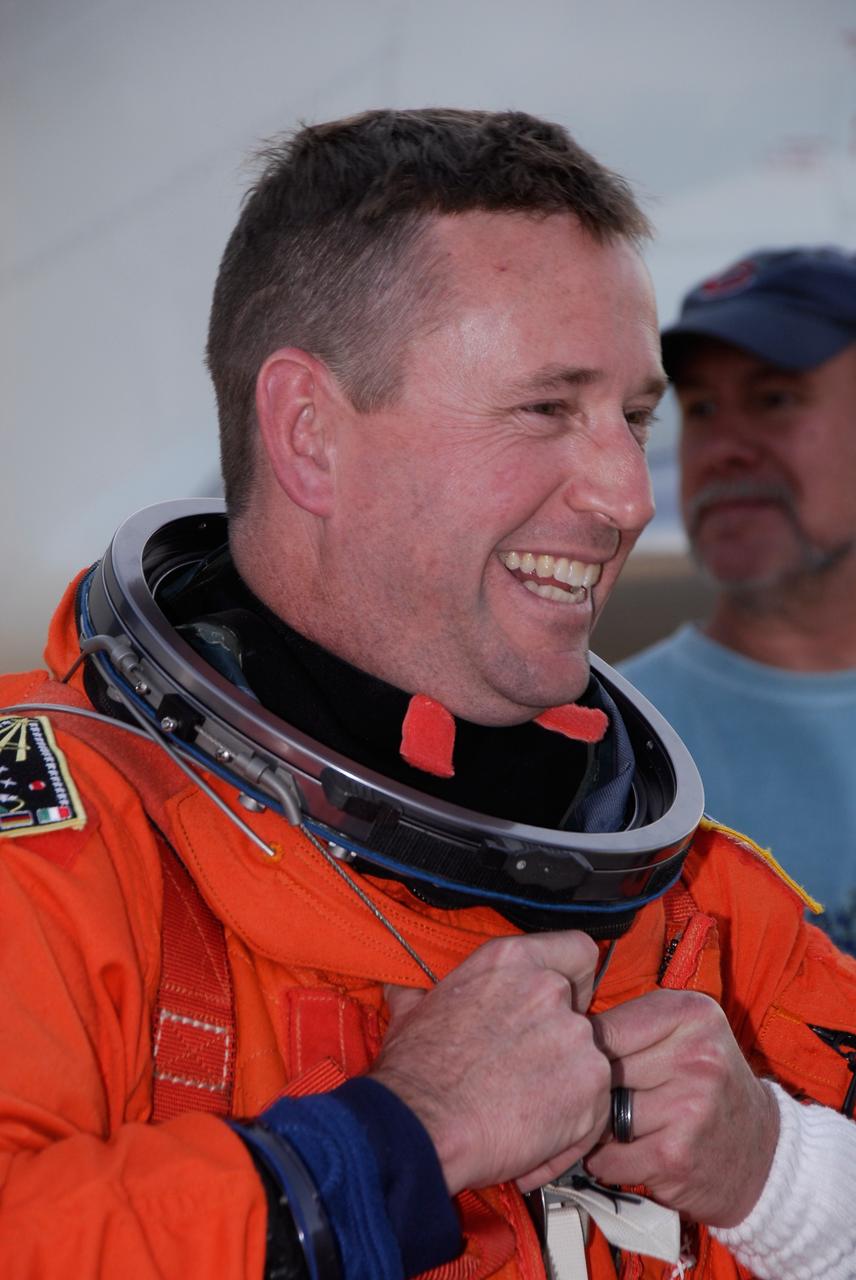
CAPE CANAVERAL, Fla. -- Back at the NASA Kennedy Space Center Shuttle Landing Facility, STS-124 Pilot Ken Ham is happy with the successful space shuttle landing practice aboard NASA's Shuttle Training Aircraft, or STA. Building. Kelly and Ham will be practicing space shuttle landings. The STA is a Grumman American Aviation-built Gulf Stream II jet that was modified to simulate an orbiter's cockpit, motion and visual cues, and handling qualities. In flight, the STA duplicates the orbiter's atmospheric descent trajectory from approximately 35,000 feet altitude to landing on a runway. Because the orbiter is unpowered during re-entry and landing, its high-speed glide must be perfectly executed the first time. The crew for space shuttle Discovery's STS-124 mission is at Kennedy for a full launch dress rehearsal, known as the terminal countdown demonstration test, or TCDT. Providing astronauts and ground crews with an opportunity to participate in various simulated countdown activities, TCDT includes equipment familiarization and emergency training. Discovery's launch is targeted for May 31. Photo credit: NASA/Kim Shiflett
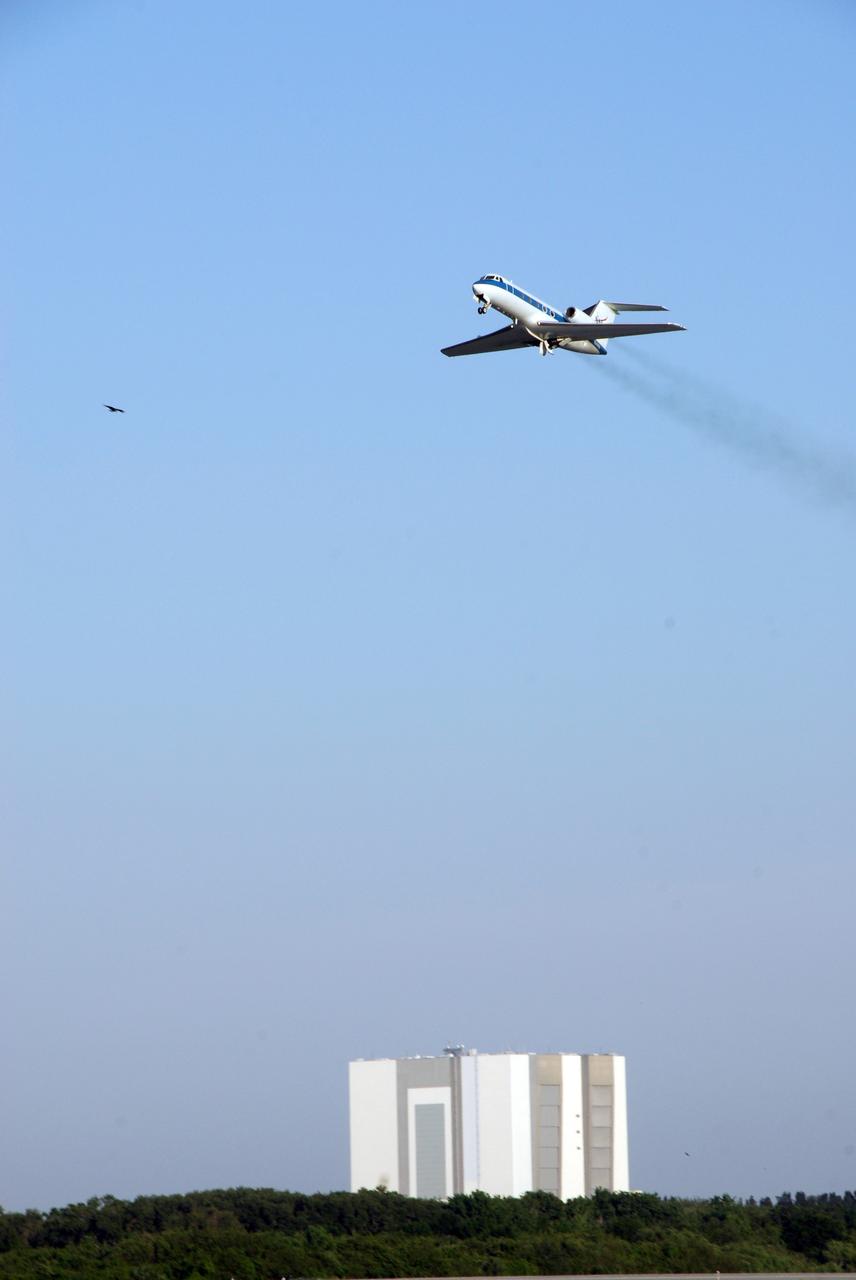
CAPE CANAVERAL, Fla. -- NASA's Shuttle Training Aircraft, or STA, soars into the sky from the NASA Kennedy Space Center Shuttle Landing Facility with STS-124 Commander Mark Kelly or Pilot Ken Ham at the controls. Below is the Vehicle Assembly Building. Kelly and Ham are practicing space shuttle landings. The STA is a Grumman American Aviation-built Gulf Stream II jet that was modified to simulate an orbiter's cockpit, motion and visual cues, and handling qualities. In flight, the STA duplicates the orbiter's atmospheric descent trajectory from approximately 35,000 feet altitude to landing on a runway. Because the orbiter is unpowered during re-entry and landing, its high-speed glide must be perfectly executed the first time. The crew for space shuttle Discovery's STS-124 mission is at Kennedy for a full launch dress rehearsal, known as the terminal countdown demonstration test, or TCDT. Providing astronauts and ground crews with an opportunity to participate in various simulated countdown activities, TCDT includes equipment familiarization and emergency training. Discovery's launch is targeted for May 31. Photo credit: NASA/Kim Shiflett
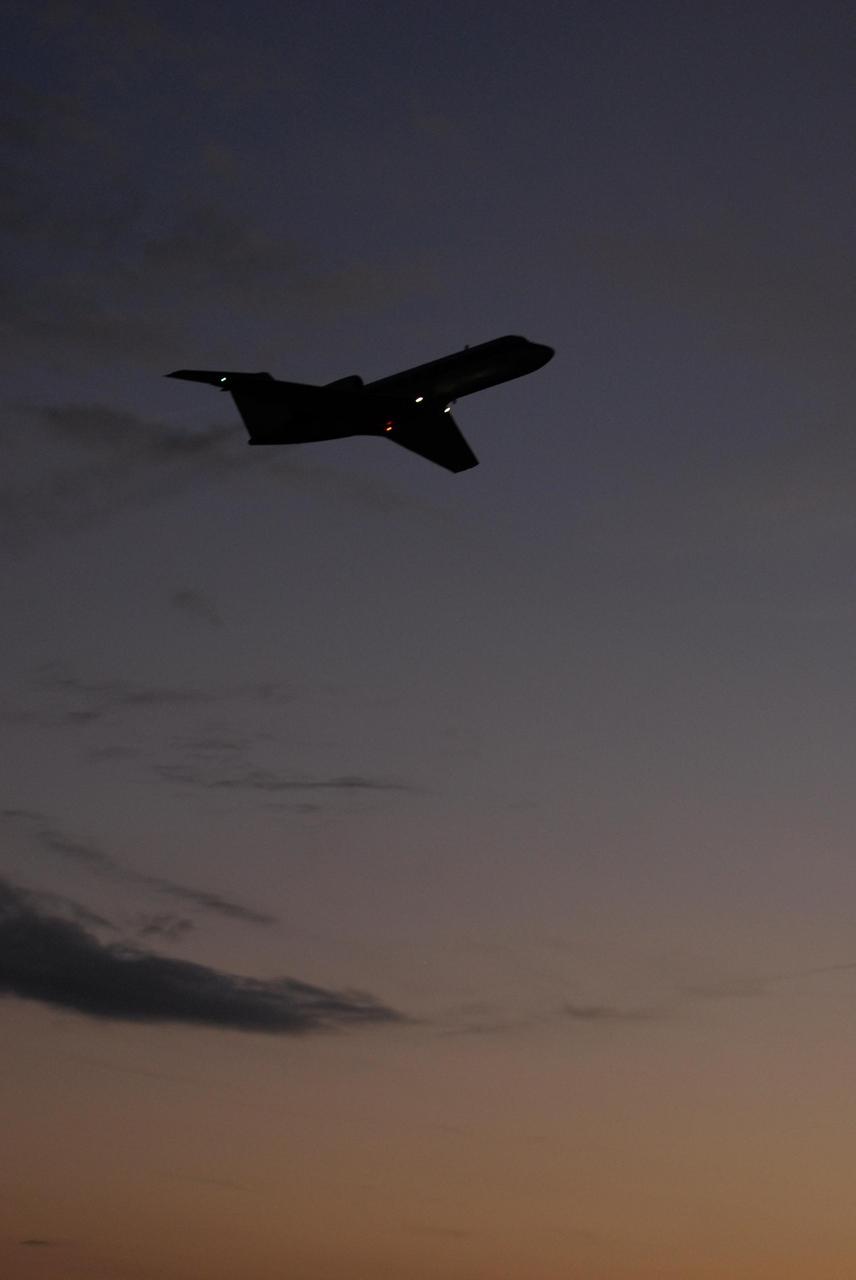
KENNEDY SPACE CENTER, FLA. -- A shuttle training aircraft, or STA, takes off from Kennedy Space Center's Shuttle Landing Facility at dusk. The STA is being used for practice flights by space shuttle Atlantis STS-122 Commander Steve Frick and Pilot Alan Poindexter. The STA is a Grumman American Aviation-built Gulf Stream II jet that was modified to simulate an orbiter's cockpit, motion and visual cues, and handling qualities. In flight, the STA duplicates the orbiter's atmospheric descent trajectory from approximately 35,000 feet altitude to landing on a runway. Because the orbiter is unpowered during re-entry and landing, its high-speed glide must be perfectly executed the first time. The training is part of terminal countdown demonstration test, or TCDT, activities. The TCDT provides astronauts and ground crews with equipment familiarization, emergency egress training and a simulated launch countdown. On mission STS-122, Atlantis will deliver the European Space Agency's Columbus module to the International Space Station. Columbus is a multifunctional, pressurized laboratory that will be permanently attached to U.S. Node 2, called Harmony, and will expand the research facilities aboard the station. Launch is targeted for Dec. 6. Photo credit: NASA/Kim Shiflett
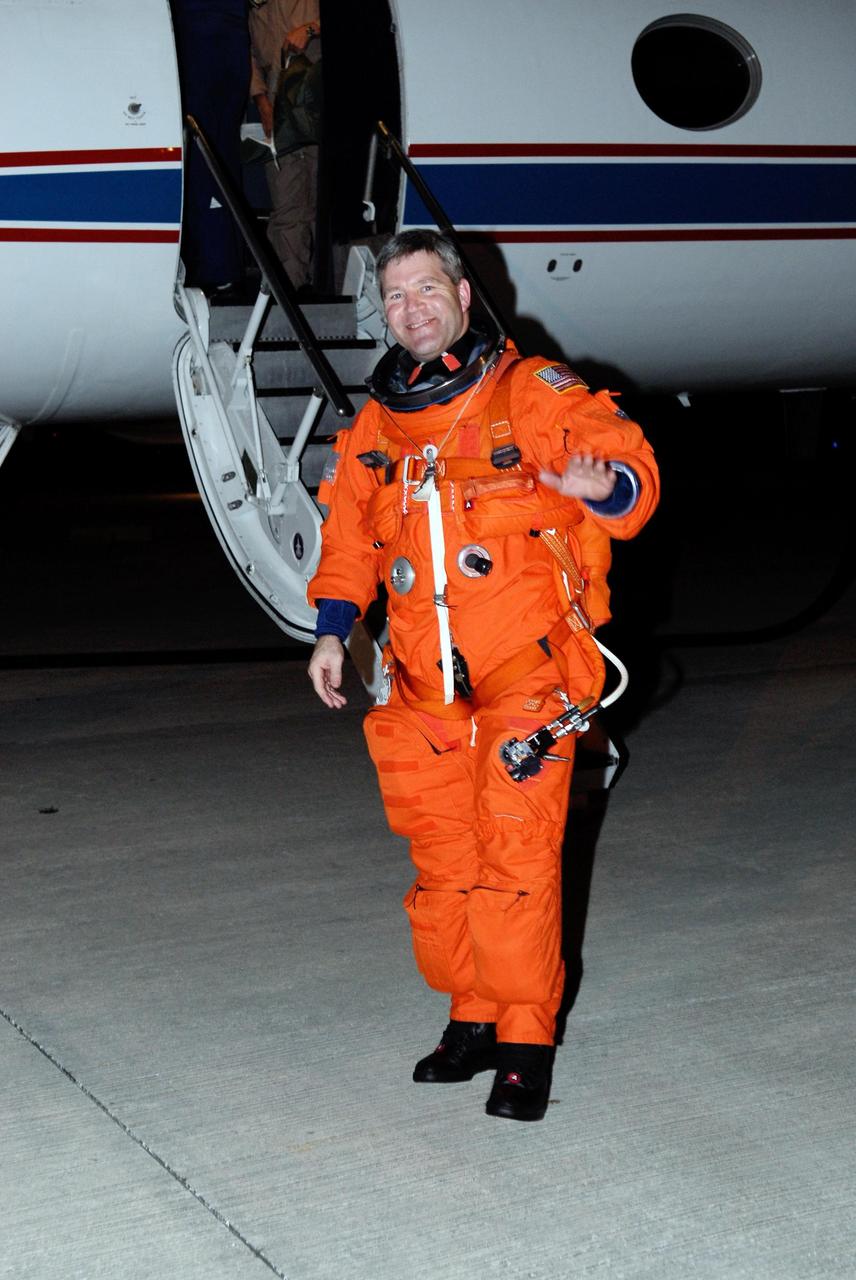
KENNEDY SPACE CENTER, FLA. -- Space shuttle Atlantis STS-122 Commander Steve Frick seems pleased with the practice session he has just completed aboard a shuttle training aircraft, or STA, at Kennedy Space Center's Shuttle Landing Facility. He and STS-122 Pilot Alan Poindexter were practicing landing the STA in preparation for their upcoming mission. The STA is a Grumman American Aviation-built Gulf Stream II jet that was modified to simulate an orbiter's cockpit, motion and visual cues, and handling qualities. In flight, the STA duplicates the orbiter's atmospheric descent trajectory from approximately 35,000 feet altitude to landing on a runway. Because the orbiter is unpowered during re-entry and landing, its high-speed glide must be perfectly executed the first time. The training is part of terminal countdown demonstration test, or TCDT, activities. The TCDT provides astronauts and ground crews with equipment familiarization, emergency egress training and a simulated launch countdown. On mission STS-122, Atlantis will deliver the European Space Agency's Columbus module to the International Space Station. Columbus is a multifunctional, pressurized laboratory that will be permanently attached to U.S. Node 2, called Harmony, and will expand the research facilities aboard the station. Launch is targeted for Dec. 6. Photo credit: NASA/Kim Shiflett
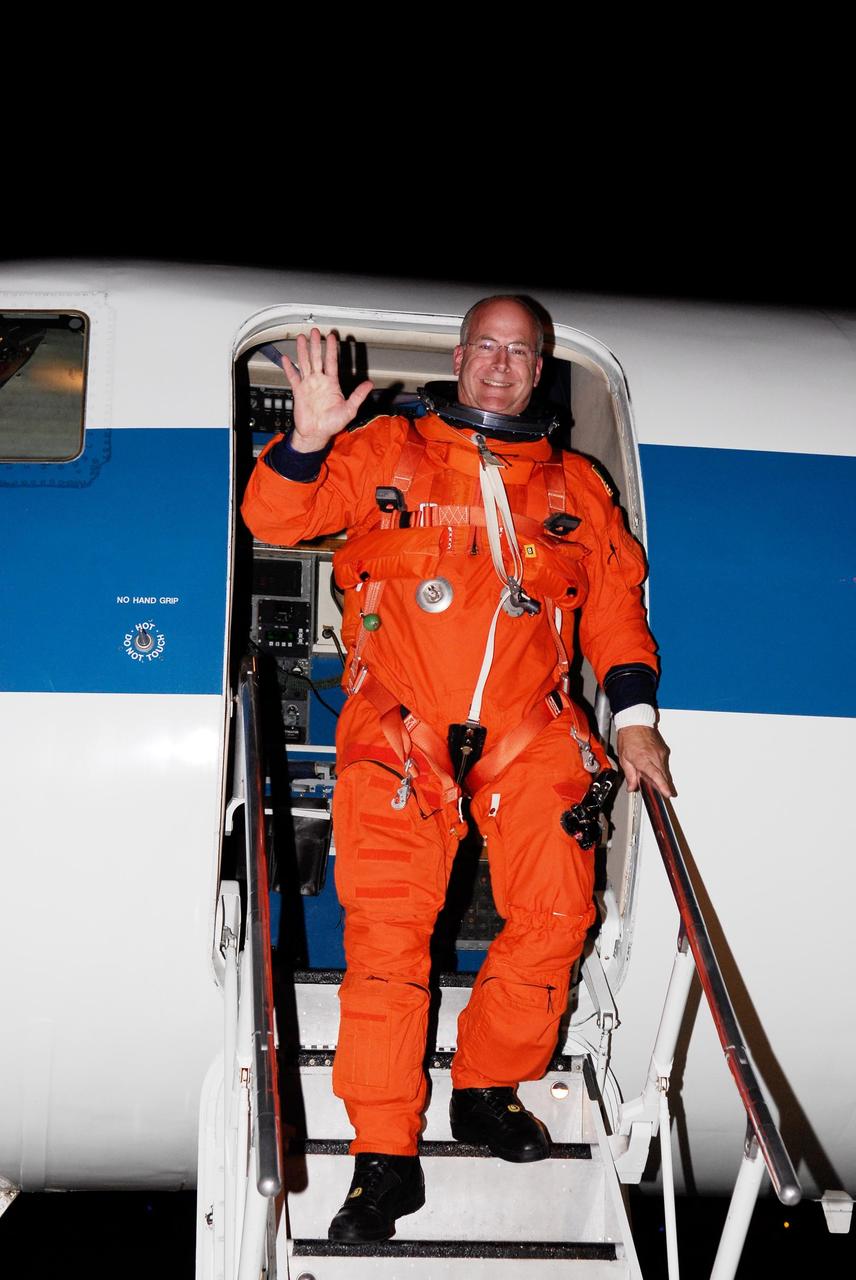
KENNEDY SPACE CENTER, FLA. -- Space shuttle Atlantis STS-122 Pilot Alan Poindexter disembarks from a shuttle training aircraft, or STA, at Kennedy Space Center's Shuttle Landing Facility. He and STS-122 Commander Steve Frick have just completed a practice session landing the STA. The STA is a Grumman American Aviation-built Gulf Stream II jet that was modified to simulate an orbiter's cockpit, motion and visual cues, and handling qualities. In flight, the STA duplicates the orbiter's atmospheric descent trajectory from approximately 35,000 feet altitude to landing on a runway. Because the orbiter is unpowered during re-entry and landing, its high-speed glide must be perfectly executed the first time. The training is part of terminal countdown demonstration test, or TCDT, activities. The TCDT provides astronauts and ground crews with equipment familiarization, emergency egress training and a simulated launch countdown. On mission STS-122, Atlantis will deliver the European Space Agency's Columbus module to the International Space Station. Columbus is a multifunctional, pressurized laboratory that will be permanently attached to U.S. Node 2, called Harmony, and will expand the research facilities aboard the station. Launch is targeted for Dec. 6. Photo credit: NASA/Kim Shiflett
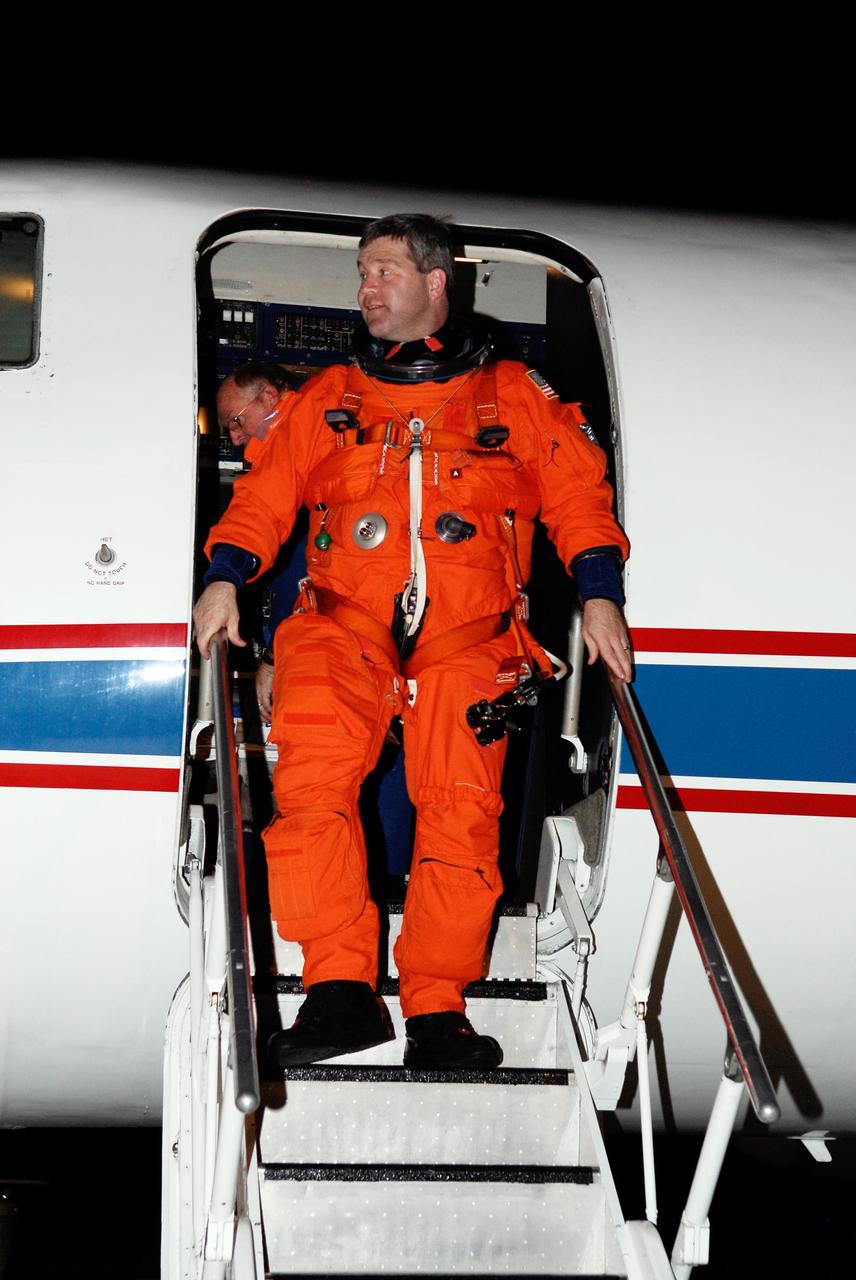
KENNEDY SPACE CENTER, FLA. -- Space shuttle Atlantis STS-122 Commander Steve Frick disembarks from a shuttle training aircraft, or STA, at Kennedy Space Center's Shuttle Landing Facility. He and STS-122 Pilot Alan Poindexter have just completed a practice session landing the STA. The STA is a Grumman American Aviation-built Gulf Stream II jet that was modified to simulate an orbiter's cockpit, motion and visual cues, and handling qualities. In flight, the STA duplicates the orbiter's atmospheric descent trajectory from approximately 35,000 feet altitude to landing on a runway. Because the orbiter is unpowered during re-entry and landing, its high-speed glide must be perfectly executed the first time. The training is part of terminal countdown demonstration test, or TCDT, activities. The TCDT provides astronauts and ground crews with equipment familiarization, emergency egress training and a simulated launch countdown. On mission STS-122, Atlantis will deliver the European Space Agency's Columbus module to the International Space Station. Columbus is a multifunctional, pressurized laboratory that will be permanently attached to U.S. Node 2, called Harmony, and will expand the research facilities aboard the station. Launch is targeted for Dec. 6. Photo credit: NASA/Kim Shiflett
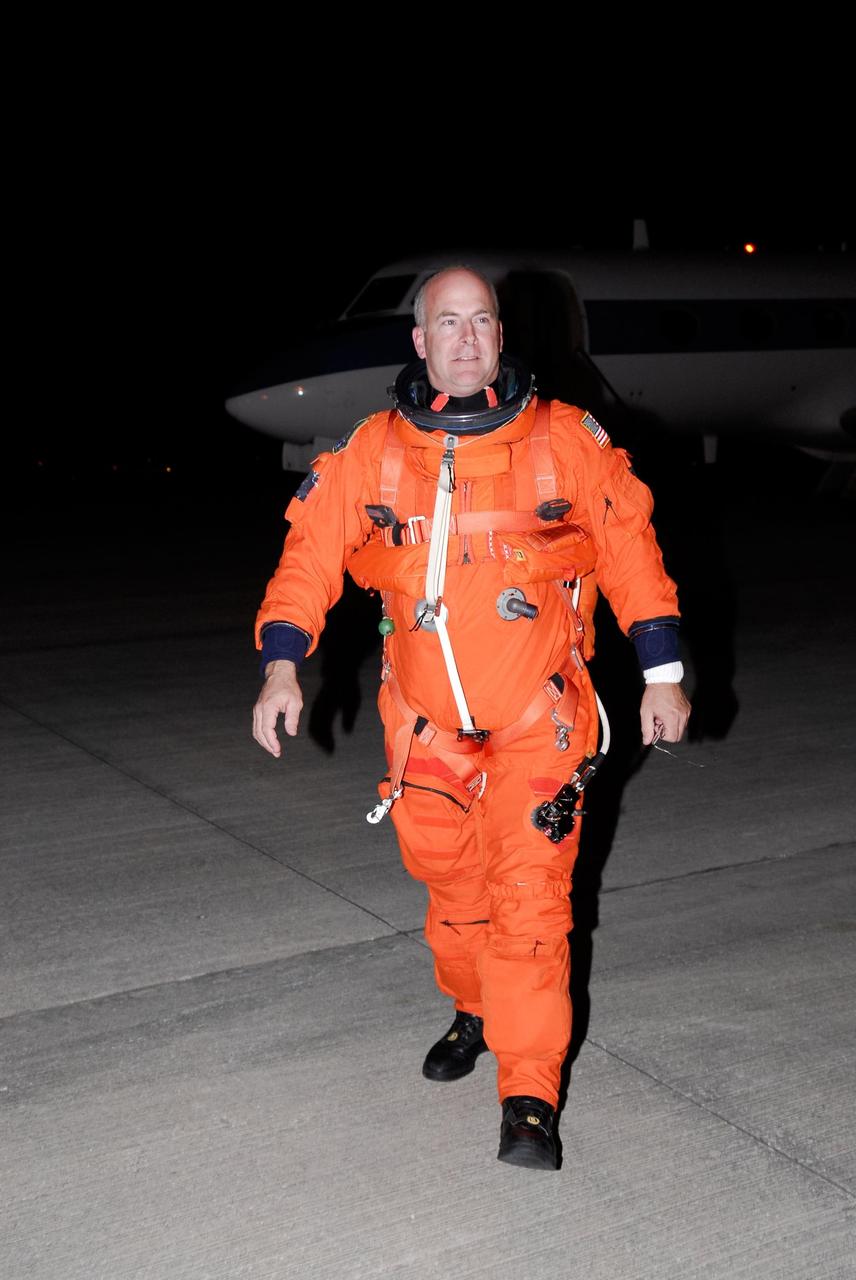
KENNEDY SPACE CENTER, FLA. -- Space shuttle Atlantis STS-122 Pilot Alan Poindexter seems satisfied with the practice session he has just completed aboard a shuttle training aircraft, or STA, at Kennedy Space Center's Shuttle Landing Facility. He and STS-122 Commander Steve Frick were practicing landing the STA in preparation for their upcoming mission. The STA is a Grumman American Aviation-built Gulf Stream II jet that was modified to simulate an orbiter's cockpit, motion and visual cues, and handling qualities. In flight, the STA duplicates the orbiter's atmospheric descent trajectory from approximately 35,000 feet altitude to landing on a runway. Because the orbiter is unpowered during re-entry and landing, its high-speed glide must be perfectly executed the first time. The training is part of terminal countdown demonstration test, or TCDT, activities. The TCDT provides astronauts and ground crews with equipment familiarization, emergency egress training and a simulated launch countdown. On mission STS-122, Atlantis will deliver the European Space Agency's Columbus module to the International Space Station. Columbus is a multifunctional, pressurized laboratory that will be permanently attached to U.S. Node 2, called Harmony, and will expand the research facilities aboard the station. Launch is targeted for Dec. 6. Photo credit: NASA/Kim Shiflett
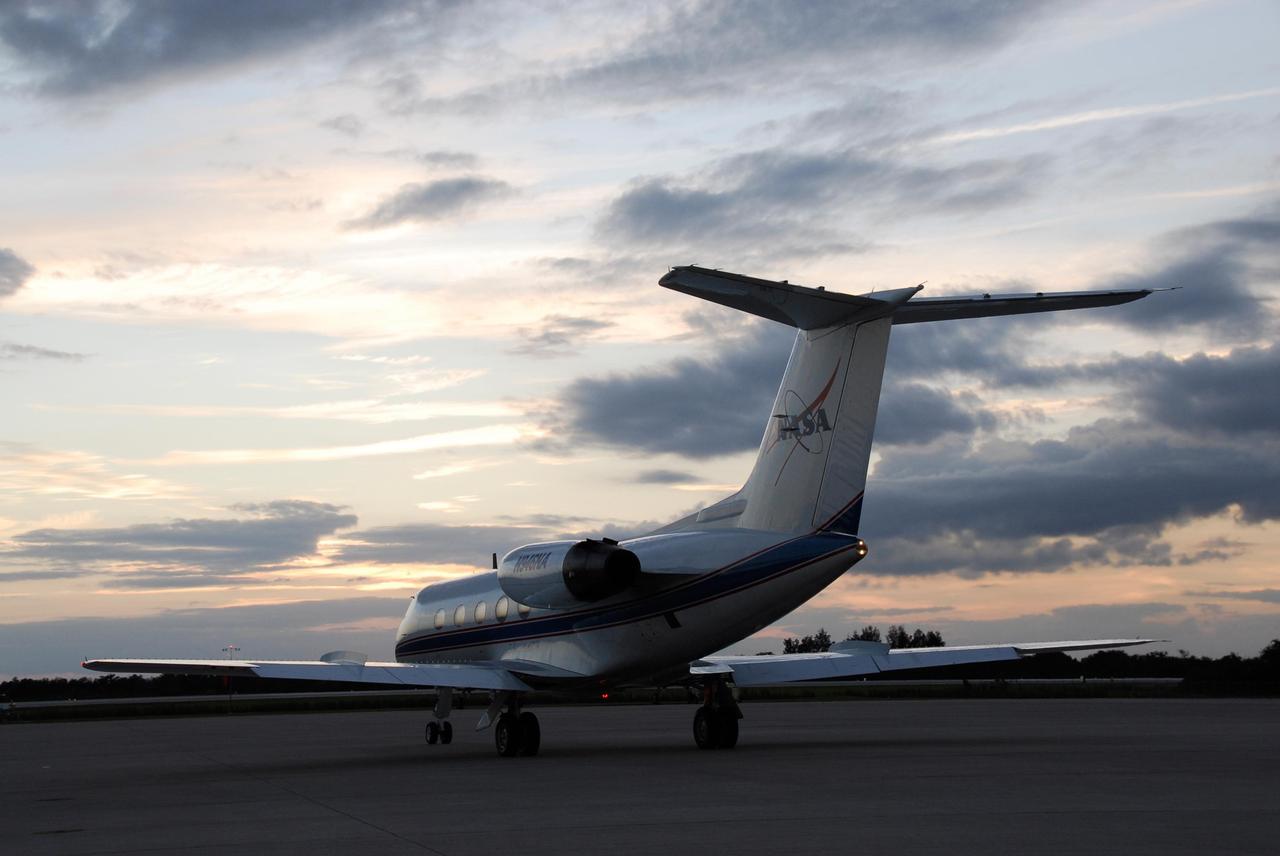
KENNEDY SPACE CENTER, FLA. -- A shuttle training aircraft, or STA, prepares for takeoff from Kennedy Space Center's Shuttle Landing Facility at dusk. The STA is being used for practice flights by space shuttle Atlantis STS-122 Commander Steve Frick and Pilot Alan Poindexter. The STA is a Grumman American Aviation-built Gulf Stream II jet that was modified to simulate an orbiter's cockpit, motion and visual cues, and handling qualities. In flight, the STA duplicates the orbiter's atmospheric descent trajectory from approximately 35,000 feet altitude to landing on a runway. Because the orbiter is unpowered during re-entry and landing, its high-speed glide must be perfectly executed the first time. The training is part of terminal countdown demonstration test, or TCDT, activities. The TCDT provides astronauts and ground crews with equipment familiarization, emergency egress training and a simulated launch countdown. On mission STS-122, Atlantis will deliver the European Space Agency's Columbus module to the International Space Station. Columbus is a multifunctional, pressurized laboratory that will be permanently attached to U.S. Node 2, called Harmony, and will expand the research facilities aboard the station. Launch is targeted for Dec. 6. Photo credit: NASA/Kim Shiflett
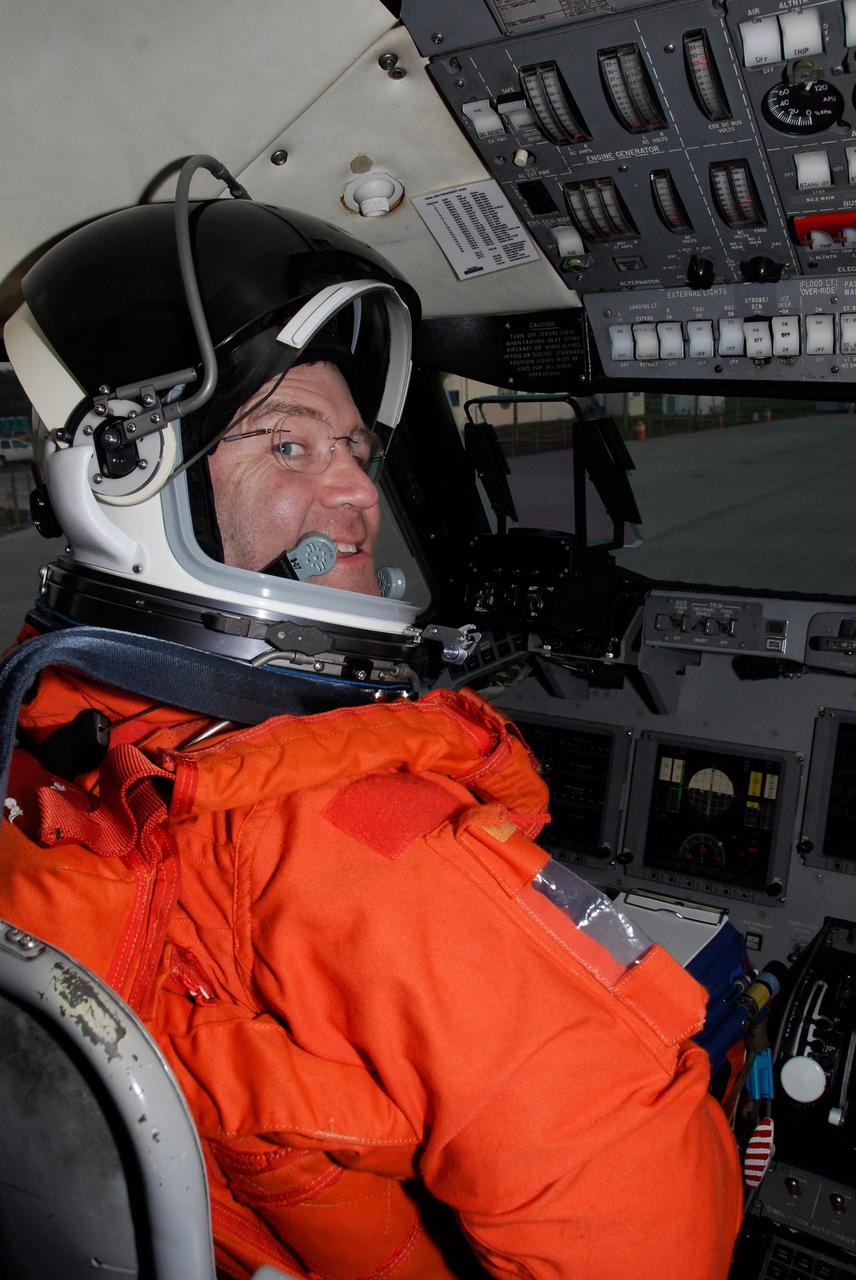
KENNEDY SPACE CENTER, FLA. -- Space shuttle Atlantis STS-122 Pilot Alan Poindexter prepares to practice shuttle landings. He is getting settled in the cockpit of a shuttle training aircraft, or STA, at Kennedy Space Center's Shuttle Landing Facility. The STA is a Grumman American Aviation-built Gulf Stream II jet that was modified to simulate an orbiter's cockpit, motion and visual cues, and handling qualities. In flight, the STA duplicates the orbiter's atmospheric descent trajectory from approximately 35,000 feet altitude to landing on a runway. Because the orbiter is unpowered during re-entry and landing, its high-speed glide must be perfectly executed the first time. The training is part of terminal countdown demonstration test, or TCDT, activities. The TCDT provides astronauts and ground crews with equipment familiarization, emergency egress training and a simulated launch countdown. On mission STS-122, Atlantis will deliver the European Space Agency's Columbus module to the International Space Station. Columbus is a multifunctional, pressurized laboratory that will be permanently attached to U.S. Node 2, called Harmony, and will expand the research facilities aboard the station. Launch is targeted for Dec. 6. Photo credit: NASA/Kim Shiflett
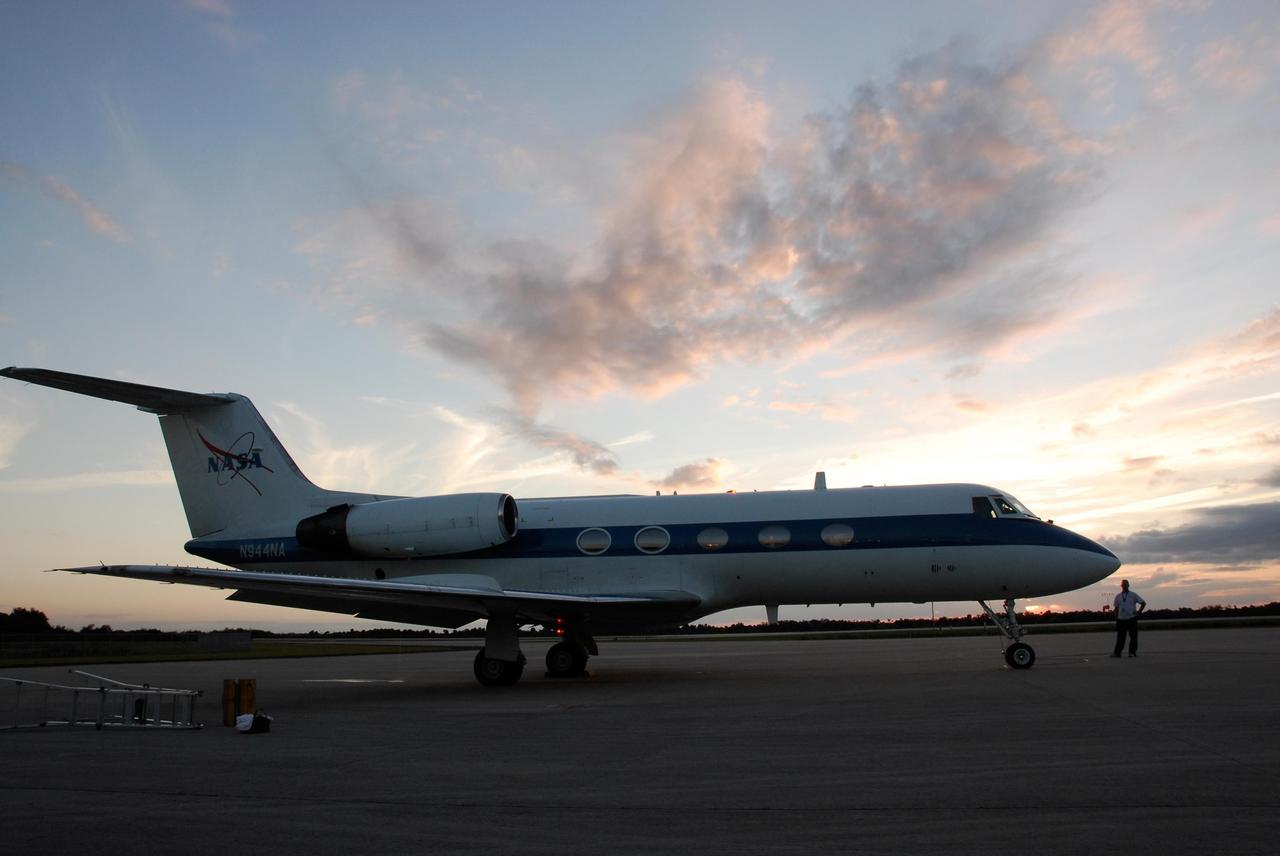
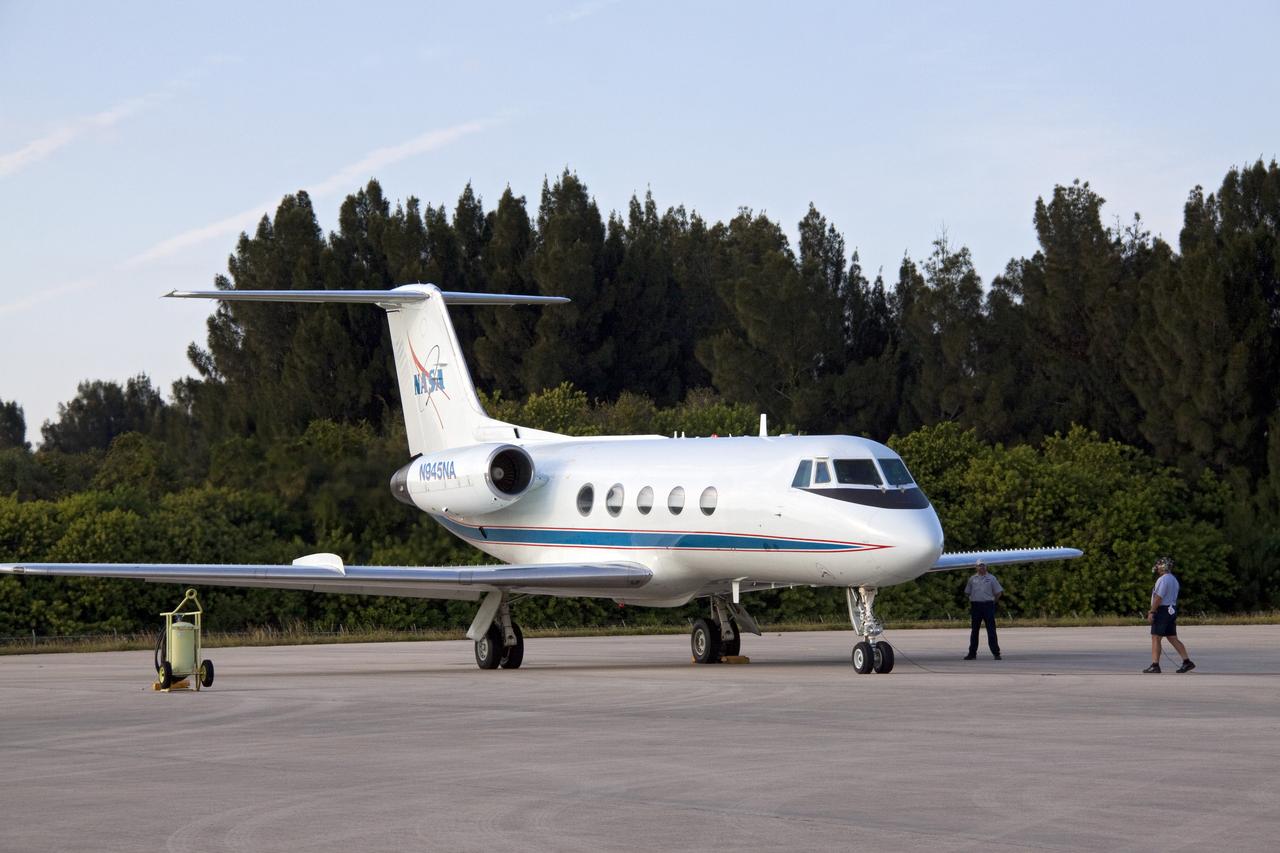
KENNEDY SPACE CENTER, FLA. -- A shuttle training aircraft, or STA, sits on the tarmac at Kennedy Space Center's Shuttle Landing Facility at dusk, ready for practice flights by space shuttle Atlantis STS-122 Commander Steve Frick and Pilot Alan Poindexter. The STA is a Grumman American Aviation-built Gulf Stream II jet that was modified to simulate an orbiter's cockpit, motion and visual cues, and handling qualities. In flight, the STA duplicates the orbiter's atmospheric descent trajectory from approximately 35,000 feet altitude to landing on a runway. Because the orbiter is unpowered during re-entry and landing, its high-speed glide must be perfectly executed the first time. The training is part of terminal countdown demonstration test, or TCDT, activities. The TCDT provides astronauts and ground crews with equipment familiarization, emergency egress training and a simulated launch countdown. On mission STS-122, Atlantis will deliver the European Space Agency's Columbus module to the International Space Station. Columbus is a multifunctional, pressurized laboratory that will be permanently attached to U.S. Node 2, called Harmony, and will expand the research facilities aboard the station. Launch is targeted for Dec. 6. Photo credit: NASA/Kim Shiflett
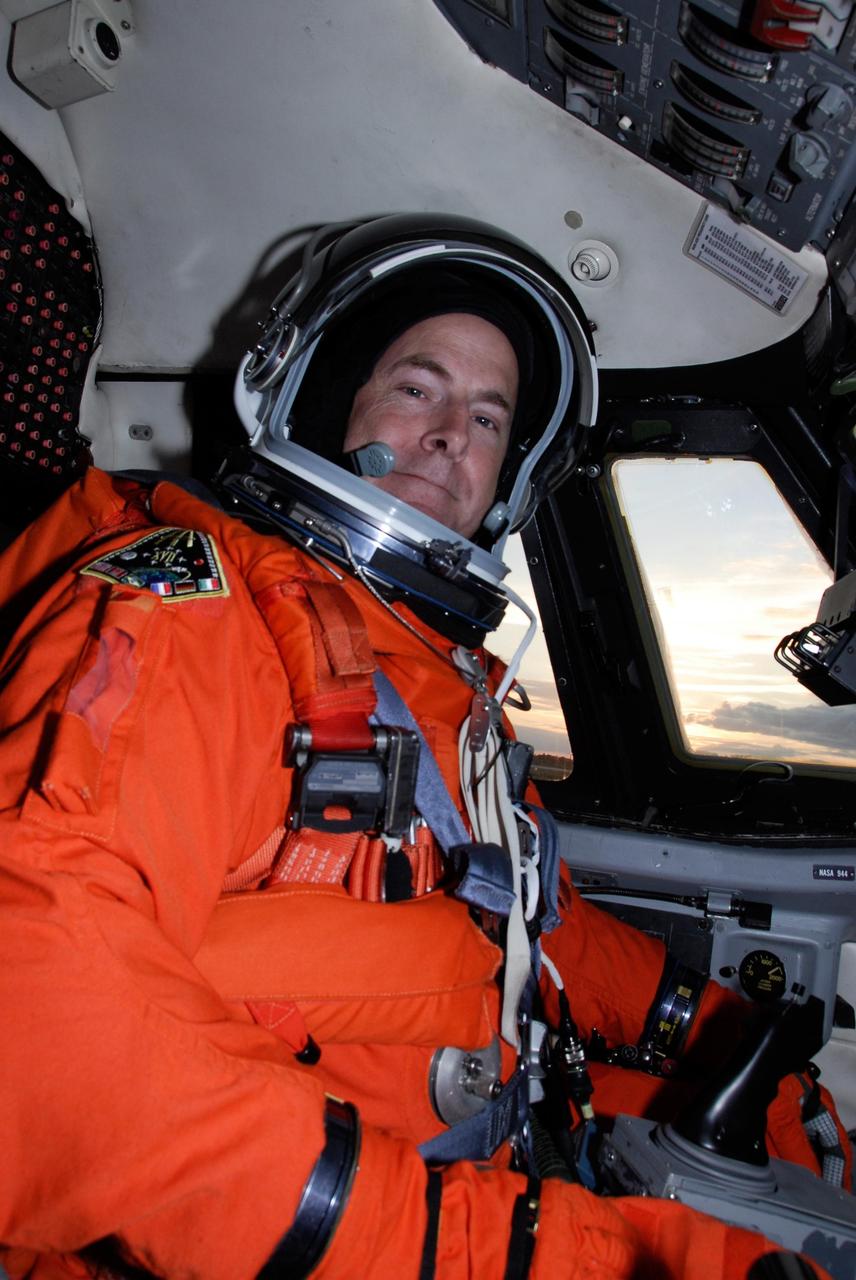
KENNEDY SPACE CENTER, FLA. -- Space shuttle Atlantis STS-122 Commander Steve Frick prepares to practice shuttle landings. He is sitting in the cockpit of a shuttle training aircraft, or STA, at Kennedy Space Center's Shuttle Landing Facility. The STA is a Grumman American Aviation-built Gulf Stream II jet that was modified to simulate an orbiter's cockpit, motion and visual cues, and handling qualities. In flight, the STA duplicates the orbiter's atmospheric descent trajectory from approximately 35,000 feet altitude to landing on a runway. Because the orbiter is unpowered during re-entry and landing, its high-speed glide must be perfectly executed the first time. The training is part of terminal countdown demonstration test, or TCDT, activities. The TCDT provides astronauts and ground crews with equipment familiarization, emergency egress training and a simulated launch countdown. On mission STS-122, Atlantis will deliver the European Space Agency's Columbus module to the International Space Station. Columbus is a multifunctional, pressurized laboratory that will be permanently attached to U.S. Node 2, called Harmony, and will expand the research facilities aboard the station. Launch is targeted for Dec. 6. Photo credit: NASA/Kim Shiflett
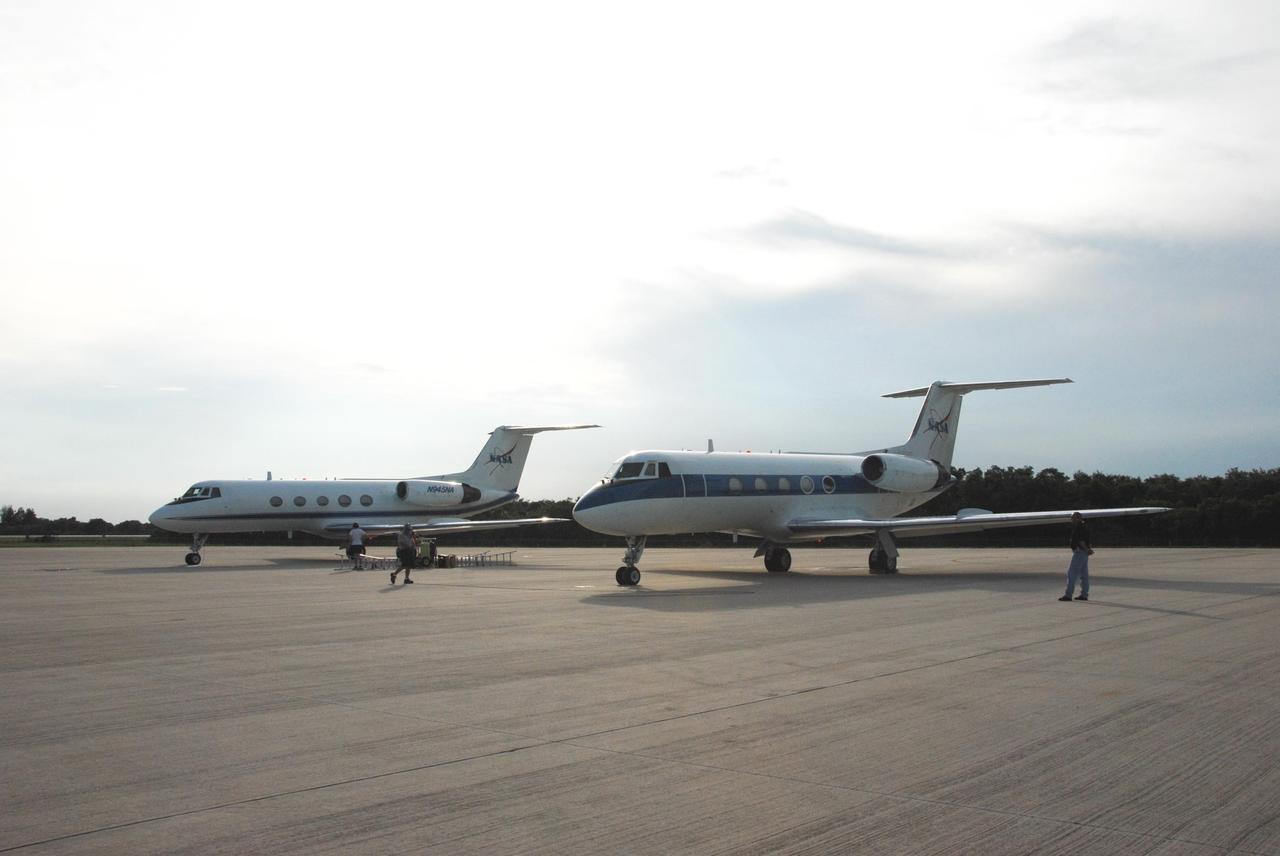
KENNEDY SPACE CENTER, Fla. -- Two shuttle training aircraft, or STAs, wait to taxi onto the runway at the Shuttle Landing Facility. STS-118 Commander Scott Kelly and Pilot Charlie Hobaugh are each piloting one of the STAs for landing practice. The practice is part of Terminal Countdown Demonstration Test, or TCDT, activities that include a simulated launch countdown. The STA is a Grumman American Aviation-built Gulf Stream II jet that was modified to simulate an orbiter's cockpit, motion and visual cues, and handling qualities. In flight, the STA duplicates the orbiter's atmospheric descent trajectory from approximately 35,000 feet altitude to landing on a runway. The STS-118 mission is the 22nd flight to the International Space Station and is targeted for launch on Aug. 7. The mission payload aboard Space Shuttle Endeavour includes the S5 truss, a SPACEHAB module and external stowage platform 3. NASA/George Shelton
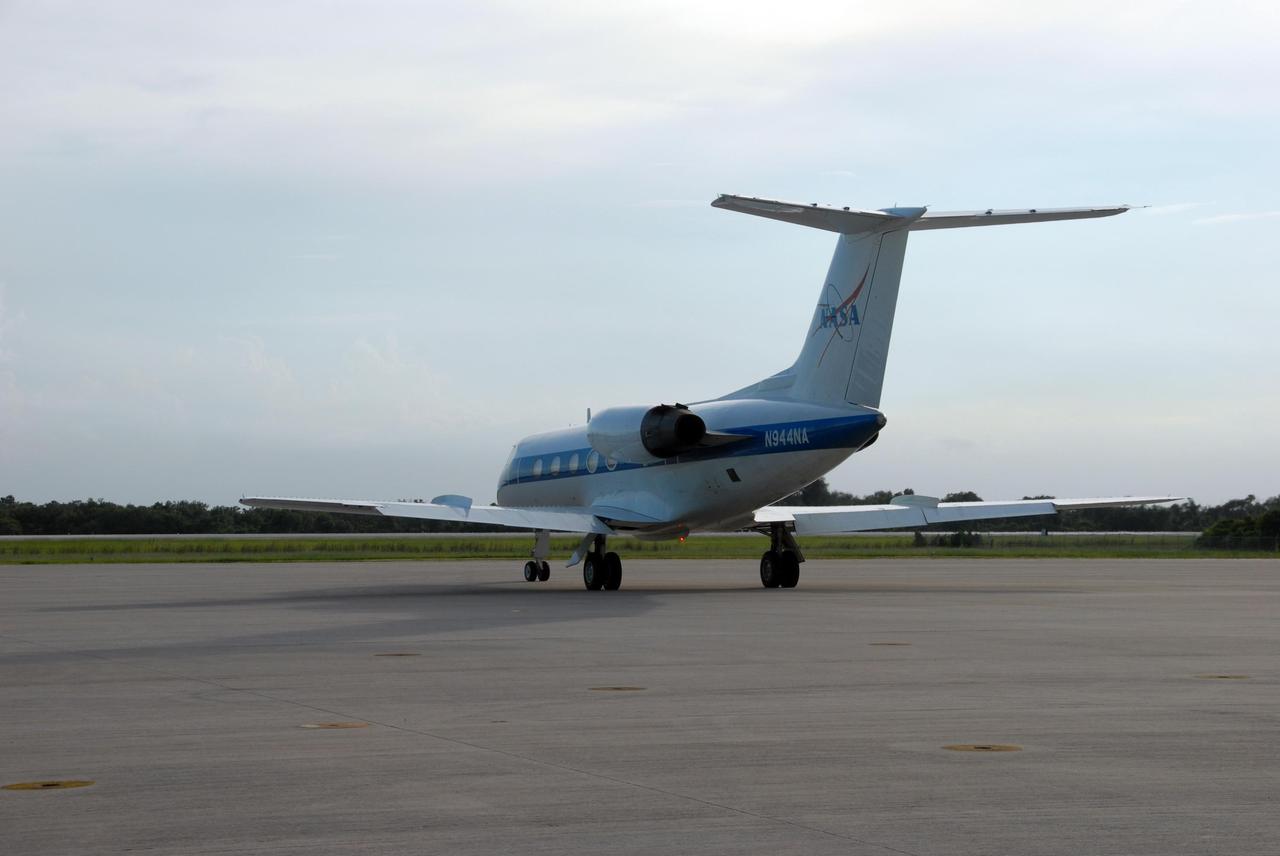
KENNEDY SPACE CENTER, Fla. -- One of two shuttle training aircraft, or STA, taxis out to the runway at the Shuttle Landing Facility. STS-118 Commander Scott Kelly and Pilot Charlie Hobaugh are each piloting one of the STAs for landing practice. The practice is part of Terminal Countdown Demonstration Test, or TCDT, activities that include a simulated launch countdown. The STA is a Grumman American Aviation-built Gulf Stream II jet that was modified to simulate an orbiter's cockpit, motion and visual cues, and handling qualities. In flight, the STA duplicates the orbiter's atmospheric descent trajectory from approximately 35,000 feet altitude to landing on a runway. The STS-118 mission is the 22nd flight to the International Space Station and is targeted for launch on Aug. 7. The mission payload aboard Space Shuttle Endeavour includes the S5 truss, a SPACEHAB module and external stowage platform 3. NASA/George Shelton
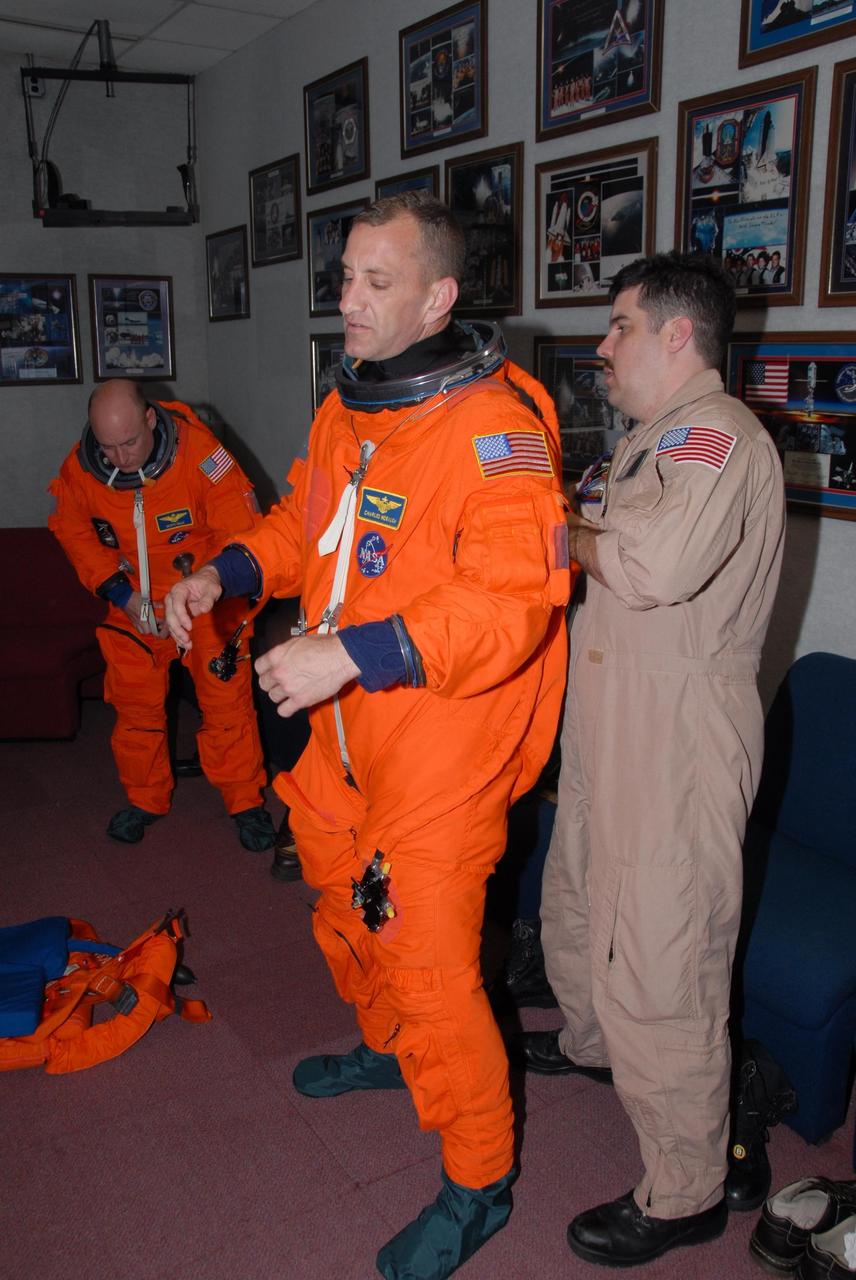
KENNEDY SPACE CENTER, Fla. -- STS-118 Commander Scott Kelly, left, and Pilot Charlie Hobaugh check the fit of their launch and entry suits. The fitting is part of the Terminal Countdown Demonstration Test, or TCDT, activities that include a simulated launch countdown. Kelly and Hobaugh are suiting up also for landing practice in the shuttle training aircraft, known as an STA. The STA is a Grumman American Aviation-built Gulf Stream II jet that was modified to simulate an orbiter's cockpit, motion and visual cues, and handling qualities. In flight, the STA duplicates the orbiter's atmospheric descent trajectory from approximately 35,000 feet altitude to landing on a runway. The STS-118 mission is the 22nd flight to the International Space Station and is targeted for launch on Aug. 7. The mission payload aboard Space Shuttle Endeavour includes the S5 truss, a SPACEHAB module and external stowage platform 3. NASA/George Shelton
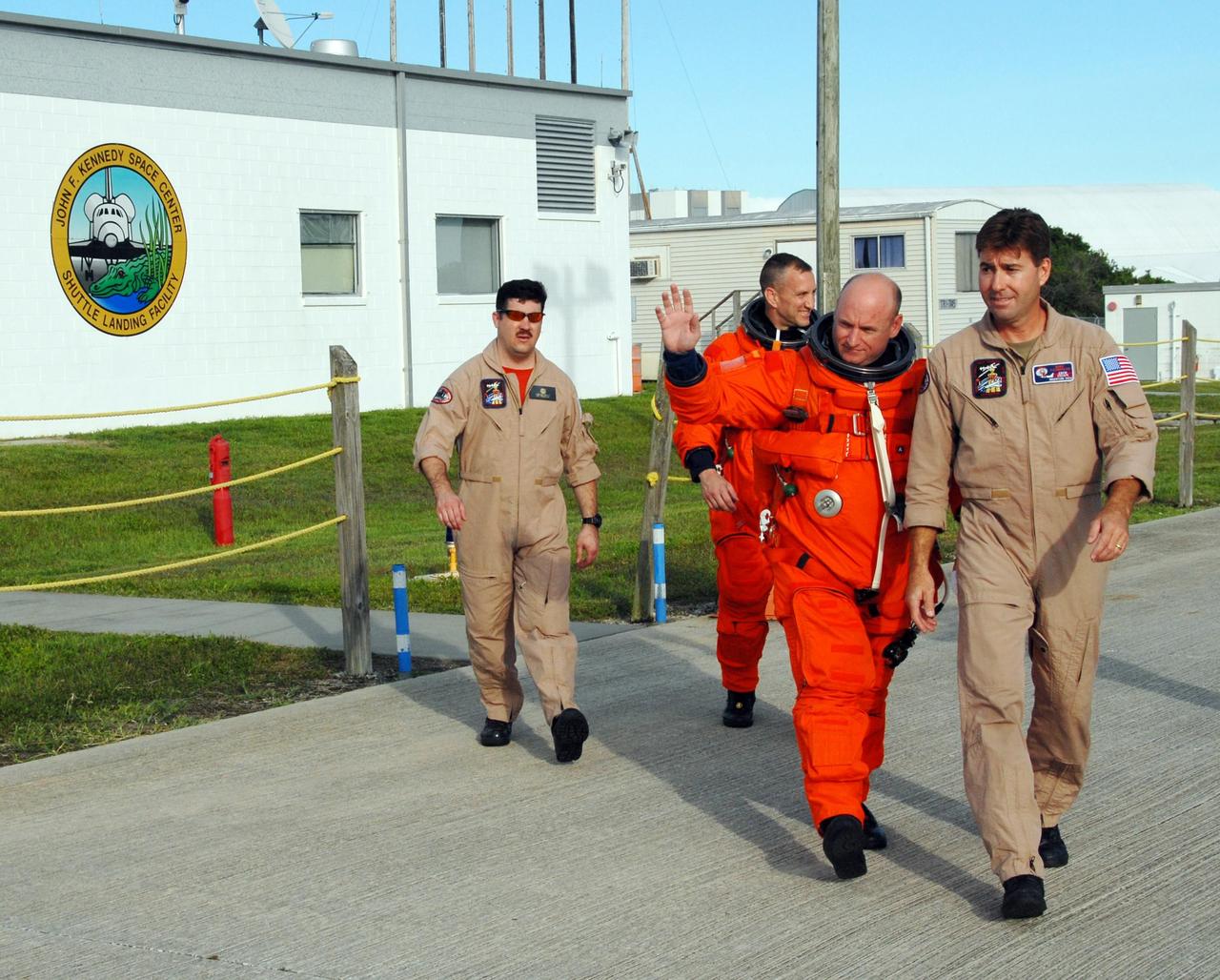
KENNEDY SPACE CENTER, Fla. -- Dressed in their launch and entry suits, STS-118 Pilot Charlie Hobaugh and Commander Scott Kelly (waving) are headed for the runway for landing practice in the shuttle training aircraft, known as an STA. The practice is part of Terminal Countdown Demonstration Test, or TCDT, activities that include a simulated launch countdown. The STA is a Grumman American Aviation-built Gulf Stream II jet that was modified to simulate an orbiter's cockpit, motion and visual cues, and handling qualities. In flight, the STA duplicates the orbiter's atmospheric descent trajectory from approximately 35,000 feet altitude to landing on a runway. The STS-118 mission is the 22nd flight to the International Space Station and is targeted for launch on Aug. 7. The mission payload aboard Space Shuttle Endeavour includes the S5 truss, a SPACEHAB module and external stowage platform 3. NASA/George Shelton

KENNEDY SPACE CENTER, Fla. -- STS-118 Commander Scott Kelly settles in his cockpit seat aboard the shuttle training aircraft, known as an STA, for landing practice. The practice is part of Terminal Countdown Demonstration Test, or TCDT, activities that include a simulated launch countdown. The STA is a Grumman American Aviation-built Gulf Stream II jet that was modified to simulate an orbiter's cockpit, motion and visual cues, and handling qualities. In flight, the STA duplicates the orbiter's atmospheric descent trajectory from approximately 35,000 feet altitude to landing on a runway. The STS-118 mission is the 22nd flight to the International Space Station and is targeted for launch on Aug. 7. The mission payload aboard Space Shuttle Endeavour includes the S5 truss, a SPACEHAB module and external stowage platform 3. NASA/George Shelton
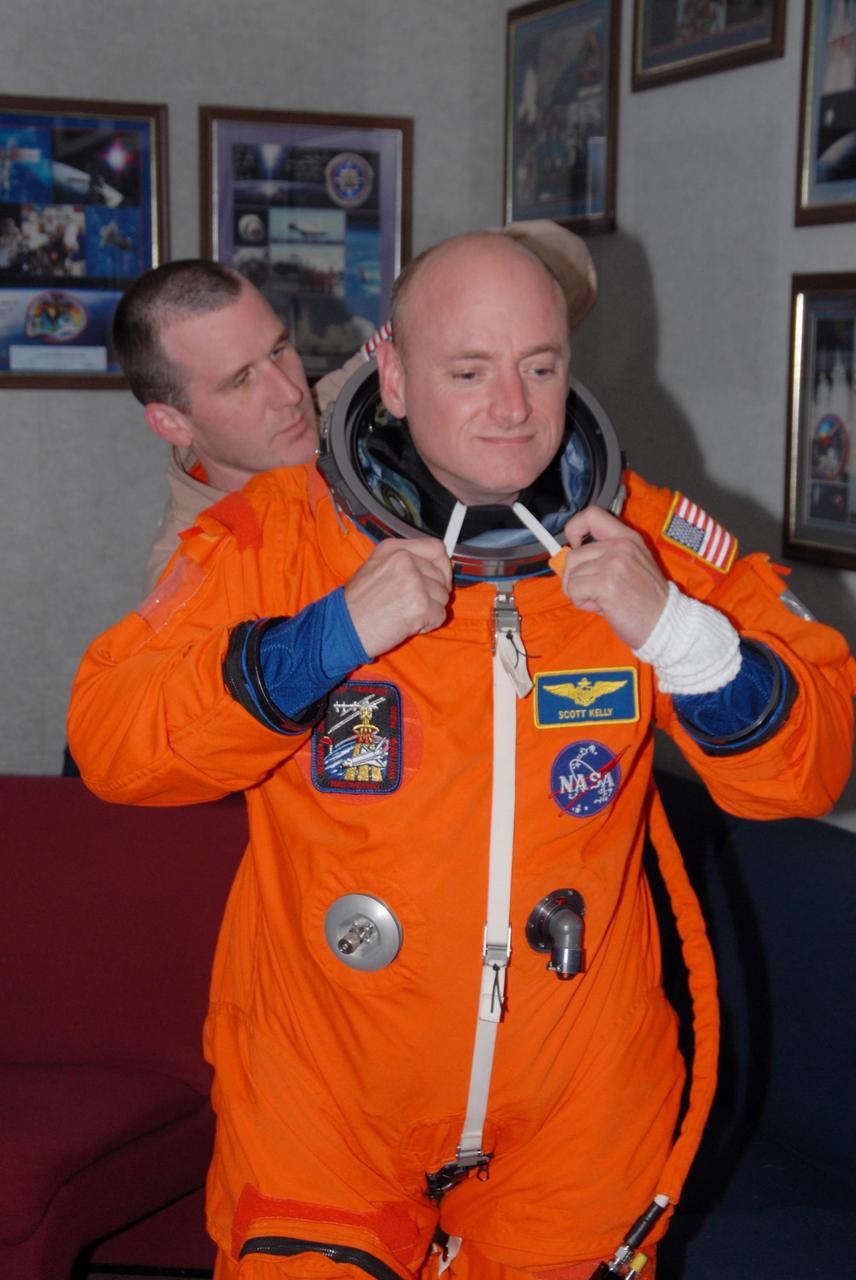
KENNEDY SPACE CENTER, Fla. -- STS-118 Commander Scott Kelly checks the fit of his launch and entry suit. The fitting is part of the Terminal Countdown Demonstration Test, or TCDT, activities that include a simulated launch countdown. Kelly is suiting up also for landing practice in the shuttle training aircraft, known as an STA. The STA is a Grumman American Aviation-built Gulf Stream II jet that was modified to simulate an orbiter's cockpit, motion and visual cues, and handling qualities. In flight, the STA duplicates the orbiter's atmospheric descent trajectory from approximately 35,000 feet altitude to landing on a runway. The STS-118 mission is the 22nd flight to the International Space Station and is targeted for launch on Aug. 7. The mission payload aboard Space Shuttle Endeavour includes the S5 truss, a SPACEHAB module and external stowage platform 3. NASA/George Shelton
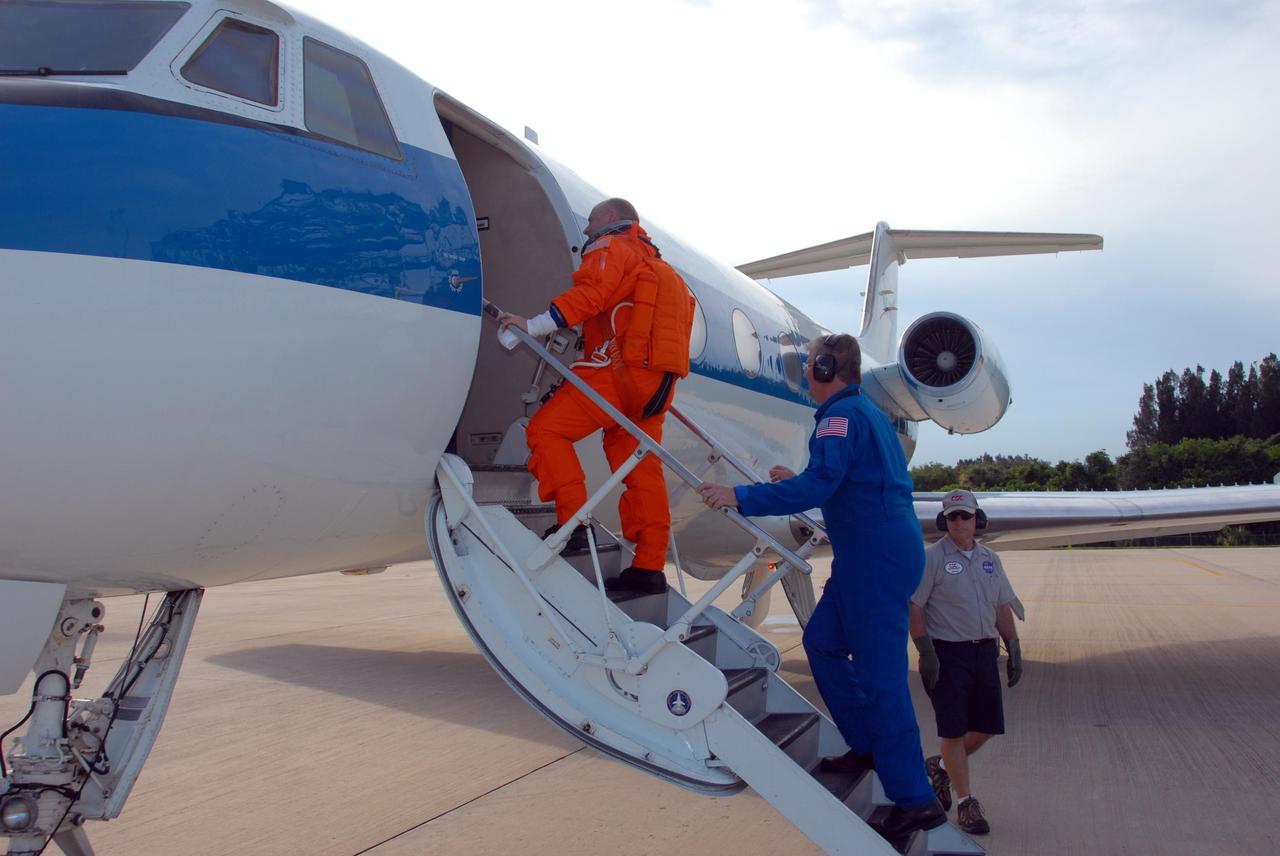
KENNEDY SPACE CENTER, Fla. -- STS-118 Commander Scott Kelly climbs aboard the shuttle training aircraft, known as an STA, for landing practice. The practice is part of Terminal Countdown Demonstration Test, or TCDT, activities that include a simulated launch countdown.The STA is a Grumman American Aviation-built Gulf Stream II jet that was modified to simulate an orbiter's cockpit, motion and visual cues, and handling qualities. In flight, the STA duplicates the orbiter's atmospheric descent trajectory from approximately 35,000 feet altitude to landing on a runway. The STS-118 mission is the 22nd flight to the International Space Station and is targeted for launch on Aug. 7. The mission payload aboard Space Shuttle Endeavour includes the S5 truss, a SPACEHAB module and external stowage platform 3. NASA/George Shelton
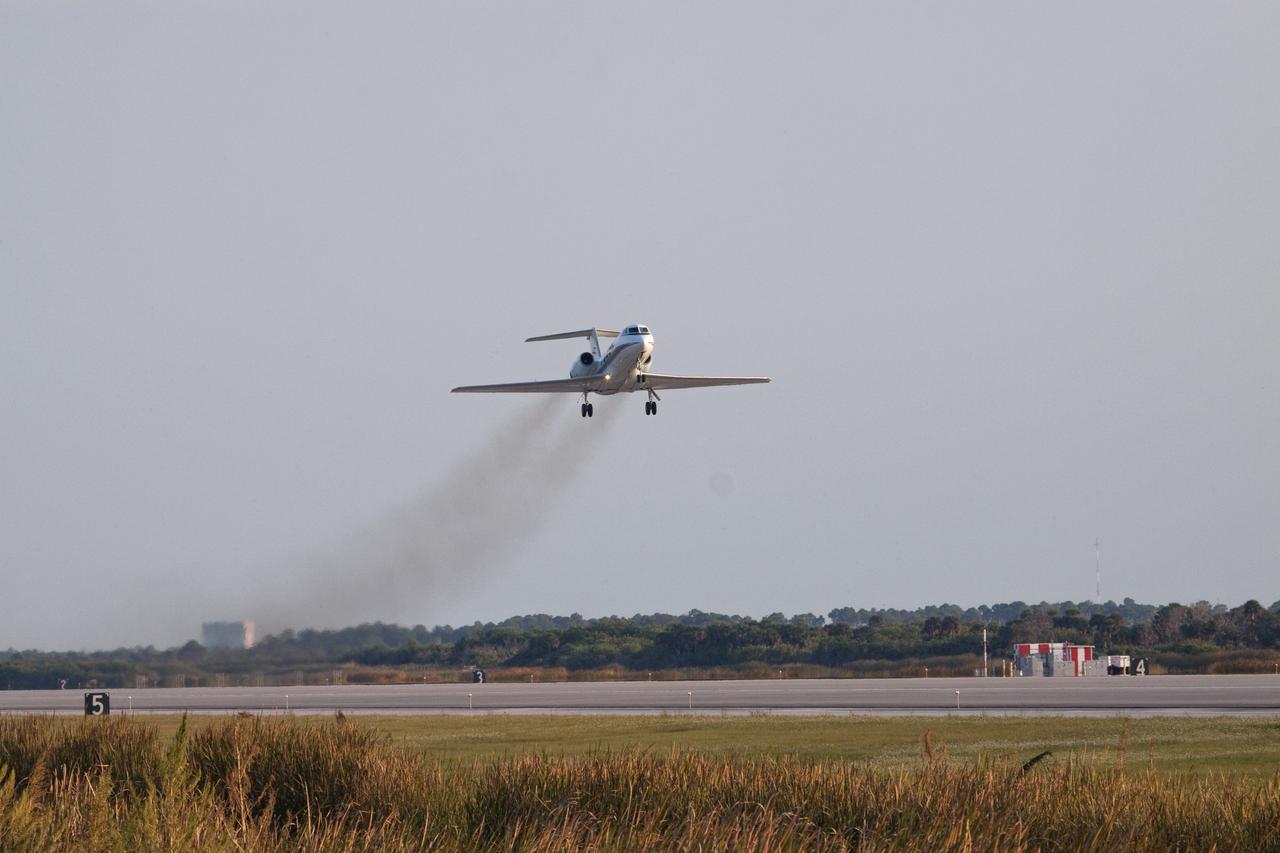
STS-133 TCDT - SUITED STA'S
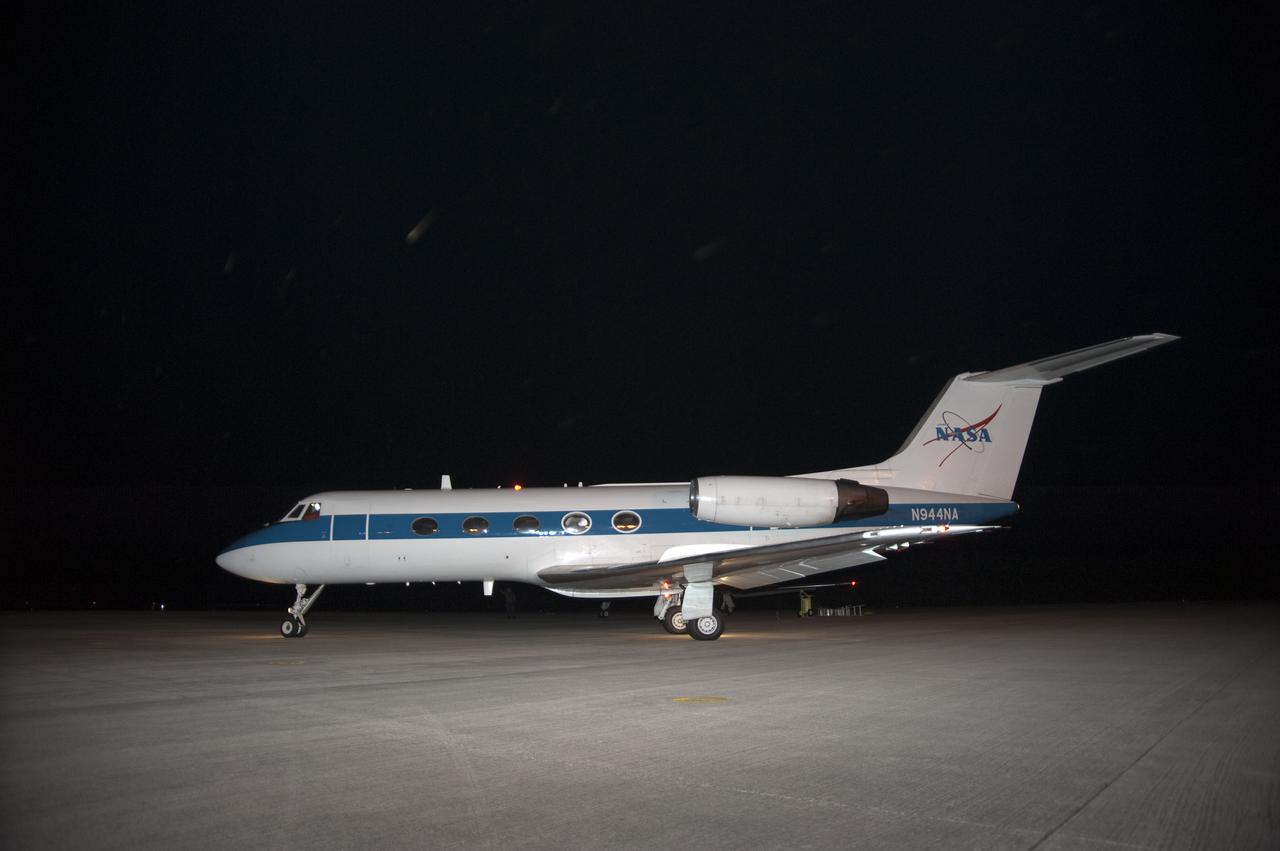
STS-131 TCDT - Suited STA's

STS-133 TCDT - SUITED STA'S
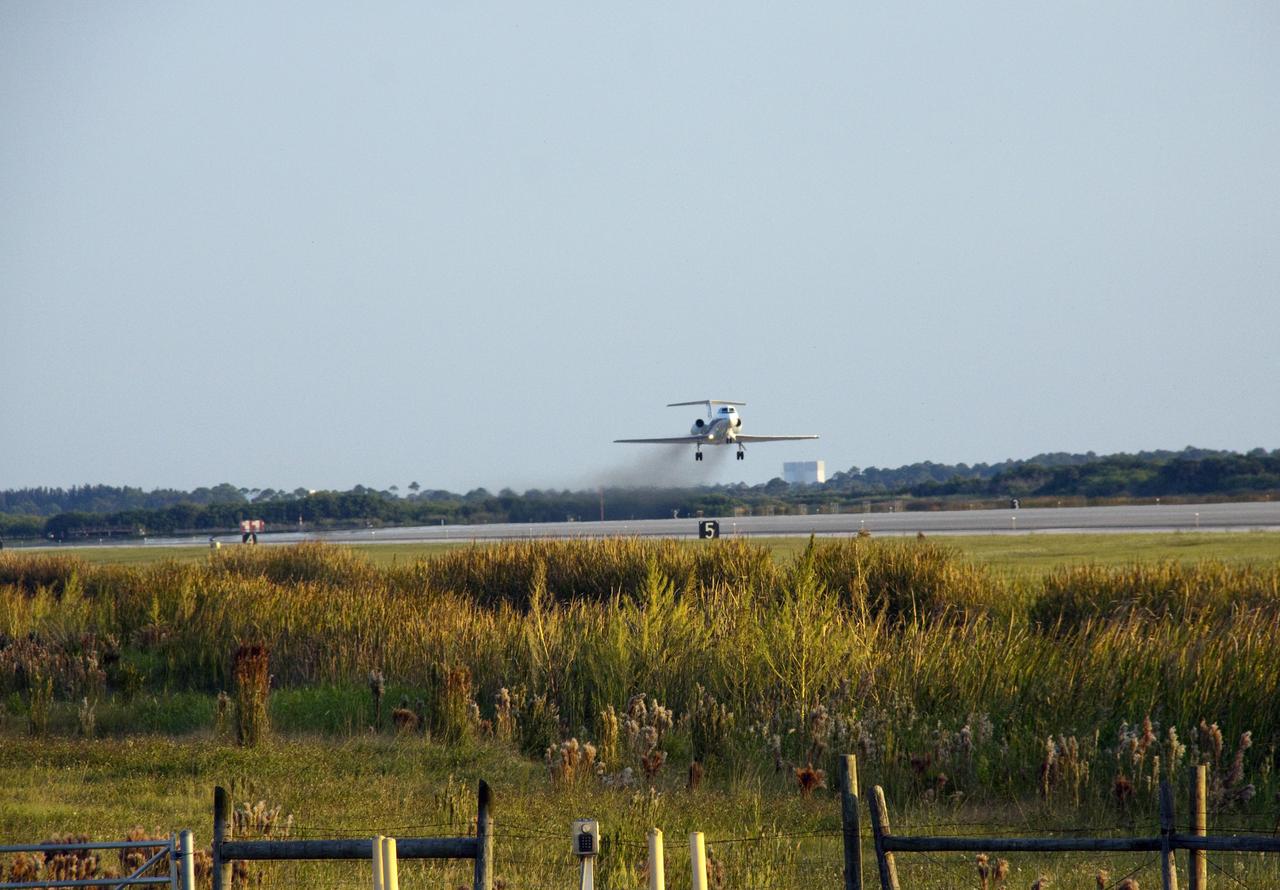
STS-133 TCDT - SUITED STA'S
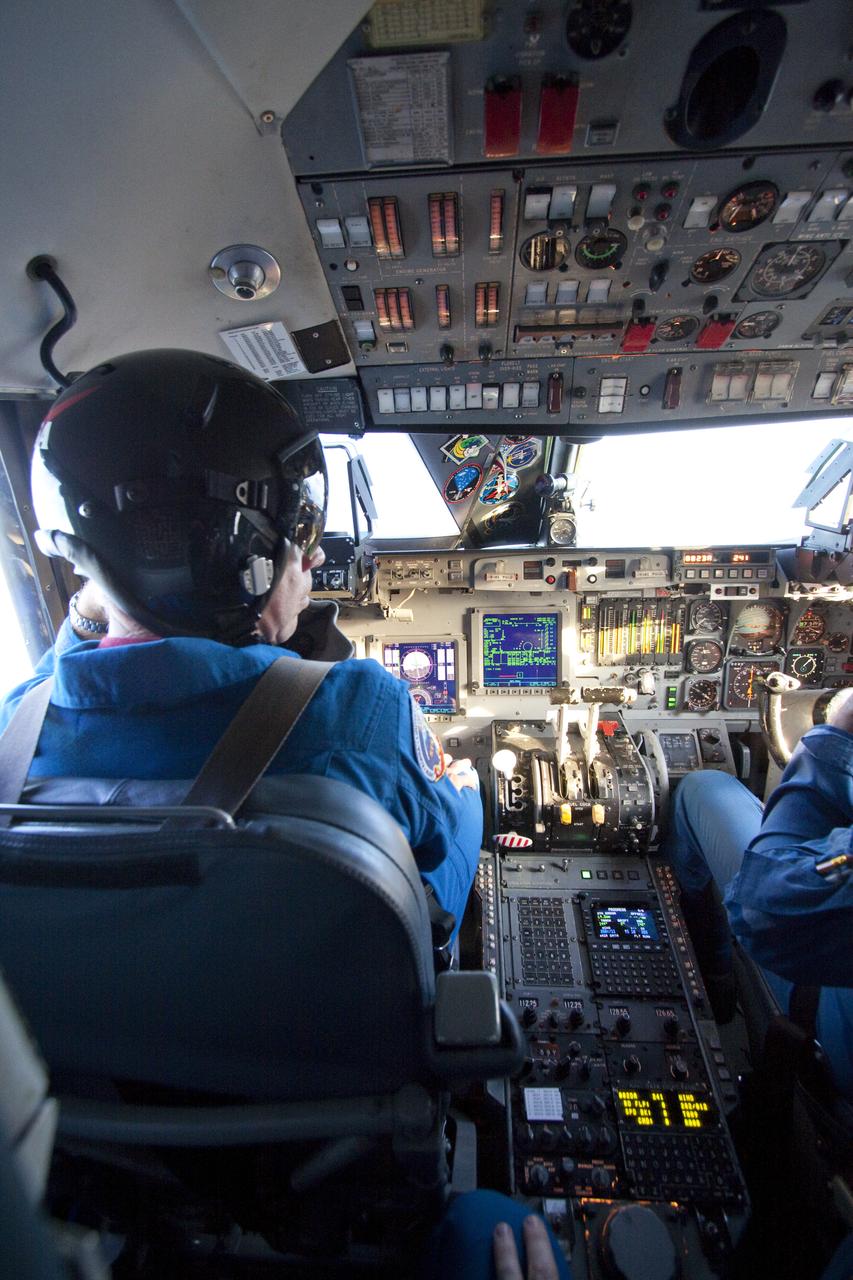
STS-133 TCDT - ONBOARD STA'S
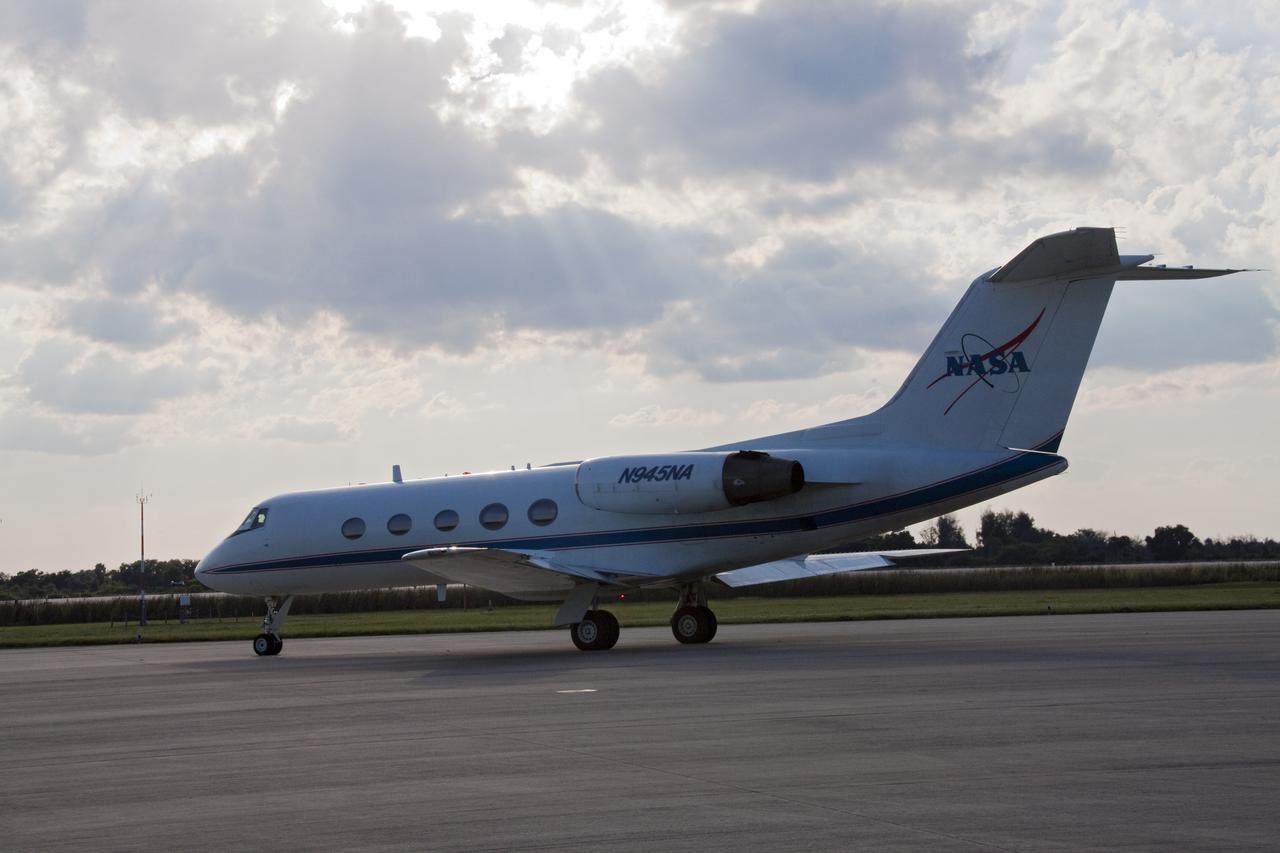
STS-133 TCDT - SUITED STA'S
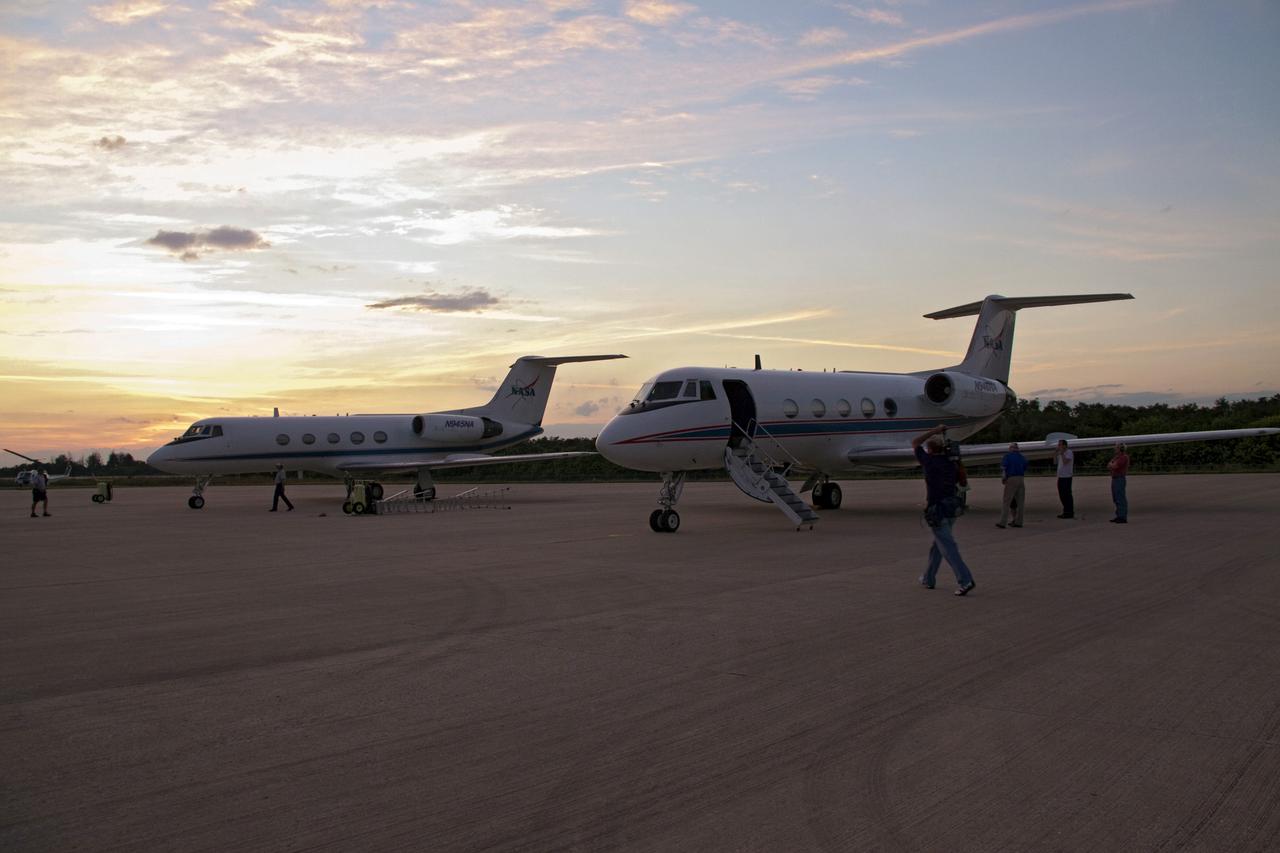
STS-133 TCDT - SUITED STA'S
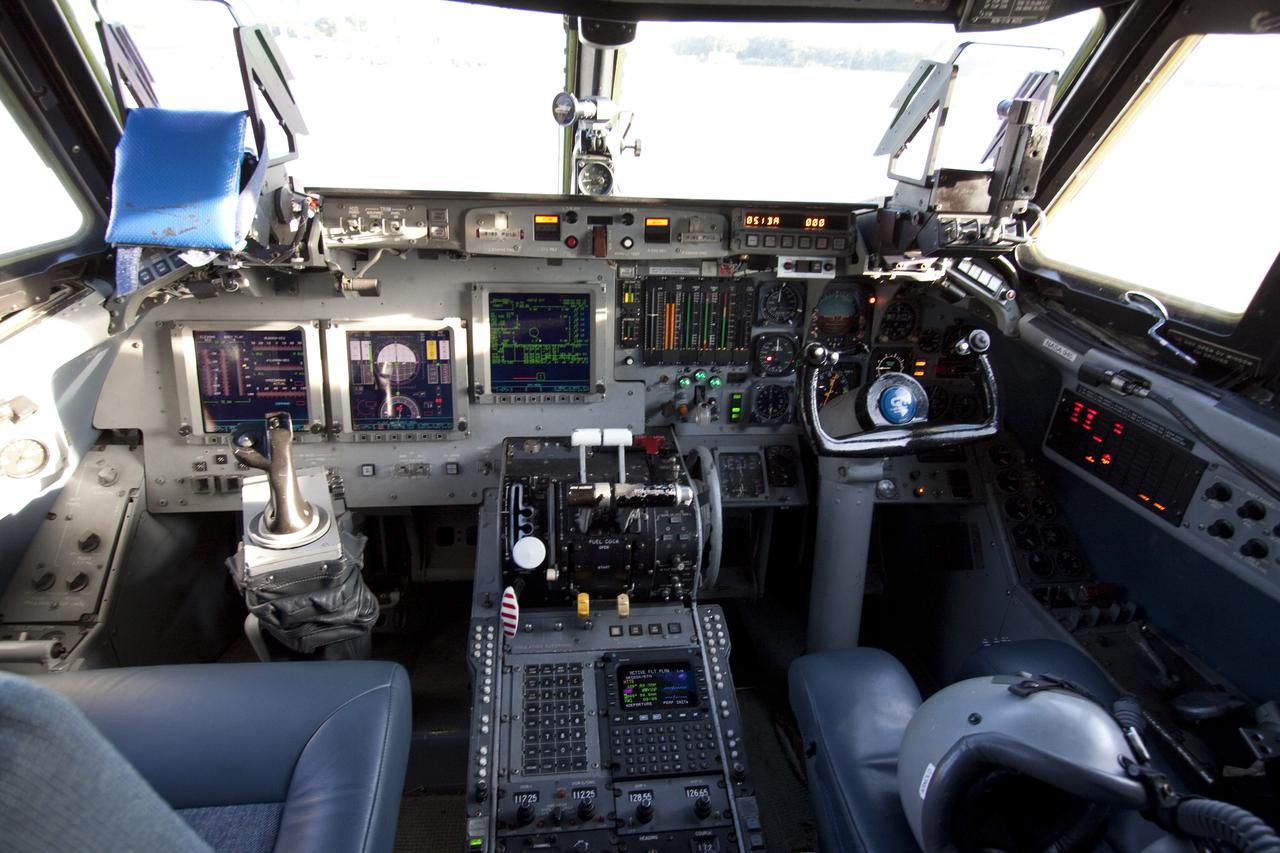
STS-133 TCDT - ONBOARD STA'S
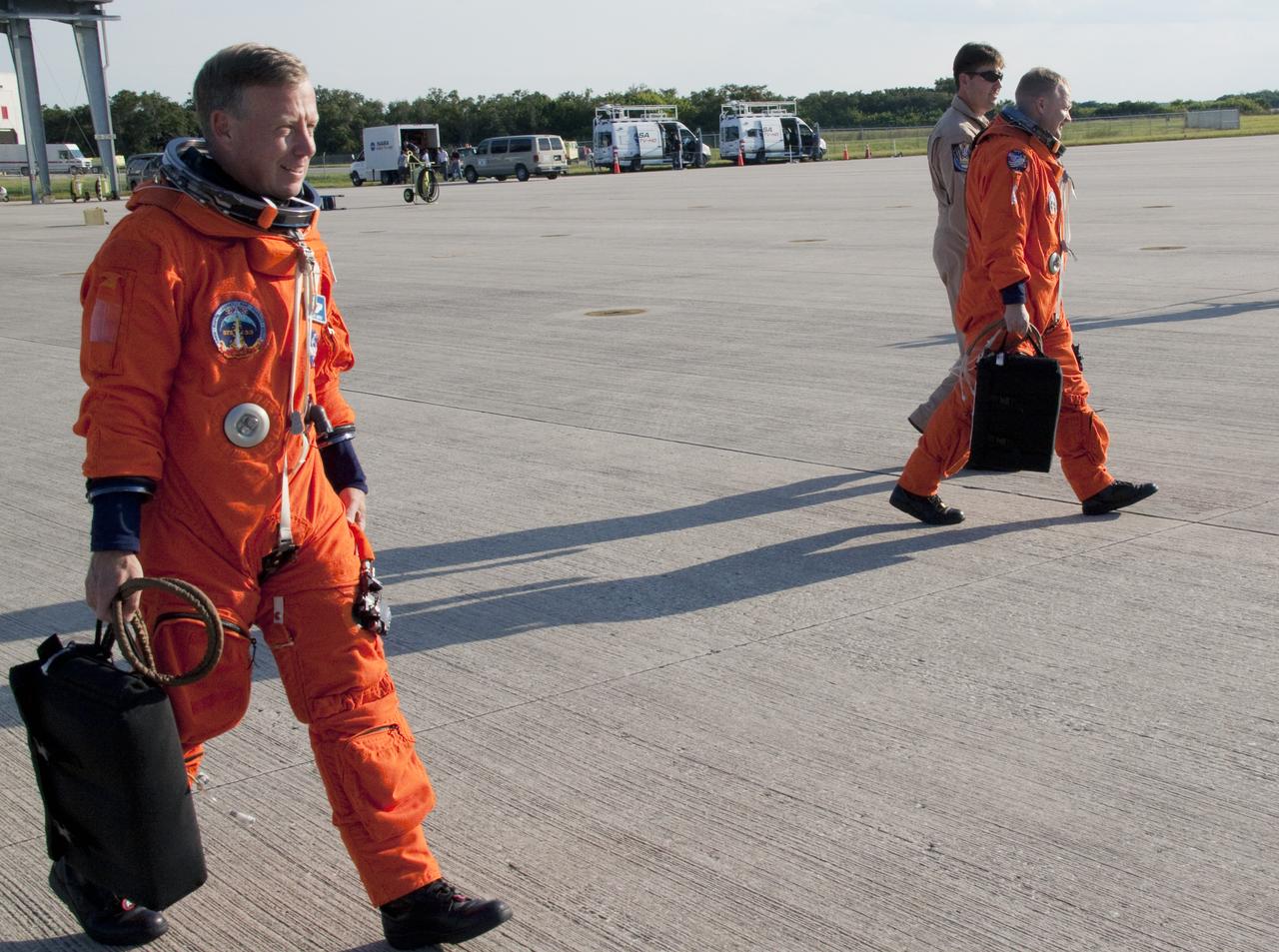
STS-133 TCDT - SUITED STA'S
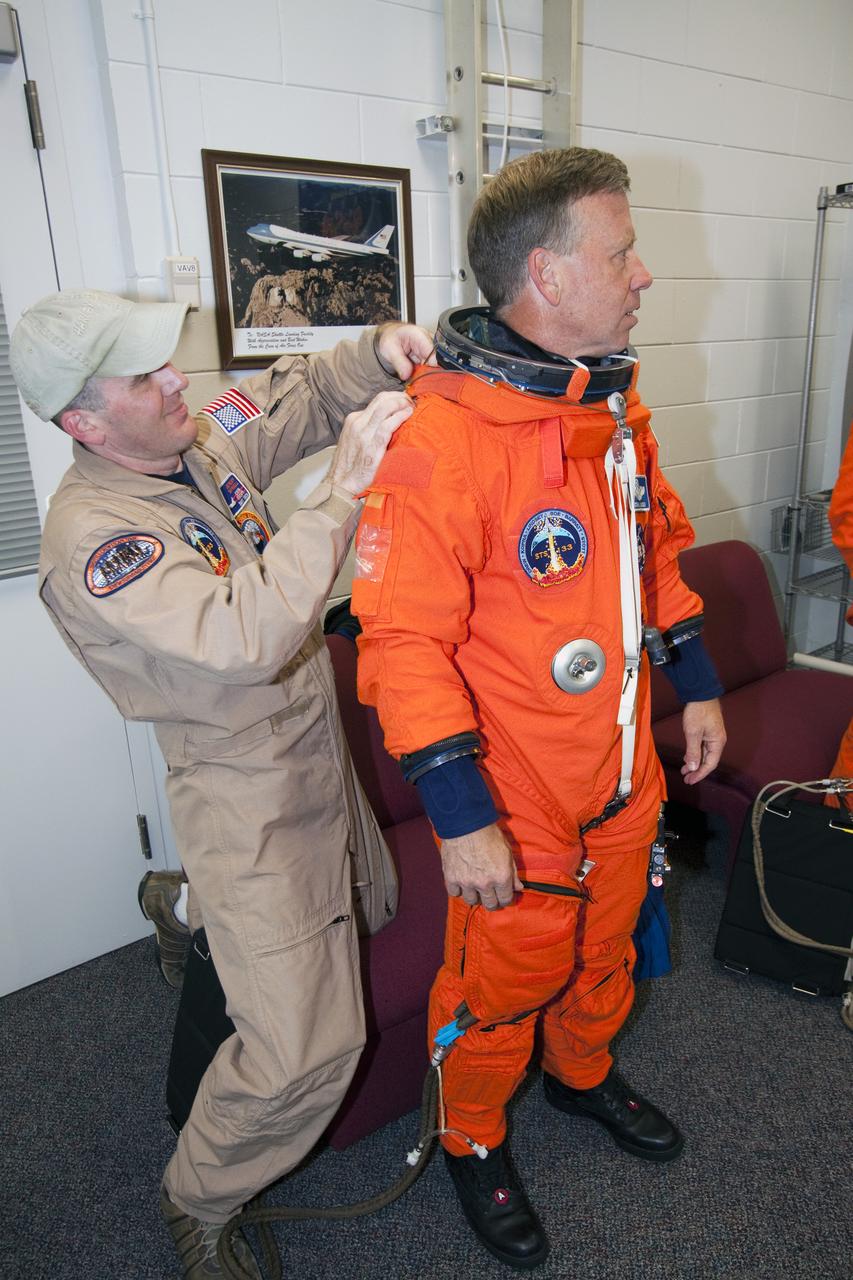
STS-133 TCDT - SUITED STA'S
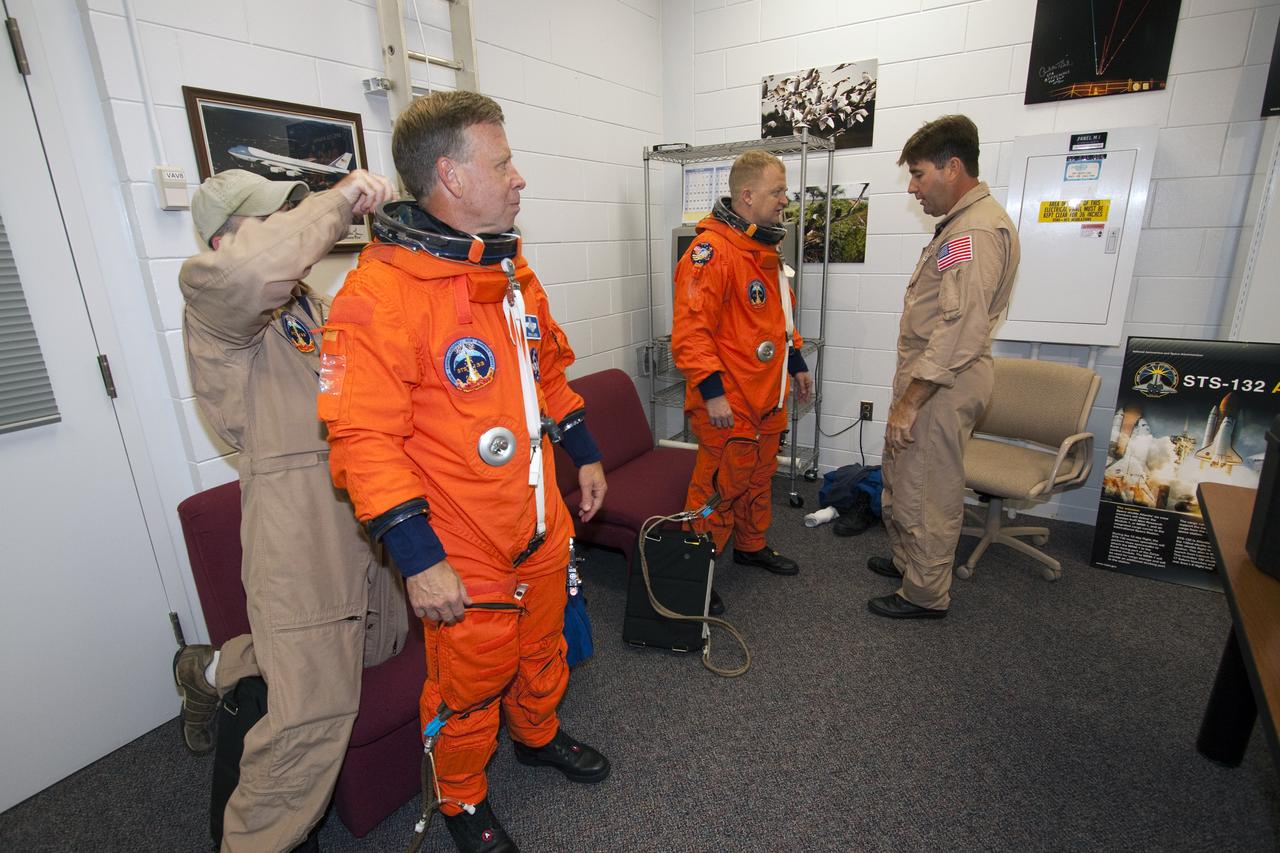
STS-133 TCDT - SUITED STA'S
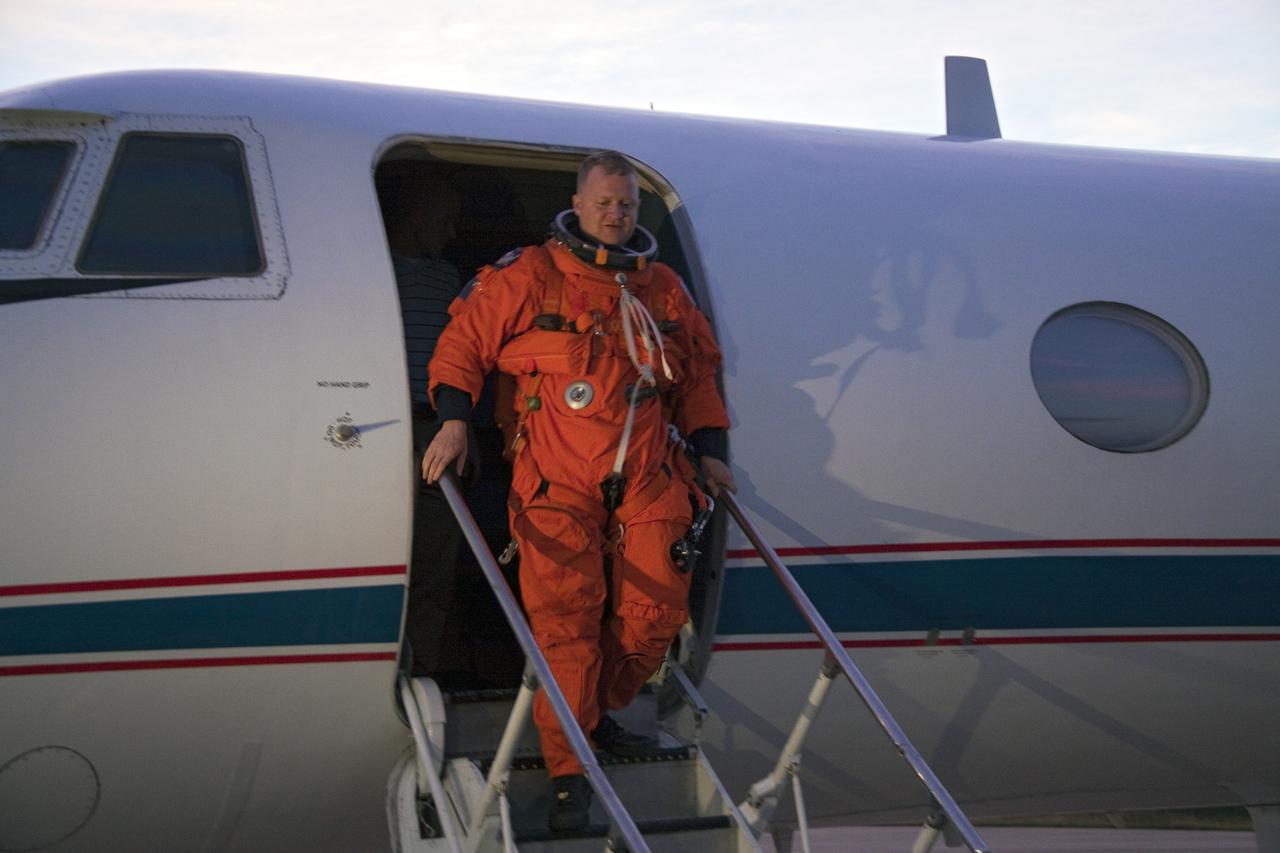
STS-133 TCDT - SUITED STA'S
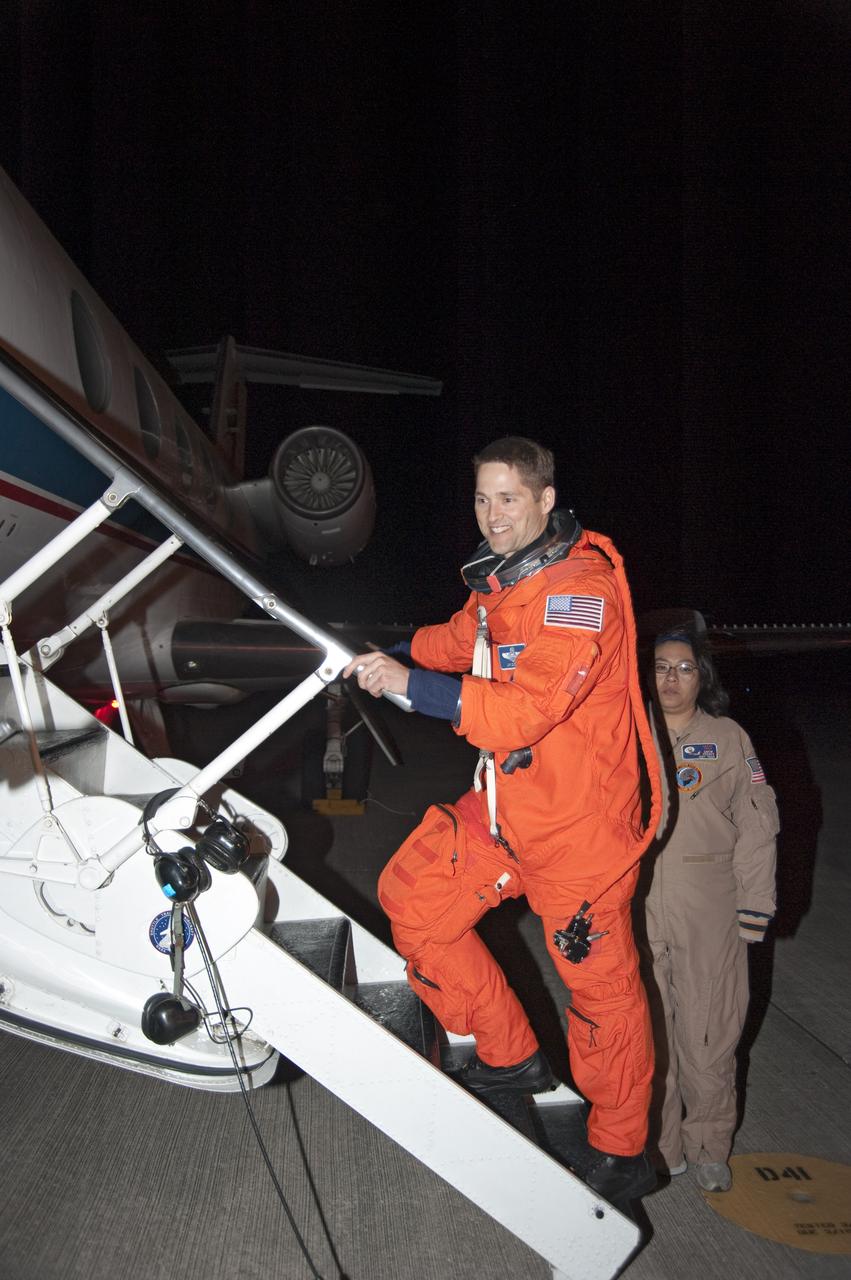
STS-131 TCDT - Suited STA's
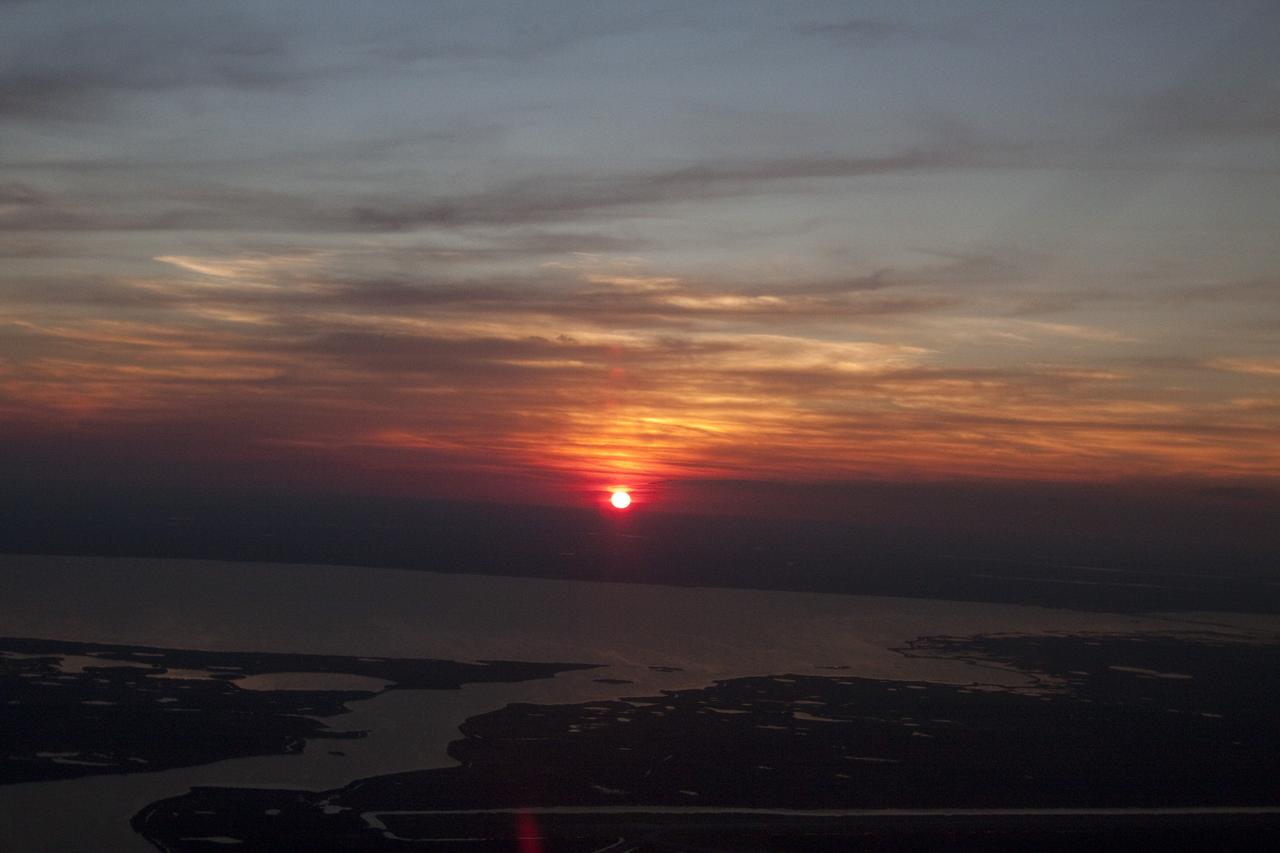
STS-133 TCDT - ONBOARD STA'S
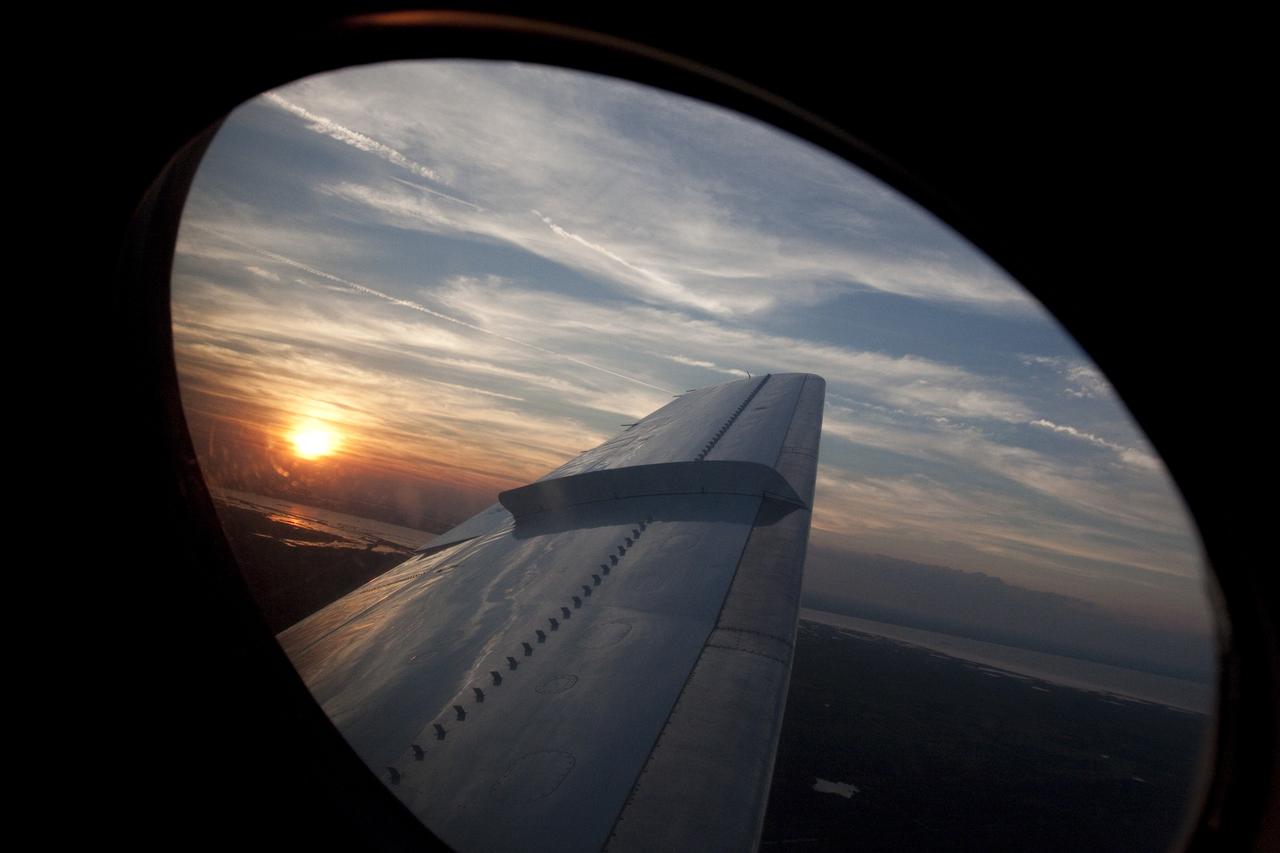
STS-133 TCDT - ONBOARD STA'S
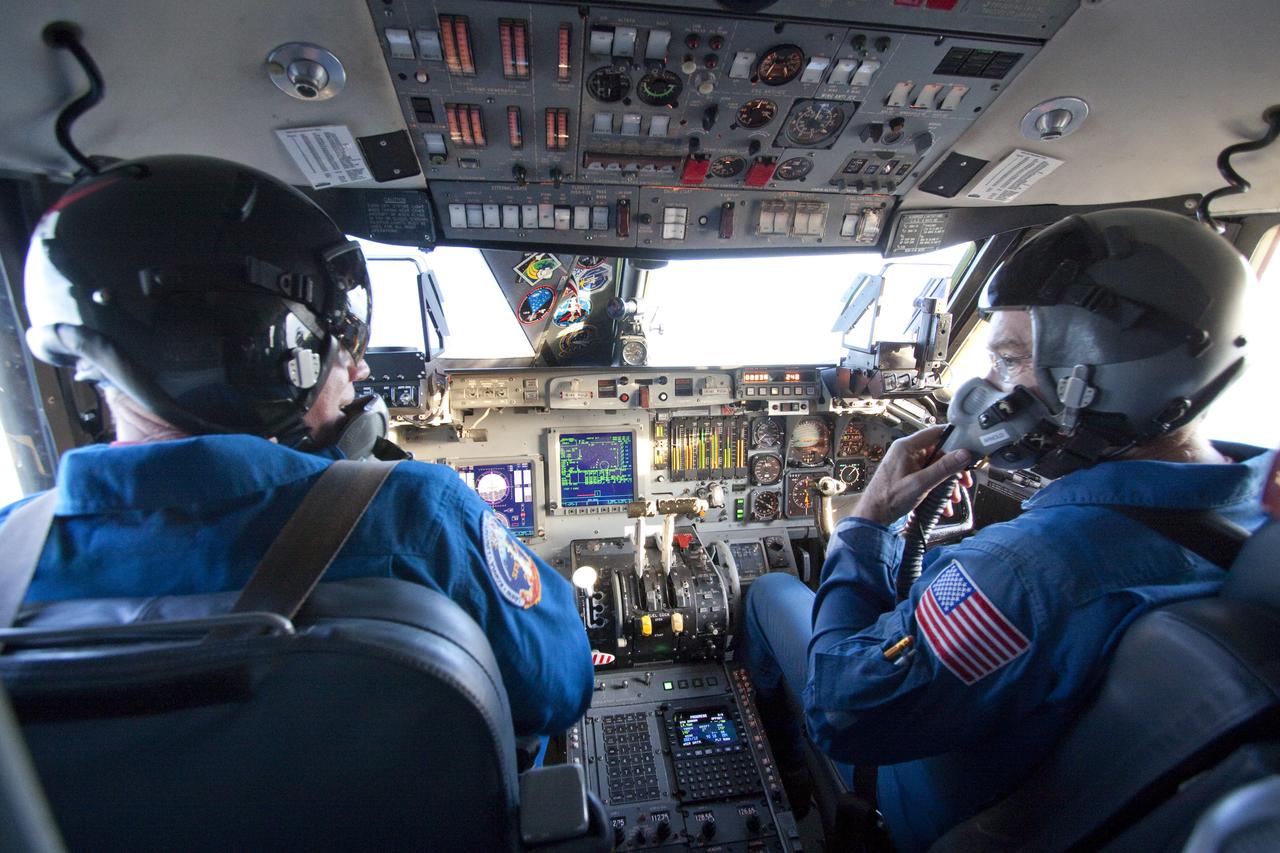
STS-133 TCDT - ONBOARD STA'S
STS-131 TCDT - Suited STA's
STS-133 TCDT - SUITED STA'S
STS-131 TCDT - Suited STA's

STS-131 TCDT - Suited STA's

STS-133 TCDT - SUITED STA'S
STS-133 TCDT - UNSUITED STA'S WITH MEDIA
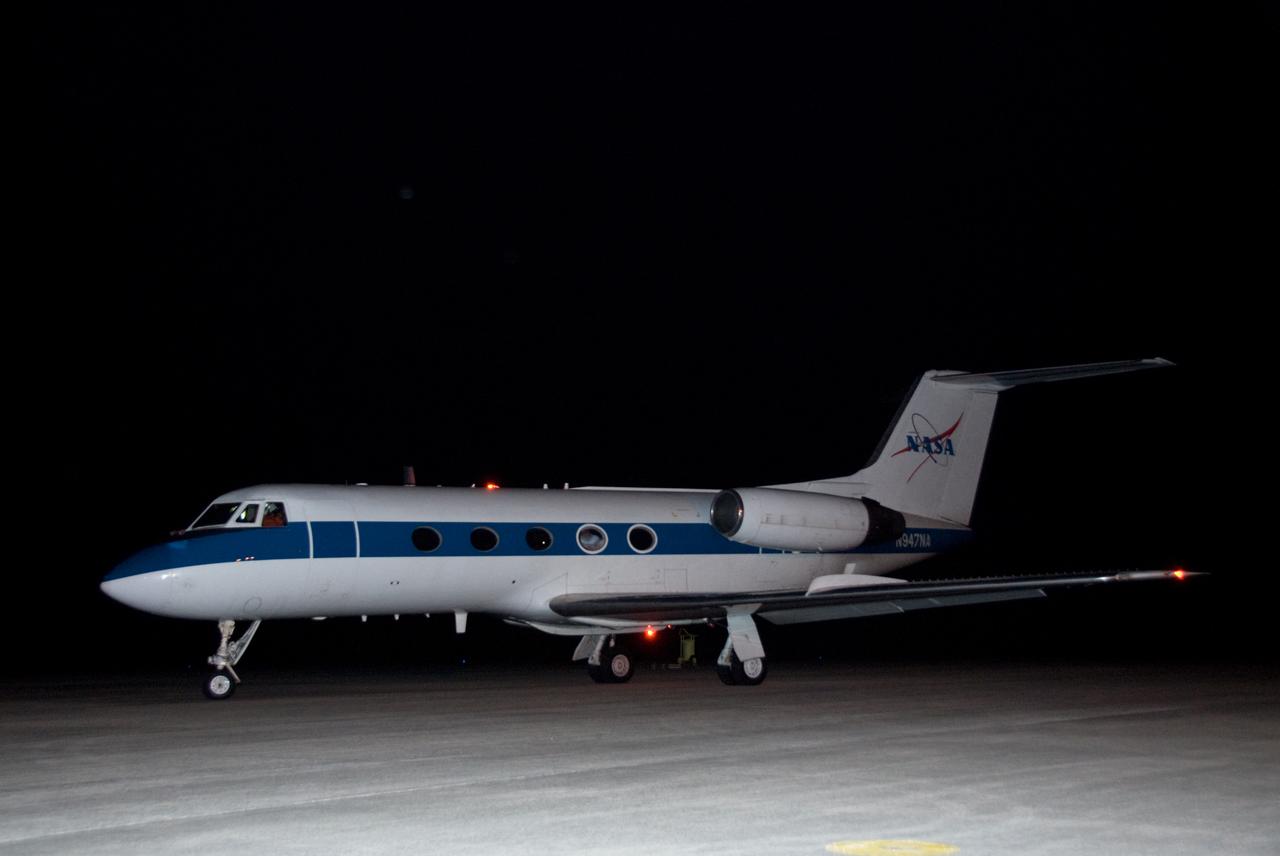
STS-130 TCDT - SUITED STA'S WITH COMMANDER AND PILOT
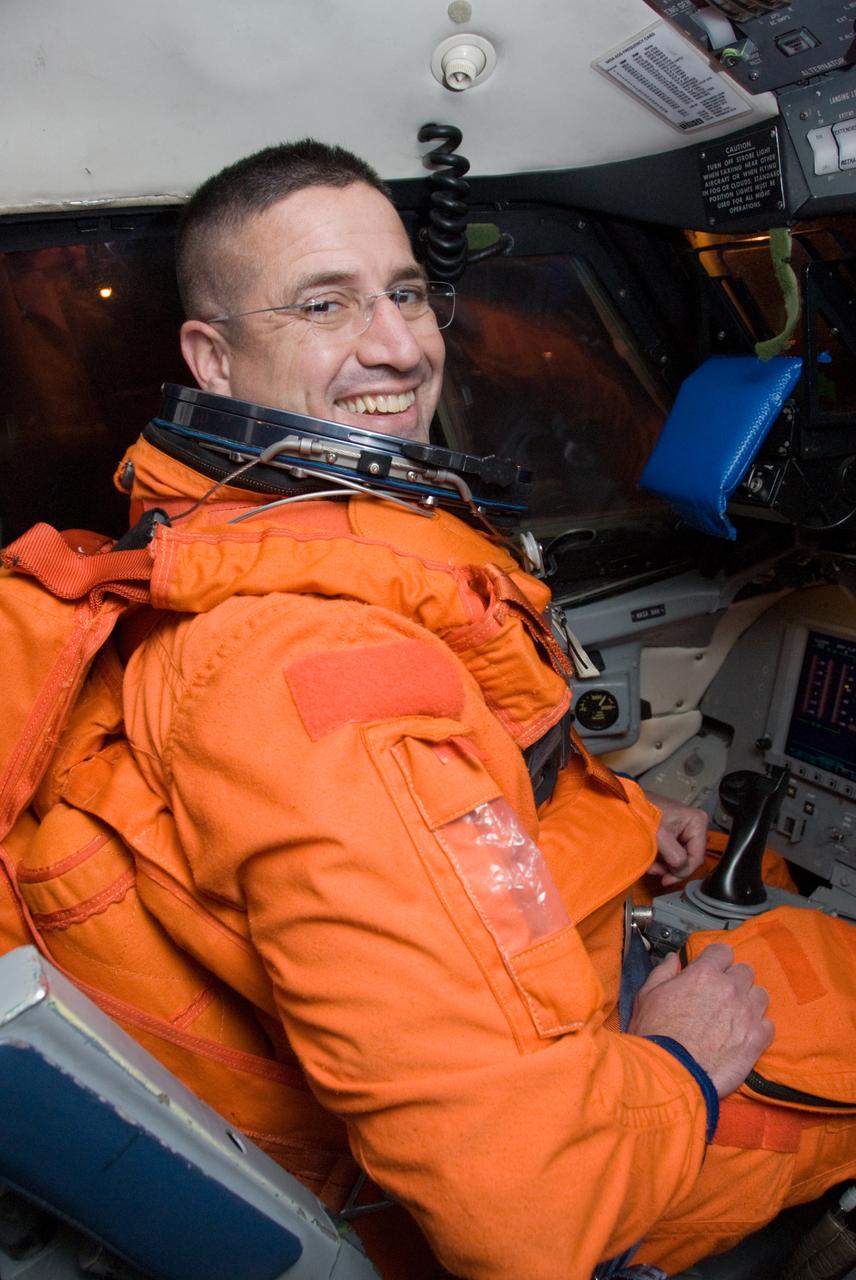
STS-130 TCDT - SUITED STA'S WITH COMMANDER AND PILOT
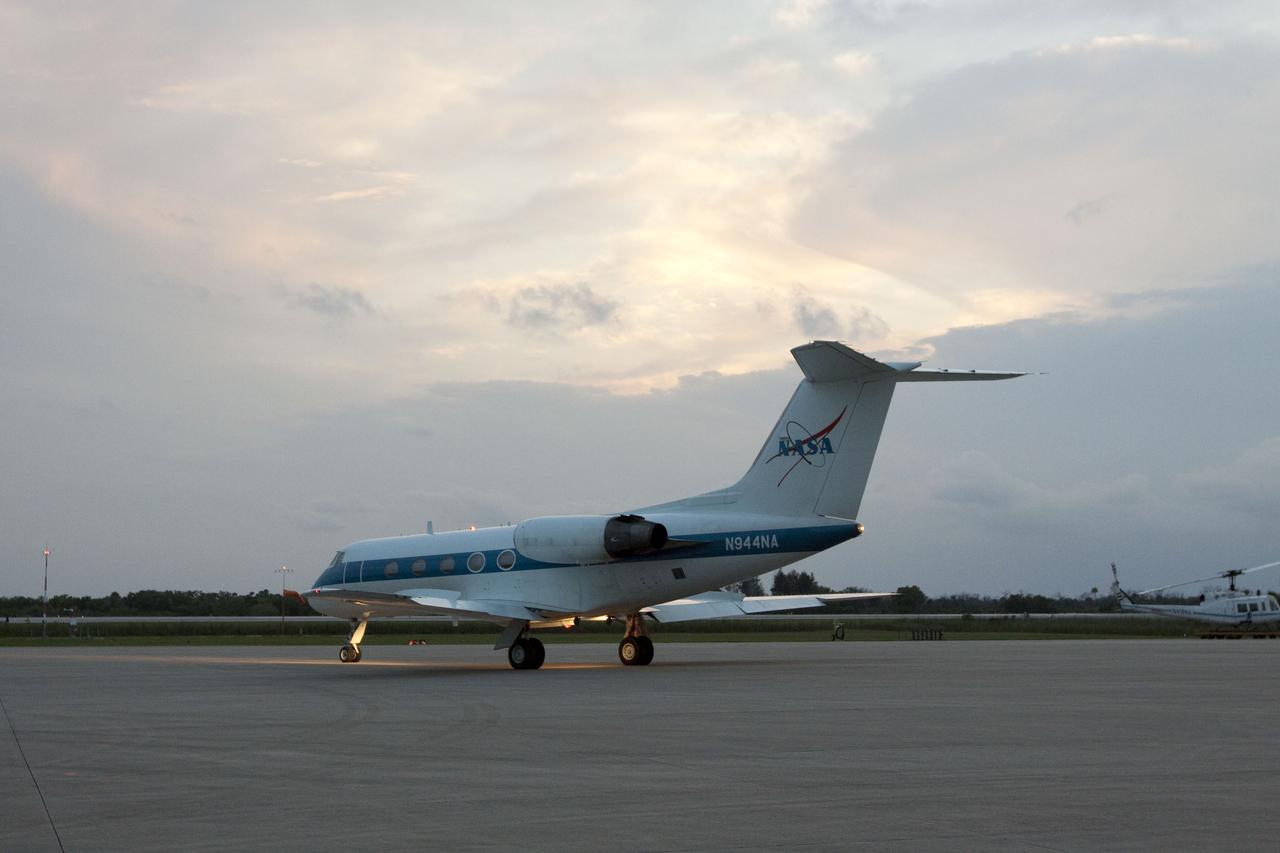
STS-132 TCDT - SUITED STA'S AT SLF
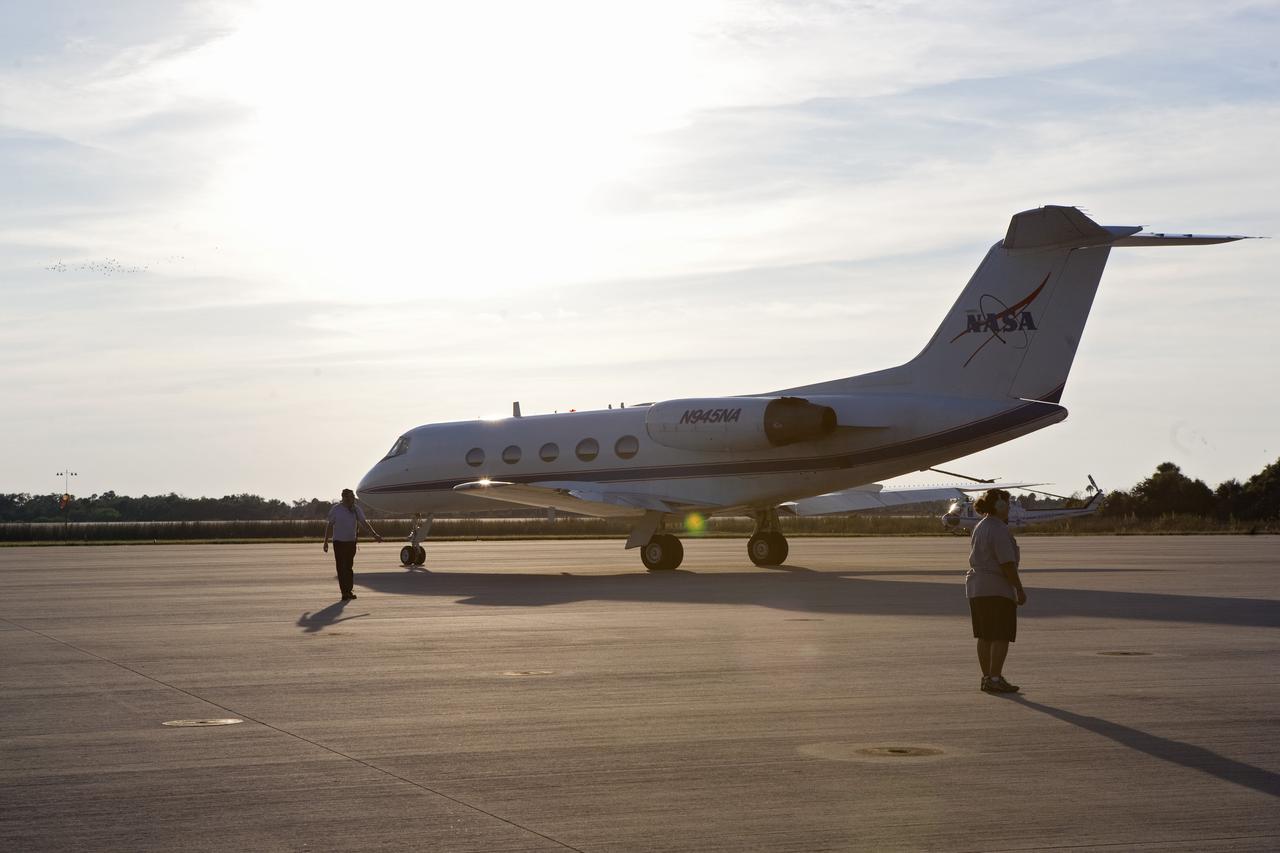
STS-133 TCDT - UNSUITED STA'S WITH MEDIA
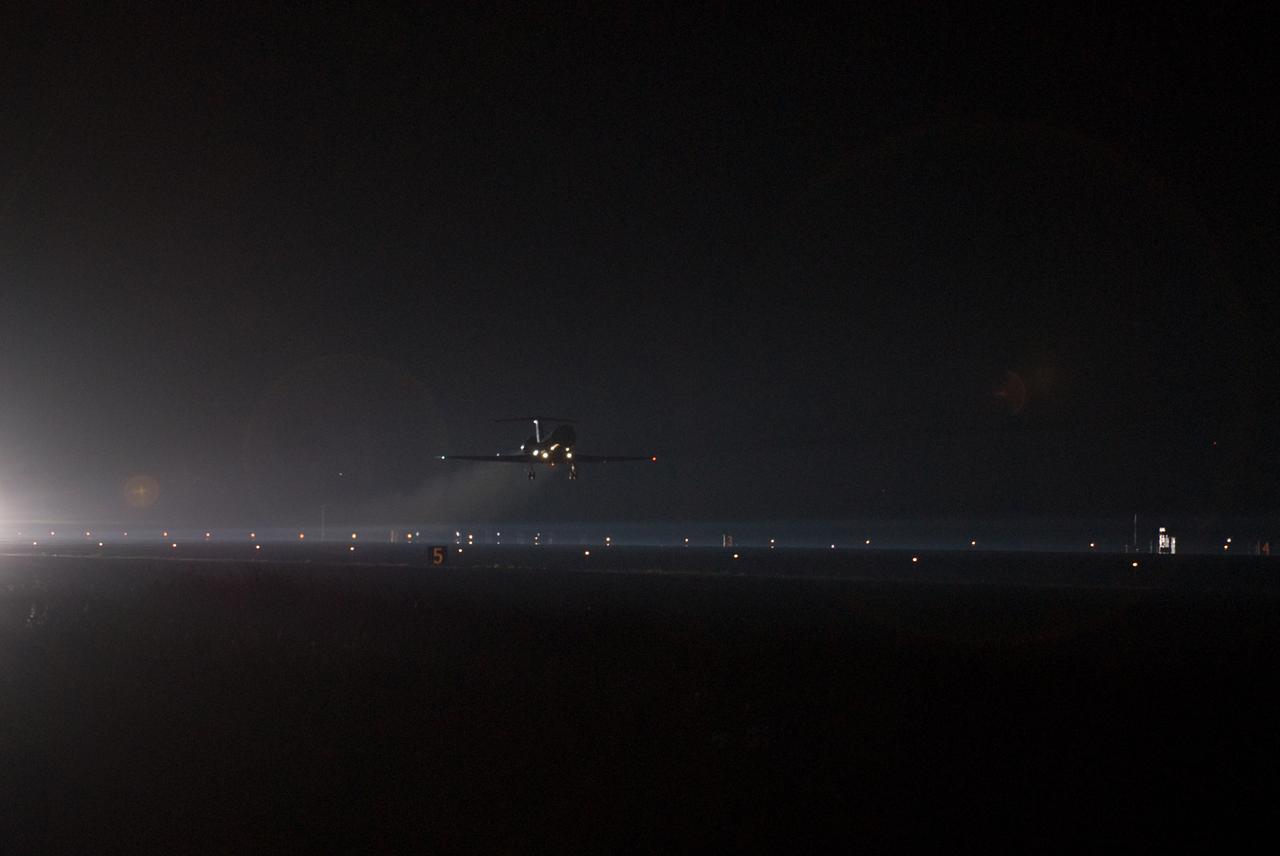
STS-130 TCDT - SUITED STA'S WITH COMMANDER AND PILOT
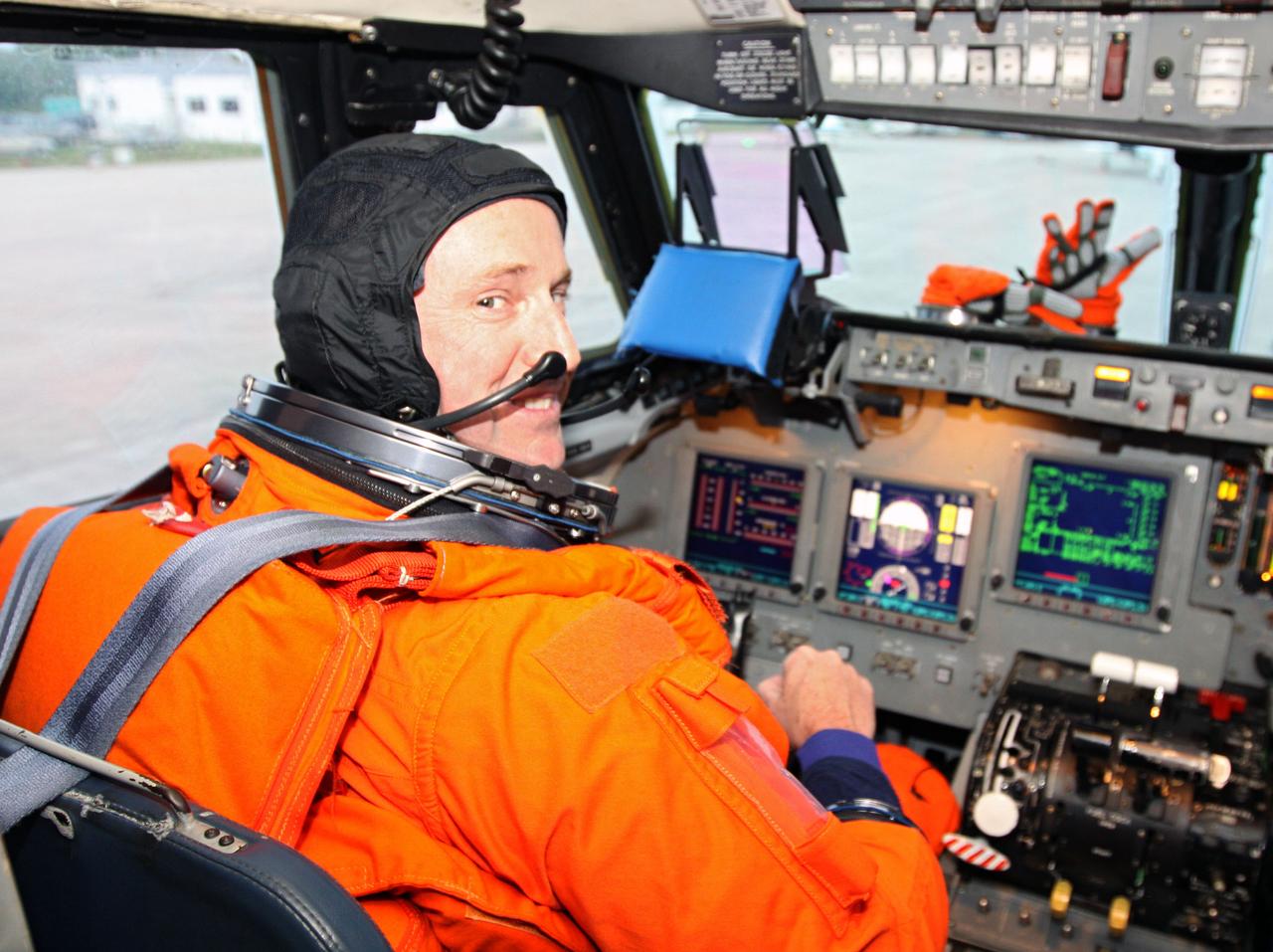
STS-132 TCDT - SUITED STA'S AT SLF
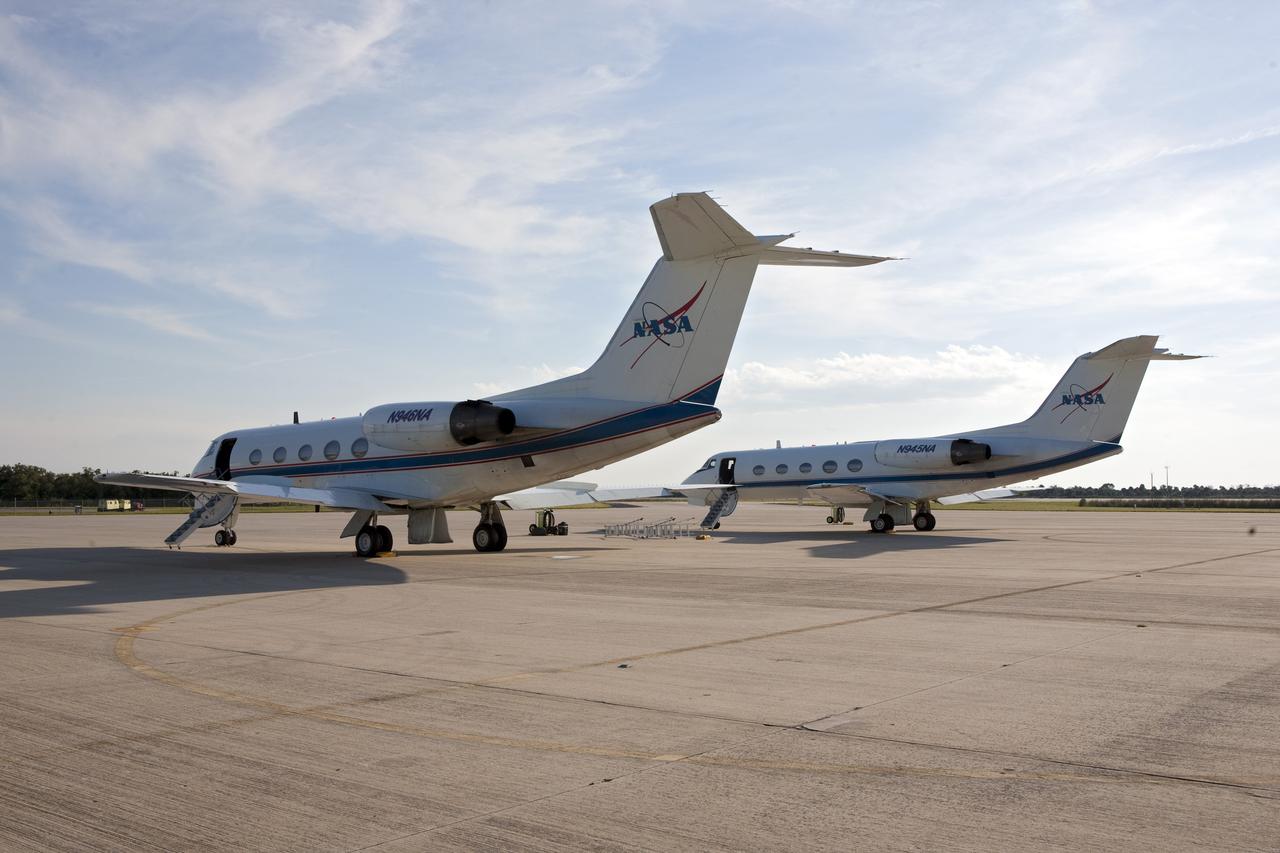
STS-133 TCDT - UNSUITED STA'S WITH MEDIA
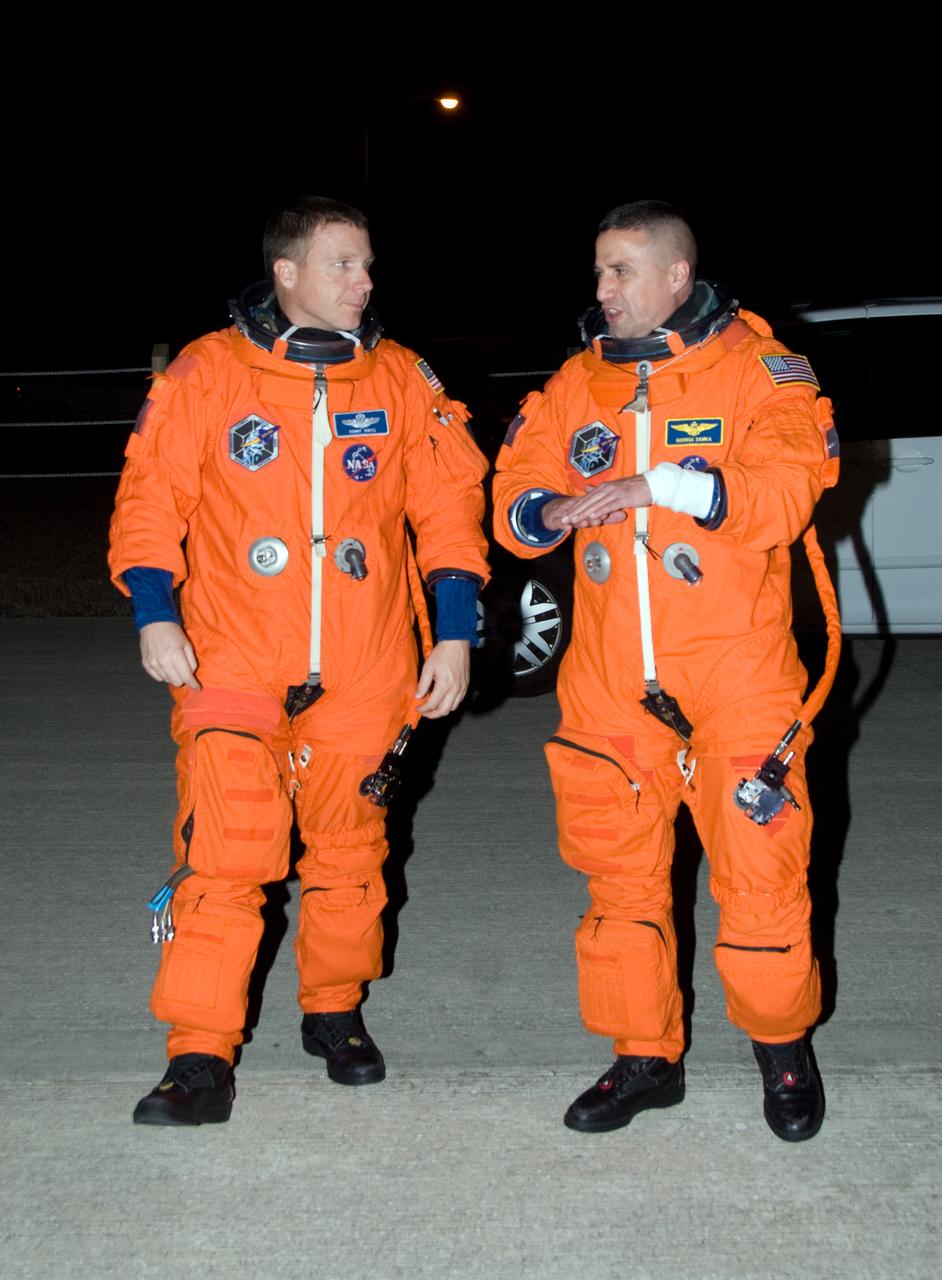
STS-130 TCDT - SUITED STA'S WITH COMMANDER AND PILOT
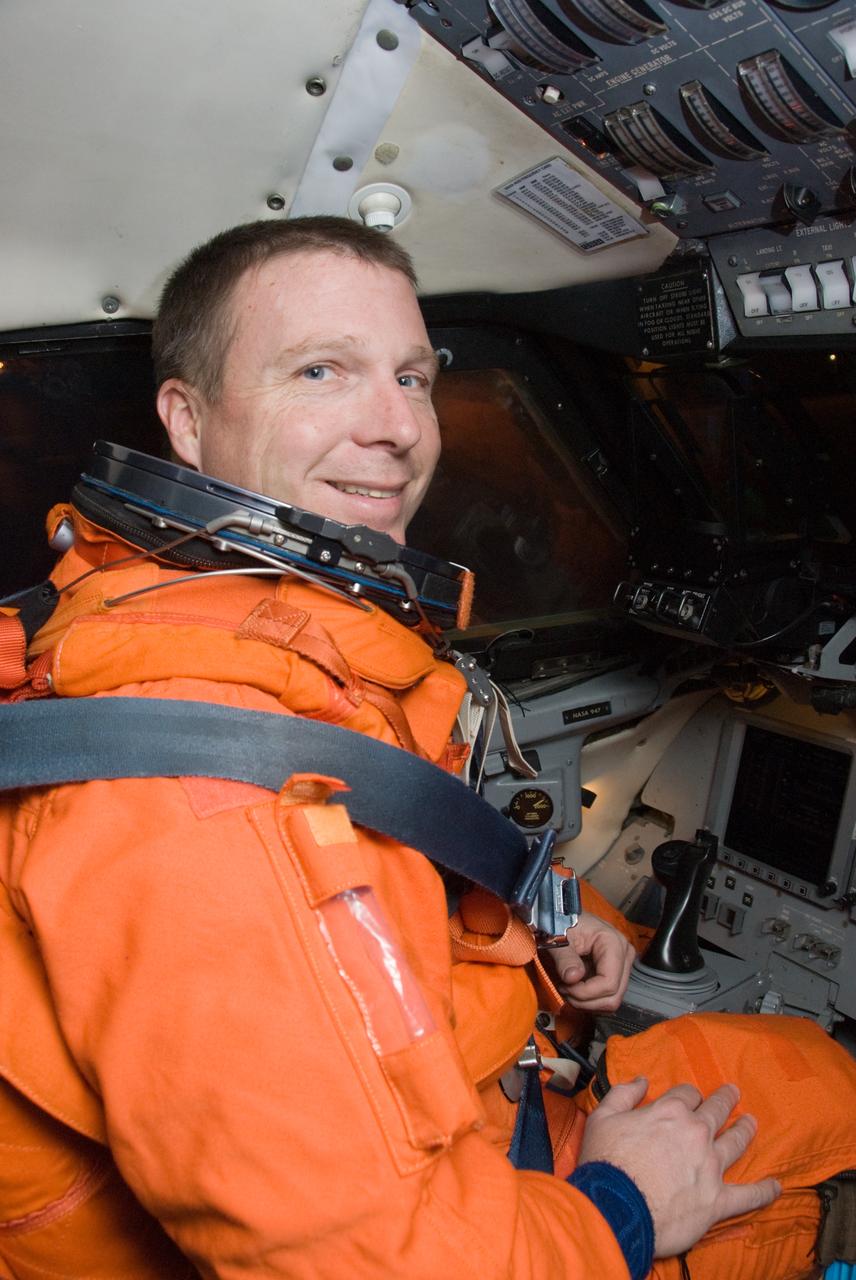
STS-130 TCDT - SUITED STA'S WITH COMMANDER AND PILOT
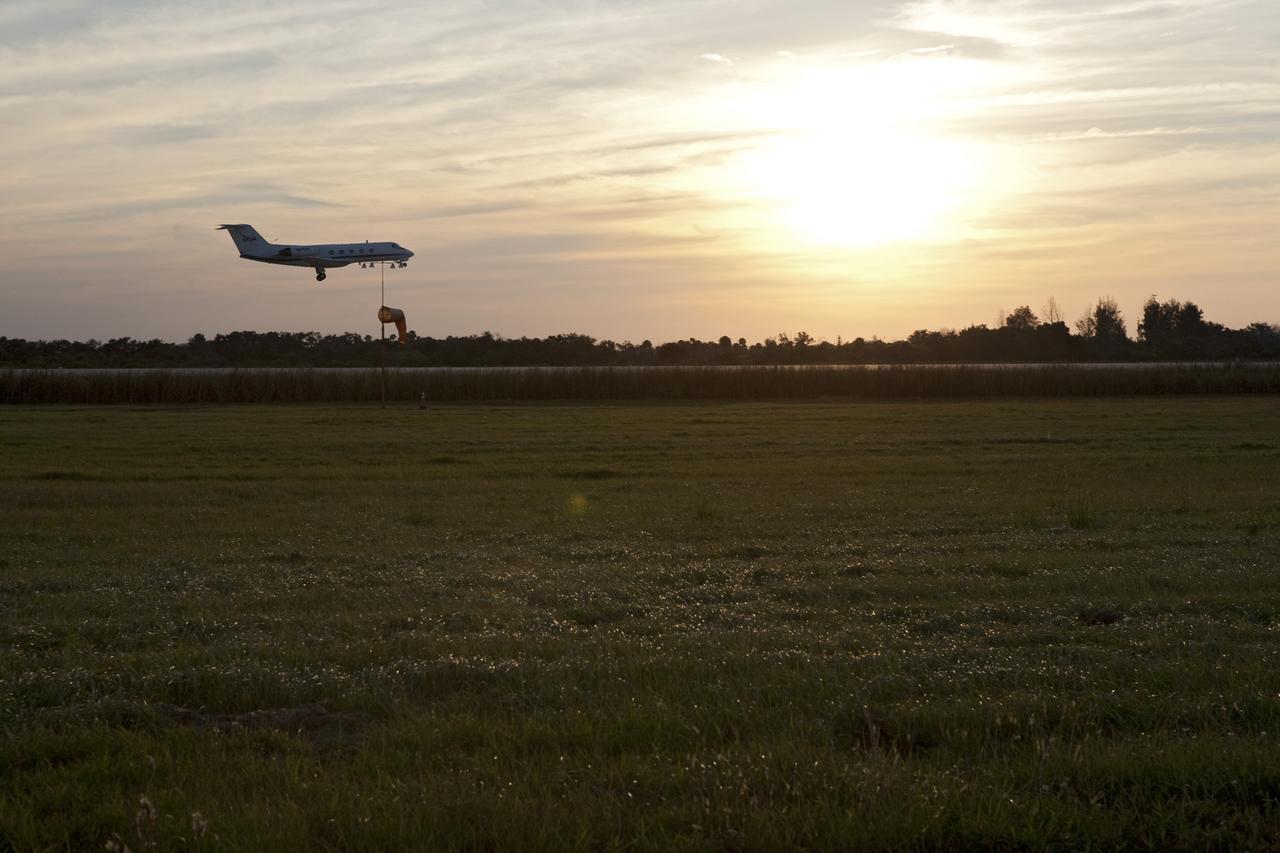
STS-133 TCDT - UNSUITED STA'S WITH MEDIA
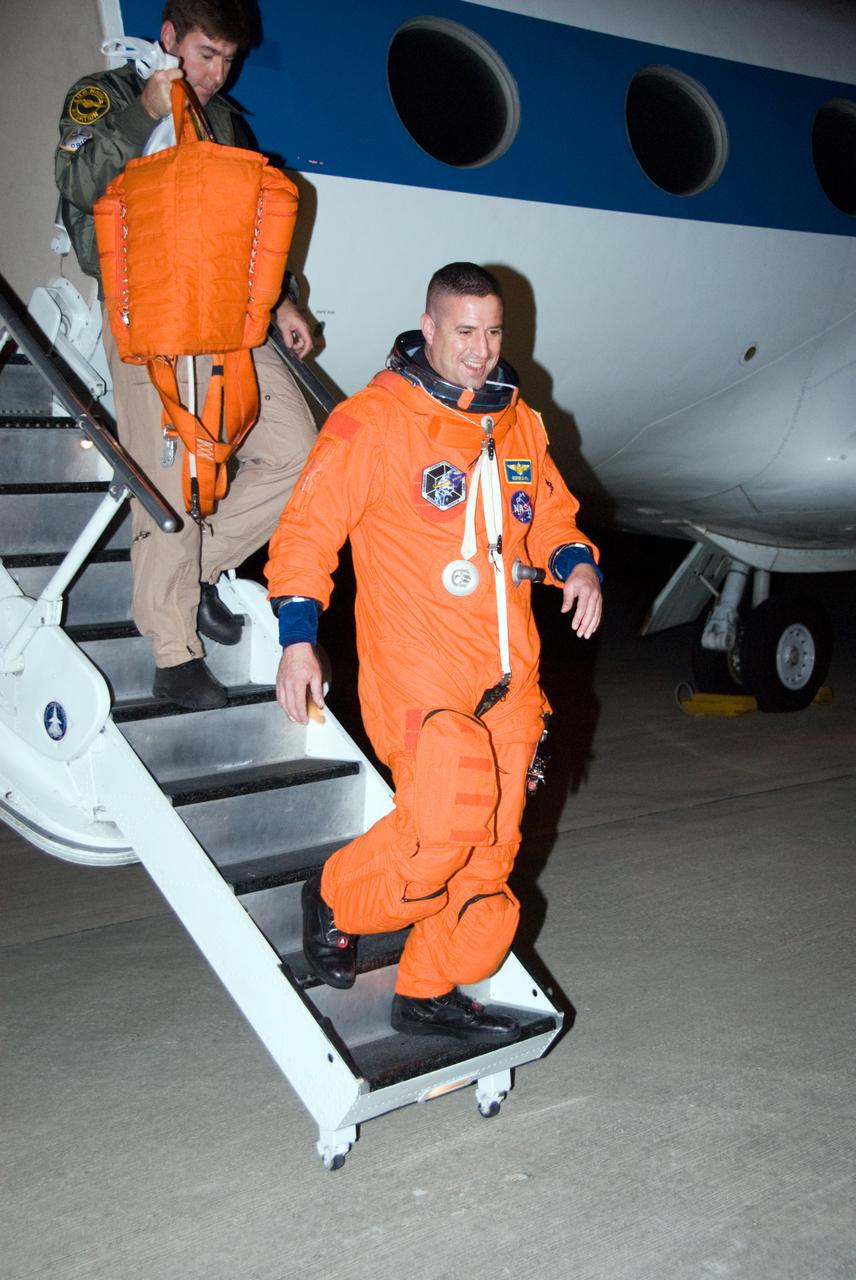
STS-130 TCDT - SUITED STA'S WITH COMMANDER AND PILOT
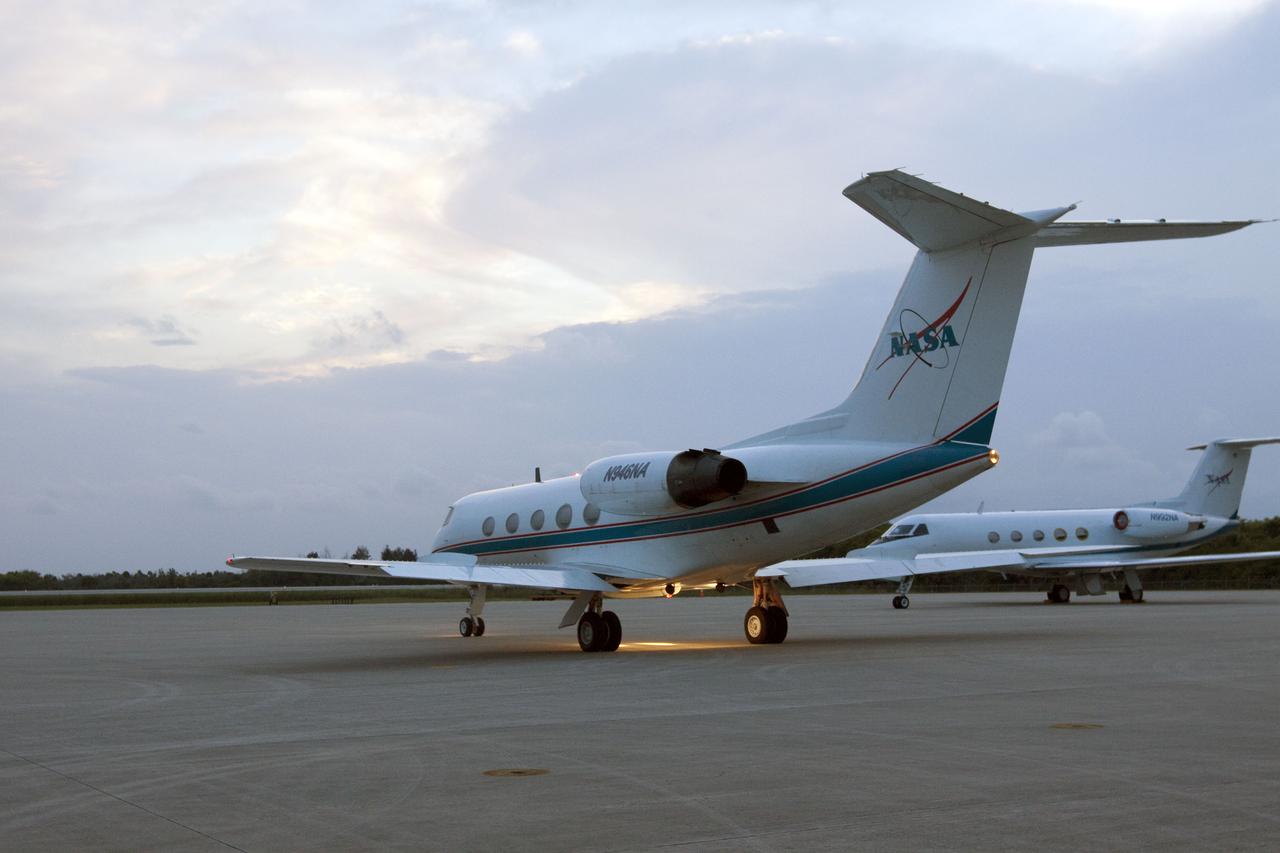
STS-132 TCDT - SUITED STA'S AT SLF
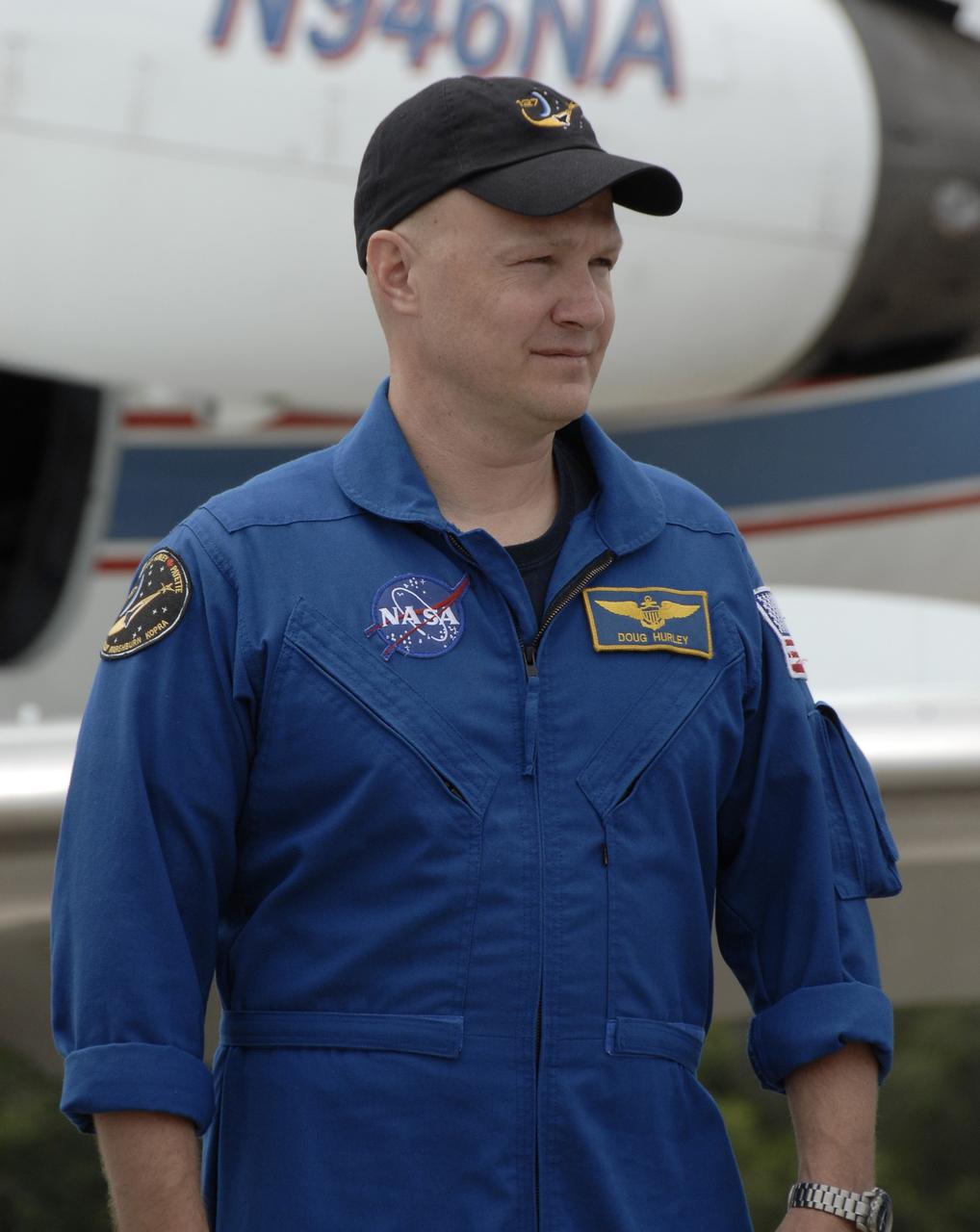
CAPE CANAVERAL, Fla. – Space shuttle Endeavour's STS-127 mission crew members greet the media after arriving at NASA's Kennedy Space Center in Florida for the Terminal Countdown Demonstration Test, or TCDT. Seen here is Pilot Doug Hurley. The astronauts will be taking part in Terminal Countdown Demonstration Test activities that include equipment familiarization and emergency egress training, and culminates in a simulated launch countdown aboard Endeavour. The STS-127 mission is the final of three flights dedicated to the assembly of the Japanese Kibo laboratory complex. Launch is targeted for June 13. Photo credit: NASA/Kim Shiflett
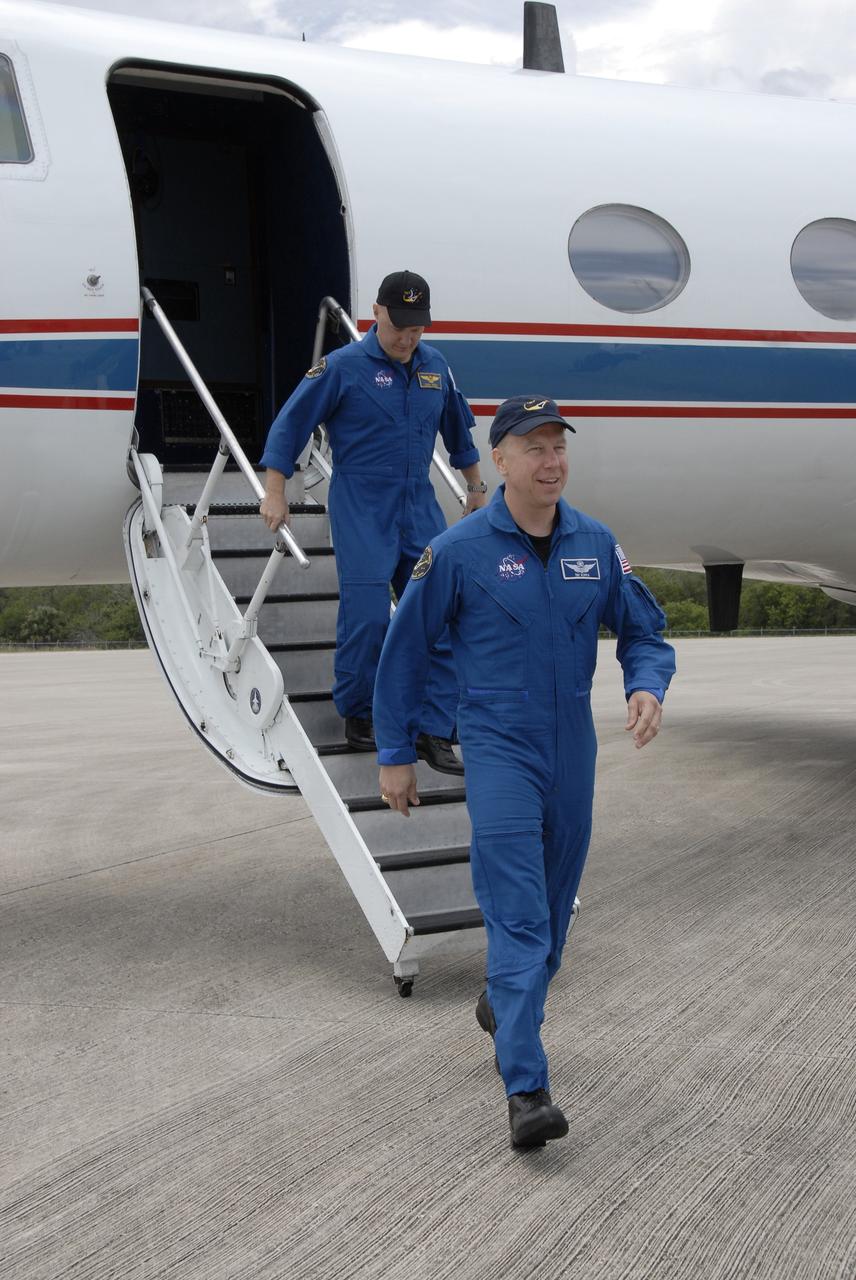
CAPE CANAVERAL, Fla. – Space shuttle Endeavour's STS-127 mission crew members disembark from the Shuttle Training Aircraft at NASA Kennedy Space Center's Shuttle Landing Facility. Leading the way, at right, is Mission Specialist Tim Kopra, followed by Pilot Doug Hurley. The astronauts will be taking part in Terminal Countdown Demonstration Test activities that include equipment familiarization and emergency egress training, and culminates in a simulated launch countdown aboard Endeavour. The STS-127 mission is the final of three flights dedicated to the assembly of the Japanese Kibo laboratory complex. Launch is targeted for June 13. Photo credit: NASA/Kim Shiflett
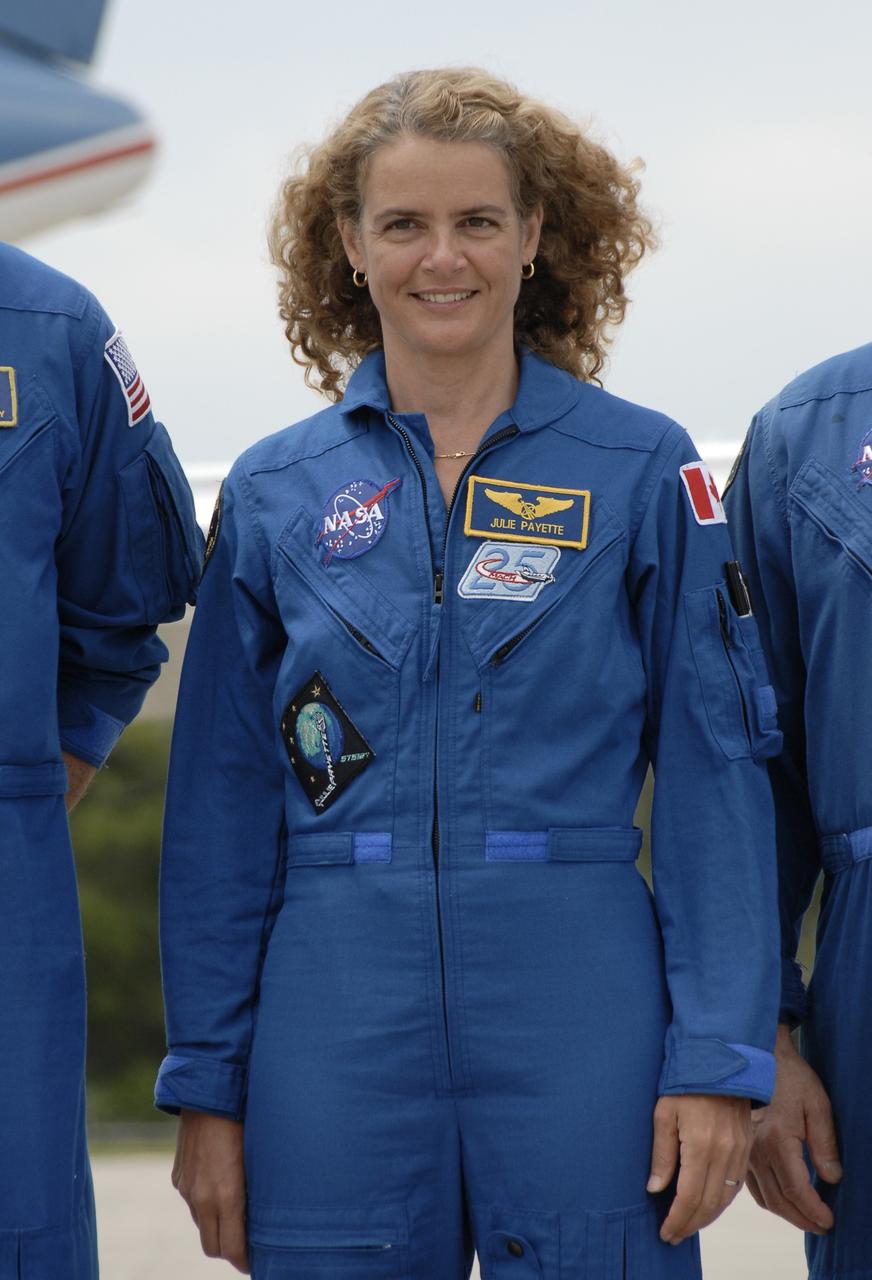
CAPE CANAVERAL, Fla. – Space shuttle Endeavour's STS-127 mission crew members greet the media after arriving at NASA's Kennedy Space Center in Florida for the Terminal Countdown Demonstration Test, or TCDT. Seen here is Mission Specialist Julie Payette, who represents the Canadian Space Agency. The astronauts will be taking part in Terminal Countdown Demonstration Test activities that include equipment familiarization and emergency egress training, and culminates in a simulated launch countdown aboard Endeavour. The STS-127 mission is the final of three flights dedicated to the assembly of the Japanese Kibo laboratory complex. Launch is targeted for June 13. Photo credit: NASA/Kim Shiflett
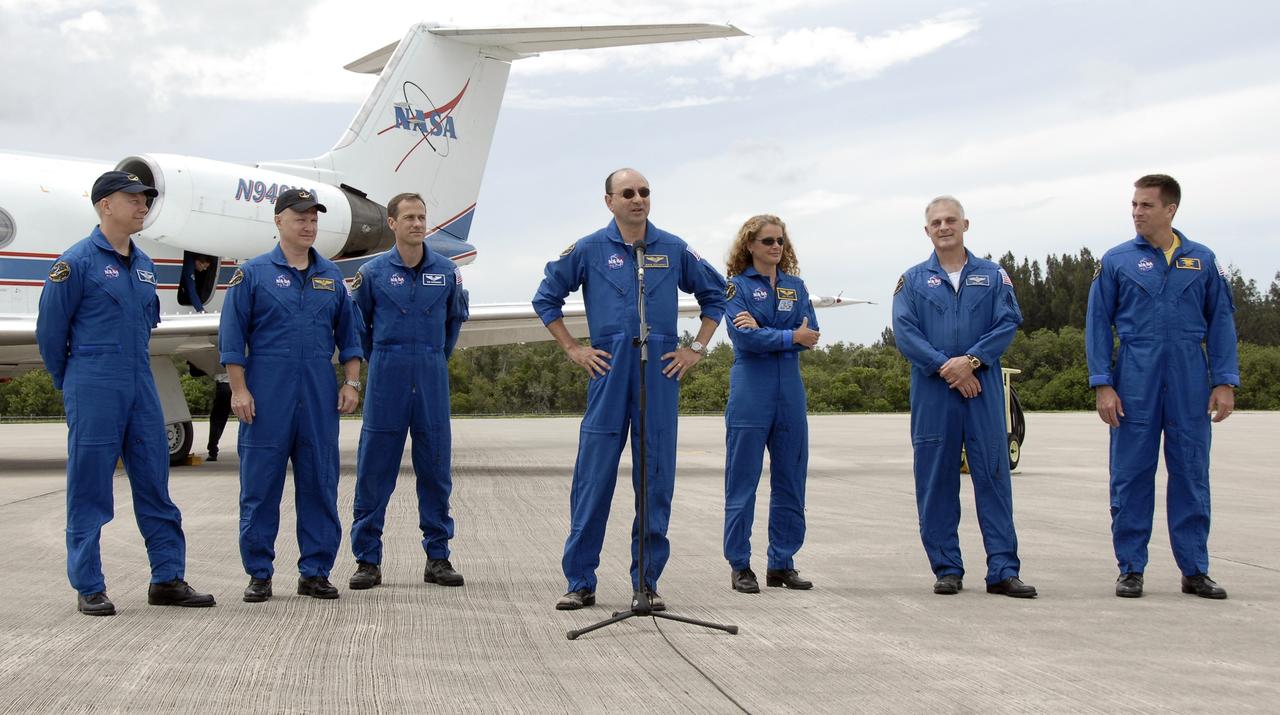
CAPE CANAVERAL, Fla. – Space shuttle Endeavour's STS-127 mission crew members greet the media after arriving at NASA's Kennedy Space Center in Florida. At the microphone is Commander Mark Polansky, who explained they were at Kennedy for the Terminal Countdown Demonstration Test, or TCDT. The other crew members behind Polansky are, from left, Mission Specialist Tim Kopra, Pilot Doug Hurley, and Mission Specialists Tom Marshburn, Julie Payette, Dave Wolf and Christopher Cassidy. Payette represents the Canadian Space Agency. The astronauts will be taking part in Terminal Countdown Demonstration Test activities that include equipment familiarization and emergency egress training, and culminates in a simulated launch countdown aboard Endeavour. The STS-127 mission is the final of three flights dedicated to the assembly of the Japanese Kibo laboratory complex. Launch is targeted for June 13. Photo credit: NASA/Kim Shiflett
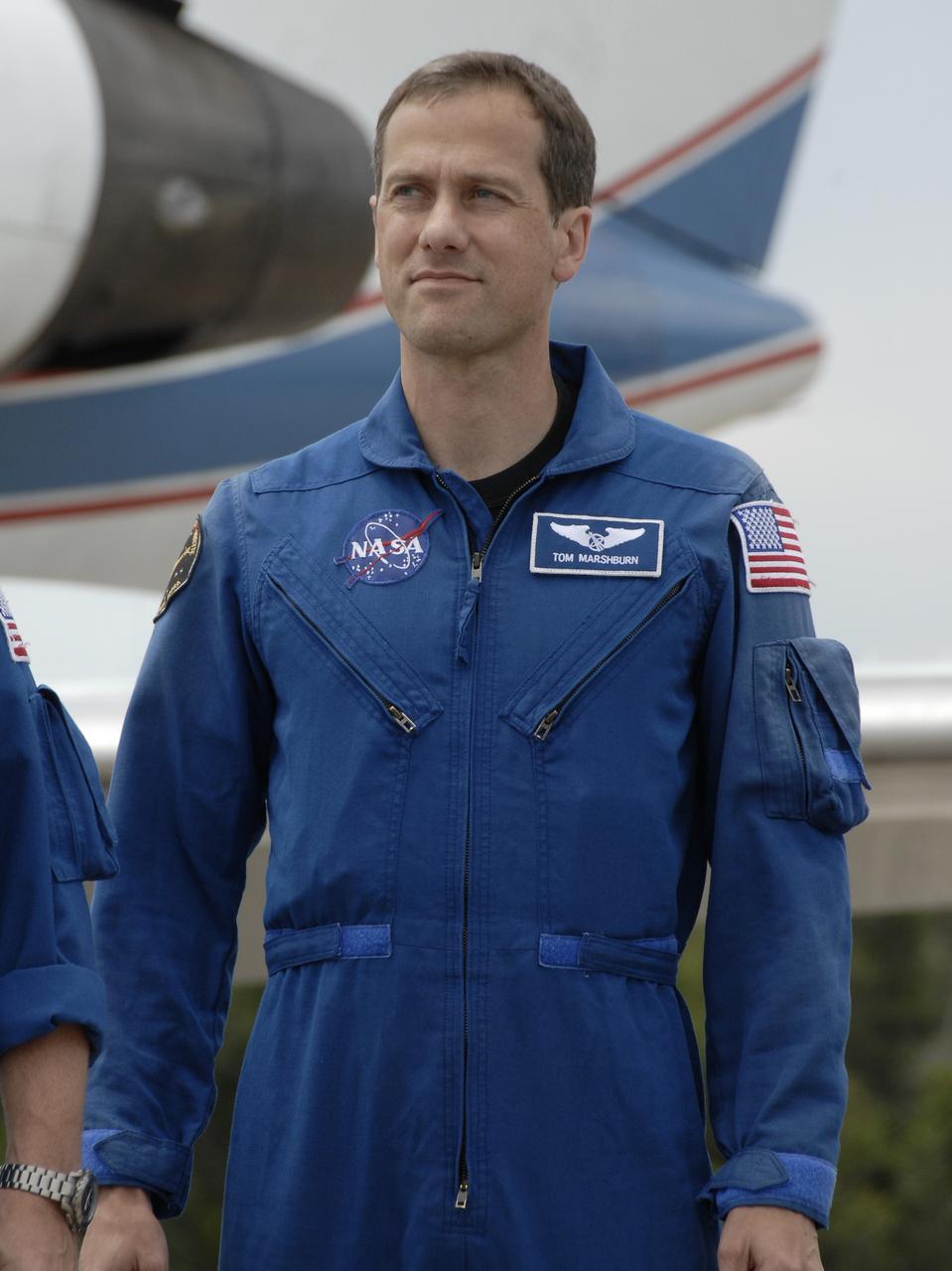
CAPE CANAVERAL, Fla. – Space shuttle Endeavour's STS-127 mission crew members greet the media after arriving at NASA's Kennedy Space Center in Florida for the Terminal Countdown Demonstration Test, or TCDT. Seen here is Mission Specialist Tom Marshburn. The astronauts will be taking part in Terminal Countdown Demonstration Test activities that include equipment familiarization and emergency egress training, and culminates in a simulated launch countdown aboard Endeavour. The STS-127 mission is the final of three flights dedicated to the assembly of the Japanese Kibo laboratory complex. Launch is targeted for June 13. Photo credit: NASA/Kim Shiflett
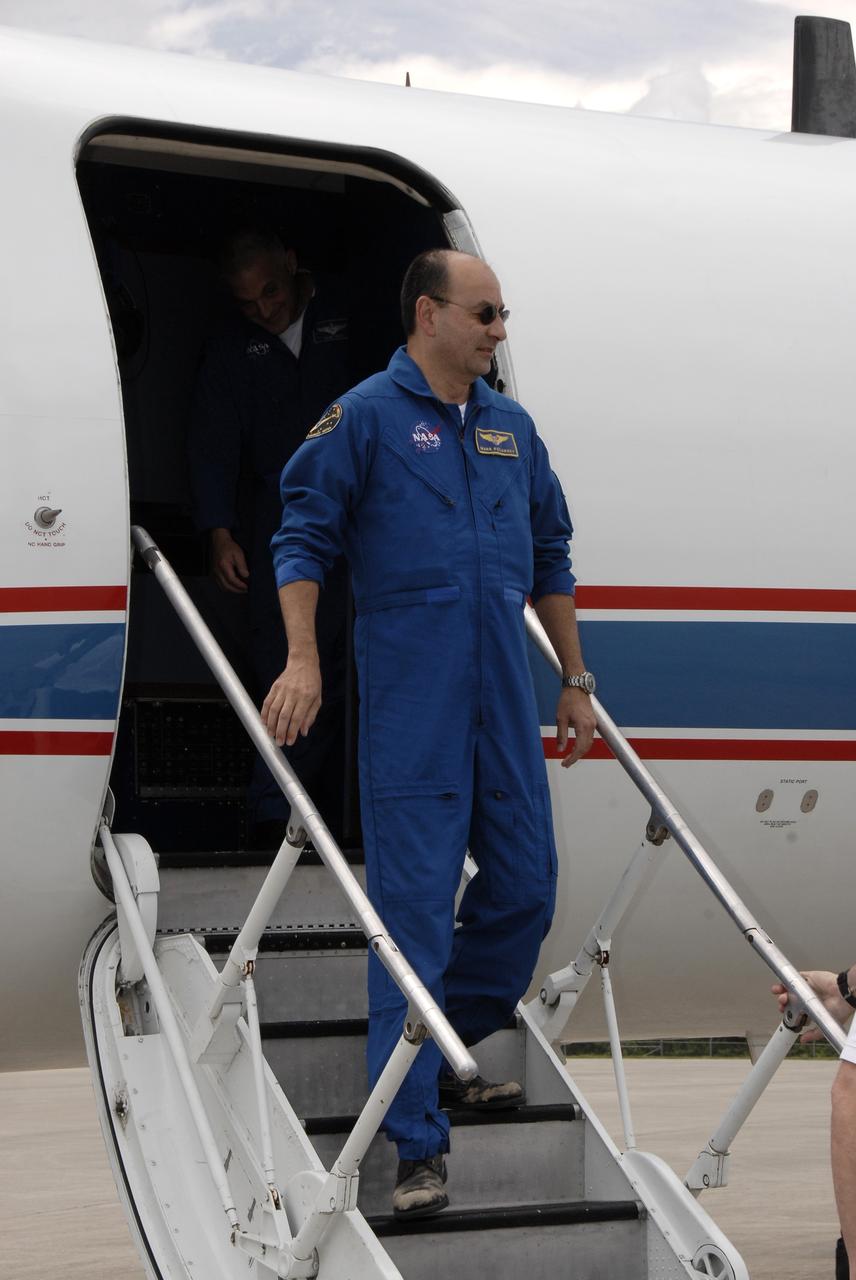
CAPE CANAVERAL, Fla. – Space shuttle Endeavour's STS-127 mission crew members disembark from the Shuttle Training Aircraft at NASA Kennedy Space Center's Shuttle Landing Facility. Seen here is Commander Mark Polansky. The astronauts will be taking part in Terminal Countdown Demonstration Test activities that include equipment familiarization and emergency egress training, and culminates in a simulated launch countdown aboard Endeavour. The STS-127 mission is the final of three flights dedicated to the assembly of the Japanese Kibo laboratory complex. Launch is targeted for June 13. Photo credit: NASA/Kim Shiflett

CAPE CANAVERAL, Fla. – Space shuttle Endeavour's STS-127 mission crew arrives at NASA's Kennedy Space Center in Florida in a Shuttle Training Aircraft. The astronauts will be taking part in Terminal Countdown Demonstration Test activities that include equipment familiarization and emergency egress training, and culminates in a simulated launch countdown aboard Endeavour. The STS-127 mission is the final of three flights dedicated to the assembly of the Japanese Kibo laboratory complex. Launch is targeted for June 13. Photo credit: NASA/Kim Shiflett
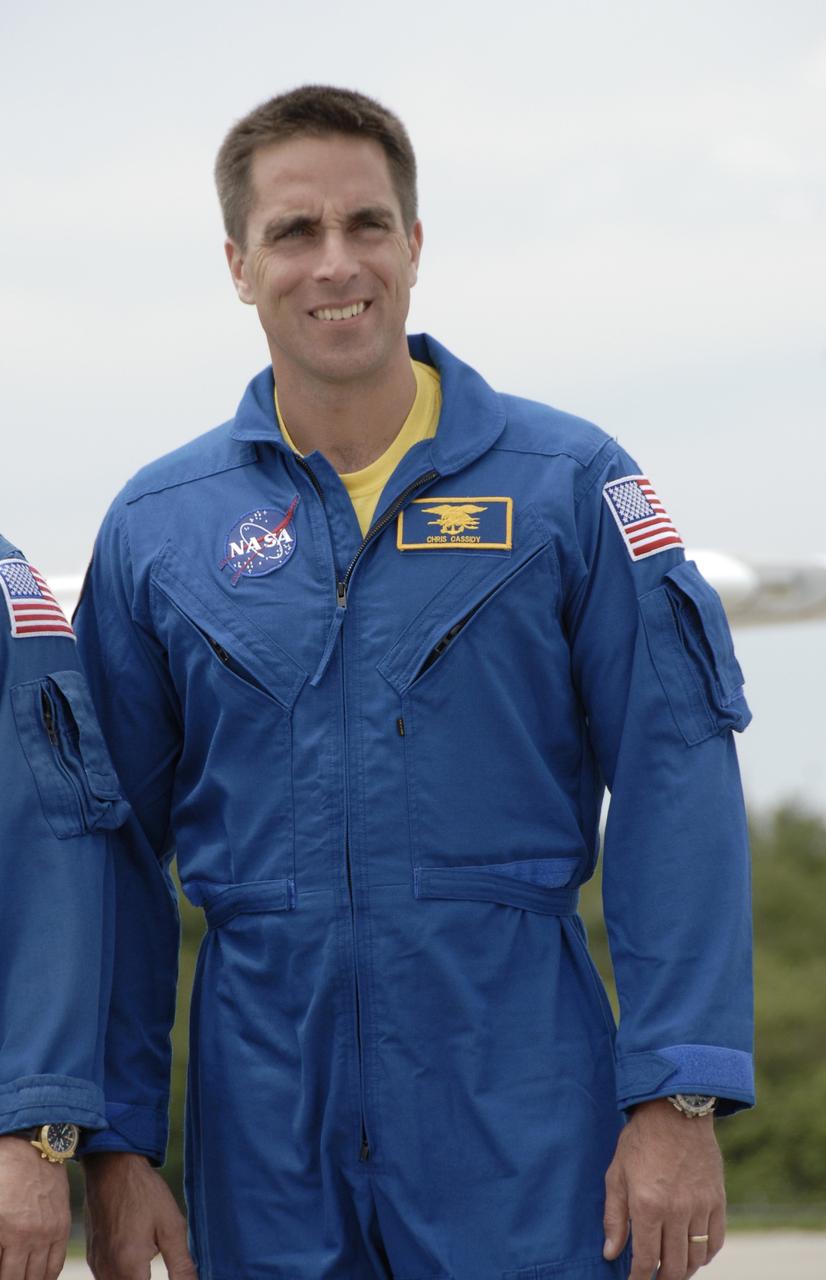
CAPE CANAVERAL, Fla. – Space shuttle Endeavour's STS-127 mission crew members greet the media after arriving at NASA's Kennedy Space Center in Florida for the Terminal Countdown Demonstration Test, or TCDT. Seen here is Mission Specialist Chris Cassidy. The astronauts will be taking part in Terminal Countdown Demonstration Test activities that include equipment familiarization and emergency egress training, and culminates in a simulated launch countdown aboard Endeavour. The STS-127 mission is the final of three flights dedicated to the assembly of the Japanese Kibo laboratory complex. Launch is targeted for June 13. Photo credit: NASA/Kim Shiflett
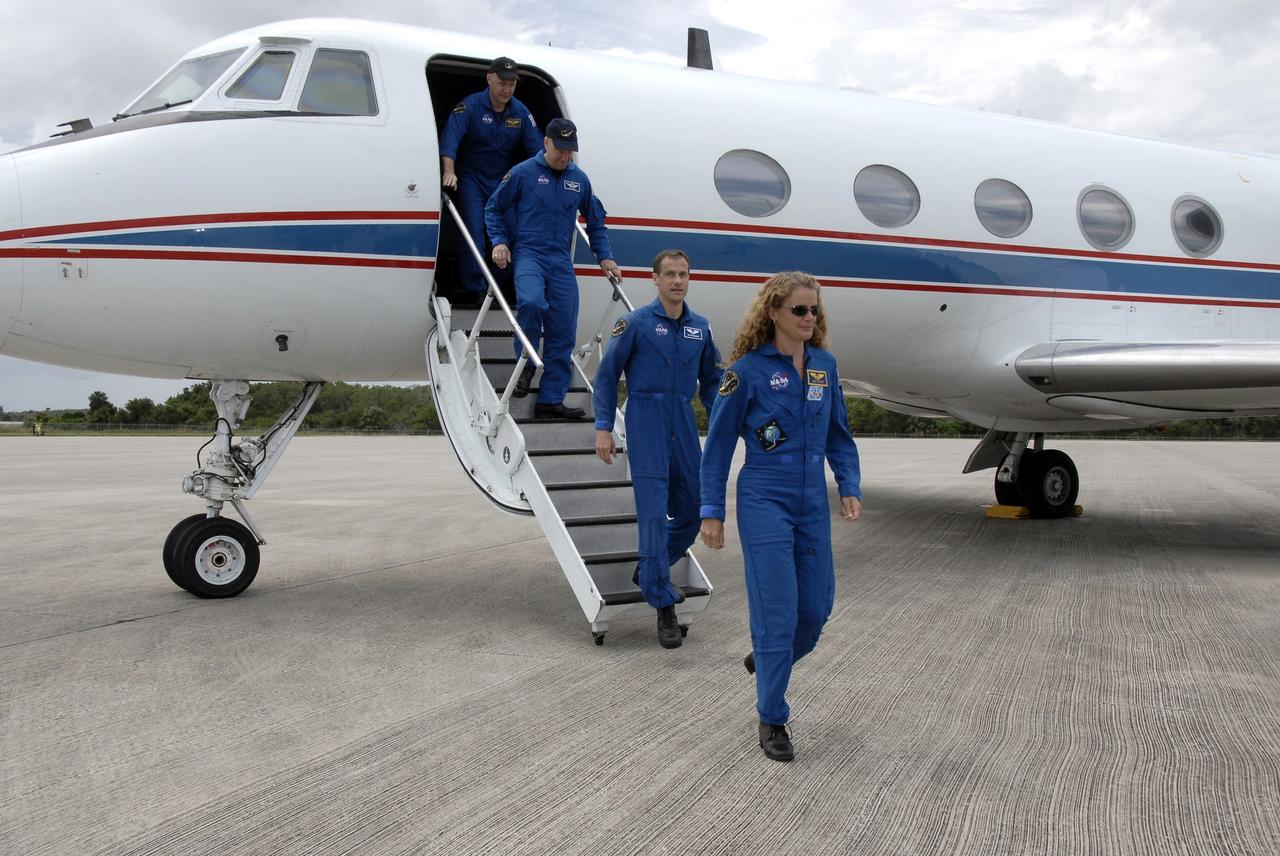
CAPE CANAVERAL, Fla. – Space shuttle Endeavour's STS-127 mission crew members disembark from the Shuttle Training Aircraft at NASA Kennedy Space Center's Shuttle Landing Facility. Seen here are (from right to left) Mission Specialists Julie Payette, Tom Marshburn and Tim Kopra and Pilot Doug Hurley. Payette represents the Canadian Space Agency. The astronauts will be taking part in Terminal Countdown Demonstration Test activities that include equipment familiarization and emergency egress training, and culminates in a simulated launch countdown aboard Endeavour. The STS-127 mission is the final of three flights dedicated to the assembly of the Japanese Kibo laboratory complex. Launch is targeted for June 13. Photo credit: NASA/Kim Shiflett
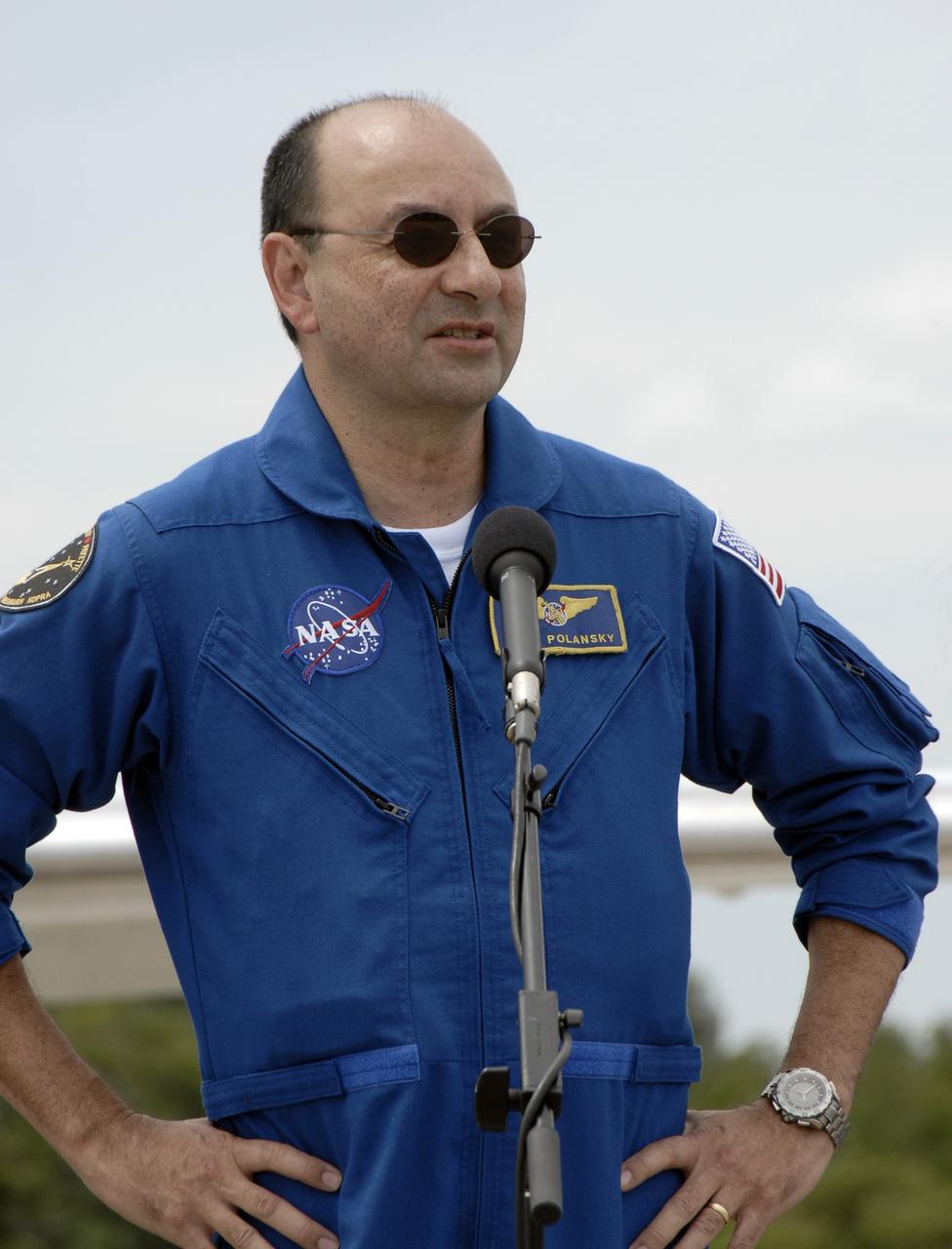
CAPE CANAVERAL, Fla. – Space shuttle Endeavour's STS-127 mission crew members greet the media after arriving at NASA's Kennedy Space Center in Florida. Seen here is Commander Mark Polansky, who explained they were at Kennedy for the Terminal Countdown Demonstration Test, or TCDT. The astronauts will be taking part in Terminal Countdown Demonstration Test activities that include equipment familiarization and emergency egress training, and culminates in a simulated launch countdown aboard Endeavour. The STS-127 mission is the final of three flights dedicated to the assembly of the Japanese Kibo laboratory complex. Launch is targeted for June 13. Photo credit: NASA/Kim Shiflett
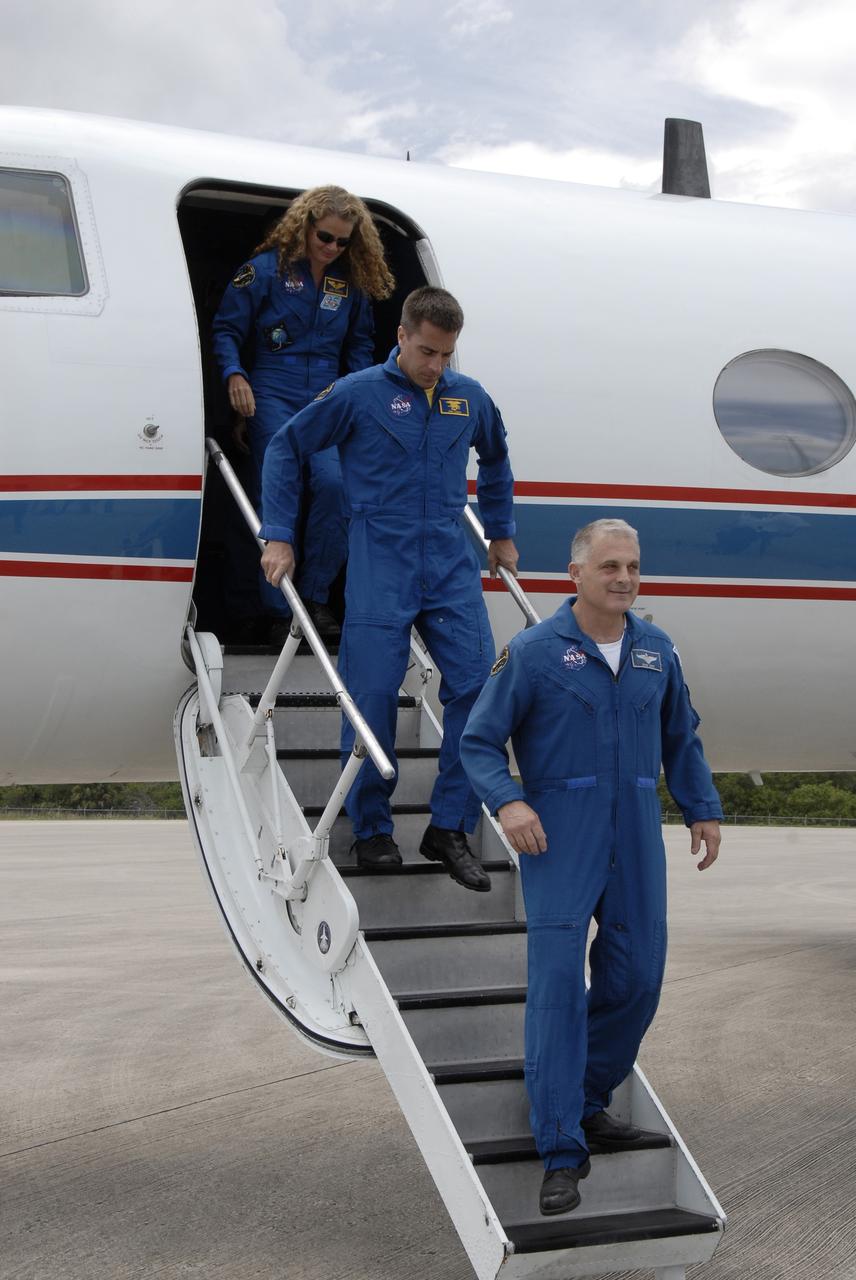
CAPE CANAVERAL, Fla. – Space shuttle Endeavour's STS-127 mission crew members disembark from the Shuttle Training Aircraft at NASA Kennedy Space Center's Shuttle Landing Facility. Seen here are (from bottom to top) Mission Specialists Dave Wolf, Christopher Cassidy and Julie Payette, who represents the Canadian Space Agency. The astronauts will be taking part in Terminal Countdown Demonstration Test activities that include equipment familiarization and emergency egress training, and culminates in a simulated launch countdown aboard Endeavour. The STS-127 mission is the final of three flights dedicated to the assembly of the Japanese Kibo laboratory complex. Launch is targeted for June 13. Photo credit: NASA/Kim Shiflett
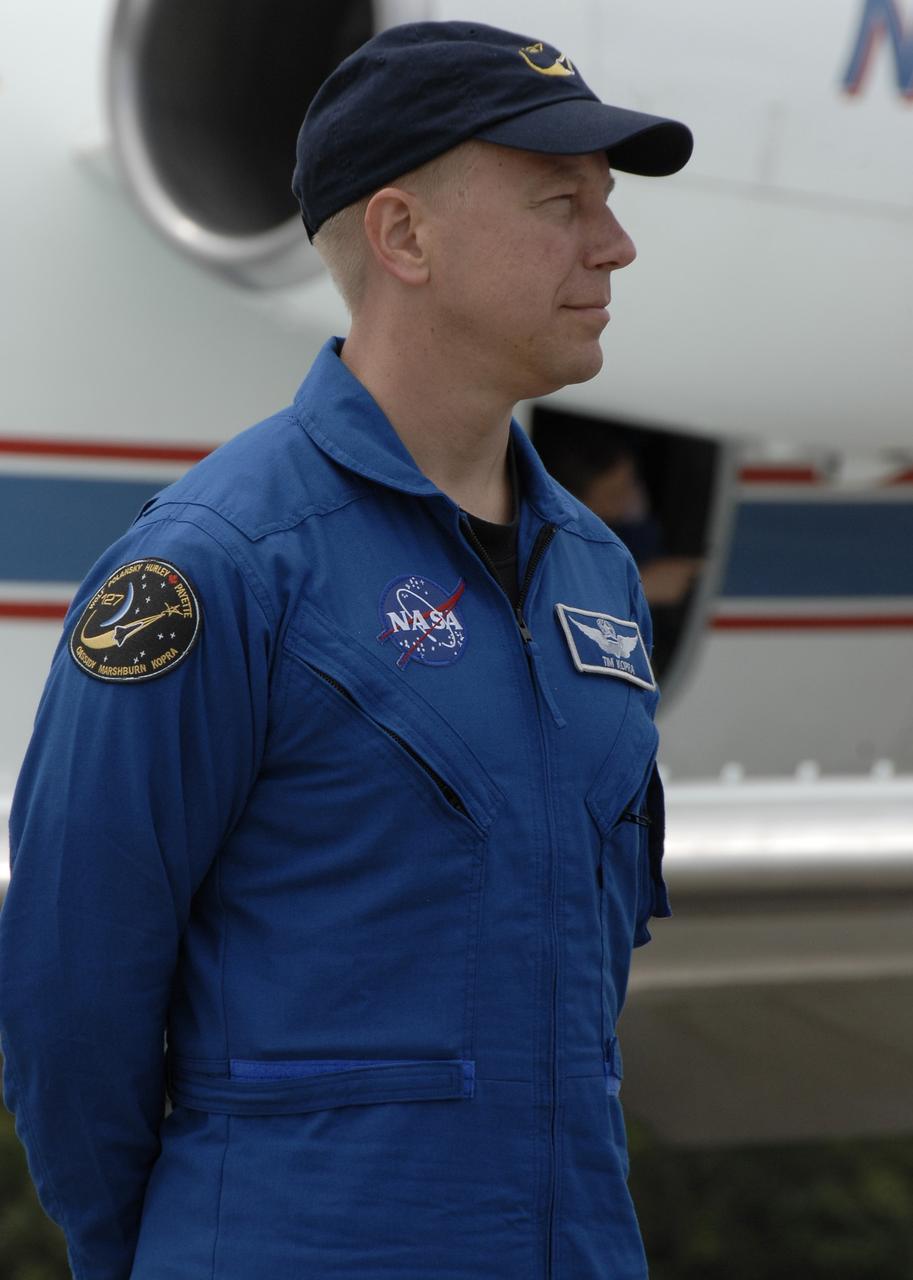
CAPE CANAVERAL, Fla. – Space shuttle Endeavour's STS-127 mission crew members greet the media after arriving at NASA's Kennedy Space Center in Florida for the Terminal Countdown Demonstration Test, or TCDT. Seen here is Mission Specialist Tim Kopra. The astronauts will be taking part in Terminal Countdown Demonstration Test activities that include equipment familiarization and emergency egress training, and culminates in a simulated launch countdown aboard Endeavour. The STS-127 mission is the final of three flights dedicated to the assembly of the Japanese Kibo laboratory complex. Launch is targeted for June 13. Photo credit: NASA/Kim Shiflett
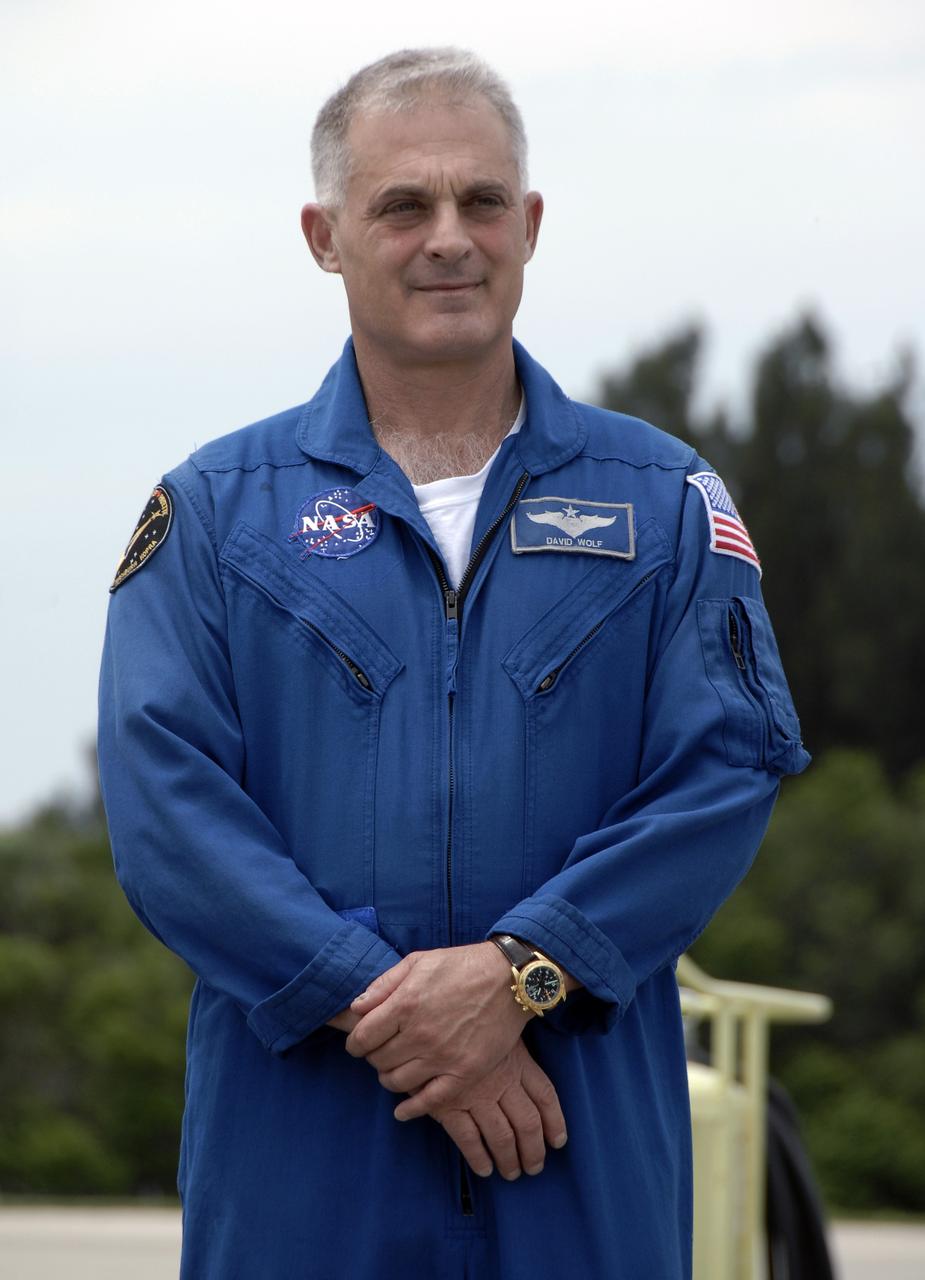
CAPE CANAVERAL, Fla. – Space shuttle Endeavour's STS-127 mission crew members greet the media after arriving at NASA's Kennedy Space Center in Florida for the Terminal Countdown Demonstration Test, or TCDT. Seen here is Mission Specialist Dave Wolf. The astronauts will be taking part in Terminal Countdown Demonstration Test activities that include equipment familiarization and emergency egress training, and culminates in a simulated launch countdown aboard Endeavour. The STS-127 mission is the final of three flights dedicated to the assembly of the Japanese Kibo laboratory complex. Launch is targeted for June 13. Photo credit: NASA/Kim Shiflett

STS-133 TCDT - STA'S WITH MEDIA AS SEEN FROM VAB ROOF
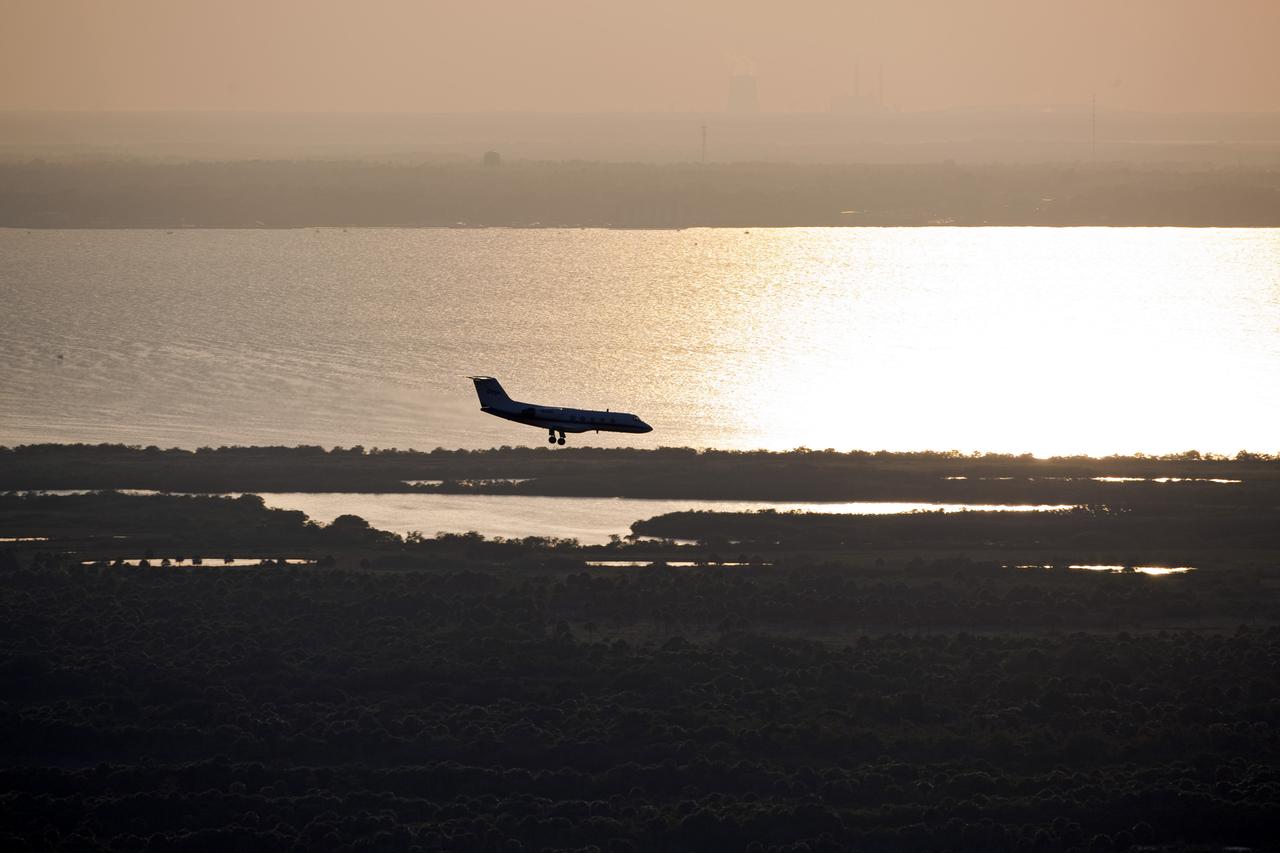
STS-133 TCDT - STA'S WITH MEDIA AS SEEN FROM VAB ROOF
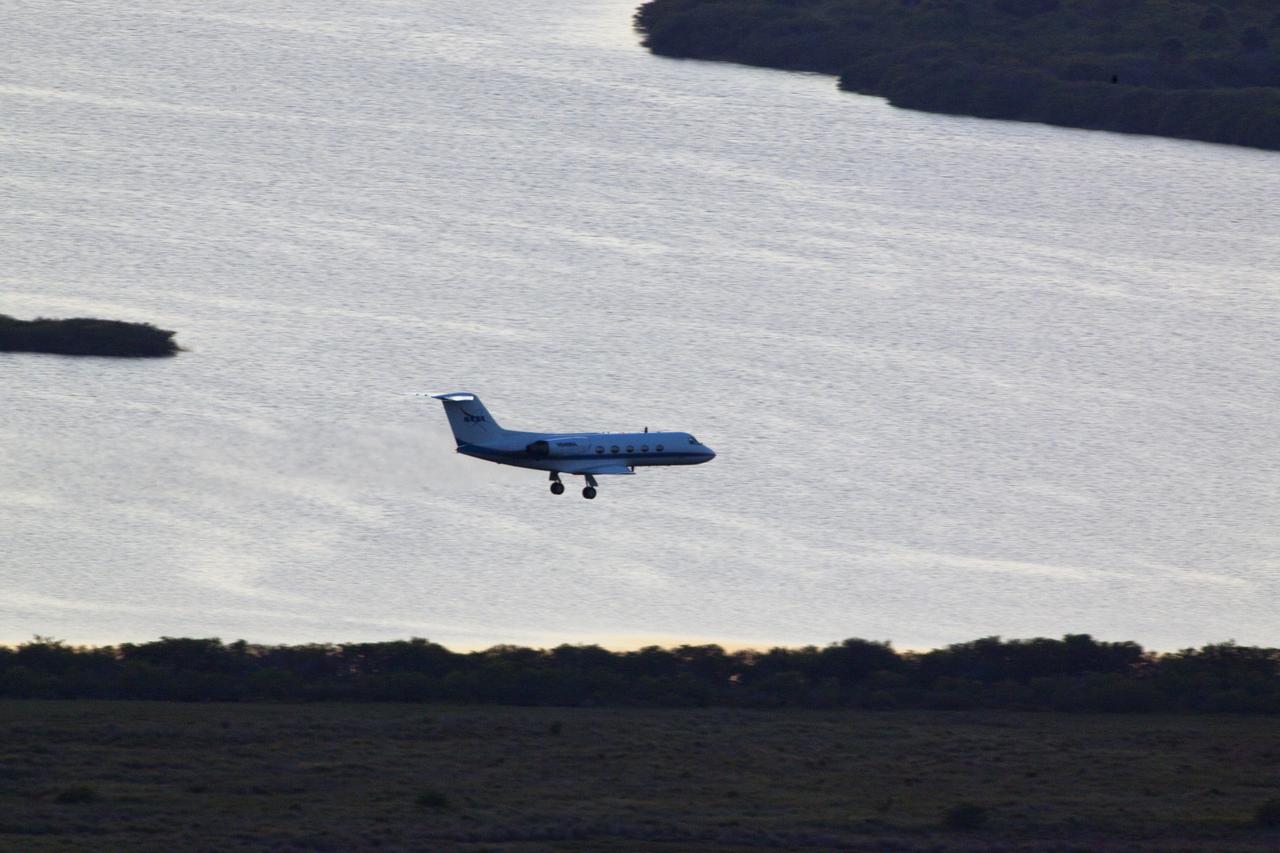
STS-133 TCDT - STA'S WITH MEDIA AS SEEN FROM VAB ROOF
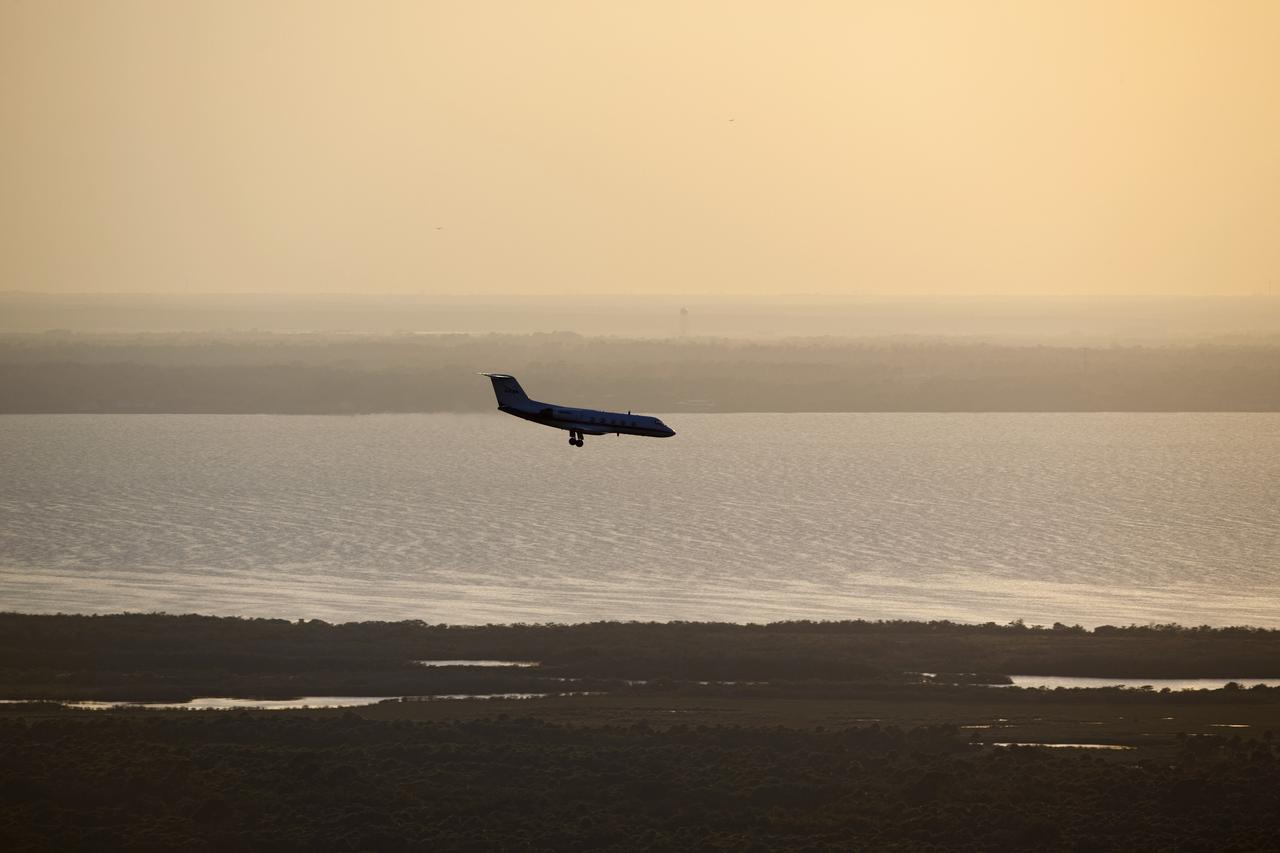
STS-133 TCDT - STA'S WITH MEDIA AS SEEN FROM VAB ROOF

STS-133 TCDT - STA'S WITH MEDIA AS SEEN FROM VAB ROOF
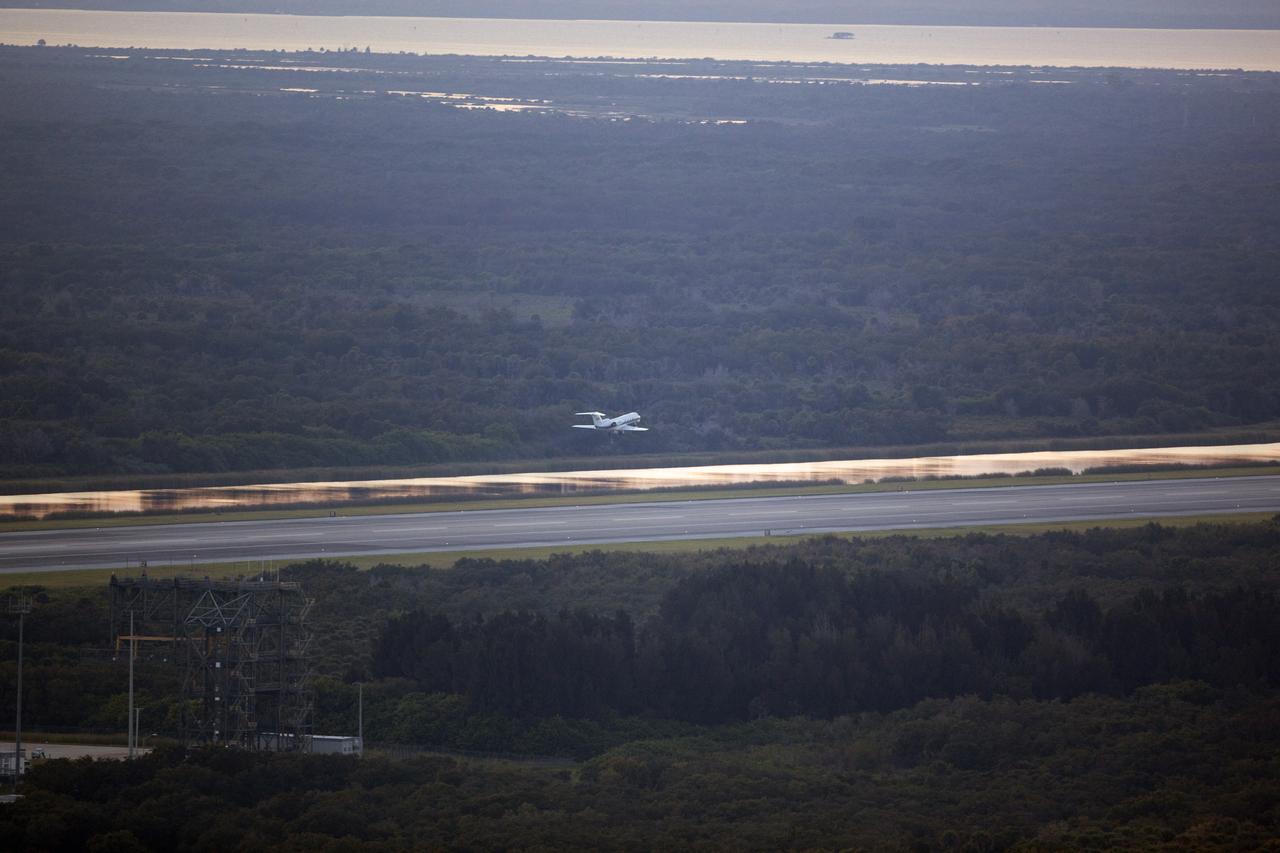
STS-133 TCDT - STA'S WITH MEDIA AS SEEN FROM VAB ROOF
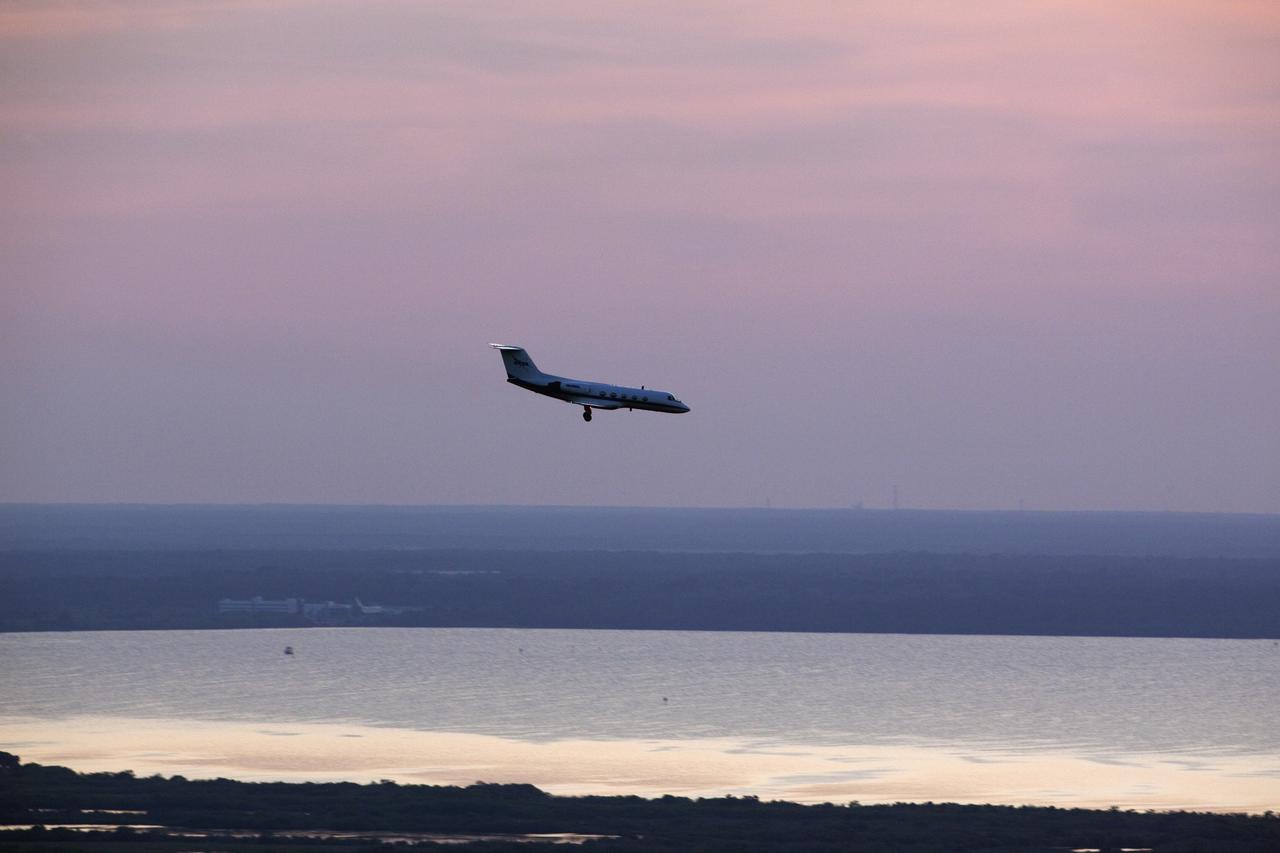
STS-133 TCDT - STA'S WITH MEDIA AS SEEN FROM VAB ROOF
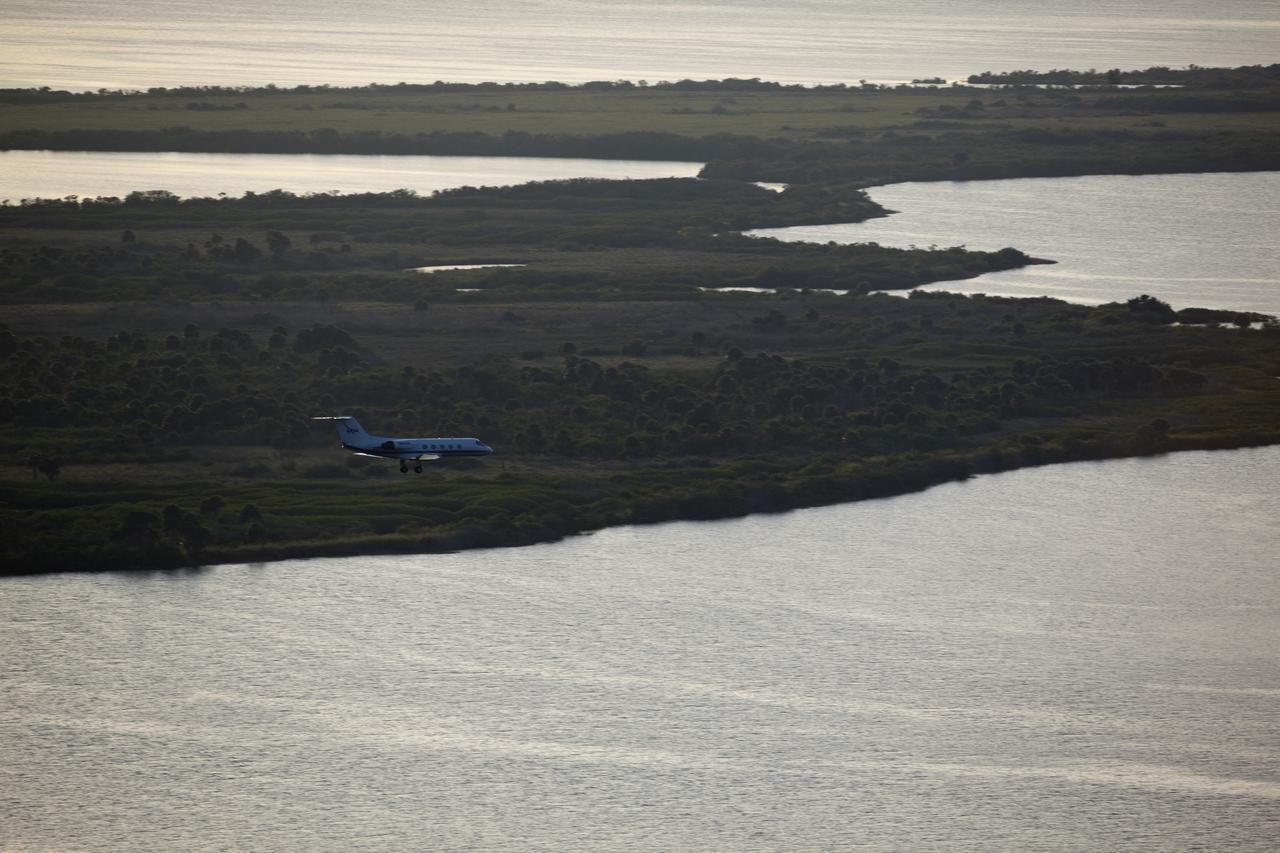
STS-133 TCDT - STA'S WITH MEDIA AS SEEN FROM VAB ROOF
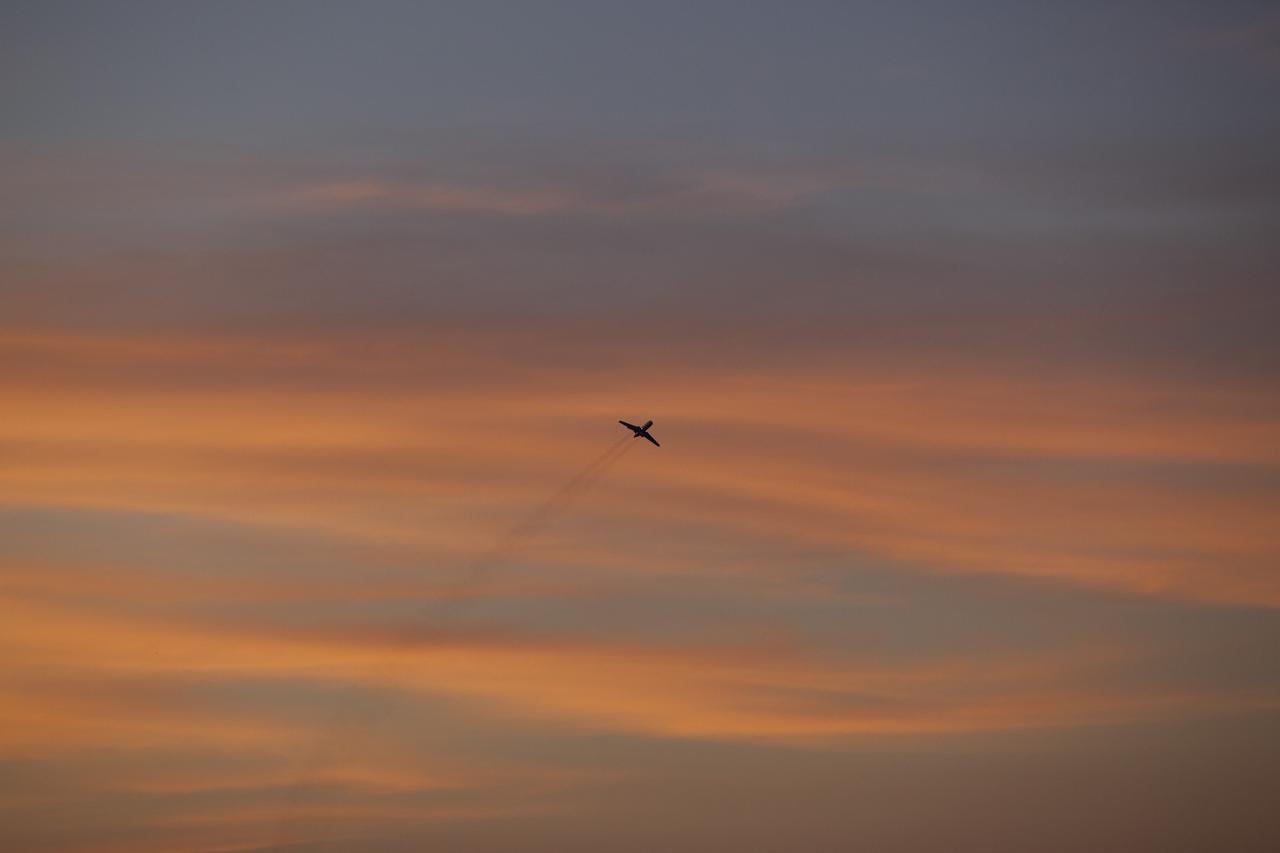
STS-133 TCDT - STA'S WITH MEDIA AS SEEN FROM VAB ROOF

STS-133 TCDT - STA'S WITH MEDIA AS SEEN FROM VAB ROOF
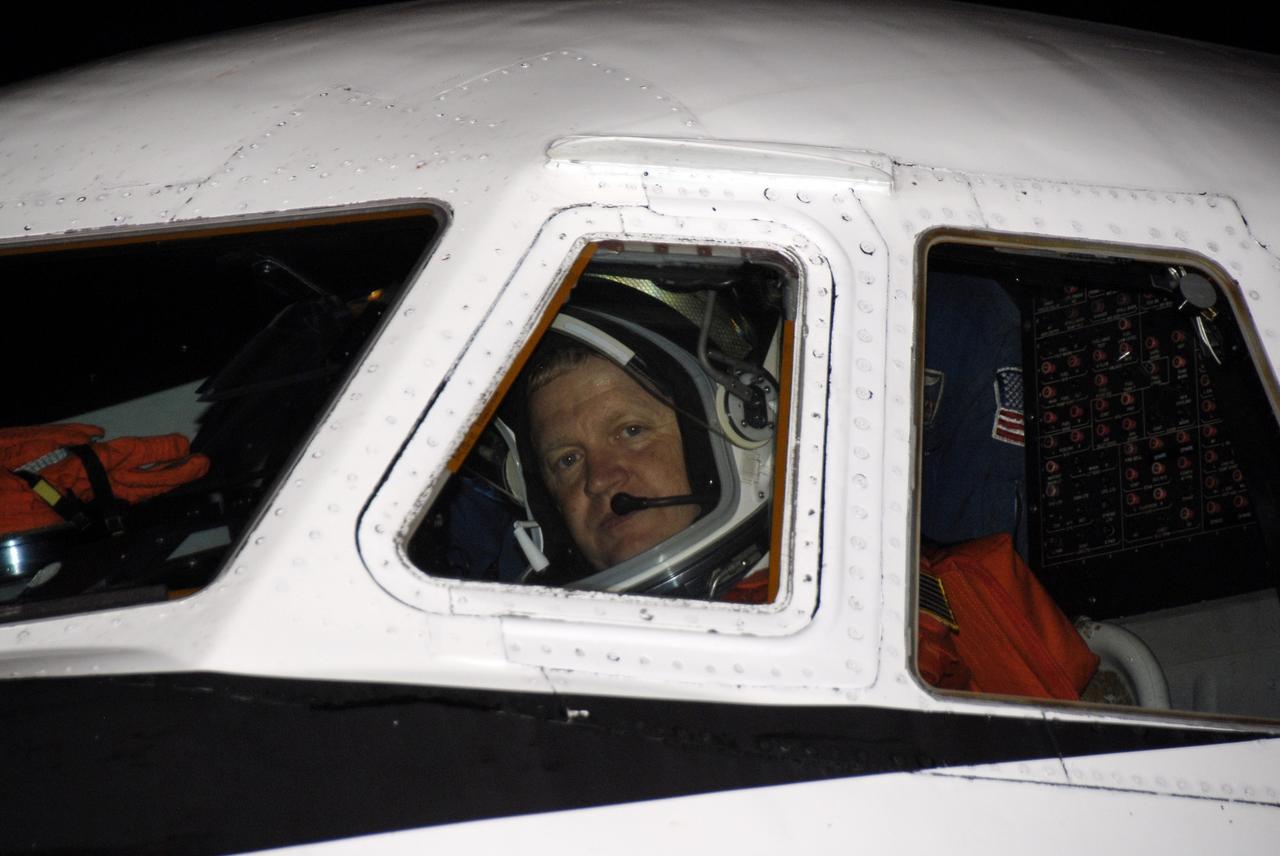
CAPE CANAVERAL, Fla. - At the Shuttle Landing Facility at NASA's Kennedy Space Center in Florida, STS-126 Pilot Eric Boe peers out the cockpit window of the Shuttle Training Aircraft, or STA, before taking off to practice shuttle landings. The STA is a Grumman American Aviation-built Gulf Stream II jet that was modified to simulate a shuttle’s cockpit, motion and visual cues, and handling qualities. In flight, the aircraft duplicates the shuttle’s atmospheric descent trajectory from approximately 35,000 feet to landing. The practice is part of the Terminal Countdown Demonstration Test, which includes equipment familiarization, emergency exit procedures and a simulated launch countdown. On the STS-126 mission, space shuttle Endeavour's crew will deliver equipment and supplies to the International Space Station in preparation for expansion from a three- to six-person resident crew aboard the complex. The mission also will include four spacewalks to service the station’s Solar Alpha Rotary Joints. Endeavour is targeted to launch Nov. 14. Photo credit: NASA/Kim Shiflett

CAPE CANAVERAL, Fla. - From the Shuttle Landing Facility at NASA's Kennedy Space Center in Florida, the Shuttle Training Aircraft, or STA, with STS-126 Commander Chris Ferguson and Pilot Eric Boe on board, takes off. Ferguson and Boe will practice shuttle landings on the STA, a Grumman American Aviation-built Gulf Stream II jet that was modified to simulate a shuttle’s cockpit, motion and visual cues, and handling qualities. In flight, the aircraft duplicates the shuttle’s atmospheric descent trajectory from approximately 35,000 feet to landing. The practice is part of the Terminal Countdown Demonstration Test, which includes equipment familiarization, emergency exit procedures and a simulated launch countdown. On the STS-126 mission, space shuttle Endeavour's crew will deliver equipment and supplies to the International Space Station in preparation for expansion from a three- to six-person resident crew aboard the complex. The mission also will include four spacewalks to service the station’s Solar Alpha Rotary Joints. Endeavour is targeted to launch Nov. 14. Photo credit: NASA/Kim Shiflett
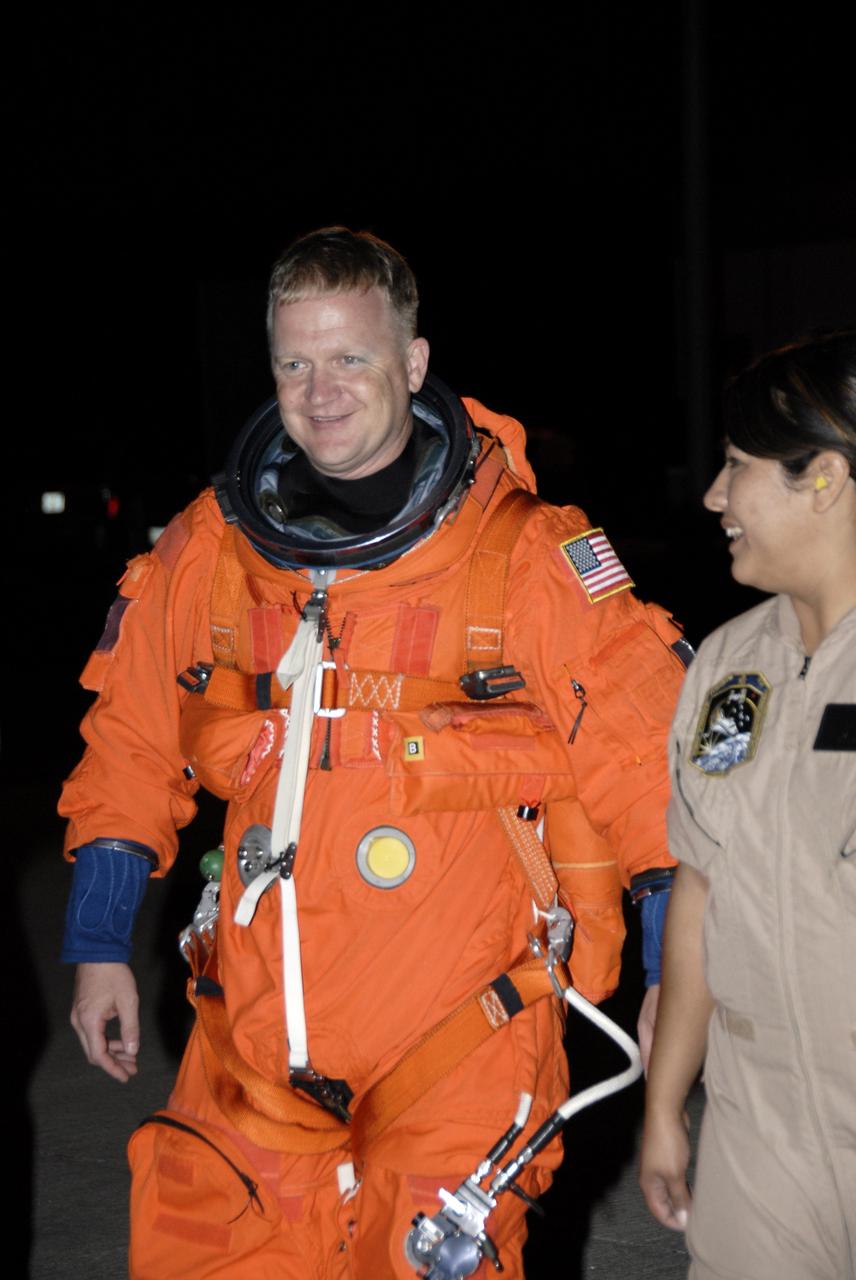
CAPE CANAVERAL, Fla. - At NASA's Kennedy Space Center in Florida, STS-126 Pilot Eric Boe heads across the parking apron of the Shuttle Landing Facility to the Shuttle Training Aircraft, or STA. He will practice shuttle landings in the STA, a Grumman American Aviation-built Gulf Stream II jet that was modified to simulate a shuttle’s cockpit, motion and visual cues, and handling qualities. In flight, the aircraft duplicates the shuttle’s atmospheric descent trajectory from approximately 35,000 feet to landing. The practice is part of the Terminal Countdown Demonstration Test, which includes equipment familiarization, emergency exit procedures and a simulated launch countdown. On the STS-126 mission, space shuttle Endeavour's crew will deliver equipment and supplies to the International Space Station in preparation for expansion from a three- to six-person resident crew aboard the complex. The mission also will include four spacewalks to service the station’s Solar Alpha Rotary Joints. Endeavour is targeted to launch Nov. 14. Photo credit: NASA/Kim Shiflett
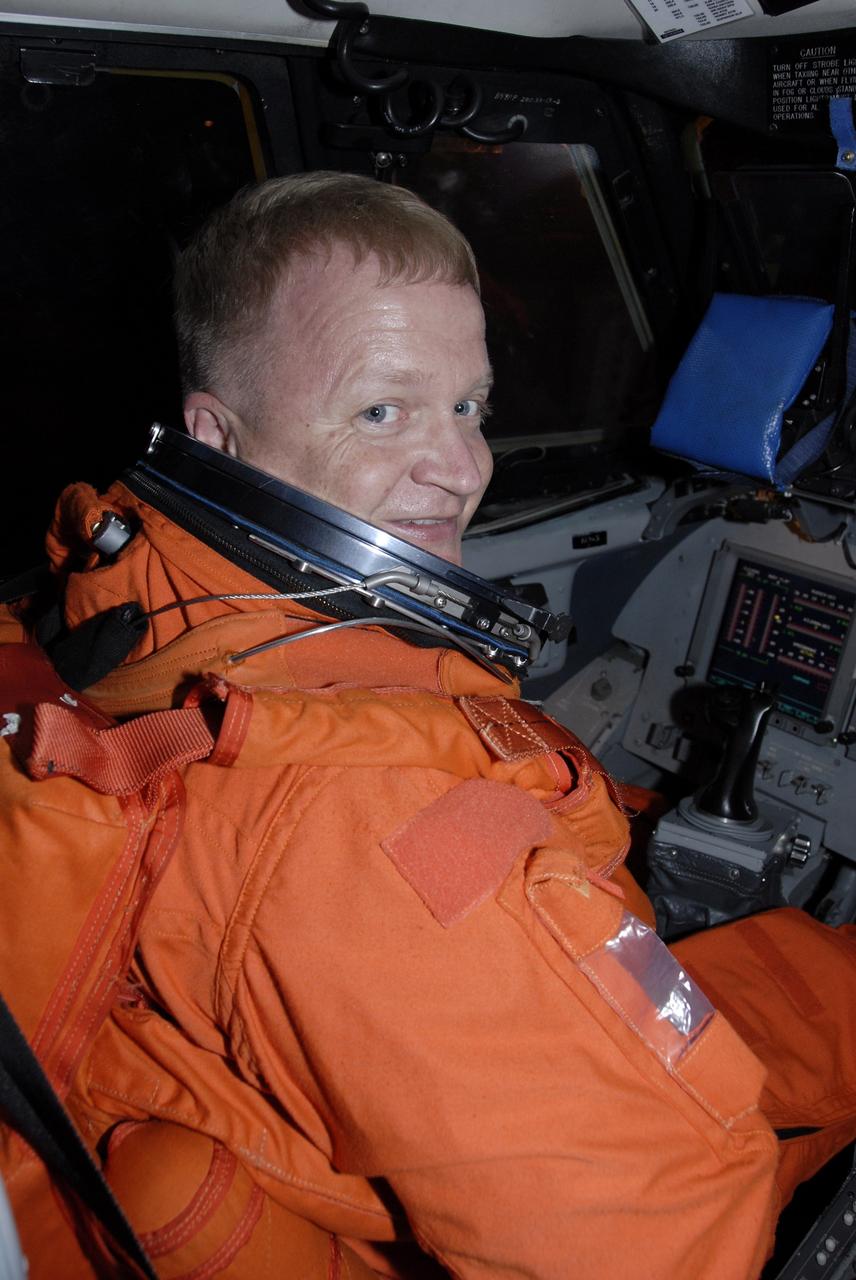
CAPE CANAVERAL, Fla. - At the Shuttle Landing Facility at NASA's Kennedy Space Center in Florida, STS-126 Pilot Eric Boe takes his seat in the cockpit of the Shuttle Training Aircraft, or STA. He will practice shuttle landings in the STA, a Grumman American Aviation-built Gulf Stream II jet that was modified to simulate a shuttle’s cockpit, motion and visual cues, and handling qualities. In flight, the aircraft duplicates the shuttle’s atmospheric descent trajectory from approximately 35,000 feet to landing. The practice is part of the Terminal Countdown Demonstration Test, which includes equipment familiarization, emergency exit procedures and a simulated launch countdown. On the STS-126 mission, space shuttle Endeavour's crew will deliver equipment and supplies to the International Space Station in preparation for expansion from a three- to six-person resident crew aboard the complex. The mission also will include four spacewalks to service the station’s Solar Alpha Rotary Joints. Endeavour is targeted to launch Nov. 14. Photo credit: NASA/Kim Shiflett
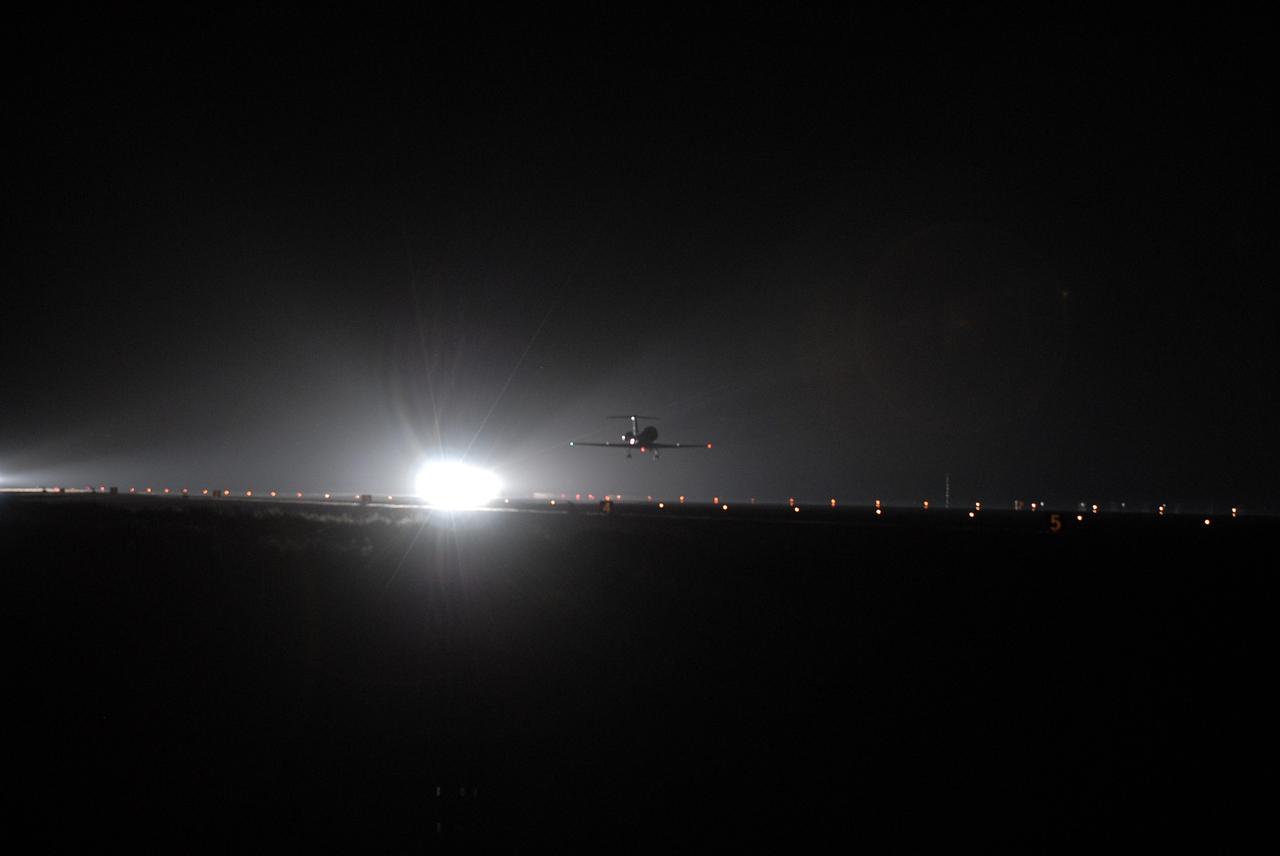
CAPE CANAVERAL, Fla. - From the Shuttle Landing Facility at NASA's Kennedy Space Center in Florida, the Shuttle Training Aircraft, or STA, with STS-126 Commander Chris Ferguson and Pilot Eric Boe on board, takes off. Ferguson and Boe will practice shuttle landings on the STA, a Grumman American Aviation-built Gulf Stream II jet that was modified to simulate a shuttle’s cockpit, motion and visual cues, and handling qualities. In flight, the aircraft duplicates the shuttle’s atmospheric descent trajectory from approximately 35,000 feet to landing. The practice is part of the Terminal Countdown Demonstration Test, which includes equipment familiarization, emergency exit procedures and a simulated launch countdown. On the STS-126 mission, space shuttle Endeavour's crew will deliver equipment and supplies to the International Space Station in preparation for expansion from a three- to six-person resident crew aboard the complex. The mission also will include four spacewalks to service the station’s Solar Alpha Rotary Joints. Endeavour is targeted to launch Nov. 14. Photo credit: NASA/Kim Shiflett
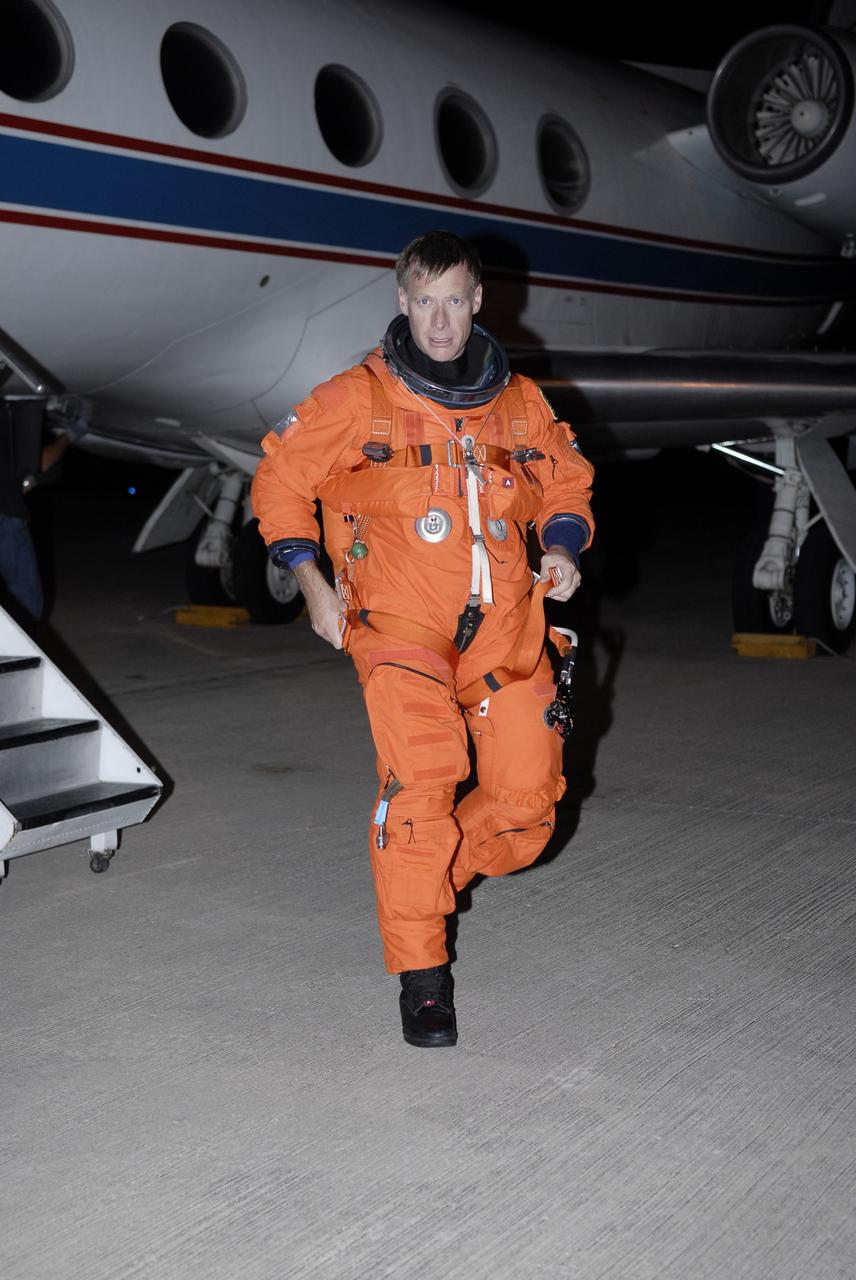
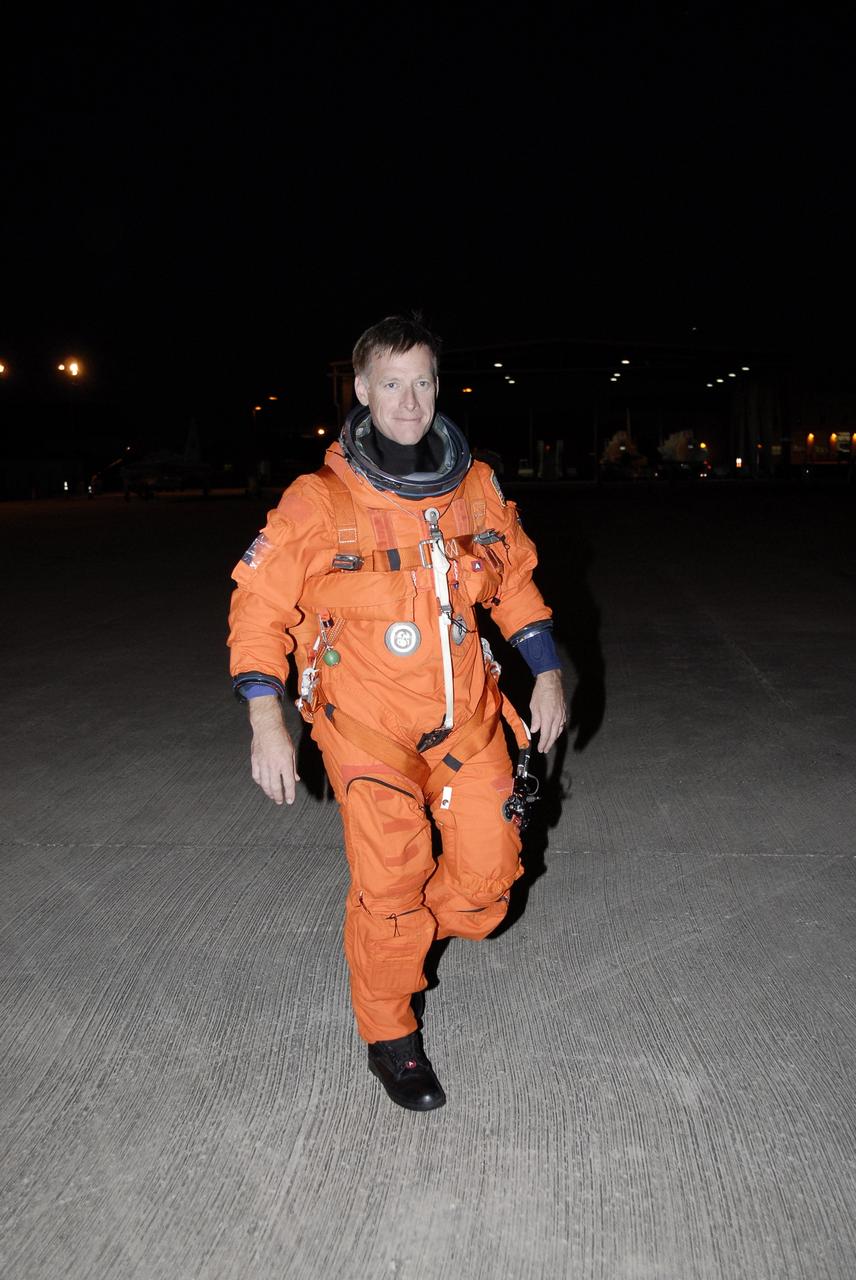
CAPE CANAVERAL, Fla. - At NASA's Kennedy Space Center in Florida, STS-126 Commander Chris Ferguson walks away from the Shuttle Training Aircraft, or STA, after practicing shuttle landings. The STA is a Grumman American Aviation-built Gulf Stream II jet that was modified to simulate a shuttle’s cockpit, motion and visual cues, and handling qualities. In flight, the aircraft duplicates the shuttle’s atmospheric descent trajectory from approximately 35,000 feet to landing. The practice is part of the Terminal Countdown Demonstration Test, which includes equipment familiarization, emergency exit procedures and a simulated launch countdown. On the STS-126 mission, space shuttle Endeavour's crew will deliver equipment and supplies to the International Space Station in preparation for expansion from a three- to six-person resident crew aboard the complex. The mission also will include four spacewalks to service the station’s Solar Alpha Rotary Joints. Endeavour is targeted to launch Nov. 14. Photo credit: NASA/Kim Shiflett
CAPE CANAVERAL, Fla. - At NASA's Kennedy Space Center in Florida, STS-126 Commander Chris Ferguson heads across the parking apron of the Shuttle Landing Facility to the Shuttle Training Aircraft, or STA. He will practice shuttle landings in the STA, a Grumman American Aviation-built Gulf Stream II jet that was modified to simulate a shuttle’s cockpit, motion and visual cues, and handling qualities. In flight, the aircraft duplicates the shuttle’s atmospheric descent trajectory from approximately 35,000 feet to landing. The practice is part of the Terminal Countdown Demonstration Test, which includes equipment familiarization, emergency exit procedures and a simulated launch countdown. On the STS-126 mission, space shuttle Endeavour's crew will deliver equipment and supplies to the International Space Station in preparation for expansion from a three- to six-person resident crew aboard the complex. The mission also will include four spacewalks to service the station’s Solar Alpha Rotary Joints. Endeavour is targeted to launch Nov. 14. Photo credit: NASA/Kim Shiflett
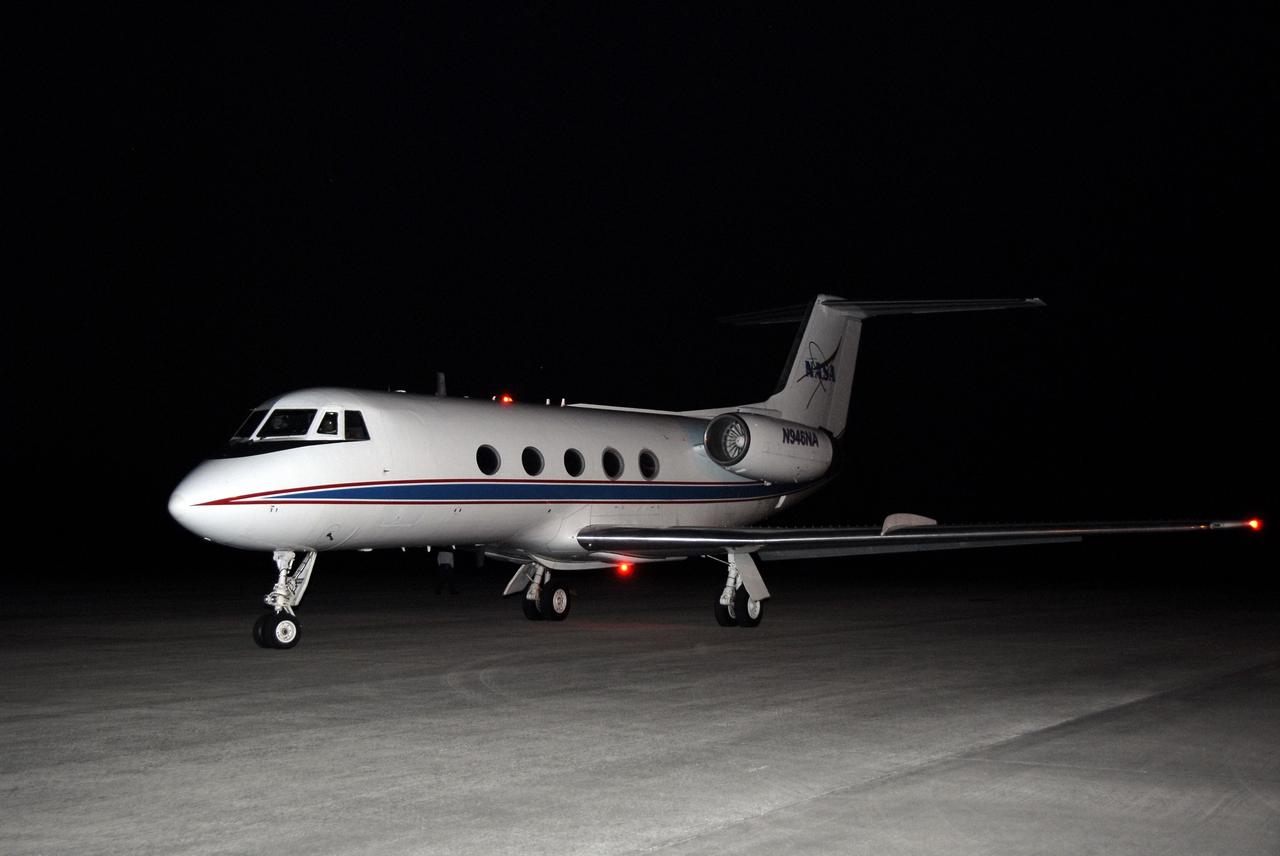
CAPE CANAVERAL, Fla. - At the Shuttle Landing Facility at NASA's Kennedy Space Center in Florida, the Shuttle Training Aircraft, or STA, with STS-126 Commander Chris Ferguson and Pilot Eric Boe on board, is ready to take off. Ferguson and Boe will practice shuttle landings on the STA, a Grumman American Aviation-built Gulf Stream II jet that was modified to simulate a shuttle’s cockpit, motion and visual cues, and handling qualities. In flight, the aircraft duplicates the shuttle’s atmospheric descent trajectory from approximately 35,000 feet to landing. The practice is part of the Terminal Countdown Demonstration Test, which includes equipment familiarization, emergency exit procedures and a simulated launch countdown. On the STS-126 mission, space shuttle Endeavour's crew will deliver equipment and supplies to the International Space Station in preparation for expansion from a three- to six-person resident crew aboard the complex. The mission also will include four spacewalks to service the station’s Solar Alpha Rotary Joints. Endeavour is targeted to launch Nov. 14. Photo credit: NASA/Kim Shiflett
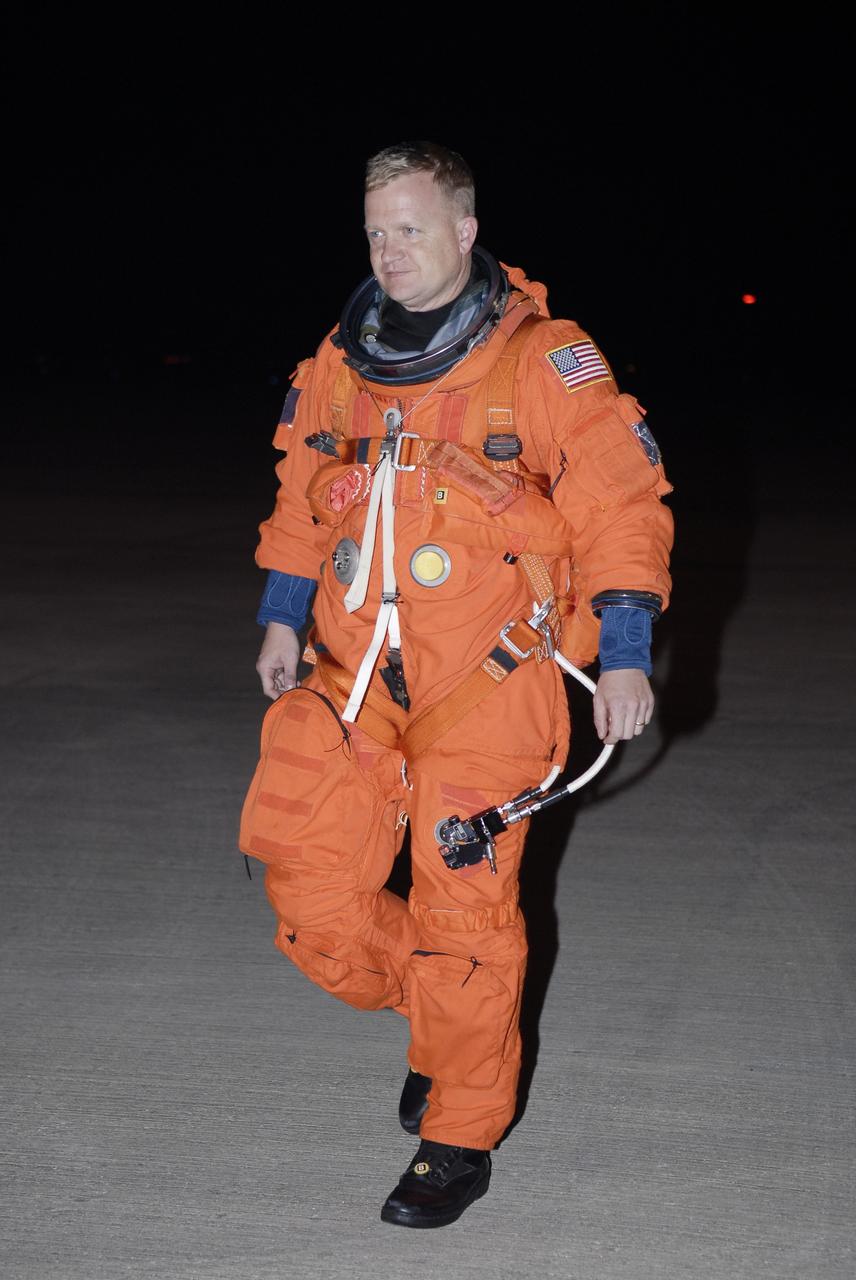
CAPE CANAVERAL, Fla. - At NASA's Kennedy Space Center in Florida, STS-126 Pilot Eric Boe walks away from the Shuttle Training Aircraft, or STA, after practicing shuttle landings. The STA is a Grumman American Aviation-built Gulf Stream II jet that was modified to simulate a shuttle’s cockpit, motion and visual cues, and handling qualities. In flight, the aircraft duplicates the shuttle’s atmospheric descent trajectory from approximately 35,000 feet to landing. The practice is part of the Terminal Countdown Demonstration Test, which includes equipment familiarization, emergency exit procedures and a simulated launch countdown. On the STS-126 mission, space shuttle Endeavour's crew will deliver equipment and supplies to the International Space Station in preparation for expansion from a three- to six-person resident crew aboard the complex. The mission also will include four spacewalks to service the station’s Solar Alpha Rotary Joints. Endeavour is targeted to launch Nov. 14. Photo credit: NASA/Kim Shiflett
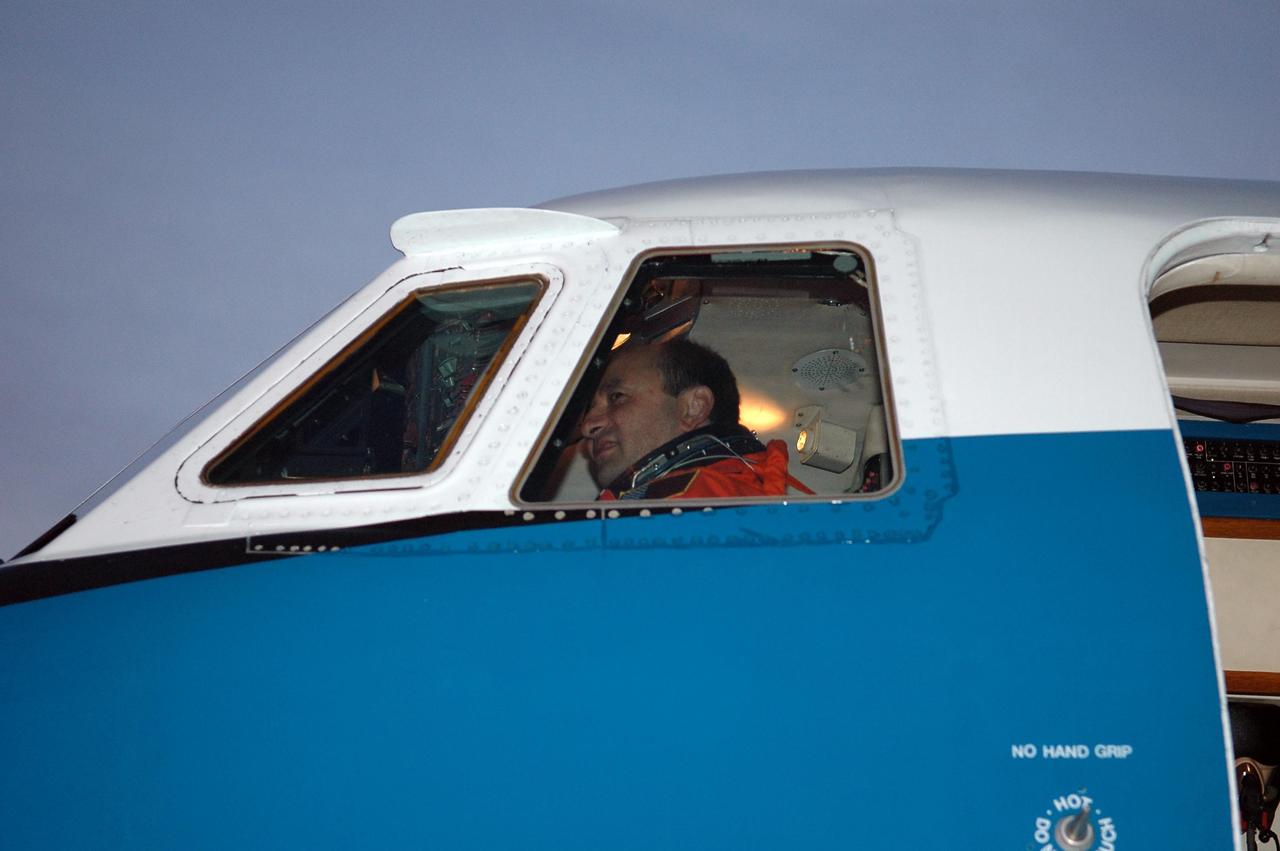
KENNEDY SPACE CENTER, FLA. -- At the Shuttle Landing Facility, STS-116 Commander Mark Polansky is in the pilot's seat of the shuttle training aircraft (STA), getting ready to practice landing the orbiter. The mission crew is at KSC for the terminal countdown demonstration test, which are prelaunch preparations that include a simulated launch countdown. STA practice is part of the TCDT. The STA is a Grumman American Aviation-built Gulf Stream II jet that was modified to simulate an orbiter's cockpit, motion and visual cues, and handling qualities. In flight, the STA duplicates the orbiter's atmospheric descent trajectory from approximately 35,000 feet altitude to landing on a runway. Because the orbiter is unpowered during re-entry and landing, its high-speed glide must be perfectly executed the first time. Photo credit: NASA/Kim Shiflett
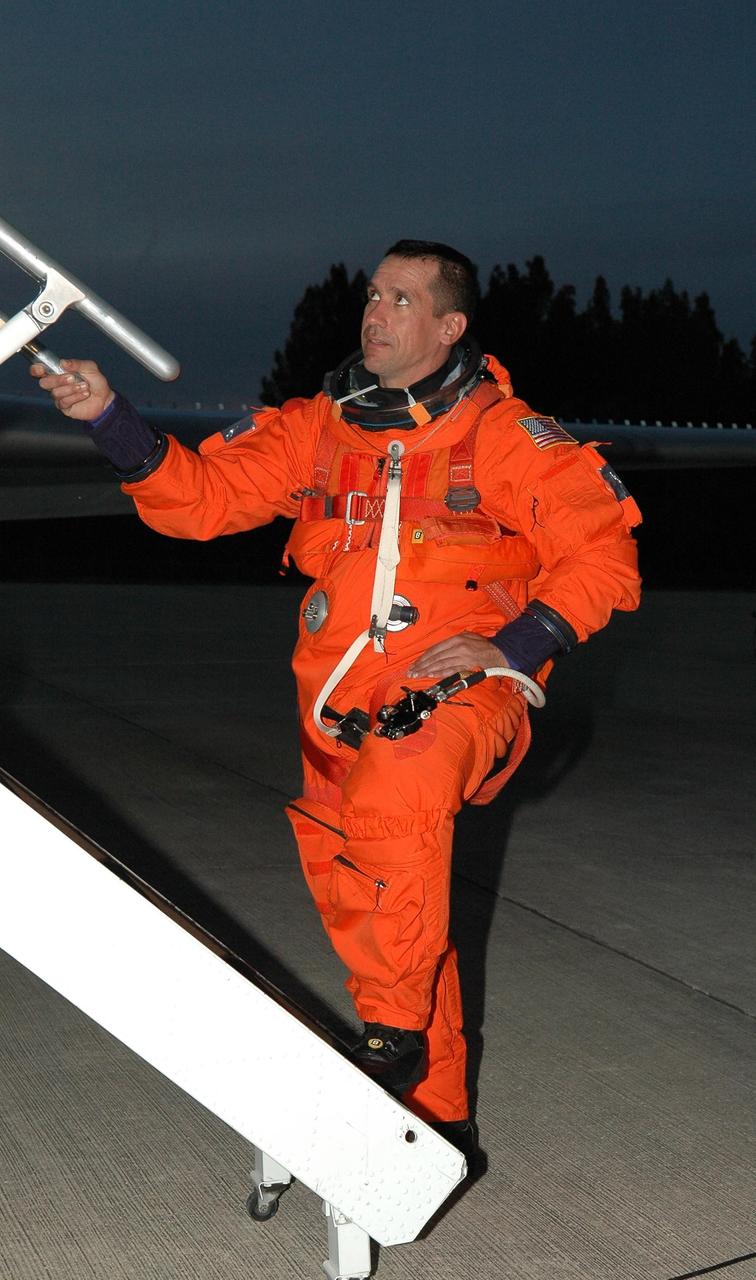
KENNEDY SPACE CENTER, FLA. -- At the Shuttle Landing Facility, STS-116 Pilot William Oelefein steps on the stairs to the shuttle training aircraft (STA) to practice landing the orbiter. The mission crew is at KSC for the terminal countdown demonstration test, which are prelaunch preparations that include a simulated launch countdown. STA practice is part of the TCDT. The STA is a Grumman American Aviation-built Gulf Stream II jet that was modified to simulate an orbiter's cockpit, motion and visual cues, and handling qualities. In flight, the STA duplicates the orbiter's atmospheric descent trajectory from approximately 35,000 feet altitude to landing on a runway. Because the orbiter is unpowered during re-entry and landing, its high-speed glide must be perfectly executed the first time. Photo credit: NASA/Kim Shiflett

KENNEDY SPACE CENTER, FLA. -- At the Shuttle Landing Facility, STS-116 Commander Mark Polansky climbs the steps to the shuttle training aircraft (STA) to practice landing the orbiter. The mission crew is at KSC for the terminal countdown demonstration test, which are prelaunch preparations that include a simulated launch countdown. STA practice is part of the TCDT. The STA is a Grumman American Aviation-built Gulf Stream II jet that was modified to simulate an orbiter's cockpit, motion and visual cues, and handling qualities. In flight, the STA duplicates the orbiter's atmospheric descent trajectory from approximately 35,000 feet altitude to landing on a runway. Because the orbiter is unpowered during re-entry and landing, its high-speed glide must be perfectly executed the first time. Photo credit: NASA/Kim Shiflett
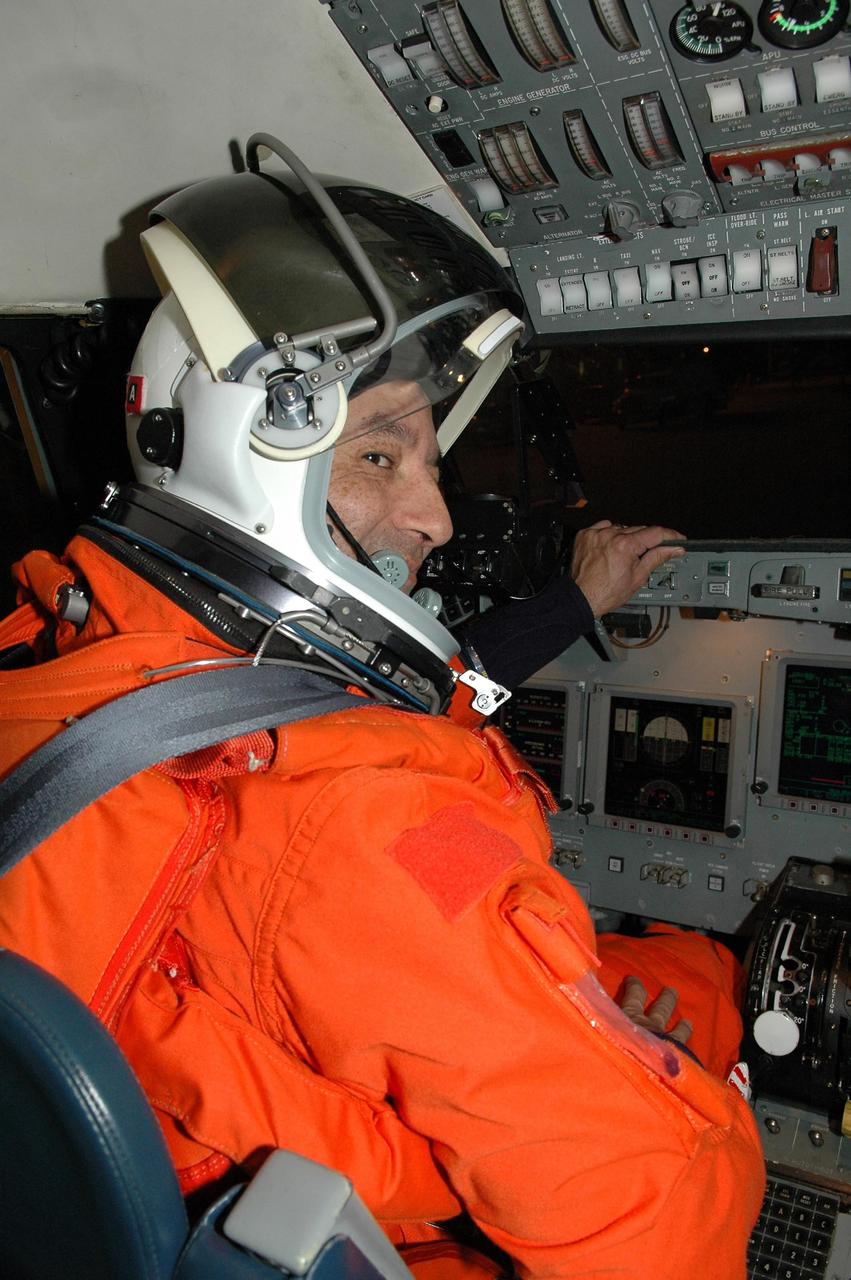
KENNEDY SPACE CENTER, FLA. -- At the Shuttle Landing Facility, STS-116 Commander Mark Polansky is in the pilot's seat of the shuttle training aircraft (STA), getting ready to practice landing the orbiter. The mission crew is at KSC for the terminal countdown demonstration test, which are prelaunch preparations that include a simulated launch countdown. STA practice is part of the TCDT. The STA is a Grumman American Aviation-built Gulf Stream II jet that was modified to simulate an orbiter's cockpit, motion and visual cues, and handling qualities. In flight, the STA duplicates the orbiter's atmospheric descent trajectory from approximately 35,000 feet altitude to landing on a runway. Because the orbiter is unpowered during re-entry and landing, its high-speed glide must be perfectly executed the first time. Photo credit: NASA/Kim Shiflett
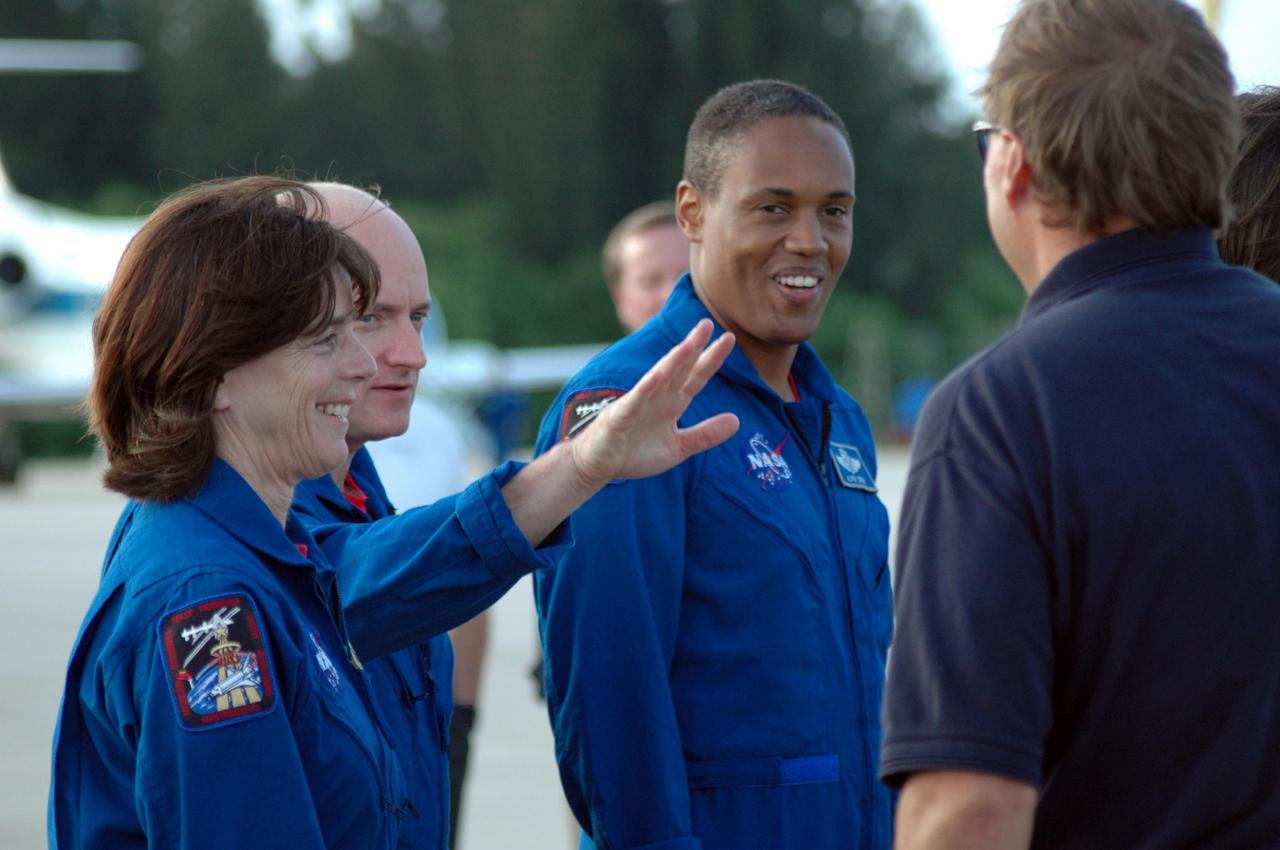
KENNEDY SPACE CENTER, Fla. -- The STS-118 crew arrives at Kennedy's Shuttle Landing Facility aboard a Shuttle Training Aircraft to take part in the Terminal Countdown Demonstration Test (TCDT), a dress rehearsal for launch. From left are Mission Specialist Barbara R. Morgan, Commander Scott Kelly and Mission Specialist Alvin Drew. Morgan joined NASA's Teacher in Space program in 1985 and was selected as an astronaut in 1998. DT activities include M-113 armored personnel carrier training, payload familiarization, emergency egress training at the pad and a simulated launch countdown. The STS-118 payload aboard Space Shuttle Endeavour includes the S5 truss, a SPACEHAB module and external stowage platform 3. The mission is the 22nd flight to the International Space Station and is targeted for launch on Aug.7. Photo credit: NASA/Ken Thornsley
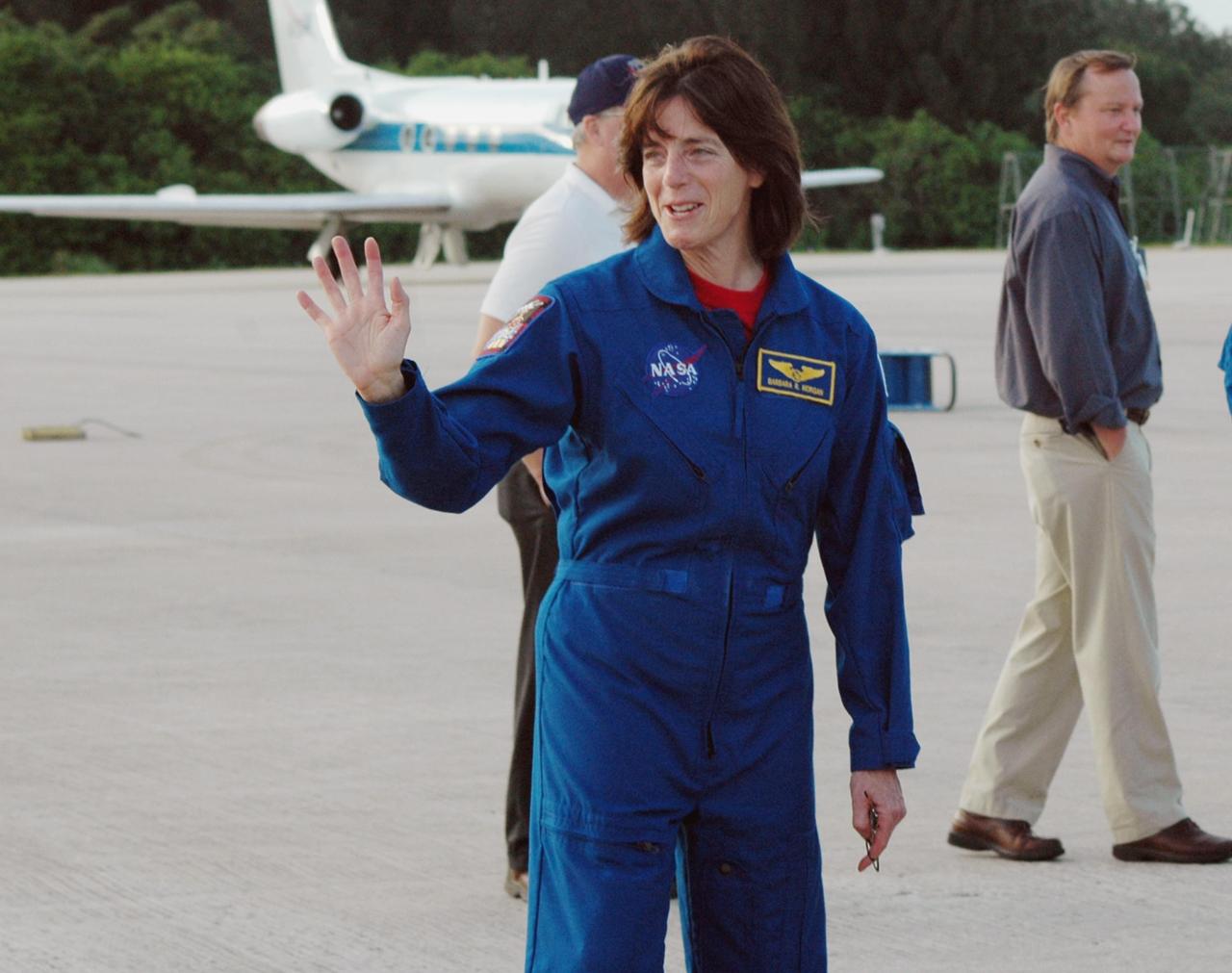
KENNEDY SPACE CENTER, Fla. -- The STS-118 crew arrives at Kennedy's Shuttle Landing Facility aboard a Shuttle Training Aircraft to take part in the Terminal Countdown Demonstration Test (TCDT), a dress rehearsal for launch. Mission Specialist Barbara R. Morgan, NASA's first educator astronaut, acknowledges those who have turned out to welcome them. TCDT activities include M-113 armored personnel carrier training, payload familiarization, emergency egress training at the pad and a simulated launch countdown. The STS-118 payload aboard Space Shuttle Endeavour includes the S5 truss, a SPACEHAB module and external stowage platform 3. The mission is the 22nd flight to the International Space Station and is targeted for launch on Aug.7. Photo credit: NASA/Ken Thornsley
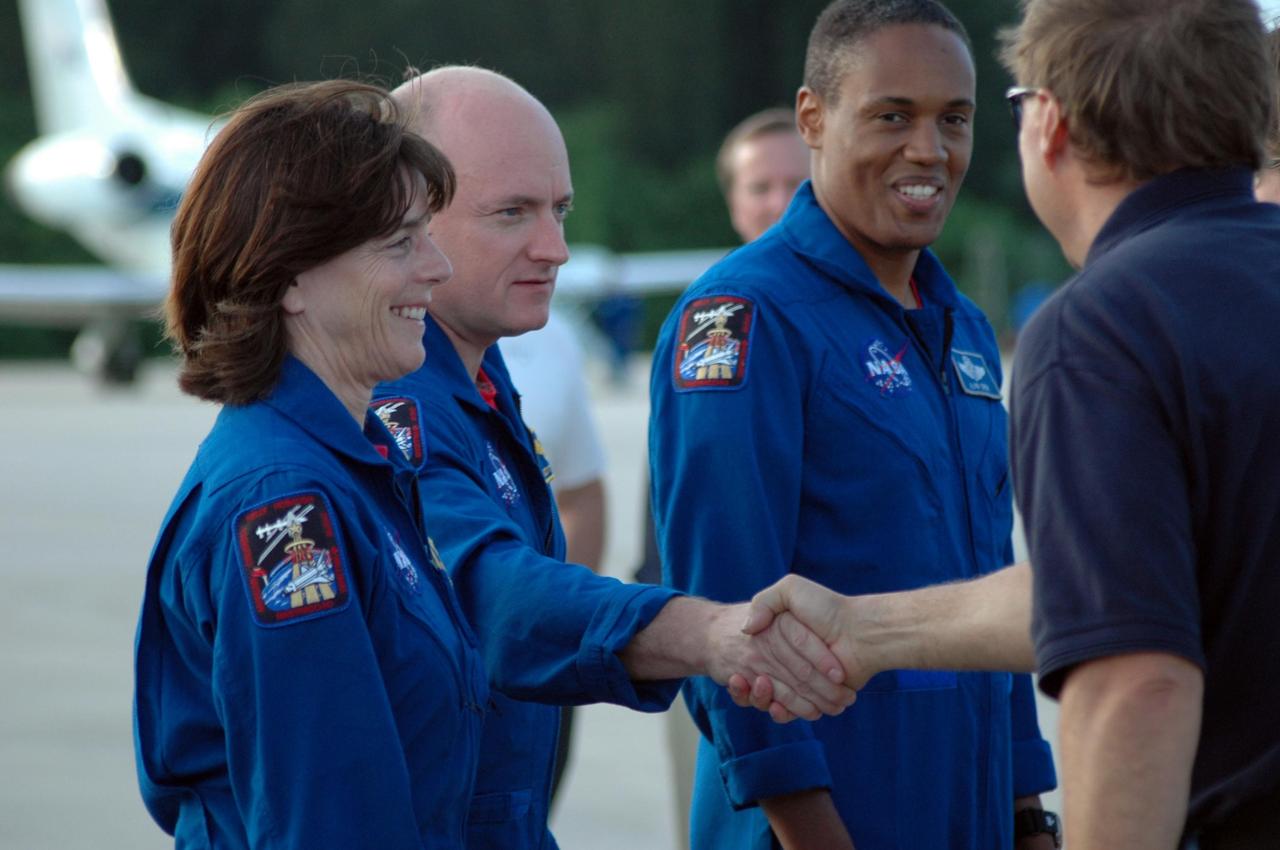
KENNEDY SPACE CENTER, Fla. -- The STS-118 crew arrives at Kennedy's Shuttle Landing Facility aboard a Shuttle Training Aircraft to take part in the Terminal Countdown Demonstration Test (TCDT), a dress rehearsal for launch. From left are Mission Specialist Barbara R. Morgan, Commander Scott Kelly and Mission Specialist Alvin Drew. Morgan joined NASA's Teacher in Space program in 1985 and was selected as an astronaut in 1998. TCDT activities include M-113 armored personnel carrier training, payload familiarization, emergency egress training at the pad and a simulated launch countdown. The STS-118 payload aboard Space Shuttle Endeavour includes the S5 truss, a SPACEHAB module and external stowage platform 3. The mission is the 22nd flight to the International Space Station and is targeted for launch on Aug.7. Photo credit: NASA/Ken Thornsley
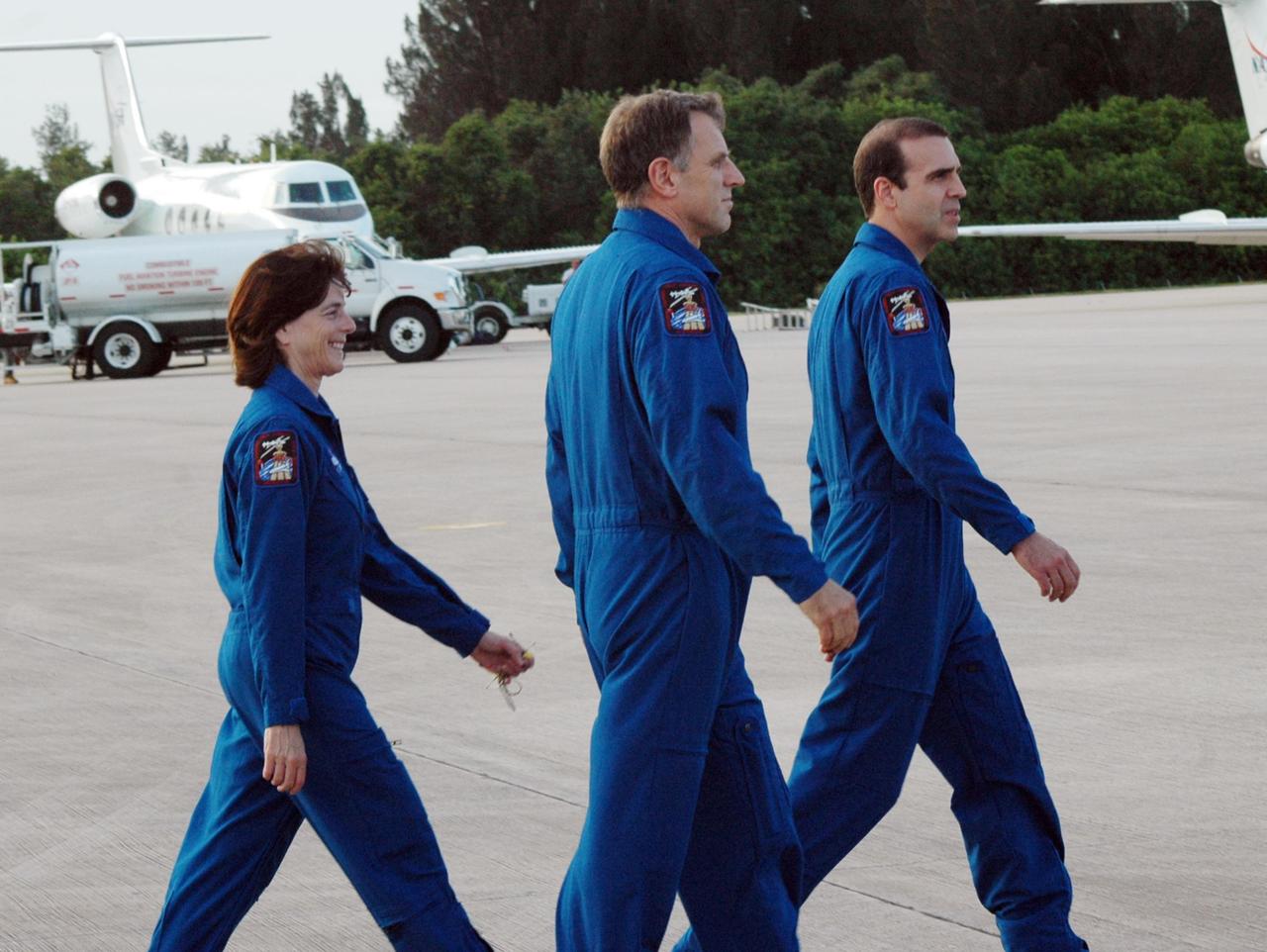
KENNEDY SPACE CENTER, Fla. -- The STS-118 crew arrives at Kennedy's Shuttle Landing Facility aboard a Shuttle Training Aircraft to take part in the Terminal Countdown Demonstration Test (TCDT), a dress rehearsal for launch. From left are Mission Specialists Barbara R. Morgan, Dave Williams and Rick Mastracchio. Williams represents the Canadian Space Agency. Morgan joined NASA's Teacher in Space program in 1985 and was selected as an astronaut in 1998. TCDT activities include M-113 armored personnel carrier training, payload familiarization, emergency egress training at the pad and a simulated launch countdown. The STS-118 payload aboard Space Shuttle Endeavour includes the S5 truss, a SPACEHAB module and external stowage platform 3. The mission is the 22nd flight to the International Space Station and is targeted for launch on Aug.7. Photo credit: NASA/Ken Thornsley