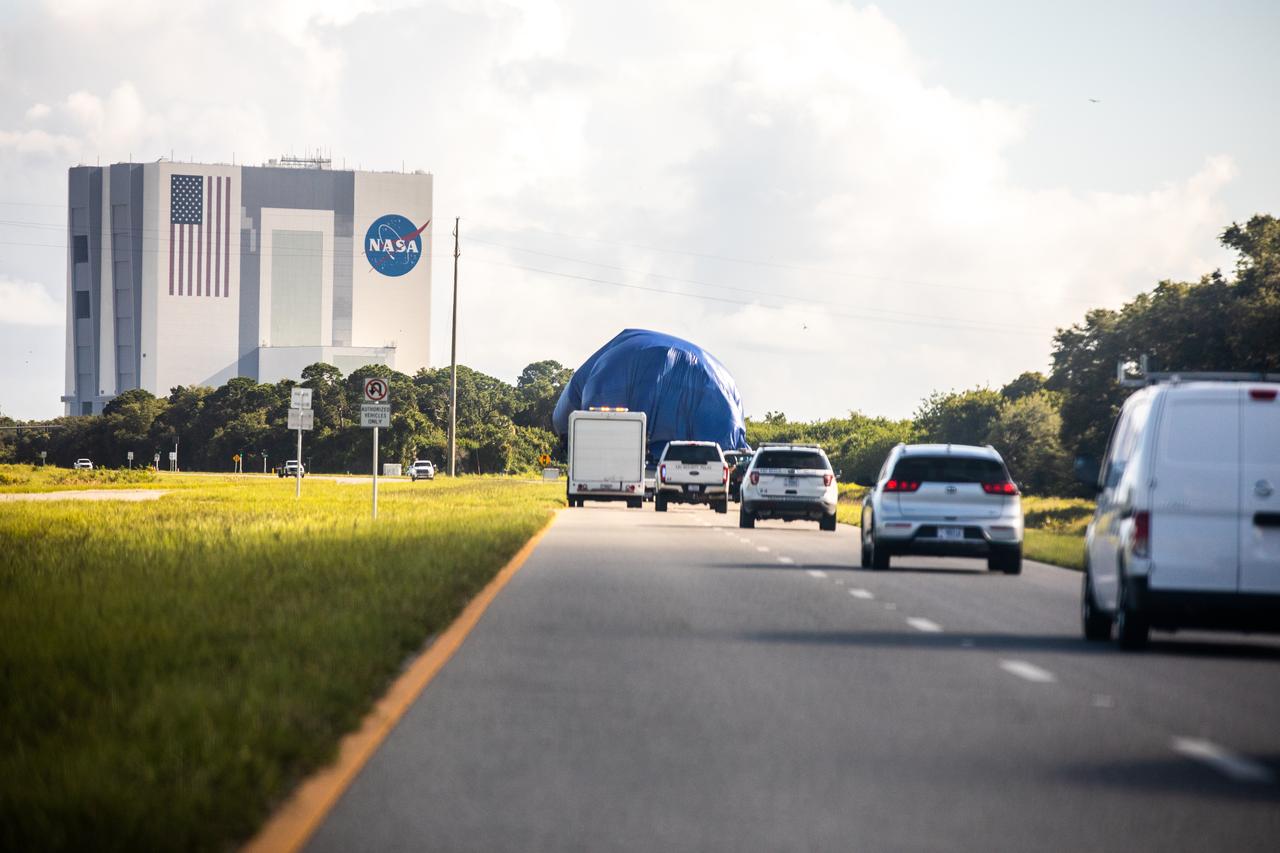
A flatbed truck, carrying the node structural test article (STA), is on its way to the Launch and Landing Facility from the Space Station Processing Facility (SSPF) at NASA’s Kennedy Space Center in Florida on July 20, 2020. In view is the iconic Vehicle Assembly Building. The Node STA was used to prove the manufacturing processes and procedures were robust for extended human spaceflight. Those same processes and procedures were then used to build Node 1, which Kennedy Center Director Bob Cabana flew to the space station on STS 88. NASA has stored the node STA in the SSPF, and it is moving to a new location to allow for more space in the facility’s high bay to support the agency’s space exploration and commercialization efforts in low-Earth orbit.
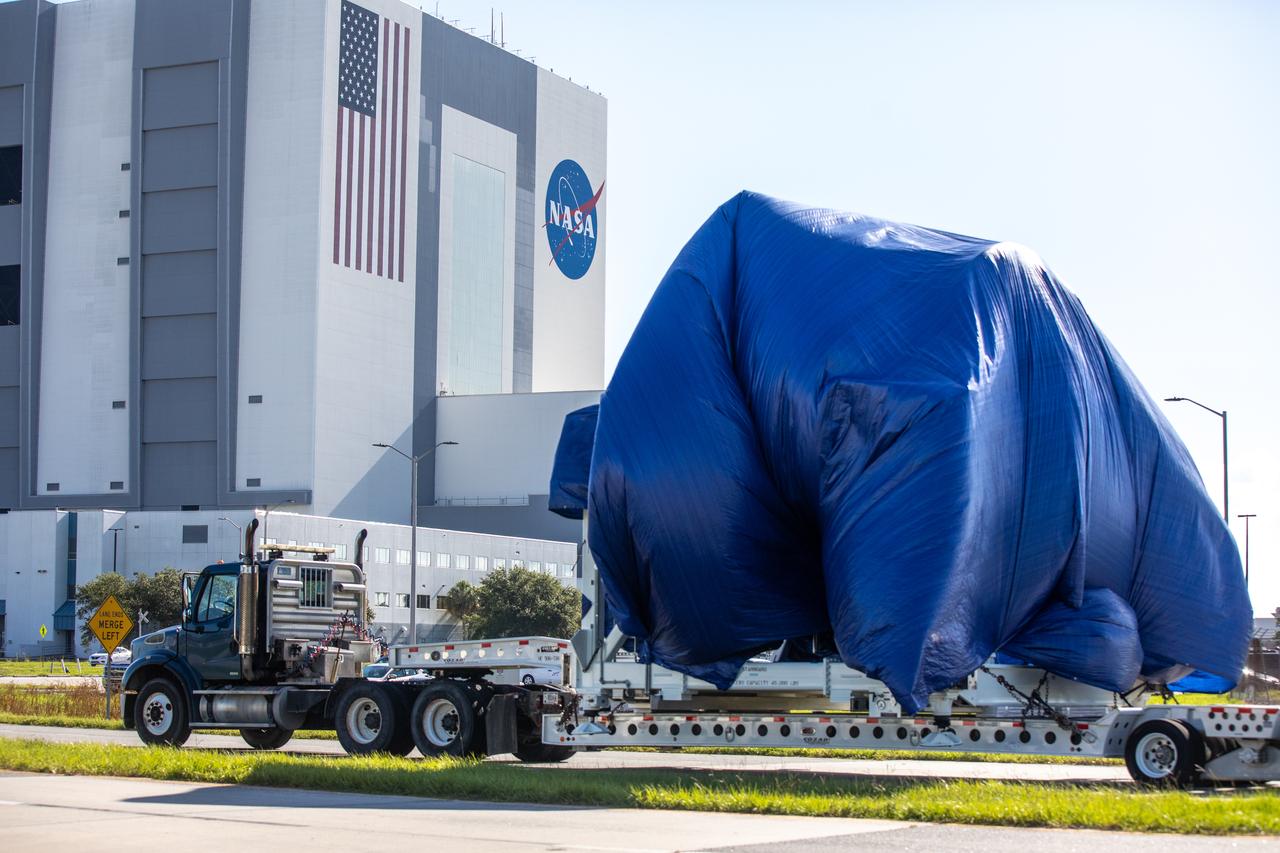
A flatbed truck, carrying the node structural test article (STA), is on its way to the Launch and Landing Facility from the Space Station Processing Facility (SSPF) at NASA’s Kennedy Space Center in Florida on July 20, 2020. In view is the iconic Vehicle Assembly Building. The Node STA was used to prove the manufacturing processes and procedures were robust for extended human spaceflight. Those same processes and procedures were then used to build Node 1, which Kennedy Center Director Bob Cabana flew to the space station on STS 88. NASA has stored the node STA in the SSPF, and it is moving to a new location to allow for more space in the facility’s high bay to support the agency’s space exploration and commercialization efforts in low-Earth orbit.
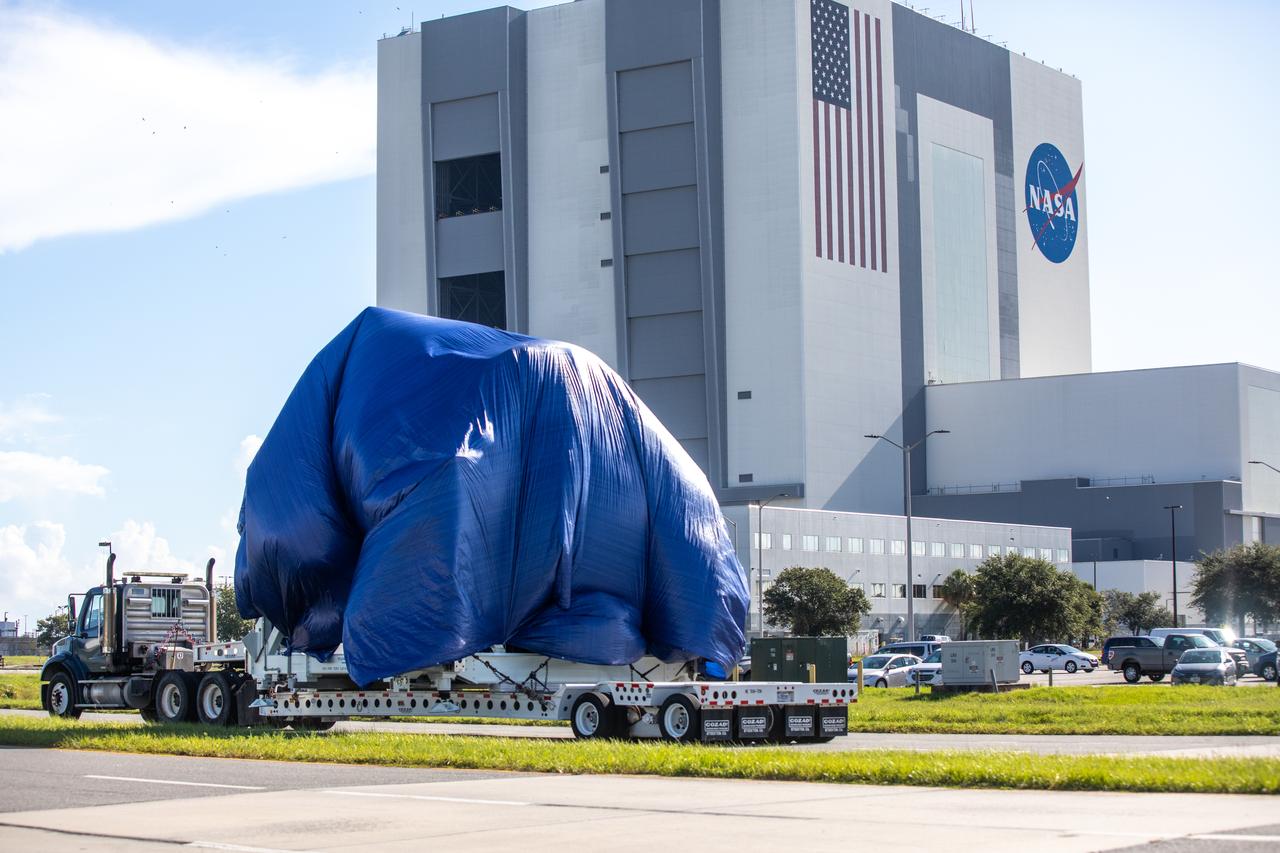
A flatbed truck, carrying the node structural test article (STA), is on its way to the Launch and Landing Facility from the Space Station Processing Facility (SSPF) at NASA’s Kennedy Space Center in Florida on July 20, 2020. In view is the iconic Vehicle Assembly Building. The Node STA was used to prove the manufacturing processes and procedures were robust for extended human spaceflight. Those same processes and procedures were then used to build Node 1, which Kennedy Center Director Bob Cabana flew to the space station on STS 88. NASA has stored the node STA in the SSPF, and it is moving to a new location to allow for more space in the facility’s high bay to support the agency’s space exploration and commercialization efforts in low-Earth orbit.
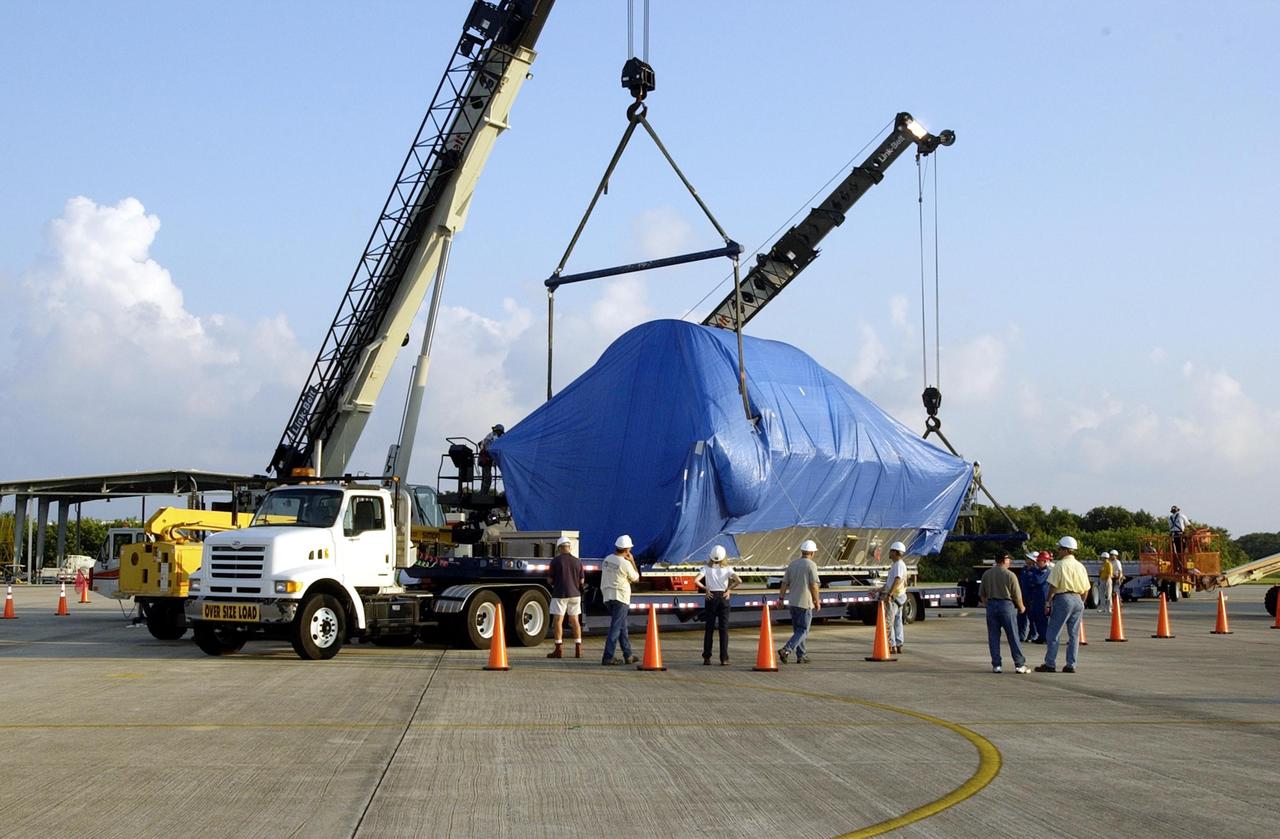
KENNEDY SPACE CENTER, FLA. -- Following its arrival at Kennedy Space Center, The node structural test article (STA) begins its move to a storage facility. The super Guppy transport aircraft carried Node STA to KSC's Shuttle Landing Facility from Marshall Space Flight Center in Huntsville, Ala. An exact replica of the Unity Node on the International Space Station, the node STA was used at MSFC for testing and validation purposes. The Unity Node is the pressurized element that connects the other ISS pressurized modules together and was the first U.S. element to launch.
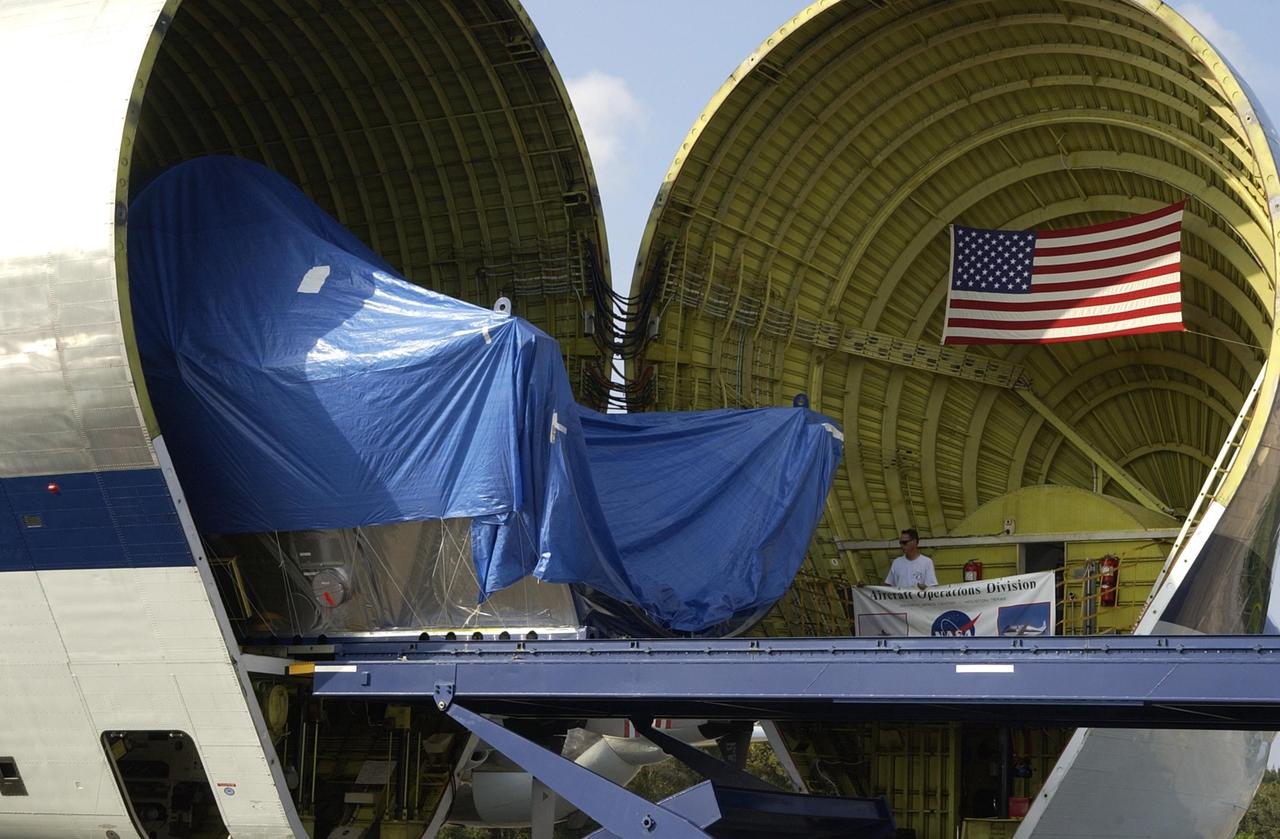
KENNEDY SPACE CENTER, FLA. -- The node structural test article (STA) is prepared to be offloaded through the open nose of the Super Guppy transport aircraft following its arrival at Kennedy Space Center from Marshall Space Flight Center in Huntsville, Ala. It was moved to KSC for storage. An exact replica of the Unity Node on the International Space Station, the node STA was used at MSFC for testing and validation purposes. The Unity Node is the pressurized element that connects the other ISS pressurized modules together and was the first U.S. element to launch.
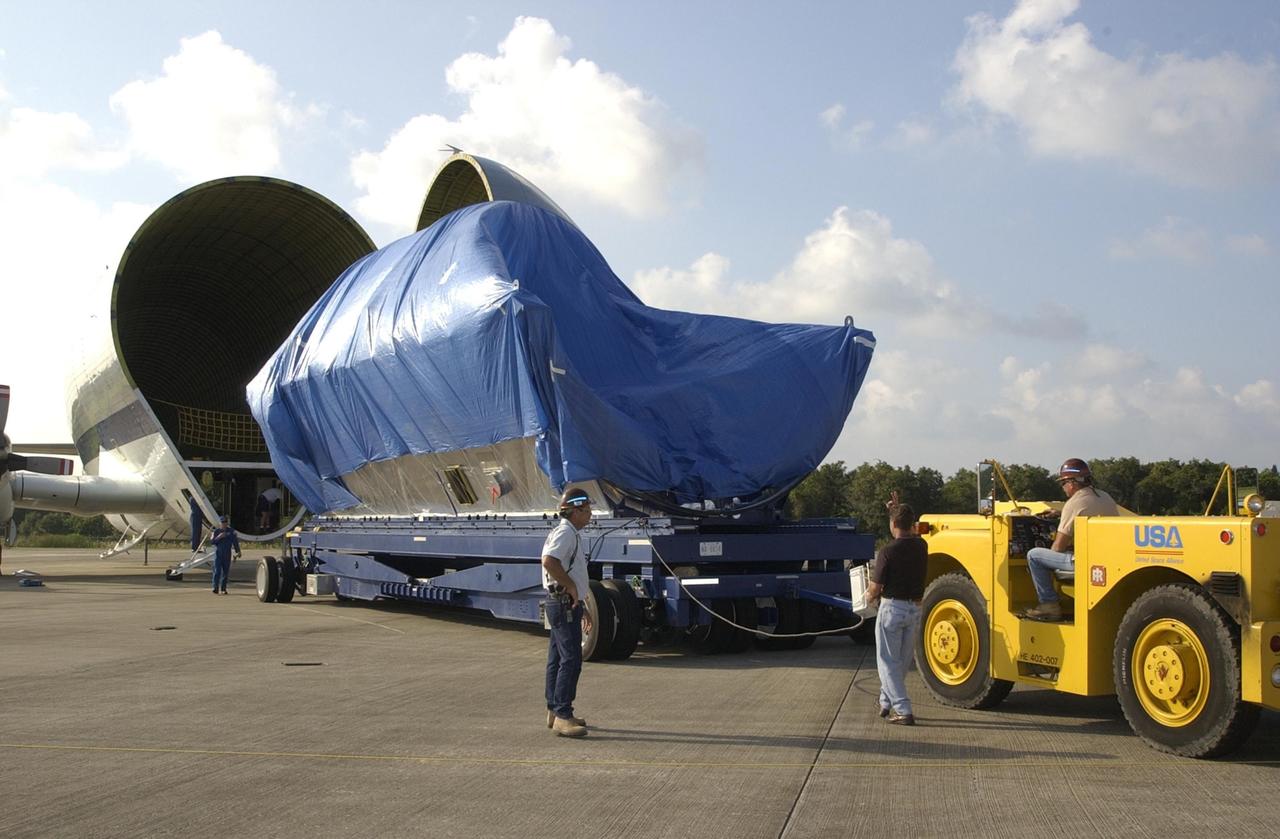
KENNEDY SPACE CENTER, FLA. -- The node structural test article (STA) is offloaded through the open nose of the Super Guppy transport aircraft following its arrival at Kennedy Space Center from Marshall Space Flight Center in Huntsville, Ala. It was moved to KSC for storage. An exact replica of the Unity Node on the International Space Station, the node STA was used at MSFC for testing and validation purposes. The Unity Node is the pressurized element that connects the other ISS pressurized modules together and was the first U.S. element to launch.
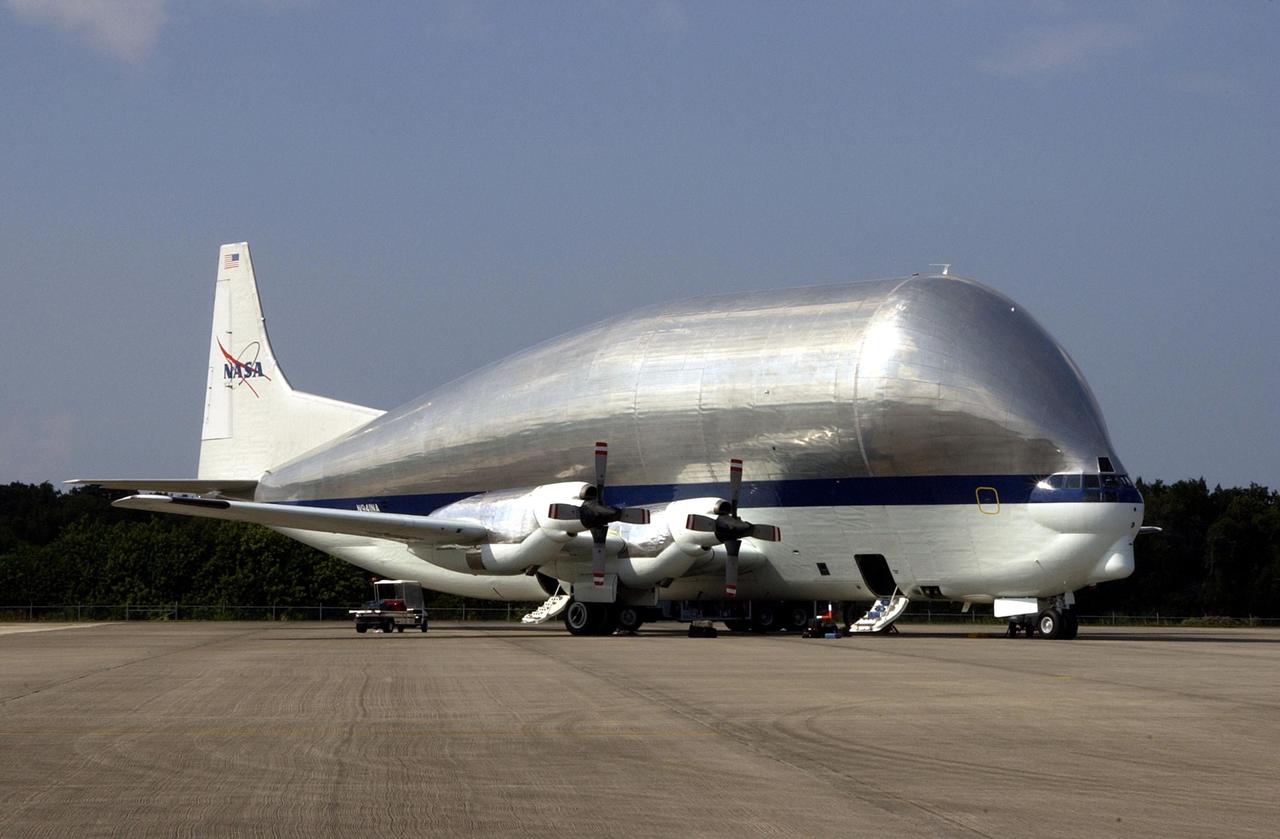
KENNEDY SPACE CENTER, FLA. -- The node structural test article (STA) arrives at Kennedy Space Center's Shuttle Landing Facility aboard the Super Guppy transport aircraft. It was moved to KSC for storage. An exact replica of the Unity Node on the International Space Station, the node STA was used at Marshall Space Flight Center in Huntsville, Ala. for testing and validation purposes. The Unity Node is the pressurized element that connects the other ISS pressurized modules together and was the first U.S. element to launch.
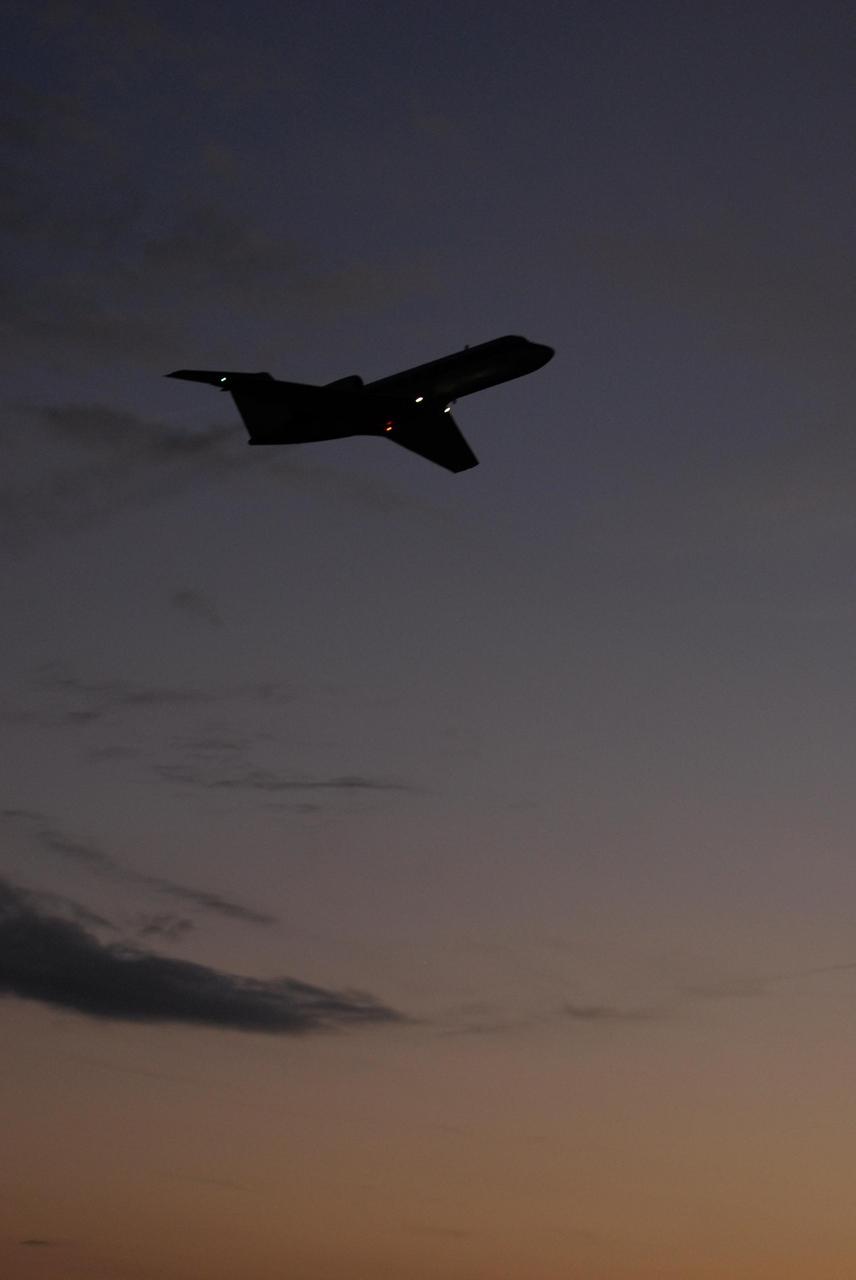
KENNEDY SPACE CENTER, FLA. -- A shuttle training aircraft, or STA, takes off from Kennedy Space Center's Shuttle Landing Facility at dusk. The STA is being used for practice flights by space shuttle Atlantis STS-122 Commander Steve Frick and Pilot Alan Poindexter. The STA is a Grumman American Aviation-built Gulf Stream II jet that was modified to simulate an orbiter's cockpit, motion and visual cues, and handling qualities. In flight, the STA duplicates the orbiter's atmospheric descent trajectory from approximately 35,000 feet altitude to landing on a runway. Because the orbiter is unpowered during re-entry and landing, its high-speed glide must be perfectly executed the first time. The training is part of terminal countdown demonstration test, or TCDT, activities. The TCDT provides astronauts and ground crews with equipment familiarization, emergency egress training and a simulated launch countdown. On mission STS-122, Atlantis will deliver the European Space Agency's Columbus module to the International Space Station. Columbus is a multifunctional, pressurized laboratory that will be permanently attached to U.S. Node 2, called Harmony, and will expand the research facilities aboard the station. Launch is targeted for Dec. 6. Photo credit: NASA/Kim Shiflett
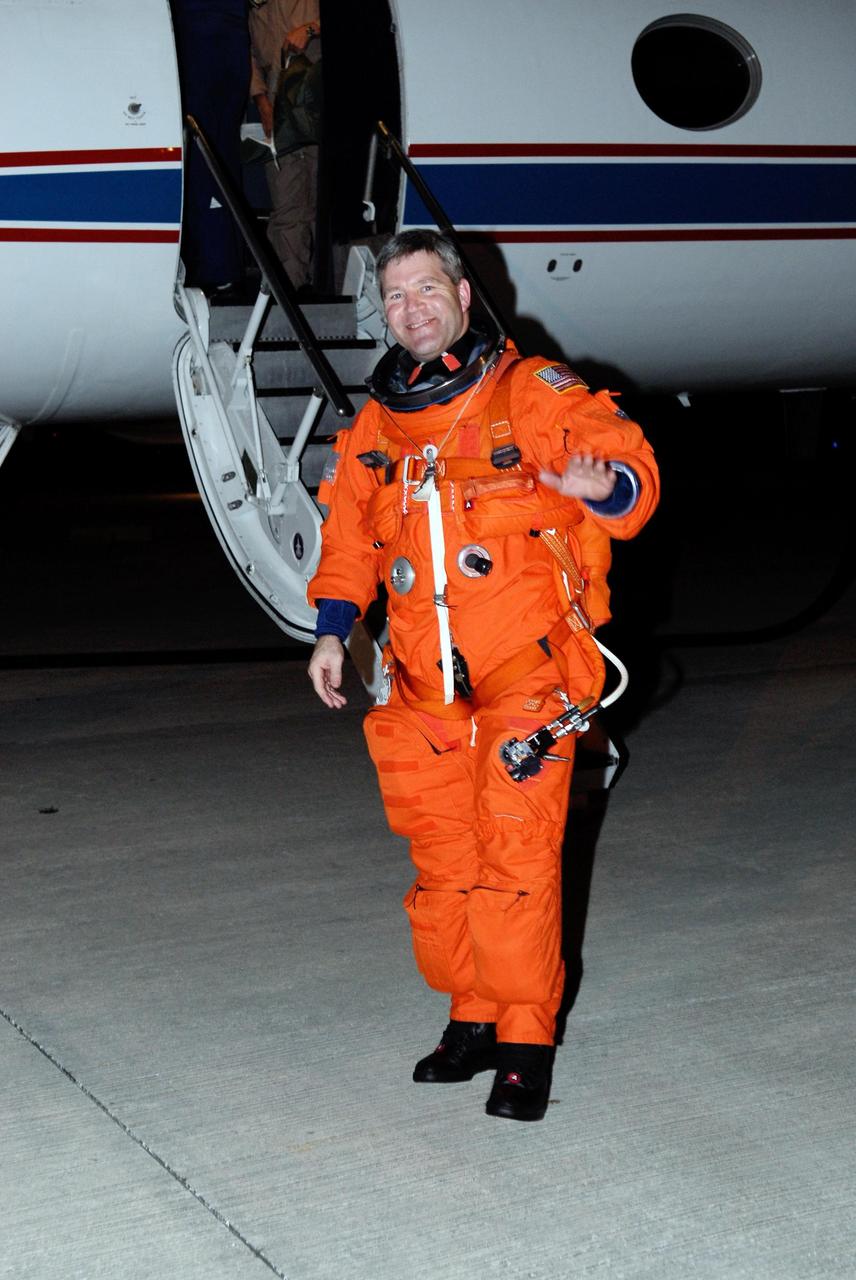
KENNEDY SPACE CENTER, FLA. -- Space shuttle Atlantis STS-122 Commander Steve Frick seems pleased with the practice session he has just completed aboard a shuttle training aircraft, or STA, at Kennedy Space Center's Shuttle Landing Facility. He and STS-122 Pilot Alan Poindexter were practicing landing the STA in preparation for their upcoming mission. The STA is a Grumman American Aviation-built Gulf Stream II jet that was modified to simulate an orbiter's cockpit, motion and visual cues, and handling qualities. In flight, the STA duplicates the orbiter's atmospheric descent trajectory from approximately 35,000 feet altitude to landing on a runway. Because the orbiter is unpowered during re-entry and landing, its high-speed glide must be perfectly executed the first time. The training is part of terminal countdown demonstration test, or TCDT, activities. The TCDT provides astronauts and ground crews with equipment familiarization, emergency egress training and a simulated launch countdown. On mission STS-122, Atlantis will deliver the European Space Agency's Columbus module to the International Space Station. Columbus is a multifunctional, pressurized laboratory that will be permanently attached to U.S. Node 2, called Harmony, and will expand the research facilities aboard the station. Launch is targeted for Dec. 6. Photo credit: NASA/Kim Shiflett
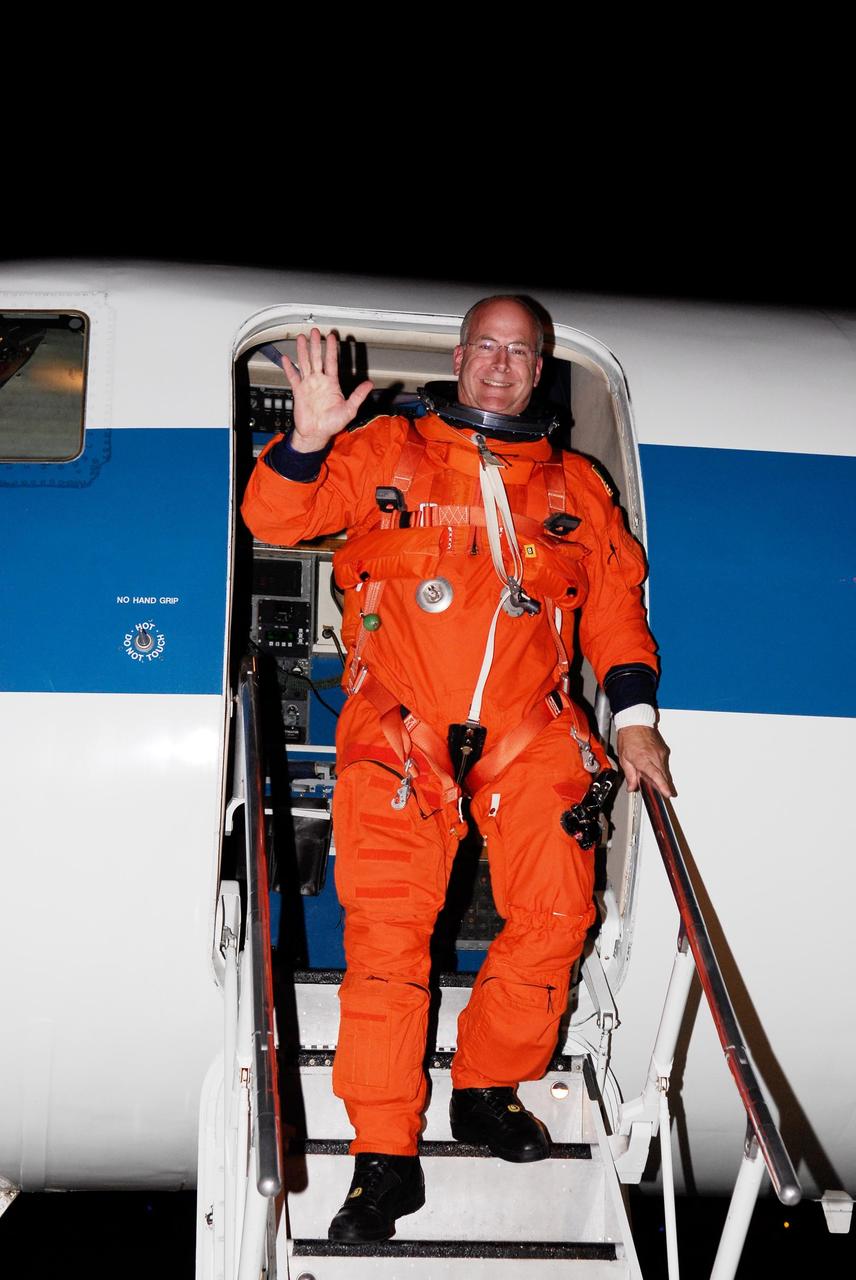
KENNEDY SPACE CENTER, FLA. -- Space shuttle Atlantis STS-122 Pilot Alan Poindexter disembarks from a shuttle training aircraft, or STA, at Kennedy Space Center's Shuttle Landing Facility. He and STS-122 Commander Steve Frick have just completed a practice session landing the STA. The STA is a Grumman American Aviation-built Gulf Stream II jet that was modified to simulate an orbiter's cockpit, motion and visual cues, and handling qualities. In flight, the STA duplicates the orbiter's atmospheric descent trajectory from approximately 35,000 feet altitude to landing on a runway. Because the orbiter is unpowered during re-entry and landing, its high-speed glide must be perfectly executed the first time. The training is part of terminal countdown demonstration test, or TCDT, activities. The TCDT provides astronauts and ground crews with equipment familiarization, emergency egress training and a simulated launch countdown. On mission STS-122, Atlantis will deliver the European Space Agency's Columbus module to the International Space Station. Columbus is a multifunctional, pressurized laboratory that will be permanently attached to U.S. Node 2, called Harmony, and will expand the research facilities aboard the station. Launch is targeted for Dec. 6. Photo credit: NASA/Kim Shiflett
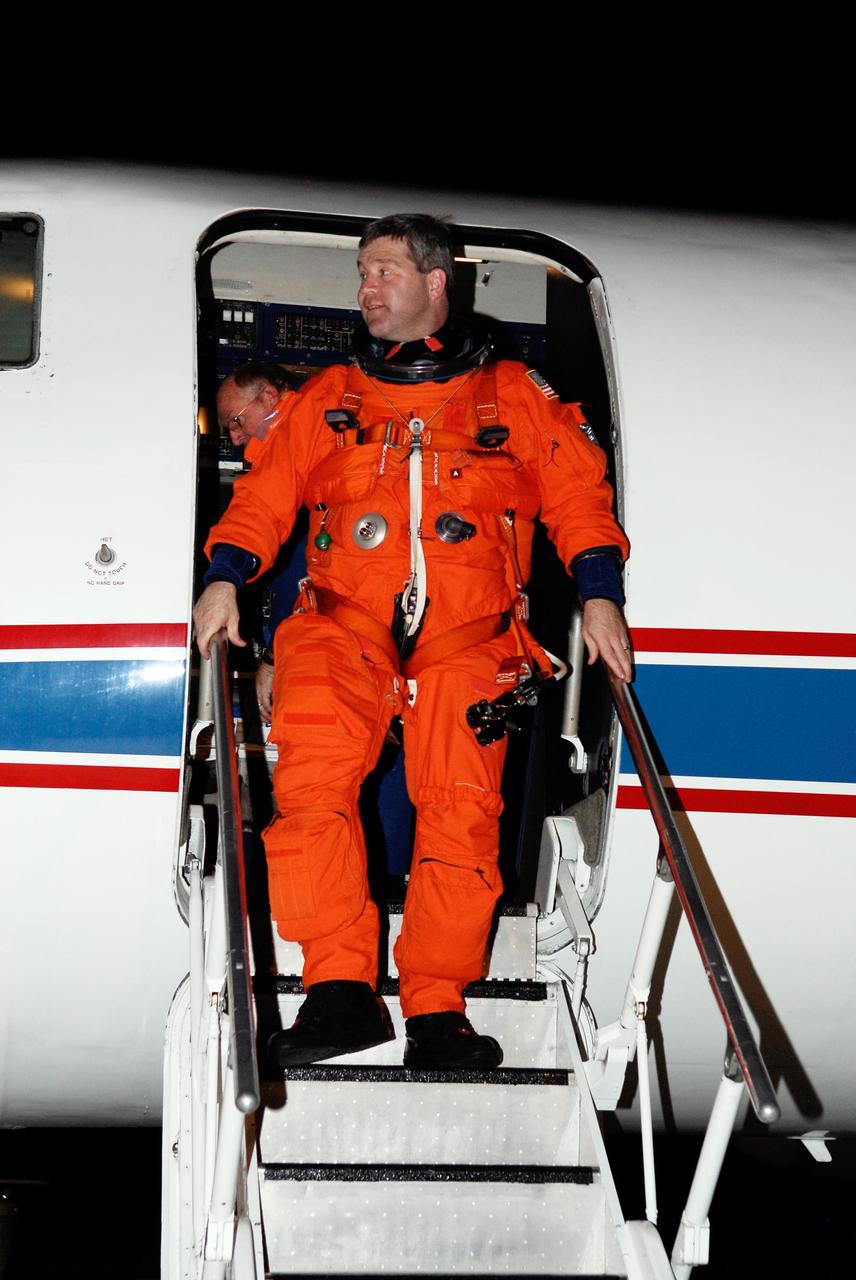
KENNEDY SPACE CENTER, FLA. -- Space shuttle Atlantis STS-122 Commander Steve Frick disembarks from a shuttle training aircraft, or STA, at Kennedy Space Center's Shuttle Landing Facility. He and STS-122 Pilot Alan Poindexter have just completed a practice session landing the STA. The STA is a Grumman American Aviation-built Gulf Stream II jet that was modified to simulate an orbiter's cockpit, motion and visual cues, and handling qualities. In flight, the STA duplicates the orbiter's atmospheric descent trajectory from approximately 35,000 feet altitude to landing on a runway. Because the orbiter is unpowered during re-entry and landing, its high-speed glide must be perfectly executed the first time. The training is part of terminal countdown demonstration test, or TCDT, activities. The TCDT provides astronauts and ground crews with equipment familiarization, emergency egress training and a simulated launch countdown. On mission STS-122, Atlantis will deliver the European Space Agency's Columbus module to the International Space Station. Columbus is a multifunctional, pressurized laboratory that will be permanently attached to U.S. Node 2, called Harmony, and will expand the research facilities aboard the station. Launch is targeted for Dec. 6. Photo credit: NASA/Kim Shiflett
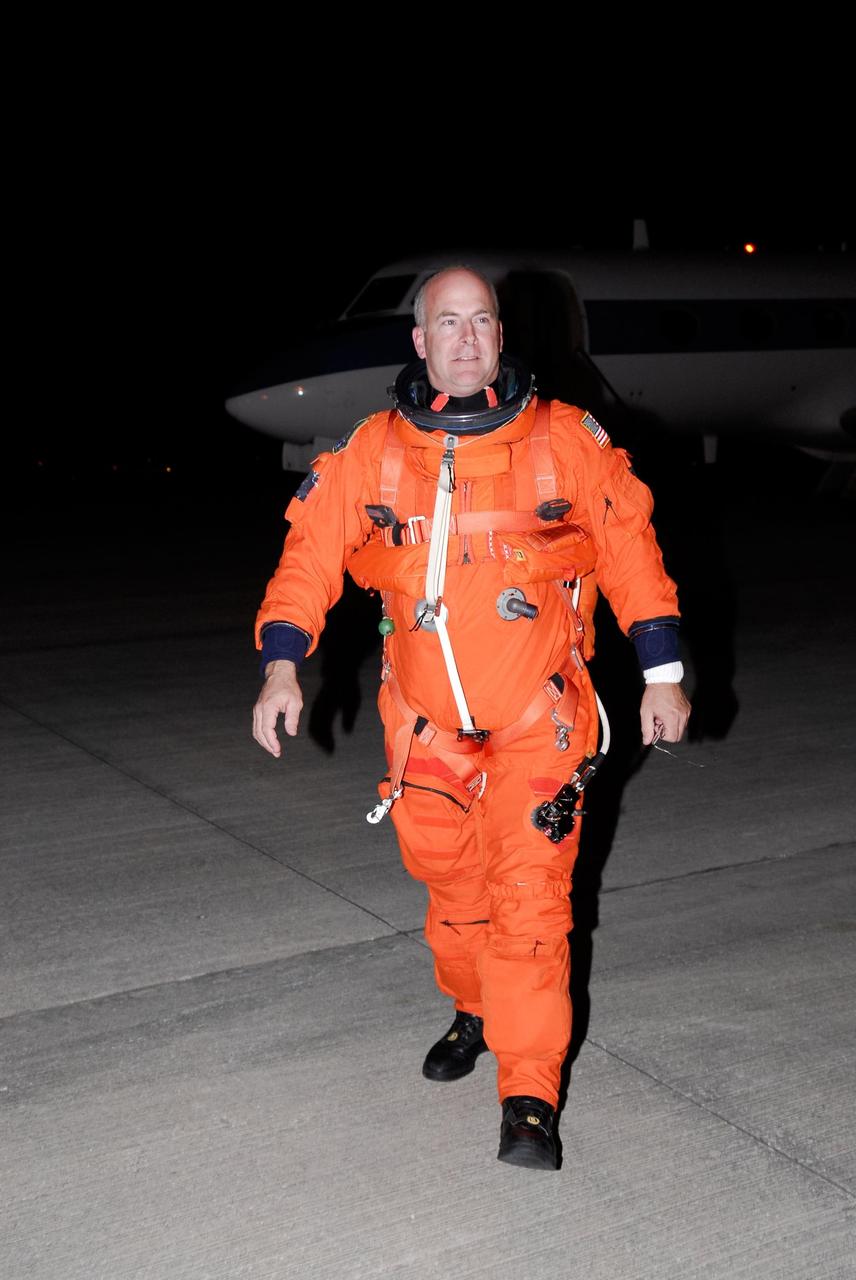
KENNEDY SPACE CENTER, FLA. -- Space shuttle Atlantis STS-122 Pilot Alan Poindexter seems satisfied with the practice session he has just completed aboard a shuttle training aircraft, or STA, at Kennedy Space Center's Shuttle Landing Facility. He and STS-122 Commander Steve Frick were practicing landing the STA in preparation for their upcoming mission. The STA is a Grumman American Aviation-built Gulf Stream II jet that was modified to simulate an orbiter's cockpit, motion and visual cues, and handling qualities. In flight, the STA duplicates the orbiter's atmospheric descent trajectory from approximately 35,000 feet altitude to landing on a runway. Because the orbiter is unpowered during re-entry and landing, its high-speed glide must be perfectly executed the first time. The training is part of terminal countdown demonstration test, or TCDT, activities. The TCDT provides astronauts and ground crews with equipment familiarization, emergency egress training and a simulated launch countdown. On mission STS-122, Atlantis will deliver the European Space Agency's Columbus module to the International Space Station. Columbus is a multifunctional, pressurized laboratory that will be permanently attached to U.S. Node 2, called Harmony, and will expand the research facilities aboard the station. Launch is targeted for Dec. 6. Photo credit: NASA/Kim Shiflett
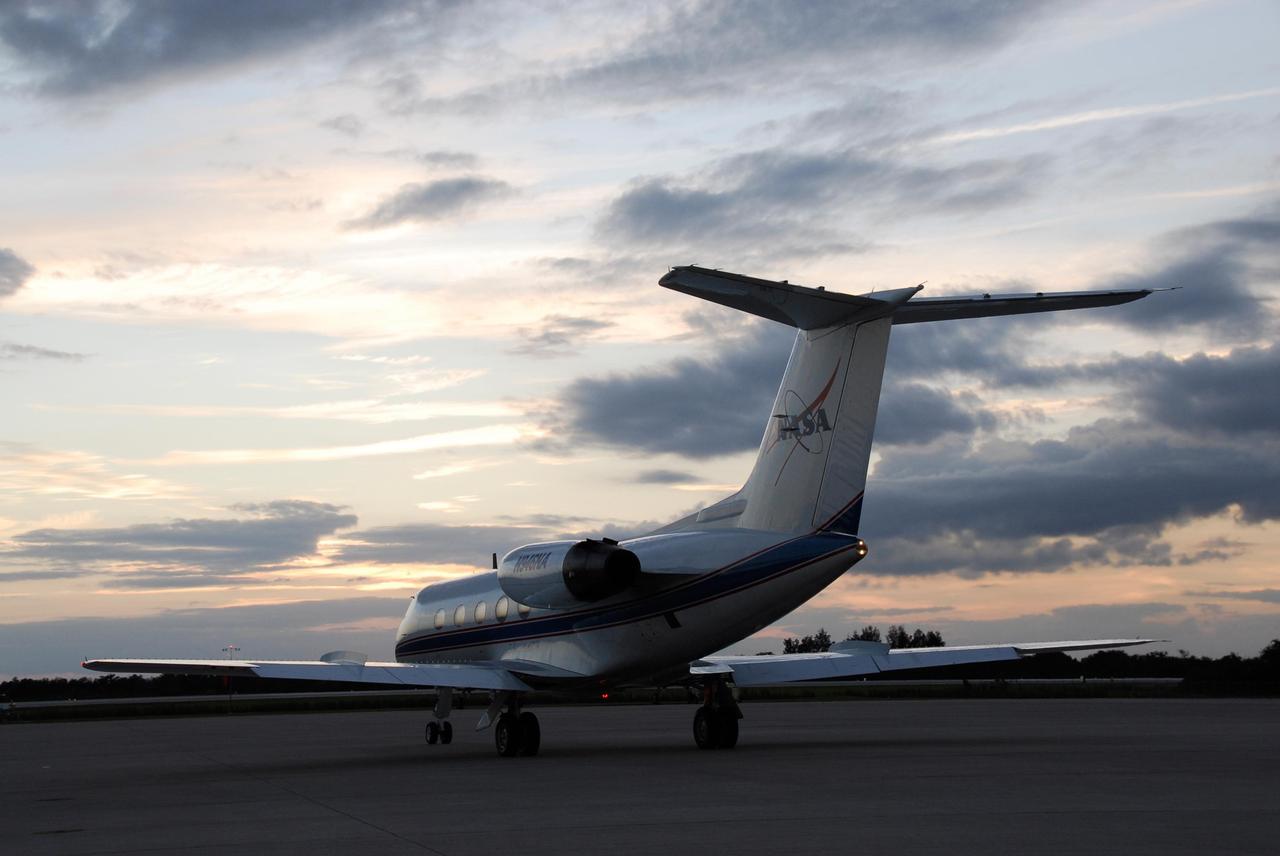
KENNEDY SPACE CENTER, FLA. -- A shuttle training aircraft, or STA, prepares for takeoff from Kennedy Space Center's Shuttle Landing Facility at dusk. The STA is being used for practice flights by space shuttle Atlantis STS-122 Commander Steve Frick and Pilot Alan Poindexter. The STA is a Grumman American Aviation-built Gulf Stream II jet that was modified to simulate an orbiter's cockpit, motion and visual cues, and handling qualities. In flight, the STA duplicates the orbiter's atmospheric descent trajectory from approximately 35,000 feet altitude to landing on a runway. Because the orbiter is unpowered during re-entry and landing, its high-speed glide must be perfectly executed the first time. The training is part of terminal countdown demonstration test, or TCDT, activities. The TCDT provides astronauts and ground crews with equipment familiarization, emergency egress training and a simulated launch countdown. On mission STS-122, Atlantis will deliver the European Space Agency's Columbus module to the International Space Station. Columbus is a multifunctional, pressurized laboratory that will be permanently attached to U.S. Node 2, called Harmony, and will expand the research facilities aboard the station. Launch is targeted for Dec. 6. Photo credit: NASA/Kim Shiflett
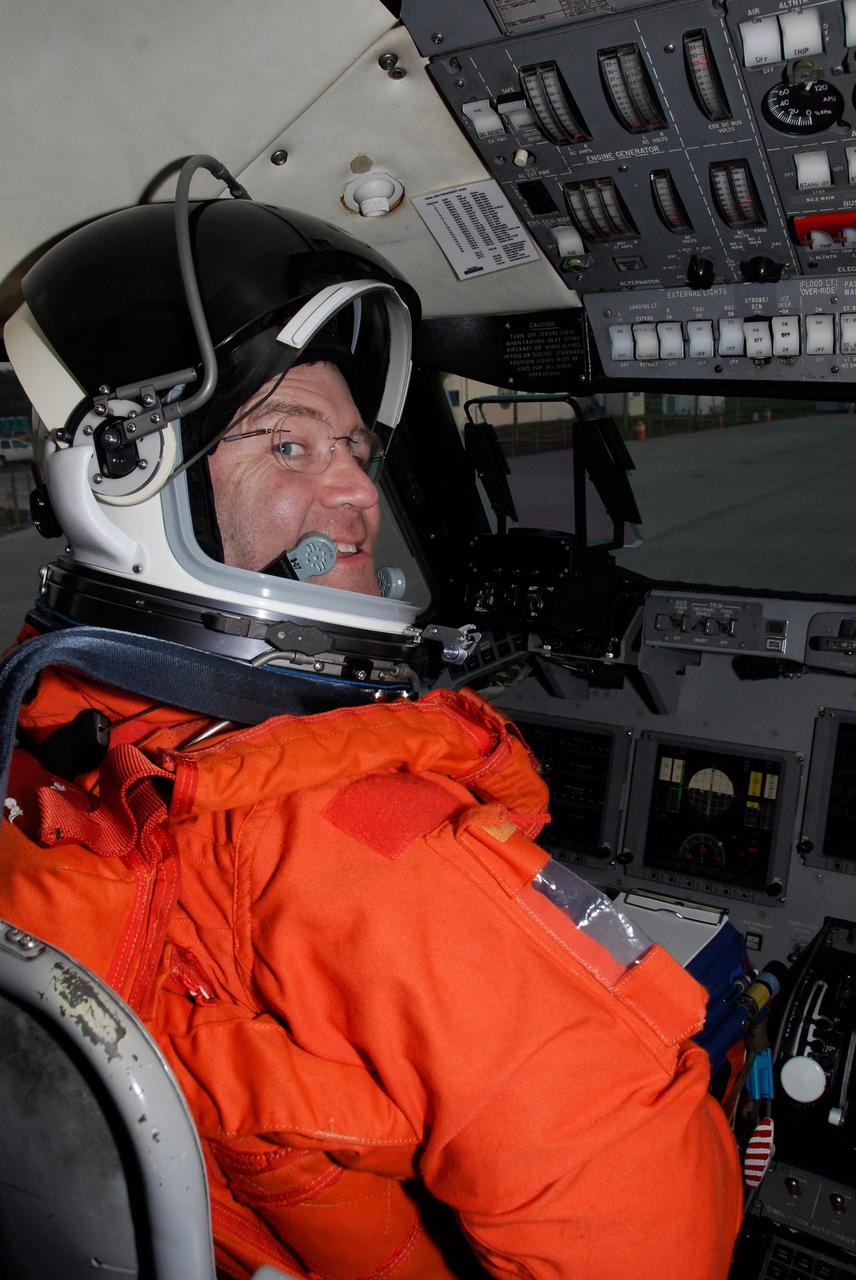
KENNEDY SPACE CENTER, FLA. -- Space shuttle Atlantis STS-122 Pilot Alan Poindexter prepares to practice shuttle landings. He is getting settled in the cockpit of a shuttle training aircraft, or STA, at Kennedy Space Center's Shuttle Landing Facility. The STA is a Grumman American Aviation-built Gulf Stream II jet that was modified to simulate an orbiter's cockpit, motion and visual cues, and handling qualities. In flight, the STA duplicates the orbiter's atmospheric descent trajectory from approximately 35,000 feet altitude to landing on a runway. Because the orbiter is unpowered during re-entry and landing, its high-speed glide must be perfectly executed the first time. The training is part of terminal countdown demonstration test, or TCDT, activities. The TCDT provides astronauts and ground crews with equipment familiarization, emergency egress training and a simulated launch countdown. On mission STS-122, Atlantis will deliver the European Space Agency's Columbus module to the International Space Station. Columbus is a multifunctional, pressurized laboratory that will be permanently attached to U.S. Node 2, called Harmony, and will expand the research facilities aboard the station. Launch is targeted for Dec. 6. Photo credit: NASA/Kim Shiflett
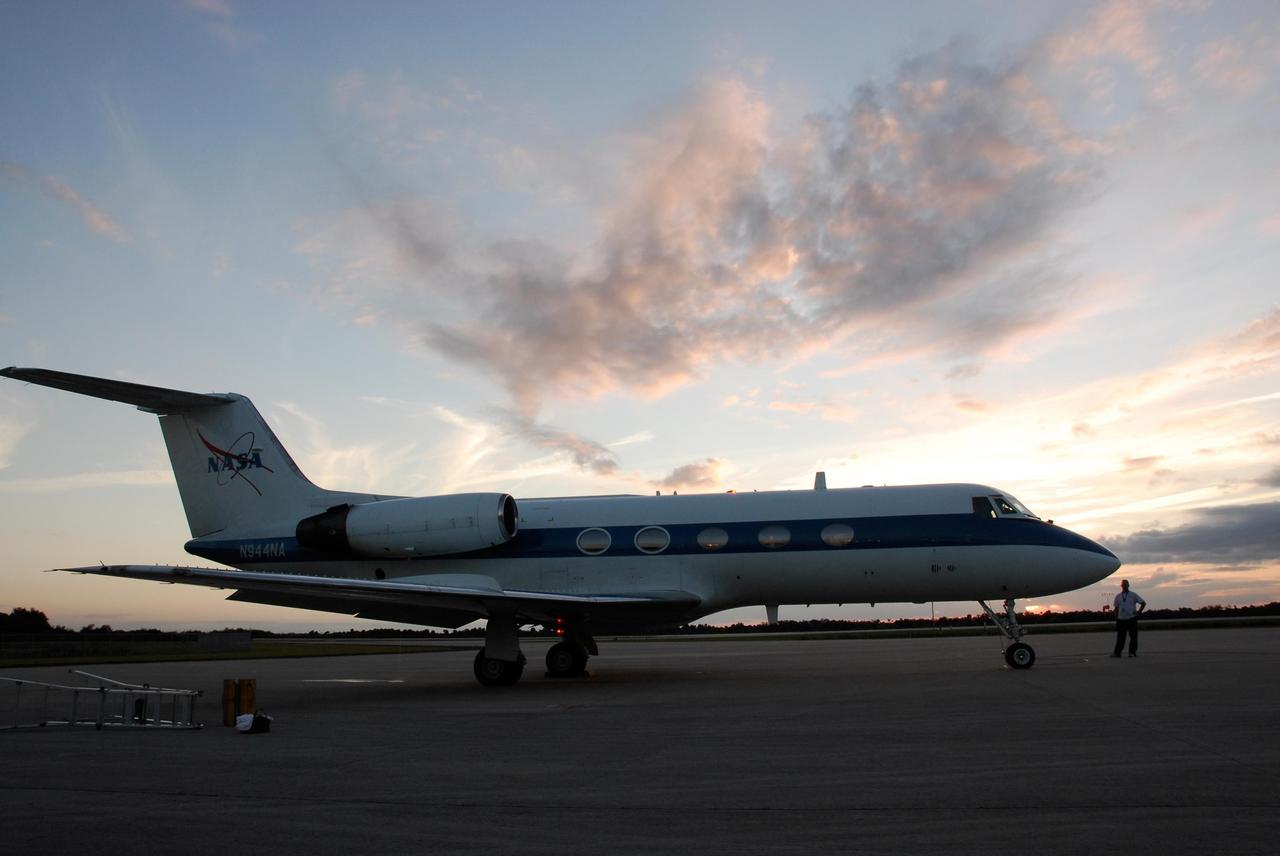
KENNEDY SPACE CENTER, FLA. -- A shuttle training aircraft, or STA, sits on the tarmac at Kennedy Space Center's Shuttle Landing Facility at dusk, ready for practice flights by space shuttle Atlantis STS-122 Commander Steve Frick and Pilot Alan Poindexter. The STA is a Grumman American Aviation-built Gulf Stream II jet that was modified to simulate an orbiter's cockpit, motion and visual cues, and handling qualities. In flight, the STA duplicates the orbiter's atmospheric descent trajectory from approximately 35,000 feet altitude to landing on a runway. Because the orbiter is unpowered during re-entry and landing, its high-speed glide must be perfectly executed the first time. The training is part of terminal countdown demonstration test, or TCDT, activities. The TCDT provides astronauts and ground crews with equipment familiarization, emergency egress training and a simulated launch countdown. On mission STS-122, Atlantis will deliver the European Space Agency's Columbus module to the International Space Station. Columbus is a multifunctional, pressurized laboratory that will be permanently attached to U.S. Node 2, called Harmony, and will expand the research facilities aboard the station. Launch is targeted for Dec. 6. Photo credit: NASA/Kim Shiflett
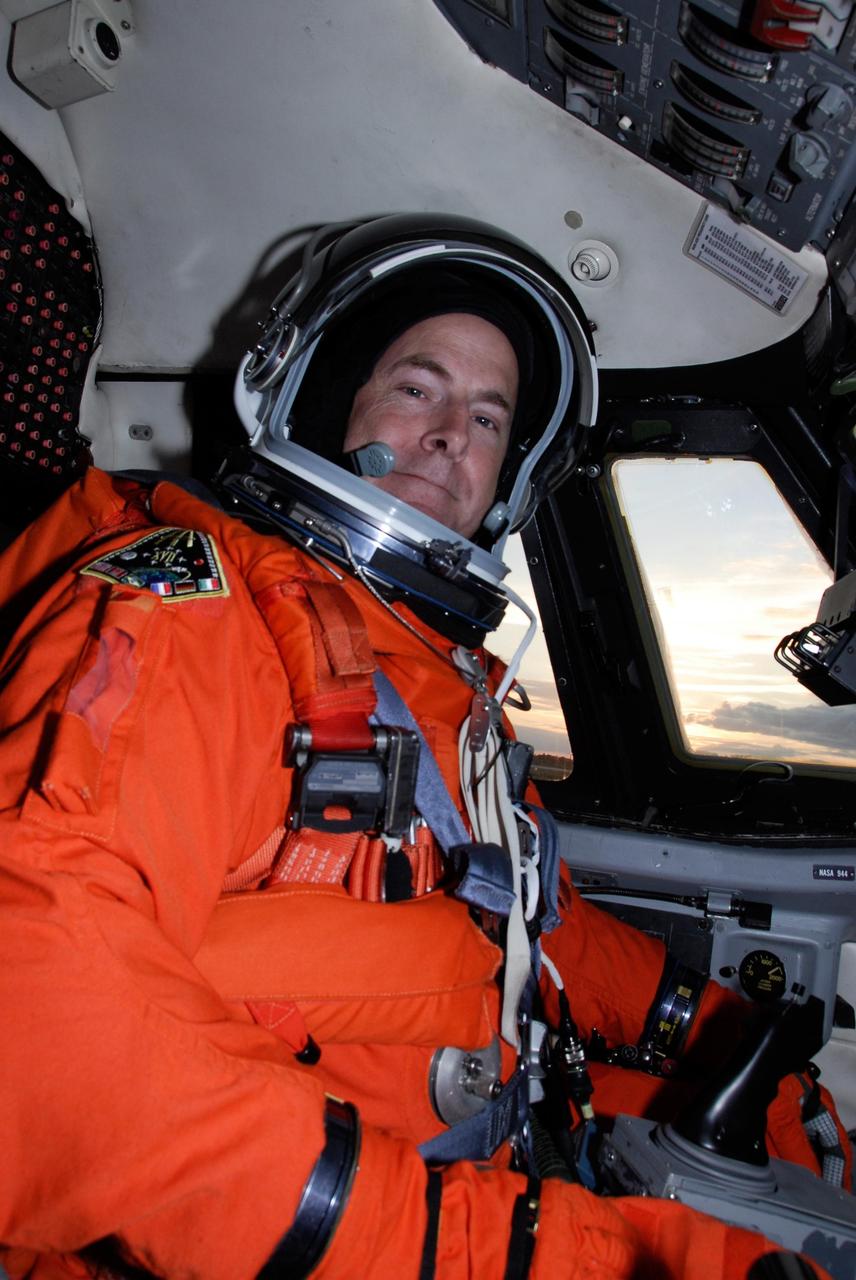
KENNEDY SPACE CENTER, FLA. -- Space shuttle Atlantis STS-122 Commander Steve Frick prepares to practice shuttle landings. He is sitting in the cockpit of a shuttle training aircraft, or STA, at Kennedy Space Center's Shuttle Landing Facility. The STA is a Grumman American Aviation-built Gulf Stream II jet that was modified to simulate an orbiter's cockpit, motion and visual cues, and handling qualities. In flight, the STA duplicates the orbiter's atmospheric descent trajectory from approximately 35,000 feet altitude to landing on a runway. Because the orbiter is unpowered during re-entry and landing, its high-speed glide must be perfectly executed the first time. The training is part of terminal countdown demonstration test, or TCDT, activities. The TCDT provides astronauts and ground crews with equipment familiarization, emergency egress training and a simulated launch countdown. On mission STS-122, Atlantis will deliver the European Space Agency's Columbus module to the International Space Station. Columbus is a multifunctional, pressurized laboratory that will be permanently attached to U.S. Node 2, called Harmony, and will expand the research facilities aboard the station. Launch is targeted for Dec. 6. Photo credit: NASA/Kim Shiflett
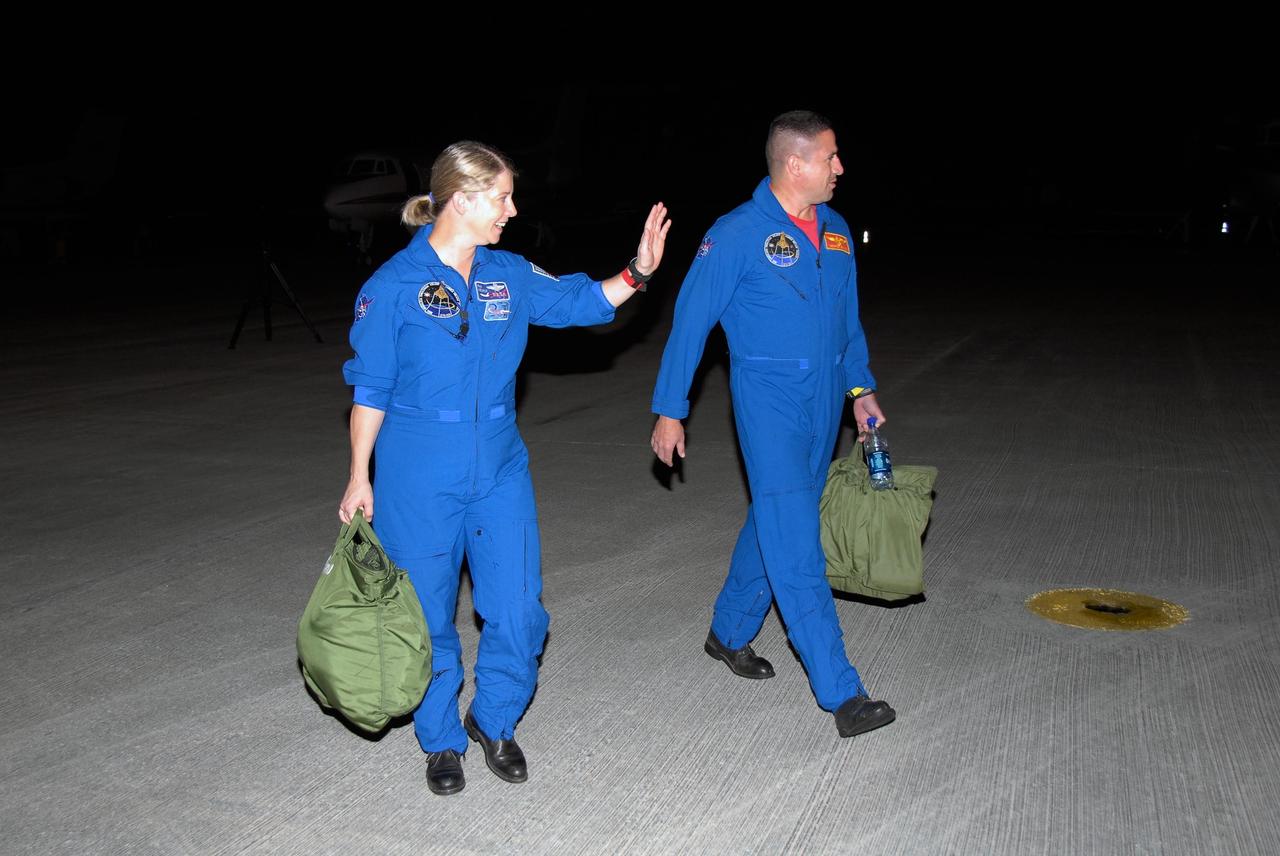
KENNEDY SPACE CENTER, FLA. -- STS-120 Commander Pam Melroy and Pilot George Zamka return to crew quarters after disembarking from a Shuttle Training Aircraft, or STA, on the tarmac at Kennedy Space Center's Shuttle Landing Facility. They were training for their upcoming space shuttle mission by practicing landings using an STA. Melroy is the second woman to command a shuttle mission. Also assigned to STS-120 are Mission Specialists Scott Parazynski, Stephanie Wilson, Doug Wheelock, Paolo Nespoli and Daniel Tani. Nespoli represents the European Space Agency. Tani will remain on the International Space Station as an Expedition 16 flight engineer after the STS-120 mission is complete. The mission will be the 23rd shuttle flight to the International Space Station, delivering the Italian-built U.S. Node 2, called Harmony. The crew arrived at Kennedy on Oct. 19 to prepare for launch aboard space shuttle Discovery at 11:38 a.m. EDT Oct. 23. The 14-day mission includes five spacewalks -- four by shuttle crew members and one by the station's Expedition 16 crew -- to install Harmony and move the P6 solar arrays to their permanent position and deploy them. Discovery is expected to complete its mission and return home on Nov. 6. Photo credit: NASA/Kim Shiflett
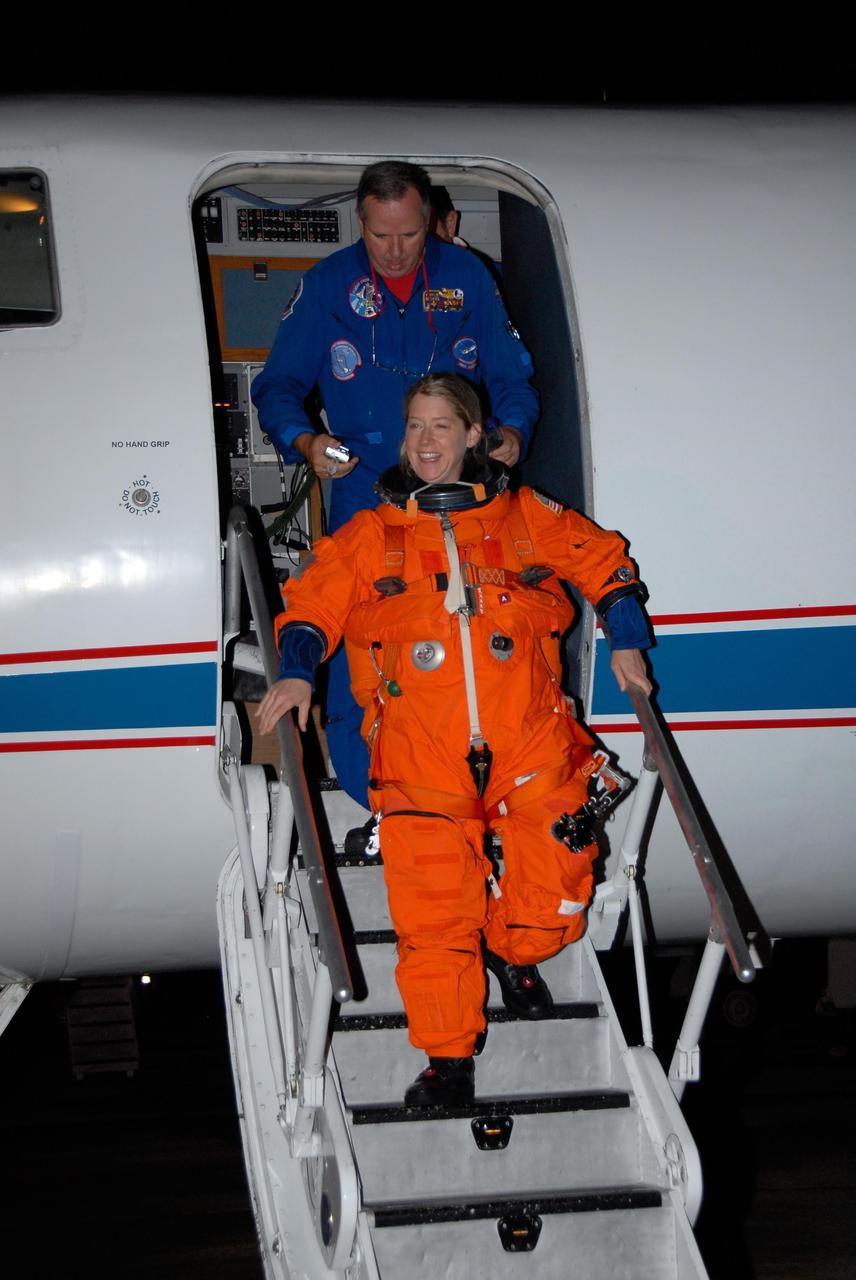
KENNEDY SPACE CENTER, FLA. -- STS-120 Commander Pam Melroy disembarks from a Shuttle Training Aircraft, or STA, at NASA Kennedy Space Center's Shuttle Landing Facility. She and STS-120 Pilot George Zamka were training for their upcoming space shuttle mission by practicing landings in STAs. Melroy is the second woman to command a shuttle mission. Also assigned to STS-120 are Mission Specialists Scott Parazynski, Stephanie Wilson, Doug Wheelock, Paolo Nespoli and Daniel Tani. Nespoli represents the European Space Agency. Tani will remain on the International Space Station as an Expedition 16 flight engineer after the STS-120 mission is complete. The mission will be the 23rd shuttle flight to the International Space Station, delivering the Italian-built U.S. Node 2, called Harmony. The crew arrived at Kennedy on Oct. 19 to prepare for launch aboard space shuttle Discovery at 11:38 a.m. EDT Oct. 23. The 14-day mission includes five spacewalks -- four by shuttle crew members and one by the station's Expedition 16 crew -- to install Harmony and move the P6 solar arrays to their permanent position and deploy them. Discovery is scheduled to complete its mission and return home on Nov. 6. Photo credit: NASA/Kim Shiflett
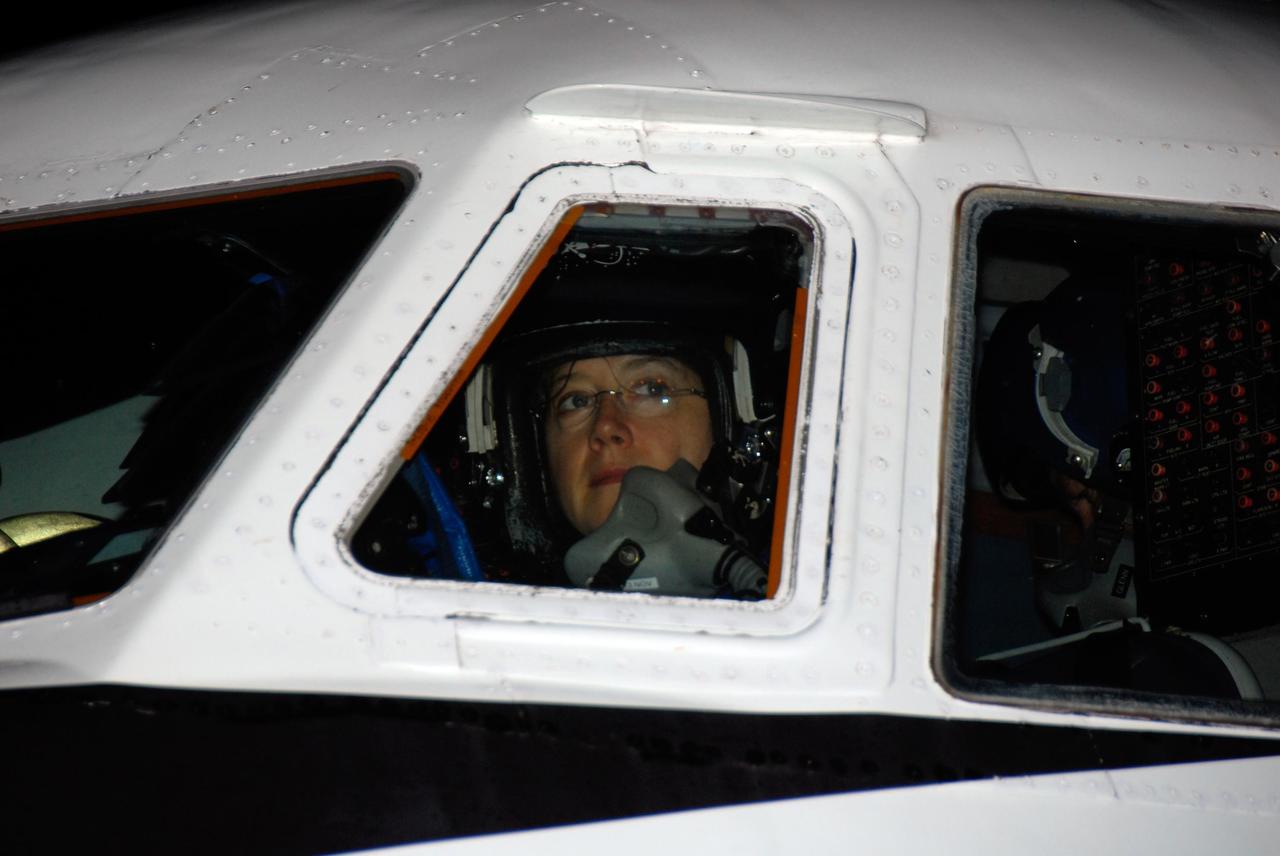
KENNEDY SPACE CENTER, FLA. -- STS-120 Commander Pam Melroy parks a Shuttle Training Aircraft, or STA, on the tarmac at Kennedy Space Center's Shuttle Landing Facility. She and STS-120 Pilot George Zamka are training for their upcoming space shuttle mission by practicing landings using the STA. Melroy is the second woman to command a shuttle mission. Also assigned to STS-120 are Mission Specialists Scott Parazynski, Stephanie Wilson, Doug Wheelock, Paolo Nespoli and Daniel Tani. Nespoli represents the European Space Agency. Tani will remain on the International Space Station as an Expedition 16 flight engineer after the STS-120 mission is complete. The mission will be the 23rd shuttle flight to the International Space Station, delivering the Italian-built U.S. Node 2, called Harmony. The crew arrived at Kennedy on Oct. 19 to prepare for launch aboard space shuttle Discovery at 11:38 a.m. EDT Oct. 23. The 14-day mission includes five spacewalks -- four by shuttle crew members and one by the station's Expedition 16 crew -- to install Harmony and move the P6 solar arrays to their permanent position and deploy them. Discovery is expected to complete its mission and return home on Nov. 6. Photo credit: NASA/Kim Shiflett
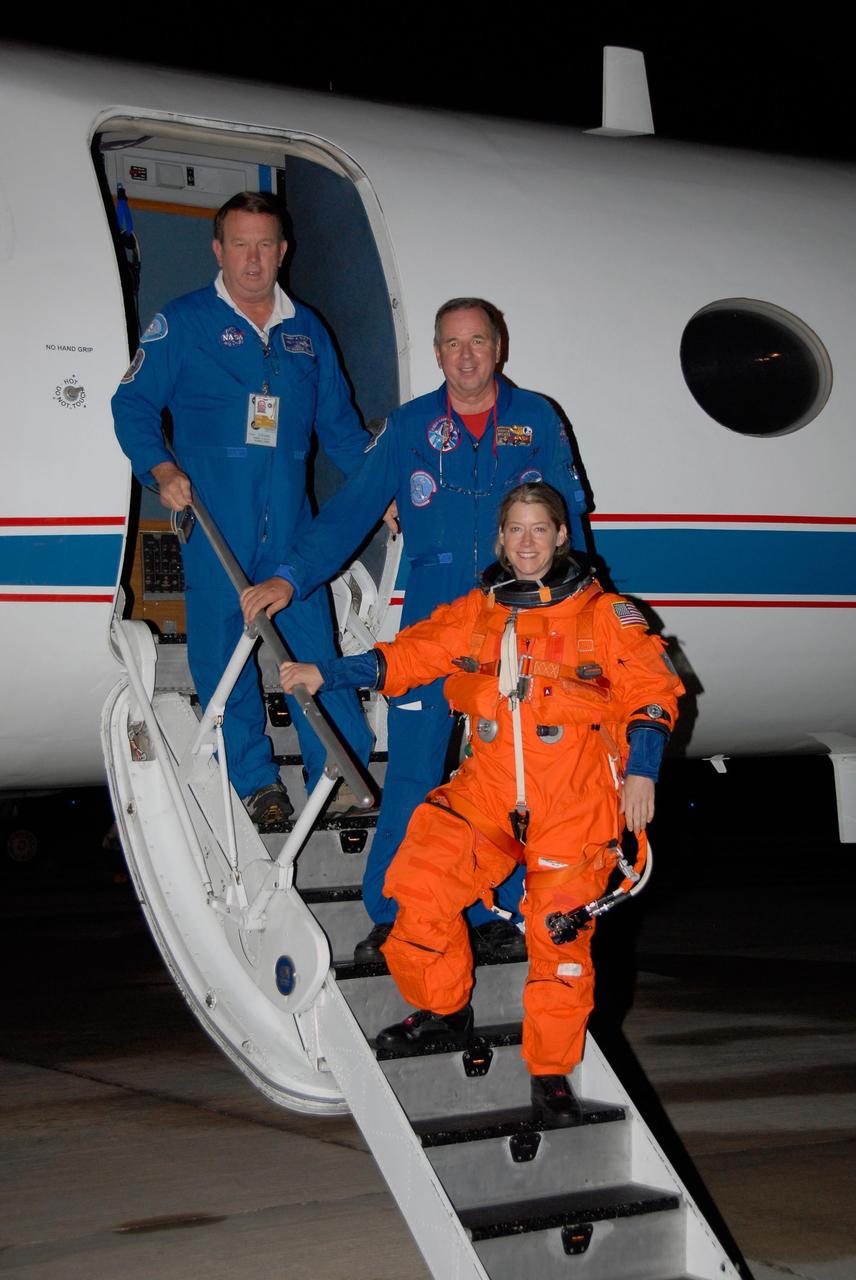
KENNEDY SPACE CENTER, FLA. -- STS-120 Commander Pam Melroy and her flight crew disembark from a Shuttle Training Aircraft, or STA, at NASA Kennedy Space Center's Shuttle Landing Facility. She and STS-120 Pilot George Zamka were training for their upcoming space shuttle mission by practicing landings in STAs. Melroy is the second woman to command a shuttle mission. Also assigned to STS-120 are Mission Specialists Scott Parazynski, Stephanie Wilson, Doug Wheelock, Paolo Nespoli and Daniel Tani. Nespoli represents the European Space Agency. Tani will remain on the International Space Station as an Expedition 16 flight engineer after the STS-120 mission is complete. The mission will be the 23rd shuttle flight to the International Space Station, delivering the Italian-built U.S. Node 2, called Harmony. The crew arrived at Kennedy on Oct. 19 to prepare for launch aboard space shuttle Discovery at 11:38 a.m. EDT Oct. 23. The 14-day mission includes five spacewalks -- four by shuttle crew members and one by the station's Expedition 16 crew -- to install Harmony and move the P6 solar arrays to their permanent position and deploy them. Discovery is scheduled to complete its mission and return home on Nov. 6. Photo credit: NASA/Kim Shiflett
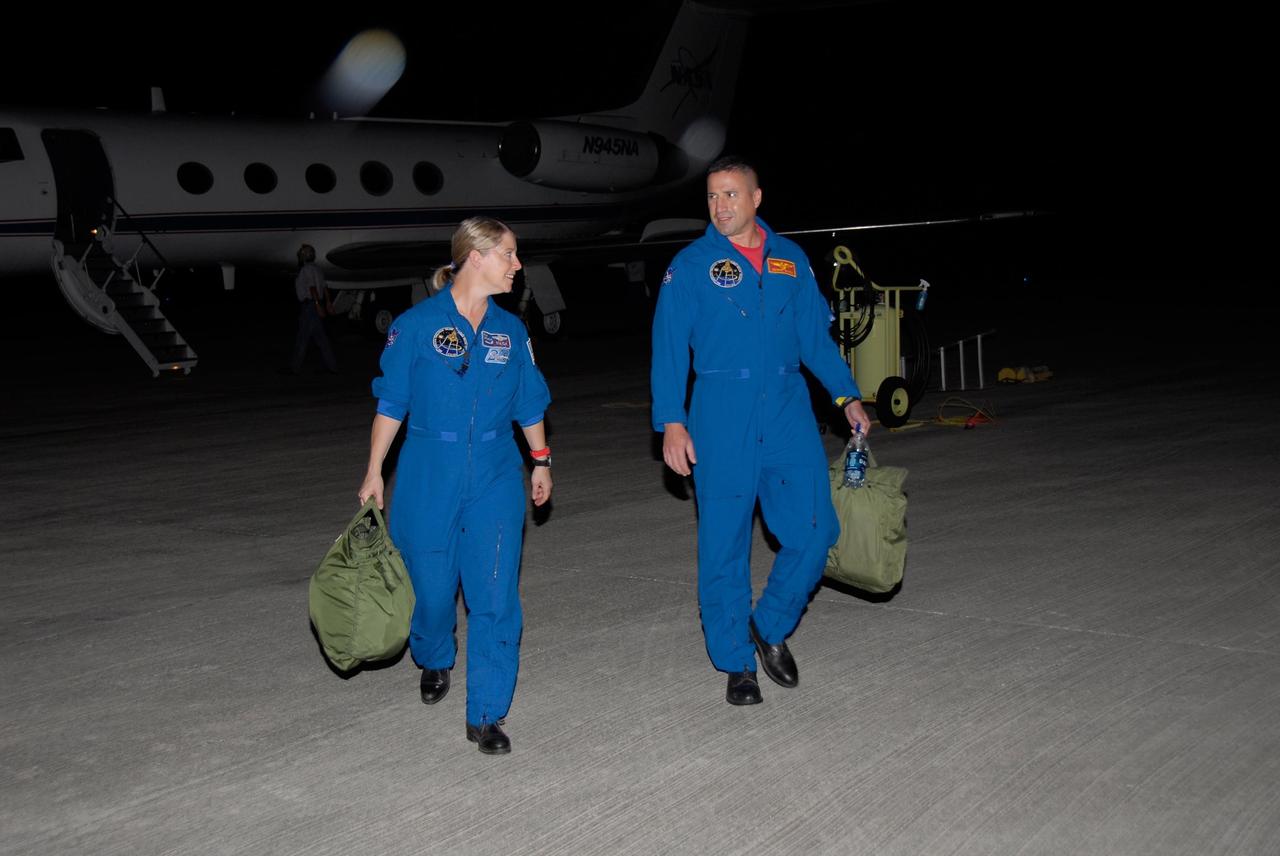
KENNEDY SPACE CENTER, FLA. -- STS-120 Commander Pam Melroy and Pilot George Zamka disembark from the Shuttle Training Aircraft, or STA, behind them on the tarmac at Kennedy Space Center's Shuttle Landing Facility. They were training for their upcoming space shuttle mission by practicing landings using the STA. Melroy is the second woman to command a shuttle mission. Also assigned to STS-120 are Mission Specialists Scott Parazynski, Stephanie Wilson, Doug Wheelock, Paolo Nespoli and Daniel Tani. Nespoli represents the European Space Agency. Tani will remain on the International Space Station as an Expedition 16 flight engineer after the STS-120 mission is complete. The mission will be the 23rd shuttle flight to the International Space Station, delivering the Italian-built U.S. Node 2, called Harmony. The crew arrived at Kennedy on Oct. 19 to prepare for launch aboard space shuttle Discovery at 11:38 a.m. EDT Oct. 23. The 14-day mission includes five spacewalks -- four by shuttle crew members and one by the station's Expedition 16 crew -- to install Harmony and move the P6 solar arrays to their permanent position and deploy them. Discovery is expected to complete its mission and return home on Nov. 6. Photo credit: NASA/Kim Shiflett
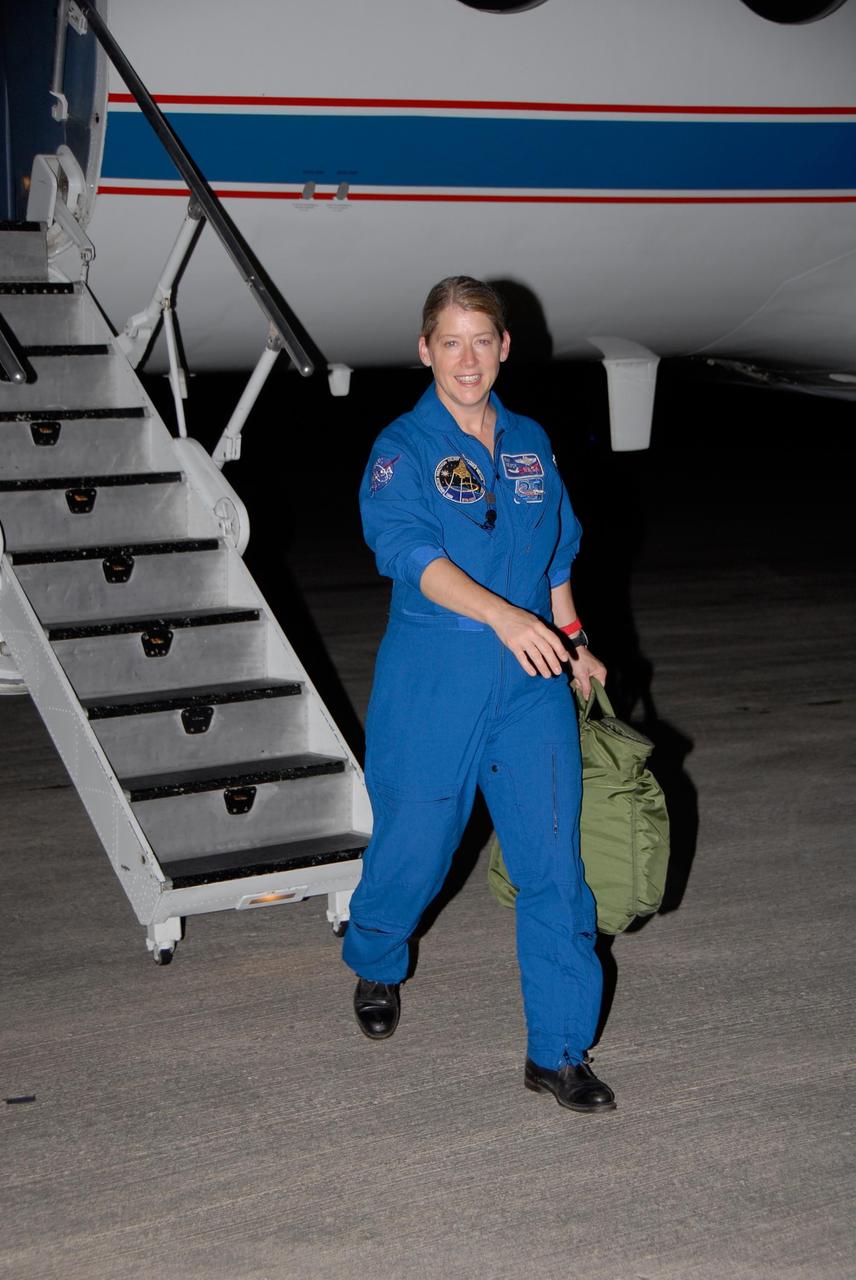
KENNEDY SPACE CENTER, FLA. -- STS-120 Commander Pam Melroy disembarks from a Shuttle Training Aircraft, or STA, on the tarmac at Kennedy Space Center's Shuttle Landing Facility. She and STS-120 Pilot George Zamka were training for their upcoming space shuttle mission by practicing landings using the STA. Melroy is the second woman to command a shuttle mission. Also assigned to STS-120 are Mission Specialists Scott Parazynski, Stephanie Wilson, Doug Wheelock, Paolo Nespoli and Daniel Tani. Nespoli represents the European Space Agency. Tani will remain on the International Space Station as an Expedition 16 flight engineer after the STS-120 mission is complete. The mission will be the 23rd shuttle flight to the International Space Station, delivering the Italian-built U.S. Node 2, called Harmony. The crew arrived at Kennedy on Oct. 19 to prepare for launch aboard space shuttle Discovery at 11:38 a.m. EDT Oct. 23. The 14-day mission includes five spacewalks -- four by shuttle crew members and one by the station's Expedition 16 crew -- to install Harmony and move the P6 solar arrays to their permanent position and deploy them. Discovery is expected to complete its mission and return home on Nov. 6. Photo credit: NASA/Kim Shiflett
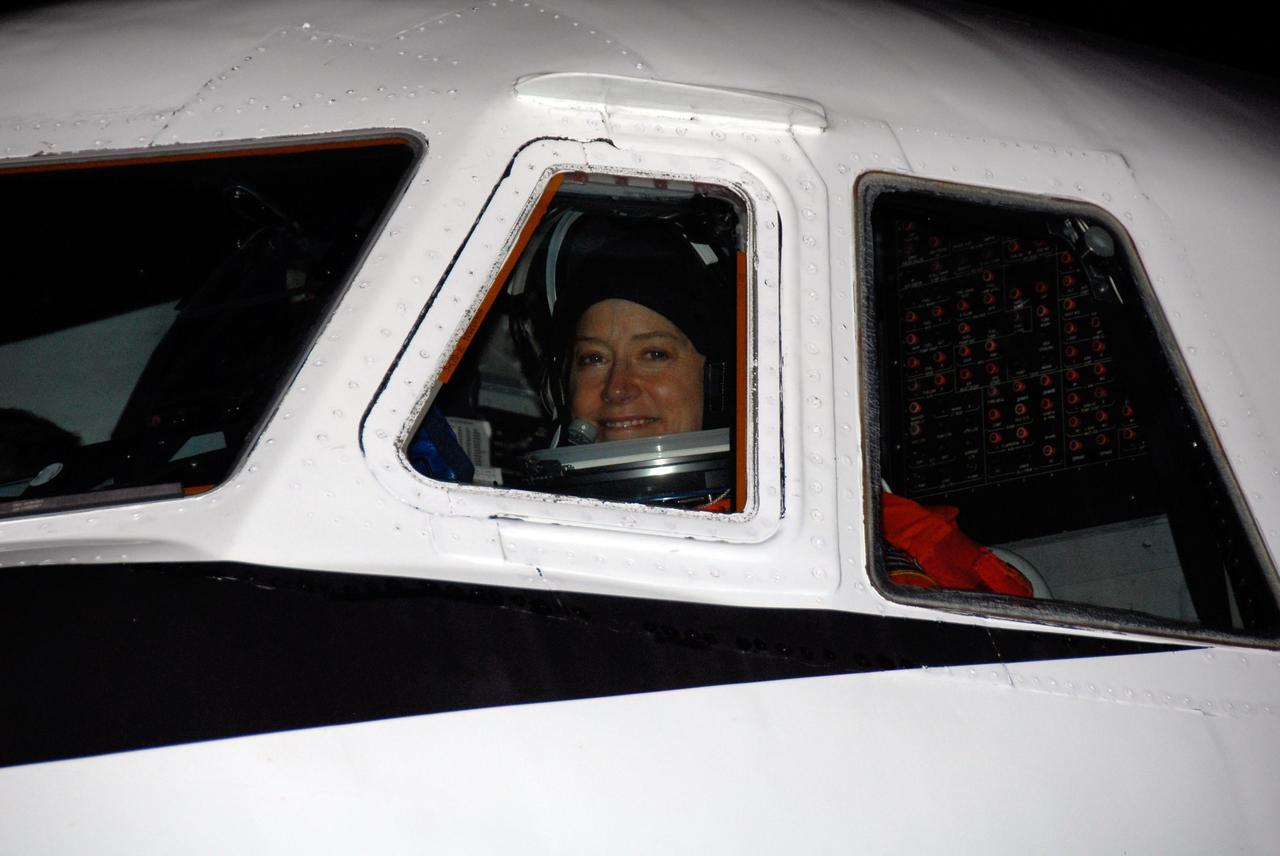
KENNEDY SPACE CENTER, FLA. -- A glimpse of STS-120 Commander Pam Melroy is caught in the cockpit of a Shuttle Training Aircraft, or STA, at NASA Kennedy Space Center's Shuttle Landing Facility. She and STS-120 Pilot George Zamka are training for their upcoming space shuttle mission by practicing landings in STAs. Melroy is the second woman to command a shuttle mission. Also assigned to STS-120 are Mission Specialists Scott Parazynski, Stephanie Wilson, Doug Wheelock, Paolo Nespoli and Daniel Tani. Nespoli represents the European Space Agency. Tani will remain on the International Space Station as an Expedition 16 flight engineer after the STS-120 mission is complete. The mission will be the 23rd shuttle flight to the International Space Station, delivering the Italian-built U.S. Node 2, called Harmony. The crew arrived at Kennedy on Oct. 19 to prepare for launch aboard space shuttle Discovery at 11:38 a.m. EDT Oct. 23. The 14-day mission includes five spacewalks -- four by shuttle crew members and one by the station's Expedition 16 crew -- to install Harmony and move the P6 solar arrays to their permanent position and deploy them. Discovery is scheduled to complete its mission and return home on Nov. 6. Photo credit: NASA/Kim Shiflett
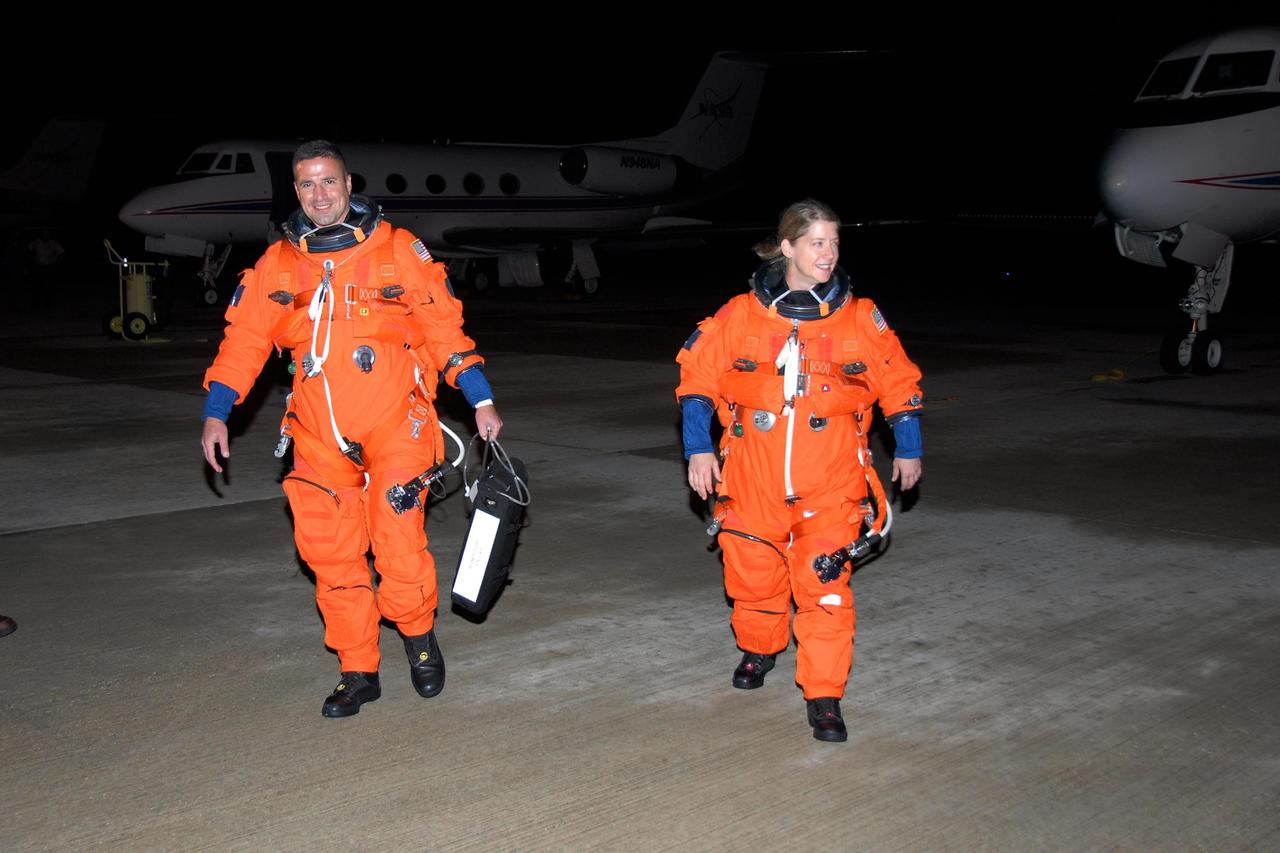
KENNEDY SPACE CENTER, FLA. -- STS-120 Commander Pam Melroy and Pilot George Zamka return to crew quarters after disembarking from the Shuttle Training Aircraft, or STAs, behind them on the tarmac at NASA Kennedy Space Center's Shuttle Landing Facility. They were training for their upcoming space shuttle mission by practicing landings in the STAs. Melroy is the second woman to command a shuttle mission. Also assigned to STS-120 are Mission Specialists Scott Parazynski, Stephanie Wilson, Doug Wheelock, Paolo Nespoli and Daniel Tani. Nespoli represents the European Space Agency. Tani will remain on the International Space Station as an Expedition 16 flight engineer after the STS-120 mission is complete. The mission will be the 23rd shuttle flight to the International Space Station, delivering the Italian-built U.S. Node 2, called Harmony. The crew arrived at Kennedy on Oct. 19 to prepare for launch aboard space shuttle Discovery at 11:38 a.m. EDT Oct. 23. The 14-day mission includes five spacewalks -- four by shuttle crew members and one by the station's Expedition 16 crew -- to install Harmony and move the P6 solar arrays to their permanent position and deploy them. Discovery is scheduled to complete its mission and return home on Nov. 6. Photo credit: NASA/Kim Shiflett
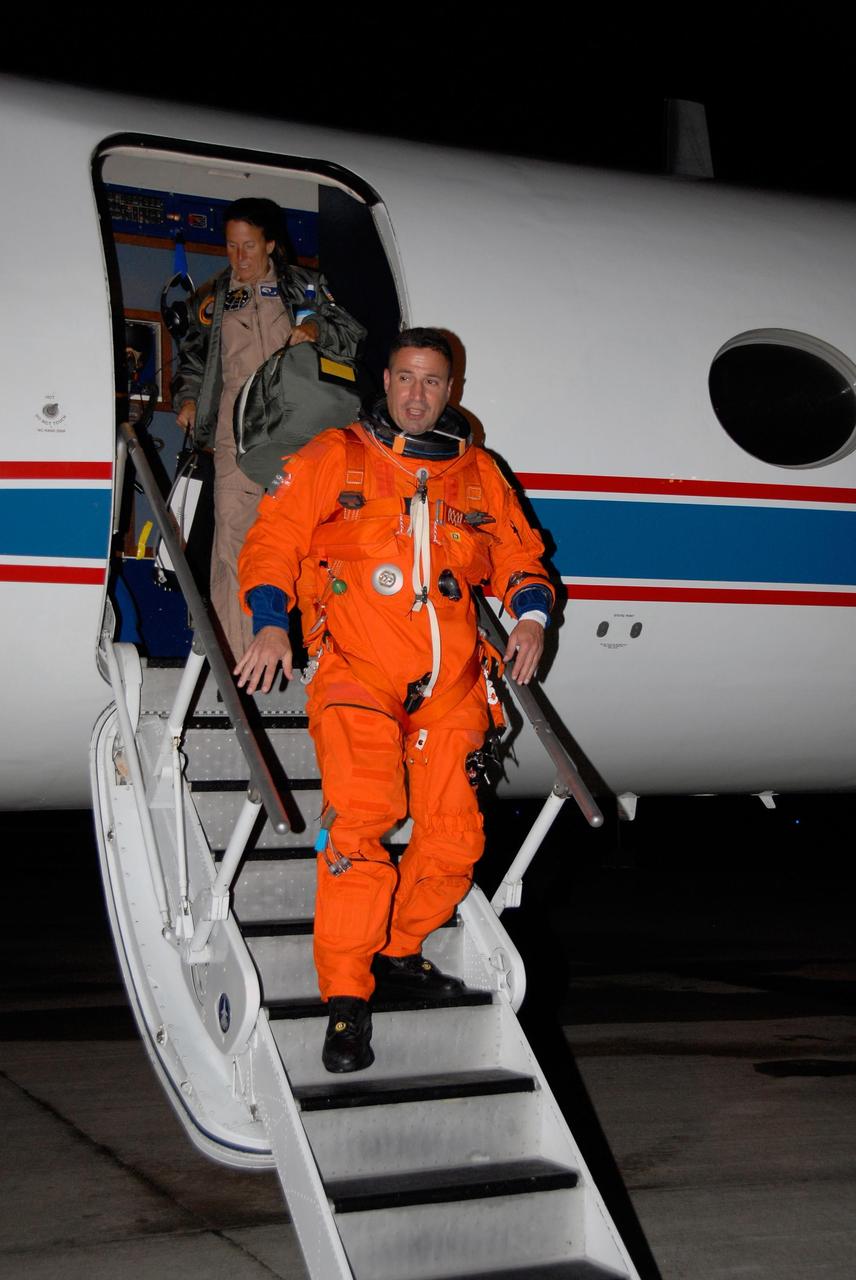
KENNEDY SPACE CENTER, FLA. -- STS-120 Pilot George Zamka disembarks from a Shuttle Training Aircraft, or STA, at NASA Kennedy Space Center's Shuttle Landing Facility. He and STS-120 Commander Pam Melroy were training for their upcoming space shuttle mission by practicing landings in STAs. Melroy is the second woman to command a shuttle mission. Also assigned to STS-120 are Mission Specialists Scott Parazynski, Stephanie Wilson, Doug Wheelock, Paolo Nespoli and Daniel Tani. Nespoli represents the European Space Agency. Tani will remain on the International Space Station as an Expedition 16 flight engineer after the STS-120 mission is complete. The mission will be the 23rd shuttle flight to the International Space Station, delivering the Italian-built U.S. Node 2, called Harmony. The crew arrived at Kennedy on Oct. 19 to prepare for launch aboard space shuttle Discovery at 11:38 a.m. EDT Oct. 23. The 14-day mission includes five spacewalks -- four by shuttle crew members and one by the station's Expedition 16 crew -- to install Harmony and move the P6 solar arrays to their permanent position and deploy them. Discovery is scheduled to complete its mission and return home on Nov. 6. Photo credit: NASA/Kim Shiflett
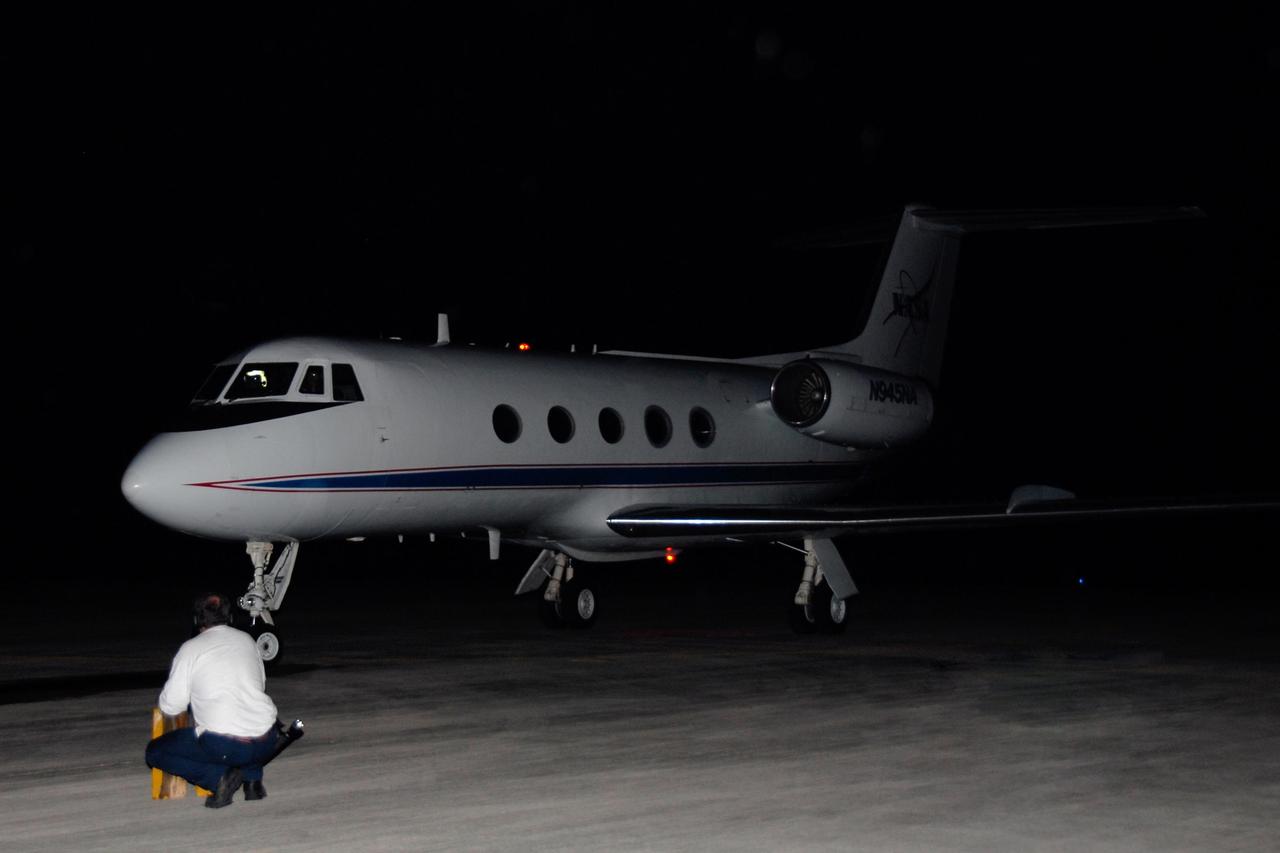
KENNEDY SPACE CENTER, FLA. -- A Shuttle Training Aircraft, or STA, parks on the tarmac at Kennedy Space Center's Shuttle Landing Facility. Aboard are STS-120 Commander Pam Melroy and Pilot George Zamka, training for their upcoming space shuttle mission by practicing landings using the STA. Melroy is the second woman to command a shuttle mission. Also assigned to STS-120 are Mission Specialists Scott Parazynski, Stephanie Wilson, Doug Wheelock, Paolo Nespoli and Daniel Tani. Nespoli represents the European Space Agency. Tani will remain on the International Space Station as an Expedition 16 flight engineer after the STS-120 mission is complete. The mission will be the 23rd shuttle flight to the International Space Station, delivering the Italian-built U.S. Node 2, called Harmony. The crew arrived at Kennedy on Oct. 19 to prepare for launch aboard space shuttle Discovery at 11:38 a.m. EDT Oct. 23. The 14-day mission includes five spacewalks -- four by shuttle crew members and one by the station's Expedition 16 crew -- to install Harmony and move the P6 solar arrays to their permanent position and deploy them. Discovery is expected to complete its mission and return home on Nov. 6. Photo credit: NASA/Kim Shiflett
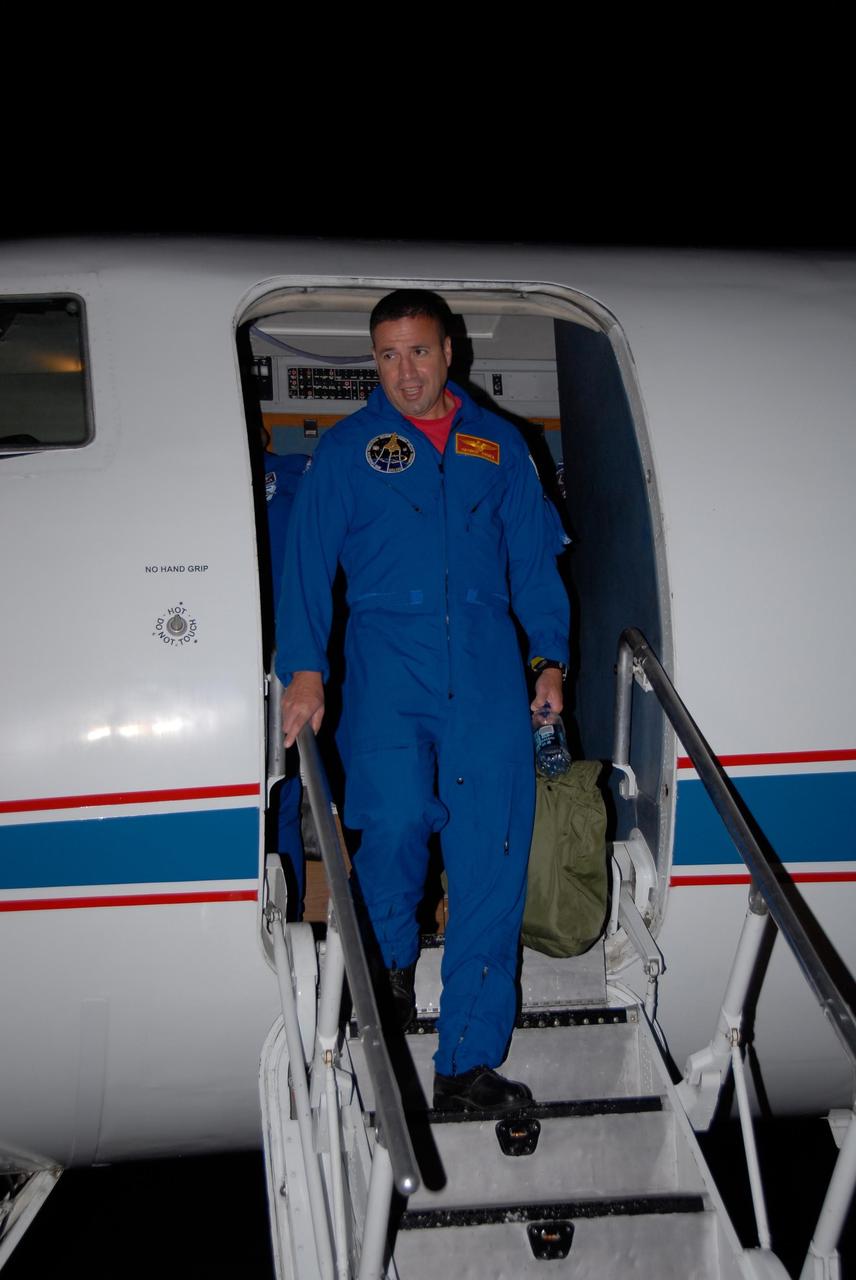
KENNEDY SPACE CENTER, FLA. -- STS-120 Pilot George Zamka disembarks from a Shuttle Training Aircraft, or STA, on the tarmac at Kennedy Space Center's Shuttle Landing Facility. He and STS-120 Commander Pam Melroy were training for their upcoming space shuttle mission by practicing landings using the STA. Melroy is the second woman to command a shuttle mission. Also assigned to STS-120 are Mission Specialists Scott Parazynski, Stephanie Wilson, Doug Wheelock, Paolo Nespoli and Daniel Tani. Nespoli represents the European Space Agency. Tani will remain on the International Space Station as an Expedition 16 flight engineer after the STS-120 mission is complete. The mission will be the 23rd shuttle flight to the International Space Station, delivering the Italian-built U.S. Node 2, called Harmony. The crew arrived at Kennedy on Oct. 19 to prepare for launch aboard space shuttle Discovery at 11:38 a.m. EDT Oct. 23. The 14-day mission includes five spacewalks -- four by shuttle crew members and one by the station's Expedition 16 crew -- to install Harmony and move the P6 solar arrays to their permanent position and deploy them. Discovery is expected to complete its mission and return home on Nov. 6. Photo credit: NASA/Kim Shiflett
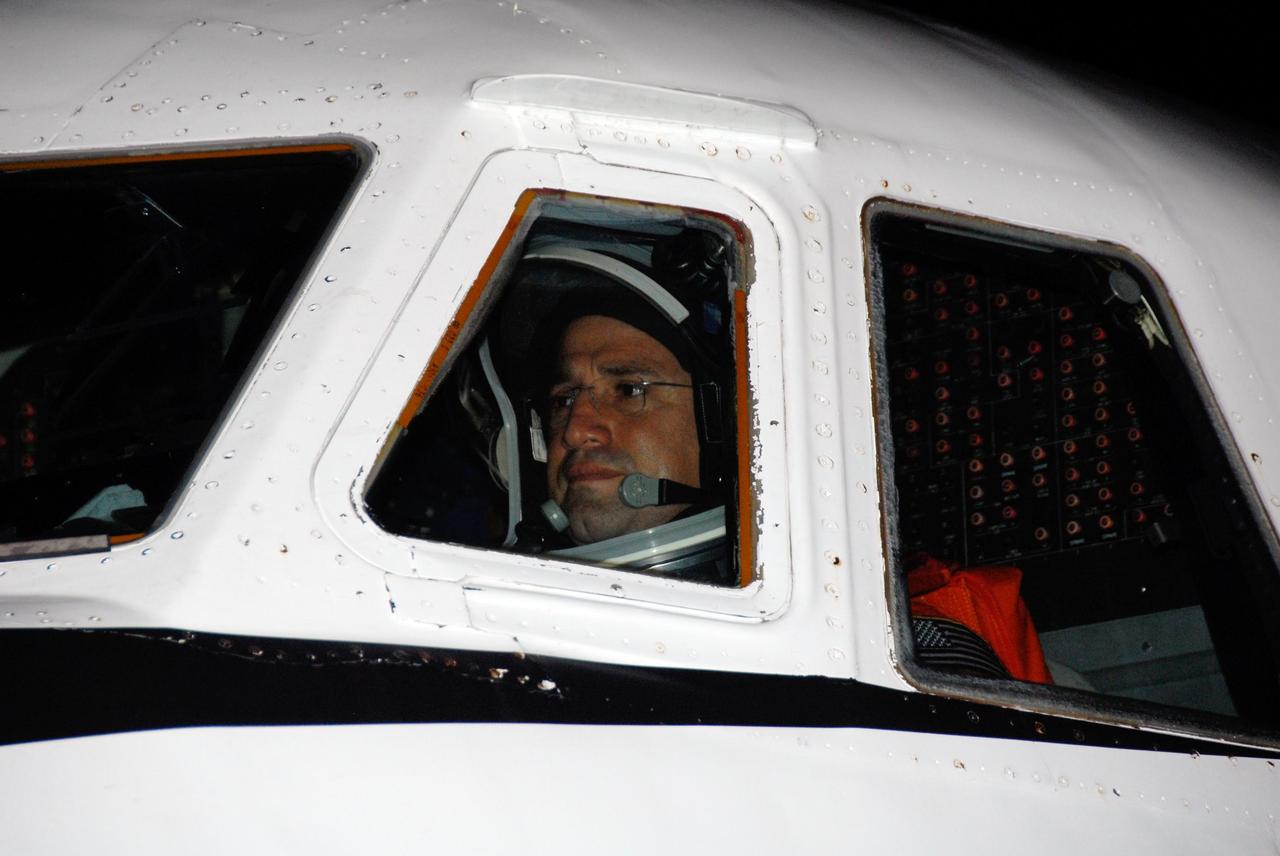
KENNEDY SPACE CENTER, FLA. -- A glimpse of STS-120 Pilot George Zamka is caught in the cockpit of a Shuttle Training Aircraft, or STA, at NASA Kennedy Space Center's Shuttle Landing Facility. He and STS-120 Commander Pam Melroy are training for their upcoming space shuttle mission by practicing landings in STAs. Melroy is the second woman to command a shuttle mission. Also assigned to STS-120 are Mission Specialists Scott Parazynski, Stephanie Wilson, Doug Wheelock, Paolo Nespoli and Daniel Tani. Nespoli represents the European Space Agency. Tani will remain on the International Space Station as an Expedition 16 flight engineer after the STS-120 mission is complete. The mission will be the 23rd shuttle flight to the International Space Station, delivering the Italian-built U.S. Node 2, called Harmony. The crew arrived at Kennedy on Oct. 19 to prepare for launch aboard space shuttle Discovery at 11:38 a.m. EDT Oct. 23. The 14-day mission includes five spacewalks -- four by shuttle crew members and one by the station's Expedition 16 crew -- to install Harmony and move the P6 solar arrays to their permanent position and deploy them. Discovery is scheduled to complete its mission and return home on Nov. 6. Photo credit: NASA/Kim Shiflett
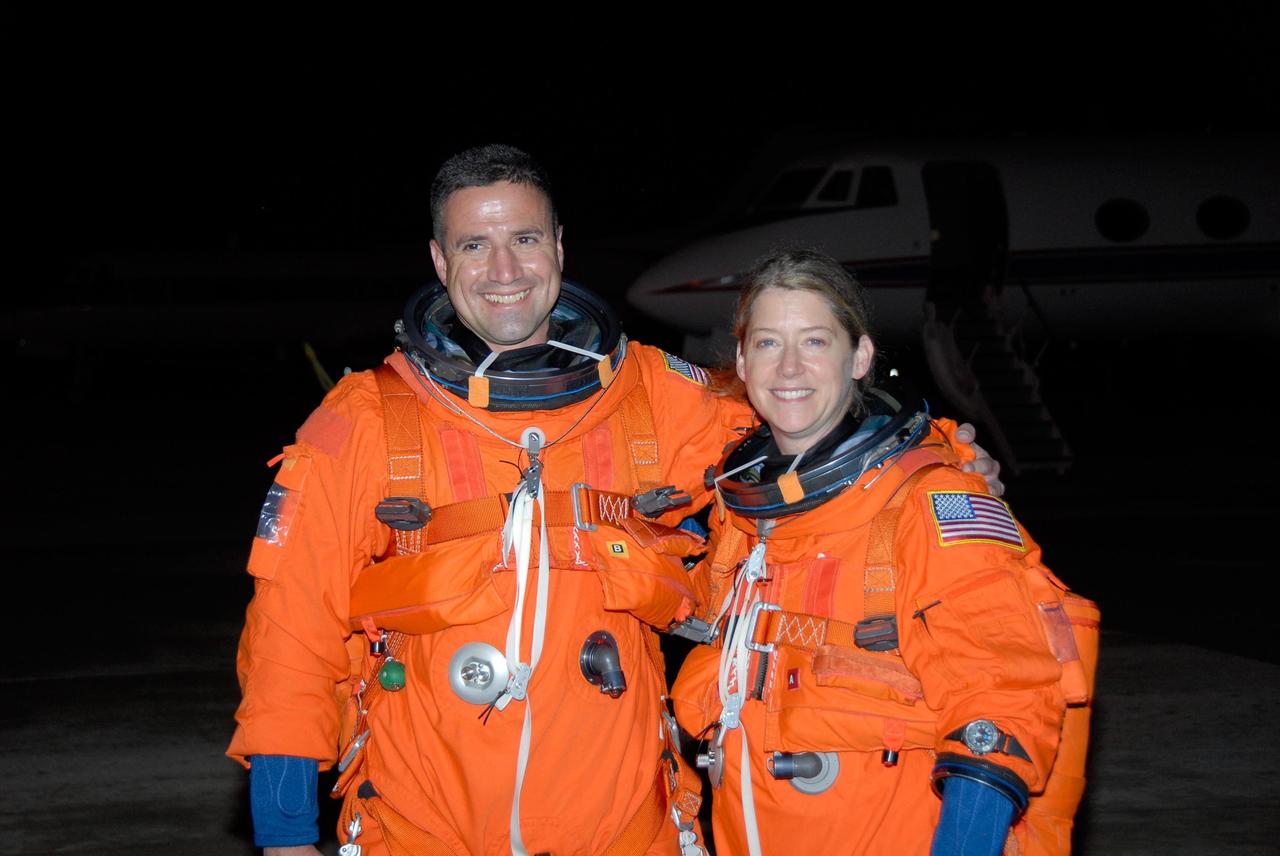
KENNEDY SPACE CENTER, FLA. -- STS-120 Pilot George Zamka and Commander Pam Melroy pose for a portrait on the tarmac at NASA Kennedy Space Center's Shuttle Landing Facility. They were training for their upcoming space shuttle mission by practicing landings in the Shuttle Training Aircraft, or STAs, behind them. Melroy is the second woman to command a shuttle mission. Also assigned to STS-120 are Mission Specialists Scott Parazynski, Stephanie Wilson, Doug Wheelock, Paolo Nespoli and Daniel Tani. Nespoli represents the European Space Agency. Tani will remain on the International Space Station as an Expedition 16 flight engineer after the STS-120 mission is complete. The mission will be the 23rd shuttle flight to the International Space Station, delivering the Italian-built U.S. Node 2, called Harmony. The crew arrived at Kennedy on Oct. 19 to prepare for launch aboard space shuttle Discovery at 11:38 a.m. EDT Oct. 23. The 14-day mission includes five spacewalks -- four by shuttle crew members and one by the station's Expedition 16 crew -- to install Harmony and move the P6 solar arrays to their permanent position and deploy them. Discovery is scheduled to complete its mission and return home on Nov. 6. Photo credit: NASA/Kim Shiflett