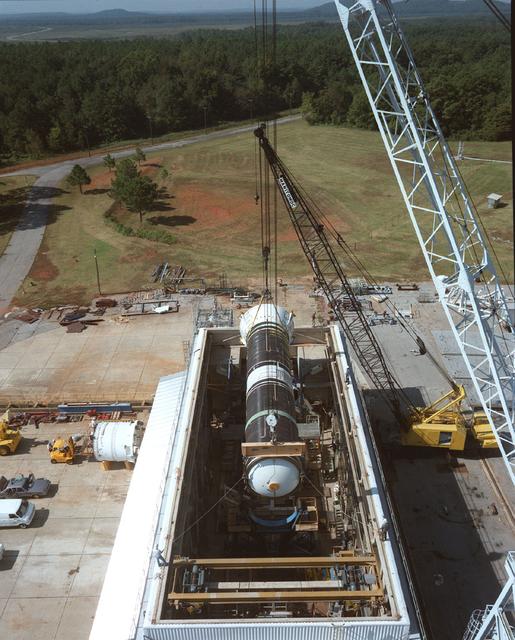
Marshall Space Flight Center workers install Structural Test Article Number Three (STA-3) into a Center test facility. From December 1987 to April 1988, STA-3 (a test model of the Redesigned Solid Rocket Motor) underwent a series of six tests at the Marshall Center designed to demonstrate the structural strength of the Space Shuttle's Solid Rocket Booster, redesigned after the January 1986 Challenger accident.
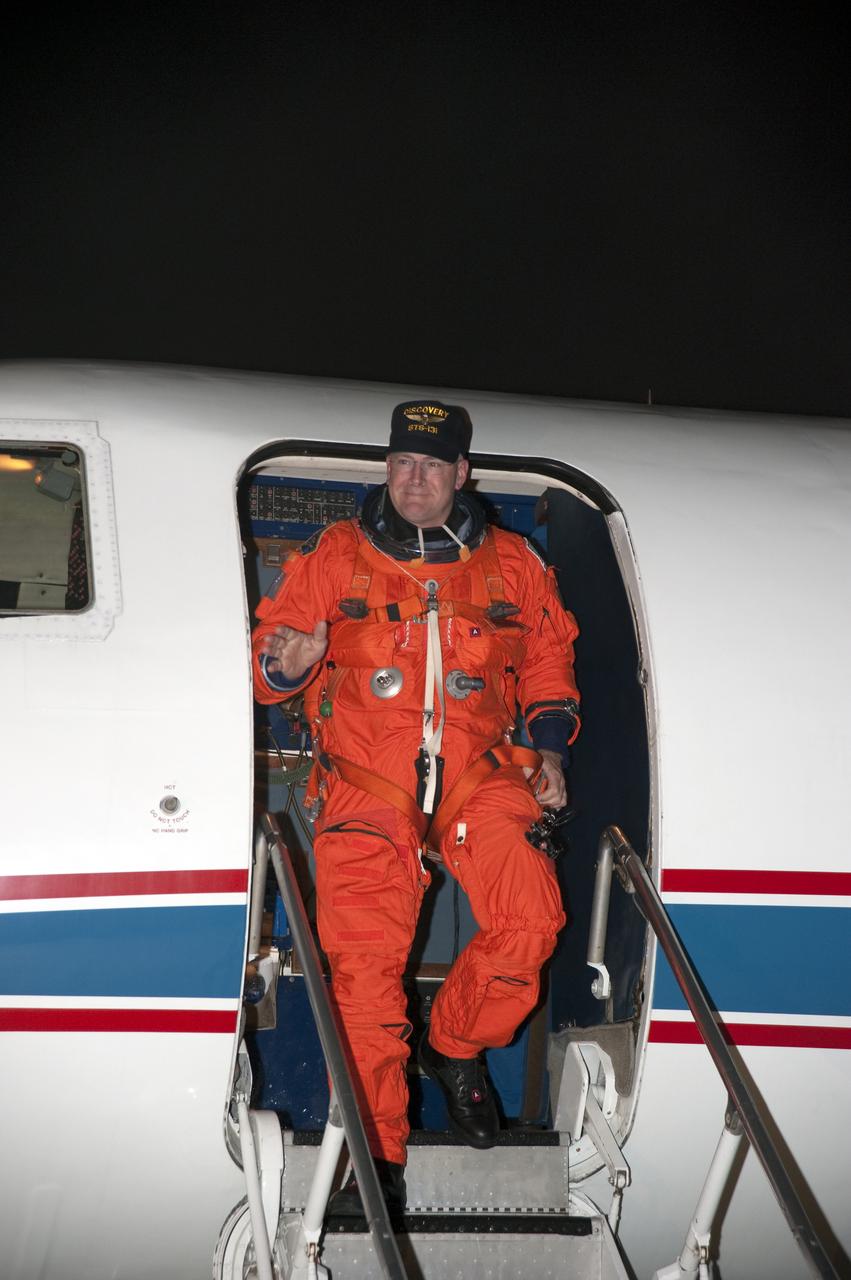
STS-131 LAUNCH L-3 SUITED STA'S
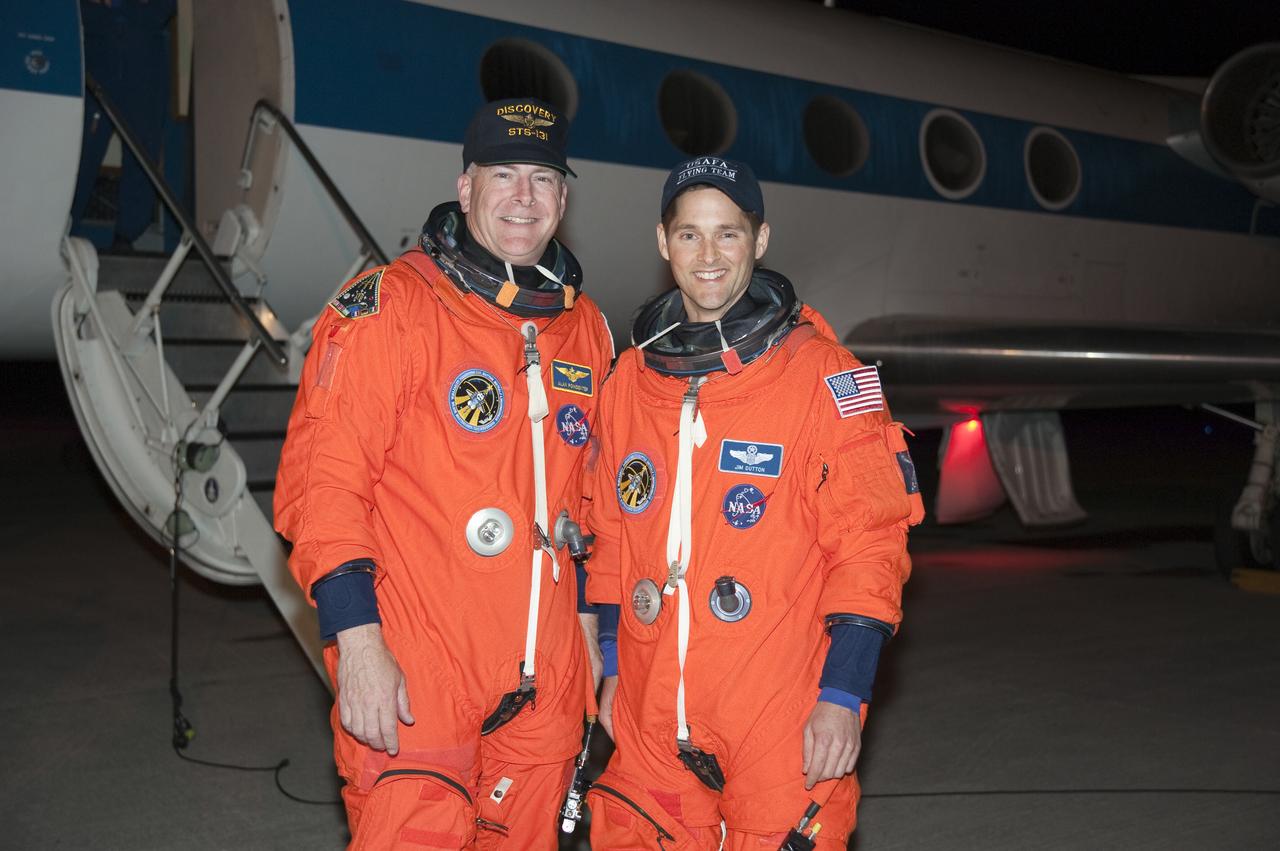
STS-131 LAUNCH L-3 SUITED STA'S
STS-131 LAUNCH L-3 SUITED STA'S
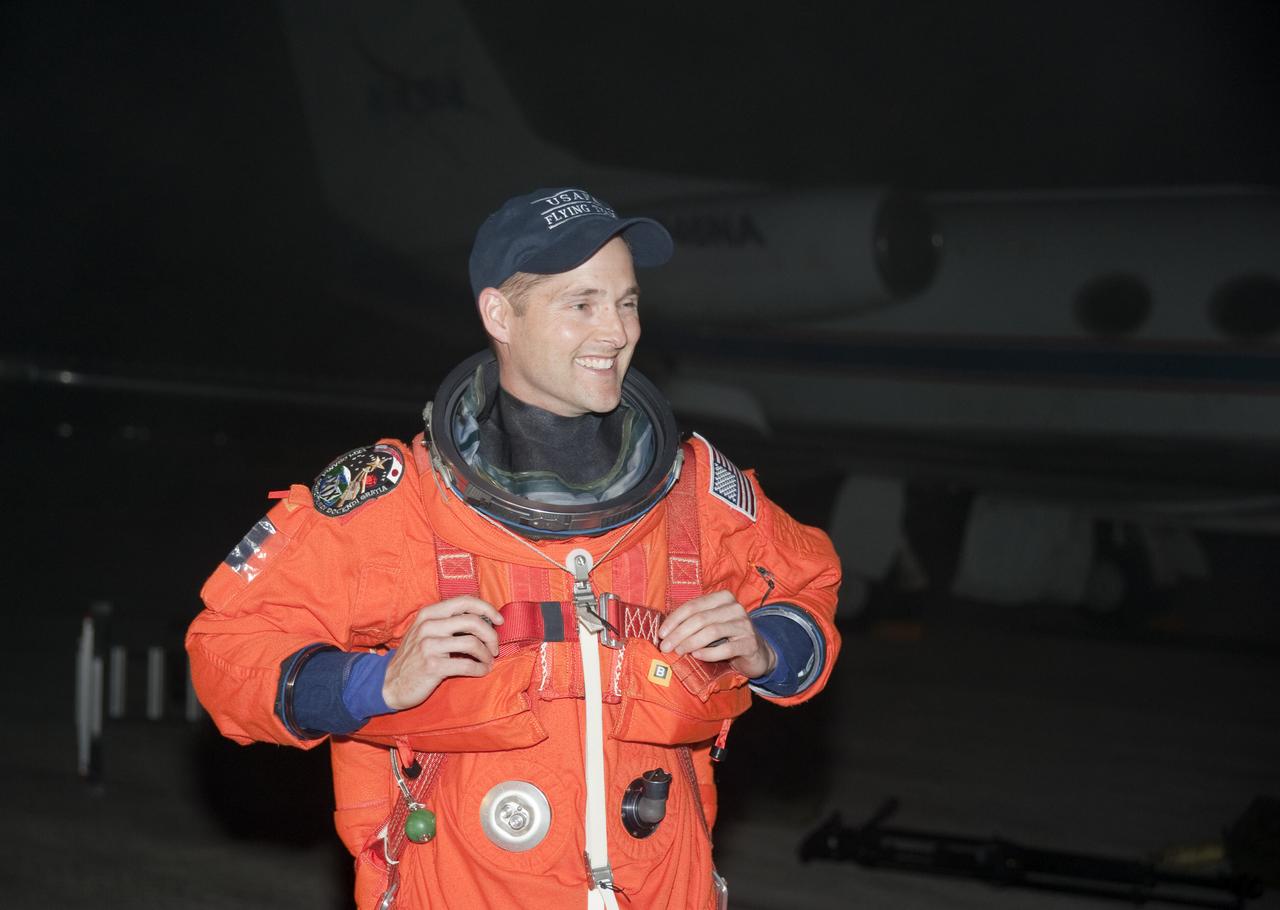
STS-131 LAUNCH L-3 SUITED STA'S
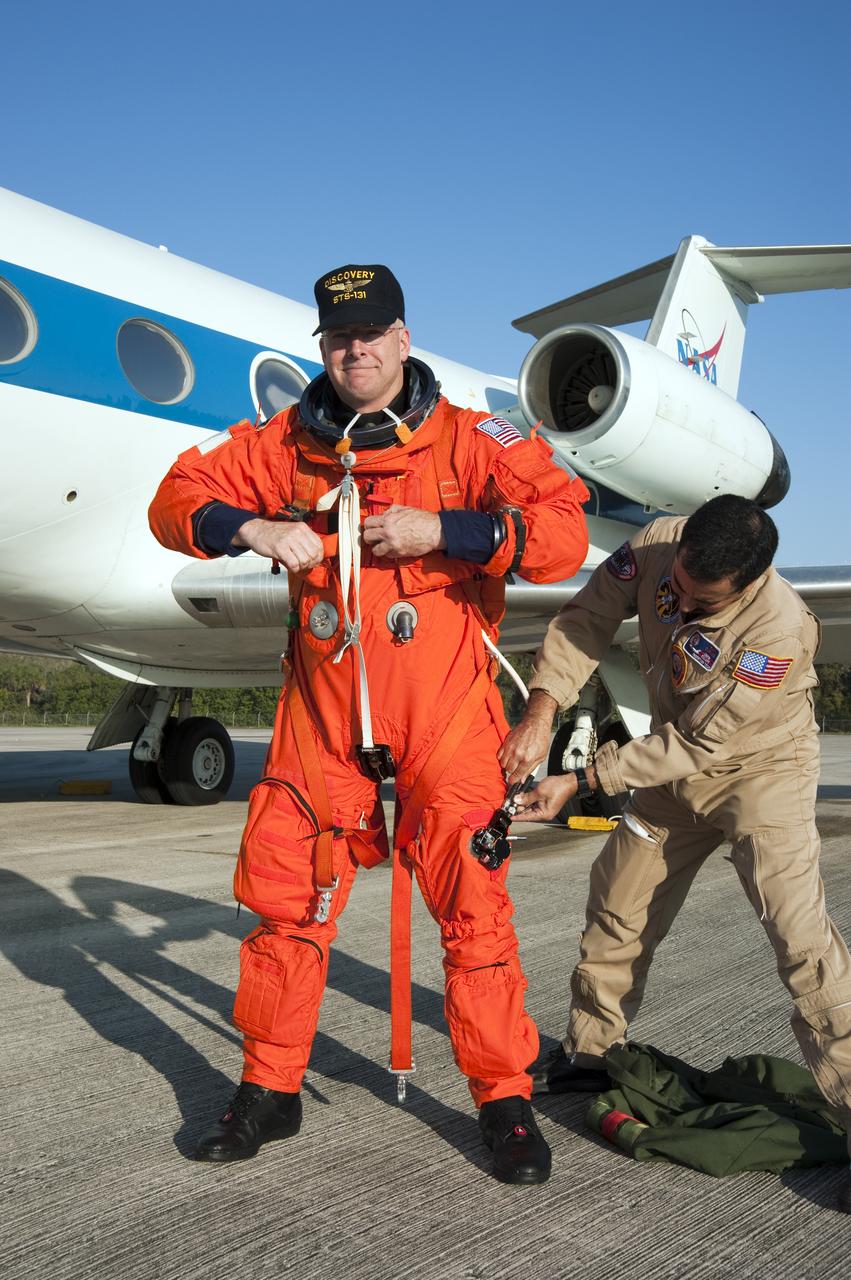
STS-131 LAUNCH L-3 SUITED STA'S
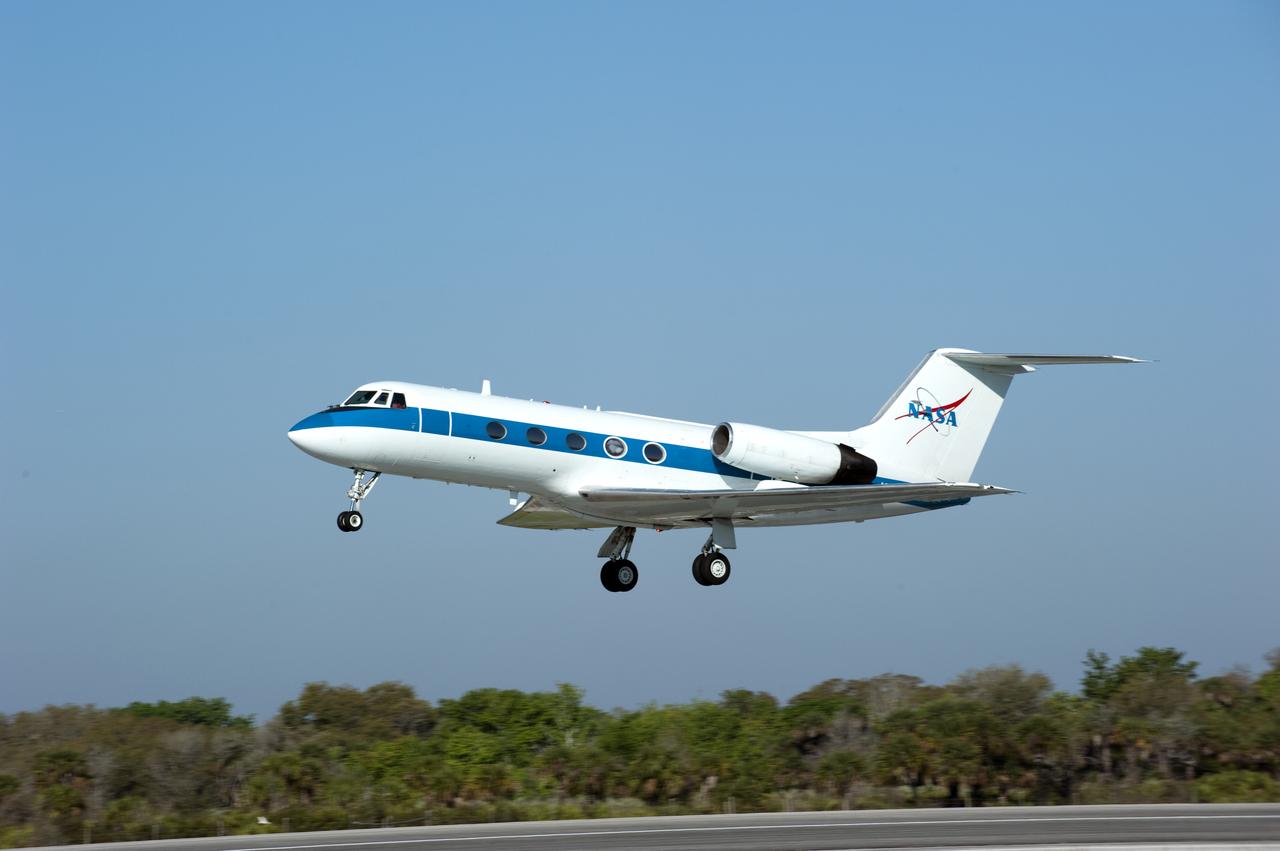
STS-131 LAUNCH L-3 SUITED STA'S
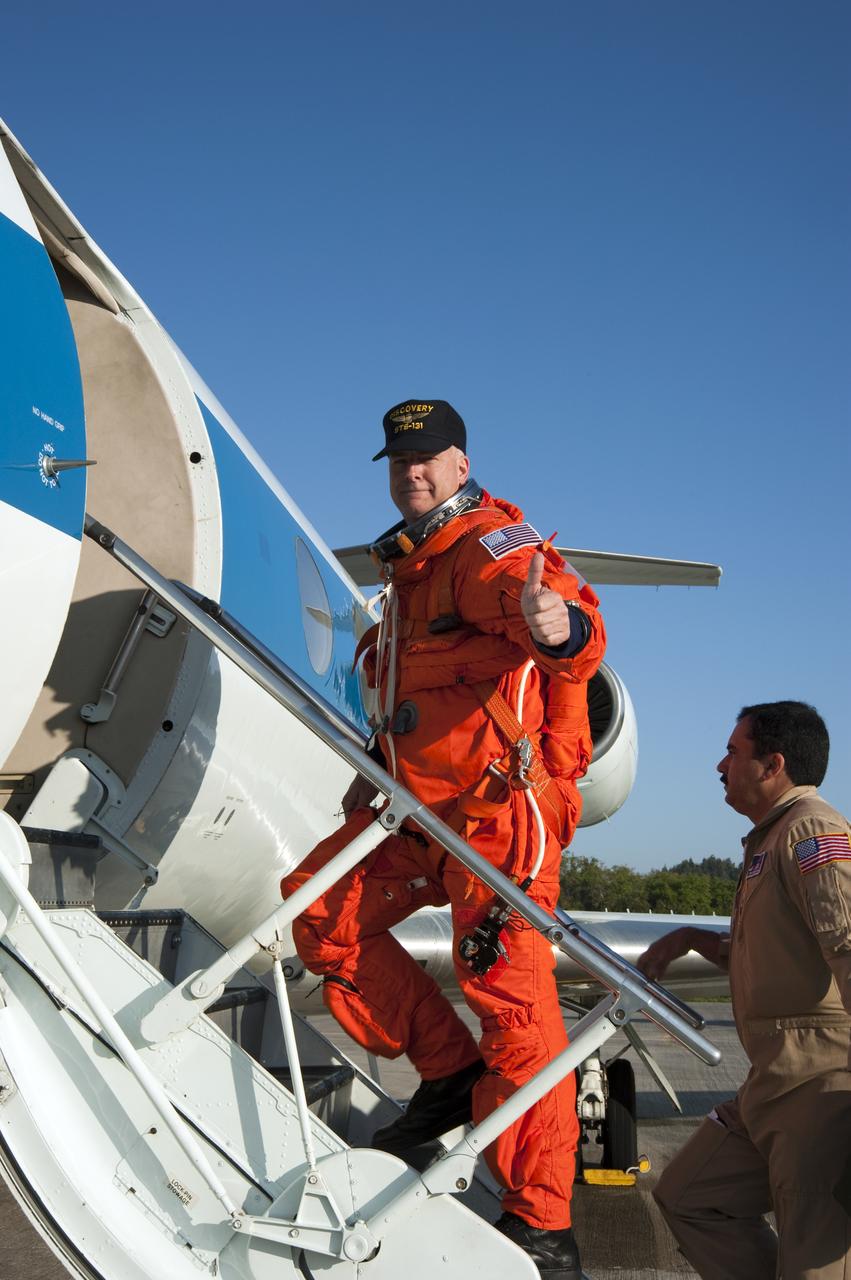
STS-131 LAUNCH L-3 SUITED STA'S
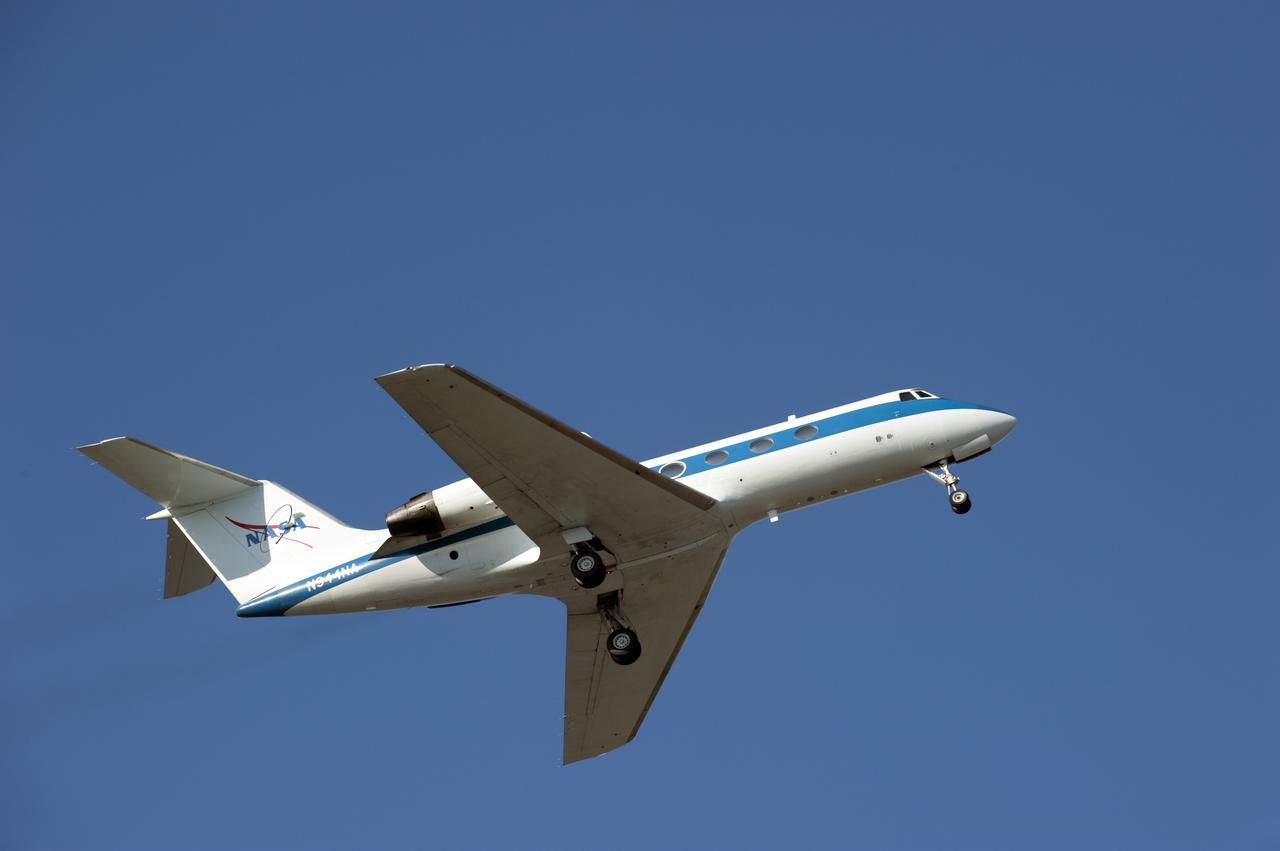
STS-131 LAUNCH L-3 SUITED STA'S
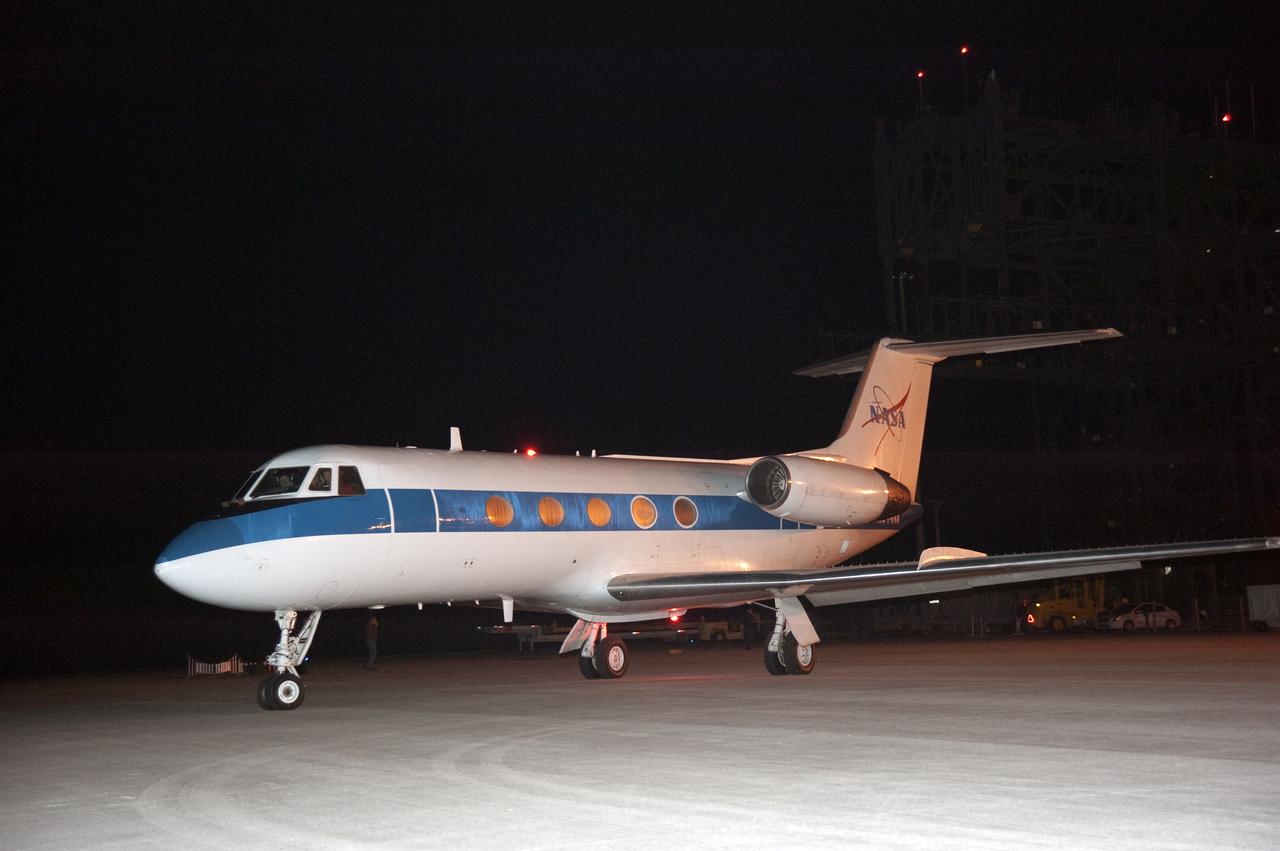
STS-131 LAUNCH L-3 SUITED STA'S
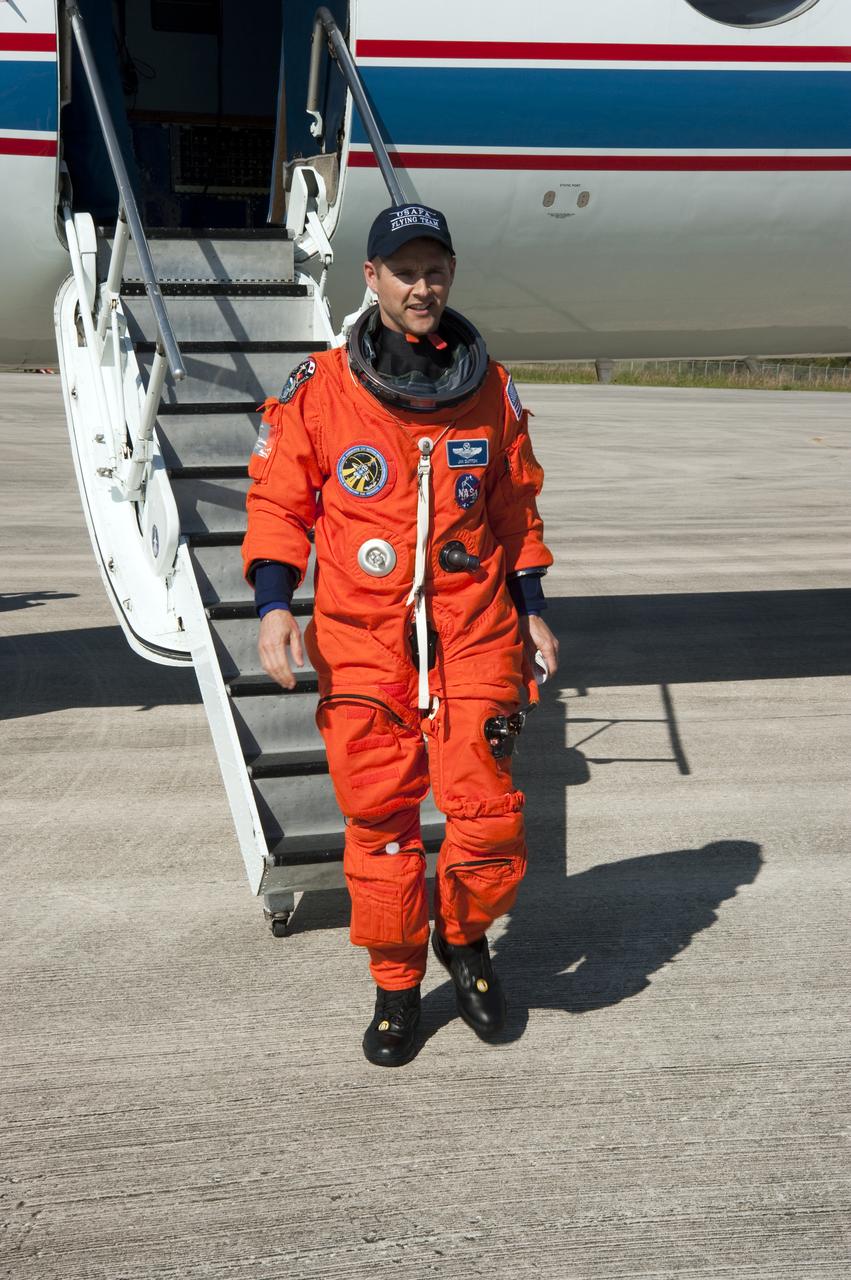
STS-131 LAUNCH L-3 SUITED STA'S
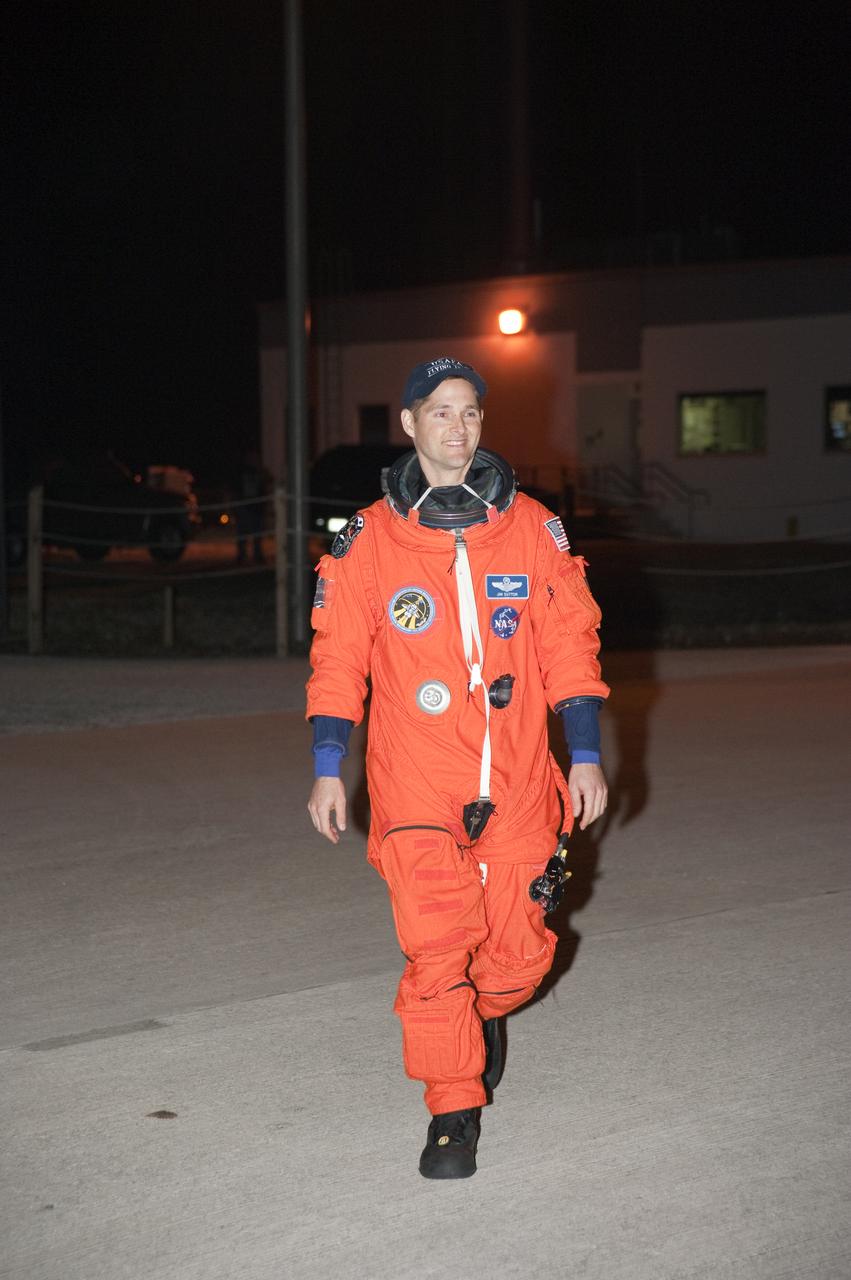
STS-131 LAUNCH L-3 SUITED STA'S
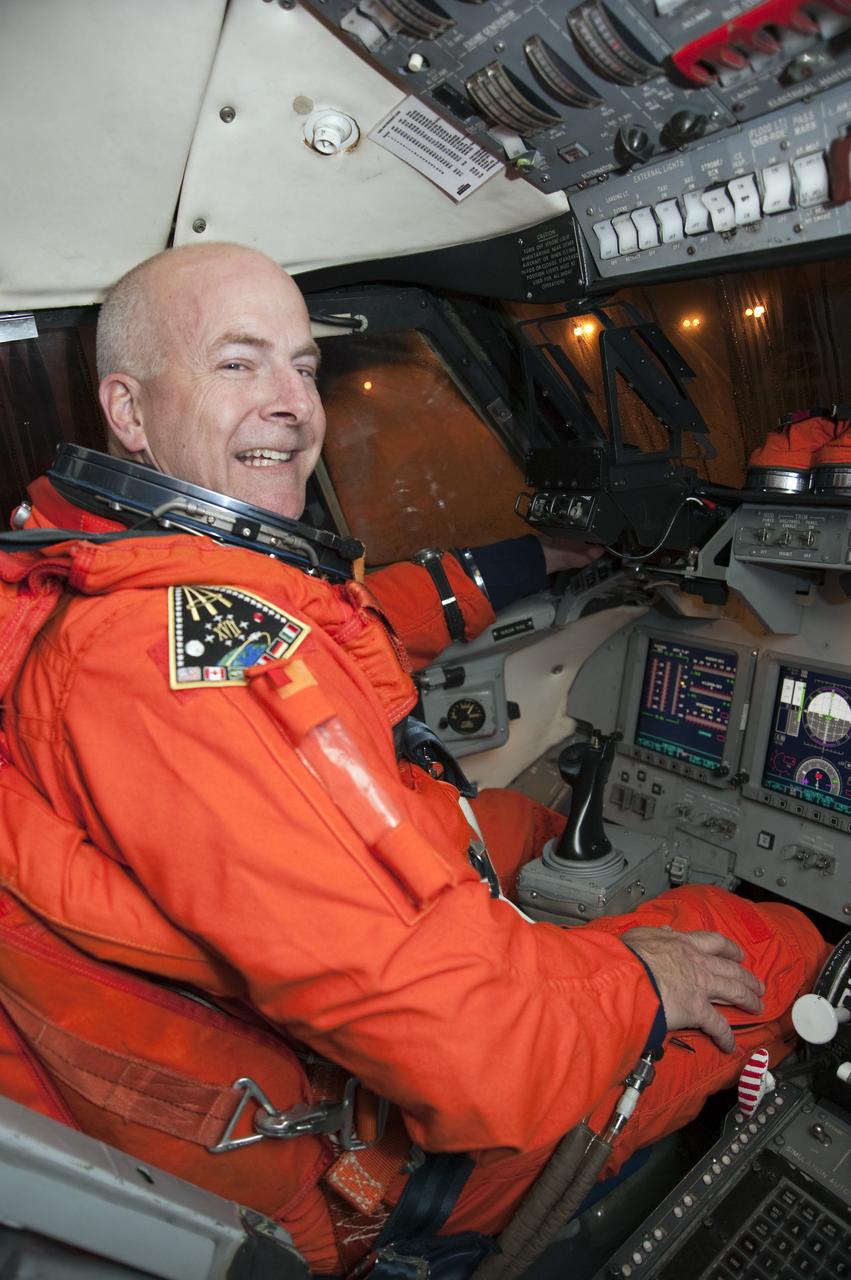
STS-131 LAUNCH L-3 SUITED STA'S
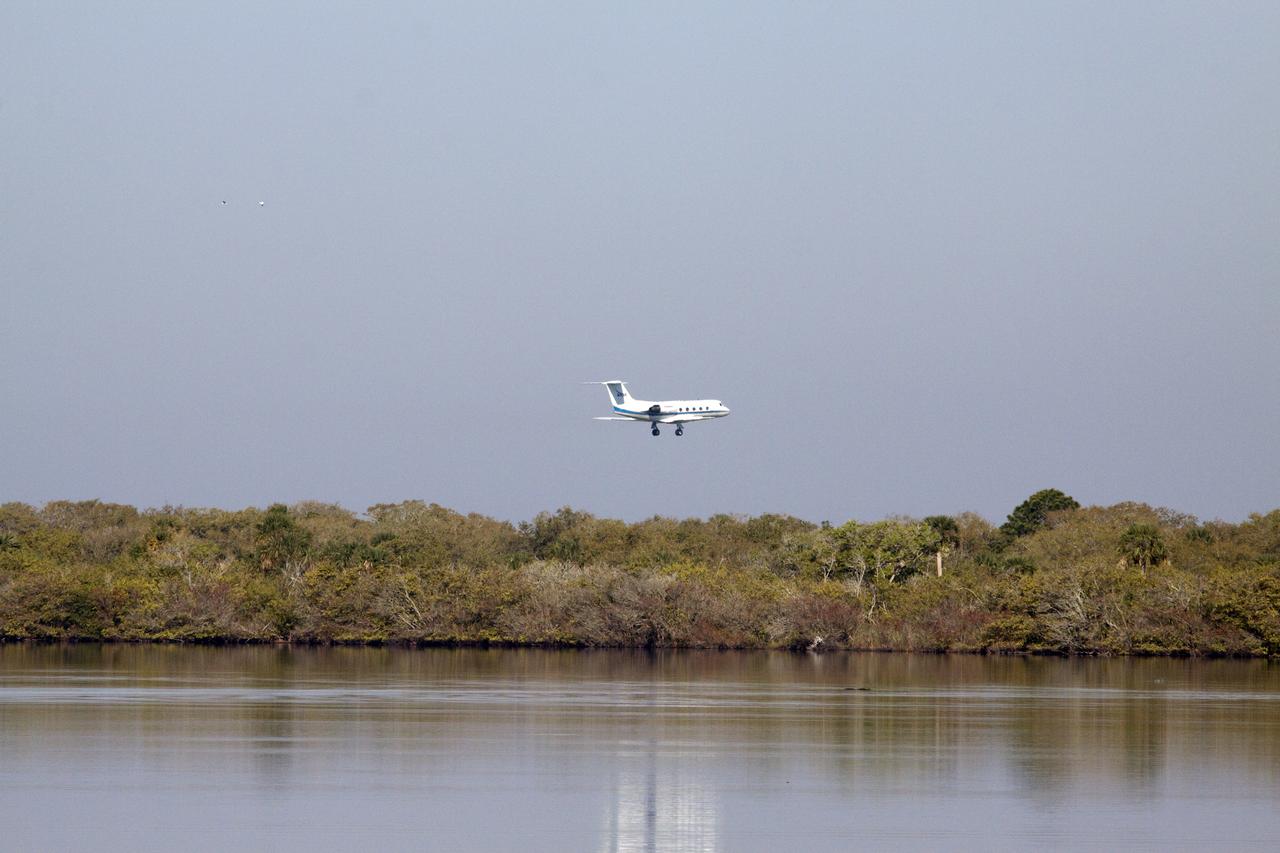
STS-131 LAUNCH L-3 STA'S - LONG SHOTS
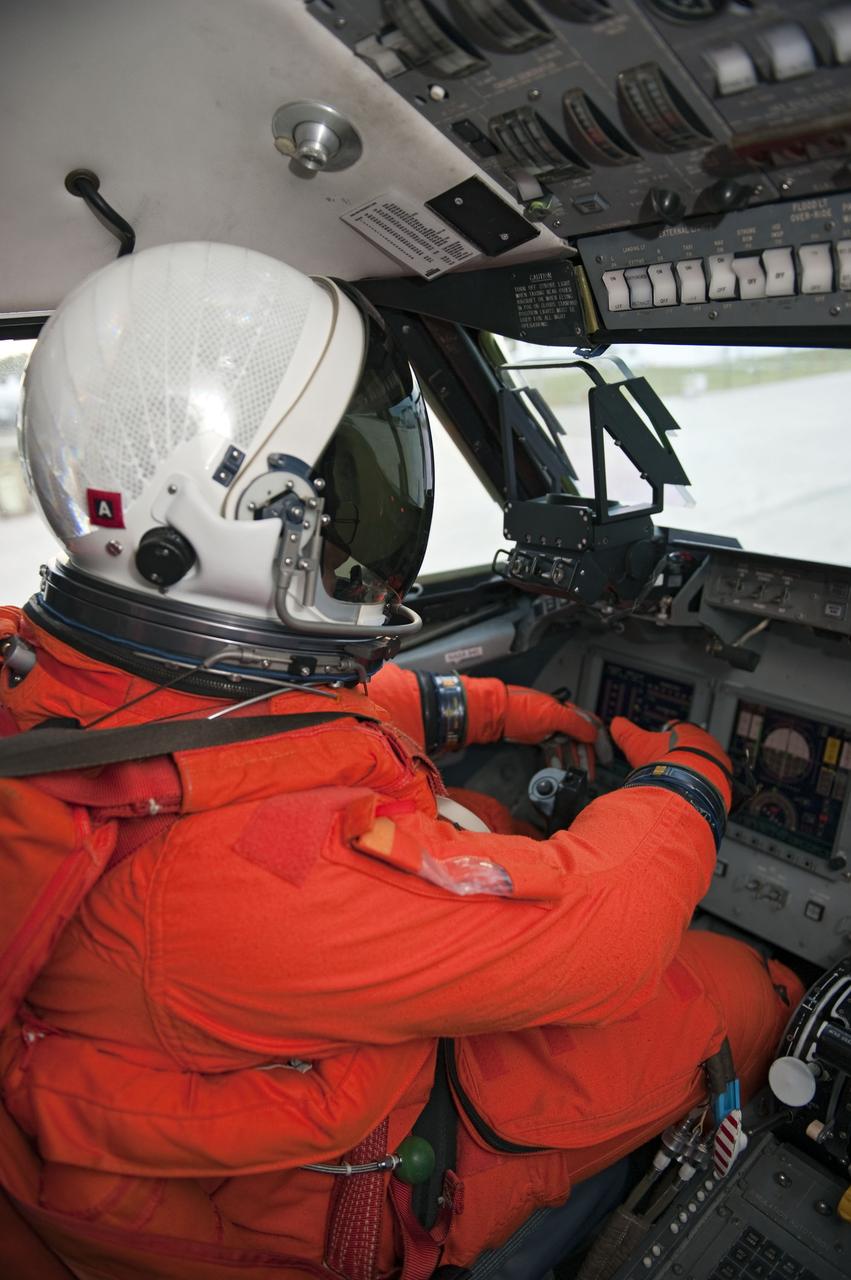
STS-133 LAUNCH L-4(3) SUITED STA'S WITH COMMANDER AND PILOT
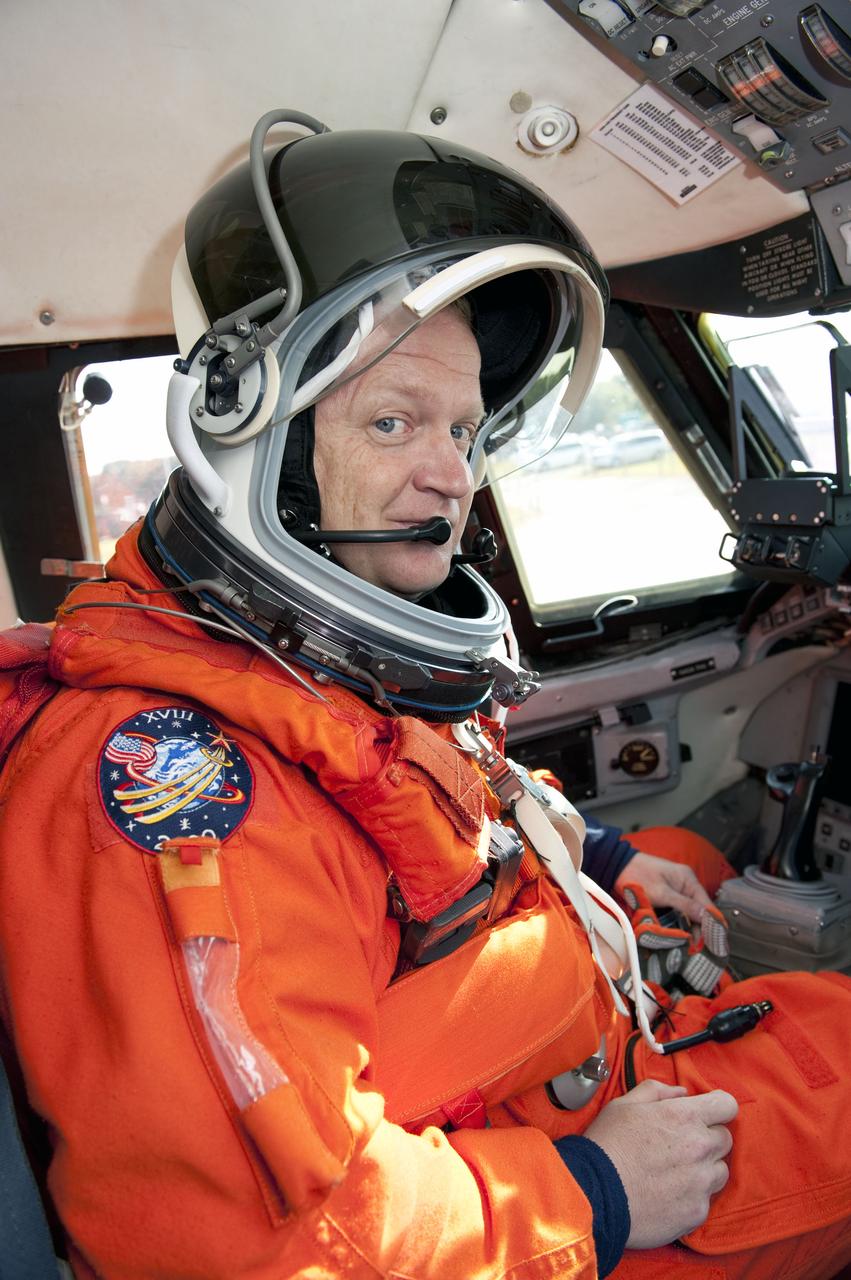
STS-133 LAUNCH L-4(3) SUITED STA'S WITH COMMANDER AND PILOT
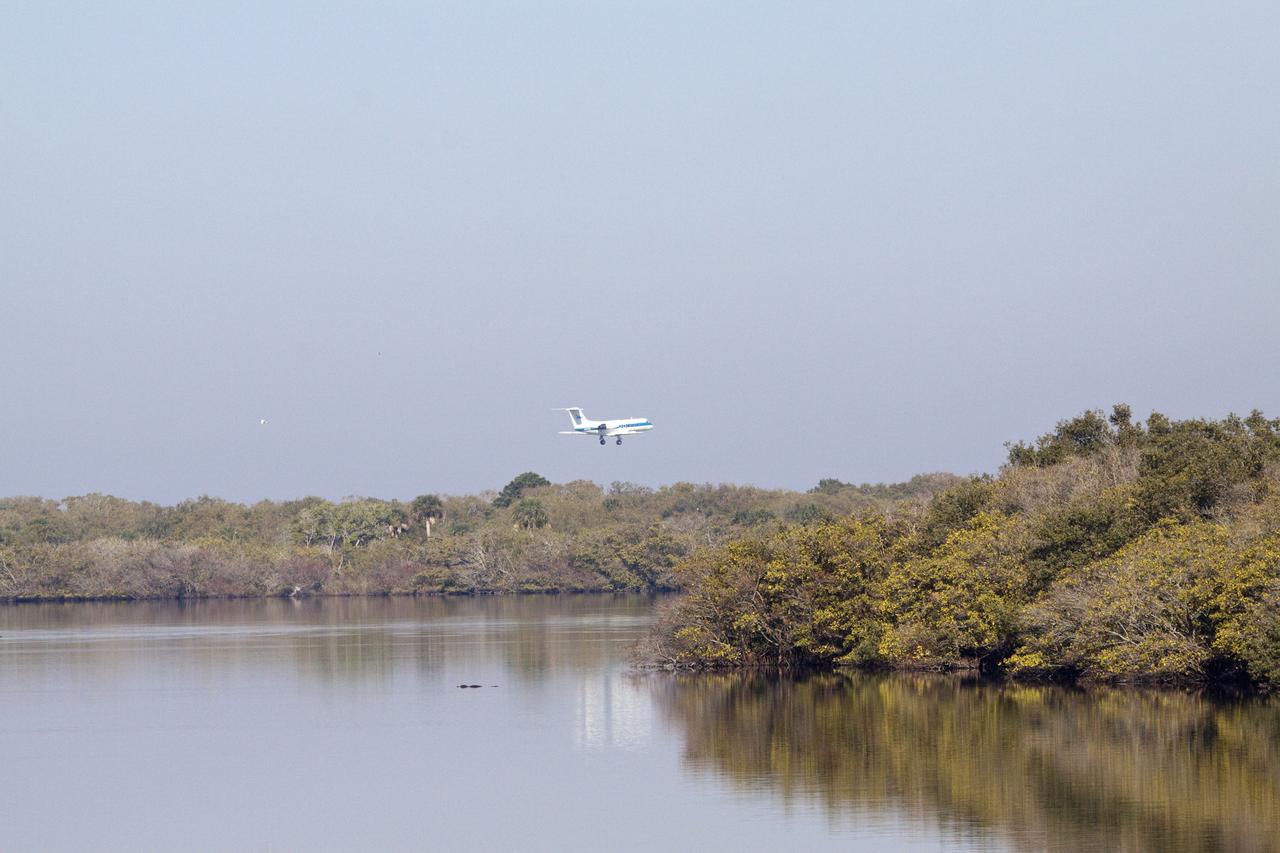
STS-131 LAUNCH L-3 STA'S - LONG SHOTS
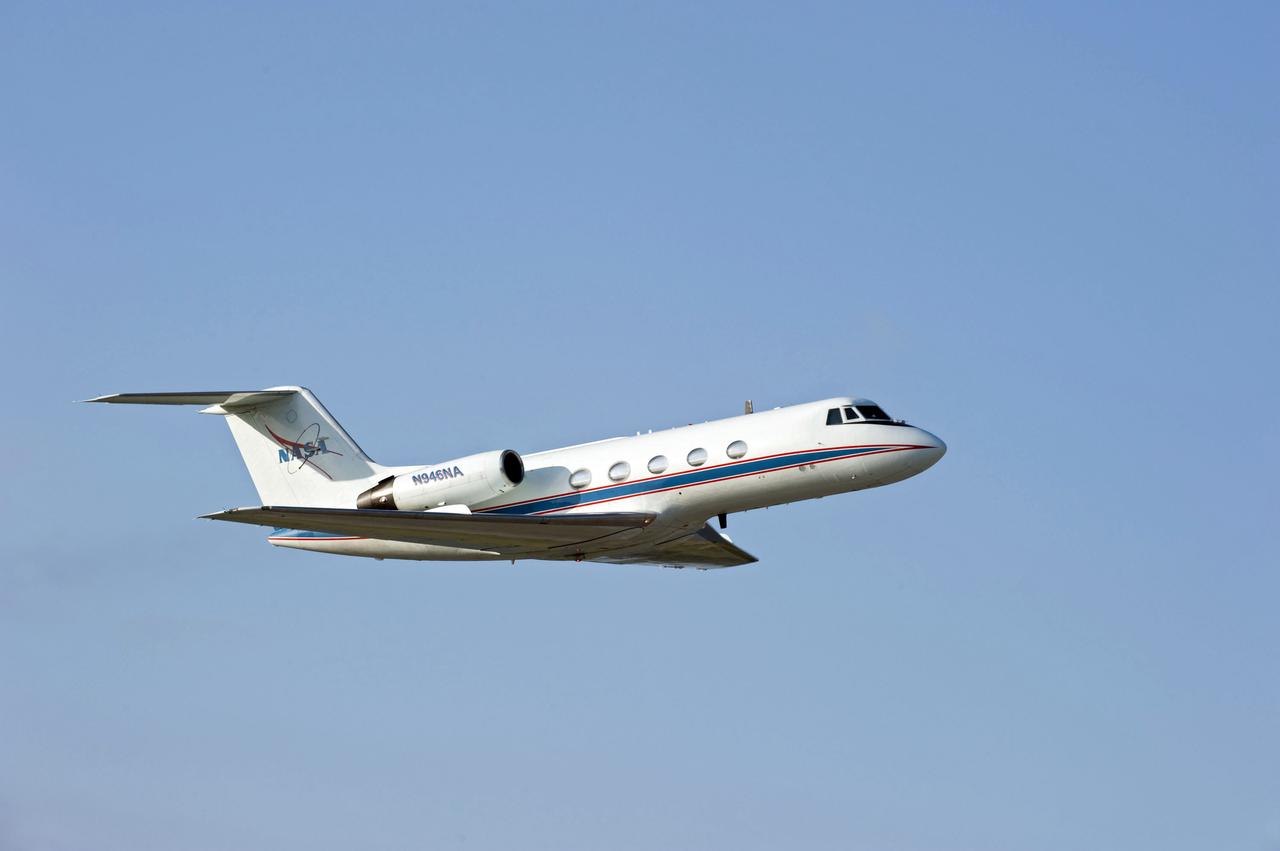
STS-133 LAUNCH L-4(3) SUITED STA'S WITH COMMANDER AND PILOT
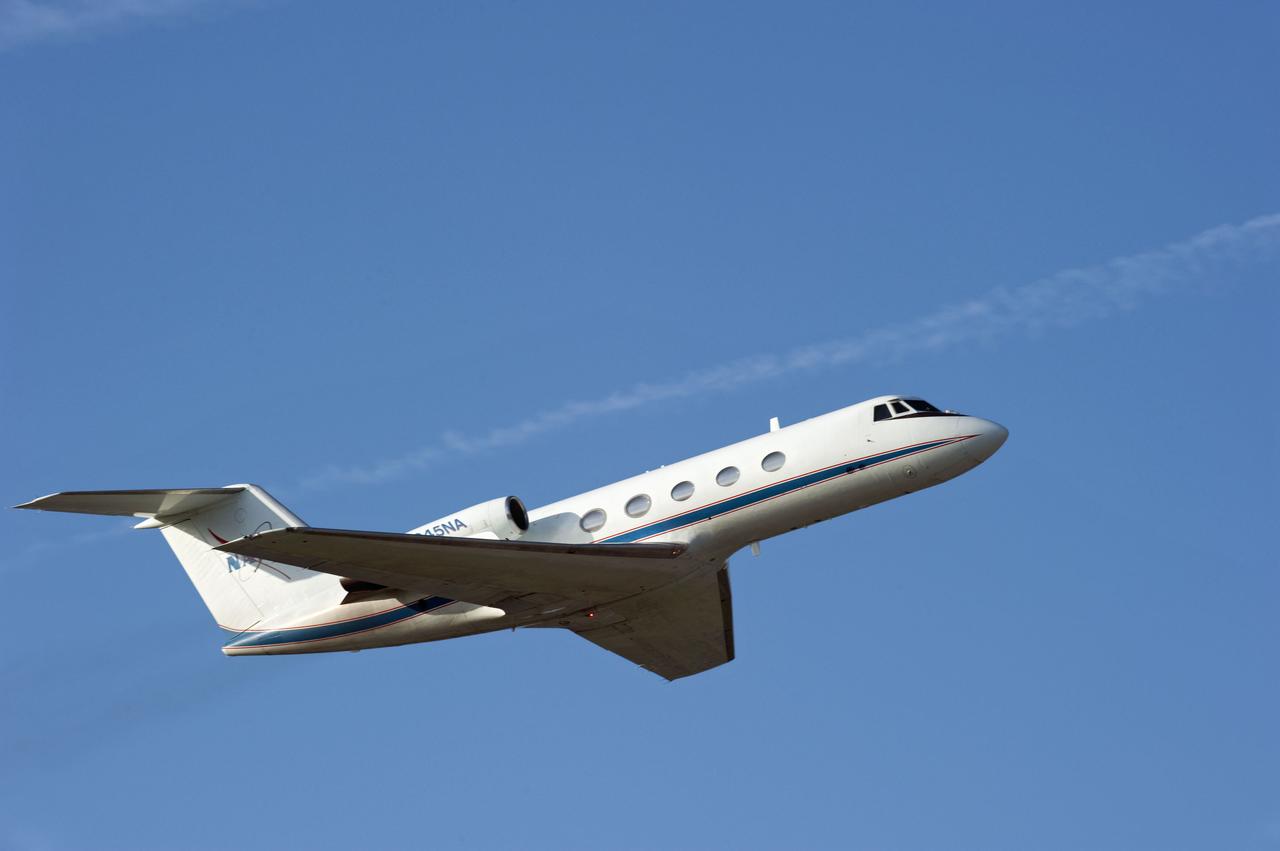
STS-133 LAUNCH L-4(3) SUITED STA'S WITH COMMANDER AND PILOT
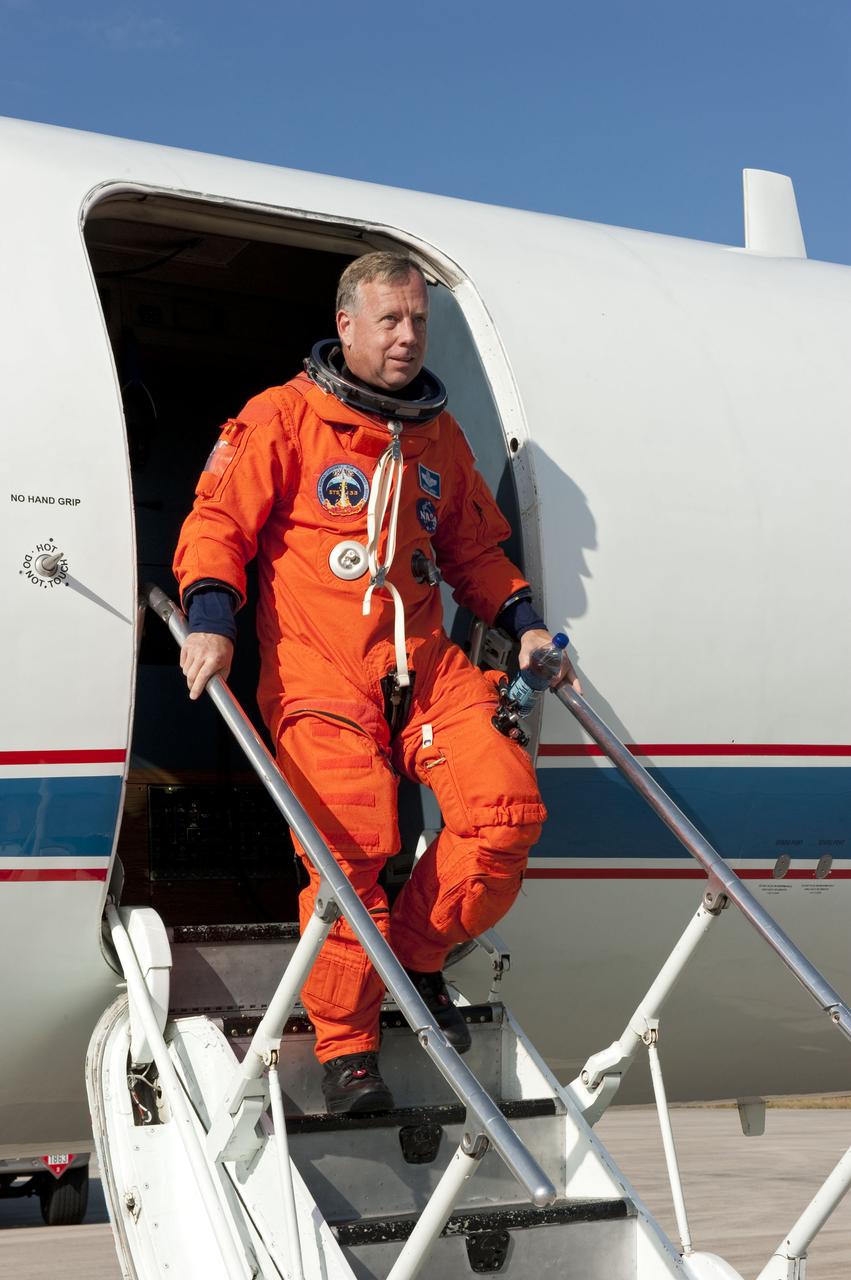
STS-133 LAUNCH L-4(3) SUITED STA'S WITH COMMANDER AND PILOT
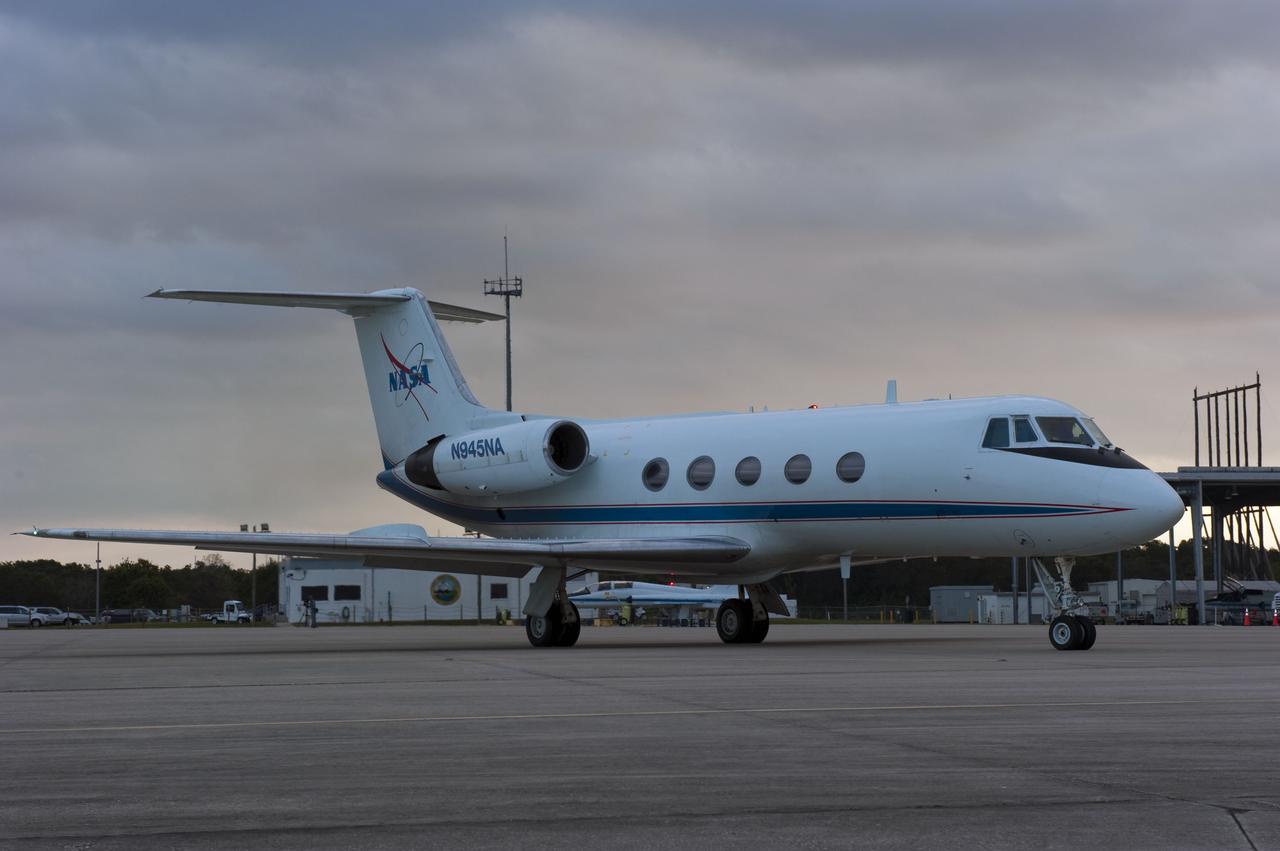
STS-133 LAUNCH L-4(3) SUITED STA'S WITH COMMANDER AND PILOT
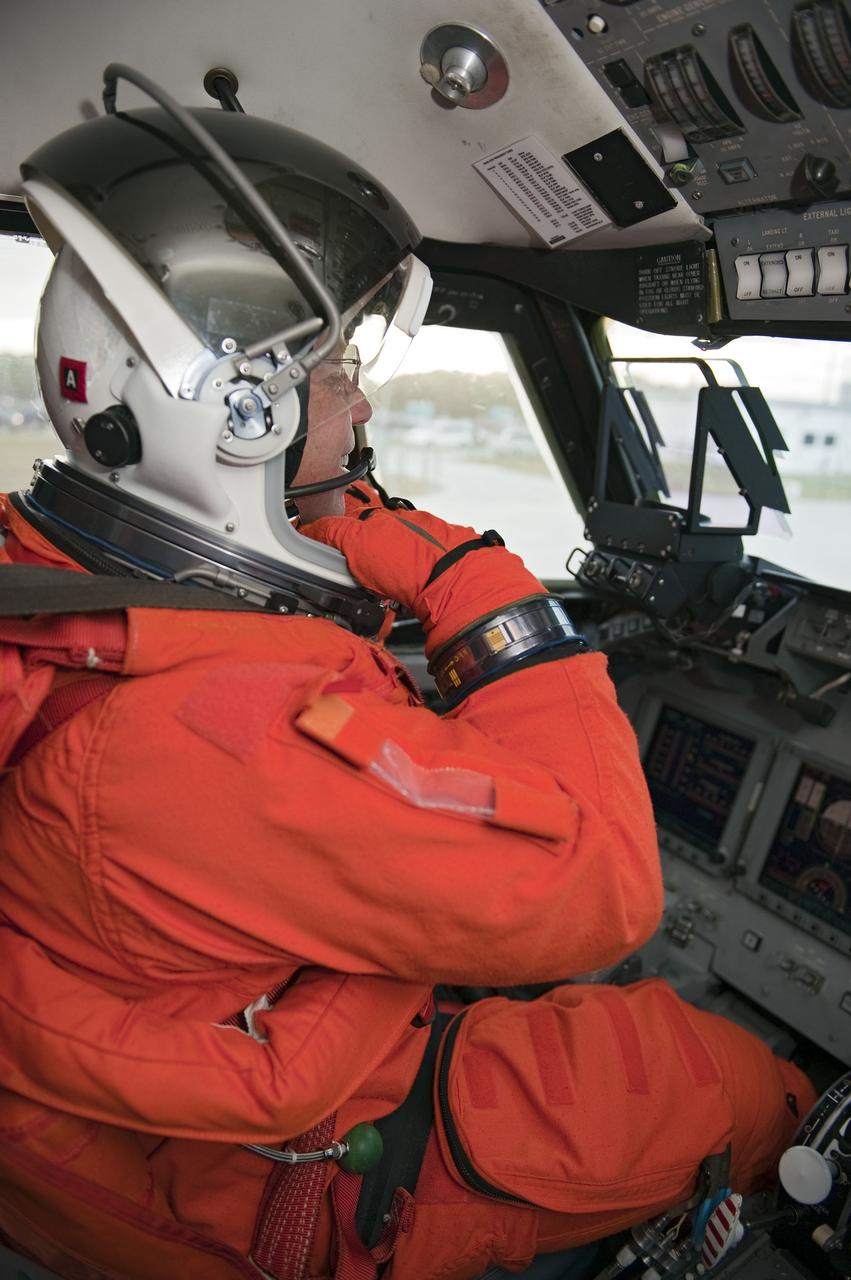
STS-133 LAUNCH L-4(3) SUITED STA'S WITH COMMANDER AND PILOT
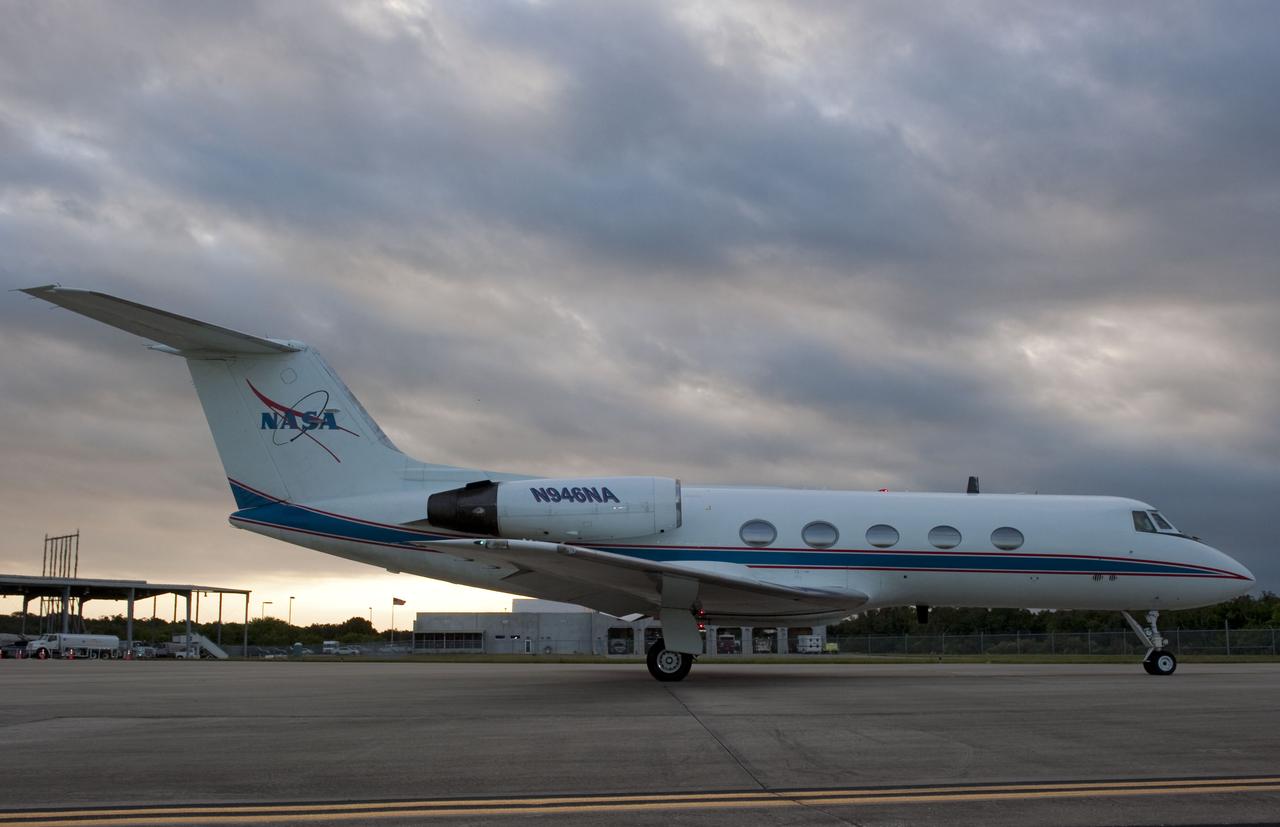
STS-133 LAUNCH L-4(3) SUITED STA'S WITH COMMANDER AND PILOT
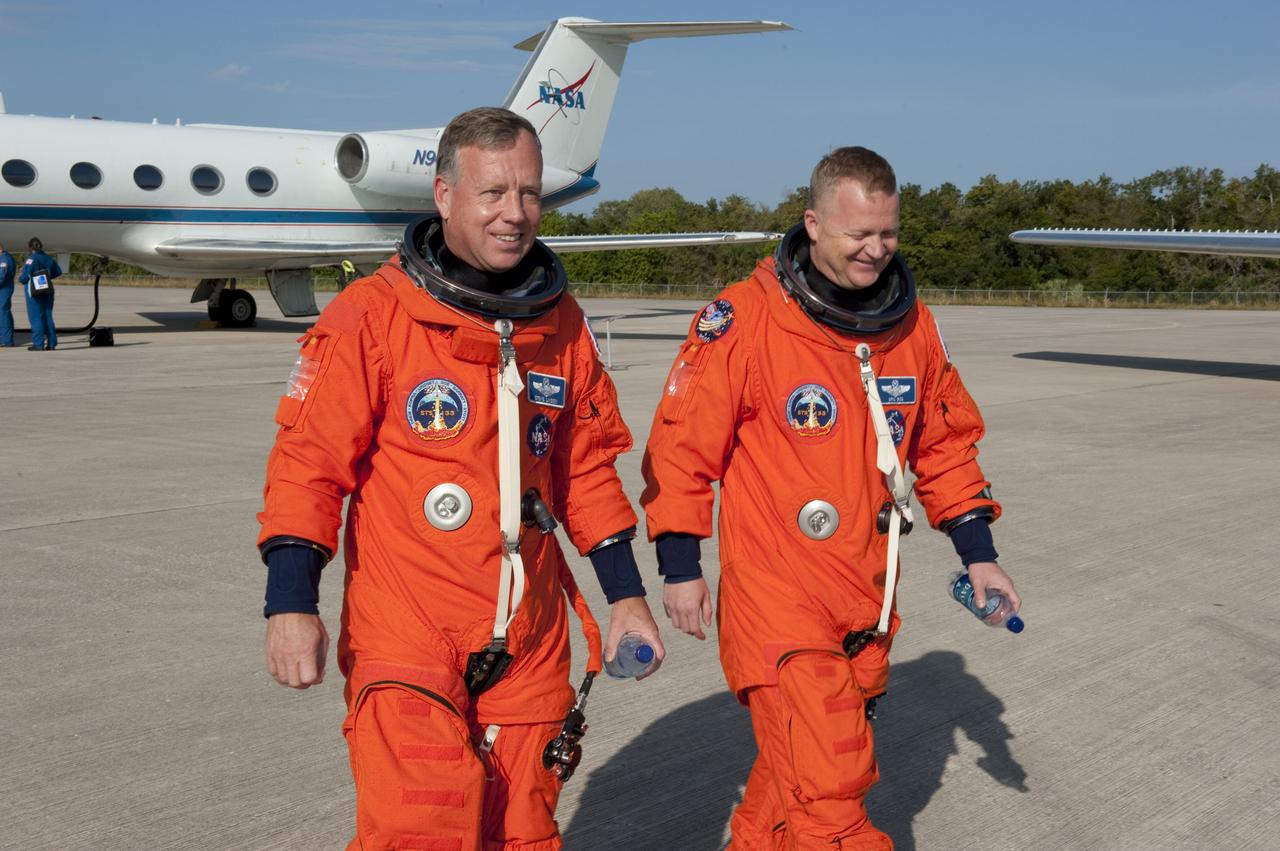
STS-133 LAUNCH L-4(3) SUITED STA'S WITH COMMANDER AND PILOT
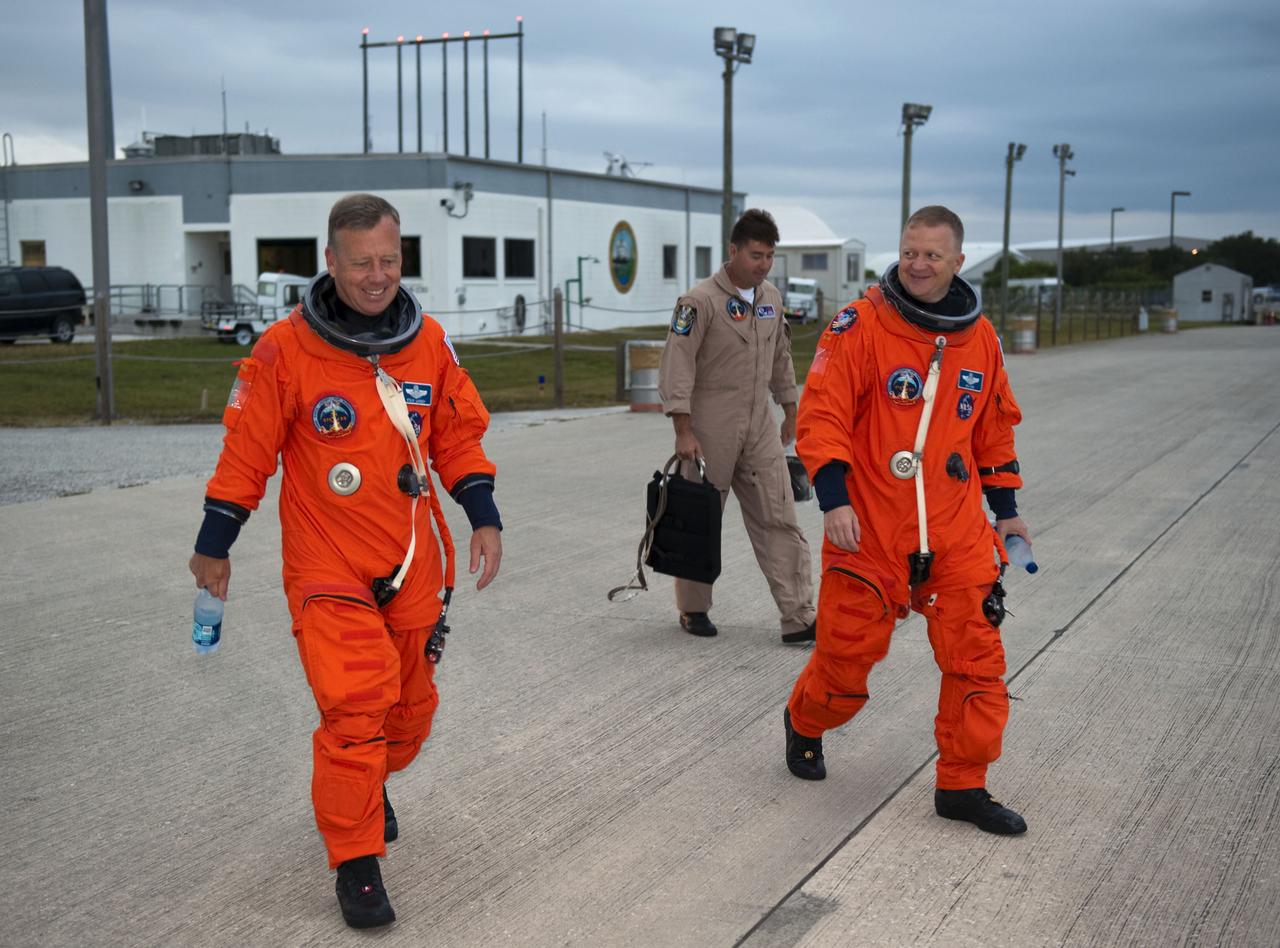
STS-133 LAUNCH L-4(3) SUITED STA'S WITH COMMANDER AND PILOT
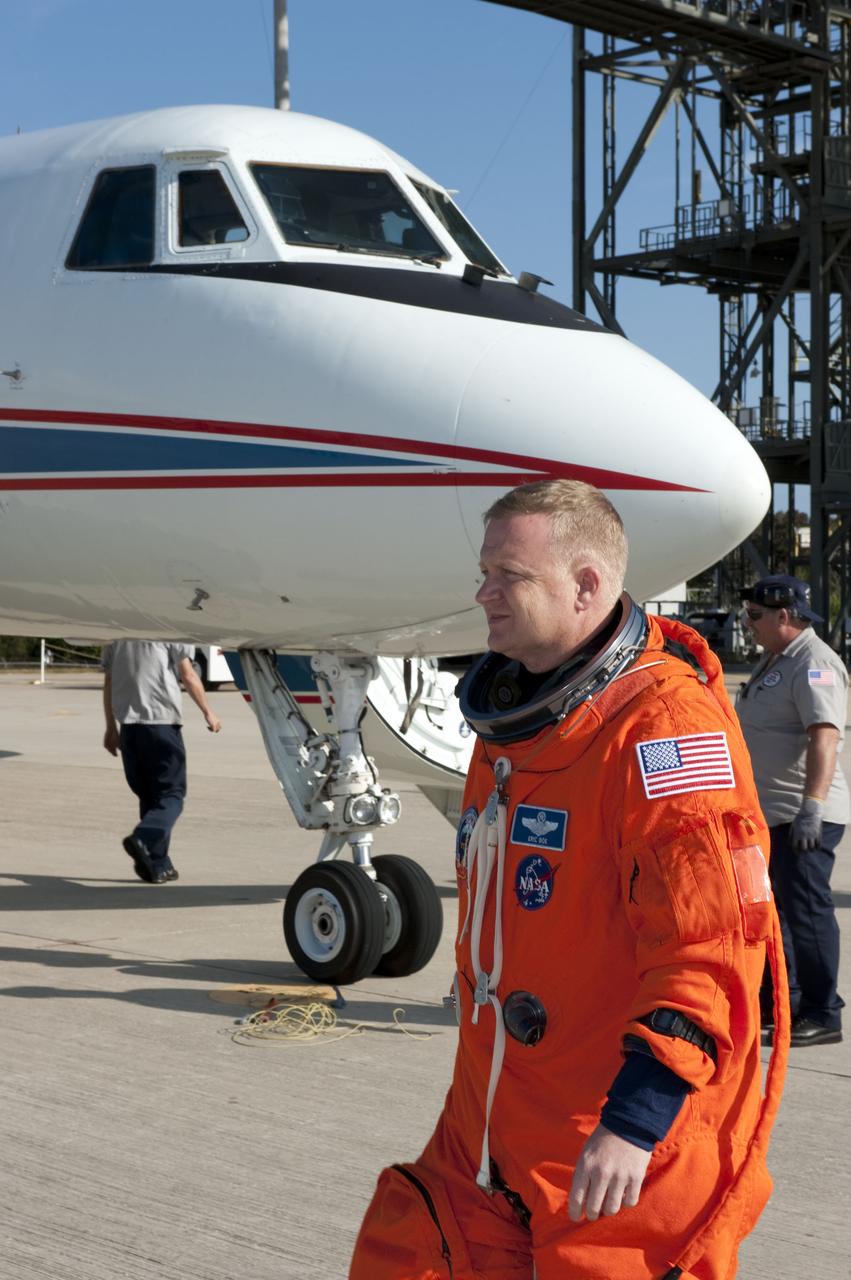
STS-133 LAUNCH L-4(3) SUITED STA'S WITH COMMANDER AND PILOT
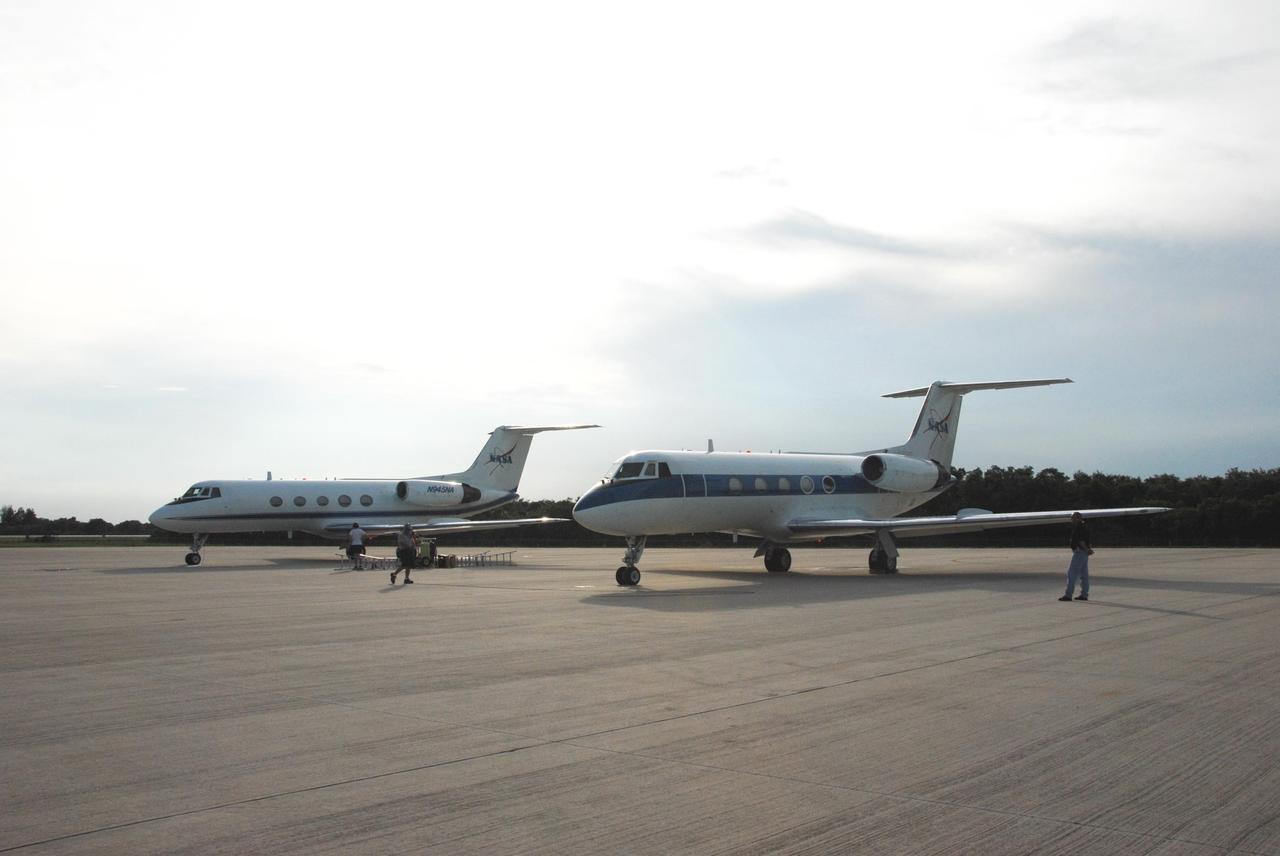
KENNEDY SPACE CENTER, Fla. -- Two shuttle training aircraft, or STAs, wait to taxi onto the runway at the Shuttle Landing Facility. STS-118 Commander Scott Kelly and Pilot Charlie Hobaugh are each piloting one of the STAs for landing practice. The practice is part of Terminal Countdown Demonstration Test, or TCDT, activities that include a simulated launch countdown. The STA is a Grumman American Aviation-built Gulf Stream II jet that was modified to simulate an orbiter's cockpit, motion and visual cues, and handling qualities. In flight, the STA duplicates the orbiter's atmospheric descent trajectory from approximately 35,000 feet altitude to landing on a runway. The STS-118 mission is the 22nd flight to the International Space Station and is targeted for launch on Aug. 7. The mission payload aboard Space Shuttle Endeavour includes the S5 truss, a SPACEHAB module and external stowage platform 3. NASA/George Shelton
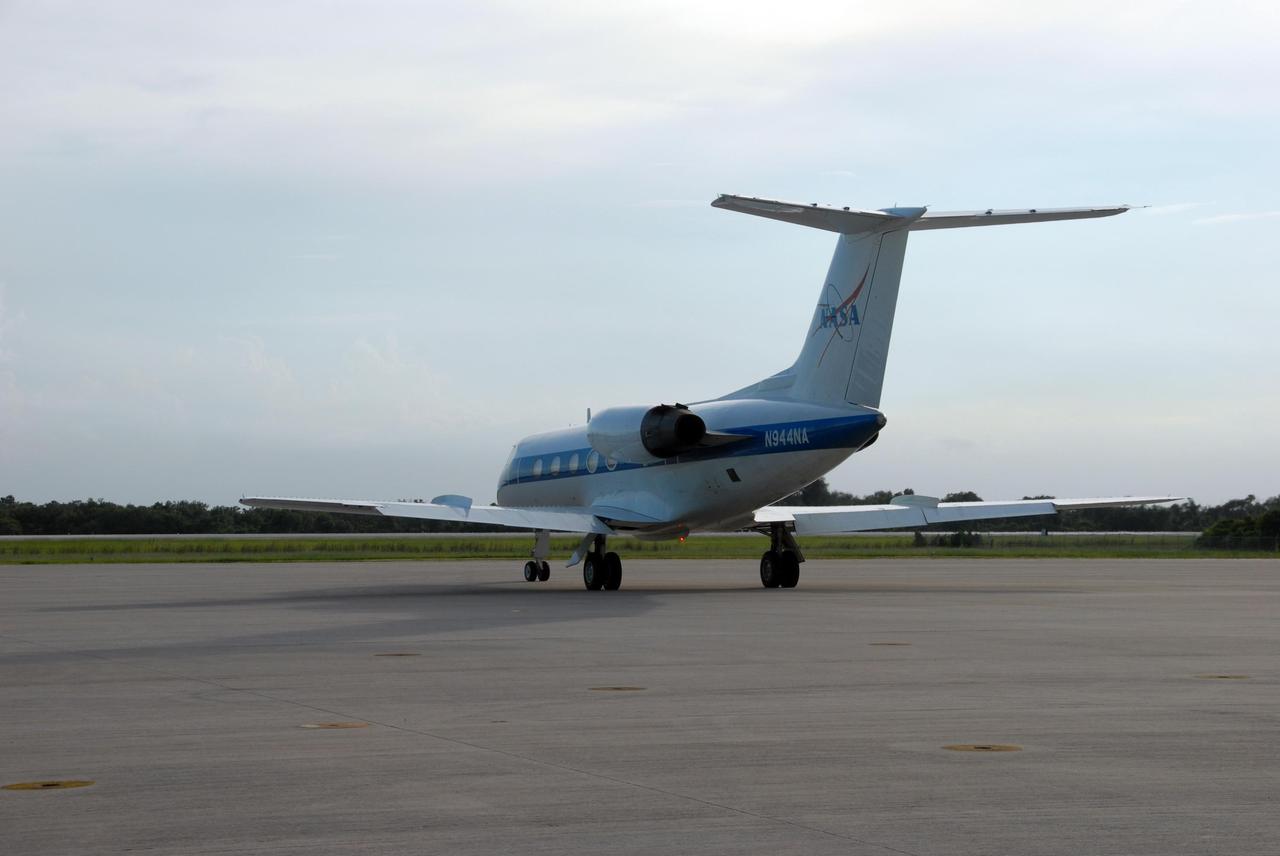
KENNEDY SPACE CENTER, Fla. -- One of two shuttle training aircraft, or STA, taxis out to the runway at the Shuttle Landing Facility. STS-118 Commander Scott Kelly and Pilot Charlie Hobaugh are each piloting one of the STAs for landing practice. The practice is part of Terminal Countdown Demonstration Test, or TCDT, activities that include a simulated launch countdown. The STA is a Grumman American Aviation-built Gulf Stream II jet that was modified to simulate an orbiter's cockpit, motion and visual cues, and handling qualities. In flight, the STA duplicates the orbiter's atmospheric descent trajectory from approximately 35,000 feet altitude to landing on a runway. The STS-118 mission is the 22nd flight to the International Space Station and is targeted for launch on Aug. 7. The mission payload aboard Space Shuttle Endeavour includes the S5 truss, a SPACEHAB module and external stowage platform 3. NASA/George Shelton
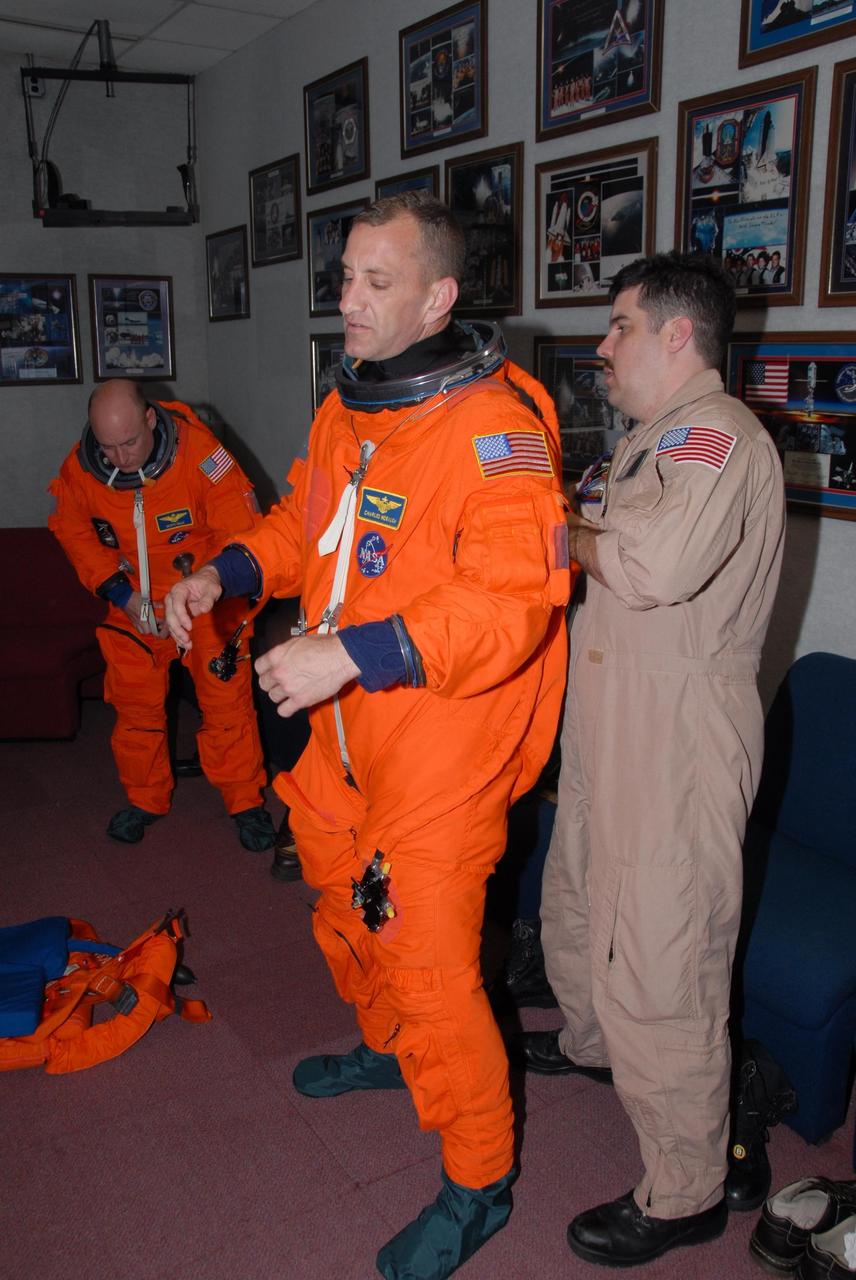
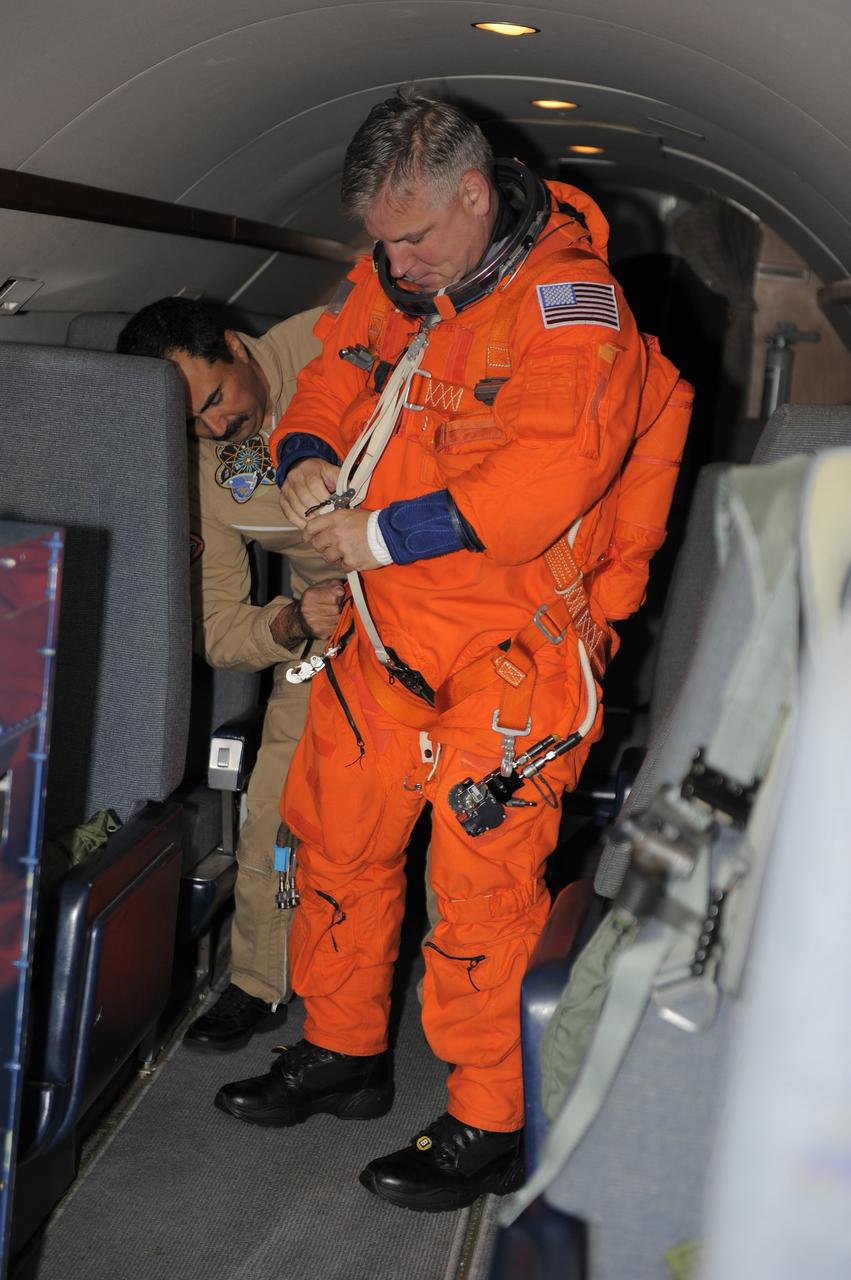
KENNEDY SPACE CENTER, Fla. -- STS-118 Commander Scott Kelly, left, and Pilot Charlie Hobaugh check the fit of their launch and entry suits. The fitting is part of the Terminal Countdown Demonstration Test, or TCDT, activities that include a simulated launch countdown. Kelly and Hobaugh are suiting up also for landing practice in the shuttle training aircraft, known as an STA. The STA is a Grumman American Aviation-built Gulf Stream II jet that was modified to simulate an orbiter's cockpit, motion and visual cues, and handling qualities. In flight, the STA duplicates the orbiter's atmospheric descent trajectory from approximately 35,000 feet altitude to landing on a runway. The STS-118 mission is the 22nd flight to the International Space Station and is targeted for launch on Aug. 7. The mission payload aboard Space Shuttle Endeavour includes the S5 truss, a SPACEHAB module and external stowage platform 3. NASA/George Shelton
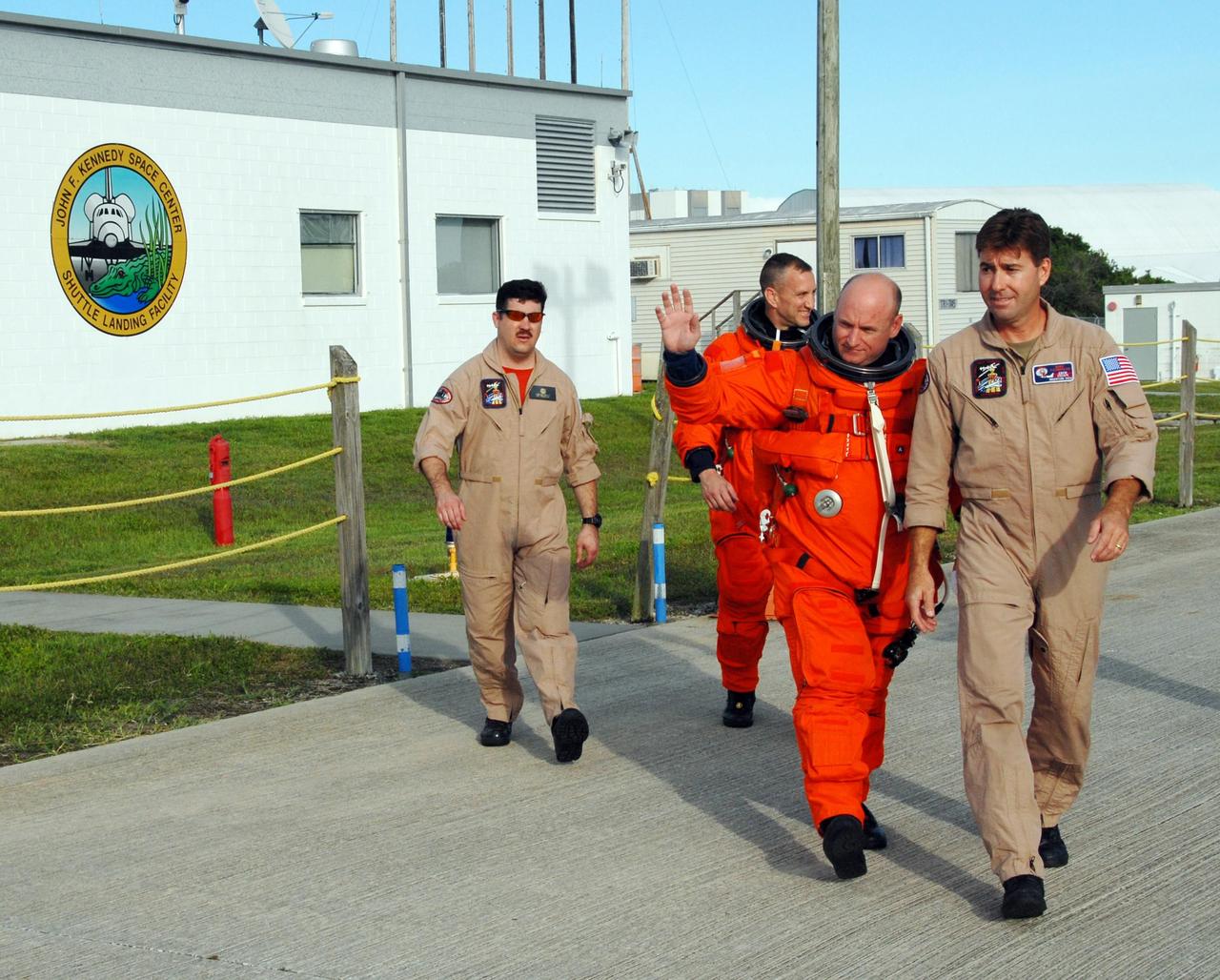
KENNEDY SPACE CENTER, Fla. -- Dressed in their launch and entry suits, STS-118 Pilot Charlie Hobaugh and Commander Scott Kelly (waving) are headed for the runway for landing practice in the shuttle training aircraft, known as an STA. The practice is part of Terminal Countdown Demonstration Test, or TCDT, activities that include a simulated launch countdown. The STA is a Grumman American Aviation-built Gulf Stream II jet that was modified to simulate an orbiter's cockpit, motion and visual cues, and handling qualities. In flight, the STA duplicates the orbiter's atmospheric descent trajectory from approximately 35,000 feet altitude to landing on a runway. The STS-118 mission is the 22nd flight to the International Space Station and is targeted for launch on Aug. 7. The mission payload aboard Space Shuttle Endeavour includes the S5 truss, a SPACEHAB module and external stowage platform 3. NASA/George Shelton

KENNEDY SPACE CENTER, Fla. -- STS-118 Commander Scott Kelly settles in his cockpit seat aboard the shuttle training aircraft, known as an STA, for landing practice. The practice is part of Terminal Countdown Demonstration Test, or TCDT, activities that include a simulated launch countdown. The STA is a Grumman American Aviation-built Gulf Stream II jet that was modified to simulate an orbiter's cockpit, motion and visual cues, and handling qualities. In flight, the STA duplicates the orbiter's atmospheric descent trajectory from approximately 35,000 feet altitude to landing on a runway. The STS-118 mission is the 22nd flight to the International Space Station and is targeted for launch on Aug. 7. The mission payload aboard Space Shuttle Endeavour includes the S5 truss, a SPACEHAB module and external stowage platform 3. NASA/George Shelton

KENNEDY SPACE CENTER, FLA. -- At the Shuttle Landing Facility on NASA’s Kennedy Space Center, Return to Flight STS-114 Pilot James Kelly and Mission Commander Eileen Collins join support personnel after completing practice runs on the Shuttle Training Aircraft (STA). Kelly and Collins are practicing landing the orbiter using the STA, which is a modified Grumman American Aviation-built Gulf Stream II executive jet that was modified to simulate an orbiter’s cockpit, motion and visual cues, and handling qualities. In flight, the STA duplicates the orbiter’s atmospheric descent trajectory from approximately 35,000 feet altitude to landing on a runway. Because the orbiter is unpowered during re-entry and landing, its high-speed glide must be perfectly executed the first time. Mission STS-114 is scheduled to launch aboard Space Shuttle Discovery with a crew of seven on July 13 at 3:51 p.m. from Launch Pad 39B.
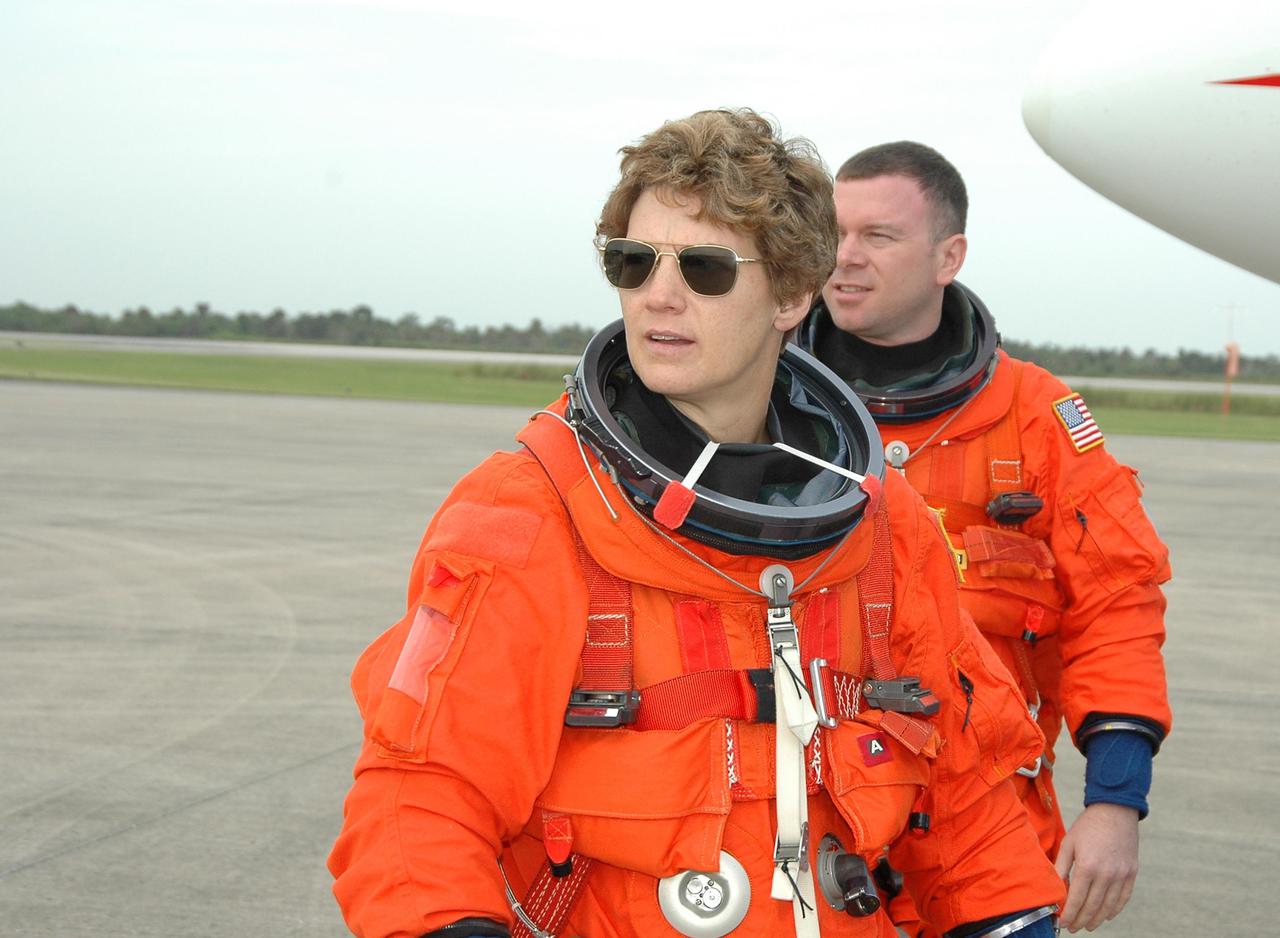
KENNEDY SPACE CENTER, FLA. -- Eileen Collins, mission commander on Return to Flight STS-114, and Pilot James Kelly walk away from the Shuttle Training Aircraft (STA) at the Shuttle Landing Facility on NASA’s Kennedy Space Center. They are practicing landing the orbiter using the STA, which is a modified Grumman American Aviation-built Gulf Stream II executive jet that was modified to simulate an orbiter’s cockpit, motion and visual cues, and handling qualities. In flight, the STA duplicates the orbiter’s atmospheric descent trajectory from approximately 35,000 feet altitude to landing on a runway. Because the orbiter is unpowered during re-entry and landing, its high-speed glide must be perfectly executed the first time. Mission STS-114 is scheduled to launch aboard Space Shuttle Discovery with a crew of seven on July 13 at 3:51 p.m. from Launch Pad 39B.
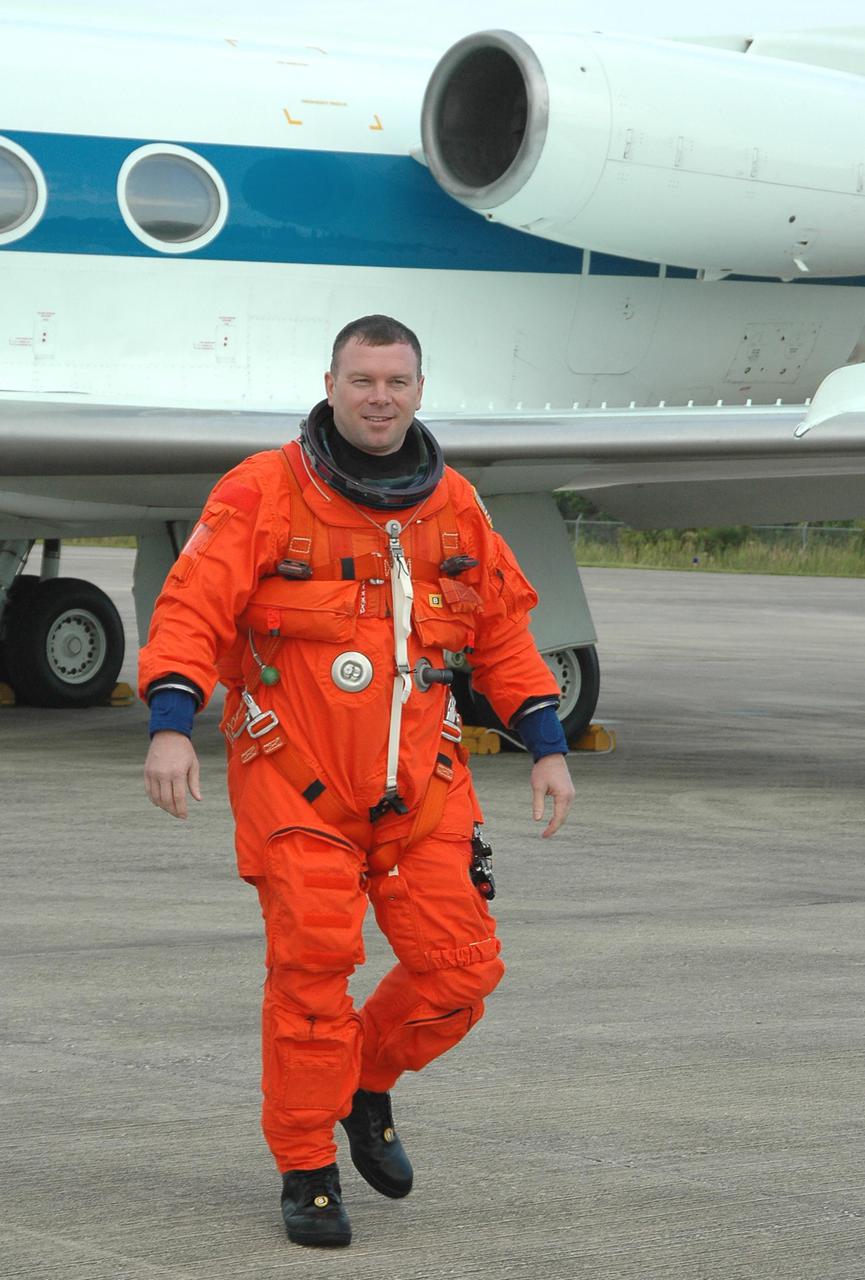
KENNEDY SPACE CENTER, FLA. -- James Kelly, pilot on Return to Flight mission STS-114, walks away from the Shuttle Training Aircraft (STA) at the Shuttle Landing Facility on NASA’s Kennedy Space Center. He and Mission Commander Eileen Collins are practicing landing the orbiter using the STA, which is a modified Grumman American Aviation-built Gulf Stream II executive jet that was modified to simulate an orbiter’s cockpit, motion and visual cues, and handling qualities. In flight, the STA duplicates the orbiter’s atmospheric descent trajectory from approximately 35,000 feet altitude to landing on a runway. Because the orbiter is unpowered during re-entry and landing, its high-speed glide must be perfectly executed the first time. Mission STS-114 is scheduled to launch aboard Space Shuttle Discovery with a crew of seven on July 13 at 3:51 p.m. from Launch Pad 39B.
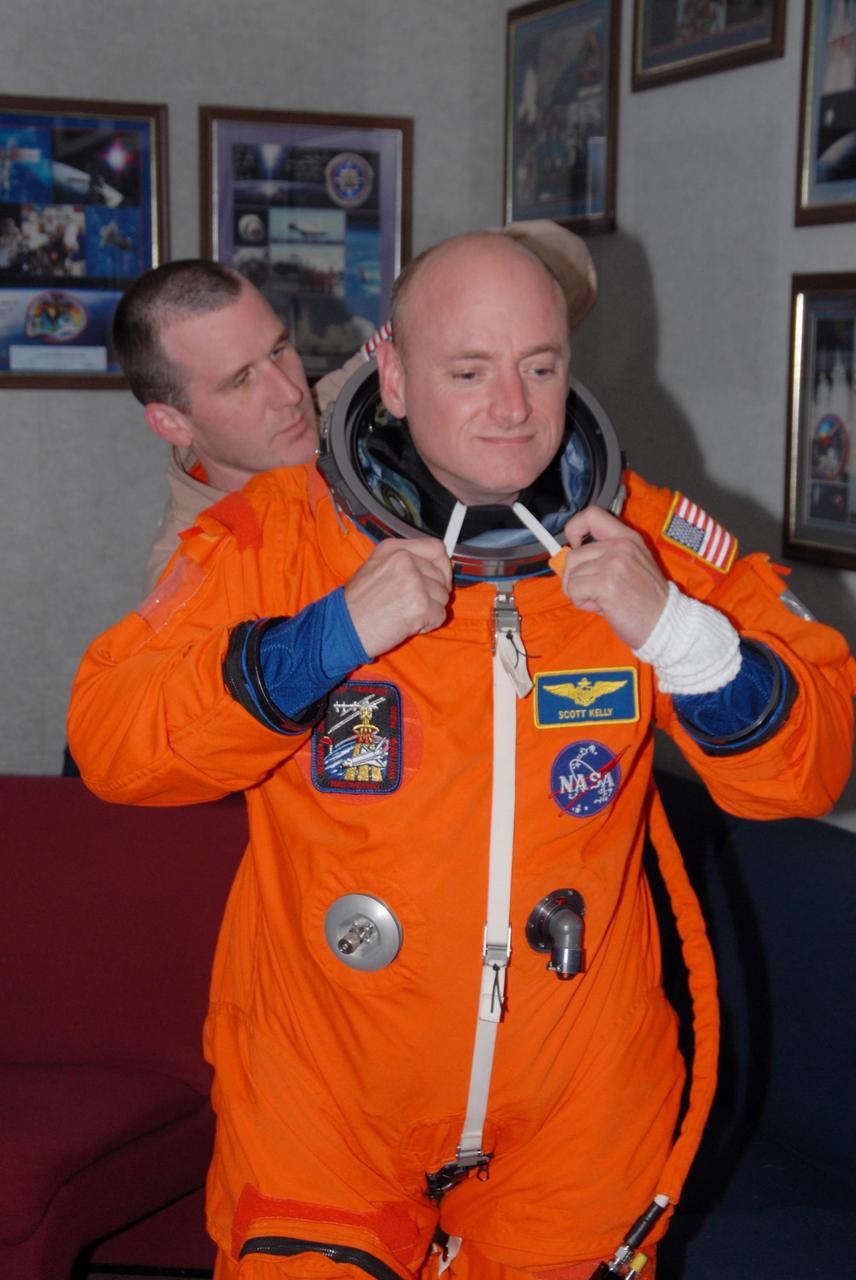
KENNEDY SPACE CENTER, Fla. -- STS-118 Commander Scott Kelly checks the fit of his launch and entry suit. The fitting is part of the Terminal Countdown Demonstration Test, or TCDT, activities that include a simulated launch countdown. Kelly is suiting up also for landing practice in the shuttle training aircraft, known as an STA. The STA is a Grumman American Aviation-built Gulf Stream II jet that was modified to simulate an orbiter's cockpit, motion and visual cues, and handling qualities. In flight, the STA duplicates the orbiter's atmospheric descent trajectory from approximately 35,000 feet altitude to landing on a runway. The STS-118 mission is the 22nd flight to the International Space Station and is targeted for launch on Aug. 7. The mission payload aboard Space Shuttle Endeavour includes the S5 truss, a SPACEHAB module and external stowage platform 3. NASA/George Shelton
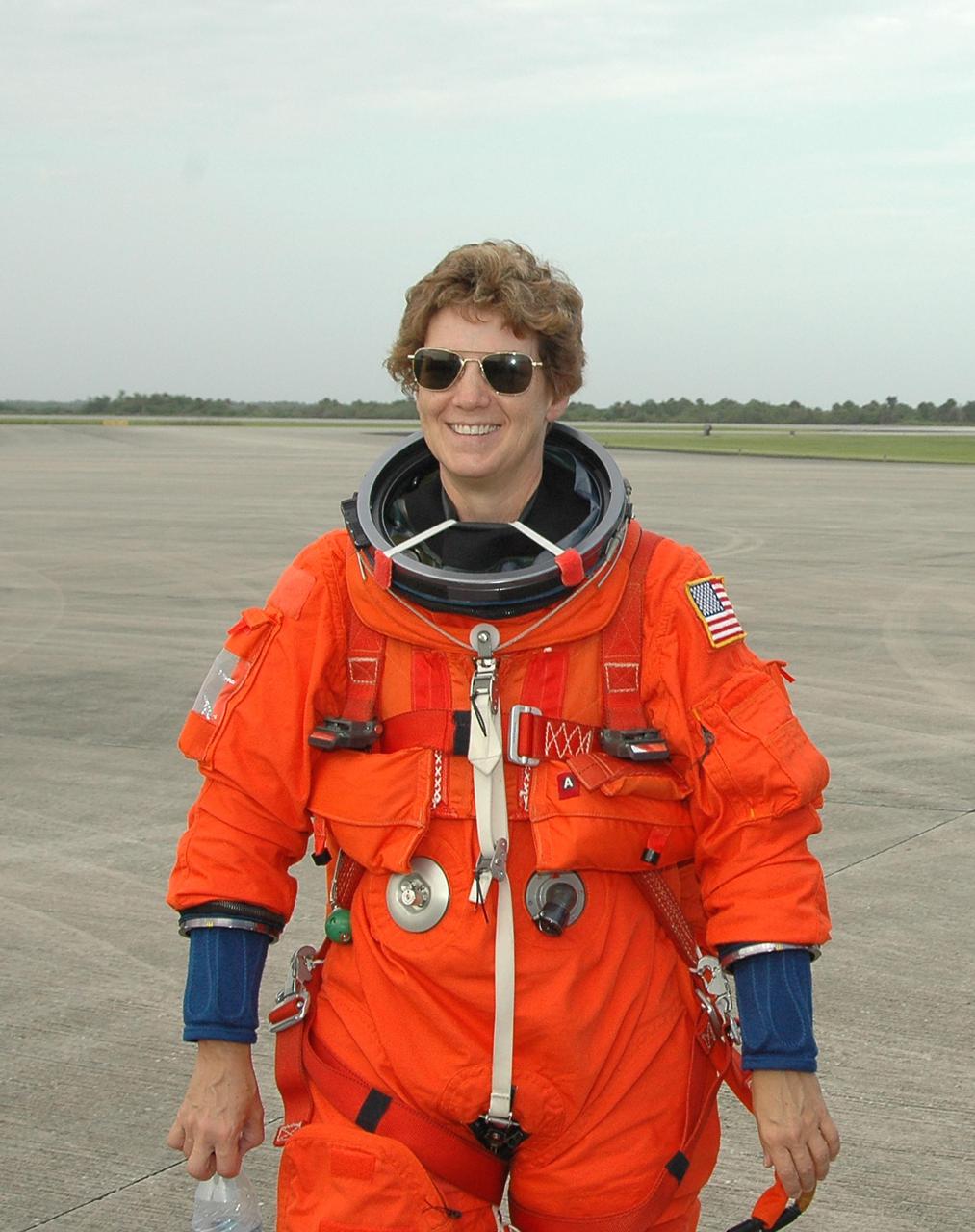
KENNEDY SPACE CENTER, FLA. -- At the Shuttle Landing Facility on NASA’s Kennedy Space Center, Return to Flight STS-114 Mission Commander Eileen Collins completes practice runs on the Shuttle Training Aircraft (STA). She and Pilot James Kelly are practicing landing the orbiter using the STA, which is a modified Grumman American Aviation-built Gulf Stream II executive jet that was modified to simulate an orbiter’s cockpit, motion and visual cues, and handling qualities. In flight, the STA duplicates the orbiter’s atmospheric descent trajectory from approximately 35,000 feet altitude to landing on a runway. Because the orbiter is unpowered during re-entry and landing, its high-speed glide must be perfectly executed the first time. Mission STS-114 is scheduled to launch aboard Space Shuttle Discovery with a crew of seven on July 13 at 3:51 p.m. from Launch Pad 39B.
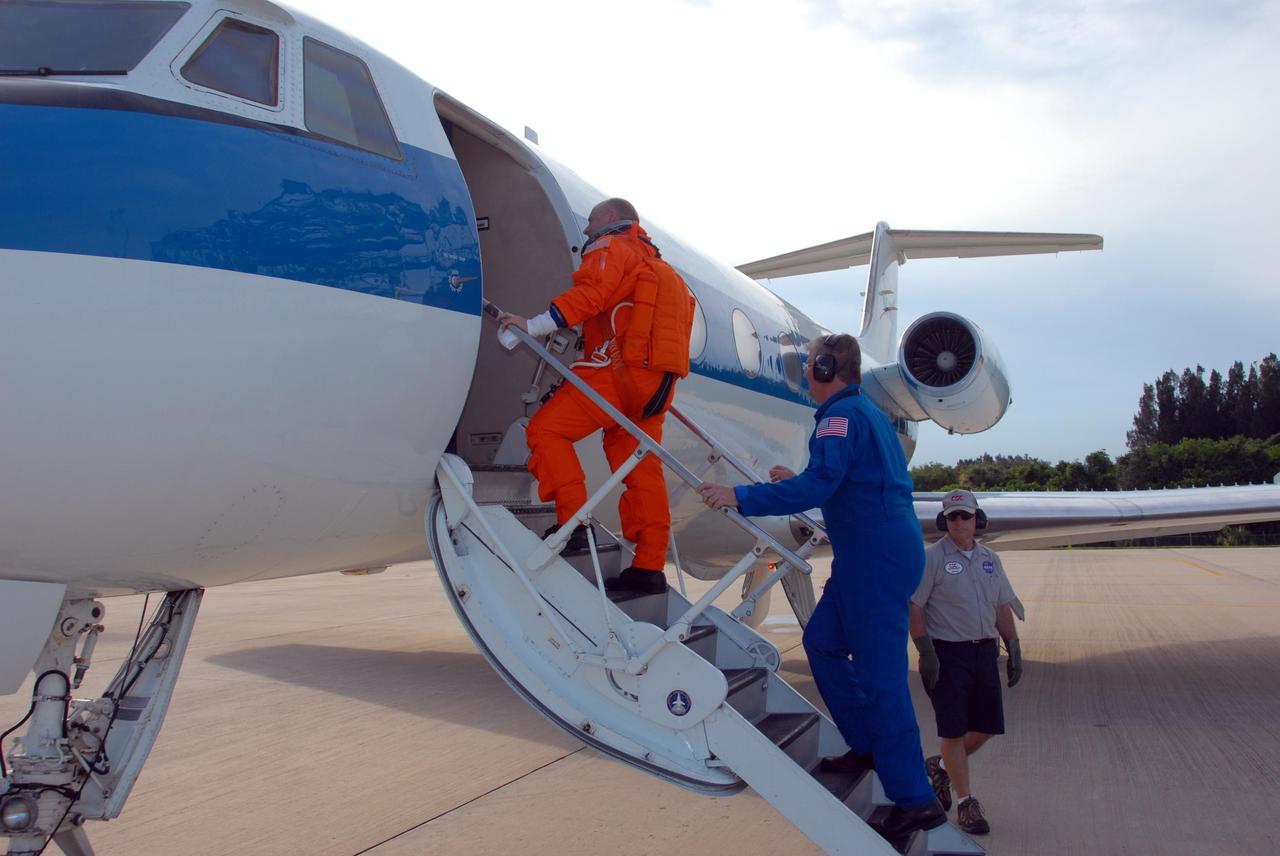
KENNEDY SPACE CENTER, Fla. -- STS-118 Commander Scott Kelly climbs aboard the shuttle training aircraft, known as an STA, for landing practice. The practice is part of Terminal Countdown Demonstration Test, or TCDT, activities that include a simulated launch countdown.The STA is a Grumman American Aviation-built Gulf Stream II jet that was modified to simulate an orbiter's cockpit, motion and visual cues, and handling qualities. In flight, the STA duplicates the orbiter's atmospheric descent trajectory from approximately 35,000 feet altitude to landing on a runway. The STS-118 mission is the 22nd flight to the International Space Station and is targeted for launch on Aug. 7. The mission payload aboard Space Shuttle Endeavour includes the S5 truss, a SPACEHAB module and external stowage platform 3. NASA/George Shelton
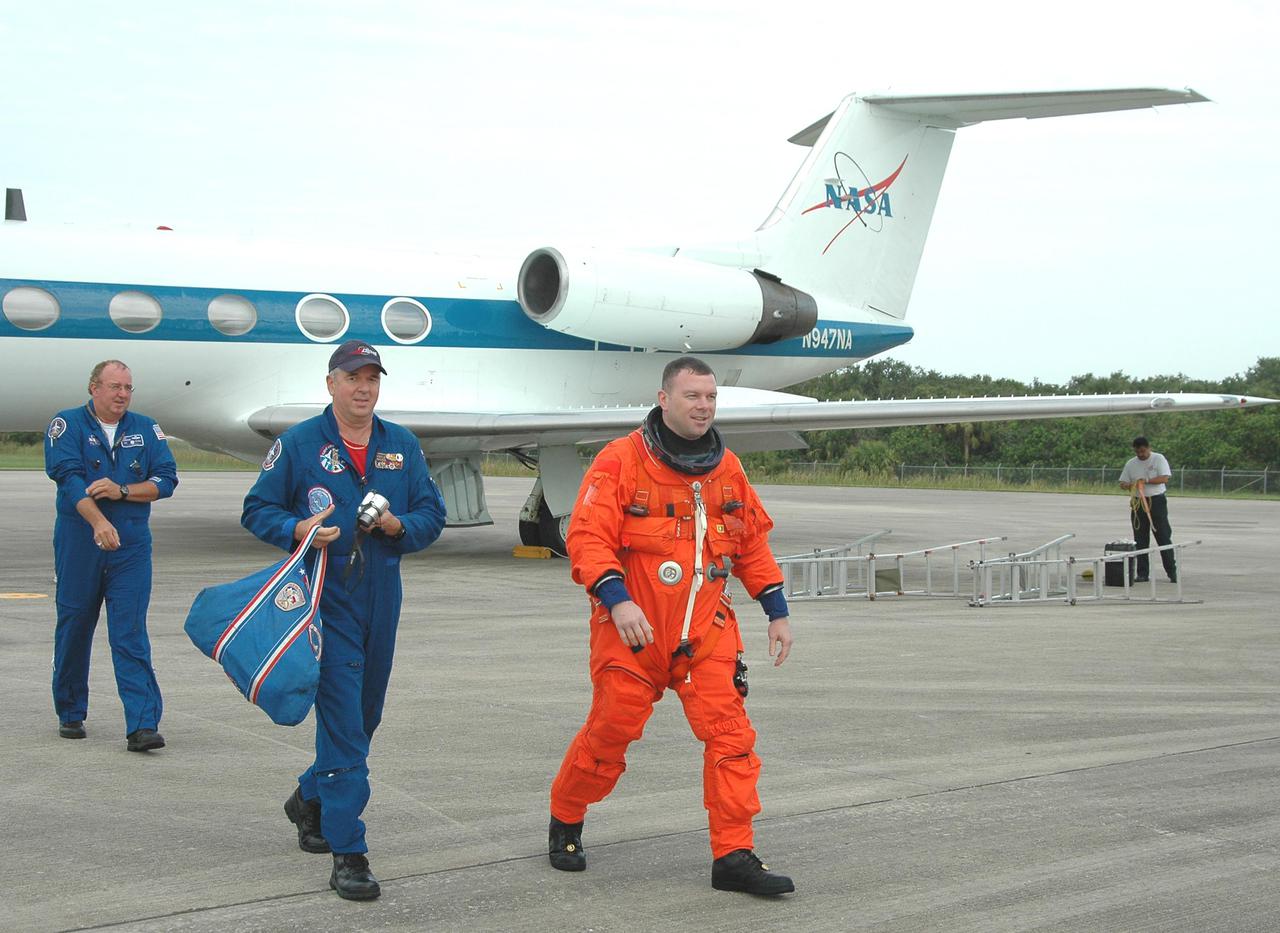
KENNEDY SPACE CENTER, FLA. -- James Kelly (at right), pilot on Return to Flight mission STS-114, walks away from the Shuttle Training Aircraft (STA) at the Shuttle Landing Facility on NASA’s Kennedy Space Center. He and Mission Commander Eileen Collins are practicing landing the orbiter using the STA, which is a modified Grumman American Aviation-built Gulf Stream II executive jet that was modified to simulate an orbiter’s cockpit, motion and visual cues, and handling qualities. In flight, the STA duplicates the orbiter’s atmospheric descent trajectory from approximately 35,000 feet altitude to landing on a runway. Because the orbiter is unpowered during re-entry and landing, its high-speed glide must be perfectly executed the first time. Mission STS-114 is scheduled to launch aboard Space Shuttle Discovery with a crew of seven on July 13 at 3:51 p.m. from Launch Pad 39B.
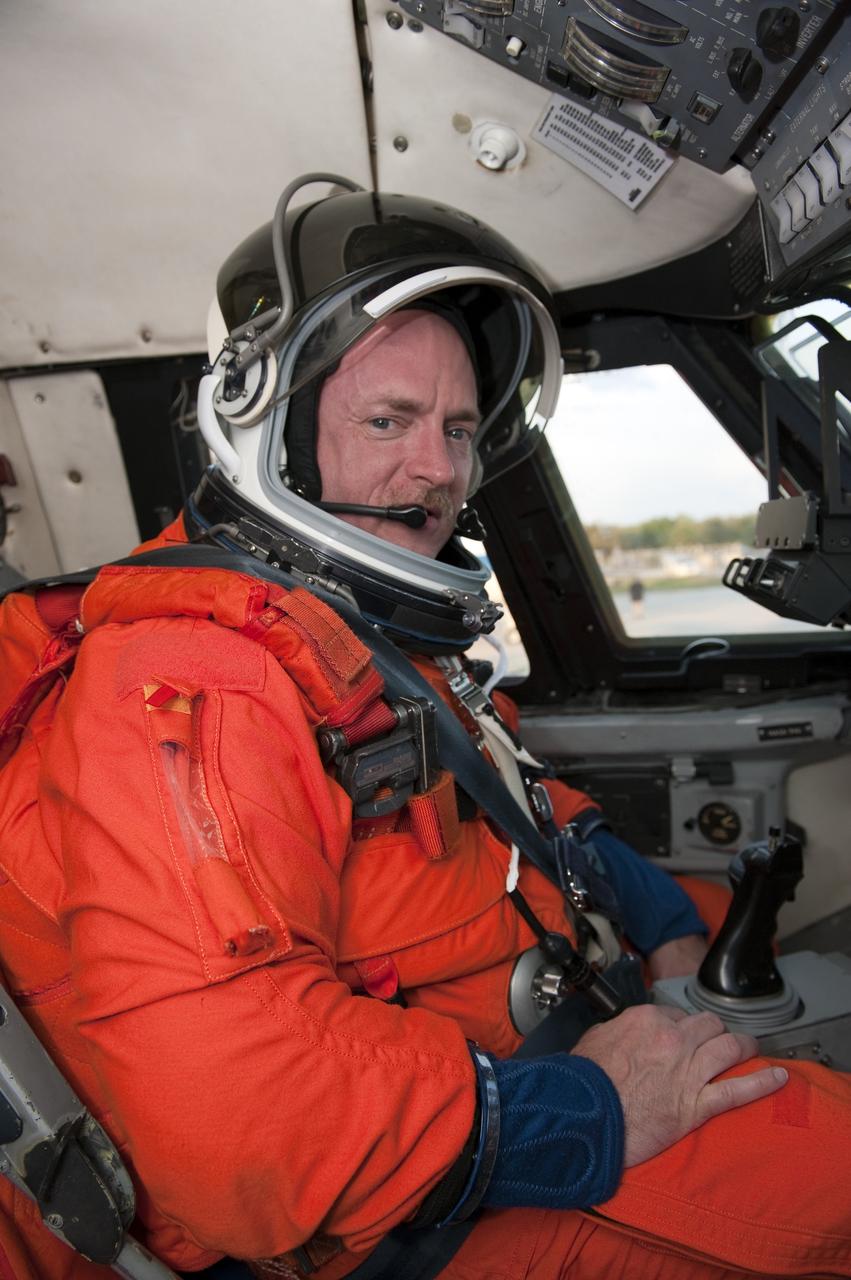
CAPE CANAVERAL, Fla. -- STS-134 Commander Mark Kelly prepares to perform touch-and-go landings aboard a Shuttle Training Aircraft (STA) on the Shuttle Landing Facility runway at NASA's Kennedy Space Center in Florida. An STA is a Gulfstream II jet that is modified to mimic the shuttle's handling during the final phase of landing. Kelly and Johnson will practice landings as part of standard training before space shuttle Endeavour's launch to the International Space Station. Endeavour and its crew will deliver the Express Logistics Carrier-3, Alpha Magnetic Spectrometer-2 (AMS), a high-pressure gas tank and additional spare parts for the Dextre robotic helper to the station. This will be the final spaceflight for Endeavour. For more information visit, www.nasa.gov/mission_pages/shuttle/shuttlemissions/sts134/index.html. Photo credit: NASA/Kim Shiflett

CAPE CANAVERAL, Fla. -- STS-134 Commander Mark Kelly and Pilot Greg H. Johnson perform touch-and-go landings aboard a Shuttle Training Aircraft (STA) on the Shuttle Landing Facility runway at NASA's Kennedy Space Center in Florida. An STA is a Gulfstream II jet that is modified to mimic the shuttle's handling during the final phase of landing. Kelly and Johnson will practice landings as part of standard training before space shuttle Endeavour's launch to the International Space Station. Endeavour and its crew will deliver the Express Logistics Carrier-3, Alpha Magnetic Spectrometer-2 (AMS), a high-pressure gas tank and additional spare parts for the Dextre robotic helper to the station. This will be the final spaceflight for Endeavour. For more information visit, www.nasa.gov/mission_pages/shuttle/shuttlemissions/sts134/index.html. Photo credit: NASA/Kim Shiflett
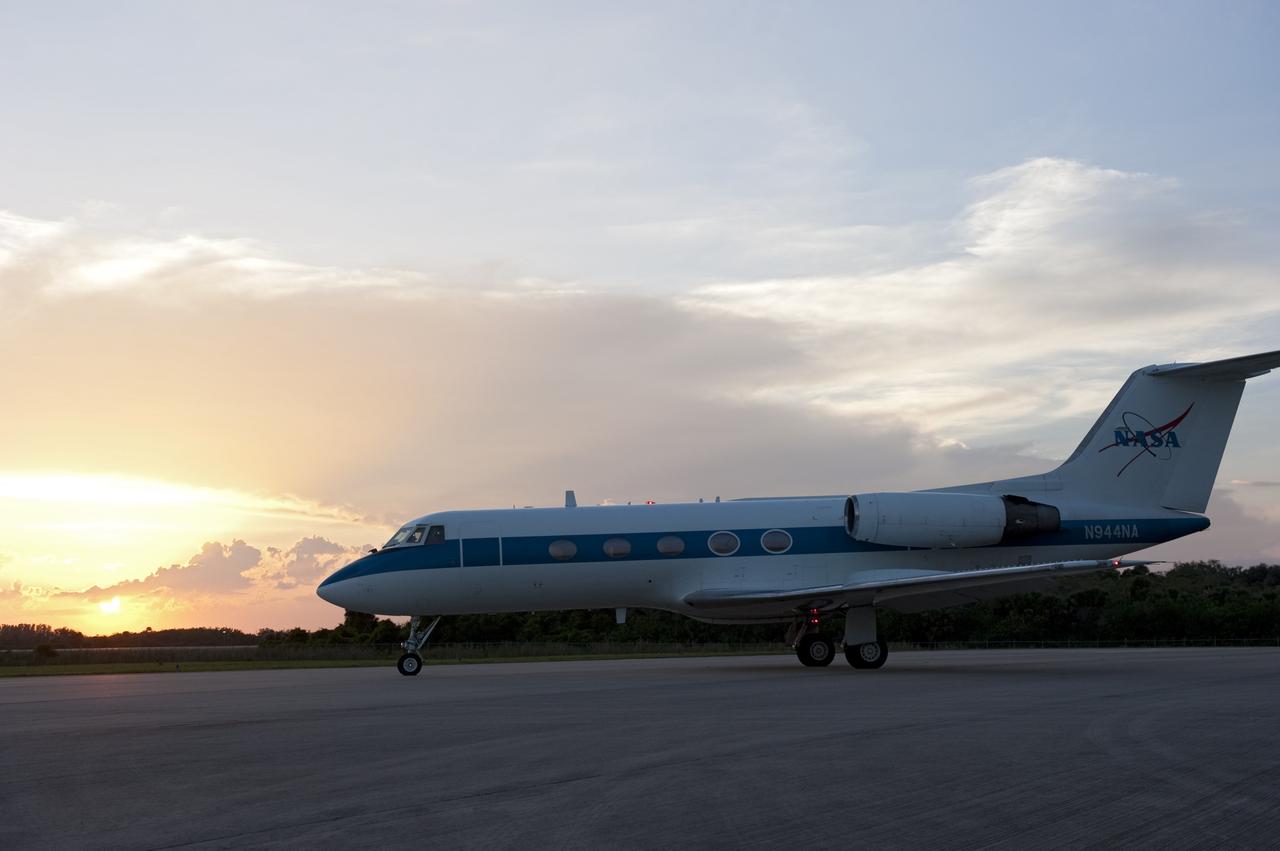
CAPE CANAVERAL, Fla. -- STS-134 Commander Mark Kelly and Pilot Greg H. Johnson are ready to take off and perform touch-and-go landings aboard a Shuttle Training Aircraft (STA) on the Shuttle Landing Facility runway at NASA's Kennedy Space Center in Florida. An STA is a Gulfstream II jet that is modified to mimic the shuttle's handling during the final phase of landing. Kelly and Johnson will practice landings as part of standard training before space shuttle Endeavour's launch to the International Space Station. Endeavour and its crew will deliver the Express Logistics Carrier-3, Alpha Magnetic Spectrometer-2 (AMS), a high-pressure gas tank and additional spare parts for the Dextre robotic helper to the station. This will be the final spaceflight for Endeavour. For more information visit, www.nasa.gov/mission_pages/shuttle/shuttlemissions/sts134/index.html. Photo credit: NASA/Kim Shiflett
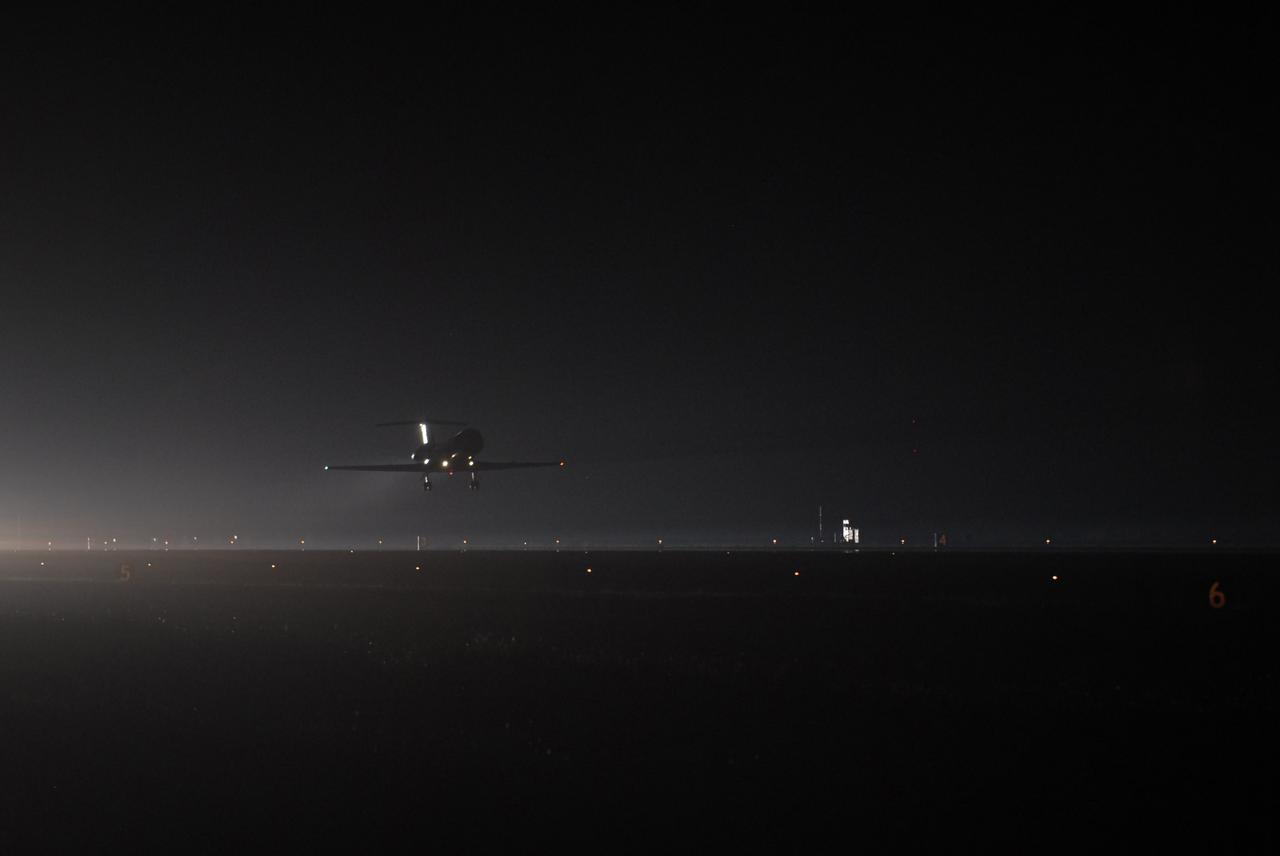
CAPE CANAVERAL, Fla. -- STS-134 Commander Mark Kelly and Pilot Greg H. Johnson perform touch-and-go landings aboard a Shuttle Training Aircraft (STA) on the Shuttle Landing Facility runway at NASA's Kennedy Space Center in Florida. An STA is a Gulfstream II jet that is modified to mimic the shuttle's handling during the final phase of landing. Kelly and Johnson will practice landings as part of standard training before space shuttle Endeavour's launch to the International Space Station. Endeavour and its crew will deliver the Express Logistics Carrier-3, Alpha Magnetic Spectrometer-2 (AMS), a high-pressure gas tank and additional spare parts for the Dextre robotic helper to the station. This will be the final spaceflight for Endeavour. For more information visit, www.nasa.gov/mission_pages/shuttle/shuttlemissions/sts134/index.html. Photo credit: NASA/Kim Shiflett
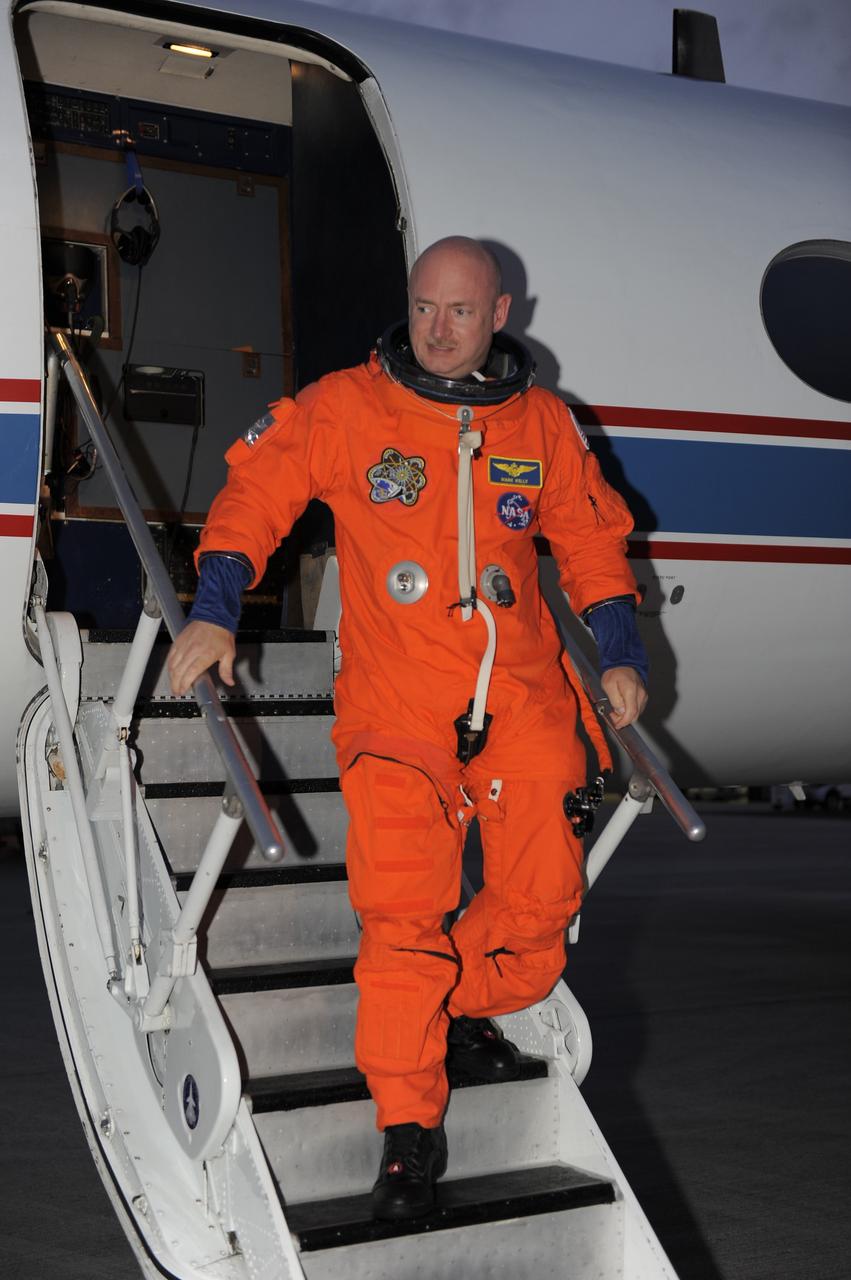
CAPE CANAVERAL, Fla. -- STS-134 Commander Mark Kelly has completed touch-and-go landings and disembarks from a Shuttle Training Aircraft (STA) on the Shuttle Landing Facility runway at NASA's Kennedy Space Center in Florida. An STA is a Gulfstream II jet that is modified to mimic the shuttle's handling during the final phase of landing. Kelly and Johnson will practice landings as part of standard training before space shuttle Endeavour's launch to the International Space Station. Endeavour and its crew will deliver the Express Logistics Carrier-3, Alpha Magnetic Spectrometer-2 (AMS), a high-pressure gas tank and additional spare parts for the Dextre robotic helper to the station. This will be the final spaceflight for Endeavour. For more information visit, www.nasa.gov/mission_pages/shuttle/shuttlemissions/sts134/index.html. Photo credit: NASA/Kim Shiflett
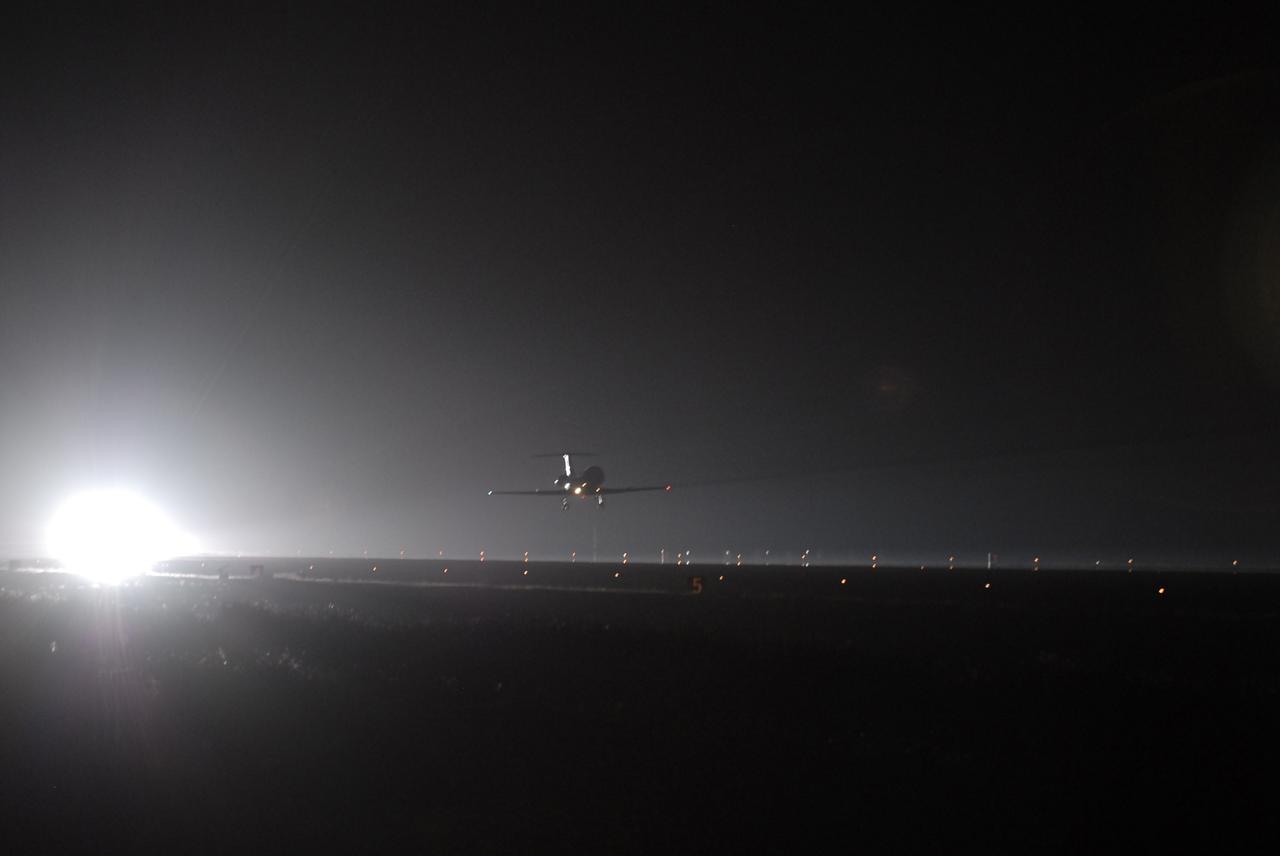
CAPE CANAVERAL, Fla. -- STS-134 Commander Mark Kelly and Pilot Greg H. Johnson perform touch-and-go landings aboard a Shuttle Training Aircraft (STA) on the Shuttle Landing Facility runway at NASA's Kennedy Space Center in Florida. An STA is a Gulfstream II jet that is modified to mimic the shuttle's handling during the final phase of landing. Kelly and Johnson will practice landings as part of standard training before space shuttle Endeavour's launch to the International Space Station. Endeavour and its crew will deliver the Express Logistics Carrier-3, Alpha Magnetic Spectrometer-2 (AMS), a high-pressure gas tank and additional spare parts for the Dextre robotic helper to the station. This will be the final spaceflight for Endeavour. For more information visit, www.nasa.gov/mission_pages/shuttle/shuttlemissions/sts134/index.html. Photo credit: NASA/Kim Shiflett
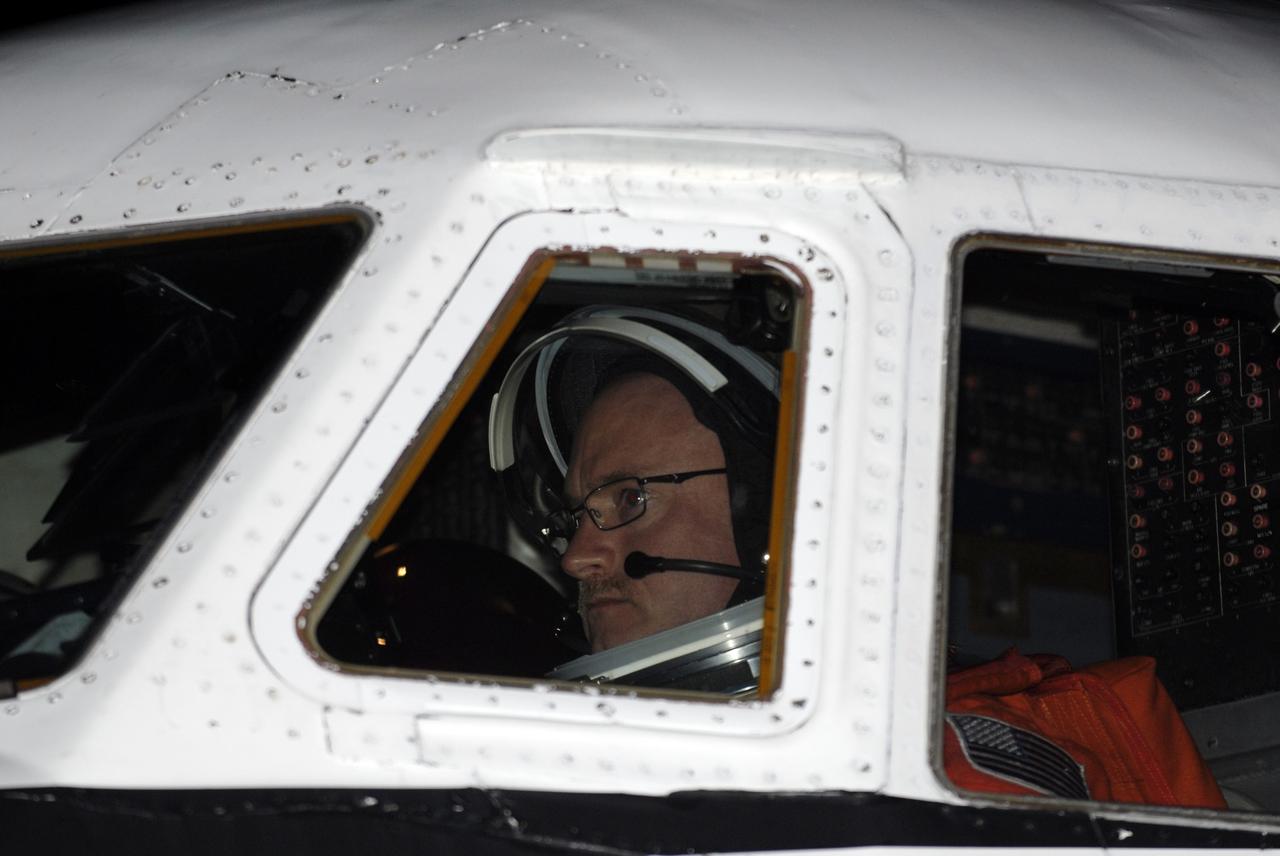
CAPE CANAVERAL, Fla. -- STS-134 Commander Mark Kelly prepares to perform touch-and-go landings aboard a Shuttle Training Aircraft (STA) on the Shuttle Landing Facility runway at NASA's Kennedy Space Center in Florida. An STA is a Gulfstream II jet that is modified to mimic the shuttle's handling during the final phase of landing. Kelly and Johnson will practice landings as part of standard training before space shuttle Endeavour's launch to the International Space Station. Endeavour and its crew will deliver the Express Logistics Carrier-3, Alpha Magnetic Spectrometer-2 (AMS), a high-pressure gas tank and additional spare parts for the Dextre robotic helper to the station. This will be the final spaceflight for Endeavour. For more information visit, www.nasa.gov/mission_pages/shuttle/shuttlemissions/sts134/index.html. Photo credit: NASA/Kim Shiflett
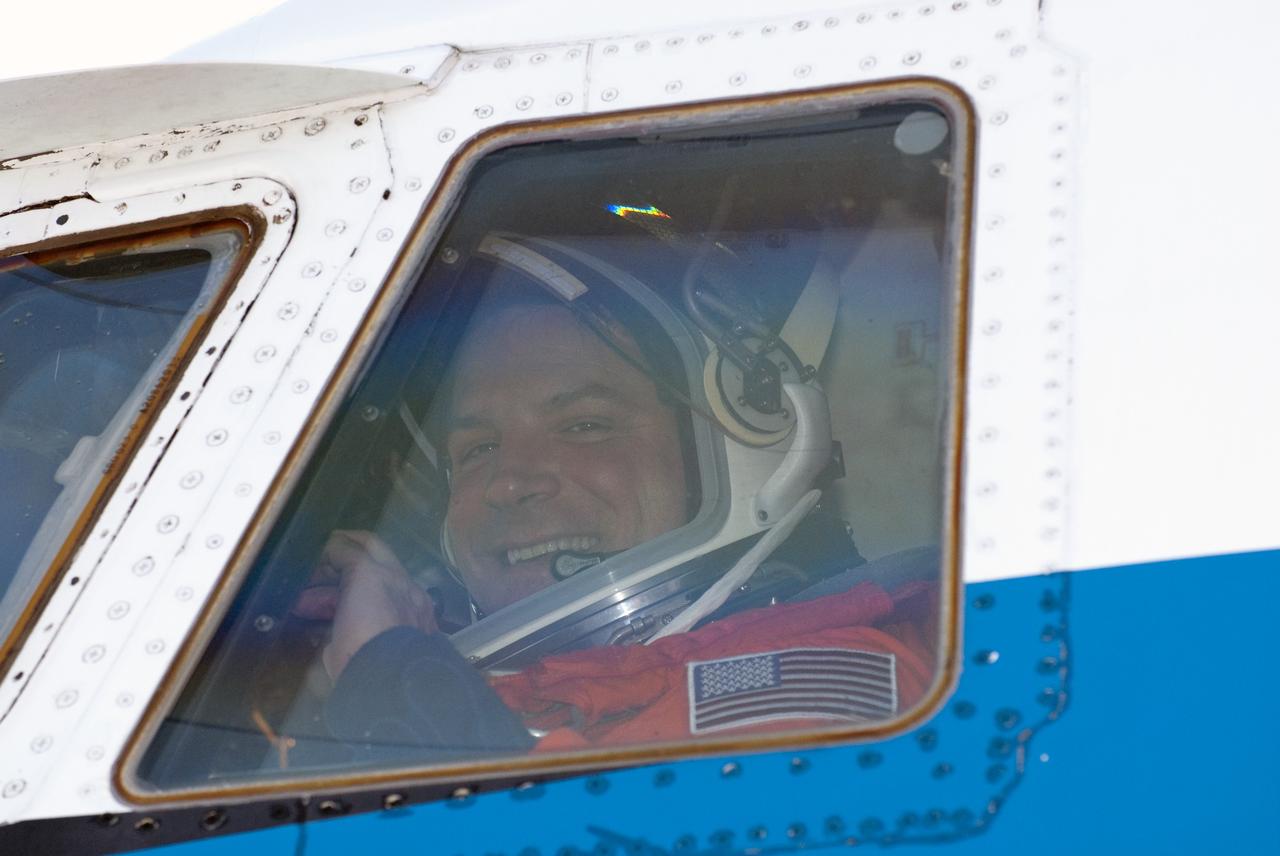
CAPE CANAVERAL, Fla. -- STS-134 Pilot Greg H. Johnson prepares to perform touch-and-go landings aboard a Shuttle Training Aircraft (STA) on the Shuttle Landing Facility runway at NASA's Kennedy Space Center in Florida. An STA is a Gulfstream II jet that is modified to mimic the shuttle's handling during the final phase of landing. Kelly and Johnson will practice landings as part of standard training before space shuttle Endeavour's launch to the International Space Station. Endeavour and its crew will deliver the Express Logistics Carrier-3, Alpha Magnetic Spectrometer-2 (AMS), a high-pressure gas tank and additional spare parts for the Dextre robotic helper to the station. This will be the final spaceflight for Endeavour. For more information visit, www.nasa.gov/mission_pages/shuttle/shuttlemissions/sts134/index.html. Photo credit: NASA/Kim Shiflett
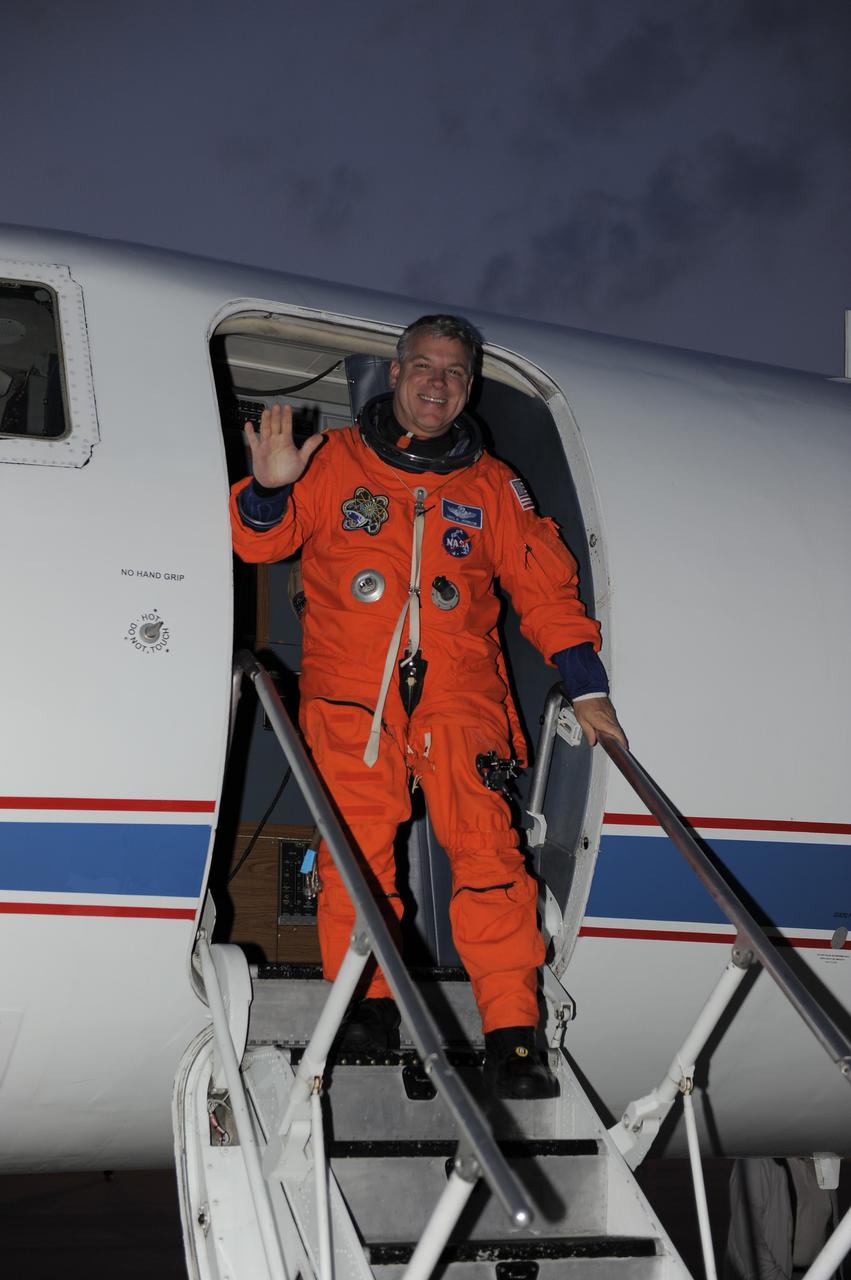
CAPE CANAVERAL, Fla. -- STS-134 Pilot Greg H. Johnson has completed touch-and-go landings and disembarks from a Shuttle Training Aircraft (STA) on the Shuttle Landing Facility runway at NASA's Kennedy Space Center in Florida. An STA is a Gulfstream II jet that is modified to mimic the shuttle's handling during the final phase of landing. Kelly and Johnson will practice landings as part of standard training before space shuttle Endeavour's launch to the International Space Station. Endeavour and its crew will deliver the Express Logistics Carrier-3, Alpha Magnetic Spectrometer-2 (AMS), a high-pressure gas tank and additional spare parts for the Dextre robotic helper to the station. This will be the final spaceflight for Endeavour. For more information visit, www.nasa.gov/mission_pages/shuttle/shuttlemissions/sts134/index.html. Photo credit: NASA/Kim Shiflett
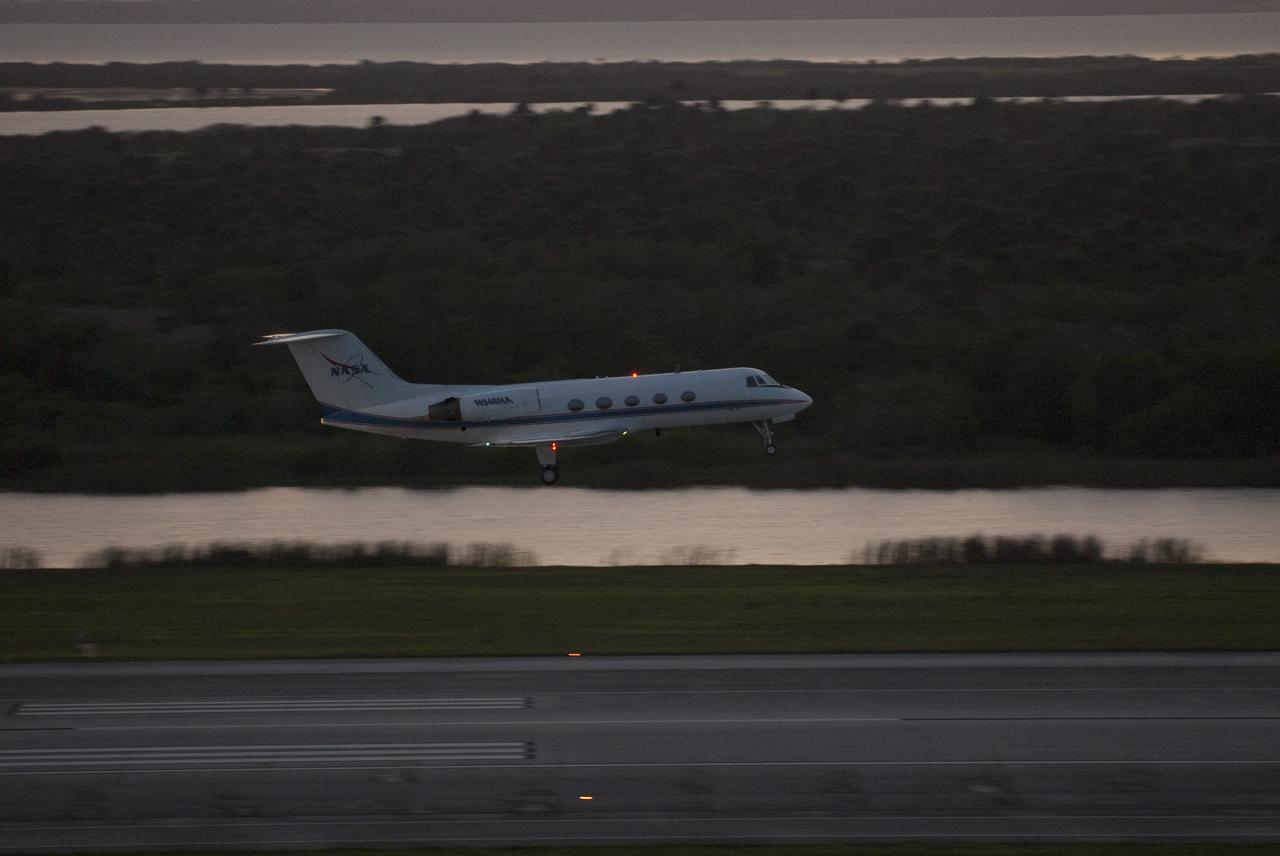
CAPE CANAVERAL, Fla. -- STS-134 Commander Mark Kelly and Pilot Greg H. Johnson perform touch-and-go landings aboard a Shuttle Training Aircraft (STA) on the Shuttle Landing Facility runway at NASA's Kennedy Space Center in Florida. An STA is a Gulfstream II jet that is modified to mimic the shuttle's handling during the final phase of landing. Kelly and Johnson will practice landings as part of standard training before space shuttle Endeavour's launch to the International Space Station. Endeavour and its crew will deliver the Express Logistics Carrier-3, Alpha Magnetic Spectrometer-2 (AMS), a high-pressure gas tank and additional spare parts for the Dextre robotic helper to the station. This will be the final spaceflight for Endeavour. For more information visit, www.nasa.gov/mission_pages/shuttle/shuttlemissions/sts134/index.html. Photo credit: NASA/Kim Shiflett
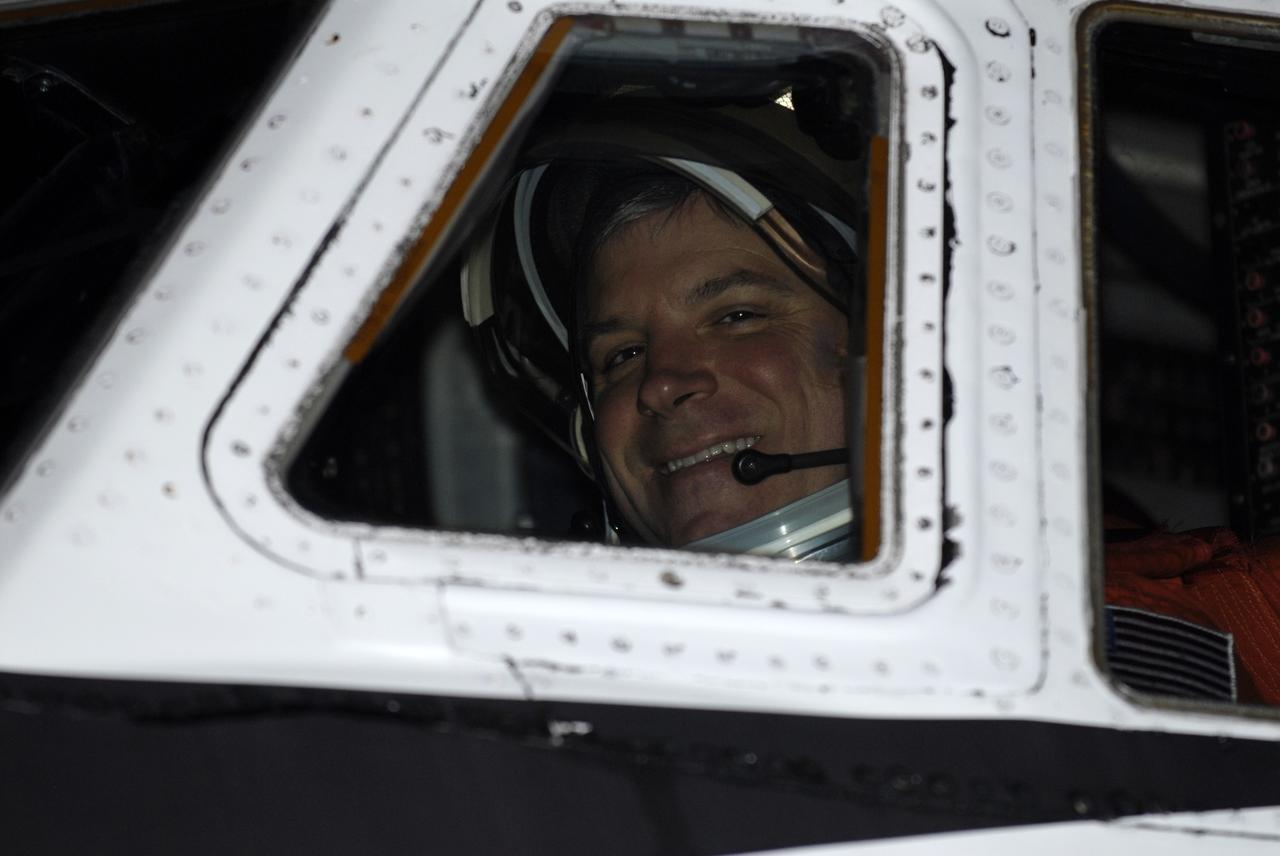
CAPE CANAVERAL, Fla. -- STS-134 Pilot Greg H. Johnson prepares to perform touch-and-go landings aboard a Shuttle Training Aircraft (STA) on the Shuttle Landing Facility runway at NASA's Kennedy Space Center in Florida. An STA is a Gulfstream II jet that is modified to mimic the shuttle's handling during the final phase of landing. Kelly and Johnson will practice landings as part of standard training before space shuttle Endeavour's launch to the International Space Station. Endeavour and its crew will deliver the Express Logistics Carrier-3, Alpha Magnetic Spectrometer-2 (AMS), a high-pressure gas tank and additional spare parts for the Dextre robotic helper to the station. This will be the final spaceflight for Endeavour. For more information visit, www.nasa.gov/mission_pages/shuttle/shuttlemissions/sts134/index.html. Photo credit: NASA/Kim Shiflett
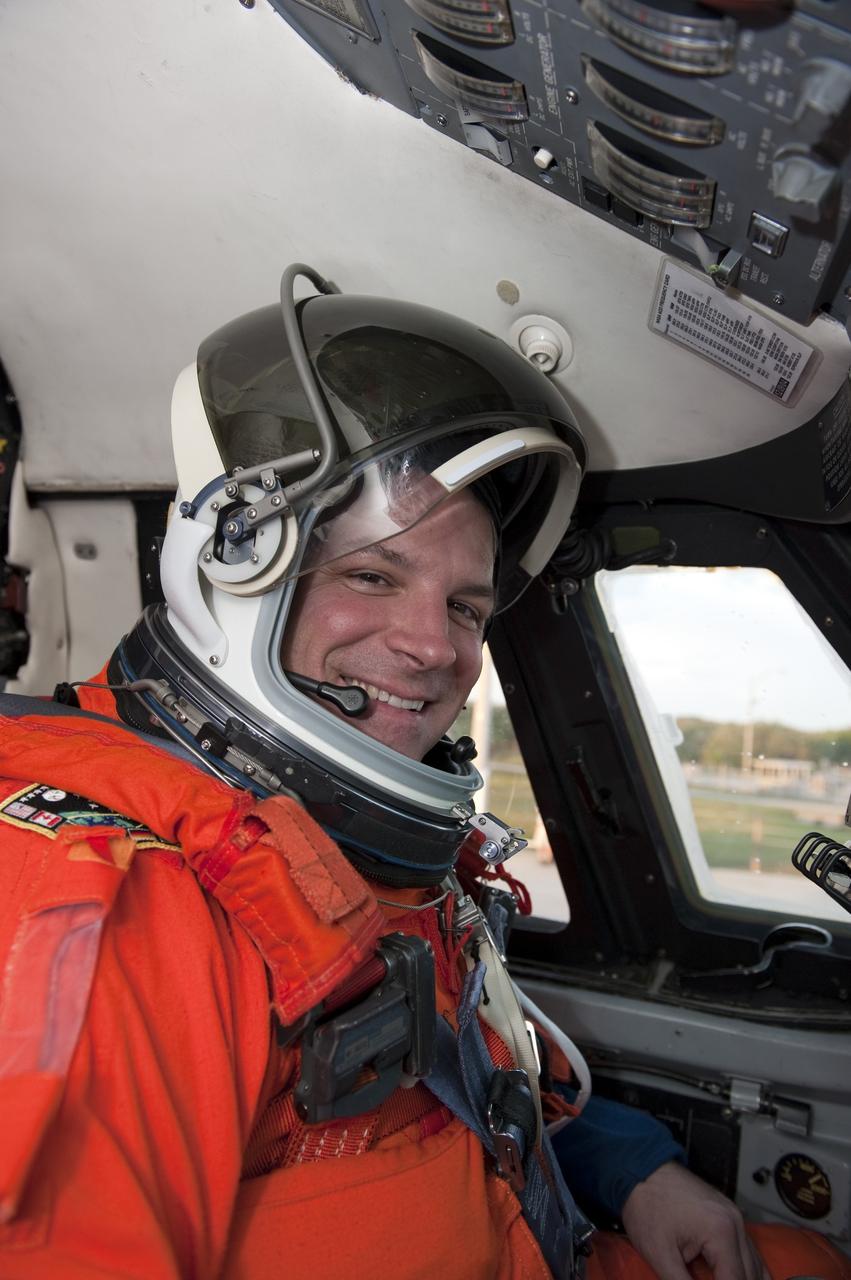
CAPE CANAVERAL, Fla. -- STS-134 Pilot Greg H. Johnson prepares to perform touch-and-go landings aboard a Shuttle Training Aircraft (STA) on the Shuttle Landing Facility runway at NASA's Kennedy Space Center in Florida. An STA is a Gulfstream II jet that is modified to mimic the shuttle's handling during the final phase of landing. Kelly and Johnson will practice landings as part of standard training before space shuttle Endeavour's launch to the International Space Station. Endeavour and its crew will deliver the Express Logistics Carrier-3, Alpha Magnetic Spectrometer-2 (AMS), a high-pressure gas tank and additional spare parts for the Dextre robotic helper to the station. This will be the final spaceflight for Endeavour. For more information visit, www.nasa.gov/mission_pages/shuttle/shuttlemissions/sts134/index.html. Photo credit: NASA/Kim Shiflett

CAPE CANAVERAL, Fla. -- STS-134 Commander Mark Kelly and Pilot Greg H. Johnson are ready to take off and perform touch-and-go landings aboard a Shuttle Training Aircraft (STA) on the Shuttle Landing Facility runway at NASA's Kennedy Space Center in Florida. An STA is a Gulfstream II jet that is modified to mimic the shuttle's handling during the final phase of landing. Kelly and Johnson will practice landings as part of standard training before space shuttle Endeavour's launch to the International Space Station. Endeavour and its crew will deliver the Express Logistics Carrier-3, Alpha Magnetic Spectrometer-2 (AMS), a high-pressure gas tank and additional spare parts for the Dextre robotic helper to the station. This will be the final spaceflight for Endeavour. For more information visit, www.nasa.gov/mission_pages/shuttle/shuttlemissions/sts134/index.html. Photo credit: NASA/Kim Shiflett
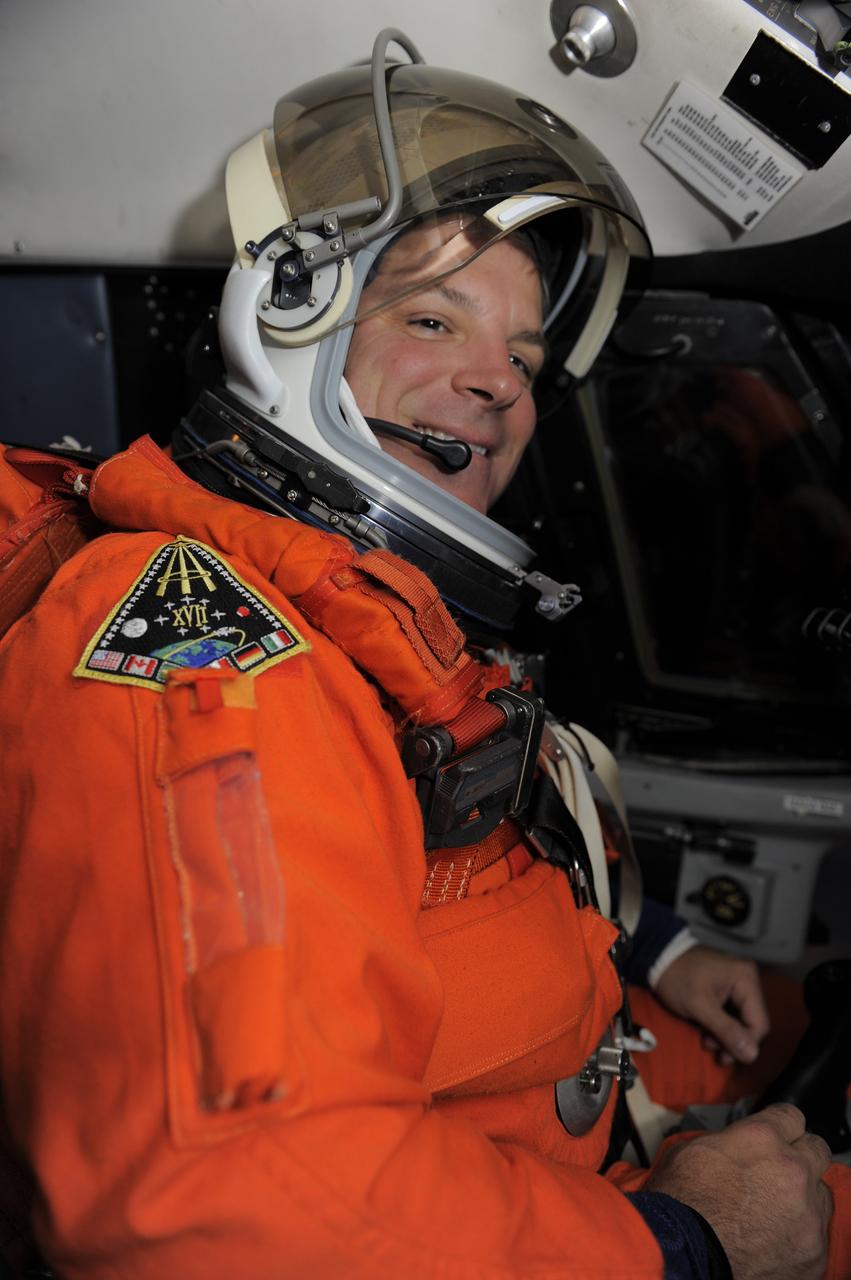
CAPE CANAVERAL, Fla. -- STS-134 Pilot Greg H. Johnson prepares to perform touch-and-go landings aboard a Shuttle Training Aircraft (STA) on the Shuttle Landing Facility runway at NASA's Kennedy Space Center in Florida. An STA is a Gulfstream II jet that is modified to mimic the shuttle's handling during the final phase of landing. Kelly and Johnson will practice landings as part of standard training before space shuttle Endeavour's launch to the International Space Station. Endeavour and its crew will deliver the Express Logistics Carrier-3, Alpha Magnetic Spectrometer-2 (AMS), a high-pressure gas tank and additional spare parts for the Dextre robotic helper to the station. This will be the final spaceflight for Endeavour. For more information visit, www.nasa.gov/mission_pages/shuttle/shuttlemissions/sts134/index.html. Photo credit: NASA/Kim Shiflett
CAPE CANAVERAL, Fla. -- STS-134 Pilot Greg H. Johnson prepares to perform touch-and-go landings aboard a Shuttle Training Aircraft (STA) on the Shuttle Landing Facility runway at NASA's Kennedy Space Center in Florida. An STA is a Gulfstream II jet that is modified to mimic the shuttle's handling during the final phase of landing. Kelly and Johnson will practice landings as part of standard training before space shuttle Endeavour's launch to the International Space Station. Endeavour and its crew will deliver the Express Logistics Carrier-3, Alpha Magnetic Spectrometer-2 (AMS), a high-pressure gas tank and additional spare parts for the Dextre robotic helper to the station. This will be the final spaceflight for Endeavour. For more information visit, www.nasa.gov/mission_pages/shuttle/shuttlemissions/sts134/index.html. Photo credit: NASA/Kim Shiflett
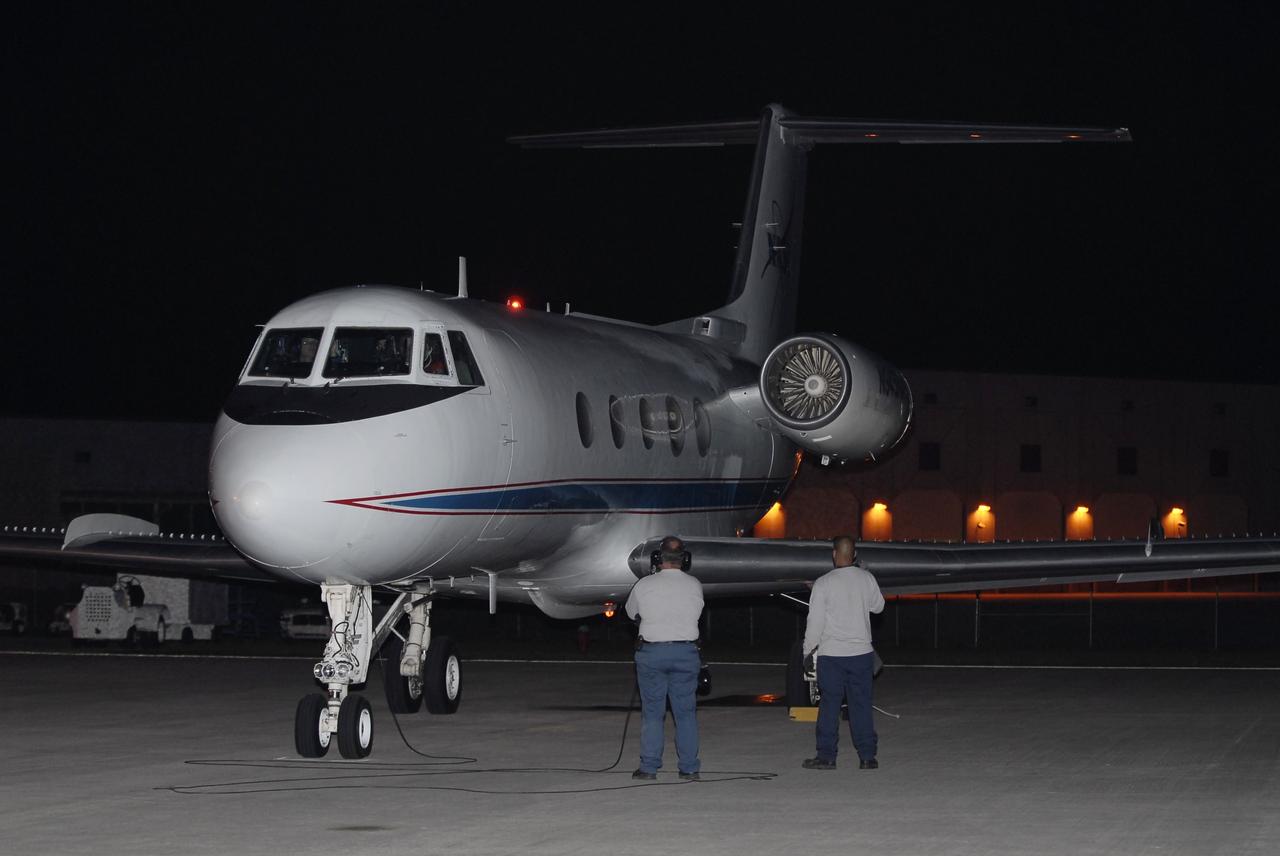
CAPE CANAVERAL, Fla. -- STS-134 Commander Mark Kelly and Pilot Greg H. Johnson are ready to take off and perform touch-and-go landings aboard a Shuttle Training Aircraft (STA) on the Shuttle Landing Facility runway at NASA's Kennedy Space Center in Florida. An STA is a Gulfstream II jet that is modified to mimic the shuttle's handling during the final phase of landing. Kelly and Johnson will practice landings as part of standard training before space shuttle Endeavour's launch to the International Space Station. Endeavour and its crew will deliver the Express Logistics Carrier-3, Alpha Magnetic Spectrometer-2 (AMS), a high-pressure gas tank and additional spare parts for the Dextre robotic helper to the station. This will be the final spaceflight for Endeavour. For more information visit, www.nasa.gov/mission_pages/shuttle/shuttlemissions/sts134/index.html. Photo credit: NASA/Kim Shiflett

CAPE CANAVERAL, Fla. -- STS-134 Commander Mark Kelly and Pilot Greg H. Johnson perform touch-and-go landings aboard a Shuttle Training Aircraft (STA) on the Shuttle Landing Facility runway at NASA's Kennedy Space Center in Florida. An STA is a Gulfstream II jet that is modified to mimic the shuttle's handling during the final phase of landing. Kelly and Johnson will practice landings as part of standard training before space shuttle Endeavour's launch to the International Space Station. Endeavour and its crew will deliver the Express Logistics Carrier-3, Alpha Magnetic Spectrometer-2 (AMS), a high-pressure gas tank and additional spare parts for the Dextre robotic helper to the station. This will be the final spaceflight for Endeavour. For more information visit, www.nasa.gov/mission_pages/shuttle/shuttlemissions/sts134/index.html. Photo credit: NASA/Kim Shiflett

CAPE CANAVERAL, Fla. -- STS-134 Pilot Greg H. Johnson prepares to perform touch-and-go landings aboard a Shuttle Training Aircraft (STA) on the Shuttle Landing Facility runway at NASA's Kennedy Space Center in Florida. An STA is a Gulfstream II jet that is modified to mimic the shuttle's handling during the final phase of landing. Kelly and Johnson will practice landings as part of standard training before space shuttle Endeavour's launch to the International Space Station. Endeavour and its crew will deliver the Express Logistics Carrier-3, Alpha Magnetic Spectrometer-2 (AMS), a high-pressure gas tank and additional spare parts for the Dextre robotic helper to the station. This will be the final spaceflight for Endeavour. For more information visit, www.nasa.gov/mission_pages/shuttle/shuttlemissions/sts134/index.html. Photo credit: NASA/Kim Shiflett
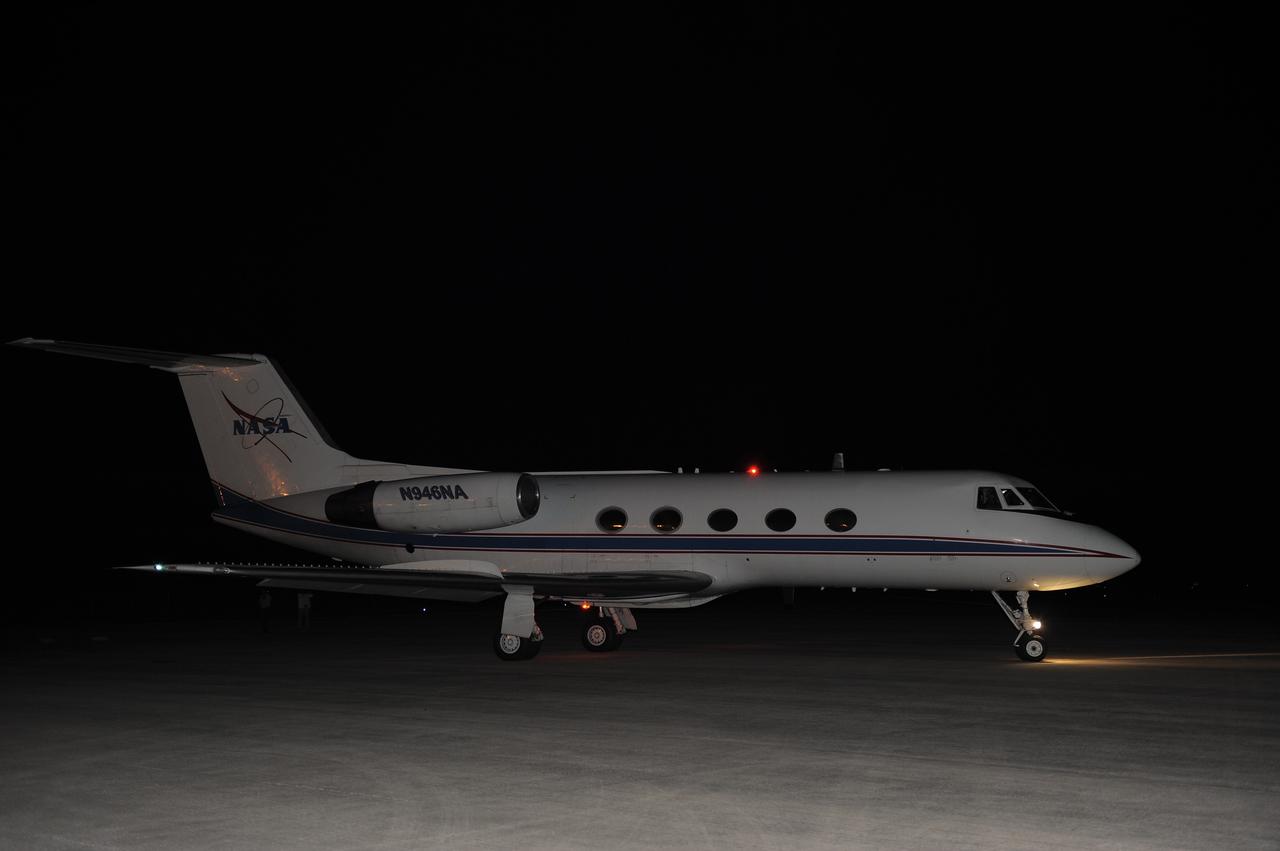
CAPE CANAVERAL, Fla. -- STS-134 Commander Mark Kelly and Pilot Greg H. Johnson return after performing touch-and-go landings aboard a Shuttle Training Aircraft (STA) on the Shuttle Landing Facility runway at NASA's Kennedy Space Center in Florida. An STA is a Gulfstream II jet that is modified to mimic the shuttle's handling during the final phase of landing. Kelly and Johnson will practice landings as part of standard training before space shuttle Endeavour's launch to the International Space Station. Endeavour and its crew will deliver the Express Logistics Carrier-3, Alpha Magnetic Spectrometer-2 (AMS), a high-pressure gas tank and additional spare parts for the Dextre robotic helper to the station. This will be the final spaceflight for Endeavour. For more information visit, www.nasa.gov/mission_pages/shuttle/shuttlemissions/sts134/index.html. Photo credit: NASA/Kim Shiflett
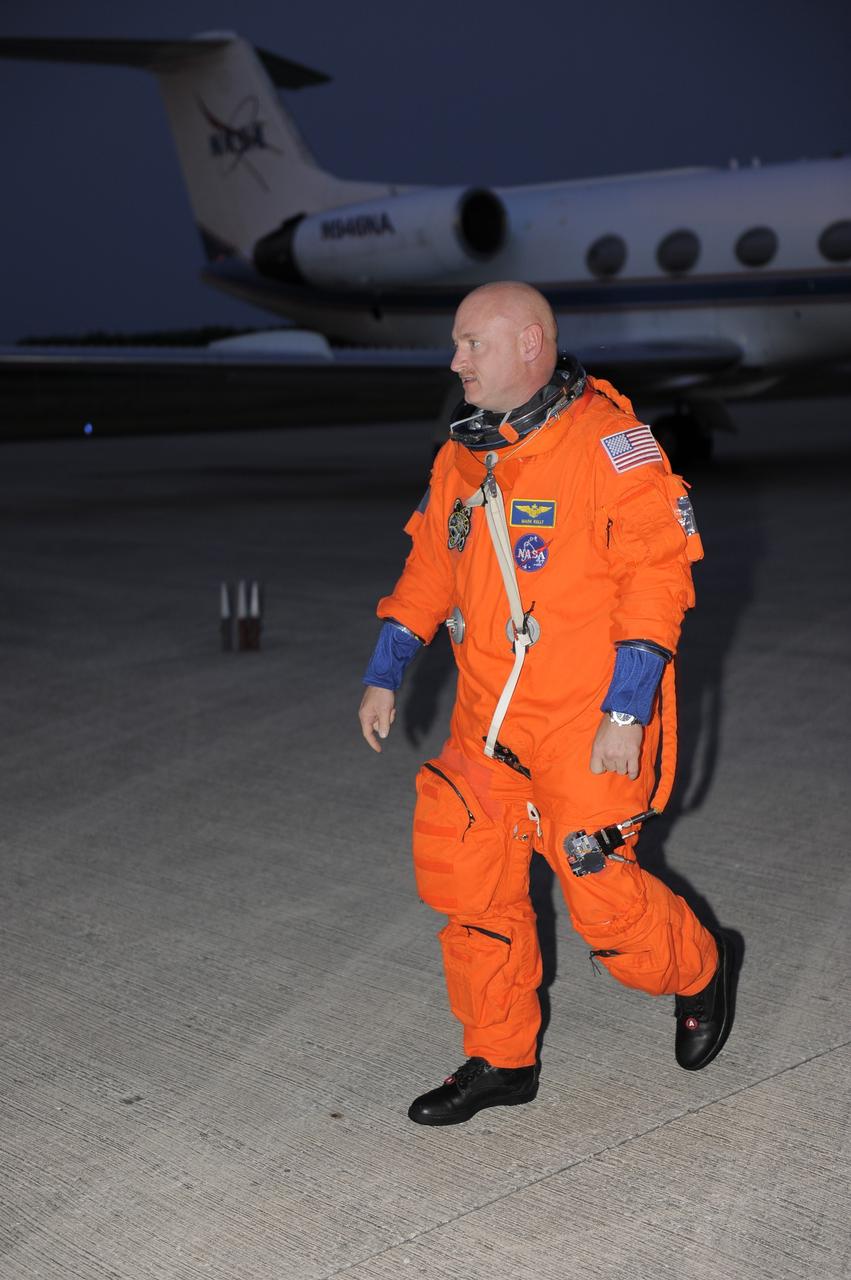
CAPE CANAVERAL, Fla. -- STS-134 Commander Mark Kelly has completed touch-and-go landings in a Shuttle Training Aircraft (STA) on the Shuttle Landing Facility runway at NASA's Kennedy Space Center in Florida. An STA is a Gulfstream II jet that is modified to mimic the shuttle's handling during the final phase of landing. Kelly and Johnson will practice landings as part of standard training before space shuttle Endeavour's launch to the International Space Station. Endeavour and its crew will deliver the Express Logistics Carrier-3, Alpha Magnetic Spectrometer-2 (AMS), a high-pressure gas tank and additional spare parts for the Dextre robotic helper to the station. This will be the final spaceflight for Endeavour. For more information visit, www.nasa.gov/mission_pages/shuttle/shuttlemissions/sts134/index.html. Photo credit: NASA/Kim Shiflett
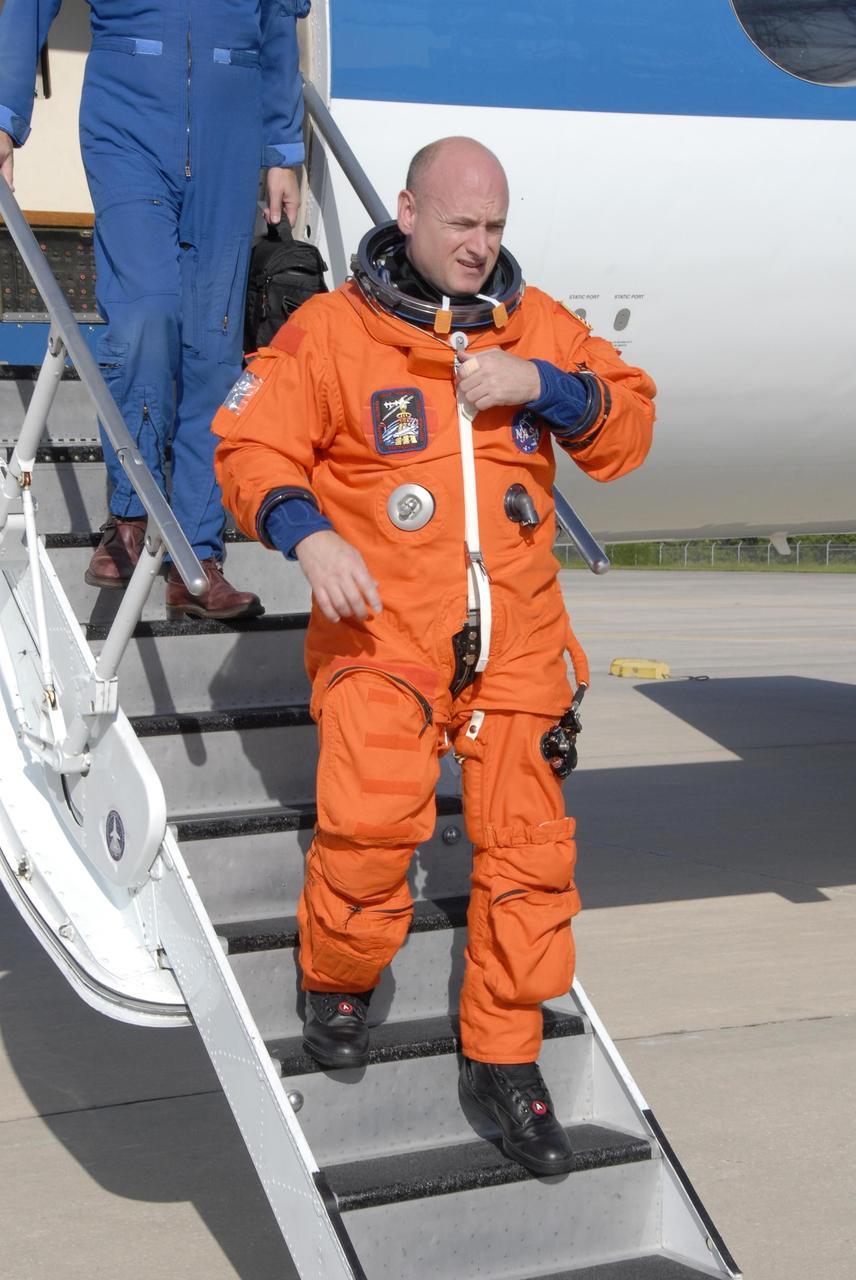
KENNEDY SPACE CENTER, FLA. - STS-118 Commander Scott Kelly is satisfied with his training session in the shuttle training aircraft, or STA, at the Shuttle Landing Facility, Kennedy Space Center's airstrip. He and STS-118 Pilot Charlie Hobaugh were at the facility to practice landings for their upcoming mission. The STA is a Grumman American Aviation-built Gulf Stream II jet that was modified to simulate an orbiter's cockpit, motion and visual cues, and handling qualities. In flight, the STA duplicates the orbiter's atmospheric descent trajectory from approximately 35,000 feet altitude to landing on a runway. Endeavour's STS-118 mission is the 22nd shuttle flight to the International Space Station. It will continue space station construction by delivering a third starboard truss segment, S5. Other payloads include the SPACEHAB module, making its last voyage, and the external stowage platform 3 with a control moment gyroscope on it. The flight will include at least three spacewalks. The crew will also debut a new system that enables docked shuttles to draw electrical power from the station to extend visits to the outpost. Launch is set for Aug. 8 at 6:36 p.m. EDT. NASA/Kim Shiflett
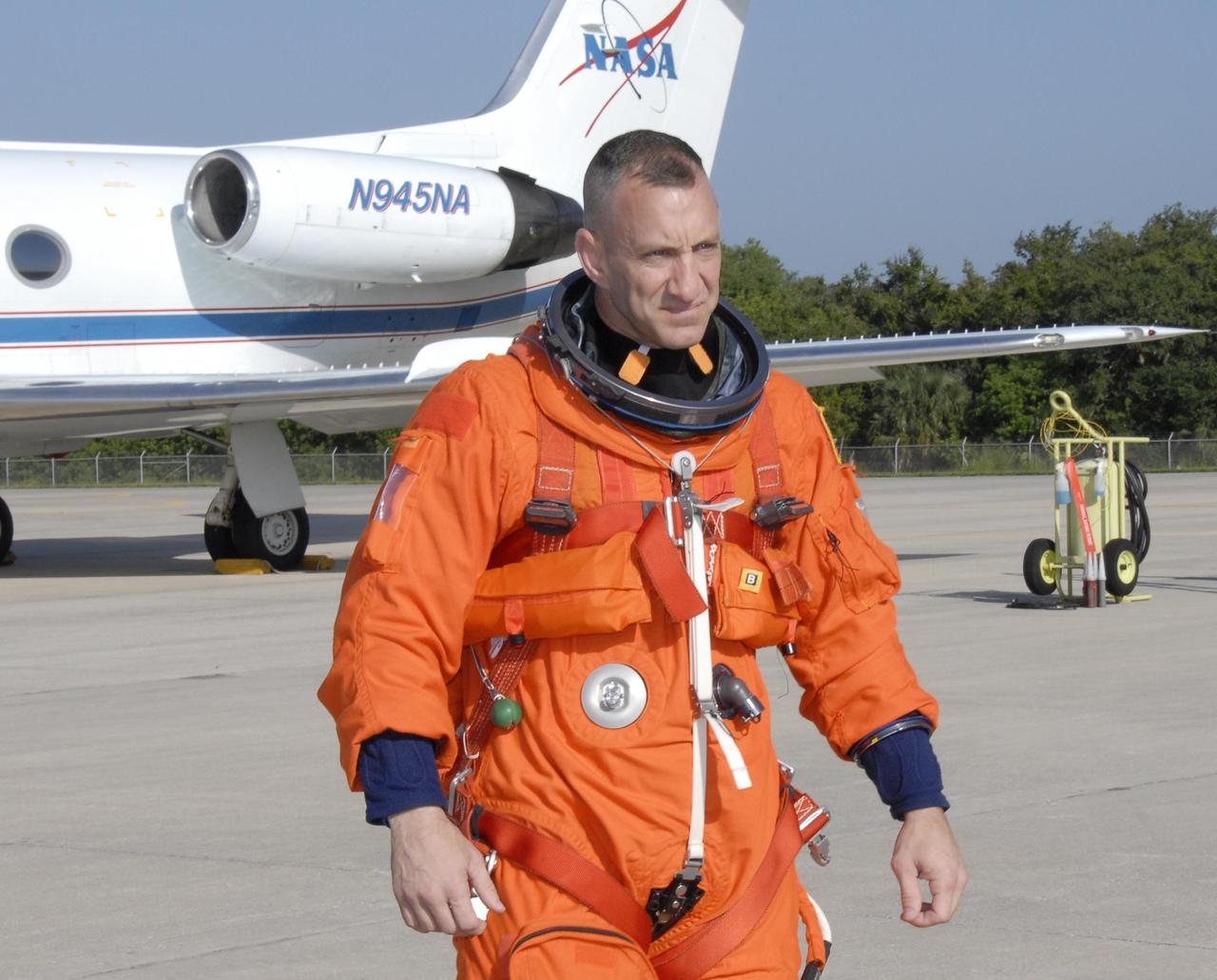
KENNEDY SPACE CENTER, FLA. - STS-118 Pilot Charlie Hobaugh is satisfied with his training session in the shuttle training aircraft, or STA, at the Shuttle Landing Facility, Kennedy Space Center's airstrip. He and STS-118 Commander Scott Kelly were at the facility to practice landings for their upcoming mission. The STA is a Grumman American Aviation-built Gulf Stream II jet that was modified to simulate an orbiter's cockpit, motion and visual cues, and handling qualities. In flight, the STA duplicates the orbiter's atmospheric descent trajectory from approximately 35,000 feet altitude to landing on a runway. Endeavour's STS-118 mission is the 22nd shuttle flight to the International Space Station. It will continue space station construction by delivering a third starboard truss segment, S5. Other payloads include the SPACEHAB module, making its last voyage, and the external stowage platform 3 with a control moment gyroscope on it. The flight will include at least three spacewalks. The crew will also debut a new system that enables docked shuttles to draw electrical power from the station to extend visits to the outpost. Launch is set for Aug. 8 at 6:36 p.m. EDT. NASA/Kim Shiflett
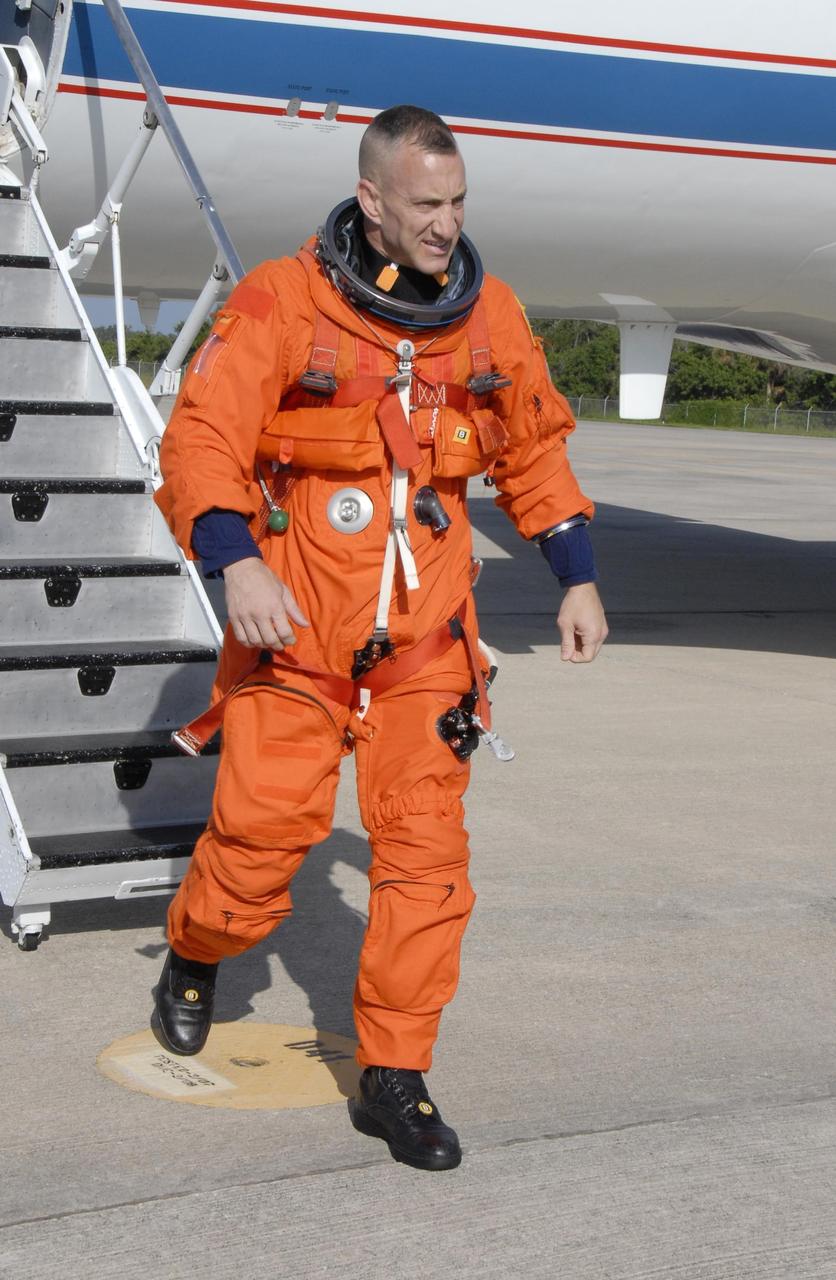
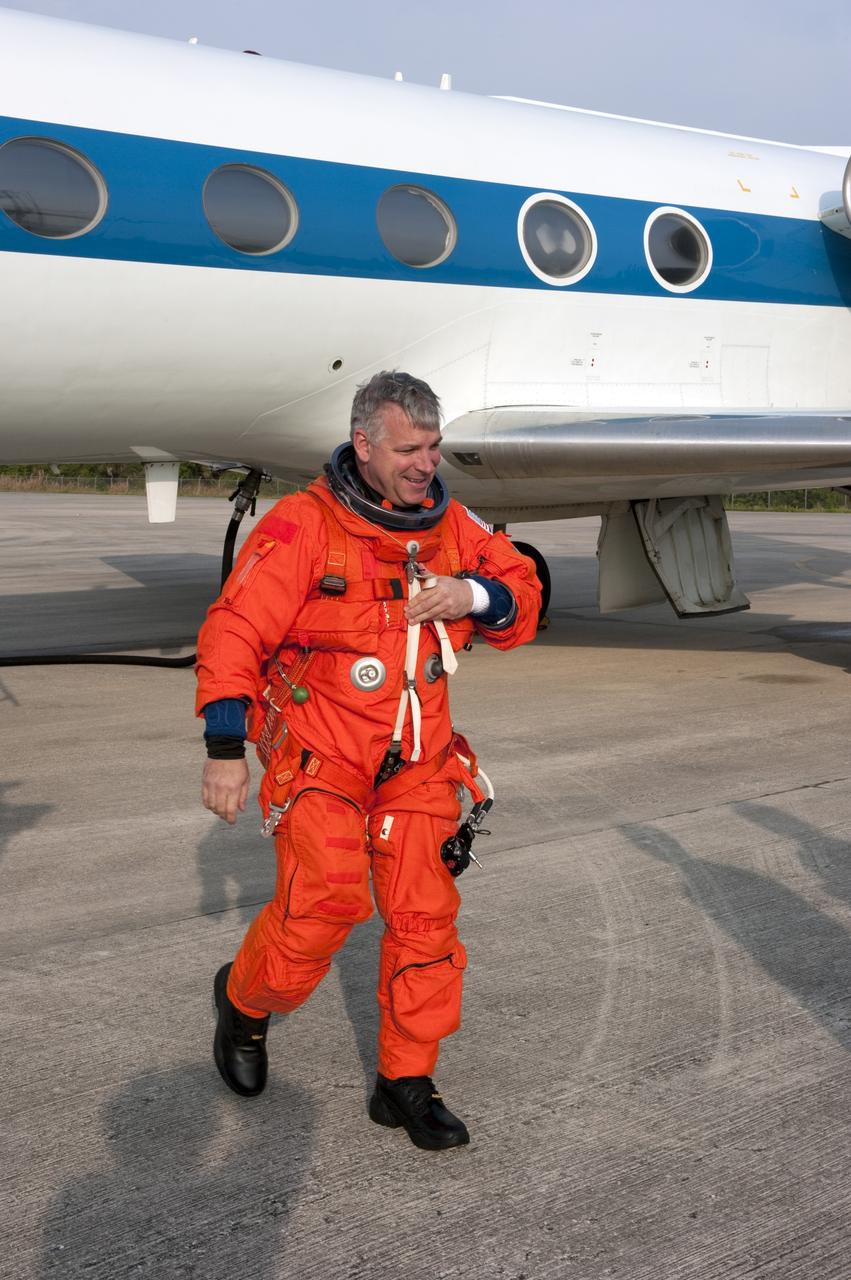
KENNEDY SPACE CENTER, FLA. - STS-118 Pilot Charlie Hobaugh disembarks from the shuttle training aircraft, or STA, at the Shuttle Landing Facility, Kennedy Space Center's airstrip. He and STS-118 Commander Scott Kelly were at the facility to practice landings for their upcoming mission. The STA is a Grumman American Aviation-built Gulf Stream II jet that was modified to simulate an orbiter's cockpit, motion and visual cues, and handling qualities. In flight, the STA duplicates the orbiter's atmospheric descent trajectory from approximately 35,000 feet altitude to landing on a runway. Endeavour's STS-118 mission is the 22nd shuttle flight to the International Space Station. It will continue space station construction by delivering a third starboard truss segment, S5. Other payloads include the SPACEHAB module, making its last voyage, and the external stowage platform 3 with a control moment gyroscope on it. The flight will include at least three spacewalks. The crew will also debut a new system that enables docked shuttles to draw electrical power from the station to extend visits to the outpost. Launch is set for Aug. 8 at 6:36 p.m. EDT. Photo credit: NASA/Kim Shiflett
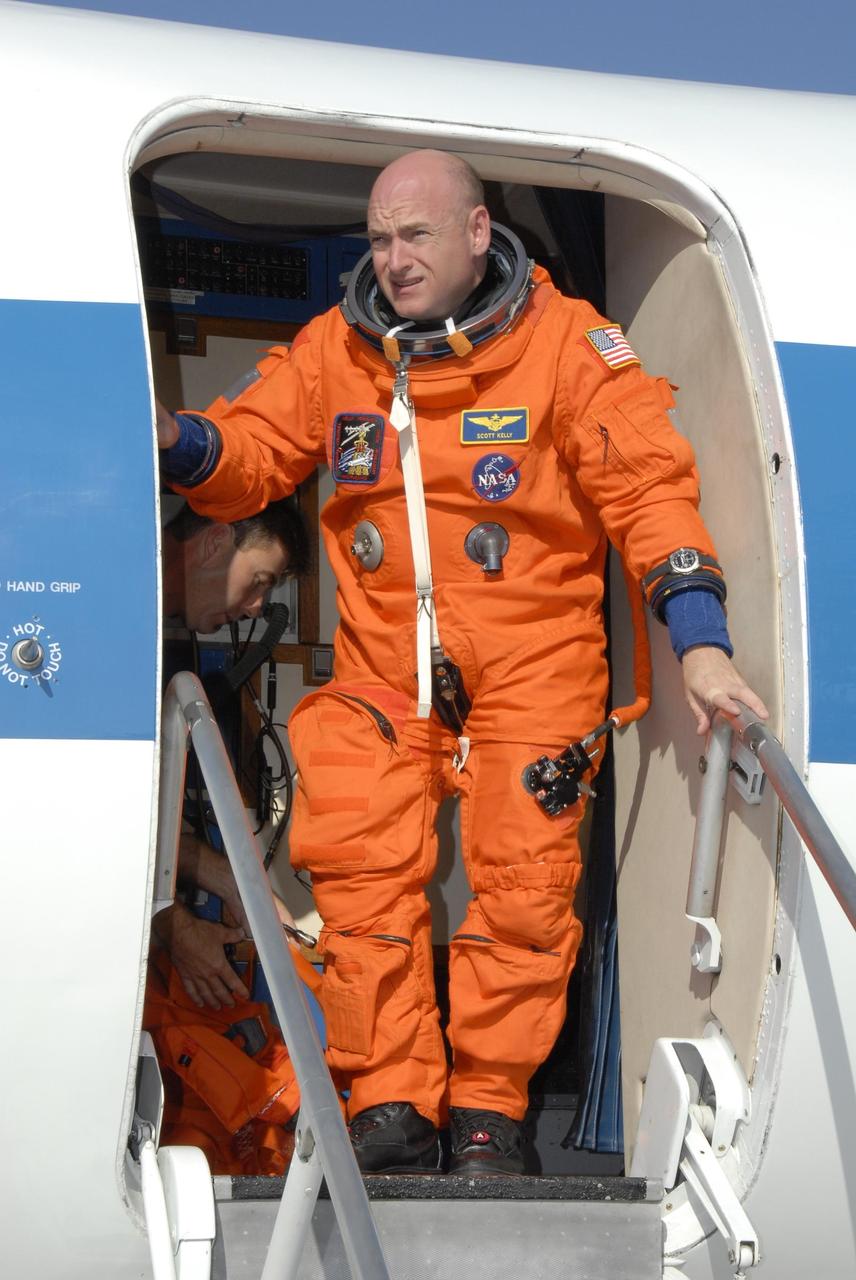
KENNEDY SPACE CENTER, FLA. - STS-118 Commander Scott Kelly disembarks from the shuttle training aircraft, or STA, at the Shuttle Landing Facility, Kennedy Space Center's airstrip. He and STS-118 Pilot Charlie Hobaugh were at the facility to practice landings for their upcoming mission. The STA is a Grumman American Aviation-built Gulf Stream II jet that was modified to simulate an orbiter's cockpit, motion and visual cues, and handling qualities. In flight, the STA duplicates the orbiter's atmospheric descent trajectory from approximately 35,000 feet altitude to landing on a runway. Endeavour's STS-118 mission is the 22nd shuttle flight to the International Space Station. It will continue space station construction by delivering a third starboard truss segment, S5. Other payloads include the SPACEHAB module, making its last voyage, and the external stowage platform 3 with a control moment gyroscope on it. The flight will include at least three spacewalks. The crew will also debut a new system that enables docked shuttles to draw electrical power from the station to extend visits to the outpost. Launch is set for Aug. 8 at 6:36 p.m. EDT. NASA/Kim Shiflett
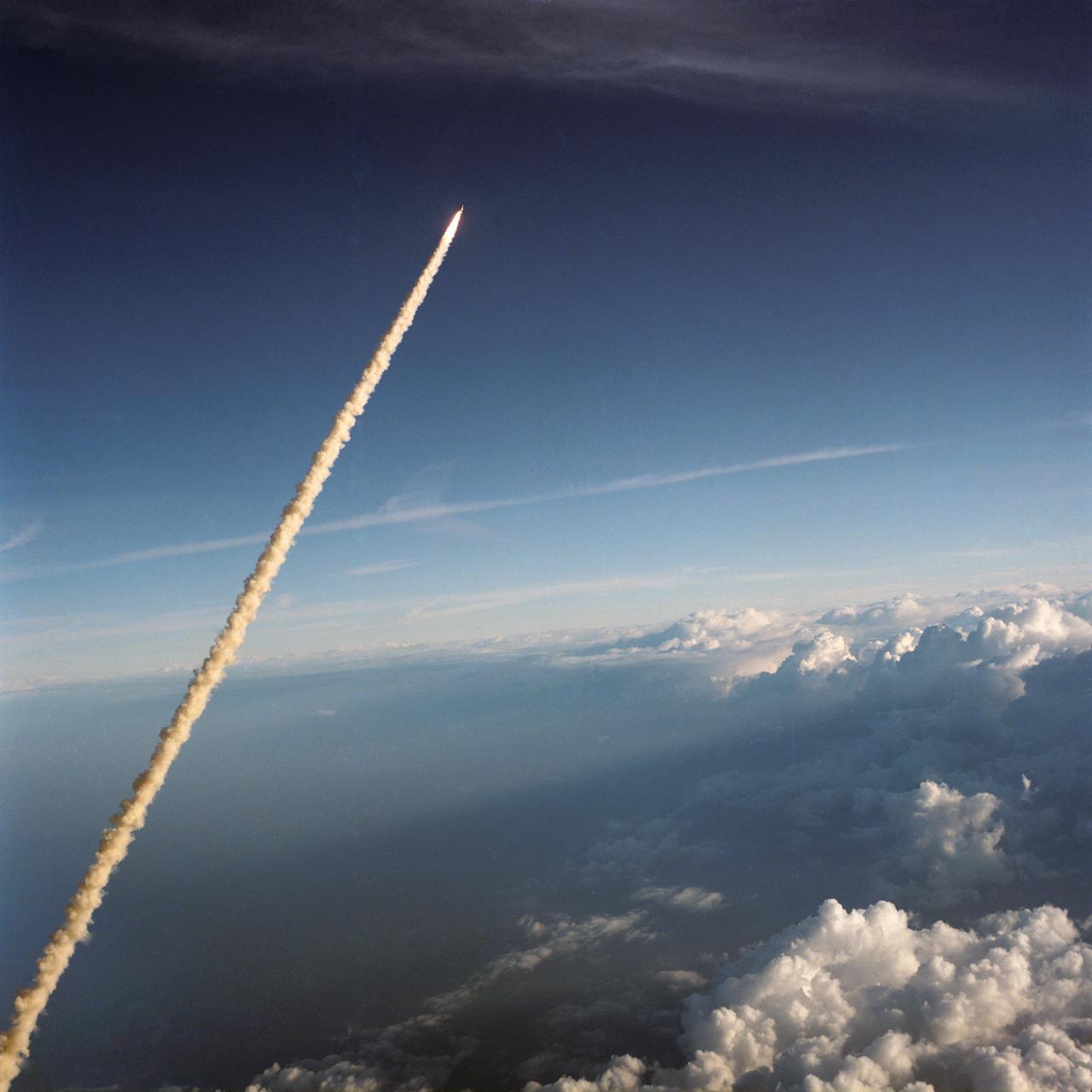
S84-26294 (3 Feb 1984) --- This scenic panorama of billowy clouds over the Atlantic and Florida and the contrasting addition of mankind's technology into the picture was provided by astronaut John W. Young and a handheld camera in the cockpit of NASA's Shuttle Training Aircraft (STA) moments after the 226 tons of spacecraft hardware were lifted off Kennedy Space Center's (KSC) Launch Pad 39A. Inside the Space Shuttle Challenger (STS 41-B), attached here to its two Solid Rocket Boosters (SRB) and External Fuel Tank (ET), were astronauts Vance D. Brand, Robert L. Gibson, Ronald E. McNair, Bruce McCandless II and Robert L. Stewart.
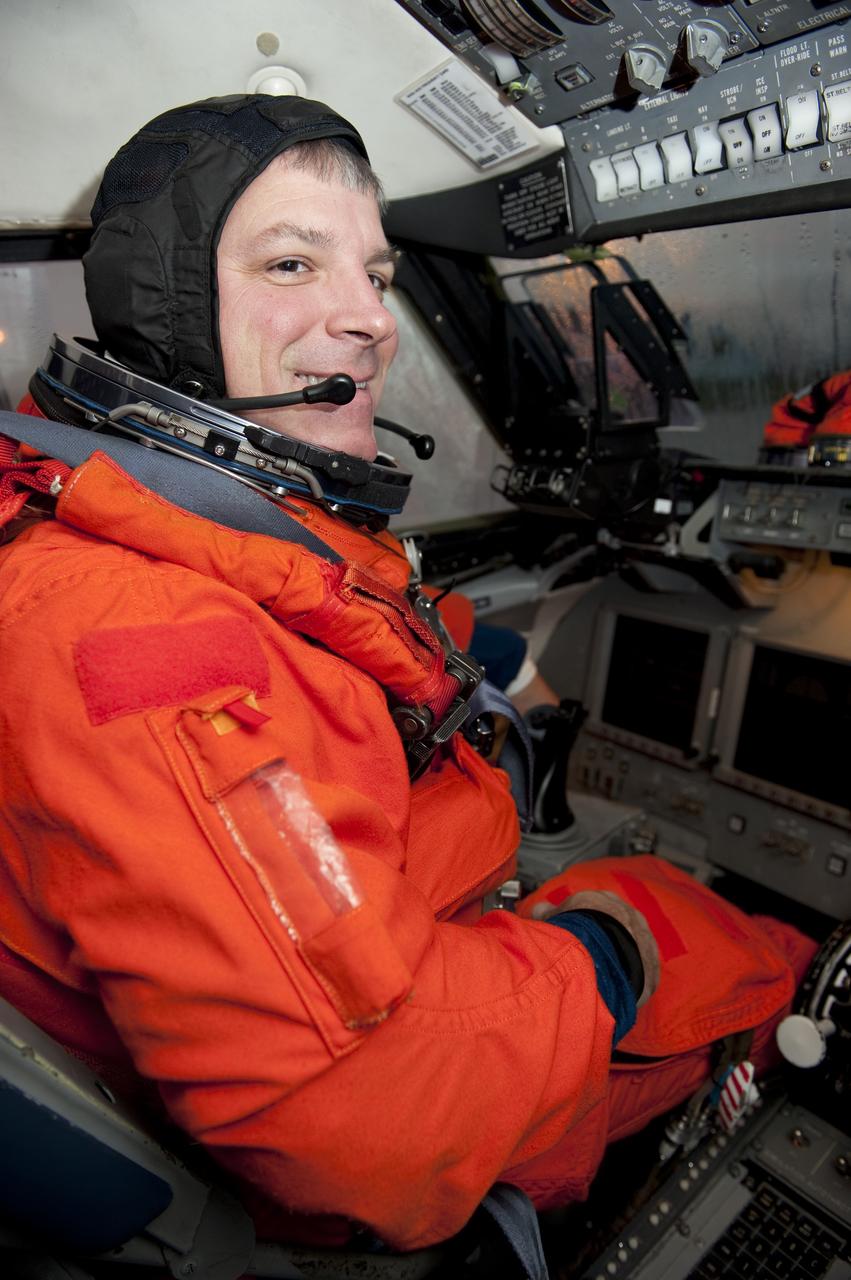
CAPE CANAVERAL, Fla. -- STS-134 Pilot Greg H. Johnson gets behind the controls of a Shuttle Training Aircraft (STA) to perform touch-and-go landings on the Shuttle Landing Facility at NASA's Kennedy Space Center in Florida. STAs are Gulfstream II business jets that are modified to mimic the shuttle's handling during the final phase of landing. Practice landings are part of standard training before space shuttle Endeavour's STS-134 launch to the International Space Station. Endeavour's six crew members are at Kennedy for the launch countdown dress rehearsal called the Terminal Countdown Demonstration Test (TCDT) and related training. Targeted to launch April 19 at 7:48 p.m. EDT, they will deliver the Express Logistics Carrier-3, Alpha Magnetic Spectrometer-2 (AMS), a high-pressure gas tank, additional spare parts for the Dextre robotic helper and micrometeoroid debris shields to the space station. This will be the final spaceflight for Endeavour. For more information visit, www.nasa.gov/mission_pages/shuttle/shuttlemissions/sts134/index.html. Photo credit: NASA/Kim Shiflett
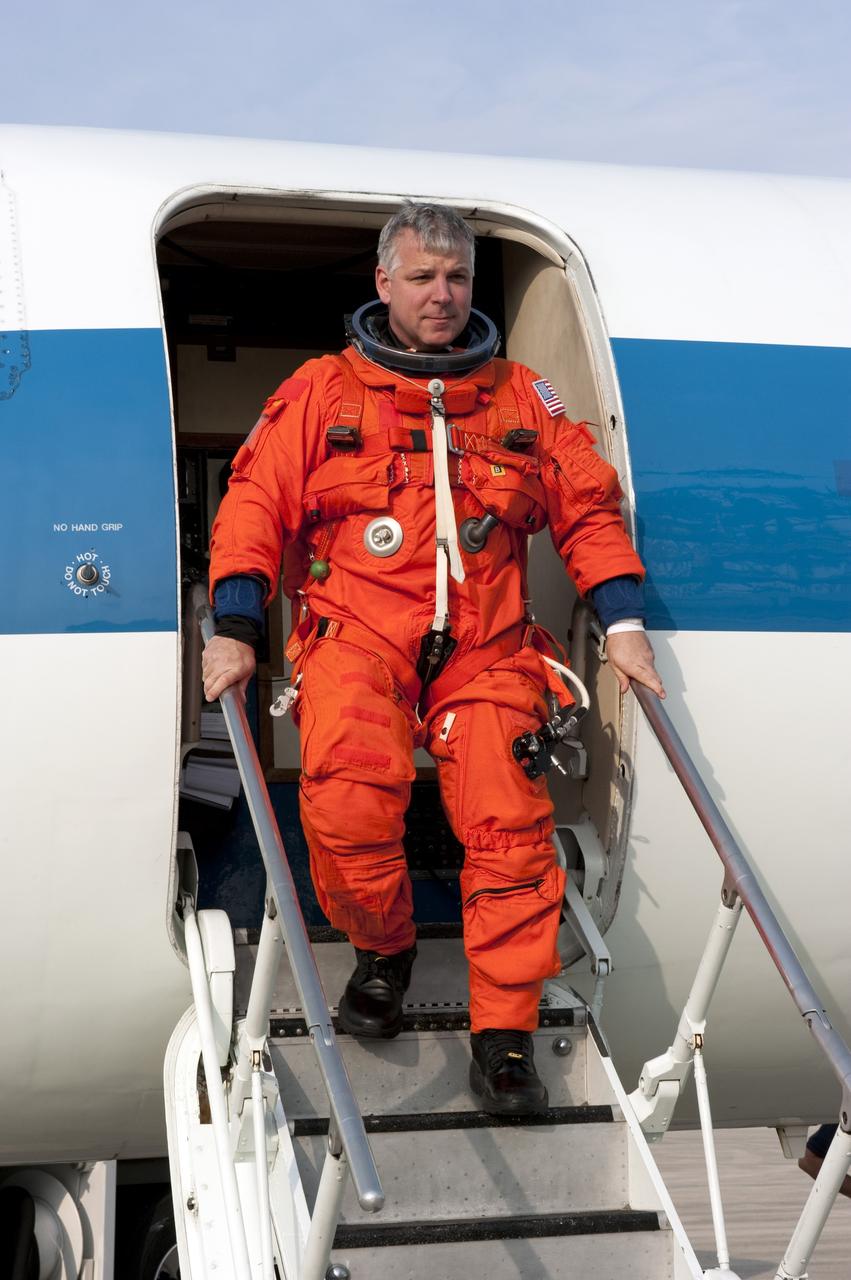
CAPE CANAVERAL, Fla. -- STS-134 Pilot Greg H. Johnson completes touch-and-go landings aboard a Shuttle Training Aircraft (STA) on the Shuttle Landing Facility at NASA's Kennedy Space Center in Florida. STAs are Gulfstream II business jets that are modified to mimic the shuttle's handling during the final phase of landing. Practice landings are part of standard training before space shuttle Endeavour's STS-134 launch to the International Space Station. Endeavour's six crew members are at Kennedy for the launch countdown dress rehearsal called the Terminal Countdown Demonstration Test (TCDT) and related training. Targeted to launch April 19 at 7:48 p.m. EDT, they will deliver the Express Logistics Carrier-3, Alpha Magnetic Spectrometer-2 (AMS), a high-pressure gas tank, additional spare parts for the Dextre robotic helper and micrometeoroid debris shields to the space station. This will be the final spaceflight for Endeavour. For more information visit, www.nasa.gov/mission_pages/shuttle/shuttlemissions/sts134/index.html. Photo credit: NASA/Kim Shiflett
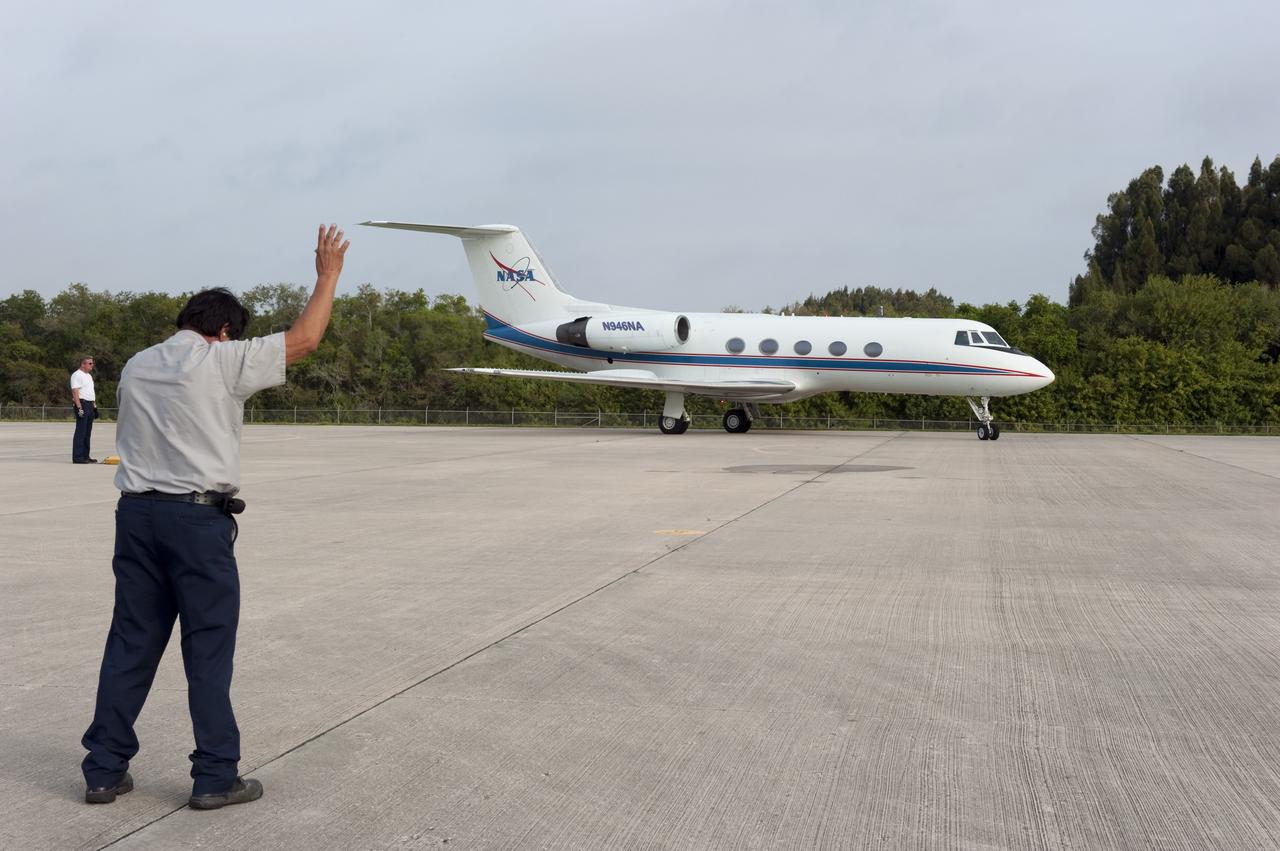
CAPE CANAVERAL, Fla. -- STS-134 Commander Mark Kelly prepares to take flight in a Shuttle Training Aircraft (STA) to perform touch-and-go landings on the Shuttle Landing Facility at NASA's Kennedy Space Center in Florida. STAs are Gulfstream II business jets that are modified to mimic the shuttle's handling during the final phase of landing. Practice landings are part of standard training before space shuttle Endeavour's STS-134 launch to the International Space Station. Endeavour's six crew members are at Kennedy for the launch countdown dress rehearsal called the Terminal Countdown Demonstration Test (TCDT) and related training. Targeted to launch April 19 at 7:48 p.m. EDT, they will deliver the Express Logistics Carrier-3, Alpha Magnetic Spectrometer-2 (AMS), a high-pressure gas tank, additional spare parts for the Dextre robotic helper and micrometeoroid debris shields to the space station. This will be the final spaceflight for Endeavour. For more information visit, www.nasa.gov/mission_pages/shuttle/shuttlemissions/sts134/index.html. Photo credit: NASA/Kim Shiflett
CAPE CANAVERAL, Fla. -- STS-134 Pilot Greg H. Johnson completes touch-and-go landings aboard a Shuttle Training Aircraft (STA) on the Shuttle Landing Facility at NASA's Kennedy Space Center in Florida. STAs are Gulfstream II business jets that are modified to mimic the shuttle's handling during the final phase of landing. Practice landings are part of standard training before space shuttle Endeavour's STS-134 launch to the International Space Station. Endeavour's six crew members are at Kennedy for the launch countdown dress rehearsal called the Terminal Countdown Demonstration Test (TCDT) and related training. Targeted to launch April 19 at 7:48 p.m. EDT, they will deliver the Express Logistics Carrier-3, Alpha Magnetic Spectrometer-2 (AMS), a high-pressure gas tank, additional spare parts for the Dextre robotic helper and micrometeoroid debris shields to the space station. This will be the final spaceflight for Endeavour. For more information visit, www.nasa.gov/mission_pages/shuttle/shuttlemissions/sts134/index.html. Photo credit: NASA/Kim Shiflett
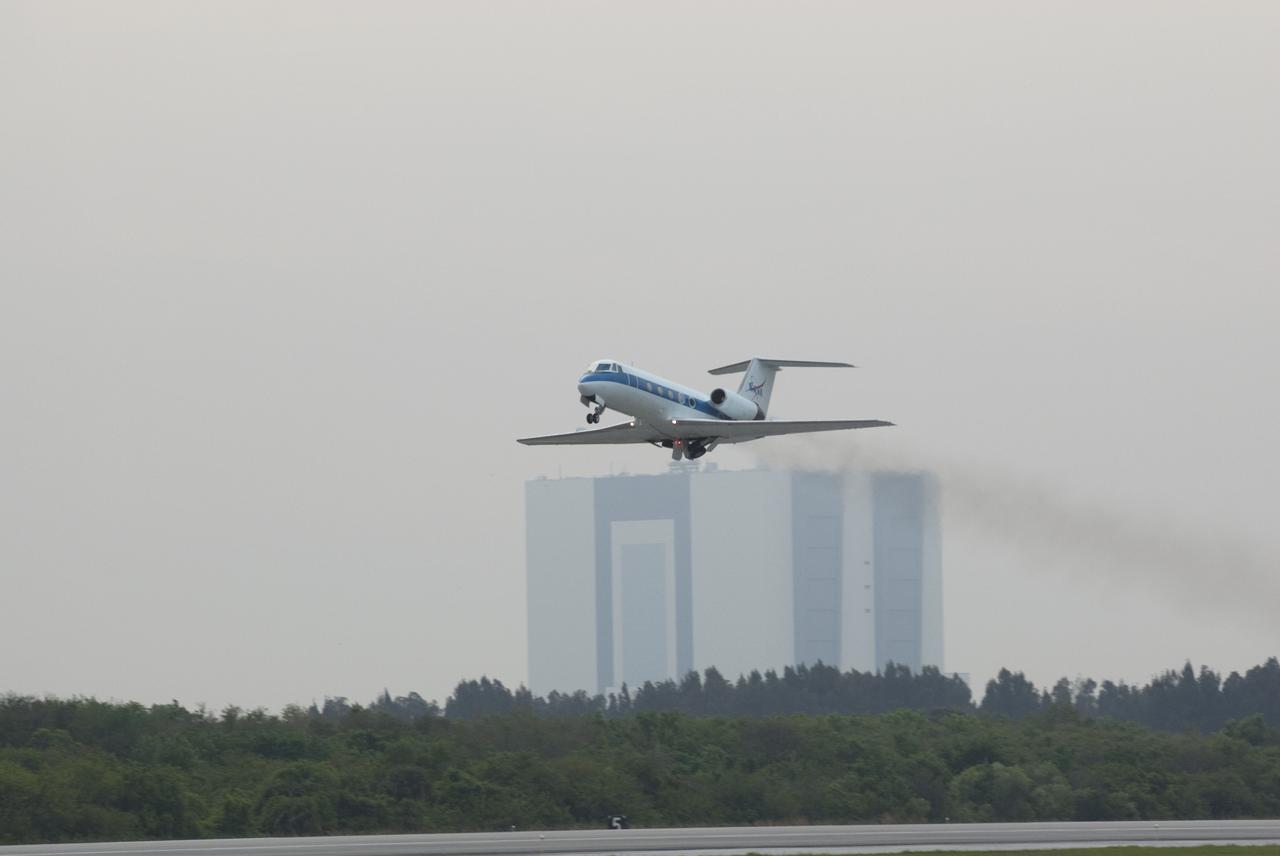
CAPE CANAVERAL, Fla. -- STS-134 Pilot Greg H. Johnson performs touch-and-go landings aboard a Shuttle Training Aircraft (STA) on the Shuttle Landing Facility at NASA's Kennedy Space Center in Florida. STAs are Gulfstream II business jets that are modified to mimic the shuttle's handling during the final phase of landing. Practice landings are part of standard training before space shuttle Endeavour's upcoming STS-134 launch to the International Space Station. Endeavour's six crew members are at Kennedy for the launch countdown dress rehearsal called the Terminal Countdown Demonstration Test (TCDT) and related training. Targeted to launch April 19 at 7:48 p.m. EDT, they will deliver the Express Logistics Carrier-3, Alpha Magnetic Spectrometer-2 (AMS), a high-pressure gas tank, additional spare parts for the Dextre robotic helper and micrometeoroid debris shields to the space station. This will be the final spaceflight for Endeavour. For more information visit, www.nasa.gov/mission_pages/shuttle/shuttlemissions/sts134/index.html. Photo credit: NASA/Kim Shiflett
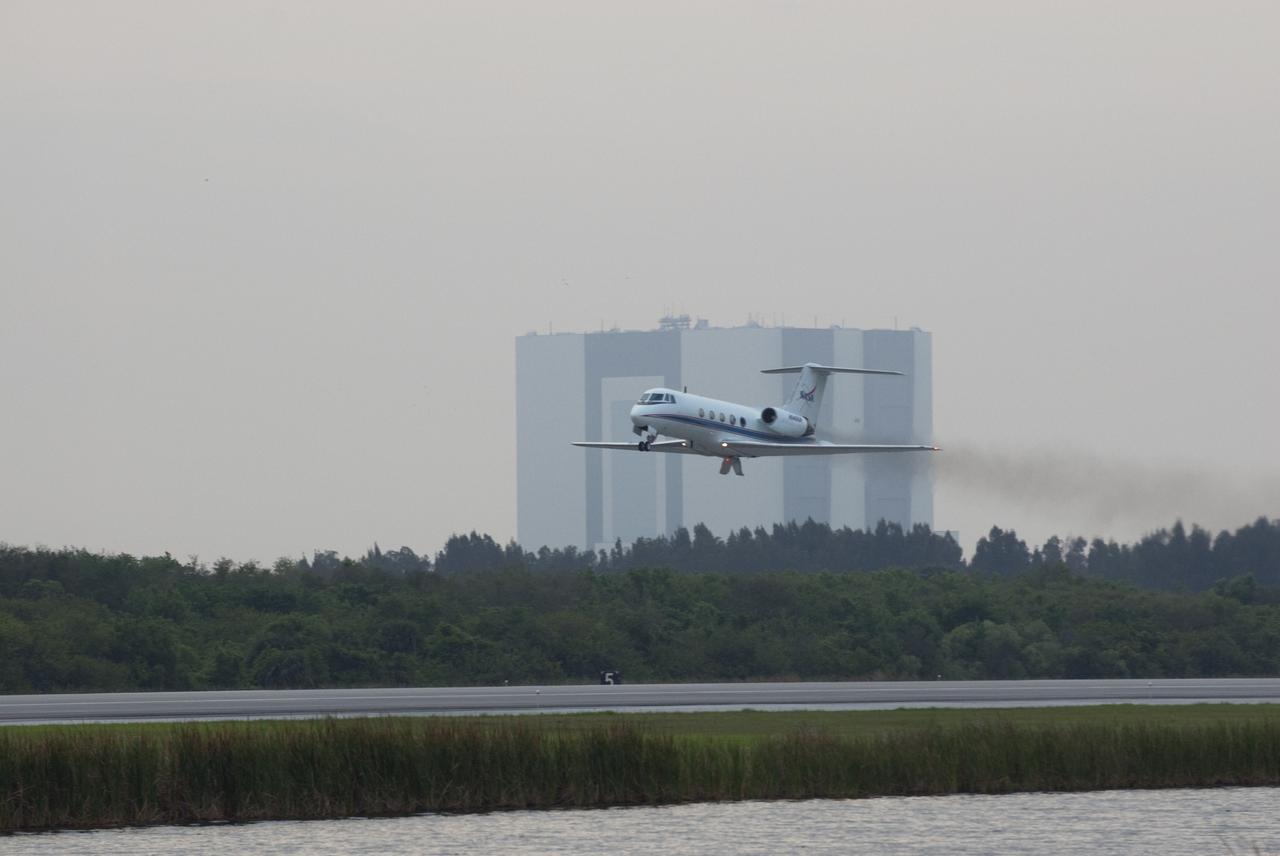
CAPE CANAVERAL, Fla. -- STS-134 Commander Mark Kelly performs touch-and-go landings aboard a Shuttle Training Aircraft (STA) on the Shuttle Landing Facility at NASA's Kennedy Space Center in Florida. STAs are Gulfstream II business jets that are modified to mimic the shuttle's handling during the final phase of landing. Practice landings are part of standard training before space shuttle Endeavour's upcoming STS-134 launch to the International Space Station. Endeavour's six crew members are at Kennedy for the launch countdown dress rehearsal called the Terminal Countdown Demonstration Test (TCDT) and related training. Targeted to launch April 19 at 7:48 p.m. EDT, they will deliver the Express Logistics Carrier-3, Alpha Magnetic Spectrometer-2 (AMS), a high-pressure gas tank, additional spare parts for the Dextre robotic helper and micrometeoroid debris shields to the space station. This will be the final spaceflight for Endeavour. For more information visit, www.nasa.gov/mission_pages/shuttle/shuttlemissions/sts134/index.html. Photo credit: NASA/Kim Shiflett
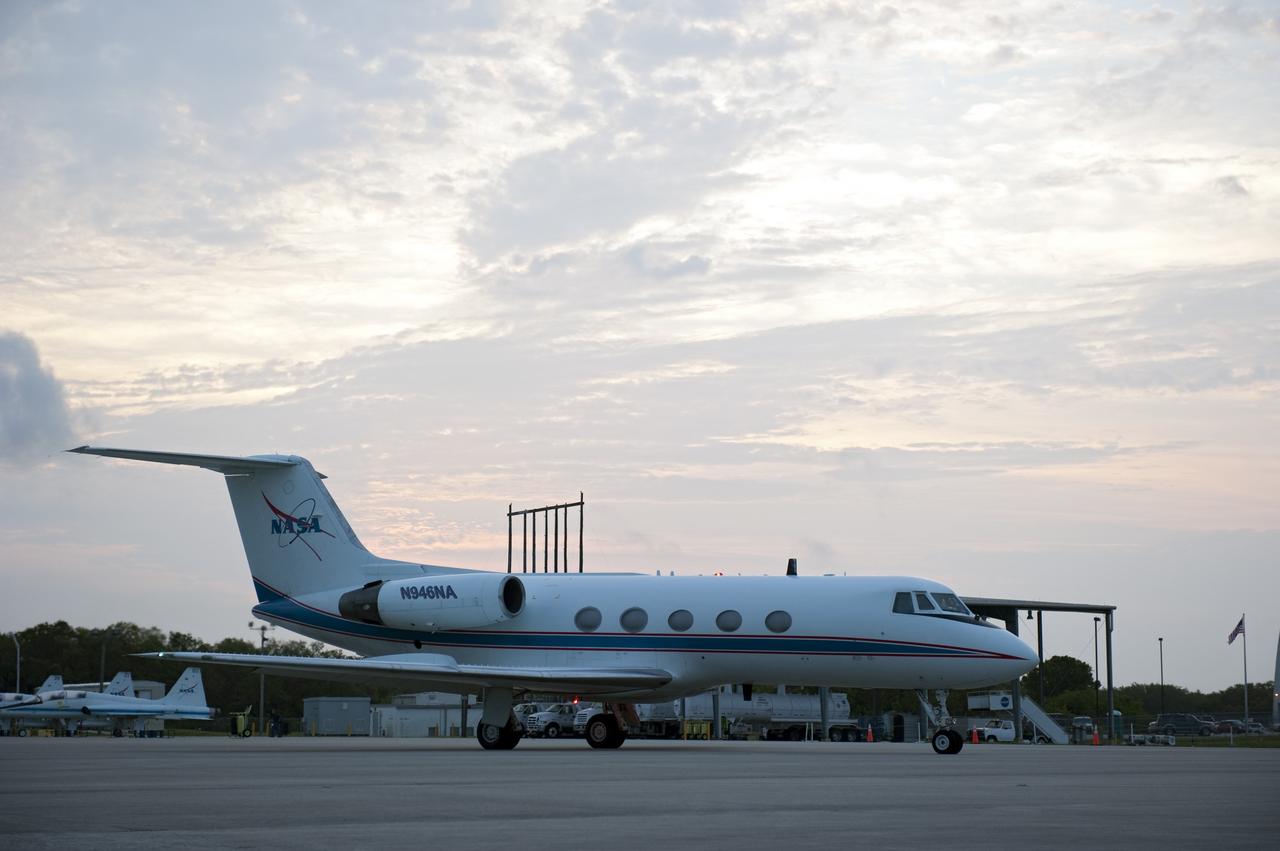
CAPE CANAVERAL, Fla. -- STS-134 Commander Mark Kelly prepares to take flight in a Shuttle Training Aircraft (STA) to perform touch-and-go landings on the Shuttle Landing Facility at NASA's Kennedy Space Center in Florida. STAs are Gulfstream II business jets that are modified to mimic the shuttle's handling during the final phase of landing. Practice landings are part of standard training before space shuttle Endeavour's STS-134 launch to the International Space Station. Endeavour's six crew members are at Kennedy for the launch countdown dress rehearsal called the Terminal Countdown Demonstration Test (TCDT) and related training. Targeted to launch April 19 at 7:48 p.m. EDT, they will deliver the Express Logistics Carrier-3, Alpha Magnetic Spectrometer-2 (AMS), a high-pressure gas tank, additional spare parts for the Dextre robotic helper and micrometeoroid debris shields to the space station. This will be the final spaceflight for Endeavour. For more information visit, www.nasa.gov/mission_pages/shuttle/shuttlemissions/sts134/index.html. Photo credit: NASA/Kim Shiflett
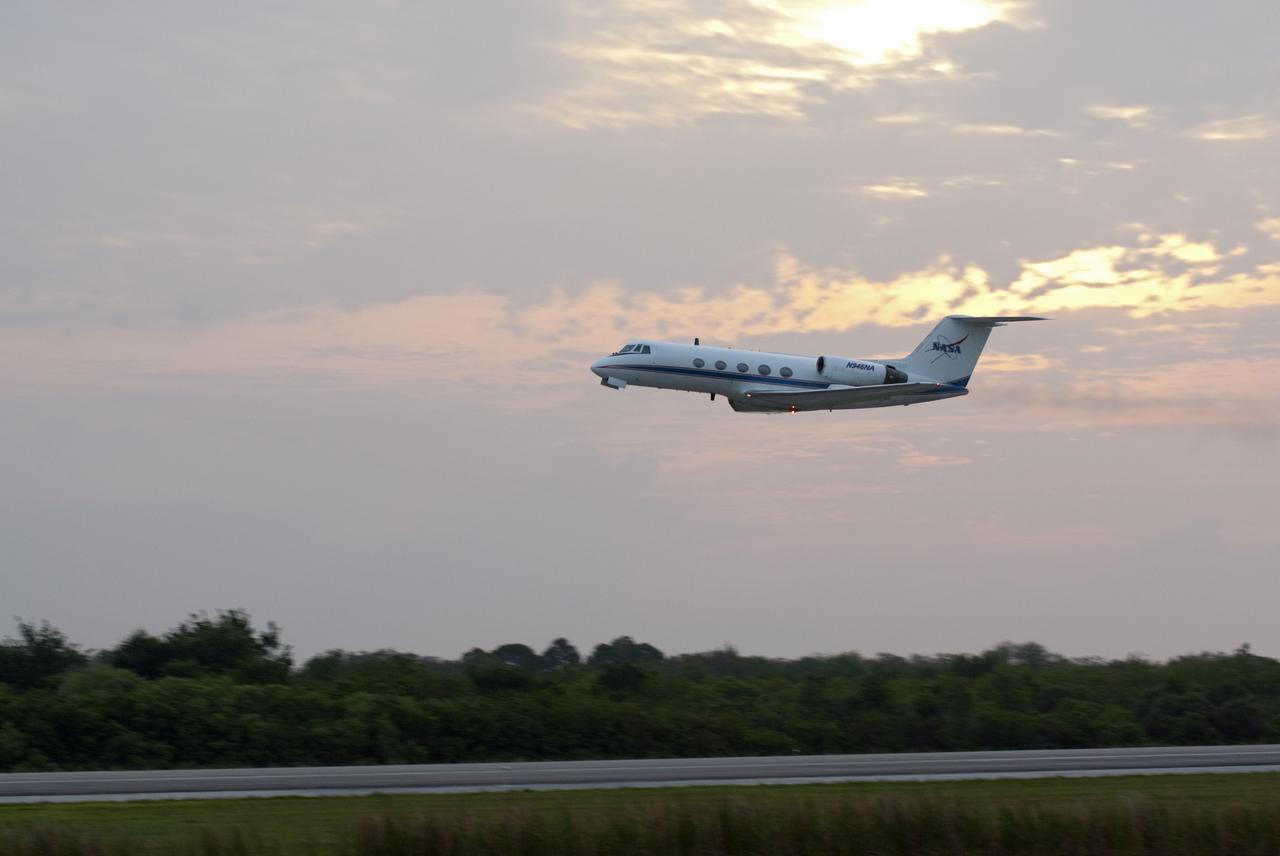
CAPE CANAVERAL, Fla. -- STS-134 Commander Mark Kelly performs touch-and-go landings aboard a Shuttle Training Aircraft (STA) on the Shuttle Landing Facility at NASA's Kennedy Space Center in Florida. STAs are Gulfstream II business jets that are modified to mimic the shuttle's handling during the final phase of landing. Practice landings are part of standard training before space shuttle Endeavour's upcoming STS-134 launch to the International Space Station. Endeavour's six crew members are at Kennedy for the launch countdown dress rehearsal called the Terminal Countdown Demonstration Test (TCDT) and related training. Targeted to launch April 19 at 7:48 p.m. EDT, they will deliver the Express Logistics Carrier-3, Alpha Magnetic Spectrometer-2 (AMS), a high-pressure gas tank, additional spare parts for the Dextre robotic helper and micrometeoroid debris shields to the space station. This will be the final spaceflight for Endeavour. For more information visit, www.nasa.gov/mission_pages/shuttle/shuttlemissions/sts134/index.html. Photo credit: NASA/Kim Shiflett
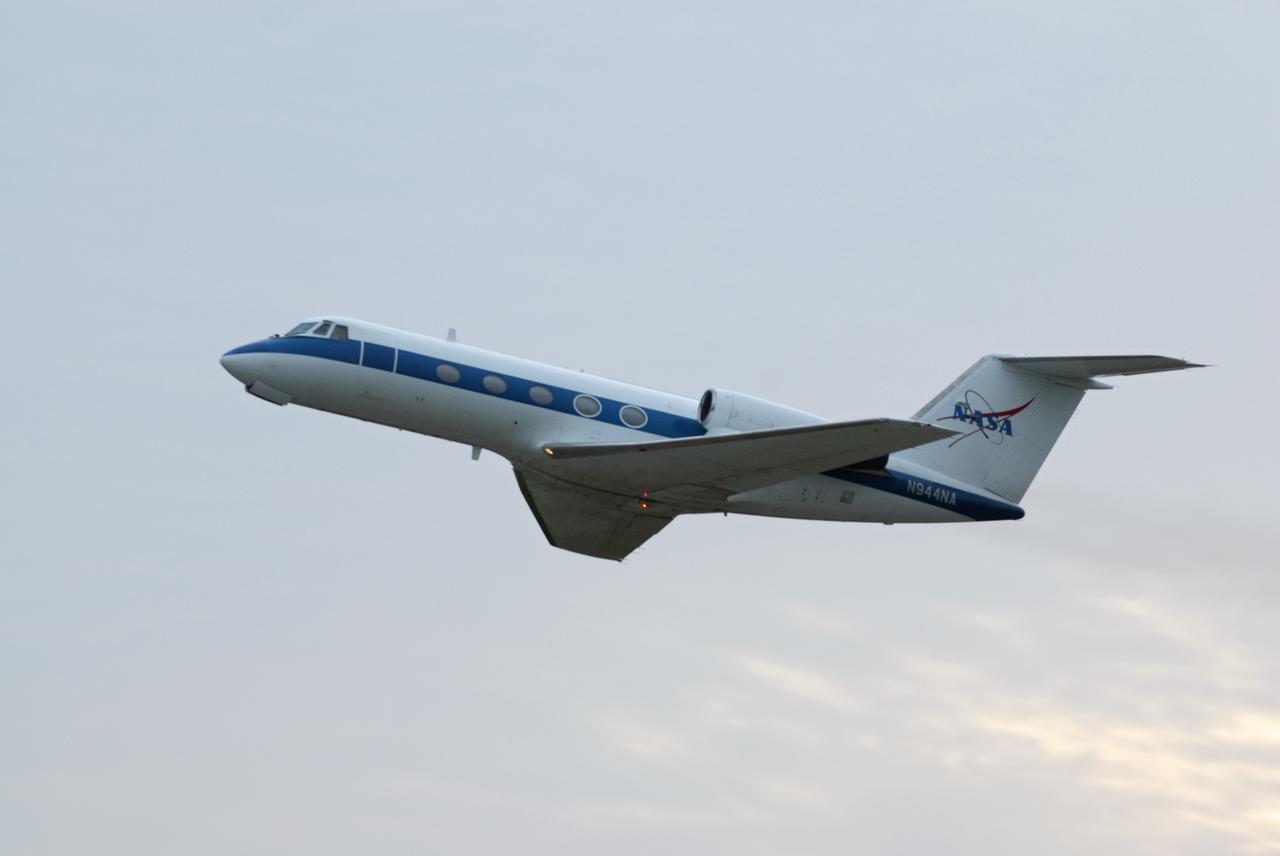
CAPE CANAVERAL, Fla. -- STS-134 Pilot Greg H. Johnson performs touch-and-go landings aboard a Shuttle Training Aircraft (STA) on the Shuttle Landing Facility at NASA's Kennedy Space Center in Florida. STAs are Gulfstream II business jets that are modified to mimic the shuttle's handling during the final phase of landing. Practice landings are part of standard training before space shuttle Endeavour's upcoming STS-134 launch to the International Space Station. Endeavour's six crew members are at Kennedy for the launch countdown dress rehearsal called the Terminal Countdown Demonstration Test (TCDT) and related training. Targeted to launch April 19 at 7:48 p.m. EDT, they will deliver the Express Logistics Carrier-3, Alpha Magnetic Spectrometer-2 (AMS), a high-pressure gas tank, additional spare parts for the Dextre robotic helper and micrometeoroid debris shields to the space station. This will be the final spaceflight for Endeavour. For more information visit, www.nasa.gov/mission_pages/shuttle/shuttlemissions/sts134/index.html. Photo credit: NASA/Kim Shiflett
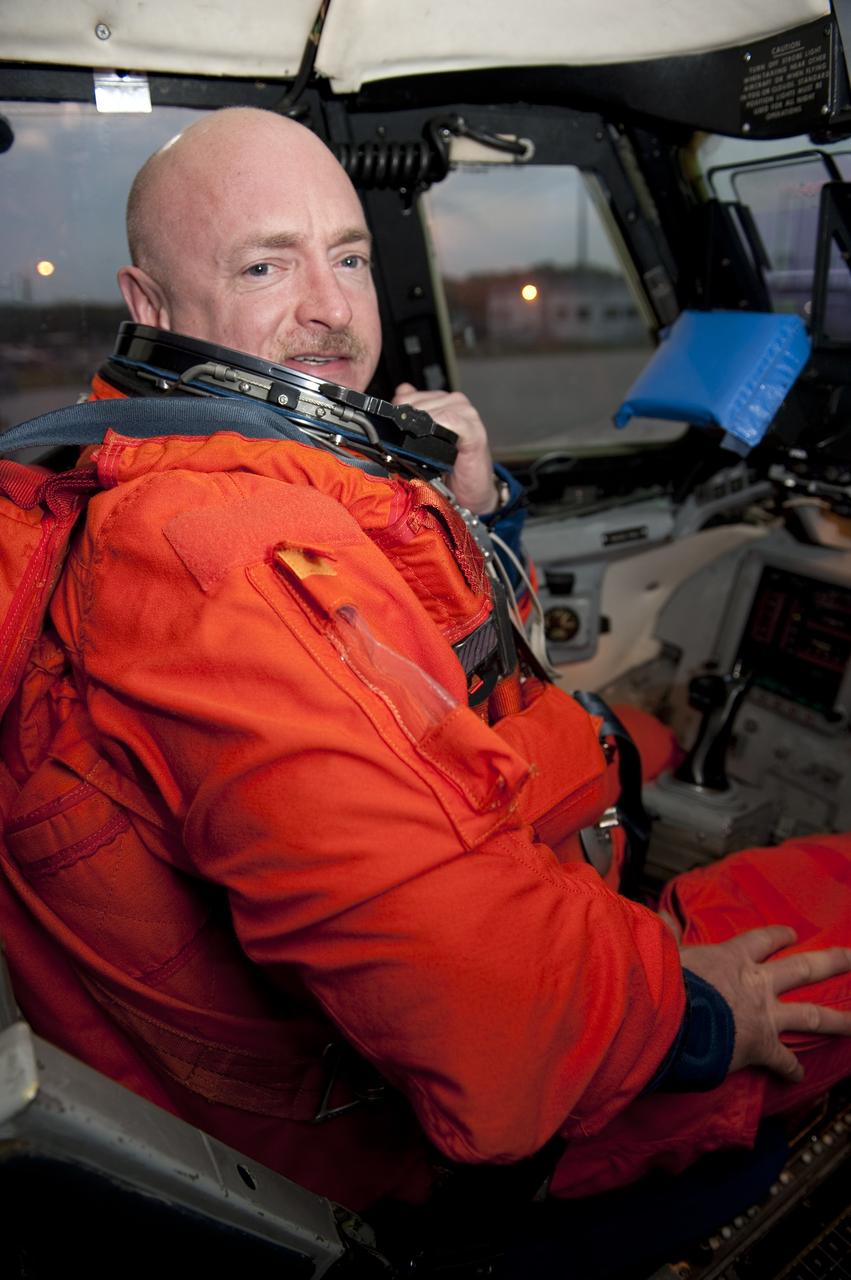
CAPE CANAVERAL, Fla. -- STS-134 Commander Mark Kelly gets behind the controls of a Shuttle Training Aircraft (STA) to perform touch-and-go landings on the Shuttle Landing Facility at NASA's Kennedy Space Center in Florida. STAs are Gulfstream II business jets that are modified to mimic the shuttle's handling during the final phase of landing. Practice landings are part of standard training before space shuttle Endeavour's STS-134 launch to the International Space Station. Endeavour's six crew members are at Kennedy for the launch countdown dress rehearsal called the Terminal Countdown Demonstration Test (TCDT) and related training. Targeted to launch April 19 at 7:48 p.m. EDT, they will deliver the Express Logistics Carrier-3, Alpha Magnetic Spectrometer-2 (AMS), a high-pressure gas tank, additional spare parts for the Dextre robotic helper and micrometeoroid debris shields to the space station. This will be the final spaceflight for Endeavour. For more information visit, www.nasa.gov/mission_pages/shuttle/shuttlemissions/sts134/index.html. Photo credit: NASA/Kim Shiflett
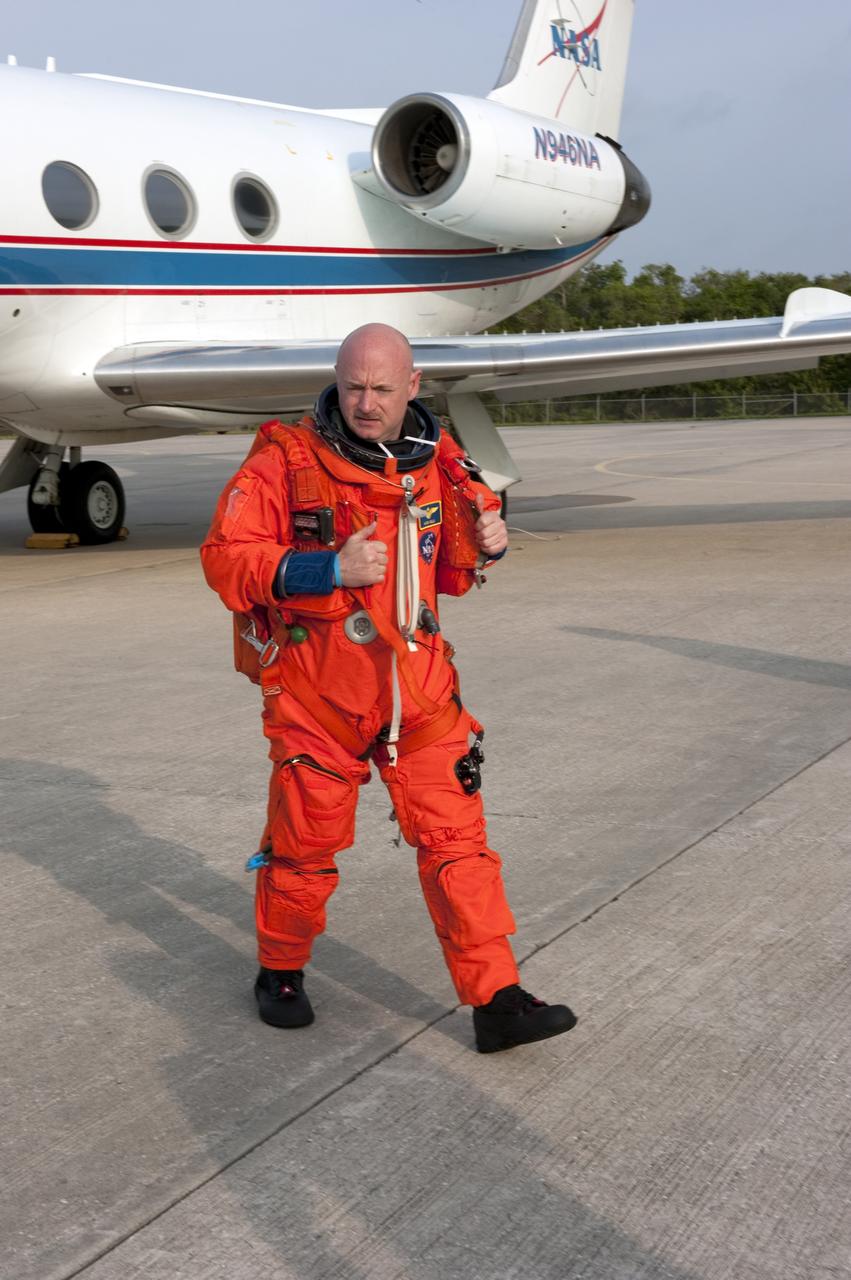
CAPE CANAVERAL, Fla. -- STS-134 Commander Mark Kelly completes touch-and-go landings aboard a Shuttle Training Aircraft (STA) on the Shuttle Landing Facility at NASA's Kennedy Space Center in Florida. STAs are Gulfstream II business jets that are modified to mimic the shuttle's handling during the final phase of landing. Practice landings are part of standard training before space shuttle Endeavour's STS-134 launch to the International Space Station. Endeavour's six crew members are at Kennedy for the launch countdown dress rehearsal called the Terminal Countdown Demonstration Test (TCDT) and related training. Targeted to launch April 19 at 7:48 p.m. EDT, they will deliver the Express Logistics Carrier-3, Alpha Magnetic Spectrometer-2 (AMS), a high-pressure gas tank, additional spare parts for the Dextre robotic helper and micrometeoroid debris shields to the space station. This will be the final spaceflight for Endeavour. For more information visit, www.nasa.gov/mission_pages/shuttle/shuttlemissions/sts134/index.html. Photo credit: NASA/Kim Shiflett
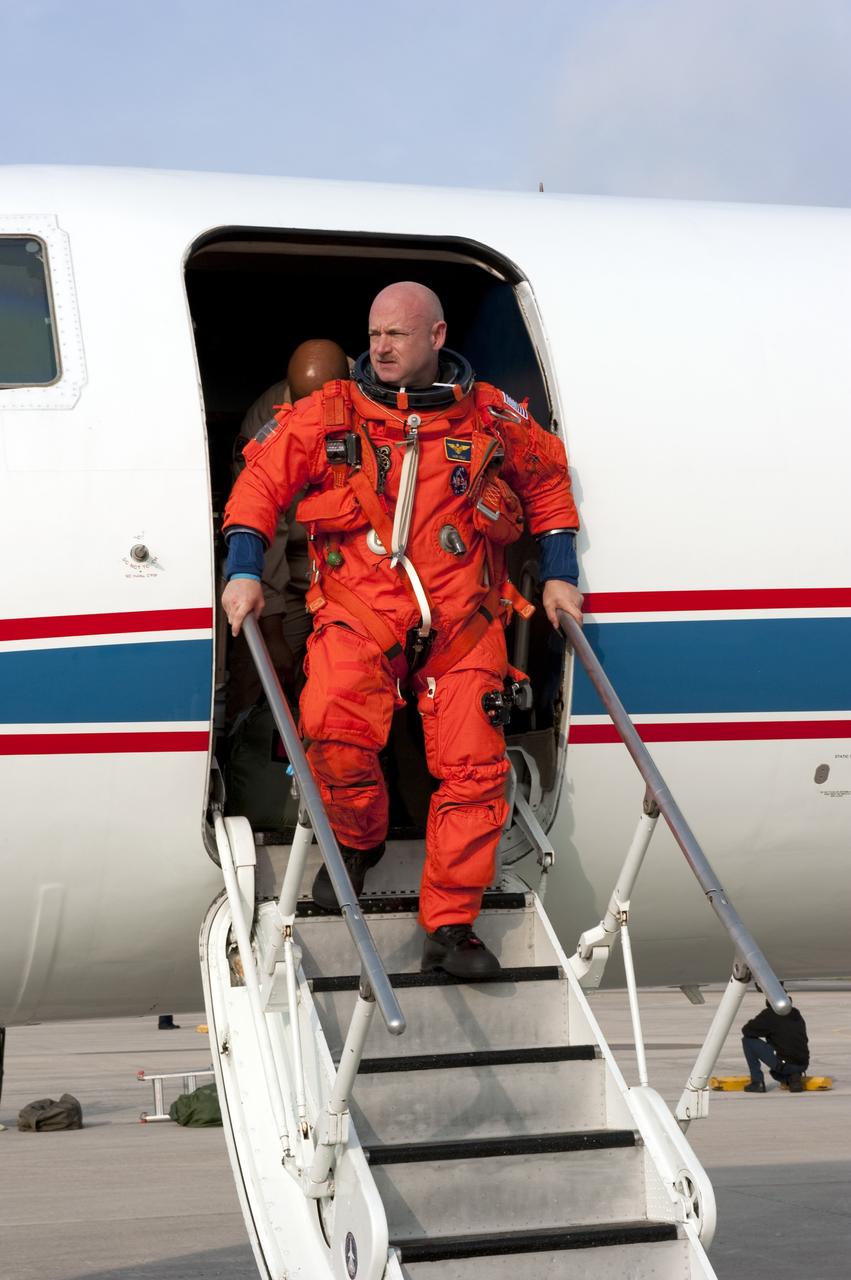
CAPE CANAVERAL, Fla. -- STS-134 Commander Mark Kelly completes touch-and-go landings aboard a Shuttle Training Aircraft (STA) on the Shuttle Landing Facility at NASA's Kennedy Space Center in Florida. STAs are Gulfstream II business jets that are modified to mimic the shuttle's handling during the final phase of landing. Practice landings are part of standard training before space shuttle Endeavour's STS-134 launch to the International Space Station. Endeavour's six crew members are at Kennedy for the launch countdown dress rehearsal called the Terminal Countdown Demonstration Test (TCDT) and related training. Targeted to launch April 19 at 7:48 p.m. EDT, they will deliver the Express Logistics Carrier-3, Alpha Magnetic Spectrometer-2 (AMS), a high-pressure gas tank, additional spare parts for the Dextre robotic helper and micrometeoroid debris shields to the space station. This will be the final spaceflight for Endeavour. For more information visit, www.nasa.gov/mission_pages/shuttle/shuttlemissions/sts134/index.html. Photo credit: NASA/Kim Shiflett
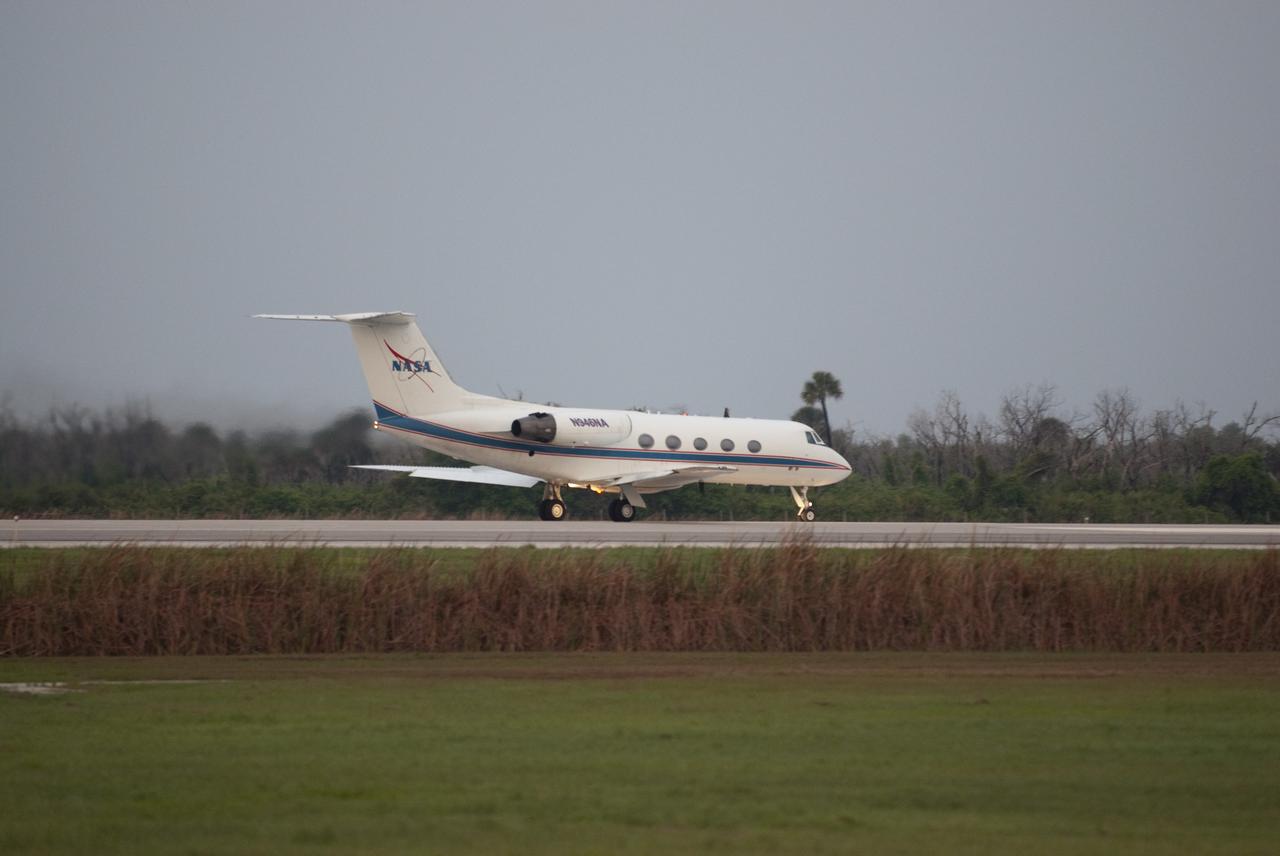
CAPE CANAVERAL, Fla. -- STS-134 Commander Mark Kelly prepares to take flight in a Shuttle Training Aircraft (STA) to perform touch-and-go landings on the Shuttle Landing Facility at NASA's Kennedy Space Center in Florida. STAs are Gulfstream II business jets that are modified to mimic the shuttle's handling during the final phase of landing. Practice landings are part of standard training before space shuttle Endeavour's upcoming STS-134 launch to the International Space Station. Endeavour's six crew members are at Kennedy for the launch countdown dress rehearsal called the Terminal Countdown Demonstration Test (TCDT) and related training. Targeted to launch April 19 at 7:48 p.m. EDT, they will deliver the Express Logistics Carrier-3, Alpha Magnetic Spectrometer-2 (AMS), a high-pressure gas tank, additional spare parts for the Dextre robotic helper and micrometeoroid debris shields to the space station. This will be the final spaceflight for Endeavour. For more information visit, www.nasa.gov/mission_pages/shuttle/shuttlemissions/sts134/index.html. Photo credit: NASA/Kim Shiflett
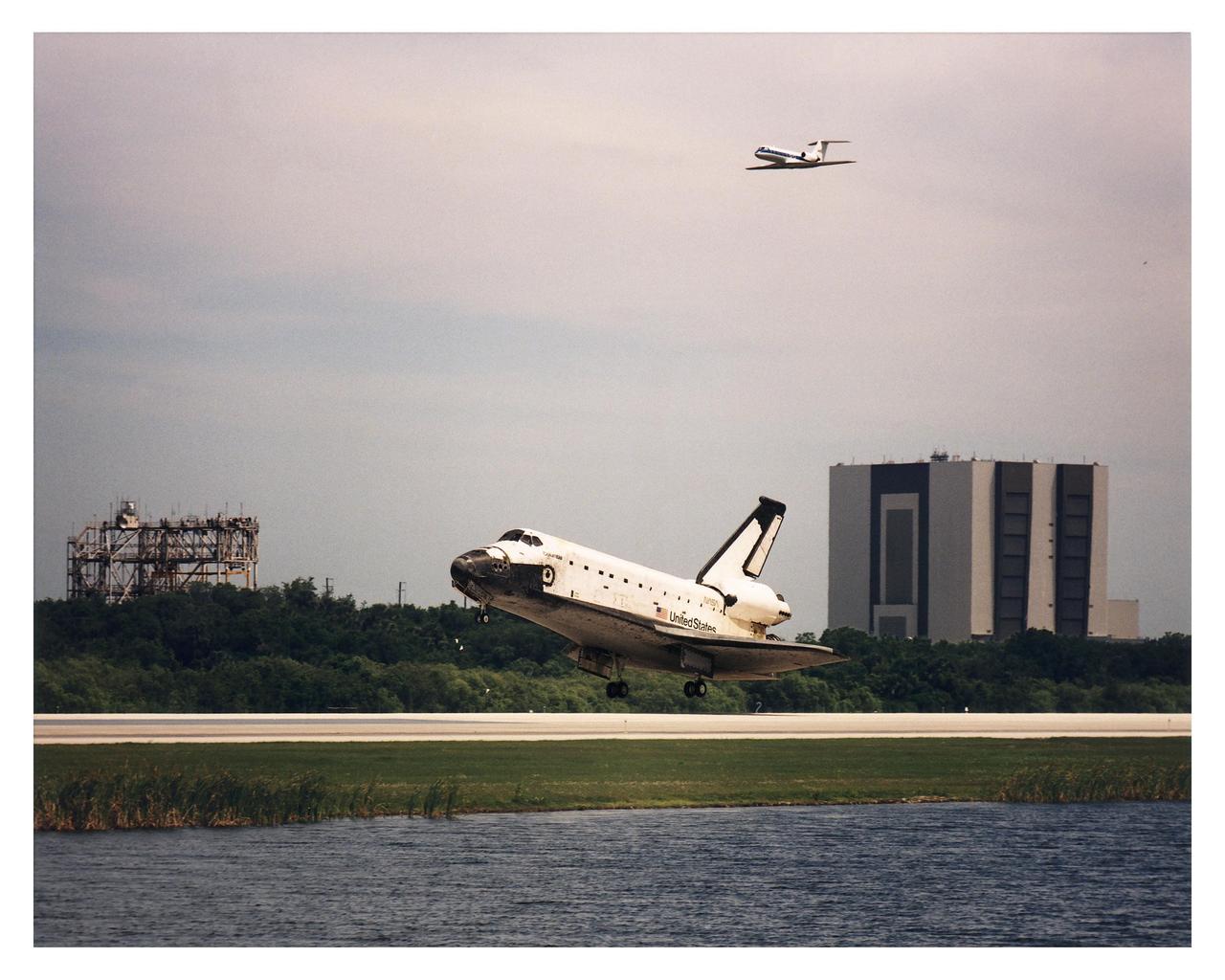
KENNEDY SPACE CENTER, FLA. -- The Space Shuttle Orbiter Columbia glides in for a touchdown on Runway 33 at KSC’s Shuttle Landing Facility that will conclude the Microgravity Science Laboratory-1 (MSL-1) mission. Columbia was scheduled to touch down at 2:33 p.m. EDT, April 8. The Vehicle Assembly Building (VAB) is to the right, while the Mate/Demate Device (MDD) is to the left. A NASA Shuttle Training Aircraft (STA) that acts as a chase plane during landings passes by overhead. With Columbia’s on-time main gear touchdown, the STS-83 mission duration will be 3 days, 23 hours, 12 minutes. The planned 16-day mission was cut short by a faulty fuel cell. This is only the third time in Shuttle program history that an orbiter was brought home early due to mechanical problems. This was also the 36th KSC landing since the program began in 1981
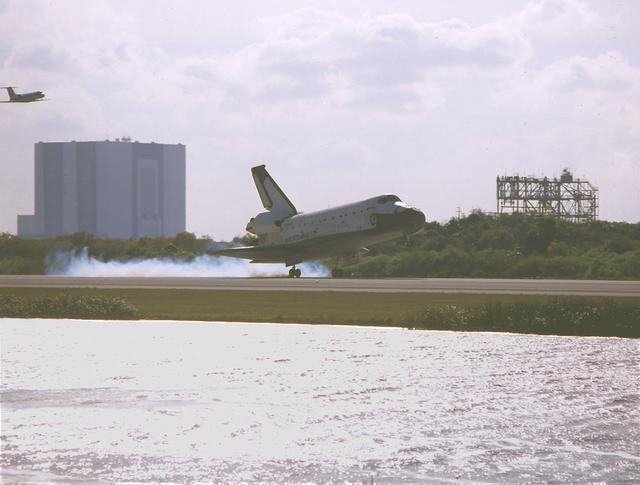
The Space Shuttle Orbiter Columbia's (STS-75) mission came to a close as the orbiter touched down on Runway 33 of Kennedy Space Center's Shuttle Landing Facility on March 9, 1996. Off to the right is the Vehicle Assembly Building and the Shuttle Training Aircraft (STA). The Mate/Demate Device (MDM) is at left. This Marshall Space Flight Center managed mission lasted 15 days and 17-hours, during which time the seven member crew conducted microgravity research with the U.S. Microgravity Payload (USMP-3), which flew for the third time. The other primary payload was the Tethered Satellite System (TSS-1R),a reflight from an earlier mission, but the satellite was lost when the tether broke just short of its fully deployed length of nearly 13 miles.