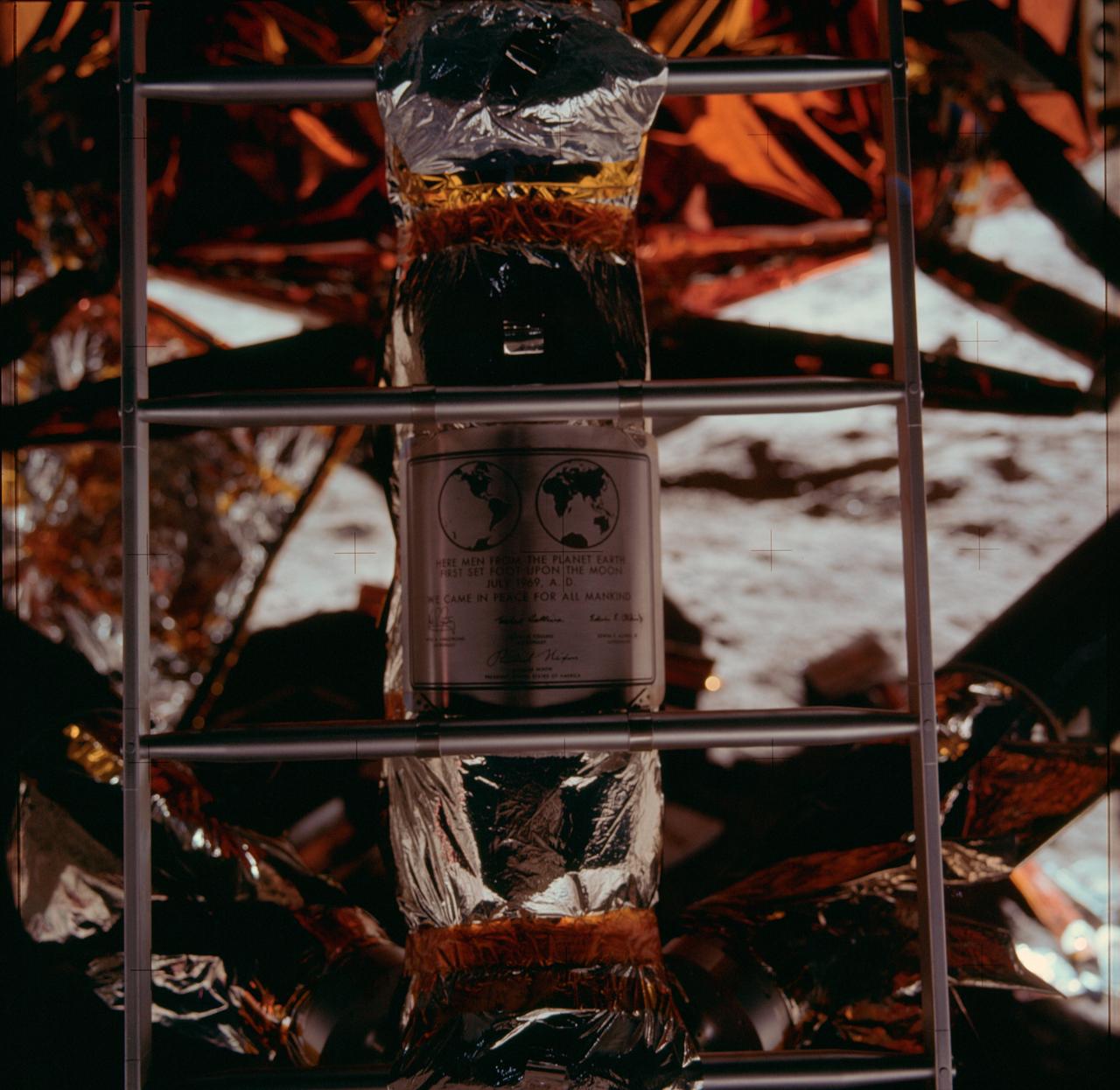
AS11-40-5899 (20 July 1969) --- Close-up view of the plaque which the Apollo 11 astronauts left on the moon in commemoration of the historic lunar landing mission. The plaque was attached to the ladder on the landing gear strut on the descent stage of the Apollo 11 Lunar Module (LM). The plaque was covered with a thin sheet of stainless steel during flight. Astronaut Michael Collins, command module pilot, remained with the Command and Service Modules (CSM) in lunar orbit while astronauts Neil A. Armstrong, commander, and Edwin E. Aldrin Jr., lunar module pilot, explored the moon.

MICRO MACHINING STAINLESS STEEL BURNER
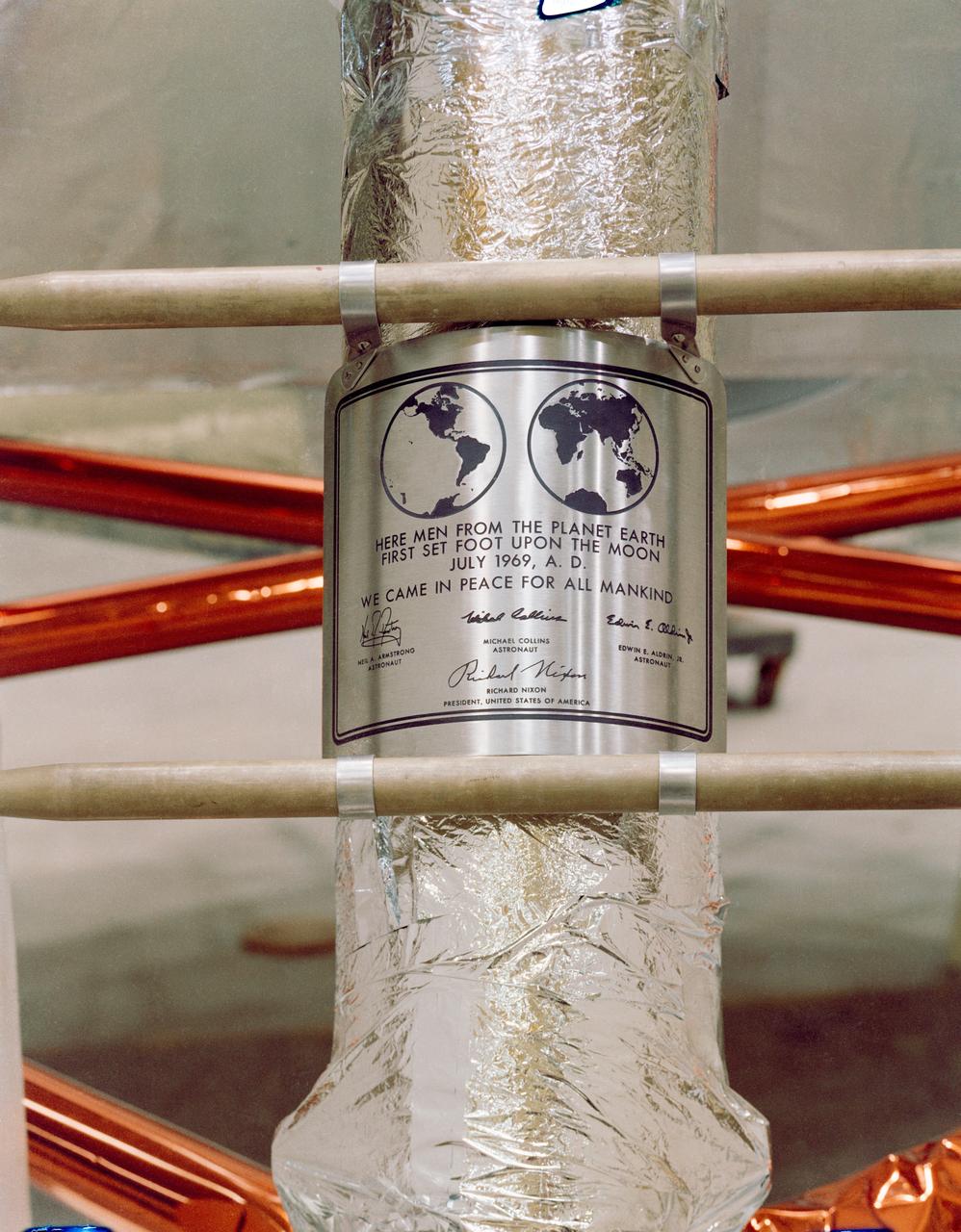
S69-38749 (July 1969) --- Close-up view of the plaque which the Apollo 11 astronauts will leave behind on the moon in commemoration of the historic event. The plaque is made of stainless steel measuring nine by seven and five-eighths inches, and one-sixteenth inch thick. The plaque will be attached to the ladder on the landing gear strut on the descent stage of the Apollo 11 Lunar Module (LM). Covering the plaque during flight will be a thin sheet of stainless steel which will be removed on the lunar surface.
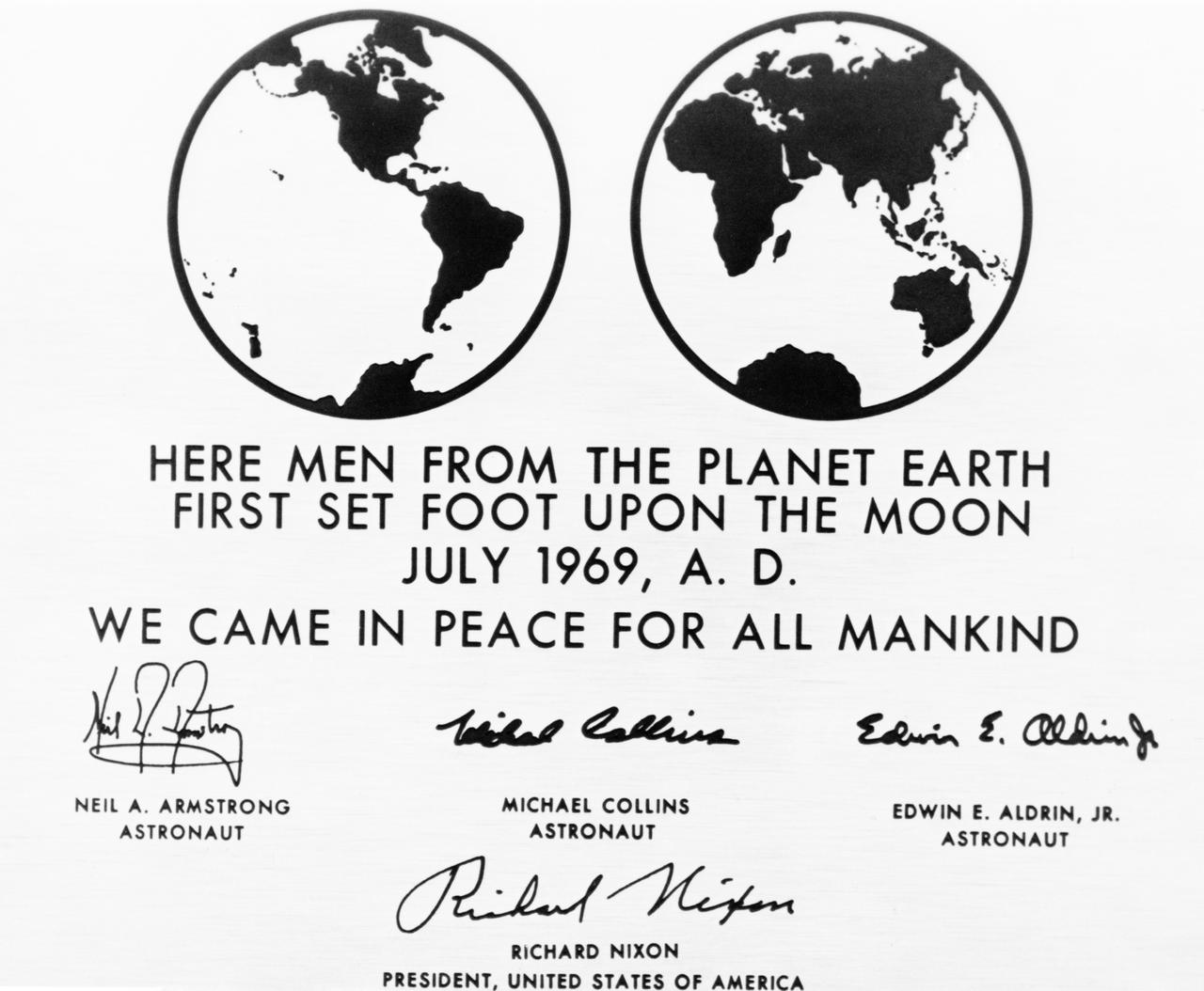
S69-39334 (July 1969) --- This is a replica of the plaque which the Apollo 11 astronauts will leave behind on the moon in commemoration of the historic event. The plaque is made of stainless steel, measuring nine by seven and five-eighths inches, and one-sixteenth inch thick. The plaque will be attached to the ladder on the landing gear strut on the descent stage of the Apollo 11 Lunar Module (LM). Covering the plaque during the flight will be a thin sheet of stainless steel which will be removed on the lunar surface.
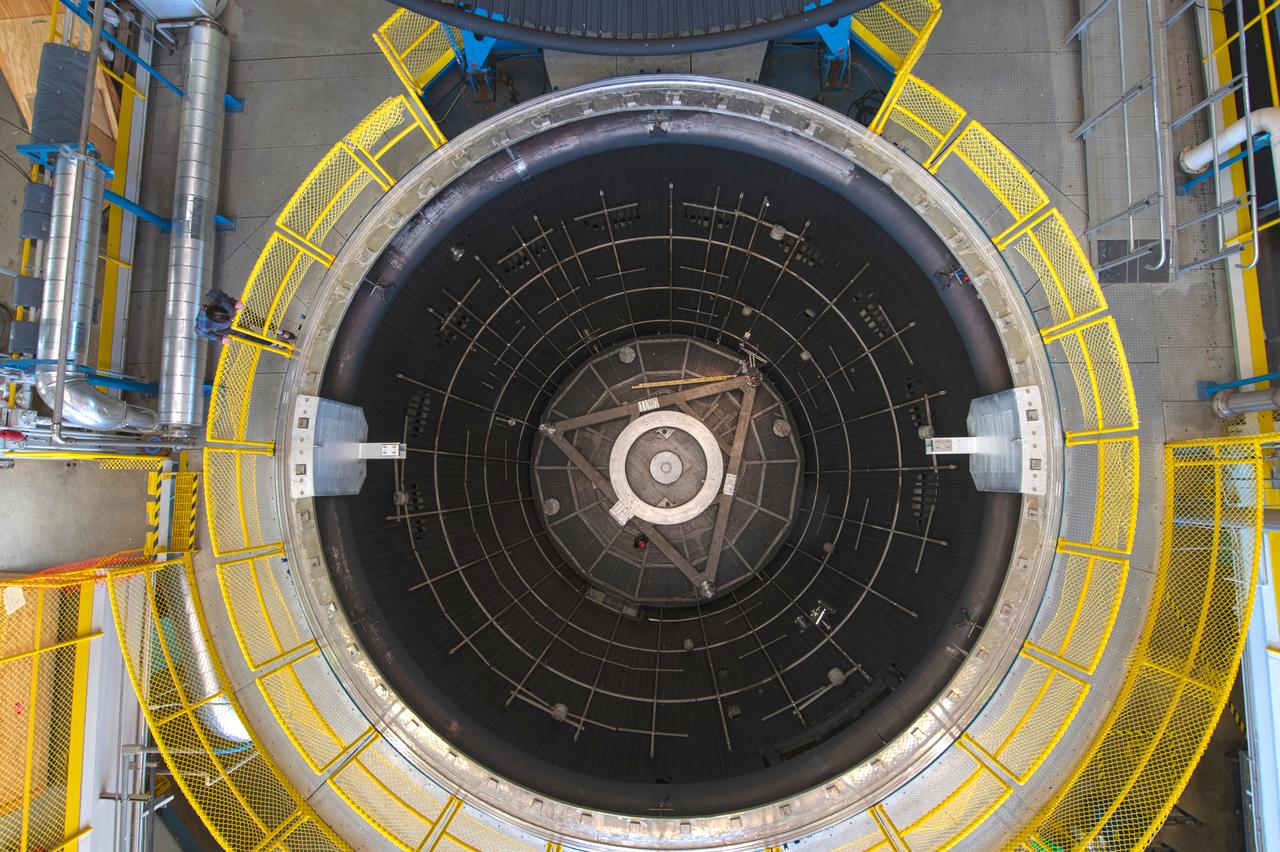
The test chamber is 38 ft in diameter by 62 ft deep amd made of stainless steel. It is vacuum rated at 10-7 torr long duration (Local atmospheric pressure to 100 statute miles altitude). The vacuum chamber surfaces are lined with a liquid nitrogen cold wall, capable of maintaining -320 °F. A quartz infrared heating system can be programmed to radiate a sinusoidal distribution, simulating rotational solar heating. Photo Credit: (NASA/Quentin Schwinn)
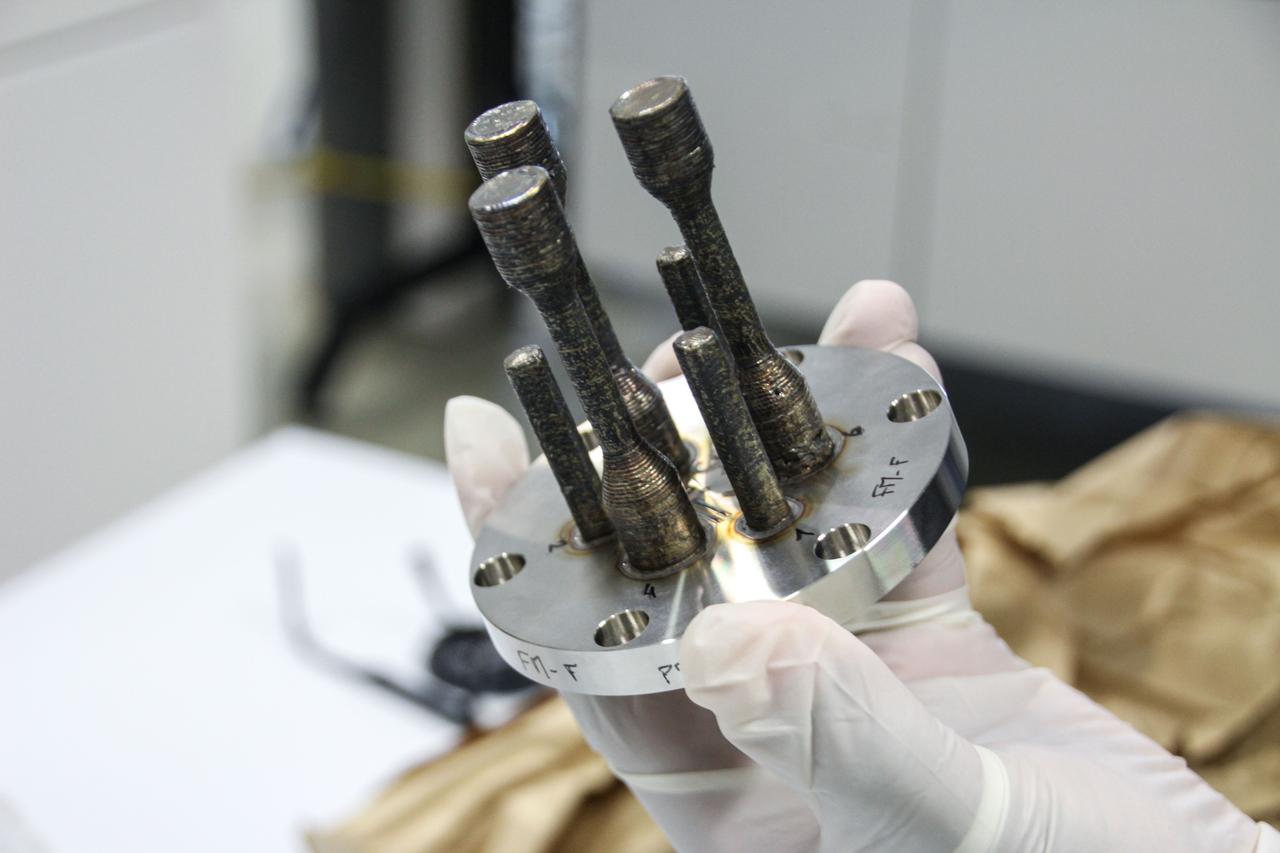
jsc2024e005971 (3/21/2023) --- A preflight image for Metal 3D printer shows one of the stainless steel specimens after printing on the ground. A team member holds the sample at the ESA (European Space Agency) materials laboratory. Metal 3D printer evaluates in-space additive manufacturing for potential use in maintenance and long-duration missions to the Moon or Mars. Image courtesy of ESA/Airbus.
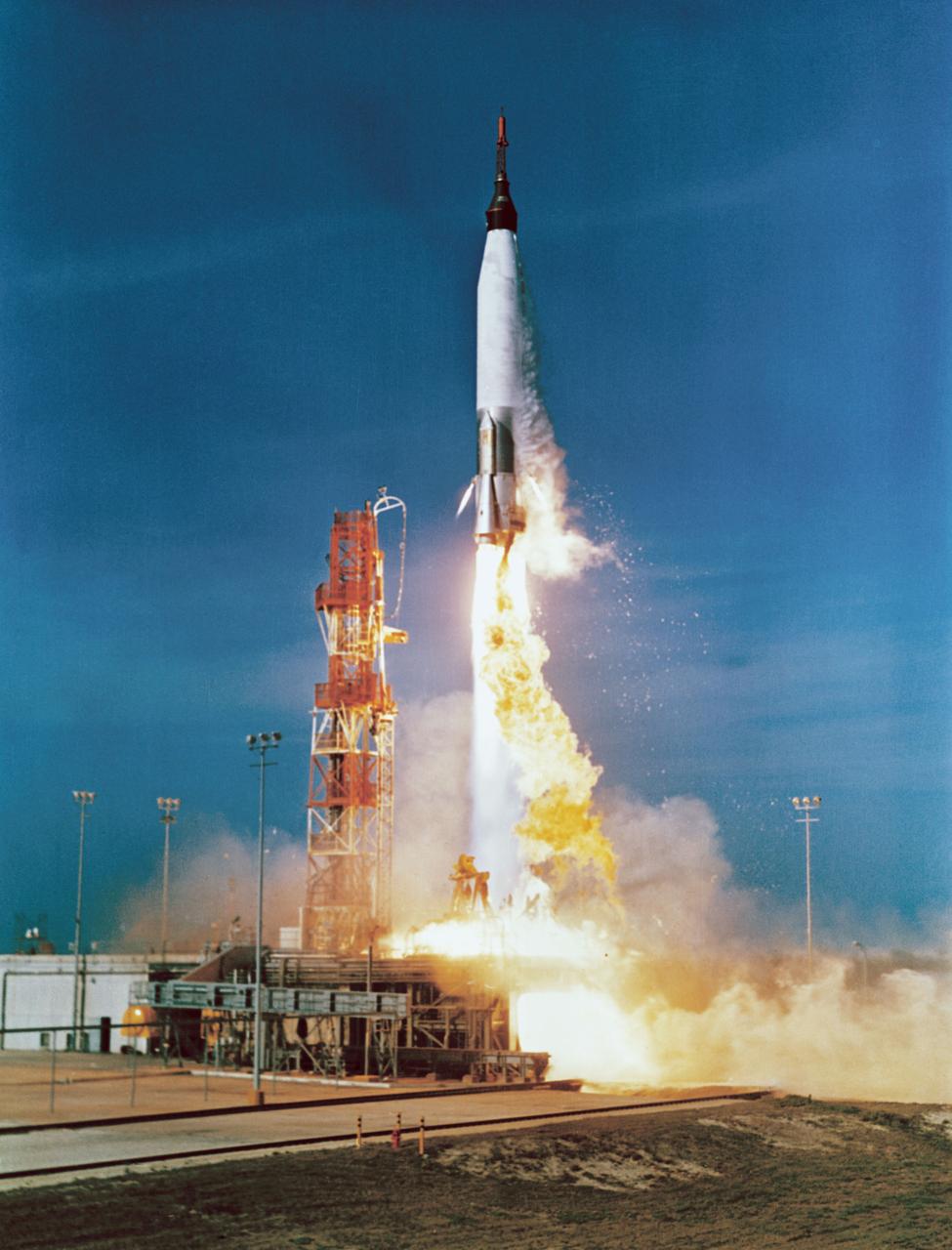
S61-01226 (21 Feb. 1961) --- Launch of the unmanned Mercury-Atlas 2 (MA-2) vehicle for a suborbital test flight of the Mercury capsule. The upper part of Atlas is stengthened by an eight-inch wide stainless steel band. The capsule was recovered less than one hour after launch. The altitude was 108 miles. Speed was 13,000 mph. Recovered 1,425 miles downrange. Photo credit: NASA
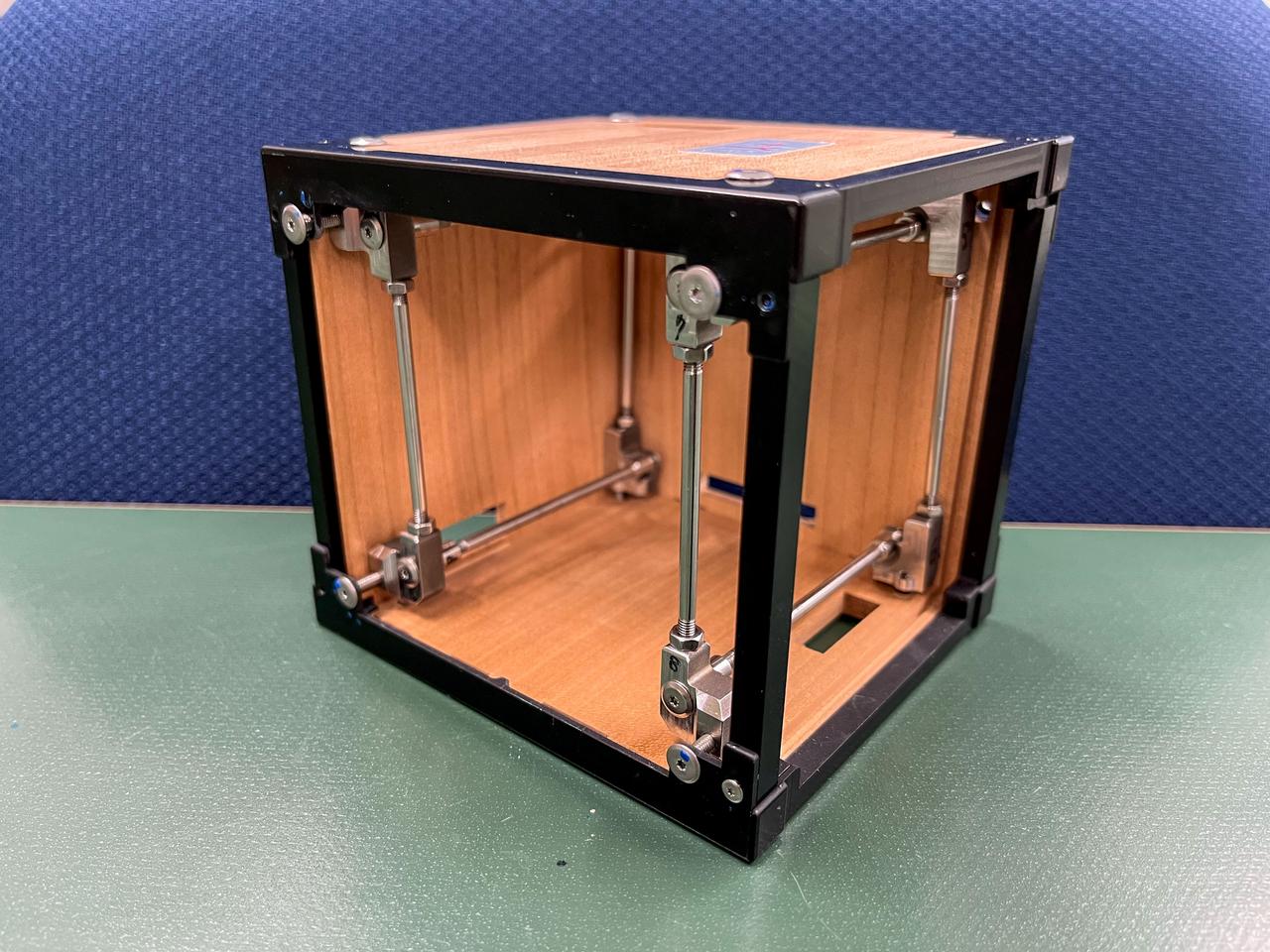
jsc2024e081749 (3/18/2023) --- LignoSat structural internal view shows the relationship among wooden panels, aluminum frames, and stainless steel shafts. LignoSat is the world’s first wooden satellite and investigates how wood changes in the space environment, as well as how wood transmits data through geomagnetic fields and wood’s resistance to cosmic radiation. Image courtesy of Kyoto University.
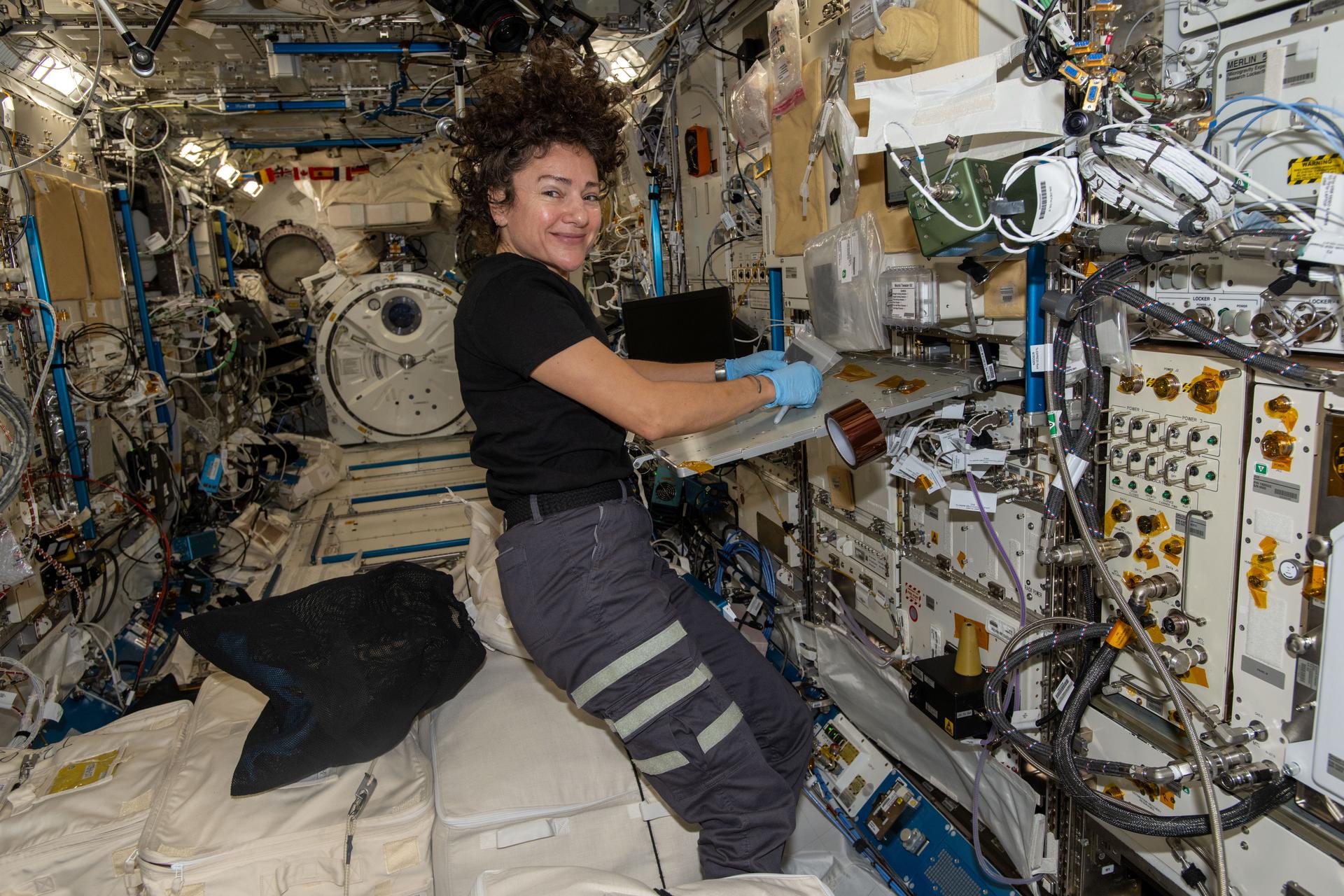
iss074e0364909 (March 6, 2026) --- NASA astronaut and Expedition 74 flight engineer Jessica Meir works inside the International Space Station’s Kibo laboratory, processing samples for the StarSteel materials research experiment. Meir investigated stainless‑steel spheres produced in Kibo’s Electrostatic Levitation Furnace to observe and understand metallic solidification behavior in microgravity, potentially benefiting Earth‑based and space‑based metallurgy and manufacturing techniques. Credit: NASA/Jessica Meir
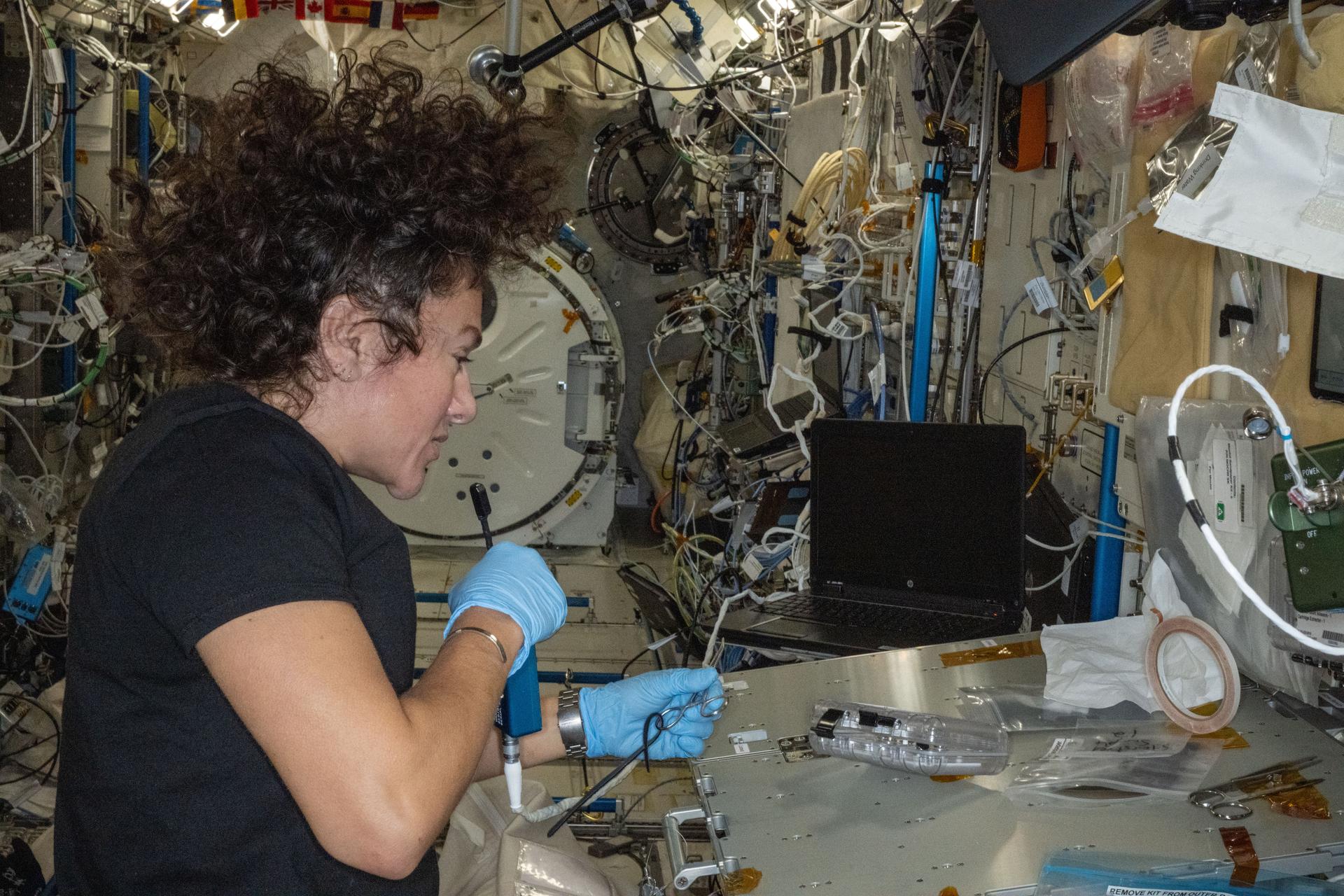
iss074e0364965 (March 6, 2026) --- NASA astronaut and Expedition 74 flight engineer Jessica Meir works inside the International Space Station’s Kibo laboratory, configuring hardware for the StarSteel materials research experiment. Meir was preparing to investigate stainless‑steel spheres produced inside Kibo’s Electrostatic Levitation Furnace to observe and understand metallic solidification behavior in microgravity, potentially benefiting both Earth-based and space-based metallurgy and manufacturing techniques. Credit: NASA/Jessica Meir
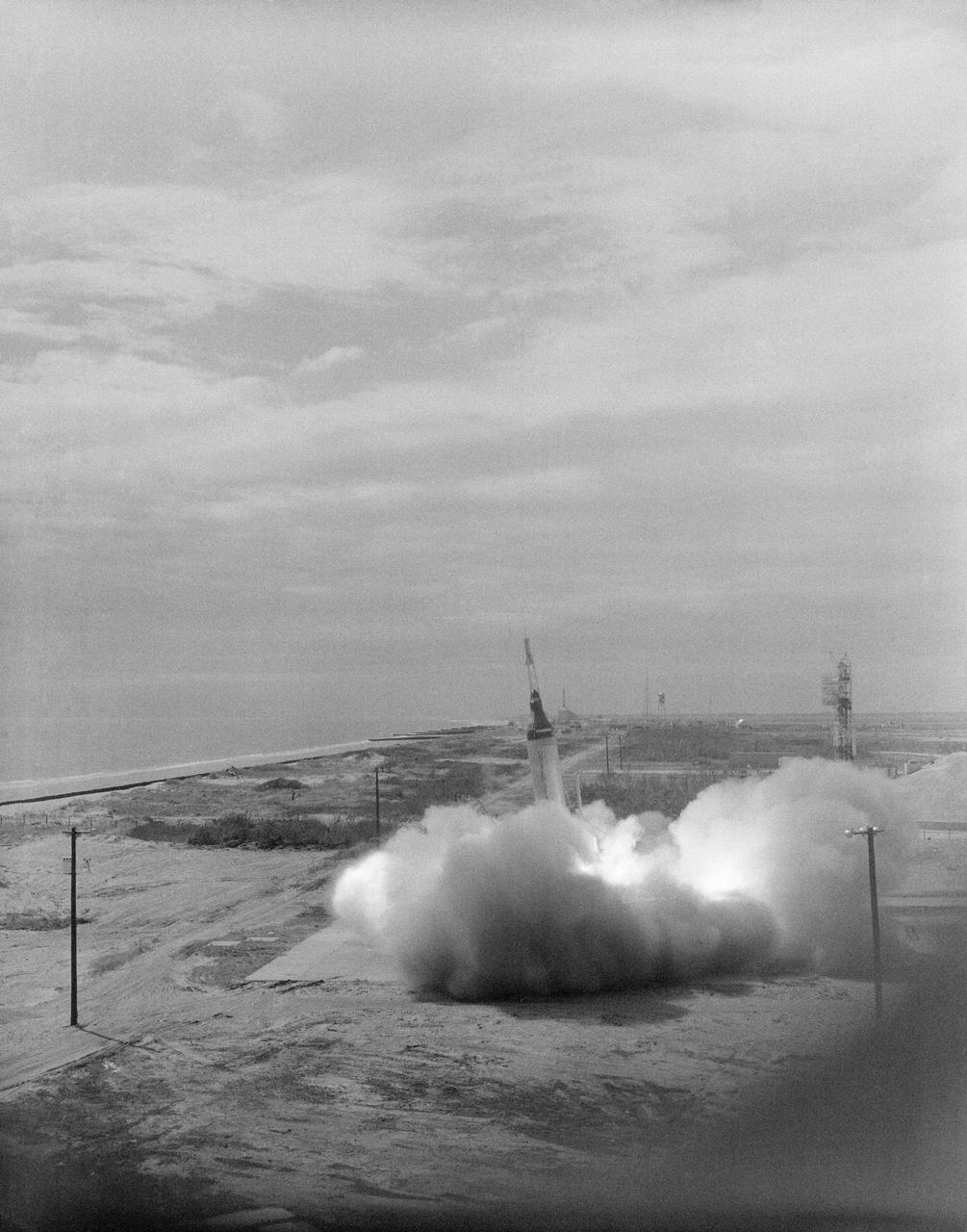
S61-01372 (21 Feb. 1961) --- Launch of the unmanned Mercury-Atlas 2 (MA-2) vehicle for a suborbital test flight of the Mercury capsule. The upper part of Atlas is stengthened by an eight-inch wide stainless steel band. The capsule was recovered less than one hour after launch. The altitude was 108 miles. Speed was 13,000 mph. Recovered 1,425 miles downrange. Photo credit: NASA
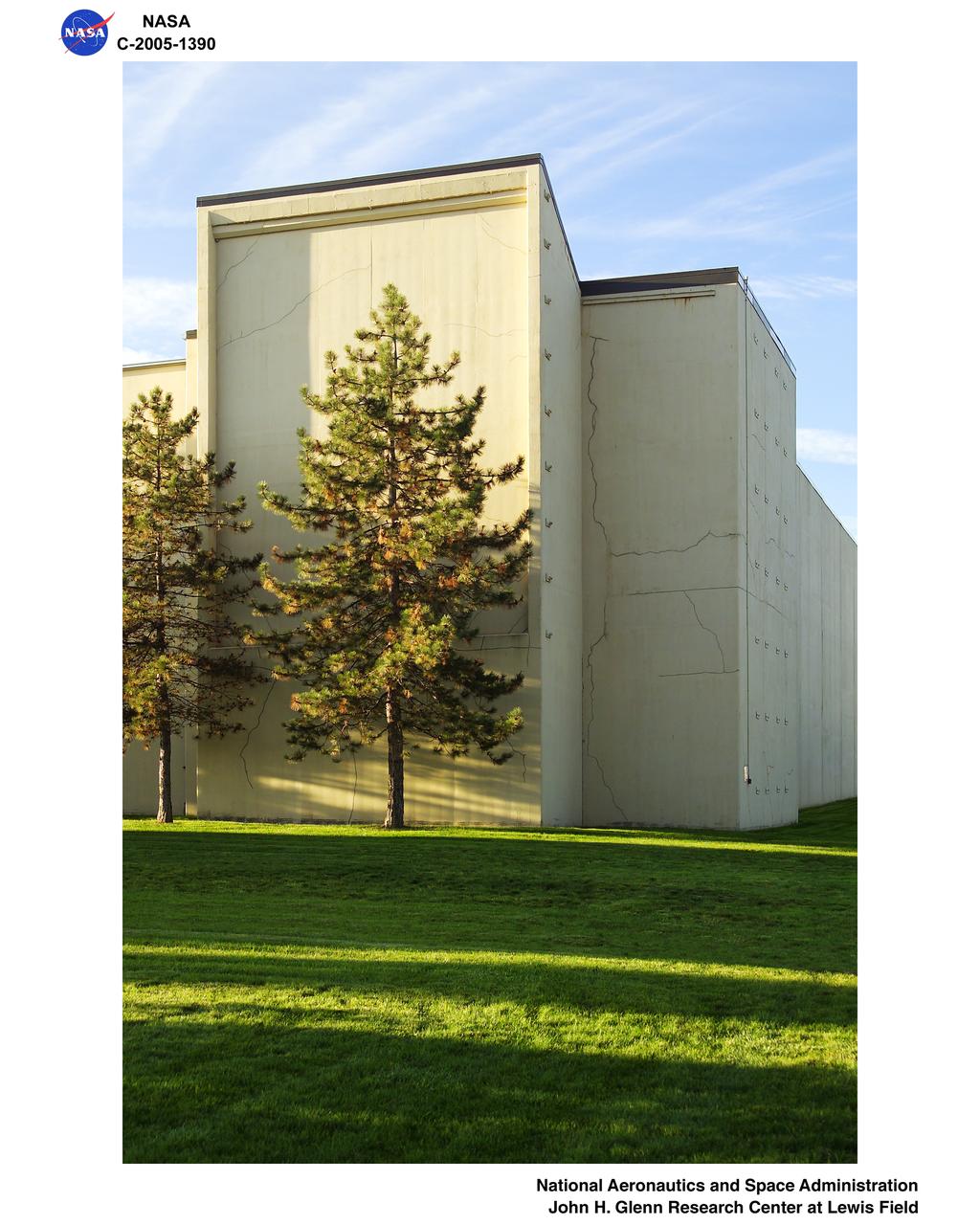
North and West-facing facades of the 8x6 Supersonic Wind Tunnel in the early morning light. Caption: In the early morning light, the strong geometric lines behind the soft pine trees caught the eye of a photographer at Glenn Research Center. Behind the commanding facade lies the 8- by 6-Foot Supersonic Wind Tunnel (8x6 SWT), an atmospheric tunnel with perforated stainless steel walls that provide boundary control during transonic operations. It is NASA's only transonic propulsion wind tunnel. http://facilities.grc.nasa.gov/8x6/8x6_quick.html
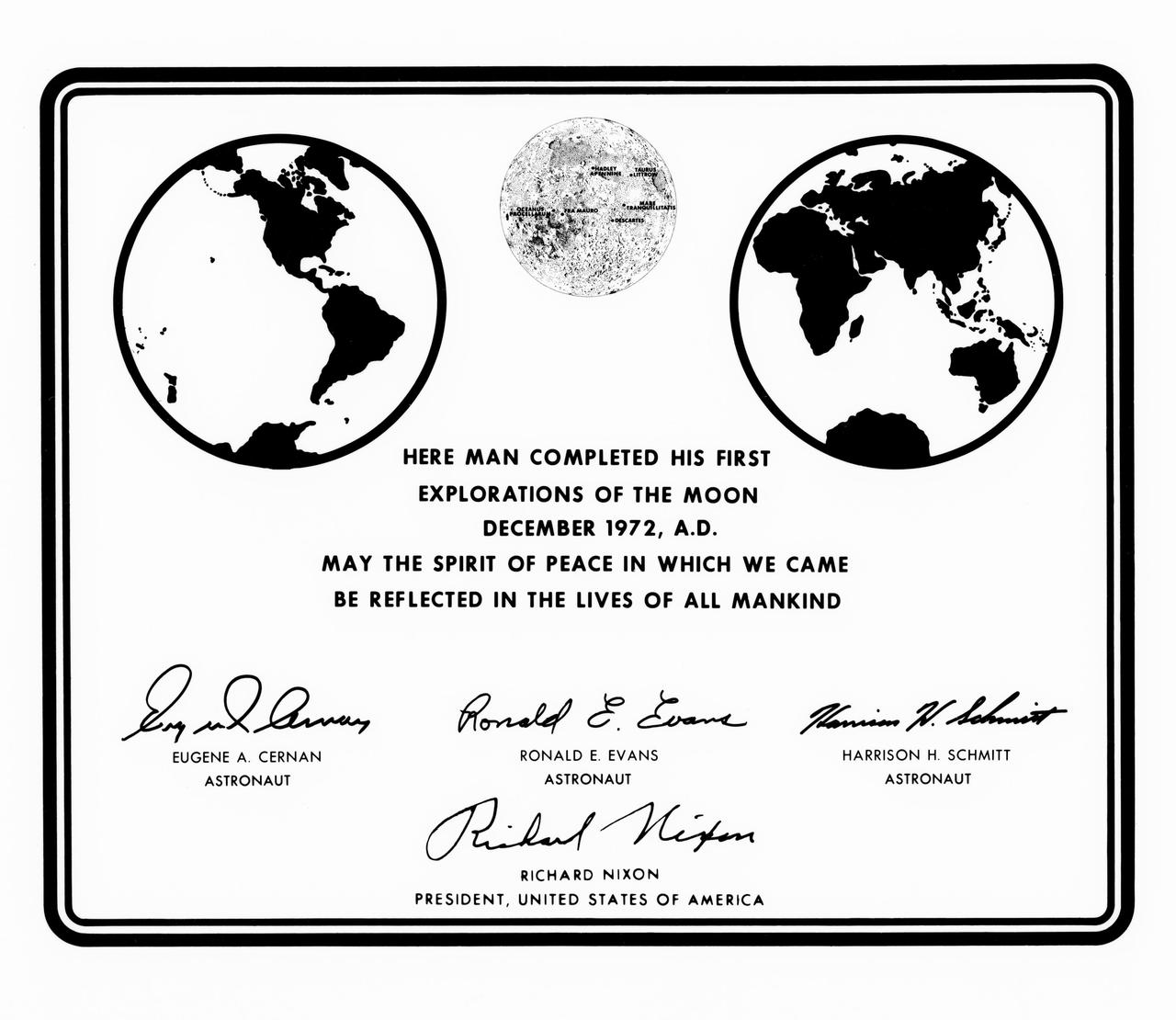
S72-55169 (14 Dec. 1972) --- A photographic replica of the plaque which the Apollo 17 astronauts left behind at the Taurus-Littrow landing site. Apollo 17 is the final lunar landing mission in NASA's Apollo program. The commemorative plaque was unveiled at the close of the third extravehicular activity (EVA). The plaque is made of stainless steel measuring nine by seven and five-eighths inches, and one-sixteenth inch thick. It is attached to the ladder on the landing gear strut on the descent stage of Apollo 17 Lunar Module (LM) "Challenger".
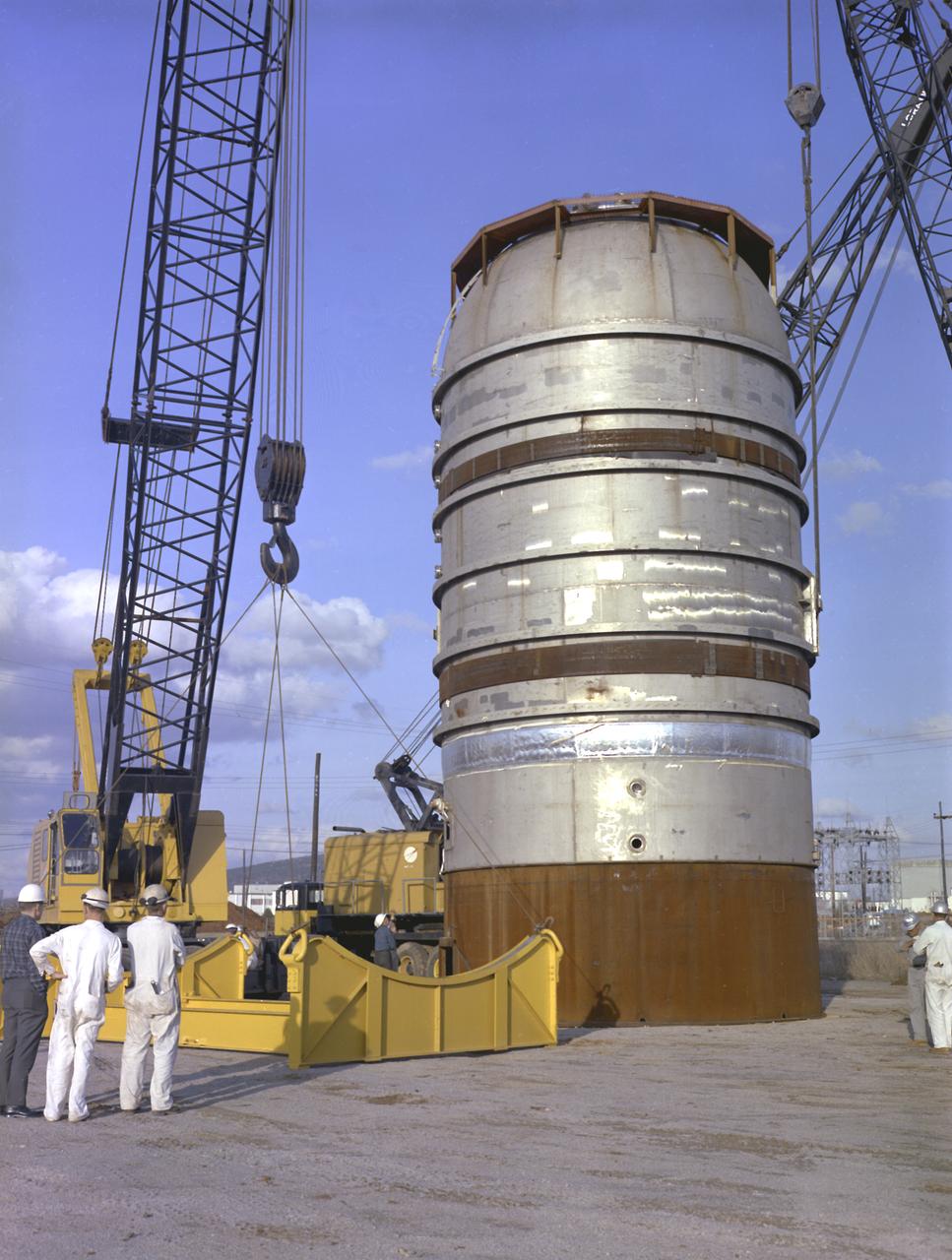
Workers at the Marshall Space Flight Center (MSFC) move a facility test version of the Saturn IB launch vehicle's second stage, the S-IVB, to the J-2 test stand on February 10, 1965. Also known as a "battleship" because of its heavy, rugged construction, the non-flight, stainless-steel model was used to check out testing facilities at MSFC.
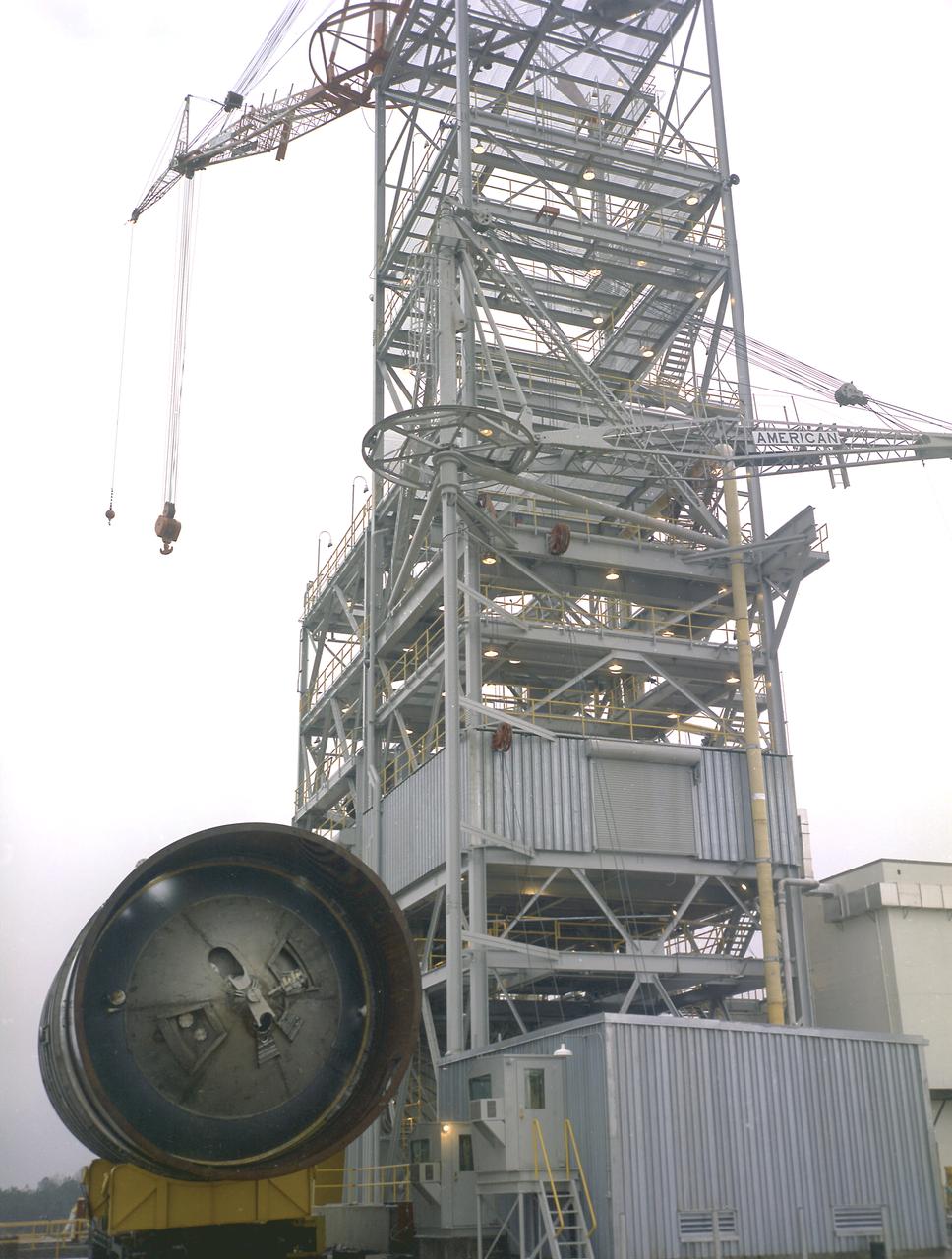
Workers at the Marshall Space Flight Center (MSFC) move a facility test version of the Saturn IB launch vehicle's second stage, the S-IVB, to the J-2 test stand on February 10, 1965. Also known as a "battleship" because of its heavy, rugged construction, the non-flight, stainless-steel model was used to check out testing facilities at MSFC.
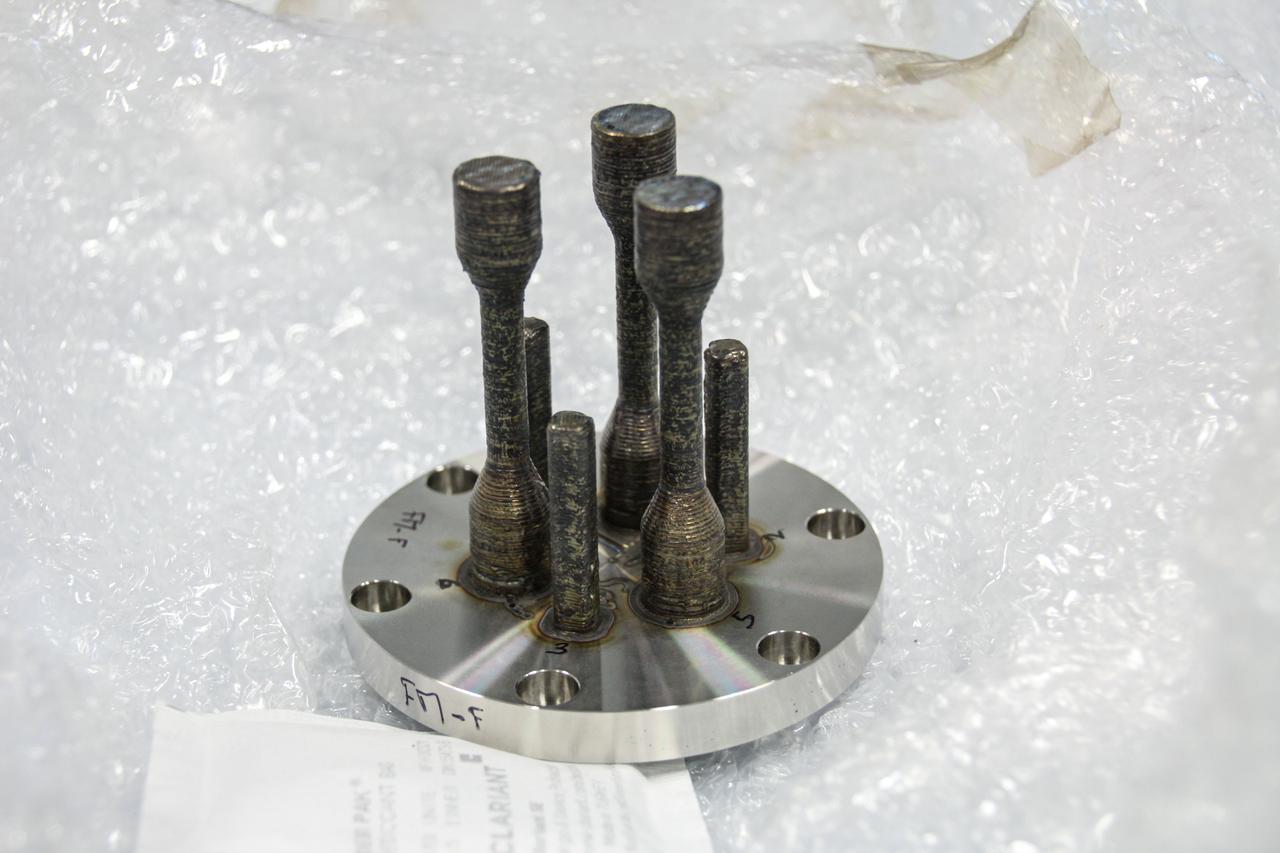
jsc2024e005970 (3/21/2023) --- A preflight image for Metal 3D printer shows one of the specimens after printing on the ground. The specimen was made from stainless steel at the ESA (European Space Agency) materials laboratory. Metal 3D printer evaluates in-space additive manufacturing for potential use in maintenance and long-duration missions to the Moon or Mars. Image courtesy of ESA/Airbus.
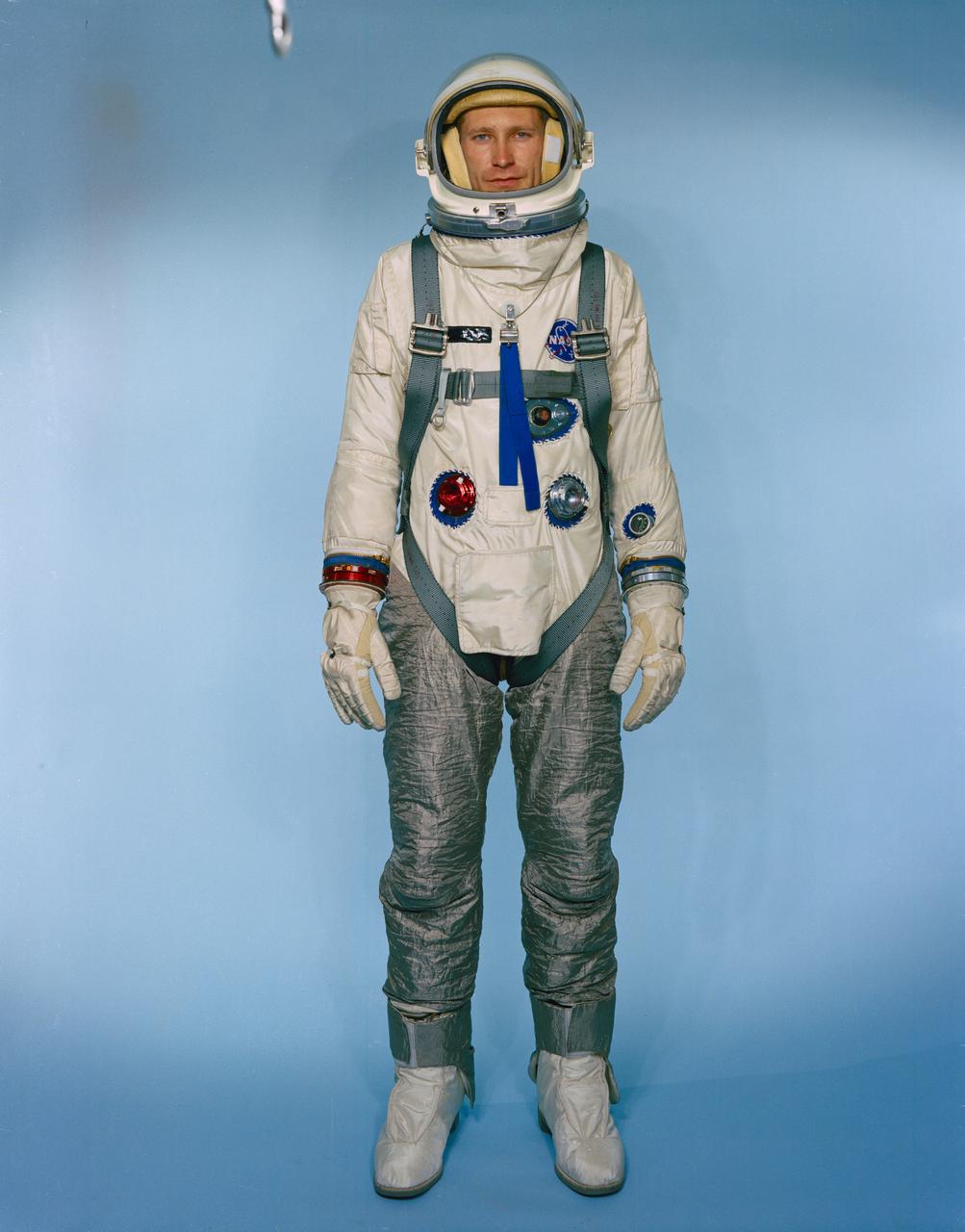
S66-31019 (May 1966) --- Test subject Fred Spross, Crew Systems Division, wears the Gemini-9 configured extravehicular spacesuit assembly. The legs are covered with Chromel R, which is a cloth woven from stainless steel fibers, used to protect the astronaut and suit from the hot exhaust thrust of the Astronaut Maneuvering Unit (AMU). Astronaut Eugene A. Cernan will wear this spacesuit during his Gemini-9A extravehicular activity (EVA). Photo credit: NASA

iss071e522120 (8/21/2024) ---A view the Metal 3D printer that manufactures experimental samples printed with stainless steel aboard the International Space Station's Columbus laboratory module. Researchers are exploring how the Metal 3D printer operates in the microgravity conditions of weightlessness and radiation as well as its ability to manufacture tools and parts on demand during space missions.
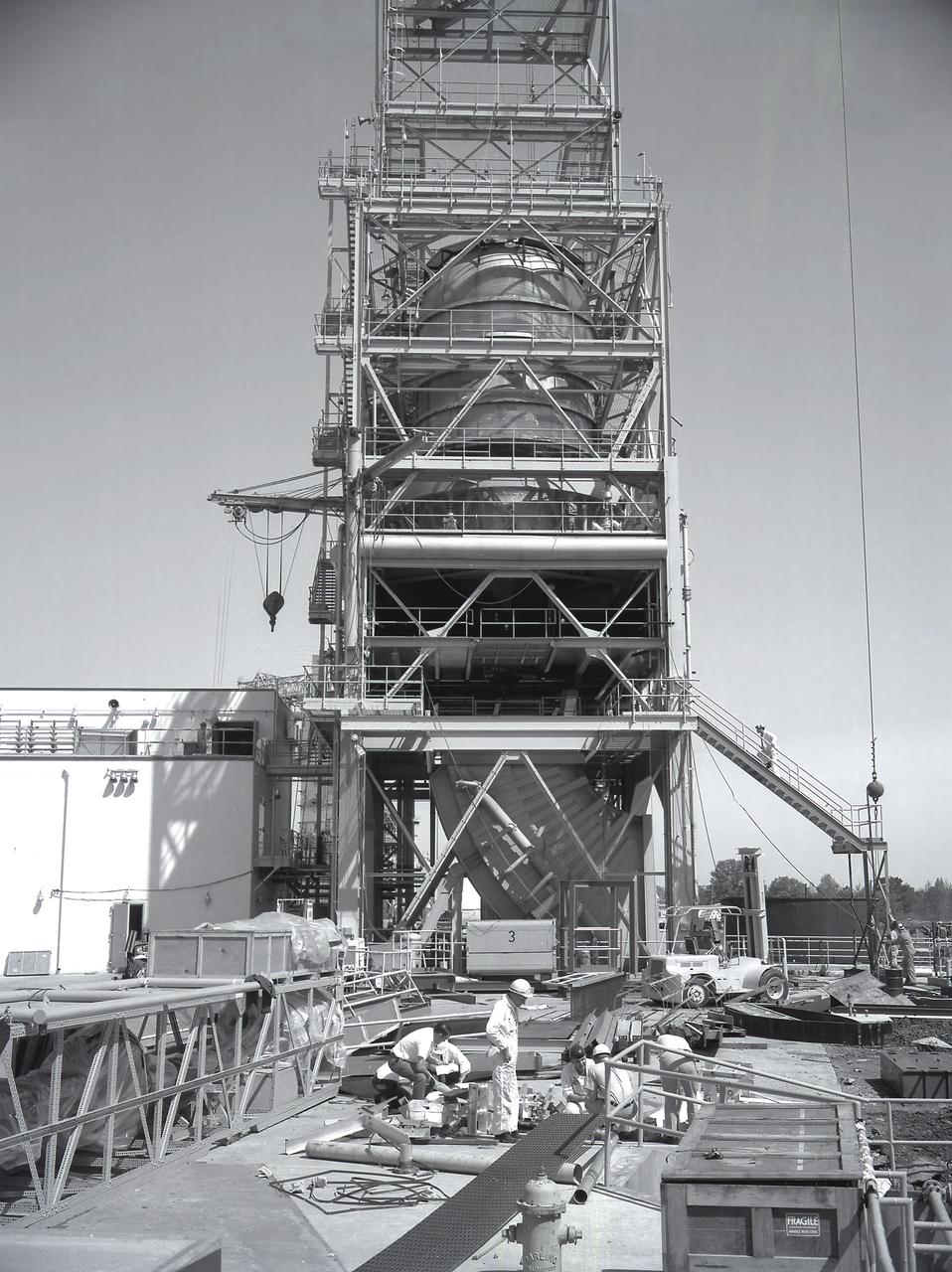
A facility test version of the S-IVB, the second stage of the Saturn IB launch vehicle, sits in the Marshall Space Flight Center (MSFC) J-2 test stand on February 10, 1965. Also known as a "battleship" because of its heavy, rugged construction, the non-flight, stainless-steel model was used to check out testing facilities at MSFC.
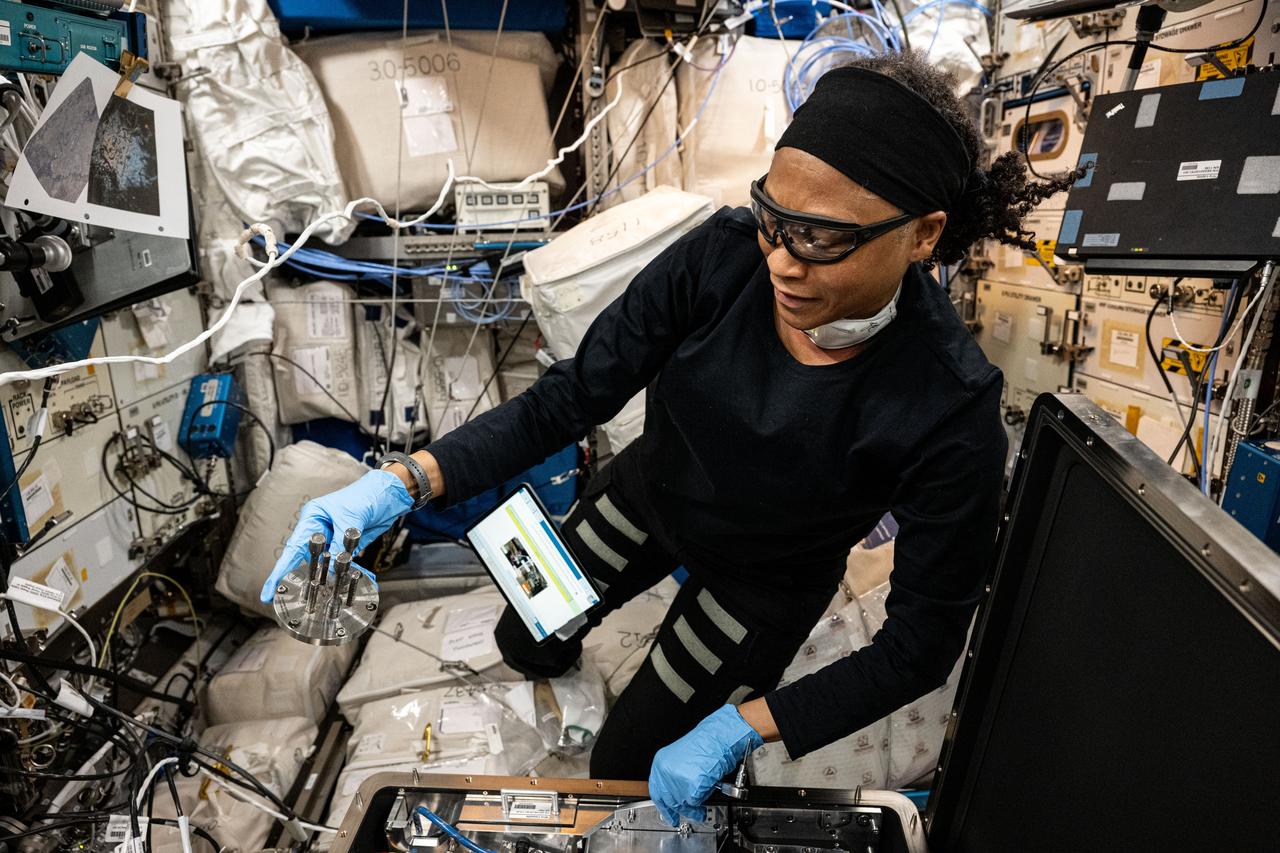
iss071e522127 (Aug. 21, 2024) --- NASA astronaut and Expedition 71 Flight Engineer Jeanette Epps configures the Metal 3D printer that manufactures experimental samples printed with stainless steel aboard the International Space Station's Columbus laboratory module. Researchers are exploring how the Metal 3D printer operates in the microgravity conditions of weightlessness and radiation as well as its ability to manufacture tools and parts on demand during space missions.
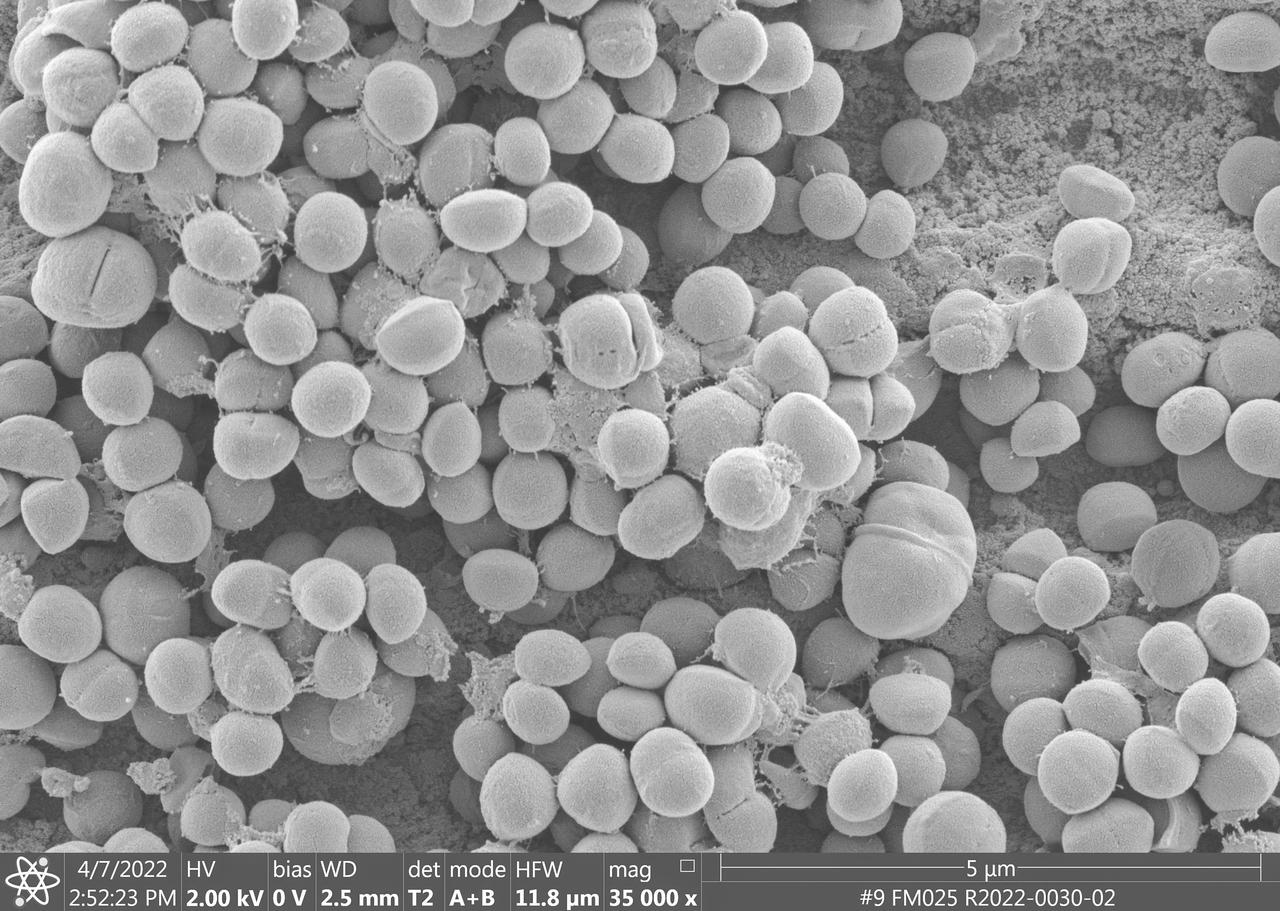
jsc2023e010178 (4/7/2022) --- This image taken by a scanning electron microscope shows one of the ESA-Biofilms sample plates from its first launch to the International Space Station. The sample plate in this image is made of stainless steel, which is the reference surface in the experiment since it has no antimicrobial properties. This surface also has a 3 µm laser structure engraved to the surface as control. In contrast to the copper surface, there are many Staphylococcus capitis cells attached to the steel surface that are actively dividing and starting to from components of a biofilm matrix. The ESA-Biofilms investigation studies bacterial biofilm formation and antimicrobial properties of different metal surfaces under spaceflight conditions in altered gravity. Image courtesy of DLR, CC BY-NC-ND 3.0.
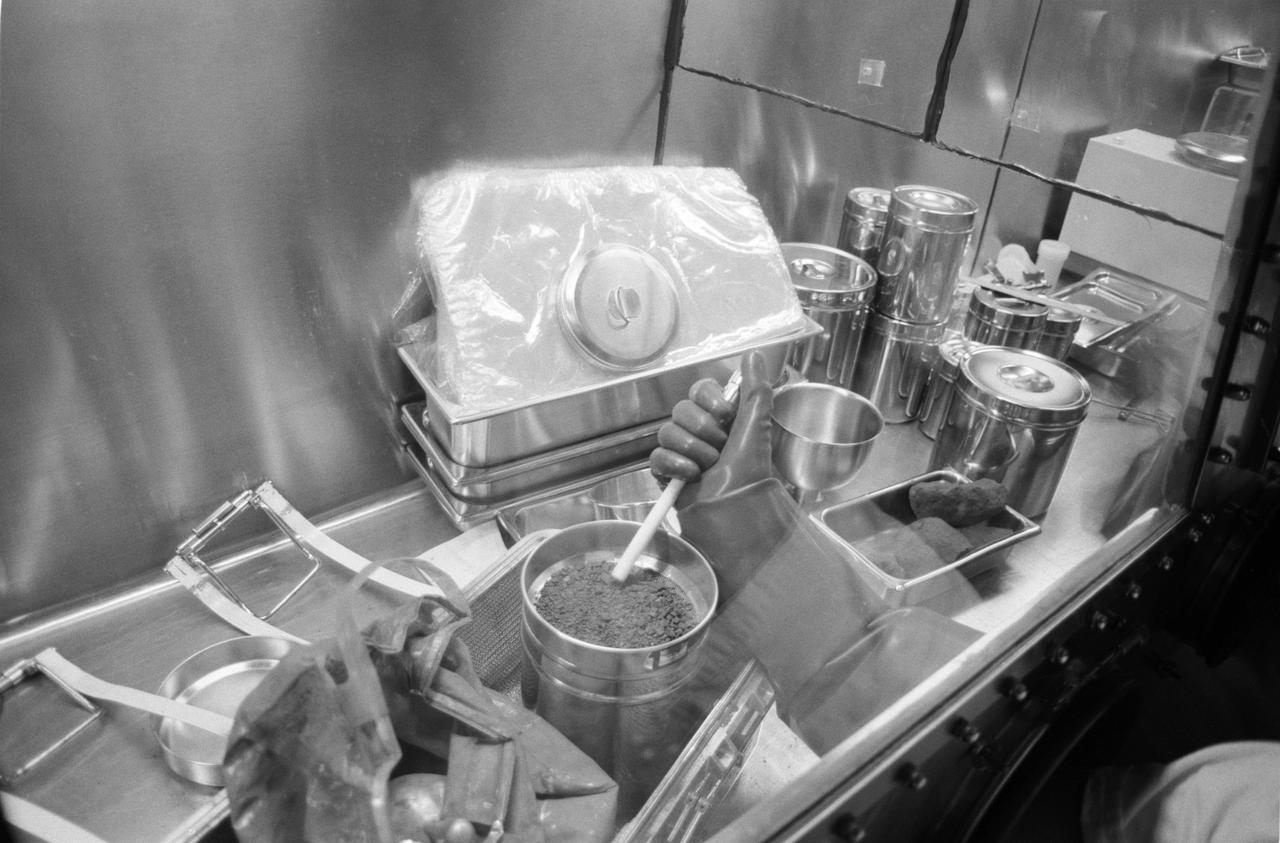
S69-45507 (4 Aug. 1969) --- A close-up of the second Apollo 11 sample return container in the Vacuum Laboratory of the Manned Spacecraft Center’s Lunar Receiving Laboratory, Building 37. This rock box was opened for the first time at 1 p.m. (CDT), Aug. 4, 1969. Some of the material has already been removed from the ALSRC in this view. The stainless steel can contains some course lunar surface material. The lunar samples were collected by astronauts Neil A. Armstrong and Edwin E. Aldrin Jr. during their lunar surface extravehicular activity on July 20, 1969.
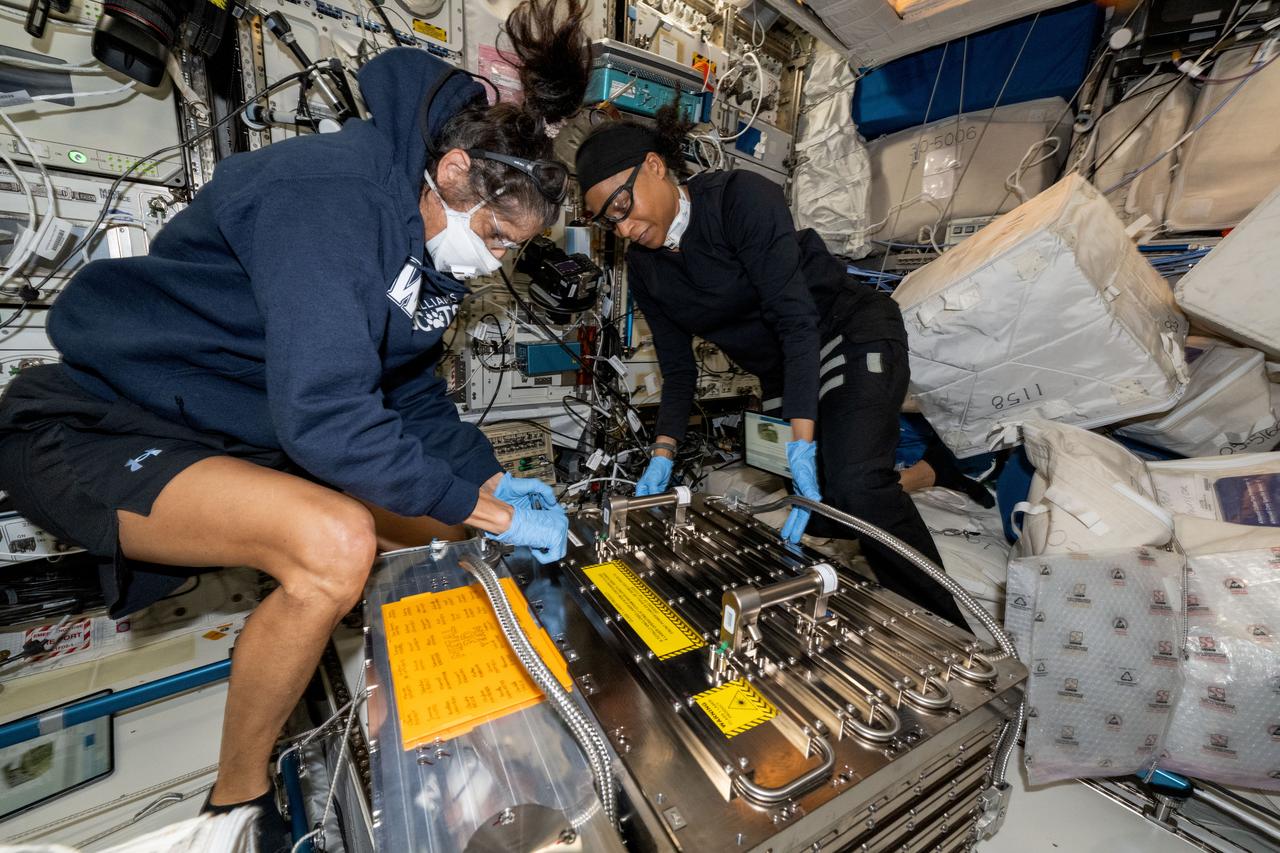
iss071e523326 (Aug. 21, 2024) --- NASA astronauts (from left) Suni Williams, Pilot for Boeing's Crew Flight Test, and Jeanette Epps, Expedition 71 Flight Engineer, configure the Metal 3D printer inside the Columbus laboratory module. They retrieved an experimental sample printed with stainless steel, replaced a substrate in the advanced manufacturing hardware, then reinstalled the 3D printer back in Columbus' European Drawer Rack-2. Researchers are exploring how the Metal 3D printer operates in the microgravity conditions of weightlessness and radiation as well as its ability to manufacture tools and parts on demand during space missions.
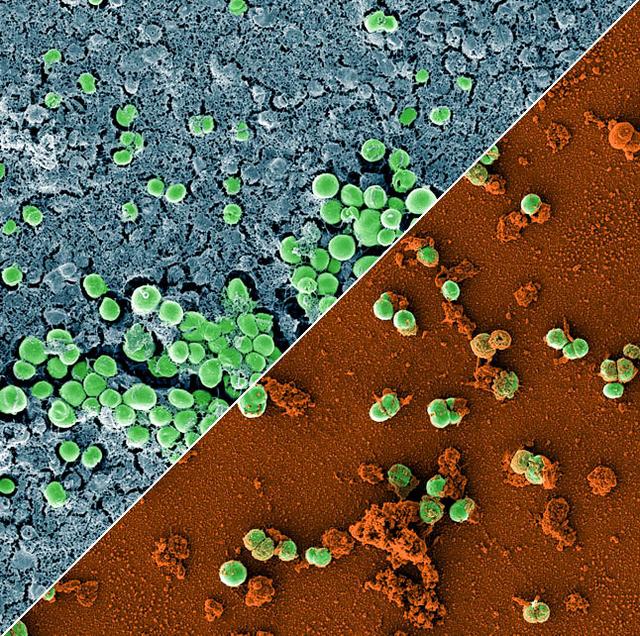
jsc2023e010179 (2/28/2023) --- This image is a composition of two scanning electron microscopic images of the bacterium Staphylococcus capitis on stainless steel versus antimicrobial copper. The image was colored to visualize the bacterial cells (green) either embedded in a biofilm matrix (blue), or covered with copper particles (red/orange). The ESA-Biofilms investigation studies bacterial biofilm formation and antimicrobial properties of different metal surfaces under spaceflight conditions in altered gravity. Both images were taken as part of the preflight experiments for ESA-Biofilms. Image courtesy of DLR, CC BY-NC-ND 3.0.

S66-33162 (May 1966) --- Test subject Fred Spross, Crew Systems Division, wears configured extravehicular spacesuit assembly and Extravehicular Life Support System chest pack. The spacesuit legs are covered with Chromel R, which is a cloth woven from stainless steel fibers, used to protect the suit and astronaut from the hot exhaust thrust of the Astronaut Maneuvering Unit backpack. The Gemini spacesuit, backpack and chest pack comprise the AMU, a system which is essentially a miniature manned spacecraft. Astronaut Eugene A. Cernan will wear the AMU during his Gemini-9A extravehicular activity (EVA). Photo credit: NASA
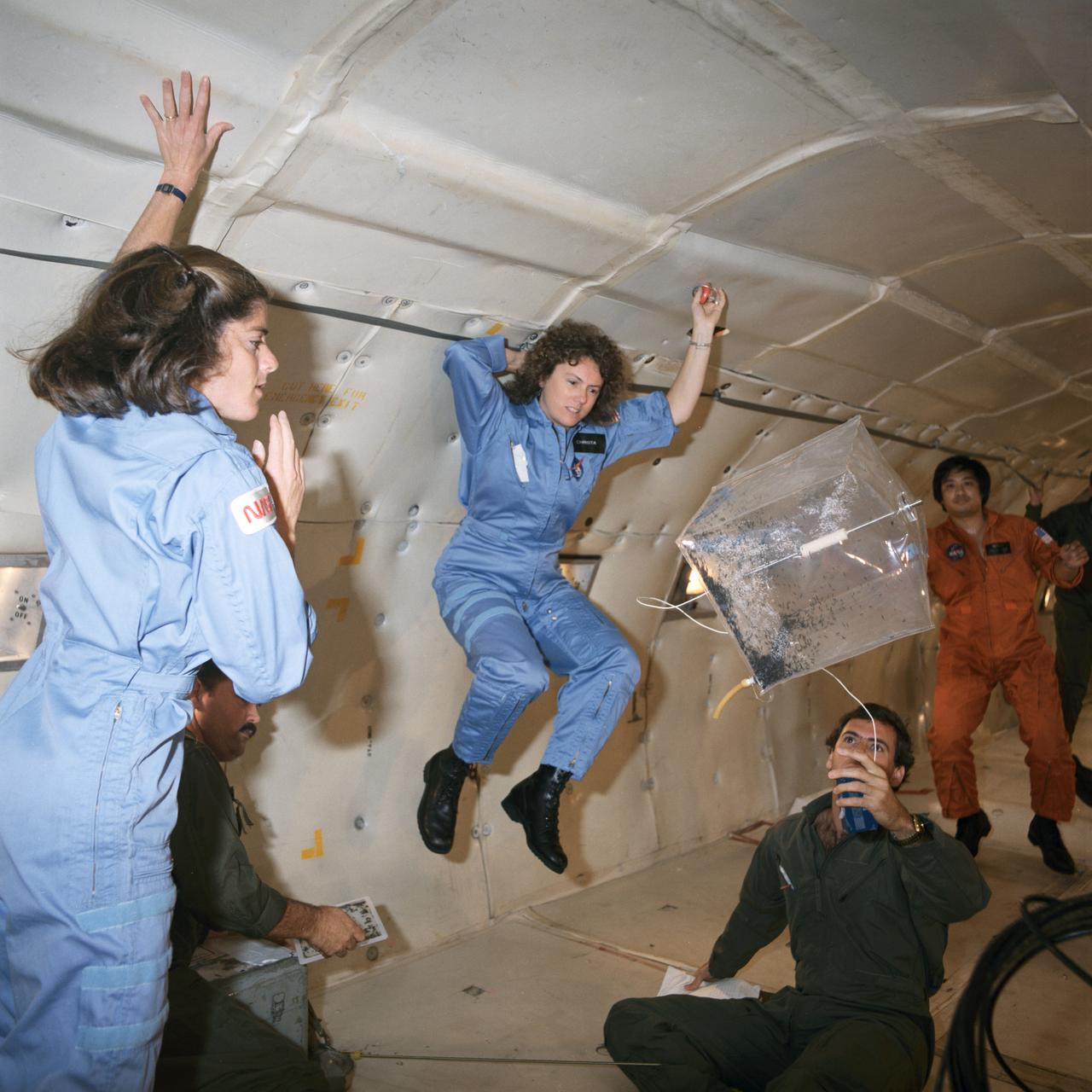
S85-42474 (16 Oct. 1985) --- A KC-135 aircraft provides a brief period of weightlessness as a preview for a teacher, in training to fly onboard a space shuttle for the Teacher-in-Space Project, and her backup. Sharon Christa McAuliffe (center frame), STS-51L prime crew member, and Barbara Morgan, her backup, monitor an experiment involving magnetic effects - one of the tests to be performed on the STS-51L flight. The experiment uses a control box, a square receptacle containing rubber tubing, stainless steel rod, a filter with desiccant, soft iron wire and a magnet. Photo credit: NASA

S66-33167 (May 1966) --- Test subject Fred Spross, Crew Systems Division, wears an Astronaut Maneuvering Unit (AMU). The Gemini spacesuit, AMU backpack, and the Extravehicular Life Support System chest pack comprises the AMU, a system which is essentially a miniature manned spacecraft. The spacesuit legs are covered with Chromel R, which is a cloth woven from stainless steel fibers, used to protect the suit and astronaut from the hot exhaust thrust of the AMU backpack. Astronaut Eugene A. Cernan will wear the AMU during his Gemini-9A extravehicular activity (EVA). Photo credit: NASA
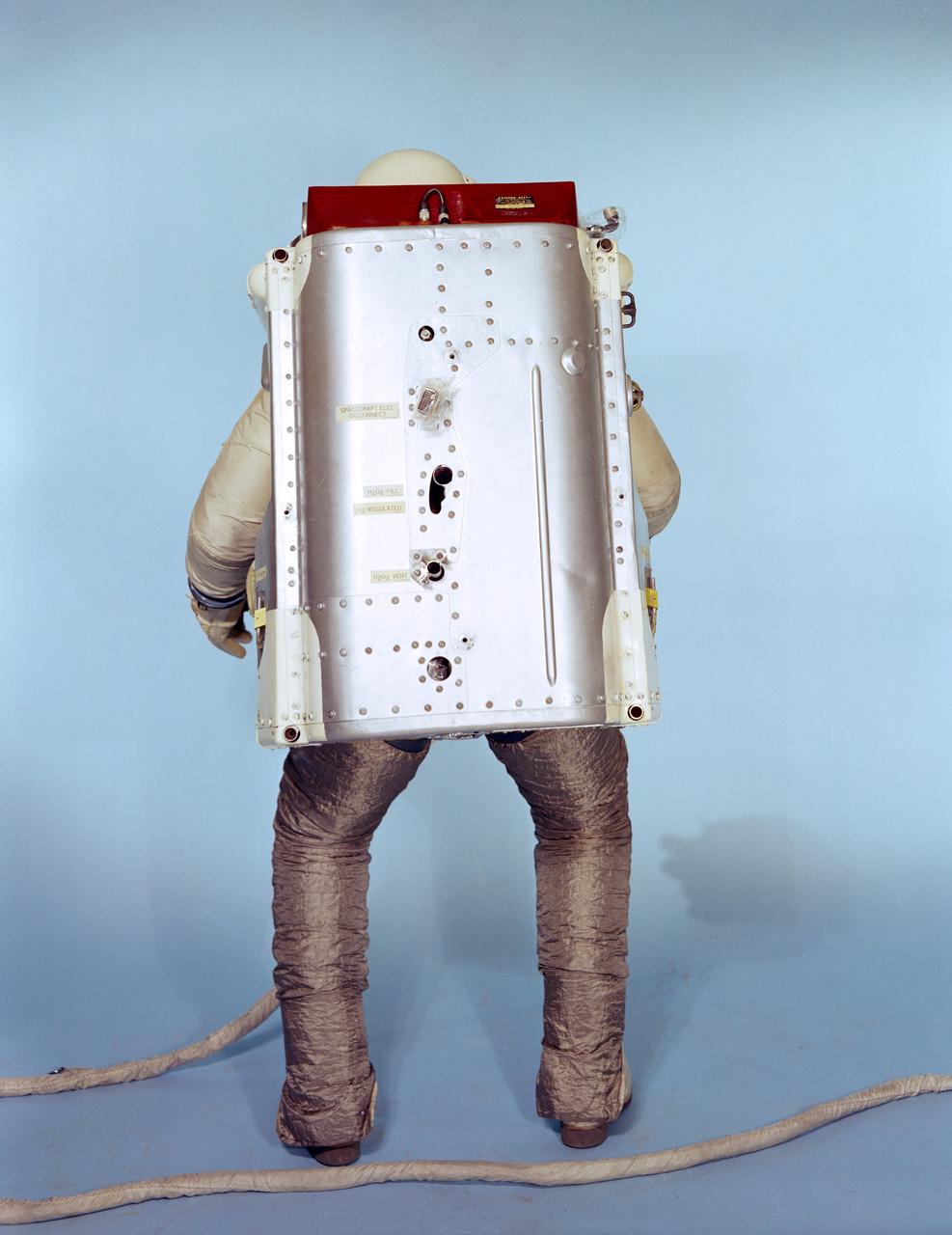
S66-33163 (May 1966) --- Rear view of the Astronaut Maneuvering Unit (AMU), worn by test subject Fred Spross, Crew Systems Division. The Gemini spacesuit, backpack and chest pack comprise the AMU, a system which is essentially a miniature manned spacecraft. The spacesuit legs are covered with Chromel R, which is a cloth woven from stainless steel fibers, used to protect the astronaut and suit from the hot exhaust thrust of the AMU backpack. Astronaut Eugene A. Cernan will wear the AMU during his Gemin-9A extravehicular activity (EVA). Photo credit: NASA
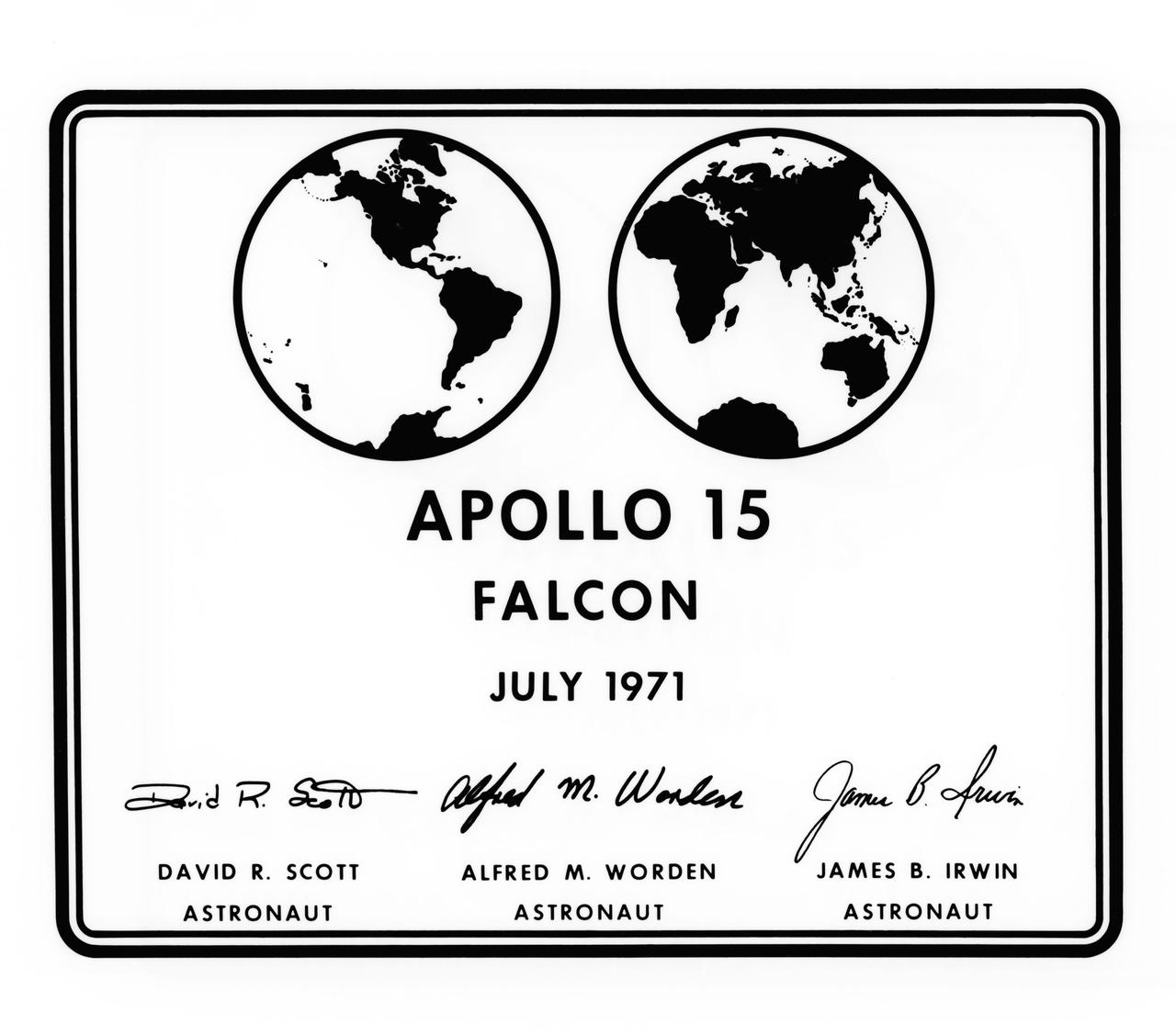
S71-39357 (July 1971) --- A photographic replica of the plaque which the Apollo 15 astronauts will leave behind on the moon during their lunar landing mission. Astronauts David R. Scott, commander; and James B. Irwin, lunar module pilot; will descend to the lunar surface in the Lunar Module (LM) "Falcon". Astronaut Alfred M. Worden, command module pilot, will remain with the Command and Service Modules (CSM) in lunar orbit. The seven by nine inch stainless steel plaque will be attached to the ladder on the landing gear strut on the LM's descent stage. Commemorative plaques were also left on the moon by the Apollo 11, Apollo 12 and Apollo 14 astronauts.
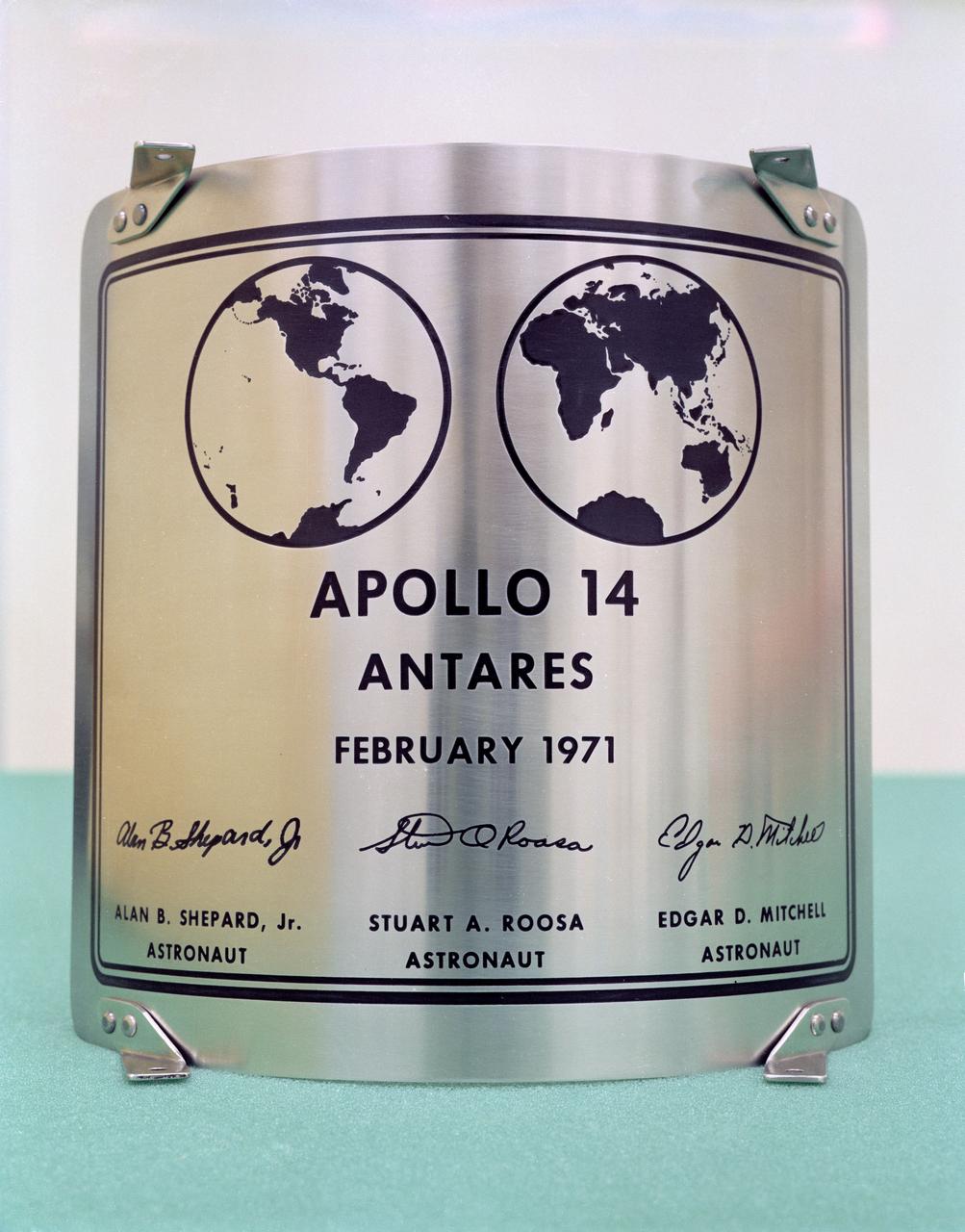
S71-16637 (January 1971) --- A close-up view of the plaque which the Apollo 14 astronauts will leave behind on the moon during their lunar landing mission. Astronauts Alan B. Shepard Jr., commander, and Edgar D. Mitchell, lunar module pilot, will descend to the lunar surface in the Lunar Module (LM) "Antares". Astronaut Stuart A. Roosa, command module pilot, will remain with the Command and Service Modules (CSM) in lunar orbit. The seven by nine inch stainless steel plaque will be attached to the ladder on the landing gear strut on the LM's descent stage. Commemorative plaques were also left on the moon by the Apollo 11 and Apollo 12 astronauts.
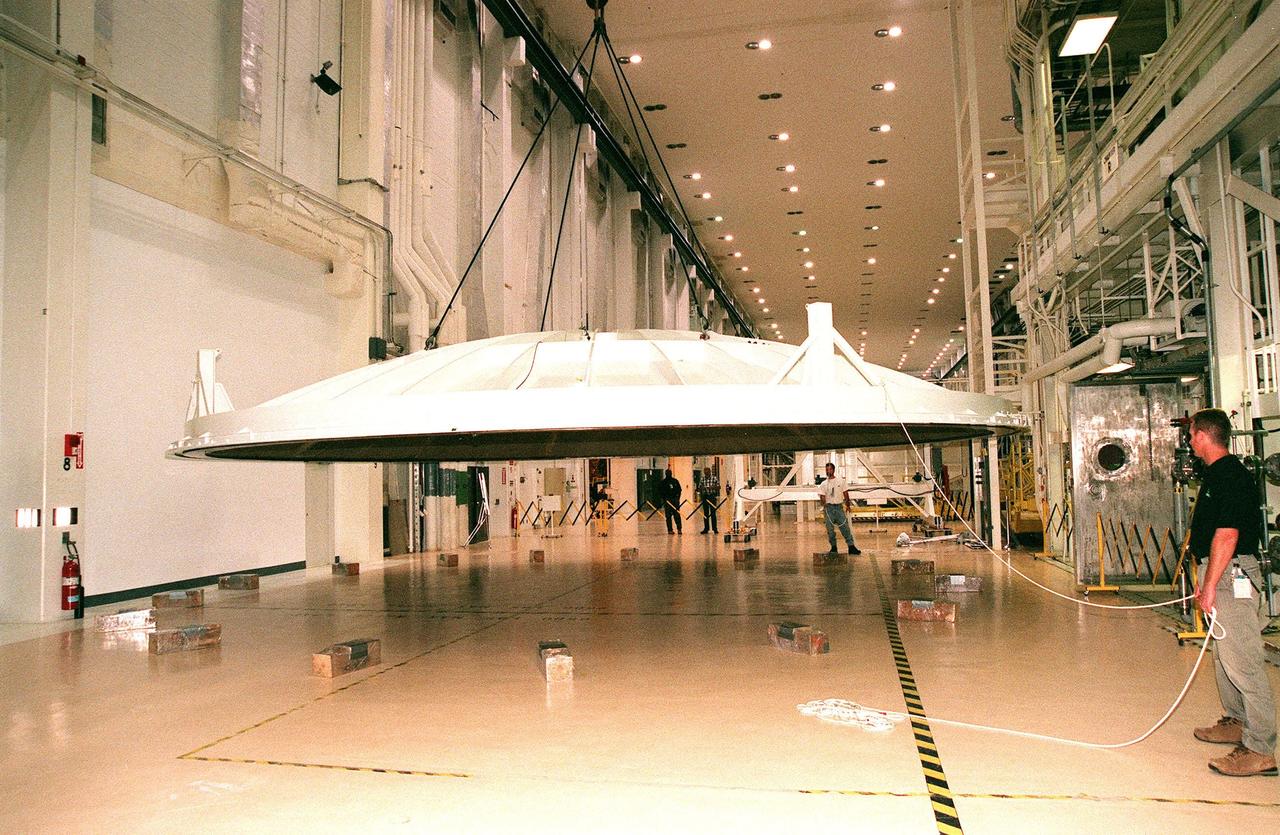
KENNEDY SPACE CENTER, FLA. -- An overhead crane lifts the saucer-like 27.5-ton lid of an altitude chamber in the Operations and Checkout Building high bay. The chamber was recently reactivated, after a 24-year hiatus, to perform leak tests on International Space Station pressurized modules at the launch site. Originally, two chambers were built to test Apollo Program flight hardware. They were last used in 1975 during the Apollo-Soyuz Test Project. After installation of new vacuum pumping equipment and controls, a new control room, and a new rotation handling fixture, the chamber again became operational in February 1999. The chamber, which is 33 feet in diameter and 50 feet tall, is constructed of stainless steel. The first module that will be tested for leaks is the U.S. Laboratory. No date has been determined for the test
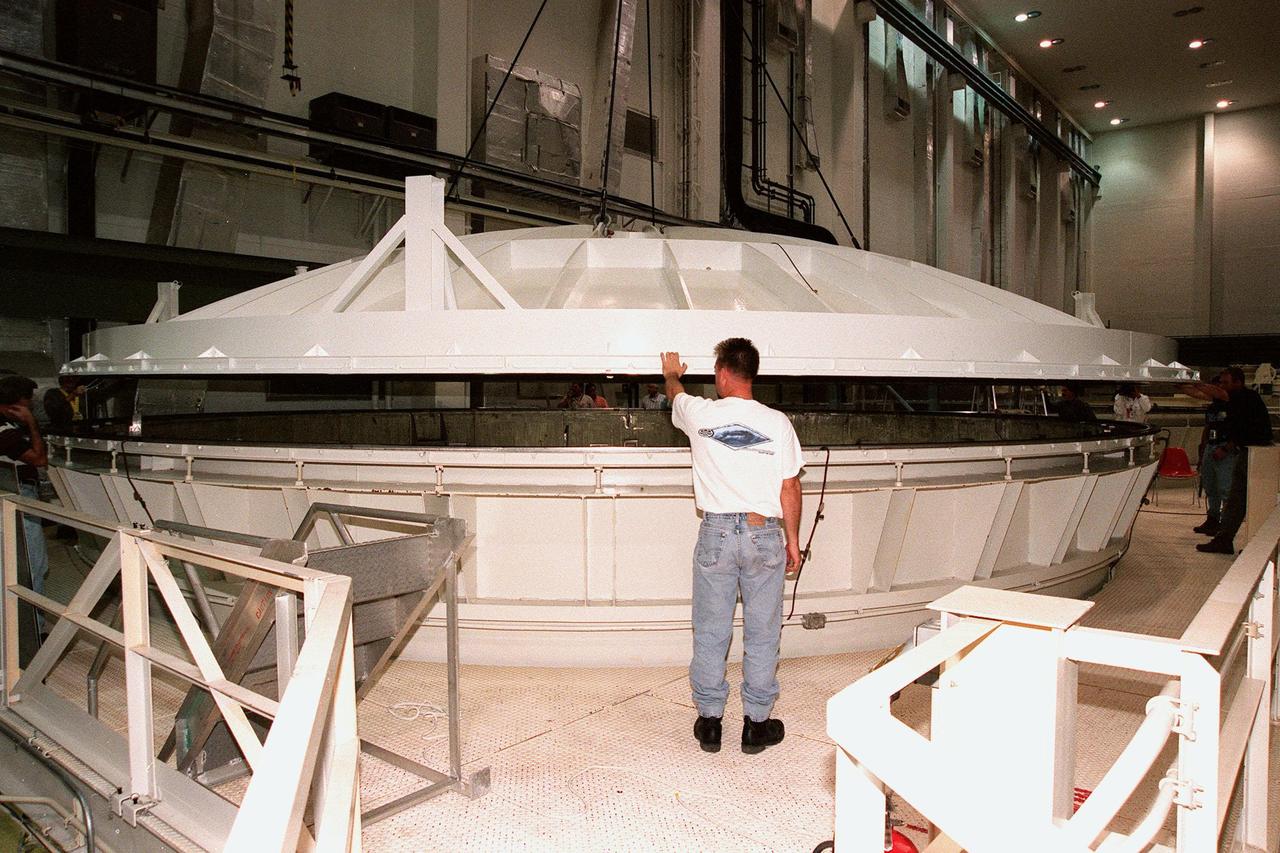
KENNEDY SPACE CENTER, FLA. -- Workers watch as the 27.5-ton lid is lowered onto the top of an altitude chamber in the Operations and Checkout Building high bay. The chamber was recently reactivated, after a 24-year hiatus, to perform leak tests on International Space Station pressurized modules at the launch site. Originally, two chambers were built to test Apollo Program flight hardware. They were last used in 1975 during the Apollo-Soyuz Test Project. After installation of new vacuum pumping equipment and controls, a new control room, and a new rotation handling fixture, the chamber again became operational in February 1999. The chamber, which is 33 feet in diameter and 50 feet tall, is constructed of stainless steel. The first module that will be tested for leaks is the U.S. Laboratory. No date has been determined for the test
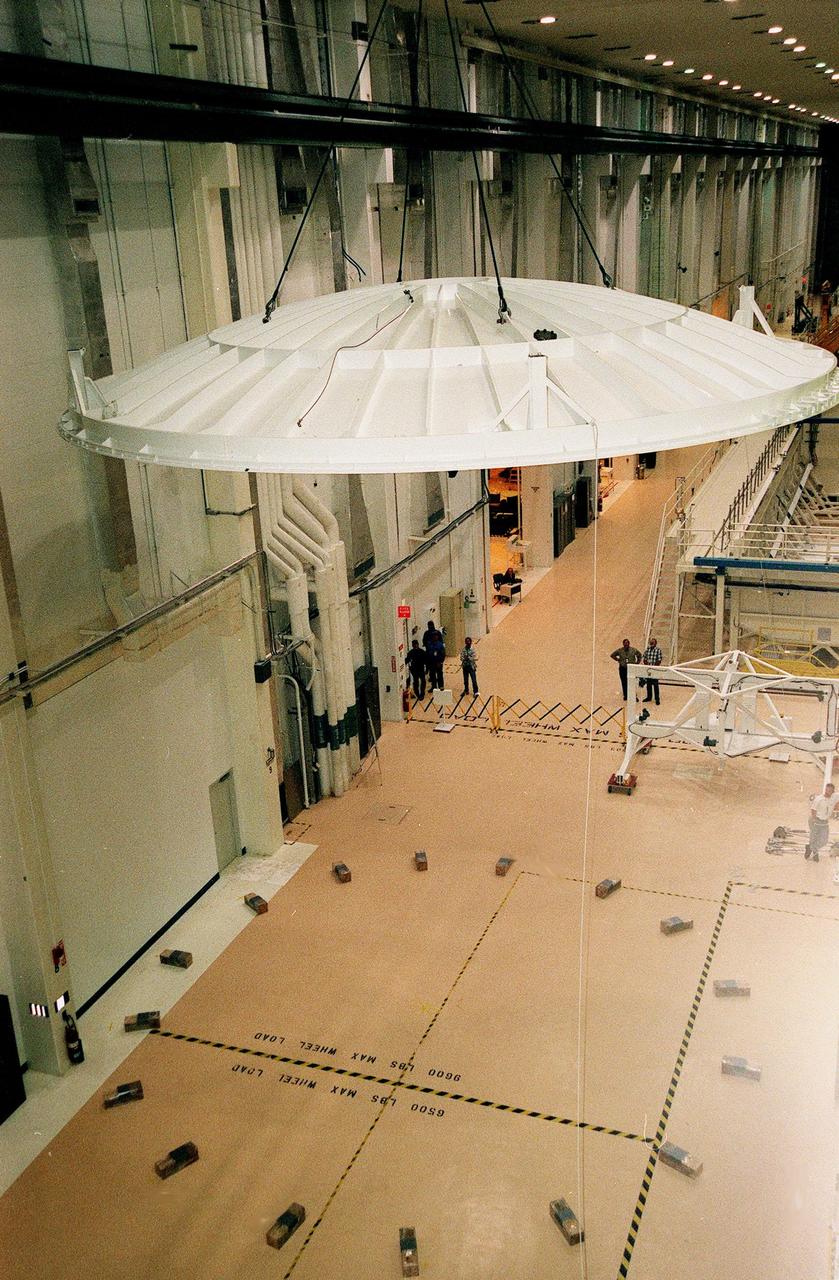
KENNEDY SPACE CENTER, FLA. -- Looking as if poised in flight, the saucer-like lid of an altitude chamber is lifted from the floor in the Operations and Checkout Building high bay to its place on top of the chamber. The chamber was recently reactivated, after a 24-year hiatus, to perform leak tests on International Space Station pressurized modules at the launch site. Originally, two chambers were built to test Apollo Program flight hardware. They were last used in 1975 during the Apollo-Soyuz Test Project. After installation of new vacuum pumping equipment and controls, a new control room, and a new rotation handling fixture, the chamber again became operational in February 1999. The chamber, which is 33 feet in diameter and 50 feet tall, is constructed of stainless steel. The first module that will be tested for leaks is the U.S. Laboratory. No date has been determined for the test

jsc2025e036184 (4/4/2025) --- Airborne particles collected in the US Orbital Segment during the Aerosol Sampling Experiment (Aerosol Samplers). Top (from left to right): a stainless-steel particle collected near an exercise machine in Node 3, a silver particle collected on an overhead supply diffuser in Node 3, a skin flake (ubiquitous throughout the International Space Station cabin). Bottom (from left to right): a fiberglass particle (ubiquitous throughout the space station cabin), an antiperspirant particle collected in Node 2, an iron particle collected in the US Lab. The Aerosol Sampler collects airborne particles in the International Space Station’s cabin air and returns them to Earth so scientists can study the particles with powerful microscopes.
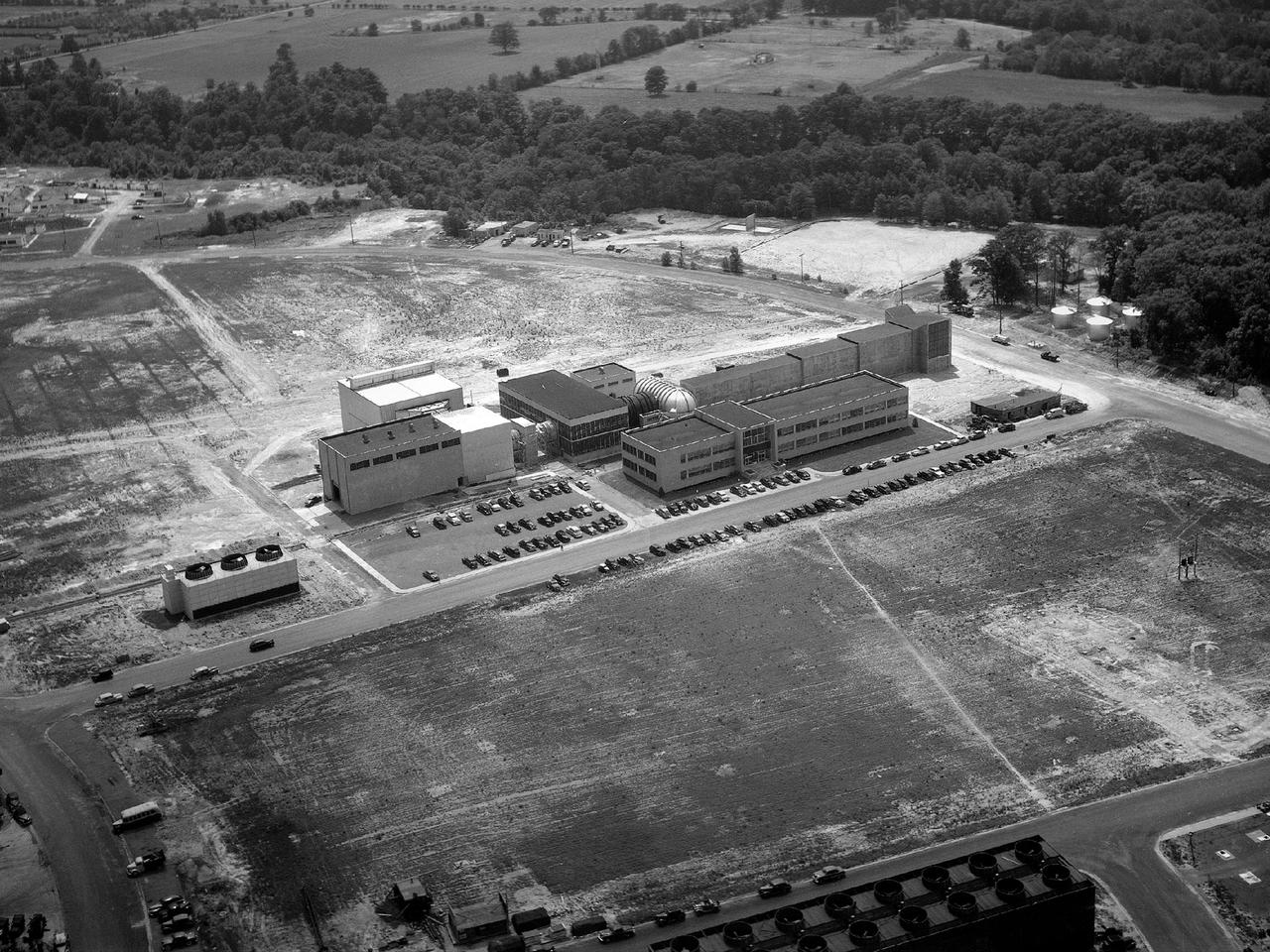
Aerial view of the 8- by 6-Foot Supersonic Wind Tunnel in its original configuration at the National Advisory Committee for Aeronautics (NACA) Lewis Flight Propulsion Laboratory. The 8- by 6 was the laboratory’s first large supersonic wind tunnel. It was also the NACA’s most powerful supersonic tunnel, and its first facility capable of running an engine at supersonic speeds. The 8- by 6-foot tunnel has been used to study inlets and exit nozzles, fuel injectors, flameholders, exit nozzles, and controls on ramjet and turbojet propulsion systems. The 8- by 6 was originally an open-throat and non-return tunnel. This meant that the supersonic air flow was blown through the test section and out the other end into the atmosphere. In this photograph, the three drive motors in the structure at the left supplied power to the seven-stage axial-flow compressor in the light-colored structure. The air flow passed through flexible walls which were bent to create the desired speed. The test article was located in the 8- by 6-foot stainless steel test section located inside the steel pressure chamber at the center of this photograph. The tunnel dimensions were then gradually increased to slow the air flow before it exited into the atmosphere. The large two-story building in front of the tunnel was used as office space for the researchers.
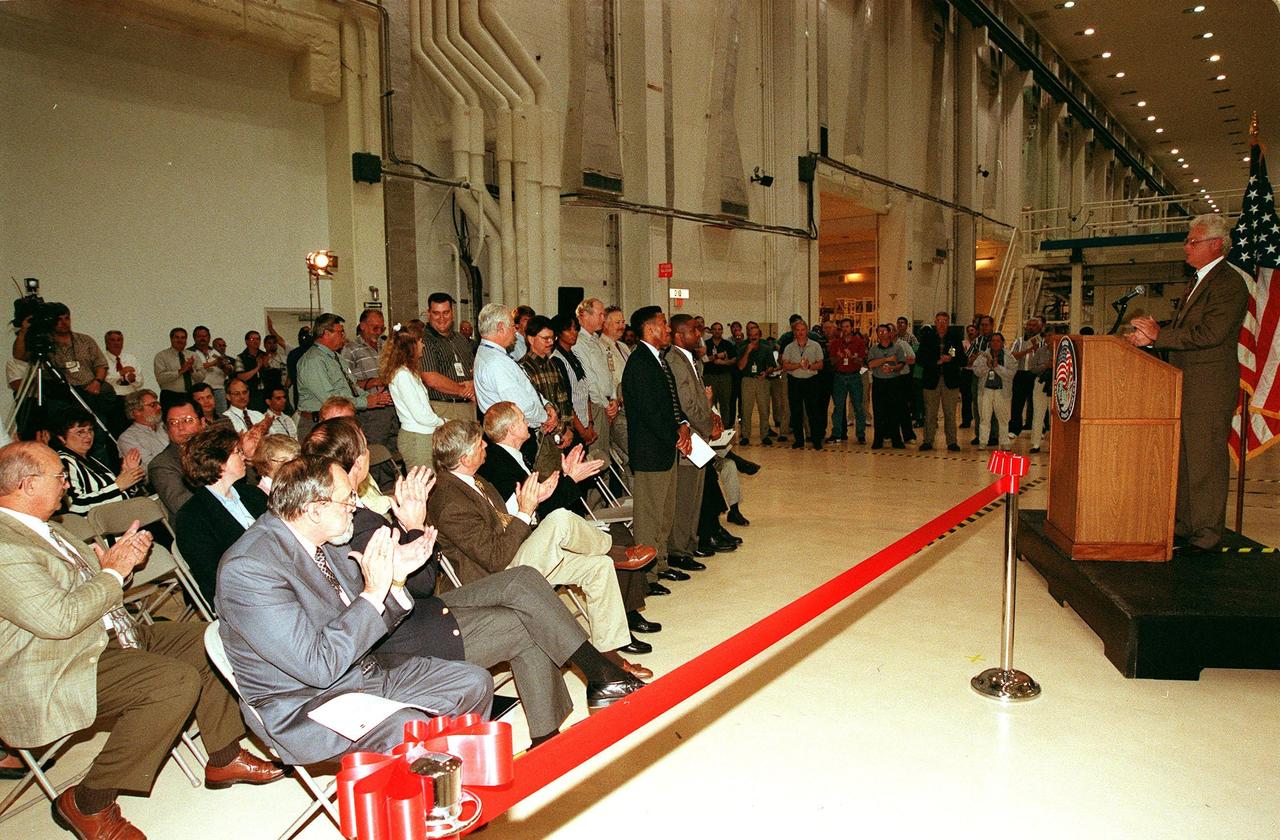
KENNEDY SPACE CENTER, FLA. -- At a ribbon-cutting ceremony inside the Operations and Checkout Building high bay, Sterling Walker, director of Engineering Development, introduces the project team members responsible for renovating an altitude chamber formerly used on the Apollo program. In addition, management, media and onlookers are present for the ceremony. Seated in the front row left are (left to right) Terry Smith, director of Engineering, Boeing Space Coast Operations; Steve Francois, director, Space Station and Shuttle Payloads; Jay Greene, International Space Station manager for Technical; and Roy Bridges, center director. The chamber was reactivated, after a 24-year hiatus, to perform leak tests on International Space Station pressurized modules at the launch site. Originally, two chambers were built to test the Apollo command and lunar service modules. They were last used in 1975 during the Apollo-Soyuz Test Project. After installation of new vacuum pumping equipment and controls, a new control room, and a new rotation handling fixture, the chamber again became operational in February 1999. The chamber, which is 33 feet in diameter and 50 feet tall, is constructed of stainless steel. The first module that will be tested for leaks is the U.S. Laboratory. No date has been determined for the test
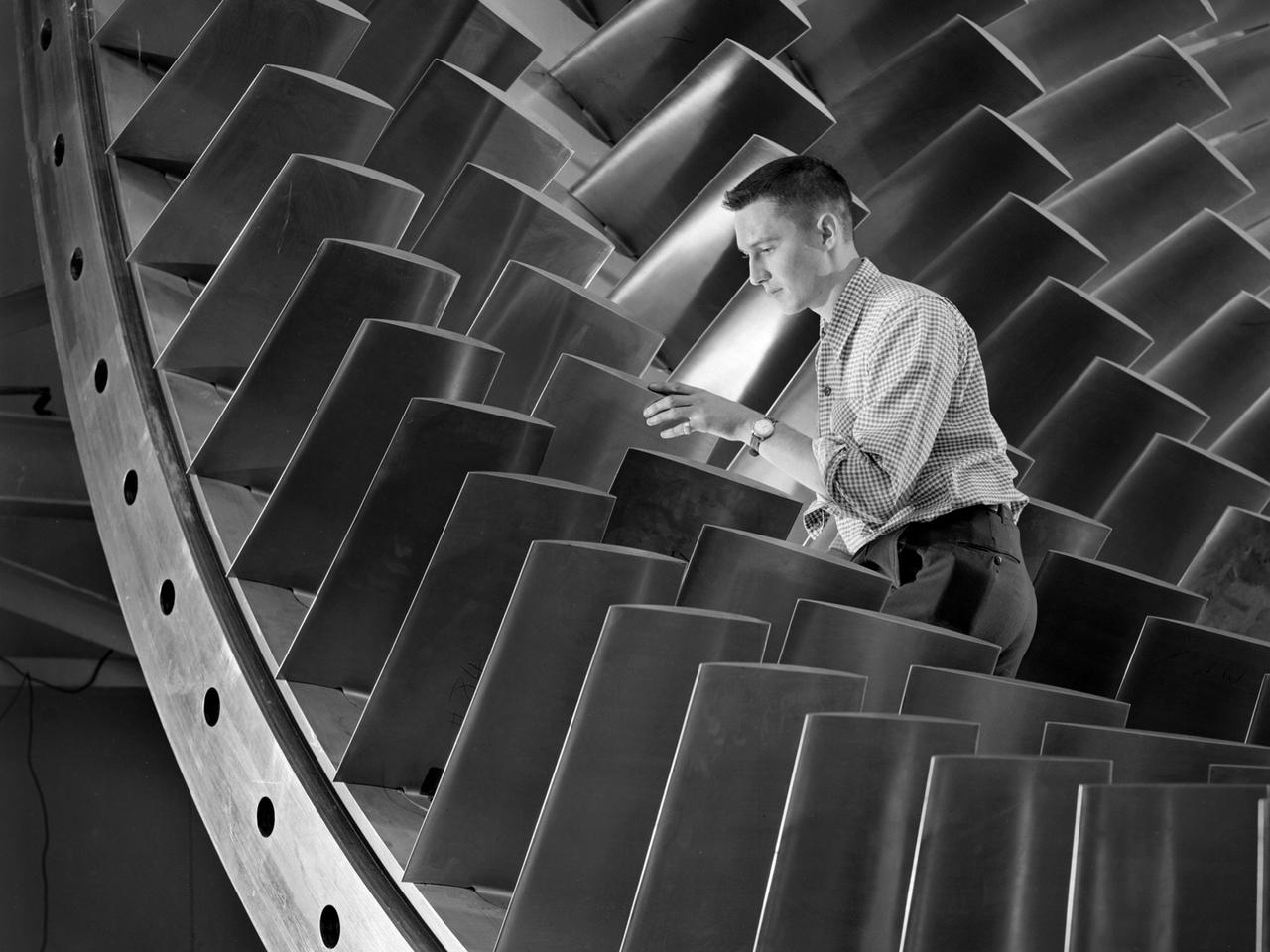
An engineer examines the main compressor for the 10- by 10-Foot Supersonic Wind Tunnel at the National Advisory Committee for Aeronautics (NACA) Lewis Flight Propulsion Laboratory. The engineers were preparing the new wind tunnel for its initial runs in early 1956. The 10- by 10 was the most powerful propulsion wind tunnel in the nation. The facility was part of Congress’ Unitary Plan Act which coordinated wind tunnel construction at the NACA, Air Force, industry, and universities. The 10- by 10 was the largest of the three NACA tunnels built under the act. The 20-foot diameter eight-stage axial flow compressor, seen in this photograph, could generate air flows up to Mach 2.5 through the test section. The stainless steel compressor had 584 blades ranging from 1.8 to 3.25 feet in length. This main compressor was complemented by a secondary axial flow compressor. Working in tandem the two could generate wind streams up to Mach 3.5. The Cleveland Chamber of Commerce presented NACA Lewis photographer Bill Bowles with a second place award for this photograph in their Business and Professional category. The photograph was published in October 1955 edition of its periodical, The Clevelander, which highlighted local professional photographers. Fellow Lewis photographer Gene Giczy won second place in another category for a photograph of Cleveland Municipal Airport.

You might see a DeLorean zipping around Greenbelt, Maryland, on Oct. 21, 2015, the day Marty McFly and Doc Brown arrive from 1985 in "Back to the Future, Part II," but don't look for flaming tread marks in its wake. The DeLorean DMC-12, commonly seen on the roads of NASA’s Goddard Space Flight Center in Greenbelt, Maryland, is better known for the version that starred as a plutonium-powered time machine in the “Back to the Future” trilogy. After some investigation, Goddard’s Office of Communications found the owner of the stainless steel, gull-winged, two-door coupe. Goddard software test engineer, Brendan Rebo bought the 1982 DeLorean off eBay about four and a half years ago. “The car attracts a lot more attention than I expected,” Rebo admitted. “I hear a lot of jokes about whether or not I’ve reached 88 miles per hour yet.” As “Back to the Future” fans around the world celebrate today, Rebo also celebrates his birthday. While the second film predicted technology, such as flying cars, that doesn’t yet exist, people can still marvel at the classic car and movie reference. Credit: NASA/Goddard/Rebecca Roth
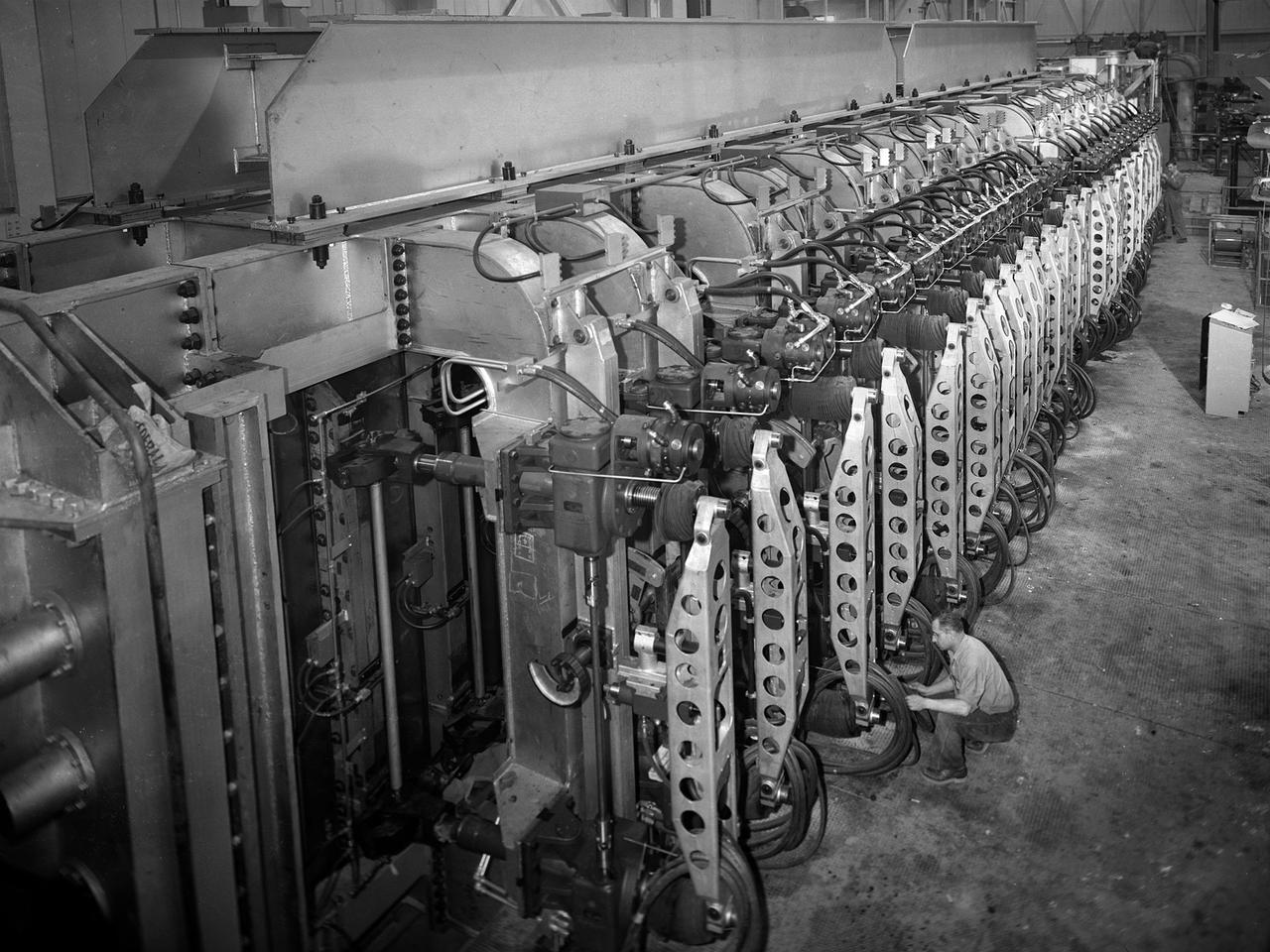
A mechanic checks the tubing on one of the many jacks which control the nozzle section of the 10- by 10-Foot Supersonic Wind Tunnel at the National Advisory Committee for Aeronautics (NACA) Lewis Flight Propulsion Laboratory. The 10- by 10-foot tunnel, which had its official opening in May 1956, was built under the Congressional Unitary Plan Act which coordinated wind tunnel construction at the NACA, Air Force, industry, and universities. The 10- by 10 was the largest of the three NACA tunnels built under the act. The 10- by 10 wind tunnel can be operated as a closed circuit for aerodynamic tests or as an open circuit for propulsion investigations. The 10-foot tall and 76-foot long stainless steel nozzle section just upstream from the test section can be adjusted to change the speed and composition of the air flow. Hydraulic jacks, seen in this photograph, flex the 1.37-inch thick walls of the tunnel nozzle. The size of the nozzle’s opening controls the velocity of the air through the test section. Seven General Electric motors capable of generating 25,000 horsepower produce the Mach 2.5 and 2.5 airflows. The facility was mostly operated at night due to its large power load requirements.
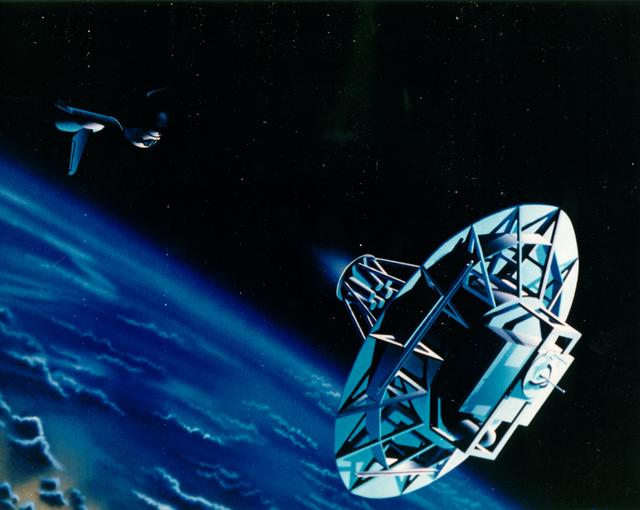
The Wake Shield Facility is a free-flying research and development facility that is designed to use the pure vacuum of space to conduct scientific research in the development of new materials. The thin film materials technology developed by the WSF could some day lead to applications such as faster electronics components for computers. The WSF Free-Flyer is a 12-foot-diameter stainless steel disk that, while traveling in orbit at approximately 18,000 mph, leaves in its wake a vacuum 1,000 to 10,000 times better than the best vacuums currently achieved on Earth. While it is carried into orbit by the Space Shuttle, the WSF is a fully equipped spacecraft in its own right, with cold gas propulsion for separation from the orbiter and a momentum bias attitude control system. All WSF functions are undertaken by a spacecraft computer with the WSF remotely controlled from the ground. The ultra vacuum, nearly empty of all molecules, is then used to conduct a series of thin film growths by a process called epitaxy which produces exceptionally pure and atomically ordered thin films of semiconductor compounds such as gallium arsenide. Using this process, the WSF offers the potential of producing thin film materials, and the devices they will make possible.
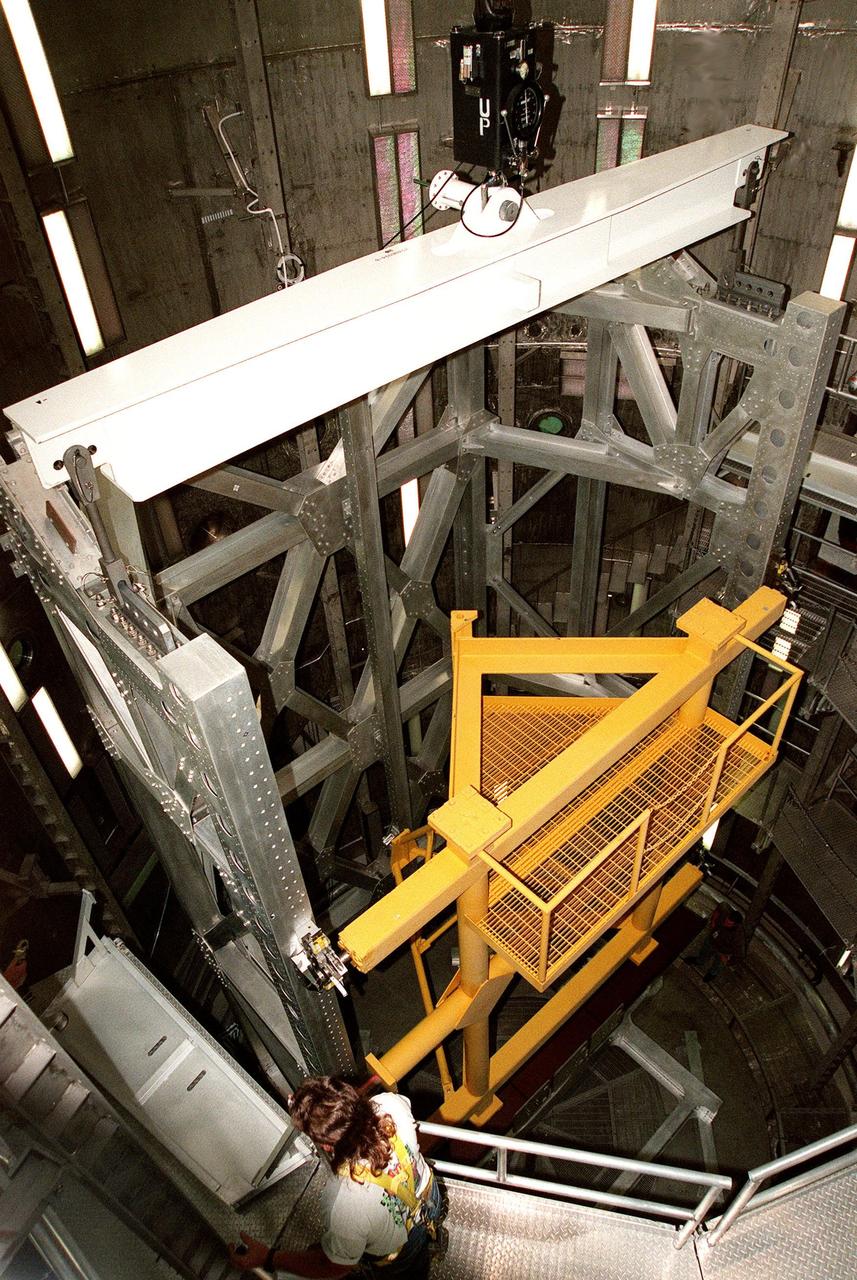
KENNEDY SPACE CENTER, FLA. -- In the Operations and Checkout Building's high bay, the Rotation Handling Fixture (RHF), with a simulated module attached, is viewed from above the altitude chamber into which it was lowered during a test. Under normal operation, the RHF will hold a pressurized module intended for the International Space Station, depositing it into the altitude chamber for leak testing. The chamber was recently reactivated after a 20-year hiatus. Originally, two chambers were built to test Apollo Program flight hardware. They were last used in 1975 during the Apollo-Soyuz Test Project. In 1997, in order to increase the probability of successful missions aboard the ISS, NASA decided to perform leak tests on ISS pressurized modules at the launch site. After installation of new vacuum pumping equipment and controls, a new control room, and a new rotation and handling fixture, the chamber again became operational in February 1999. The chamber, which is 33 feet in diameter and 50 feet tall, is constructed of stainless steel. The rotation handling fixture is aluminum. The first module that will be tested for leaks is the U.S. Laboratory. No date has been determined for the test
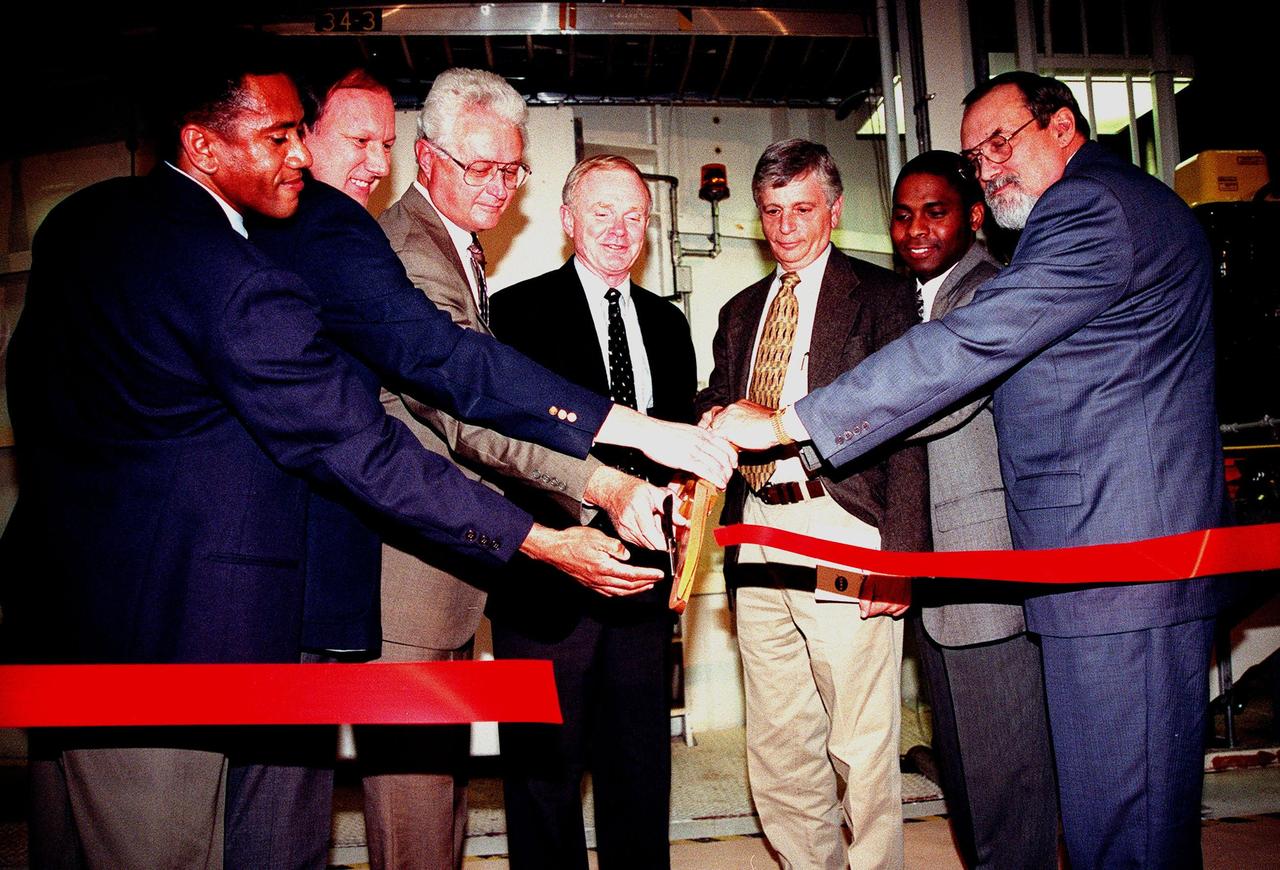
KENNEDY SPACE CENTER, FLA. -- Cutting a red ribbon for the unveiling of a newly renovated altitude chamber are (left to right) Tommy Mack, project manager, NASA; Steve Francois, director, Space Station and Shuttle Payloads; Sterling Walker, director, Engineering Development; Roy Bridges, director, Kennedy Space Center; Jay Greene, International Space Station manager for Technical; Michael Terry, project manager, Boeing; and Terry Smith, director of Engineering, Boeing Space Coast Operations. The chamber was reactivated, after a 24-year hiatus, to perform leak tests on International Space Station pressurized modules at the launch site. Originally, two chambers were built to test the Apollo command and lunar service modules. They were last used in 1975 during the Apollo-Soyuz Test Project. After installation of new vacuum pumping equipment and controls, a new control room, and a new rotation handling fixture, the chamber again became operational in February 1999. The chamber, which is 33 feet in diameter and 50 feet tall, is constructed of stainless steel. The first module that will be tested for leaks is the U.S. Laboratory. No date has been determined for the test
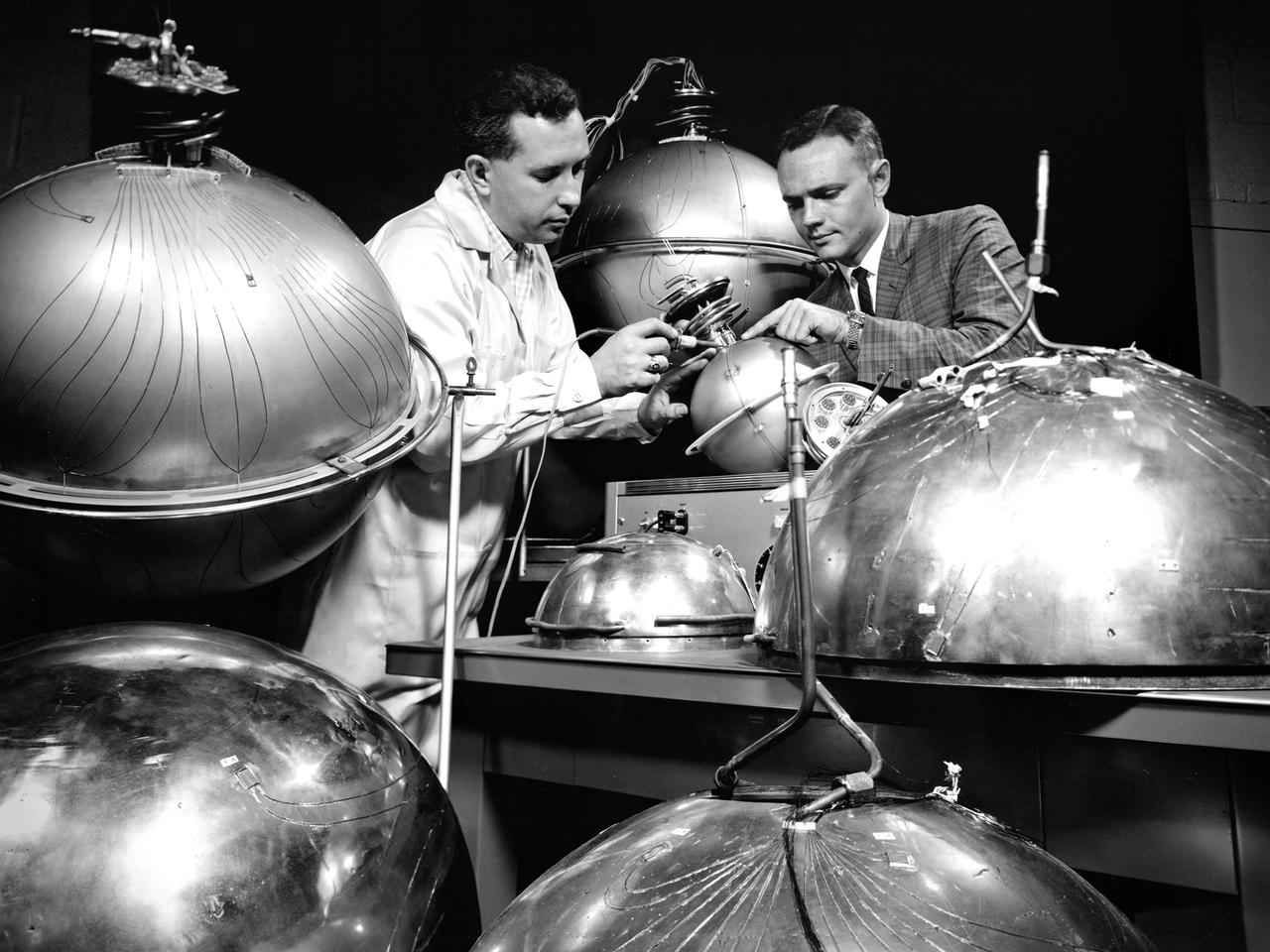
An engineer and technician at the National Aeronautics and Space Administration (NASA) Lewis Research Center install the instrumentation on spherical fuel tanks for an investigation of the behavior of liquids in microgravity. Lewis researchers were undertaking a broad effort to study the heat transfer properties of high energy propellants such as liquid hydrogen in microgravity. In the center’s 2.2-Second Drop Tower they investigated the wetting characteristics of liquid and the liquid-vapor configurations, and predicted the equilibrium state in microgravity conditions. Lewis was also conducting a series microgravity investigations which launched 9-inch diameter spherical dewars, seen here, on an Aerobee sounding rocket. A camera inside the rocket filmed the liquid hydrogen’s behavior during its 4 to 7 minutes of freefall. The researchers concluded, however, that they needed to extend the weightlessness period to obtain better results. So they designed an experiment to be launched on an Atlas missile that would provide 21 minutes of weightlessness. The experiment was flight qualified at Lewis. The 36-percent full liquid hydrogen stainless steel dewar was launched on the Atlas on February 25, 1964. The instrumentation measured temperature, pressure, vacuum, and liquid level. Temperature instrumentation indicated wall drying during the freefall. The resultant pressure-rise characteristics were similar to those used for the normal-gravity test.

AS17-145-22157 (12 Dec. 1972) --- Scientist-astronaut Harrison Schmitt, Apollo 17 lunar module pilot, uses an adjustable sampling scoop to retrieve lunar samples during the second Apollo 17 extravehicular activity (EVA), at Station 5 at the Taurus-Littrow landing site. A gnomon is atop the large rock in the foreground. The gnomon is a stadia rod mounted on a tripod, and serves as an indicator of the gravitational vector and provides accurate vertical reference and calibrated length for determining size and position of objects in near-field photographs. The color scale of blue, orange and green is used to accurately determine color for photography. The rod of it is 18 inches long. The scoop Dr. Schmitt is using is 11 3/4 inches long and is attached to a tool extension which adds a potential 30 inches of length to the scoop. The pan portion, obscured in this view, has a flat bottom, flanged on both sides with a partial cover on the top. It is used to retrieve sand, dust and lunar samples too small for the tongs, another geological tool used by the astronauts. The pan and the adjusting mechanism are made of stainless steel and the handle is made of aluminum. Within the foreground of this scene, three lunar samples were taken--numbers 75060, 75075 and 75080. Astronaut Eugene A. Cernan, crew commander, was using a 60mm lens on the 70mm Hasselblad camera and type SO-368 film to take this photograph.
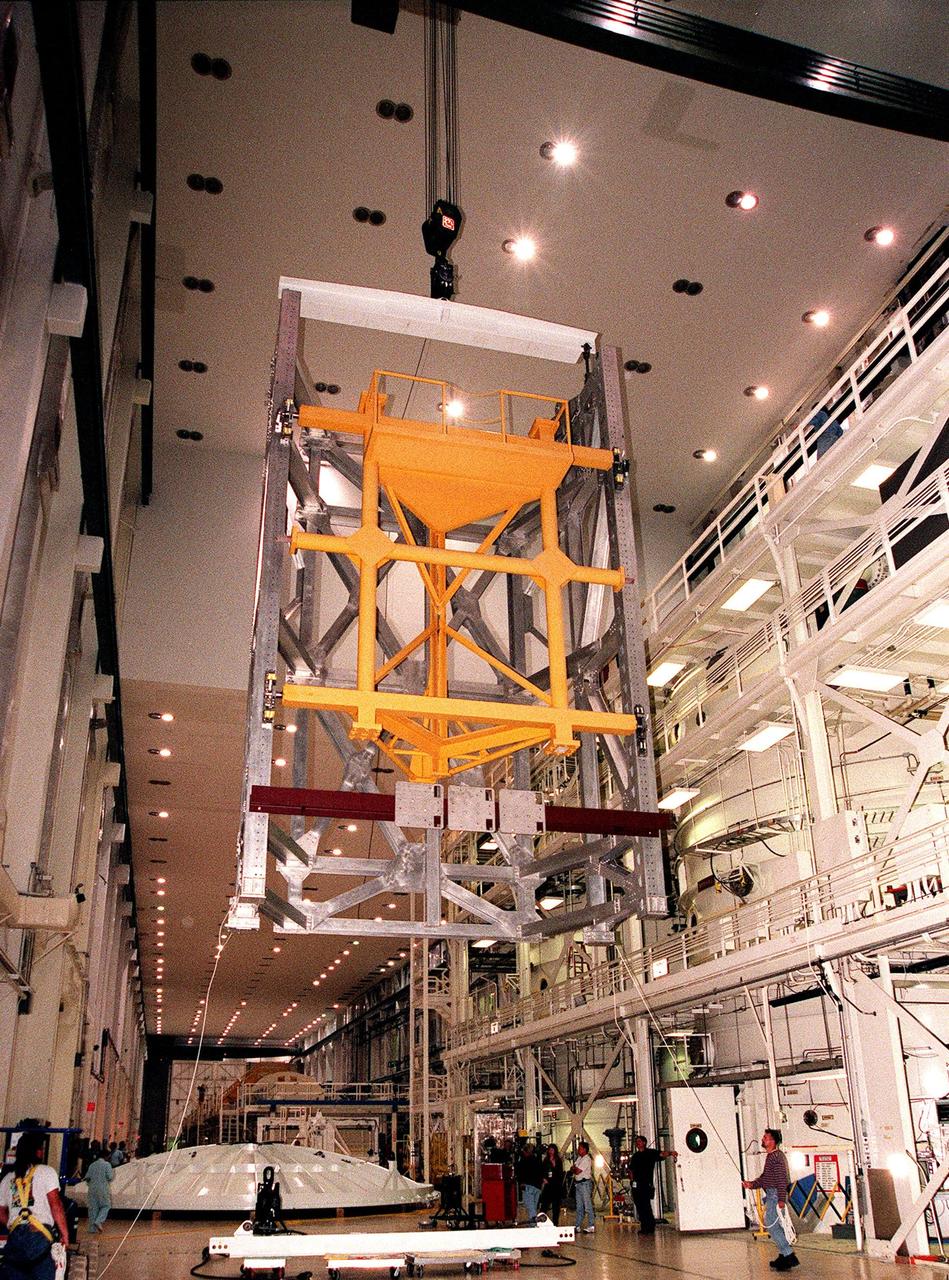
KENNEDY SPACE CENTER, FLA. -- In the Operations and Checkout Building's high bay, a crane lifts the Rotation Handling Fixture (RHF) and simulated module during a test. Under normal operation, the RHF will hold a pressurized module intended for the International Space Station, lifting it up and into an altitude chamber for leak testing. The chamber was recently reactivated after a 24-year hiatus. Originally, two chambers were built to test Apollo Program flight hardware. They were last used in 1975 during the Apollo-Soyuz Test Project. In 1997, in order to increase the probability of successful missions aboard the ISS, NASA decided to perform leak tests on ISS pressurized modules at the launch site. After installation of new vacuum pumping equipment and controls, a new control room, and a new rotation and handling fixture, the chamber again became operational in February 1999. The chamber, which is 33 feet in diameter and 50 feet tall, is constructed of stainless steel. The rotation handling fixture is aluminum. The first module that will be tested for leaks is the U.S. Laboratory. No date has been determined for the test

You might see a DeLorean zipping around Greenbelt, Maryland, on Oct. 21, 2015, the day Marty McFly and Doc Brown arrive from 1985 in "Back to the Future, Part II," but don't look for flaming tread marks in its wake. The DeLorean DMC-12, commonly seen on the roads of NASA’s Goddard Space Flight Center in Greenbelt, Maryland, is better known for the version that starred as a plutonium-powered time machine in the “Back to the Future” trilogy. After some investigation, Goddard’s Office of Communications found the owner of the stainless steel, gull-winged, two-door coupe. Goddard software test engineer, Brendan Rebo bought the 1982 DeLorean off eBay about four and a half years ago. “The car attracts a lot more attention than I expected,” Rebo admitted. “I hear a lot of jokes about whether or not I’ve reached 88 miles per hour yet.” As “Back to the Future” fans around the world celebrate today, Rebo also celebrates his birthday. While the second film predicted technology, such as flying cars, that doesn’t yet exist, people can still marvel at the classic car and movie reference. Credit: NASA/Goddard/Rebecca Roth

You might see a DeLorean zipping around Greenbelt, Maryland, on Oct. 21, 2015, the day Marty McFly and Doc Brown arrive from 1985 in "Back to the Future, Part II," but don't look for flaming tread marks in its wake. The DeLorean DMC-12, commonly seen on the roads of NASA’s Goddard Space Flight Center in Greenbelt, Maryland, is better known for the version that starred as a plutonium-powered time machine in the “Back to the Future” trilogy. After some investigation, Goddard’s Office of Communications found the owner of the stainless steel, gull-winged, two-door coupe. Goddard software test engineer, Brendan Rebo bought the 1982 DeLorean off eBay about four and a half years ago. “The car attracts a lot more attention than I expected,” Rebo admitted. “I hear a lot of jokes about whether or not I’ve reached 88 miles per hour yet.” As “Back to the Future” fans around the world celebrate today, Rebo also celebrates his birthday. While the second film predicted technology, such as flying cars, that doesn’t yet exist, people can still marvel at the classic car and movie reference. Credit: NASA/Goddard/Rebecca Roth

You might see a DeLorean zipping around Greenbelt, Maryland, on Oct. 21, 2015, the day Marty McFly and Doc Brown arrive from 1985 in "Back to the Future, Part II," but don't look for flaming tread marks in its wake. The DeLorean DMC-12, commonly seen on the roads of NASA’s Goddard Space Flight Center in Greenbelt, Maryland, is better known for the version that starred as a plutonium-powered time machine in the “Back to the Future” trilogy. After some investigation, Goddard’s Office of Communications found the owner of the stainless steel, gull-winged, two-door coupe. Goddard software test engineer, Brendan Rebo bought the 1982 DeLorean off eBay about four and a half years ago. “The car attracts a lot more attention than I expected,” Rebo admitted. “I hear a lot of jokes about whether or not I’ve reached 88 miles per hour yet.” As “Back to the Future” fans around the world celebrate today, Rebo also celebrates his birthday. While the second film predicted technology, such as flying cars, that doesn’t yet exist, people can still marvel at the classic car and movie reference. Credit: NASA/Goddard/Rebecca Roth

You might see a DeLorean zipping around Greenbelt, Maryland, on Oct. 21, 2015, the day Marty McFly and Doc Brown arrive from 1985 in "Back to the Future, Part II," but don't look for flaming tread marks in its wake. The DeLorean DMC-12, commonly seen on the roads of NASA’s Goddard Space Flight Center in Greenbelt, Maryland, is better known for the version that starred as a plutonium-powered time machine in the “Back to the Future” trilogy. After some investigation, Goddard’s Office of Communications found the owner of the stainless steel, gull-winged, two-door coupe. Goddard software test engineer, Brendan Rebo bought the 1982 DeLorean off eBay about four and a half years ago. “The car attracts a lot more attention than I expected,” Rebo admitted. “I hear a lot of jokes about whether or not I’ve reached 88 miles per hour yet.” As “Back to the Future” fans around the world celebrate today, Rebo also celebrates his birthday. While the second film predicted technology, such as flying cars, that doesn’t yet exist, people can still marvel at the classic car and movie reference. Credit: NASA/Goddard/Rebecca Roth

KENNEDY SPACE CENTER, FLA. -- Inside the Operations and Checkout Building high bay, Center Director Roy Bridges remarks on the accomplishment of the joint NASA/Boeing team in renovating an altitude chamber formerly used on the Apollo program. Project team members, management, media and onlookers are present for the ribbon cutting. The chamber was reactivated, after a 24-year hiatus, to perform leak tests on International Space Station pressurized modules at the launch site. Originally, two chambers were built to test the Apollo command and lunar service modules. They were last used in 1975 during the Apollo-Soyuz Test Project. After installation of new vacuum pumping equipment and controls, a new control room, and a new rotation handling fixture, the chamber again became operational in February 1999. The chamber, which is 33 feet in diameter and 50 feet tall, is constructed of stainless steel. The first module that will be tested for leaks is the U.S. Laboratory. No date has been determined for the test
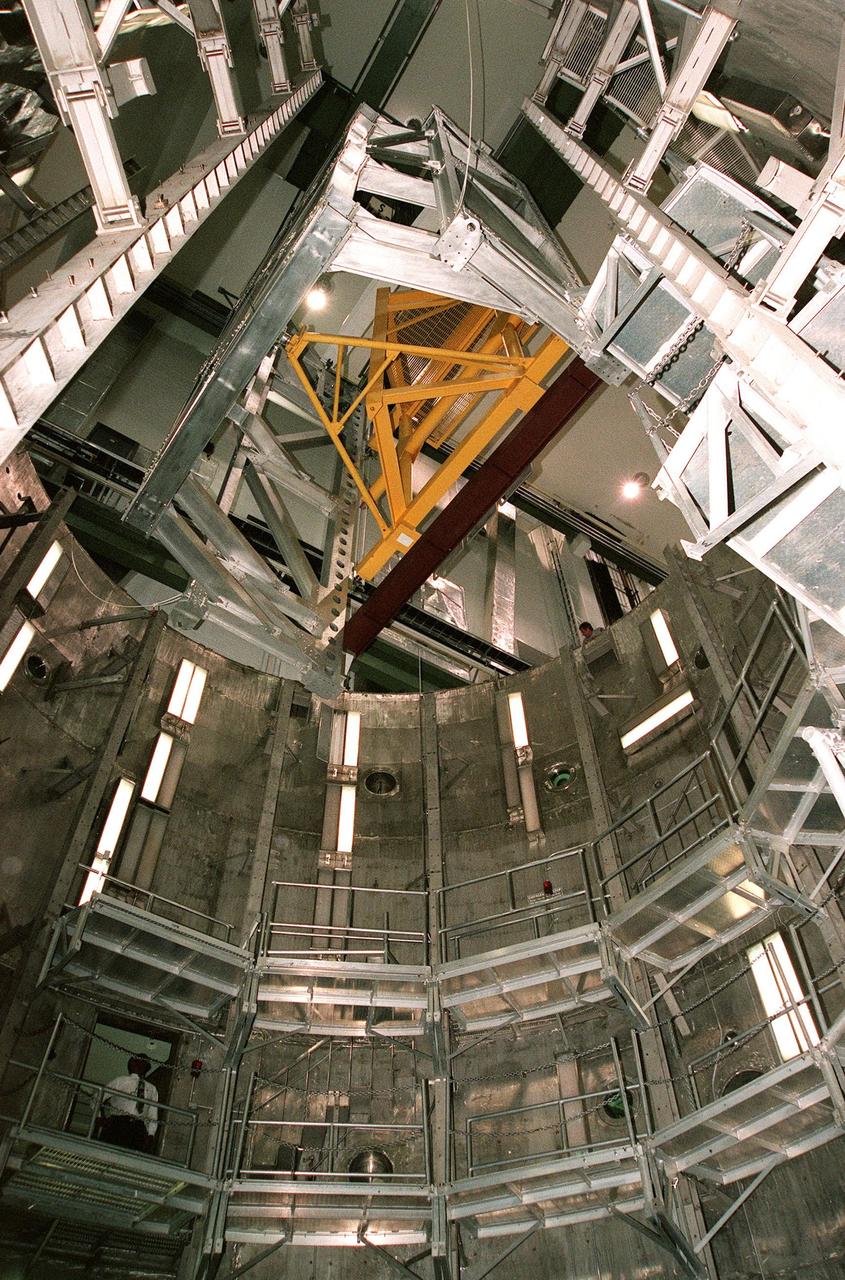
KENNEDY SPACE CENTER, FLA. -- Viewed from inside the altitude chamber in the Operations and Checkout Building's high bay, the Rotation Handling Fixture (RHF), with a simulated module attached, is lowered during a test. Under normal operation, the RHF will hold a pressurized module intended for the International Space Station, depositing it into the altitude chamber for leak testing. The chamber was recently reactivated after a 24-year hiatus. Originally, two chambers were built to test Apollo Program flight hardware. They were last used in 1975 during the Apollo-Soyuz Test Project. In 1997, in order to increase the probability of successful missions aboard the ISS, NASA decided to perform leak tests on ISS pressurized modules at the launch site. After installation of new vacuum pumping equipment and controls, a new control room, and a new rotation and handling fixture, the chamber again became operational in February 1999. The chamber, which is 33 feet in diameter and 50 feet tall, is constructed of stainless steel. The rotation handling fixture is aluminum. The first module that will be tested for leaks is the U.S. Laboratory. No date has been determined for the test
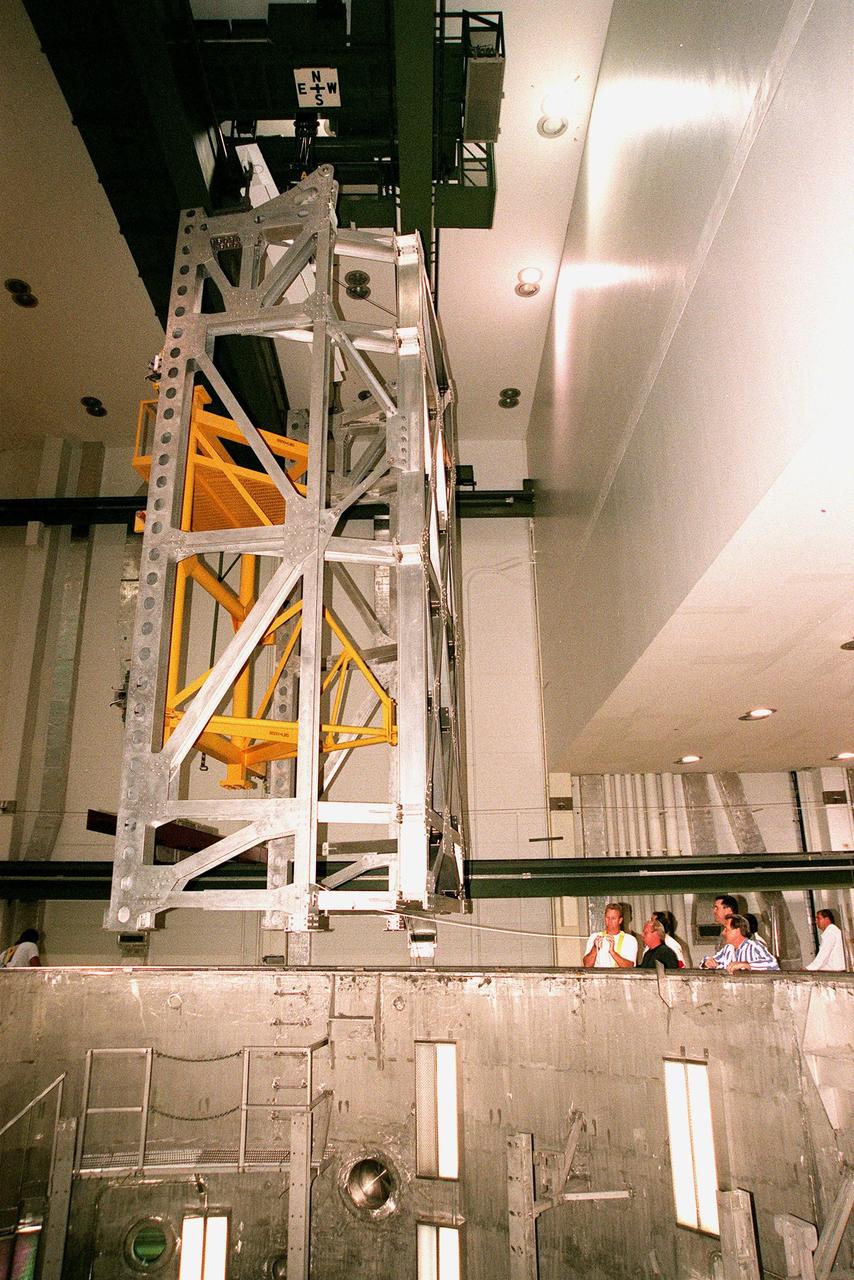
KENNEDY SPACE CENTER, FLA. -- In the Operations and Checkout Building's high bay, the Rotation Handling Fixture (RHF), with a simulated module attached, is lowered by crane into the altitude chamber below during a test. Under normal operation, the RHF will hold a pressurized module intended for the International Space Station, depositing it into the altitude chamber for leak testing. The chamber was recently reactivated after a 24-year hiatus. Originally, two chambers were built to test Apollo Program flight hardware. They were last used in 1975 during the Apollo-Soyuz Test Project. In 1997, in order to increase the probability of successful missions aboard the ISS, NASA decided to perform leak tests on ISS pressurized modules at the launch site. After installation of new vacuum pumping equipment and controls, a new control room, and a new rotation and handling fixture, the chamber again became operational in February 1999. The chamber, which is 33 feet in diameter and 50 feet tall, is constructed of stainless steel. The rotation handling fixture is aluminum. The first module that will be tested for leaks is the U.S. Laboratory. No date has been determined for the test
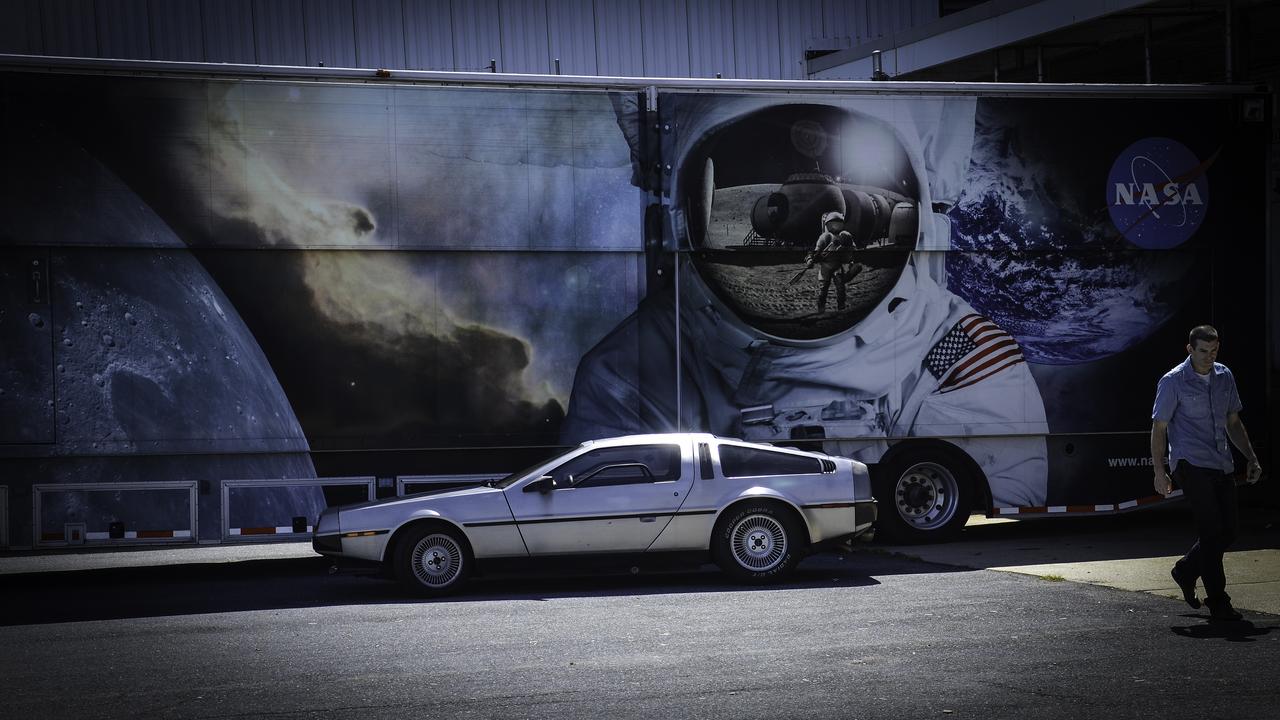
Great Scott, This is Heavy! You might see a DeLorean zipping around Greenbelt, Maryland, on Oct. 21, 2015, the day Marty McFly and Doc Brown arrive from 1985 in "Back to the Future, Part II," but don't look for flaming tread marks in its wake. The DeLorean DMC-12, commonly seen on the roads of NASA’s Goddard Space Flight Center in Greenbelt, Maryland, is better known for the version that starred as a plutonium-powered time machine in the “Back to the Future” trilogy. After some investigation, Goddard’s Office of Communications found the owner of the stainless steel, gull-winged, two-door coupe. Goddard software test engineer, Brendan Rebo bought the 1982 DeLorean off eBay about four and a half years ago. “The car attracts a lot more attention than I expected,” Rebo admitted. “I hear a lot of jokes about whether or not I’ve reached 88 miles per hour yet.” As “Back to the Future” fans around the world celebrate today, Rebo also celebrates his birthday. While the second film predicted technology, such as flying cars, that doesn’t yet exist, people can still marvel at the classic car and movie reference. Credit: NASA/Goddard/Rebecca Roth <b><a href="http://www.nasa.gov/audience/formedia/features/MP_Photo_Guidelines.html" rel="nofollow">NASA image use policy.</a></b> <b><a href="http://www.nasa.gov/centers/goddard/home/index.html" rel="nofollow">NASA Goddard Space Flight Center</a></b> enables NASA’s mission through four scientific endeavors: Earth Science, Heliophysics, Solar System Exploration, and Astrophysics. Goddard plays a leading role in NASA’s accomplishments by contributing compelling scientific knowledge to advance the Agency’s mission. <b>Follow us on <a href="http://twitter.com/NASAGoddardPix" rel="nofollow">Twitter</a></b> <b>Like us on <a href="http://www.facebook.com/pages/Greenbelt-MD/NASA-Goddard/395013845897?ref=tsd" rel="nofollow">Facebook</a></b> <b>Find us on <a href="http://instagrid.me/nasagoddard/?vm=grid" rel="nofollow">Instagram</a></b>

“We did science fair projects in eighth grade. So my dad and I designed an experiment to look at what cooking oil is best for cooking popcorn. Now you go to science fairs and you see this experiment everywhere. But in 1989, it was like, ‘wow, a kid who knows the scientific method!’ “I made a lot of popcorn. My poor brothers had to eat it all. I measured volume popped and how many kernels were left unpopped. But I also measured the taste factor. For example, cooking popcorn in peanut oil actually has good yield but it doesn’t taste good. “In high school, I had this chemistry teacher named Carol Palmer. I’ll never forget her. The science fairs were really important to her. She had partnerships with laboratories in town, and through this program, I got to go to a stainless steel foundry. “Do you know what paper machines are like? Picture giant rolls, like the size of an 18-wheeler truckbed. This place made those things. This was the early 90s, so we were just starting to recycle paper. But the machines had begun falling apart because of all the corrosive chemicals added to the mix to remove ink. I was simulating that process in the laboratory through different experiments. And I won two years in a row at the state-level science fair: I won first prize in electrochemistry and I won first prize in chemistry. “It was all because of this teacher. And to be honest, I wouldn’t have known that materials science was a thing or that I should study it if I hadn’t had that opportunity. It really put me on course.” Kathleen Boggs, Systems and Technology Demonstration Manager in the International Space Station Division of the Human Exploration and Operations Mission Directorate, Thursday, March 5, 2020, at NASA Headquarters in Washington, DC. Photo Credit: (NASA/Joel Kowsky)
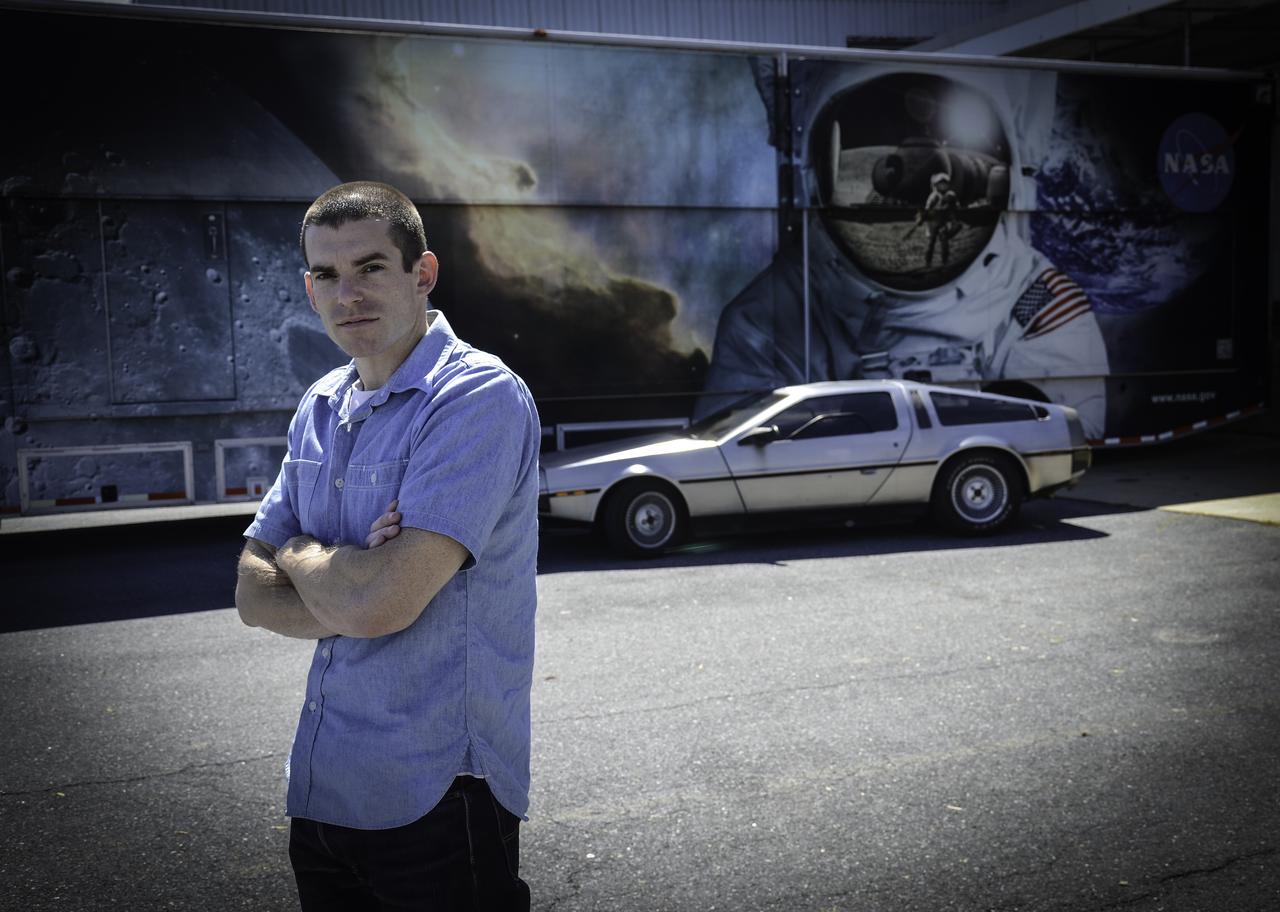
Great Scott, This is Heavy! You might see a DeLorean zipping around Greenbelt, Maryland, on Oct. 21, 2015, the day Marty McFly and Doc Brown arrive from 1985 in "Back to the Future, Part II," but don't look for flaming tread marks in its wake. The DeLorean DMC-12, commonly seen on the roads of NASA’s Goddard Space Flight Center in Greenbelt, Maryland, is better known for the version that starred as a plutonium-powered time machine in the “Back to the Future” trilogy. After some investigation, Goddard’s Office of Communications found the owner of the stainless steel, gull-winged, two-door coupe. Goddard software test engineer, Brendan Rebo bought the 1982 DeLorean off eBay about four and a half years ago. “The car attracts a lot more attention than I expected,” Rebo admitted. “I hear a lot of jokes about whether or not I’ve reached 88 miles per hour yet.” As “Back to the Future” fans around the world celebrate today, Rebo also celebrates his birthday. While the second film predicted technology, such as flying cars, that doesn’t yet exist, people can still marvel at the classic car and movie reference. Credit: NASA/Goddard/Rebecca Roth <b><a href="http://www.nasa.gov/audience/formedia/features/MP_Photo_Guidelines.html" rel="nofollow">NASA image use policy.</a></b> <b><a href="http://www.nasa.gov/centers/goddard/home/index.html" rel="nofollow">NASA Goddard Space Flight Center</a></b> enables NASA’s mission through four scientific endeavors: Earth Science, Heliophysics, Solar System Exploration, and Astrophysics. Goddard plays a leading role in NASA’s accomplishments by contributing compelling scientific knowledge to advance the Agency’s mission. <b>Follow us on <a href="http://twitter.com/NASAGoddardPix" rel="nofollow">Twitter</a></b> <b>Like us on <a href="http://www.facebook.com/pages/Greenbelt-MD/NASA-Goddard/395013845897?ref=tsd" rel="nofollow">Facebook</a></b> <b>Find us on <a href="http://instagrid.me/nasagoddard/?vm=grid" rel="nofollow">Instagram</a></b>
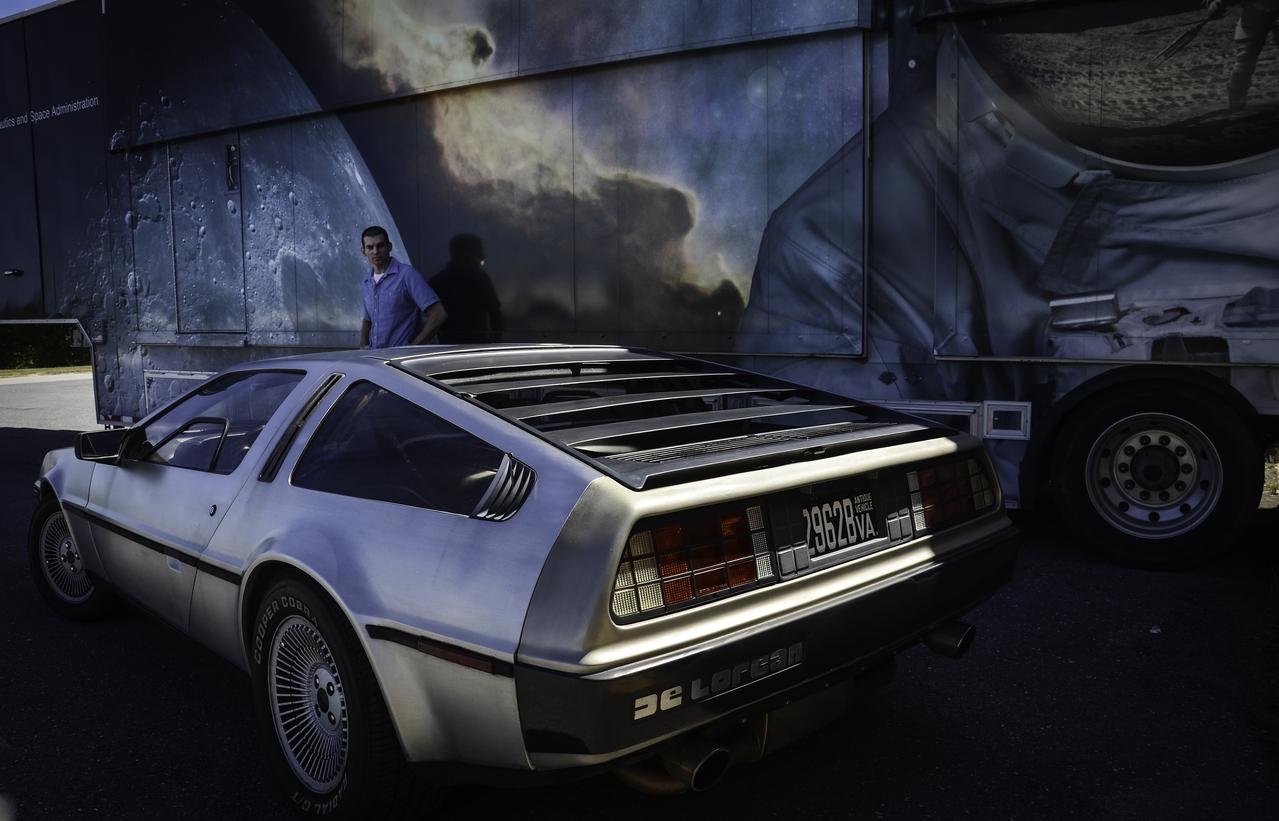
Great Scott, This is Heavy! You might see a DeLorean zipping around Greenbelt, Maryland, on Oct. 21, 2015, the day Marty McFly and Doc Brown arrive from 1985 in "Back to the Future, Part II," but don't look for flaming tread marks in its wake. The DeLorean DMC-12, commonly seen on the roads of NASA’s Goddard Space Flight Center in Greenbelt, Maryland, is better known for the version that starred as a plutonium-powered time machine in the “Back to the Future” trilogy. After some investigation, Goddard’s Office of Communications found the owner of the stainless steel, gull-winged, two-door coupe. Goddard software test engineer, Brendan Rebo bought the 1982 DeLorean off eBay about four and a half years ago. “The car attracts a lot more attention than I expected,” Rebo admitted. “I hear a lot of jokes about whether or not I’ve reached 88 miles per hour yet.” As “Back to the Future” fans around the world celebrate today, Rebo also celebrates his birthday. While the second film predicted technology, such as flying cars, that doesn’t yet exist, people can still marvel at the classic car and movie reference. Credit: NASA/Goddard/Rebecca Roth <b><a href="http://www.nasa.gov/audience/formedia/features/MP_Photo_Guidelines.html" rel="nofollow">NASA image use policy.</a></b> <b><a href="http://www.nasa.gov/centers/goddard/home/index.html" rel="nofollow">NASA Goddard Space Flight Center</a></b> enables NASA’s mission through four scientific endeavors: Earth Science, Heliophysics, Solar System Exploration, and Astrophysics. Goddard plays a leading role in NASA’s accomplishments by contributing compelling scientific knowledge to advance the Agency’s mission. <b>Follow us on <a href="http://twitter.com/NASAGoddardPix" rel="nofollow">Twitter</a></b> <b>Like us on <a href="http://www.facebook.com/pages/Greenbelt-MD/NASA-Goddard/395013845897?ref=tsd" rel="nofollow">Facebook</a></b> <b>Find us on <a href="http://instagrid.me/nasagoddard/?vm=grid" rel="nofollow">Instagram</a></b>
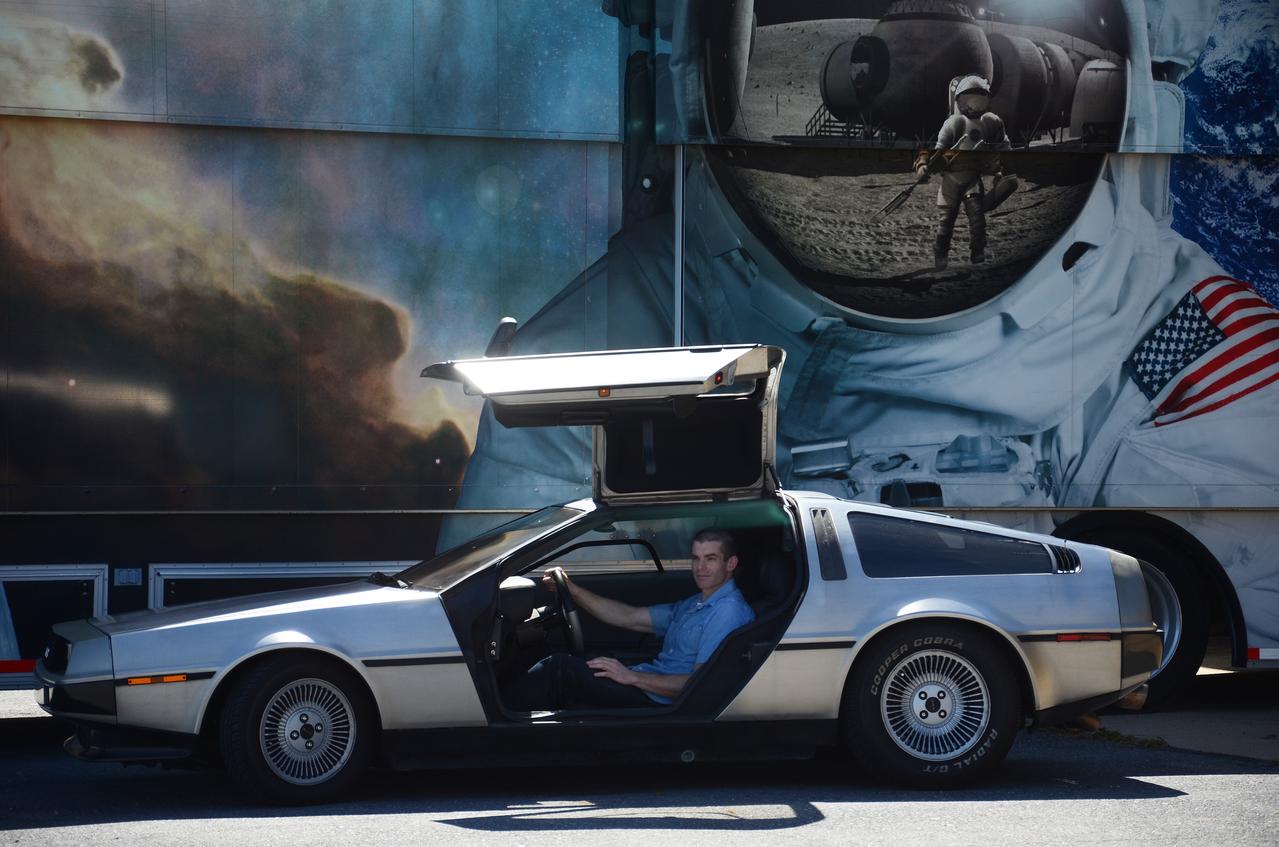
Great Scott, This is Heavy! You might see a DeLorean zipping around Greenbelt, Maryland, on Oct. 21, 2015, the day Marty McFly and Doc Brown arrive from 1985 in "Back to the Future, Part II," but don't look for flaming tread marks in its wake. The DeLorean DMC-12, commonly seen on the roads of NASA’s Goddard Space Flight Center in Greenbelt, Maryland, is better known for the version that starred as a plutonium-powered time machine in the “Back to the Future” trilogy. After some investigation, Goddard’s Office of Communications found the owner of the stainless steel, gull-winged, two-door coupe. Goddard software test engineer, Brendan Rebo bought the 1982 DeLorean off eBay about four and a half years ago. “The car attracts a lot more attention than I expected,” Rebo admitted. “I hear a lot of jokes about whether or not I’ve reached 88 miles per hour yet.” As “Back to the Future” fans around the world celebrate today, Rebo also celebrates his birthday. While the second film predicted technology, such as flying cars, that doesn’t yet exist, people can still marvel at the classic car and movie reference. Credit: NASA/Goddard/Rebecca Roth <b><a href="http://www.nasa.gov/audience/formedia/features/MP_Photo_Guidelines.html" rel="nofollow">NASA image use policy.</a></b> <b><a href="http://www.nasa.gov/centers/goddard/home/index.html" rel="nofollow">NASA Goddard Space Flight Center</a></b> enables NASA’s mission through four scientific endeavors: Earth Science, Heliophysics, Solar System Exploration, and Astrophysics. Goddard plays a leading role in NASA’s accomplishments by contributing compelling scientific knowledge to advance the Agency’s mission. <b>Follow us on <a href="http://twitter.com/NASAGoddardPix" rel="nofollow">Twitter</a></b> <b>Like us on <a href="http://www.facebook.com/pages/Greenbelt-MD/NASA-Goddard/395013845897?ref=tsd" rel="nofollow">Facebook</a></b> <b>Find us on <a href="http://instagrid.me/nasagoddard/?vm=grid" rel="nofollow">Instagram</a></b>
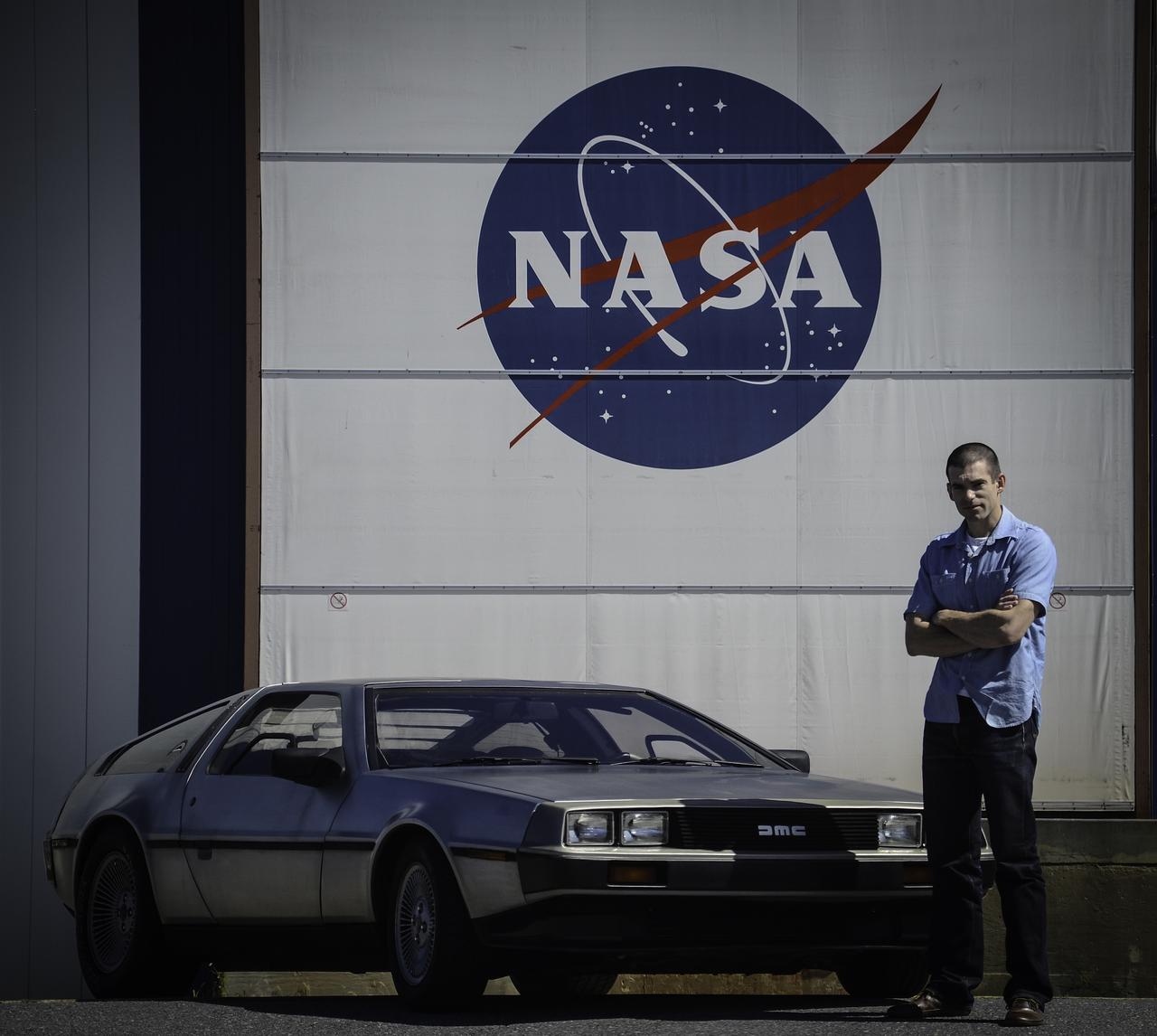
Great Scott, This is Heavy! You might see a DeLorean zipping around Greenbelt, Maryland, on Oct. 21, 2015, the day Marty McFly and Doc Brown arrive from 1985 in "Back to the Future, Part II," but don't look for flaming tread marks in its wake. The DeLorean DMC-12, commonly seen on the roads of NASA’s Goddard Space Flight Center in Greenbelt, Maryland, is better known for the version that starred as a plutonium-powered time machine in the “Back to the Future” trilogy. After some investigation, Goddard’s Office of Communications found the owner of the stainless steel, gull-winged, two-door coupe. Goddard software test engineer, Brendan Rebo bought the 1982 DeLorean off eBay about four and a half years ago. “The car attracts a lot more attention than I expected,” Rebo admitted. “I hear a lot of jokes about whether or not I’ve reached 88 miles per hour yet.” As “Back to the Future” fans around the world celebrate today, Rebo also celebrates his birthday. While the second film predicted technology, such as flying cars, that doesn’t yet exist, people can still marvel at the classic car and movie reference. Credit: NASA/Goddard/Rebecca Roth <b><a href="http://www.nasa.gov/audience/formedia/features/MP_Photo_Guidelines.html" rel="nofollow">NASA image use policy.</a></b> <b><a href="http://www.nasa.gov/centers/goddard/home/index.html" rel="nofollow">NASA Goddard Space Flight Center</a></b> enables NASA’s mission through four scientific endeavors: Earth Science, Heliophysics, Solar System Exploration, and Astrophysics. Goddard plays a leading role in NASA’s accomplishments by contributing compelling scientific knowledge to advance the Agency’s mission. <b>Follow us on <a href="http://twitter.com/NASAGoddardPix" rel="nofollow">Twitter</a></b> <b>Like us on <a href="http://www.facebook.com/pages/Greenbelt-MD/NASA-Goddard/395013845897?ref=tsd" rel="nofollow">Facebook</a></b> <b>Find us on <a href="http://instagrid.me/nasagoddard/?vm=grid" rel="nofollow">Instagram</a></b>