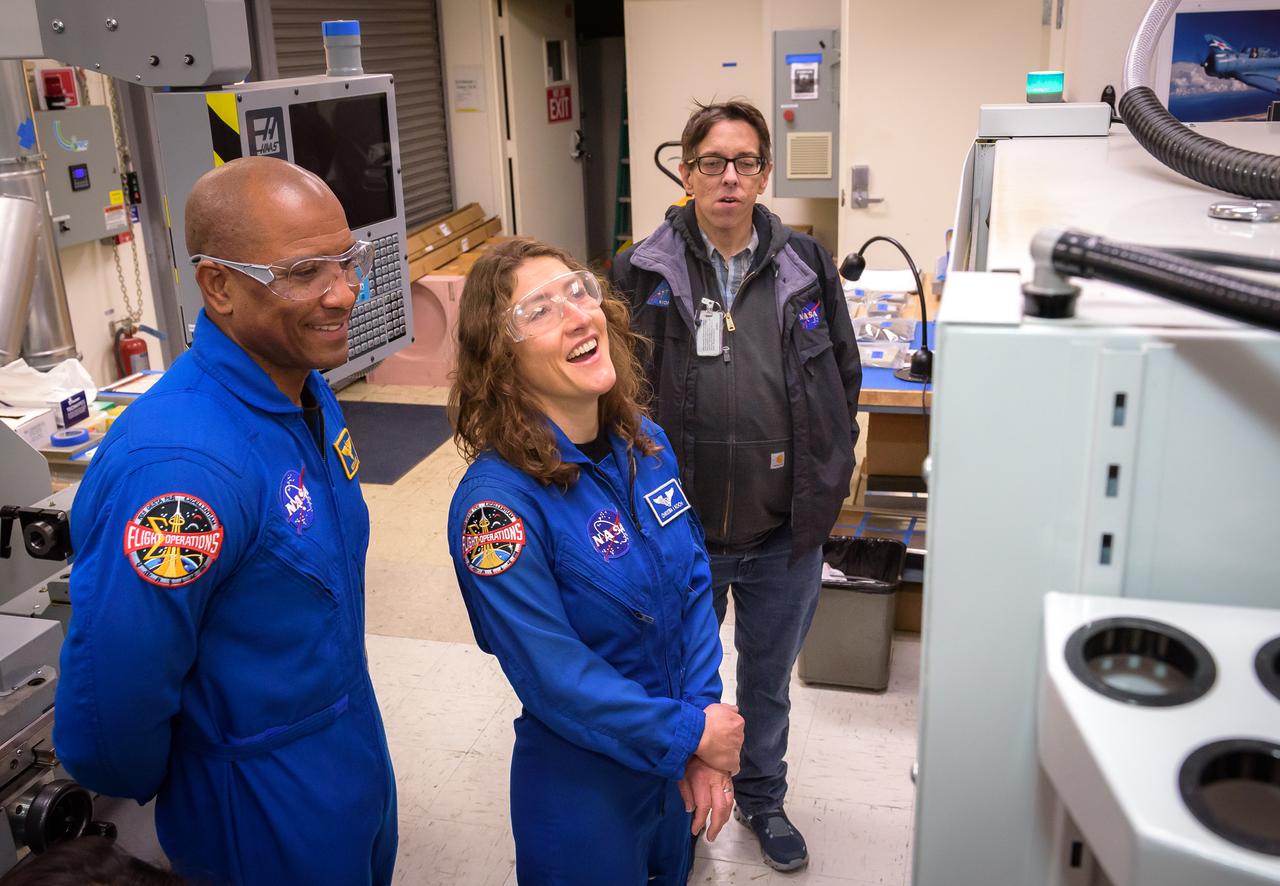
NASA astronauts Victor J. Glover, left, and Christina Koch, with Joe Mach as they tour STAR Labs, N238
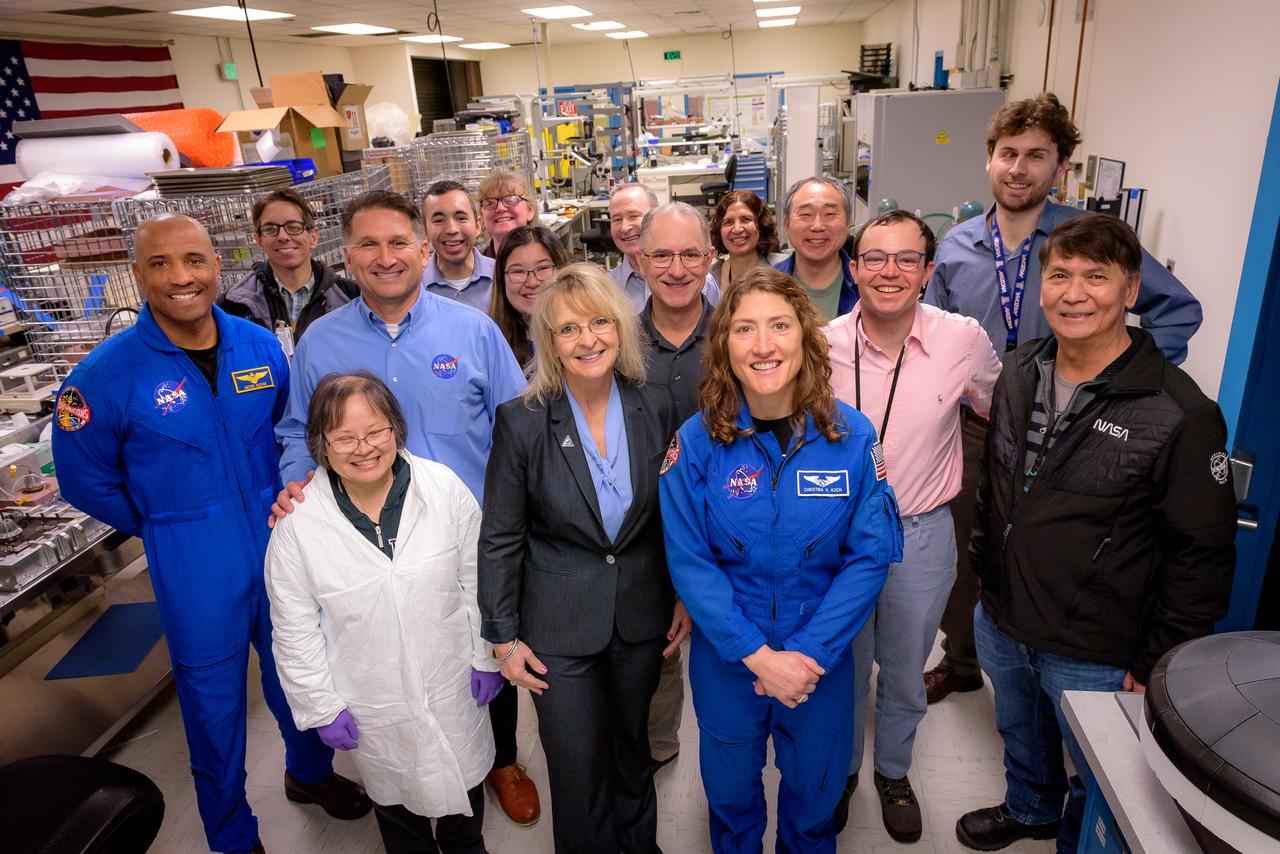
Group photo in STAR Labs in N242 with NASA astronauts Christina Koch and Victor J. Glover.
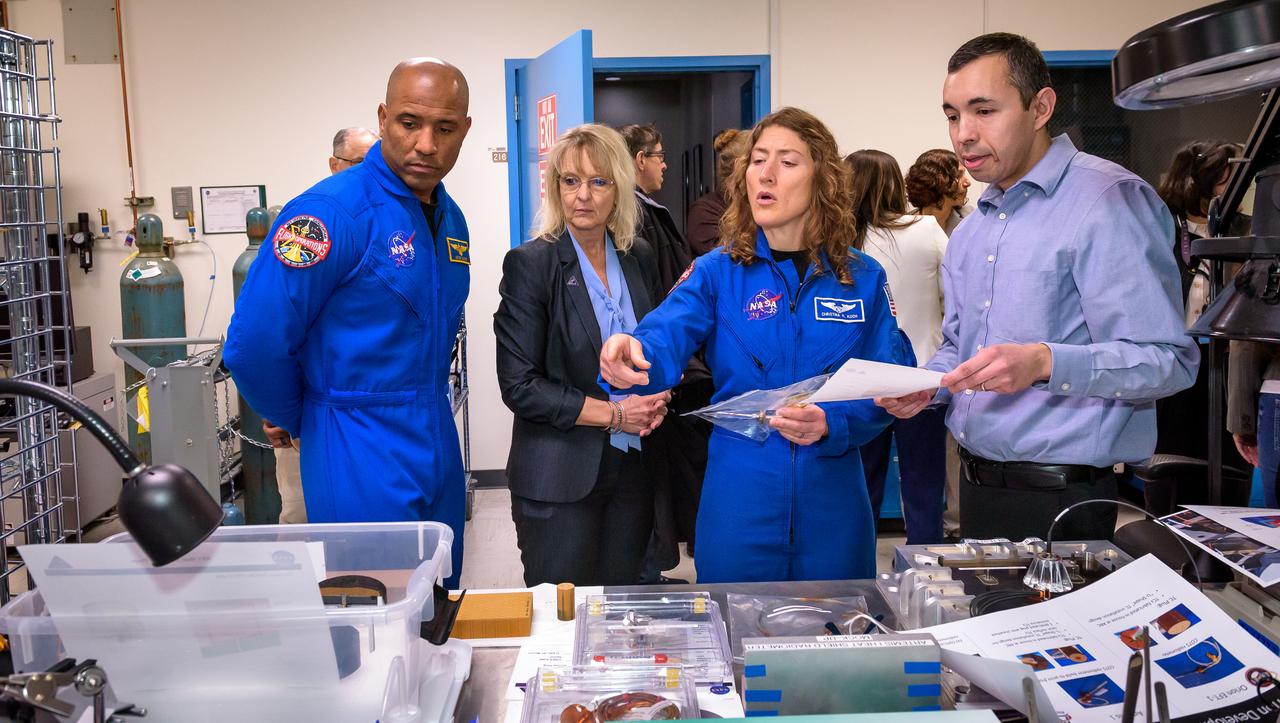
Jose A. B. Santos, right, discusses thermal protection materials with NASA astronaut Victor J. Glover, Orion Deputy Program Manager Debbie Korth, and NASA astronaut Christina Koch in STAR Labs in N242.
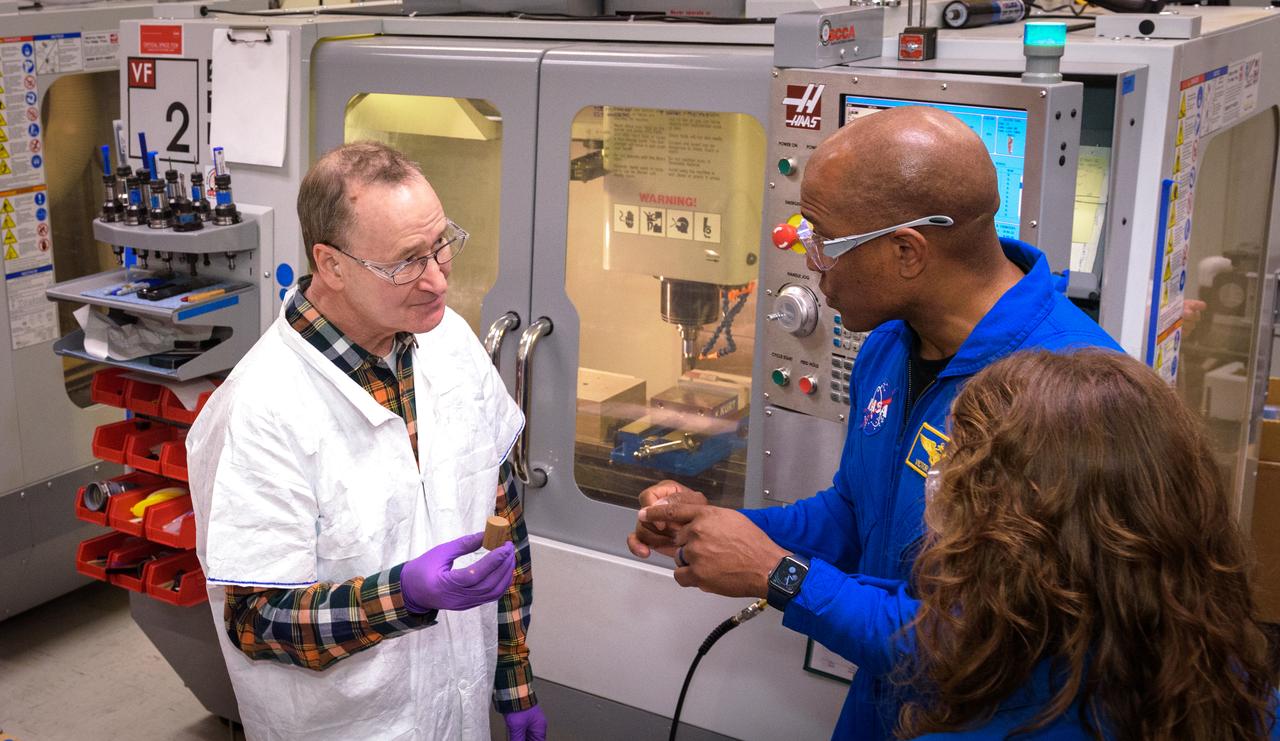
Don Ebaugh, left, shows NASA astronaut Victor J. Glover a thermal couple plug, which measures the temperature inside a heat shield, in STAR Labs, N238.
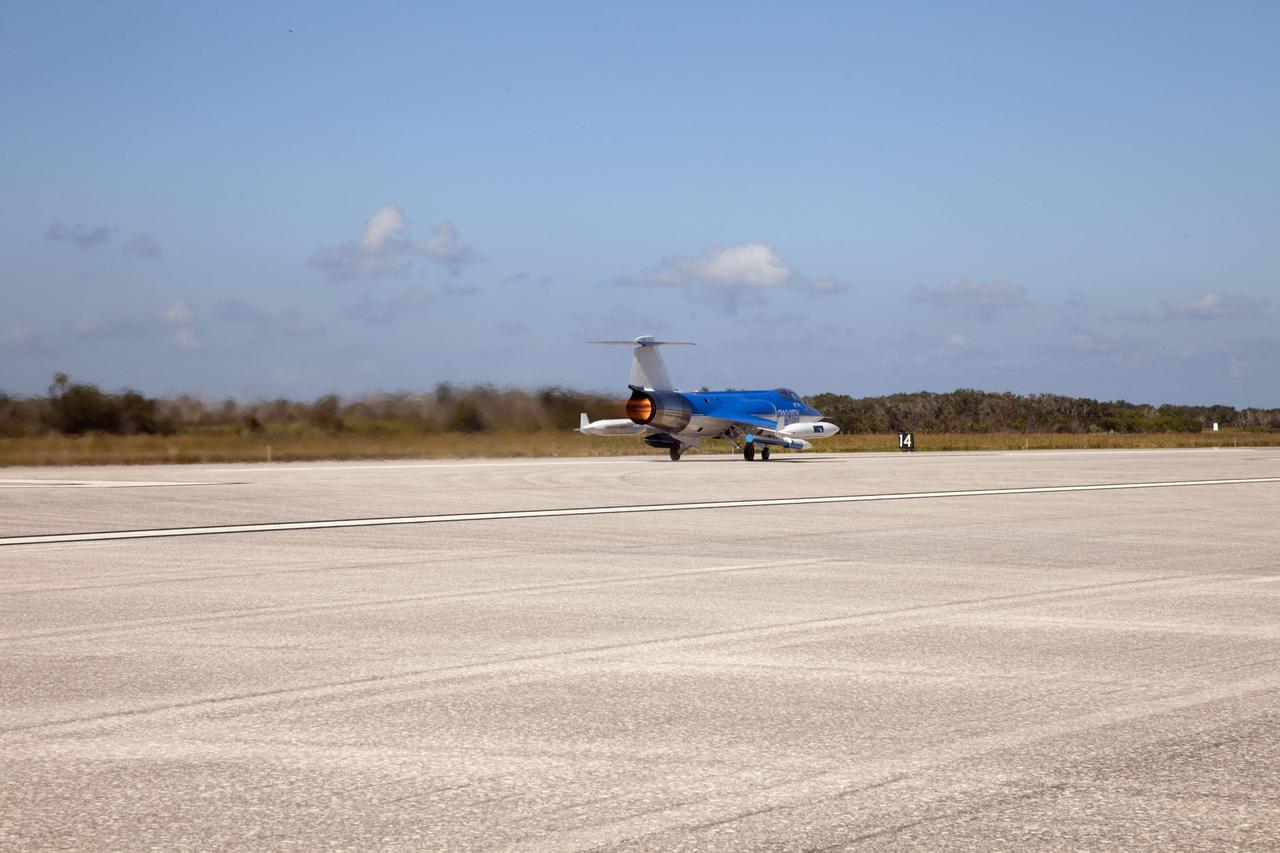
CAPE CANAVERAL, Fla. – On the runway at the Shuttle Landing Facility (SLF) at NASA’s Kennedy Space Center in Florida, a Starfighters, Inc. F-104 supersonic jet, piloted by Rick Svetkoff, picks up speed to conduct a high speed taxi test. The Star Lab suborbital launch vehicle developed by 4Frontiers Corporation is located on the right side of the jet. 4Frontiers is testing the Star Lab suborbital launch vehicle which has the potential to carry payloads into low earth orbit. Tests are being conducted to verify the aeronautical conditions of the Star Lab suborbital launch vehicle. This is the first of eight tests the launch vehicle will undergo. 4Frontiers Corporation is aiming for testing to be completed by early 2012, with commercial flights starting mid-2012. Starfighters, Inc. has signed a Space Act Agreement with NASA for the use of the SLF facilities at Kennedy Space Center. Photo credit: NASA_Gianni M. Woods
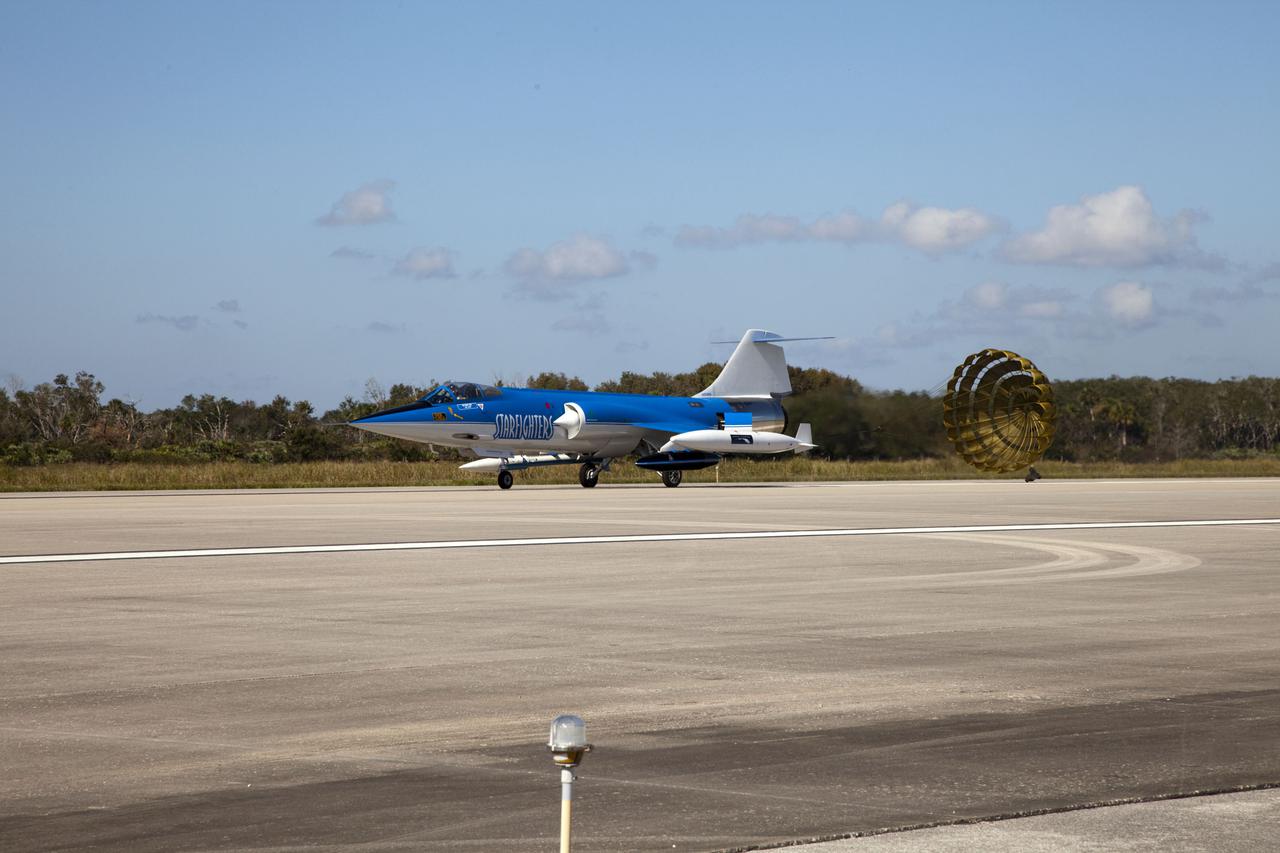
CAPE CANAVERAL, Fla. – On the runway at the Shuttle Landing Facility (SLF) at NASA’s Kennedy Space Center in Florida, the parachute on a Starfighters, Inc. F-104 supersonic jet, piloted by Rick Svetkoff, deploys after conducting a high speed taxi test. The Star Lab suborbital launch vehicle developed by 4Frontiers Corporation can be seen just above the front wheel. 4Frontiers is testing the Star Lab suborbital launch vehicle which has the potential to carry payloads into low earth orbit. Tests are being conducted to verify the aeronautical conditions of the Star Lab suborbital launch vehicle. This is the first of eight tests the launch vehicle will undergo. 4Frontiers Corporation is aiming for testing to be completed by early 2012, with commercial flights starting mid-2012. Starfighters, Inc. has signed a Space Act Agreement with NASA for the use of the SLF facilities at Kennedy Space Center. Photo credit: NASA_Gianni M. Woods
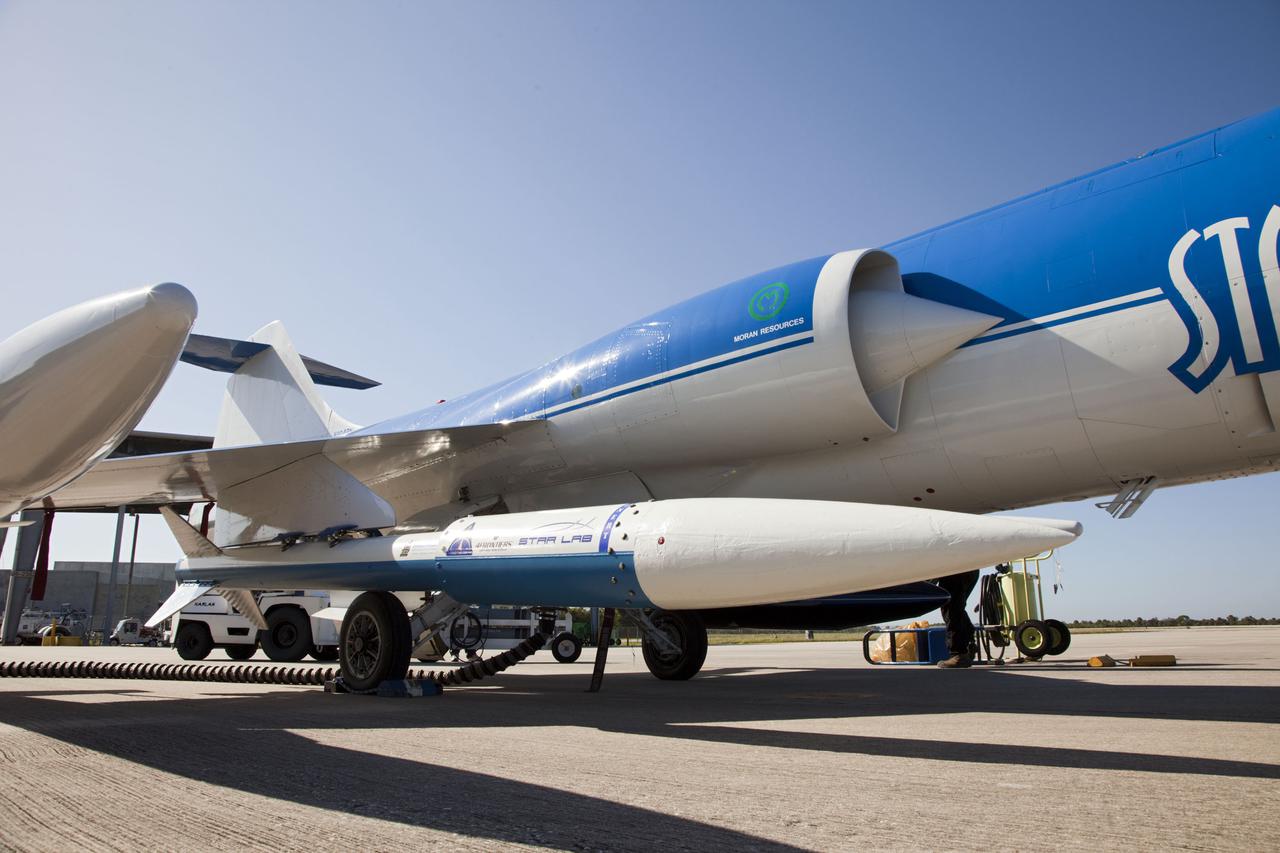
CAPE CANAVERAL, Fla. – A Starfighters, Inc. F-104 supersonic jet is being fueled before conducting a high speed taxi test at the Shuttle Landing Facility (SLF) at NASA’s Kennedy Space Center in Florida. On the right side of the jet is the Star Lab suborbital launch vehicle developed by 4Frontiers Corporation. 4Frontiers is testing the Star Lab suborbital launch vehicle which has the potential to carry payloads into low earth orbit. Tests are being conducted to verify the aeronautical conditions of the Star Lab suborbital launch vehicle. This is the first of eight tests the launch vehicle will undergo. 4Frontiers Corporation is aiming for testing to be completed by early 2012, with commercial flights starting mid-2012. Starfighters, Inc. has signed a Space Act Agreement with NASA for the use of the SLF facilities at Kennedy Space Center. Photo credit: NASA_Gianni M. Woods
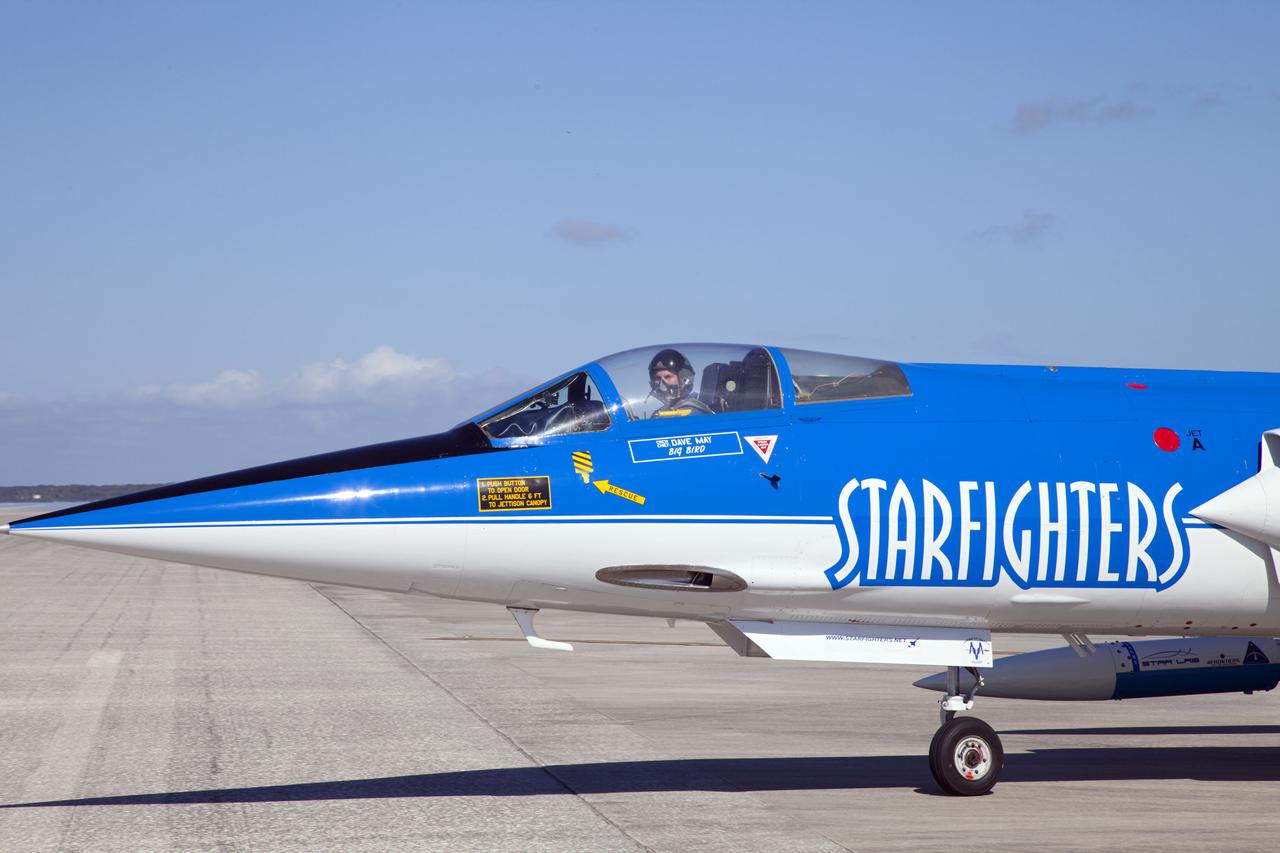
CAPE CANAVERAL, Fla. – Pilot Rick Svetkoff sits in the cockpit of a Starfighters, Inc. F-104 supersonic jet before conducting a high speed taxi test on the runway at the Shuttle Landing Facility (SLF) at NASA’s Kennedy Space Center in Florida. The Star Lab suborbital launch vehicle developed by 4Frontiers Corporation can be seen above the front wheel. 4Frontiers is testing the Star Lab suborbital launch vehicle which has the potential to carry payloads into low earth orbit. Tests are being conducted to verify the aeronautical conditions of the Star Lab suborbital launch vehicle. This is the first of eight tests the launch vehicle will undergo. 4Frontiers Corporation is aiming for testing to be completed by early 2012, with commercial flights starting mid-2012. Starfighters, Inc. has signed a Space Act Agreement with NASA for the use of the SLF facilities at Kennedy Space Center. Photo credit: NASA_Gianni M. Woods
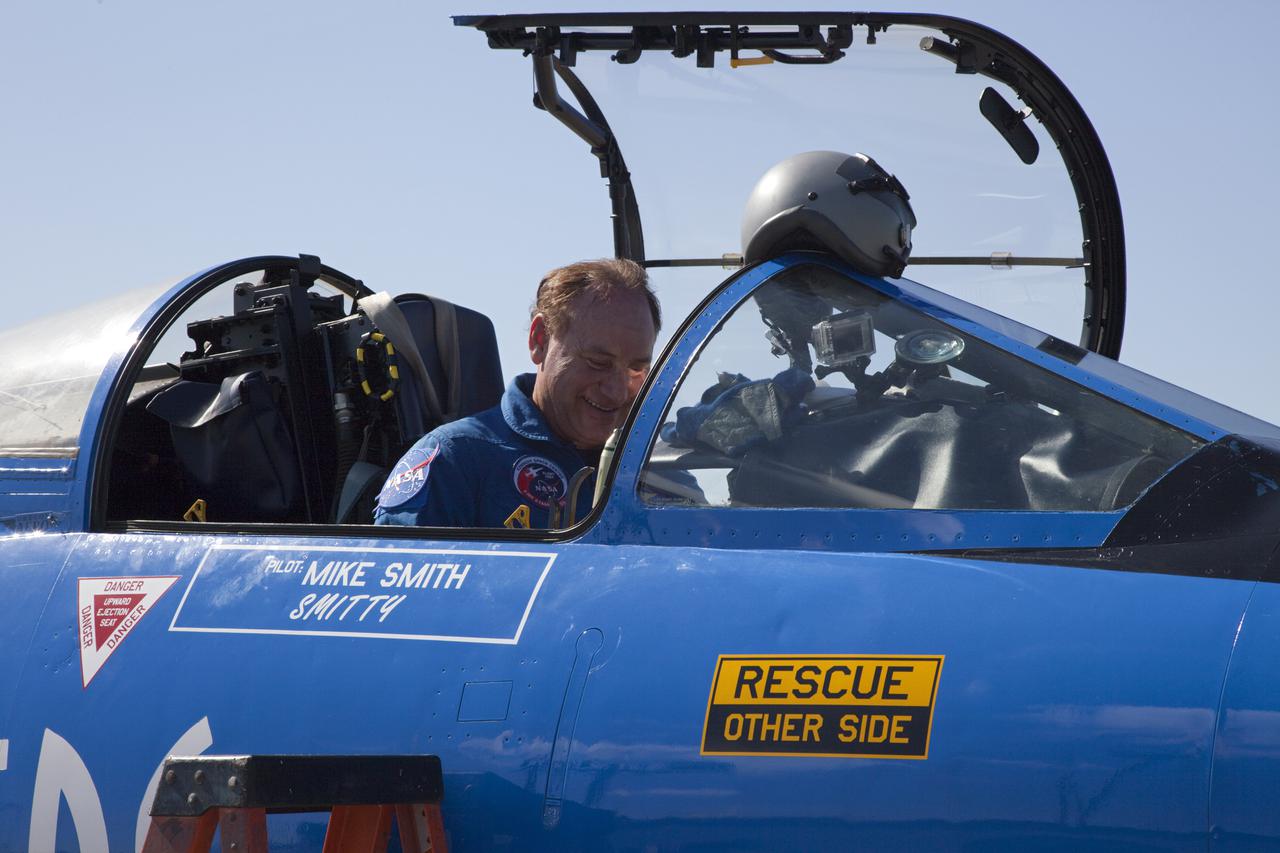
CAPE CANAVERAL, Fla. – Pilot Rick Svetkoff sits in the cockpit of a Starfighters, Inc. F-104 supersonic jet after conducting a high speed taxi test on the runway at the Shuttle Landing Facility (SLF) at NASA’s Kennedy Space Center in Florida. The Star Lab suborbital launch vehicle developed by 4Frontiers Corporation is attached to the right side of the jet. 4Frontiers is testing the Star Lab suborbital launch vehicle which has the potential to carry payloads into low earth orbit. Tests are being conducted to verify the aeronautical conditions of the Star Lab suborbital launch vehicle. This is the first of eight tests the launch vehicle will undergo. 4Frontiers Corporation is aiming for testing to be completed by early 2012, with commercial flights starting mid-2012. Starfighters, Inc. has signed a Space Act Agreement with NASA for the use of the SLF facilities at Kennedy Space Center. Photo credit: NASA_Gianni M. Woods
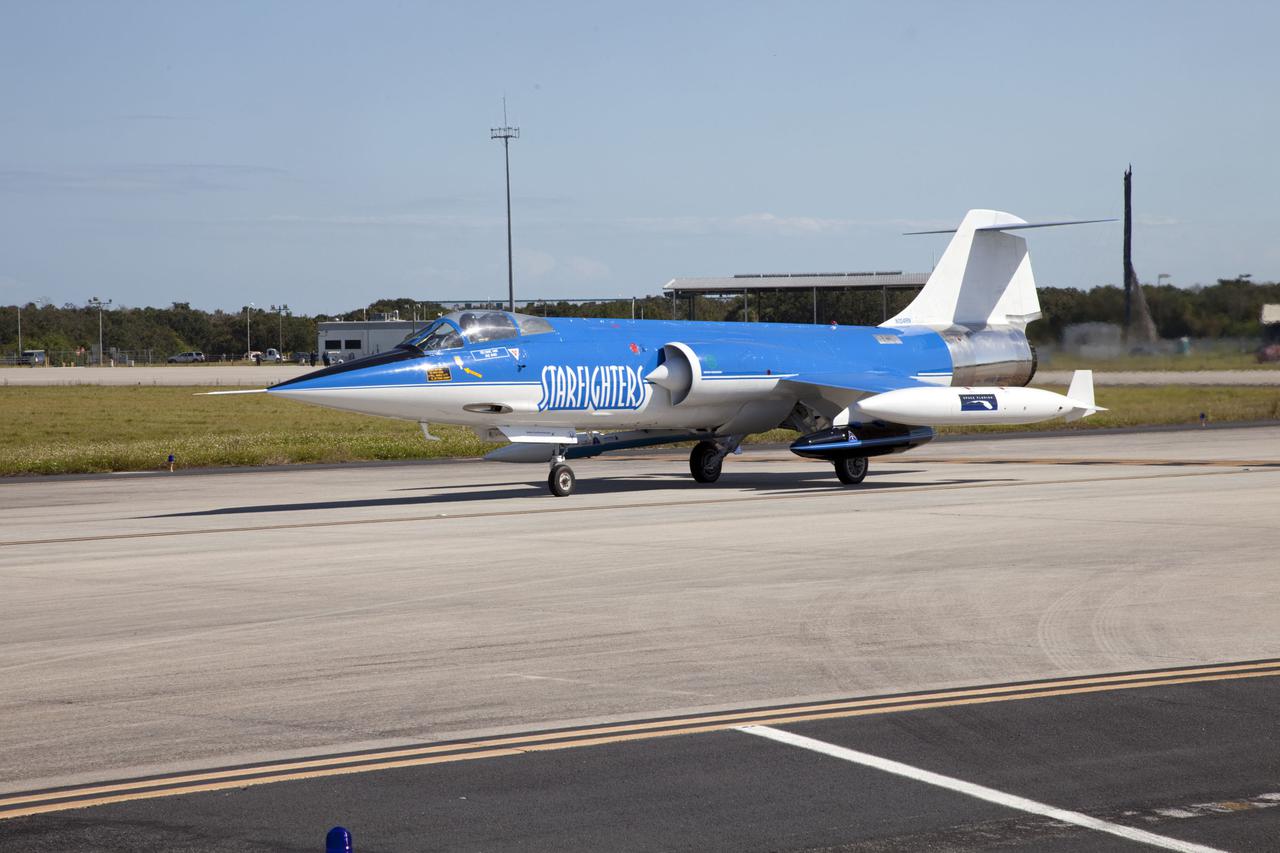
CAPE CANAVERAL, Fla. – Pilot Rick Svetkoff sits in the cockpit of a Starfighters, Inc. F-104 supersonic jet before conducting a high speed taxi test at the Shuttle Landing Facility (SLF) at NASA’s Kennedy Space Center in Florida. Hidden from the camera on the right side of the jet is the Star Lab suborbital launch vehicle developed by 4Frontiers Corporation. 4Frontiers is testing the Star Lab suborbital launch vehicle which has the potential to carry payloads into low earth orbit. Tests are being conducted to verify the aeronautical conditions of the Star Lab suborbital launch vehicle. This is the first of eight tests the launch vehicle will undergo. 4Frontiers Corporation is aiming for testing to be completed by early 2012, with commercial flights starting mid-2012. Starfighters, Inc. has signed a Space Act Agreement with NASA for the use of the SLF facilities at Kennedy Space Center. Photo credit: NASA_Gianni M. Woods
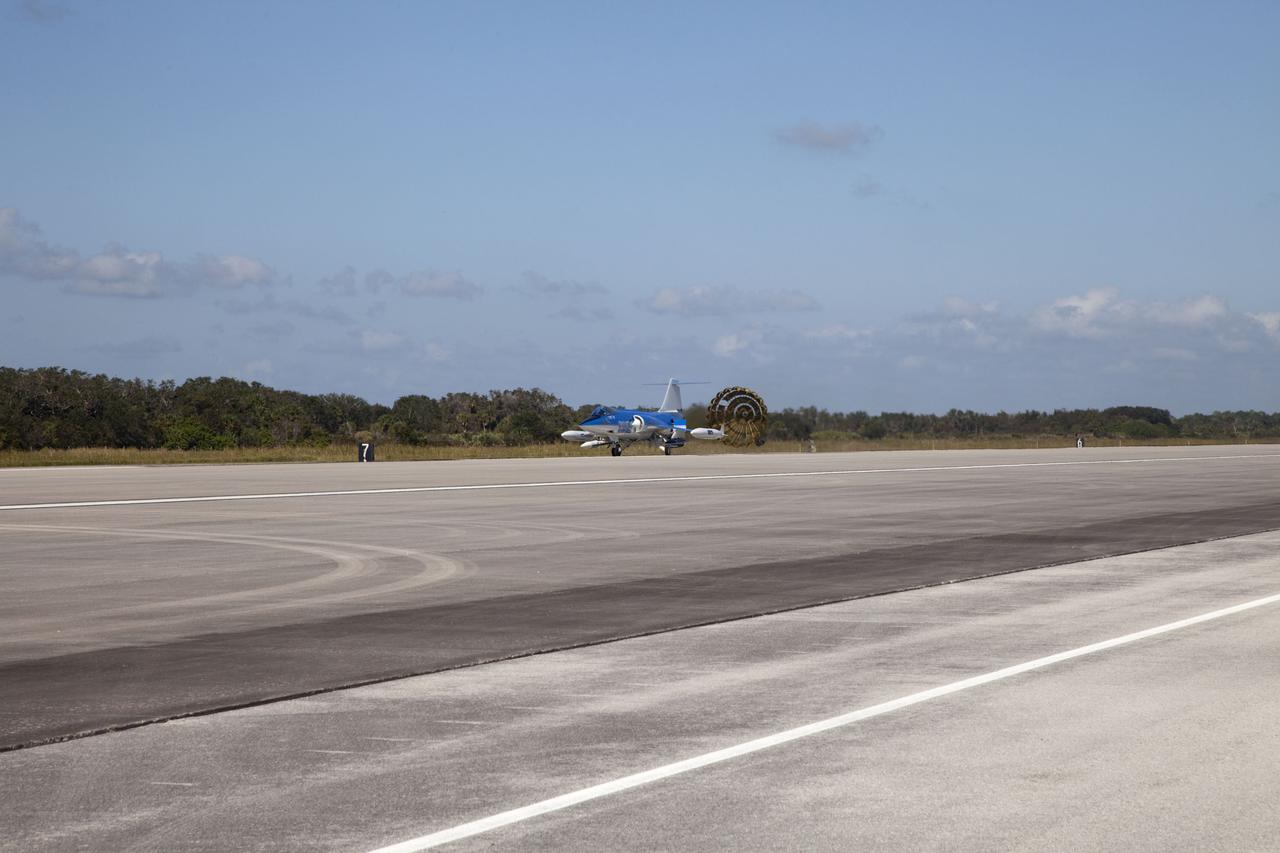
CAPE CANAVERAL, Fla. – On the runway at the Shuttle Landing Facility (SLF) at NASA’s Kennedy Space Center in Florida, the parachute on a Starfighters, Inc. F-104 supersonic jet, piloted by Rick Svetkoff, deploys after conducting a high speed taxi test. Hidden from the camera on the right side of the jet is the Star Lab suborbital launch vehicle developed by 4Frontiers Corporation. 4Frontiers is testing the Star Lab suborbital launch vehicle which has the potential to carry payloads into low earth orbit. Tests are being conducted to verify the aeronautical conditions of the Star Lab suborbital launch vehicle. This is the first of eight tests the launch vehicle will undergo. 4Frontiers Corporation is aiming for testing to be completed by early 2012, with commercial flights starting mid-2012. Starfighters, Inc. has signed a Space Act Agreement with NASA for the use of the SLF facilities at Kennedy Space Center. Photo credit: NASA_Gianni M. Woods
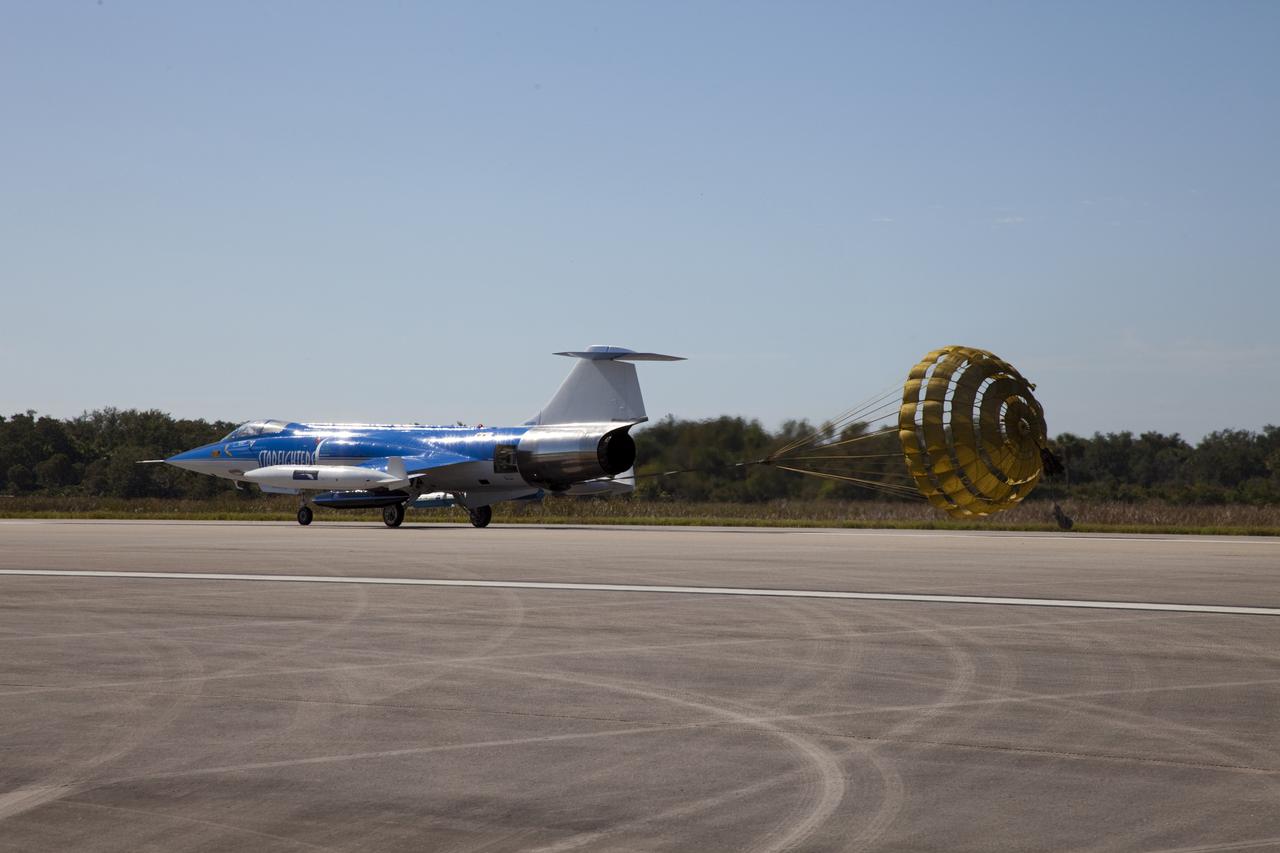
CAPE CANAVERAL, Fla. – On the runway at the Shuttle Landing Facility (SLF) at NASA’s Kennedy Space Center in Florida, the parachute on a Starfighters, Inc. F-104 supersonic jet, piloted by Rick Svetkoff, deploys after conducting a high speed taxi test. Hidden from the camera on the right side of the jet is the Star Lab suborbital launch vehicle developed by 4Frontiers Corporation. 4Frontiers is testing the Star Lab suborbital launch vehicle which has the potential to carry payloads into low earth orbit. Tests are being conducted to verify the aeronautical conditions of the Star Lab suborbital launch vehicle. This is the first of eight tests the launch vehicle will undergo. 4Frontiers Corporation is aiming for testing to be completed by early 2012, with commercial flights starting mid-2012. Starfighters, Inc. has signed a Space Act Agreement with NASA for the use of the SLF facilities at Kennedy Space Center. Photo credit: NASA_Gianni M. Woods
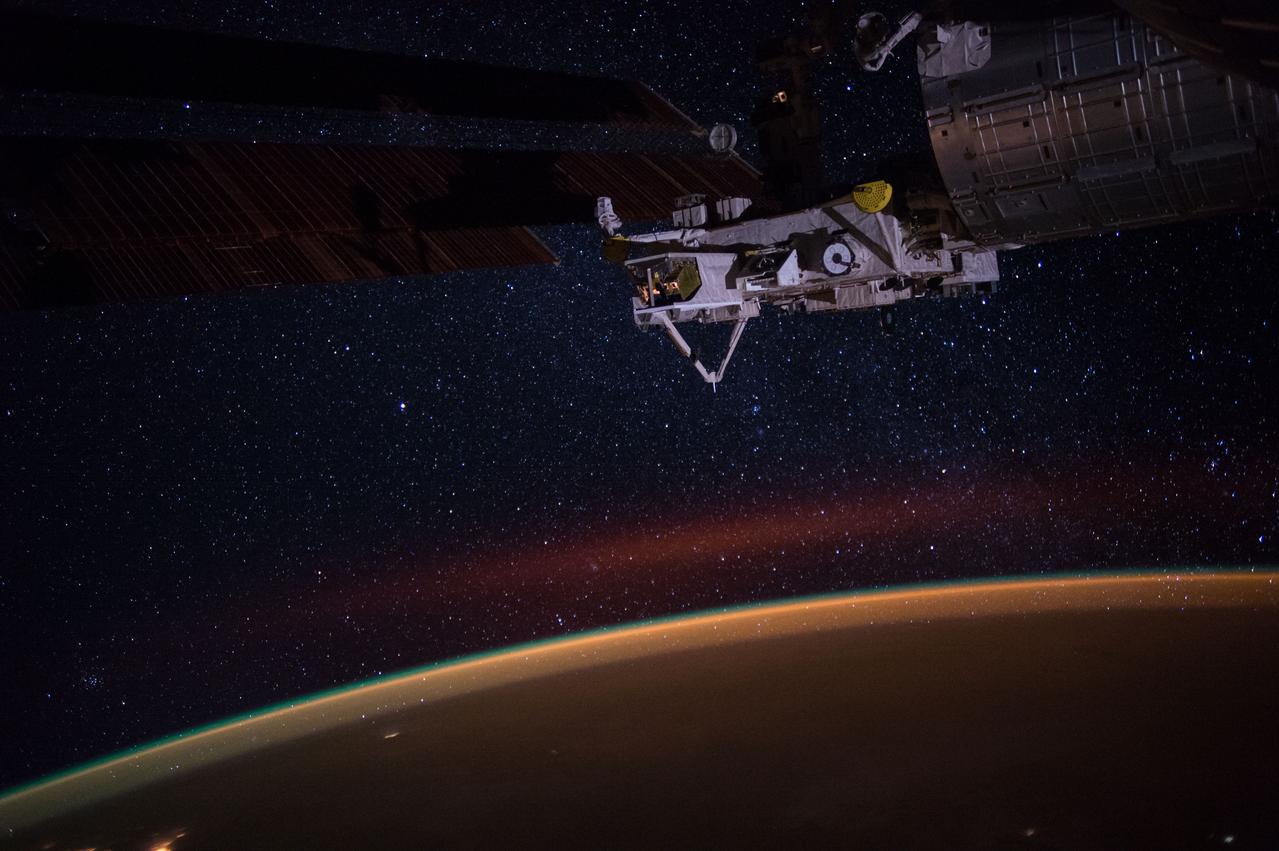
iss049e032063 (Oct. 8, 2016) --- Earth's atmospheric glow, the stars of the Milky Way and an experiment facility at the tip of Japan's Kibo lab module are seen in this night time photograph taken during Expedition 49.
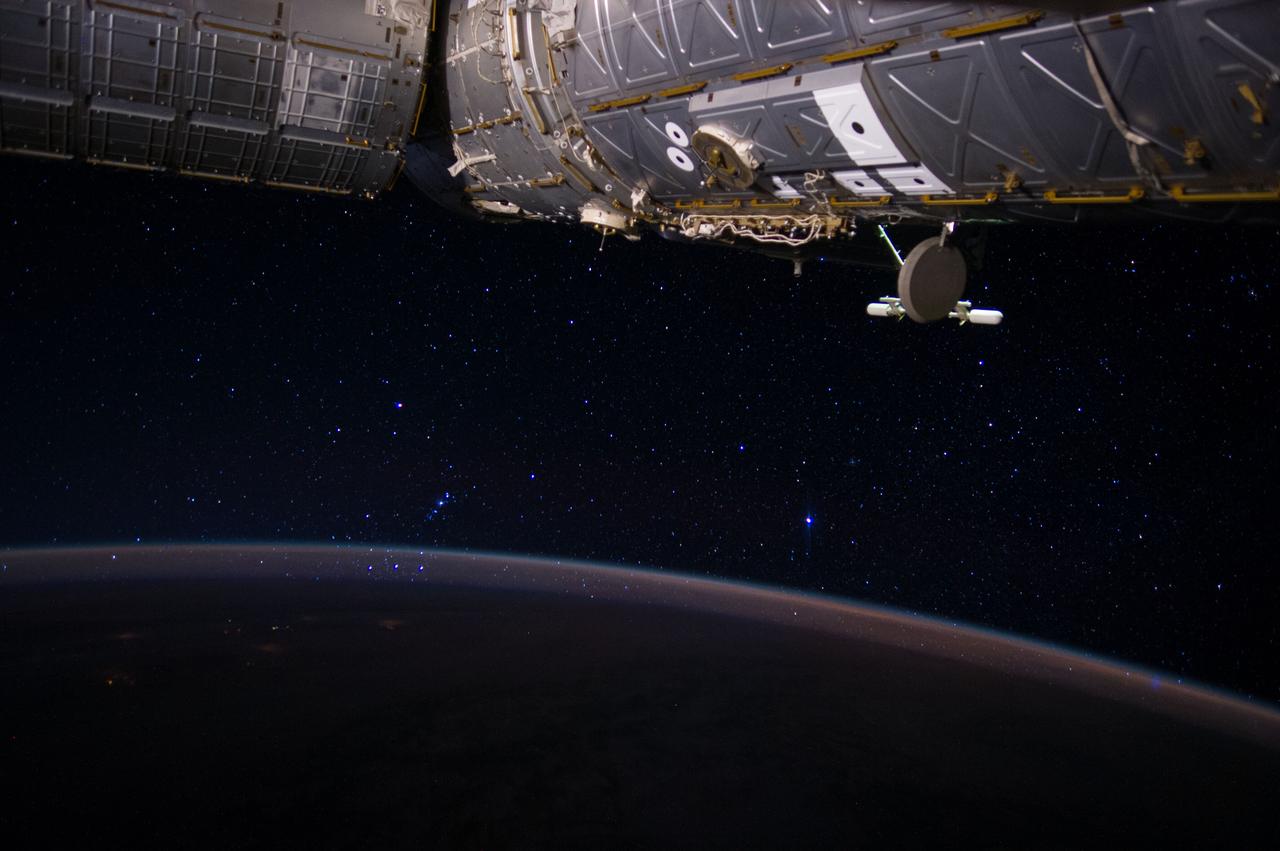
ISS040-E-017069 (23 June 2014) --- One of the Expedition 40 crew members aboard the International Space Station recorded this nocturnal scene, which connects Earth to the station and to the stars. Among the "stellar" scene is part of the constellation Orion, near the center of the frame. The U.S. lab or Destiny is seen in upper right, and JAXA's Kibo lab on the left, with the Harmony (node 2) connecting the two modules.
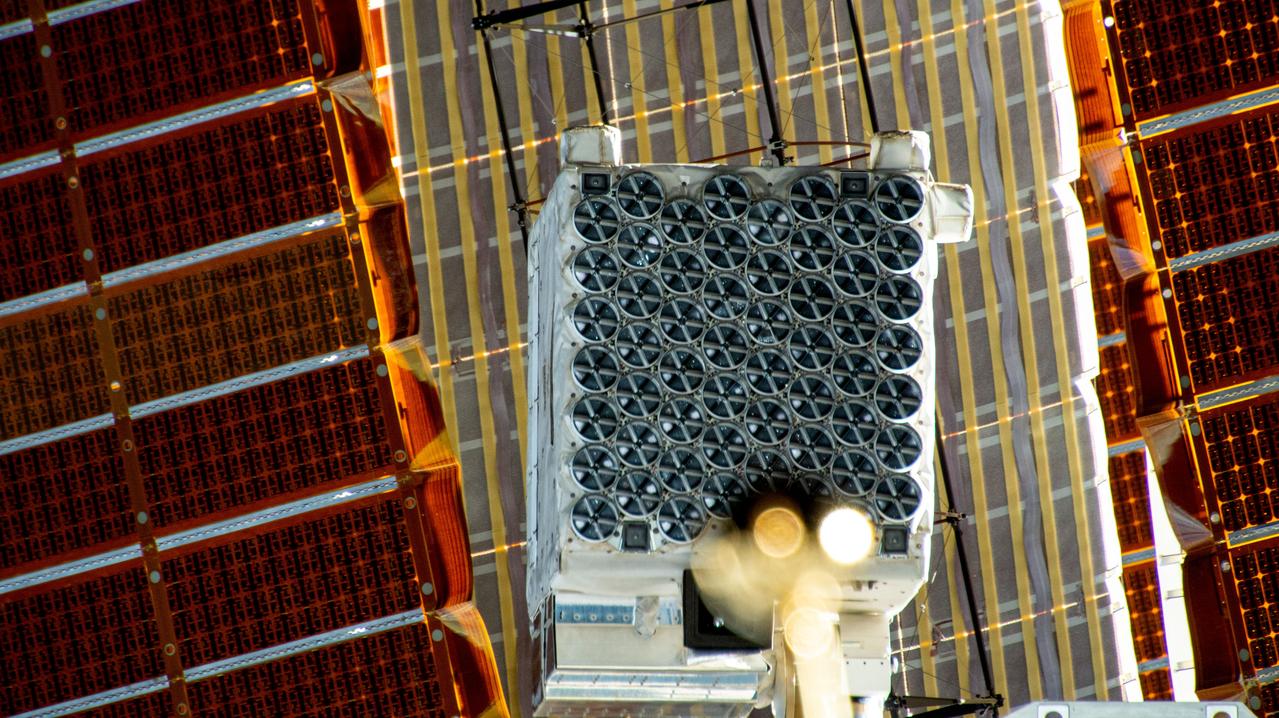
iss069e020459 (June 13, 2023) --- The Neutron star Interior Composition Explorer, or NICER, science investigation payload is pictured attached to the outside of the International Space Station. NICER studies the extraordinary physics of neutron stars providing new insights into their nature and behavior potentially revolutionizing the understanding of ultra-dense matter. Filling the background are the station's solar arrays that power the orbiting lab.
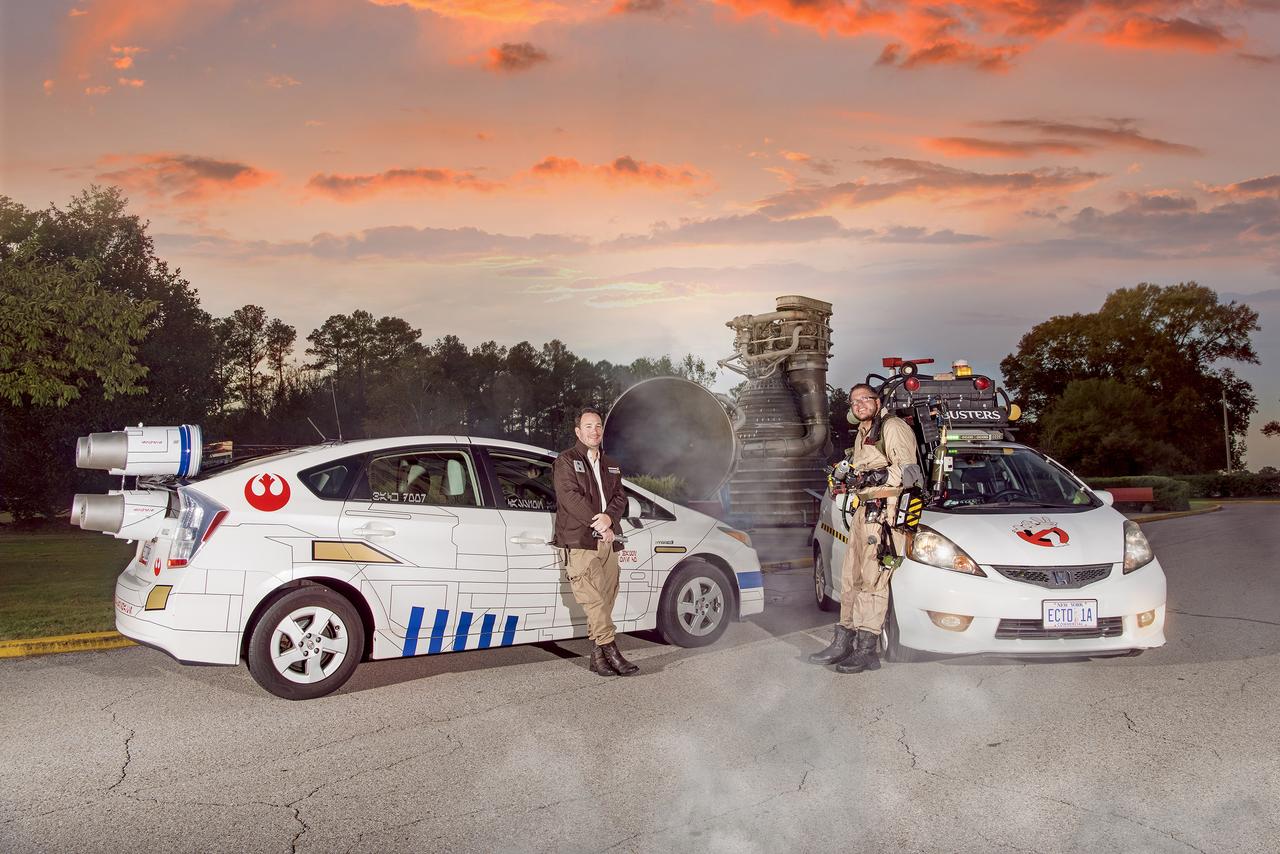
Andrew Denio, a Marshall information technology specialist in the Office of the Chief Information Officer, and Judson Hudson, a lab technician and computer-aided designer in Marshall’s Valve & Component Laboratory, show off their Ghostbusters and Star Wars themed vehicles in front of MSFC building 4200, for Halloween 2019.
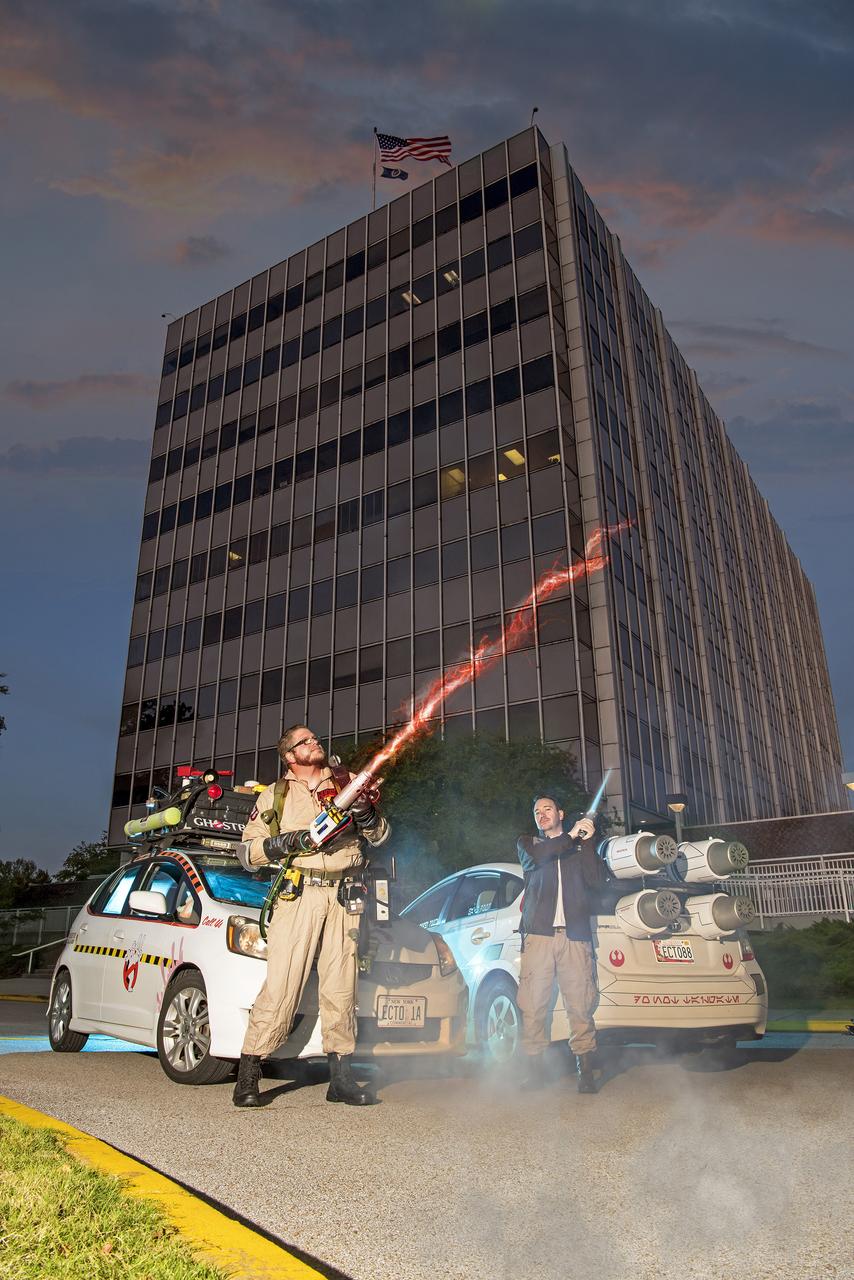
Andrew Denio, a Marshall information technology specialist in the Office of the Chief Information Officer, and Judson Hudson, a lab technician and computer-aided designer in Marshall’s Valve & Component Laboratory, show off their Ghostbusters and Star Wars themed vehicles in front of MSFC building 4200, for Halloween 2019.
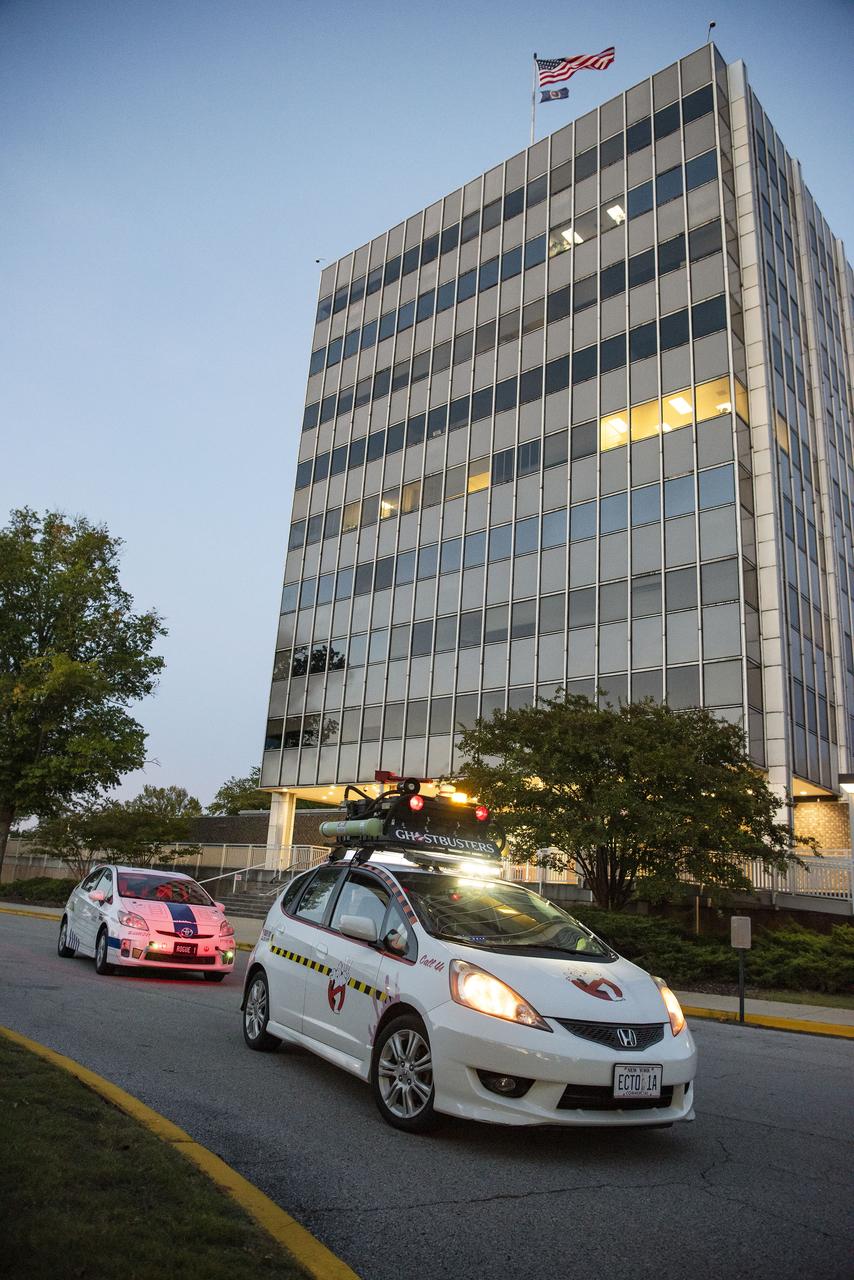
Andrew Denio, a Marshall information technology specialist in the Office of the Chief Information Officer, and Judson Hudson, a lab technician and computer-aided designer in Marshall’s Valve & Component Laboratory, show off their Ghostbusters and Star Wars themed vehicles in front of MSFC building 4200, for Halloween 2019.
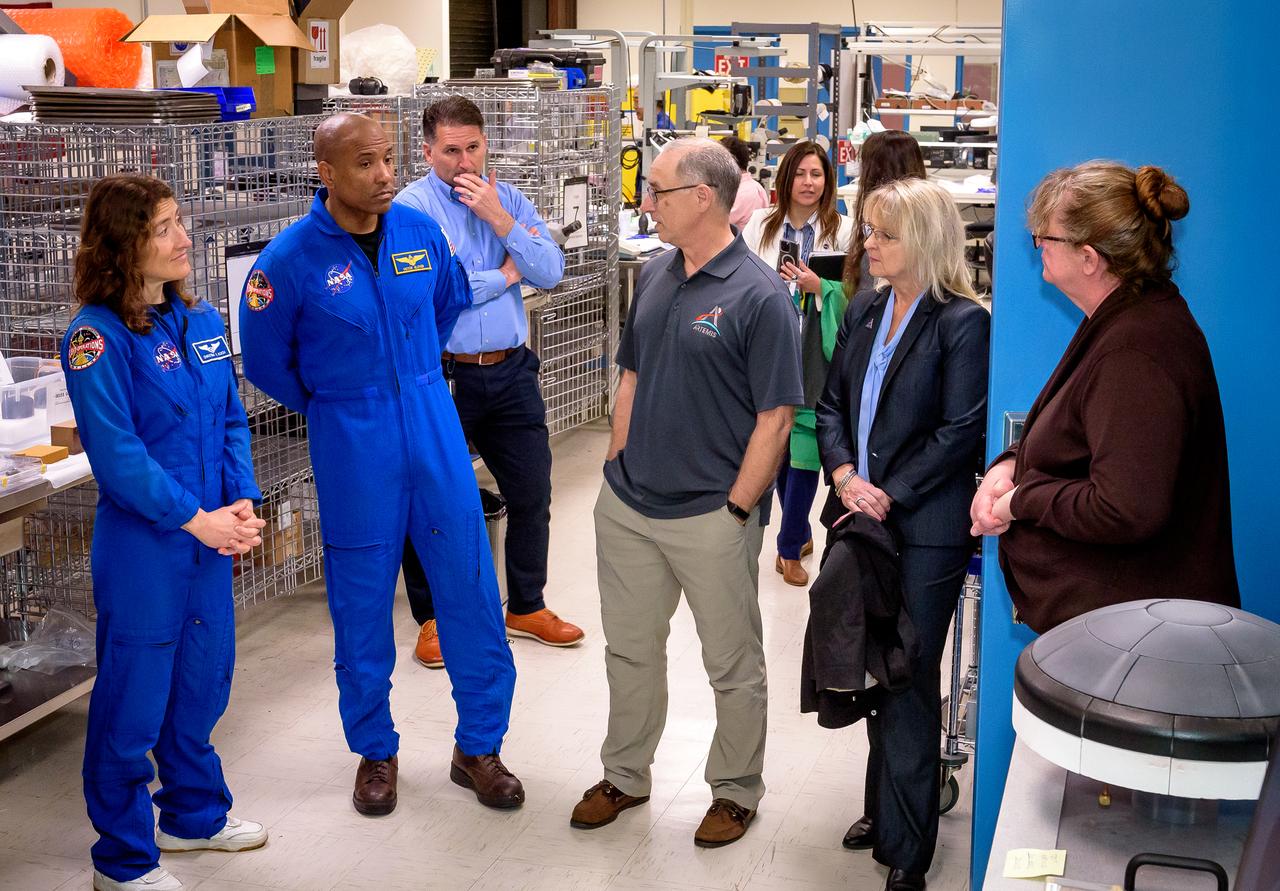
NASA astronauts Christina Koch, left, Victor J. Glover, Matt Switzer, Orion Deputy Program Manager Debbie Korth, and Margaret Stackpoole.

NASA astronauts Christina Koch and Victor J. Glover examine a sample of AVCOAT Thermal Protection System (TPS) that protects the Orion spacecraft as it enters Earth’s atmosphere.
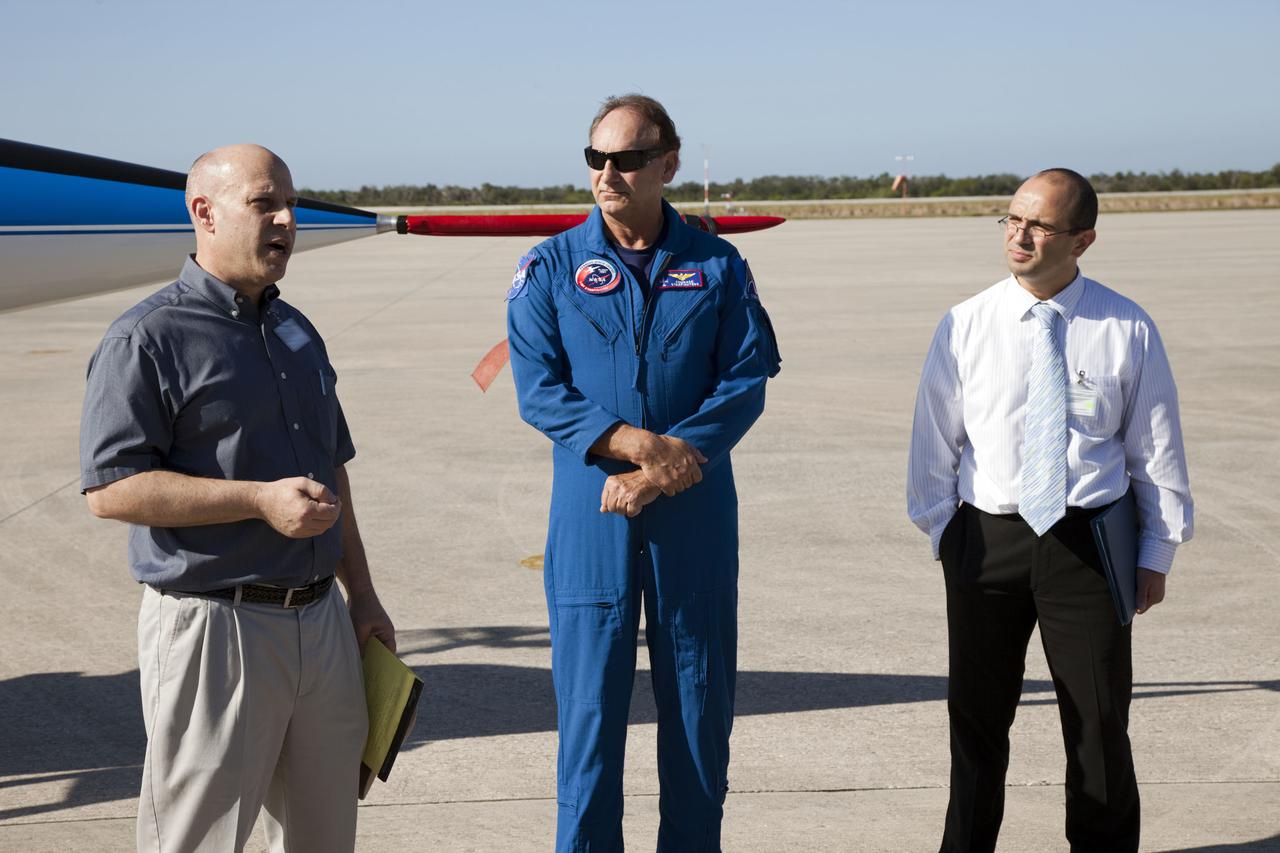
CAPE CANAVERAL, Fla. – Before a high speed taxi test using a Starfighters, Inc. F-104, from left, Mark Homnick, CEO of 4Frontiers Corporation, Rick Svetkoff, Starfighters, Inc. president and pilot, and Panayot Slavov, business development manager for 4Frontiers Corporation, address guests at the Shuttle Landing Facility (SLF) at NASA’s Kennedy Space Center in Florida. 4Frontiers is testing the Star Lab suborbital launch vehicle which has the potential to carry payloads into low earth orbit. Tests are being conducted to verify the aeronautical conditions of the Star Lab suborbital launch vehicle. This is the first of eight tests the launch vehicle will undergo. 4Frontiers Corporation is aiming for testing to be completed by early 2012, with commercial flights starting mid-2012. Starfighters, Inc. has signed a Space Act Agreement with NASA for the use of the SLF facilities at Kennedy Space Center. Photo credit: NASA_Gianni M. Woods
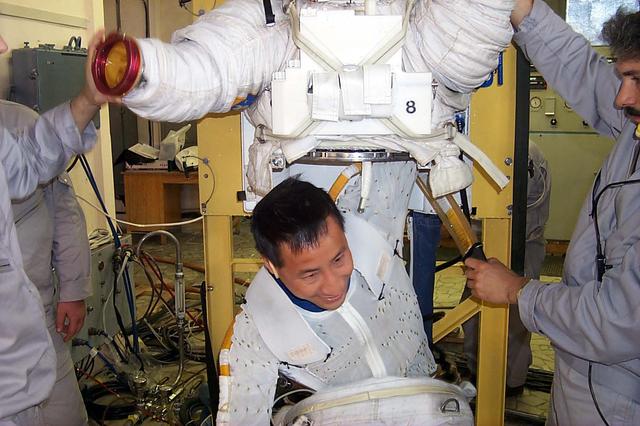
99-E-14658 (6-7 October 1999) --- Astronaut Edward T. Lu, mission specialist for STS-106, egresses a training version of the extravehicular mobility unit (EMU) space suit at the Hydrolab facility in Star City, Russia. Lu's two-day training session marked only the second time that the EMU has been used in exercises in the Russian underwater lab.

NASA image release June 6, 2010 Like a July 4 fireworks display a young, glittering collection of stars looks like an aerial burst. The cluster is surrounded by clouds of interstellar gas and dust - the raw material for new star formation. The nebula, located 20,000 light-years away in the constellation Carina, contains a central cluster of huge, hot stars, called NGC 3603. This environment is not as peaceful as it looks. Ultraviolet radiation and violent stellar winds have blown out an enormous cavity in the gas and dust enveloping the cluster, providing an unobstructed view of the cluster. Most of the stars in the cluster were born around the same time but differ in size, mass, temperature, and color. The course of a star's life is determined by its mass, so a cluster of a given age will contain stars in various stages of their lives, giving an opportunity for detailed analyses of stellar life cycles. NGC 3603 also contains some of the most massive stars known. These huge stars live fast and die young, burning through their hydrogen fuel quickly and ultimately ending their lives in supernova explosions. Star clusters like NGC 3603 provide important clues to understanding the origin of massive star formation in the early, distant universe. Astronomers also use massive clusters to study distant starbursts that occur when galaxies collide, igniting a flurry of star formation. The proximity of NGC 3603 makes it an excellent lab for studying such distant and momentous events. This Hubble Space Telescope image was captured in August 2009 and December 2009 with the Wide Field Camera 3 in both visible and infrared light, which trace the glow of sulfur, hydrogen, and iron. The Hubble Space Telescope is a project of international cooperation between NASA and the European Space Agency. NASA’s Goddard Space Flight Center manages the telescope. The Space Telescope Science Institute (STScI) conducts Hubble science operations. STScI is operated for NASA by the Association of Universities for Research in Astronomy, Inc. in Washington, D.C. Credit: NASA, ESA, R. O'Connell (University of Virginia), F. Paresce (National Institute for Astrophysics, Bologna, Italy), E. Young (Universities Space Research Association/Ames Research Center), the WFC3 Science Oversight Committee, and the Hubble Heritage Team (STScI/AURA) <b><a href="http://www.nasa.gov/centers/goddard/home/index.html" rel="nofollow">NASA Goddard Space Flight Center</a></b> is home to the nation's largest organization of combined scientists, engineers and technologists that build spacecraft, instruments and new technology to study the Earth, the sun, our solar system, and the universe.
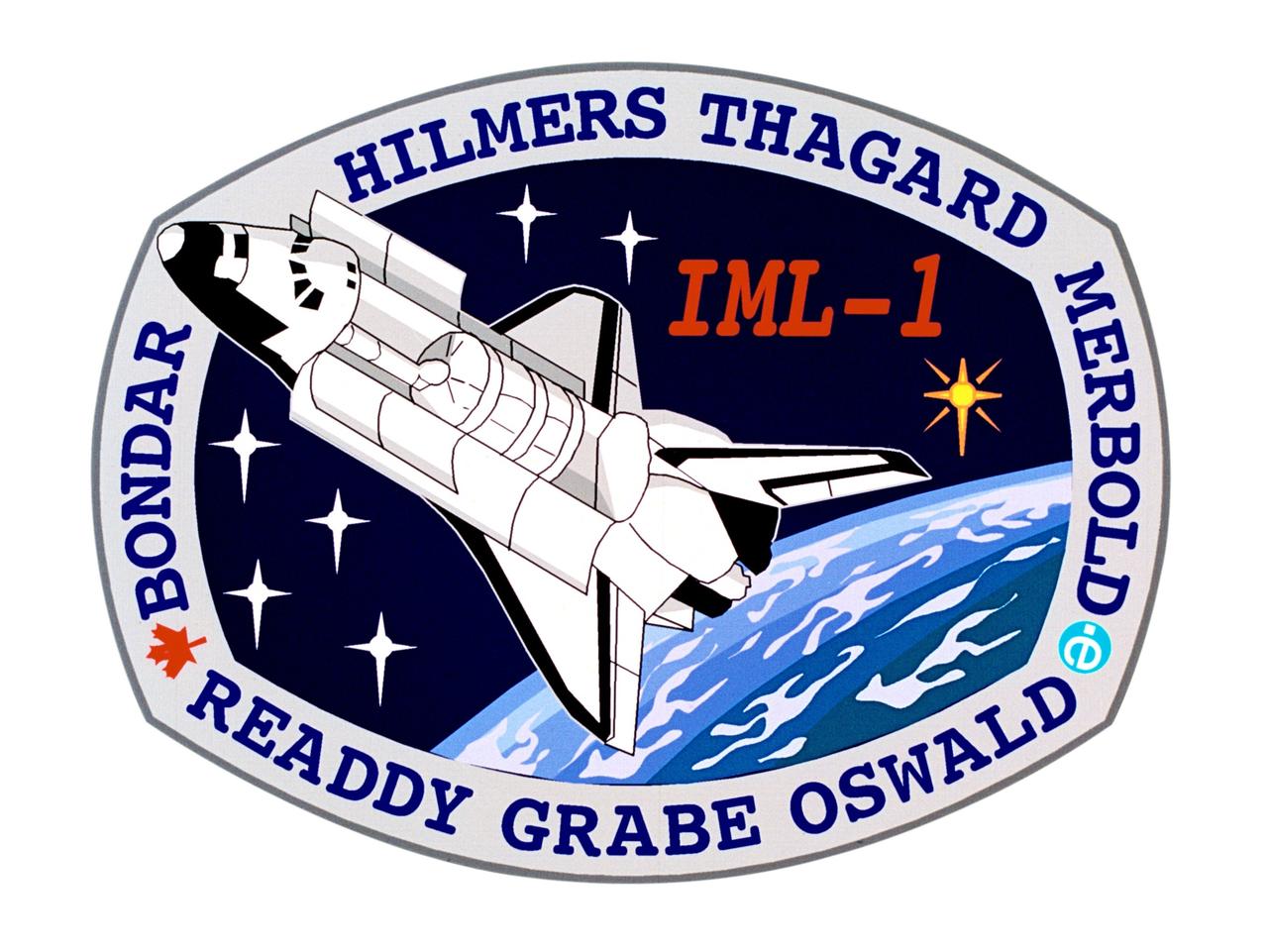
STS042-S-001 (October 1991) --- Designed by the crew members, the International Microgravity Lab-1 (IML-1) insignia depicts the orbiter with the Spacelab Module aboard. The spacecraft is oriented in a quiescent, tail-to-Earth, gravity-gradient attitude to best support the various microgravity payloads and experiments. The international composition of the crew is depicted by symbols representing both the Canadian Space Agency (CSA) and the European Space Agency (ESA). The number 42 is represented by six white stars -- four on one side of the orbiter and two on the other. The single gold star above Earth's horizon honors the memory of astronaut Manley L. (Sonny) Carter, who was killed earlier this year in a commuter plane crash. A crew spokesperson stated that Carter "...was our crew mate, colleague and friend." Blue letters set against white give the surnames of the five astronauts and two payload specialists for the flight. The NASA insignia design for space shuttle flights is reserved for use by the astronauts and for other official use as the NASA Administrator may authorize. Public availability has been approved only in the form of illustrations by the various news media. When and if there is any change in this policy, which is not anticipated, it will be publicly announced. Photo credit: NASA
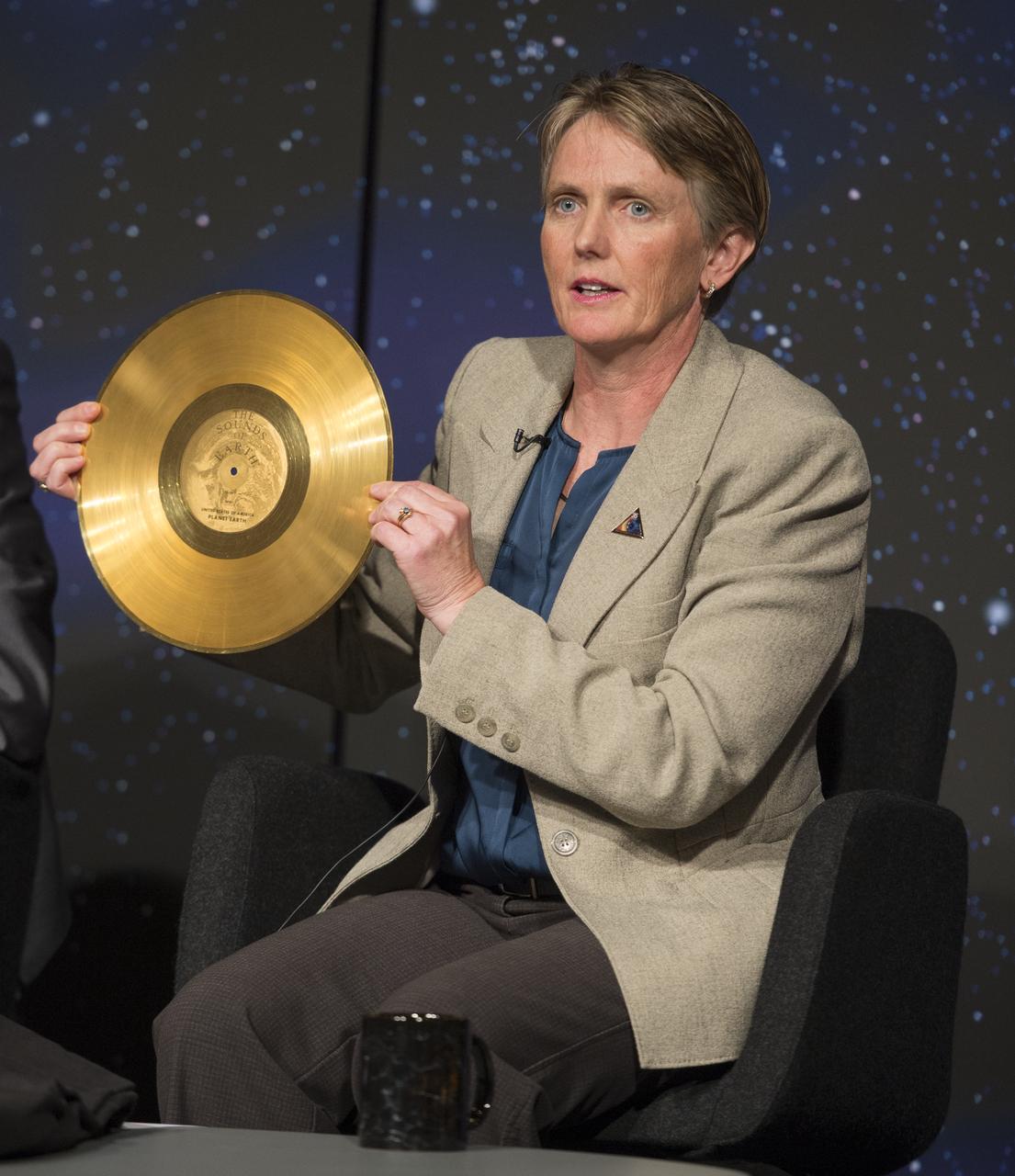
Suzanne Dodd, Voyager project manager, NASA's Jet Propulsion Lab (JPL) holds a replica of the golden record carried on Voyager at a news conference on NASA's Voyager 1 spacecraft, Thursday, Sept. 12, 2013 at NASA Headquarters in Washington. The Golden Record was intended to communicate a story of our world to extraterrestrials. NASA's Voyager 1 spacecraft officially is the first human-made object to venture into interstellar space. The 36-year-old probe is about 12 billion miles (19 billion kilometers) from our sun. New and unexpected data indicate Voyager 1 has been traveling for about one year through plasma, or ionized gas, present in the space between stars. A report on the analysis of this new data is published in Thursday's edition of the journal Science. Photo Credit: (NASA/Carla Cioffi)
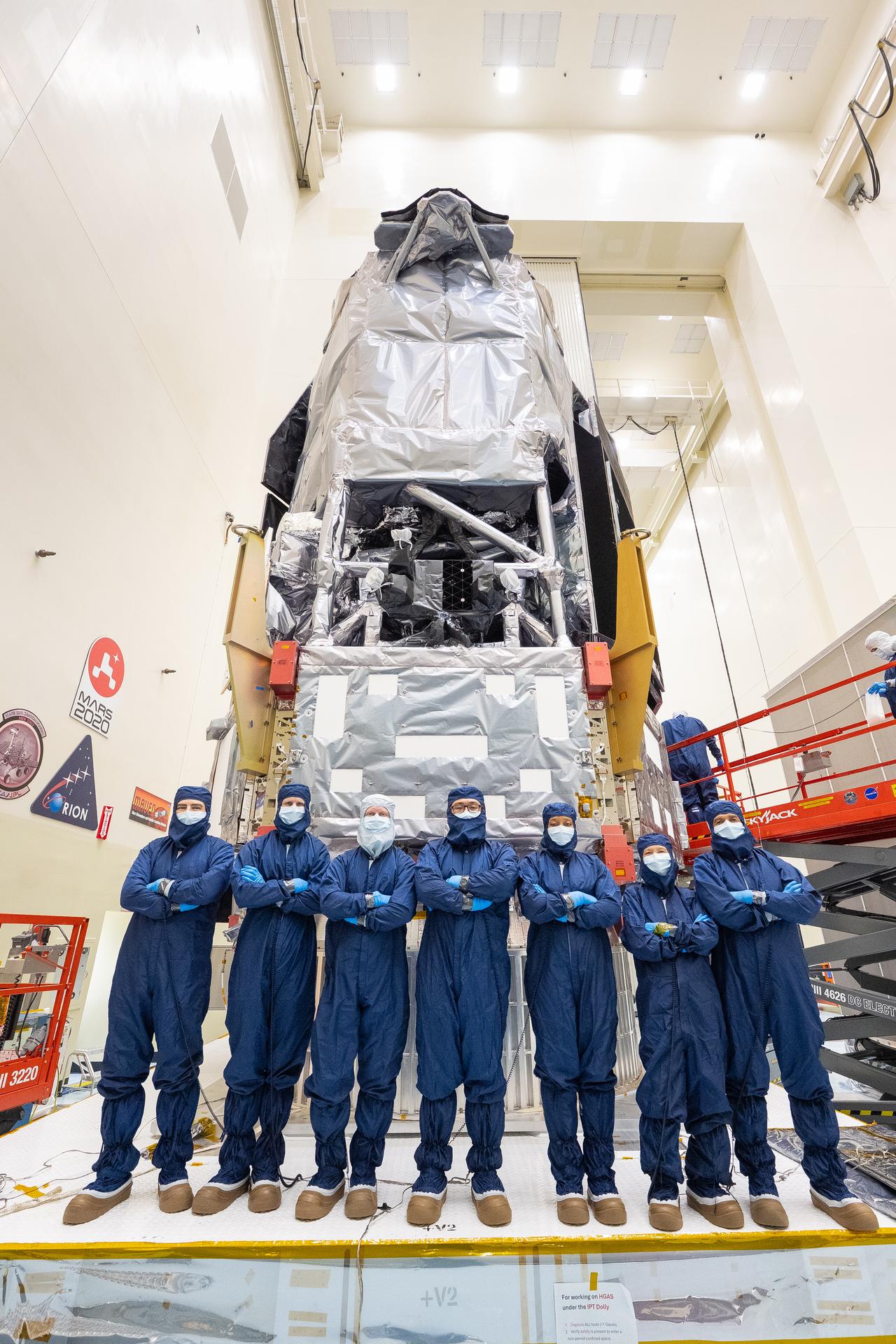
During a key integration milestone for NASA’s Nancy Grace Roman Space Telescope, technicians and engineers from the agency's Jet Propulsion Lab in Southern California gather inside the Payload Hazardous Servicing Facility at NASA’s Kennedy Space Center in Florida on Wednesday, July 8, 2026, following the closeout of the observatory’s Coronagraph Instrument test connector panel. Roman carries one science instrument called the Wide Field Instrument, and one technology demonstration called the Roman Coronagraph Instrument. The coronagraph is a system of masks, prisms, detectors, and even self-flexing mirrors built to block out the glare from distant stars and directly image the planets in orbit around them. The Roman Coronagraph will be the first active coronagraph to fly in space, meaning it contains components that actively respond to variables that would usually cause starlight to scatter, making it harder to see nearby planets.
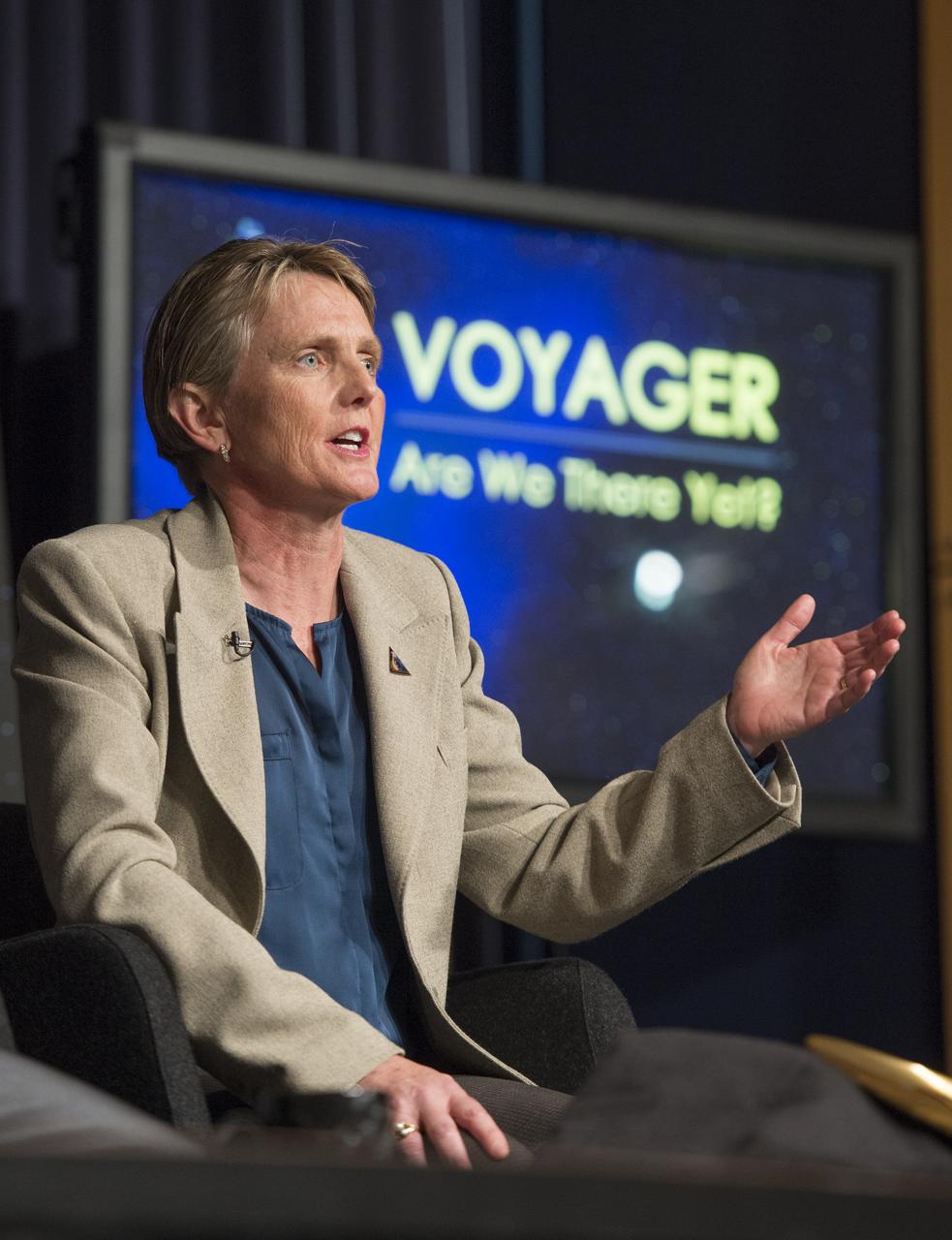
Suzanne Dodd, Voyager project manager, NASA's Jet Propulsion Lab (JPL) speaks at a news conference on NASA's Voyager 1 spacecraft, Thursday, Sept. 12, 2013 at NASA Headquarters in Washington. NASA's Voyager 1 spacecraft officially is the first human-made object to venture into interstellar space. The 36-year-old probe is about 12 billion miles (19 billion kilometers) from our sun. New and unexpected data indicate Voyager 1 has been traveling for about one year through plasma, or ionized gas, present in the space between stars. A report on the analysis of this new data is published in Thursday's edition of the journal Science. Photo Credit: (NASA/Carla Cioffi)
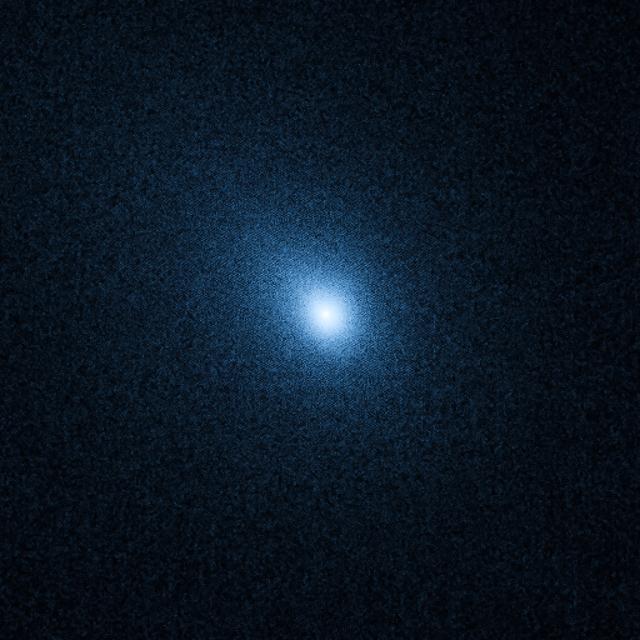
NASA image release October 5, 2010 Hubble Space Telescope observations of comet 103P/Hartley 2, taken on September 25, are helping in the planning for a November 4 flyby of the comet by NASA's Deep Impact eXtended Investigation (DIXI) spacecraft. Analysis of the new Hubble data shows that the nucleus has a diameter of approximately 0.93 miles (1.5 km), which is consistent with previous estimates. The comet is in a highly active state, as it approaches the Sun. The Hubble data show that the coma is remarkably uniform, with no evidence for the types of outgassing jets seen from most "Jupiter Family" comets, of which Hartley 2 is a member. Jets can be produced when the dust emanates from a few specific icy regions, while most of the surface is covered with relatively inert, meteoritic-like material. In stark contrast, the activity from Hartley 2's nucleus appears to be more uniformly distributed over its entire surface, perhaps indicating a relatively "young" surface that hasn't yet been crusted over. Hubble's spectrographs - the Cosmic Origins Spectrograph (COS) and the Space Telescope Imaging Spectrograph (STIS) -- are expected to provide unique information about the comet's chemical composition that might not be obtainable any other way, including measurements by DIXI. The Hubble team is specifically searching for emissions from carbon monoxide (CO) and diatomic sulfur (S2). These molecules have been seen in other comets but have not yet been detected in 103P/Hartley 2. 103P/Hartley has an orbital period of 6.46 years. It was discovered by Malcolm Hartley in 1986 at the Schmidt Telescope Unit in Siding Spring, Australia. The comet will pass within 11 million miles of Earth (about 45 times the distance to the Moon) on October 20. During that time the comet may be visible to the naked eye as a 5th magnitude "fuzzy star" in the constellation Auriga. Credit: NASA, ESA, and H. Weaver (The Johns Hopkins University/Applied Physics Lab) The Hubble Space Telescope is a project of international cooperation between NASA and the European Space Agency. NASA's Goddard Space Flight Center manages the telescope. The Space Telescope Science Institute (STScI) conducts Hubble science operations. STScI is operated for NASA by the Association of Universities for Research in Astronomy, Inc., in Washington, D.C. <b><a href="http://www.nasa.gov/centers/goddard/home/index.html" rel="nofollow">NASA Goddard Space Flight Center</a></b> enables NASA’s mission through four scientific endeavors: Earth Science, Heliophysics, Solar System Exploration, and Astrophysics. Goddard plays a leading role in NASA’s accomplishments by contributing compelling scientific knowledge to advance the Agency’s mission. <b>Follow us on <a href="http://twitter.com/NASA_GoddardPix" rel="nofollow">Twitter</a></b> <b>Join us on <a href="http://www.facebook.com/pages/Greenbelt-MD/NASA-Goddard/395013845897?ref=tsd" rel="nofollow">Facebook</a></b>