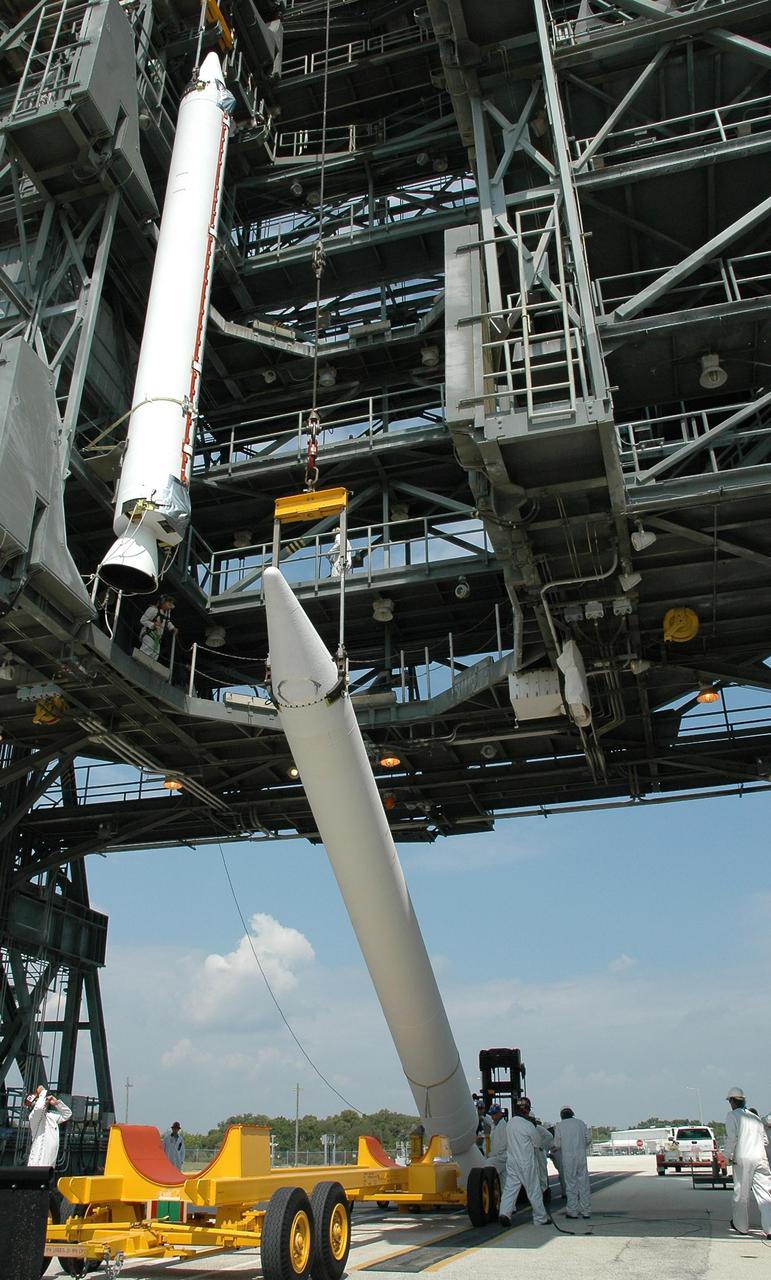
KENNEDY SPACE CENTER, FLA. - A second solid rocket booster is lifted off its transporter on Launch Pad 17-B at Cape Canaveral Air Force Station. It will be lifted into the mobile service tower above to join the other booster at left. The boosters will be mated with the Boeing Delta II rocket already in place. The Delta rocket is the launch vehicle for NASA's Solar Terrestrial Relations Observatory (STEREO). Preparations are under way for a liftoff no earlier than July 22. STEREO consists of two spacecraft whose mission is the first to take measurements of the sun and solar wind in 3-D. This new view will improve our understanding of space weather and its impact on the Earth. Photo credit: NASA/Jack Pfaller
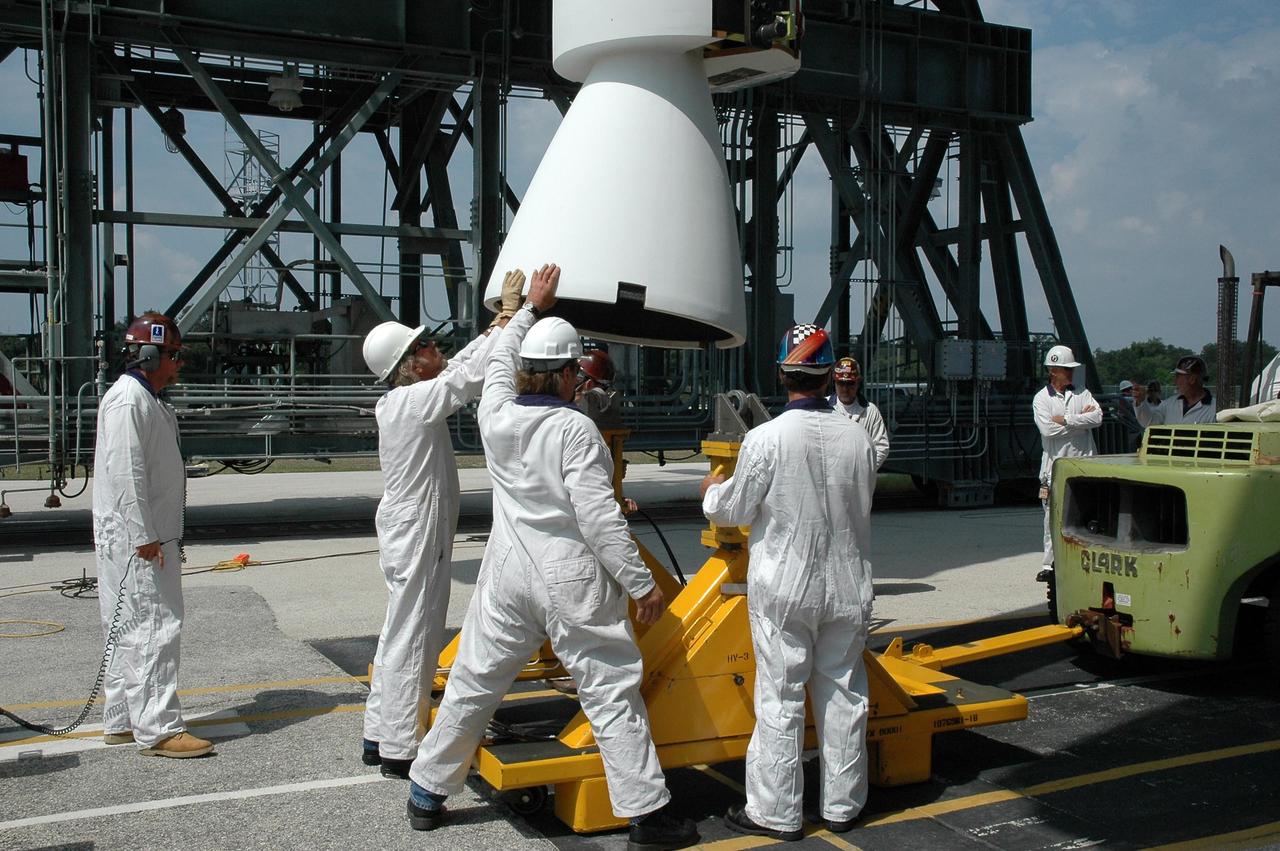
KENNEDY SPACE CENTER, FLA. - Workers on Launch Pad 17-B at Cape Canaveral Air Force Station help guide a solid rocket booster being lifted into the mobile service tower. The booster will be mated with the Boeing Delta II rocket already in place. The Delta rocket is the launch vehicle for NASA's Solar Terrestrial Relations Observatory (STEREO). Preparations are under way for a liftoff no earlier than July 22. STEREO consists of two spacecraft whose mission is the first to take measurements of the sun and solar wind in 3-D. This new view will improve our understanding of space weather and its impact on the Earth. Photo credit: NASA/Jack Pfaller
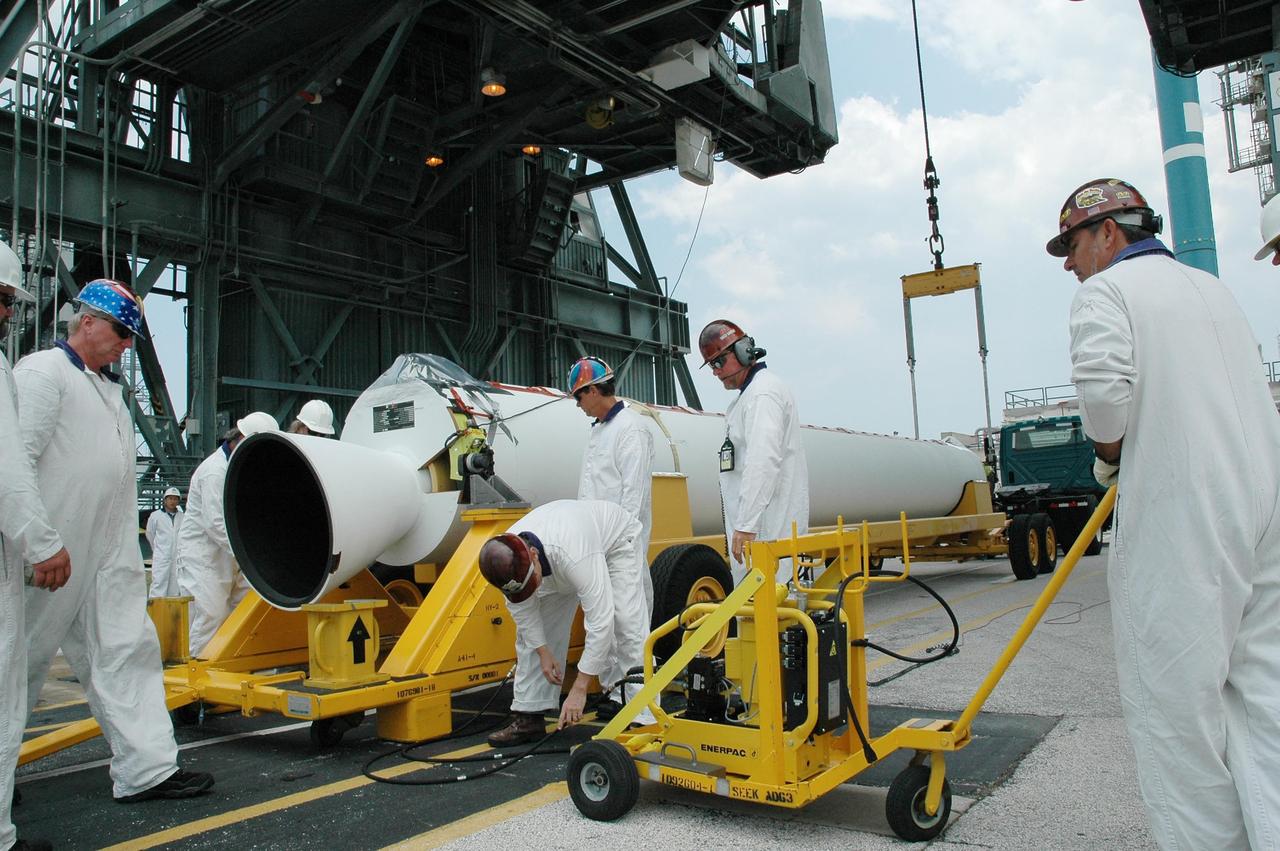
KENNEDY SPACE CENTER, FLA. - Workers get ready to raise a solid rocket booster off its transporter on Launch Pad 17-B at Cape Canaveral Air Force Station. It will be lifted into the mobile service tower above and mated with the Boeing Delta II rocket already in place. The Delta rocket is the launch vehicle for NASA's Solar Terrestrial Relations Observatory (STEREO). Preparations are under way for a liftoff no earlier than July 22. STEREO consists of two spacecraft whose mission is the first to take measurements of the sun and solar wind in 3-D. This new view will improve our understanding of space weather and its impact on the Earth. Photo credit: NASA/Jack Pfaller
KENNEDY SPACE CENTER, FLA. - Another solid rocket booster is lifted into the mobile service tower on Launch Pad 17-B at Cape Canaveral Air Force Station. It will join the others at left for mating with the Boeing Delta II rocket already in place. The Delta rocket is the launch vehicle for NASA's Solar Terrestrial Relations Observatory (STEREO). Preparations are under way for a liftoff no earlier than July 22. STEREO consists of two spacecraft whose mission is the first to take measurements of the sun and solar wind in 3-D. This new view will improve our understanding of space weather and its impact on the Earth. Photo credit: NASA/Jack Pfaller
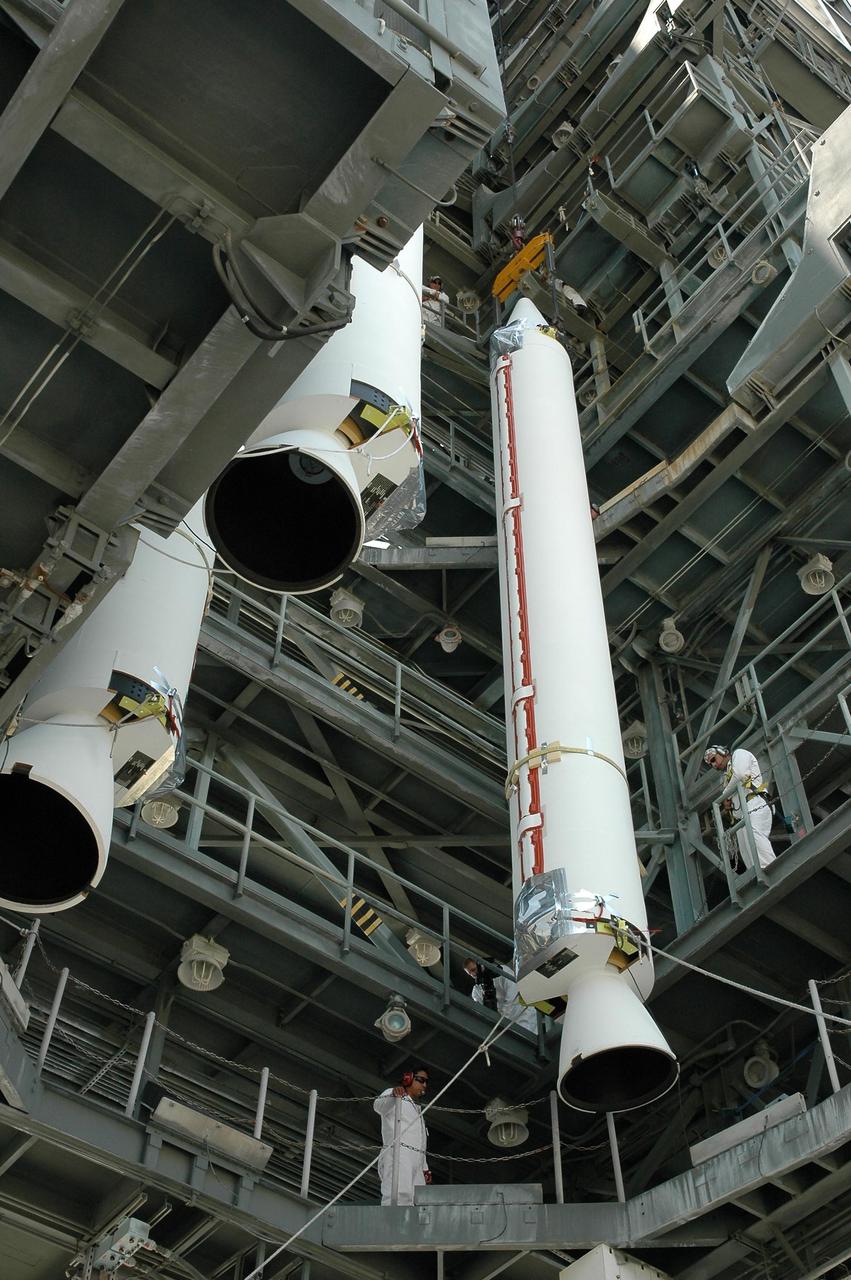
KENNEDY SPACE CENTER, FLA. - Another solid rocket booster is lifted into the mobile service tower on Launch Pad 17-B at Cape Canaveral Air Force Station. It will join the others at left for mating with the Boeing Delta II rocket already in place. The Delta rocket is the launch vehicle for NASA's Solar Terrestrial Relations Observatory (STEREO). Preparations are under way for a liftoff no earlier than July 22. STEREO consists of two spacecraft whose mission is the first to take measurements of the sun and solar wind in 3-D. This new view will improve our understanding of space weather and its impact on the Earth. Photo credit: NASA/Jack Pfaller
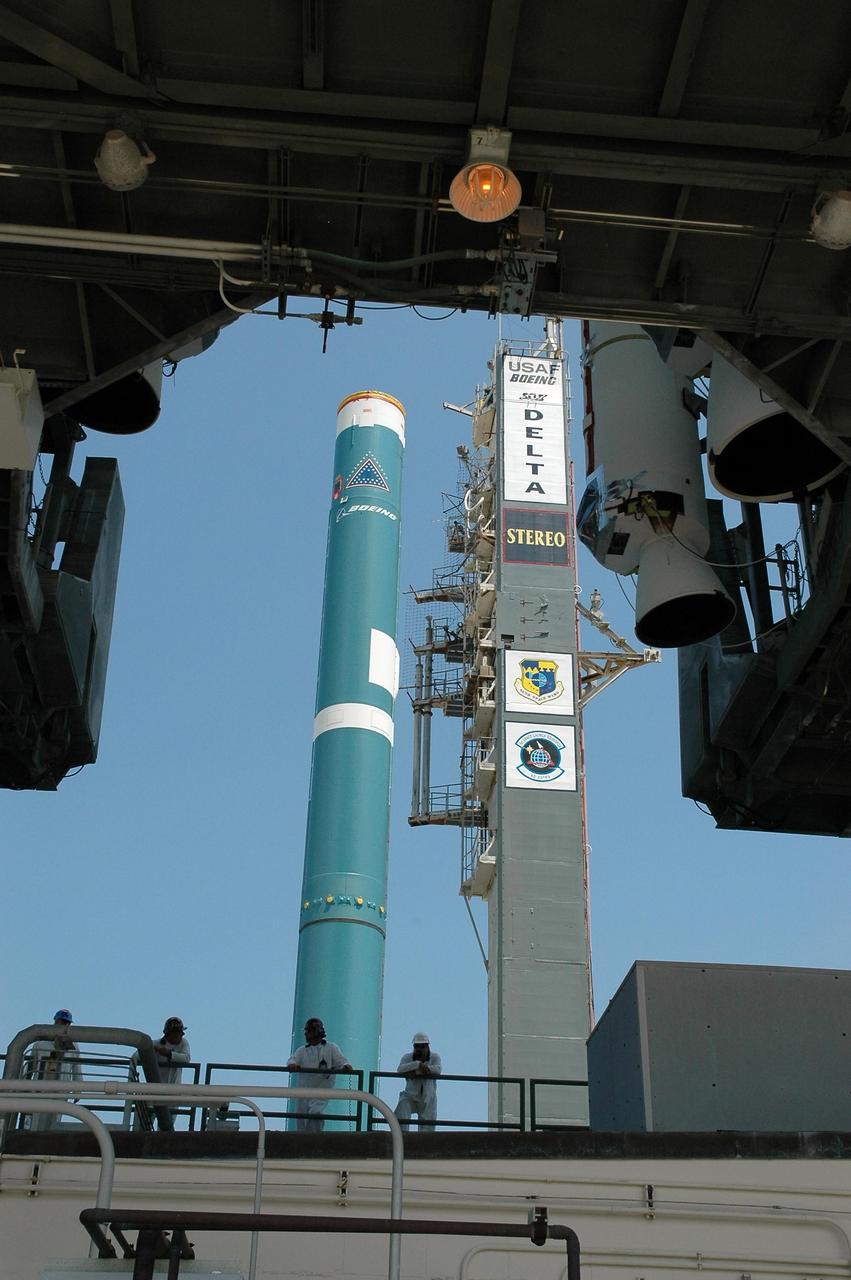
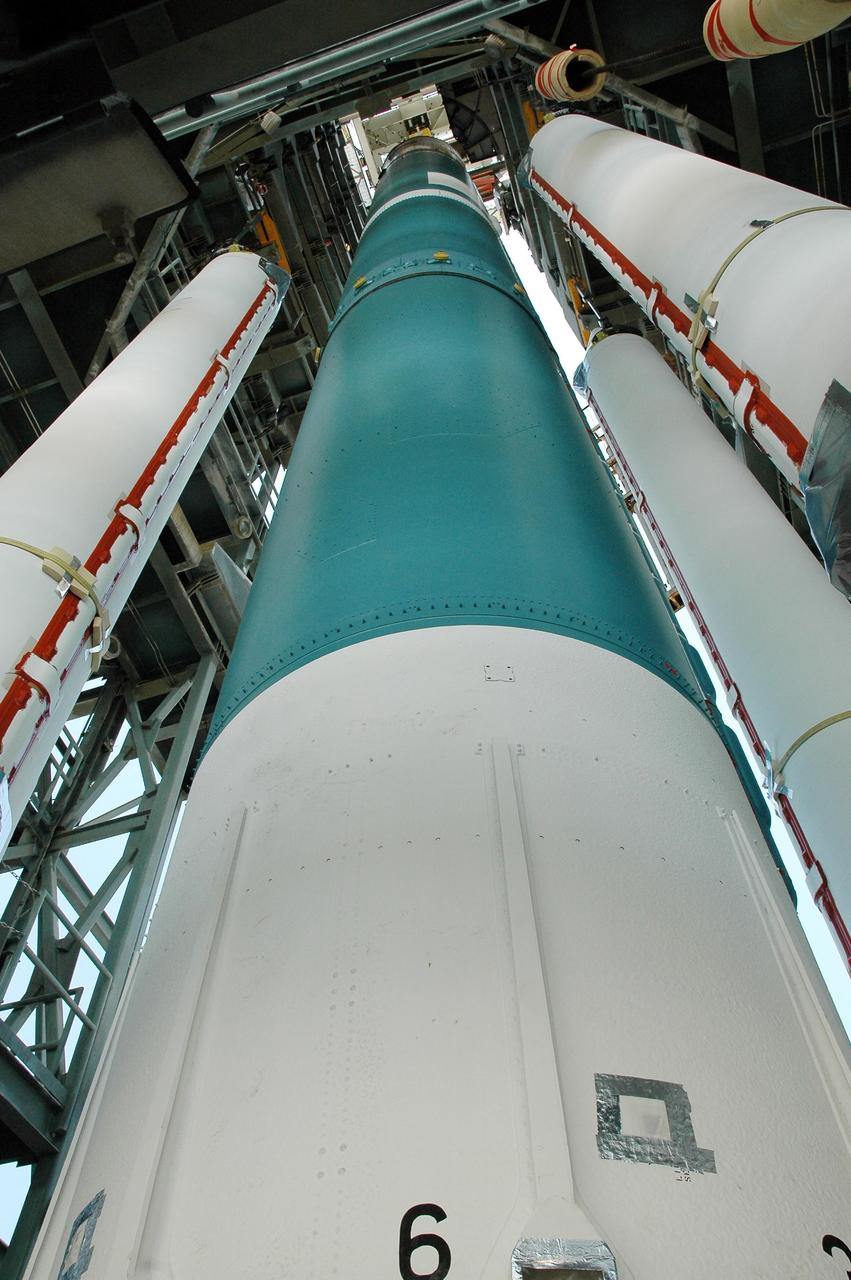
KENNEDY SPACE CENTER, FLA. - A Boeing Delta II rocket is seen from under the mobile service tower on Launch Pad 17-B at Cape Canaveral Air Force Station. Visible on the tower at right are the lower portions of the solid rocket boosters that will be mated to the Delta II. The Delta rocket is the launch vehicle for NASA's Solar Terrestrial Relations Observatory (STEREO). Preparations are under way for a liftoff no earlier than July 22. STEREO consists of two spacecraft whose mission is the first to take measurements of the sun and solar wind in 3-D. This new view will improve our understanding of space weather and its impact on the Earth. Photo credit: NASA/Jack Pfaller