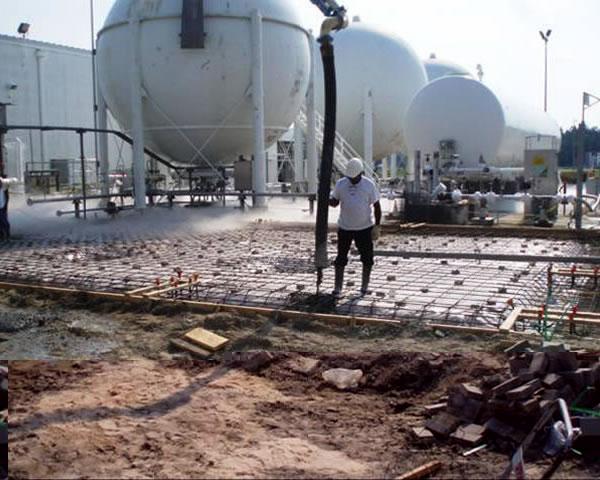
Workers install a bulk diesel storage tank for use at Stennis Space Center. Installation of additional diesel storage tanks is part of the center's hurricane-related risk mitigation work.
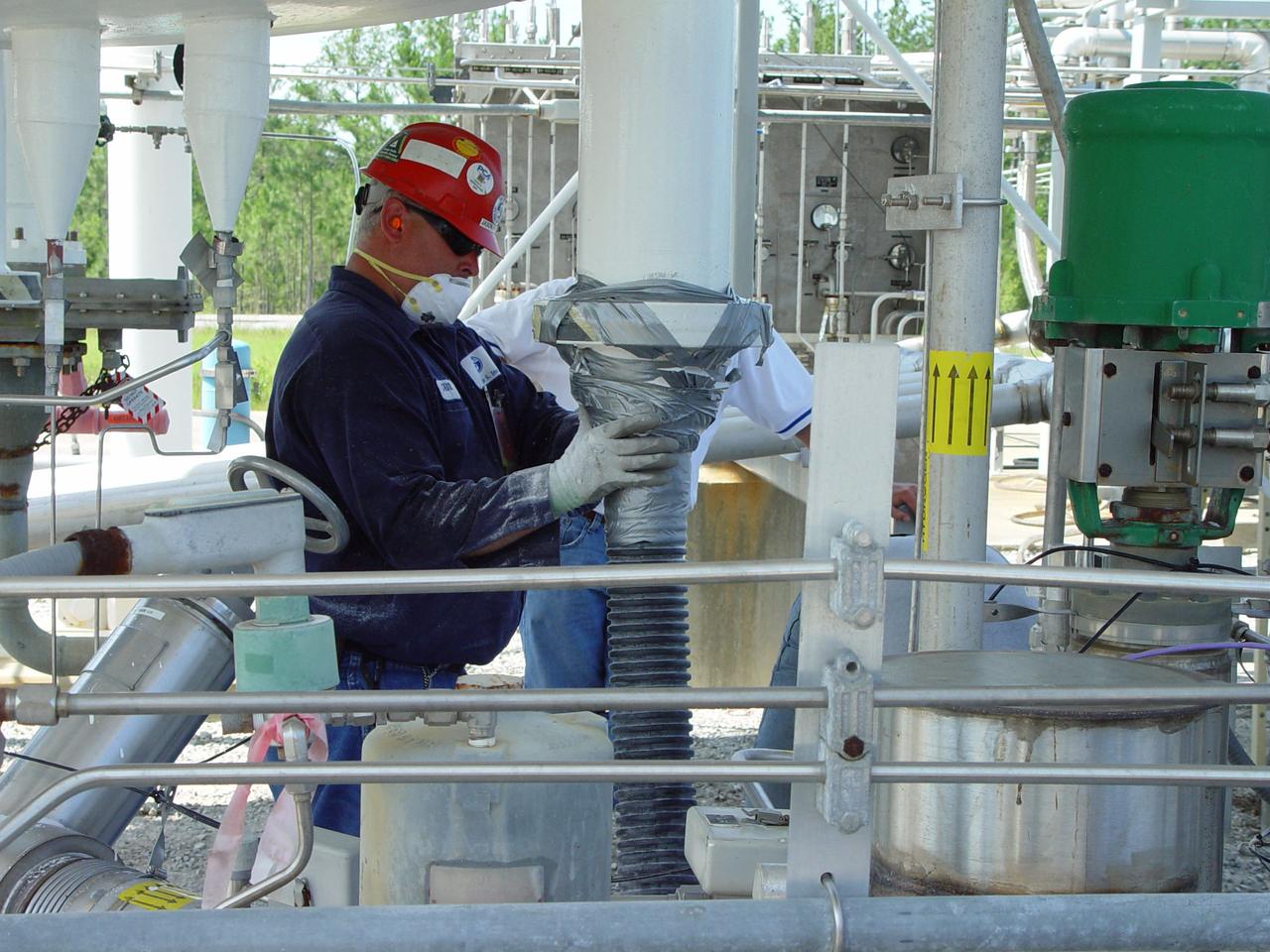
A worker removes Perlite insulation from a liquid hydrogen storage tank to replace it with glass bubble insulation.
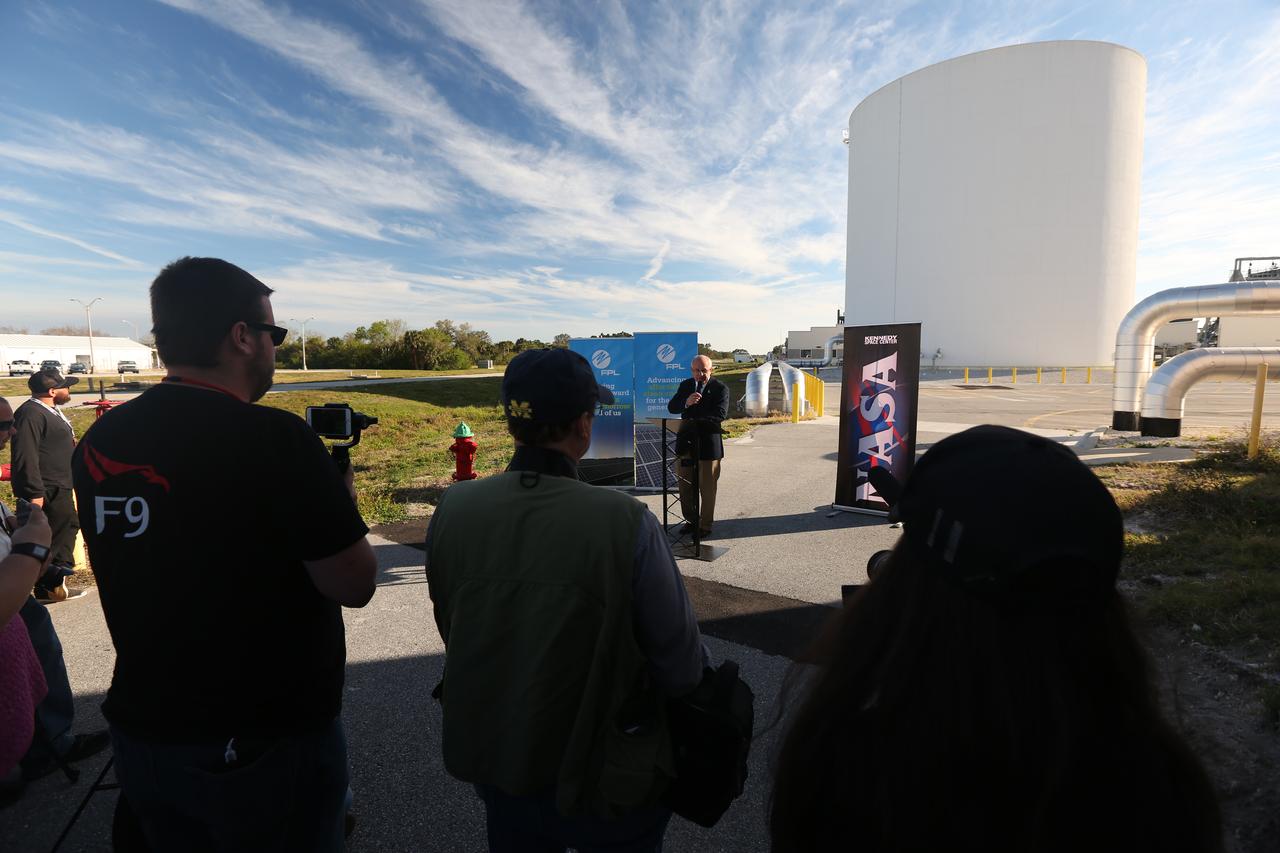
Bart Gaetjens, Florida Power & Light's FPL area external affairs manager, addresses the news media and NASA Social about the new Thermal Energy Storage (TES) tank Feb. 17. The TES tank works like a giant battery and is saving the center utility cost. These savings will be applied to new sustainable projects at Kennedy.
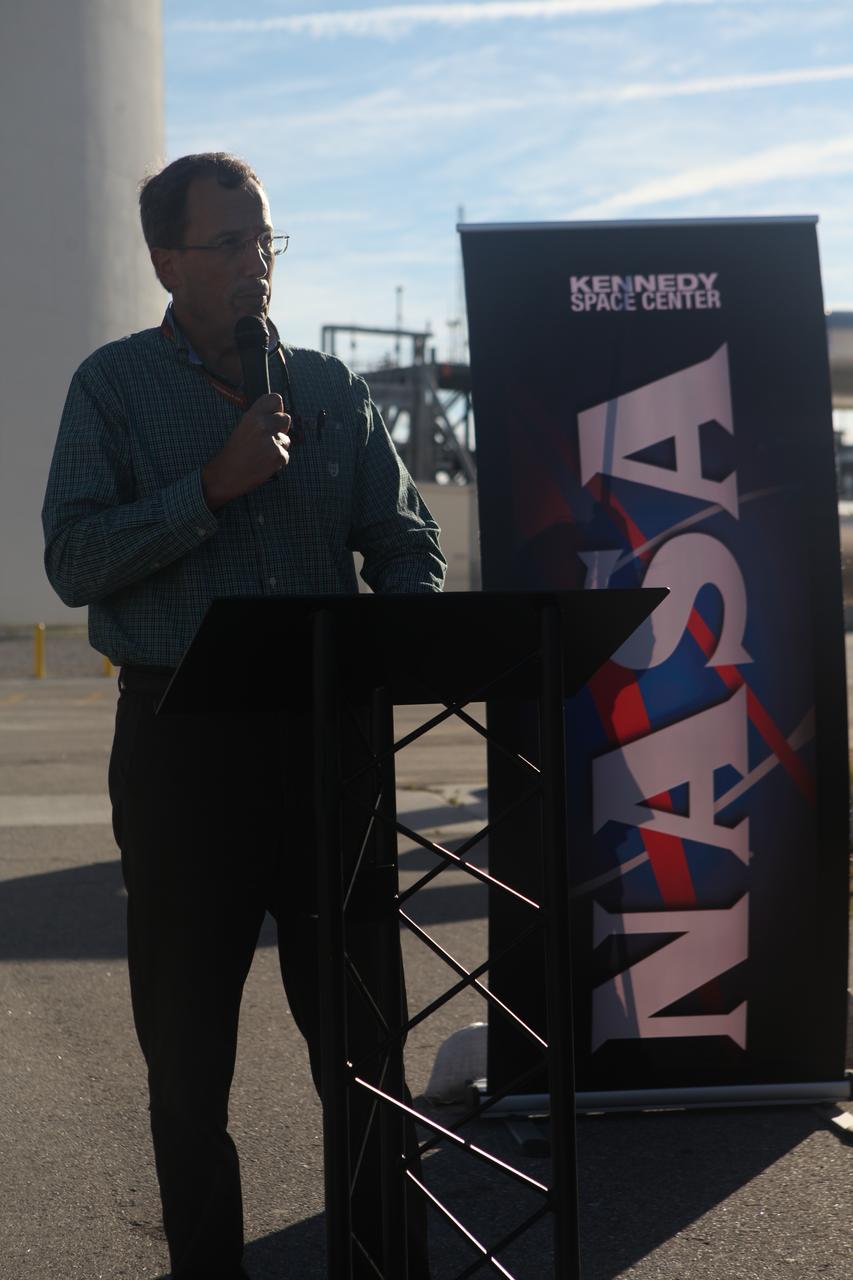
Sustainability Team Lead Dan Clark addresses the news media and NASA Social about the new Thermal Energy Storage (TES) tank at NASA's Kennedy Space Center Feb. 17. The TES tank works like a giant battery and is saving the center utility cost. These savings will be applied to new sustainable projects at Kennedy.
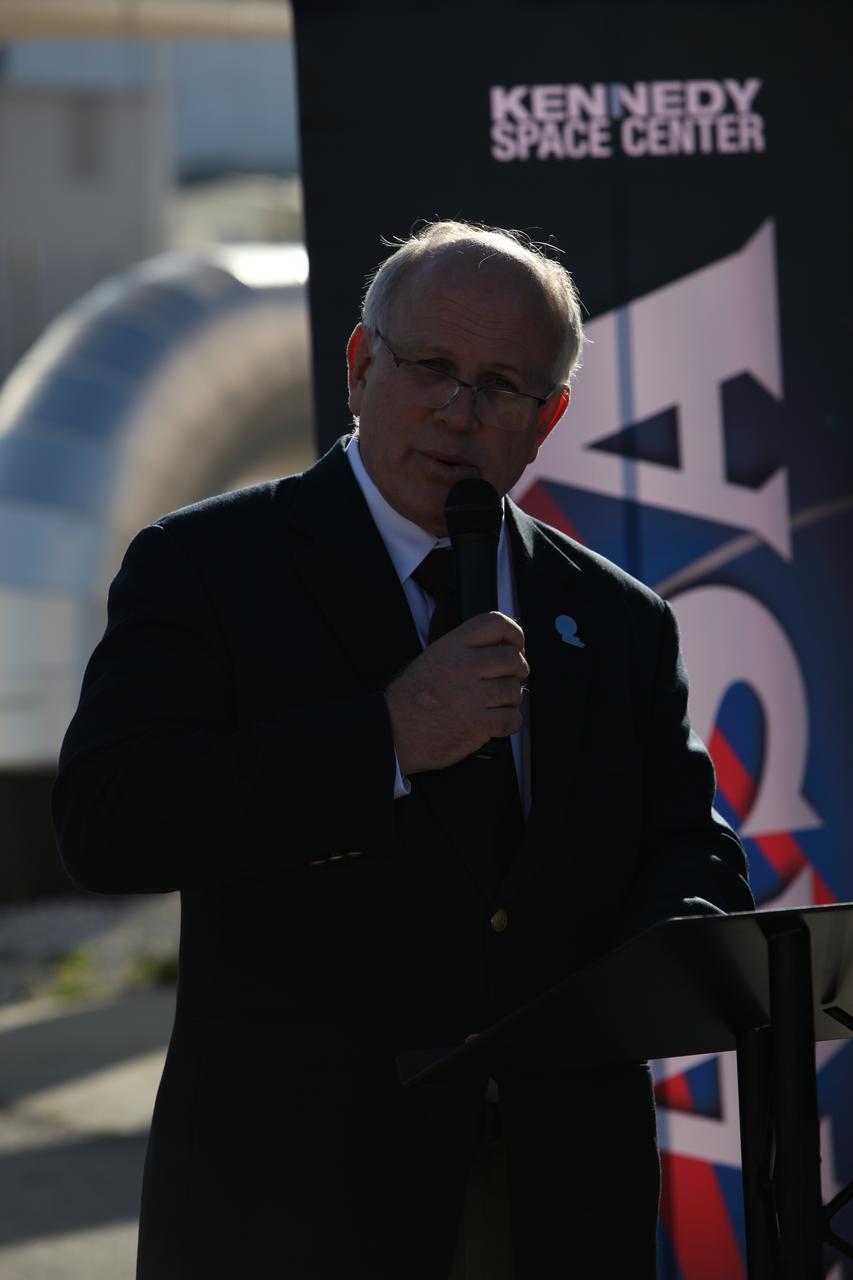
Bart Gaetjens, Florida Power & Light's FPL area external affairs manager, addresses the news media and NASA Social about the new Thermal Energy Storage (TES) tank Feb. 17. The TES tank works like a giant battery and is saving the center utility cost. These savings will be applied to new sustainable projects at Kennedy.
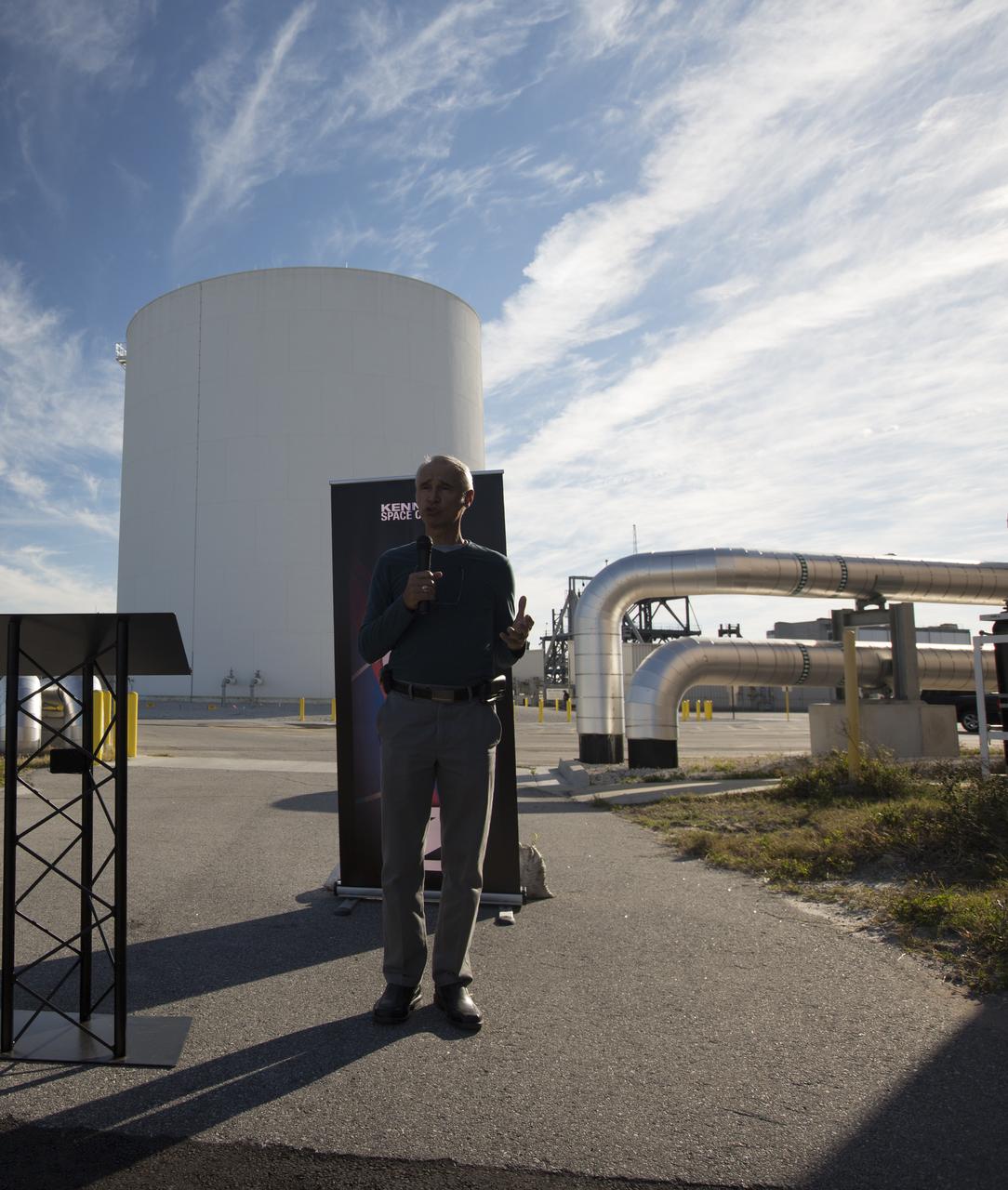
Ismael H. Otero, NASA Kennedy Space Center's project manager on the thermal energy program, addresses the news media and NASA Social about the new Thermal Energy Storage (TES) tank Feb. 17. The TES tank works like a giant battery and is saving the center utility cost. These savings will be applied to new sustainable projects at Kennedy.
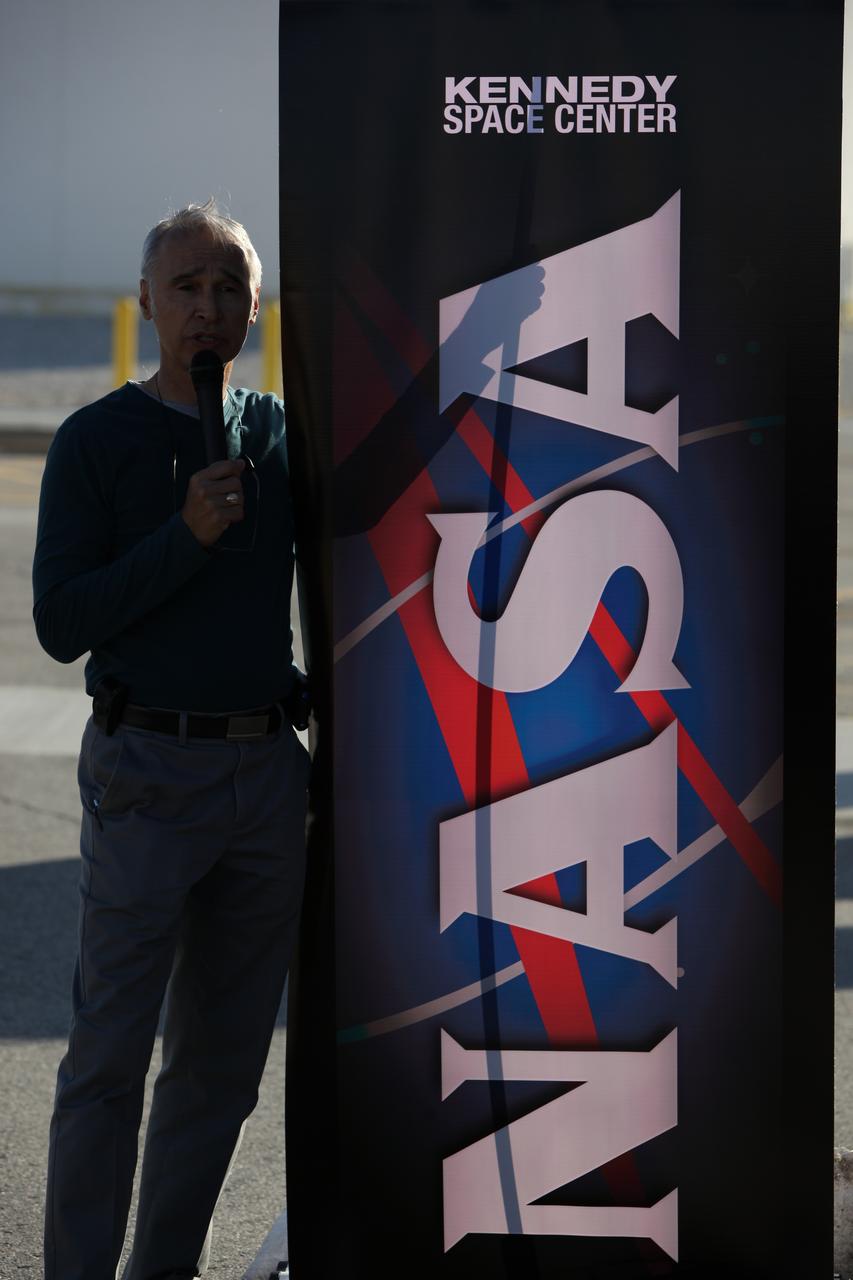
Ismael H. Otero, NASA Kennedy Space Center's project manager on the thermal energy program, addresses the news media and NASA Social about the new Thermal Energy Storage (TES) tank Feb. 17. The TES tank works like a giant battery and is saving the center utility cost. These savings will be applied to new sustainable projects at Kennedy.
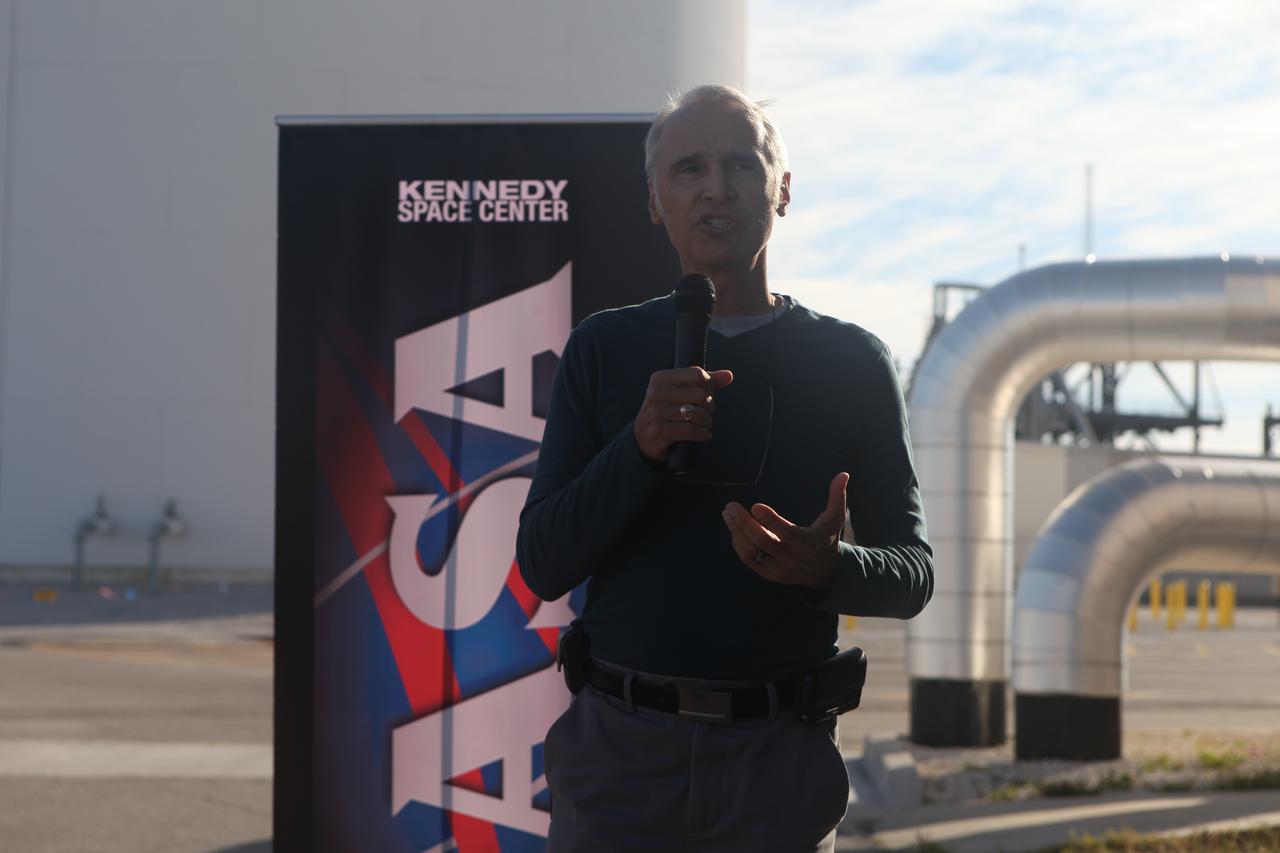
Ismael H. Otero, NASA Kennedy Space Center's project manager on the thermal energy program, addresses the news media and NASA Social about the new Thermal Energy Storage (TES) tank Feb. 17. The TES tank works like a giant battery and is saving the center utility cost. These savings will be applied to new sustainable projects at Kennedy.
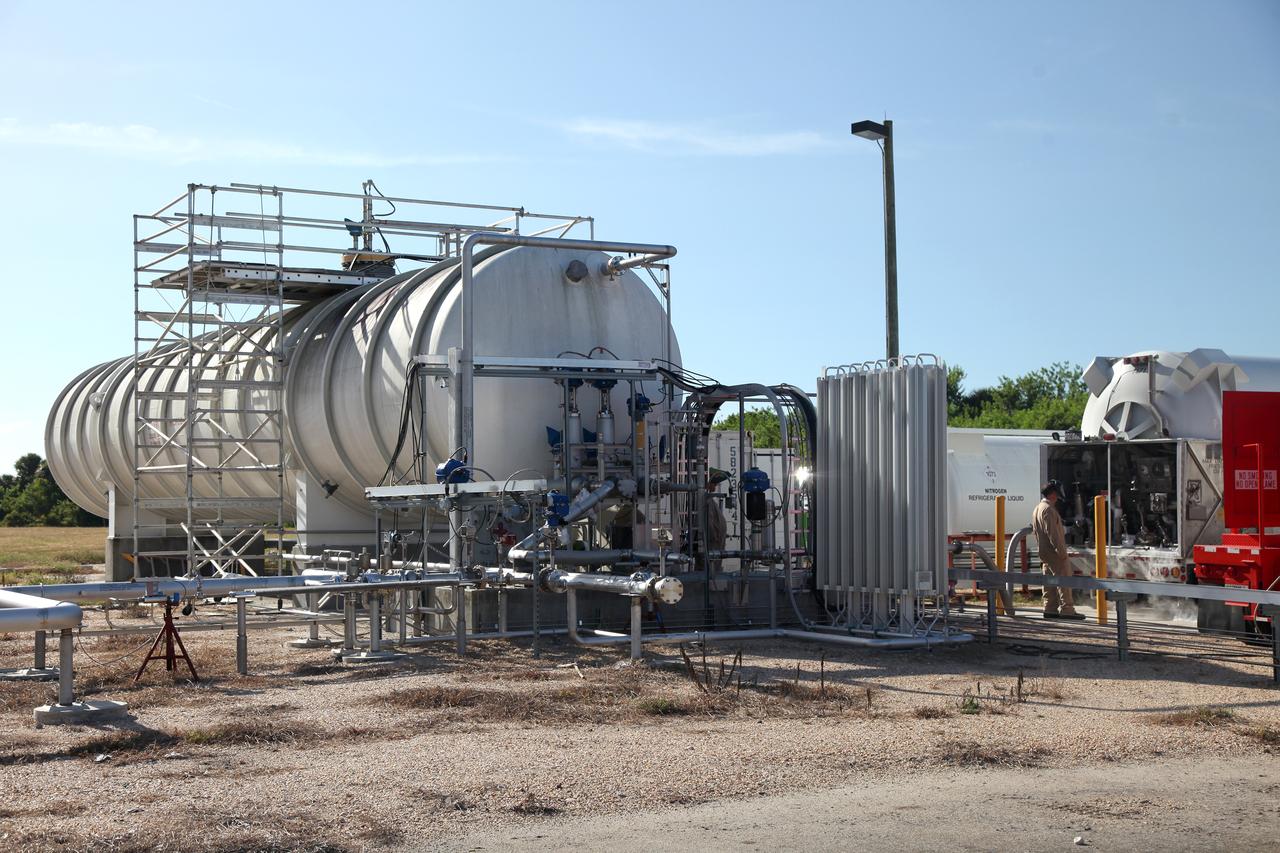
Engineers complete a test of the Ground Operations Demo Unit for liquid hydrogen at NASA's Kennedy Space Center in Florida. The system includes a 33,000 gallon liquid hydrogen storage tank with an internal cold heat exchanger supplied from a cryogenic refrigerator. The primary goal of the testing is to achieve a liquid hydrogen zero boil-off capability. The system was designed, installed and tested by a team of civil servants and contractors from the center's Cryogenic Test Laboratory, with support from engineers at NASA's Glenn Research Center in Cleveland and Stennis Space Center in Mississippi. It may be applicable for use by the Ground Systems Development and Operations Program at Launch Pad 39B.
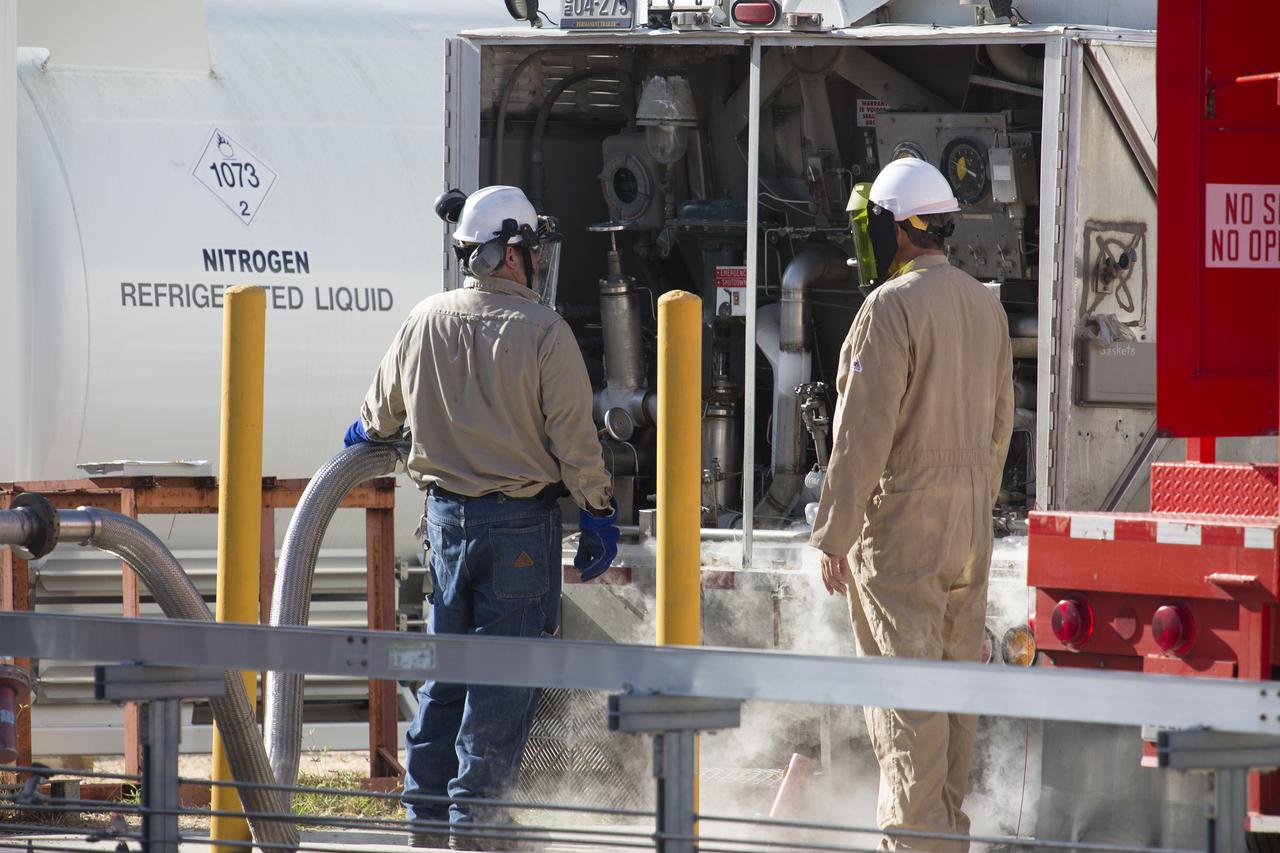
Technicians with Praxair pressurize the hydrogen trailer before offloading liquid hydrogen during a test of the Ground Operations Demo Unit for liquid hydrogen at NASA's Kennedy Space Center in Florida. The system includes a 33,000 gallon liquid hydrogen storage tank with an internal cold heat exchanger supplied from a cryogenic refrigerator. The primary goal of the testing is to achieve a liquid hydrogen zero boil-off capability. The system was designed, installed and tested by a team of civil servants and contractors from the center's Cryogenic Test Laboratory, with support from engineers at NASA's Glenn Research Center in Cleveland and Stennis Space Center in Mississippi. It may be applicable for use by the Ground Systems Development and Operations Program at Launch Pad 39B.
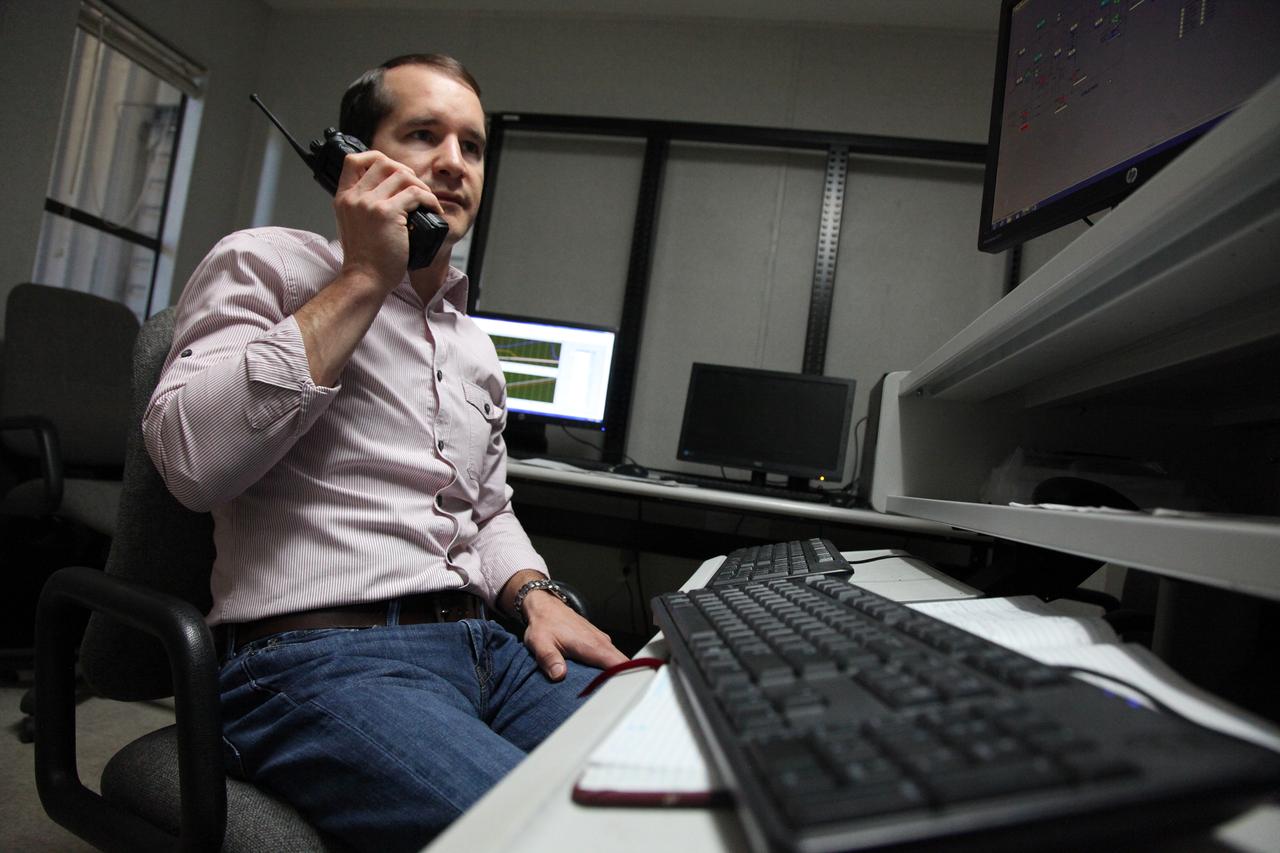
Inside a control building at NASA's Kennedy Space Center in Florida, Adam Swinger, cryogenic research engineer in the Exploration Research and Technology Directorate, communicates with team members during a test of the Ground Operations Demo Unit for liquid hydrogen. The system includes a 33,000 gallon liquid hydrogen storage tank with an internal cold heat exchanger supplied from a cryogenic refrigerator. The primary goal of the testing is to achieve a liquid hydrogen zero boil-off capability. The system was designed, installed and tested by a team of civil servants and contractors from the center's Cryogenic Test Laboratory, with support from engineers at NASA's Glenn Research Center in Cleveland and Stennis Space Center in Mississippi. It may be applicable for use by the Ground Systems Development and Operations Program at Launch Pad 39B.
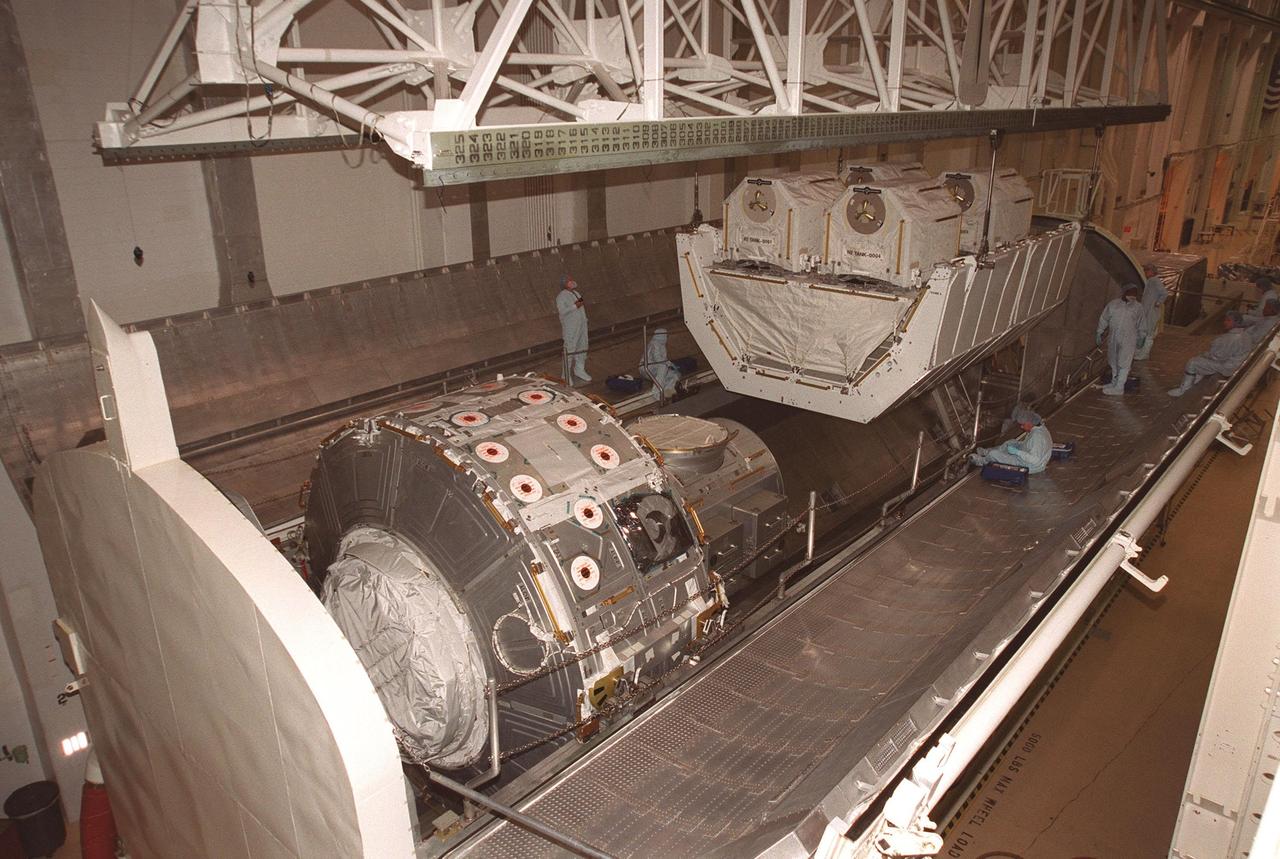
KENNEDY SPACE CENTER, FLA. -- With workers keeping a close watch, the overhead crane lowers the high pressure gas assembly two gaseous oxygen and two gaseous nitrogen storage tanks into the payload canister. The joint airlock module is already in the canister. The airlock and tanks are part of the payload on mission STS-104 and are being transferred to orbiter Atlantis’s payload bay. The storage tanks will be attached to the airlock during two spacewalks. The storage tanks will support future spacewalk operations from the Station and augment the Service Module gas resupply system. STS-104 is scheduled for launch June 14 from Launch Pad 39B
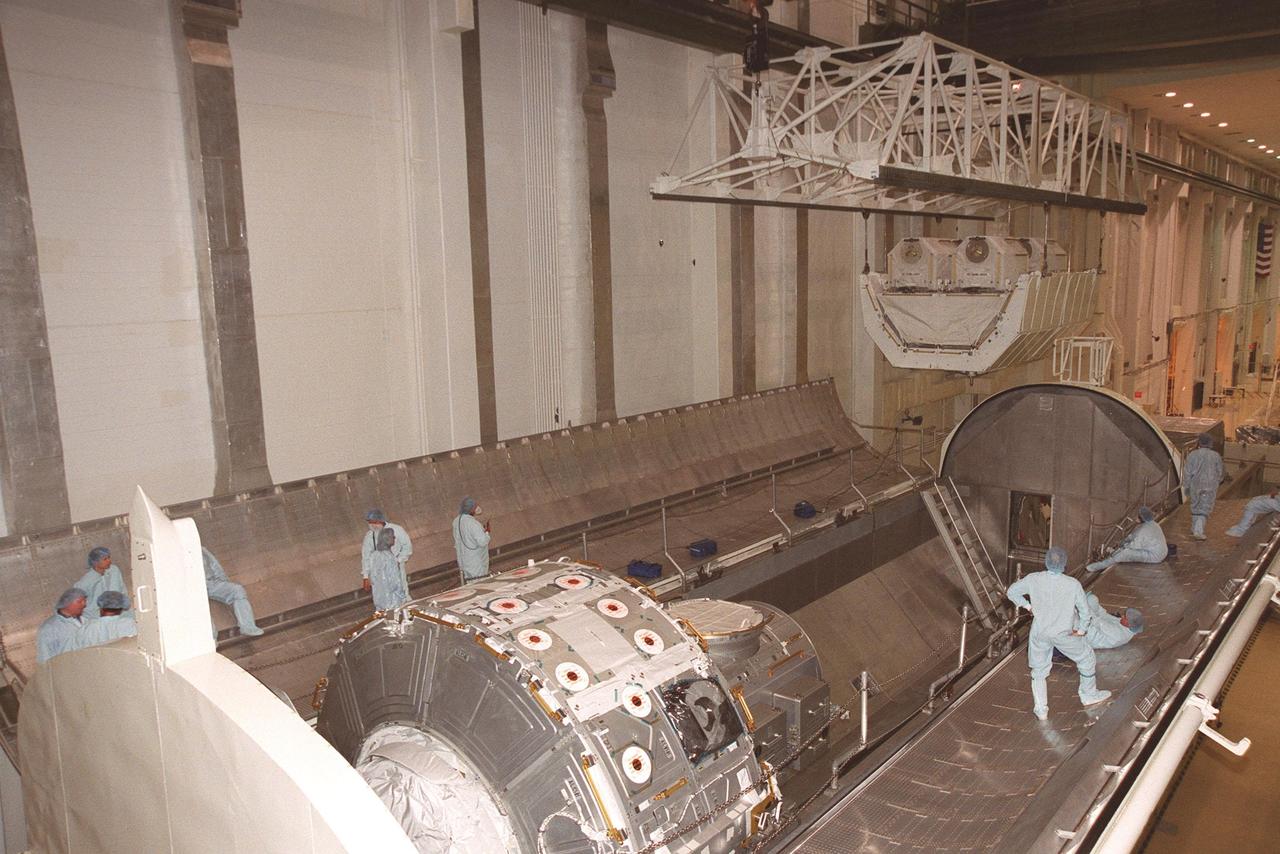
KENNEDY SPACE CENTER, FLA. -- In the Operations and Checkout Building, workers wait in the payload canister as an overhead crane moves the high pressure gas assembly two gaseous oxygen and two gaseous nitrogen storage tanks toward it. The joint airlock module is already in the canister. The airlock and tanks are part of the payload on mission STS-104 and are being transferred to orbiter Atlantis’s payload bay. The storage tanks will be attached to the airlock during two spacewalks. The storage tanks will support future spacewalk operations from the Station and augment the Service Module gas resupply system. STS-104 is scheduled for launch June 14 from Launch Pad 39B
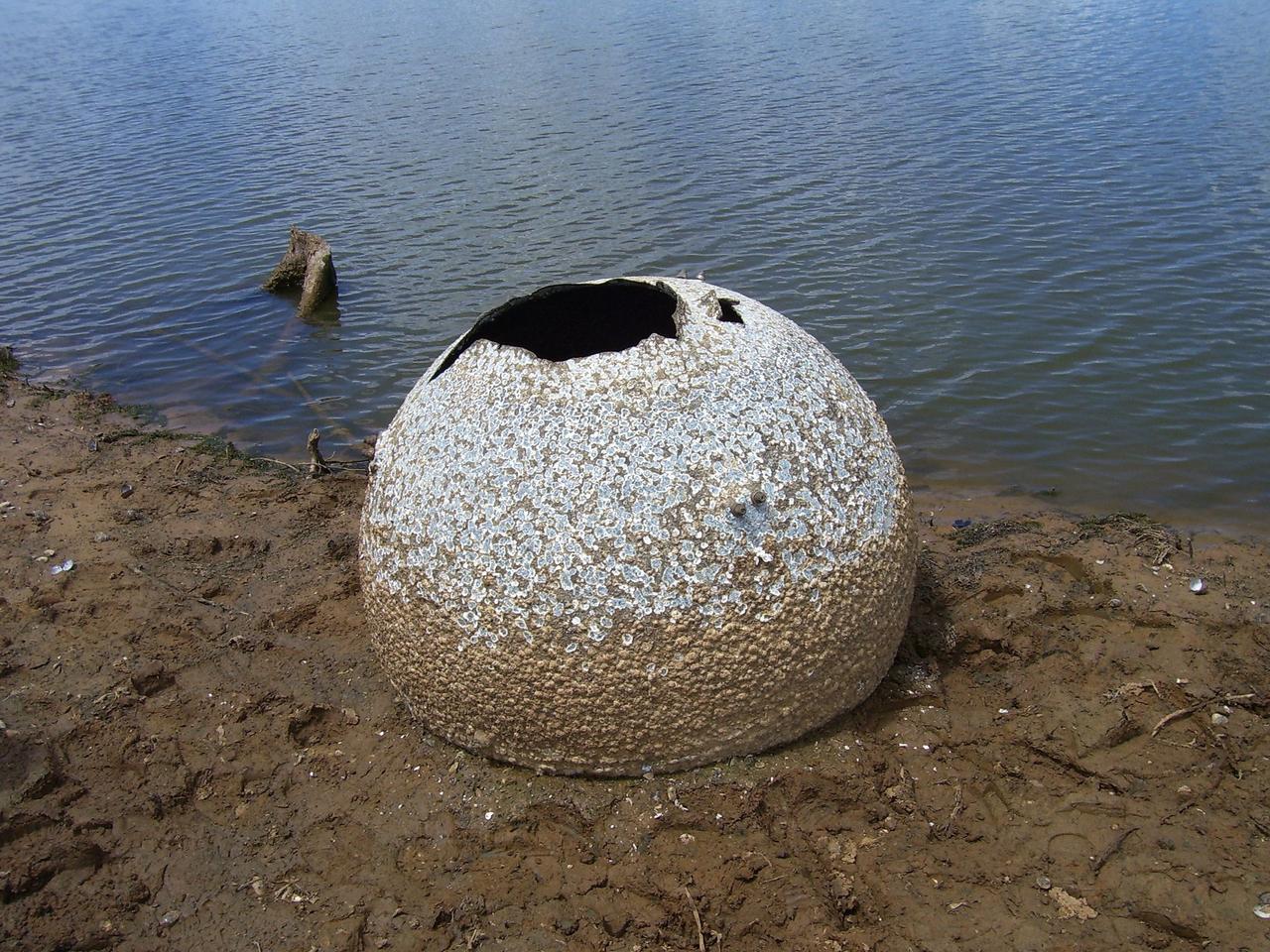
NACOGDOCHES, Texas -- A round 40-inch aluminum storage tank from space shuttle Columbia's Power Reactant and Storage Distribution System rests on the edge of Lake Nacogdoches in Texas. Lower lake water levels due to a local drought allowed the debris to become exposed. Columbia was destroyed during re-entry at the conclusion of the STS-107 mission in 2003. Approximately 38 to 40 percent of Columbia was recovered following the accident in a half-million-acre search area which extended from eastern Texas and to western Louisiana. This tank is one of 18 cryogenic liquid storage tanks that flew aboard Columbia. The tank is not hazardous to people or the environment and will be transported to NASA's Kennedy Space Center for storage inside the Vehicle Assembly Building with the rest of the recovered Columbia debris. For information on STS-107 and the Columbia accident, visit http://www.nasa.gov/columbia/home/index.html. Photo credit: Nacogdoches Police Dept.
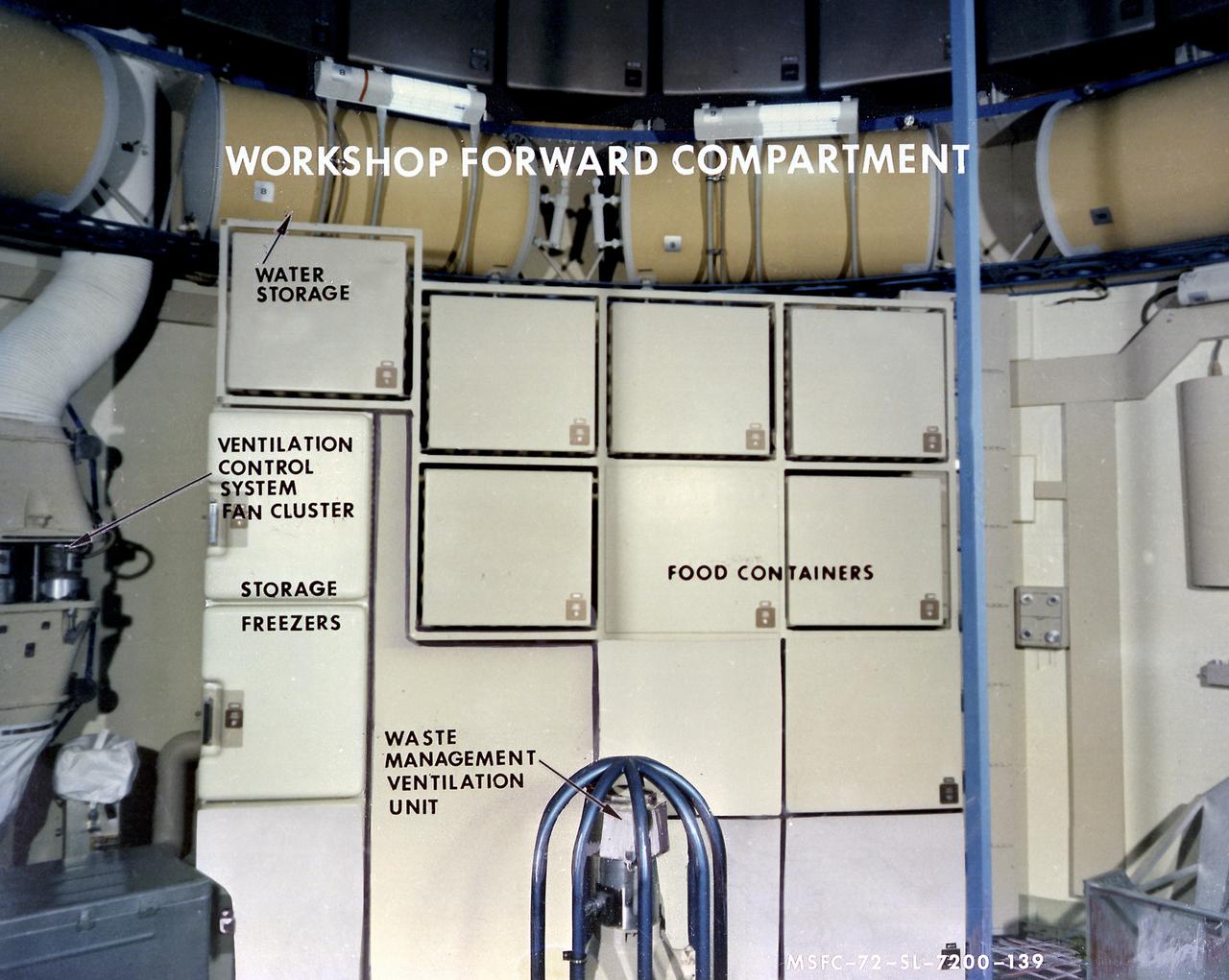
This image, with callouts, depicts the storage area of the forward compartment at the upper level of the Orbital Workshop (OWS). The upper level consisted of a large work area and housed water storage tanks, a food freezer, storage vaults for film, scientific airlocks, mobility and stability experiment equipment, and other experimental equipment.
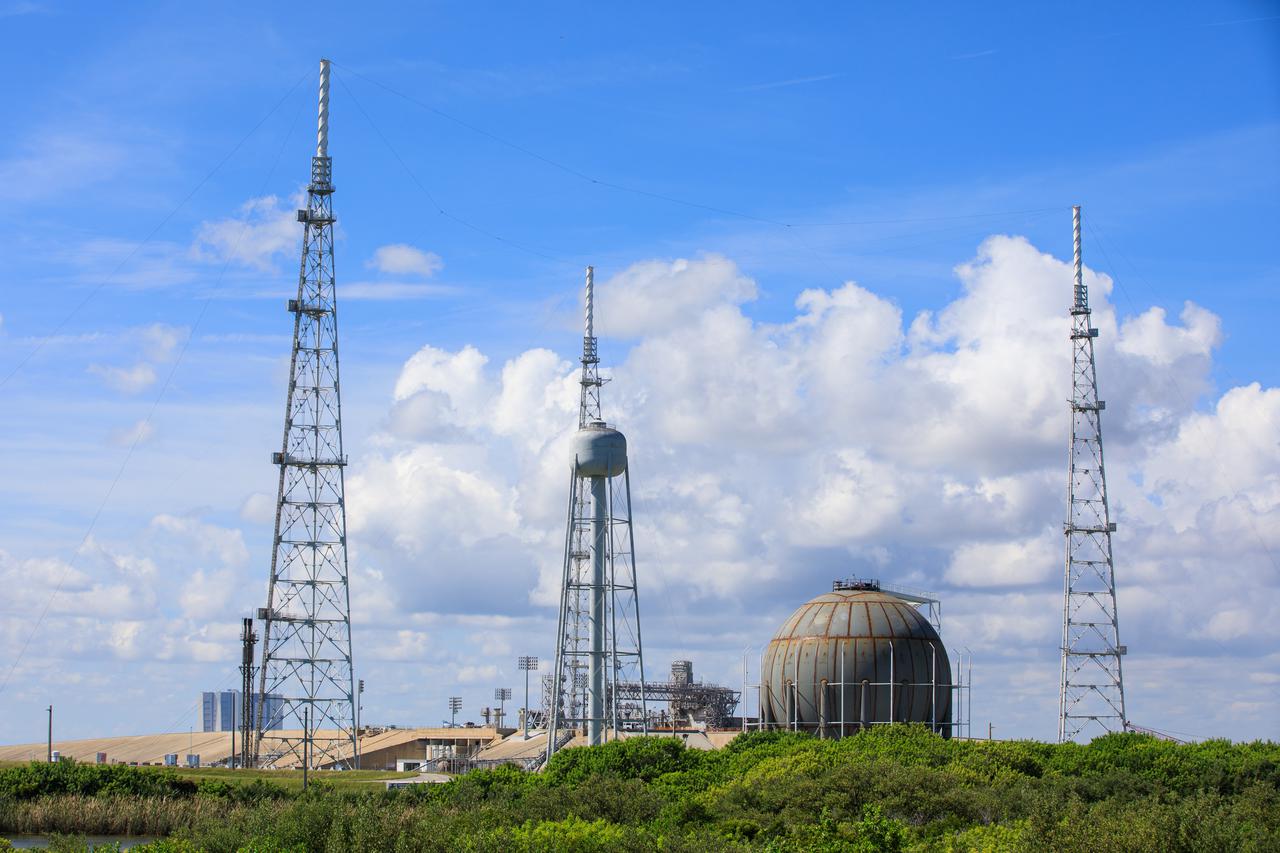
Seen here is a newly constructed liquid hydrogen (LH2) storage tank at Launch Pad 39B at NASA’s Kennedy Space Center in Florida on Oct. 1, 2021. With construction now complete, teams will focus on painting the tank next. The storage tank, capable of holding 1.25 million gallons of LH2, will be used to support future Artemis missions to the Moon and, eventually, Mars. Through Artemis, NASA will land the first woman and first person of color on the Moon, paving the way for a long-term presence in lunar orbit.
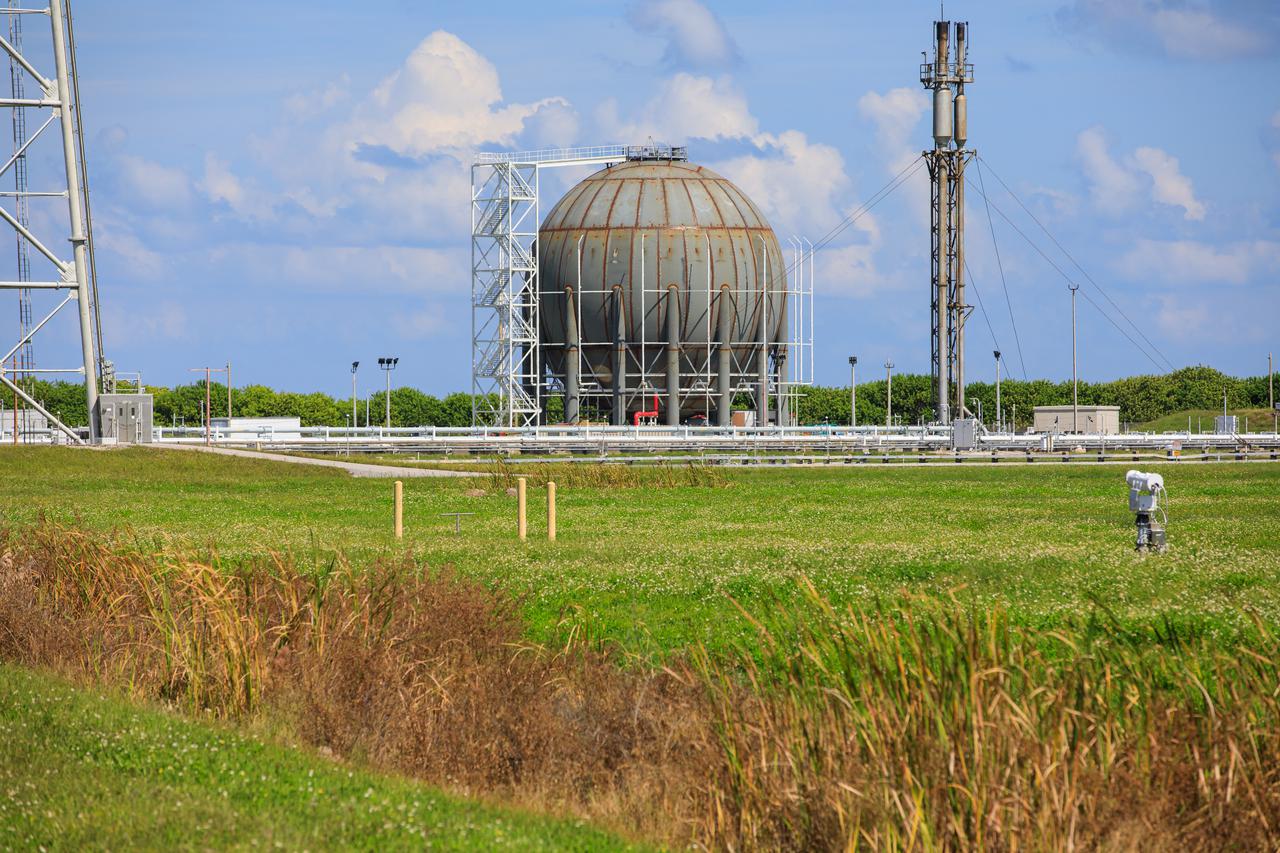
Seen here is a newly constructed liquid hydrogen (LH2) storage tank at Launch Pad 39B at NASA’s Kennedy Space Center in Florida on Oct. 1, 2021. With construction now complete, teams will focus on painting the tank next. The storage tank, capable of holding 1.25 million gallons of LH2, will be used to support future Artemis missions to the Moon and, eventually, Mars. Through Artemis, NASA will land the first woman and first person of color on the Moon, paving the way for a long-term presence in lunar orbit.
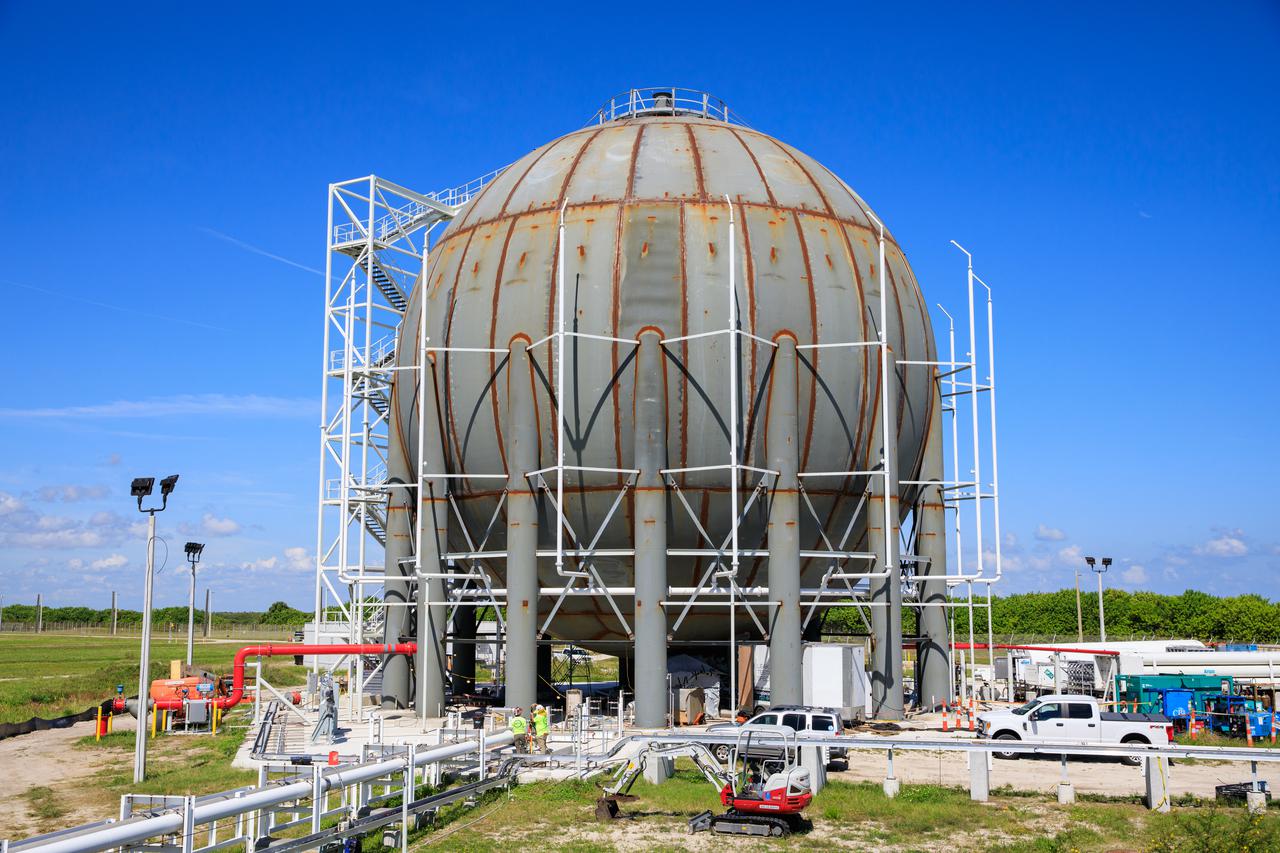
Seen here is a newly constructed liquid hydrogen (LH2) storage tank at Launch Pad 39B at NASA’s Kennedy Space Center in Florida on Oct. 1, 2021. With construction now complete, teams will focus on painting the tank next. The storage tank, capable of holding 1.25 million gallons of LH2, will be used to support future Artemis missions to the Moon and, eventually, Mars. Through Artemis, NASA will land the first woman and first person of color on the Moon, paving the way for a long-term presence in lunar orbit.
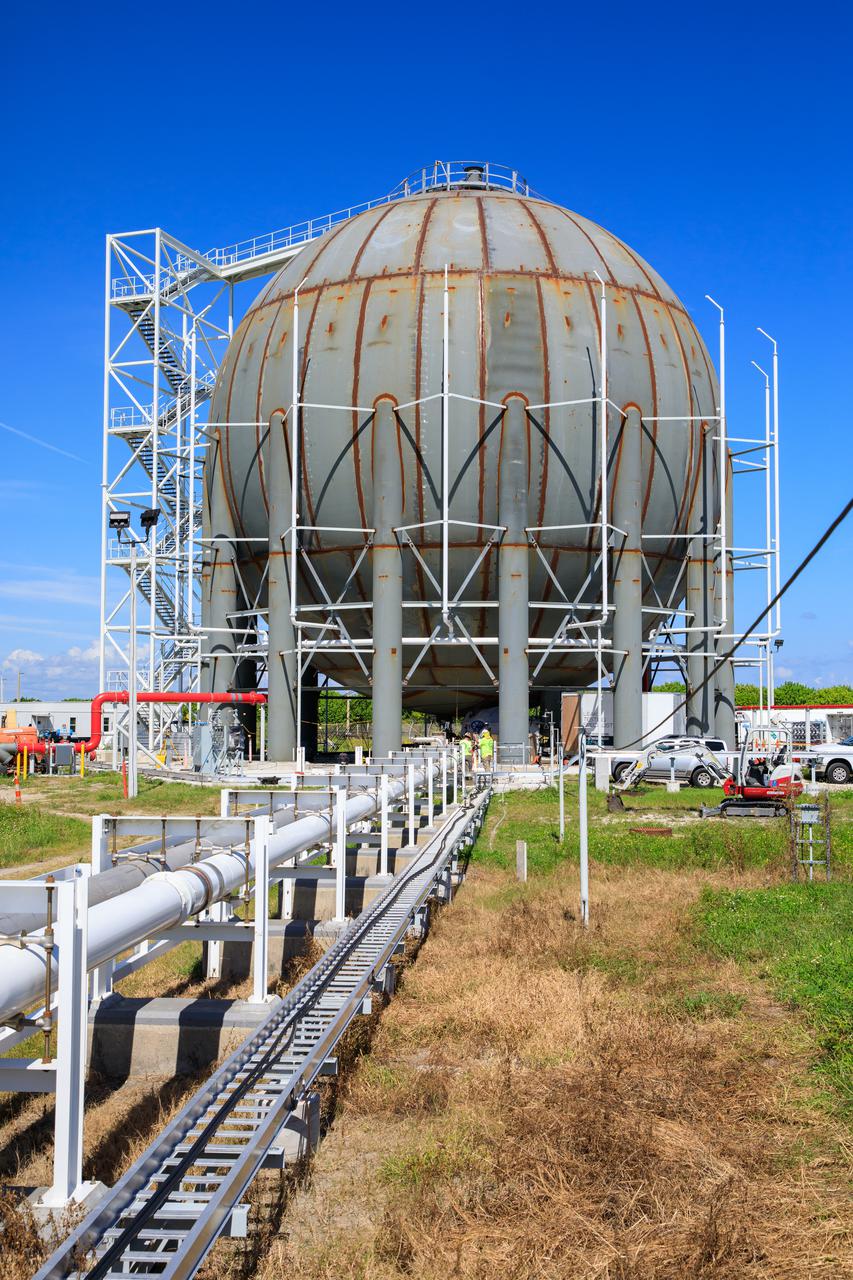
Seen here is a newly constructed liquid hydrogen (LH2) storage tank at Launch Pad 39B at NASA’s Kennedy Space Center in Florida on Oct. 1, 2021. With construction now complete, teams will focus on painting the tank next. The storage tank, capable of holding 1.25 million gallons of LH2, will be used to support future Artemis missions to the Moon and, eventually, Mars. Through Artemis, NASA will land the first woman and first person of color on the Moon, paving the way for a long-term presence in lunar orbit.
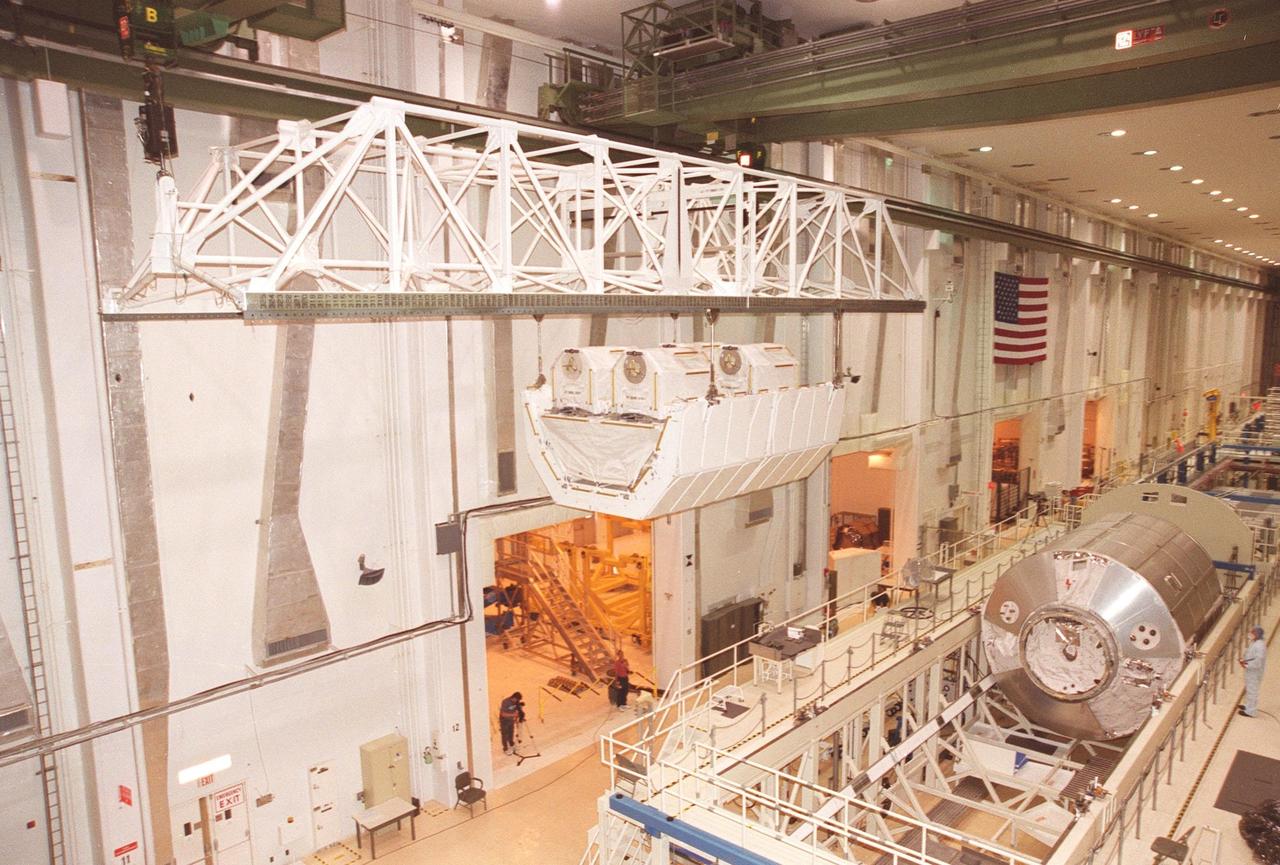
KENNEDY SPACE CENTER, FLA. -- In the Operations and Checkout Building, an overhead crane moves the high pressure gas assembly two gaseous oxygen and two gaseous nitrogen storage tanks to the payload canister for transfer to orbiter Atlantis’s payload bay. The tanks are part of the payload on mission STS-104. They will be attached to the Joint Airlock Module, also part of the payload, during two spacewalks. The storage tanks will support future spacewalk operations from the Station and augment the Service Module gas resupply system. STS-104 is scheduled for launch June 14 from Launch Pad 39B
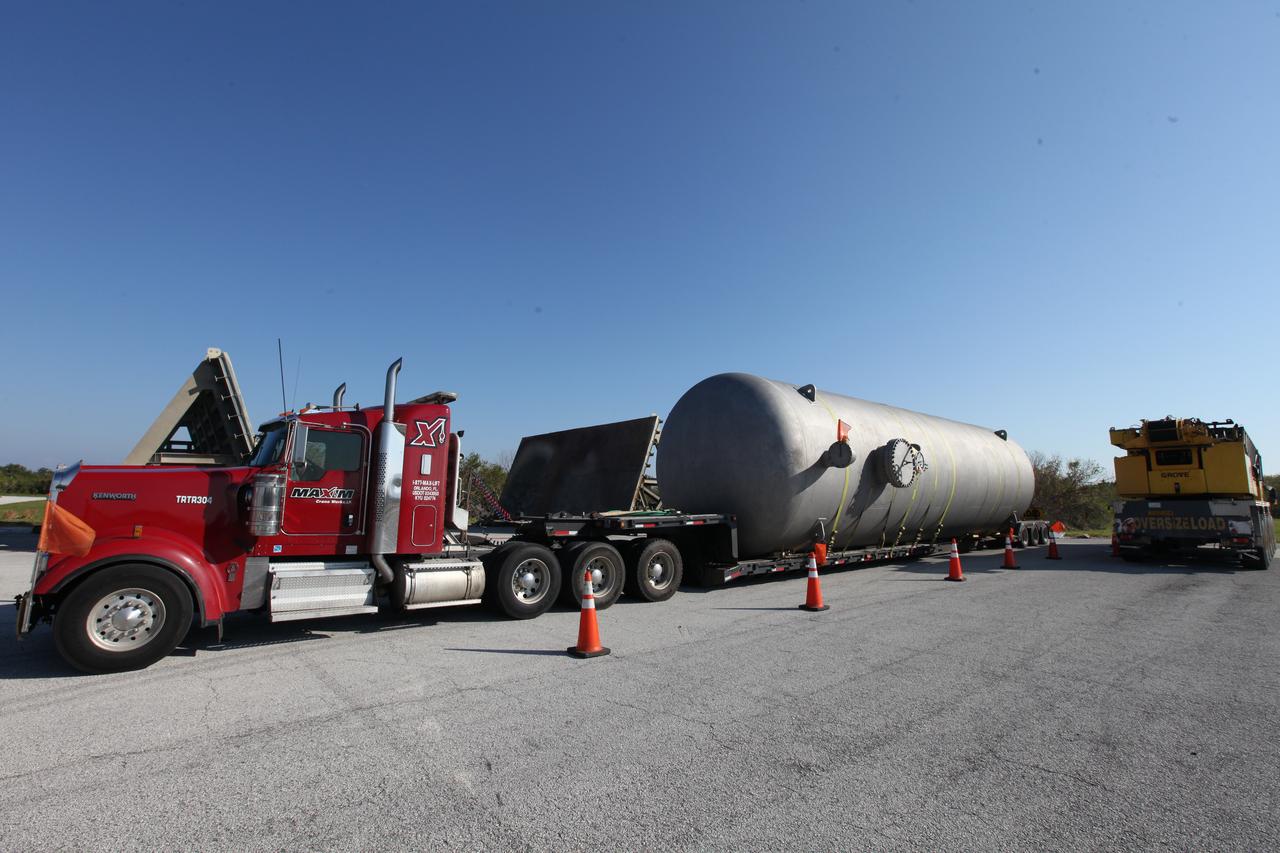
A new liquid hydrogen separator tank arrives at NASA's Kennedy Space Center in Florida. The tank will be lifted and rotated for delivery to Launch Pad 39B. The new separator/storage tank will be added to the pad's existing hydrogen vent system to assure gaseous hydrogen is delivered downstream to the flare stack. The 60,000 gallon tank was built by INOXCVA, in Baytown, Texas, a subcontractor of Precision Mechanical Inc. in Cocoa Florida. The new tank will support all future launches from the pad.
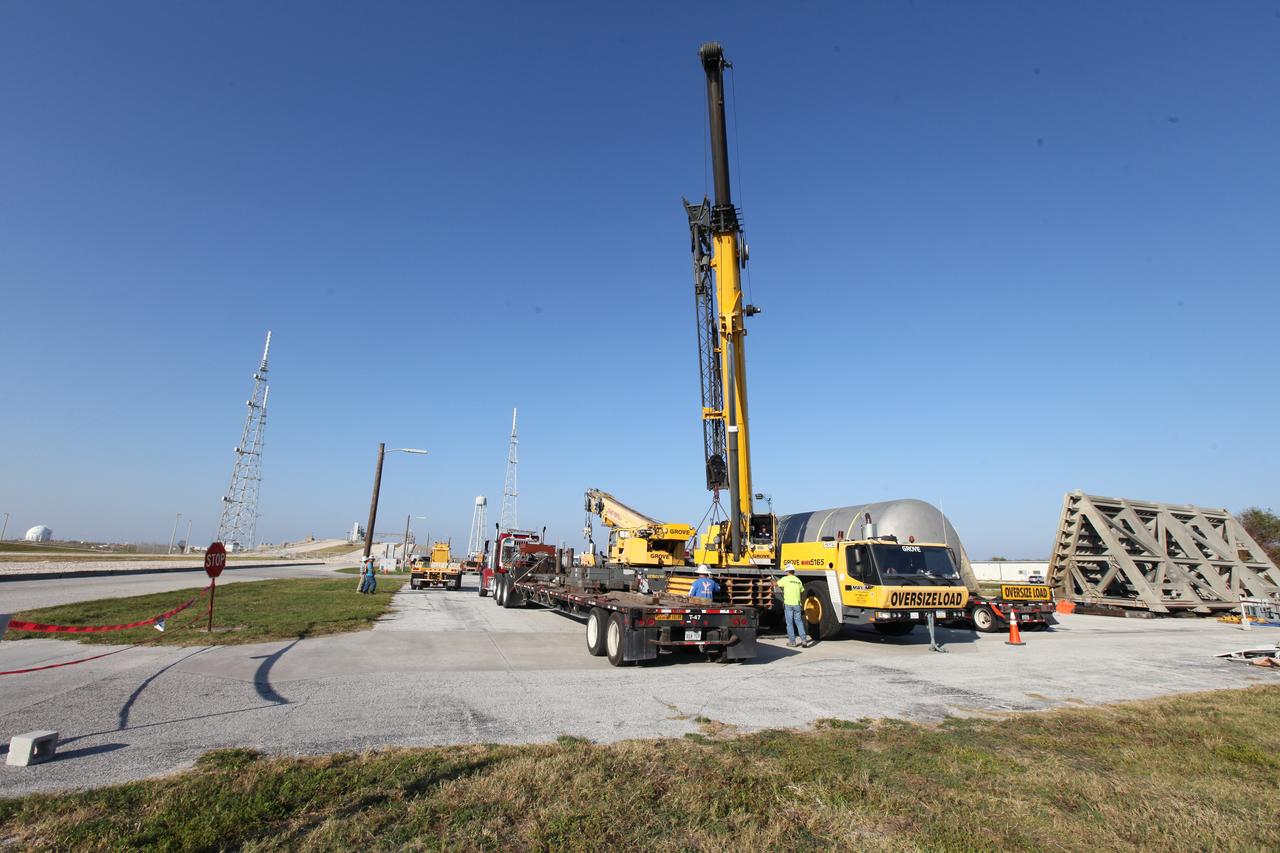
A new liquid hydrogen separator tank arrives at NASA's Kennedy Space Center in Florida. A crane will be used to lift and rotate the tank for delivery to Launch Pad 39B. The new separator/storage tank will be added to the pad's existing hydrogen vent system to assure gaseous hydrogen is delivered downstream to the flare stack. The 60,000 gallon tank was built by INOXCVA, in Baytown, Texas, a subcontractor of Precision Mechanical Inc. in Cocoa Florida. The new tank will support all future launches from the pad.
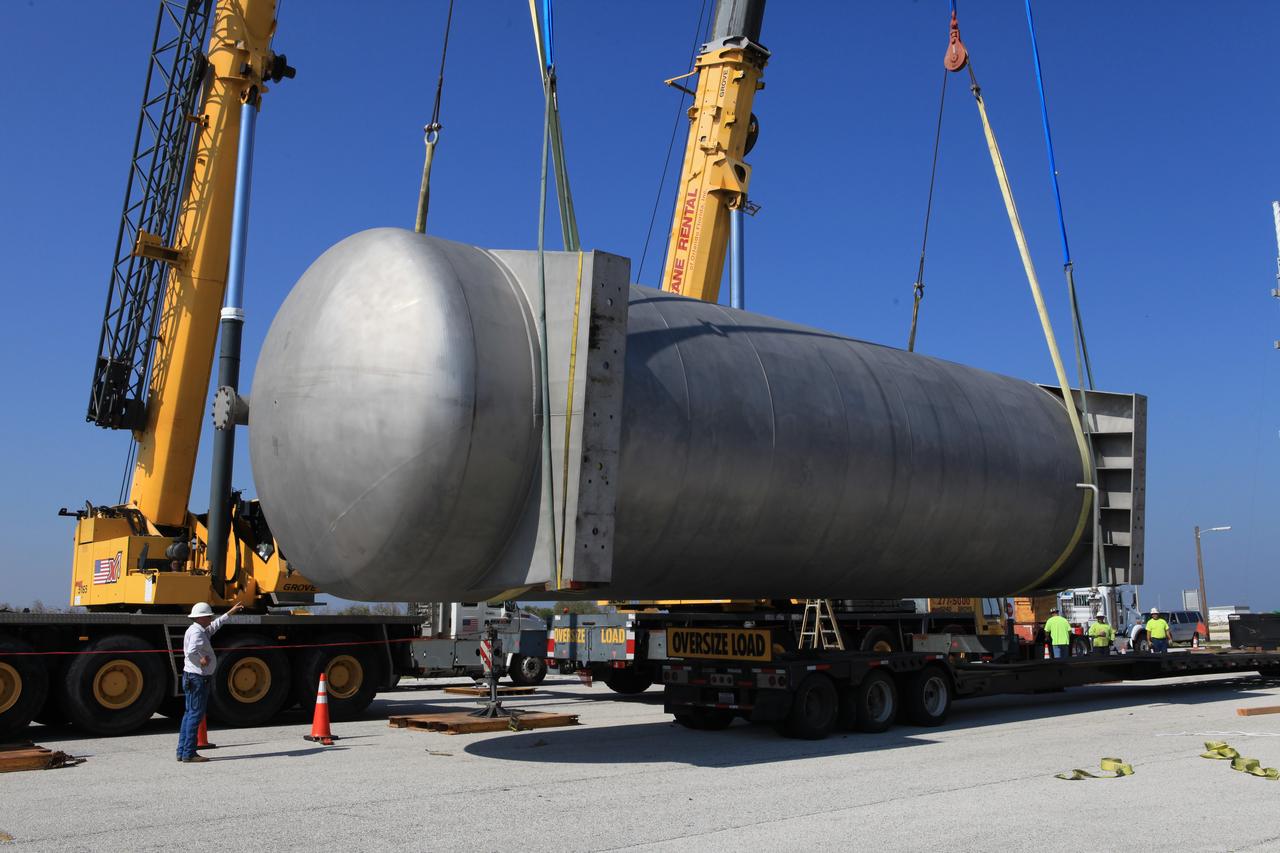
A new liquid hydrogen separator tank arrives at NASA's Kennedy Space Center in Florida. A crane has been attached to the tank to lift and rotate it before it is delivered to Launch Pad 39B. The new separator/storage tank will be added to the pad's existing hydrogen vent system to assure gaseous hydrogen is delivered downstream to the flare stack. The 60,000 gallon tank was built by INOXCVA, in Baytown, Texas, a subcontractor of Precision Mechanical Inc. in Cocoa Florida. The new tank will support all future launches from the pad.
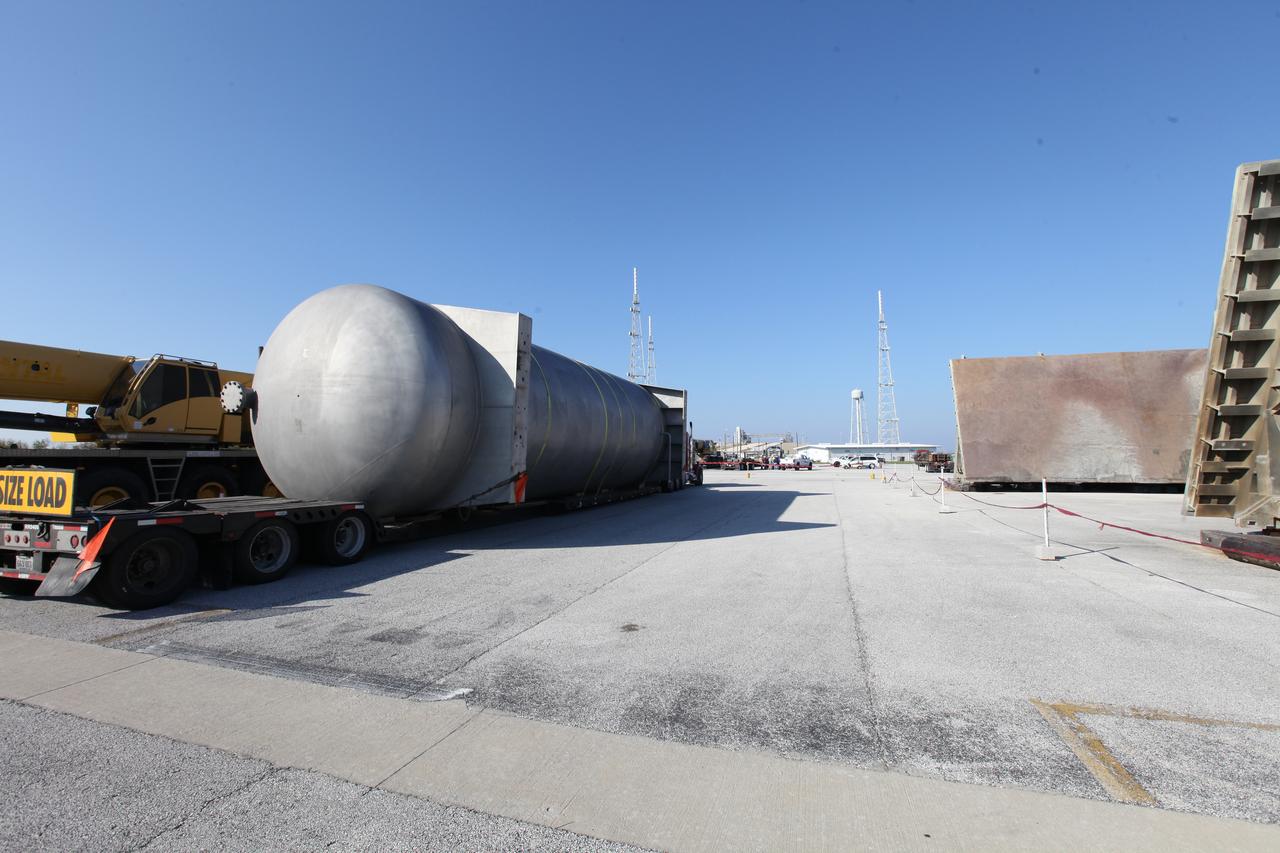
A new liquid hydrogen separator tank arrives at NASA's Kennedy Space Center in Florida. The tank will be lifted and rotated for delivery to Launch Pad 39B. The new separator/storage tank will be added to the pad's existing hydrogen vent system to assure gaseous hydrogen is delivered downstream to the flare stack. The 60,000 gallon tank was built by INOXCVA, in Baytown, Texas, a subcontractor of Precision Mechanical Inc. in Cocoa Florida. The new tank will support all future launches from the pad.
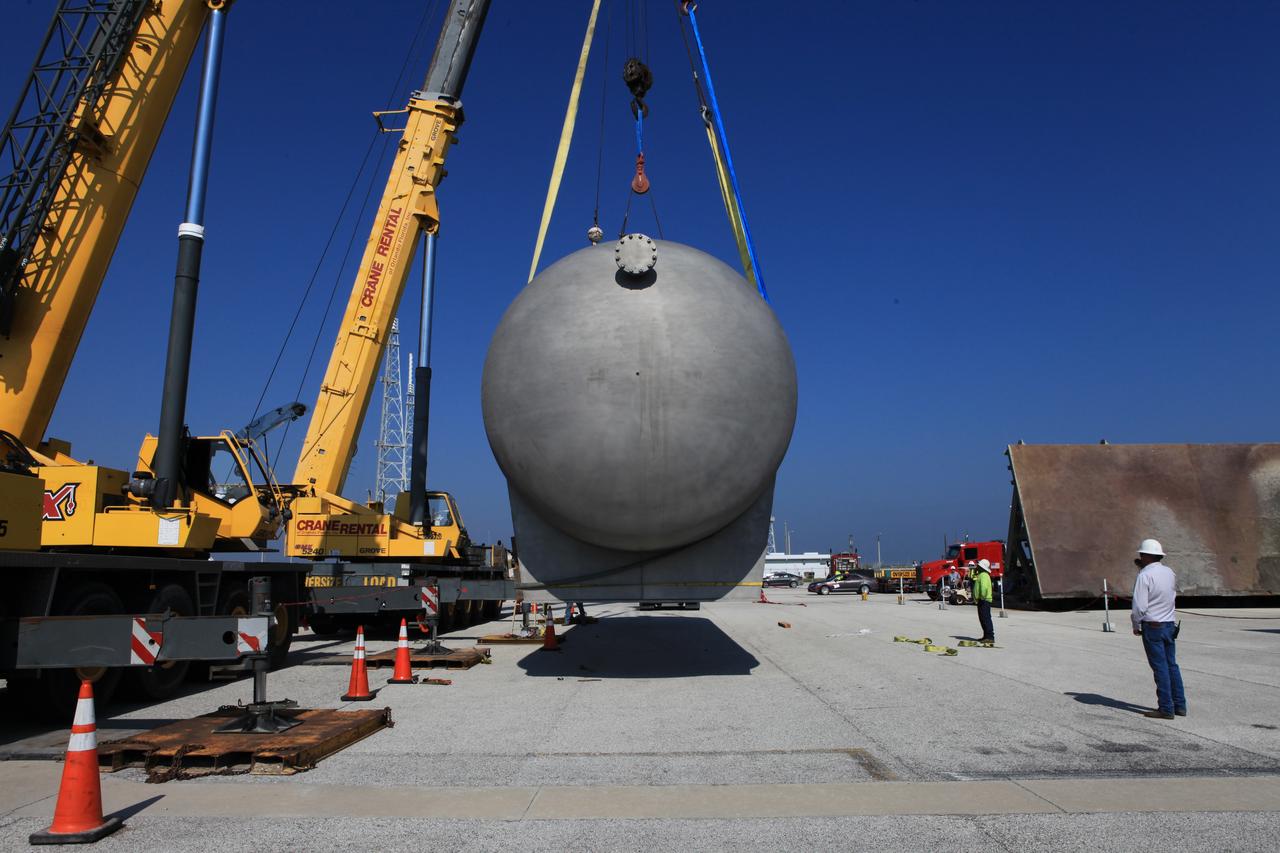
A new liquid hydrogen separator tank arrives at NASA's Kennedy Space Center in Florida. A crane is used to lift and rotate the tank before it is delivered to Launch Pad 39B. The new separator/storage tank will be added to the pad's existing hydrogen vent system to assure gaseous hydrogen is delivered downstream to the flare stack. The 60,000 gallon tank was built by INOXCVA, in Baytown, Texas, a subcontractor of Precision Mechanical Inc. in Cocoa Florida. The new tank will support all future launches from the pad.
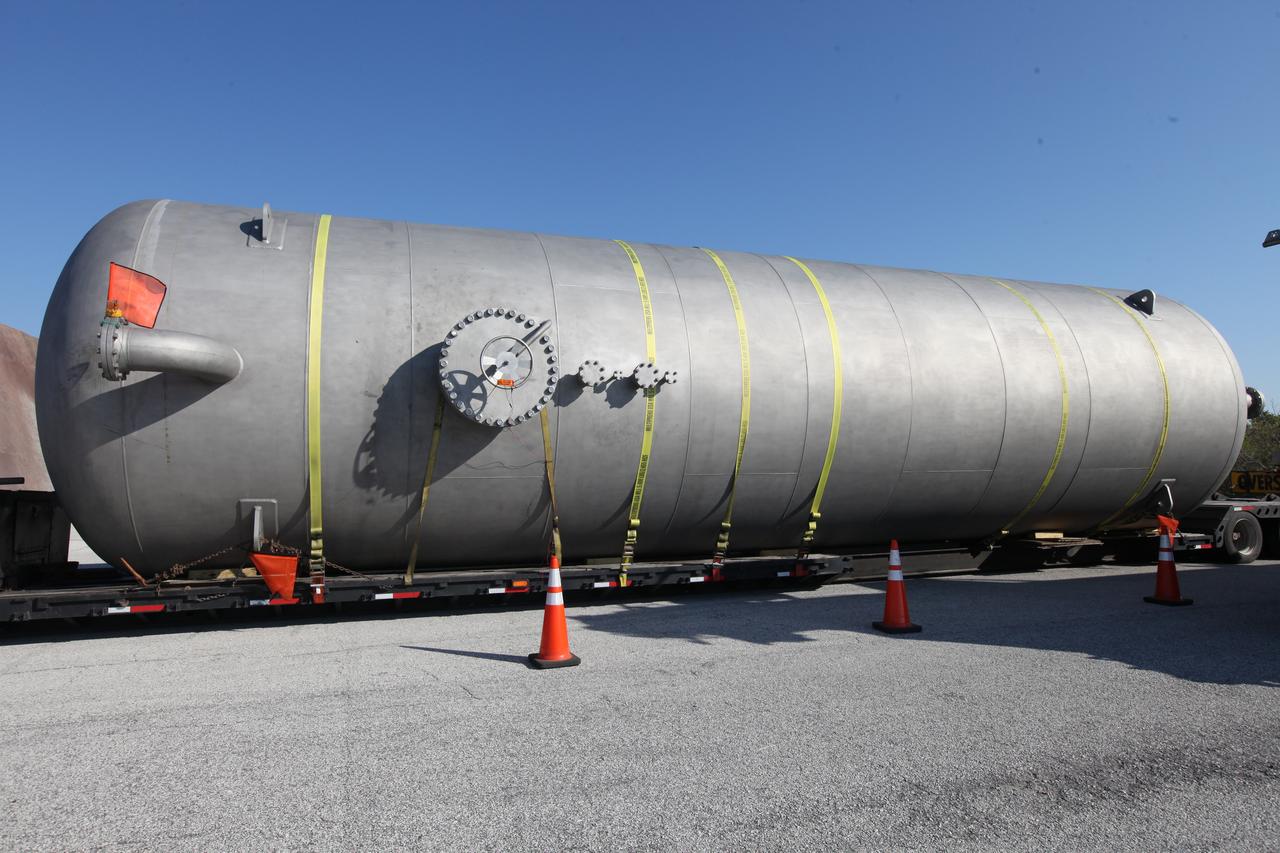
A new liquid hydrogen separator tank arrives at NASA's Kennedy Space Center in Florida. The tank will be lifted and rotated for delivery to Launch Pad 39B. The new separator/storage tank will be added to the pad's existing hydrogen vent system to assure gaseous hydrogen is delivered downstream to the flare stack. The 60,000 gallon tank was built by INOXCVA, in Baytown, Texas, a subcontractor of Precision Mechanical Inc. in Cocoa Florida. The new tank will support all future launches from the pad.
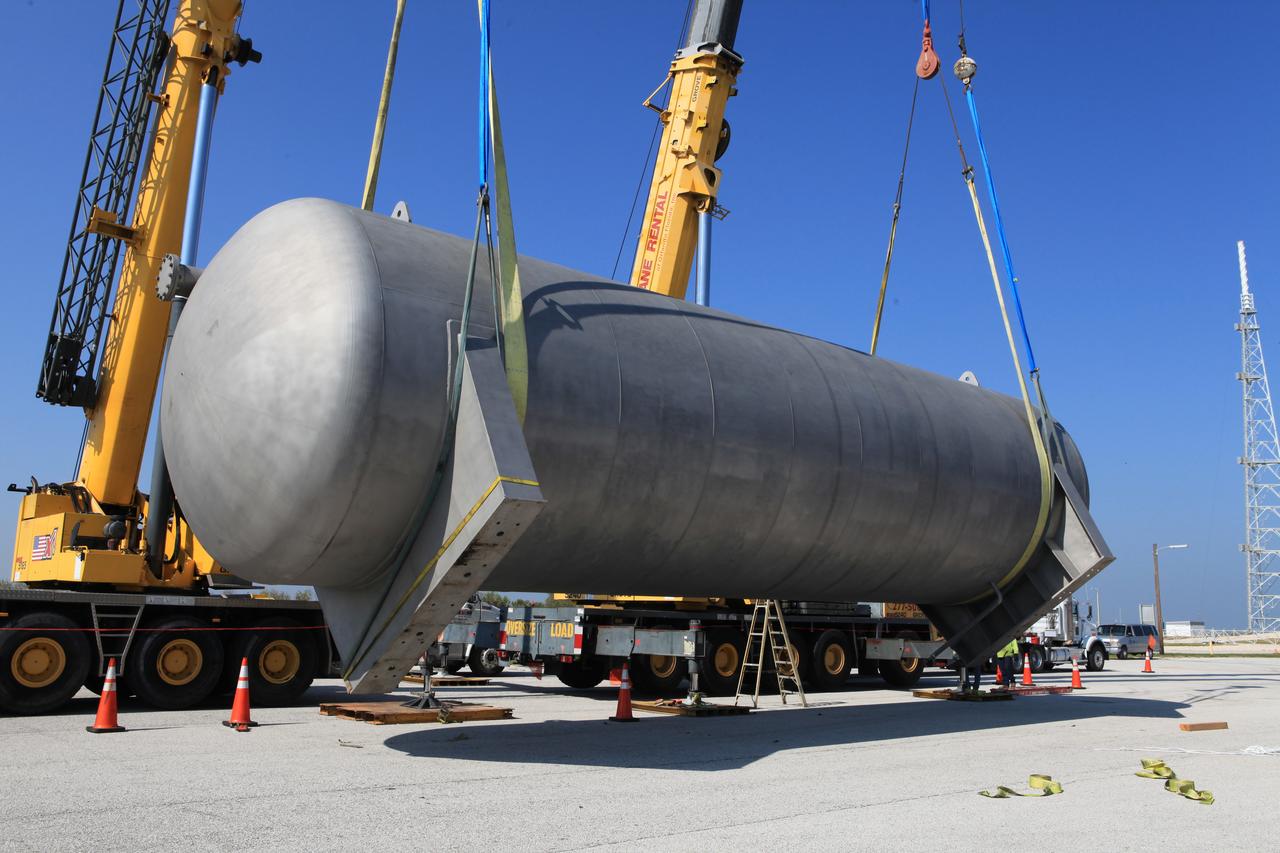
A new liquid hydrogen separator tank arrives at NASA's Kennedy Space Center in Florida. A crane is used to lift the tank and rotate it before it is delivered to Launch Pad 39B. The new separator/storage tank will be added to the pad's existing hydrogen vent system to assure gaseous hydrogen is delivered downstream to the flare stack. The 60,000 gallon tank was built by INOXCVA, in Baytown, Texas, a subcontractor of Precision Mechanical Inc. in Cocoa Florida. The new tank will support all future launches from the pad.
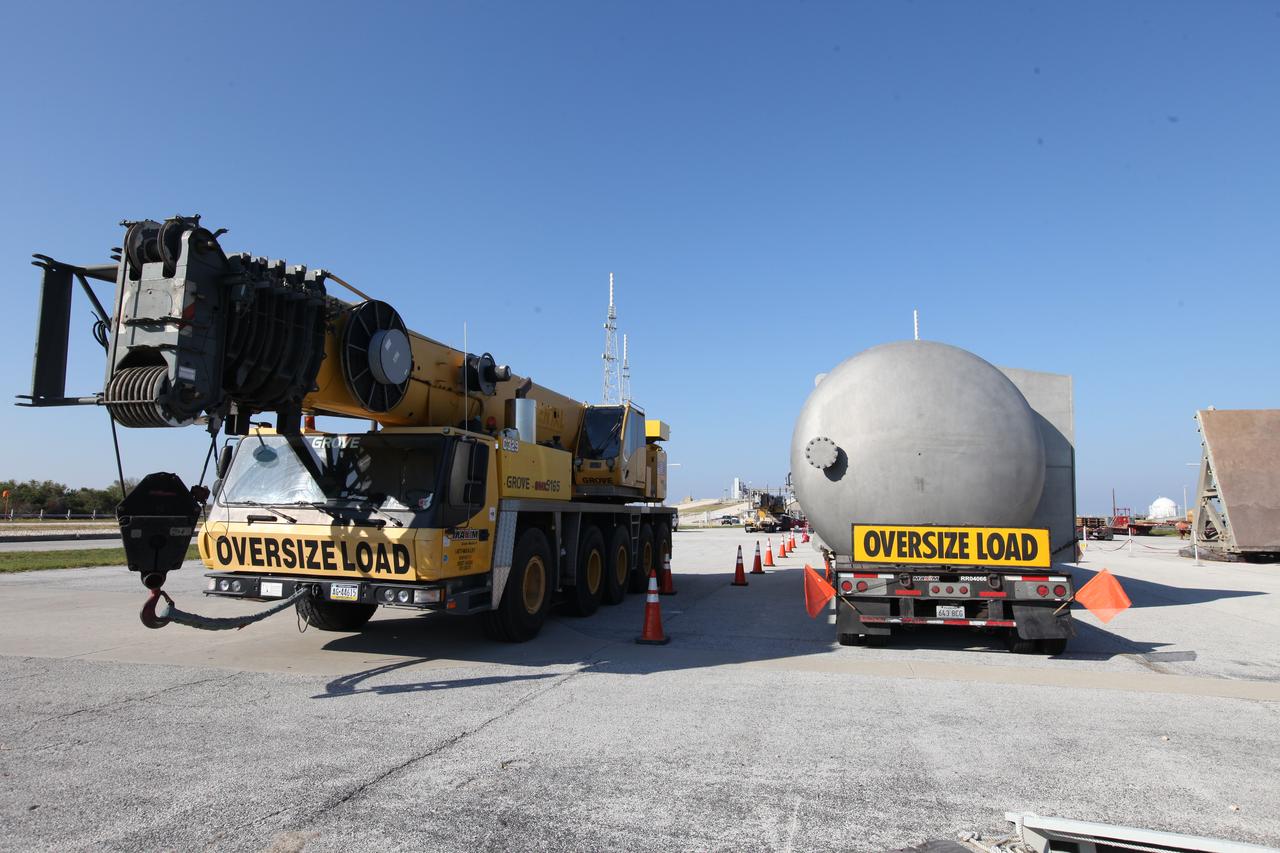
A new liquid hydrogen separator tank arrives at NASA's Kennedy Space Center in Florida. A crane will be used to lift and rotate the tank for delivery to Launch Pad 39B. The new separator/storage tank will be added to the pad's existing hydrogen vent system to assure gaseous hydrogen is delivered downstream to the flare stack. The 60,000 gallon tank was built by INOXCVA, in Baytown, Texas, a subcontractor of Precision Mechanical Inc. in Cocoa Florida. The new tank will support all future launches from the pad.
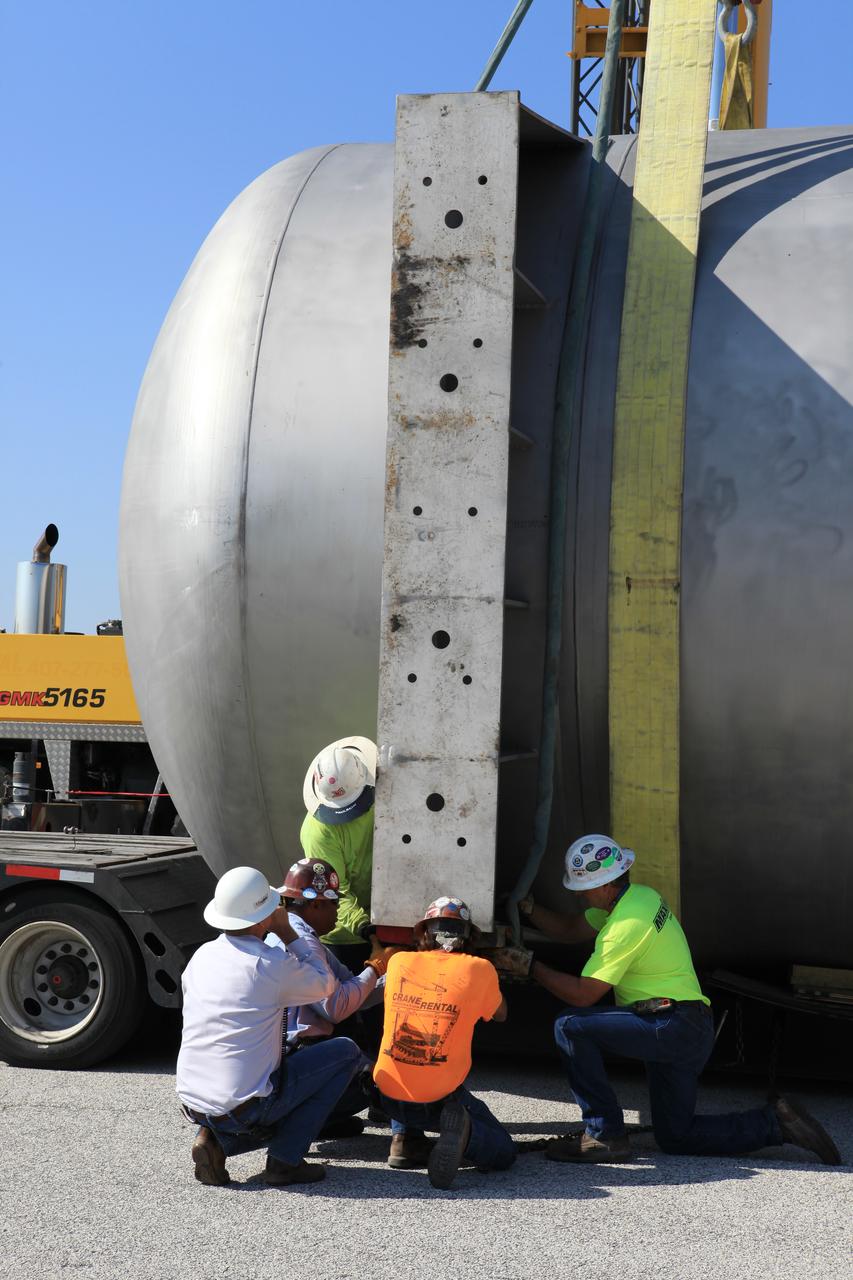
A new liquid hydrogen separator tank arrives at NASA's Kennedy Space Center in Florida. Construction workers check lines as a crane is attached to the tank to lift and rotate it before it is delivered to Launch Pad 39B. The new separator/storage tank will be added to the pad's existing hydrogen vent system to assure gaseous hydrogen is delivered downstream to the flare stack. The 60,000 gallon tank was built by INOXCVA, in Baytown, Texas, a subcontractor of Precision Mechanical Inc. in Cocoa Florida. The new tank will support all future launches from the pad.
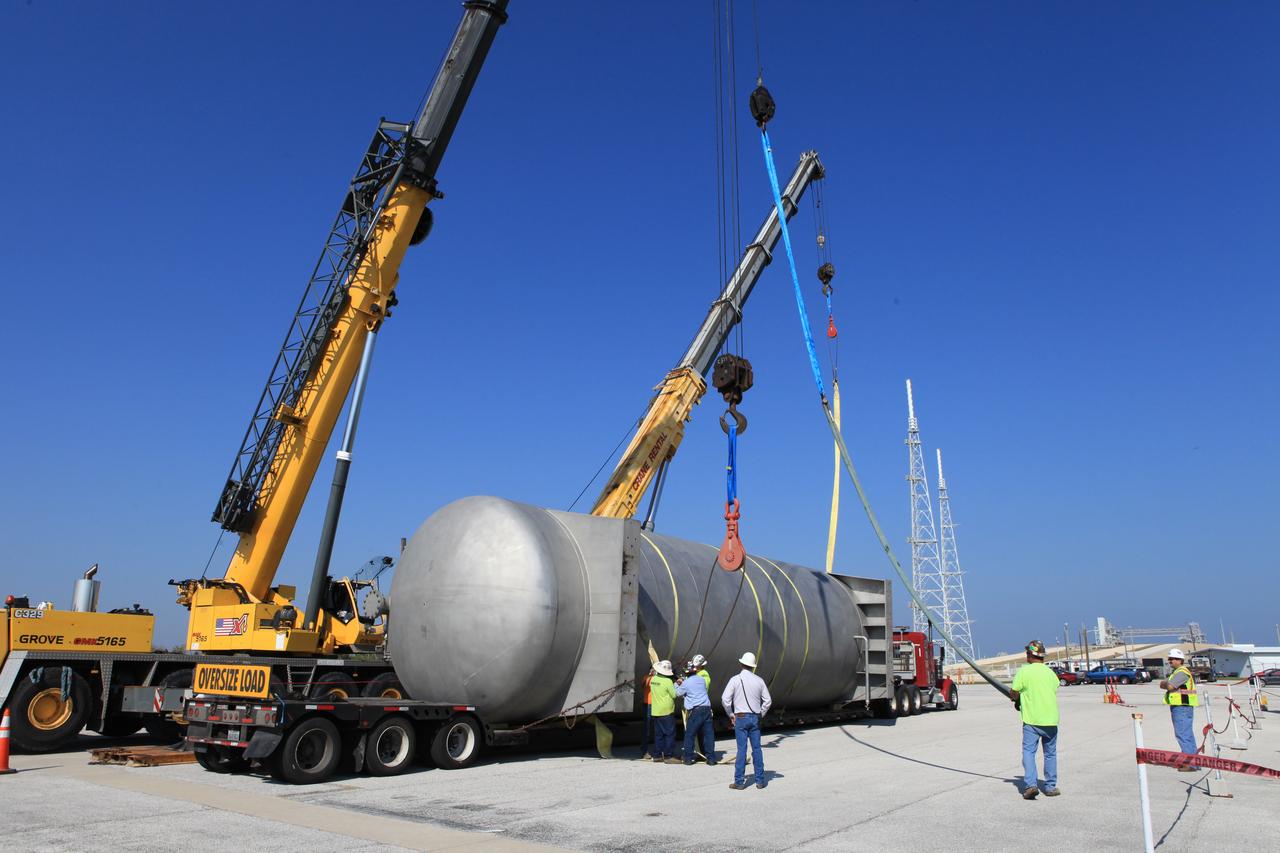
A new liquid hydrogen separator tank arrives at NASA's Kennedy Space Center in Florida. A crane is used to lift and rotate the tank before delivery to Launch Pad 39B. The new separator/storage tank will be added to the pad's existing hydrogen vent system to assure gaseous hydrogen is delivered downstream to the flare stack. The 60,000 gallon tank was built by INOXCVA, in Baytown, Texas, a subcontractor of Precision Mechanical Inc. in Cocoa Florida. The new tank will support all future launches from the pad.
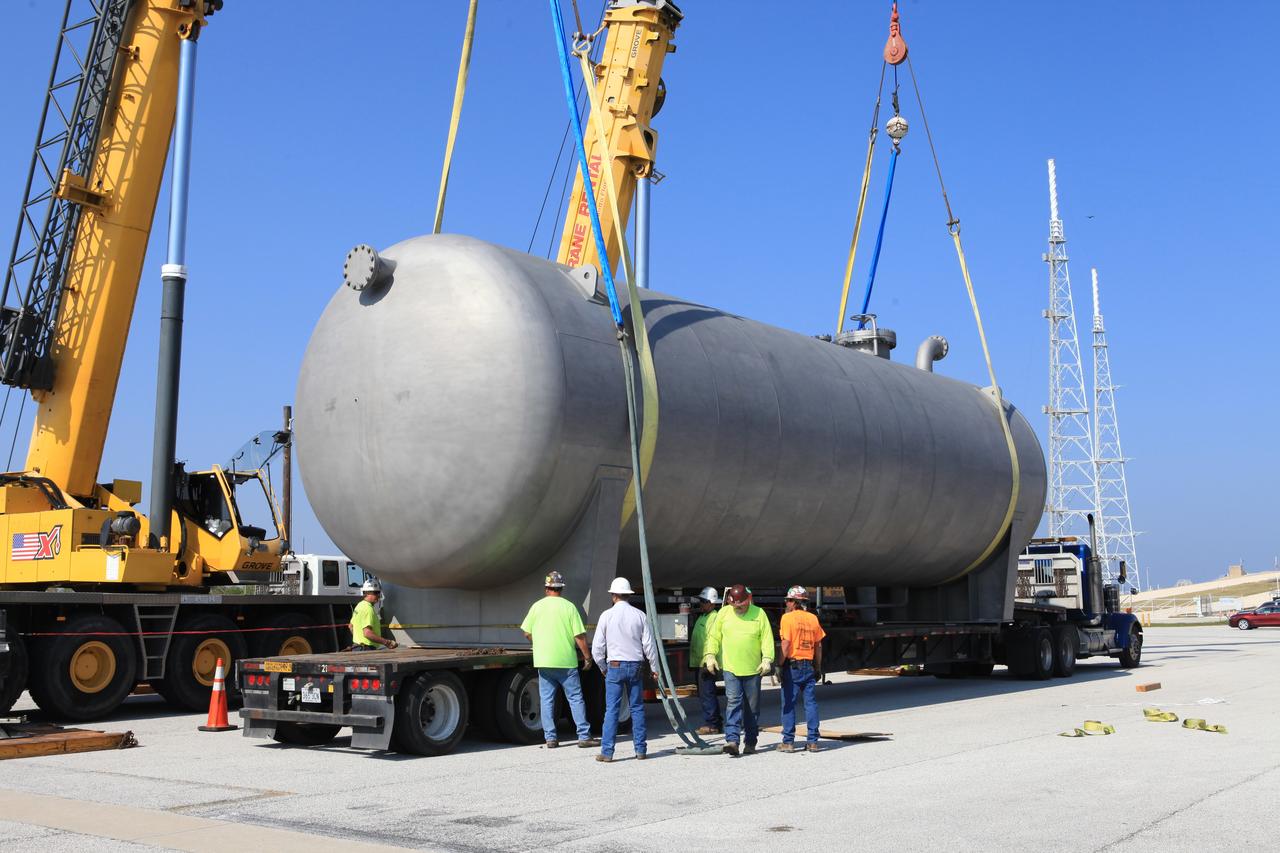
A new liquid hydrogen separator tank arrives at NASA's Kennedy Space Center in Florida. The tank has been lifted and rotated by crane and lowered back onto the flatbed truck for transport to Launch Pad 39B. The new separator/storage tank will be added to the pad's existing hydrogen vent system to assure gaseous hydrogen is delivered downstream to the flare stack. The 60,000 gallon tank was built by INOXCVA, in Baytown, Texas, a subcontractor of Precision Mechanical Inc. in Cocoa Florida. The new tank will support all future launches from the pad.
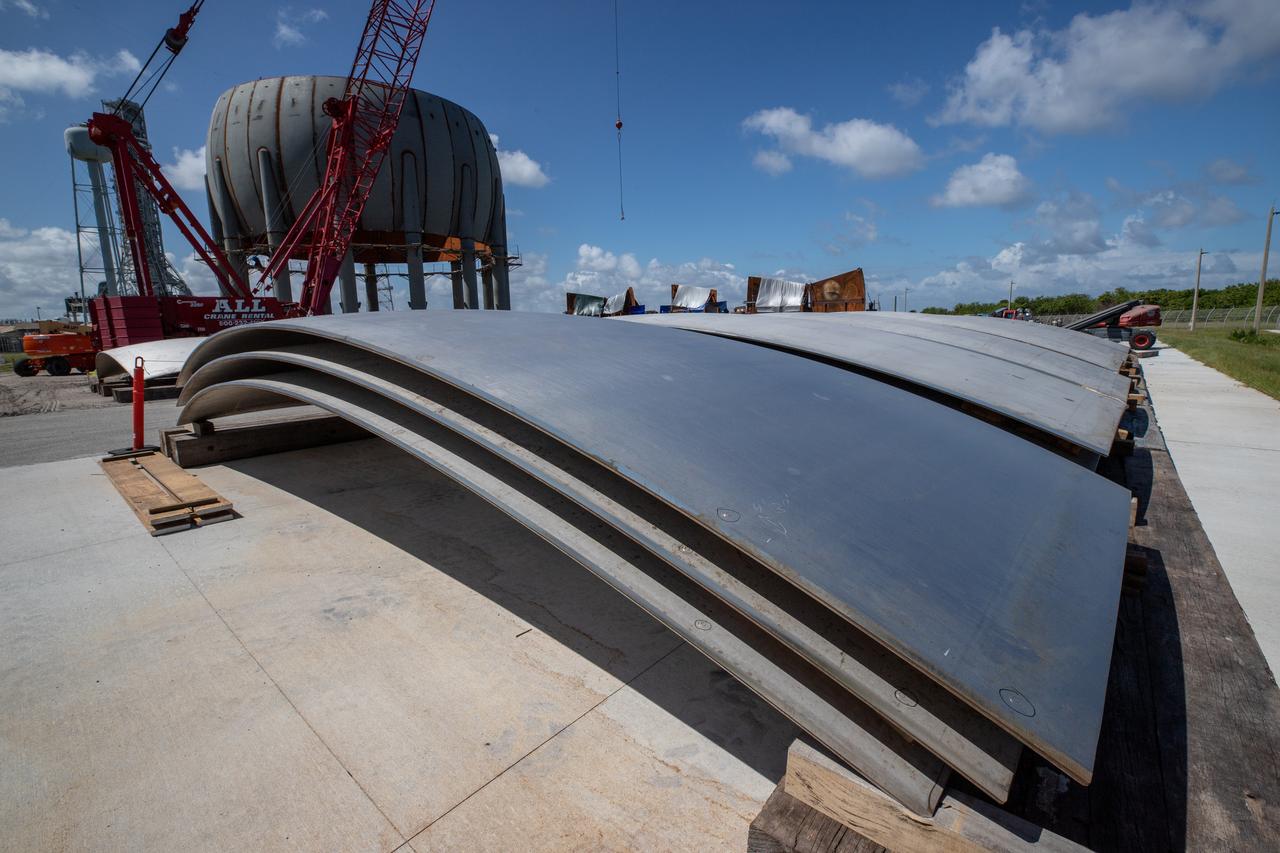
Build-up of a new liquid hydrogen (LH2) storage tank is in progress on Oct. 1, 2019, at Launch Complex 39B at NASA's Kennedy Space Center in Florida. The new tank will hold 1.25 million gallons of usable LH2 to support future launches from the pad, including Artemis missions to the Moon and on to Mars.
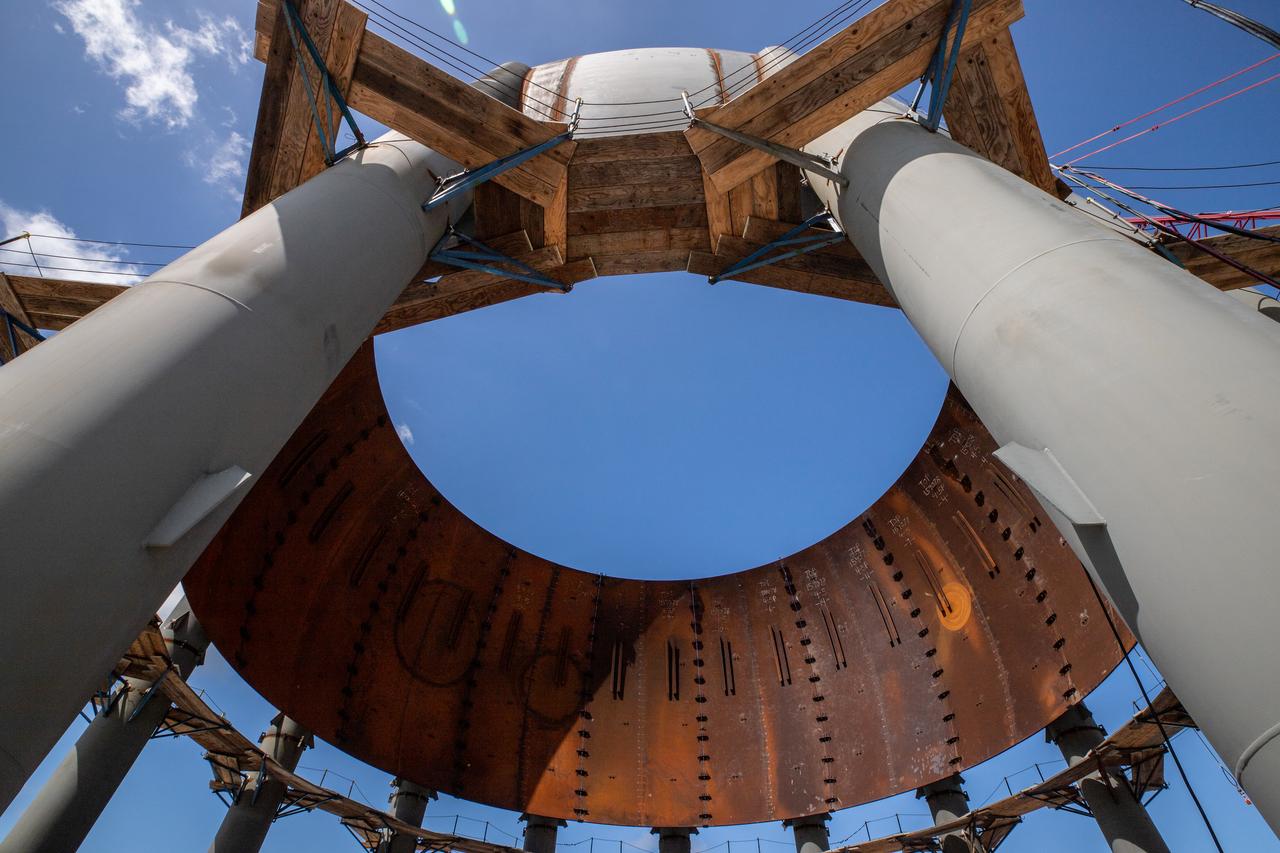
Build-up of a new liquid hydrogen (LH2) storage tank is in progress on Oct. 1, 2019, at Launch Complex 39B at NASA's Kennedy Space Center in Florida. The new tank will hold 1.25 million gallons of usable LH2 to support future launches from the pad, including Artemis missions to the Moon and on to Mars.
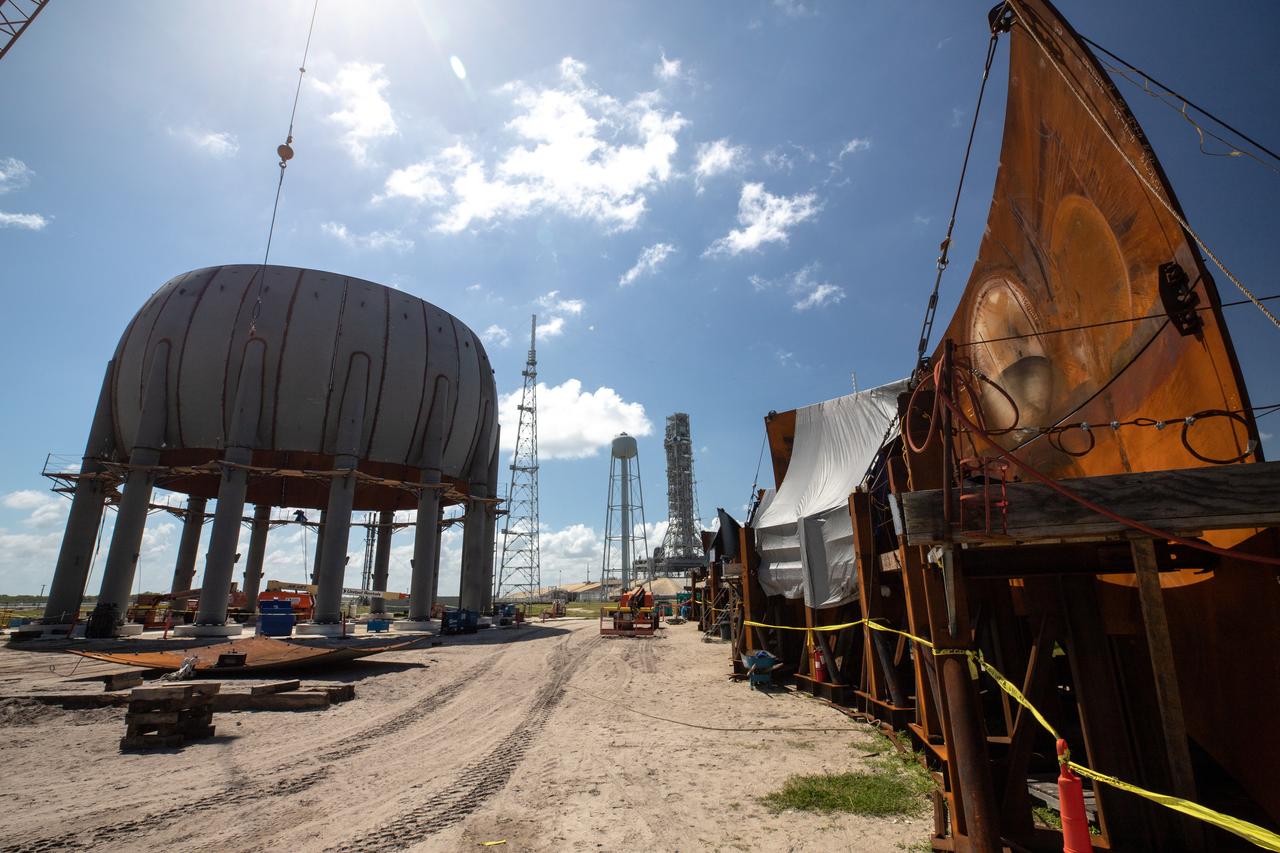
Build-up of a new liquid hydrogen (LH2) storage tank is in progress on Oct. 1, 2019, at Launch Complex 39B at NASA's Kennedy Space Center in Florida. The new tank will hold 1.25 million gallons of usable LH2 to support future launches from the pad, including Artemis missions to the Moon and on to Mars.
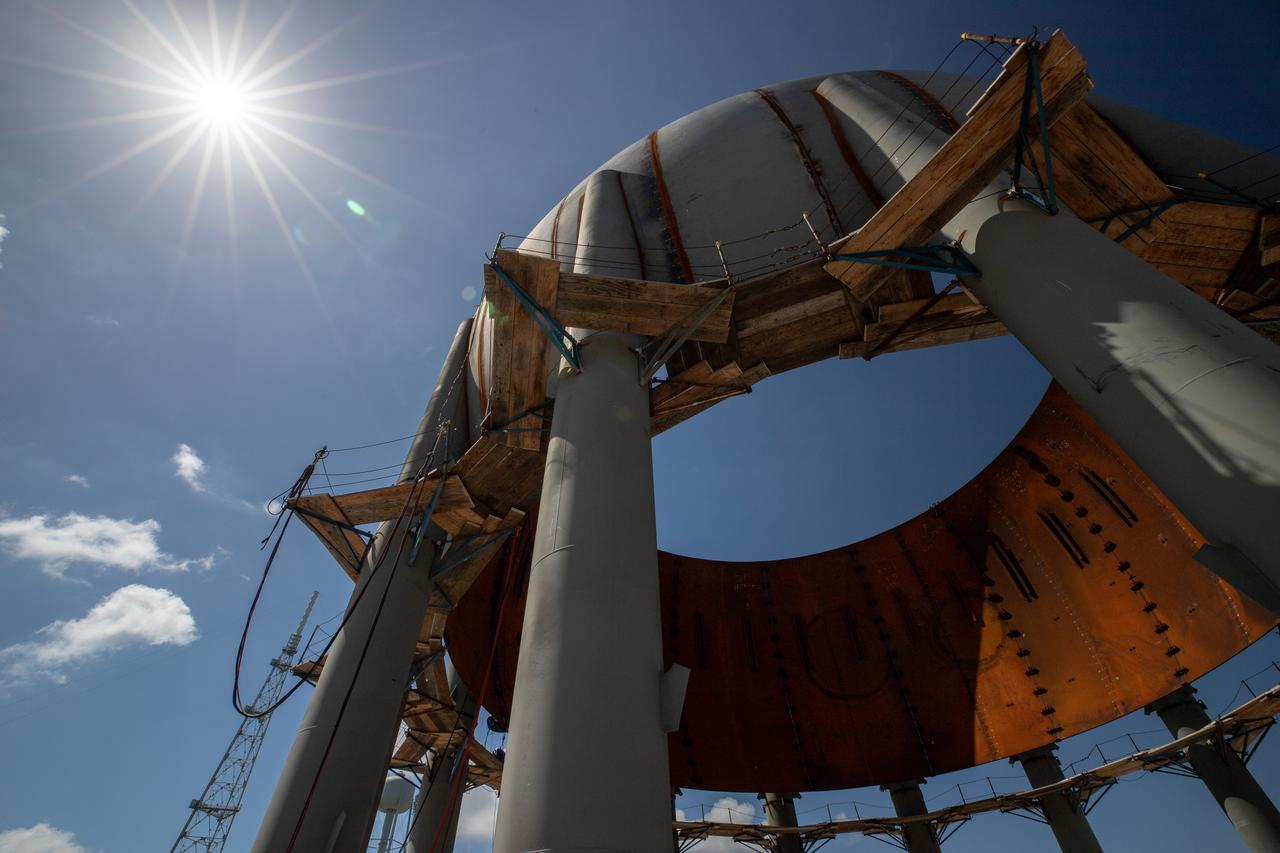
Build-up of a new liquid hydrogen (LH2) storage tank is in progress on Oct. 1, 2019, at Launch Complex 39B at NASA's Kennedy Space Center in Florida. The new tank will hold 1.25 million gallons of usable LH2 to support future launches from the pad, including Artemis missions to the Moon and on to Mars.
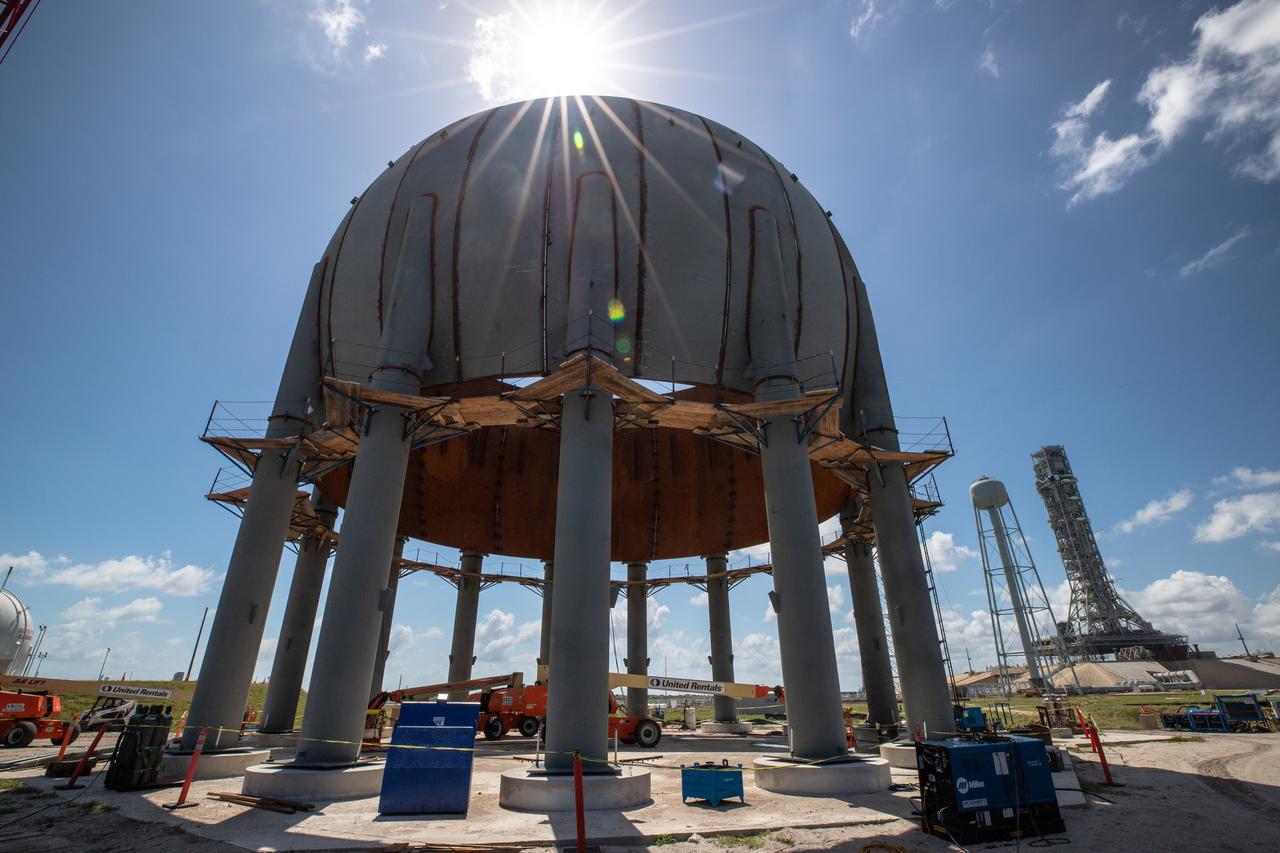
Build-up of a new liquid hydrogen (LH2) storage tank is in progress on Oct. 1, 2019, at Launch Complex 39B at NASA's Kennedy Space Center in Florida. The new tank will hold 1.25 million gallons of usable LH2 to support future launches from the pad, including Artemis missions to the Moon and on to Mars.
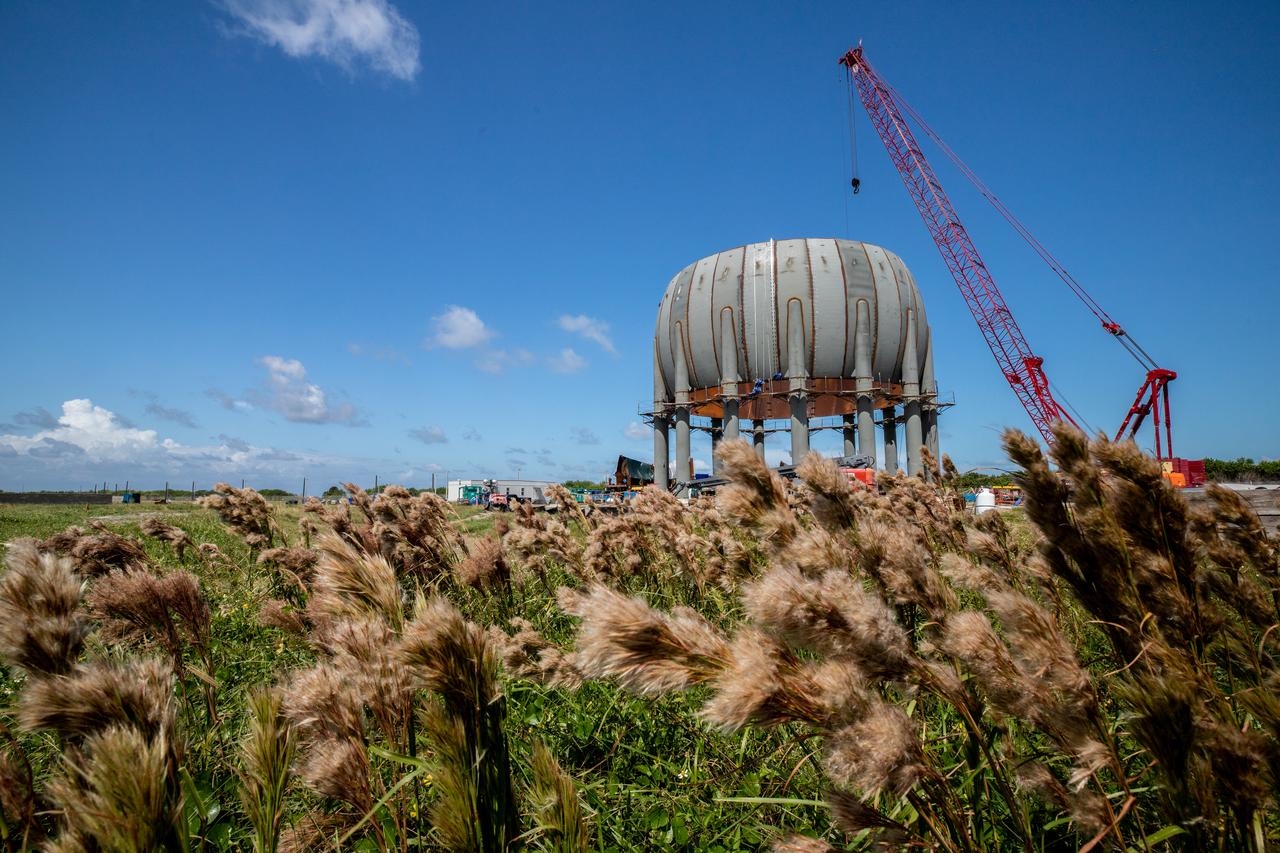
Build-up of a new liquid hydrogen (LH2) storage tank is in progress on Oct. 1, 2019, at Launch Complex 39B at NASA's Kennedy Space Center in Florida. The new tank will hold 1.25 million gallons of usable LH2 to support future launches from the pad, including Artemis missions to the Moon and on to Mars.
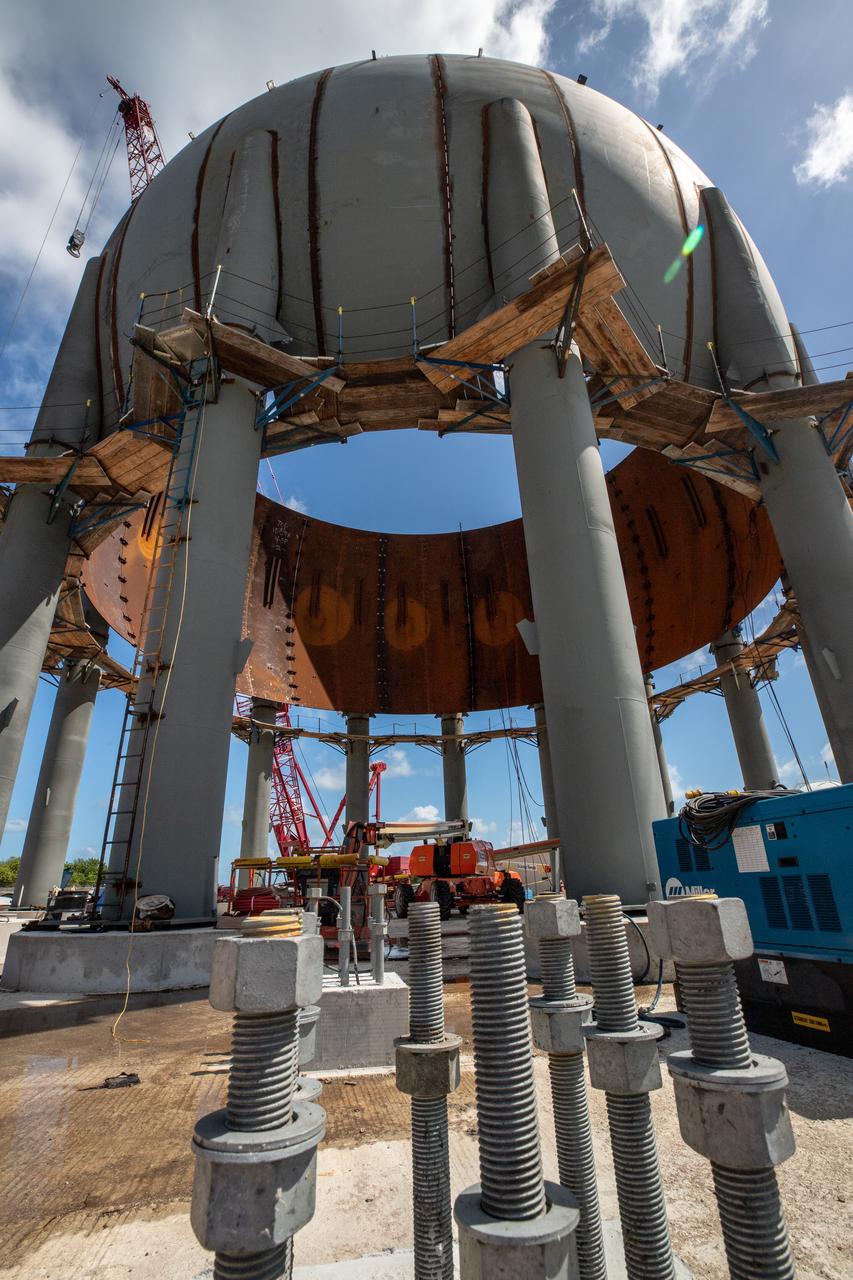
Build-up of a new liquid hydrogen (LH2) storage tank is in progress on Oct. 1, 2019, at Launch Complex 39B at NASA's Kennedy Space Center in Florida. The new tank will hold 1.25 million gallons of usable LH2 to support future launches from the pad, including Artemis missions to the Moon and on to Mars.
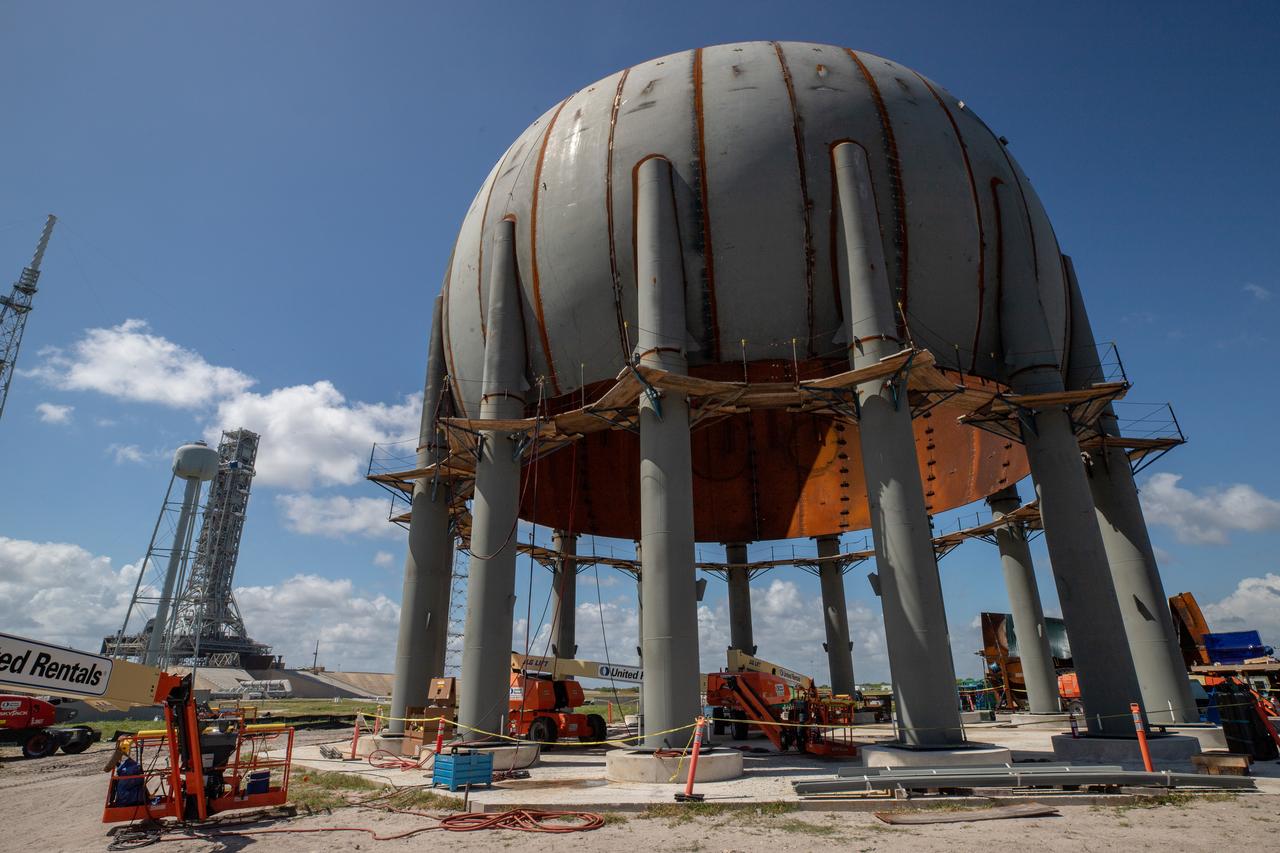
Build-up of a new liquid hydrogen (LH2) storage tank is in progress on Oct. 1, 2019, at Launch Complex 39B at NASA's Kennedy Space Center in Florida. The new tank will hold 1.25 million gallons of usable LH2 to support future launches from the pad, including Artemis missions to the Moon and on to Mars.
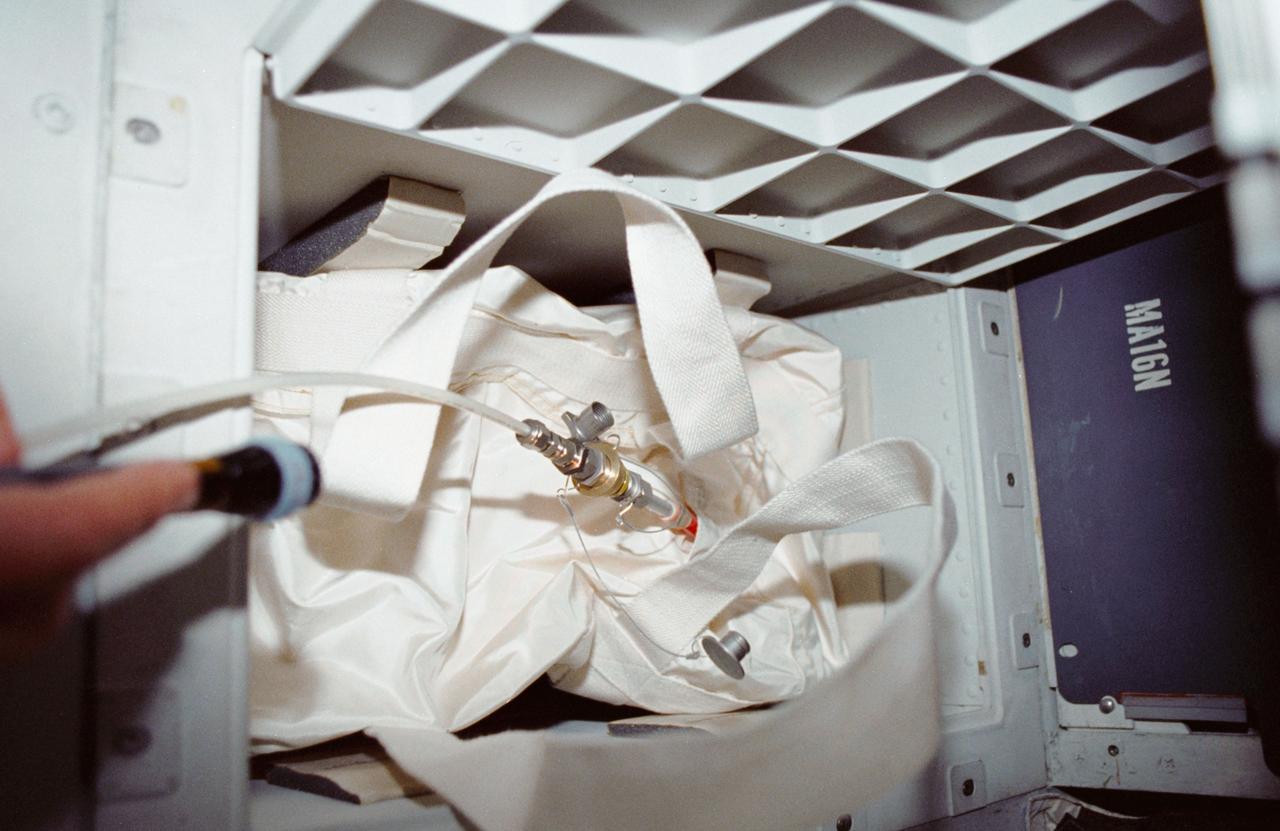
STS035-12-005 (2-10 Dec 1990) --- During STS-35, middeck stowage volume G and a contingency water container (CWC) were utilized to remedy a problem onboard Columbia, Orbiter Vehicle (OV) 102. A hose connecting OV-102's waste water system to the CWC was used in order to bypass a suspected clog in the line from the waste water tank to the exit nozzle. On flight day seven, Pilot Guy S. Gardner carried out an inflight maintenance (IFM) procedure by connecting a spare hose from the line to the container. The CWC is a rubber-lined duffle bag that holds about 95 pounds of water and is used in situations where water cannot be dumped overboard normally.
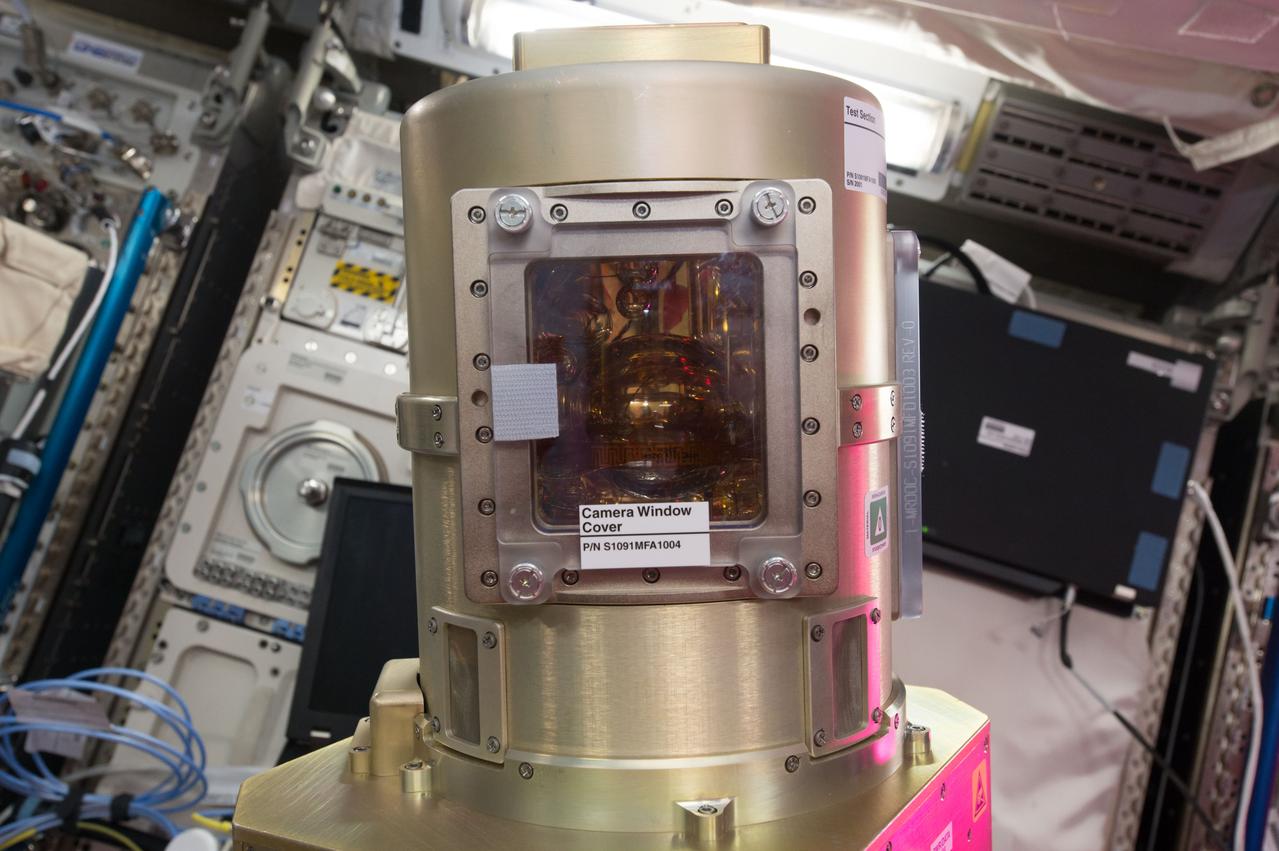
iss051e028301 (4/25/2017) --- A view of the Zero Boil-Off Tank (ZBOT) experiment Vacuum Jacket Camera Window Cover hardware. Zero Boil-Off Tank (ZBOT) uses an experimental fluid to test active heat removal and forced jet mixing as alternative means for controlling tank pressure for volatile fluids. Results from the investigation improve models used to design tanks for long-term cryogenic liquid storage, which are essential in biotechnology, medicine, industrial, and many other applications on Earth.
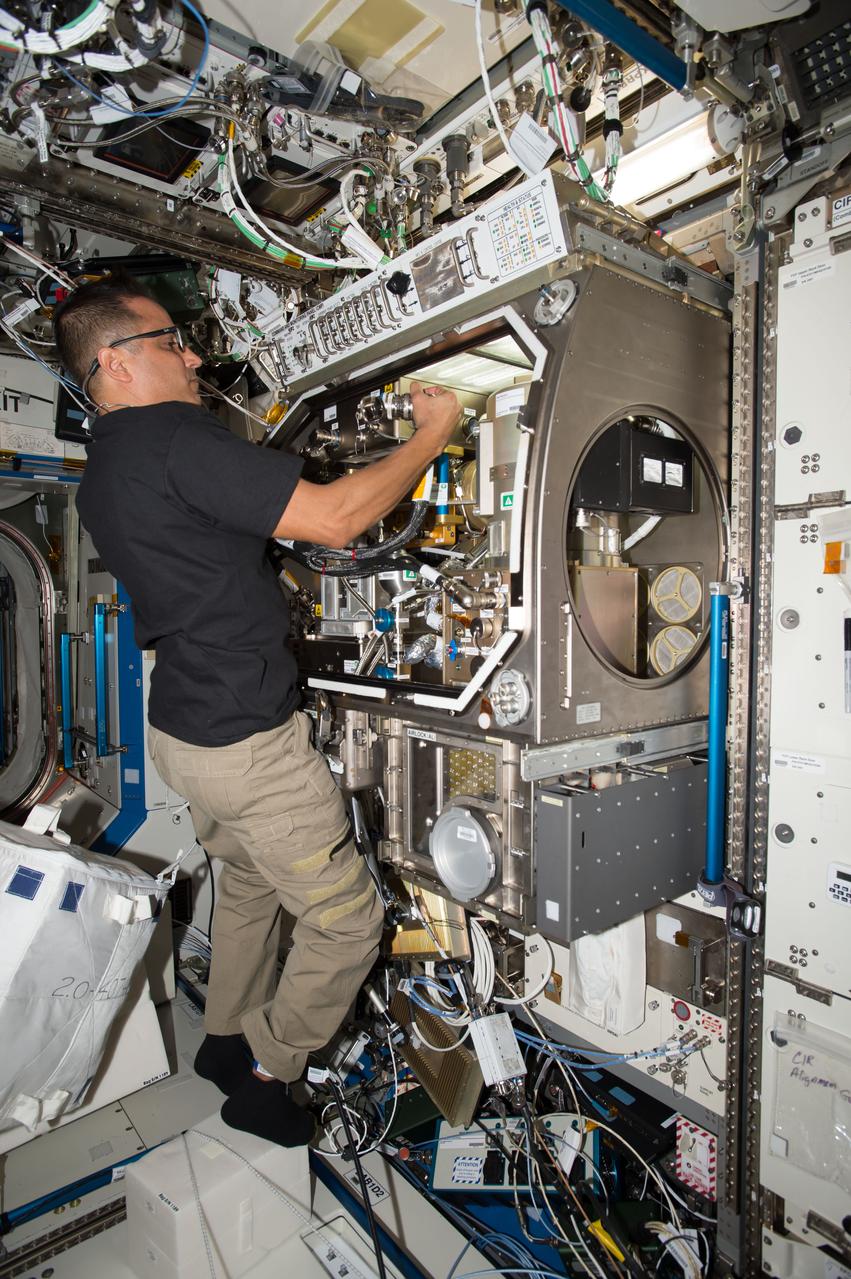
iss053e027113 (9/18/2017) --- NASA astronaut Joe Acaba during the Zero Boil-Off Tank Hardware Setup in the Microgravity Science Glovebox (MSG). Zero Boil-Off Tank (ZBOT) uses an experimental fluid to test active heat removal and forced jet mixing as alternative means for controlling tank pressure for volatile fluids. Results from the investigation improve models used to design tanks for long-term cryogenic liquid storage, which are essential in biotechnology, medicine, industrial, and many other applications on Earth.
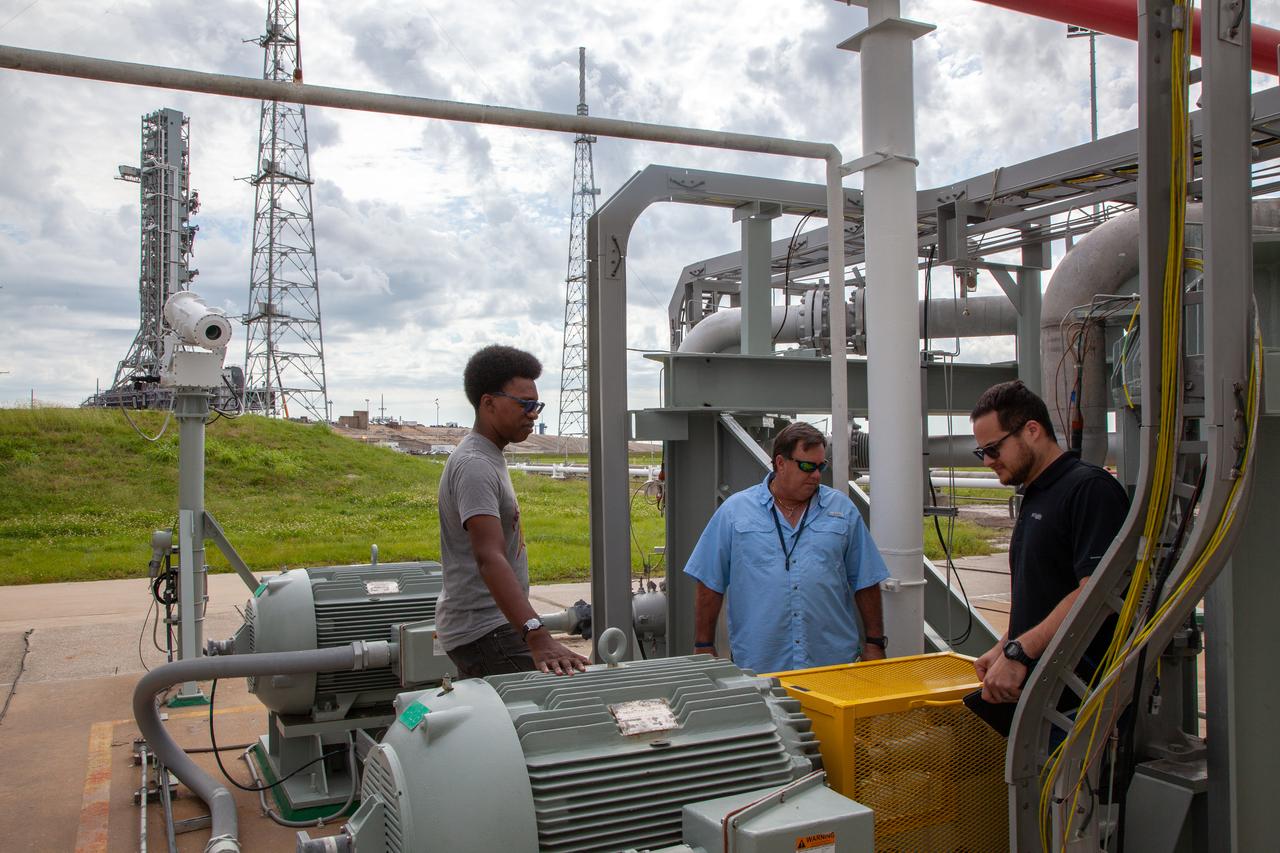
From left, liquid oxygen engineers Josh Jones, Jim Loup and Rene DeLaCruz on Kennedy Space Center’s Test Operations and Support Contract inspect equipment surrounding the liquid oxygen storage tank at Launch Pad 39B on Nov. 8, 2019. The agency’s Exploration Ground Systems oversaw testing of the pad’s cryogenic systems – the infrastructure that will support the flow of liquid hydrogen and liquid oxygen from the storage tanks to the Space Launch System (SLS) rocket – in preparation for the launch of SLS with the Orion spacecraft atop for the uncrewed Artemis I mission. Each of the liquid oxygen and liquid hydrogen tanks can hold more than 800,000 gallons of propellant. The liquid oxygen will require the use of pumps to push it from the tank to the rocket, while the lighter liquid hydrogen will make its way up to the pad using gaseous hydrogen to pressurize the sphere.
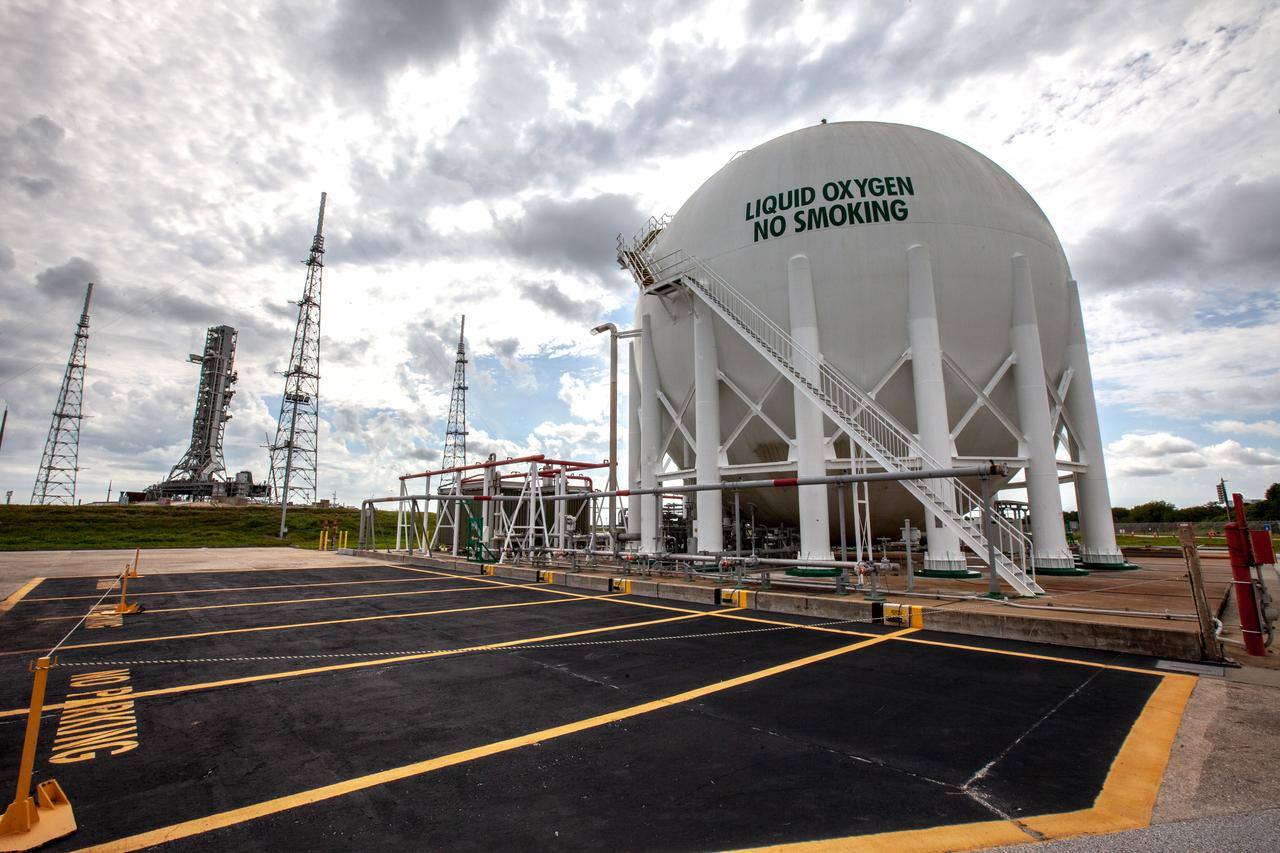
A liquid oxygen storage tank, with a view of the mobile launcher on the pad surface in the background, is photographed at Launch Pad 39B on Nov. 8, 2019, at NASA’s Kennedy Space Center in Florida. The agency’s Exploration Ground Systems oversaw testing of the pad’s cryogenic systems – the infrastructure that will support the flow of liquid hydrogen and liquid oxygen from the storage tanks to the Space Launch System (SLS) rocket – in preparation for the launch of SLS with the Orion spacecraft atop for the uncrewed Artemis I mission. Each of the liquid oxygen and liquid hydrogen tanks can hold more than 800,000 gallons of propellant. The liquid oxygen will require the use of pumps to push it from the tank to the rocket, while the lighter liquid hydrogen will make its way up to the pad using gaseous hydrogen to pressurize the sphere.

In this view, the cross country line that liquid oxygen will flow through can be seen stretching from the storage tank to the mobile launcher at Launch Pad 39B on Nov. 8, 2019, at NASA’s Kennedy Space Center in Florida. The agency’s Exploration Ground Systems oversaw testing of the pad’s cryogenic systems – the infrastructure that will send liquid hydrogen and liquid oxygen from the storage tanks to the Space Launch System (SLS) rocket – in preparation for the launch of SLS with the Orion spacecraft atop for the uncrewed Artemis I mission. Each of the liquid oxygen and liquid hydrogen tanks can hold more than 800,000 gallons of propellant. The liquid oxygen will require the use of pumps to push it from the tank to the rocket, while the lighter liquid hydrogen will make its way up to the pad using gaseous hydrogen to pressurize the sphere.
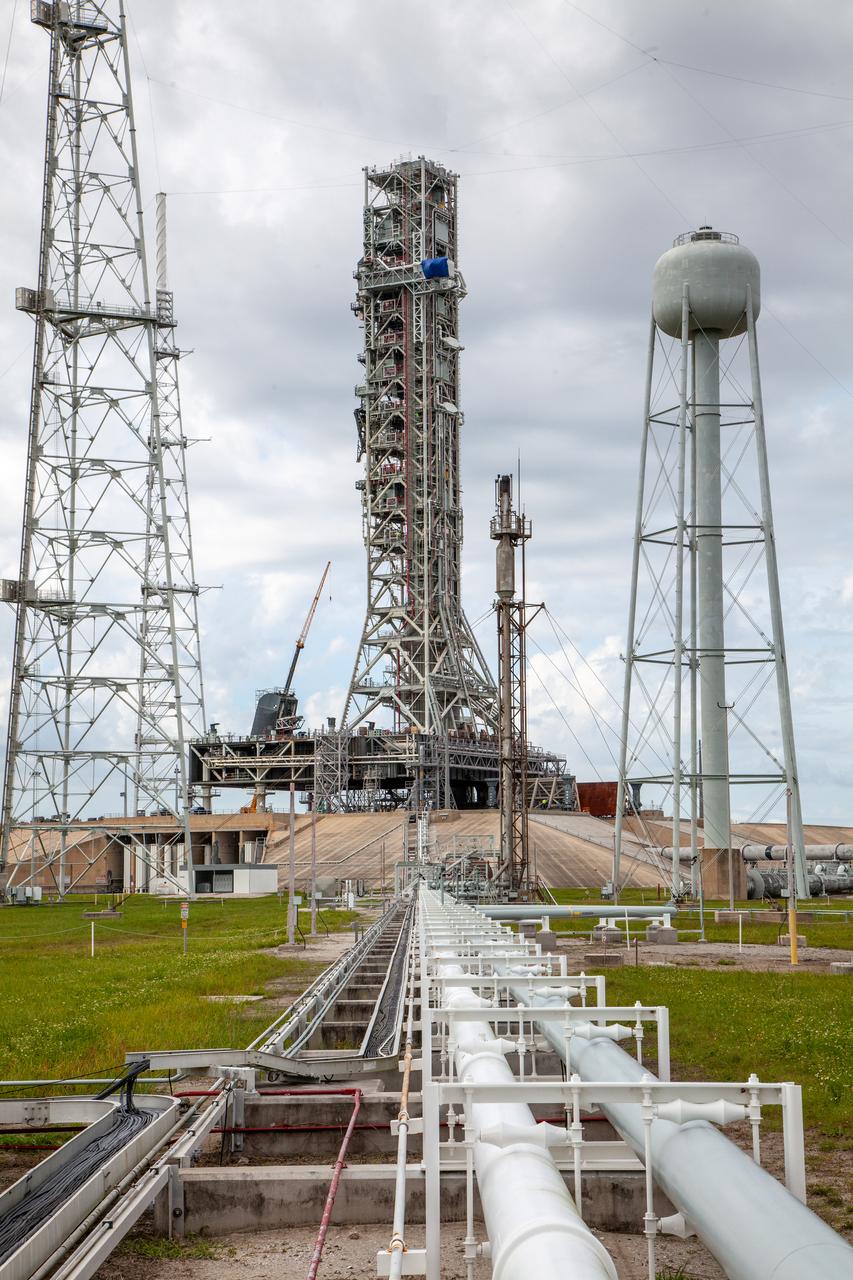
In this view, the cross country line that liquid hydrogen will flow through can be seen stretching from the storage tank to the mobile launcher (ML) at Launch Pad 39B on Nov. 8, 2019, at NASA’s Kennedy Space Center in Florida. The agency’s Exploration Ground Systems oversaw testing of the pad’s cryogenic systems – the infrastructure that will send liquid hydrogen and liquid oxygen from the storage tanks to the Space Launch System (SLS) rocket – in preparation for the launch of SLS with the Orion spacecraft atop for the uncrewed Artemis I mission. Each of the liquid hydrogen and liquid oxygen tanks can hold more than 800,000 gallons of propellant. The liquid hydrogen, lighter than liquid oxygen, will make its way from the tank to the rocket using gaseous hydrogen to pressurize the sphere at the time of launch, while the liquid oxygen will be sent to the rocket via pumps.
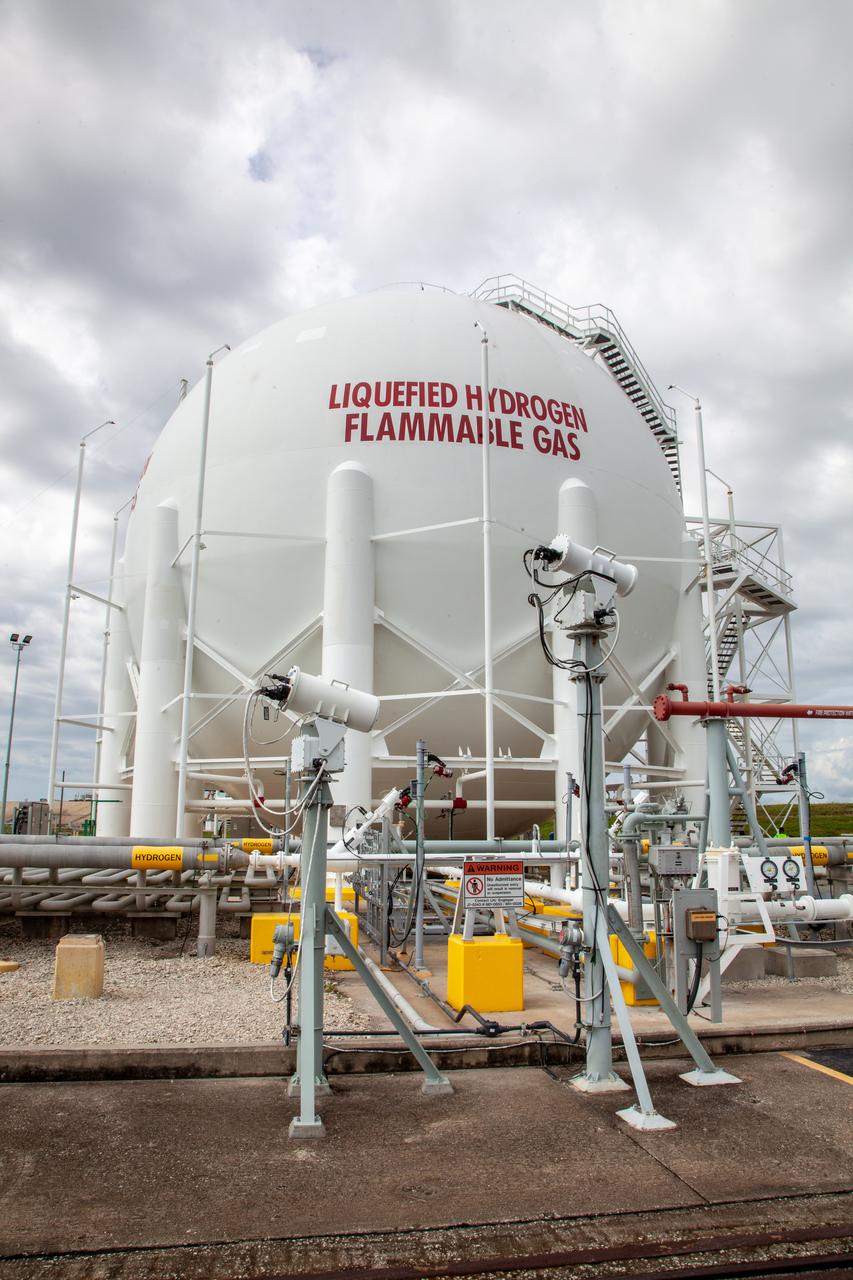
A liquid hydrogen storage tank is photographed at Launch Pad 39B on Nov. 8, 2019, at NASA’s Kennedy Space Center in Florida. The agency’s Exploration Ground Systems oversaw testing of the pad’s cryogenic systems – the infrastructure that will support the flow of liquid hydrogen and liquid oxygen from the storage tanks to the Space Launch System (SLS) rocket – in preparation for the launch of SLS with the Orion spacecraft atop for the uncrewed Artemis I mission. Each of the liquid hydrogen and liquid oxygen tanks can hold more than 800,000 gallons of propellant. The liquid hydrogen, lighter than liquid oxygen, will make its way from the tank to the rocket using gaseous hydrogen to pressurize the sphere at the time of launch, while the liquid oxygen will be sent to the rocket via pumps.
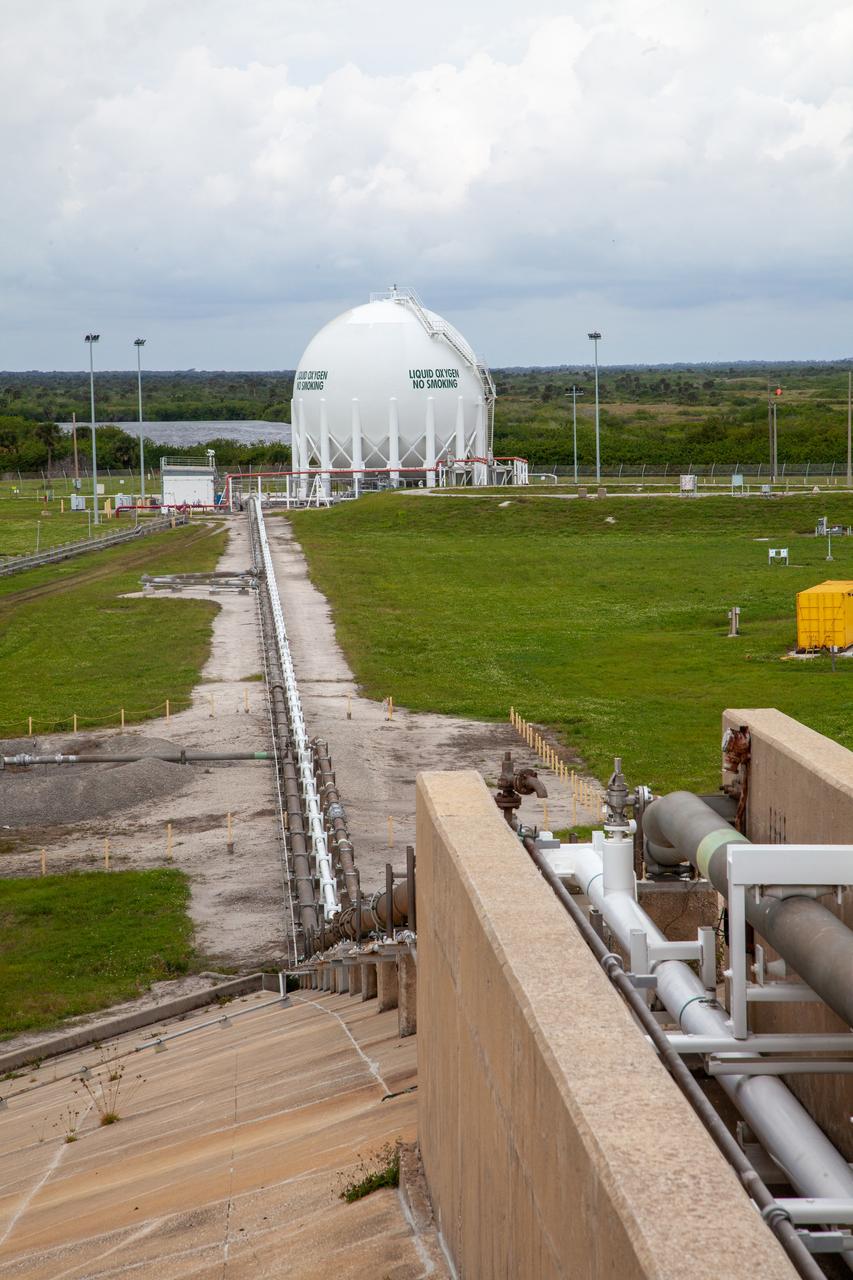
In this view from the pad surface at Kennedy Space Center’s Launch Pad 39B, the cross country line that liquid oxygen will flow through can be seen stretching from the pad to the liquid oxygen storage tank on Nov. 8, 2019. The agency’s Exploration Ground Systems oversaw testing of the pad’s cryogenic systems – the infrastructure that will support the flow of liquid hydrogen and liquid oxygen from the storage tanks to the Space Launch System (SLS) rocket – in preparation for the launch of SLS with the Orion spacecraft atop for the uncrewed Artemis I mission. Each of the liquid oxygen and liquid hydrogen tanks can hold more than 800,000 gallons of propellant. The liquid oxygen will require the use of pumps to push it from the tank to the rocket, while the lighter liquid hydrogen will make its way up to the pad using gaseous hydrogen to pressurize the sphere.
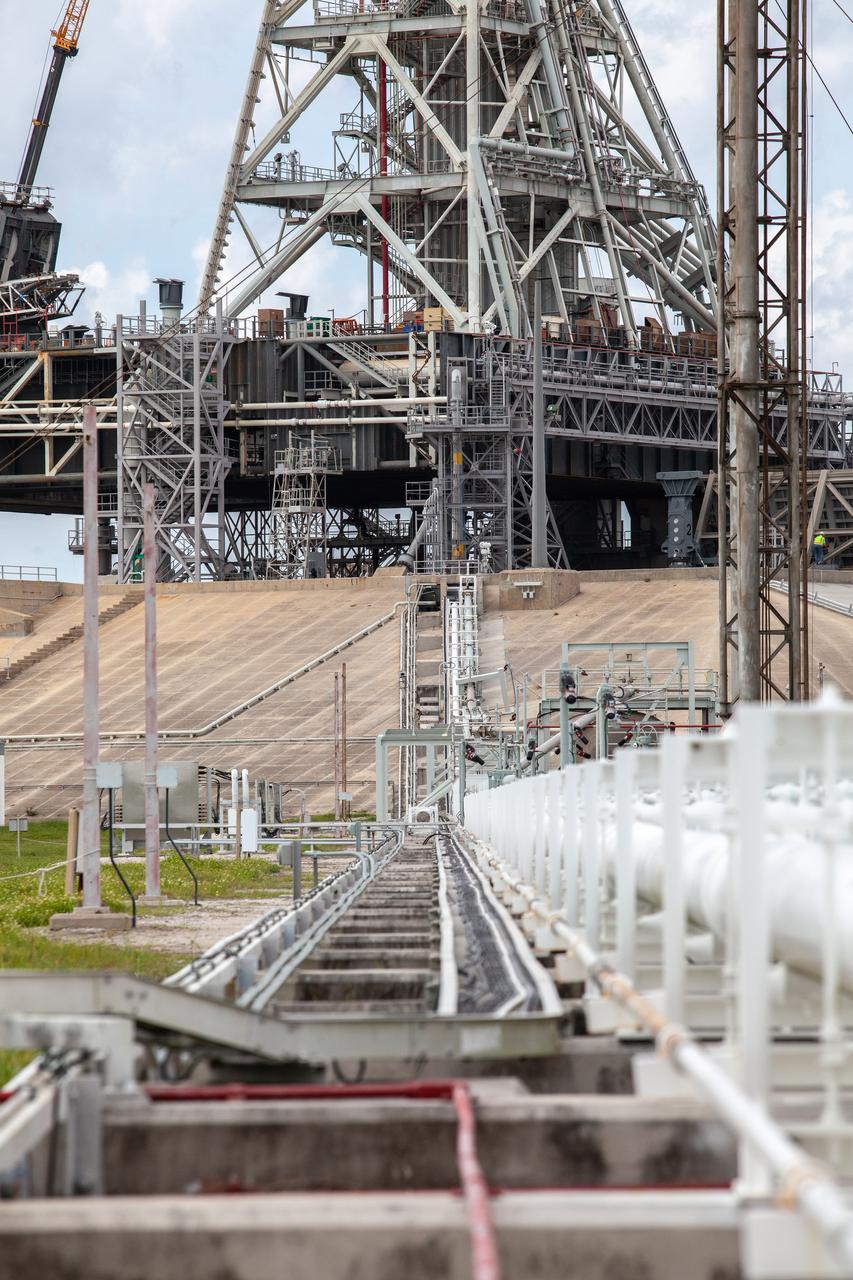
In this view, the cross country line that liquid hydrogen will flow through can be seen stretching from the storage tank to the mobile launcher (ML) at Launch Pad 39B on Nov. 8, 2019, at NASA’s Kennedy Space Center in Florida. The agency’s Exploration Ground Systems oversaw testing of the pad’s cryogenic systems – the infrastructure that will send liquid hydrogen and liquid oxygen from the storage tanks to the Space Launch System (SLS) rocket – in preparation for the launch of SLS with the Orion spacecraft atop for the uncrewed Artemis I mission. Each of the liquid hydrogen and liquid oxygen tanks can hold more than 800,000 gallons of propellant. The liquid hydrogen, lighter than liquid oxygen, will make its way from the tank to the rocket using gaseous hydrogen to pressurize the sphere at the time of launch, while the liquid oxygen will be sent to the rocket via pumps.
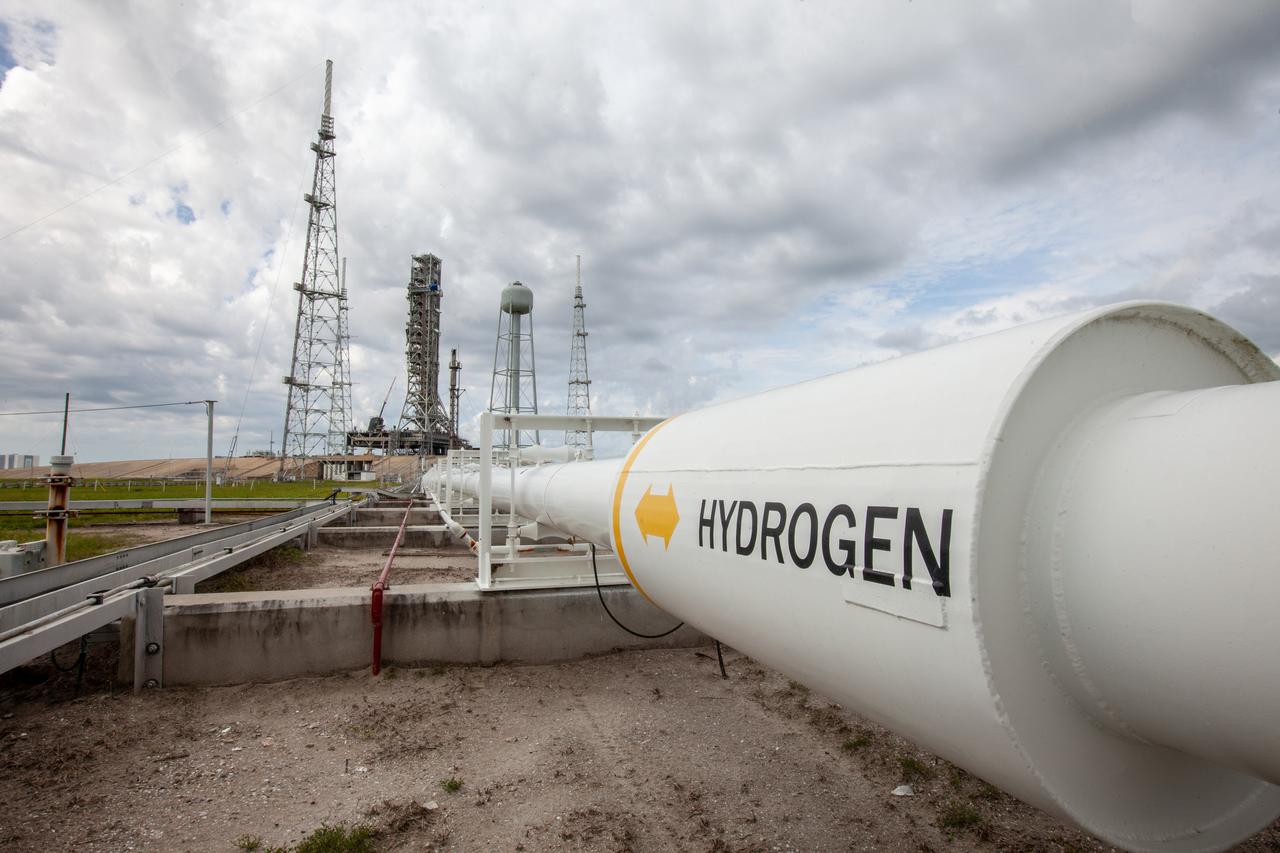
The cross country line that liquid hydrogen will flow through from the storage tank to the mobile launcher for the launch of NASA’s uncrewed Artemis I mission is photographed at Launch pad 39B on Nov. 8, 2019, at the agency’s Kennedy Space Center in Florida. NASA’s Exploration Ground Systems oversaw testing of the pad’s cryogenic systems – the infrastructure that will send the liquid hydrogen and liquid oxygen from the storage tanks to the Space Launch System (SLS) rocket – in preparation for the launch of SLS with the Orion spacecraft atop. Each of the liquid hydrogen and liquid oxygen tanks can hold more than 800,000 gallons of propellant. The liquid hydrogen, lighter than liquid oxygen, will make its way from the tank to the rocket using gaseous hydrogen to pressurize the sphere at the time of launch, while the liquid oxygen will be sent to the rocket via pumps.
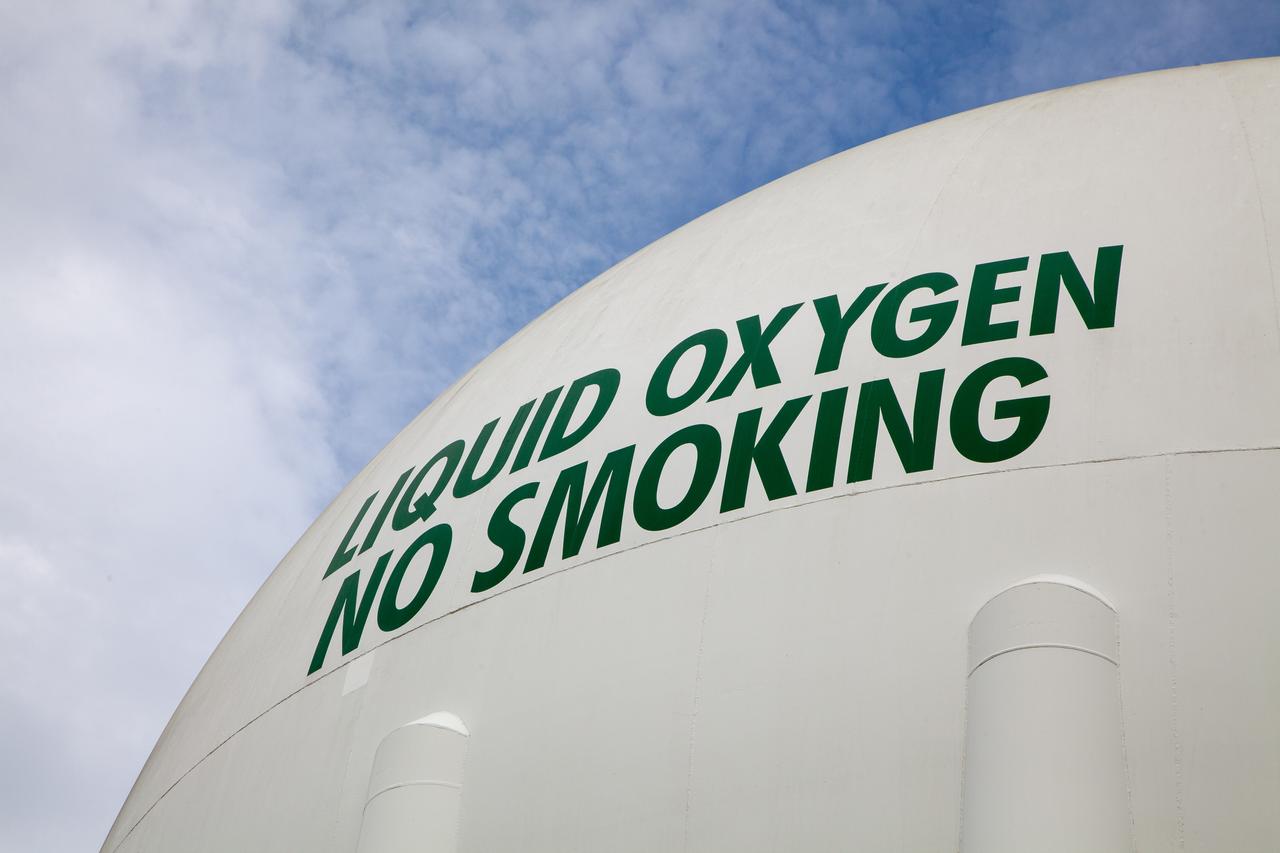
A liquid oxygen storage tank is photographed at Launch Pad 39B on Nov. 8, 2019, at NASA’s Kennedy Space Center in Florida. The agency’s Exploration Ground Systems oversaw testing of the pad’s cryogenic systems – the infrastructure that will support the flow of liquid hydrogen and liquid oxygen from the storage tanks to the Space Launch System (SLS) rocket – in preparation for the launch of SLS with the Orion spacecraft atop for the uncrewed Artemis I mission. Each of the liquid oxygen and liquid hydrogen tanks can hold more than 800,000 gallons of propellant. The liquid oxygen will require the use of pumps to push it from the tank to the rocket, while the lighter liquid hydrogen will make its way up to the pad using gaseous hydrogen to pressurize the sphere.
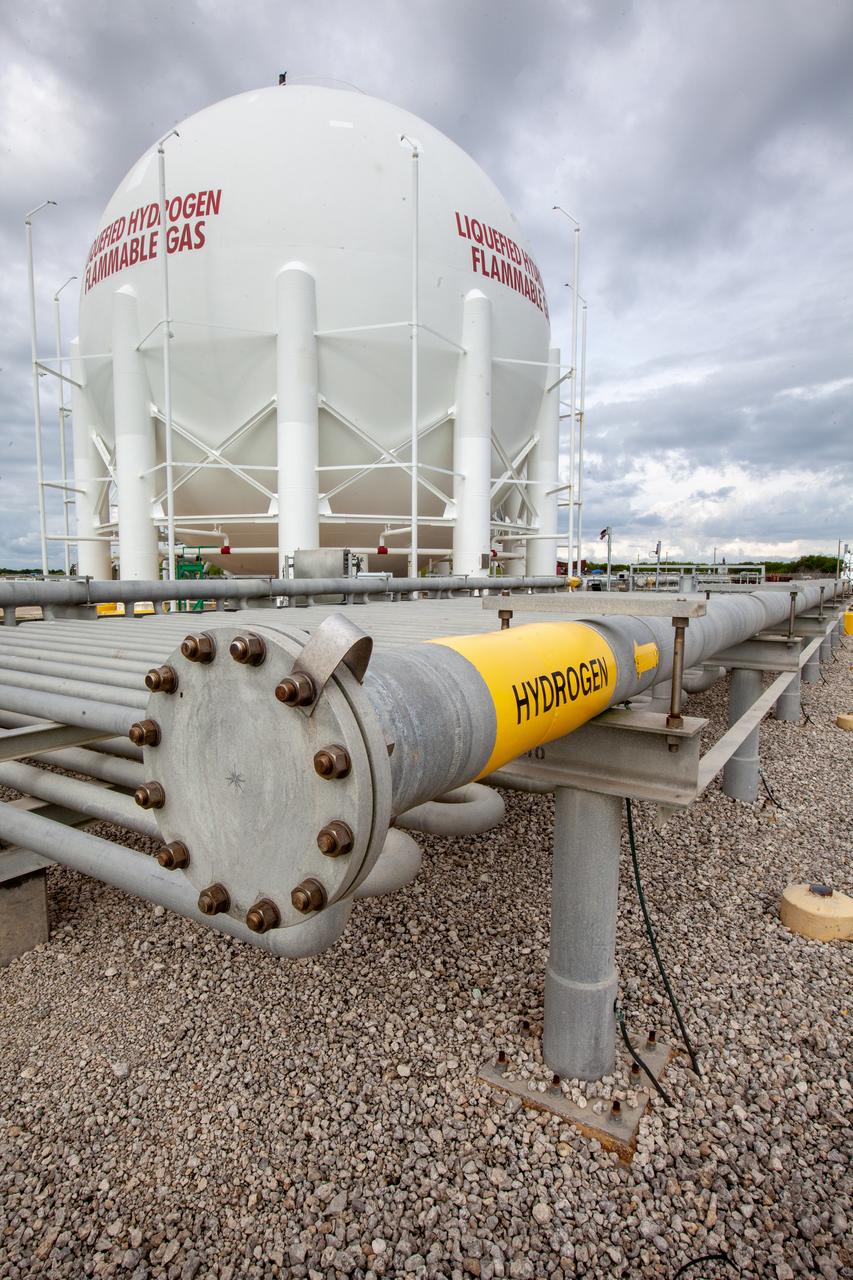
A liquid hydrogen storage tank is photographed at Launch Pad 39B on Nov. 8, 2019, at NASA’s Kennedy Space Center in Florida. The agency’s Exploration Ground Systems oversaw testing of the pad’s cryogenic systems – the infrastructure that will support the flow of liquid hydrogen and liquid oxygen from the storage tanks to the Space Launch System (SLS) rocket – in preparation for the launch of SLS with the Orion spacecraft atop for the uncrewed Artemis I mission. Each of the liquid hydrogen and liquid oxygen tanks can hold more than 800,000 gallons of propellant. The liquid hydrogen, lighter than liquid oxygen, will make its way from the tank to the rocket using gaseous hydrogen to pressurize the sphere at the time of launch, while the liquid oxygen will be sent to the rocket via pumps.
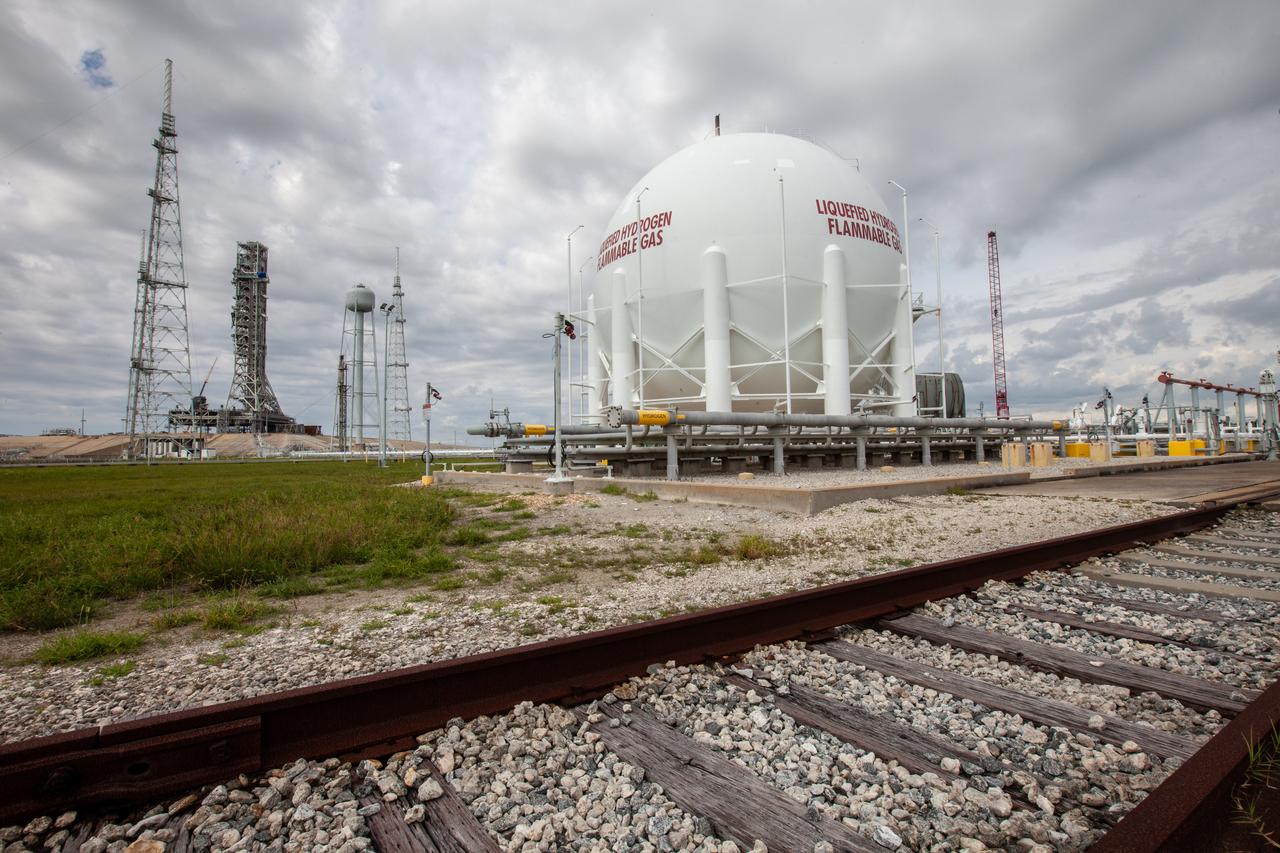
A liquid hydrogen storage tank, with a view of the mobile launcher on the pad surface in the background, is photographed at Launch Pad 39B on Nov. 8, 2019, at NASA’s Kennedy Space Center in Florida. The agency’s Exploration Ground Systems oversaw testing of the pad’s cryogenic systems – the infrastructure that will support the flow of liquid hydrogen and liquid oxygen from the storage tanks to the Space Launch System (SLS) rocket – in preparation for the launch of SLS with the Orion spacecraft atop for the uncrewed Artemis I mission. Each of the liquid hydrogen and liquid oxygen tanks can hold more than 800,000 gallons of propellant. The liquid hydrogen, lighter than liquid oxygen, will make its way from the tank to the rocket using gaseous hydrogen to pressurize the sphere at the time of launch, while the liquid oxygen will be sent to the rocket via pumps.
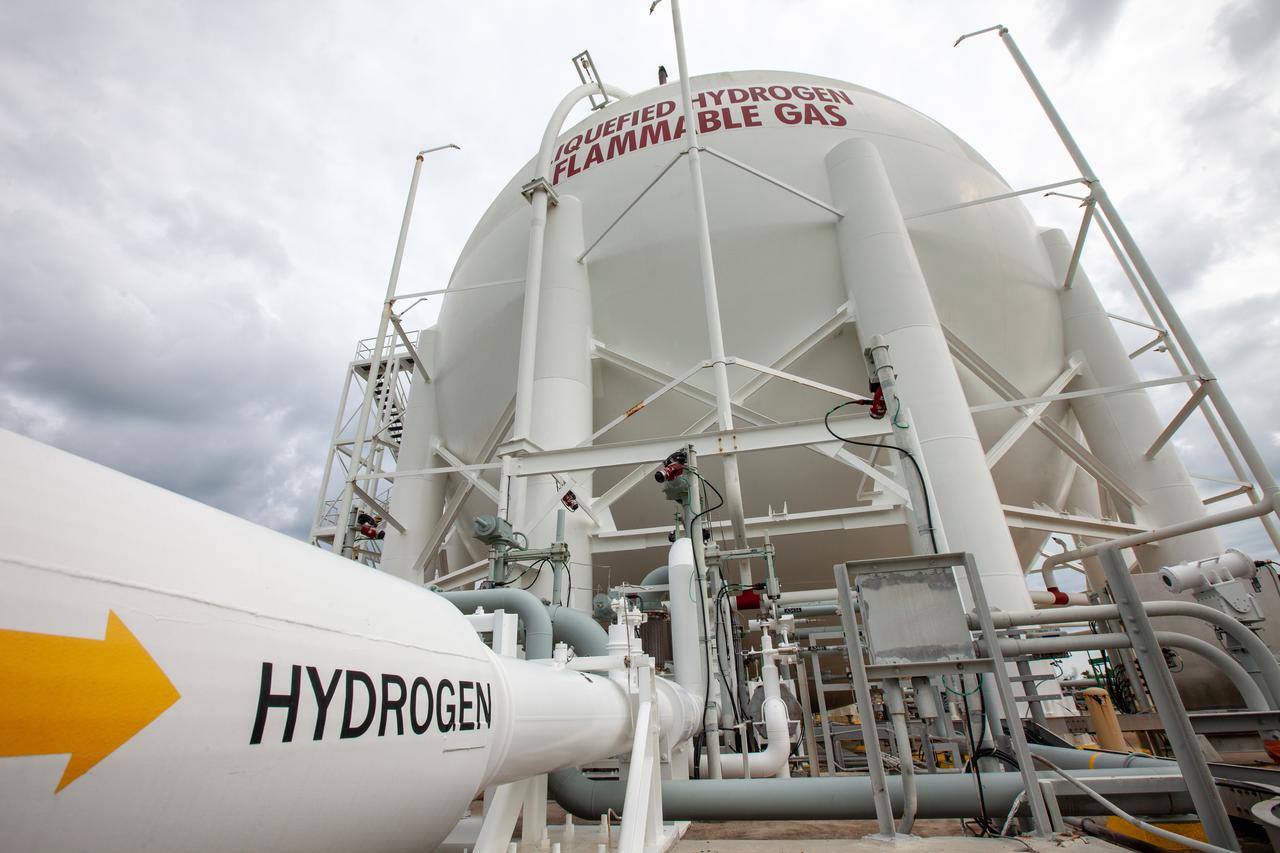
A liquid hydrogen storage tank is photographed at Launch Pad 39B on Nov. 8, 2019, at NASA’s Kennedy Space Center in Florida. The agency’s Exploration Ground Systems oversaw testing of the pad’s cryogenic systems – the infrastructure that will support the flow of liquid hydrogen and liquid oxygen from the storage tanks to the Space Launch System (SLS) rocket – in preparation for the launch of SLS with the Orion spacecraft atop for the uncrewed Artemis I mission. Each of the liquid hydrogen and liquid oxygen tanks can hold more than 800,000 gallons of propellant. The liquid hydrogen, lighter than liquid oxygen, will make its way from the tank to the rocket using gaseous hydrogen to pressurize the sphere at the time of launch, while the liquid oxygen will be sent to the rocket via pumps.
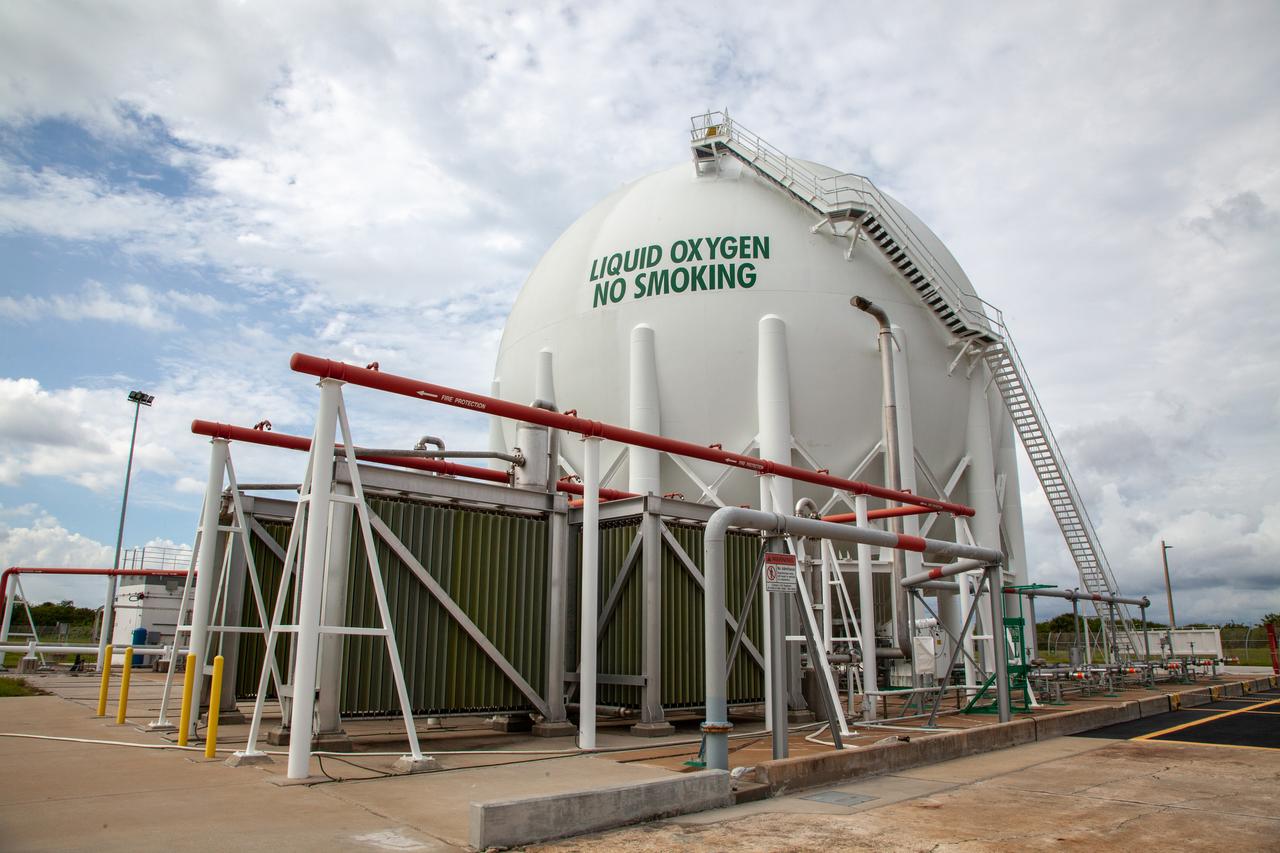
A liquid oxygen storage tank is photographed at Launch Pad 39B on Nov. 8, 2019, at NASA’s Kennedy Space Center in Florida. The agency’s Exploration Ground Systems oversaw testing of the pad’s cryogenic systems – the infrastructure that will support the flow of liquid hydrogen and liquid oxygen from the storage tanks to the Space Launch System (SLS) rocket – in preparation for the launch of SLS with the Orion spacecraft atop for the uncrewed Artemis I mission. Each of the liquid oxygen and liquid hydrogen tanks can hold more than 800,000 gallons of propellant. The liquid oxygen will require the use of pumps to push it from the tank to the rocket, while the lighter liquid hydrogen will make its way up to the pad using gaseous hydrogen to pressurize the sphere.
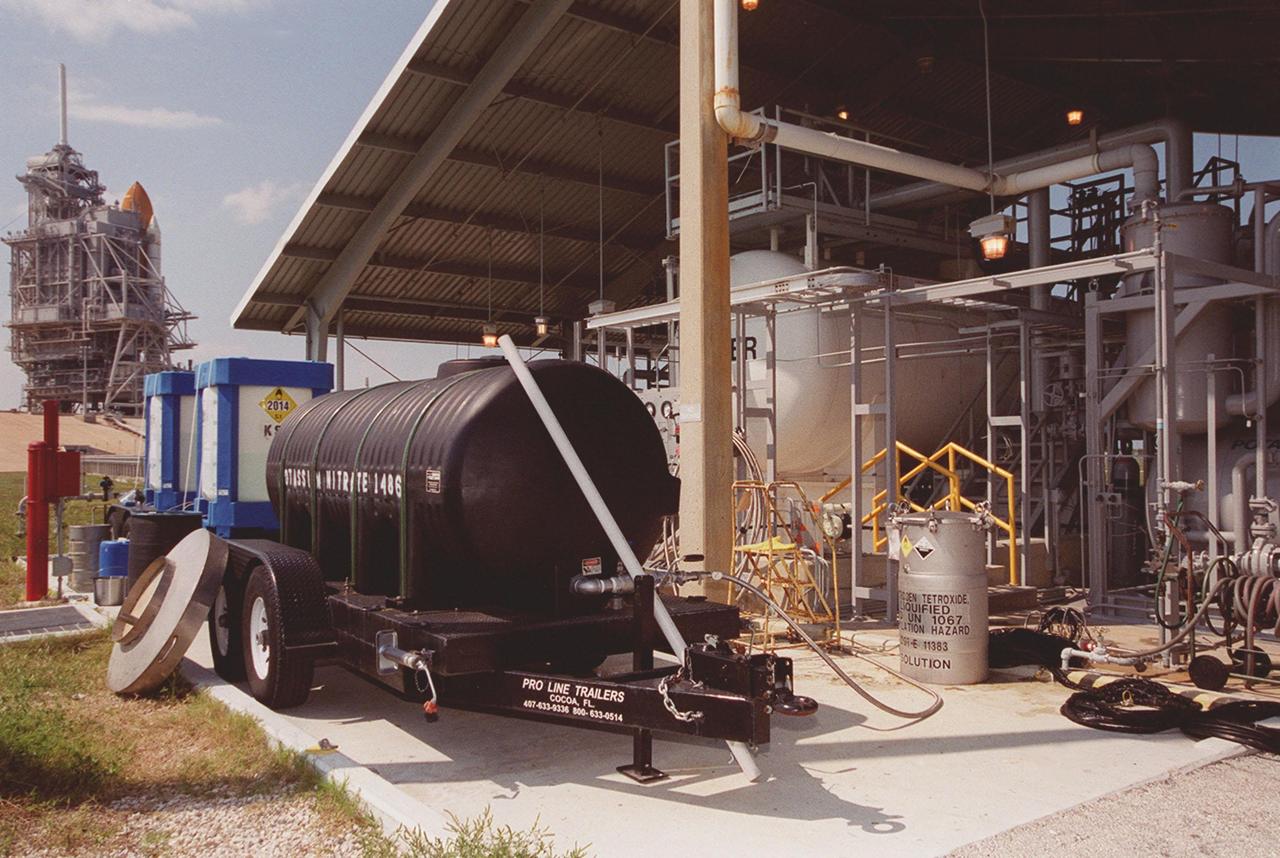
KENNEDY SPACE CENTER, FLA. -- A recently installed fertilizer-producing system sits near Launch Pad 39A (upper left background). Using a "scrubber," the system captures nitrogen tetroxide vapor that develops as a by-product when it is transferred from ground storage tanks into the Shuttle storage tanks. Nitrogen tetroxide is used as the oxidizer for the hypergolic propellant in the Shuttle's on-orbit reaction control system. The scrubber then uses hydrogen peroxide to produce nitric acid, which, after adding potassium hydroxide, converts to potassium nitrate, a commercial fertilizer. The black tanker at left is collecting the potassium nitrate, which will be used on the orange groves that KSC leases to outside companies

KENNEDY SPACE CENTER, FLA. -- Clyde Parrish, a NASA/KSC engineer, explains how the fertilizer scrubber control panel (center) works to turn nitrogen tetroxide vapor into fertilizer, potassium hydroxide. Parrish developed the system, which uses a "scrubber," to capture nitrogen tetroxide vapor that develops as a by-product when it is transferred from ground storage tanks into the Shuttle storage tanks. Nitrogen tetroxide is used as the oxidizer for the hypergolic propellant in the Shuttle's on-orbit reaction control system. The scrubber then uses hydrogen peroxide to produce nitric acid, which, after adding potassium hydroxide, converts to potassium nitrate. The resulting fertilizer will be used on the orange groves that KSC leases to outside companies
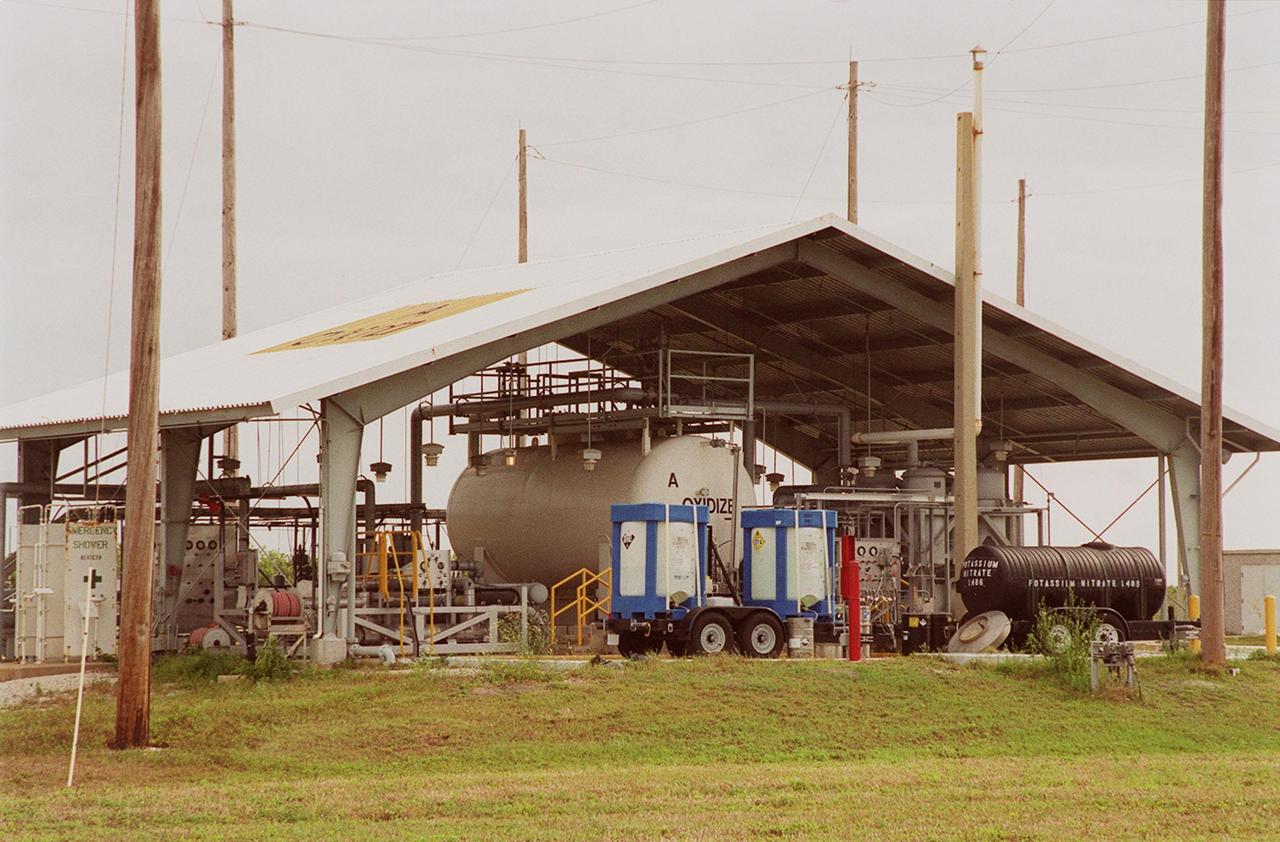
A recently installed fertilizer-producing system sits near Launch Pad 39A. Using a "scrubber," the system captures nitrogen tetroxide vapor that develops as a by-product when it is transferred from ground storage tanks into the Shuttle storage tanks. Nitrogen tetroxide is used as the oxidizer for the hypergolic propellant in the Shuttle's on-orbit reaction control system. The scrubber then uses hydrogen peroxide to produce nitric acid, which, after adding potassium hydroxide, converts to potassium nitrate, a commercial fertilizer. Plans call for the resulting fertilizer to be used on the orange groves that KSC leases to outside companies
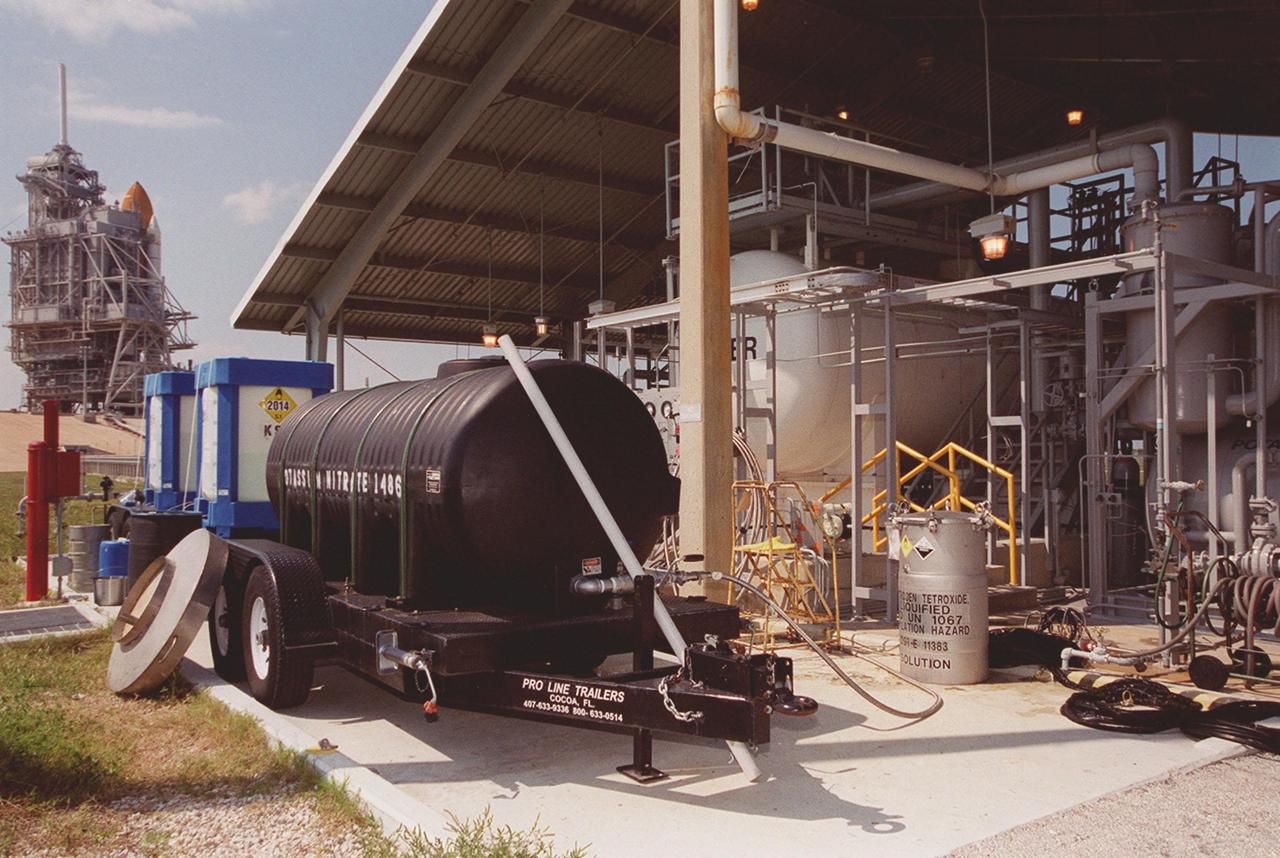
KENNEDY SPACE CENTER, FLA. -- A recently installed fertilizer-producing system sits near Launch Pad 39A (upper left background). Using a "scrubber," the system captures nitrogen tetroxide vapor that develops as a by-product when it is transferred from ground storage tanks into the Shuttle storage tanks. Nitrogen tetroxide is used as the oxidizer for the hypergolic propellant in the Shuttle's on-orbit reaction control system. The scrubber then uses hydrogen peroxide to produce nitric acid, which, after adding potassium hydroxide, converts to potassium nitrate, a commercial fertilizer. The black tanker at left is collecting the potassium nitrate, which will be used on the orange groves that KSC leases to outside companies
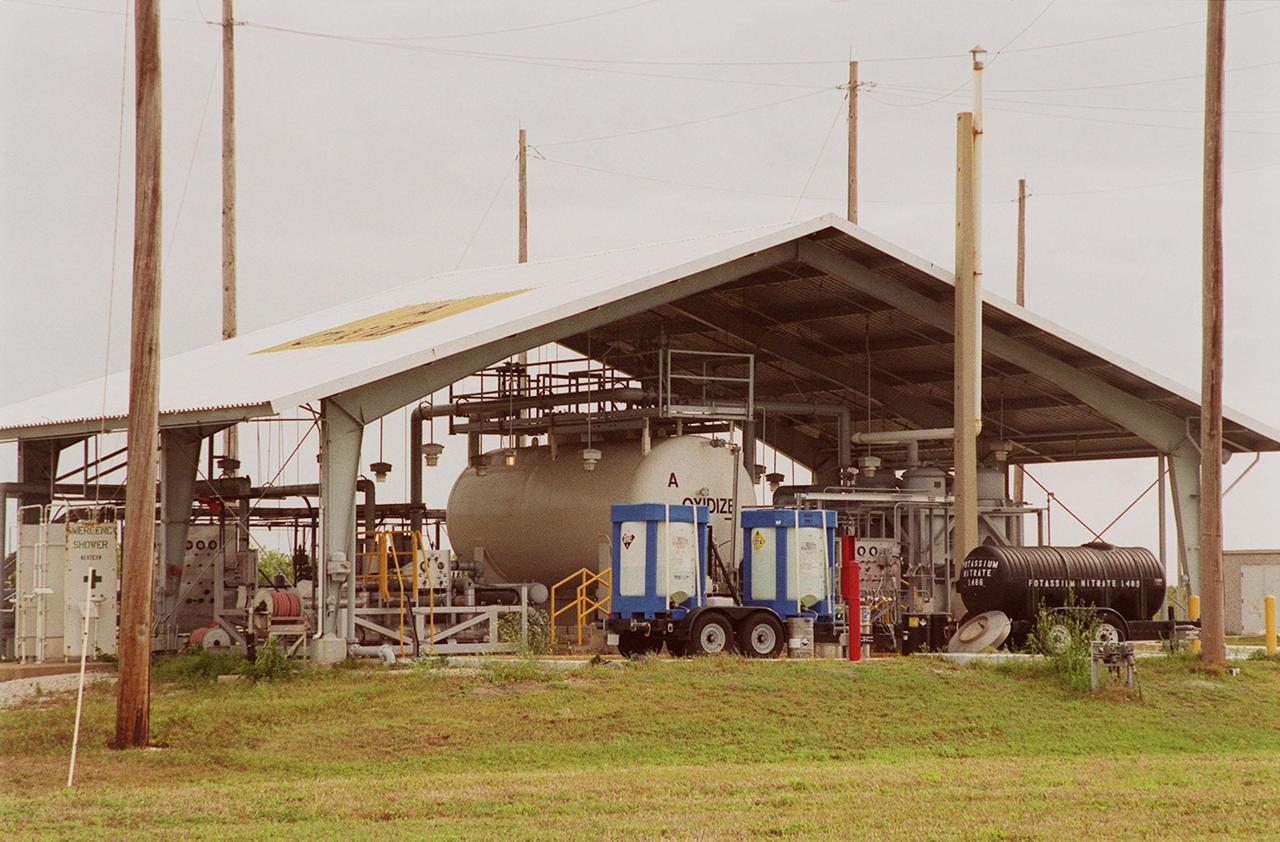
A recently installed fertilizer-producing system sits near Launch Pad 39A. Using a "scrubber," the system captures nitrogen tetroxide vapor that develops as a by-product when it is transferred from ground storage tanks into the Shuttle storage tanks. Nitrogen tetroxide is used as the oxidizer for the hypergolic propellant in the Shuttle's on-orbit reaction control system. The scrubber then uses hydrogen peroxide to produce nitric acid, which, after adding potassium hydroxide, converts to potassium nitrate, a commercial fertilizer. Plans call for the resulting fertilizer to be used on the orange groves that KSC leases to outside companies
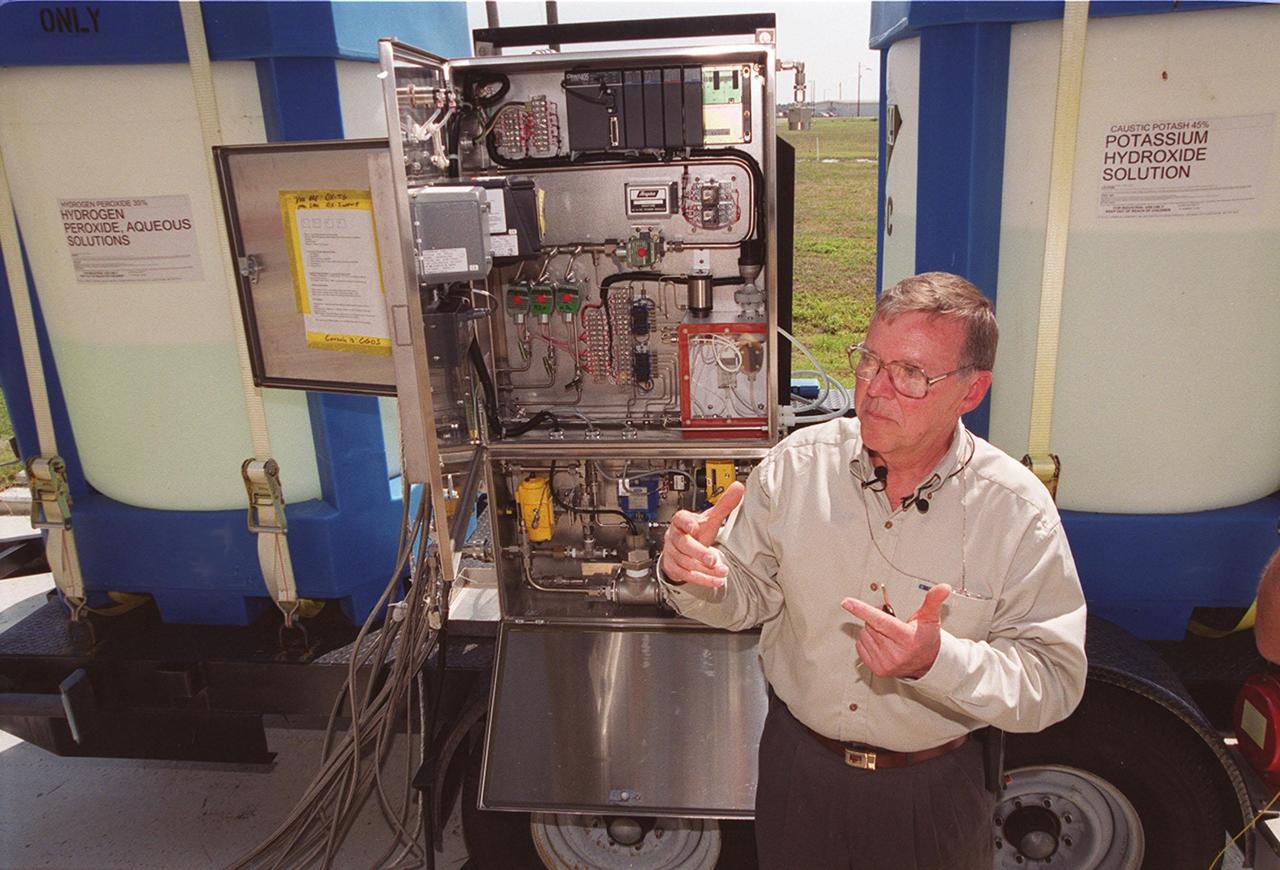
KENNEDY SPACE CENTER, FLA. -- Clyde Parrish, a NASA/KSC engineer, explains how the fertilizer scrubber control panel (center) works to turn nitrogen tetroxide vapor into fertilizer, potassium hydroxide. Parrish developed the system, which uses a "scrubber," to capture nitrogen tetroxide vapor that develops as a by-product when it is transferred from ground storage tanks into the Shuttle storage tanks. Nitrogen tetroxide is used as the oxidizer for the hypergolic propellant in the Shuttle's on-orbit reaction control system. The scrubber then uses hydrogen peroxide to produce nitric acid, which, after adding potassium hydroxide, converts to potassium nitrate. The resulting fertilizer will be used on the orange groves that KSC leases to outside companies
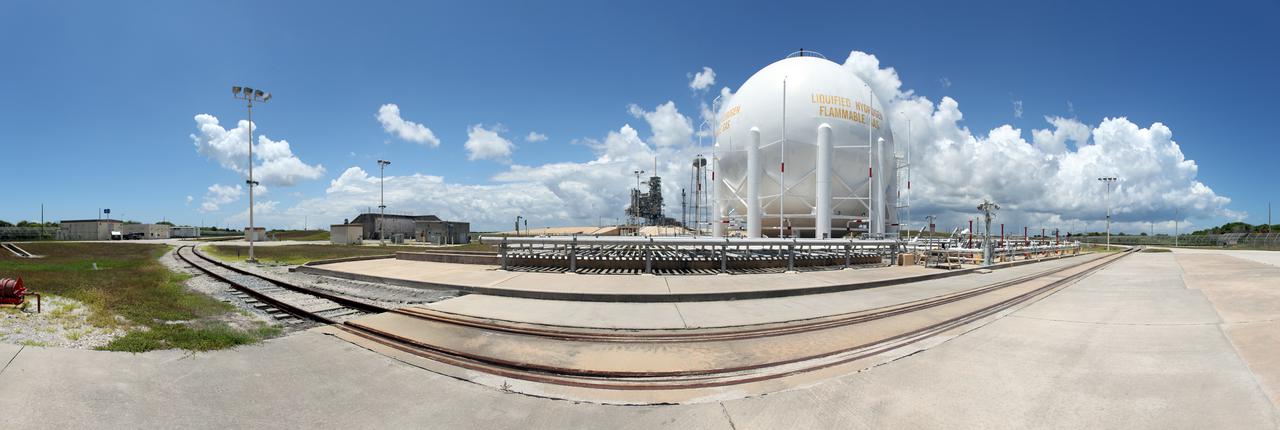
CAPE CANAVERAL, Fla. -- In the Launch Complex 39 area at NASA's Kennedy Space Center in Florida is a liquid hydrogen, or LH2, storage tank. This large ball-shaped, vacuum-jacketed tank is used to store cryogenic propellants for the space shuttle's orange external fuel tank. The LH2 tank is located at the northeast corner of Launch Pad 39A and stores 850,000 gallons of LH2 at a temperature of minus 423 degrees F. The shuttle's external tank is loaded with about 500,000 gallons of LH2 and liquid oxygen, or LOX, about six hours prior to launch in a process known as 'tanking.' Photo credit: NASA_Frankie Martin
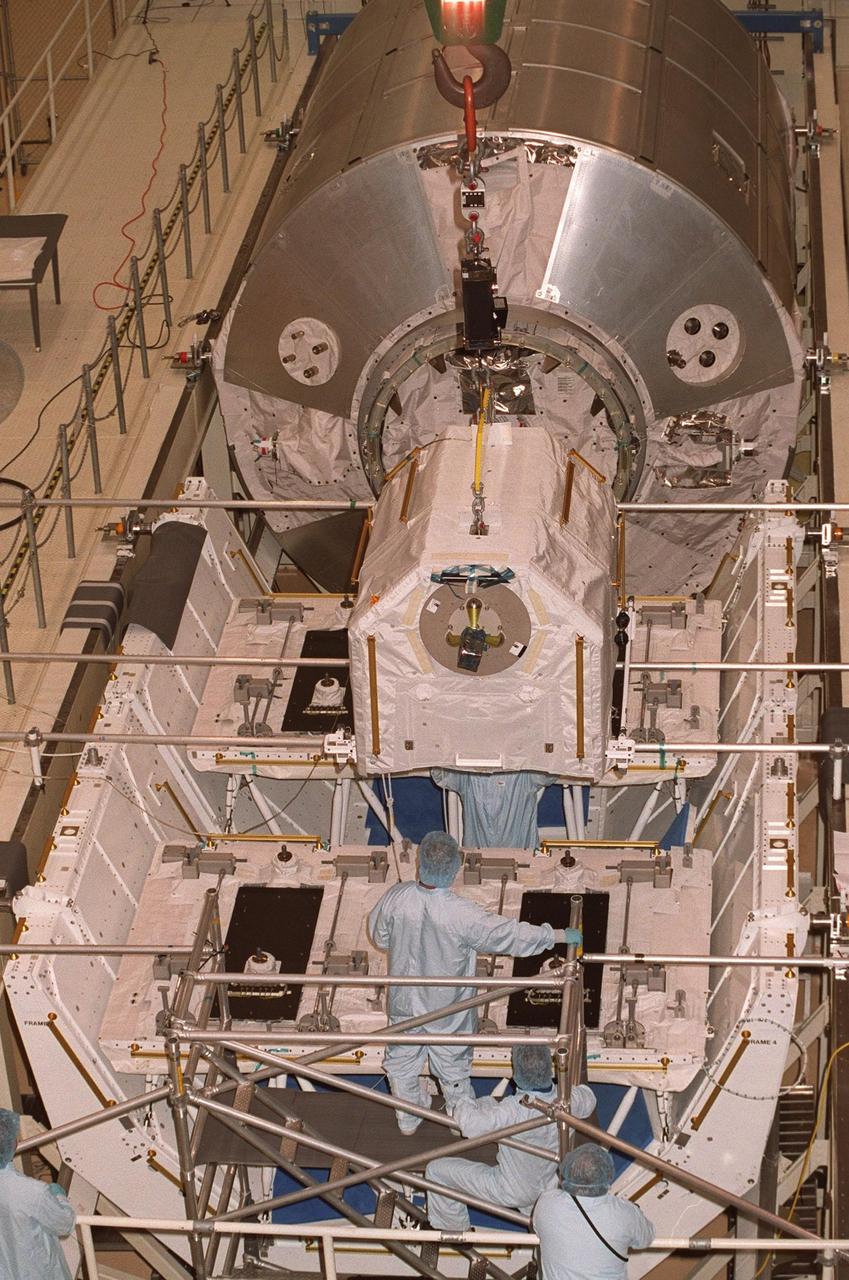
KENNEDY SPACE CENTER, FLA. -- An overhead crane in the Operations and Checkout Building lowers one of four gas tanks onto the Spacelab Logistics Double Pallet while workers help guide it. Part of the STS-104 payload, the storage tanks two gaseous oxygen and two gaseous nitrogen comprise the high pressure gas assembly that will be attached to the Joint Airlock Module during two spacewalks. The tanks will support future spacewalk operations from the Station and augment the Service Module gas resupply system
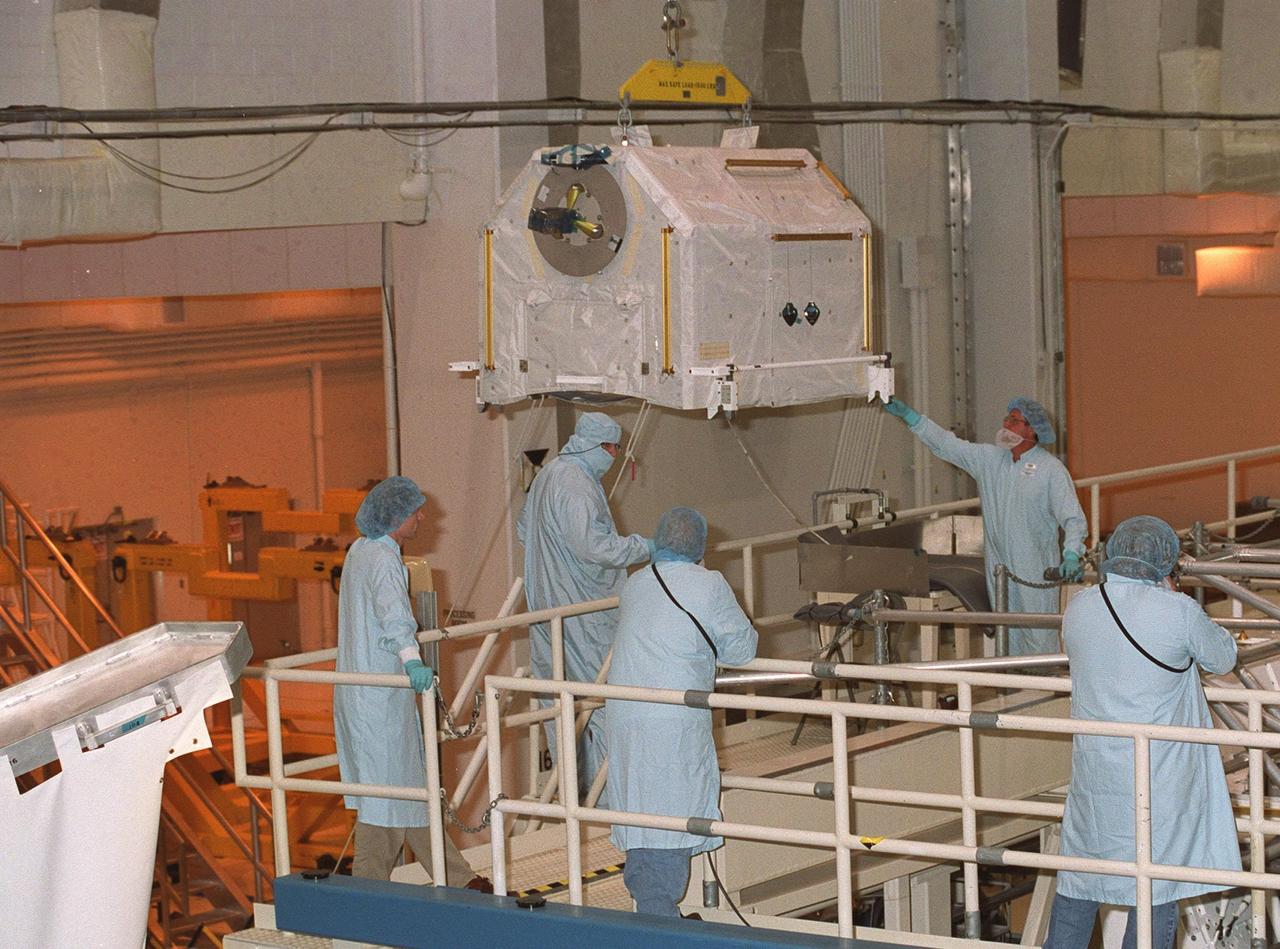
KENNEDY SPACE CENTER, FLA. -- Workers in the Operations and Checkout Building stand by while one of four gas tanks is moved toward the Spacelab Logistics Double Pallet. Part of the STS-104 payload, the storage tanks two gaseous oxygen and two gaseous nitrogen comprise the high pressure gas assembly that will be attached to the Joint Airlock Module during two spacewalks. The tanks will support future spacewalk operations from the Station and augment the Service Module gas resupply system
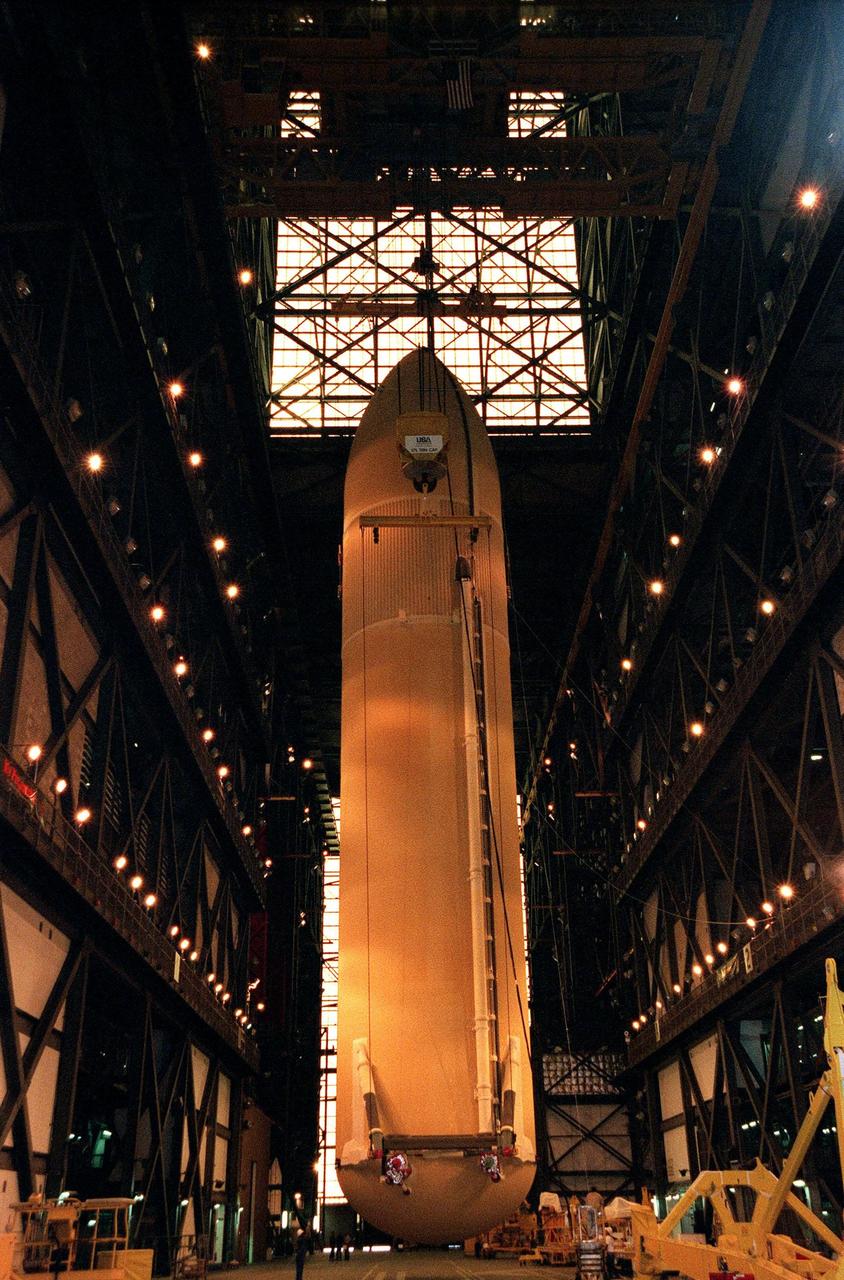
KENNEDY SPACE CENTER, FLA. -- An external tank is suspended in the transfer aisle of the Vehicle Assembly Building before being placed into its storage compartment. The largest and heaviest element of the Space Shuttle, an external tank contains the liquid hydrogen fuel and liquid oxygen oxidizer for the three Space Shuttle main engines (SSMEs) in the orbiter during liftoff and ascent. When the SSMEs are shut down, the external tank is jettisoned, breaking up as it enters the Earth's atmopshere and impacting in a remote ocean area. It is not recovered
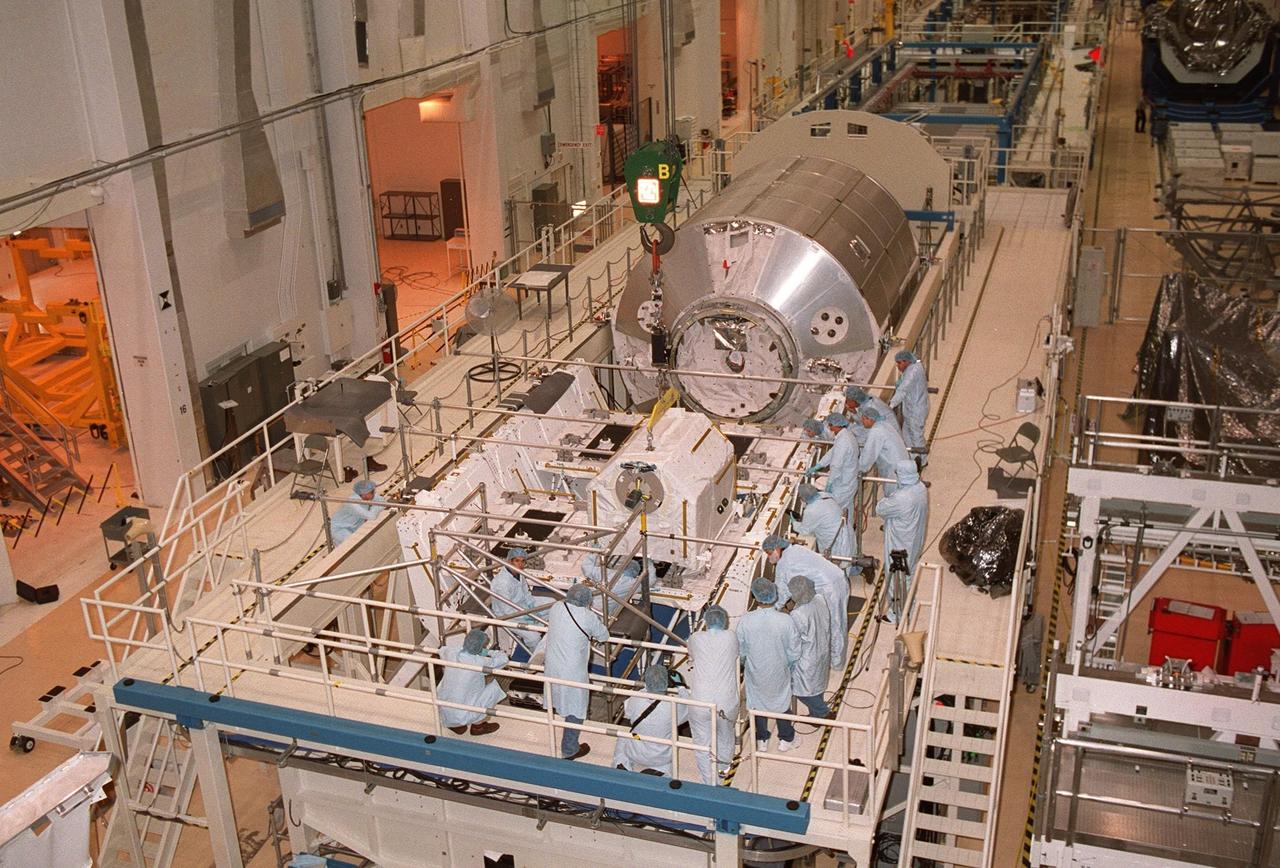
KENNEDY SPACE CENTER, FLA. -- In the Operations and Checkout Building, workers check out the placement of one of four gas tanks on the Spacelab Logistics Double Pallet. Part of the STS-104 payload, the storage tanks two gaseous oxygen and two gaseous nitrogen comprise the high pressure gas assembly that will be attached to the Joint Airlock Module during two spacewalks. The tanks will support future spacewalk operations from the Station and augment the Service Module gas resupply system
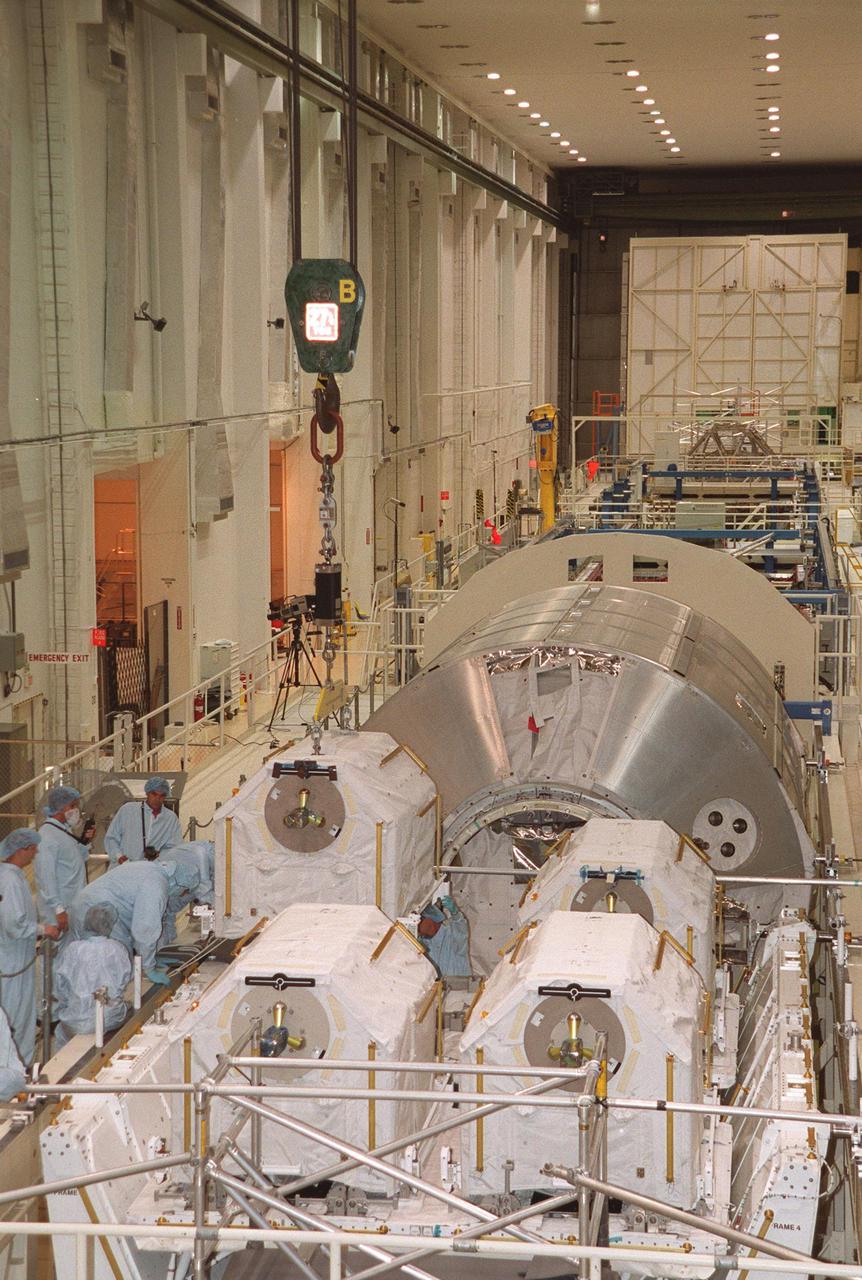
KENNEDY SPACE CENTER, FLA. -- In the Operations and Checkout Building, the last of four gas tanks is placed on the Spacelab Logistics Double Pallet. Part of the STS-104 payload, the storage tanks two gaseous oxygen and two gaseous nitrogen comprise the high pressure gas assembly that will be attached to the Joint Airlock Module during two spacewalks. The tanks will support future spacewalk operations from the Station and augment the Service Module gas resupply system
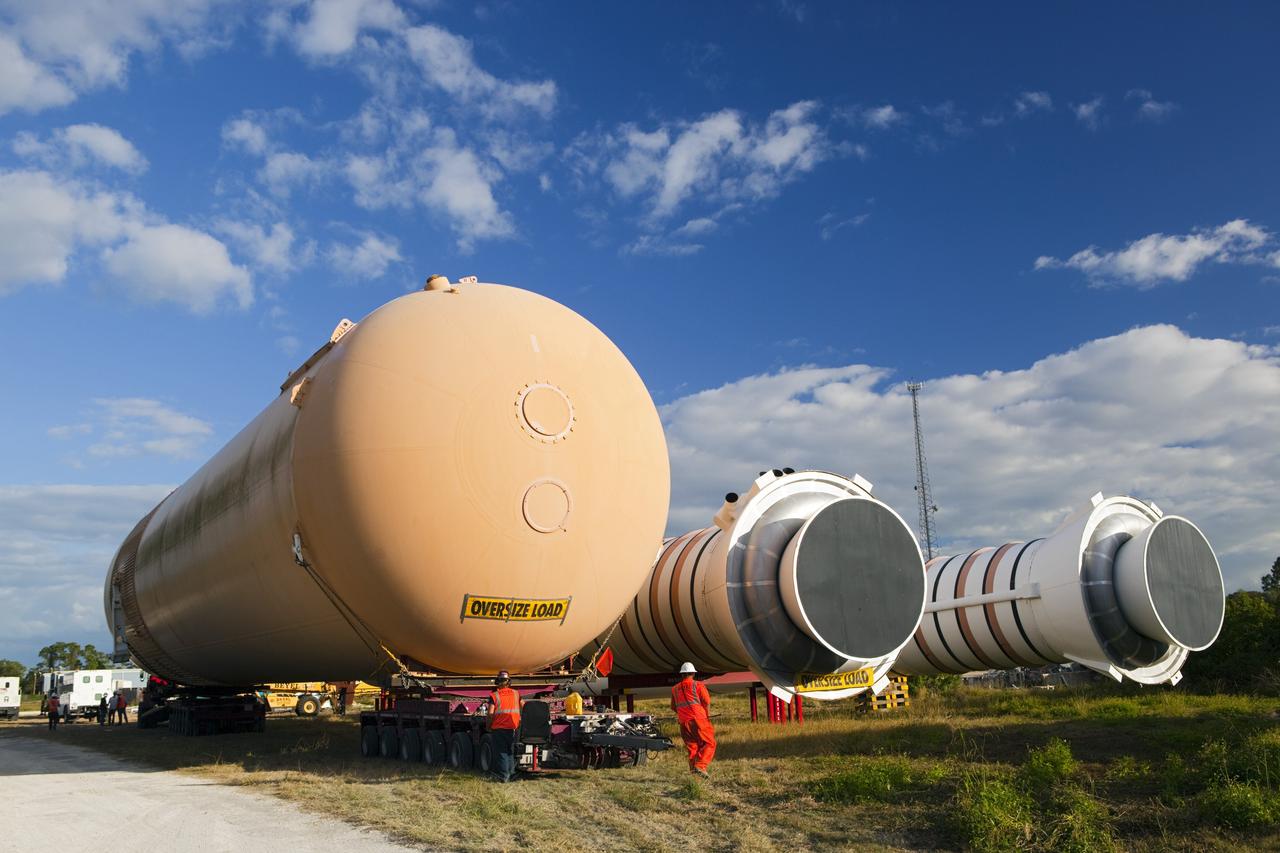
CAPE CANAVERAL, Fla. – A truck positions a full-size display of a space shuttle external fuel tank from the Kennedy Space Center Visitor Complex at a temporary storage area at NASA's Kennedy Space Center. The tank was part of a display of the external tank and two solid rocket boosters at the visitor complex that were used to show visitors the size of actual space shuttle components. A space shuttle rode piggyback on the tank and boosters at liftoff and during the ascent into space. The tank, which held propellants for the shuttle's three main engines, was not reused, but burned up in the atmosphere and fell into the ocean. Photo credit: NASA/Dmitri Gerondidakis
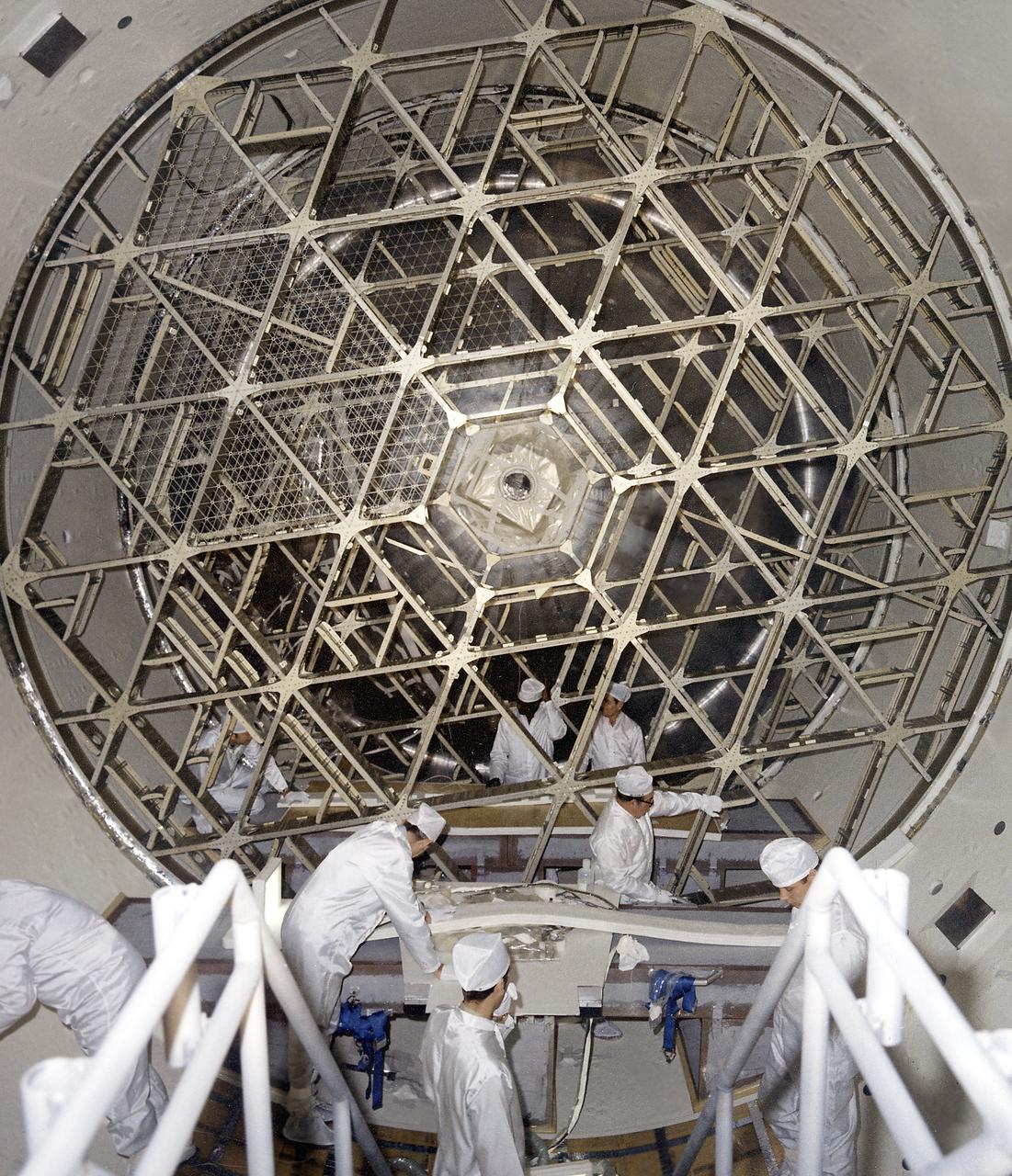
This photograph was taken during installation of floor grids on the upper and lower floors inside the Skylab Orbital Workshop at the McDornell Douglas plant at Huntington Beach, California. The OWS was divided into two major compartments. The lower level provided crew accommodations for sleeping, food preparation and consumption, hygiene, waste processing and disposal, and performance of certain experiments. The upper level consisted of a large work area and housed water storage tanks, a food freezer, storage vaults for film, scientific airlocks, mobility and stability experiment equipment, and other experimental equipment.
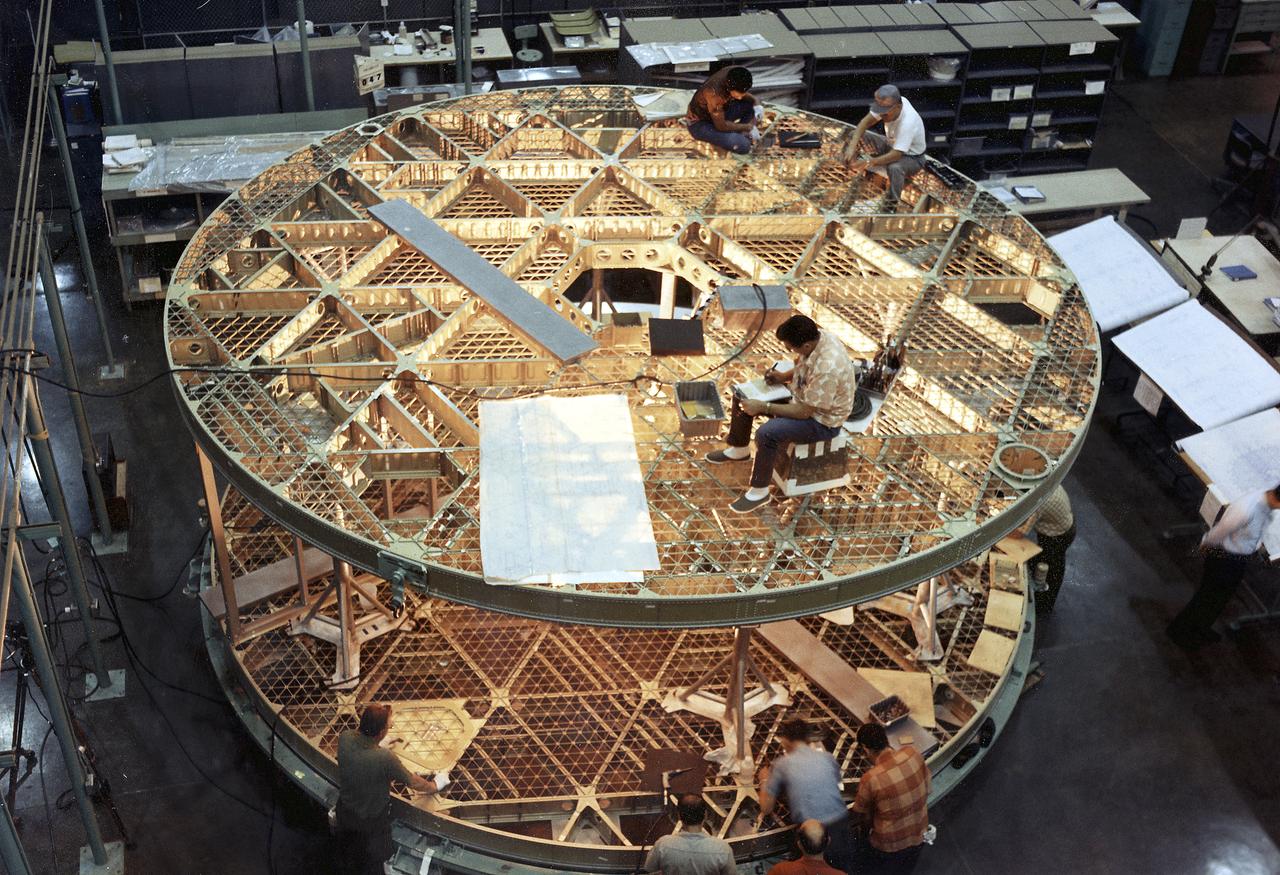
This photograph was taken during assembly of the bottom and upper floors of the Skylab Orbital Workshop (OWS). The OWS was divided into two major compartments. The lower level provided crew accommodations for sleeping, food preparation and consumption, hygiene, waste processing and disposal, and performance of certain experiments. The upper level consisted of a large work area and housed water storage tanks, a food freezer, storage vaults for film, scientific airlocks, mobility and stability experiment equipment, and other experimental equipment.
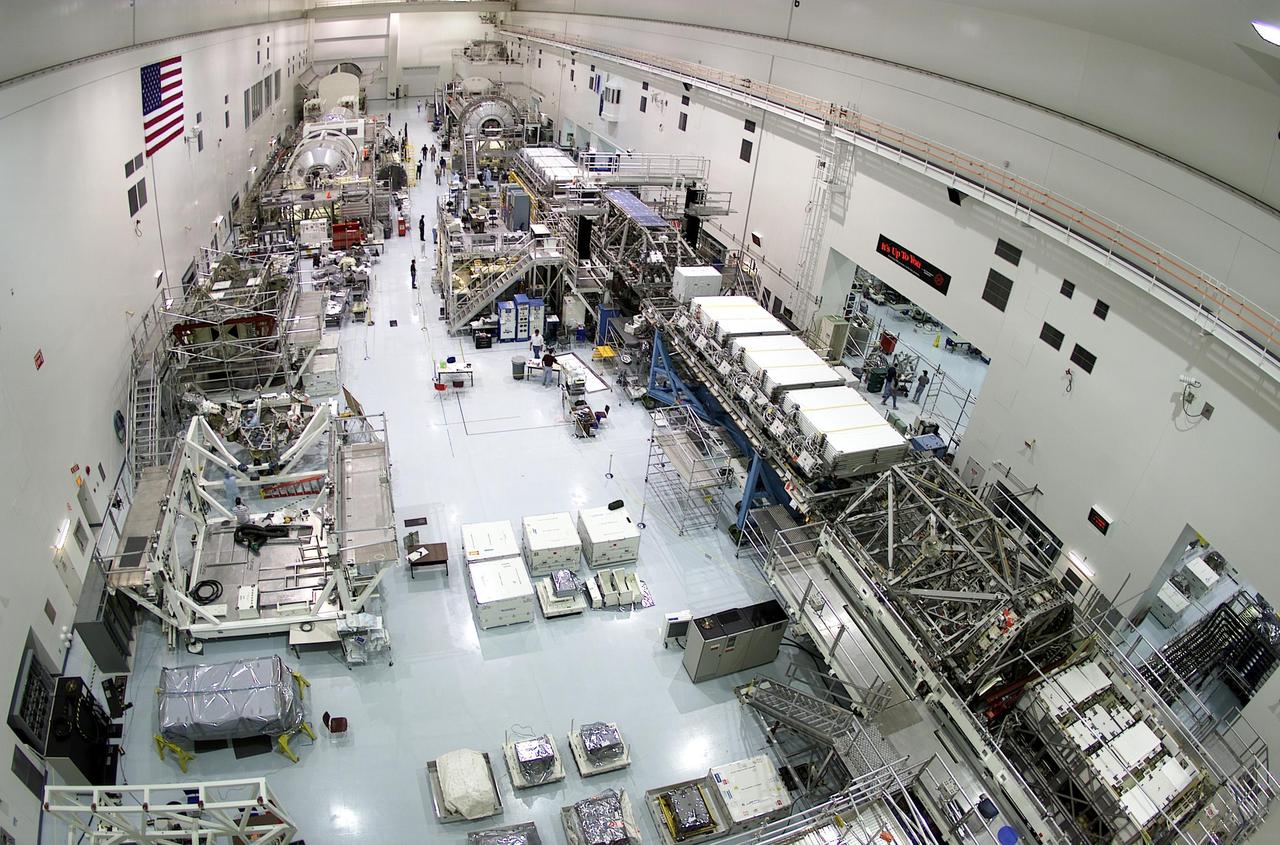
KENNEDY SPACE CENTER, FLA. -- This long view in the Space Station Processing Facility shows the lineup of elements in various stages of preparation for future flights. In the middle of the floor are white boxes housing storage gas tanks. Part of the STS-104 payload, the two gaseous oxygen and two gaseous nitrogen tanks comprise the high pressure gas assembly that will be attached to the Joint Airlock Module during two spacewalks. The tanks will support future spacewalk operations from the Station and augment the Service Module gas resupply system. For launch, scheduled no earlier than June 14 at 4:11 p.m. EDT, the tanks will be placed on the Spacelab Logistics Double Pallet at left

A person observes the computational Fluid Dynamics solution for cryogenic storage tank mixing inside the Glenn Reconfigurable User-interface and Virtual Reality Exploration on October 18, 2023. The GRUVE Lab provides a fully interactive virtual reality space in which to observe and analyze data and environments. Photo Credit: (NASA/Sara Lowthian-Hanna)

KENNEDY SPACE CENTER, Fla. -- This aerial photo captures Launch Pads 39B (left) and 39A (right). Space Shuttle Discovery waits on pad 39A for launch on mission STS-92 Oct. 5, 2000. The ball-shaped structures at left of the pads are storage tanks of the cryogenic liquid propellants for the orbiter’s main engines
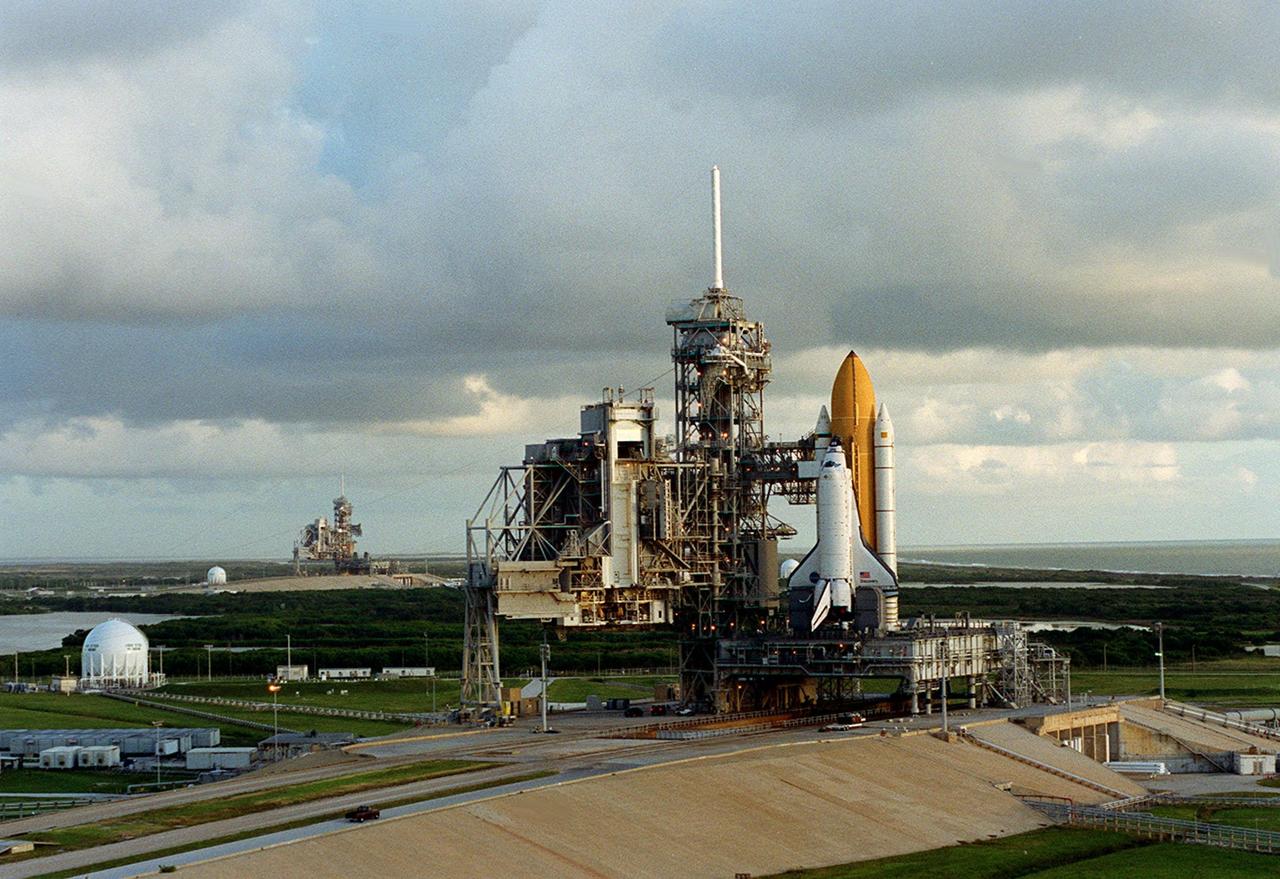
KENNEDY SPACE CENTER, Fla. -- This aerial photo captures Launch Pads 39B (left) and 39A (right). Space Shuttle Discovery waits on pad 39A for launch on mission STS-92 Oct. 5, 2000. The ball-shaped structures at left of the pads are storage tanks of the cryogenic liquid propellants for the orbiter’s main engines
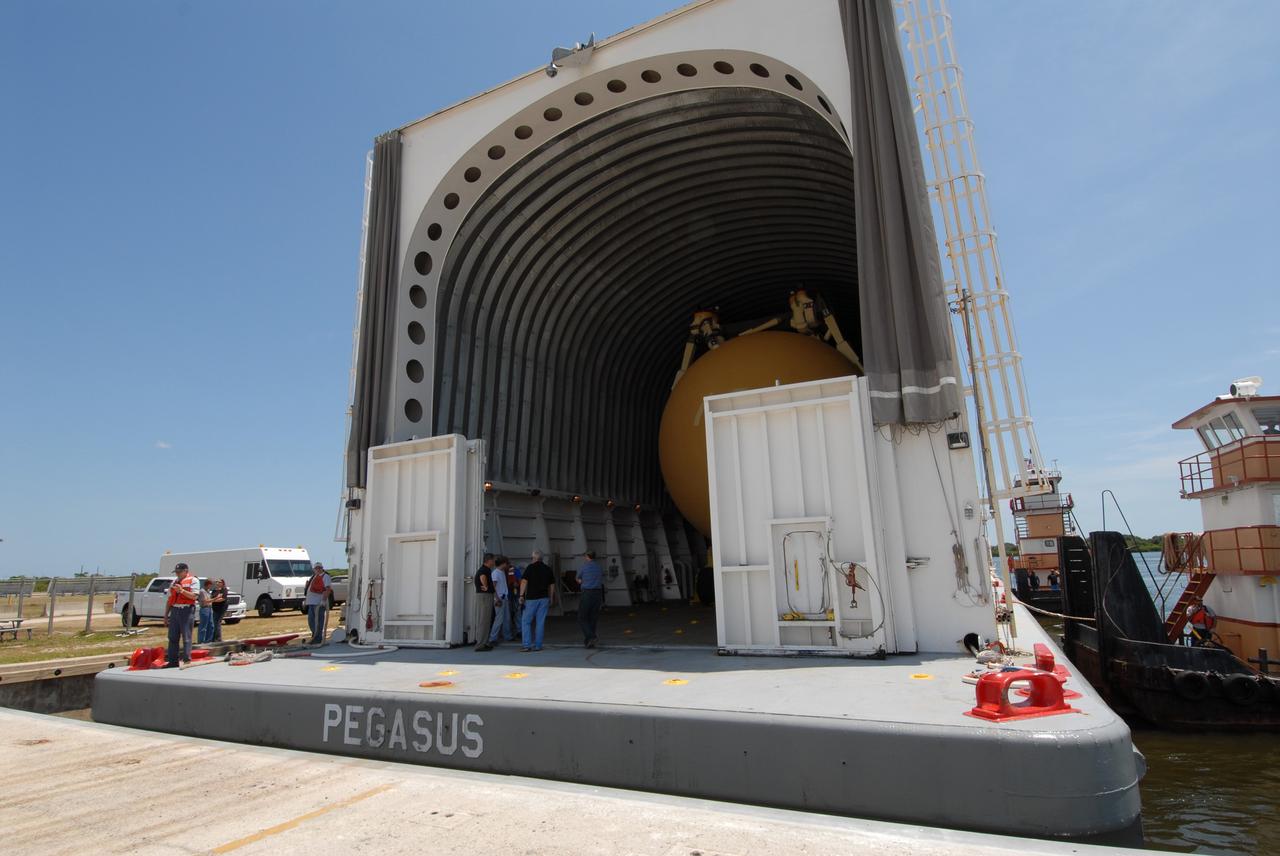
CAPE CANAVERAL, Fla. – The Pegasus barge is docked in the turn basin in the Launch Complex 39 Area at NASA's Kennedy Space Center in Florida. Inside is the external fuel tank, ET- 132, designated for space shuttle Discovery on the STS-128 mission. The tank will be offloaded and transported to a high bay in the Vehicle Assembly Building for checkout. On the STS-128 mission, Discovery will carry science and storage racks to the International Space Station. Launch of Discovery is targeted for Aug. 6. Photo credit: NASA/Troy Cryder
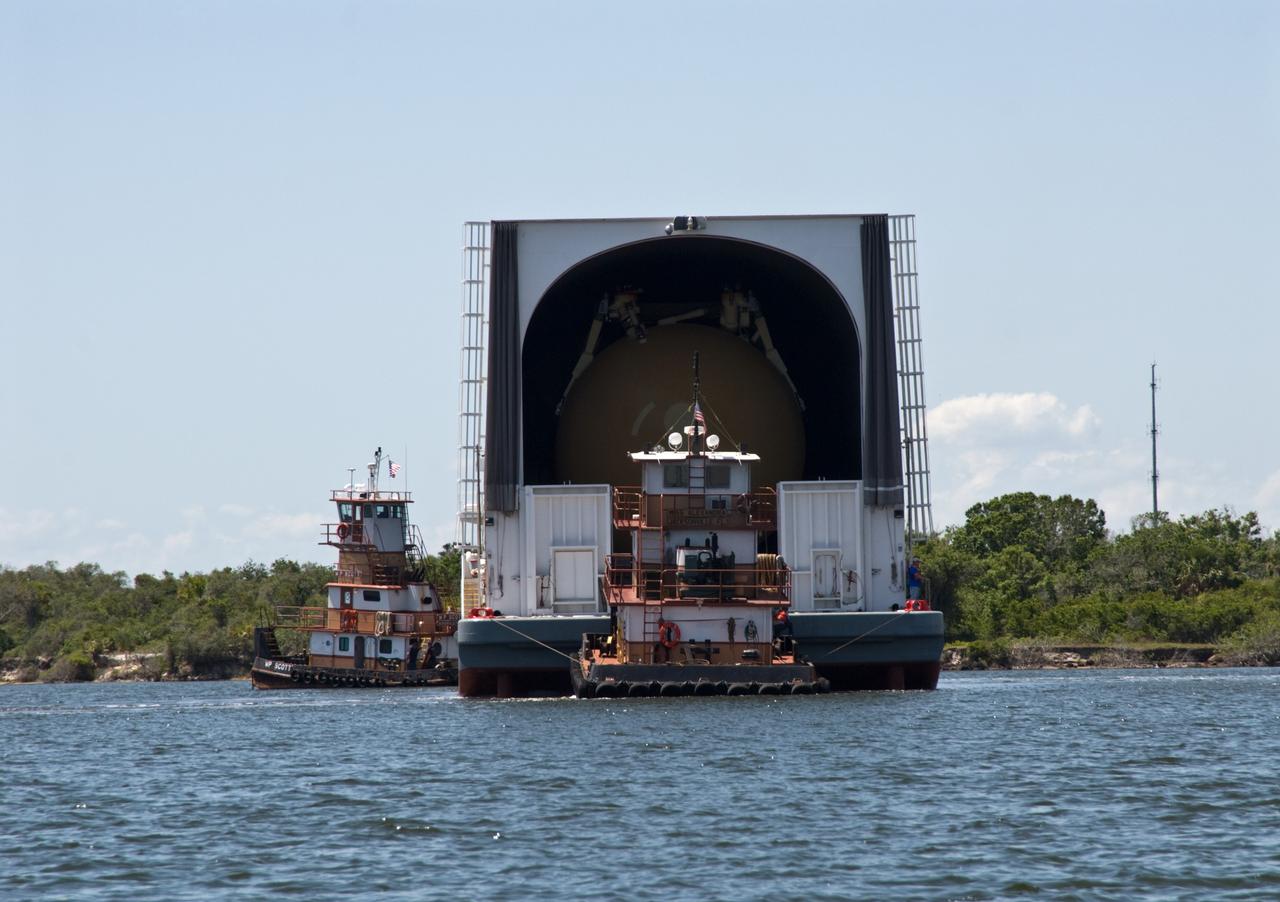
CAPE CANAVERAL, Fla. – Tugboats maneuver the Pegasus barge toward the dock in the turn basin in the Launch Complex 39 Area at NASA's Kennedy Space Center in Florida. The barge holds the external fuel tank, ET- 132, designated for space shuttle Discovery on the STS-128 mission. The tank will be offloaded and transported to a high bay in the Vehicle Assembly Building for checkout. On the STS-128 mission, Discovery will carry science and storage racks to the International Space Station. Launch of Discovery is targeted for Aug. 6. Photo credit: NASA/Troy Cryder
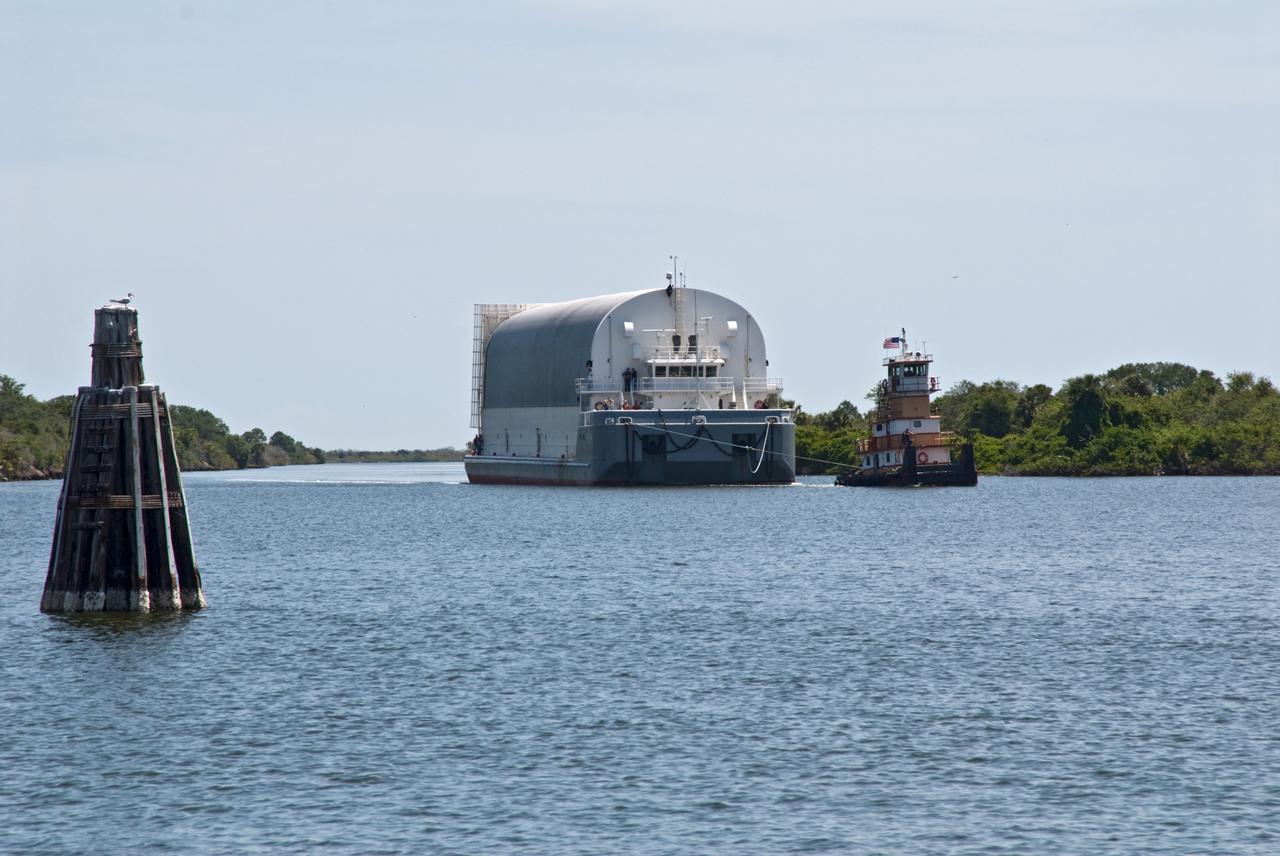
CAPE CANAVERAL, Fla. – The Pegasus barge, towed by a tugboat, enters the turn basin in the Launch Complex 39 Area at NASA's Kennedy Space Center in Florida. The barge holds the external fuel tank, ET- 132, designated for space shuttle Discovery on the STS-128 mission. The tank will be offloaded and transported to a high bay in the Vehicle Assembly Building for checkout. On the STS-128 mission, Discovery will carry science and storage racks to the International Space Station. Launch of Discovery is targeted for Aug. 6. Photo credit: NASA/Troy Cryder
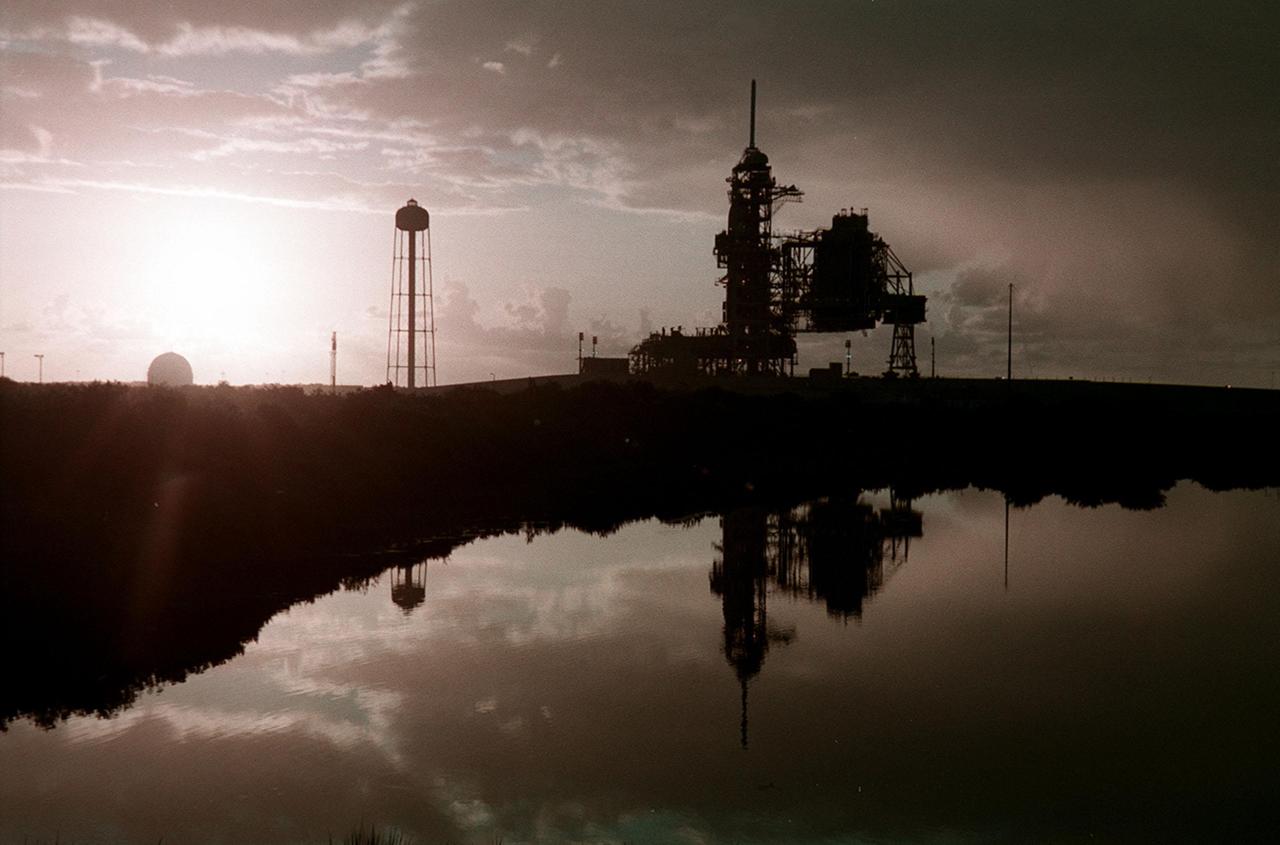
KENNEDY SPACE CENTER, Fla. -- Just after dawn, Launch Pad 39A is caught in silhouette and reflected in the water nearby. On the pad is Space Shuttle Discovery, waiting for launch on mission STS-92 Oct. 5, 2000. At the left of the pad is the 300,000-gallon water tank that is part of the sound suppression system during launches. At far left, the ball-shaped structure is a storage tank for one of the cryogenic liquid propellants of the orbiter’s main engines
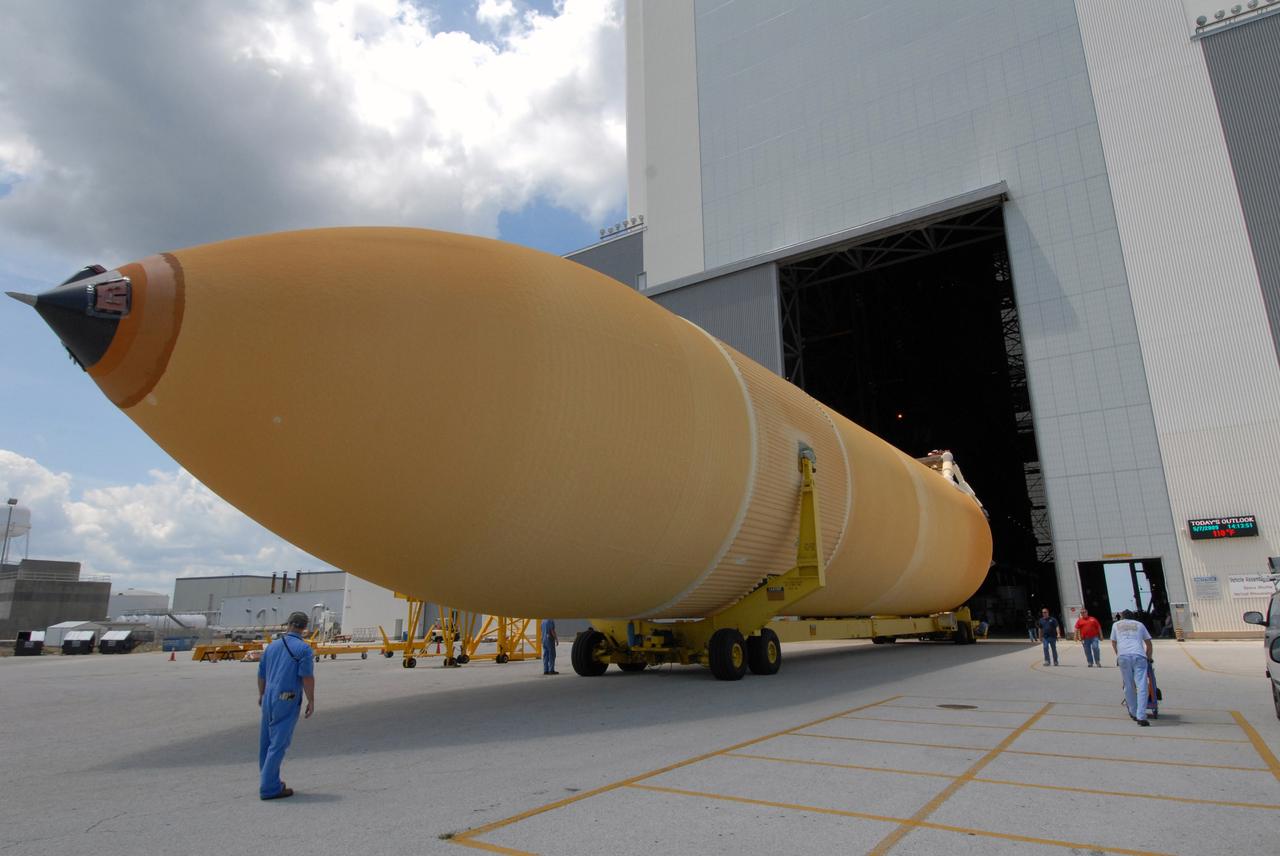
CAPE CANAVERAL, Fla. – The external fuel tank, ET- 132, designated for use with space shuttle Discovery on the STS-128 mission moves toward the open door of the Vehicle Assembly Building at NASA's Kennedy Space Center in Florida. The tank will be moved into a high bay for checkout. On the STS-128 mission, Discovery will carry science and storage racks to the International Space Station. Launch of Discovery is targeted for Aug. 6. Photo credit: NASA/Jack Pfaller
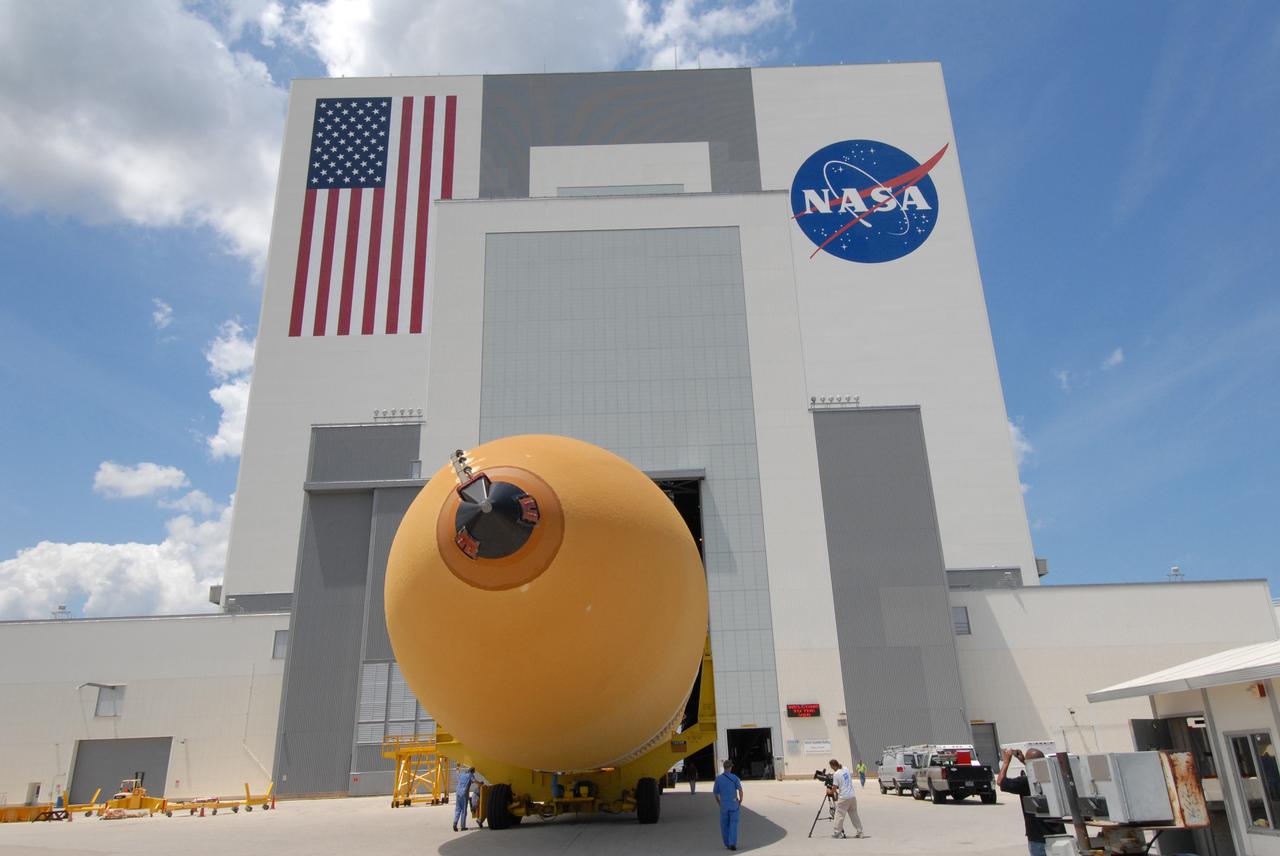
CAPE CANAVERAL, Fla. – The external fuel tank, ET- 132, designated for use with space shuttle Discovery on the STS-128 mission moves toward the open door of the Vehicle Assembly Building at NASA's Kennedy Space Center in Florida. The tank will be moved into a high bay for checkout. On the STS-128 mission, Discovery will carry science and storage racks to the International Space Station. Launch of Discovery is targeted for Aug. 6. Photo credit: NASA/Jack Pfaller
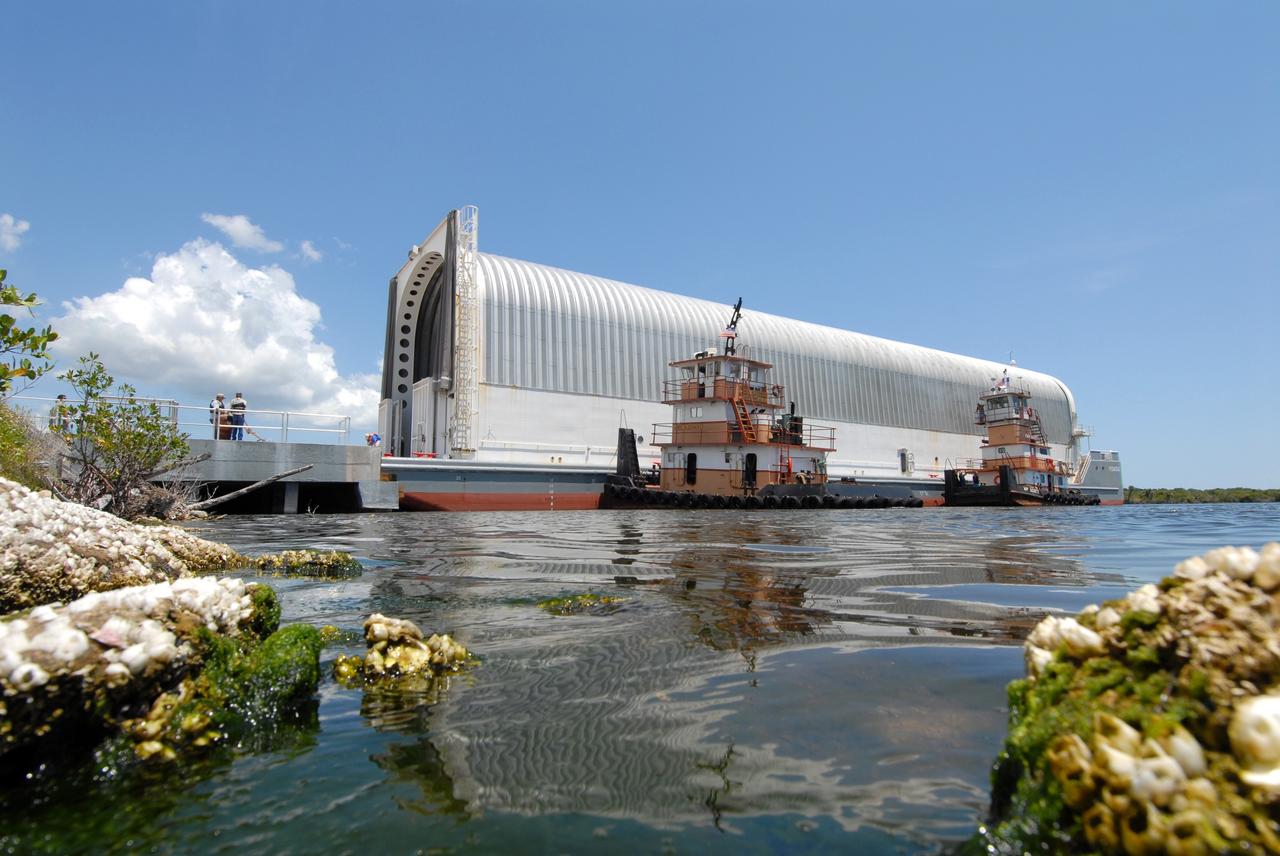
CAPE CANAVERAL, Fla. – The Pegasus barge is docked in the turn basin in the Launch Complex 39 Area at NASA's Kennedy Space Center in Florida. Inside is the external fuel tank, ET- 132, designated for space shuttle Discovery on the STS-128 mission. The tank will be offloaded and transported to a high bay in the Vehicle Assembly Building for checkout. On the STS-128 mission, Discovery will carry science and storage racks to the International Space Station. Launch of Discovery is targeted for Aug. 6. Photo credit: NASA/Troy Cryder
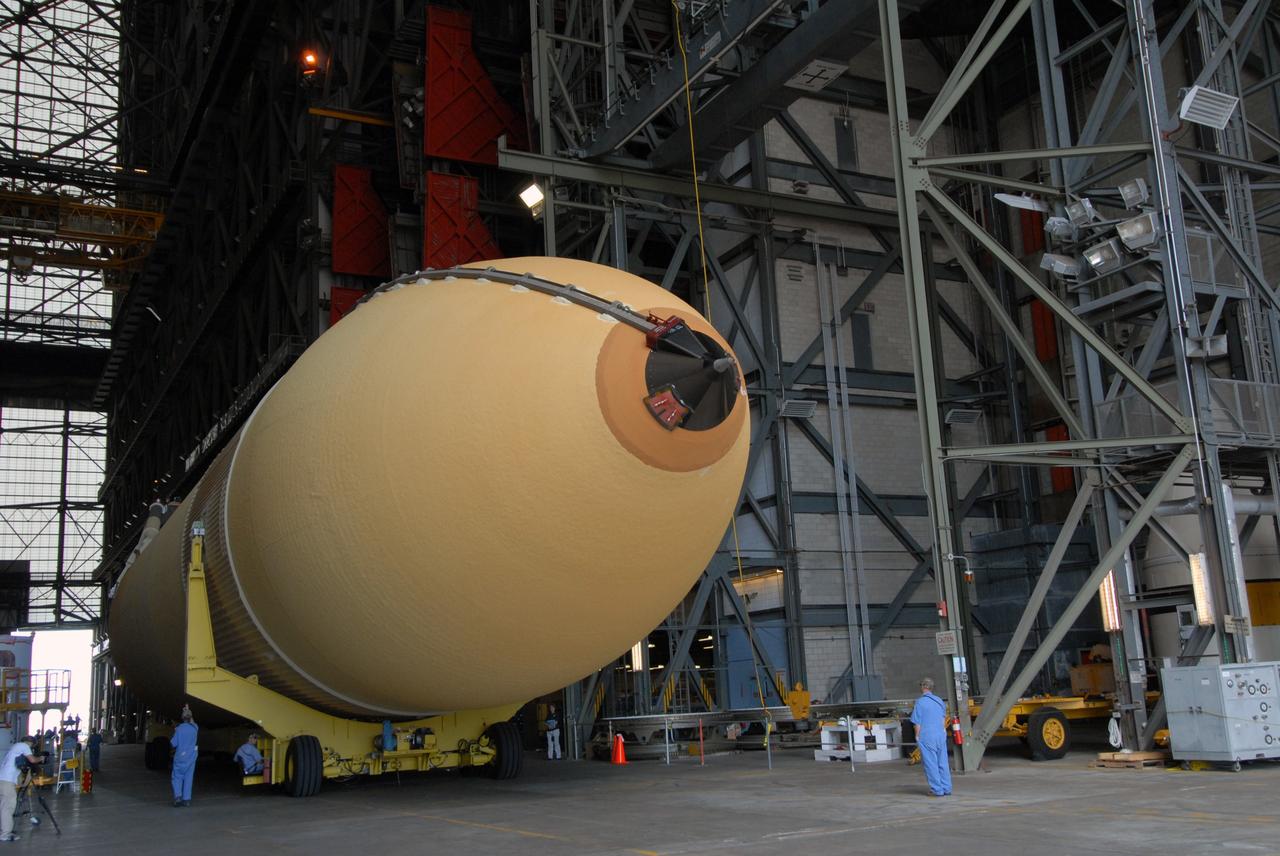
CAPE CANAVERAL, Fla. – The external fuel tank, ET- 132, designated for use with space shuttle Discovery on the STS-128 mission moves into the transfer aisle of the Vehicle Assembly Building at NASA's Kennedy Space Center in Florida. The tank will be moved into a high bay for checkout. On the STS-128 mission, Discovery will carry science and storage racks to the International Space Station. Launch of Discovery is targeted for Aug. 6. Photo credit: NASA/Jack Pfaller
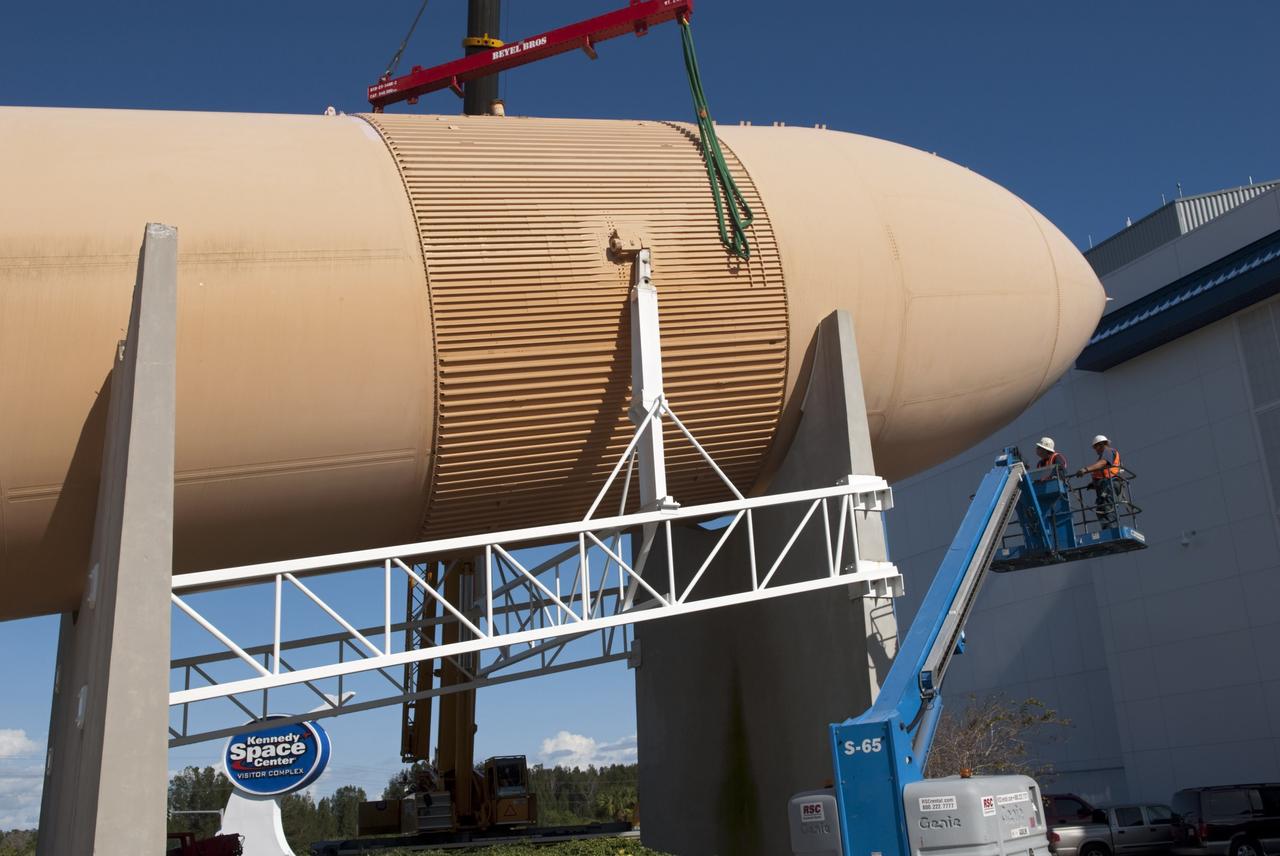
CAPE CANAVERAL, Fla. – Cranes remove a full-size replica of a space shuttle external fuel tank from the Kennedy Space Center Visitor Complex as the space-themed attraction makes way for a new exhibit featuring space shuttle Atlantis, which is currently undergoing preparations to go on public display. The tank is being placed into temporary storage at NASA's Kennedy Space Center. The tank was part of a mockup of the external tank and two solid rocket boosters at the visitor complex that were used to show visitors the size of actual space shuttle components. A space shuttle rode piggyback on the tank and boosters at liftoff and during the ascent into space. The tank, which held propellants for the shuttle's three main engines, was not reused, but burned up in the atmosphere and fell into the ocean. Photo credit: NASA/Jim Grossman
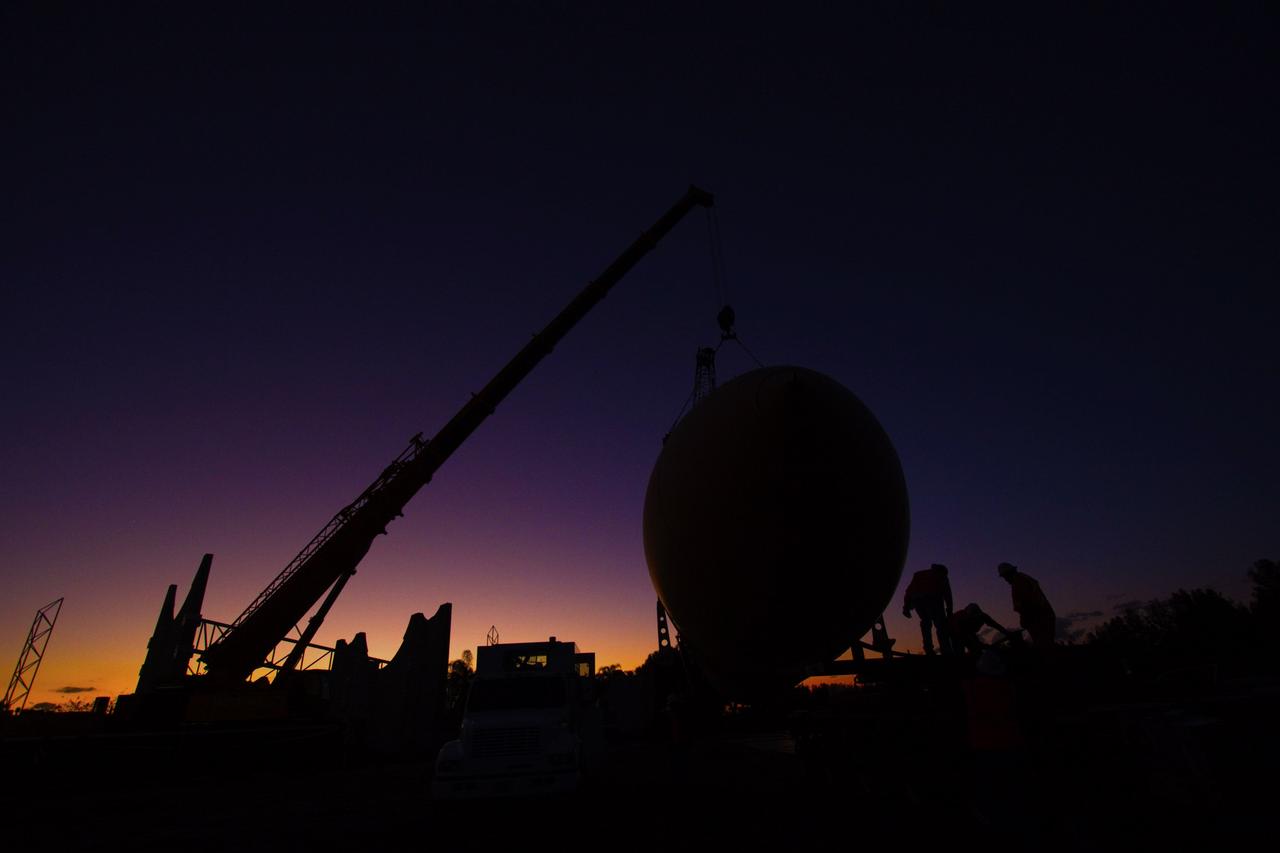
CAPE CANAVERAL, Fla. – Cranes remove a full-size replica of a space shuttle external fuel tank from the Kennedy Space Center Visitor Complex as the space-themed attraction makes way for a new exhibit featuring space shuttle Atlantis, which is currently undergoing preparations to go on public display. The tank is being placed into temporary storage at NASA's Kennedy Space Center. The tank was part of a mockup of the external tank and two solid rocket boosters at the visitor complex that were used to show visitors the size of actual space shuttle components. A space shuttle rode piggyback on the tank and boosters at liftoff and during the ascent into space. The tank, which held propellants for the shuttle's three main engines, was not reused, but burned up in the atmosphere and fell into the ocean. Photo credit: NASA/Jim Grossman
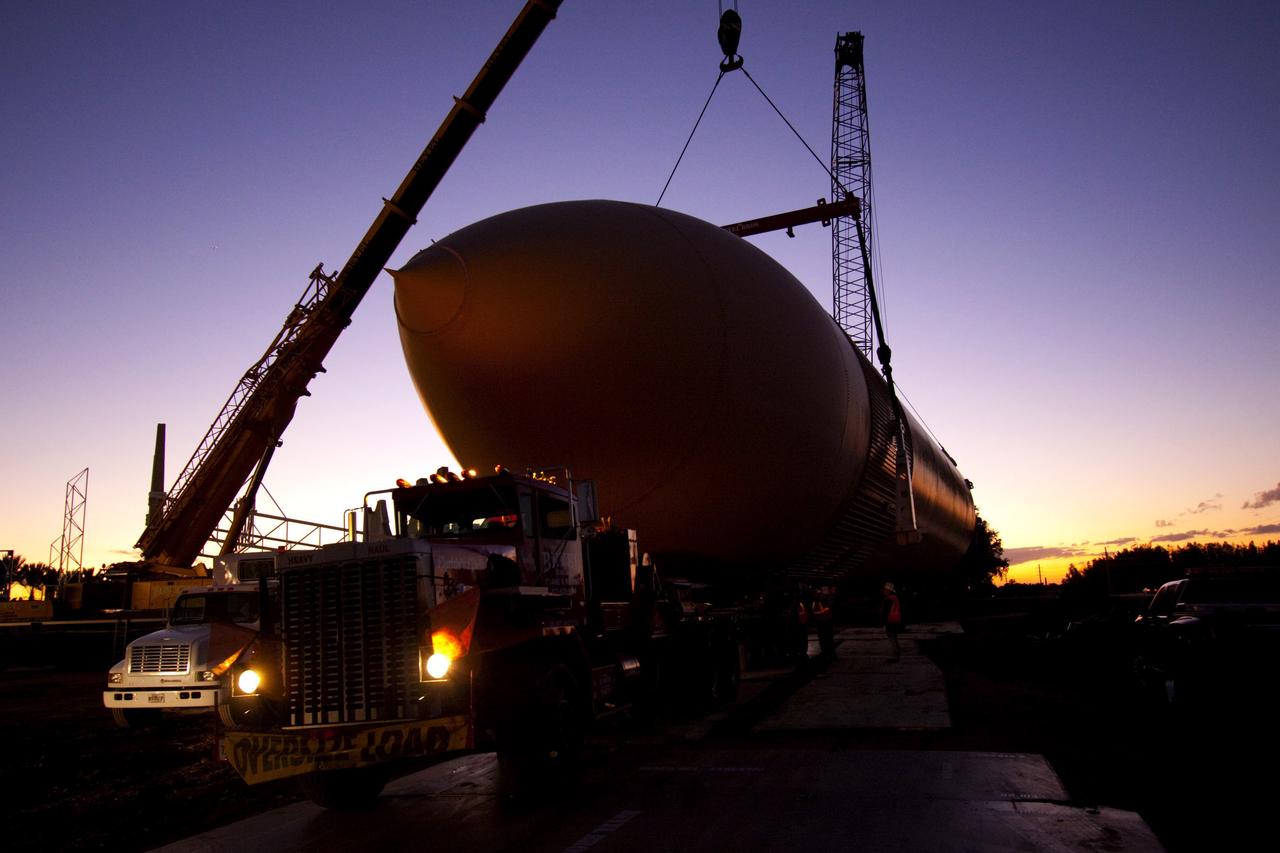
CAPE CANAVERAL, Fla. – Cranes remove a full-size replica of a space shuttle external fuel tank from the Kennedy Space Center Visitor Complex as the space-themed attraction makes way for a new exhibit featuring space shuttle Atlantis, which is currently undergoing preparations to go on public display. The tank is being placed into temporary storage at NASA's Kennedy Space Center. The tank was part of a mockup of the external tank and two solid rocket boosters at the visitor complex that were used to show visitors the size of actual space shuttle components. A space shuttle rode piggyback on the tank and boosters at liftoff and during the ascent into space. The tank, which held propellants for the shuttle's three main engines, was not reused, but burned up in the atmosphere and fell into the ocean. Photo credit: NASA/Jim Grossman
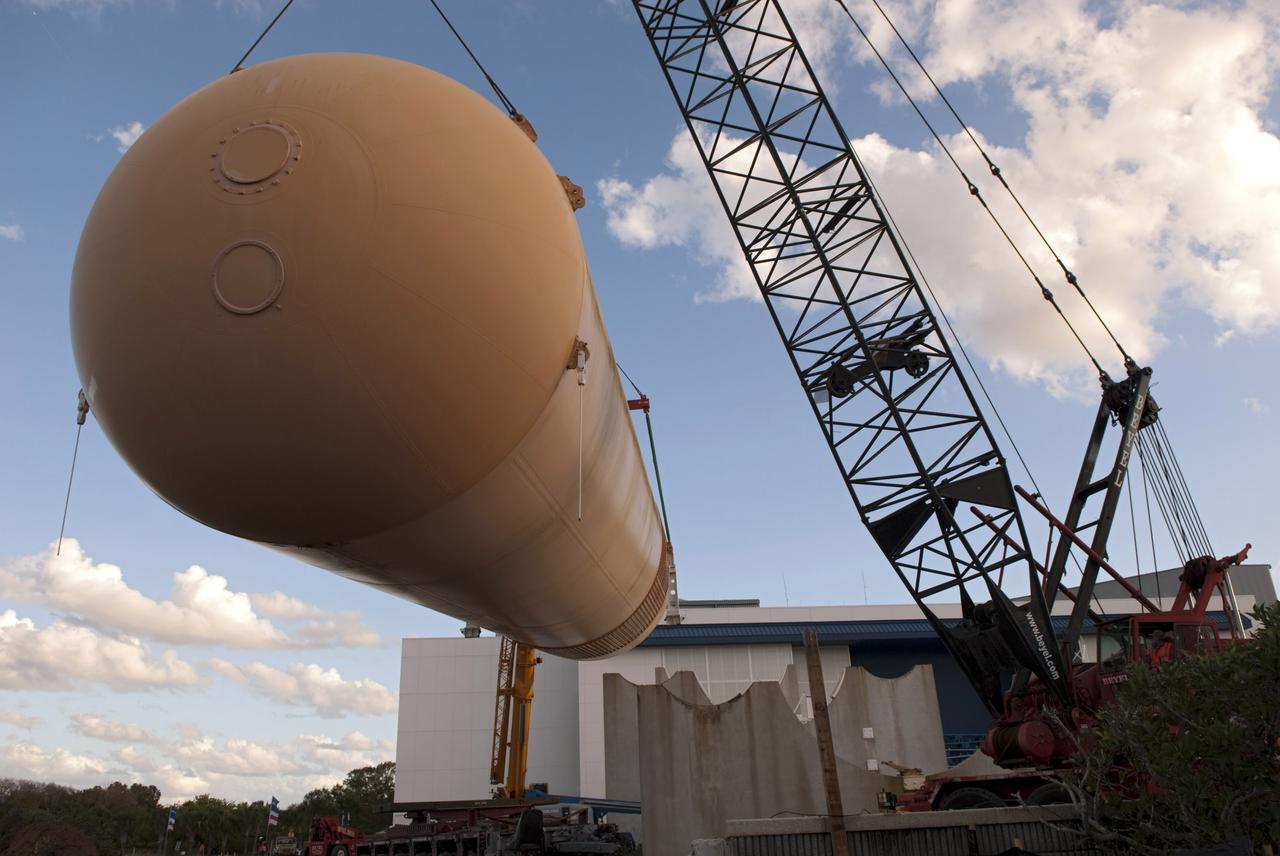
CAPE CANAVERAL, Fla. – Cranes remove a full-size replica of a space shuttle external fuel tank from the Kennedy Space Center Visitor Complex as the space-themed attraction makes way for a new exhibit featuring space shuttle Atlantis, which is currently undergoing preparations to go on public display. The tank is being placed into temporary storage at NASA's Kennedy Space Center. The tank was part of a mockup of the external tank and two solid rocket boosters at the visitor complex that were used to show visitors the size of actual space shuttle components. A space shuttle rode piggyback on the tank and boosters at liftoff and during the ascent into space. The tank, which held propellants for the shuttle's three main engines, was not reused, but burned up in the atmosphere and fell into the ocean. Photo credit: NASA/Jim Grossman
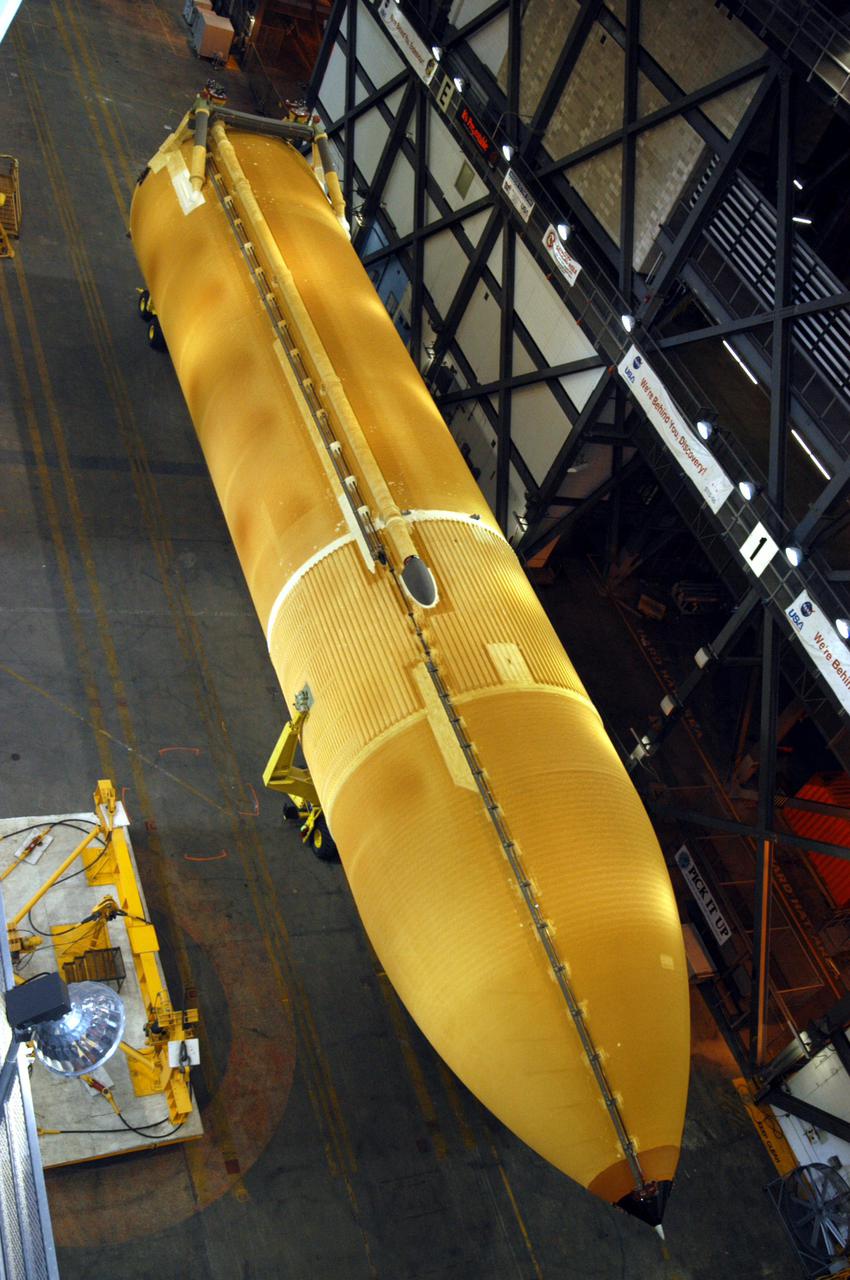
KENNEDY SPACE CENTER, FLA. - Inside the Vehicle Assembly Building, the redesigned External Tank to be used on Return to Flight mission STS-114 waits in the transfer aisle after its move from the barge in the Launch Complex 39 Area Turn Basin. The tank will be raised from a horizontal to a vertical position, then lifted high up into a storage cell, or “checkout cell,” where it will undergo inspections of the mechanical, electrical and thermal protection systems. New processing activities resulting from redesign of the tank include inspection of the bipod heater and External Tank separation camera, which includes charging the camera batteries. The tank will be then prepared for mating to the Solid Rocket Boosters. When preparations are complete, the tank will be lifted from the checkout cell, moved across the transfer aisle and into High Bay 1, where it will be lowered and attached to the boosters, which are sitting on the Mobile Launch Platform.
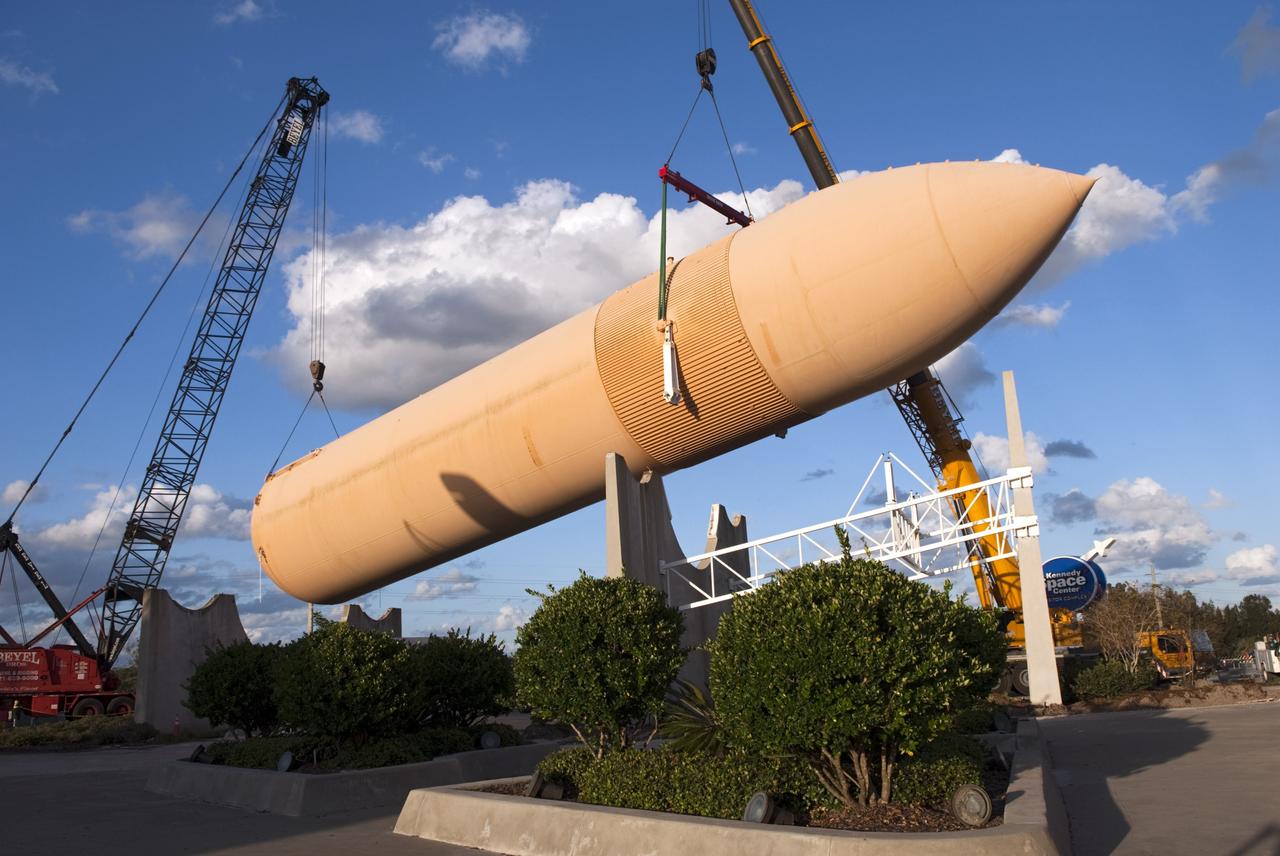
CAPE CANAVERAL, Fla. – Cranes remove a full-size replica of a space shuttle external fuel tank from the Kennedy Space Center Visitor Complex as the space-themed attraction makes way for a new exhibit featuring space shuttle Atlantis, which is currently undergoing preparations to go on public display. The tank is being placed into temporary storage at NASA's Kennedy Space Center. The tank was part of a mockup of the external tank and two solid rocket boosters at the visitor complex that were used to show visitors the size of actual space shuttle components. A space shuttle rode piggyback on the tank and boosters at liftoff and during the ascent into space. The tank, which held propellants for the shuttle's three main engines, was not reused, but burned up in the atmosphere and fell into the ocean. Photo credit: NASA/Jim Grossman
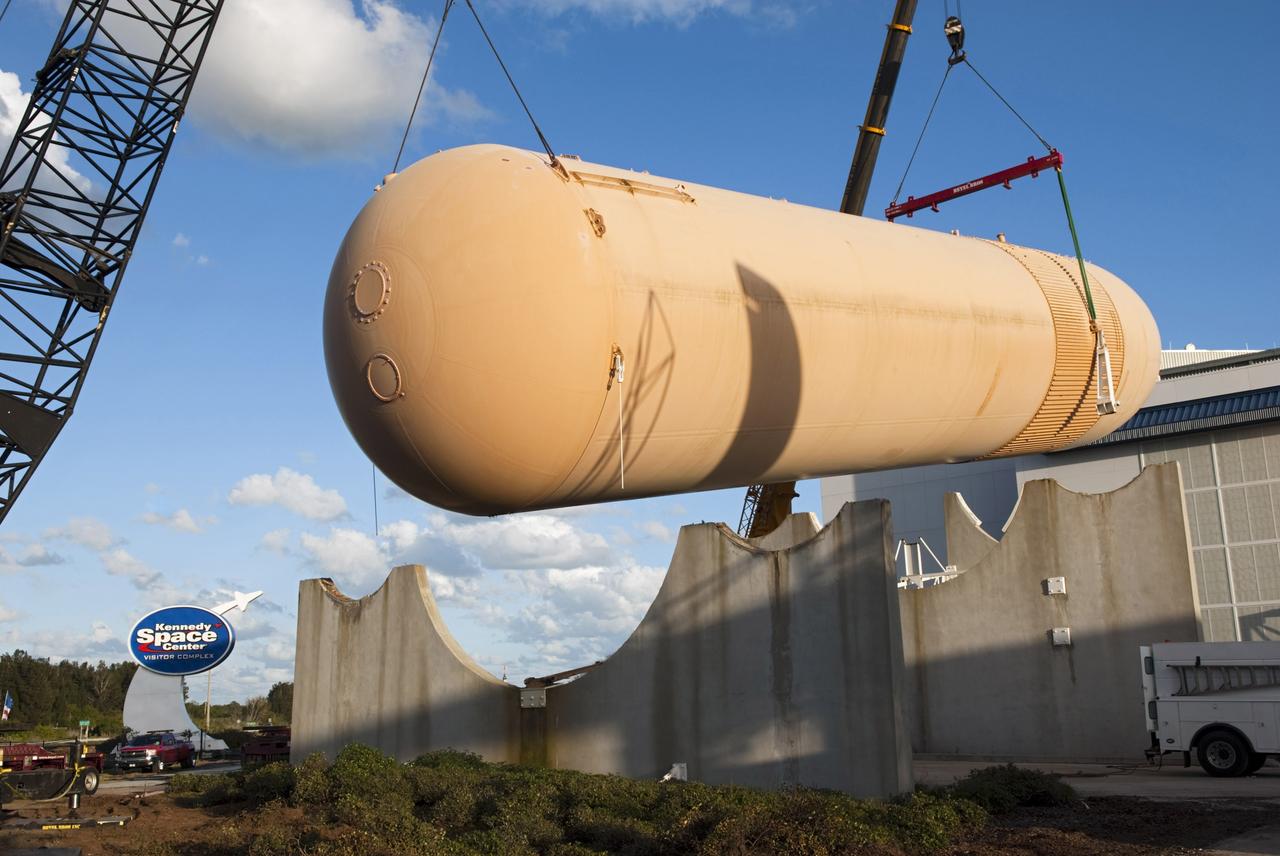
CAPE CANAVERAL, Fla. – Cranes remove a full-size replica of a space shuttle external fuel tank from the Kennedy Space Center Visitor Complex as the space-themed attraction makes way for a new exhibit featuring space shuttle Atlantis, which is currently undergoing preparations to go on public display. The tank is being placed into temporary storage at NASA's Kennedy Space Center. The tank was part of a mockup of the external tank and two solid rocket boosters at the visitor complex that were used to show visitors the size of actual space shuttle components. A space shuttle rode piggyback on the tank and boosters at liftoff and during the ascent into space. The tank, which held propellants for the shuttle's three main engines, was not reused, but burned up in the atmosphere and fell into the ocean. Photo credit: NASA/Jim Grossman
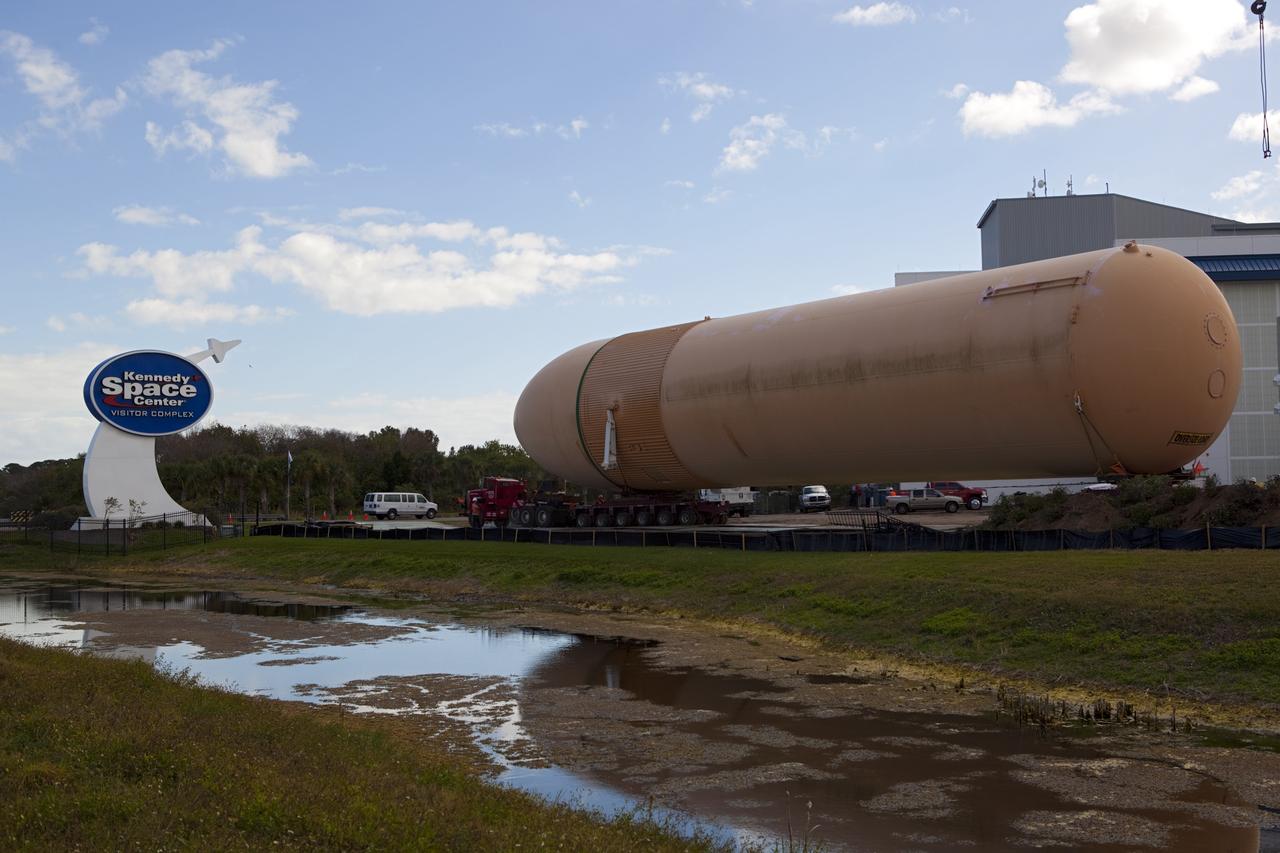
CAPE CANAVERAL, Fla. – A truck hauls a full-size display of a space shuttle external fuel tank from the Kennedy Space Center Visitor Complex as the space-themed attraction makes way for a new exhibit featuring space shuttle Atlantis, which is currently undergoing preparations to go on public display. The tank is being placed into temporary storage at NASA's Kennedy Space Center. The tank was part of a display of the external tank and two solid rocket boosters at the visitor complex that were used to show visitors the size of actual space shuttle components. A space shuttle rode piggyback on the tank and boosters at liftoff and during the ascent into space. The tank, which held propellants for the shuttle's three main engines, was not reused, but burned up in the atmosphere and fell into the ocean. Photo credit: NASA/Dmitri Gerondidakis
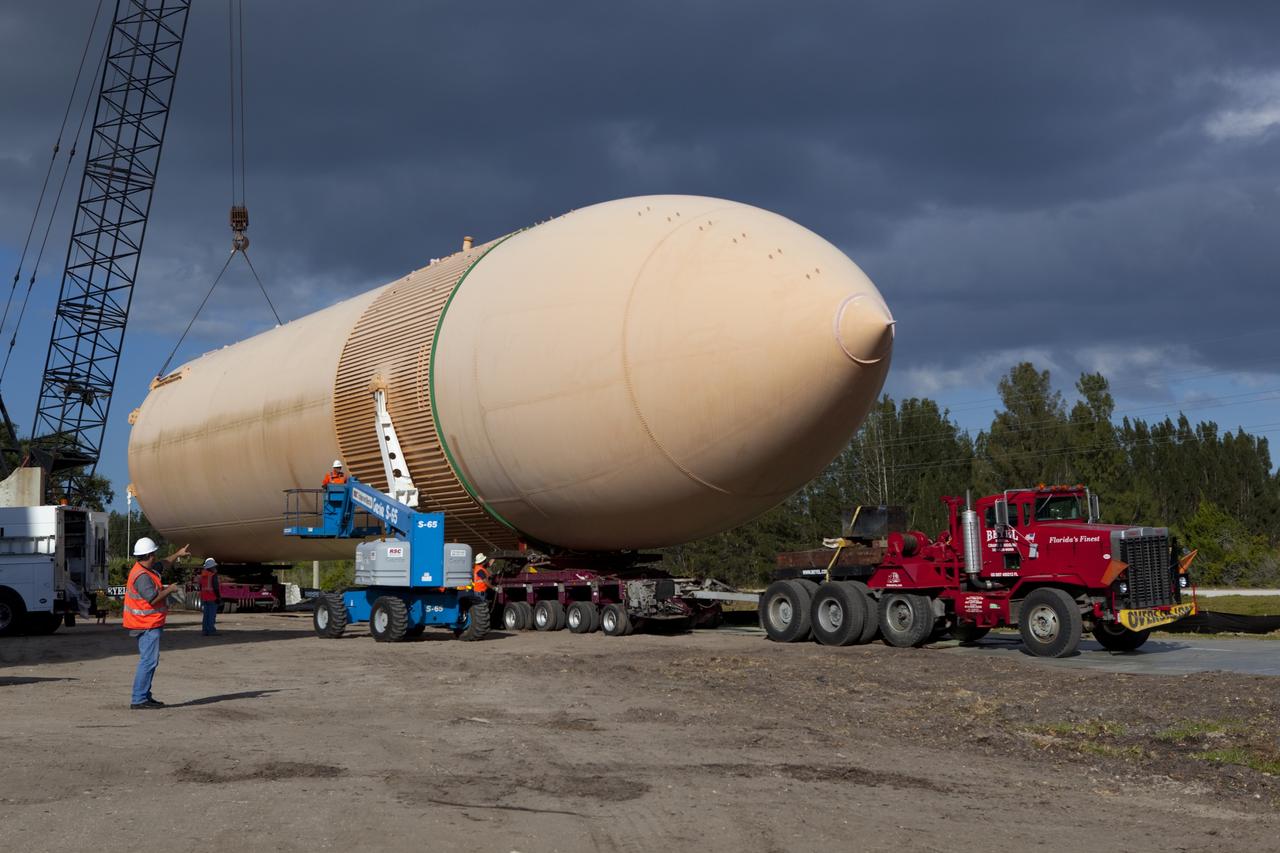
CAPE CANAVERAL, Fla. – A crane positions a full-size display of a space shuttle external fuel tank onto a truck to move it from the Kennedy Space Center Visitor Complex as the space-themed attraction makes way for a new exhibit featuring space shuttle Atlantis, which is currently undergoing preparations to go on public display. The tank is being placed into temporary storage at NASA's Kennedy Space Center. The tank was part of a display of the external tank and two solid rocket boosters at the visitor complex that were used to show visitors the size of actual space shuttle components. A space shuttle rode piggyback on the tank and boosters at liftoff and during the ascent into space. The tank, which held propellants for the shuttle's three main engines, was not reused, but burned up in the atmosphere and fell into the ocean. Photo credit: NASA/Dmitri Gerondidakis
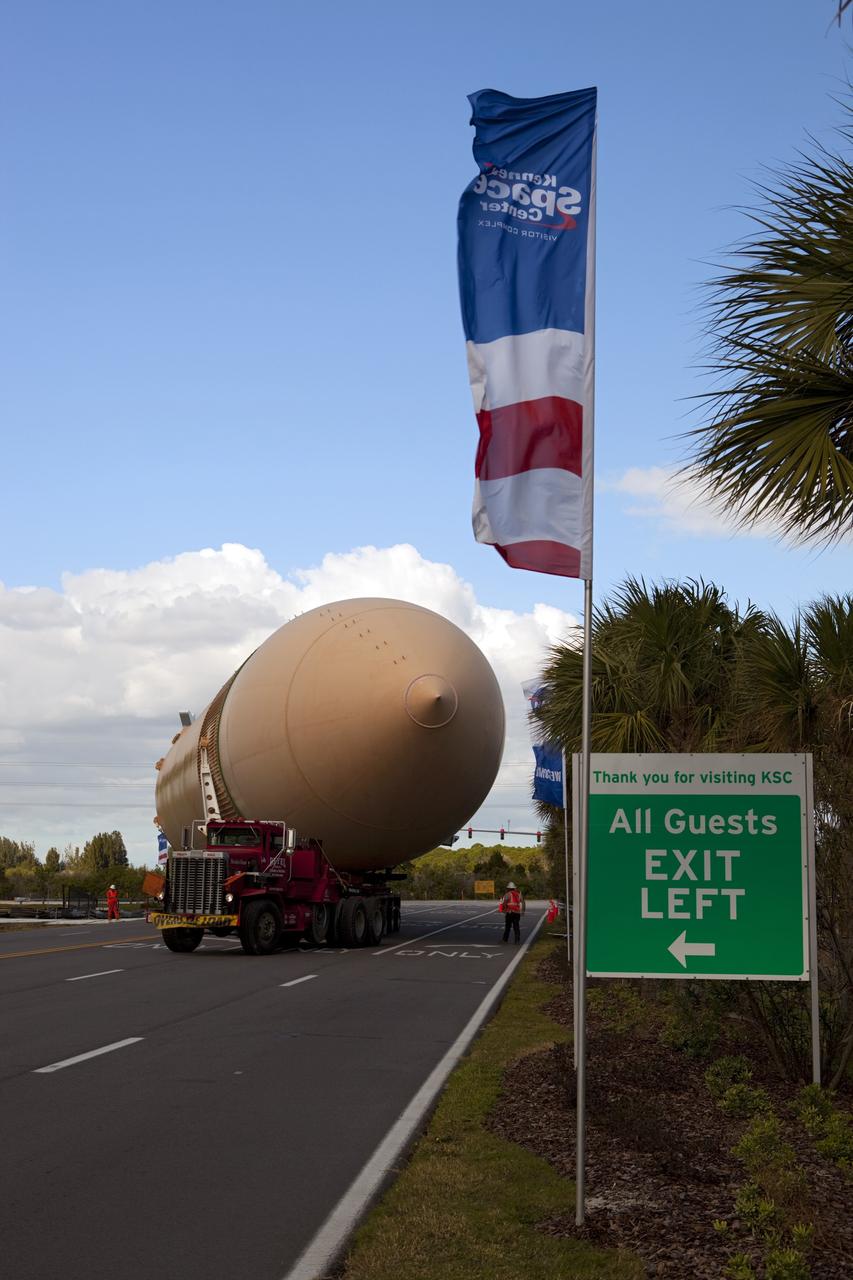
CAPE CANAVERAL, Fla. – A truck hauls a full-size display of a space shuttle external fuel tank from the Kennedy Space Center Visitor Complex as the space-themed attraction makes way for a new exhibit featuring space shuttle Atlantis, which is currently undergoing preparations to go on public display. The tank is being placed into temporary storage at NASA's Kennedy Space Center. The tank was part of a display of the external tank and two solid rocket boosters at the visitor complex that were used to show visitors the size of actual space shuttle components. A space shuttle rode piggyback on the tank and boosters at liftoff and during the ascent into space. The tank, which held propellants for the shuttle's three main engines, was not reused, but burned up in the atmosphere and fell into the ocean. Photo credit: NASA/Dmitri Gerondidakis
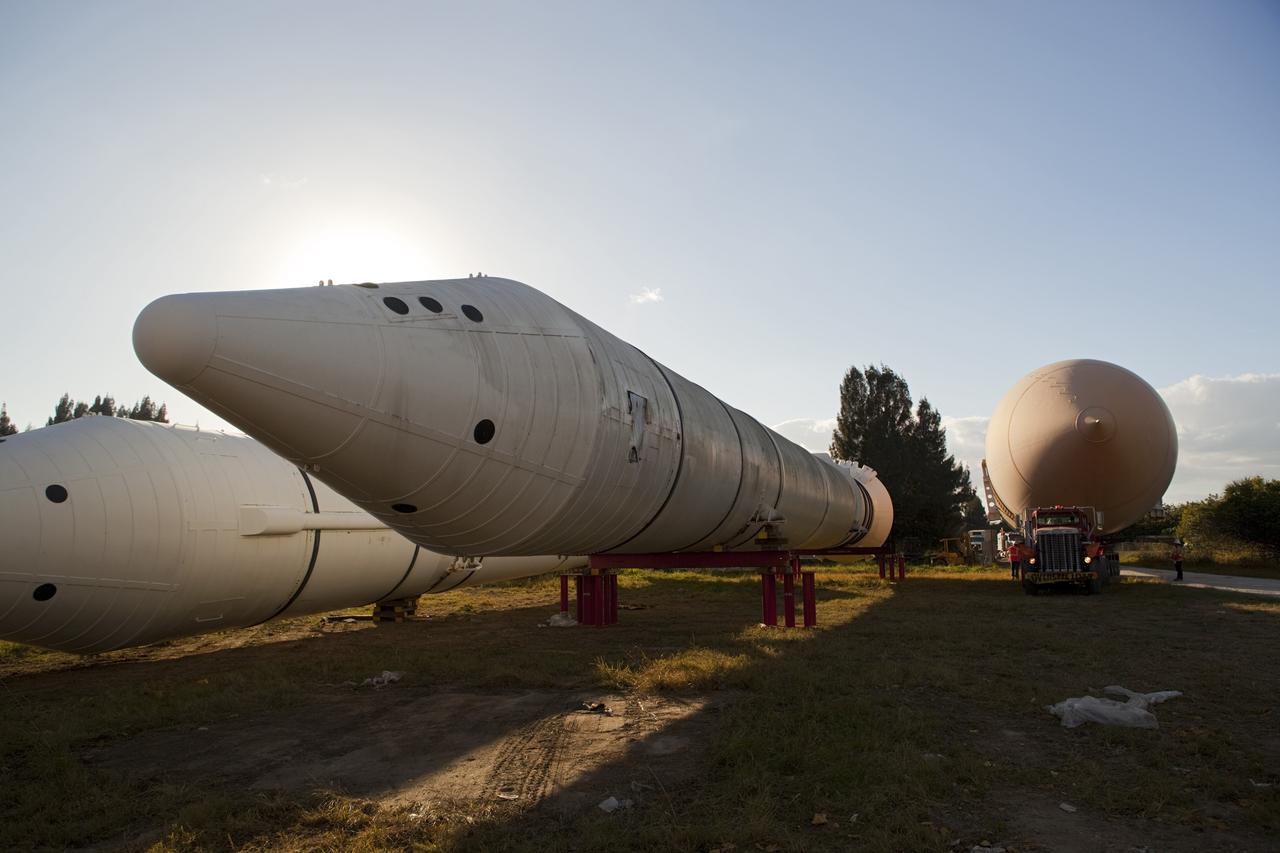
CAPE CANAVERAL, Fla. – A truck hauls a full-size display of a space shuttle external fuel tank from the Kennedy Space Center Visitor Complex as the space-themed attraction makes way for a new exhibit featuring space shuttle Atlantis, which is currently undergoing preparations to go on public display. The tank is being placed into temporary storage at NASA's Kennedy Space Center. The tank was part of a display of the external tank and two solid rocket boosters at the visitor complex that were used to show visitors the size of actual space shuttle components. A space shuttle rode piggyback on the tank and boosters at liftoff and during the ascent into space. The tank, which held propellants for the shuttle's three main engines, was not reused, but burned up in the atmosphere and fell into the ocean. Photo credit: NASA/Dmitri Gerondidakis
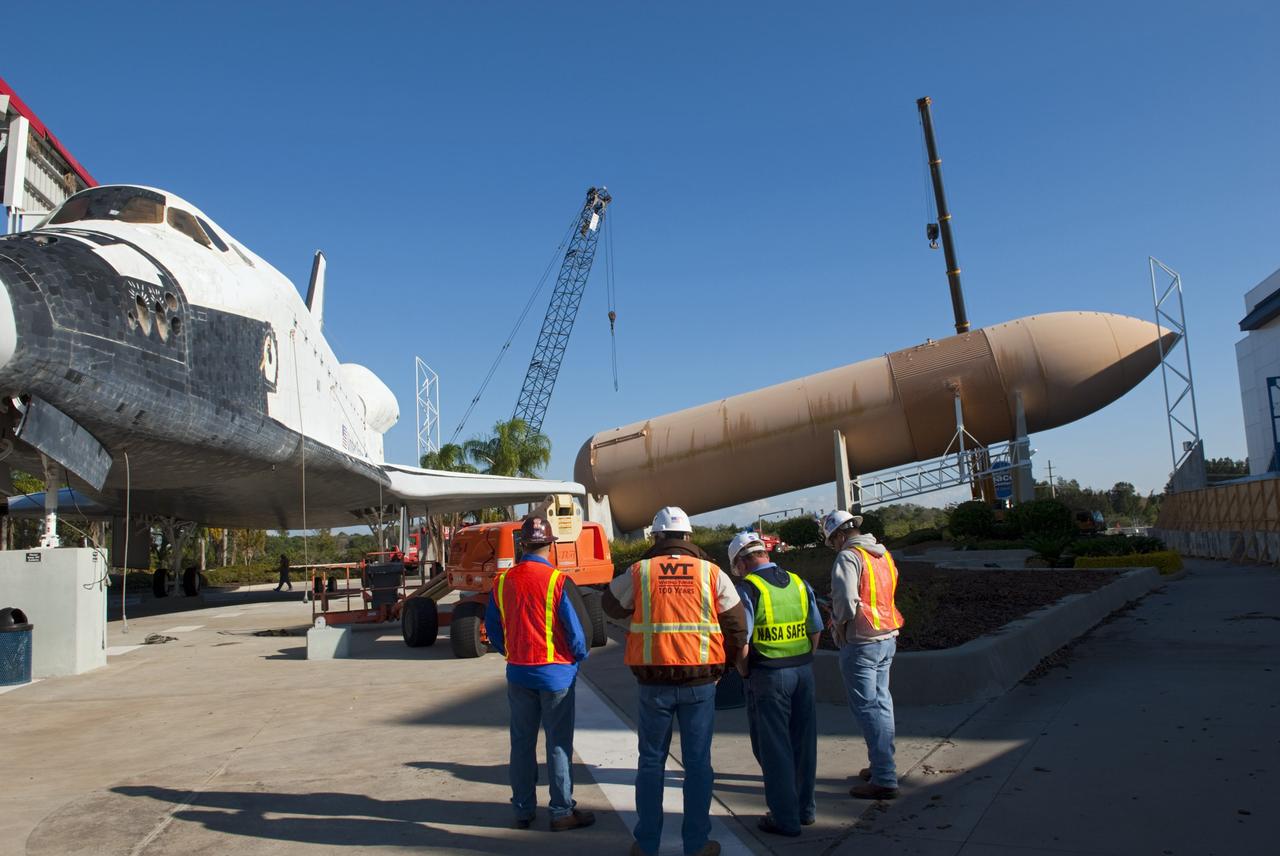
CAPE CANAVERAL, Fla. – Cranes remove a full-size replica of a space shuttle external fuel tank from the Kennedy Space Center Visitor Complex as the space-themed attraction makes way for a new exhibit featuring space shuttle Atlantis, which is currently undergoing preparations to go on public display. The tank is being placed into temporary storage at NASA's Kennedy Space Center. The tank was part of a mockup of the external tank and two solid rocket boosters at the visitor complex that were used to show visitors the size of actual space shuttle components. A space shuttle rode piggyback on the tank and boosters at liftoff and during the ascent into space. The tank, which held propellants for the shuttle's three main engines, was not reused, but burned up in the atmosphere and fell into the ocean. Photo credit: NASA/Jim Grossman
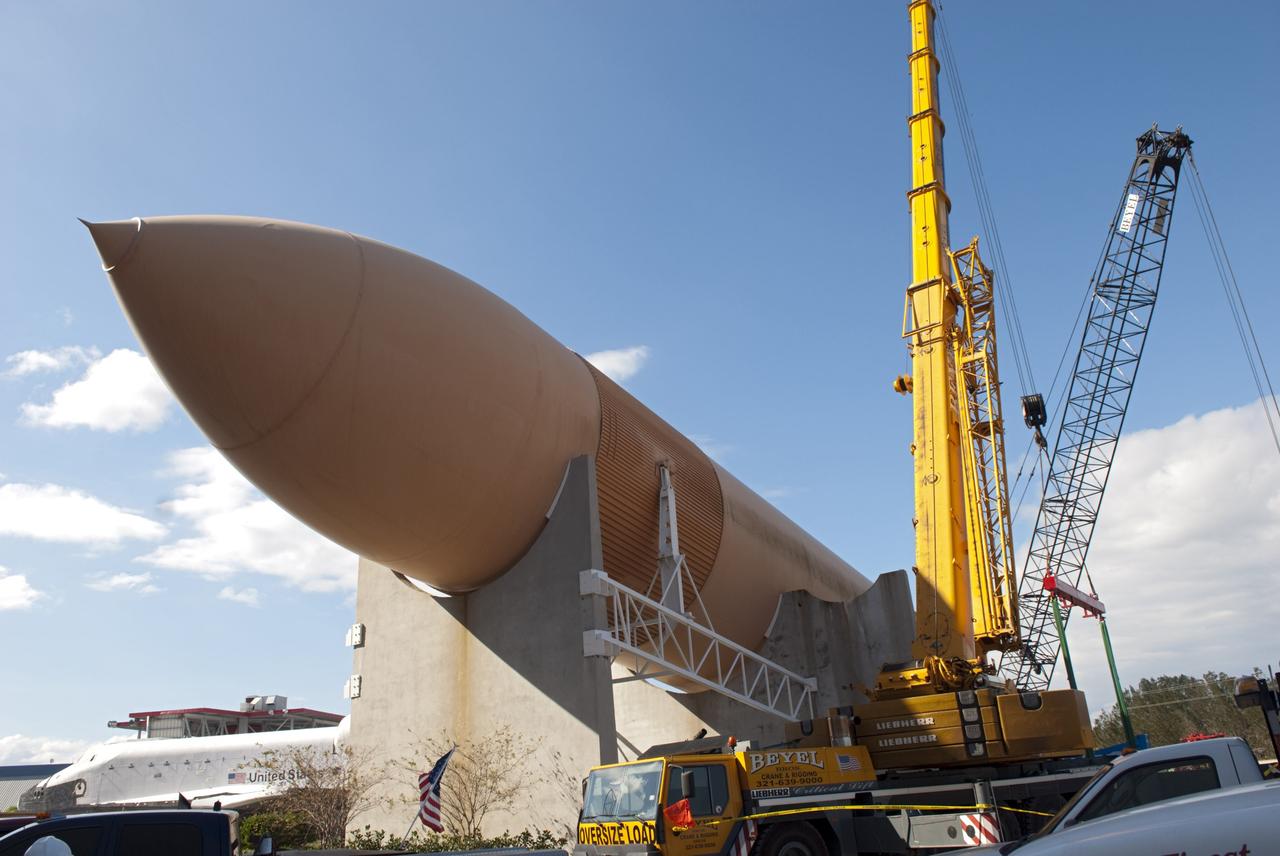
CAPE CANAVERAL, Fla. – Cranes remove a full-size replica of a space shuttle external fuel tank from the Kennedy Space Center Visitor Complex as the space-themed attraction makes way for a new exhibit featuring space shuttle Atlantis, which is currently undergoing preparations to go on public display. The tank is being placed into temporary storage at NASA's Kennedy Space Center. The tank was part of a mockup of the external tank and two solid rocket boosters at the visitor complex that were used to show visitors the size of actual space shuttle components. A space shuttle rode piggyback on the tank and boosters at liftoff and during the ascent into space. The tank, which held propellants for the shuttle's three main engines, was not reused, but burned up in the atmosphere and fell into the ocean. Photo credit: NASA/Jim Grossman
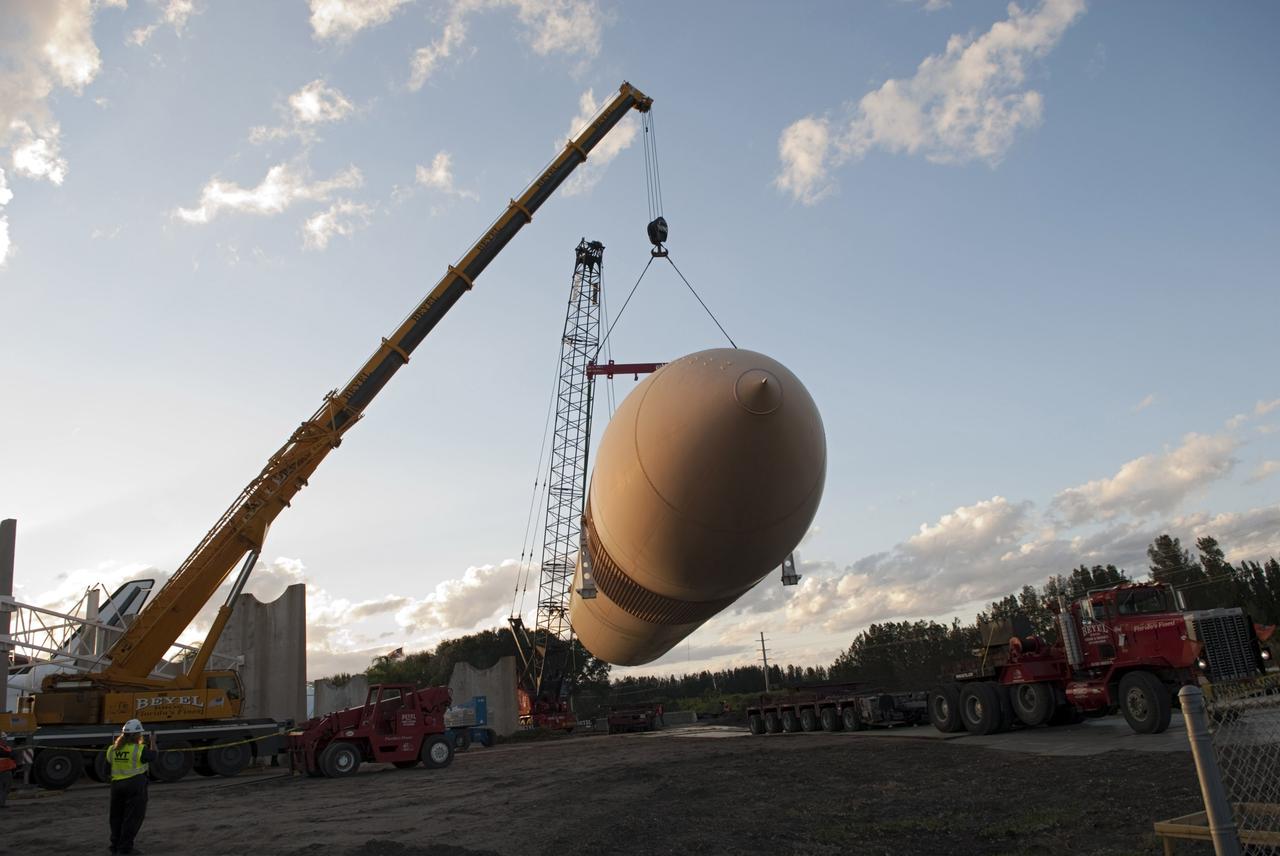
CAPE CANAVERAL, Fla. – Cranes remove a full-size replica of a space shuttle external fuel tank from the Kennedy Space Center Visitor Complex as the space-themed attraction makes way for a new exhibit featuring space shuttle Atlantis, which is currently undergoing preparations to go on public display. The tank is being placed into temporary storage at NASA's Kennedy Space Center. The tank was part of a mockup of the external tank and two solid rocket boosters at the visitor complex that were used to show visitors the size of actual space shuttle components. A space shuttle rode piggyback on the tank and boosters at liftoff and during the ascent into space. The tank, which held propellants for the shuttle's three main engines, was not reused, but burned up in the atmosphere and fell into the ocean. Photo credit: NASA/Jim Grossman
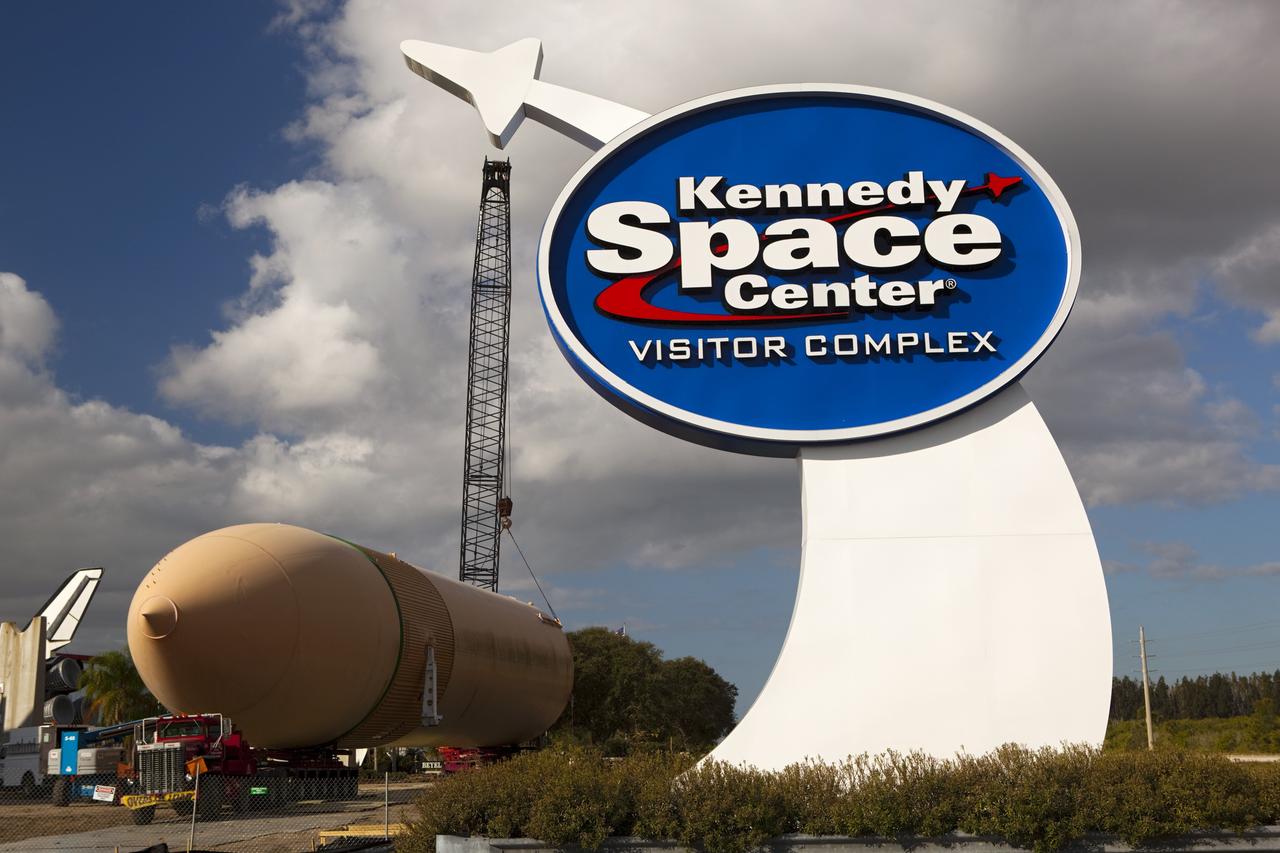
CAPE CANAVERAL, Fla. – A crane positions a full-size display of a space shuttle external fuel tank onto a truck to move it from the Kennedy Space Center Visitor Complex as the space-themed attraction makes way for a new exhibit featuring space shuttle Atlantis, which is currently undergoing preparations to go on public display. The tank is being placed into temporary storage at NASA's Kennedy Space Center. The tank was part of a display of the external tank and two solid rocket boosters at the visitor complex that were used to show visitors the size of actual space shuttle components. A space shuttle rode piggyback on the tank and boosters at liftoff and during the ascent into space. The tank, which held propellants for the shuttle's three main engines, was not reused, but burned up in the atmosphere and fell into the ocean. Photo credit: NASA/Dmitri Gerondidakis
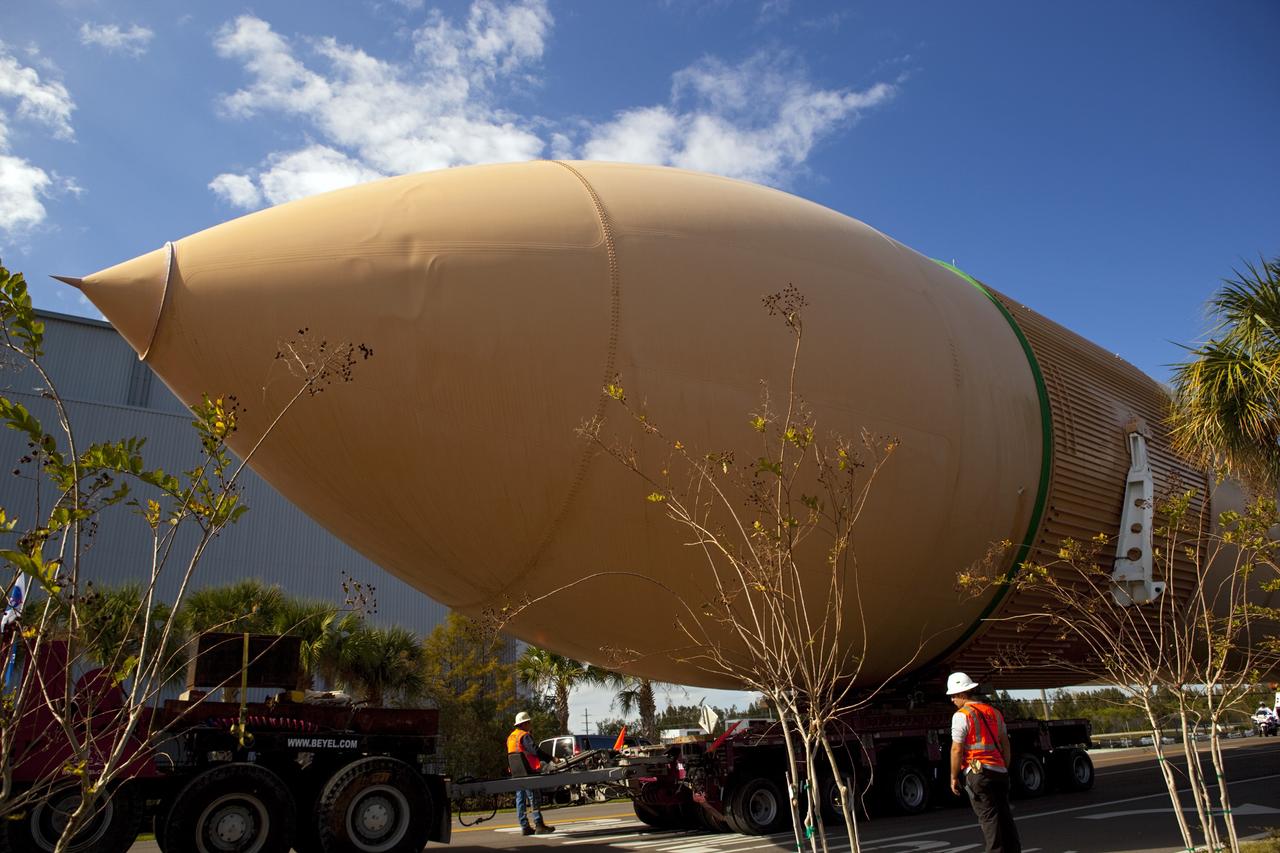
CAPE CANAVERAL, Fla. – A truck hauls a full-size display of a space shuttle external fuel tank from the Kennedy Space Center Visitor Complex as the space-themed attraction makes way for a new exhibit featuring space shuttle Atlantis, which is currently undergoing preparations to go on public display. The tank is being placed into temporary storage at NASA's Kennedy Space Center. The tank was part of a display of the external tank and two solid rocket boosters at the visitor complex that were used to show visitors the size of actual space shuttle components. A space shuttle rode piggyback on the tank and boosters at liftoff and during the ascent into space. The tank, which held propellants for the shuttle's three main engines, was not reused, but burned up in the atmosphere and fell into the ocean. Photo credit: NASA/Dmitri Gerondidakis
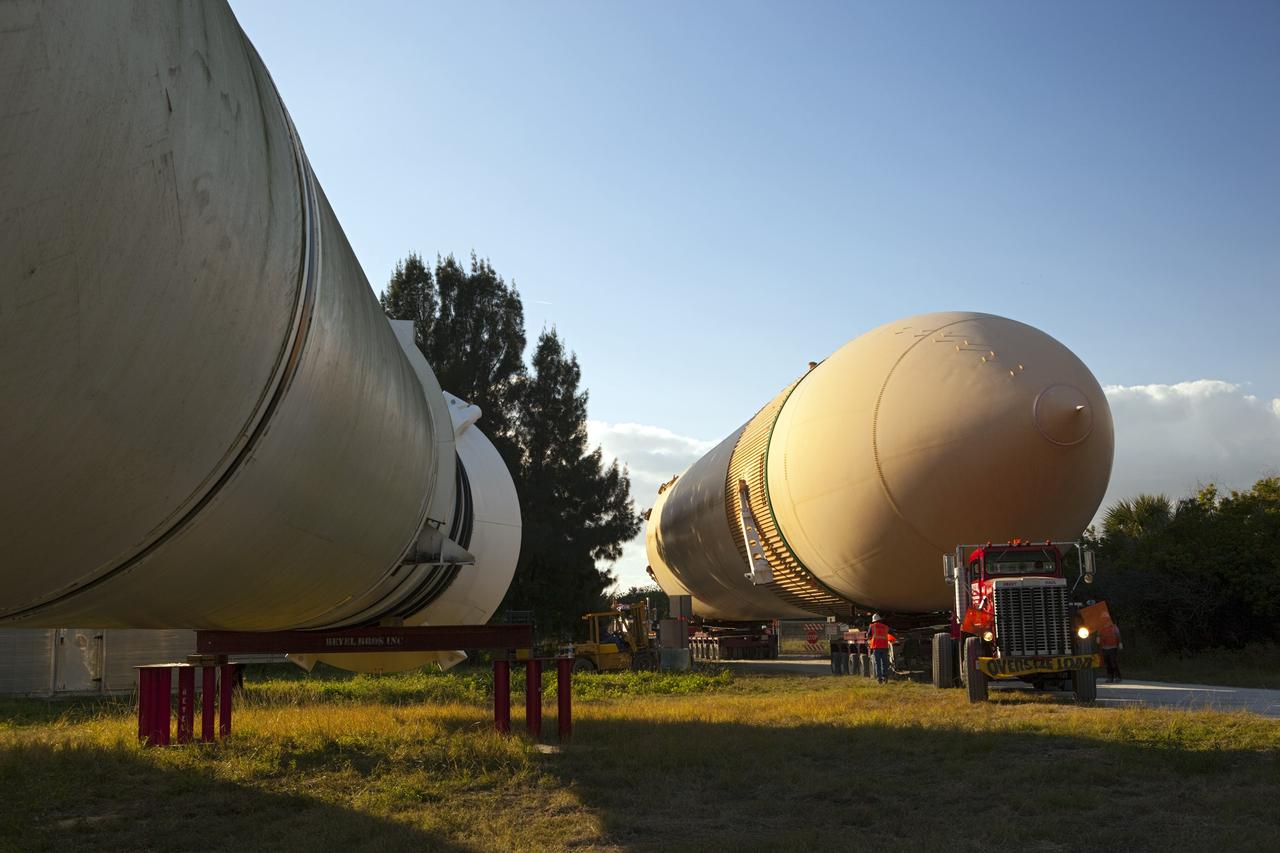
CAPE CANAVERAL, Fla. – A truck hauls a full-size display of a space shuttle external fuel tank from the Kennedy Space Center Visitor Complex as the space-themed attraction makes way for a new exhibit featuring space shuttle Atlantis, which is currently undergoing preparations to go on public display. The tank is being placed into temporary storage at NASA's Kennedy Space Center. The tank was part of a display of the external tank and two solid rocket boosters at the visitor complex that were used to show visitors the size of actual space shuttle components. A space shuttle rode piggyback on the tank and boosters at liftoff and during the ascent into space. The tank, which held propellants for the shuttle's three main engines, was not reused, but burned up in the atmosphere and fell into the ocean. Photo credit: NASA/Dmitri Gerondidakis
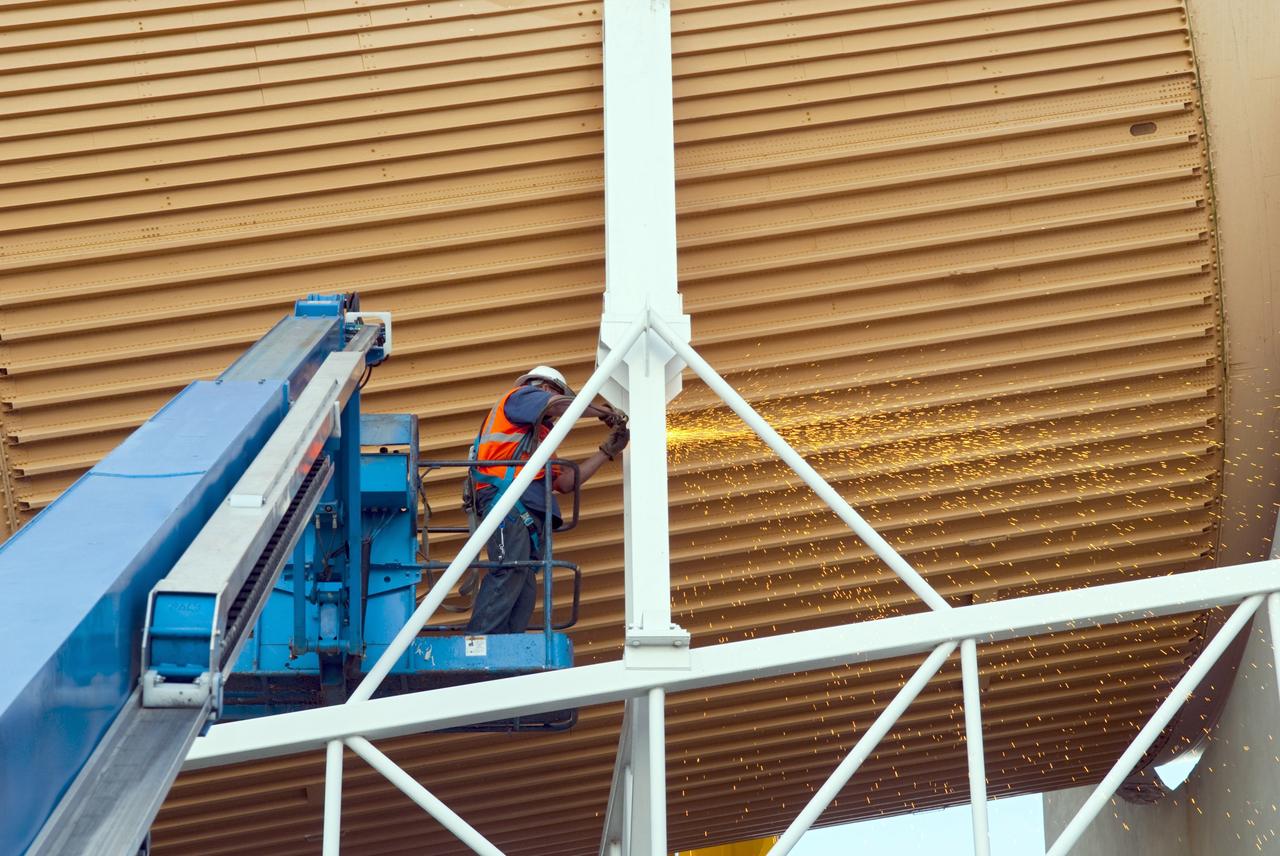
CAPE CANAVERAL, Fla. – A technician works on the removal of a full-size replica of a space shuttle external fuel tank from the Kennedy Space Center Visitor Complex as the space-themed attraction makes way for a new exhibit featuring space shuttle Atlantis, which is currently undergoing preparations to go on public display. The tank is being placed into temporary storage at NASA's Kennedy Space Center. The tank was part of a mockup of the external tank and two solid rocket boosters at the visitor complex that were used to show visitors the size of actual space shuttle components. A space shuttle rode piggyback on the tank and boosters at liftoff and during the ascent into space. The tank, which held propellants for the shuttle's three main engines, was not reused, but burned up in the atmosphere and fell into the ocean. Photo credit: NASA/Jim Grossman