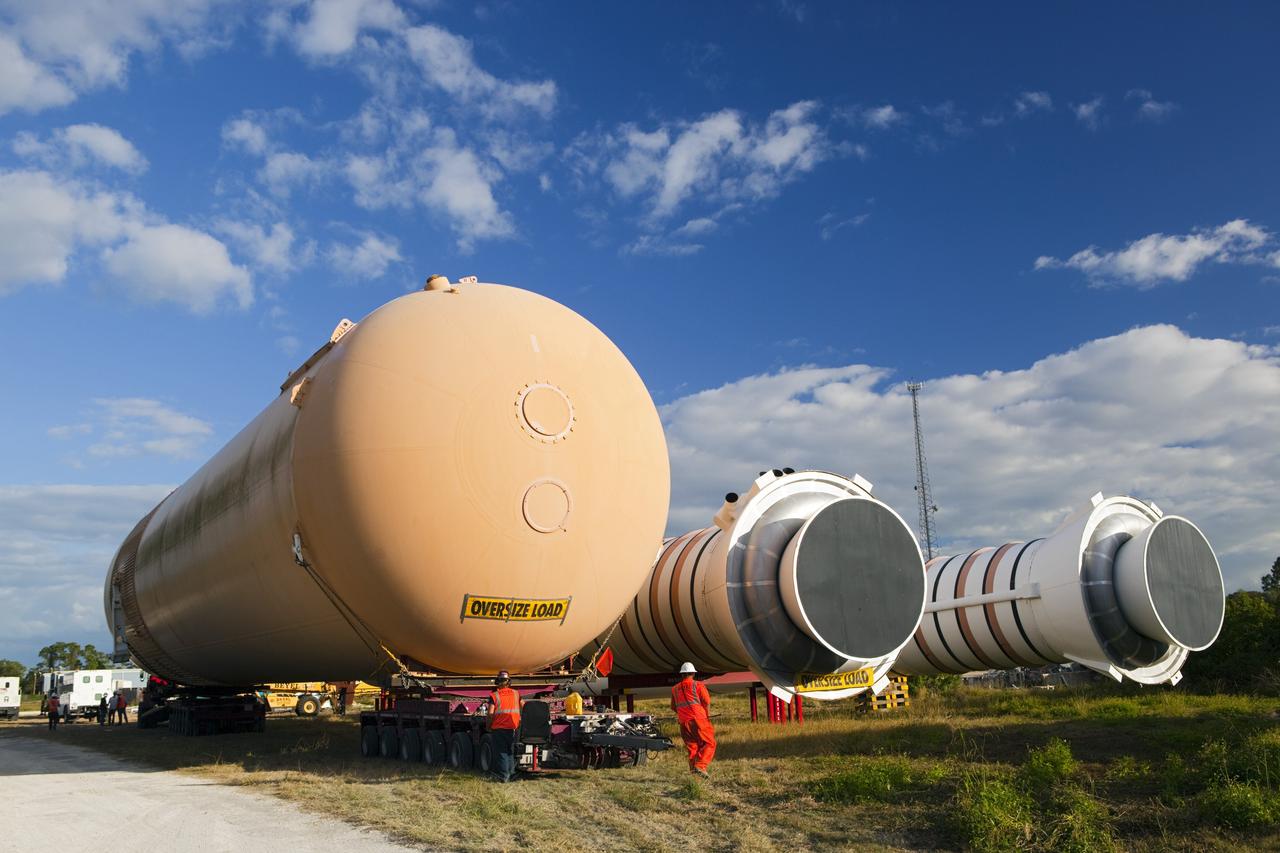
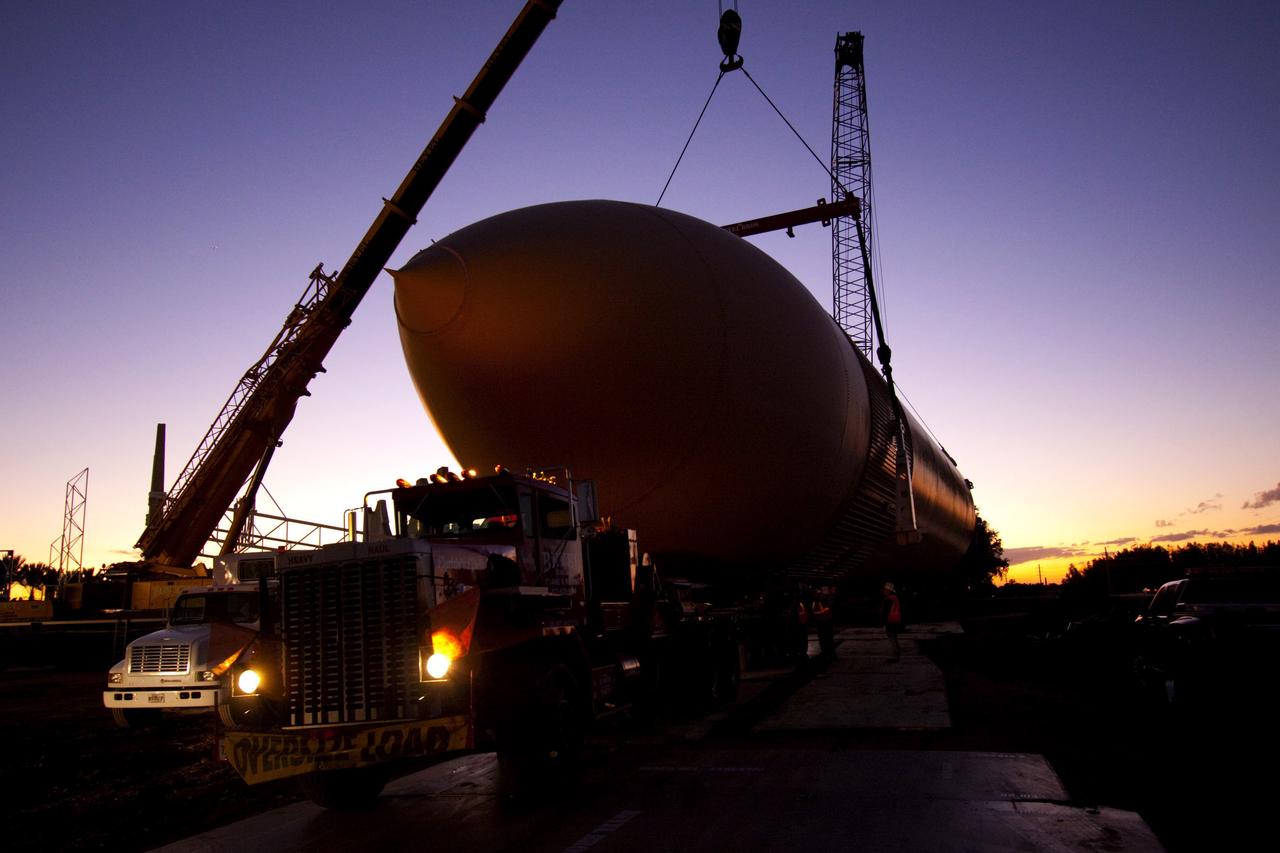
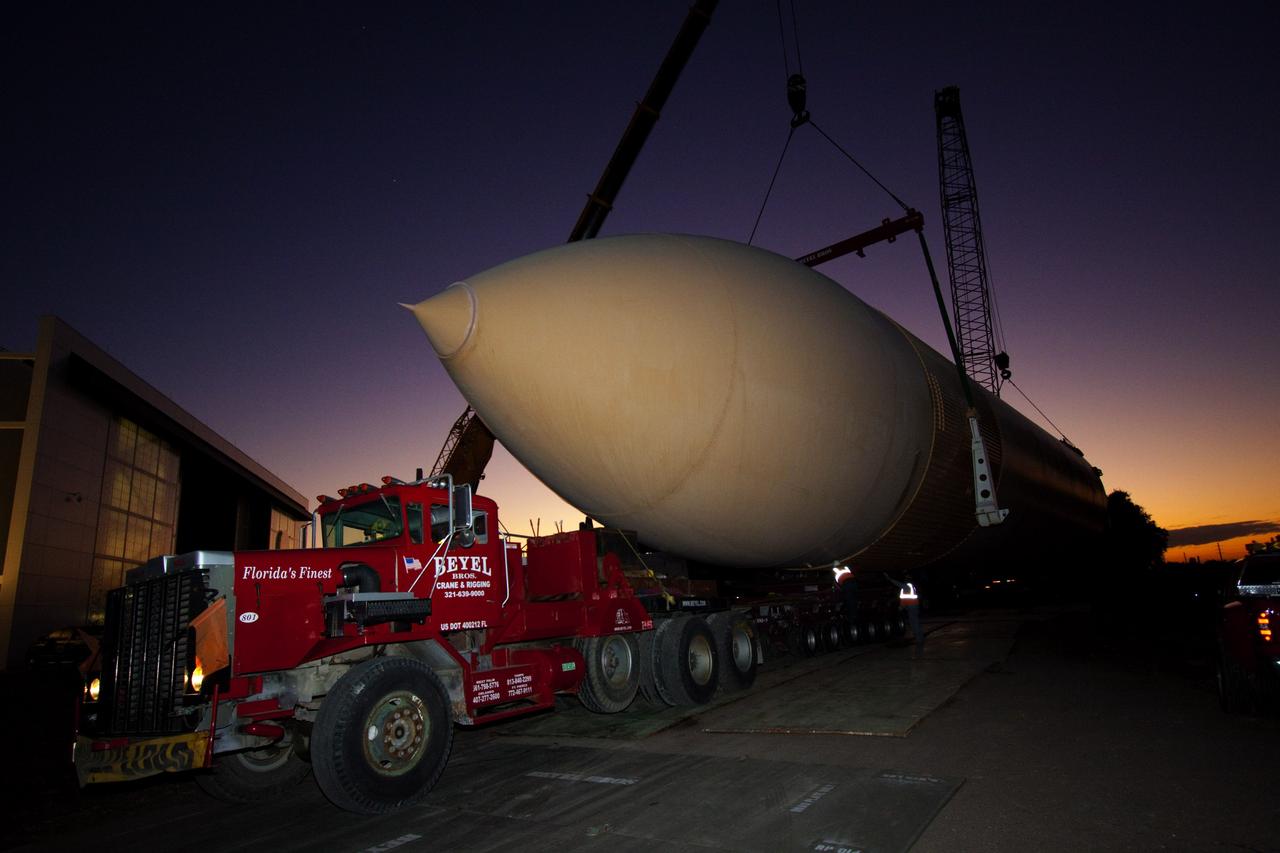
CAPE CANAVERAL, Fla. – A truck positions a full-size display of a space shuttle external fuel tank from the Kennedy Space Center Visitor Complex at a temporary storage area at NASA's Kennedy Space Center. The tank was part of a display of the external tank and two solid rocket boosters at the visitor complex that were used to show visitors the size of actual space shuttle components. A space shuttle rode piggyback on the tank and boosters at liftoff and during the ascent into space. The tank, which held propellants for the shuttle's three main engines, was not reused, but burned up in the atmosphere and fell into the ocean. Photo credit: NASA/Dmitri Gerondidakis
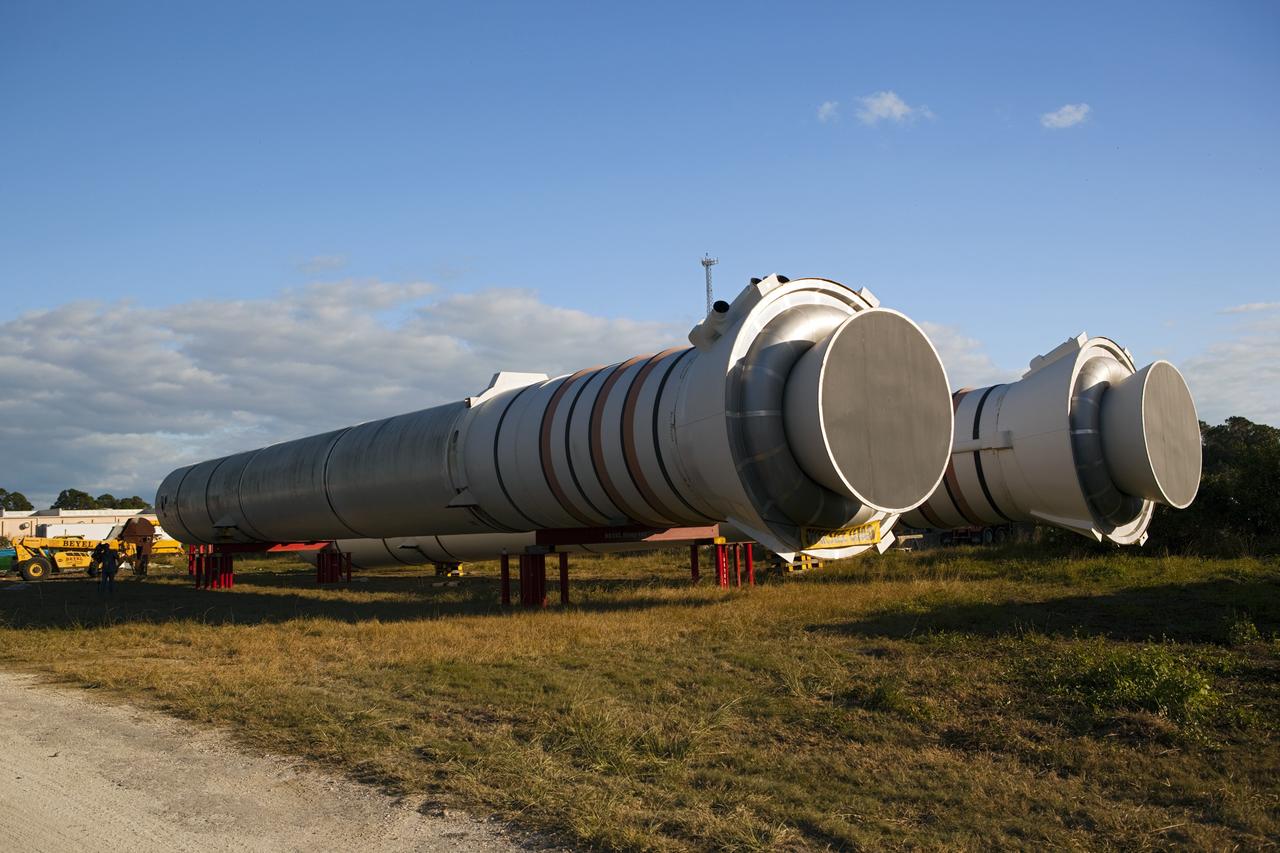
CAPE CANAVERAL, Fla. – A pair of 149-foot-long, space shuttle solid rocket booster, or SRB, displays from the Kennedy Space Center Visitor Complex sit inside a temporary storage area at NASA's Kennedy Space Center. The SRBs were part of a display of the external tank and two SRBs at the visitor complex that were used to show visitors the size of actual space shuttle components. A space shuttle rode piggyback on the tank and boosters at liftoff and during the ascent into space. The SRBs burned out after about two-and-a-half minutes of flight. After recovery from the ocean, the boosters could be used repeatedly. Photo credit: NASA/ Dmitri Gerondidakis
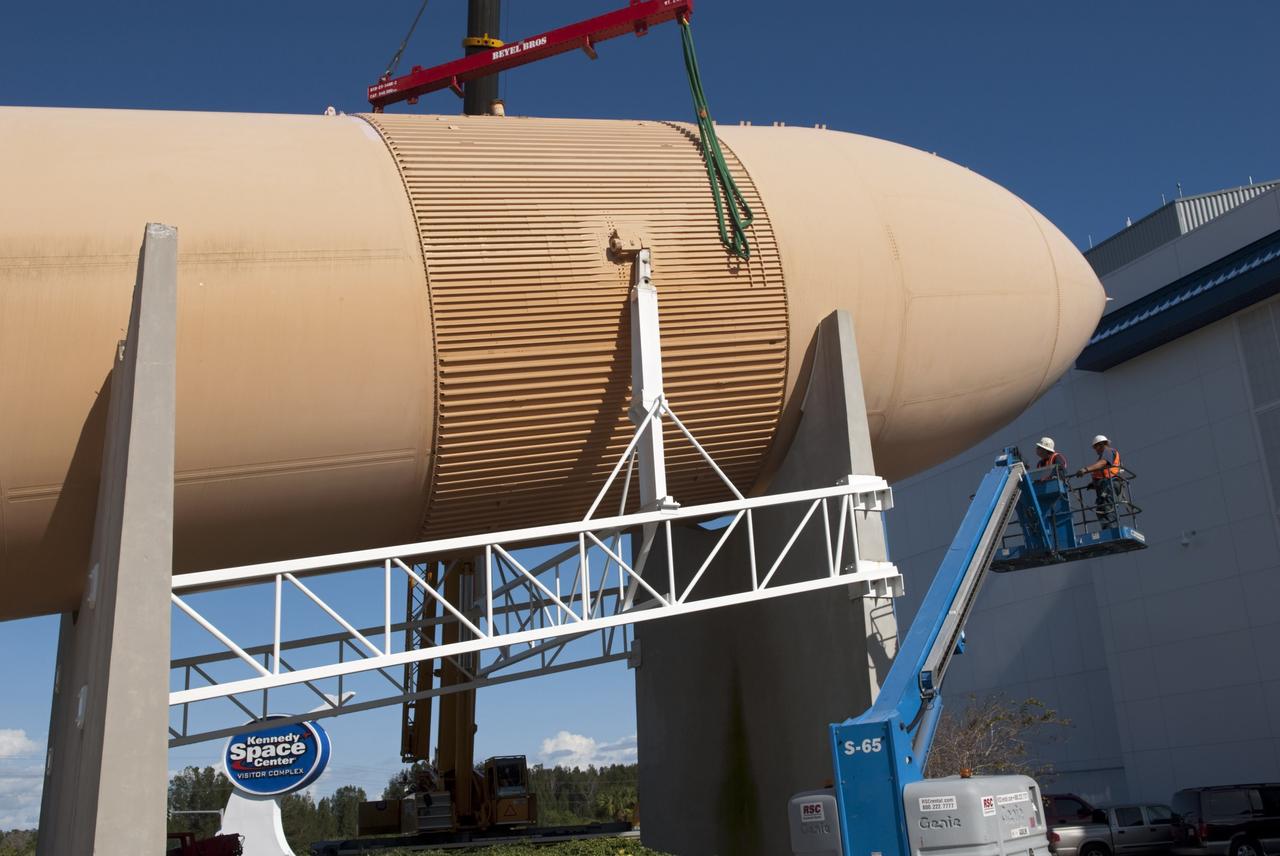
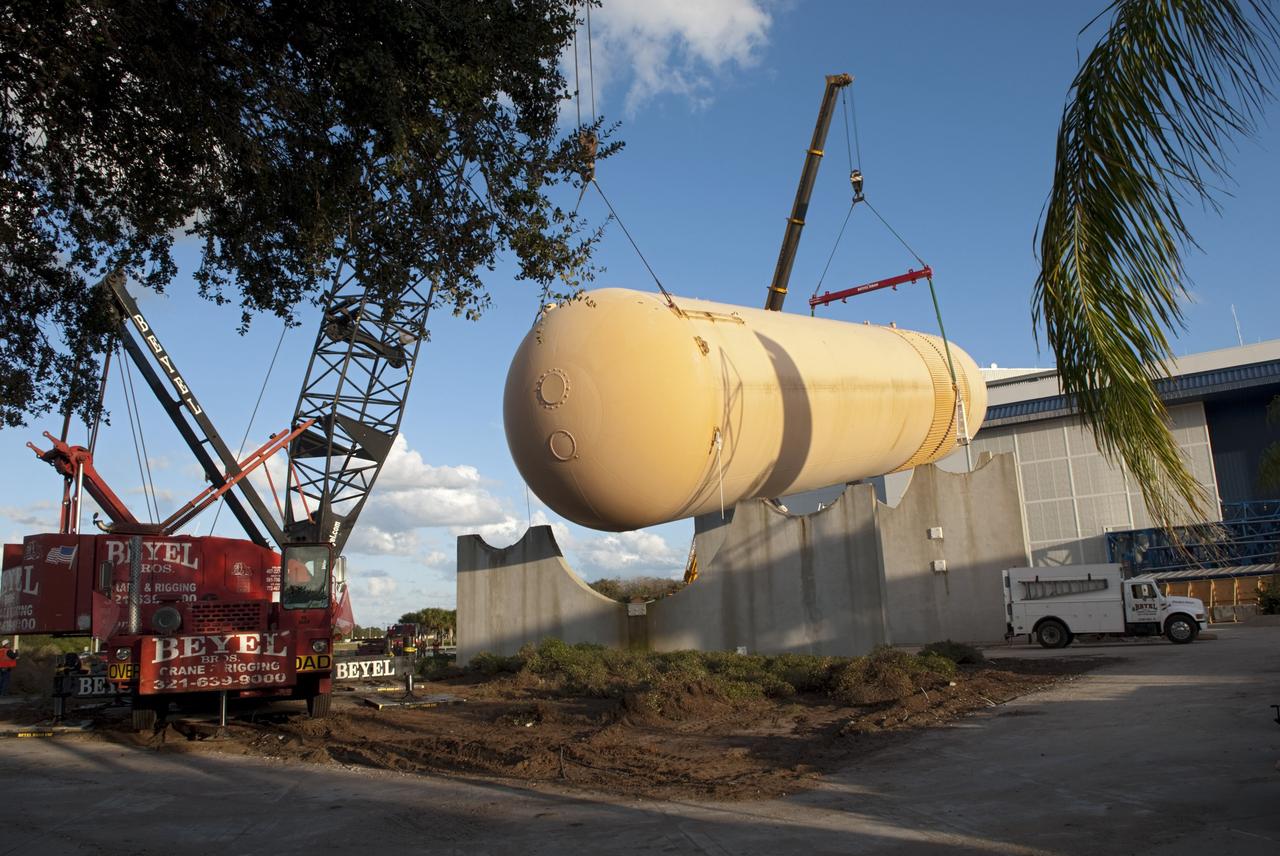
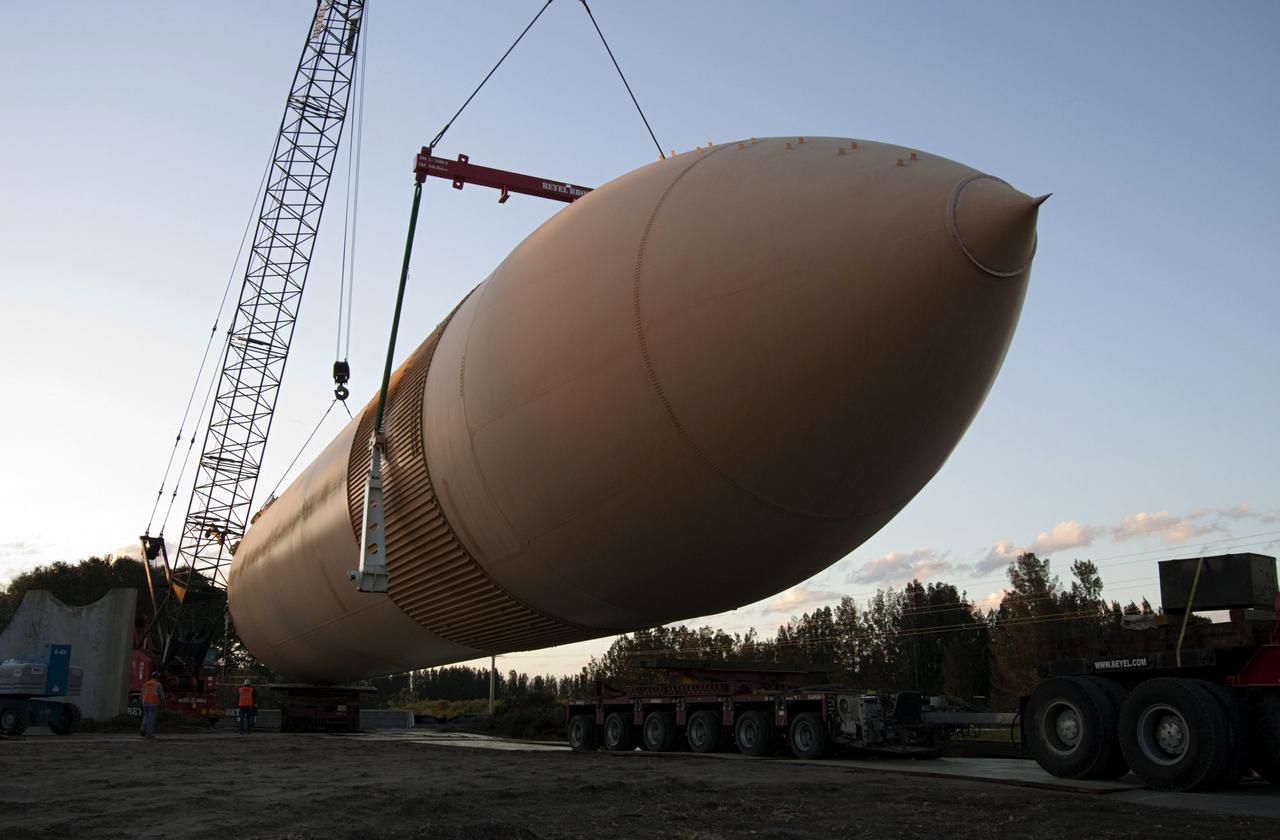
CAPE CANAVERAL, Fla. – Cranes remove a full-size replica of a space shuttle external fuel tank from the Kennedy Space Center Visitor Complex as the space-themed attraction makes way for a new exhibit featuring space shuttle Atlantis, which is currently undergoing preparations to go on public display. The tank is being placed into temporary storage at NASA's Kennedy Space Center. The tank was part of a mockup of the external tank and two solid rocket boosters at the visitor complex that were used to show visitors the size of actual space shuttle components. A space shuttle rode piggyback on the tank and boosters at liftoff and during the ascent into space. The tank, which held propellants for the shuttle's three main engines, was not reused, but burned up in the atmosphere and fell into the ocean. Photo credit: NASA/Jim Grossman
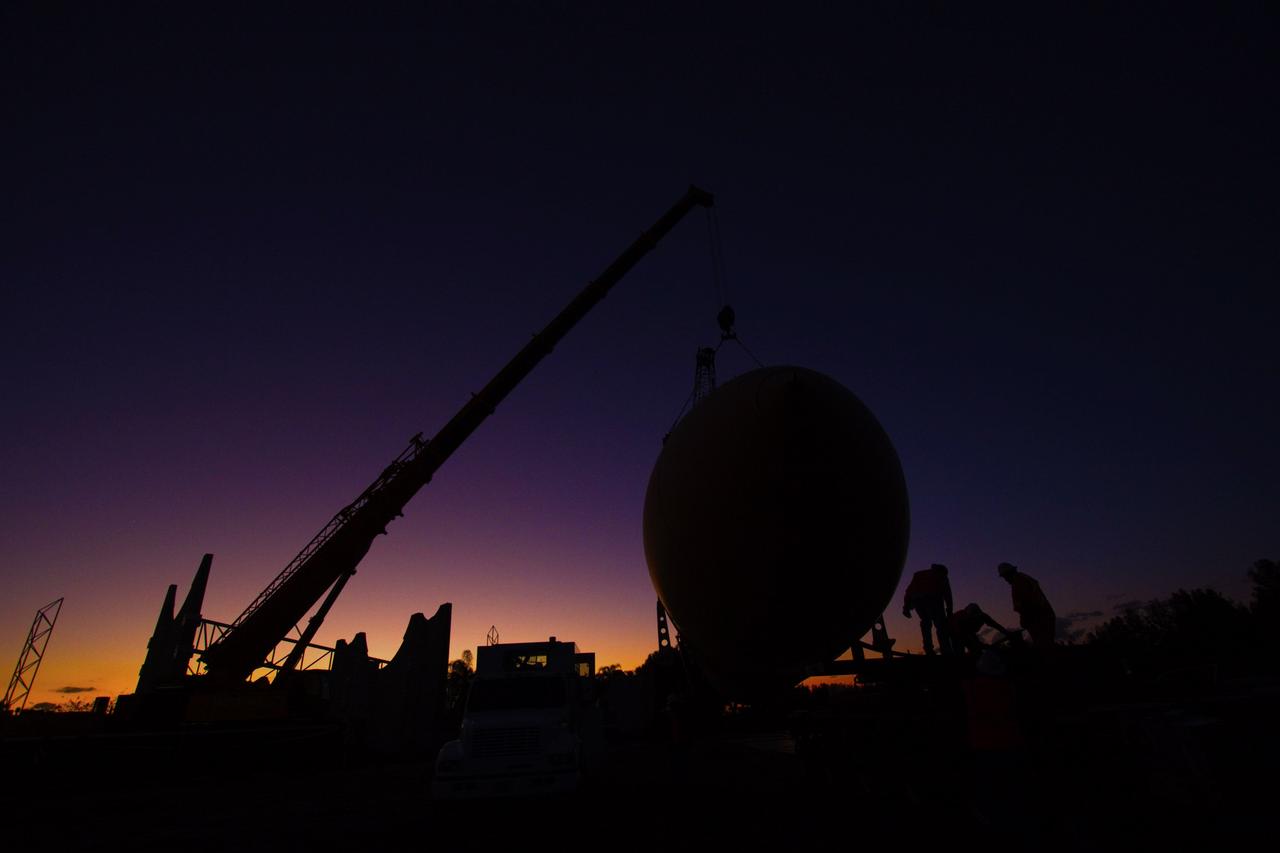
CAPE CANAVERAL, Fla. – Cranes remove a full-size replica of a space shuttle external fuel tank from the Kennedy Space Center Visitor Complex as the space-themed attraction makes way for a new exhibit featuring space shuttle Atlantis, which is currently undergoing preparations to go on public display. The tank is being placed into temporary storage at NASA's Kennedy Space Center. The tank was part of a mockup of the external tank and two solid rocket boosters at the visitor complex that were used to show visitors the size of actual space shuttle components. A space shuttle rode piggyback on the tank and boosters at liftoff and during the ascent into space. The tank, which held propellants for the shuttle's three main engines, was not reused, but burned up in the atmosphere and fell into the ocean. Photo credit: NASA/Jim Grossman
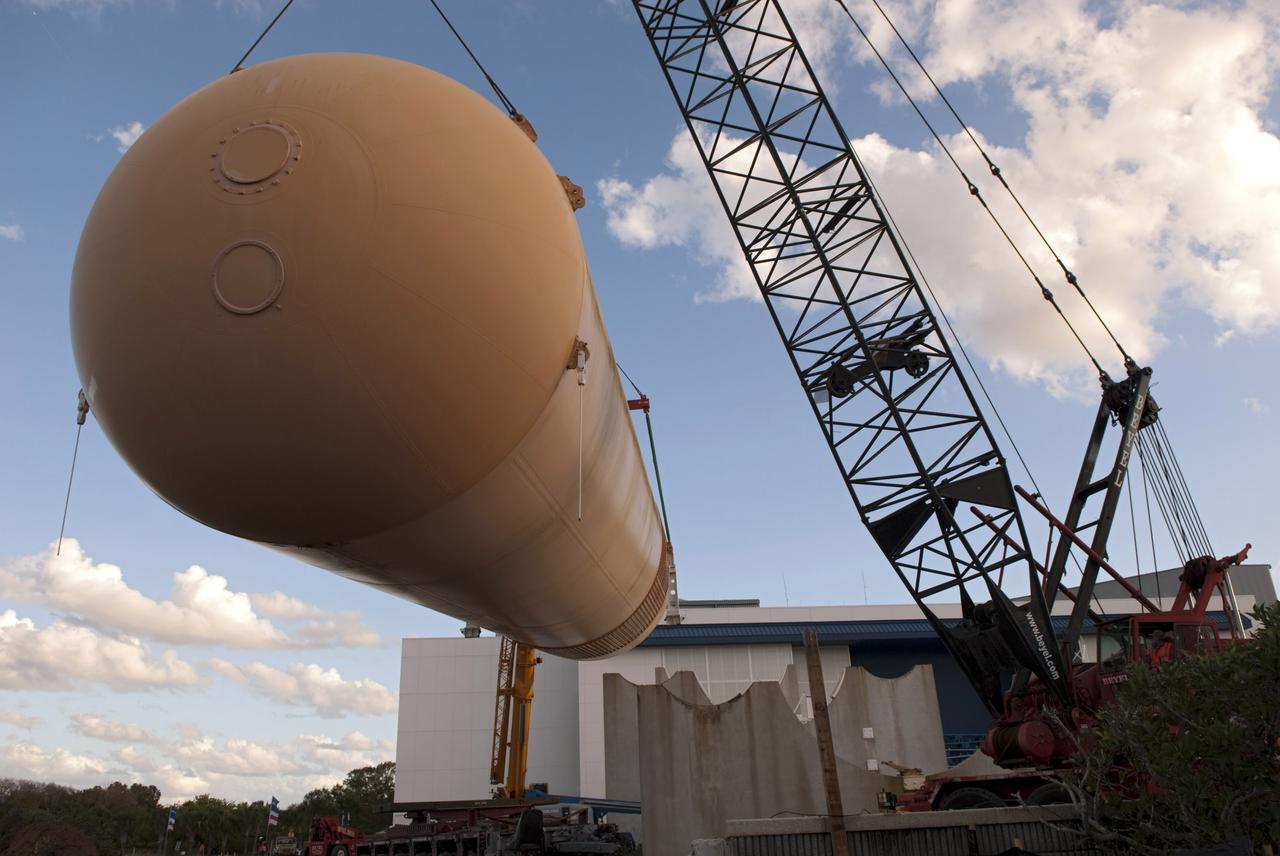
CAPE CANAVERAL, Fla. – Cranes remove a full-size replica of a space shuttle external fuel tank from the Kennedy Space Center Visitor Complex as the space-themed attraction makes way for a new exhibit featuring space shuttle Atlantis, which is currently undergoing preparations to go on public display. The tank is being placed into temporary storage at NASA's Kennedy Space Center. The tank was part of a mockup of the external tank and two solid rocket boosters at the visitor complex that were used to show visitors the size of actual space shuttle components. A space shuttle rode piggyback on the tank and boosters at liftoff and during the ascent into space. The tank, which held propellants for the shuttle's three main engines, was not reused, but burned up in the atmosphere and fell into the ocean. Photo credit: NASA/Jim Grossman
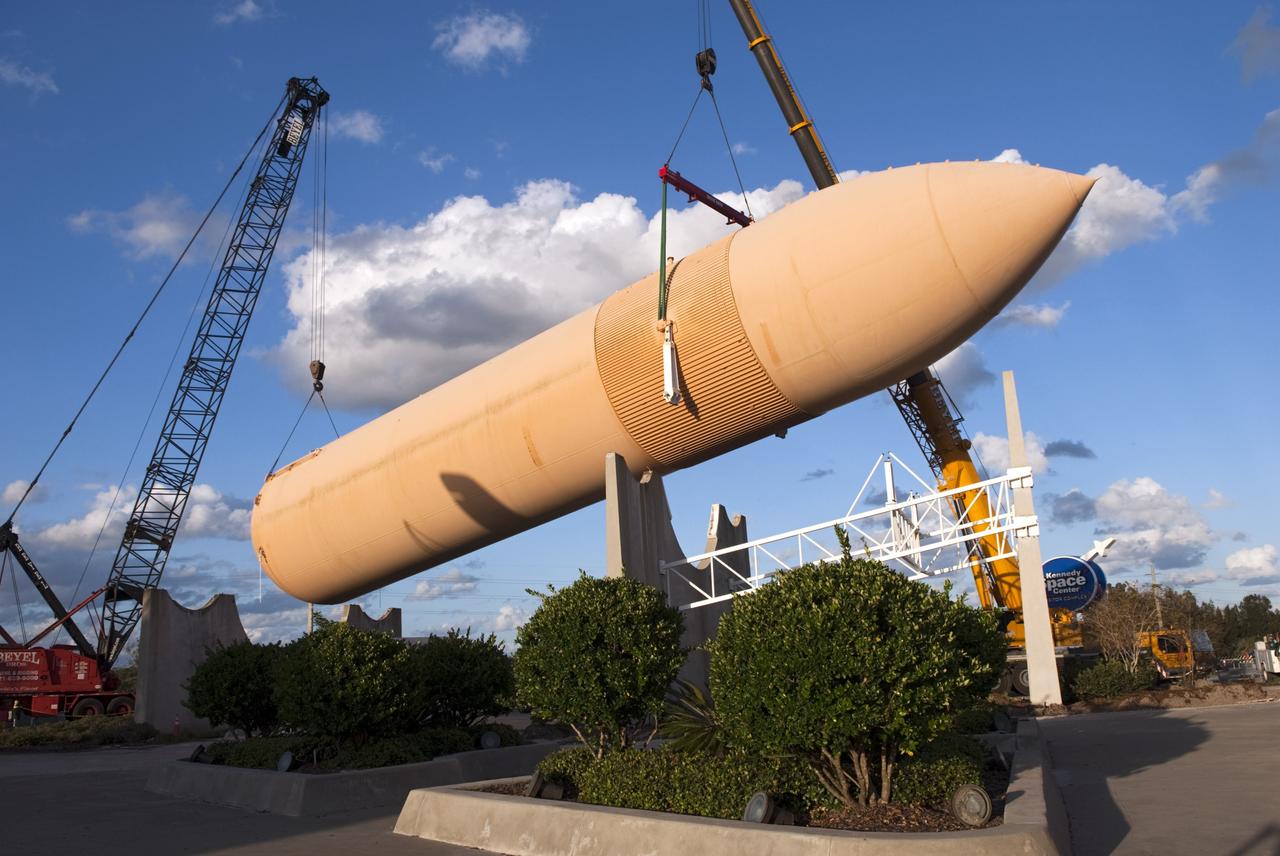
CAPE CANAVERAL, Fla. – Cranes remove a full-size replica of a space shuttle external fuel tank from the Kennedy Space Center Visitor Complex as the space-themed attraction makes way for a new exhibit featuring space shuttle Atlantis, which is currently undergoing preparations to go on public display. The tank is being placed into temporary storage at NASA's Kennedy Space Center. The tank was part of a mockup of the external tank and two solid rocket boosters at the visitor complex that were used to show visitors the size of actual space shuttle components. A space shuttle rode piggyback on the tank and boosters at liftoff and during the ascent into space. The tank, which held propellants for the shuttle's three main engines, was not reused, but burned up in the atmosphere and fell into the ocean. Photo credit: NASA/Jim Grossman
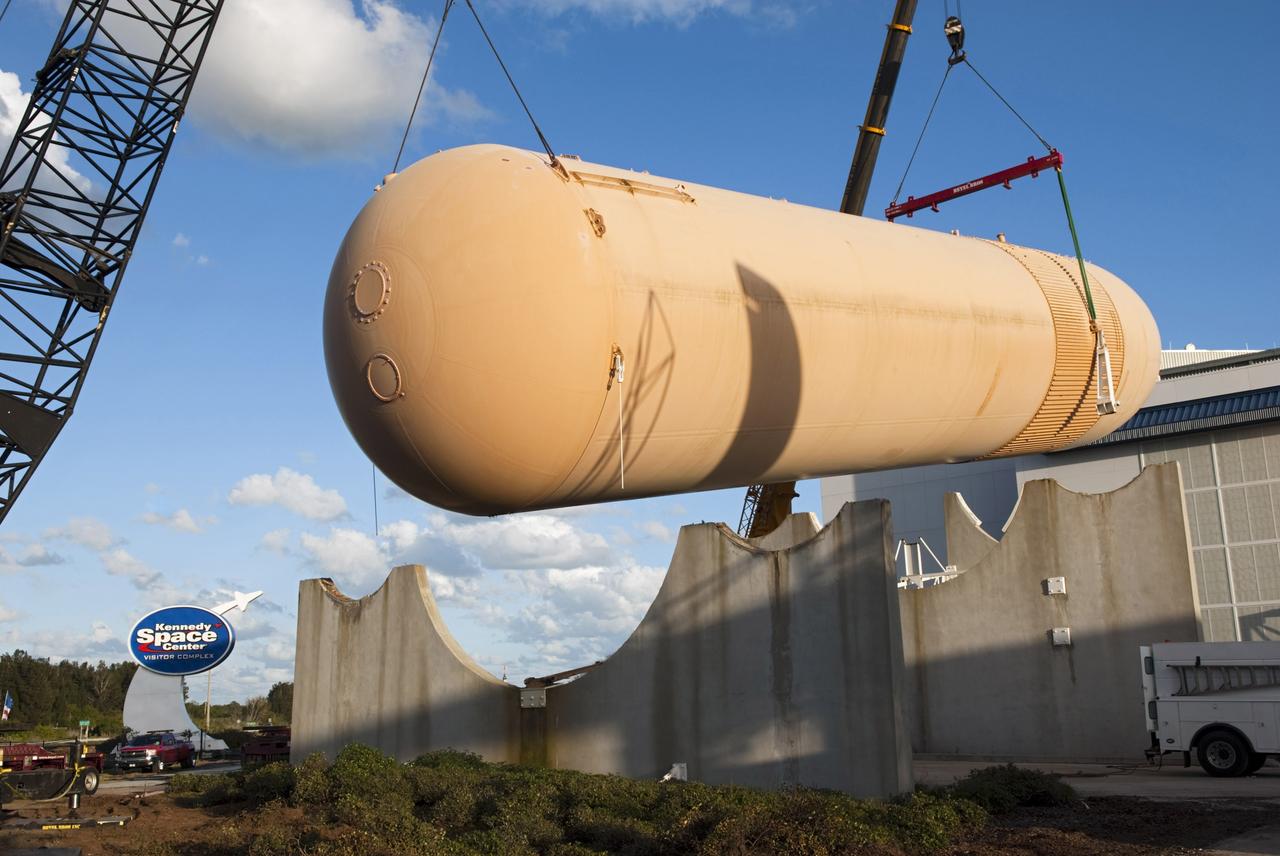
CAPE CANAVERAL, Fla. – Cranes remove a full-size replica of a space shuttle external fuel tank from the Kennedy Space Center Visitor Complex as the space-themed attraction makes way for a new exhibit featuring space shuttle Atlantis, which is currently undergoing preparations to go on public display. The tank is being placed into temporary storage at NASA's Kennedy Space Center. The tank was part of a mockup of the external tank and two solid rocket boosters at the visitor complex that were used to show visitors the size of actual space shuttle components. A space shuttle rode piggyback on the tank and boosters at liftoff and during the ascent into space. The tank, which held propellants for the shuttle's three main engines, was not reused, but burned up in the atmosphere and fell into the ocean. Photo credit: NASA/Jim Grossman
CAPE CANAVERAL, Fla. – Cranes remove a full-size replica of a space shuttle external fuel tank from the Kennedy Space Center Visitor Complex as the space-themed attraction makes way for a new exhibit featuring space shuttle Atlantis, which is currently undergoing preparations to go on public display. The tank is being placed into temporary storage at NASA's Kennedy Space Center. The tank was part of a mockup of the external tank and two solid rocket boosters at the visitor complex that were used to show visitors the size of actual space shuttle components. A space shuttle rode piggyback on the tank and boosters at liftoff and during the ascent into space. The tank, which held propellants for the shuttle's three main engines, was not reused, but burned up in the atmosphere and fell into the ocean. Photo credit: NASA/Jim Grossman
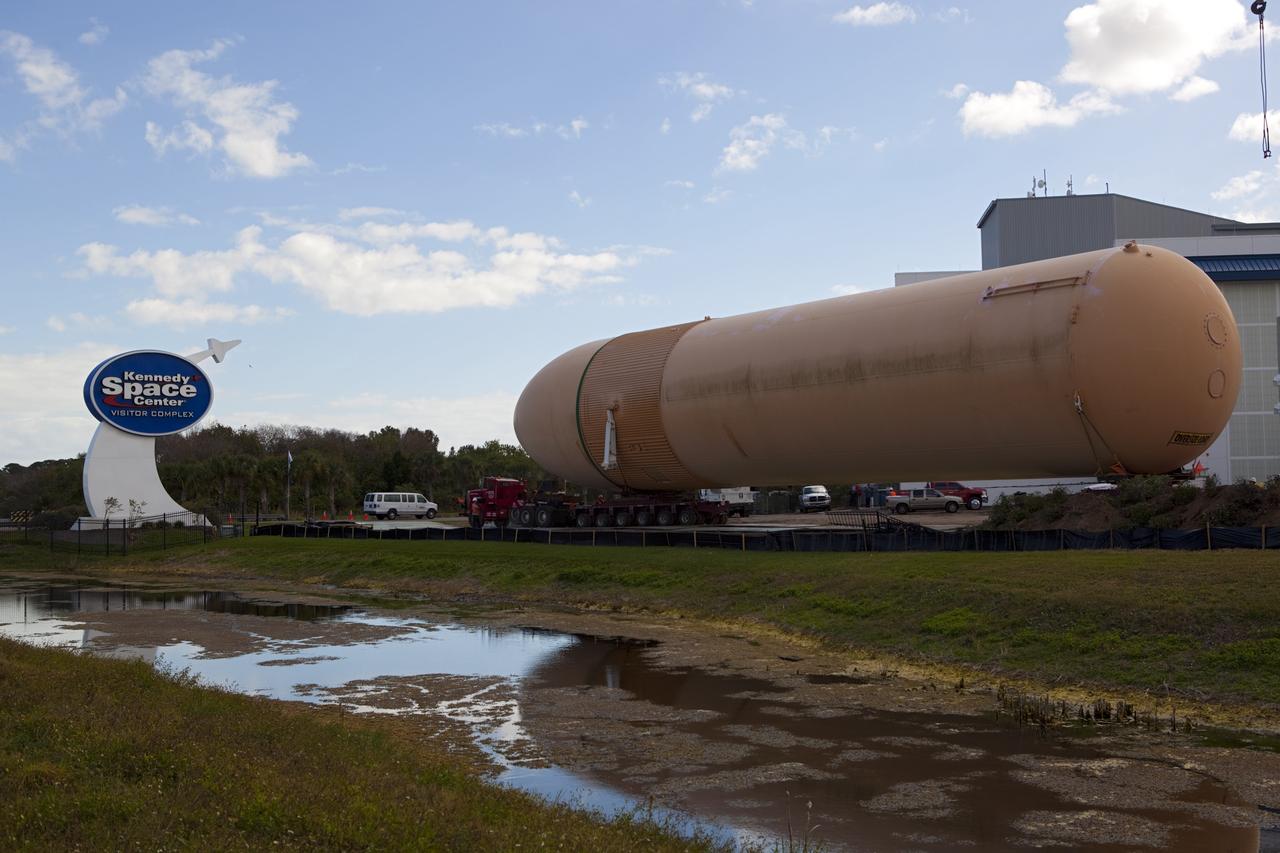
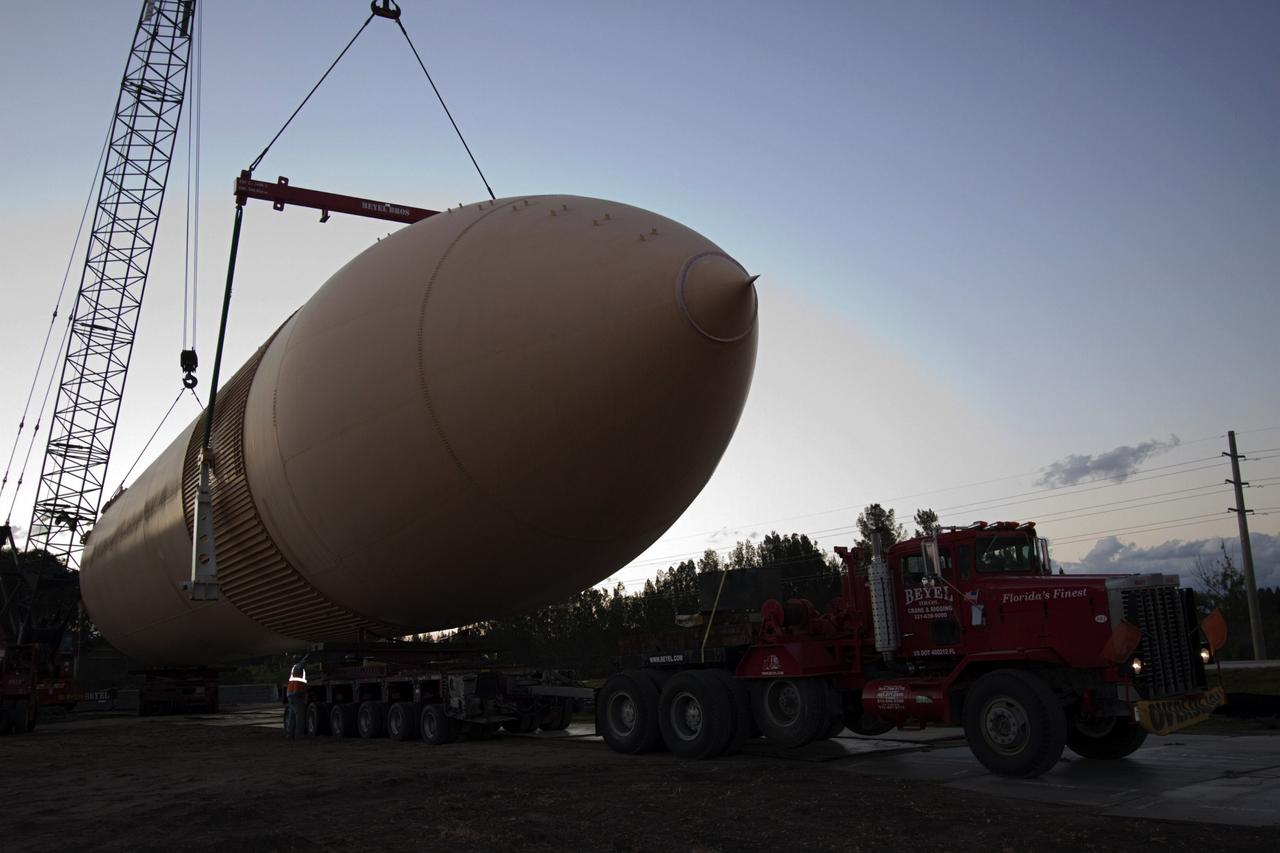
CAPE CANAVERAL, Fla. – A truck hauls a full-size display of a space shuttle external fuel tank from the Kennedy Space Center Visitor Complex as the space-themed attraction makes way for a new exhibit featuring space shuttle Atlantis, which is currently undergoing preparations to go on public display. The tank is being placed into temporary storage at NASA's Kennedy Space Center. The tank was part of a display of the external tank and two solid rocket boosters at the visitor complex that were used to show visitors the size of actual space shuttle components. A space shuttle rode piggyback on the tank and boosters at liftoff and during the ascent into space. The tank, which held propellants for the shuttle's three main engines, was not reused, but burned up in the atmosphere and fell into the ocean. Photo credit: NASA/Dmitri Gerondidakis
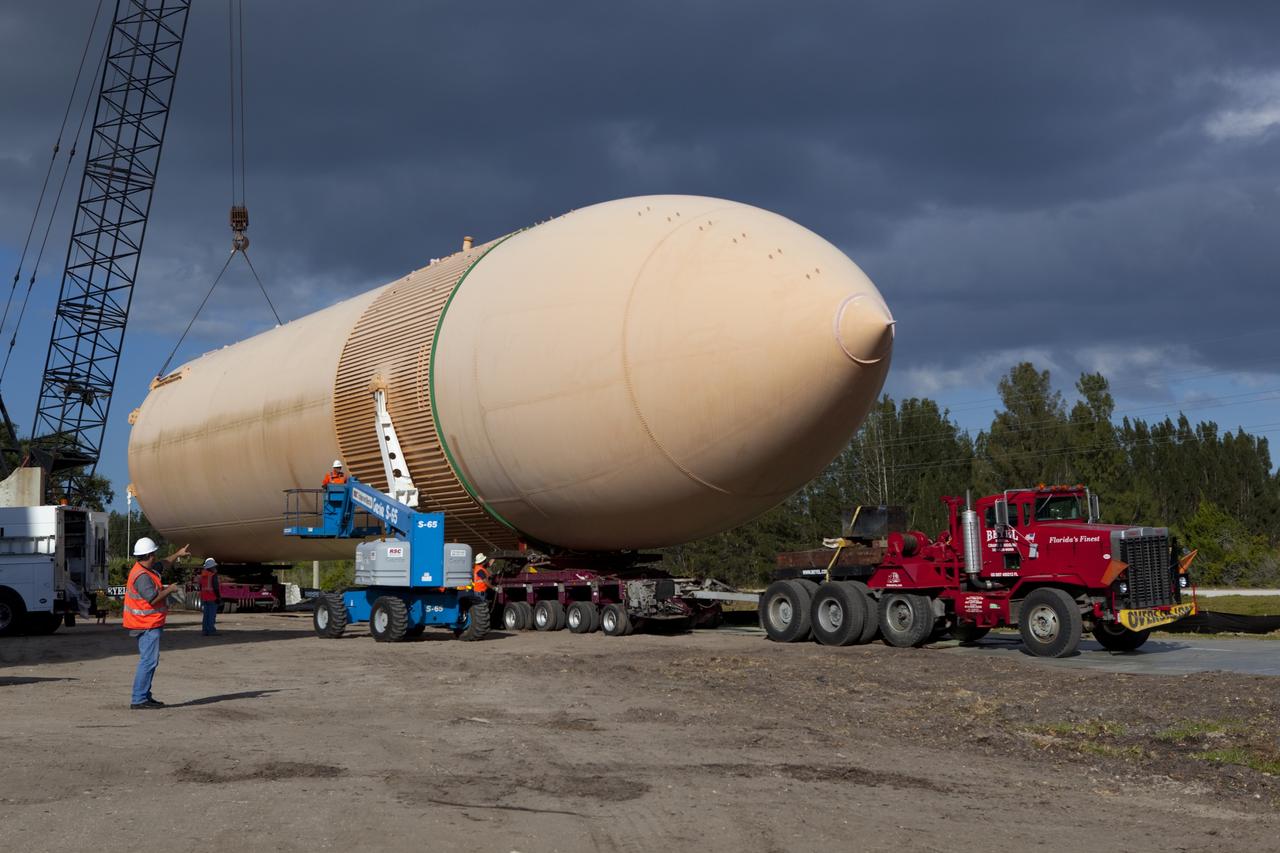
CAPE CANAVERAL, Fla. – A crane positions a full-size display of a space shuttle external fuel tank onto a truck to move it from the Kennedy Space Center Visitor Complex as the space-themed attraction makes way for a new exhibit featuring space shuttle Atlantis, which is currently undergoing preparations to go on public display. The tank is being placed into temporary storage at NASA's Kennedy Space Center. The tank was part of a display of the external tank and two solid rocket boosters at the visitor complex that were used to show visitors the size of actual space shuttle components. A space shuttle rode piggyback on the tank and boosters at liftoff and during the ascent into space. The tank, which held propellants for the shuttle's three main engines, was not reused, but burned up in the atmosphere and fell into the ocean. Photo credit: NASA/Dmitri Gerondidakis
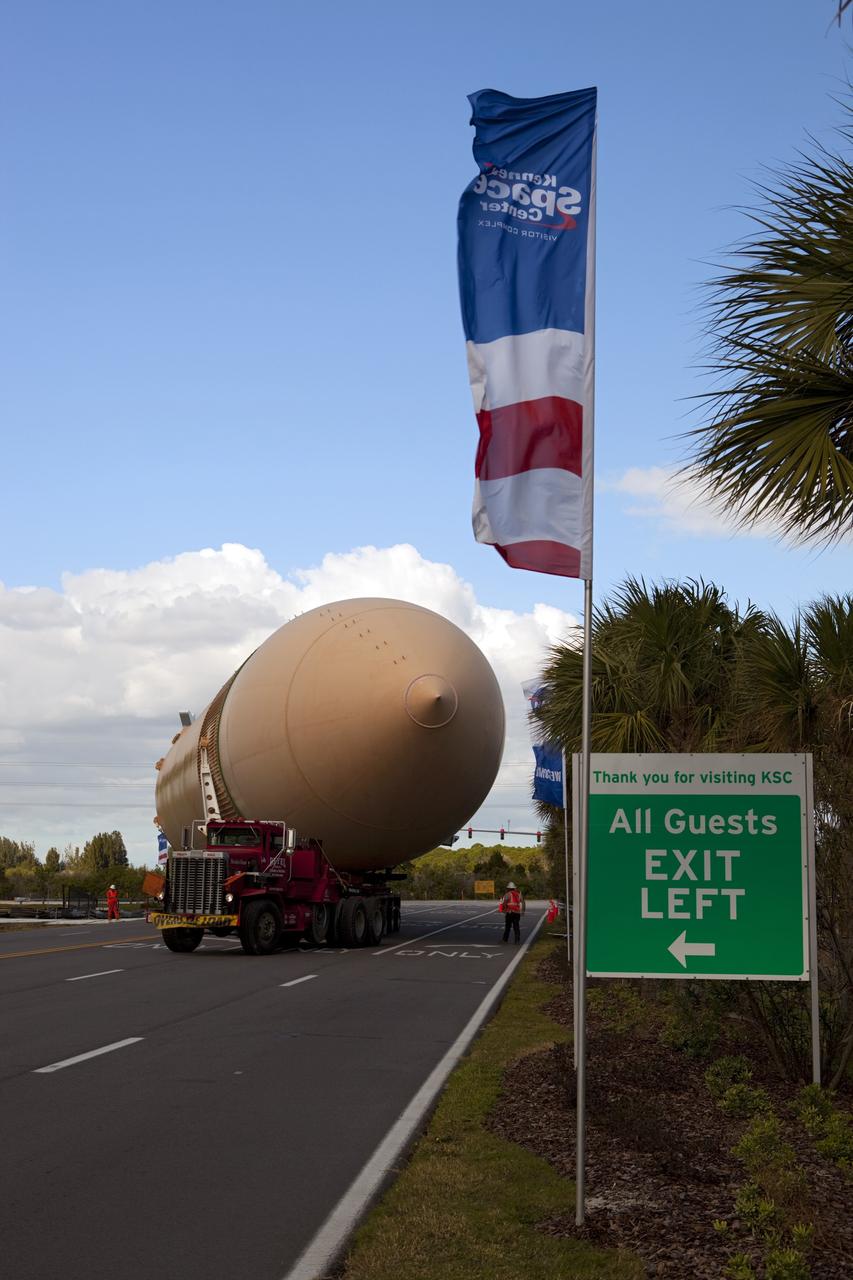
CAPE CANAVERAL, Fla. – A truck hauls a full-size display of a space shuttle external fuel tank from the Kennedy Space Center Visitor Complex as the space-themed attraction makes way for a new exhibit featuring space shuttle Atlantis, which is currently undergoing preparations to go on public display. The tank is being placed into temporary storage at NASA's Kennedy Space Center. The tank was part of a display of the external tank and two solid rocket boosters at the visitor complex that were used to show visitors the size of actual space shuttle components. A space shuttle rode piggyback on the tank and boosters at liftoff and during the ascent into space. The tank, which held propellants for the shuttle's three main engines, was not reused, but burned up in the atmosphere and fell into the ocean. Photo credit: NASA/Dmitri Gerondidakis
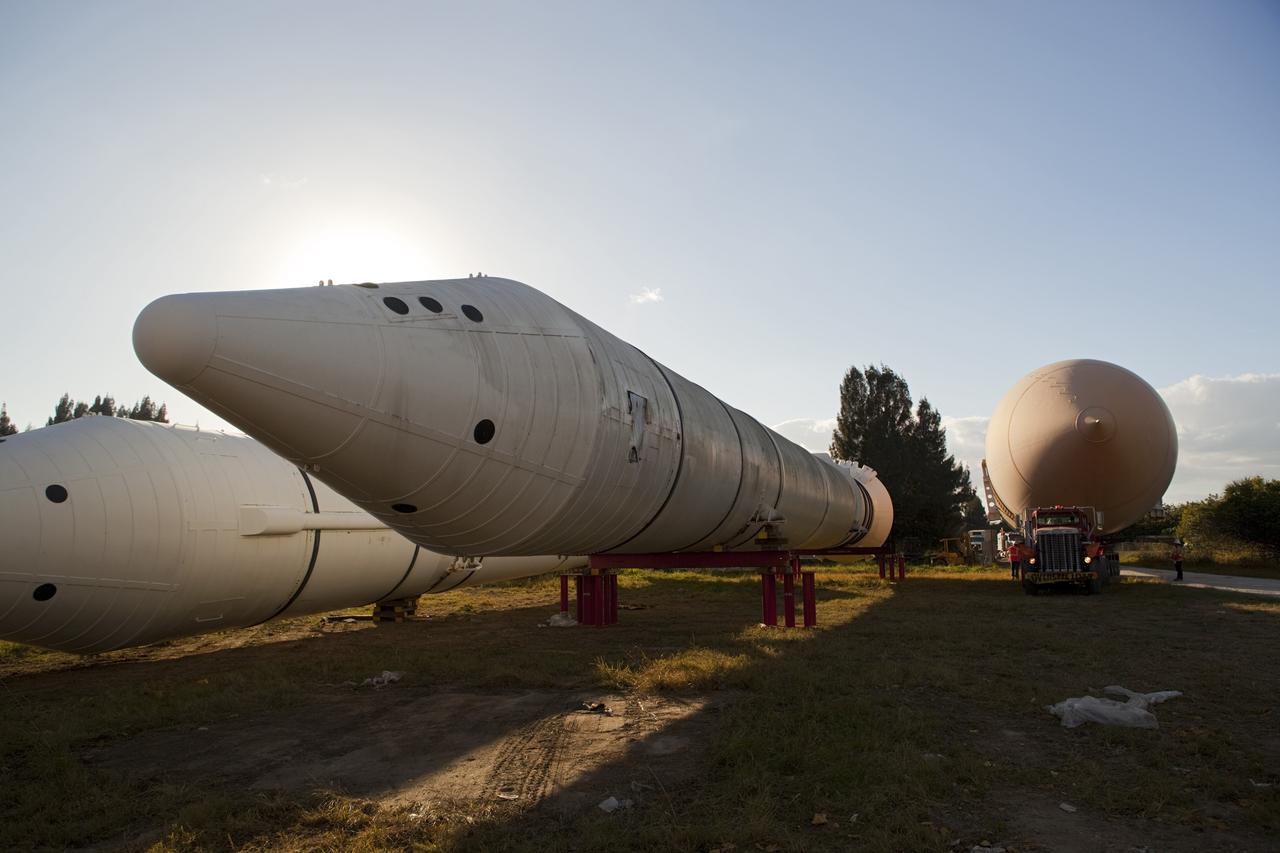
CAPE CANAVERAL, Fla. – A truck hauls a full-size display of a space shuttle external fuel tank from the Kennedy Space Center Visitor Complex as the space-themed attraction makes way for a new exhibit featuring space shuttle Atlantis, which is currently undergoing preparations to go on public display. The tank is being placed into temporary storage at NASA's Kennedy Space Center. The tank was part of a display of the external tank and two solid rocket boosters at the visitor complex that were used to show visitors the size of actual space shuttle components. A space shuttle rode piggyback on the tank and boosters at liftoff and during the ascent into space. The tank, which held propellants for the shuttle's three main engines, was not reused, but burned up in the atmosphere and fell into the ocean. Photo credit: NASA/Dmitri Gerondidakis
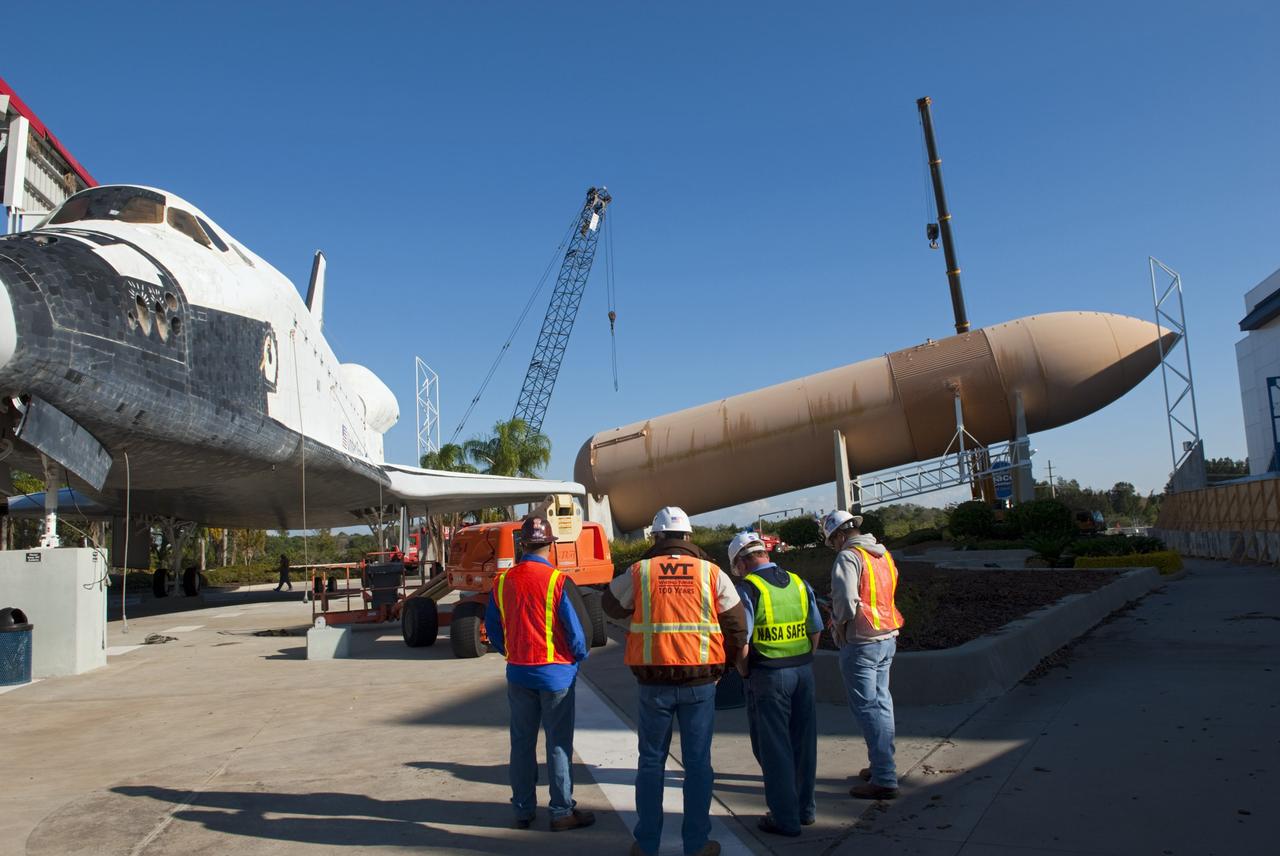
CAPE CANAVERAL, Fla. – Cranes remove a full-size replica of a space shuttle external fuel tank from the Kennedy Space Center Visitor Complex as the space-themed attraction makes way for a new exhibit featuring space shuttle Atlantis, which is currently undergoing preparations to go on public display. The tank is being placed into temporary storage at NASA's Kennedy Space Center. The tank was part of a mockup of the external tank and two solid rocket boosters at the visitor complex that were used to show visitors the size of actual space shuttle components. A space shuttle rode piggyback on the tank and boosters at liftoff and during the ascent into space. The tank, which held propellants for the shuttle's three main engines, was not reused, but burned up in the atmosphere and fell into the ocean. Photo credit: NASA/Jim Grossman
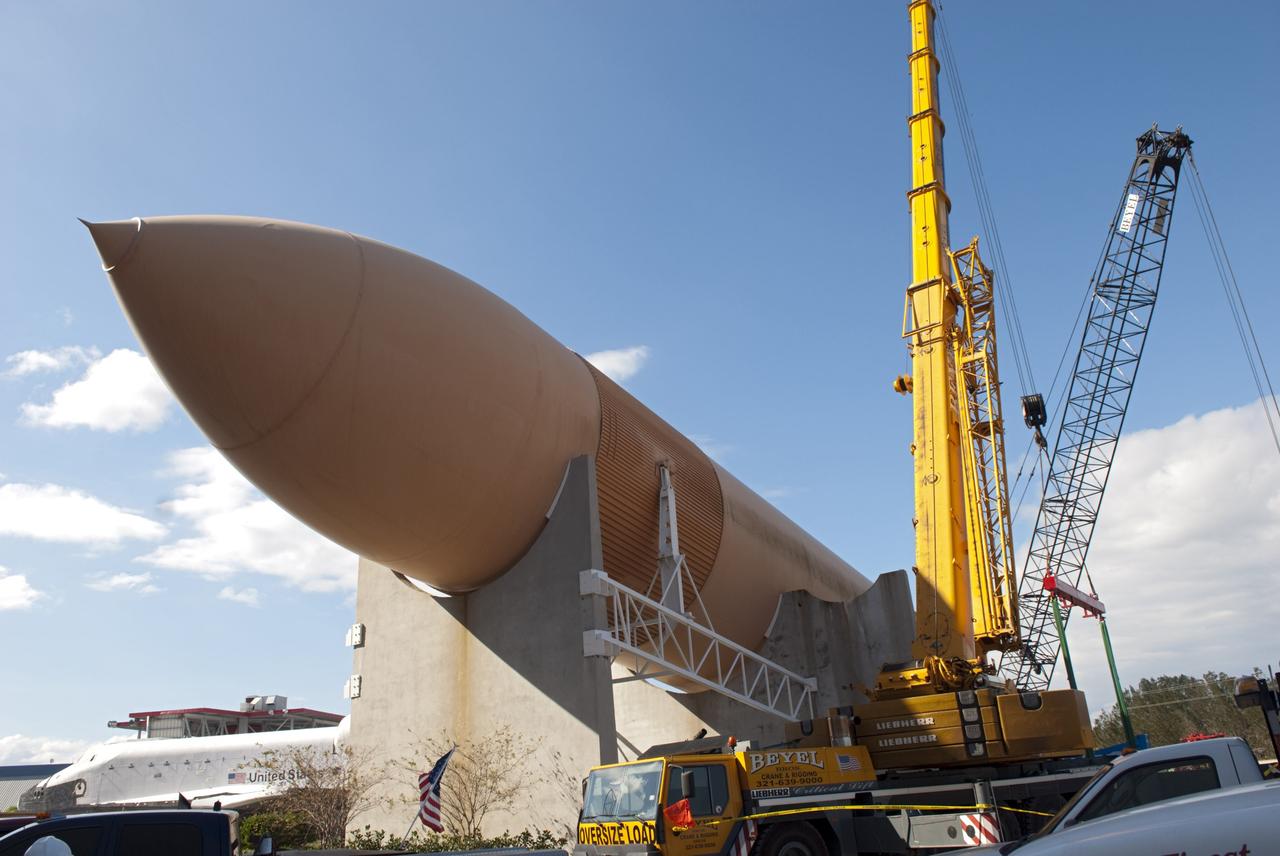
CAPE CANAVERAL, Fla. – Cranes remove a full-size replica of a space shuttle external fuel tank from the Kennedy Space Center Visitor Complex as the space-themed attraction makes way for a new exhibit featuring space shuttle Atlantis, which is currently undergoing preparations to go on public display. The tank is being placed into temporary storage at NASA's Kennedy Space Center. The tank was part of a mockup of the external tank and two solid rocket boosters at the visitor complex that were used to show visitors the size of actual space shuttle components. A space shuttle rode piggyback on the tank and boosters at liftoff and during the ascent into space. The tank, which held propellants for the shuttle's three main engines, was not reused, but burned up in the atmosphere and fell into the ocean. Photo credit: NASA/Jim Grossman
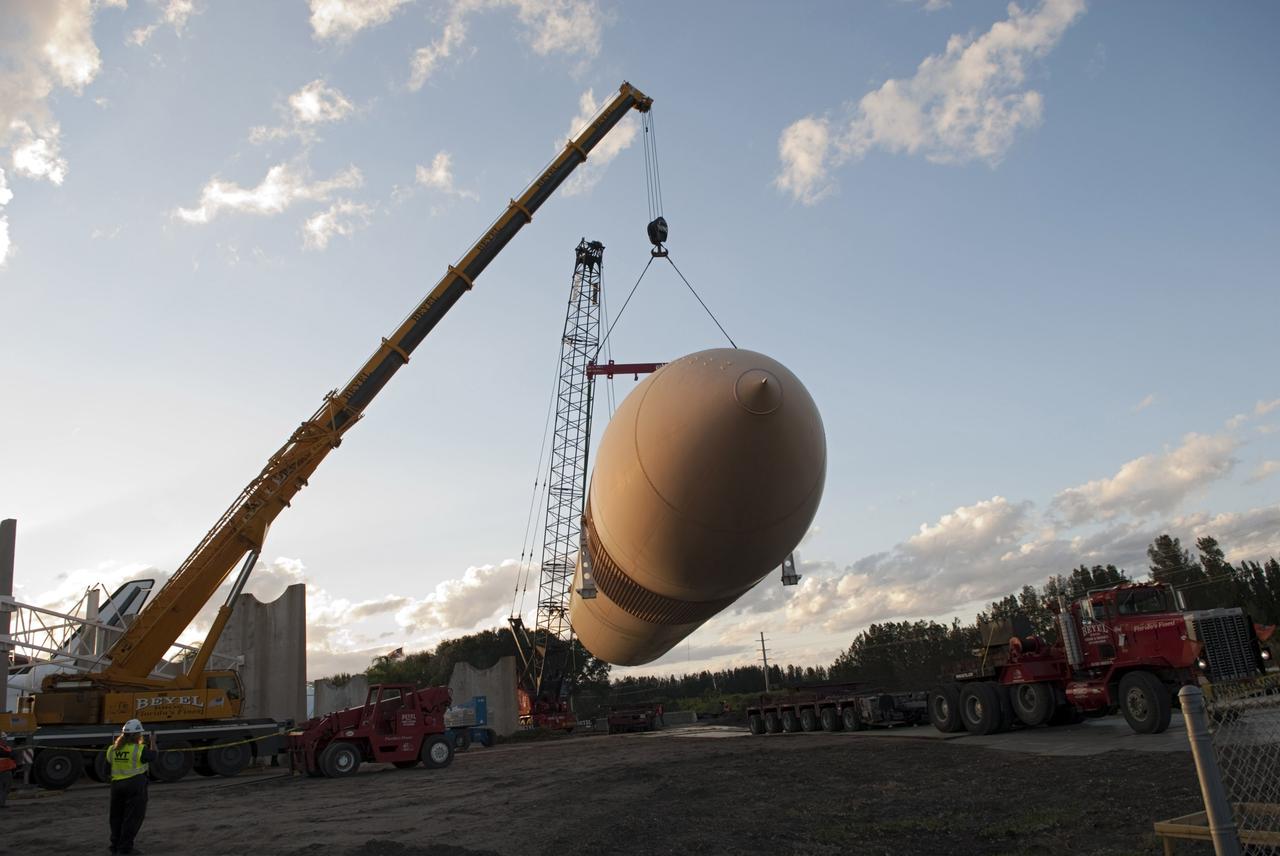
CAPE CANAVERAL, Fla. – Cranes remove a full-size replica of a space shuttle external fuel tank from the Kennedy Space Center Visitor Complex as the space-themed attraction makes way for a new exhibit featuring space shuttle Atlantis, which is currently undergoing preparations to go on public display. The tank is being placed into temporary storage at NASA's Kennedy Space Center. The tank was part of a mockup of the external tank and two solid rocket boosters at the visitor complex that were used to show visitors the size of actual space shuttle components. A space shuttle rode piggyback on the tank and boosters at liftoff and during the ascent into space. The tank, which held propellants for the shuttle's three main engines, was not reused, but burned up in the atmosphere and fell into the ocean. Photo credit: NASA/Jim Grossman
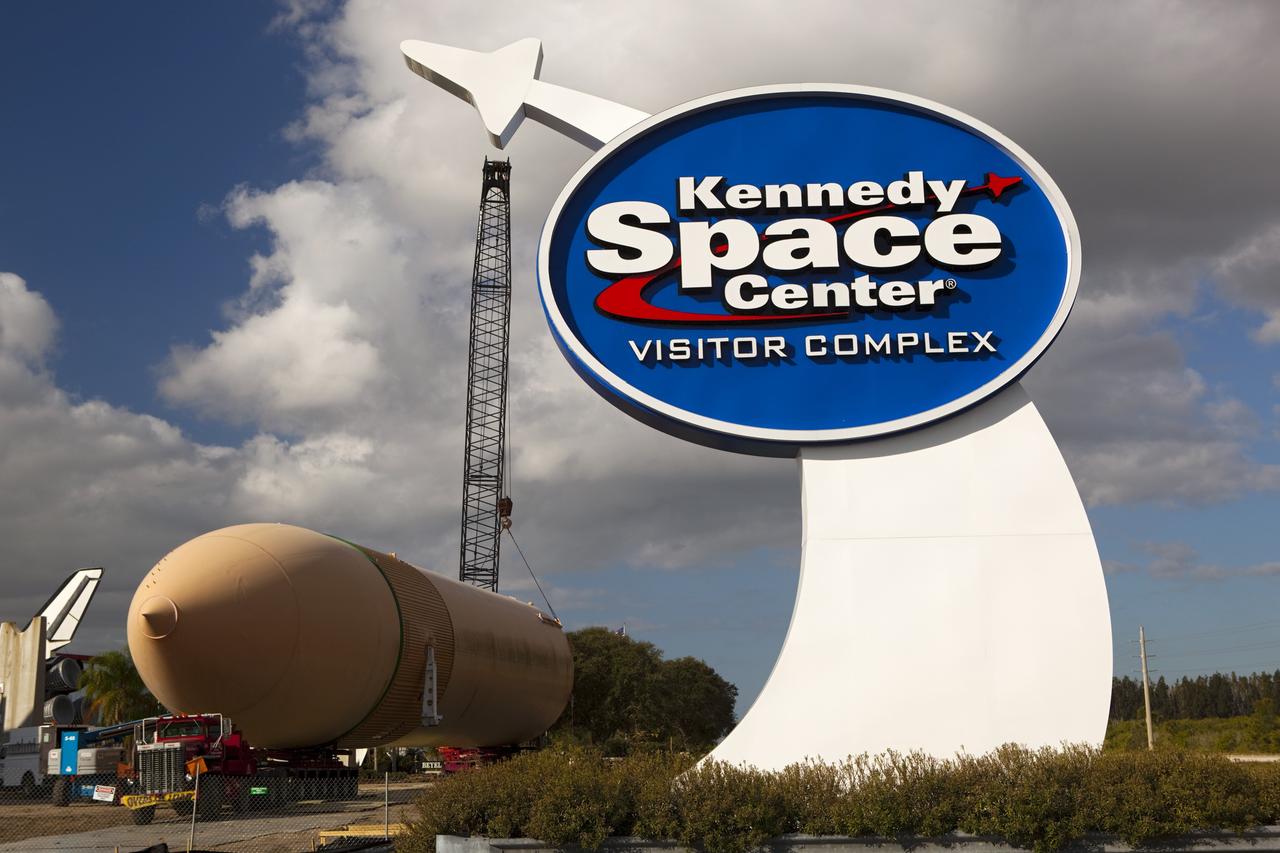
CAPE CANAVERAL, Fla. – A crane positions a full-size display of a space shuttle external fuel tank onto a truck to move it from the Kennedy Space Center Visitor Complex as the space-themed attraction makes way for a new exhibit featuring space shuttle Atlantis, which is currently undergoing preparations to go on public display. The tank is being placed into temporary storage at NASA's Kennedy Space Center. The tank was part of a display of the external tank and two solid rocket boosters at the visitor complex that were used to show visitors the size of actual space shuttle components. A space shuttle rode piggyback on the tank and boosters at liftoff and during the ascent into space. The tank, which held propellants for the shuttle's three main engines, was not reused, but burned up in the atmosphere and fell into the ocean. Photo credit: NASA/Dmitri Gerondidakis
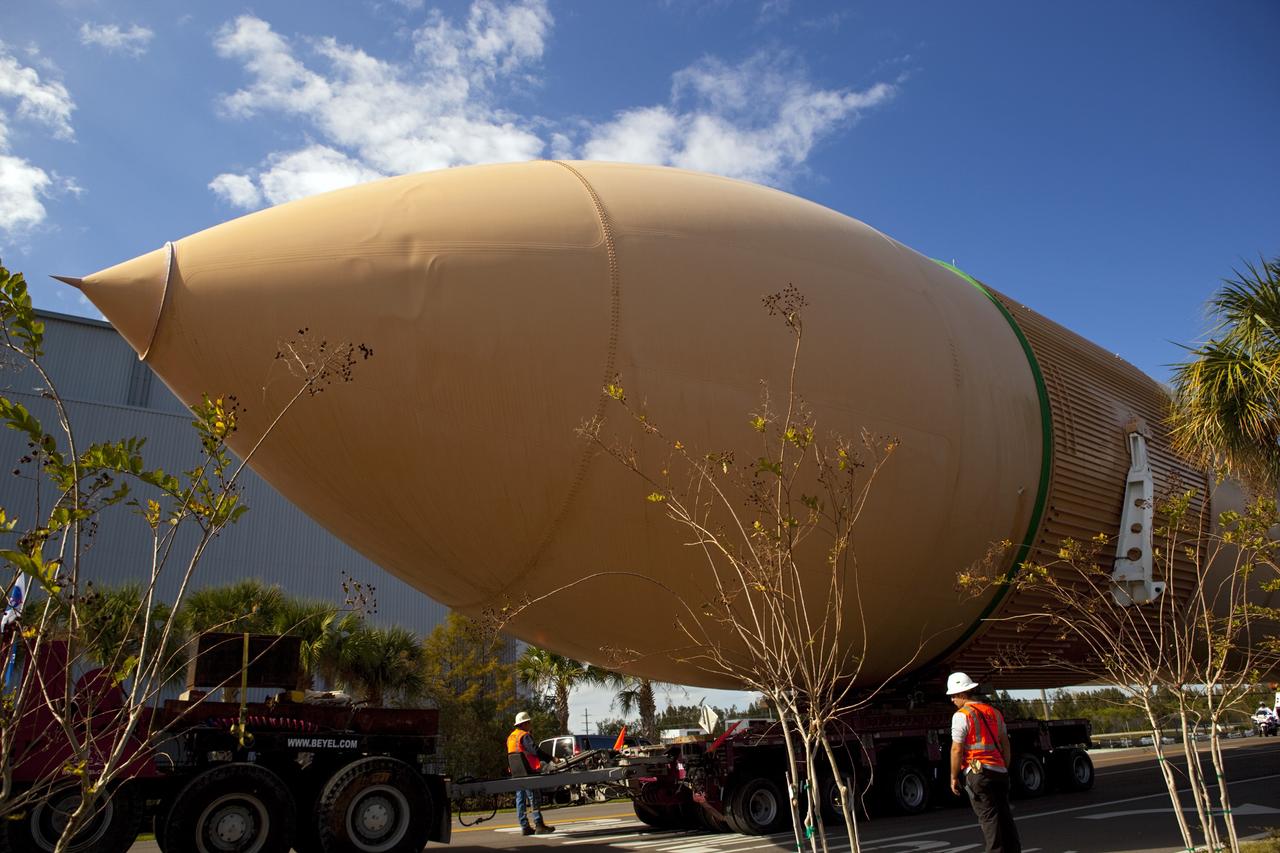
CAPE CANAVERAL, Fla. – A truck hauls a full-size display of a space shuttle external fuel tank from the Kennedy Space Center Visitor Complex as the space-themed attraction makes way for a new exhibit featuring space shuttle Atlantis, which is currently undergoing preparations to go on public display. The tank is being placed into temporary storage at NASA's Kennedy Space Center. The tank was part of a display of the external tank and two solid rocket boosters at the visitor complex that were used to show visitors the size of actual space shuttle components. A space shuttle rode piggyback on the tank and boosters at liftoff and during the ascent into space. The tank, which held propellants for the shuttle's three main engines, was not reused, but burned up in the atmosphere and fell into the ocean. Photo credit: NASA/Dmitri Gerondidakis
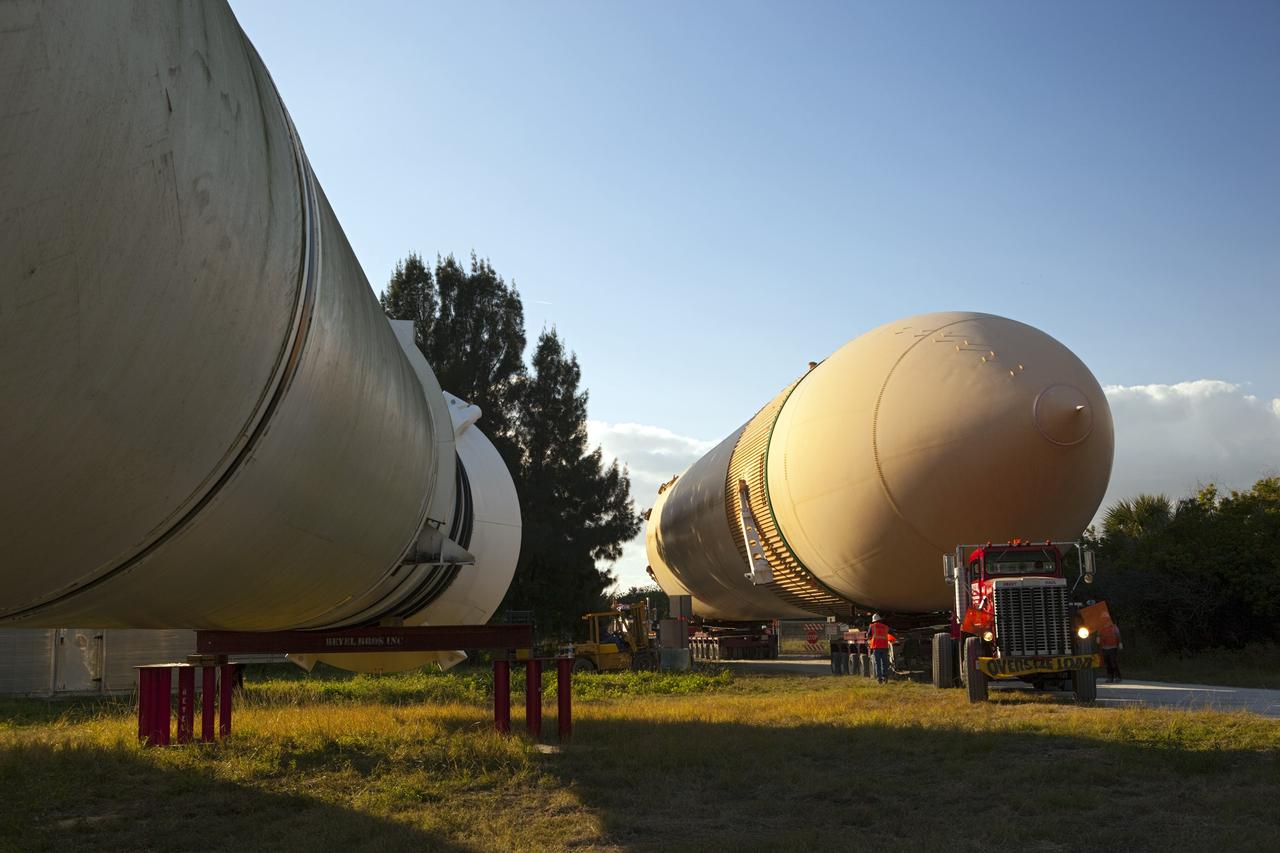
CAPE CANAVERAL, Fla. – A truck hauls a full-size display of a space shuttle external fuel tank from the Kennedy Space Center Visitor Complex as the space-themed attraction makes way for a new exhibit featuring space shuttle Atlantis, which is currently undergoing preparations to go on public display. The tank is being placed into temporary storage at NASA's Kennedy Space Center. The tank was part of a display of the external tank and two solid rocket boosters at the visitor complex that were used to show visitors the size of actual space shuttle components. A space shuttle rode piggyback on the tank and boosters at liftoff and during the ascent into space. The tank, which held propellants for the shuttle's three main engines, was not reused, but burned up in the atmosphere and fell into the ocean. Photo credit: NASA/Dmitri Gerondidakis
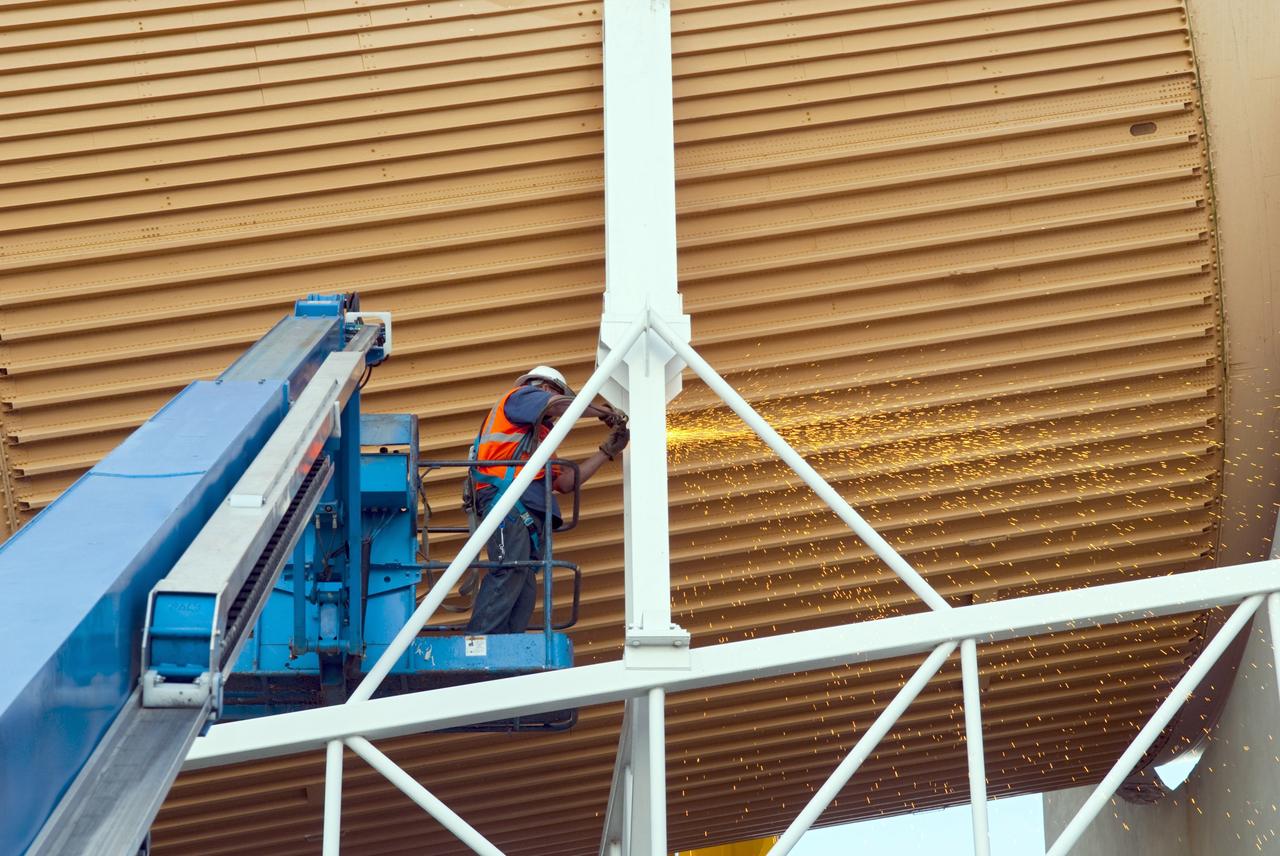
CAPE CANAVERAL, Fla. – A technician works on the removal of a full-size replica of a space shuttle external fuel tank from the Kennedy Space Center Visitor Complex as the space-themed attraction makes way for a new exhibit featuring space shuttle Atlantis, which is currently undergoing preparations to go on public display. The tank is being placed into temporary storage at NASA's Kennedy Space Center. The tank was part of a mockup of the external tank and two solid rocket boosters at the visitor complex that were used to show visitors the size of actual space shuttle components. A space shuttle rode piggyback on the tank and boosters at liftoff and during the ascent into space. The tank, which held propellants for the shuttle's three main engines, was not reused, but burned up in the atmosphere and fell into the ocean. Photo credit: NASA/Jim Grossman
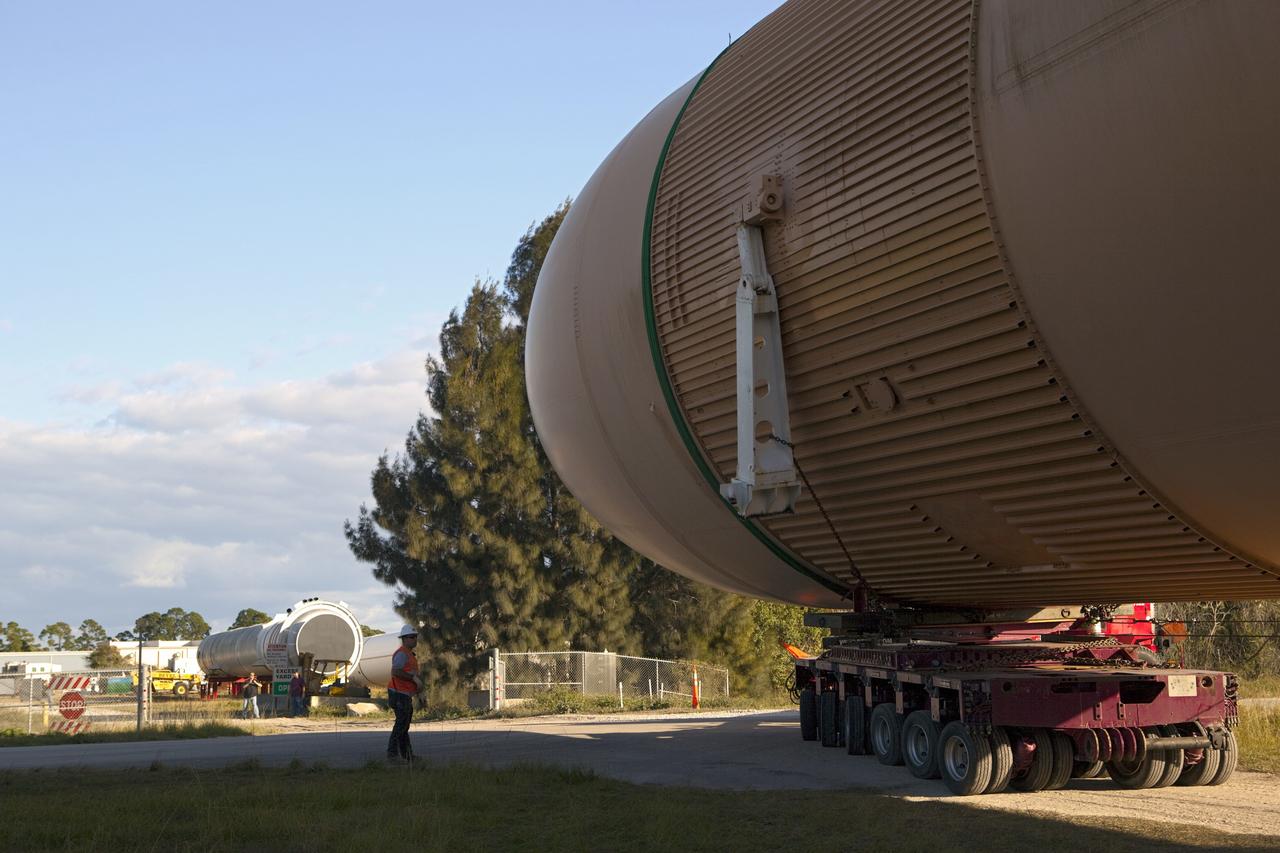
CAPE CANAVERAL, Fla. – A truck hauls a full-size display of a space shuttle external fuel tank from the Kennedy Space Center Visitor Complex as the space-themed attraction makes way for a new exhibit featuring space shuttle Atlantis, which is currently undergoing preparations to go on public display. The tank is being placed into temporary storage at NASA's Kennedy Space Center. The tank was part of a display of the external tank and two solid rocket boosters at the visitor complex that were used to show visitors the size of actual space shuttle components. A space shuttle rode piggyback on the tank and boosters at liftoff and during the ascent into space. The tank, which held propellants for the shuttle's three main engines, was not reused, but burned up in the atmosphere and fell into the ocean. Photo credit: NASA/Dmitri Gerondidakis
CAPE CANAVERAL, Fla. – Cranes remove a full-size replica of a space shuttle external fuel tank from the Kennedy Space Center Visitor Complex as the space-themed attraction makes way for a new exhibit featuring space shuttle Atlantis, which is currently undergoing preparations to go on public display. The tank is being placed into temporary storage at NASA's Kennedy Space Center. The tank was part of a mockup of the external tank and two solid rocket boosters at the visitor complex that were used to show visitors the size of actual space shuttle components. A space shuttle rode piggyback on the tank and boosters at liftoff and during the ascent into space. The tank, which held propellants for the shuttle's three main engines, was not reused, but burned up in the atmosphere and fell into the ocean. Photo credit: NASA/Jim Grossman
CAPE CANAVERAL, Fla. – Cranes remove a full-size replica of a space shuttle external fuel tank from the Kennedy Space Center Visitor Complex as the space-themed attraction makes way for a new exhibit featuring space shuttle Atlantis, which is currently undergoing preparations to go on public display. The tank is being placed into temporary storage at NASA's Kennedy Space Center. The tank was part of a mockup of the external tank and two solid rocket boosters at the visitor complex that were used to show visitors the size of actual space shuttle components. A space shuttle rode piggyback on the tank and boosters at liftoff and during the ascent into space. The tank, which held propellants for the shuttle's three main engines, was not reused, but burned up in the atmosphere and fell into the ocean. Photo credit: NASA/Jim Grossman
CAPE CANAVERAL, Fla. – Cranes remove a full-size replica of a space shuttle external fuel tank from the Kennedy Space Center Visitor Complex as the space-themed attraction makes way for a new exhibit featuring space shuttle Atlantis, which is currently undergoing preparations to go on public display. The tank is being placed into temporary storage at NASA's Kennedy Space Center. The tank was part of a mockup of the external tank and two solid rocket boosters at the visitor complex that were used to show visitors the size of actual space shuttle components. A space shuttle rode piggyback on the tank and boosters at liftoff and during the ascent into space. The tank, which held propellants for the shuttle's three main engines, was not reused, but burned up in the atmosphere and fell into the ocean. Photo credit: NASA/Jim Grossman
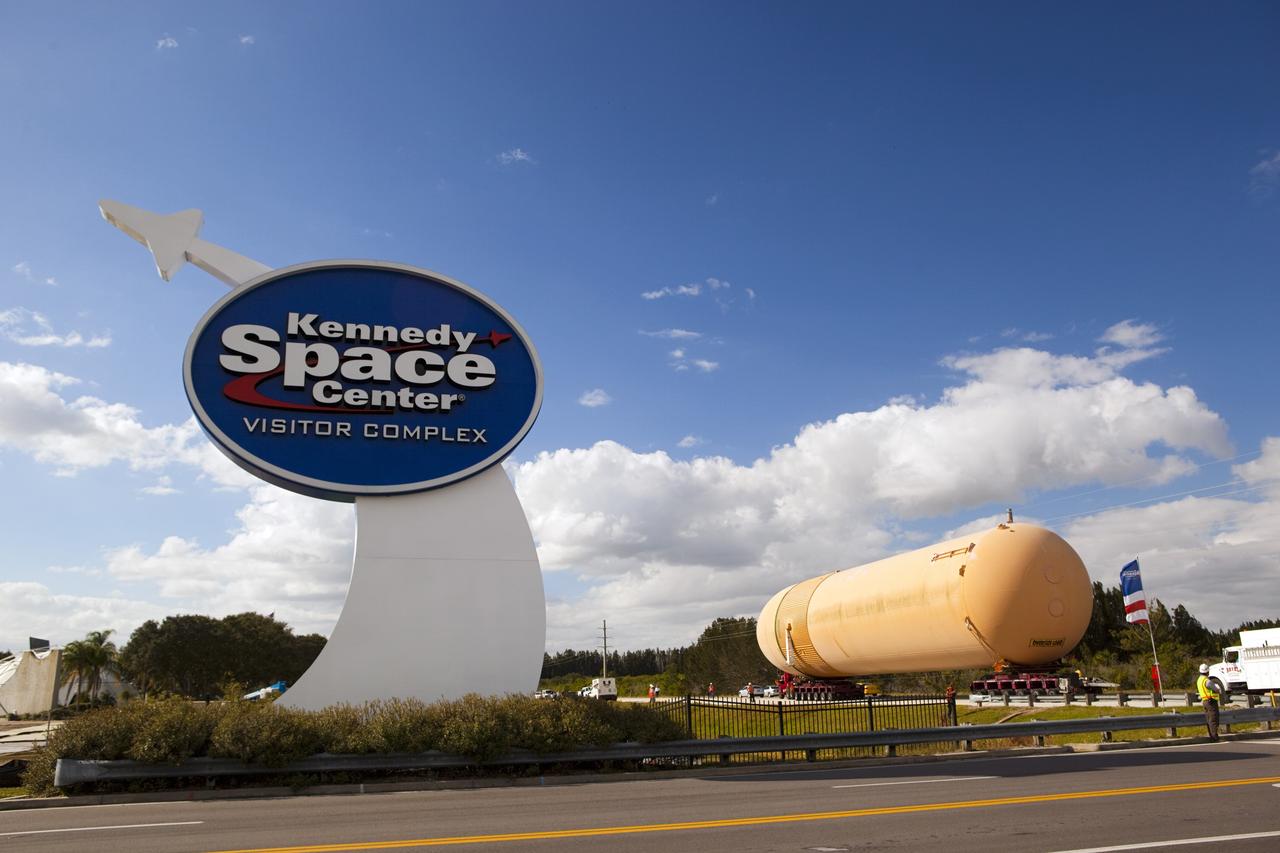
CAPE CANAVERAL, Fla. – A truck hauls a full-size display of a space shuttle external fuel tank from the Kennedy Space Center Visitor Complex as the space-themed attraction makes way for a new exhibit featuring space shuttle Atlantis, which is currently undergoing preparations to go on public display. The tank is being placed into temporary storage at NASA's Kennedy Space Center. The tank was part of a display of the external tank and two solid rocket boosters at the visitor complex that were used to show visitors the size of actual space shuttle components. A space shuttle rode piggyback on the tank and boosters at liftoff and during the ascent into space. The tank, which held propellants for the shuttle's three main engines, was not reused, but burned up in the atmosphere and fell into the ocean. Photo credit: NASA/Dmitri Gerondidakis
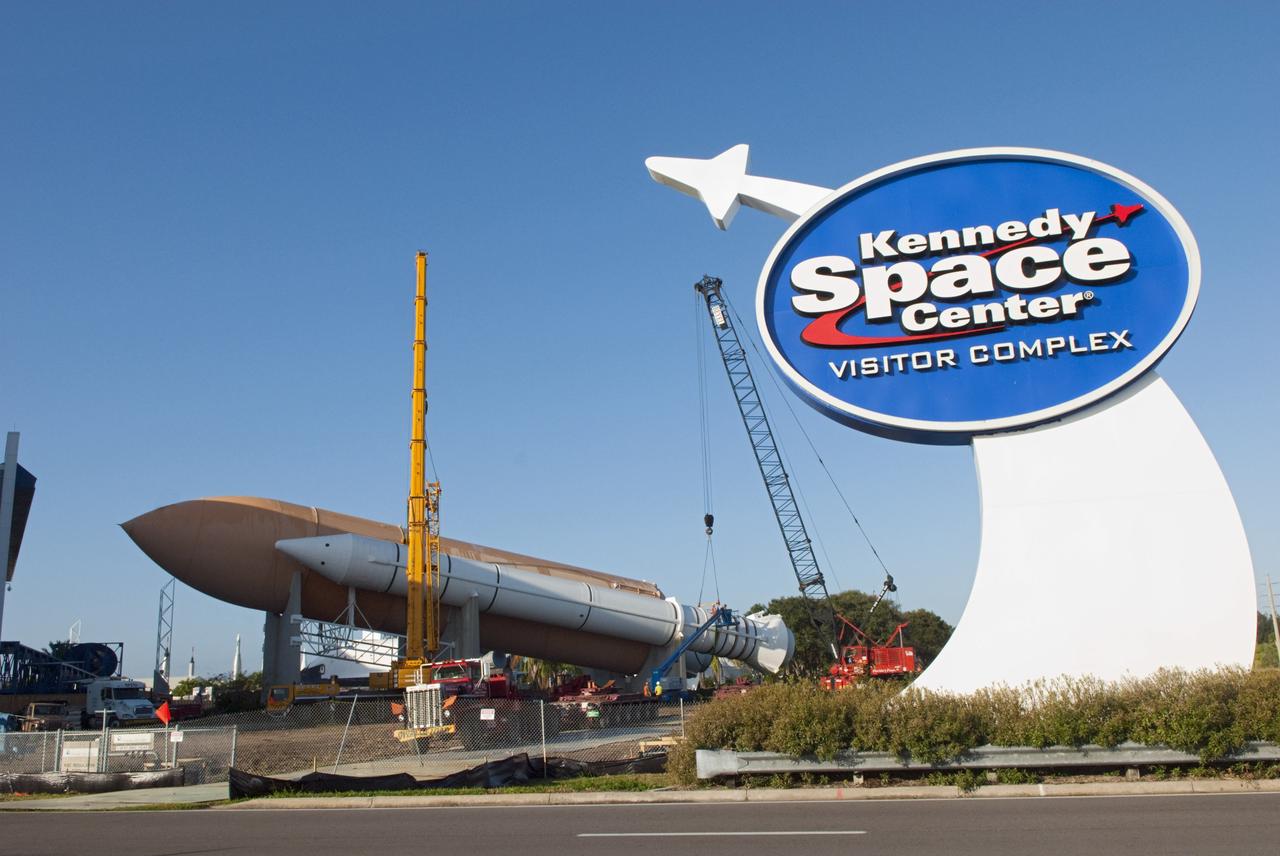
CAPE CANAVERAL, Fla. – Cranes remove a full-size replica of a space shuttle external fuel tank from the Kennedy Space Center Visitor Complex as the space-themed attraction makes way for a new exhibit featuring space shuttle Atlantis, which is currently undergoing preparations to go on public display. The tank is being placed into temporary storage at NASA's Kennedy Space Center. The tank was part of a mockup of the external tank and two solid rocket boosters at the visitor complex that were used to show visitors the size of actual space shuttle components. A space shuttle rode piggyback on the tank and boosters at liftoff and during the ascent into space. The tank, which held propellants for the shuttle's three main engines, was not reused, but burned up in the atmosphere and fell into the ocean. Photo credit: NASA/Jim Grossman
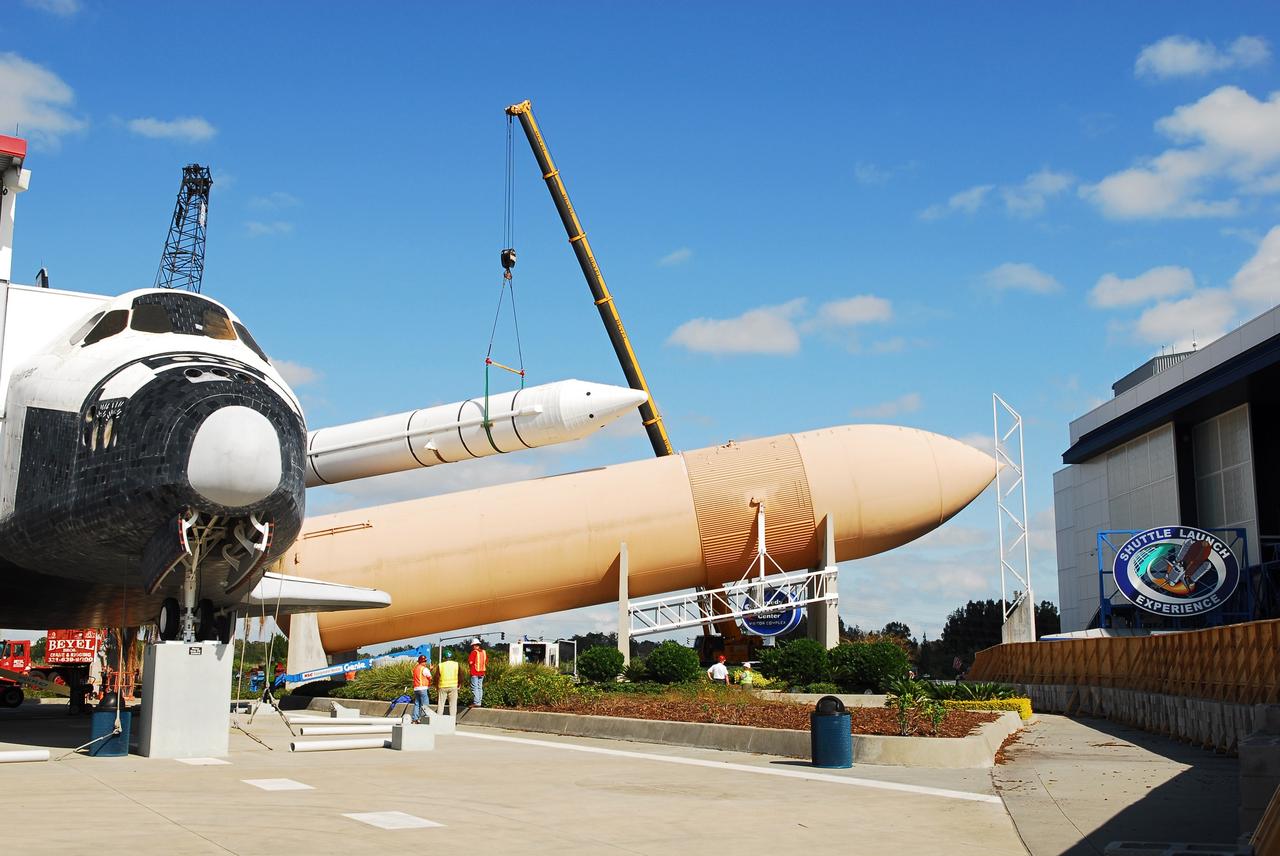
CAPE CANAVERAL, Fla. – Cranes remove a full-size, 149-foot-long, space shuttle solid rocket booster, or SRB, replica from the Kennedy Space Center Visitor Complex as the space-themed attraction makes way for a new exhibit featuring space shuttle Atlantis, which is currently undergoing preparations to go on public display. The SRB is being placed into temporary storage at NASA's Kennedy Space Center.The SRB was part of a mockup of the external tank and two SRBs at the visitor complex that were used to show visitors the size of actual space shuttle components. A space shuttle rode piggyback on the tank and boosters at liftoff and during the ascent into space. The SRBs burned out after about two-and-a-half minutes of flight. After recovery from the ocean, the boosters could be used repeatedly. Photo credit: NASA/Jim Grossmann
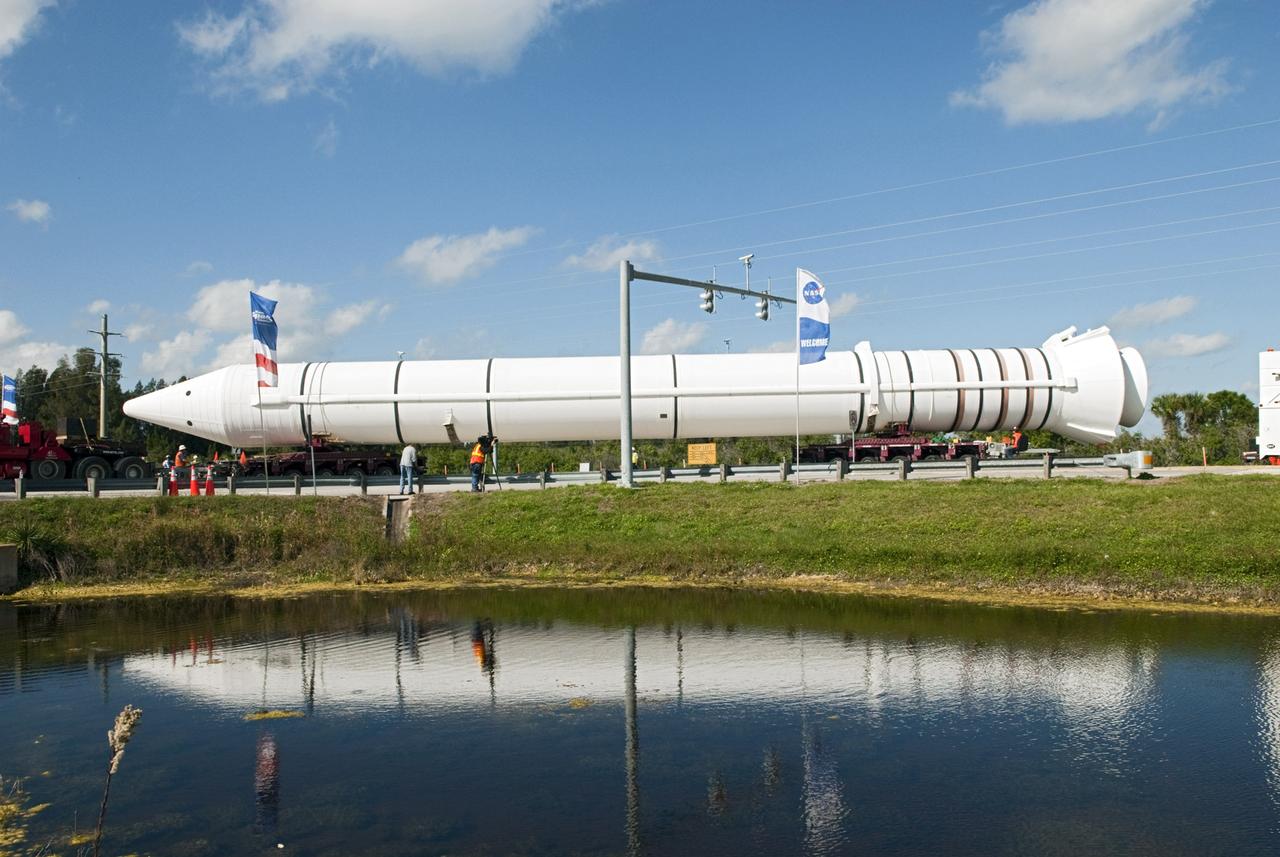
CAPE CANAVERAL, Fla. – Cranes remove a full-size, 149-foot-long, space shuttle solid rocket booster, or SRB, replica from the Kennedy Space Center Visitor Complex as the space-themed attraction makes way for a new exhibit featuring space shuttle Atlantis, which is currently undergoing preparations to go on public display. The SRB is being placed into temporary storage at NASA's Kennedy Space Center. The SRB was part of a mockup of the external tank and two SRBs at the visitor complex that were used to show visitors the size of actual space shuttle components. A space shuttle rode piggyback on the tank and boosters at liftoff and during the ascent into space. The SRBs burned out after about two-and-a-half minutes of flight. After recovery from the ocean, the boosters could be used repeatedly. Photo credit: NASA/Jim Grossman
CAPE CANAVERAL, Fla. – A large truck hauls a full-size, 149-foot-long, space shuttle solid rocket booster, or SRB, replica from the Kennedy Space Center Visitor Complex as the space-themed attraction makes way for a new exhibit featuring space shuttle Atlantis, which is currently undergoing preparations to go on public display. The SRB is being placed into temporary storage at NASA's Kennedy Space Center. The SRB was part of a mockup of the external tank and two SRBs at the visitor complex that were used to show visitors the size of actual space shuttle components. A space shuttle rode piggyback on the tank and boosters at liftoff and during the ascent into space. The SRBs burned out after about two-and-a-half minutes of flight. After recovery from the ocean, the boosters could be used repeatedly. Photo credit: NASA/Jim Grossmann
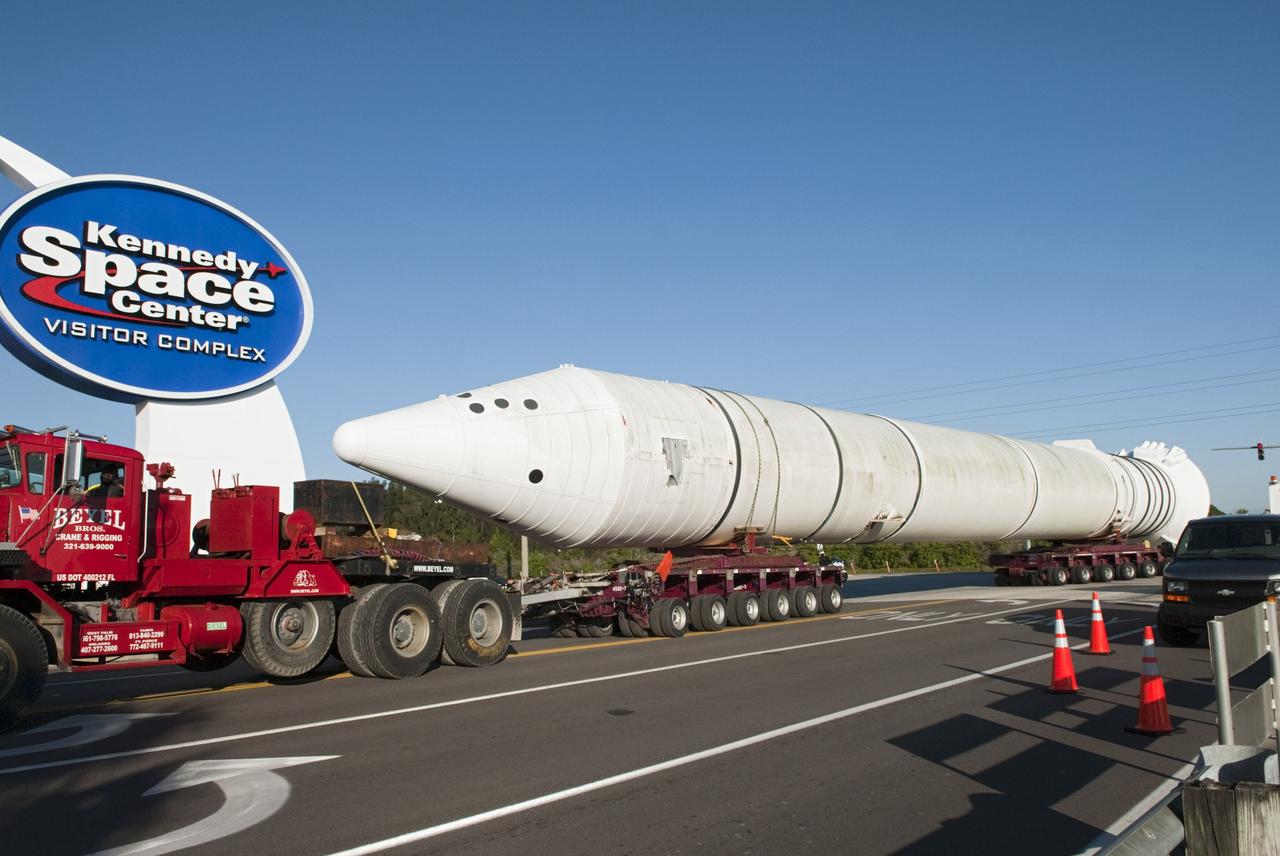
CAPE CANAVERAL, Fla. – A truck hauls a full-size, 149-foot-long, space shuttle solid rocket booster, or SRB, replica from the Kennedy Space Center Visitor Complex as the space-themed attraction makes way for a new exhibit featuring space shuttle Atlantis, which is currently undergoing preparations to go on public display. The SRB is being placed into temporary storage at NASA's Kennedy Space Center. The SRB was part of a mockup of the external tank and two SRBs at the visitor complex that were used to show visitors the size of actual space shuttle components. A space shuttle rode piggyback on the tank and boosters at liftoff and during the ascent into space. The SRBs burned out after about two-and-a-half minutes of flight. After recovery from the ocean, the boosters could be used repeatedly. Photo credit: NASA/Jim Grossman
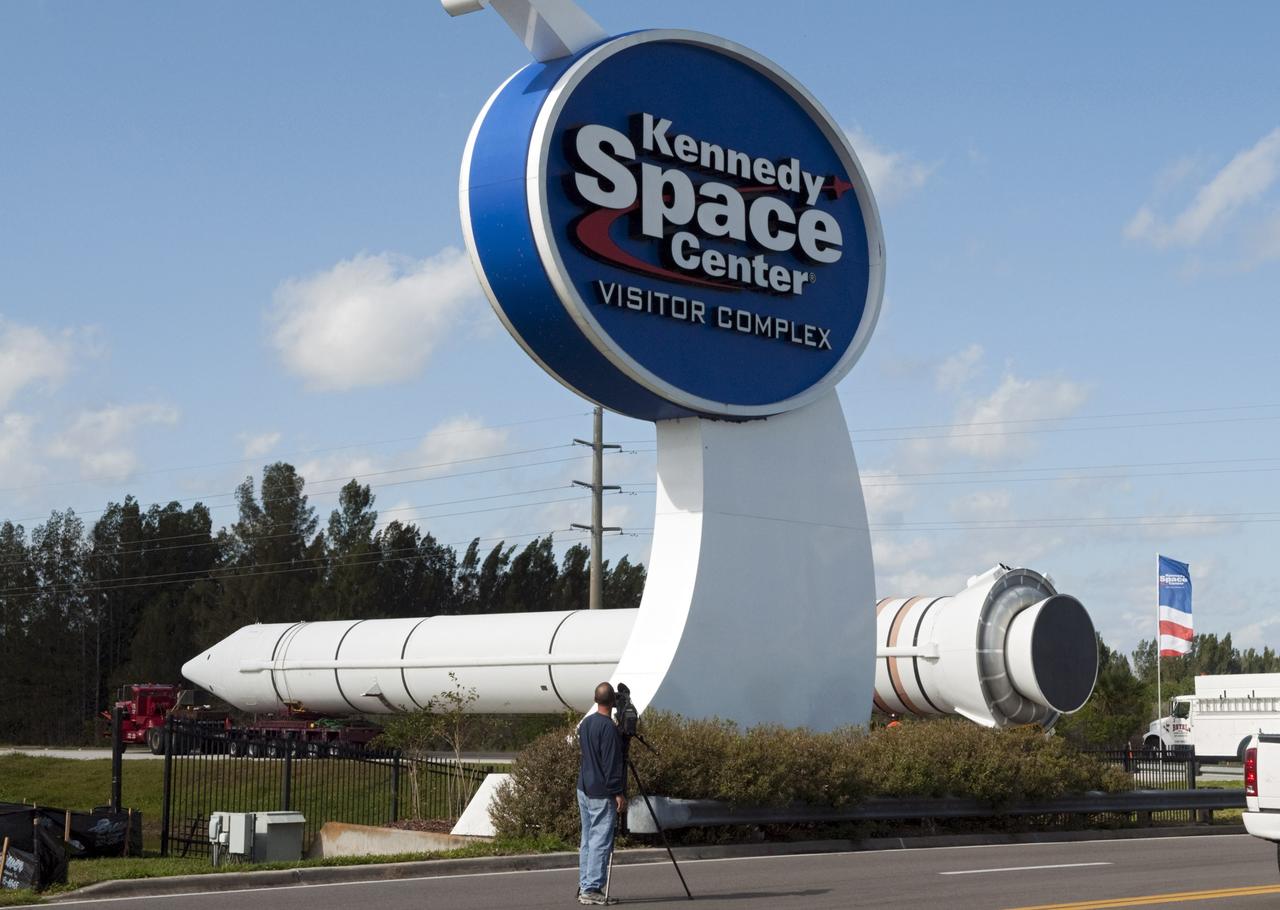
CAPE CANAVERAL, Fla. – A large truck hauls a full-size, 149-foot-long, space shuttle solid rocket booster, or SRB, replica from the Kennedy Space Center Visitor Complex as the space-themed attraction makes way for a new exhibit featuring space shuttle Atlantis, which is currently undergoing preparations to go on public display. The SRB is being placed into temporary storage at NASA's Kennedy Space Center. The SRB was part of a mockup of the external tank and two SRBs at the visitor complex that were used to show visitors the size of actual space shuttle components. A space shuttle rode piggyback on the tank and boosters at liftoff and during the ascent into space. The SRBs burned out after about two-and-a-half minutes of flight. After recovery from the ocean, the boosters could be used repeatedly. Photo credit: NASA/Jim Grossmann
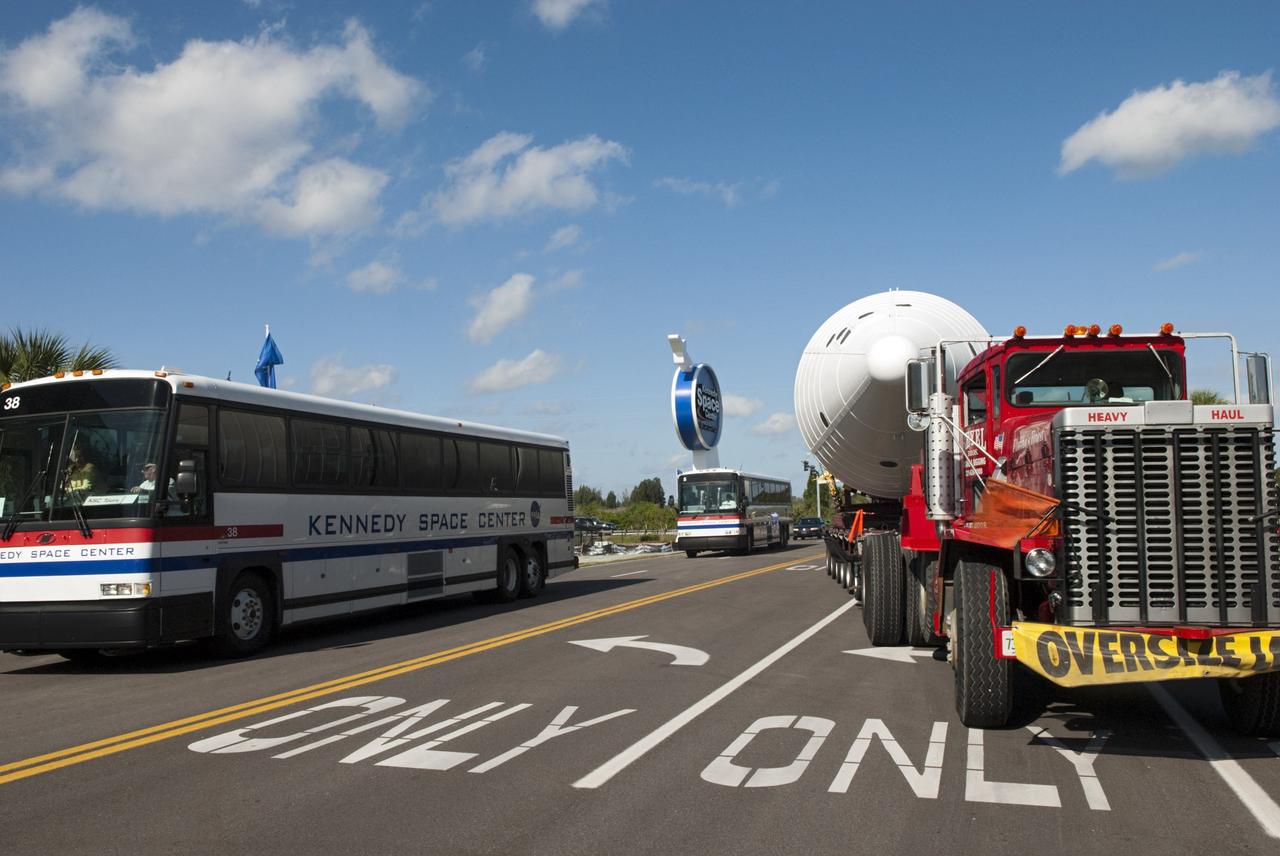
CAPE CANAVERAL, Fla. – A large truck hauls a full-size, 149-foot-long, space shuttle solid rocket booster, or SRB, replica from the Kennedy Space Center Visitor Complex as the space-themed attraction makes way for a new exhibit featuring space shuttle Atlantis, which is currently undergoing preparations to go on public display. The SRB is being placed into temporary storage at NASA's Kennedy Space Center. The SRB was part of a mockup of the external tank and two SRBs at the visitor complex that were used to show visitors the size of actual space shuttle components. A space shuttle rode piggyback on the tank and boosters at liftoff and during the ascent into space. The SRBs burned out after about two-and-a-half minutes of flight. After recovery from the ocean, the boosters could be used repeatedly. Photo credit: NASA/Jim Grossmann
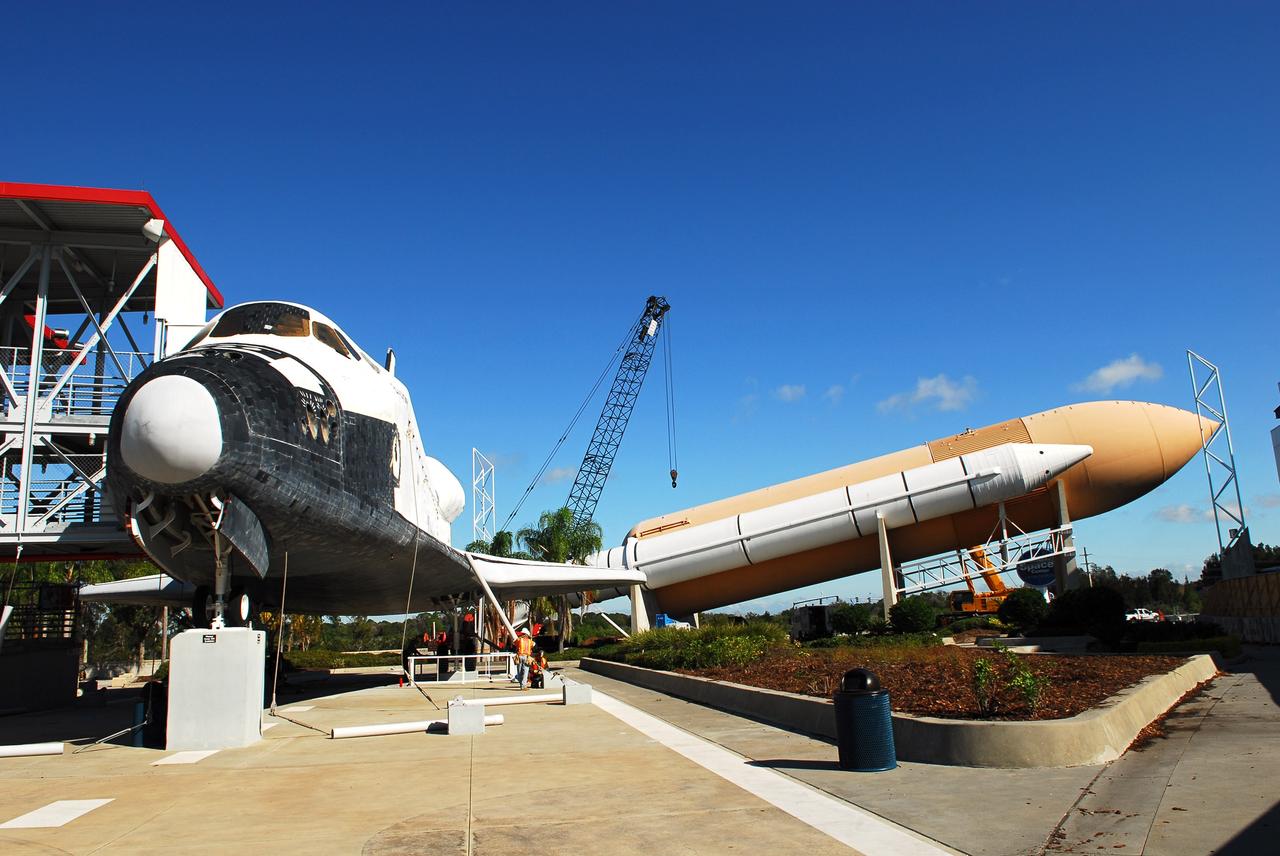
CAPE CANAVERAL, Fla. – Cranes remove a full-size, 149-foot-long, space shuttle solid rocket booster, or SRB, replica from the Kennedy Space Center Visitor Complex as the space-themed attraction makes way for a new exhibit featuring space shuttle Atlantis, which is currently undergoing preparations to go on public display. The SRB is being placed into temporary storage at NASA's Kennedy Space Center. The SRB was part of a mockup of the external tank and two SRBs at the visitor complex that were used to show visitors the size of actual space shuttle components. A space shuttle rode piggyback on the tank and boosters at liftoff and during the ascent into space. The SRBs burned out after about two-and-a-half minutes of flight. After recovery from the ocean, the boosters could be used repeatedly. Photo credit: NASA/Jim Grossman
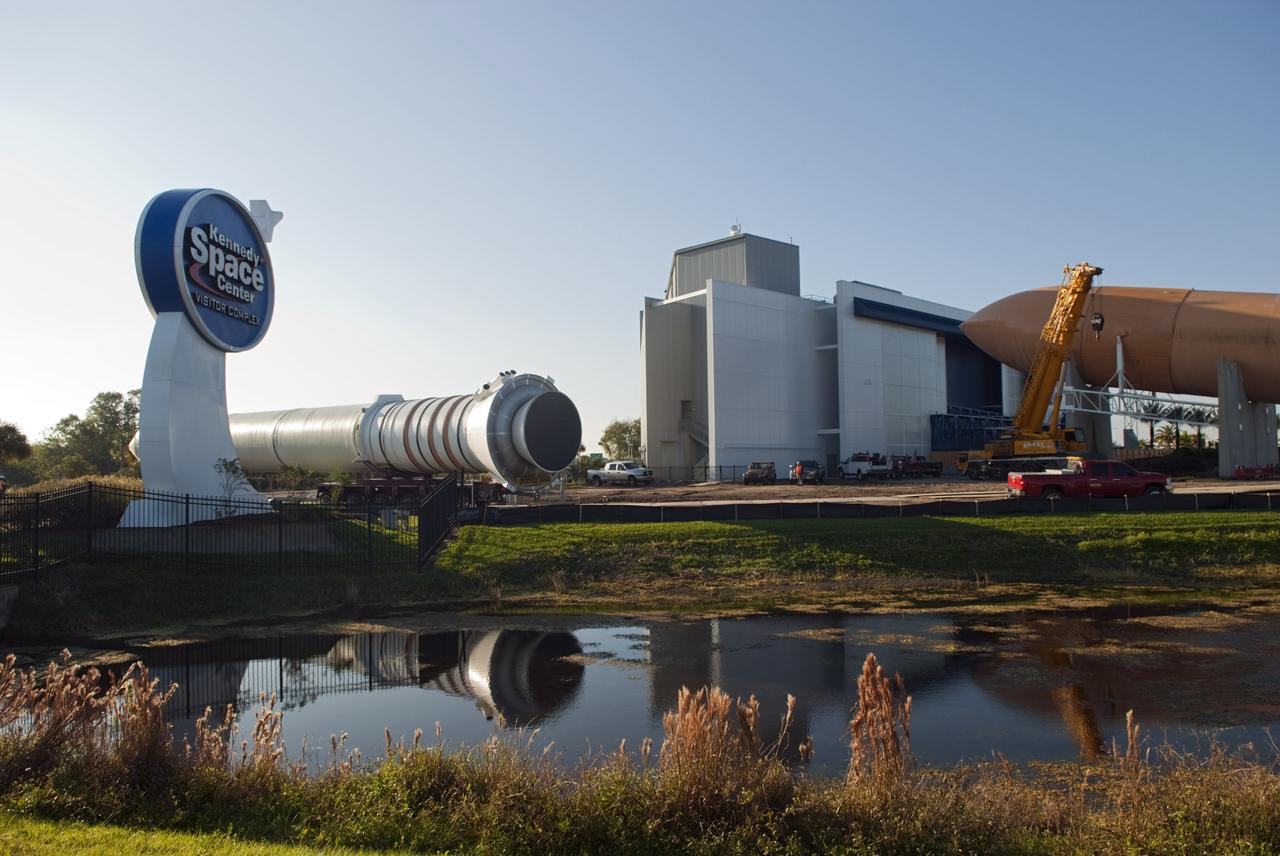
CAPE CANAVERAL, Fla. – A truck hauls a full-size, 149-foot-long, space shuttle solid rocket booster, or SRB, replica from the Kennedy Space Center Visitor Complex as the space-themed attraction makes way for a new exhibit featuring space shuttle Atlantis, which is currently undergoing preparations to go on public display. The SRB is being placed into temporary storage at NASA's Kennedy Space Center. The SRB was part of a mockup of the external tank and two SRBs at the visitor complex that were used to show visitors the size of actual space shuttle components. A space shuttle rode piggyback on the tank and boosters at liftoff and during the ascent into space. The SRBs burned out after about two-and-a-half minutes of flight. After recovery from the ocean, the boosters could be used repeatedly. Photo credit: NASA/Jim Grossman
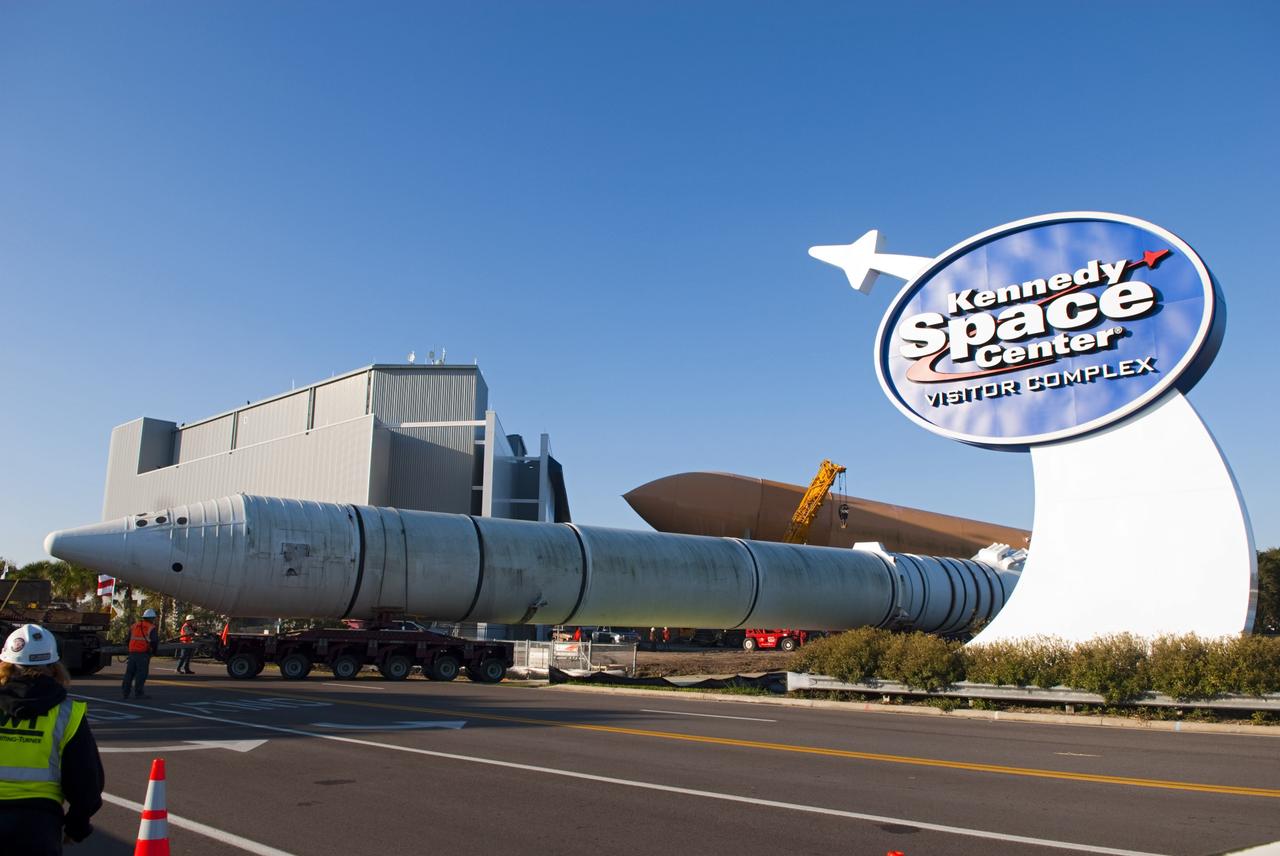
CAPE CANAVERAL, Fla. – A truck hauls a full-size, 149-foot-long, space shuttle solid rocket booster, or SRB, replica from the Kennedy Space Center Visitor Complex as the space-themed attraction makes way for a new exhibit featuring space shuttle Atlantis, which is currently undergoing preparations to go on public display. The SRB is being placed into temporary storage at NASA's Kennedy Space Center. The SRB was part of a mockup of the external tank and two SRBs at the visitor complex that were used to show visitors the size of actual space shuttle components. A space shuttle rode piggyback on the tank and boosters at liftoff and during the ascent into space. The SRBs burned out after about two-and-a-half minutes of flight. After recovery from the ocean, the boosters could be used repeatedly. Photo credit: NASA/Jim Grossman
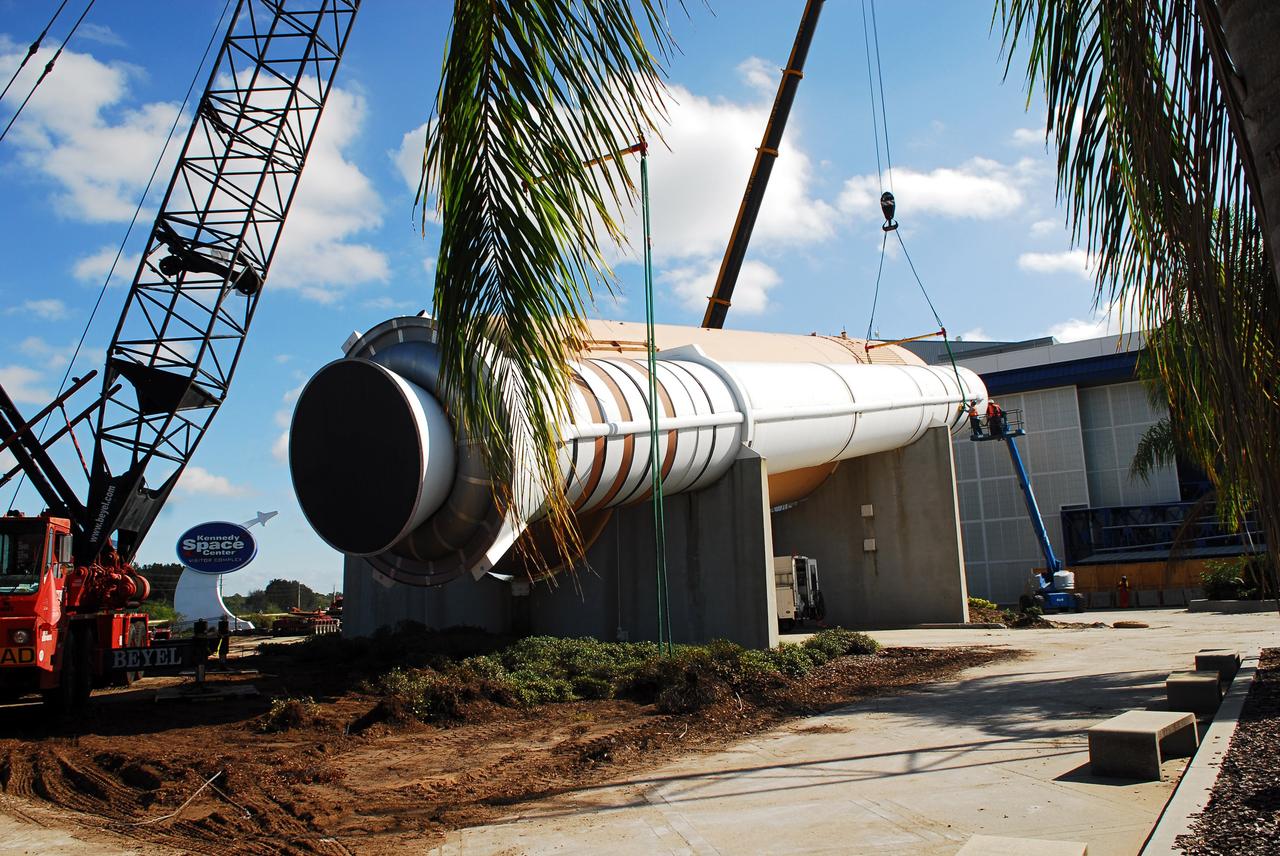
CAPE CANAVERAL, Fla. – Cranes remove a full-size, 149-foot-long, space shuttle solid rocket booster, or SRB, replica from the Kennedy Space Center Visitor Complex as the space-themed attraction makes way for a new exhibit featuring space shuttle Atlantis, which is currently undergoing preparations to go on public display. The SRB is being placed into temporary storage at NASA's Kennedy Space Center. The SRB was part of a mockup of the external tank and two SRBs at the visitor complex that were used to show visitors the size of actual space shuttle components. A space shuttle rode piggyback on the tank and boosters at liftoff and during the ascent into space. The SRBs burned out after about two-and-a-half minutes of flight. After recovery from the ocean, the boosters could be used repeatedly. Photo credit: NASA/Jim Grossman
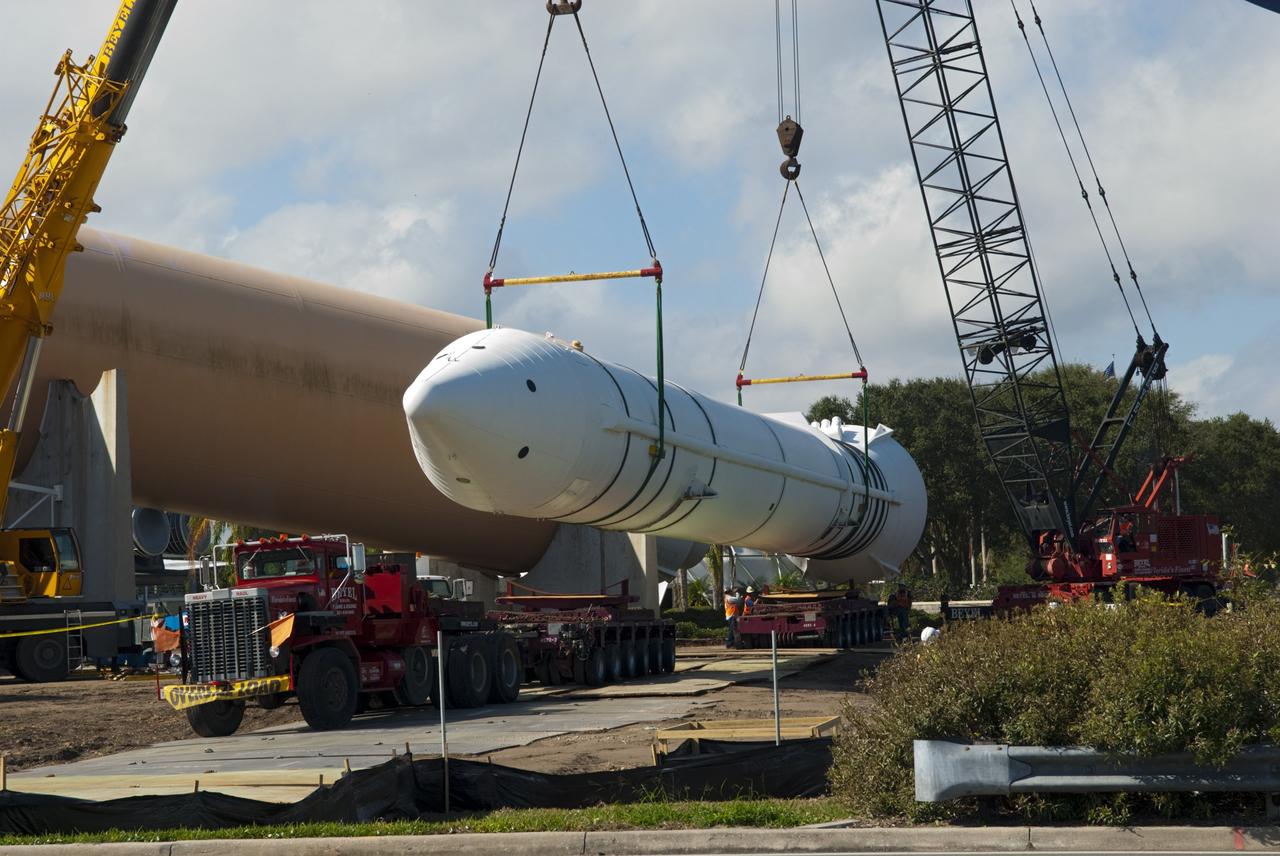
CAPE CANAVERAL, Fla. – Cranes remove a full-size, 149-foot-long, space shuttle solid rocket booster, or SRB, replica from the Kennedy Space Center Visitor Complex as the space-themed attraction makes way for a new exhibit featuring space shuttle Atlantis, which is currently undergoing preparations to go on public display. The SRB is being placed into temporary storage at NASA's Kennedy Space Center. The SRB was part of a mockup of the external tank and two SRBs at the visitor complex that were used to show visitors the size of actual space shuttle components. A space shuttle rode piggyback on the tank and boosters at liftoff and during the ascent into space. The SRBs burned out after about two-and-a-half minutes of flight. After recovery from the ocean, the boosters could be used repeatedly. Photo credit: NASA/Jim Grossmann
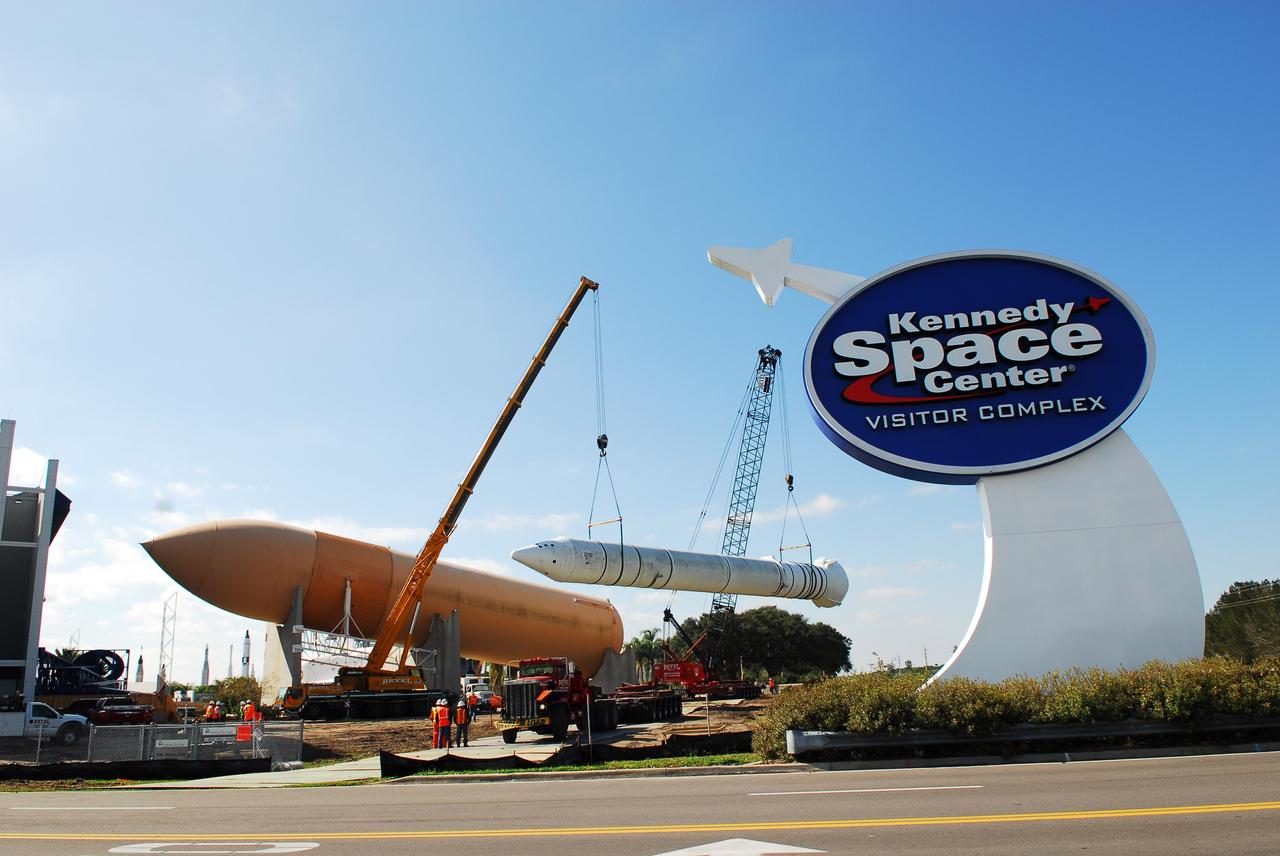
CAPE CANAVERAL, Fla. – Cranes remove a full-size, 149-foot-long, space shuttle solid rocket booster, or SRB, replica from the Kennedy Space Center Visitor Complex as the space-themed attraction makes way for a new exhibit featuring space shuttle Atlantis, which is currently undergoing preparations to go on public display. The SRB is being placed into temporary storage at NASA's Kennedy Space Center. The SRB was part of a mockup of the external tank and two SRBs at the visitor complex that were used to show visitors the size of actual space shuttle components. A space shuttle rode piggyback on the tank and boosters at liftoff and during the ascent into space. The SRBs burned out after about two-and-a-half minutes of flight. After recovery from the ocean, the boosters could be used repeatedly. Photo credit: NASA/Jim Grossman
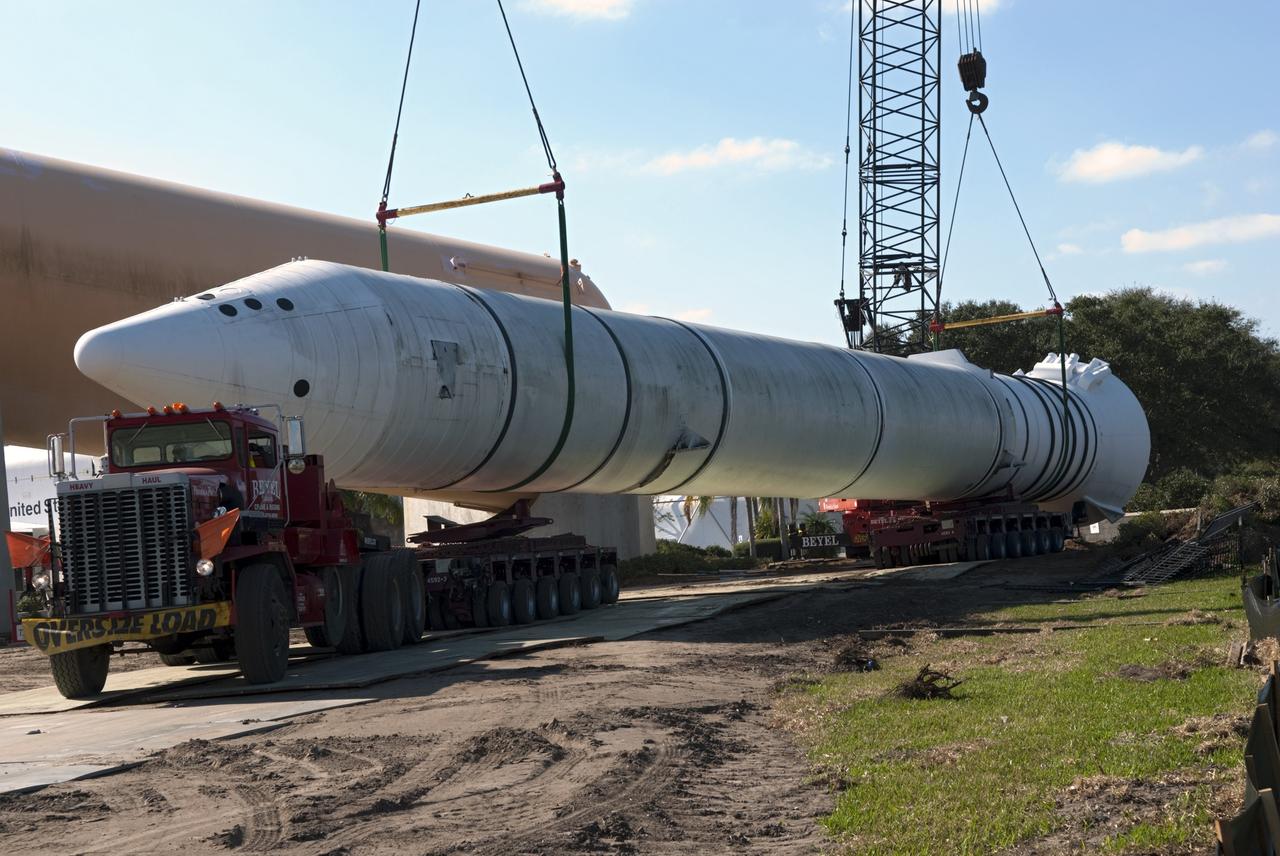
CAPE CANAVERAL, Fla. – Cranes remove a full-size, 149-foot-long, space shuttle solid rocket booster, or SRB, replica from the Kennedy Space Center Visitor Complex as the space-themed attraction makes way for a new exhibit featuring space shuttle Atlantis, which is currently undergoing preparations to go on public display. The SRB is being placed into temporary storage at NASA's Kennedy Space Center. The SRB was part of a mockup of the external tank and two SRBs at the visitor complex that were used to show visitors the size of actual space shuttle components. A space shuttle rode piggyback on the tank and boosters at liftoff and during the ascent into space. The SRBs burned out after about two-and-a-half minutes of flight. After recovery from the ocean, the boosters could be used repeatedly. Photo credit: NASA/Jim Grossman

CAPE CANAVERAL, Fla. – Cranes remove a full-size, 149-foot-long, space shuttle solid rocket booster, or SRB, replica from the Kennedy Space Center Visitor Complex as the space-themed attraction makes way for a new exhibit featuring space shuttle Atlantis, which is currently undergoing preparations to go on public display. The SRB is being placed into temporary storage at NASA's Kennedy Space Center. The SRB was part of a mockup of the external tank and two SRBs at the visitor complex that were used to show visitors the size of actual space shuttle components. A space shuttle rode piggyback on the tank and boosters at liftoff and during the ascent into space. The SRBs burned out after about two-and-a-half minutes of flight. After recovery from the ocean, the boosters could be used repeatedly. Photo credit: NASA/Jim Grossmann
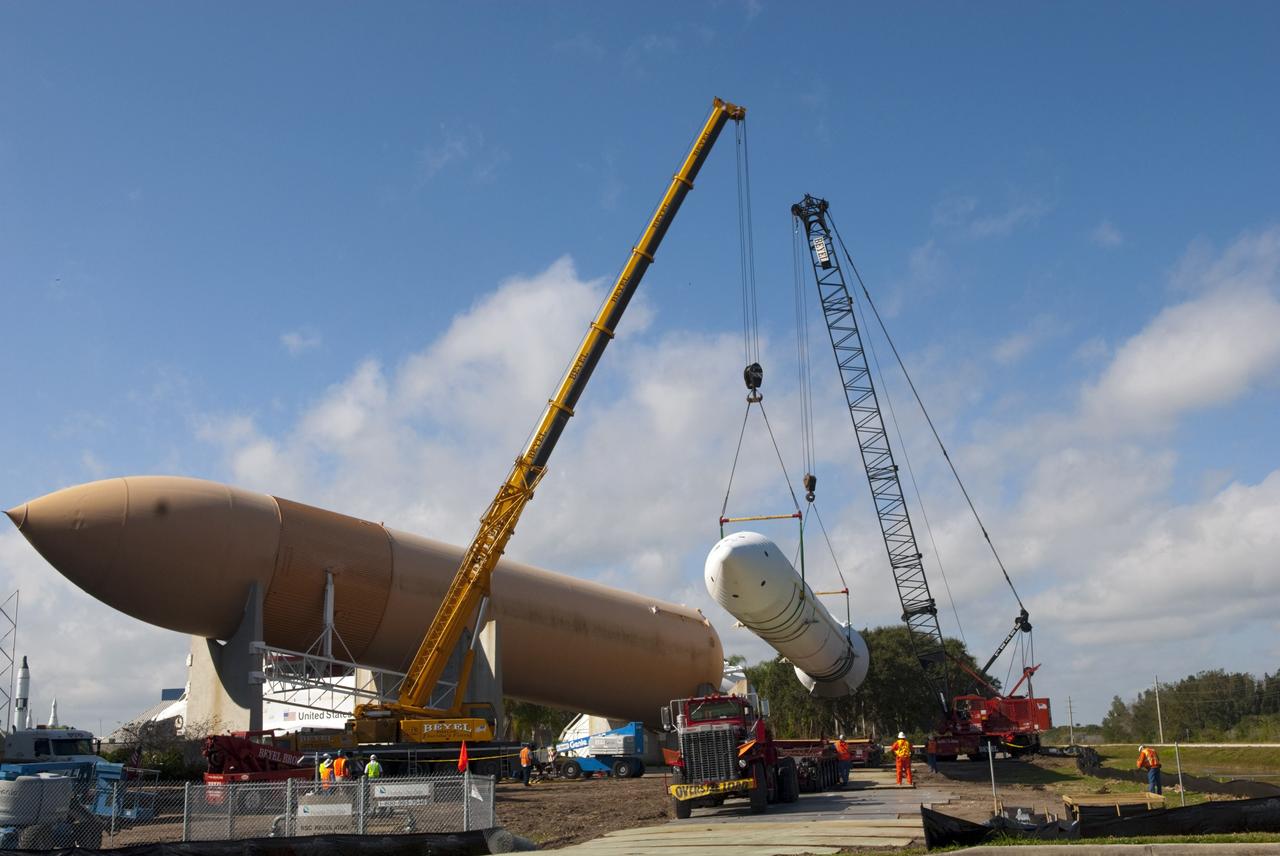
CAPE CANAVERAL, Fla. – Cranes remove a full-size, 149-foot-long, space shuttle solid rocket booster, or SRB, replica from the Kennedy Space Center Visitor Complex as the space-themed attraction makes way for a new exhibit featuring space shuttle Atlantis, which is currently undergoing preparations to go on public display. The SRB is being placed into temporary storage at NASA's Kennedy Space Center. The SRB was part of a mockup of the external tank and two SRBs at the visitor complex that were used to show visitors the size of actual space shuttle components. A space shuttle rode piggyback on the tank and boosters at liftoff and during the ascent into space. The SRBs burned out after about two-and-a-half minutes of flight. After recovery from the ocean, the boosters could be used repeatedly. Photo credit: NASA/Jim Grossmann
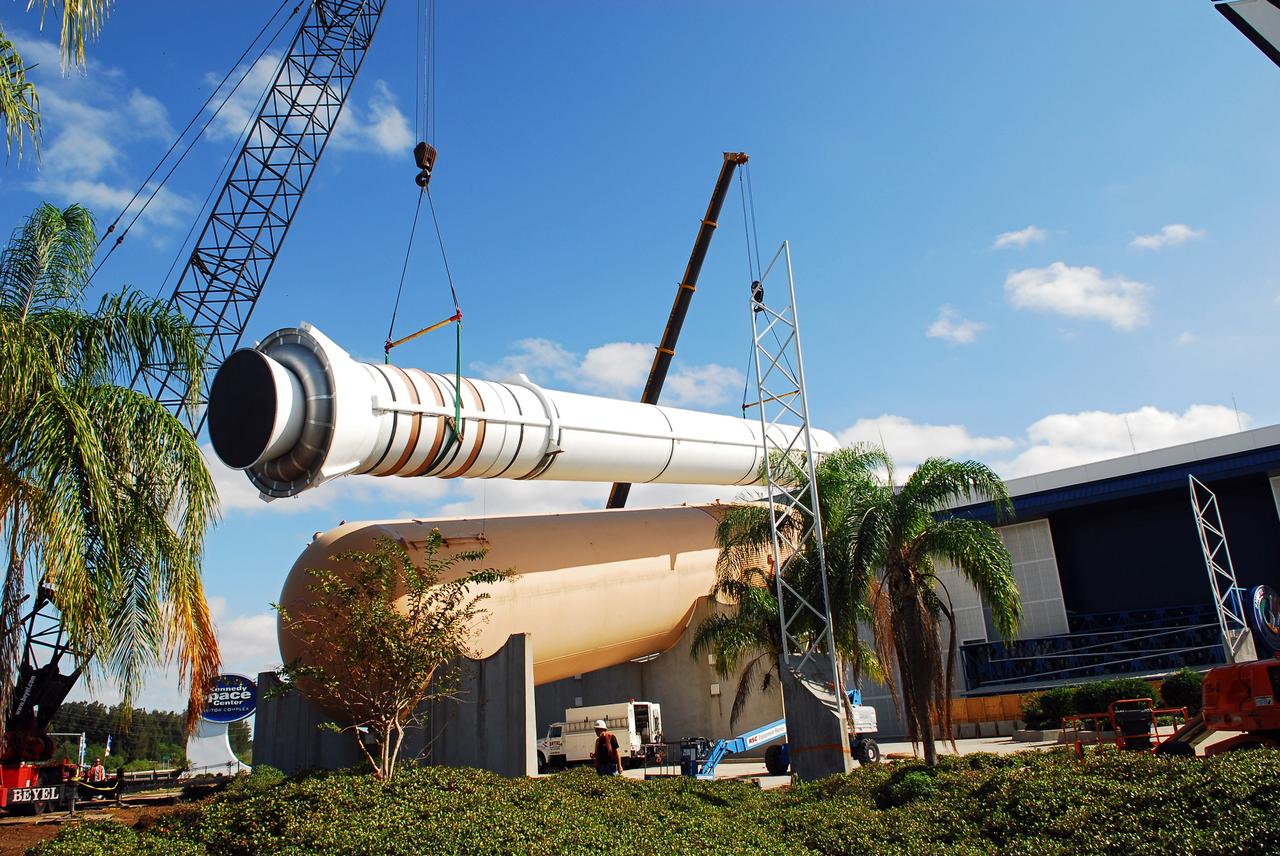
CAPE CANAVERAL, Fla. – Cranes remove a full-size, 149-foot-long, space shuttle solid rocket booster, or SRB, replica from the Kennedy Space Center Visitor Complex as the space-themed attraction makes way for a new exhibit featuring space shuttle Atlantis, which is currently undergoing preparations to go on public display. The SRB is being placed into temporary storage at NASA's Kennedy Space Center. The SRB was part of a mockup of the external tank and two SRBs at the visitor complex that were used to show visitors the size of actual space shuttle components. A space shuttle rode piggyback on the tank and boosters at liftoff and during the ascent into space. The SRBs burned out after about two-and-a-half minutes of flight. After recovery from the ocean, the boosters could be used repeatedly. Photo credit: NASA/Jim Grossman
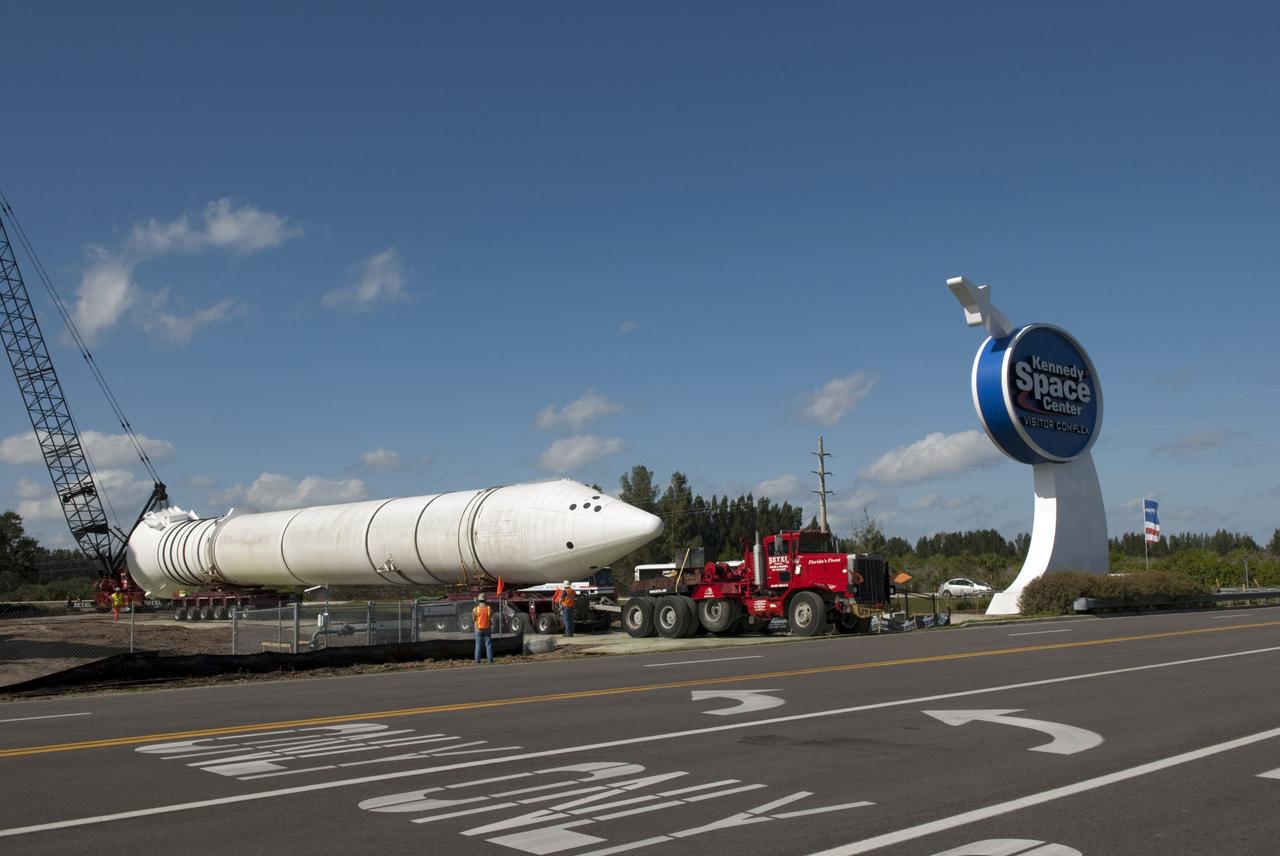
CAPE CANAVERAL, Fla. – A large truck hauls a full-size, 149-foot-long, space shuttle solid rocket booster, or SRB, replica from the Kennedy Space Center Visitor Complex as the space-themed attraction makes way for a new exhibit featuring space shuttle Atlantis, which is currently undergoing preparations to go on public display. The SRB is being placed into temporary storage at NASA's Kennedy Space Center. The SRB was part of a mockup of the external tank and two SRBs at the visitor complex that were used to show visitors the size of actual space shuttle components. A space shuttle rode piggyback on the tank and boosters at liftoff and during the ascent into space. The SRBs burned out after about two-and-a-half minutes of flight. After recovery from the ocean, the boosters could be used repeatedly. Photo credit: NASA/Jim Grossmann
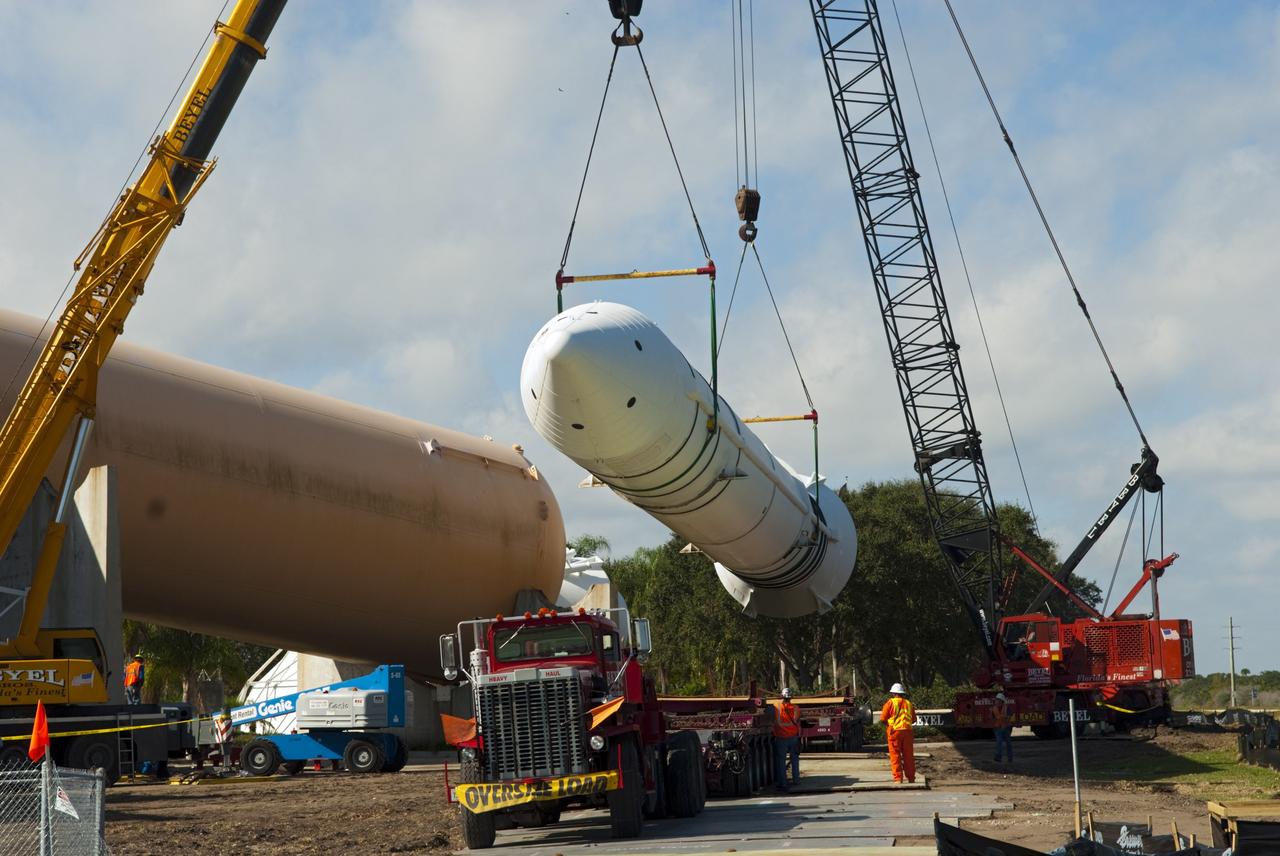
CAPE CANAVERAL, Fla. – Cranes remove a full-size, 149-foot-long, space shuttle solid rocket booster, or SRB, replica from the Kennedy Space Center Visitor Complex as the space-themed attraction makes way for a new exhibit featuring space shuttle Atlantis, which is currently undergoing preparations to go on public display. The SRB is being placed into temporary storage at NASA's Kennedy Space Center. The SRB was part of a mockup of the external tank and two SRBs at the visitor complex that were used to show visitors the size of actual space shuttle components. A space shuttle rode piggyback on the tank and boosters at liftoff and during the ascent into space. The SRBs burned out after about two-and-a-half minutes of flight. After recovery from the ocean, the boosters could be used repeatedly. Photo credit: NASA/Jim Grossmann
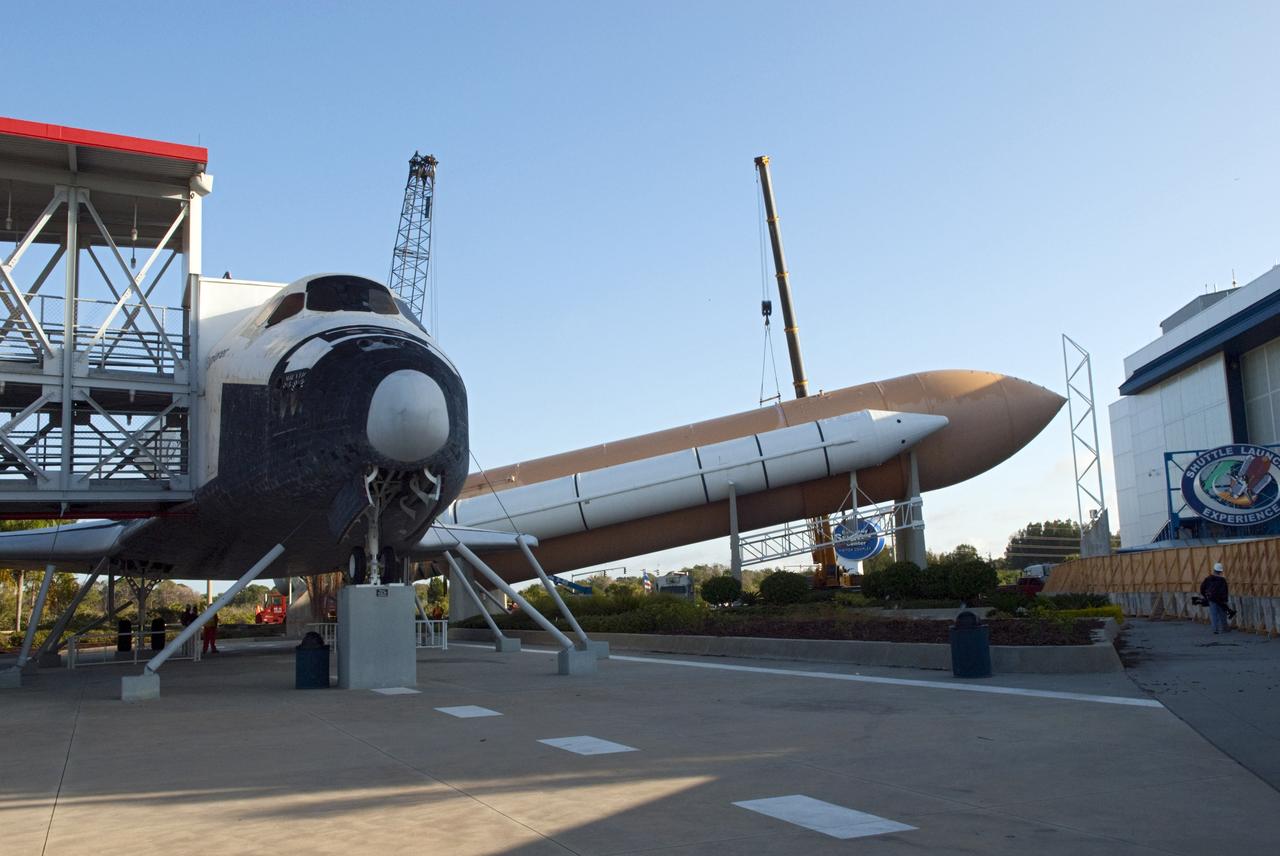
CAPE CANAVERAL, Fla. – Cranes remove a full-size, 149-foot-long, space shuttle solid rocket booster, or SRB, replica from the Kennedy Space Center Visitor Complex as the space-themed attraction makes way for a new exhibit featuring space shuttle Atlantis, which is currently undergoing preparations to go on public display. The SRB is being placed into temporary storage at NASA's Kennedy Space Center. The SRB was part of a mockup of the external tank and two SRBs at the visitor complex that were used to show visitors the size of actual space shuttle components. A space shuttle rode piggyback on the tank and boosters at liftoff and during the ascent into space. The SRBs burned out after about two-and-a-half minutes of flight. After recovery from the ocean, the boosters could be used repeatedly. Photo credit: NASA/Jim Grossmann
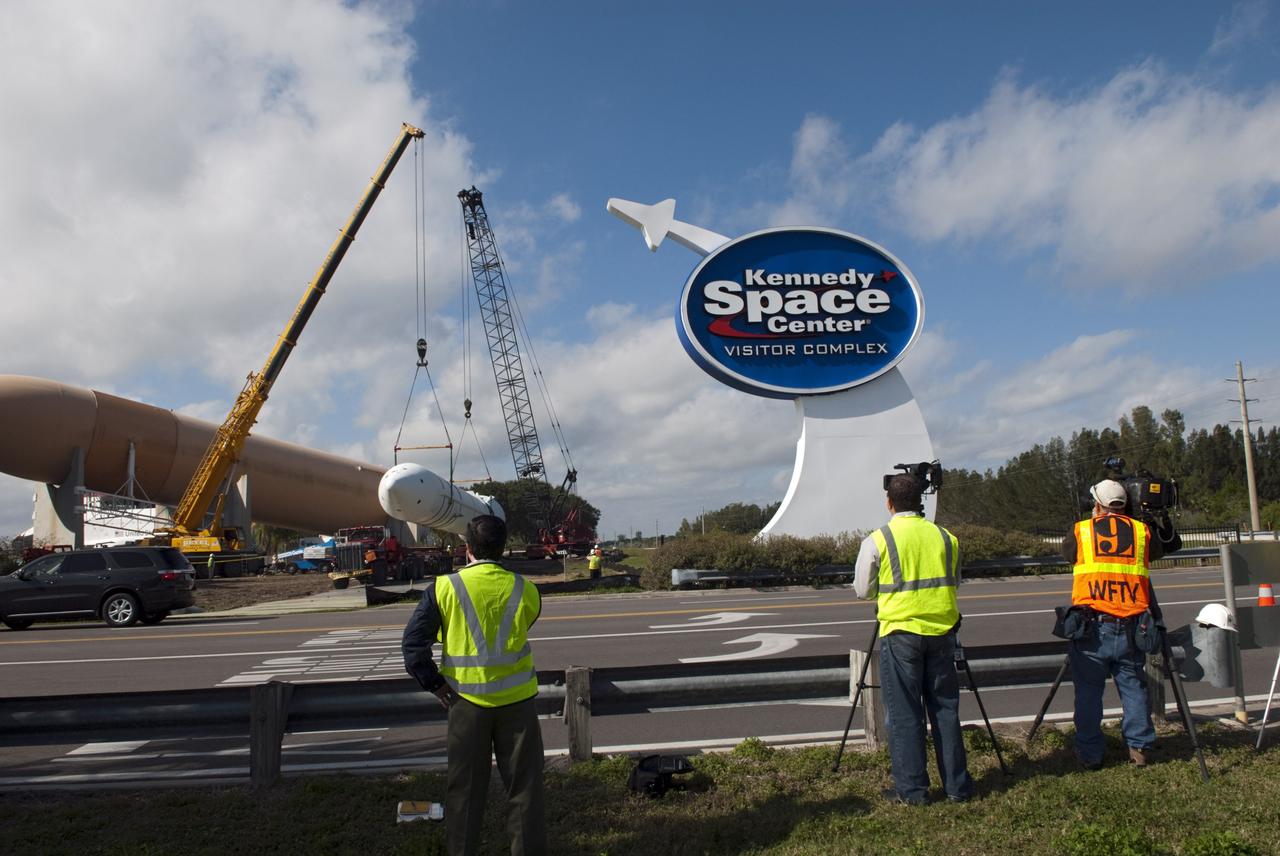
CAPE CANAVERAL, Fla. – Cranes remove a full-size, 149-foot-long, space shuttle solid rocket booster, or SRB, replica from the Kennedy Space Center Visitor Complex as the space-themed attraction makes way for a new exhibit featuring space shuttle Atlantis, which is currently undergoing preparations to go on public display. The SRB is being placed into temporary storage at NASA's Kennedy Space Center. The SRB was part of a mockup of the external tank and two SRBs at the visitor complex that were used to show visitors the size of actual space shuttle components. A space shuttle rode piggyback on the tank and boosters at liftoff and during the ascent into space. The SRBs burned out after about two-and-a-half minutes of flight. After recovery from the ocean, the boosters could be used repeatedly. Photo credit: NASA/Jim Grossmann
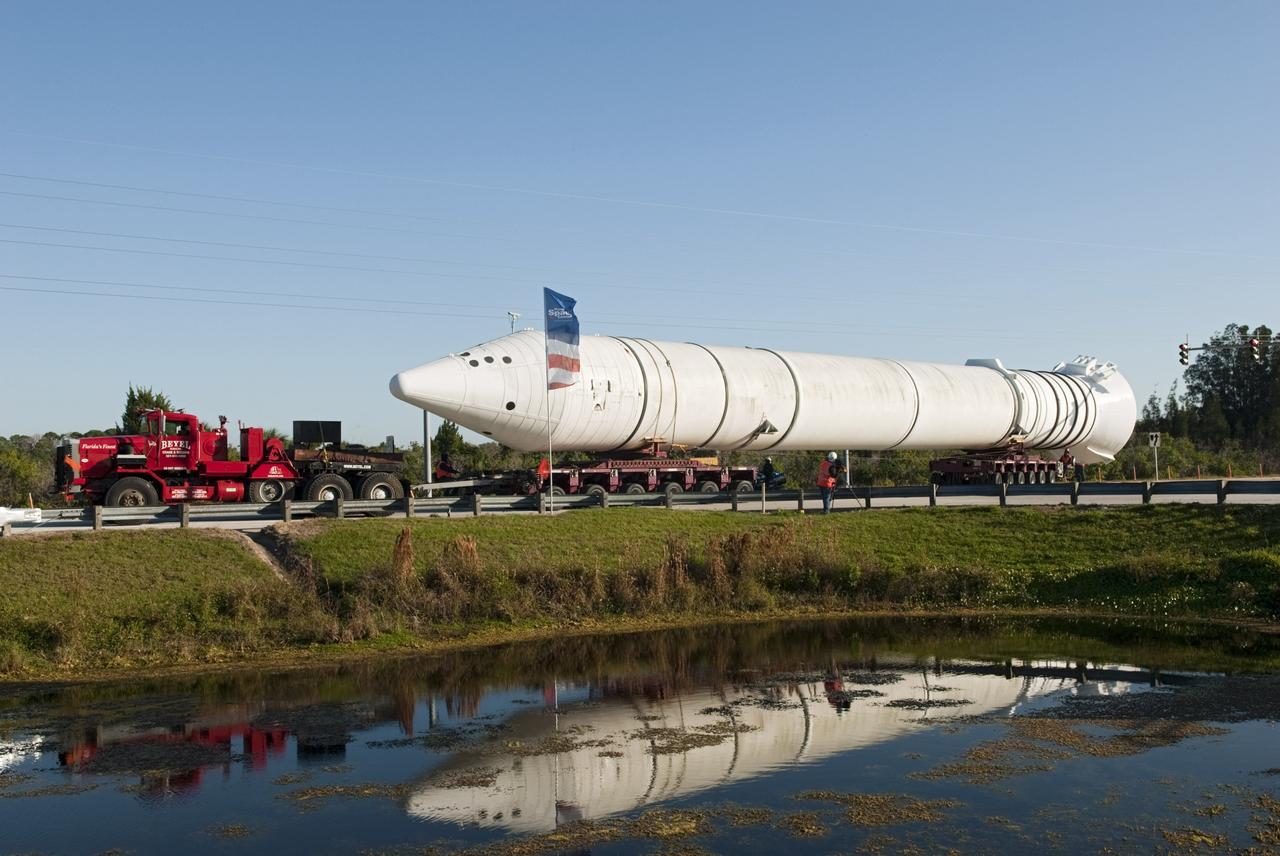
CAPE CANAVERAL, Fla. – A truck hauls a full-size, 149-foot-long, space shuttle solid rocket booster, or SRB, replica from the Kennedy Space Center Visitor Complex as the space-themed attraction makes way for a new exhibit featuring space shuttle Atlantis, which is currently undergoing preparations to go on public display. The SRB is being placed into temporary storage at NASA's Kennedy Space Center. The SRB was part of a mockup of the external tank and two SRBs at the visitor complex that were used to show visitors the size of actual space shuttle components. A space shuttle rode piggyback on the tank and boosters at liftoff and during the ascent into space. The SRBs burned out after about two-and-a-half minutes of flight. After recovery from the ocean, the boosters could be used repeatedly. Photo credit: NASA/Jim Grossman
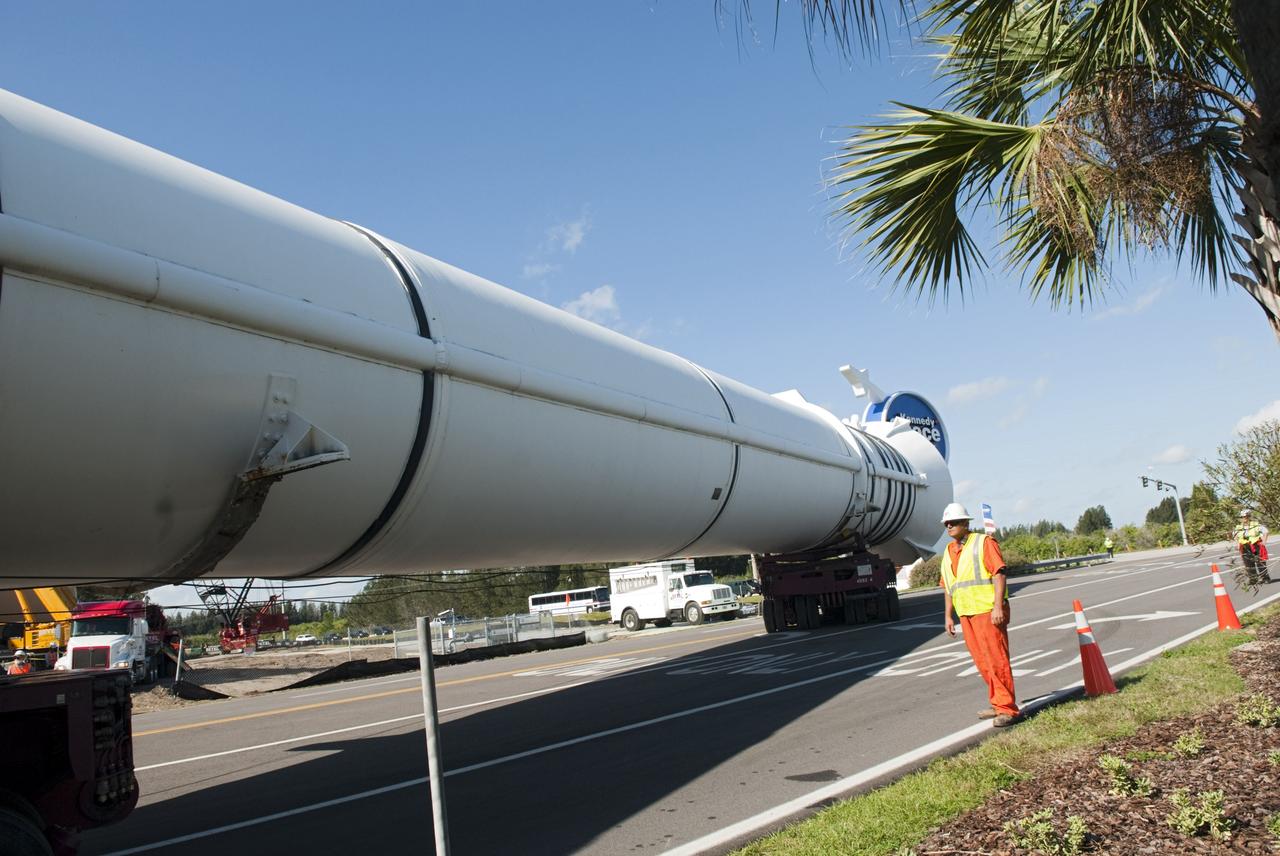
CAPE CANAVERAL, Fla. – A large truck hauls a full-size, 149-foot-long, space shuttle solid rocket booster, or SRB, replica from the Kennedy Space Center Visitor Complex as the space-themed attraction makes way for a new exhibit featuring space shuttle Atlantis, which is currently undergoing preparations to go on public display. The SRB is being placed into temporary storage at NASA's Kennedy Space Center. The SRB was part of a mockup of the external tank and two SRBs at the visitor complex that were used to show visitors the size of actual space shuttle components. A space shuttle rode piggyback on the tank and boosters at liftoff and during the ascent into space. The SRBs burned out after about two-and-a-half minutes of flight. After recovery from the ocean, the boosters could be used repeatedly. Photo credit: NASA/Jim Grossmann
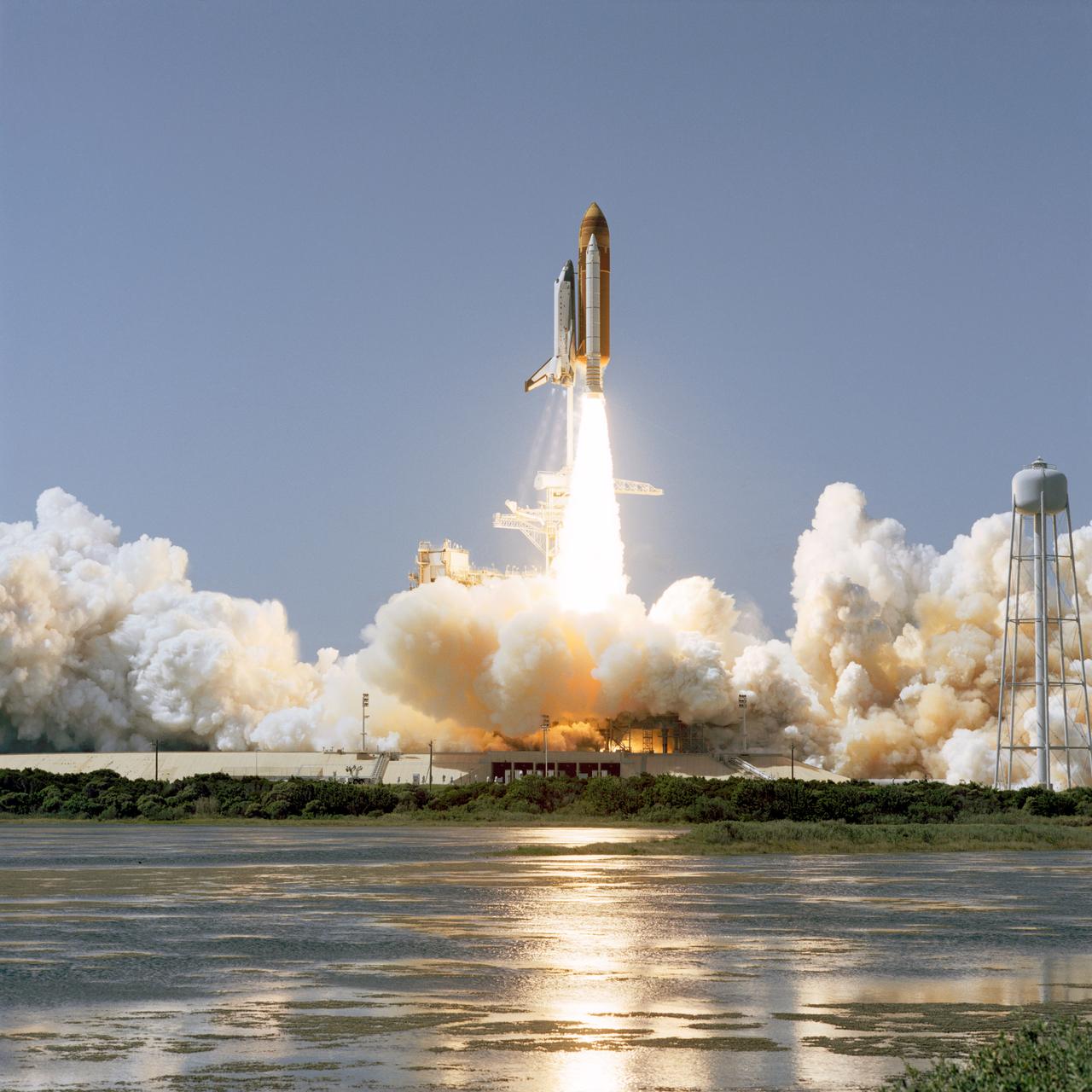
STS052-S-051 (22 Oct 1992) --- This distant 70mm image shows the Space Shuttle Columbia clearing the tower at Launch Pad 39B, at the Kennedy Space Center (KSC), on its way toward a ten-day Earth-orbital mission with a crew of five NASA astronauts and a Canadian payload specialist. Liftoff occurred at 1:09:39 p.m. (EDT), October 22, 1992. Crew members are astronauts James D. Wetherbee, Michael A. Baker, Tamara E. Jernigan, Charles L. (Lacy) Veach and William M. Shepherd, along with payload specialist Steven G. MacLean. Payloads onboard include the Laser Geodynamic Satellite II (LAGEOS II), which will be deployed early in the mission, a series of Canadian experiments, and the United States Microgravity Payload-1 (USMP-1).
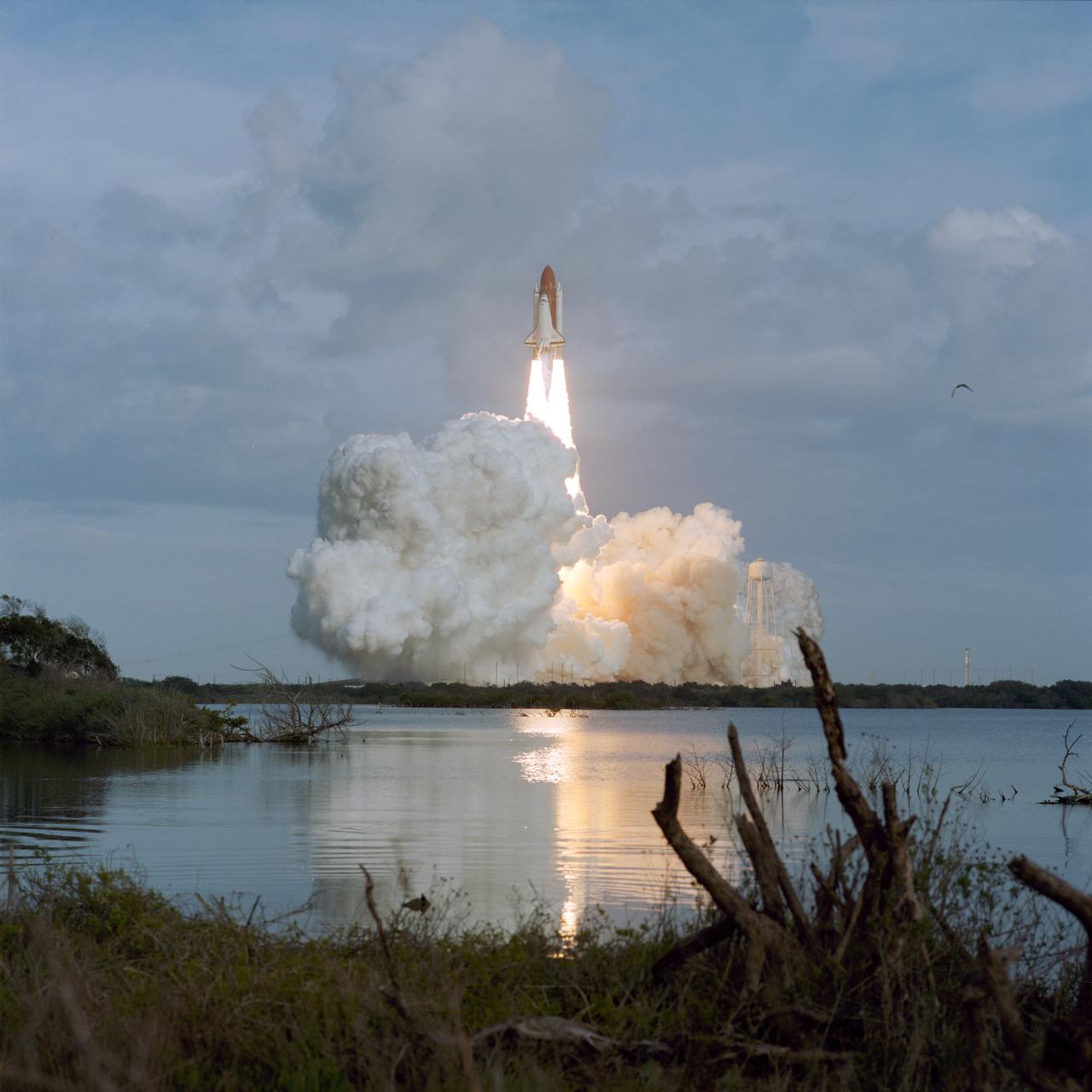
STS054-S-061 (13 Jan 1993) --- The Space Shuttle Endeavour creates a mountain of exhaust clouds as is soars off the launch pad and heads toward Earth orbit with a crew of five and the Tracking and Data Relay Satellite (TDRS-F) aboard. Launch occurred at 8:59:30 a.m. (EST), January 13, 1993. Onboard were John H. Casper, mission commander, Donald R. McMonagle, pilot, Gregory J. Harbaugh, Mario Runco Jr., and Susan J. Helms, mission specialists.
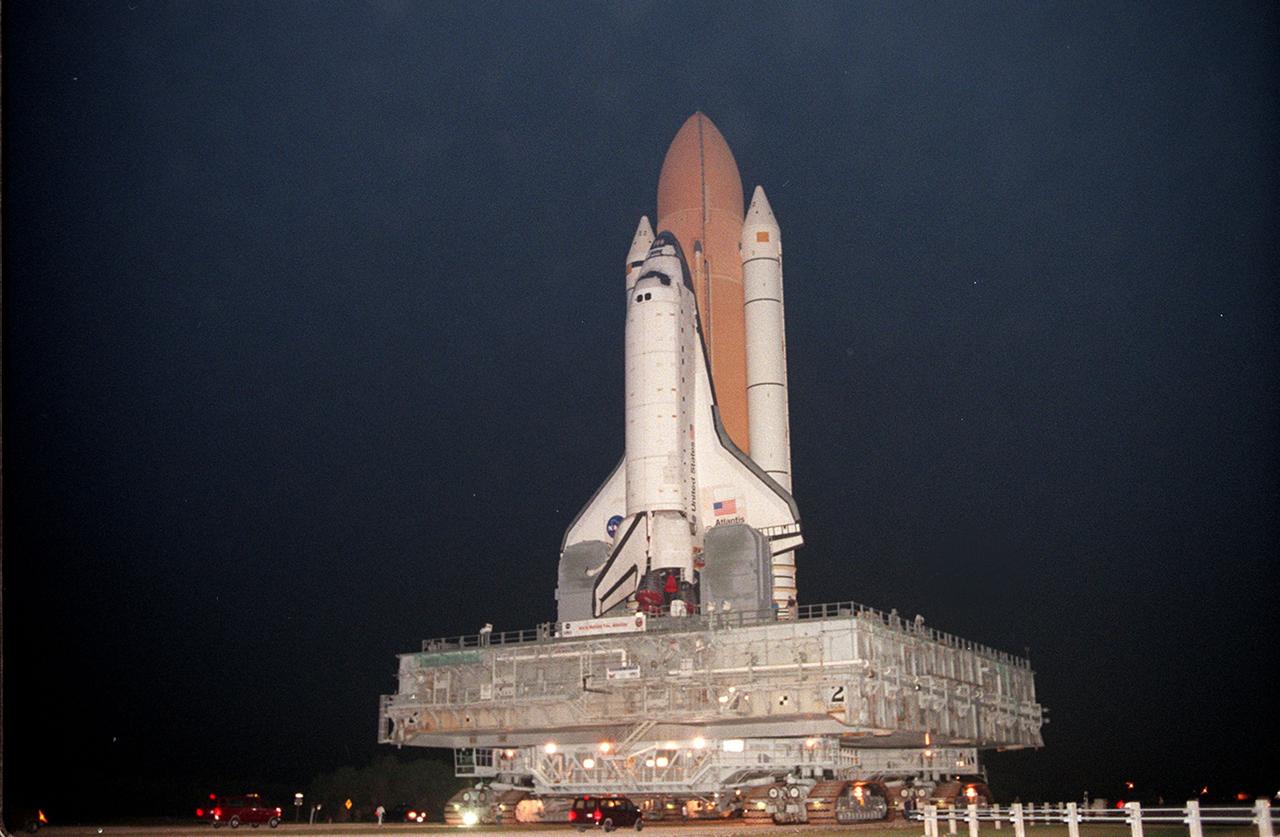
KENNEDY SPACE CENTER, FLA. -- Shuttle Atlantis, with twin solid rocket boosters and external tank atop the Mobile Launcher Platform and crawler-transorter, moves in the predawn hours into high bay 2 in the Vehicle Assembly Building (VAB). For the first time in Space Shuttle history, a fully stacked Shuttle is rolling around the north side of the VAB into high bay 2 on the building's west side. The VAB and nearby rock-paved crawlerway have recently undergone major modifications to provide Shuttle fliglht hardware more storage space and protection - "Safe Haven" - from hurricanes or tropical storms. Atlantis, the twin solid rocket boosters and external tank begain moving out of VAB high bay 1 on the east side at 2:59 a.m. EDT. After the successful "Safe Haven" fit check, Shuttle Atlantis is scheduled to roll out to Launch Pad 39B in preparation for the STS-106 launch on Sept. 8.
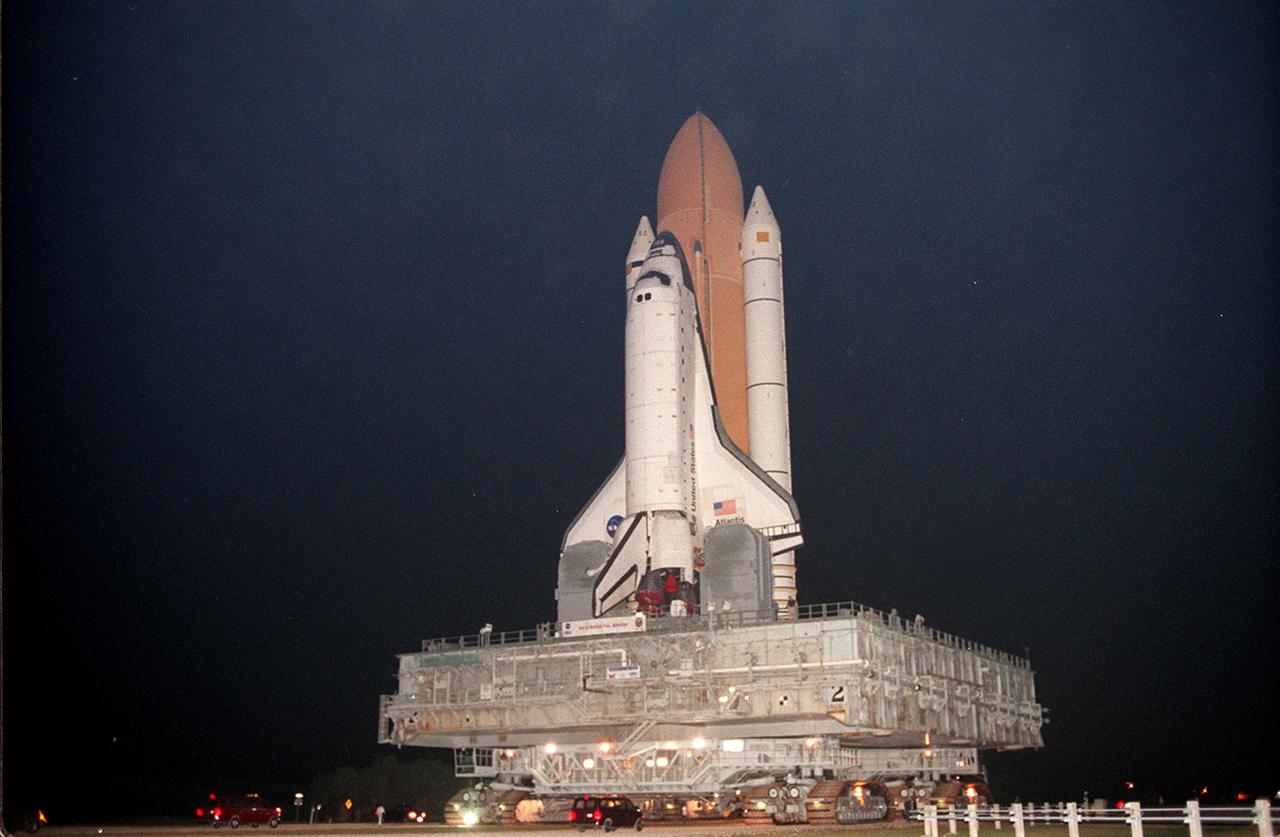
KENNEDY SPACE CENTER, FLA. -- Shuttle Atlantis, with twin solid rocket boosters and external tank atop the Mobile Launcher Platform and crawler-transorter, moves in the predawn hours into high bay 2 in the Vehicle Assembly Building (VAB). For the first time in Space Shuttle history, a fully stacked Shuttle is rolling around the north side of the VAB into high bay 2 on the building's west side. The VAB and nearby rock-paved crawlerway have recently undergone major modifications to provide Shuttle fliglht hardware more storage space and protection - "Safe Haven" - from hurricanes or tropical storms. Atlantis, the twin solid rocket boosters and external tank begain moving out of VAB high bay 1 on the east side at 2:59 a.m. EDT. After the successful "Safe Haven" fit check, Shuttle Atlantis is scheduled to roll out to Launch Pad 39B in preparation for the STS-106 launch on Sept. 8.
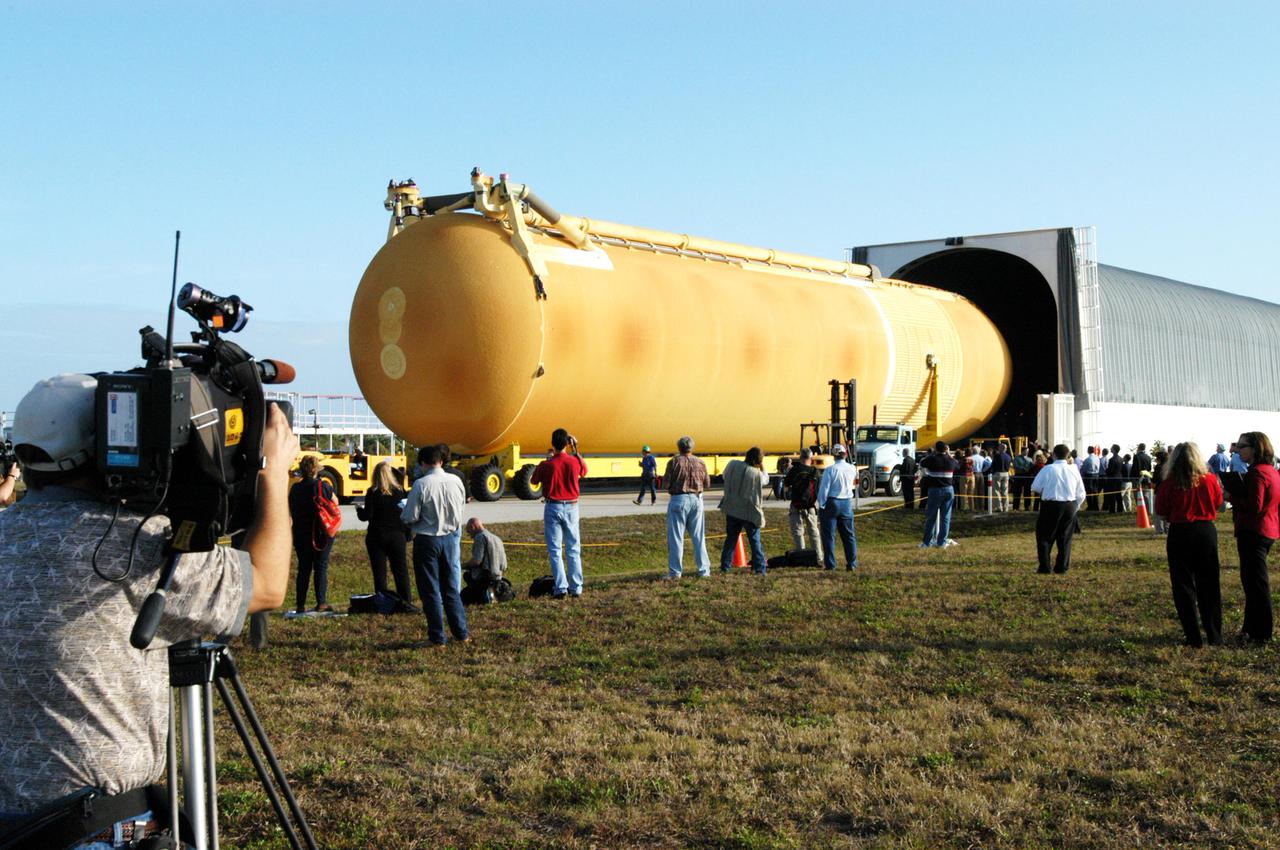
KENNEDY SPACE CENTER, FLA. - Media view the newly redesigned External Tank as it is off-loaded from the barge that carried it from the Michoud Assembly Facility in New Orleans. The tank is being transported to the Vehicle Assembly Building. The tank arrived Jan. 5 after a 900-mile sea voyage aboard NASA’s specially designed barge, Pegasus, from the Michoud Assembly Facility in New Orleans. In the transfer aisle of the VAB, the tank will be raised from a horizontal to a vertical position, then lifted high up into a storage cell, or “checkout cell,” where it will undergo inspections of the mechanical, electrical and thermal protection systems. New processing activities resulting from re-design of the tank include inspection of the bipod heater and External Tank separation camera, which includes charging the camera batteries. The tank will be then prepared for mating to the Solid Rocket Boosters. When preparations are complete, the tank will be lifted from the checkout cell, moved across the transfer aisle and into High Bay 1, where it will be lowered and attached to the boosters, which are sitting on the Mobile Launch Platform. The tank is designated for the Return to Flight mission, STS-114, targeted for a launch opportunity beginning in May. The seven-member Discovery crew will fly to the International Space Station primarily to test and evaluate new procedures for flight safety, including Space Shuttle inspection and repair techniques.
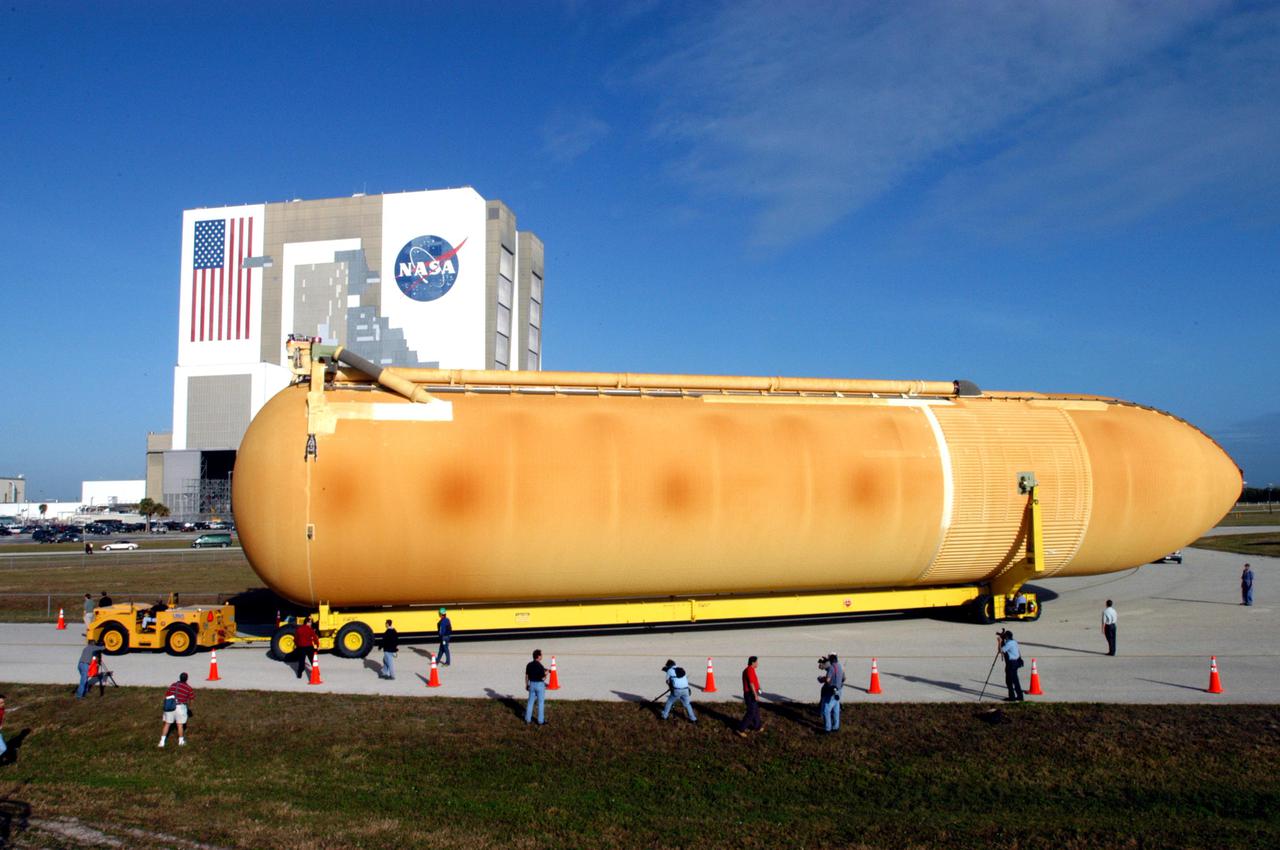
KENNEDY SPACE CENTER, FLA. - KSC employees accompany the newly redesigned External Tank as it wends its way through the parking area at the Launch Complex 39 Area Turn Basin. The tank is being moved to the Vehicle Assembly Building, seen behind it. The tank arrived Jan. 5 after a 900-mile sea voyage aboard NASA’s specially designed barge, Pegasus, from the Michoud Assembly Facility in New Orleans. In the transfer aisle of the VAB, the tank will be raised from a horizontal to a vertical position, then lifted high up into a storage cell, or “checkout cell,” where it will undergo inspections of the mechanical, electrical and thermal protection systems. New processing activities resulting from re-design of the tank include inspection of the bipod heater and External Tank separation camera, which includes charging the camera batteries. The tank will be then prepared for mating to the Solid Rocket Boosters. When preparations are complete, the tank will be lifted from the checkout cell, moved across the transfer aisle and into High Bay 1, where it will be lowered and attached to the boosters, which are sitting on the Mobile Launch Platform. The tank is designated for the Return to Flight mission, STS-114, targeted for a launch opportunity beginning in May. The seven-member Discovery crew will fly to the International Space Station primarily to test and evaluate new procedures for flight safety, including Space Shuttle inspection and repair techniques.
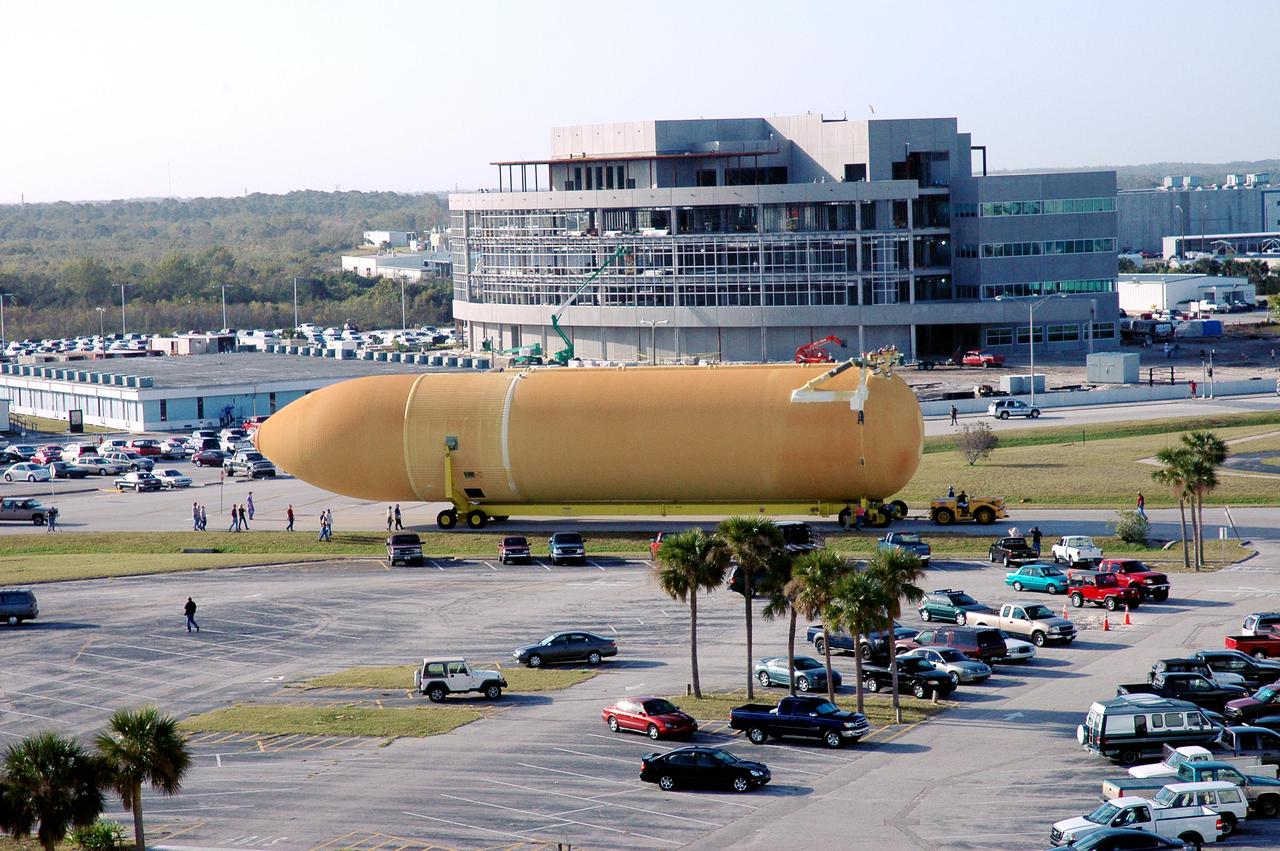
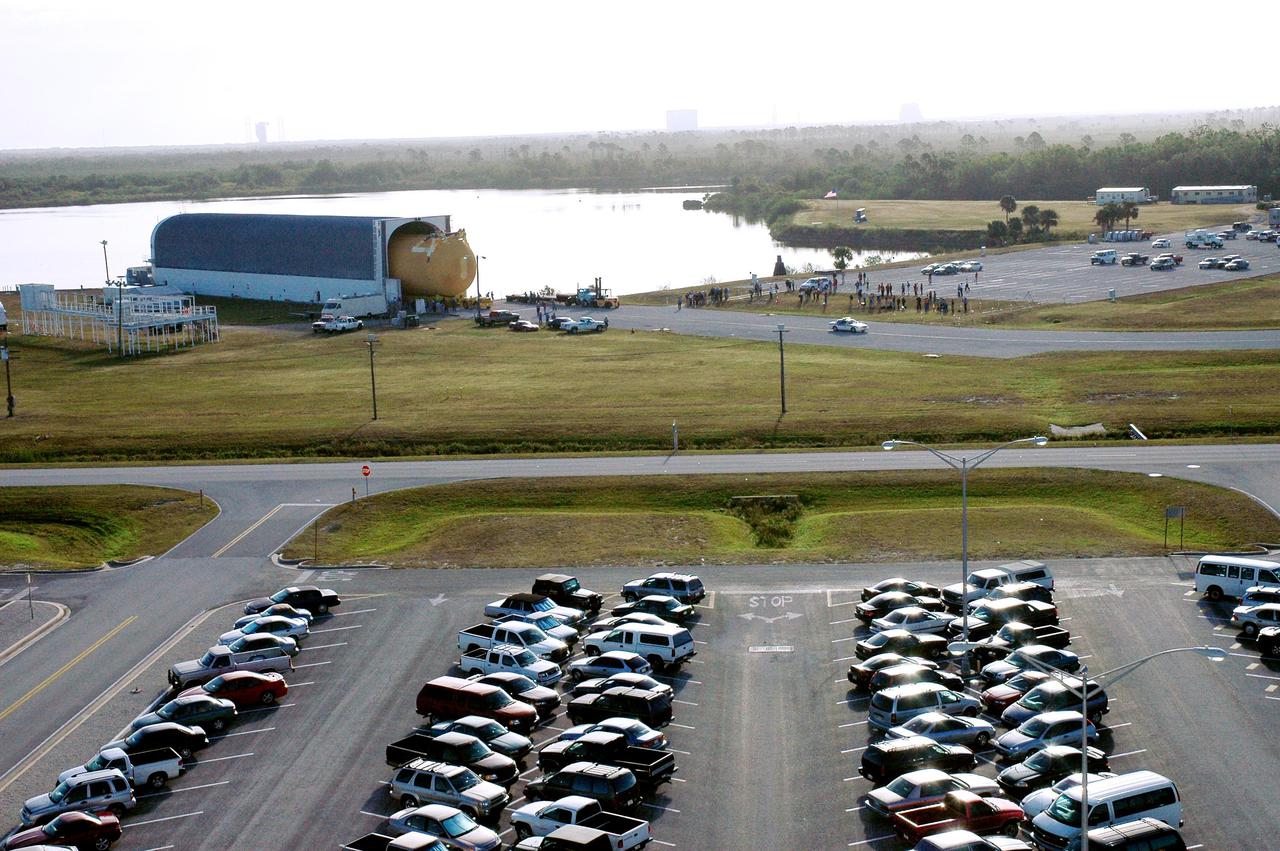
KENNEDY SPACE CENTER, FLA. - Viewed from the roof of the Launch Control Center in the Launch Complex 39 Area, the newly redesigned External Tank is seen moving past the parking area on its way to the Vehicle Assembly Building. Behind the tank is Operations Support Building II, currently under construction. In the transfer aisle of the VAB, the tank will be raised from a horizontal to a vertical position, then lifted high up into a storage cell, or “checkout cell,” where it will undergo inspections of the mechanical, electrical and thermal protection systems. New processing activities resulting from re-design of the tank include inspection of the bipod heater and External Tank separation camera, which includes charging the camera batteries. The tank will be then prepared for mating to the Solid Rocket Boosters. When preparations are complete, the tank will be lifted from the checkout cell, moved across the transfer aisle and into High Bay 1, where it will be lowered and attached to the boosters, which are sitting on the Mobile Launch Platform. The tank is designated for the Return to Flight mission, STS-114, targeted for a launch opportunity beginning in May. The seven-member Discovery crew will fly to the International Space Station primarily to test and evaluate new procedures for flight safety, including Space Shuttle inspection and repair techniques.
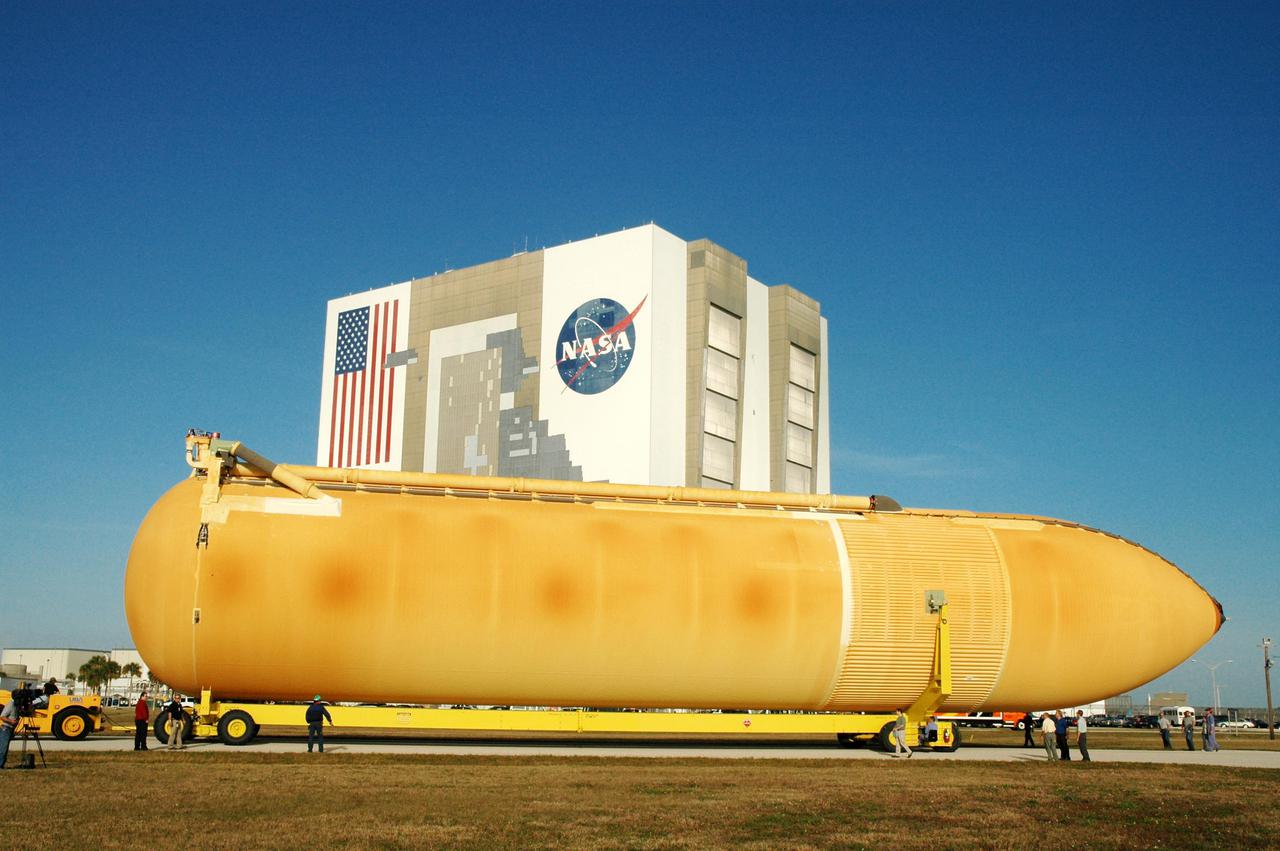
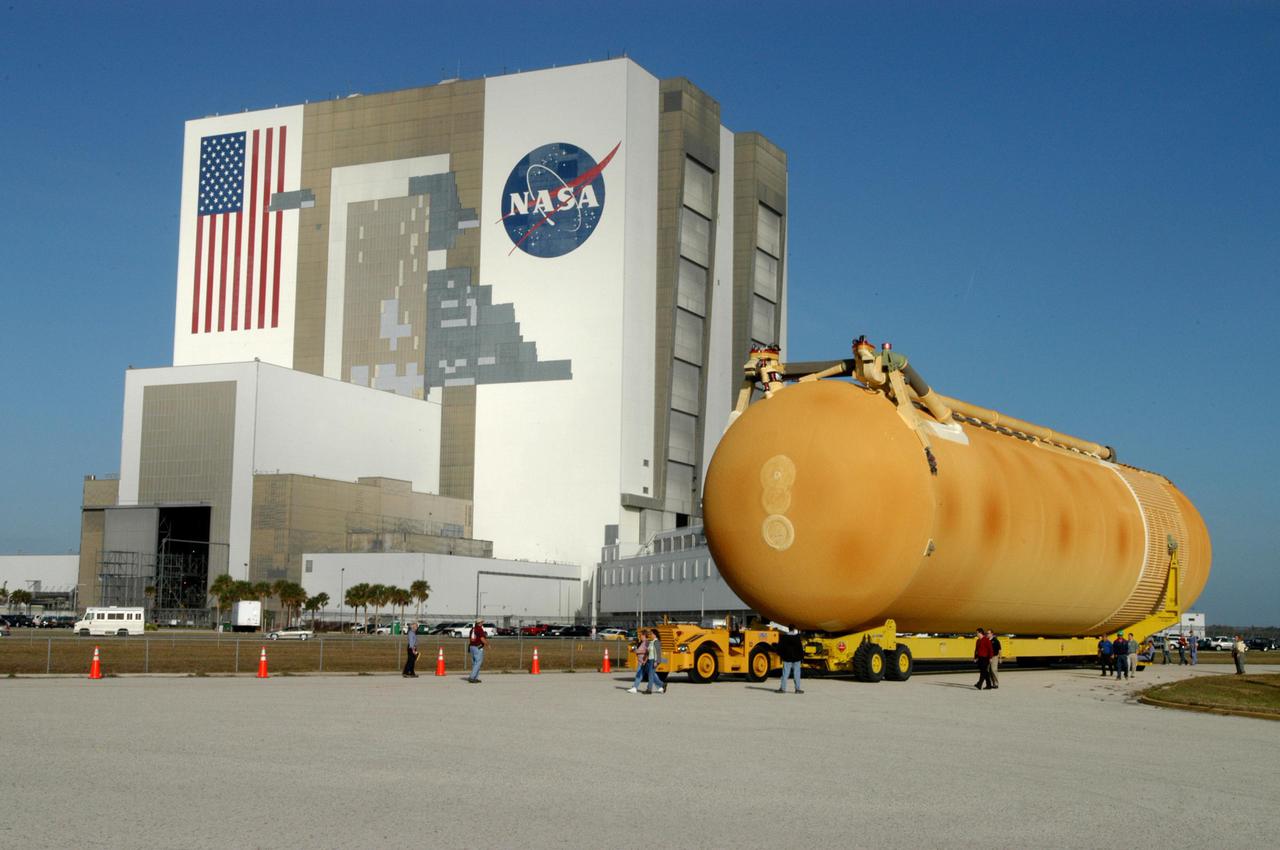
KENNEDY SPACE CENTER, FLA. - The newly redesigned External Tank wends its way through the parking area at the Launch Complex 39 Area Turn Basin on its way to the Vehicle Assembly Building, seen behind it. The tank arrived Jan. 5 after a 900-mile sea voyage aboard NASA’s specially designed barge, Pegasus, from the Michoud Assembly Facility in New Orleans. In the transfer aisle of the VAB, the tank will be raised from a horizontal to a vertical position, then lifted high up into a storage cell, or “checkout cell,” where it will undergo inspections of the mechanical, electrical and thermal protection systems. New processing activities resulting from re-design of the tank include inspection of the bipod heater and External Tank separation camera, which includes charging the camera batteries. The tank will be then prepared for mating to the Solid Rocket Boosters. When preparations are complete, the tank will be lifted from the checkout cell, moved across the transfer aisle and into High Bay 1, where it will be lowered and attached to the boosters, which are sitting on the Mobile Launch Platform. The tank is designated for the Return to Flight mission, STS-114, targeted for a launch opportunity beginning in May. The seven-member Discovery crew will fly to the International Space Station primarily to test and evaluate new procedures for flight safety, including Space Shuttle inspection and repair techniques.
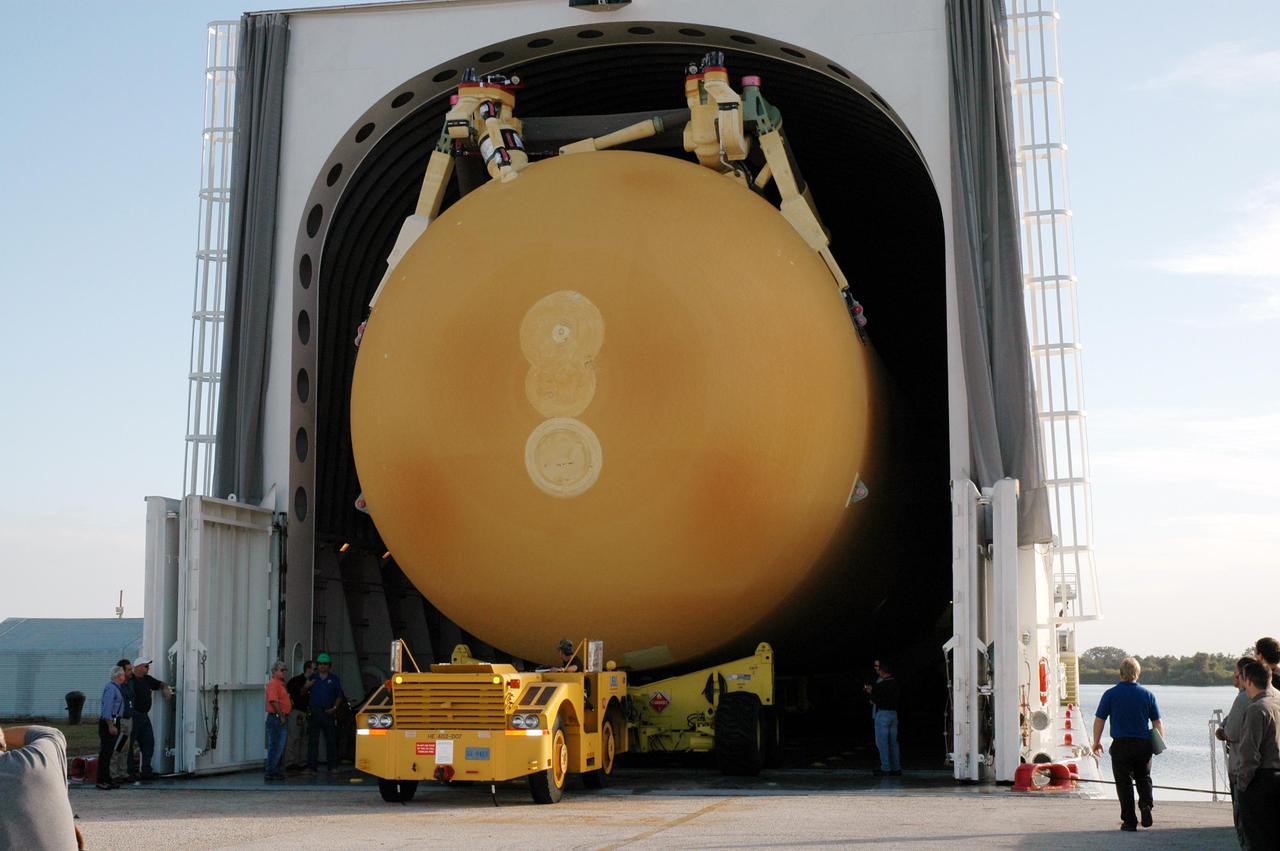
KENNEDY SPACE CENTER, FLA. - Media view the newly redesigned External Tank as a transporter begins off-loading it from the barge that carried it from the Michoud Assembly Facility in New Orleans. The tank is being transported to the Vehicle Assembly Building. In the transfer aisle of the VAB, the tank will be raised from a horizontal to a vertical position, then lifted high up into a storage cell, or “checkout cell,” where it will undergo inspections of the mechanical, electrical and thermal protection systems. New processing activities resulting from re-design of the tank include inspection of the bipod heater and External Tank separation camera, which includes charging the camera batteries. The tank will be then prepared for mating to the Solid Rocket Boosters. When preparations are complete, the tank will be lifted from the checkout cell, moved across the transfer aisle and into High Bay 1, where it will be lowered and attached to the boosters, which are sitting on the Mobile Launch Platform. The tank is designated for the Return to Flight mission, STS-114, targeted for a launch opportunity beginning in May. The seven-member Discovery crew will fly to the International Space Station primarily to test and evaluate new procedures for flight safety, including Space Shuttle inspection and repair techniques.
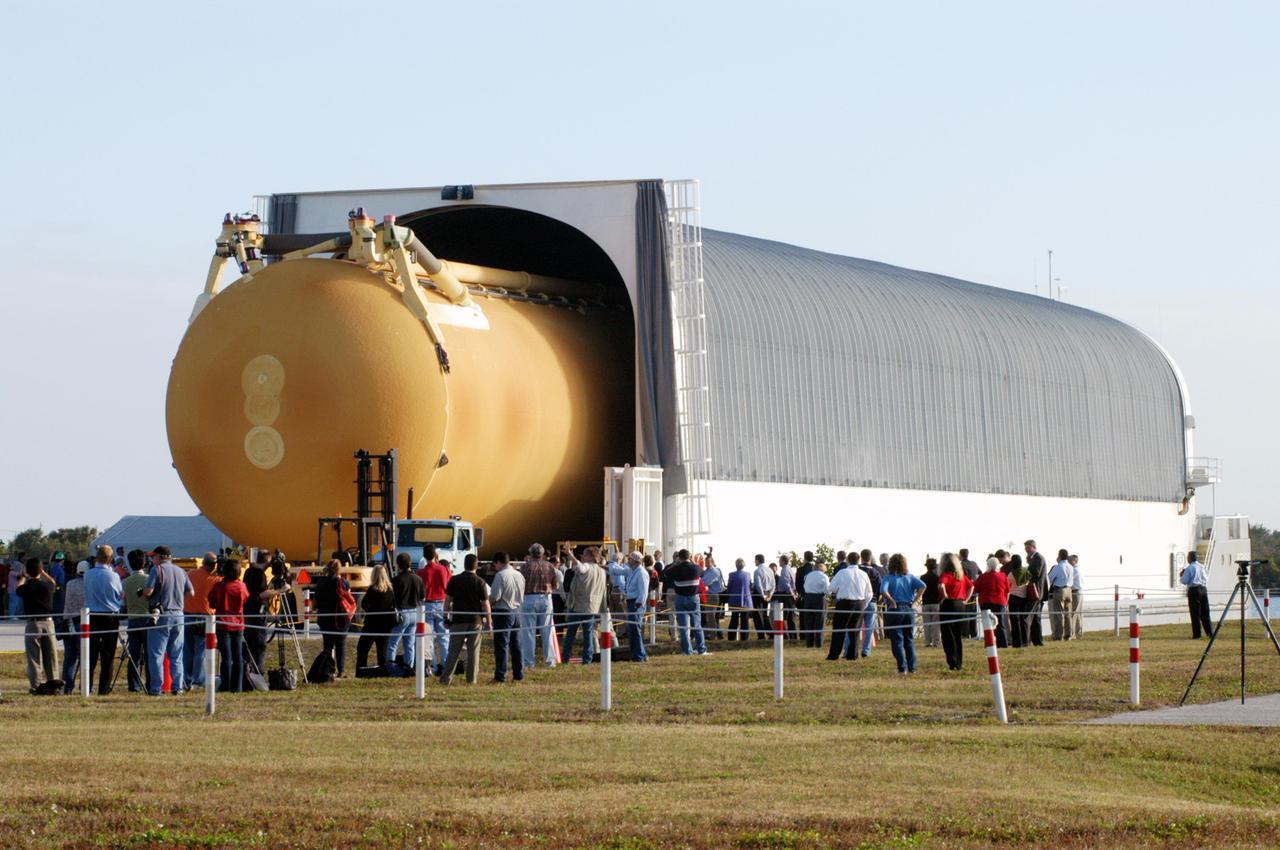
KENNEDY SPACE CENTER, FLA. - Media view the newly redesigned External Tank as it is off-loaded from the barge that carried it from the Michoud Assembly Facility in New Orleans. The tank is being transported to the Vehicle Assembly Building. In the transfer aisle of the VAB, the tank will be raised from a horizontal to a vertical position, then lifted high up into a storage cell, or “checkout cell,” where it will undergo inspections of the mechanical, electrical and thermal protection systems. New processing activities resulting from re-design of the tank include inspection of the bipod heater and External Tank separation camera, which includes charging the camera batteries. The tank will be then prepared for mating to the Solid Rocket Boosters. When preparations are complete, the tank will be lifted from the checkout cell, moved across the transfer aisle and into High Bay 1, where it will be lowered and attached to the boosters, which are sitting on the Mobile Launch Platform. The tank is designated for the Return to Flight mission, STS-114, targeted for a launch opportunity beginning in May. The seven-member Discovery crew will fly to the International Space Station primarily to test and evaluate new procedures for flight safety, including Space Shuttle inspection and repair techniques.

KENNEDY SPACE CENTER, FLA. - Media view the newly redesigned External Tank after its off-loading from the barge that carried it from the Michoud Assembly Facility in New Orleans. The tank is being transported to the Vehicle Assembly Building. In the transfer aisle of the VAB, the tank will be raised from a horizontal to a vertical position, then lifted high up into a storage cell, or “checkout cell,” where it will undergo inspections of the mechanical, electrical and thermal protection systems. New processing activities resulting from re-design of the tank include inspection of the bipod heater and External Tank separation camera, which includes charging the camera batteries. The tank will be then prepared for mating to the Solid Rocket Boosters. When preparations are complete, the tank will be lifted from the checkout cell, moved across the transfer aisle and into High Bay 1, where it will be lowered and attached to the boosters, which are sitting on the Mobile Launch Platform. The tank is designated for the Return to Flight mission, STS-114, targeted for a launch opportunity beginning in May. The seven-member Discovery crew will fly to the International Space Station primarily to test and evaluate new procedures for flight safety, including Space Shuttle inspection and repair techniques.
KENNEDY SPACE CENTER, FLA. - The newly redesigned External Tank is slowly moved from the dock in the Launch Complex 39 Area Turn Basin on its way to the Vehicle Assembly Building, seen at left. The tank arrived Jan. 5 after a 900-mile sea voyage aboard NASA’s specially designed barge, Pegasus, from the Michoud Assembly Facility in New Orleans. In the transfer aisle of the VAB, the tank will be raised from a horizontal to a vertical position, then lifted high up into a storage cell, or “checkout cell,” where it will undergo inspections of the mechanical, electrical and thermal protection systems. New processing activities resulting from re-design of the tank include inspection of the bipod heater and External Tank separation camera, which includes charging the camera batteries. The tank will be then prepared for mating to the Solid Rocket Boosters. When preparations are complete, the tank will be lifted from the checkout cell, moved across the transfer aisle and into High Bay 1, where it will be lowered and attached to the boosters, which are sitting on the Mobile Launch Platform. The tank is designated for the Return to Flight mission, STS-114, targeted for a launch opportunity beginning in May. The seven-member Discovery crew will fly to the International Space Station primarily to test and evaluate new procedures for flight safety, including Space Shuttle inspection and repair techniques.
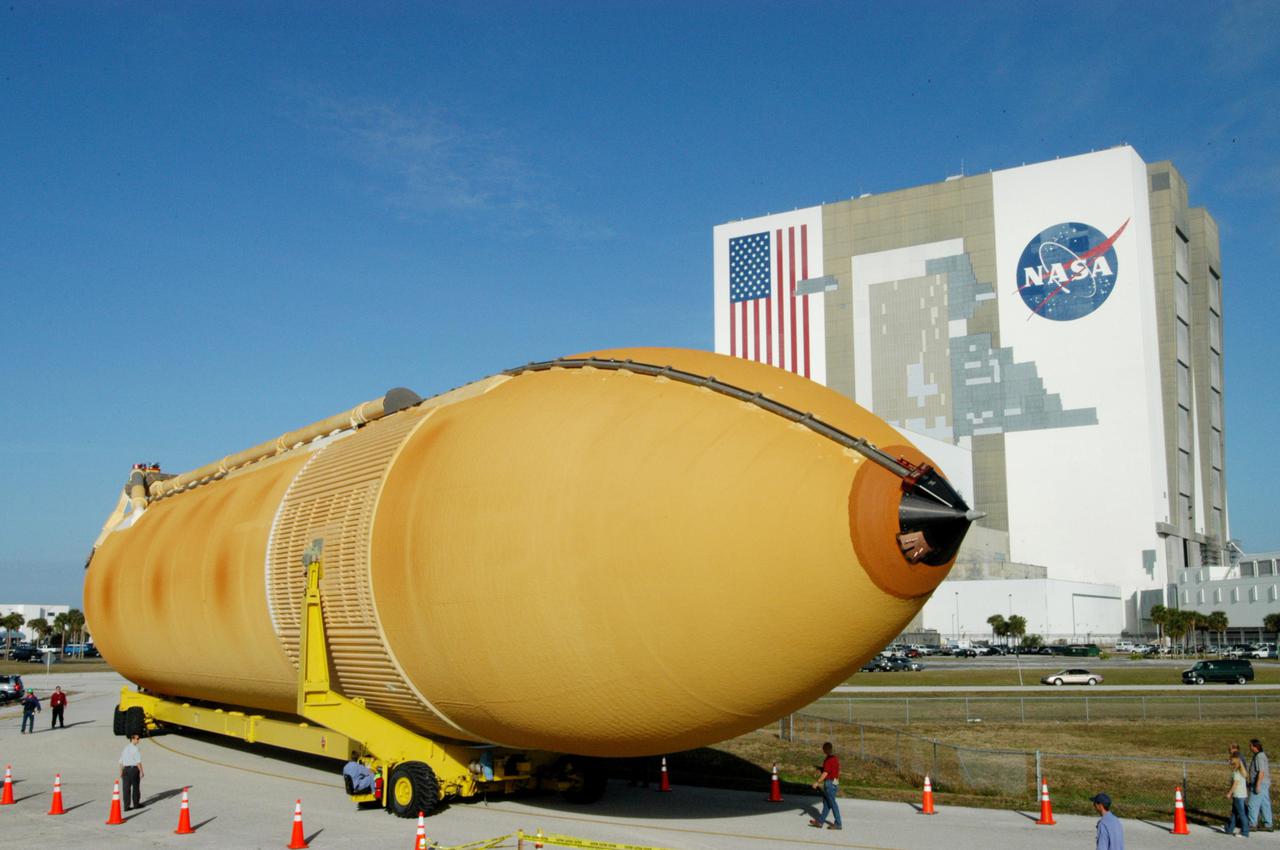
KENNEDY SPACE CENTER, FLA. - The newly redesigned External Tank turns the corner of the Launch Complex 39 Area Turn Basin parking area on its way to the Vehicle Assembly Building, seen at right. The tank arrived Jan. 5 after a 900-mile sea voyage aboard NASA’s specially designed barge, Pegasus, from the Michoud Assembly Facility in New Orleans. In the transfer aisle of the VAB, the tank will be raised from a horizontal to a vertical position, then lifted high up into a storage cell, or “checkout cell,” where it will undergo inspections of the mechanical, electrical and thermal protection systems. New processing activities resulting from re-design of the tank include inspection of the bipod heater and External Tank separation camera, which includes charging the camera batteries. The tank will be then prepared for mating to the Solid Rocket Boosters. When preparations are complete, the tank will be lifted from the checkout cell, moved across the transfer aisle and into High Bay 1, where it will be lowered and attached to the boosters, which are sitting on the Mobile Launch Platform. The tank is designated for the Return to Flight mission, STS-114, targeted for a launch opportunity beginning in May. The seven-member Discovery crew will fly to the International Space Station primarily to test and evaluate new procedures for flight safety, including Space Shuttle inspection and repair techniques.
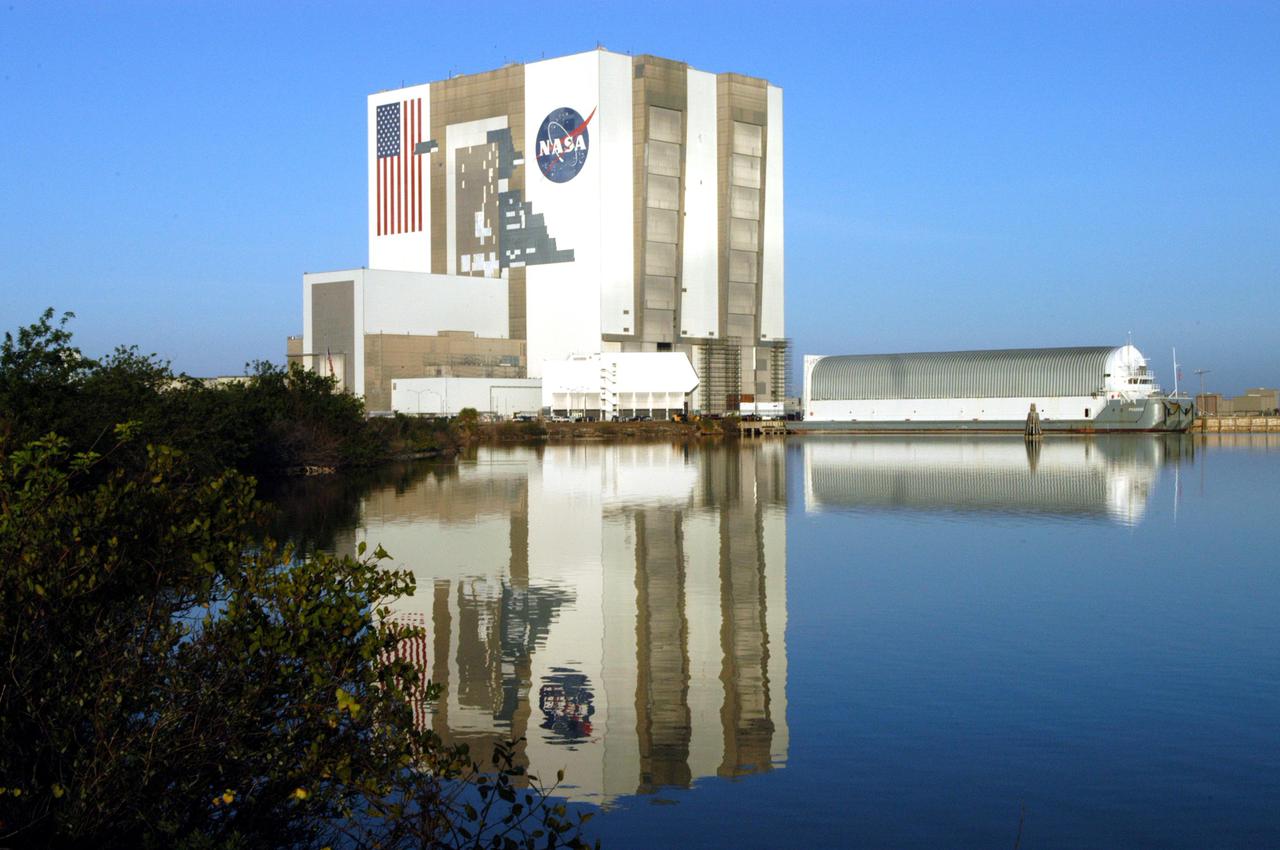
KENNEDY SPACE CENTER, FLA. - NASA’s specially designed barge, Pegasus, is docked in the Launch Complex 39 Area Turn Basin with its cargo of the newly redesigned External Tank. The barge was towed from the Michoud Assembly Facility in New Orleans. The tank will be off-loaded and transported to the Vehicle Assembly Building, seen at left of the barge. In the transfer aisle of the VAB, the tank will be raised from a horizontal to a vertical position, then lifted high up into a storage cell, or “checkout cell,” where it will undergo inspections of the mechanical, electrical and thermal protection systems. New processing activities resulting from re-design of the tank include inspection of the bipod heater and External Tank separation camera, which includes charging the camera batteries. The tank will be then prepared for mating to the Solid Rocket Boosters. When preparations are complete, the tank will be lifted from the checkout cell, moved across the transfer aisle and into High Bay 1, where it will be lowered and attached to the boosters, which are sitting on the Mobile Launch Platform. The tank is designated for the Return to Flight mission, STS-114, targeted for a launch opportunity beginning in May. The seven-member Discovery crew will fly to the International Space Station primarily to test and evaluate new procedures for flight safety, including Space Shuttle inspection and repair techniques.
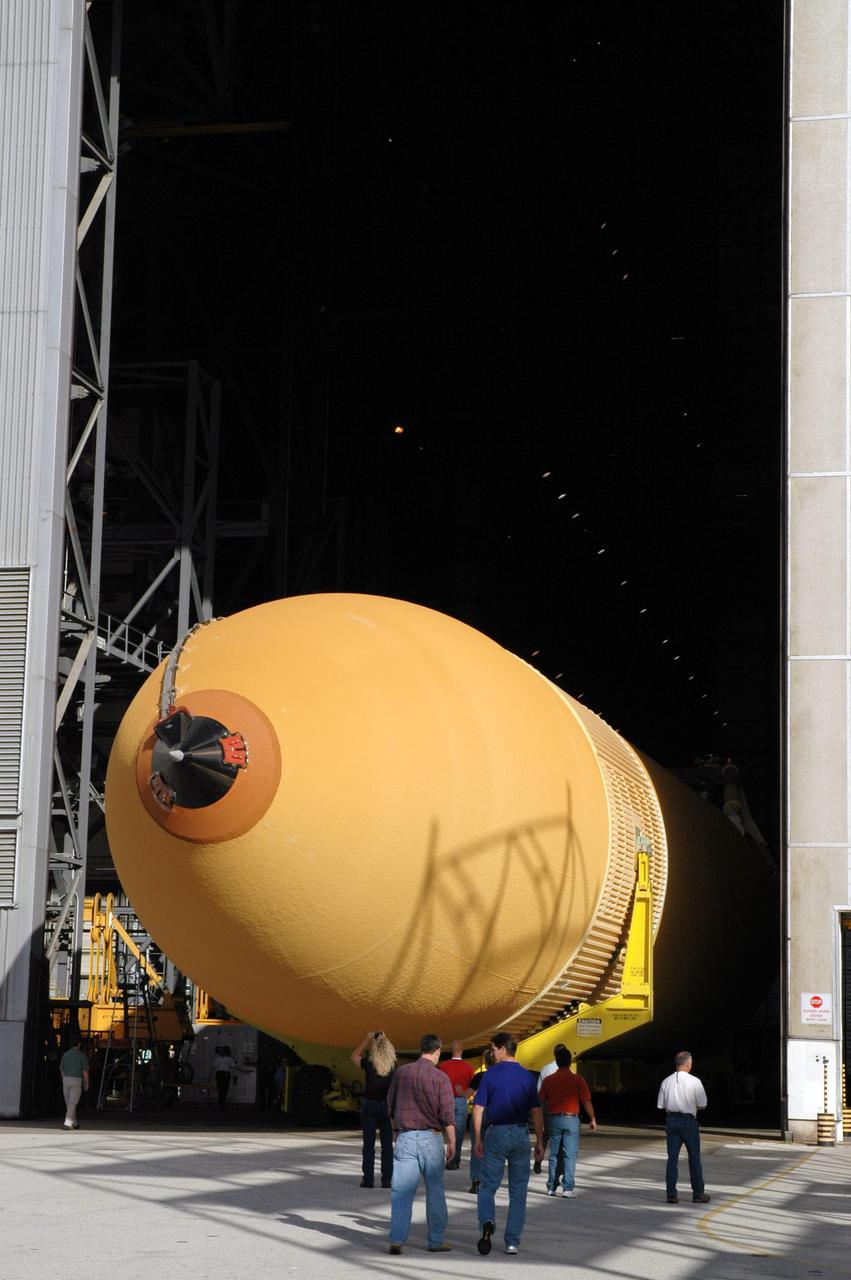
KENNEDY SPACE CENTER, FLA. - Accompanied by KSC employees, the newly redesigned External Tank rolls into the Vehicle Assembly Building. The tank arrived Jan. 5 after a 900-mile sea voyage aboard NASA’s specially designed barge, Pegasus, from the Michoud Assembly Facility in New Orleans. In the transfer aisle of the VAB, the tank will be raised from a horizontal to a vertical position, then lifted high up into a storage cell, or “checkout cell,” where it will undergo inspections of the mechanical, electrical and thermal protection systems. New processing activities resulting from re-design of the tank include inspection of the bipod heater and External Tank separation camera, which includes charging the camera batteries. The tank will be then prepared for mating to the Solid Rocket Boosters. When preparations are complete, the tank will be lifted from the checkout cell, moved across the transfer aisle and into High Bay 1, where it will be lowered and attached to the boosters, which are sitting on the Mobile Launch Platform. The tank is designated for the Return to Flight mission, STS-114, targeted for a launch opportunity beginning in May. The seven-member Discovery crew will fly to the International Space Station primarily to test and evaluate new procedures for flight safety, including Space Shuttle inspection and repair techniques.
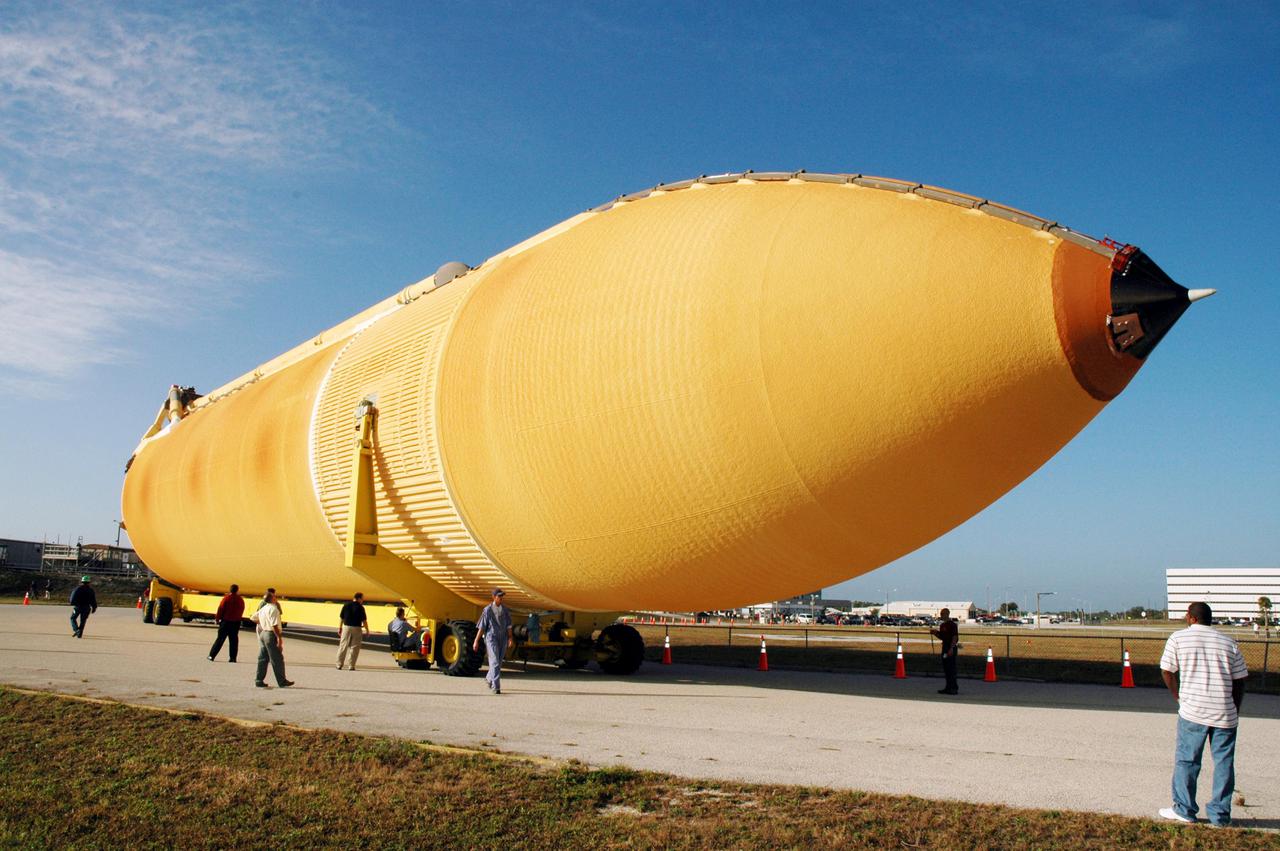
KENNEDY SPACE CENTER, FLA. - The newly redesigned External Tank turns the corner of the Launch Complex 39 Area Turn Basin parking area on its way to the Vehicle Assembly Building, seen at right. The tank arrived Jan. 5 after a 900-mile sea voyage aboard NASA’s specially designed barge, Pegasus, from the Michoud Assembly Facility in New Orleans. In the transfer aisle of the VAB, the tank will be raised from a horizontal to a vertical position, then lifted high up into a storage cell, or “checkout cell,” where it will undergo inspections of the mechanical, electrical and thermal protection systems. New processing activities resulting from re-design of the tank include inspection of the bipod heater and External Tank separation camera, which includes charging the camera batteries. The tank will be then prepared for mating to the Solid Rocket Boosters. When preparations are complete, the tank will be lifted from the checkout cell, moved across the transfer aisle and into High Bay 1, where it will be lowered and attached to the boosters, which are sitting on the Mobile Launch Platform. The tank is designated for the Return to Flight mission, STS-114, targeted for a launch opportunity beginning in May. The seven-member Discovery crew will fly to the International Space Station primarily to test and evaluate new procedures for flight safety, including Space Shuttle inspection and repair techniques.
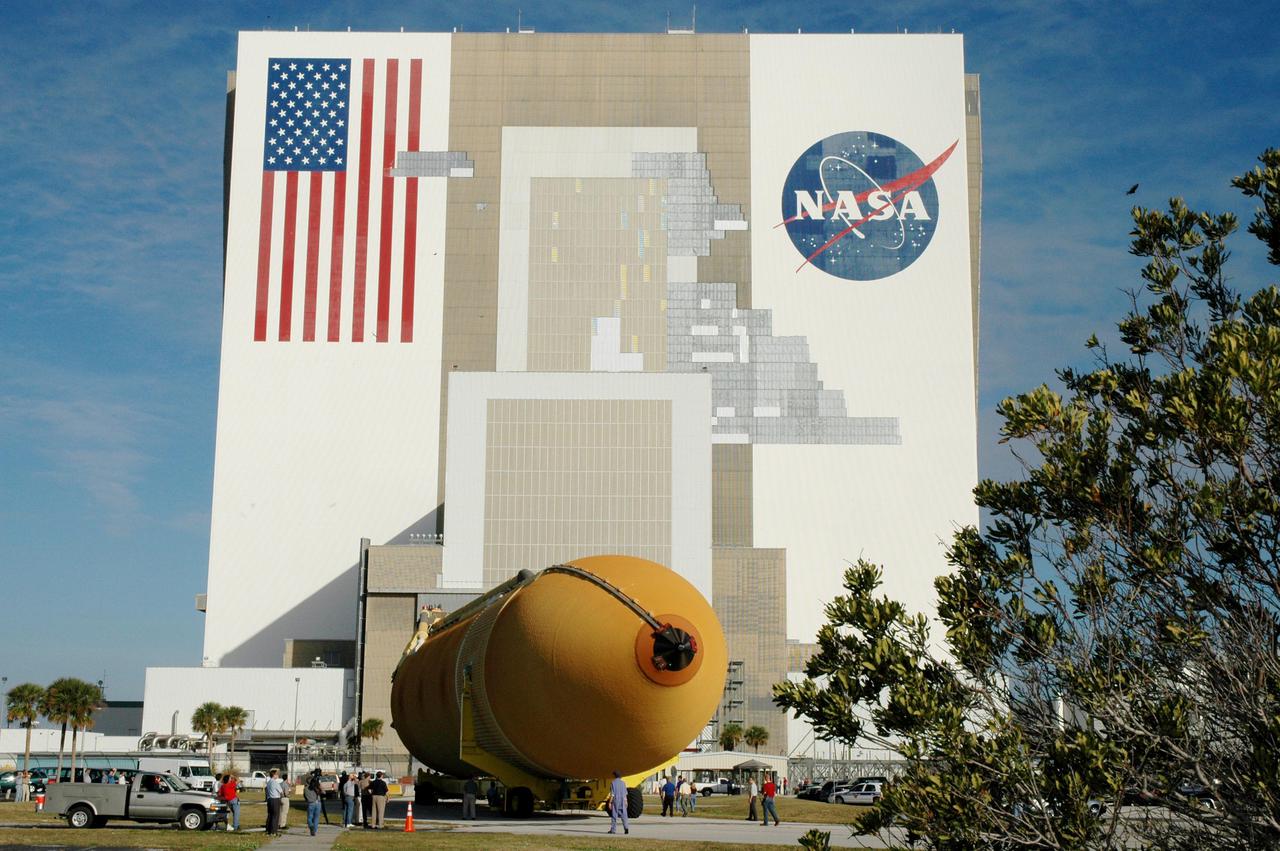
KENNEDY SPACE CENTER, FLA. - The newly redesigned External Tank heads for the open doors of the Vehicle Assembly Building, seen behind it. The tank arrived Jan. 5 after a 900-mile sea voyage aboard NASA’s specially designed barge, Pegasus, from the Michoud Assembly Facility in New Orleans. In the transfer aisle of the VAB, the tank will be raised from a horizontal to a vertical position, then lifted high up into a storage cell, or “checkout cell,” where it will undergo inspections of the mechanical, electrical and thermal protection systems. New processing activities resulting from re-design of the tank include inspection of the bipod heater and External Tank separation camera, which includes charging the camera batteries. The tank will be then prepared for mating to the Solid Rocket Boosters. When preparations are complete, the tank will be lifted from the checkout cell, moved across the transfer aisle and into High Bay 1, where it will be lowered and attached to the boosters, which are sitting on the Mobile Launch Platform. The tank is designated for the Return to Flight mission, STS-114, targeted for a launch opportunity beginning in May. The seven-member Discovery crew will fly to the International Space Station primarily to test and evaluate new procedures for flight safety, including Space Shuttle inspection and repair techniques.
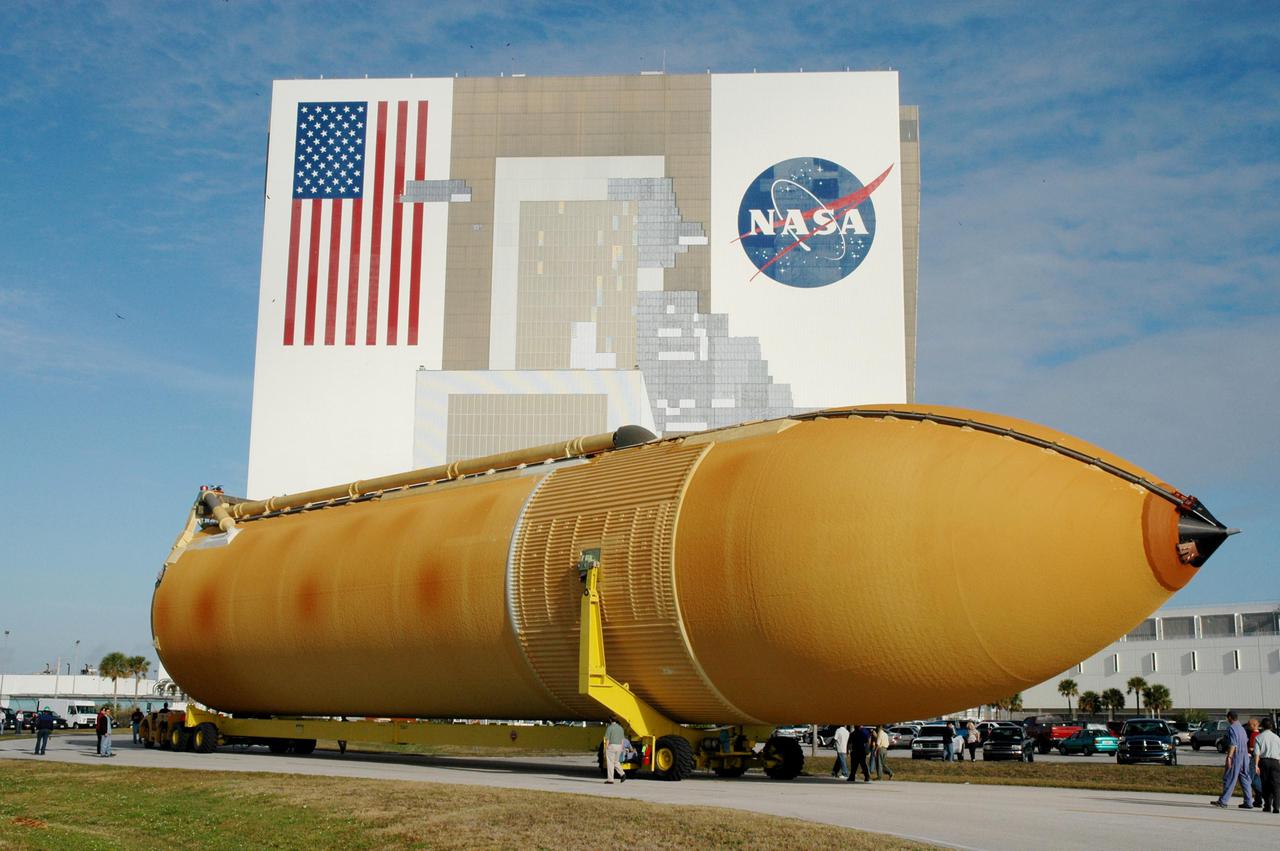
KENNEDY SPACE CENTER, FLA. - The newly redesigned External Tank moves closer to its destination, the Vehicle Assembly Building, seen behind it. The tank arrived Jan. 5 after a 900-mile sea voyage aboard NASA’s specially designed barge, Pegasus, from the Michoud Assembly Facility in New Orleans. In the transfer aisle of the VAB, the tank will be raised from a horizontal to a vertical position, then lifted high up into a storage cell, or “checkout cell,” where it will undergo inspections of the mechanical, electrical and thermal protection systems. New processing activities resulting from re-design of the tank include inspection of the bipod heater and External Tank separation camera, which includes charging the camera batteries. The tank will be then prepared for mating to the Solid Rocket Boosters. When preparations are complete, the tank will be lifted from the checkout cell, moved across the transfer aisle and into High Bay 1, where it will be lowered and attached to the boosters, which are sitting on the Mobile Launch Platform. The tank is designated for the Return to Flight mission, STS-114, targeted for a launch opportunity beginning in May. The seven-member Discovery crew will fly to the International Space Station primarily to test and evaluate new procedures for flight safety, including Space Shuttle inspection and repair techniques.
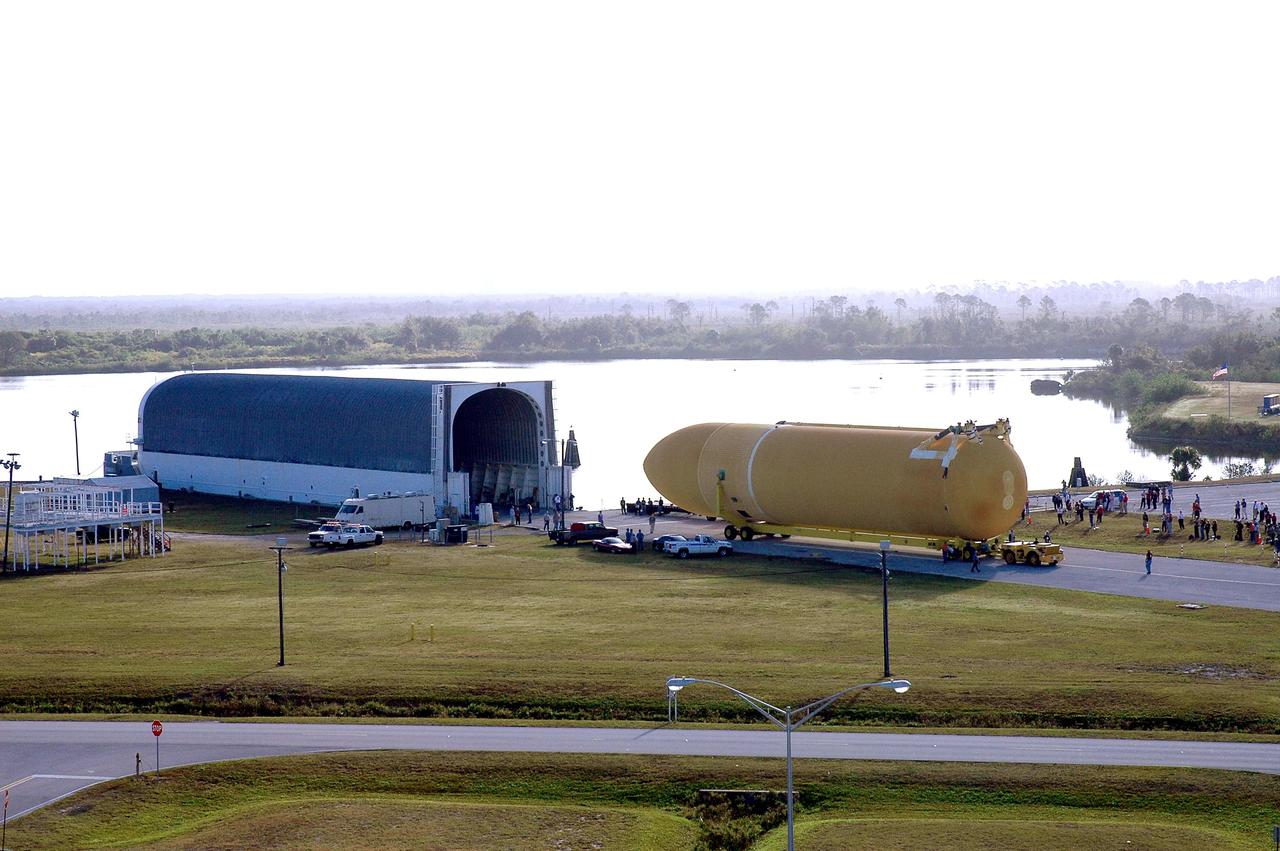
KENNEDY SPACE CENTER, FLA. - Viewed from the roof of the Launch Control Center, the newly redesigned External Tank is seen after being off-loaded from NASA’s specially designed barge, Pegasus, which delivered it from the Michoud Assembly Facility in New Orleans. The tank is being transferred to the Vehicle Assembly Building. In the transfer aisle of the VAB, the tank will be raised from a horizontal to a vertical position, then lifted high up into a storage cell, or “checkout cell,” where it will undergo inspections of the mechanical, electrical and thermal protection systems. New processing activities resulting from re-design of the tank include inspection of the bipod heater and External Tank separation camera, which includes charging the camera batteries. The tank will be then prepared for mating to the Solid Rocket Boosters. When preparations are complete, the tank will be lifted from the checkout cell, moved across the transfer aisle and into High Bay 1, where it will be lowered and attached to the boosters, which are sitting on the Mobile Launch Platform. The tank is designated for the Return to Flight mission, STS-114, targeted for a launch opportunity beginning in May. The seven-member Discovery crew will fly to the International Space Station primarily to test and evaluate new procedures for flight safety, including Space Shuttle inspection and repair techniques.
KENNEDY SPACE CENTER, FLA. - Viewed from the top of the Launch Control Center, the newly redesigned External Tank is seen moving out of NASA’s specially designed barge, Pegasus, which delivered it from the Michoud Assembly Facility in New Orleans. The tank is being transferred to the Vehicle Assembly Building. In the transfer aisle of the VAB, the tank will be raised from a horizontal to a vertical position, then lifted high up into a storage cell, or “checkout cell,” where it will undergo inspections of the mechanical, electrical and thermal protection systems. New processing activities resulting from re-design of the tank include inspection of the bipod heater and External Tank separation camera, which includes charging the camera batteries. The tank will be then prepared for mating to the Solid Rocket Boosters. When preparations are complete, the tank will be lifted from the checkout cell, moved across the transfer aisle and into High Bay 1, where it will be lowered and attached to the boosters, which are sitting on the Mobile Launch Platform. The tank is designated for the Return to Flight mission, STS-114, targeted for a launch opportunity beginning in May. The seven-member Discovery crew will fly to the International Space Station primarily to test and evaluate new procedures for flight safety, including Space Shuttle inspection and repair techniques.
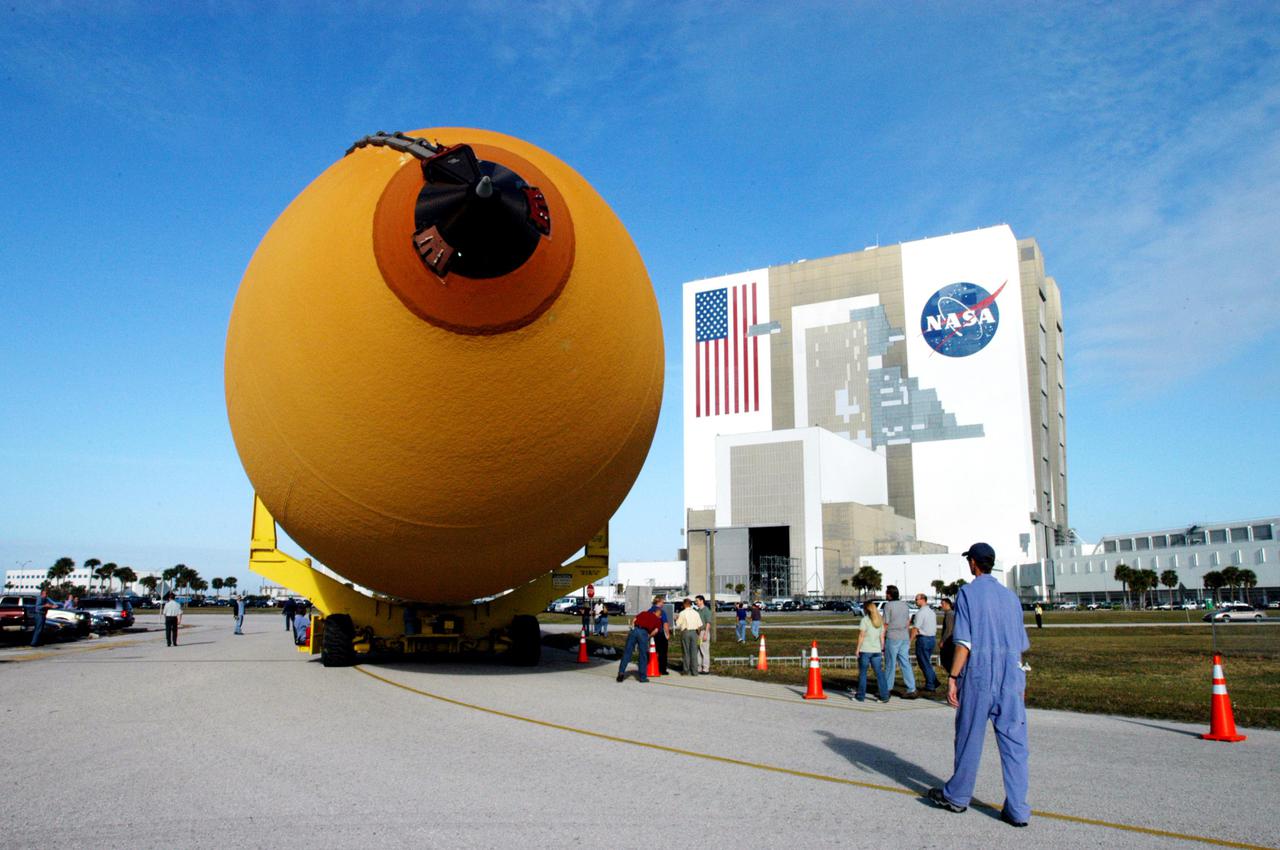
KENNEDY SPACE CENTER, FLA. - The newly redesigned External Tank slowly moves toward the Vehicle Assembly Building, seen at right. The tank arrived Jan. 5 after a 900-mile sea voyage aboard NASA’s specially designed barge, Pegasus, from the Michoud Assembly Facility in New Orleans. In the transfer aisle of the VAB, the tank will be raised from a horizontal to a vertical position, then lifted high up into a storage cell, or “checkout cell,” where it will undergo inspections of the mechanical, electrical and thermal protection systems. New processing activities resulting from re-design of the tank include inspection of the bipod heater and External Tank separation camera, which includes charging the camera batteries. The tank will be then prepared for mating to the Solid Rocket Boosters. When preparations are complete, the tank will be lifted from the checkout cell, moved across the transfer aisle and into High Bay 1, where it will be lowered and attached to the boosters, which are sitting on the Mobile Launch Platform. The tank is designated for the Return to Flight mission, STS-114, targeted for a launch opportunity beginning in May. The seven-member Discovery crew will fly to the International Space Station primarily to test and evaluate new procedures for flight safety, including Space Shuttle inspection and repair techniques.
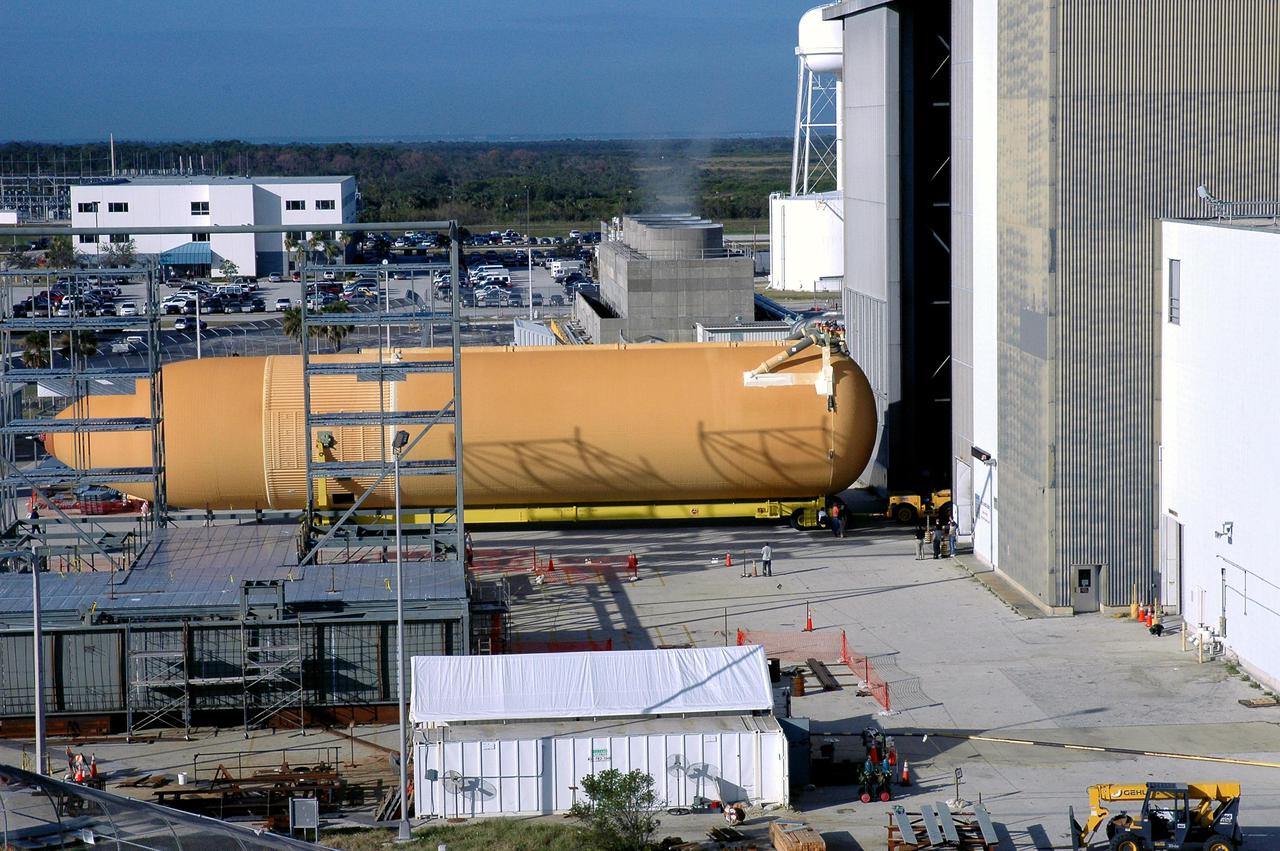
KENNEDY SPACE CENTER, FLA. - Viewed from the roof of the Launch Control Center in the Launch Complex 39 Area, the newly redesigned External Tank is seen moving into the Vehicle Assembly Building. In the transfer aisle of the VAB, the tank will be raised from a horizontal to a vertical position, then lifted high up into a storage cell, or “checkout cell,” where it will undergo inspections of the mechanical, electrical and thermal protection systems. New processing activities resulting from re-design of the tank include inspection of the bipod heater and External Tank separation camera, which includes charging the camera batteries. The tank will be then prepared for mating to the Solid Rocket Boosters. When preparations are complete, the tank will be lifted from the checkout cell, moved across the transfer aisle and into High Bay 1, where it will be lowered and attached to the boosters, which are sitting on the Mobile Launch Platform. The tank is designated for the Return to Flight mission, STS-114, targeted for a launch opportunity beginning in May. The seven-member Discovery crew will fly to the International Space Station primarily to test and evaluate new procedures for flight safety, including Space Shuttle inspection and repair techniques.
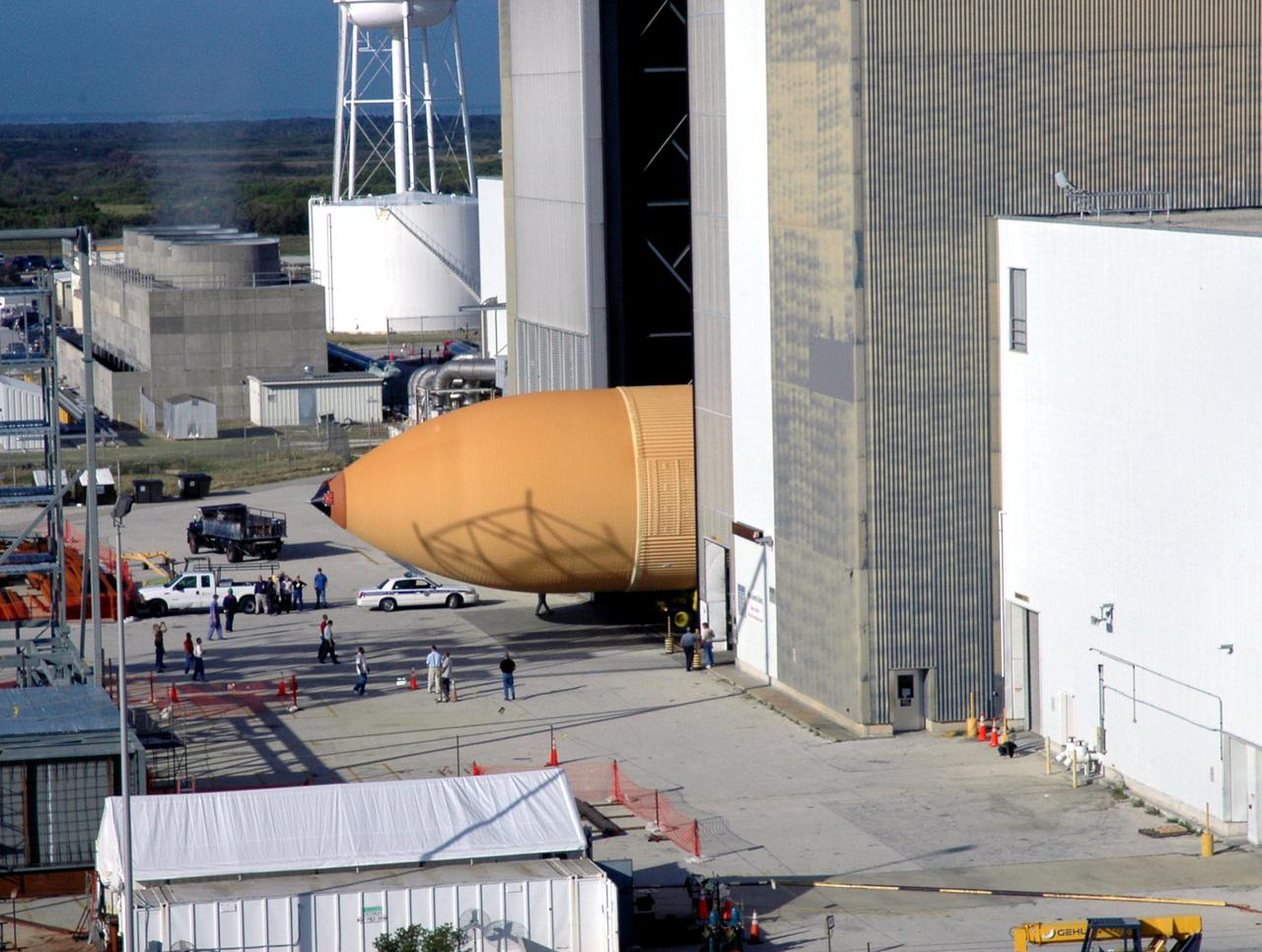
KENNEDY SPACE CENTER, FLA. - Viewed from the roof of the Launch Control Center in the Launch Complex 39 Area, the newly redesigned External Tank disappears into the Vehicle Assembly Building. In the transfer aisle of the VAB, the tank will be raised from a horizontal to a vertical position, then lifted high up into a storage cell, or “checkout cell,” where it will undergo inspections of the mechanical, electrical and thermal protection systems. New processing activities resulting from re-design of the tank include inspection of the bipod heater and External Tank separation camera, which includes charging the camera batteries. The tank will be then prepared for mating to the Solid Rocket Boosters. When preparations are complete, the tank will be lifted from the checkout cell, moved across the transfer aisle and into High Bay 1, where it will be lowered and attached to the boosters, which are sitting on the Mobile Launch Platform. The tank is designated for the Return to Flight mission, STS-114, targeted for a launch opportunity beginning in May. The seven-member Discovery crew will fly to the International Space Station primarily to test and evaluate new procedures for flight safety, including Space Shuttle inspection and repair techniques.
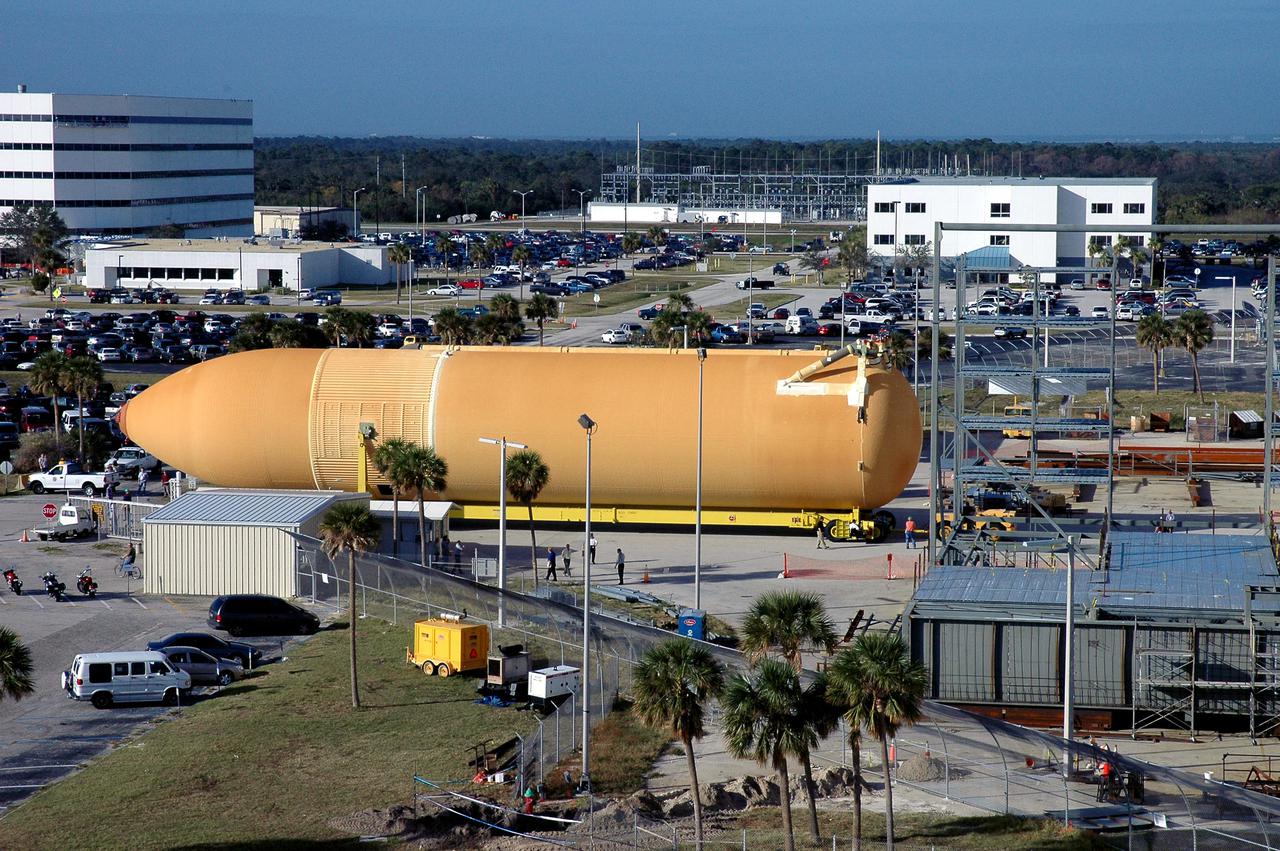
KENNEDY SPACE CENTER, FLA. - Viewed from the roof of the Launch Control Center in the Launch Complex 39 Area, the newly redesigned External Tank is seen moving along the roadway on its way to the Vehicle Assembly Building. In the background, at left, is the Operations Support Building I. In the transfer aisle of the VAB, the tank will be raised from a horizontal to a vertical position, then lifted high up into a storage cell, or “checkout cell,” where it will undergo inspections of the mechanical, electrical and thermal protection systems. New processing activities resulting from re-design of the tank include inspection of the bipod heater and External Tank separation camera, which includes charging the camera batteries. The tank will be then prepared for mating to the Solid Rocket Boosters. When preparations are complete, the tank will be lifted from the checkout cell, moved across the transfer aisle and into High Bay 1, where it will be lowered and attached to the boosters, which are sitting on the Mobile Launch Platform. The tank is designated for the Return to Flight mission, STS-114, targeted for a launch opportunity beginning in May. The seven-member Discovery crew will fly to the International Space Station primarily to test and evaluate new procedures for flight safety, including Space Shuttle inspection and repair techniques.
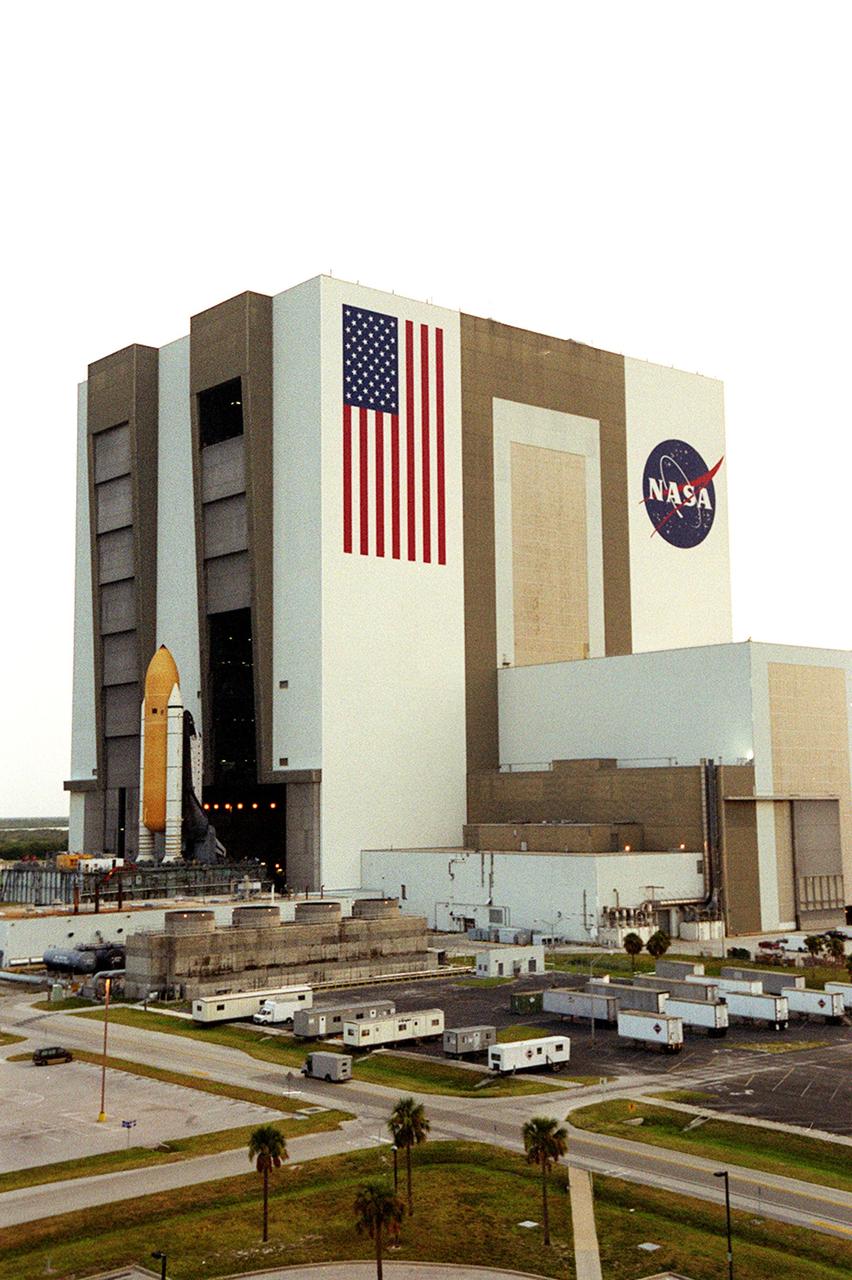
KENNEDY SPACE CENTER, FLA. -- For the first time in Space Shuttle history, a fully stacked Shuttle - Atlantis - is rolling into the Vehicle Assembly Building's (VAB) high bay 2 on the building's west side. The VAB and nearby rock-paved crawlerway have recently undergone major modifications to provide Shuttle fliglht hardware more storage space and protection - "Safe Haven" - from hurricanes or tropical storms. Atlantis, the twin solid rocket boosters and external tank begain moving out of VAB high bay 1 on the east side at 2:59 a.m. EDT. The 6-million pound crawler transporter carried the Mobile Launcher Platform and Space Shuttle around the north side of the VAB and into high bay 2. After the successful "Safe Haven" fit check, Shuttle Atlantis is scheduled to roll out to Launch Pad 39B in preparation for the STS-106 launch on Sept. 8.
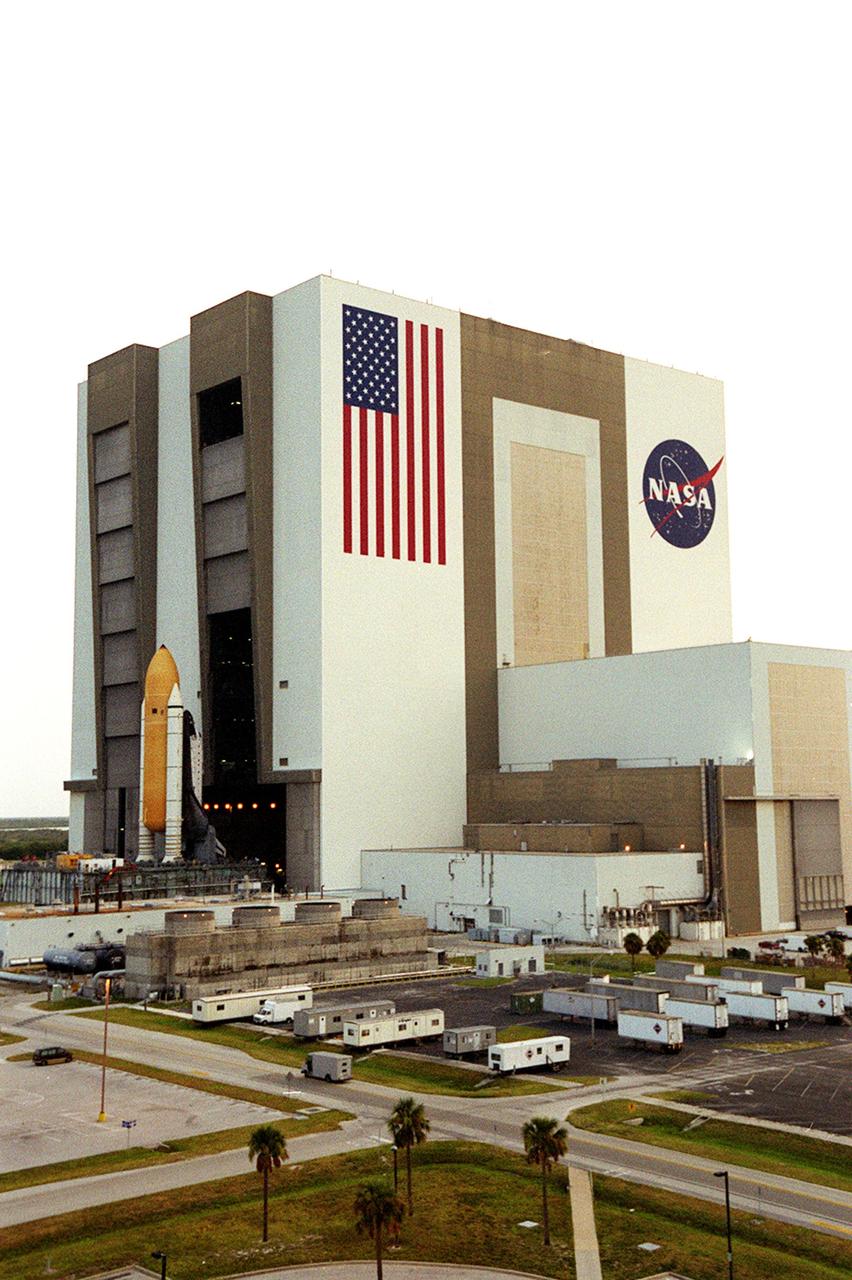
KENNEDY SPACE CENTER, FLA. -- For the first time in Space Shuttle history, a fully stacked Shuttle - Atlantis - is rolling into the Vehicle Assembly Building's (VAB) high bay 2 on the building's west side. The VAB and nearby rock-paved crawlerway have recently undergone major modifications to provide Shuttle fliglht hardware more storage space and protection - "Safe Haven" - from hurricanes or tropical storms. Atlantis, the twin solid rocket boosters and external tank begain moving out of VAB high bay 1 on the east side at 2:59 a.m. EDT. The 6-million pound crawler transporter carried the Mobile Launcher Platform and Space Shuttle around the north side of the VAB and into high bay 2. After the successful "Safe Haven" fit check, Shuttle Atlantis is scheduled to roll out to Launch Pad 39B in preparation for the STS-106 launch on Sept. 8.
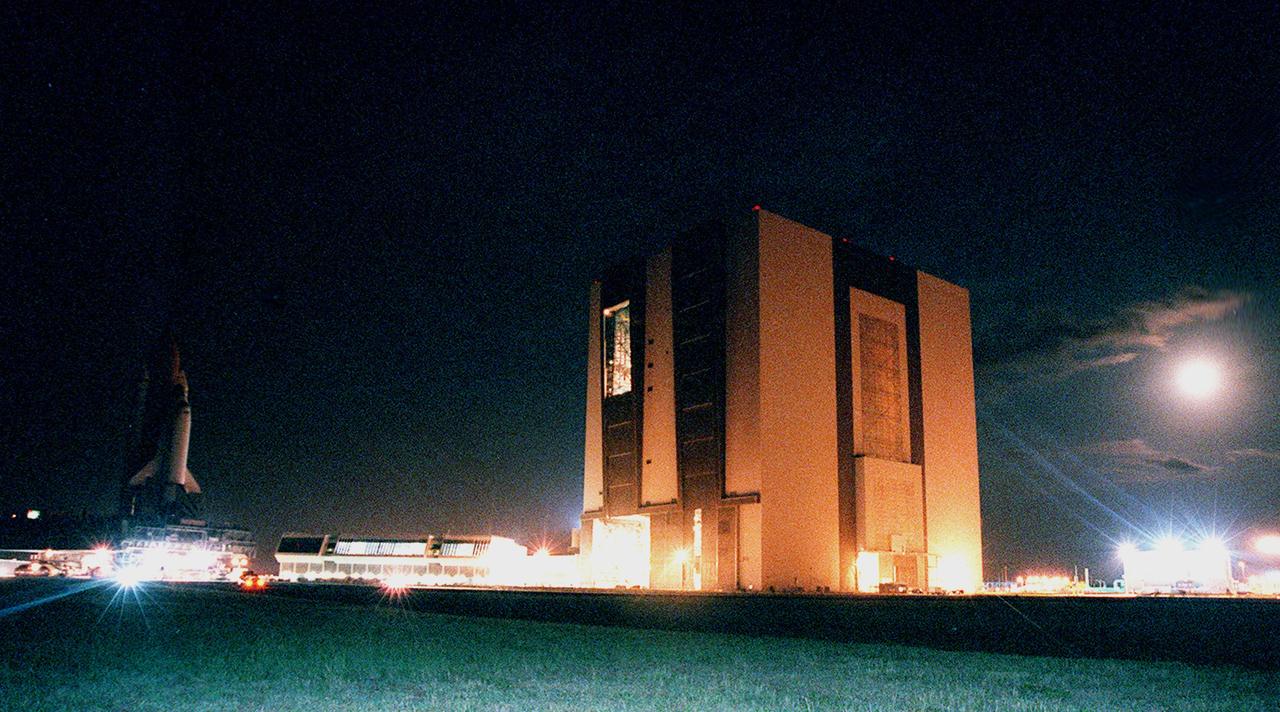
KENNEDY SPACE CENTER, FLA. -- This 30-second timed exposure captures the bright lights around the Vehicle Assembly Building (VAB) plus the equally bright moon (upper right) as Space Shuttle Atlantis (far left) rolls out of the east side bay 1. The Launch Control Center sits between the Shuttle and the VAB. The full stack of Shuttle, solid rocket boosters and external tank are taking part in a fit check for the newly renovated crawlerway and high bay 2, which is on the west side. The major modifications to the crawlerway and VAB provide Shuttle flight hardware more storage space and protection - "Safe Haven" - from hurricanes or tropical storms. Atlantis began moving out of VAB high bay 1 at 2:59 a.m. EDT. After the successful Safe Haven fit check, Shuttle Atlantis is scheduled to roll out to Launch Pad 39B in preparation for the STS-106 launch on Sept. 8.
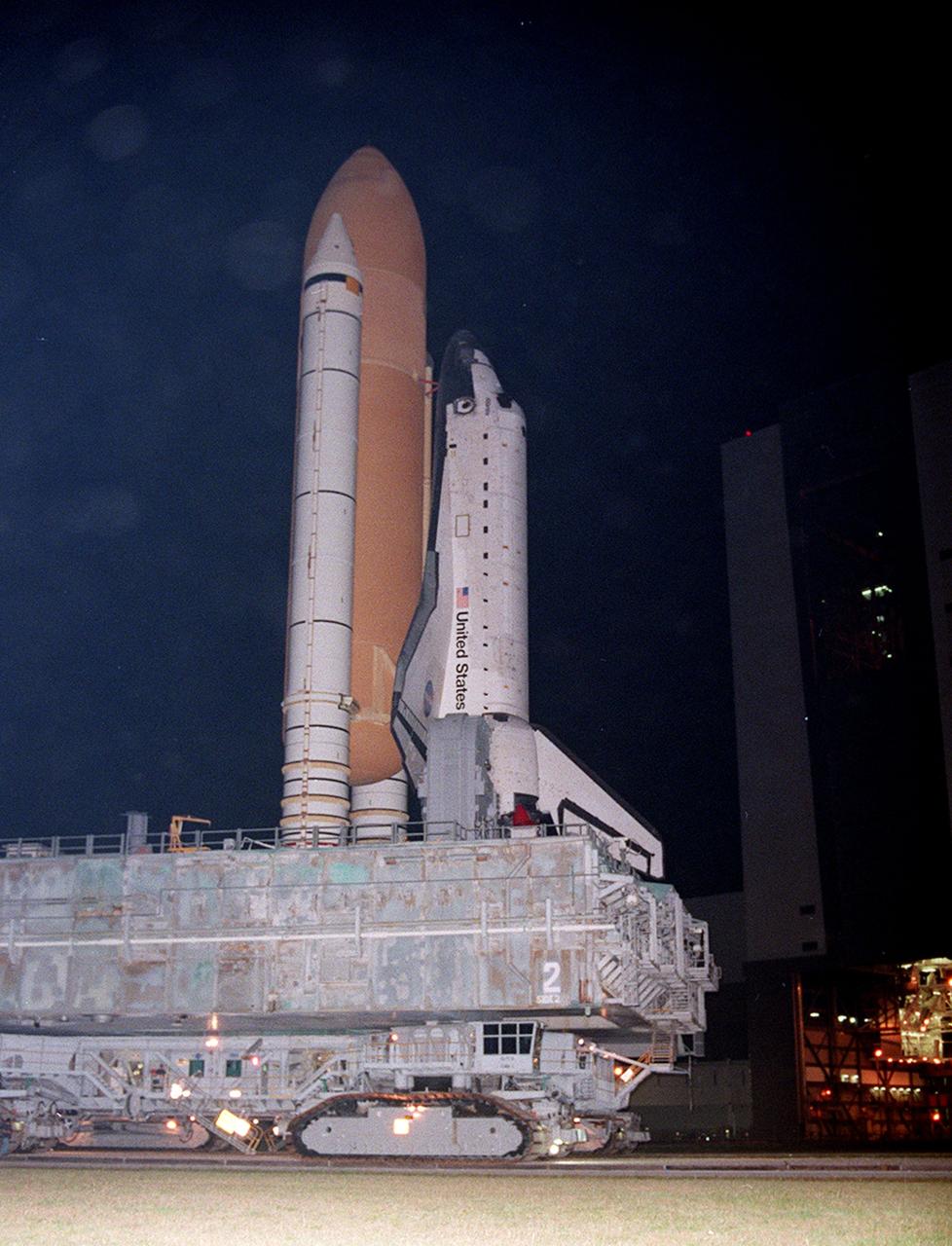
KENNEDY SPACE CENTER, FLA. -- Shuttle Atlantis, with twin solid rocket boosters and external tank atop the Mobile Launcher Platform and crawler-transorter, inches toward high bay 2, on the west side, in the Vehicle Assembly Building (VAB). For the first time in Space Shuttle history, a fully stacked Shuttle is moving into the bay. The VAB and nearby rock-paved crawlerway have recently undergone major modifications to provide Shuttle fliglht hardware more storage space and protection - "Safe Haven" - from hurricanes or tropical storms. Atlantis begain moving out of VAB high bay 1 on the east side at 2:59 a.m. EDT. After the successful "Safe Haven" fit check, Shuttle Atlantis is scheduled to roll out to Launch Pad 39B in preparation for the STS-106 launch on Sept. 8.
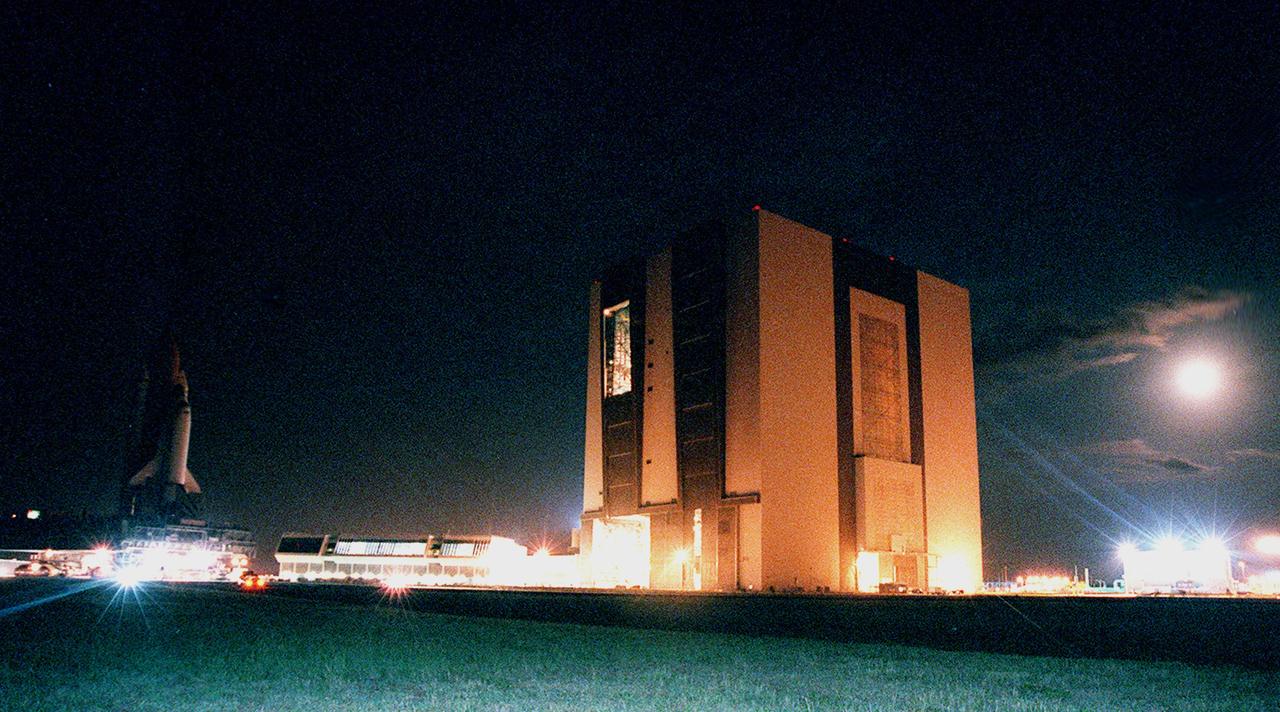
KENNEDY SPACE CENTER, FLA. -- This 30-second timed exposure captures the bright lights around the Vehicle Assembly Building (VAB) plus the equally bright moon (upper right) as Space Shuttle Atlantis (far left) rolls out of the east side bay 1. The Launch Control Center sits between the Shuttle and the VAB. The full stack of Shuttle, solid rocket boosters and external tank are taking part in a fit check for the newly renovated crawlerway and high bay 2, which is on the west side. The major modifications to the crawlerway and VAB provide Shuttle flight hardware more storage space and protection - "Safe Haven" - from hurricanes or tropical storms. Atlantis began moving out of VAB high bay 1 at 2:59 a.m. EDT. After the successful Safe Haven fit check, Shuttle Atlantis is scheduled to roll out to Launch Pad 39B in preparation for the STS-106 launch on Sept. 8.
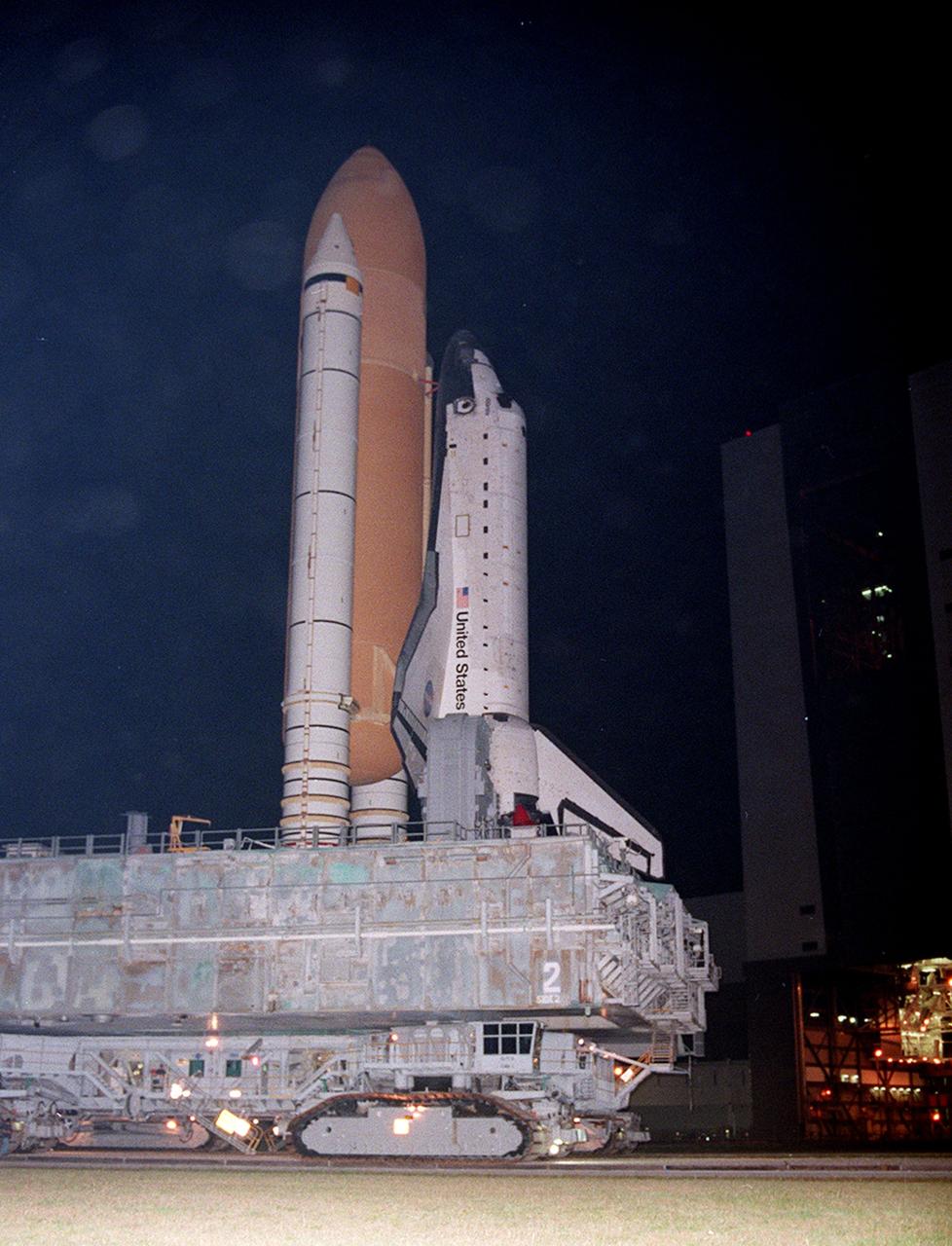
KENNEDY SPACE CENTER, FLA. -- Shuttle Atlantis, with twin solid rocket boosters and external tank atop the Mobile Launcher Platform and crawler-transorter, inches toward high bay 2, on the west side, in the Vehicle Assembly Building (VAB). For the first time in Space Shuttle history, a fully stacked Shuttle is moving into the bay. The VAB and nearby rock-paved crawlerway have recently undergone major modifications to provide Shuttle fliglht hardware more storage space and protection - "Safe Haven" - from hurricanes or tropical storms. Atlantis begain moving out of VAB high bay 1 on the east side at 2:59 a.m. EDT. After the successful "Safe Haven" fit check, Shuttle Atlantis is scheduled to roll out to Launch Pad 39B in preparation for the STS-106 launch on Sept. 8.
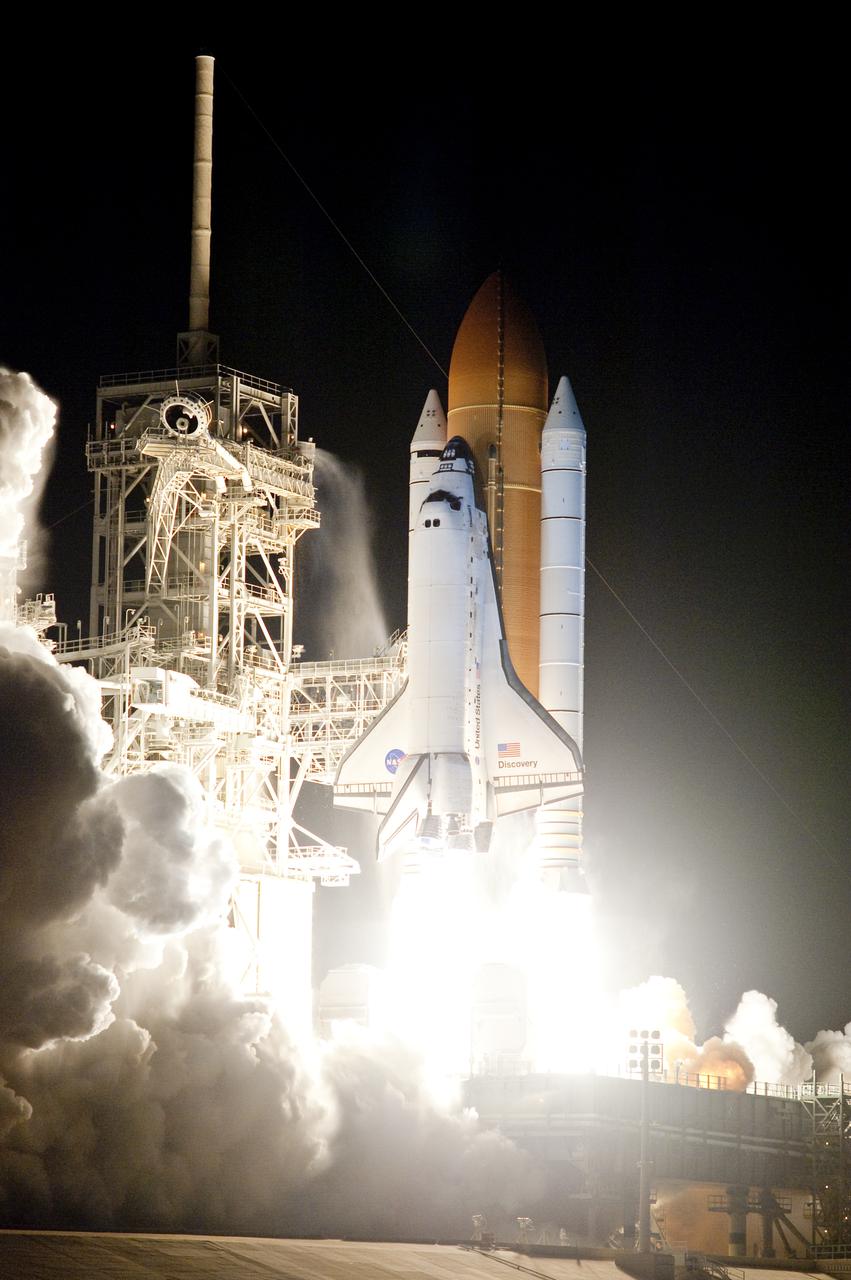
CAPE CANAVERAL, Fla. - The light produced by ignition of the solid rocket boosters and main engines of space shuttle Discovery is dazzling as the shuttle rushes to orbit from Launch Pad 39A at NASA's Kennedy Space Center in Florida. Liftoff on the STS-131 mission was on time at 6:21 a.m. EDT. The seven-member crew will deliver the multi-purpose logistics module Leonardo, filled with supplies, a new crew sleeping quarters and science racks that will be transferred to the International Space Station's laboratories. The crew also will switch out a gyroscope on the station’s truss, install a spare ammonia storage tank and retrieve a Japanese experiment from the station’s exterior. STS-131 is the 33rd shuttle mission to the station and the 131st shuttle mission overall. For information on the STS-131 mission and crew, visit http:__www.nasa.gov_mission_pages_shuttle_shuttlemissions_sts131_index.html. Photo credit: NASA_Sandra Joseph and Kevin O'Connell
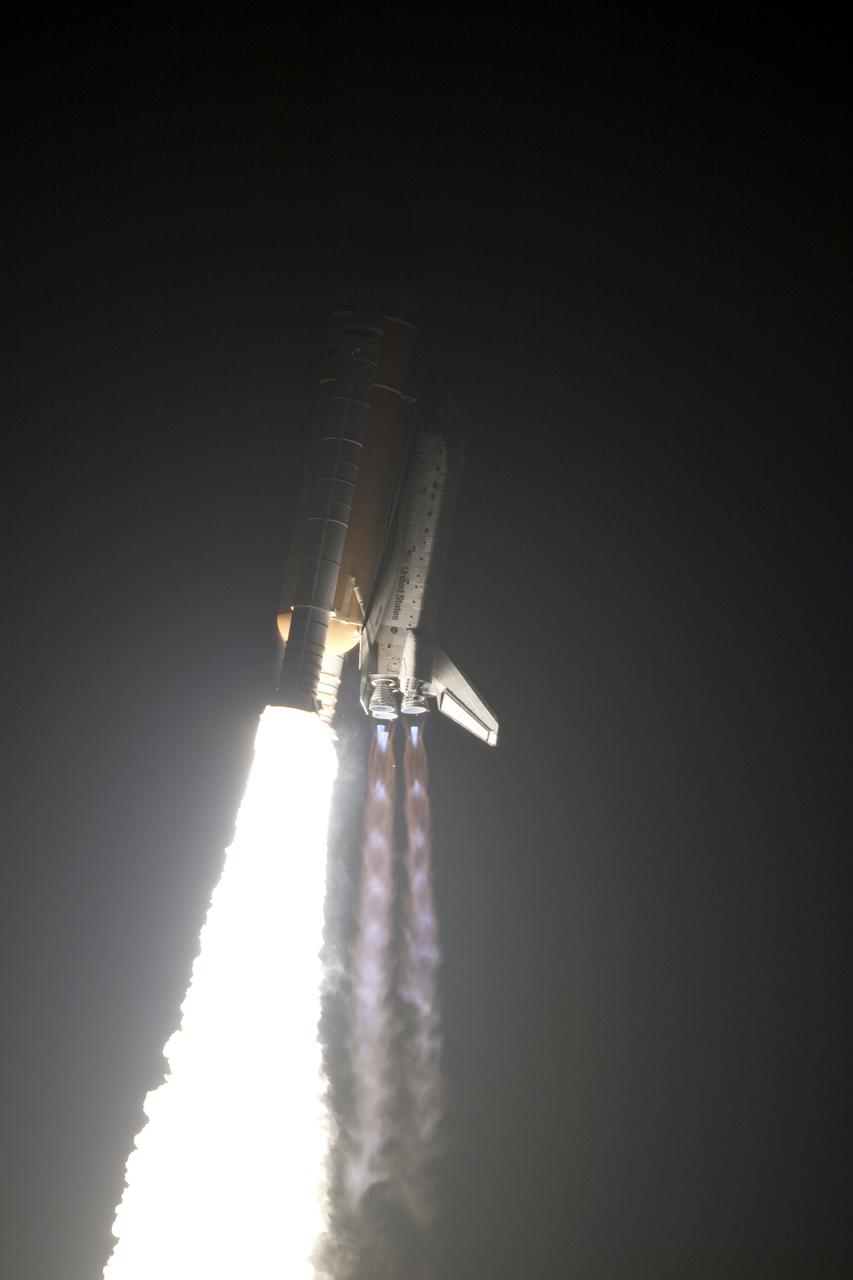
CAPE CANAVERAL, Fla. - The light from the solid rocket boosters and main engines of space shuttle Discovery is blinding as the shuttle rushes to orbit from Launch Pad 39A at NASA's Kennedy Space Center. Liftoff on the STS-131 mission was on time at 6:21 a.m. EDT. The seven-member crew will deliver the multi-purpose logistics module Leonardo, filled with supplies, a new crew sleeping quarters and science racks that will be transferred to the International Space Station's laboratories. The crew also will switch out a gyroscope on the station’s truss, install a spare ammonia storage tank and retrieve a Japanese experiment from the station’s exterior. STS-131 is the 33rd shuttle mission to the station and the 131st shuttle mission overall. For information on the STS-131 mission and crew, visit http:__www.nasa.gov_mission_pages_shuttle_shuttlemissions_sts131_index.html. Photo credit: NASA_Kenny Allen
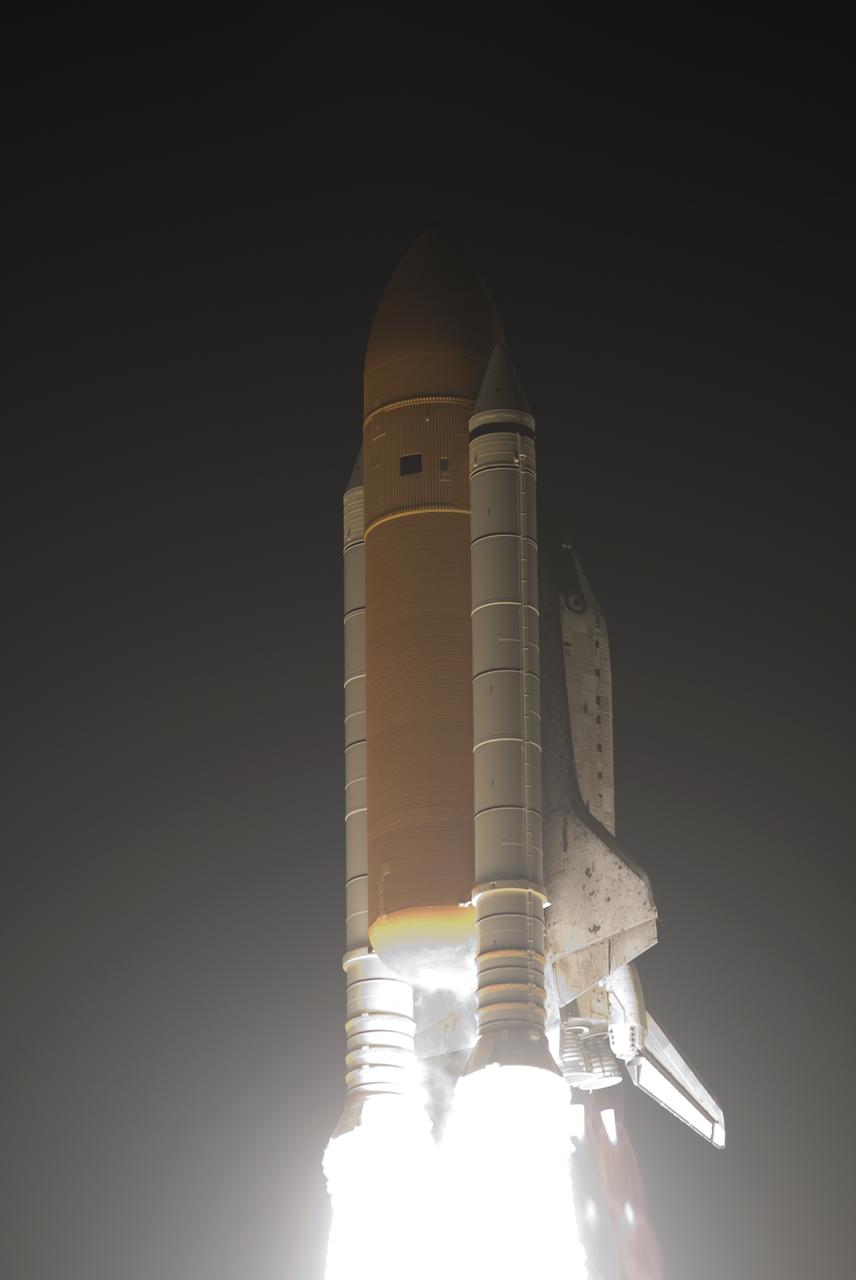
CAPE CANAVERAL, Fla. - The light from the solid rocket boosters and main engines of space shuttle Discovery is dazzling as the shuttle rushes into the predawn sky over Launch Pad 39A at NASA's Kennedy Space Center. Liftoff on the STS-131 mission was on time at 6:21 a.m. EDT April 5. The seven-member crew will deliver the multi-purpose logistics module Leonardo, filled with supplies, a new crew sleeping quarters and science racks that will be transferred to the International Space Station's laboratories. The crew also will switch out a gyroscope on the station’s truss, install a spare ammonia storage tank and retrieve a Japanese experiment from the station’s exterior. STS-131 is the 33rd shuttle mission to the station and the 131st shuttle mission overall. For information on the STS-131 mission and crew, visit http:__www.nasa.gov_mission_pages_shuttle_shuttlemissions_sts131_index.html. Photo credit: NASA_Rusty Backer and Michael Gayle
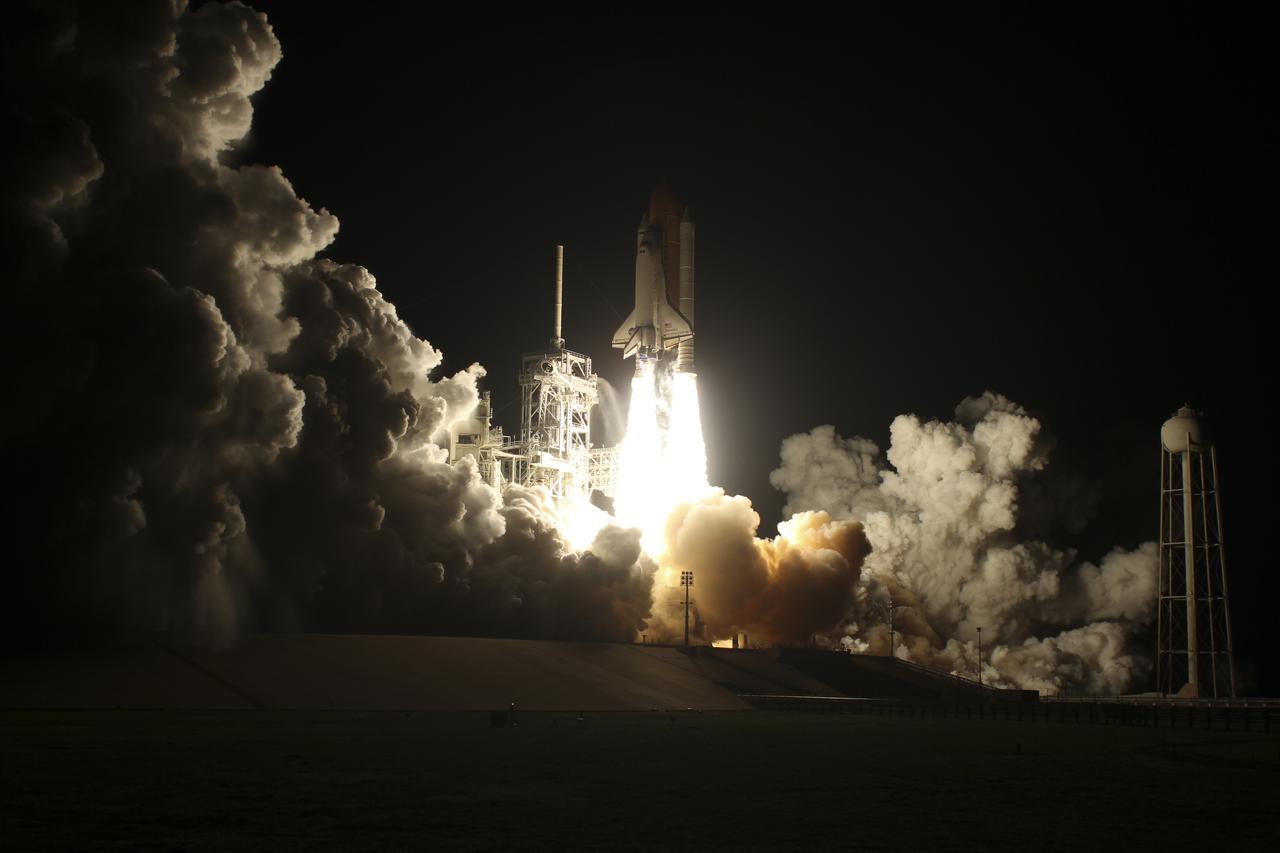
CAPE CANAVERAL, Fla. - The light produced by ignition of the solid rocket boosters and main engines of space shuttle Discovery is dazzling as the shuttle rushes to orbit from Launch Pad 39A at NASA's Kennedy Space Center in Florida. Liftoff on the STS-131 mission was on time at 6:21 a.m. EDT April 5. The seven-member crew will deliver the multi-purpose logistics module Leonardo, filled with supplies, a new crew sleeping quarters and science racks that will be transferred to the International Space Station's laboratories. The crew also will switch out a gyroscope on the station’s truss, install a spare ammonia storage tank and retrieve a Japanese experiment from the station’s exterior. STS-131 is the 33rd shuttle mission to the station and the 131st shuttle mission overall. For information on the STS-131 mission and crew, visit http:__www.nasa.gov_mission_pages_shuttle_shuttlemissions_sts131_index.html. Photo courtesy of Scott Andrews
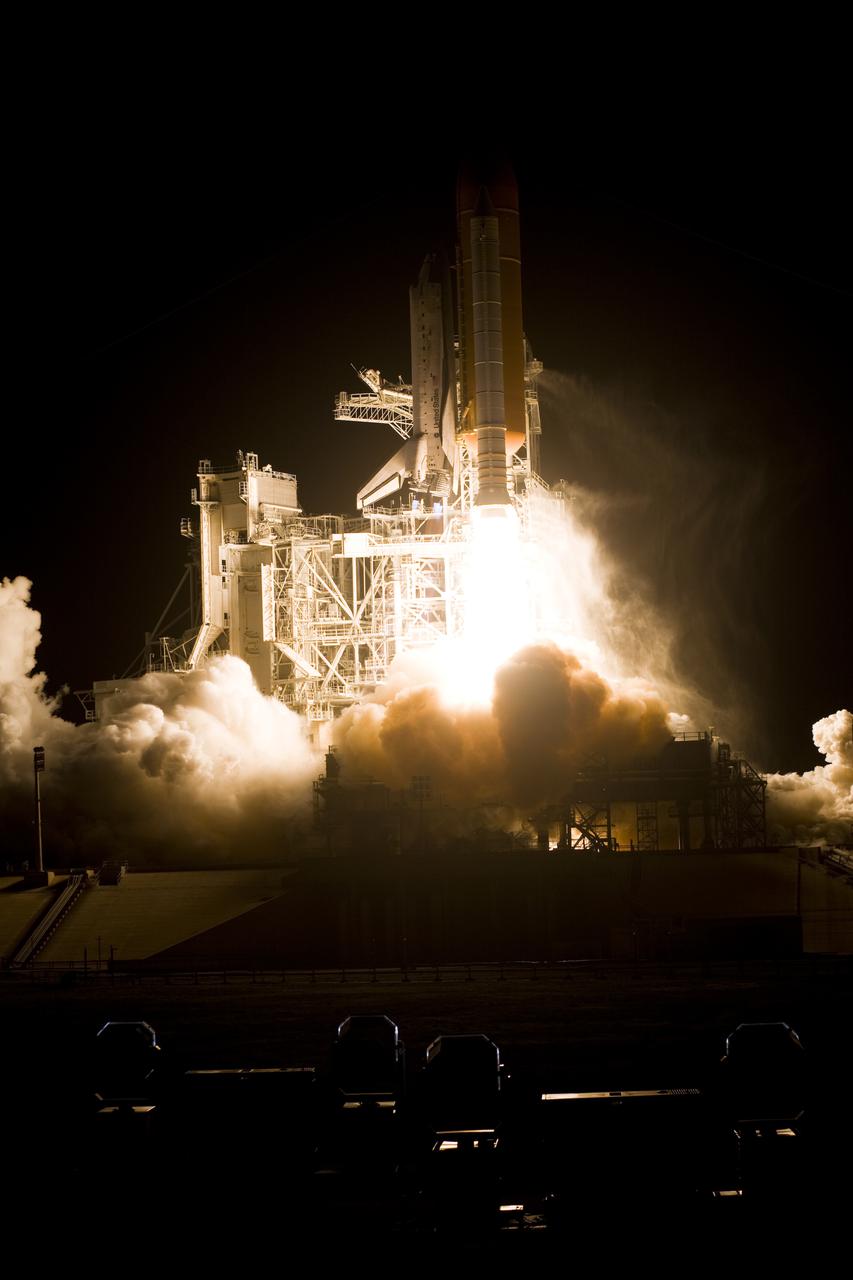
CAPE CANAVERAL, Fla. - Space shuttle Discovery thunders off Launch Pad 39A at NASA's Kennedy Space Center in Florida, its two solid rocket boosters and three main engines generating nearly seven million pounds of thrust. Liftoff on the STS-131 mission was on time at 6:21 a.m. EDT April 5. The seven-member crew will deliver the multi-purpose logistics module Leonardo, filled with supplies, a new crew sleeping quarters and science racks that will be transferred to the International Space Station's laboratories. The crew also will switch out a gyroscope on the station’s truss, install a spare ammonia storage tank and retrieve a Japanese experiment from the station’s exterior. STS-131 is the 33rd shuttle mission to the station and the 131st shuttle mission overall. For information on the STS-131 mission and crew, visit http:__www.nasa.gov_mission_pages_shuttle_shuttlemissions_sts131_index.html. Photo courtesy of Scott Andrews
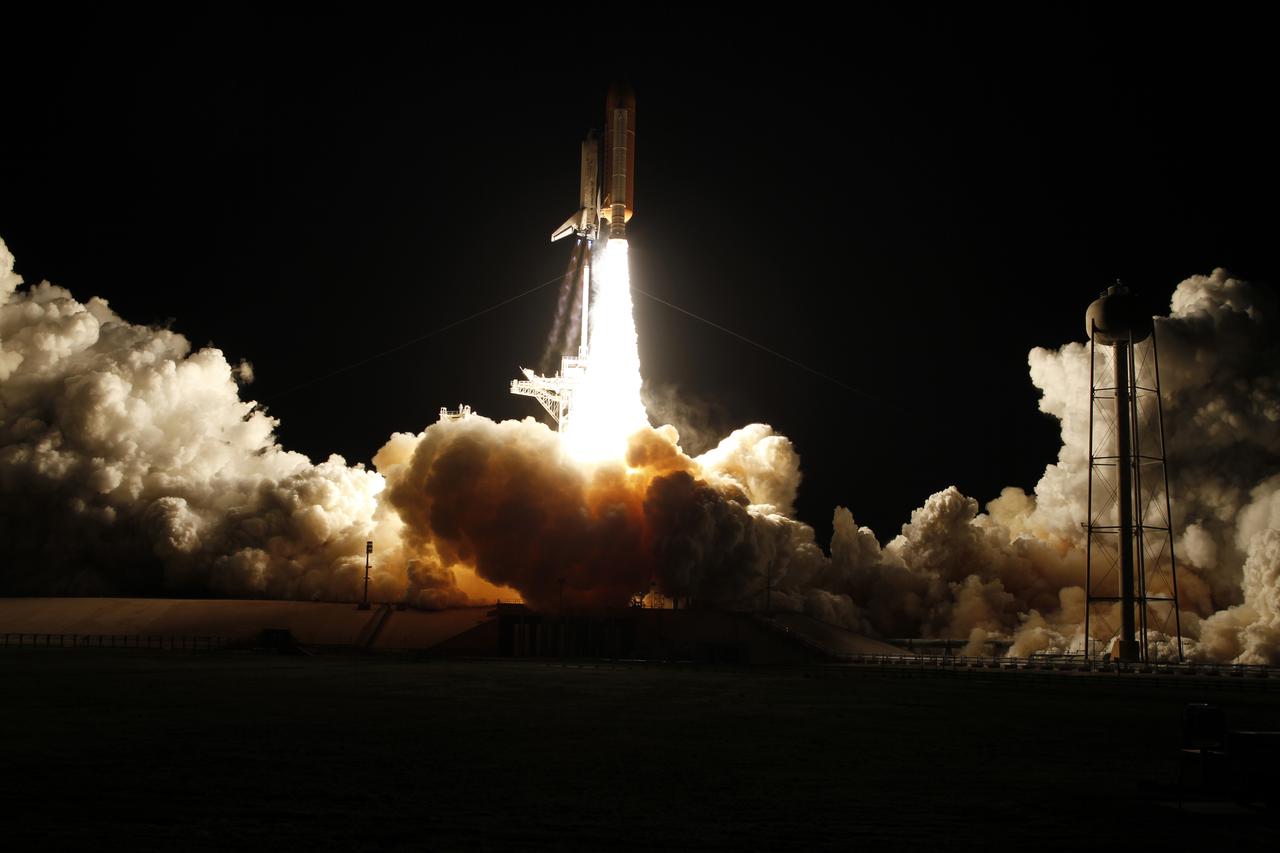
CAPE CANAVERAL, Fla. - Space shuttle Discovery clears the tower on Launch Pad 39A at NASA's Kennedy Space Center in Florida, its two solid rocket boosters and three main engines generating nearly seven million pounds of thrust. Liftoff on the STS-131 mission was on time at 6:21 a.m. EDT April 5. The seven-member crew will deliver the multi-purpose logistics module Leonardo, filled with supplies, a new crew sleeping quarters and science racks that will be transferred to the International Space Station's laboratories. The crew also will switch out a gyroscope on the station’s truss, install a spare ammonia storage tank and retrieve a Japanese experiment from the station’s exterior. STS-131 is the 33rd shuttle mission to the station and the 131st shuttle mission overall. For information on the STS-131 mission and crew, visit http:__www.nasa.gov_mission_pages_shuttle_shuttlemissions_sts131_index.html. Photo courtesy of Scott Andrews
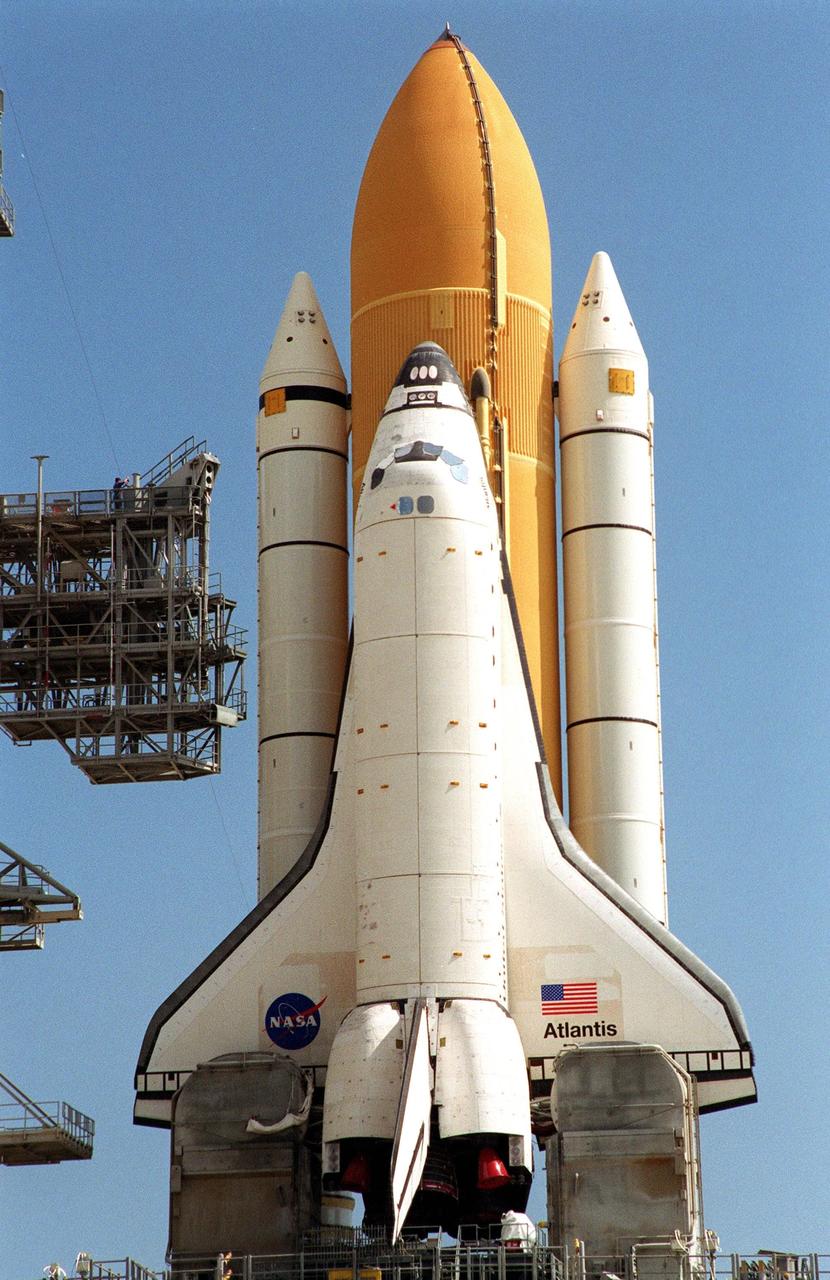
KENNEDY SPACE CENTER, Fla. -- Atop the mobile launcher platform, Space Shuttle Atlantis, with its orange external tank and white solid rocket boosters, sits on Launch Pad 39B after rollout from the Vehicle Assembly Building. Seen on either side of the orbiter’s tail are the tail service masts. They support the fluid, gas and electrical requirements of the orbiter’s liquid oxygen and liquid hydrogen aft umbilicals. The Shuttle is targeted for launch no earlier than July 12 on mission STS-104, the 10th flight to the International Space Station. The payload on the 11-day mission is the Joint Airlock Module, which will allow astronauts and cosmonauts in residence on the Station to perform future spacewalks without the presence of a Space Shuttle. The module, which comprises a crew lock and an equipment lock, will be connected to the starboard (right) side of Node 1 Unity. Atlantis will also carry oxygen and nitrogen storage tanks, vital to operation of the Joint Airlock, on a Spacelab Logistics Double Pallet in the payload bay. The tanks, to be installed on the perimeter of the Joint Module during the mission’s spacewalks, will support future spacewalk operations and experiments plus augment the resupply system for the Station’s Service Module
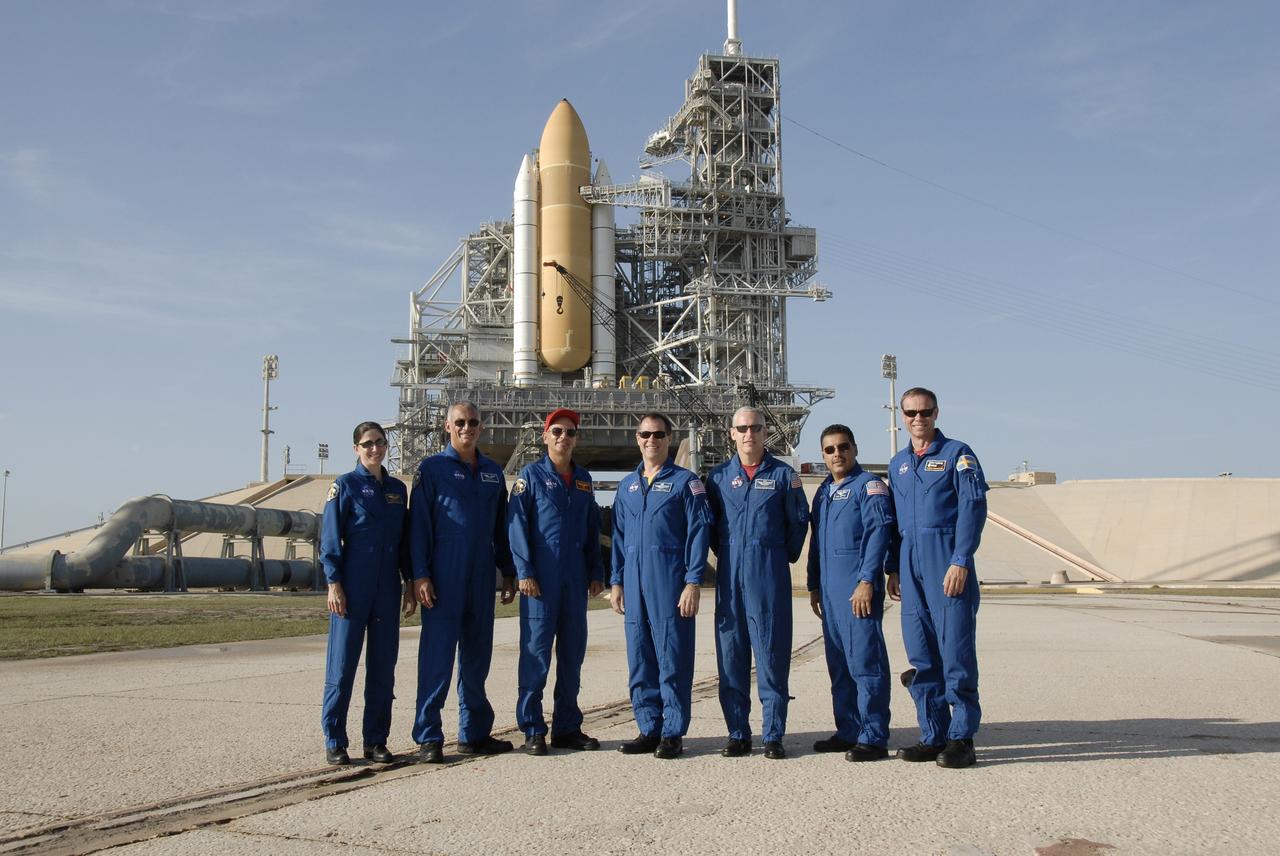
CAPE CANAVERAL, Fla. – At NASA's Kennedy Space Center in Florida, STS-128 crew members gather near Launch Pad 39A to answer questions from the media. From left are Mission Specialists Nicole Stott and John "Danny" Olivas, Commander Rick Sturckow, Pilot Kevin Ford and Mission Specialists Patrick Forrester, Jose Hernandez and Christer Fuglesang, who represents the European Space Agency. On the pad behind them is seen the solid rocket boosters and external fuel tank of space shuttle Discovery. The crew is at Kennedy for a launch dress rehearsal called the terminal countdown demonstration test, or TCDT, which includes emergency exit training and equipment familiarization, as well as a simulated launch countdown. Discovery will deliver 33,000 pounds of equipment to the station, including science and storage racks, a freezer to store research samples, a new sleeping compartment and the COLBERT treadmill. Photo credit: NASA/Kim Shiflett
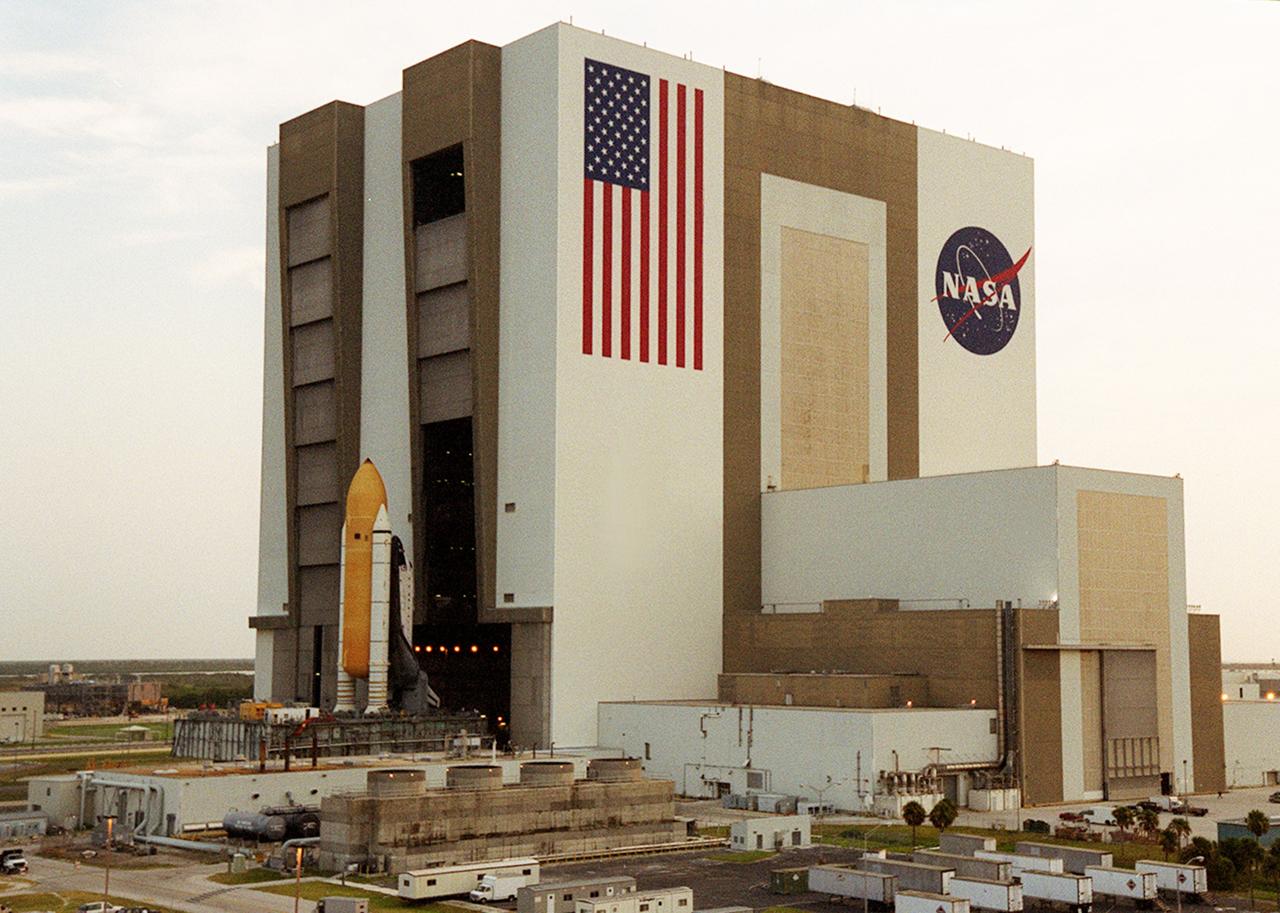
KENNEDY SPACE CENTER, FLA. -- Just after sunup, Shuttle Atlantis sits outside the Vehicle Assembly Building's (VAB) high bay 2 on the building's west side after completing a fit check. This is the first time in Space Shuttle history that a fully stacked Shuttle is being moved into the space. The VAB and nearby rock-paved crawlerway have recently undergone major modifications to provide Shuttle fliglht hardware more storage space and protection - "Safe Haven" - from hurricanes or tropical storms. Atlantis, the twin solid rocket boosters and external tank begain moving out of VAB high bay 1 on the east side at 2:59 a.m. EDT. The 6-million pound crawler transporter carried the Mobile Launcher Platform and Space Shuttle around the north side of the VAB and into high bay 2. After the successful "Safe Haven" fit check, Shuttle Atlantis is scheduled to roll out to Launch Pad 39B in preparation for the STS-106 launch on Sept. 8.
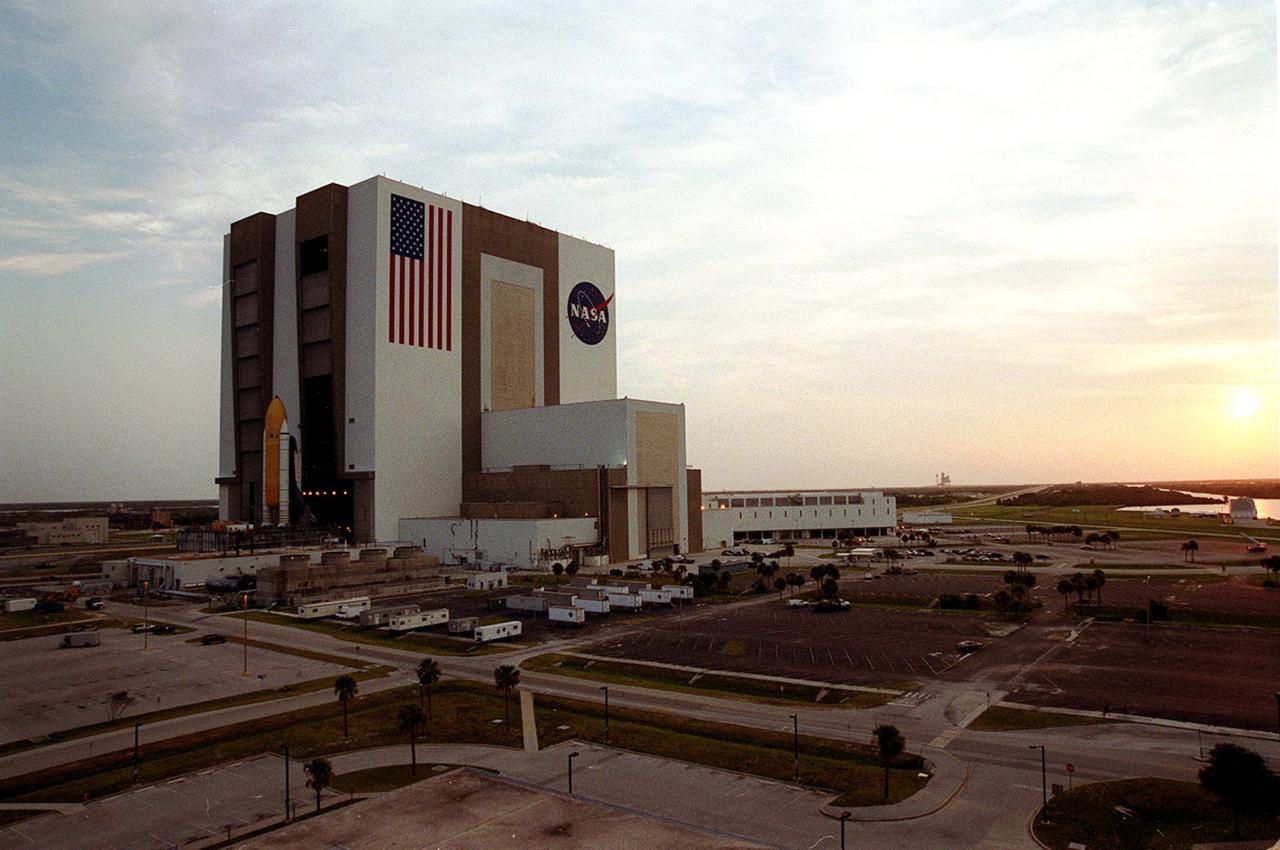
KENNEDY SPACE CENTER, FLA. -- The sun is rising over the Atlantic Ocean (right) as Shuttle Atlantis sits outside the Vehicle Assembly Building's (VAB) high bay 2 on the building's west side after completing a fit check. This is the first time in Space Shuttle history that a fully stacked Shuttle has been moved into the space. The VAB and nearby rock-paved crawlerway have recently undergone major modifications to provide Shuttle fliglht hardware more storage space and protection - "Safe Haven" - from hurricanes or tropical storms. Atlantis, the twin solid rocket boosters and external tank begain moving out of VAB high bay 1 on the east side at 2:59 a.m. EDT. The 6-million pound crawler transporter carried the Mobile Launcher Platform and Space Shuttle around the north side of the VAB and into high bay 2. After the successful "Safe Haven" fit check, Shuttle Atlantis is scheduled to roll out to Launch Pad 39B in preparation for the STS-106 launch on Sept. 8.
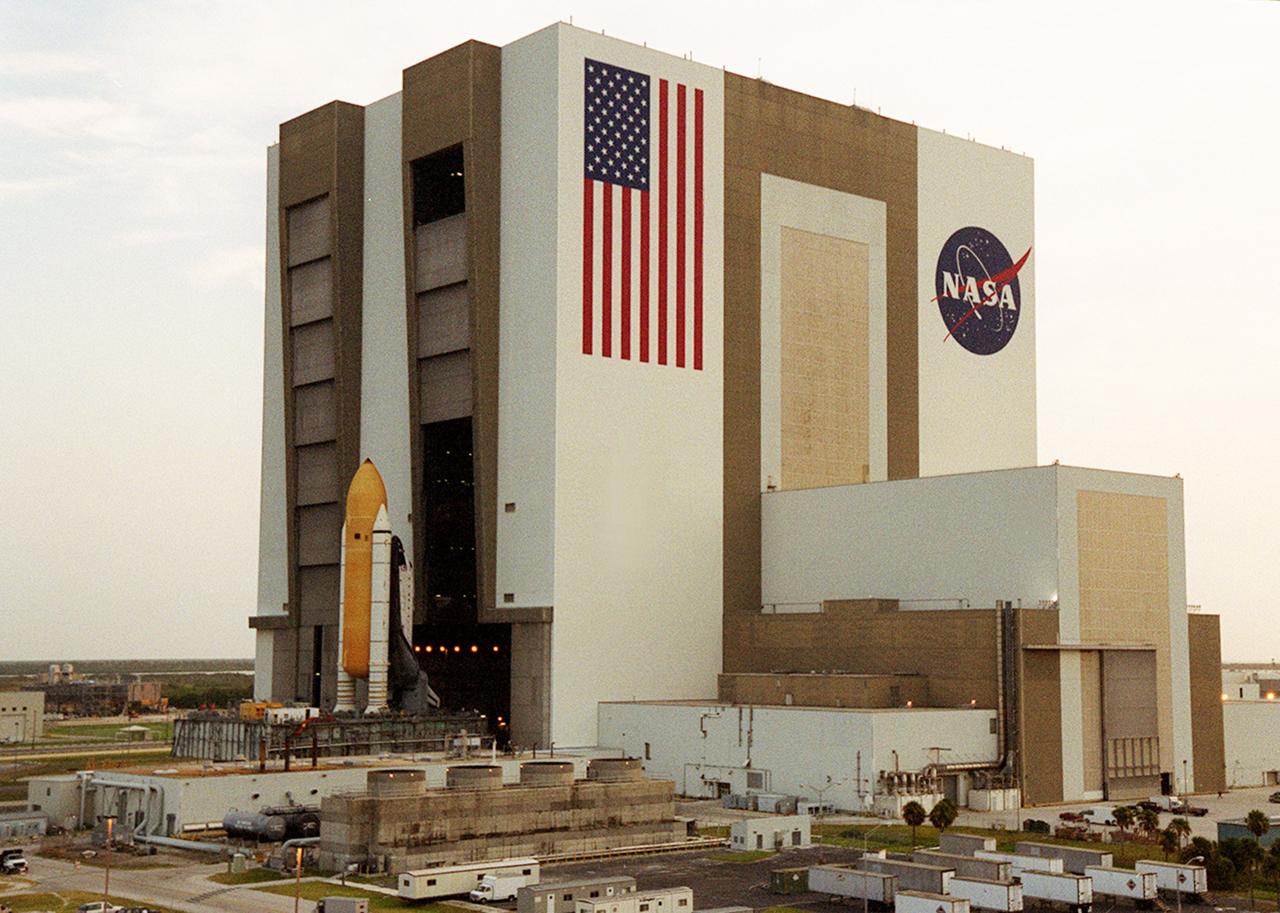
KENNEDY SPACE CENTER, FLA. -- Just after sunup, Shuttle Atlantis sits outside the Vehicle Assembly Building's (VAB) high bay 2 on the building's west side after completing a fit check. This is the first time in Space Shuttle history that a fully stacked Shuttle is being moved into the space. The VAB and nearby rock-paved crawlerway have recently undergone major modifications to provide Shuttle fliglht hardware more storage space and protection - "Safe Haven" - from hurricanes or tropical storms. Atlantis, the twin solid rocket boosters and external tank begain moving out of VAB high bay 1 on the east side at 2:59 a.m. EDT. The 6-million pound crawler transporter carried the Mobile Launcher Platform and Space Shuttle around the north side of the VAB and into high bay 2. After the successful "Safe Haven" fit check, Shuttle Atlantis is scheduled to roll out to Launch Pad 39B in preparation for the STS-106 launch on Sept. 8.
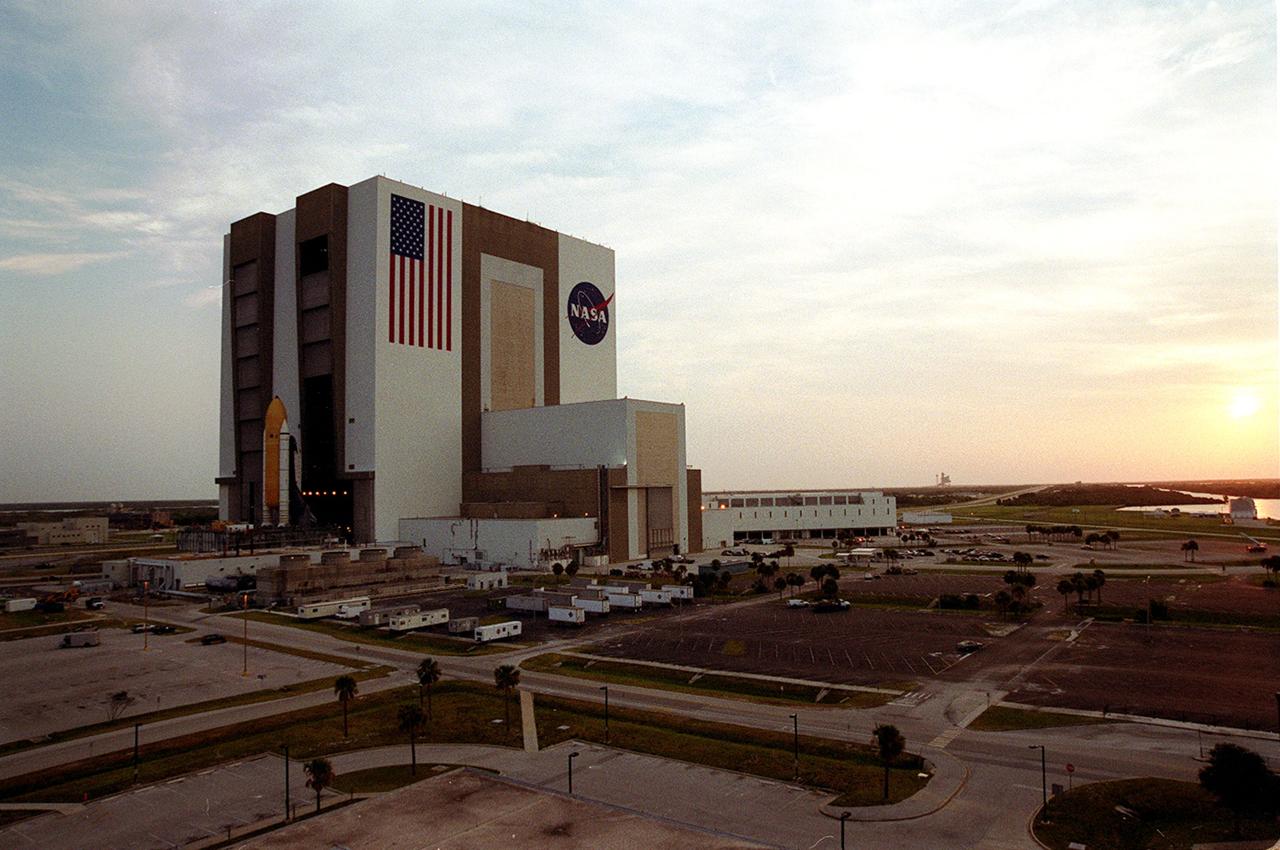
KENNEDY SPACE CENTER, FLA. -- The sun is rising over the Atlantic Ocean (right) as Shuttle Atlantis sits outside the Vehicle Assembly Building's (VAB) high bay 2 on the building's west side after completing a fit check. This is the first time in Space Shuttle history that a fully stacked Shuttle has been moved into the space. The VAB and nearby rock-paved crawlerway have recently undergone major modifications to provide Shuttle fliglht hardware more storage space and protection - "Safe Haven" - from hurricanes or tropical storms. Atlantis, the twin solid rocket boosters and external tank begain moving out of VAB high bay 1 on the east side at 2:59 a.m. EDT. The 6-million pound crawler transporter carried the Mobile Launcher Platform and Space Shuttle around the north side of the VAB and into high bay 2. After the successful "Safe Haven" fit check, Shuttle Atlantis is scheduled to roll out to Launch Pad 39B in preparation for the STS-106 launch on Sept. 8.
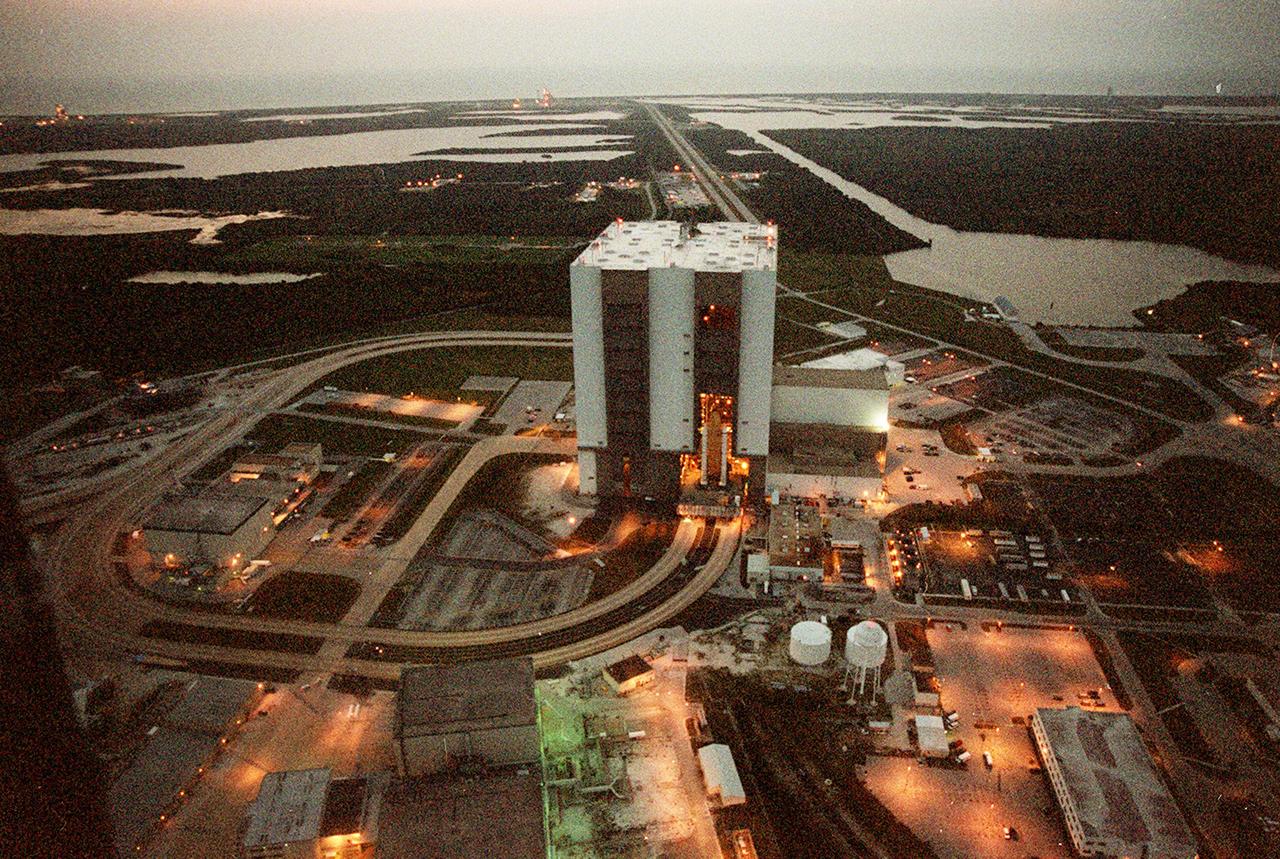
KENNEDY SPACE CENTER, FLA. -- At 6:30 a.m. EDT an aerial view captures a first in Space Shuttle history: a fully stacked Shuttle - Atlantis - is rolling into the Vehicle Assembly Building's (VAB) high bay 2 on the building's west side (center of photo). The VAB and nearby rock-paved crawlerway (circling to the left) have recently undergone major modifications to provide Shuttle fliglht hardware more storage space and protection - "Safe Haven" - from hurricanes or tropical storms. Atlantis, the twin solid rocket boosters and external tank begain moving out of VAB high bay 1 on the east side at 2:59 a.m. EDT. The 6-million pound crawler transporter carried the Mobile Launcher Platform and Space Shuttle around the north side of the VAB and into high bay 2. To the right of the VAB is the turn basin. In the background can be seen both Launch Pads with the Atlantic Ocean behind them. After the successful "Safe Haven" fit check, Shuttle Atlantis is scheduled to roll out to Launch Pad 39B in preparation for the STS-106 launch on Sept. 8.
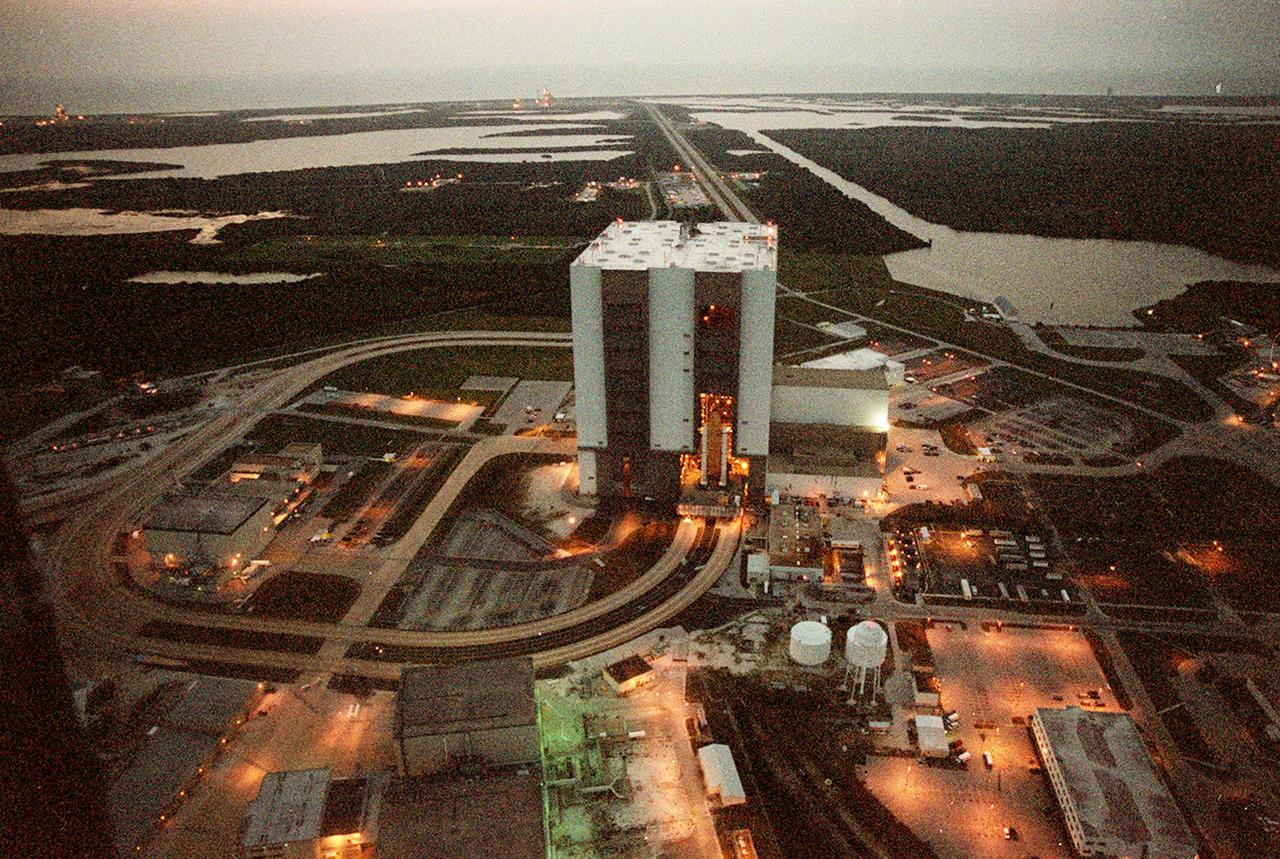
KENNEDY SPACE CENTER, FLA. -- At 6:30 a.m. EDT an aerial view captures a first in Space Shuttle history: a fully stacked Shuttle - Atlantis - is rolling into the Vehicle Assembly Building's (VAB) high bay 2 on the building's west side (center of photo). The VAB and nearby rock-paved crawlerway (circling to the left) have recently undergone major modifications to provide Shuttle fliglht hardware more storage space and protection - "Safe Haven" - from hurricanes or tropical storms. Atlantis, the twin solid rocket boosters and external tank begain moving out of VAB high bay 1 on the east side at 2:59 a.m. EDT. The 6-million pound crawler transporter carried the Mobile Launcher Platform and Space Shuttle around the north side of the VAB and into high bay 2. To the right of the VAB is the turn basin. In the background can be seen both Launch Pads with the Atlantic Ocean behind them. After the successful "Safe Haven" fit check, Shuttle Atlantis is scheduled to roll out to Launch Pad 39B in preparation for the STS-106 launch on Sept. 8.
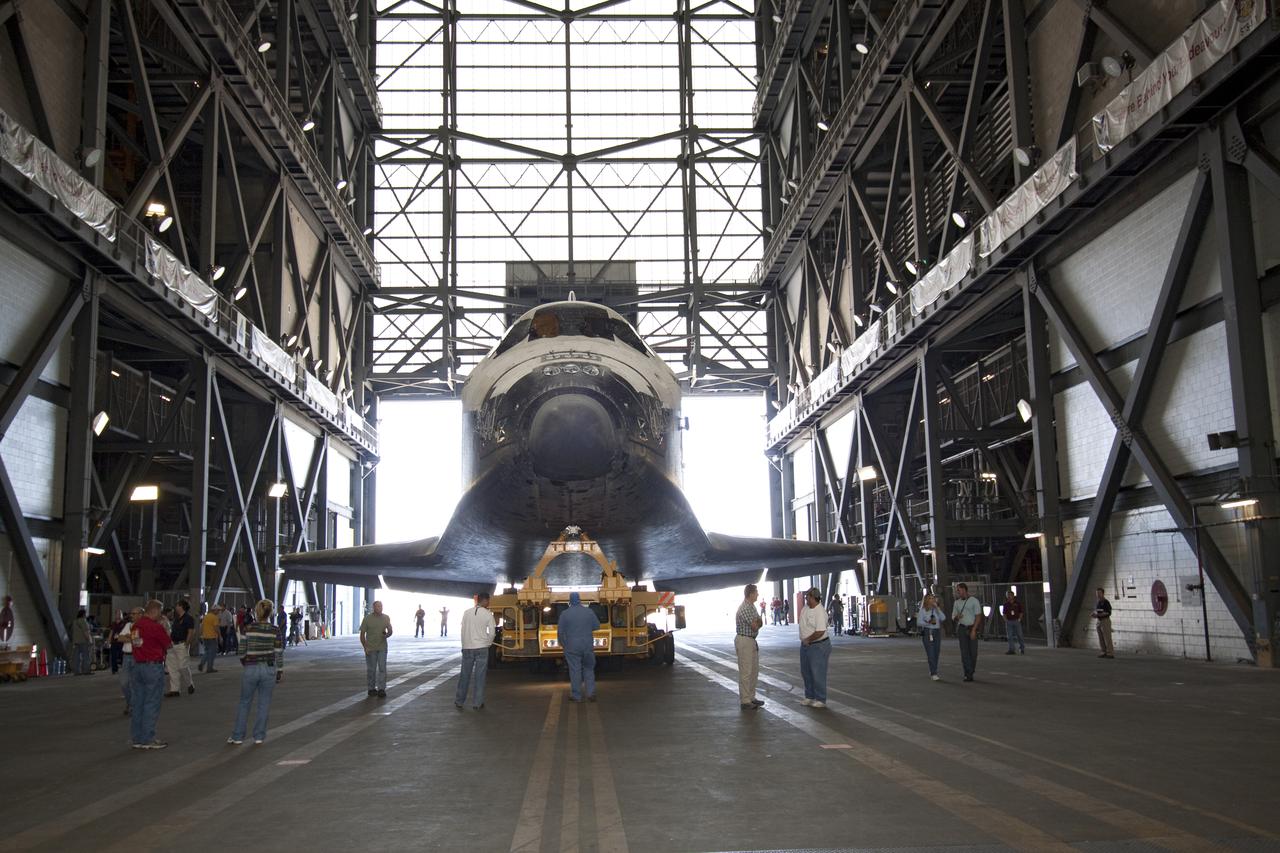
CAPE CANAVERAL, Fla. – At NASA's Kennedy Space Center in Florida, space shuttle Atlantis arrives in the transfer aisle of the Vehicle Assembly Building, or VAB. The shuttle was moved from Orbiter Processing Facility-1 where it was processed for its upcoming STS-132 mission. In the VAB, Atlantis will be lifted into a high bay where it will be mated to its external fuel tank and solid rocket boosters. The six-member STS-132 crew will deliver an Integrated Cargo Carrier, or ICC, and the Russian-built Mini-Research Module-1, or MRM-1, to the International Space Station. The ICC is an unpressurized flat bed pallet and keel yoke assembly used to support the transfer of exterior cargo from the shuttle to the space station. The MRM-1, known as Rassvet, is the second in a series of new pressurized components for Russia and will be permanently attached to the Earth-facing port of the Zarya control module. Rassvet, which translates to 'dawn,' will be used for cargo storage and will provide an additional docking port to the station. STS-132 is the 34th mission to the station and the 132nd shuttle mission overall. Launch is targeted for May 14. For information on the STS-132 mission, visit http:__www.nasa.gov_mission_pages_shuttle_shuttlemissions_sts132_index.html. Photo credit: NASA_Jack Pfaller
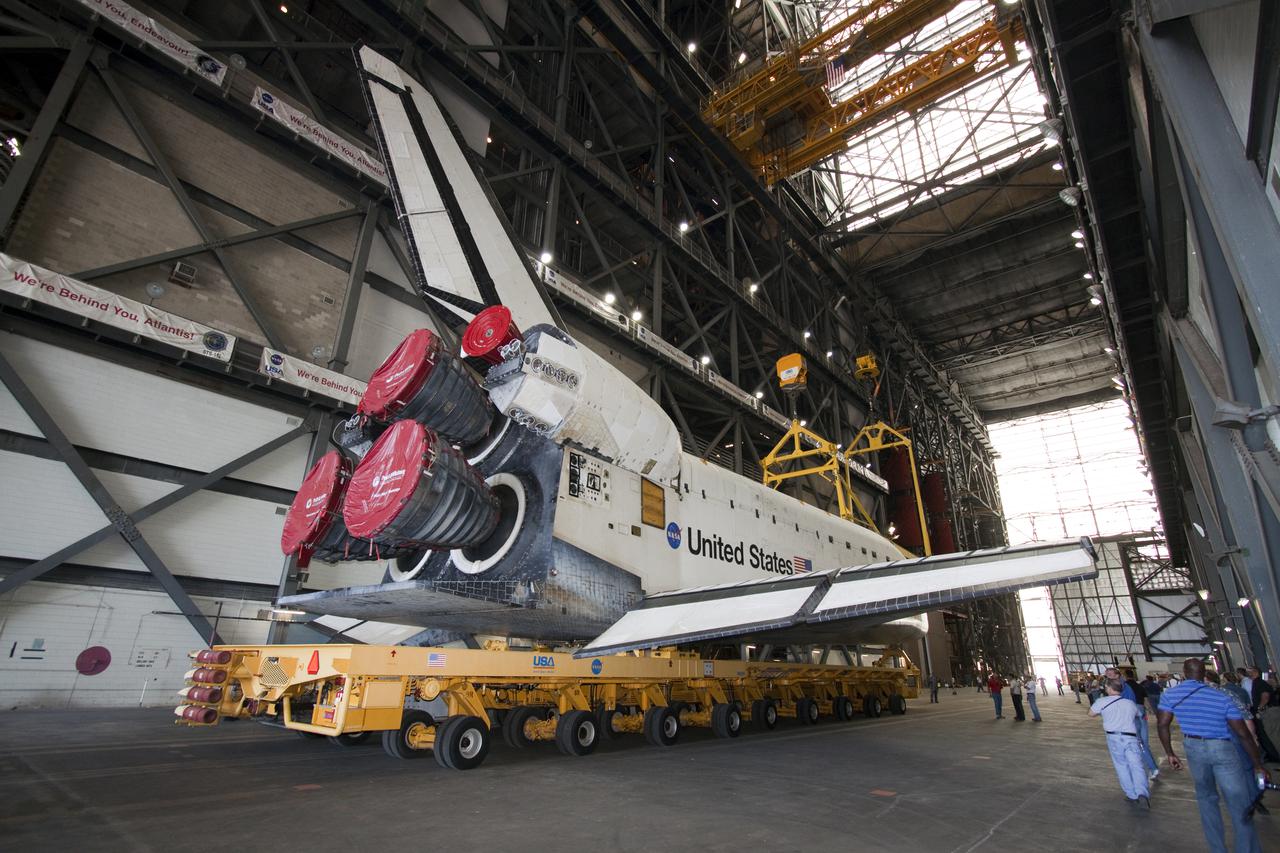
CAPE CANAVERAL, Fla. – At NASA's Kennedy Space Center in Florida, space shuttle Atlantis has arrived in the transfer aisle of the Vehicle Assembly Building, or VAB, and is ready to be lifted into a high bay. The shuttle was moved from Orbiter Processing Facility-1 where it was processed for its upcoming STS-132 mission. In the VAB, Atlantis will be lifted into a high bay where it will be mated to its external fuel tank and solid rocket boosters. The six-member STS-132 crew will deliver an Integrated Cargo Carrier, or ICC, and the Russian-built Mini-Research Module-1, or MRM-1, to the International Space Station. The ICC is an unpressurized flat bed pallet and keel yoke assembly used to support the transfer of exterior cargo from the shuttle to the space station. The MRM-1, known as Rassvet, is the second in a series of new pressurized components for Russia and will be permanently attached to the Earth-facing port of the Zarya control module. Rassvet, which translates to 'dawn,' will be used for cargo storage and will provide an additional docking port to the station. STS-132 is the 34th mission to the station and the 132nd shuttle mission overall. Launch is targeted for May 14. For information on the STS-132 mission, visit http:__www.nasa.gov_mission_pages_shuttle_shuttlemissions_sts132_index.html. Photo credit: NASA_Jack Pfaller
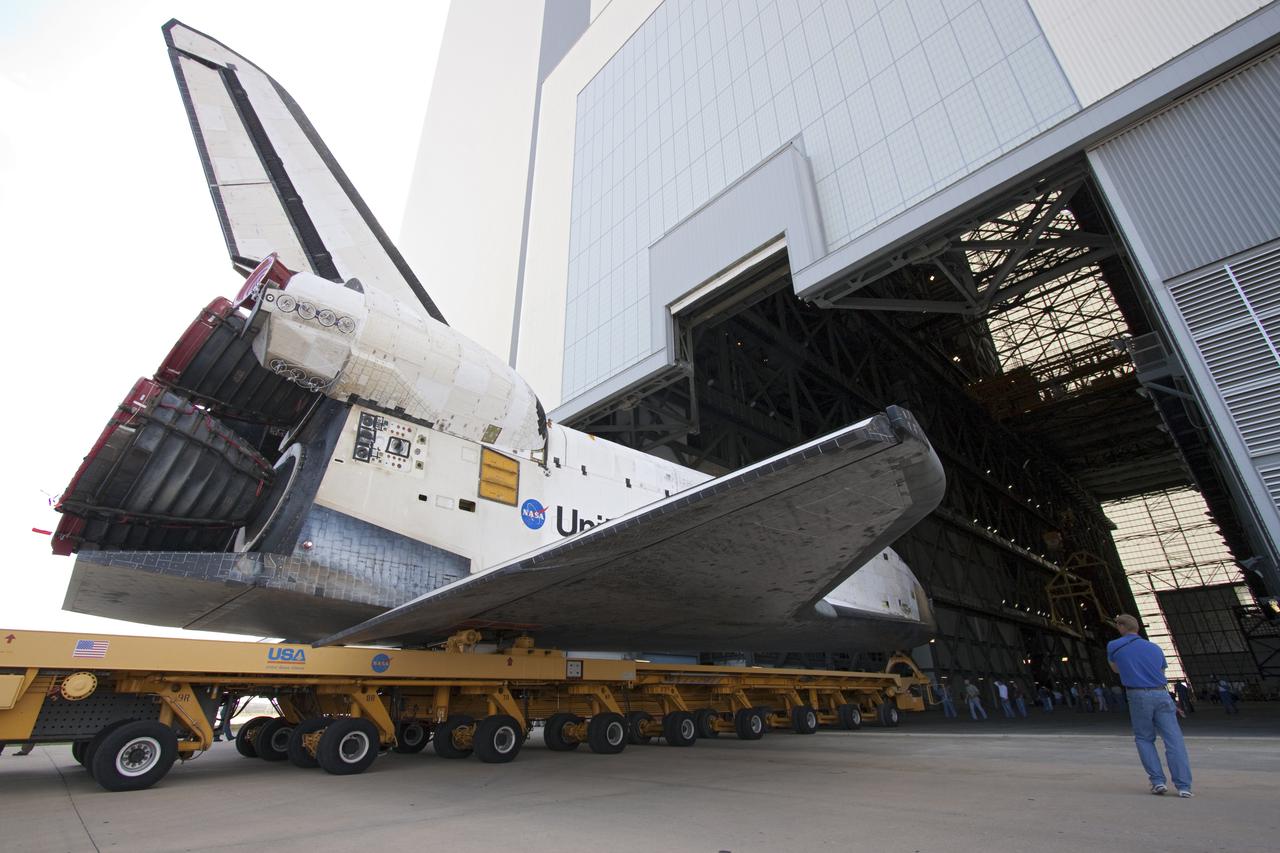
CAPE CANAVERAL, Fla. – At NASA's Kennedy Space Center in Florida, space shuttle Atlantis rolls through the open door of the Vehicle Assembly Building, or VAB, into the transfer aisle. The shuttle is being moved from Orbiter Processing Facility-1 where it was processed for its upcoming STS-132 mission. In the VAB, Atlantis will be lifted into a high bay where it will be mated to its external fuel tank and solid rocket boosters. The six-member STS-132 crew will deliver an Integrated Cargo Carrier, or ICC, and the Russian-built Mini-Research Module-1, or MRM-1, to the International Space Station. The ICC is an unpressurized flat bed pallet and keel yoke assembly used to support the transfer of exterior cargo from the shuttle to the space station. The MRM-1, known as Rassvet, is the second in a series of new pressurized components for Russia and will be permanently attached to the Earth-facing port of the Zarya control module. Rassvet, which translates to 'dawn,' will be used for cargo storage and will provide an additional docking port to the station. STS-132 is the 34th mission to the station and the 132nd shuttle mission overall. Launch is targeted for May 14. For information on the STS-132 mission, visit http:__www.nasa.gov_mission_pages_shuttle_shuttlemissions_sts132_index.html. Photo credit: NASA_Jack Pfaller

KENNEDY SPACE CENTER, Fla. -- After a journey of more than 8 hours from the Vehicle Assembly Building, Space Shuttle Atlantis sits on Launch Pad 39B. At left is the Rotating Service Structure, which will roll on its axis to enclose the Shuttle until launch. Towering above the Fixed Service Structure next to it is the 80-foot tall lightning mast that provides protection from lightning strikes. On the right is the elevated water tank with a capacity of 300,000 gallons. Part of the Sound Suppression Water System, the water in the tank is released just before ignition of the orbiter’s three main engines and twin solid rocket boosters and flow through parallel 7-foot-diameter pipes to the pad area. The Shuttle is targeted for launch no earlier than July 12 on mission STS-104, the 10th flight to the International Space Station. The payload on the 11-day mission is the Joint Airlock Module, which will allow astronauts and cosmonauts in residence on the Station to perform future spacewalks without the presence of a Space Shuttle. The module, which comprises a crew lock and an equipment lock, will be connected to the starboard (right) side of Node 1 Unity. Atlantis will also carry oxygen and nitrogen storage tanks, vital to operation of the Joint Airlock, on a Spacelab Logistics Double Pallet in the payload bay. The tanks, to be installed on the perimeter of the Joint Module during the mission’s spacewalks, will support future spacewalk operations and experiments plus augment the resupply system for the Station’s Service Module
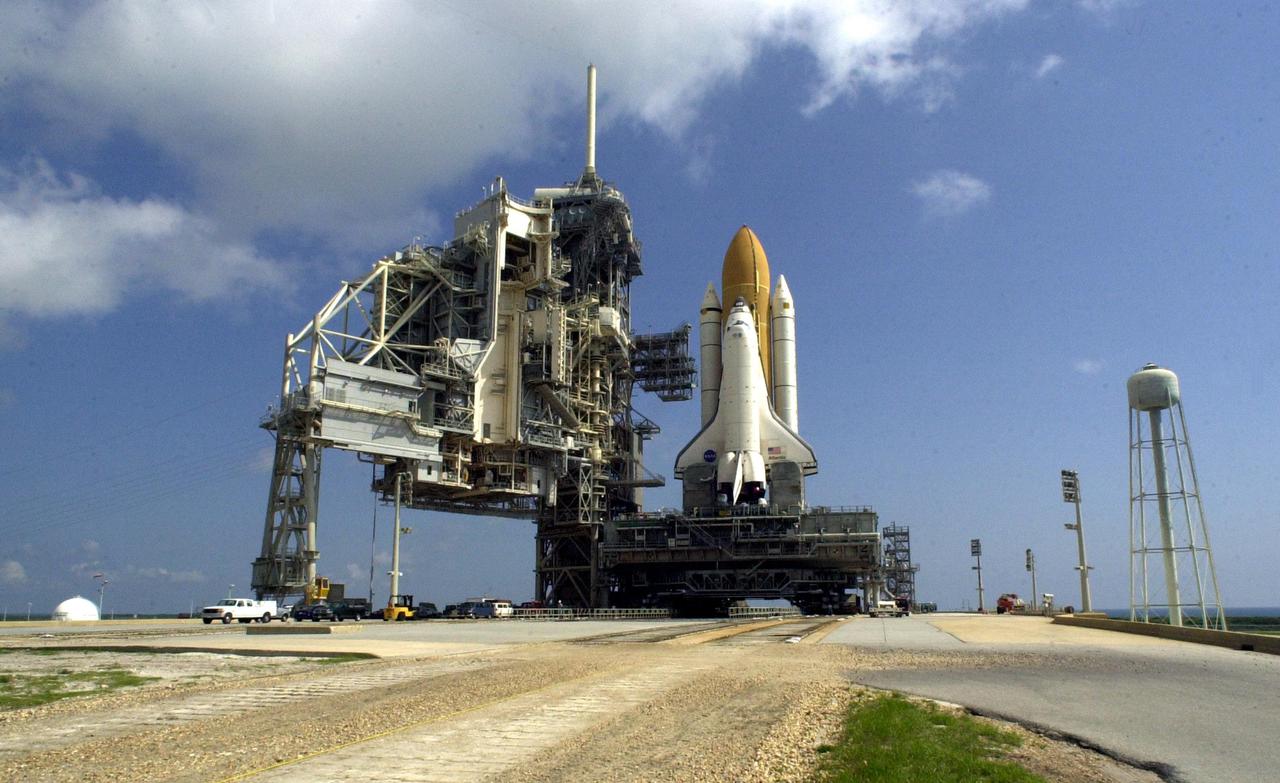
KENNEDY SPACE CENTER, Fla. -- After a journey of more than 8 hours from the Vehicle Assembly Building, Space Shuttle Atlantis sits on Launch Pad 39B. At left is the Rotating Service Structure, which will roll on its axis to enclose the Shuttle until launch. Towering above the Fixed Service Structure next to it is the 80-foot tall lightning mast that provides protection from lightning strikes. On the right is the elevated water tank with a capacity of 300,000 gallons. Part of the Sound Suppression Water System, the water in the tank is released just before ignition of the orbiter’s three main engines and twin solid rocket boosters and flow through parallel 7-foot-diameter pipes to the pad area. The Shuttle is targeted for launch no earlier than July 12 on mission STS-104, the 10th flight to the International Space Station. The payload on the 11-day mission is the Joint Airlock Module, which will allow astronauts and cosmonauts in residence on the Station to perform future spacewalks without the presence of a Space Shuttle. The module, which comprises a crew lock and an equipment lock, will be connected to the starboard (right) side of Node 1 Unity. Atlantis will also carry oxygen and nitrogen storage tanks, vital to operation of the Joint Airlock, on a Spacelab Logistics Double Pallet in the payload bay. The tanks, to be installed on the perimeter of the Joint Module during the mission’s spacewalks, will support future spacewalk operations and experiments plus augment the resupply system for the Station’s Service Module
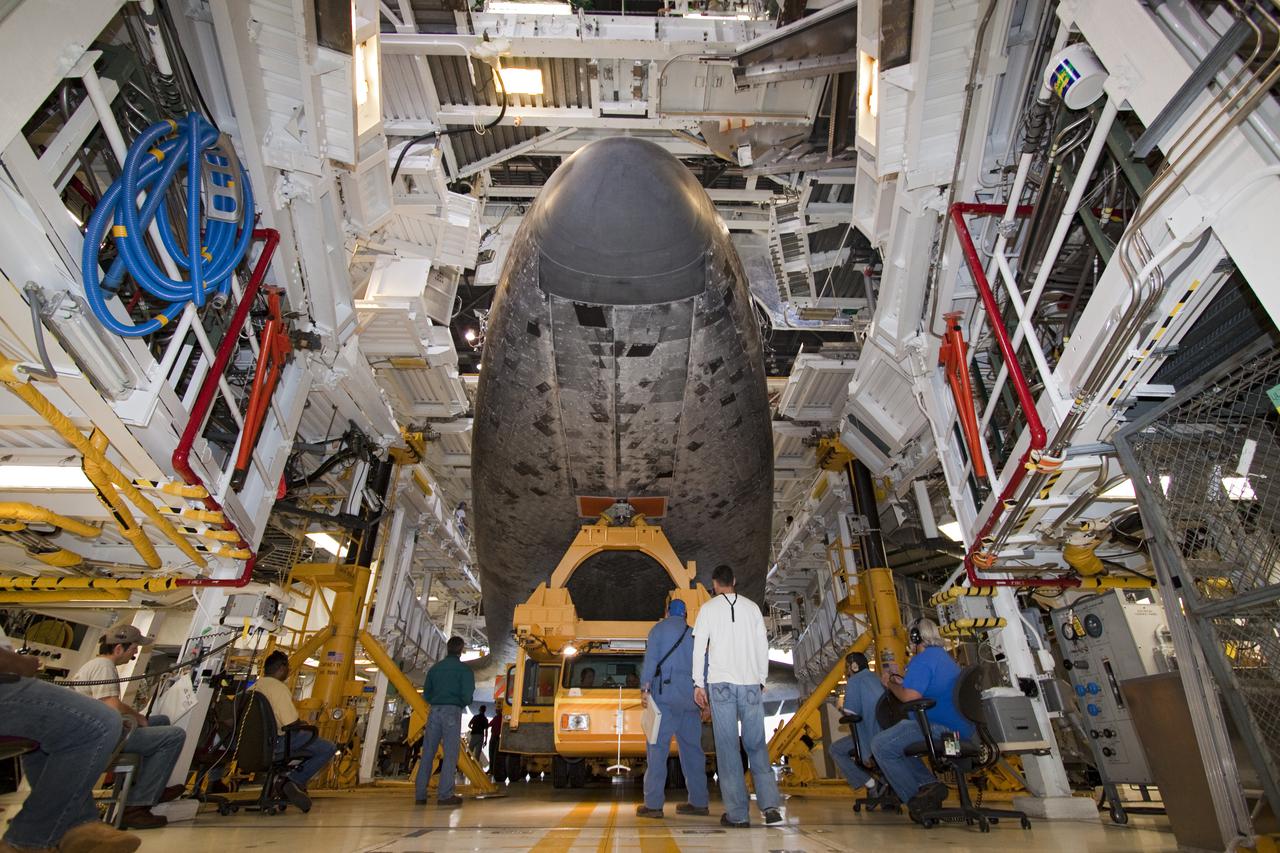
CAPE CANAVERAL, Fla. – In Orbiter Processing Facility-1 at NASA's Kennedy Space Center in Florida, preparations are under way to roll space shuttle Atlantis to the Vehicle Assembly Building, or VAB, where processing for its upcoming STS-132 mission will continue. In the VAB, Atlantis will be lifted into a high bay where it will be mated to its external fuel tank and solid rocket boosters. The six-member STS-132 crew will deliver an Integrated Cargo Carrier, or ICC, and the Russian-built Mini-Research Module-1, or MRM-1, to the International Space Station. The ICC is an unpressurized flat bed pallet and keel yoke assembly used to support the transfer of exterior cargo from the shuttle to the space station. The MRM-1, known as Rassvet, is the second in a series of new pressurized components for Russia and will be permanently attached to the Earth-facing port of the Zarya control module. Rassvet, which translates to 'dawn,' will be used for cargo storage and will provide an additional docking port to the station. STS-132 is the 34th mission to the station and the 132nd shuttle mission overall. Launch is targeted for May 14. For information on the STS-132 mission, visit http:__www.nasa.gov_mission_pages_shuttle_shuttlemissions_sts132_index.html. Photo credit: NASA_Jack Pfaller

CAPE CANAVERAL, Fla. – At NASA's Kennedy Space Center in Florida, space shuttle Atlantis approaches the Vehicle Assembly Building, or VAB, on its move from Orbiter Processing Facility-1 where it was processed for its upcoming STS-132 mission. In the VAB, Atlantis will be lifted into a high bay where it will be mated to its external fuel tank and solid rocket boosters. The six-member STS-132 crew will deliver an Integrated Cargo Carrier, or ICC, and the Russian-built Mini-Research Module-1, or MRM-1, to the International Space Station. The ICC is an unpressurized flat bed pallet and keel yoke assembly used to support the transfer of exterior cargo from the shuttle to the space station. The MRM-1, known as Rassvet, is the second in a series of new pressurized components for Russia and will be permanently attached to the Earth-facing port of the Zarya control module. Rassvet, which translates to 'dawn,' will be used for cargo storage and will provide an additional docking port to the station. STS-132 is the 34th mission to the station and the 132nd shuttle mission overall. Launch is targeted for May 14. For information on the STS-132 mission, visit http:__www.nasa.gov_mission_pages_shuttle_shuttlemissions_sts132_index.html. Photo credit: NASA_Jack Pfaller

CAPE CANAVERAL, Fla. – At NASA's Kennedy Space Center in Florida, workers accompany space shuttle Atlantis on its move from Orbiter Processing Facility-1 to the Vehicle Assembly Building, or VAB, where preparations for its upcoming STS-132 mission will continue. In the VAB, Atlantis will be lifted into a high bay where it will be mated to its external fuel tank and solid rocket boosters. The six-member STS-132 crew will deliver an Integrated Cargo Carrier, or ICC, and the Russian-built Mini-Research Module-1, or MRM-1, to the International Space Station. The ICC is an unpressurized flat bed pallet and keel yoke assembly used to support the transfer of exterior cargo from the shuttle to the space station. The MRM-1, known as Rassvet, is the second in a series of new pressurized components for Russia and will be permanently attached to the Earth-facing port of the Zarya control module. Rassvet, which translates to 'dawn,' will be used for cargo storage and will provide an additional docking port to the station. STS-132 is the 34th mission to the station and the 132nd shuttle mission overall. Launch is targeted for May 14. For information on the STS-132 mission, visit http:__www.nasa.gov_mission_pages_shuttle_shuttlemissions_sts132_index.html. Photo credit: NASA_Jack Pfaller
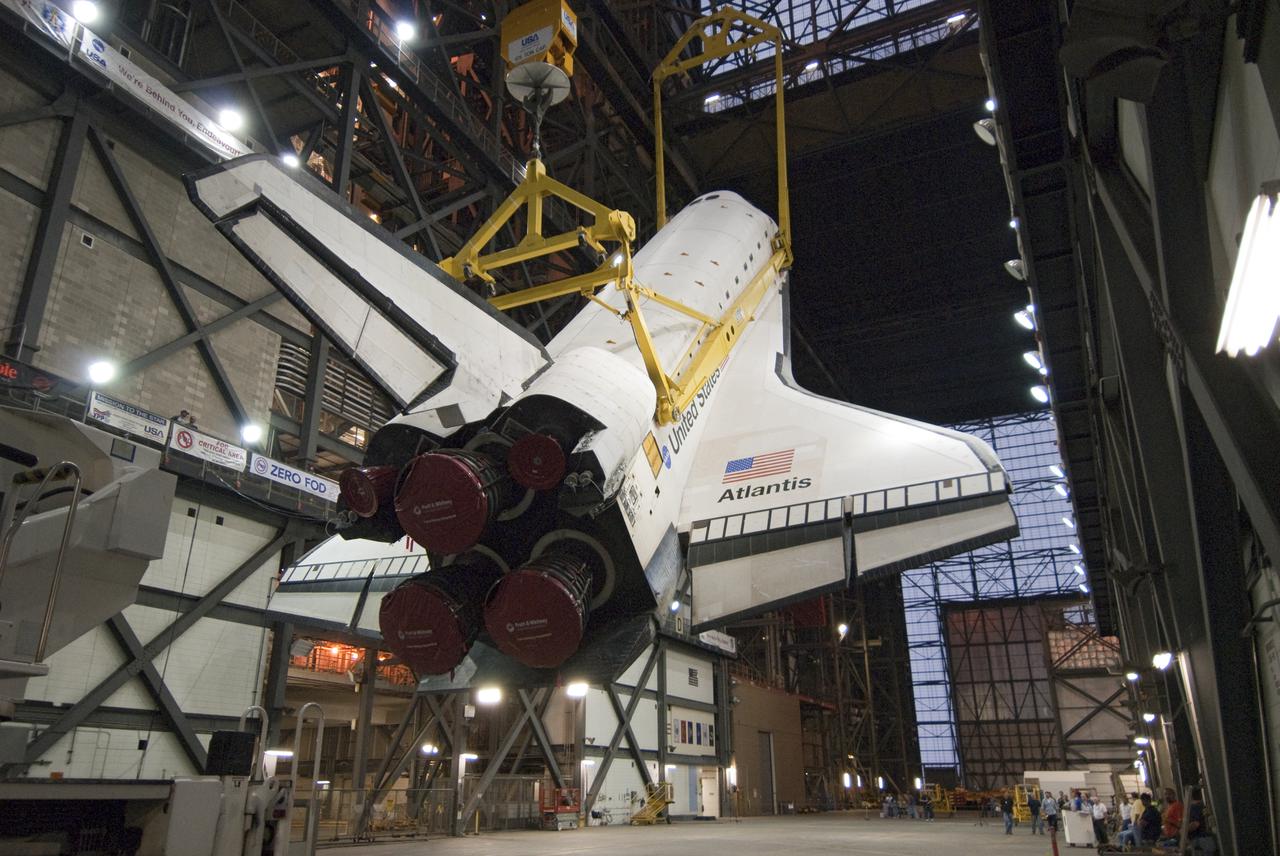
CAPE CANAVERAL, Fla. – In the Vehicle Assembly Building at NASA's Kennedy Space Center in Florida, space shuttle Atlantis appears to take flight from the transfer aisle during its move into High Bay-1. In the bay, Atlantis will be attached to its external fuel tank and solid rocket boosters in preparation for the upcoming STS-132 mission. The six-member STS-132 crew will deliver an Integrated Cargo Carrier, or ICC, and the Russian-built Mini-Research Module-1, or MRM-1, to the International Space Station. The ICC is an unpressurized flat bed pallet and keel yoke assembly used to support the transfer of exterior cargo from the shuttle to the space station. The MRM-1, known as Rassvet, is the second in a series of new pressurized components for Russia and will be permanently attached to the Earth-facing port of the Zarya control module. Rassvet, which translates to 'dawn,' will be used for cargo storage and will provide an additional docking port to the station. STS-132 is the 34th mission to the station and the 132nd shuttle mission overall. Launch is targeted for May 14. For information on the STS-132 mission, visit http:__www.nasa.gov_mission_pages_shuttle_shuttlemissions_sts132_index.html. Photo credit: NASA_Cory Huston