
A Ghost Story
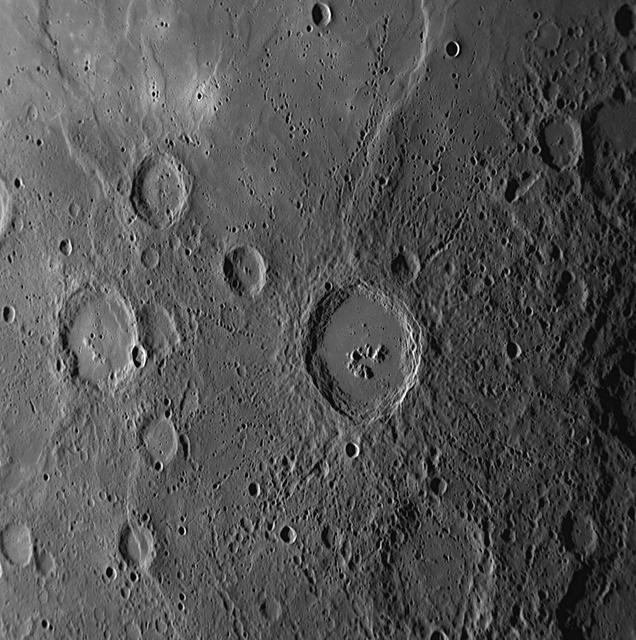
Mercury Geology: A Story with Many Chapters

Endurance Tells Story of Mars History

Endurance Tells Story of Mars History
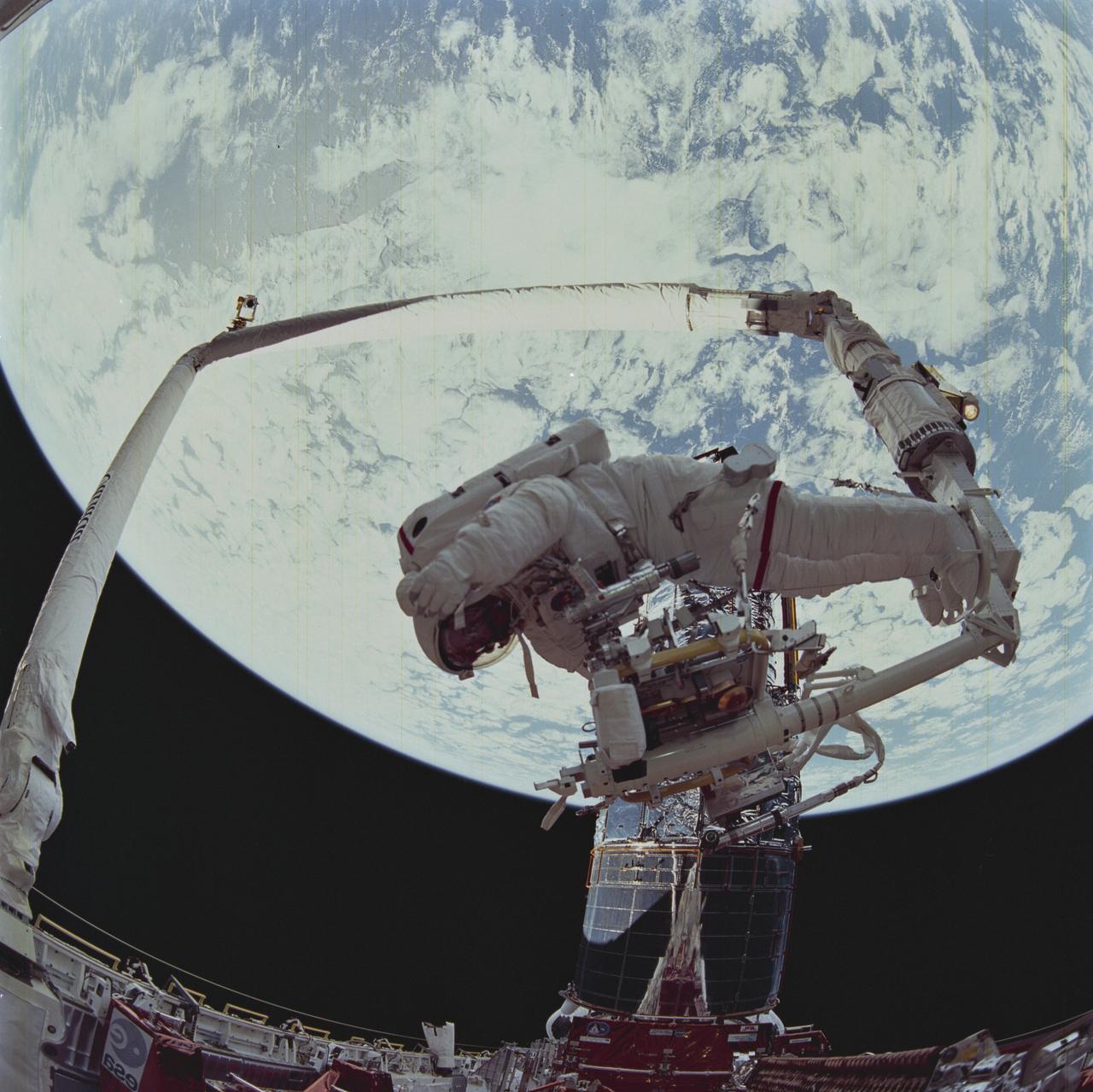
Space Shuttle mission STS-61 onboard view taken by a fish-eyed camera lens showing astronauts Story Musgrave and Jeffrey Hoffman's Extra Vehicular Activity (EVA) to repair the Hubble Space Telescope (HST).
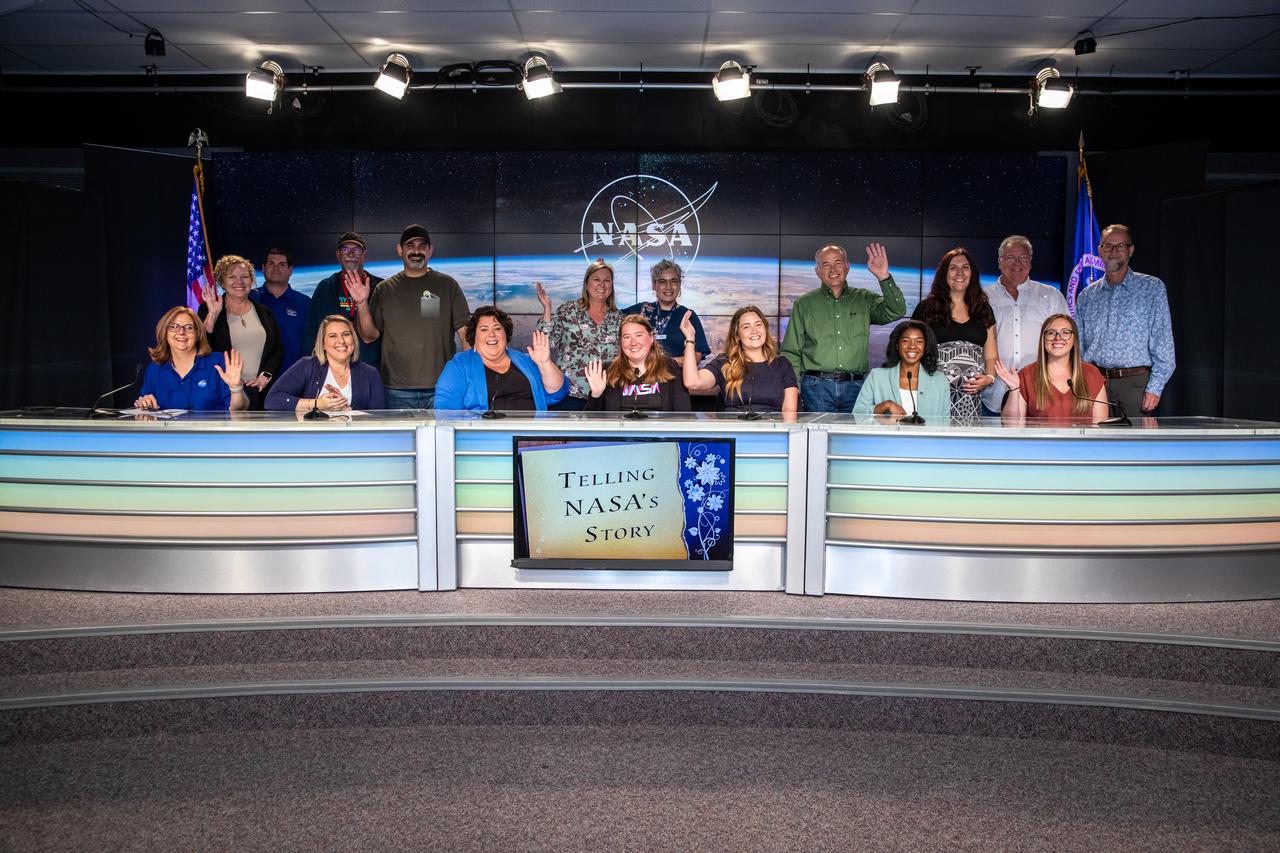
Employees who work at NASA’s Kennedy Space Center Press Site are photographed inside the News Auditorium at the Florida spaceport on March 23, 2023, following a panel discussion held to commemorate Women’s History Month. The event, titled “Celebrating the Women Who Tell Our Stories,” included women who typically work behind the scenes sharing what goes into conceiving, creating, and curating NASA stories. Panelists included Kennedy’s news chief, members of the broadcast team, public affairs specialists, a video producer, and a writer.
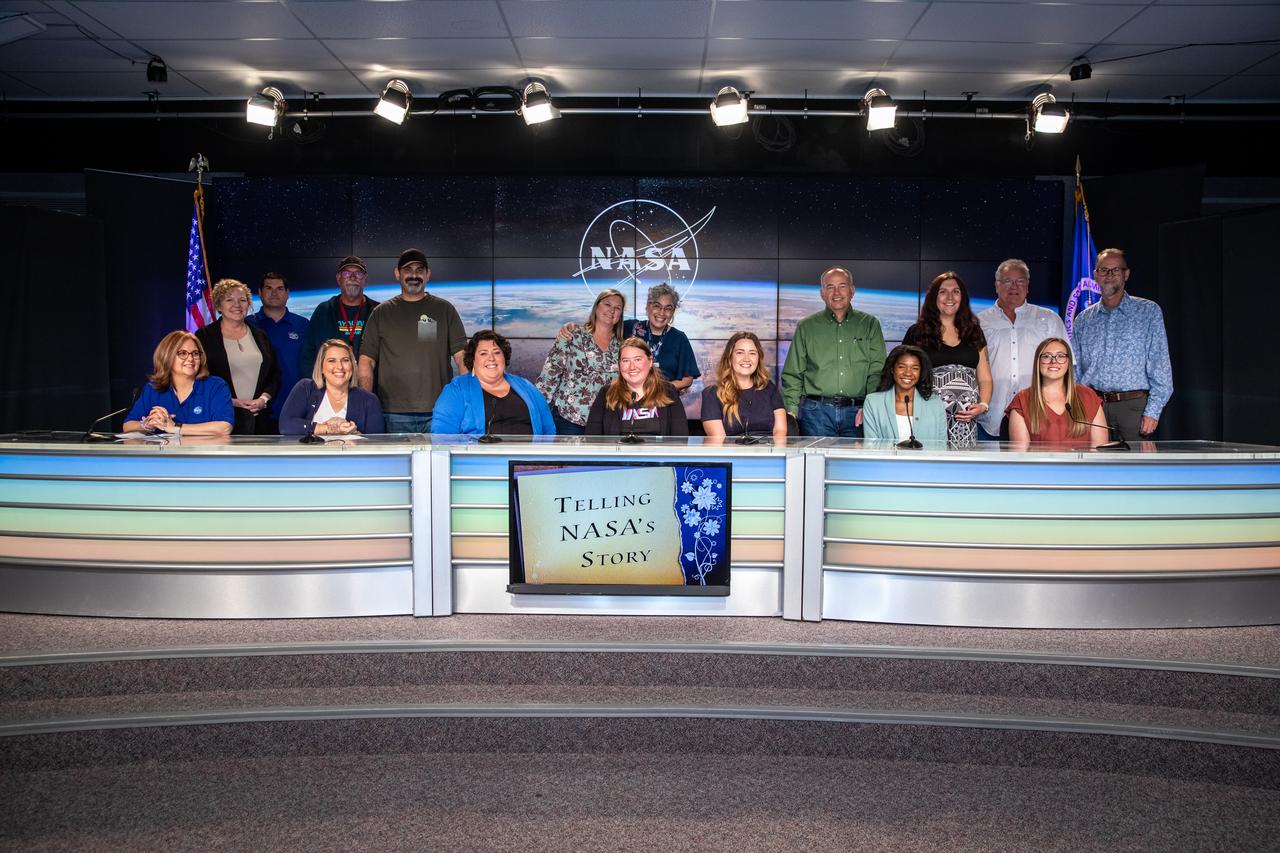
Employees who work at NASA’s Kennedy Space Center Press Site are photographed inside the News Auditorium at the Florida spaceport on March 23, 2023, following a panel discussion held to commemorate Women’s History Month. The event, titled “Celebrating the Women Who Tell Our Stories,” included women who typically work behind the scenes sharing what goes into conceiving, creating, and curating NASA stories. Panelists included Kennedy’s news chief, members of the broadcast team, public affairs specialists, a video producer, and a writer.

This is a Space Shuttle mission STS-61 onboard view showing astronauts Story Musgrave and Jeffrey Hoffman preforming repairs to the Hubble Space Telescope (HST) during their Extra Vehicular Activity (EVA). Astronauts' work was made easier by the HST's many crew aids. Astronaut Musgrave makes use of one of the spacecraft's handholds. Launched on December 1, 1993, the Space Shuttle Orbiter Endeavor STS-061 mission was the 59th Shuttle flight.
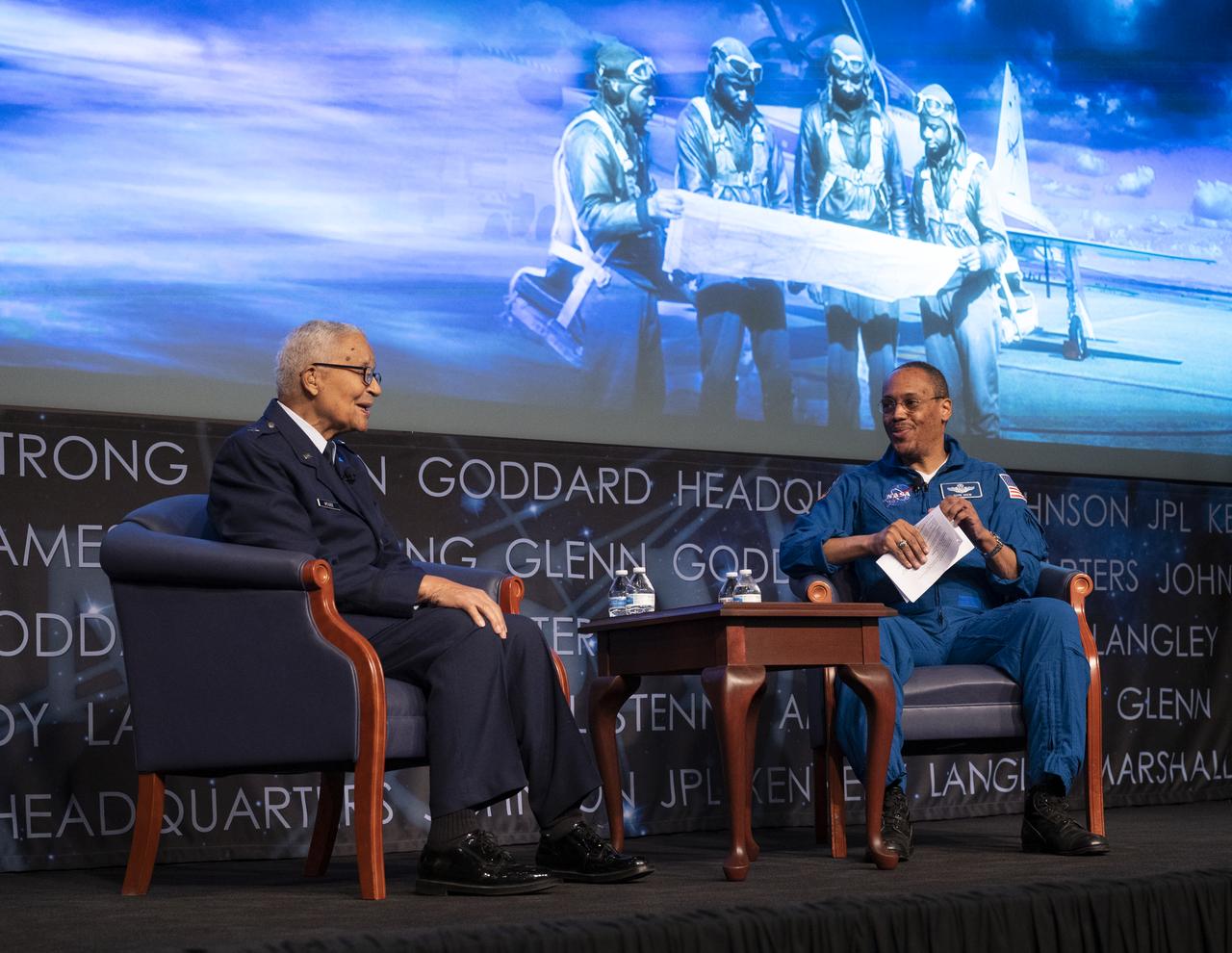
Retired U.S. Air Force Honorary Brigadier General Charles McGee, left, speaks with NASA astronaut Alvin Drew during a Black History Month program titled “Trailblazers, The Story of a Tuskegee Airman,” Wednesday, Feb. 5, 2020, at NASA Headquarters in Washington, DC. McGee, a pilot with the Tuskegee Airmen during World War II, was a career officer in the Air Force also serving during the Korean and Vietnam Wars. Over his 30 years of service he flew 409 combat missions. Of the 355 Tuskegee pilots who flew in combat, McGee is one of only nine surviving. Photo Credit: (NASA/Joel Kowsky)
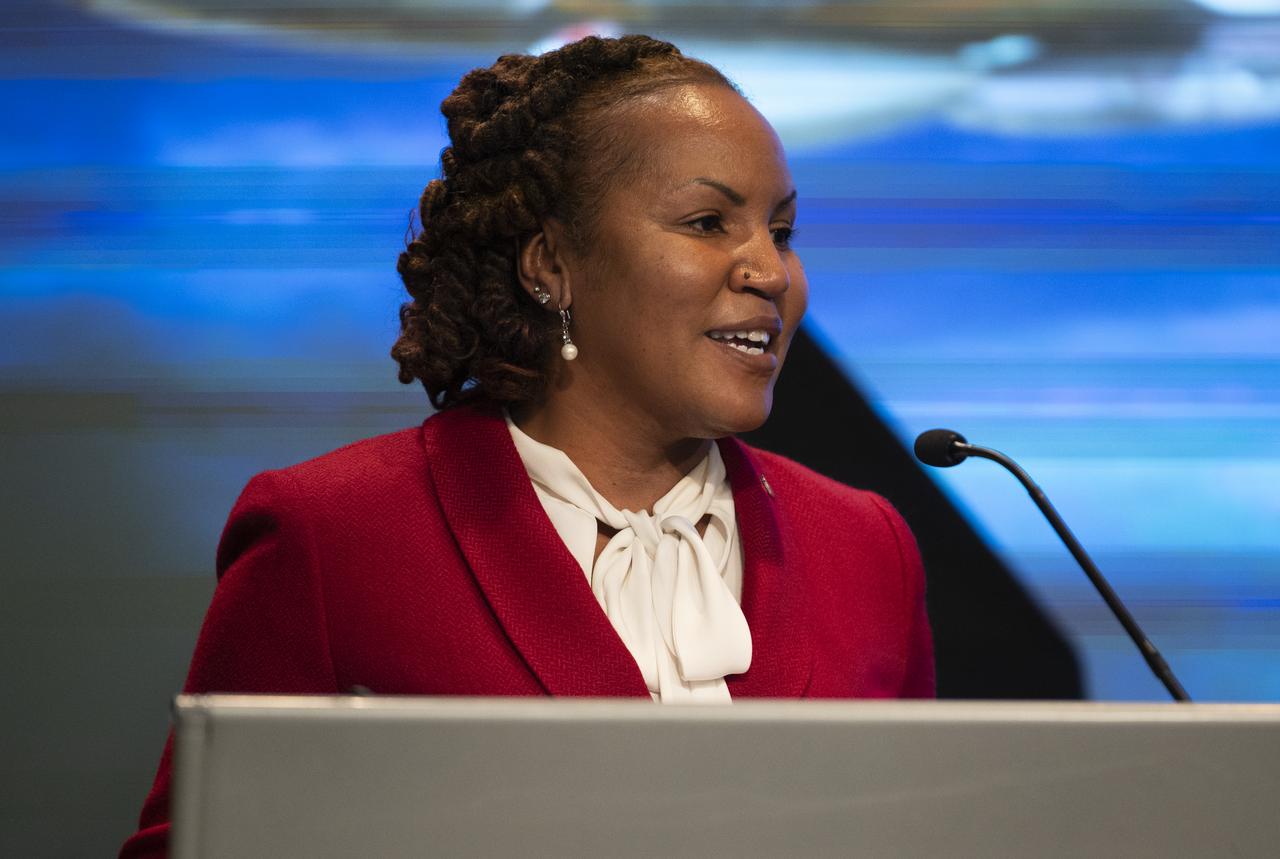
Monica Manning, Assistant Administrator for Procurement at NASA, introduces Retired U.S. Air Force Honorary Brigadier General Charles McGee and NASA astronaut Alvin Drew during a Black History Month program titled “Trailblazers, The Story of a Tuskegee Airman,” Wednesday, Feb. 5, 2020, at NASA Headquarters in Washington, DC. McGee, a pilot with the Tuskegee Airmen during World War II, was a career officer in the Air Force also serving during the Korean and Vietnam Wars. Over his 30 years of service he flew 409 combat missions. Of the 355 Tuskegee pilots who flew in combat, McGee is one of only nine surviving. Photo Credit: (NASA/Joel Kowsky)
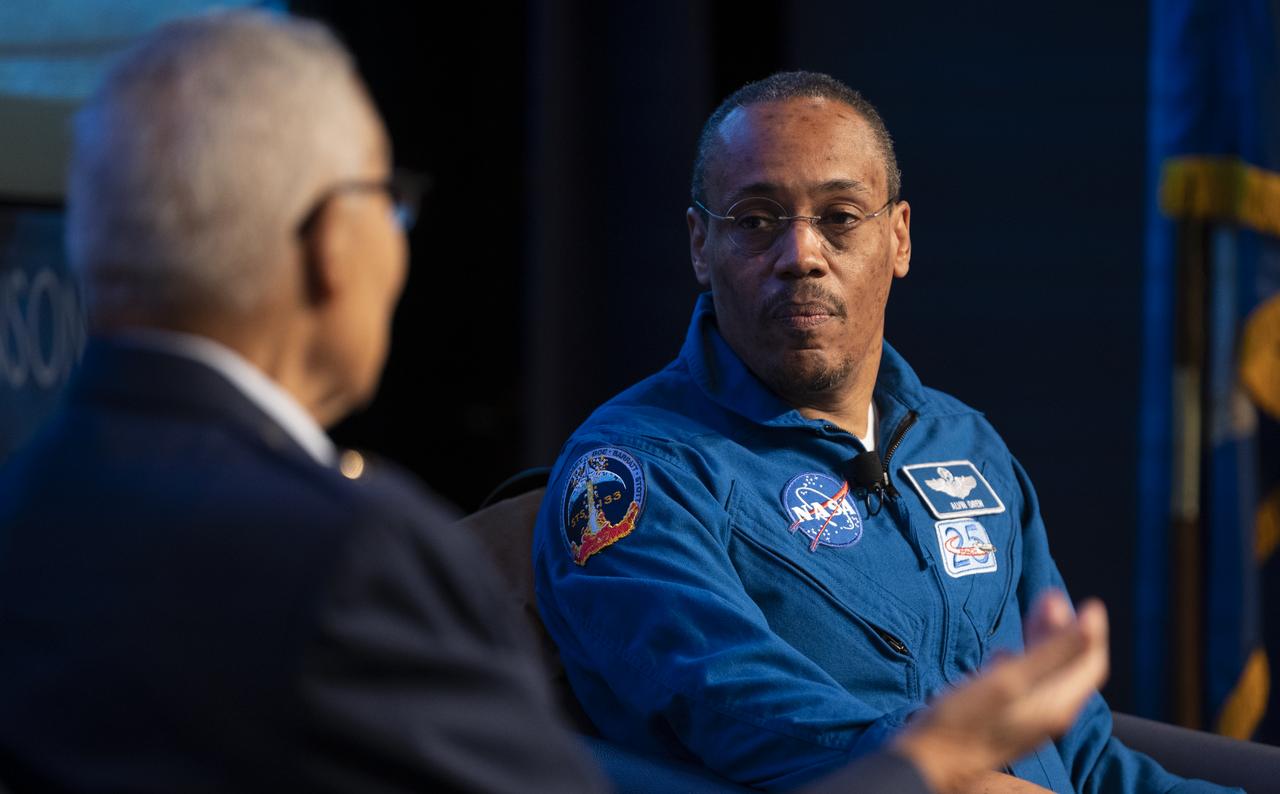
NASA astronaut Alvin Drew speaks with retired U.S. Air Force Honorary Brigadier General Charles McGee during a Black History Month program titled “Trailblazers, The Story of a Tuskegee Airman,” Wednesday, Feb. 5, 2020, at NASA Headquarters in Washington, DC. McGee, a pilot with the Tuskegee Airmen during World War II, was a career officer in the Air Force also serving during the Korean and Vietnam Wars. Over his 30 years of service he flew 409 combat missions. Of the 355 Tuskegee pilots who flew in combat, McGee is one of only nine surviving. Photo Credit: (NASA/Joel Kowsky)
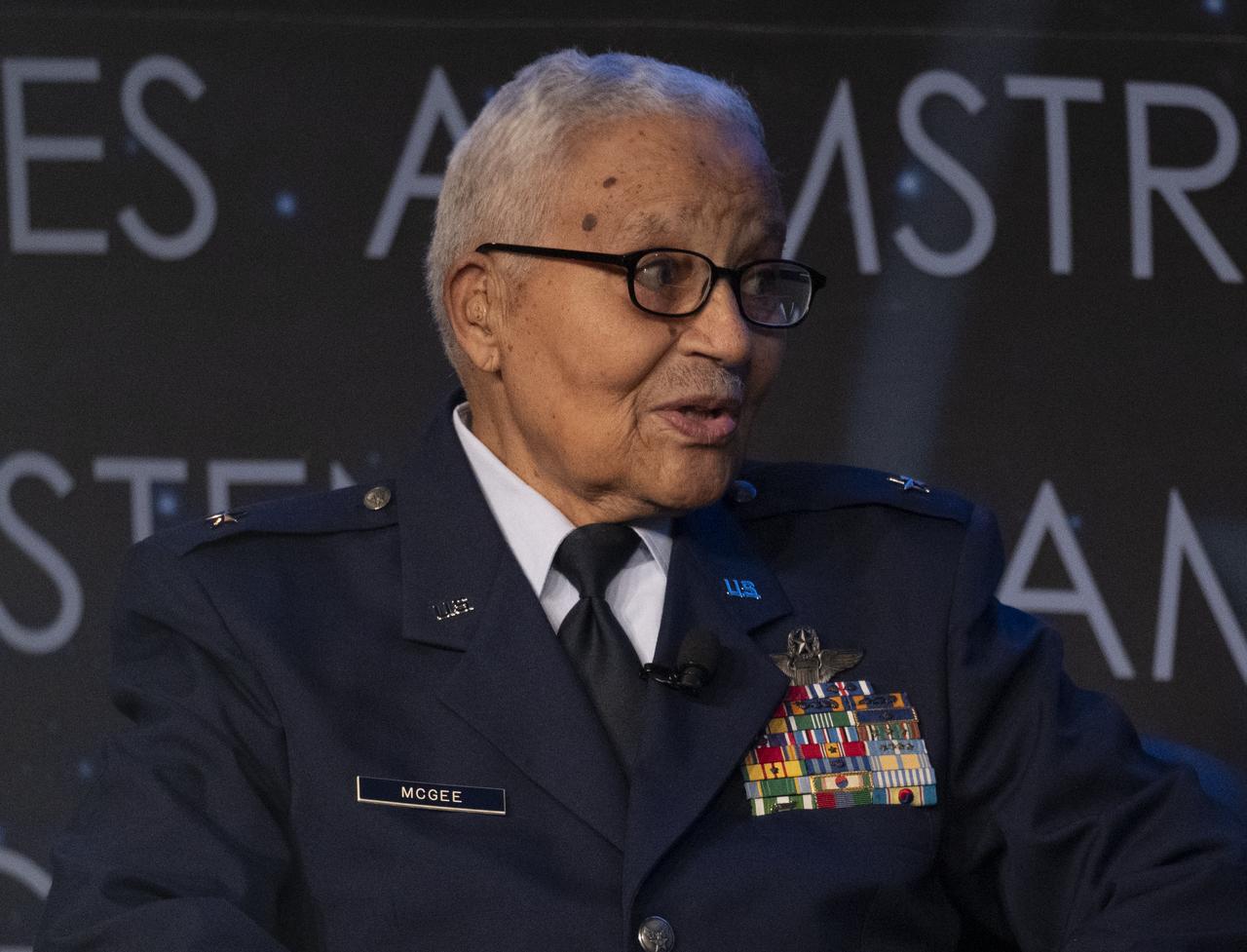
Retired U.S. Air Force Honorary Brigadier General Charles McGee is seen as he speaks with NASA astronaut Alvin Drew during a Black History Month program titled “Trailblazers, The Story of a Tuskegee Airman,” Wednesday, Feb. 5, 2020, at NASA Headquarters in Washington, DC. McGee, a pilot with the Tuskegee Airmen during World War II, was a career officer in the Air Force also serving during the Korean and Vietnam Wars. Over his 30 years of service he flew 409 combat missions. Of the 355 Tuskegee pilots who flew in combat, McGee is one of only nine surviving. Photo Credit: (NASA/Joel Kowsky)
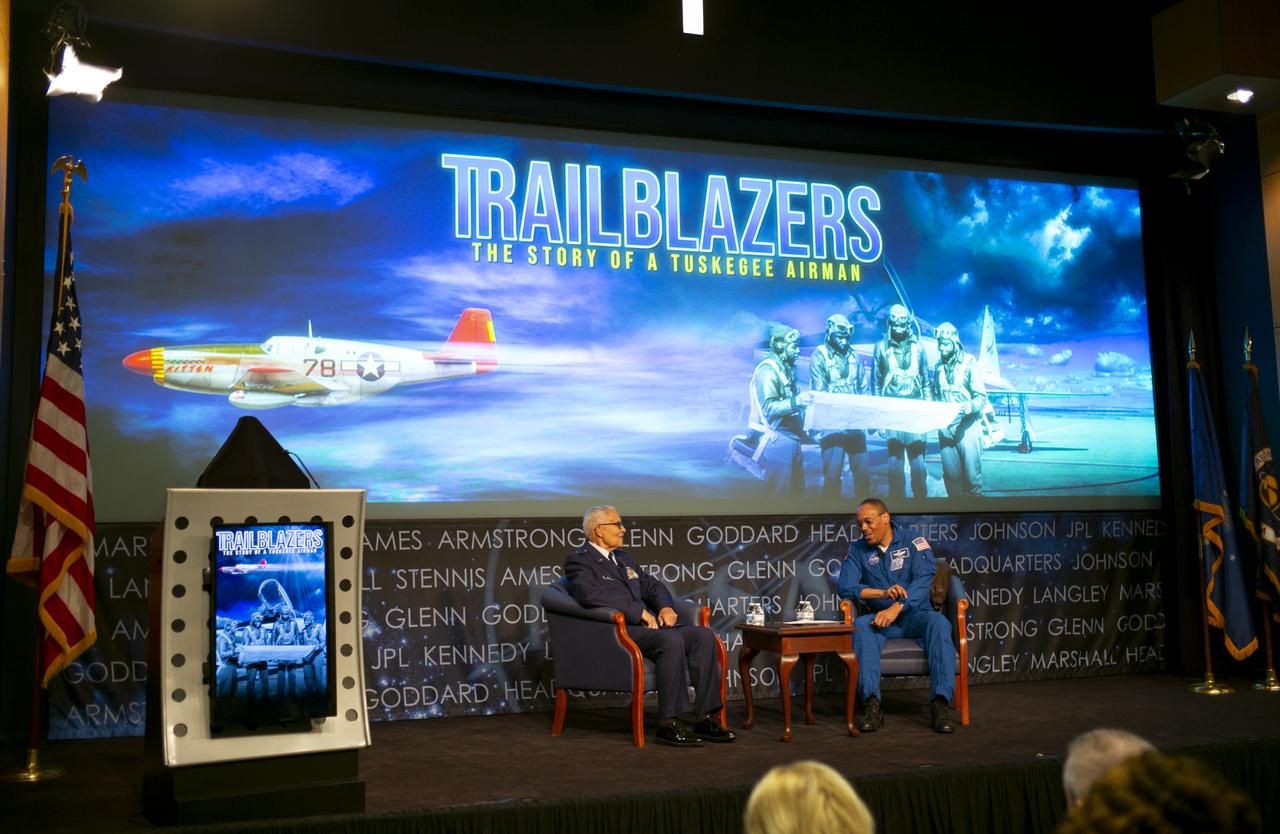
Retired U.S. Air Force Honorary Brigadier General Charles McGee, left, speaks with NASA astronaut Alvin Drew during a Black History Month program titled “Trailblazers, The Story of a Tuskegee Airman,” Wednesday, Feb. 5, 2020, at NASA Headquarters in Washington, DC. McGee, a pilot with the Tuskegee Airmen during World War II, was a career officer in the Air Force also serving during the Korean and Vietnam Wars. Over his 30 years of service he flew 409 combat missions. Of the 355 Tuskegee pilots who flew in combat, McGee is one of only nine surviving. Photo Credit: (NASA/Joel Kowsky)
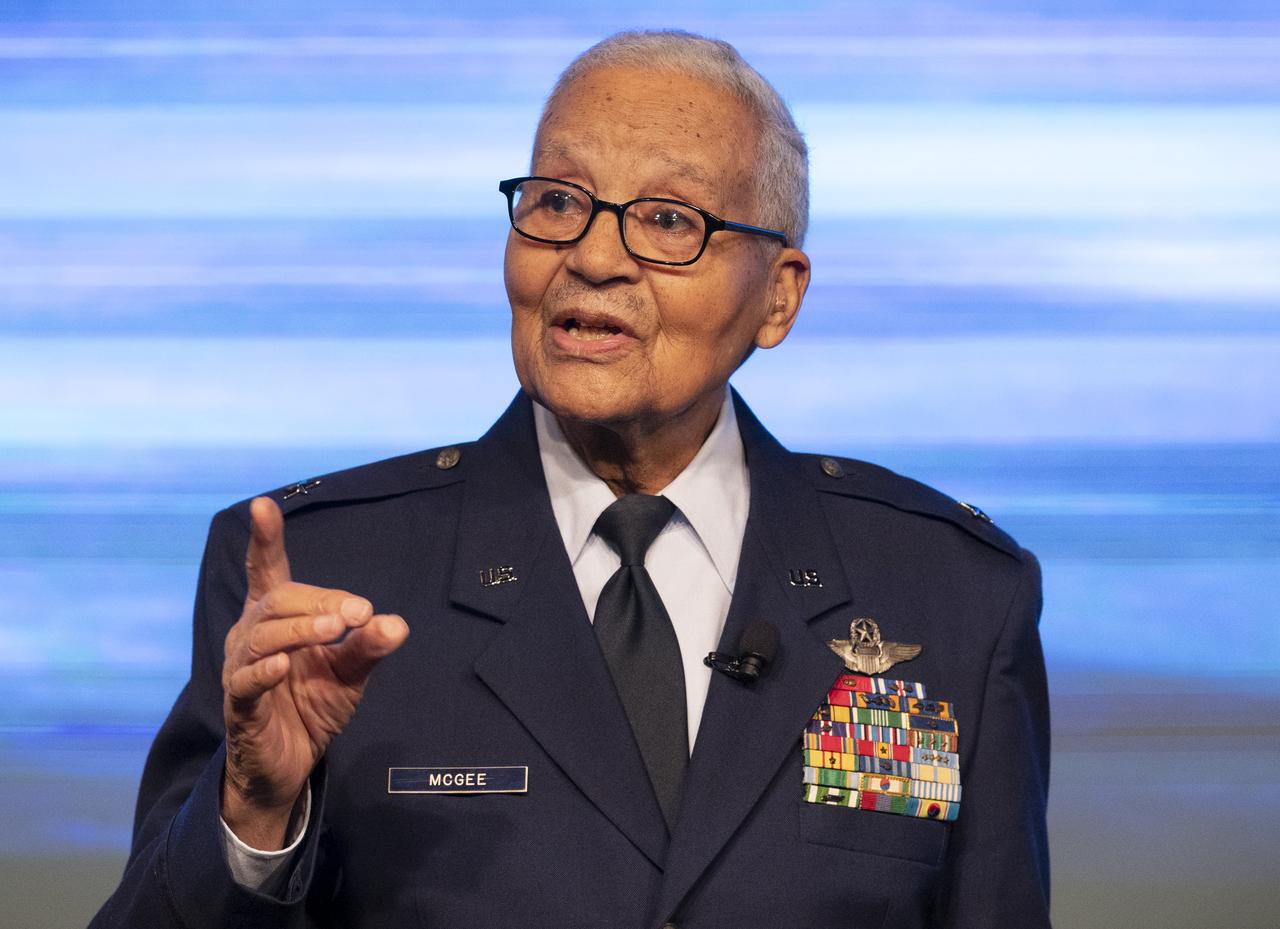
Retired U.S. Air Force Honorary Brigadier General Charles McGee is seen during a Black History Month program titled “Trailblazers, The Story of a Tuskegee Airman,” Wednesday, Feb. 5, 2020, at NASA Headquarters in Washington, DC. McGee, a pilot with the Tuskegee Airmen during World War II, was a career officer in the Air Force also serving during the Korean and Vietnam Wars. Over his 30 years of service he flew 409 combat missions. Of the 355 Tuskegee pilots who flew in combat, McGee is one of only nine surviving. Photo Credit: (NASA/Joel Kowsky)
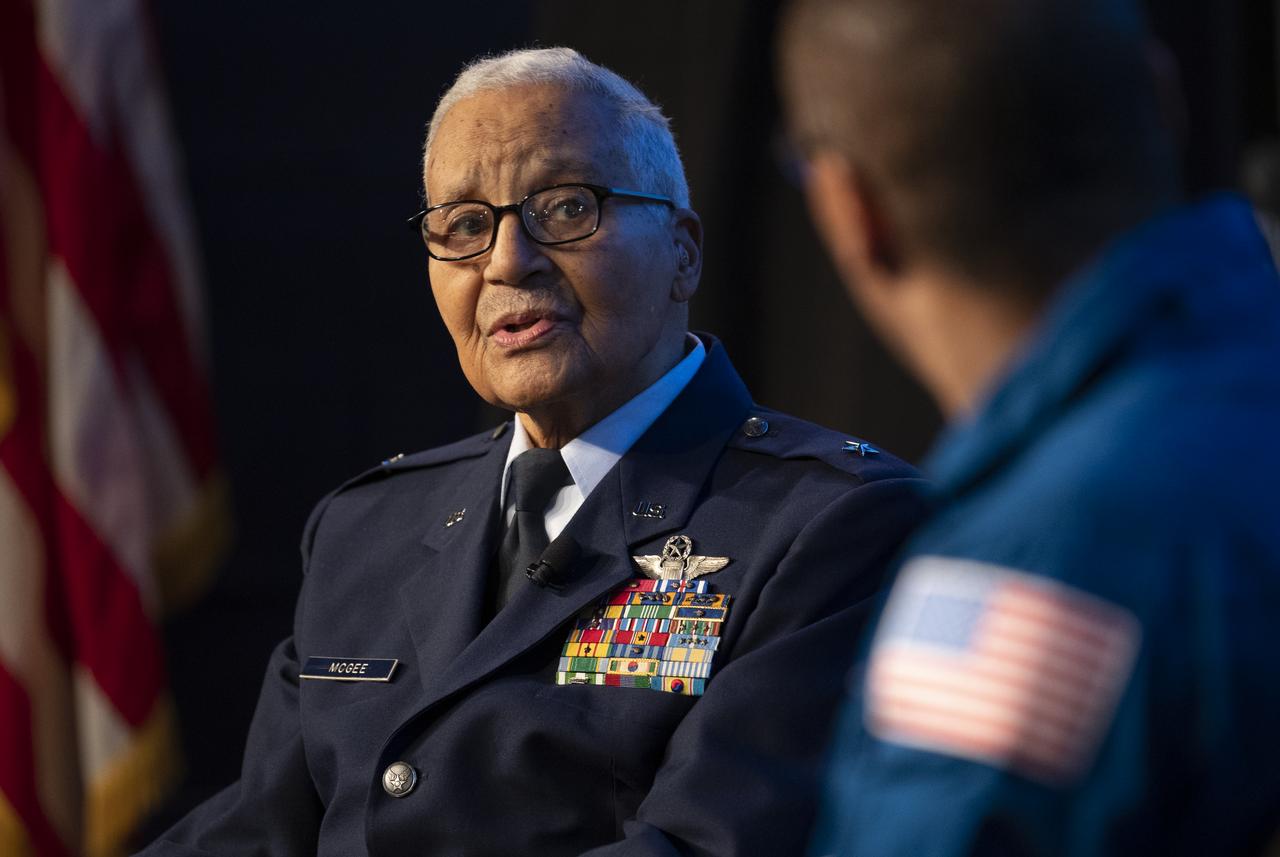
Retired U.S. Air Force Honorary Brigadier General Charles McGee speaks with NASA astronaut Alvin Drew during a Black History Month program titled “Trailblazers, The Story of a Tuskegee Airman,” Wednesday, Feb. 5, 2020, at NASA Headquarters in Washington, DC. McGee, a pilot with the Tuskegee Airmen during World War II, was a career officer in the Air Force also serving during the Korean and Vietnam Wars. Over his 30 years of service he flew 409 combat missions. Of the 355 Tuskegee pilots who flew in combat, McGee is one of only nine surviving. Photo Credit: (NASA/Joel Kowsky)
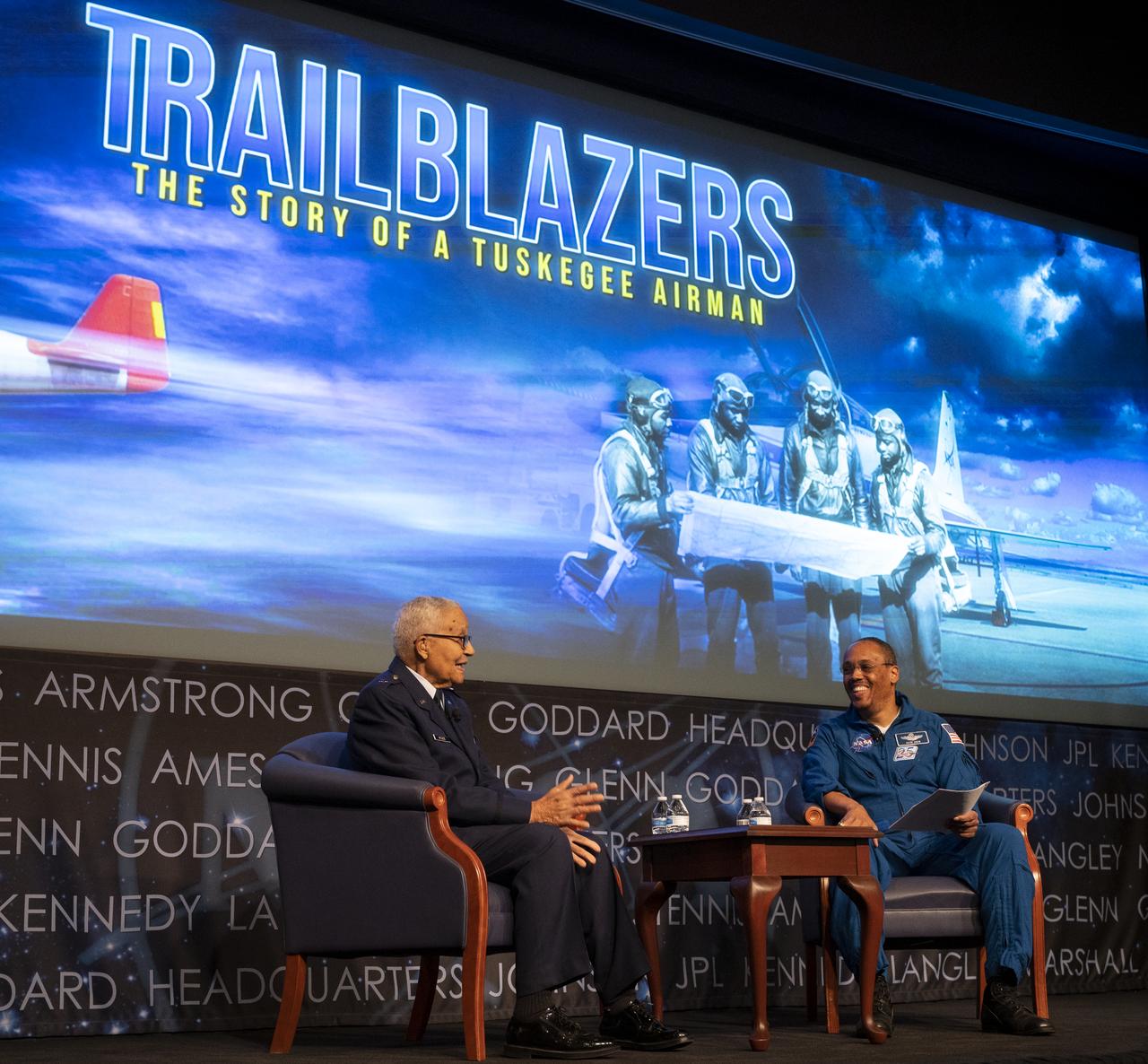
Retired U.S. Air Force Honorary Brigadier General Charles McGee, left, speaks with NASA astronaut Alvin Drew during a Black History Month program titled “Trailblazers, The Story of a Tuskegee Airman,” Wednesday, Feb. 5, 2020, at NASA Headquarters in Washington, DC. McGee, a pilot with the Tuskegee Airmen during World War II, was a career officer in the Air Force also serving during the Korean and Vietnam Wars. Over his 30 years of service he flew 409 combat missions. Of the 355 Tuskegee pilots who flew in combat, McGee is one of only nine surviving. Photo Credit: (NASA/Joel Kowsky)
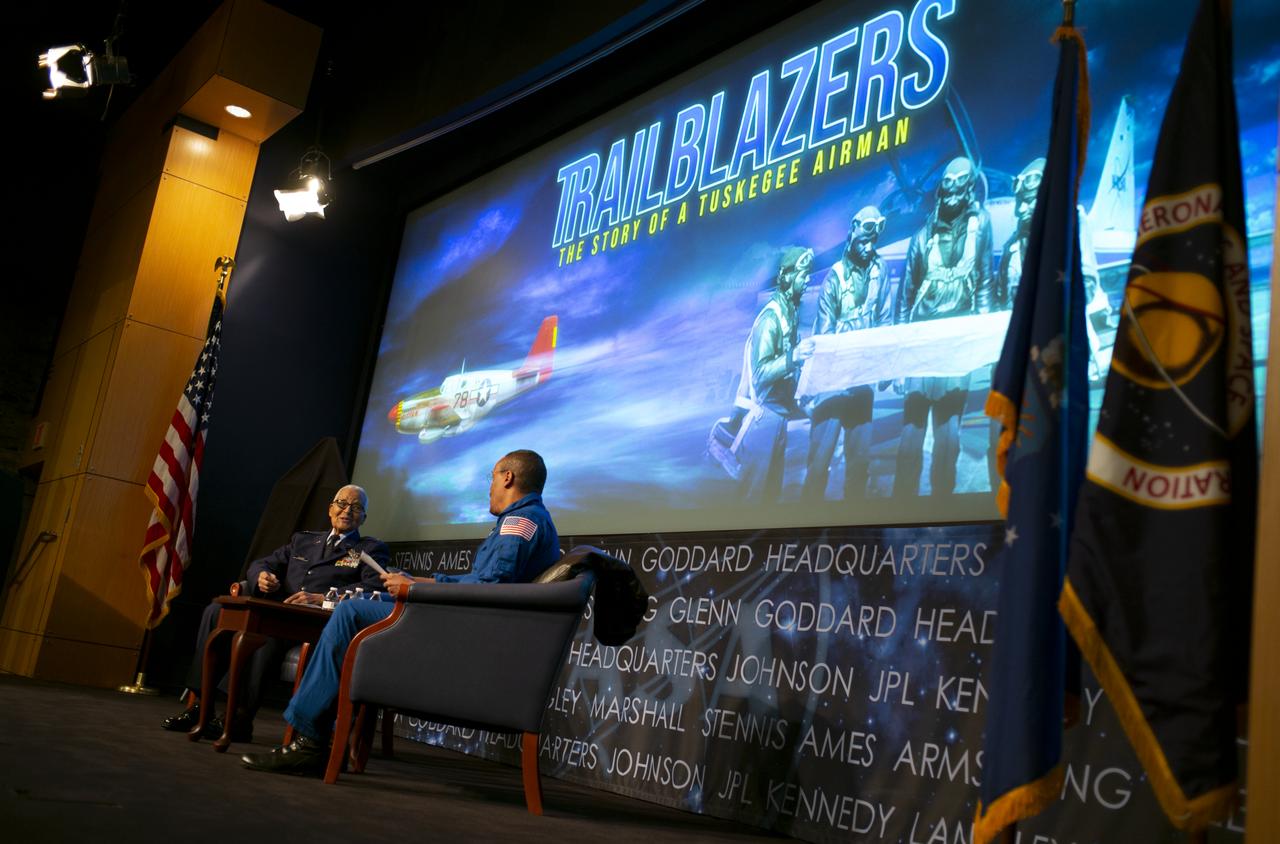
Retired U.S. Air Force Honorary Brigadier General Charles McGee, left, speaks with NASA astronaut Alvin Drew during a Black History Month program titled “Trailblazers, The Story of a Tuskegee Airman,” Wednesday, Feb. 5, 2020, at NASA Headquarters in Washington, DC. McGee, a pilot with the Tuskegee Airmen during World War II, was a career officer in the Air Force also serving during the Korean and Vietnam Wars. Over his 30 years of service he flew 409 combat missions. Of the 355 Tuskegee pilots who flew in combat, McGee is one of only nine surviving. Photo Credit: (NASA/Joel Kowsky)

Retired U.S. Air Force Honorary Brigadier General Charles McGee, left, speaks with NASA astronaut Alvin Drew during a Black History Month program titled “Trailblazers, The Story of a Tuskegee Airman,” Wednesday, Feb. 5, 2020, at NASA Headquarters in Washington, DC. McGee, a pilot with the Tuskegee Airmen during World War II, was a career officer in the Air Force also serving during the Korean and Vietnam Wars. Over his 30 years of service he flew 409 combat missions. Of the 355 Tuskegee pilots who flew in combat, McGee is one of only nine surviving. Photo Credit: (NASA/Joel Kowsky)
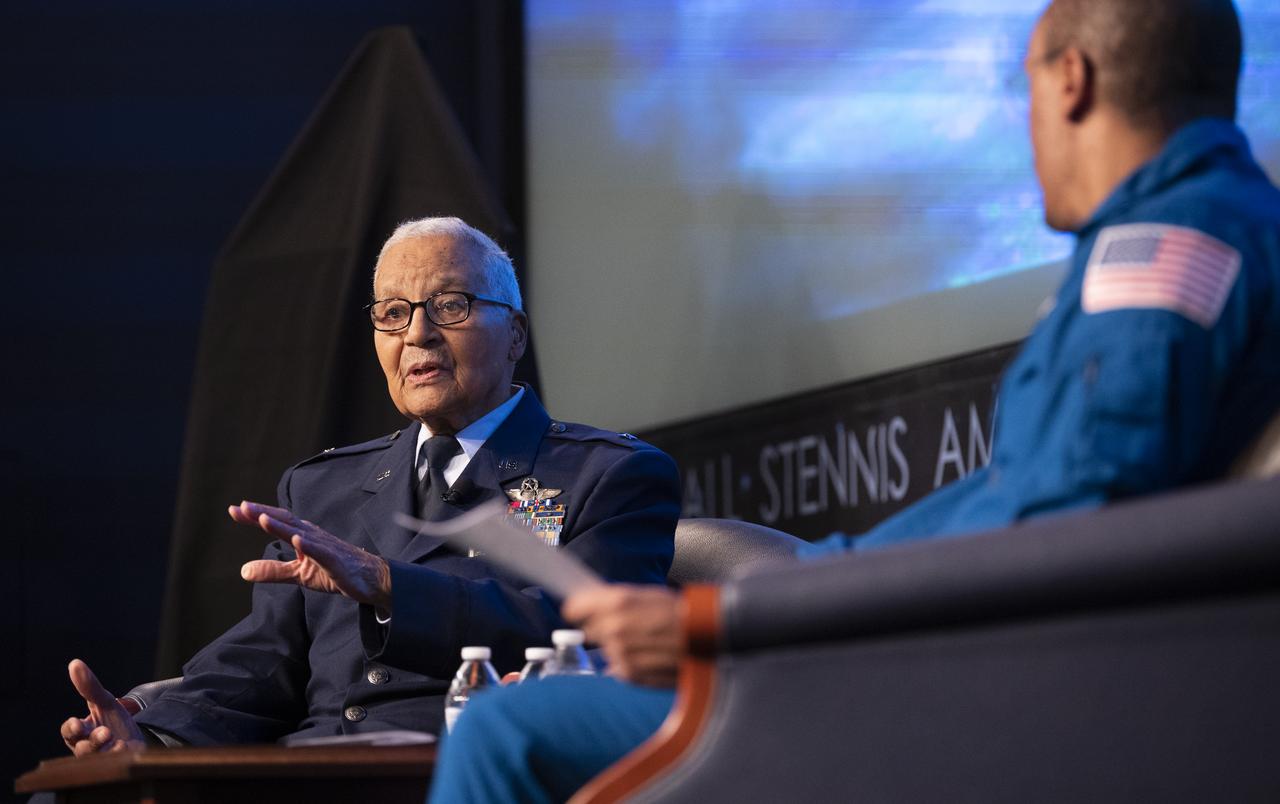
Retired U.S. Air Force Honorary Brigadier General Charles McGee speaks with NASA astronaut Alvin Drew during a Black History Month program titled “Trailblazers, The Story of a Tuskegee Airman,” Wednesday, Feb. 5, 2020, at NASA Headquarters in Washington, DC. McGee, a pilot with the Tuskegee Airmen during World War II, was a career officer in the Air Force also serving during the Korean and Vietnam Wars. Over his 30 years of service he flew 409 combat missions. Of the 355 Tuskegee pilots who flew in combat, McGee is one of only nine surviving. Photo Credit: (NASA/Joel Kowsky)
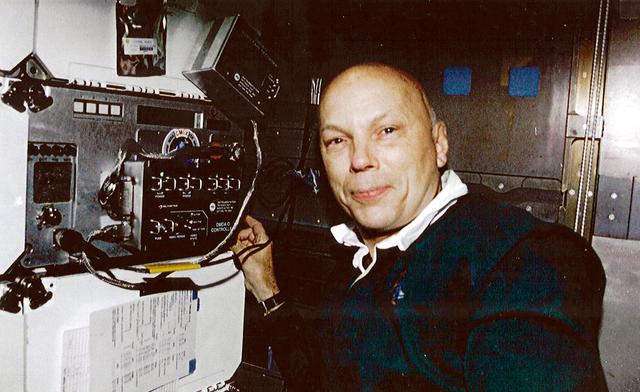
Experiments to seek solutions for a range of biomedical issues are at the heart of several investigations that will be hosted by the Commercial Instrumentation Technology Associates (ITA), Inc. The biomedical experiments CIBX-2 payload is unique, encompassing more than 20 separate experiments including cancer research, commercial experiments, and student hands-on experiments from 10 schools as part of ITA's ongoing University Among the stars program. Here, Astronaut Story Musgrave activates the CMIX-5 (Commercial MDA ITA experiment) payload in the Space Shuttle mid deck during the STS-80 mission in 1996 which is similar to CIBX-2. The experiments are sponsored by NASA's Space Product Development Program (SPD).
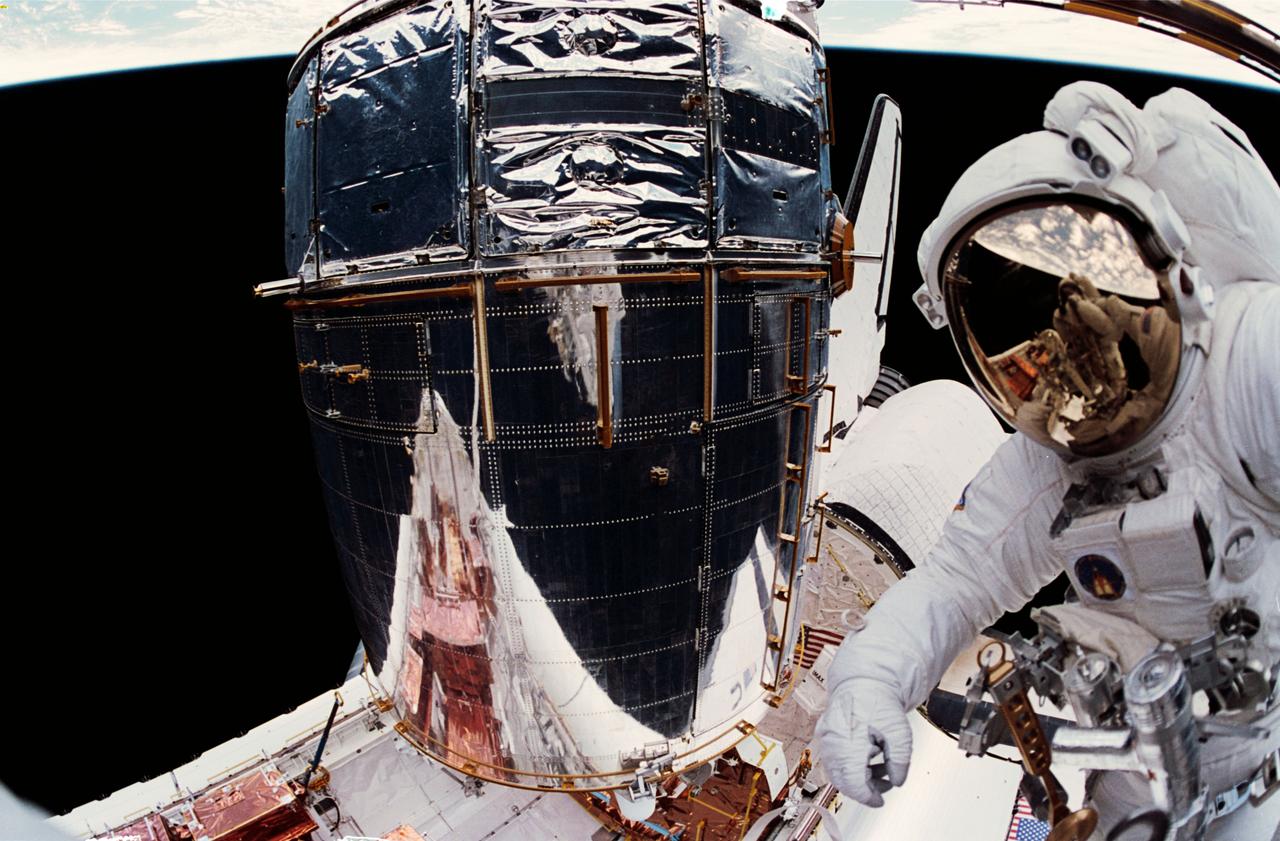
STS061-65-009 (2-13 Dec 1993) --- Astronaut Jeffrey A. Hoffman is reflected in the helmet visor of F. Story Musgrave as he photographs the veteran astronaut during one of the pair's three-shared extravehicular activity?s (EVA).
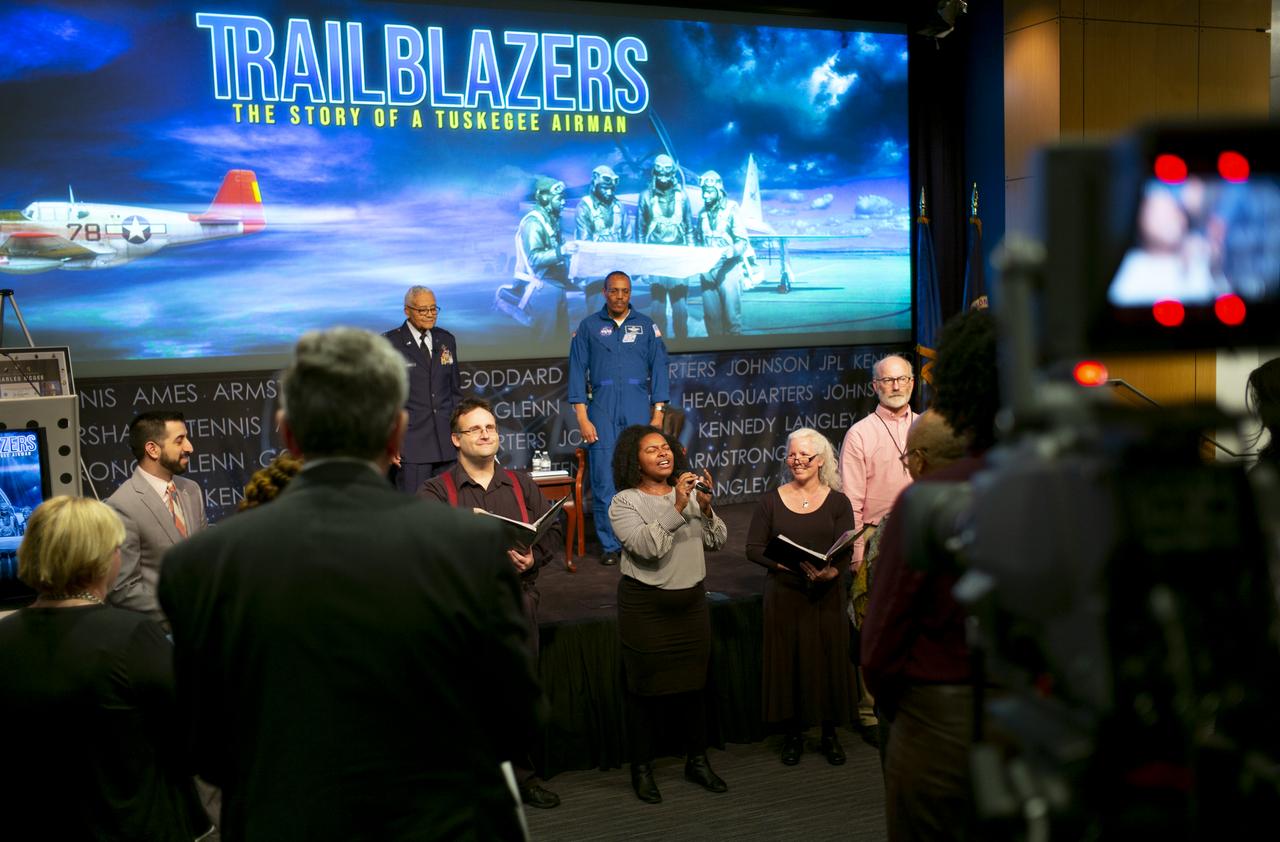
Members of the All Souls Church Unitarian Choir lead the audience in “Lift Ev’ry Voice and Sing” after a duscussion between Retired U.S. Air Force Honorary Brigadier General Charles McGee and NASA astronaut Alvin Drew during a Black History Month program titled “Trailblazers, The Story of a Tuskegee Airman,” Wednesday, Feb. 5, 2020, at NASA Headquarters in Washington, DC. McGee, a pilot with the Tuskegee Airmen during World War II, was a career officer in the Air Force also serving during the Korean and Vietnam Wars. Over his 30 years of service he flew 409 combat missions. Of the 355 Tuskegee pilots who flew in combat, McGee is one of only nine surviving. Photo Credit: (NASA/Joel Kowsky)
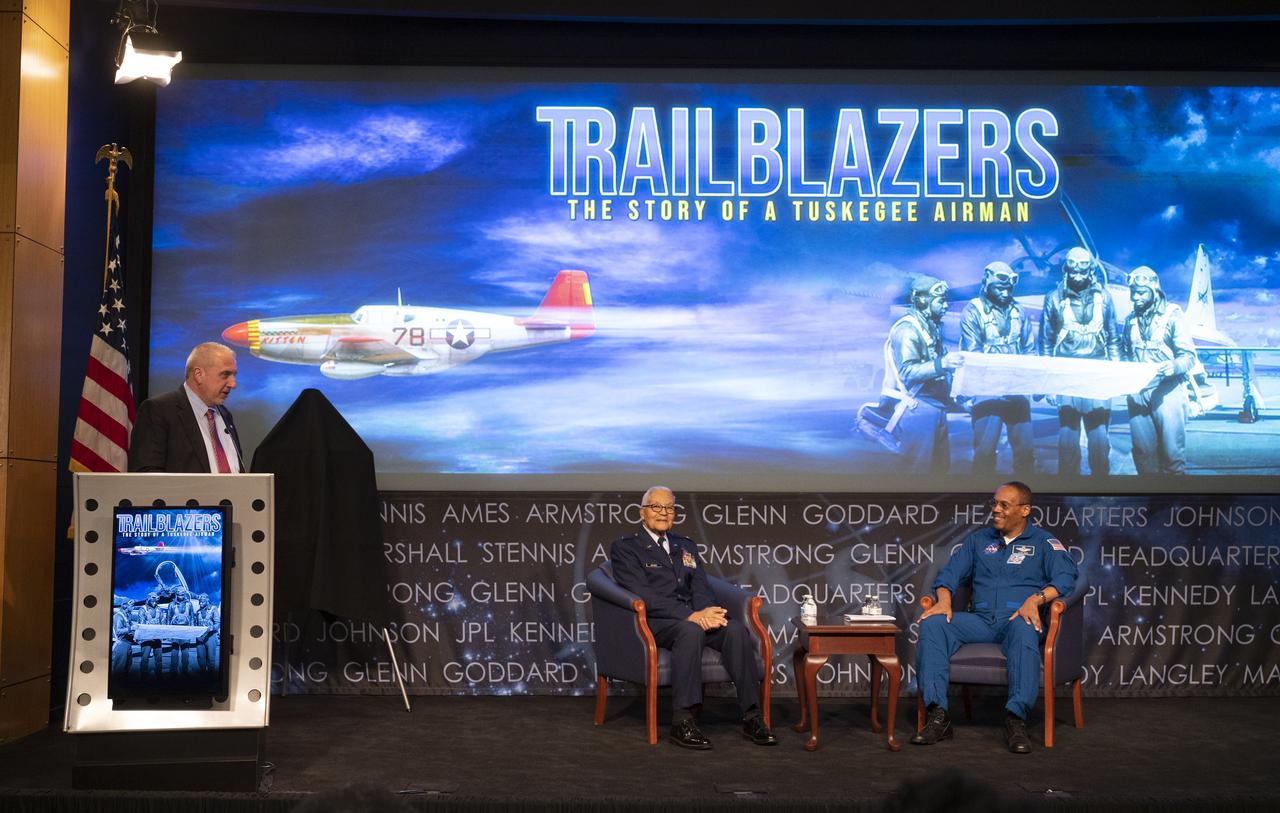
Robert Pearce, Associate Administrator for NASA’s Aeronautics Research Mission Directorate, left, moderates questions from the audience for retired U.S. Air Force Honorary Brigadier General Charles McGee speaks with NASA astronaut Alvin Drew during a Black History Month program titled “Trailblazers, The Story of a Tuskegee Airman,” Wednesday, Feb. 5, 2020, at NASA Headquarters in Washington, DC. McGee, a pilot with the Tuskegee Airmen during World War II, was a career officer in the Air Force also serving during the Korean and Vietnam Wars. Over his 30 years of service he flew 409 combat missions. Of the 355 Tuskegee pilots who flew in combat, McGee is one of only nine surviving. Photo Credit: (NASA/Joel Kowsky)
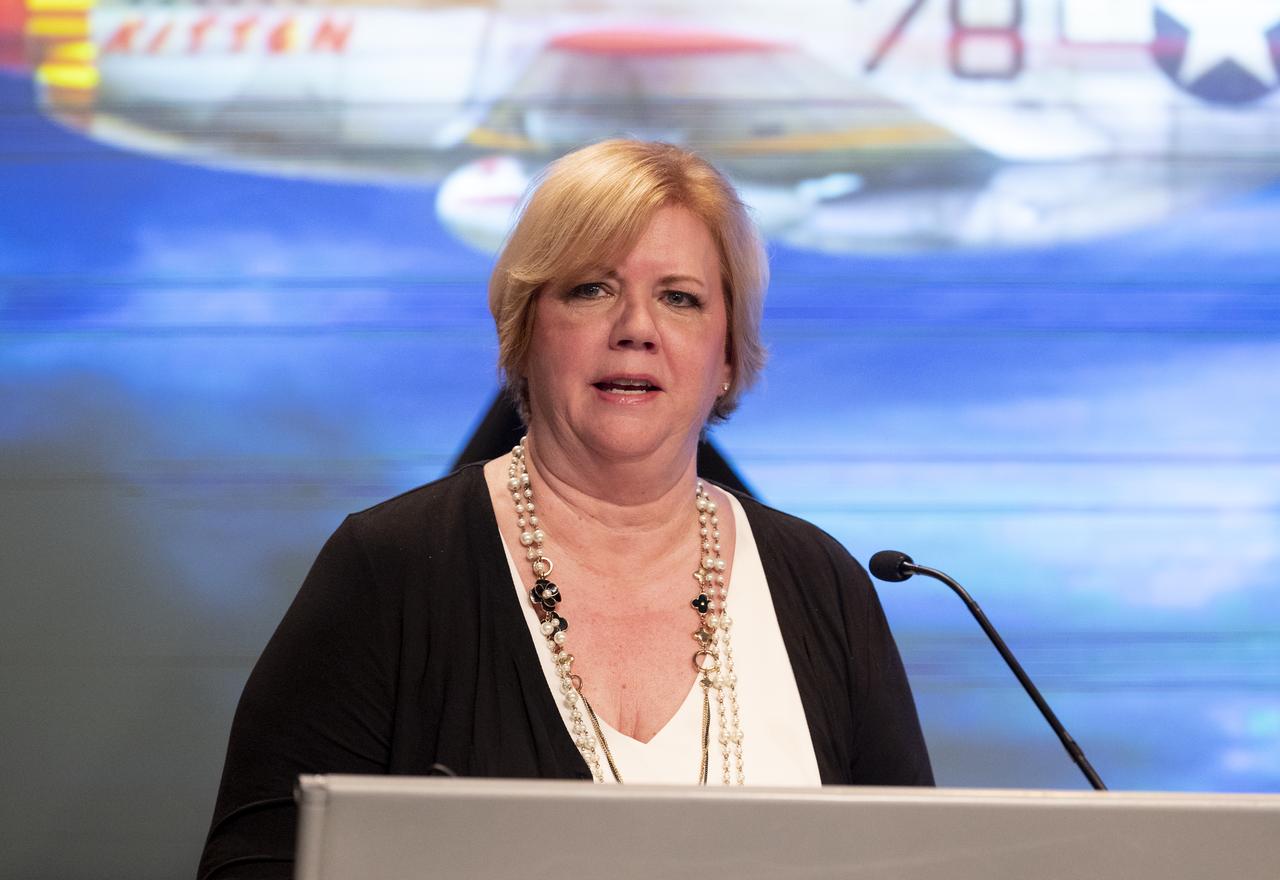
NASA Deputy Associate Administrator Melanie Saunders speaks before a discussion between retired U.S. Air Force Honorary Brigadier General Charles McGee and NASA astronaut Alvin Drew during a Black History Month program titled “Trailblazers, The Story of a Tuskegee Airman,” Wednesday, Feb. 5, 2020, at NASA Headquarters in Washington, DC. McGee, a pilot with the Tuskegee Airmen during World War II, was a career officer in the Air Force also serving during the Korean and Vietnam Wars. Over his 30 years of service he flew 409 combat missions. Of the 355 Tuskegee pilots who flew in combat, McGee is one of only nine surviving. Photo Credit: (NASA/Joel Kowsky)
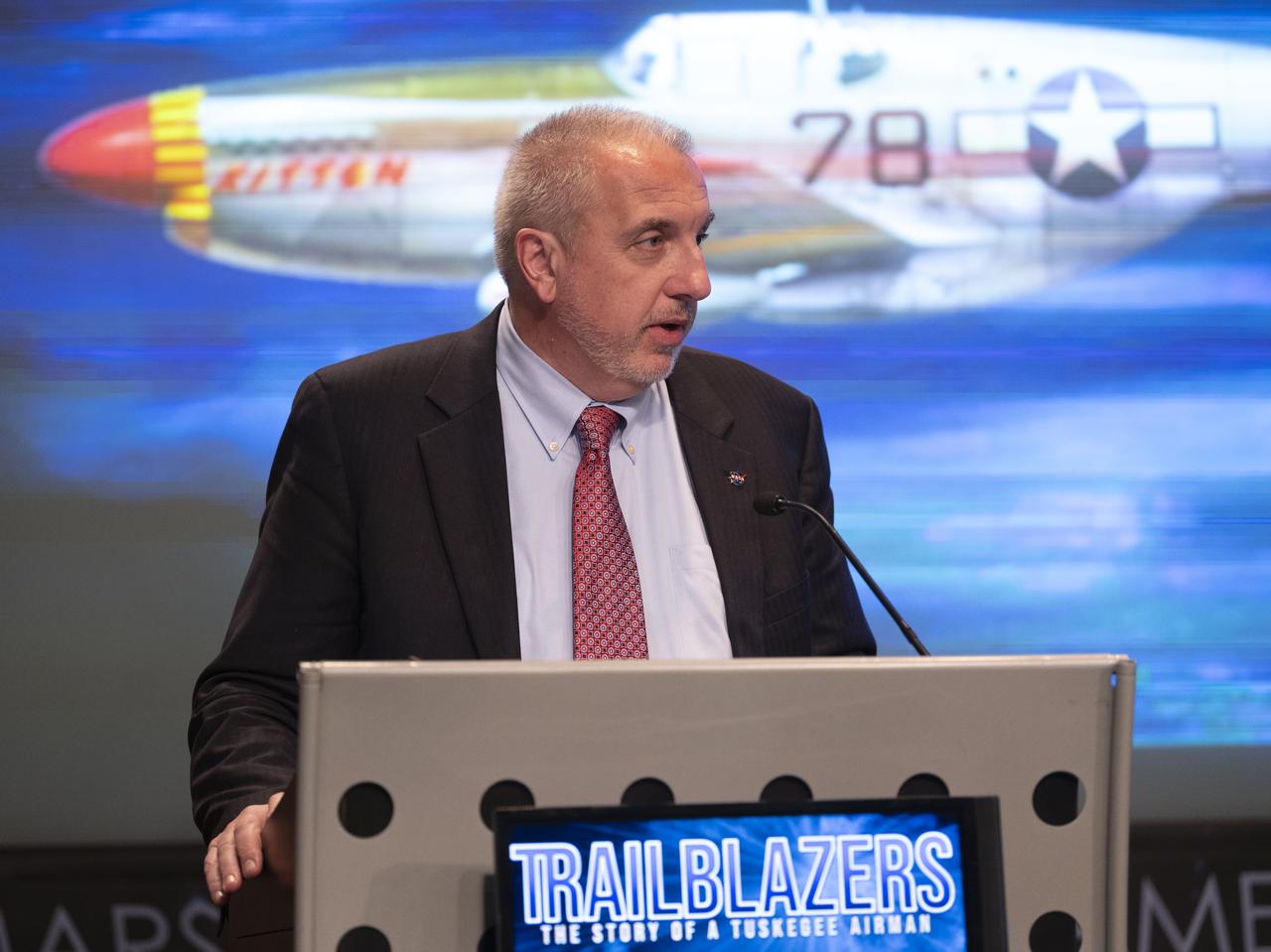
Robert Pearce, Associate Administrator for NASA’s Aeronautics Research Mission Directorate, speaks before a discussion between retired U.S. Air Force Honorary Brigadier General Charles McGee speaks with NASA astronaut Alvin Drew during a Black History Month program titled “Trailblazers, The Story of a Tuskegee Airman,” Wednesday, Feb. 5, 2020, at NASA Headquarters in Washington, DC. McGee, a pilot with the Tuskegee Airmen during World War II, was a career officer in the Air Force also serving during the Korean and Vietnam Wars. Over his 30 years of service he flew 409 combat missions. Of the 355 Tuskegee pilots who flew in combat, McGee is one of only nine surviving. Photo Credit: (NASA/Joel Kowsky)
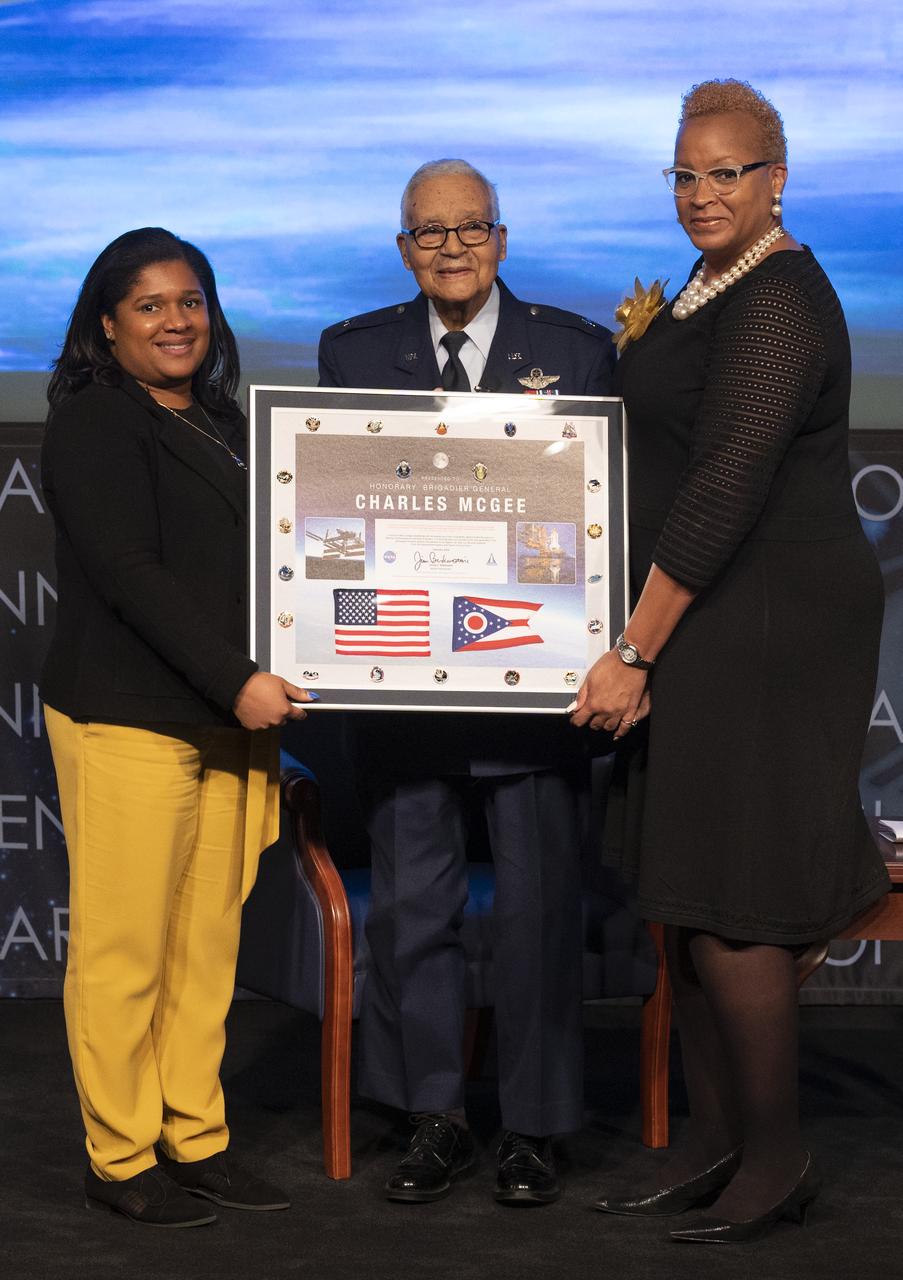
Zudayyah Taylor-Dunn, president of the NASA Headquarters Chapter of Blacks in Government (BIG), left, and LaVerne Randolph, vice president of the NASA Headquarters Chapter of BIG, present a montage containing an American Flag and Ohio State flag flown in space to Retired U.S. Air Force Honorary Brigadier General Charles McGee during a Black History Month program titled “Trailblazers, The Story of a Tuskegee Airman,” Wednesday, Feb. 5, 2020, at NASA Headquarters in Washington, DC. McGee, a pilot with the Tuskegee Airmen during World War II, was a career officer in the Air Force also serving during the Korean and Vietnam Wars. Over his 30 years of service he flew 409 combat missions. Of the 355 Tuskegee pilots who flew in combat, McGee is one of only nine surviving. Photo Credit: (NASA/Joel Kowsky)

NASA digital content strategist Andres Almeida sings the National Anthem before a discussion between Retired U.S. Air Force Honorary Brigadier General Charles McGee and NASA astronaut Alvin Drew during a Black History Month program titled “Trailblazers, The Story of a Tuskegee Airman,” Wednesday, Feb. 5, 2020, at NASA Headquarters in Washington, DC. McGee, a pilot with the Tuskegee Airmen during World War II, was a career officer in the Air Force also serving during the Korean and Vietnam Wars. Over his 30 years of service he flew 409 combat missions. Of the 355 Tuskegee pilots who flew in combat, McGee is one of only nine surviving. Photo Credit: (NASA/Joel Kowsky)
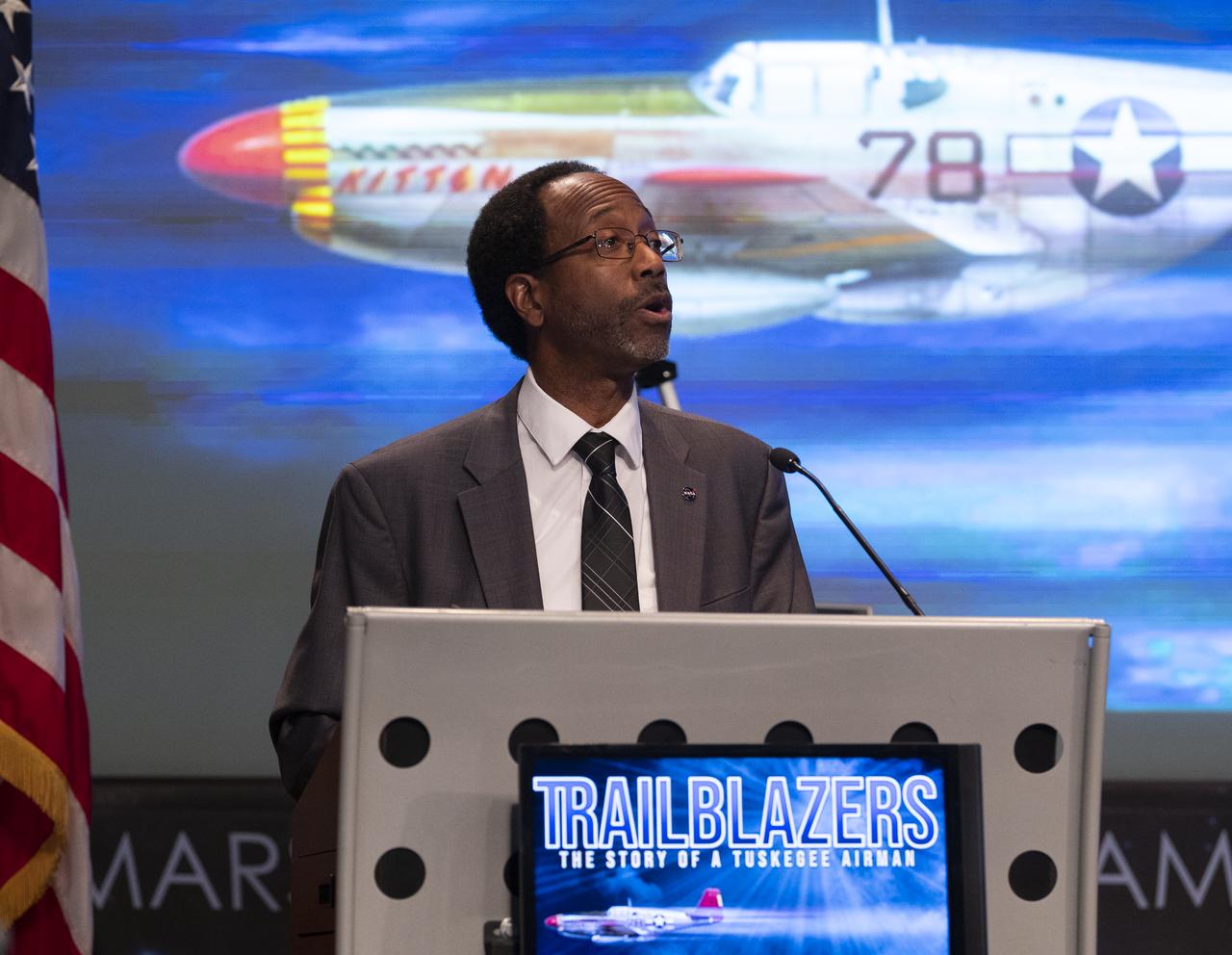
Clayton Turner, Director of NASA’s Langley Research Center, delivers closing remarks following a discussion between Retired U.S. Air Force Honorary Brigadier General Charles McGee and NASA astronaut Alvin Drew during a Black History Month program titled “Trailblazers, The Story of a Tuskegee Airman,” Wednesday, Feb. 5, 2020, at NASA Headquarters in Washington, DC. McGee, a pilot with the Tuskegee Airmen during World War II, was a career officer in the Air Force also serving during the Korean and Vietnam Wars. Over his 30 years of service he flew 409 combat missions. Of the 355 Tuskegee pilots who flew in combat, McGee is one of only nine surviving. Photo Credit: (NASA/Joel Kowsky)
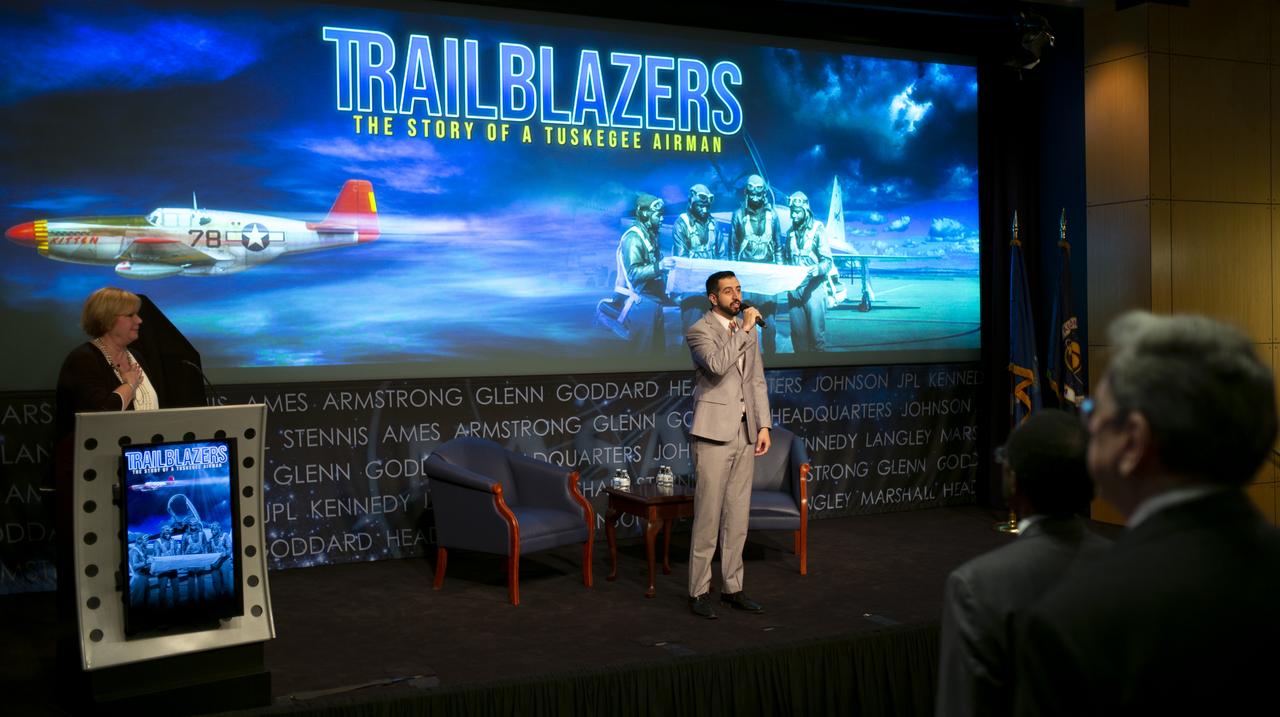
NASA digital content strategist Andres Almeida sings the National Anthem before a discussion between Retired U.S. Air Force Honorary Brigadier General Charles McGee and NASA astronaut Alvin Drew during a Black History Month program titled “Trailblazers, The Story of a Tuskegee Airman,” Wednesday, Feb. 5, 2020, at NASA Headquarters in Washington, DC. McGee, a pilot with the Tuskegee Airmen during World War II, was a career officer in the Air Force also serving during the Korean and Vietnam Wars. Over his 30 years of service he flew 409 combat missions. Of the 355 Tuskegee pilots who flew in combat, McGee is one of only nine surviving. Photo Credit: (NASA/Joel Kowsky)

NASA Deputy Associate Administrator for STEM, Kris Brown, and NASA Goddard’s Deputy Director for Technology and Research Investments, Dr. Christyl Johnson, participate in a panel discussion during an event for Women’s History Month, “Celebrating Women Who Tell Our Stories,” Wednesday, March 22, 2023 at NASA’s Goddard Space Flight Center in Greenbelt, Maryland. Photo Credit: (NASA/Aubrey Gemignani)
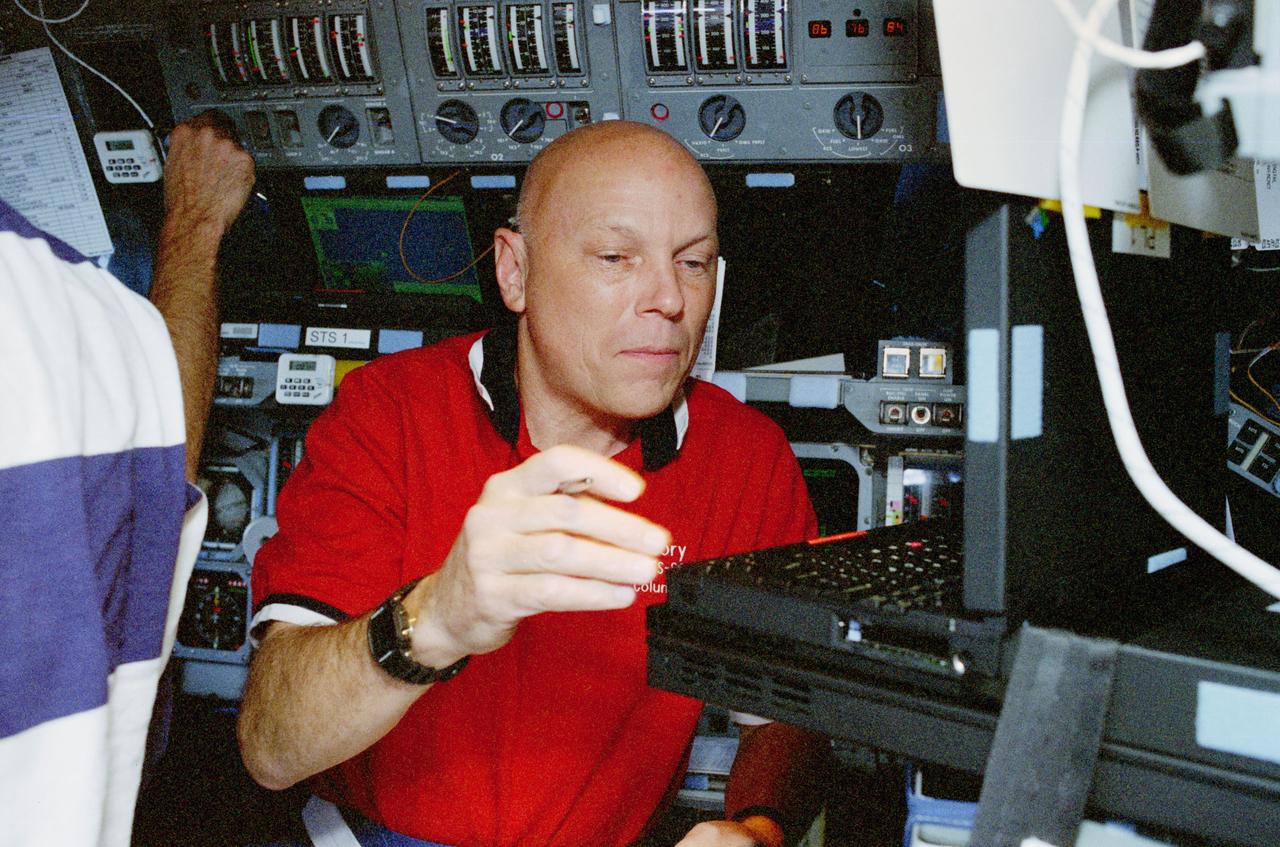
STS080-314-003 (19 Nov.-7 Dec. 1996) --- Astronaut Story Musgrave, STS-80 mission specialist, works with a pair of computers dedicated to Wake Shield Facility (WSF) operations onboard the space shuttle Columbia's flight deck. Musgrave marked his sixth appearance on a space shuttle flight during this duration record-setting space flight.
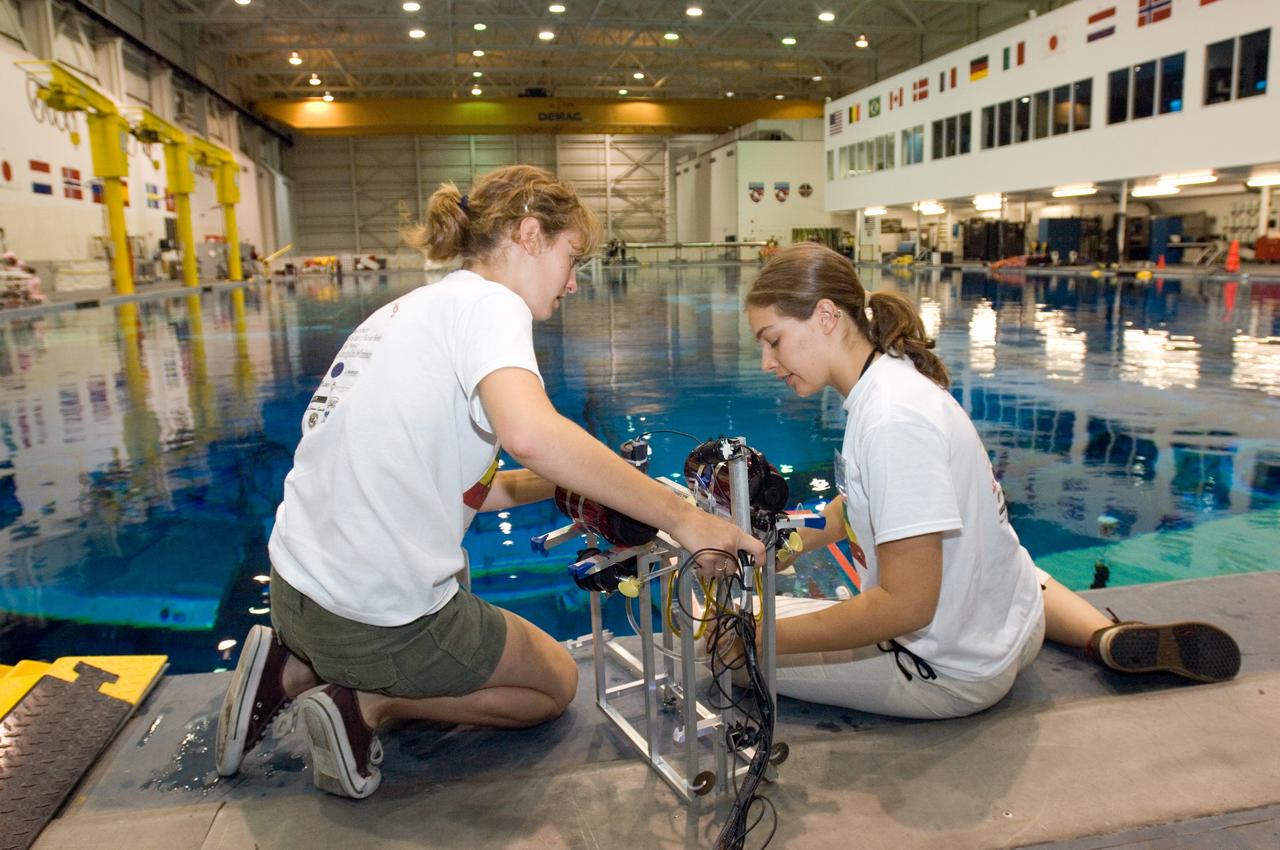
View of students participating in the International Underwater Remotely Operated Vehicle (ROV) competition, organized by the Marine Advanced Technology Education Center (MATE), at the Sonny Carter Training Facility (SCTF) Neutral Buoyancy Laboratory (NBL). Photos taken for Johnson Space Center (JSC) Features and Web stories.
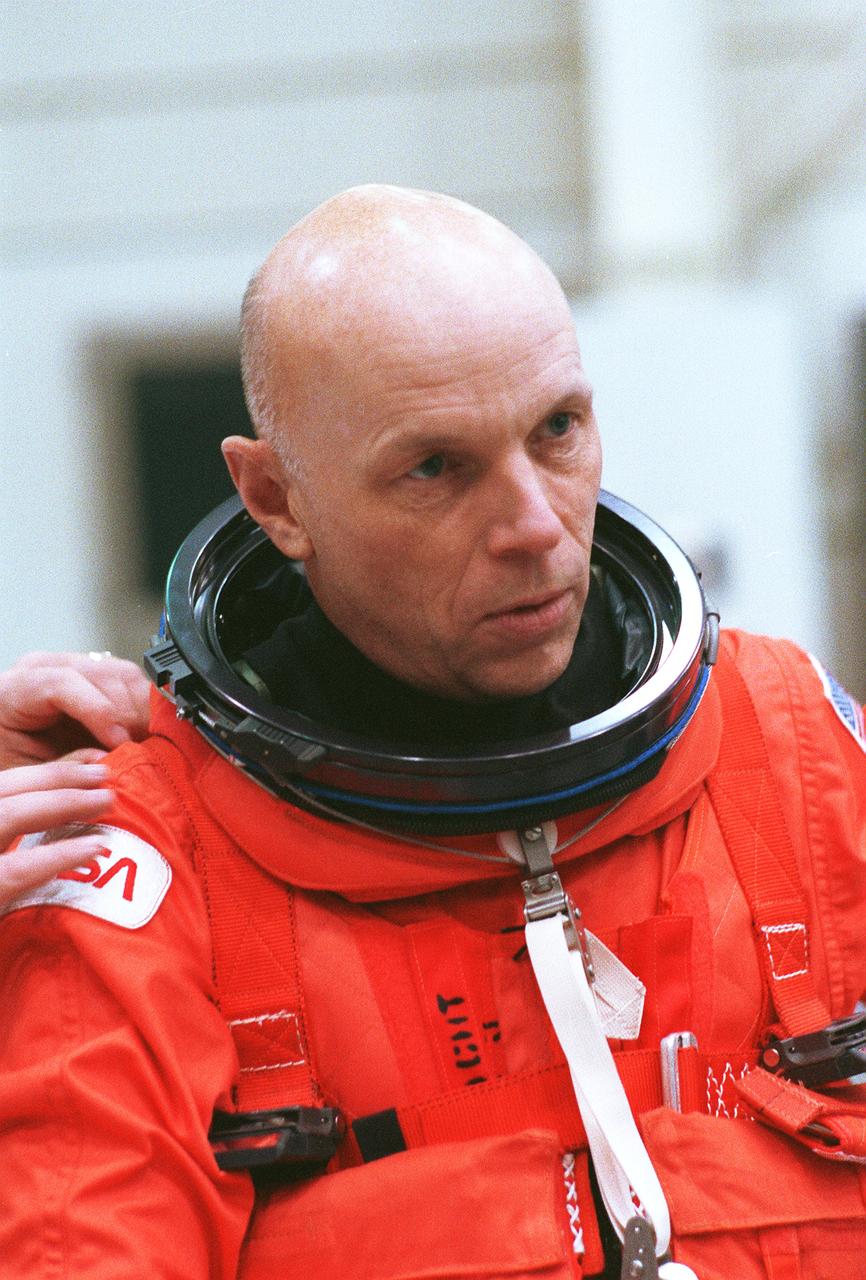
S89-48009 (29 Oct. 1996) --- About to embark on his sixth shuttle flight, astronaut Story Musgrave receives assistance with his launch and entry suit during a training session in the Johnson Space Center's (JSC) Shuttle Mockup and Integration Laboratory (SMIL).

STS061-104-007 (5 Dec 1993) --- Astronaut F. Story Musgrave, holding to one of many strategically placed handrails on the Hubble Space Telescope (HST), is photographed during the first of five extravehicular activity?s (EVA) on the HST-servicing mission, aboard the Space Shuttle Endeavour.
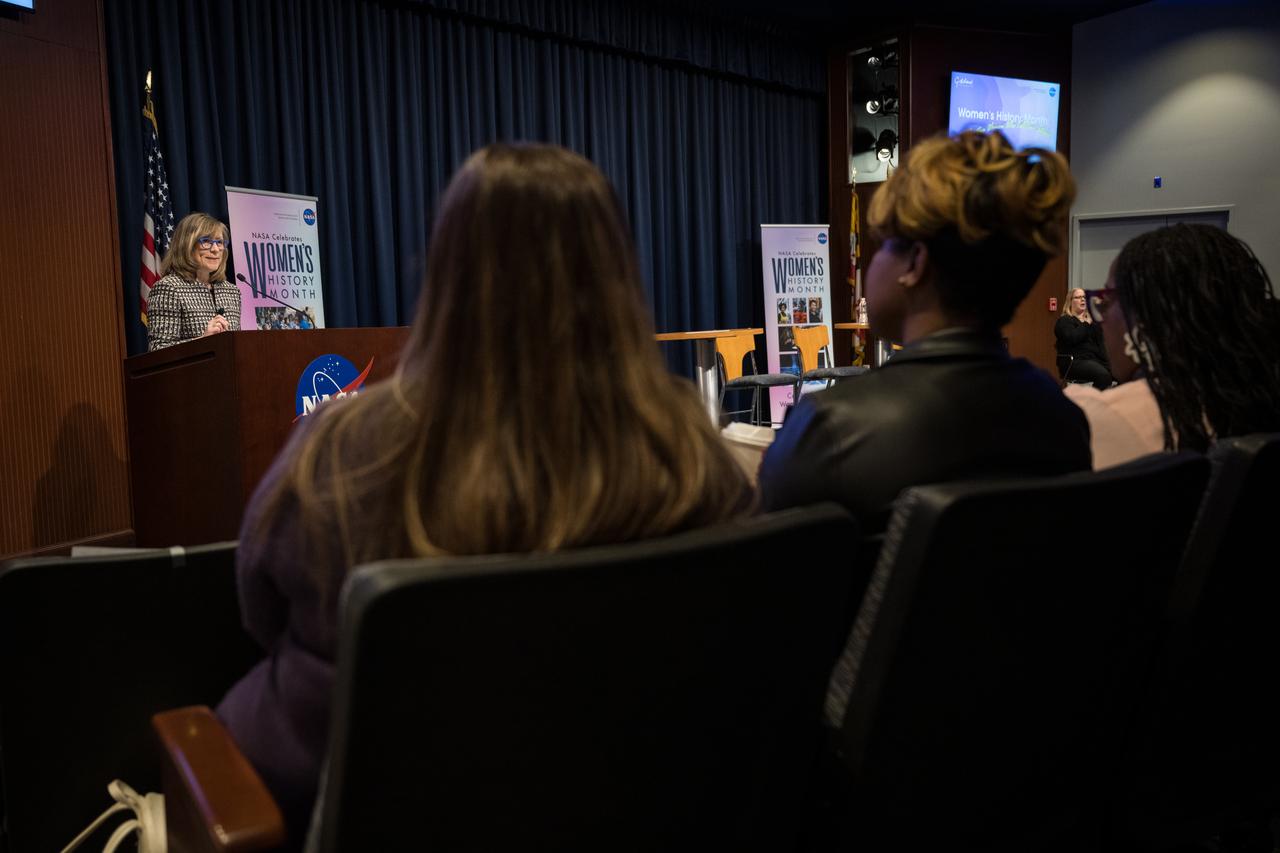
NASA Deputy Associate Administrator for STEM, Kris Brown speaks before a panel discussion with moderator NASA IT Cybersecurity Specialist, Sarah Adewumi, NASA Goddard’s Deputy Director for Technology and Research Investments, Dr. Christyl Johnson, NASA Headquarters Deputy Director for the Astrophysics Division, Sandra Cauffman, and NASA Associate Chief Scientist for Exploration and Applied Research, Dr. Mamta Patel Nagaraja as part of Women’s History Month, “Celebrating Women Who Tell Our Stories,” Wednesday, March 22, 2023 at NASA’s Goddard Space Flight Center in Greenbelt, Maryland. Photo Credit: (NASA/Aubrey Gemignani)

NASA Goddard’s Deputy Director for Technology and Research Investments, Dr. Christyl Johnson, speaks during a panel discussion with NASA IT Cybersecurity Specialist, Sarah Adewumi, NASA Deputy Associate Administrator for STEM, Kris Brown, NASA Headquarters Deputy Director for the Astrophysics Division, Sandra Cauffman, and NASA Associate Chief Scientist for Exploration and Applied Research, Dr. Mamta Patel Nagaraja as part of a Women’s History Month program, “Celebrating Women Who Tell Our Stories,” Wednesday, March 22, 2023 at NASA’s Goddard Space Flight Center in Greenbelt, Maryland. Photo Credit: (NASA/Aubrey Gemignani)

NASA Goddard’s Deputy Director for Technology and Research Investments, Dr. Christyl Johnson, speaks during a panel discussion with NASA IT Cybersecurity Specialist, Sarah Adewumi, NASA Deputy Associate Administrator for STEM, Kris Brown, NASA Headquarters Deputy Director for the Astrophysics Division, Sandra Cauffman, and NASA Associate Chief Scientist for Exploration and Applied Research, Dr. Mamta Patel Nagaraja as part of a Women’s History Month program, “Celebrating Women Who Tell Our Stories,” Wednesday, March 22, 2023 at NASA’s Goddard Space Flight Center in Greenbelt, Maryland. Photo Credit: (NASA/Aubrey Gemignani)
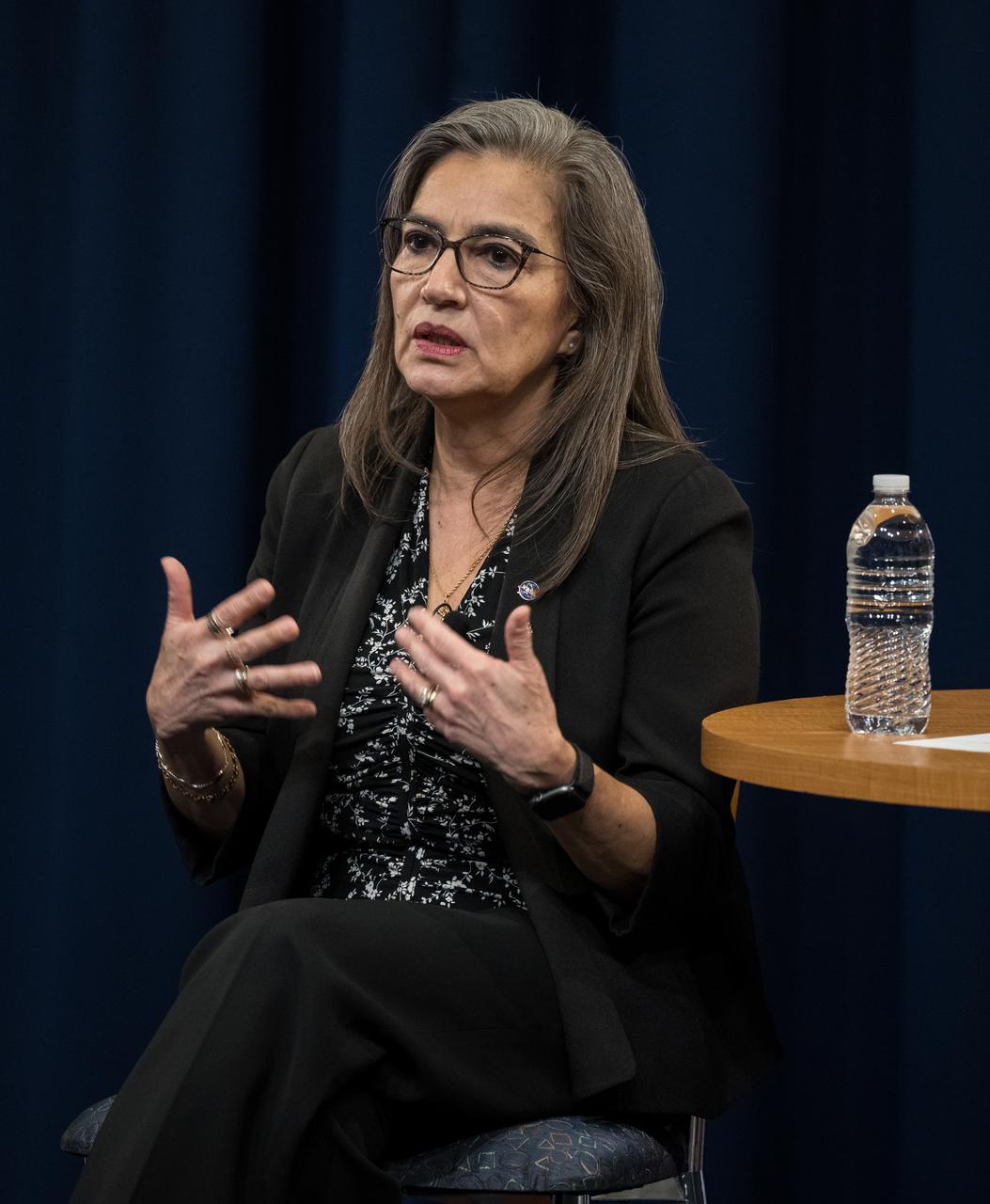
NASA Headquarters Deputy Director for the Astrophysics Division, Sandra Cauffman, speaks during a panel discussion with NASA IT Cybersecurity Specialist, Sarah Adewumi, NASA Goddard’s Deputy Director for Technology and Research Investments, Dr. Christyl Johnson, NASA Deputy Associate Administrator for STEM, Kris Brown, and NASA Associate Chief Scientist for Exploration and Applied Research, Dr. Mamta Patel Nagaraja, as part of a Women’s History Month program, “Celebrating Women Who Tell Our Stories,” Wednesday, March 22, 2023 at NASA’s Goddard Space Flight Center in Greenbelt, Maryland. Photo Credit: (NASA/Aubrey Gemignani)
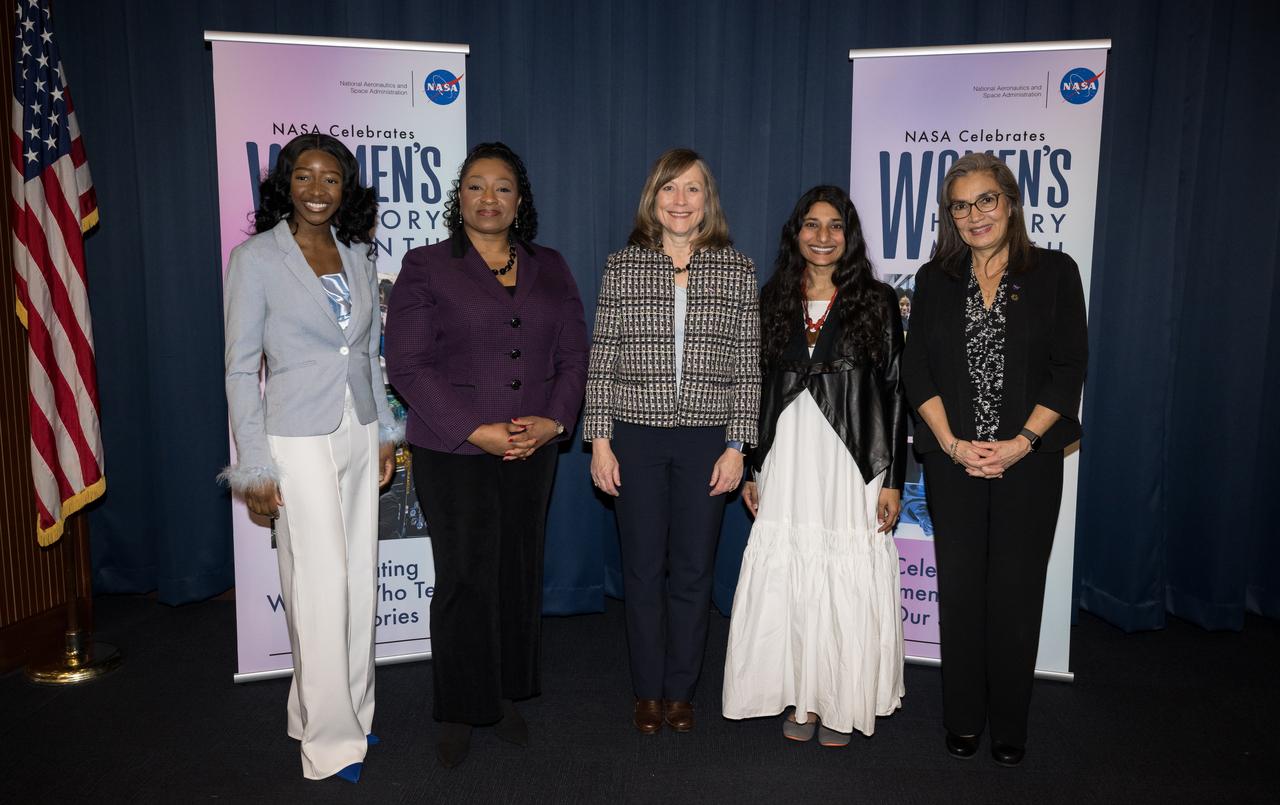
From left to right, NASA IT Cybersecurity Specialist, Sarah Adewumi, NASA Goddard’s Deputy Director for Technology and Research Investments, Dr. Christyl Johnson, NASA Deputy Associate Administrator for STEM, Kris Brown, NASA Associate Chief Scientist for Exploration and Applied Research, Dr. Mamta Patel Nagaraja, and NASA Headquarters Deputy Director for the Astrophysics Division, Sandra Cauffman, pose for a photo at the conclusion of an event for Women’s History Month, “Celebrating Women Who Tell Our Stories,” Wednesday, March 22, 2023 at NASA’s Goddard Space Flight Center in Greenbelt, Maryland. Photo Credit: (NASA/Aubrey Gemignani)

NASA Deputy Associate Administrator for STEM, Kris Brown speaks during a panel discussion with NASA IT Cybersecurity Specialist, Sarah Adewumi, NASA Goddard’s Deputy Director for Technology and Research Investments, Dr. Christyl Johnson, NASA Headquarters Deputy Director for the Astrophysics Division, Sandra Cauffman, and NASA Associate Chief Scientist for Exploration and Applied Research, Dr. Mamta Patel Nagaraja as part of a Women’s History Month program, “Celebrating Women Who Tell Our Stories,” Wednesday, March 22, 2023 at NASA’s Goddard Space Flight Center in Greenbelt, Maryland. Photo Credit: (NASA/Aubrey Gemignani)
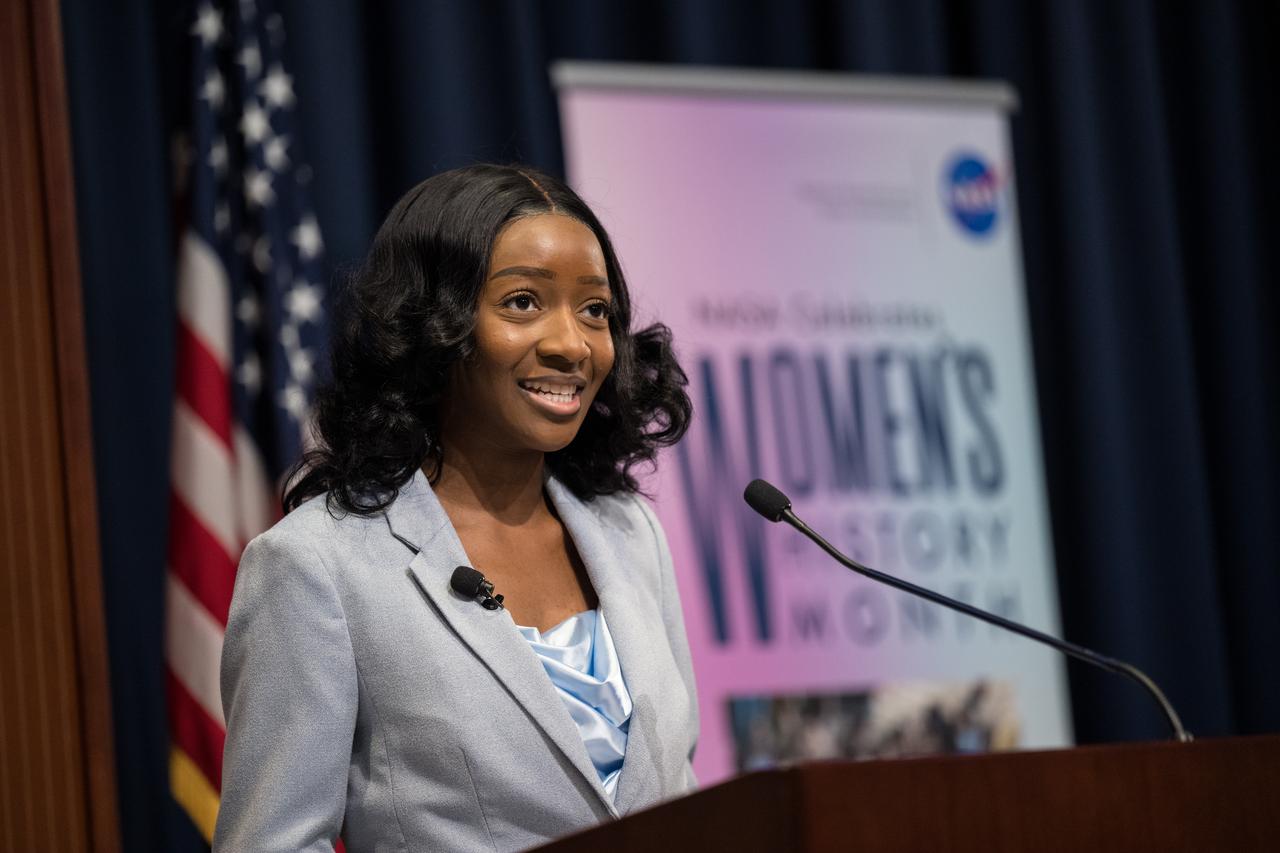
NASA IT Cybersecurity Specialist, Sarah Adewumi, introduces NASA Deputy Associate Administrator for STEM, Kris Brown just before a panel discussion with Brown, NASA Goddard’s Deputy Director for Technology and Research Investments, Dr. Christyl Johnson, NASA Headquarters Deputy Director for the Astrophysics Division, Sandra Cauffman, and NASA Associate Chief Scientist for Exploration and Applied Research, Dr. Mamta Patel Nagaraja during an event for Women’s History Month, “Celebrating Women Who Tell Our Stories,” Wednesday, March 22, 2023 at NASA’s Goddard Space Flight Center in Greenbelt, Maryland. Photo Credit: (NASA/Aubrey Gemignani)

NASA Headquarters Deputy Director for the Astrophysics Division, Sandra Cauffman, speaks during a panel discussion with NASA IT Cybersecurity Specialist, Sarah Adewumi, NASA Goddard’s Deputy Director for Technology and Research Investments, Dr. Christyl Johnson, NASA Deputy Associate Administrator for STEM, Kris Brown, and NASA Associate Chief Scientist for Exploration and Applied Research, Dr. Mamta Patel Nagaraja, as part of a Women’s History Month program, “Celebrating Women Who Tell Our Stories,” Wednesday, March 22, 2023 at NASA’s Goddard Space Flight Center in Greenbelt, Maryland. Photo Credit: (NASA/Aubrey Gemignani)
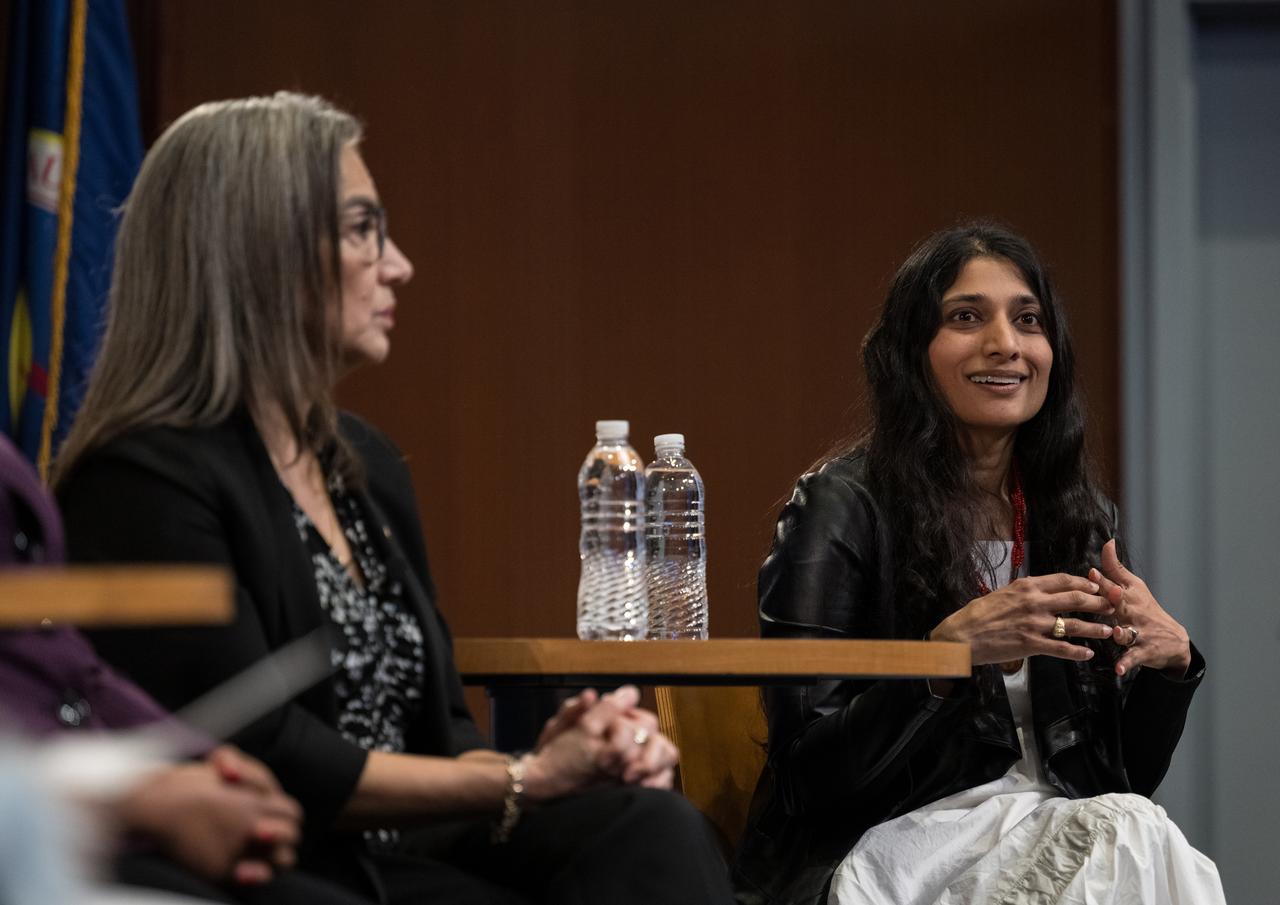
NASA Associate Chief Scientist for Exploration and Applied Research, Dr. Mamta Patel Nagaraja, right, speaks during a panel discussion with NASA IT Cybersecurity Specialist, Sarah Adewumi, NASA Goddard’s Deputy Director for Technology and Research Investments, Dr. Christyl Johnson, NASA Deputy Associate Administrator for STEM, Kris Brown, and NASA Headquarters Deputy Director for the Astrophysics Division, Sandra Cauffman, as part of a Women’s History Month program, “Celebrating Women Who Tell Our Stories,” Wednesday, March 22, 2023 at NASA’s Goddard Space Flight Center in Greenbelt, Maryland. Photo Credit: (NASA/Aubrey Gemignani)

NASA Associate Chief Scientist for Exploration and Applied Research, Dr. Mamta Patel Nagaraja, speaks during a panel discussion with NASA IT Cybersecurity Specialist, Sarah Adewumi, NASA Goddard’s Deputy Director for Technology and Research Investments, Dr. Christyl Johnson, NASA Deputy Associate Administrator for STEM, Kris Brown, and NASA Headquarters Deputy Director for the Astrophysics Division, Sandra Cauffman, as part of a Women’s History Month program, “Celebrating Women Who Tell Our Stories,” Wednesday, March 22, 2023 at NASA’s Goddard Space Flight Center in Greenbelt, Maryland. Photo Credit: (NASA/Aubrey Gemignani)
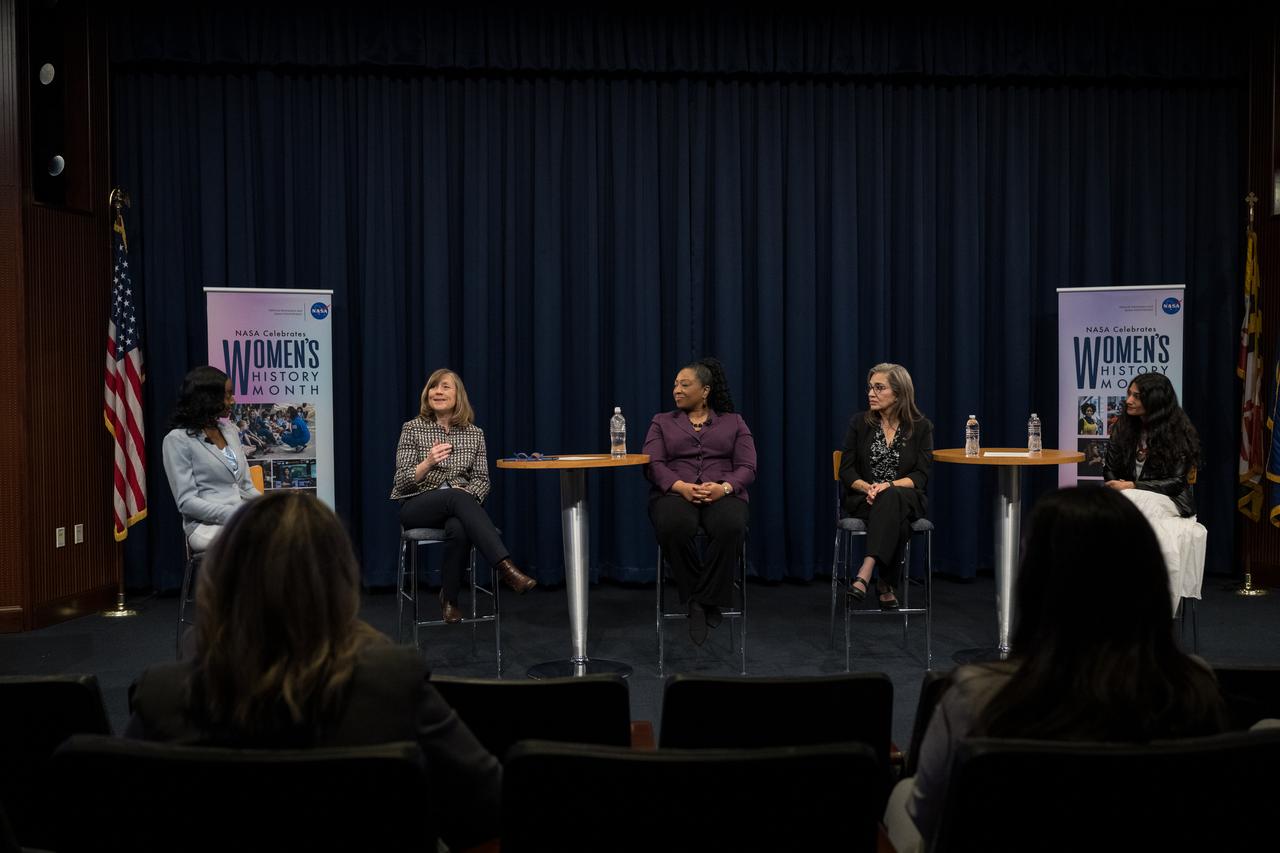
NASA IT Cybersecurity Specialist, Sarah Adewumi, left, moderates a panel discussion with NASA Deputy Associate Administrator for STEM, Kris Brown, NASA Goddard’s Deputy Director for Technology and Research Investments, Dr. Christyl Johnson, NASA Headquarters Deputy Director for the Astrophysics Division, Sandra Cauffman, and NASA Associate Chief Scientist for Exploration and Applied Research, Dr. Mamta Patel Nagaraja during an event for Women’s History Month, “Celebrating Women Who Tell Our Stories,” Wednesday, March 22, 2023 at NASA’s Goddard Space Flight Center in Greenbelt, Maryland. Photo Credit: (NASA/Aubrey Gemignani)

NASA Goddard’s Deputy Director for Technology and Research Investments, Dr. Christyl Johnson, speaks during a panel discussion with NASA IT Cybersecurity Specialist, Sarah Adewumi, NASA Deputy Associate Administrator for STEM, Kris Brown, NASA Headquarters Deputy Director for the Astrophysics Division, Sandra Cauffman, and NASA Associate Chief Scientist for Exploration and Applied Research, Dr. Mamta Patel Nagaraja as part of a Women’s History Month program, “Celebrating Women Who Tell Our Stories,” Wednesday, March 22, 2023 at NASA’s Goddard Space Flight Center in Greenbelt, Maryland. Photo Credit: (NASA/Aubrey Gemignani)

NASA Headquarters Deputy Director for the Astrophysics Division, Sandra Cauffman, speaks during a panel discussion with NASA IT Cybersecurity Specialist, Sarah Adewumi, NASA Goddard’s Deputy Director for Technology and Research Investments, Dr. Christyl Johnson, NASA Deputy Associate Administrator for STEM, Kris Brown, and NASA Associate Chief Scientist for Exploration and Applied Research, Dr. Mamta Patel Nagaraja, as part of a Women’s History Month program, “Celebrating Women Who Tell Our Stories,” Wednesday, March 22, 2023 at NASA’s Goddard Space Flight Center in Greenbelt, Maryland. Photo Credit: (NASA/Aubrey Gemignani)
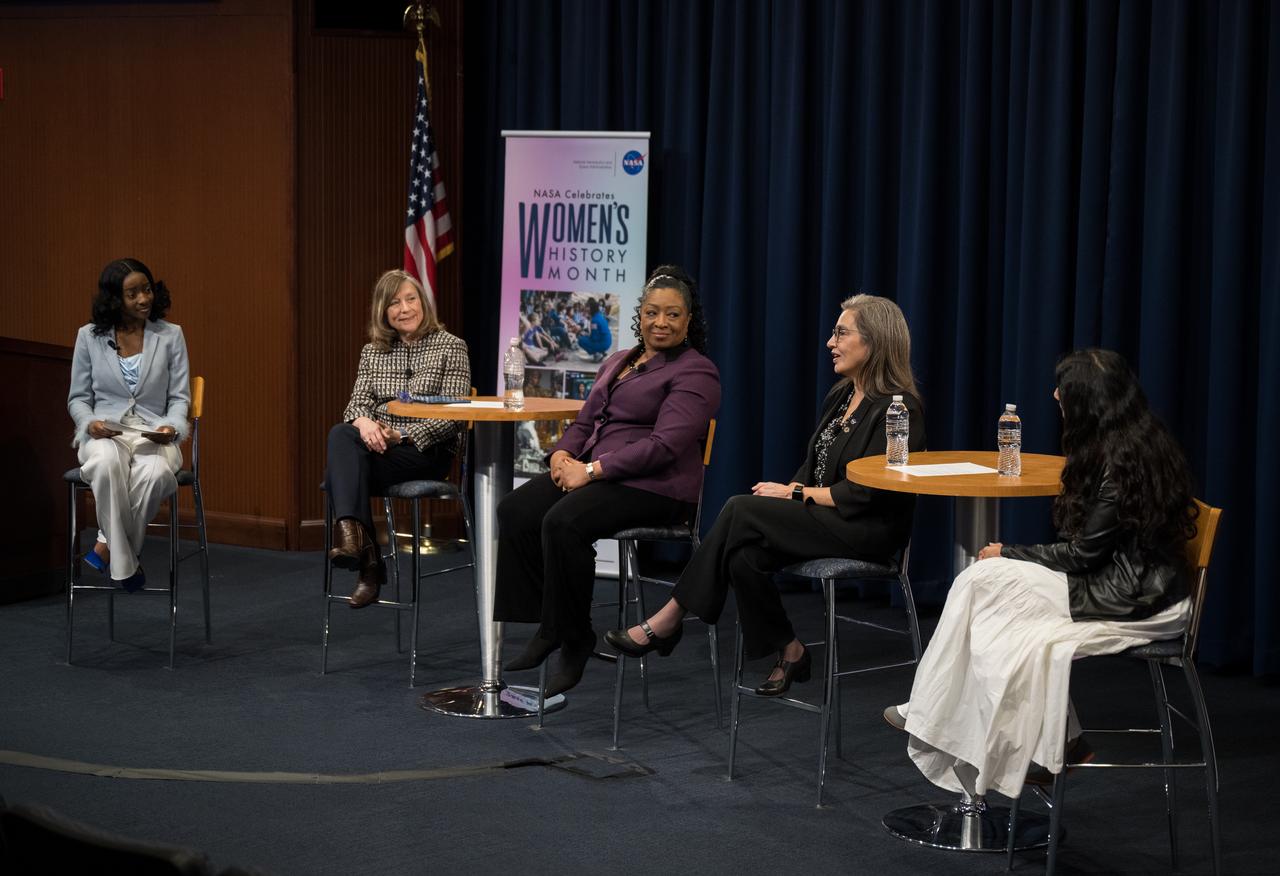
NASA IT Cybersecurity Specialist, Sarah Adewumi, left, moderates a panel discussion with NASA Deputy Associate Administrator for STEM, Kris Brown, NASA Goddard’s Deputy Director for Technology and Research Investments, Dr. Christyl Johnson, NASA Headquarters Deputy Director for the Astrophysics Division, Sandra Cauffman, and NASA Associate Chief Scientist for Exploration and Applied Research, Dr. Mamta Patel Nagaraja during an event for Women’s History Month, “Celebrating Women Who Tell Our Stories,” Wednesday, March 22, 2023 at NASA’s Goddard Space Flight Center in Greenbelt, Maryland. Photo Credit: (NASA/Aubrey Gemignani)
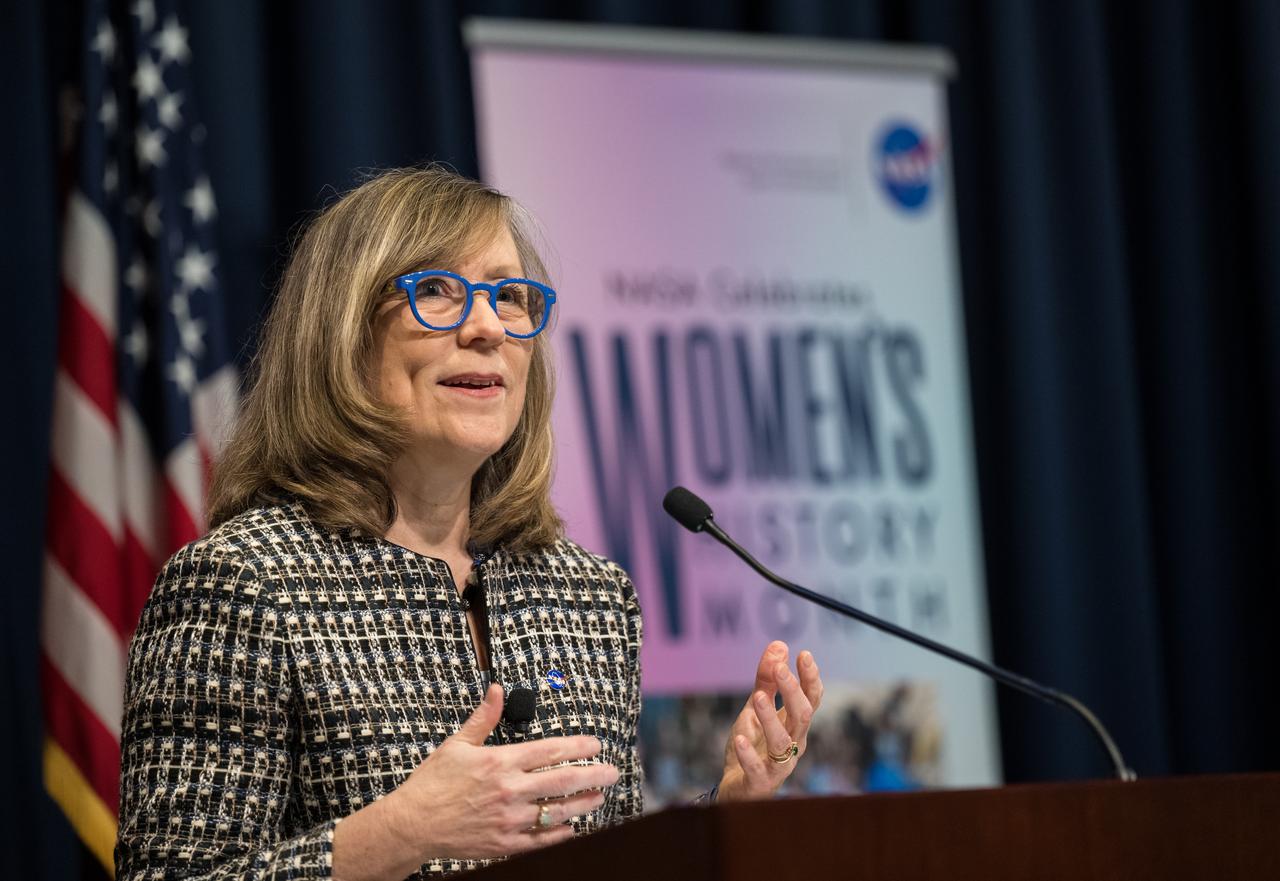
NASA Deputy Associate Administrator for STEM, Kris Brown speaks before a panel discussion with moderator NASA IT Cybersecurity Specialist, Sarah Adewumi, NASA Goddard’s Deputy Director for Technology and Research Investments, Dr. Christyl Johnson, NASA Headquarters Deputy Director for the Astrophysics Division, Sandra Cauffman, and NASA Associate Chief Scientist for Exploration and Applied Research, Dr. Mamta Patel Nagaraja as part of Women’s History Month, “Celebrating Women Who Tell Our Stories,” Wednesday, March 22, 2023 at NASA’s Goddard Space Flight Center in Greenbelt, Maryland. Photo Credit: (NASA/Aubrey Gemignani)

NASA Associate Chief Scientist for Exploration and Applied Research, Dr. Mamta Patel Nagaraja, speaks during a panel discussion with NASA IT Cybersecurity Specialist, Sarah Adewumi, NASA Goddard’s Deputy Director for Technology and Research Investments, Dr. Christyl Johnson, NASA Deputy Associate Administrator for STEM, Kris Brown, and NASA Headquarters Deputy Director for the Astrophysics Division, Sandra Cauffman, as part of a Women’s History Month program, “Celebrating Women Who Tell Our Stories,” Wednesday, March 22, 2023 at NASA’s Goddard Space Flight Center in Greenbelt, Maryland. Photo Credit: (NASA/Aubrey Gemignani)
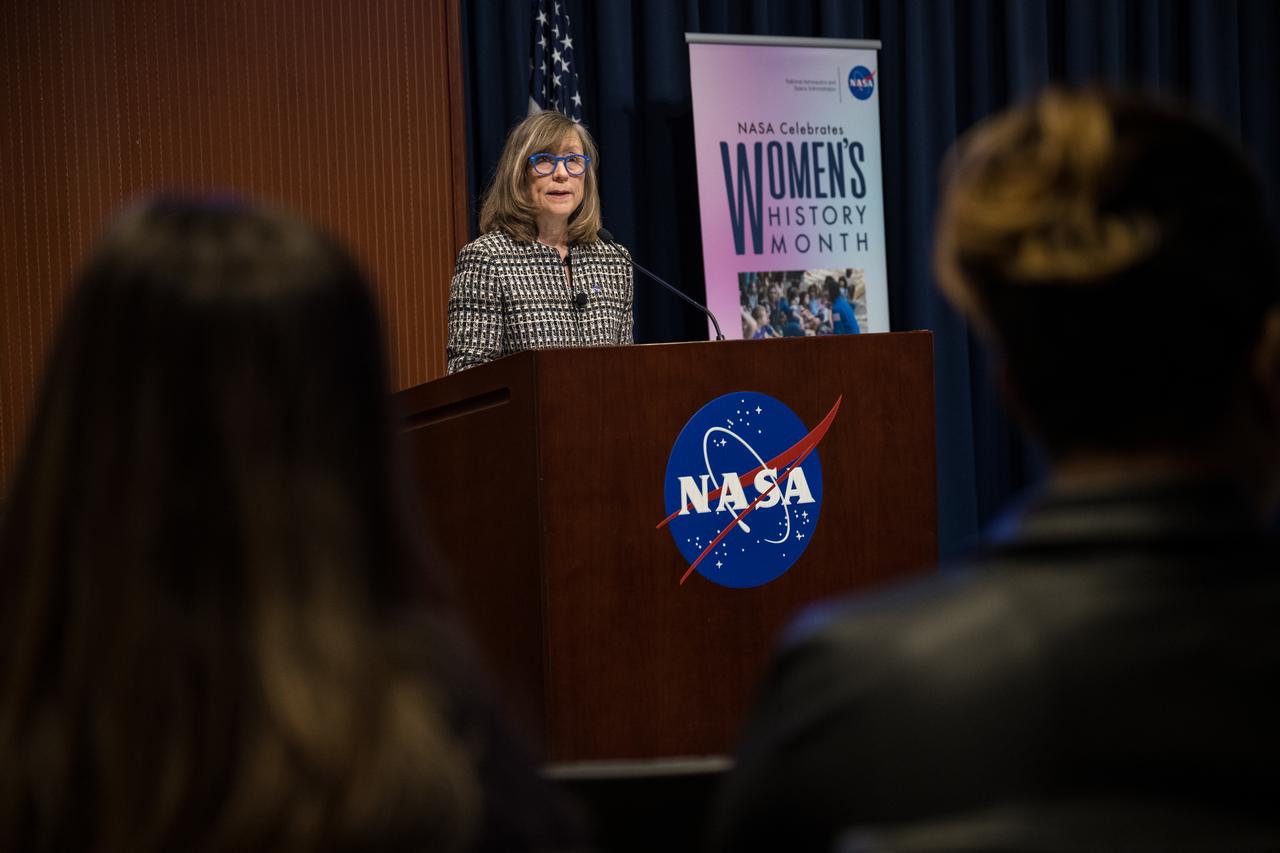
NASA Deputy Associate Administrator for STEM, Kris Brown speaks before a panel discussion with moderator NASA IT Cybersecurity Specialist, Sarah Adewumi, NASA Goddard’s Deputy Director for Technology and Research Investments, Dr. Christyl Johnson, NASA Headquarters Deputy Director for the Astrophysics Division, Sandra Cauffman, and NASA Associate Chief Scientist for Exploration and Applied Research, Dr. Mamta Patel Nagaraja as part of Women’s History Month, “Celebrating Women Who Tell Our Stories,” Wednesday, March 22, 2023 at NASA’s Goddard Space Flight Center in Greenbelt, Maryland. Photo Credit: (NASA/Aubrey Gemignani)

STS061-48-027 (9 Dec 1993) --- Astronaut F. Story Musgrave moves about in the Space Shuttle Endeavour's cargo bay during the deployment of the solar array panels on the Hubble Space Telescope (HST) during the final of five STS-61 space walks. The left hand of astronaut Jeffrey A. Hoffman appears at lower left corner.
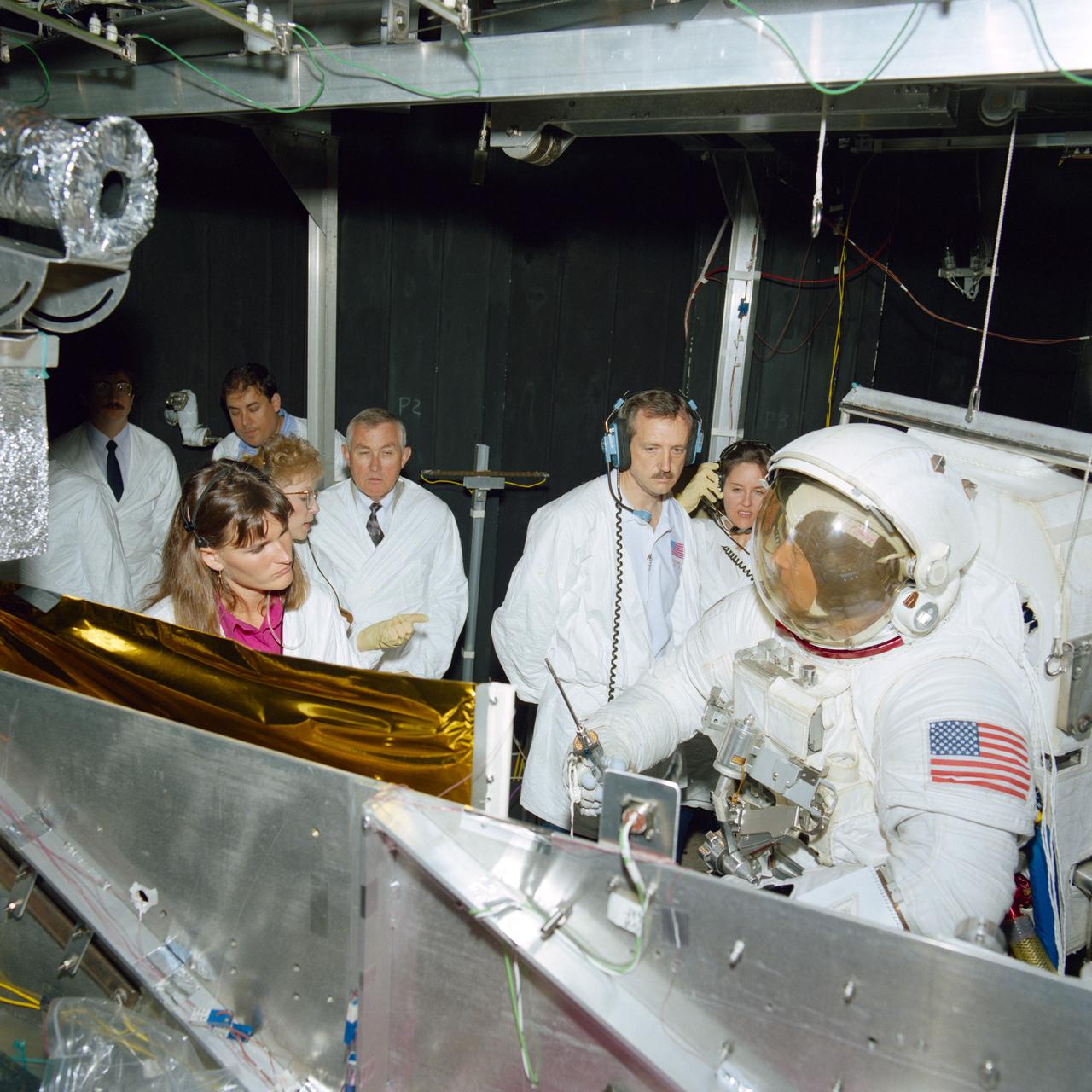
S93-34001 (26 May 1993) --- Astronaut F. Story Musgrave, wearing a training version of the Extravehicular Mobility Unit (EMU), participates in a dry run for tests in a thermal vacuum chamber. The payload commander will be among four suited crew members participating in task rehearsals and testing the tools that will be used on the Hubble Space Telescope (HST) repair mission. The test, conducted in Chamber B of the Space Environment and Simulation Laboratory (SESL) at the Johnson Space Center (JSC), verified that the tools being designed for the mission will work in the cold vacuum of space. Others pictured, from the left, are Andrea Tullar and Donna Fender, test directors; Leonard S. Nicholson, acting director of engineering; and astronauts Thomas D. Akers and Kathryn C. Thornton, mission specialists, along with Musgrave.
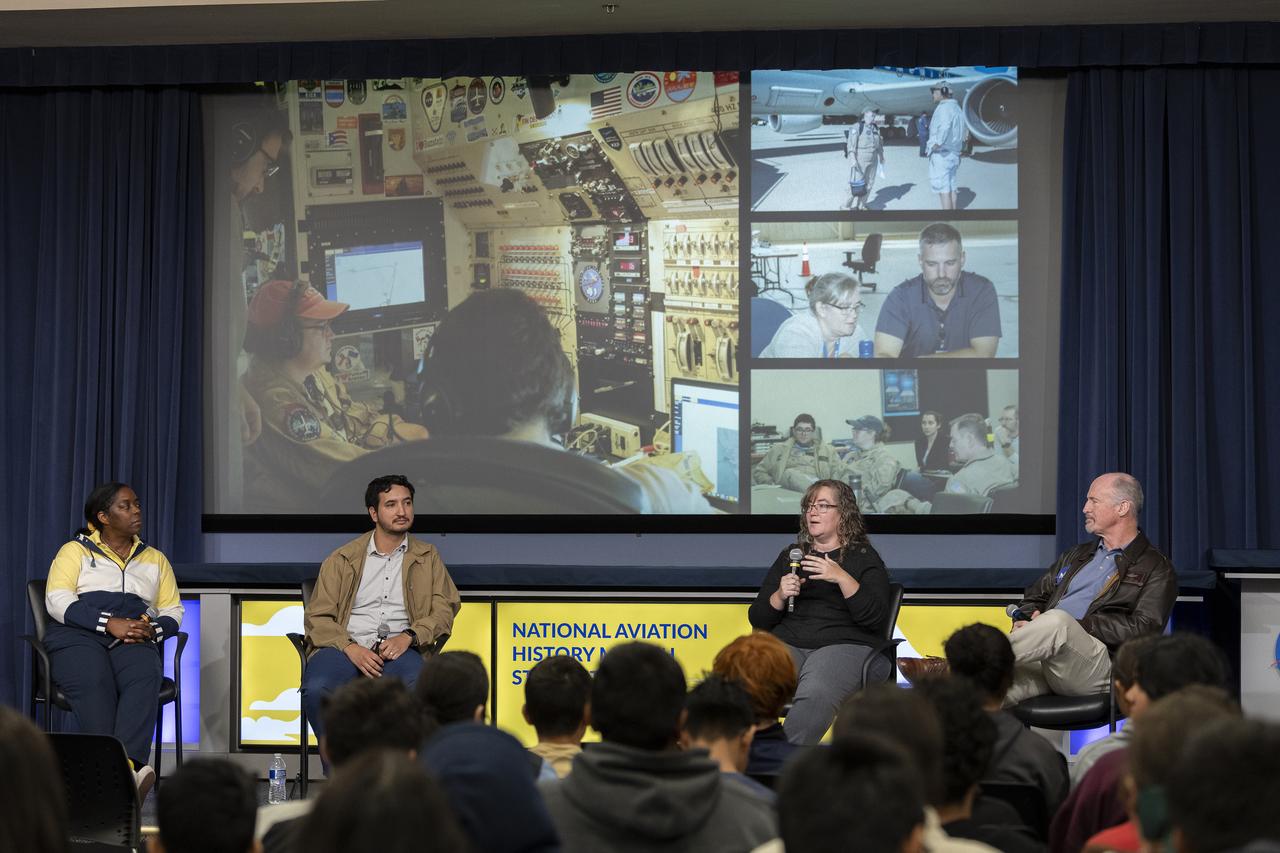
NASA Armstrong experts share their stories about their career paths and experiences at NASA to middle school students during an event hosted by NASA’s California Office of STEM Engagement at NASA’s Armstrong Flight Research Center in Edwards, California. From left to right: Laurie Grindle, Julio Trevino, Nicki Reid and Troy Asher.
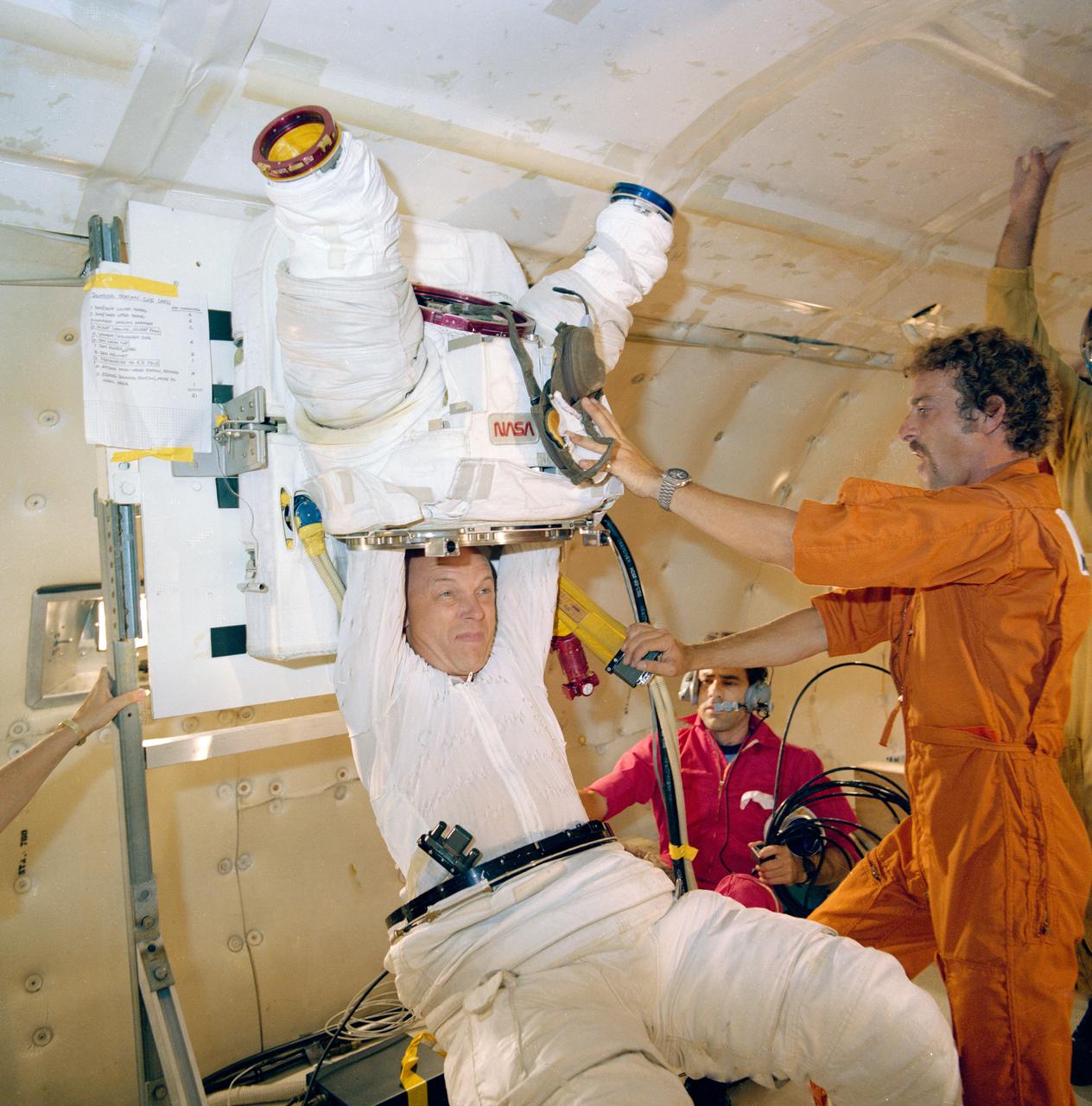
S82-33603 (November 1982) --- Astronaut F. Story Musgrave, STS-6 mission specialist, is assisted in a suit donning and doffing exercise in the weightlessness provided by a KC-135 ?zero-gravity? aircraft. Dr. Musgrave and the next mission?s other mission specialist, astronaut Donald H. Peterson, participated in the donning and doffing as a simulation for their preparations aboard the Challenger when they are called upon to perform an extravehicular activity (EVA) which was postponed from NASA?s first operational STS flight earlier this month. The suit is called an Extravehicular Mobility Unit (EMU). Photo credit: NASA
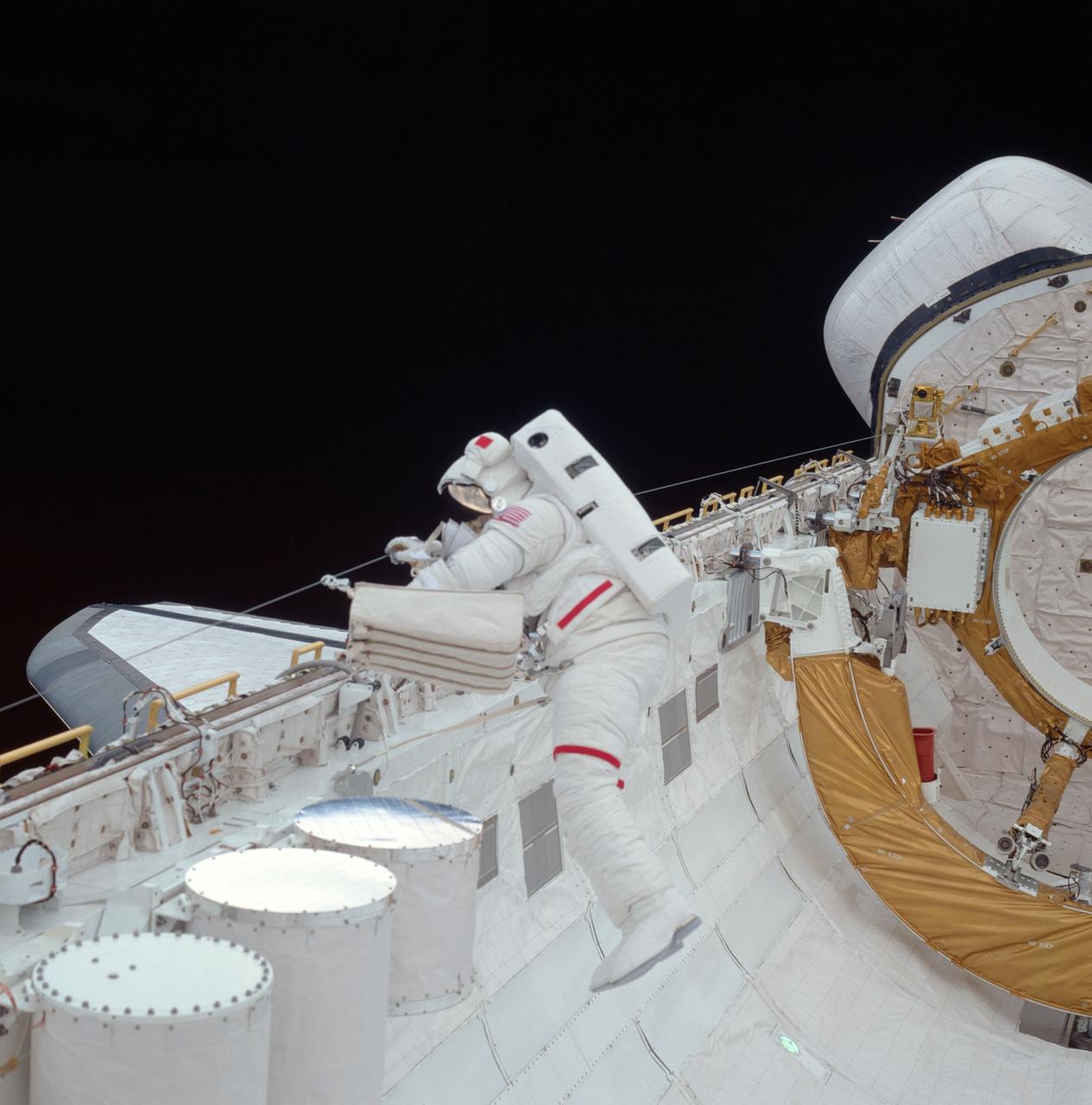
STS006-45-124 (7 April 1983) --- Astronaut F. Story Musgrave, STS-6 mission specialist, translates down the Earth-orbiting space shuttle Challenger’s payload bay door hinge line with a bag of latch tools. This photograph is among the first five still frames that recorded the April 7 extravehicular activity (EVA) of Dr. Musgrave and Donald H. Peterson, the flight’s other mission specialist. It was photographed with a handheld 70mm camera from inside the cabin by one of two crew members who remained on the flight deck during the EVA. Dr. Musgrave’s task here was to evaluate the techniques required to move along the payload bay’s edge with tools. In the lower left foreground are three canisters containing three getaway special (GAS) experiments. Part of the starboard wind and orbital maneuvering system (OMS) pod are seen back dropped against the blackness of space. The gold-foil protected object partially out of frame on the right is the airborne support equipment for the now vacated inertial upper stage (IUS) which aided the deployment of the tracking and data relay satellite on the flight’s first day. Astronauts Paul J. Weitz, command and Karol J. Bobko, pilot, remained inside the Challenger during the EVA. Photo credit: NASA
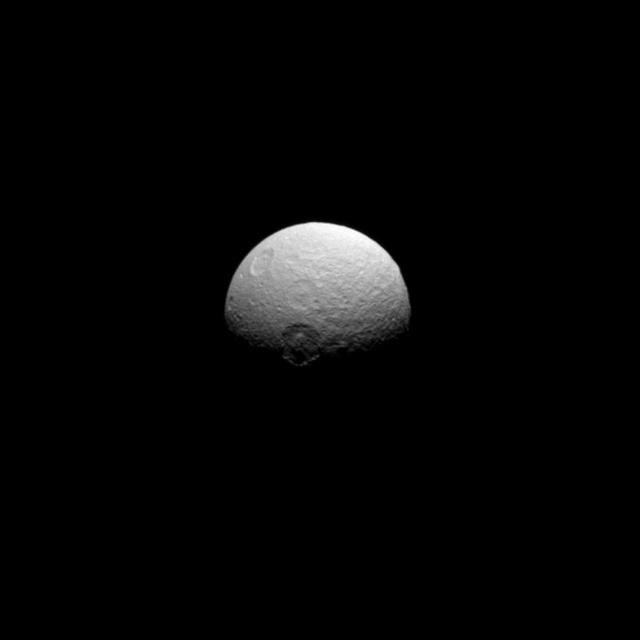
NASA Cassini spacecraft captured this image of Tethys, telling the story of a violent history marked by impacts. Seen here are the craters Melanthius near the center, Dolius above Melanthius, and Penelope upper left almost over the limb.
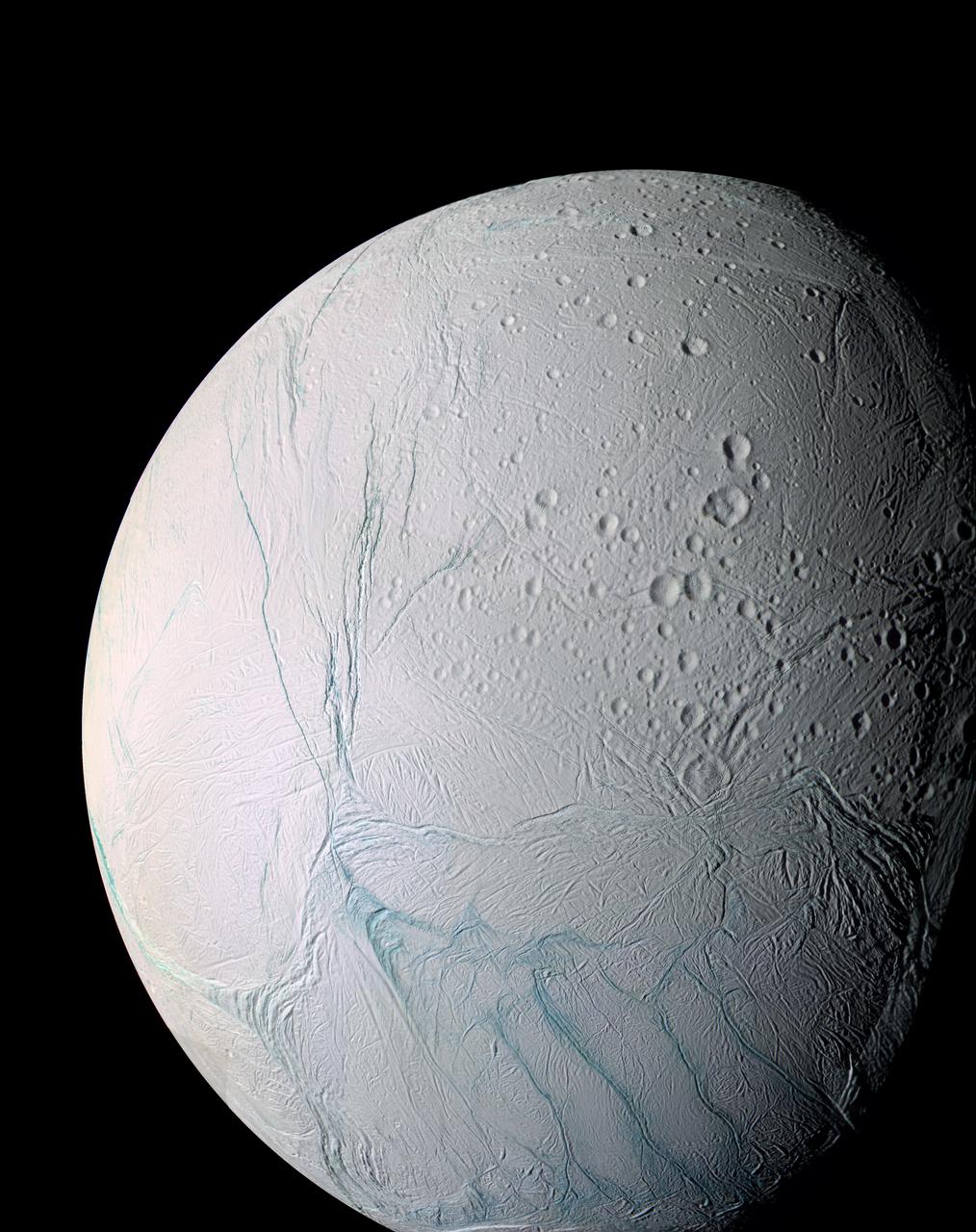
A masterpiece of deep time and wrenching gravity, the tortured surface of Saturn moon Enceladus and its fascinating ongoing geologic activity tell the story of the ancient and present struggles of one tiny world.
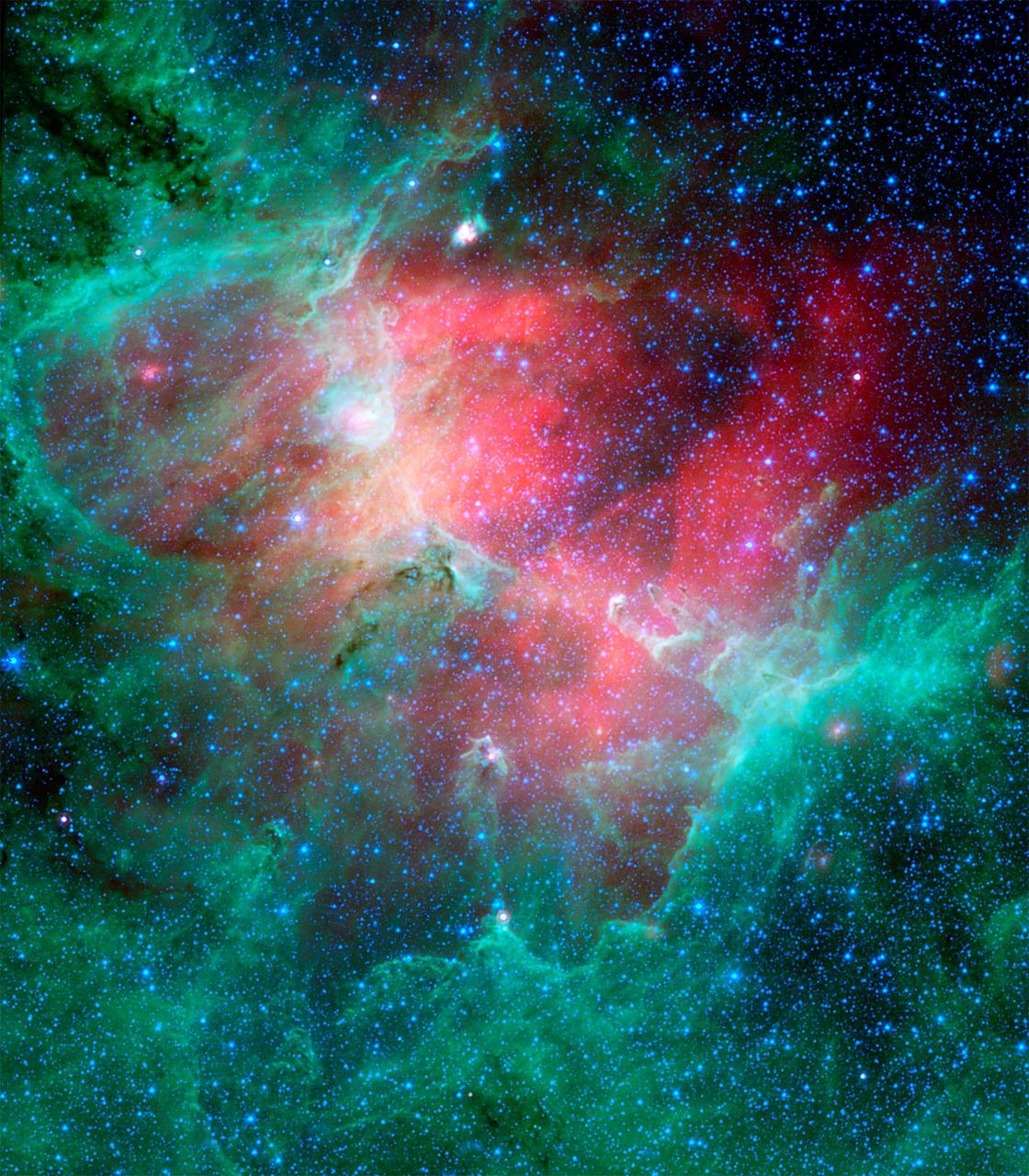
This majestic view taken by NASA Spitzer Space Telescope tells an untold story of life and death in the Eagle nebula, an industrious star-making factory located 7,000 light-years away in the Serpens constellation.

Astronauts Jeffrey Hoffman and Story Musgrave install the Wide Field and Planetary Camera 2 (WFPC2) on the Hubble Space Telescope, during SM1 in December, 1993. https://photojournal.jpl.nasa.gov/catalog/PIA22911

This ethereal scene captured by NASA New Horizons spacecraft tells yet another story of Pluto diversity of geological and compositional features-this time in an enhanced color image of the north polar area.
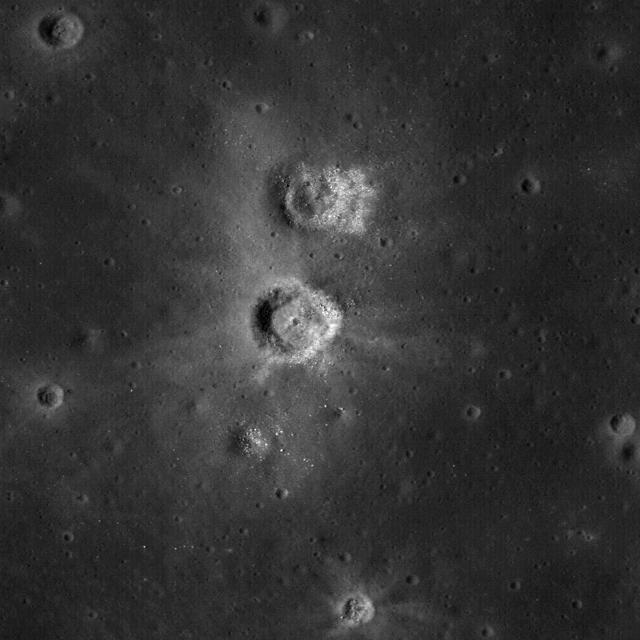
The unusual shapes of craters at the Flamsteed Constellation region of interest provide information about the thickness of the lunar regolith in this region in this image taken by NASA Lunar Reconnaissance Orbiter.

This illustration summarizes the almost 14-billion-year-long history of our universe. It shows the main events that occurred between the initial phase of the cosmos.
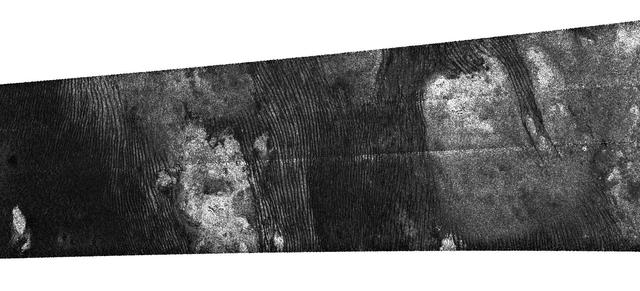
An intricate, fingerprint-like pattern of dunes is seen in this dramatic radar image of Saturn moon Titan captured by NASA Cassini spacecraft on May 21, 2009 from an altitude of 965 kilometers about 600 miles.
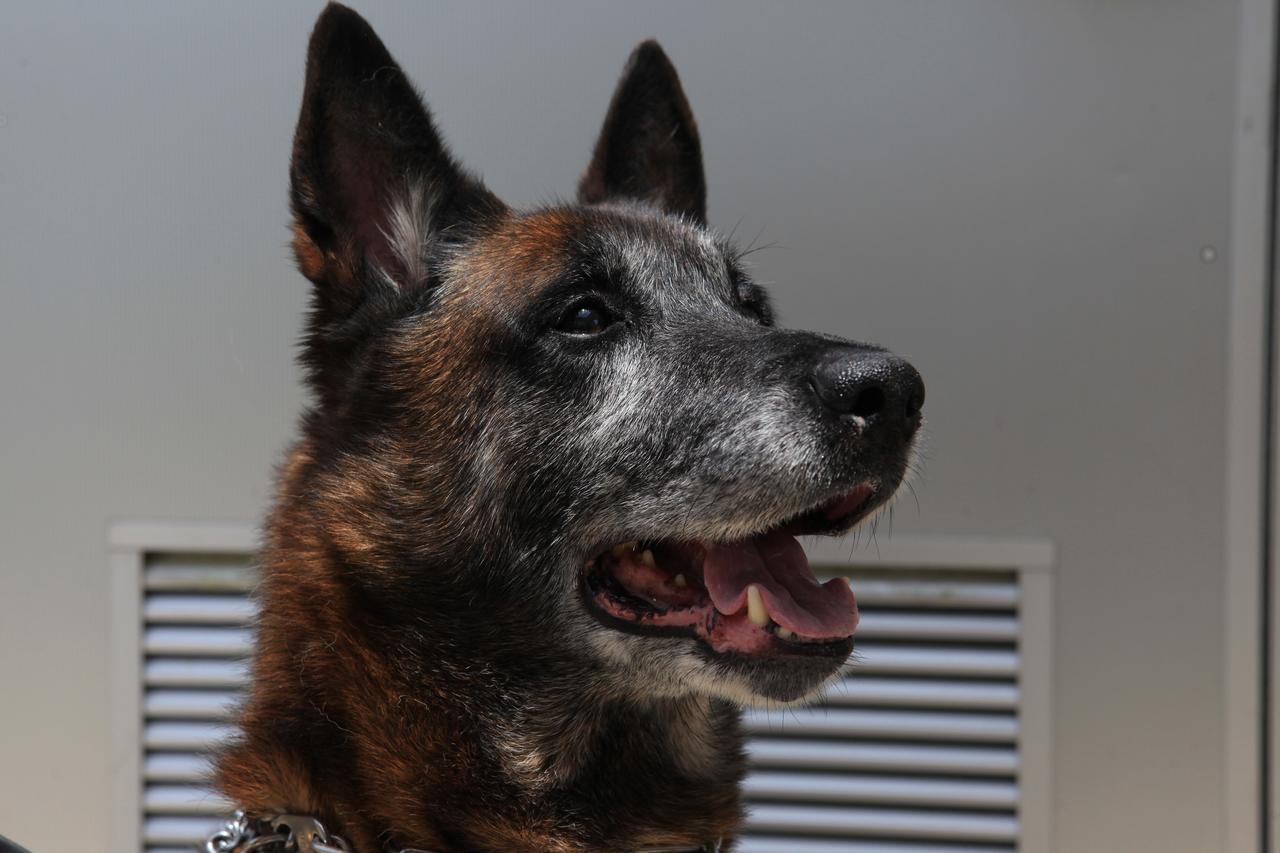
KSC Protectice Services - Working Dogs Feature Story.
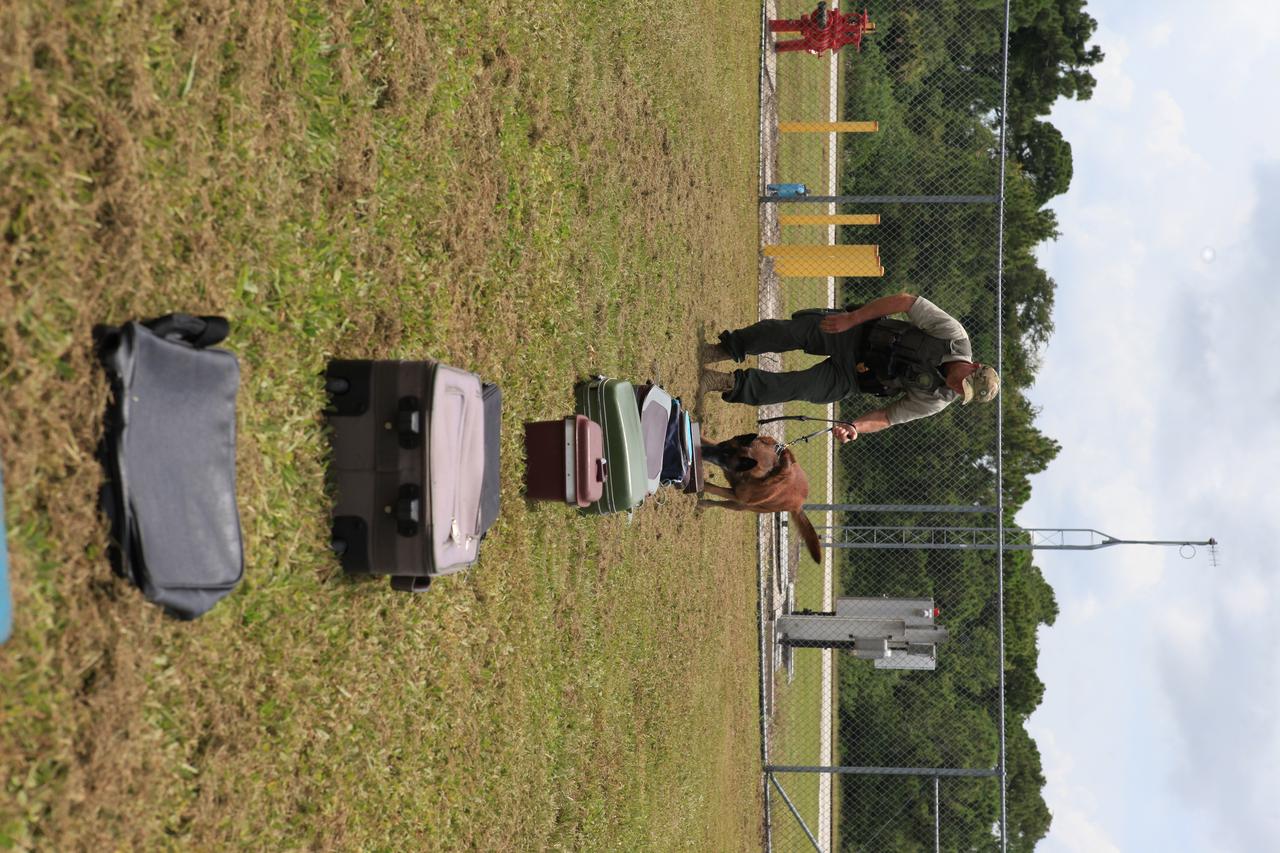
KSC Protectice Services - Working Dogs Feature Story.
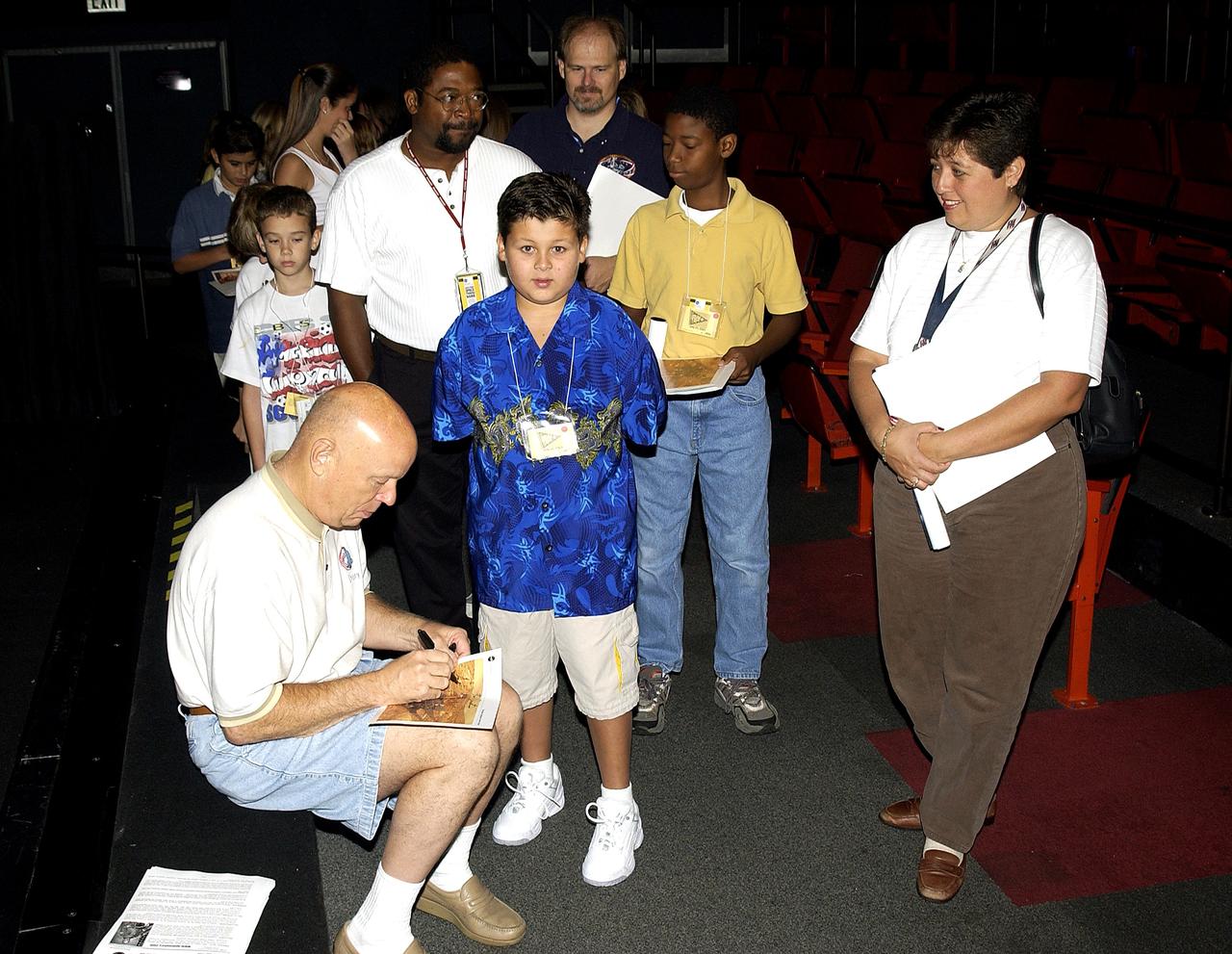
KENNEDY SPACE CENTER, FLA. - Former astronaut Story Musgrave signs autographs for employees’ children after his presentation during a welcome ceremony in the IMAX Theatre, KSC Visitor Complex. Employees were invited to share their work experience with their children for Take Our Children to Work Day.
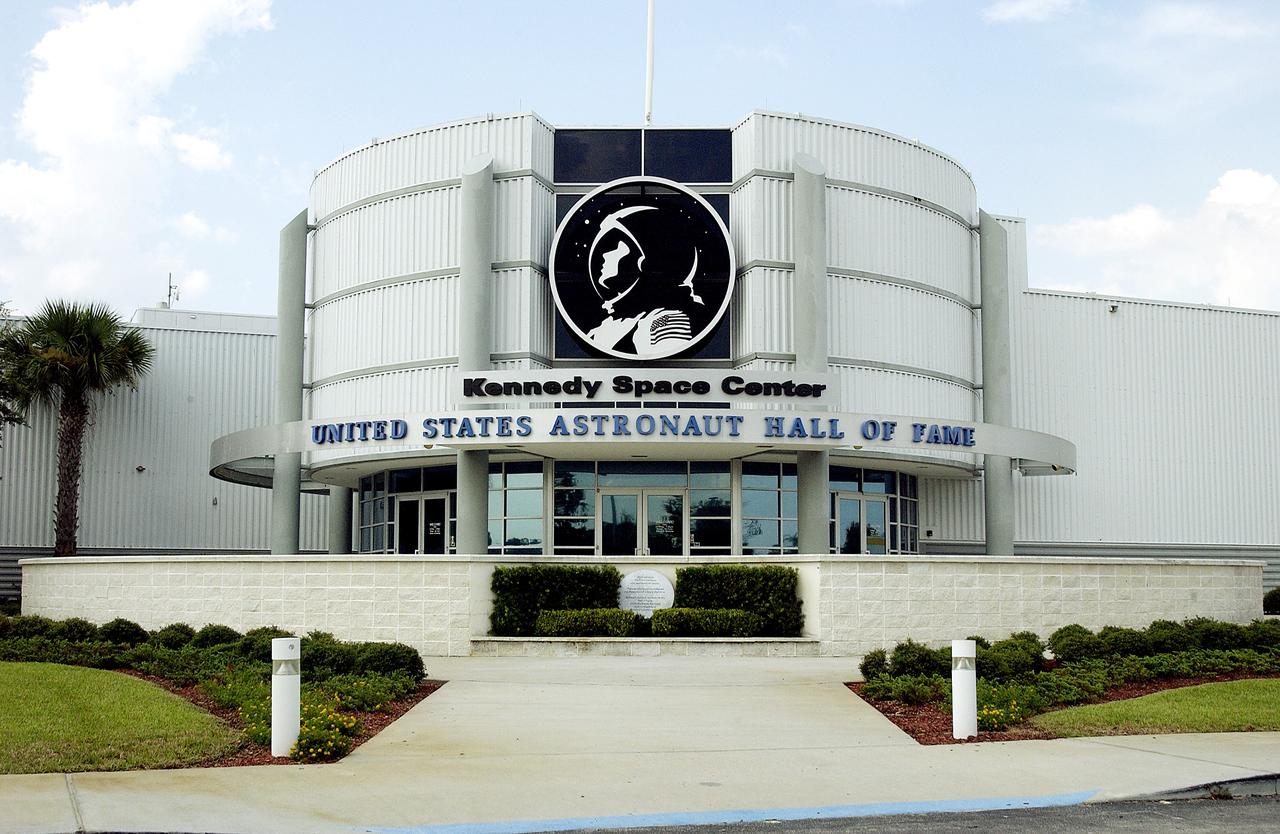
KENNEDY SPACE CENTER, FLA. The Astronaut Hall of Fame is dedicated to telling the stories of America’s astronauts. It features the world’s largest collection of personal astronaut mementos plus historic spacecrafts and training simulators. The Hall of Fame is part of the KSC Visitor Complex.
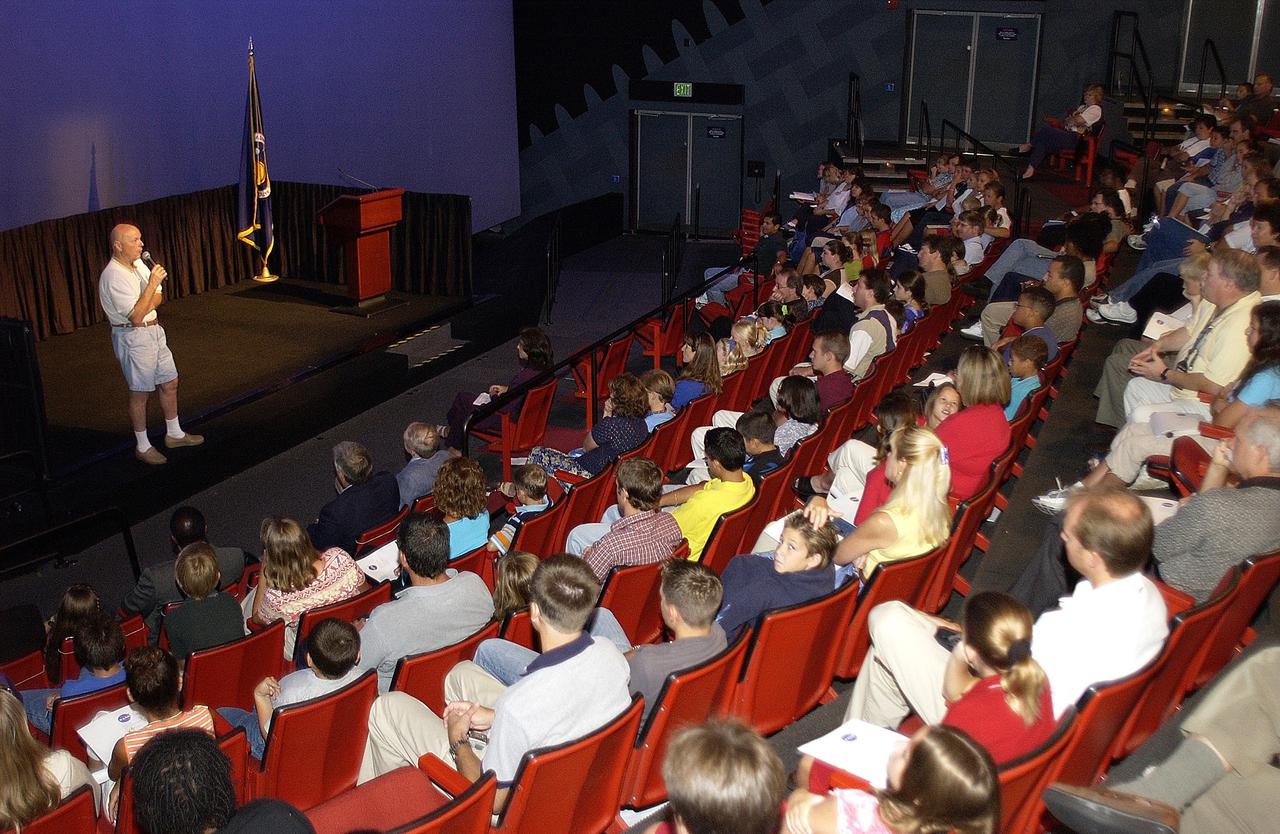
KENNEDY SPACE CENTER, FLA. - Former astronaut Story Musgrave talks to employees and their children during a welcome ceremony in the IMAX Theatre, KSC Visitor Complex. Employees were invited to share their work experience with their children for Take Our Children to Work Day.

The first known proposal for a marned-satellite appeared in a story by Edward Everett Hale entitled "The Brick Moon." The story involved a group of young Bostonians who planned to put an artificial satellite into polar orbit for sailors to use to determine longitude accurately and easily.

S79-37745 (October 1979) --- Astronaut F. Story Musgrave, mission specialist
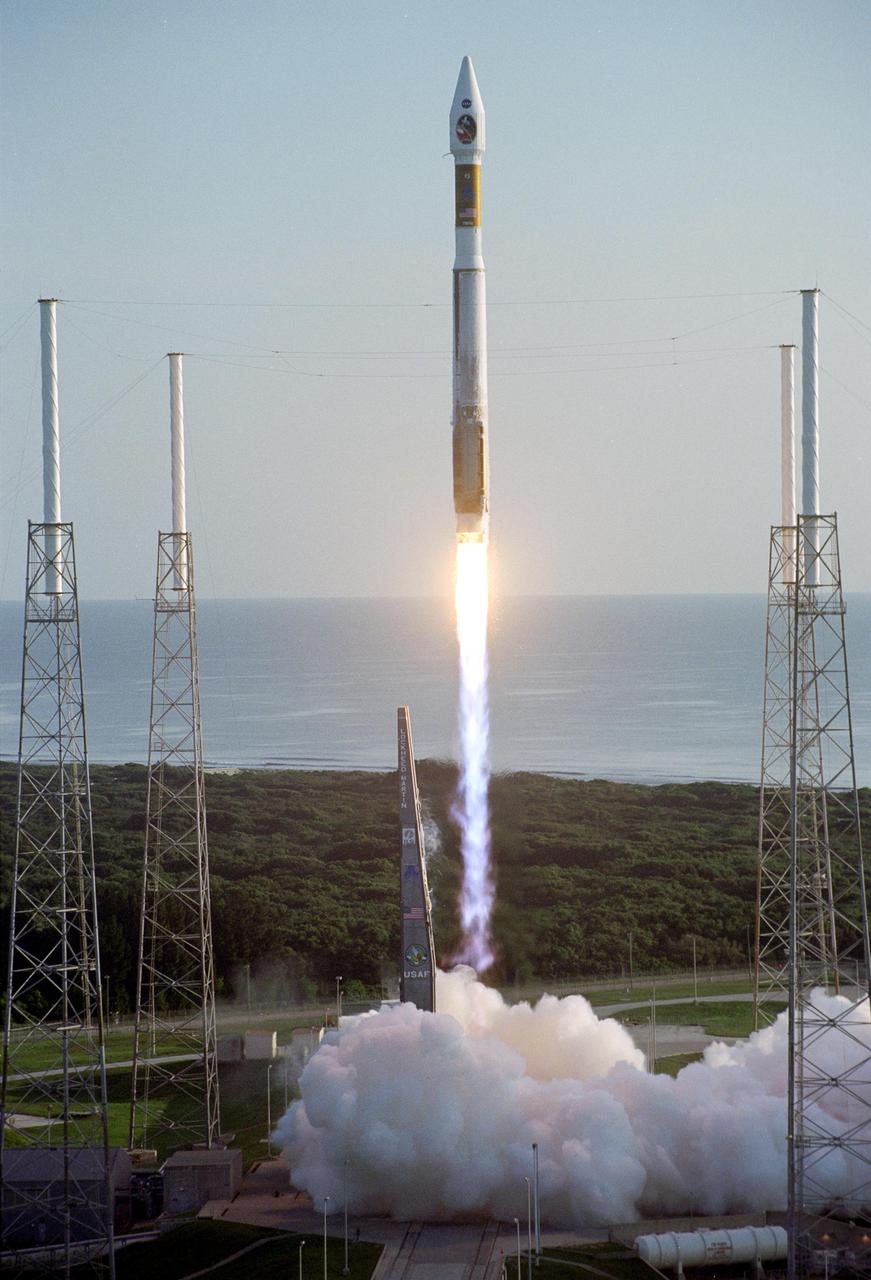
With the Atlantic Ocean as a backdrop, an Atlas V launch vehicle, 19 stories tall, with a two-ton NASA Mars Reconnaissance Orbiter MRO on top, roars away from Launch Complex 41 at Cape Canaveral Air Force Station.
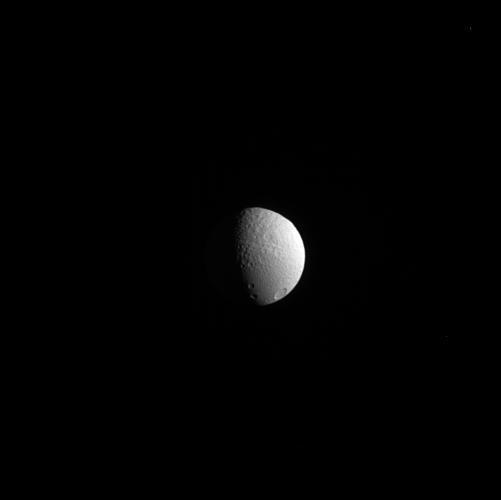
Tethys trailing side shows two terrains that tell a story of a rough past. To the north up, in image is older, rougher terrain, while to the south is new material dubbed mooth plains by scientists. This image was taken by NASA Cassini spacecraft.
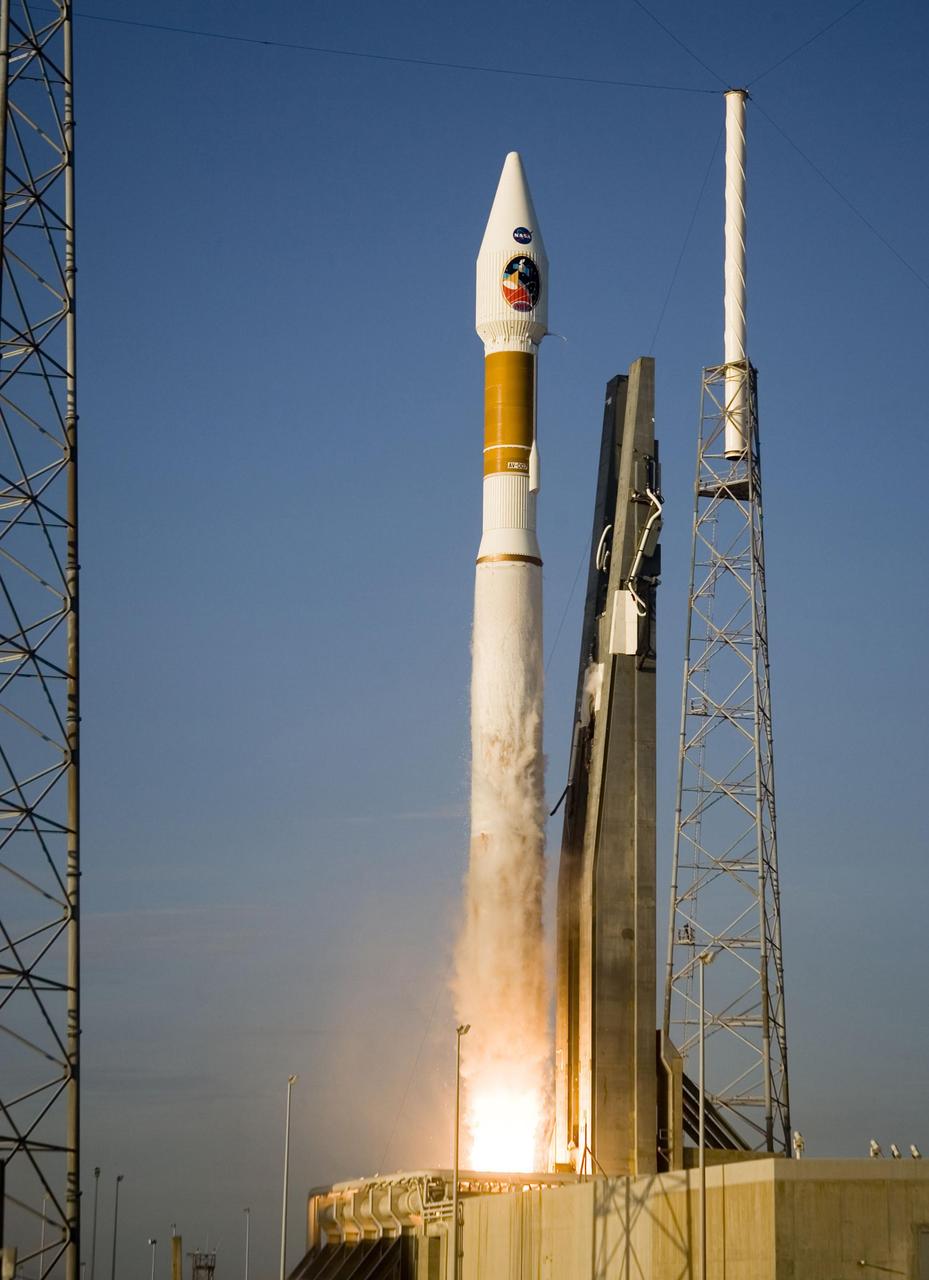
Atlas V launch vehicle, 19 stories tall, with a two-ton NASA Mars Reconnaissance Orbiter MRO on top, lifts off the pad on Launch Complex 41 at Cape Canaveral Air Force Station in Florida on Aug. 12, 2005.
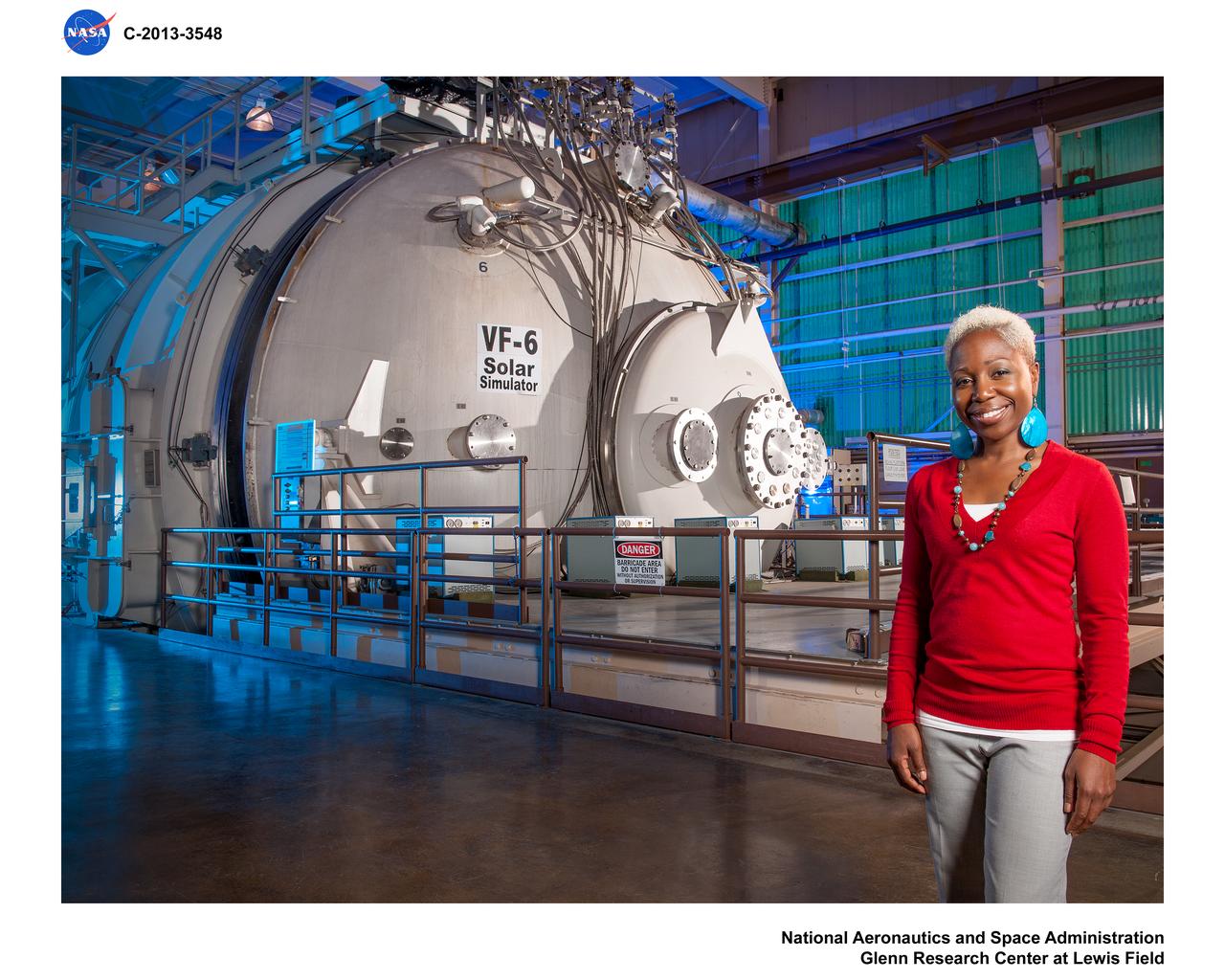
Environmental portrait of Mary Gibson and of Tank 6 (VF-6) Solar Simulator for NASA GRC Web Feature Story
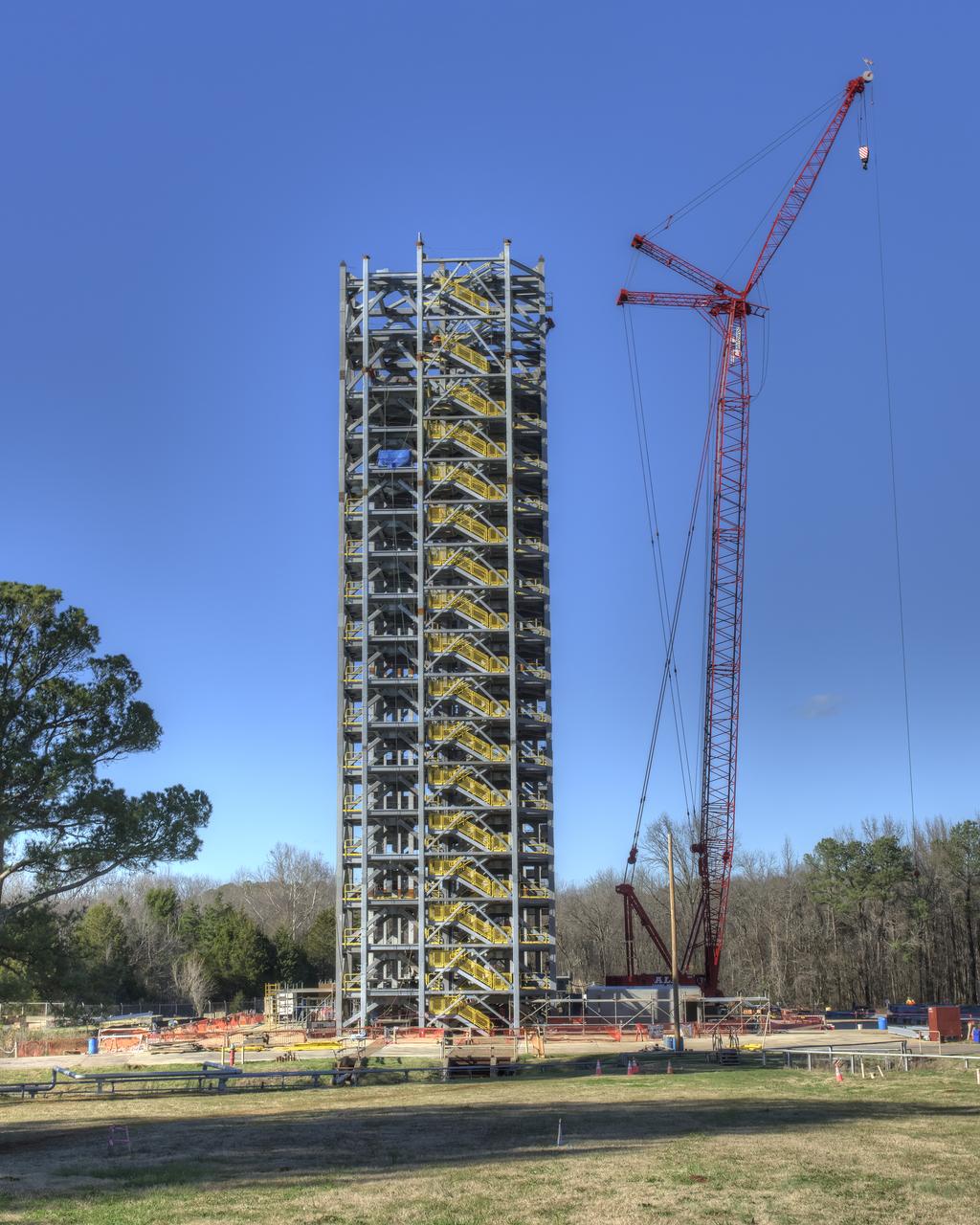
Overall view of test stand 4693 in the west test area. The stand is scheduled to have another 3 story section added
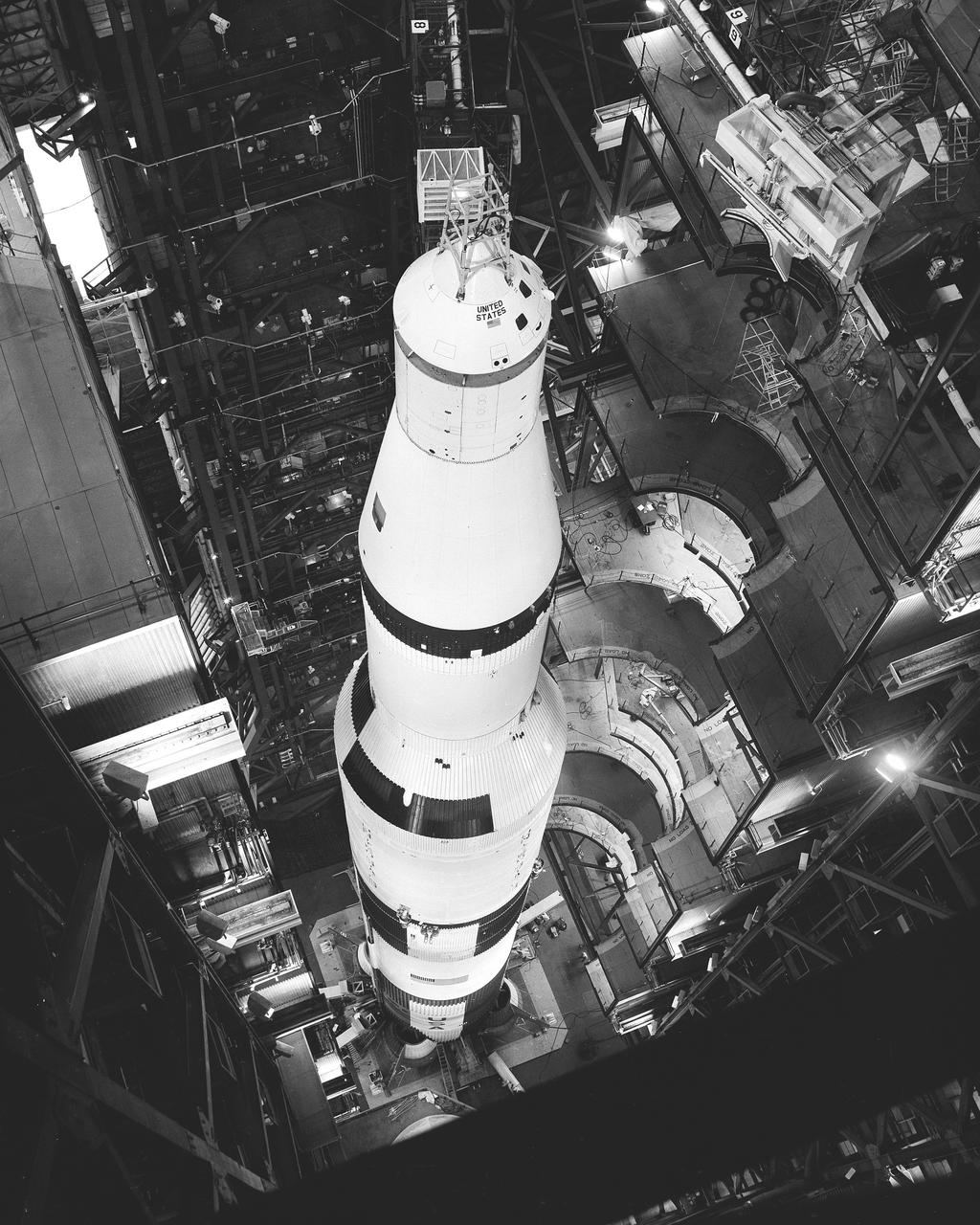
Top-to-bottom view of the 36-story-tall Saturn Apollo 501 space vehicle with work platforms retracted. VAB, High Bay No.1.
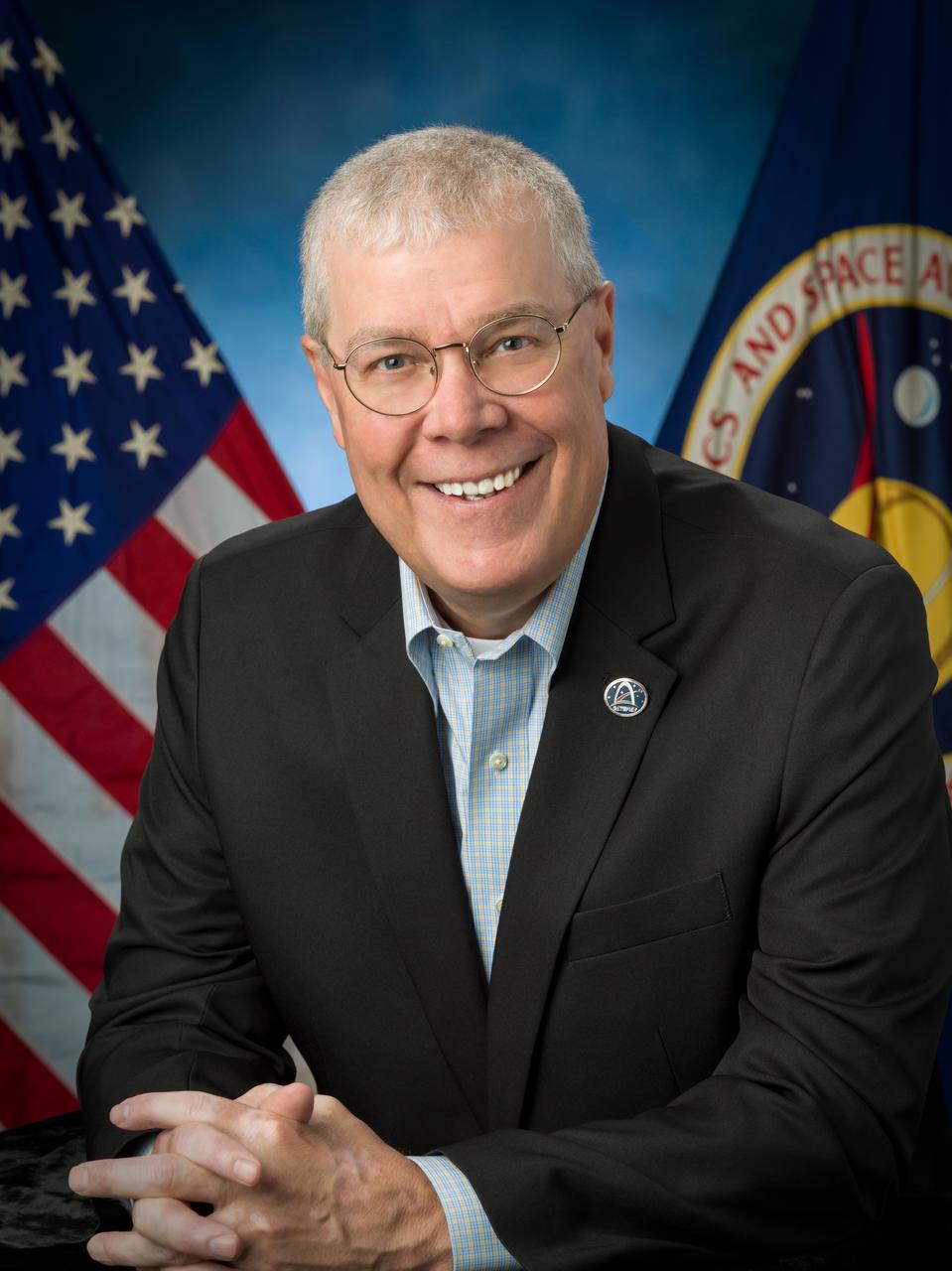
Dan Hartman is a global leader in human spaceflight with a storied 29-year career at NASA. He was the first program manager for Gateway. Dan retired from NASA in 2023.
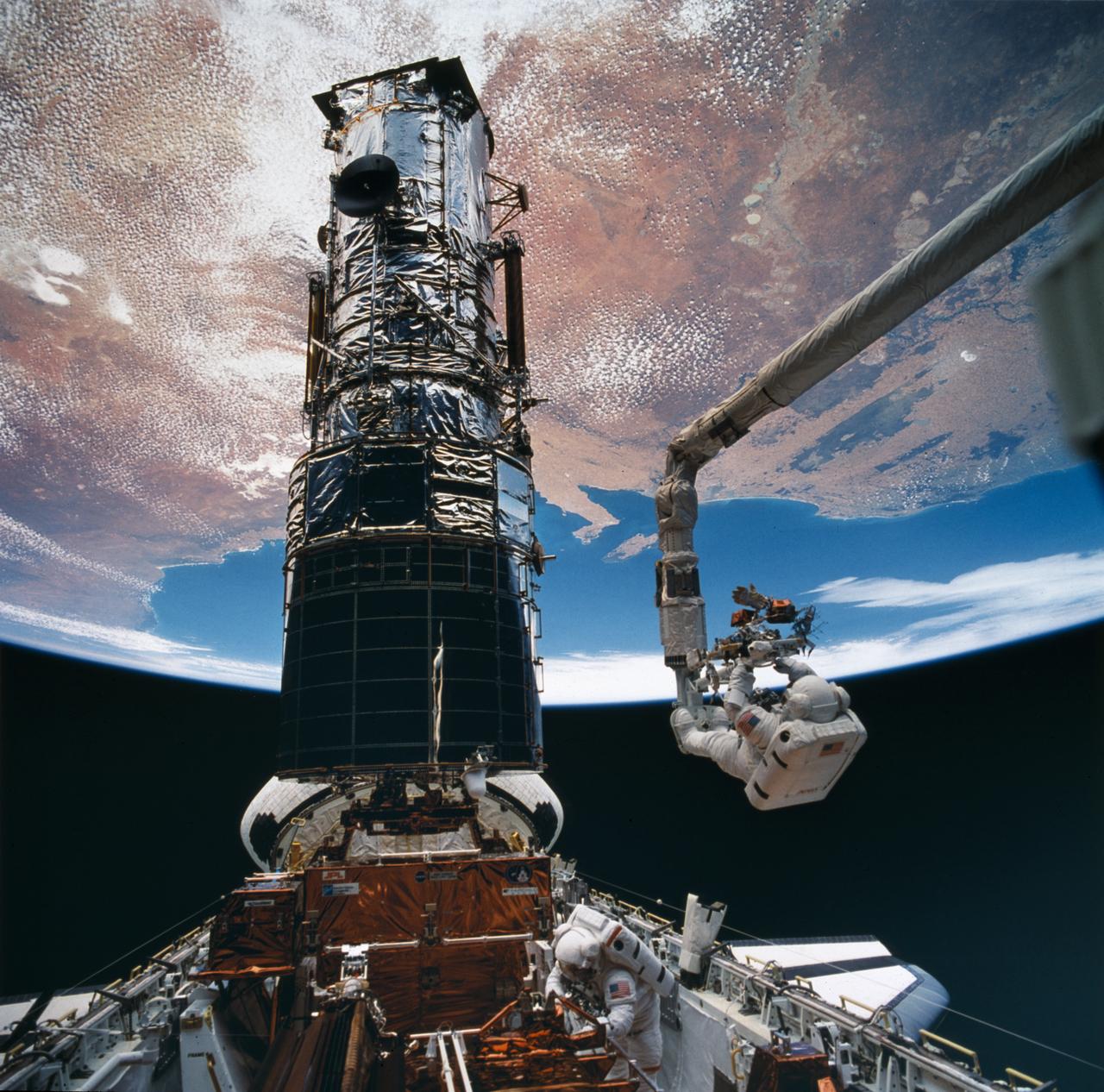
Astronaut Story Musgrave, anchored to the end of the remote manipulator arm, prepares to be elevated to the top of the towering Hubble Space Telescope (HST) to install protective covers on magnetometers. Astornaut Jeffrey Hoffman assisted Musgrave with the final servicing tasks.

KENNEDY SPACE CENTER, FLA. - Liftoff of STS-6, Orbiter Challenger, from Complex 39A carrying astronauts Paul Weitz, Karol J. Bobko, Donald H. Peterson and Dr. Story Musgrave.

jsc2026e034358 (April 28, 2026) --- STORIE team members prepare the instrument for thermal vacuum testing in the Integration and Test Complex at NASA’s Goddard Space Flight Center in Greenbelt, Maryland. .Photo Credit: NASA/Lacey Young

jsc2026e034355 (April 28, 2026) --- STORIE team members prepare the instrument for thermal vacuum testing in the Integration and Test Complex at NASA’s Goddard Space Flight Center in Greenbelt, Maryland..Photo Credit: NASA/Lacey Young

jsc2026e034356 (April 28, 2026) --- STORIE team members prepare the instrument for thermal vacuum testing in the Integration and Test Complex at NASA’s Goddard Space Flight Center in Greenbelt, Maryland..Photo Credit: NASA/Lacey Young

jsc2026e034354 (April 28, 2026) --- STORIE’s Microchannel Plate (MCP), which is a key piece of the detector module, awaits integration in a lab at NASA’s Goddard Space Flight Center in Greenbelt, Maryland..Photo Credit: NASA/Lacey Young

jsc2026e034357 (April 28, 2026) --- STORIE team members prepare the instrument for thermal vacuum testing in the Integration and Test Complex at NASA’s Goddard Space Flight Center in Greenbelt, Maryland..Photo Credit: NASA/Lacey Young
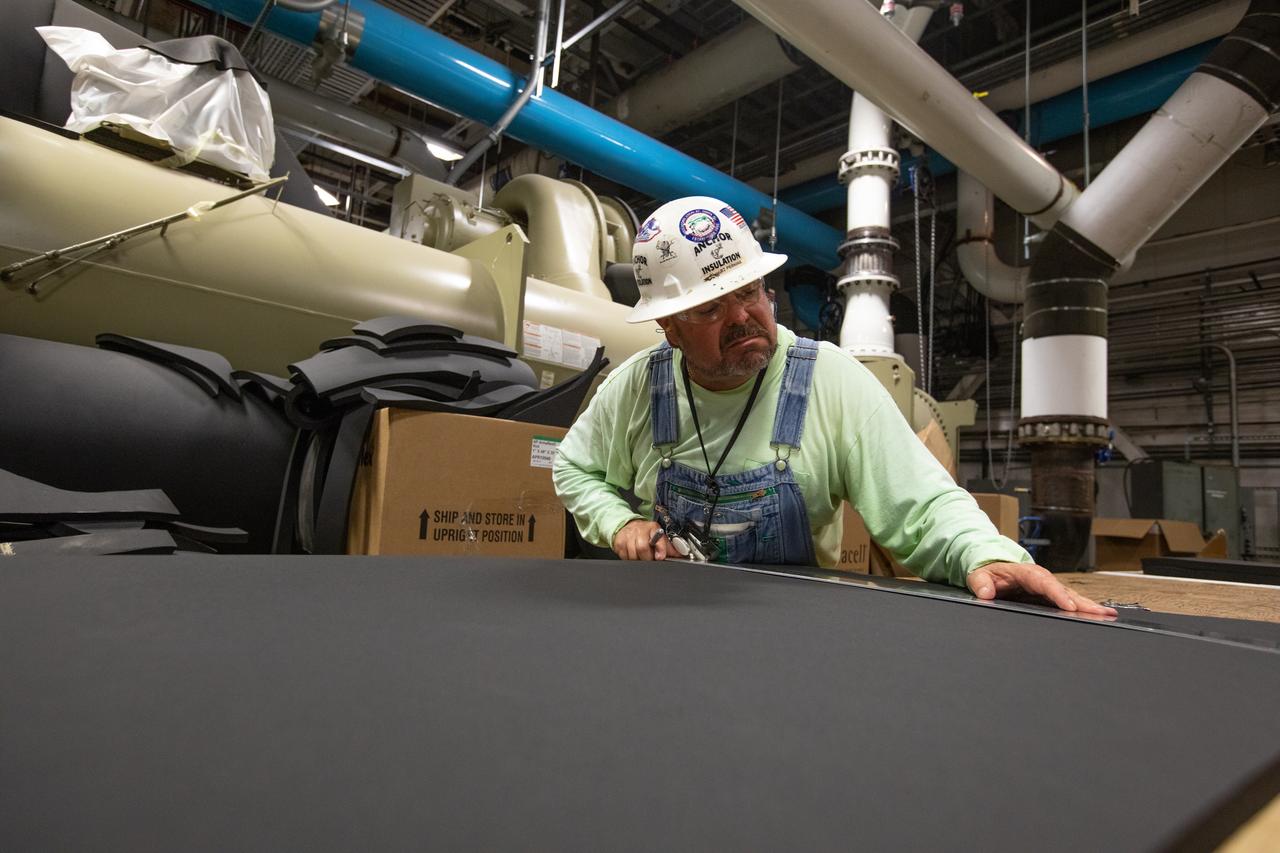
A technician measures foam insulation inside the Utility Annex near the Vehicle Assembly (VAB) Building at NASA’s Kennedy Space Center in Florida on July 24, 2019. The Utility Annex, which provides 8,000 gallons of chilled water per minute to the VAB and other facilities in the Launch Complex 39 area, is being upgraded and repaired. The facility also contains boilers necessary to provide hot water to the VAB. The center’s Engineering Directorate is making the repairs and upgrades to the facility to prepare for the agency’s Artemis missions to the Moon and on to Mars.
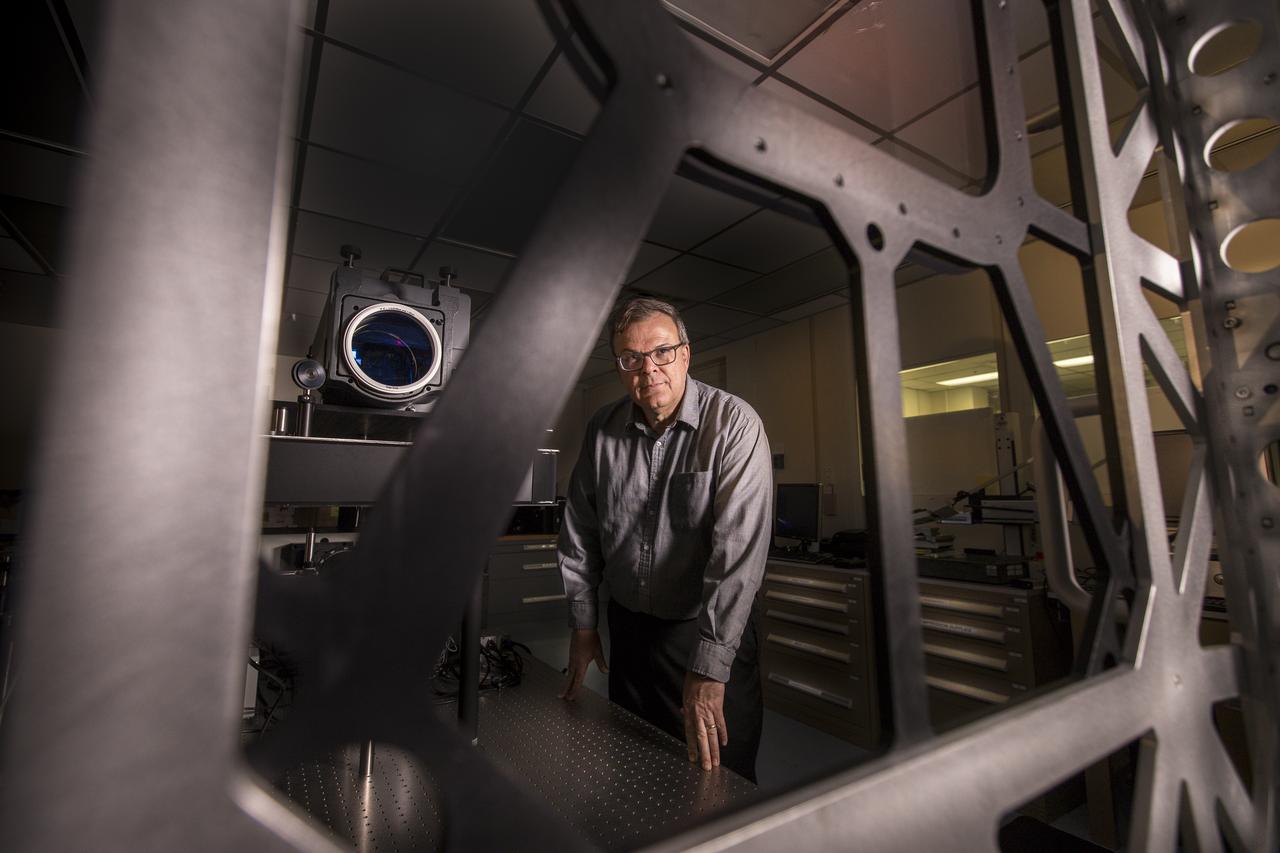
Mark Nurge, a physicist in Kennedy Space Center’s Applied Physics Lab, stands near a laser interferometer, which is used to determine if there are acceptable levels of distortion and imperfections in windows. Nurge recently completed optical metrology testing and evaluation of all flight windows on the Orion capsule for Artemis 1. The interferometer uses a laser source to do wavefront and transmission measurements, as well as evaluation of the color balance. Artemis 1 is an uncrewed flight that will pave the way for future crewed missions and enable future missions to the Moon, Mars, and beyond.

Guests ask questions following presentations by NASA Science Mission Directorate Program Executive Rosa Avalos-Warren and NASA Science Mission Directorate Astrophysicist Dominic Bedford during the Library of Congress National Book Festival Saturday, Aug. 24, 2024, at the Walter E. Washington Convention Center in Washington. Photo Credit: (NASA/Keegan Barber)
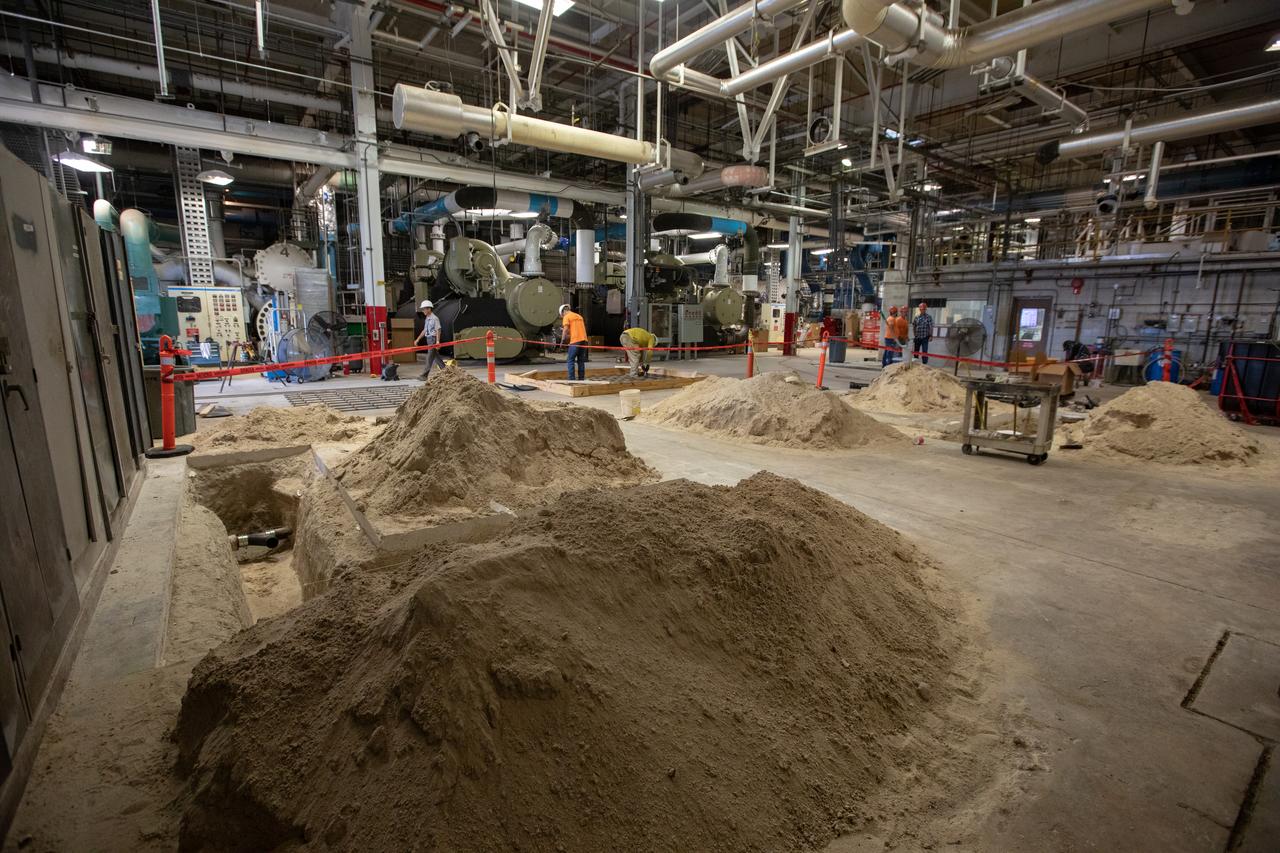
Upgrades are in progress inside the Utility Annex near the Vehicle Assembly (VAB) Building at NASA’s Kennedy Space Center in Florida on July 24, 2019. The Utility Annex, which provides 8,000 gallons of chilled water per minute to the VAB and other facilities in the Launch Complex 39 area, is being upgraded and repaired. The facility also contains boilers necessary to provide hot water to the VAB. The center’s Engineering Directorate is making the repairs and upgrades to the facility to prepare for the agency’s Artemis missions to the Moon and on to Mars.
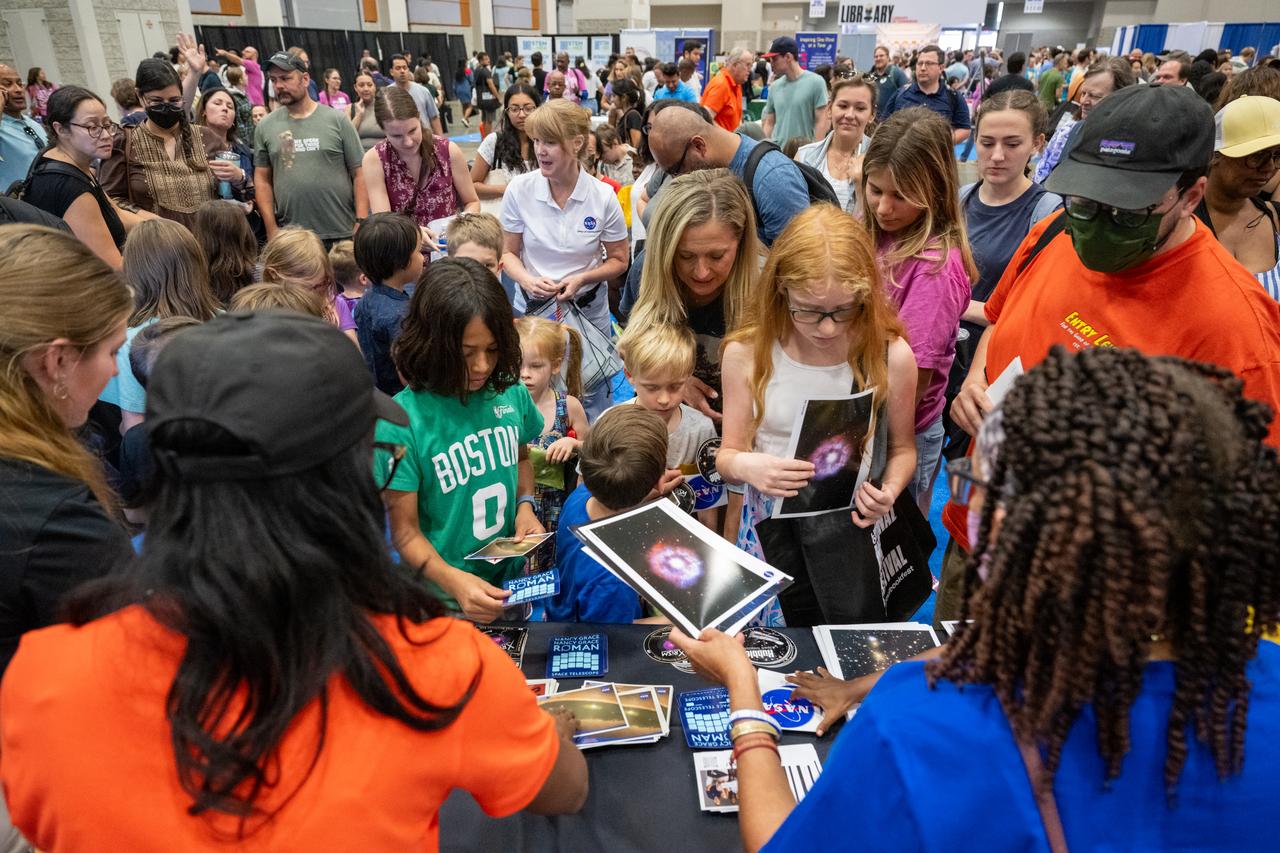
Guests receive educational materials following presentations by NASA Science Mission Directorate Program Executive Rosa Avalos-Warren and NASA Science Mission Directorate Astrophysicist Dominic Bedford during the Library of Congress National Book Festival Saturday, Aug. 24, 2024, at the Walter E. Washington Convention Center in Washington. Photo Credit: (NASA/Keegan Barber)

A technician measures foam insulation inside the Utility Annex near the Vehicle Assembly (VAB) Building at NASA’s Kennedy Space Center in Florida on July 24, 2019. The Utility Annex, which provides 8,000 gallons of chilled water per minute to the VAB and other facilities in the Launch Complex 39 area, is being upgraded and repaired. The facility also contains boilers necessary to provide hot water to the VAB. The center’s Engineering Directorate is making the repairs and upgrades to the facility to prepare for the agency’s Artemis missions to the Moon and on to Mars.

This image from the High Resolution Imaging Science Experiment (HiRISE) camera on NASA's Mars Reconnaissance Orbiter shows a location on Mars associated with the best-selling novel and Hollywood movie, "The Martian." It is the science-fiction tale's planned landing site for the Ares 4 mission. The novel placed the Ares 4 site on the floor of a very shallow crater in the southwestern corner of Schiaparelli Crater. This HiRISE image shows a flat region there entirely mantled by bright Martian dust. There are no color variations, just uniform reddish dust. A pervasive, pitted texture visible at full resolution is characteristic of many dust deposits on Mars. No boulders are visible, so the dust is probably at least a meter thick. Past Martian rover and lander missions from NASA have avoided such pervasively dust-covered regions for two reasons. First, the dust has a low thermal inertia, meaning that it gets extra warm in the daytime and extra cold at night, a thermal challenge to survival of the landers and rovers (and people). Second, the dust hides the bedrock, so little is known about the bedrock composition and whether it is of scientific interest. This view is one image product from HiRISE observation ESP_042014_1760, taken July 14, 2015, at 3.9 degrees south latitude, 15.2 degrees east longitude. http://photojournal.jpl.nasa.gov/catalog/PIA19914
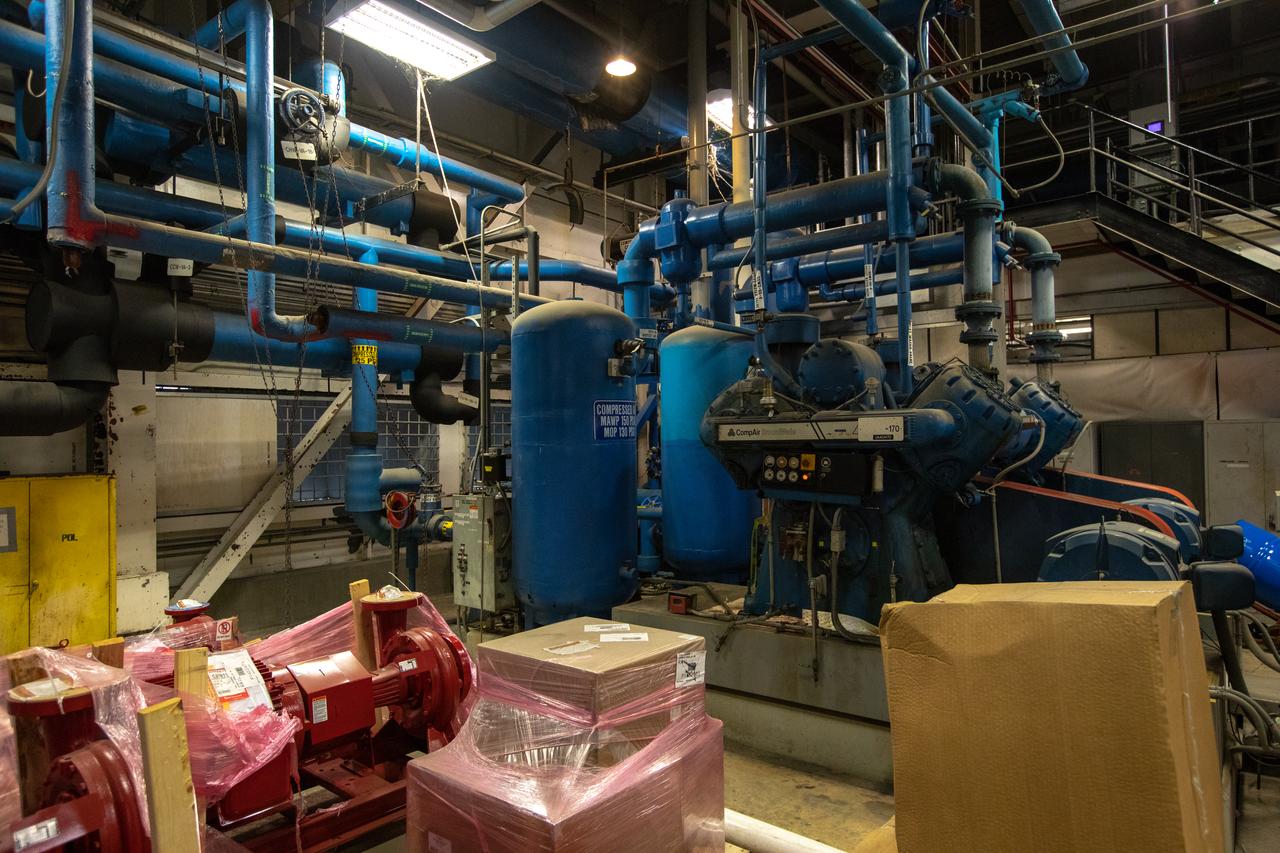
A view of the inside of the Utility Annex near the Vehicle Assembly (VAB) Building at NASA’s Kennedy Space Center in Florida on July 24, 2019. The Utility Annex, which provides 8,000 gallons of chilled water per minute to the VAB and other facilities in the Launch Complex 39 area, is being upgraded and repaired. The facility also contains boilers necessary to provide hot water to the VAB. The center’s Engineering Directorate is making the repairs and upgrades to the facility to prepare for the agency’s Artemis missions to the Moon and on to Mars.

Control panels are in view inside the Utility Annex near the Vehicle Assembly (VAB) Building at NASA’s Kennedy Space Center in Florida on July 24, 2019. The Utility Annex, which provides 8,000 gallons of chilled water per minute to the VAB and other facilities in the Launch Complex 39 area, is being upgraded and repaired. The facility also contains boilers necessary to provide hot water to the VAB. The center’s Engineering Directorate is making the repairs and upgrades to the facility to prepare for the agency’s Artemis missions to the Moon and on to Mars.
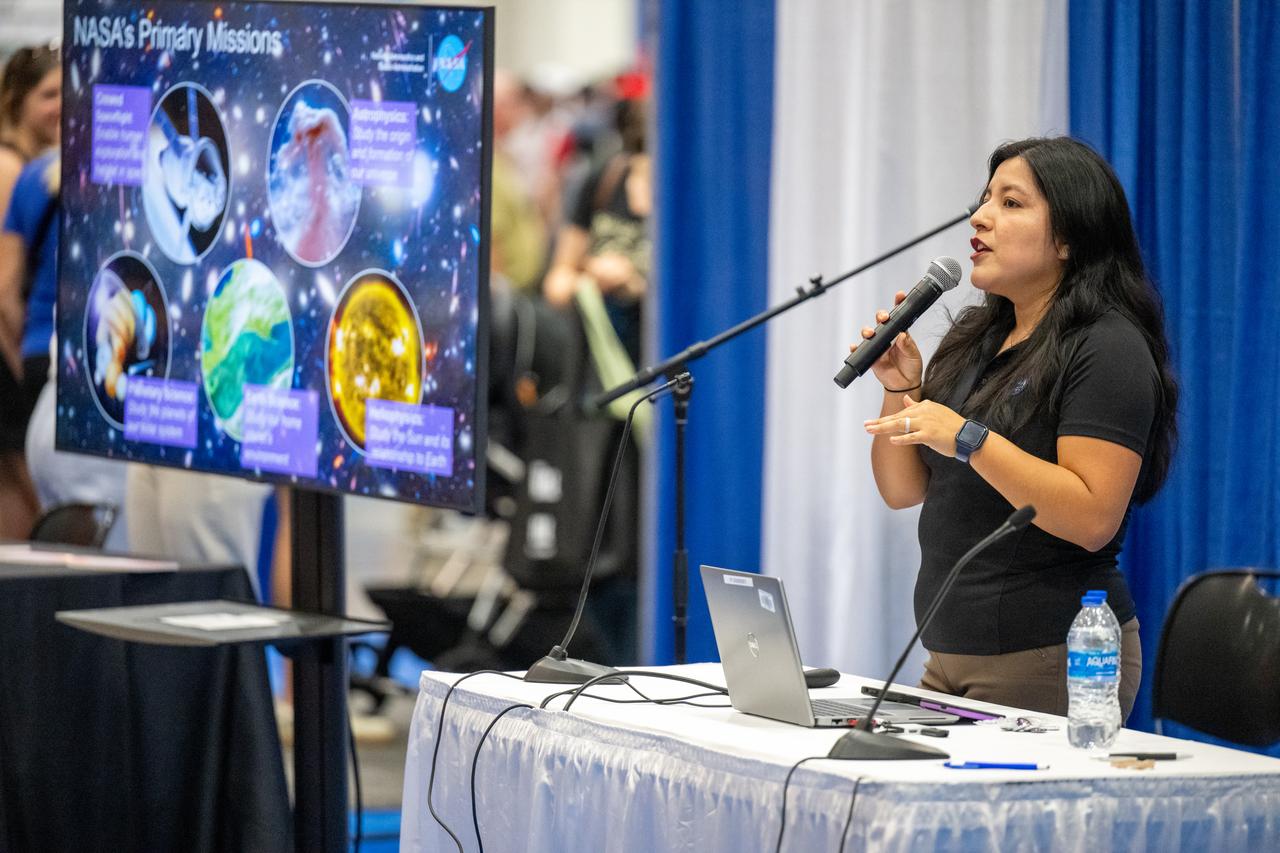
NASA Science Mission Directorate Program Executive Rosa Avalos-Warren delivers remarks during the Library of Congress National Book Festival Saturday, Aug. 24, 2024, at the Walter E. Washington Convention Center in Washington. Photo Credit: (NASA/Keegan Barber)
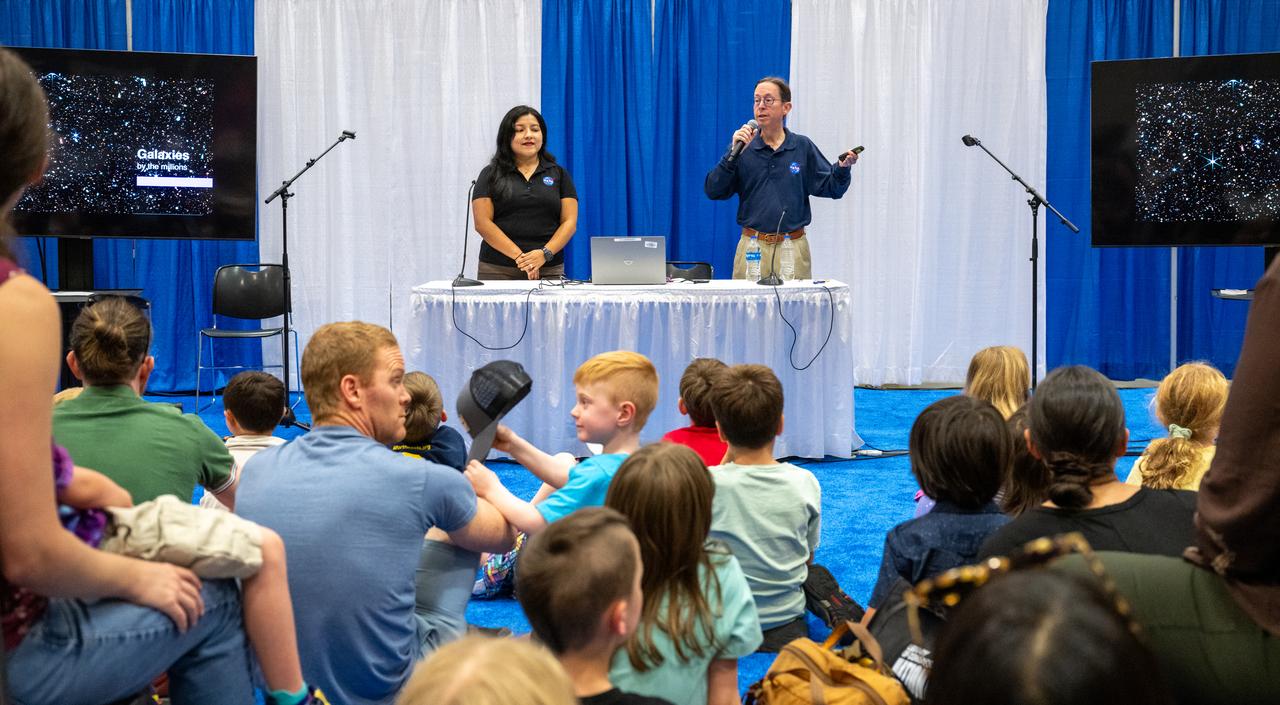
NASA Science Mission Directorate Astrophysicist Dominic Bedford, right, delivers remarks during the Library of Congress National Book Festival Saturday, Aug. 24, 2024, at the Walter E. Washington Convention Center in Washington. Photo Credit: (NASA/Keegan Barber)
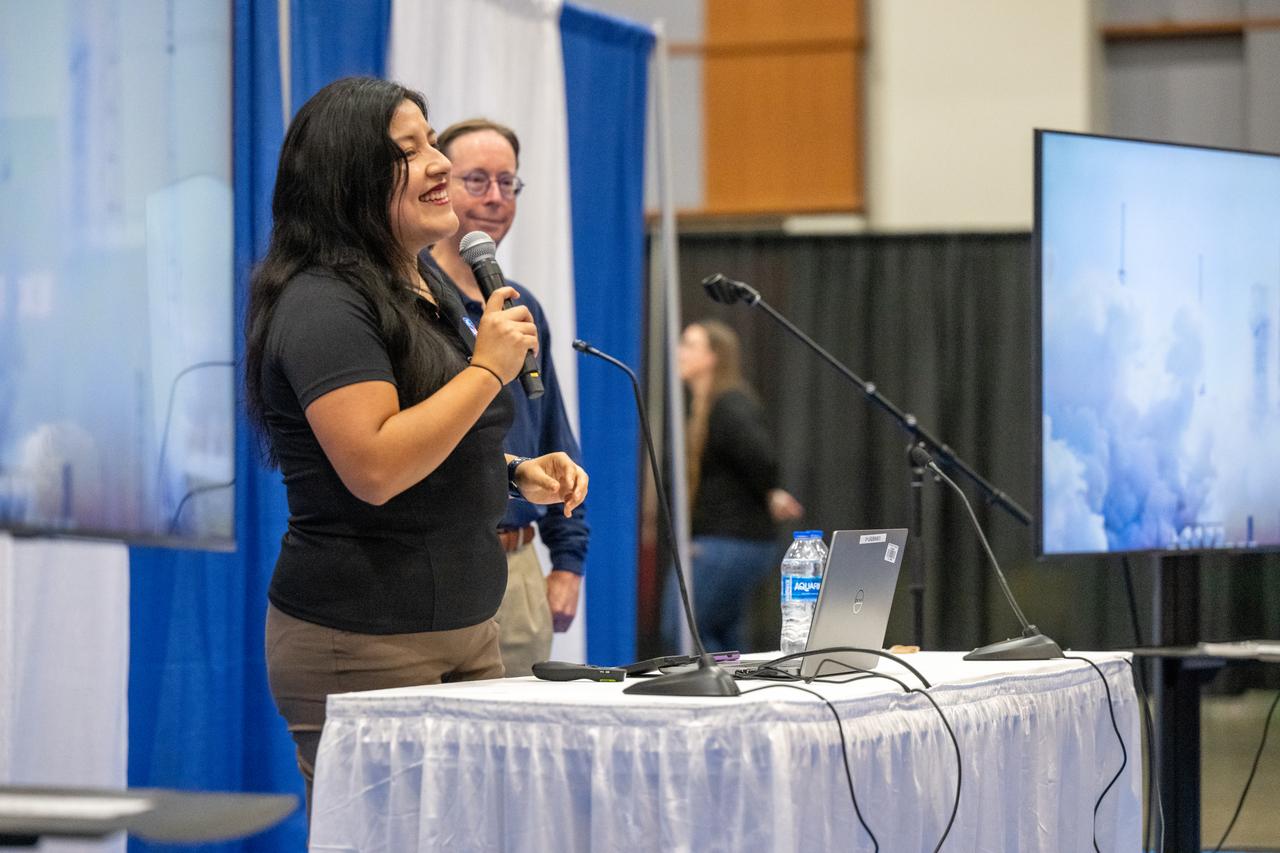
NASA Science Mission Directorate Program Executive Rosa Avalos-Warren delivers remarks during the Library of Congress National Book Festival Saturday, Aug. 24, 2024, at the Walter E. Washington Convention Center in Washington. Photo Credit: (NASA/Keegan Barber)
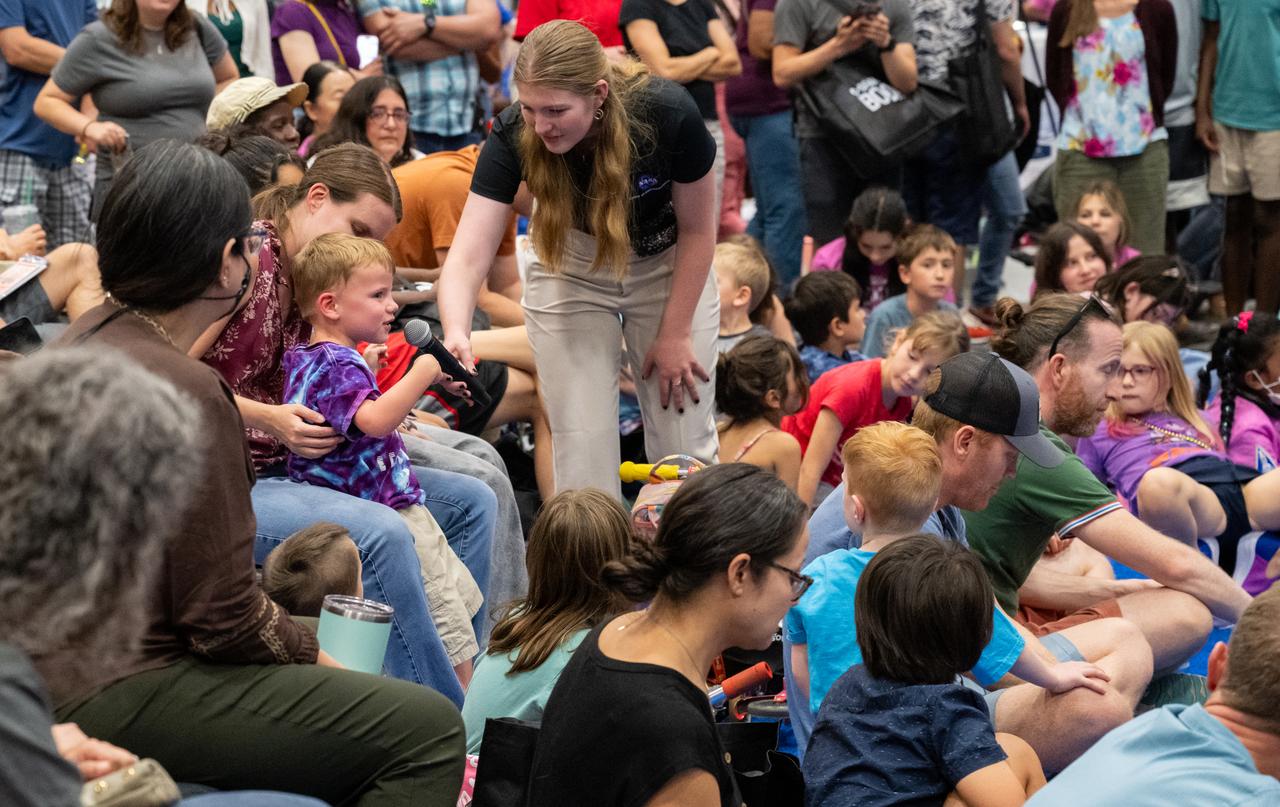
Guests ask questions following presentations by NASA Science Mission Directorate Program Executive Rosa Avalos-Warren and NASA Science Mission Directorate Astrophysicist Dominic Bedford during the Library of Congress National Book Festival Saturday, Aug. 24, 2024, at the Walter E. Washington Convention Center in Washington. Photo Credit: (NASA/Keegan Barber)

A photograph taken July 24, 2019, shows new tanks and piping were installed outside of the Utility Annex near the Vehicle Assembly (VAB) Building at NASA’s Kennedy Space Center in Florida. The Utility Annex, which provides 8,000 gallons of chilled water per minute to the VAB and other facilities in the Launch Complex 39 area, is being upgraded and repaired. The facility also contains boilers necessary to provide hot water to the VAB. The center’s Engineering Directorate is making the repairs and upgrades to the facility to prepare for the agency’s Artemis missions to the Moon and on to Mars.
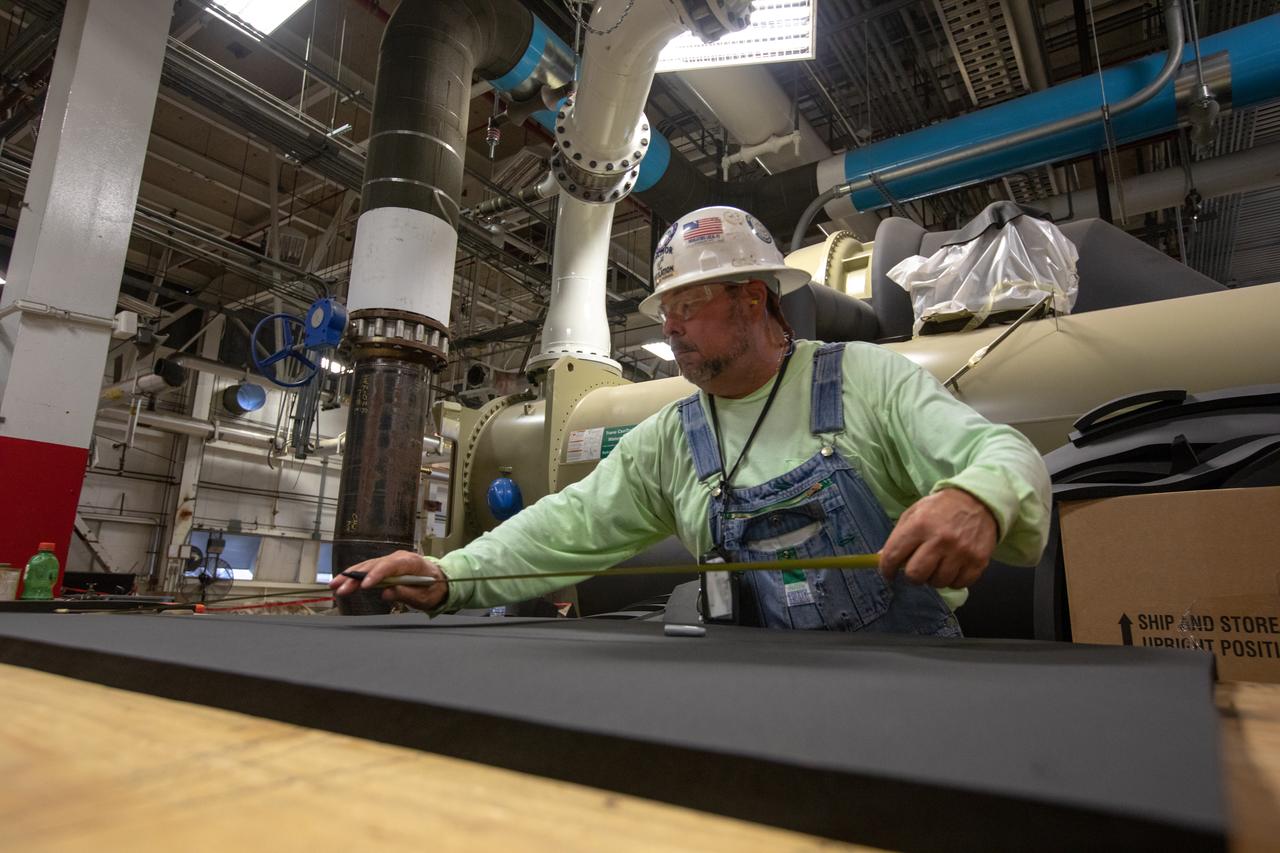
A technician measures foam insulation inside the Utility Annex near the Vehicle Assembly (VAB) Building at NASA’s Kennedy Space Center in Florida on July 24, 2019. The Utility Annex, which provides 8,000 gallons of chilled water per minute to the VAB and other facilities in the Launch Complex 39 area, is being upgraded and repaired. The facility also contains boilers necessary to provide hot water to the VAB. The center’s Engineering Directorate is making the repairs and upgrades to the facility to prepare for the agency’s Artemis missions to the Moon and on to Mars.