
CRS-17 Payload STP-H6 move to SpaceX
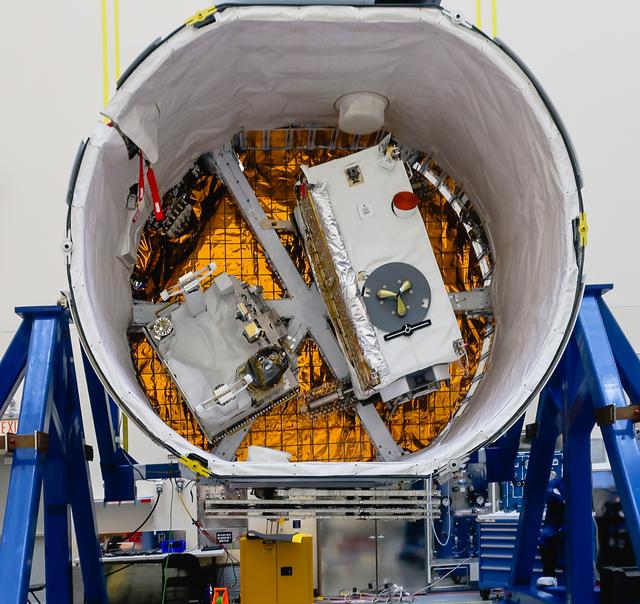
NASA’s Orbiting Carbon Observatory-3 (OCO-3) and Space Test Program-Houston 6 (STP-H6) are in view installed in the truck of SpaceX’s Dragon spacecraft inside the SpaceX facility at NASA’s Kennedy Space Center in Florida on March 23, 2019. OCO-3 and STP-H6 will be delivered to the International Space Station on SpaceX’s 17th Commercial Resupply Services mission (CRS-17) for NASA. STP-H6 is an x-ray communication investigation that will be used to perform a space-based demonstration of a new technology for generating beams of modulated x-rays. This technology may be useful for providing efficient communication to deep space probes, or communicating with hypersonic vehicles where plasma sheaths prevent traditional radio communications. OCO-3 will be robotically installed on the exterior of the space station’s Japanese Experiment Module Exposed Facility Unit, where it will measure and map carbon dioxide from space to provide further understanding of the relationship between carbon and climate. CRS-17 is scheduled to launch from Space Launch Complex 40 on Cape Canaveral Air Force Station in late April.
The Space Test Program-Houston 6 (STP-H6) payload is being prepared for its move from the Space Station Processing Facility high bay at NASA’s Kennedy Space Center in Florida on March 19, 2019. The payload will be moved to the SpaceX facility where it will be stowed in the trunk of the Dragon spacecraft for delivery to the International Space Station on SpaceX’s 17th Commercial Resupply Services mission (CRS-17) for NASA. STP-H6 is an x-ray communication investigation that will be used to perform a space-based demonstration of a new technology for generating beams of modulated x-rays. This technology may be useful for providing efficient communication to deep space probes, or communicating with hypersonic vehicles where plasma sheaths prevent traditional radio communications. CRS-17 is scheduled to launch from Space Launch Complex 40 on Cape Canaveral Air Force Station in late April.
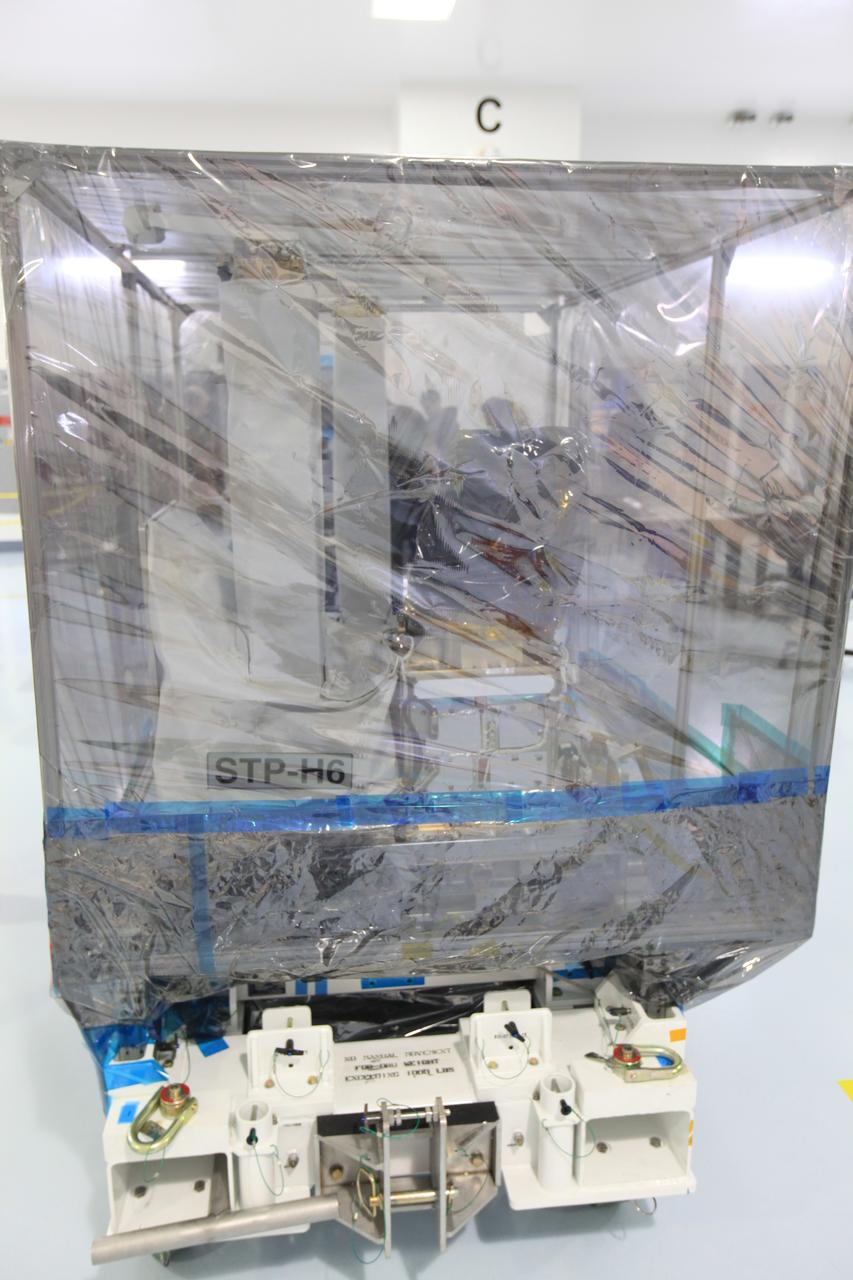
The Space Test Program-Houston 6 (STP-H6) payload is inside the Space Station Processing Facility high bay at NASA’s Kennedy Space Center in Florida on March 19, 2019. It is being prepared for its move to the SpaceX facility where it will be will be stowed in the trunk of the Dragon spacecraft for delivery to the International Space Station on SpaceX’s 17th Commercial Resupply Services mission (CRS-17) for NASA. STP-H6 is an x-ray communication investigation that will be used to perform a space-based demonstration of a new technology for generating beams of modulated x-rays. This technology may be useful for providing efficient communication to deep space probes, or communicating with hypersonic vehicles where plasma sheaths prevent traditional radio communications. CRS-17 is scheduled to launch from Space Launch Complex 40 on Cape Canaveral Air Force Station in late April.
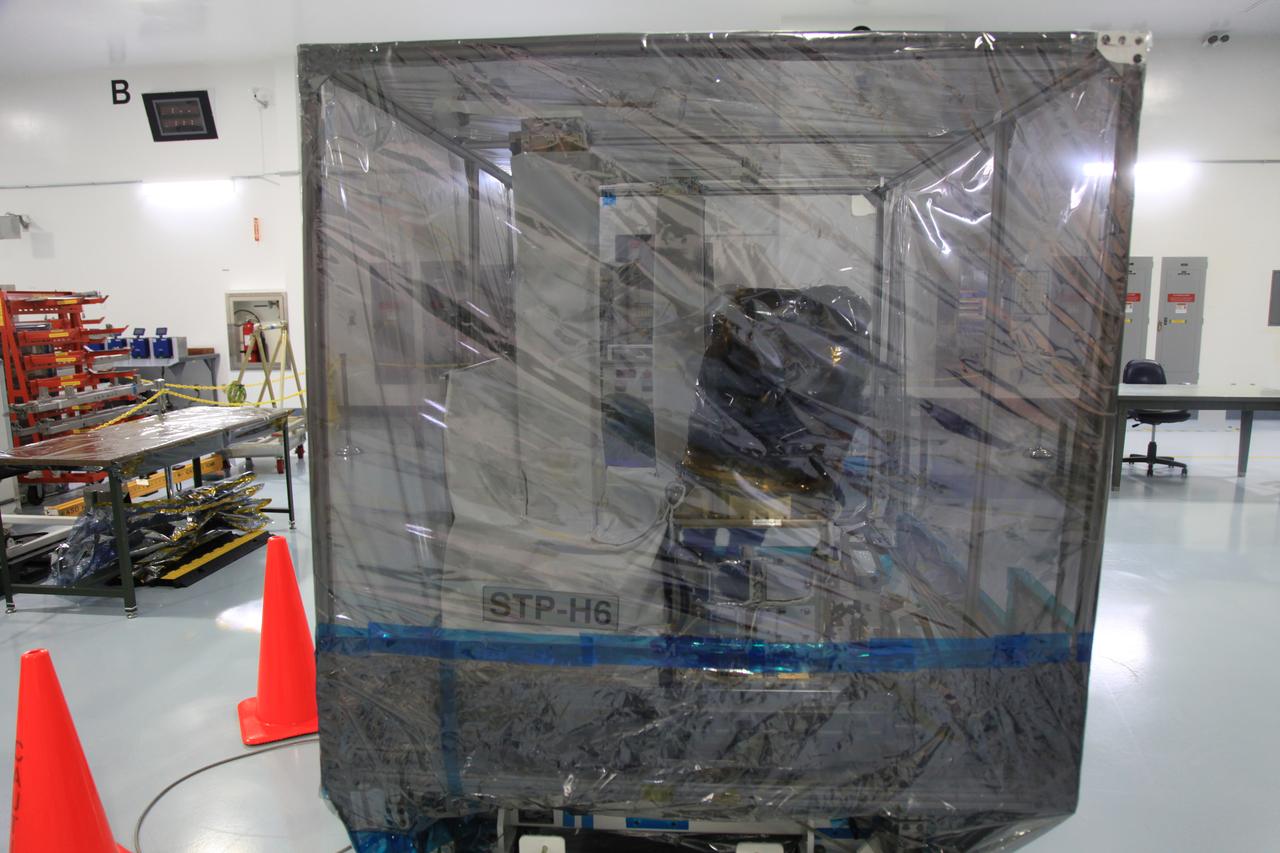
The Space Test Program-Houston 6 (STP-H6) payload is inside the Space Station Processing Facility high bay at NASA’s Kennedy Space Center in Florida on March 19, 2019. It is being prepared for its move to the SpaceX facility where it will be will be stowed in the trunk of the Dragon spacecraft for delivery to the International Space Station on SpaceX’s 17th Commercial Resupply Services mission (CRS-17) for NASA. STP-H6 is an x-ray communication investigation that will be used to perform a space-based demonstration of a new technology for generating beams of modulated x-rays. This technology may be useful for providing efficient communication to deep space probes, or communicating with hypersonic vehicles where plasma sheaths prevent traditional radio communications. CRS-17 is scheduled to launch from Space Launch Complex 40 on Cape Canaveral Air Force Station in late April.
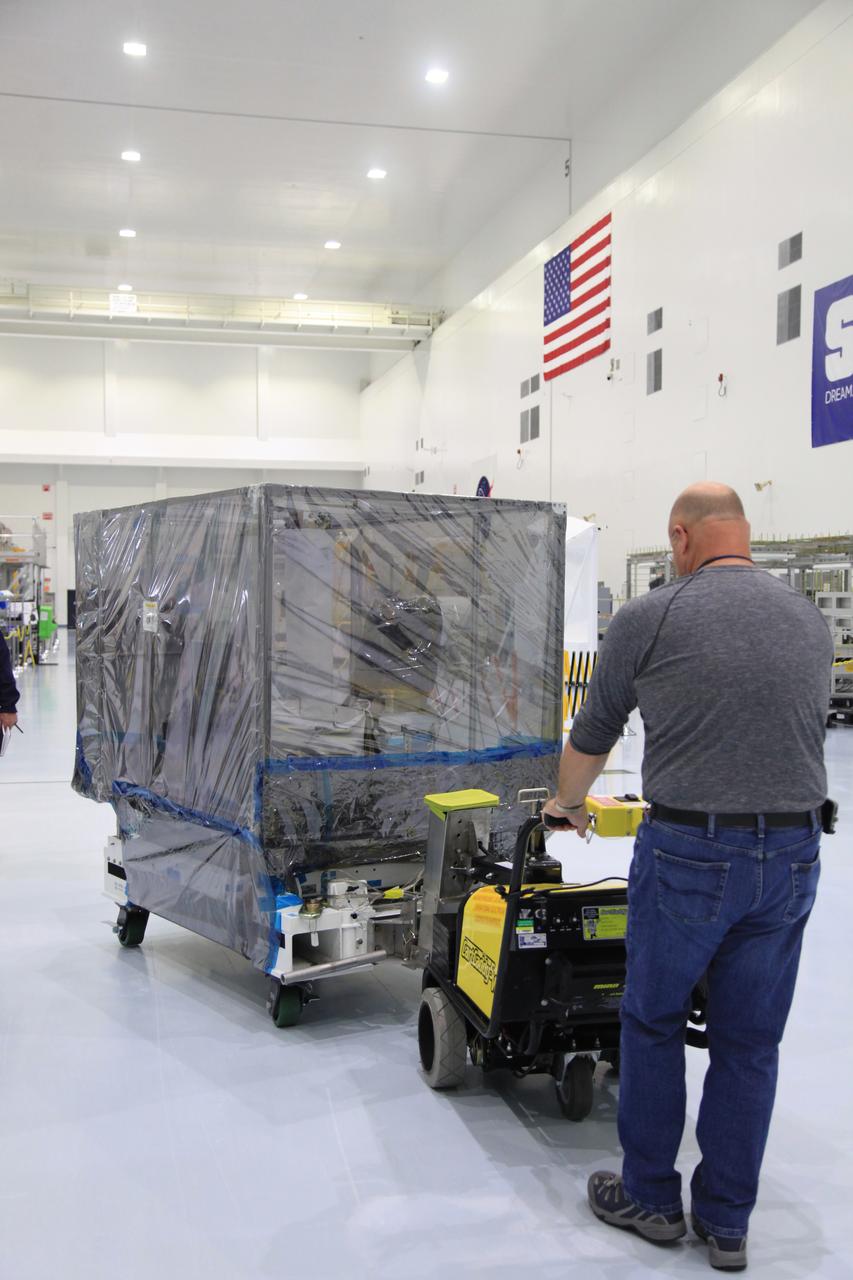
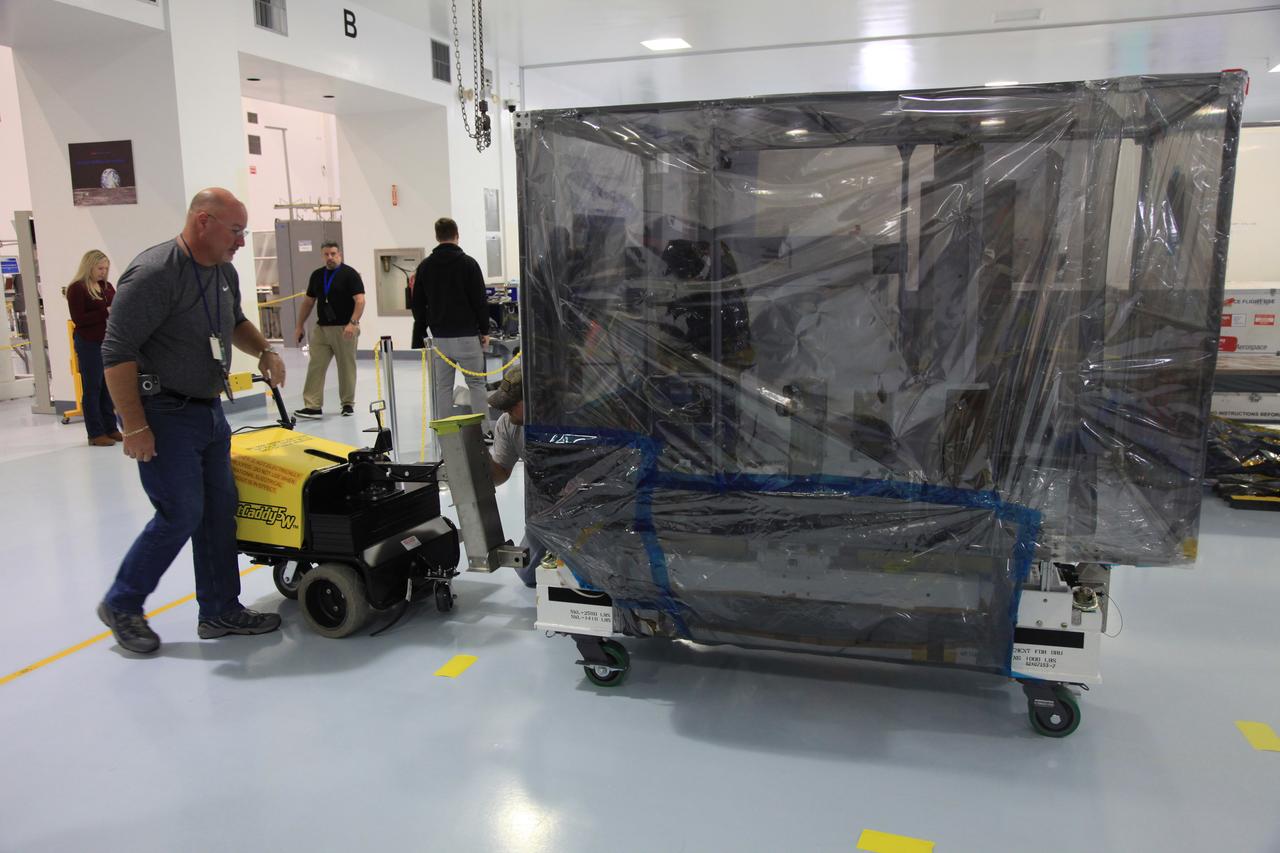
The Space Test Program-Houston 6 (STP-H6) payload is being moved out of the Space Station Processing Facility high bay at NASA’s Kennedy Space Center in Florida on March 19, 2019. The payload will be moved to the SpaceX facility where it will be stowed in the trunk of the Dragon spacecraft for delivery to the International Space Station on SpaceX’s 17th Commercial Resupply Services mission (CRS-17) for NASA. STP-H6 is an x-ray communication investigation that will be used to perform a space-based demonstration of a new technology for generating beams of modulated x-rays. This technology may be useful for providing efficient communication to deep space probes, or communicating with hypersonic vehicles where plasma sheaths prevent traditional radio communications. CRS-17 is scheduled to launch from Space Launch Complex 40 on Cape Canaveral Air Force Station in late April.
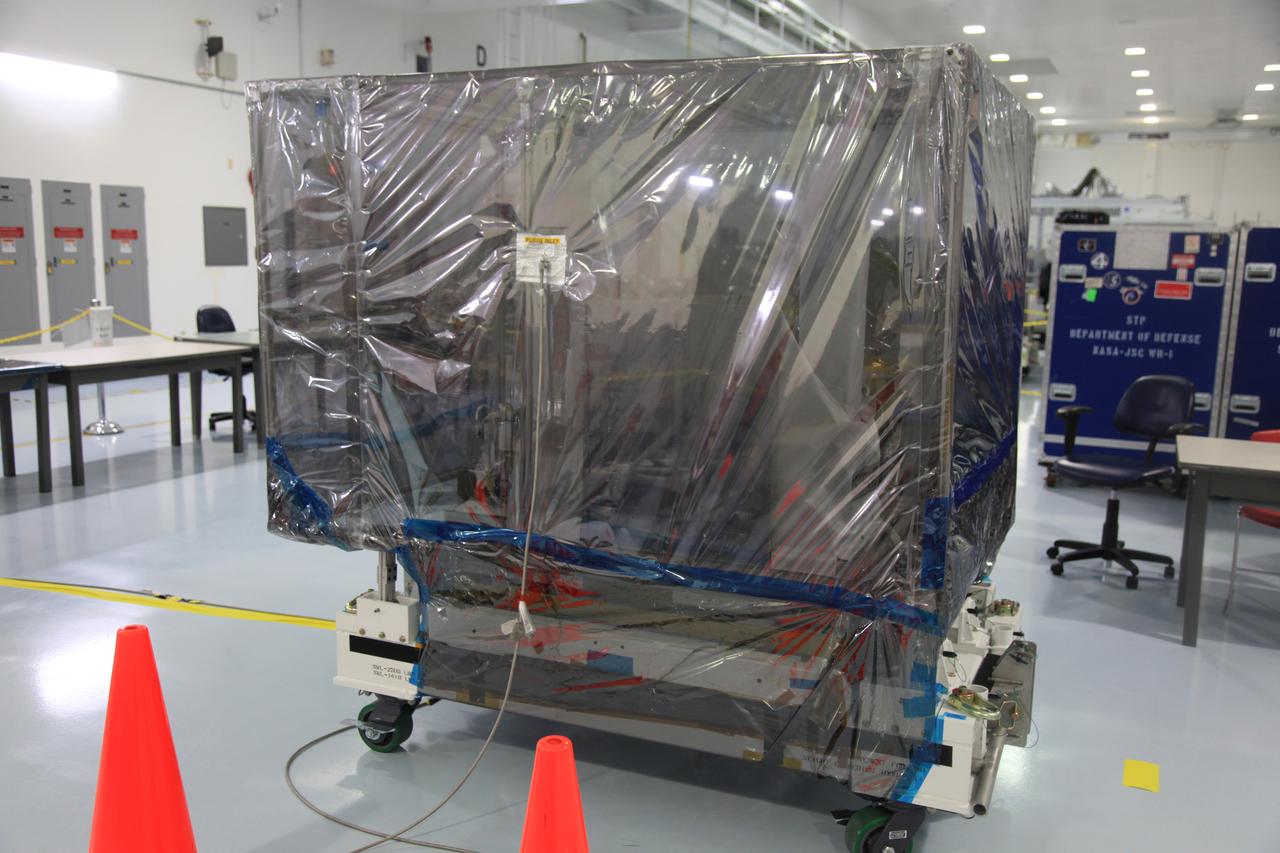
The Space Test Program-Houston 6 (STP-H6) payload is inside the Space Station Processing Facility high bay at NASA’s Kennedy Space Center in Florida on March 19, 2019. It is being prepared for its move to the SpaceX facility where it will be will be stowed in the trunk of the Dragon spacecraft for delivery to the International Space Station on SpaceX’s 17th Commercial Resupply Services mission (CRS-17) for NASA. STP-H6 is an x-ray communication investigation that will be used to perform a space-based demonstration of a new technology for generating beams of modulated x-rays. This technology may be useful for providing efficient communication to deep space probes, or communicating with hypersonic vehicles where plasma sheaths prevent traditional radio communications. CRS-17 is scheduled to launch from Space Launch Complex 40 on Cape Canaveral Air Force Station in late April.
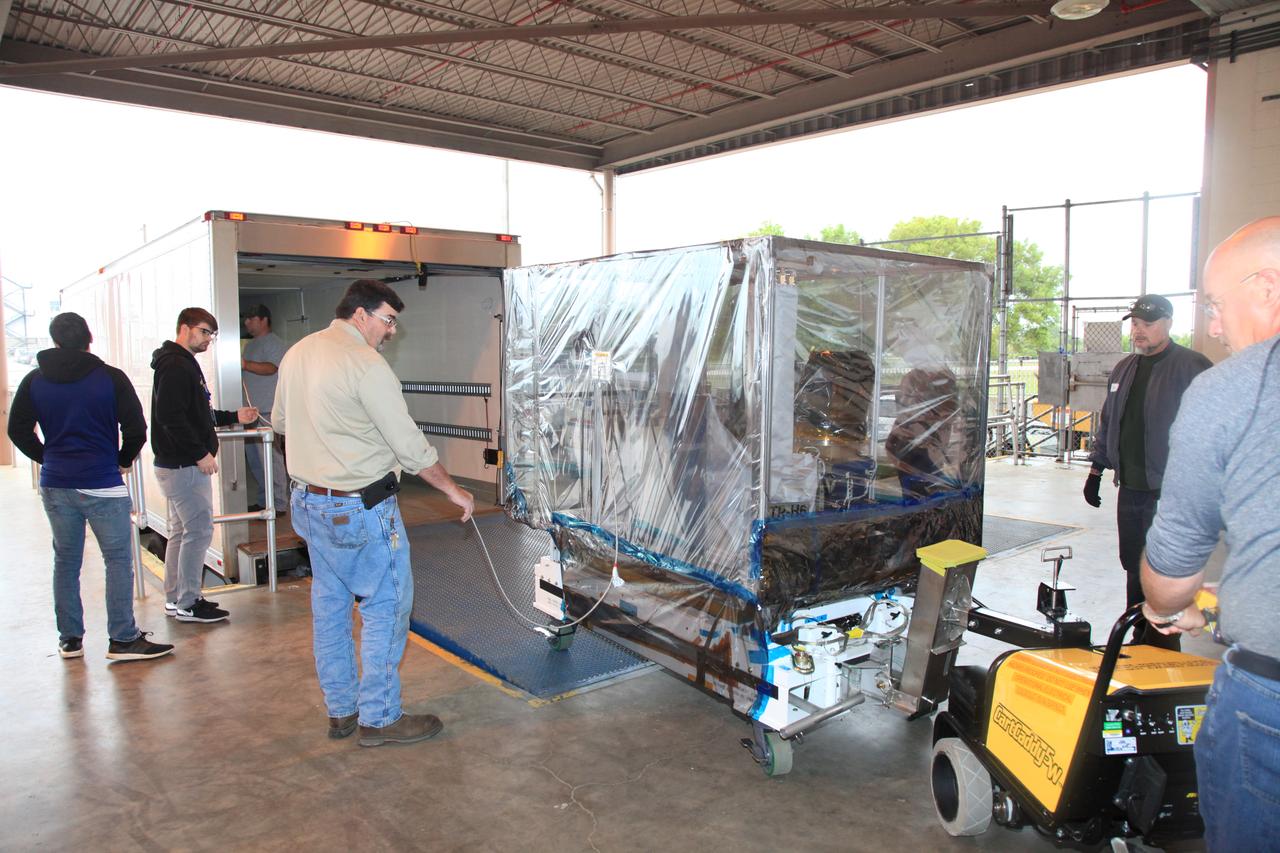
The Space Test Program-Houston 6 (STP-H6) payload is being loaded into a transport truck at the Space Station Processing Facility at NASA’s Kennedy Space Center in Florida on March 19, 2019. The payload will be moved to the SpaceX facility where it will be stowed in the trunk of the Dragon spacecraft for delivery to the International Space Station on SpaceX’s 17th Commercial Resupply Services mission (CRS-17) for NASA. STP-H6 is an x-ray communication investigation that will be used to perform a space-based demonstration of a new technology for generating beams of modulated x-rays. This technology may be useful for providing efficient communication to deep space probes, or communicating with hypersonic vehicles where plasma sheaths prevent traditional radio communications. CRS-17 is scheduled to launch from Space Launch Complex 40 on Cape Canaveral Air Force Station in late April.
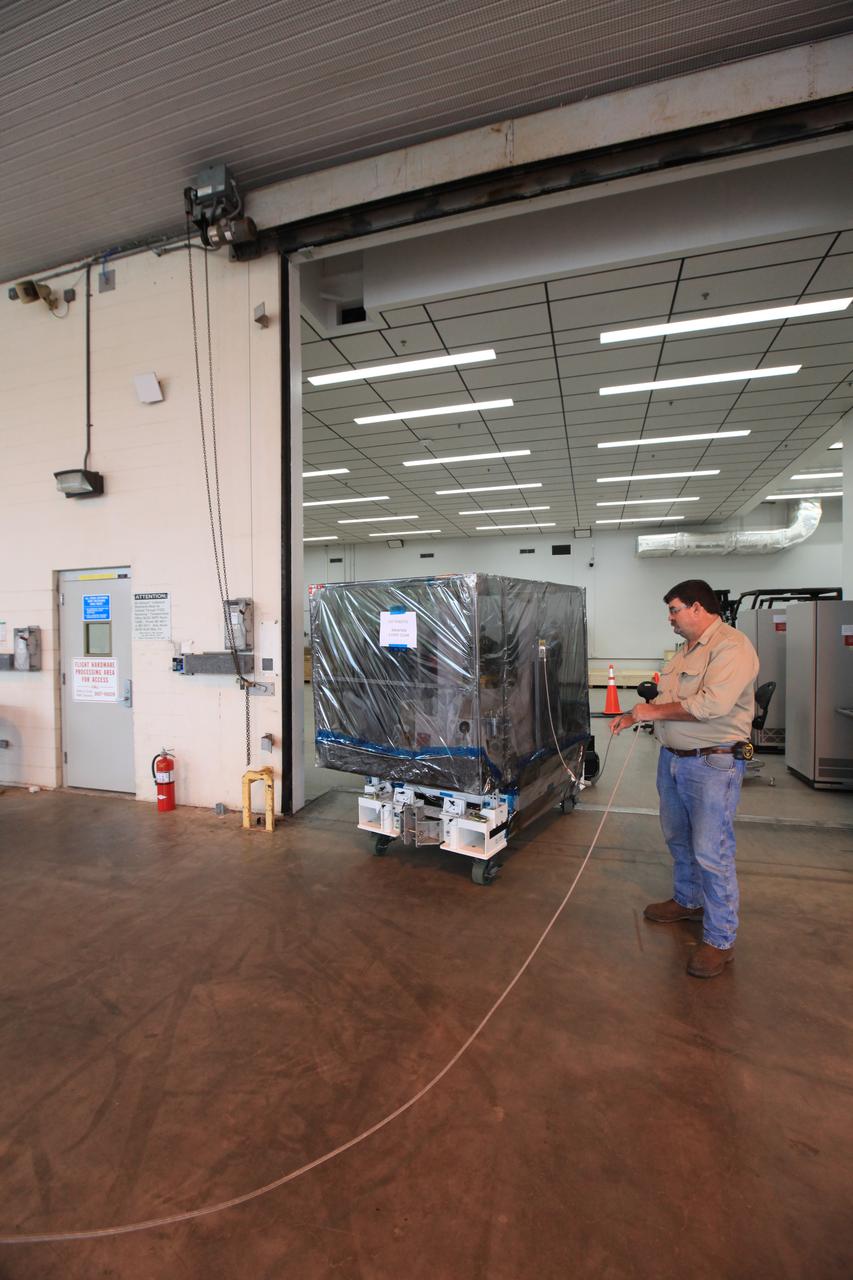
The Space Test Program-Houston 6 (STP-H6) payload is moved out of the Space Station Processing Facility at NASA’s Kennedy Space Center in Florida on March 19, 2019. The payload will be moved to the SpaceX facility where it will be stowed in the trunk of the Dragon spacecraft for delivery to the International Space Station on SpaceX’s 17th Commercial Resupply Services mission (CRS-17) for NASA. STP-H6 is an x-ray communication investigation that will be used to perform a space-based demonstration of a new technology for generating beams of modulated x-rays. This technology may be useful for providing efficient communication to deep space probes, or communicating with hypersonic vehicles where plasma sheaths prevent traditional radio communications. CRS-17 is scheduled to launch from Space Launch Complex 40 on Cape Canaveral Air Force Station in late April.
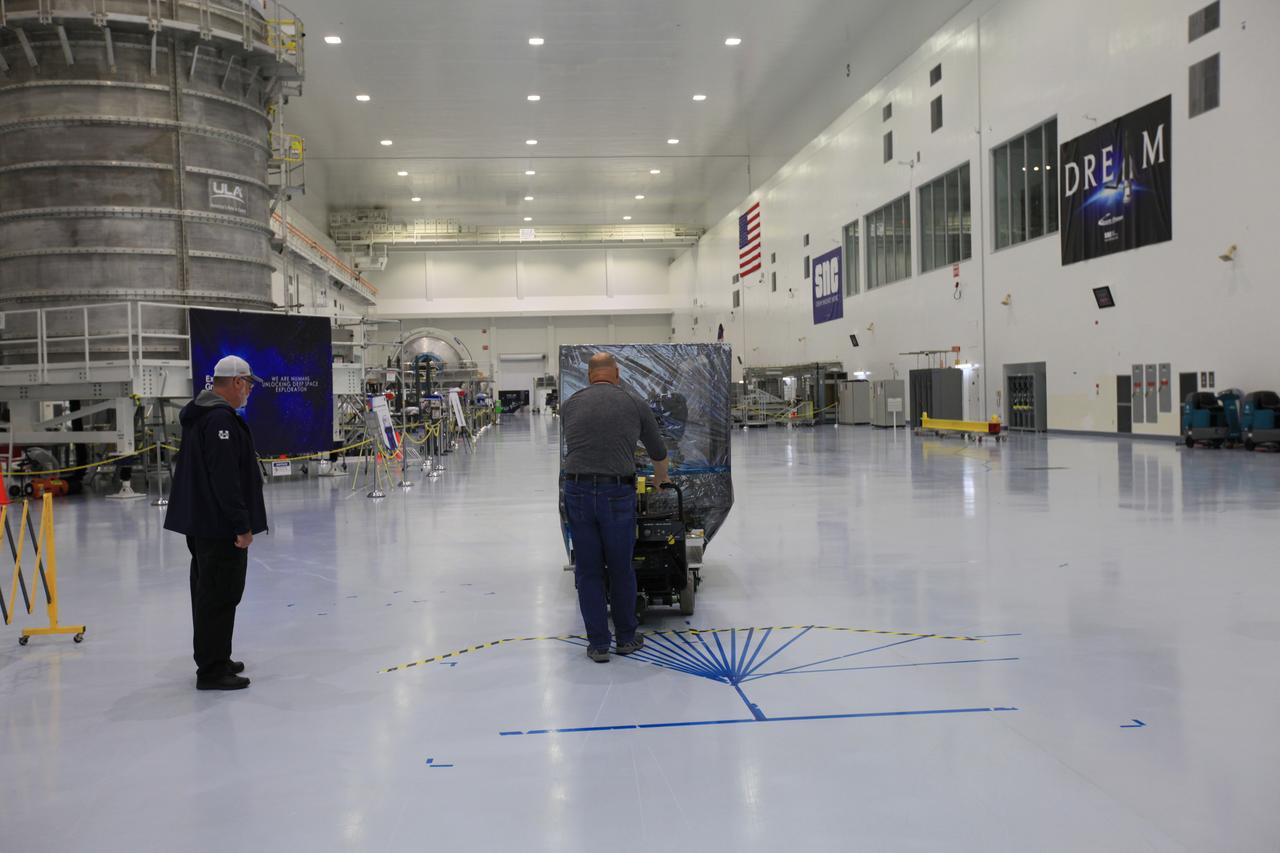
The Space Test Program-Houston 6 (STP-H6) payload is being moved out of the Space Station Processing Facility high bay at NASA’s Kennedy Space Center in Florida on March 19, 2019. The payload will be moved to the SpaceX facility where it will be stowed in the trunk of the Dragon spacecraft for delivery to the International Space Station on SpaceX’s 17th Commercial Resupply Services mission (CRS-17) for NASA. STP-H6 is an x-ray communication investigation that will be used to perform a space-based demonstration of a new technology for generating beams of modulated x-rays. This technology may be useful for providing efficient communication to deep space probes, or communicating with hypersonic vehicles where plasma sheaths prevent traditional radio communications. CRS-17 is scheduled to launch from Space Launch Complex 40 on Cape Canaveral Air Force Station in late April.
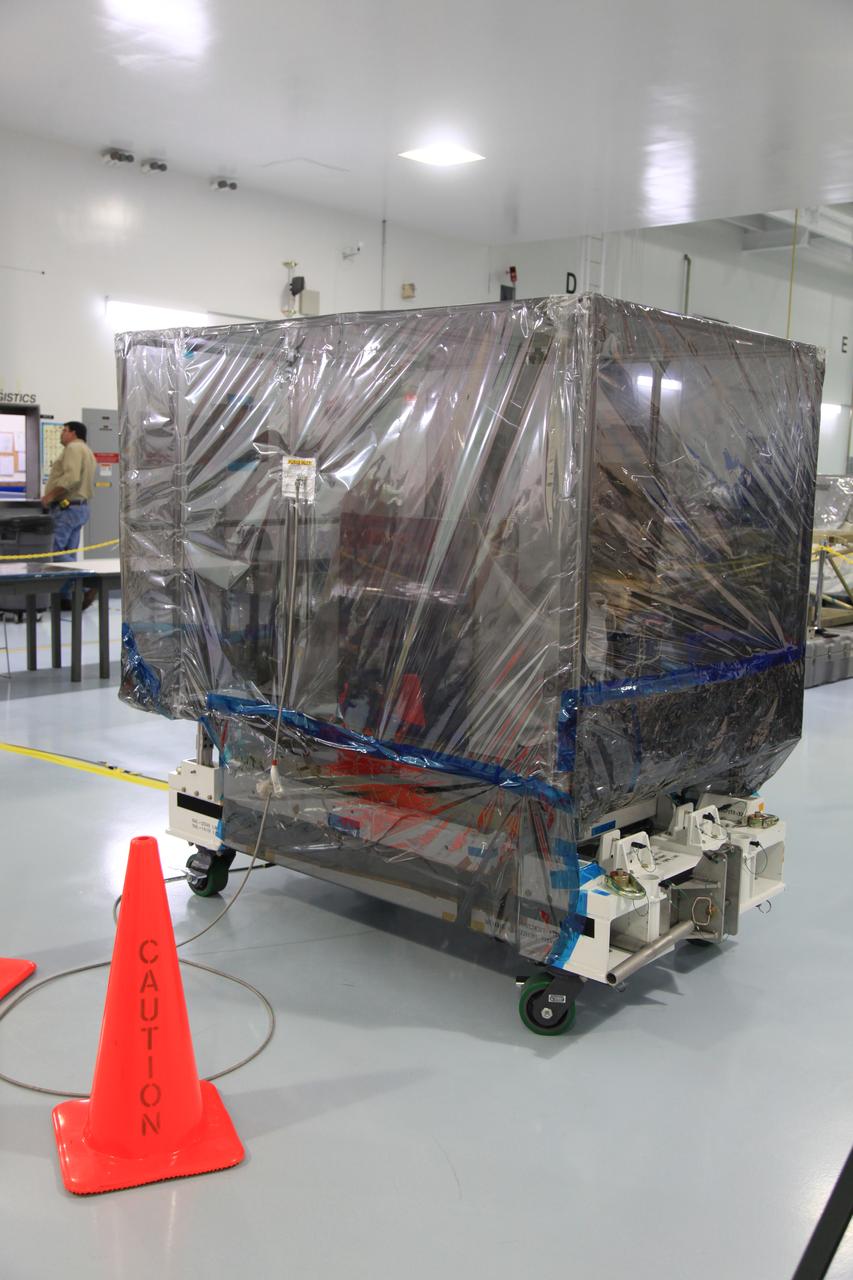
The Space Test Program-Houston 6 (STP-H6) payload is inside the Space Station Processing Facility high bay at NASA’s Kennedy Space Center in Florida on March 19, 2019. It is being prepared for its move to the SpaceX facility where it will be will be stowed in the trunk of the Dragon spacecraft for delivery to the International Space Station on SpaceX’s 17th Commercial Resupply Services mission (CRS-17) for NASA. STP-H6 is an x-ray communication investigation that will be used to perform a space-based demonstration of a new technology for generating beams of modulated x-rays. This technology may be useful for providing efficient communication to deep space probes, or communicating with hypersonic vehicles where plasma sheaths prevent traditional radio communications. CRS-17 is scheduled to launch from Space Launch Complex 40 on Cape Canaveral Air Force Station in late April.
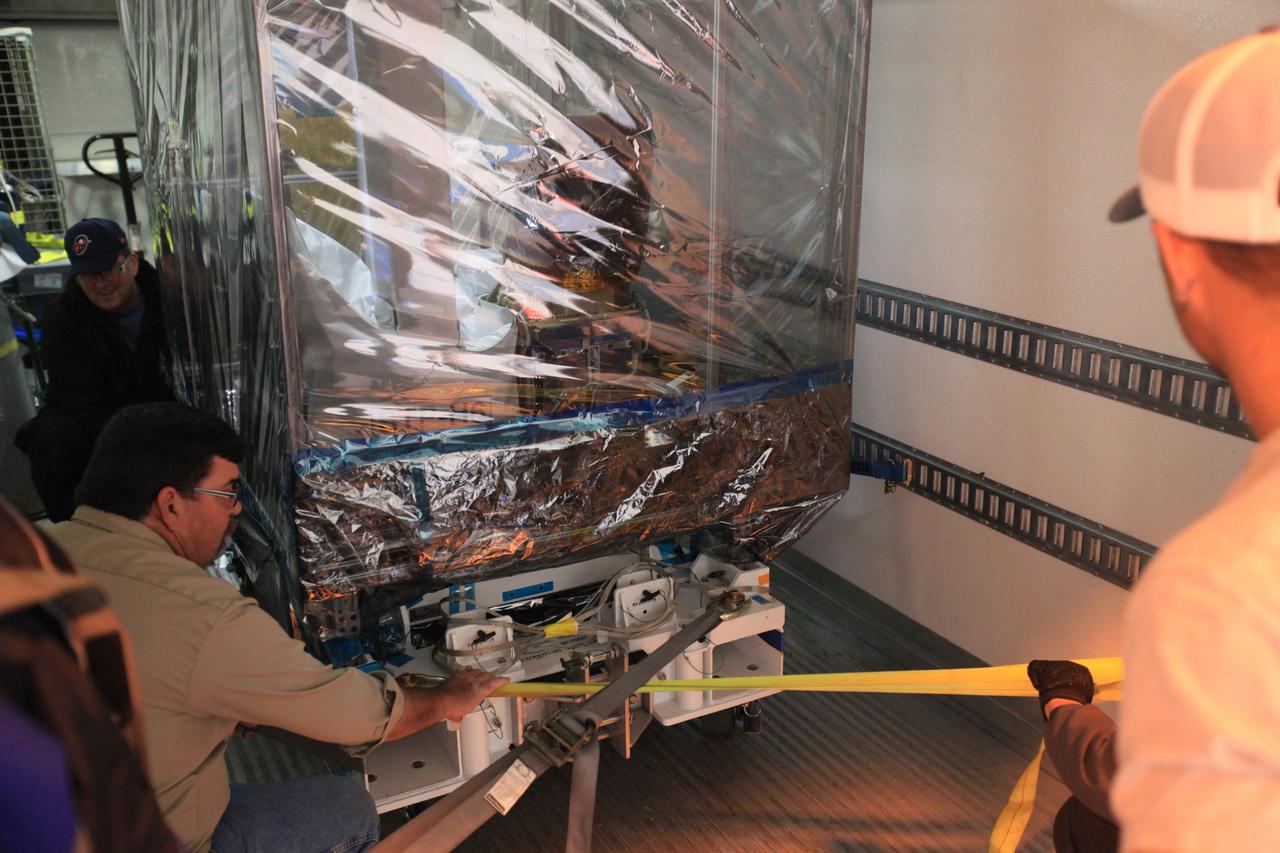
Technicians secure the Space Test Program-Houston 6 (STP-H6) inside a transport truck at the Space Station Processing Facility at NASA’s Kennedy Space Center in Florida on March 19, 2019. The payload will be moved to the SpaceX facility where it will be stowed in the trunk of the Dragon spacecraft for delivery to the International Space Station on SpaceX’s 17th Commercial Resupply Services mission (CRS-17) for NASA. STP-H6 is an x-ray communication investigation that will be used to perform a space-based demonstration of a new technology for generating beams of modulated x-rays. This technology may be useful for providing efficient communication to deep space probes, or communicating with hypersonic vehicles where plasma sheaths prevent traditional radio communications. CRS-17 is scheduled to launch from Space Launch Complex 40 on Cape Canaveral Air Force Station in late April.
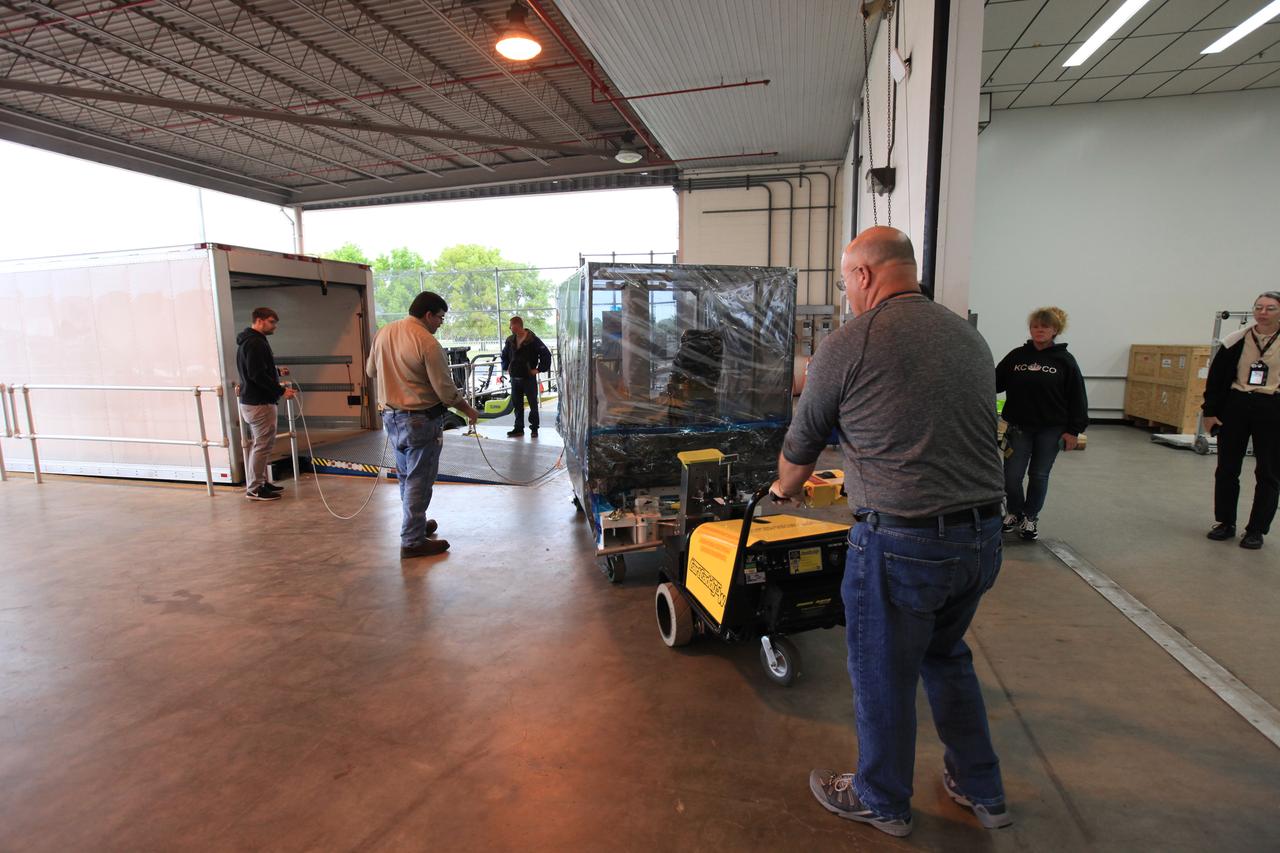
The Space Test Program-Houston 6 (STP-H6) payload is moved to a transport truck at the Space Station Processing Facility at NASA’s Kennedy Space Center in Florida on March 19, 2019. The payload will be moved to the SpaceX facility where it will be stowed in the trunk of the Dragon spacecraft for delivery to the International Space Station on SpaceX’s 17th Commercial Resupply Services mission (CRS-17) for NASA. STP-H6 is an x-ray communication investigation that will be used to perform a space-based demonstration of a new technology for generating beams of modulated x-rays. This technology may be useful for providing efficient communication to deep space probes, or communicating with hypersonic vehicles where plasma sheaths prevent traditional radio communications. CRS-17 is scheduled to launch from Space Launch Complex 40 on Cape Canaveral Air Force Station in late April.
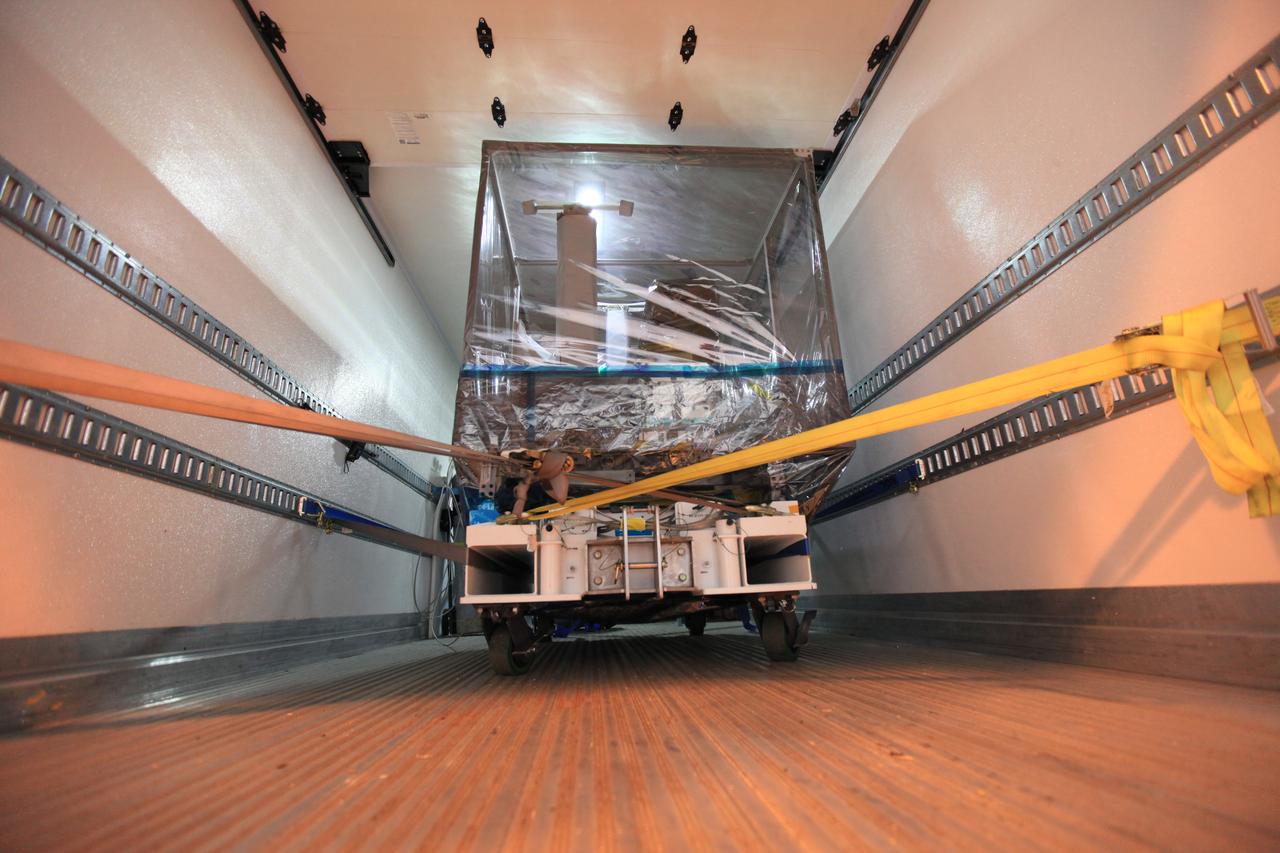
The Space Test Program-Houston 6 (STP-H6) payload is secured inside a truck at the Space Station Processing Facility at NASA’s Kennedy Space Center in Florida on March 19, 2019. The payload will be moved to the SpaceX facility where it will be stowed in the trunk of the Dragon spacecraft for delivery to the International Space Station on SpaceX’s 17th Commercial Resupply Services mission (CRS-17) for NASA. STP-H6 is an x-ray communication investigation that will be used to perform a space-based demonstration of a new technology for generating beams of modulated x-rays. This technology may be useful for providing efficient communication to deep space probes, or communicating with hypersonic vehicles where plasma sheaths prevent traditional radio communications. CRS-17 is scheduled to launch from Space Launch Complex 40 on Cape Canaveral Air Force Station in late April.
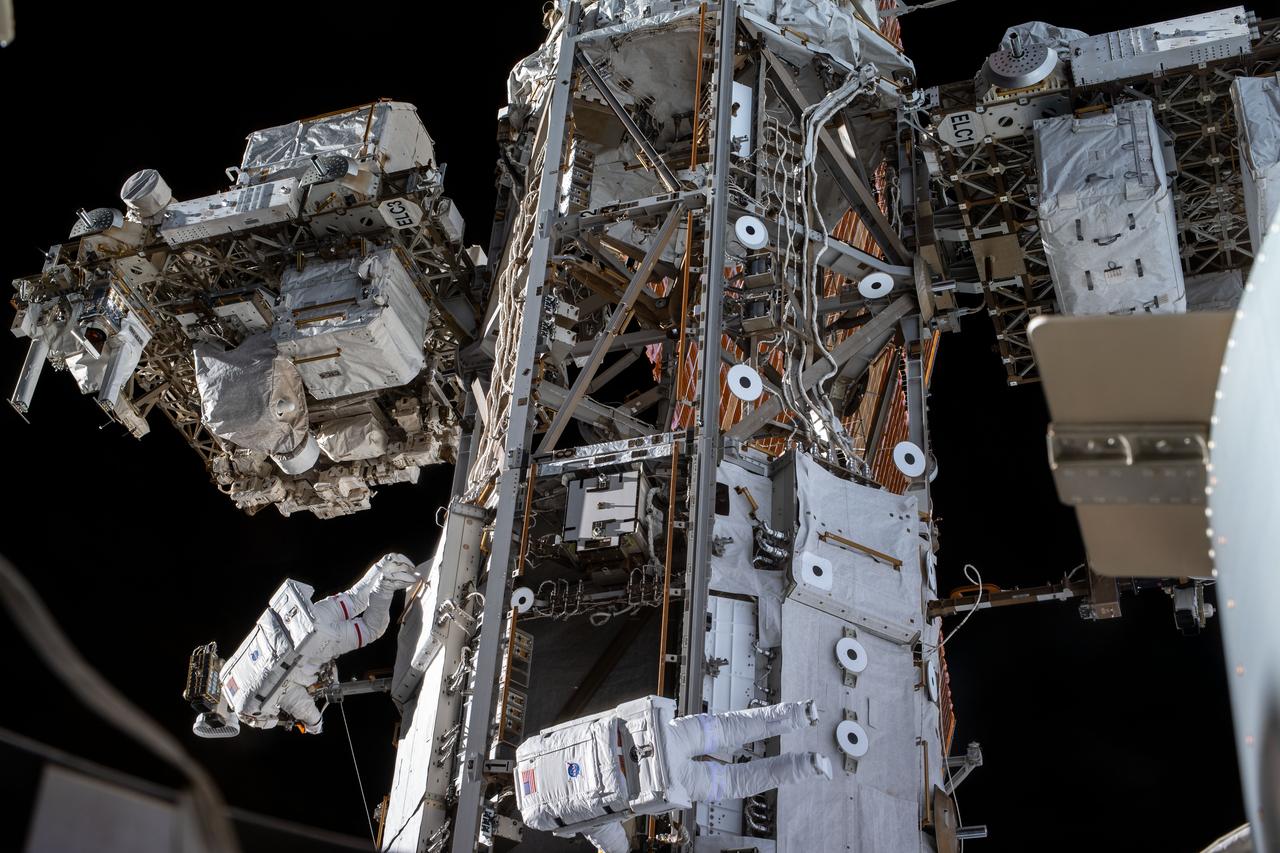
iss061e142328 (1/25/2020) --- A view of NASA astronaut Andrew Morgan and European Space Agency (ESA) astronaut Luca Parmitano during EVA-64 abroad the International Space Station (ISS). The Space Test Program-Houston 6 (STP-H6) payload, can be seen atop of the EXPRESS Logistics Carrier-3 (ELC-3) at the far left of the image.
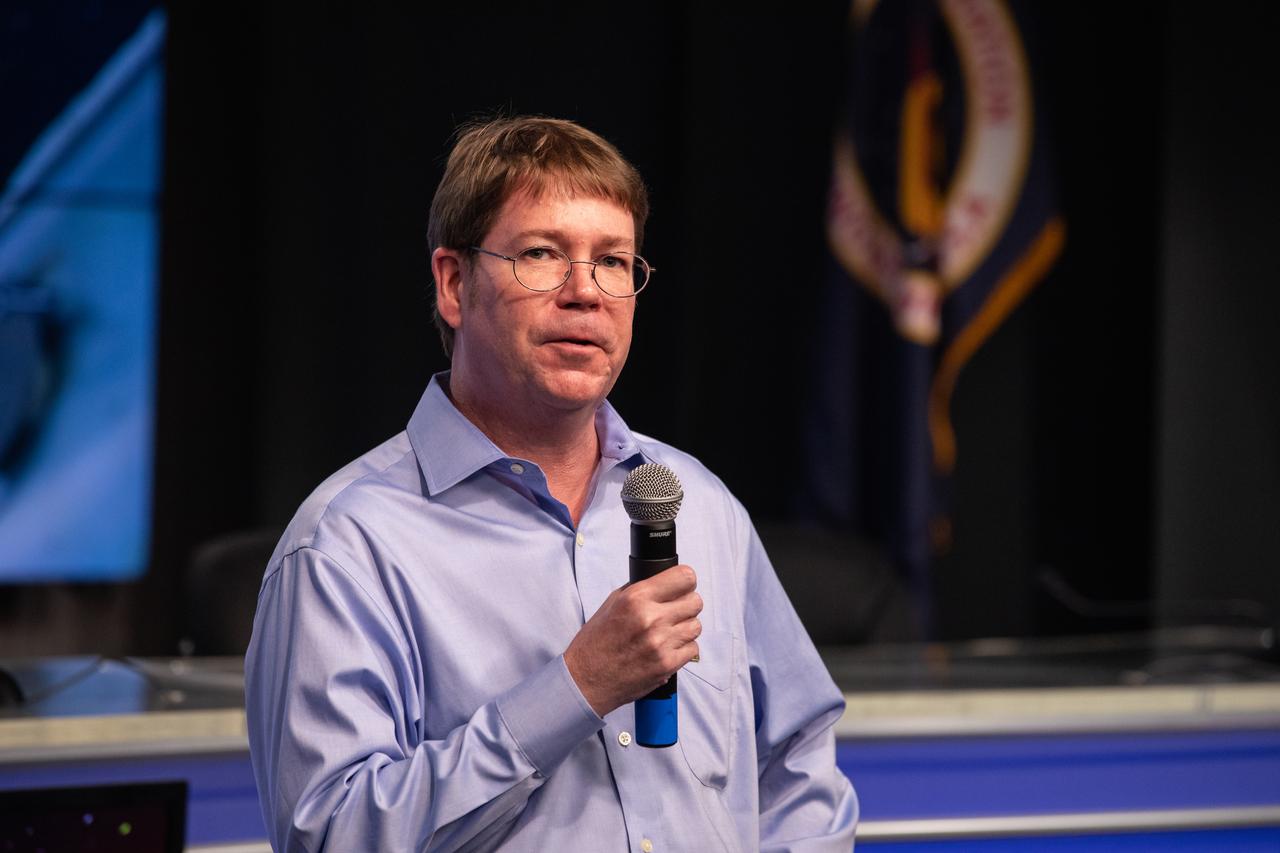
Dr. Edward Kelly, with the University of Washington School of Pharmacy, discusses The Tissue Chips in Space project during a What’s On Board science briefing to NASA Social participants at the agency’s Kennedy Space Center in Florida on April 29, 2019. The briefing was held for SpaceX’s 17th Commercial Resupply Services (CRS-17) mission to the International Space Station. Kelly and other researchers will send kidney tissue chip models to the space station to understand how microgravity affects kidney function, such as changes in vitamin D metabolism and formation of kidney stones. NASA’s Orbiting Carbon Observatory-3 (OCO-3) and Space Test Program-Houston 6 (STP-H6) are two of the experiments that also will be delivered to the space station on CRS-17. The SpaceX Falcon 9 rocket and Dragon cargo module are scheduled to launch no earlier than May 3, 2019, from Space Launch Complex 40 on Cape Canaveral Air Force Station in Florida.
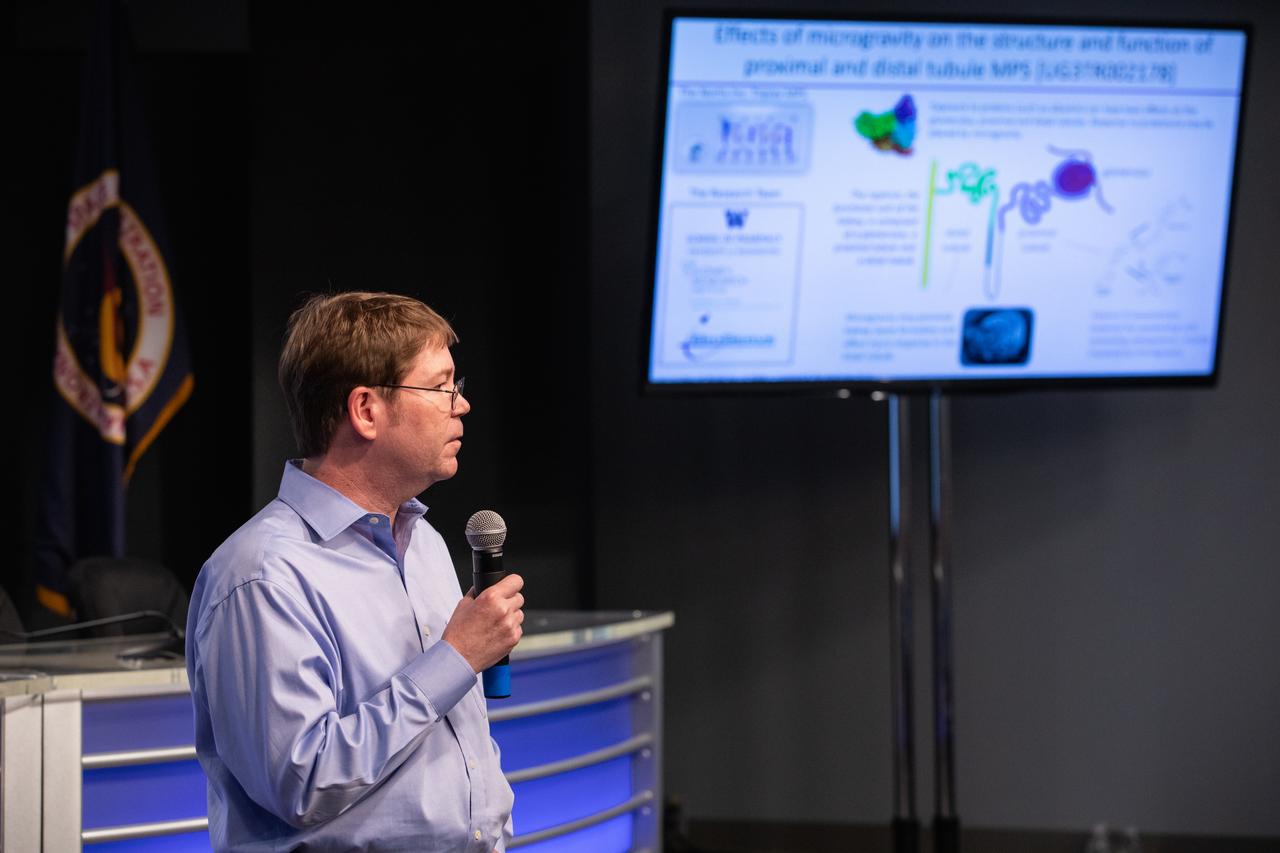
Dr. Edward Kelly, with the University of Washington School of Pharmacy, discusses The Tissue Chips in Space project during a What’s On Board science briefing to NASA Social participants at the agency’s Kennedy Space Center in Florida on April 29, 2019. The briefing was held for SpaceX’s 17th Commercial Resupply Services (CRS-17) mission to the International Space Station. Kelly and other researchers will send kidney tissue chip models to the space station to understand how microgravity affects kidney function, such as changes in vitamin D metabolism and formation of kidney stones. NASA’s Orbiting Carbon Observatory-3 (OCO-3) and Space Test Program-Houston 6 (STP-H6) are two of the experiments that also will be delivered to the space station on CRS-17. The SpaceX Falcon 9 rocket and Dragon cargo module are scheduled to launch no earlier than May 3, 2019, from Space Launch Complex 40 on Cape Canaveral Air Force Station in Florida.
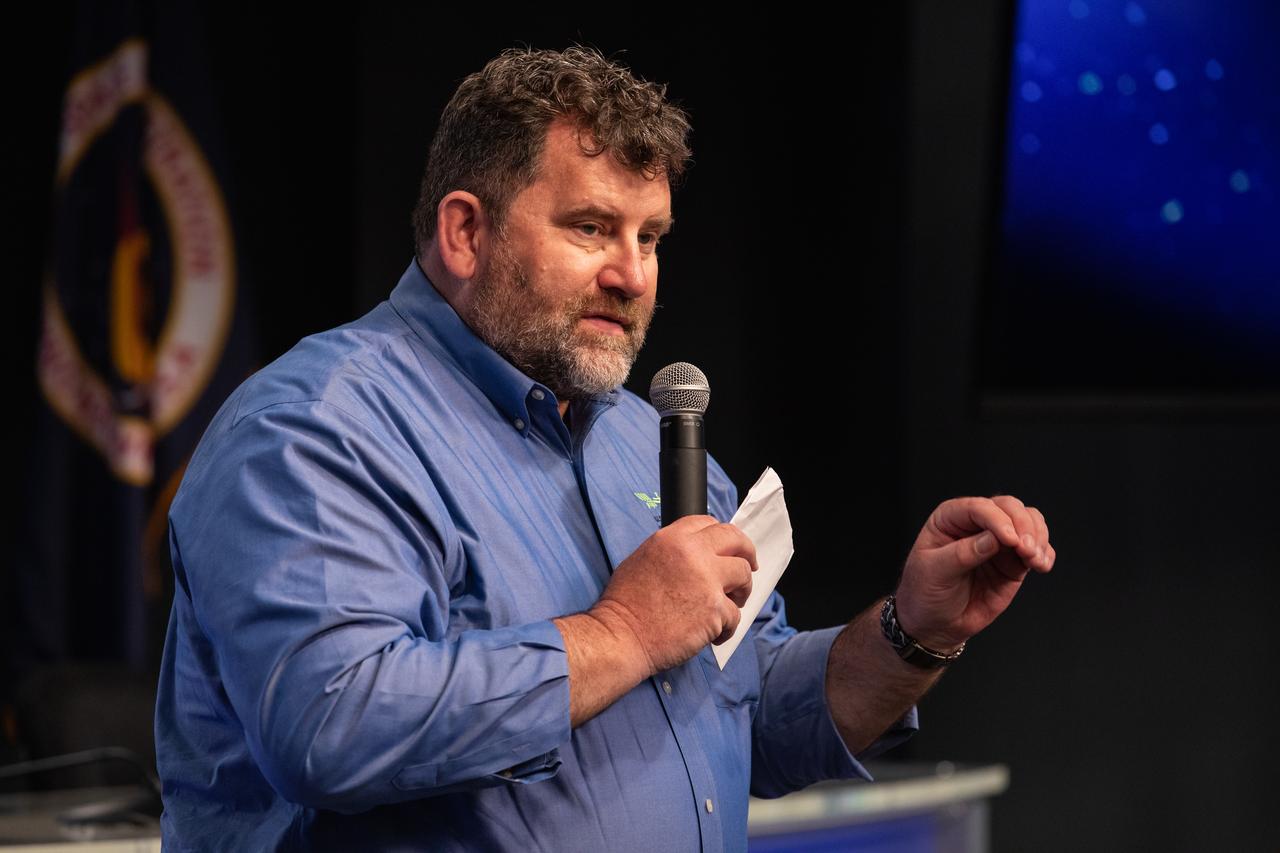
Mike Roberts, deputy chief scientist for the ISS Program at NASA’s Johnson Space Center in Houston, talks to NASA Social participants during a What’s On Board science briefing at the agency’s Kennedy Space Center in Florida on April 29, 2019. The briefing was held for SpaceX’s 17th Commercial Resupply Services (CRS-17) mission to the International Space Station. NASA’s Orbiting Carbon Observatory-3 (OCO-3) and Space Test Program-Houston 6 (STP-H6) are two of the experiments that will be delivered to the space station on CRS-17. The SpaceX Falcon 9 rocket and Dragon cargo module are scheduled to launch no earlier than May 3, 2019, from Space Launch Complex 40 on Cape Canaveral Air Force Station in Florida.
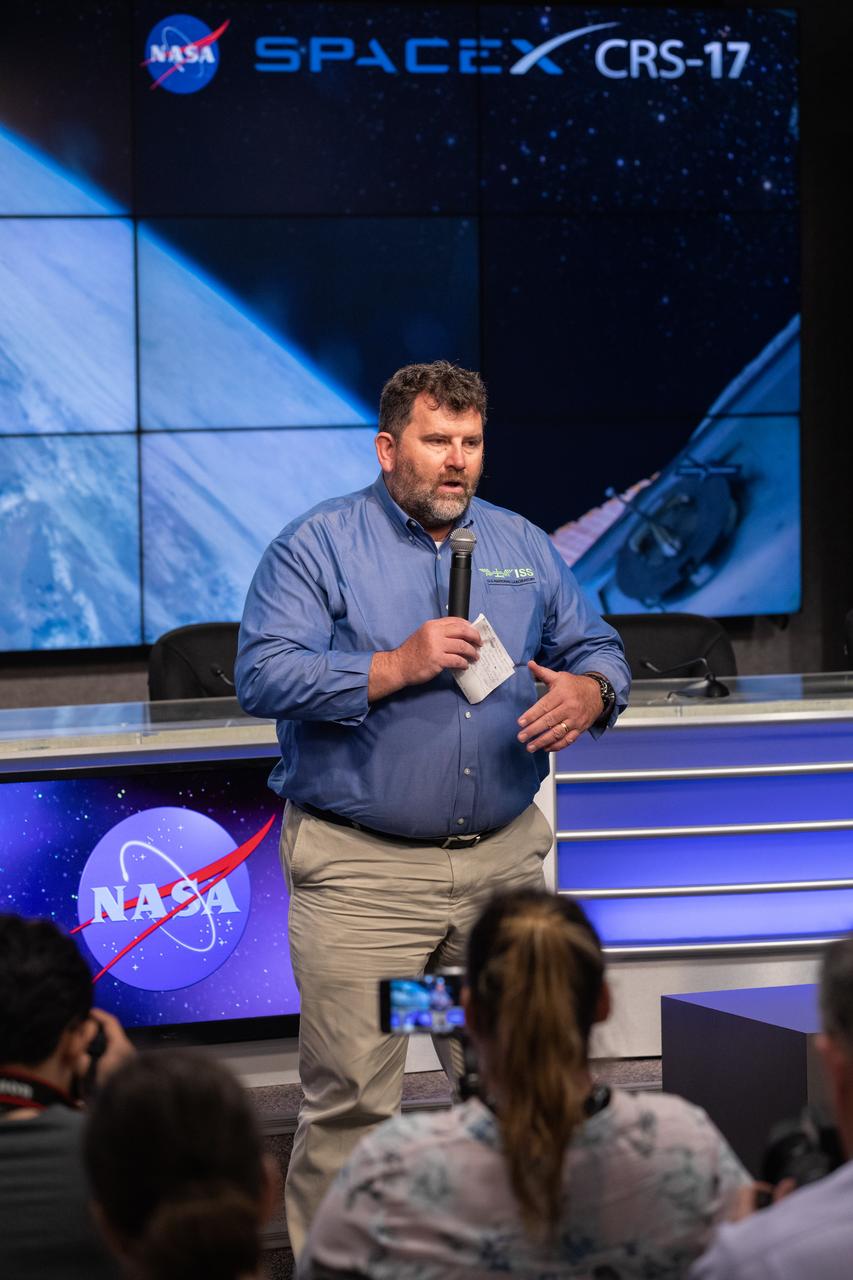
Mike Roberts, deputy chief scientist for the ISS Program at NASA’s Johnson Space Center in Houston, talks to NASA Social participants during a What’s On Board science briefing at the agency’s Kennedy Space Center in Florida on April 29, 2019. The briefing was held for SpaceX’s 17th Commercial Resupply Services (CRS-17) mission to the International Space Station. NASA’s Orbiting Carbon Observatory-3 (OCO-3) and Space Test Program-Houston 6 (STP-H6) are two of the experiments that will be delivered to the space station on CRS-17. The SpaceX Falcon 9 rocket and Dragon cargo module are scheduled to launch no earlier than May 3, 2019, from Space Launch Complex 40 on Cape Canaveral Air Force Station in Florida.
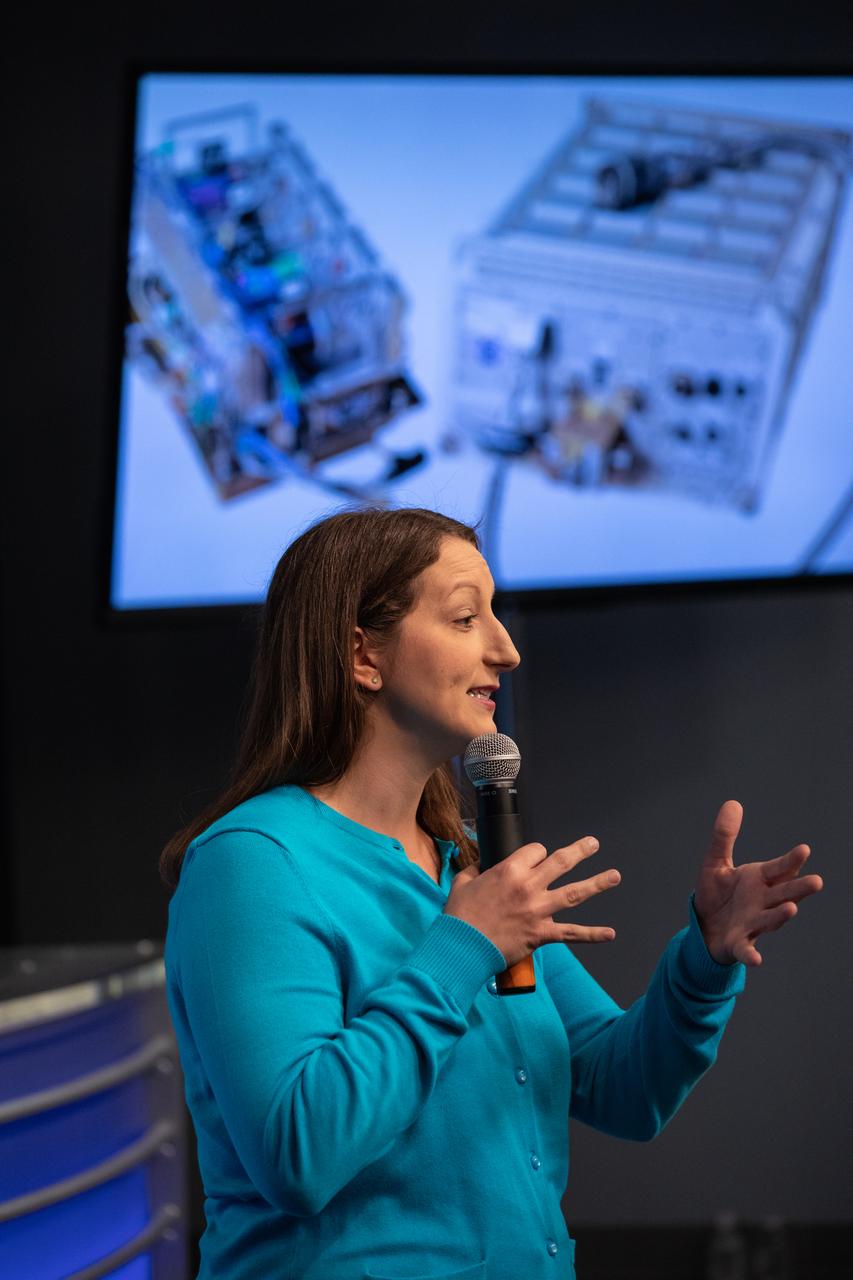
Dr. Kristen John, principal investigator for Hermes at NASA’s Johnson Space Center in Houston, talks to NASA Social participants during a What’s On Board science briefing at the agency’s Kennedy Space Center in Florida on April 29, 2019. The briefing was held for SpaceX’s 17th Commercial Resupply Services (CRS-17) mission to the International Space Station. John presented on the Hermes Facility, an experimental microgravity facility that enables science experiments, microgravity exposure testing, testing of engineering components and CubeSats and any payloads that can fit in the Hermes design and operations constraints. NASA’s Orbiting Carbon Observatory-3 (OCO-3) and Space Test Program-Houston 6 (STP-H6) are two of the experiments that also will be delivered to the space station on CRS-17. The SpaceX Falcon 9 rocket and Dragon cargo module are scheduled to launch no earlier than May 3, 2019, from Space Launch Complex 40 on Cape Canaveral Air Force Station in Florida.
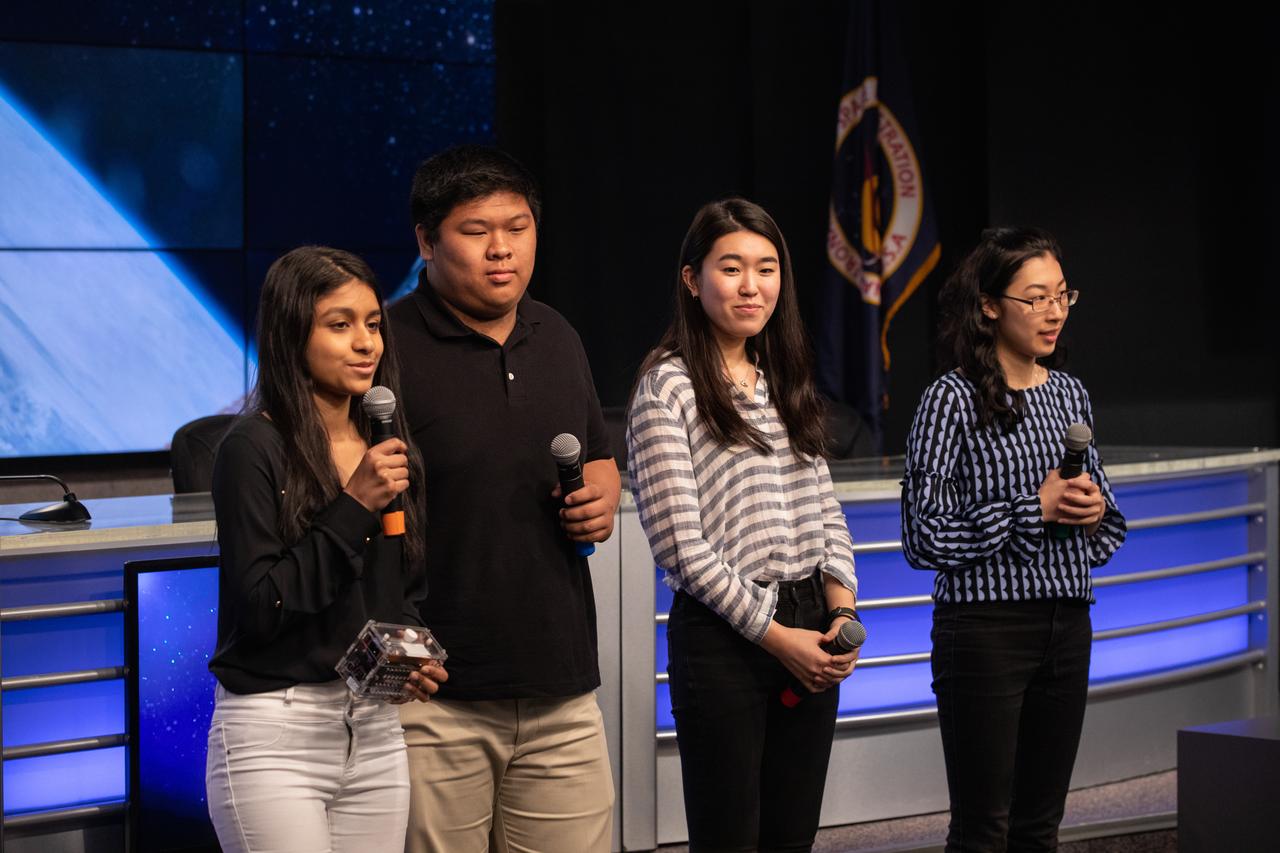
From left, high school student Aarthi Vijayakumar, MIT student David Li, and high school students Michelle Sung and Rebecca Li talk about their winning Genes in Space experiment for NASA during a What’s On Board science briefing to NASA Social participants at the agency’s Kennedy Space Center in Florida on April 29, 2019. The briefing was held for SpaceX’s 17th Commercial Resupply Services (CRS-17) mission to the International Space Station. NASA’s Orbiting Carbon Observatory-3 (OCO-3) and Space Test Program-Houston 6 (STP-H6) are two of the experiments that also will be delivered to the space station on CRS-17. The SpaceX Falcon 9 rocket and Dragon cargo module are scheduled to launch no earlier than May 3, 2019, from Space Launch Complex 40 on Cape Canaveral Air Force Station in Florida.
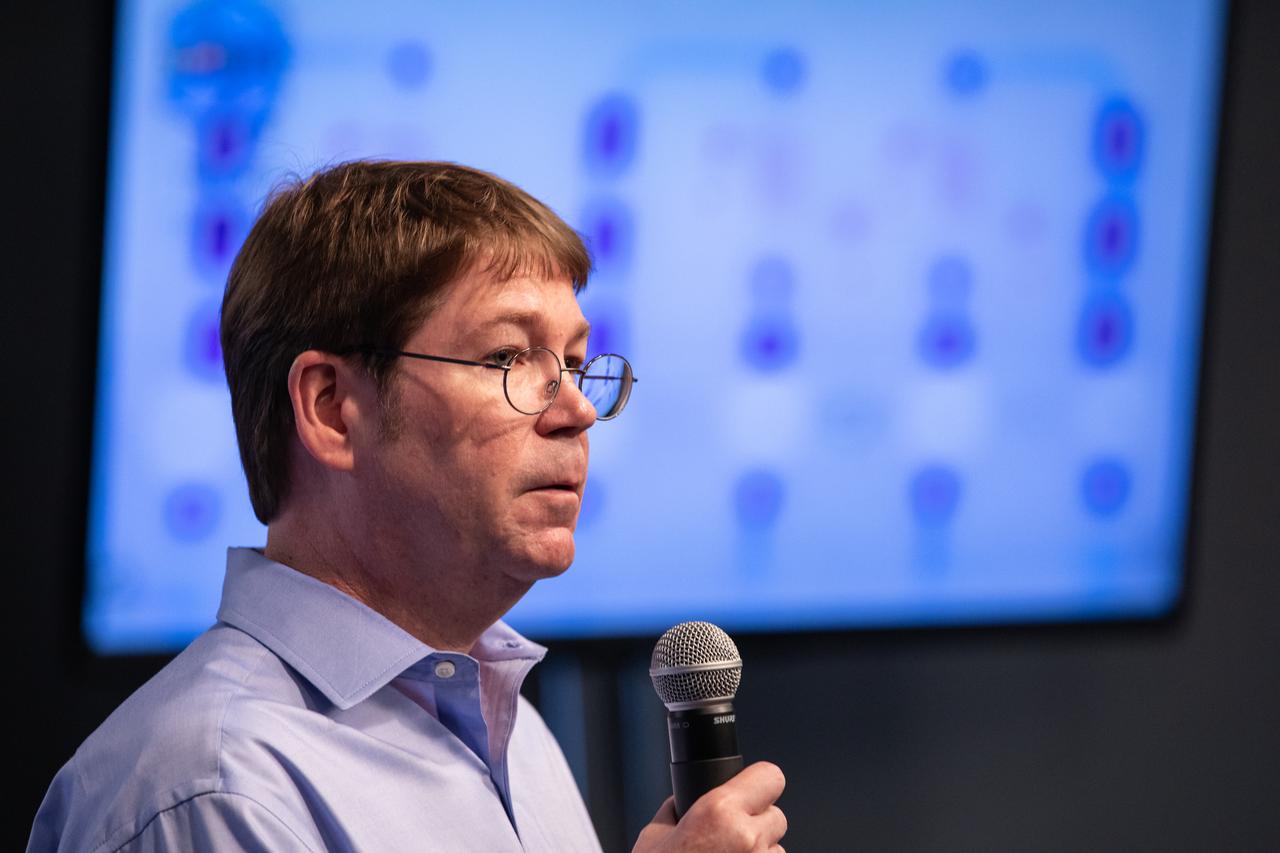
Dr. Edward Kelly, with the University of Washington School of Pharmacy, discusses The Tissue Chips in Space project during a What’s On Board science briefing to NASA Social participants at the agency’s Kennedy Space Center in Florida on April 29, 2019. The briefing was held for SpaceX’s 17th Commercial Resupply Services (CRS-17) mission to the International Space Station. Kelly and other researchers will send kidney tissue chip models to the space station to understand how microgravity affects kidney function, such as changes in vitamin D metabolism and formation of kidney stones. NASA’s Orbiting Carbon Observatory-3 (OCO-3) and Space Test Program-Houston 6 (STP-H6) are two of the experiments that also will be delivered to the space station on CRS-17. The SpaceX Falcon 9 rocket and Dragon cargo module are scheduled to launch no earlier than May 3, 2019, from Space Launch Complex 40 on Cape Canaveral Air Force Station in Florida.
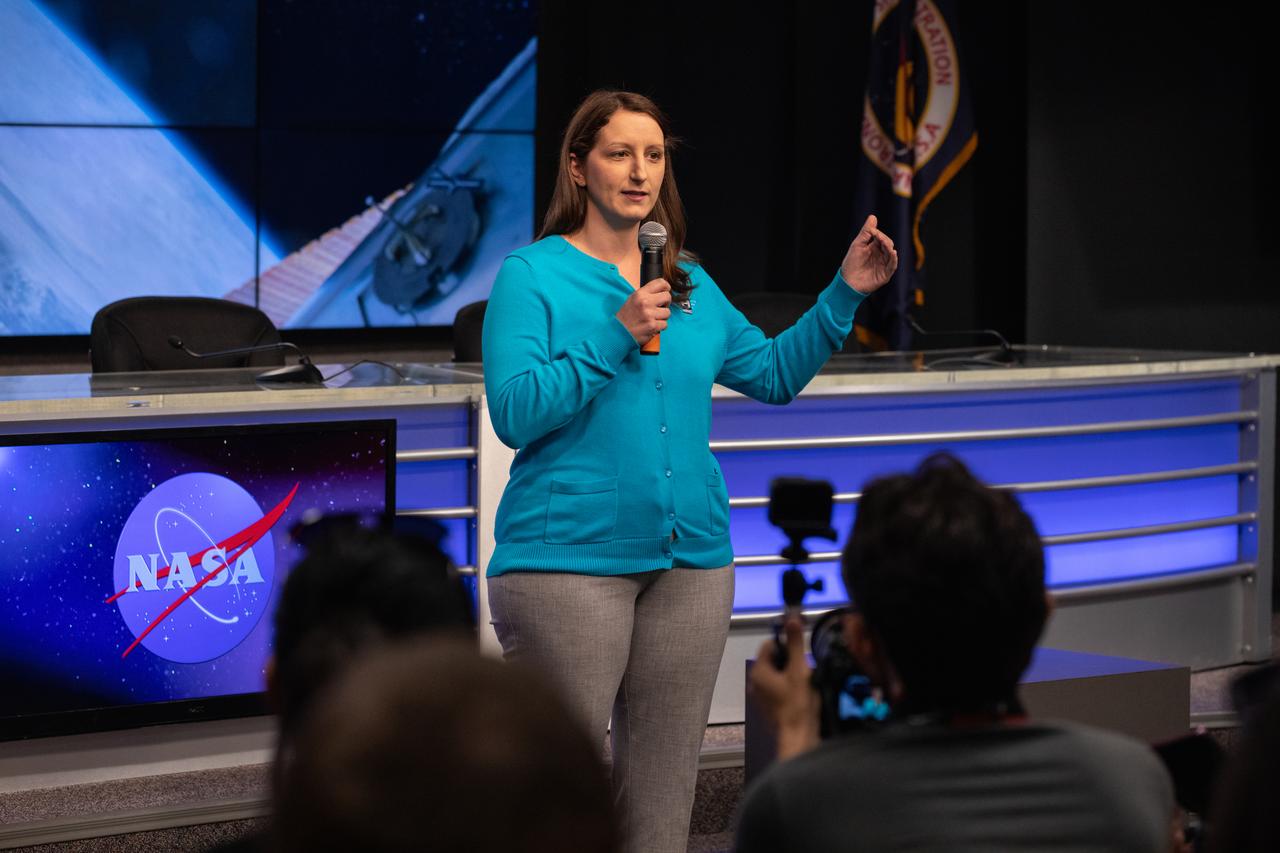
Dr. Kristen John, principal investigator for Hermes at NASA’s Johnson Space Center in Houston, talks to NASA Social participants during a What’s On Board science briefing at the agency’s Kennedy Space Center in Florida on April 29, 2019. The briefing was held for SpaceX’s 17th Commercial Resupply Services (CRS-17) mission to the International Space Station. John presented on the Hermes Facility, an experimental microgravity facility that enables science experiments, microgravity exposure testing, testing of engineering components and CubeSats and any payloads that can fit in the Hermes design and operations constraints. NASA’s Orbiting Carbon Observatory-3 (OCO-3) and Space Test Program-Houston 6 (STP-H6) are two of the experiments that also will be delivered to the space station on CRS-17. The SpaceX Falcon 9 rocket and Dragon cargo module are scheduled to launch no earlier than May 3, 2019, from Space Launch Complex 40 on Cape Canaveral Air Force Station in Florida.
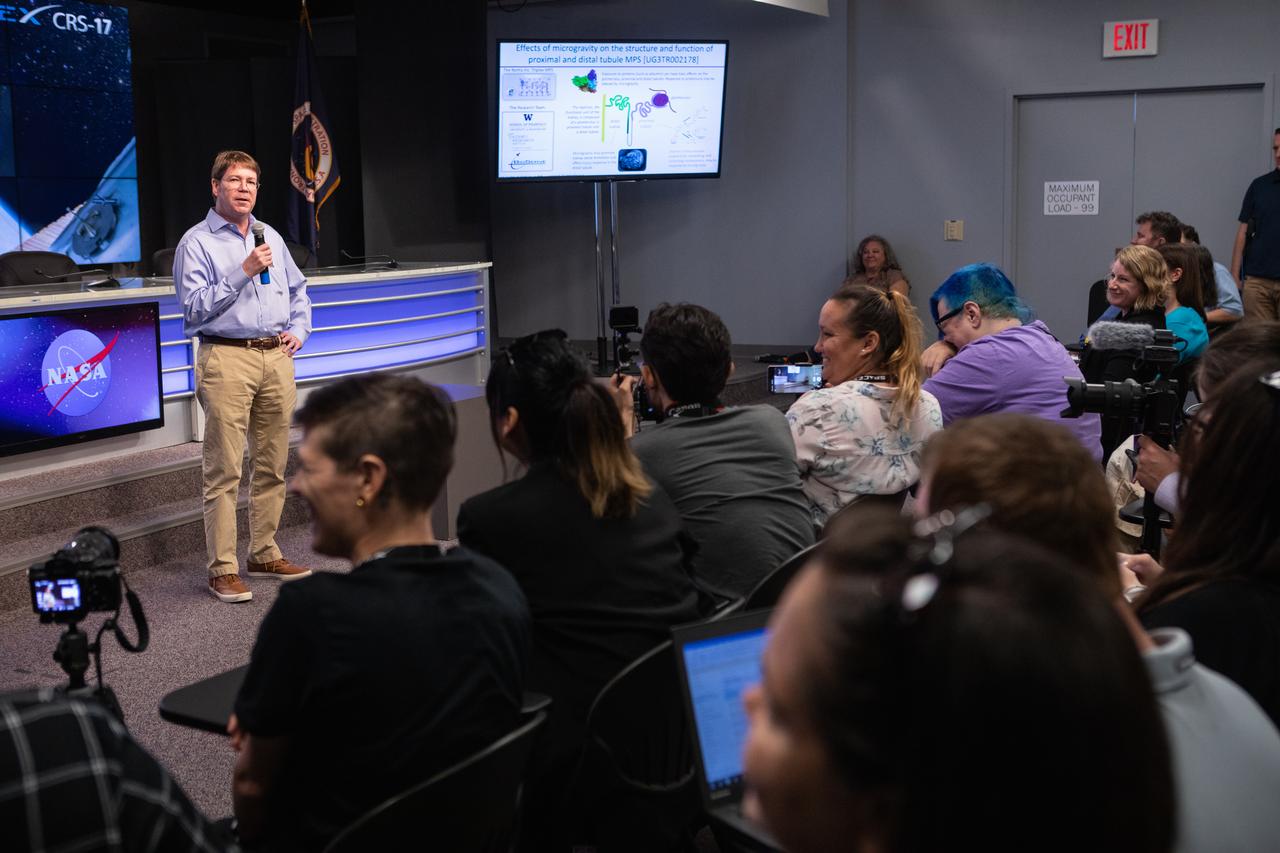
Dr. Edward Kelly, with the University of Washington School of Pharmacy, discusses The Tissue Chips in Space project during a What’s On Board science briefing to NASA Social participants at the agency’s Kennedy Space Center in Florida on April 29, 2019. The briefing was held for SpaceX’s 17th Commercial Resupply Services (CRS-17) mission to the International Space Station. Kelly and other researchers will send kidney tissue chip models to the space station to understand how microgravity affects kidney function, such as changes in vitamin D metabolism and formation of kidney stones. NASA’s Orbiting Carbon Observatory-3 (OCO-3) and Space Test Program-Houston 6 (STP-H6) are two of the experiments that also will be delivered to the space station on CRS-17. The SpaceX Falcon 9 rocket and Dragon cargo module are scheduled to launch no earlier than May 3, 2019, from Space Launch Complex 40 on Cape Canaveral Air Force Station in Florida.
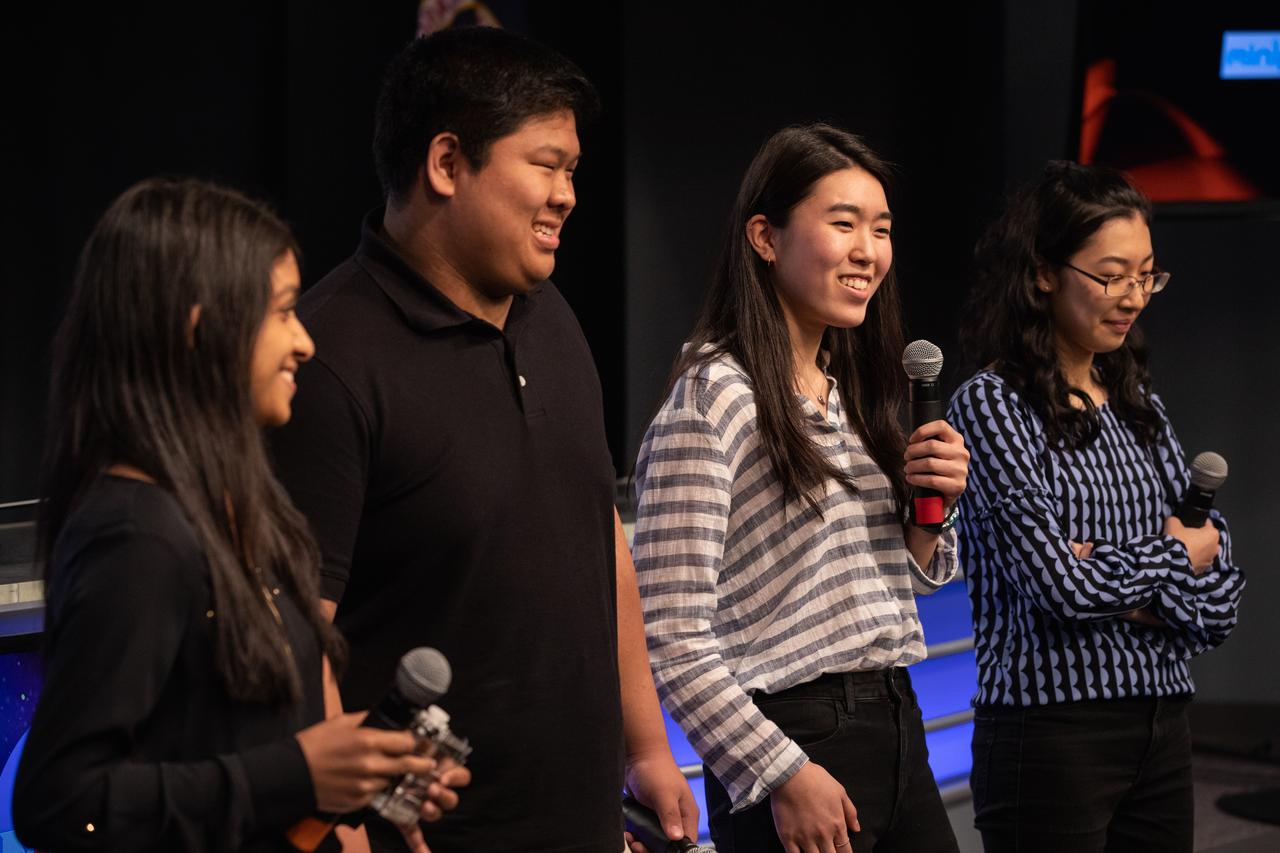
From left, high school student Aarthi Vijayakumar, MIT student David Li, and high school students Michelle Sung and Rebecca Li talk about their winning Genes in Space experiment for NASA during a What’s On Board science briefing to NASA Social participants at the agency’s Kennedy Space Center in Florida on April 29, 2019. The briefing was held for SpaceX’s 17th Commercial Resupply Services (CRS-17) mission to the International Space Station. NASA’s Orbiting Carbon Observatory-3 (OCO-3) and Space Test Program-Houston 6 (STP-H6) are two of the experiments that also will be delivered to the space station on CRS-17. The SpaceX Falcon 9 rocket and Dragon cargo module are scheduled to launch no earlier than May 3, 2019, from Space Launch Complex 40 on Cape Canaveral Air Force Station in Florida.
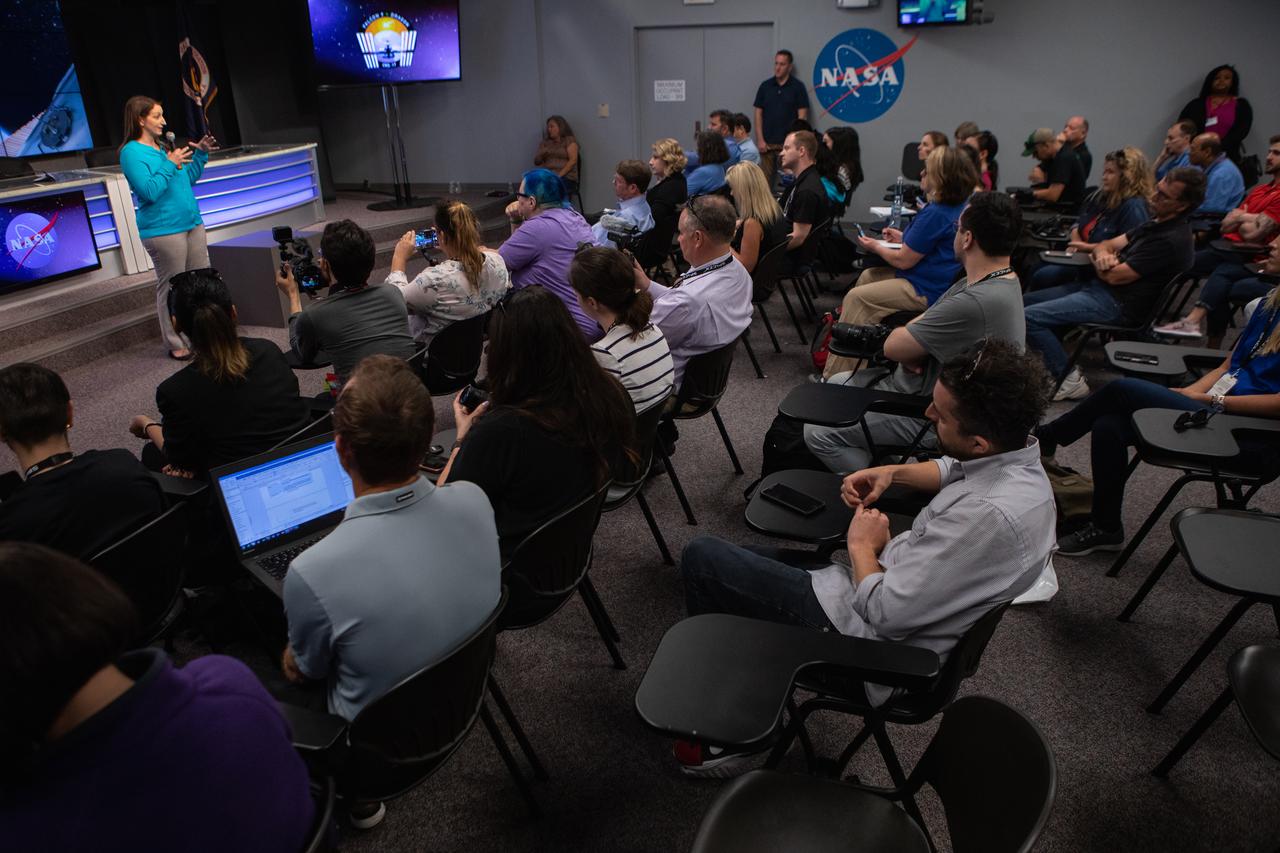
Dr. Kristen John, principal investigator for Hermes at NASA’s Johnson Space Center in Houston, talks to NASA Social participants during a What’s On Board science briefing at the agency’s Kennedy Space Center in Florida on April 29, 2019. The briefing was held for SpaceX’s 17th Commercial Resupply Services (CRS-17) mission to the International Space Station. John presented on the Hermes Facility, an experimental microgravity facility that enables science experiments, microgravity exposure testing, testing of engineering components and CubeSats and any payloads that can fit in the Hermes design and operations constraints. NASA’s Orbiting Carbon Observatory-3 (OCO-3) and Space Test Program-Houston 6 (STP-H6) are two of the experiments that also will be delivered to the space station on CRS-17. The SpaceX Falcon 9 rocket and Dragon cargo module are scheduled to launch no earlier than May 3, 2019, from Space Launch Complex 40 on Cape Canaveral Air Force Station in Florida.
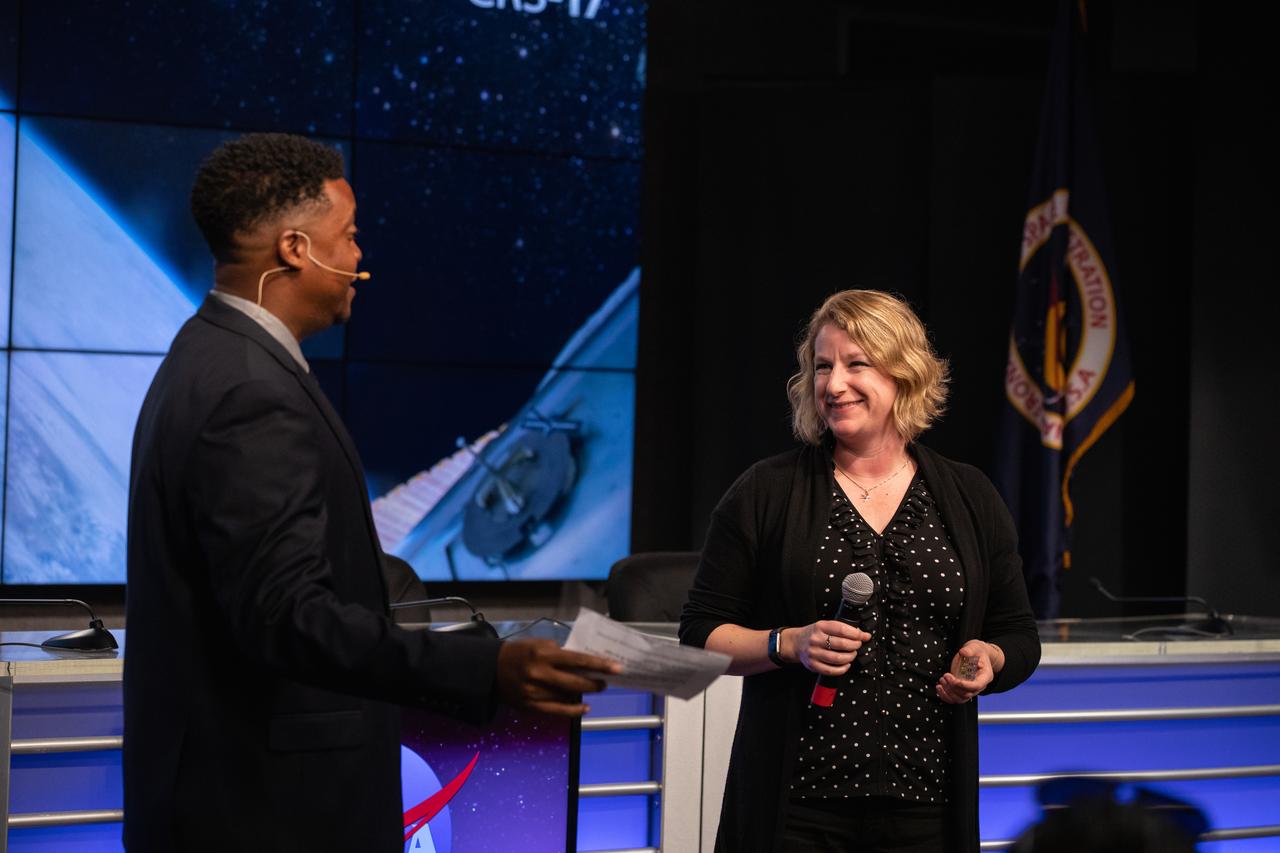
Derrick Matthews, at left, moderator with NASA Communications, introduces Dr. Lucy Low, with the National Institutes of Health, during a What’s On Board science briefing to NASA Social participants at the agency’s Kennedy Space Center in Florida on April 29, 2019. The briefing was held for SpaceX’s 17th Commercial Resupply Services (CRS-17) mission to the International Space Station. Low presented on the Tissue Chips in Space project that will test the ability of tissue chip technology to mimic how human organs work and reveal what effects microgravity has on tissue function. Headed to the space station will be lung and bone marrow chips, kidney chips, chips modeling the blood-brain barrier, and bone and cartilage chips. NASA’s Orbiting Carbon Observatory-3 (OCO-3) and Space Test Program-Houston 6 (STP-H6) are two of the experiments that also will be delivered to the space station on CRS-17. The SpaceX Falcon 9 rocket and Dragon cargo module are scheduled to launch no earlier than May 3, 2019, from Space Launch Complex 40 on Cape Canaveral Air Force Station in Florida.
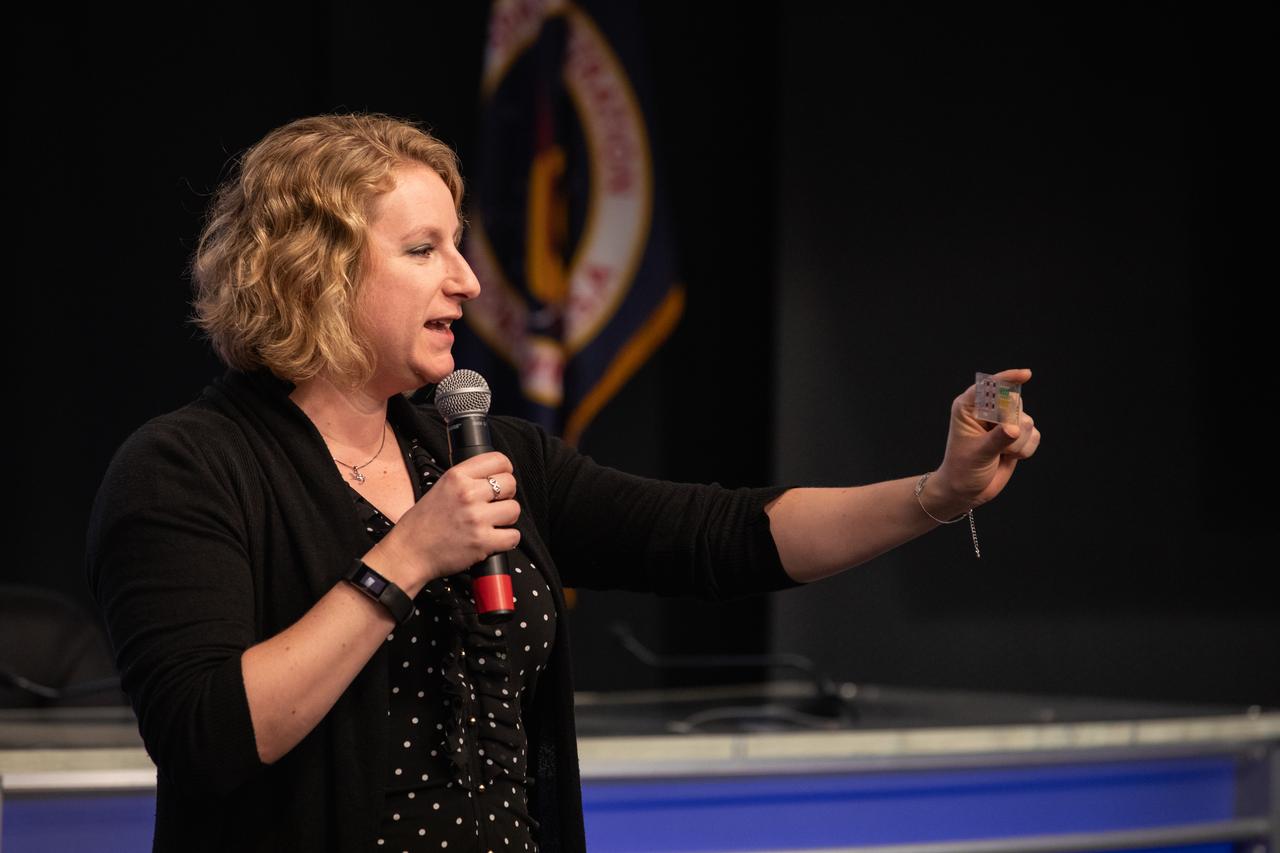
Dr. Lucy Low, with the National Institutes of Health, talks to NASA Social participants during a What’s On Board science briefing at NASA’s Kennedy Space Center in Florida on April 29, 2019. The briefing was held for SpaceX’s 17th Commercial Resupply Services (CRS-17) mission to the International Space Station. Low presented on the Tissue Chips in Space project that will test the ability of tissue chip technology to mimic how human organs work and reveal what effects microgravity has on tissue function. Headed to the space station will be lung and bone marrow chips, kidney chips, chips modeling the blood-brain barrier, and bone and cartilage chips. NASA’s Orbiting Carbon Observatory-3 (OCO-3) and Space Test Program-Houston 6 (STP-H6) are two of the experiments that also will be delivered to the space station on CRS-17. The SpaceX Falcon 9 rocket and Dragon cargo module are scheduled to launch no earlier than May 3, 2019, from Space Launch Complex 40 on Cape Canaveral Air Force Station in Florida.
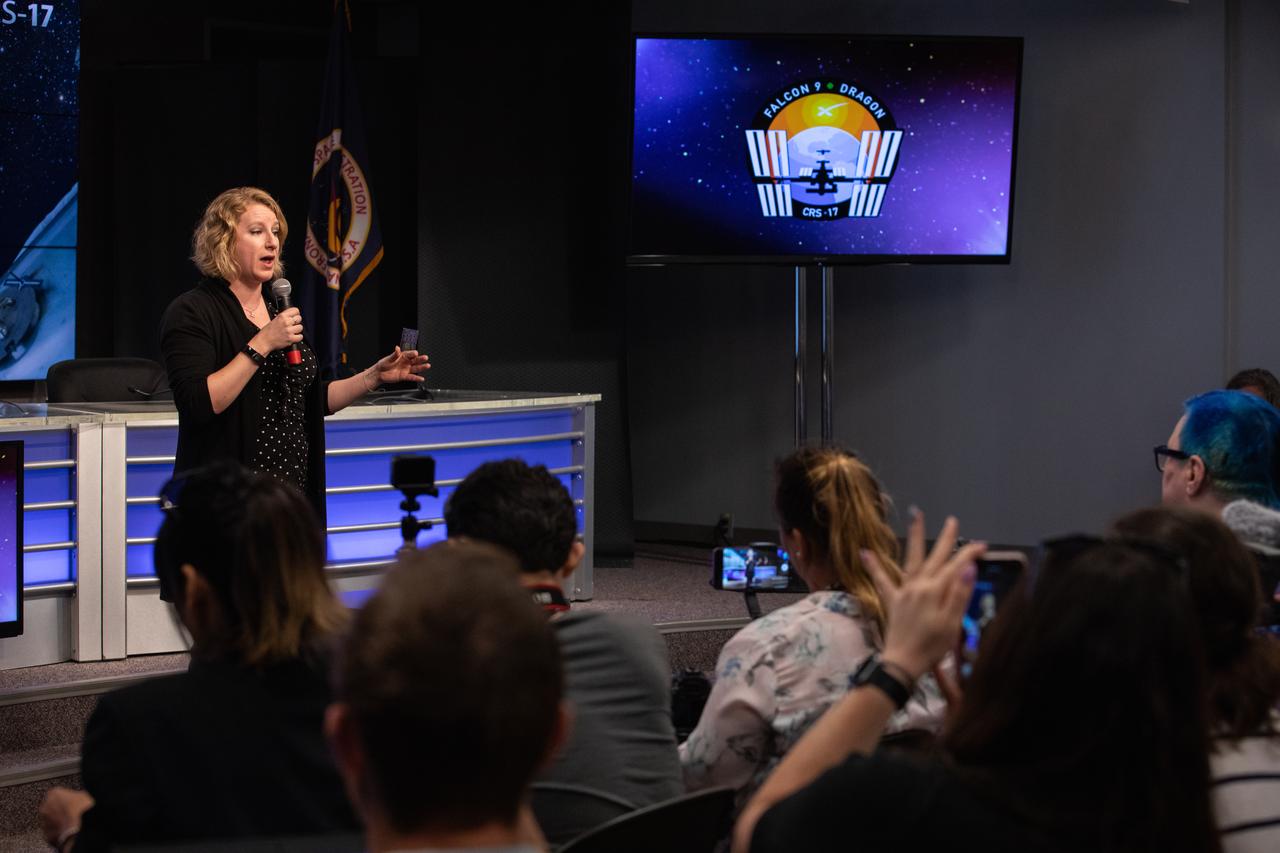
Dr. Lucy Low, with the National Institutes of Health, talks to NASA Social participants during a What’s On Board science briefing at NASA’s Kennedy Space Center in Florida on April 29, 2019. The briefing was held for SpaceX’s 17th Commercial Resupply Services (CRS-17) mission to the International Space Station. Low presented on the Tissue Chips in Space project that will test the ability of tissue chip technology to mimic how human organs work and reveal what effects microgravity has on tissue function. Headed to the space station will be lung and bone marrow chips, kidney chips, chips modeling the blood-brain barrier, and bone and cartilage chips. NASA’s Orbiting Carbon Observatory-3 (OCO-3) and Space Test Program-Houston 6 (STP-H6) are two of the experiments that also will be delivered to the space station on CRS-17. The SpaceX Falcon 9 rocket and Dragon cargo module are scheduled to launch no earlier than May 3, 2019, from Space Launch Complex 40 on Cape Canaveral Air Force Station in Florida.
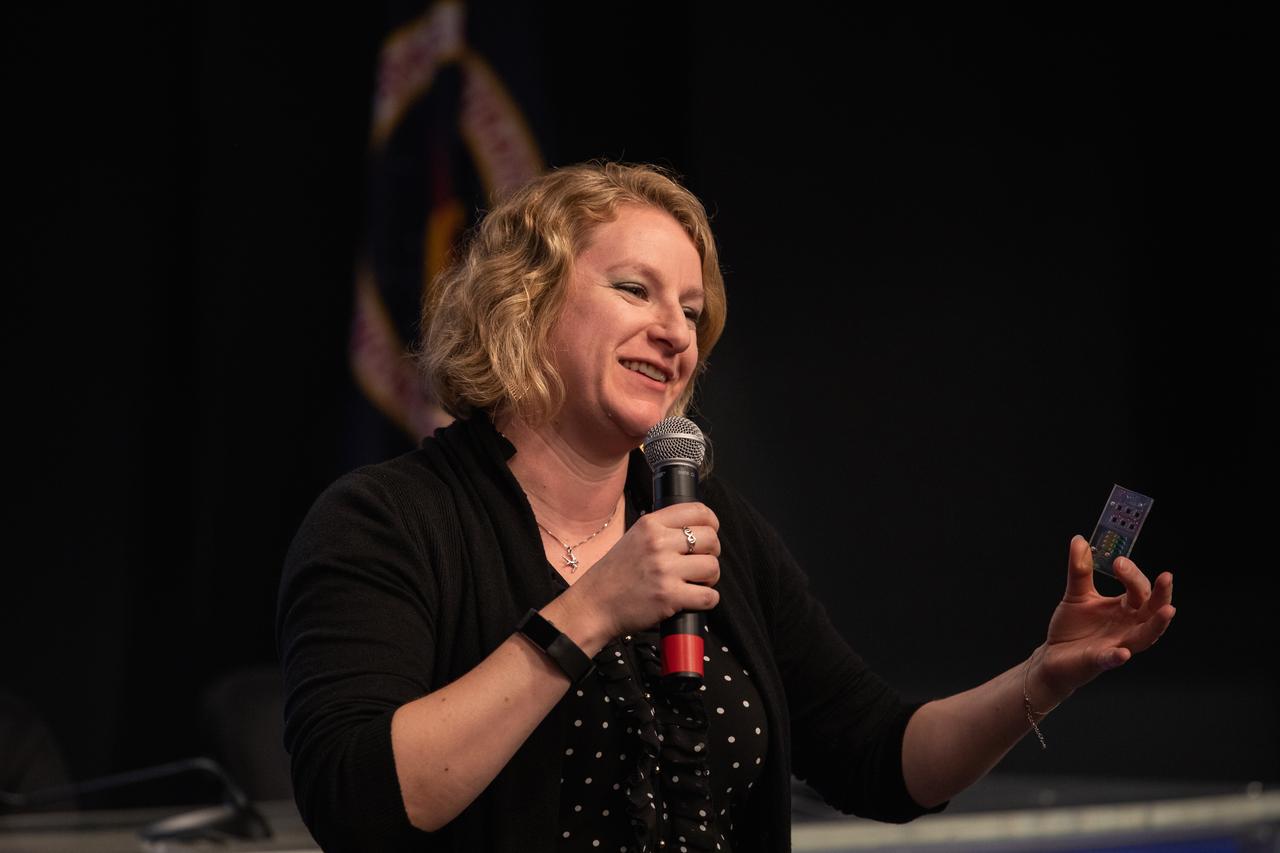
Dr. Lucy Low, with the National Institutes of Health, talks to NASA Social participants during a What’s On Board science briefing at NASA’s Kennedy Space Center in Florida on April 29, 2019. The briefing was held for SpaceX’s 17th Commercial Resupply Services (CRS-17) mission to the International Space Station. Low presented on the Tissue Chips in Space project that will test the ability of tissue chip technology to mimic how human organs work and reveal what effects microgravity has on tissue function. Headed to the space station will be lung and bone marrow chips, kidney chips, chips modeling the blood-brain barrier, and bone and cartilage chips. NASA’s Orbiting Carbon Observatory-3 (OCO-3) and Space Test Program-Houston 6 (STP-H6) are two of the experiments that also will be delivered to the space station on CRS-17. The SpaceX Falcon 9 rocket and Dragon cargo module are scheduled to launch no earlier than May 3, 2019, from Space Launch Complex 40 on Cape Canaveral Air Force Station in Florida.