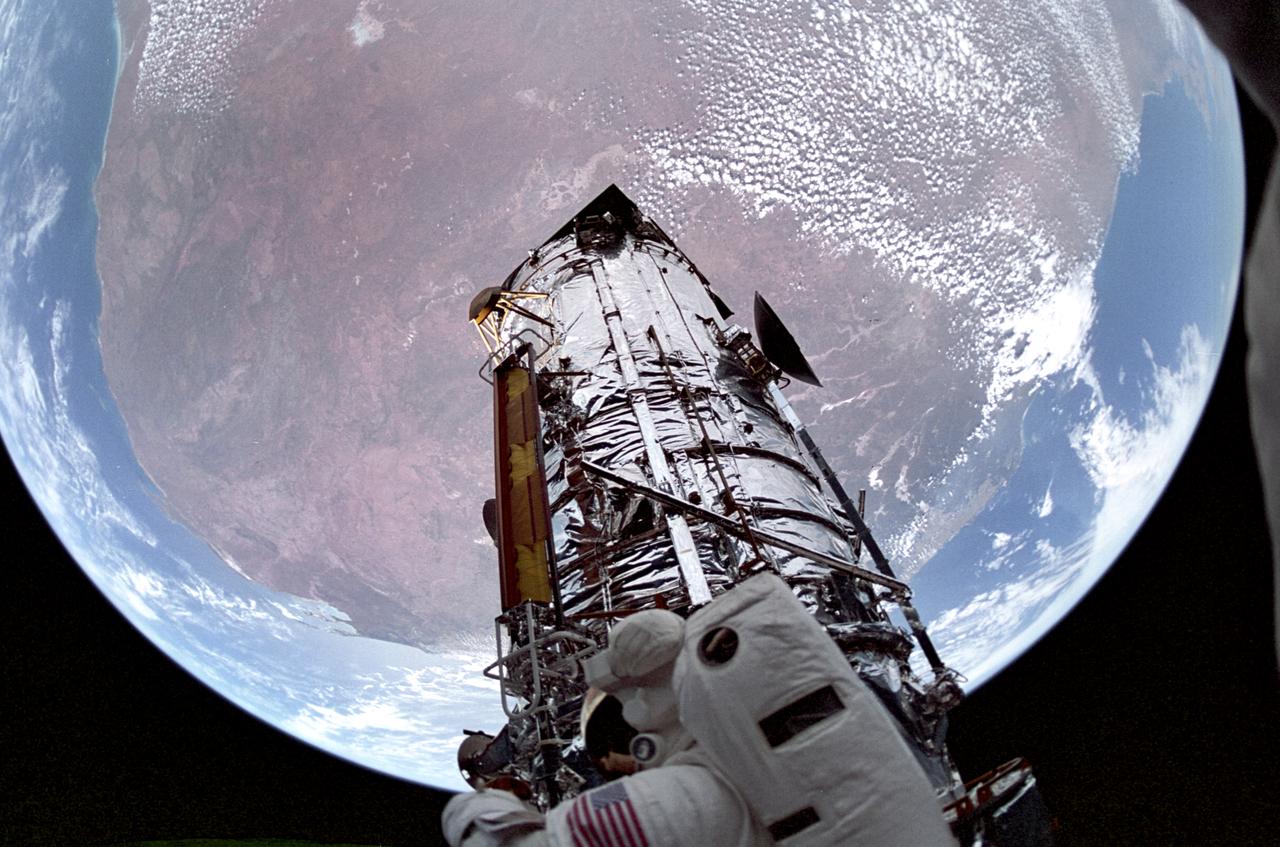
Backdropped against the Earth, the Hubble Space Telescope (HST)is shown sporting new and modified solar arrays stowed against its barrel. Orbiting Earth at an altitude of 325 nautical miles, an astronaut begins other repairs of the HST while perched atop a foot restraint on shuttle Endeavour's remote manipulator system arm. The 59th and final Shuttle flight of 1993 was one of most challenging and complex marned missions ever attempted. During record five back-to-back space walks totaling 35 hours and 28 minutes, two teams of astronauts completed the first servicing of the HST. The STS-061 mission was launched aboard Space Shuttle Endeavor on December 2, 1993.
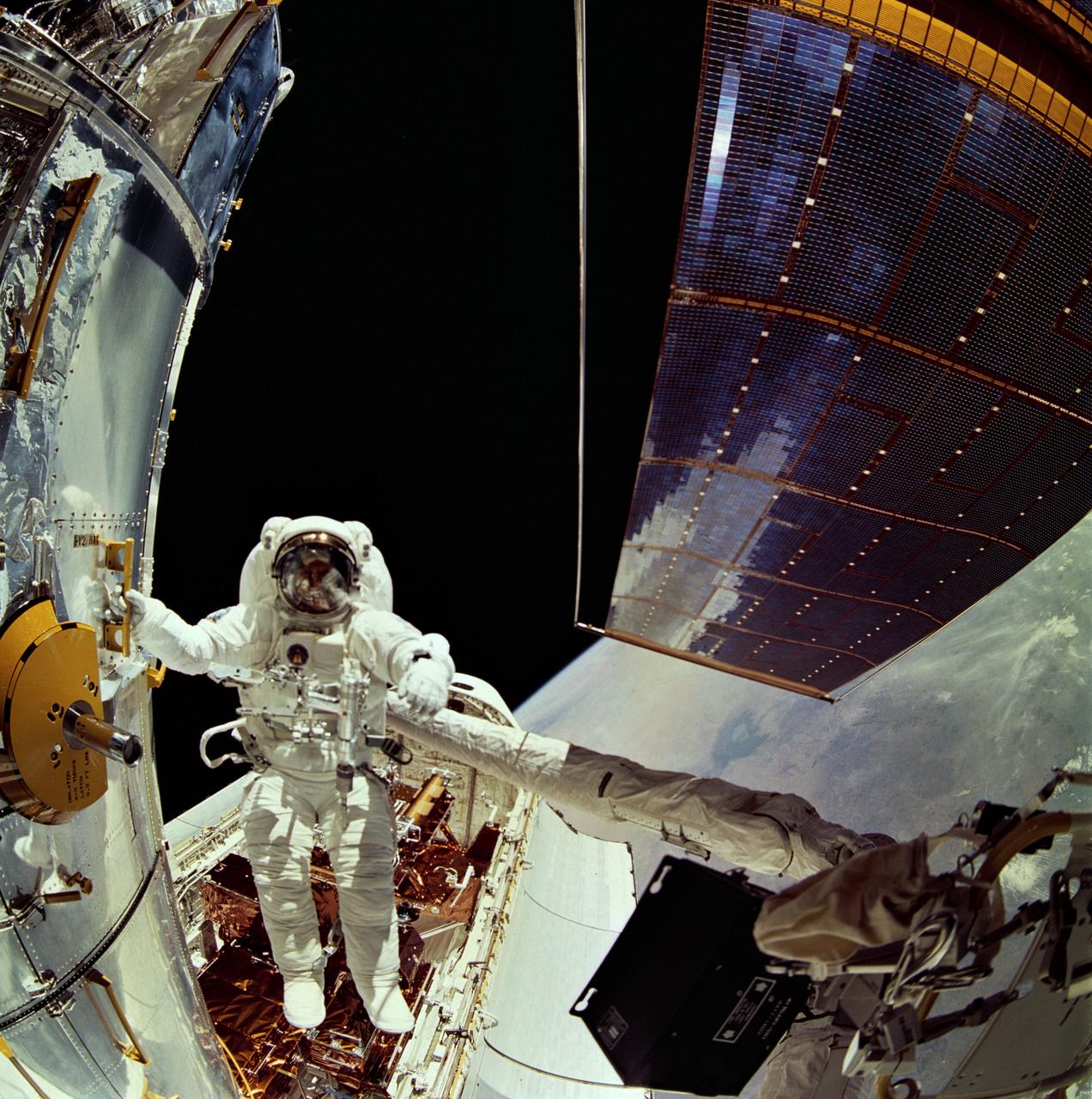
This is a Space Shuttle mission STS-61 onboard view showing astronauts Story Musgrave and Jeffrey Hoffman preforming repairs to the Hubble Space Telescope (HST) during their Extra Vehicular Activity (EVA). Astronauts' work was made easier by the HST's many crew aids. Astronaut Musgrave makes use of one of the spacecraft's handholds. Launched on December 1, 1993, the Space Shuttle Orbiter Endeavor STS-061 mission was the 59th Shuttle flight.
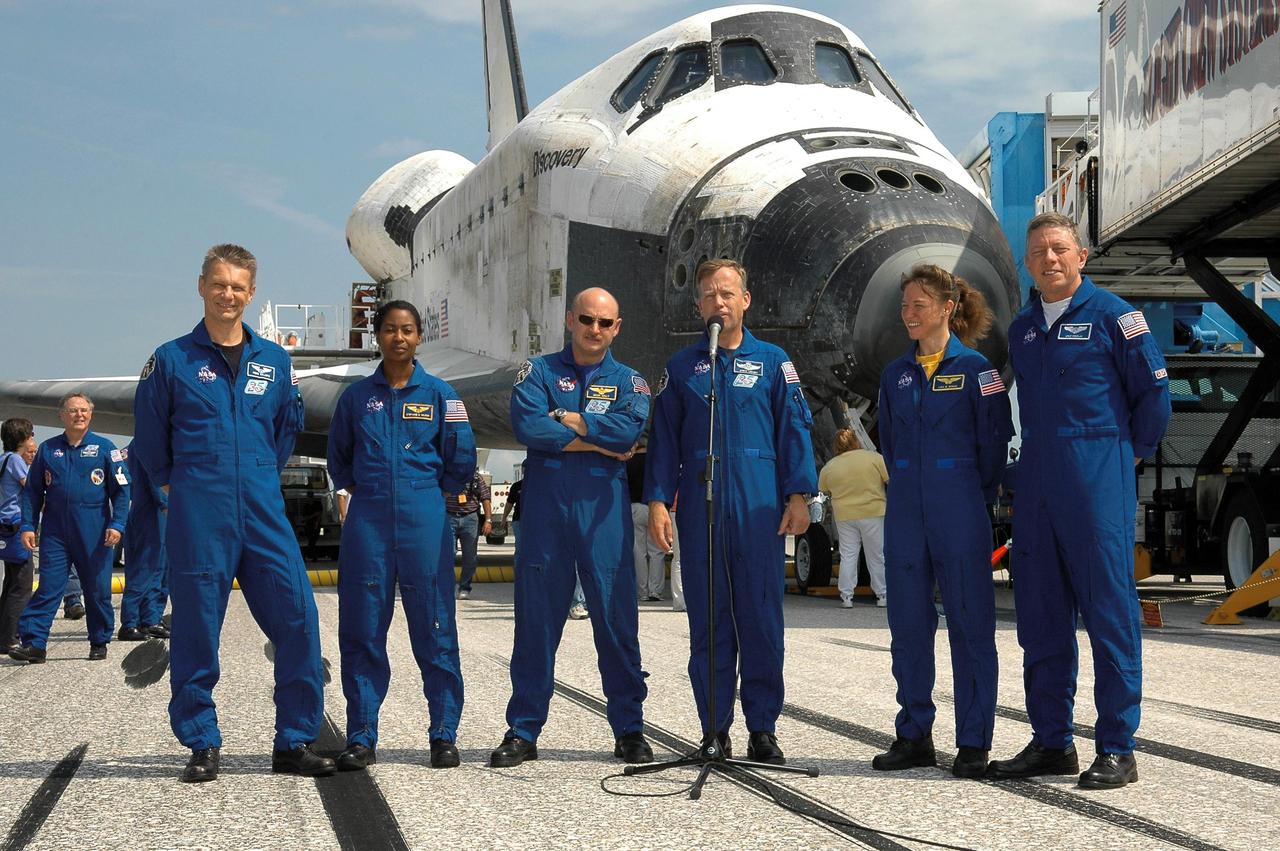
STS121-S-061 (17 July 2006) --- The STS-121 crew addresses greeters in front of the Space Shuttle Discovery near the landing facility at Kennedy Space Center following NASA's second Return to Flight mission. From left to right are astronauts Piers J. Sellers, Stephanie D. Wilson, Mark E. Kelly, Steven W. Lindsey, Lisa M. Nowak and Michael E. Fossum.
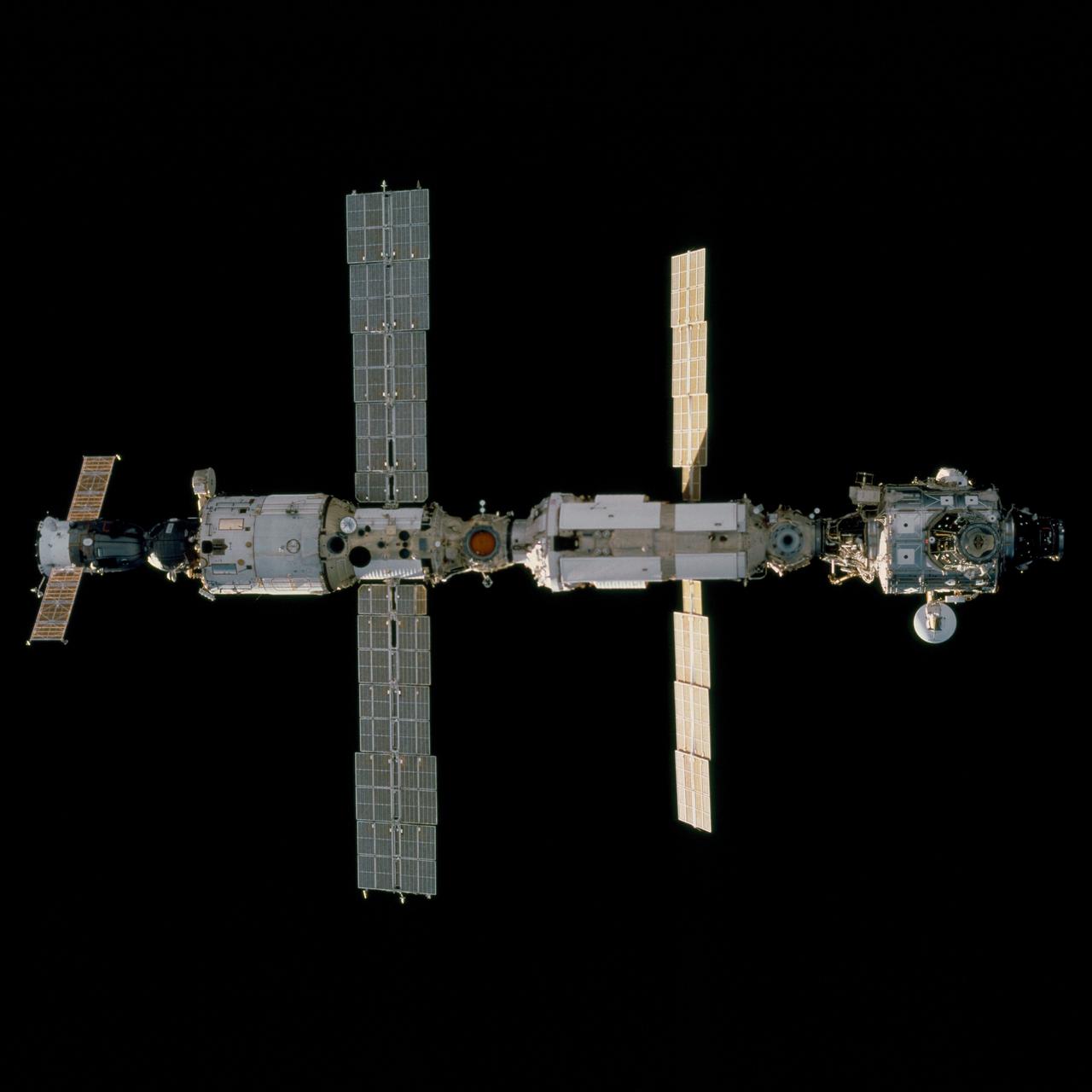
STS097-702-061 (2 December 2000) --- The International Space Station (ISS) moves in position for docking with the Space Shuttle Endeavour, in this 70mm frame photographed by one of the STS-97 astronauts on the flight deck of the shuttle. Most of the station's components are clearly visible in the frame, with the Soyuz spacecraft docked at left to the Zvezda Service Module, which is linked to the Zarya or Functional Cargo Block (FGB). The Unity node is at right, sporting the additions from the recent STS-92 mission of the Z1 truss structure (largely obscured) and a Pressurized Mating Adapter (PMA-3).
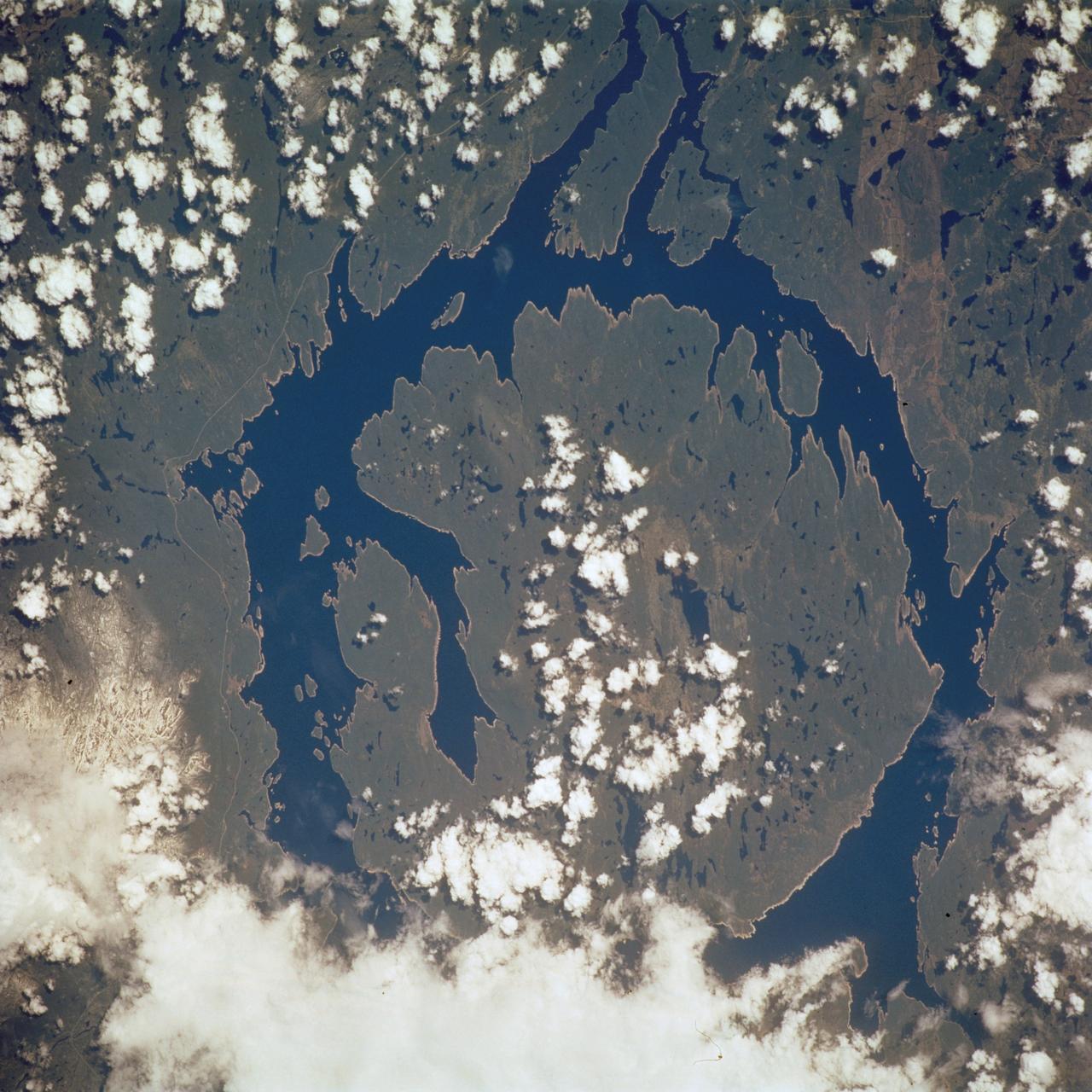
STS111-719-061 (5-19 June 2002) --- This photo showing the Manicouagan Reservoir in Quebec, Canada, was photographed by the STS-111 crewmembers aboard the Space Shuttle Endeavour. Manicouagan Reservoir marks the site of an impact crater, 60 miles (100 km) wide, which, according to scientists, was formed 212 million years ago when a meteorite crashed into this area. Scientists say that over millions of years the many advancing and retreating glaciers and other erosional processes have worn down the crater. The Gateway to Astronaut Photography of Earth (link to http://eol.jsc.nasa.gov/sseop/) provides searchable access to other photographs of Earth taken by astronauts.
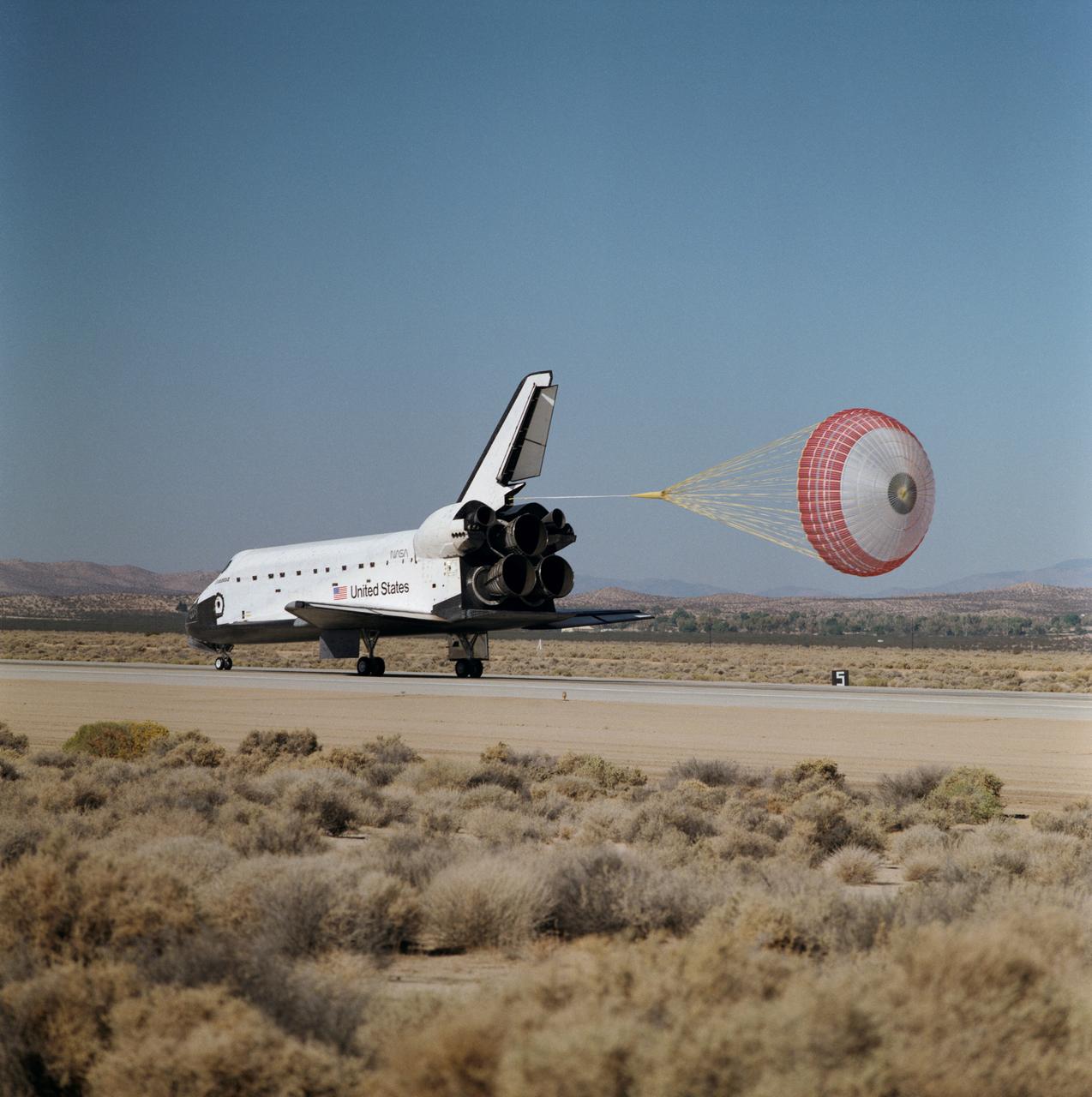
STS068-S-061 (11 October 1994) --- The drag chute system, one of 13 Detailed Test Objectives (DTO) for STS-68, is deployed as the Space Shuttle Endeavour completes an eleven-day mission at Edwards Air Force Base, California. Landing occurred at 10:02 a.m. (PDT), October 11, 1994. Onboard were astronauts Michael A. Baker, mission commander; Terrence W. Wilcutt, pilot; Thomas D. Jones, payload commander; and Daniel W. Bursch, Peter J. K. (Jeff) Wisoff and Steven L. Smith, all mission specialists.
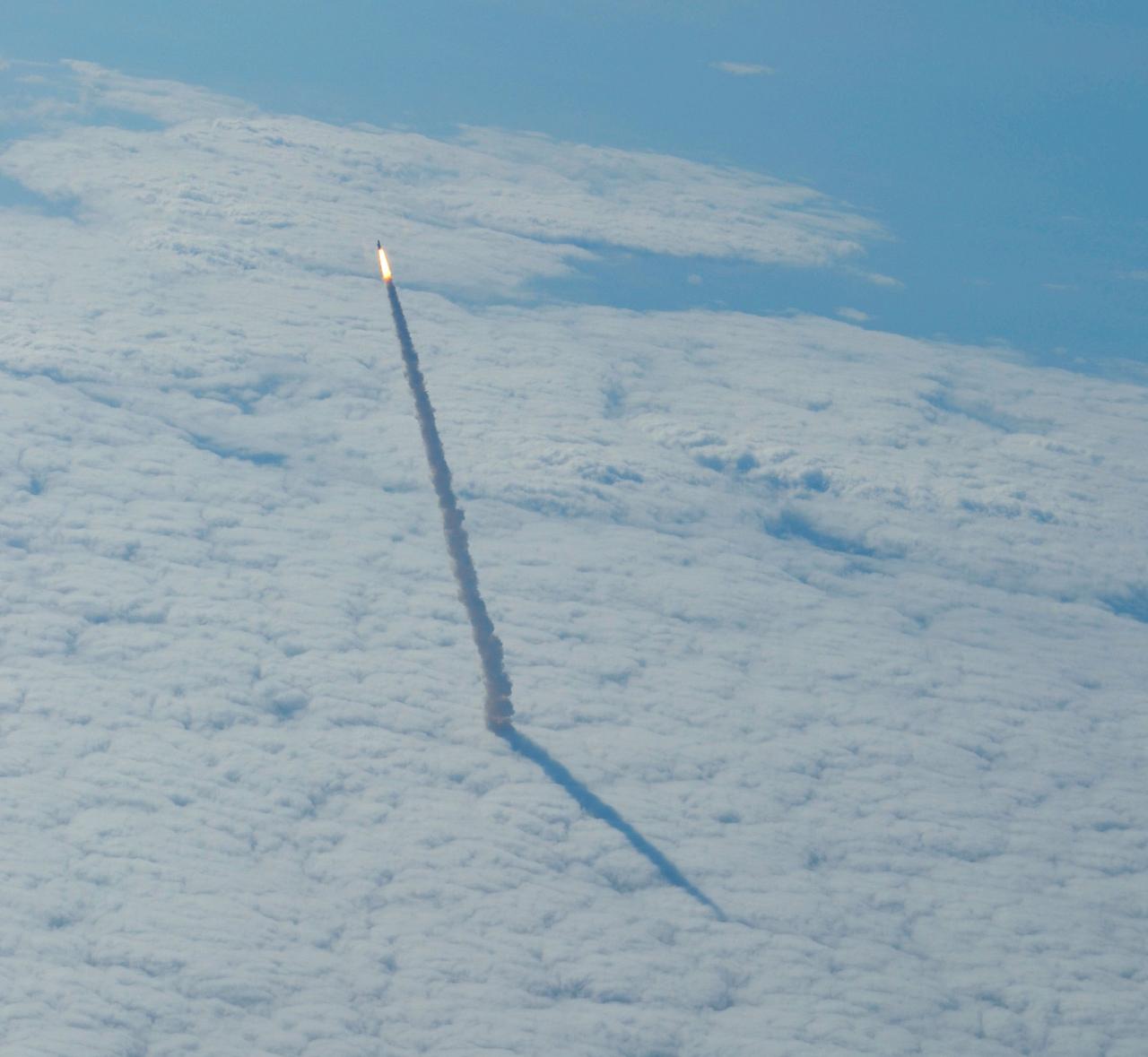
STS134-S-061 (16 May 2011) --- Photographed from a shuttle training aircraft, space shuttle Endeavour and its six-member STS-134 crew head toward Earth orbit and rendezvous with the International Space Station. Liftoff was at 8:56 a.m. (EDT) on May 16, 2011, from Launch Pad 39A at NASA's Kennedy Space Center. Onboard are NASA astronauts Mark Kelly, commander; Greg H. Johnson, pilot; Michael Fincke, Andrew Feustel, Greg Chamitoff and European Space Agency astronaut Roberto Vittori, all mission specialists. STS-134 will deliver the Alpha Magnetic Spectrometer-2 (AMS), Express Logistics Carrier-3, a high-pressure gas tank and additional spare parts for the Dextre robotic helper to the International Space Station. STS-134 is the final spaceflight for Endeavour. Photo credit: NASA
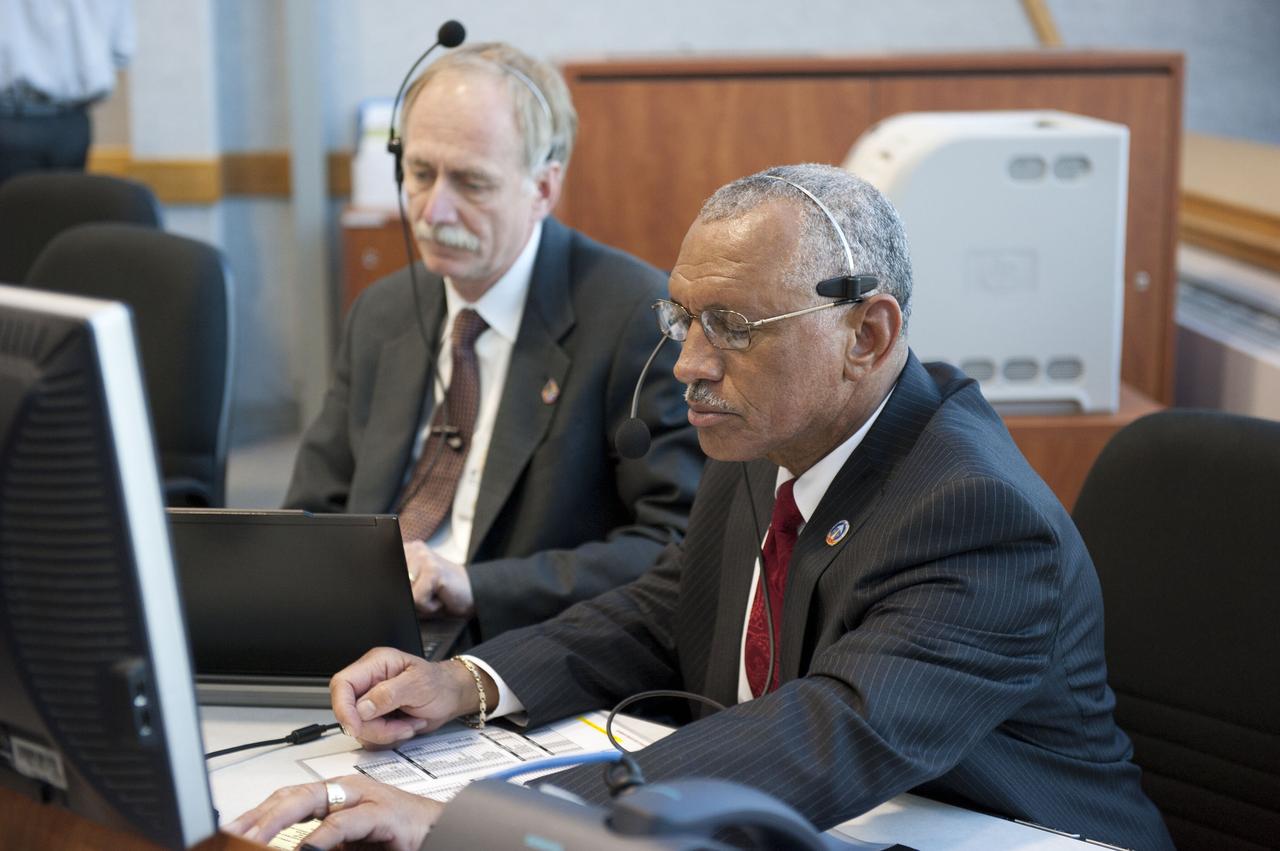
STS133-S-061 (24 Feb. 2011) --- In Firing Room 4 of the Launch Control Center at NASA's Kennedy Space Center in Florida, NASA Administrator Charlie Bolden (foreground) and Associate Administrator for Space Operations Bill Gerstenmaier monitor the countdown to launch of space shuttle Discovery on its STS-133 mission to the International Space Station. Discovery and its six-member crew are on a mission to deliver the Permanent Multipurpose Module, packed with supplies and critical spare parts, as well as Robonaut 2, the dexterous humanoid astronaut helper, to the orbiting outpost. Discovery is making its 39th mission and is scheduled to be retired following STS-133. This is the 133rd Space Shuttle Program mission and the 35th shuttle voyage to the space station. Photo credit: NASA or National Aeronautics and Space Administration
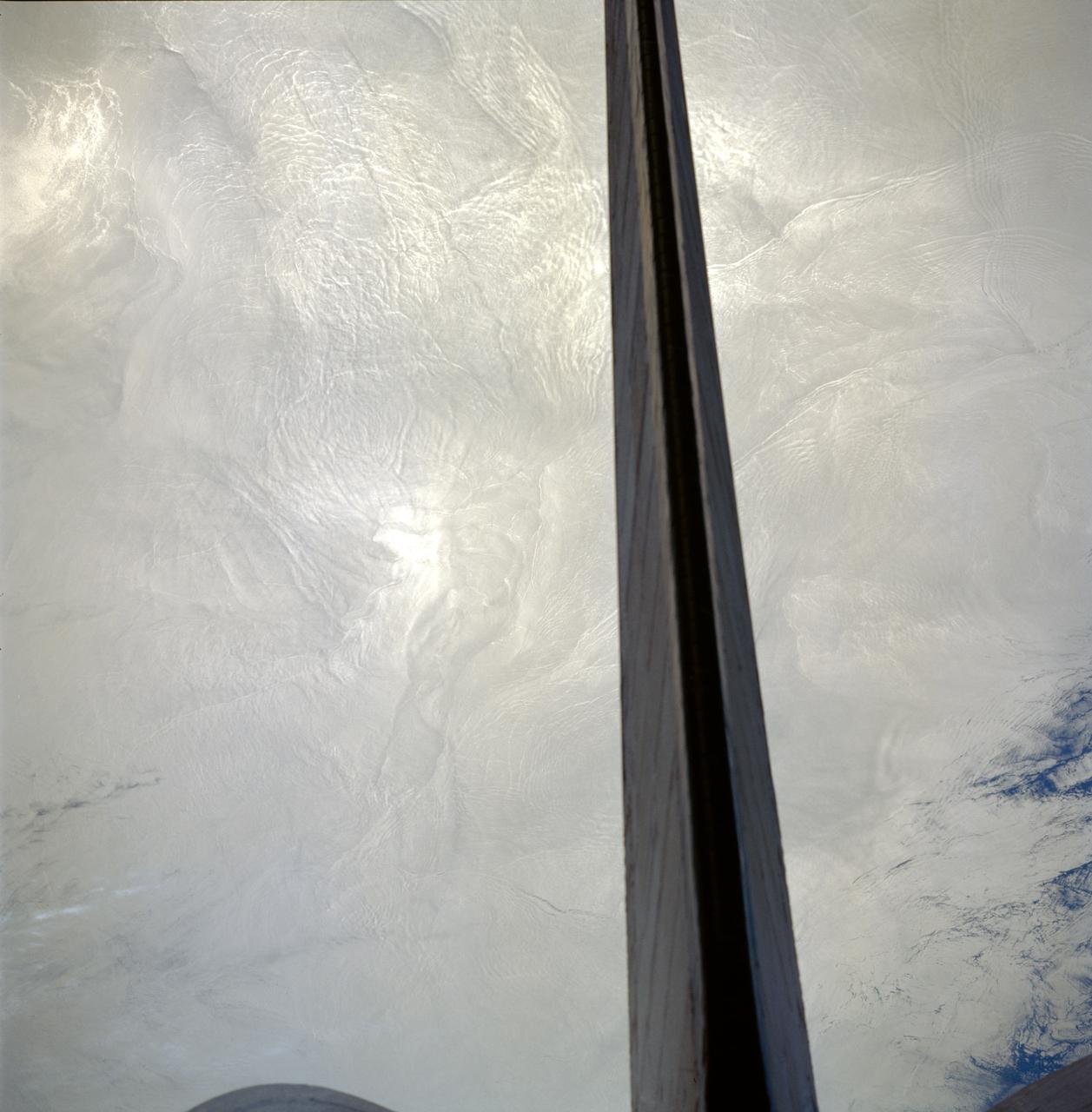
STS091-713-061 (2-12 June 1998) --- The vertical stabilizer of the Space Shuttle Discovery runs through this Atlantic Ocean image made from its crew cabin. Many sets of internal waves are seen in the 70mm frame traveling through an area off the Atlantic coast of Nova Scotia, Canada. There are seven sets that run perpendicular to each other. Internal waves are tidally induced and travel below the surface of the ocean along a density change which occurs often around 150 feet deep. According to NASA scientists studying the STS-91 collection, the waves are visible because, as the wave action smoothes out the smaller waves on the surface, the manner in which the sun is reflected is changed.
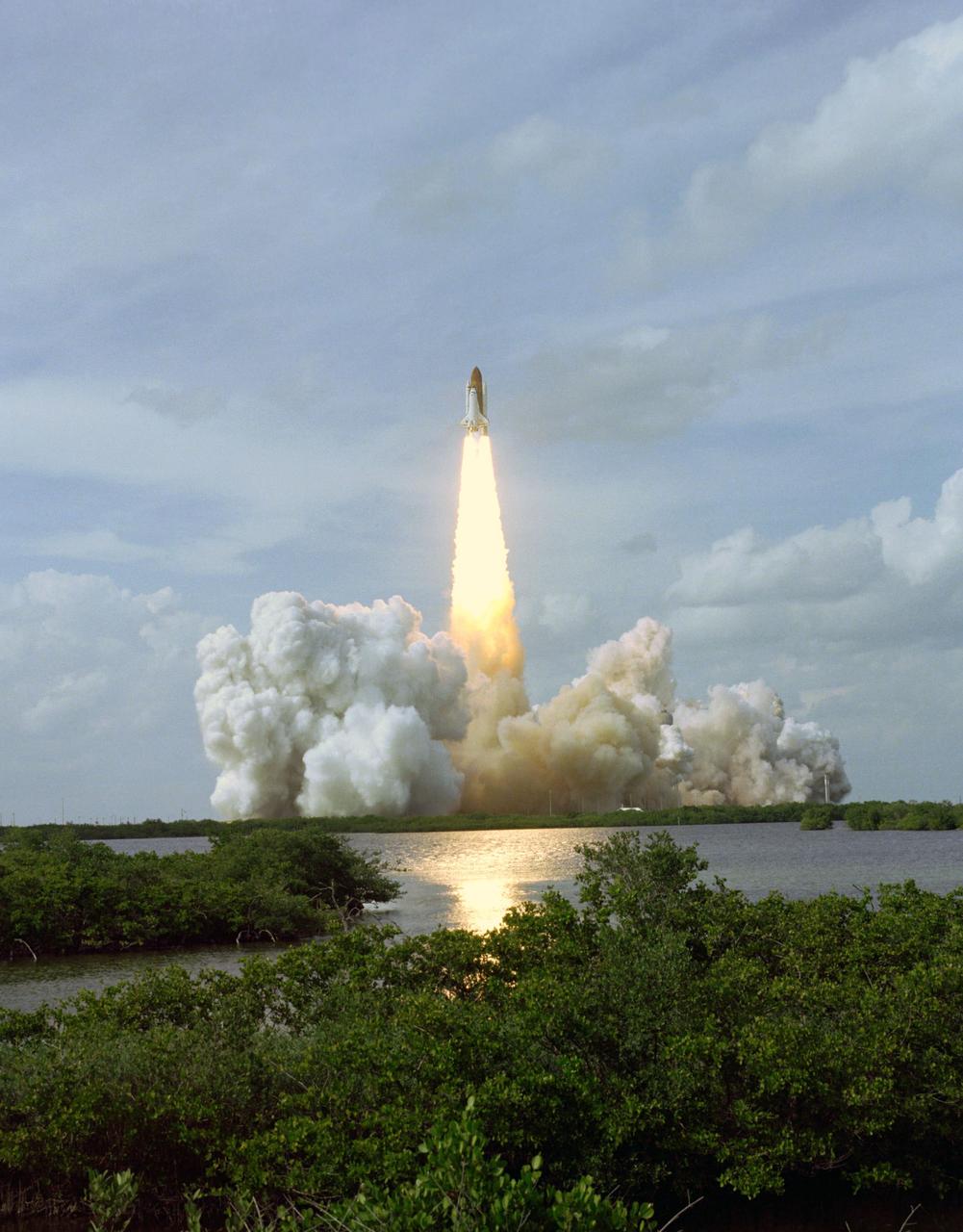
STS122-S-061 (7 Feb. 2008) --- The Space Shuttle Atlantis and its seven-member STS-122 crew head toward Earth-orbit and a scheduled link-up with the International Space Station (ISS). Liftoff from Kennedy Space Center's launch pad 39A occurred at 2:45 p.m. (EST). The launch is the third attempt for Atlantis since December 2007 to carry the European Space Agency's (ESA) Columbus laboratory to the station. During the mission, the crew's prime objective is to attach the laboratory to the Harmony module, adding to the station's size and capabilities. Onboard are astronauts Steve Frick, commander; Alan Poindexter, pilot; Leland Melvin, Rex Walheim, ESA's Hans Schlegel, Stanley Love and ESA's Leopold Eyharts, all mission specialists. Eyharts will join Expedition 16 in progress to serve as a flight engineer aboard the ISS.
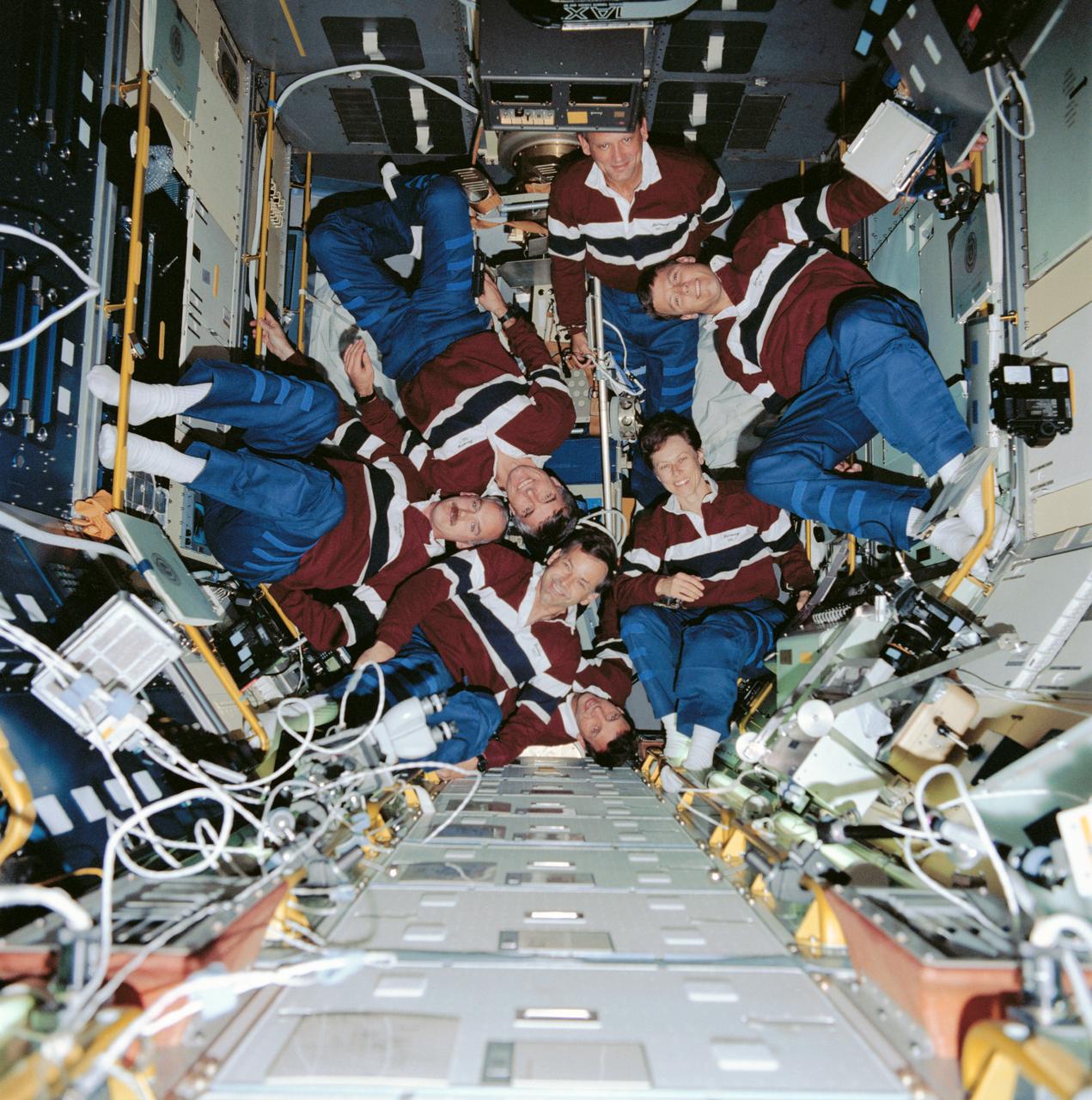
STS042-78-061 (22-30 Jan. 1992) --- The seven STS-42 crewmembers pose for a traditional in-space portrait in the shirt-sleeve environment of the International Microgravity Laboratory (IML-1) science module in the shuttle's cargo bay. (Hold picture with index numbers at top.) David C. Hilmers, mission specialist, is at top center of the 70mm image. Others pictured are (clockwise) Ronald J. Grabe, mission commander; William F. Readdy; mission specialist; Ulf Merbold, European Space Agency (ESA) payload specialist; Norman E. Thagard, payload commander; Stephen S. Oswald, pilot; and Roberta L. Bondar, Canadian payload specialist. The rotating chair, used often in biomedical tests on the eight-day flight, is (partially obscured) in center frame.
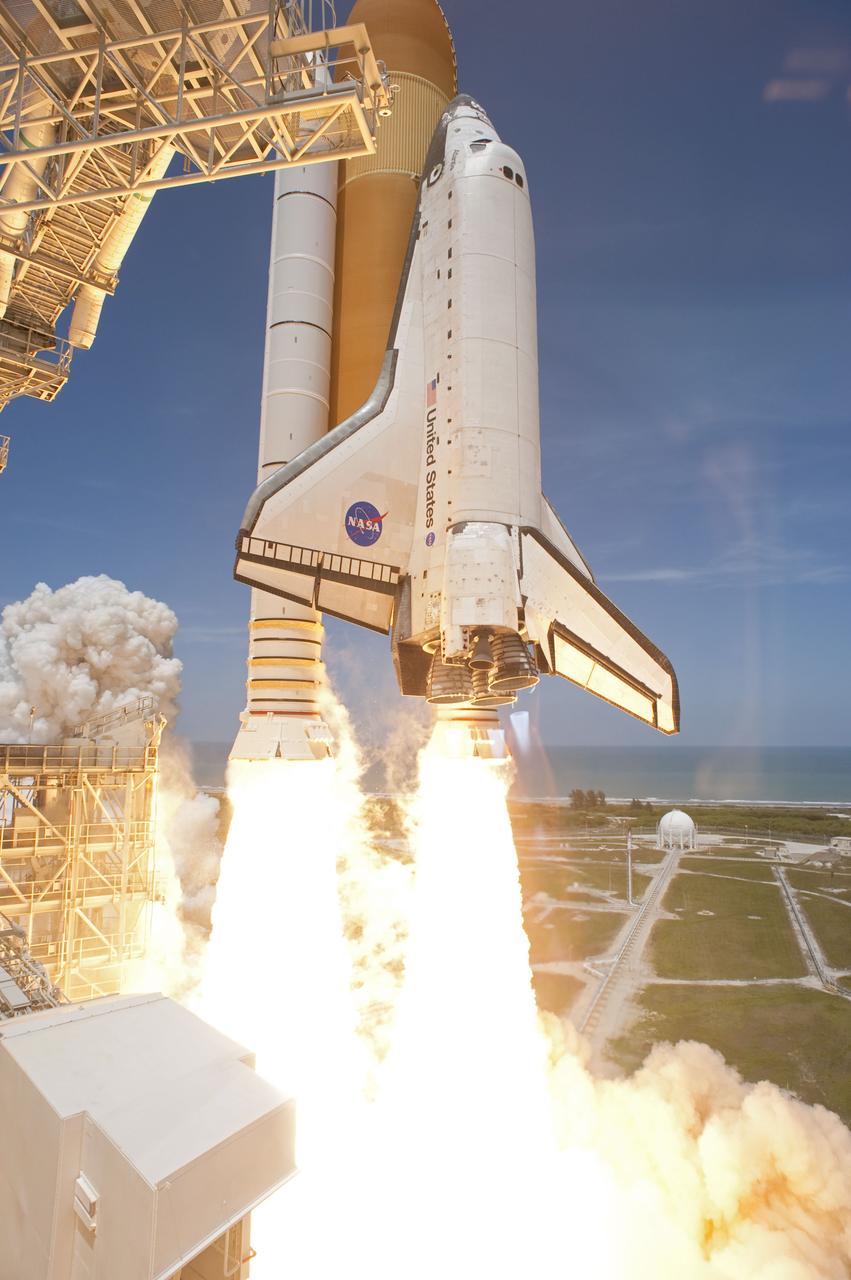
STS132-S-061 (14 May 2010) --- Space shuttle Atlantis and its six-member STS-132 crew head toward Earth orbit and rendezvous with the International Space Station. Liftoff was at 2:20 p.m. (EDT) on May 14, 2010, from launch pad 39A at NASA's Kennedy Space Center. Onboard are NASA astronauts Ken Ham, commander; Tony Antonelli, pilot; Garrett Reisman, Michael Good, Steve Bowen and Piers Sellers, all mission specialists. The crew will deliver the Russian-built Mini-Research Module 1 (MRM-1) to the International Space Station. Named Rassvet, Russian for "dawn," the module is the second in a series of new pressurized components for Russia and will be permanently attached to the Earth-facing port of the Zarya Functional Cargo Block (FGB). Rassvet will be used for cargo storage and will provide an additional docking port to the station. Also aboard Atlantis is an Integrated Cargo Carrier, or ICC, an unpressurized flat bed pallet and keel yoke assembly used to support the transfer of exterior cargo from the shuttle to the station. STS-132 is the 34th mission to the station and the last scheduled flight for Atlantis. For more information on the STS-132 mission objectives, payload and crew, visit www.nasa.gov/mission_pages/shuttle/shuttlemissions/sts132/index.html. Photo credit: NASA/Sandra Joseph and Kevin O'Connell
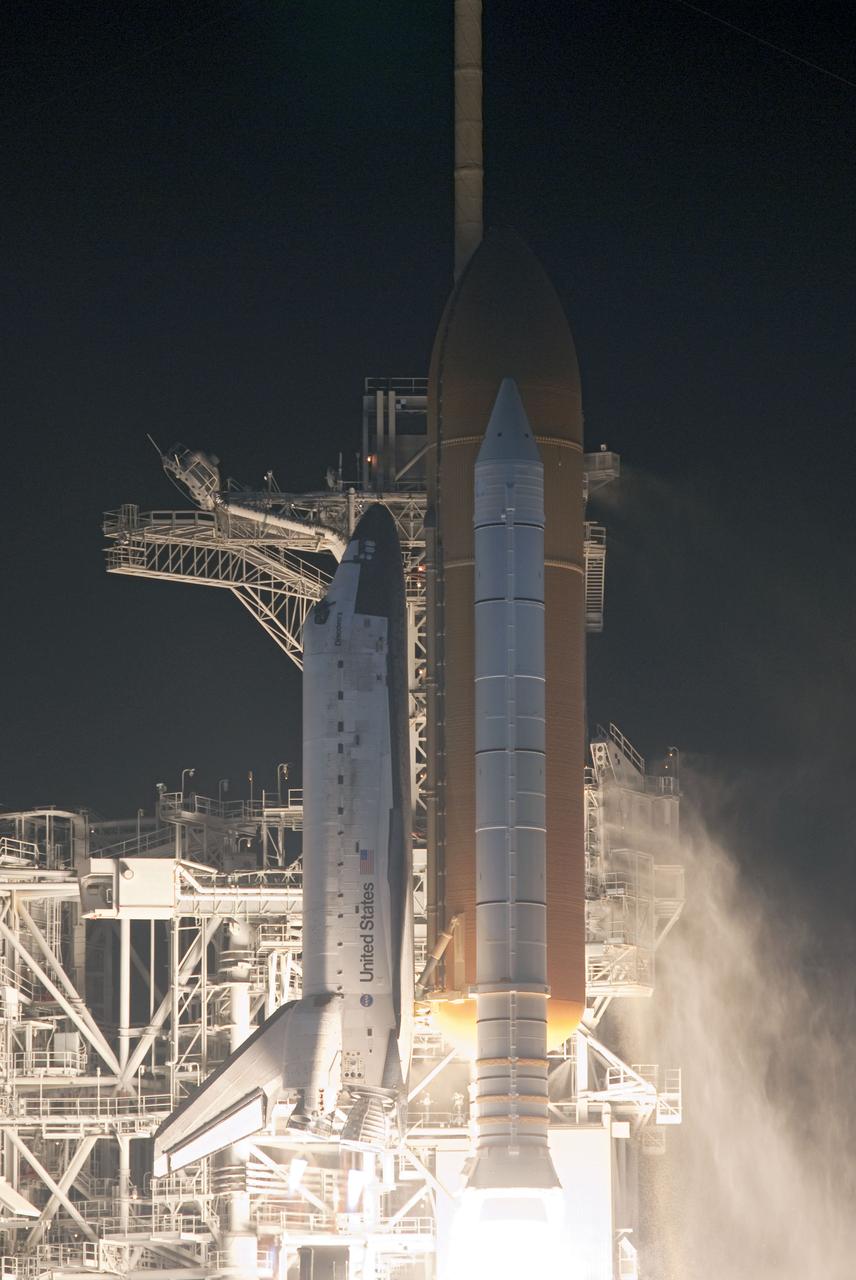
STS131-S-061 (5 April 2010) --- Space shuttle Discovery and its seven-member STS-131 crew head toward Earth orbit and rendezvous with the International Space Station. Liftoff was at 6:21 a.m. (EDT) on April 5, 2010, from launch pad 39A at NASA's Kennedy Space Center. Onboard are NASA astronauts Alan Poindexter, commander; James P. Dutton Jr., pilot; Rick Mastracchio, Dorothy Metcalf-Lindenburger, Stephanie Wilson and Clayton Anderson; along with Japan Aerospace Exploration Agency (JAXA) astronaut Naoko Yamazaki, all mission specialists. The crew will deliver the multi-purpose logistics module Leonardo, filled with supplies, a new crew sleeping quarters and science racks that will be transferred to the International Space Station's laboratories. The crew also will switch out a gyroscope on the station’s truss structure, install a spare ammonia storage tank and retrieve a Japanese experiment from the station’s exterior. STS-131 is the 33rd shuttle mission to the station and the 131st shuttle mission overall.
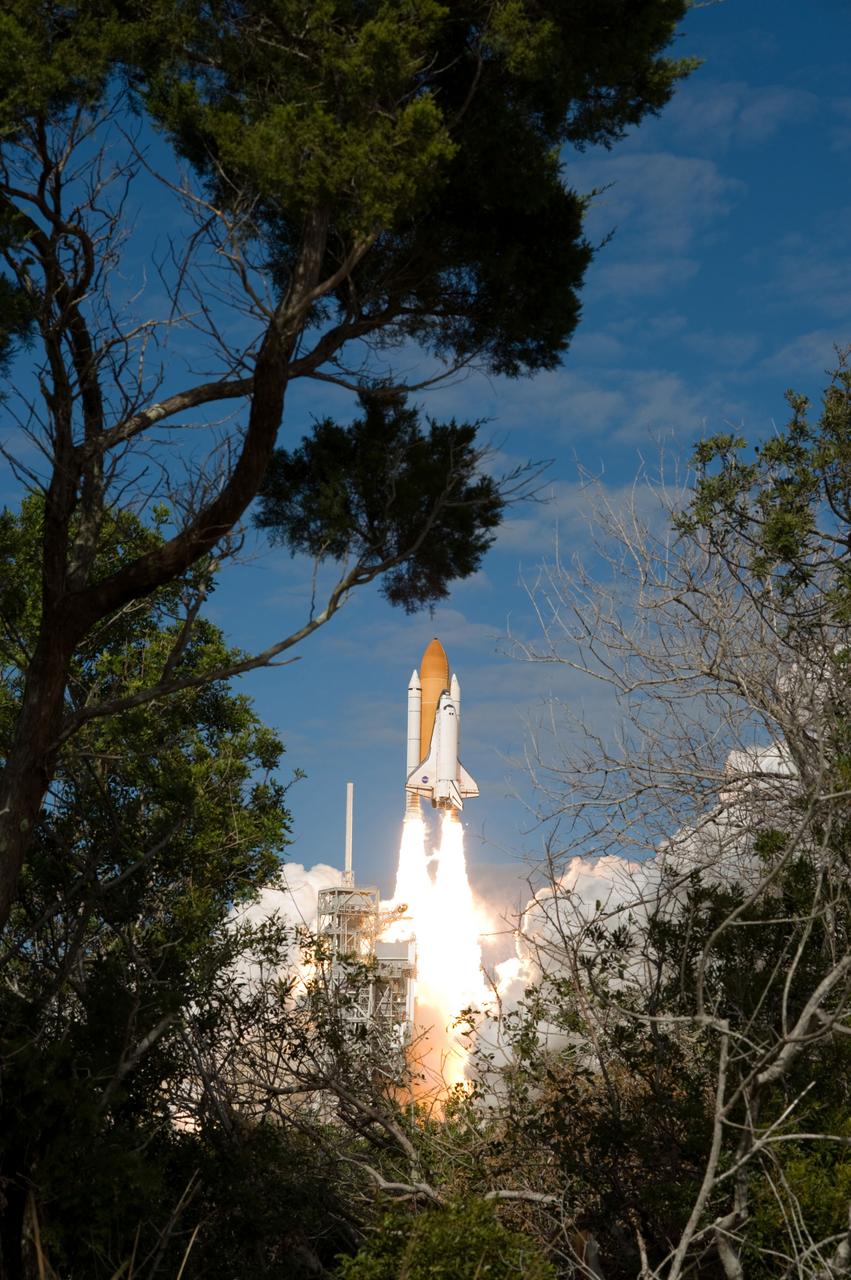
STS129-S-061 (16 Nov. 2009) --- Space Shuttle Atlantis and its six-member STS-129 crew head toward Earth orbit and rendezvous with the International Space Station. Liftoff was on time at 2:28 p.m. (EST) on Nov. 16, 2009 from launch pad 39A at NASA?s Kennedy Space Center, Florida. Onboard are astronauts Charles O. Hobaugh, commander; Barry E. Wilmore, pilot; along with Leland Melvin, Mike Foreman, Robert L. Satcher Jr. and Randy Bresnik, all mission specialists. Atlantis will deliver two Express Logistics Carriers to the station, the largest of the shuttle's cargo carriers, containing 15 spare pieces of equipment including two gyroscopes, two nitrogen tank assemblies, two pump modules, an ammonia tank assembly and a spare latching end effector for the station's robotic arm. Atlantis will return to Earth a station crew member, Nicole Stott, who has spent more than two months aboard the orbiting laboratory. STS-129 is slated to be the final space shuttle Expedition crew rotation flight.
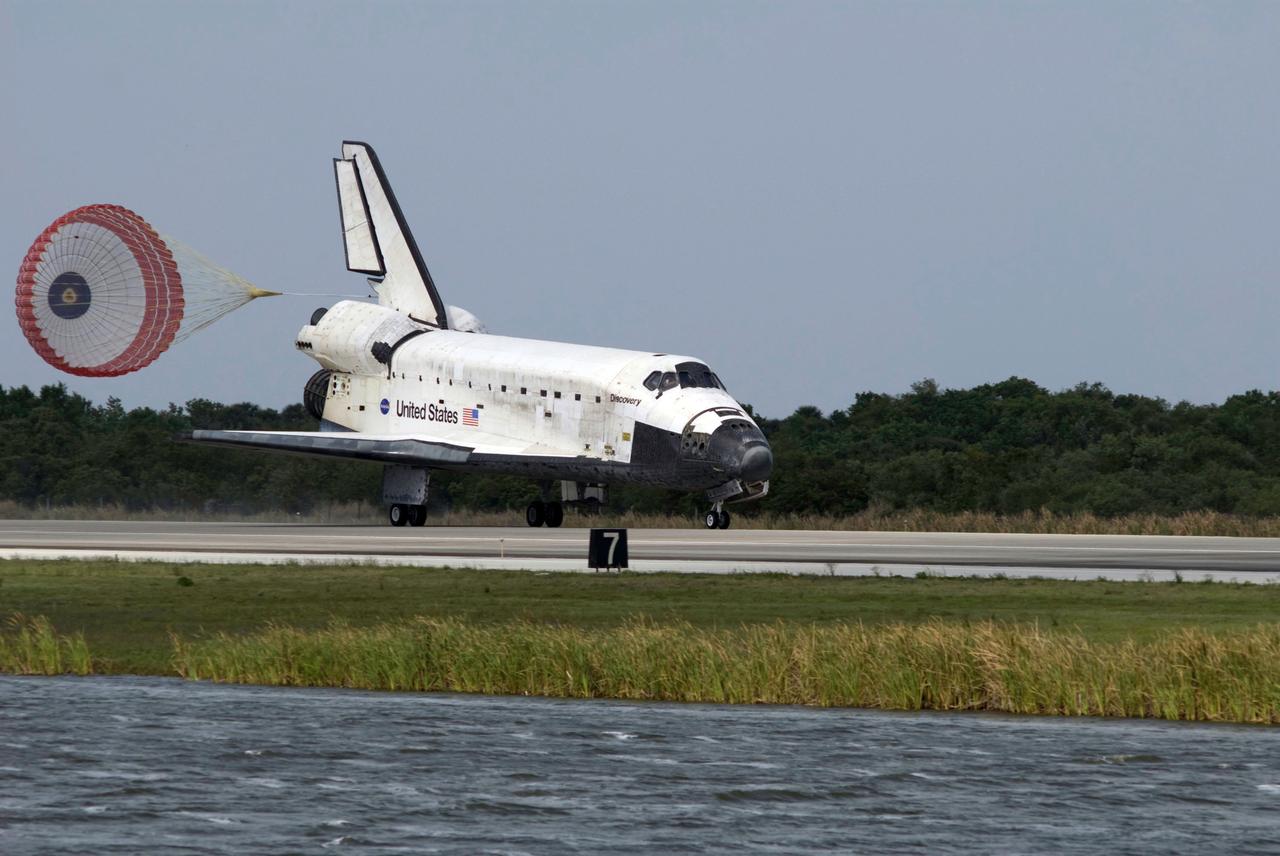
STS119-S-061 (28 March 2009) --- Space Shuttle Discovery?s drag chute is deployed as the spacecraft rolls toward wheels stop on Runway 15 of the Shuttle Landing Facility at NASA's Kennedy Space Center, concluding the 13-day, 5.3-million mile journey of the STS-119 mission to the International Space Station. Onboard are NASA astronauts Lee Archambault, commander; Tony Antonelli, pilot; Steve Swanson, Richard Arnold, Joseph Acaba, John Phillips and Sandra Magnus, all mission specialists. The main landing gear touched down at 3:13:17 p.m. (EDT) on March 28, 2009. The nose gear touched down at 3:13:40 p.m. and wheels stop was at 3:14:45 p.m. During the mission, Discovery?s crew delivered and installed the final pair of large power-generating solar array wings and the S6 truss segment to the starboard, or right, side of the station and accomplished important tasks to prepare the station for future upgrades and additions later this year.
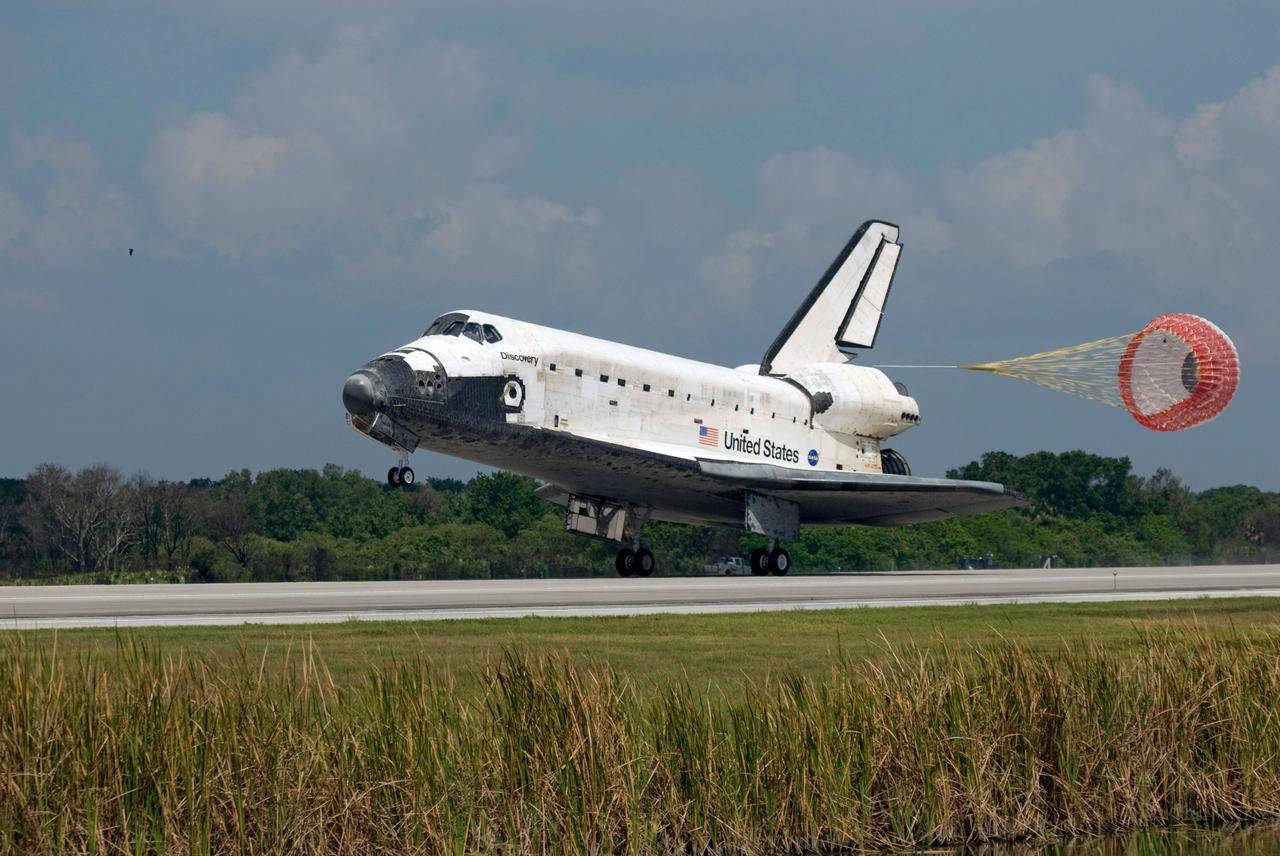
STS124-S-061 (14 June 2008) --- Space Shuttle Discovery's drag chute is deployed as the spacecraft rolls toward wheels stop on runway 15 of the Shuttle Landing Facility at NASA's Kennedy Space Center, concluding the 14-day STS-124 mission to the International Space Station. Onboard are NASA astronauts Mark Kelly, commander; Ken Ham, pilot; Mike Fossum, Ron Garan, Karen Nyberg, Garrett Reisman and Japan Aerospace Exploration Agency astronaut Akihiko Hoshide, all mission specialists. The main landing gear touched down at 11:15:19 a.m. (EDT) on June 14, 2008. The nose landing gear touched down at 11:15:30 a.m. and wheel stop was at 11:16:19 a.m. During the mission, Discovery's crew installed the Japan Aerospace Exploration Agency's large Kibo laboratory and its remote manipulator system leaving a larger space station and one with increased science capabilities.
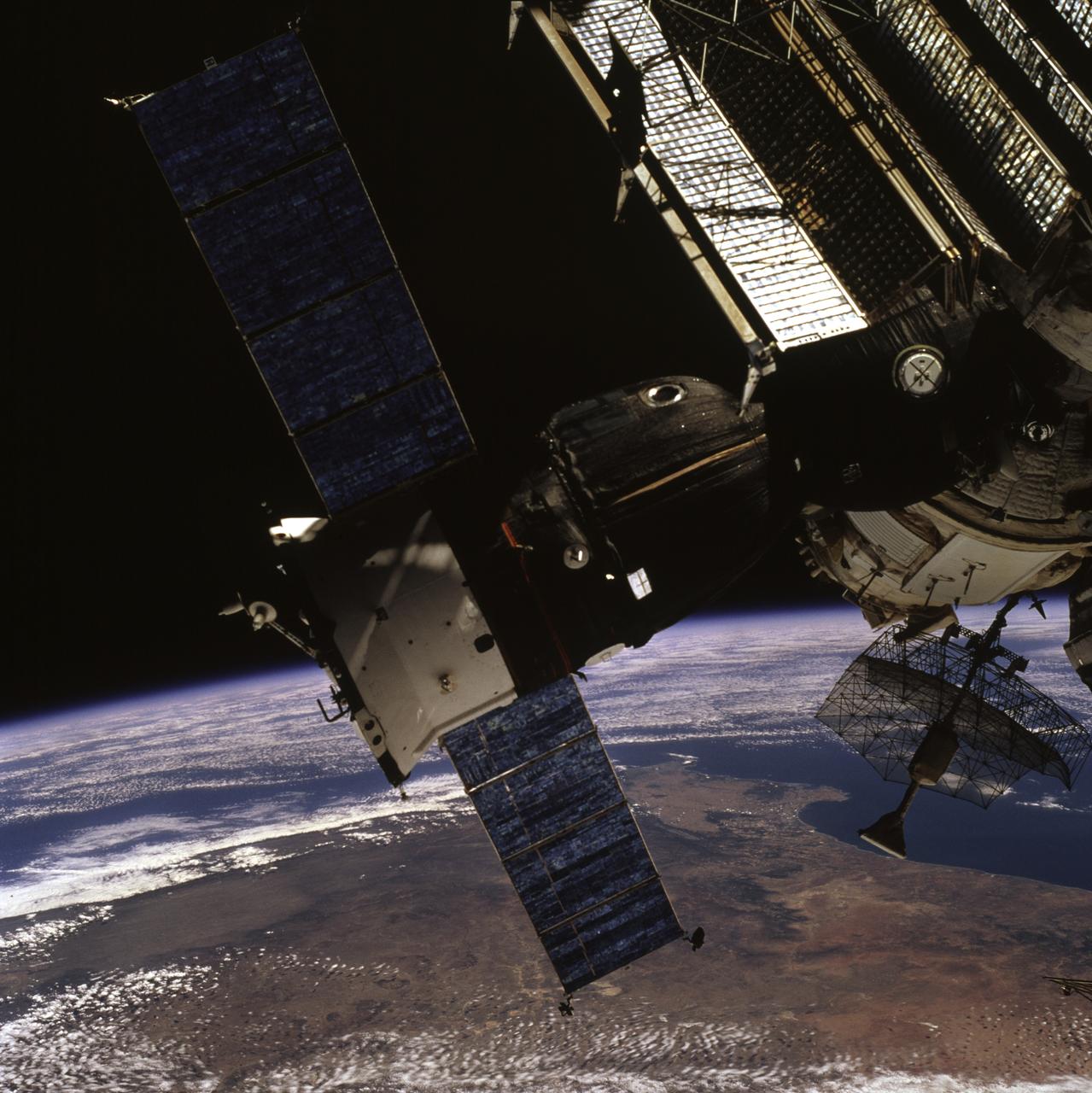
STS081-709-061 (12-22 Jan. 1997) --- As recorded while Space Shuttle Atlantis was docked with Russia's Mir Space Station, this 70mm camera's frame shows South Africa's wine growing country (immediately right of the solar panel) in a southwest-looking perspective. Most of the population in the Western Cape Province, as it is known, is clustered in the wet extreme south of the country identified here with denser cloud masses. This is the Mediterranean region of the country, experiencing summer drought when the photograph was taken. Cape Town lies immediately right of the solar panel and the Swartland wheat country to the left. The darker green areas are more heavily vegetated regions on the continental escarpment. The large bay in the region is the remote St. Helena Bay (Africa's southernmost point, Cape Agulhas, lies behind the solar panel). The cloud-free parts of the country in the foreground is the sparsely populated semidesert known as the Karroo, a quiet region to which people retire both for its rare dry climate and its beauty.
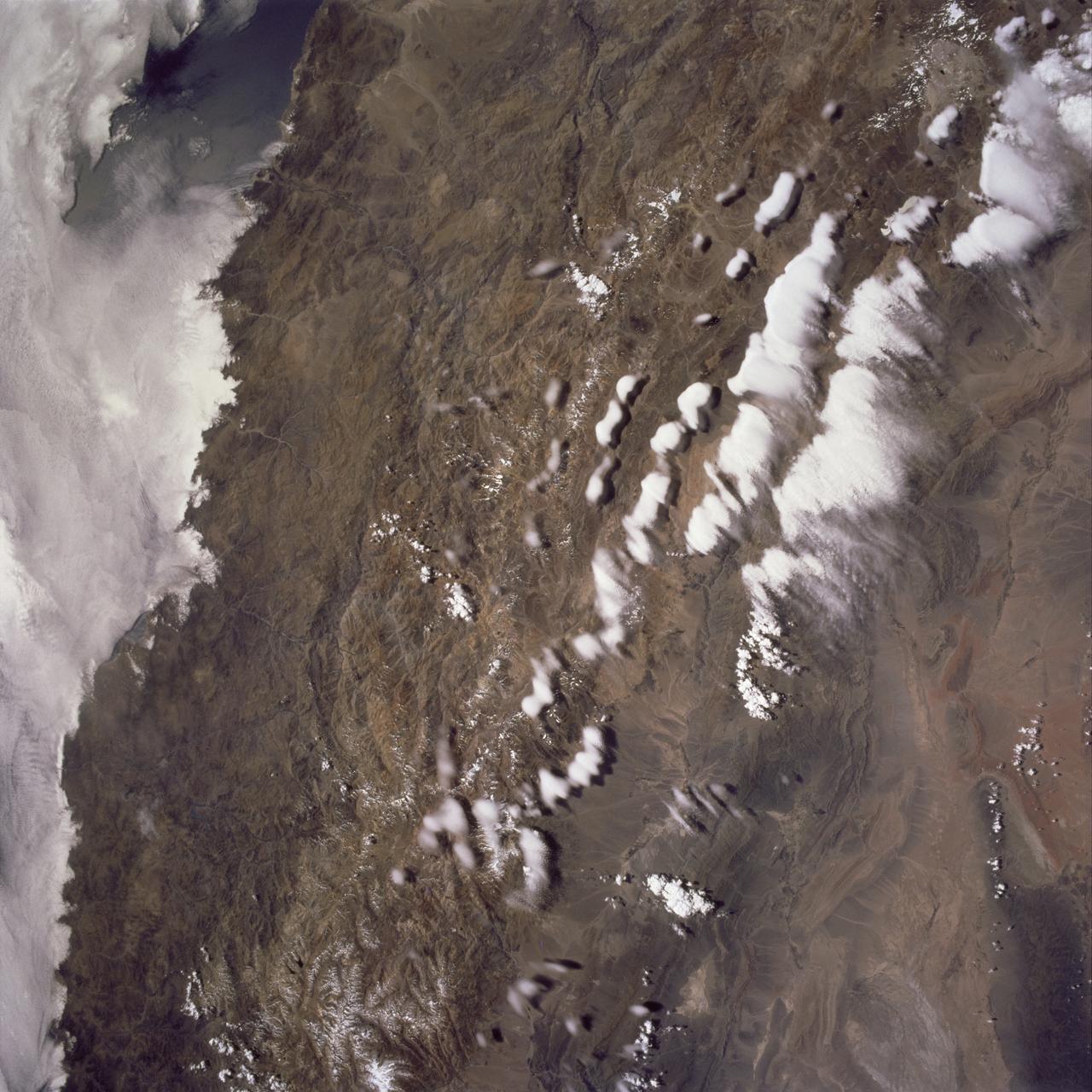
STS097-715-061 (10 December 2000) This view over the Central Andes Mountains in Argentina and Chile was taken on December 10, 2000 by one of the astronauts aboard the Earth-orbiting Space Shuttle Endeavour. Extending 5500 miles (8850 kilometers) along the western coast of South America from northern Colombia to Cape Horn in southern Chile, the Andes are the longest mountain range, above sea level, and the second highest range in the world. According to NASA scientists studying the STS-97 photo collection, this immense system came into existence nearly 70 million years ago. With numerous active volcanoes and a slow uplift, the building of the Andes Mountains continues today rising four inches (10 centimeters) per century, the scientists say. In this north-looking view, snow covers the higher peaks of the range, some of which rise to over 20000 feet (6100 meters) above sea level. Along the left or western portion of the view, clouds can be seen along coastal areas of Chile. In the bottom left quadrant of the scene, the blue waters of the Paloma Reservoir, a recreational lake, are visible. The folded Tontal Range (bottom center) and the Valle Fertil Range (upper right quadrant and partially cloud covered) of western Argentina can be seen. The rocks of these ranges, the scientists point out, are ancient compared to the younger volcanic peaks and ranges of the Andes. The city of San Juan, Argentina is visible on the eastern (right) base of the Tontal Range in the lower right quadrant of the view.