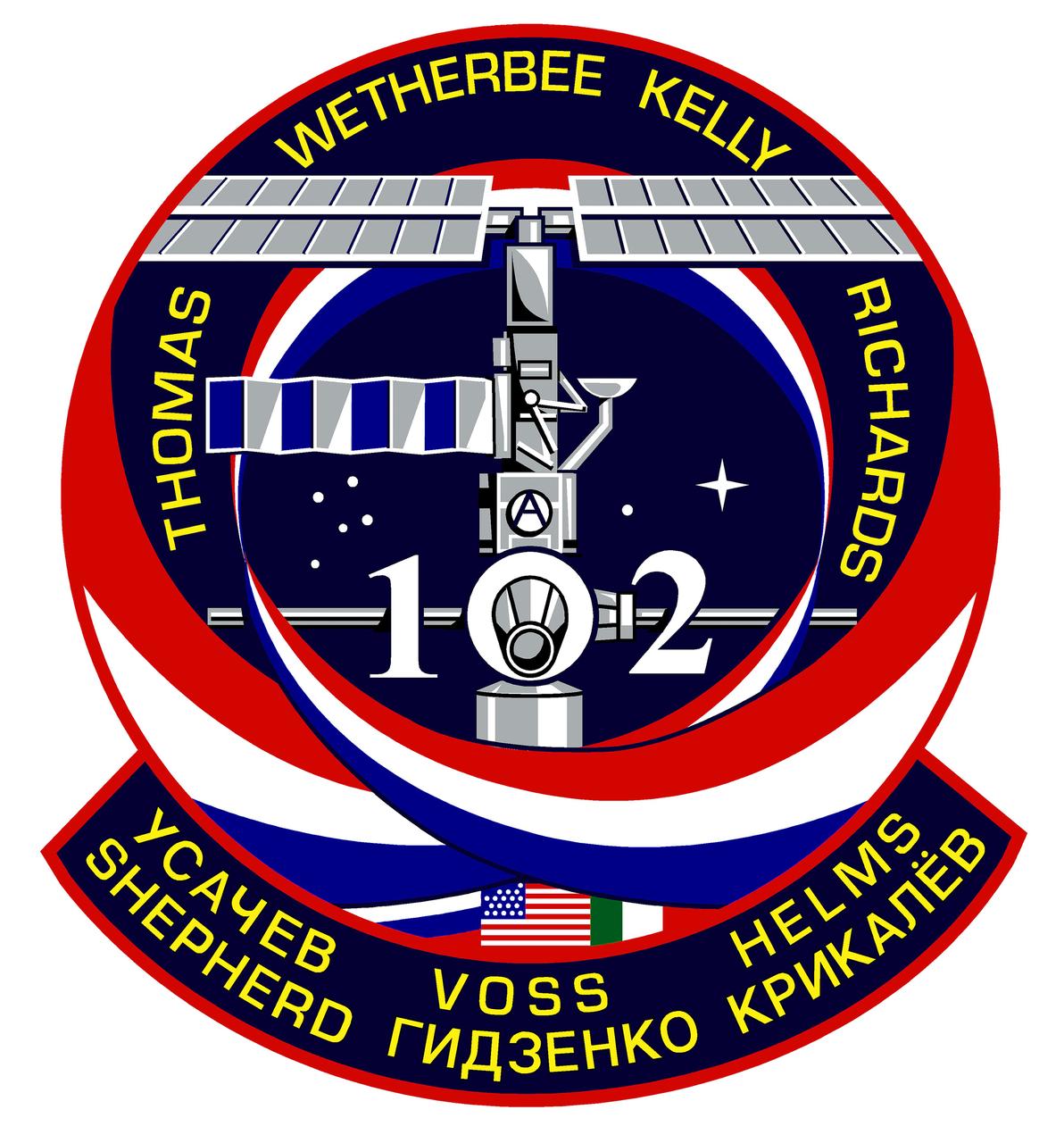
This is the STS-102 mission crew insignia. The central image on the crew patch depicts the International Space Station (ISS) in the build configuration that it had at the time of the arrival and docking of Discovery during the STS-102 mission, the first crew exchange flight to the Space Station. The station is shown along the direction of the flight as was seen by the shuttle crew during their final approach and docking, the so-called V-bar approach. The names of the shuttle crew members are depicted in gold around the top of the patch, and surnames of the Expedition crew members being exchanged are shown in the lower barner. The three ribbons swirling up to and around the station signify the rotation of these ISS crew members. The number 2 is for the Expedition 2 crew who flew up to the station, and the number 1 is for the Expedition 1 crew who then returned down to Earth. In conjunction with the face of the Lab module of the Station, these Expedition numbers create the shuttle mission number 102. Shown mated below the ISS is the Italian-built Multipurpose Logistics Module, Leonardo, that flew for the first time on this flight. The flags of the countries that were the major contributors to this effort, the United States, Russia, and Italy are also shown in the lower part of the patch. The build-sequence number of this flight in the overall station assembly sequence, 5A.1, is captured by the constellations in the background.
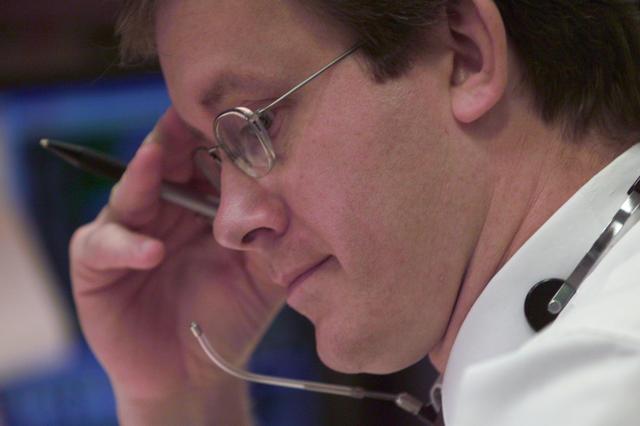
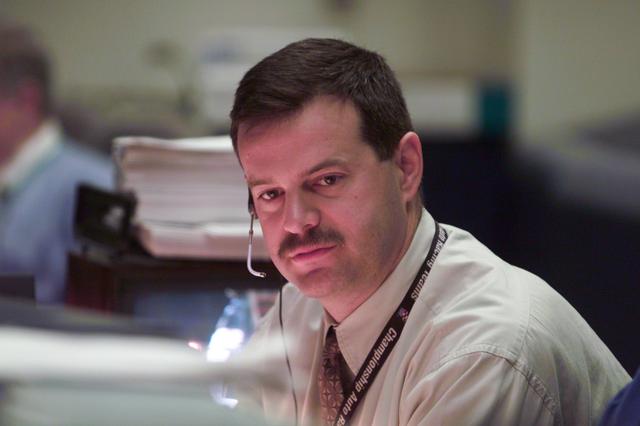
JSC2001-E-06200 (8 March 2001) --- At his console in Houston's Mission Control Center, STS-102 lead flight director John Shannon, studies mission data on STS-102 launch day.
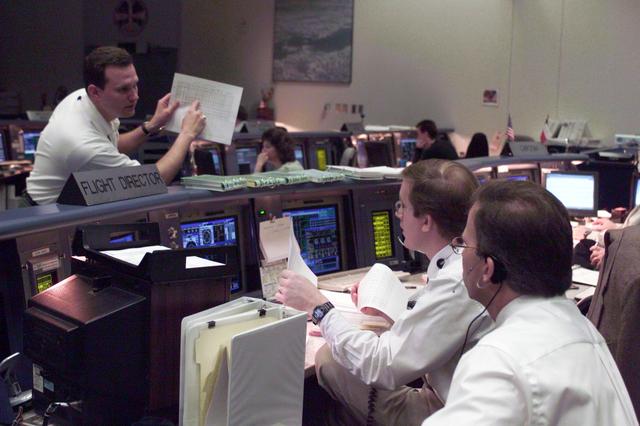
JSC2001-E-06196 (8 March 2001) --- At his console in Houston's Mission Control Center, STS-102 lead flight director John Shannon (center), gathers mission data on STS-102 launch day.
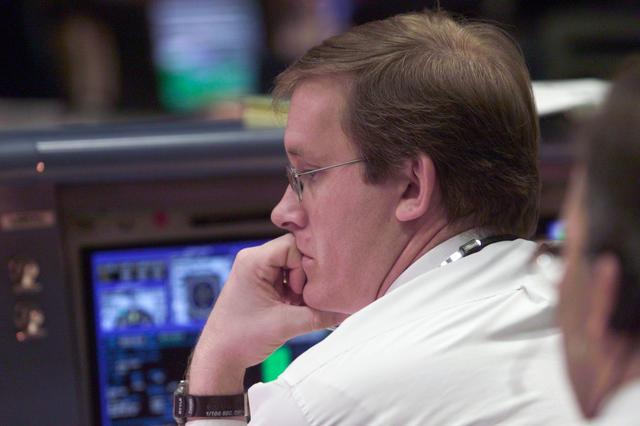
JSC2001-E-06217 (8 March 2001) --- At his console in Houston's Mission Control Center, STS-102 lead flight director John Shannon studies mission data on STS-102 launch day.
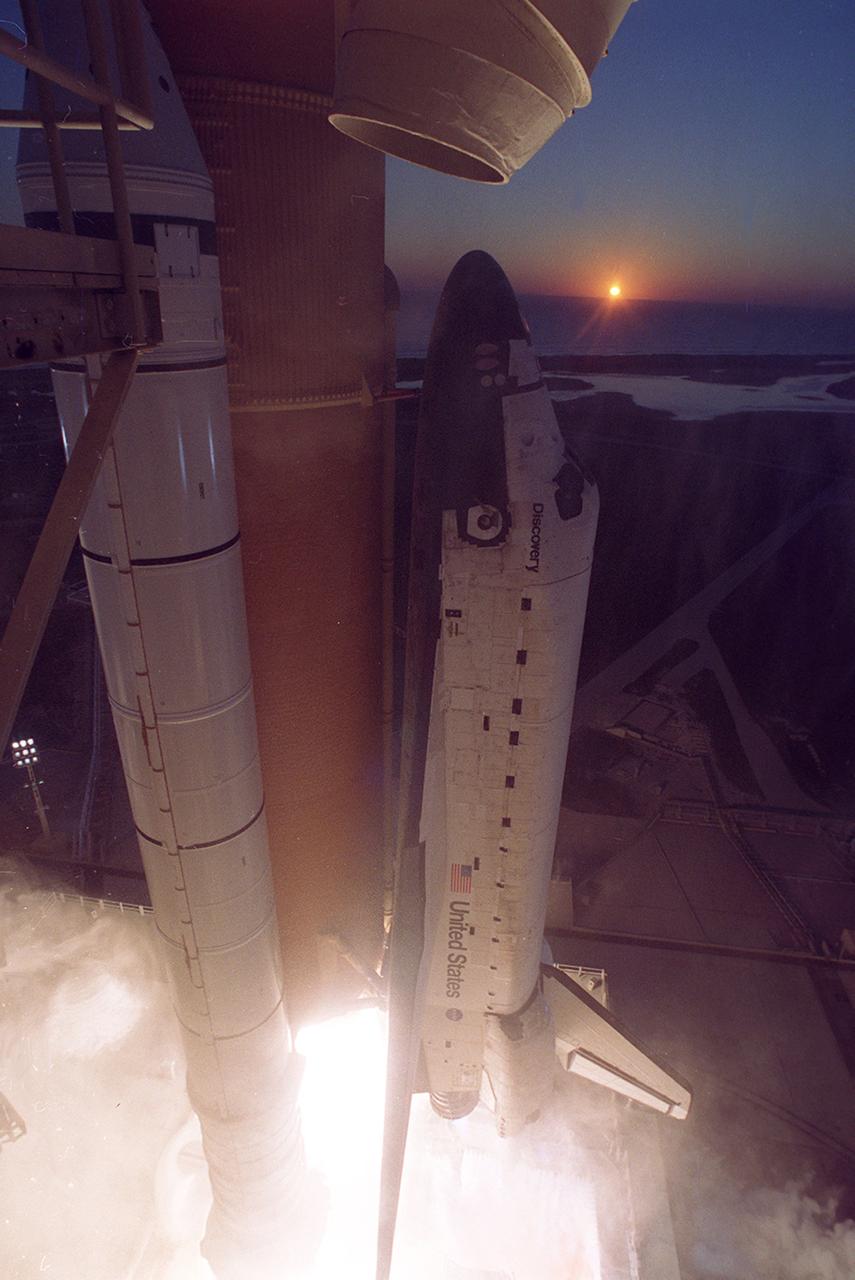
The Space Shuttle Discovery, STS-102 mission, clears launch pad 39B at the Kennedy Space Center as the sun peers over the Atlantic Ocean on March 8, 2001. STS-102's primary cargo was the Leonardo, the Italian Space Agency built Multipurpose Logistics Module (MPLM). The Leonardo MPLM is the first of three such pressurized modules that will serve as the International Space Station's (ISS') moving vans, carrying laboratory racks filled with equipment, experiments, and supplies to and from the Station aboard the Space Shuttle. The cylindrical module is approximately 21-feet long and 15- feet in diameter, weighing almost 4.5 tons. It can carry up to 10 tons of cargo in 16 standard Space Station equipment racks. Of the 16 racks the module can carry, 5 can be furnished with power, data, and fluid to support refrigerators or freezers. In order to function as an attached station module as well as a cargo transport, the logistics module also includes components that provide life support, fire detection and suppression, electrical distribution, and computer functions. NASA's 103rd overall flight and the eighth assembly flight, STS-102 was also the first flight involved with Expedition Crew rotation. The Expedition Two crew was delivered to the station while Expedition One was returned home to Earth.
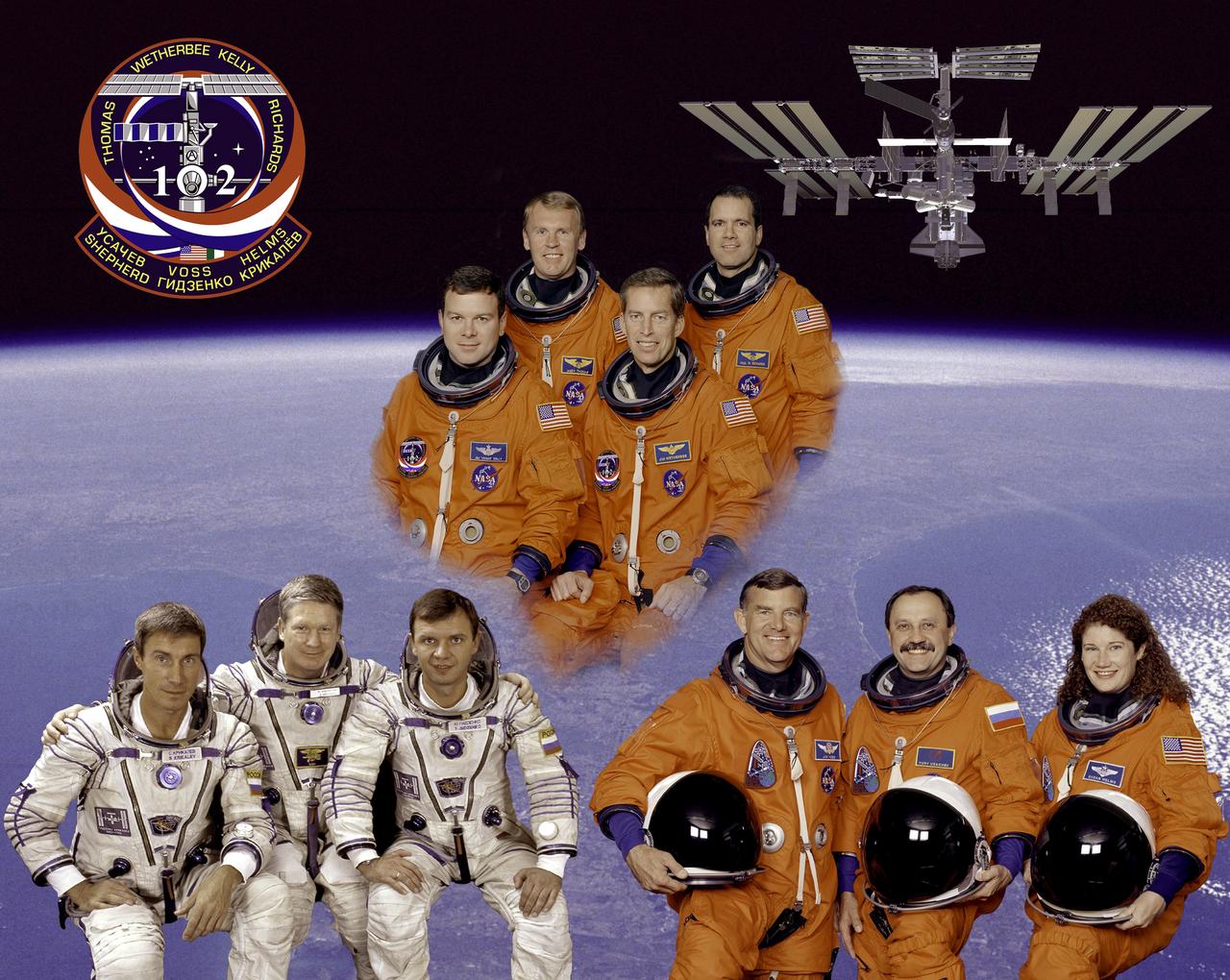
These 10 astronauts and cosmonauts represent the base STS-102 space travelers, as well as the crew members for the station crews switching out turns aboard the outpost. Those astronauts wearing orange represent the STS-102 crew members. In the top photo, from left to right are: James M. Kelly, pilot; Andrew S.W. Thomas, mission specialist; James D. Wetherbee, commander; and Paul W. Richards, mission specialist. The group pictured in the lower right portion of the portrait are STS-members as well as Expedition Two crew members (from left): mission specialist and flight engineer James S. Voss; cosmonaut Yury V. Usachev, Expedition Two Commander; and mission specialist and flight engineer Susan Helms. The lower left inset are the 3 man crew of Expedition One (pictured from left): Cosmonaut Sergei K. Krikalev, flight engineer; astronaut William M. (Bill) Shepherd, commander; and cosmonaut Yuri P. Gidzenko, Soyuz commander. The main objective of the STS-102 mission was the first Expedition Crew rotation and the primary cargo was the Leonardo, the Italian Space Agency-built Multipurpose Logistics Module (MPLM). The Leonardo MPLM is the first of three such pressurized modules that will serve as the International Space Station's (ISS') moving vans, carrying laboratory racks filled with equipment, experiments, and supplies to and from the Station aboard the Space Shuttle. NASA's 103rd overall mission and the 8th Space Station Assembly Flight, STS-102 mission launched on March 8, 2001 aboard the Space Shuttle Orbiter Discovery.
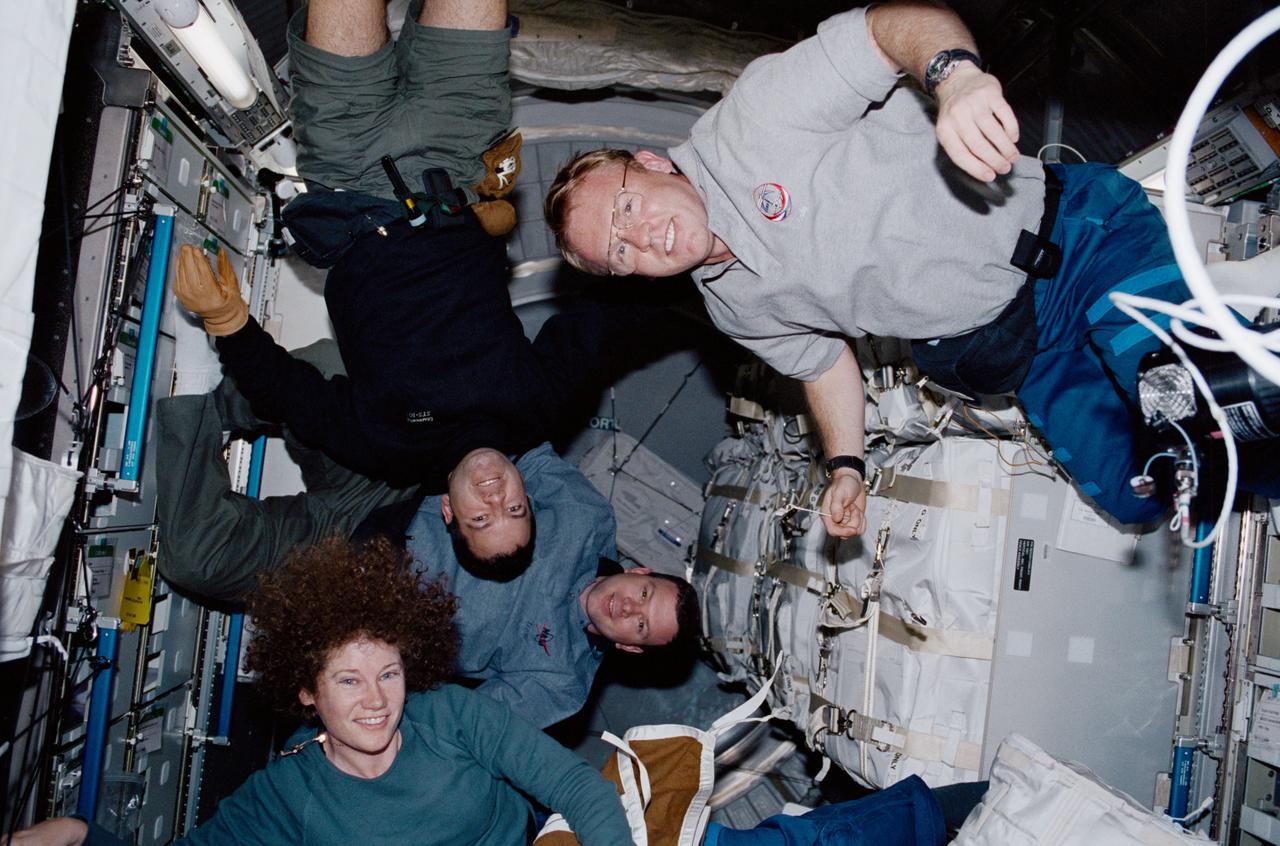
STS102-346-035 (8 - 21 March 2001) --- Four STS-102 crew members participate in the movement of supplies inside Leonardo, the Italian Space Agency-built Multipurpose Logistics Module (MPLM). Clockwise from lower left are astronauts Susan J. Helms, STS-102 mission specialist and Expedition Two flight engineer; James M. Kelly, STS-102 pilot; and Paul W. Richards and Andrew S.W. Thomas, both STS-102 mission specialists.
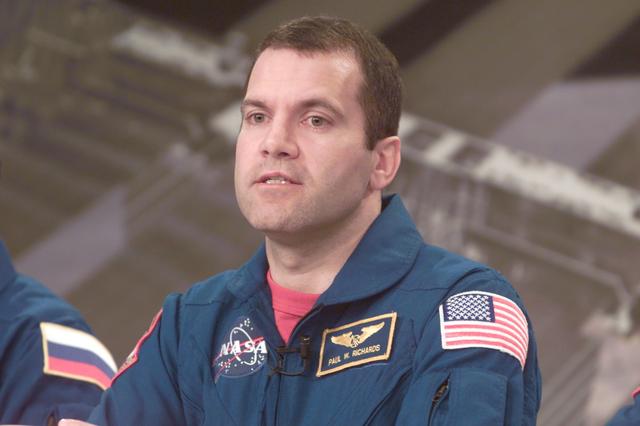
JSC2001-E-05533 (28 February 2001) --- Astronaut Paul W. Richards, STS-102 mission specialist, responds to a news media representative's question during a press briefing at the Johnson Space Center (JSC).
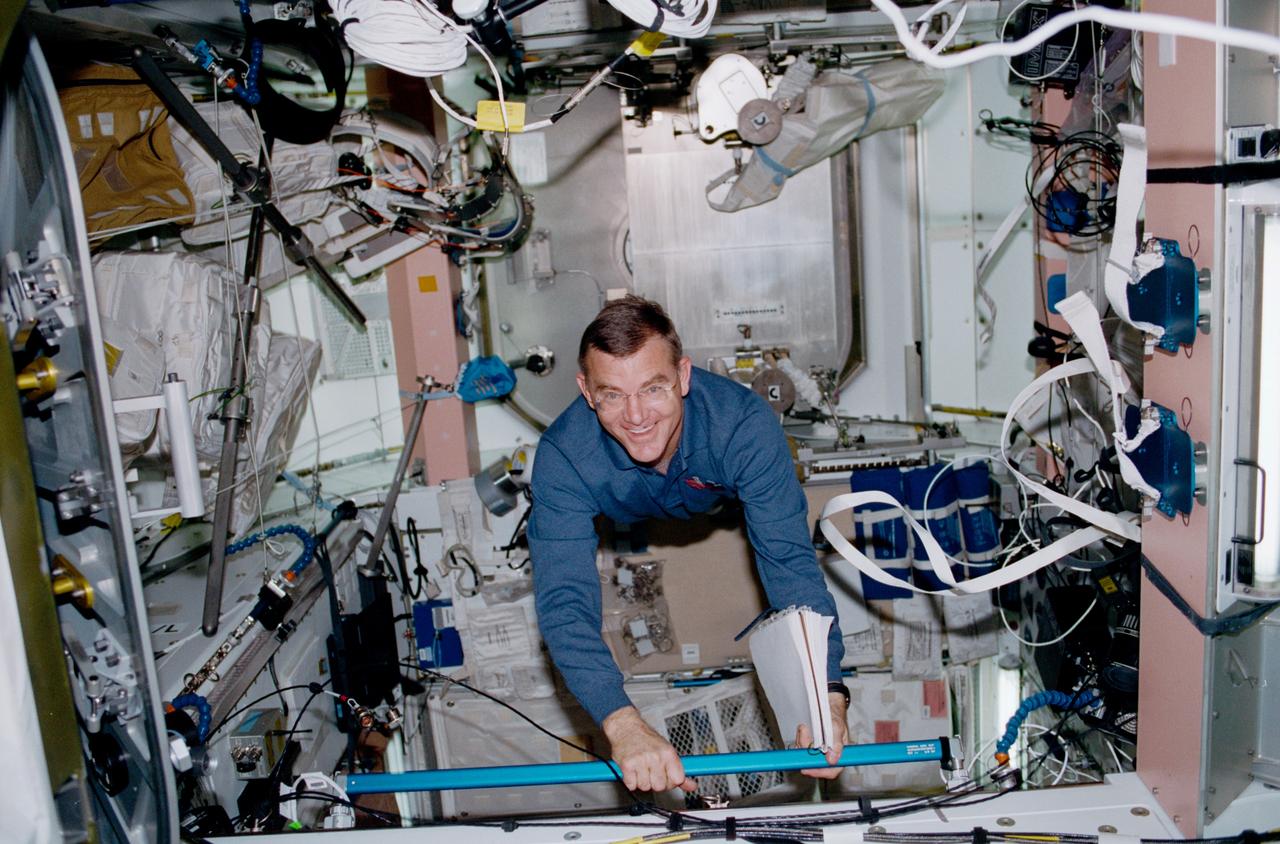
STS102-319-001 (8-21 March 2001)--- Astronaut James S. Voss, Expedition Two flight engineer, is photographed in the U.S.-built Unity node on the International Space Station (ISS) during the STS-102 mission.
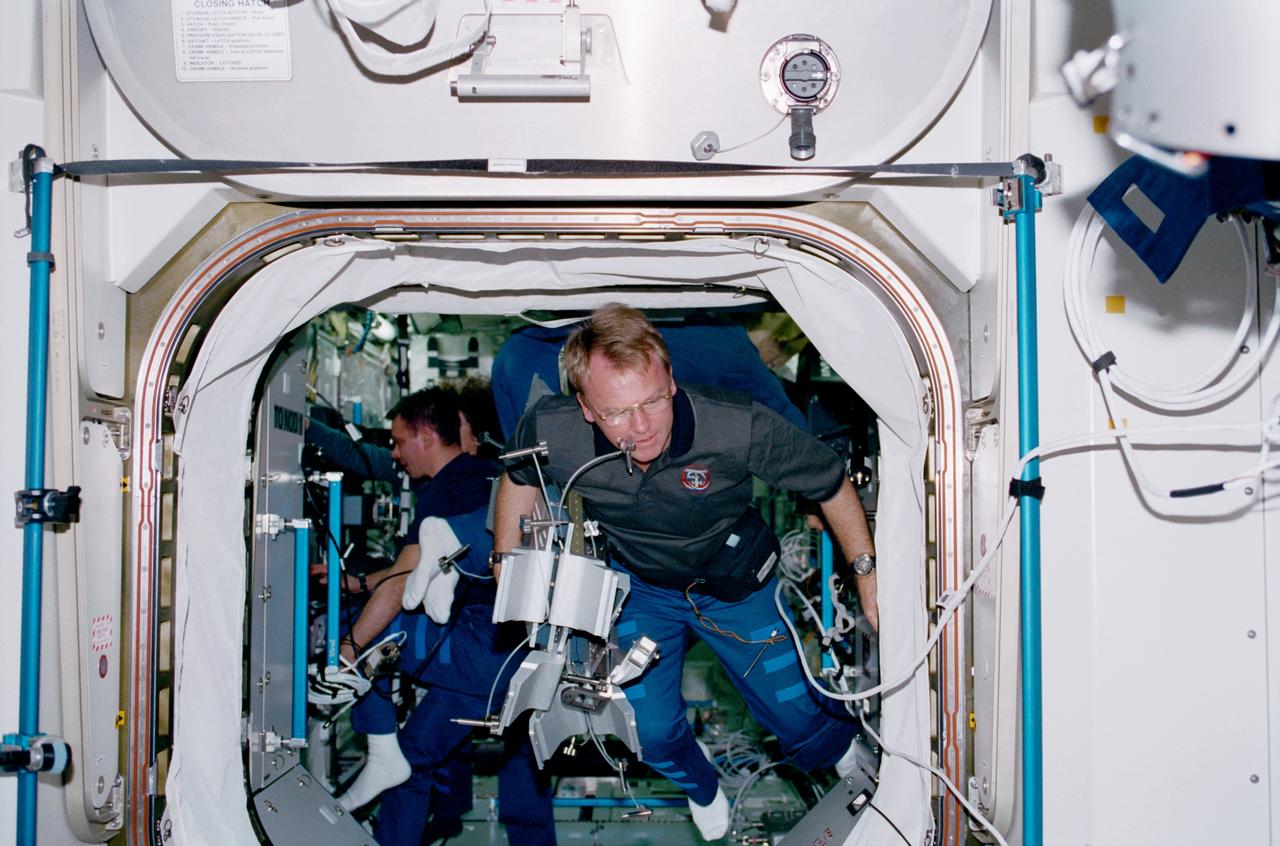
STS102-319-010 (8 - 21 March 2001) --- Astronaut Andrew S.W. Thomas, STS-102 mission specialist, floats near the hatchway for the Destiny laboratory. Cosmonaut Yuri P. Gidzenko, a member of the Expedition One crew, can be seen in the background.
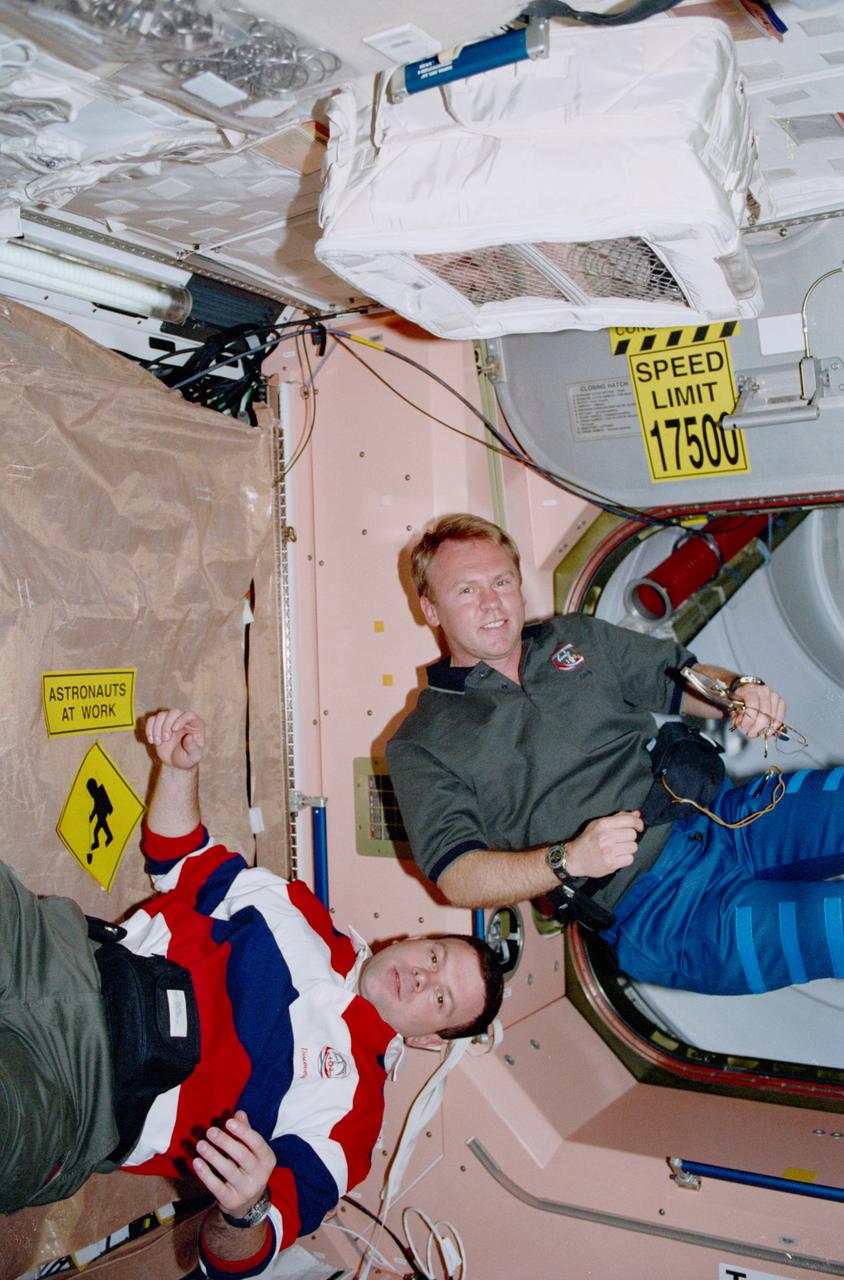
STS102-319-005 (8-21 March 2001) --- Astronauts Andrew S. W. Thomas, mission specialist and James M. Kelly, pilot, are photographed in the U.S.-built Unity node of the International Space Station during the STS-102 mission.
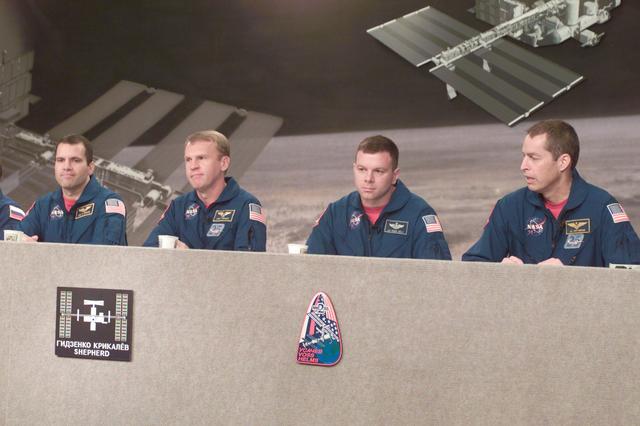
JSC2001-E-05535 (28 February 2001) --- The STS-102 crew fields questions from various news media representatives at a press briefing at the Johnson Space Center (JSC). From the right are astronauts James D. Wetherbee, mission commander; James M. Kelly, pilot; and Andrew S.W. Thomas and Paul W. Richards, both mission specialists. Out of frame at left are cosmonaut Yury V. Usachev, and astronauts James S. Voss and Susan J. Helms, all of whom will fulfill STS-102 mission specialist rolls until some point after the Space Shuttle Discovery links up with the International Space Station (ISS). Expedition Two commander Usachev, representing Rosaviakosmos, will join Voss and Helms in the first crew exchange aboard the Earth-orbiting International Space Station (ISS).
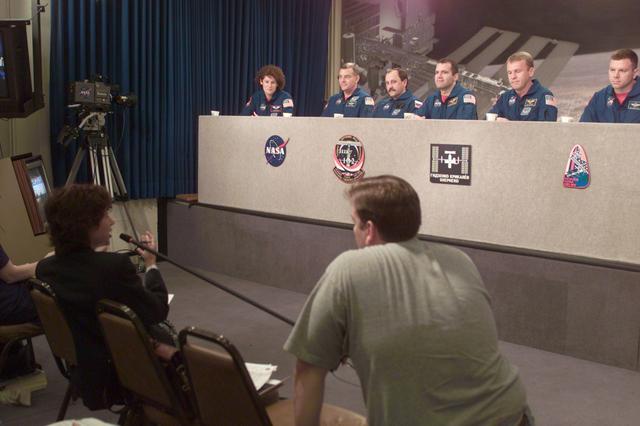
JSC2001-E-05534 (28 February 2001) --- The STS-102 crew fields questions from various news media representatives at a press briefing at the Johnson Space Center (JSC). From the right are astronauts James M. Kelly, pilot; and Andrew S.W. Thomas and Paul W. Richards, both mission specialists; cosmonaut Yury V. Usachev, and astronauts James S. Voss and Susan J. Helms, all mission specialists. Astronaut James D. Wetherbee, STS-102 commander, is out of frame at right. Expedition Two commander Usachev, representing Rosaviakosmos, will join Voss and Helms in the first crew exchange aboard the Earth-orbiting International Space Station (ISS) at some point following the docking of the outpost and the Space Shuttle Discovery.
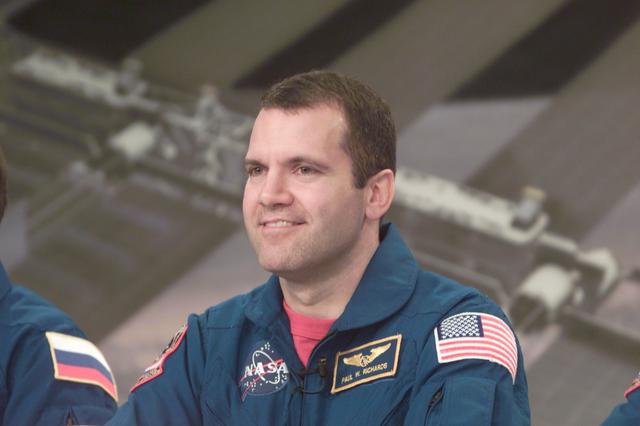
JSC2001-E-05529 (28 February 2001) --- Astronaut Paul W. Richards, STS-102 mission specialist, responds to a news representative's question during a press briefing at the Johnson Space Center (JSC).
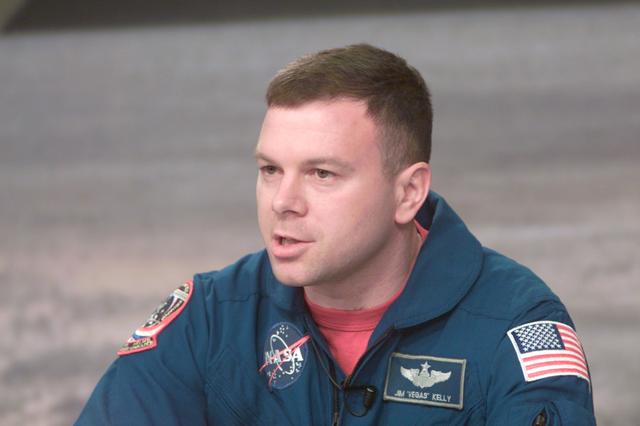
JSC2001-E-05531 (28 February 2001) --- Astronaut James M. Kelly, STS-102 pilot, responds to a news media representative's question during a press briefing at the Johnson Space Center (JSC).
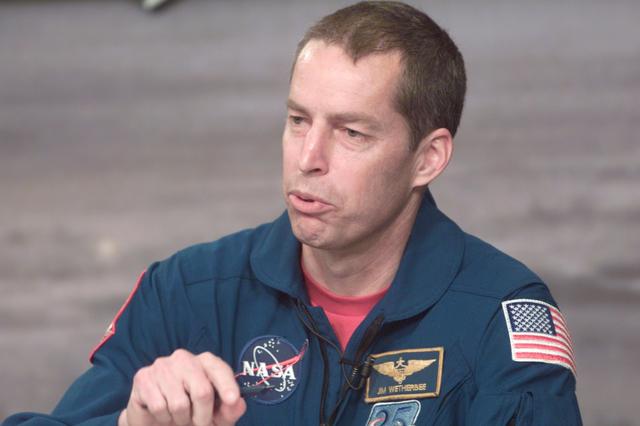
JSC2001-E-05530 (28 February 2001) --- Astronaut James D. Wetherbee, STS-102 mission commander, follows a news representative's question with a brief explanation during a press briefing at the Johnson Space Center (JSC).

JSC2001-E-05527 (28 February 2001) --- Astronaut Andrew S.W. Thomas, STS-102 mission specialist, greets the news media during a press briefing at the Johnson Space Center (JSC).
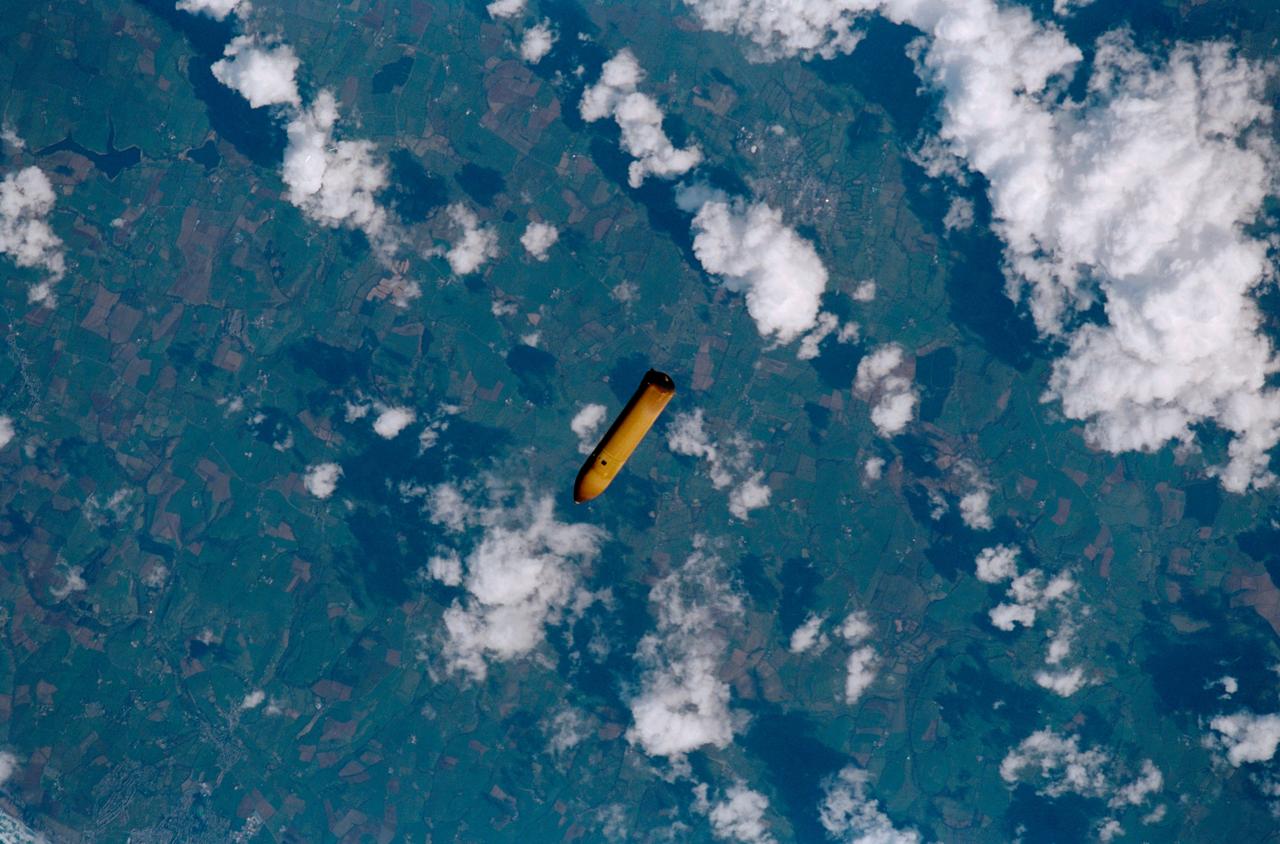
STS102-311-013 (8 March 2001) --- The external tank falls toward Earth's atmosphere during the completion of the launch phase of the STS-102 mission. Western Europe is in the background.

JSC2001-E-05526 (28 February 2001) --- Astronaut James M. Kelly, STS-102 pilot, greets the press during a briefing at the Johnson Space Center (JSC).
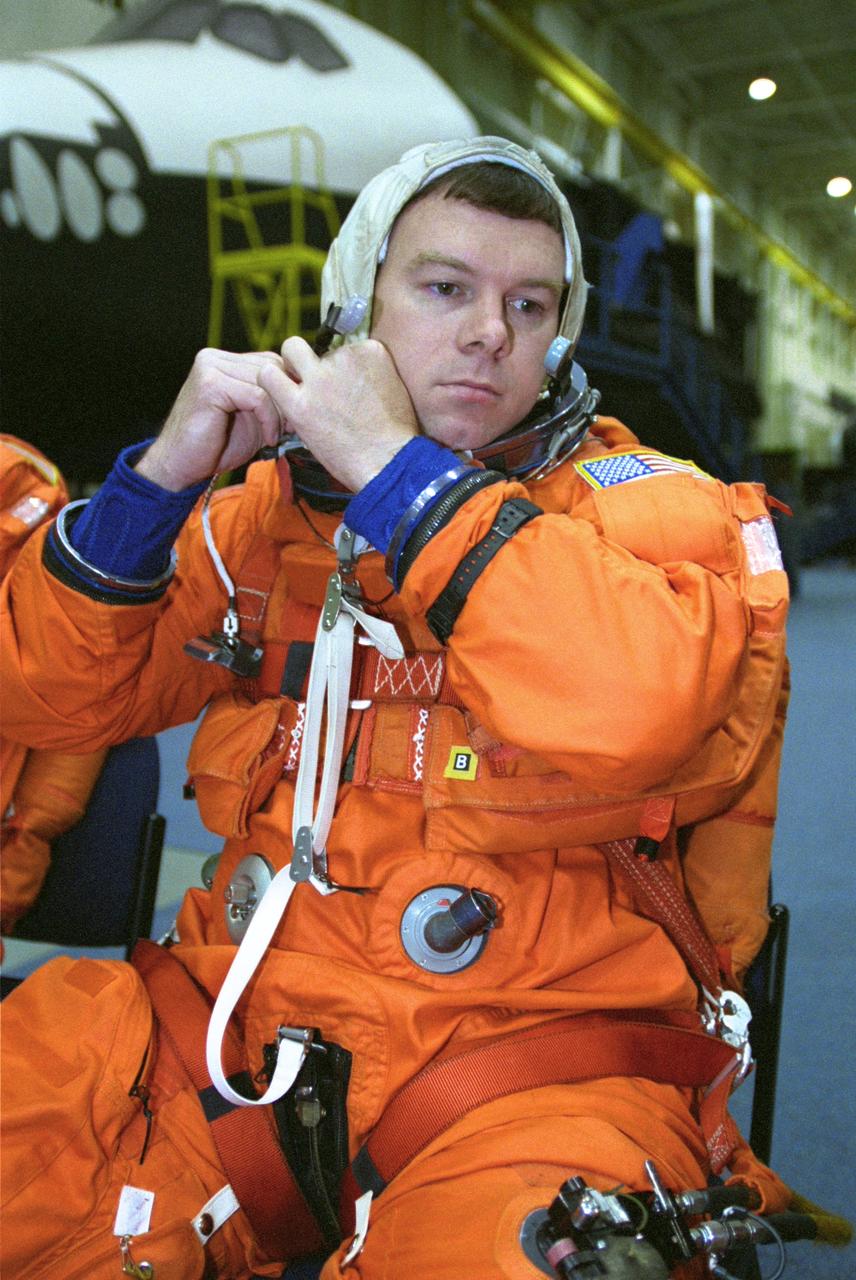
JSC2000-05552 (3 August 2000) --- Astronaut James M. Kelly, STS-102 pilot, snaps on his communications head gear prior to a session of egress training in the Johnson Space Center's Systems Integration Facility.
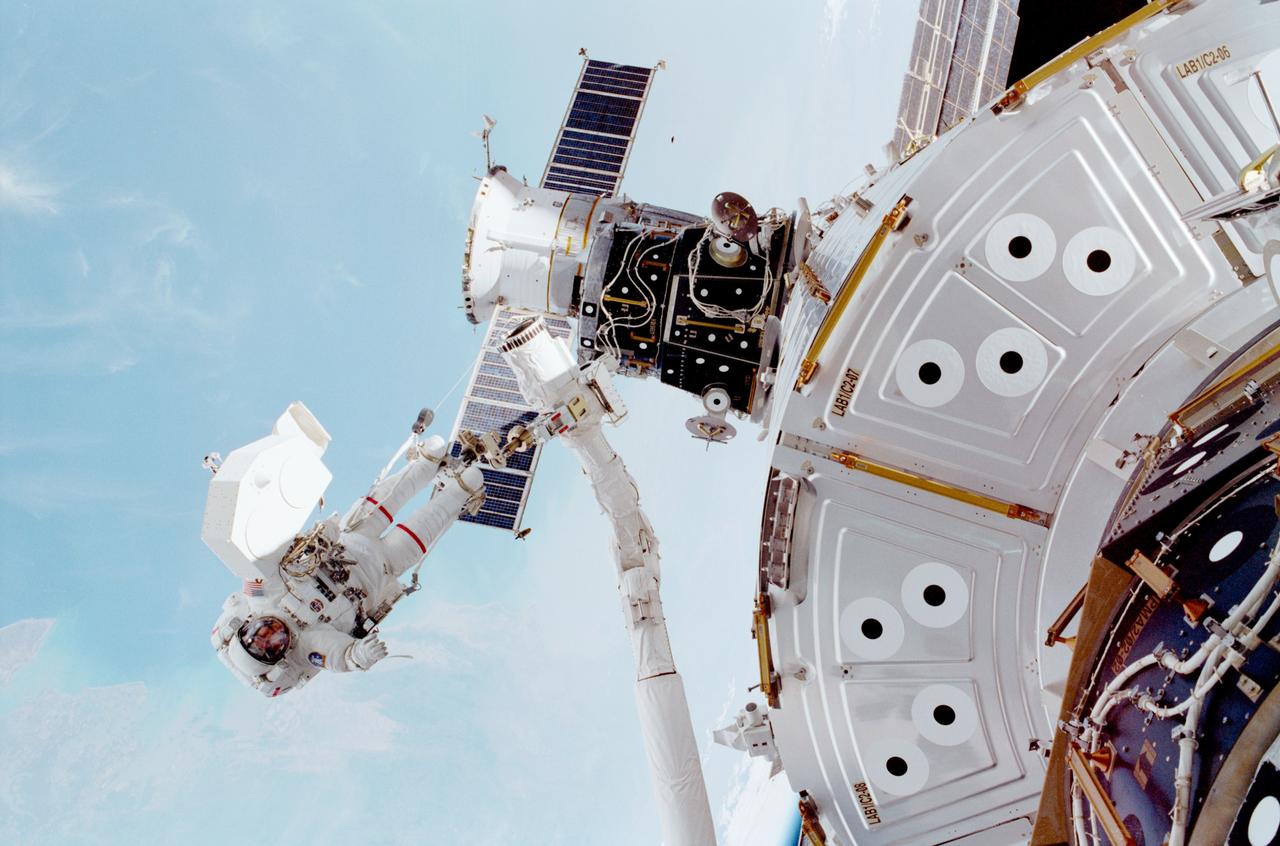
STS102-312-004 (11 March 2001) --- Astronaut James S. Voss works while anchored to the remote manipulator system (RMS) robot arm on the Space Shuttle Discovery. This extravehicular activity (EVA), on which Voss was joined by astronaut Susan J. Helms (out of frame), was the first of two scheduled STS-102 space walks. The pair, destined to become members of the Expedition Two crew aboard the station later in the mission, rode aboard Discovery into orbit and at the time of this EVA were still regarded as STS-102 mission specialists.
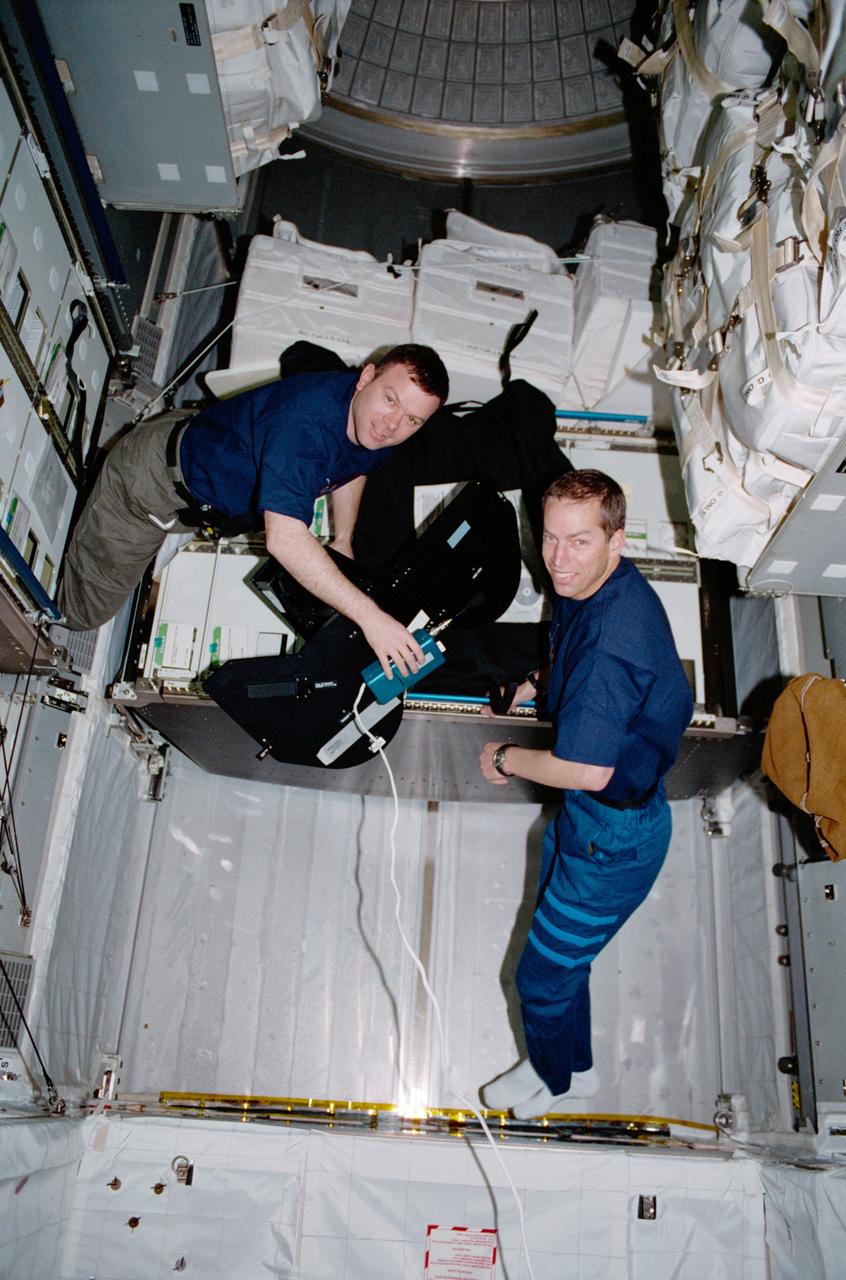
Pilot James M. Kelly (left) and Commander James D. Wetherbee for the STS-102 mission, participate in the movement of supplies inside Leonardo, the Italian Space Agency built Multipurpose Logistics Module (MPLM). In this particular photograph, the two are handling a film magazine for the IMAX cargo bay camera. The primary cargo of the STS-102 mission, the Leonardo MPLM is the first of three such pressurized modules that will serve as the International Space Station's (ISS') moving vans, carrying laboratory racks filled with equipment, experiments, and supplies to and from the Station aboard the Space Shuttle. The cylindrical module is approximately 21-feet long and 15- feet in diameter, weighing almost 4.5 tons. It can carry up to 10 tons of cargo in 16 standard Space Station equipment racks. Of the 16 racks the module can carry, 5 can be furnished with power, data, and fluid to support refrigerators or freezers. In order to function as an attached station module as well as a cargo transport, the logistics module also includes components that provide life support, fire detection and suppression, electrical distribution, and computer functions. The eighth station assembly flight, the STS-102 mission also served as a crew rotation flight. It delivered the Expedition Two crew to the Station and returned the Expedition One crew back to Earth.
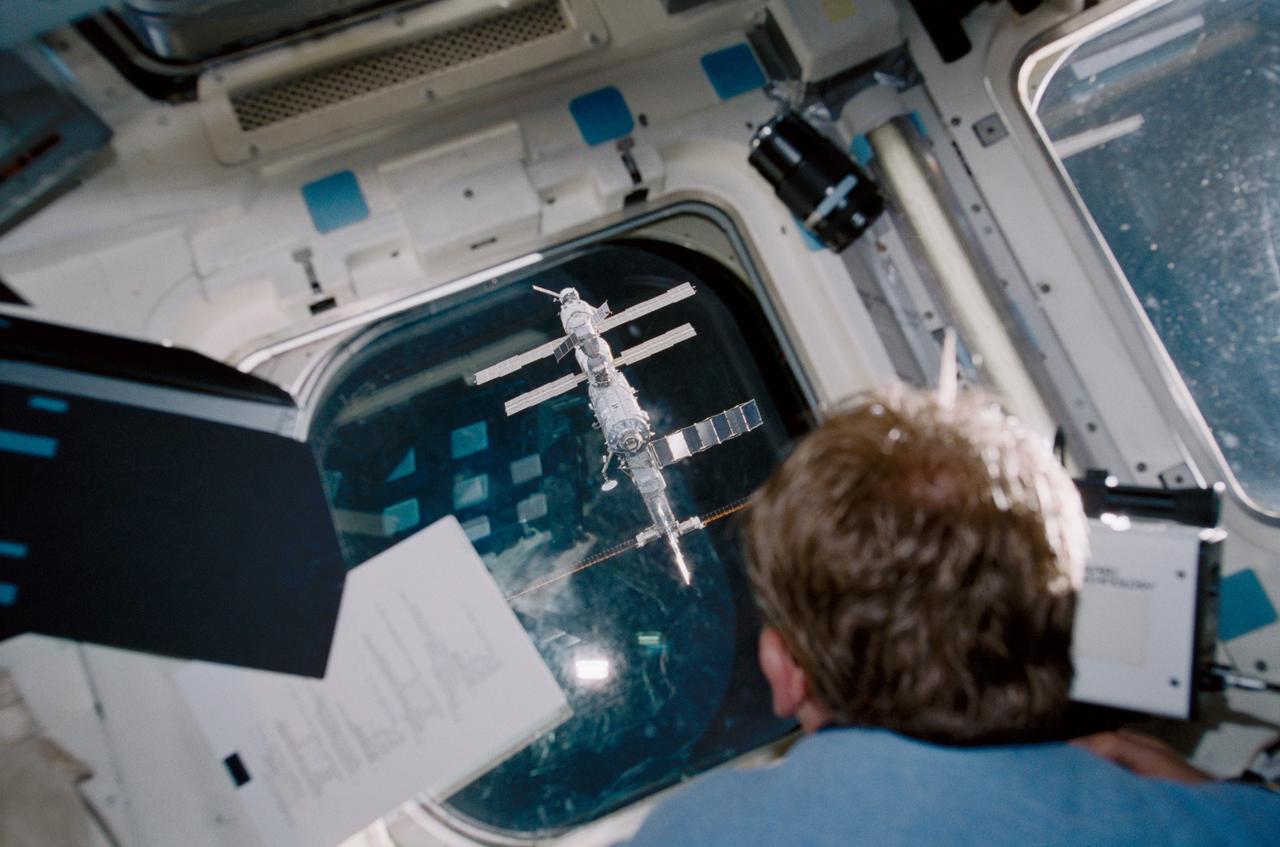
STS-102 astronaut and mission specialist, Andrew S.W. Thomas, gazes through an aft window of the Space Shuttle Orbiter Discovery as it approaches the docking bay of the International Space Station (ISS). Launched March 8, 2001, STS-102's primary cargo was the Leonardo, the Italian Space Agency-built Multipurpose Logistics Module (MPLM). The Leonardo MPLM is the first of three such pressurized modules that will serve as the ISS's moving vans, carrying laboratory racks filled with equipment, experiments, and supplies to and from the Station aboard the Space Shuttle. The cylindrical module is approximately 21-feet long and 15- feet in diameter, weighing almost 4.5 tons. It can carry up to 10 tons of cargo in 16 standard Space Station equipment racks. Of the 16 racks the module can carry, 5 can be furnished with power, data, and fluid to support refrigerators or freezers. In order to function as an attached station module as well as a cargo transport, the logistics module also includes components that provide life support, fire detection and suppression, electrical distribution, and computer functions. NASA's 103rd overall mission and the 8th Space Station Assembly Flight, STS-102 mission also served as a crew rotation flight. It delivered the Expedition Two crew to the Station and returned the Expedition One crew back to Earth.
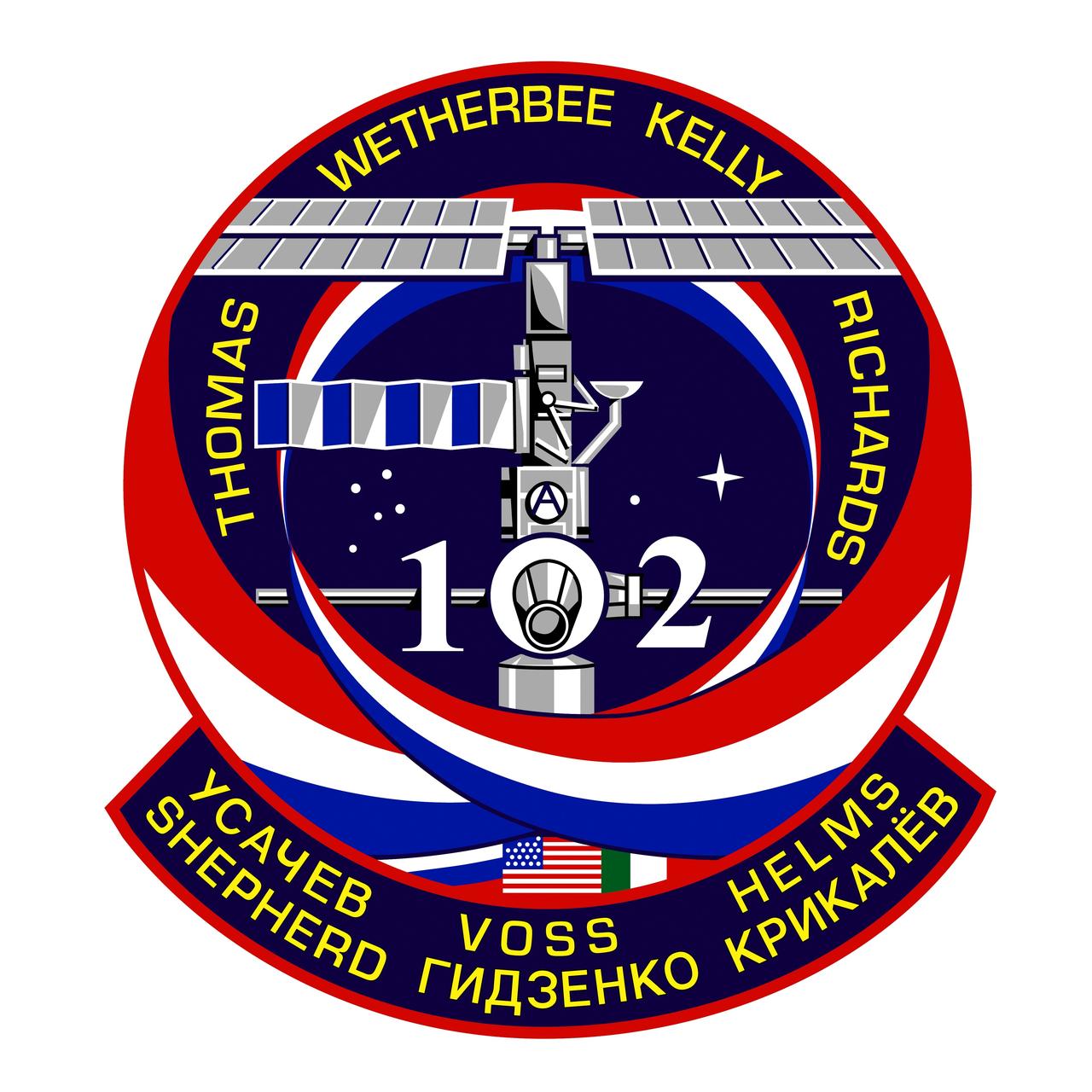
STS102-S-001 (January 2001) --- The central image on the STS-102 crew patch depicts the International Space Station (ISS) in the build configuration that it will have at the time of the arrival and docking of Discovery during the STS-102 mission, the first crew exchange flight to the space station. The station is shown along the direction of the flight as will be seen by the shuttle crew during their final approach and docking, the so-called V-bar approach. The names of the shuttle crew members are depicted in gold around the top of the patch, and surnames of the Expedition crew members being exchanged are shown in the lower banner. The three ribbons swirling up to and around the station signify the rotation of these ISS crew members. The number two is for the Expedition Two crew who fly up to the station, and the number one is for the Expedition One crew who then return down to Earth. In conjunction with the face of the Lab module of the station, these Expedition numbers create the shuttle mission number 102. Shown mated below the ISS is the Italian-built Multi-Purpose Logistics Module, Leonardo, that will fly for the first time on this flight, and which will be attached to the station by the shuttle crew during the docked phase of the mission. The flags of the countries that are the major contributors to this effort, the United States, Russia, and Italy are also shown in the lower part of the patch. The build-sequence number of this flight in the overall station assembly sequence, 5A.1, is captured by the constellations in the background. The NASA insignia design for space shuttle flights is reserved for use by the astronauts and for other official use as the NASA Administrator may authorize. Public availability has been approved only in the forms of illustrations by the various news media. When and if there is any change in this policy, which is not anticipated, the change will be publicly announced. Photo credit: NASA
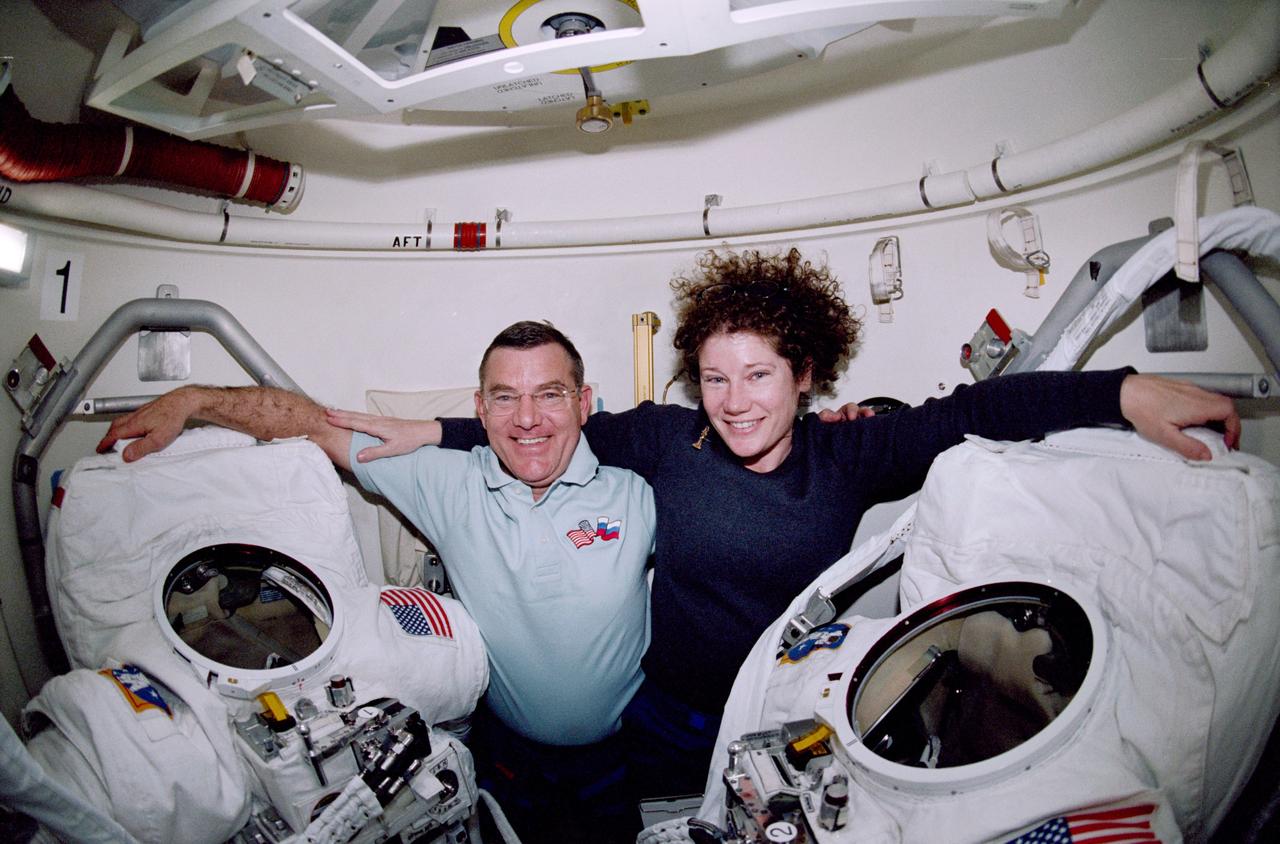
STS102-321-013 (8-21 March 2001) --- Sandwiched between the extravehicular mobility unit (EMU) space suits, astronauts James S. Voss (left) and Susan J. Helms, both Expedition Two flight engineers, are photographed in the shuttle airlock of the Earth-orbiting Space Shuttle Discovery. Voss and Helms were involved in the first of two space walks performed on the STS-102 mission while docked with the International Space Station (ISS).
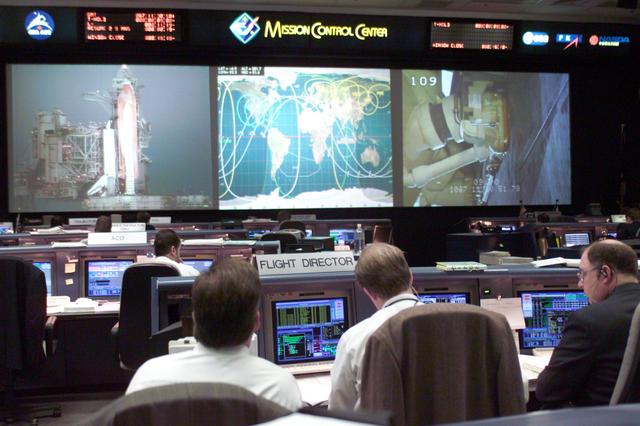
JSC2001-E-06210 (8 March 2001) --- As STS-102 Discovery liftoff countdown proceeds at the Kennedy Space Center (KSC)in Florida, flight controllers in Houston follow the progress at their assigned consoles. Ascent flight director Wayne Hale views his monitor at right.
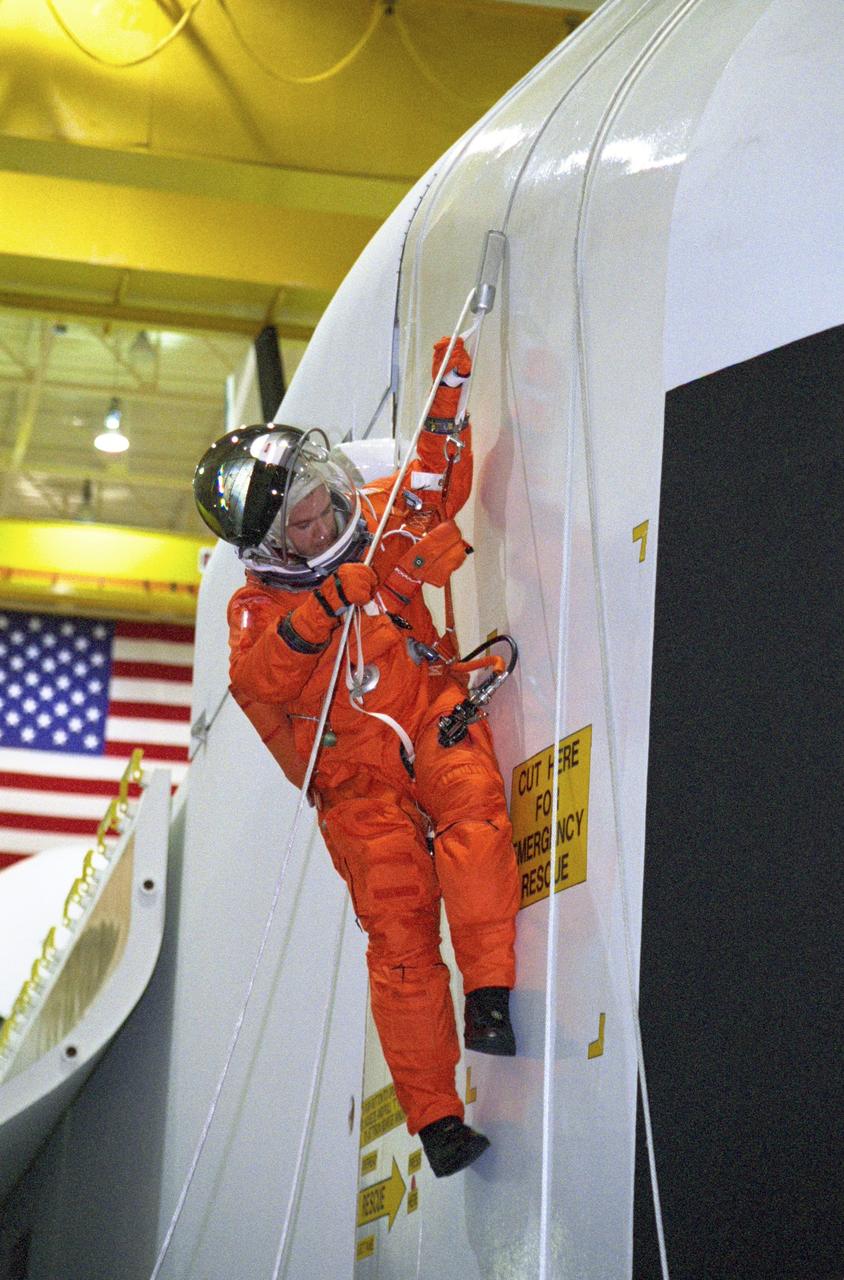
JSC2000-05553 (3 August 2000) --- Astronaut Paul W. Richards, STS-102 mission specialist, during a session of egress training in the Johnson Space Center's Systems Integration Facility, uses a Sky-genie device to escape from a simulated shuttle in trouble. The full fuselage trainer (FFT) is a full scale mockup of a shuttle.
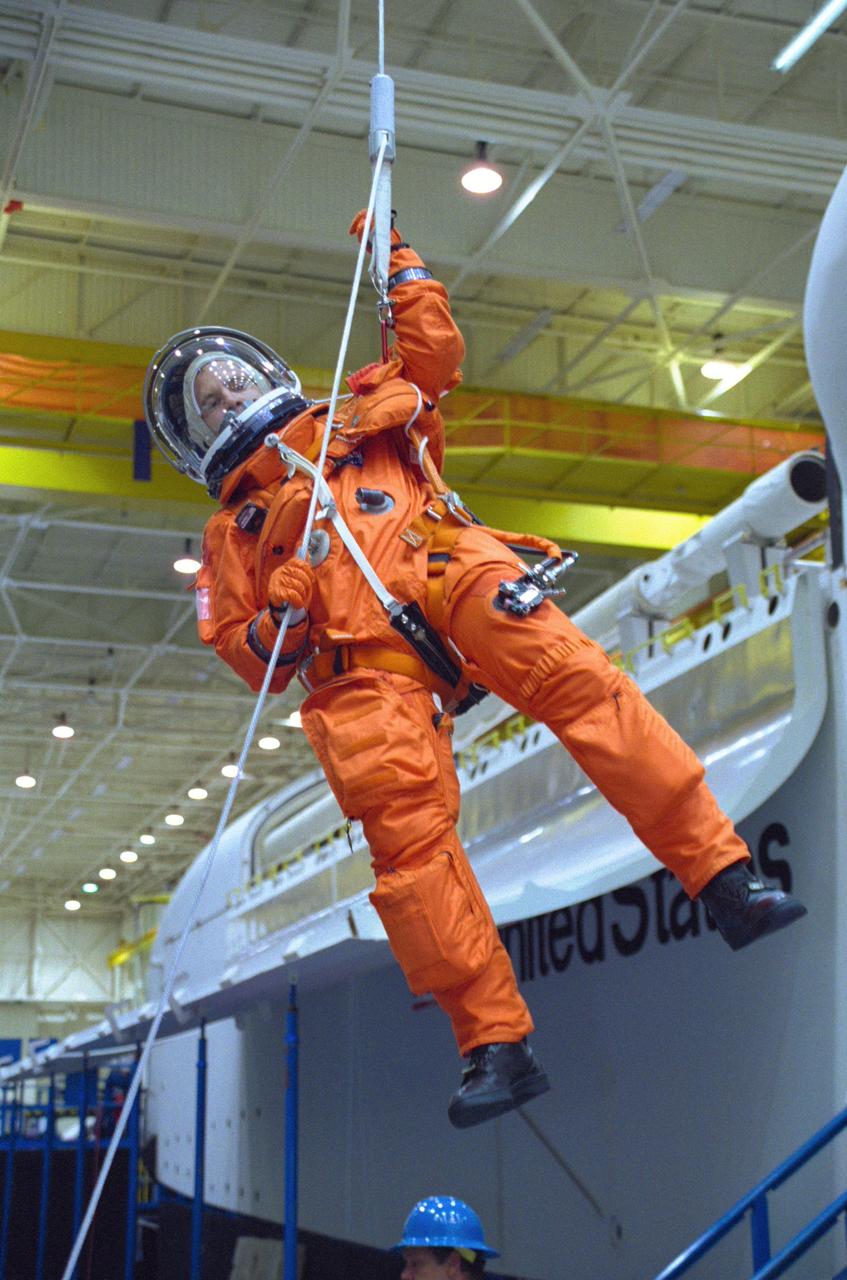
JSC2000-05554 (3 August 2000) --- Astronaut Paul W. Richards, STS-102 mission specialist, rappels from the top of the shuttle full fuselage trainer (FFT) during an emergency egress training exercise at the Johnson Space Center's Systems Integration Facility.
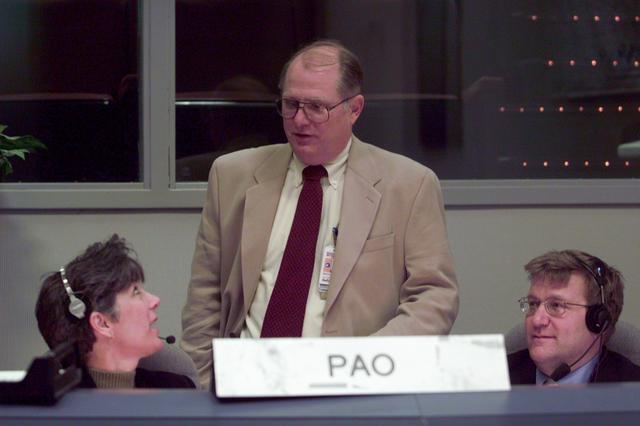
JSC2001-E-06205 (8 March 2001) --- Eileen Hawley at the Public Affairs Officer (PAO) console poses a query to Brock R. (Randy) Stone (center) of the Mission Operations Directorate (MOD) prior to the launch of STS-102. Hawley was the launch commentator for the Discovery mission. Daniel Carpenter, director of the Public Affairs Office, is at right.
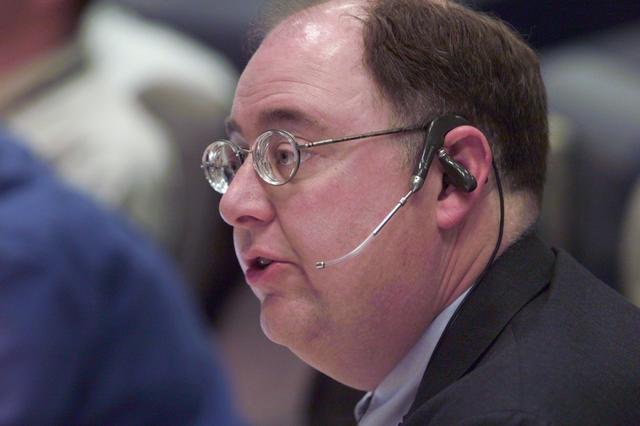
JSC2001-E-06208 (8 March 2001) --- At his console in Houston's Mission Control Center, ascent flight director Wayne Hale monitors Discovery's pre-launch activities several hundred miles away in Florida on STS-102 launch day.
JSC2001-E-06203 (8 March 2001) --- At his console in Houston's Mission Control Center, astronaut Scott D. Altman, spacecraft communicator (CAPCOM), monitors weather data possibly affecting Discovery's pre-launch activities several hundred miles away in Florida on STS-102 launch day.
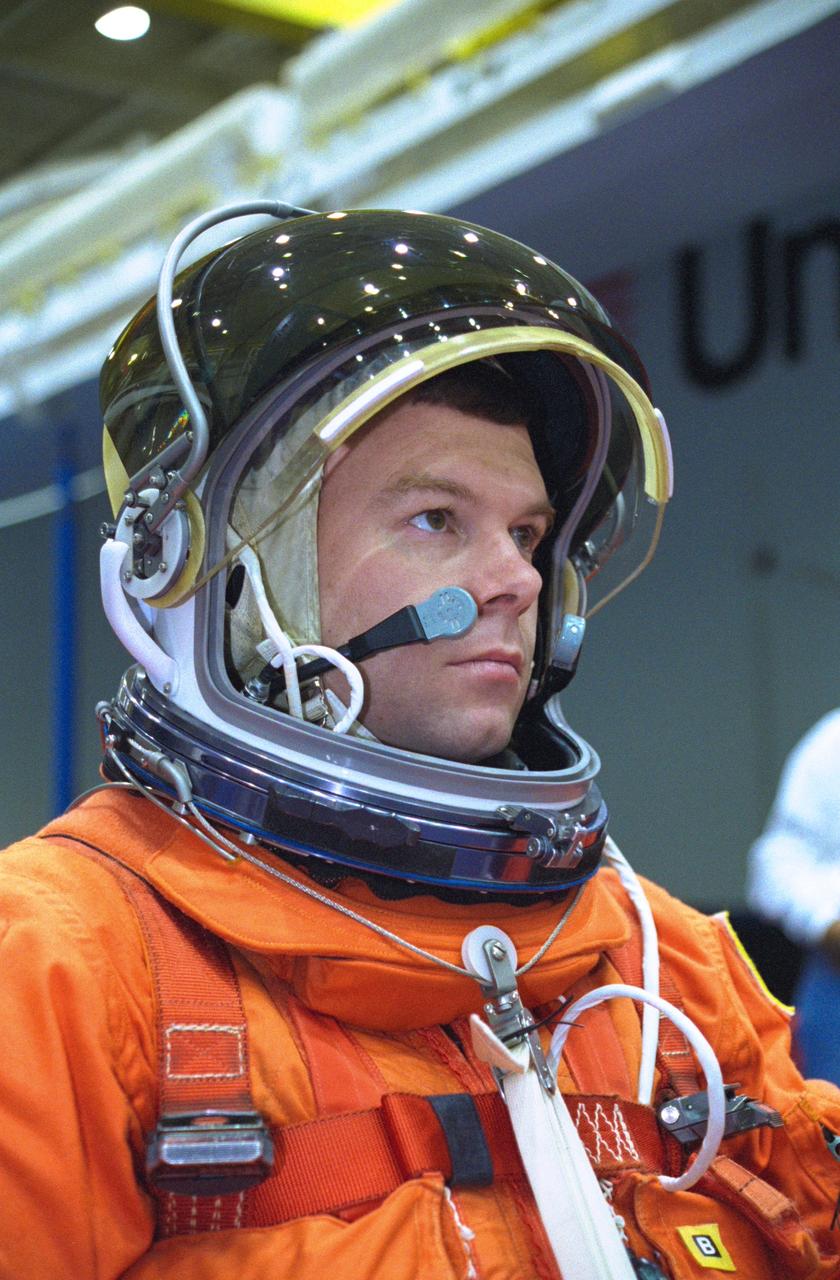
JSC2000-05557 (3 August 2000) --- Astronaut James M. Kelly, STS-102 pilot, listens as a crew training staff member briefs the astronauts at the Full Fuselage Trainer (FFT) during an emergency egress training exercise at the Johnson Space Center's Systems Integration Facility.

JSC2001-E-06207 (8 March 2001) --- Lead STS-102 flight director John Shannon discusses a mission detail with John Guidi, temporarily assigned at JSC from the Kennedy Space Center (KSC). The two are awaiting the launch of the Space Shuttle Discovery at the Flight Director console in JSC's Mission Control Center (MCC).
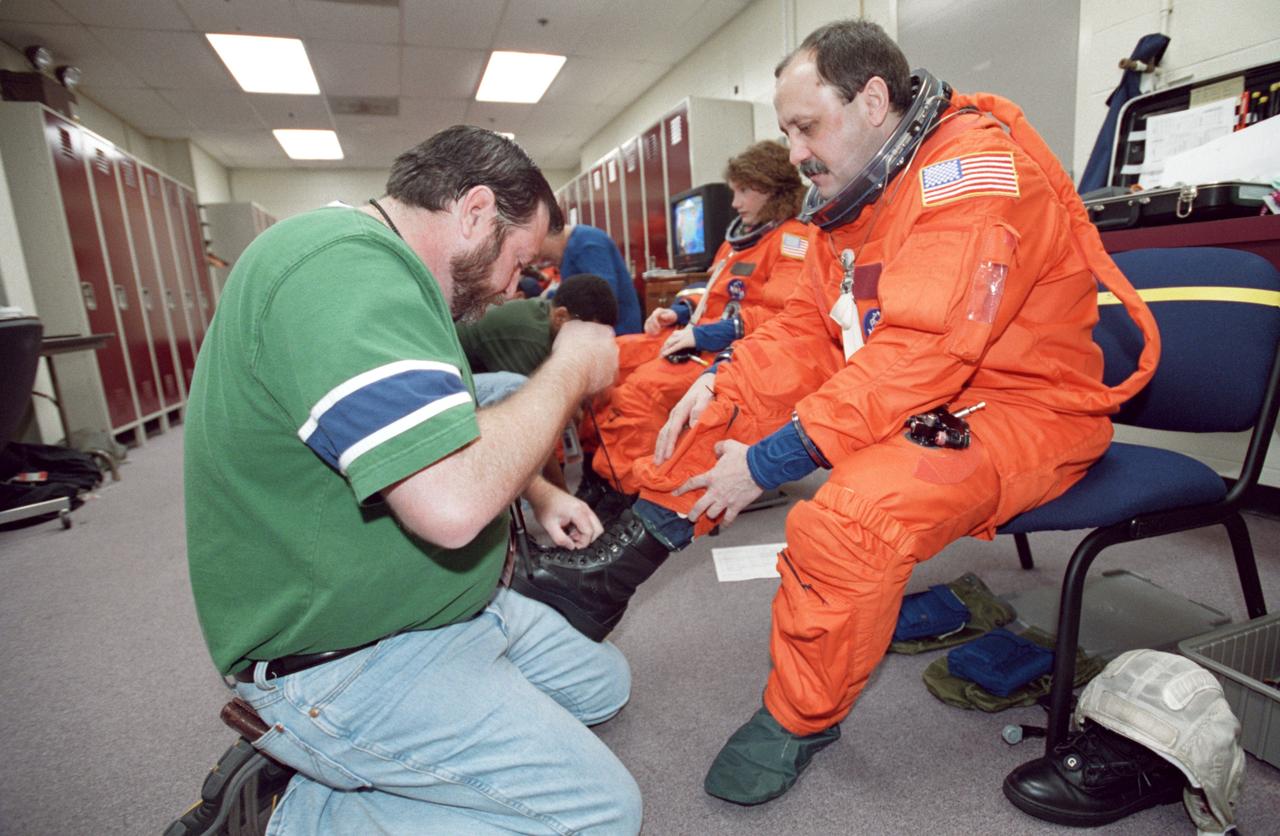
JSC2000-07446 (6 December 2000) --- Suit technician Steve Clendenin helps cosmonaut Yury V. Usachev with his boot straps during an STS-102 training session in the Systems Integration Facility at the Johnson Space Center (JSC). The Expedition Two commander, along with two astronauts on his crew and the four STS-102 crew members, later simulated procedures for a nominal countdown in the crew compartment trainer (CCT-2) in the high bay area of this facility.
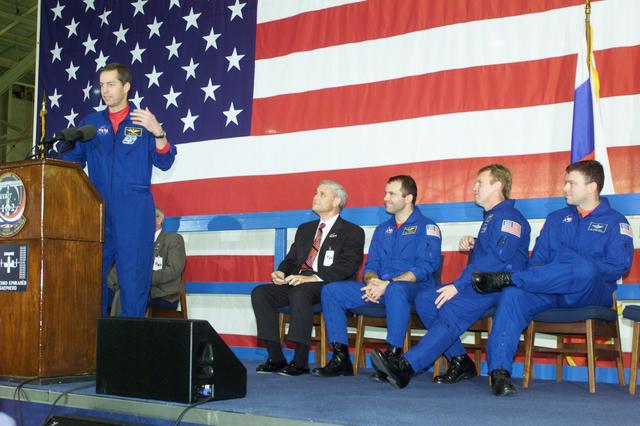
JSC2001-E-08322 (22 March 2001) --- Astronaut James D. Wetherbee, STS-102 mission commander, speaks to a crowd of greeters during a crew return ceremony in Ellington Field's Hangar 990. Pictured in the background on the dais are (from the left) Roy S. Estess, Johnson Space Center's Acting Director; along with astronauts Paul W. Richards, Andrew S.W. Thomas and James M. Kelly of the STS-102 crew.
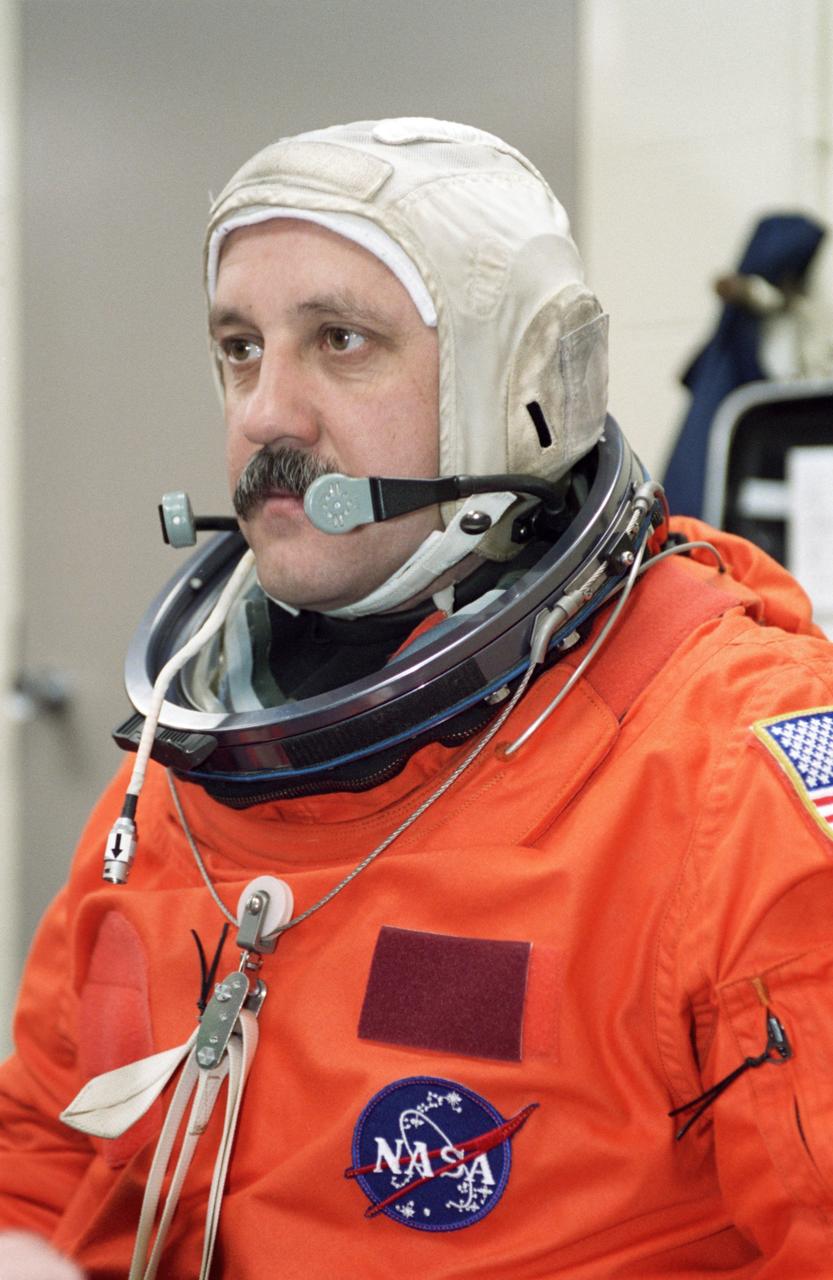
JSC2000-07447 (6 December 2000) --- Cosmonaut Yury V. Usachev, Expedition Two mission commander, checks out his communications gear during a joint Expedition Two/STS-102 training session in the Systems Integration Facility at the Johnson Space Center (JSC). The Russian Aviation and Space Agency representative, along with two astronauts on his crew and the four STS-102 crew members, later simulated procedures for a nominal countdown in the crew compartment trainer (CCT-2) in the high bay area of this facility.
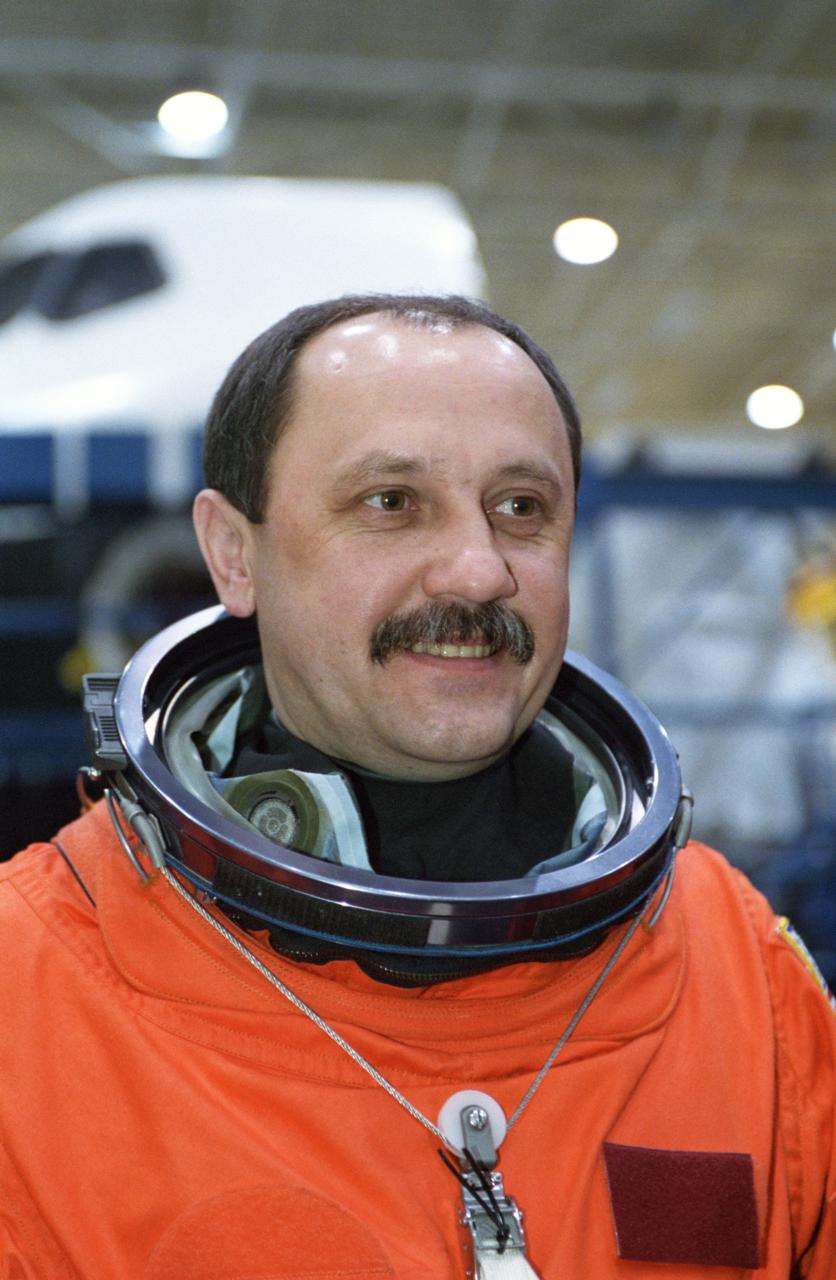
JSC2000-07445 (6 December 2000) --- Cosmonaut Yury V. Usachev, Expedition Two mission commander, talks to nearby astronauts (out of frame) during a joint Expedition Two/STS-102 training session in the Systems Integration Facility at the Johnson Space Center (JSC). The Russian Aviation and Space Agency representative, along with two astronauts on his crew and the four STS-102 crew members, later simulated procedures for a nominal countdown in the crew compartment trainer (CCT-2) in the high bay area of this facility.

JSC2001-E-08321 (22 March 2001) --- Applause was plentiful during the welcome home ceremonies for the joint crews of STS-102 and Expedition One. Pictured on the stage in Ellington Field's Hangar 990 are, from the left, JSC Acting Director Roy S. Estess, along with astronauts Paul W. Richards and Andrew S.W. Thomas, both STS-102 mission specialists, and James M. Kelly, pilot.

STS102-331-012 (8-21 March 2001) --- The STS-102 crew members used a 35mm camera on the flight deck of the Space Shuttle Discovery to record this image of several meandering distributary channels of the Orinoco River draining northward into the south side of the Gulf of Paria in eastern Venezuela. According to NASA scientists studying the STS-102 collection, these sediment-laden channels carry a tremendous quantity of fluvial material that constantly changes the size and shapes of the shoreline and adjacent islands. An assortment of mud flats and sand bars, seen here as lighter colored features in the water, are affected both by stream flow and tidal forces. The extensive dark landscape identifies the flat, swampy coastal plains of northeast Venezuela that is covered by dense stands of vegetation.
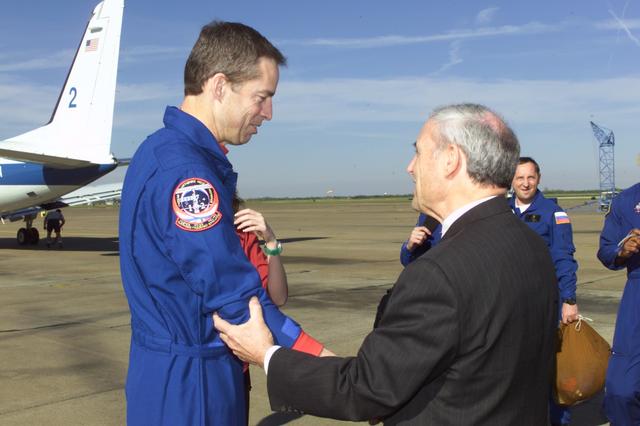
JSC2001-E-08304 (22 March 2001) --- Astronaut James D. Wetherbee (left), STS-102 mission commander, is greeted by JSC Acting Director Roy S. Estess following crew arrival at Ellington Field.
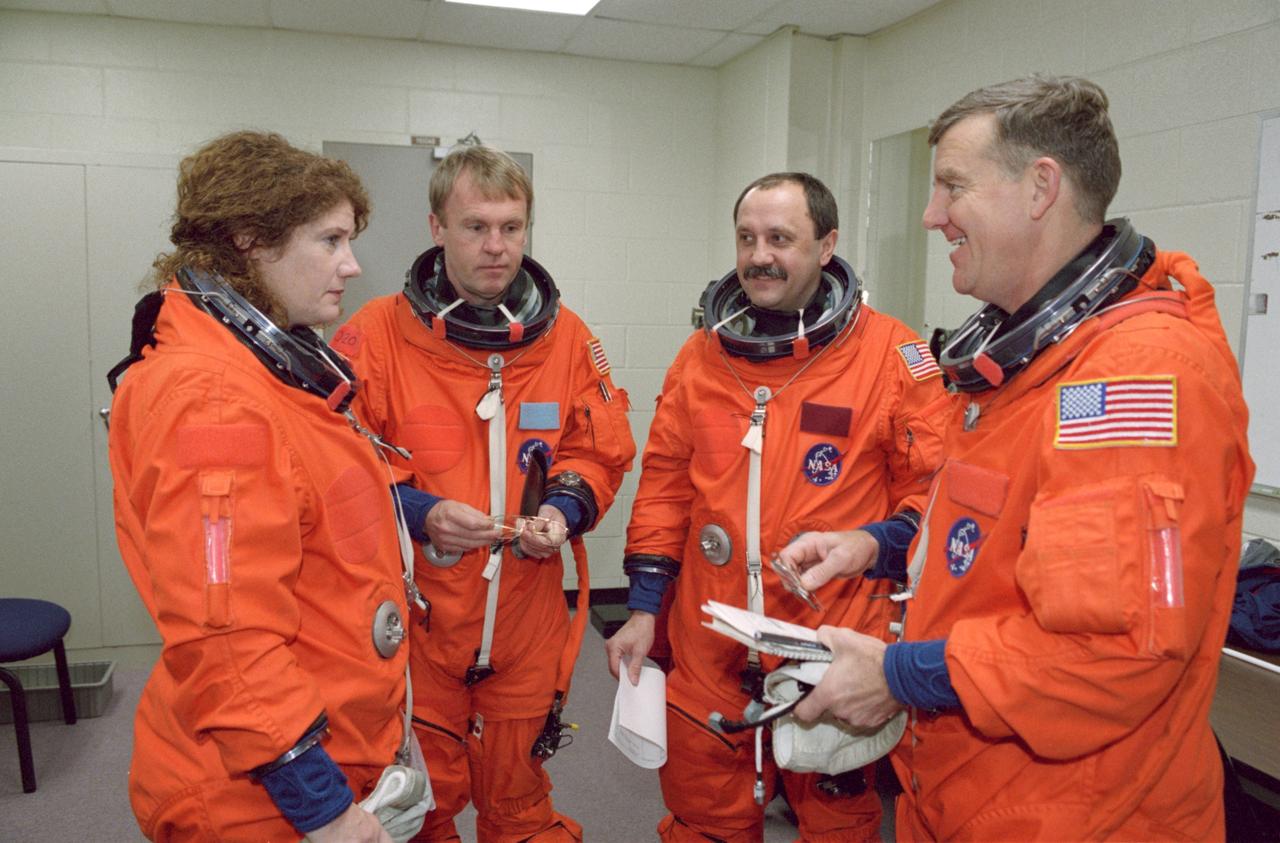
JSC2000-07449 (6 December 2000) --- Astronaut Andrew S.W. Thomas (second left), STS-102 mission specialist, chats with the Expedition Two crew members prior to a simulation exercise in the Systems Integration Facility at the Johnson Space Center. The station crew members are, from left, astronaut Susan J. Helms, cosmonaut Yury V. Usachev and astronaut James S. Voss. Usachev is commander for the second station crew, which will replace the initial group onboard the outpost. The three station crew members will accompany the STS-102 crew aboard the Space Shuttle Discovery to the outpost in March of next year.
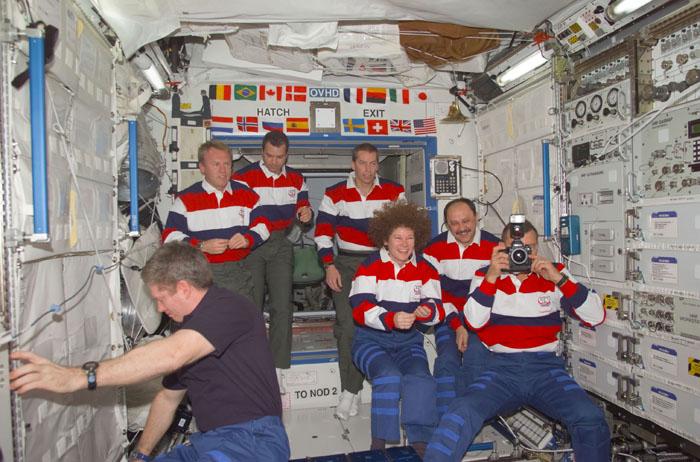
STS102-E-5227 (16 March 2001) --- Onboard the Destiny laboratory on the International Space Station (ISS), astronauts and cosmonauts convene in the midst of personnel changes on crew assignments. From the left are astronauts William M. (Bill) Shepherd, Andrew S.W. Thomas, Paul W. Richards, James D. Wetherbee and Susan J. Helms; along with cosmonaut Yury V. Usachev of Rosaviakosmos and astronaut James S. Voss. Though six here are wearing STS-102 attire, Helms, Voss and Usachev will be dressed in that of the Expedition Two crew shortly and Shepherd's suit will match those of the STS-102 crew members. The photo was taken with a digital still camera.
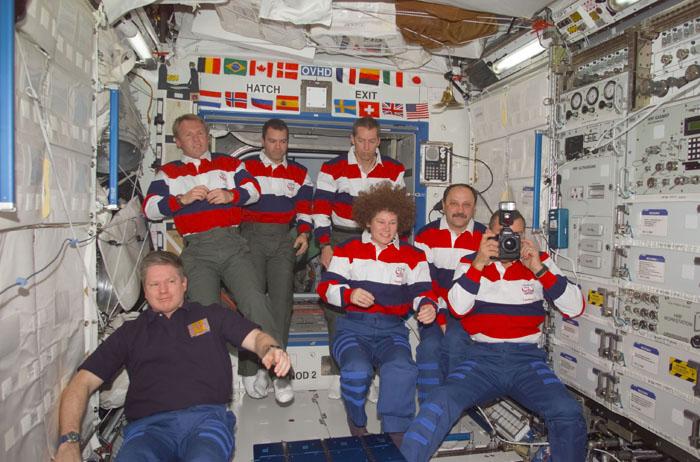
STS102-E-5228 (16 March 2001) --- Onboard the Destiny laboratory for the International Space Station (ISS), astronauts and cosmonauts convene in the midst of personnel changes on crew assignments. From the left are astronauts William M. (Bill) Shepherd, Andrew S.W. Thomas, Paul W. Richards, James D. Wetherbee and Susan J. Helms; along with cosmonaut Yury V. Usachev of Rosaviakosmos and astronaut James S. Voss. Though six here are wearing STS-102 attire, Helms, Voss and Usachev will be dressed in that of the Expedition Two crew shortly and Shepherd's suit will match those of the STS-102 crew members. The photo was taken with a digital still camera.
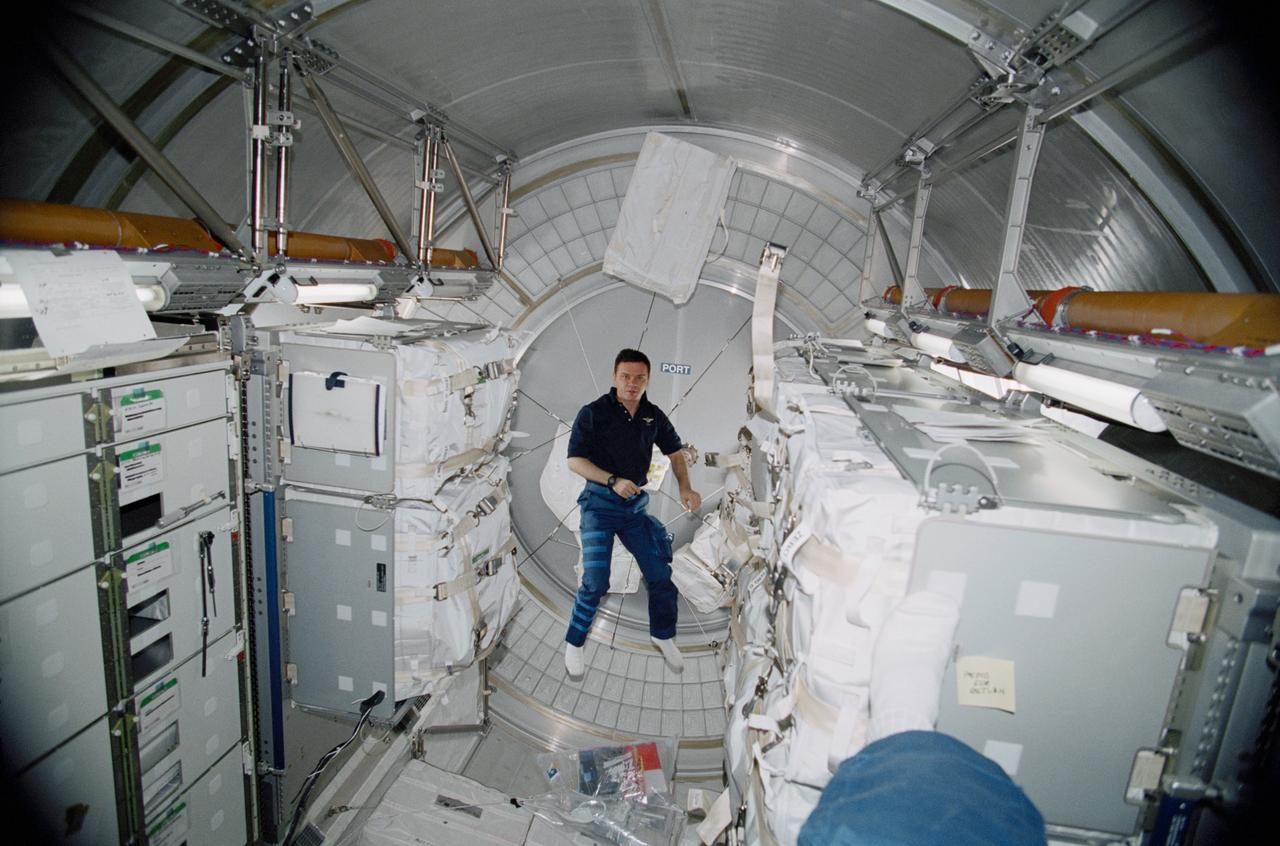
A crewmember of Expedition One, cosmonaut Yuri P. Gidzenko, is dwarfed by transient hardware aboard Leonardo, the Italian Space Agency-built Multi-Purpose Logistics Module (MPLM), a primary cargo of the STS-102 mission. The Leonardo MPLM is the first of three such pressurized modules that will serve as the International Space Station's (ISS's) moving vans, carrying laboratory racks filled with equipment, experiments and supplies to and from the Space Station aboard the Space Shuttle. The cylindrical module is approximately 21-feet long and 15- feet in diameter, weighing almost 4.5 tons. It can carry up to 10 tons of cargo into 16 standard Space Station equipment racks. Of the 16 racks the module can carry, 5 can be furnished with power, data, and fluid to support refrigerators or freezers. In order to function as an attached station module as well as a cargo transport, the logistics module also includes components that provide life support, fire detection and suppression, electrical distribution, and computer functions. The eighth Shuttle mission to visit the ISS, the STS-102 mission served as a crew rotation flight. It delivered the Expedition Two crew to the Station and returned the Expedition One crew back to Earth.
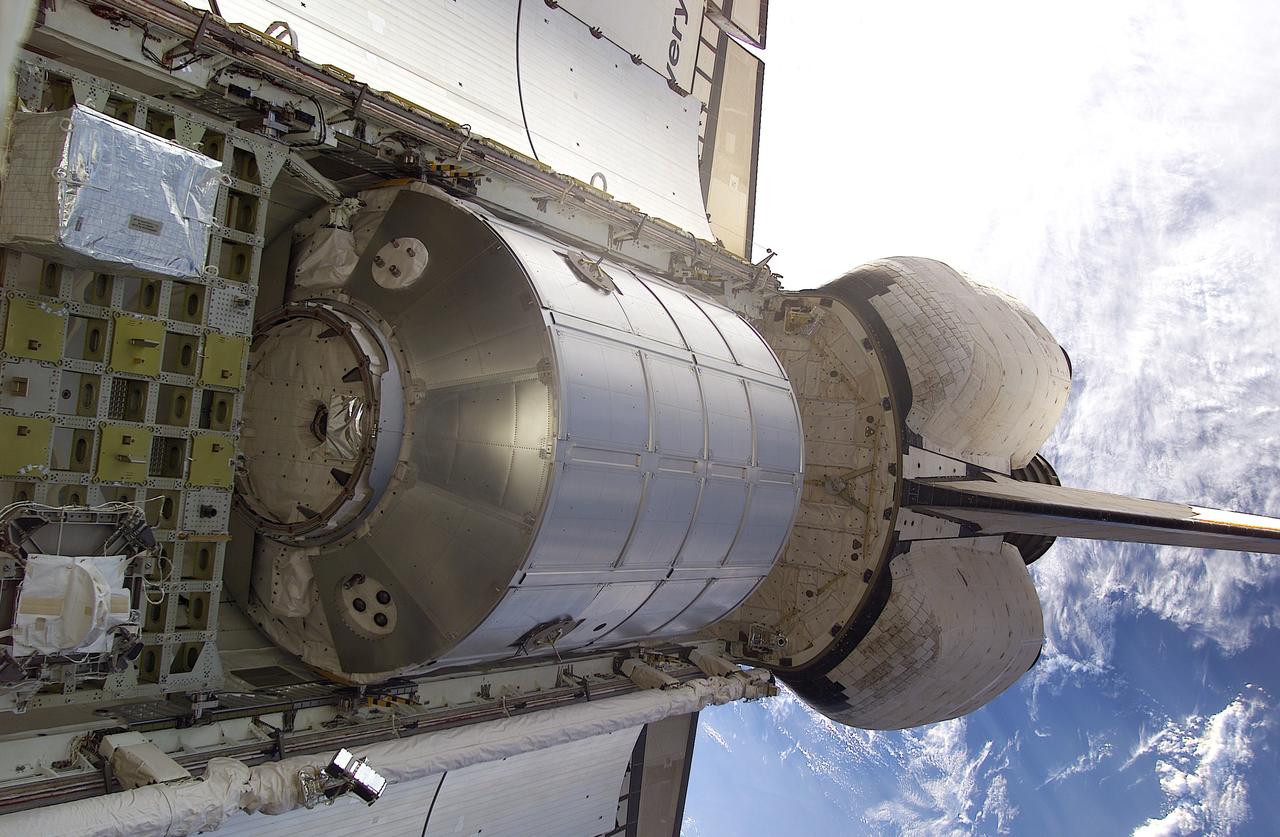
This in-orbit close up shows the Italian Space Agency-built multipurpose Logistics Module (MPLM), Leonardo, the primary cargo of the STS-102 mission, resting in the payload bay of the Space Shuttle Orbiter Discovery. The Leonardo MPLM is the first of three such pressurized modules that will serve as the International Space Station's (ISS') moving vans, carrying laboratory racks filled with equipment, experiments, and supplies to and from the Station aboard the Space Shuttle. The cylindrical module is approximately 21-feet long and 15- feet in diameter, weighing almost 4.5 tons. It can carry up to 10 tons of cargo in 16 standard Space Station equipment racks. Of the 16 racks the module can carry, 5 can be furnished with power, data, and fluid to support refrigerators or freezers. In order to function as an attached station module as well as a cargo transport, the logistics module also includes components that provide life support, fire detection and suppression, electrical distribution, and computer functions. The eighth station assembly flight and NASA's 103rd overall flight, STS-102 launched March 8, 2001 for an almost 13 day mission.
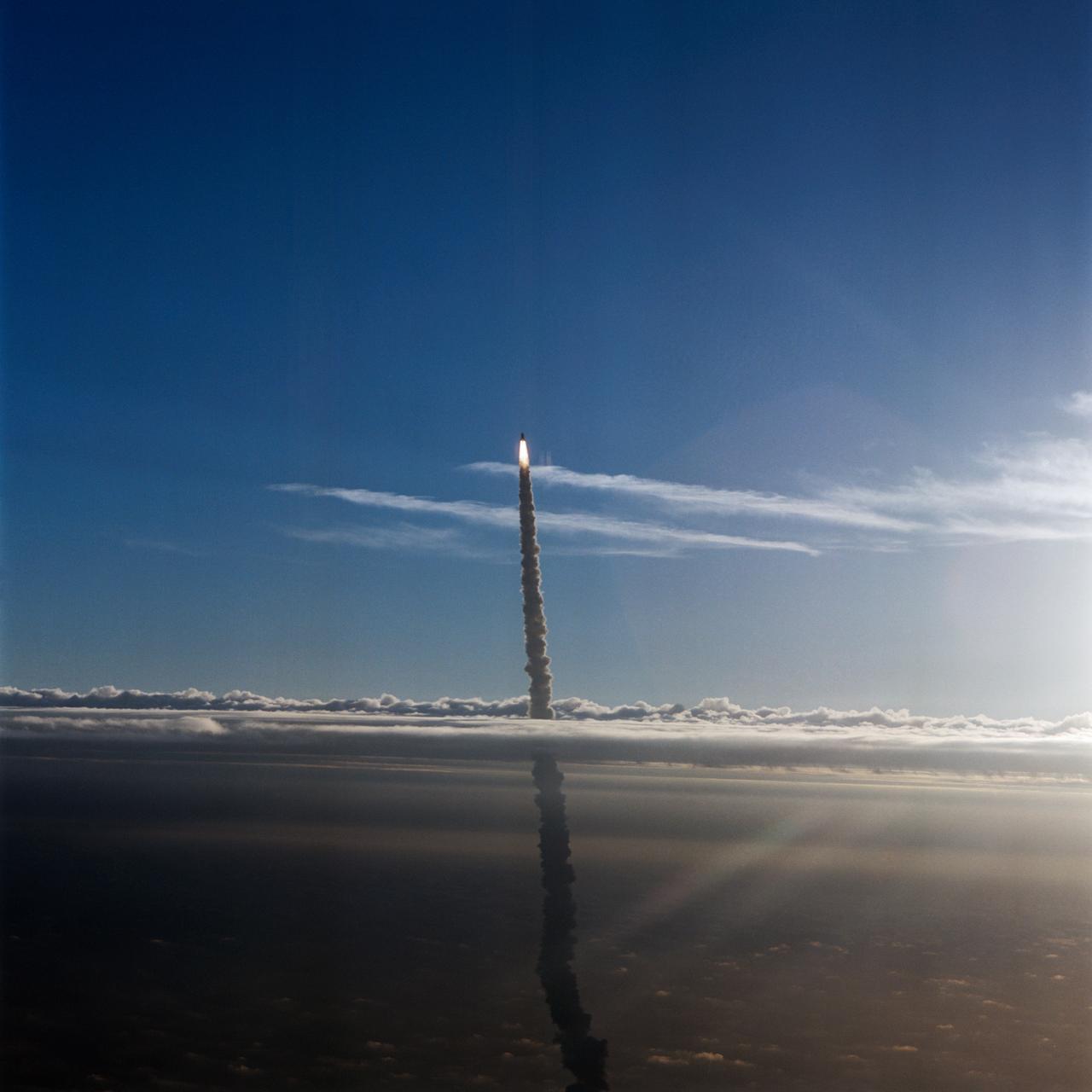
STS-32 Columbia, Orbiter Vehicle (OV) 102, pierces a layer of low lying clouds as it makes its ascent to Earth orbit for a 10-day mission. In this air-to-air view, OV-102 rides atop the external tank (ET) with flames created by solid rocket boosters (SRBs) appearing directly underneath it and a long plume of exhaust smoke trailing behind it and extending to Kennedy Space Center (KSC) Launch Complex (LC) Pad 39A below. OV-102 left KSC LC Pad 39A at 7:34:59:98 am Eastern Standard Time (EST) some 24 hours after dubious weather at the return-to-landing site (RTLS) had cancelled a scheduled launch. The photo was taken by astronaut Michael L. Coats, acting chief of the Astronaut Office, from the Shuttle Training Aircraft (STA).
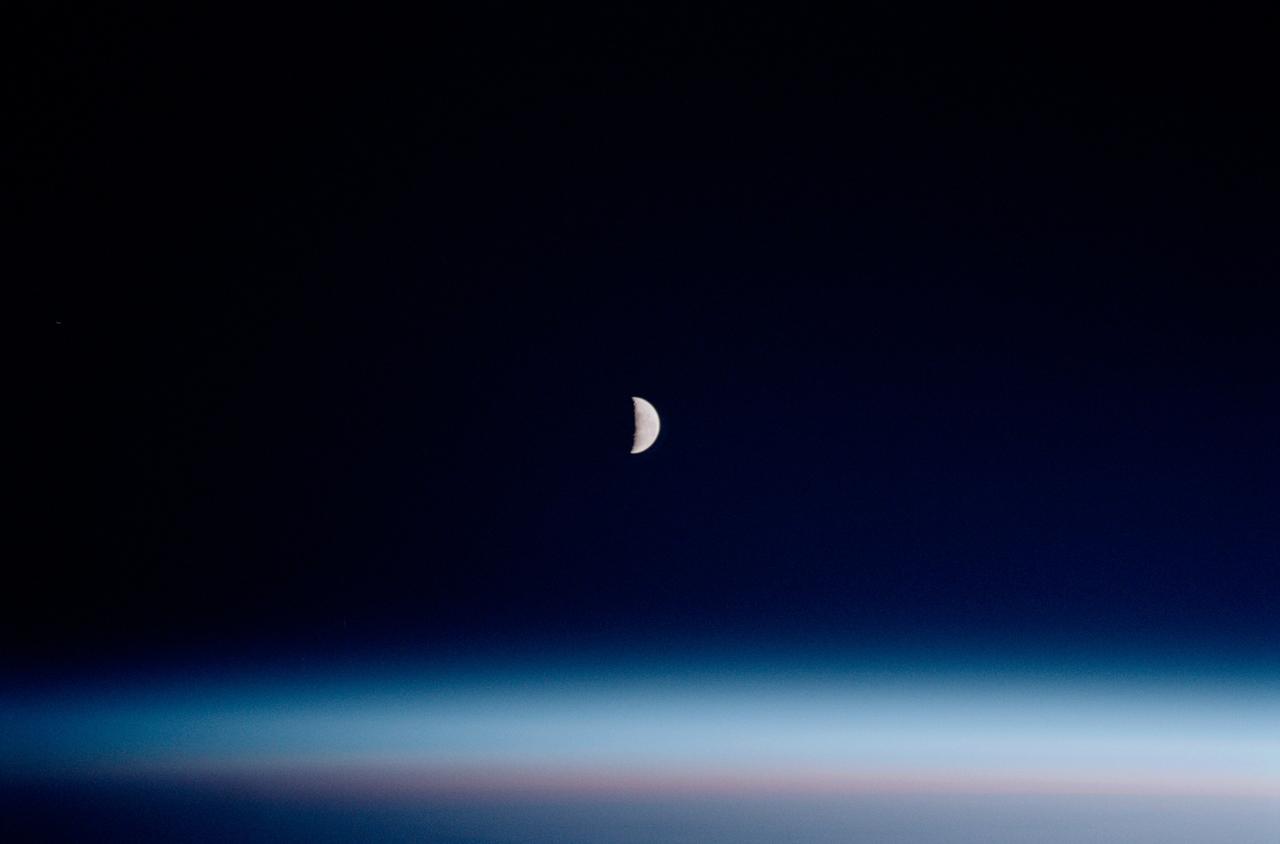
STS102-342-024 (8-21 March 2001)--- The largest percentage of astronaut out-the-window photography is scientific in nature. However, occasionally scenes such as this one showing the moon over Earth's airglow are irresistable for crew members with cameras. The 35mm scene was recorded by one of the STS-102 astronauts from the aft flight deck of the Space Shuttle Discovery.

JSC2000-05556 (3 August 2000) --- Astronaut James M. Kelly, STS-102 pilot, during a session of egress training in the Johnson Space Center's Systems Integration Facility, prepares to use a Sky-genie device to escape from a simulated shuttle in trouble. Crew trainer David Pogue (right) gives the pilot some tips on using the device.
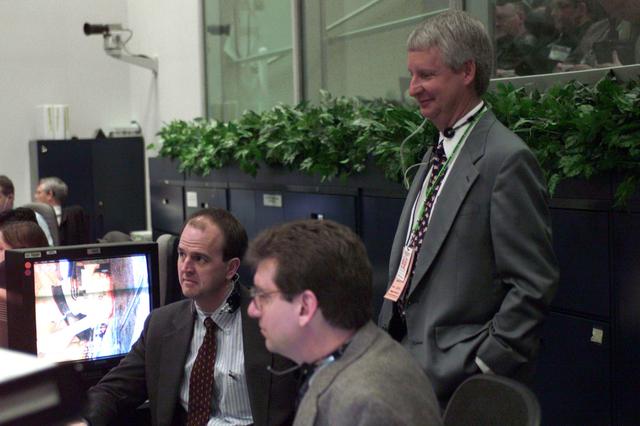
JSC2001-E-06209 (8 March 2001) --- At the Mission Operations Directorate (MOD) console in Houston's Mission Control Center (MCC), (from the left) Robbie D. Gest, Jeffrey W. Bantle and Steven A. Hawley monitor pre-launch activity for STS-102. Gest is Project Leader for Mission Operations for the United Space Alliance (USA); Bantle is with the Flight Director Office in MOD; and Hawley is with the Flight Crew Operations Directorate.
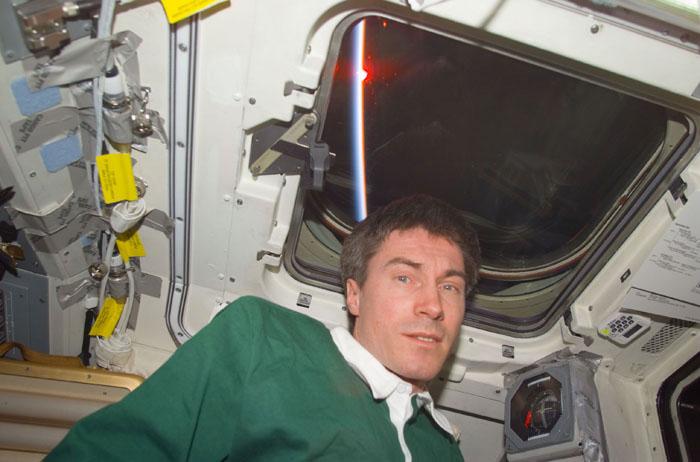
STS102-E-5147 (12 March 2001) --- Cosmonaut Sergei K. Krikalev, now a member of the STS-102 crew on Discovery's flight deck. A sun setting can be seen through the flight deck windows in the background. Krikalev, representing Rosaviakosmos, had been onboard the International Space Station (ISS) since early November 2000. The photograph was taken with a digital still camera.
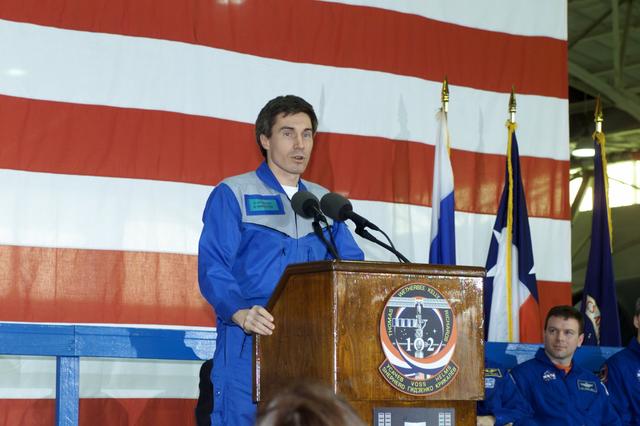
JSC2001-E-08332 (22 March 2001) --- Cosmonaut Sergei K. Krikalev, Expedition One flight engineer, speaks to a crowd of greeters during a crew return ceremony in Ellington Field's Hangar 990. Pictured in the background on the dais is astronaut James M. Kelly, STS-102 pilot.
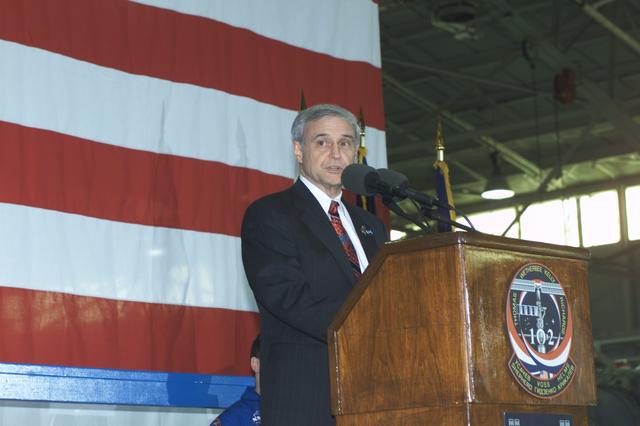
JSC2001-E-08316 (22 March 2001) --- JSC Acting Director Roy S. Estess introduces the STS-102 and Expedition One crew members (out of frame) to a crowd gathered in Ellington Field's Hangar 990 during crew return ceremonies.
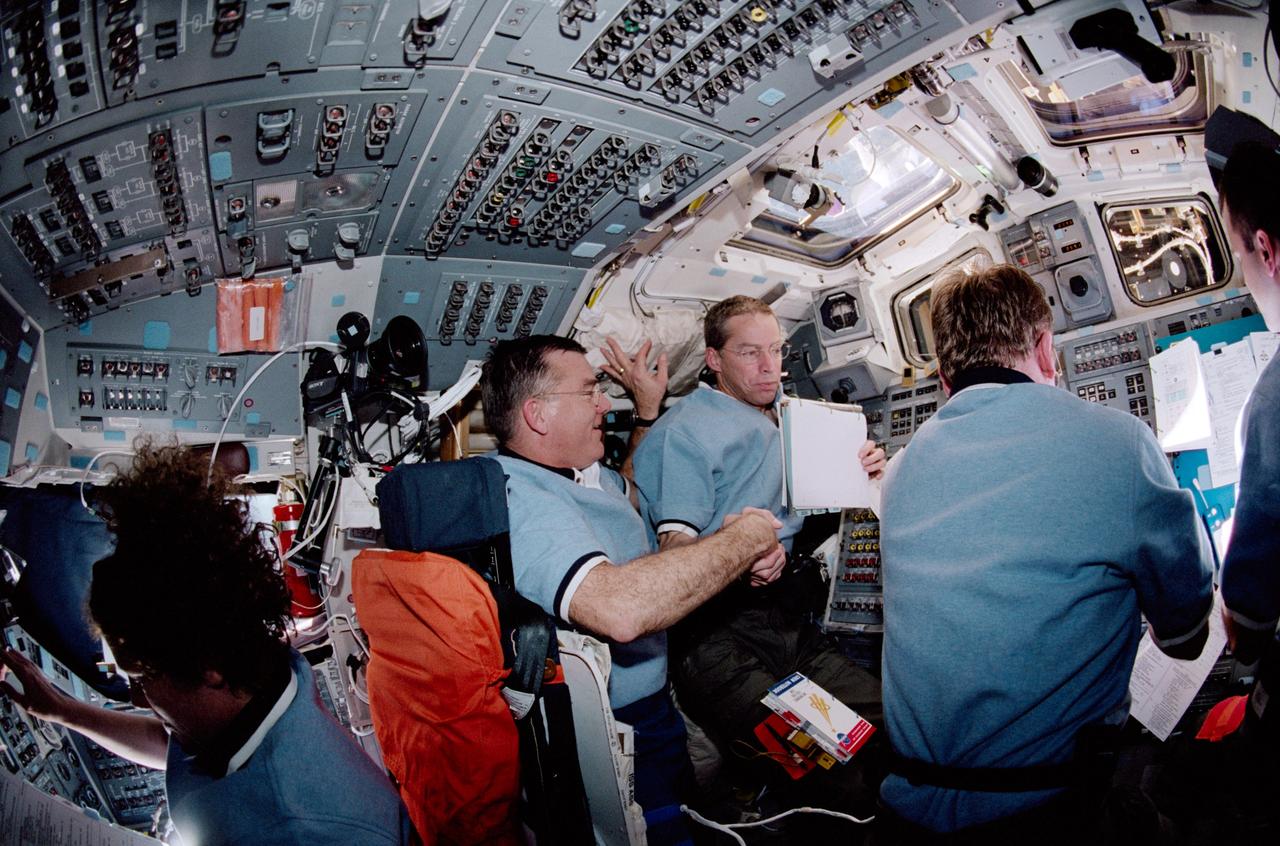
STS102-323-003 (10 March 2001) --- The STS-102 crew members are pictured on the aft flight deck of the Space Shuttle Discovery during docking operations with the International Space Station (ISS). From the left are astronauts James S. Voss, James D. Wetherbee and Andrew S.W. Thomas.
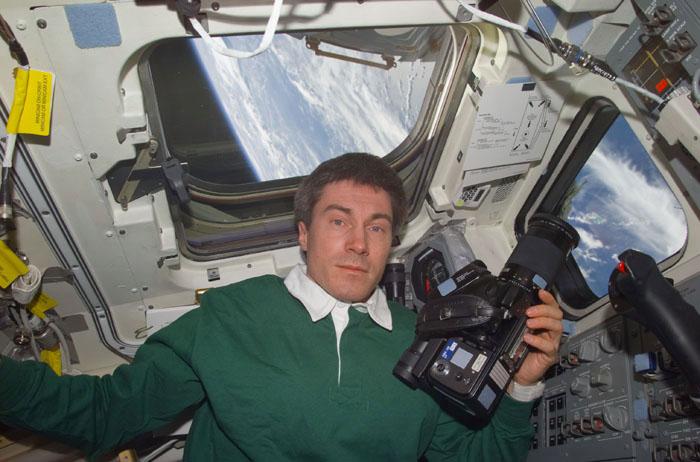
STS102-E-5142 (12 March 2001) --- Cosmonaut Sergei K. Krikalev, now a member of the STS-102 crew, prepares to use a camera on Discovery's flight deck. Krikalev, representing Rosaviakosmos, had been onboard the International Space Station (ISS) since early November 2000. The photograph was taken with a digital still camera.
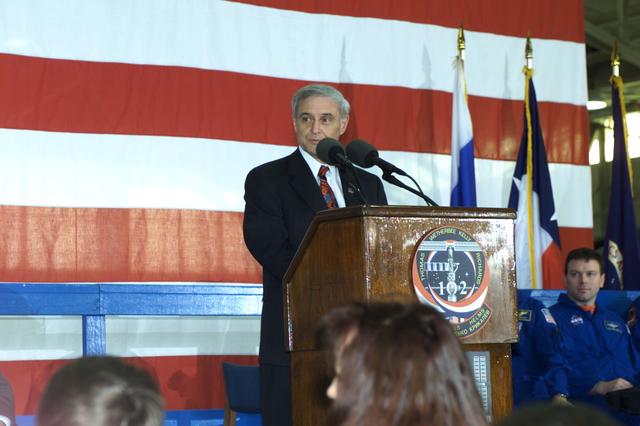
JSC2001-E-08315 (22 March 2001) --- JSC Acting Director Roy S. Estess introduces the STS-102 and Expedition One crew members to a crowd gathered in Ellington Field's Hangar 990 during crew return ceremonies.
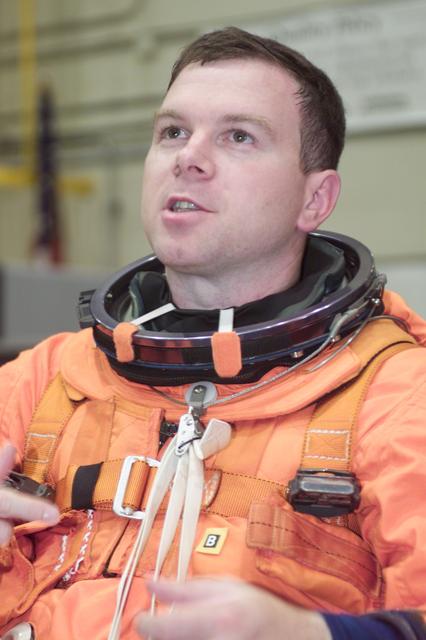
Views of STS-102 and Expedition Four bailout training in the Building 9NW's crew compartment trainer II (CCT II). Images include: Expedition Four's Carl Walz gets help from a trainer during the donning of his Launch and Entry Suit (LES)(23705); STS-102 Pilot James Kelly gets help with his LES from a trainer (23706); Expedition Four commander / cosmonaut Yuri Onufrienko (left) and Expedition Four's Daniel Bursch, both wearing LES and helmets, get strapped into their seats by a trainer on the middeck of the CCT (23707); Onufrienko and Bursch seated on the middeck (23708); Onufrienko (left), Bursch and Walz seated on the middeck preparing to begin emergency egress (23709); Walz, with LES and helmet, egresses from the port hatch of the CCT and goes into a roll on the mat (23710 and 23711); from left to right, all wearing LES's, STS-106 Commander James Wetherbee, Kelly, STS-102 Mission Specialist (MS) Paul Richards, STS-102 MS Andrew Thomas, Walz, Bursch and Onufrienko seated outside the CCT while being attended to by trainers (23712); Wetherbee seated in his LES (23713); Walz talks with Bursch and Onufrienko - Thomas is visible to the left (23714); Bursch seated (23715); Richards seated (23716); Thomas in his LES (23717); Kelly in his LES (23718); and Wetherbee (left) and Kelly converse while seated (23719).
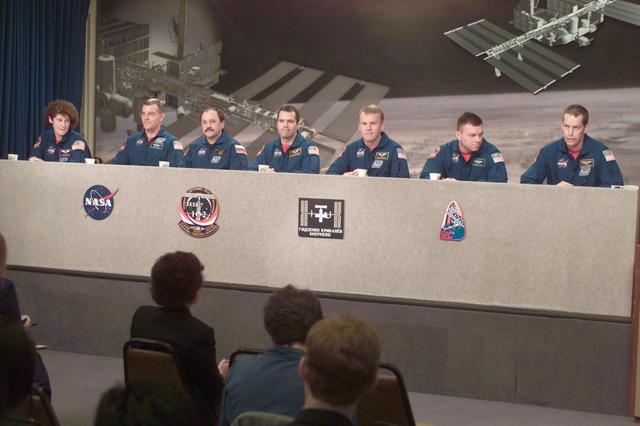
JSC2001-E-05523 (28 February 2001) --- The STS-102 crew fields questions from various news media representatives at a press briefing at the Johnson Space Center (JSC). From the right are astronauts James D. Wetherbee, mission commander; James M. Kelly, pilot; and Andrew S.W. Thomas, Paul W. Richards, and cosmonaut Yury V. Usachev, James S. Voss and Susan J. Helms, all mission specialists. Expedition Two commander Usachev, representing Rosaviakosmos, will join flight engineers Voss and Helms in the first crew exchange aboard the Earth-orbiting International Space Station (ISS).
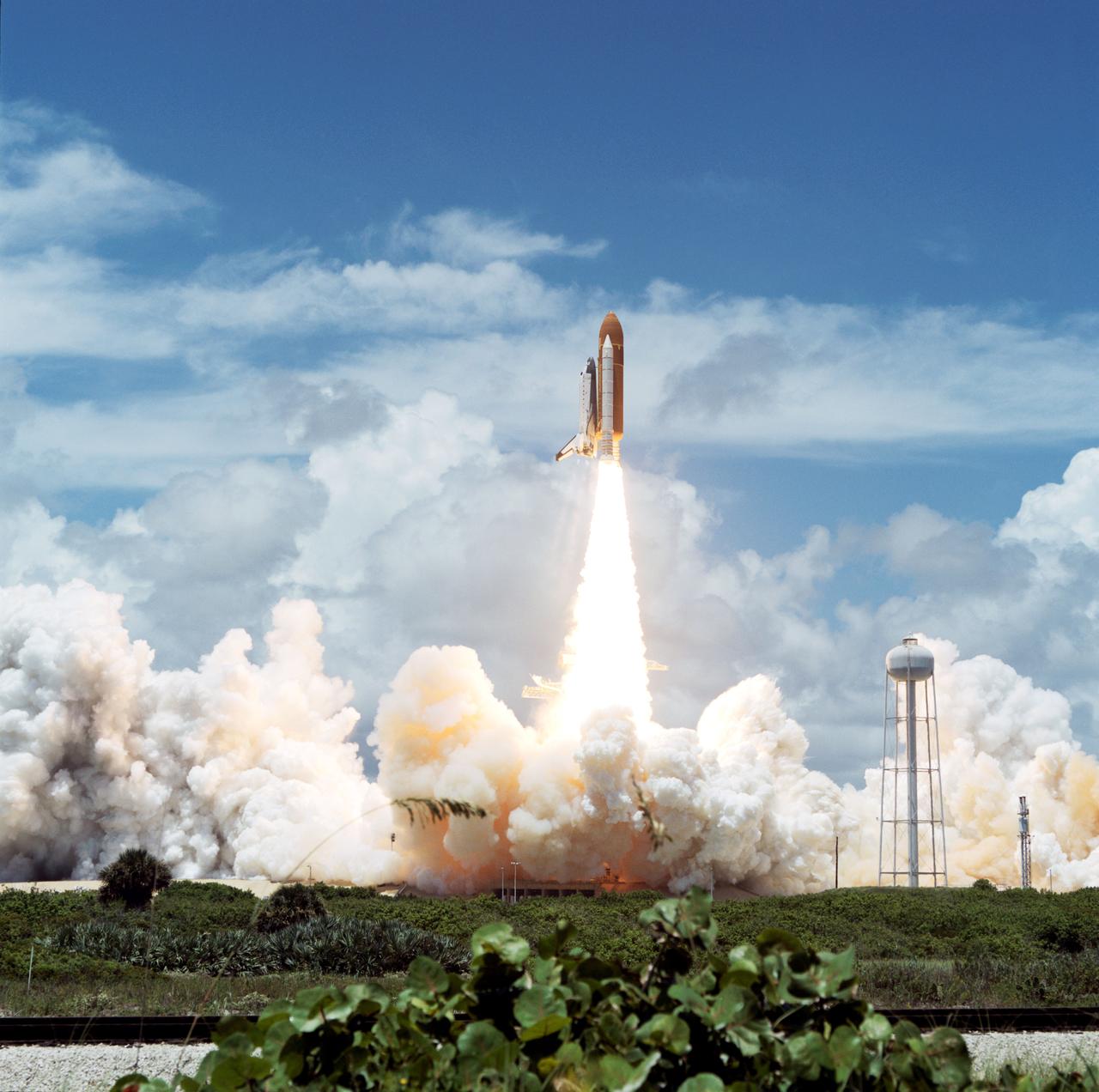
Columbia, Orbiter Vehicle (OV) 102, heads skyward after clearing the fixed service structure (FSS) tower at Kennedy Space Center (KSC) Launch Complex (LC) Pad 39A. Florida plant life appears in the foreground. The exhaust cloud produced by OV-102's solid rocket boosters (SRBs) covers the launch pad area with the exception of the sound suppression water system tower. OV-102's starboard side and the right SRB are visible from this angle. Launch occurred at 12:43 pm Eastern Daylight Time (EDT). Once in Earth orbit, STS-65's six NASA astronauts and a Japanese Payload Specialist aboard OV-102 will begin two weeks of experimentation in support of the second International Microgravity Laboratory (IML-2).
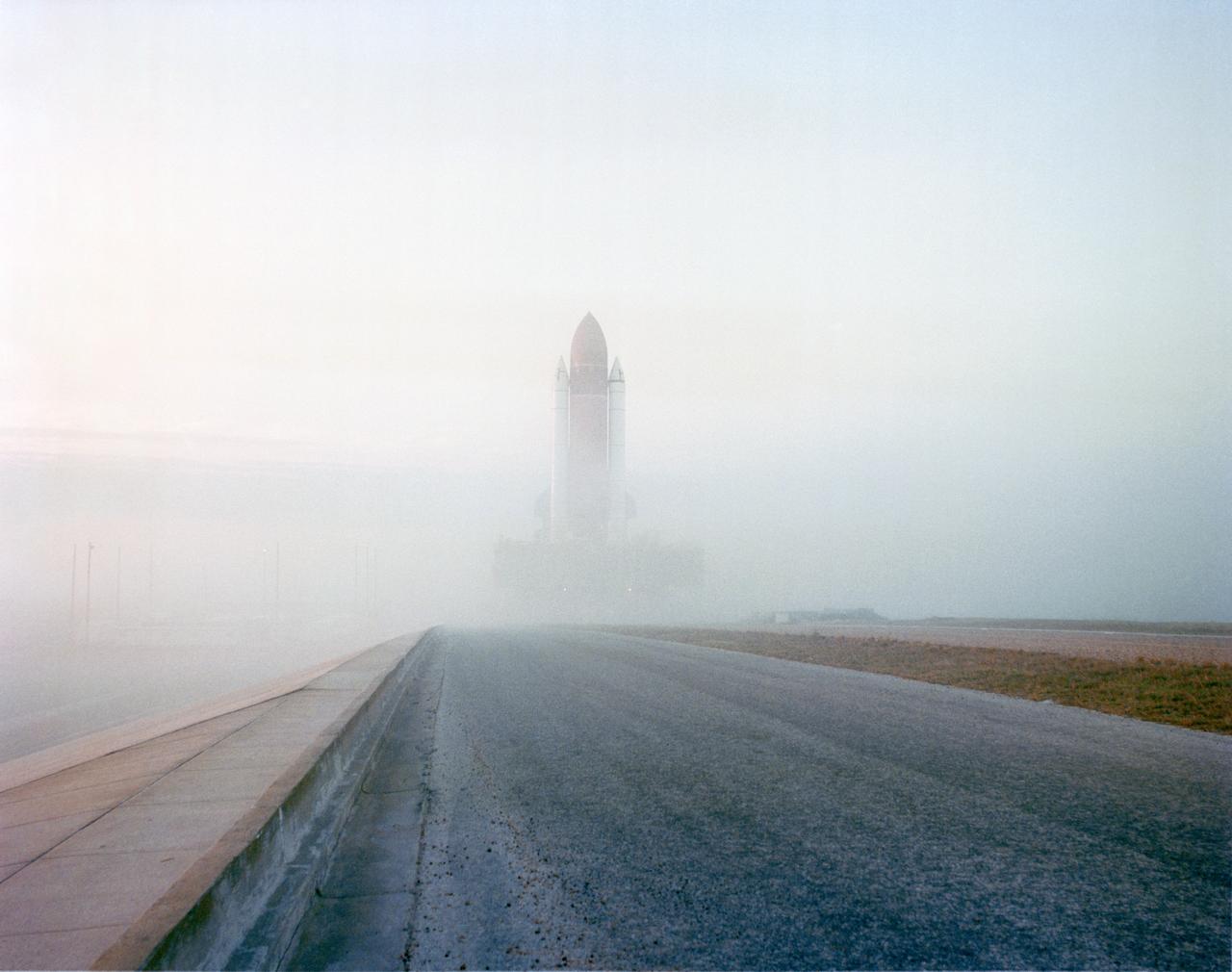
STS-32 Columbia, Orbiter Vehicle (OV) 102, rolls through the morning's foggy mist atop the mobile launcher platform and crawler transporter to Kennedy Space Center (KSC) Launch Complex (LC) Pad 39A. OV-102's wings appear on either side of the two solid rocket boosters (SRBs) and external tank (ET). Rollout from the Vehicle Assembly Building (VAB) began at 2:32 am Eastern Standard Time (EST), and OV-102 was on the pad pedestals about 8 hours later. This marks the first time a Space Shuttle has been at LC Pad 39A since 01-12-85 when OV-102 was launched on mission 61C. View provided by KSC with alternate number KSC-89PC-1259.
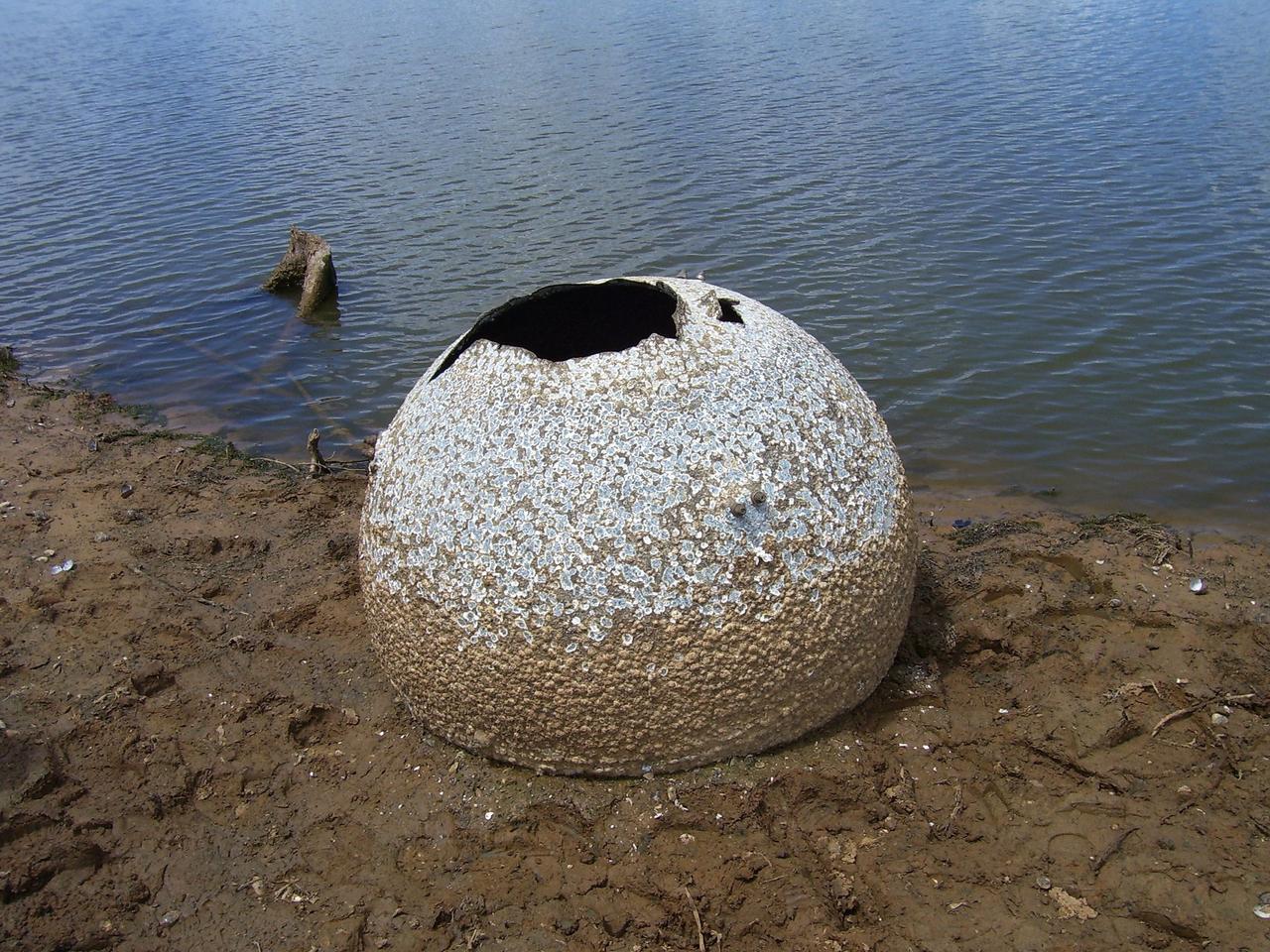
NACOGDOCHES, Texas -- A round 40-inch aluminum storage tank from space shuttle Columbia's Power Reactant and Storage Distribution System rests on the edge of Lake Nacogdoches in Texas. Lower lake water levels due to a local drought allowed the debris to become exposed. Columbia was destroyed during re-entry at the conclusion of the STS-107 mission in 2003. Approximately 38 to 40 percent of Columbia was recovered following the accident in a half-million-acre search area which extended from eastern Texas and to western Louisiana. This tank is one of 18 cryogenic liquid storage tanks that flew aboard Columbia. The tank is not hazardous to people or the environment and will be transported to NASA's Kennedy Space Center for storage inside the Vehicle Assembly Building with the rest of the recovered Columbia debris. For information on STS-107 and the Columbia accident, visit http://www.nasa.gov/columbia/home/index.html. Photo credit: Nacogdoches Police Dept.
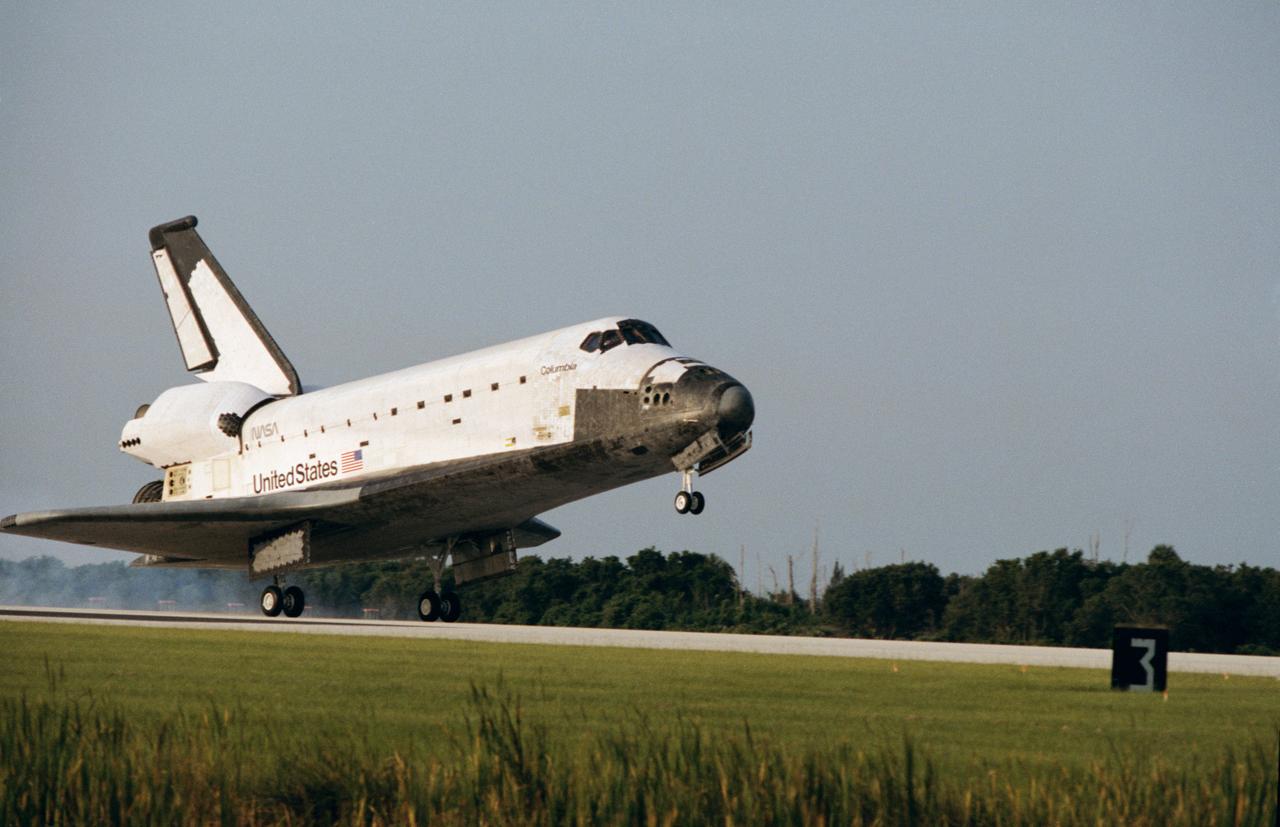
STS-50 Columbia's, Orbiter Vehicle (OV) 102's, main landing gear touches down on runway 33 at the Kennedy Space Center (KSC) Shuttle Landing Facility (SLF) producing a small cloud of dust. Landing occurred at 7:42 am (Eastern Daylight Time (EDT)). In this view of the OV-102's starboard side, the nose landing gear (NLG) continues to ride above the runway surface. Florida vegetation, a runway sign, and runway lights appear in the foreground.
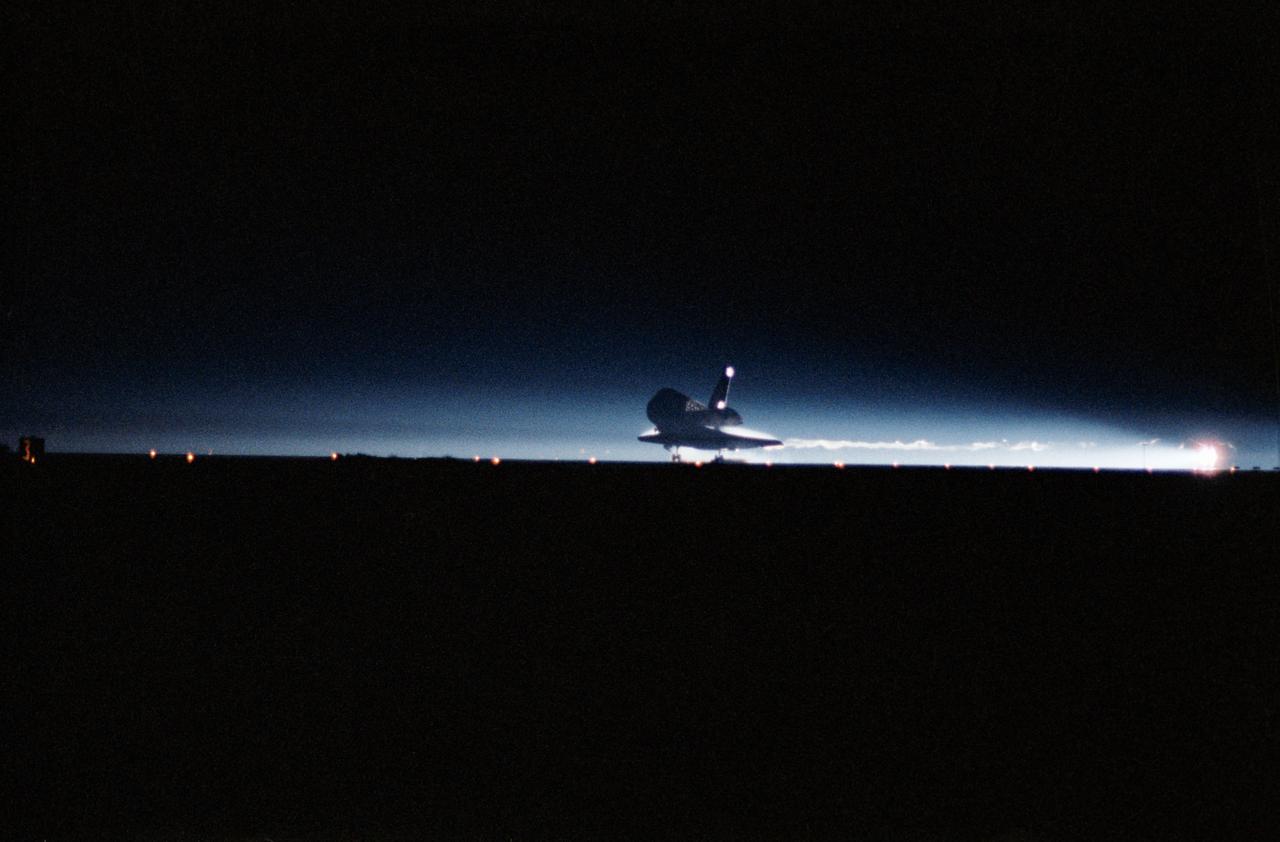
STS-32 Columbia, Orbiter Vehicle (OV) 102, is captured as its main landing gear (MLG) touches down on runway 22 at Edwards Air Force Base (EAFB), California, in the early morning darkness. The night landing ended a record 11-day mission in space. Moments later, at 1:36:38 am Pacific Standard Time (PST), OV-102 came to a complete stop, having logged 4,509,972 miles in flight.

STS-32 Columbia, Orbiter Vehicle (OV) 102, is captured as its main landing gear (MLG) touches down on runway 22 at Edwards Air Force Base (EAFB), California, in the early morning darkness. The night landing ended a record 11-day mission in space. Moments later, at 1:36:38 am Pacific Standard Time (PST), OV-102 came to a complete stop, having logged 4,509,972 miles in flight.
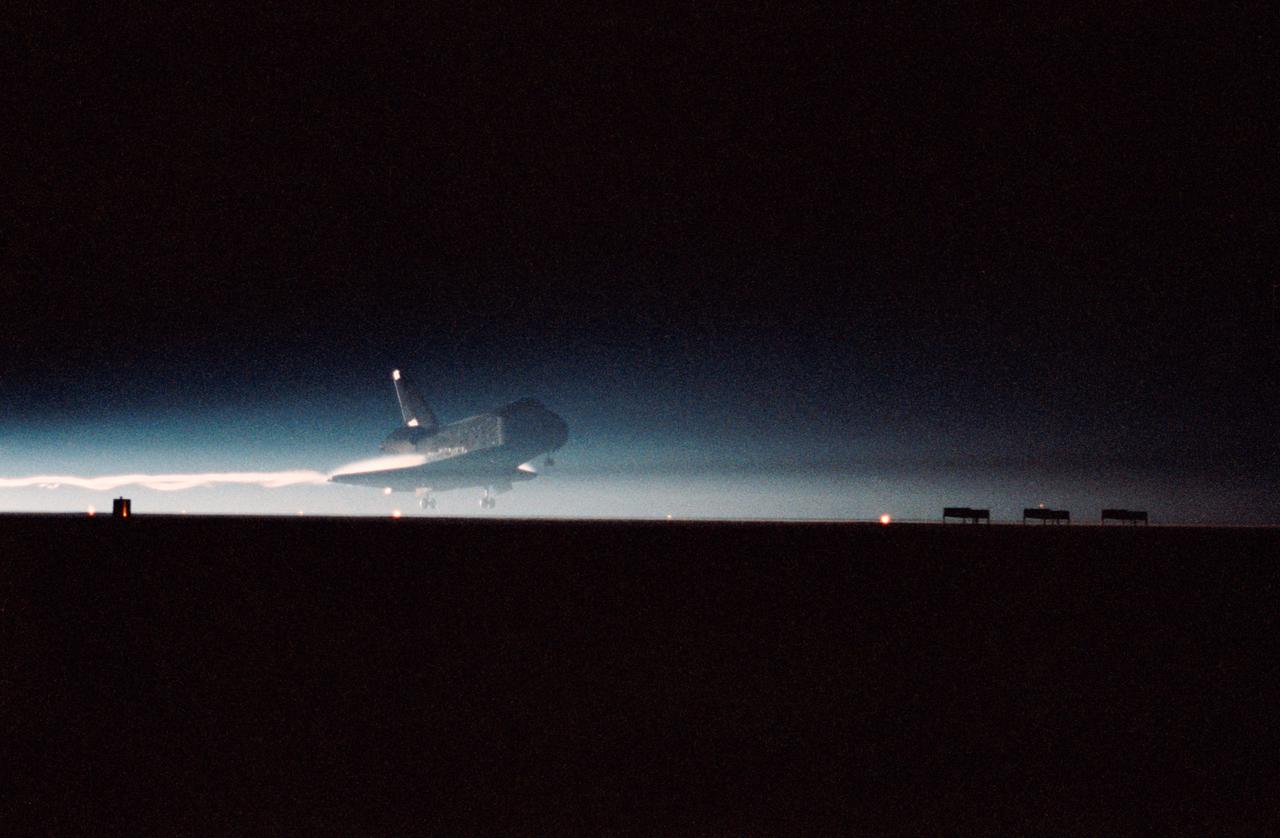
STS-32 Columbia, Orbiter Vehicle (OV) 102, is captured as its main landing gear (MLG) touches down on runway 22 at Edwards Air Force Base (EAFB), California, in the early morning darkness. The night landing ended a record 11-day mission in space. Moments later, at 1:36:38 am Pacific Standard Time (PST), OV-102 came to a complete stop, having logged 4,509,972 miles in flight.

STS-102 mission astronauts James S. Voss and James D. Weatherbee share a congratulatory handshake as the Space Shuttle Orbiter Discovery successfully docks with the International Space Station (ISS). Photographed from left to right are: Astronauts Susan J. Helms, mission specialist; James S. Voss, Expedition 2 crew member; James D. Weatherbee, mission commander; Andrew S.W. Thomas, mission specialist; and nearly out of frame is James M. Kelley, Pilot. Launched March 8, 2001, STS-102's primary cargo was the Leonardo, the Italian Space Agency-built Multipurpose Logistics Module (MPLM). The Leonardo MPLM is the first of three such pressurized modules that will serve as ISS' moving vans, carrying laboratory racks filled with equipment, experiments, and supplies to and from the Station aboard the Space Shuttle. The cylindrical module is approximately 21-feet long and 15- feet in diameter, weighing almost 4.5 tons. It can carry up to 10 tons of cargo in 16 standard Space Station equipment racks. Of the 16 racks the module can carry, 5 can be furnished with power, data, and fluid to support refrigerators or freezers. In order to function as an attached station module as well as a cargo transport, the logistics module also includes components that provide life support, fire detection and suppression, electrical distribution, and computer functions. NASA's 103rd overall mission and the 8th Space Station Assembly Flight, STS-102 mission also served as a crew rotation flight. It delivered the Expedition Two crew to the Station and returned the Expedition One crew back to Earth.

Astronaut Paul W. Richards, STS-102 mission specialist, works in the cargo bay of the Space Shuttle Discovery during the second of two scheduled space walks. Richards, along with astronaut Andy Thomas, spent 6.5 hours outside the International Space Station (ISS), continuing work to outfit the station and prepare for delivery of its robotic arm. STS-102 delivered the first Multipurpose Logistics Modules (MPLM) named Leonardo, which was filled with equipment and supplies to outfit the U.S. Destiny Laboratory Module. The Leonardo MPLM is the first of three such pressurized modules that will serve as the ISS' moving vans, carrying laboratory racks filled with equipment, experiments, and supplies to and from the Station aboard the Space Shuttle. The cylindrical module is approximately 21-feet long and 15- feet in diameter, weighing almost 4.5 tons. It can carry up to 10 tons of cargo in 16 standard Space Station equipment racks. Of the 16 racks the module can carry, 5 can be furnished with power, data, and fluid to support refrigerators or freezers. In order to function as an attached station module as well as a cargo transport, the logistics module also includes components that provide life support, fire detection and suppression, electrical distribution, and computer functions. NASA's 103rd overall mission and the 8th Space Station Assembly Flight, STS-102 mission also served as a crew rotation flight. It delivered the Expedition Two crew to the Station and returned the Expedition One crew back to Earth.
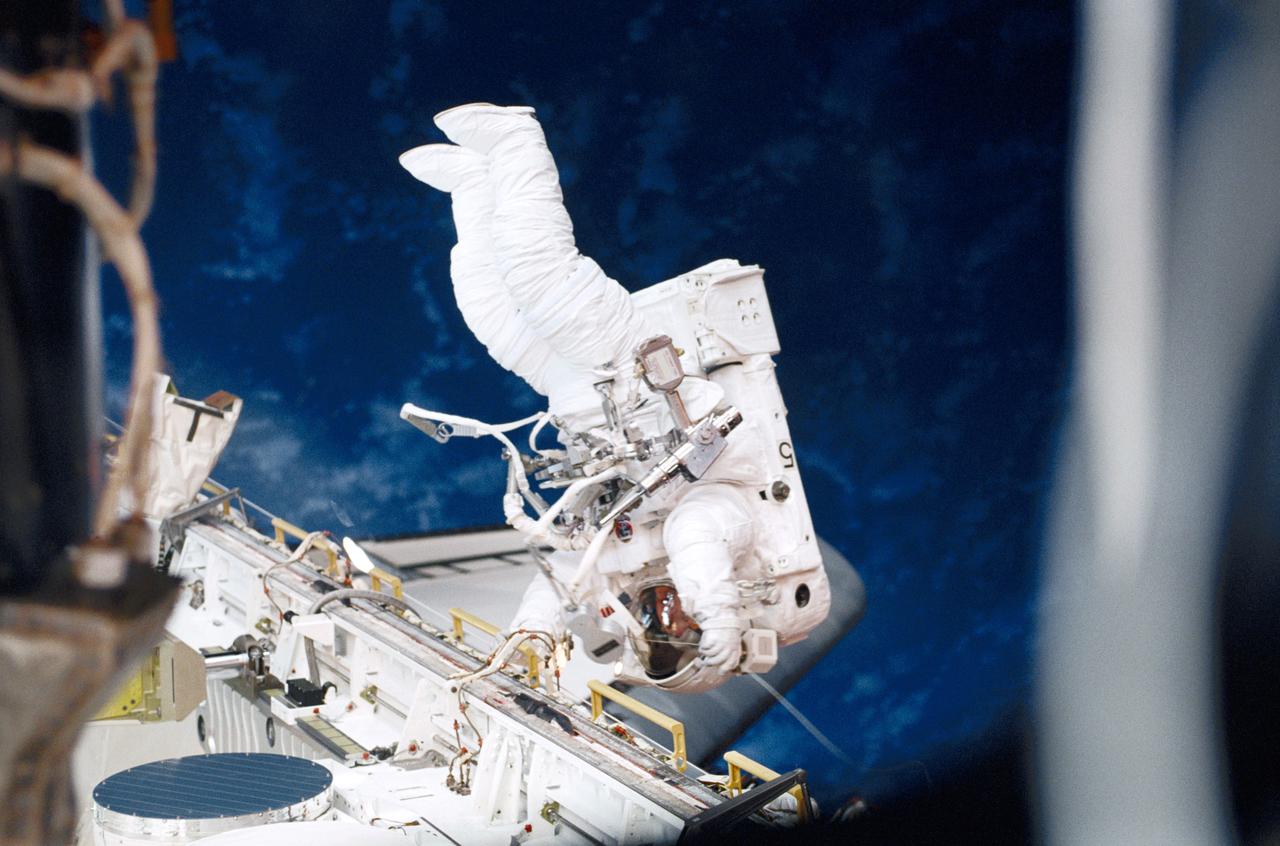
STS-102 mission astronaut Susan J. Helms translates along the longerons of the Space Shuttle Discovery during the first of two space walks. During this walk, the Pressurized Mating Adapter 3 was prepared for repositioning from the Unity Module's Earth-facing berth to its port-side berth to make room for the Leonardo multipurpose Logistics Module (MPLM), supplied by the Italian Space Agency. The Leonardo MPLM is the first of three such pressurized modules that will serve as the International Space Station's (ISS') moving vans, carrying laboratory racks filled with equipment, experiments, and supplies to and from the Station aboard the Space Shuttle. The cylindrical module is approximately 21-feet long and 15- feet in diameter, weighing almost 4.5 tons. It can carry up to 10 tons of cargo in 16 standard Space Station equipment racks. Of the 16 racks the module can carry, 5 can be furnished with power, data, and fluid to support refrigerators or freezers. In order to function as an attached station module as well as a cargo transport, the logistics module also includes components that provide life support, fire detection and suppression, electrical distribution, and computer functions. NASA's 103rd overall mission and the 8th Space Station Assembly Flight, STS-102 mission also served as a crew rotation flight. It delivered the Expedition Two crew to the Station and returned the Expedition One crew back to Earth.
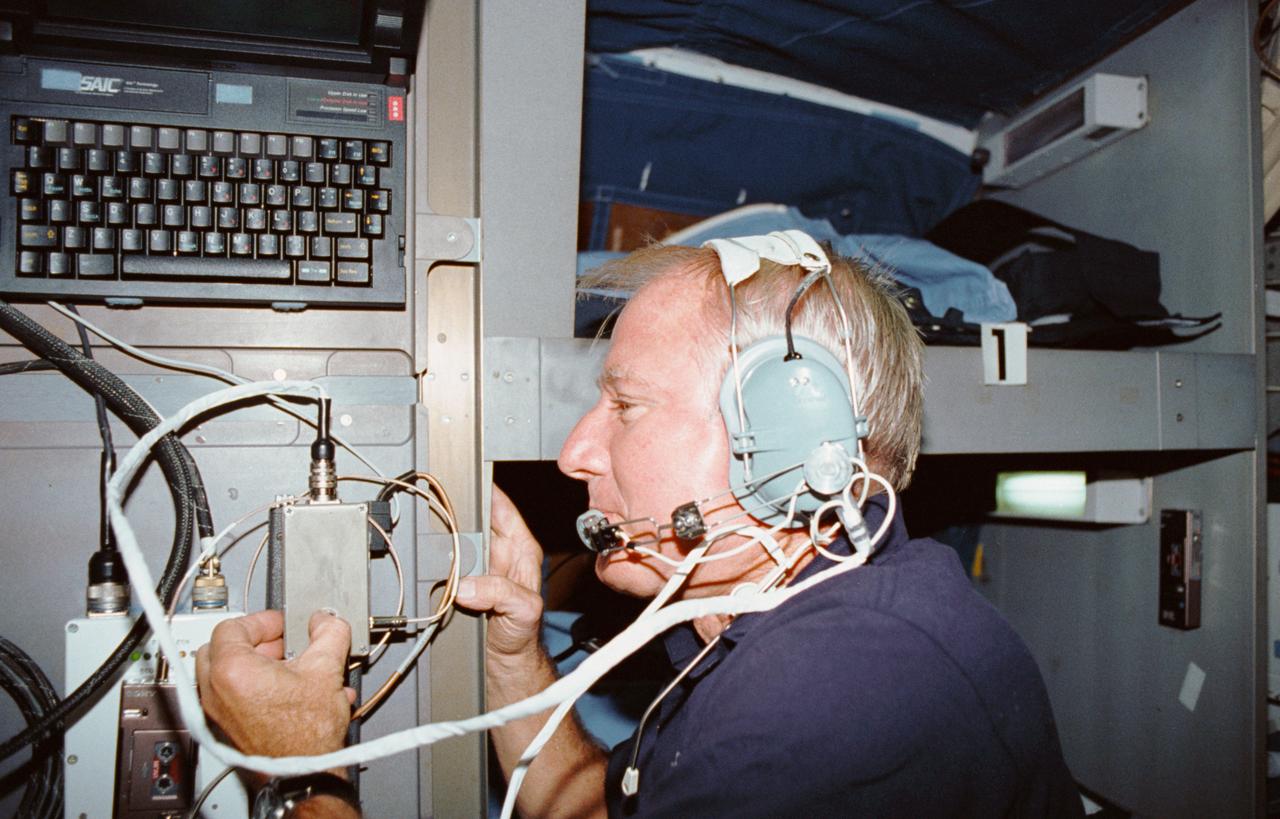
STS035-05-036 (2-10 Dec 1990) --- STS-35 Commander Vance D. Brand, wearing headset, communicates with family members using Shuttle Amateur Radio Experiment (SAREX) on Columbia's, Orbiter Vehicle (OV) 102's, middeck. SAREX and its portable laptop computer mounted on the outside of the middeck sleep station allowed the STS-35 crewmembers to "visit" and briefly share some of their in space experiences with family members. It also provided radio transmissions between ground based amateur radio operators around the world and OV-102. The experiment enabled students from all over the United States to have a chance to communicate with a crewmember in space.

JSC2000-E-23719 (September 2000) --- Attired in training versions of their full-pressure launch and entry garments, astronauts James D. Wetherbee (left), mission commander for STS-102, and James W. Kelly, pilot, discuss contingencies prior to participating in an emergency bailout training exercise in the Crew Compartment Trainer (CCT-2) in the Systems Integration Facility at the Johnson Space Center (JSC).
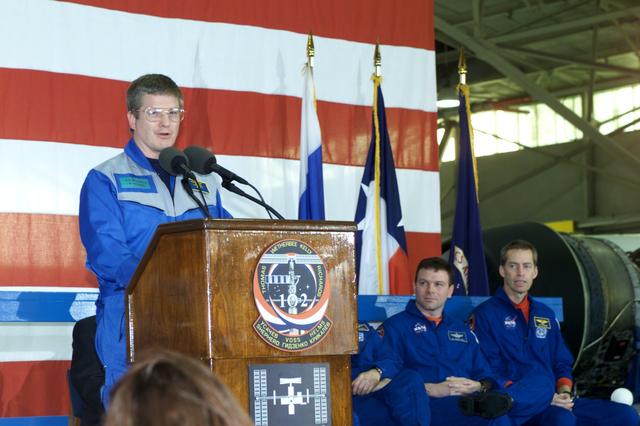
JSC2001-E-08334 (22 March 2001) --- Astronaut William M. (Bill) Shepherd, Expedition One mission commander, speaks to a crowd of greeters during a crew return ceremony in Ellington Field's Hangar 990. Pictured in the background on the dais are astronauts James M. Kelly (left), STS-102 pilot, and James D. Wetherbee, commander.
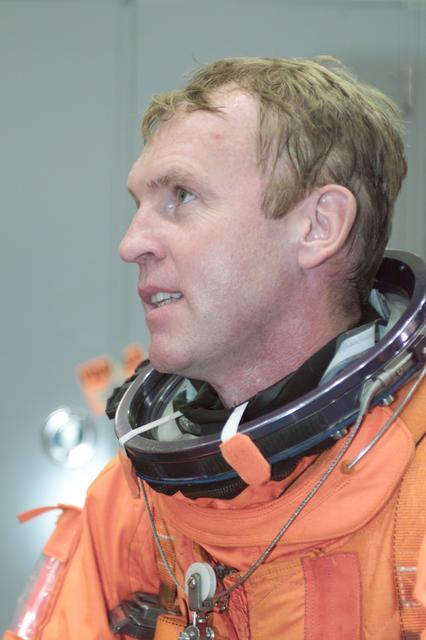
JSC2000-E-23717 (September 2000) --- Attired in a training version of his full-pressure launch and entry garment, astronaut Andrew S.W. Thomas, mission specialist for STS-102, is pictured prior to participating in an emergency bailout training exercise in the Crew Compartment Trainer (CCT-2) of the Systems Integration Facility at the Johnson Space Center (JSC).
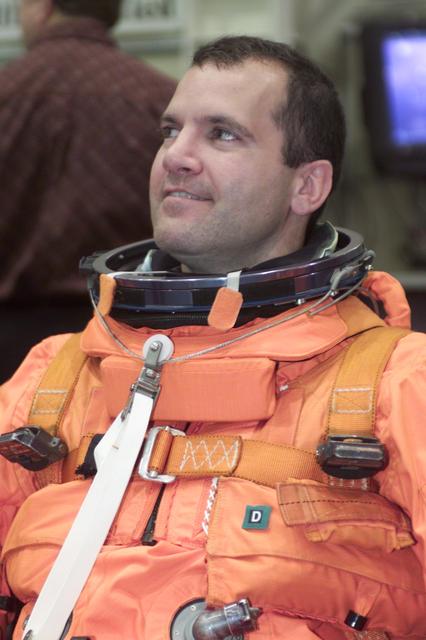
SC2000-E-23716 (September 2000) --- Attired in a training version of his full-pressure launch and entry garment, astronaut Paul W. Richards, mission specialist for STS-102, is pictured prior to participating in an emergency bailout training exercise in the Crew Compartment Trainer (CCT-2) of the Systems Integration Facility at the Johnson Space Center (JSC).
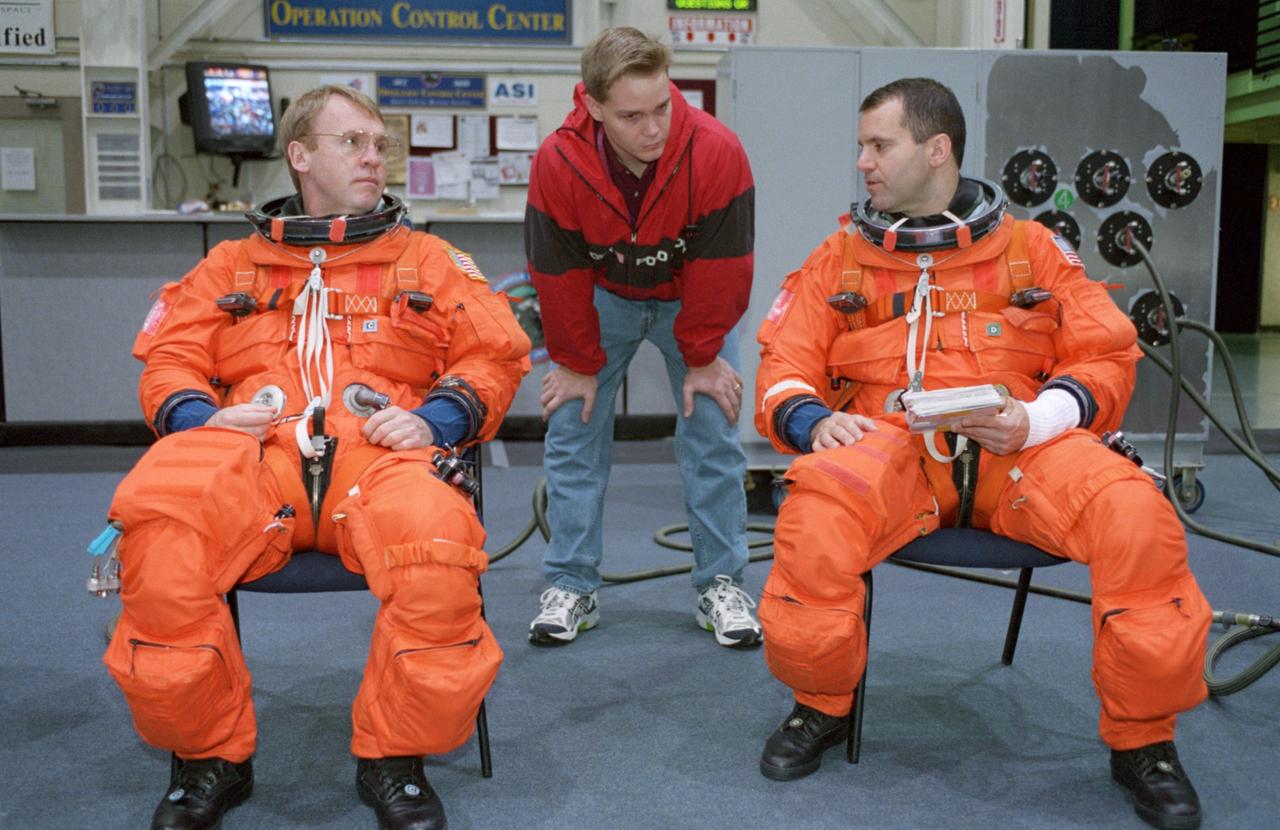
JSC2000-07442 (6 December 2000) --- Attired in training versions of their full-pressure launch and entry garments, two mission specialists for STS-102 are pictured prior to participating in a simulation in the Crew Compartment Trainer (CCT-2) of the Systems Integration Facility at the Johnson Space Center (JSC). They are astronauts Andrew S.W. Thomas (left) and Paul W. Richards.

JSC2001-E-08327 (22 March 2001) --- Astronaut James M. Kelly, STS-102 pilot, speaks to a crowd of greeters during a crew return ceremony in Ellington Field's Hangar 990. Pictured in the background on the dais are Joseph Rothenberg (left), NASA Associate Administrator for Space Flight, and Roy S. Estess, Johnson Space Center Acting Director.
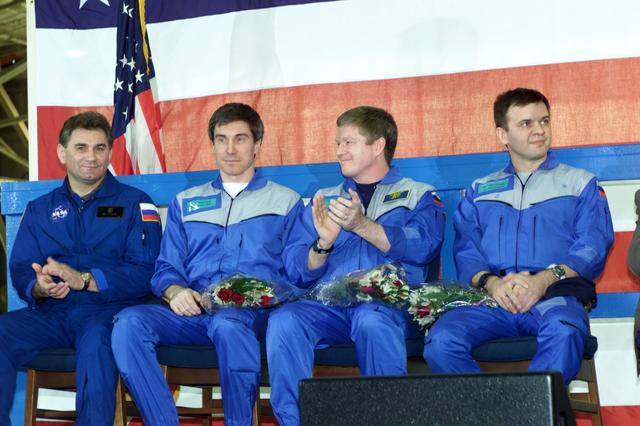
JSC2001-E-08325 (22 March 2001) --- Some of the participants of the Expedition One and STS-102 crew return ceremony applaud one of the speakers. Pictured from the left are cosmonaut Vasily Tsibliev, Deputy Director of the Gagarin Cosmonaut Training Center in Star City; cosmonaut Sergei K. Krikalev, Expedition One flight engineer; astronaut William M. (Bill) Shepherd, mission commander; and Yuri P. Gidzenko, Soyuz commander.
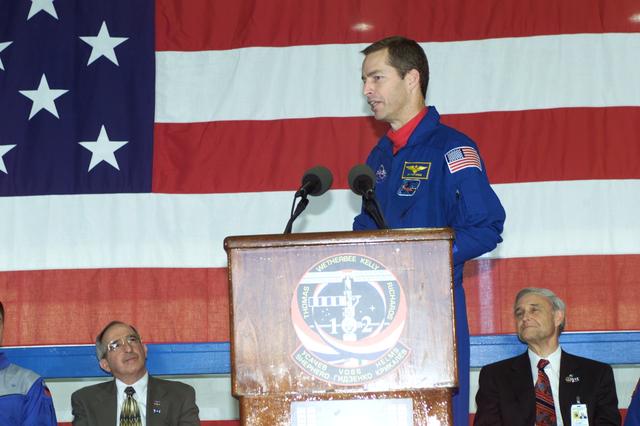
JSC2001-E-08326 (22 March 2001) --- Astronaut James D. Wetherbee, STS-102 mission commander, speaks to a crowd of greeters during a crew return ceremony in Ellington Field's Hangar 990. Pictured in the background on the dais are Joseph Rothenberg (left), NASA Associate Administrator for Space Flight, and Roy S. Estess, Johnson Space Center's Acting Director.
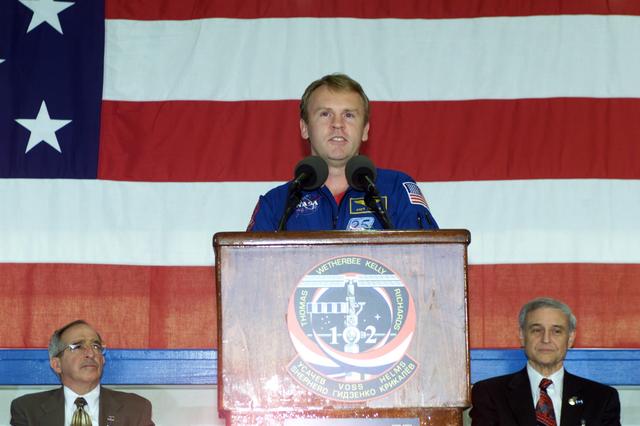
JSC2001-E-08329 (22 March 2001) --- Astronaut Andrew S.W. Thomas, STS-102 mission specialist, speaks to a crowd of greeters during a crew return ceremony in Hangar 990 at Ellington Field. In the background are Joseph Rothenberg (left), NASA Associate Administrator for Space Flight, and Roy S. Estess, Acting Director of the Johnson Space Center (JSC).
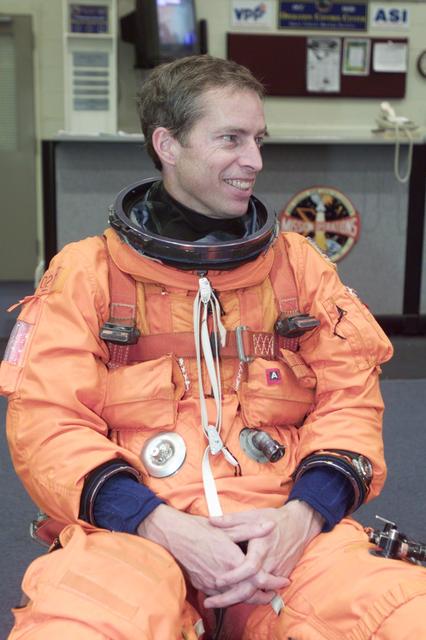
JSC2000-E-23713 (September 2000) --- Attired in a training version of his full-pressure launch and entry garment, astronaut James D. Wetherbee, mission commander for STS-102, is pictured prior to participating in an emergency bailout training exercise in the Crew Compartment Trainer (CCT-2) of the Systems Integration Facility at the Johnson Space Center (JSC).
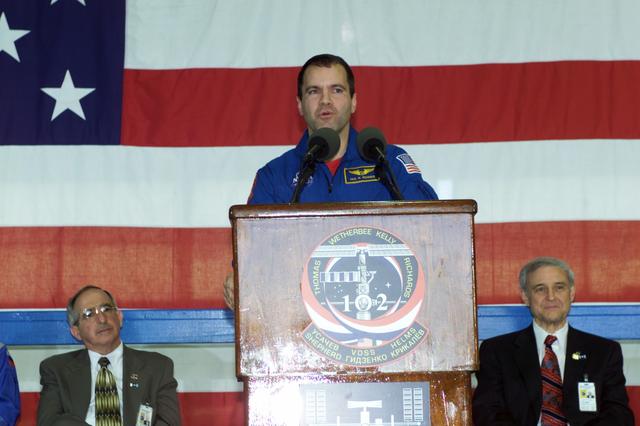
JSC2001-E-08330 (22 March 2001) --- Astronaut Paul W. Richards, STS-102 mission specialist, speaks to a crowd of greeters during a crew return ceremony in Ellington Field's Hangar 990. Pictured in the background on the dais are Joseph Rothenberg (left), NASA Associate Administrator for Space Flight, and Roy S. Estess, Johnson Space Center's Acting Director.
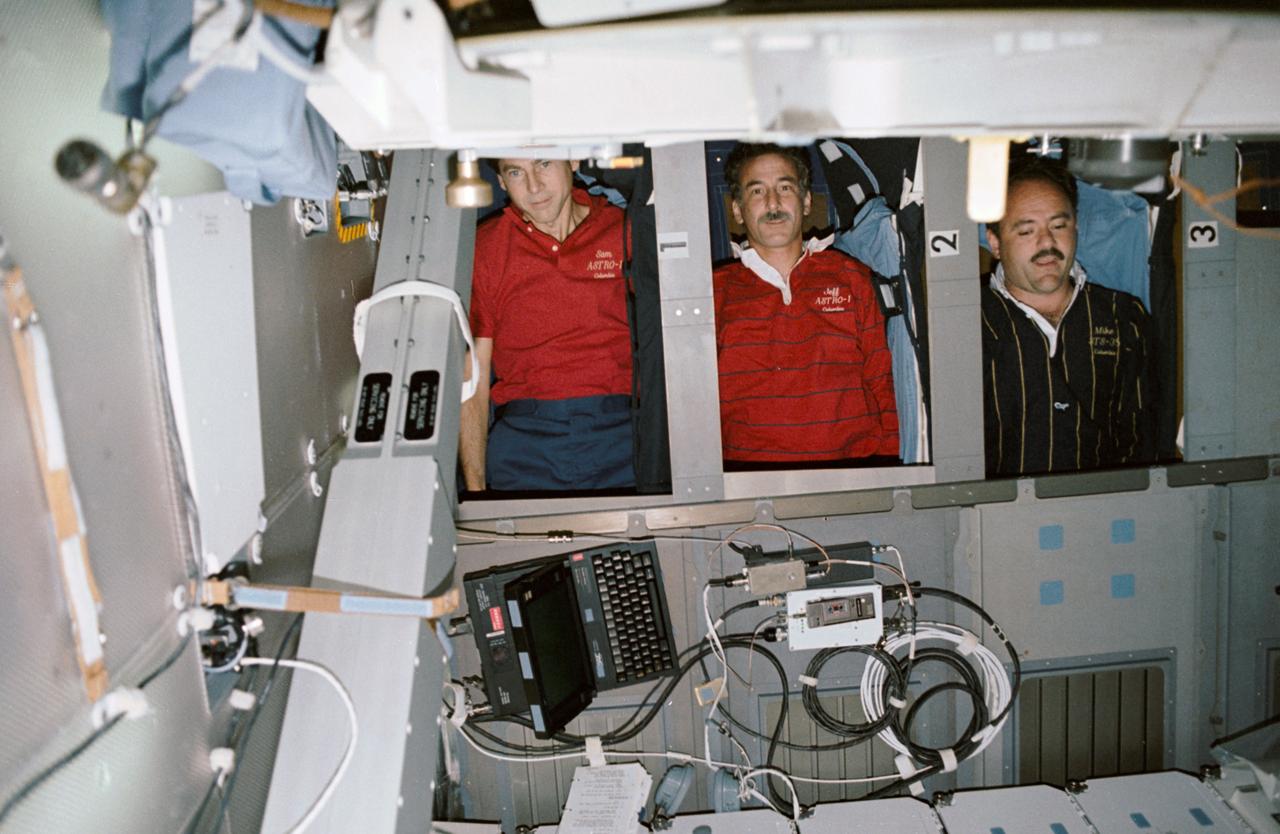
Though they are not actually asleep, three STS-35 crewmembers demonstrate the bunk-style sleep compartments onboard Columbia's, Orbiter Vehicle (OV) 102's, middeck. From top to bottom are Payload Specialist Samuel T. Durrance, Mission Specialist (MS) Jeffrey A. Hoffman, and MS John M. Lounge. At the left is the shuttle amateur radio experiment (SAREX). The crew escape pole (CES) is visible overhead and the open airlock hatch in the foreground. The sleep station is located against the middeck starboard wall.
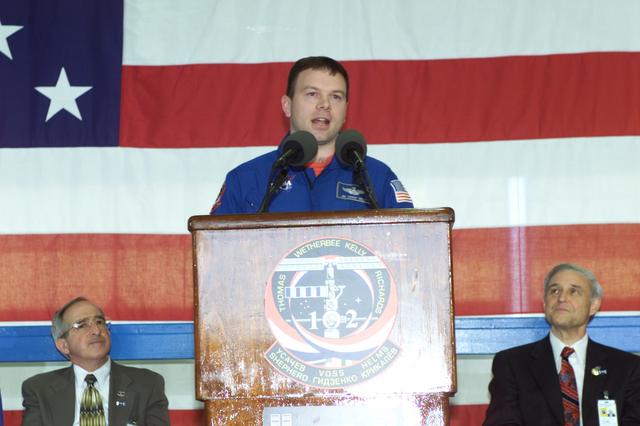
JSC2001-E-08328 (22 March 2001) --- Astronaut James M. Kelly, STS-102 pilot, speaks to a crowd of greeters during a crew return ceremony in Ellington Field's Hangar 990. Pictured in the background on the dais are Joseph Rothenberg (left), NASA Associate Administrator for Space Flight, and Roy S. Estess, Johnson Space Center Acting Director.
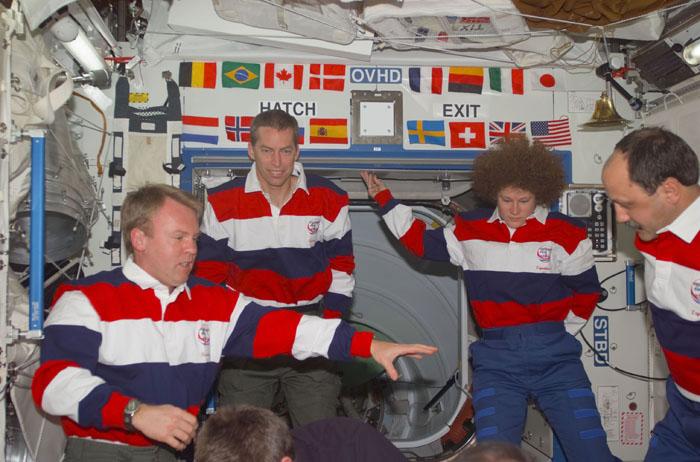
STS102-E-5224 (16 March 2001) --- Onboard the Destiny laboratory on the International Space Station (ISS), astronauts and cosmonauts convene in the midst of personnel changes on crew assignments. From the left are astronauts Andrew S.W. Thomas, James D. Wetherbee and Susan J. Helms; and cosmonaut Yury V. Usachev of Rosaviakosmos. Though all are wearing STS-102 attire, Helms and Usachev will be dressed in that of the Expedition Two crew shortly. The photo was taken with a digital still camera.
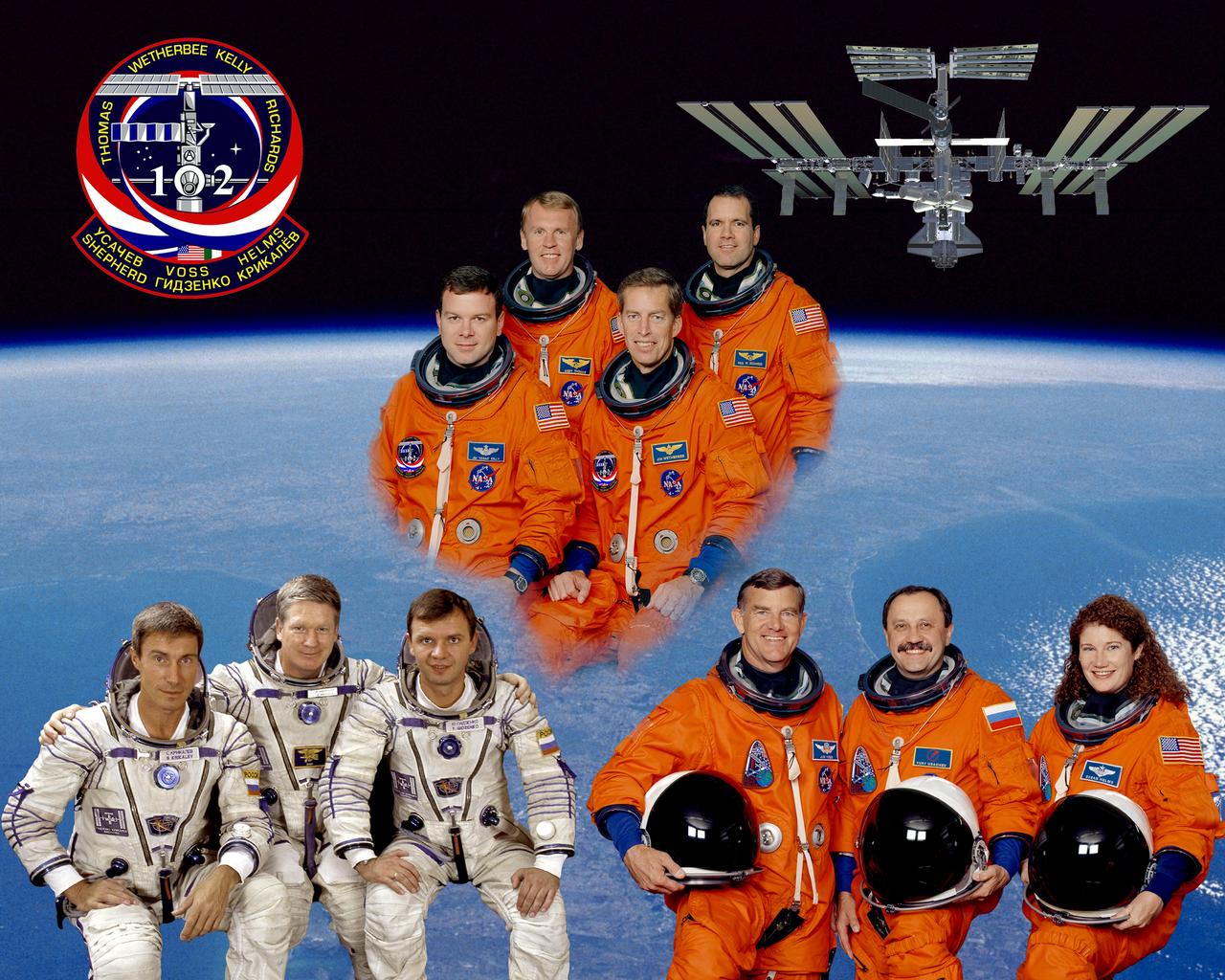
STS102-S-002 (February 2001)--- With the full-time occupancy of the International Space Station (ISS), Space Transportation System crew portraits have taken on a new look. These ten astronauts and cosmonauts represent the base STS-102 space travelers, as well as the crew members for the station crews switching out turns aboard the outpost. In the top group are, from the left, astronauts James M. Kelly, pilot; Andrew S.W. Thomas, mission specialist; James D. Wetherbee, mission commander; and Paul W. Richards, mission specialist. The bottom left grouping is the Expedition One crew, which includes, from left, cosmonaut Sergei K. Krikalev, flight engineer; astronaut William M. (Bill) Shepherd, commander; and cosmonaut Yuri P. Gidzenko, Soyuz commander. At bottom right is crew who will replace Shepherd's crew aboard the station, from the left, astronaut James S. Voss; cosmonaut Yury V. Usachev, Expedition Two commander; and astronaut Susan J. Helms. Usachev, Krikalev and Gidzenko all represent Rosaviakosmos.
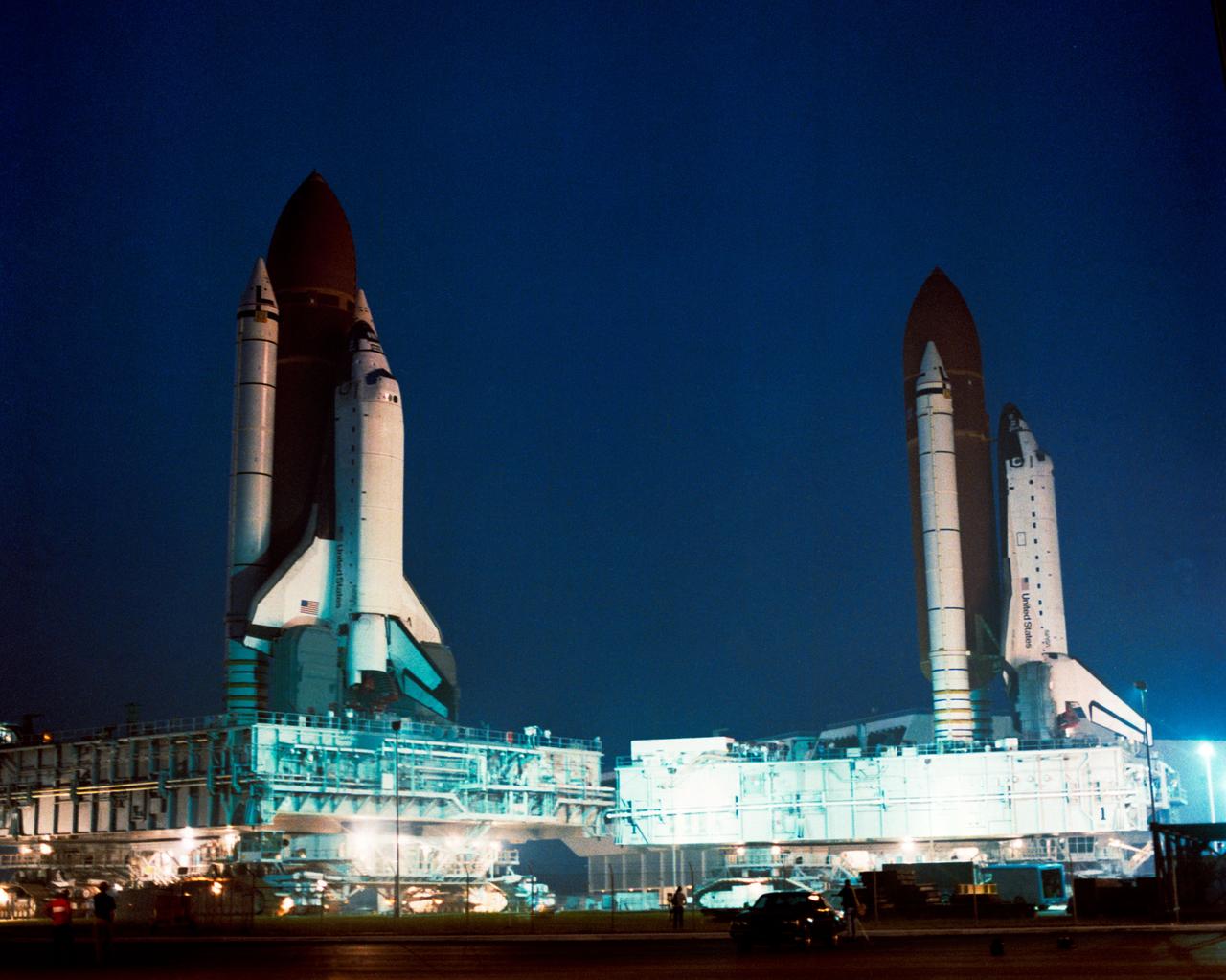
Columbia, Orbiter Vehicle (OV) 102, slated for mission STS-35, left, rolls past Atlantis, OV-104, on its way to Kennedy Space Center (KSC) launch pad 39A. OV-104, being readied for STS-38, is parked in front of the Vehicle Assembly Building (VAB) following its rollback from the pad for liquid hydrogen (LH2) line repairs. View provided by KSC with alternate number KSC-90PC-1152.
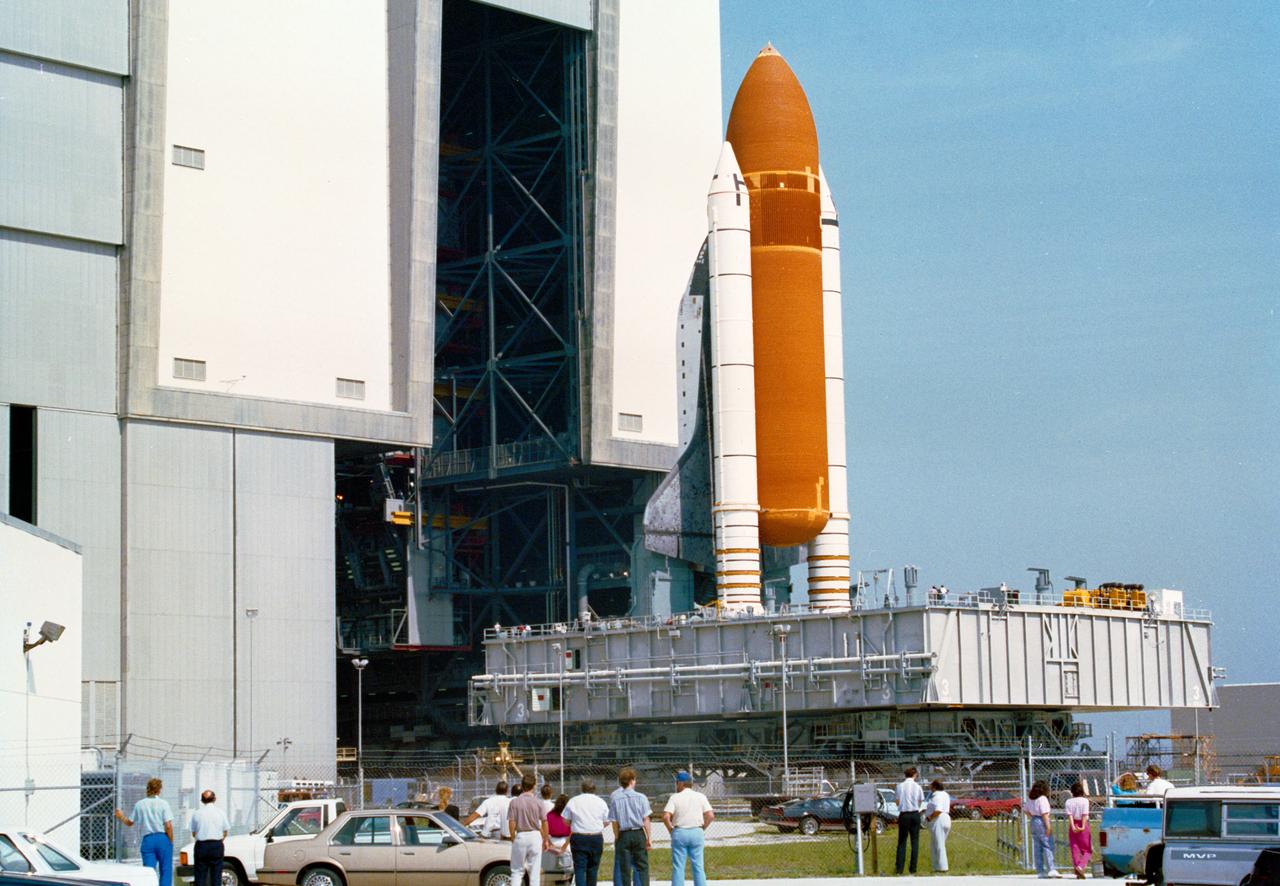
S90-42289 ( 3 July 1990) --- Kennedy Space Center (KSC) workers watch as Columbia, Orbiter Vehicle (OV) 102, along with its external tank (ET) and two solid rocket boosters (SRBs) atop the giant crawler transporter, rolls back to KSC's Vehicle Assembly Building (VAB). The rollback was caused by a hydrogen leak that stopped the STS-35 countdown during ET fueling, 05-29-90. Once in the VAB, OV-102 and its stack will be demated, and OV-102, with its Astronomy Laboratory 1 (ASTRO-1) payload aboard, will be moved to the Orbiter Processing Facility (OPF) to await return to KSC Launch Complex (LC) Pad 39A. View provided by KSC with alternate number KSC-90PC-901.
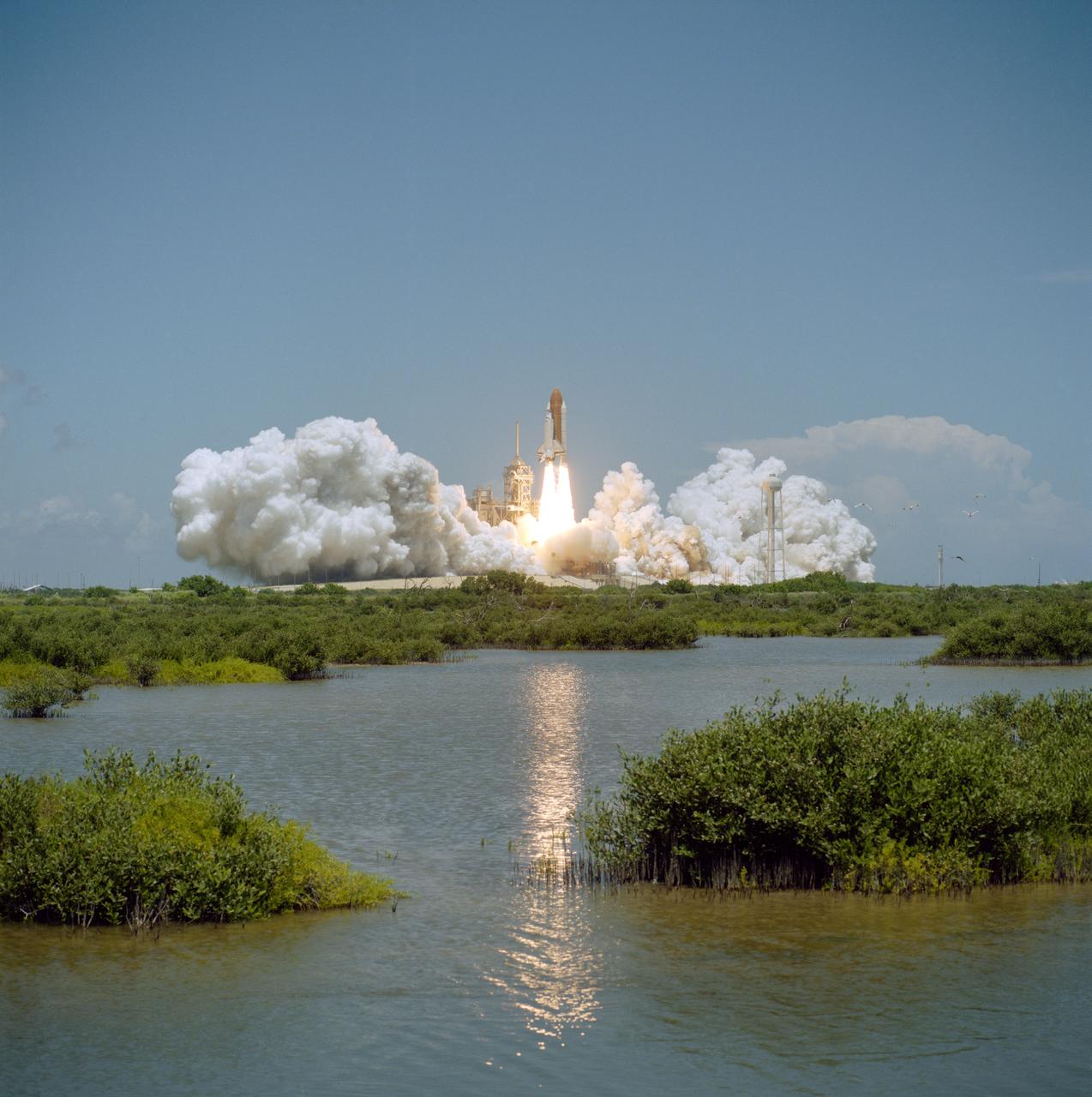
Columbia, Orbiter Vehicle (OV) 102, rises above Kennedy Space Center (KSC) Launch Complex (LC) Pad 39A after liftoff at 12:43 pm Eastern Daylight Time (EDT). An exhaust cloud covers the launch pad area and the glow of the space shuttle main engine (SSME) and solid rocket booster (SRB) firings is reflected in a nearby marsh as OV-102 atop its external tank (ET) heads toward Earth orbit. A small flock of birds is visible at the right. Once in Earth's orbit, STS-65's six NASA astronauts and a Japanese Payload Specialist aboard OV-102 will begin two weeks of experimentation in support of the second International Microgravity Laboratory (IML-2) mission.
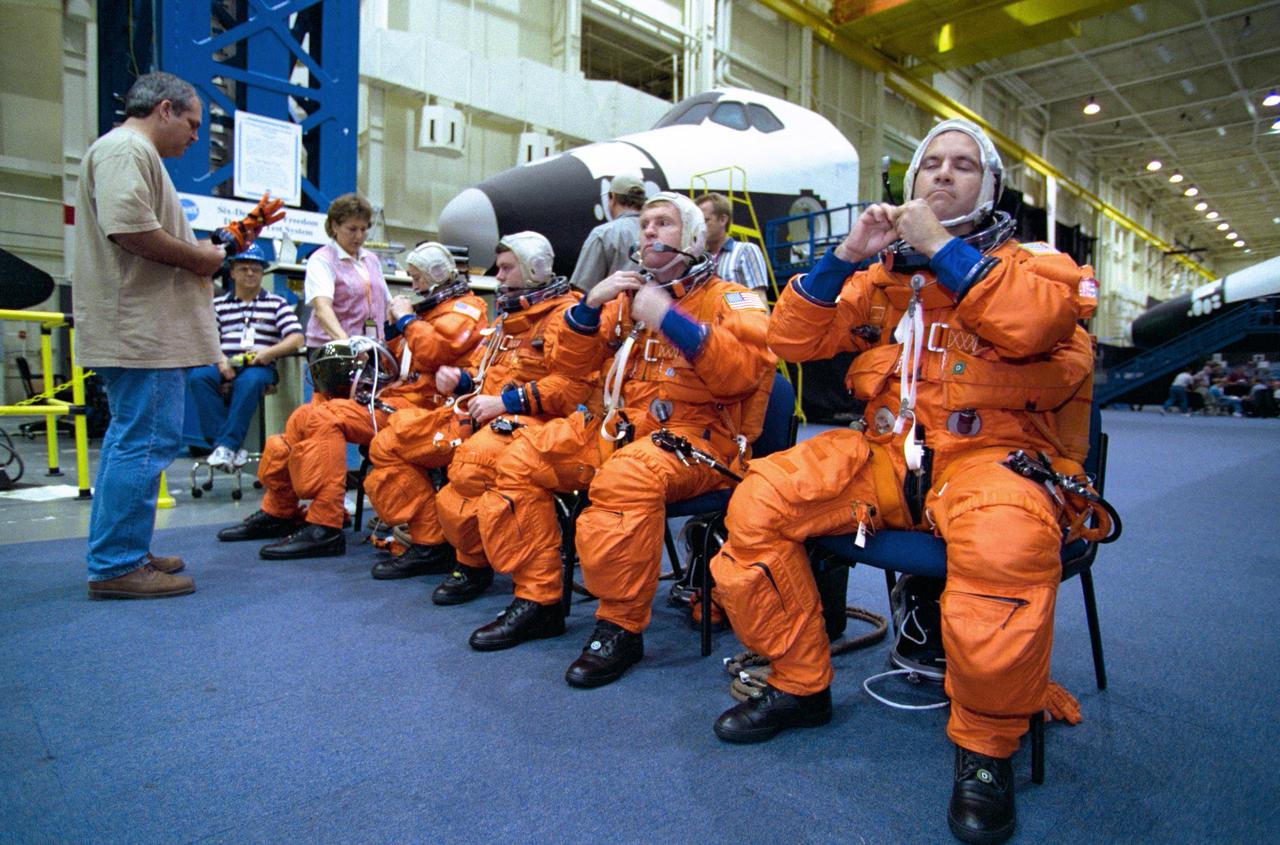
JSC2000-05551 (3 August 2000) --- Four astronauts, who comprise the core crew for STS-102, listen to a launch and entry garment briefing by suit technician Lloyd Armintor in the Systems Integration Facility as they suit up for a contingency simulation exercise in preparation for next year's visit to the International Space Station (ISS). From the left are astronauts James D. Wetherbee, commander; James M. Kelly, pilot; and Andrew S.W. Thomas and Paul W. Richards, both mission specialists. The four will be joined by a cosmonaut and two other astronauts scheduled to share the "up" ride for a lengthy stay aboard the orbiting outpost. Then, they will bring back a threesome made up an astronaut and two cosmonauts who will have been onboard the station since early November 2000.
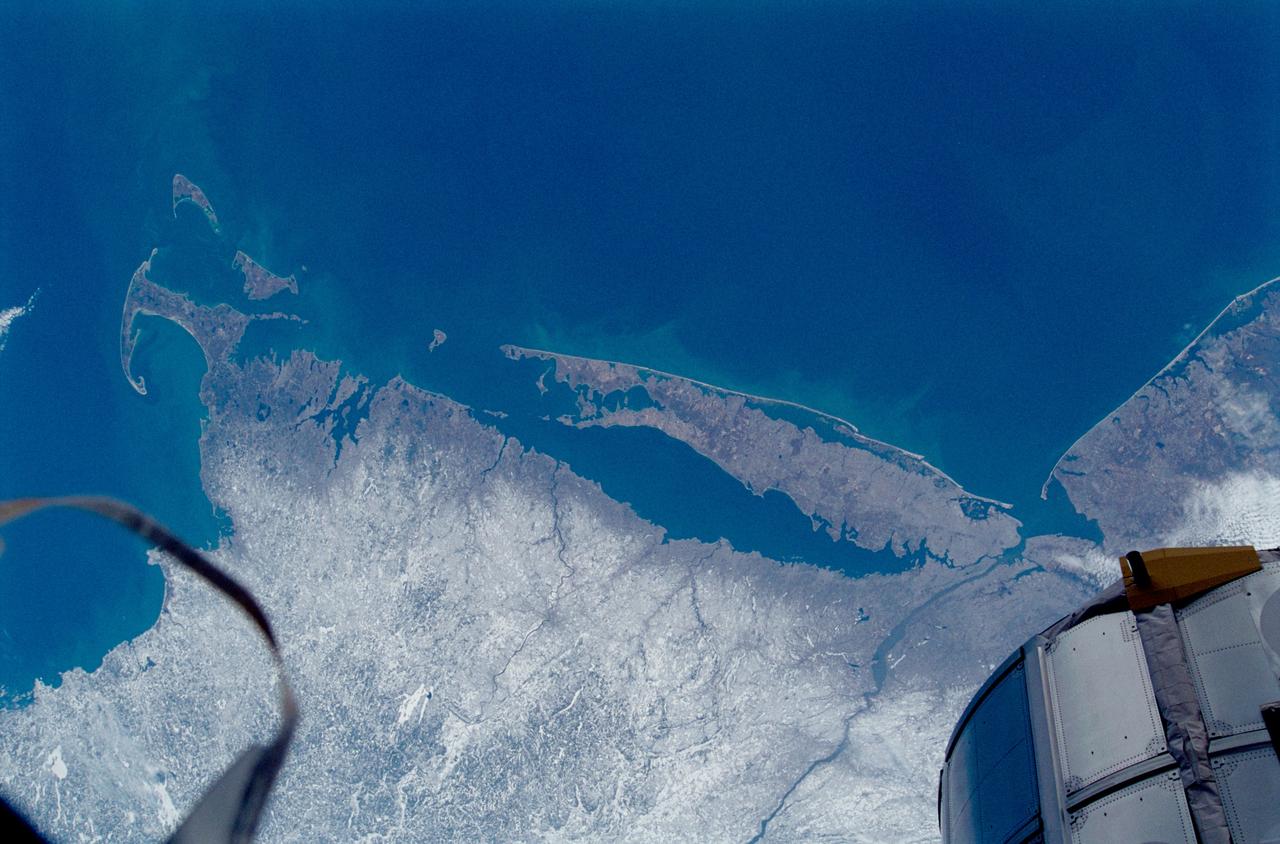
STS102-336-035 (8-21 March 2001) --- One of the STS-102 astronauts aimed a 35mm camera through windows on the aft flight deck of the Space Shuttle Discovery to capture this synoptic southeast view of several New England states. The moderating influence of the Atlantic Ocean is visible along the coastline. The southern limit of the snow-covered landscape can be traced from southeast Massachusetts (left center) westward along the northern shore of Long Island Sound and includes the northern end of New Jersey (right center). In addition to Long Island (center), other prominent features on this image include: Cape Cod, Martha's Vineyard, Nantucket, and Block Islands; as well as the Hudson River (bottom center). Several southerly-draining river systems are discernible in Connecticut and extensive wetlands are observed along New York and New Jersey coastal areas.
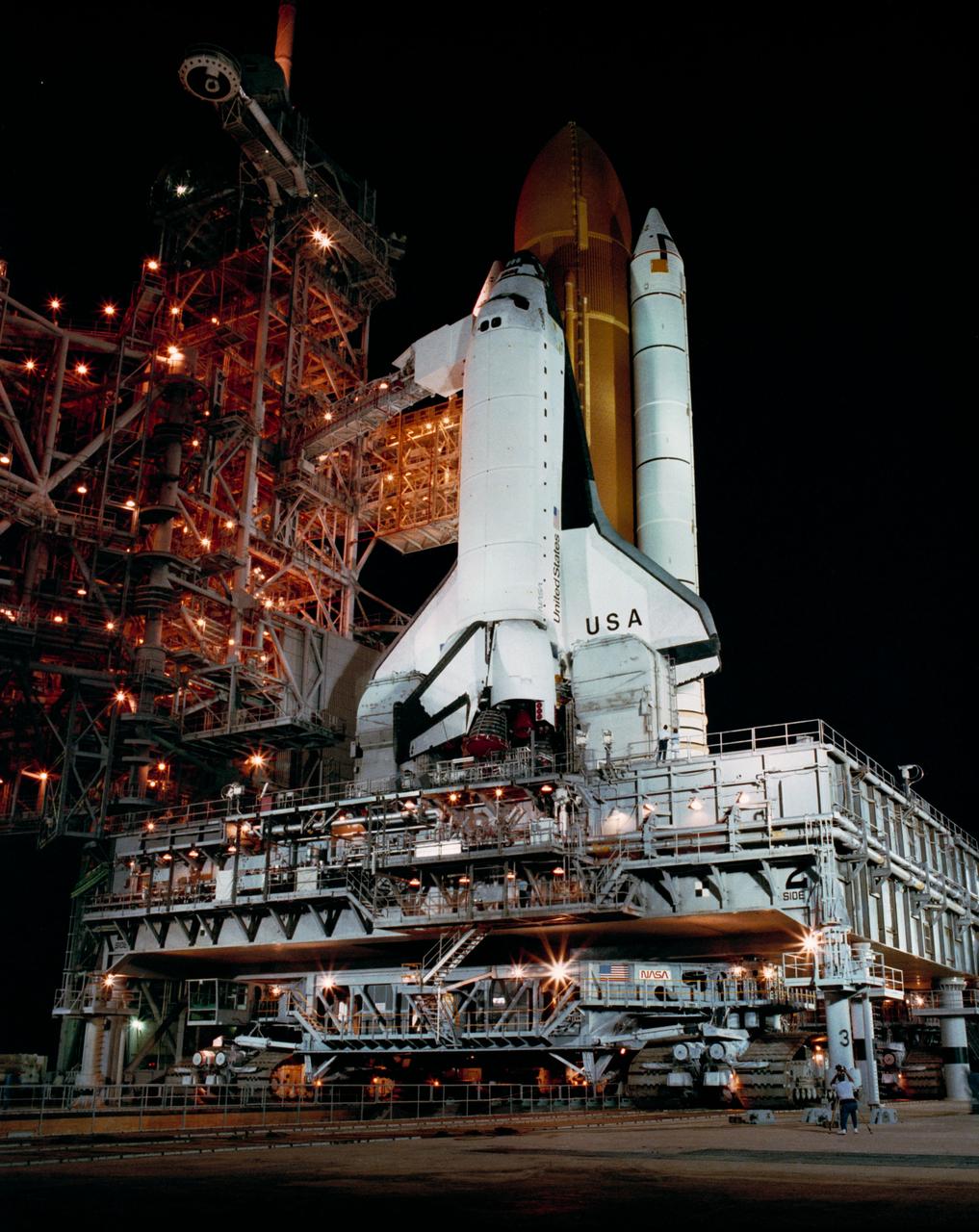
STS-28 Columbia, Orbiter Vehicle (OV) 102, arrives at Kennedy Space Center (KSC) Launch Complex (LC) Pad 39B. View taken from ground level, shows OV-102 with external tank (ET) and solid rocket boosters (SRBs) mounted atop mobile launcher platform and the fixed service structure (rotating service structure (RSS) retracted) alongside. Catwalk at the 195 ft level is in place. Crawler transporter remains in position under mobile launcher platform. Spotlights and floodlights illuminate the launch complex against the darkness of the night. View provided by KSC with alternate number KSC-89PC-683.
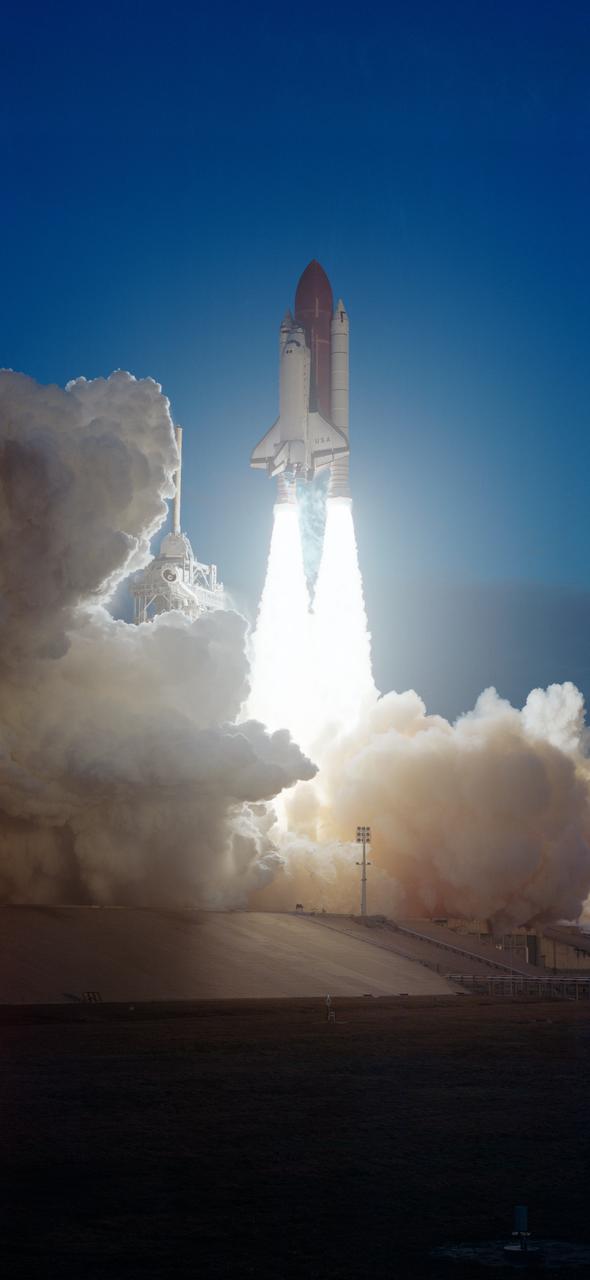
STS-32 Columbia, Orbiter Vehicle (OV) 102, atop the external tank (ET) and flanked by two solid rocket boosters (SRBs) rises above the mobile launcher platform and is nearly clear of the fixed service structure (FSS) tower at Kennedy Space Center (KSC) Launch Complex (LC) Pad 39A. Plumes of smoke billow from the SRBs and cover the launch pad in a cloud. Liftoff occurred at 7:34:59:98 am Eastern Standard Time (EST) some 24 hours after dubious weather at the return-to-landing site (RTLS) had cancelled a scheduled launch. OV-102's launch is highlighted against the early morning darkness.
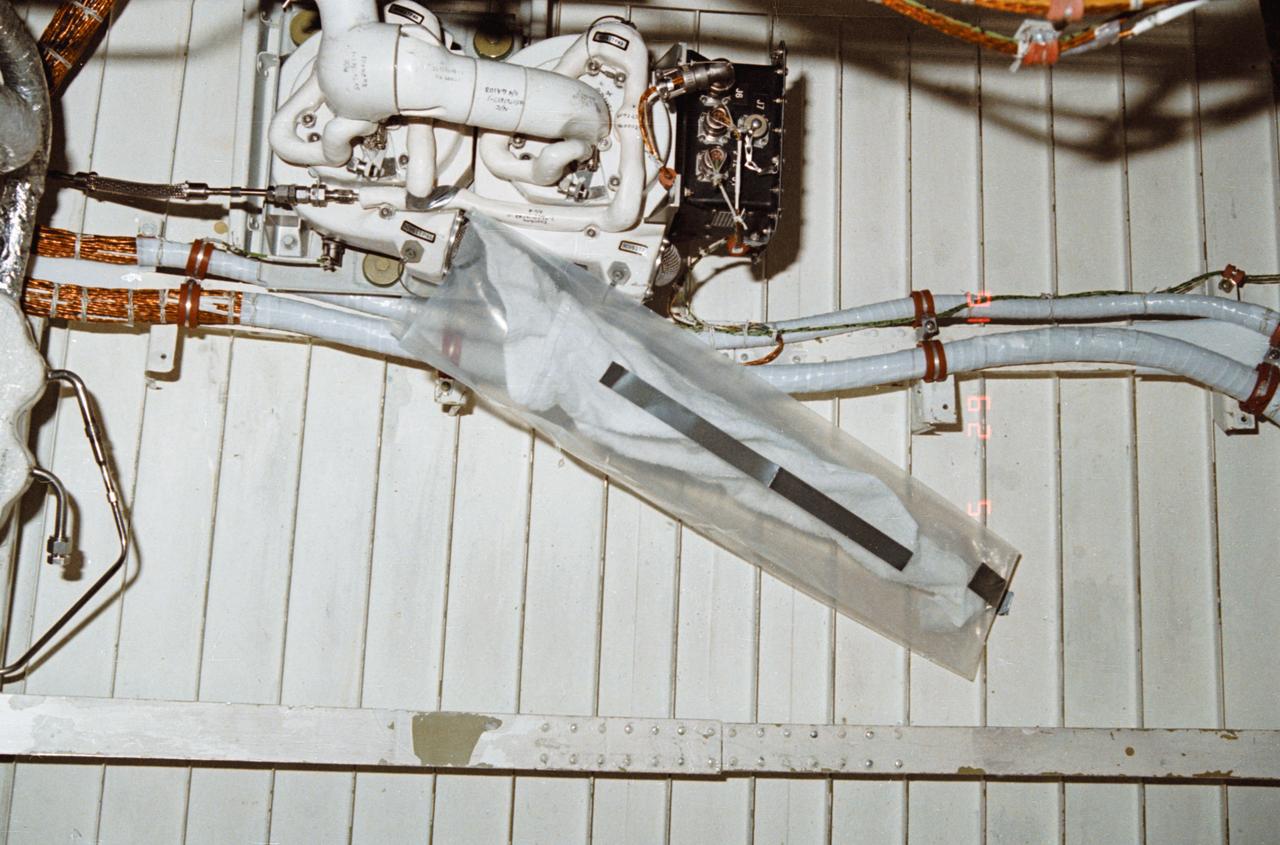
During STS-32, onboard Columbia, Orbiter Vehicle (OV) 102, a leakage problem at environmental control and life support system (ECLSS) air revitalization system (ARS) humidity separator A below the middeck is solved with a plastic bag and a towel. The towel inserted inside a plastic bag absorbed the water that had collected at the separator inlet.
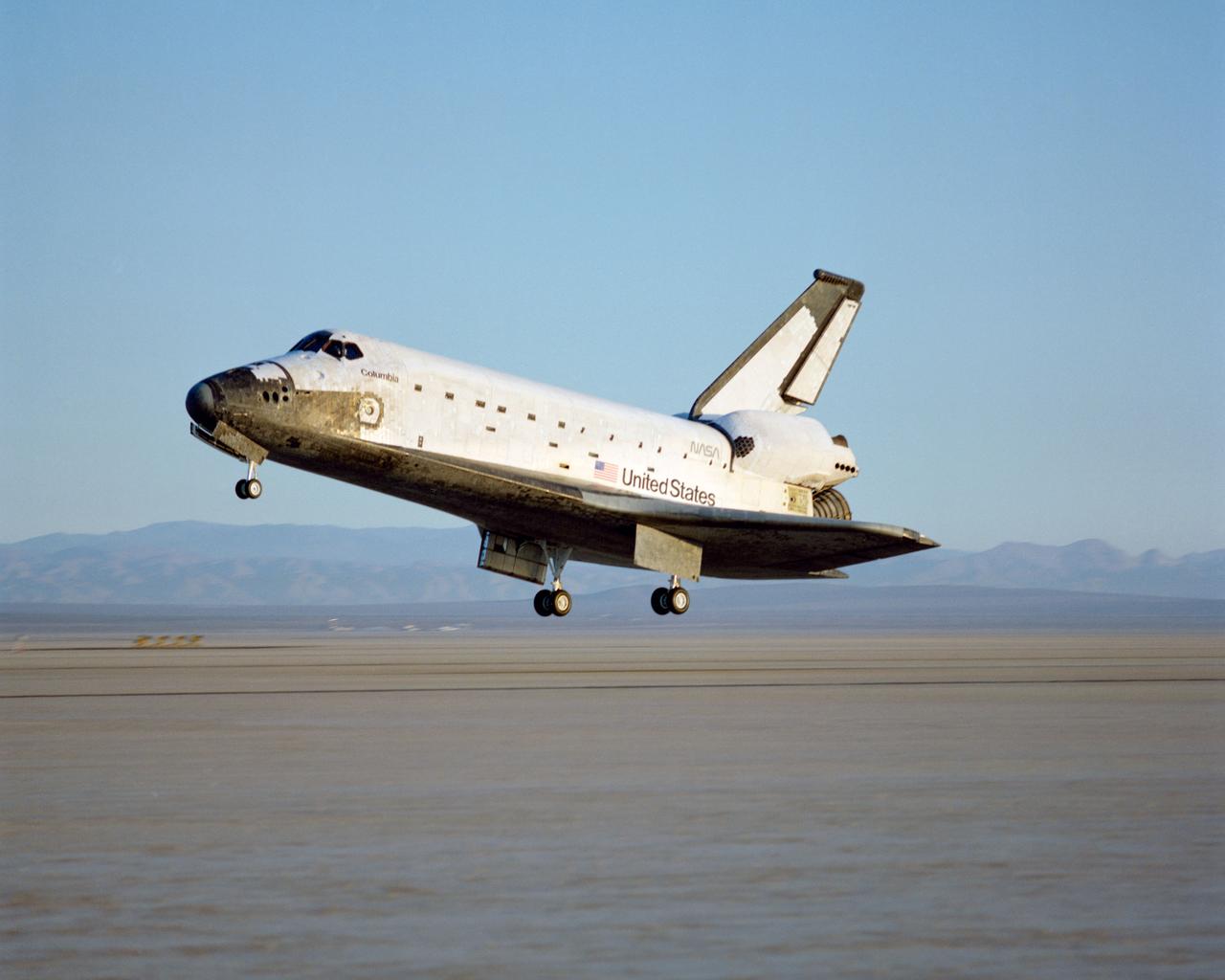
STS-28 Columbia, Orbiter Vehicle (OV) 102, approaches Runway 17 dry lake bed at Edwards Air Force Base (EAFB) California and is photographed just moments before main landing gear (MLG) touchdown. In the distance, are peaks of Southern California mountain range.
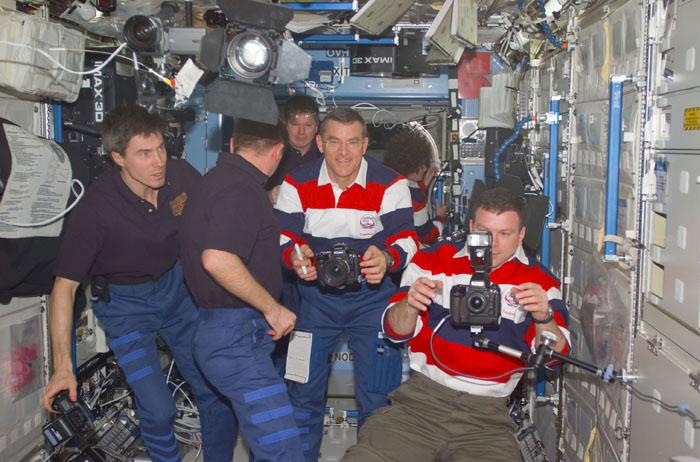
STS102-E-5223 (16 March 2001) --- Cameras are plentiful in this digital still camera's image of astronauts and cosmonauts on the International Space Station (ISS). From the left are cosmonauts Sergei K. Krikalev and Yuri P. Gidzenko of Rosaviakosmos; along with astronauts William M. (Bill) Shepherd, James S. Voss, Susan J. Helms (background) and James. M. Kelly. Shepherd, Gidzenko and Krikalev have been aboard the orbital outpost since early November 2000 and are just days away from return to Earth. Helms and Voss are about to begin a lengthy stay aboard the station as flight engineers. Kelly is pilot for the STS-102 crew.
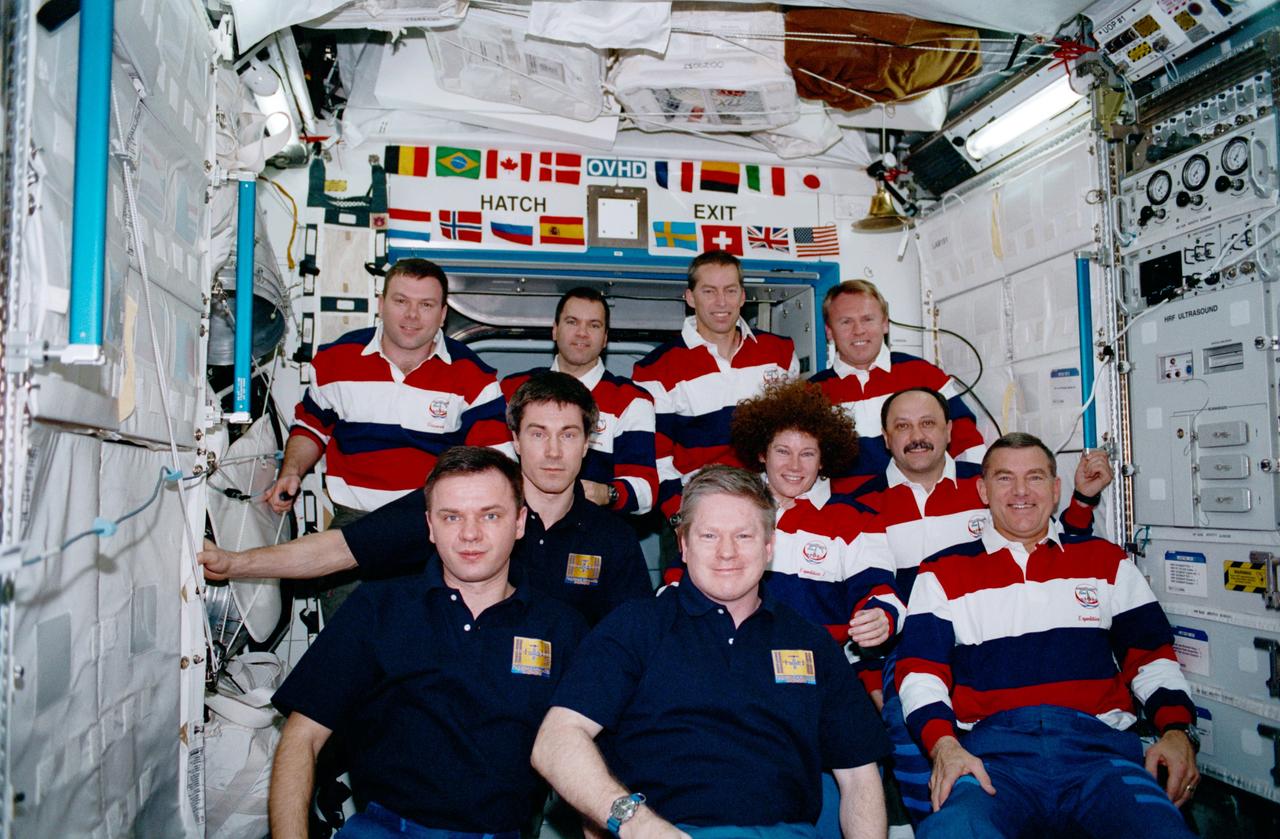
STS102-319-028 (8 - 21 March 2001) --- The 10 astronauts and cosmonauts making up the STS-102, Expedition One and Expedition Two crews assemble in the Destiny laboratory for a group portrait. In front are, from the left, cosmonauts Yuri P. Gidzenko and Sergei Krikalev, astronauts William M. (Bill) Shepherd and Susan J. Helms, cosmonaut Yury V. Usachev and astronaut James S. Voss. In the rear are, from the left, astronauts James M. Kelly, Paul W. Richards, James D. Wetherbee and Andrew S.W. Thomas.
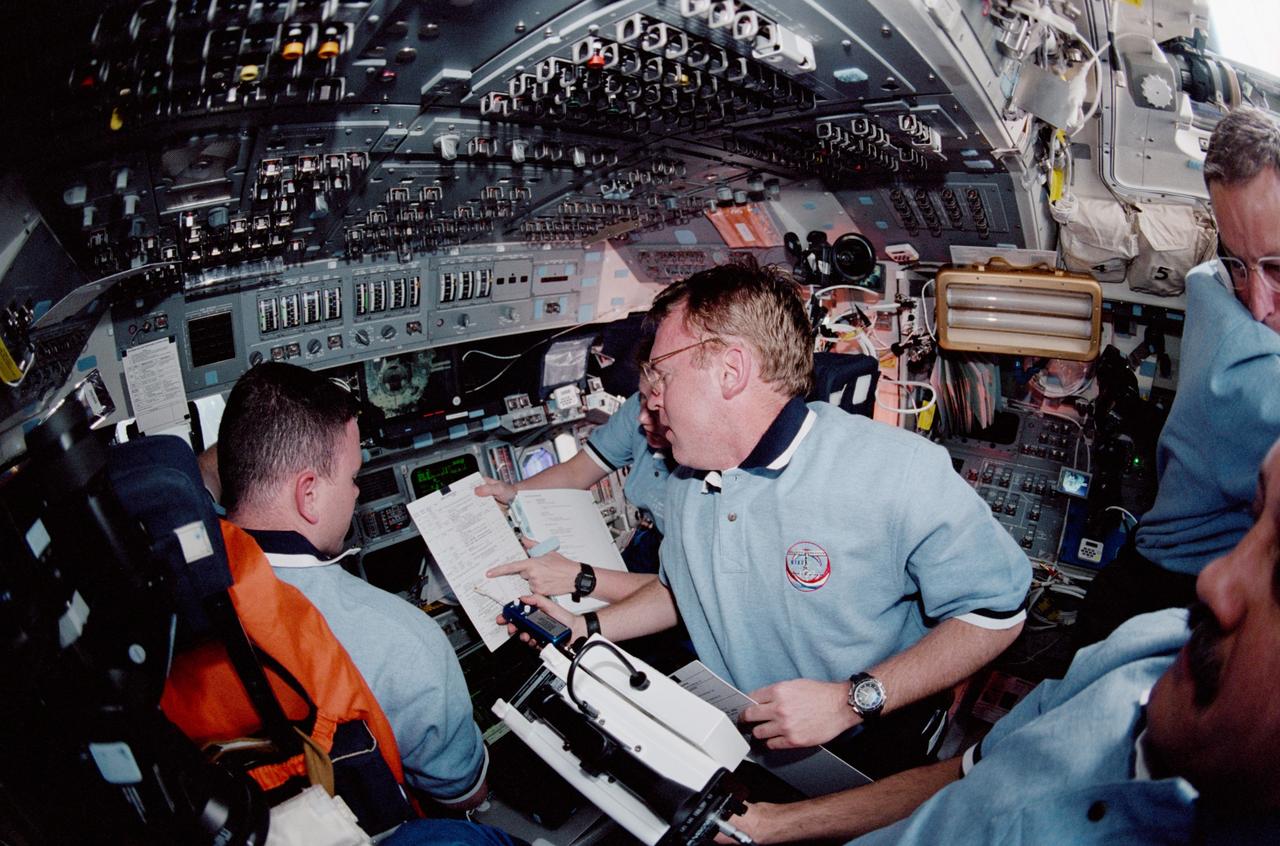
STS102-322-003 (10 March 2001) --- The STS-102 crew members huddle on the flight deck of the Space Shuttle Discovery during rendezvous operations with the International Space Station (ISS). Astronaut Andrew S.W. Thomas, mission specialist, is at center frame. Astronaut James M. Kelly, pilot, is seated at the commander's station. Partially visible at right edge are astronaut James D. Wetherbee, mission commander, and Yury V. Usachev, mission specialist representing Rosaviakosmos. Usachev is assigned to assume command of the Station when a crew exchange is accomplished later in the week.
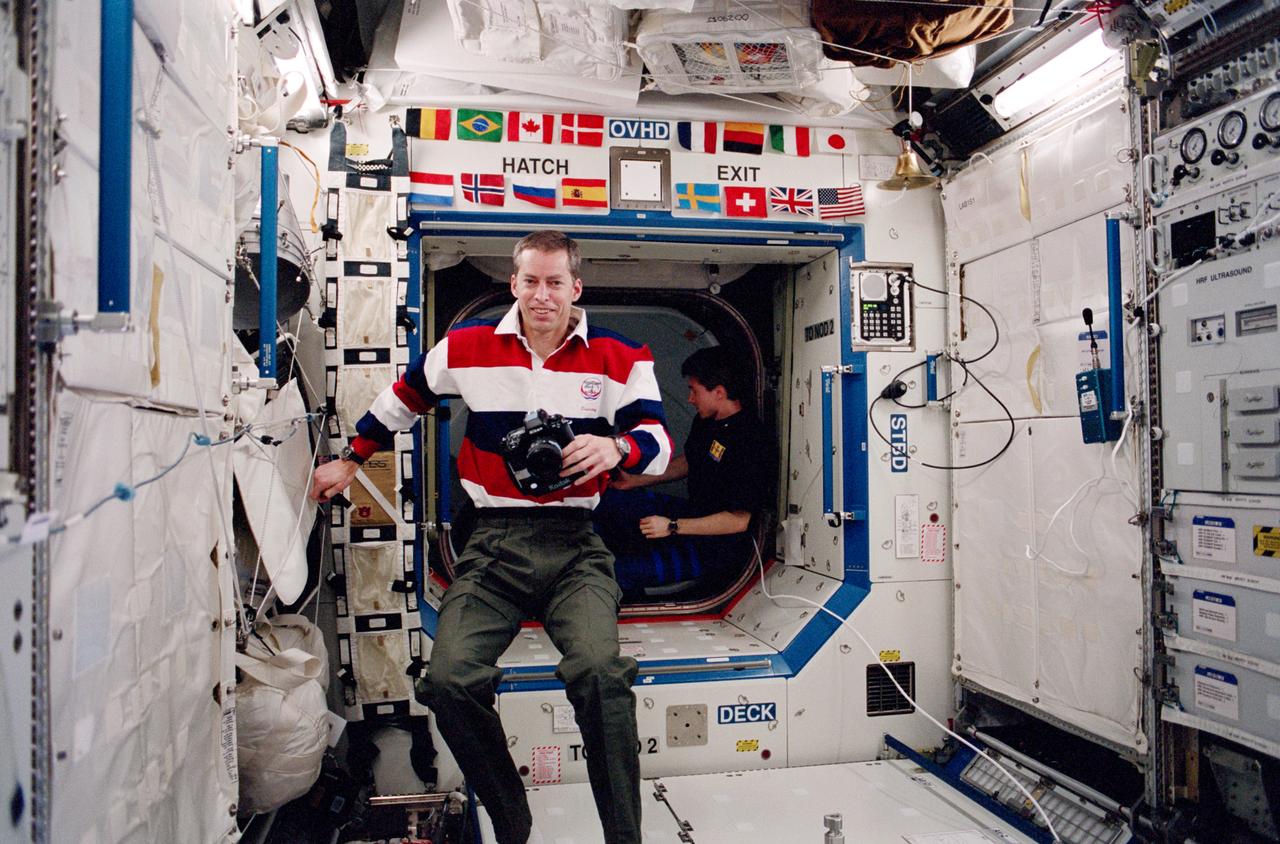
In this Space Shuttle STS-102 mission image, the Payload Equipment Restraint System H-Strap is shown at the left side of the U.S. Laboratory hatch and behind Astronaut James D. Weatherbee, mission specialist. PERS is an integrated modular system of components designed to assist the crew of the International Space Station (ISS) in restraining and carrying necessary payload equipment and tools in a microgravity environment. The Operations Development Group, Flight Projects Directorate at the Marshall Space Flight Center (MSFC), while providing operation support to the ISS Materials Science Research Facility (MSRF), recognized the need for an on-orbit restraint system to facilitate control of lose objects, payloads, and tools. The PERS is the offspring of that need and it helps the ISS crew manage tools and rack components that would otherwise float away in the near-zero gravity environment aboard the Space Station. The system combines Kevlar straps, mesh pockets, Velcro and a variety of cornecting devices into a portable, adjustable system. The system includes the Single Strap, the H-Strap, the Belly Pack, the Laptop Restraint Belt, and the Tool Page Case. The Single Strap and the H-Strap were flown on this mission. The PERS concept was developed by industrial design students at Auburn University and the MSFC Flight Projects Directorate.
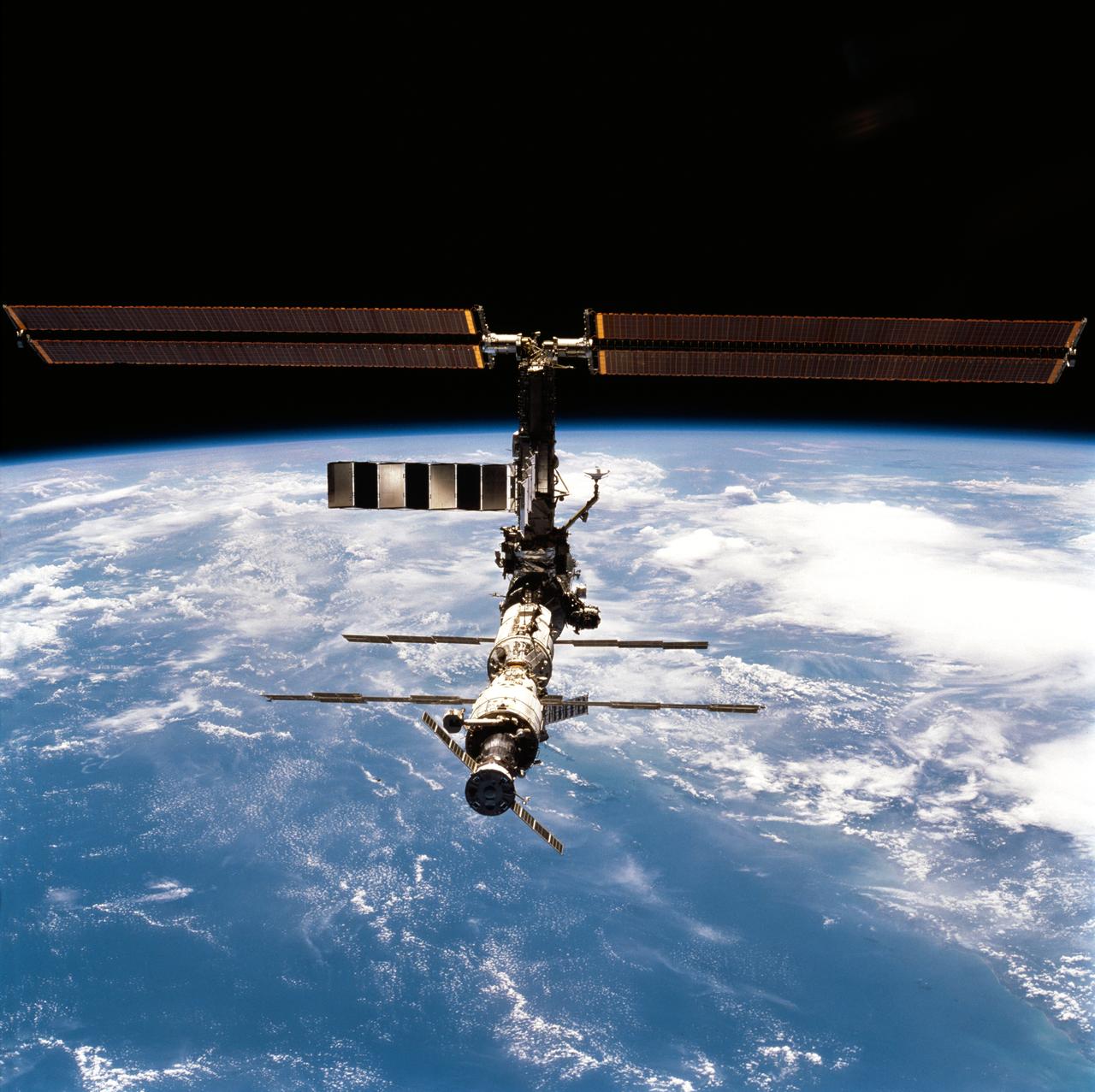
Backdropped against water and clouds, the International Space Station was separated from the Space Shuttle Discovery after several days of joint activities and an important crew exchange. This photograph was taken by one of the crew of this mission from the aft flight deck of Discovery.
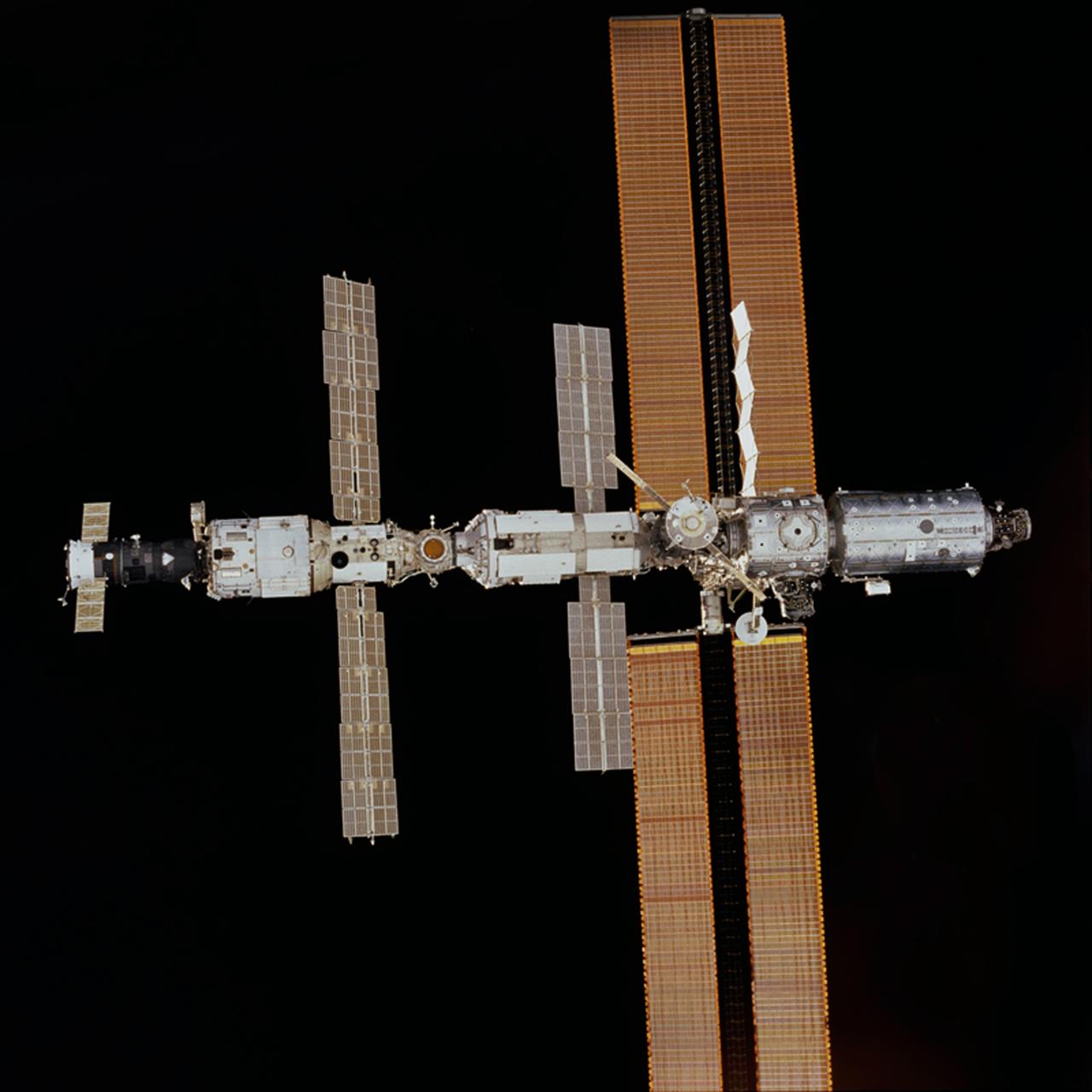
One of the astronauts aboard the Space Shuttle Discovery took this photograph, from the aft flight deck of the Discovery, of the International Space Station (ISS) in orbit. The photo was taken after separation of the orbiter Discovery from the ISS after several days of joint activities and an important crew exchange.
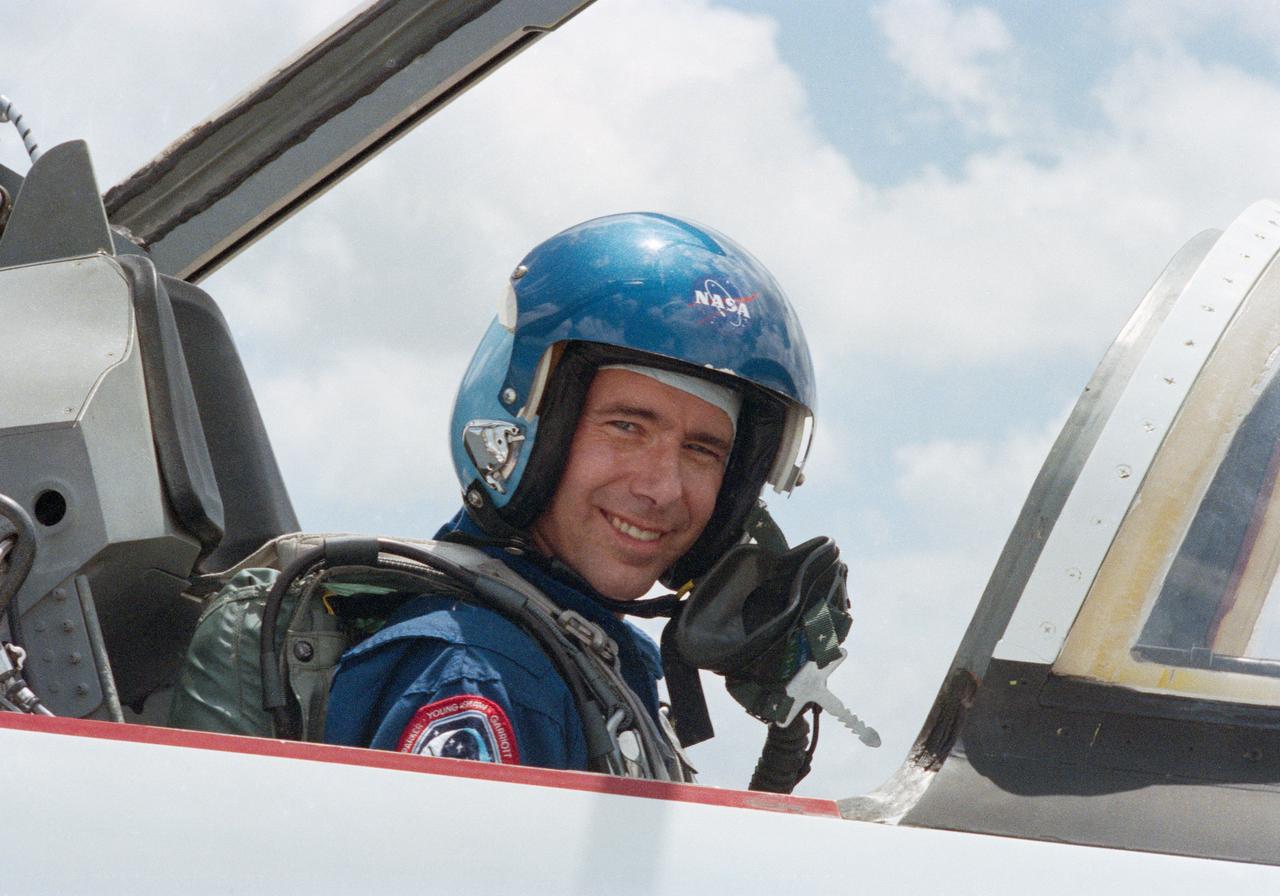
STS-28 Columbia, Orbiter Vehicle (OV) 102, Commander Brewster H. Shaw, wearing navy blue flight coveralls and helmet, sits in T-38A forward cockpit. Shaw, along with his fellow crewmembers, is preparing for departure from Ellington Field to Kennedy Space Center (KSC). STS-28, a Department of Defense (DOD) dedicated mission, is scheduled for launch on 08-08-89.
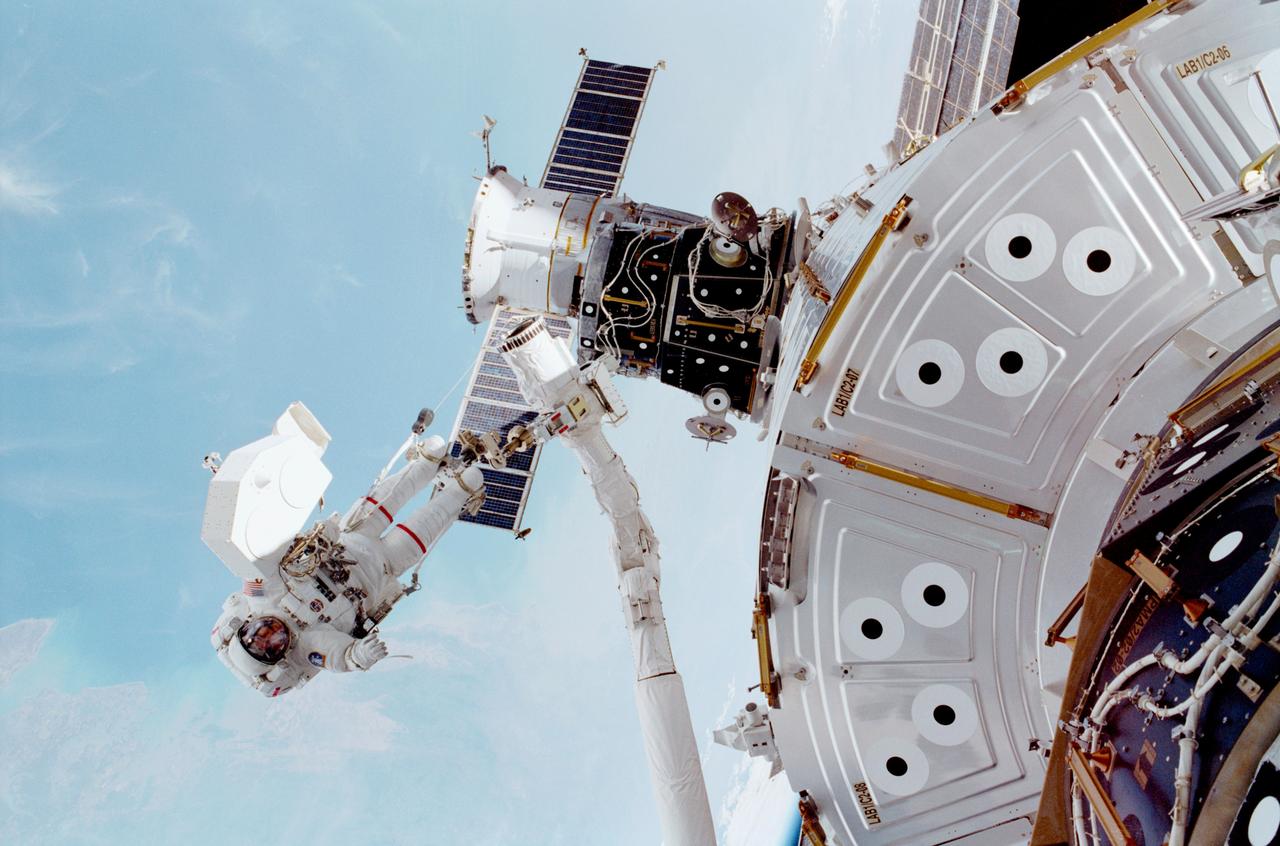
STS-102 astronaut and mission specialist James S. Voss works outside Destiny, the U.S. Laboratory (shown in lower frame) on the International Space Station (ISS), while anchored to the Remote Manipulator System (RMS) robotic arm on the Space Shuttle Discovery during the first of two space walks. During this space walk, the longest to date in space shuttle history, Voss in tandem with Susan Helms (out of frame), prepared the Pressurized Mating Adapter 3 for repositioning from the Unity Module's Earth-facing berth to its port-side berth to make room for the Leonardo Multipurpose Logistics Module (MPLM) supplied by the Italian Space Agency. The The Leonardo MPLM is the first of three such pressurized modules that will serve as the ISS' moving vans, carrying laboratory racks filled with equipment, experiments, and supplies to and from the Station aboard the Space Shuttle. The cylindrical module is approximately 21-feet long and 15- feet in diameter, weighing almost 4.5 tons. It can carry up to 10 tons of cargo in 16 standard Space Station equipment racks. Of the 16 racks the module can carry, 5 can be furnished with power, data, and fluid to support refrigerators or freezers. In order to function as an attached station module as well as a cargo transport, the logistics module also includes components that provide life support, fire detection and suppression, electrical distribution, and computer functions. Launched on May 8, 2001 for nearly 13 days in space, the STS-102 mission was the 8th spacecraft assembly flight to the ISS and NASA's 103rd overall mission. The mission also served as a crew rotation flight. It delivered the Expedition Two crew to the Station and returned the Expedition One crew back to Earth.