
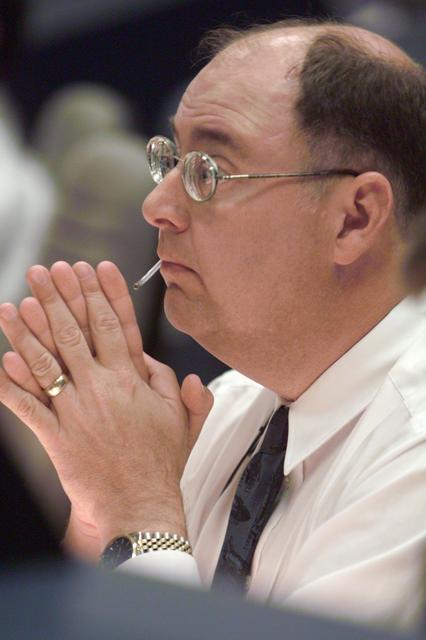
JSC2001-E-21556 (13 July 2001) --- Joseph Dervay, M.D., STS-104 flight surgeon, looks over medical data concerning the STS-104 crew at the Surgeon console in Houston's Mission Control Center (MCC).
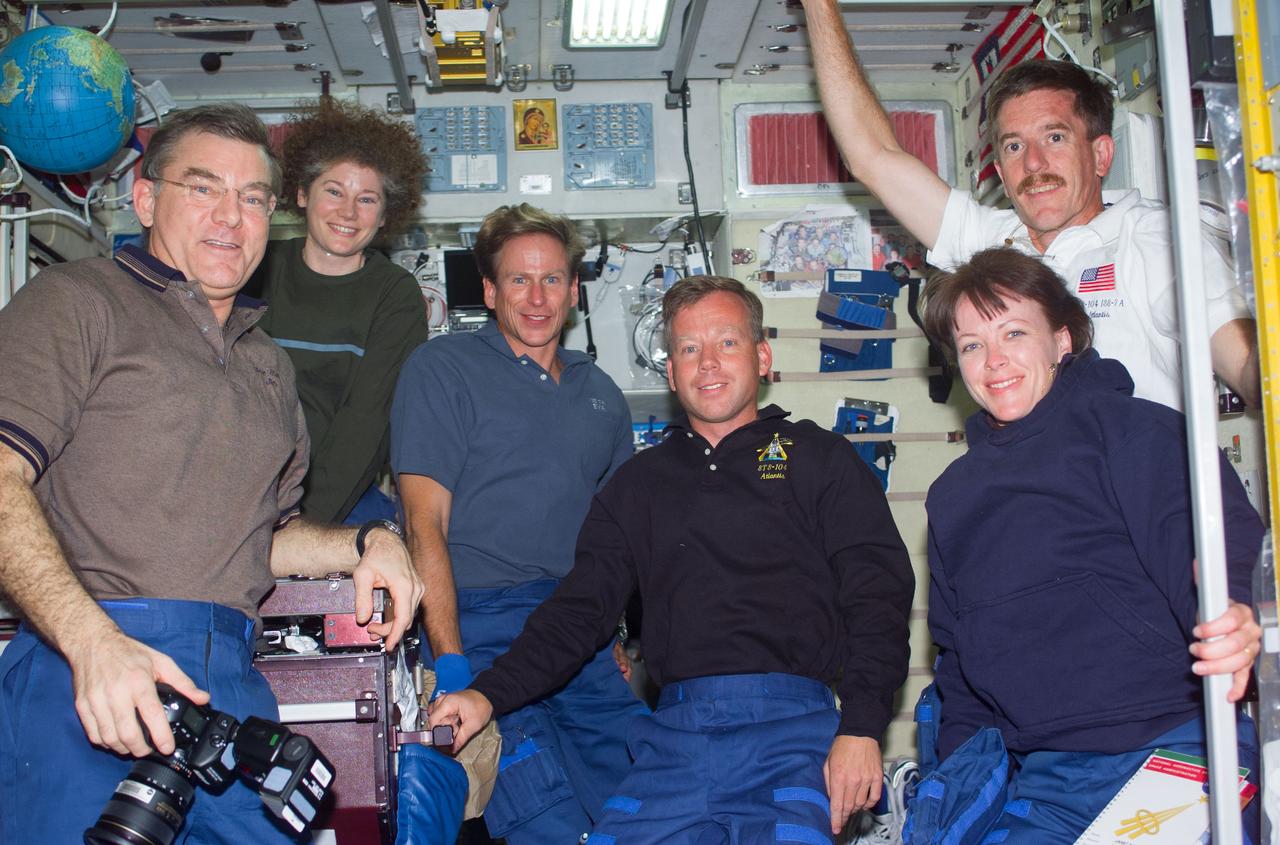
S104-E-5053 (14 July 2001) --- Soon after their ingress into the International Space Station (ISS), STS-104 crewmembers pose for a photograph with Expedition Two crewmembers in the Zvezda Service Module. From left to right are: James S. Voss, Expedition Two flight engineer; Susan J. Helms, Expedition Two flight engineer; Michael L. Gernhardt, STS-104 mission specialist; Steven W. Lindsey, STS-104 mission commander; Janet L. Kavandi, STS-104 mission specialist; and James F. Reilly, STS-104 mission specialist.
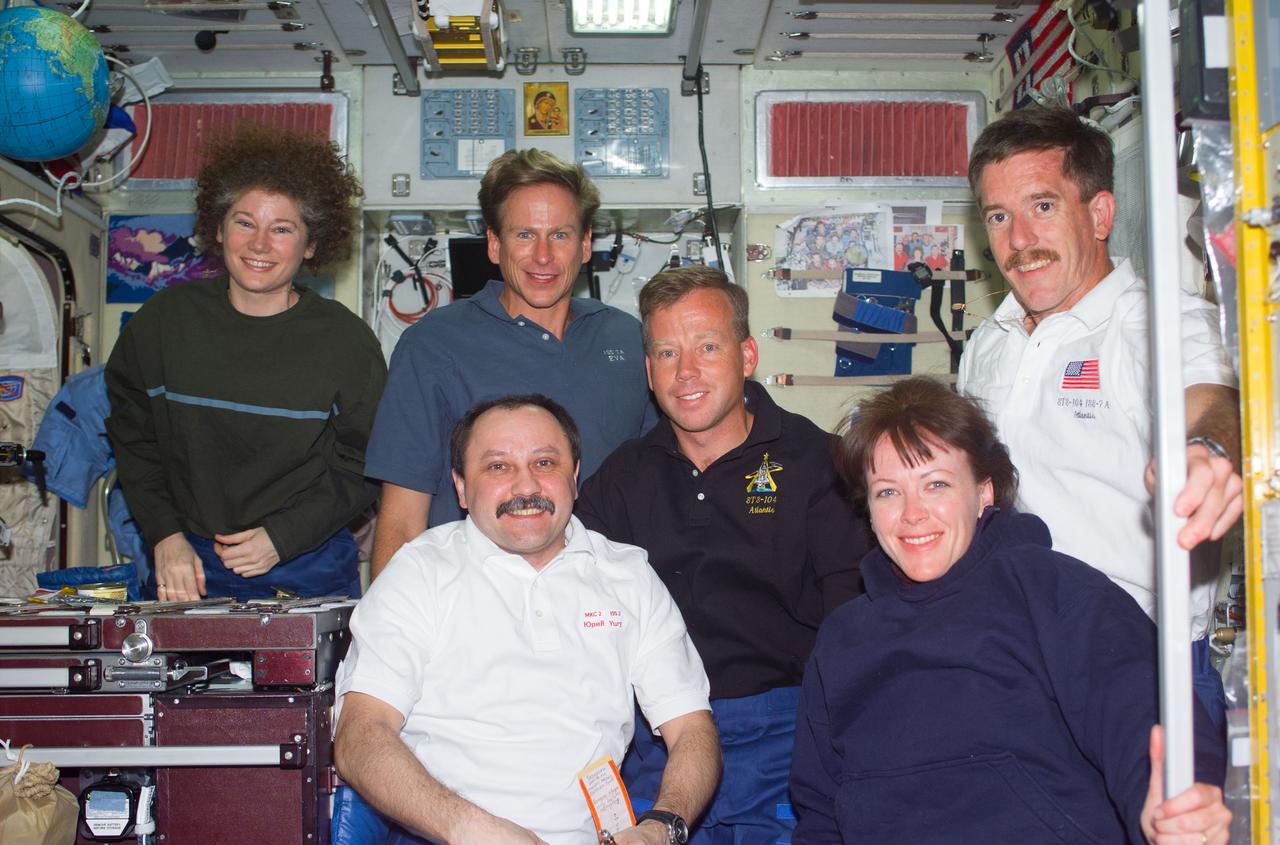
S104-E-5055 (14 July 2001) --- Soon after their ingress into the International Space Station (ISS), STS-104 crewmembers pose for a photograph with Expedition Two crewmembers in the Zvezda Service Module. From left to right are: back row - Susan J. Helms, Expedition Two flight engineer; Michael L. Gernhardt, STS-104 mission specialist; Steven W. Lindsey, STS-104 mission commander; James F. Reilly, STS-104 mission specialist; front row - Yury V. Usachev, Expedition Two mission commander; and Janet L. Kavandi, STS-104 mission specialist. Usachev represents Rosaviakosmos.
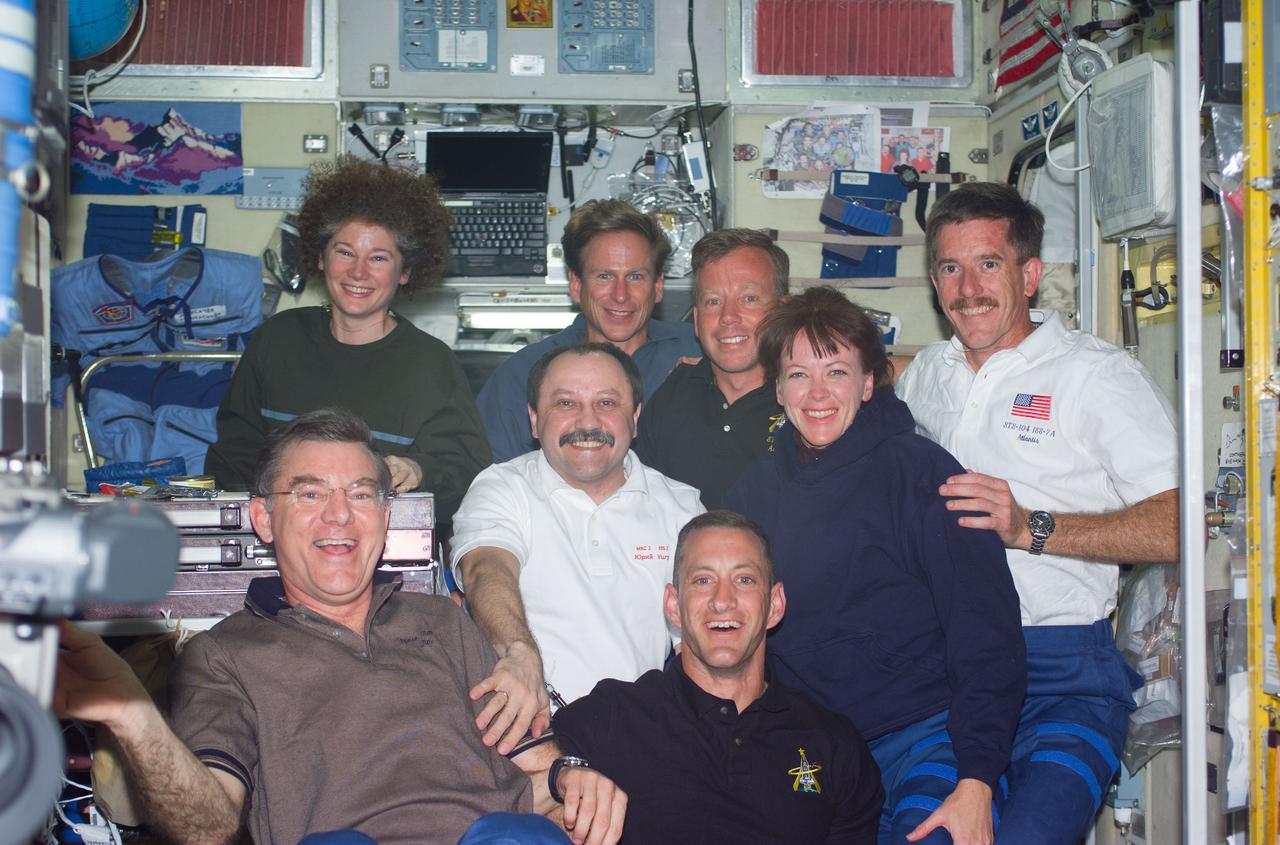
S104-E-5057 (14 July 2001) --- Soon after their ingress into the International Space Station (ISS), the STS-104 crewmembers pose for a photograph with the Expedition Two crewmembers in the Zvezda Service Module. From left to right are: back row - Susan J. Helms, Expedition Two flight engineer; Michael L. Gernhardt, STS-104 mission specialist; Steven W. Lindsey, STS-104; James F. Reilly, STS-104 mission specialist; middle row - Yury V. Usachev, Expedition Two mission commander; Janet L. Kavandi, STS-104 mission specialist; front row - James S. Voss, Expedition Two flight engineer; and Charles O. Hobaugh, STS-104 pilot. Usachev represents Rosaviakosmos.
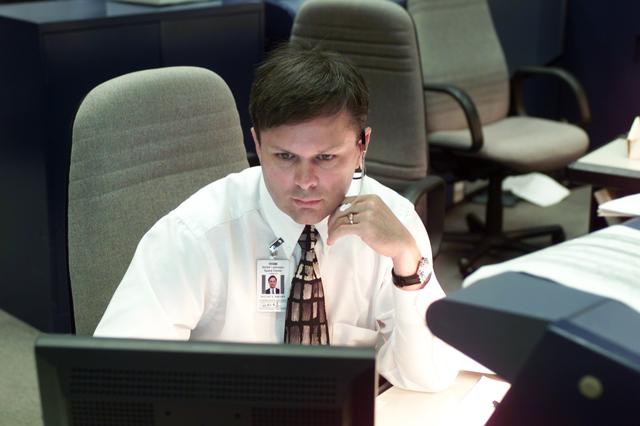
JSC2001-E-21555 (13 July 2001) --- David A. Brady intently watches the monitor at his console in Houston's Mission Control Center (MCC) during the STS-104 mission.
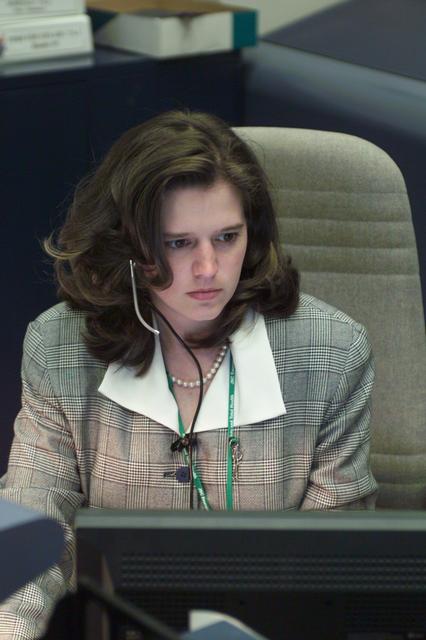
JSC2001-E-21558 (13 July 2001) --- Angela Prince looks over some STS-104 data at her console in the shuttle flight control room (WFCR) of Houston's Mission Control Center (MCC).
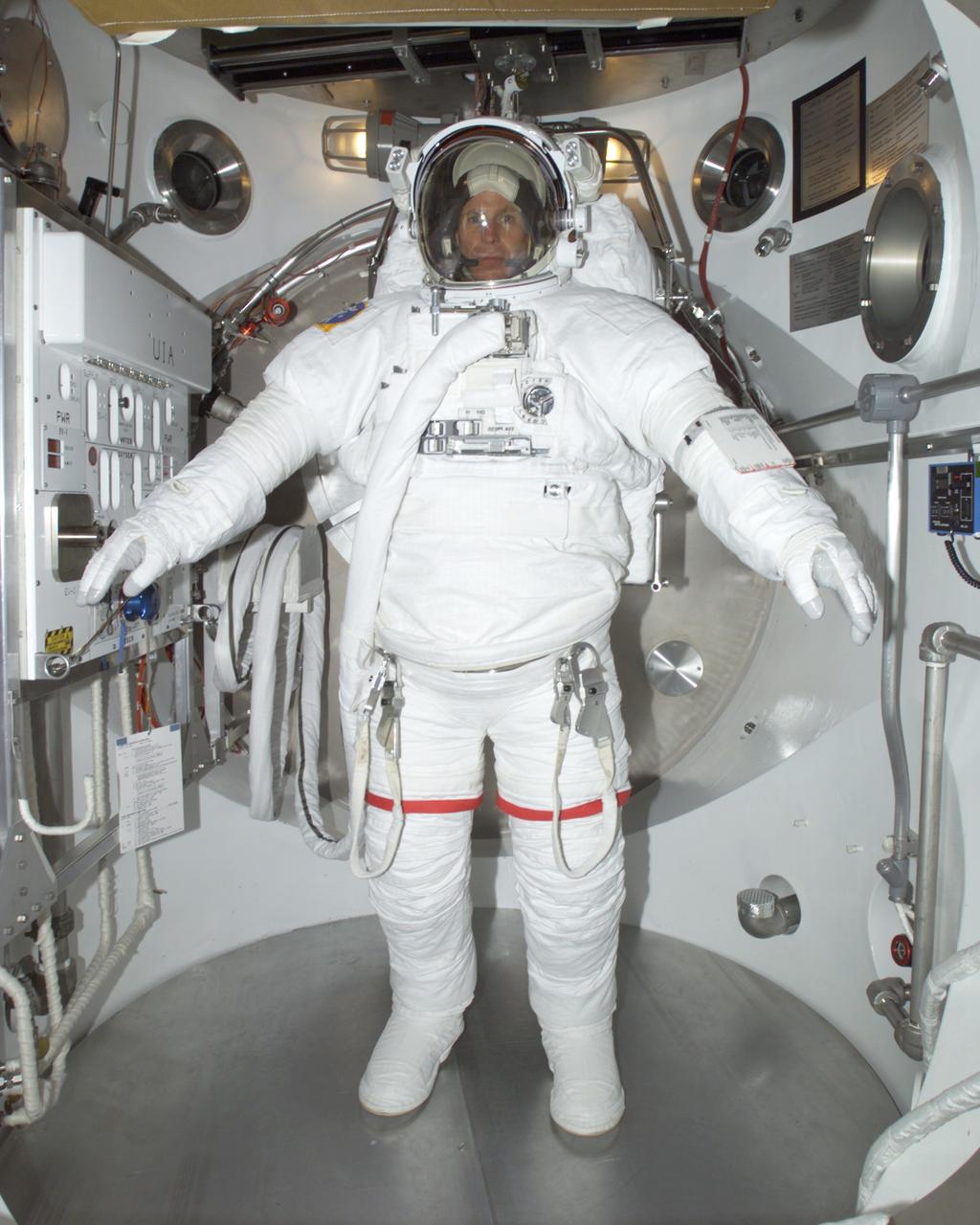
JSC2001-E-16632 (14 May 2001) --- Astronaut Michael L. Gernhardt, STS-104 mission specialist, participates in an Extravehicular Mobility Unit (EMU) fit check in a Space Station Airlock Test Article (SSATA)in the Crew Systems Laboratory at the Johnson Space Center (JSC). The STS-104 mission to the International Space Station (ISS) represents the Space Shuttle Atlantis' first flight using a new engine and is targeted for a liftoff in the summer of this year.
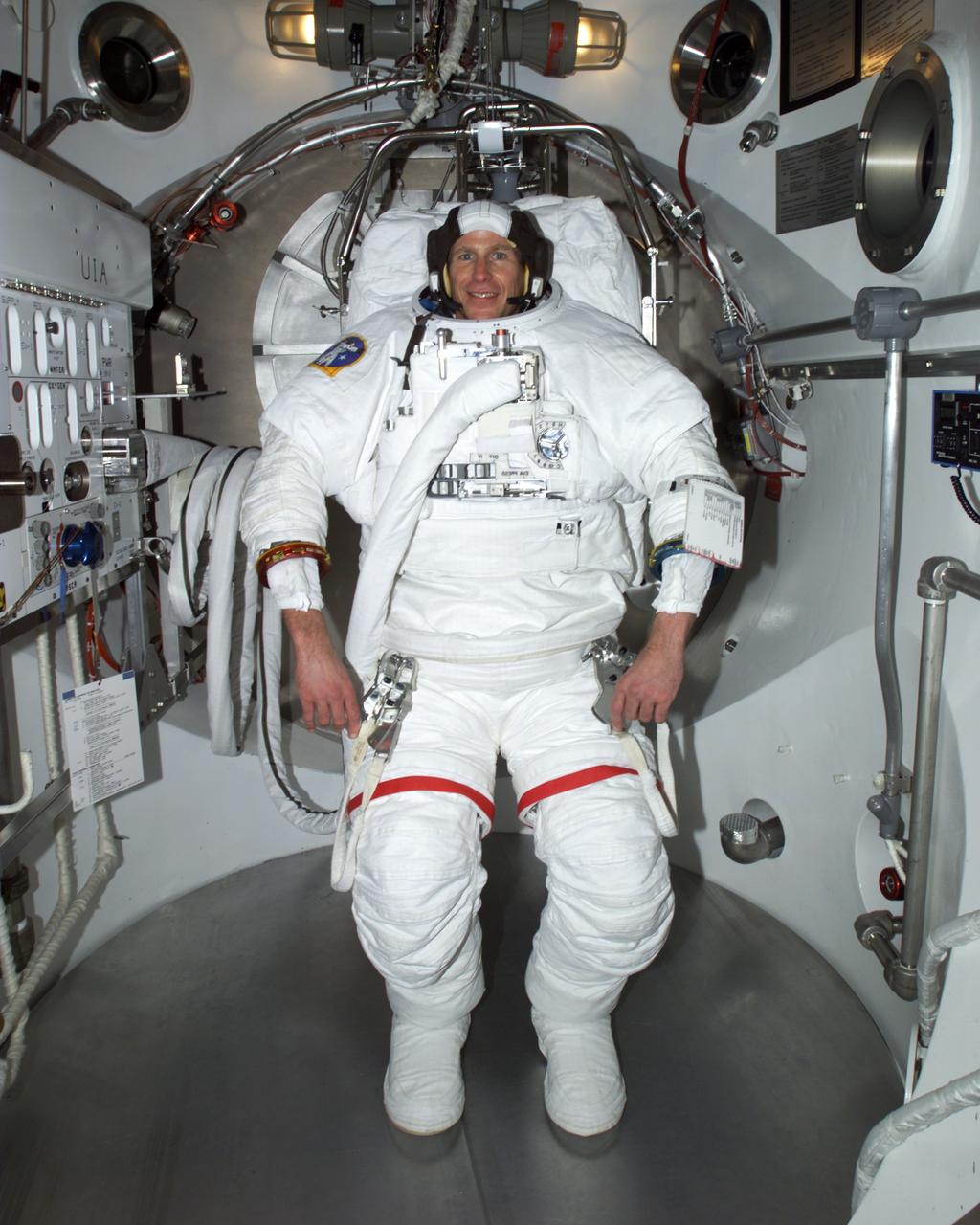
JSC2001-E-16629 (14 May 2001) --- Astronaut Michael L. Gernhardt, STS-104 mission specialist, participates in an Extravehicular Mobility Unit (EMU) fit check in one of the airlock chambers in the Crew Systems Laboratory at the Johnson Space Center (JSC). The STS-104 mission to the International Space Station (ISS) represents the Space Shuttle Atlantis' first flight using a new engine and is targeted for a liftoff in the summer of this year.
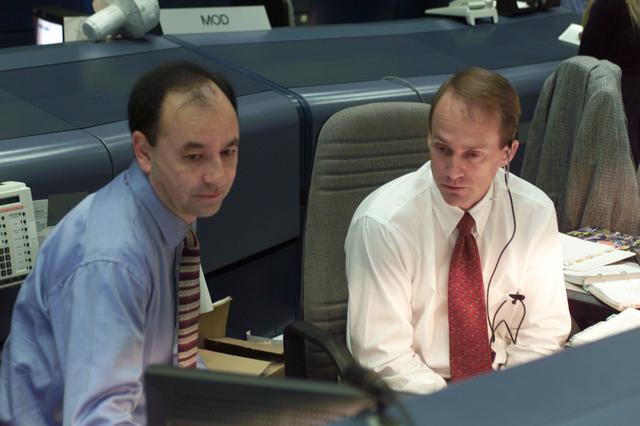
JSC2001-E-21559 (13 July 2001) --- Astronauts Mark L. Polansky (left) and Steven G. MacLean of the Canadian Space Agency (CSA) look over information regarding the STS-104 mission at the spacecraft communicator (CAPCOM) console in the shuttle flight control room (WFCR) in Houston's Mission Control Center (MCC).
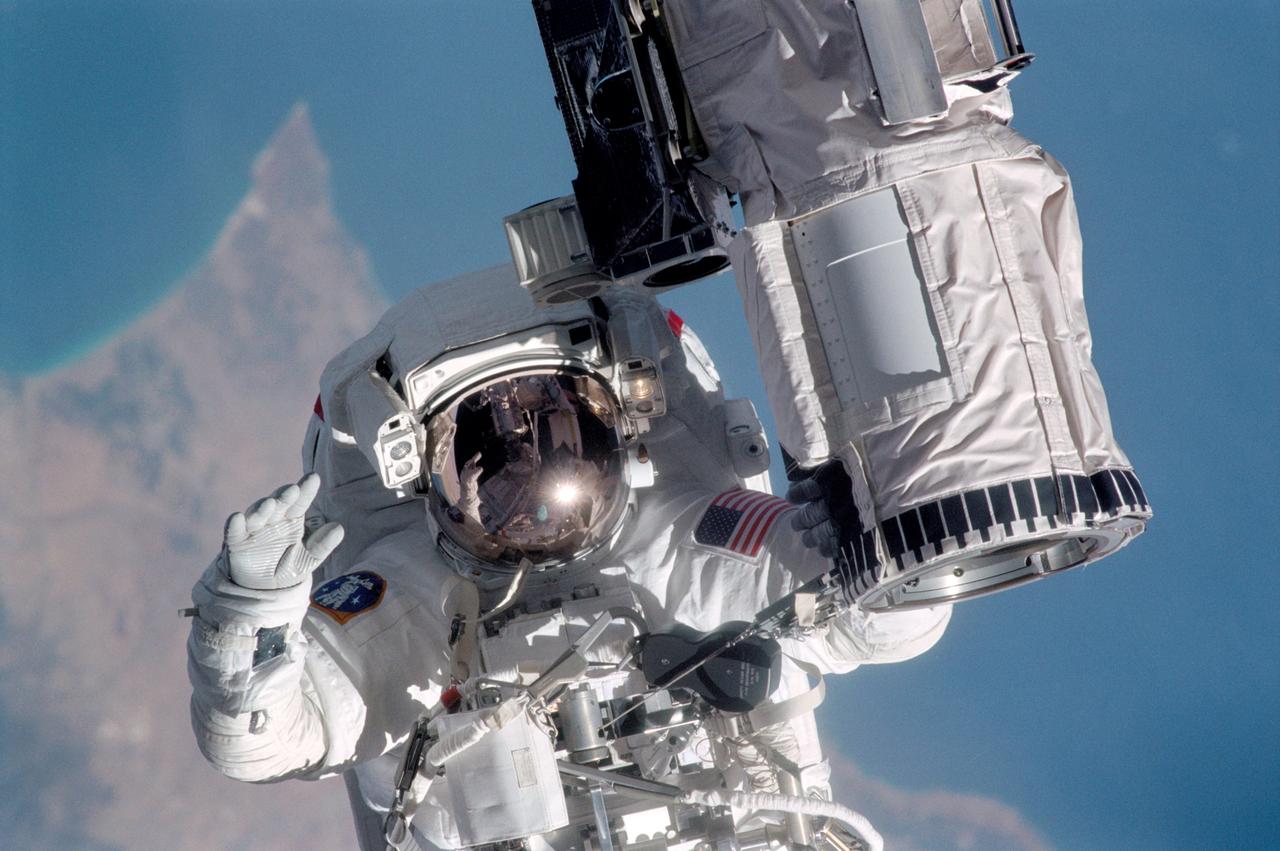
Astronaut Michael L. Gernhardt, STS-104 mission specialist, participates in one of three STS-104 space walks while holding on to the end effector of the Canadarm on the Space Shuttle Atlantis. Gernhardt was joined on the extravehicular activity (EVA) by astronaut James F. Reilly (out of frame). The major objective of the mission was to install and activate the Joint Airlock, which completed the second phase of construction on the International Space Station (ISS). The airlock accommodates both United States and Russian space suits and was designed and built at the Marshall Space Flight Center by the Boeing Company.
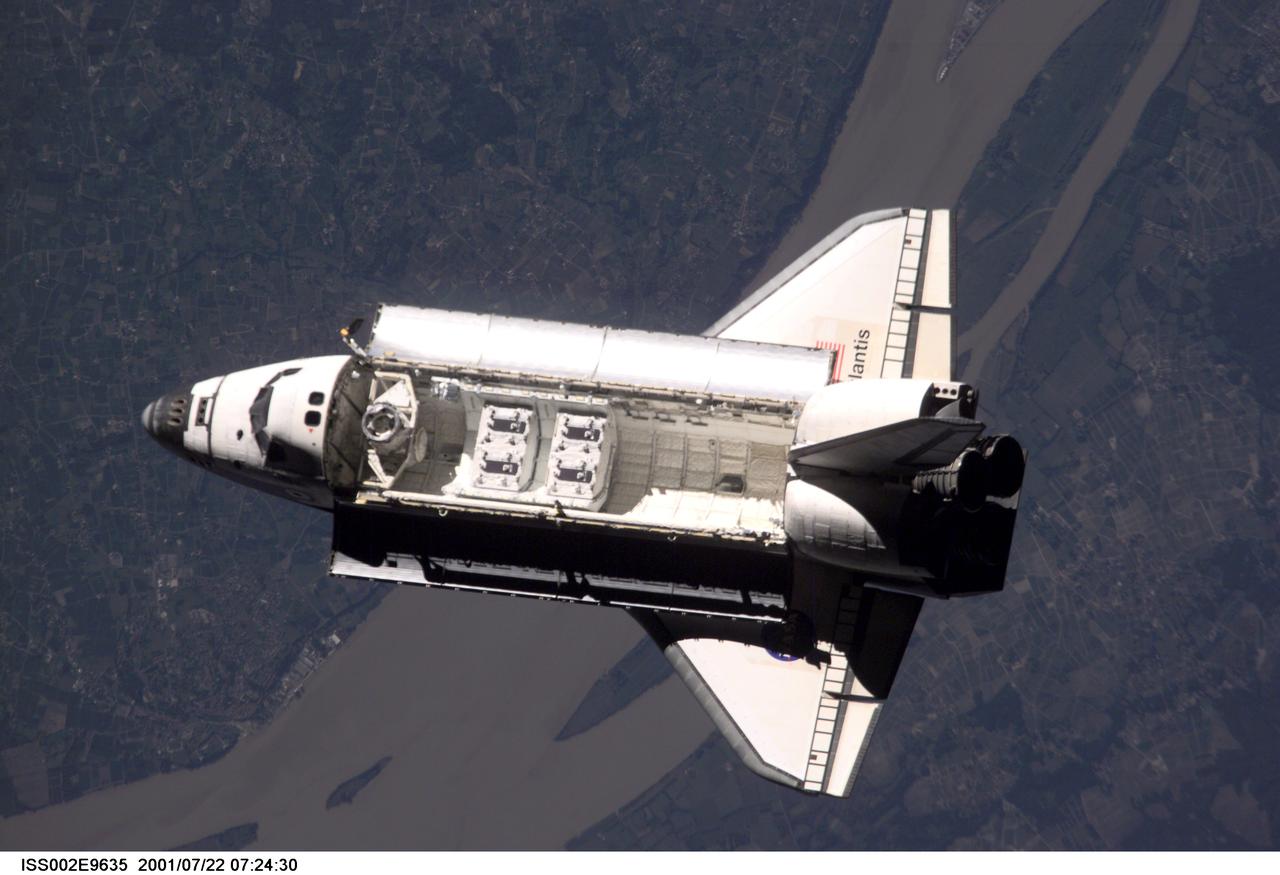
ISS002-E-9635 (21 July 2001) --- View of the Space Shuttle Atlantis after it undocked from the International Space Station (ISS) during the STS-104 mission. The STS-104 crew delivered the Quest Airlock to the ISS during the twelve day mission. This image was recorded by an Expedition Two crew member with a digital still camera.
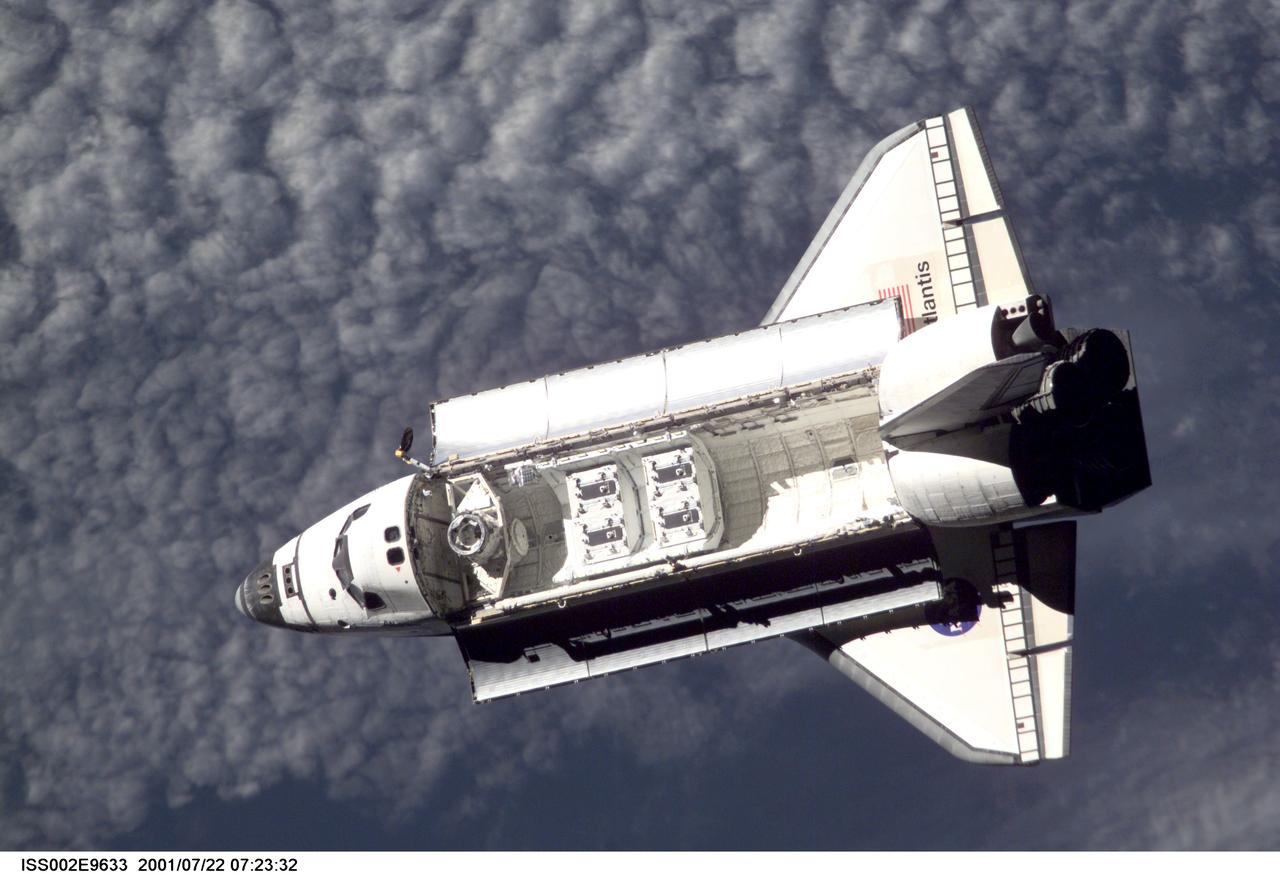
ISS002-E-9633 (21 July 2001) --- View of the Space Shuttle Atlantis after it undocked from the International Space Station (ISS) during the STS-104 mission. The STS-104 crew delivered the Quest Airlock to the ISS during the twelve day mission. This image was recorded by an Expedition Two crew member with a digital still camera.
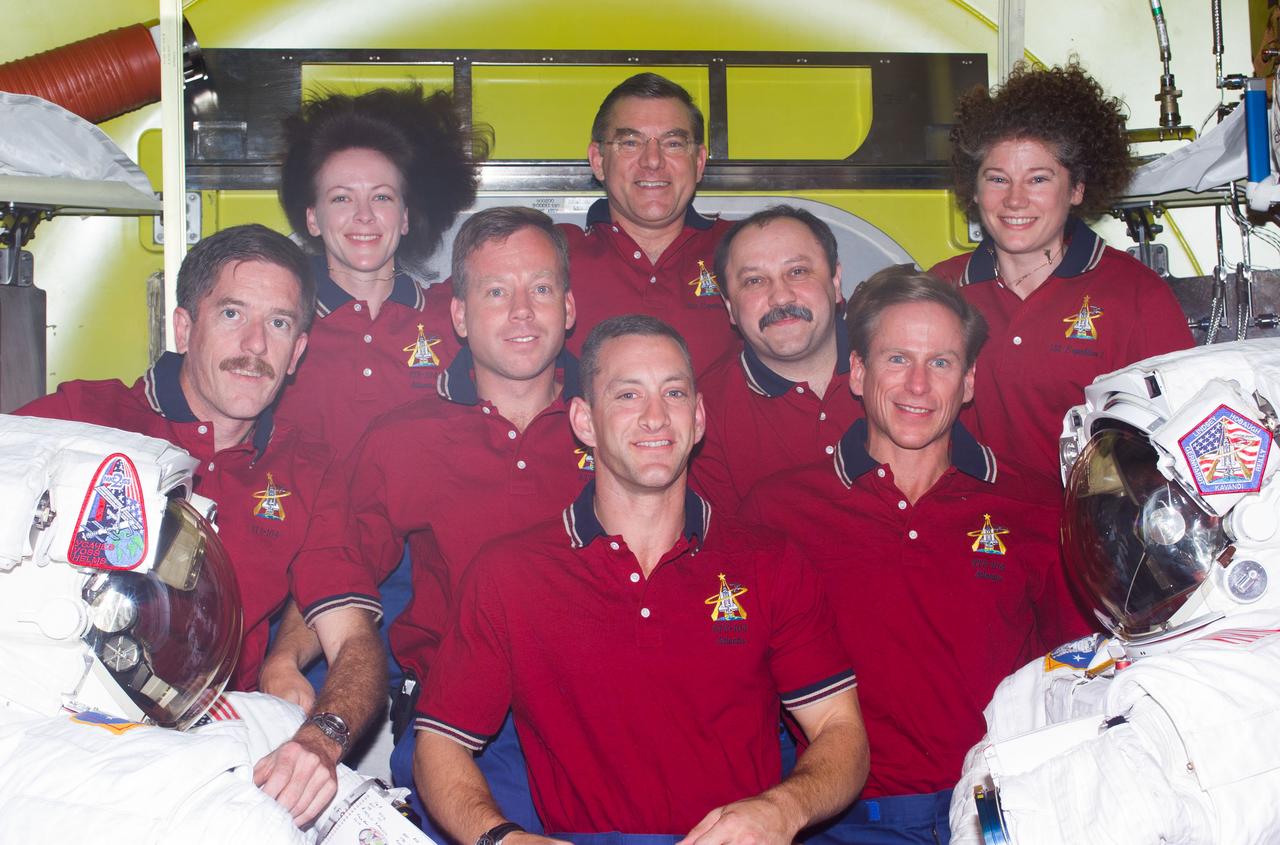
STS104-E-5177 (20 July 2001) --- Seven astronauts and a cosmonaut representing Rosaviakosmos take a break in joint activities involving the Expedition Two and STS-104 crews to pose for an in-flight portrait in the newly delivered Quest Airlock on the International Space Station (ISS). Flanked by two extravehicular mobility unit (EMU) space suits, Charles O. Hobaugh is in front. On the second row are, from the left, James F. Reilly, Steven W. Lindsey, Yury V. Usachev and Michael L. Gernhardt. In the rear are Janet L. Kavandi, James S. Voss and Susan J. Helms. Usachev, commander; along with Voss and Helms, both flight engineers, comprise the Expedition Two crew. Lindsey is STS-104 commander, with Hobaugh serving as pilot. Kavandi, STS-104 flight engineer, is joined by Gernhardt and Reilly as mission specialists on the mission. This image was recorded with a digital still camera.
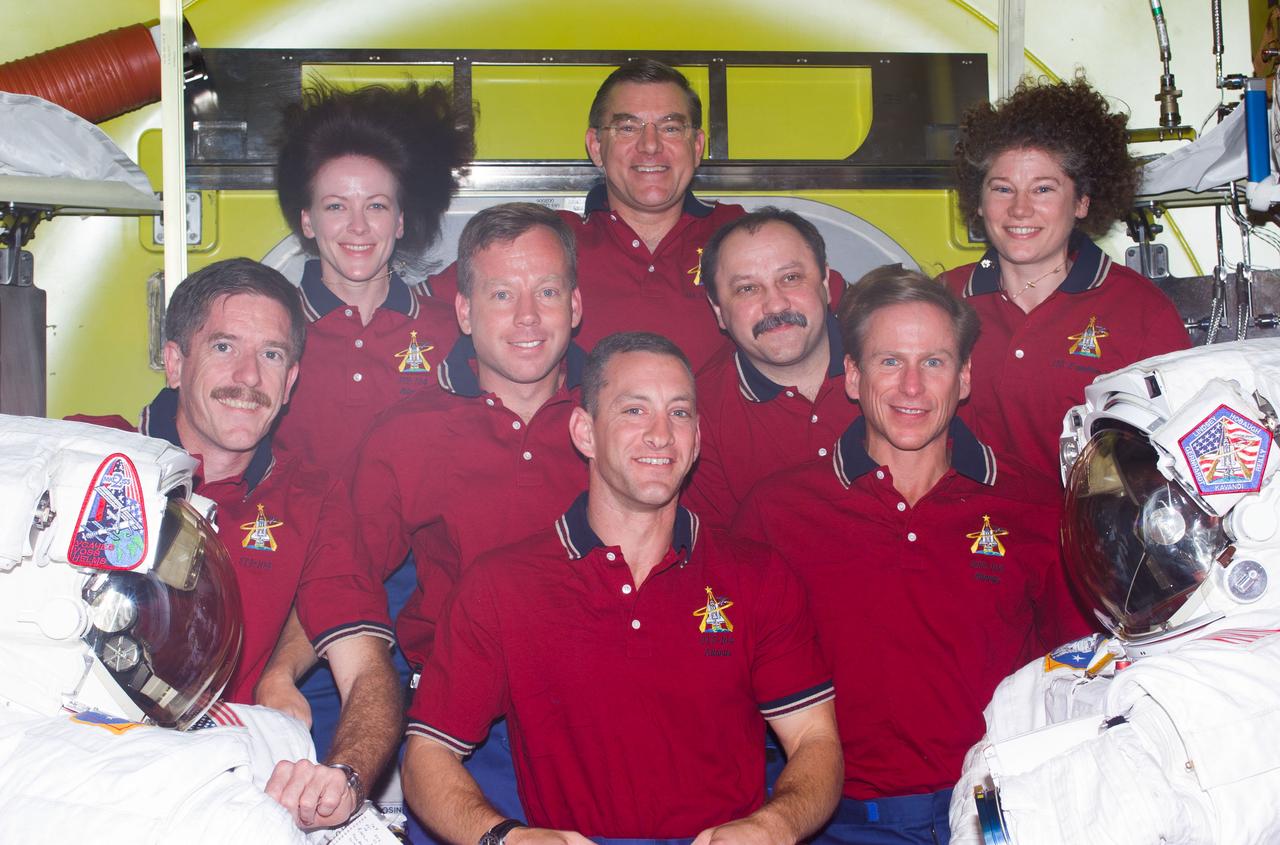
STS104-E-5178 (20 July 2001) --- Seven astronauts and a cosmonaut representing Rosaviakosmos take a break in joint activities involving the Expedition Two and STS-104 crews to pose for an inflight portrait in the newly delivered Quest Airlock on the International Space Station (ISS). Charles O. Hobaugh is in front. On the second row are, from the left, James F. Reilly, Steven W. Lindsey, Yury V. Usachev and Michael L. Gernhardt. In the rear are astronauts Janet L. Kavandi, James S. Voss and Susan J. Helms. Usachev, commander; along with Voss and Helms, both flight engineers, comprise the Expediton Two crew. Lindsey is STS-104 commander, with Hobaugh serving as pilot. Kavandi, STS-104 flight engineer, is joined by Gernhardt and Reilly as mission specialists on the mission. This image was recorded with a digital still camera.
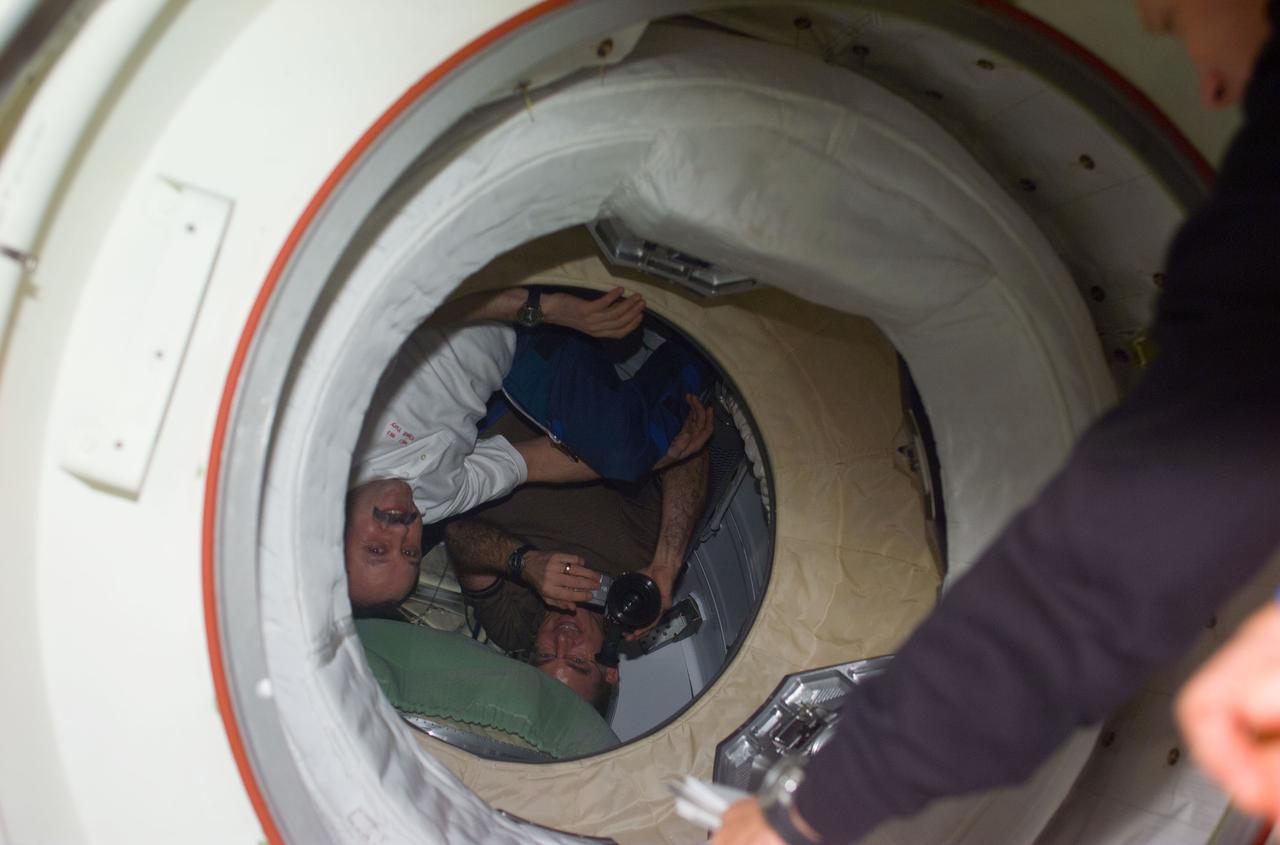
S104-E-5041 (14 July 2001) --- Expedition Two crewmembers Yury V. Usachev of Rosaviakosmos, mission commander, and James S. Voss, flight engineer, greet the STS-104 crew with smiles when the hatch to Pressurized Mating Adapter 2 (PMA2) was opened for the STS-104 ingress.
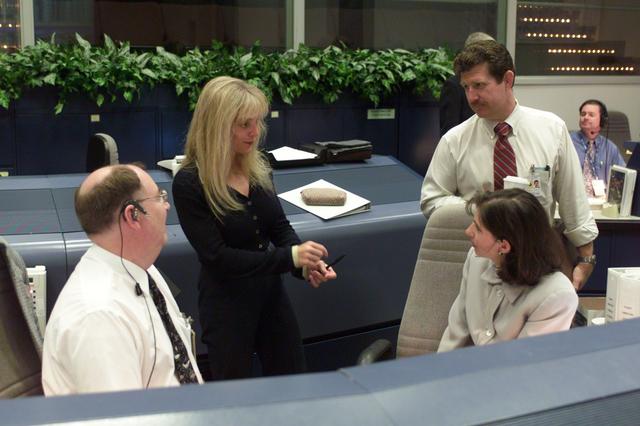
JSC2001-E-21560 (16 July 2001) --- STS-104 flight directors Wayne Hale (seated left), Catherine Koerner (seated right) and Phil Engelauf (standing left) speak with Linda Ham, Special Assistant to the Manager of the Space Shuttle Program Office, at the flight director's console in the shuttle flight control room (WFCR) in Houston's Mission Control Center (MCC).
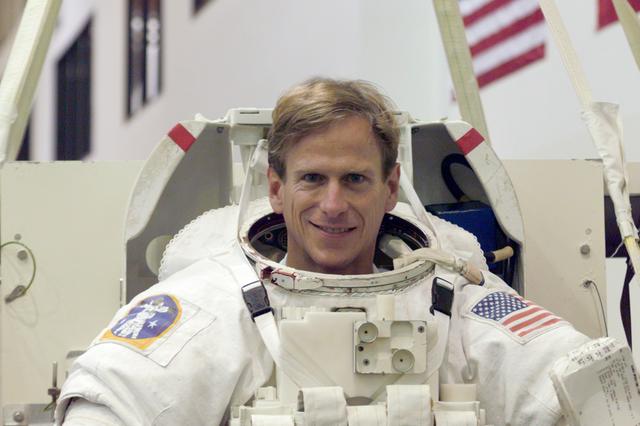
JSC2001-E-10911 (13 April 2001) --- Astronaut Michael L. Gernhardt, mission specialist, photographed in the training version of his Extravehicular Mobility Unit (EMU) space suit prior to being submerged in the waters of the Neutral Buoyancy Laboratory (NBL) at the Johnson Space Center (JSC). The STS-104 mission to the International Space Station (ISS) represents the Space Shuttle Atlantis' first flight using a new engine and is targeted for a liftoff no earlier than June 14, 2001.
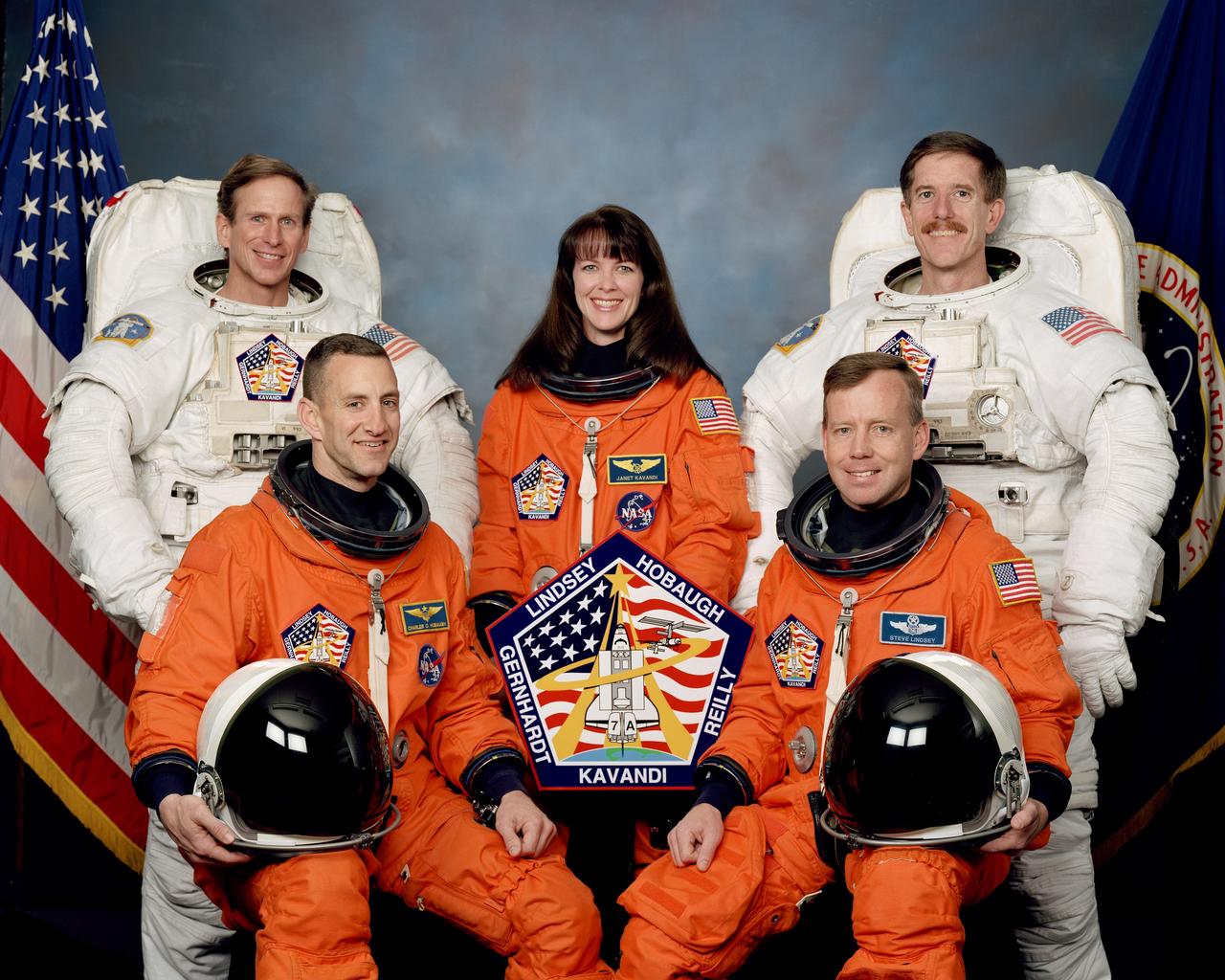
STS104-S-002 (May 2001) --- These five astronauts are currently in training for the STS-104 mission, scheduled for a June 2001 liftoff. Seated with the crew insignia are astronauts Steven W. Lindsey (right), mission commander; and Charles O. Hobaugh, pilot. Standing, from left, are astronauts Michael L. Gernhardt, Janet L. Kavandi and James F. Reilly, all mission specialists.
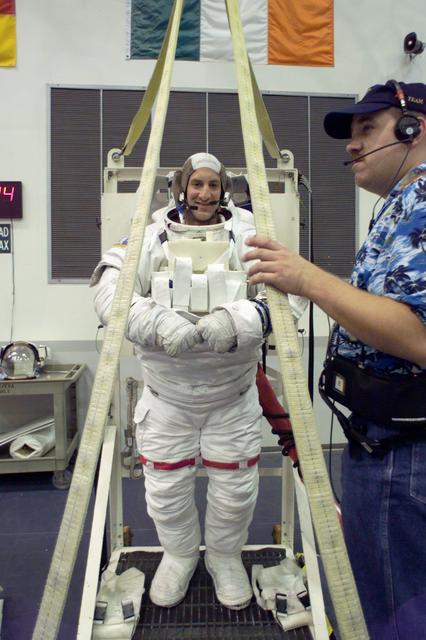
JSC2001-E-10917 (13 April 2001) --- Astronaut Charles O. Hobaugh, pilot, training for extravehicular activity (EVA), prepares to enter a deep pool of the Neutral Buoyancy Laboratory (NBL) at the Johnson Space Center (JSC). The STS-104 mission to the International Space Station (ISS) represents the Space Shuttle Atlantis' first flight using a new engine and is targeted for a liftoff no earlier than June 14, 2001.
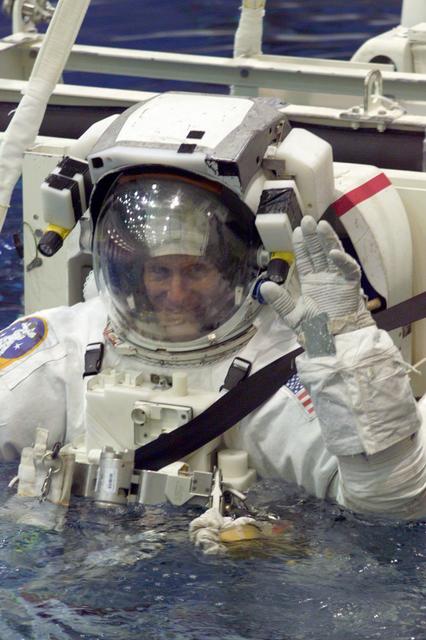
JSC2001-E-10920 (13 April 2001) --- Astronaut Michael L. Gernhardt, mission specialist, waves as he is submerged in the waters of the Neutral Buoyancy Laboratory (NBL) at the Johnson Space Center (JSC). The STS-104 mission to the International Space Station (ISS) represents the Space Shuttle Atlantis' first flight using a new engine and is targeted for a liftoff no earlier than June 14, 2001.
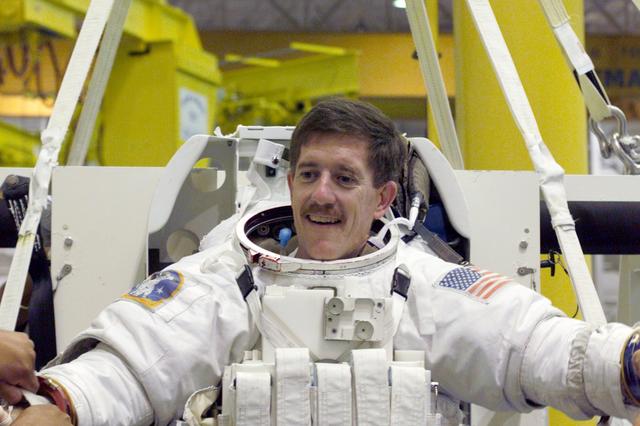
JSC2001-E-10909 (13 April 2001) --- Astronaut James F. Reilly, mission specialist, gets help with final touches on the training version of his Extravehicular Mobility Unit (EMU) space suit prior to being submerged in the waters of the Neutral Buoyancy Laboratory (NBL) at the Johnson Space Center (JSC). The STS-104 mission to the International Space Station (ISS) represents the Space Shuttle Atlantis’ first flight using a new engine and is targeted for a liftoff no earlier than June 14, 2001.
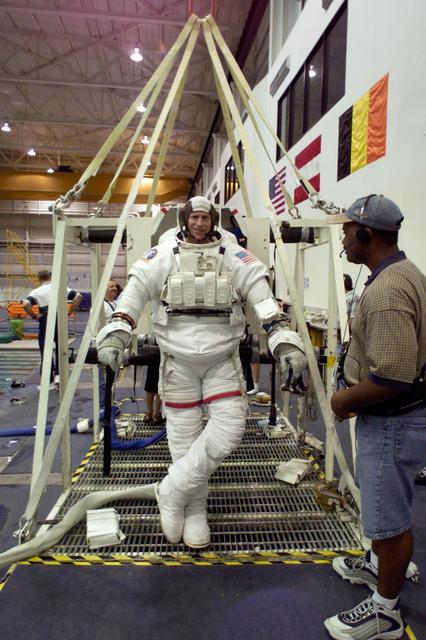
JSC2001-E-10916 (13 April 2001) --- Astronaut Michael L. Gernhardt, mission specialist, training for extravehicular activity (EVA), prepares to enter a deep pool of the Neutral Buoyancy Laboratory (NBL) at the Johnson Space Center (JSC). The STS-104 mission to the International Space Station (ISS) represents the Space Shuttle Atlantis' first flight using a new engine and is targeted for a liftoff no earlier than June 14, 2001.
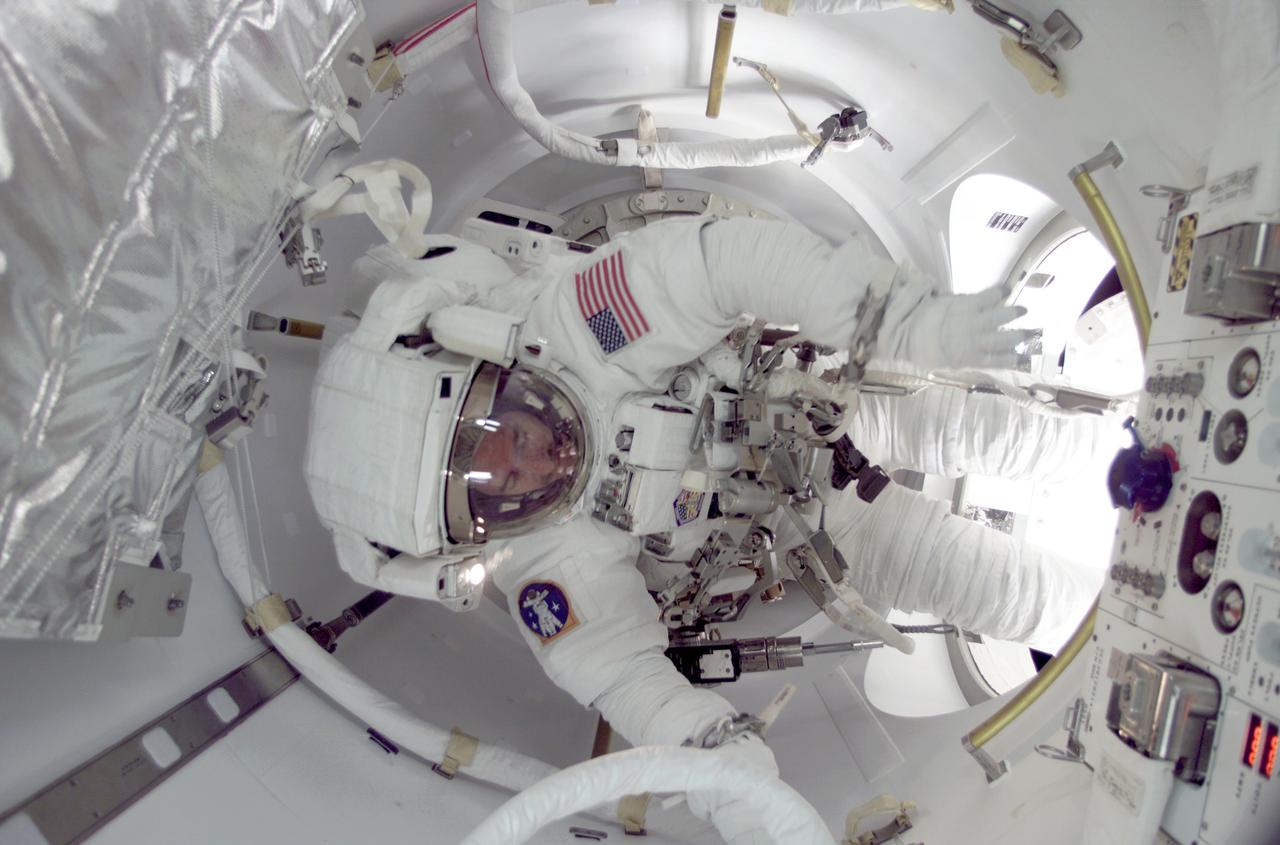
Astronaut James F. Reilly, STS-104 mission specialist, participates in space history as he joins fellow astronaut and mission specialist Michael L. Gernhardt (out of frame) in utilizing the new Quest Airlock for the first ever space walk to egress from the International Space Station (ISS). The major objective of the mission was to install and activate the airlock, which completed the second phase of construction on the ISS. The airlock accommodates both United States and Russian space suits and was designed and built at the Marshall Space Flight Center by the Boeing Company.
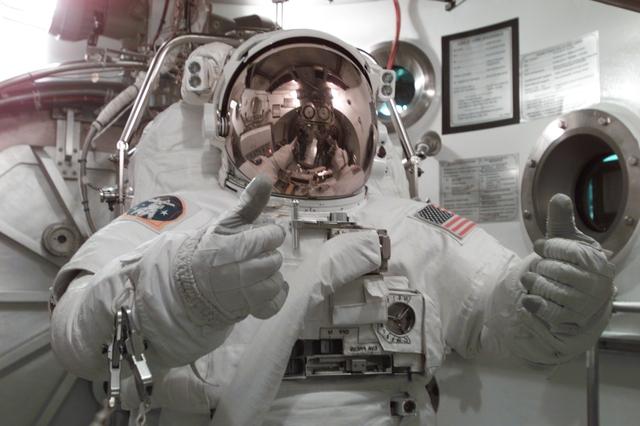
JSC2001-E-11702 (9 April 2001) --- Astronaut James F. Reilly, STS-104 mission specialist, participates in an Extravehicular Mobility Unit (EMU) fit check in one of the chambers in the Crew Systems Laboratory at the Johnson Space Center (JSC). The STS-104 mission to the International Space Station (ISS) represents the Space Shuttle Atlantis' first flight using a new engine and is targeted for a liftoff no earlier than June 14, 2001.
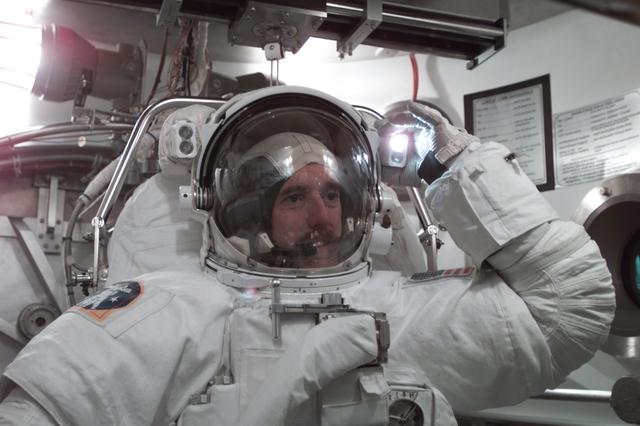
JSC2001-E-11698 (9 April 2001) --- Astronaut James F. Reilly, STS-104 mission specialist, participates in an Extravehicular Mobility Unit (EMU) fit check in one of the chambers in the Crew Systems Laboratory at the Johnson Space Center (JSC). The STS-104 mission to the International Space Station (ISS) represents the Space Shuttle Atlantis' first flight using a new engine and is targeted for a liftoff no earlier than June 14, 2001.
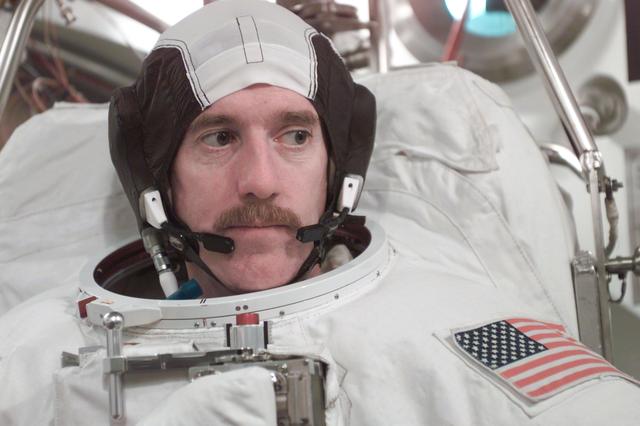
JSC2001-E-11691 (9 April 2001) --- Astronaut James F. Reilly, STS-104 mission specialist, prepares to don his helmet for an Extravehicular Mobility Unit (EMU) fit check in one of the chambers in the Crew Systems Laboratory at the Johnson Space Center (JSC). The STS-104 mission to the International Space Station (ISS) represents the Space Shuttle Atlantis' first flight using a new engine and is targeted for a liftoff no earlier than June 14, 2001.
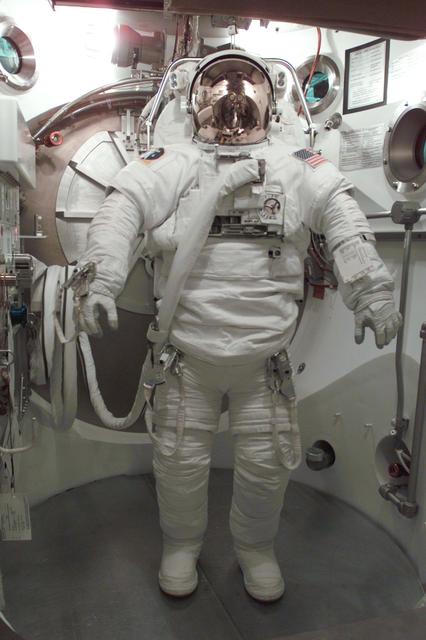
JSC2001-E-11703 (9 April 2001) --- Astronaut James F. Reilly, STS-104 mission specialist, participates in an Extravehicular Mobility Unit (EMU) fit check in one of the chambers in the Crew Systems Laboratory at the Johnson Space Center (JSC). The STS-104 mission to the International Space Station (ISS) represents the Space Shuttle Atlantis' first flight using a new engine and is targeted for a liftoff no earlier than June 14, 2001.
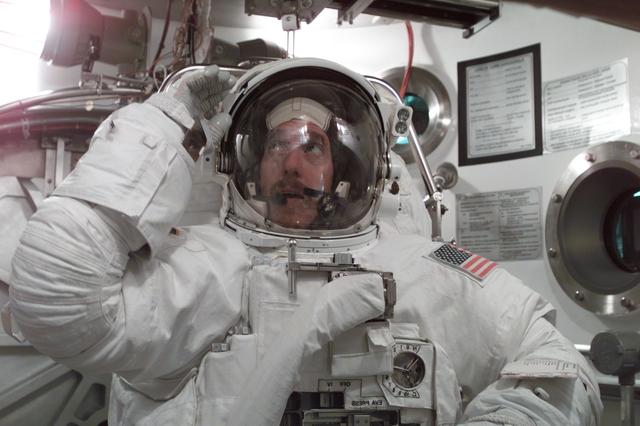
JSC2001-E-11699 (9 April 2001) --- Astronaut James F. Reilly, STS-104 mission specialist, participates in an Extravehicular Mobility Unit (EMU) fit check in one of the chambers in the Crew Systems Laboratory at the Johnson Space Center (JSC). The STS-104 mission to the International Space Station (ISS) represents the Space Shuttle Atlantis' first flight using a new engine and is targeted for a liftoff no earlier than June 14, 2001.
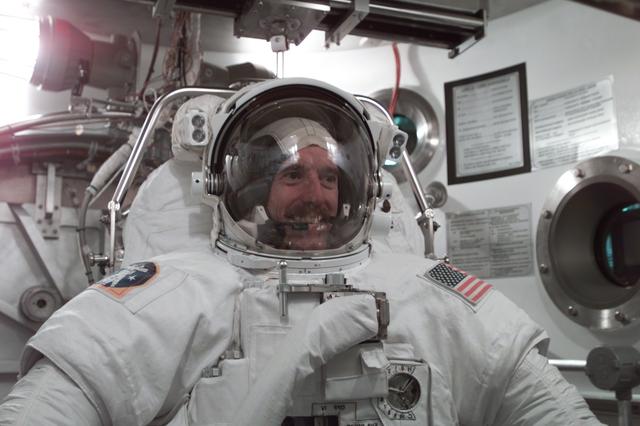
JSC2001-E-11697 (9 April 2001) --- Astronaut James F. Reilly, STS-104 mission specialist, participates in an Extravehicular Mobility Unit (EMU) fit check in one of the chambers in the Crew Systems Laboratory at the Johnson Space Center (JSC). The STS-104 mission to the International Space Station (ISS) represents the Space Shuttle Atlantis' first flight using a new engine and is targeted for a liftoff no earlier than June 14, 2001.
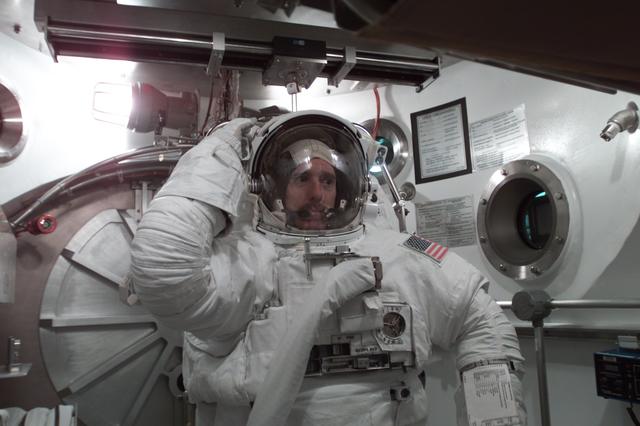
JSC2001-E-11696 (9 April 2001) --- Astronaut James F. Reilly, STS-104 mission specialist, participates in an Extravehicular Mobility Unit (EMU) fit check in one of the chambers in the Crew Systems Laboratory at the Johnson Space Center (JSC). The STS-104 mission to the International Space Station (ISS) represents the Space Shuttle Atlantis' first flight using a new engine and is targeted for a liftoff no earlier than June 14, 2001.
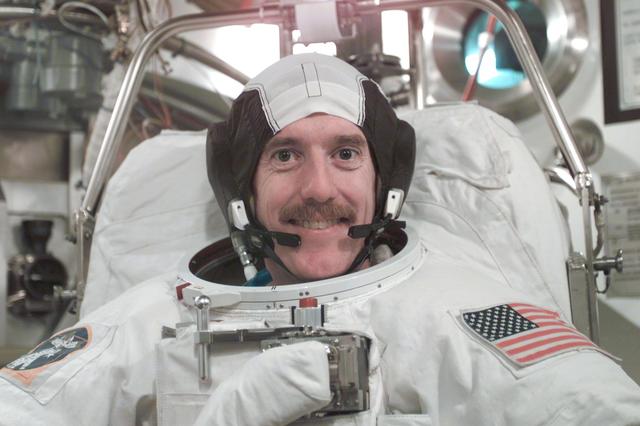
JSC2001-E-11690 (9 April 2001) --- Astronaut James F. Reilly, STS-104 mission specialist, prepares to don his helmet for an Extravehicular Mobility Unit (EMU) fit check in one of the chambers in the Crew Systems Laboratory at the Johnson Space Center (JSC). The STS-104 mission to the International Space Station (ISS) represents the Space Shuttle Atlantis' first flight using a new engine and is targeted for a liftoff no earlier than June 14, 2001.
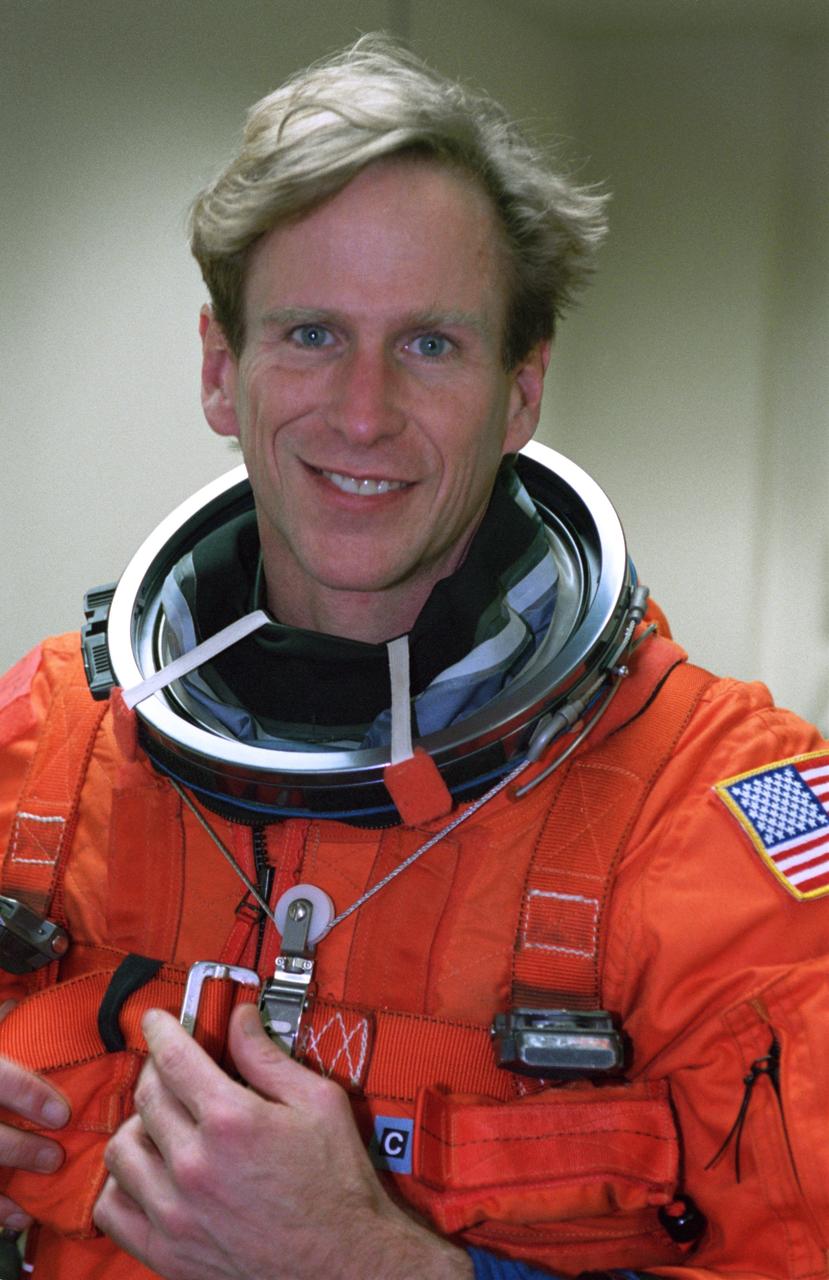
JSC2000-07284 (17 November 2000) --- Astronaut Michael L. Gernhardt, STS-104 mission specialist, attired in a training version of the shuttle launch and entry garment at the Jake Garn Simulation and Training Facility at Johnson Space Center (JSC). Gernhardt will join four other astronauts for a June mission with the International Space Station (ISS).
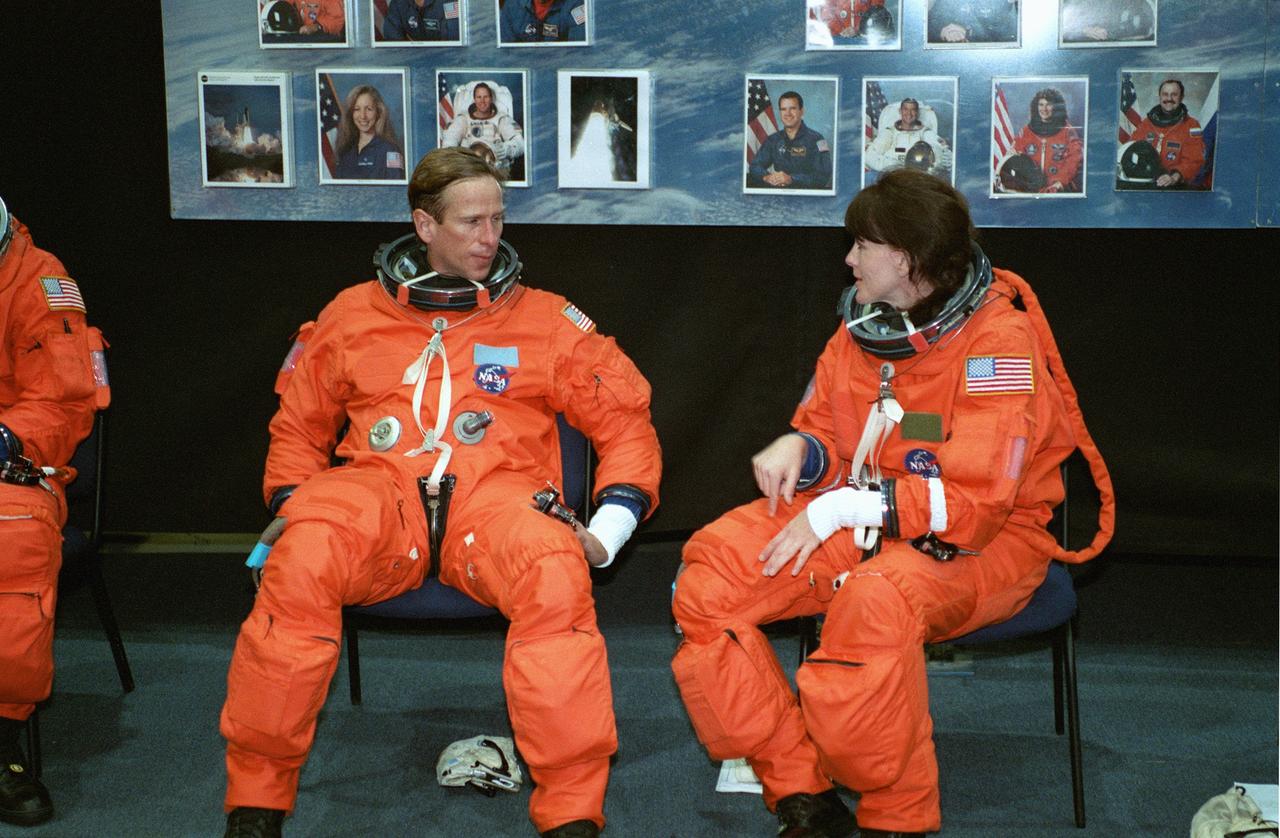
JSC2001-00082 (January 2001) --- Astronauts Michael L. Gernhardt (left) and Janet L. Kavandi, both mission specialists, are pictured while in training at the Systems Integration Facility at Johnson Space Center (JSC). The STS-104 mission to the International Space Station (ISS) represents the Space Shuttle Atlantis' first flight using a new engine and is targeted for a liftoff no earlier than June 14, 2001.
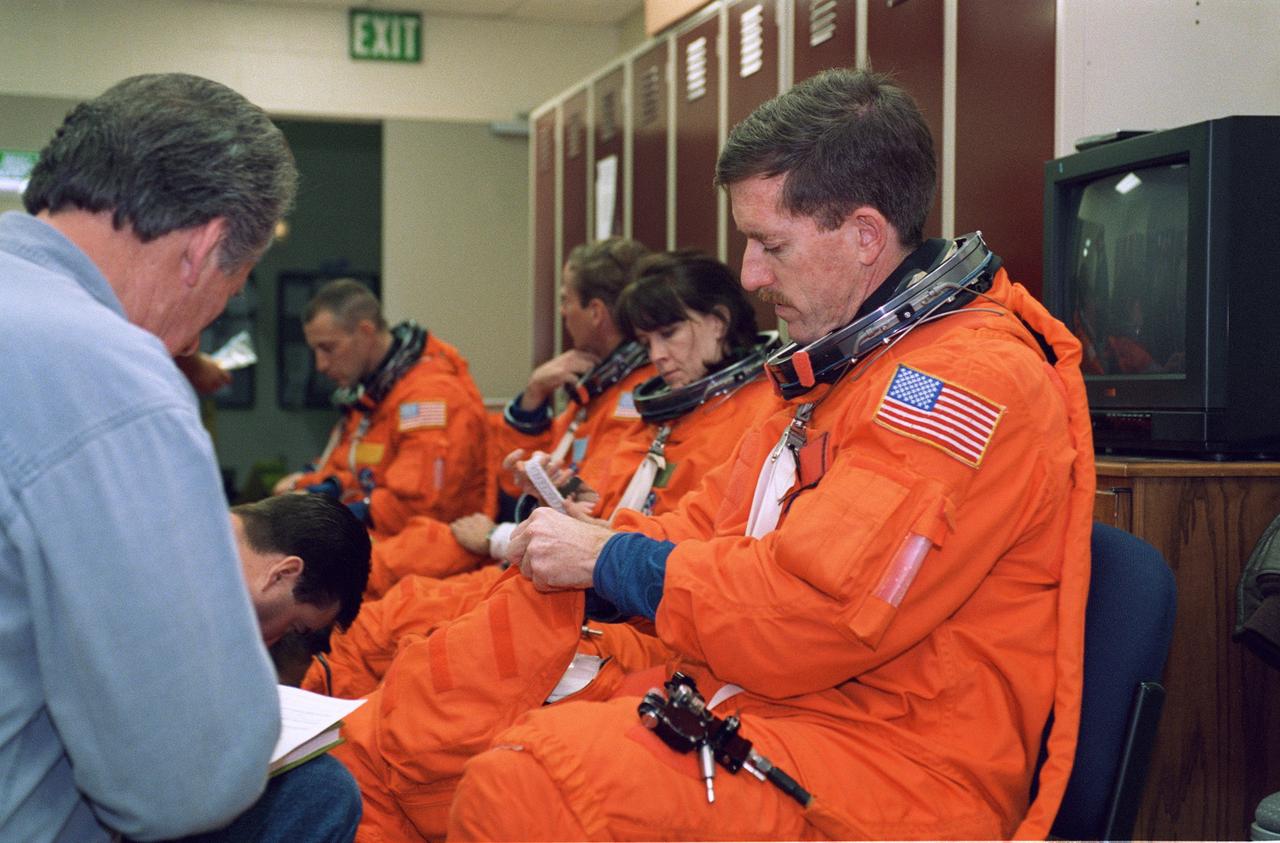
JSC2001-00083 (January 2001) --- Several members of the STS-104 crew, assisted by suit technician Jim Cheatham, don training versions of the full-pressure launch and entry suit prior to a training session in one of the trainer/mockups (out of frame) in the Johnson Space Center’s Systems Integration Facility. Pictured (from right foreground) are astronauts James F. Reilly, Janet L. Kavandi, Michael L. Gernhardt, and Charles O. Hobaugh.
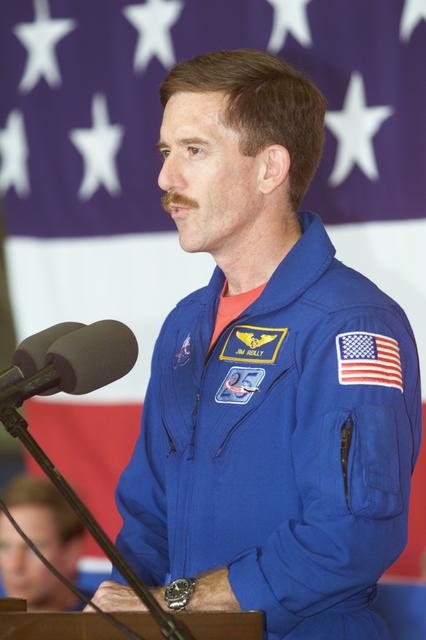
JSC2001-E-22798 (25 July 2001) --- Astronaut James F. Reilly, STS-104 mission specialist, addresses a crowd at Ellington Field’s Hangar 990 for a crew return ceremony.
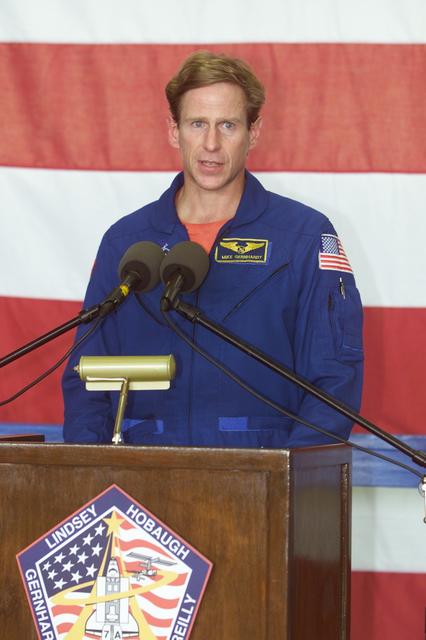
JSC2001-E-22799 (25 July 2001) --- Astronaut Michael L. Gernhardt, STS-104 mission specialist, addresses a crowd at Ellington Field’s Hangar 990 for a crew return ceremony.
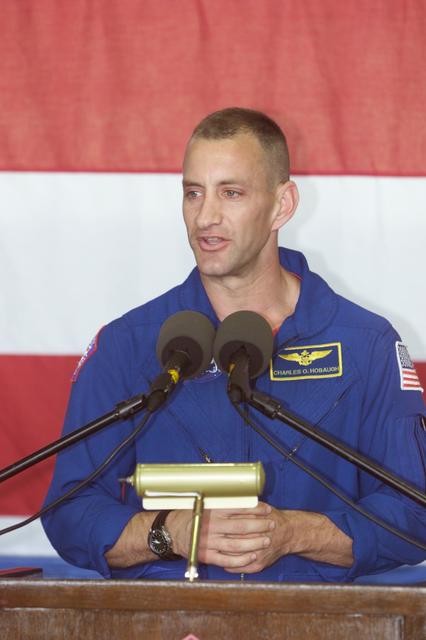
JSC2001-E-22795 (25 July 2001) --- Astronaut Charles O. Hobaugh, STS-104 pilot, addresses a crowd at Ellington Field’s Hangar 990 for a crew return ceremony.
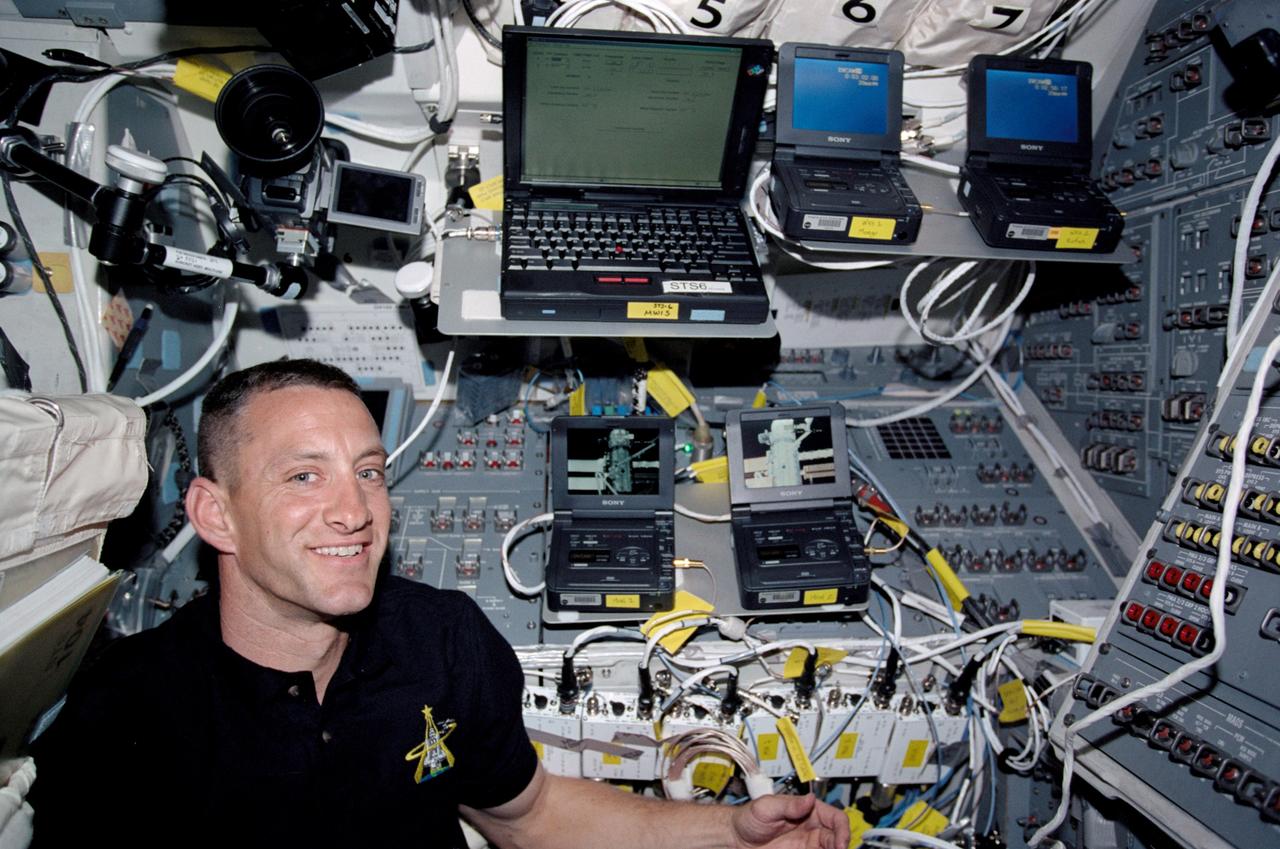
STS104-326-005 (12-24 July 2001) --- Astronaut Charles O. Hobaugh, STS-104 pilot, prepares to do some work at the recently-fashioned computer network station on the flight deck of the Space Shuttle Atlantis.
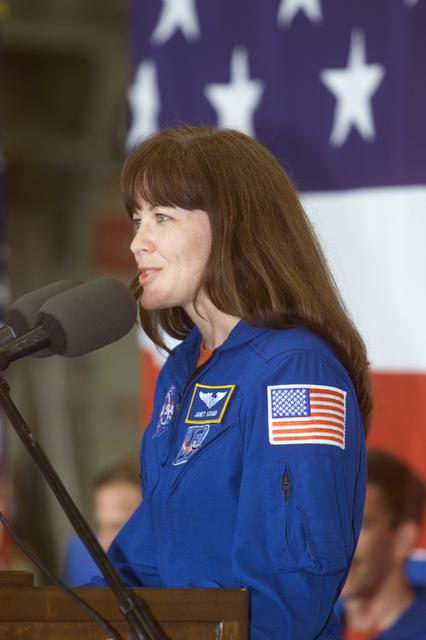
JSC2001-E-22796 (25 July 2001) --- Astronaut Janet L. Kavandi, STS-104 mission specialist, addresses a crowd at Ellington Field’s Hangar 990 for a crew return ceremony.
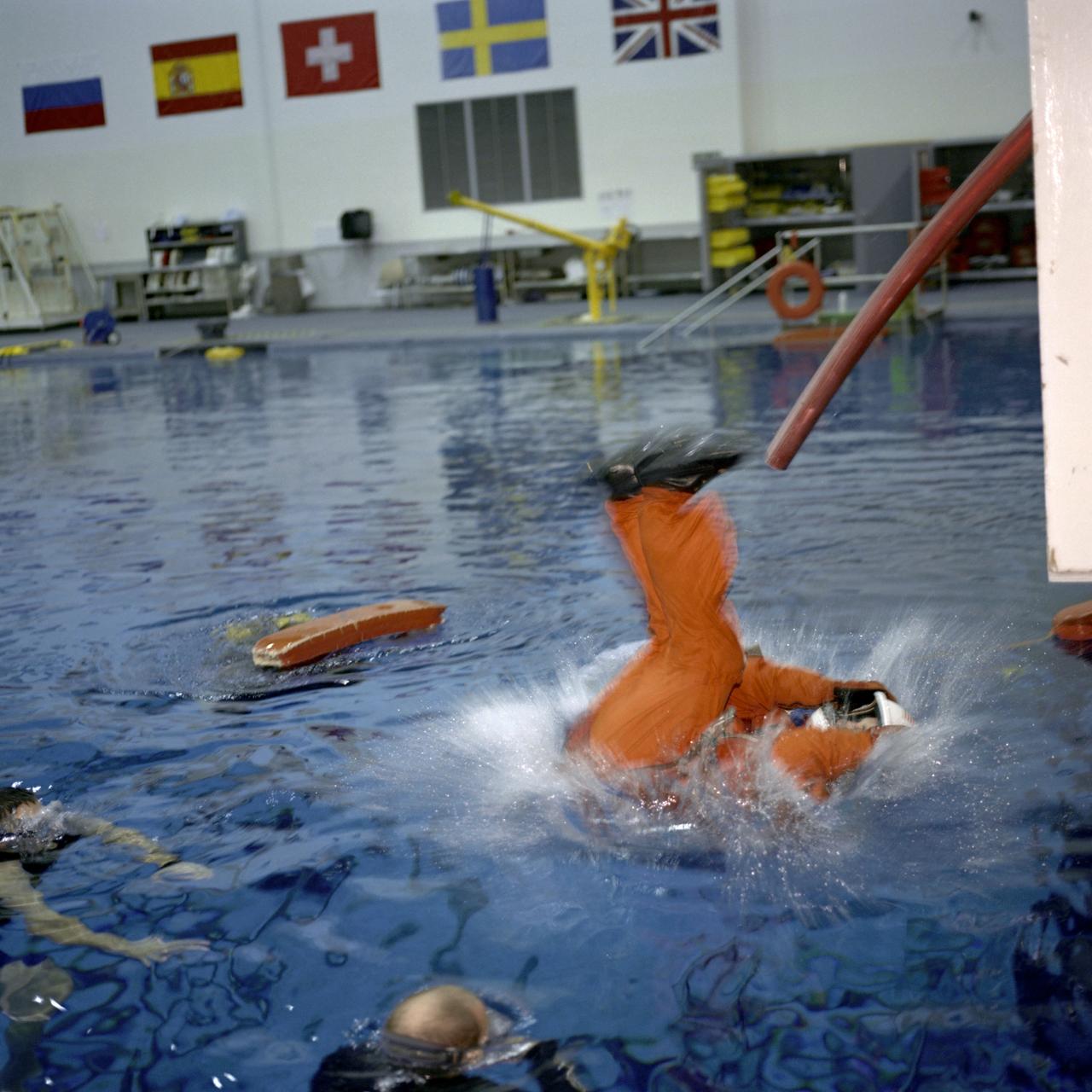
JSC2001-00006 (January 2001) --- An unidentified member of the STS-104 crew simulates an ejection into a body of water during an emergency bailout training session for the astronauts in the Neutral Buoyancy Laboratory (NBL) near the Johnson Space Center (JSC).
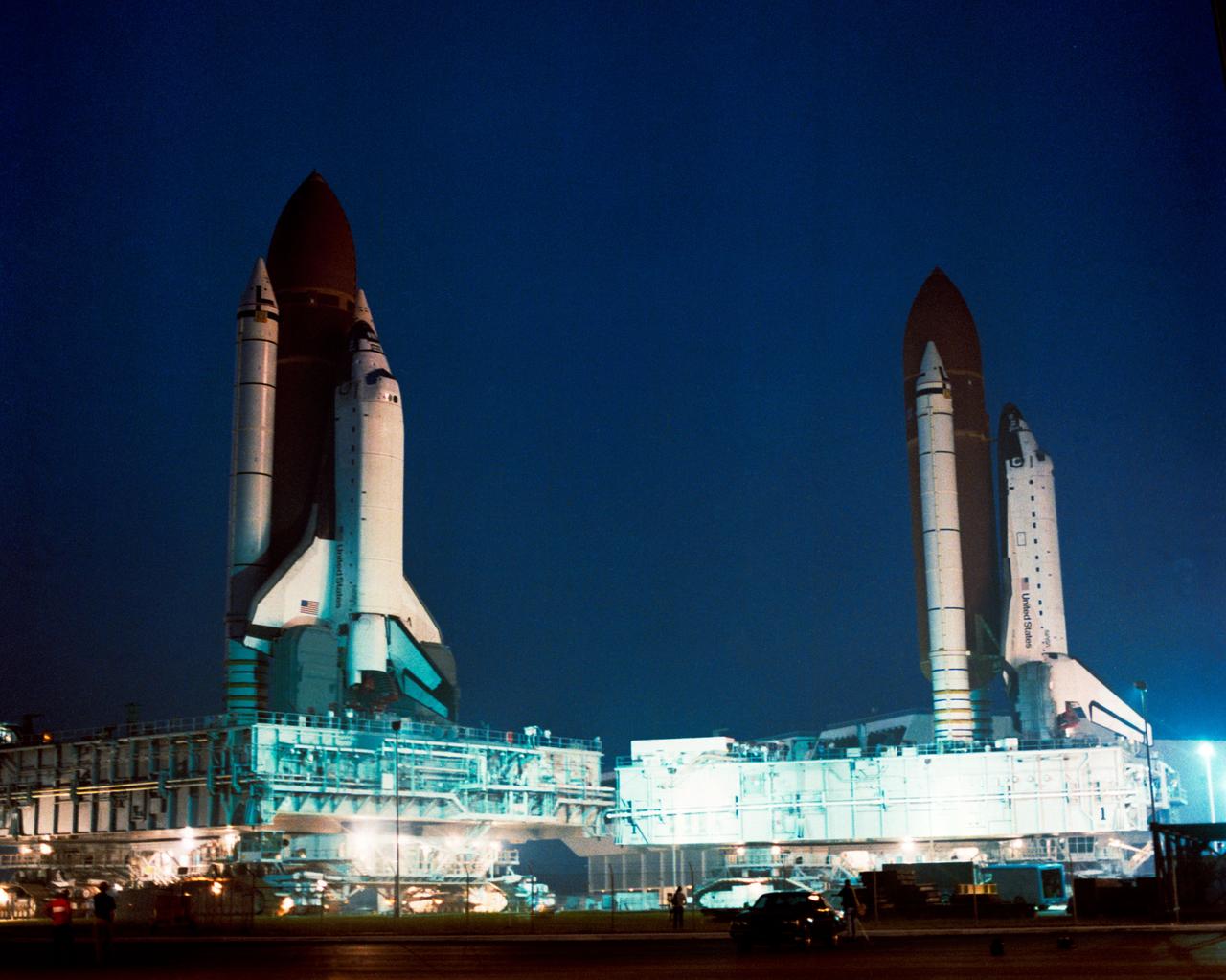
Columbia, Orbiter Vehicle (OV) 102, slated for mission STS-35, left, rolls past Atlantis, OV-104, on its way to Kennedy Space Center (KSC) launch pad 39A. OV-104, being readied for STS-38, is parked in front of the Vehicle Assembly Building (VAB) following its rollback from the pad for liquid hydrogen (LH2) line repairs. View provided by KSC with alternate number KSC-90PC-1152.
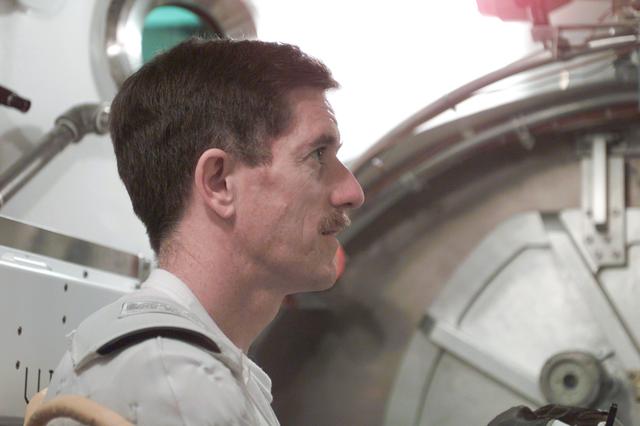
JSC2001-E-11687 (9 April 2001) --- Astronaut James F. Reilly, STS-104 mission specialist, prepares to don his Extravehicular Mobility Unit (EMU) space suit for a fit check in one of the chambers in the Crew Systems Laboratory at the Johnson Space Center (JSC). Reilly is wearing a thermal undergarment over which he will wear the EMU. The STS-104 mission to the International Space Station (ISS) represents the Space Shuttle Atlantis' first flight using a new engine and is targeted for a liftoff no earlier than June 14, 2001.
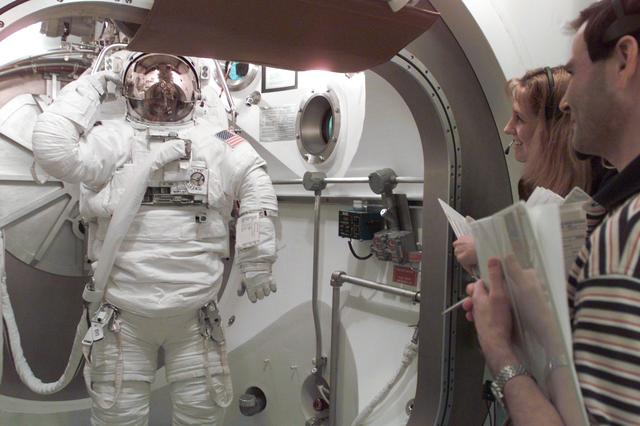
JSC2001-E-11704 (9 April 2001) --- Astronaut James F. Reilly, STS-104 mission specialist, participates in an Extravehicular Mobility Unit (EMU) fit check in one of the chambers in the Crew Systems Laboratory at the Johnson Space Center (JSC). Standing near the doorway are Peggy Berg and Dave Simon, Crew Personnel Representatives (CPR), from the Mission Operations Directorate (MOD) at the Johnson Space Center. The STS-104 mission to the International Space Station (ISS) represents the Space Shuttle Atlantis' first flight using a new engine and is targeted for a liftoff no earlier than June 14, 2001.
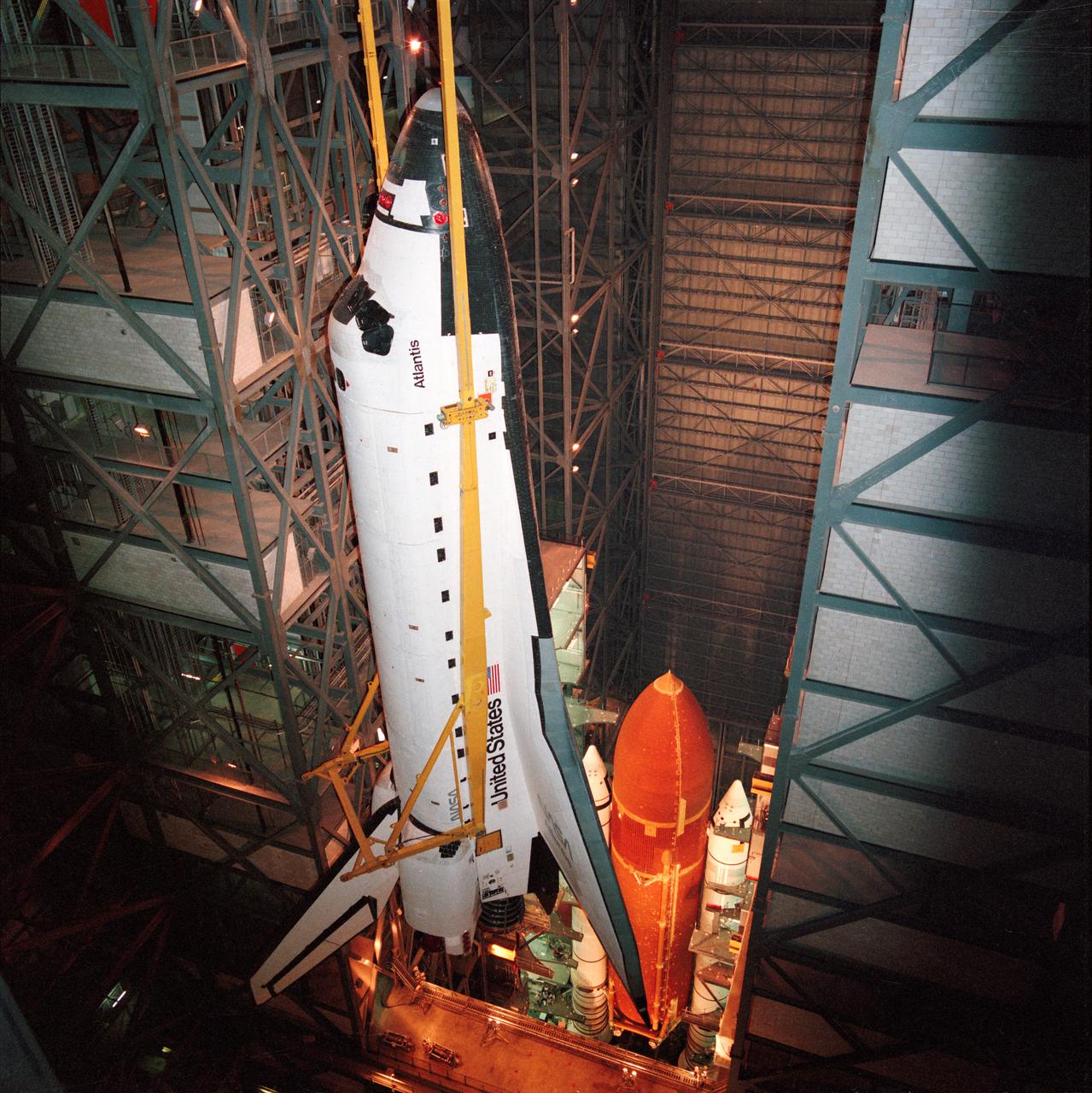
STS-27 Atlantis, Orbiter Vehicle (OV) 104, is suspended via overhead crane, attached at four points, in the Kennedy Space Center (KSC) Vehicle Assembly Building (VAB). Below OV-104 on the mobile launcher platform are the external tank (ET) and solid rocket boosters (SRBs). During ET/SRB mating operations, OV-104 will be mounted atop the ET.
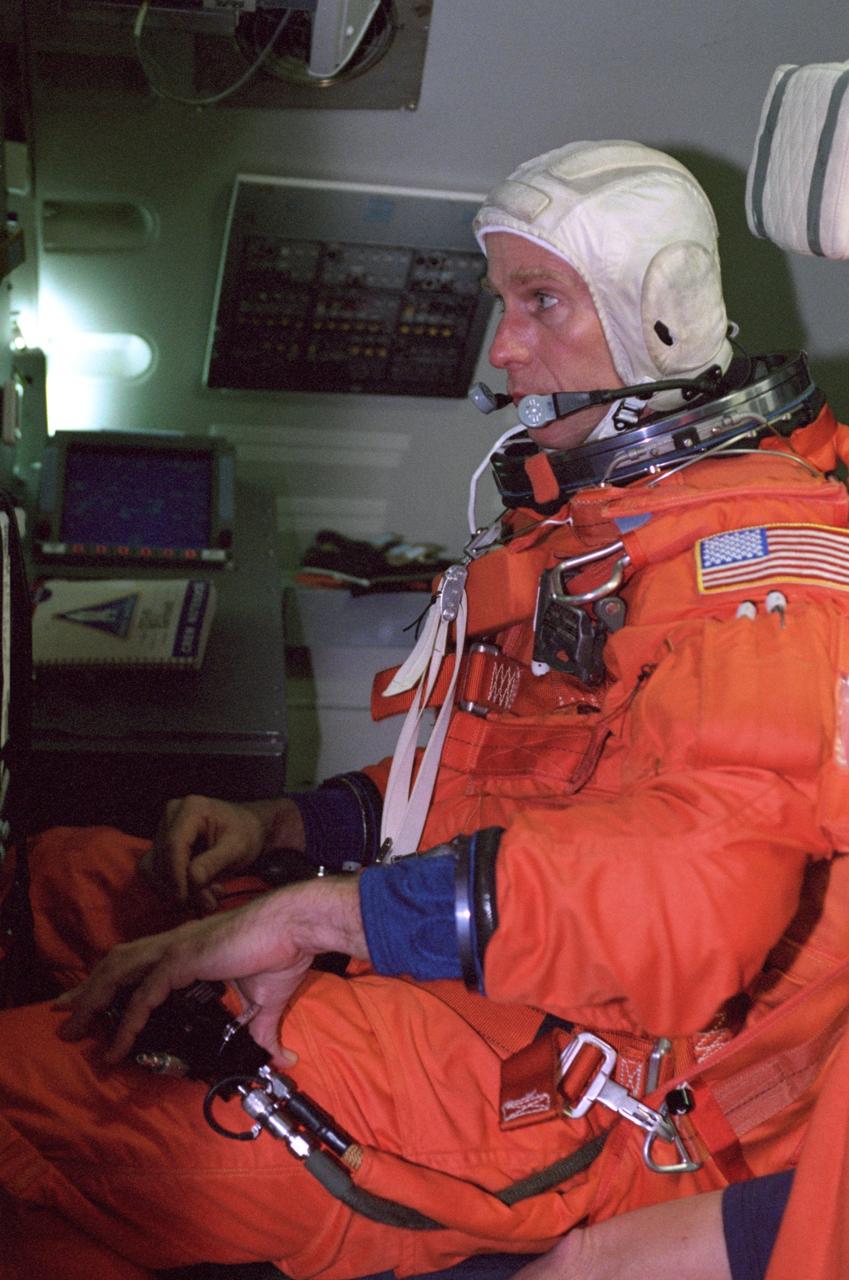
JSC2000-07291 (17 November 2000) --- Astronaut Michael L. Gernhardt, STS-104 mission specialist, participates in a simulation of pre-launch procedures on the flight deck of one of the high fidelity trainers/mockups in the Systems Integration Facility at Johnson Space Center (JSC). Gernhardt will join four other astronauts for a June mission with the International Space Station (ISS).
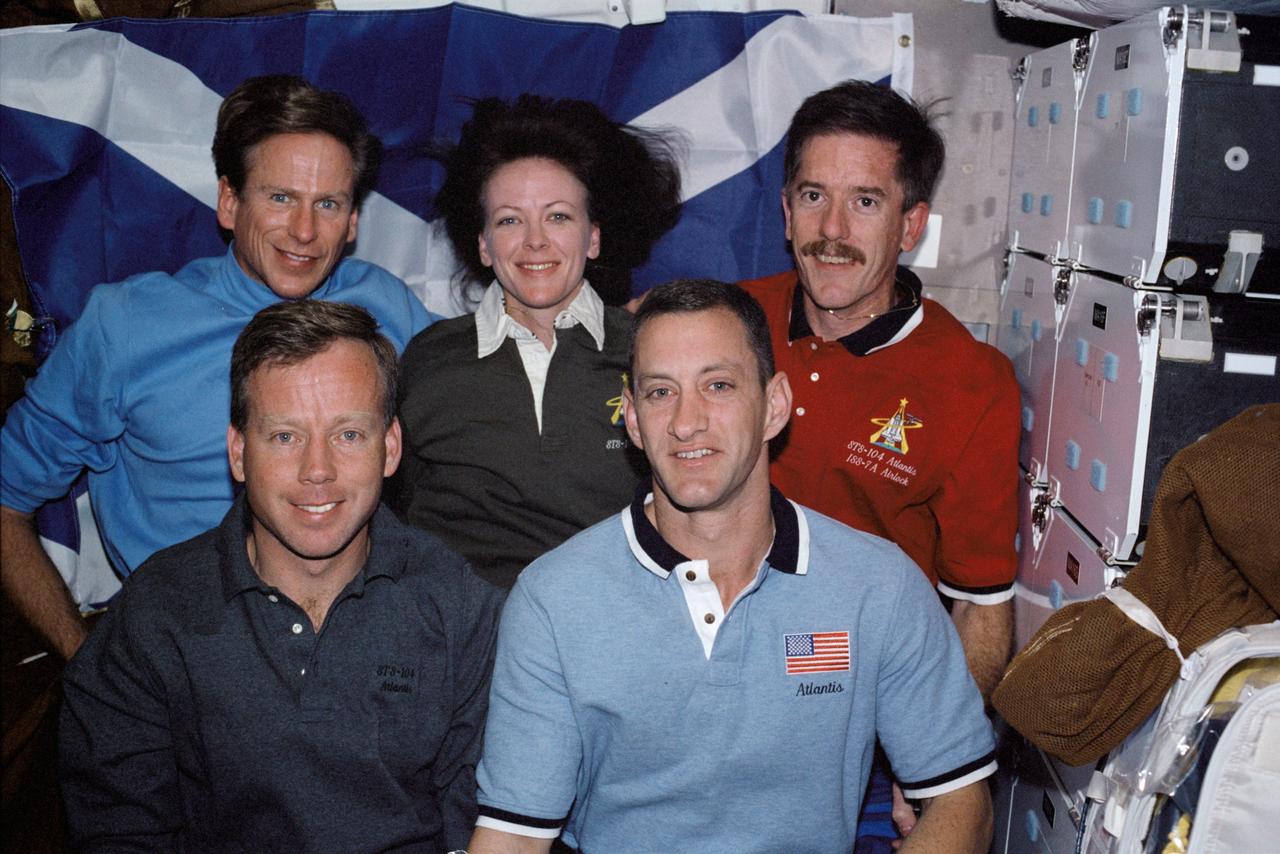
STS104-337-004 (12-24 July 2001) --- The STS-104 astronauts took a moment from a busy agenda to pose for their traditional in-flight crew portrait. In front are astronauts Steven W. Lindsey (left) and Charles O. Hobaugh, commander and pilot, respectively. From left in back are astronauts Michael L. Gernhardt, Janet L. Kavandi and James F. Reilly, all mission specialists.

JSC2000-07285 (17 November 2000) --- Astronaut Steven W. Lindsey, STS-104 mission commander, attired in a training version of the shuttle launch and entry garment, awaits a training session at the Jake Garn Simulation and Training Facility at Johnson Space Center (JSC). Lindsey will join four other astronauts for a June mission with the International Space Station (ISS).
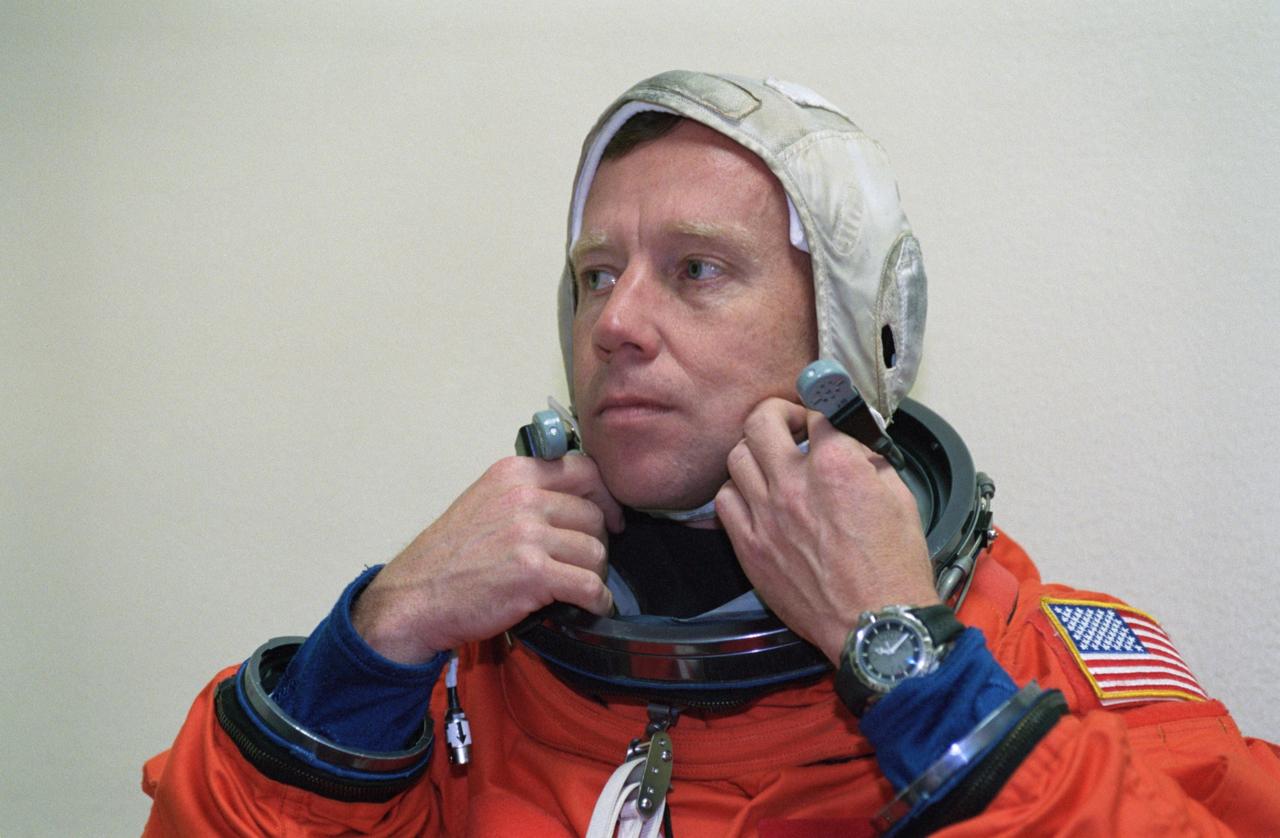
JSC2000-07289 (17 November 2000) --- Astronaut Steven W. Lindsey, STS-104 mission commander, attired in a training version of the shuttle launch and entry garment, prepares for a training session at the Jake Garn Simulation and Training Facility at Johnson Space Center (JSC). Lindsey will join four other astronauts for a June mission with the International Space Station (ISS).
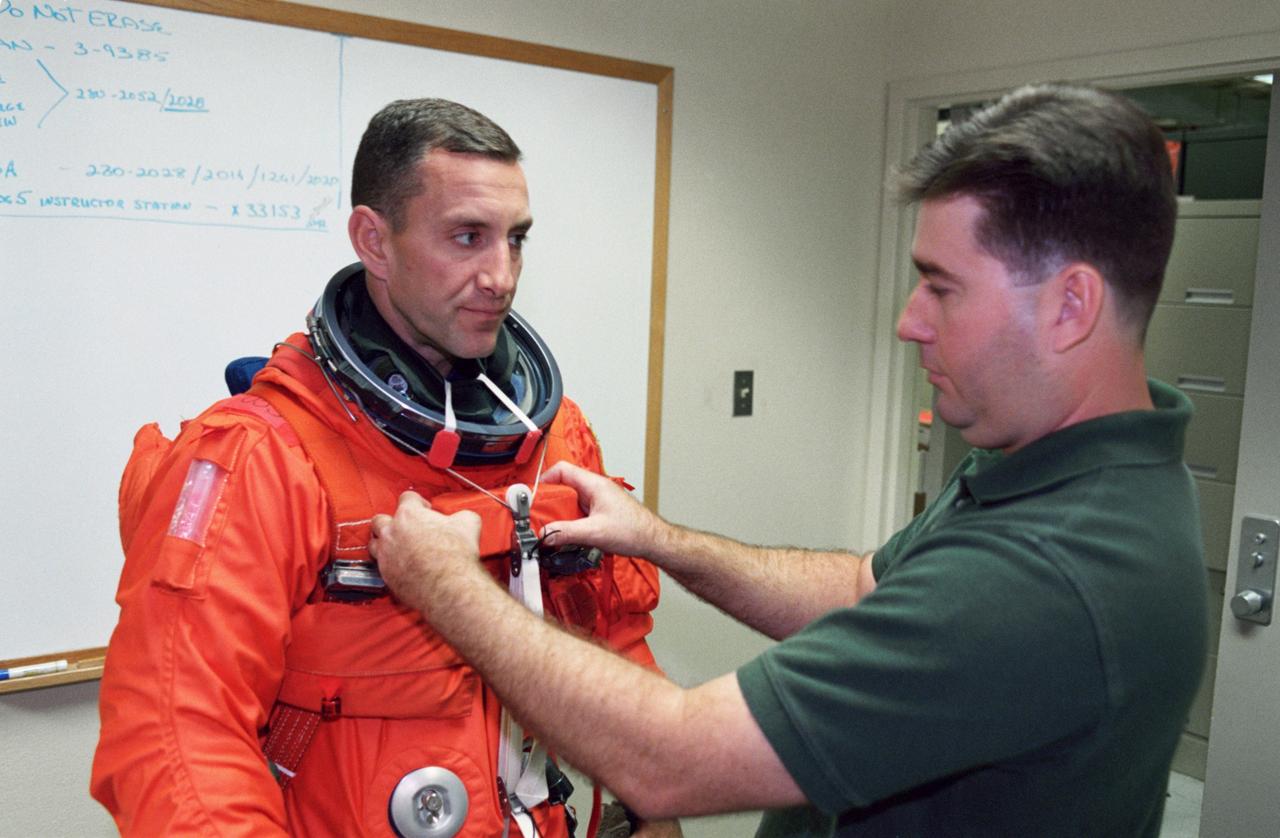
JSC2000-07282 (17 November 2000)--- Astronaut Charles O. Hobaugh, STS-104 pilot, is assisted by suit technician Mike Thompson with a training version of the shuttle launch and entry garment at the Jake Garn Simulation and Training Facility at Johnson Space Center (JSC). Hobaugh, who will join four other astronauts for a June mission with the International Space Station (ISS), shared nearby mockups (out of frame) with his crew mates for a training session dealing with launch and pre-launch issues.
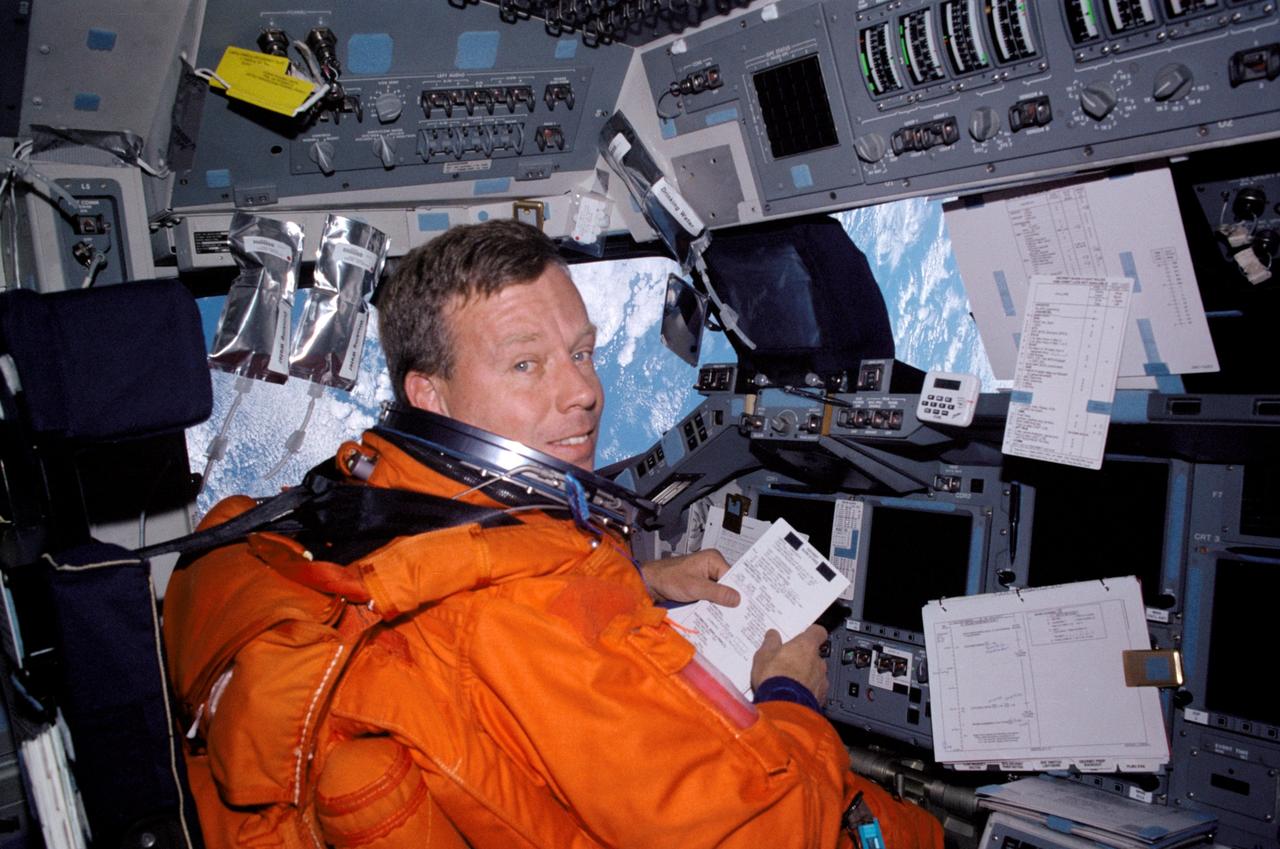
STS104-345-021 (25 July 2001) --- Attired in his shuttle launch and entry suit, astronaut Steven W. Lindsey, STS-104 commander, looks over a procedures checklist at the commander’s station on the forward flight deck of the space shuttle Atlantis.
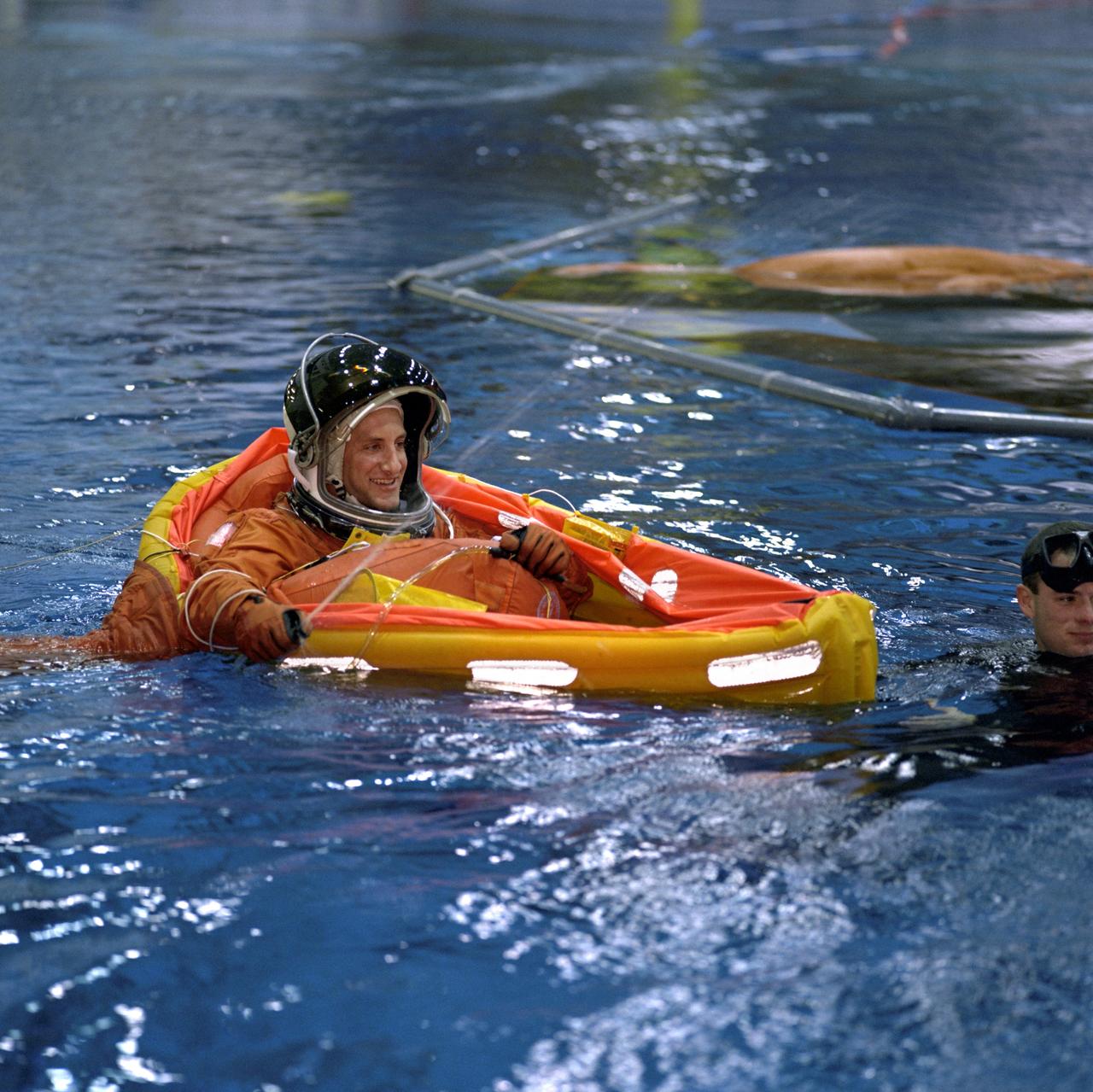
JSC2001-00012 (January 2001) --- Astronaut Charles O. Hobaugh, STS-104 pilot, floats in a small life raft during an emergency egress training session at the Neutral Buoyancy Laboratory (NBL) near the Johnson Space Center (JSC). Hobaugh will join four other astronauts for a June mission to the International Space Station (ISS).
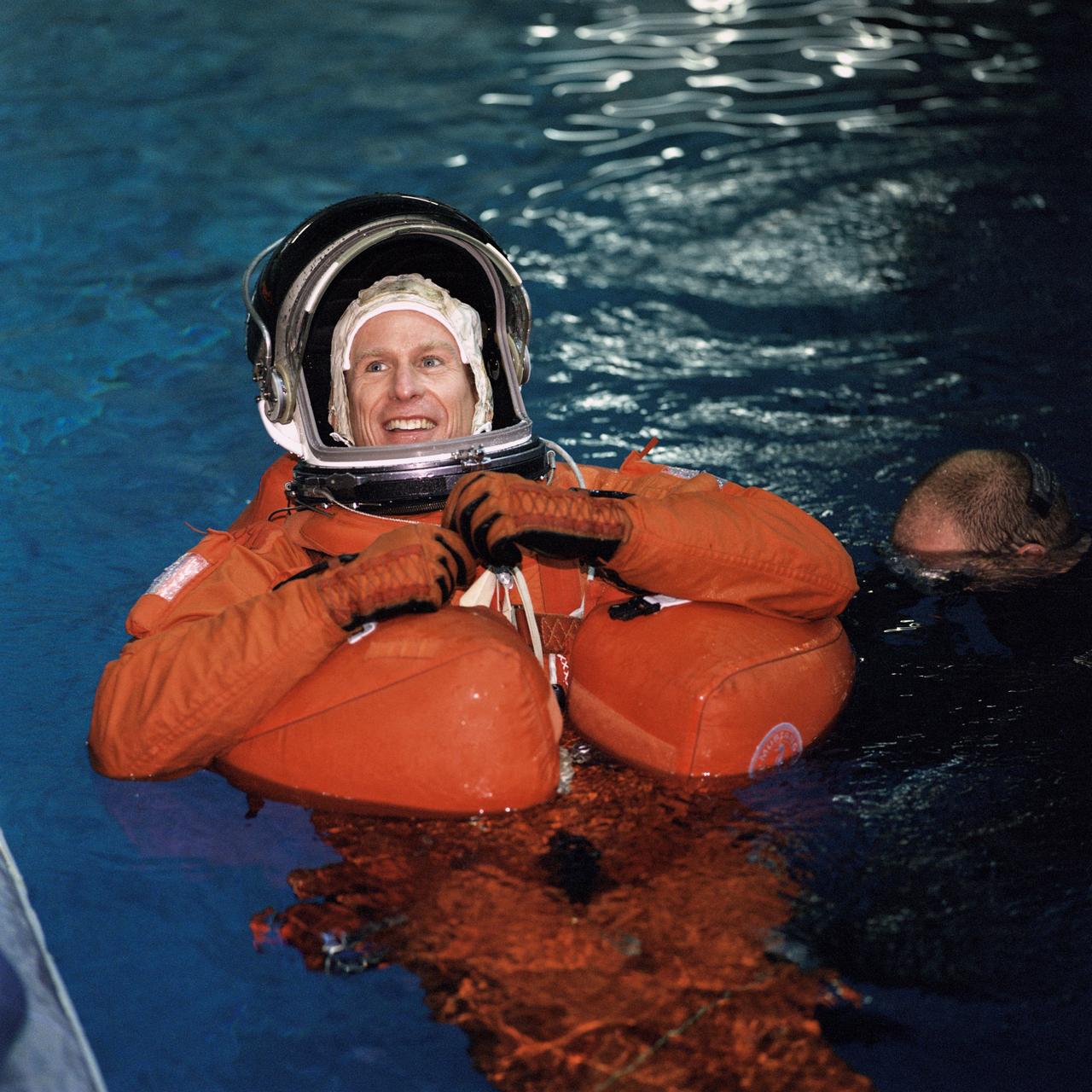
JSC2001-00022 (January 2001) --- Astronaut Michael L. Gernhardt, STS-104 mission specialist, is assisted by a diver during an emergency bailout training session in the Neutral Buoyancy Laboratory (NBL) near Johnson Space Center (JSC). Gernhardt will join four other astronauts for a June mission with the International Space Station (ISS).
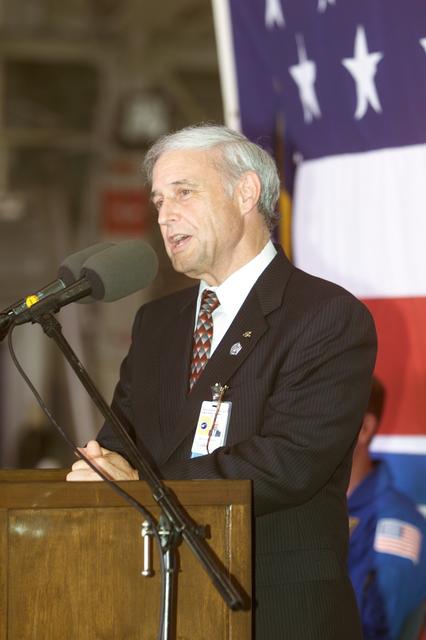
JSC2001-E-22792 (25 July 2001) --- JSC Acting Director Roy S. Estess introduces the STS-104 crew members (out of frame) to a crowd gathered in Ellington Field’s Hangar 990 during crew return ceremonies.
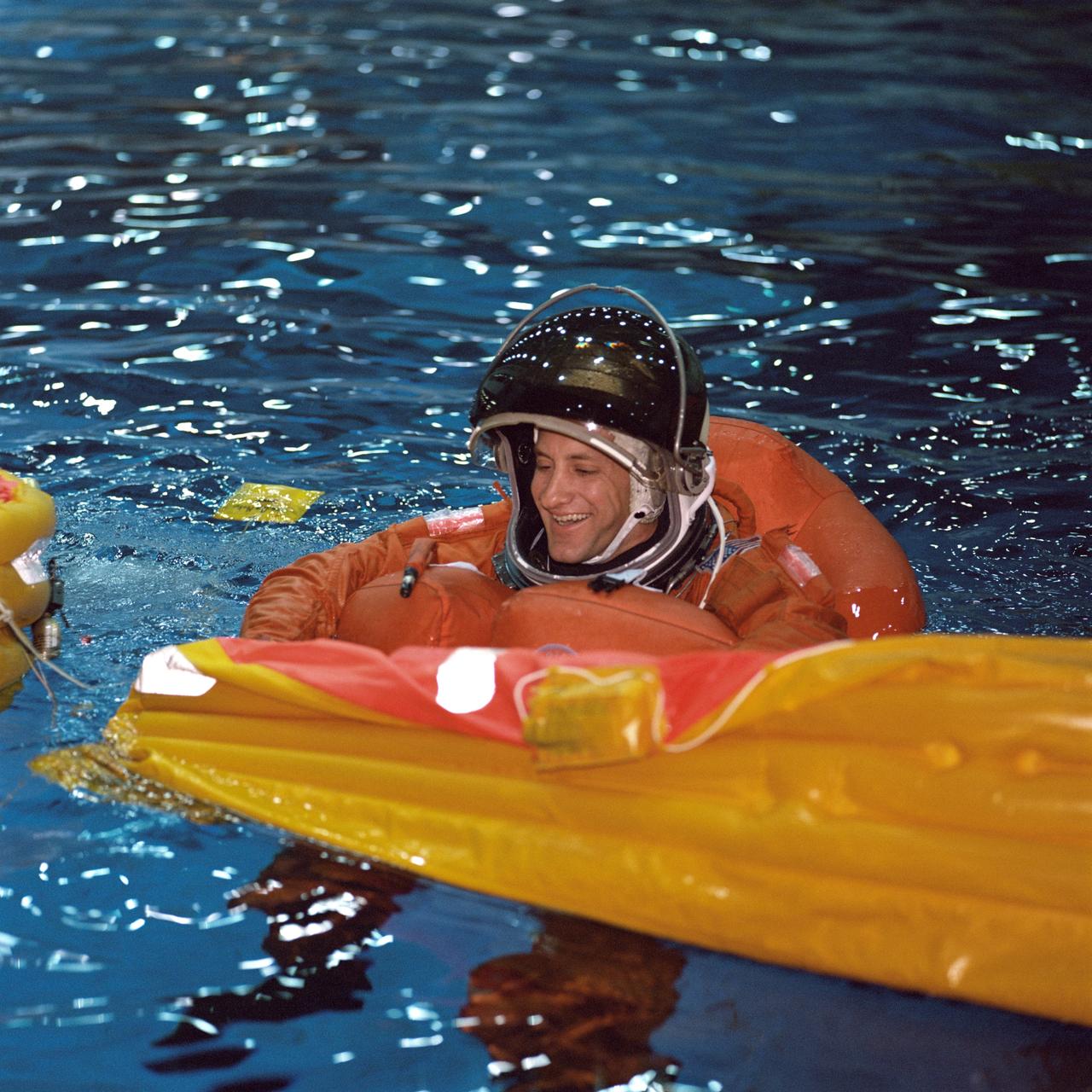
JSC2001-00026 (January 2001) --- Astronaut Charles O. Hobaugh, STS-104 pilot, floats in water during an emergency egress training session at the Neutral Buoyancy Laboratory (NBL) near the Johnson Space Center (JSC). Hobaugh will join four other astronauts for a June mission to the International Space Station (ISS).
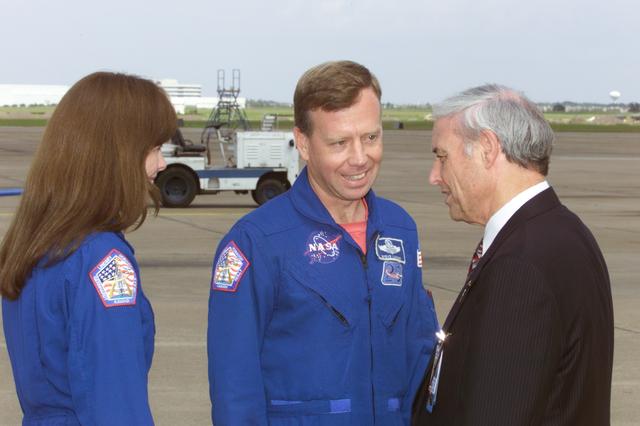
JSC2001-E-22790 (25 July 2001) --- Astronauts Janet L. Kavandi (left), STS-104 mission specialist, and Steven W. Lindsey, mission commander, are greeted by JSC Acting Director Roy S. Estess following crew arrival at Ellington Field.
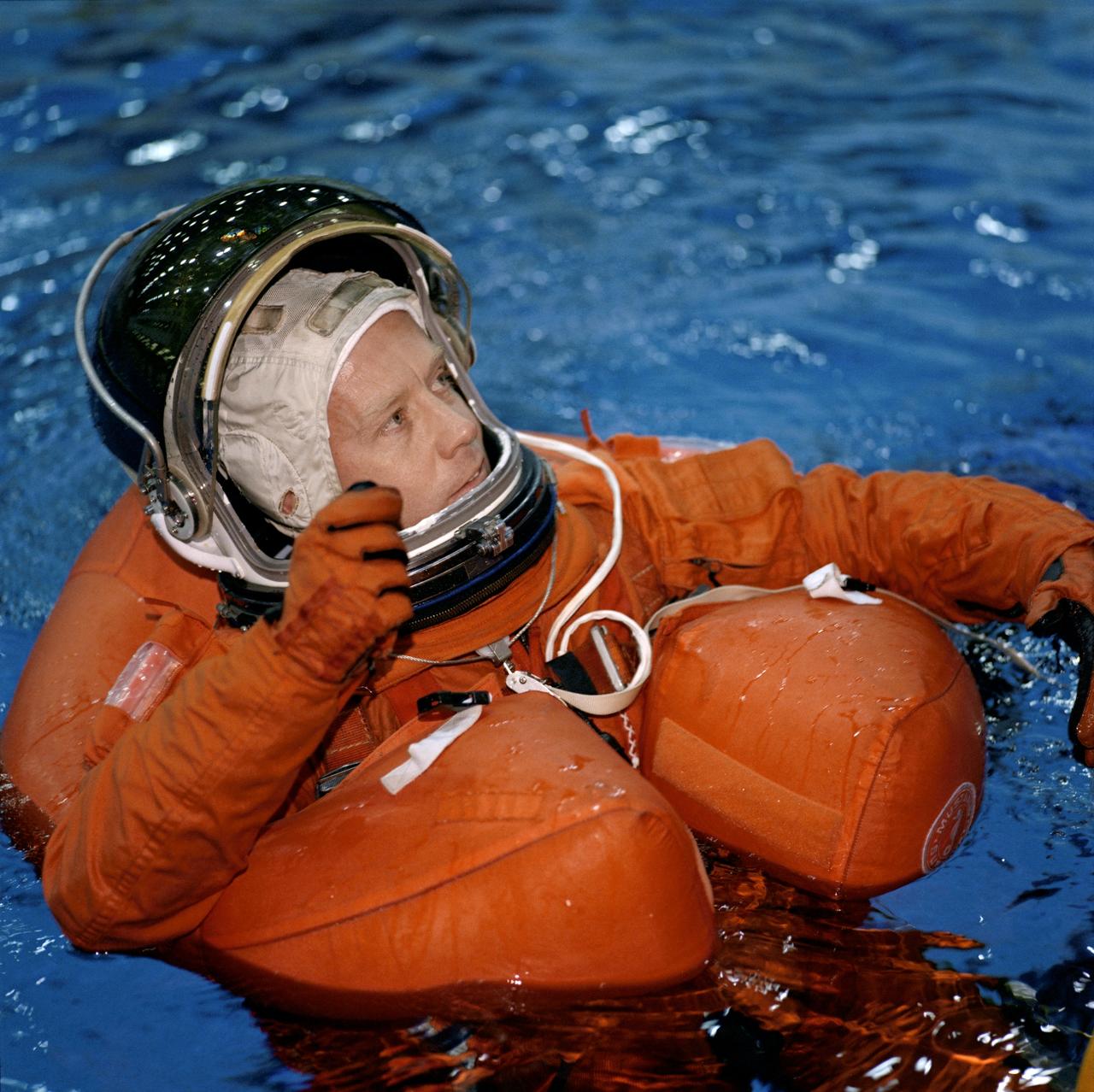
JSC2001-00011 (January 2001) ---Astronaut Steven W. Lindsey, STS-104 mission commander, floats in water during an emergency egress training session at the Neutral Buoyancy Laboratory (NBL) near the Johnson Space Center (JSC). Lindsey will join four other astronauts for a June mission to the International Space Station (ISS).
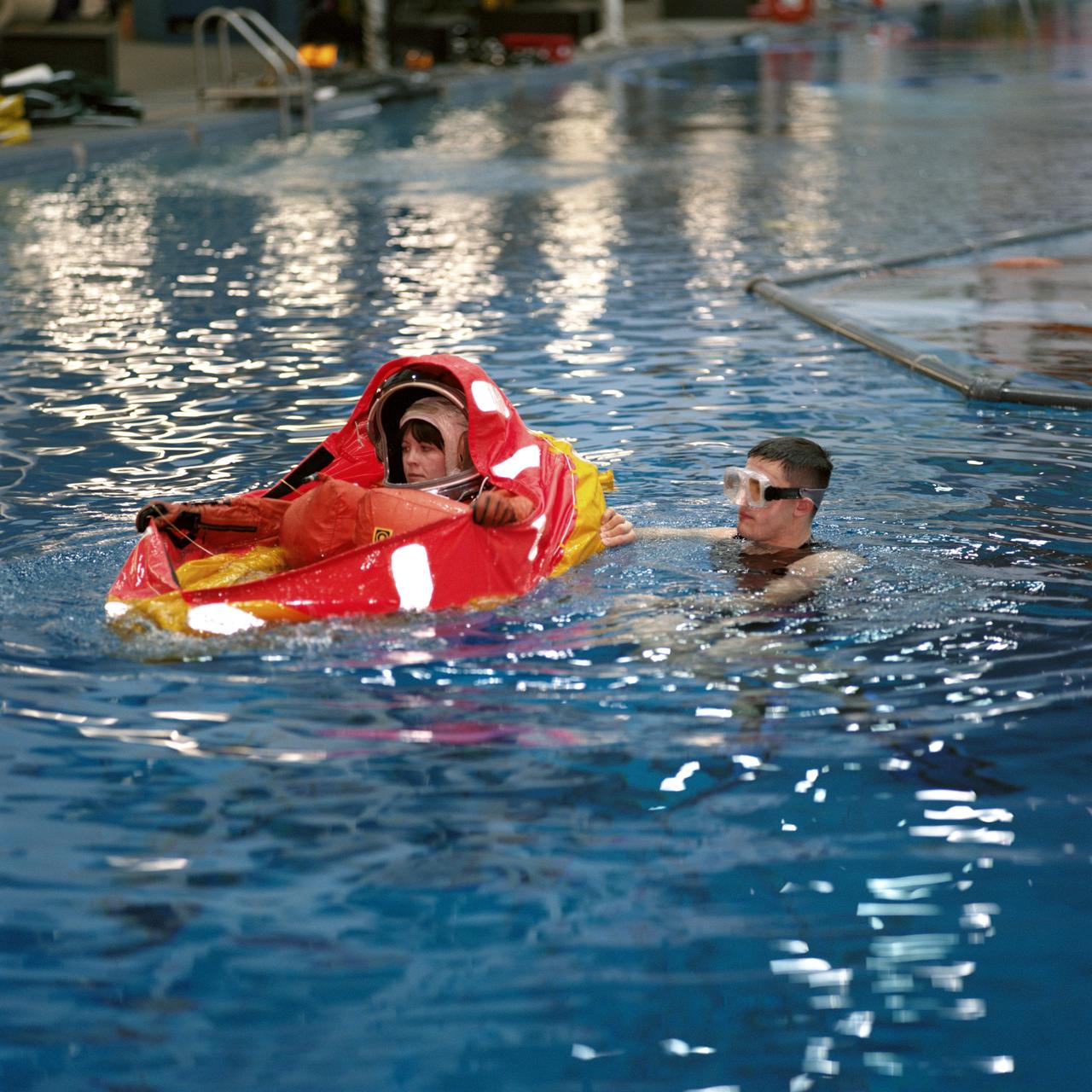
JSC2001-00021 (January 2001) --- Astronaut Janet L. Kavandi, STS-104 mission specialist, is assisted by a diver during an emergency bailout training session in the Neutral Buoyancy Laboratory (NBL) near Johnson Space Center (JSC). Kavandi will join four other astronauts for a June mission with the International Space Station (ISS).
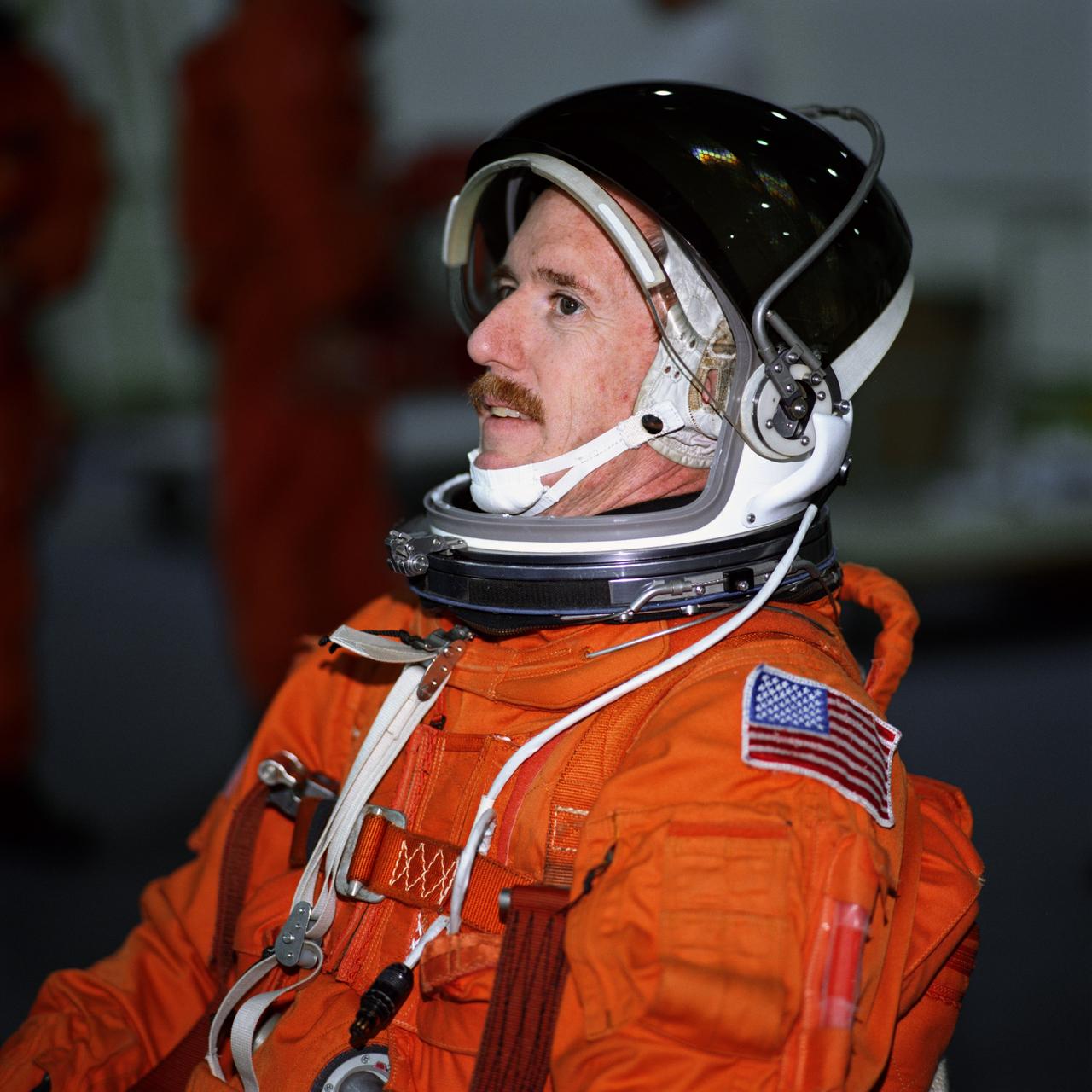
JSC2001-00020 (January 2001) --- Astronaut James F. Reilly, STS-104 mission specialist, attired in a training version of the shuttle launch and entry garment at the Neutral Buoyancy Laboratory (NBL) near Johnson Space Center (JSC). Reilly will join four other astronauts for a June mission with the International Space Station (ISS).
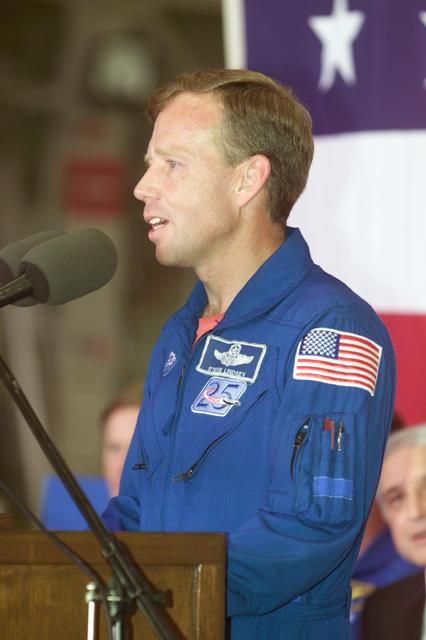
JSC2001-E-22793 (25 July 2001) --- Astronaut Steven W. Lindsey, STS-104 mission commander, addresses a crowd at Ellington Field’s Hangar 990 for a crew return ceremony. At lower right is JSC Acting Director Roy S. Estess.
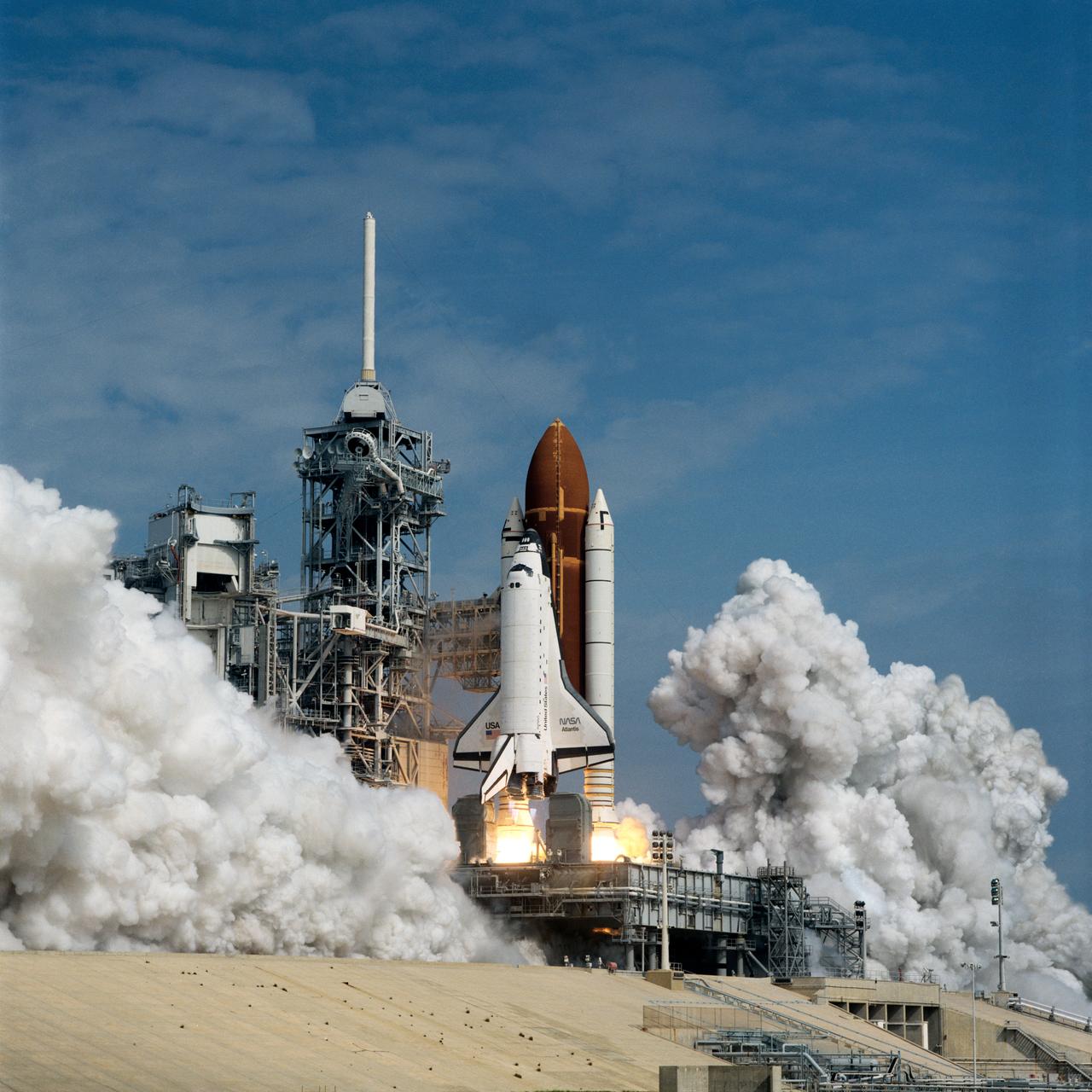
STS-37 Atlantis, Orbiter Vehicle (OV) 104, lifts off from Kennedy Space Center (KSC) Launch Complex (LC) Pad at 9:22:45:0439 (Eastern Standard Time (EST)). OV-104, atop its external tank (ET) and flanked by its two solid rocket boosters (SRBs), is captured just after space shuttle main engine (SSME) firing and as it rises above the mobile launcher platform. The fixed service structure (FSS) and retracted rotating service structure (RSS) appear along side OV-104. Clouds of exhaust smoke begin to fill the launch pad area.
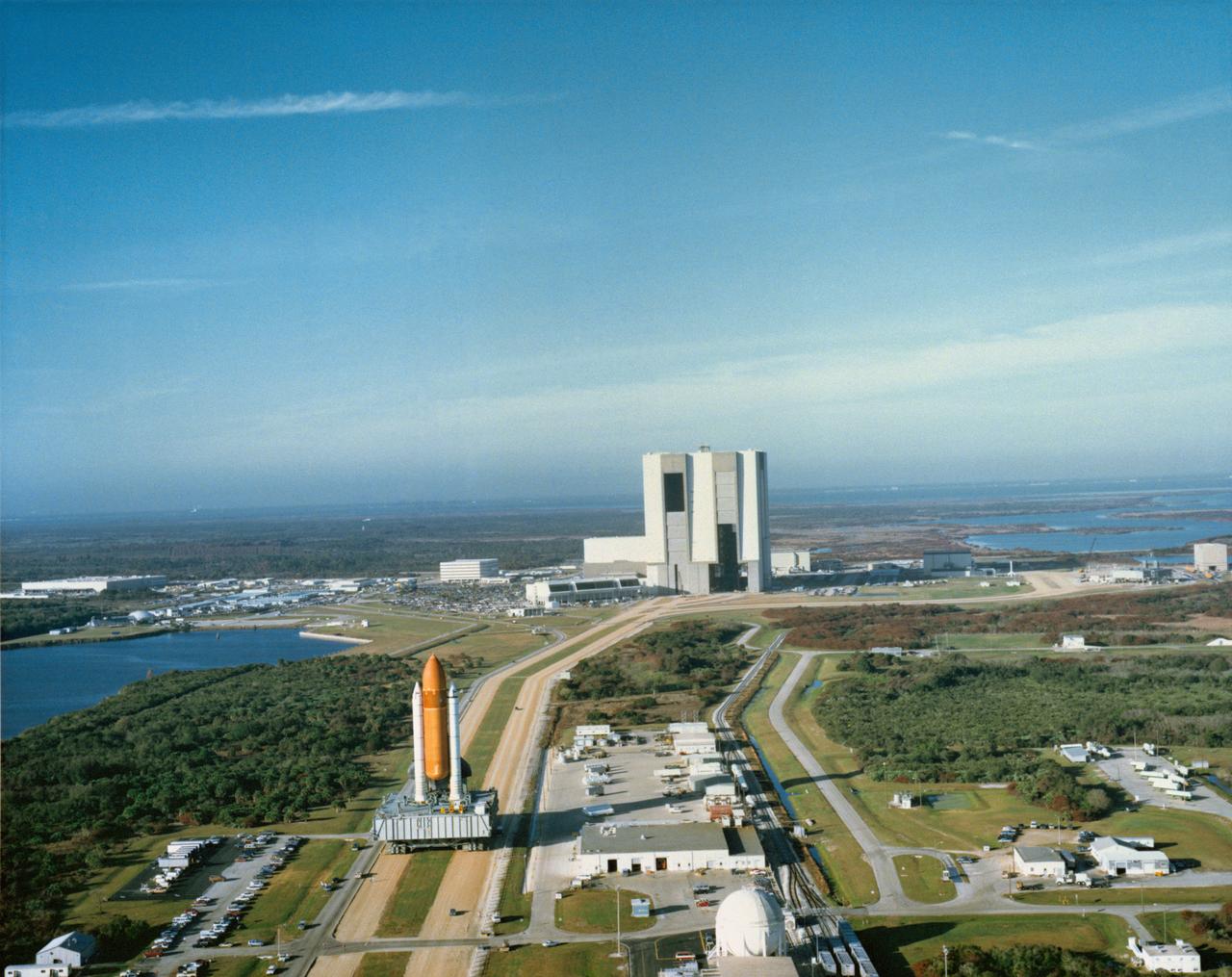
Atlantis, Orbiter Vehicle (OV) 104, is blocked by its large orange external tank (ET) as it leaves Vehicle Assembly Building (VAB) during its rollout to Kennedy Space Center (KSC) Launch Complex (LC) Pad 39A. The crawler transporter heads along the specially designed roadway with OV-104, the ET, and two solid rocket boosters mounted on top of a mobile launcher platform. KSC facilities including the VAB and Launch Control Center (LCC) are visible in the background. OV-104 heads to LC Pad 39A after the shortest stay in the VAB since return-to-flight. OV-104 is being prepared for launch on STS-36, a Department of Defense (DOD) dedicated mission. View provided by KSC with alternate KSC number KSC-90PC-134.
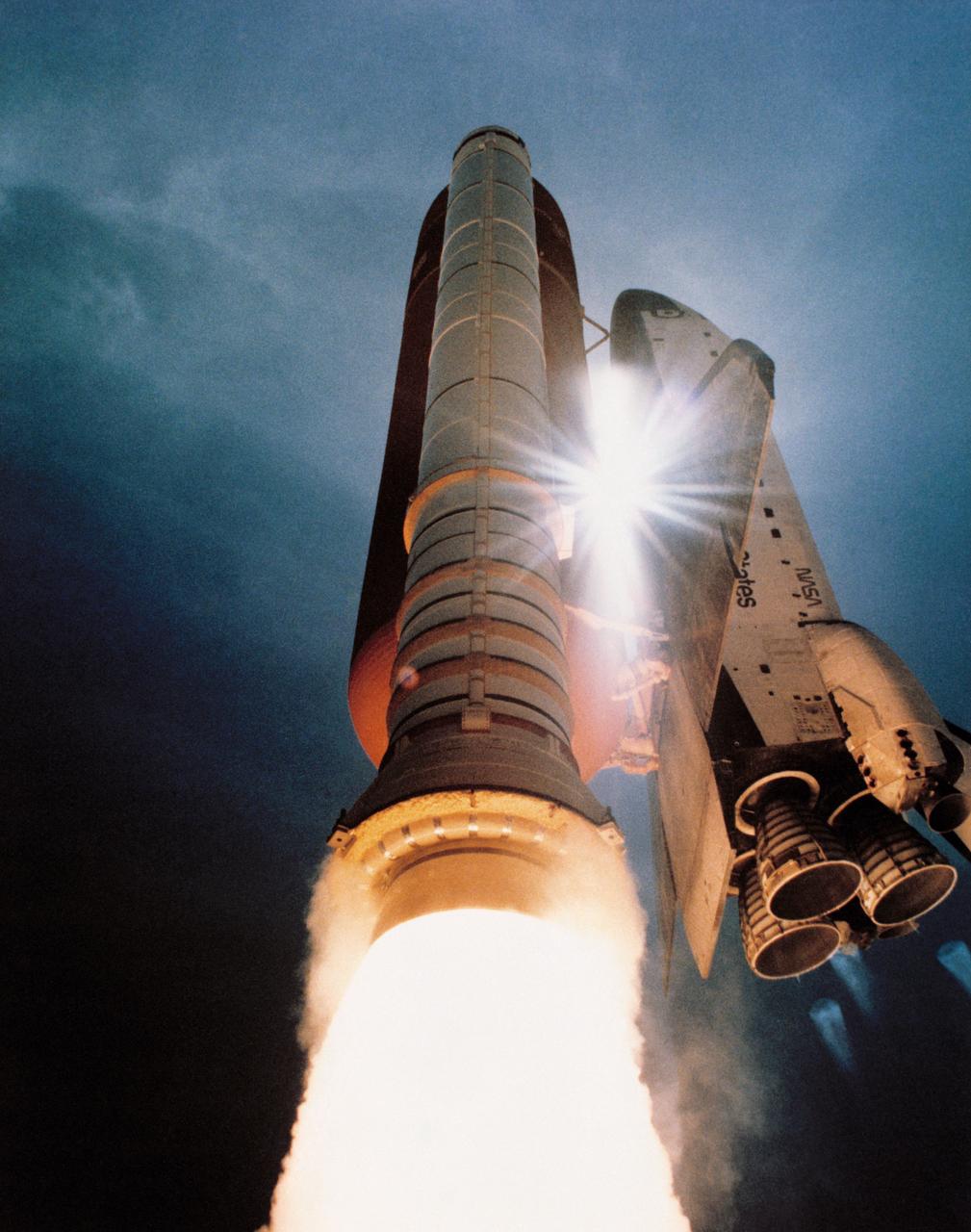
STS-43 Atlantis, Orbiter Vehicle (OV) 104, soars toward space after liftoff from Kennedy Space Center (KSC) Launch Complex (LC) Pad 39A at 11:02: 00 am (Eastern Daylight Time (EDT)). This low angle view captures OV-104 as it begins its roll maneuver. A burst of sunlight shines through the mated hardware elements supporting the Space Shuttle Atlantis for the STS-43 mission's launch phase. Exhaust plumes billow from the solid rocket booster (SRB) skirts. All three space shuttle main engines (SSMEs) glow as they power OV-104 into orbit. The bottom of external tank (ET) is highlighted by the SRB/SSME firings. This image was selected by the Public Affairs Office (PAO) for public release.
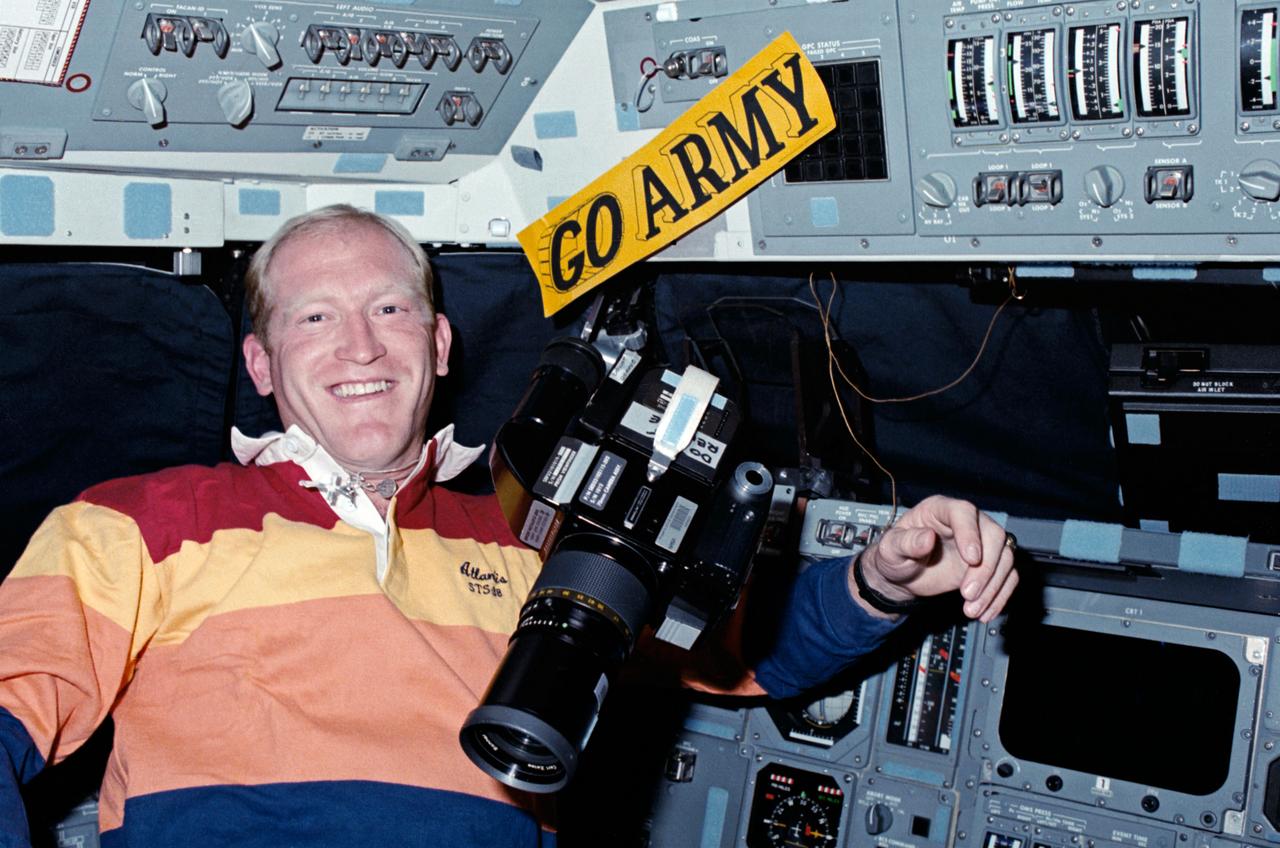
STS-38 Mission Specialist (MS) Charles D. Gemar freefloats in front of commanders station on the forward flight deck of Atlantis, Orbiter Vehicle (OV) 104, along with HASSELBLAD camera and "GO ARMY" decal.
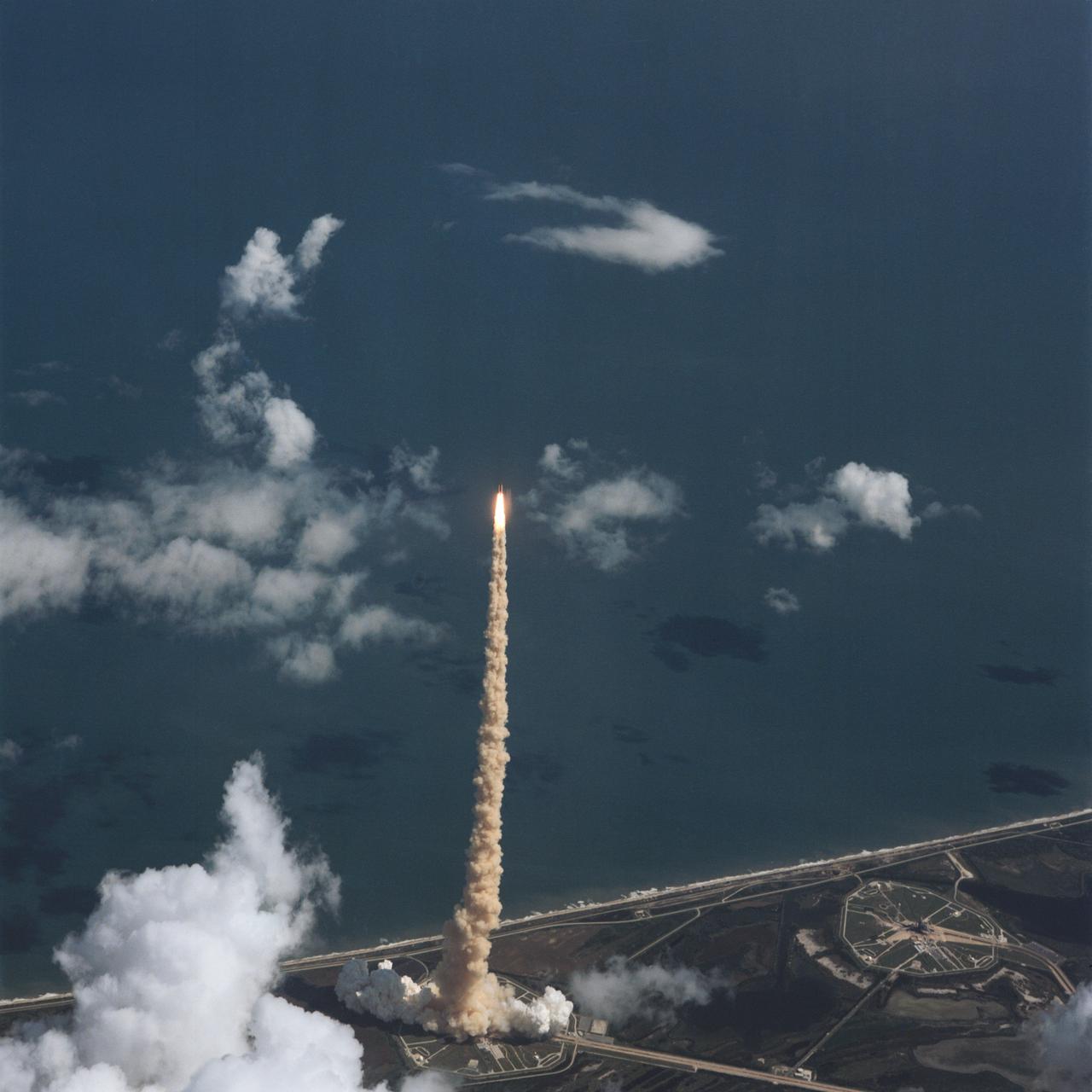
STS-34 Atlantis, Orbiter Vehicle (OV) 104, lifts off from Kennedy Space Center (KSC) Launch Complex (LC) Pad 39B at 12:53:39:983 pm Eastern Daylight Time (EDT). This aerial view shows OV-104, its external tank (ET), and two solid rocket boosters (SRBs) rising high above LC Pad 39B atop a plume of exhaust smoke. Atlantic Ocean is visible in the background. The liftoff marks the beginning of a five-day mission in space.
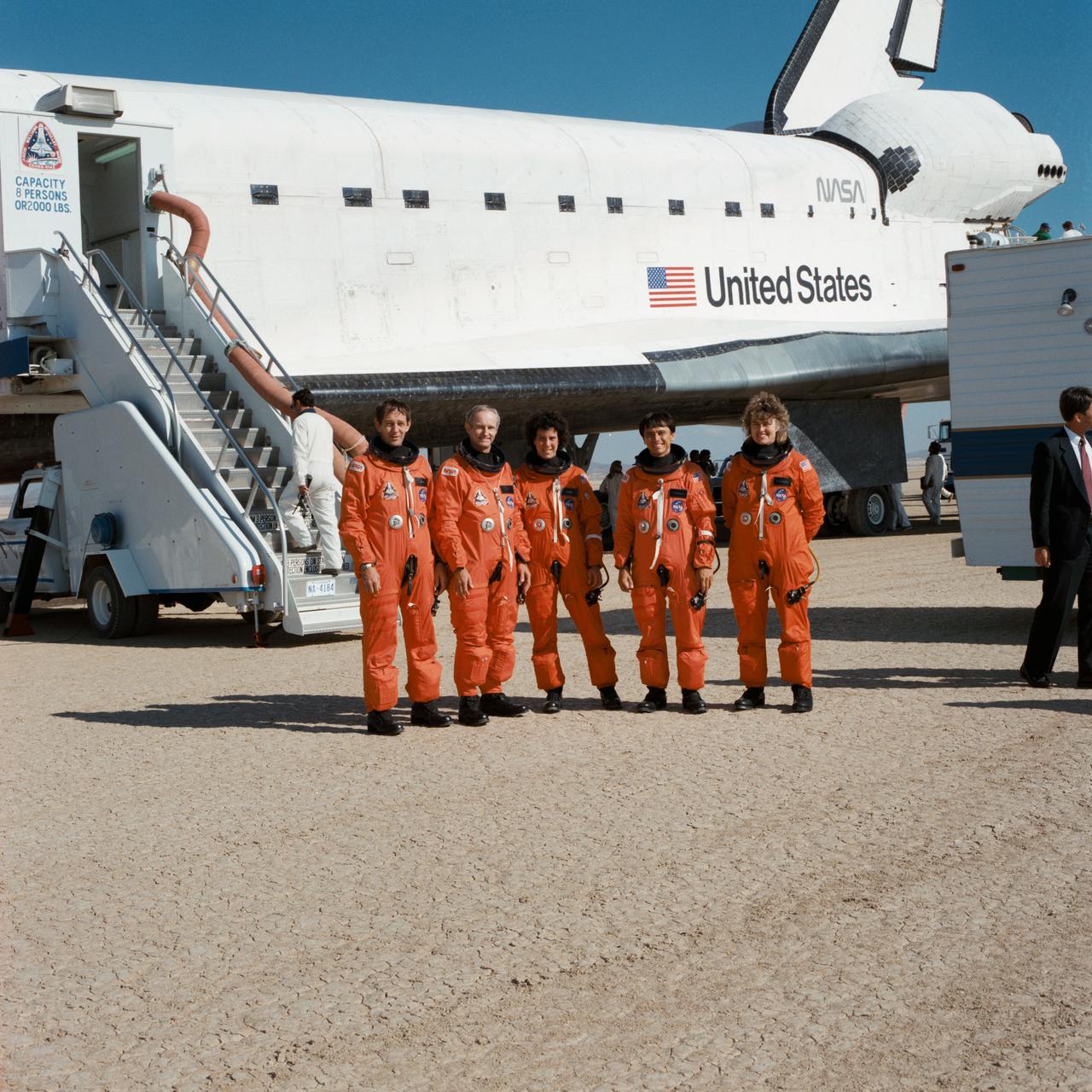
STS-34 crewmembers, wearing launch and entry suits (LESs), stand in front of Atlantis, Orbiter Vehicle (OV) 104, on Runway 23 dry lake bed at Edwards Air Force Base (EAFB), California. Left to right are Pilot Michael J. McCulley, Commander Donald E. Williams, Mission Specialist (MS) Ellen S. Baker, MS Franklin R. Chang-Diaz, and MS Shannon W. Lucid. Ground crews service OV-104 in the background.
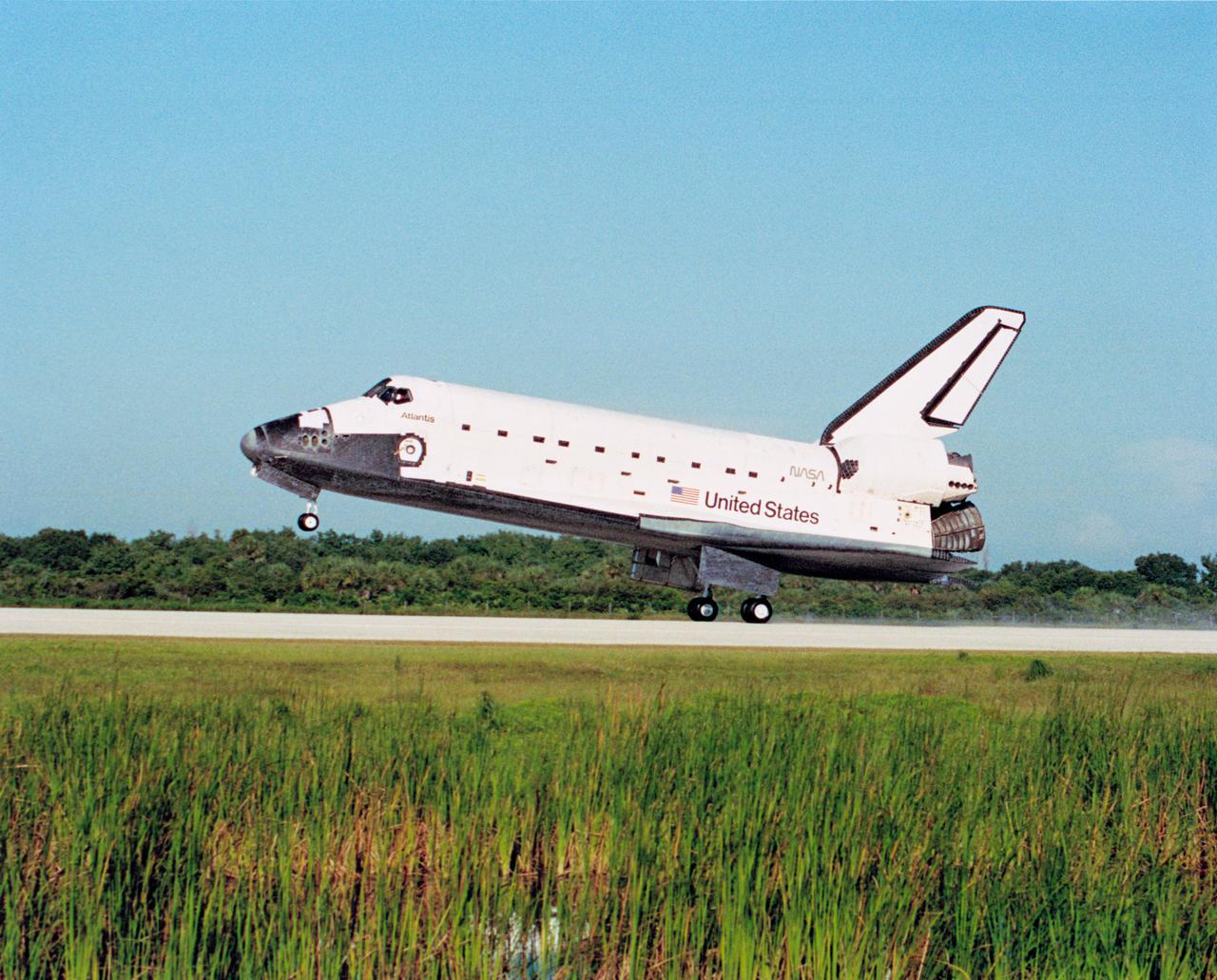
STS-43 Atlantis, Orbiter Vehicle (OV) 104, lands on runway 15 at the Kennedy Space Center's (KSC's) Shuttle Landing Facility (SLF). The main landing gear (MLG) touched down at 8:23:25 am (Eastern Daylight Time (EDT)). OV-104 glides toward wheel stop as the nose landing gear (NLG) rides above the runway.
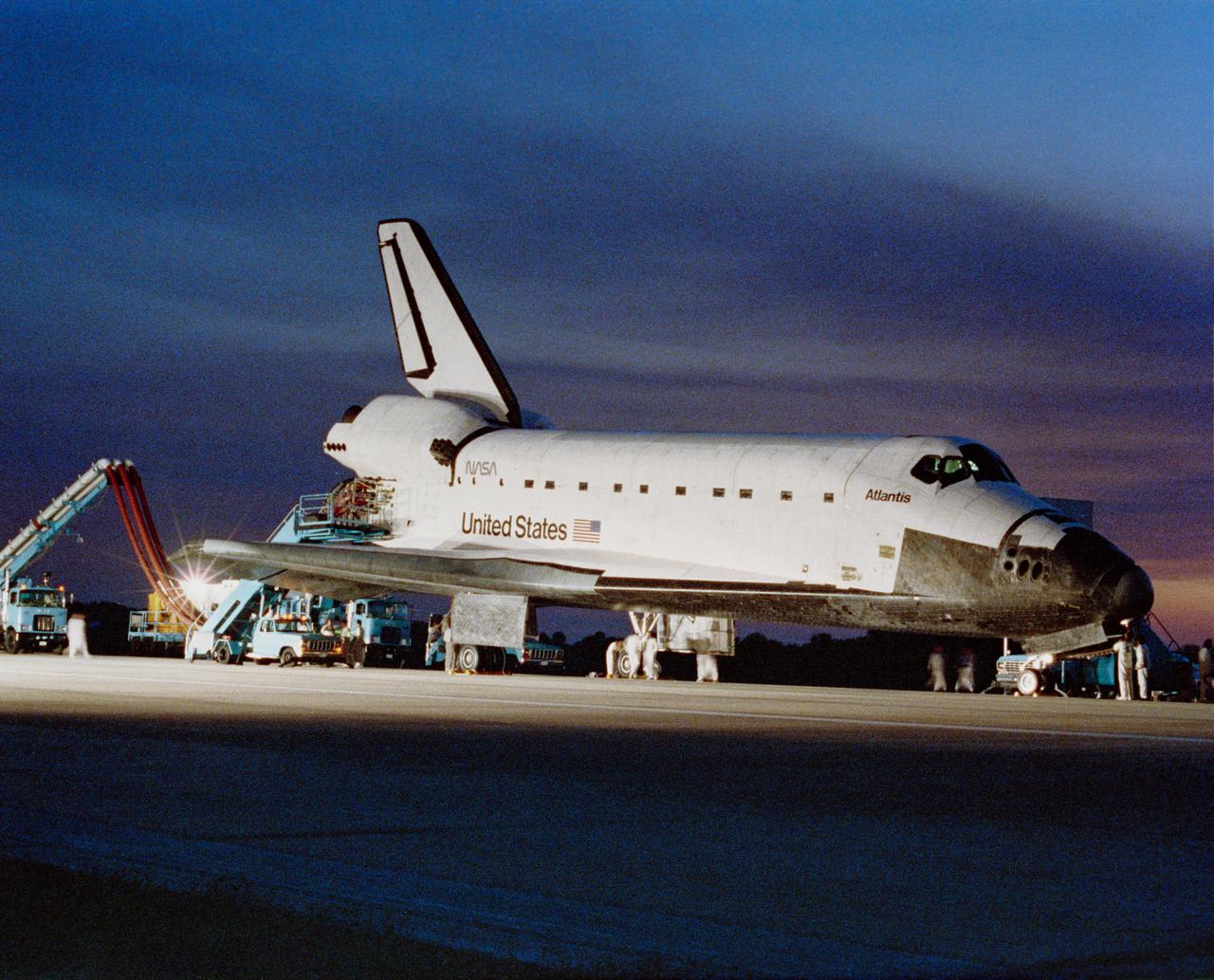
Spotlights illuminate Atlantis, Orbiter Vehicle (OV) 104, during safing operations at the Kennedy Space Center's (KSC's) Shuttle Landing Facility (SLF). OV-104 parked on runway 33 is serviced by KSC ground crews. STS-38, a Department of Defense (DOD)-devoted mission, came to an end (with complete wheel stop) at 4:43:37 pm (Eastern Standard Time (EST)).
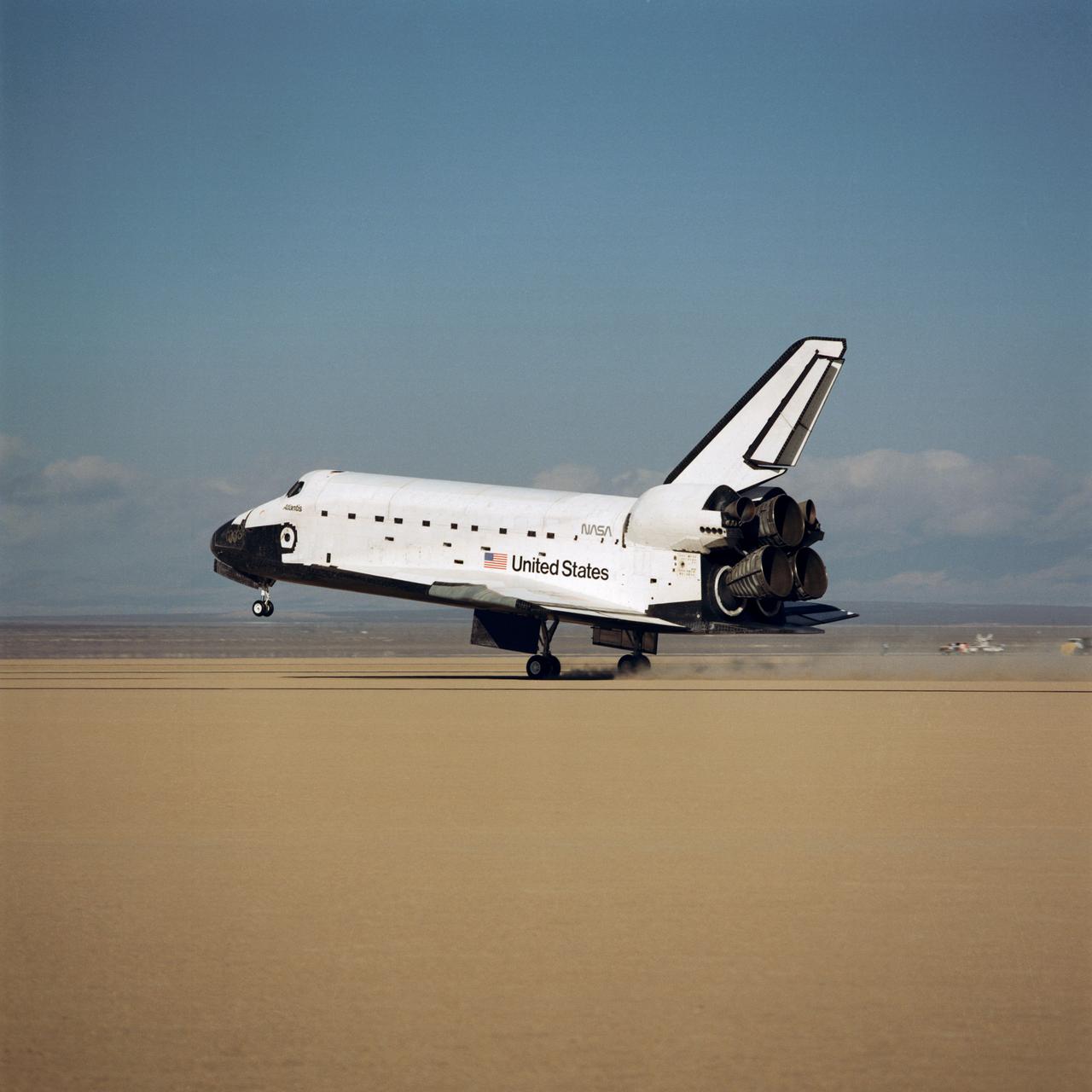
STS-34 Atlantis, Orbiter Vehicle (OV) 104, main landing gear (MLG) touches down on Runway 23 dry lake bed at Edwards Air Force Base (EAFB), California. The nose landing gear rides above runway before touchdown as the MLG wheels produce a cloud of dust. OV-104's port side profile is captured as it glides by at a speed of approximately 195 knots (224 miles per hour). The tail section with deployed speedbrake/rudder and space shuttle main engines (SSMEs) are visible.
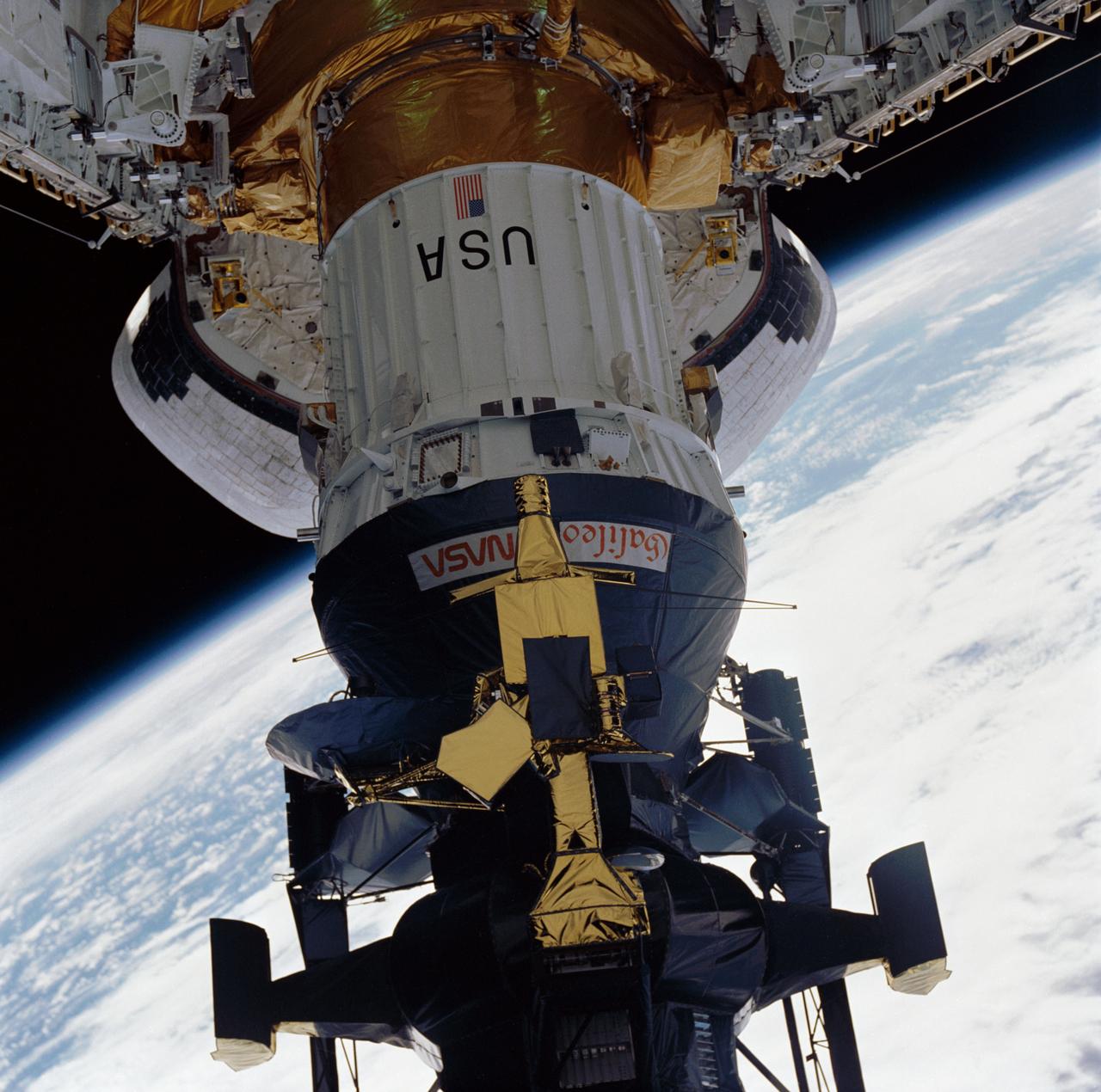
During STS-34 mission, the Galileo spacecraft mounted atop the inertial upper stage (IUS) is tilted to a 58-degree deployment position by the airborne support equipment (ASE) aft frame tilt actuator (AFTA) table in Atlantis', Orbiter Vehicle (OV) 104's, payload bay (PLB). Visible in the foreground is the ASE forward cradle and the umbilical boom which has fallen away from the IUS. OV-104's orbital maneuvering system (OMS) pods and the Earth's limb appear in the background.
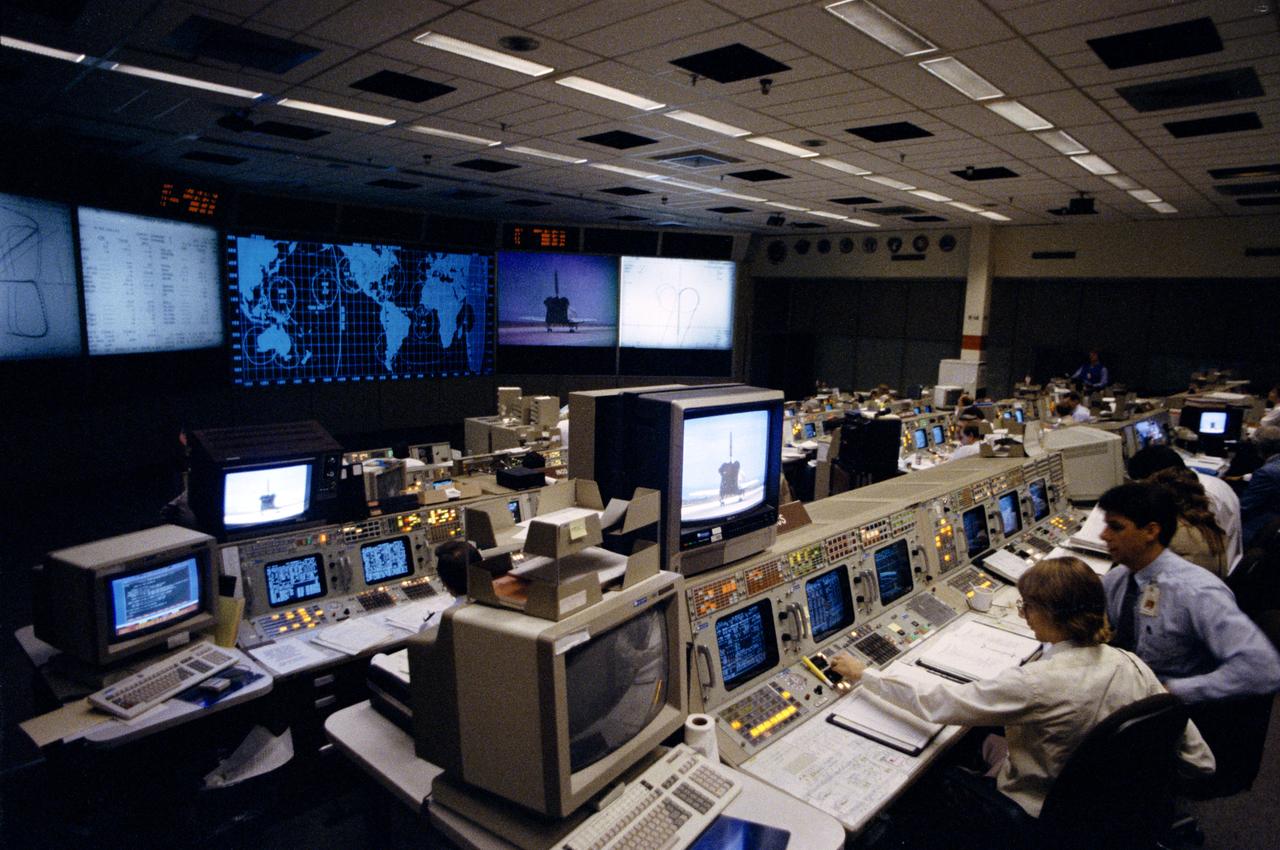
As STS-30 ends its mission with the landing of Atlantis, Orbiter Vehicle (OV) 104, at Edwards Air Force Base (EAFB), California, flight controllers monitor screens at their consoles in JSC Mission Control Center (MCC) Bldg 30. In the foreground is the Maintenance, Mechanical Arm, and Crew Systems Engineer (MMACS) console with R. Kevin McCluney studying data readouts. On the front visual displays are the tracking map and a tail view of OV-104 as it comes to a stop on EAFB concrete runway 22.
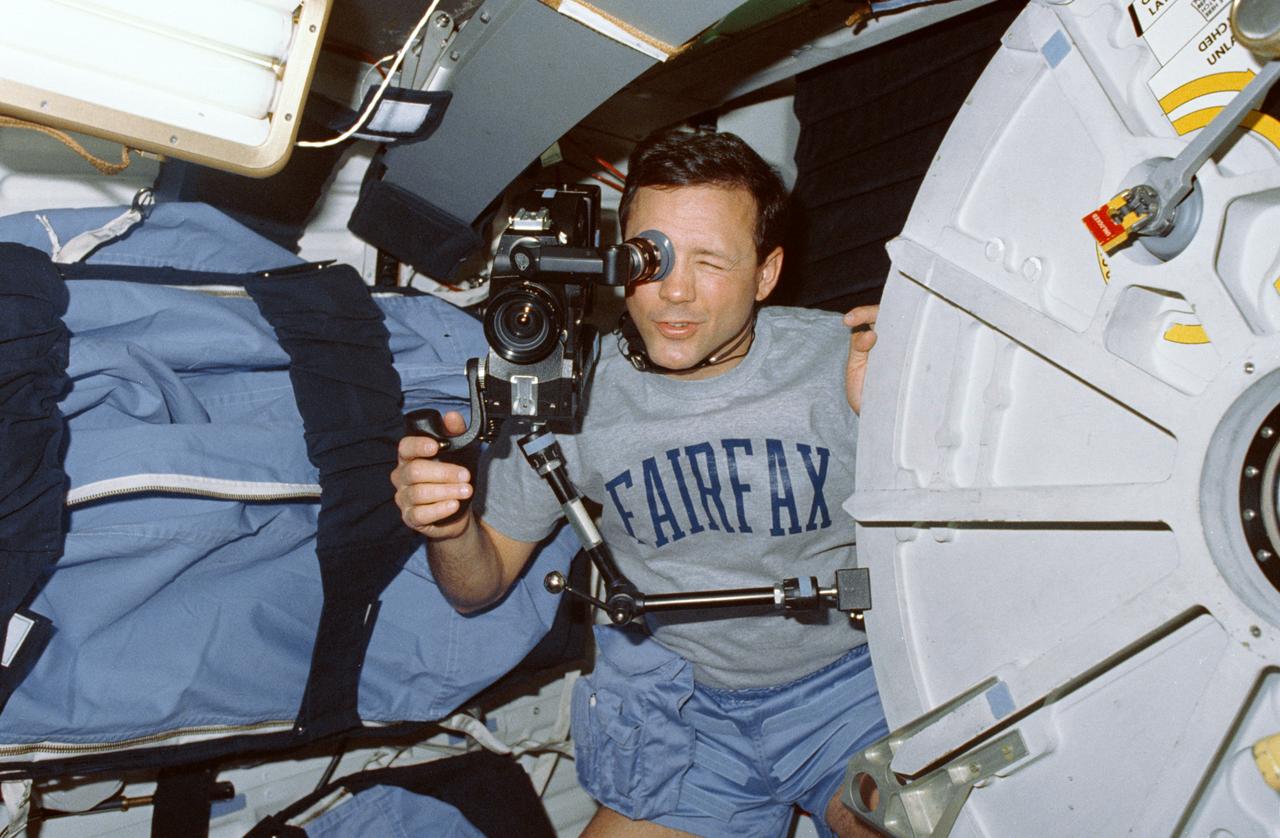
STS-36 Mission Specialist (MS) Pierre J. Thuot operates 16mm ARRIFLEX motion picture camera mounted on the open airlock hatch via a bracket. Thuot uses the camera to record activity of his fellow STS-36 crewmembers on the middeck of Atlantis, Orbiter Vehicle (OV) 104. Positioned between the airlock hatch and the starboard wall-mounted sleep restraints, Thuot, wearing a FAIRFAX t-shirt, squints into the cameras eye piece. Thuot and four other astronauts spent four days, 10 hours and 19 minutes aboard OV-104 for the Department of Defense (DOD) devoted mission.
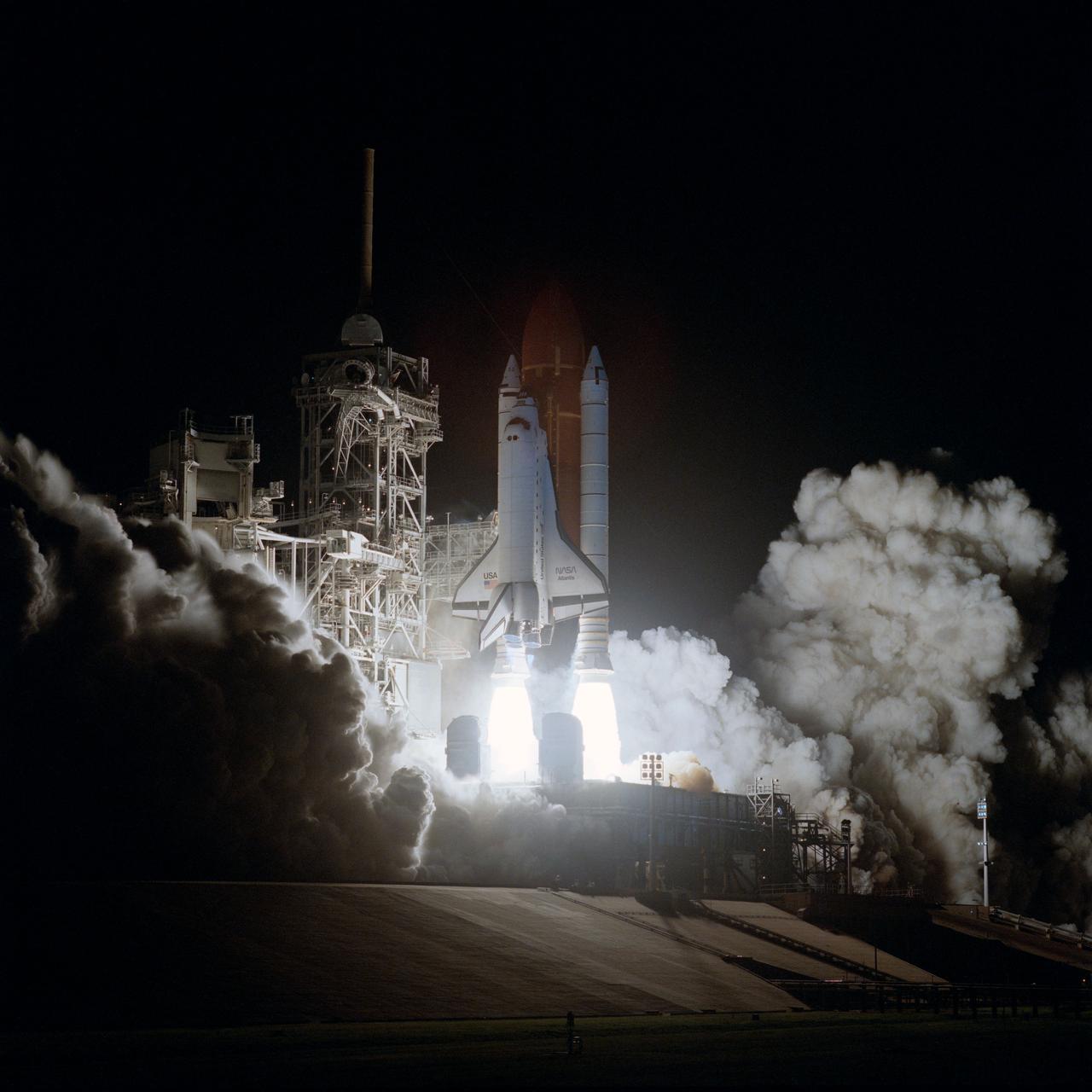
STS-38 Atlantis, Orbiter Vehicle (OV) 104, lifts off from Kennedy Space Center (KSC) Launch Complex Pad at 6:46:15:0639 pm (Eastern Standard Time (EST)). As OV-104, atop the external tank (ET) and flanked by two solid rocket boosters (SRBs), rises above the mobile launcher platform, exhaust smoke fills the area surrounding the launch pad. SRB and space shuttle main engine (SSME) firings glow against the night darkness and light up the fixed service structure (FSS) and retracted rotating service structure (RSS). STS-38 is a Department of Defense (DOD) devoted mission.
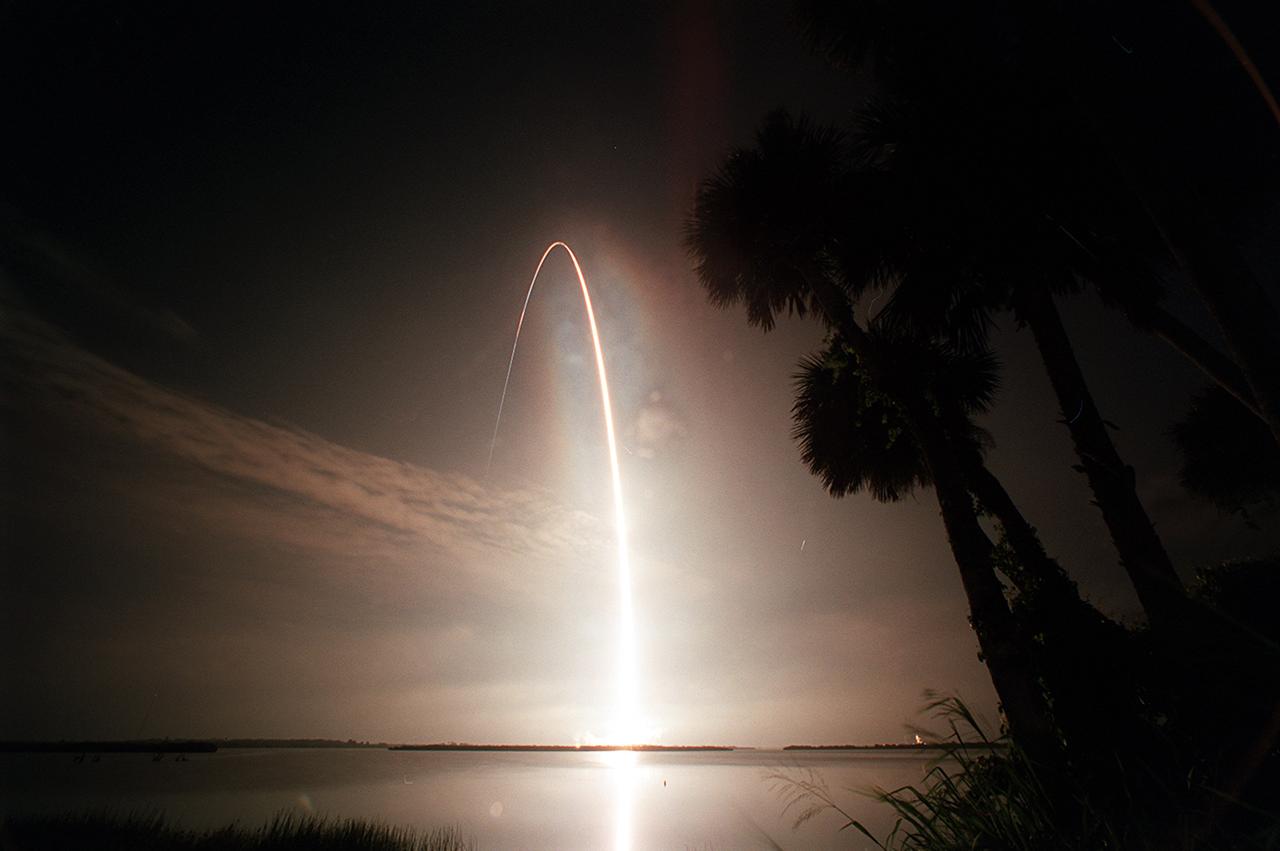
The Space Shuttle Atlantis arcs into the black sky over the Atlantic Ocean casting a fiery glow on its way. Atlantis STS-104 launched from Kennedy Launch Pad 39B at 5:03:59 am EDT, headed for the International Space Station (ISS). Its crew of five served as the 10th ISS assembly flight. The primary payload of the mission was the Joint Airlock module which was attached in two space walks. Once installed and activated, the ISS Airlock became the primary path for ISS space walk entry and departure for U.S. space suits, which are known as Extravehicular Mobility Units (EMUs). In addition, it is designed to support the Russian Orlan space suit. The Joint Airlock is 20-feet long, 13- feet in diameter and weighs 6.5 tons. The airlock includes two sections, the larger equipment lock on the left that will store space suits and associated gear, and the narrower crew lock on the right from which astronauts will exit into space for extravehicular activity. It was built at the Marshall Space Flight Center (MSFC) by the Space Station prime contractor Boeing.
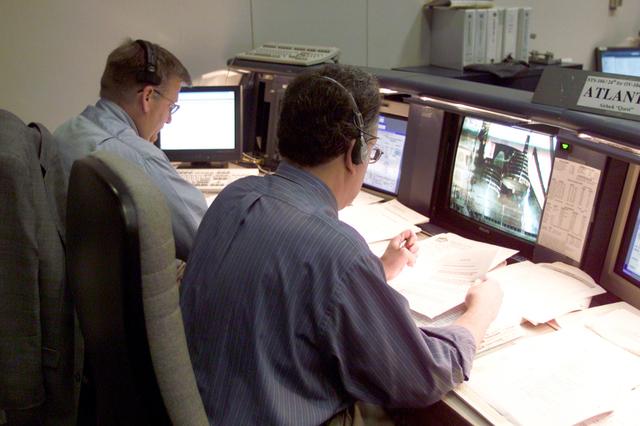
JSC2001-E-21337 (12 July 2001) --- Rob Navias (right), at the Public Affairs Officer (PAO) console in Houston's Mission Control Center (MCC), awaits to do his commentary as he views the firing of Space Shuttle Atlantis' main engines on his monitor just seconds before launch and the beginning of the STS-104 mission. Daniel K. Carpenter, director of the Public Affairs Office, looks on.
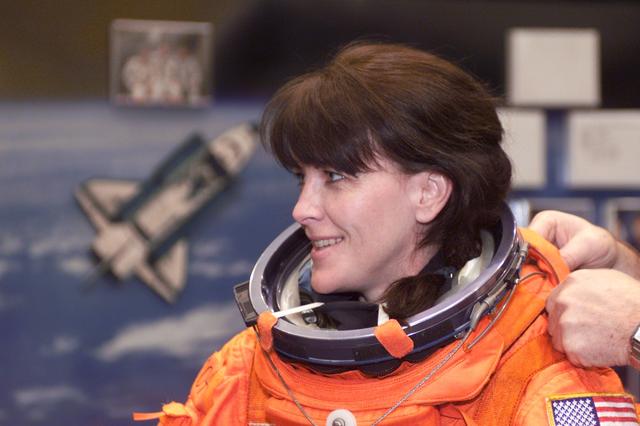
JSC2001-E-06419 (27 February 2001) --- Astronaut Janet L. Kavandi, mission specialist, during mission training at the Johnson Space Center’s Systems Integration Facility. The STS-104 mission to the International Space Station (ISS) represents the Space Shuttle Atlantis’ first flight using a new engine and is targeted for a liftoff no earlier than June 14, 2001.
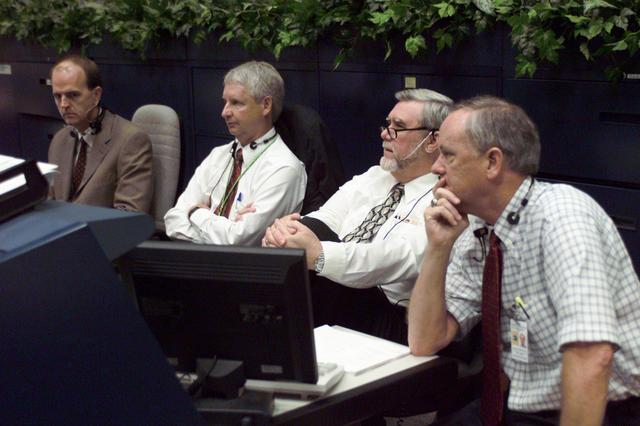
JSC2001-E-21323 (12 July 2001) --- From left to right, Robert Gest with United Space Alliance; Steven A. Hawley, deputy director of Flight Crew Operations; Alan L. (Lee) Briscoe, chief engineer for the Mission Operations Directorate (MOD); and J. Milton (Milt) Heflin, chief of the Flight Director's Office, watch the monitor at the MOD console during the pre-launch activity for the STS-104 mission in the shuttle flight control room (WFCR) of Houston's Mission Control Center (MCC).
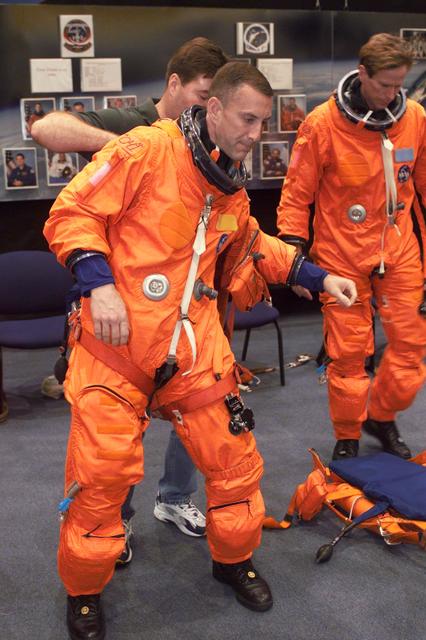
JSC2001-E-06410 (27 February 2001) --- Astronaut Charles O. Hobaugh, pilot, is assisted in his suiting process by suit technician Mike Thompson, and astronaut Michael L. Gernhardt, mission specialist, during mission training at the Johnson Space Center’s Systems Integration Facility. The STS-104 mission to the International Space Station (ISS) represents the Space Shuttle Atlantis' first flight using a new engine and is targeted for a liftoff no earlier than June 14, 2001.
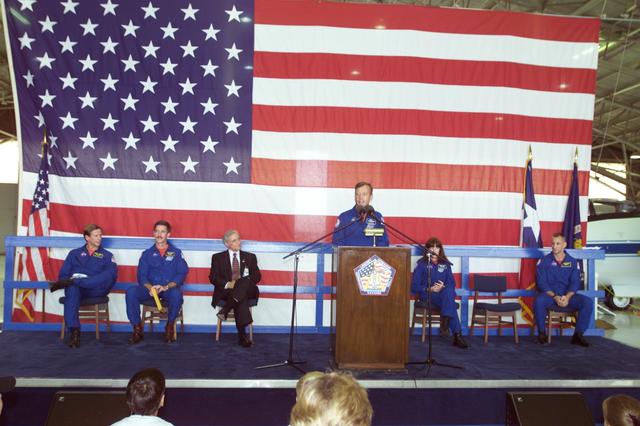
JSC2001-E-22794 (25 July 2001) --- Astronaut Steven W. Lindsey, STS-104 mission commander, addresses a crowd at Ellington Field’s Hangar 990 for a crew return ceremony. Seated from the left are Michael L. Gernhardt, James F. Reilly, both mission specialist, and Roy S. Estess, JSC Acting Director, along with Janet L. Kavandi, mission specialist, and Charles O. Hobaugh, pilot.
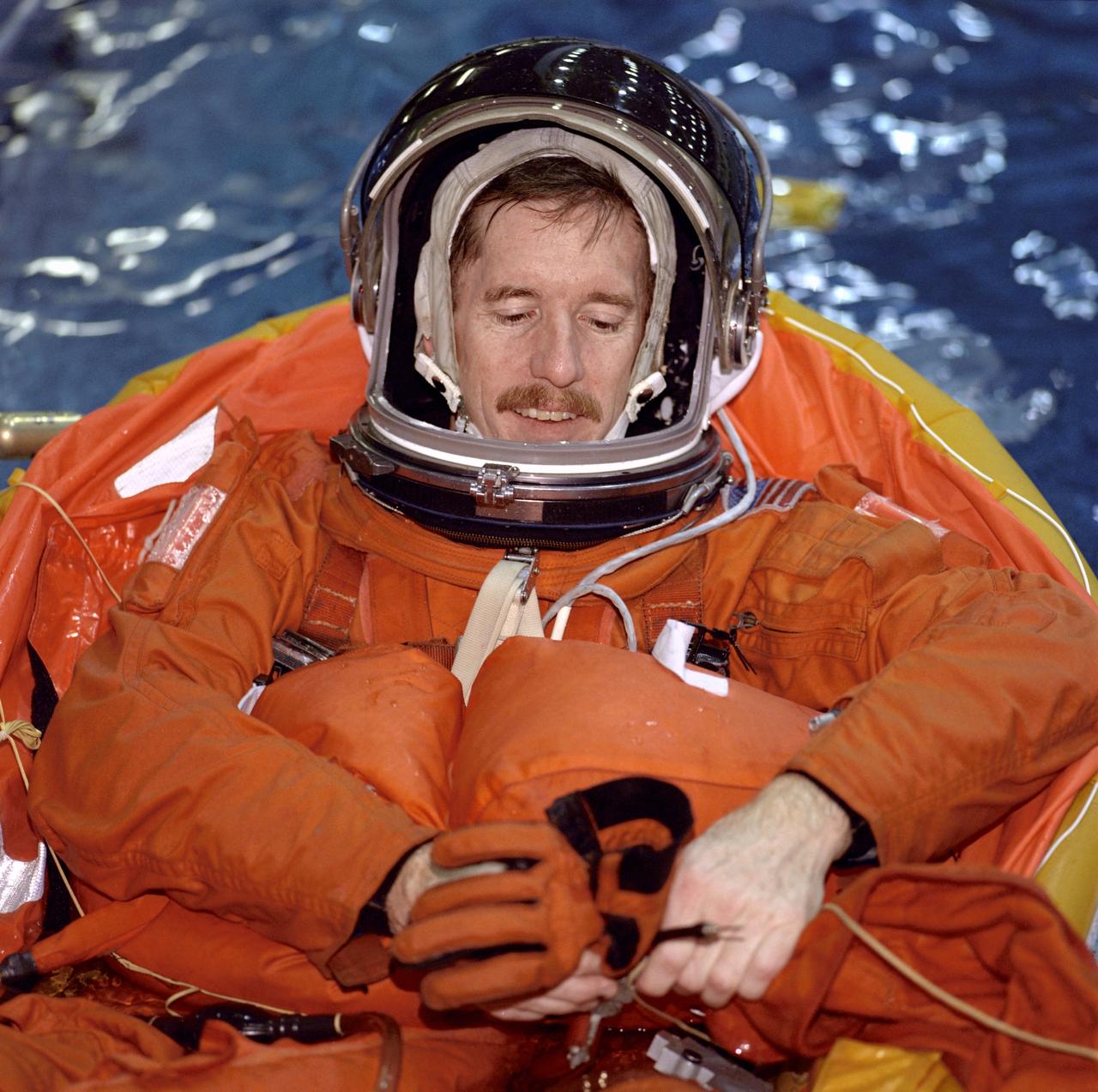
JSC2001-00010 (January 2001) --- Astronaut James F. Reilly, STS-104 mission specialist, floats in a small life raft during an emergency egress training session at the Neutral Buoyancy Laboratory (NBL) near the Johnson Space Center (JSC). Reilly will join four other astronauts for a June mission to the International Space Station (ISS).
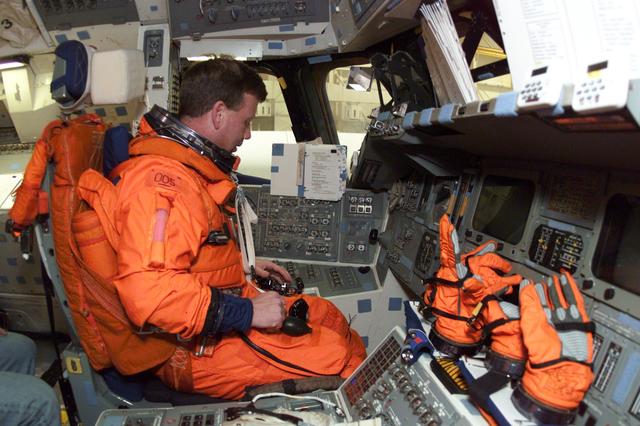
JSC2001-E-06420 (27 February 2001) --- Astronaut Steven W. Lindsey, mission commander, occupies commander’s station during mission training in one of the high fidelity trainers/mockups in the Systems Integration Facility at Johnson Space Center (JSC). The STS-104 mission to the International Space Station (ISS) represents the Space Shuttle Atlantis' first flight using a new engine and is targeted for a liftoff no earlier than June 14, 2001.
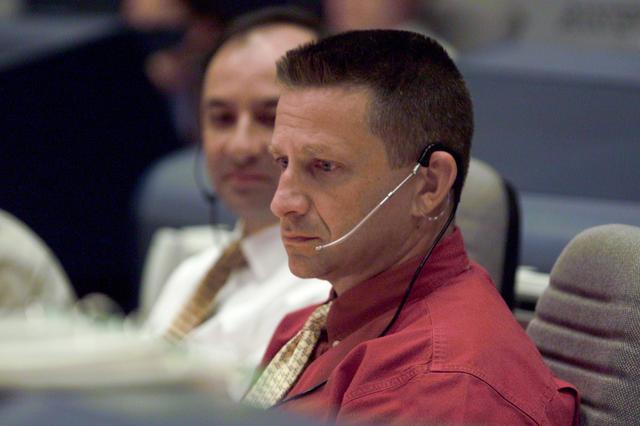
JSC2001-E-21329 (12 July 2001) --- Astronaut Christopher J. (Gus) Loria, STS-104 spacecraft communicator (CAPCOM), intently studies pre-flight data at his console in the shuttle flight control room (WFCR) in Houston's Mission Control Center (MCC) prior to the launch of Space Shuttle Atlantis. Fellow astronaut Mark L. Polansky monitors weather issues in the background.
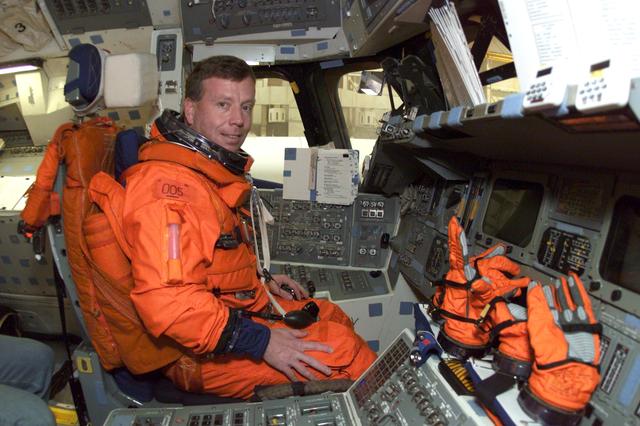
JSC2001-E-06421 (27 February 2001) --- Astronaut Steven W. Lindsey, mission commander, during mission training in one of the high fidelity trainers/mockups in the Systems Integration Facility at Johnson Space Center (JSC). The STS-104 mission to the International Space Station (ISS) represents the Space Shuttle Atlantis' first flight using a new engine and is targeted for a liftoff no earlier than June 14, 2001.
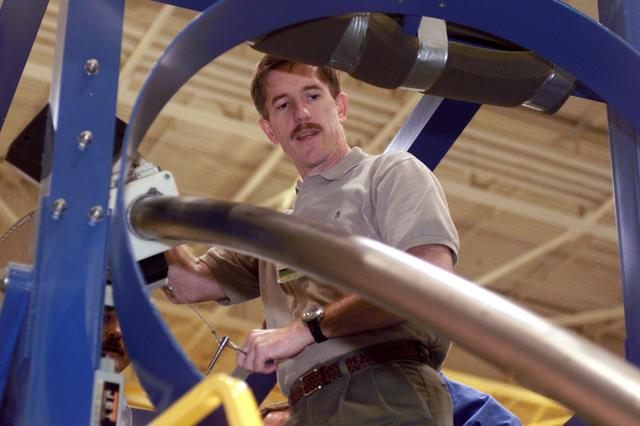
JSC2001-E-06401 (27 February 2001) --- Astronaut James F. Reilly, mission specialist, rehearses emergency egress procedures in the Systems Integration Facility at the Johnson Space Center (JSC). The long tube at left is a training version of the launch escape pole which is now carried onboard for all shuttle flights. The STS-104 mission to the International Space Station (ISS) represents the Space Shuttle Atlantis' first flight using a new engine and is targeted for a liftoff no earlier than June 14, 2001.
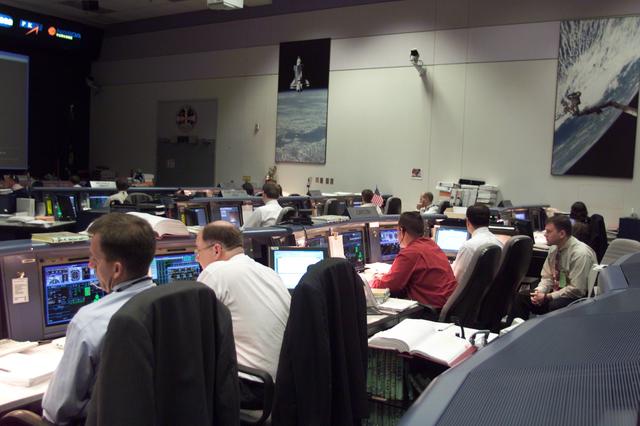
JSC2001-E-21341 (12 July 2001) --- From a familiar setting near the rear of shuttle flight control room (WFCR) at Houston's Mission Control Center (MCC), Wayne Hale (second left), ascent flight director for STS-104, pays close attention to new data related to the Space Shuttle Atlantis and its impending launch from the Kennedy Space Center (KSC) in Florida. Several other flight controllers are visible in the wide shot.

JSC2001-00024 (January 2001) --- Astronaut Charles O. Hobaugh, STS-104 pilot, attired in a training version of the shuttle launch and entry garment, awaits the start of a training session at the Neutral Buoyancy Laboratory (NBL) near Johnson Space Center (JSC). Hobaugh will join four other astronauts for a June mission with the International Space Station (ISS).

JSC2001-00005 (January 2001) --- Astronaut Charles O. Hobaugh, STS-104 pilot, watches a crew mate in a life raft during an emergency bailout training session in the Neutral Buoyancy Laboratory (NBL) near Johnson Space Center (JSC). Hobaugh will join four other astronauts for a June mission with the International Space Station (ISS).
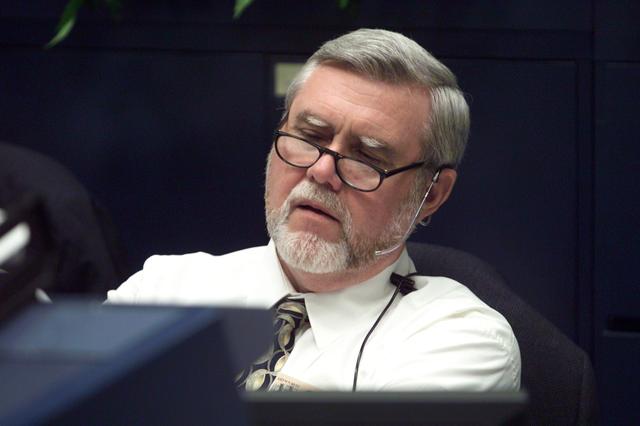
JSC2001-E-21331 (12 July 2001) --- Alan L. (Lee) Briscoe, chief engineer for the Mission Operations Directorate, looks over pre-flight data at the MOD console in the shuttle flight control room (WFCR) in Houston's Mission Control Center (MCC) during the countdown leading up to the launch of the Space Shuttle Atlantis and the beginning of the STS-104 mission.
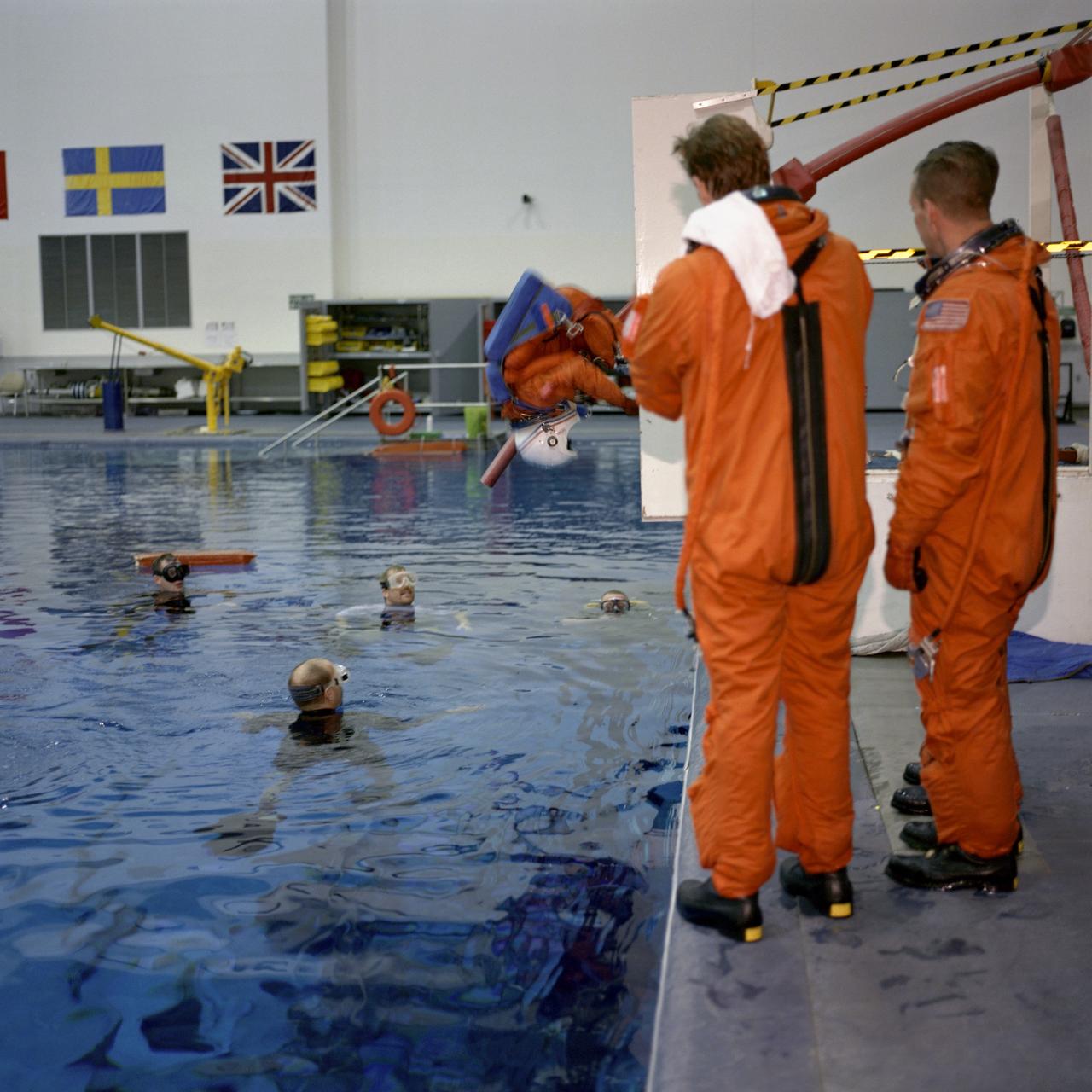
JSC2001-00002 (January 2001) --- Astronauts Michael L. Gernhardt (left), mission specialist, and Steven W. Lindsey, mission commander, look on while an unidentified member of the STS-104 crew simulates an ejection into a body of water during an emergency bailout training session for the astronauts in the Neutral Buoyancy Laboratory (NBL) near the Johnson Space Center (JSC).
JSC2001-E-21333 (12 July 2001) --- From a familiar setting in the shuttle flight control room (WFCR) at Houston's Mission Control Center (MCC), Wayne Hale, ascent flight director for STS-104, pays close attention to new data related to the Space Shuttle Atlantis and its impending launch from the Kennedy Space Center (KSC) in Florida.
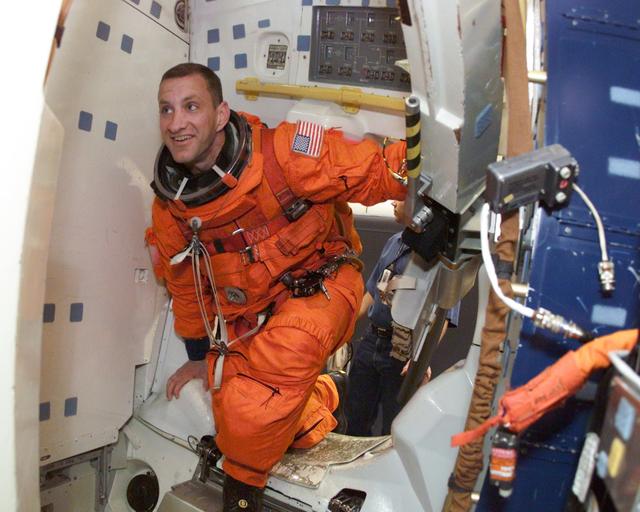
JSC2001-E-06424 (27 February 2001) --- Astronaut Charles O. Hobaugh, pilot, prepares to rehearse emergency egress during mission training in one of the high fidelity trainers/mockups in the Systems Integration Facility at Johnson Space Center (JSC). The STS-104 mission to the International Space Station (ISS) represents the Space Shuttle Atlantis' first flight using a new engine and is targeted for a liftoff no earlier than June 14, 2001.
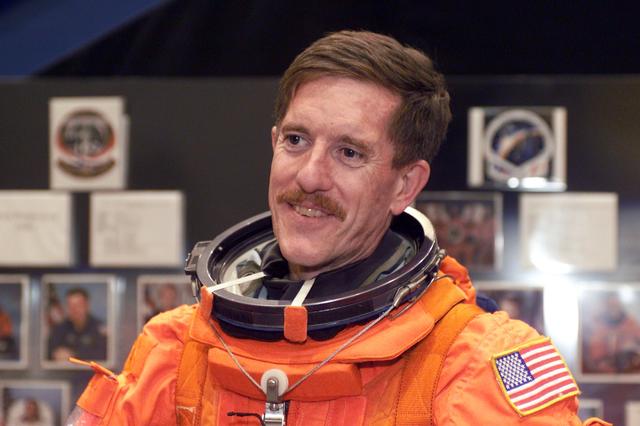
JSC2001-E-06418 (27 February 2001) --- Astronaut James F. Reilly, mission specialist, is pictured while in training at the Systems Integration Facility at Johnson Space Center (JSC). The STS-104 mission to the International Space Station (ISS) represents the Space Shuttle Atlantis' first flight using a new engine and is targeted for a liftoff no earlier than June 14, 2001.
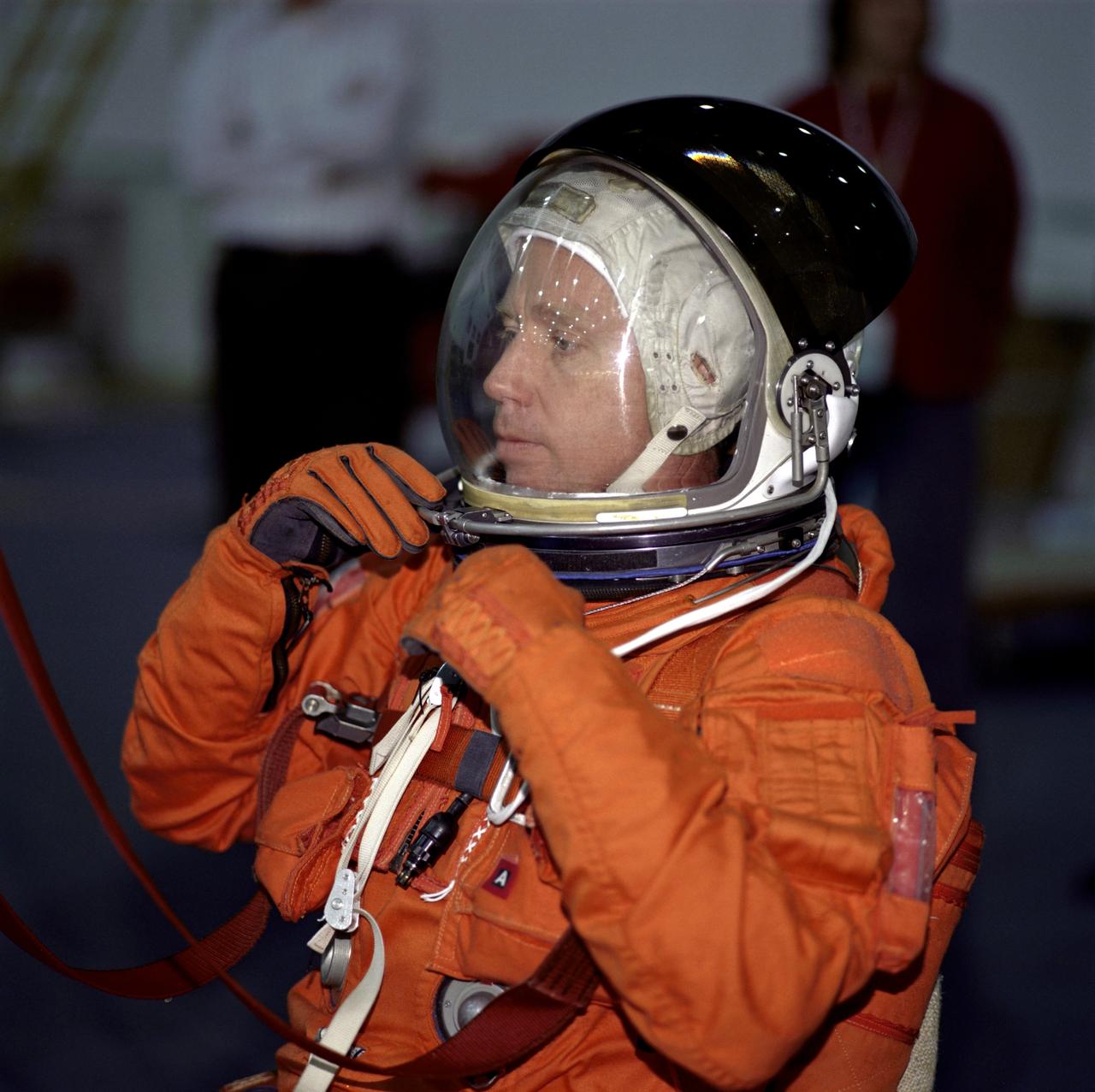
JSC2001-00008 (January 2001) --- Astronaut Steven W. Lindsey, STS-104 mission commander, adjusts his helmet as he prepares to participate in a simulation of a parachute drop into water during emergency bailout training at the Neutral Buoyancy Laboratory (NBL) near Johnson Space Center (JSC). Lindsey will join four other astronauts for a June mission with the International Space Station (ISS).
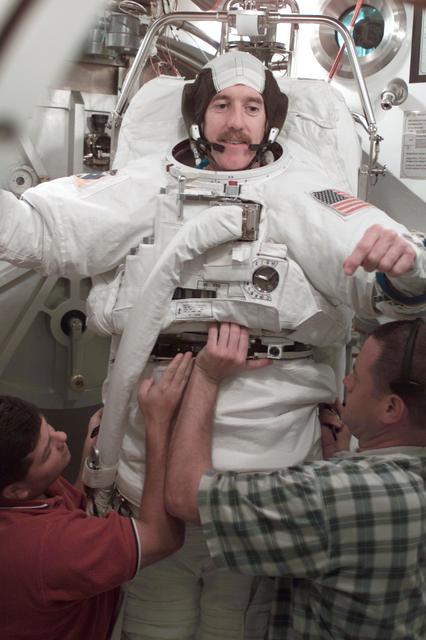
JSC2001-E-11692 (9 April 2001) --- Astronaut James F. Reilly, mission specialist, prepares to don his helmet for an Extravehicular Mobility Unit (EMU) fit check in one of the chambers in the Crew Systems Laboratory at the Johnson Space Center (JSC). The STS-104 mission to the International Space Station (ISS) represents the Space Shuttle Atlantis' first flight using a new engine and is targeted for a liftoff no earlier than June 14, 2001.
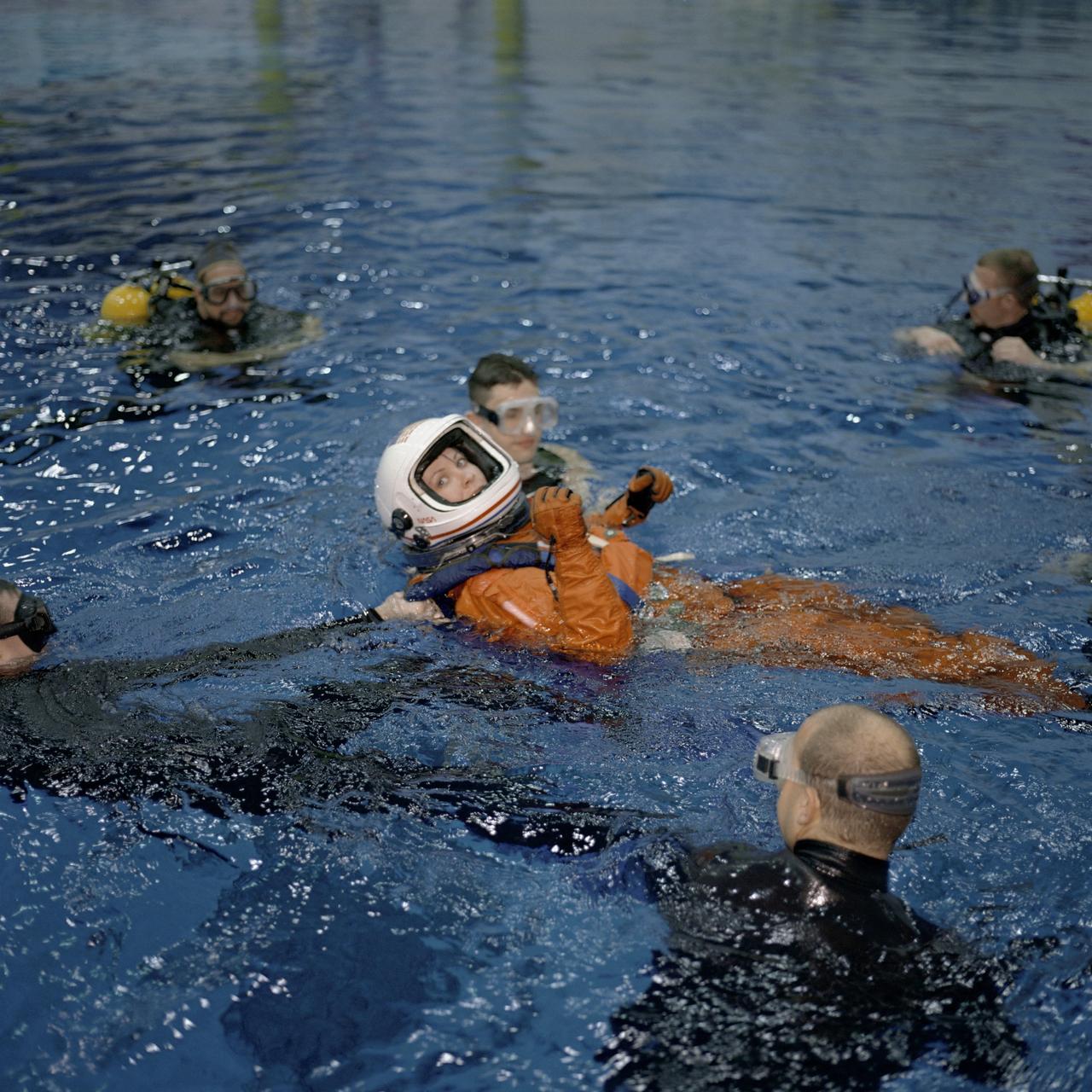
JSC2001-00003 (January 2001) --- Astronaut Janet L. Kavandi, STS-104 mission specialist, is assisted by SCUBA-equipped divers during an emergency bailout training session in the Neutral Buoyancy Laboratory (NBL) near Johnson Space Center (JSC). Kavandi will join four other astronauts for a June mission with the International Space Station (ISS).
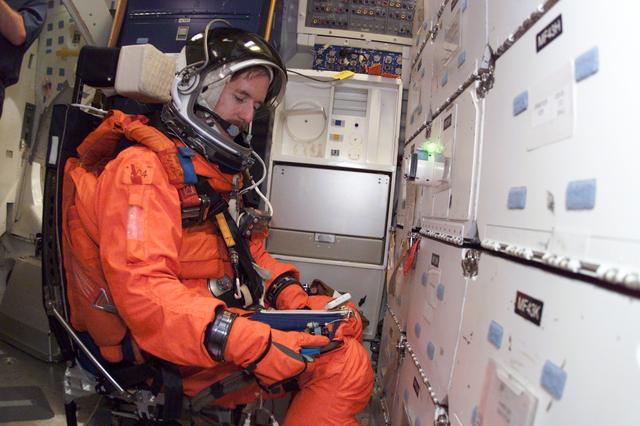
JSC2001-E-06426 (27 February 2001) --- Astronaut James F. Reilly, mission specialist, makes a notation during mission training in one of the high fidelity trainers/mockups in the Systems Integration Facility at Johnson Space Center (JSC). The STS-104 mission to the International Space Station (ISS) represents the Space Shuttle Atlantis' first flight using a new engine and is targeted for a liftoff no earlier than June 14, 2001.
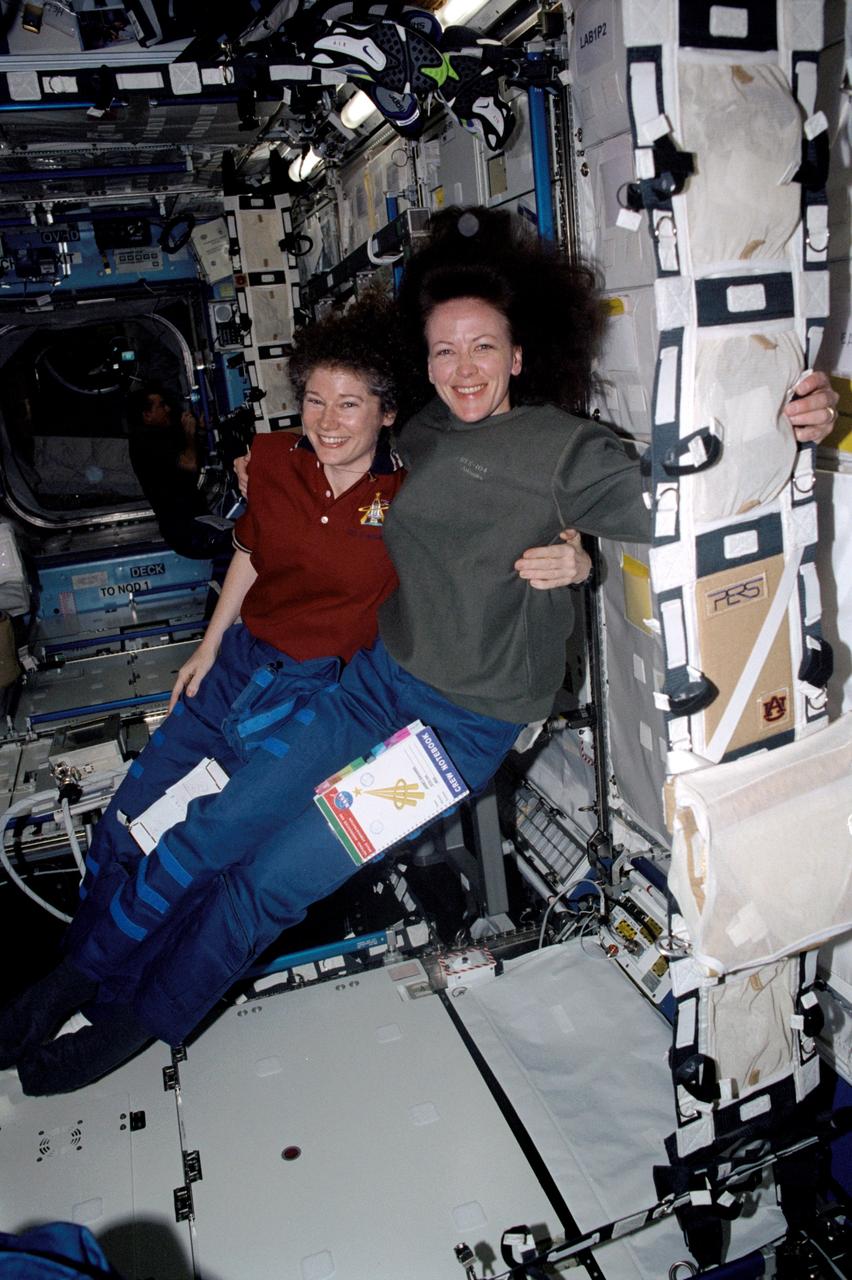
STS104-313-016 (12-24 July 2001) --- Astronauts Susan J. Helms (left) and Janet L. Kavandi reunite in the Destiny laboratory aboard the International Space Station (ISS). Kavandi is a mission specialist on the STS-104 Atlantis crew and Helms is a flight engineer for the Expedition Two crew which has been aboard the International Space Station (ISS) for several months.
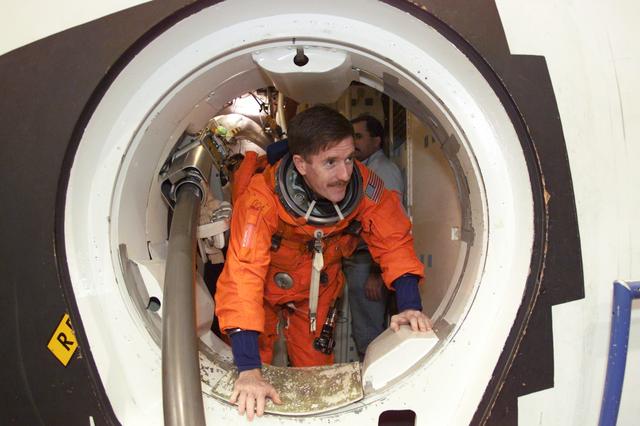
JSC2001-E-06422 (27 February 2001) --- Astronaut James F. Reilly, mission specialist, rehearses emergency egress procedures in the Systems Integration Facility at the Johnson Space Center (JSC). The long tube at left is a training version of the launch escape pole which is now carried onboard for all shuttle flights. The STS-104 mission to the International Space Station (ISS) represents the Space Shuttle Atlantis' first flight using a new engine and is targeted for a liftoff no earlier than June 14, 2001.
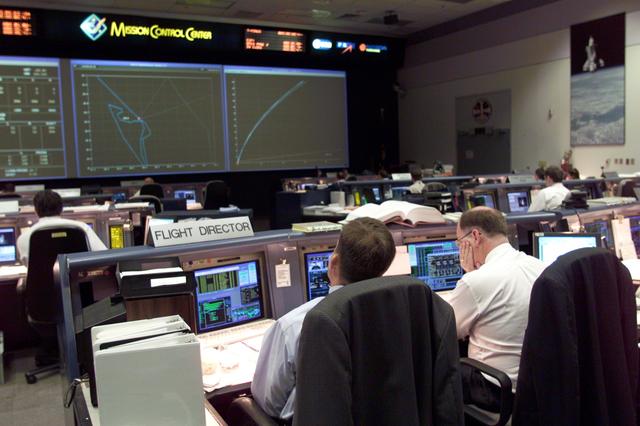
JSC2001-E-21333 (12 July 2001) --- From a familiar setting in the shuttle flight control room (WFCR)at Houston's Mission Control Center (MCC), Wayne Hale, ascent flight director for STS-104, pays close attention to new data related to the Space Shuttle Atlantis and its impending launch from the Kennedy Space Center (KSC) in Florida.
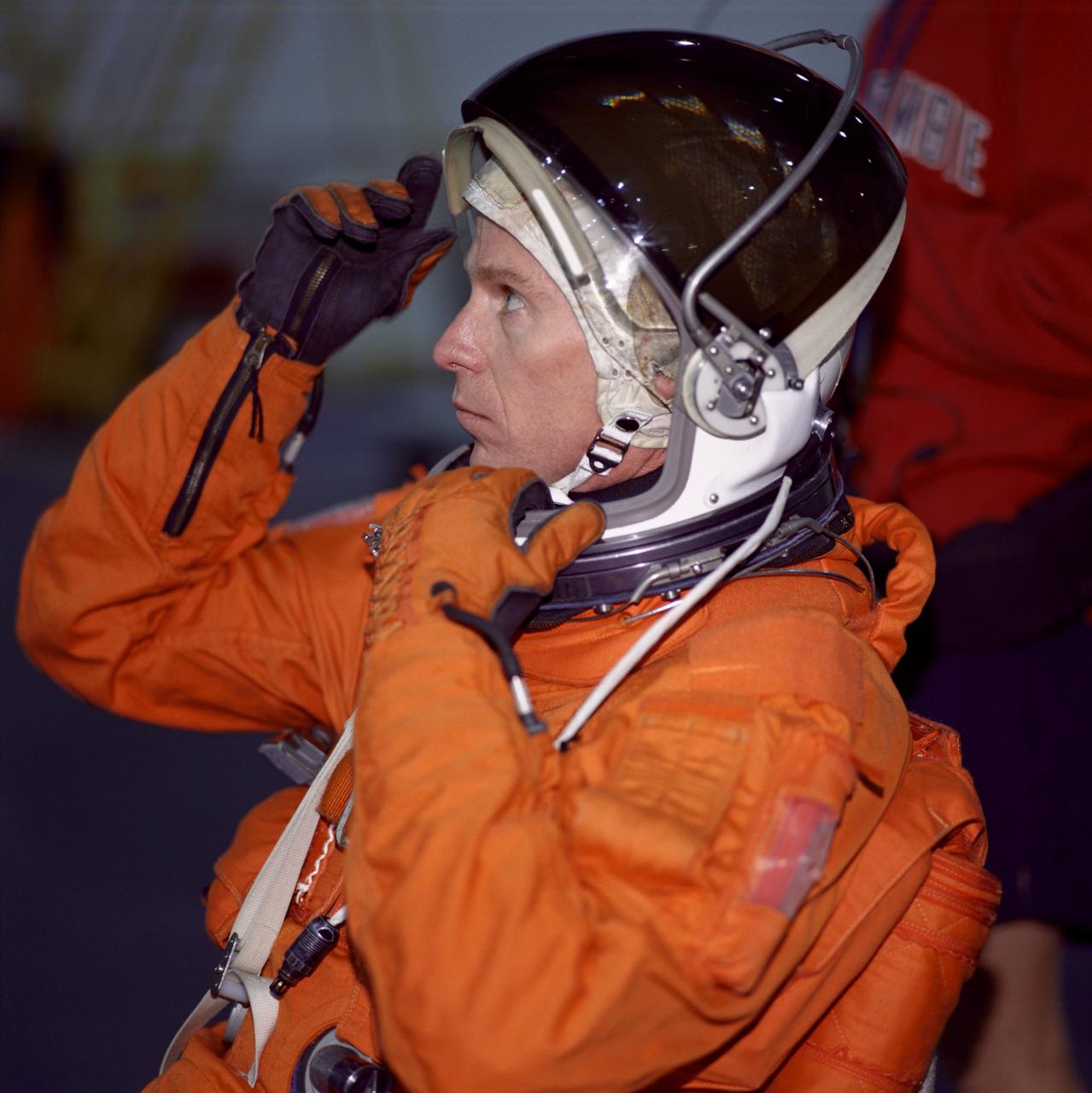
JSC2001-00016 (January 2001) --- Astronaut Michael L. Gernhardt, STS-104 mission specialist, adjusts his helmet as he prepares to participate in a simulation of a shuttle in trouble during emergency bailout training at the Neutral Buoyancy Laboratory (NBL) near Johnson Space Center (JSC). Gernhardt will join four other astronauts for a June mission with the International Space Station (ISS).
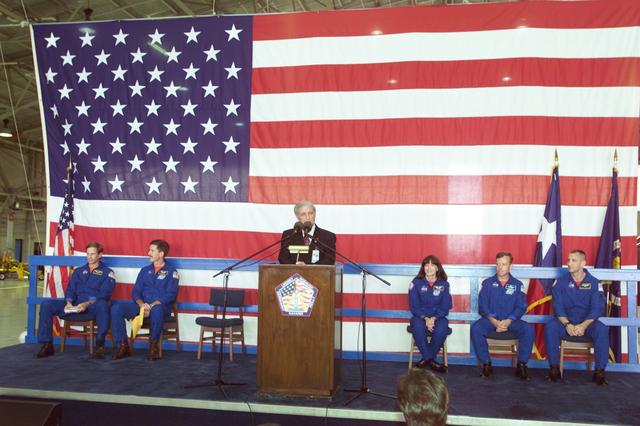
JSC2001-E-22791 (25 July 2001) --- JSC Acting Director Roy S. Estess introduces the STS-104 crew members to a crowd gathered in Ellington Field’s Hangar 990 during crew return ceremonies. Seated (from left) are Michael L. Gernhardt, James F. Reilly, Janet L. Kavandi, all mission specialists, along with Steven W. Lindsey and Charles O. Hobaugh, mission commander and pilot, respectively.