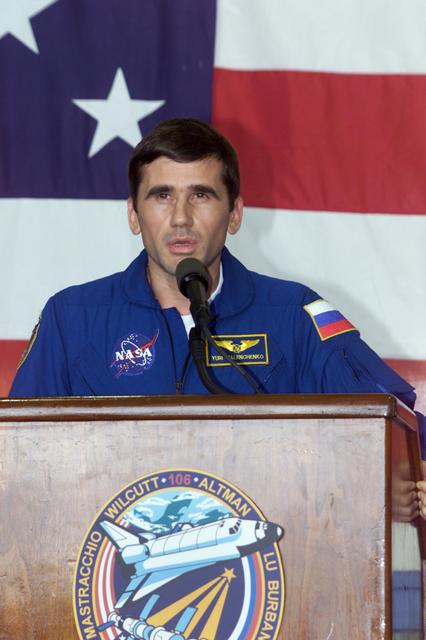
JSC2000-E-23459 (21 September 2000) --- Cosmonaut Yuri I. Malenchenko, STS-106 mission specialist representing the Russian Aviation and Space Agency, addresses the crowd that visited Ellington Field's Hangar 990 to welcome home the STS-106 astronauts and cosmonauts. The seven-man crew landed approximately 24 hours earlier in Florida, wrapping up a 4.9 million-mile mission in which more than three tons of equipment were delivered to the international outpost.
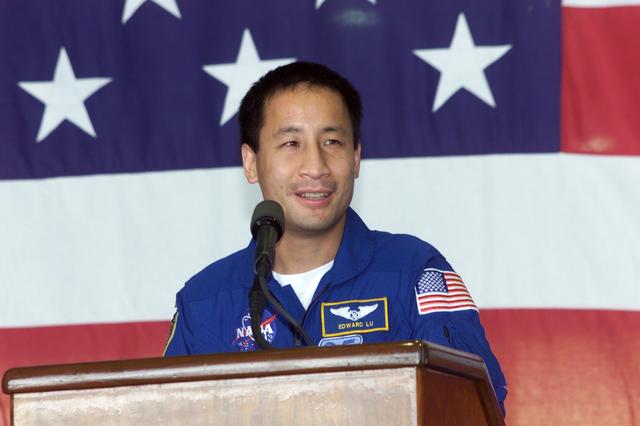
JSC2000-E-23457 (21 September 2000) --- Astronaut Edward T. Lu, STS-106 mission specialist, addresses the crowd that visited Ellington Field's Hangar 990 to welcome home the STS-106 astronauts and cosmonauts. The seven-man crew landed approximately 24 hours earlier in Florida, wrapping up a 4.9 million-mile mission in which more than three tons of equipment were delivered to the international outpost.
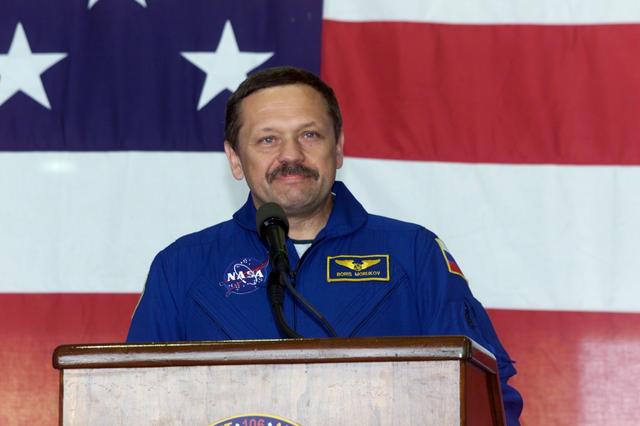
JSC2000-E-23460 (21 September 2000) --- Cosmonaut Boris V. Morukov, STS-106 mission specialist representing the Russian Aviation and Space Agency, addresses the crowd that visited Ellington Field's Hangar 990 to welcome home the STS-106 astronauts. The seven-man crew landed approximately 24 hours earlier in Florida, wrapping up a 4.9 million-mile mission in which more than three tons of equipment were delivered to the international outpost.
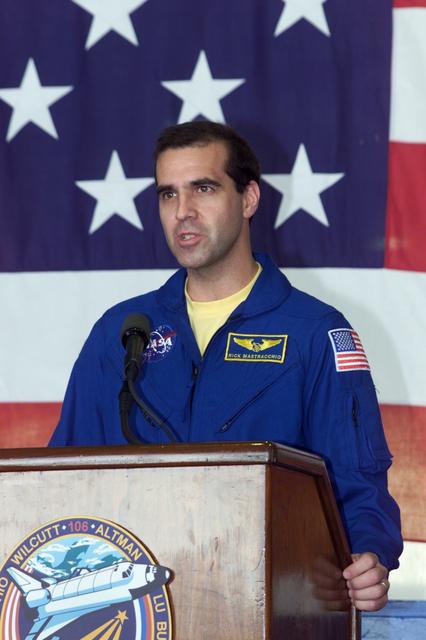
JSC2000-E-23457 (21 September 2000) --- Astronaut Richard A. Mastracchio, STS-106 mission specialist, addresses the crowd that visited Ellington Field's Hangar 990 to welcome home the STS-106 astronauts and cosmonauts. The seven-man crew landed approximately 24 hours earlier in Florida, wrapping up a 4.9 million-mile mission in which more than three tons of equipment were delivered to the international outpost.
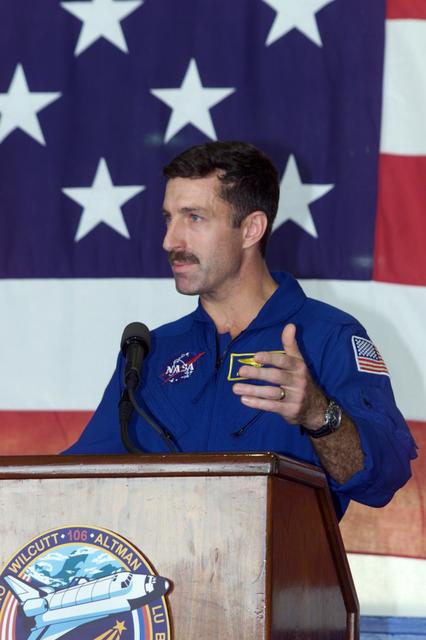
JSC2000-E-23458 (21 September 2000) --- Astronaut Daniel C. Burbank, STS-106 mission specialist, addresses the crowd that visited Ellington Field's Hangar 990 to welcome home the STS-106 astronauts. The seven-man crew landed approximately 24 hours earlier in Florida, wrapping up a 4.9 million-mile mission in which more than three tons of equipment were delivered to the international outpost.
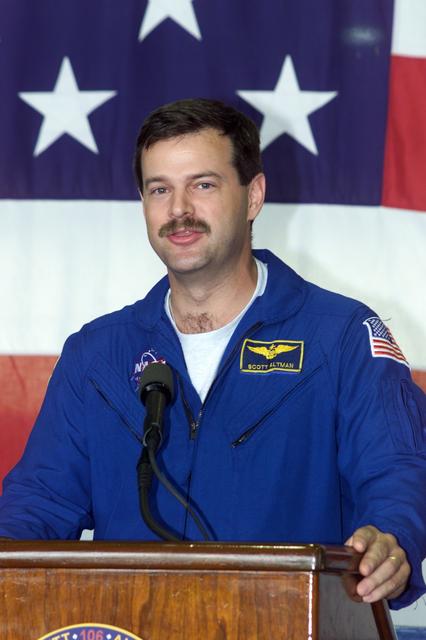
JSC2000-E-23453 (21 September 2000) --- Astronaut. Scott D. Altman, STS-106 pilot, addresses the crowd that visited Ellington Field's Hangar 990 to welcome home the STS-106 astronauts and cosmonauts. The seven-man crew landed approximately 24 hours earlier in Florida, wrapping up a 4.9 million-mile mission in which more than three tons of equipment were delivered to the international outpost.
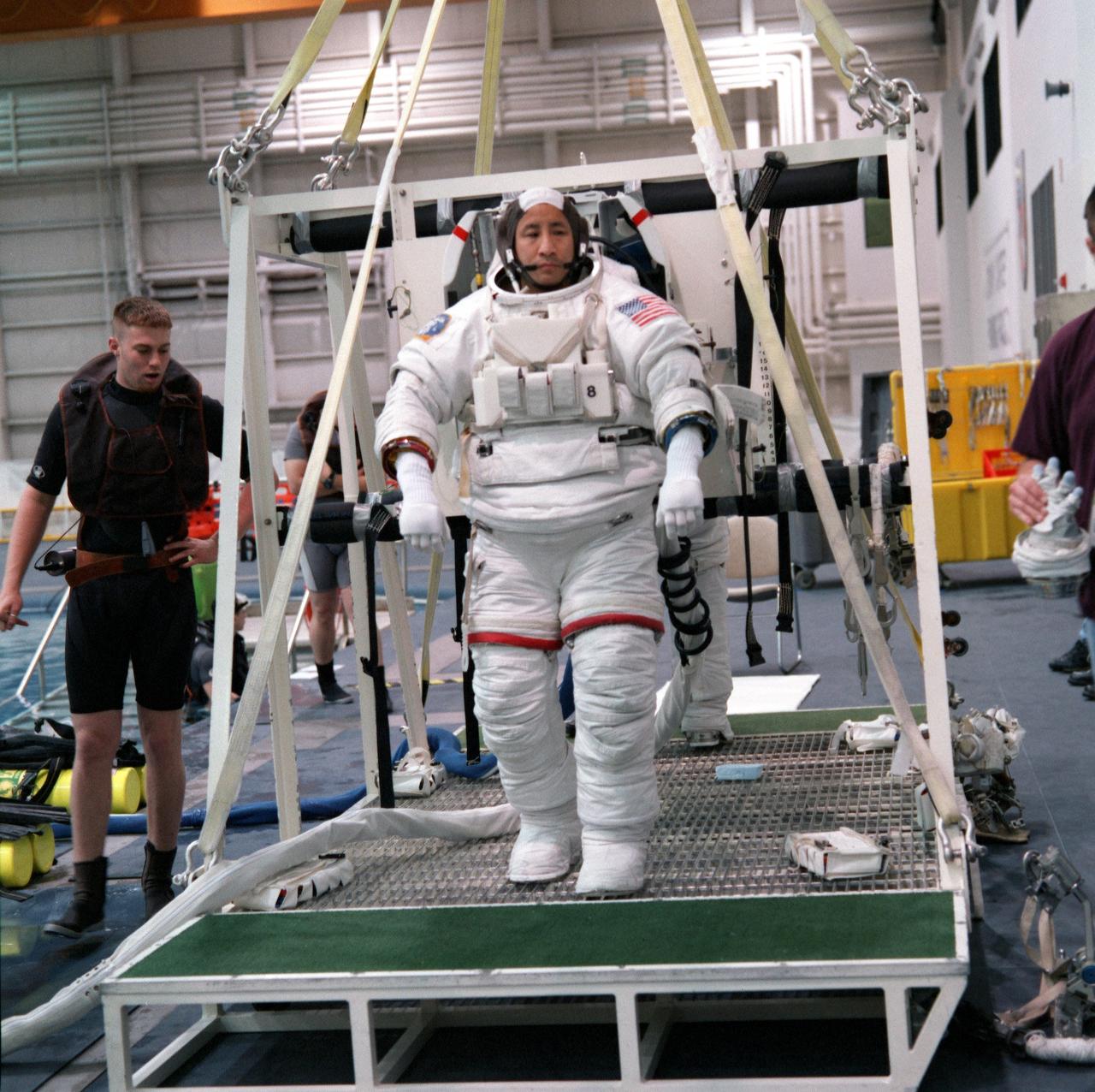
JSC2000-02187 (March 2000) --- Astronaut Edward T. Lu, attired in a training version of the extravehicular mobility unit (EMU), stands on a platform used to lower him into the Neutral Buoyancy Laboratory's pool. Lu is scheduled for space walk duty on the STS-106 mission.
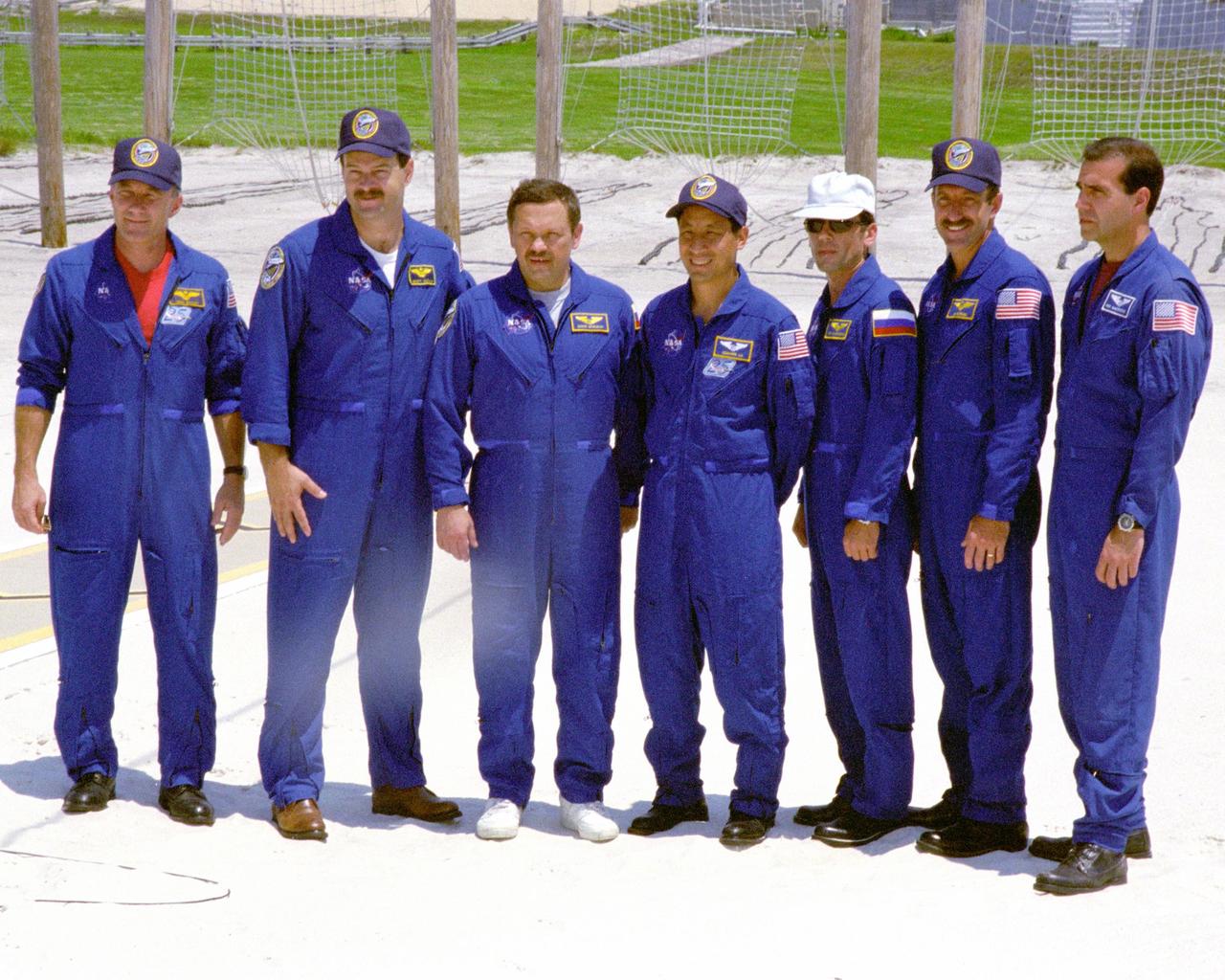
KENNEDY SPACE CENTER, FLA. - The STS-106 flight crew participate in a question and answer session for the media at the slide wire basket area of Launch Pad 39-B. Crew members pictured are, from left, Commander Terrence W. Wilcutt, Pilot Scott D. Altman, Mission Specialists Boris V. Morukov, Edward T. Lu, Yuri I. Malenchenko, Daniel C. Burbank and Richard A. Mastracchio. Malenchenko and Morukov are with the Russian Aviation and Space Agency. The flight crew were at Kennedy Space Center to take part in Terminal Countdown Demonstration Test (TCDT) activities. The TCDT provides the crew with emergency egress training and opportunities to inspect their mission payload in the orbiter’s payload bay. STS-106 is scheduled to launch Sept. 8, 2000, at 8:31 a.m. EDT from Launch Pad 39B. On the 11-day mission, the seven-member crew will perform support tasks on orbit, transfer supplies and prepare the living quarters in the newly arrived Zvezda Service Module. The first long-duration crew, dubbed “Expedition One,” is due to arrive at the Station in late fall.
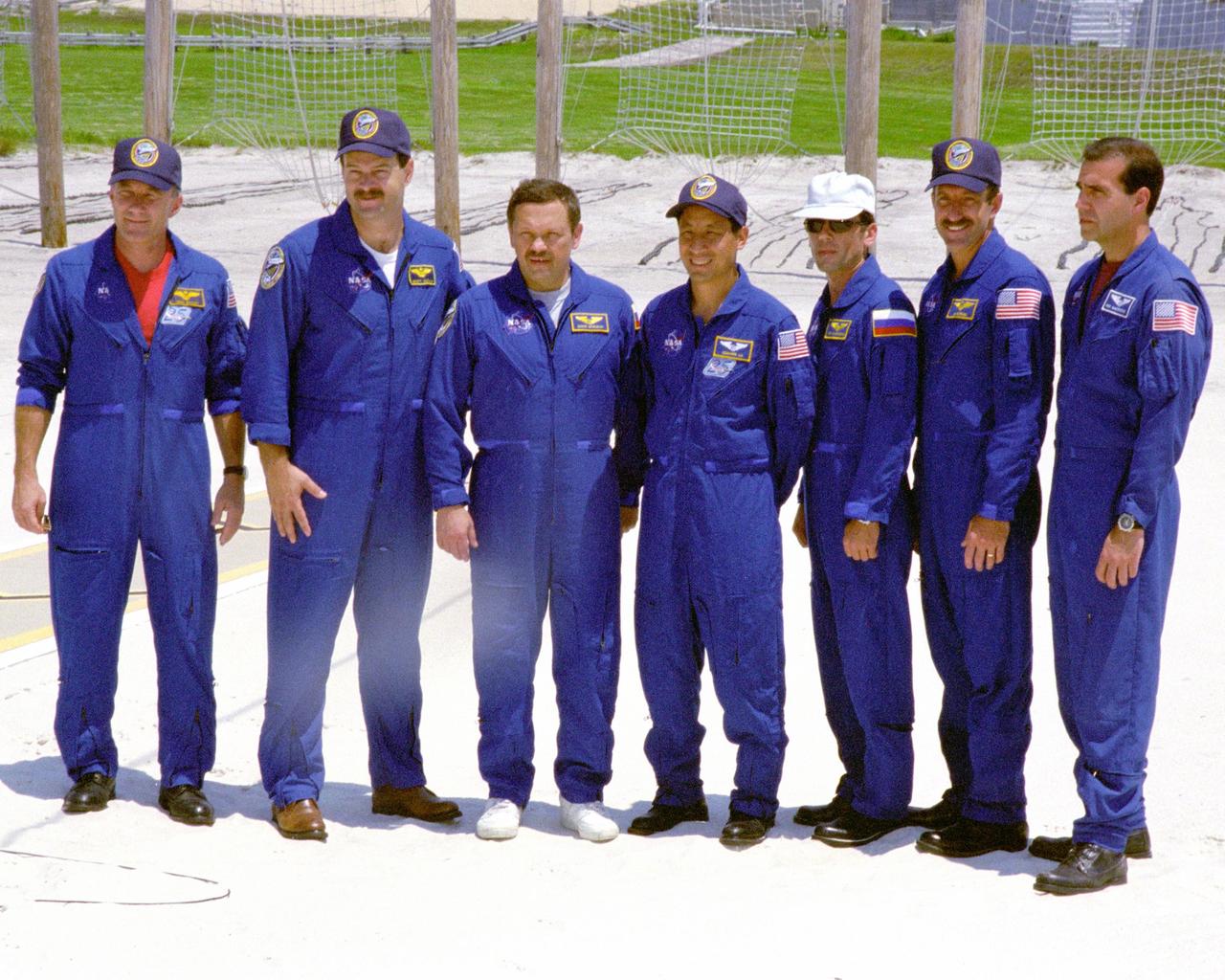
KENNEDY SPACE CENTER, FLA. - The STS-106 flight crew participate in a question and answer session for the media at the slide wire basket area of Launch Pad 39-B. Crew members pictured are, from left, Commander Terrence W. Wilcutt, Pilot Scott D. Altman, Mission Specialists Boris V. Morukov, Edward T. Lu, Yuri I. Malenchenko, Daniel C. Burbank and Richard A. Mastracchio. Malenchenko and Morukov are with the Russian Aviation and Space Agency. The flight crew were at Kennedy Space Center to take part in Terminal Countdown Demonstration Test (TCDT) activities. The TCDT provides the crew with emergency egress training and opportunities to inspect their mission payload in the orbiter’s payload bay. STS-106 is scheduled to launch Sept. 8, 2000, at 8:31 a.m. EDT from Launch Pad 39B. On the 11-day mission, the seven-member crew will perform support tasks on orbit, transfer supplies and prepare the living quarters in the newly arrived Zvezda Service Module. The first long-duration crew, dubbed “Expedition One,” is due to arrive at the Station in late fall.
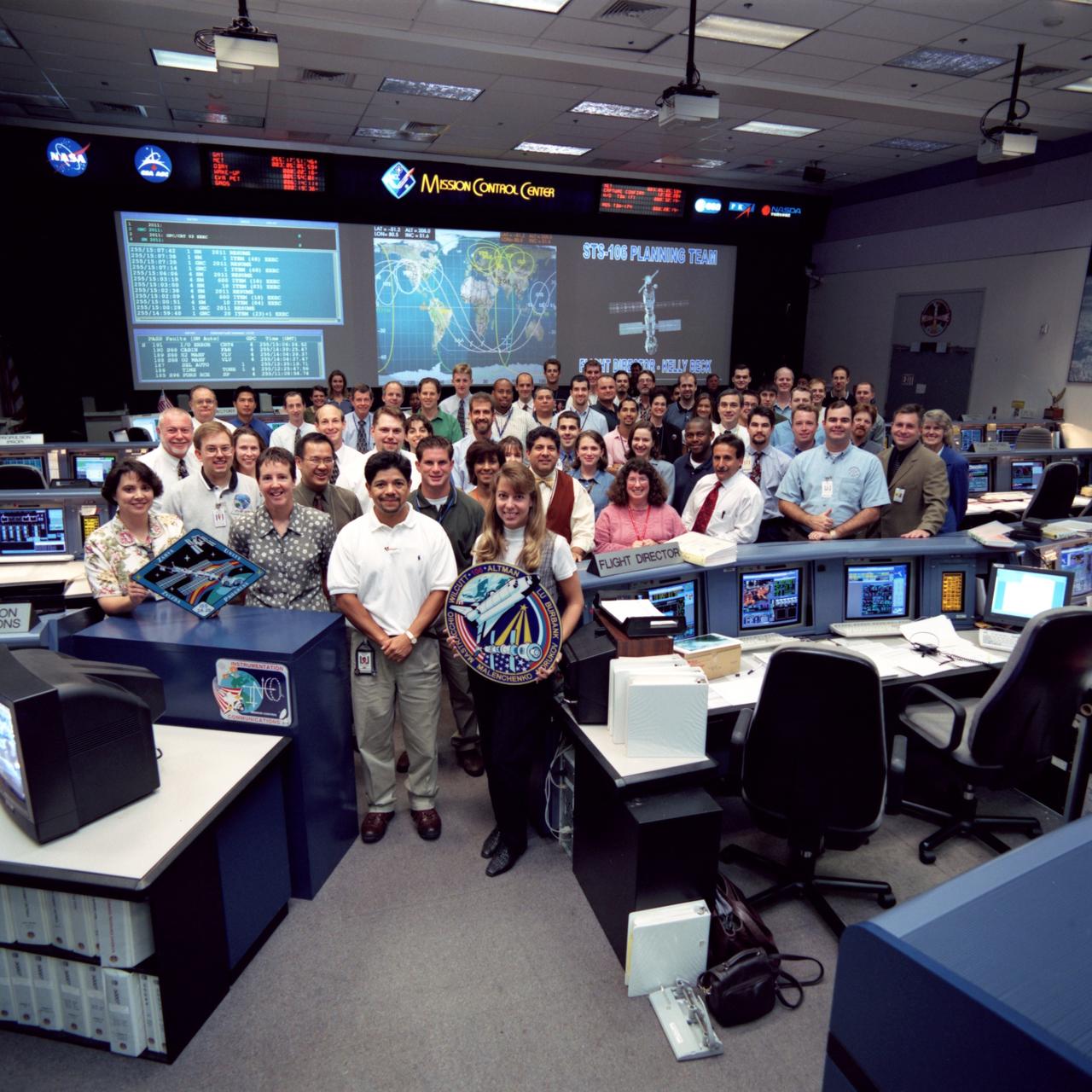
JSC2000-06242 (13 September 2000) --- Flight Director Kelly Beck (planning) is surrounded by the almost five dozen flight controllers who are supporting her shift during the current STS-106 mission. Beck is holding a large decal of the STS-106 insignia.
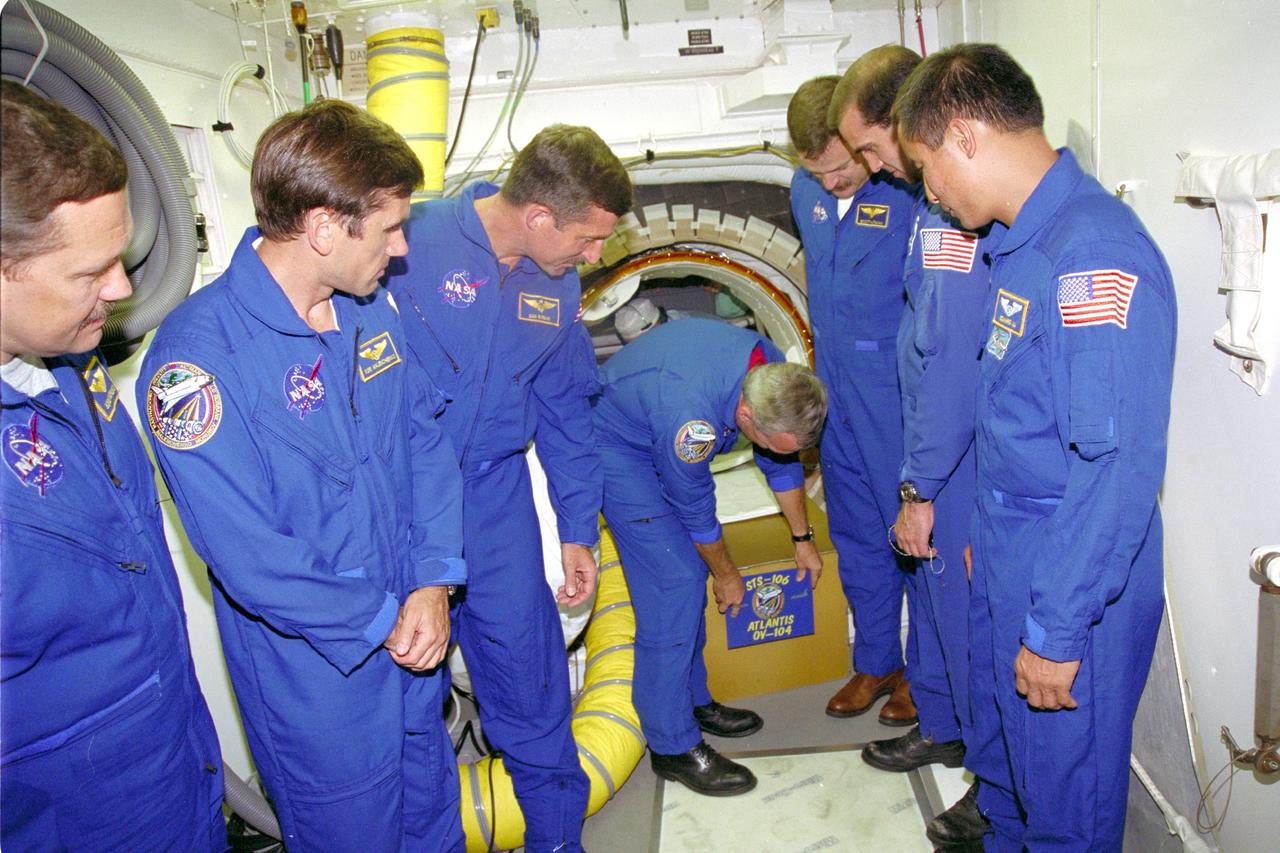
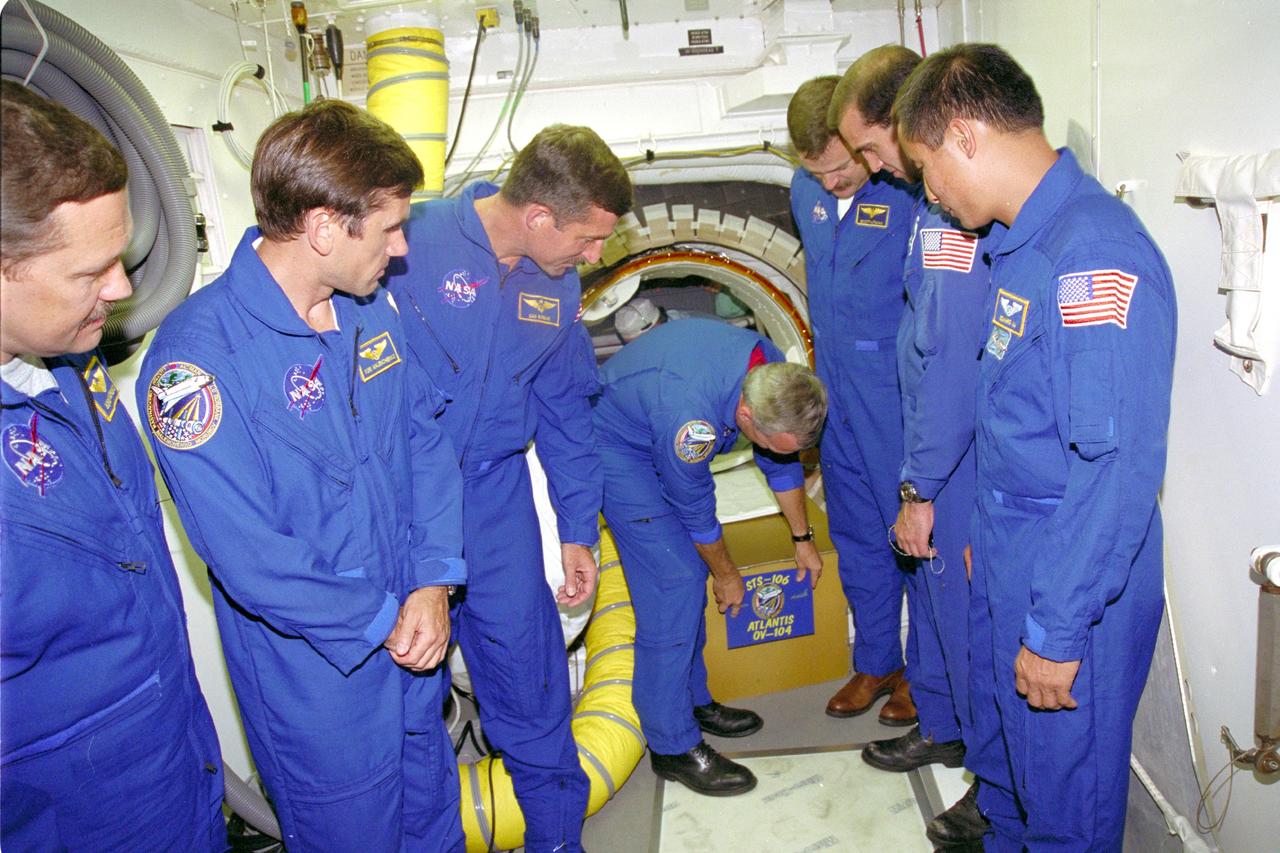
KENNEDY SPACE CENTER, FLA. -- STS-106 Commander Terrence W. Wilcutt bends to place the STS-106 mission patch at the entrance of Atlantis in the white room of Launch Pad 39-B. Other STS-106 crew members pictured are, from left, Mission Specialists Boris V. Morukov, Yuri I. Malenchenko, Daniel C. Burbank, Pilot Scott D. Altman, Mission Specialists Richard A. Mastracchio and Edward T. Lu. Malenchenko and Morukov are with the Russian Aviation and Space Agency. The flight crew were at Kennedy Space Center to take part in Terminal Countdown Demonstration Test (TCDT) activities. The TCDT provides the crew with emergency egress training and opportunities to inspect their mission payload in the orbiter’s payload bay. STS-106 is scheduled to launch Sept. 8, 2000, at 8:31 a.m. EDT from Launch Pad 39B. On the 11-day mission, the seven-member crew will perform support tasks on orbit, transfer supplies and prepare the living quarters in the newly arrived Zvezda Service Module. The first long-duration crew, dubbed “Expedition One,” is due to arrive at the Station in late fall
KENNEDY SPACE CENTER, FLA. -- STS-106 Commander Terrence W. Wilcutt bends to place the STS-106 mission patch at the entrance of Atlantis in the white room of Launch Pad 39-B. Other STS-106 crew members pictured are, from left, Mission Specialists Boris V. Morukov, Yuri I. Malenchenko, Daniel C. Burbank, Pilot Scott D. Altman, Mission Specialists Richard A. Mastracchio and Edward T. Lu. Malenchenko and Morukov are with the Russian Aviation and Space Agency. The flight crew were at Kennedy Space Center to take part in Terminal Countdown Demonstration Test (TCDT) activities. The TCDT provides the crew with emergency egress training and opportunities to inspect their mission payload in the orbiter’s payload bay. STS-106 is scheduled to launch Sept. 8, 2000, at 8:31 a.m. EDT from Launch Pad 39B. On the 11-day mission, the seven-member crew will perform support tasks on orbit, transfer supplies and prepare the living quarters in the newly arrived Zvezda Service Module. The first long-duration crew, dubbed “Expedition One,” is due to arrive at the Station in late fall
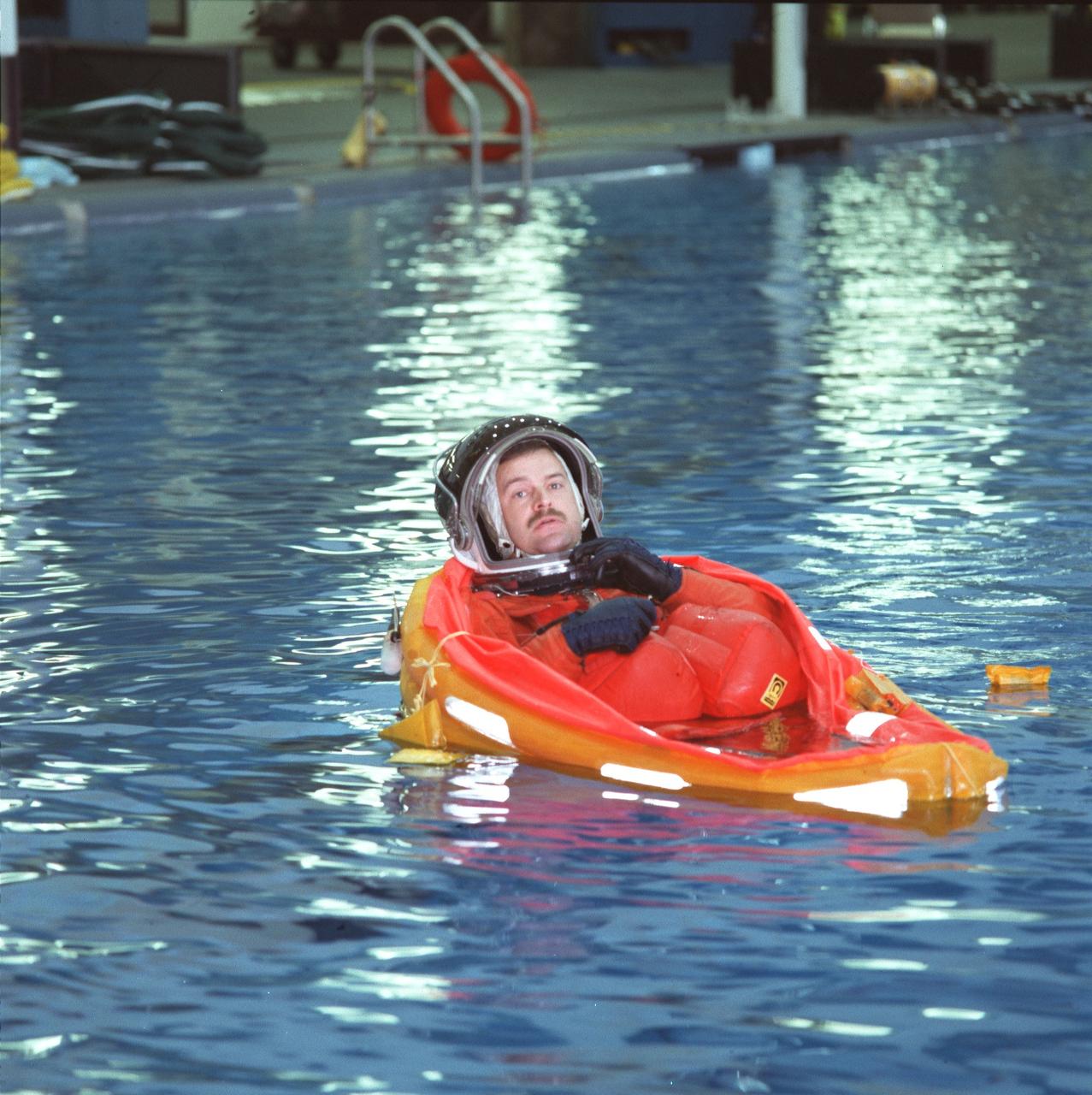
JSC2000-02532 (21 March 2000) --- Astronaut Scott D. Altman, STS-106 pilot, prepares to deploy his life raft during emergency bailout training at the Neutral Buoyancy Laboratory (NBL).

JSC2000-06247 (September 2000)--- Flight director Bill Reeves, at right foreground, and the fifty-odd flight controllers who support his STS-106 planning team pose for their group portrait in Houston's Mission Control Center.
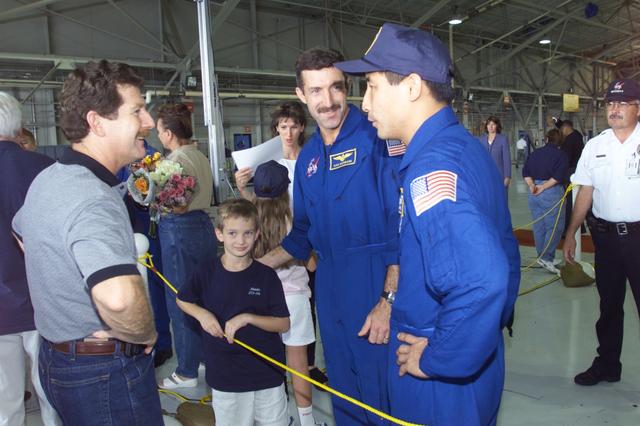
JSC2000-E-23468 (21 Sept. 2000) --- Astronauts Richard A. Mastracchio (second right) and Edward T. Lu (right) reunite with lead STS-106 flight director Phil Engelauf. Engelauf was part of a crowd of several hundred persons that visited Ellington Field's Hangar 990 to welcome home the STS-106 astronauts and cosmonauts. The seven-man crew landed approximately 24 hours earlier in Florida, wrapping up a 4.9 million-mile mission in which more than three tons of equipment were delivered to the international outpost.
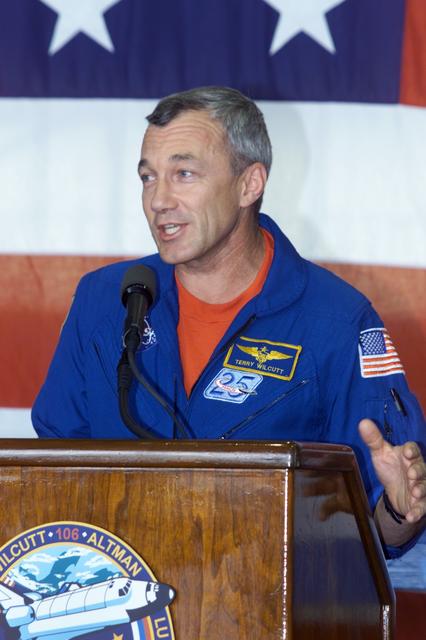
JSC2000-E-23451 (21 September 2000) --- Astronaut Terrence W. Wilcutt, STS-106 mission commander, addresses the crowd that visited Ellington Field's Hangar 990 to welcome home the STS-106 astronauts and cosmonauts. Seated on the dais, from the left, are astronaut Edward T. Lu, cosmonaut Yuri I. Malenchenko, and astronauts Terrence W. Wilcutt and Daniel C. Burbank. Not in the frame are astronaut Richard A. Mastracchio and cosmonaut Boris V. Morukov. The seven-man crew landed approximately 24 hours earlier in Florida, wrapping up a 4.9 million-mile mission in which more than three tons of equipment were delivered to the international outpost.
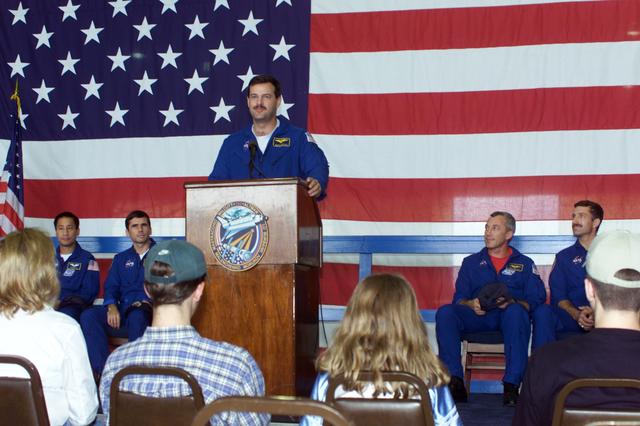
JSC2000-E-23454 (21 September 2000) --- Astronaut Scott D. Altman, STS-106 pilot, addresses the crowd that visited Ellington Field's Hangar 990 to welcome home the STS-106 astronauts and cosmonauts. Seated on the dais, from the left, are astronaut Edward T. Lu, cosmonaut Yuri I. Malenchenko, astronaut Terrence W. Wilcutt and Daniel C. Burbank. Not in the frame are astronaut Richard A. Mastracchio and cosmonaut Boris V. Morukov. The seven-man crew landed approximately 24 hours earlier in Florida, wrapping up a 4.9 million-mile mission in which more than three tons of equipment were delivered to the international outpost.
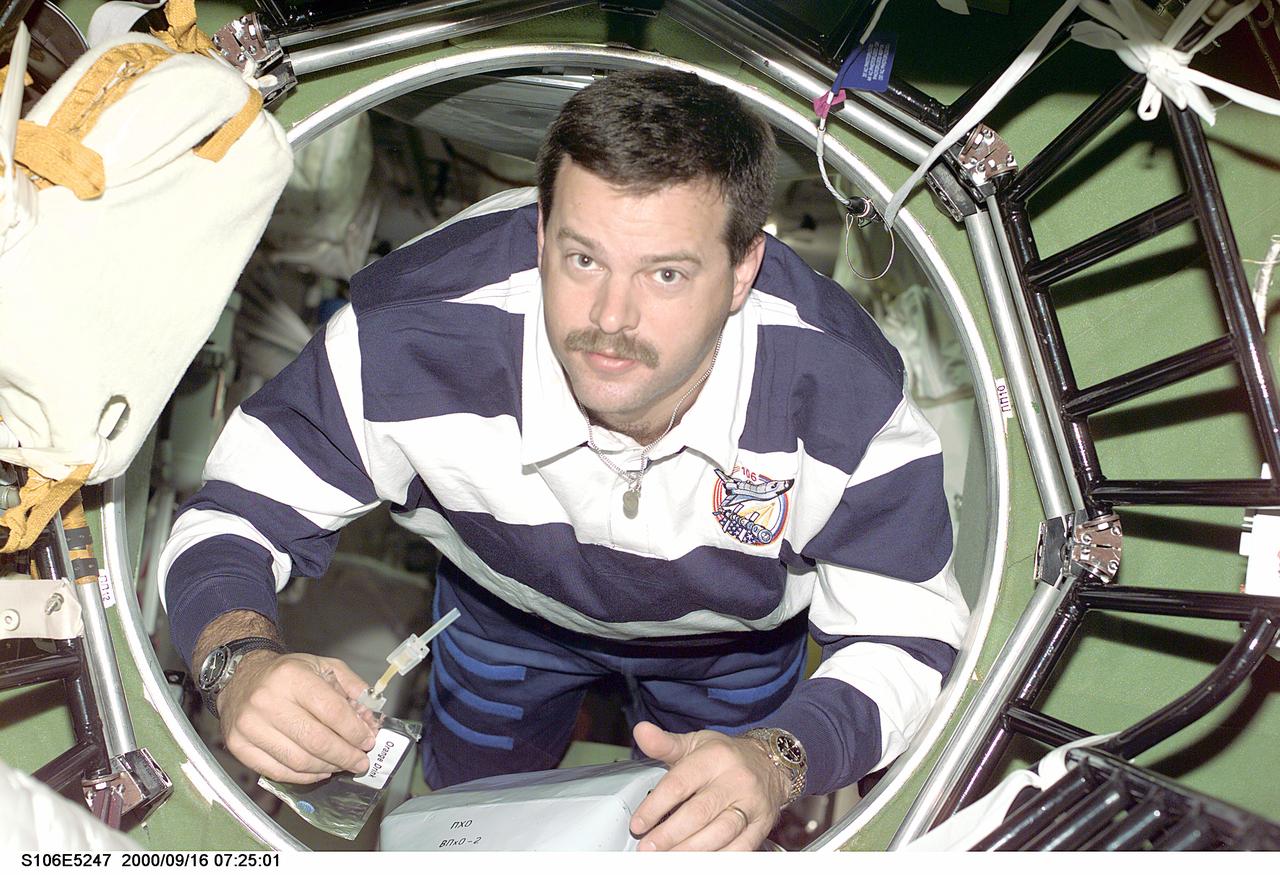
STS-106 Pilot Scott Altman moves through a hatch with a stowage bag and a drink container in the International Space Station (ISS).
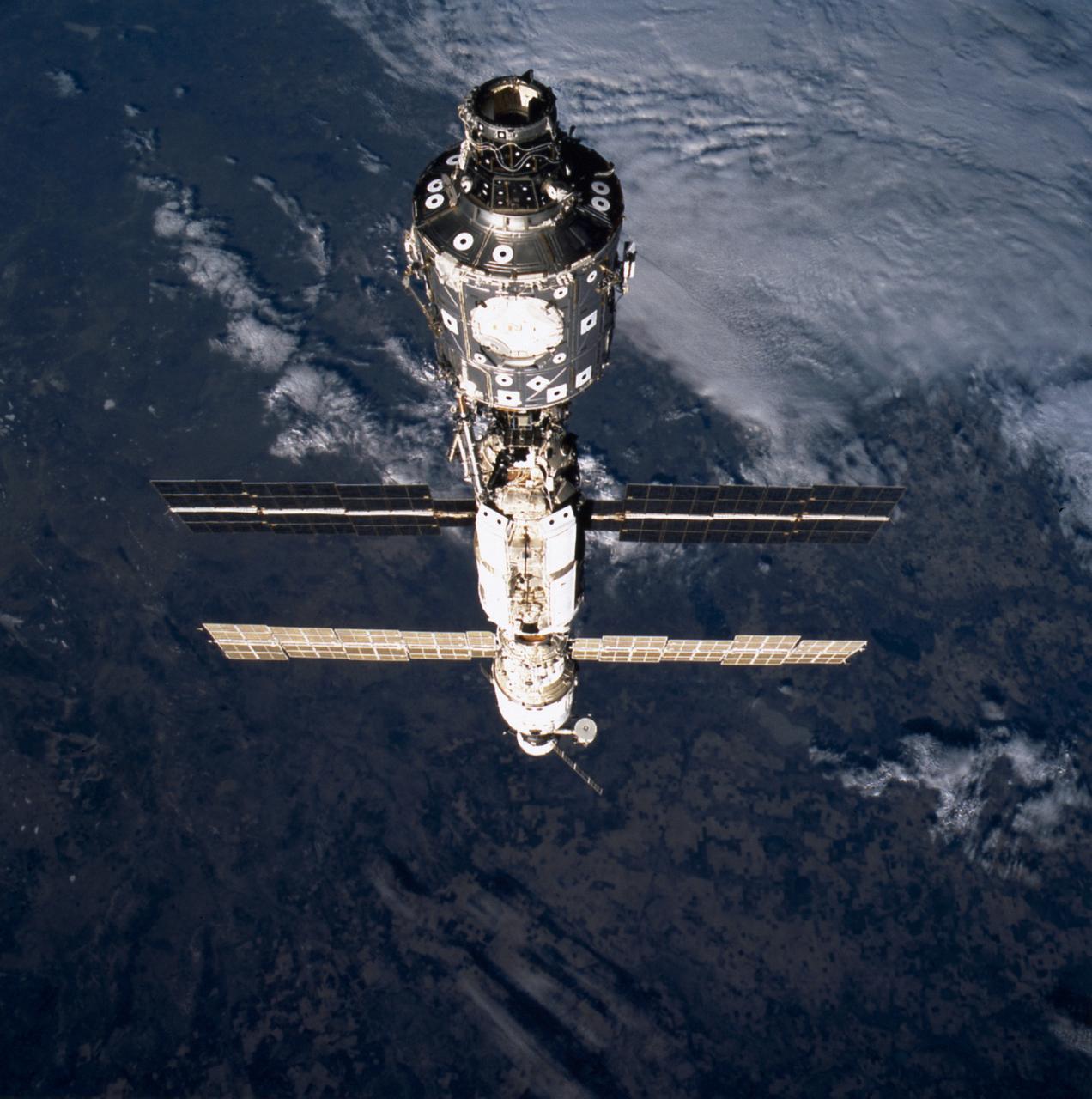
This image of the International Space Station (ISS) was taken during the STS-106 mission. The ISS component nearest the camera is the U.S. built Node 1 or Unity module, which cornected with the Russian built Functional Cargo Block (FGB) or Zarya. The FGB was linked with the Service Module or Zvezda. On the far end is the Russian Progress supply ship.
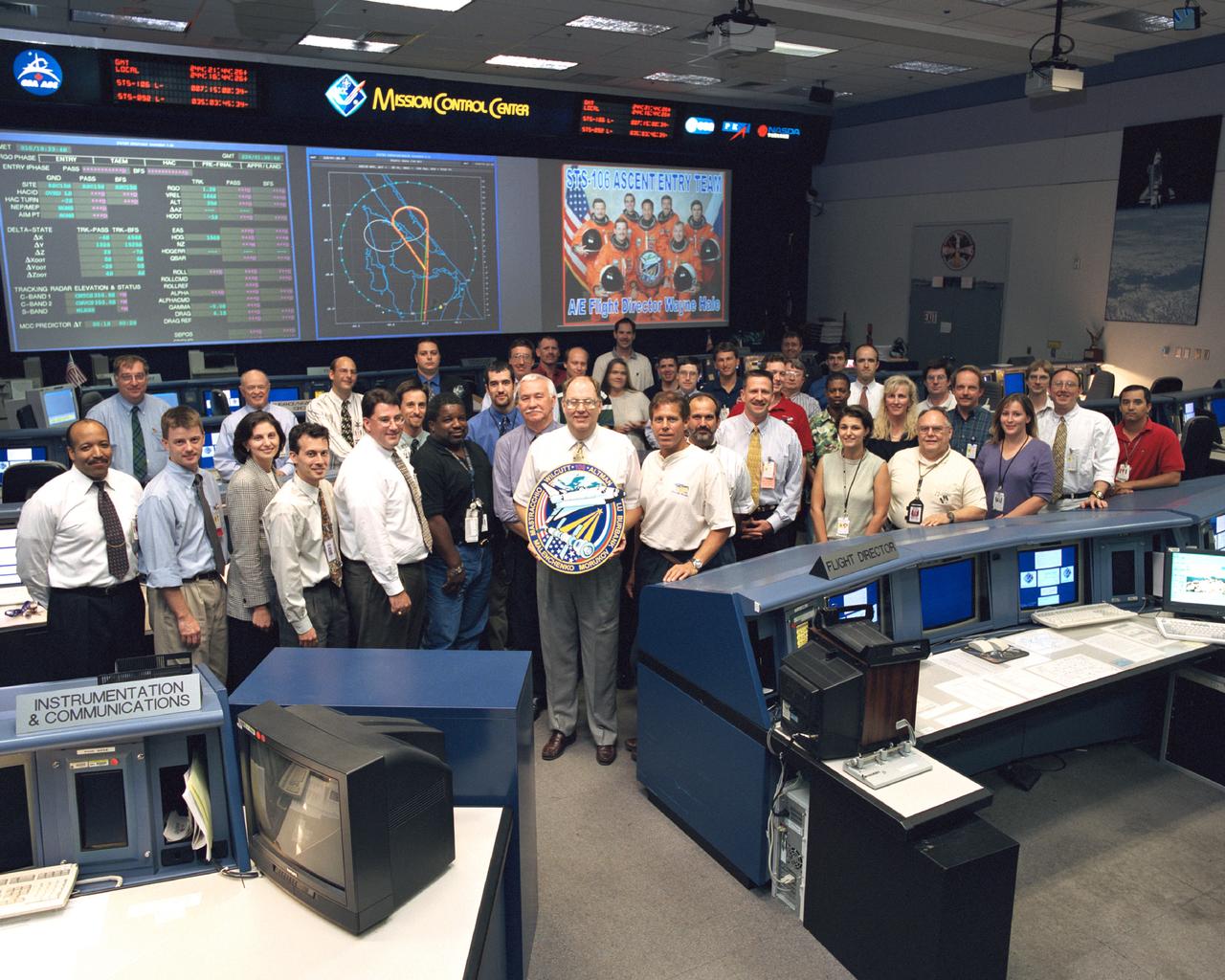
JSC2000-06076 (September 2000) --- The ascent/entry team for STS-106 poses with flight director Wayne Hale (holding insignia) in Mission Control Center.
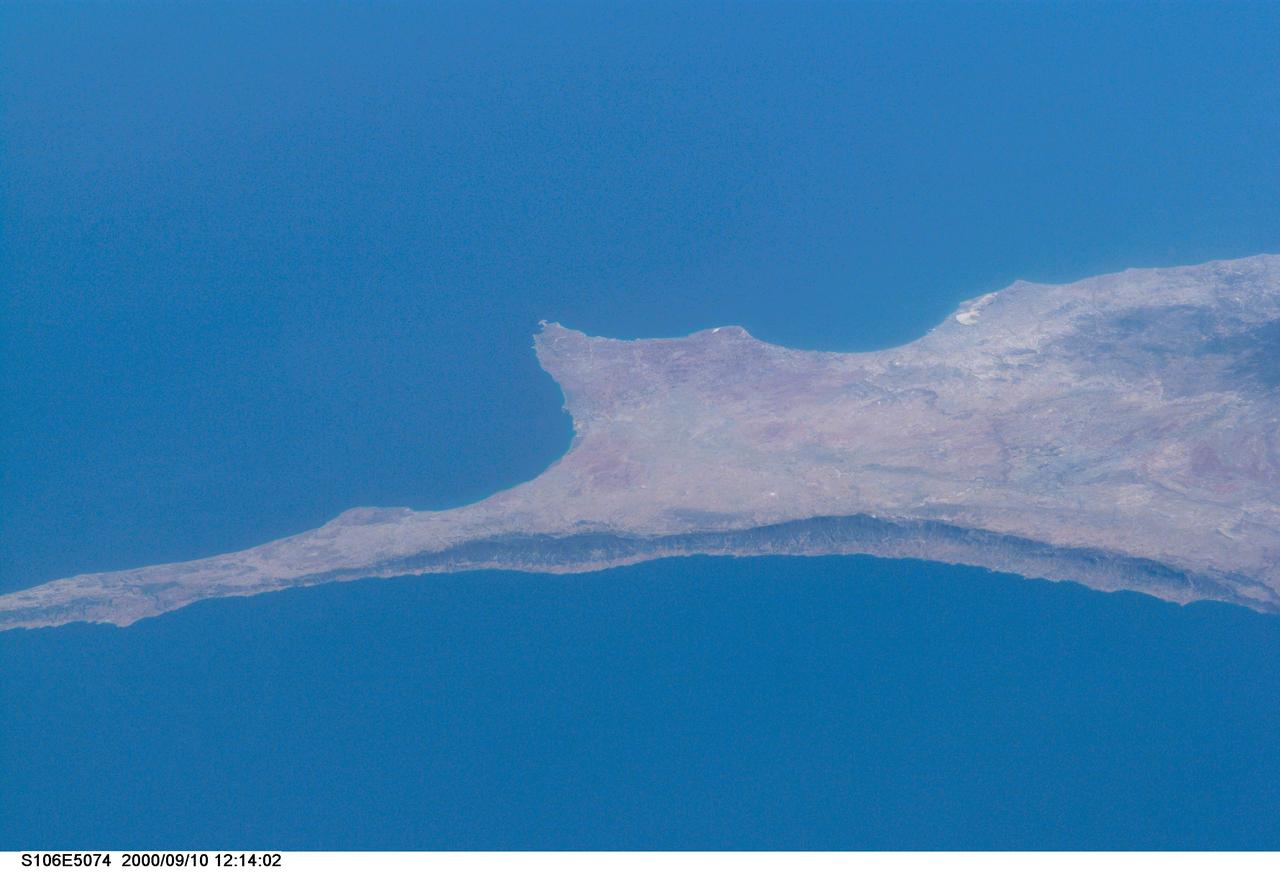
S106-E-5074 (10 September 2000) --- This south-looking view from the Space Shuttle Atlantis, flying above Turkey, features the Mediterranean island of Cyprus. The photo was taken with an electronic still camera (ESC) on Flight Day 3 of the scheduled 11-day STS-106 mission.
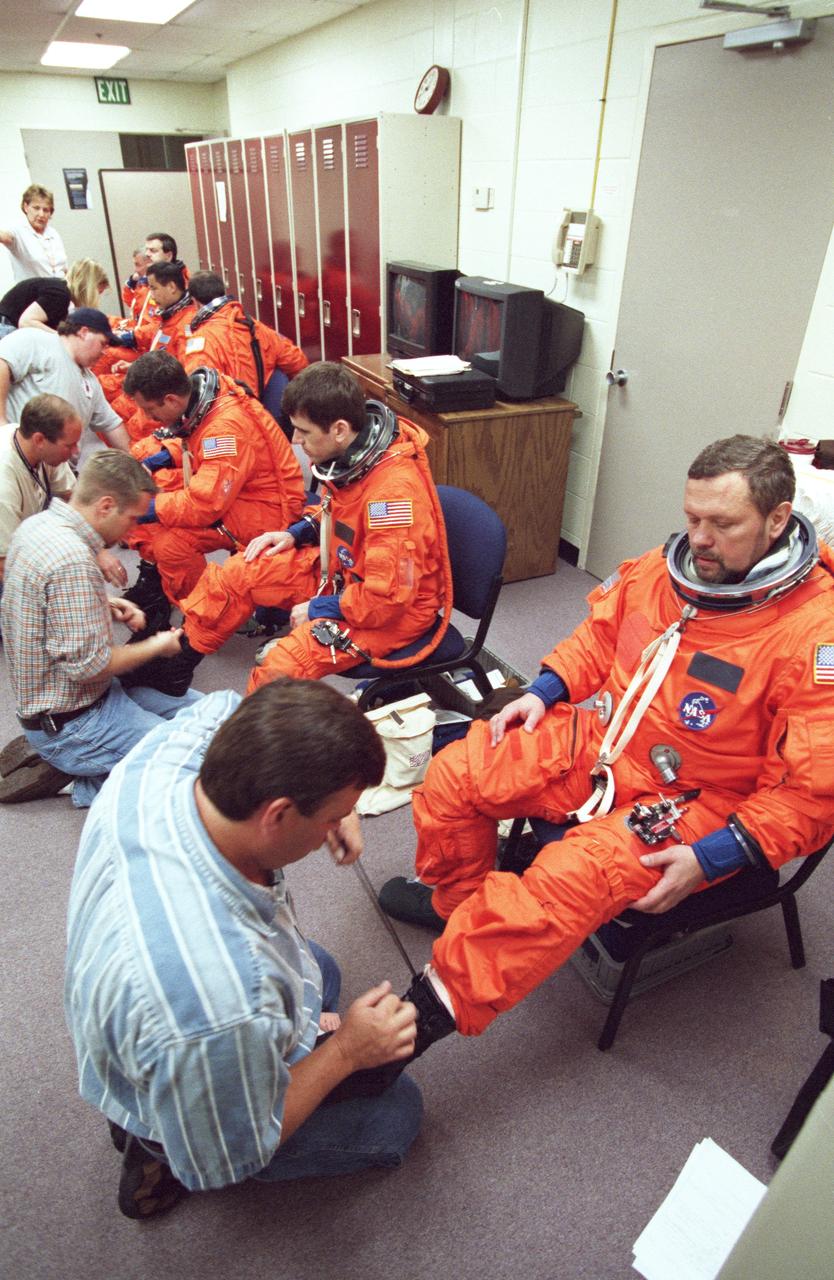
JSC2000-02217 (March 2000) --- United Space Alliance suit technician Mike Birkenseher helps cosmonaut Boris V. Morukov with the donning of his launch and entry suit (LES) prior to STS-106 training in the Systems Integration Facility at the Johnson Space Center (JSC).
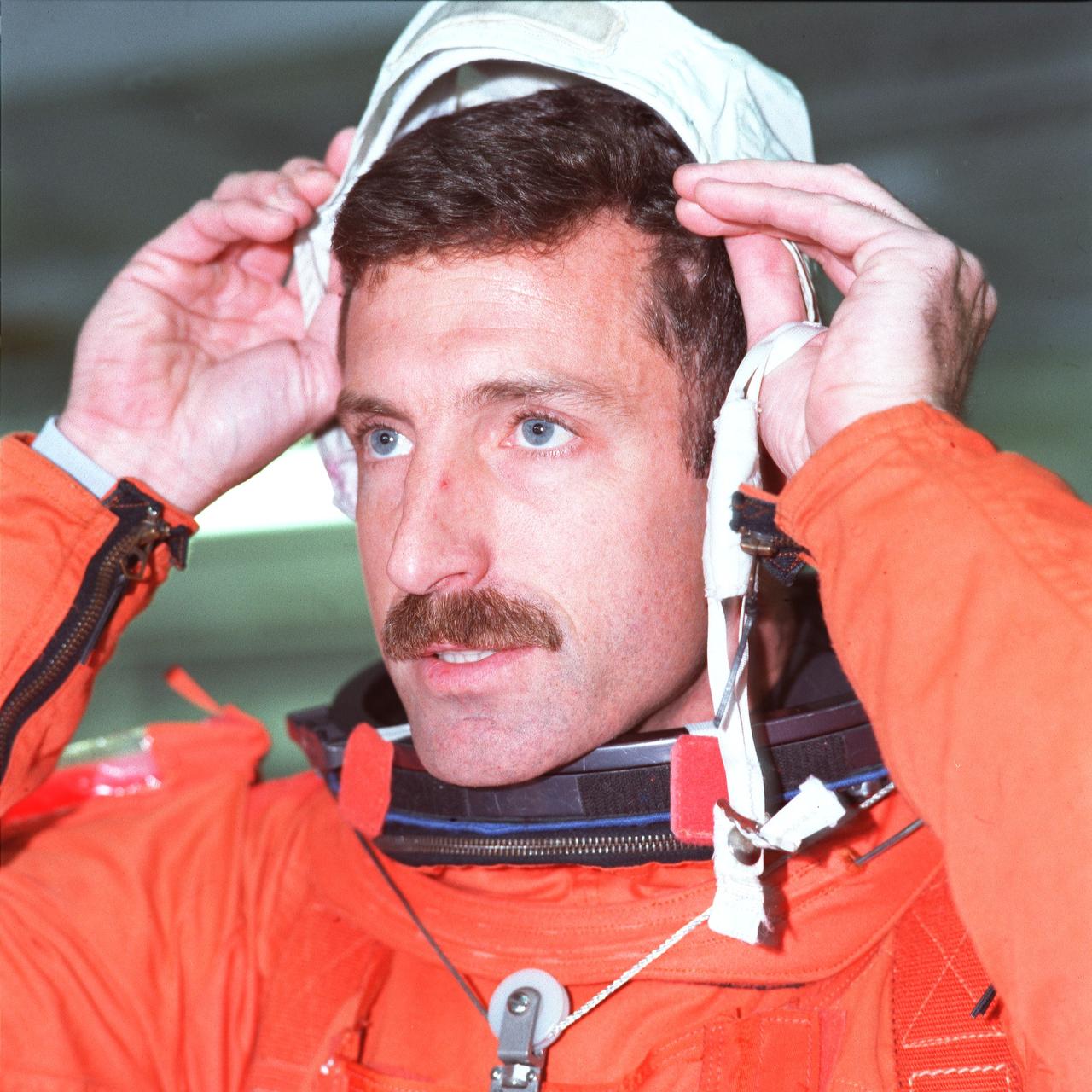
JSC2000-02539 (21 March 2000) --- Astronaut Daniel C. Burbank, STS-106 mission specialist, dons headgear that contains communications equipment, prior to participating in an emergency bailout training exercise in the Neutral Buoyancy Laboratory (NBL) at the Sonny Carter Training Center near the Johnson Space Center (JSC).

JSC2000-02225 (March 2000) --- Astronaut Daniel C. Burbank, mission specialist, fastens the communications carrier assembly (CCA) on his launch and entry suit (LES). Burbank was about to join his six STS-106 crewmates for a simulation exercise in the Systems Integration Facility at the Johnson Space Center (JSC).
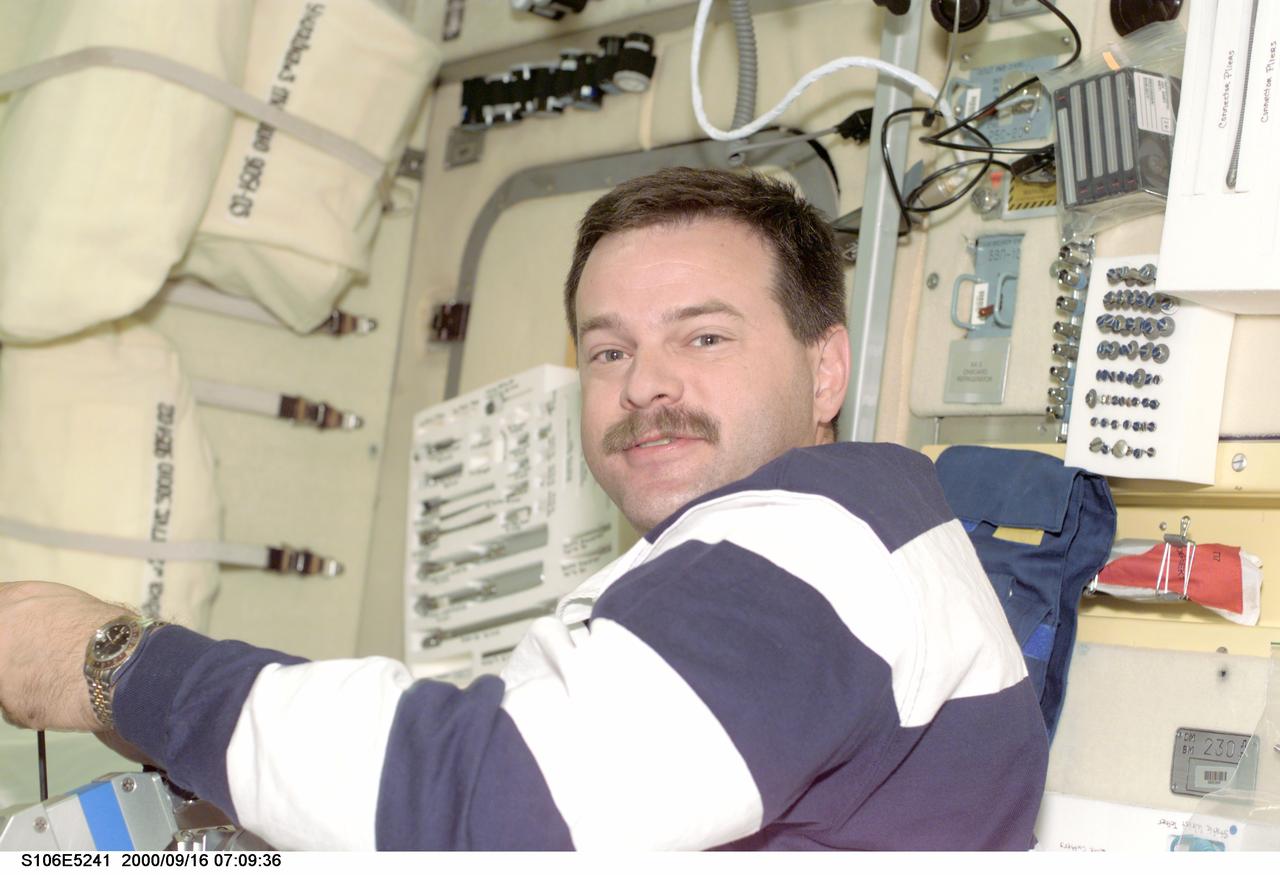
S106-E-5241 (16 September 2000) --- Astronaut Scott D. Altman, pilot, and six STS-106 crewmates are noticing the Zvezda service module is looking more and more ready for permanent habitation following several days of work by the crew.

JSC2000-02564 (21 March 2000) --- Astronaut Terrence W. (Terry) Wilcutt, STS-106 mission commander, talks with crew training staff members during a simulation of an emergency bailout exercise in the water of the Neutral Buoyancy Laboratory (NBL) near the Johnson Space Center (JSC).
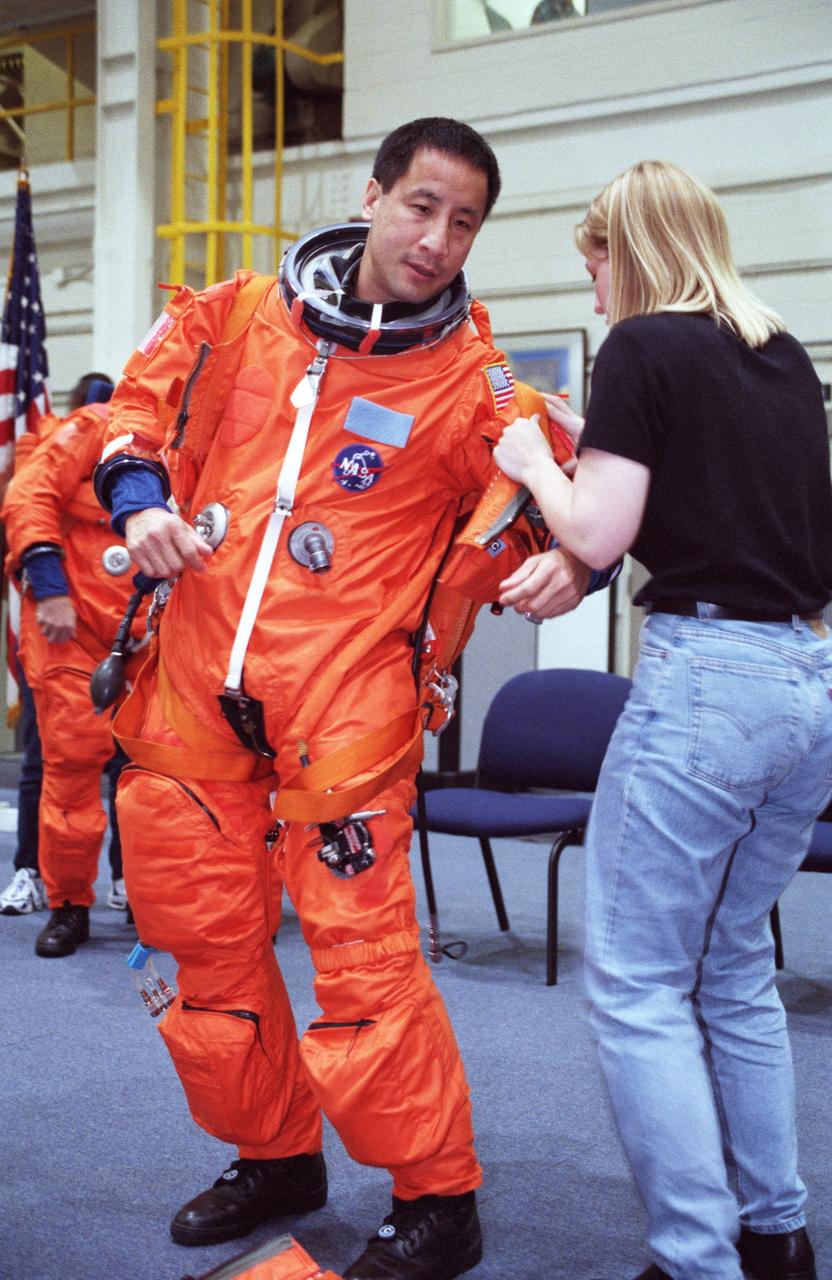
JSC2000-02220 (March 2000) --- Erin Traina, a suit technician for United Space Alliance (USA), assists astronaut Edward T. Lu with his launch and entry suit prior to a STS-106 training session in the Systems Integration Facility at the Johnson Space Center (JSC).
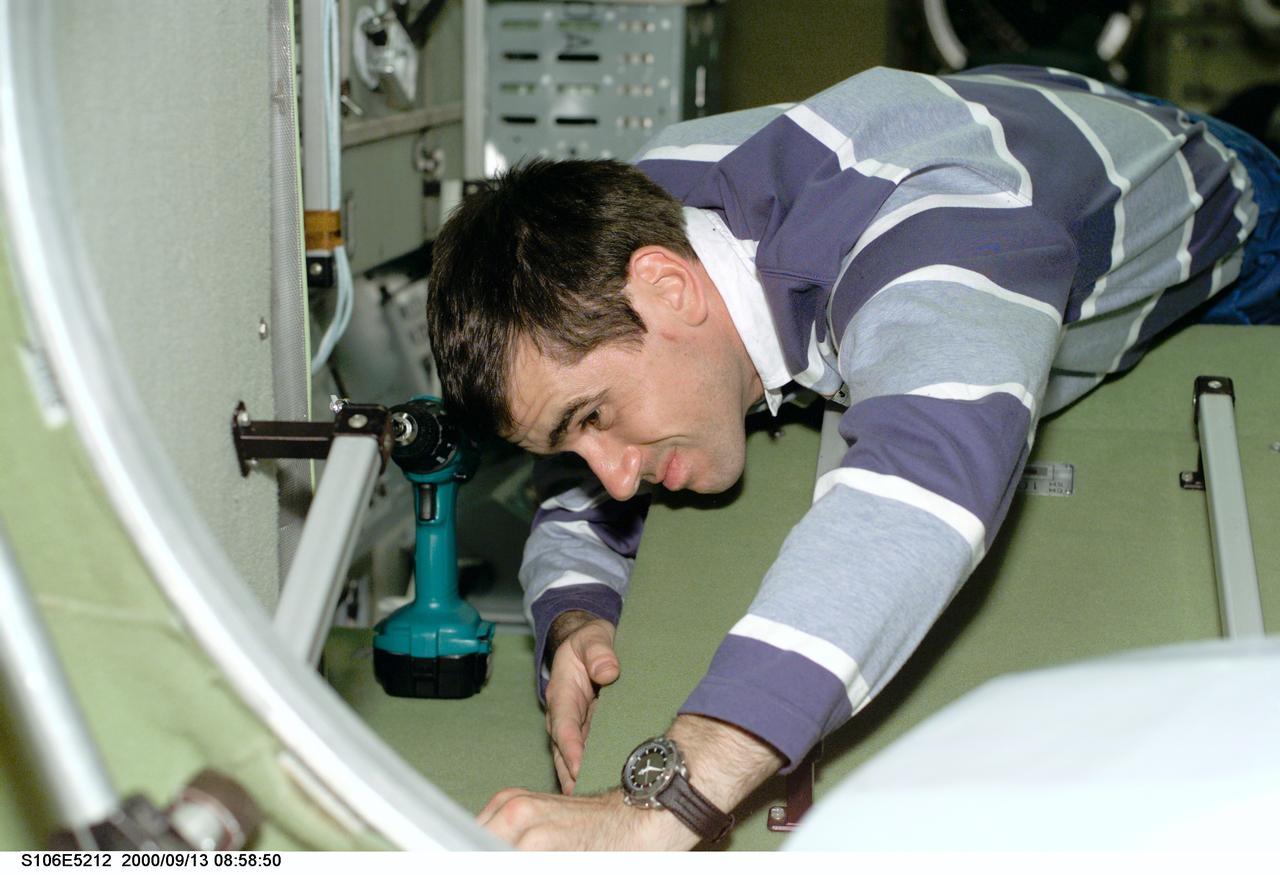
S106-E-5212 (13 September 2000) --- Cosmonaut Yuri I. Malenchenko checks on new work near a hatchway on the International Space Station (ISS). Malenchenko is one of two mission specialists representing the Russian Aviation and Space Agency on the STS-106 mission.
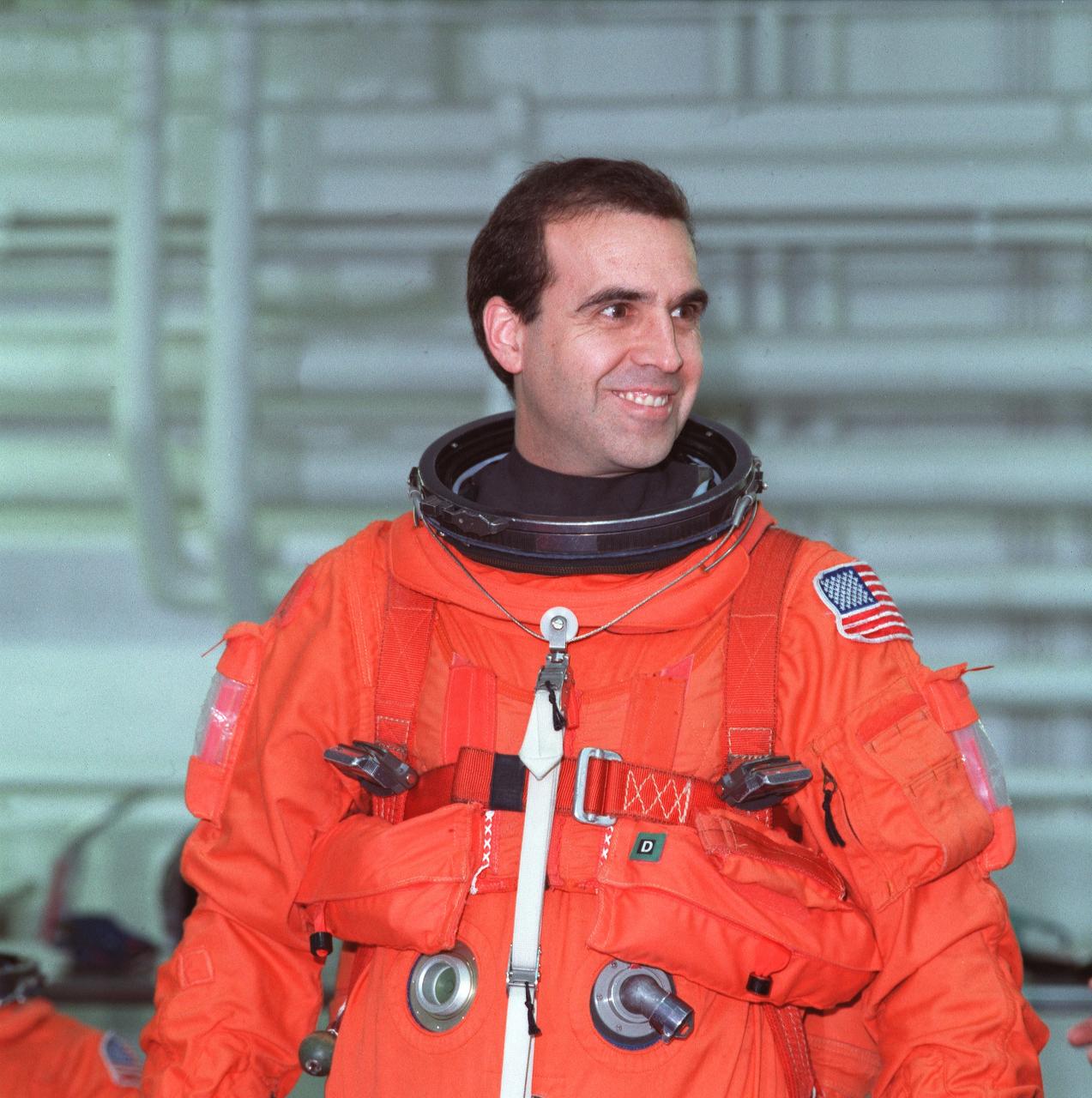
JSC2000-02541 (21 March 2000) --- Astronaut Richard A. Mastracchio, STS-106 mission specialist, prepares to participate in an emergency bailout simulation in the Neutral Buoyancy Laboratory (NBL) at the Sonny Carter Training Center near the Johnson Space Center (JSC).
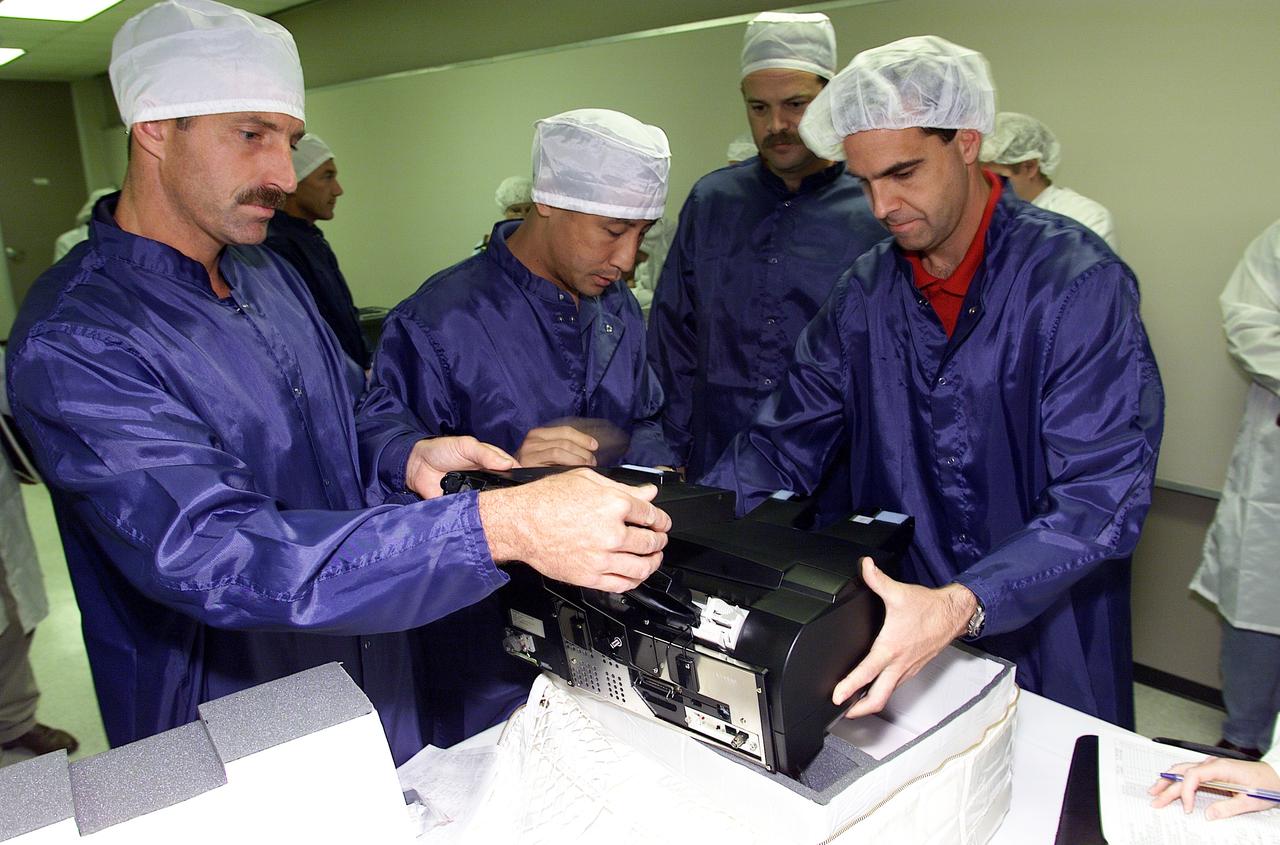
JSC2000-E-20554 (August 2000) --- Four members of the STS-106 crew participate in a bench review of equipment and gear scheduled to fly in the September mission aboard the Space Shuttle Atlantis. From the left are astronauts Daniel C. Burbank, Edward T. Lu, Scott D. Altman and Richard A. Mastracchio.
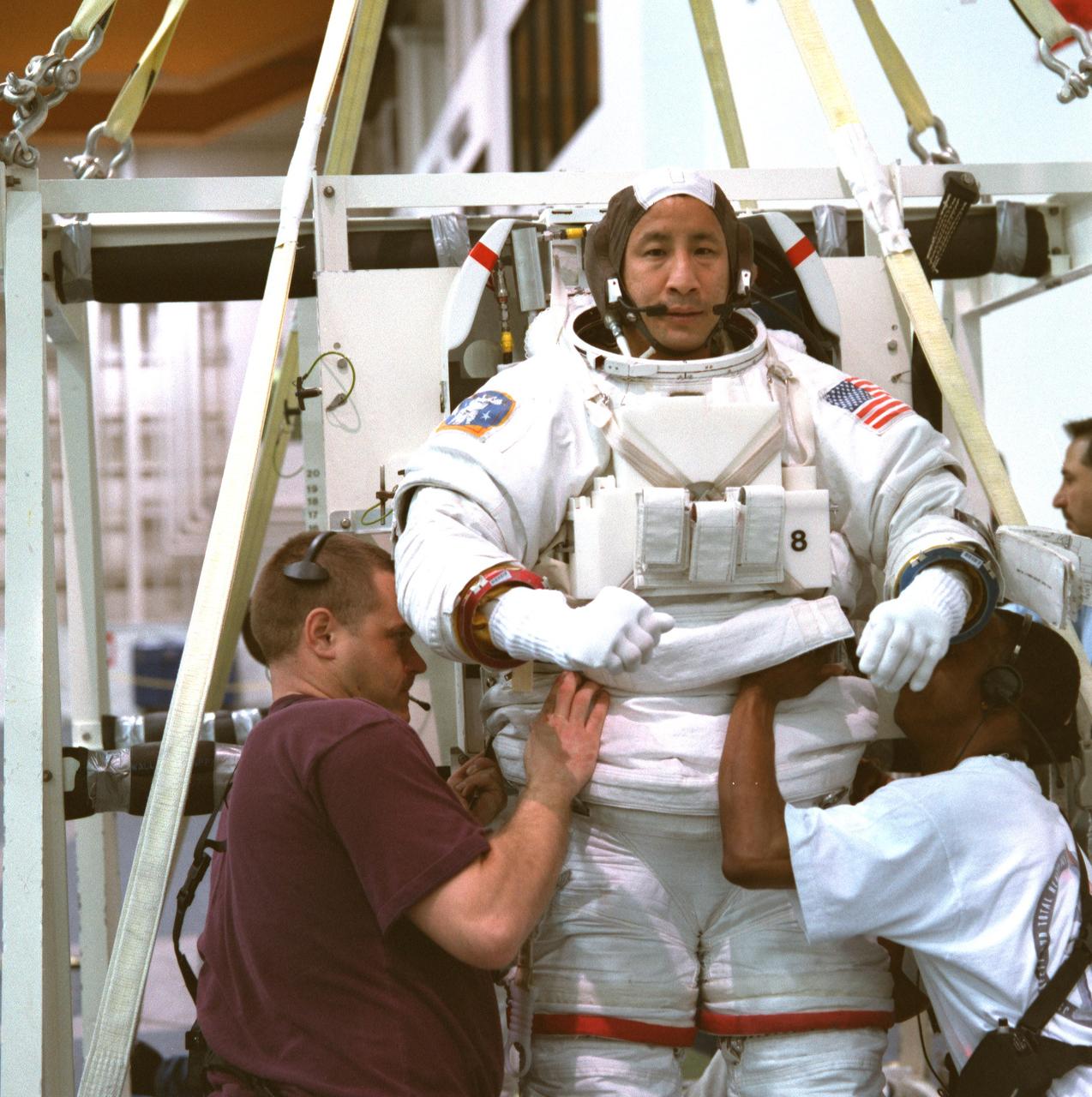
JSC2000-02186 (March 2000) --- Astronaut Edward T. Lu, mission specialist, is helped with the training version of his extravehicular mobility unit (EMU), prior to an underwater rehearsal of a space walk scheduled for STS-106. The EVA training is being conducted at the Neutral Buoyancy Laboratory (NBL)in the Sonny Carter Training Center near the Johnson Space Center (JSC).
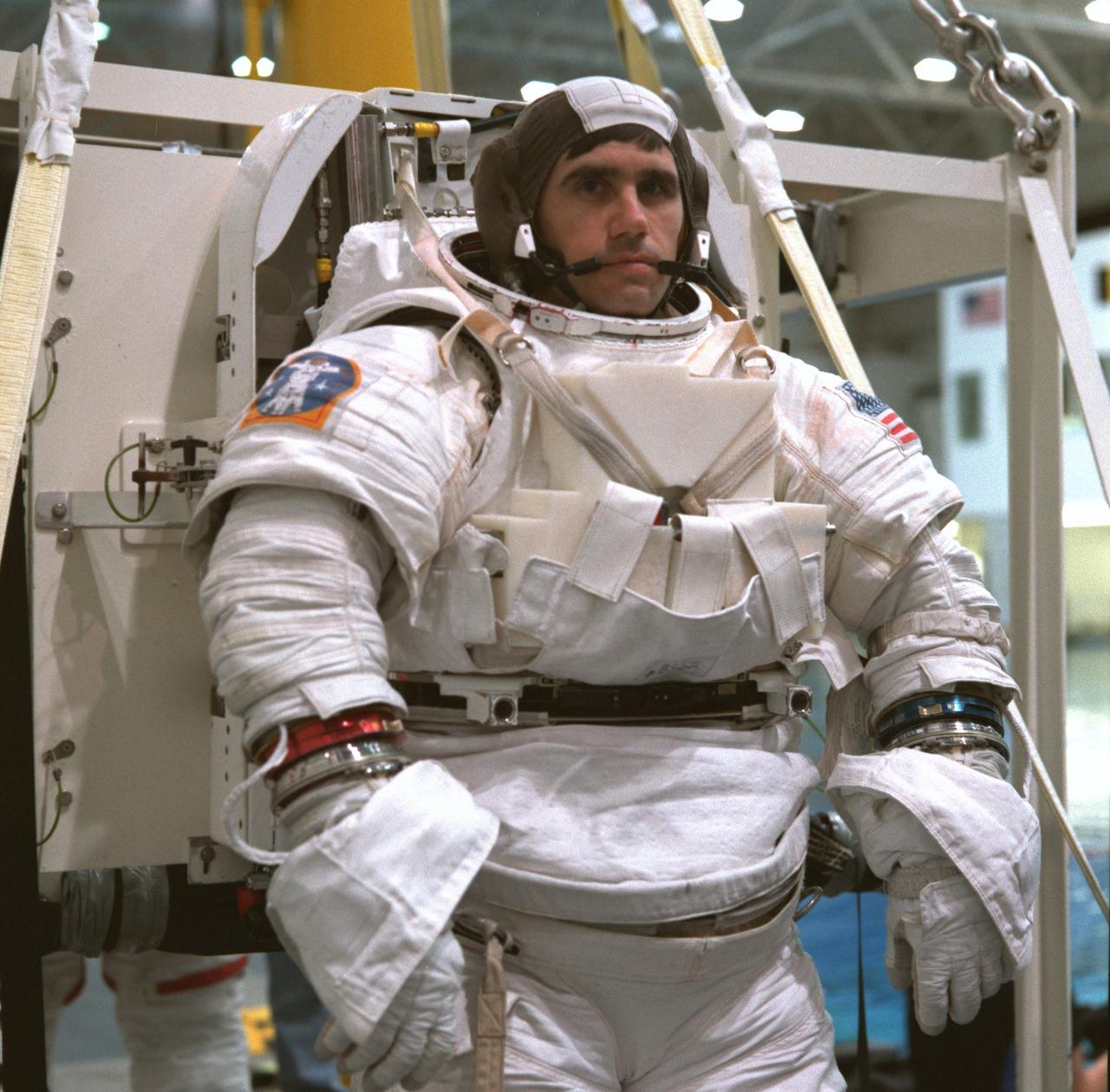
JSC2000-02189 (March 2000) --- Cosmonaut Yuri Malenchenko, wearing a training version of the extravehicular mobility unit (EMU), stands on a platform that will allow him to be lowered into water for an underwater rehearsal of a space walk scheduled for STS-106. The EVA training is being conducted at the Neutral Buoyancy Laboratory (NBL)in the Sonny Carter Training Center near the Johnson Space Center (JSC). Malenchenko and a second cosmonaut on this mission represent the Russian Space Agency (RSA).
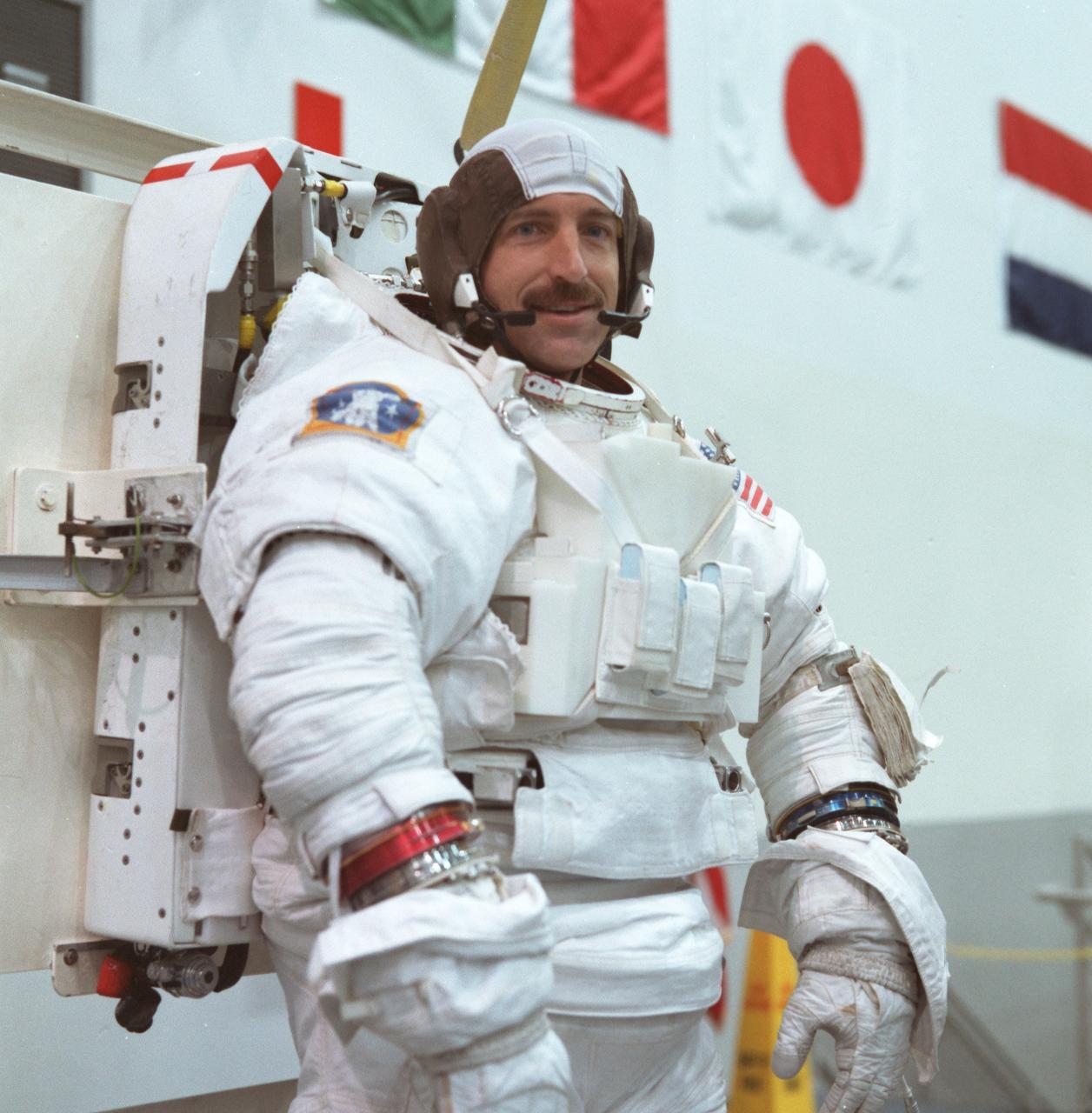
JSC2000-02191 (March 2000) --- Astronaut Daniel C. Burbank, wearing a training version of the extravehicular mobility unit (EMU), stands on a platform that will allow him to be lowered into water for an underwater rehearsal of a space walk scheduled for STS-106. The EVA training is being conducted at the Neutral Buoyancy Laboratory (NBL)in the Sonny Carter Training Center near the Johnson Space Center (JSC).
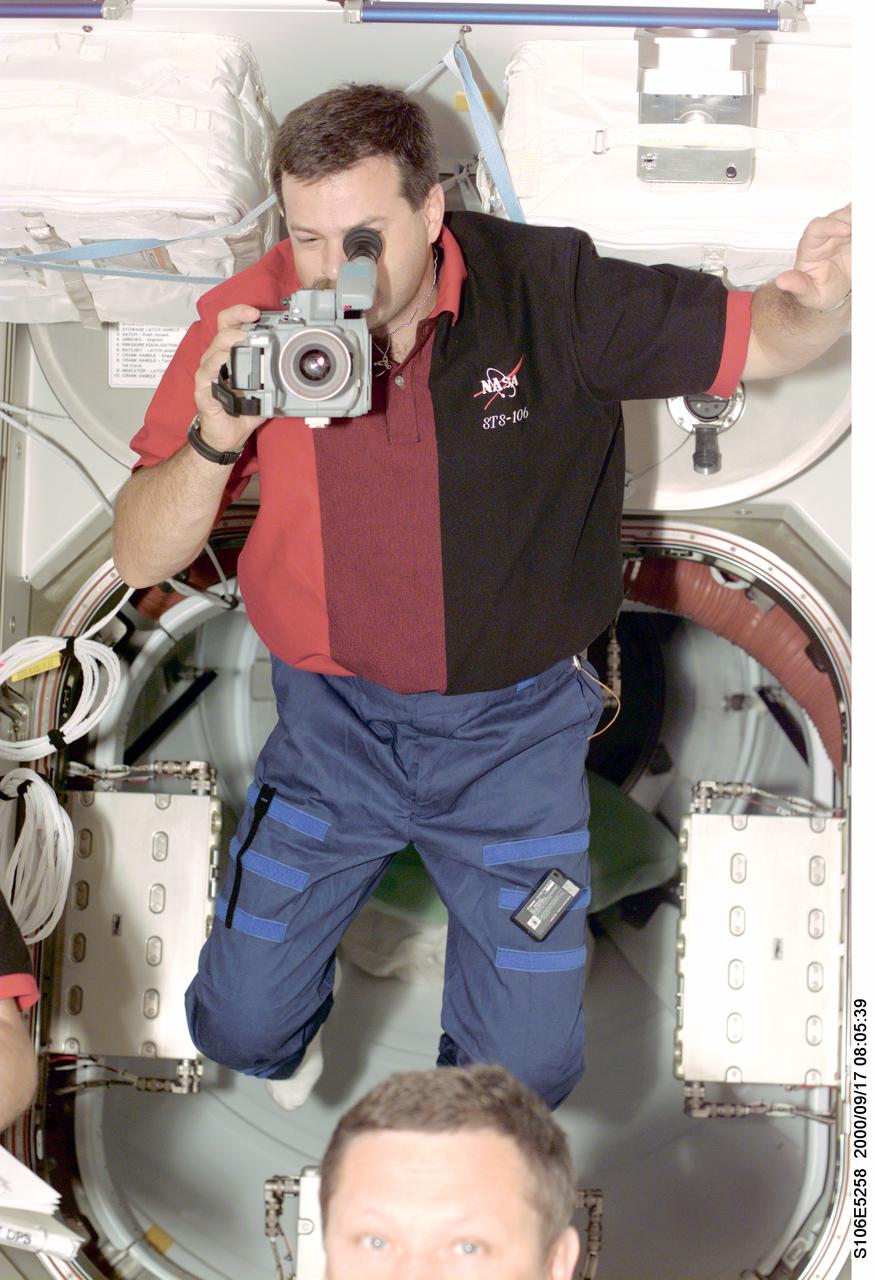
S106-E-5258 (17 September 2000) --- As the STS-106 crew is in the process of closing down its operations with the International Space Station (ISS), astronaut Scott D. Altman, pilot, documents the activity.
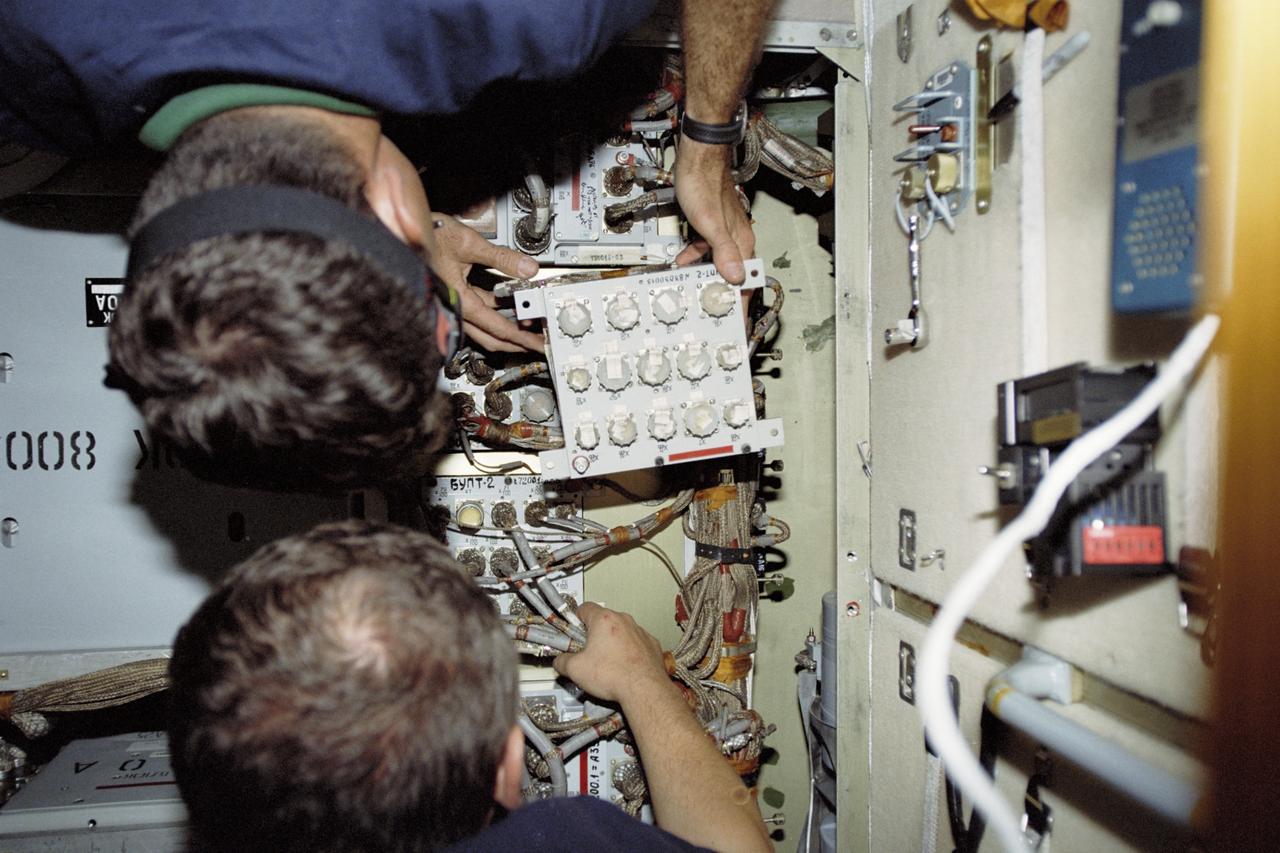
STS-106 Mission Specialist (MS) Daniel Burbank (with headband light) and MS / cosmonaut Boris Morukov work on the storage batteries in the Functional Cargo Block (FGB) / Zarya.
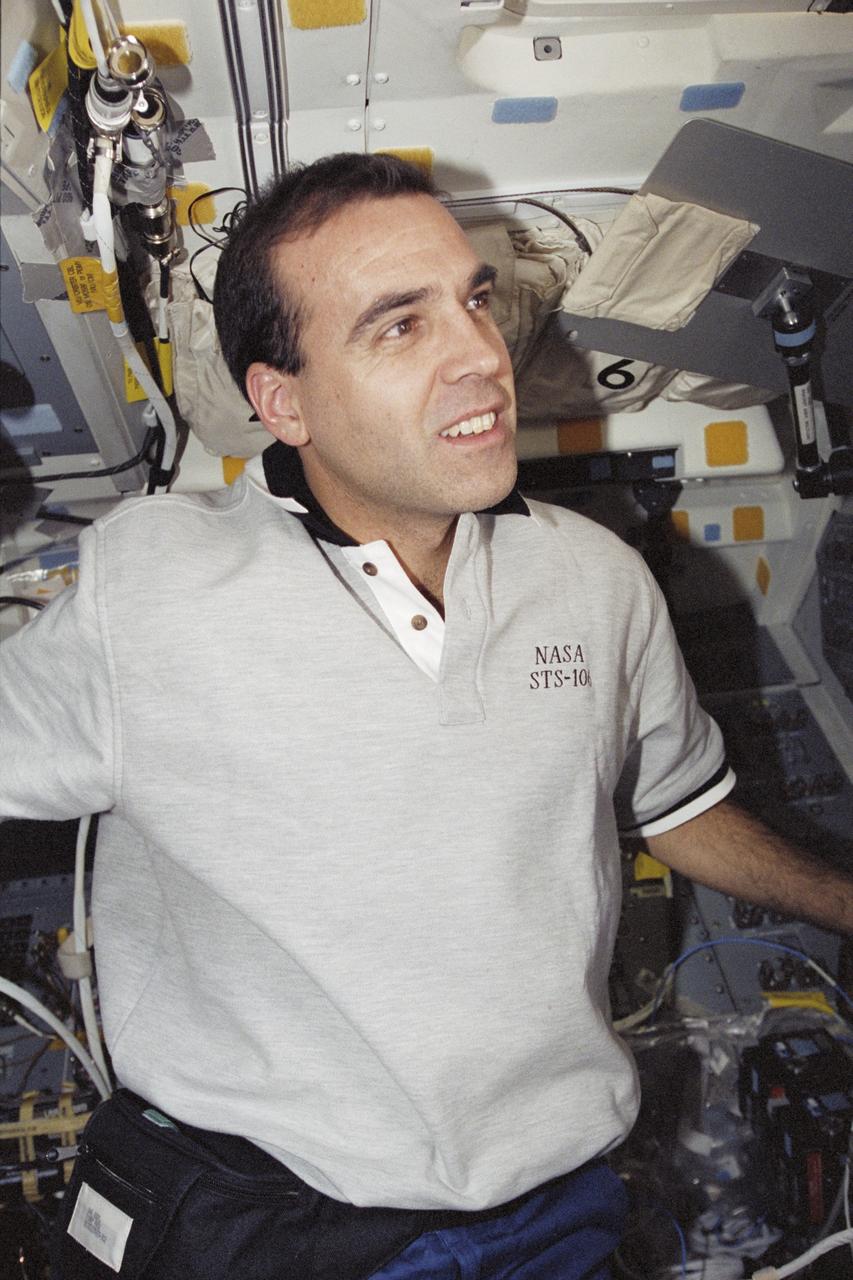
STS106-370-006 (8-20 September 2000) --- Astronaut Richard A. Mastracchio, STS-106 mission specialist, is photographed on the aft flight deck of the Space Shuttle Atlantis. Mastracchio is marking his first space flight.
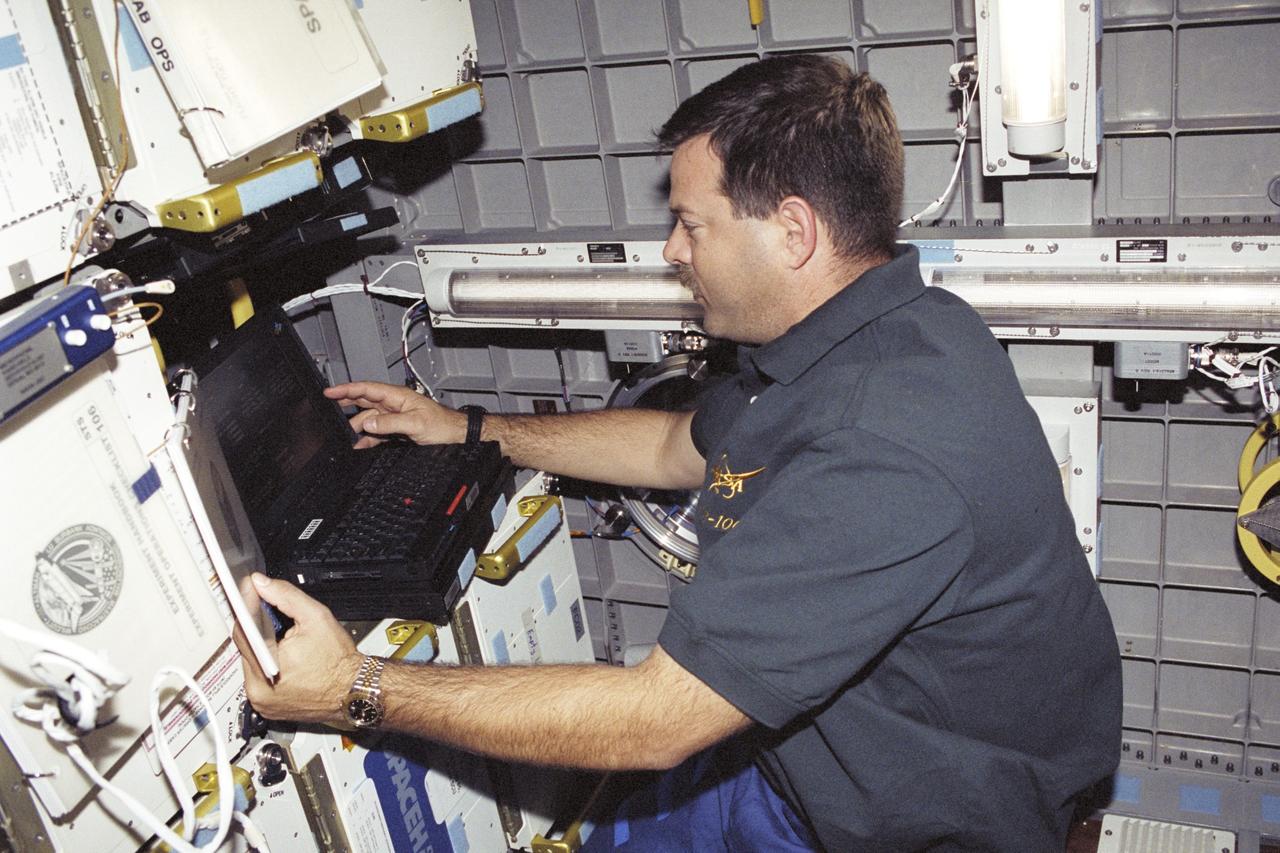
STS106-388-025 (8-20 September 2000) --- Astronaut Scott D. Altman, STS-106 pilot, works on a laptop computer in the SPACEHAB Logistics Double Module onboard the Space Shuttle Atlantis.
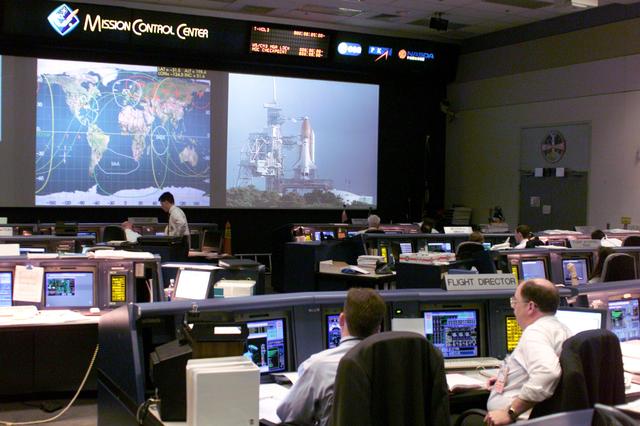
JSC2000-E-22286 (8 September 2000) --- An overall shot in Houston's Mission Control Center (MCC) shows flight controllers awaiting the launch of the Space Shuttle Atlantis from the Kennedy Space Center (KSC) in Florida. The vehicle later launched on schedule, at 8:46 a.m. (EDT), September 8, 2000, as the Johnson Space Center (JSC) flight control team took the baton from KSC's launch controllers. According to flight director Bill Reeves, "The picture referenced was taken less than an hour before launch for STS-106, before we changed the front screens for ascent operations. Wayne Hale (in glasses) is the Flight director for ascent and LeRoy Cain seated to his left was serving as "Weather Flight" for Wayne. The console in the front right corner of the room next to the screens is the Ground Control position, where I was supporting at this time. The man with white hair is Norn Talbott, who will be retiring after this flight with more than 35 years at NASA. Ray Grossman is next to him, who is training to take his place on the GC Ascent Team. I am in fron of and slightly to the right of Ray. As you can see by the boxes at the consoel behind us (Mechanical), we come well prepared for all contingencies, including donuts for early morning shifts. We were on console by 2:00 am central time for the 7:45 am launch." Reference: https://spaceflight.nasa.gov/feedback/expert/answer/mcc/sts-106/09_14_09_35_19.html
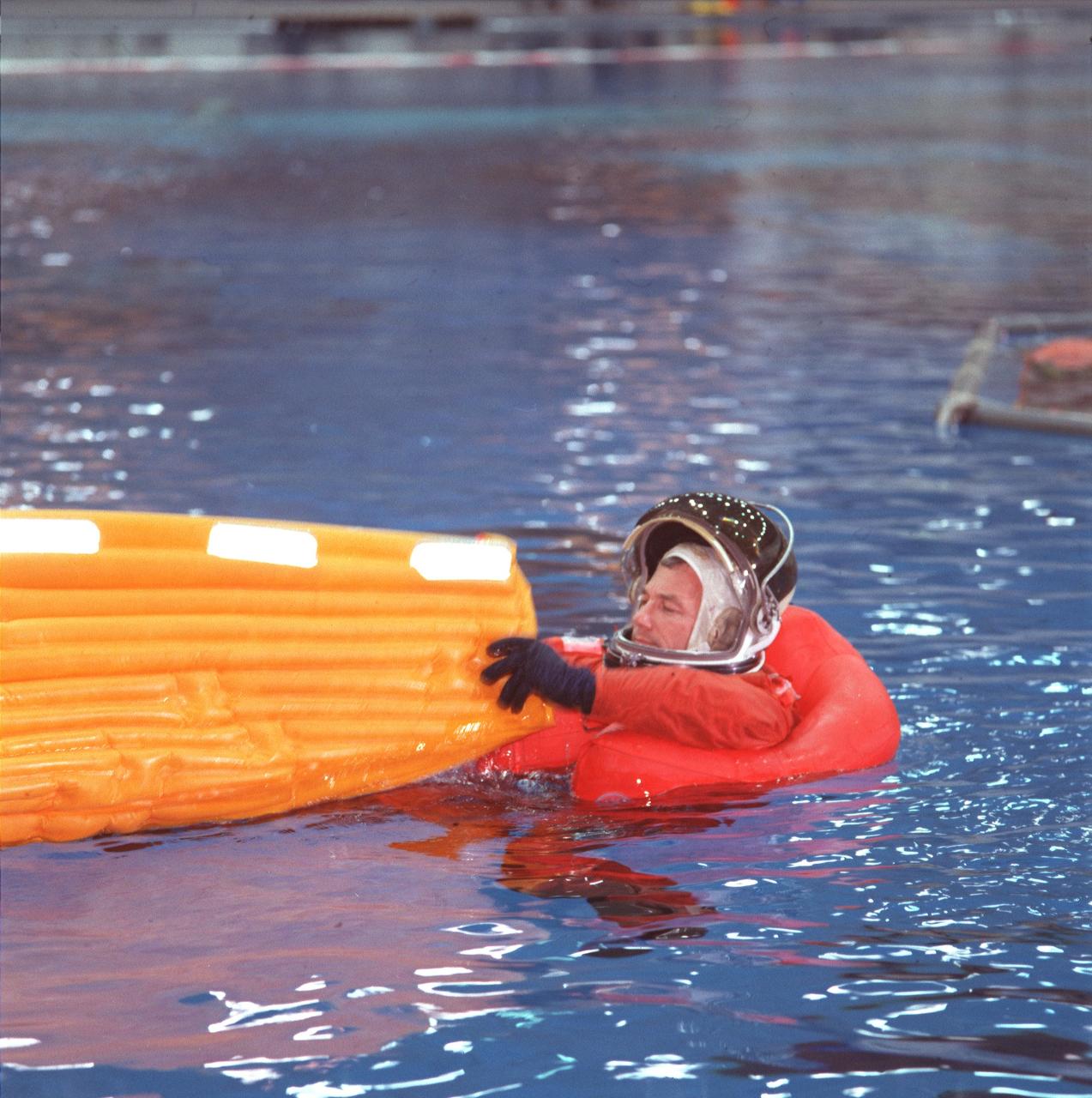
JSC2000-02567 (21 March 2000) --- Astronaut Terrence W. (Terry) Wilcutt, STS-106 mission commander, empties water from his newly-deployed life raft during a simulation of an emergency bailout exercise. The water survival training routinely takes place in the Neutral Buoyancy Laboratory (NBL) near the Johnson Space Center (JSC).
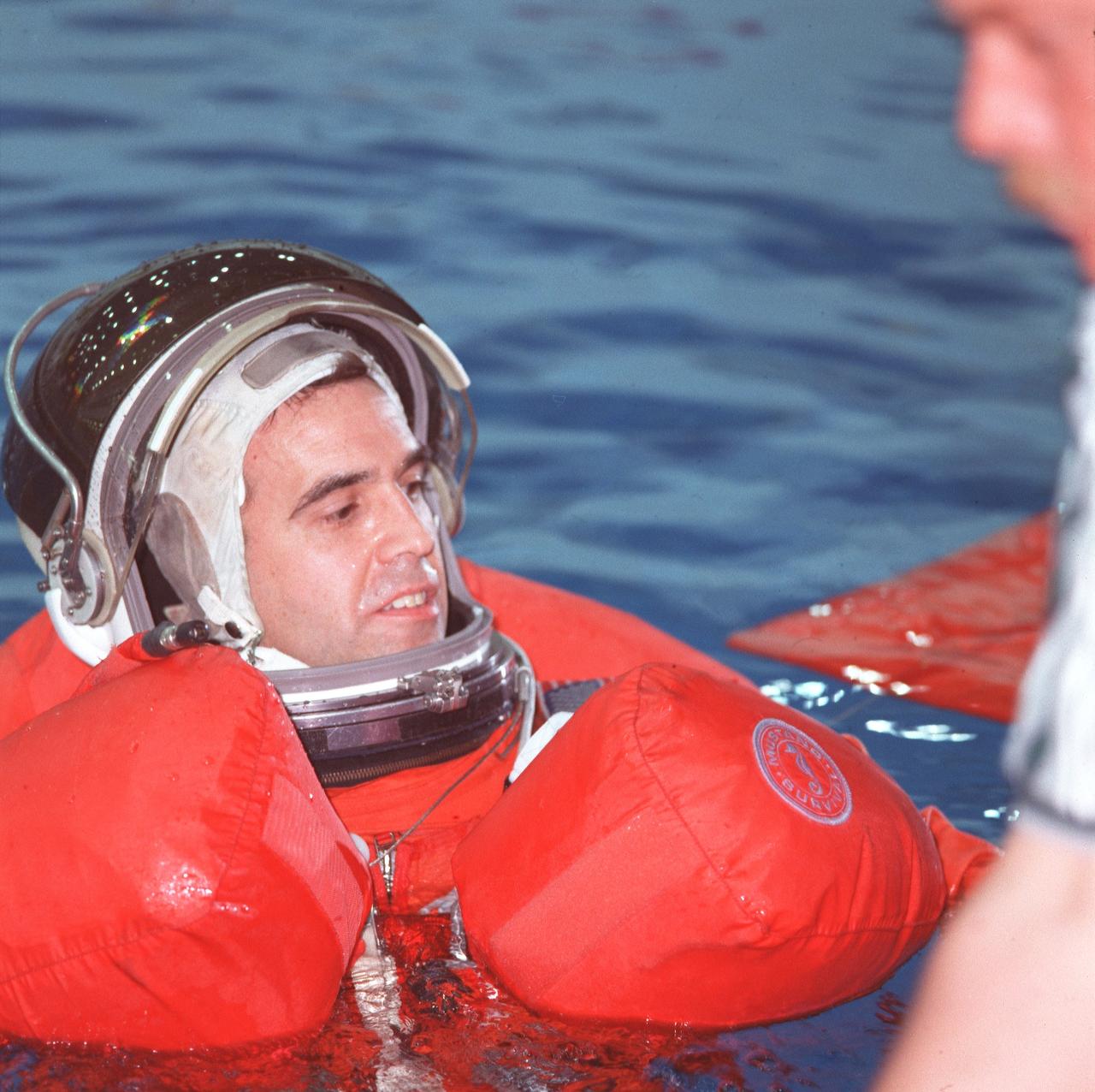
JSC2000-02523 (21 March 2000) --- Astronaut Richard A. Mastracchio, STS-106 mission specialist, depends on his "Mae West" preserver to keep him afloat as he deploys his life raft during an emergency bailout exercise in the Neutral Buoyancy Laboratory (NBL). Mastracchio, an alumnus of NASA 1996 class of astronaut candidates, will join four other astronauts and two cosmonauts, representing the Russian Aviation and Space Agency, for a late summer visit to the International Space Station.
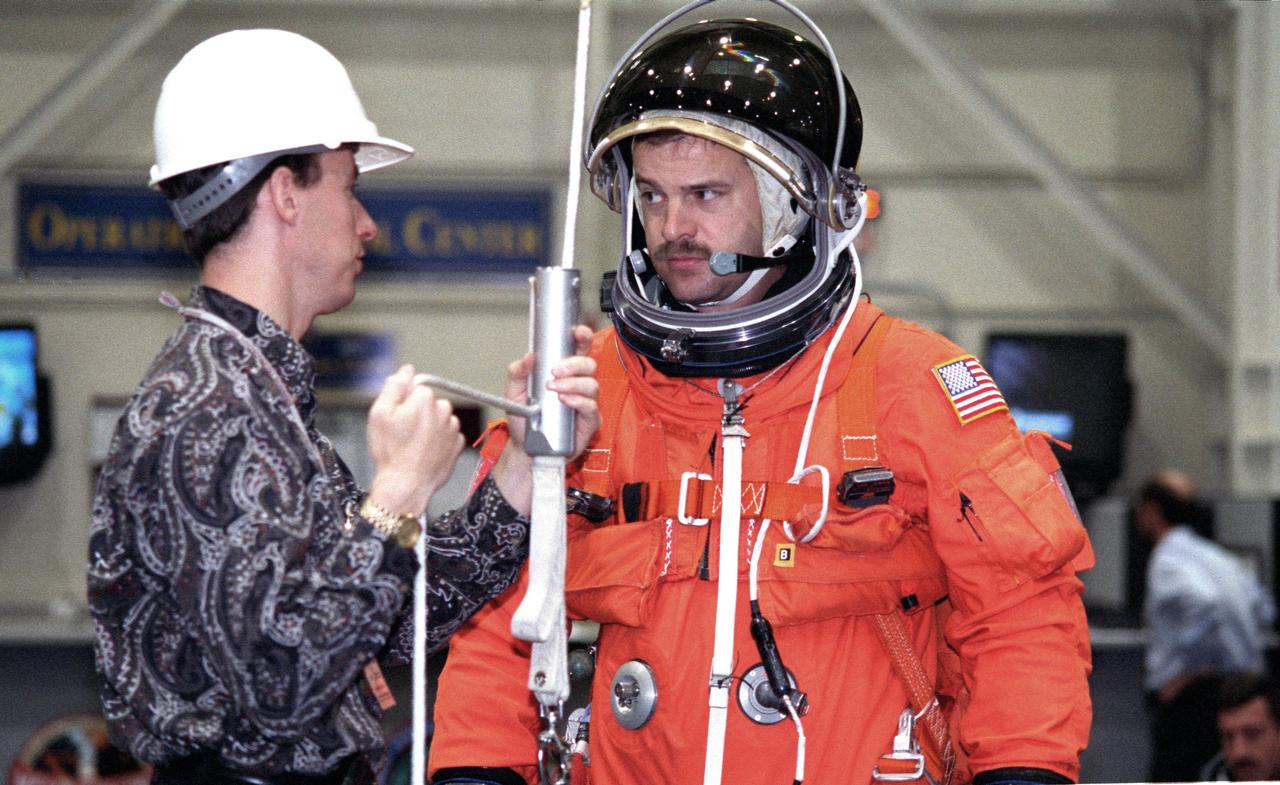
JSC2000-02935 (5 April 2000) --- David Pogue (left), a crew escape equipment trainer, helps astronaut Scott D. Altman with a special device that enables him to rappel from an Earthbound shuttle in trouble. The STS-106 pilot will join four other NASA astronauts and two cosmonauts representing the Russian Aviaition and Space Agency for a late summer visit to the International Space Station.
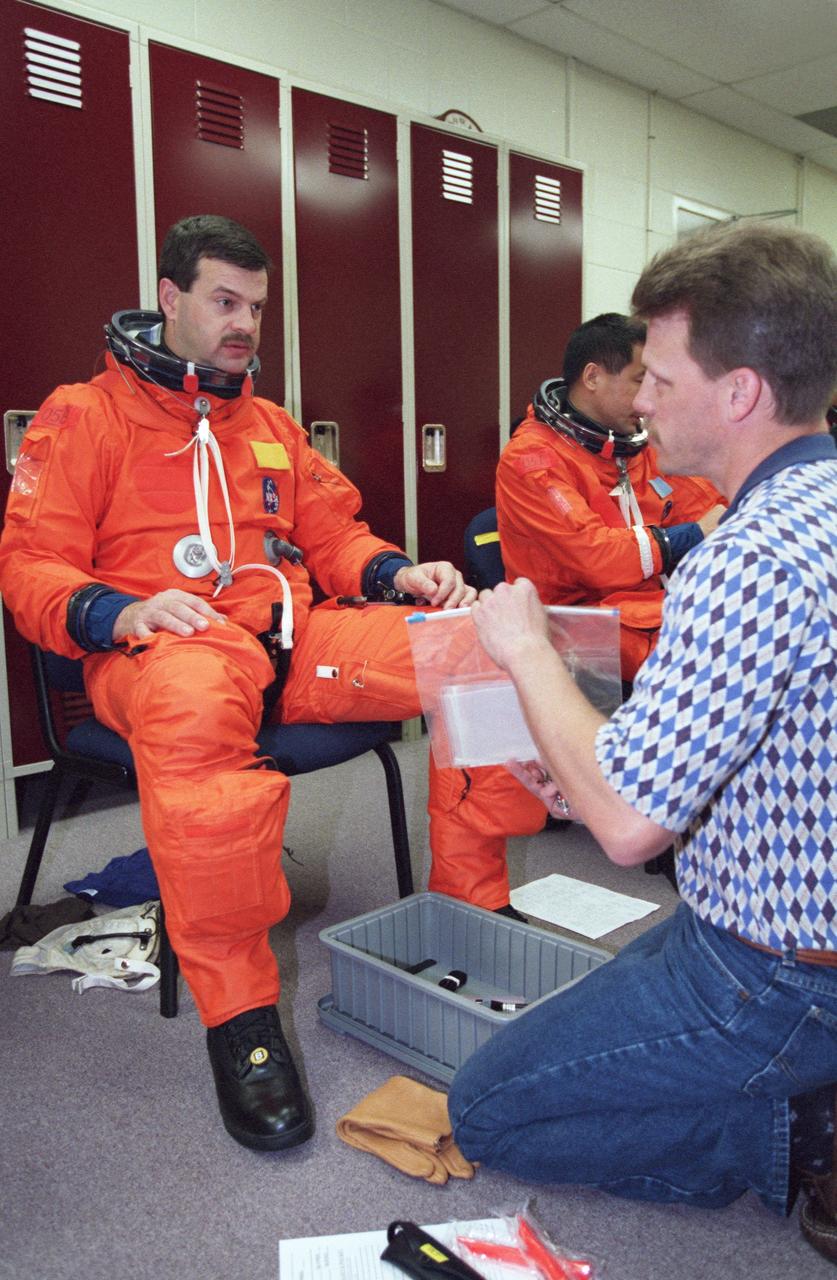
JSC2000-02218 (March 2000) --- United Space Alliance (USA) suit technician Brad Milling assists astronaut Scott D. Altman, pilot for STS-106, with his launch and entry suit. Altman was getting ready for a training session in the Systems Integration Facility at the Johnson Space Center (JSC). Astronaut Edward T. Lu, mission specialist, can be seen in the background.
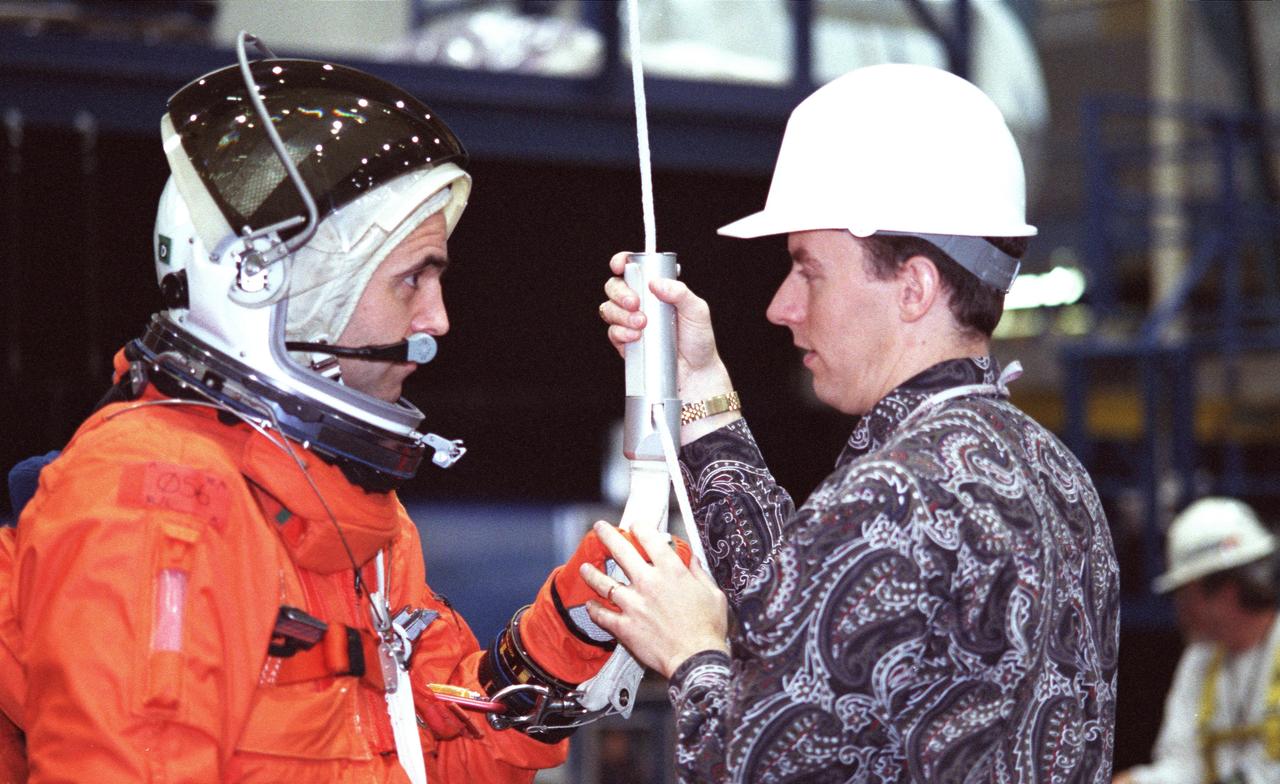
JSC2000-02929 (5 April 2000) --- Astronaut Richard A. Mastracchio (left), STS-106 mission specialist, receives some tips from David Pogue, a crew escape equipment trainer, during emergency egress training at the Johnson Space Center's Systems Integration Facility. Mastracchio will join four other NASA astronauts and two cosmonauts representing the Russian Aviation and Space Agency for a visit to the International Space Station in late summer of this year.
JSC2000-E-19040 (July 2000) --- These flight directors have been named for key support to the STS-106 mission, scheduled for September of this year. In front are Phil Engelauf, Orbit 1 and lead; Kelly Beck, planning. Standing, from the left, are Wayne Hale, ascent and entry; Bill Reeves, Team 4; and Paul Dye, Orbit 2. Team 4 will periodically fill in for other flight controllers, allowing some shifting of teams to other times of the day.
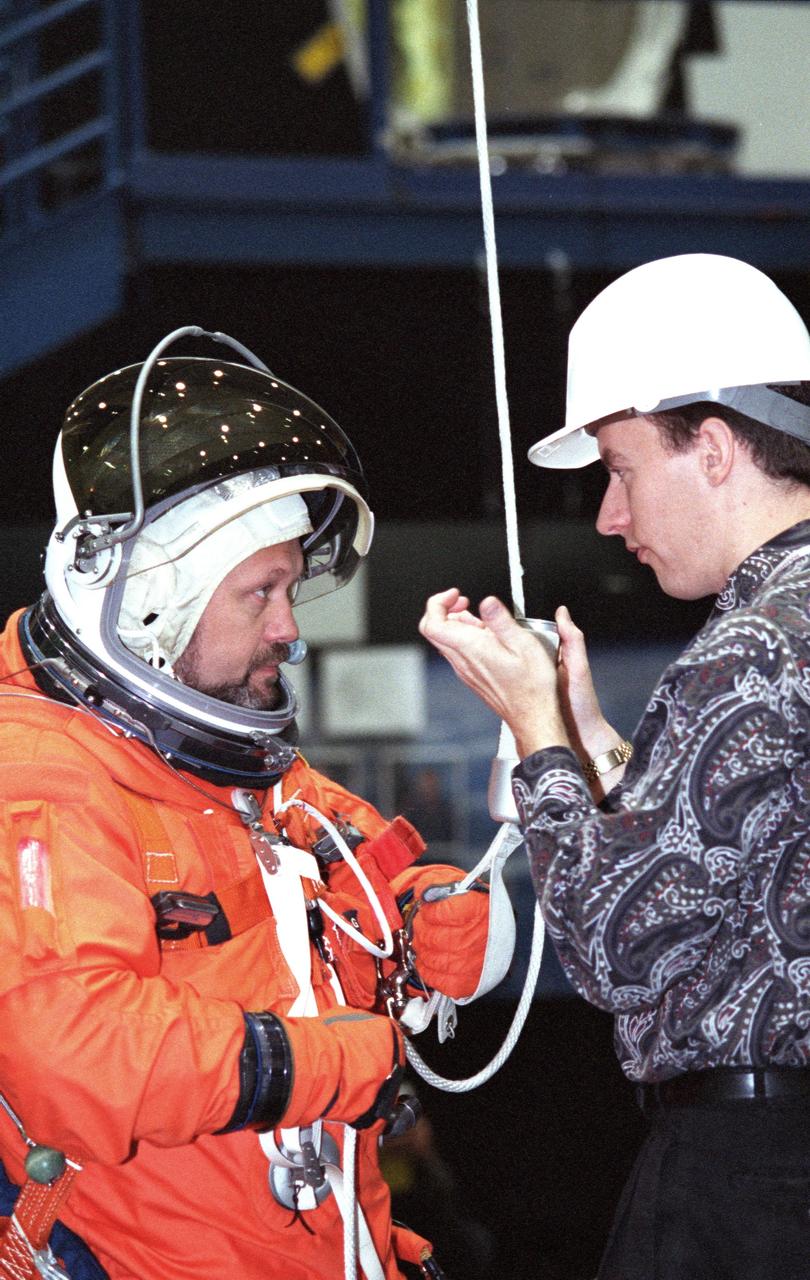
JSC2000-02938 (5 April 2000) --- David Pogue (right), a crew escape equipment trainer, briefs cosmonaut Boris V. Morukov on the usage of a special device that enables the STS-106 mission specialist to rappel from a shuttle in trouble on the ground. A nearby crew-training mockup in the JSC's Systems Integration Facility allowed the Russian Aviation and Space Agency's cosmonaut the opportunity to train for procedures to follow in the event of the need to evacuate a distressed shuttle's cabin while on the ground.
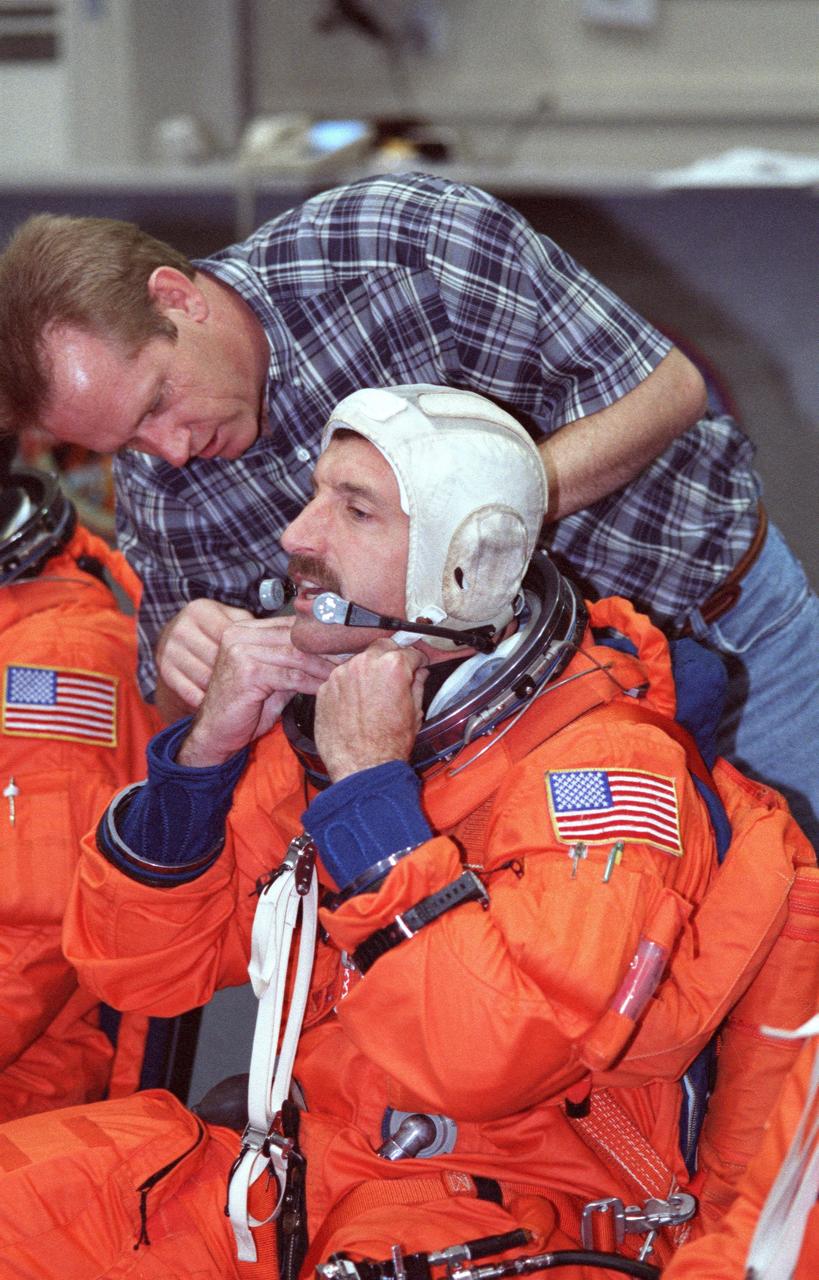
JSC2000-02936 (5 April 2000) --- John Hazelhurst, a suit technician for the United Space Alliance, assists astronaut Daniel C. Burbank with final touches on his suit-donning exercise as the STS-106 mission specialist prepares to participate in emergency egress training. Similar training is afforded each shuttle crew in the Johnson Space Center's Systems Integration Facility. Burbank will join four other NASA astronauts and two cosmonauts representing the Russian Aviation and Space Agency for a late summer visit to the International Space Station.
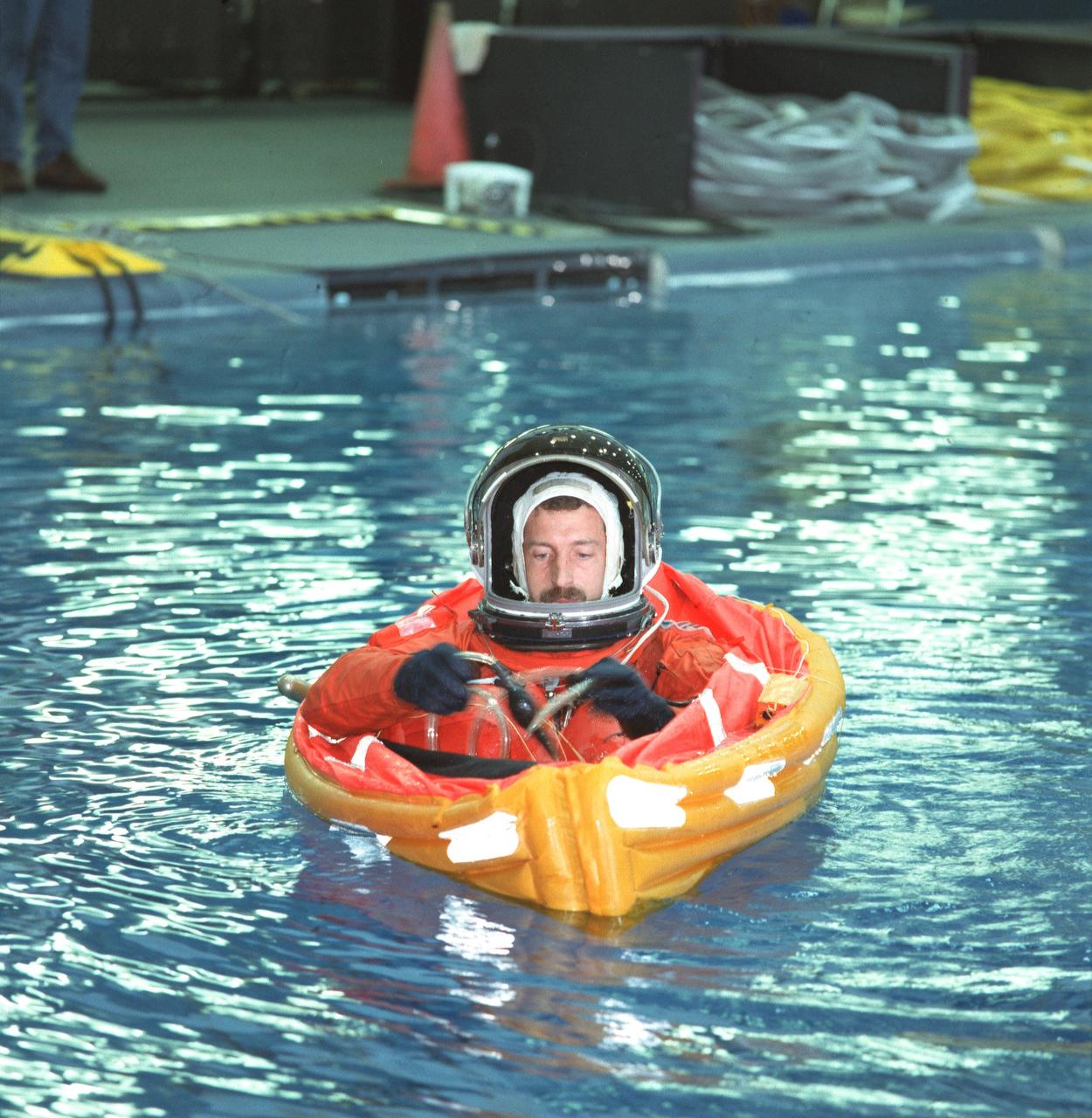
JSC2000-02549 (21 March 2000) --- Astronaut Daniel C. Burbank, STS-106 mission specialist, is in the process of deploying his life raft during an emergency bailout training exercise in the Neutral Buoyancy Laboratory (NBL). Burbank will join four other NASA astronauts and two cosmonauts, representing the Russian Aviation and Space Agency, for a late summer visit to the International Space Station.
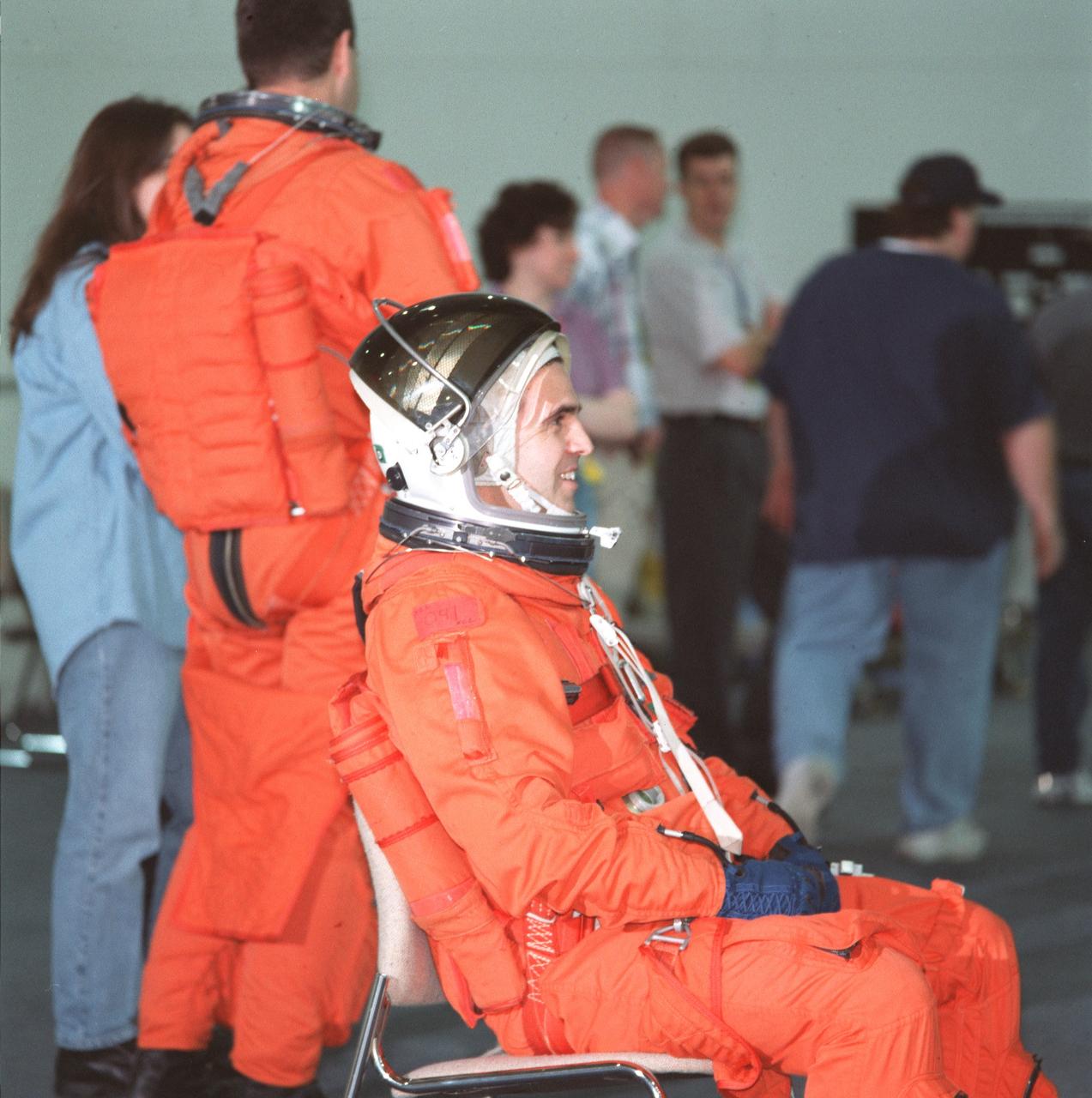
JSC2000-02568 (21 March 2000) --- Astronaut Richard A. Mastracchio, STS-106 mission specialist, awaits his turn to be dropped by a simulated parachute into water during an emergency bailout exercise in the Neutral Buoyancy Laboratory (NBL). Mastracchio, an alumnus of NASA's 1996 class of astronaut candidates, will join four other astronauts and two cosmonauts, representing the Russian Aviation and Space Agency, for a late summer visit to the International Space Station.
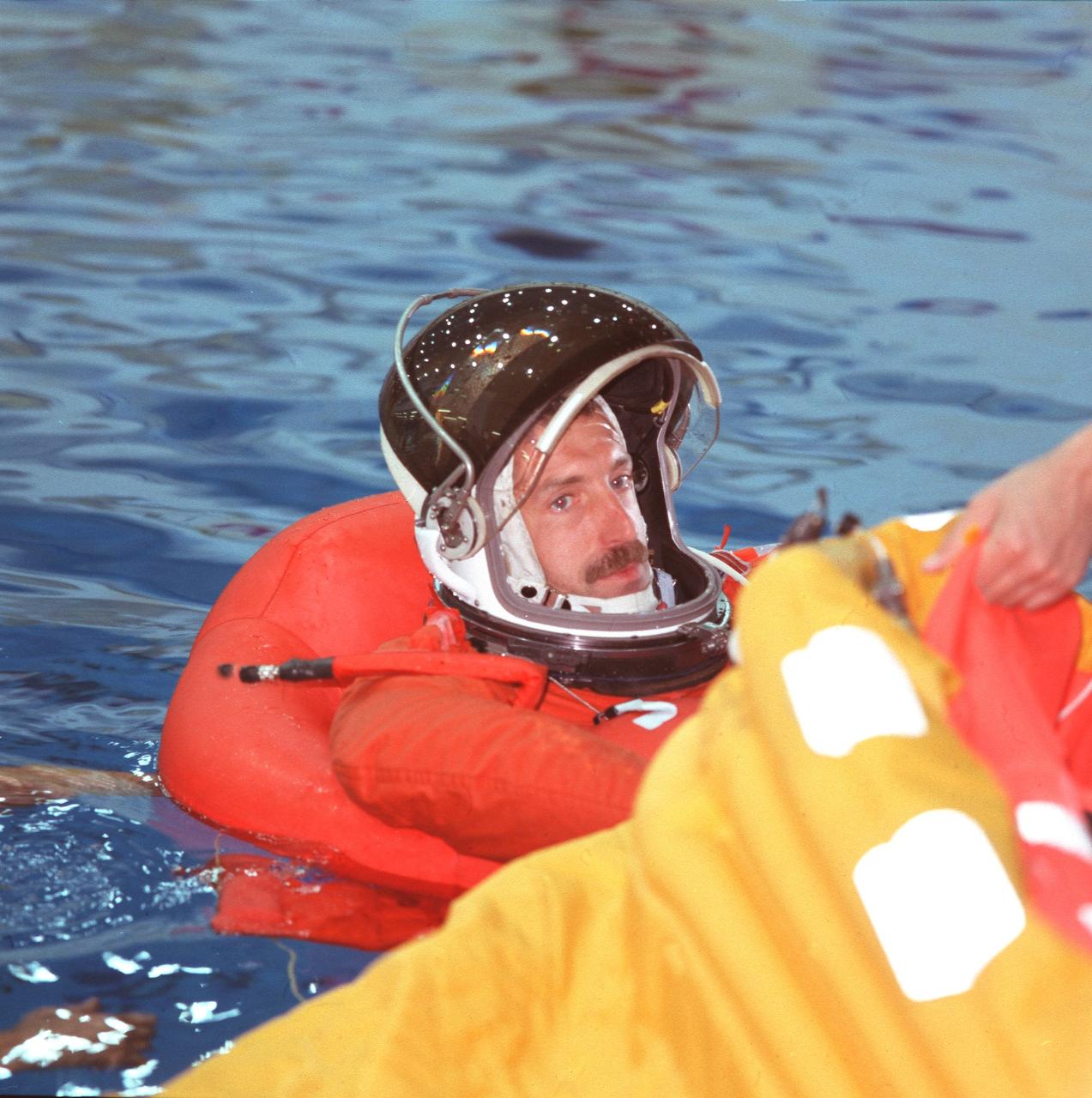
JSC2000-02545 (21 March 2000) --- Astronaut Daniel C. Burbank, STS-106 mission specialist, prepares his life raft during an emergency bailout training simulation in the pool of the Neutral Buoyancy Laboratory (NBL). Burbank will join four NASA astronauts and two cosmonauts, representing the Russian Aviation and Space Agency, for a late summer visit to the International Space Station (ISS).
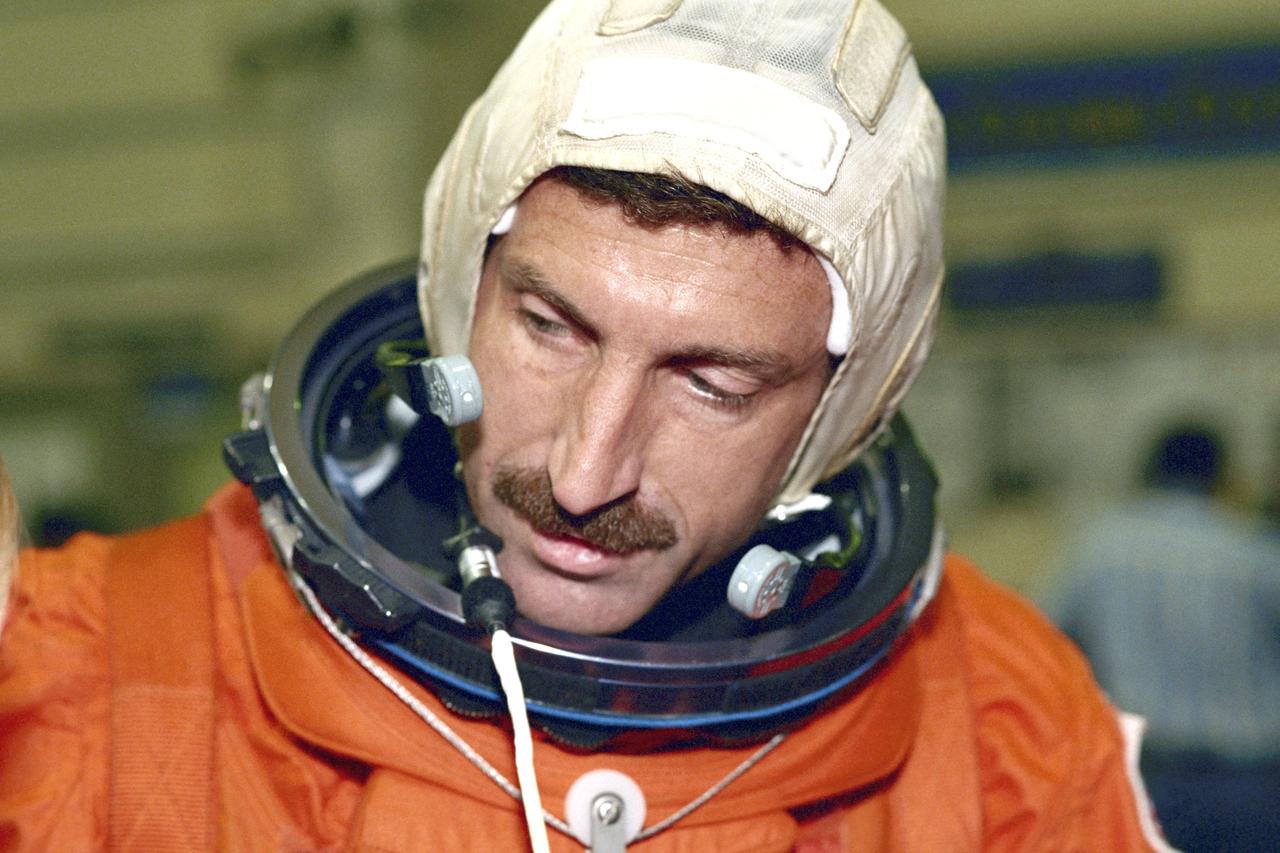
JSC2000-03345 (19 April 2000) --- Astronaut Daniel C. Burbank, STS-106 mission specialist, checks his communication gear during suit-donning prior to a training exercise at JSC's Systems Integration Facility. The mission specialist is scheduled to join four other NASA astronauts and two Russian cosmonauts for a late summer mission to the International Space Station.
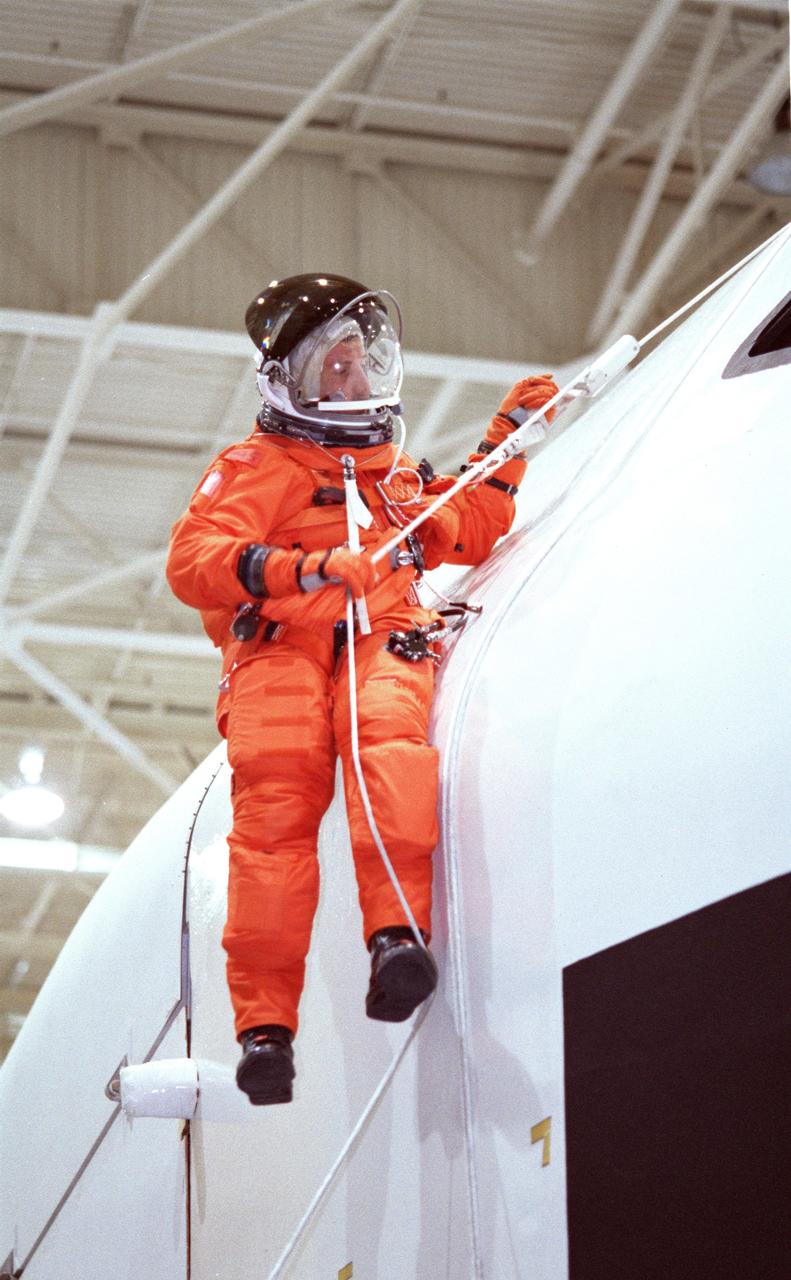
JSC2000-02931 (5 April 2000) --- Astronaut Daniel C. Burbank, STS-106 mission specialist, rappels from the top of a simulated shuttle in trouble (actually a crew training mockup) during emergency egress training at the Johnson Space Center's Systems Integration Facility. Burbank will join four other NASA astronauts and two cosmonauts representing the Russian Aviation and Space Agency for a visit to the International Space Station in late summer of this year.
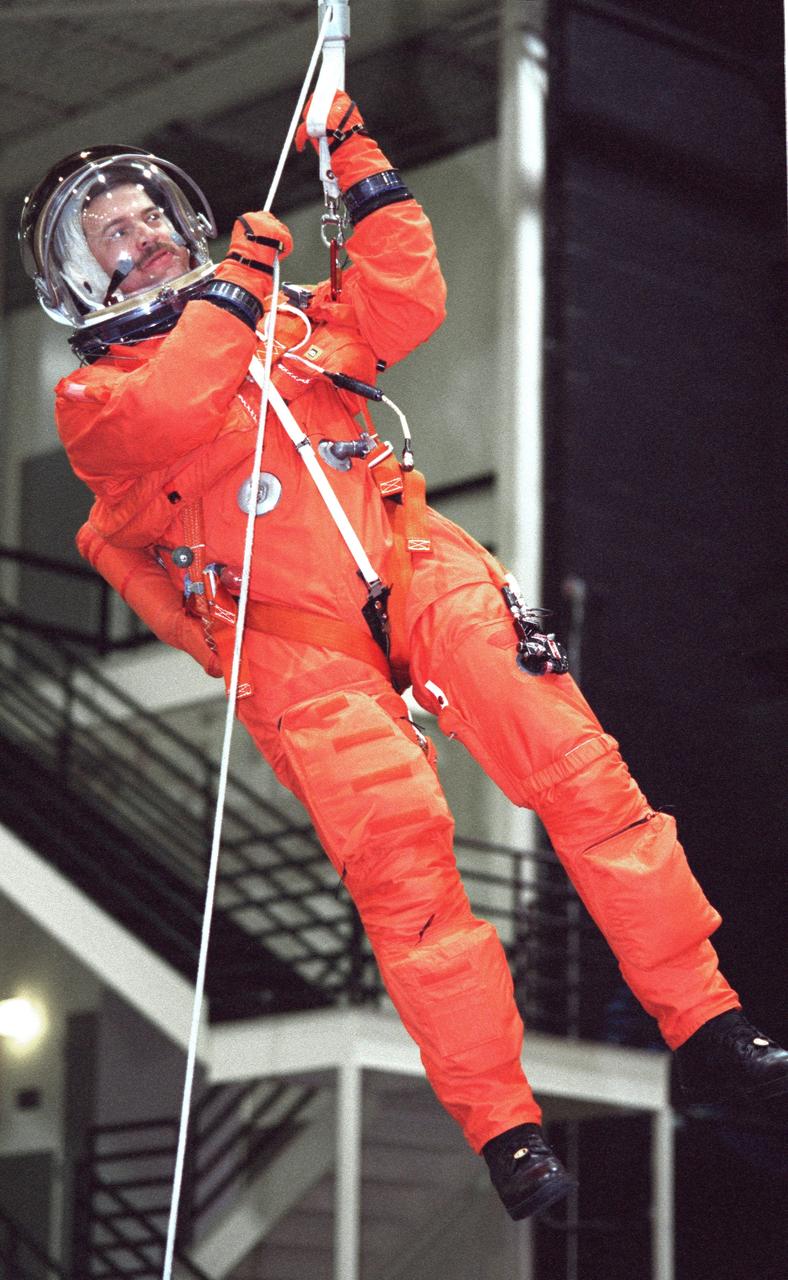
JSC2000-02937 (5 April 2000) --- Astronaut Scott D. Altman, STS-106 pilot, rappels from the top of a simulated shuttle in trouble on the ground (actually a crew training mockup) during emergency egress training at the Johnson Space Center's Systems Integration Facility. Altman will join four other NASA astronauts and two cosmonauts representing the Russian Aviation and Space Agency for a late summer visit to the International Space Station (ISS).

JSC2000-E-20585 (August 2000) --- Two members of the STS-106 crew participate in a bench review of equipment and gear scheduled to fly on the September mission aboard the Space Shuttle Atlantis. Astronaut Edward T. Lu (left) and cosmonaut Yuri I. Malenchenko inspect tools they'll possibly be using during scheduled extravehicular activity (EVA) on the International Space Station (ISS).
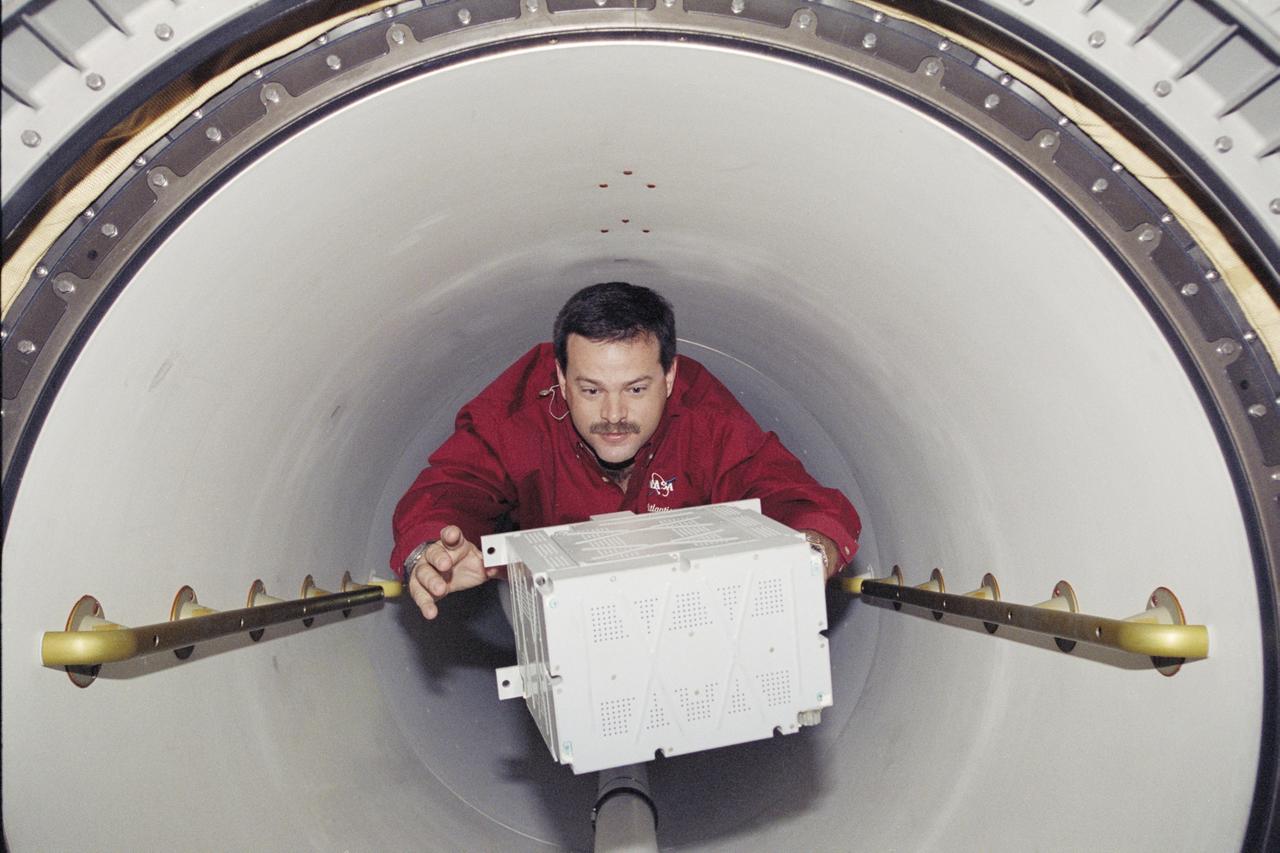
STS106-301-018 (8-20 September 2000) --- Astronaut Scott D. Altman, pilot, translates through the tunnel to the International Space Station (ISS) with a new battery in hand. The seven-man STS-106 crew was in the process of a major moving effort of supplies and hardware from the Space Shuttle Atlantis to the station.
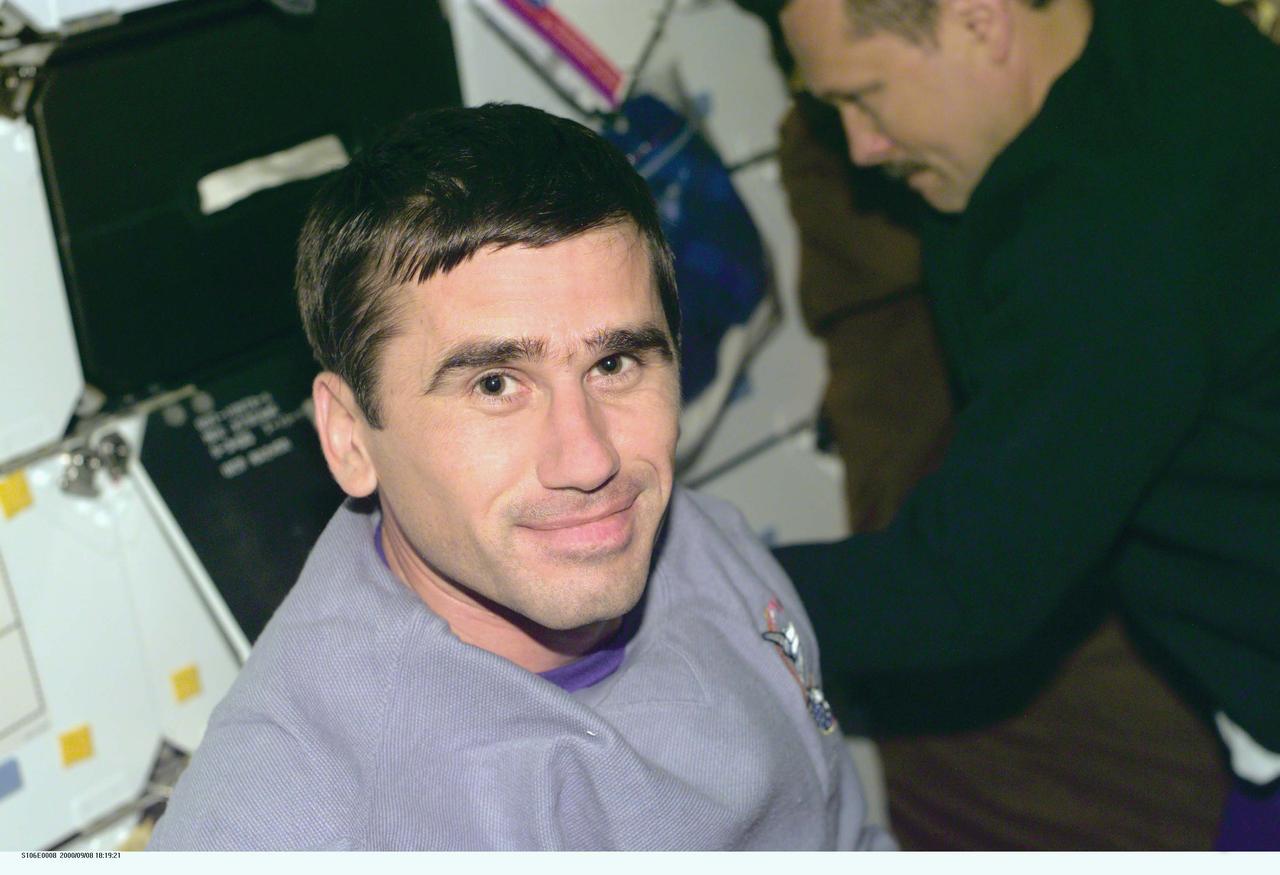
S106-E-5008 (8 September 2000) --- Cosmonaut Yuri I. Malenchenko, mission specialist representing the Russian Aviation and Space Agency, joins STS-106 crew mates in readying the Space Shuttle Atlantis for about a week and a half of work in Earth orbit.
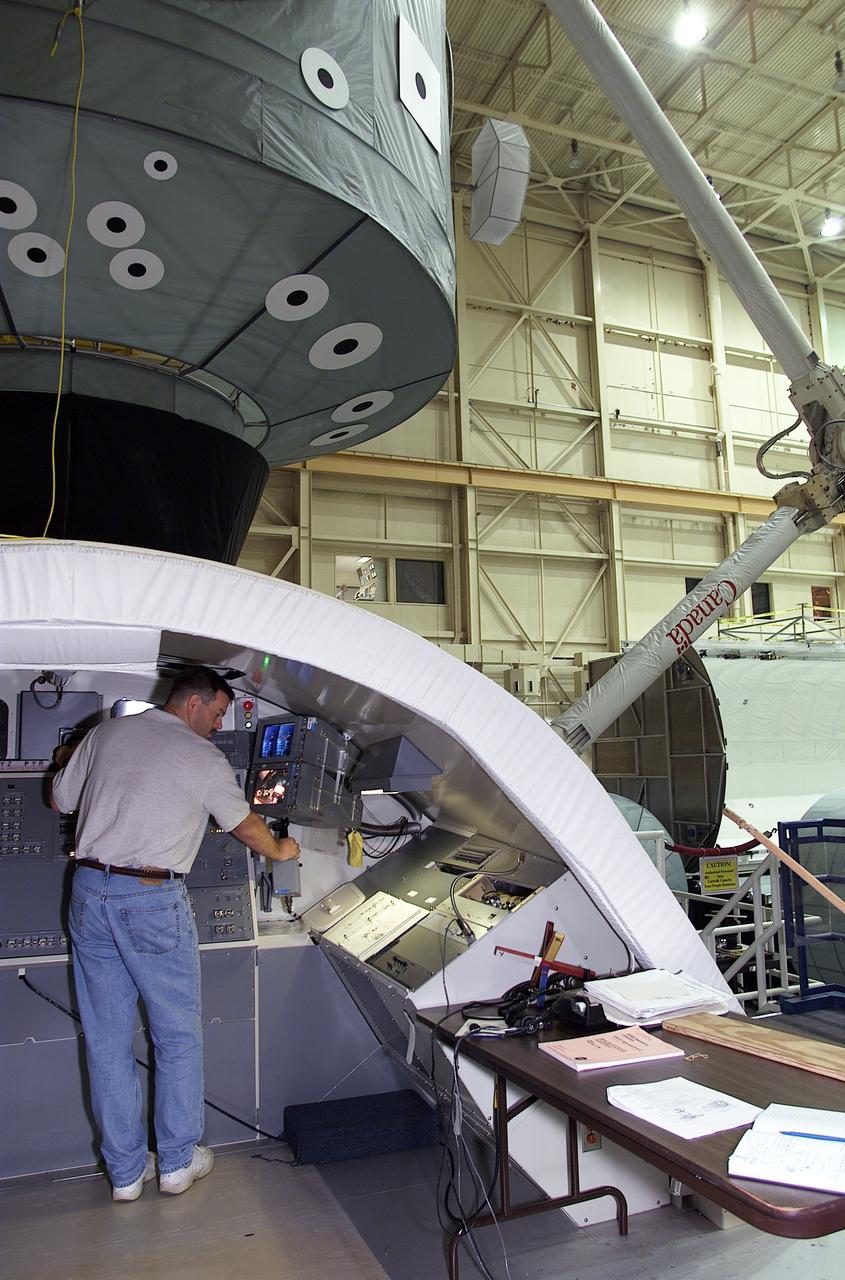
JSC2000-E-16591 (15 June 2000) --- Astronaut Scott D. Altman, STS-106 pilot, simulates control of the remote manipulator system (RMS) for the Space Shuttle Discovery during a training session in the Johnson Space Center's Systems Integration Facility. In this scenario, the shuttle is docked to the International Space Station.
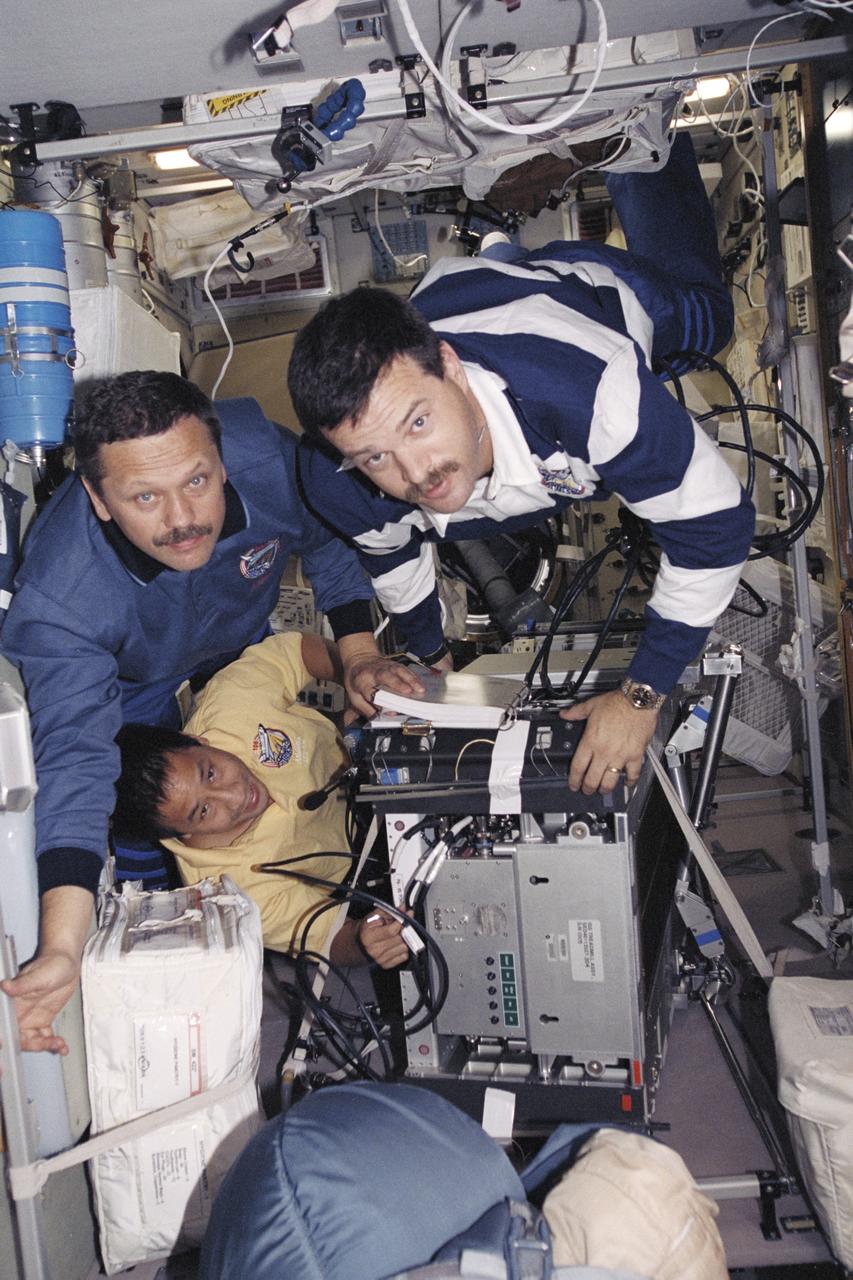
STS106-373-004 (8-20 September 2000) --- Three members of the STS-106 crew move the treadmill device. They are (counterclockwise from bottom) astronaut Edward T. Lu and cosmonaut Boris V. Morukov, both mission specialists, along with astronaut Scott D. Altman, pilot.
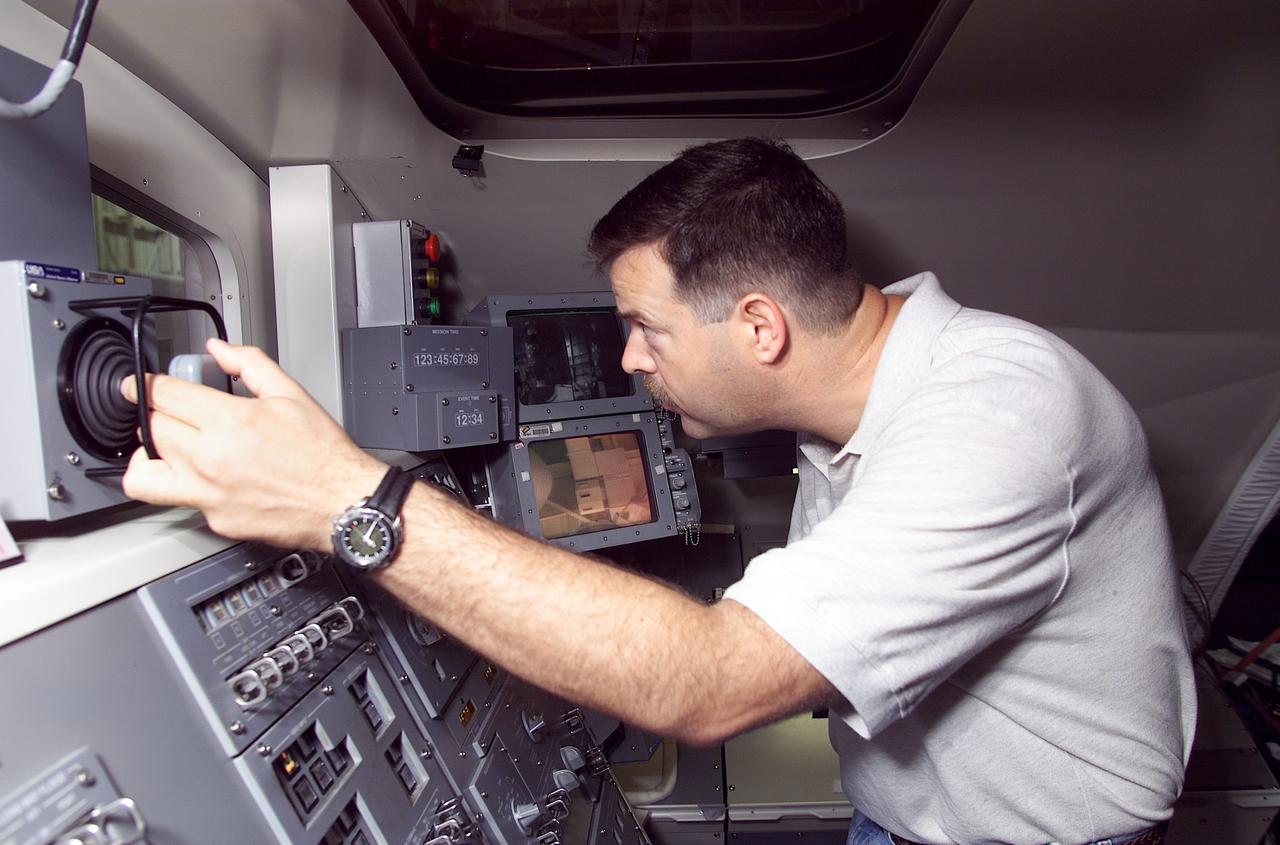
JSC2000-E-16589 (15 June 2000) --- Astronaut Scott D. Altman, STS-106 pilot, simulates control of the remote manipulator system (RMS) for the Space Shuttle Atlantis during a training session in the Johnson Space Center's Systems Integration Facility.
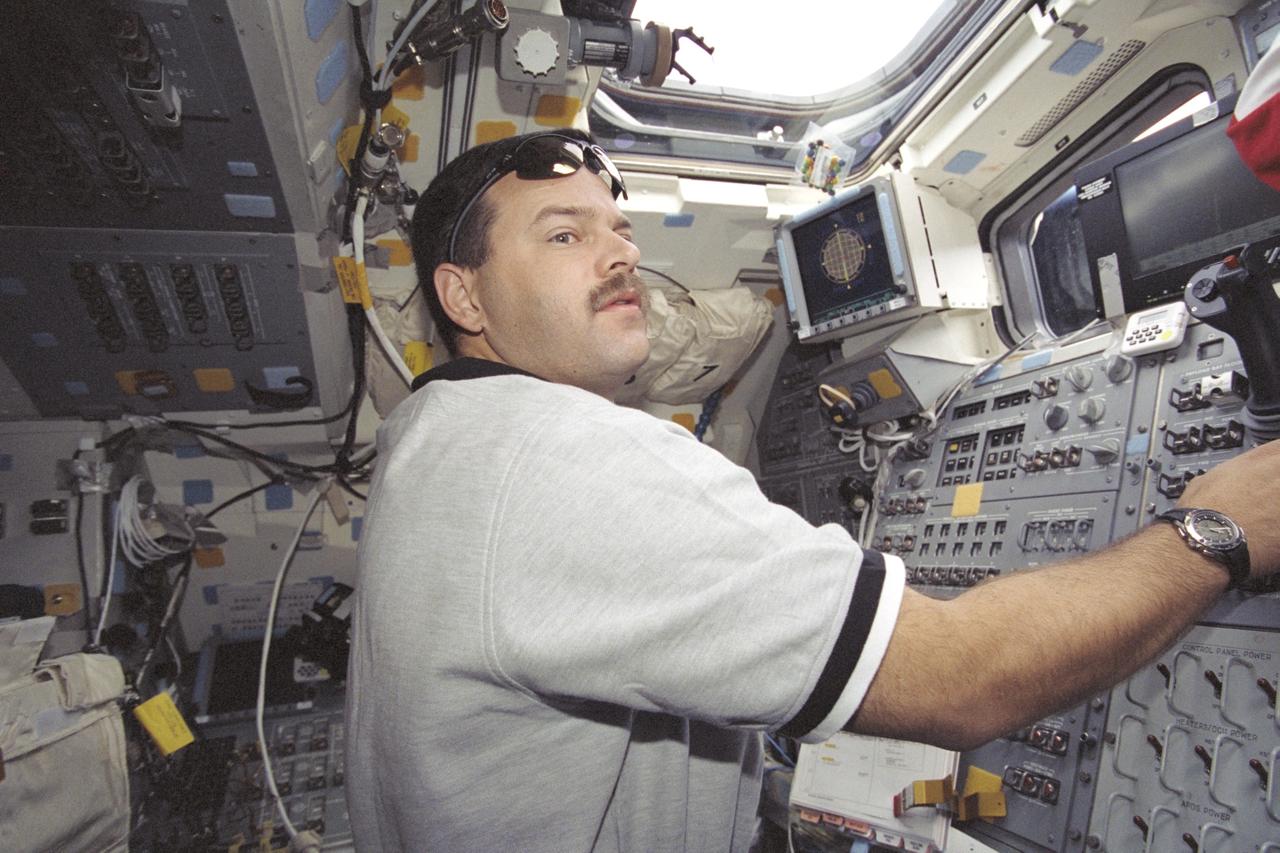
STS106-320-018 (17 September 2000) --- Astronaut Scott D. Altman, STS-106 pilot, controls the intricate maneuvers of the shuttle during undocking procedures with the International Space Station (ISS) from the aft flight deck of the Space Shuttle Atlantis.
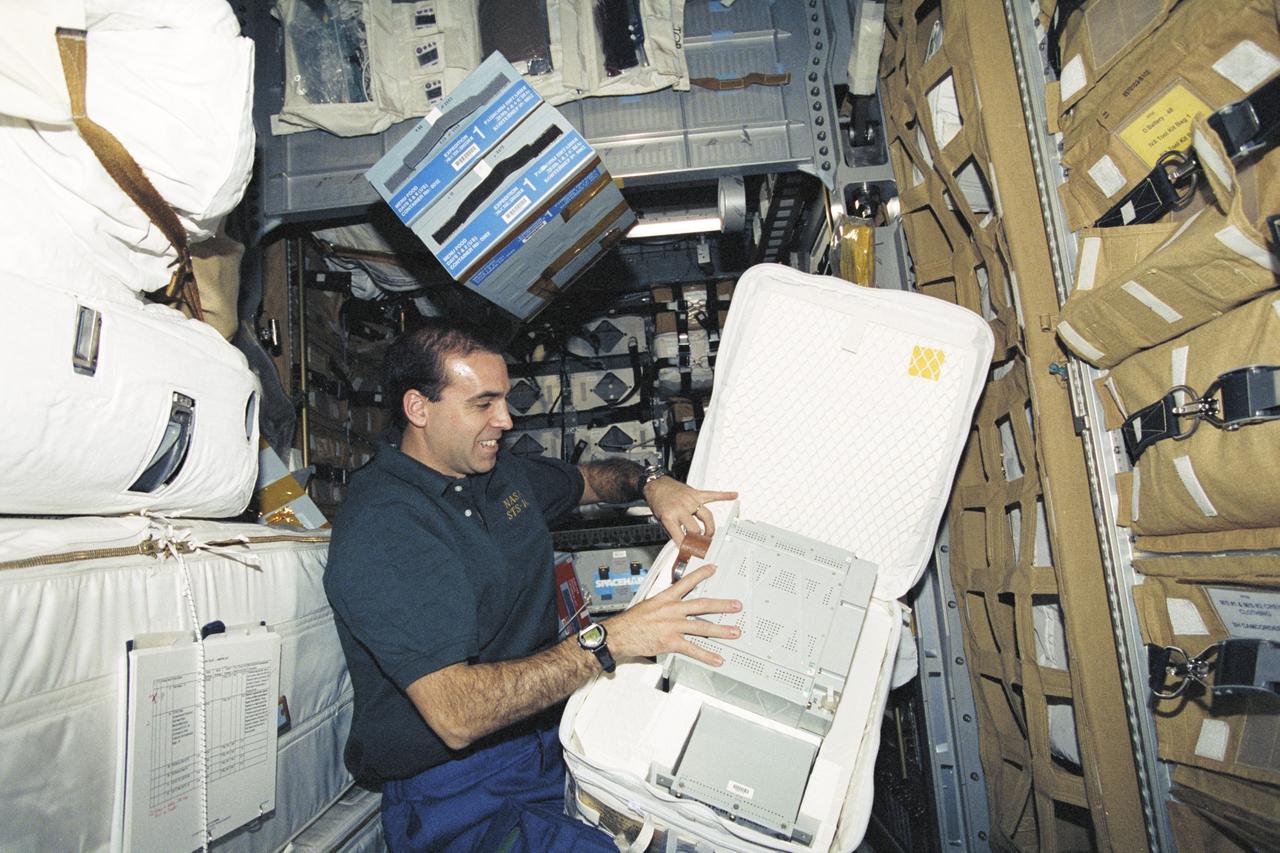
STS106-301-019 (8-20 September 2000) ---Astronaut Richard A. Mastracchio, STS-106 mission specialist, participates in the moving of supplies from the SPACEHAB Logistics Double Module on the Space Shuttle Atlantis to the International Space Station (ISS).

STS106-704-063 (9 September 2000) --- Typhoon Saomai swirls in the Pacific Ocean east of Taiwan and the Philippines. The typhoon was captured on film with a 70mm handheld camera by the STS-106 crew members aboard the Space Shuttle Atlantis on September. 9
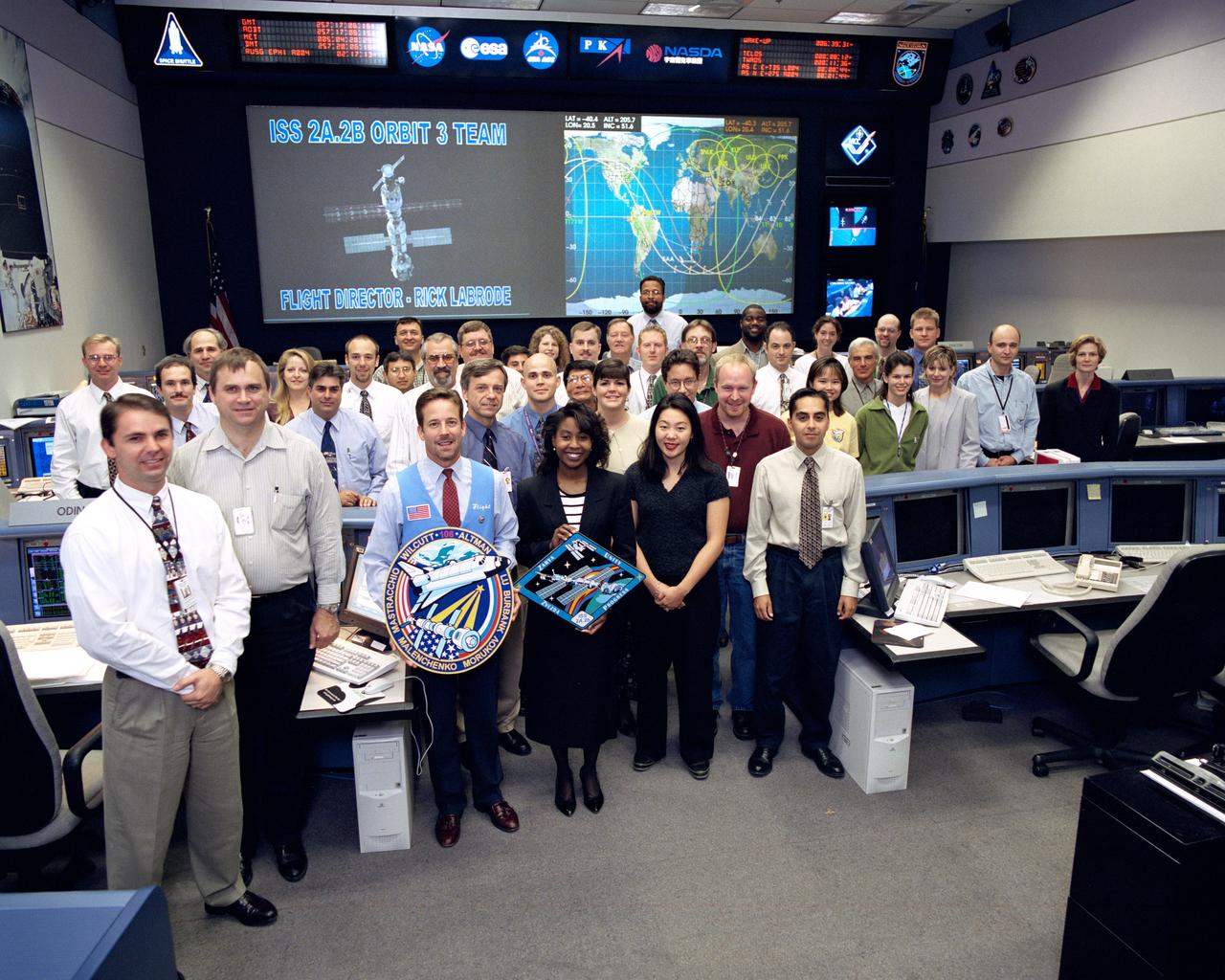
JSC2000-06245 (September 2000) --- The ISS orbit 3 team of flight controllers are pictured with flight director Rick LaBrode in the ISS flight control room during STS-106. Astronaut Stephanie Wilson, spacecraft communicator (CAPCOM), is at front center.
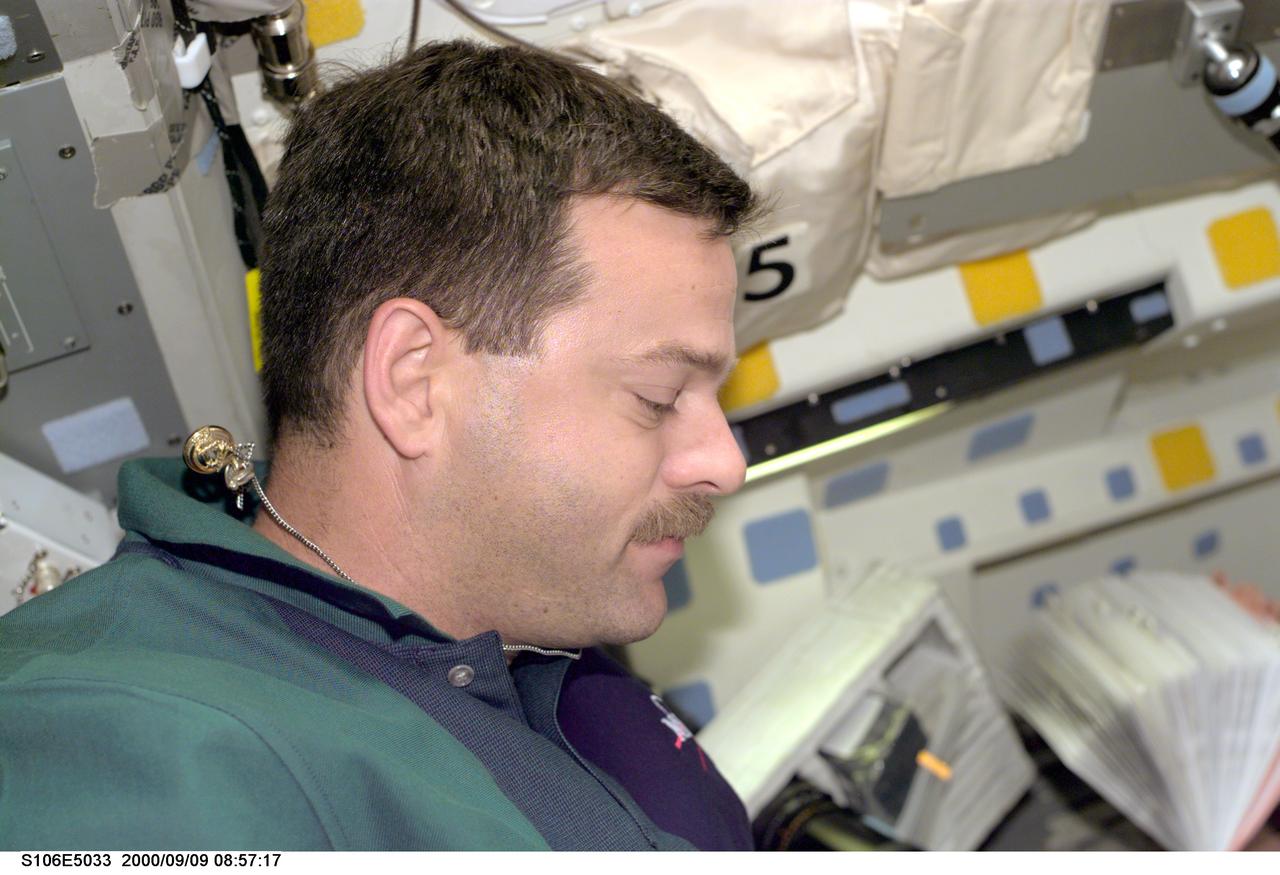
S106-E-5033 (9 September 2000) --- Astronaut Scott D. Altman, STS-106 pilot, is looking down at a checklist in this electronic still camera's (ESC) view, recorded during busy Flight Day 2 activity onboard the Earth-orbiting Space Shuttle Atlantis.
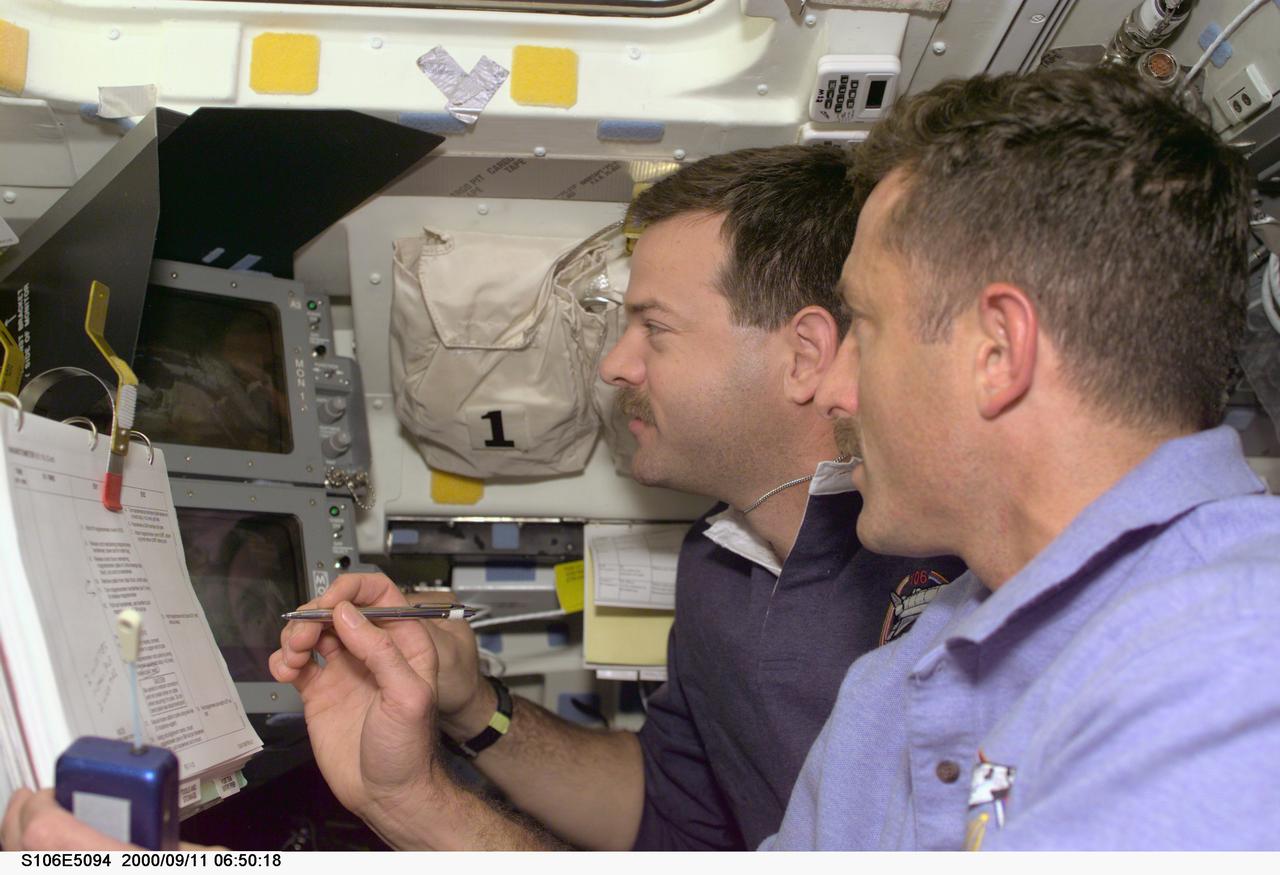
S106-E-5094 (11 September 2000) --- Astronauts Scott D. Altman (left), STS-106 pilot, and Daniel C. Burbank, mission specialist, make marginal notes in a flight plan during Flight Day 3 activity on the flight deck of the Space Shuttle Atlantis.
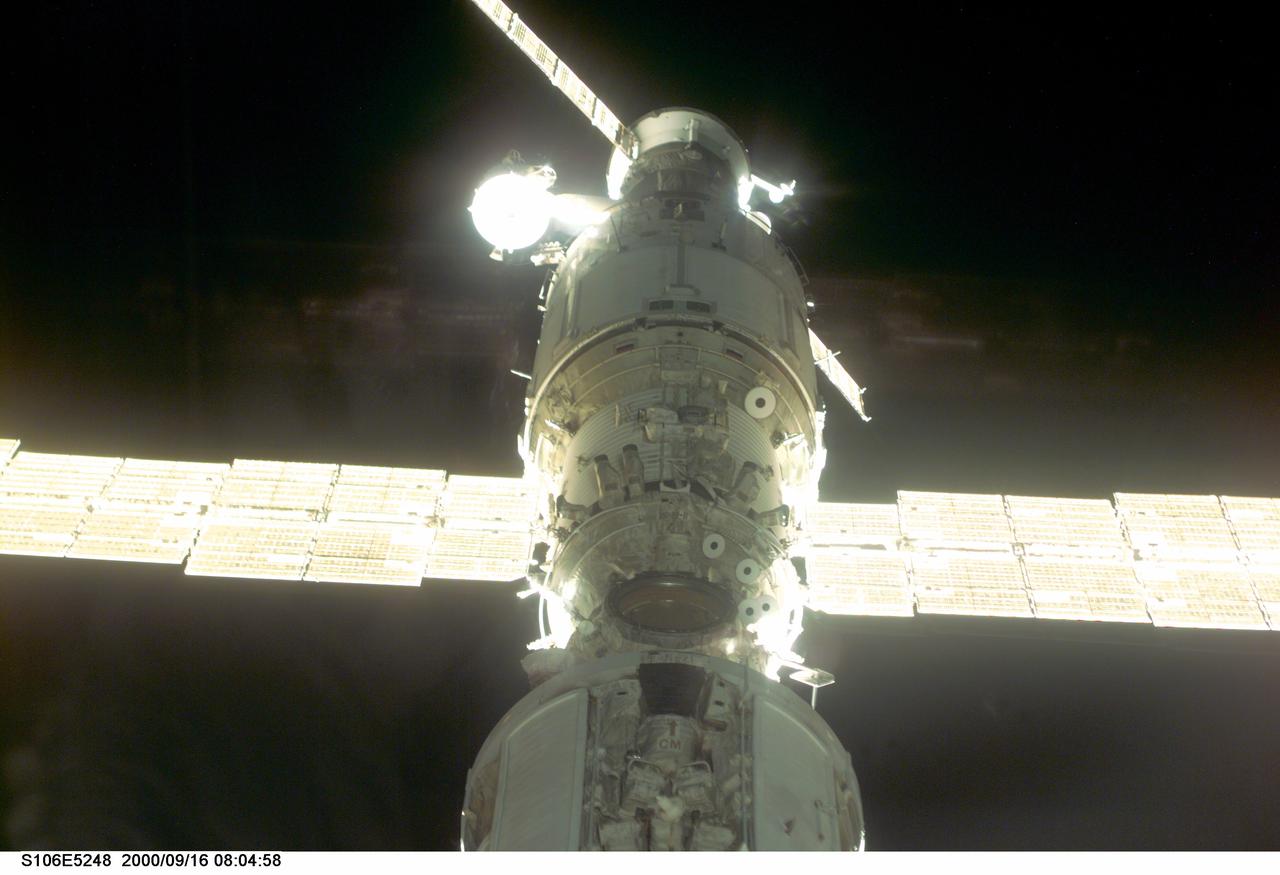
S106-E-5248 (16 September 2000) --- An out-the-window view with the electronic still camera (ESC) represents one of the final STS-106 closeup looks at the International Space Station (ISS) as the Atlantis crew works rapidly to wrap up chores on the station.
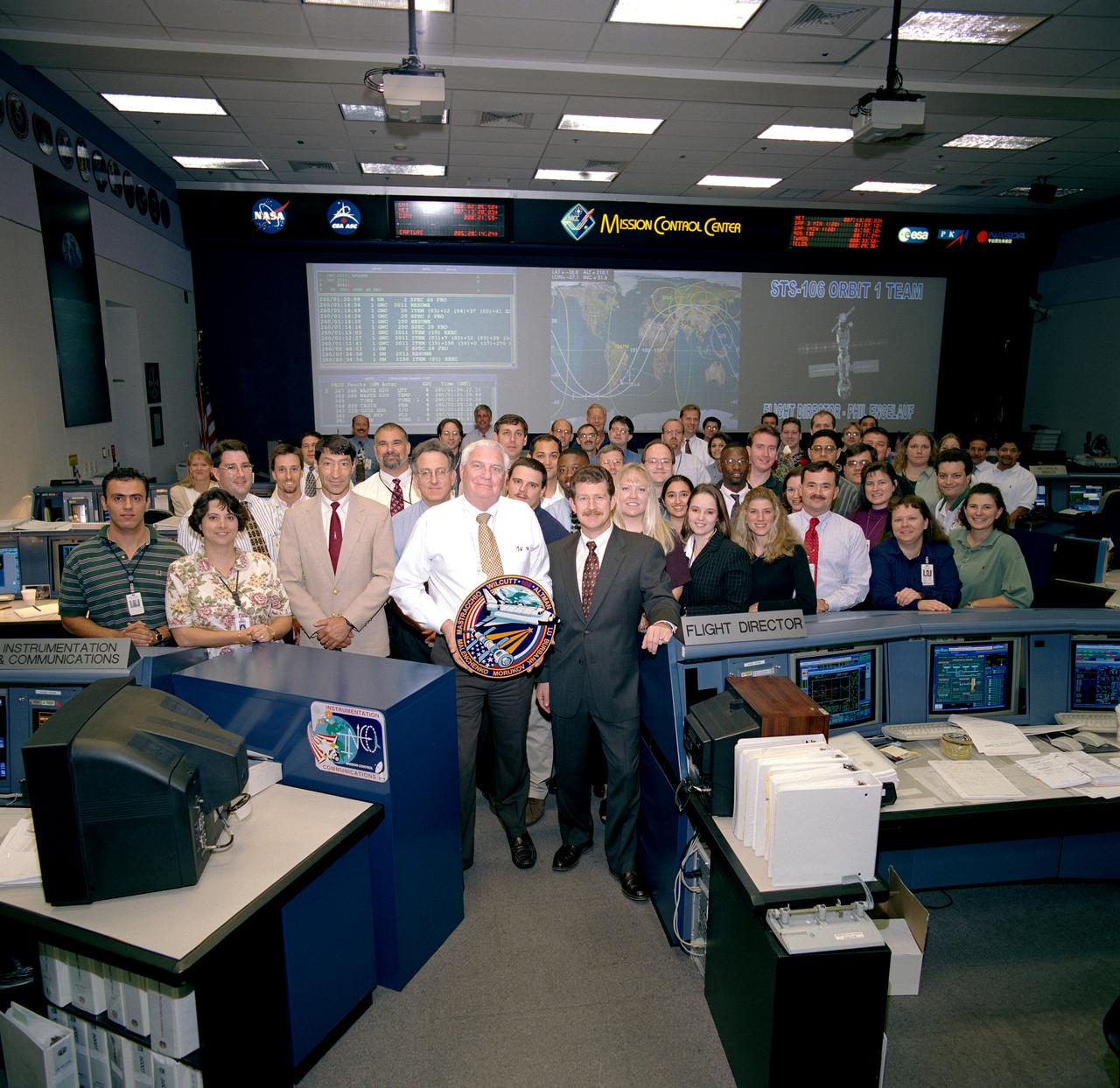
JSC2000-06253 (15 Sept. 2000) --- Flight director Phil Engelauf, front center, and the other fifty-odd flight controllers making up the STS-106 Orbit 1 team, pose for their group portrait in the Flight Control Room of Houston's Mission Control Center.
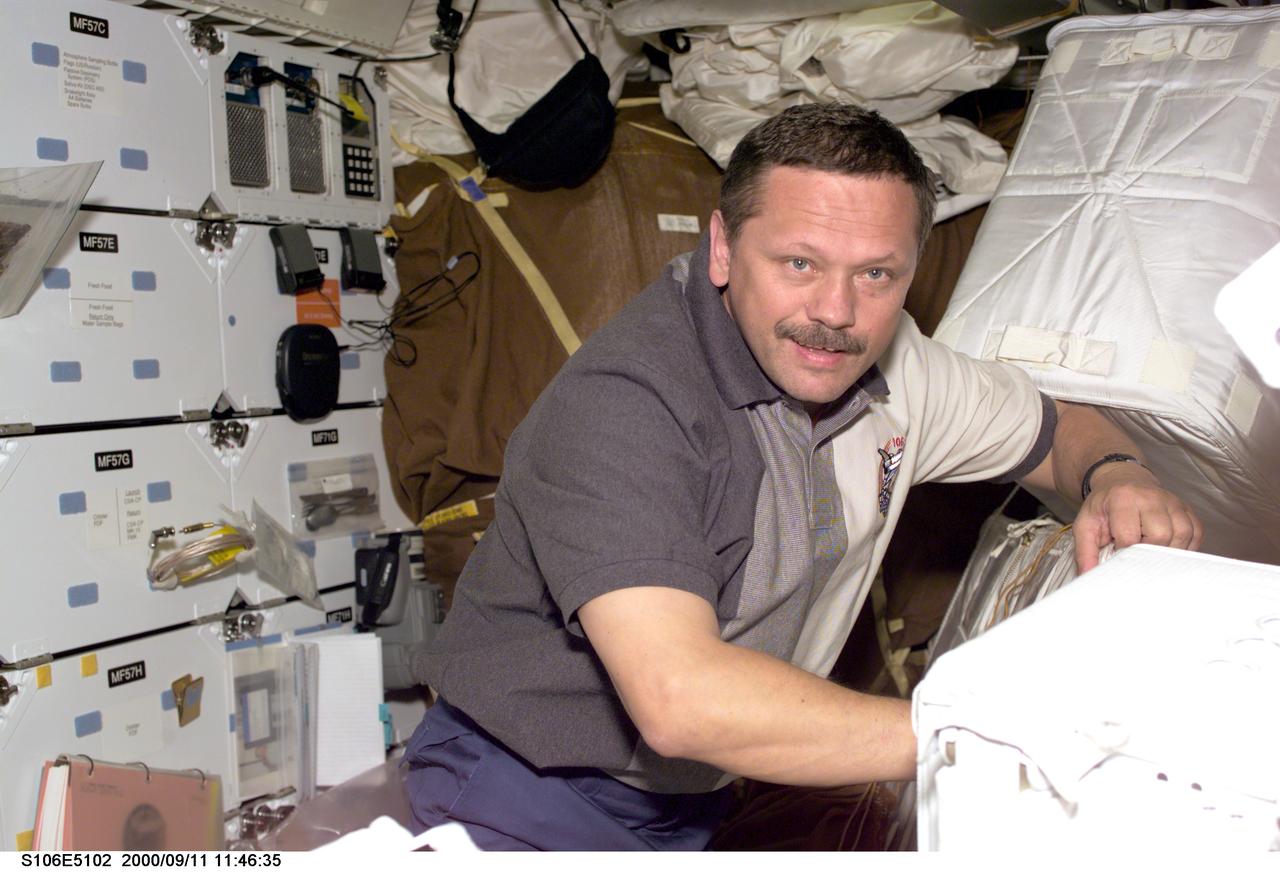
S106-E-5102 (11 September 2000) --- Cosmonaut Boris V. Morukov, mission specialist representing the Russian Aviation and Space Agency, moves around supplies on the mid deck of the Space Shuttle Atlantis. The seven-member STS-106 crew is involved in preparations for the opening of doors into the International Space Station (ISS) and the movement of supplies into it.
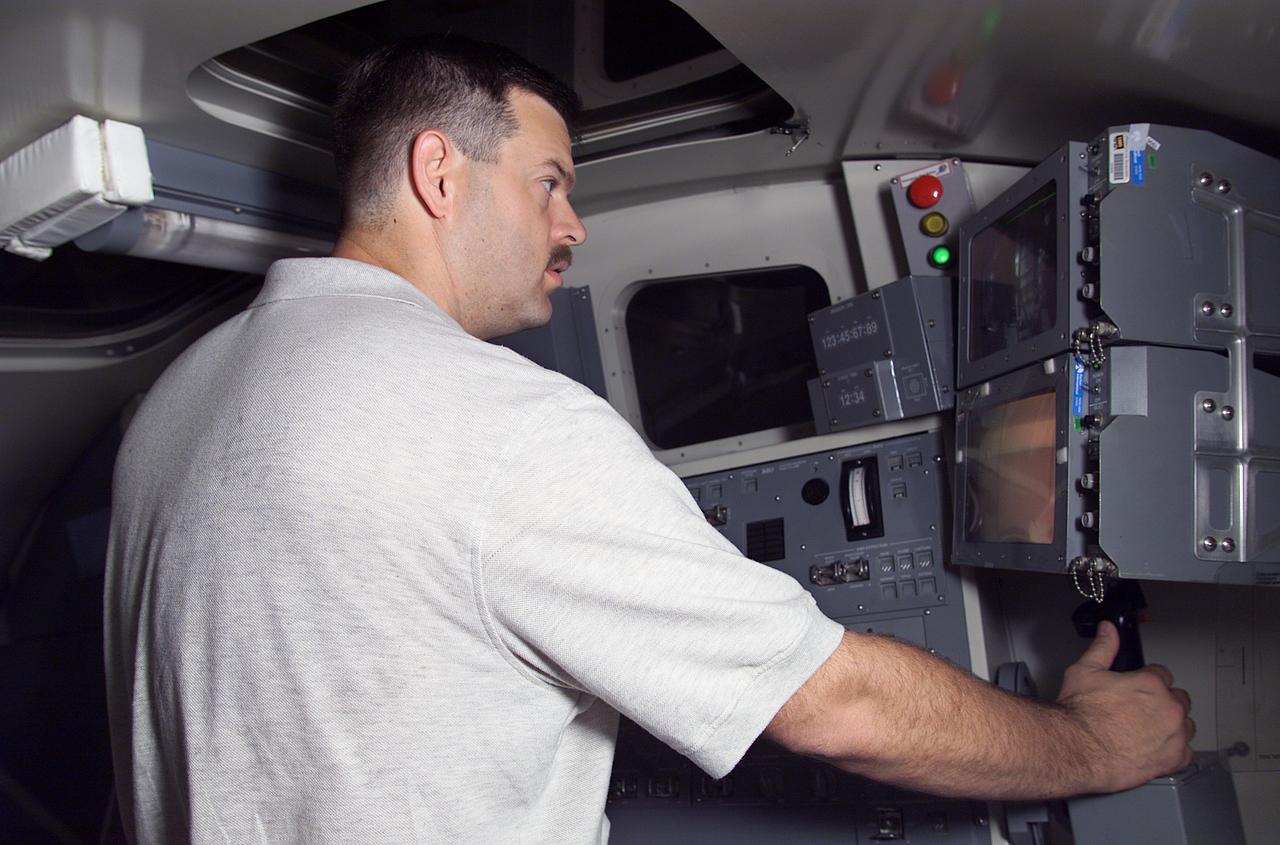
JSC2000-E-16588 (15 June 2000) --- Astronaut Scott D. Altman, STS-106 pilot, simulates control of the remote manipulator system (RMS) for the Space Shuttle Atlantis during a training session in the Johnson Space Center's Systems Integration Facility.
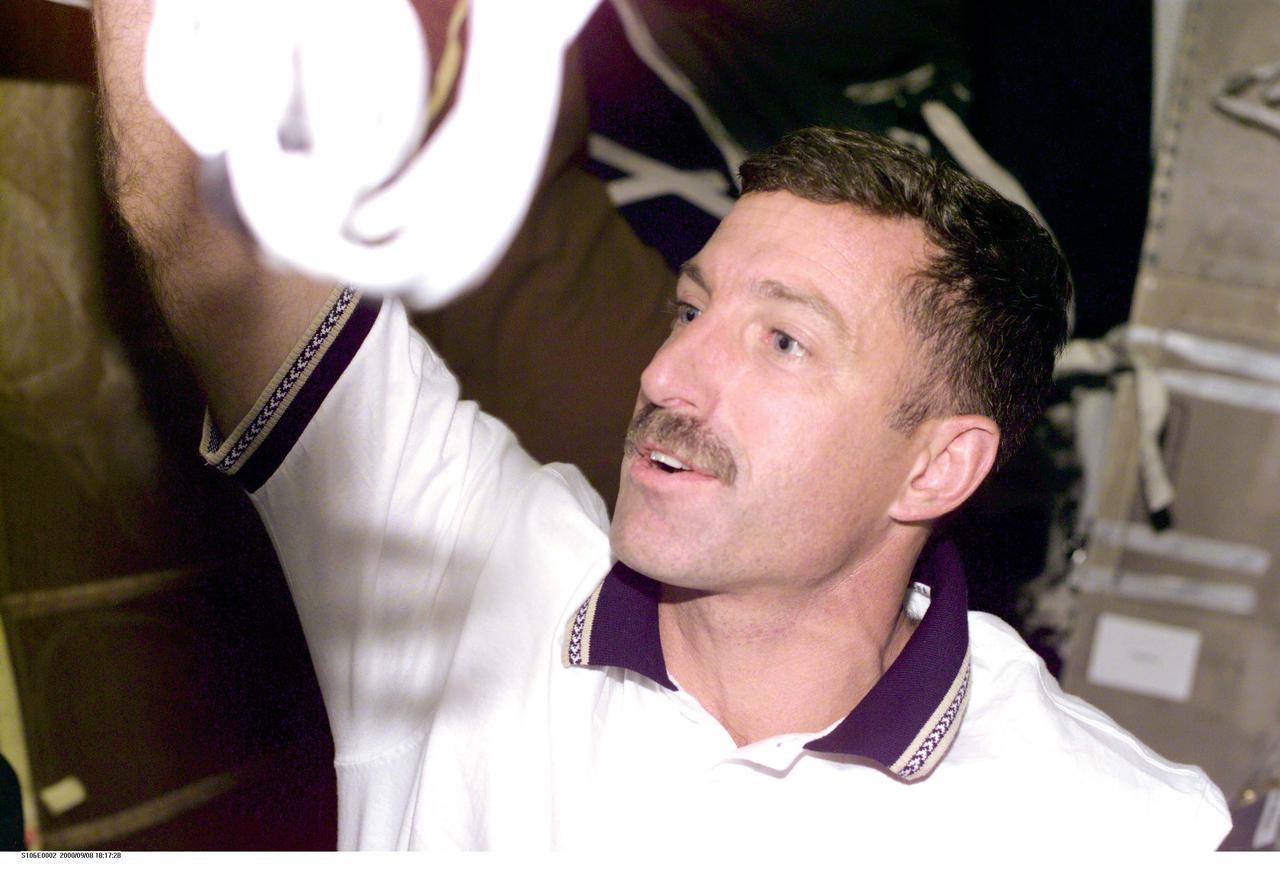
S106-E-5002 (8 September 2000) --- Getting Atlantis ready to support the duration of the STS-106 mission is Daniel C. Burbank, mission specialist. This electronic still camera's (ESC) photo was among the first downlinked by the Atlantis crew on Flight Day 1.
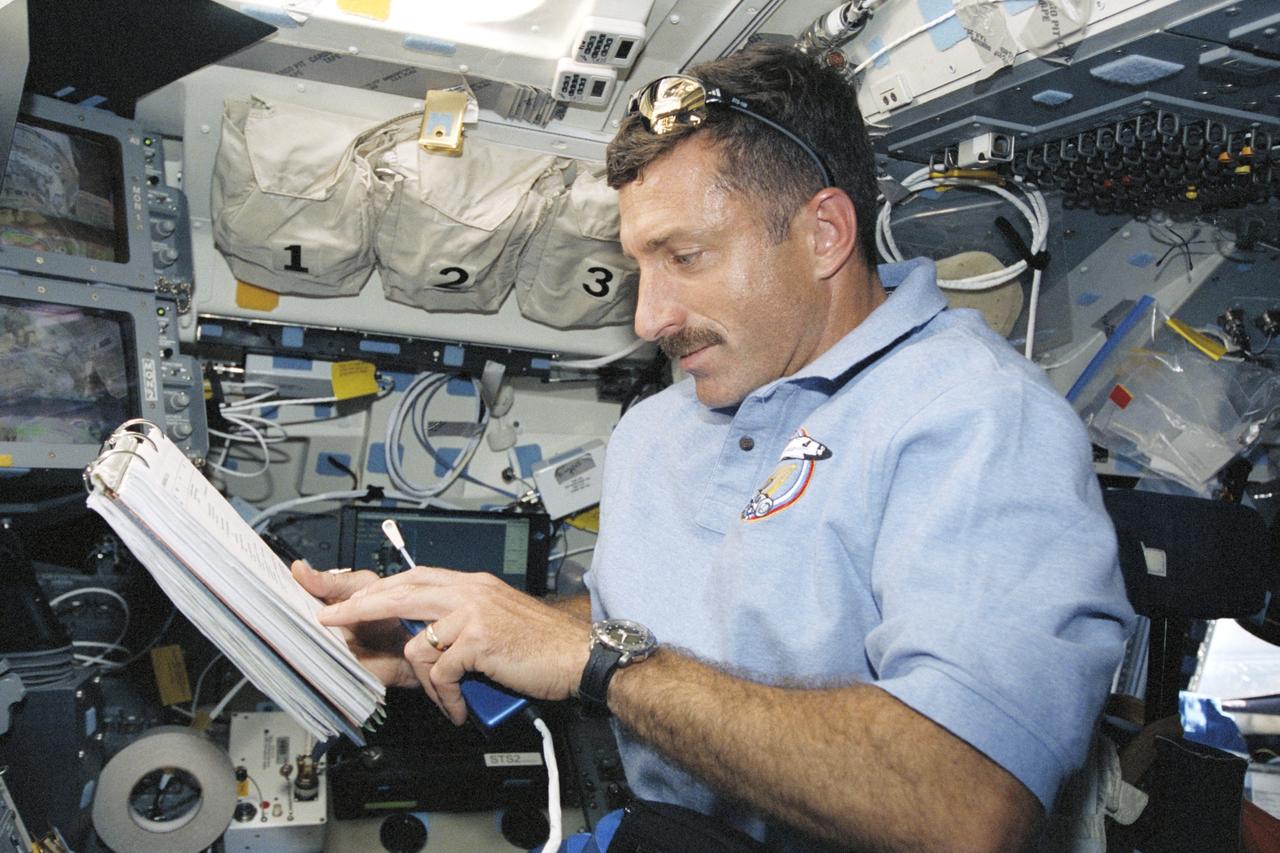
STS106-370-004 (8-20 September 2000) --- Astronaut Daniel C. Burbank, STS-106 mission specialist, looks over a procedures checklist on the aft flight deck of the Space Shuttle Atlantis. Burbank is marking his first space flight.
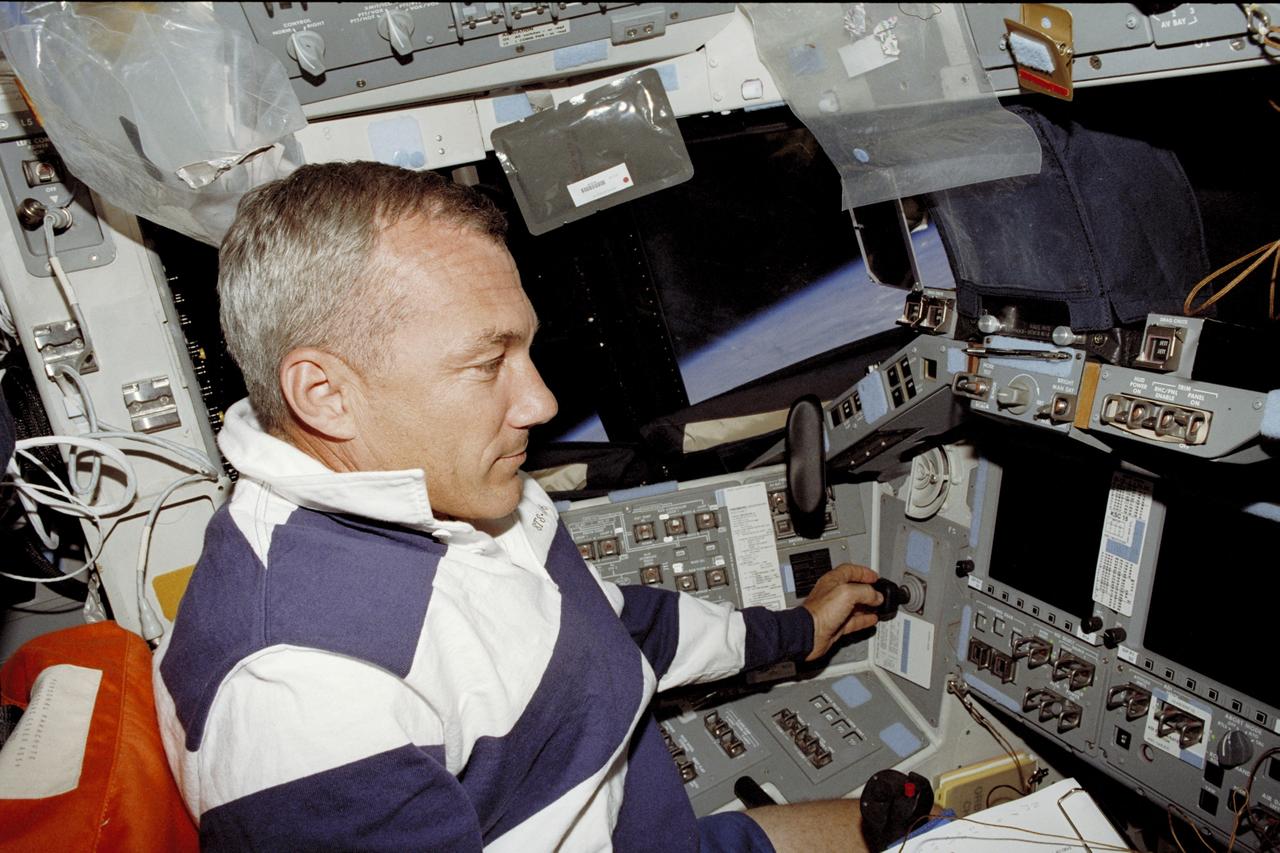
STS106-352-009 (8-20 September 2000) --- Astronaut Terrence W. Wilcutt, STS-106 mission commander, performs a firing of the reaction control system on the flight deck of the Space Shuttle Atlantis. Earth’s horizon is visible through the commander’s window.
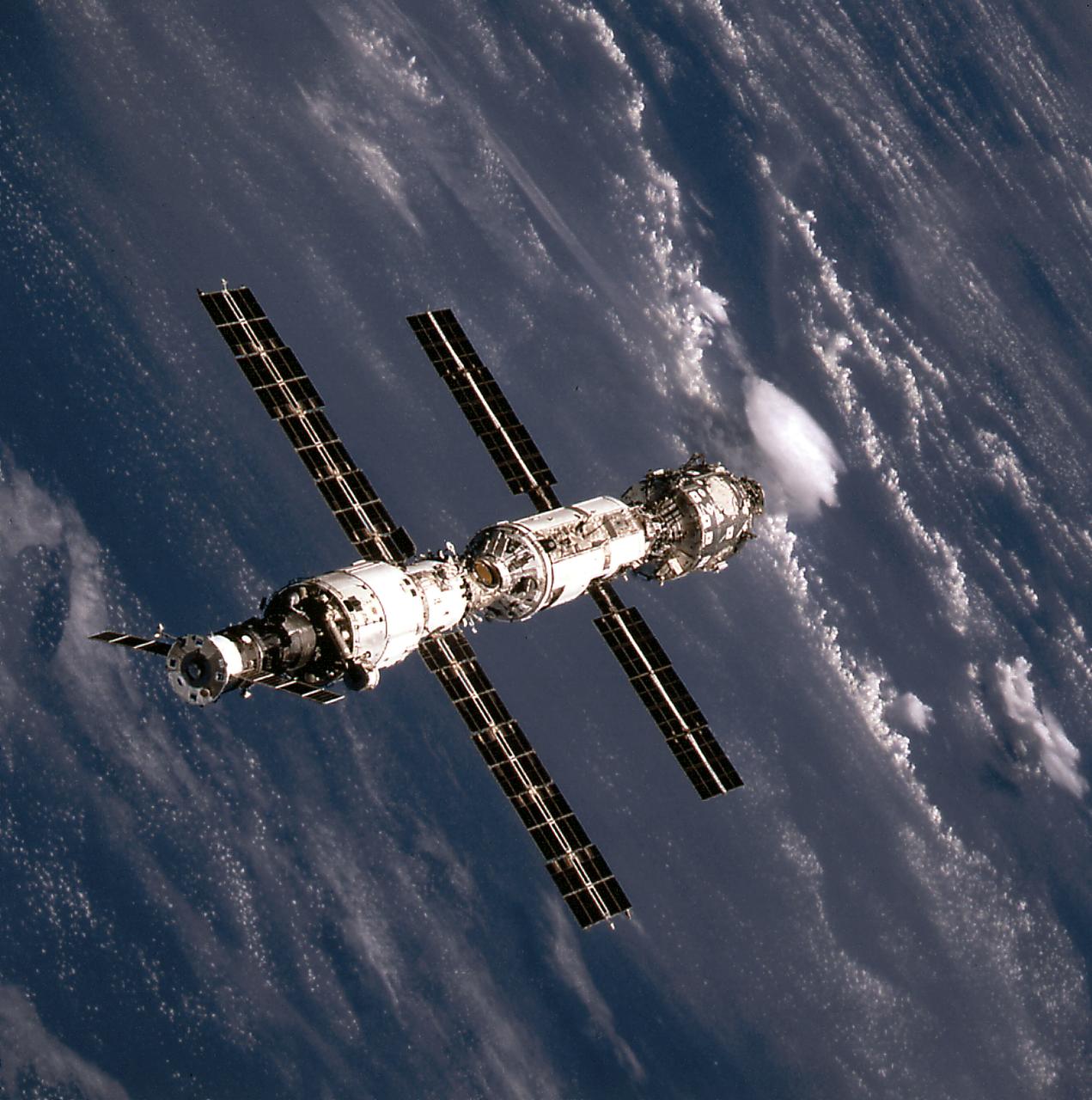
This image of the International Space Station (ISS) was taken when Space Shuttle Atlantis (STS-106 mission) approached the ISS for docking. At the top is the Russian Progress supply ship that is linked with the Russian built Service Module or Zvezda. The Zvezda is cornected with the Russian built Functional Cargo Block (FGB) or Zarya. The U.S. built Node 1 or Unity module is seen at the bottom.
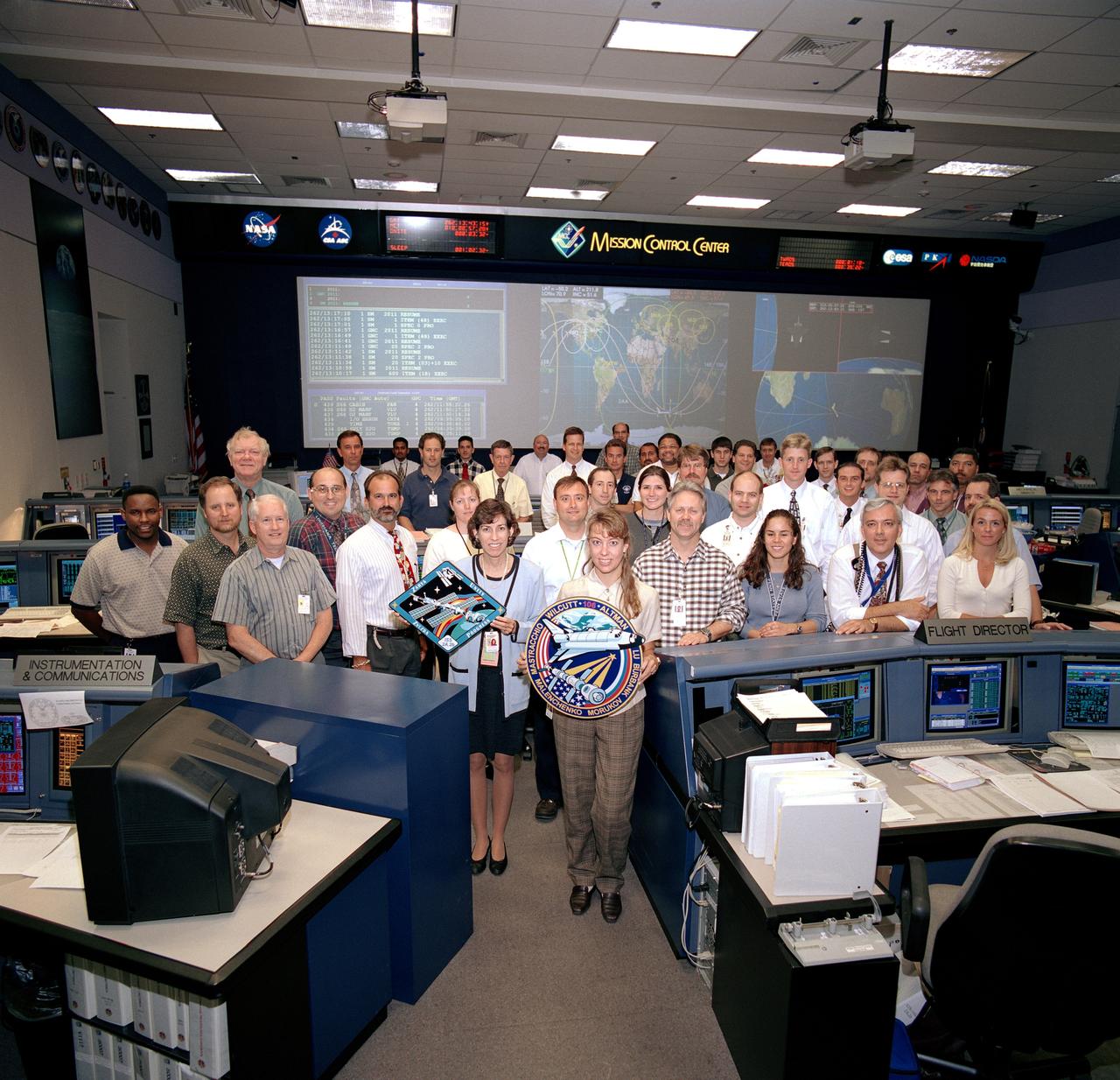
JSC2000-06252 (September 2000) --- Holding logos, flight director Kelly Beck and spacecraft communicator (CAPCOM) Ellen Ochoa pose with the flight control team that supported Orbit 2 during the STS-106 mission.
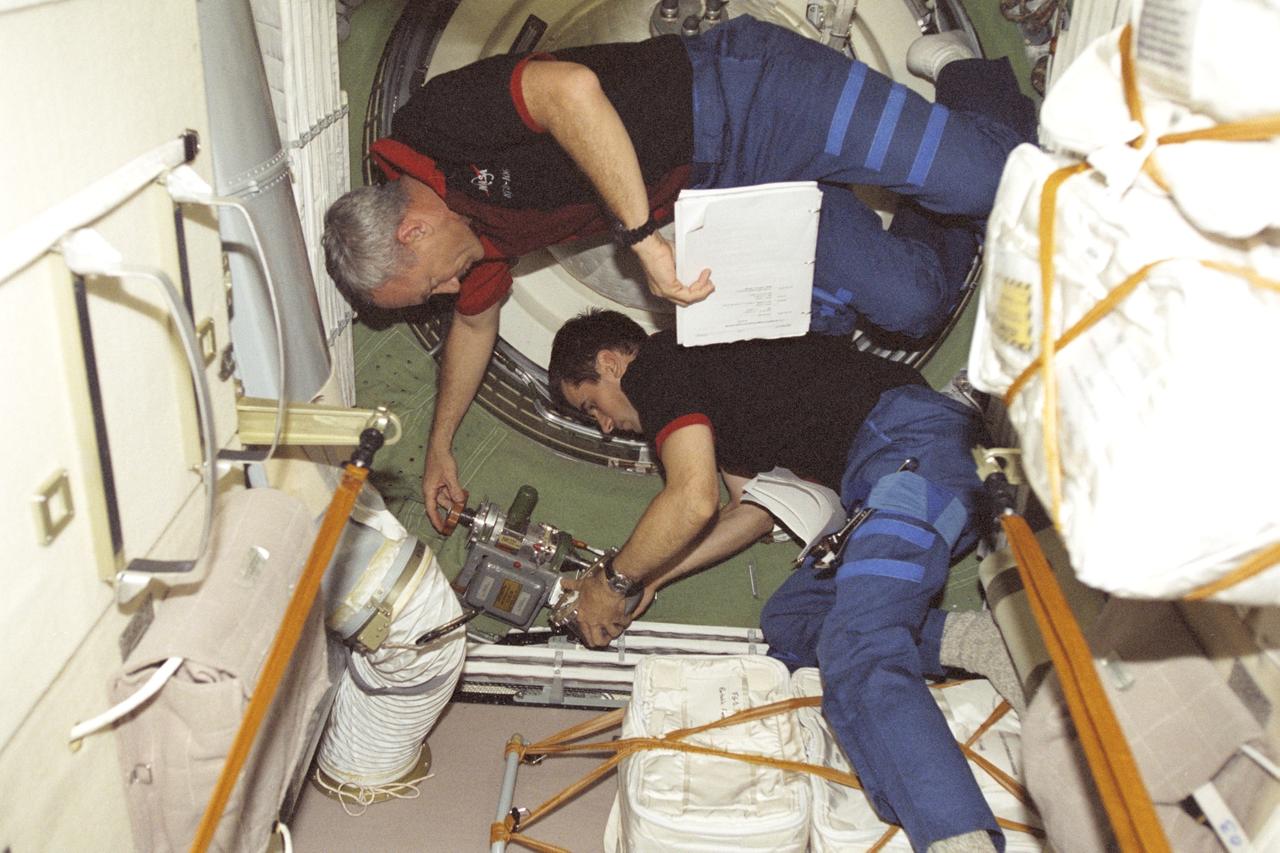
STS106-322-026 (17 September 2000) --- Astronaut Terrence W. Wilcutt (right), STS-106 mission commander, and cosmonaut Yuri I. Malenchenko, mission specialist, in the functional cargo block (FGB) or Zarya on the International Space Station (ISS), work on preparations for undocking between the Space Shuttle Atlantis and the station. Separation took place on September 17, 2000 at 10:46 p.m. (CDT). Malenchenko represents Rosaviakosmos.
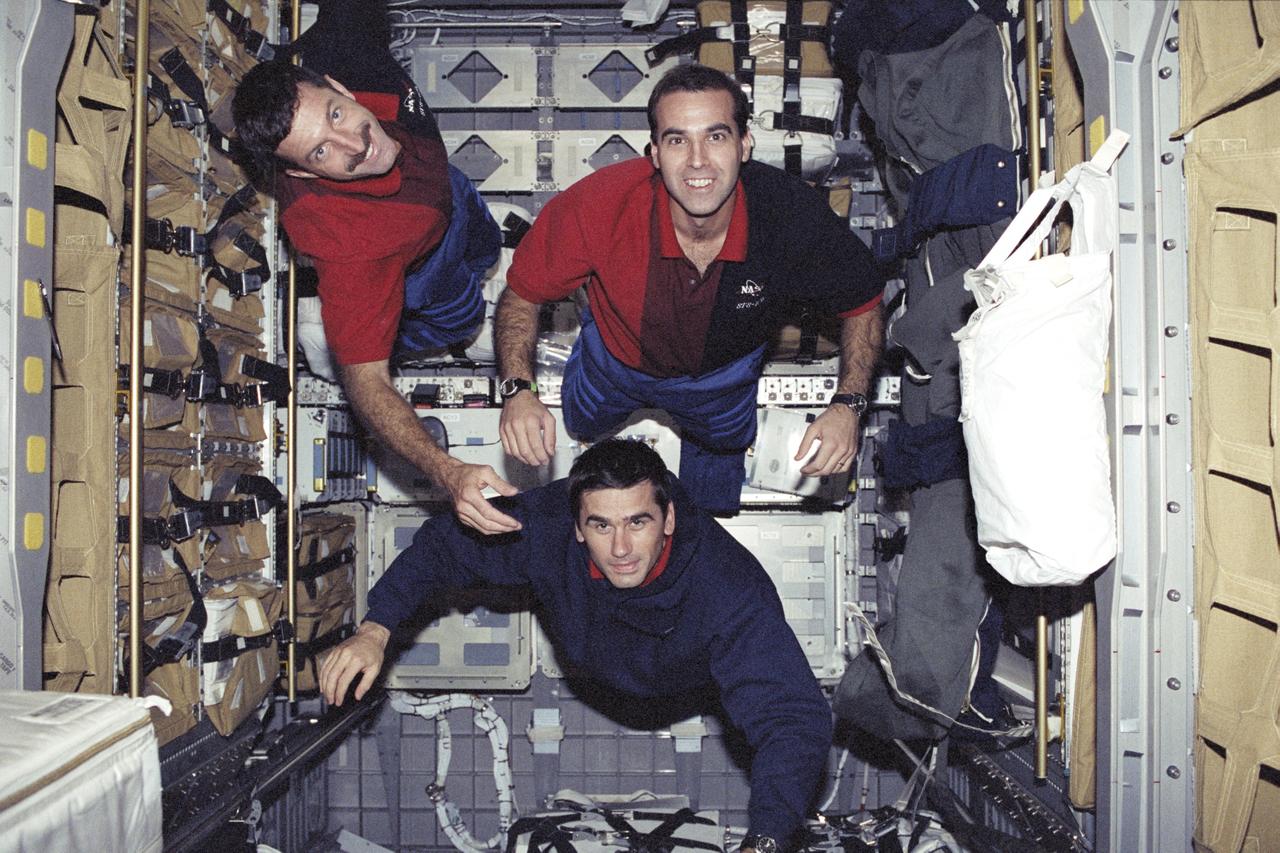
STS106-369-019 (8-20 September 2000) --- Two astronauts and a cosmonaut, all mission specialists, float onboard Spacehab. They are astronauts Daniel C. Burbank (top left) and Richard A. Mastracchio (top right), along with cosmonaut Yuri I. Malenchenko. The Spacehab double module is as "empty" as it was at any other time during the STS-106 mission in this scene, photographed during mission's end. The seven-man crew had moved a large amount of supplies and hardware to the International Space Station (ISS).
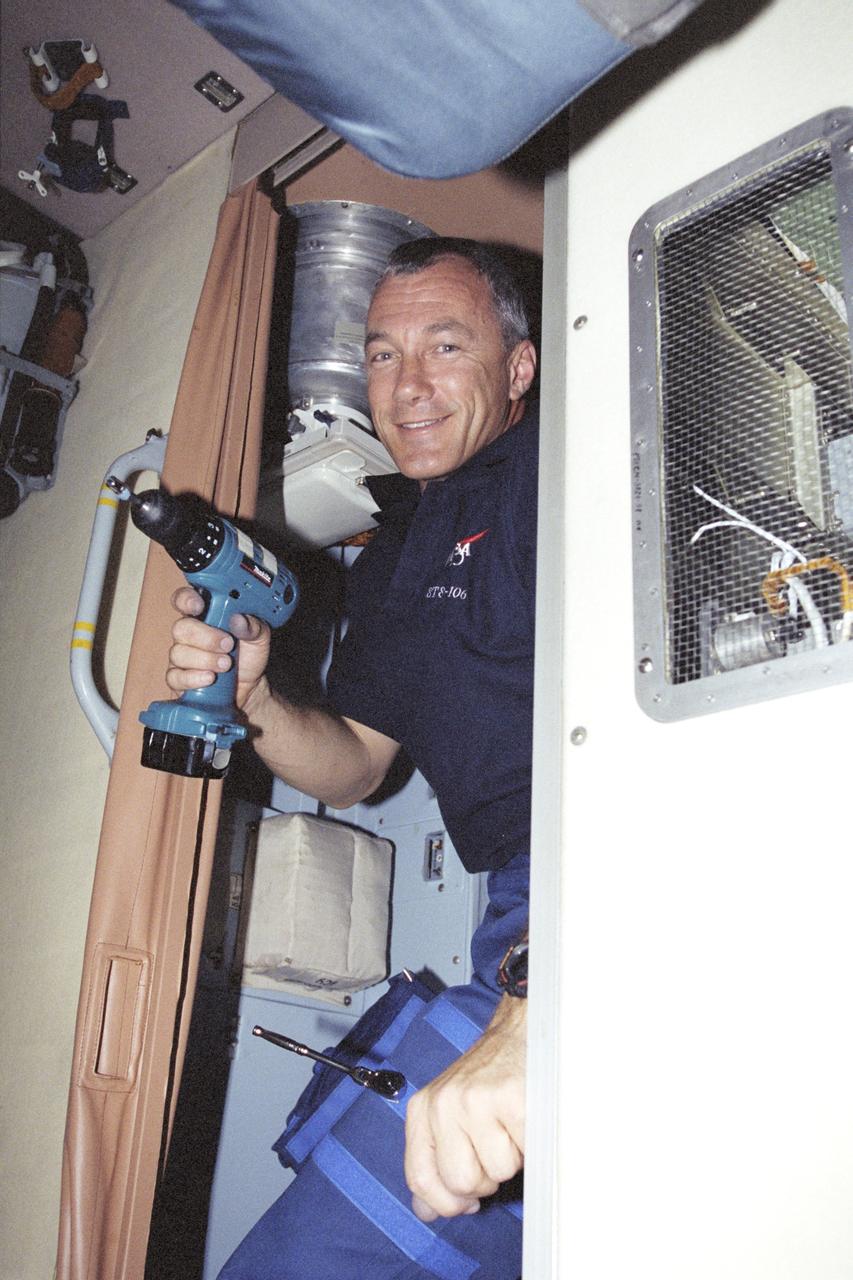
STS106-389-023 (8-20 September 2000) --- Astronaut Terrence W. Wilcutt, STS-106 commander, uses a drill during installation work in the Service Module, which linked with the International Space Station (ISS) in July of this year. Wilcutt and four other astronauts, along with two cosmonauts, teamed to perform electrician's work and other detail work on the new addition.
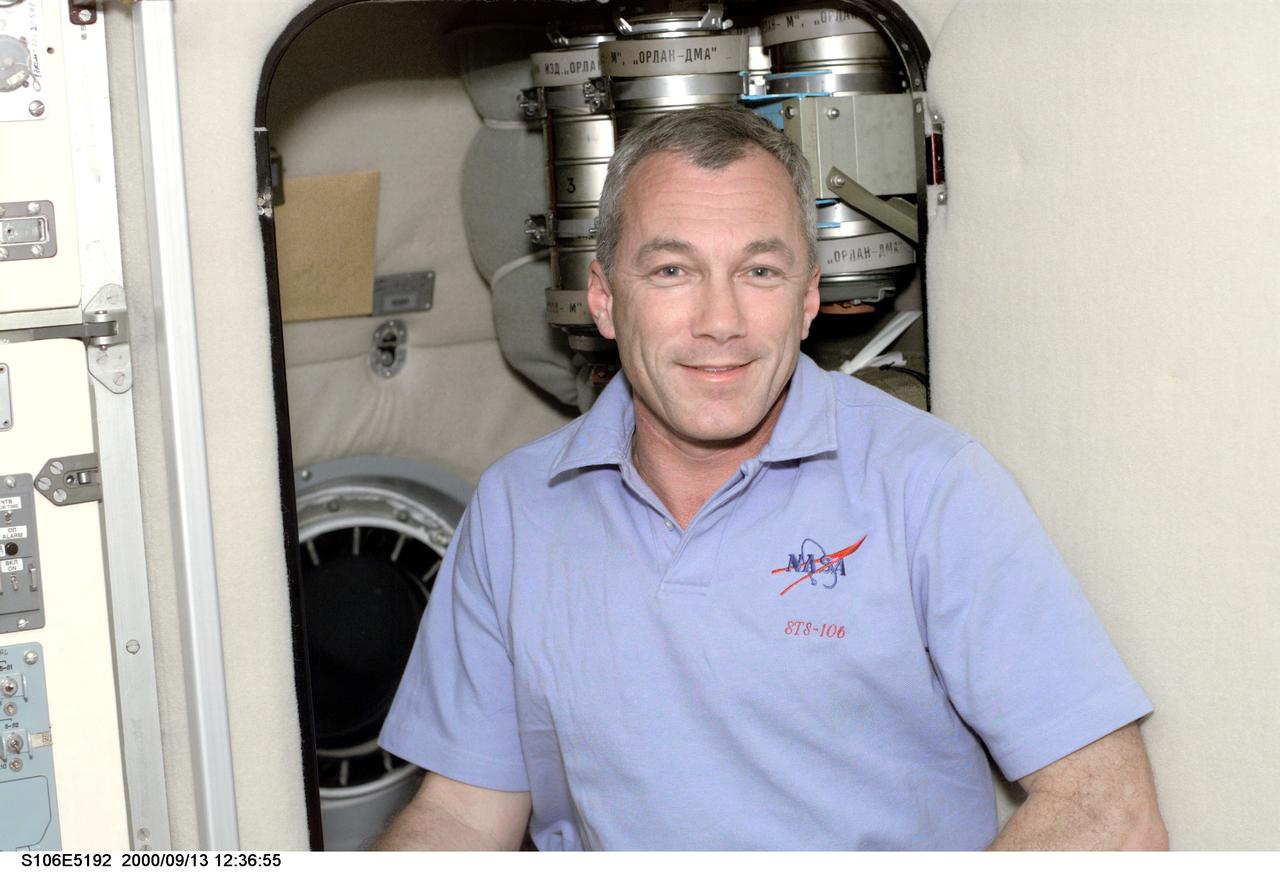
S106-E-5192 (13 September 2000) --- Astronaut Terrence W. Wilcutt, mission commander, displays a pleasant countenance onboard the International Space Station as the crew nears the halfway point of docked operations with the International Space Station. In all the crew will have 189 hours, 40 minutes of planned Atlantis-ISS docked time. For most of the remainder of the time until the Atlantis undocks from the ISS, the STS-106 astronauts and cosmonauts continue electrical work and transfer activities.
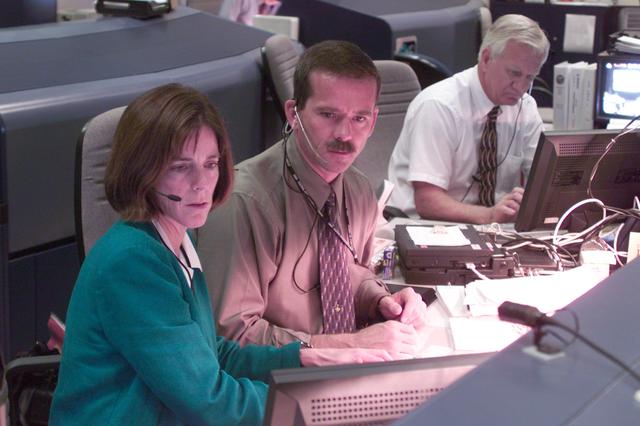
JSC2000-E-22831 (13 September 2000) --- Astronauts Barbara R. Morgan and Chris A. Hadfield listen to downlinked audio from the Space Shuttle Atlantis at the approximate midway point of the STS-106 mission. The two are working at the Spacecraft Communicator (CAPCOM) console in Houston's Mission Control Center (MCC). Nearby is Bill Reeves at the Flight Director console.
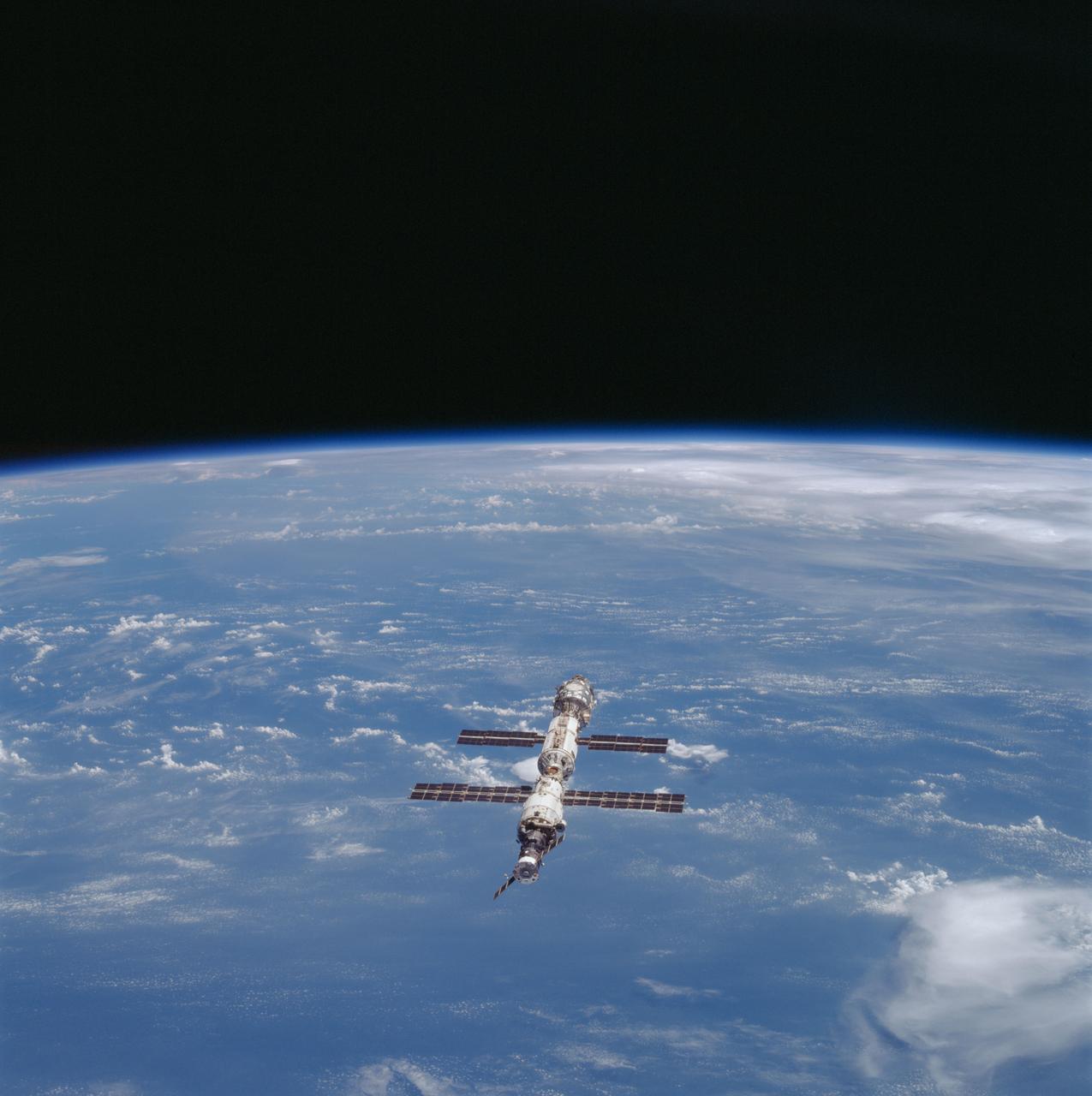
STS106-707-008 (8-20 September 2000) ---- The STS-106 crew members used a 70mm handheld camera to capture this view of the International Space Station (ISS) over a moderately cloud-covered land area. The station component nearest the camera is the Progress supply craft, which joined ISS in August 2000. Progress is docked with the Service Module or Zvezda, which connected to ISS in July 2000.
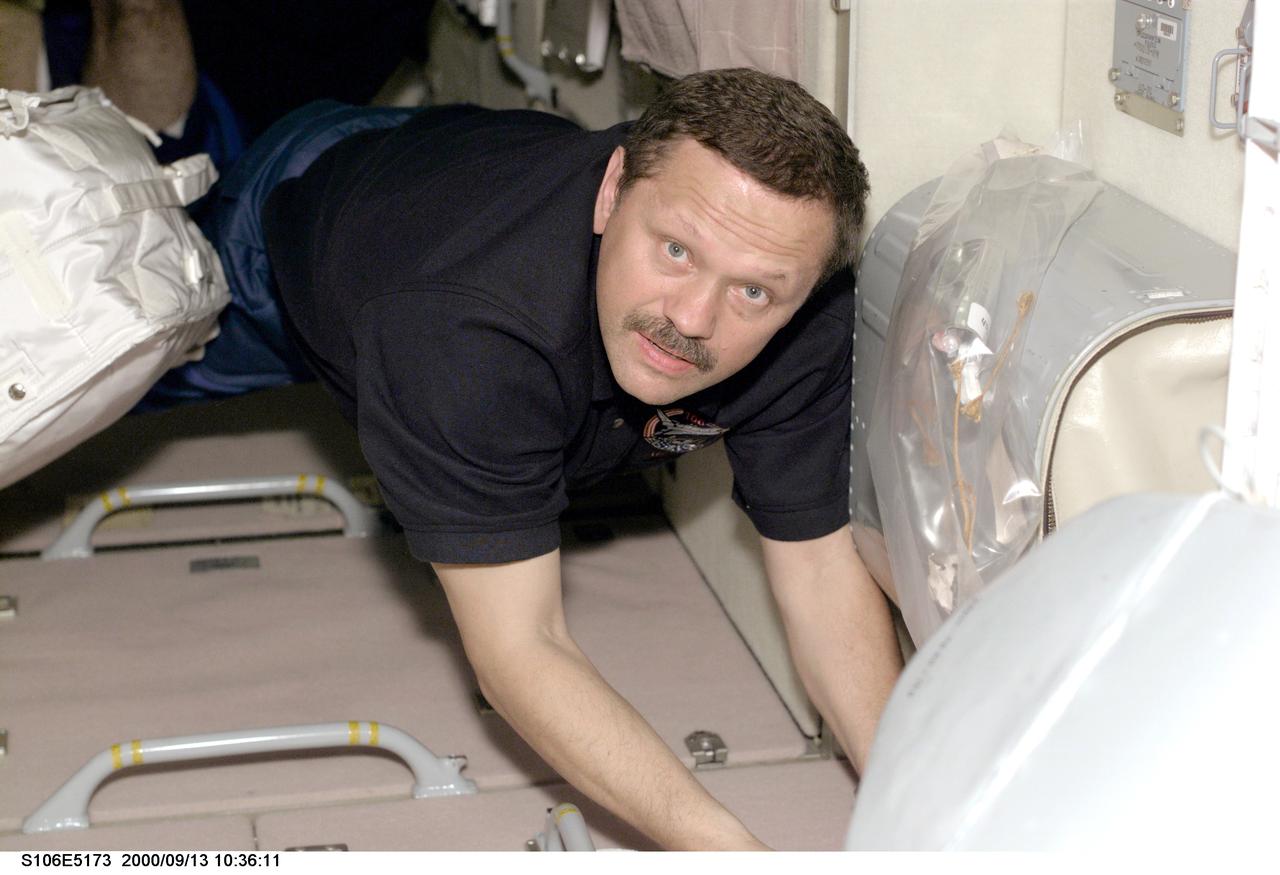
S106-E-5173 (13 September 2000) --- Cosmonaut Boris V. Morukov, mission specialist representing the Russian Aviation and Space Agency, is part of the team effort to ready the International Space Station (ISS) for permanent habitation. The STS-106 astronauts and cosmonauts are continuing electrical work and transfer activities as they near the halfway point of docked operations with the International Space Station. In all, the crew will have 189 hours, 40 minutes of planned Atlantis-ISS docked time.
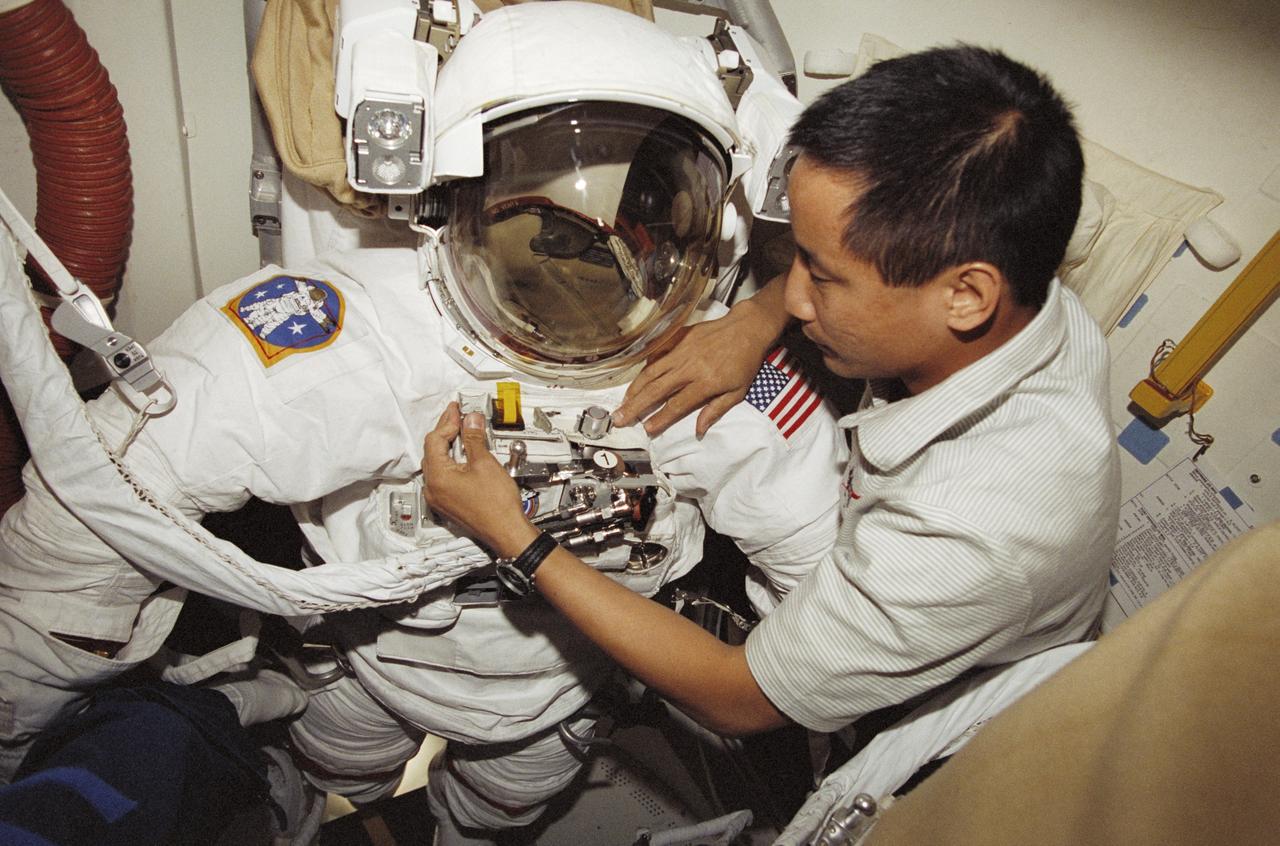
STS106-386-026 (8-20 September 2000) --- Astronaut Edward T. Lu, STS-106 mission specialist, prepares his extravehicular mobility unit (EMU) space suit for an impending space walk. Lu was about to spend a period in excess of six hours outside Atlantis along with cosmonaut Yuri I. Malenchenko (out of frame), mission specialist representing Rosaviakosmos.
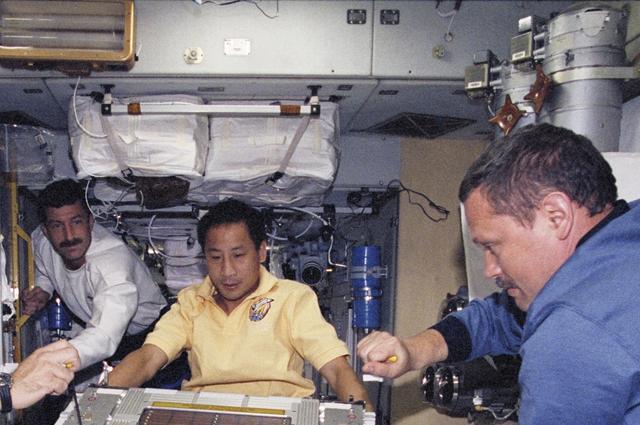
STS106-390-029 (8-20 September 2000) --- Astronauts Scott D. Altman (left), STS-106 pilot, Daniel C. Burbank, and Edward T. Lu, both mission specialists, along with cosmonaut Boris V. Morukov, mission specialist representing Rosaviakosmos, assemble a treadmill in the Zvezda Service Module on the International Space Station (ISS).
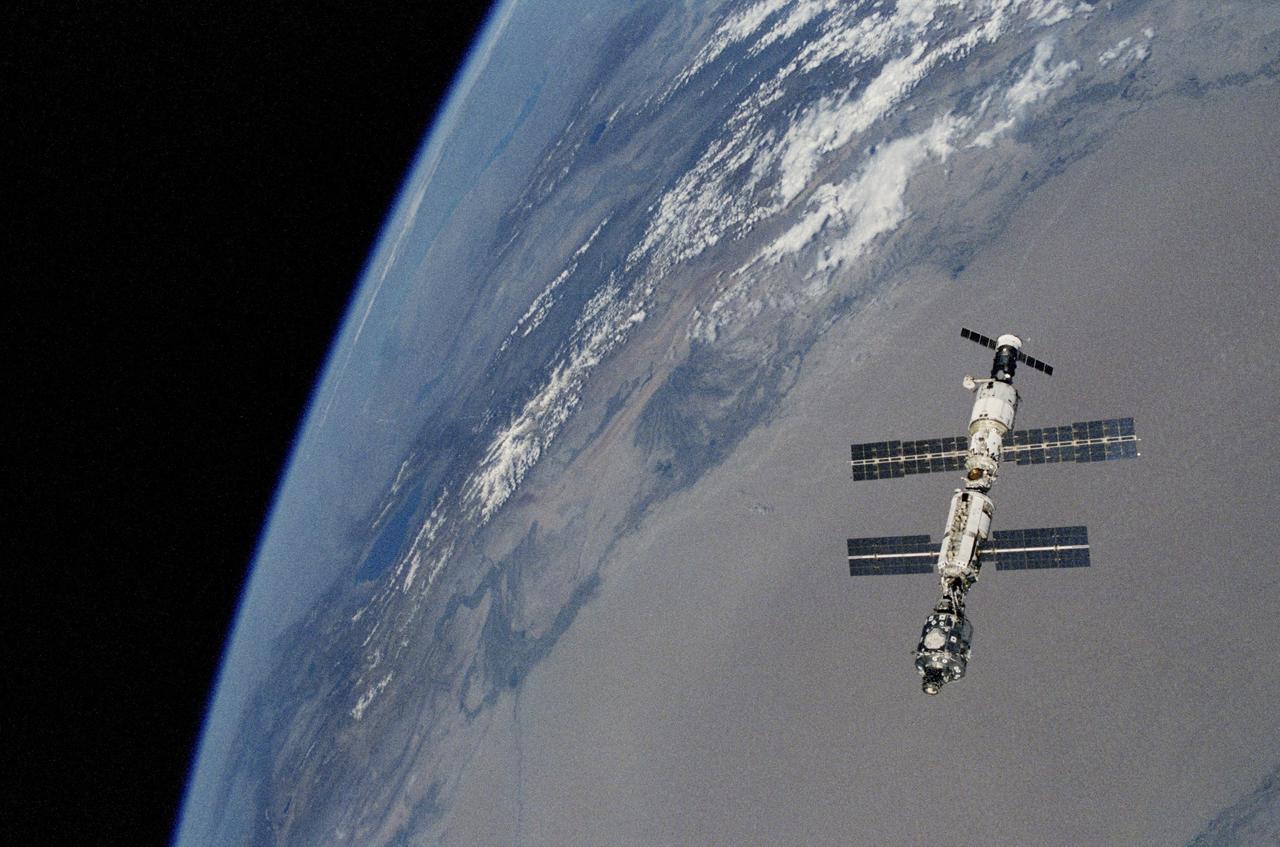
STS106-314-023 (17 September 2000) --- The International Space Station (ISS), backdropped over China’s Takla Makan desert and Earth’s horizon, is photographed after undocking with the Space Shuttle Atlantis. The 35mm frame was exposed by one of the STS-106 crew members onboard the shuttle. The undocking took place on September 17, 2000 at 10:46 p.m. (CDT).
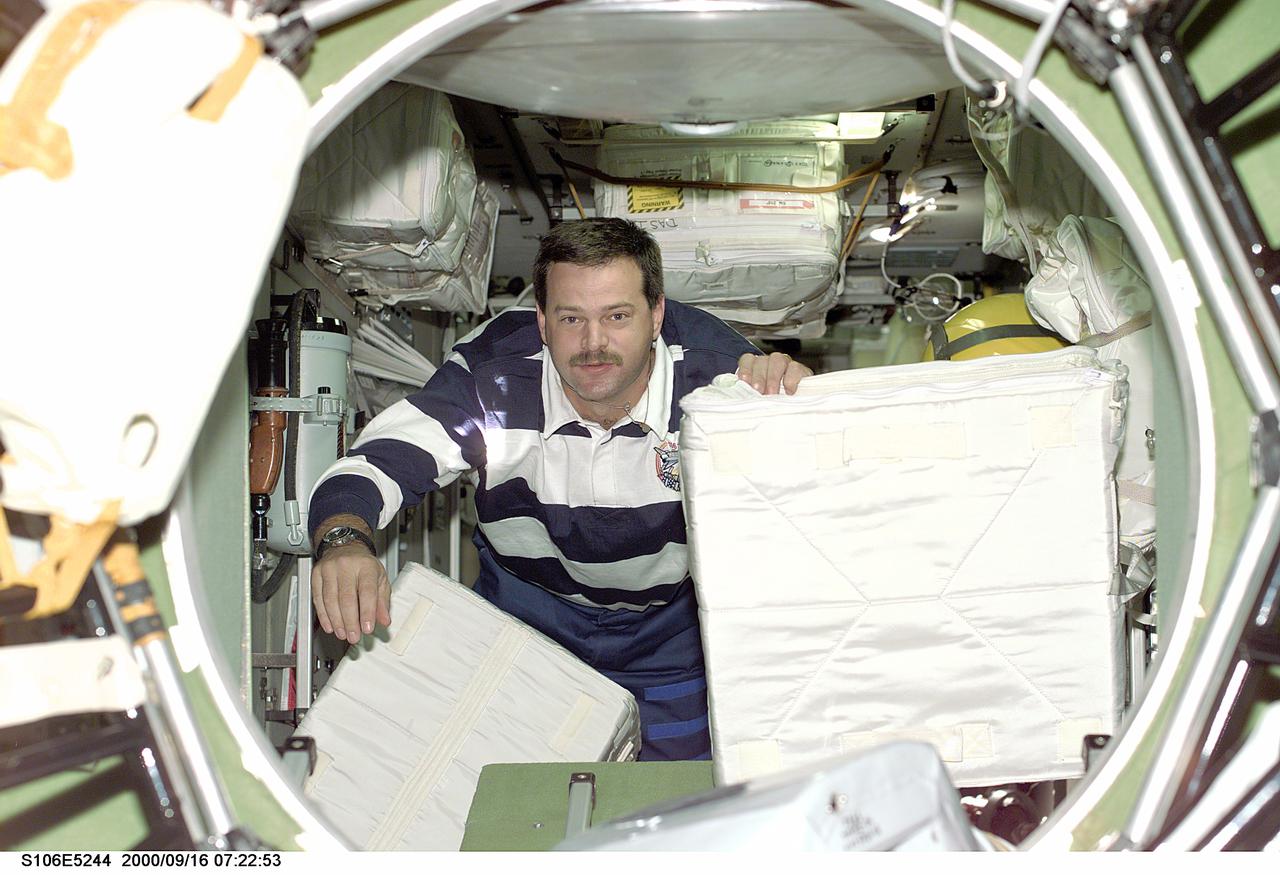
S106-E-5244 (16 September 2000) --- Downlinked images from the STS-106 mission aboard the Earth-orbiting Space Shuttle Atlantis have exhibited the common denominator of scenery of objects in transit and movers at work. This scene of astronaut Scott D. Altman, pilot, aboard the International Space Station (ISS) is no different as the crew heads toward final touches on their ISS tasks and separation from the station.
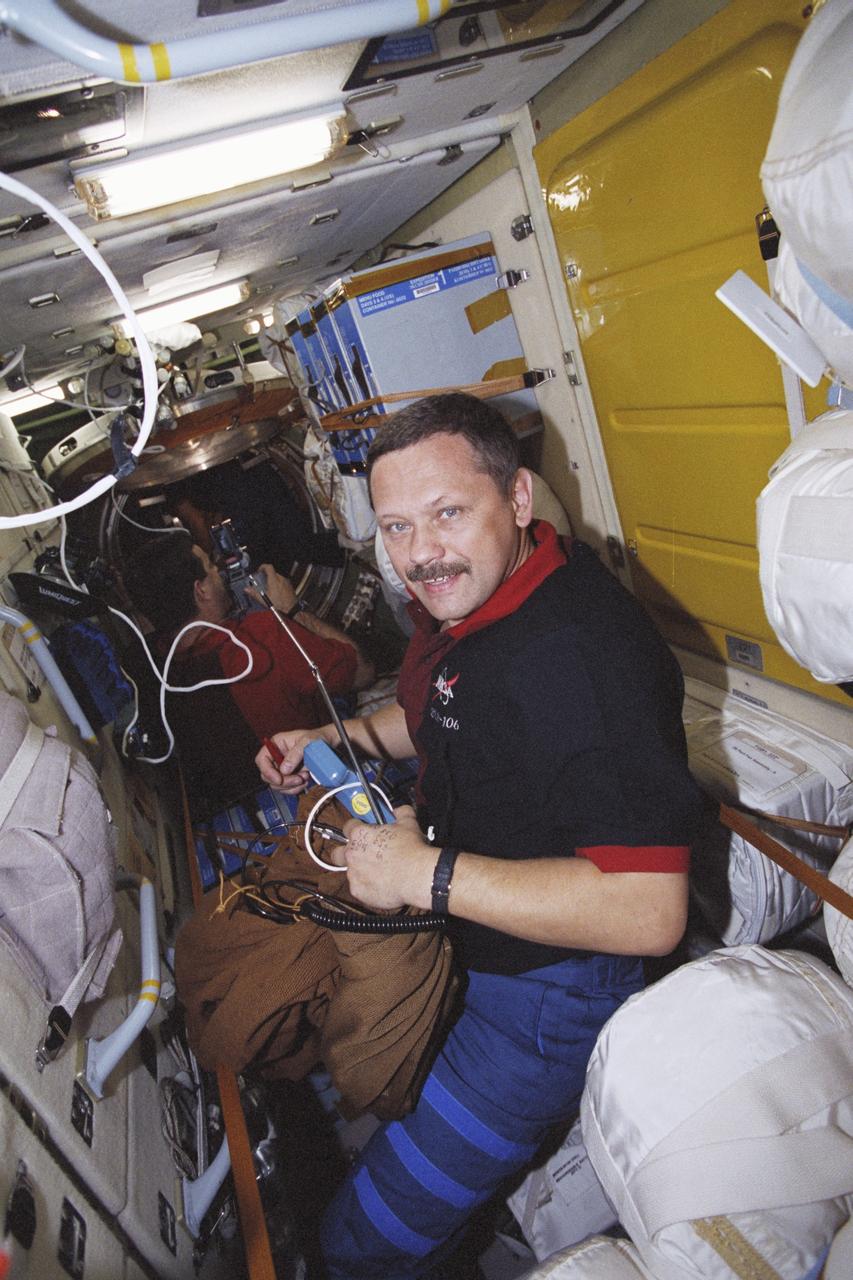
STS106-322-017 (8-20 September 2000) --- Cosmonaut Boris V. Morukov, mission specialist representing the Russian Aviation and Space Agency, works onboard the Functional Cargo Block (FGB) as the seven-man STS-106 crew carried out its busy move- and install-effort on the International Space Station. The astronauts and cosmonauts were able to accomplish the movement of several tons of hardware and supplies during the period the station was docked with the Space Shuttle Atlantis.
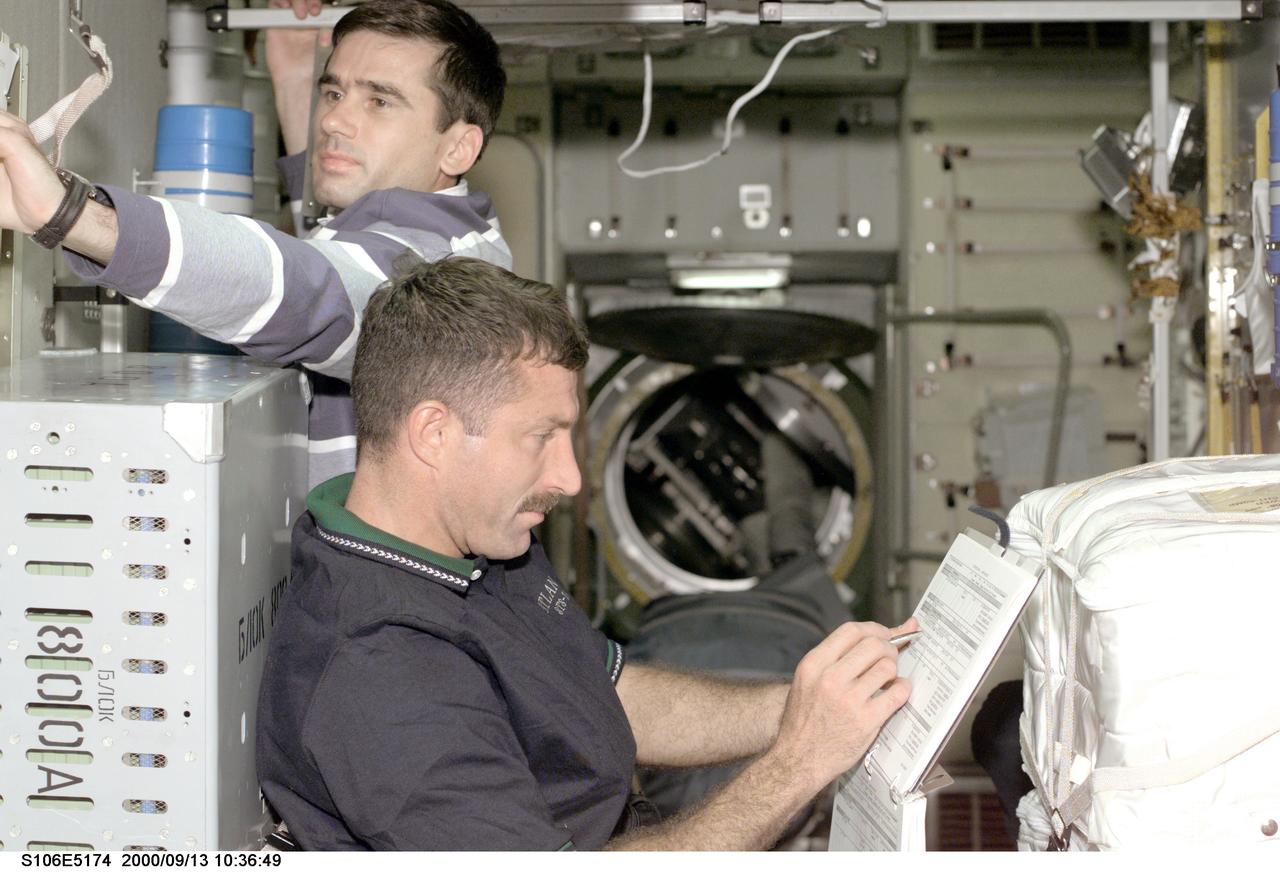
S106-E-5174 (13 September 2000) --- Cosmonaut Yuri I. Malenchenko (left), representing the Russian Aviation and Space Agency, and astronaut Daniel C. Burbank are part of the team effort to ready the International Space Station (ISS) for permanent habitation. These two mission specialists and the other STS-106 astronauts and cosmonaut are continuing electrical work and transfer activities as they near the halfway point of docked operations with the International Space Station. In all the crew will have 189 hours, 40 minutes of planned Atlantis-ISS docked time.
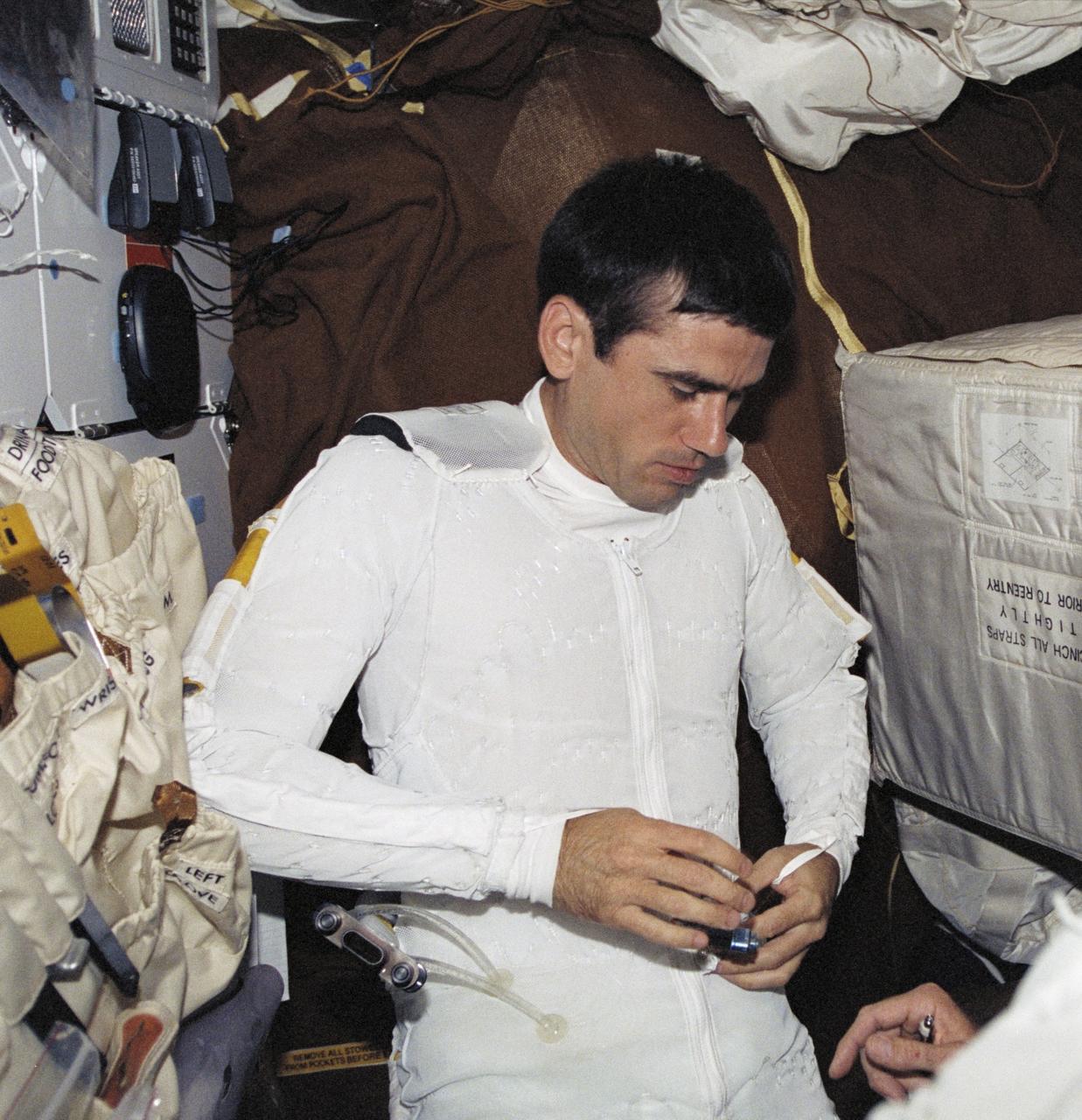
JSC2000-E-23502 (11 September 2000) --- Cosmonaut Yuri I. Malenchenko, STS-106 mission specialist, completes donning his thermal underwear prior to putting on the outer garment called the extravehicular mobility unit (EMU). Malenchenko, representing the Russian Aviation and Space Agency, was about to spend a period in excess of six hours outside Atlantis along with astronaut Edward T. Lu (out of frame at right).
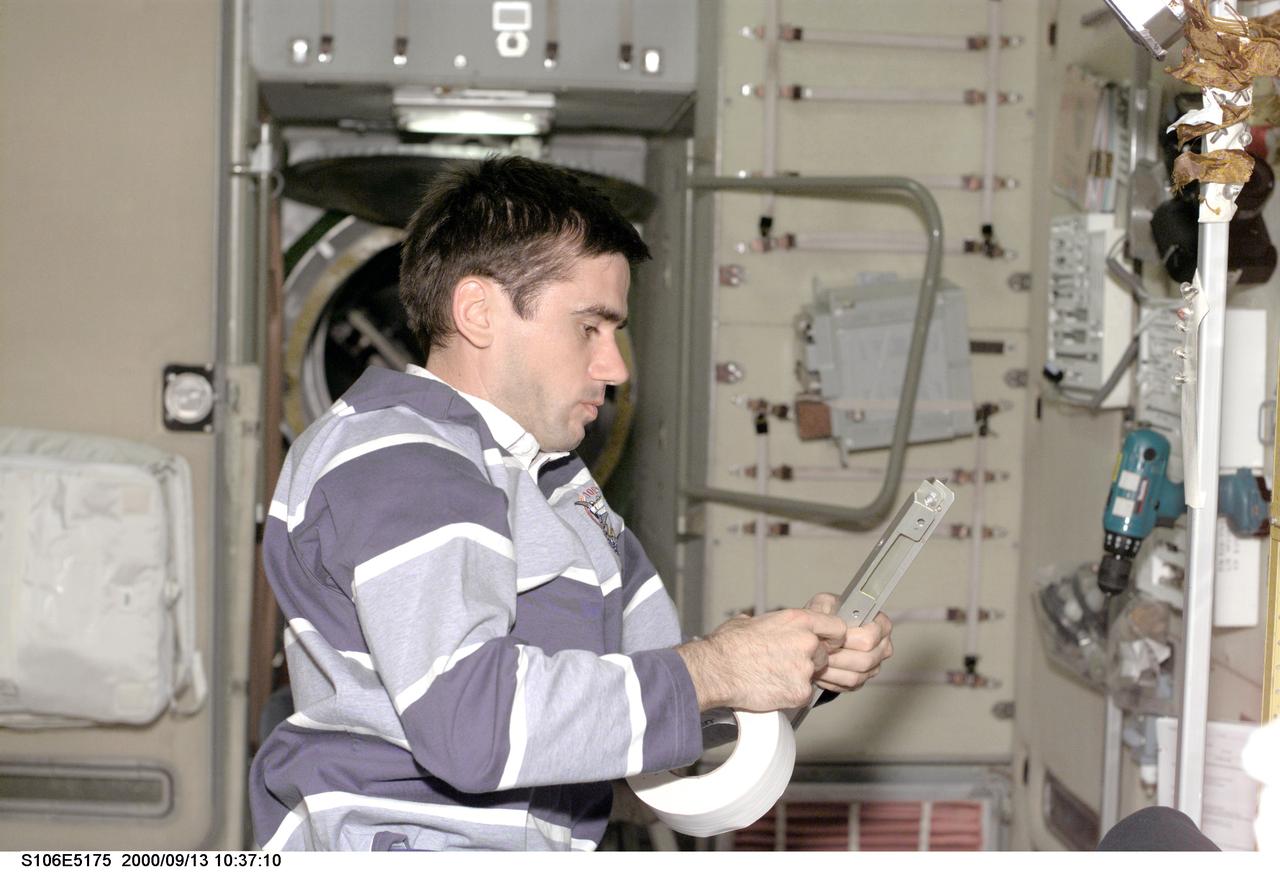
S106-E-5175 (13 September) --- Cosmonaut Yuri I. Malenchenko, representing the Russian Aviation and Space Agency, tapes brackets for the Zvezda during work on the service module. The mission specialist and the other STS-106 astronauts and cosmonaut are continuing electrical work and transfer activities as they near the halfway point of docked operations with the International Space Station. In all the crew will have 189 hours, 40 minutes of planned Atlantis-ISS docked time.
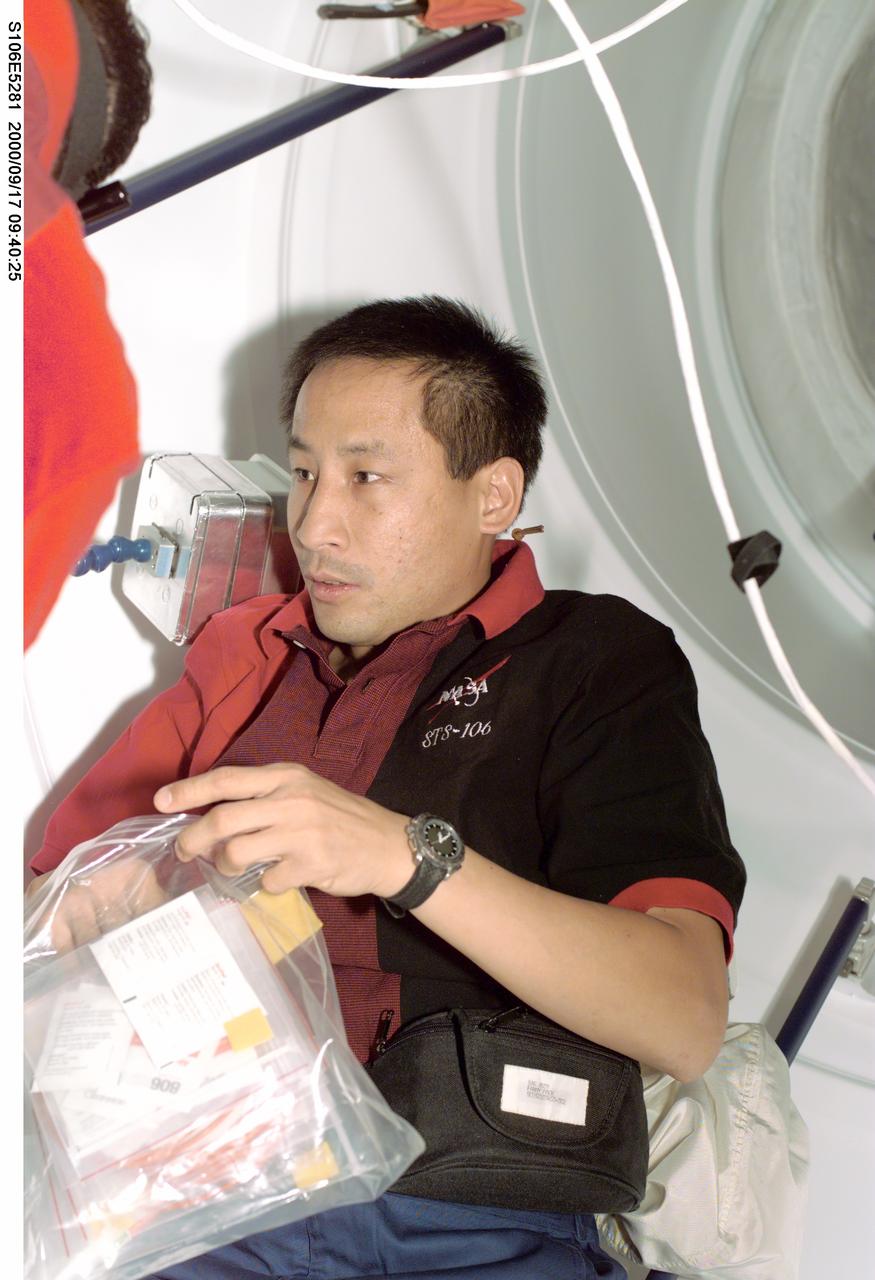
S106-E-5281 (17 September 2000) --- Astronaut Edward T. Lu, mission specialist, can literally see the light at the end of the tunnel, as he and six STS-106 crewmates wind down toward the end of their interface with the International Space Station (ISS). The crew soon will be sealing itself off from the station and returning to the crew cabin of Atlantis and Spacehab for the remainder of the 12-day mission.
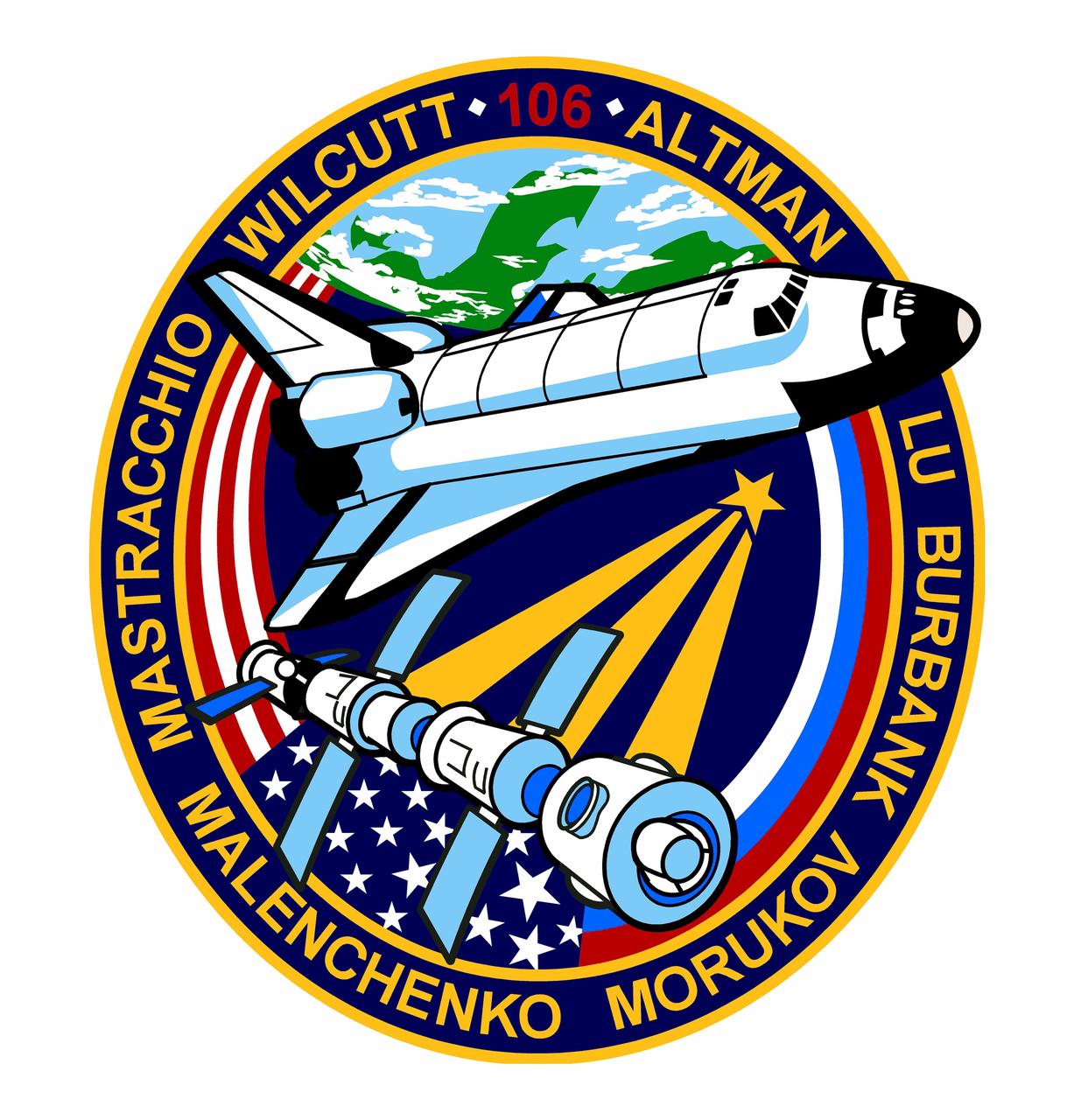
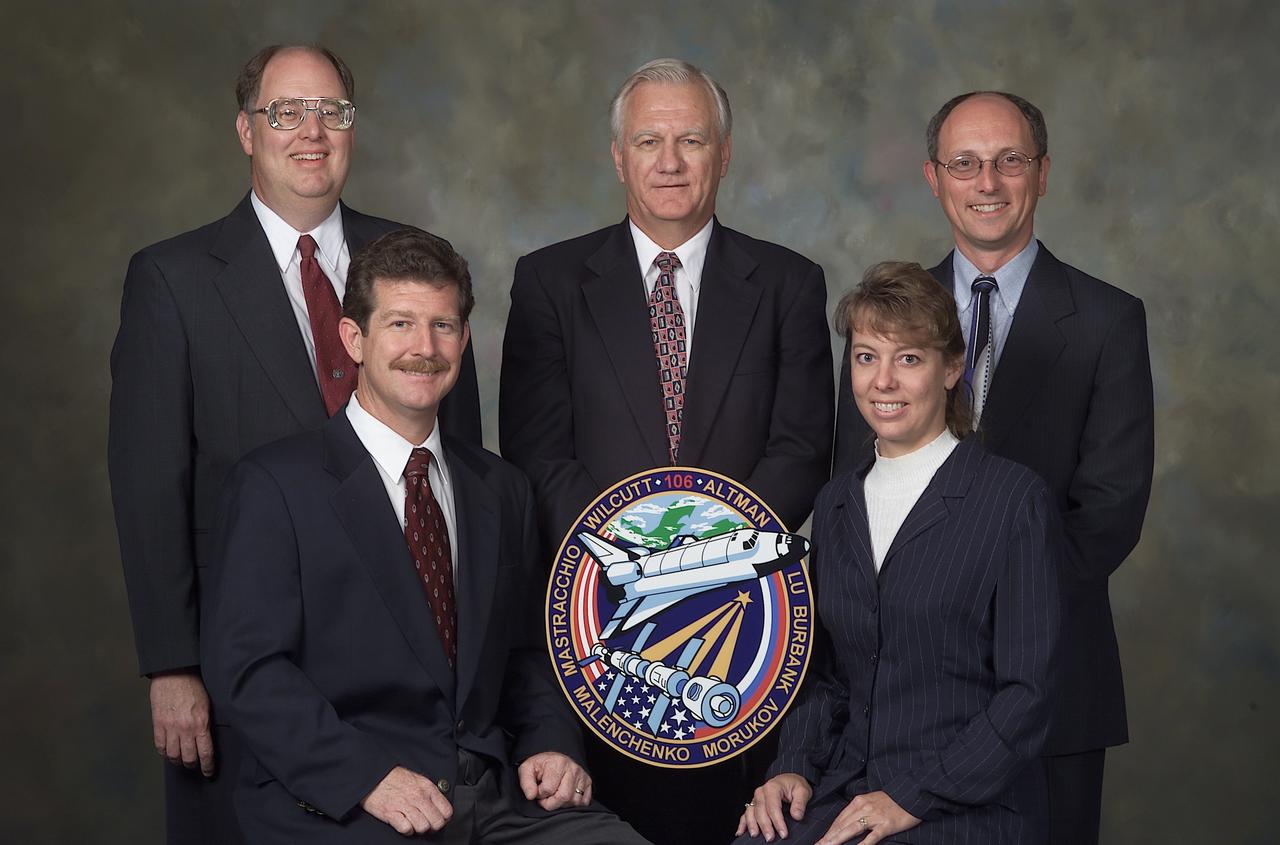
STS106-S-001 (April 2000) --- This is the crew patch for the STS-106 mission, which is the first shuttle flight to the International Space Station since the arrival of its newest component, the Russian-supplied Service Module Zvezda (Russian for star). Zvezda is depicted on the crew patch mated with the already orbiting Node 1 Unity module and Russian-built Functional Cargo Block, called Zarya (sunrise), with a Progress supply vehicle docked to the rear of the station. The International Space Station is shown in orbit with Earth above as it appears from the perspective of space. The Astronaut Office symbol, a star with three rays of light, provides a connection between the space shuttle Atlantis and the space station, much the same as the Space Shuttle Program is linked to the International Space Station during its construction and future research operations. Stylized versions of flags from Russia and the United States meet at the space station. They symbolize both the cooperation and joint efforts of the two countries during the development and deployment of the permanent outpost in space as well as the close relationship of the American and Russian crew members. The NASA insignia design for space shuttle flights is reserved for use by the astronauts and for other official use as the NASA Administrator may authorize. Public availability has been approved only in the forms of illustrations by the various news media. When and if there is any change in this policy, which is not anticipated, the change will be publicly announced. Photo credit: NASA
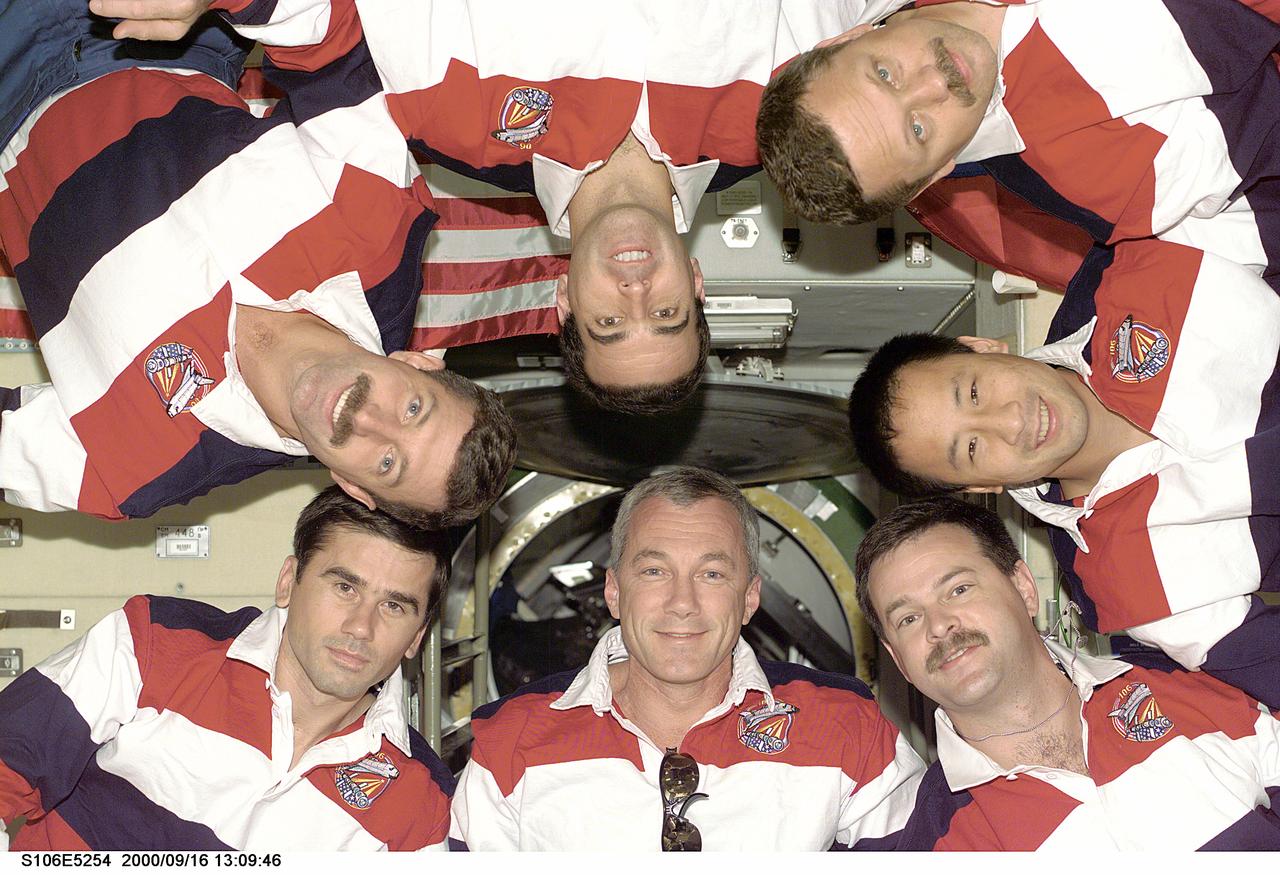
S106-E-5254 (16 September 2000) --- A brief break during busy moving tasks and detail work afforded the STS-106 crew members an opportunity for another traditional inflight crew portrait, snapped by a pre-set electronic still camera (ESC) nearby. Astronaut Terrence W. Wilcutt, mission commander, is at bottom center. Counterclockwise from that point are cosmonaut Yuri I. Malenchenko, astronauts Daniel C. Burbank and Richard A. Mastracchio, cosmonaut Boris V. Morukov and astronaut Edward T. Lu, all mission specialists; along with astronaut Scott D. Altman, pilot. Malenchenko and Morukov represent the Russian Aviation and Space Agency.
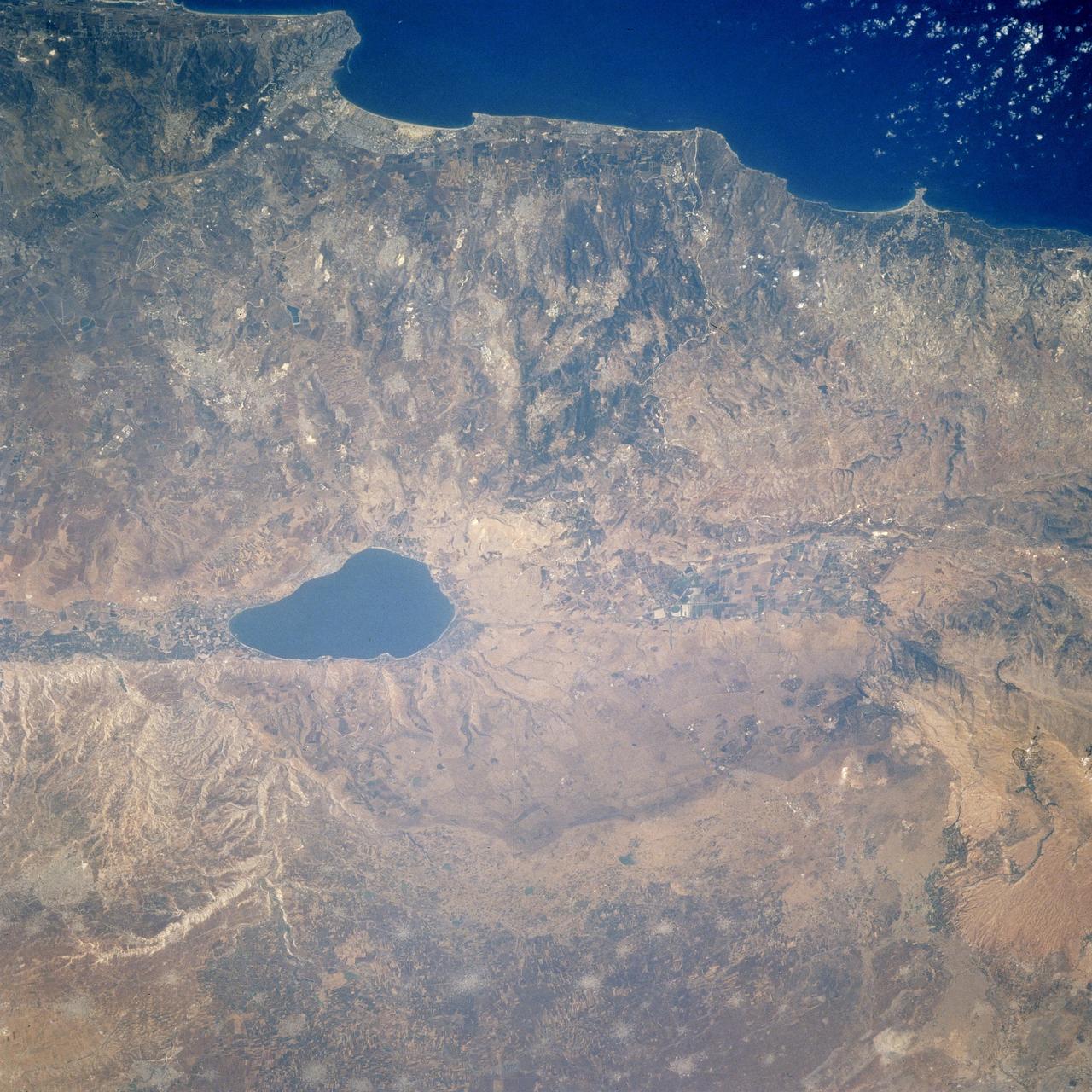
STS106-713-002 (19 September 2000) --- One of the STS-106 crew members on board the Space Shuttle Atlantis, 204 nautical miles above Earth, used a handheld 70mm camera to photograph this image featuring the Sea of Galilee and part of the Mediterranean coast. Also known as Lake Tiberius and other names, the body of water is the only natural fresh-water lake in Israel. It borders on the Golan Heights on its east side. The port of Haifa is visible on the Mediterranean coast. The large agriculture projects on the Israeli side of Galilee are irrigated by the lake and the Jordan River.
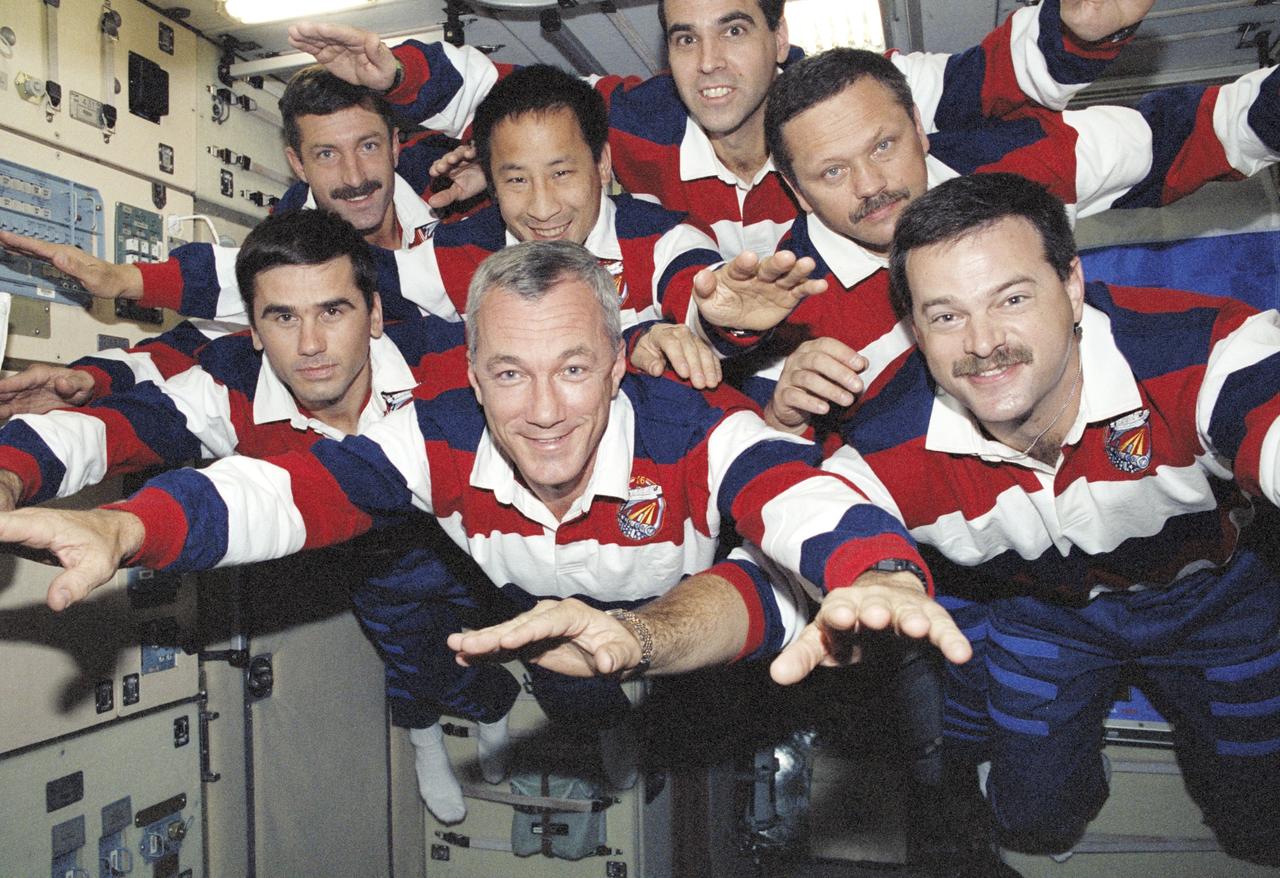
STS106-373-034 (8-20 September 2000) --- The seven crew members for the STS-106 mission pose in a flying position for the traditional in-flight crew portrait in the Zvezda Service Module on the International Space Station (ISS). In the foreground are astronauts Terrence W. Wilcutt (center), mission commander, flanked by cosmonaut Yuri I. Malenchenko (left), mission specialist, and Scott D. Altman, pilot. On the back row are astronauts Daniel C. Burbank, Edward T. Lu, and Richard A. Mastracchio, along with cosmonaut Boris V. Morukov, all mission specialists. Malenchenko and Morukov represent Rosaviakosmos.
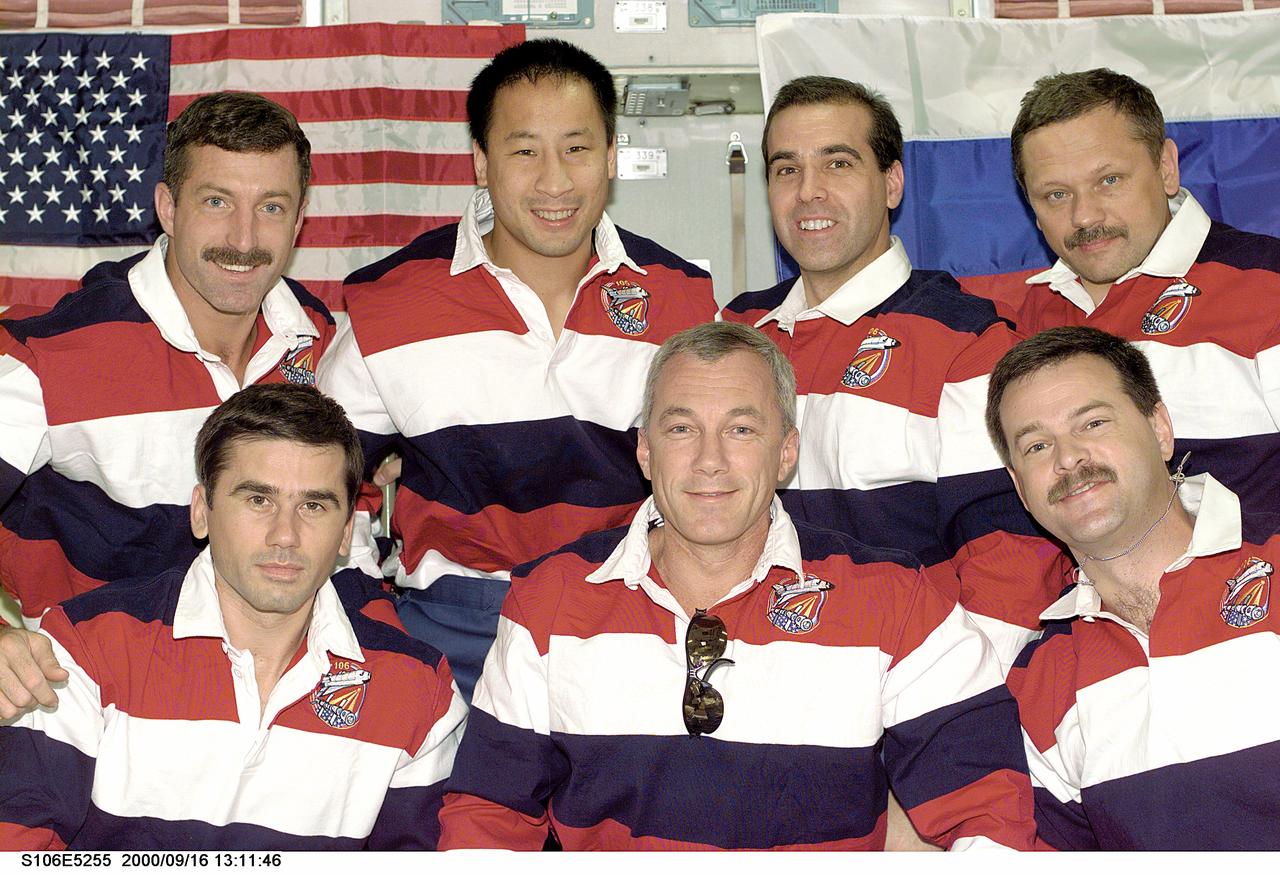
S106-E-5255 (16 September 2000) --- STS-106 crew members, rapidly approaching the time when good-byes to the International Space Station (ISS) will be in order, pose for an inflight crew portrait, snapped by a pre-set electronic still camera (ESC) nearby. Astronaut Terrence W. Wilcutt, mission commander, is at front center, and Scott D. Altman, pilot, front right. Cosmonaut Yuri I. Malenchenko, mission specialist, is at front left. In the rear are (from the left) astronauts Daniel C. Burbank, Edward T. Lu and Richard A. Mastracchio, along with cosmonaut Boris V. Morukov, all mission specialists. Malenchenko and Morukov represent the Russian Aviation and Space Agency.
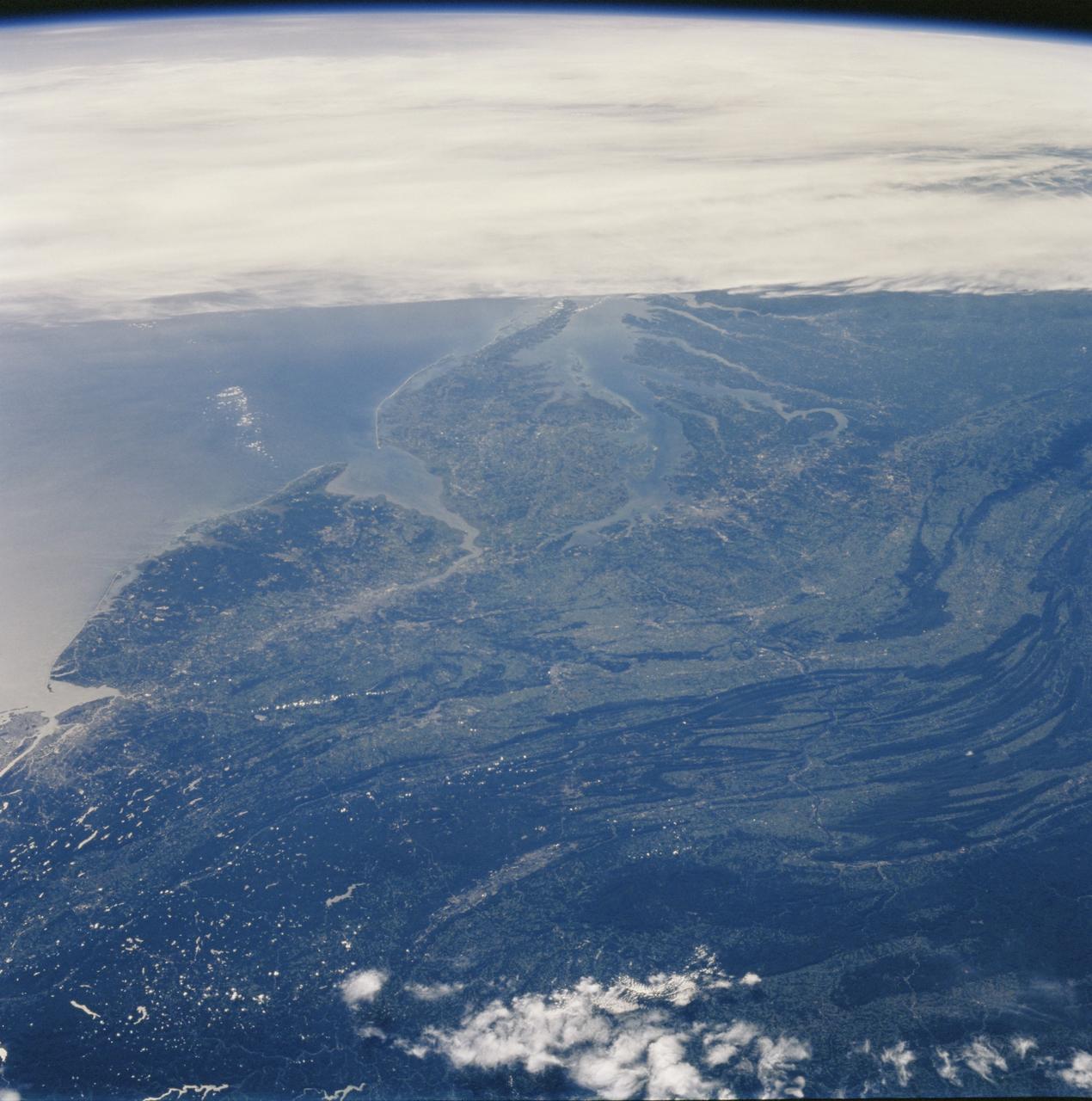
STS106-709-016 (19 September 2000) --- One of the STS-106 crew members on board the Space Shuttle Atlantis, 204 nautical miles above Earth, used a handheld 70mm camera to photograph this image of the shuttle's cargo bay, a broad band of clouds and a land scene featuring Lake Ontario. Center point coordinates of the ground area are 44 degrees north latitude and 77 degrees west longitude. The Spacehab module, which supports this mission to the International Space Station (ISS), can be seen at the back of the cargo bay. The Atlantis had earlier separated from the ISS after several days of being docked with the orbital outpost.
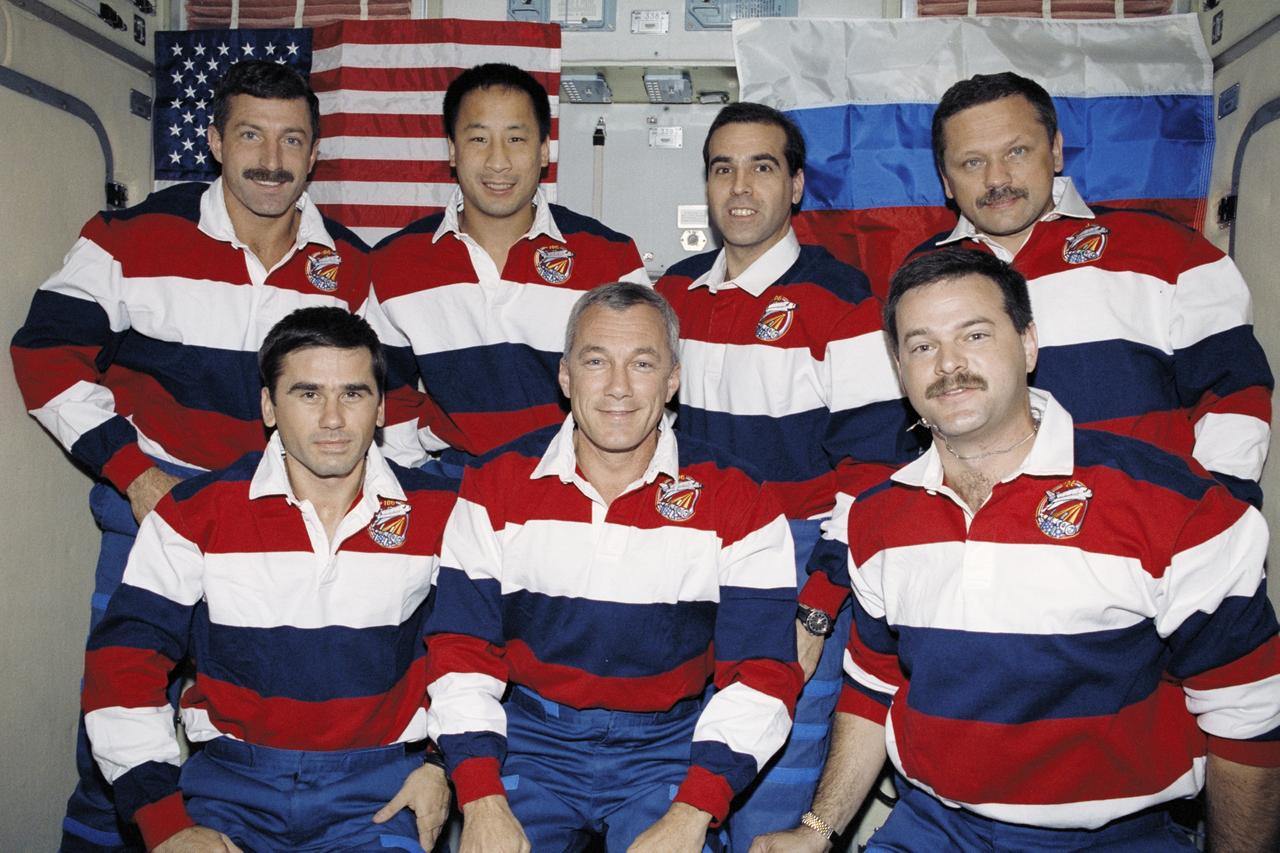
STS106-373-019 (8-20 September 2000) --- Five astronauts and two cosmonauts pose for the STS-106 version of the traditional inflight crew portrait. Though the tradition is long standing, this portrait represents a relatively new element as it was taken onboard the International Space Station, docked for a few days with the Space Shuttle Atlantis. In front, from the left, are cosmonaut Yuri I. Malenchenko, mission specialist; Terrence W. Wilcutt, mission commander; and Scott D. Altman, pilot. In back are, from left, astronauts Daniel C. Burbank, Edward T. Lu and Richard A. Mastracchio, along with cosmonaut Boris V. Morukov. Morukov and Malenchenko represent the Russian Aviaition and Space Agency.
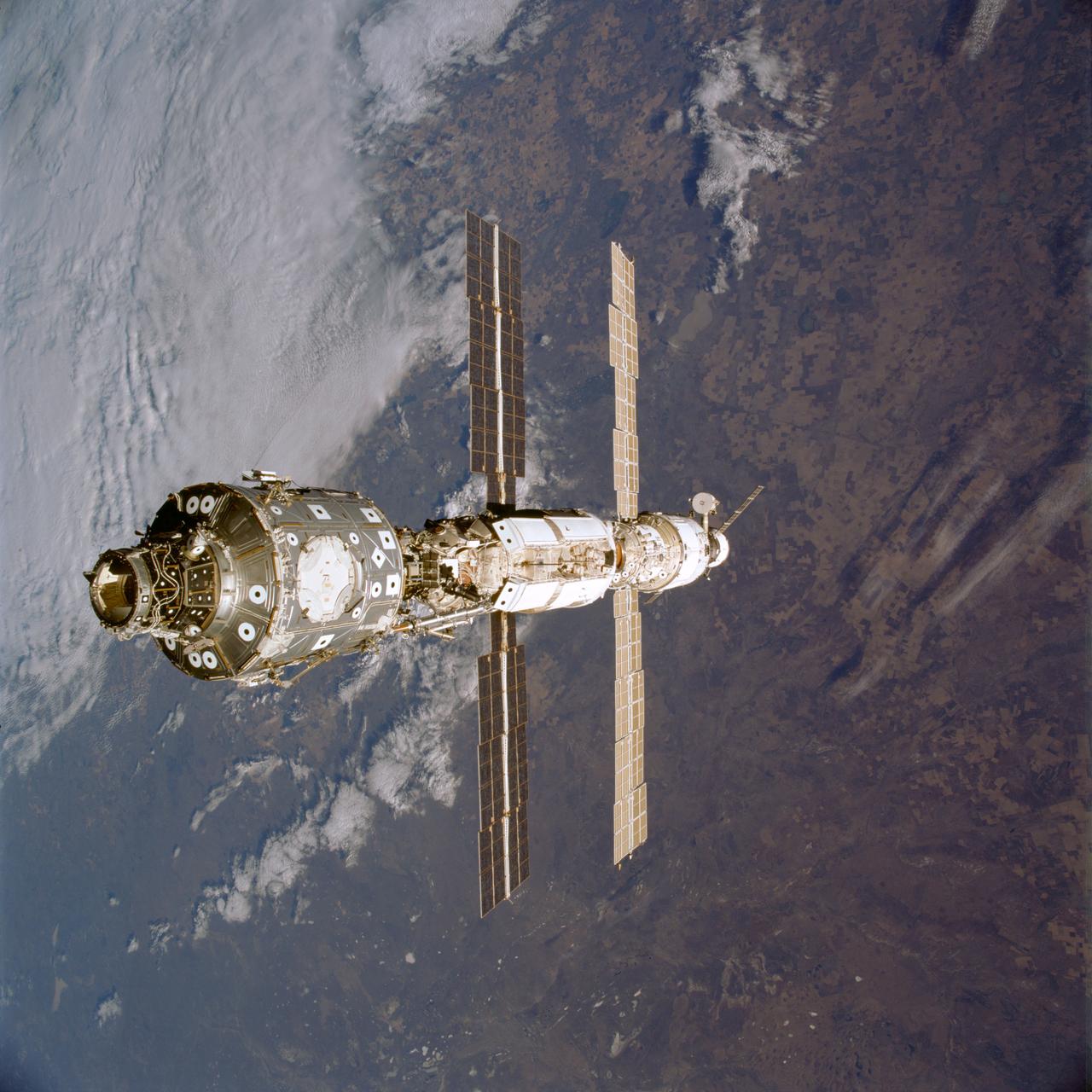
STS106-709-026 (8-20 September 2000) --- The STS-106 crew members used a 70mm handheld camera to capture this view of the International Space Station (ISS) over a moderately cloud-covered land area. The station component nearest the camera is the U.S.-built Unity node, which is connected with the Russian-built Functional Cargo Block (FGB) or Zarya. The FGB was linked in July with the Service Module or Zvezda, seen near the bottom of ISS in this angle. On the far end, next to the service module, is the Progress supply ship, which joined ISS in August.

Five NASA astronauts and two cosmonauts representing the Russian Aviation and Space Agency take a break in training from their scheduled September 2000 visit to the International Space Station (ISS). Astronauts Terrence W. Wilcutt (right front), and Scott D. Altman (left front) are mission commander and pilot, respectively. On the back row (from the left) are mission specialists Boris V. Morukov, cosmonaut, along with astronauts Richard A. Mastracchio, Edward T. Lu, and Daniel C. Burbank, and cosmonaut Yuri I. Malenchenko. Morukov and Malenchenko represent the Russian Aviation and Space Agency. Launched aboard the Space Shuttle Atlantis on September 8, 2000 at 7:46 a.m. (CDT), the STS-106 crew successfully prepared the International Space Station (ISS) for occupancy. Acting as plumbers, movers, installers and electricians, they installed batteries, power converters, a toilet and a treadmill on the outpost. They also delivered more than 2,993 kilograms (6,600 pounds) of supplies. Lu and Malenchenko performed a space walk to connect power, and data and communications cables to the newly arrived Zvezda Service Module and the Station.
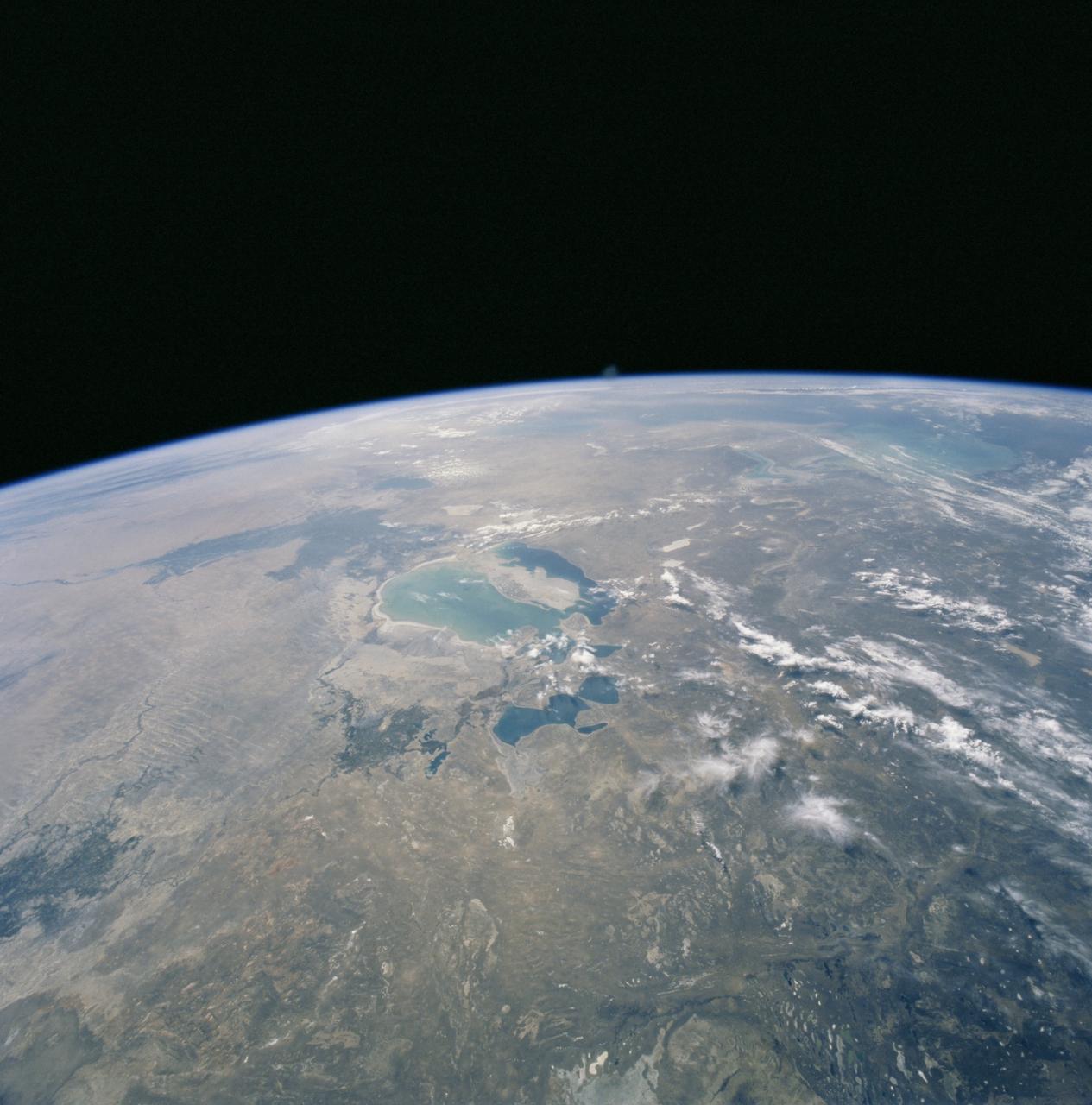
STS106-704-092 (8-20 September 2000) --- One of the STS-106 crew members on board the Space Shuttle Atlantis used a handheld 70mm camera to photograph this image of the Aral Sea in Kazakhstan and Uzbekistan. According to geologists that have been studying aerial and space-to-Earth photos, the Aral Sea has diminished dramatically since the 1950's. By 1990, the surface area of the Aral had decreased by more than 50 percent, and the salinity had tripled since 1960, when the sea covered about 68,000 square kilometers. The most noticeable changes observed from orbit between January, 1998 and September, 2000 have been the expansion of the large north-trending island, the decrease in total water area, and the isolation of the smaller northern water body.
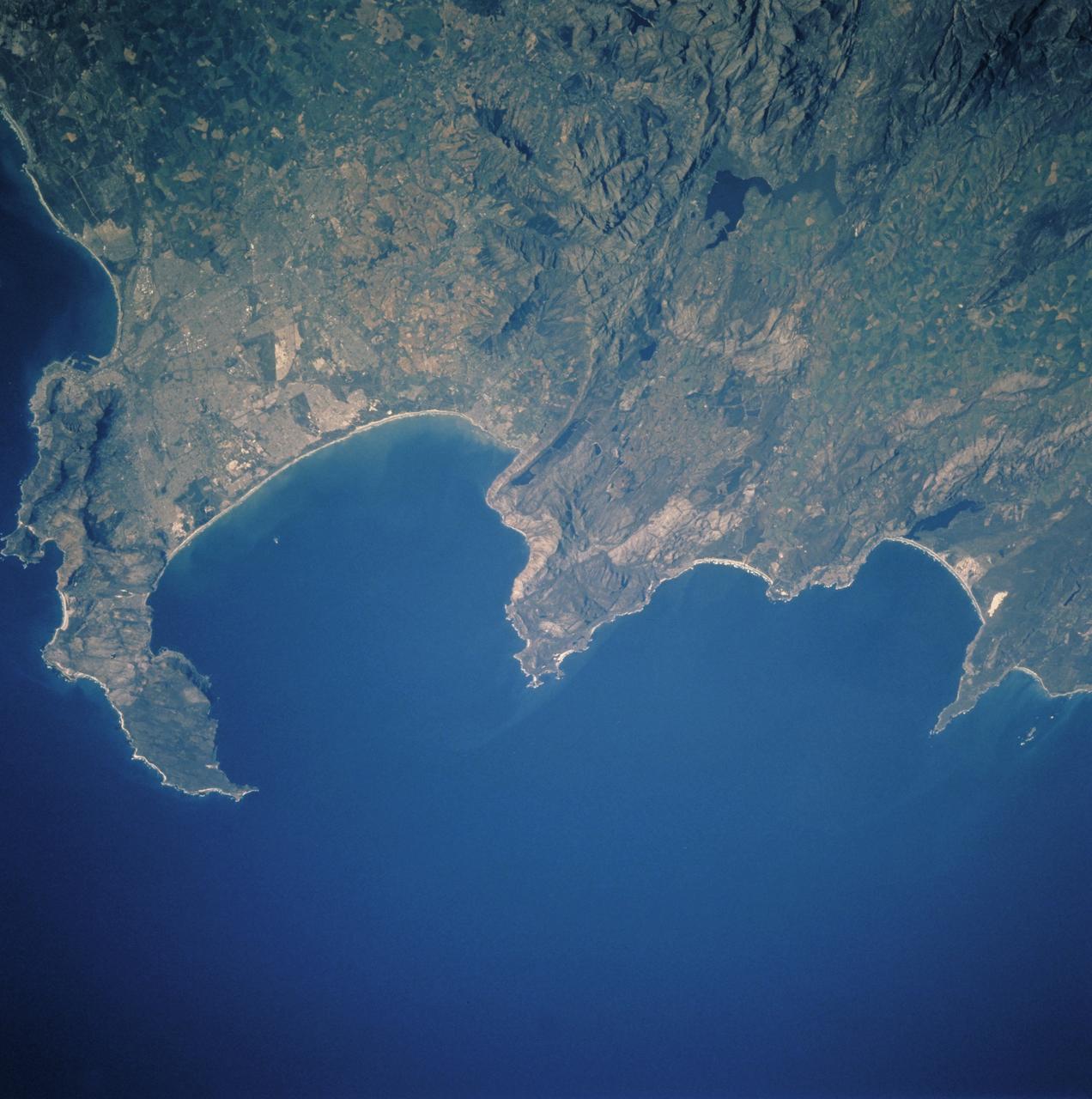
STS106-713-057 (19 September 2000) --- One of the STS-106 crew members on board the Space Shuttle Atlantis used a handheld 70mm camera to photograph this image of Cape Town and the Karroo Ranges in South Africa. Cape Town occupies the north end of the Cape of Good Hope peninsula and extends to the shore of False Bay. The city is home to about 2.7 million people. Tourism and viticulture contribute importantly to the local economy, and the city is a service center for government and industry -- particularly mining. The great folded mountain ranges of South Africa were formed during the assembly of the ancient super continent of Gondwana. Broad N-trending folds of the Cedarburg range, South Africa formed first, according to geologists, about 230 million years ago, and the W-trending Karroo ranges formed a little later.