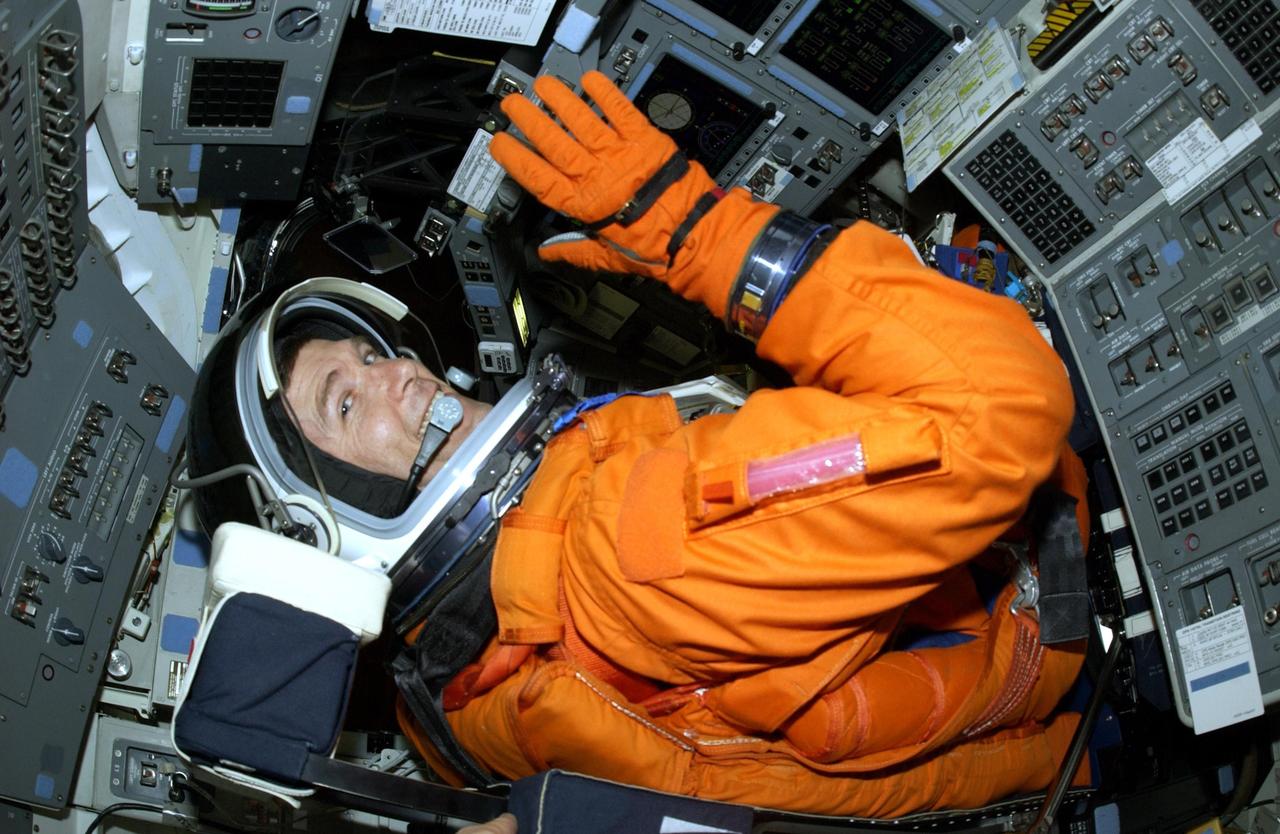
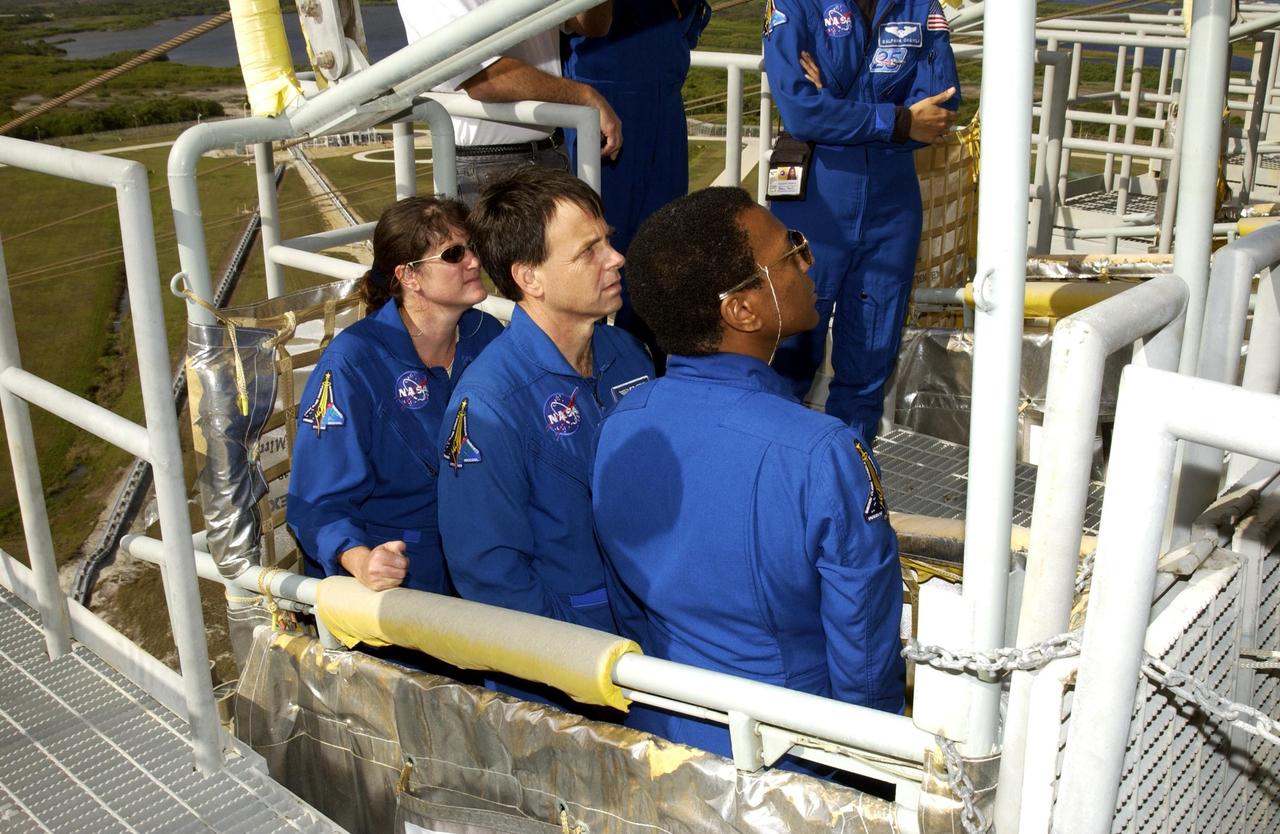
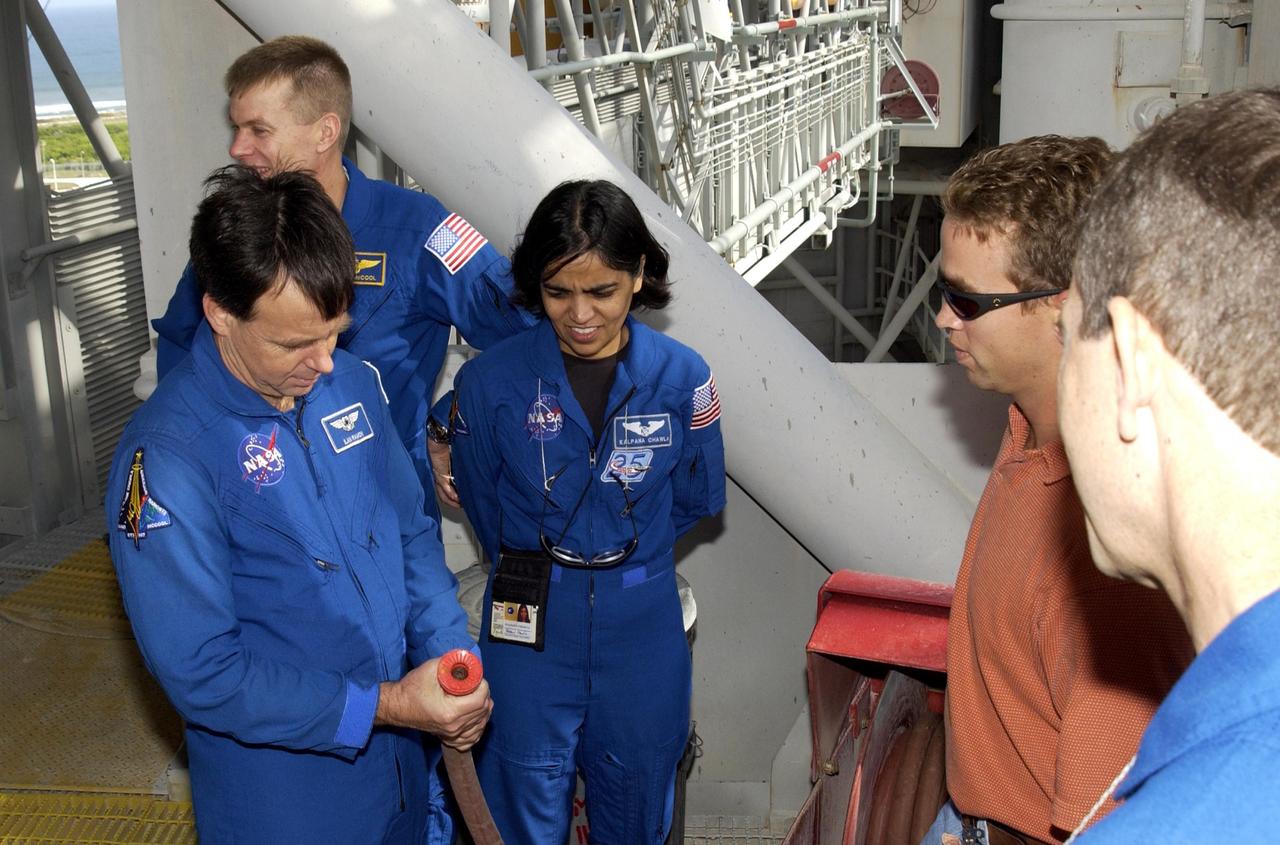
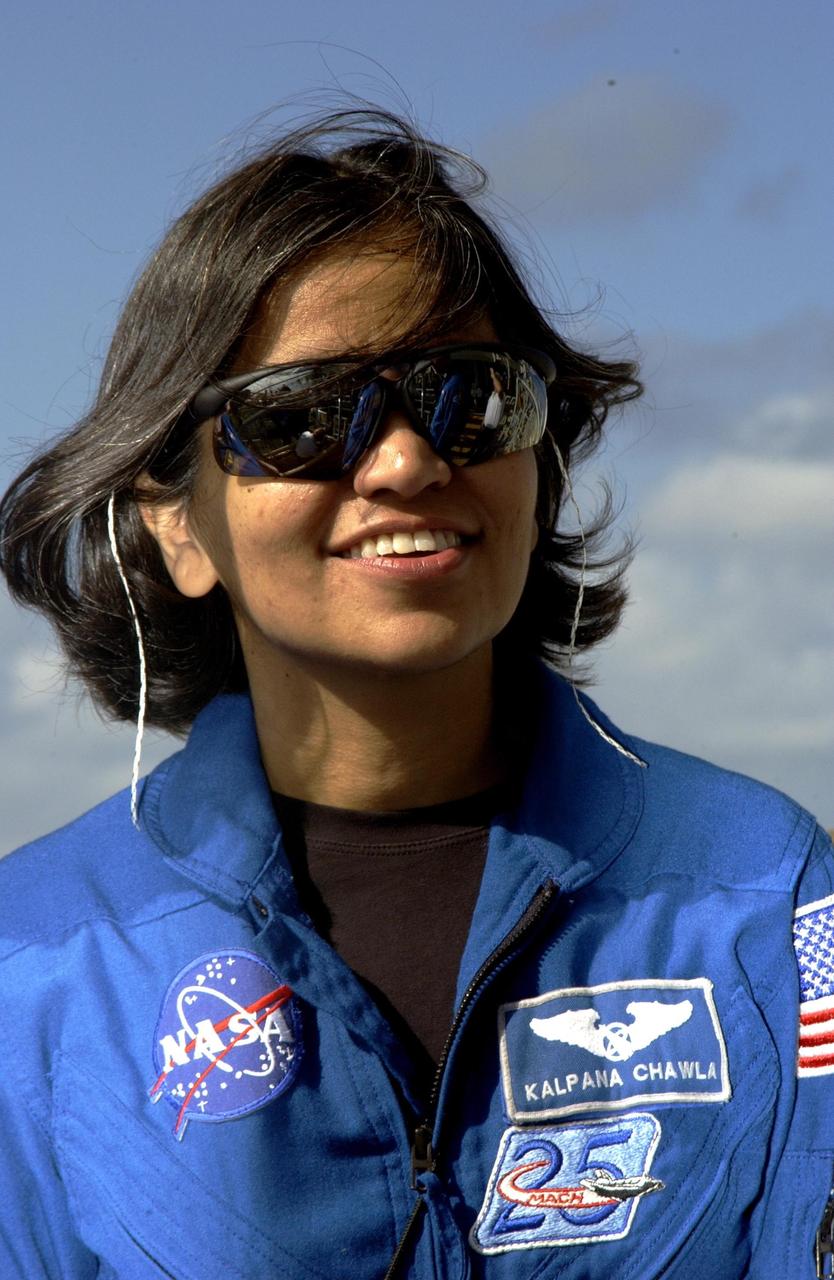
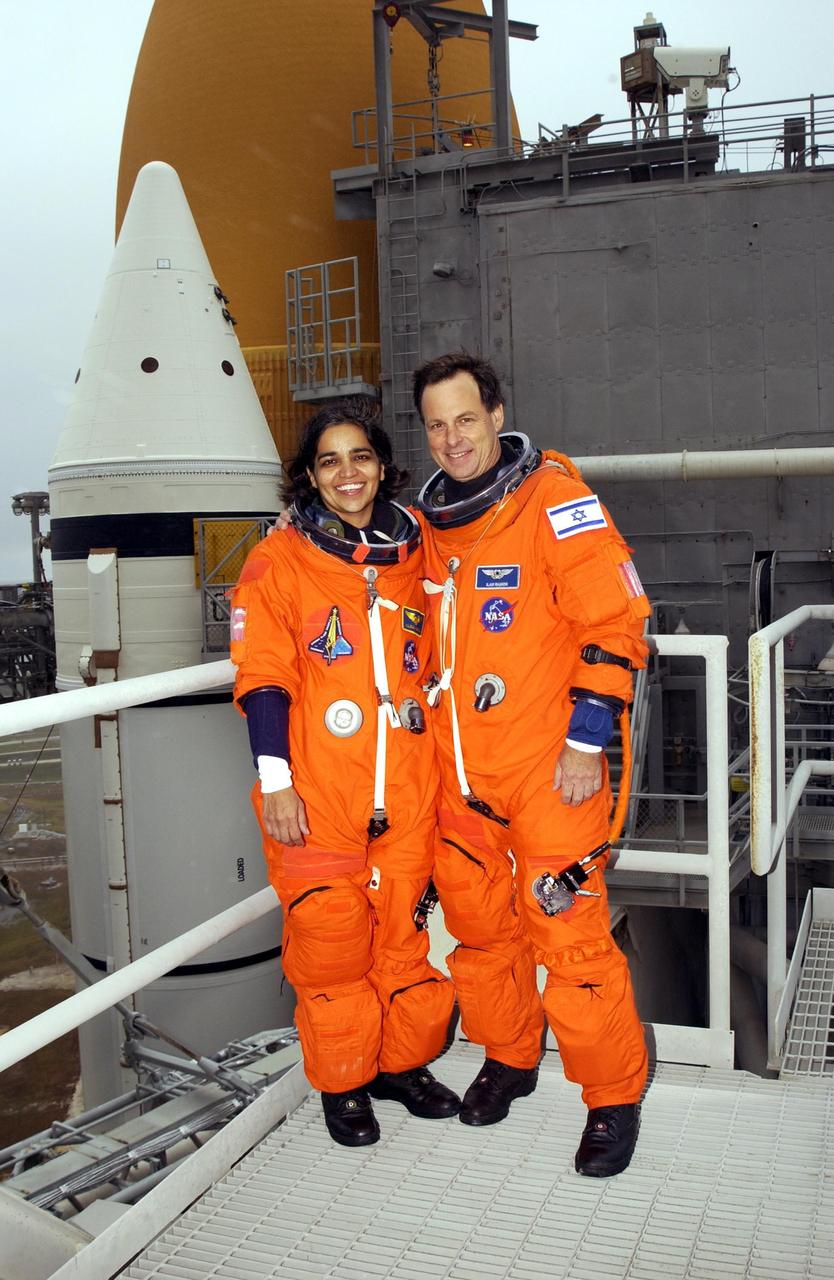
KENNEDY SPACE CENTER, FLA. - STS-107 Mission Specialist Kalpana Chawla is shown during the crew's Terminal Countdown Demonstration Test activities on Launch Pad 39A. The TCDT also includes a simulated launch countdown.  STS-107 is a mission devoted to research and will include more than 80 experiments that will study Earth and space science, advanced technology development, and astronaut health and safety. Launch is planned for Jan. 16, 2003, between 10 a.m. and 2 p.m. EST aboard Space Shuttle Columbia.    .
KSC-02pd1976
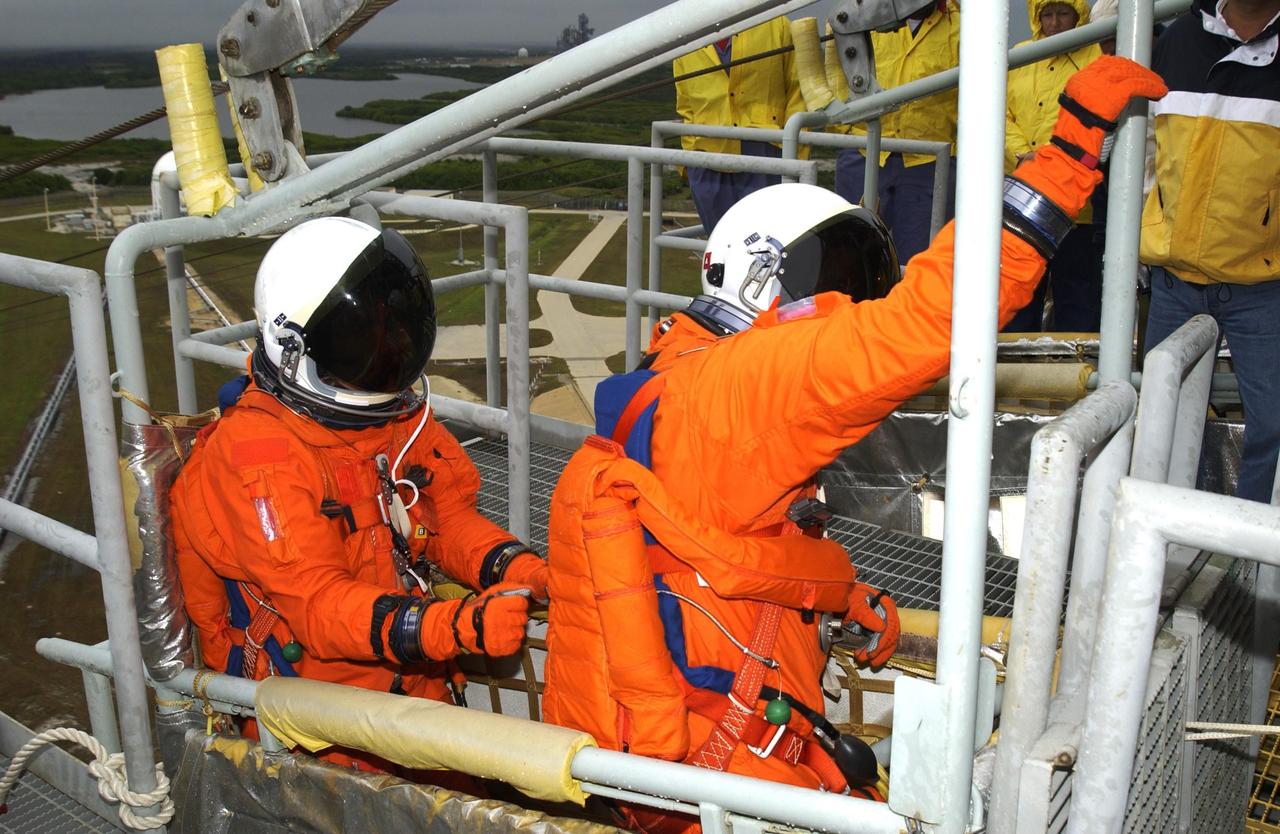
KENNEDY SPACE CENTER, FLA. - The STS-107 crew practice emergency egress from the launch pad during a simulated launch countdown, part of Terminal Countdown Demonstration Test activities. STS-107 is a mission devoted to research and will include more than 80 experiments that will study Earth and space science, advanced technology development, and astronaut health and safety. Launch is planned for Jan. 16, 2003, between 10 a.m. and 2 p.m. EST aboard Space Shuttle Columbia.        .
KSC-02pd1991
KENNEDY SPACE CENTER, FLA. - STS-107 Commander Rick Husband sits in the cockpit of Space Shuttle Columbia during a simulated launch countdown, part of Terminal Countdown Demonstration Test activities. STS-107 is a mission devoted to research and will include more than 80 experiments that will study Earth and space science, advanced technology development, and astronaut health and safety. Launch is planned for Jan. 16, 2003, between 10 a.m. and 2 p.m. EST aboard Space Shuttle Columbia.        .
KSC-02pd1990
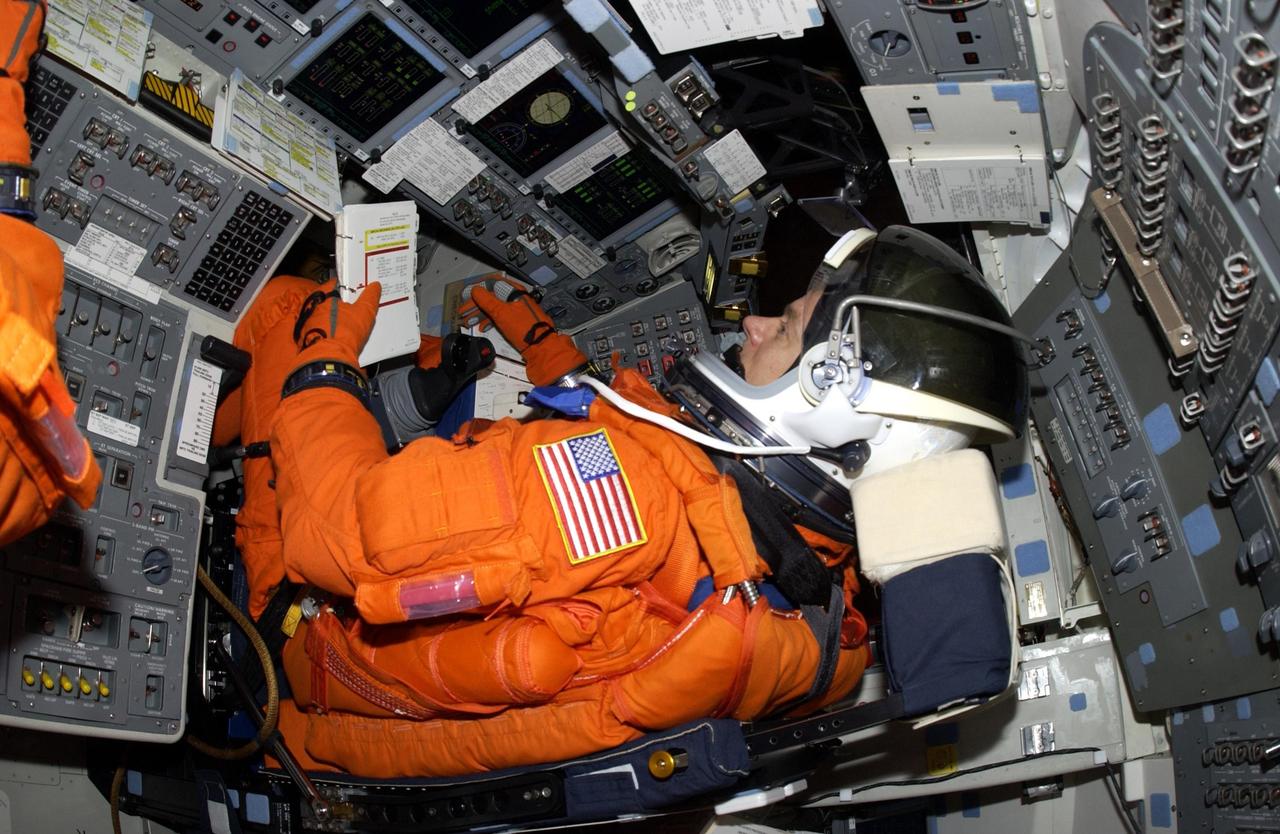
KENNEDY SPACE CENTER, FLA. - STS-107 Pilot William "Willie" McCool checks instructions in the cockpit of Space Shuttle Columbia during a simulated launch countdown, part of Terminal Countdown Demonstration Test activities. STS-107 is a mission devoted to research and will include more than 80 experiments that will study Earth and space science, advanced technology development, and astronaut health and safety. Launch is planned for Jan. 16, 2003, between 10 a.m. and 2 p.m. EST aboard Space Shuttle Columbia.        .
KSC-02pd1989
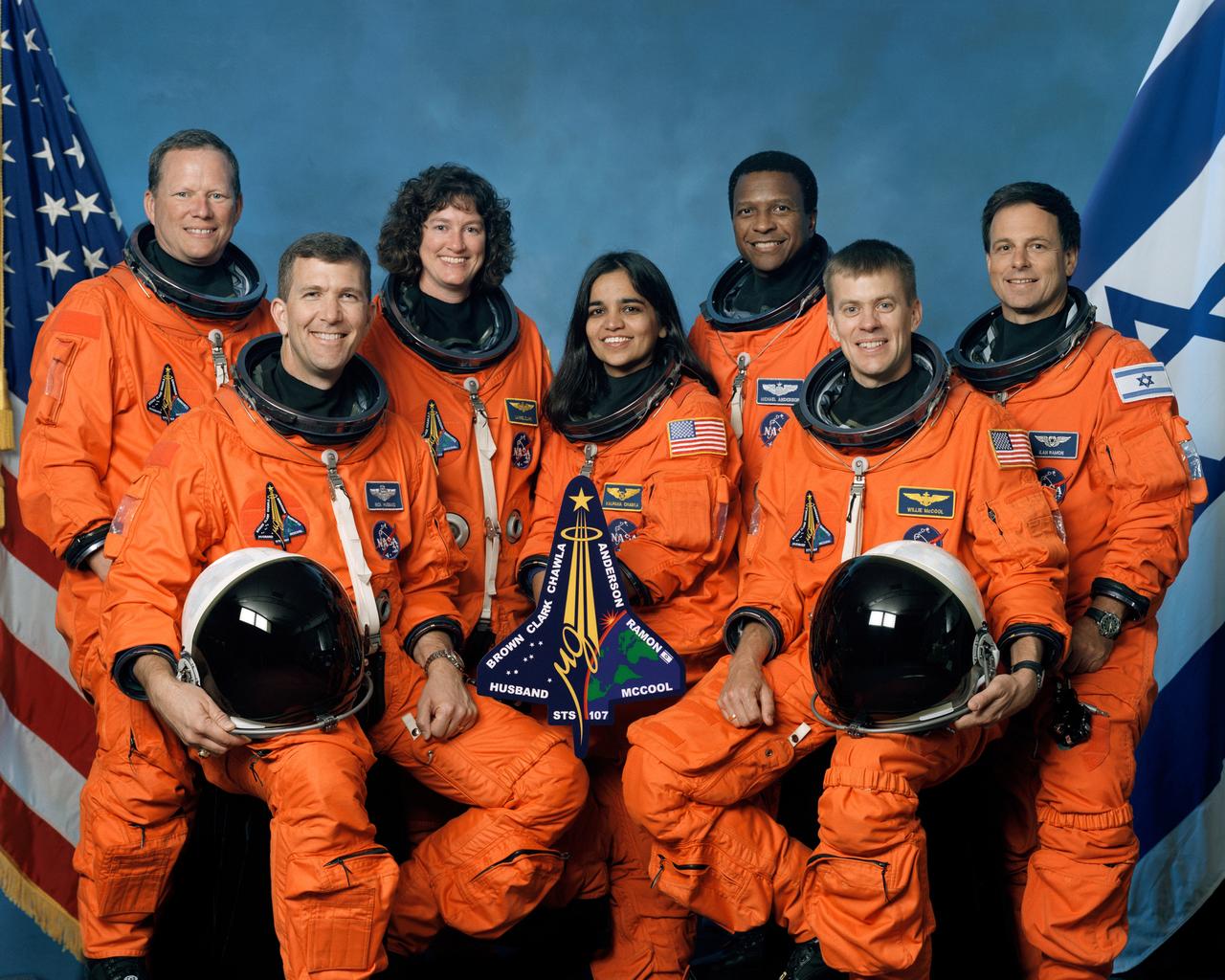
This is a traditional crew portrait of the seven STS-107 crew members. Seated in front, from left, are: Astronauts Rick D. Husband, mission commander; Kalpana Chawla, mission specialist; and William C. McCool, pilot. Standing, from left, are: David M. Brown, Laurel B. Clark, and Michael P. Anderson, all mission specialists; and Ilan Ramon, payload specialist, representing the Israeli Space Agency. Launched January 16, 2003, the STS-107 mission is strictly a multidiscipline microgravity and Earth science research mission involving 80-plus International experiments to be performed during 16-days, many of which will be managed by the Marshall Space Flight Center in Huntsville, Alabama. The first shuttle mission in 2003, the STS-107 mission marks the 113th flight overall in NASA's Space Shuttle program and the 28th flight of the Space Shuttle Orbiter Columbia.
Space Shuttle Projects
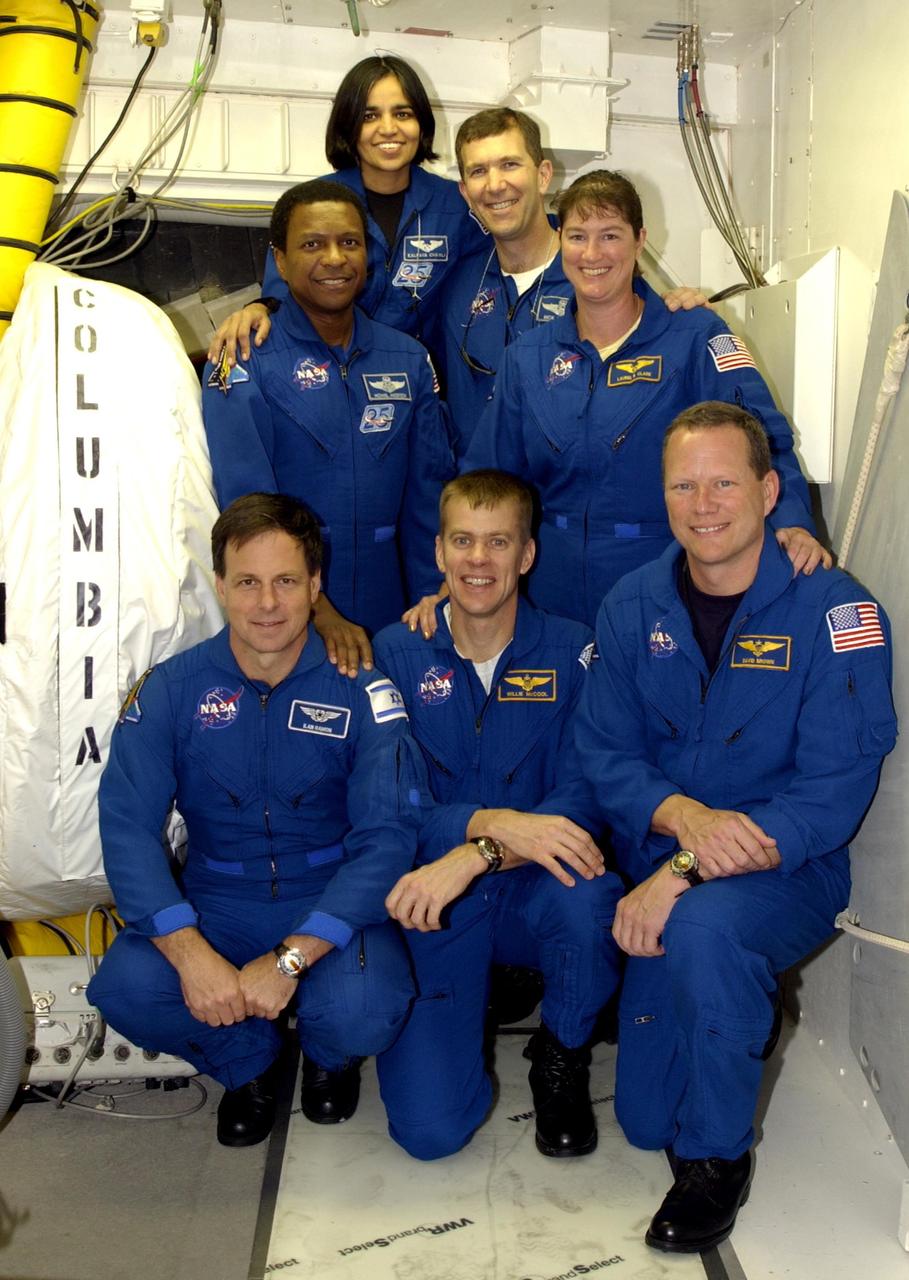
KENNEDY SPACE CENTER, FLA. --  The STS-107 crew poses in front of the entry into Space Shuttle Columbia during Terminal Countdown Demonstration Test activities on the pad.   Kneeling in front are (left to right) Payload Specialist Ilan Ramon (the first Israeli astronaut), Pilot William "Willie" McCool and Mission Specialist David Brown.  Standing in back are (left to right) Payload Commander Michael Anderson, Mission Specialist Kalpana Chawla, Commander Rick Husband and Mission Specialist Laurel Clark. The TCDT also includes a simulated launch countdown.  STS-107 is a mission devoted to research and will include more than 80 experiments that will study Earth and space science, advanced technology development, and astronaut health and safety. Launch is planned for Jan. 16, 2003, between 10 a.m. and 2 p.m. EST aboard Columbia.    .
KSC-02pd1973
KENNEDY SPACE CENTER, FLA. - Members of the STS-107 crew practice emergency egress from the launch pad, reaching for the release lever of the slidewire basket they are in.  The crew is taking part in a simulated launch countdown, part of Terminal Countdown Demonstration Test activities.   STS-107 is a mission devoted to research and will include more than 80 experiments that will study Earth and space science, advanced technology development, and astronaut health and safety. Launch is planned for Jan. 16, 2003, between 10 a.m. and 2 p.m. EST aboard Space Shuttle Columbia.        .
KSC-02pd1993
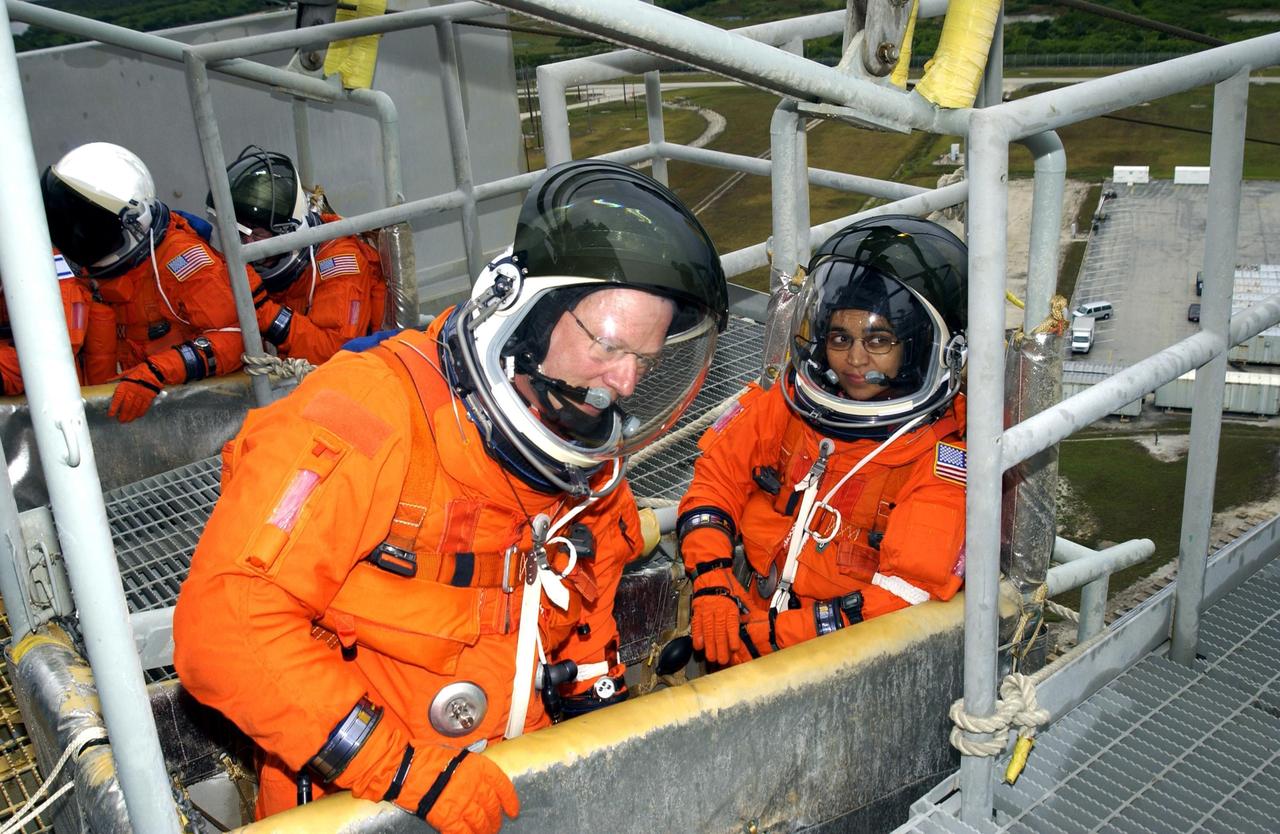
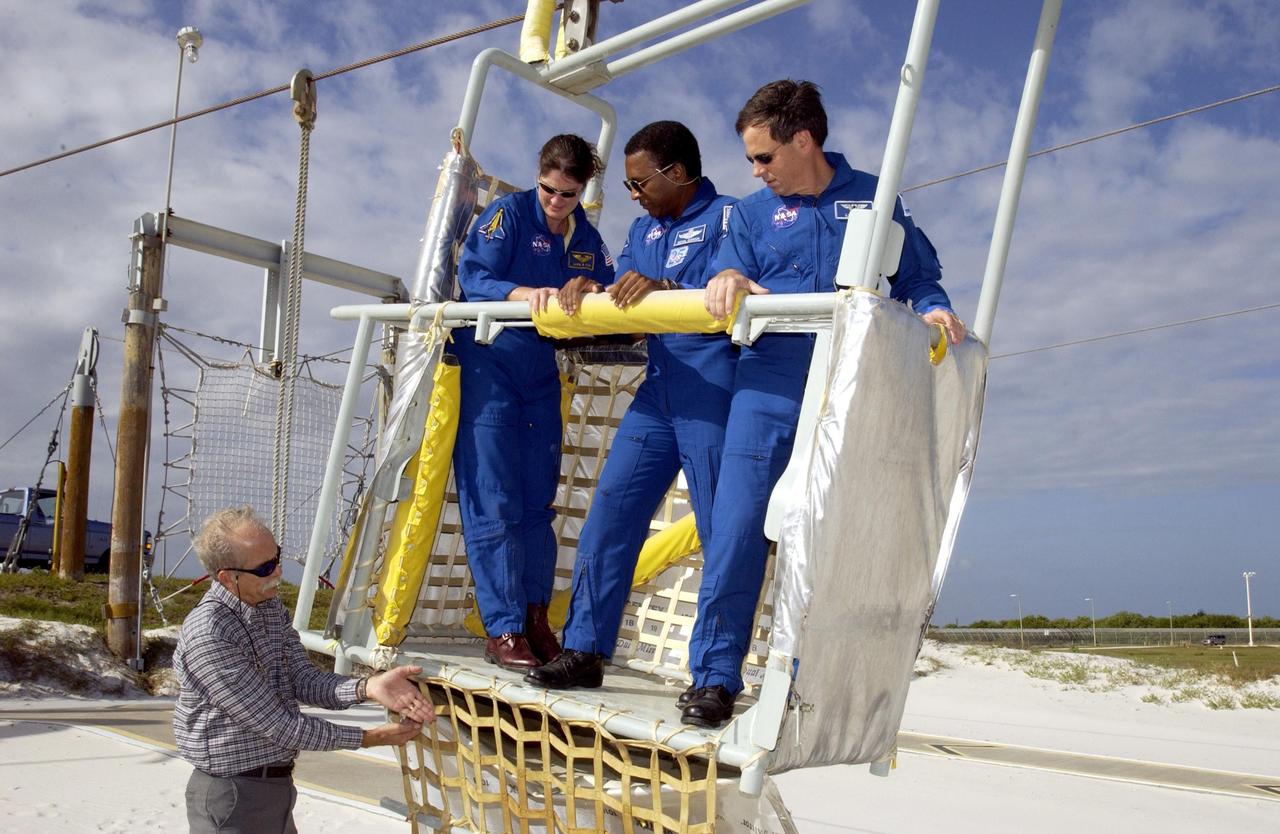
KENNEDY SPACE CENTER, FLA. - The STS-107 crew gets instruction on emergency egress from the pad during Terminal Countdown Demonstration Test activities.  Standing in the slidewire basket are (from left) Mission Specialist Laurel Clark, Payload Specialist Ilan Ramon (the first Israeli astronaut) and Payload Commander Michael Anderson. The TCDT also includes a simulated launch countdown.  STS-107 is a mission devoted to research and will include more than 80 experiments that will study Earth and space science, advanced technology development, and astronaut health and safety. Launch is planned for Jan. 16, 2003, between 10 a.m. and 2 p.m. EST aboard Space Shuttle Columbia.    .
KSC-02pd1977
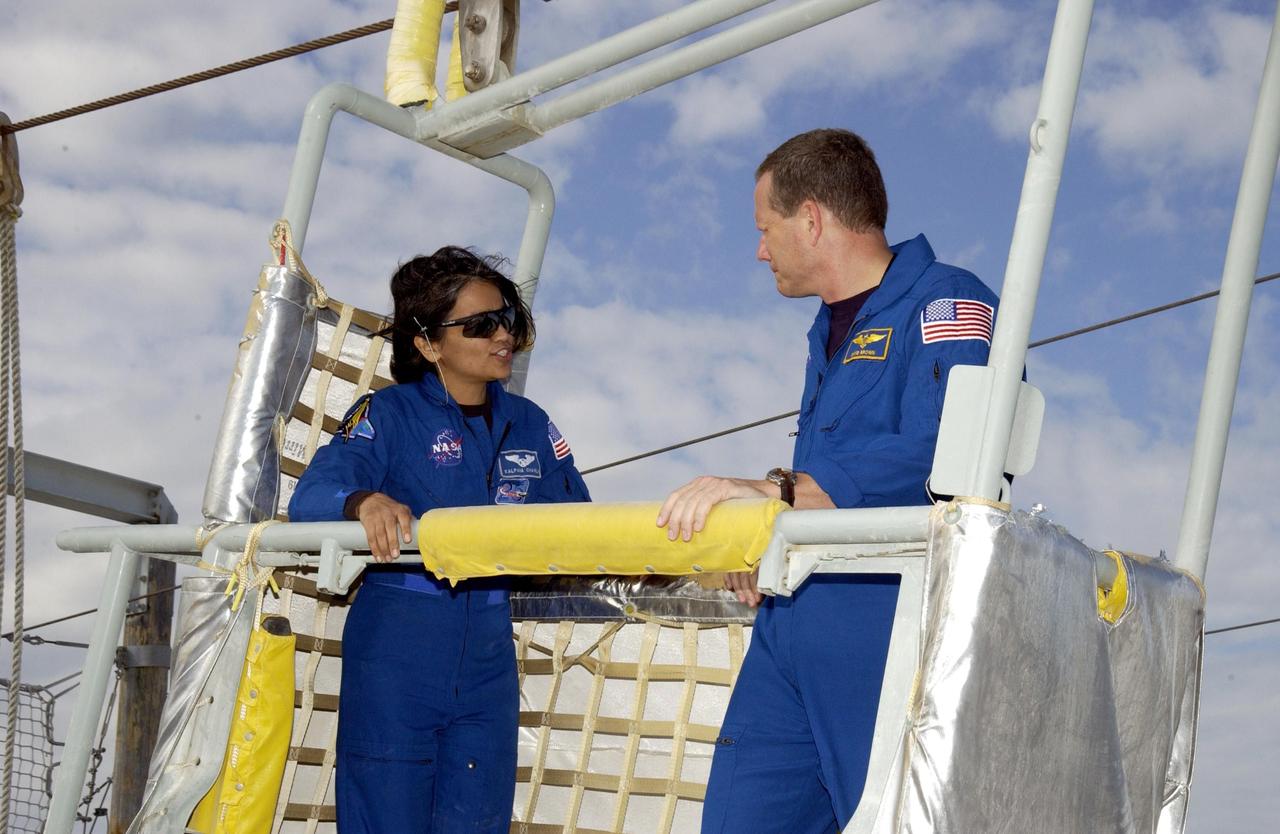
KENNEDY SPACE CENTER, FLA. -- During emergency egress training, part of Terminal Countdown Demonstration Test activities at the pad, STS-107 Mission Specialists Kalpana Chawla and David Brown share a slidewire basket. The TCDT also includes a simulated launch countdown.  STS-107 is a mission devoted to research and will include more than 80 experiments that will study Earth and space science, advanced technology development, and astronaut health and safety. Launch is planned for Jan. 16, 2003, between 10 a.m. and 2 p.m. EST aboard Space Shuttle Columbia.    .
KSC-02pd1982
KENNEDY SPACE CENTER, FLA. - Sitting in the slidewire basket on the launch pad are (left to right) STS-107 Payload Specialist Ilan Ramon, Payload Commander Michael Anderson and Mission Specialist Laurel Clark.  The crew is taking part in a simulated launch countdown, part of Terminal Countdown Demonstration Test activities.   STS-107 is a mission devoted to research and will include more than 80 experiments that will study Earth and space science, advanced technology development, and astronaut health and safety. Launch is planned for Jan. 16, 2003, between 10 a.m. and 2 p.m. EST aboard Space Shuttle Columbia.        .
KSC-02pd1994
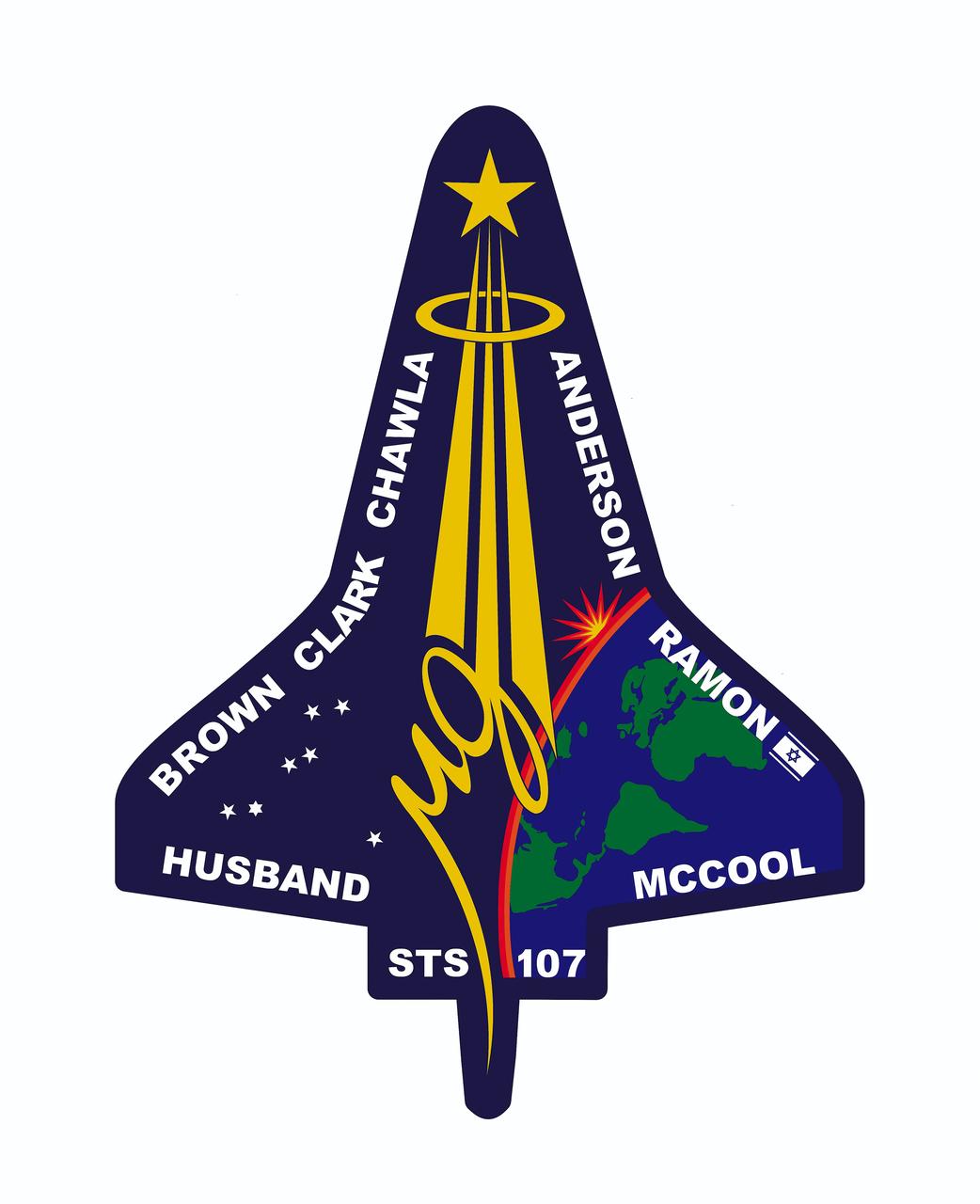
This is the insignia for the STS-107 mission which is a multidiscipline microgravity and Earth science research mission involving 80-plus International experiments to be performed by a crew of seven during the 16-day mission. The breadth of science conducted on this mission will have widespread benefits to life on Earth. Many of the experiments will be managed by the Marshall Space Flight Center in Huntsville, Alabama. The first shuttle mission in 2003, the STS-107 mission launched January 16, 2003, for the 28th flight of the Space Shuttle Orbiter Columbia and the 113th flight overall in NASA's Space Shuttle program.
Space Shuttle Projects
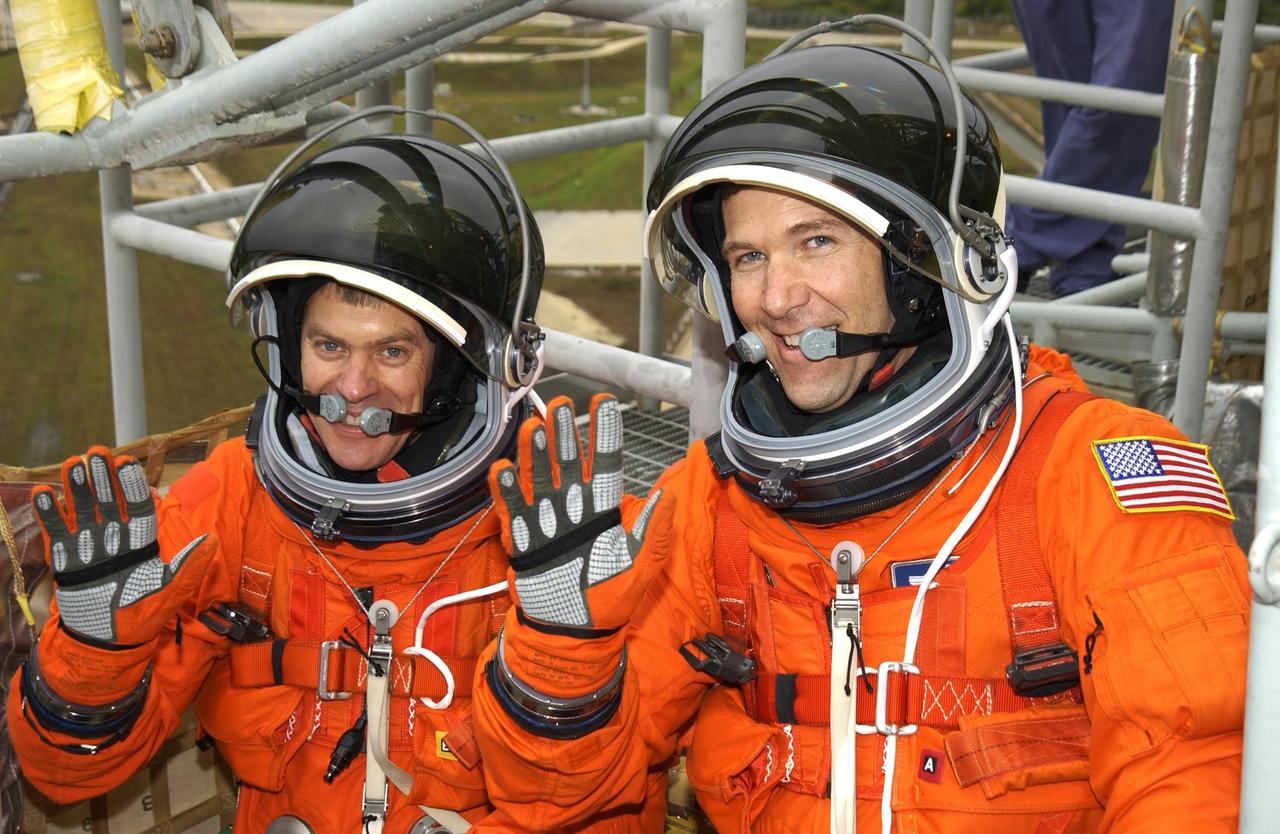
KENNEDY SPACE CENTER, FLA. - Waving from the slidewire basket on the launch pad are (left to right) STS-107 Pilot William "Willie" McCool and Commander Rick Husband. The crew is taking part in a simulated launch countdown, part of Terminal Countdown Demonstration Test activities.   STS-107 is a mission devoted to research and will include more than 80 experiments that will study Earth and space science, advanced technology development, and astronaut health and safety. Launch is planned for Jan. 16, 2003, between 10 a.m. and 2 p.m. EST aboard Space Shuttle Columbia.        .
KSC-02pd1995
KENNEDY SPACE CENTER, FLA. -- The STS-107 crew gets instruction on the slidewire basket during emergency egress training, part of Terminal Countdown Demonstration Test activities.  Seen are Mission Specialist Laurel Clark, Payload Commander Michael Anderson and Payload Specialist Ilan Ramon (the first Israeli astronaut). The TCDT also includes a simulated launch countdown.  STS-107 is a mission devoted to research and will include more than 80 experiments that will study Earth and space science, advanced technology development, and astronaut health and safety. Launch is planned for Jan. 16, 2003, between 10 a.m. and 2 p.m. EST aboard Space Shuttle Columbia.    .
KSC-02pd1981
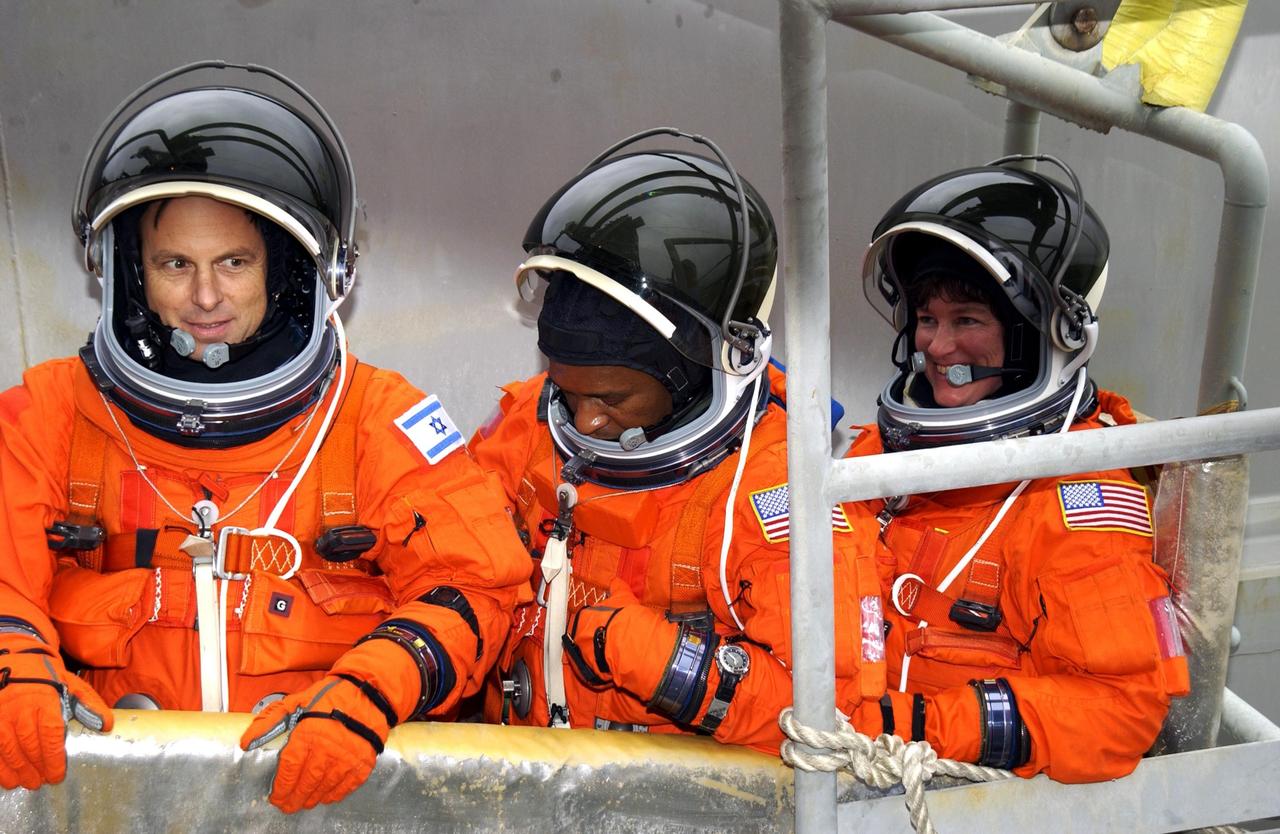
KENNEDY SPACE CENTER, FLA. - During Terminal Countdown Demonstration Test activities on Launch Pad 39A, members of the STS-107 crew check emergency equipment.  From left are Payload Specialist Ilan Ramon (the first Israeli astronaut), Pilot William "Willie" McCool and Mission Specialist Kalpana Chawla. The TCDT also includes a simulated launch countdown. STS-107 is a mission devoted to research and will include more than 80 experiments that will study Earth and space science, advanced technology development, and astronaut health and safety. Launch is planned for Jan. 16, 2003, between 10 a.m. and 2 p.m. EST aboard Space Shuttle Columbia.    .
KSC-02pd1974
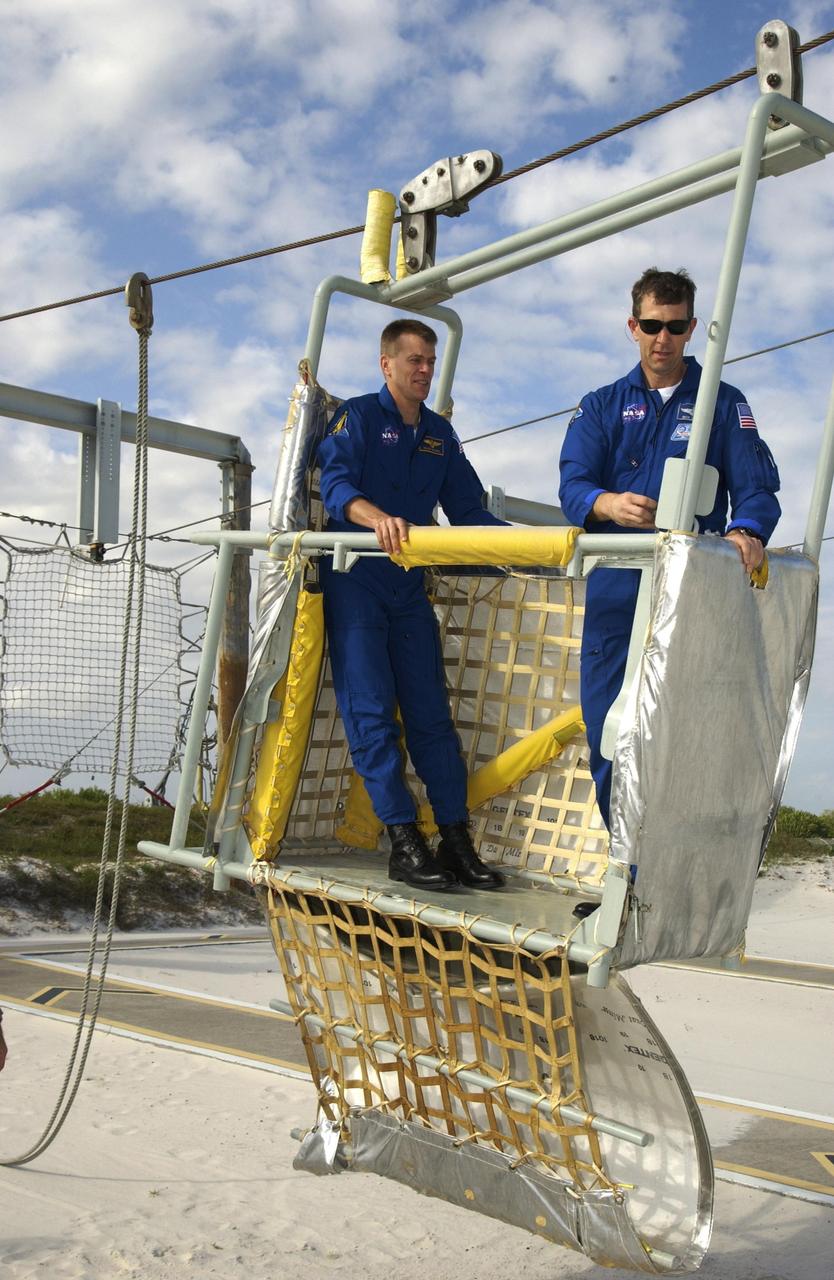
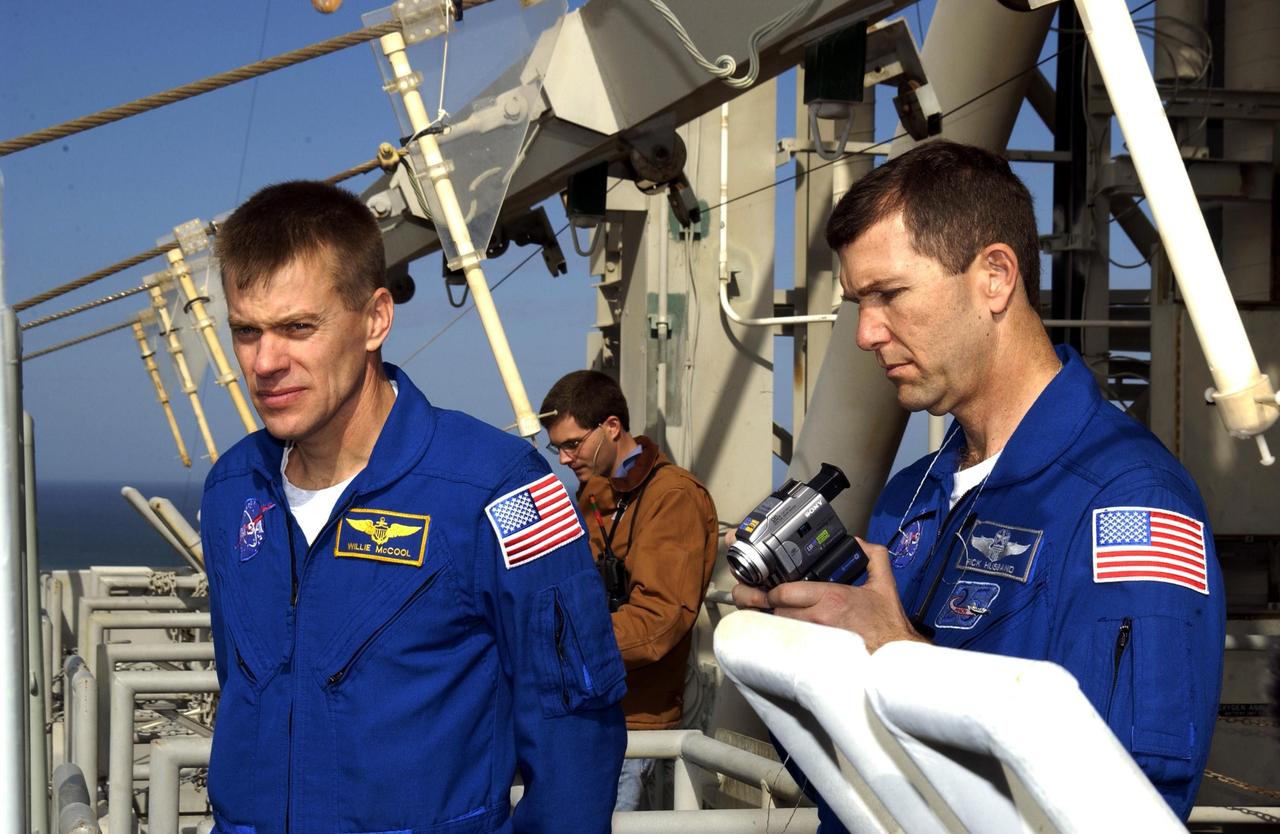
KENNEDY SPACE CENTER, FLA. -- The STS-107 crew gets instruction on emergency egress from the pad during Terminal Countdown Demonstration Test activities.  Seen are Pilot William "Willie" McCool and Commander Rick Husband. The TCDT also includes a simulated launch countdown.  STS-107 is a mission devoted to research and will include more than 80 experiments that will study Earth and space science, advanced technology development, and astronaut health and safety. Launch is planned for Jan. 16, 2003, between 10 a.m. and 2 p.m. EST aboard Space Shuttle Columbia.    .
KSC-02pd1978
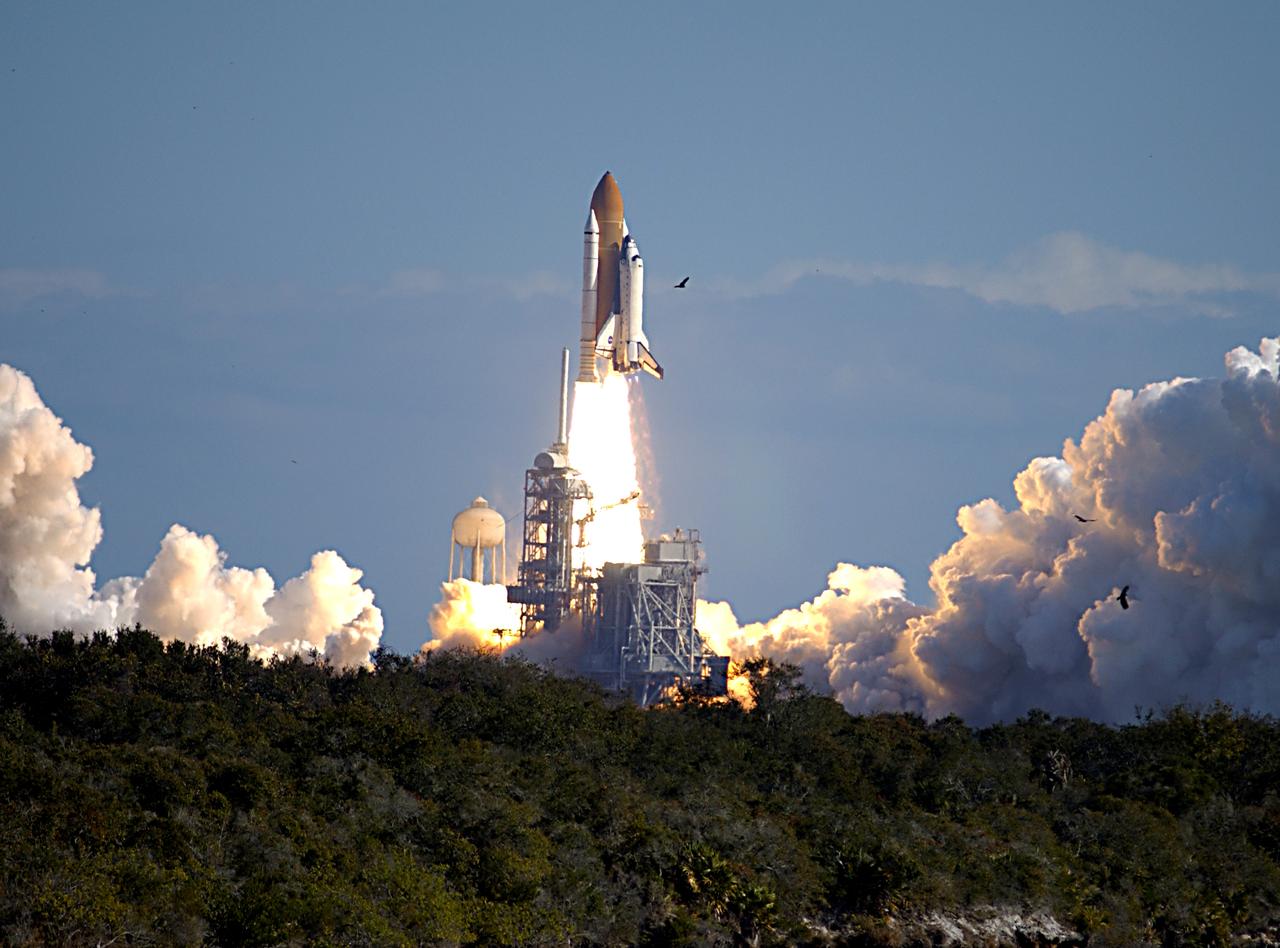
A clear blue sky hosts the Space Shuttle Orbiter Columbia STS-107 mission as it hurtles toward space from launch pad 39A at Kennedy Space Center on January 16, 2003. The 28th Columbia flight and 113th overall flight in NASA's Space Shuttle program, STS-107 is a multidiscipline microgravity and Earth science research mission involving 80-plus International experiments to be performed by a crew of seven during the 16-day mission. The breadth of science conducted on this mission will have widespread benefits to life on Earth, many of which will be managed by the Marshall Space Flight Center in Huntsville, Alabama.
Space Shuttle Projects
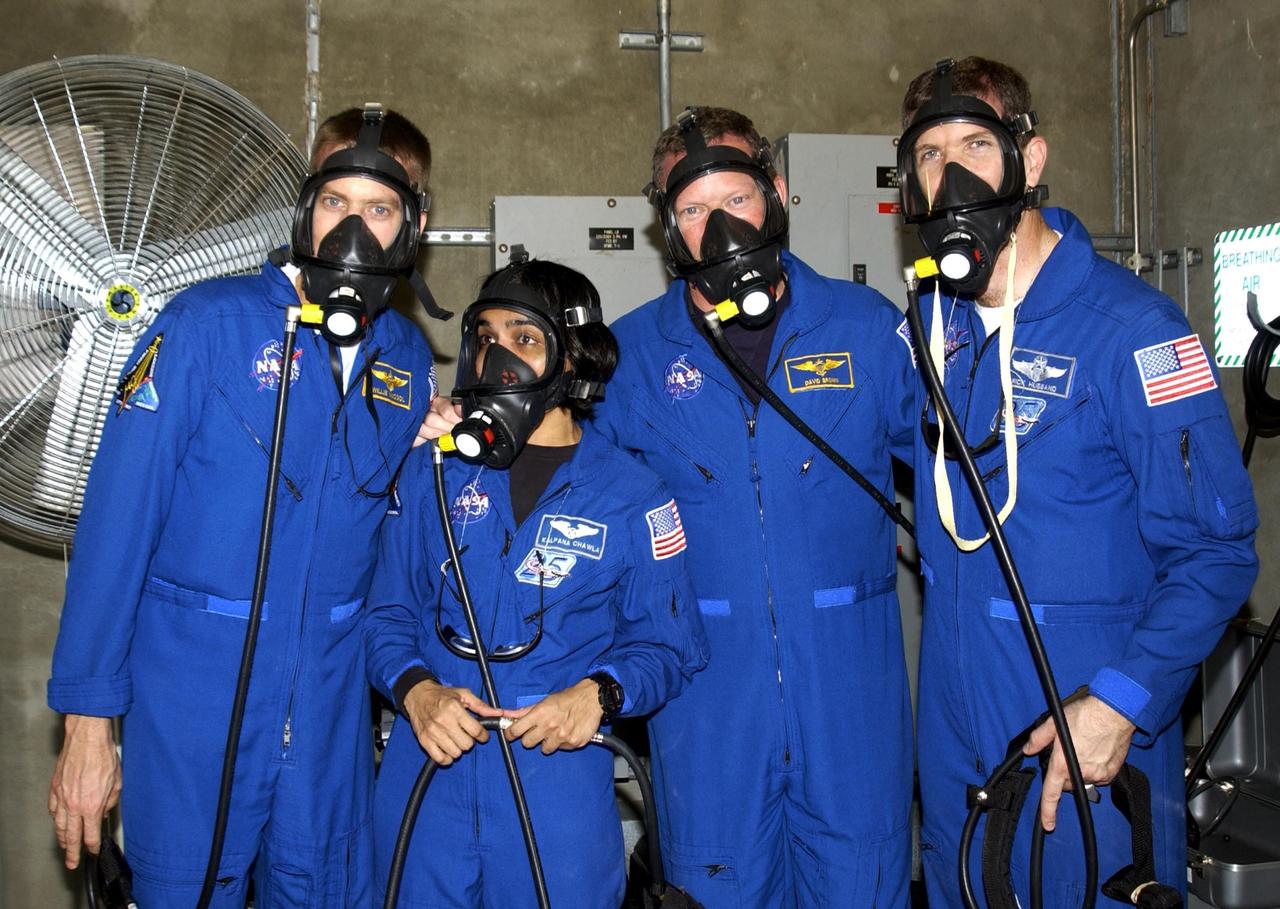
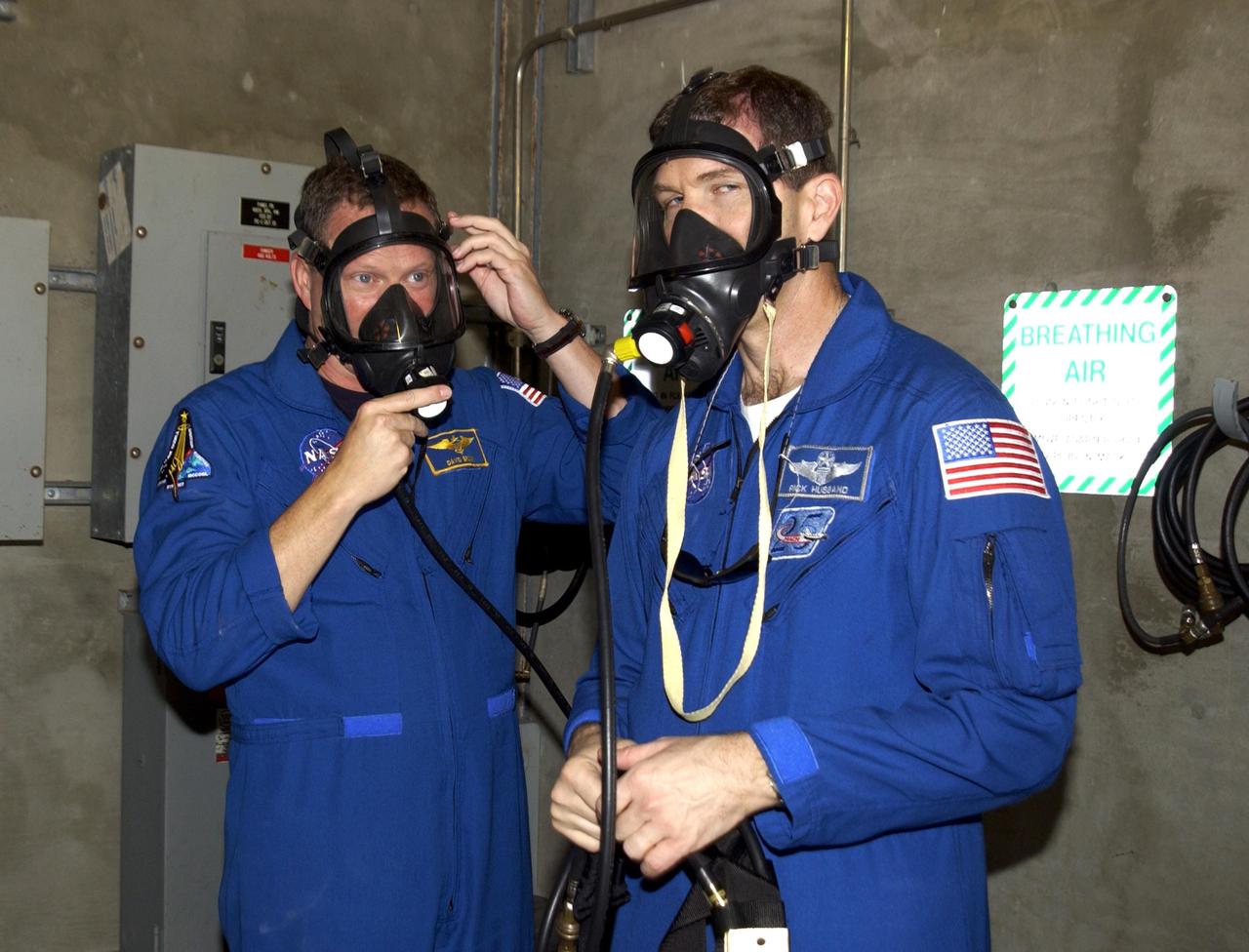
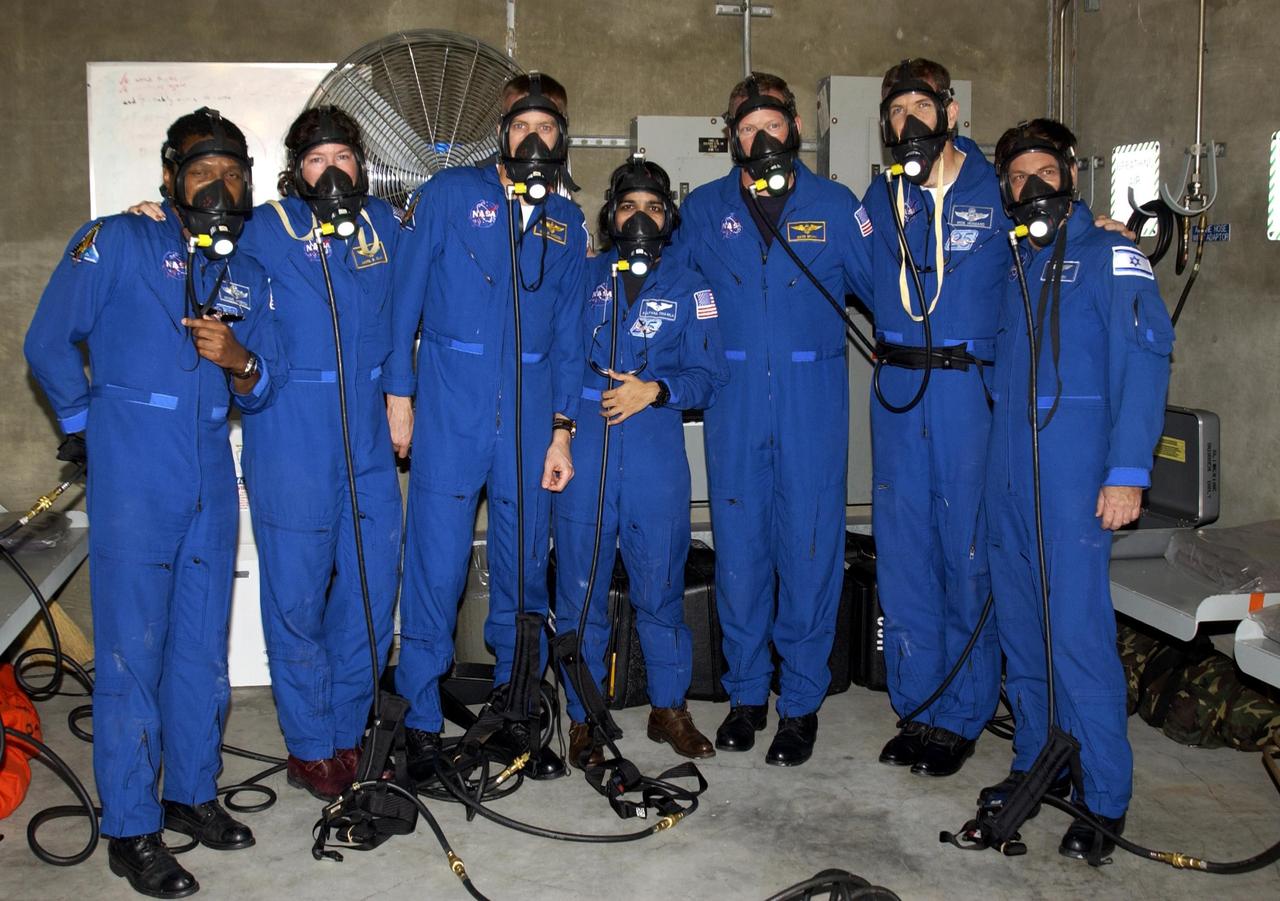
KENNEDY SPACE CENTER, FLA. -- During emergency egress training, part of Terminal Countdown Demonstration Test activities at the pad, STS-107 crew members test breathing masks in the emergency bunker.  From left are Pilot William "Willie" McCool, Mission Specialists Kalpana Chawla and David Brown, and Commander Rick Husband. STS-107 is a mission devoted to research and will include more than 80 experiments that will study Earth and space science, advanced technology development, and astronaut health and safety. Launch is planned for Jan. 16, 2003, between 10 a.m. and 2 p.m. EST aboard Space Shuttle Columbia.    .
KSC-02pd1985
KENNEDY SPACE CENTER, FLA. -- During emergency egress training, part of Terminal Countdown Demonstration Test activities at the pad, STS-107 Mission Specialist David Brown (left) and Commander Rick Husband (right) test breathing masks in the emergency bunker. The TCDT also includes a simulated launch countdown.  STS-107 is a mission devoted to research and will include more than 80 experiments that will study Earth and space science, advanced technology development, and astronaut health and safety. Launch is planned for Jan. 16, 2003, between 10 a.m. and 2 p.m. EST aboard Space Shuttle Columbia.    .
KSC-02pd1984
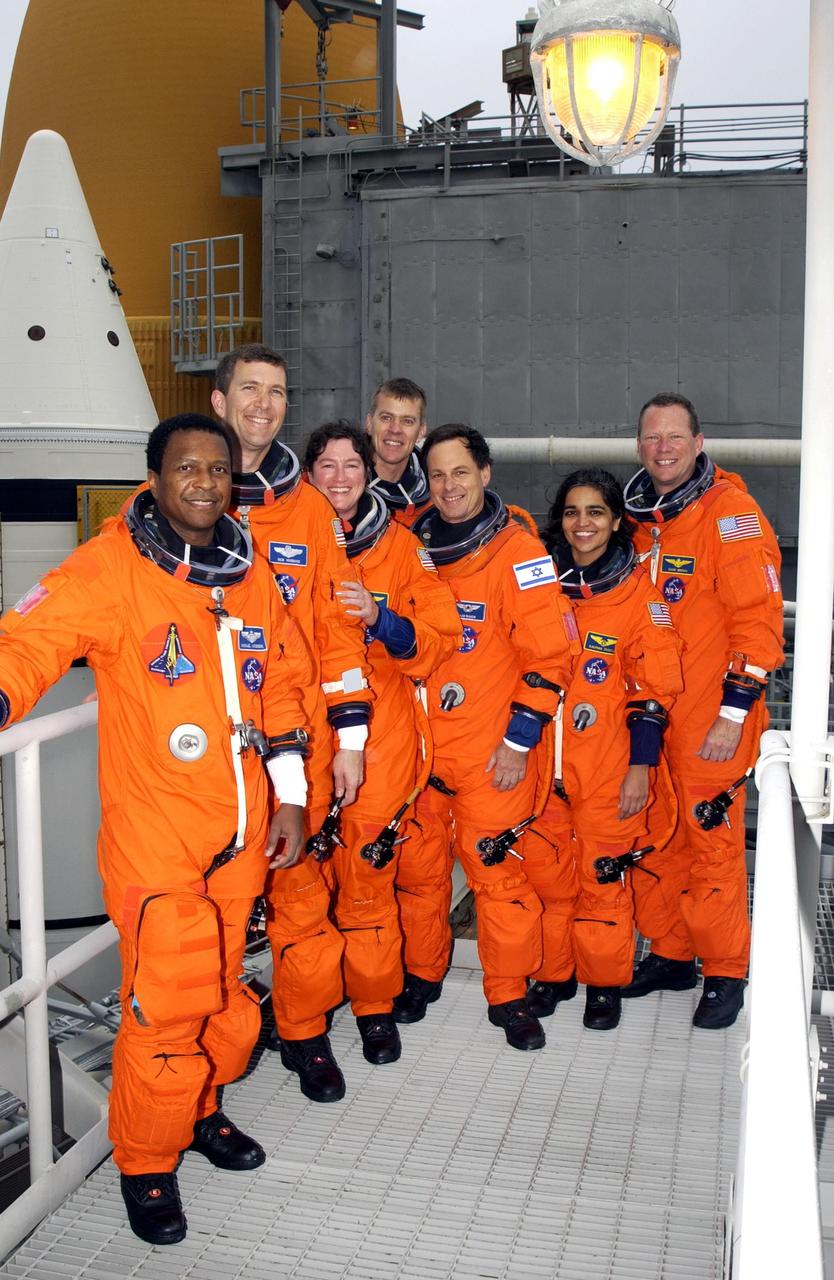
KENNEDY SPACE CENTER, FLA. - During Terminal Countdown Demonstration Test activities at the launch pad, the STS-107 crew pauses for a group photo.  From left are Payload Commander Michael Anderson, Commander Rick Husband, Mission Specialist Laurel Clark, Pilot William "Willie" McCool, and Mission Specialists Ilan Ramon, Kalpana Chawla and David Brown. Behind them is Space Shuttle Columbia.  STS-107 is a mission devoted to research and will include more than 80 experiments that will study Earth and space science, advanced technology development, and astronaut health and safety. Launch is planned for Jan. 16, 2003, between 10 a.m. and 2 p.m. EST aboard Space Shuttle Columbia.        .
KSC-02pd1997
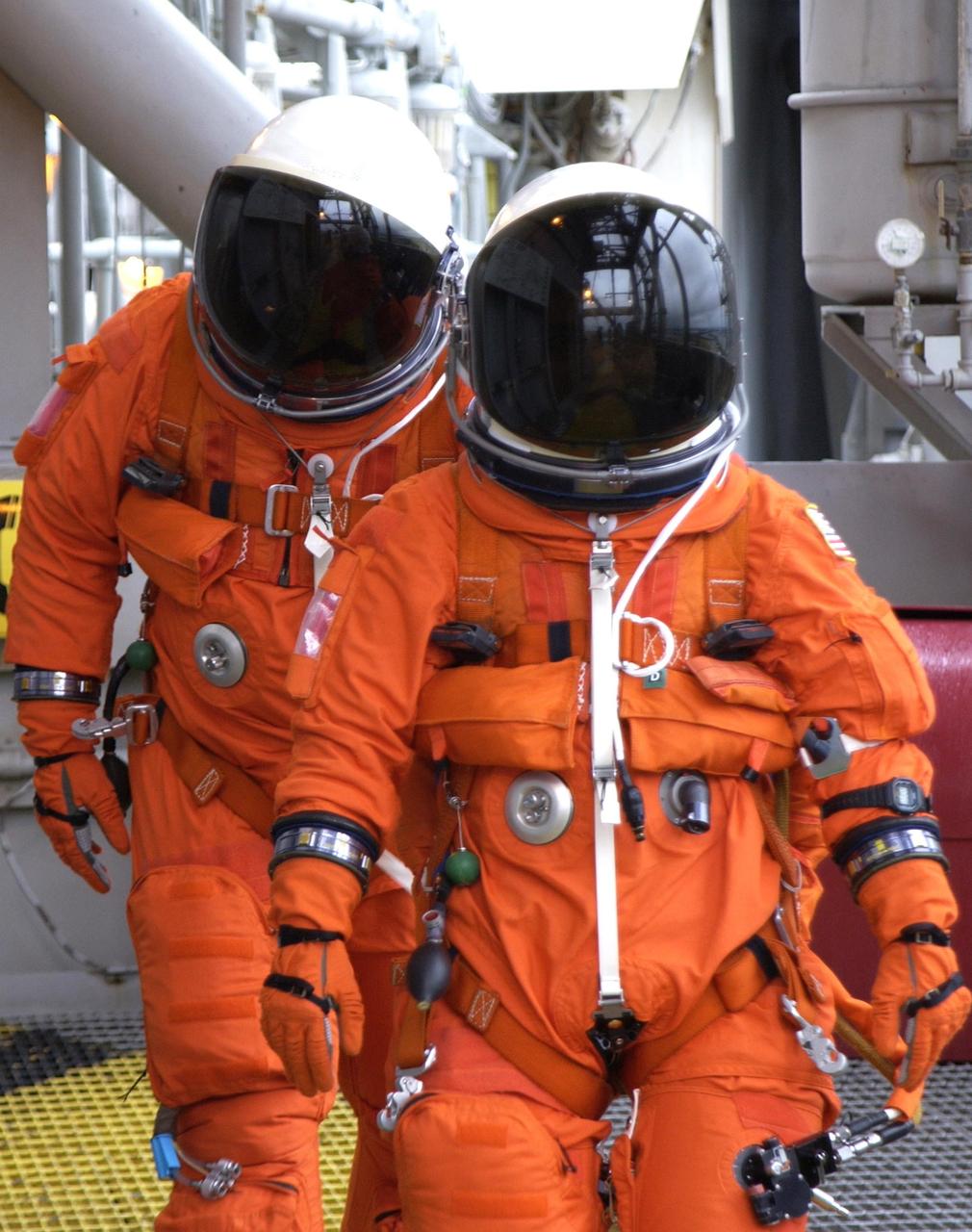
KENNEDY SPACE CENTER, FLA.  - The STS-107 crew practice emergency egress from the launch pad during a simulated launch countdown, part of Terminal Countdown Demonstration Test activities.  In the slidewire basket in the foreground are Mission Specialists David Brown and Kalpana Chawla. STS-107 is a mission devoted to research and will include more than 80 experiments that will study Earth and space science, advanced technology development, and astronaut health and safety. Launch is planned for Jan. 16, 2003, between 10 a.m. and 2 p.m. EST aboard Space Shuttle Columbia.        .
KSC-02pd1992
KENNEDY SPACE CENTER, FLA. -- During emergency egress training, part of Terminal Countdown Demonstration Test activities at the pad, STS-107 Pilot William "Willie" McCool and Commander Rick Husband share a slidewire basket. The TCDT also includes a simulated launch countdown.  STS-107 is a mission devoted to research and will include more than 80 experiments that will study Earth and space science, advanced technology development, and astronaut health and safety. Launch is planned for Jan. 16, 2003, between 10 a.m. and 2 p.m. EST aboard Space Shuttle Columbia.    .
KSC-02pd1983
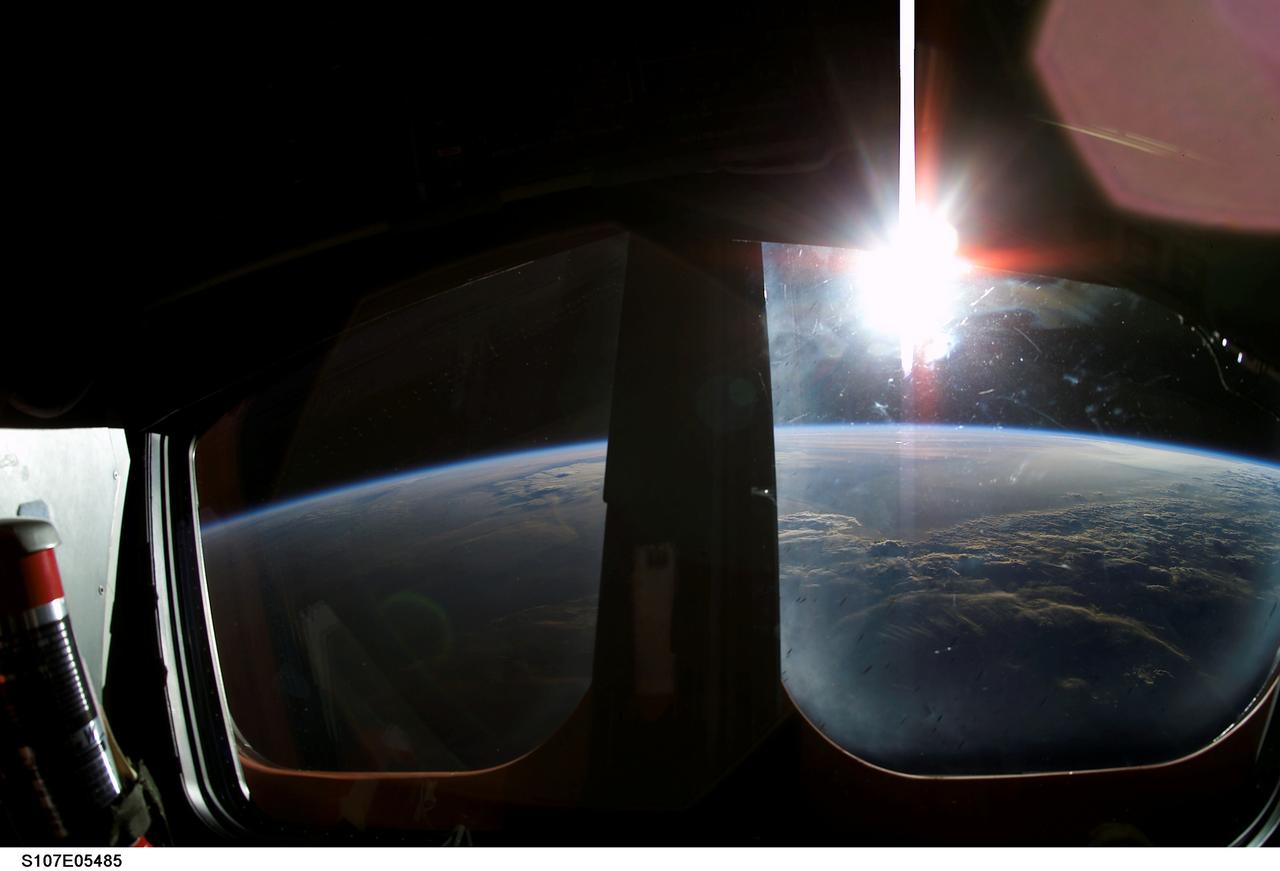
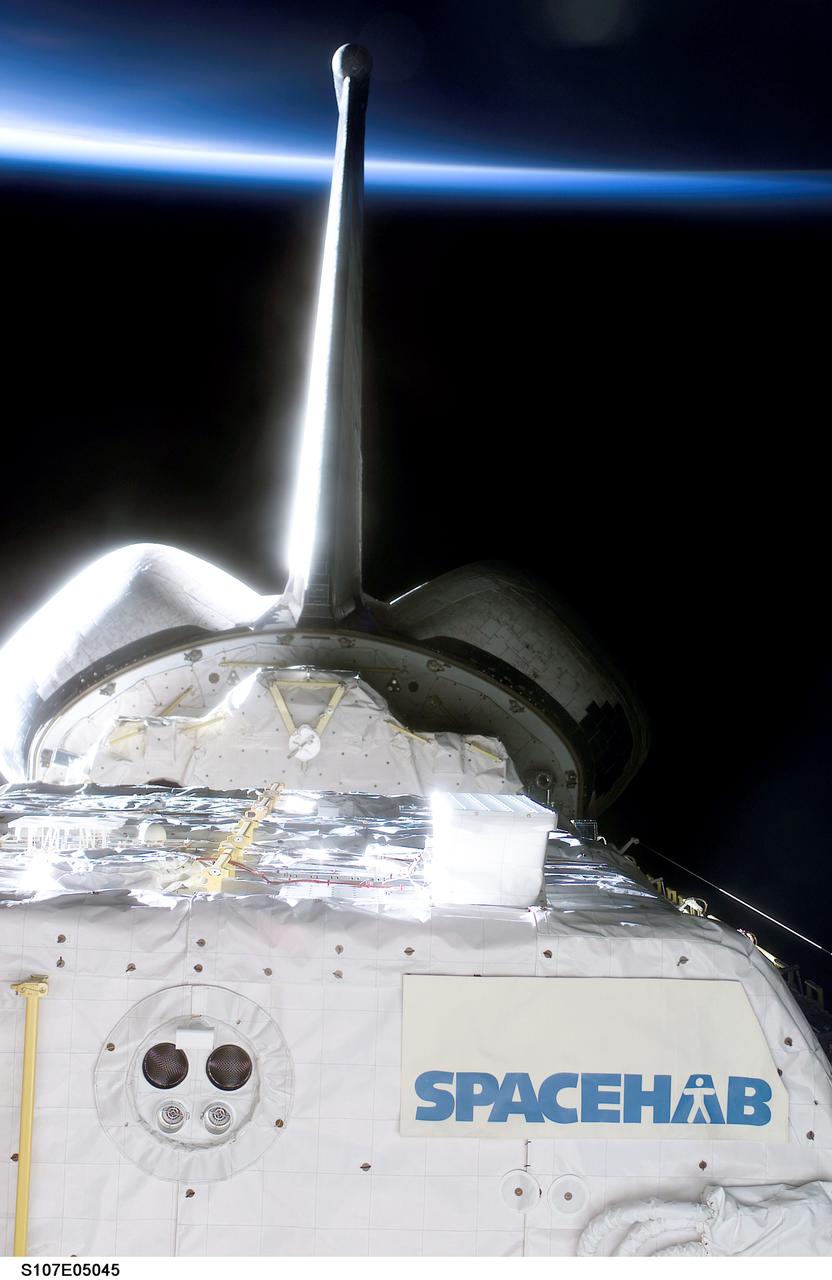
This sunrise was captured from the crew cabin of the Space Shuttle Orbiter Columbia on the STS-107 mission. Launched January 16, 2003, STS-107 was strictly a multidiscipline microgravity and Earth science research mission involving 80-plus International experiments performed during 16-days, many of which were managed by the Marshall Space Flight Center in Huntsville, Alabama. The majority of the research was conducted in the Shuttle's mid deck, the area directly under the cockpit, in the new SPACEHAB Research Double Module. This was the first flight for that module, which doubled the volume available for experiments and significantly increased the amount and complexity of research from the last dedicated Shuttle science mission, STS-95, flown in 1998 with a single SPACEHAB module. The pressurized module was carried in Columbia's payload bay and was accessible to the crew via a turnel from the Shuttle's mid deck.
Space Shuttle Projects
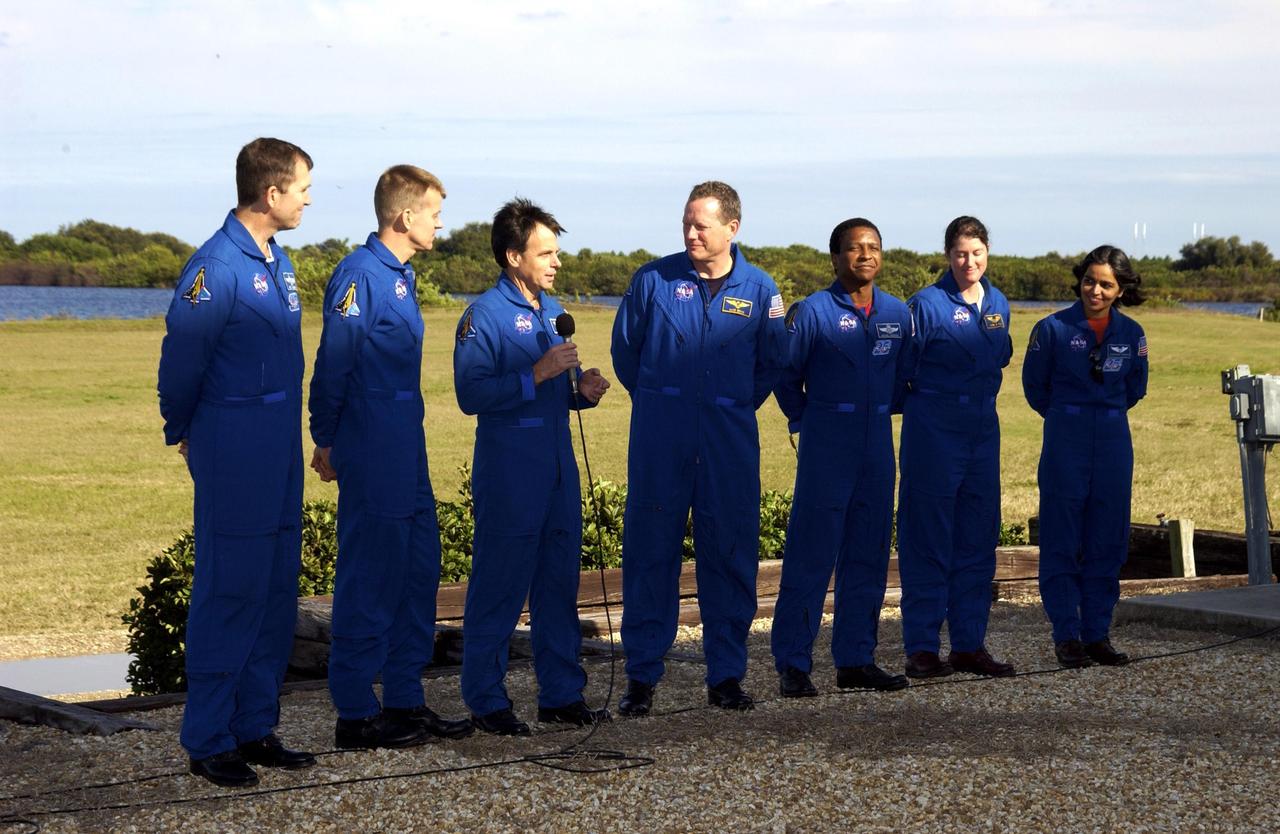
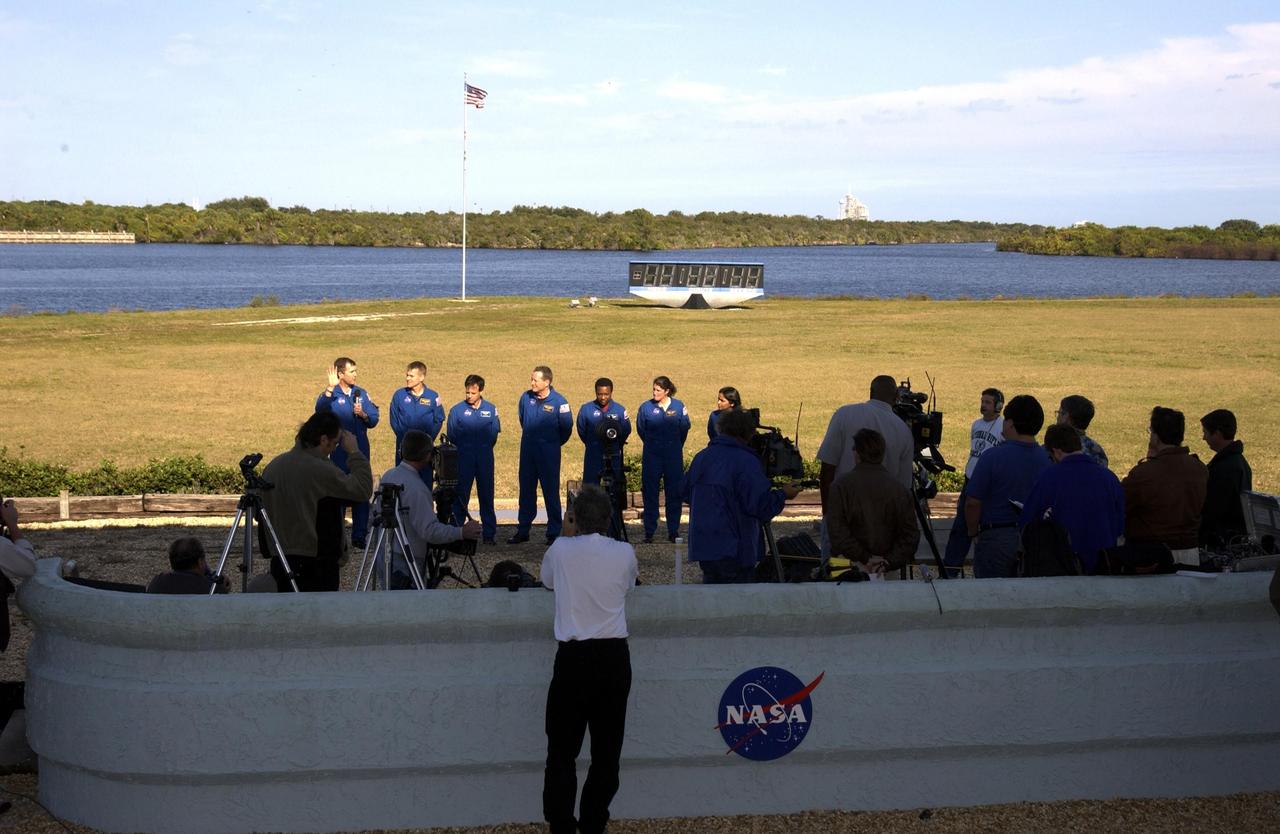
KENNEDY SPACE CENTER, FLA. -- The STS-107 crew meet with the media in front of the grandstand. With the microphone is Payload Specialist Ilan Ramon, the first Israeli astronaut.  Others, from left, are Commander Rick Husband, Pilot William "Willie" McCool, Ramon, Mission Specialist David Brown, Payload Commander Michael Anderson, and Mission Specialists Laurel Clark and Kalpana Chawla.  The crew just finished Terminal Countdown Demonstration Test activities, including a simulated launch countdown, in preparation for launch planned for Jan. 16, 2003, between 10 a.m. and 2 p.m. EST aboard Space Shuttle Columbia. STS-107 is a mission devoted to research and will include more than 80 experiments that will study Earth and space science, advanced technology development, and astronaut health and safety.        .
KSC-02pd2000
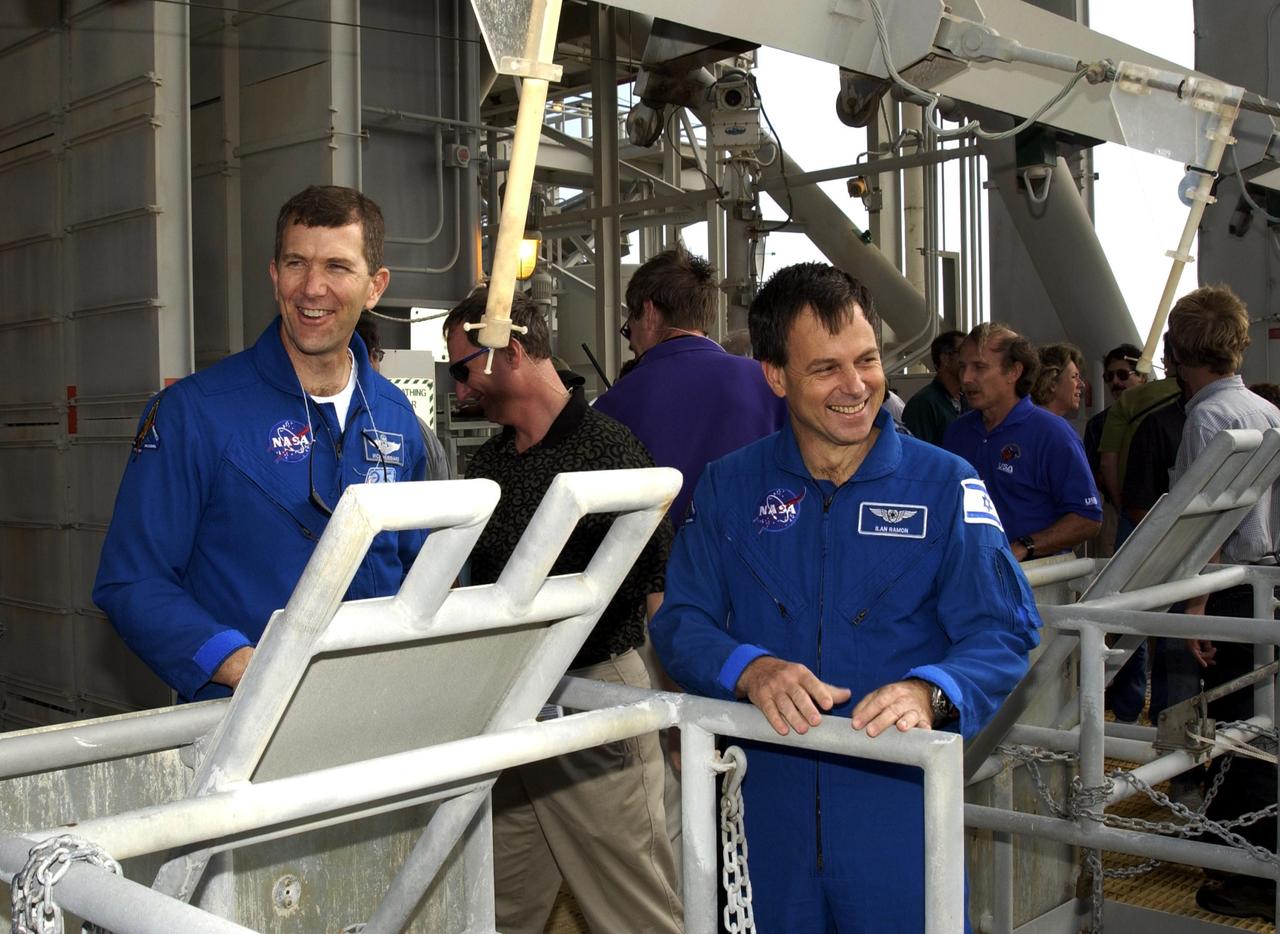
KENNEDY SPACE CENTER, FLA. - The STS-107 crew share a humorous moment on Launch Pad 39A during Terminal Countdown Demonstration Test activities.  From left are Commander Rick Husband, Payload Specialist Ilan Ramon (the first Israeli astronaut), Pilot William "Willie" McCool, Mission Specialists Lauarel Clark and David Brown; in the foreground (back to camera) is Payload Commander Michael Anderson. The TCDT also includes a simulated launch countdown.  STS-107 is a mission devoted to research and will include more than 80 experiments that will study Earth and space science, advanced technology development, and astronaut health and safety. Launch is planned for Jan. 16, 2003, between 10 a.m. and 2 p.m. EST aboard Space Shuttle Columbia.    .
KSC-02pd1975
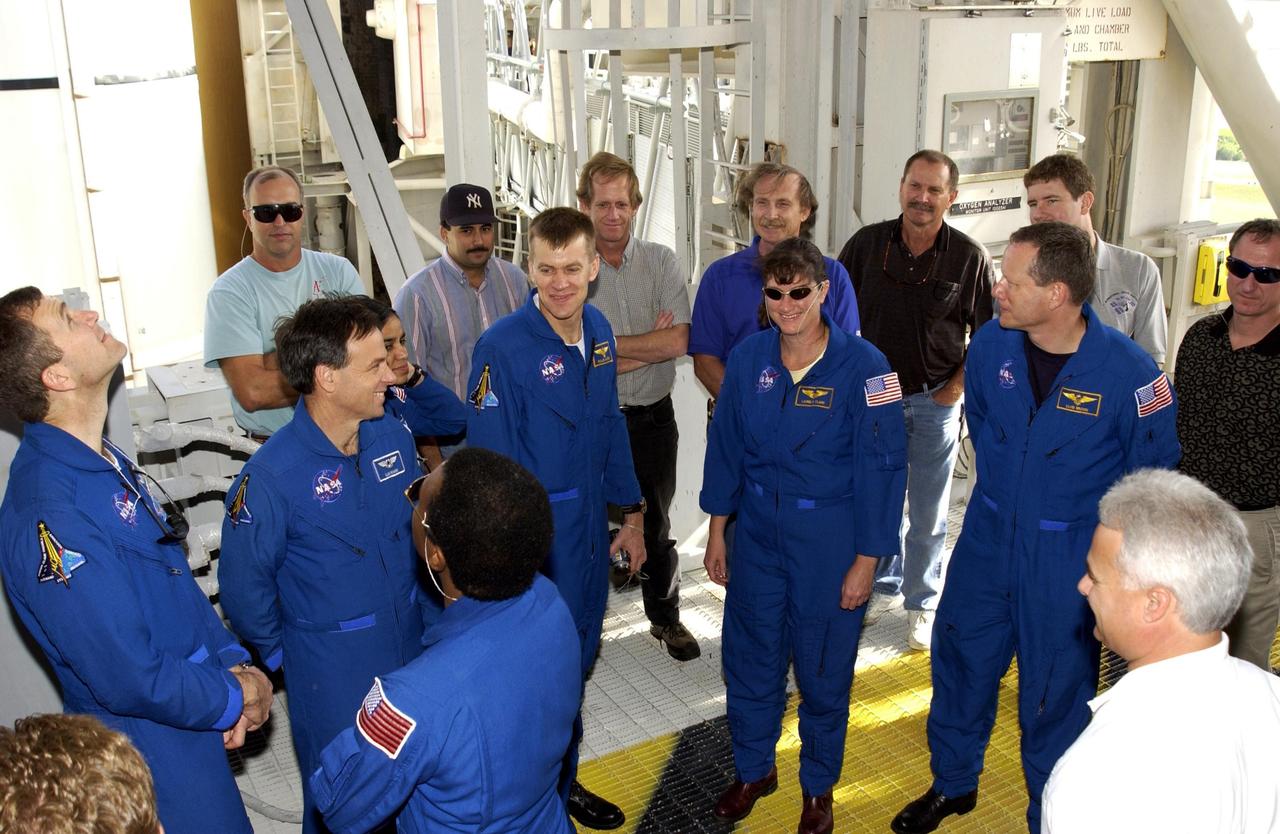
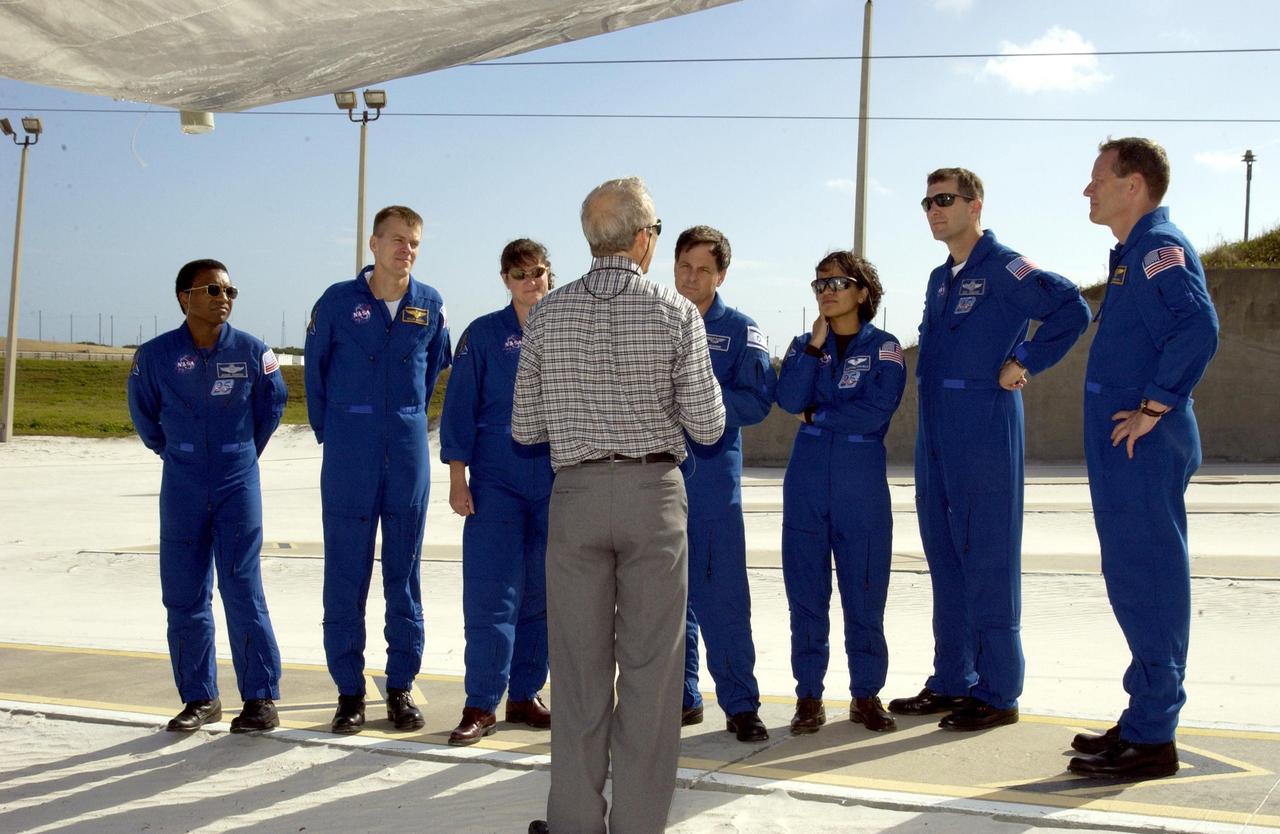
KENNEDY SPACE CENTER, FLA. - In the emergency egress landing site on Launch Pad 39A, the STS-107 crew listens to instructions.  Standing from left are Payload Commander Michael Anderson, Pilot William "Willie" McCool, Mission Specialists Laurel Clark, Ilan Ramon and Kalpana Chawla, Commander Rick Husband and Mission Specialist David Brown.  Ramon is the first Israeli astronaut.  The crew is taking part in Terminal Countdown Demonstration Test activities at the pad, which also include a simulated launch countdown. STS-107 is a mission devoted to research and will include more than 80 experiments that will study Earth and space science, advanced technology development, and astronaut health and safety. Launch is planned for Jan. 16, 2003, between 10 a.m. and 2 p.m. EST aboard Space Shuttle Columbia.    .
KSC-02pd1980
KENNEDY SPACE CENTER, FLA. - The STS-107 crew meet with the media in front of the grandstand.  From left are Commander Rick Husband, Pilot William "Willie" McCool, Payload Specialist Ilan Ramon, Mission Specialist David Brown, Payload Commander Michael Anderson, and Mission Specialists Laurel Clark and Kalpana Chawla.  The crew just finished Terminal Countdown Demonstration Test activities, including a simulated launch countdown, in preparation for launch planned for Jan. 16, 2003, between 10 a.m. and 2 p.m. EST aboard Space Shuttle Columbia. STS-107 is a mission devoted to research and will include more than 80 experiments that will study Earth and space science, advanced technology development, and astronaut health and safety.        .
KSC-02pd1999
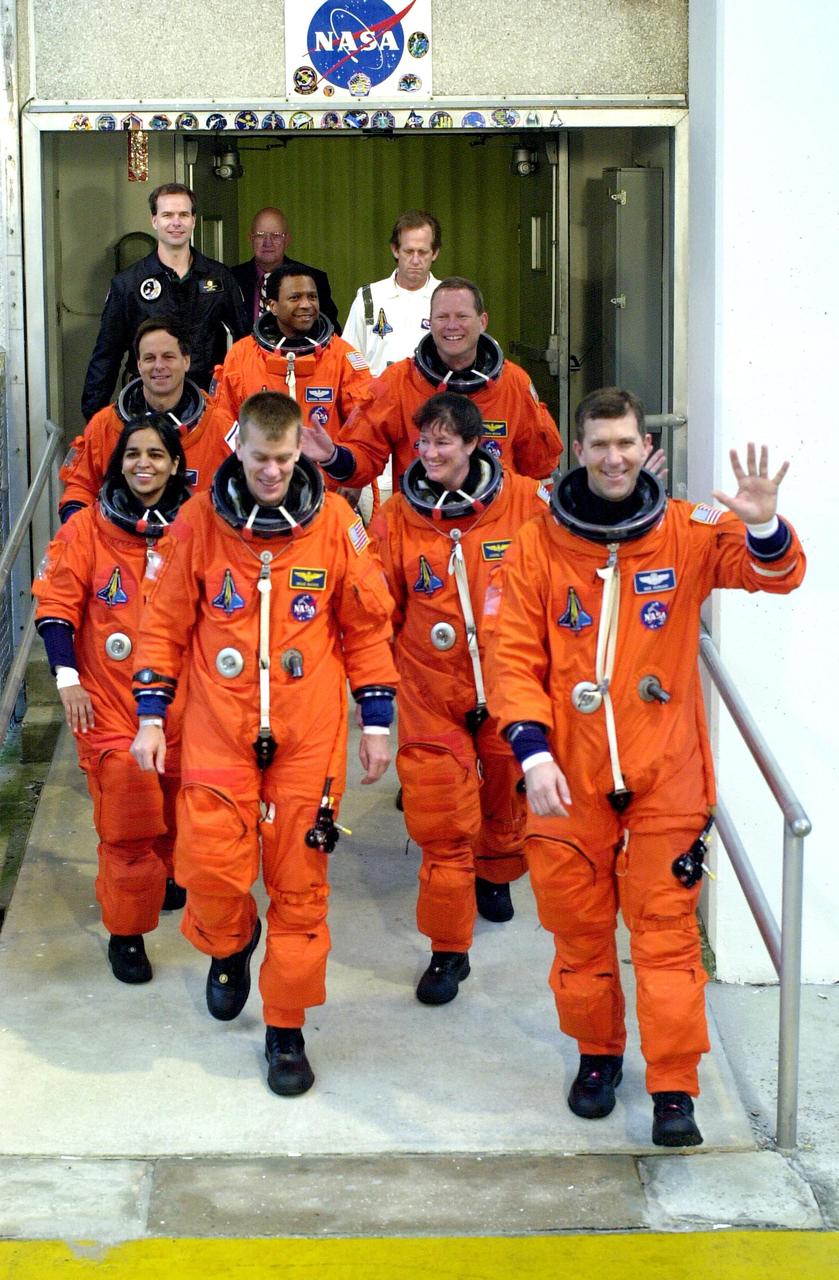
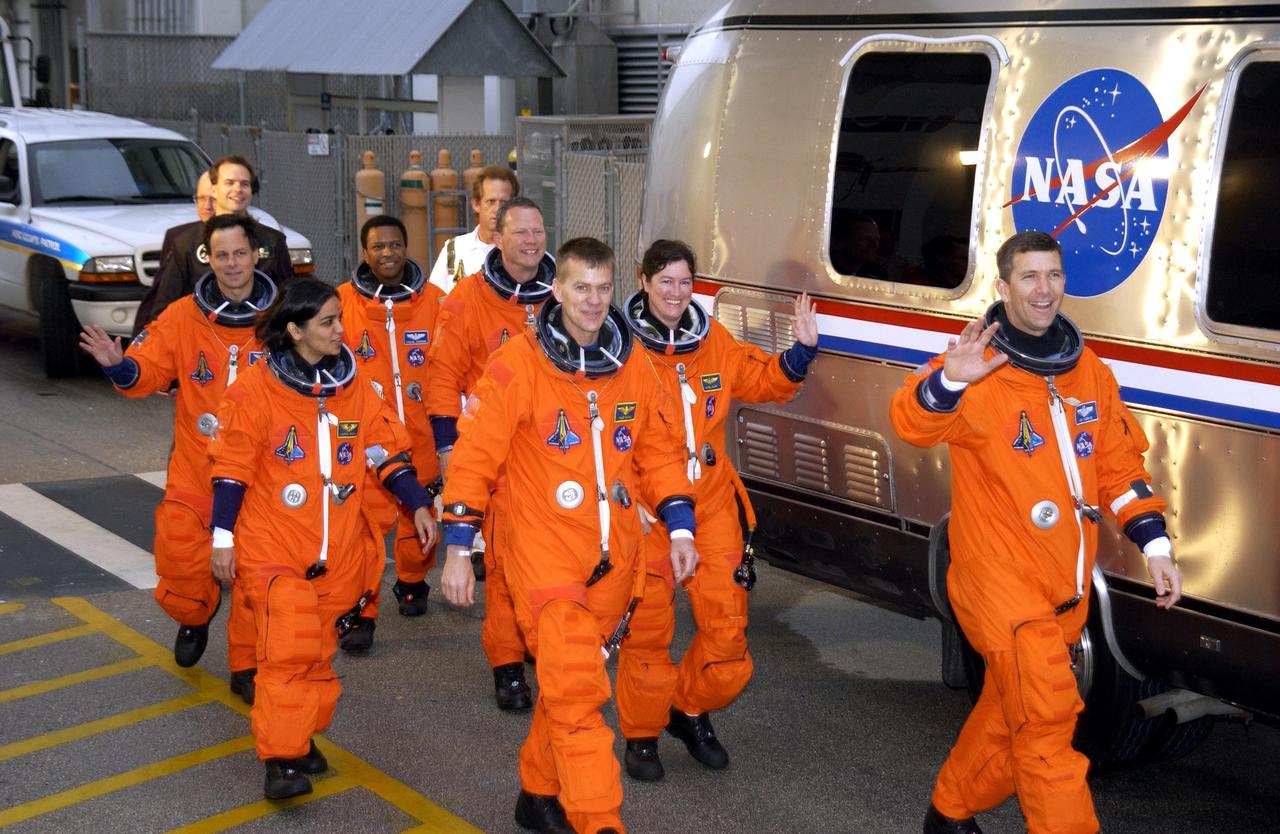
KENNEDY SPACE CENTER, FLA. -- The STS-107 crew exits the Operations and Checkout Building for a ride to Launch Pad 39A and a simulated launch countdown.  From left are Payload Specialist Ilan Ramon, Mission Specialist Kalpana Chawla, Payload Commander Michael Anderson, Mission Specialist David Brown, Pilot William "Willie" McCool, Mission Specialist Laurel Clark and Commander Rick Husband.  The countdown is part of Terminal Countdown Demonstration Test activities. STS-107 is a mission devoted to research and will include more than 80 experiments that will study Earth and space science, advanced technology development, and astronaut health and safety. Launch is planned for Jan. 16, 2003, between 10 a.m. and 2 p.m. EST aboard Space Shuttle Columbia.    .
KSC-02pd1988
KENNEDY SPACE CENTER, FLA. - The STS-107 crew heads for the Astrovan and a ride to Launch Pad 39A for a simulated launch countdown.  From left are Payload Specialist Ilan Ramon, Mission Specialist Kalpana Chawla, Payload Commander Michael Anderson, Mission Specialist David Brown, Pilot William "Willie" McCool, Mission Specialist Laurel Clark and Commander Rick Husband.  The countdown is part of Terminal Countdown Demonstration Test activities. STS-107 is a mission devoted to research and will include more than 80 experiments that will study Earth and space science, advanced technology development, and astronaut health and safety. Launch is planned for Jan. 16, 2003, between 10 a.m. and 2 p.m. EST aboard Space Shuttle Columbia.    .
KSC-02pd1987
KENNEDY SPACE CENTER, FLA. -- During emergency egress training, part of Terminal Countdown Demonstration Test activities at the pad, STS-107 crew members test breathing masks in the emergency bunker.  From left are Payload Commander Michael Anderson, Mission Specialist Laurel Clark, Pilot William "Willie" McCool, Mission Specialists Kalpana Chawla and David Brown, Commander Rick Husband and Mission Specialist Ilan Ramon (the first Israeli astronaut). STS-107 is a mission devoted to research and will include more than 80 experiments that will study Earth and space science, advanced technology development, and astronaut health and safety. Launch is planned for Jan. 16, 2003, between 10 a.m. and 2 p.m. EST aboard Space Shuttle Columbia.    .
KSC-02pd1986
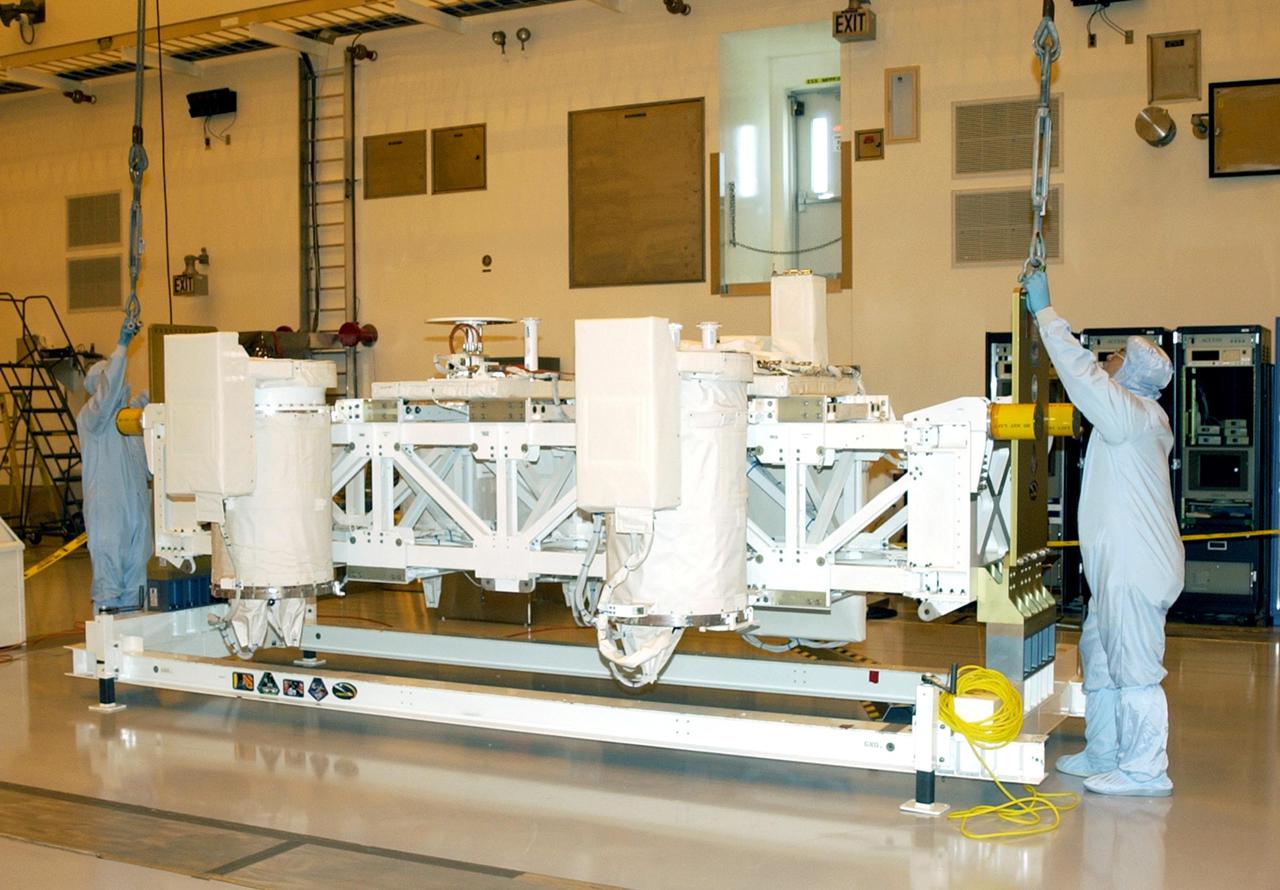
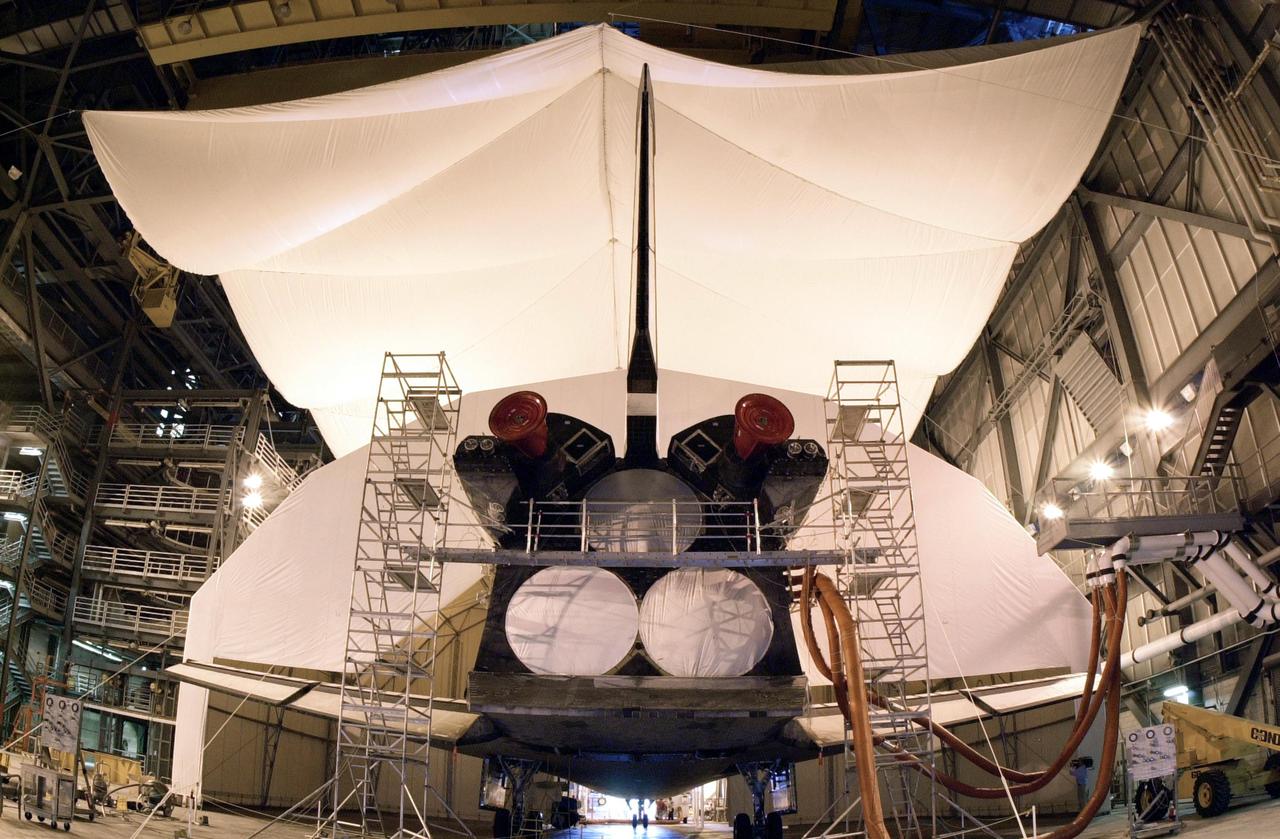
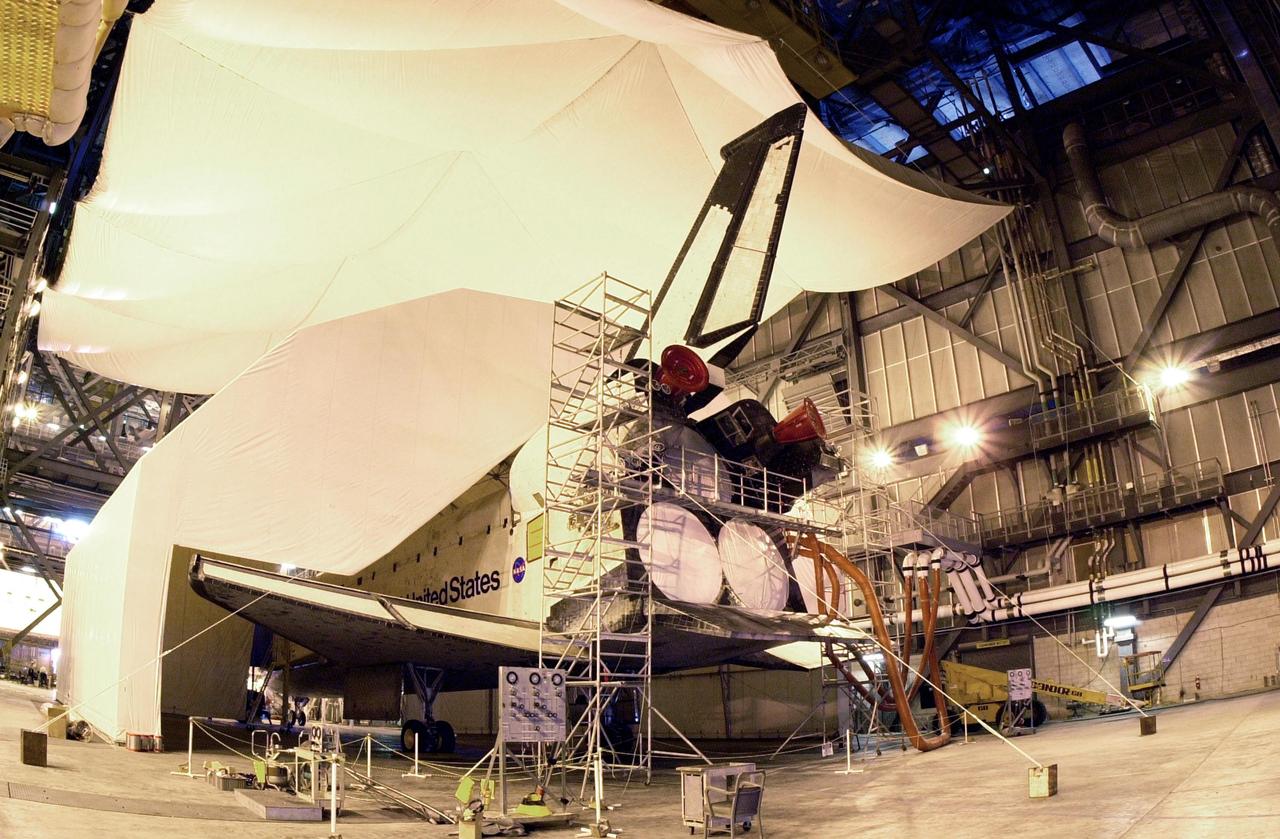
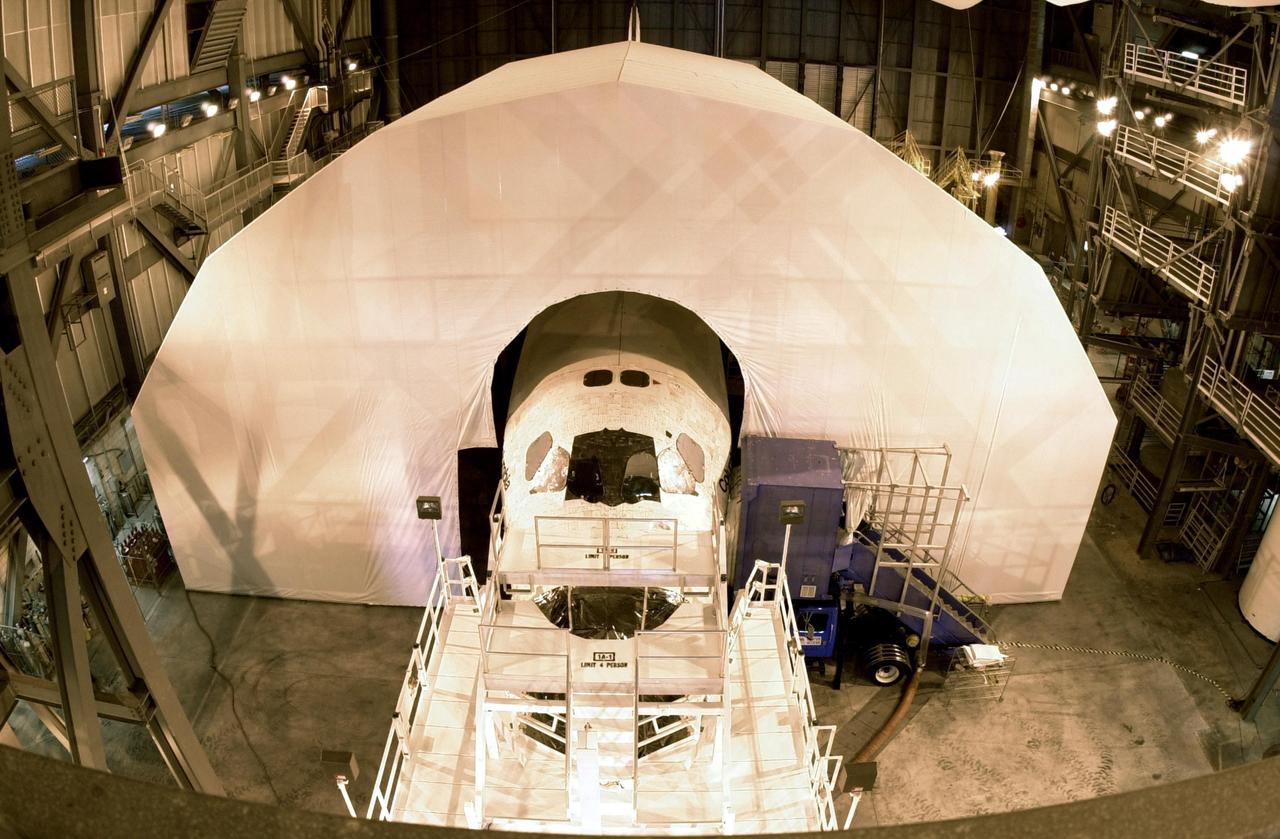
KENNEDY SPACE CENTER, FLA. -- Columbia sits inside an protective tent used to keep out moisture.  The orbiter is next scheduled to fly on mission STS-107 no earlier than Nov. 29.  STS-107 is a research mission. The payload includes the Hitchhiker Bridge, a carrier for the Fast Reaction Experiments Enabling Science, Technology, Applications and Research (FREESTAR) that incorporates eight high priority secondary attached shuttle experiments, plus the SHI Research Double Module (SHI/RDM), also known as SPACEHAB.
KSC-02pd1196
KENNEDY SPACE CENTER, FLA. -- Columbia sits inside an protective tent used to keep out moisture.  The orbiter is next scheduled to fly on mission STS-107 no earlier than Nov. 29.  STS-107 is a research mission. The payload includes the Hitchhiker Bridge, a carrier for the Fast Reaction Experiments Enabling Science, Technology, Applications and Research (FREESTAR) that incorporates eight high priority secondary attached shuttle experiments, plus the SHI Research Double Module (SHI/RDM), also known as SPACEHAB.
KSC-02pd1197
KENNEDY SPACE CENTER, FLA. -- Only the nose and tail of Columbia are visible as it sits inside an protective tent used to keep out moisture.  The orbiter is next scheduled to fly on mission STS-107 no earlier than Nov. 29.  STS-107 is a research mission. The payload includes the Hitchhiker Bridge, a carrier for the Fast Reaction Experiments Enabling Science, Technology, Applications and Research (FREESTAR) that incorporates eight high priority secondary attached shuttle experiments, plus the SHI Research Double Module (SHI/RDM), also known as SPACEHAB.
KSC-02pd1198
The Space Shuttle Orbiter Columbia STS-107 mission, launched January 16, 2003, is strictly a multidiscipline microgravity and Earth science research mission involving 80-plus International experiments tp be performed during 16-days, many of which will be managed by the Marshall Space Flight Center in Huntsville, Alabama. The majority of the research will be conducted in the Shuttle's middeck, the area directly under the cockpit, and in the new SPACEHAB Research Double Module. This is the first flight for that module, which doubles the volume available for experiments and significantly increases the amount and complexity of research from the last dedicated Shuttle science mission, STS-95, flown in 1998 with a single SPACEHAB module. The pressurized module is carried in Columbia's payload bay and is accessible to the crew via a turnel from the Shuttle's middeck. This onboard photo shows the SPACEHAB Research Double Module in Columbia's payload bay, back dropped by the shuttle vertical stabilizer, the blackness of space, and a thin slice of Earth's horizon. The first shuttle mission in 2003, the STS-107 mission marks the 113th flight overall in NASA's Space Shuttle program, and the 28th flight of the Space Shuttle Orbiter Columbia.
Space Shuttle Projects
KENNEDY SPACE CENTER, FLA. -- - During Terminal Countdown Demonstration Test activities at the launch pad, Mission Specialists Kalpana Chawla and Ilan Ramon pause for a photo.  Behind them is Space Shuttle Columbia. STS-107 is a mission devoted to research and will include more than 80 experiments that will study Earth and space science, advanced technology development, and astronaut health and safety. Launch is planned for Jan. 16, 2003, between 10 a.m. and 2 p.m. EST aboard Space Shuttle Columbia.        .
KSC-02pd1998
KENNEDY SPACE CENTER, FLA. -- Sitting in the slidewire basket on the launch pad is Mission Specialist David Brown.  The crew is taking part in a simulated launch countdown, part of Terminal Countdown Demonstration Test activities.   STS-107 is a mission devoted to research and will include more than 80 experiments that will study Earth and space science, advanced technology development, and astronaut health and safety. Launch is planned for Jan. 16, 2003, between 10 a.m. and 2 p.m. EST aboard Space Shuttle Columbia.        .
KSC-02pd1996
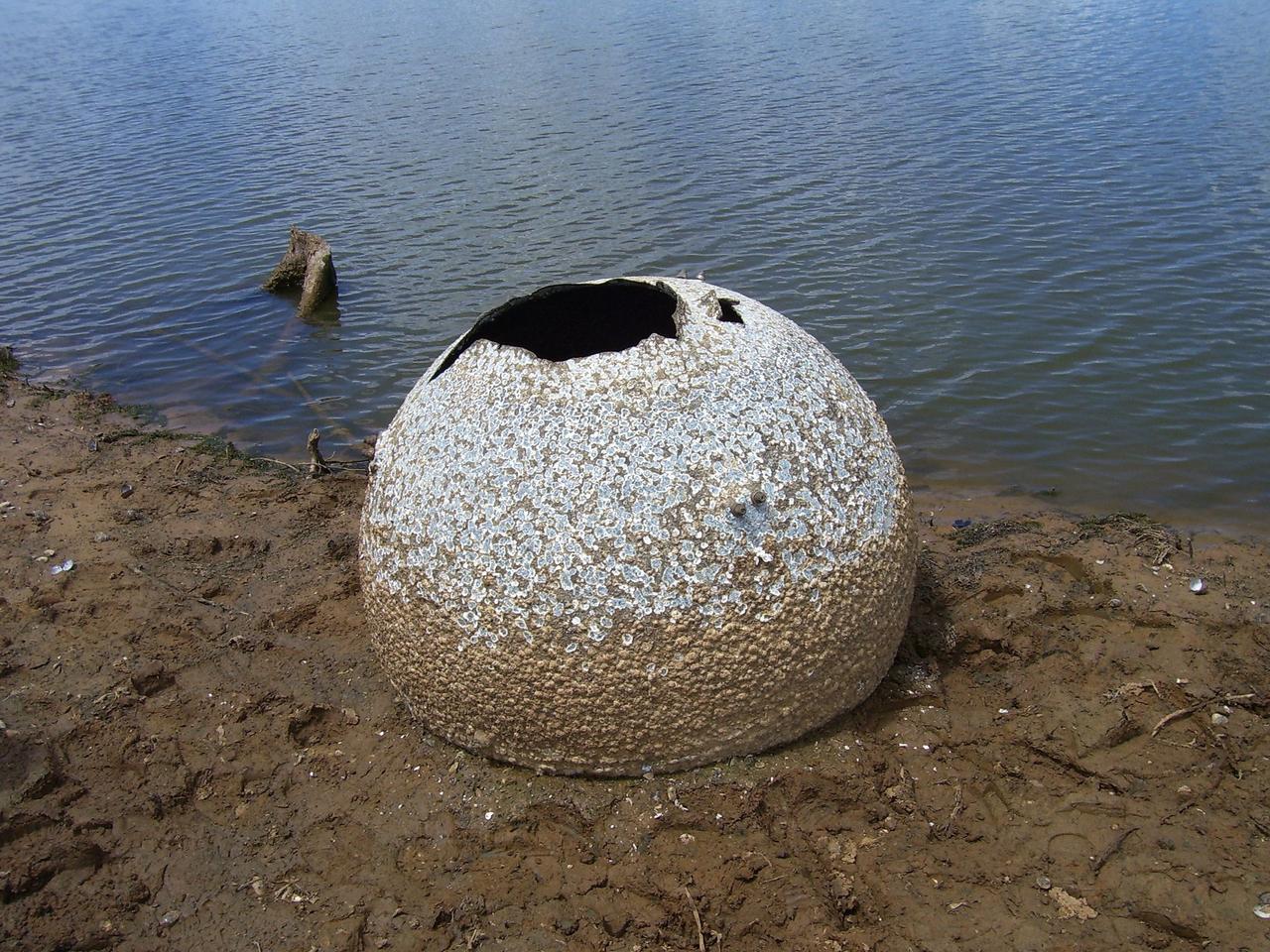
NACOGDOCHES, Texas -- A round 40-inch aluminum storage tank from space shuttle Columbia's Power Reactant and Storage Distribution System rests on the edge of Lake Nacogdoches in Texas. Lower lake water levels due to a local drought allowed the debris to become exposed. Columbia was destroyed during re-entry at the conclusion of the STS-107 mission in 2003.  Approximately 38 to 40 percent of Columbia was recovered following the accident in a half-million-acre search area which extended from eastern Texas and to western Louisiana. This tank is one of 18 cryogenic liquid storage tanks that flew aboard Columbia.  The tank is not hazardous to people or the environment and will be transported to NASA's Kennedy Space Center for storage inside the Vehicle Assembly Building with the rest of the recovered Columbia debris.    For information on STS-107 and the Columbia accident, visit http://www.nasa.gov/columbia/home/index.html. Photo credit: Nacogdoches Police Dept.
KSC-2011-6172
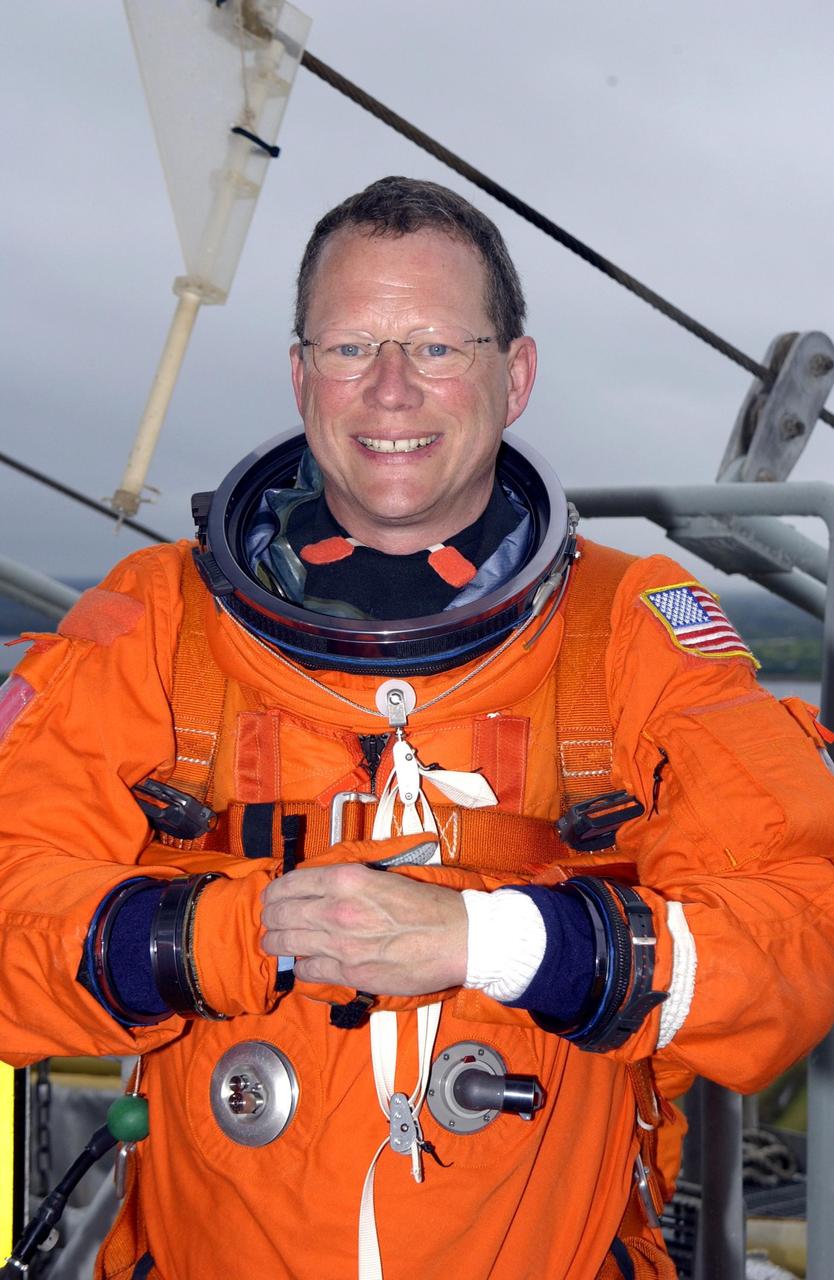
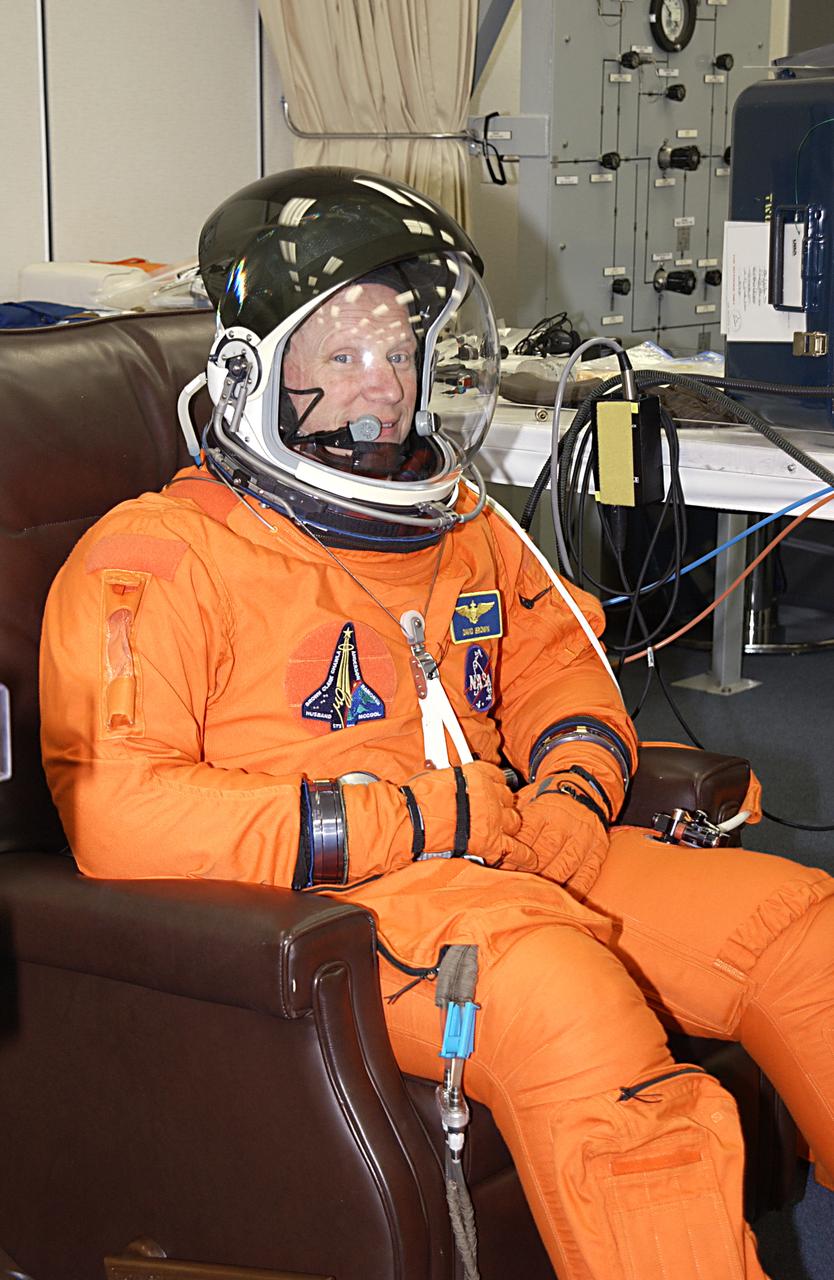
STS-107 Mission Specialist David Brown gets a final suit fit as part of launch preparations. STS-107 is a mission devoted to research and will include more than 80 experiments that will study Earth and space science, advanced technology development, and astronaut health and safety. The payload on Space Shuttle Columbia includes FREESTAR (Fast Reaction Experiments Enabling Science, Technology, Applications and Research) and the SHI Research Double Module (SHI/RDM), known as SPACEHAB. Experiments on the module range from material sciences to life sciences. Launch is scheduled for Jan. 16, between 10 a.m. and 2 p.m.
STS-107 Suiting
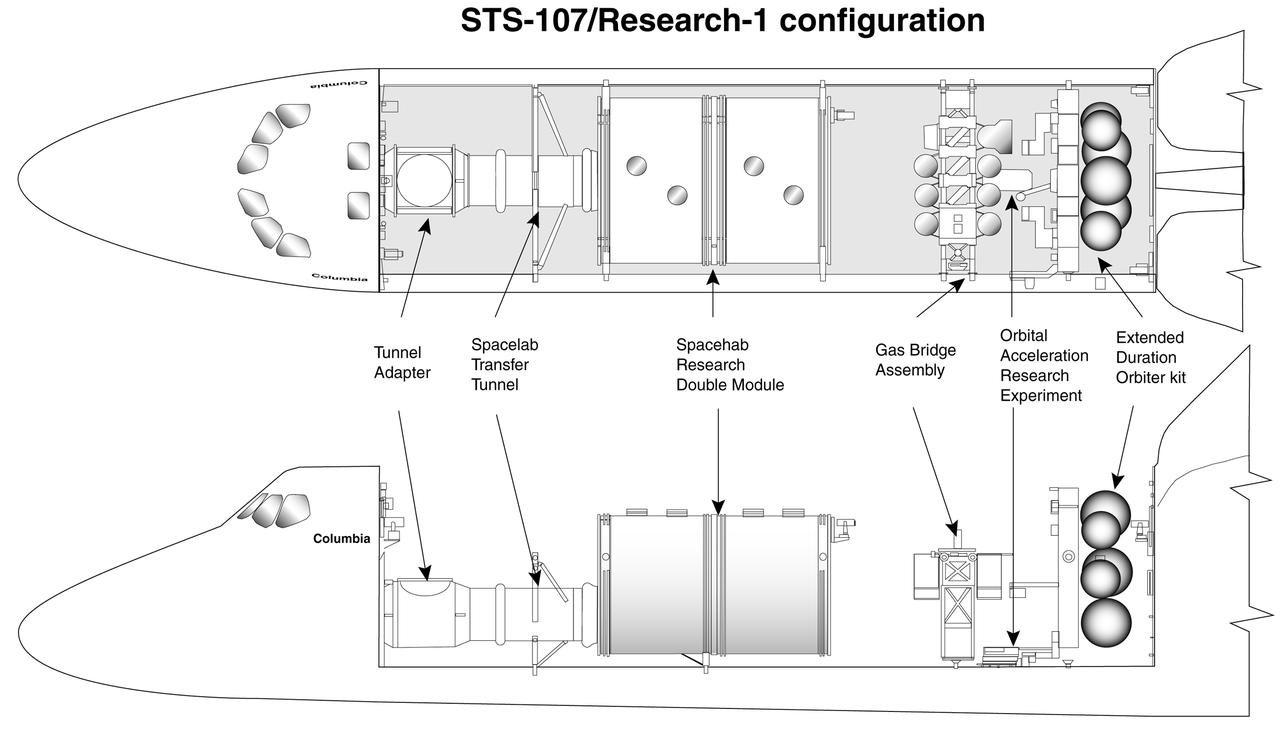
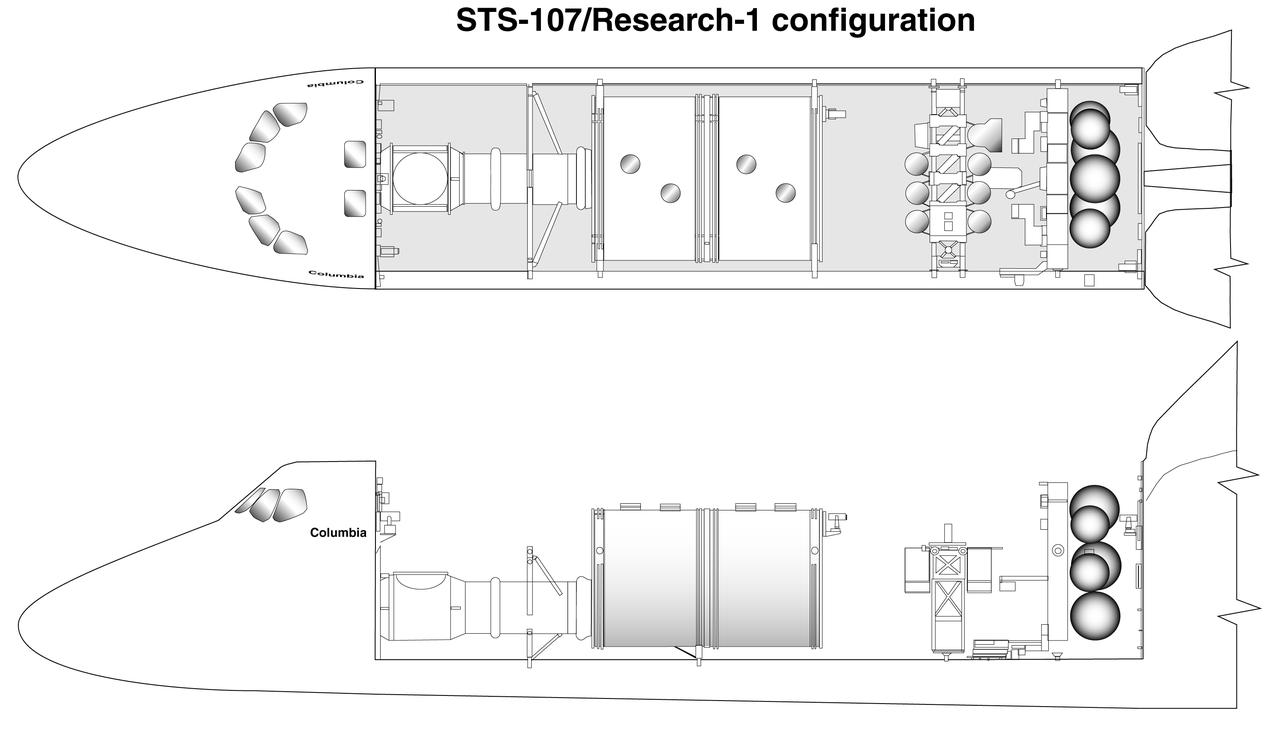
Thisdiagram shows the general arrangement of the payloads to be carried by the multidisciplinary STS-107 Research-1 Space Shuttle mission in 2002. The Spacehab module will host experiments that require direct operation by the flight crew. Others with special requirements will be on the GAS Bridge Assembly sparning the payload bay. The Extended Duration Orbiter kit carries additional oxygen and hydrogen for the electricity-producing fuel cells. Research-1 experiments will cover space biology, life science, microgravity research, and commercial space product development, research sponsored by NASA's Office of Biological and Physical Research. An alternative view with callouts is available at 0101764.
Microgravity
KENNEDY SPACE CENTER, FLA. -- Sharing a humorous moment on Launch Pad 39A during Terminal Countdown Demonstration Test activities are (left) Commander Rick Husband and (right) Payload Specialist Ilan Ramon (the first Israeli astronaut). The TCDT also includes a simulated launch countdown.  STS-107 is a mission devoted to research and will include more than 80 experiments that will study Earth and space science, advanced technology development, and astronaut health and safety. Launch is planned for Jan. 16, 2003, between 10 a.m. and 2 p.m. EST aboard Space Shuttle Columbia.    .
KSC-02pd1979
This diagram shows the general arrangement of the payloads to be carried by the multidisciplinary STS-107 Research-1 Space Shuttle mission in 2002. The Spacehab module will host experiments that require direct operation by the flight crew. Others with special requirements will be on the GAS Bridge Assembly sparning the payload bay. The Extended Duration Orbiter kit carries additional oxygen and hydrogen for the electricity-producing fuel cells. Research-1 experiments will cover space biology, life science, microgravity research, and commercial space product development, research sponsored by NASA's Office of Biological and Physical Research. An alternative view without callouts is available at 0101765.
Microgravity
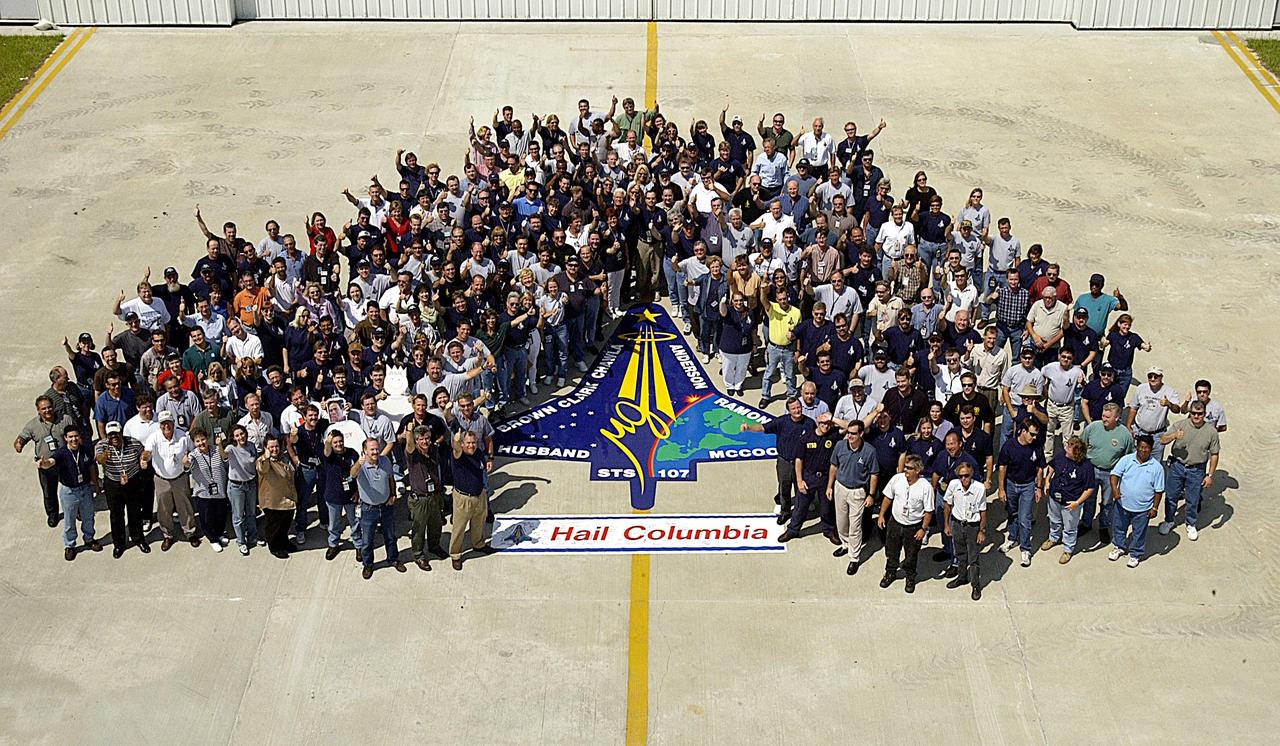
Members of the Columbia Reconstruction Project team pose for a group photo around an enlarged replica of the STS-107 crew emblem just delivered to the RLV Hangar. The emblem will be installed on an outside wall of the hangar. Inside the hangar, the team is identifying pieces of Columbia debris as they arrive at Kennedy Space Center and placing them on a grid approximating the shape of the orbiter.
KSC-03PD-1130
Members of the Columbia Reconstruction Project team pose for a group photo around an enlarged replica of the STS-107 crew emblem just delivered to the RLV Hangar. The emblem will be installed on an outside wall of the hangar. Inside the hangar, the team is identifying pieces of Columbia debris as they arrive at Kennedy Space Center and placing them on a grid approximating the shape of the orbiter.
KSC-03PD-1131
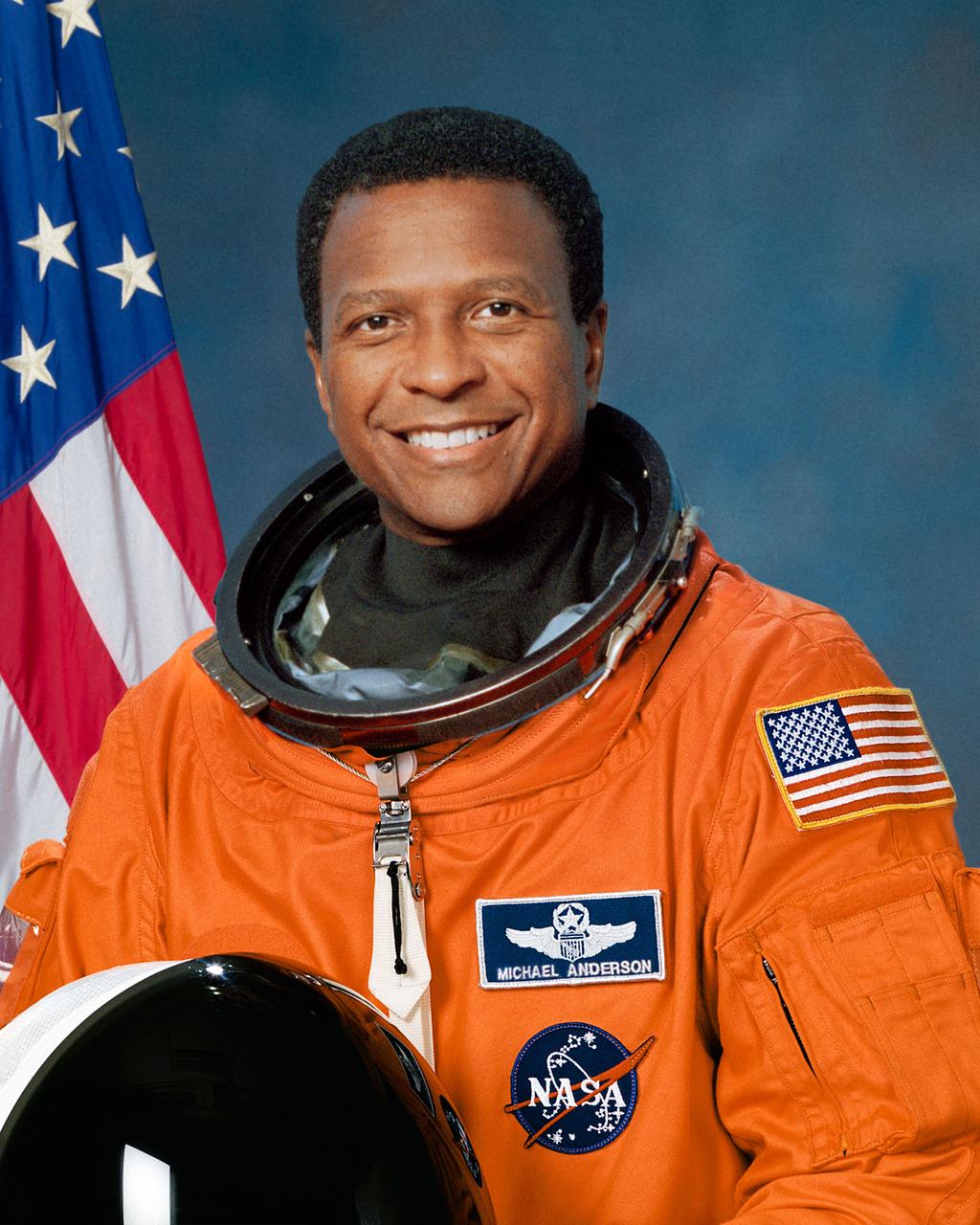
Official Portrait of Astronaut Mike Anderson (STS-107) in his orange launch and landing suit with an American flag in the background.
Official Portrait of Astronaut Mike Anderson (STS-107)
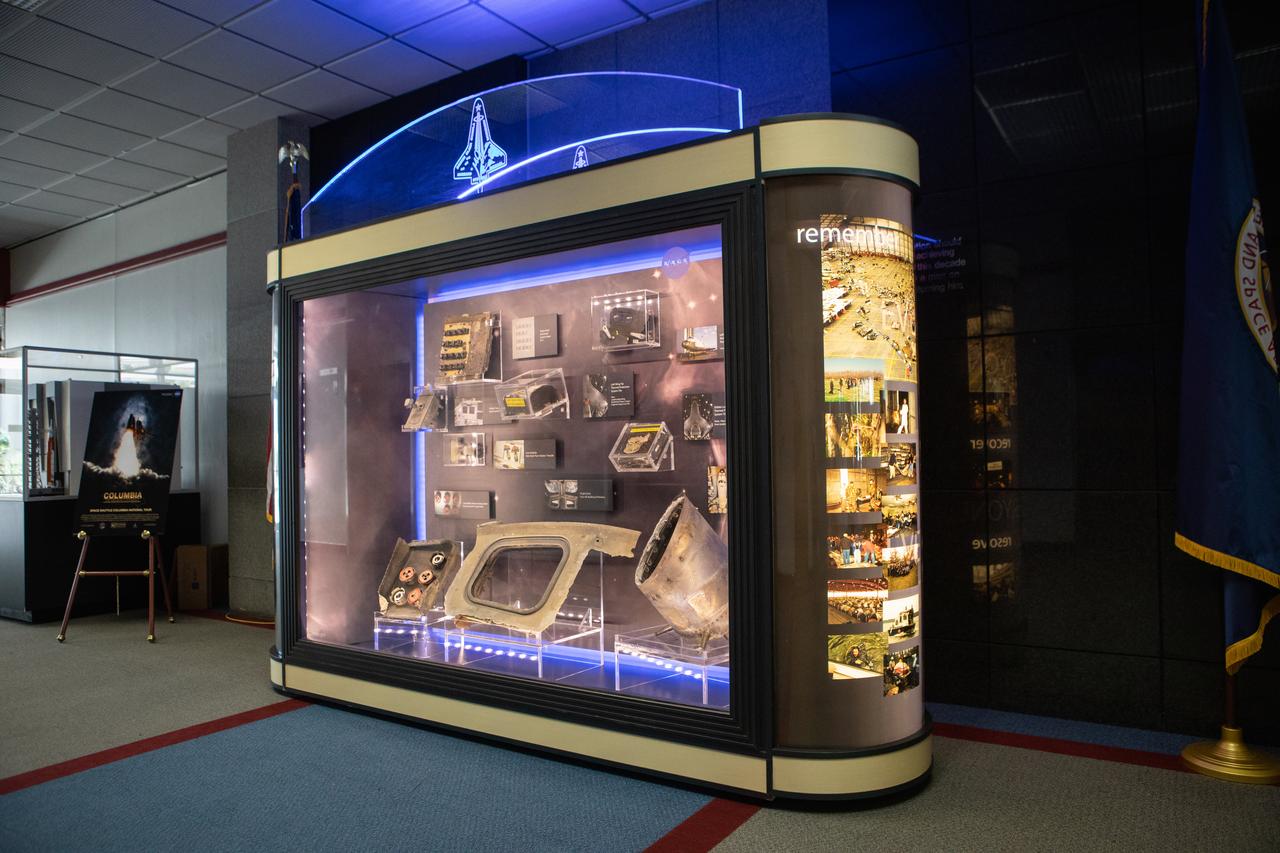
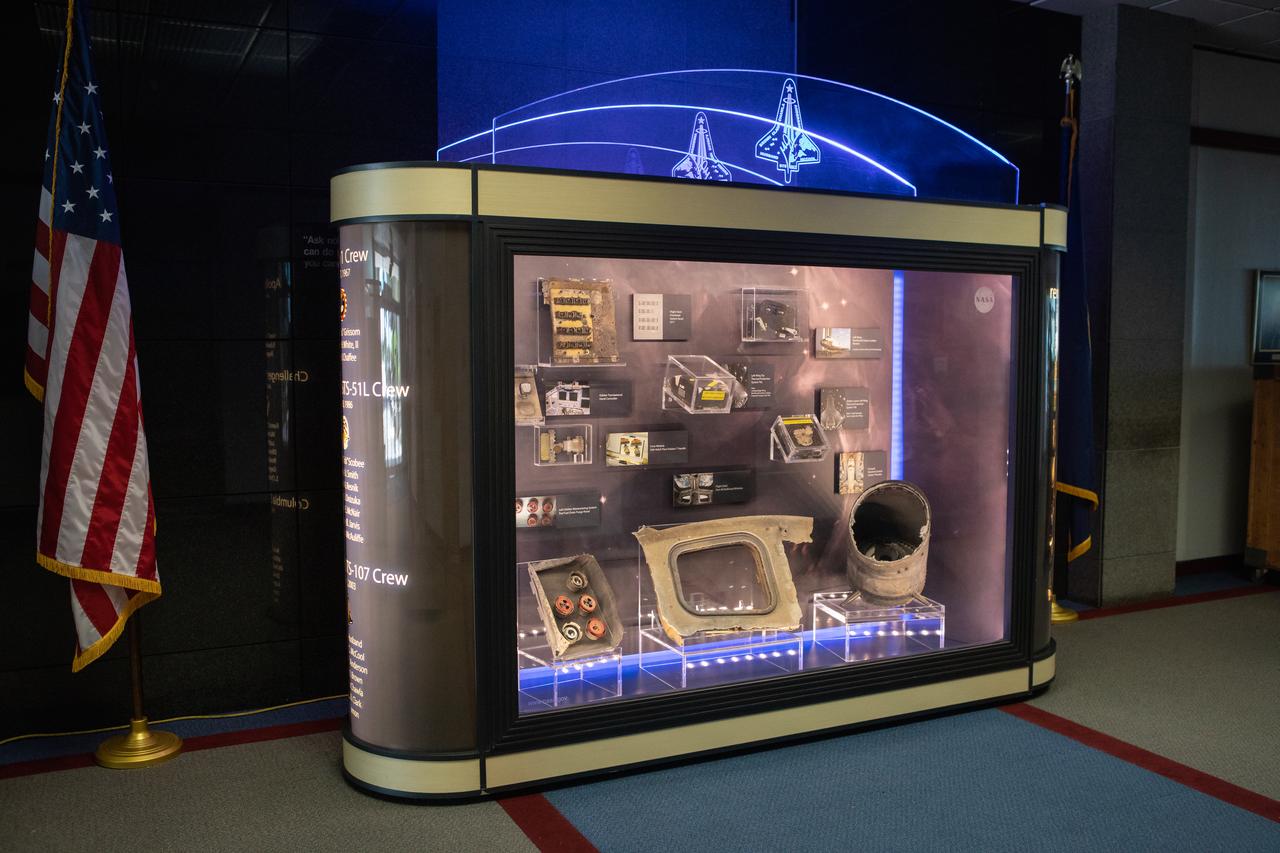
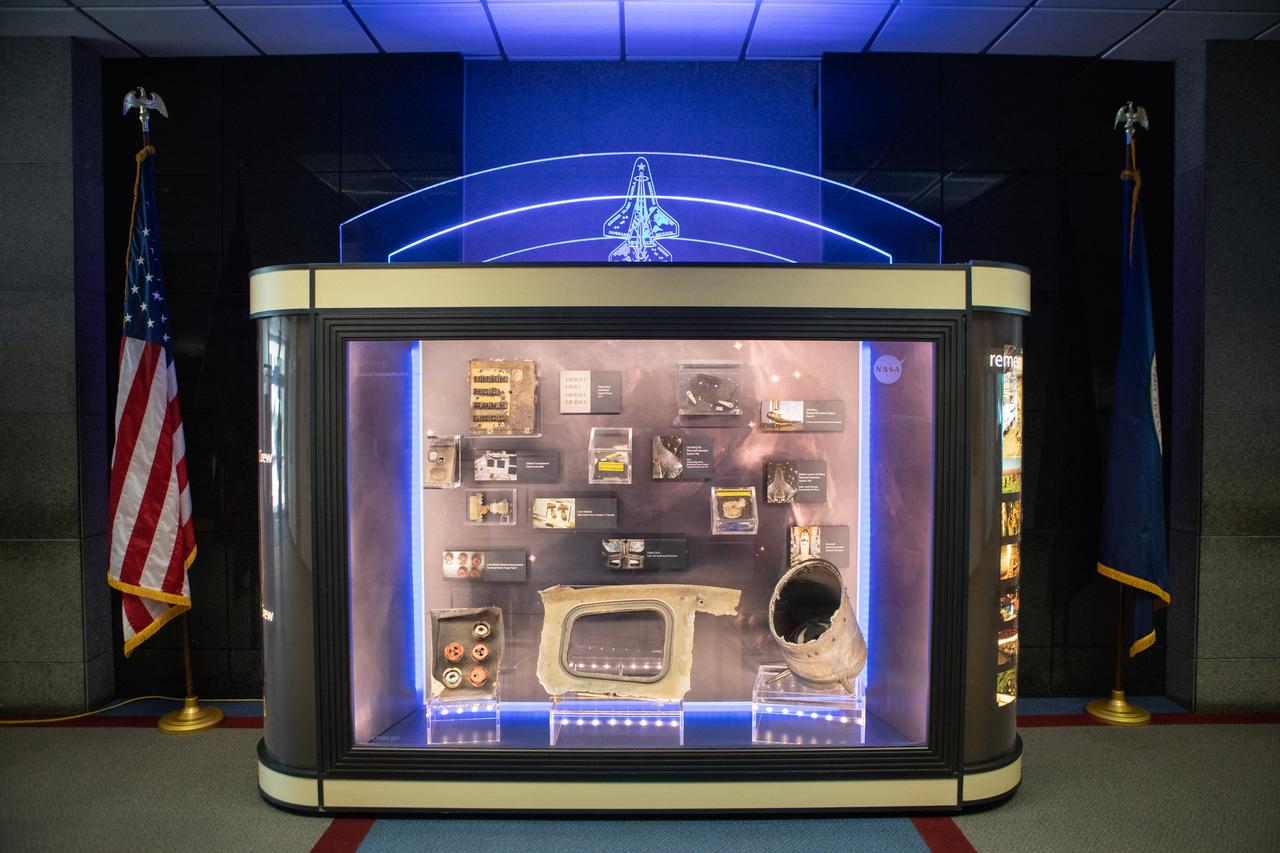
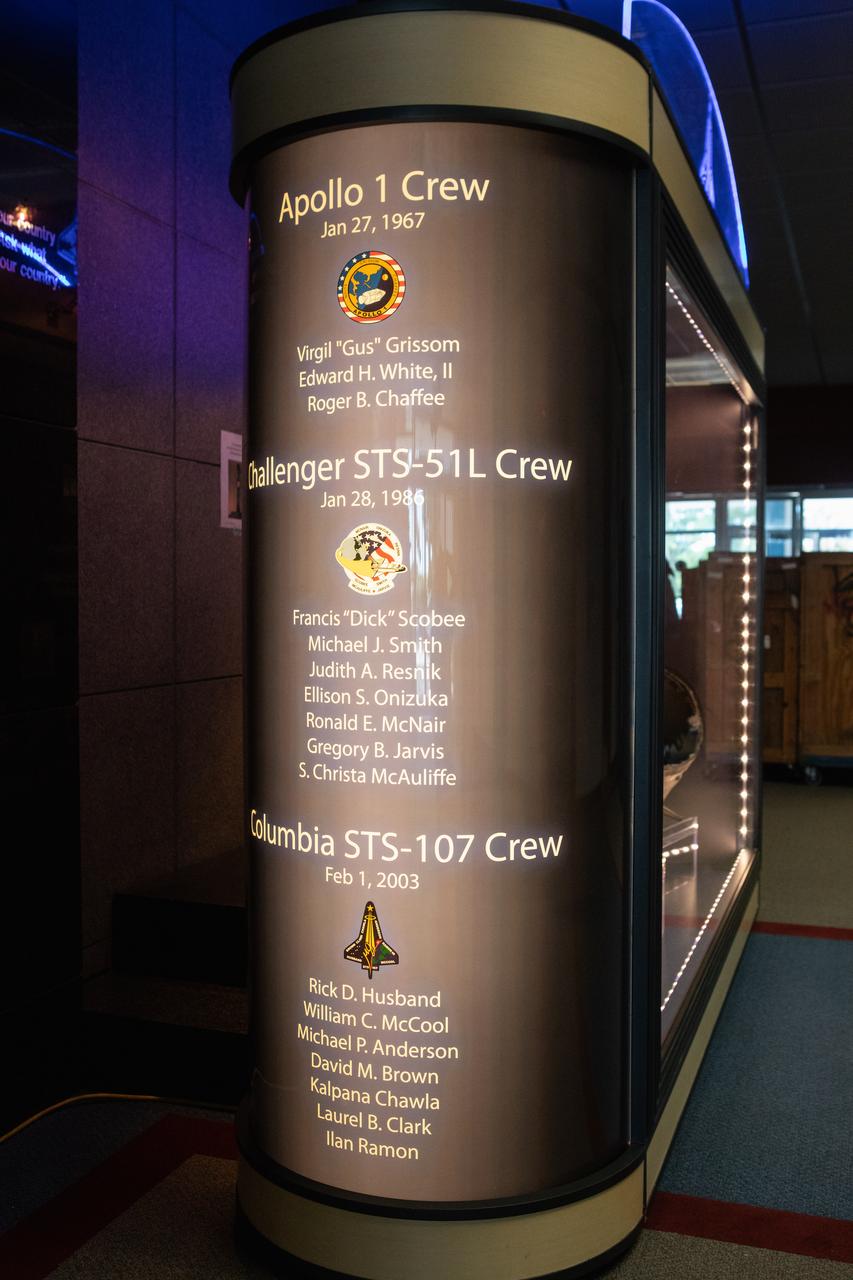
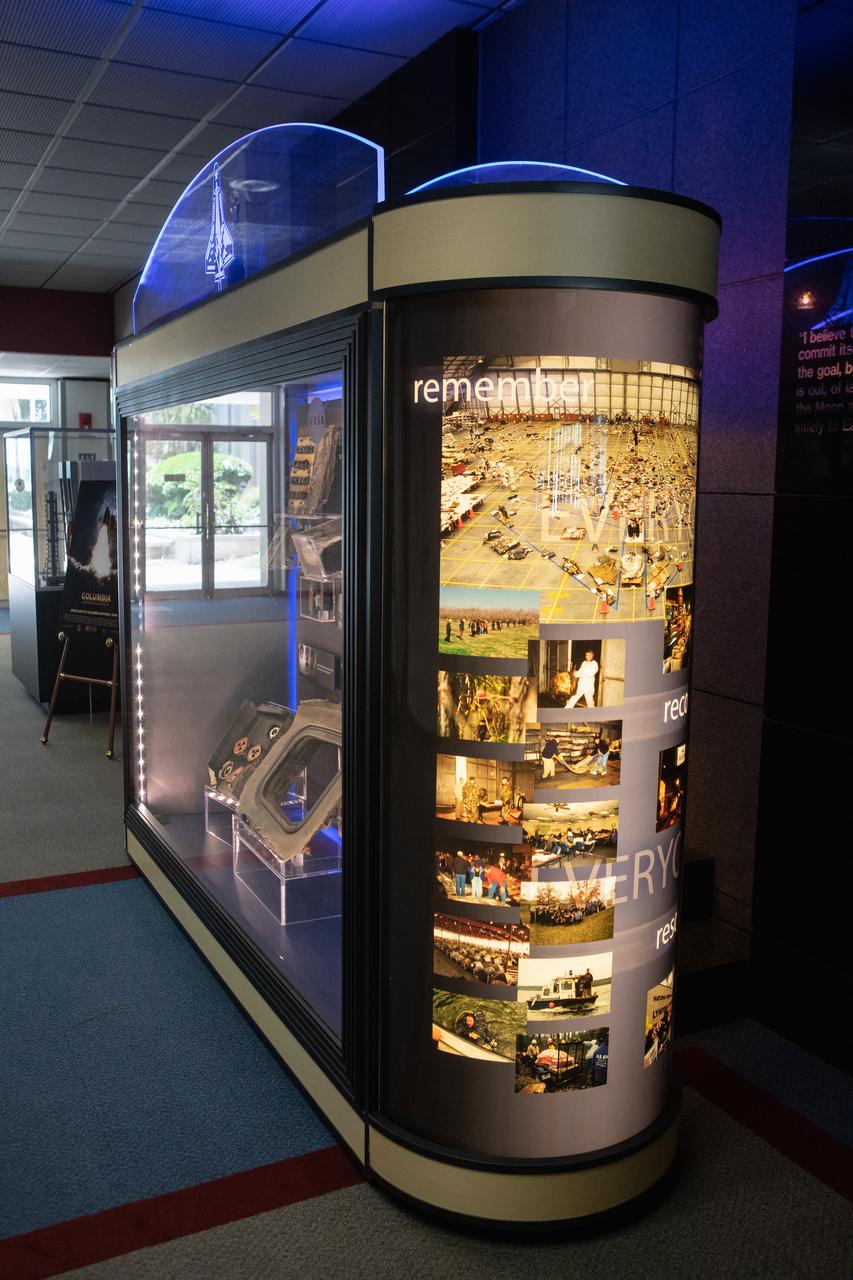
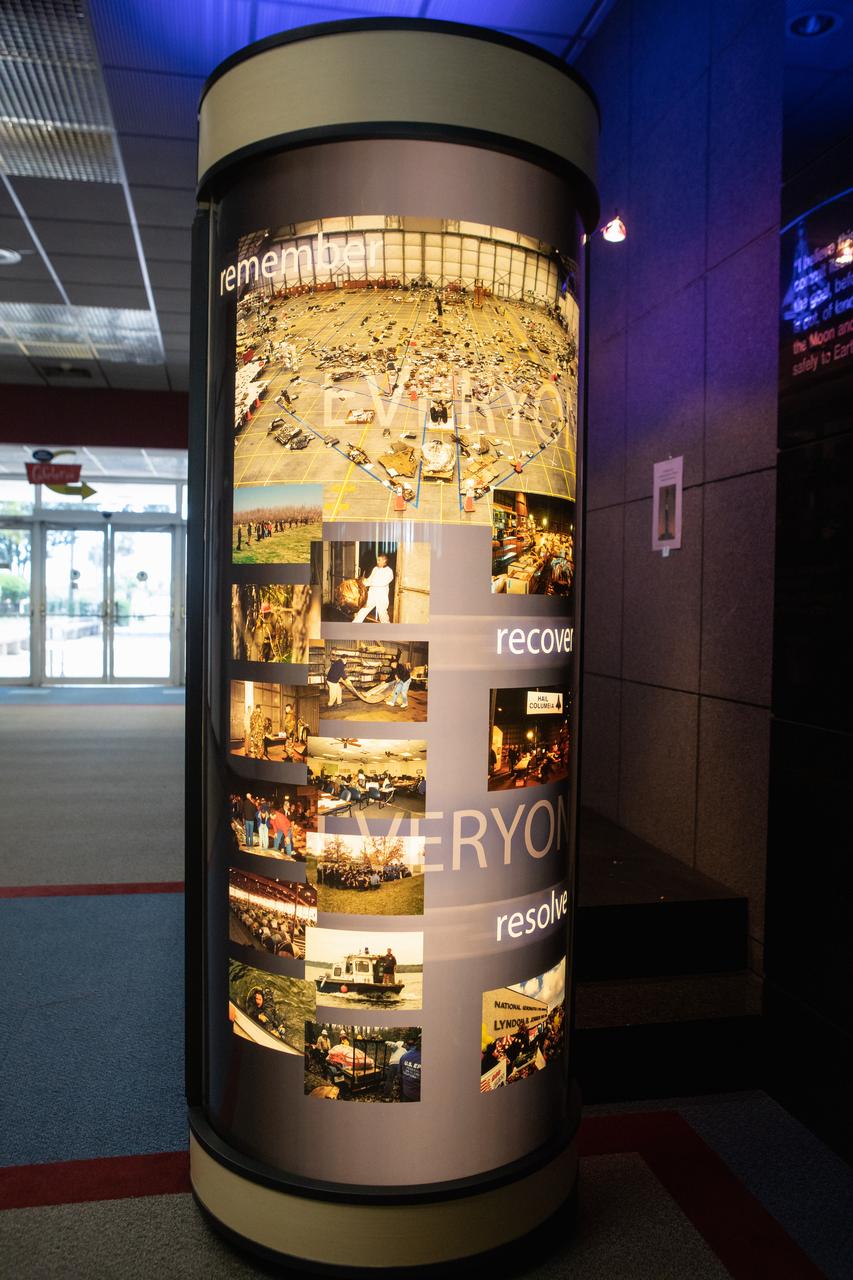
A display of artifacts featuring nine items recovered from the STS-107 tragedy that occurred Feb. 1, 2003, is shown in the old Headquarters Building at Kennedy Space Center. The powerful exhibit can now be viewed in the lobby of the Florida spaceport’s new Central Campus Building until June 10. The exhibit is part of the space shuttle Columbia national tour, which will make its way to all 10 NASA centers throughout the country.
Memorial - Archives from Columbia
A display of artifacts featuring nine items recovered from the STS-107 tragedy that occurred Feb. 1, 2003, is shown in the old Headquarters Building at Kennedy Space Center. The powerful exhibit can now be viewed in the lobby of the Florida spaceport’s new Central Campus Building until June 10. The exhibit is part of the space shuttle Columbia national tour, which will make its way to all 10 NASA centers throughout the country.
Memorial - Archives from Columbia
A display of artifacts featuring nine items recovered from the STS-107 tragedy that occurred Feb. 1, 2003, is shown in the old Headquarters Building at Kennedy Space Center. The powerful exhibit can now be viewed in the lobby of the Florida spaceport’s new Central Campus Building until June 10. The exhibit is part of the space shuttle Columbia national tour, which will make its way to all 10 NASA centers throughout the country.
Memorial - Archives from Columbia
A display of artifacts featuring nine items recovered from the STS-107 tragedy that occurred Feb. 1, 2003, is shown in the old Headquarters Building at Kennedy Space Center. The powerful exhibit can now be viewed in the lobby of the Florida spaceport’s new Central Campus Building until June 10. The exhibit is part of the space shuttle Columbia national tour, which will make its way to all 10 NASA centers throughout the country.
Memorial - Archives from Columbia
A display of artifacts featuring nine items recovered from the STS-107 tragedy that occurred Feb. 1, 2003, is shown in the old Headquarters Building at Kennedy Space Center. The powerful exhibit can now be viewed in the lobby of the Florida spaceport’s new Central Campus Building until June 10. The exhibit is part of the space shuttle Columbia national tour, which will make its way to all 10 NASA centers throughout the country.
Memorial - Archives from Columbia
A display of artifacts featuring nine items recovered from the STS-107 tragedy that occurred Feb. 1, 2003, is shown in the old Headquarters Building at Kennedy Space Center. The powerful exhibit can now be viewed in the lobby of the Florida spaceport’s new Central Campus Building until June 10. The exhibit is part of the space shuttle Columbia national tour, which will make its way to all 10 NASA centers throughout the country.
Memorial - Archives from Columbia
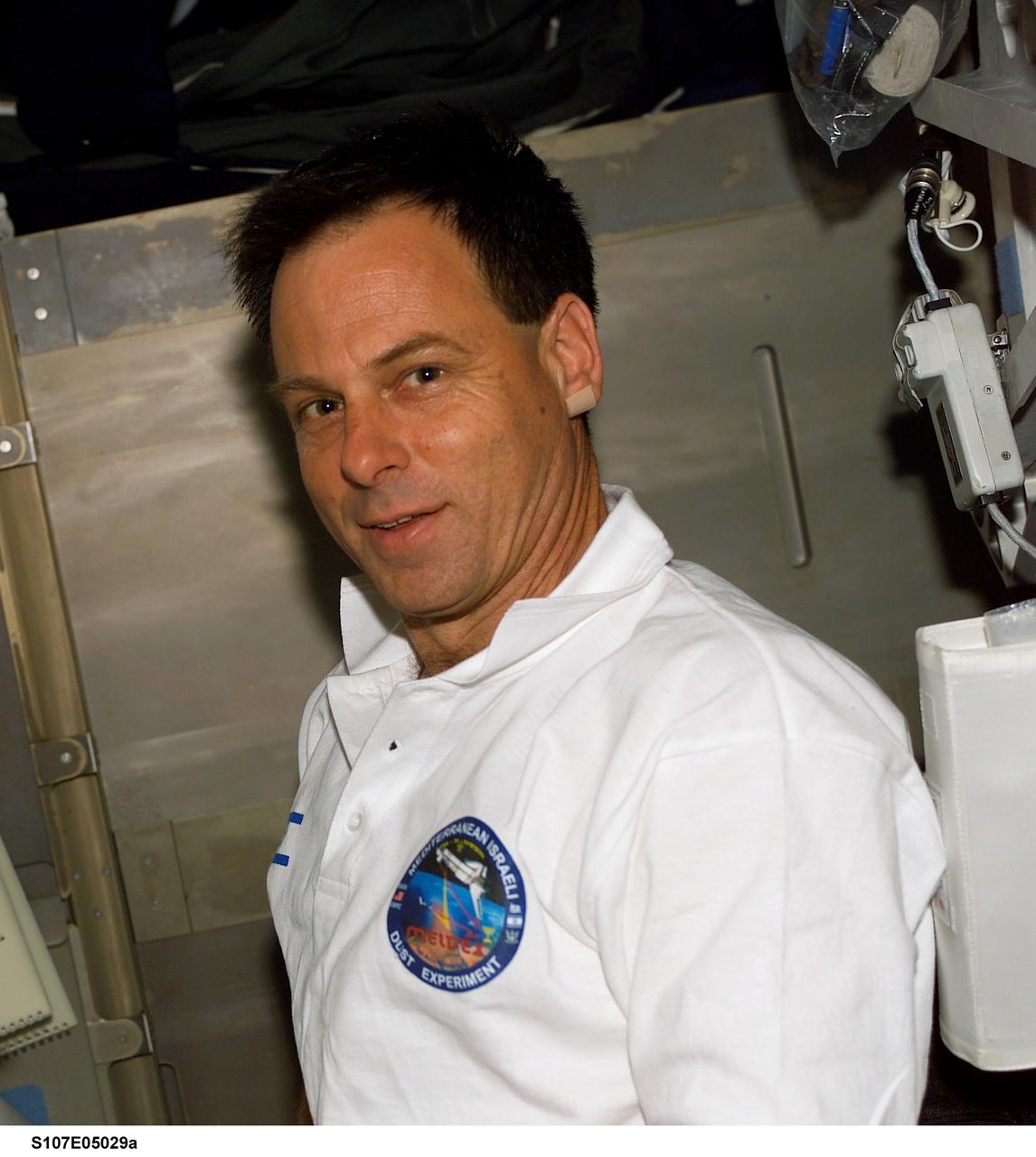
STS107-E-05029A (18 January 2003) --- Ilan Ramon, STS-107 payload specialist representing the Israeli Space Agency,  joined his six crewmates in getting the Space Shuttle Columbia and its SPACEHAB Research Double Module ready for 16 days of scientific research.
Ramon on Columbia's MDK during STS-107
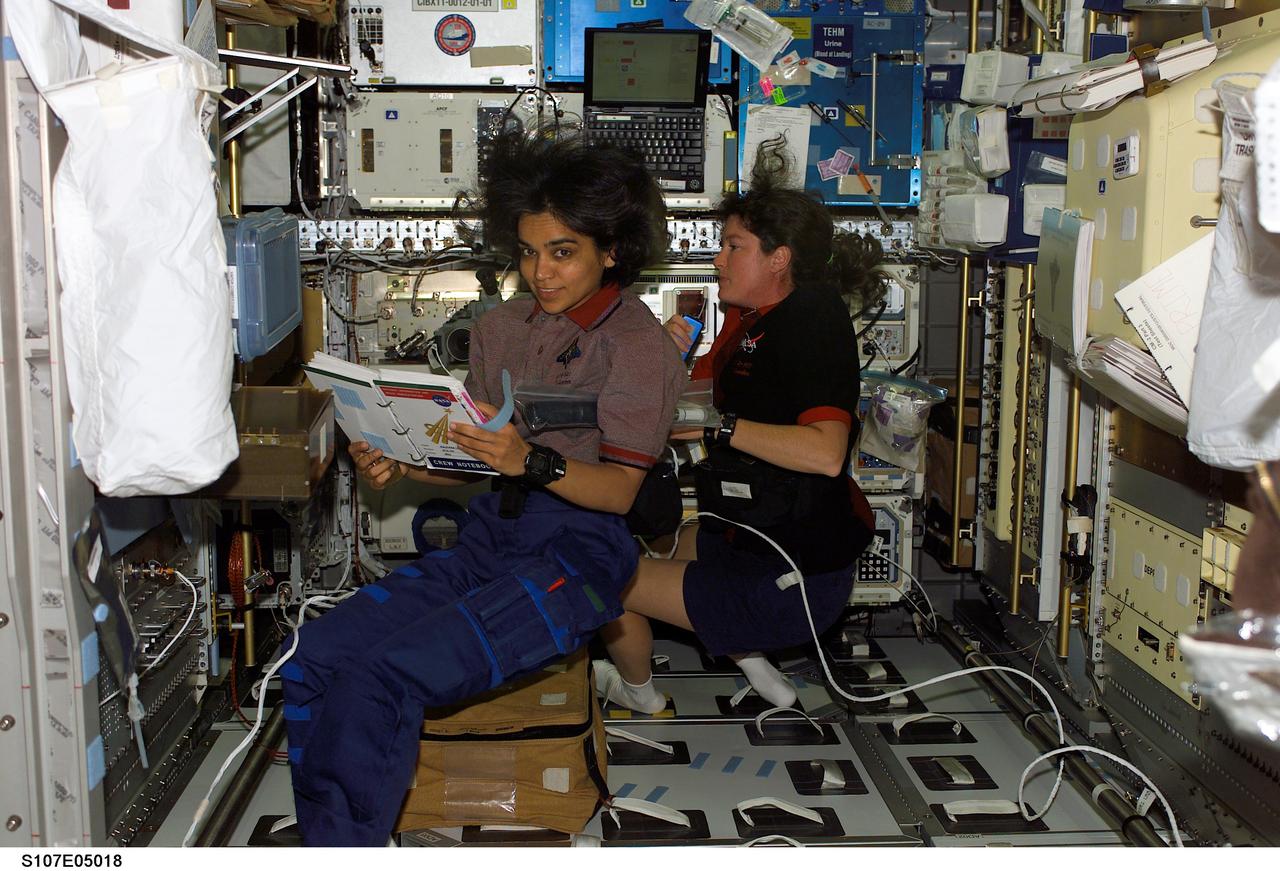
STS107-E-05018 (17 January 2003) --- Astronaut Kalpana Chawla (foreground) and Laurel B. Clark, STS-107 mission specialists, work in the SPACEHAB Research Double Module aboard the Space Shuttle Columbia.
Chawla and Clark in the Spacehab RDM during activation procedures on STS-107
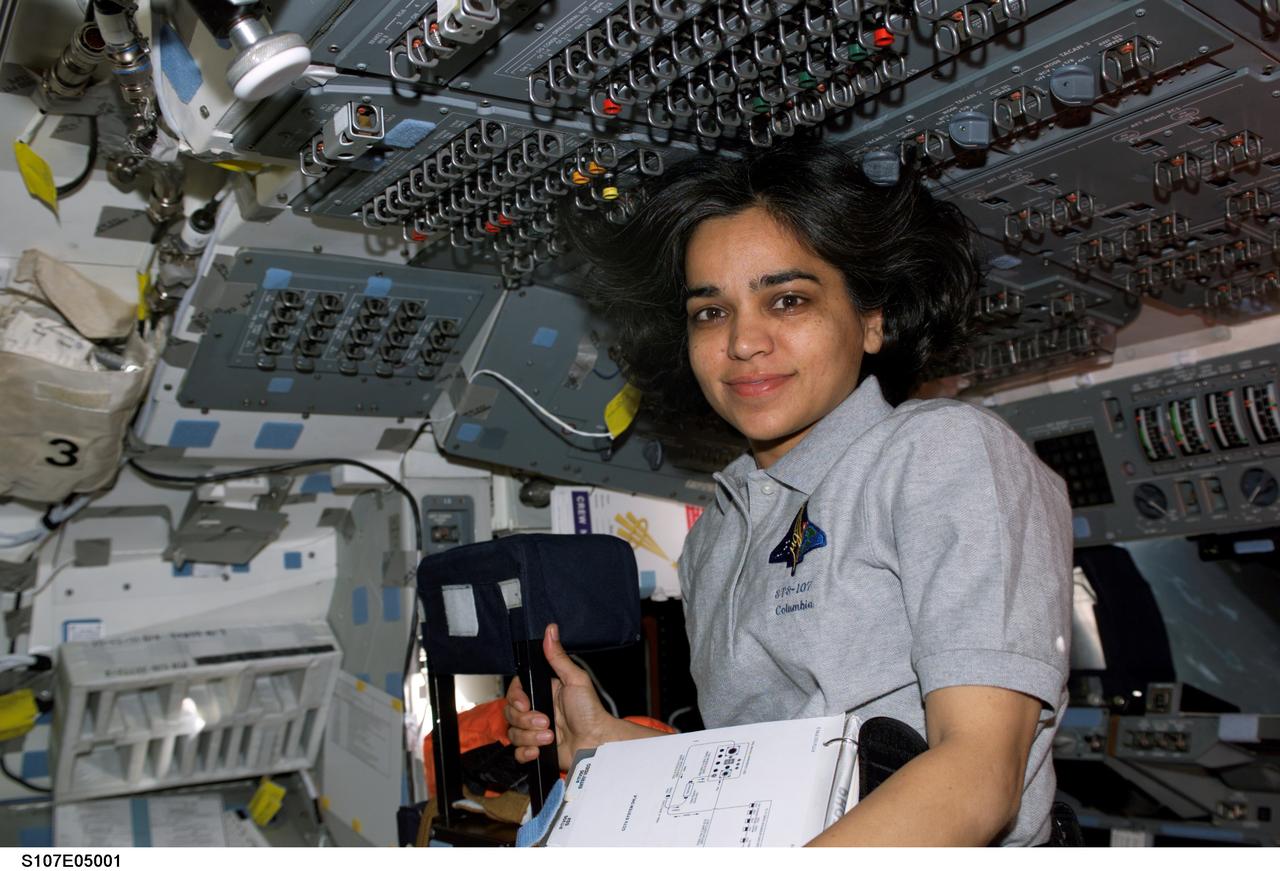
STS107-E-05001 (17 January 2003) --- Astronaut Kalpana Chawla, STS-107 mission specialist, is pictured on the flight deck of the Earth-orbiting Space Shuttle Columbia.
Chawla smiles from the AFD of Columbia during STS-107
STS107-E-05033 (18 January 2003) --- Astronaut Michael P. Anderson, STS-107 payload commander, is pictured on the aft flight deck of the Earth-orbiting Space Shuttle Columbia.
Anderson smiles for the camera on Columbia's AFD during STS-107
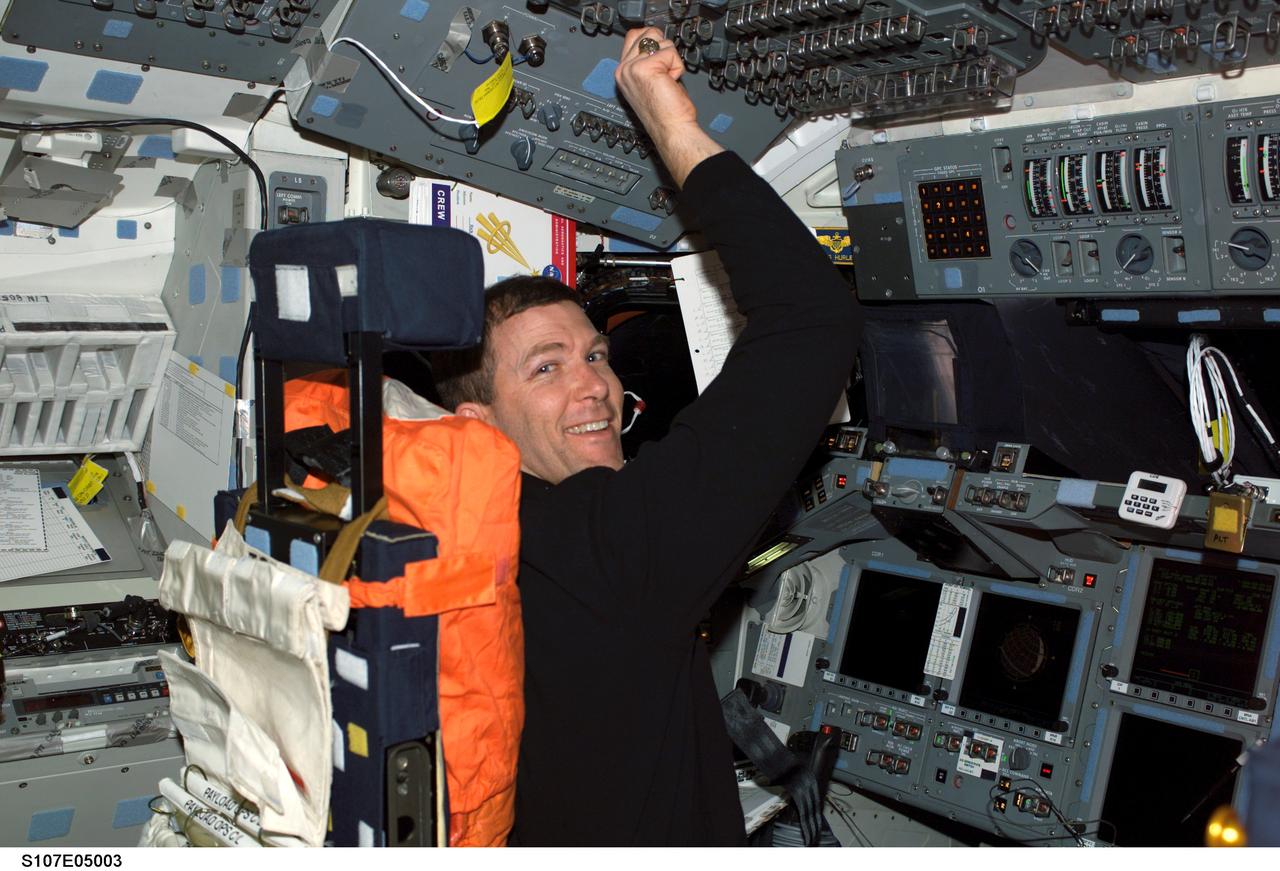
STS107-E-05003 (17 January 2003) --- Astronaut Rick D. Husband, STS-107 mission commander, occupies the commander’s station on the forward flight deck of the Earth-orbiting Space Shuttle Columbia.
Husband seated in the CDR's seat on Columbia's FD during STS-107
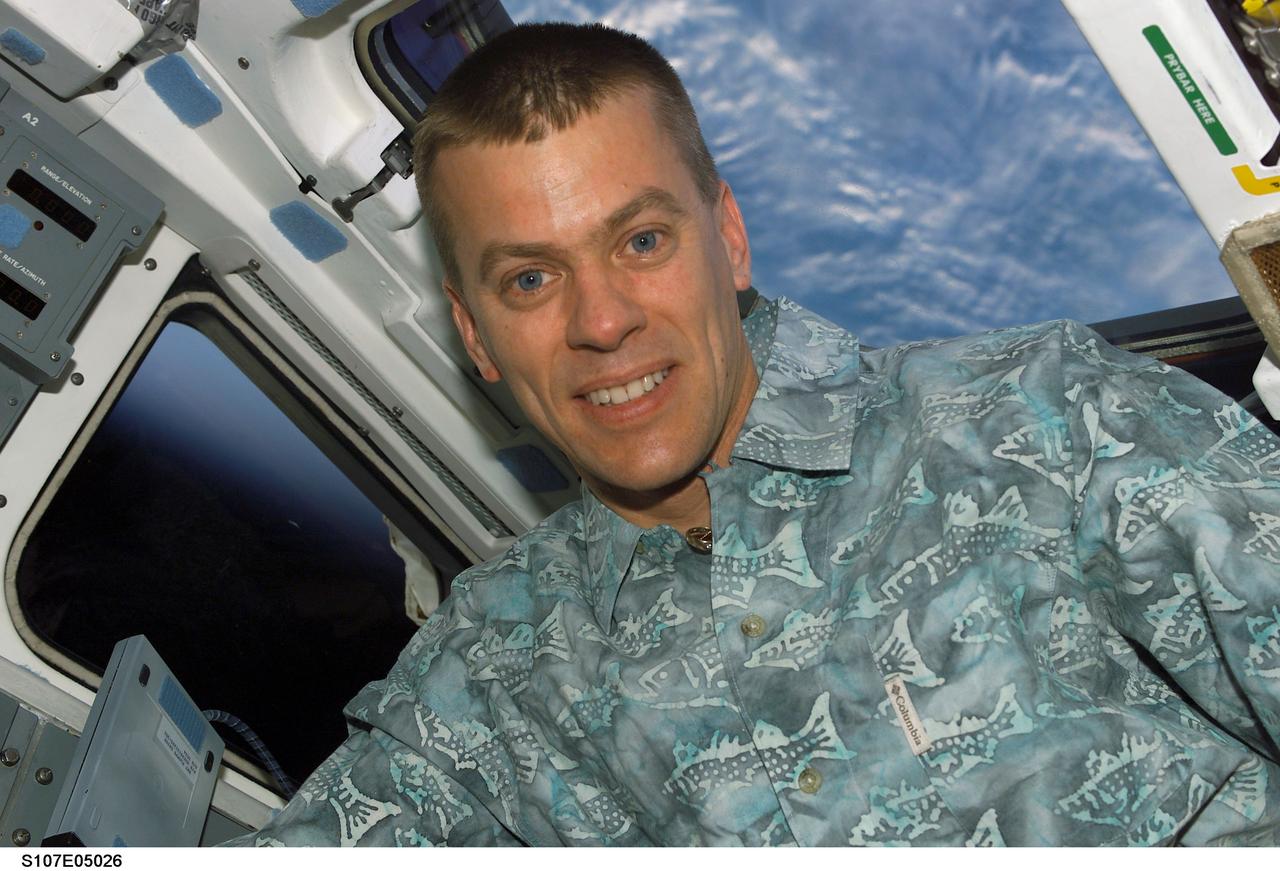
STS107-E-05026 (18 January 2003) --- Astronaut William C. McCool, STS-107 pilot, is pictured on the aft flight deck of the Earth-orbiting Space Shuttle Columbia.
McCool smiles for the camera from Columbia's AFD during STS-107
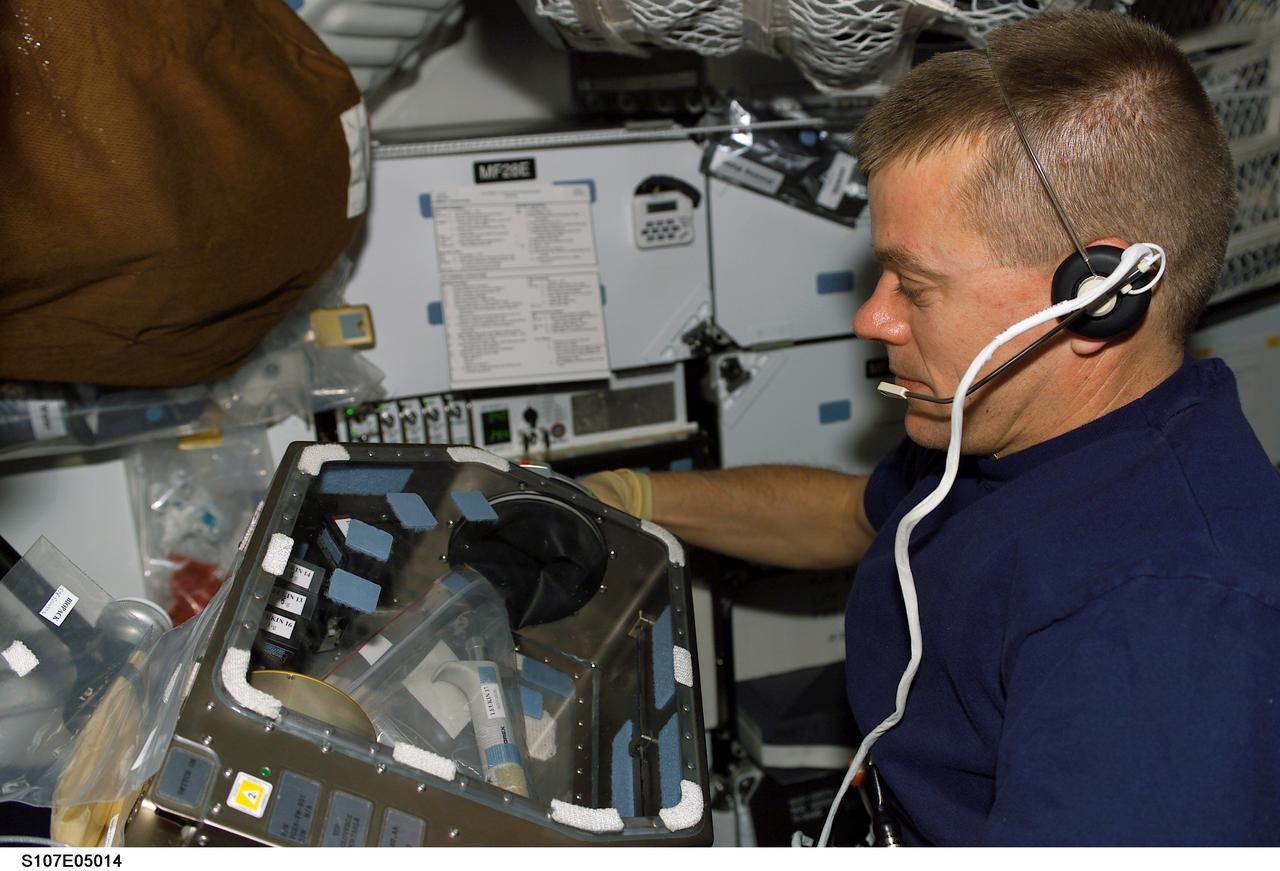
STS107-E-05014 (17 January 2003) --- Astronaut William C. McCool, STS-107 pilot, works with supportive gear for experiments on the SPACEHAB Research Double Module aboard the Space Shuttle Columbia.
McCool works with Leukin activator cartridges on Columbia's MDK during STS-107
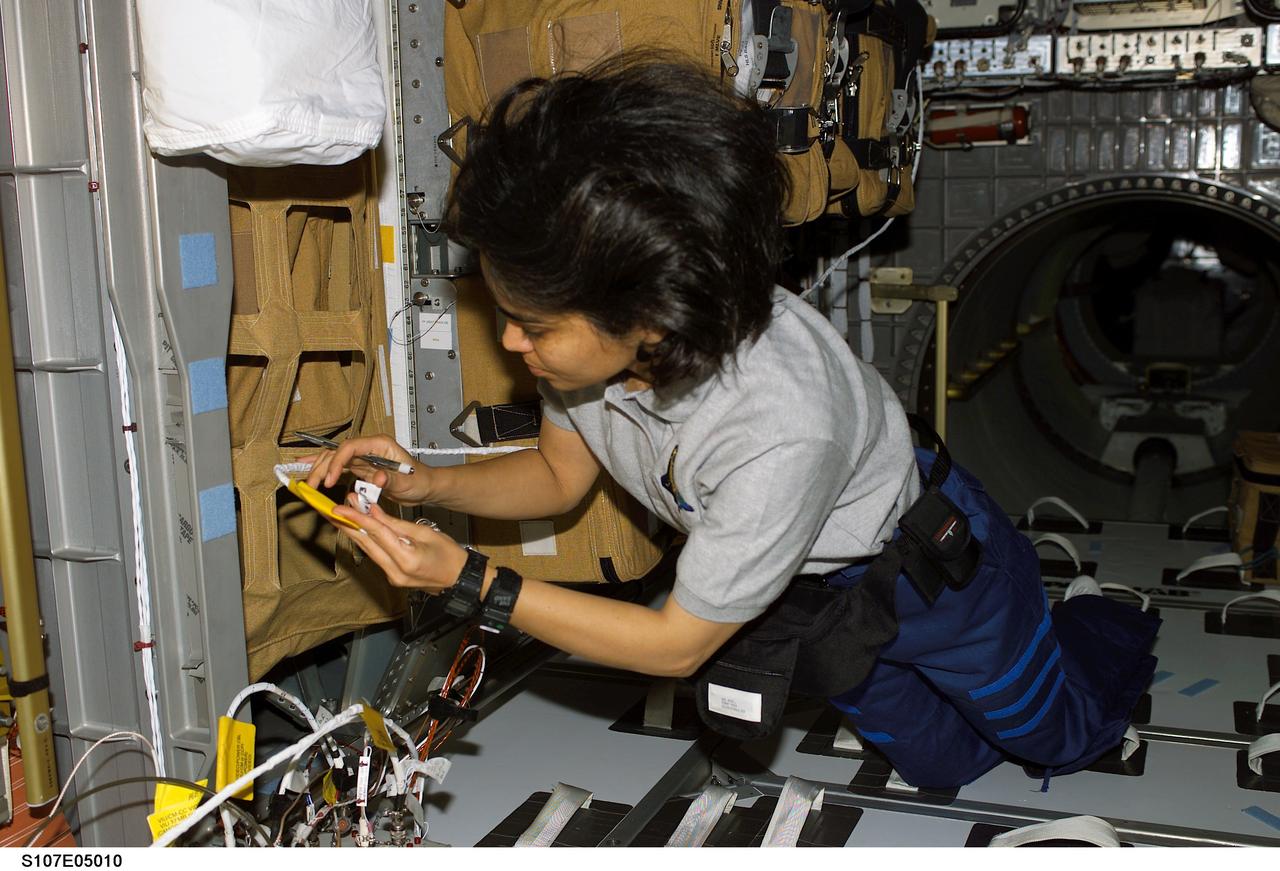
STS107-E-05010 (17 January 2003) --- Astronaut Kalpana Chawla, STS-107 mission specialist, works in the SPACEHAB Research Double Module aboard the Space Shuttle Columbia.
Chawla in the Spacehab RDM during activation procedures during STS-107
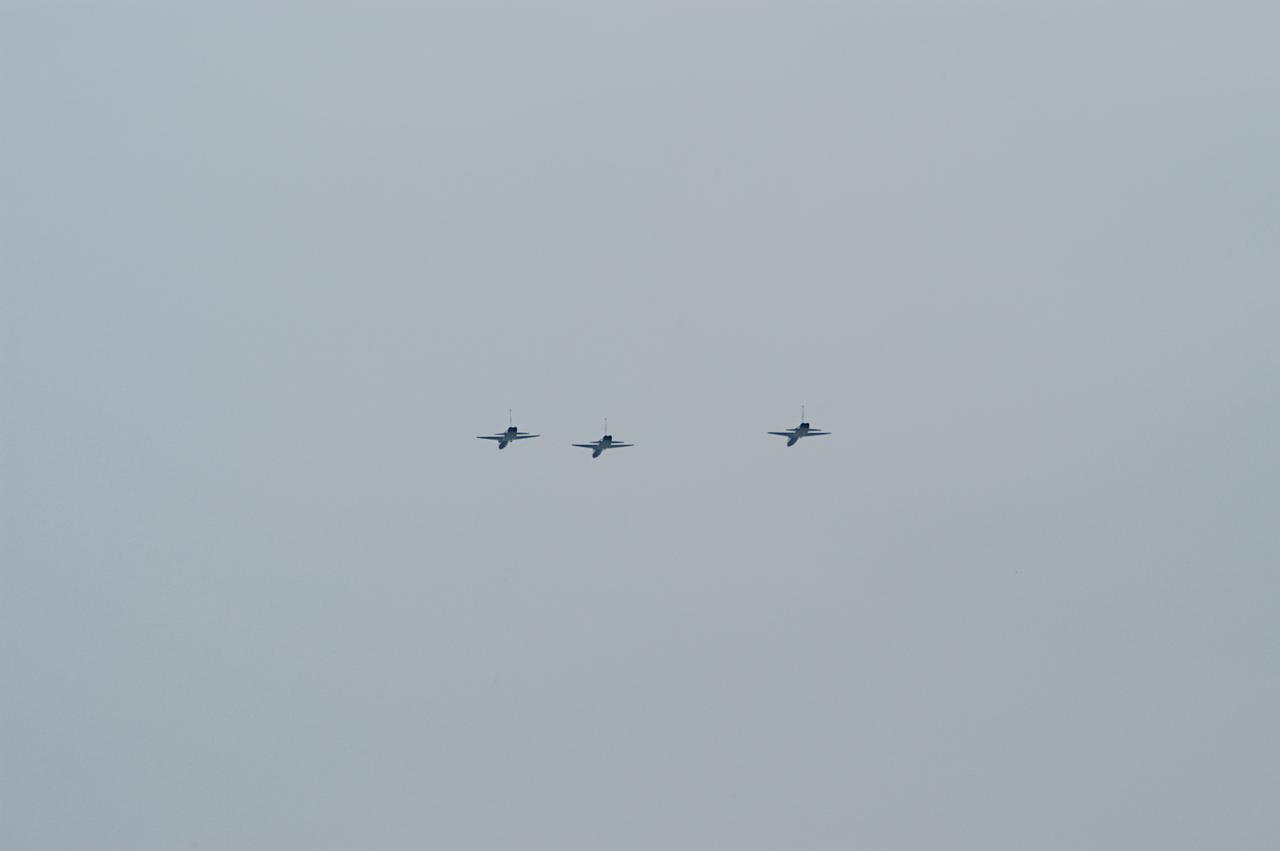
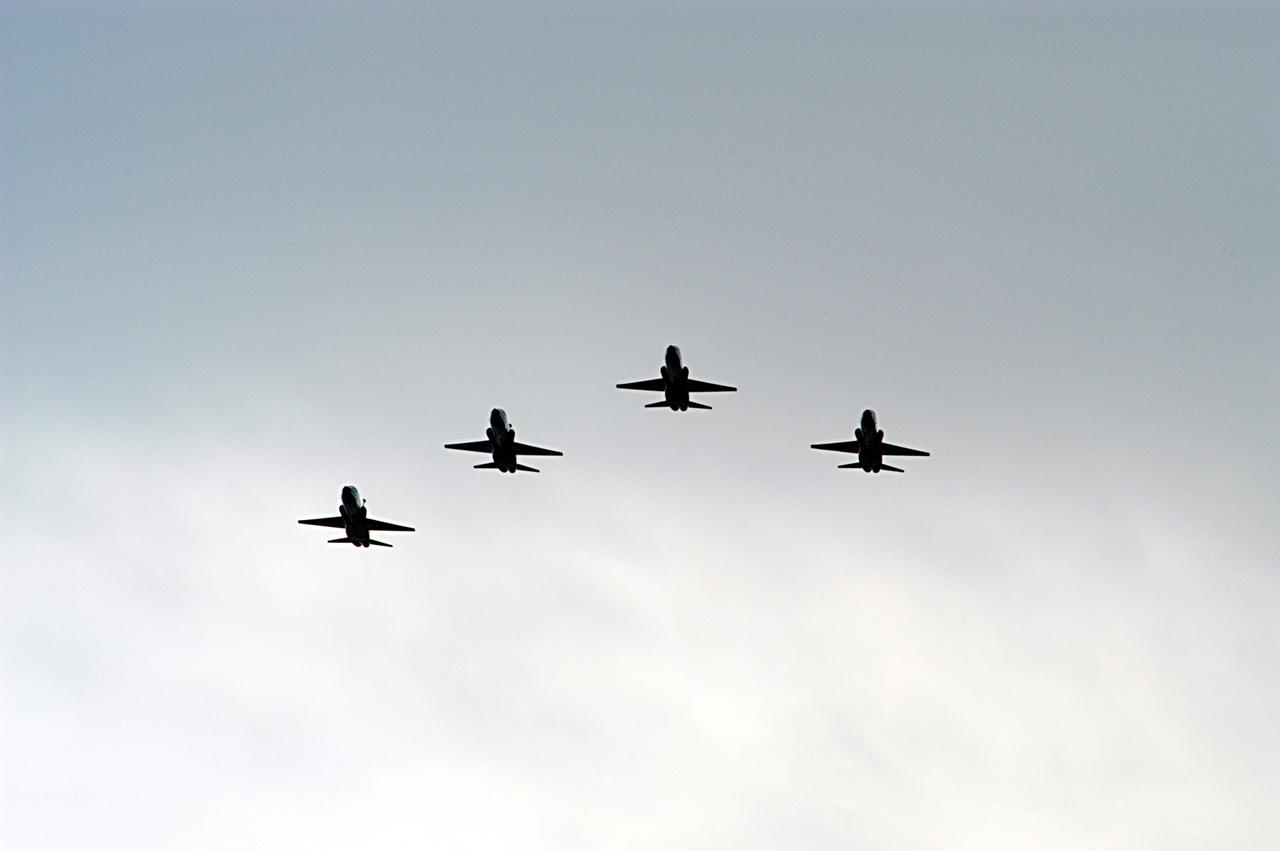
NASA T-38 jet aircraft are flying in a "Missing Man Formation" to conclude the memorial service for the crew of Columbia who were lost on Feb. 1, 2003, over East Texas as they returned to Earth after a 16-day research mission STS-107. The service was held at the Shuttle Landing Facility. Taking part in the service were NASA Administrator Sean O'Keefe, former KSC Director Robert Crippen, astronaut Jim Halsell, several employees, area clergymen, and members of Patrick Air Force Base. Crippen was the first to fly Columbia in 1981; Halsell first flew Columbia in 1994 and again in 1997.
STS-107 "Missing Man Formation"
NASA T-38 jet aircraft are flying in a "Missing Man Formation" to conclude the memorial service for the crew of Columbia who were lost on Feb. 1, 2003, over East Texas as they returned to Earth after a 16-day research mission STS-107. The service was held at the Shuttle Landing Facility. Taking part in the service were NASA Administrator Sean O'Keefe, former KSC Director Robert Crippen, astronaut Jim Halsell, several employees, area clergymen, and members of Patrick Air Force Base. Crippen was the first to fly Columbia in 1981; Halsell first flew Columbia in 1994 and again in 1997.
STS-107 "Missing Man Formation"
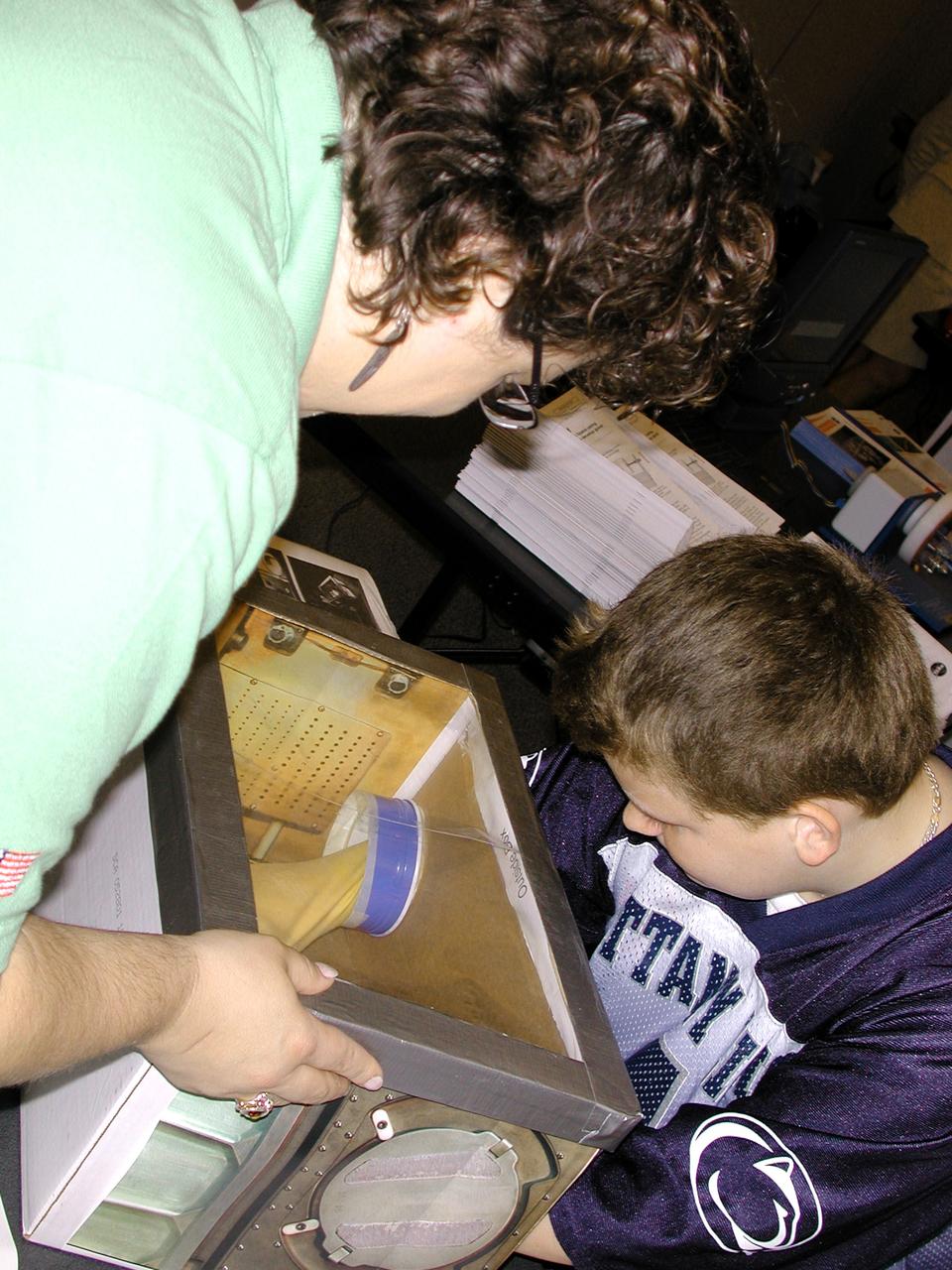
Carla Rosenberg of the National Center for Microgravity Research explains the operation of the Middeck Glovebox to a middle school student. The activity was part of the Space Research and You education event held by NASA's Office of Biological and Physical Research on June 25, 2002, in Arlington, VA, to highlight the research that will be conducted on STS-107.
Space Shuttle Projects
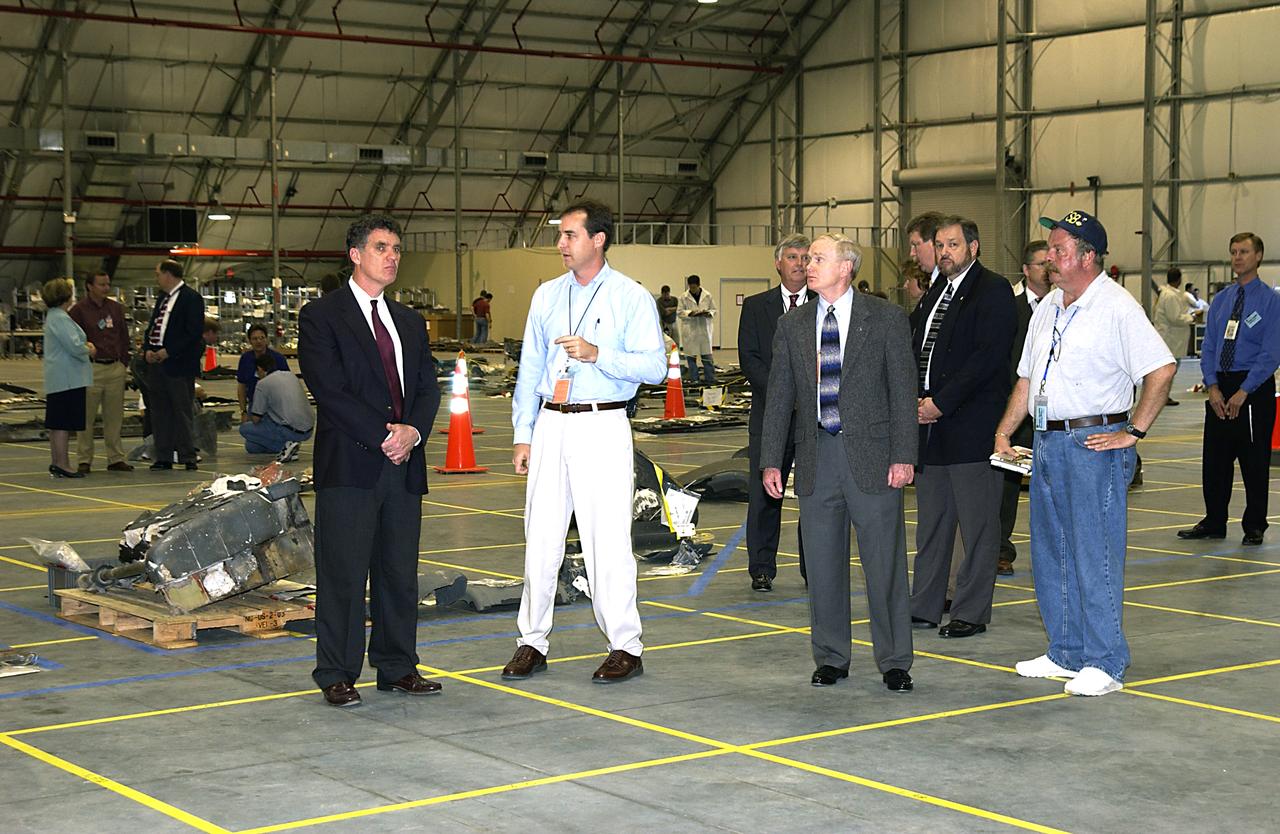
In the RLV Hangar, Congressman Dave Weldon (left) listens to Steve Altemus, Space Shuttle test director. Weldon is visiting the site where pieces of Columbia debris are being examined and stored. Third from left is Center Director Roy Bridges. Workers will attempt to reconstruct the orbiter as part of the ongoing investigation of the accident that destroyed the Columbia and claimed the lives of seven astronauts as they returned to Earth after a 16-day research mission, STS-107.
STS-107 - Congressman Dave Weldon examines debris
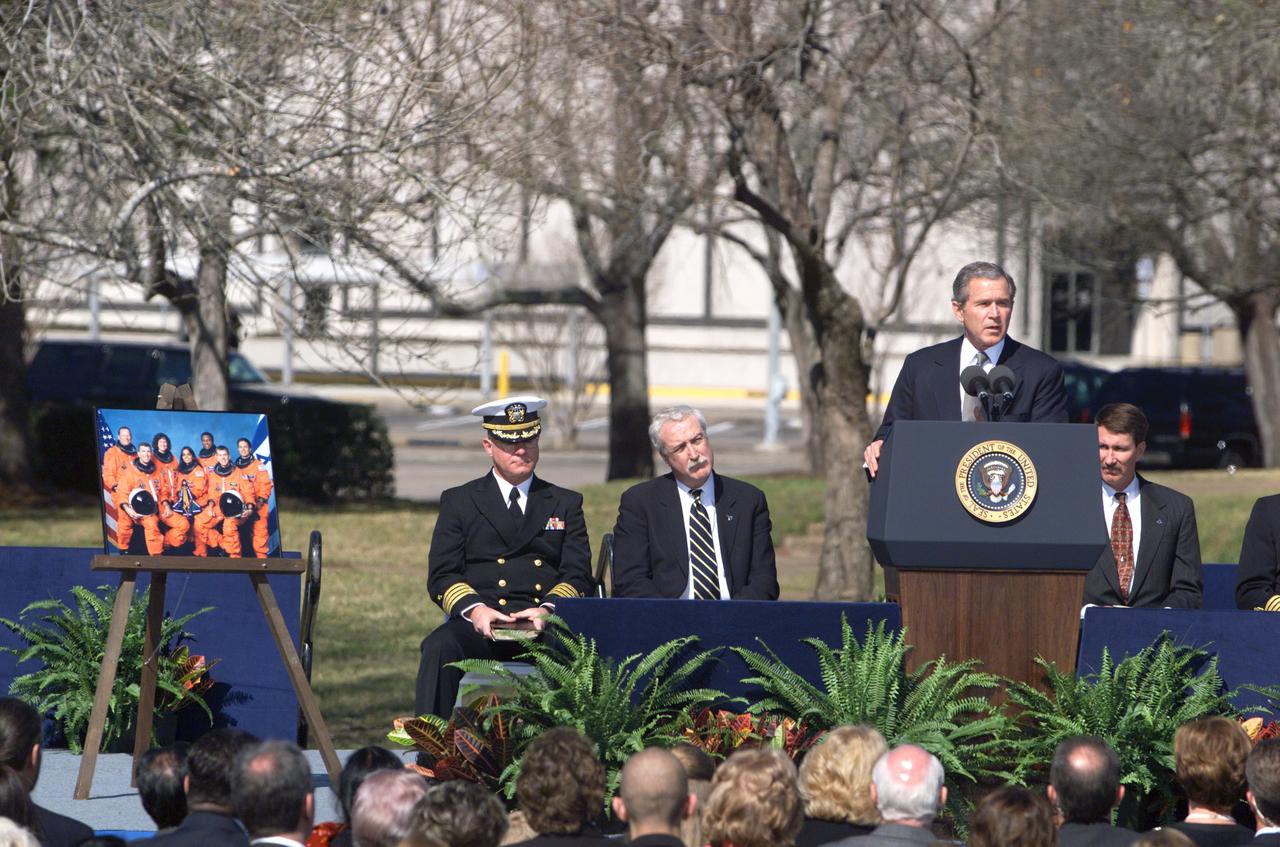
JSC2003-E-05938 (4 February 2003) --- President George W. Bush addresses the crowd on the mall of the Johnson Space Center during the memorial for the Columbia astronauts. Seated from the left are Captain Gene Theriot, Chaplain Corps (USN); NASA Administrator Sean O’Keefe; and astronaut Kent V. Rominger, Chief of the Astronaut Office. A portrait of the STS-107 Columbia crew is visible at left.
Photographic documentation of the STS-107 Memorial at the JSC Mall
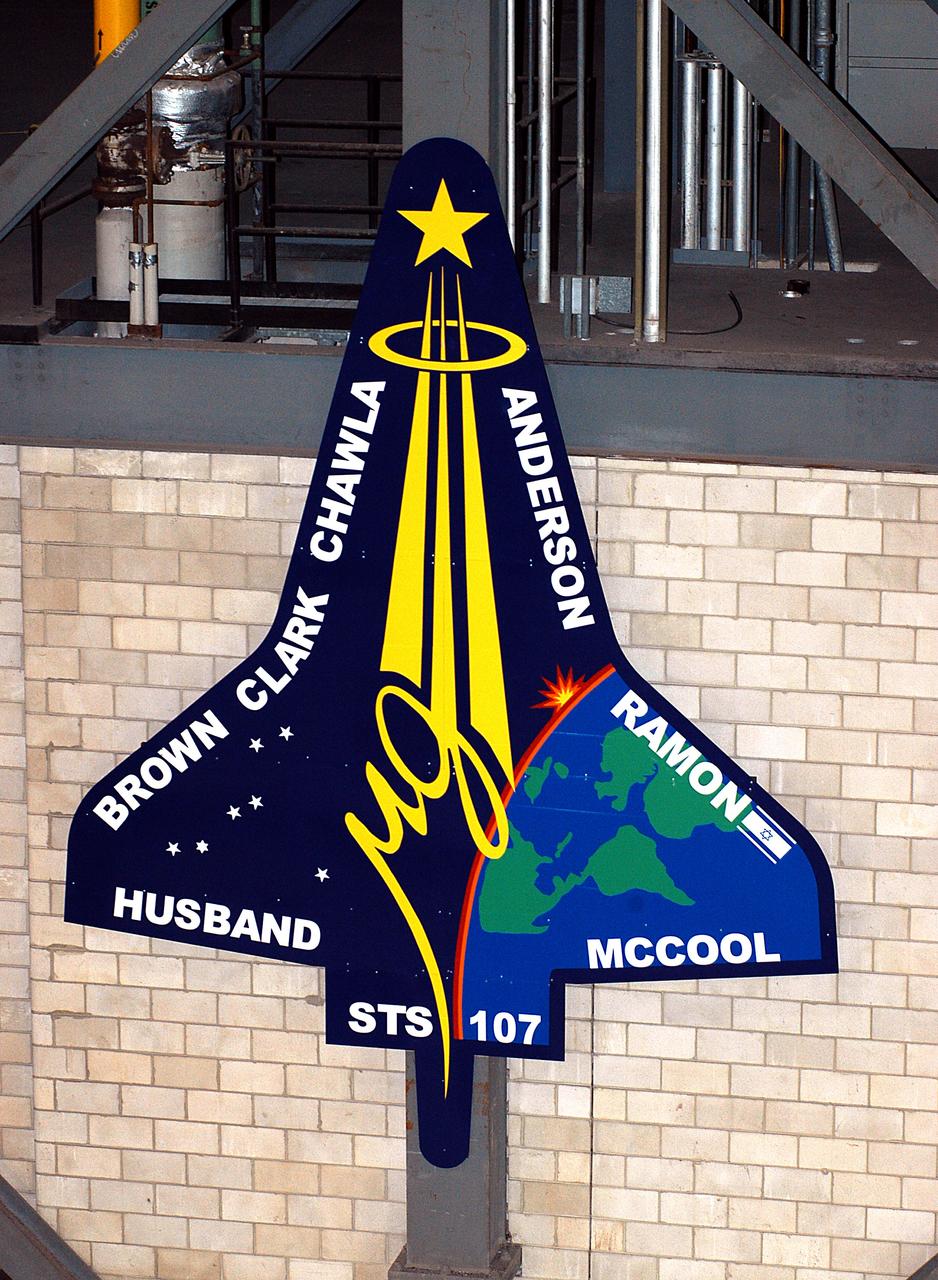
KENNEDY SPACE CENTER, FLA. -  A 20-foot by 15-foot replica of the STS-107 logo has been installed above the “A” on the A tower in the transfer aisle of the Vehicle Assembly Building.  The debris from the orbiter Columbia, lost in a tragic accident on its return to Earth from the STS-107 mission, is permanently stored in the tower.  A dedication ceremony Jan. 29, 2004, unveiled a plaque being installed in the storage area in honor of “Columbia, the crew of STS-107, and their loved ones.”
KENNEDY SPACE CENTER, FLA. - A 20-foot by 15-foot replica of the STS-107 logo has been installed above the “A” on the A tower in the transfer aisle of the Vehicle Assembly Building. The debris from the orbiter Columbia, lost in a tragic accident on its return to Earth from the STS-107 mission, is permanently stored in the tower. A dedication ceremony Jan. 29, 2004, unveiled a plaque being installed in the storage area in honor of “Columbia, the crew of STS-107, and their loved ones.”
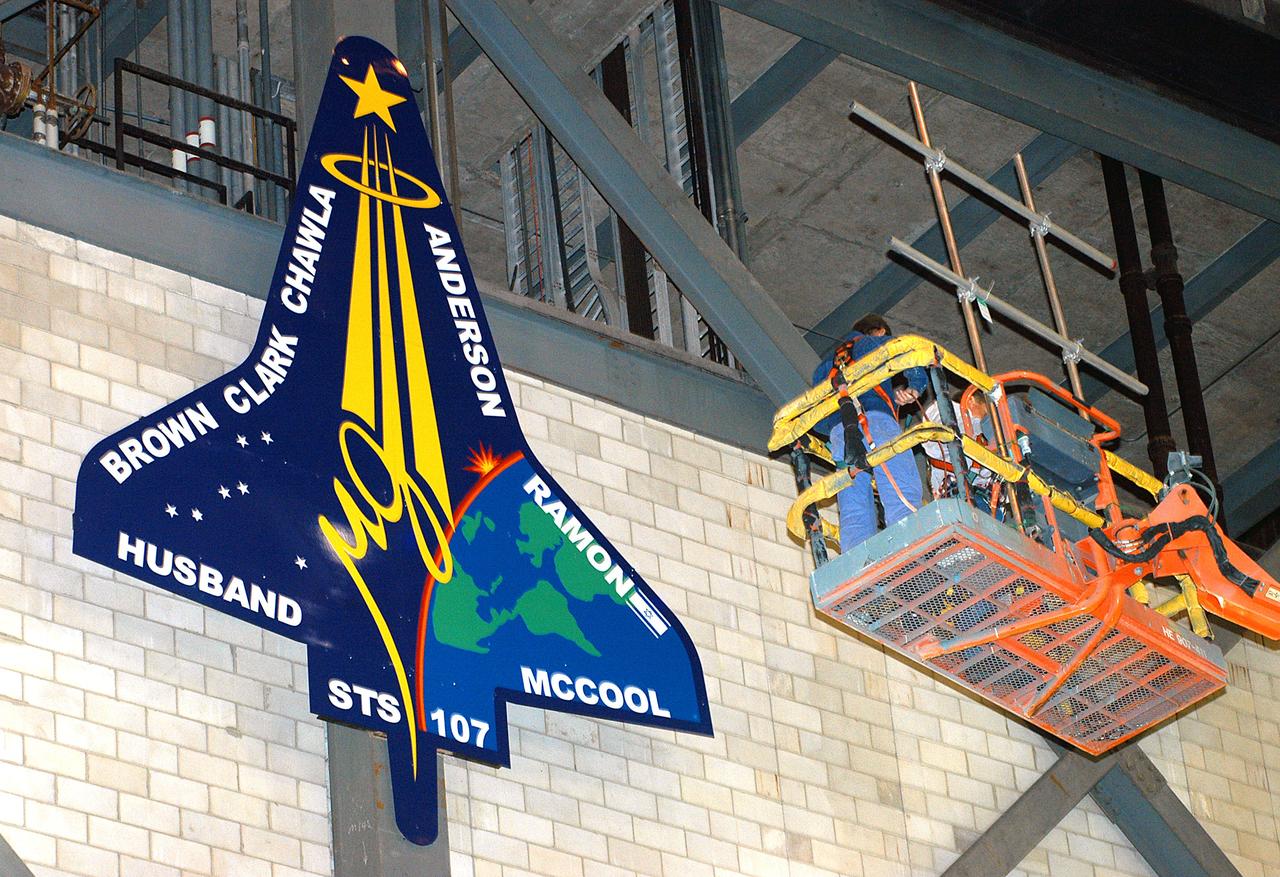
KENNEDY SPACE CENTER, FLA. -  Workers install a 20-foot by 15-foot replica of the STS-107 logo above the “A” on the A tower in the transfer aisle of the Vehicle Assembly Building.  The debris from the orbiter Columbia, lost in a tragic accident on its return to Earth from the STS-107 mission, is permanently stored in the tower.  A dedication ceremony Jan. 29, 2004, revealed a plaque being installed in the storage area in honor of “Columbia, the crew of STS-107, and their loved ones.”
KENNEDY SPACE CENTER, FLA. - Workers install a 20-foot by 15-foot replica of the STS-107 logo above the “A” on the A tower in the transfer aisle of the Vehicle Assembly Building. The debris from the orbiter Columbia, lost in a tragic accident on its return to Earth from the STS-107 mission, is permanently stored in the tower. A dedication ceremony Jan. 29, 2004, revealed a plaque being installed in the storage area in honor of “Columbia, the crew of STS-107, and their loved ones.”
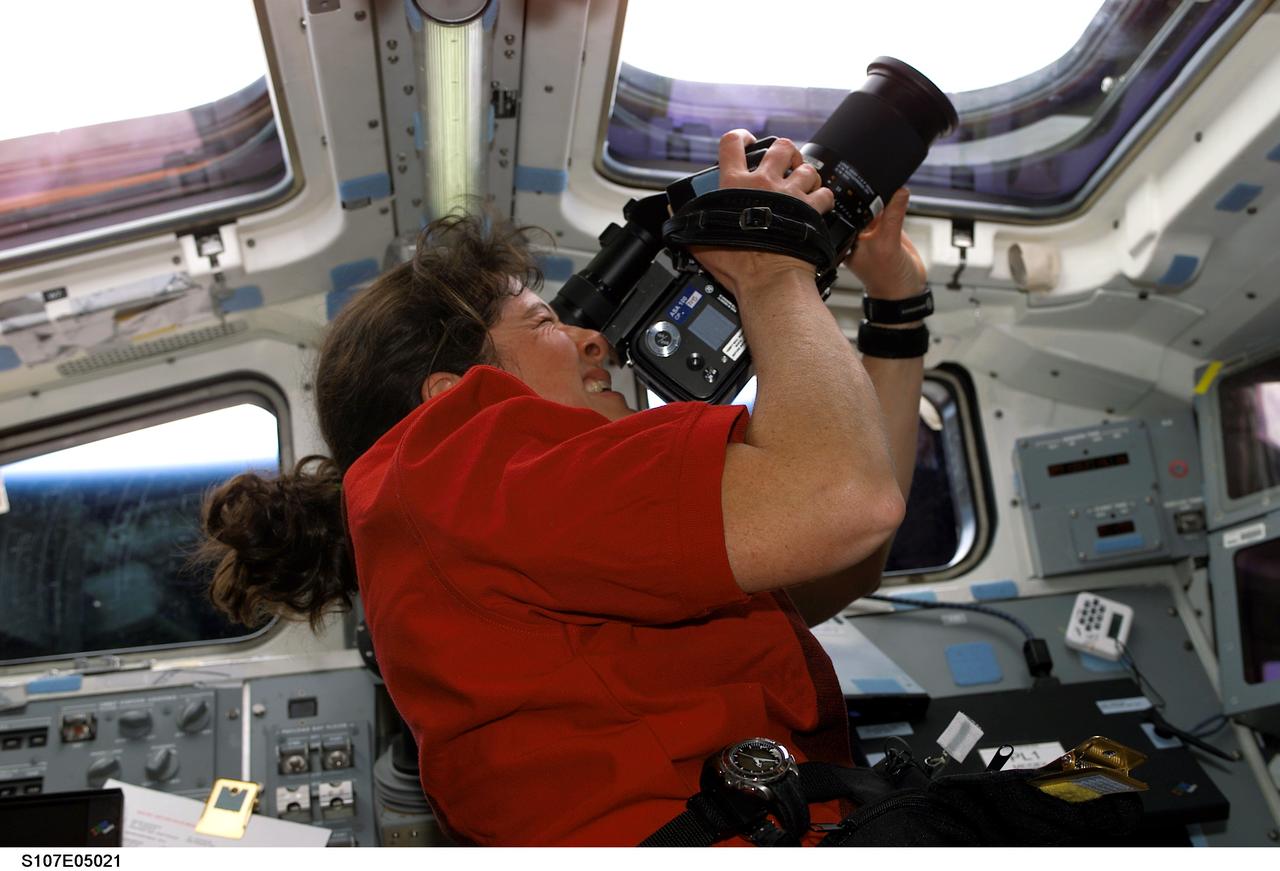
STS107-E-05021 (17 January 2003) --- Astronaut Laurel B. Clark, STS-107 mission specialist, uses a camera to photograph the topography of a point on Earth from an overhead window on the aft flight deck of the Earth-orbiting Space Shuttle Columbia.
Clark videotapes through an AFD window on Columbia during STS-107
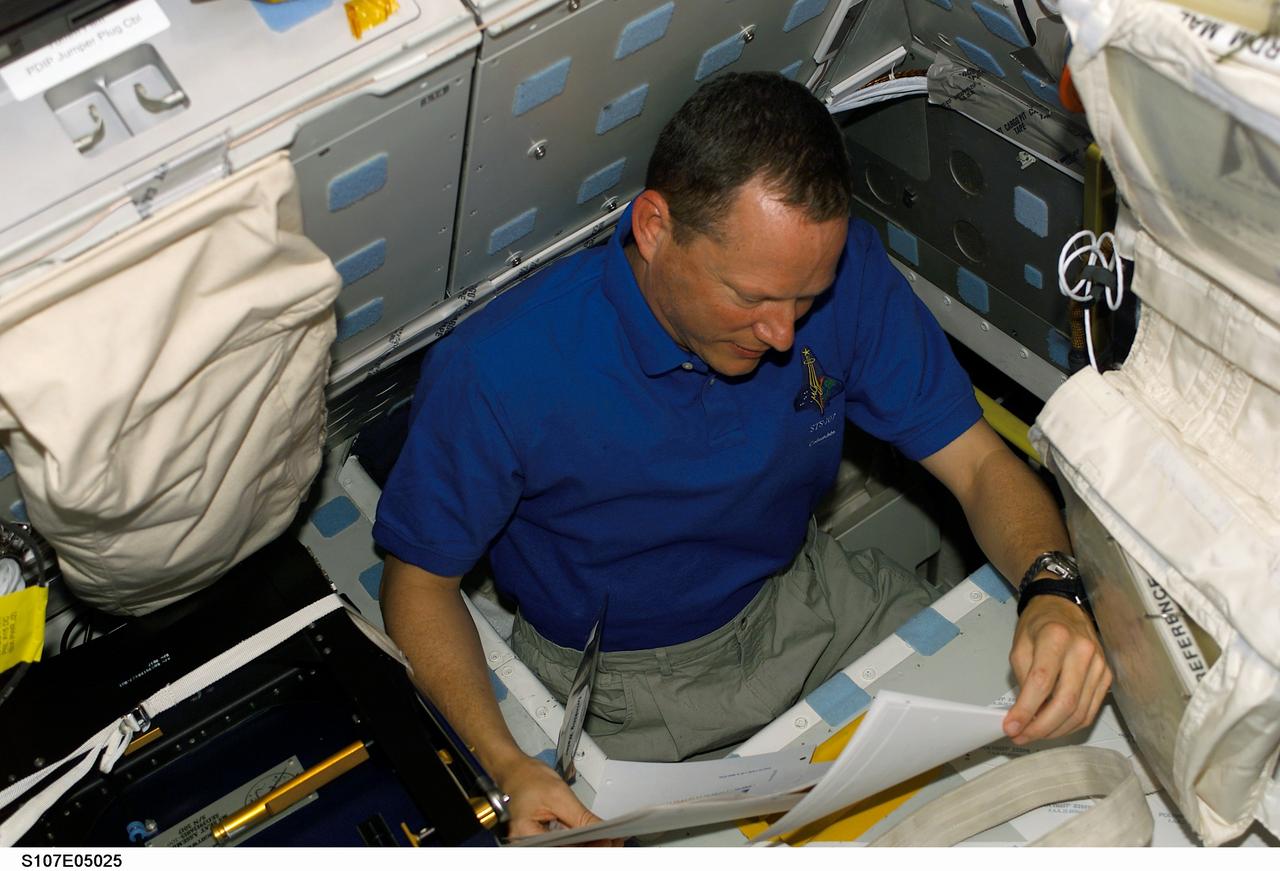
STS107-E-05025 (17 January 2003) --- Astronaut David M. Brown, STS-107 mission specialist, looks over paperwork as he prepares to work with experiments on the SPACEHAB Research Double Module aboard the Space Shuttle Columbia.
Brown in Columbia's FD/MDK access way during STS-107
STS107-E-05020 (17 January 2003) --- Astronauts Laurel B. Clark and Rick D. Husband, STS-107 mission specialist and mission commander, respectively, are pictured near supportive equipment for experiments on the SPACEHAB Research Double Module aboard the Space Shuttle Columbia.
Clark and Husband in the Spacehab RDM during activation procedures on STS-107
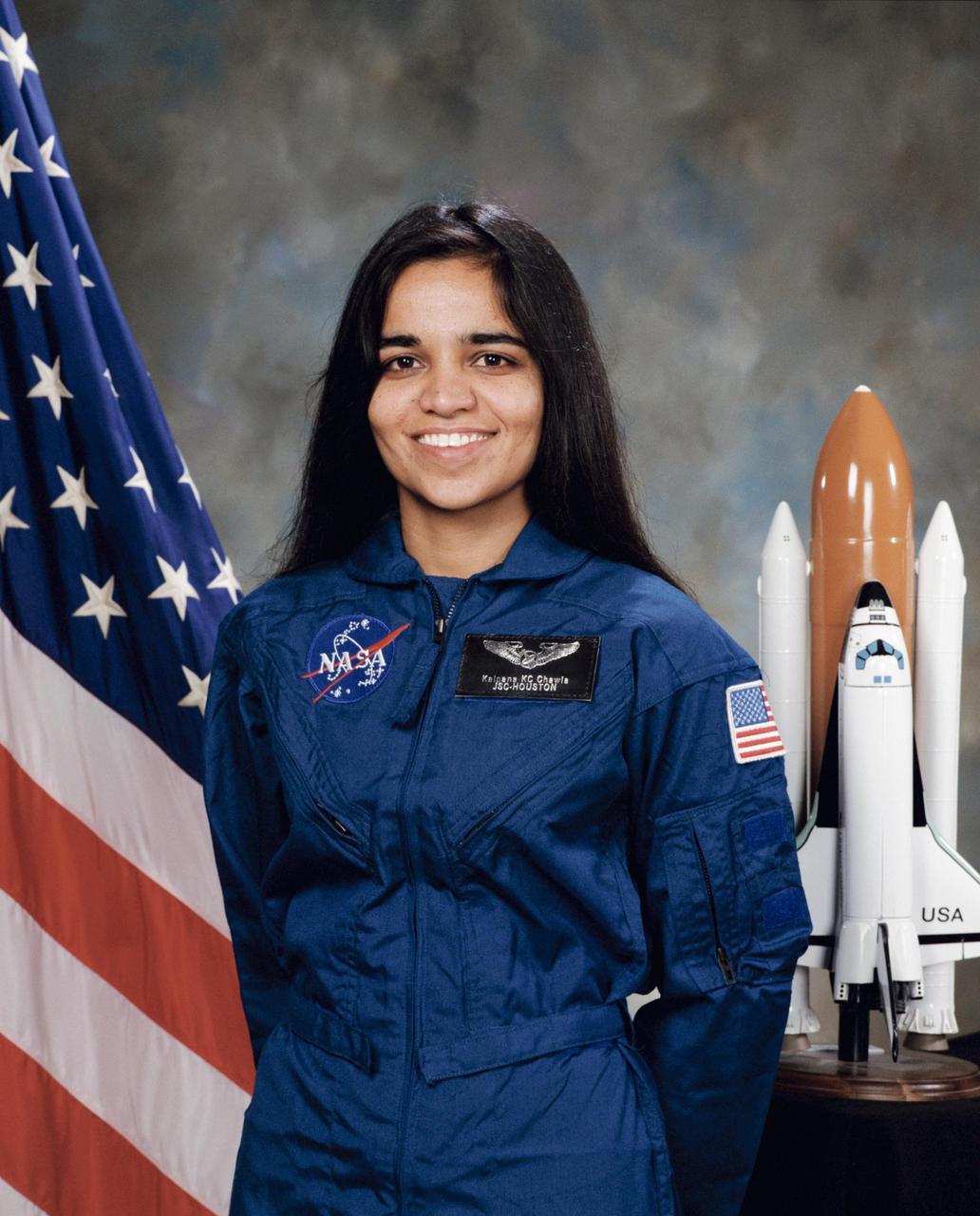
Astronaut Kalpana Chawla, mission specialist.
KSC-97PC-1655
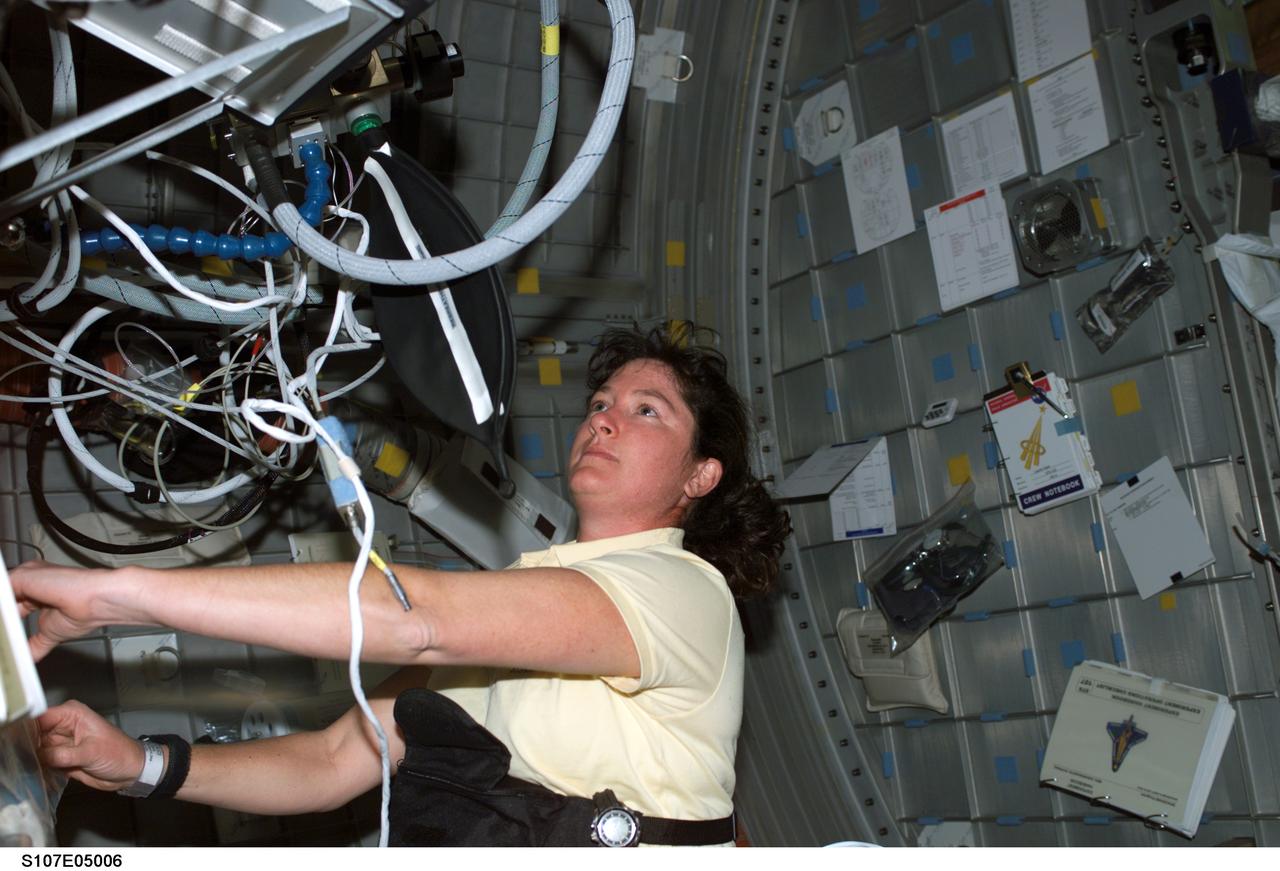
STS107-E-05006 (17 January 2003) --- Astronaut Laurel B. Clark, STS-107 mission specialist, works in the SPACEHAB Research Double Module in the cargo bay of the Earth-orbiting Space Shuttle Columbia.
Clark in the Spacehab RDM during activation of ARMS experiment equipment during STS-107
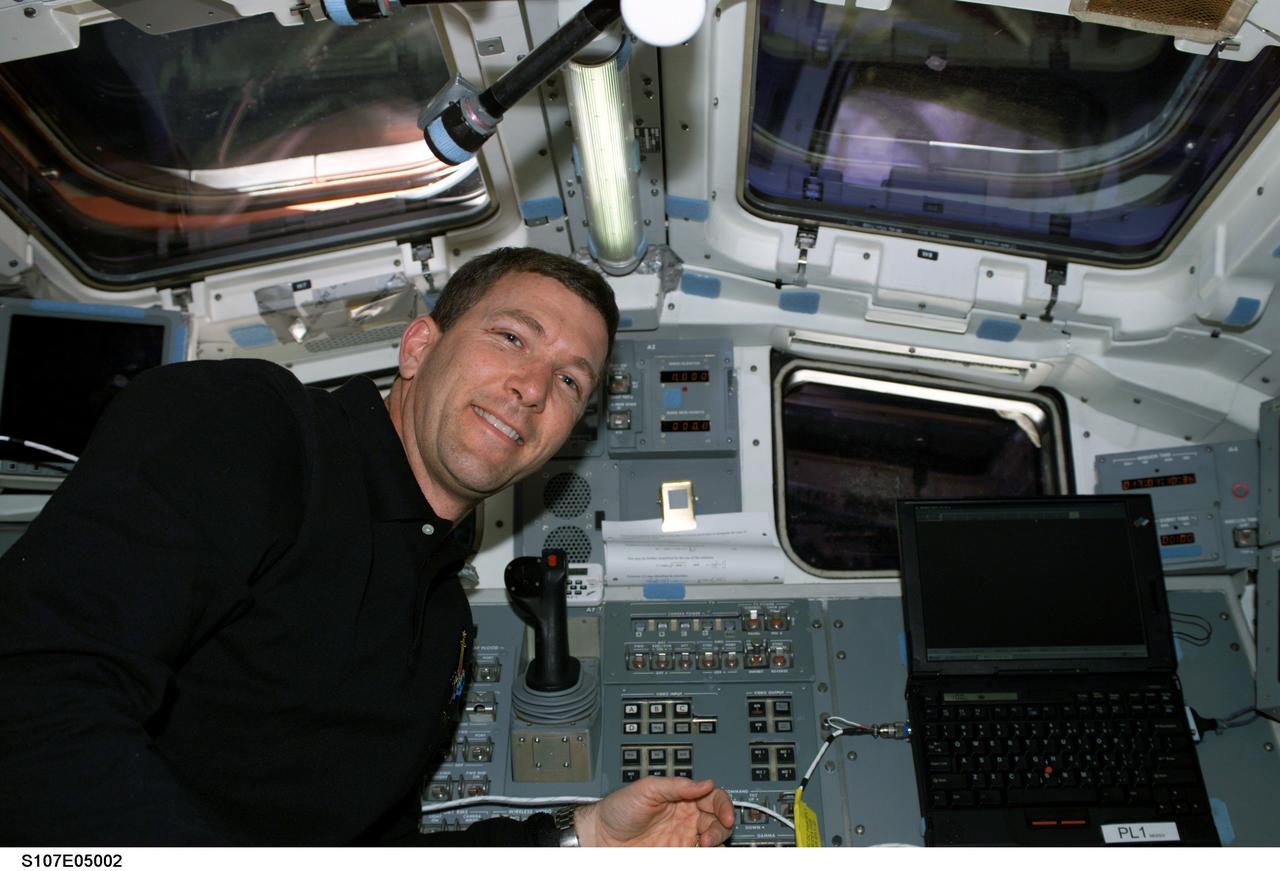
STS107-E-05002 (17 January 2003) --- Astronaut Rick D. Husband, STS-107 mission commander, is pictured on the aft flight deck of the Earth-orbiting Space Shuttle Columbia.
Husband smiles for the camera beside Columbia's AFD control panel during STS-107
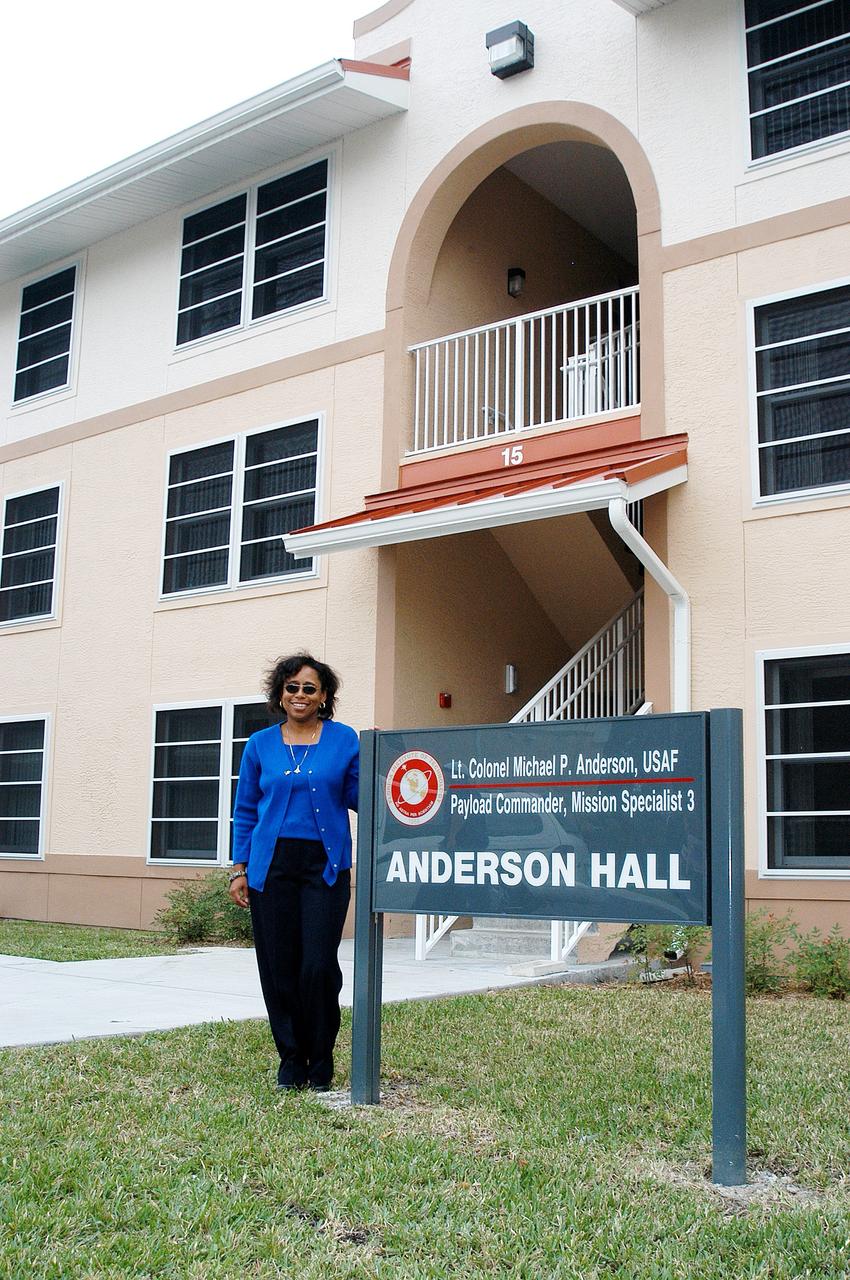
KENNEDY SPACE CENTER, FLA. -- Sandra Anderson, wife of STS-107 Payload Commander Michael Anderson, visits a new residence hall at the Florida Institute of Technology (FIT) in Melbourne, Fla., named for her late husband.  Family members of the STS-107 astronauts, other dignitaries, members of the university community and the public gathered for a dedication ceremony for the Columbia Village at FIT.  Each of the seven new residence halls in the complex is named for one of the STS-107 astronauts who perished during the Columbia accident -- Rick Husband, Willie McCool, Laurel Clark, Michael Anderson, David Brown, Kalpana Chawla, and Ilan Ramon.
KENNEDY SPACE CENTER, FLA. -- Sandra Anderson, wife of STS-107 Payload Commander Michael Anderson, visits a new residence hall at the Florida Institute of Technology (FIT) in Melbourne, Fla., named for her late husband. Family members of the STS-107 astronauts, other dignitaries, members of the university community and the public gathered for a dedication ceremony for the Columbia Village at FIT. Each of the seven new residence halls in the complex is named for one of the STS-107 astronauts who perished during the Columbia accident -- Rick Husband, Willie McCool, Laurel Clark, Michael Anderson, David Brown, Kalpana Chawla, and Ilan Ramon.
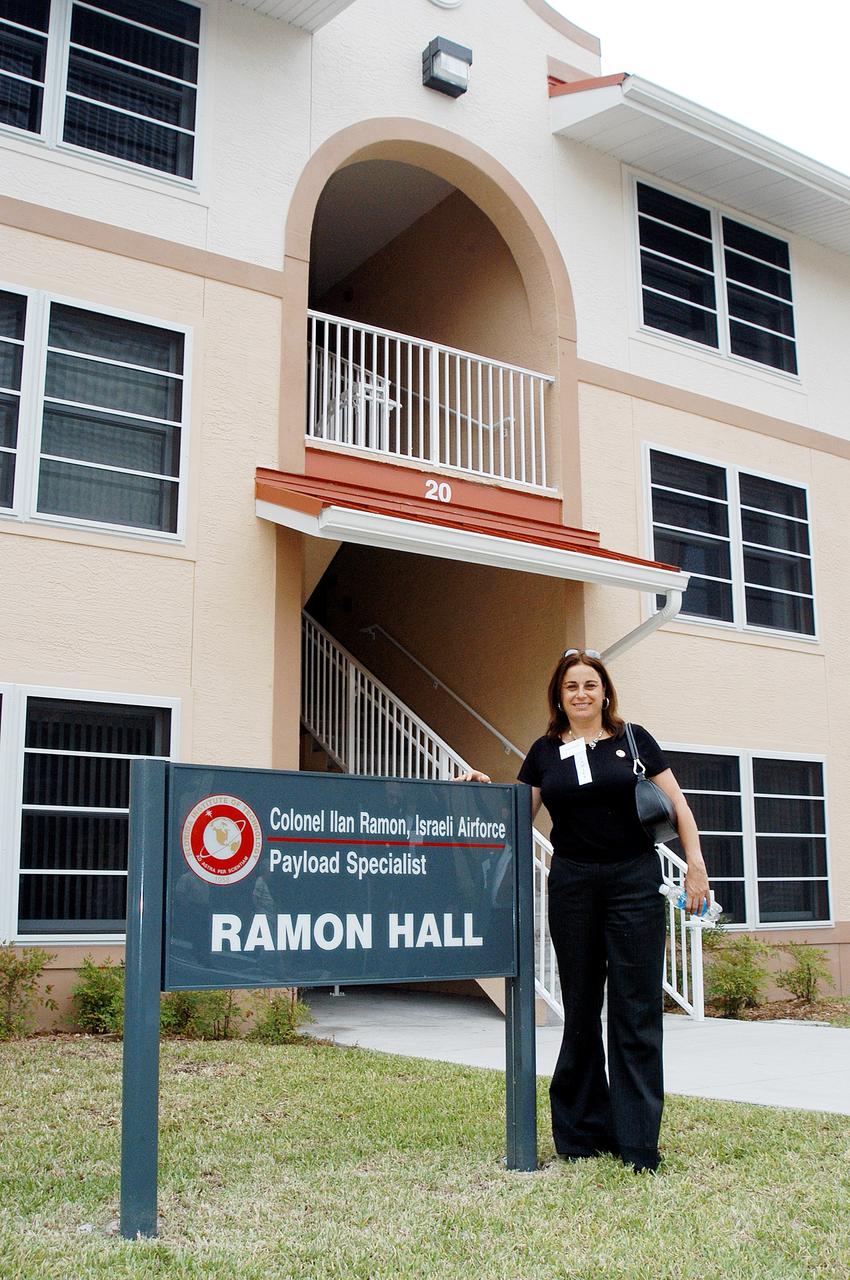
KENNEDY SPACE CENTER, FLA. -- Rona Ramon, wife of STS-107 Payload Specialist Ilan Ramon, visits a new residence hall at the Florida Institute of Technology (FIT) in Melbourne, Fla., named for her late husband.  Family members of the STS-107 astronauts, other dignitaries, members of the university community and the public gathered for a dedication ceremony for the Columbia Village at FIT.  Each of the seven new residence halls in the complex is named for one of the STS-107 astronauts who perished during the Columbia accident -- Rick Husband, Willie McCool, Laurel Clark, Michael Anderson, David Brown, Kalpana Chawla, and Ilan Ramon.
KENNEDY SPACE CENTER, FLA. -- Rona Ramon, wife of STS-107 Payload Specialist Ilan Ramon, visits a new residence hall at the Florida Institute of Technology (FIT) in Melbourne, Fla., named for her late husband. Family members of the STS-107 astronauts, other dignitaries, members of the university community and the public gathered for a dedication ceremony for the Columbia Village at FIT. Each of the seven new residence halls in the complex is named for one of the STS-107 astronauts who perished during the Columbia accident -- Rick Husband, Willie McCool, Laurel Clark, Michael Anderson, David Brown, Kalpana Chawla, and Ilan Ramon.
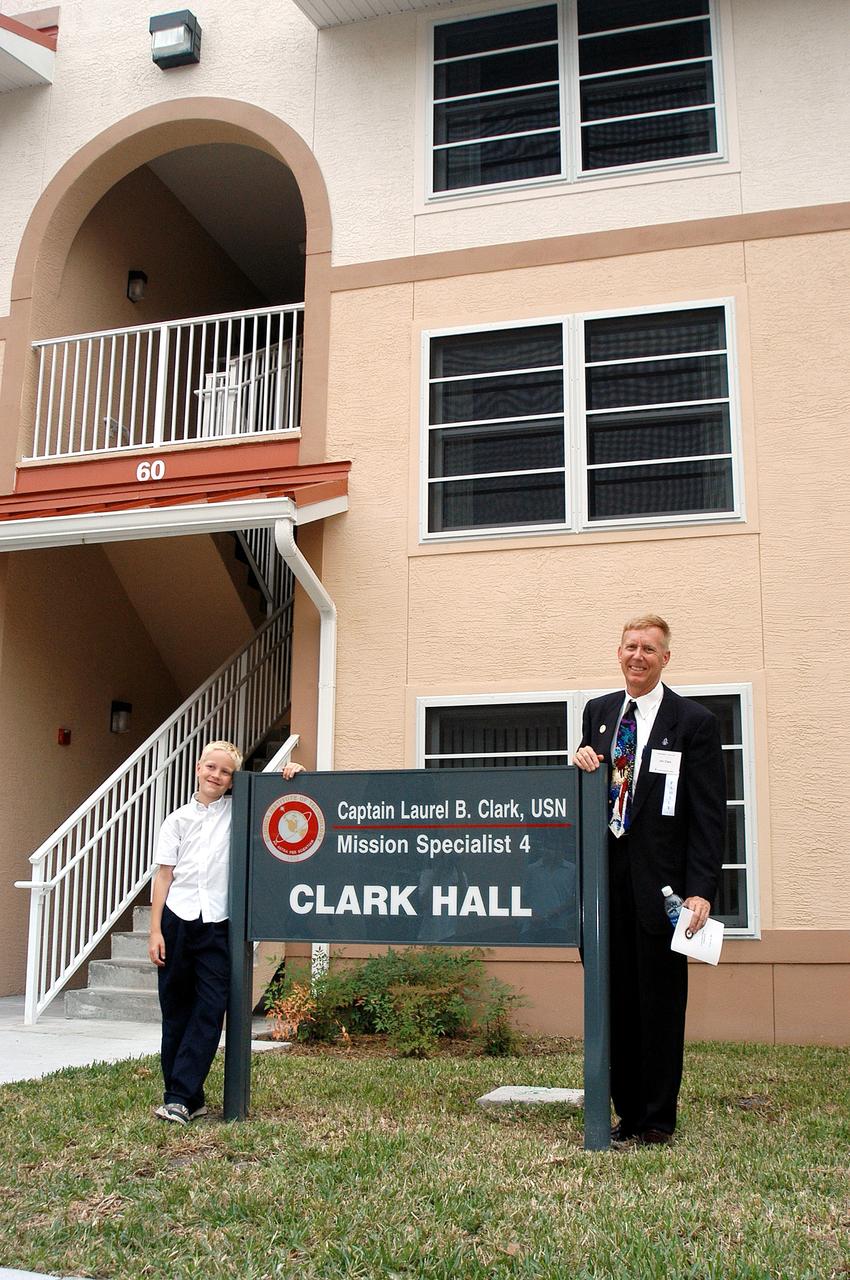
KENNEDY SPACE CENTER, FLA. -- Dr. Jonathan Clark (right), husband of STS-107 Mission Specialist Laurel Clark, and their son (left) visit a new residence hall at the Florida Institute of Technology (FIT) in Melbourne, Fla., named for his late wife.  Family members of the STS-107 astronauts, other dignitaries, members of the university community and the public gathered for a dedication ceremony for the Columbia Village at FIT.  Each of the seven new residence halls in the complex is named for one of the STS-107 astronauts who perished during the Columbia accident -- Rick Husband, Willie McCool, Laurel Clark, Michael Anderson, David Brown, Kalpana Chawla, and Ilan Ramon.
KENNEDY SPACE CENTER, FLA. -- Dr. Jonathan Clark (right), husband of STS-107 Mission Specialist Laurel Clark, and their son (left) visit a new residence hall at the Florida Institute of Technology (FIT) in Melbourne, Fla., named for his late wife. Family members of the STS-107 astronauts, other dignitaries, members of the university community and the public gathered for a dedication ceremony for the Columbia Village at FIT. Each of the seven new residence halls in the complex is named for one of the STS-107 astronauts who perished during the Columbia accident -- Rick Husband, Willie McCool, Laurel Clark, Michael Anderson, David Brown, Kalpana Chawla, and Ilan Ramon.
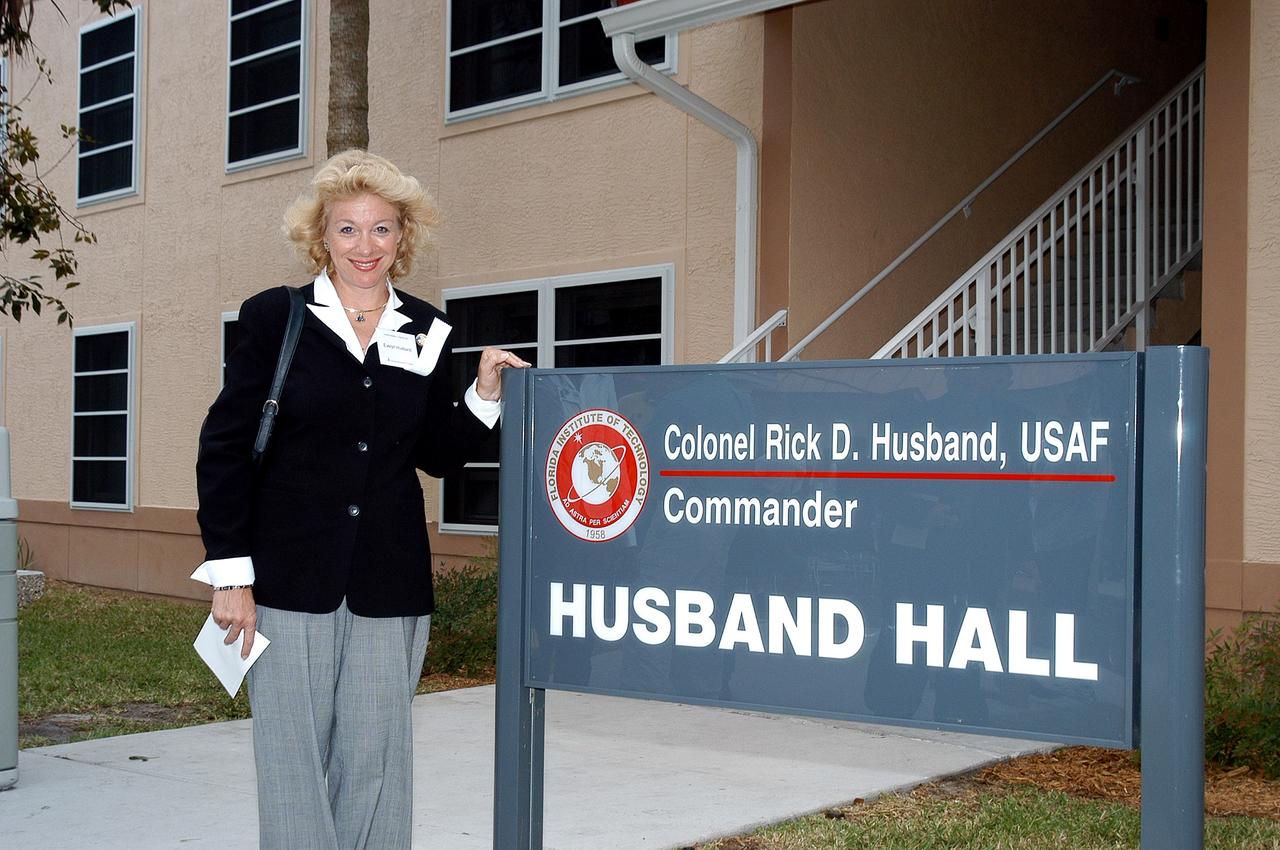
KENNEDY SPACE CENTER, FLA. -- Evelyn Husband, wife of STS-107 Commander Rick Husband, visits a new residence hall at the Florida Institute of Technology (FIT) in Melbourne, Fla., named for her late husband.  Family members of the STS-107 astronauts, other dignitaries, members of the university community and the public gathered for a dedication ceremony for the Columbia Village at FIT.  Each of the seven new residence halls in the complex is named for one of the STS-107 astronauts who perished during the Columbia accident -- Rick Husband, Willie McCool, Laurel Clark, Michael Anderson, David Brown, Kalpana Chawla, and Ilan Ramon.
KENNEDY SPACE CENTER, FLA. -- Evelyn Husband, wife of STS-107 Commander Rick Husband, visits a new residence hall at the Florida Institute of Technology (FIT) in Melbourne, Fla., named for her late husband. Family members of the STS-107 astronauts, other dignitaries, members of the university community and the public gathered for a dedication ceremony for the Columbia Village at FIT. Each of the seven new residence halls in the complex is named for one of the STS-107 astronauts who perished during the Columbia accident -- Rick Husband, Willie McCool, Laurel Clark, Michael Anderson, David Brown, Kalpana Chawla, and Ilan Ramon.
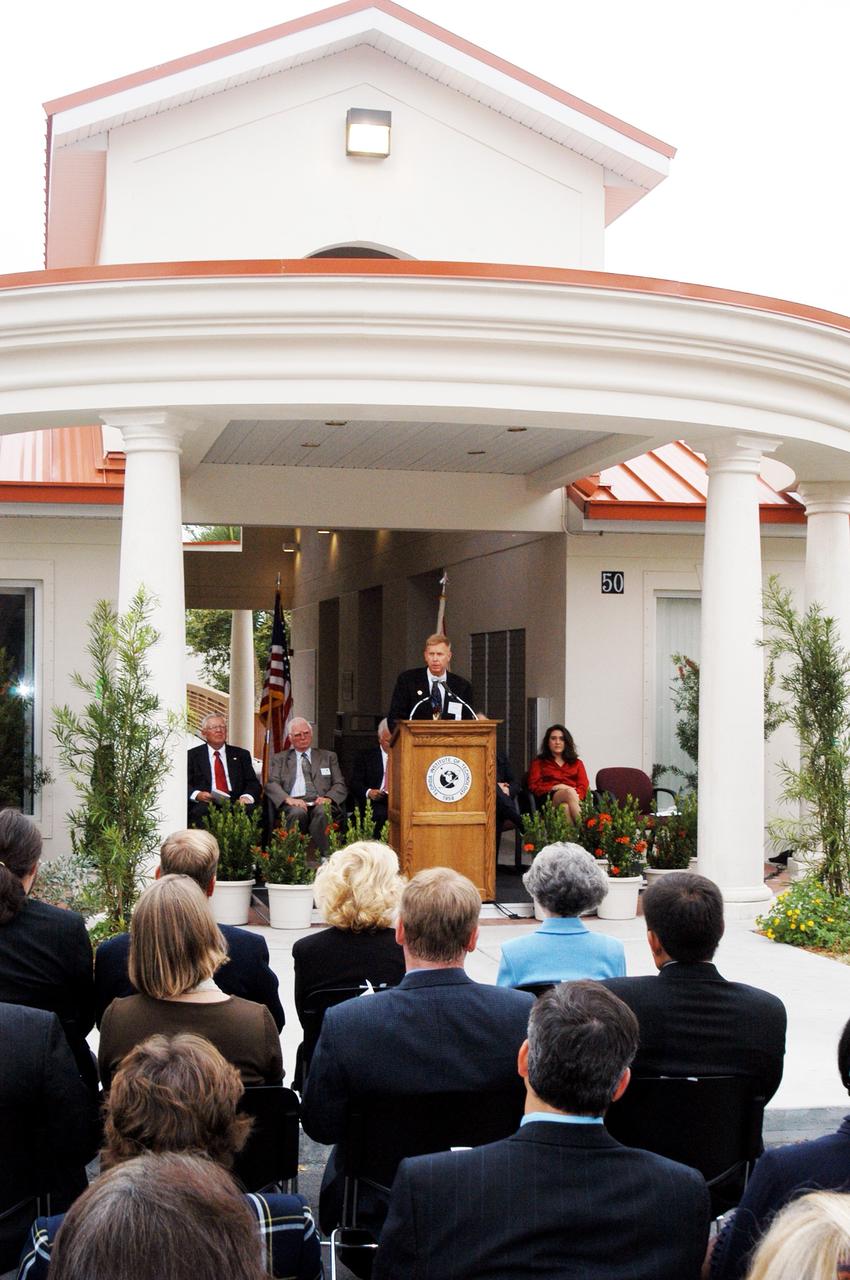
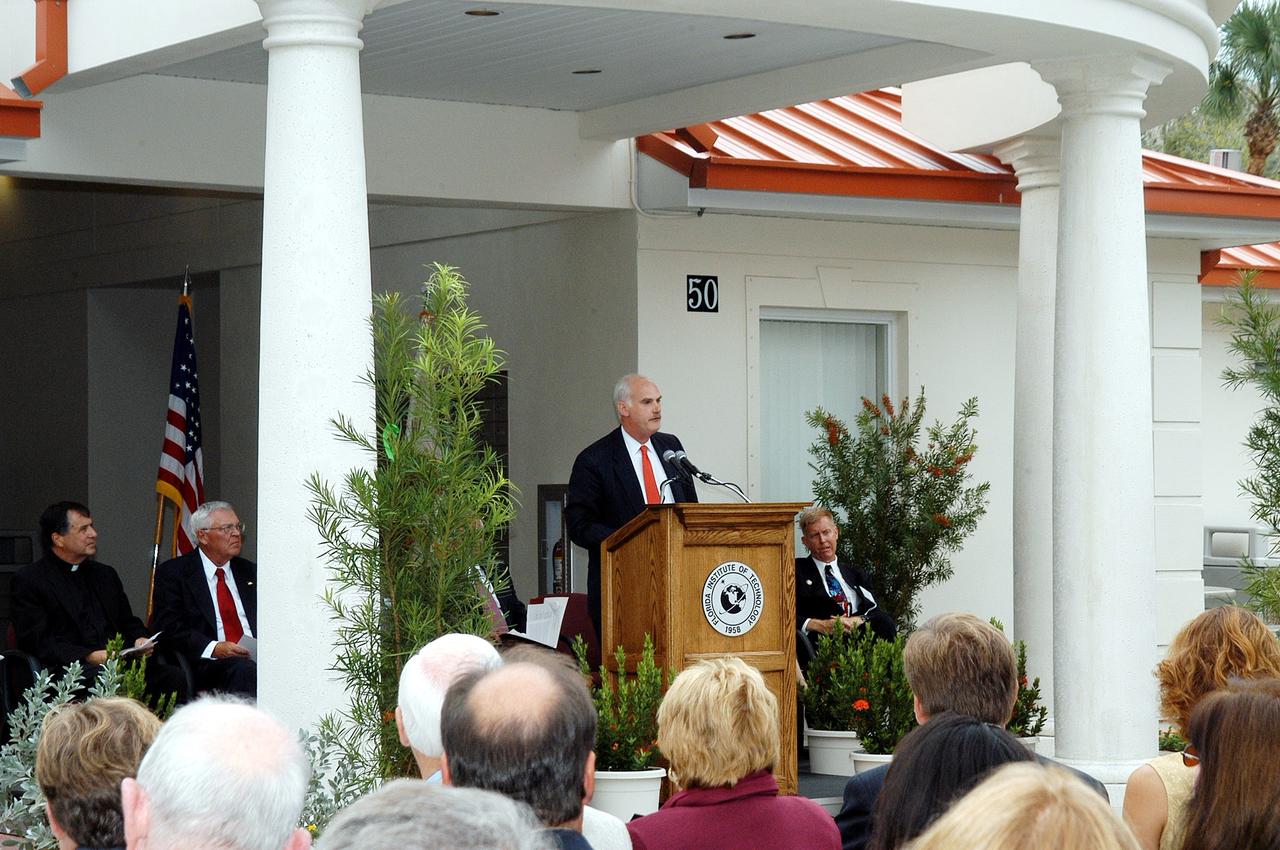
KENNEDY SPACE CENTER, FLA. -- Dr. Jonathan Clark, husband of STS-107 astronaut Laurel Clark, addresses the family members of the STS-107 astronauts, other dignitaries, members of the university community and the public gathered for the dedication ceremony of the Columbia Village at the Florida Institute of Technology in Melbourne, Fla.  Each of the seven new residence halls in the complex is named for one of the STS-107 astronauts who perished during the Columbia accident -- Rick Husband, Willie McCool, Laurel Clark, Michael Anderson, David Brown, Kalpana Chawla, and Ilan Ramon.
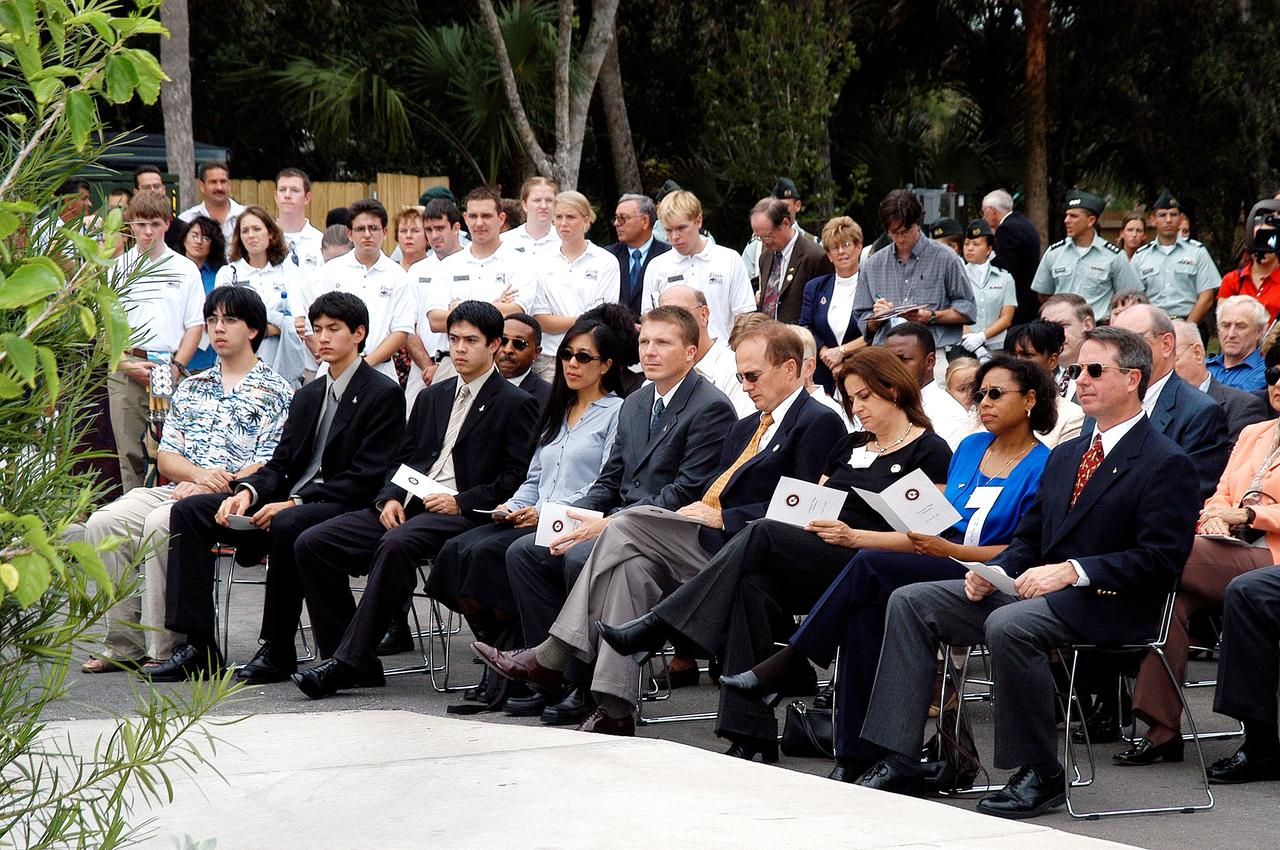
KENNEDY SPACE CENTER, FLA. -- Dr. Jonathan Clark, husband of STS-107 astronaut Laurel Clark, addresses the family members of the STS-107 astronauts, other dignitaries, members of the university community and the public gathered for the dedication ceremony of the Columbia Village at the Florida Institute of Technology in Melbourne, Fla. Each of the seven new residence halls in the complex is named for one of the STS-107 astronauts who perished during the Columbia accident -- Rick Husband, Willie McCool, Laurel Clark, Michael Anderson, David Brown, Kalpana Chawla, and Ilan Ramon.
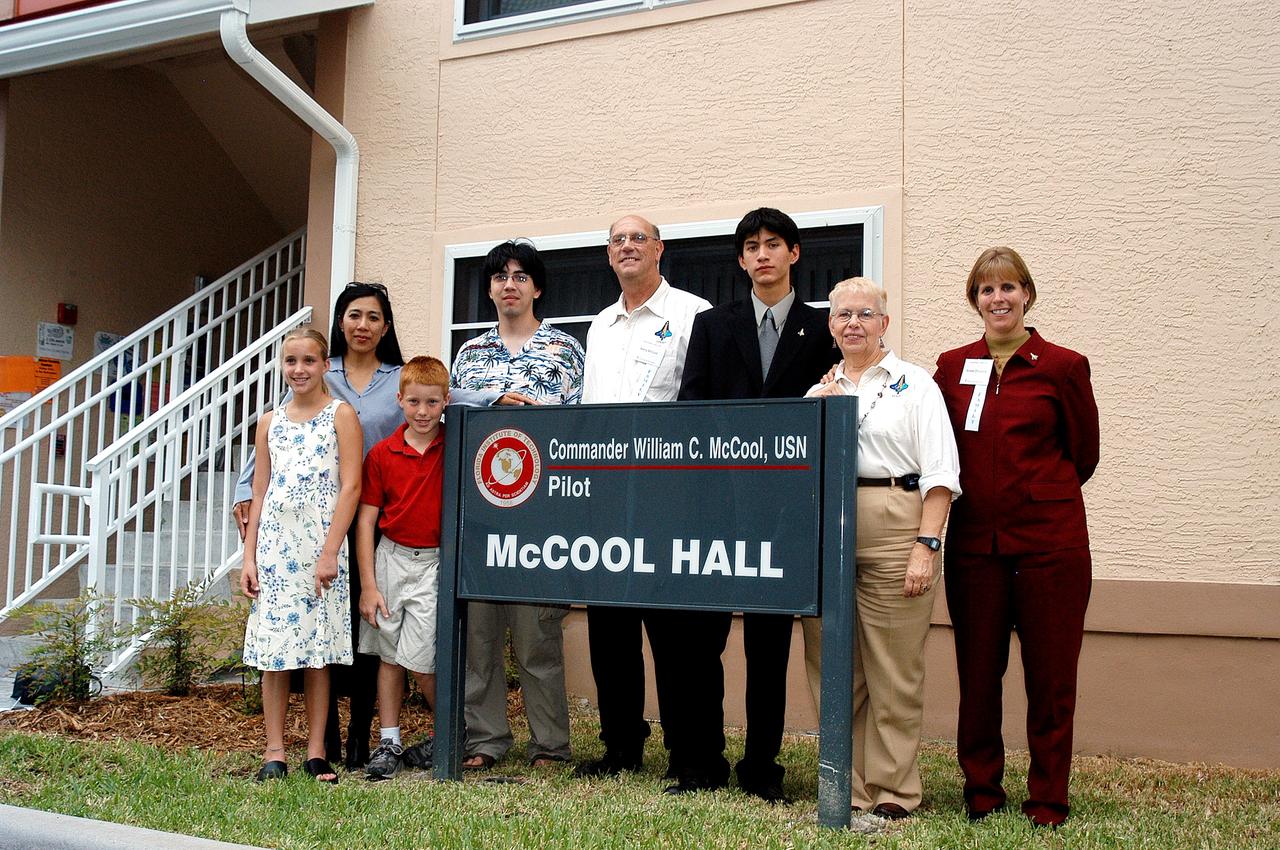
KENNEDY SPACE CENTER, FLA. -- Lani McCool (back row, left), wife of STS-107 Pilot Willie McCool, accompanied by their children and other family members, visits a new residence hall at the Florida Institute of Technology (FIT) in Melbourne, Fla., named for her late husband.  Family members of the STS-107 astronauts, other dignitaries, members of the university community and the public gathered for a dedication ceremony for the Columbia Village at FIT.  Each of the seven new residence halls in the complex is named for one of the STS-107 astronauts who perished during the Columbia accident -- Rick Husband, Willie McCool, Laurel Clark, Michael Anderson, David Brown, Kalpana Chawla, and Ilan Ramon.
KENNEDY SPACE CENTER, FLA. -- Lani McCool (back row, left), wife of STS-107 Pilot Willie McCool, accompanied by their children and other family members, visits a new residence hall at the Florida Institute of Technology (FIT) in Melbourne, Fla., named for her late husband. Family members of the STS-107 astronauts, other dignitaries, members of the university community and the public gathered for a dedication ceremony for the Columbia Village at FIT. Each of the seven new residence halls in the complex is named for one of the STS-107 astronauts who perished during the Columbia accident -- Rick Husband, Willie McCool, Laurel Clark, Michael Anderson, David Brown, Kalpana Chawla, and Ilan Ramon.
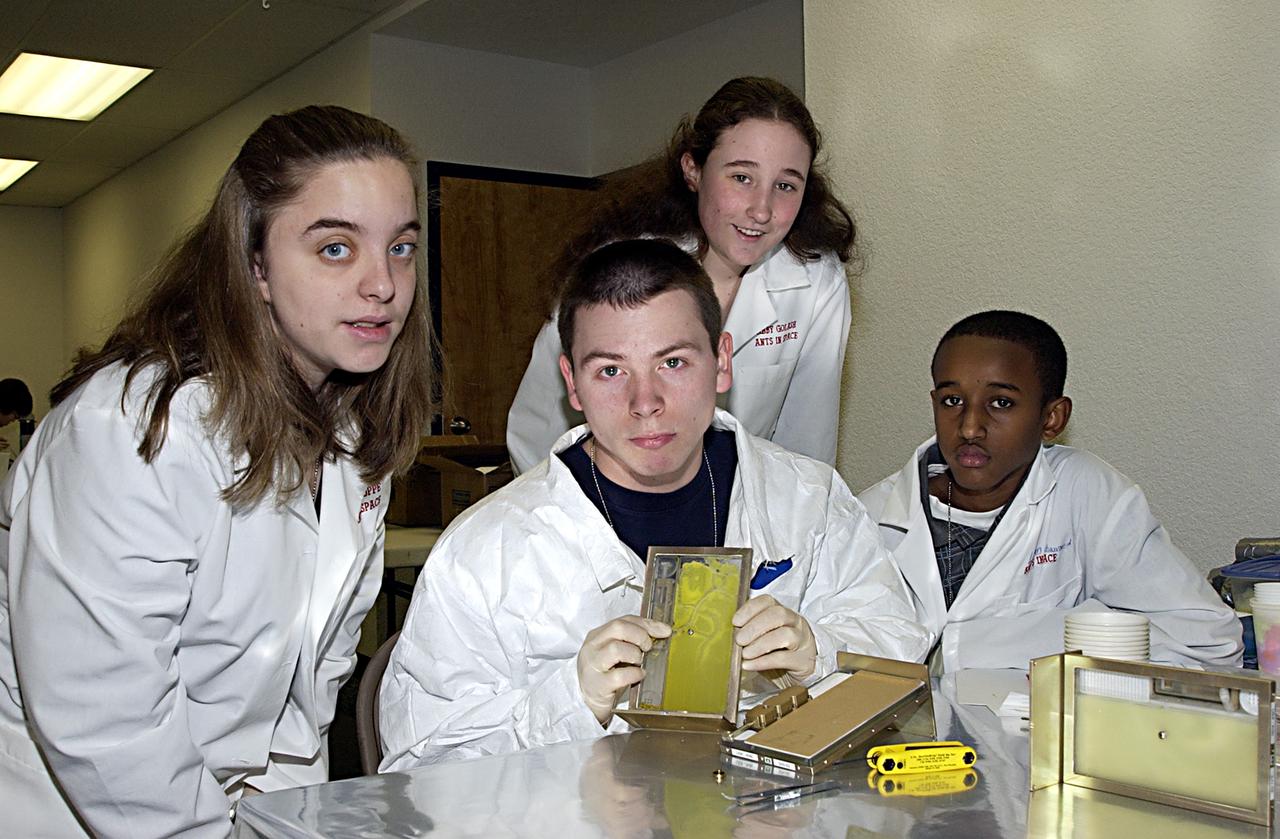
Students display an experiment that will fly in SPACEHAB on Space Shuttle Columbia on mission STS-107. SPACEHAB's complement of commercial experiments includes six educational experiments designed and developed by students in six different countries under the auspices of Space Technology and Research Students (STARS), a global education program managed by SPACEHAB subsidiary Space Media. The countries represented are Australia, China, Israel, Japan, Liechtenstein and the United States. The student investigators who conceived these experiments will monitor their operations in space. The experiments will be housed in BioServe Space Technologies' Isothermal Containment Module (ICM --a small temperature-controlled facility that provides experiment support such as physical containment, lighting, and video imaging) and stowed in a middeck-size locker aboard the SPACEHAB Research Double Module.
SPACEHAB - Space Shuttle Columbia mission STS-107
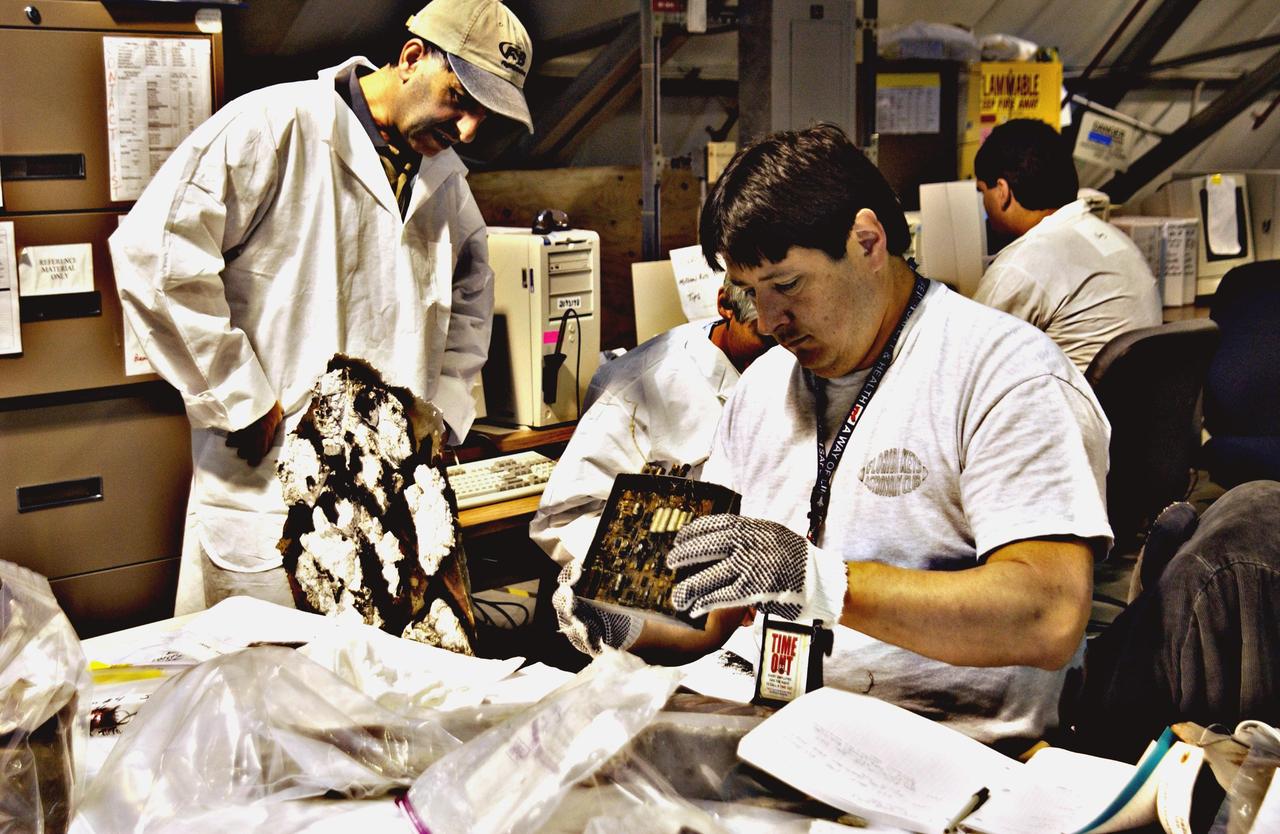
Columbia Reconstruction Project Team members study debris from the Space Shuttle Columbia in the RLV Hangar. The debris is being shipped to KSC from the collection point at Barksdale Air Force Base, Shreveport, La. As part of the ongoing investigation into the tragic accident that claimed Columbia and her crew of seven, workers will attempt to reconstruct the orbiter inside the hangar.
KSC-03PD-0436
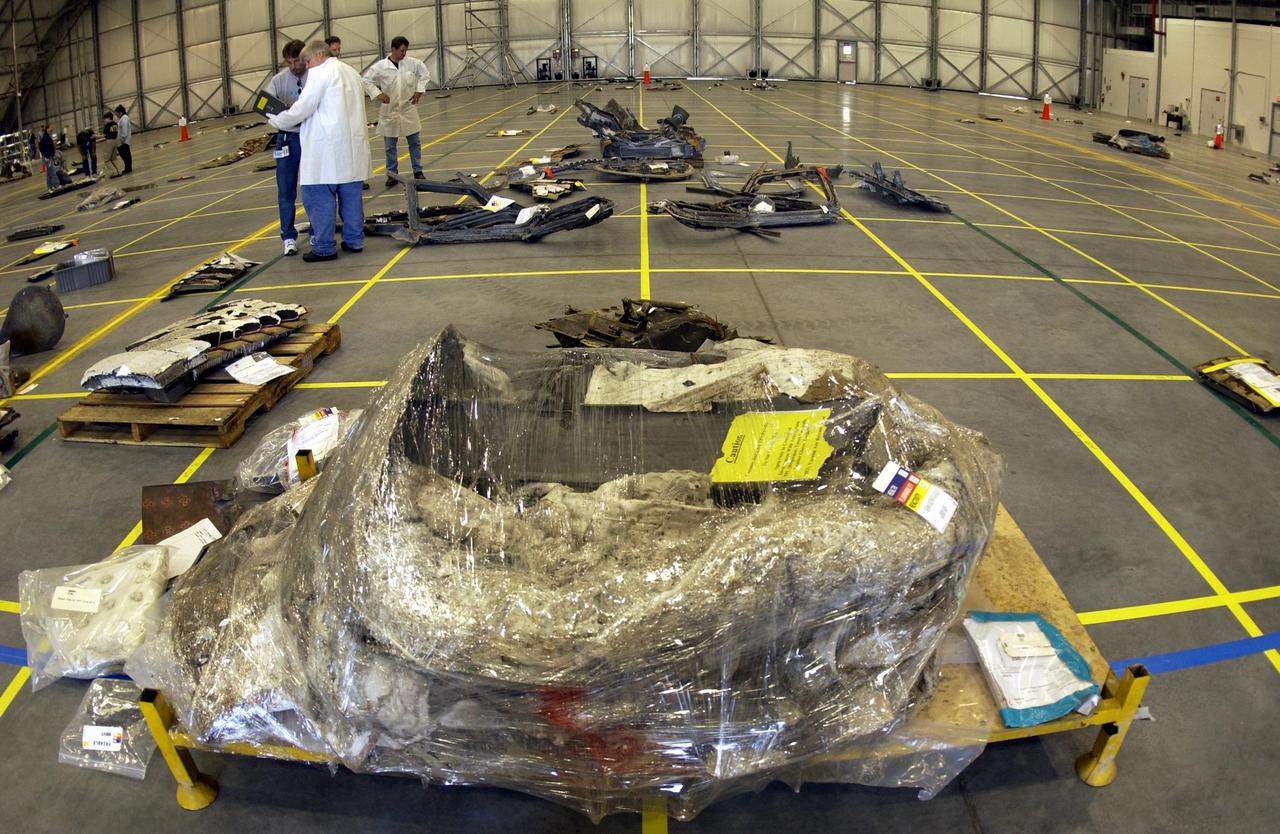
The layout of the debris from the Space Shuttle Columbia is captured in this wide-angle view of a section of the RLV Hangar floor. The debris is being shipped to KSC from the collection point at Barksdale Air Force Base, Shreveport, La. As part of the ongoing investigation into the tragic accident that claimed Columbia and her crew of seven, workers will attempt to reconstruct the orbiter inside the hangar.
KSC-03PD-0432
Columbia Reconstruction Project Team members study debris from the Space Shuttle Columbia in the RLV Hangar. The debris is being shipped to KSC from the collection point at Barksdale Air Force Base, Shreveport, La. As part of the ongoing investigation into the tragic accident that claimed Columbia and her crew of seven, workers will attempt to reconstruct the orbiter inside the hangar.
KSC-03PD-0437
KENNEDY SPACE CENTER, FLA. -- Processing for mission STS-107 continues in the Operations and Checkout Building as the tunnel that will connect Space Shuttle Columbia's crew compartment to the SPACEHAB module is moved into a transportation canister.  A research mission, the primary payload of STS-107 is the SHI Research Double Module (SHI_RDM) or SPACEHAB, making its first flight. The experiments on board will range from material sciences to life sciences (many rats). STS-107 is scheduled to launch July 19, 2002
KSC-02PD-0650
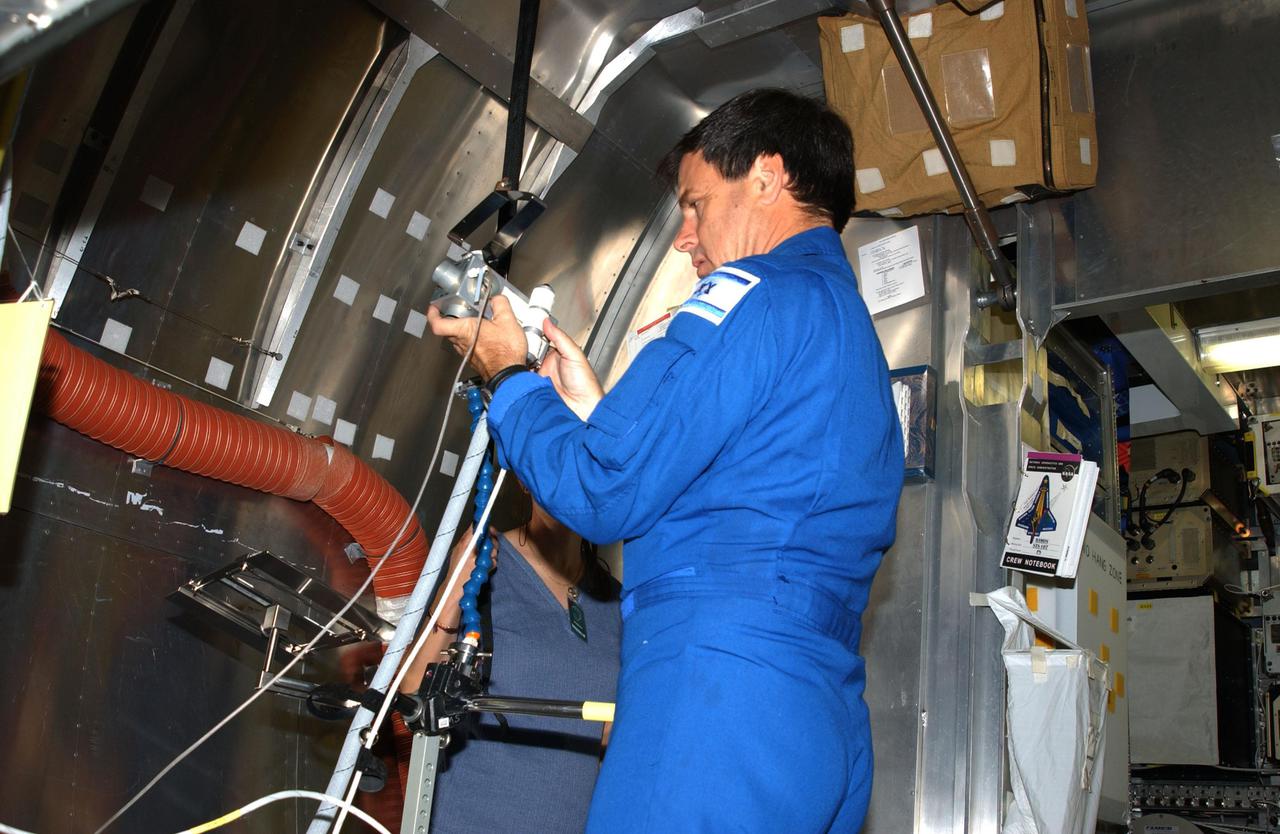
KENNEDY SPACE CENTER, FLA. -  STS-107 Payload Specialist Ilan Ramon checks equipment during crew training at SPACEHAB, Cape Canaveral, Fla.   STS-107 is a research mission, and the primary payload is the first flight of the SHI Research Double Module (SHI_RDM). The experiments range from material sciences to life sciences (many rats).  Among the experiments is a Hitchhiker carrier system, modular and expandable in accordance with payload requirements.  STS-107 is scheduled to launch in June 2002.
KSC-01pd-1874
KENNEDY SPACE CENTER, FLA. --  STS-107 Payload Specialist Ilan Ramon checks equipment during crew training at SPACEHAB, Cape Canaveral, Fla.   STS-107 is a research mission, and the primary payload is the first flight of the SHI Research Double Module (SHI_RDM). The experiments range from material sciences to life sciences (many rats).  Among the experiments is a Hitchhiker carrier system, modular and expandable in accordance with payload requirements.  STS-107 is scheduled to launch in June 2002.
KSC-01pd-1873
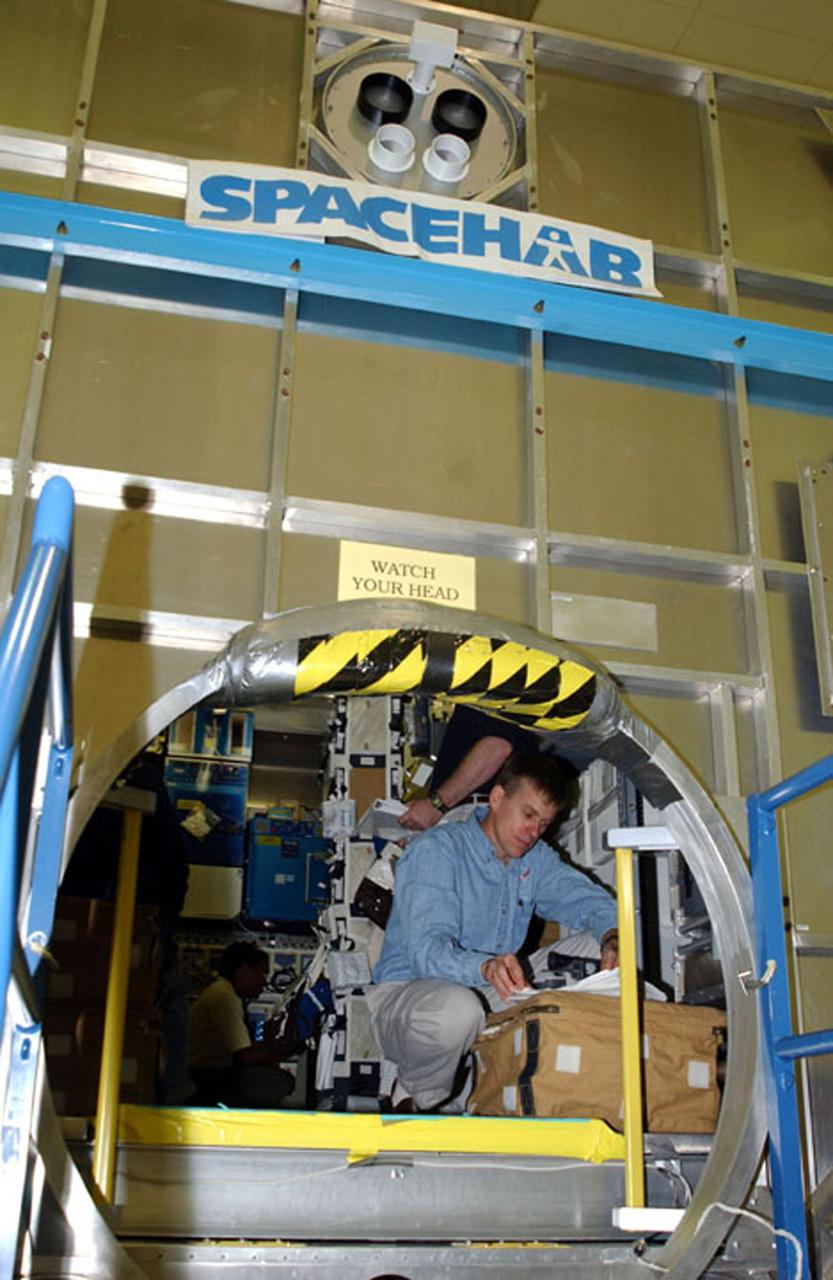
KENNEDY SPACE CENTER, FLA. -  At SPACEHAB, Cape Canaveral, Fla., members of the STS-107 crew look over equipment. Inside the SPACEHAB module, Pilot William 'Willie' McCool  scans documents. STS-107 is a research mission, and the primary payload is the first flight of the SHI Research Double Module (SHI_RDM). The experiments range from material sciences to life sciences (many rats).  Among the experiments is a Hitchhiker carrier system, modular and expandable in accordance with payload requirements.  STS-107 is scheduled to launch in June 2002.
KSC-01pd-1875
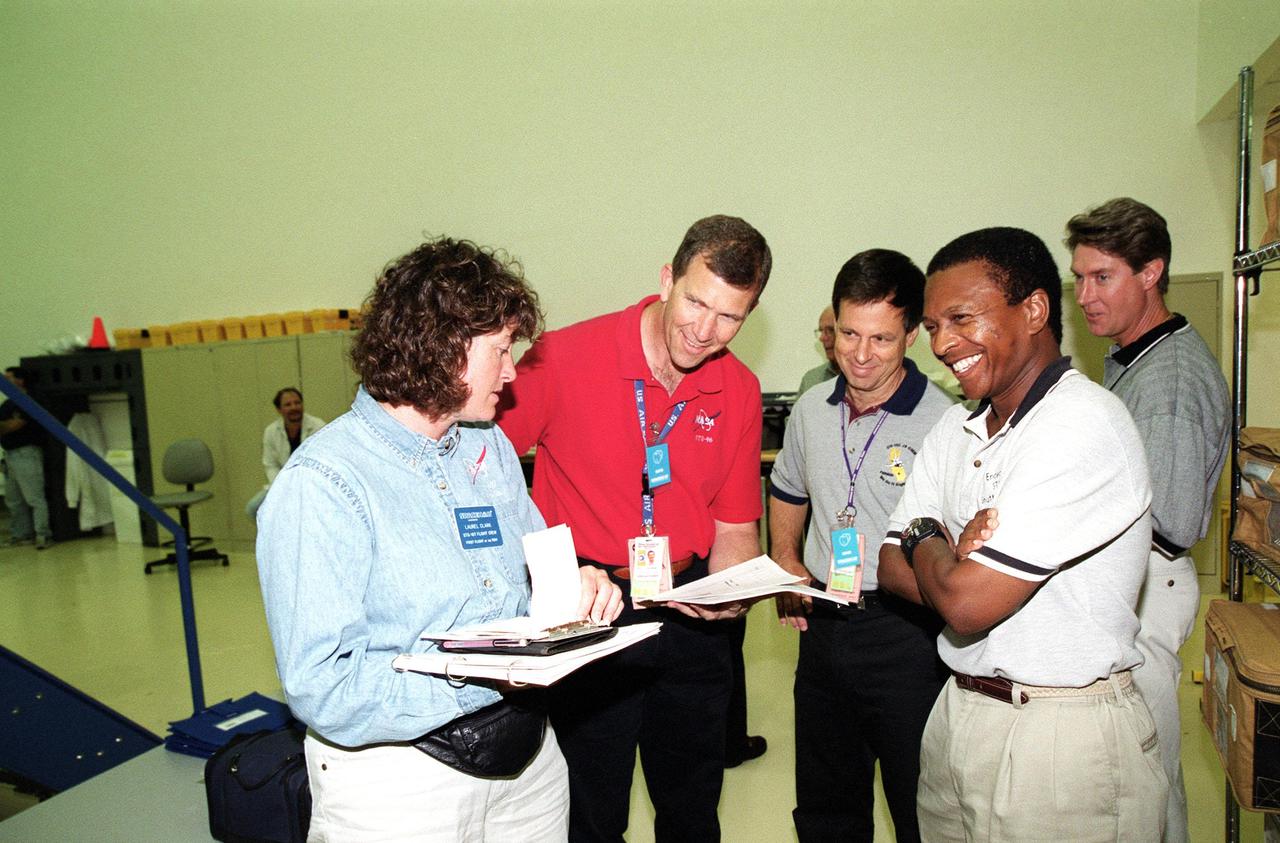
KENNEDY SPACE CENTER, Fla. -- At SPACEHAB, Cape Canaveral, Fla., the STS-107 crew takes part in Crew Equipment Interface Test (CEIT) activities. From left are Mission Specialist Laurel Blair Salton Clark, Commander Rick Douglas Husband, Payload Specialist Ilan Ramon, of Israel, and Payload Commander Michael P. Anderson. A trainer is at far right. As a research mission, STS-107 will carry the Spacehab Double Module in its first research flight into space and a broad collection of experiments ranging from material science to life science. The CEIT activities enable the crew to perform certain flight operations, operate experiments in a flight-like environment, evaluate stowage locations and obtain additional exposure to specific experiment operations. Other STS-107 crew members are Pilot William C. McCool and Mission Specialists Kalpana Chawla and David M. Brown. STS-107 is scheduled for launch May 23, 2002
KSC-01pd-1116
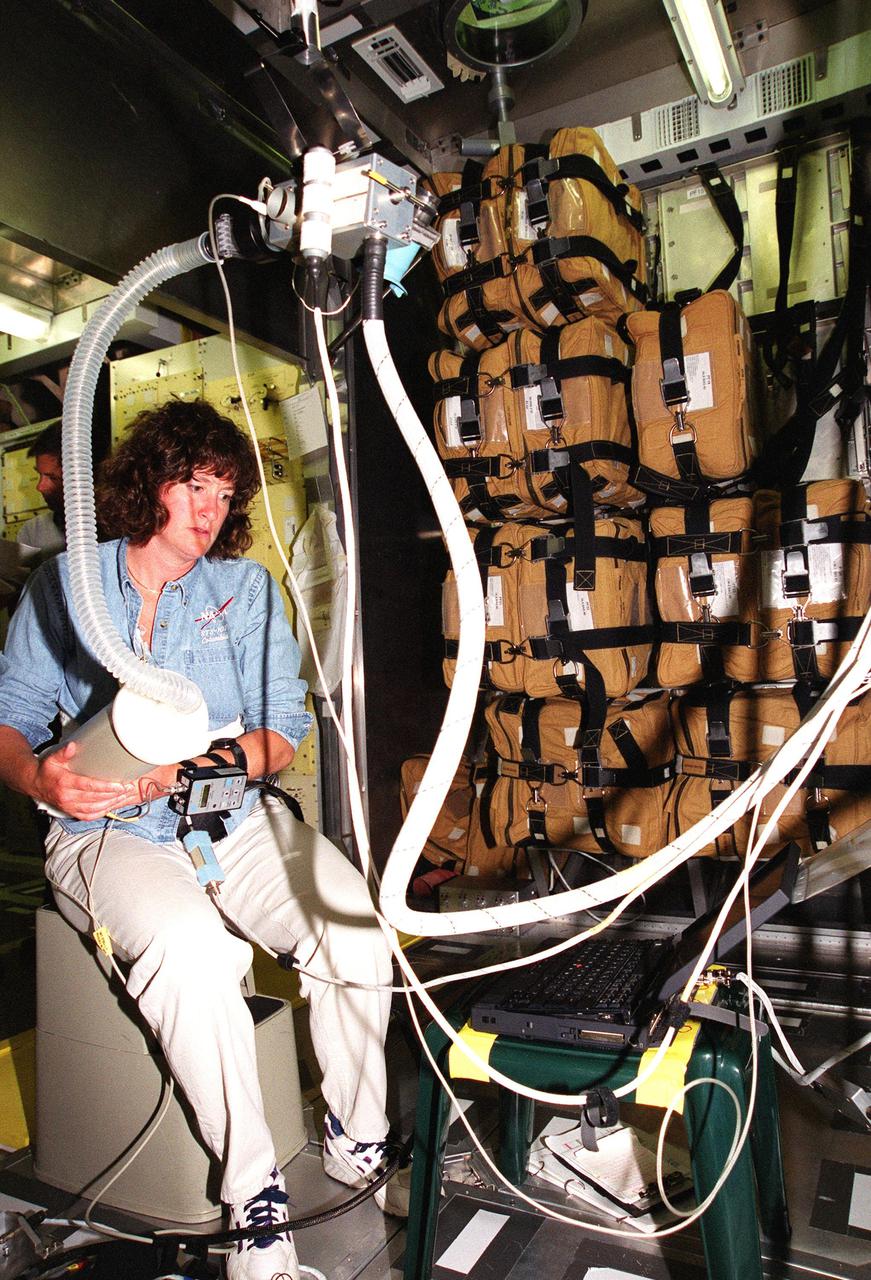
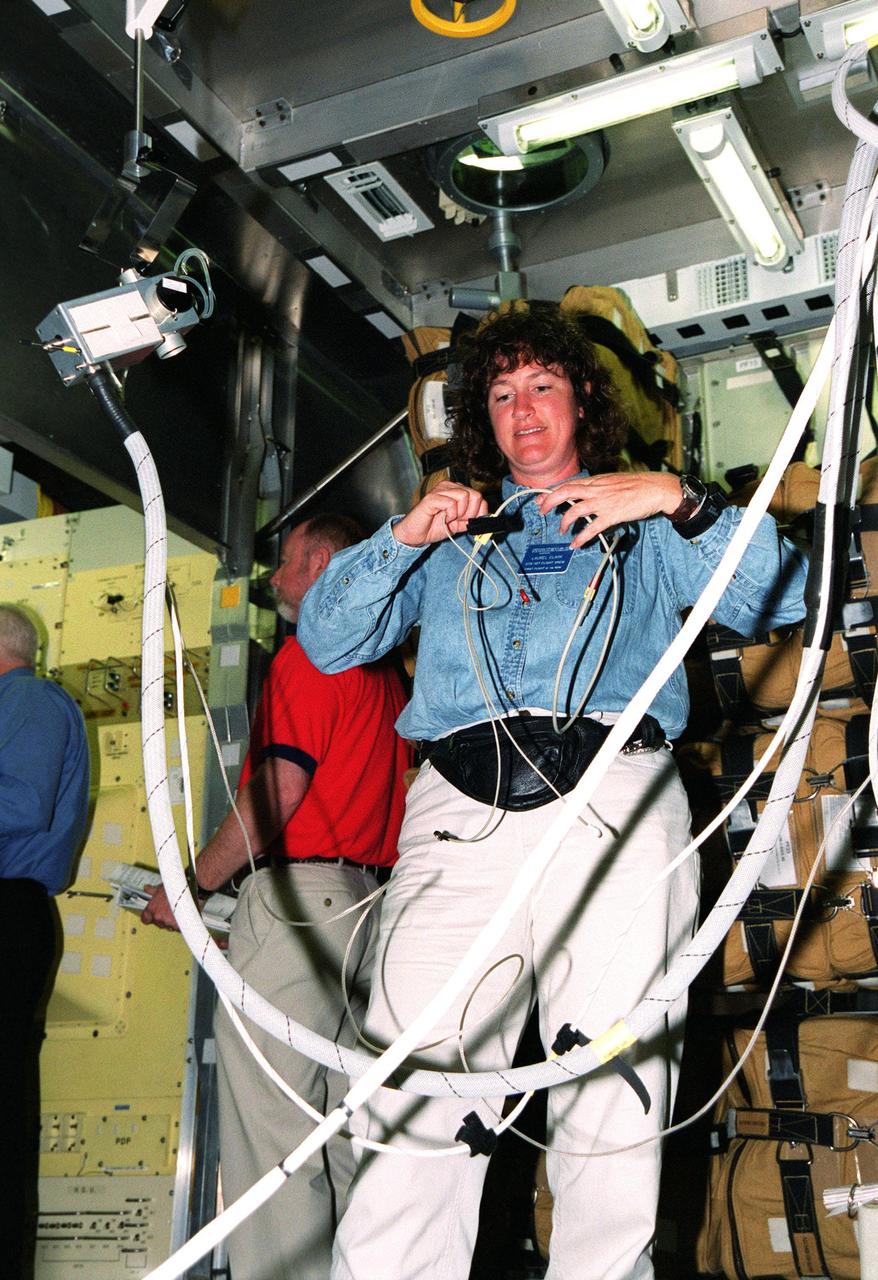
KENNEDY SPACE CENTER, Fla. -- During Crew Equipment Interface Test (CEIT)activities at SPACEHAB, Cape Canaveral, Fla., STS-107 Mission Specialist Laurel Blair Salton Clark gets hands-on training on equipment inside the Spacehab module. As a research mission, STS-107 will carry the Spacehab Double Module in its first research flight into space and a broad collection of experiments ranging from material science to life science. CEIT activities enable the crew to perform certain flight operations, operate experiments in a flight-like environment, evaluate stowage locations and obtain additional exposure to specific experiment operations. Other STS-107 crew members are Commander Rick Douglas Husband; Pilot William C. McCool; Payload Commander Michael P. Anderson; Mission Specialists Kalpana Chawla and David M. Brown; and Payload Specialist Ilan Ramon, of Israel. STS-107 is scheduled for launch May 23, 2002
KSC-01pd-1113
KENNEDY SPACE CENTER, Fla. -- At SPACEHAB, Cape Canaveral, Fla., STS-107 Mission Specialist Laurel Blair Salton Clark manipulates a piece of equipment. She and other crew members are at SPACEHAB, Port Canaveral, Fla., for Crew Equipment Interface Test (CEIT) activities that enable the crew to perform certain flight operations, operate experiments in a flight-like environment, evaluate stowage locations and obtain additional exposure to specific experiment operations. As a research mission, STS-107 will carry the Spacehab Double Module in its first research flight into space and a broad collection of experiments ranging from material science to life science. Other STS-107 crew members are Commander Rick Douglas Husband, Pilot William C. McCool; Payload Commander Michael P. Anderson; and Mission Specialists Kalpana Chawla, David M. Brown and Ilan Ramon, of Israel. STS-107 is scheduled for launch May 23, 2002
KSC-01pd-1120
KENNEDY SPACE CENTER, FLA. -- NASA Associate Administrator for Space Flight William F. Readdy addresses the family members of the STS-107 astronauts, other dignitaries, members of the university community and the public gathered for the dedication ceremony of the Columbia Village at the Florida Institute of Technology in Melbourne, Fla.  Each of the seven new residence halls in the complex is named for one of the STS-107 astronauts who perished during the Columbia accident -- Rick Husband, Willie McCool, Laurel Clark, Michael Anderson, David Brown, Kalpana Chawla, and Ilan Ramon.
KENNEDY SPACE CENTER, FLA. -- NASA Associate Administrator for Space Flight William F. Readdy addresses the family members of the STS-107 astronauts, other dignitaries, members of the university community and the public gathered for the dedication ceremony of the Columbia Village at the Florida Institute of Technology in Melbourne, Fla. Each of the seven new residence halls in the complex is named for one of the STS-107 astronauts who perished during the Columbia accident -- Rick Husband, Willie McCool, Laurel Clark, Michael Anderson, David Brown, Kalpana Chawla, and Ilan Ramon.
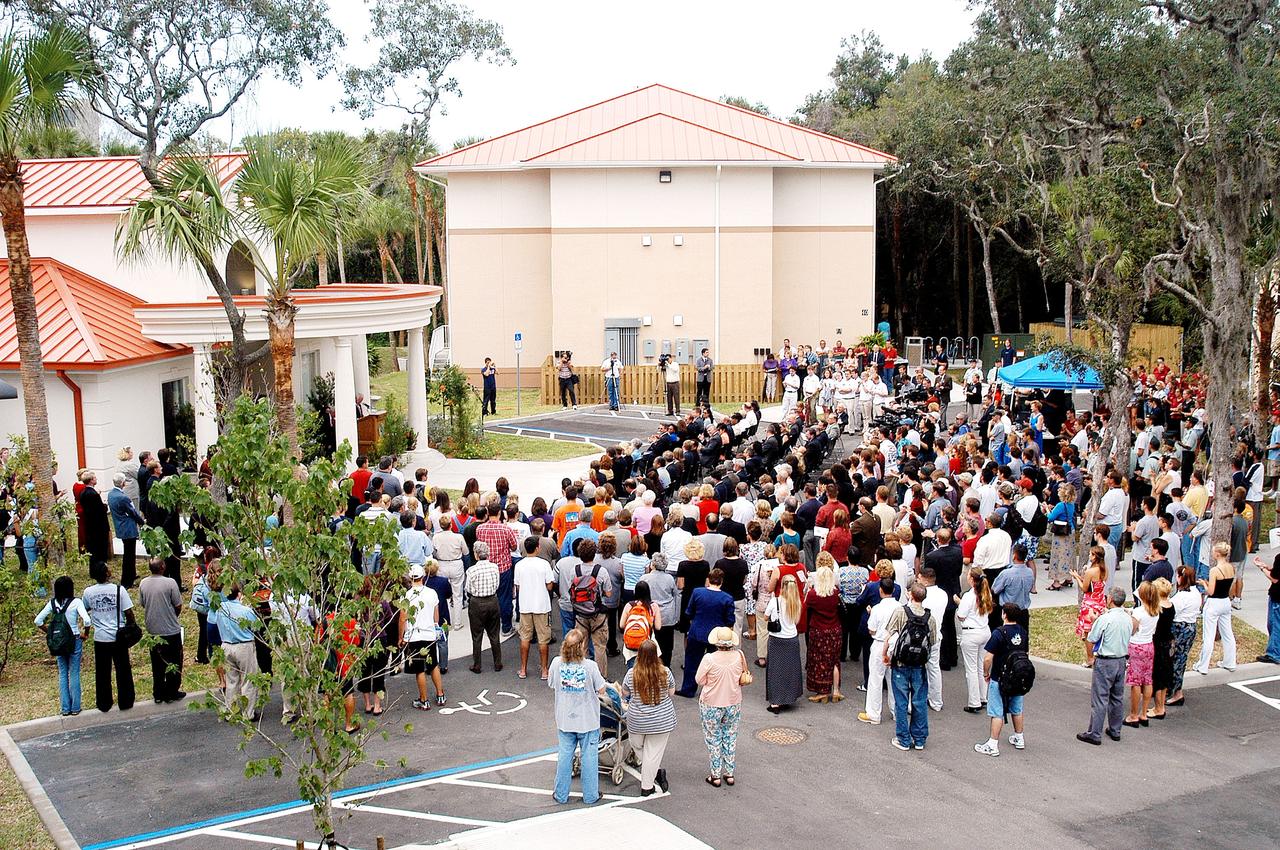
KENNEDY SPACE CENTER, FLA. -- Family members of the STS-107 astronauts and other dignitaries gather for the dedication ceremony of the Columbia Village at the Florida Institute of Technology in Melbourne, Fla.  Each of the seven new residence halls in the complex is named for one of the STS-107 astronauts who perished during the Columbia accident -- Rick Husband, Willie McCool, Laurel Clark, Michael Anderson, David Brown, Kalpana Chawla, and Ilan Ramon.
KENNEDY SPACE CENTER, FLA. -- Family members of the STS-107 astronauts and other dignitaries gather for the dedication ceremony of the Columbia Village at the Florida Institute of Technology in Melbourne, Fla. Each of the seven new residence halls in the complex is named for one of the STS-107 astronauts who perished during the Columbia accident -- Rick Husband, Willie McCool, Laurel Clark, Michael Anderson, David Brown, Kalpana Chawla, and Ilan Ramon.
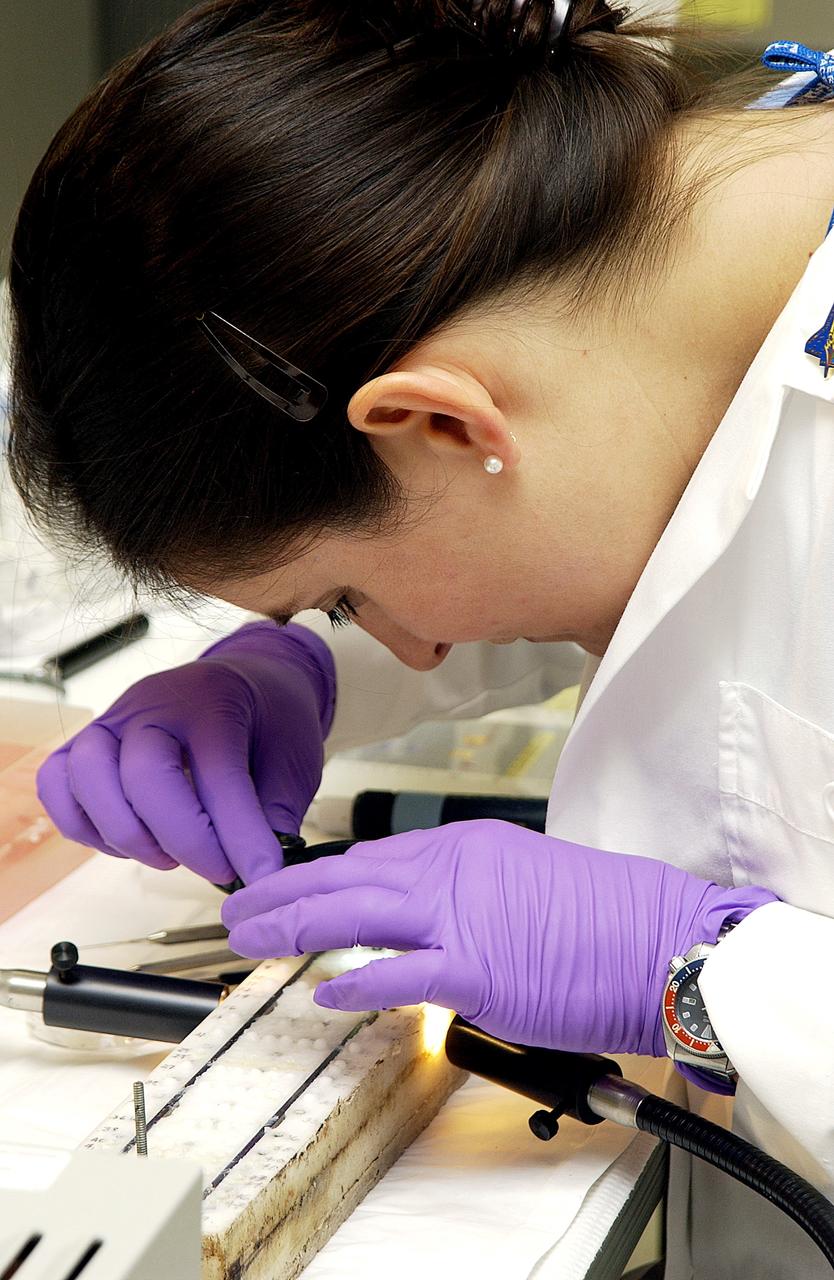
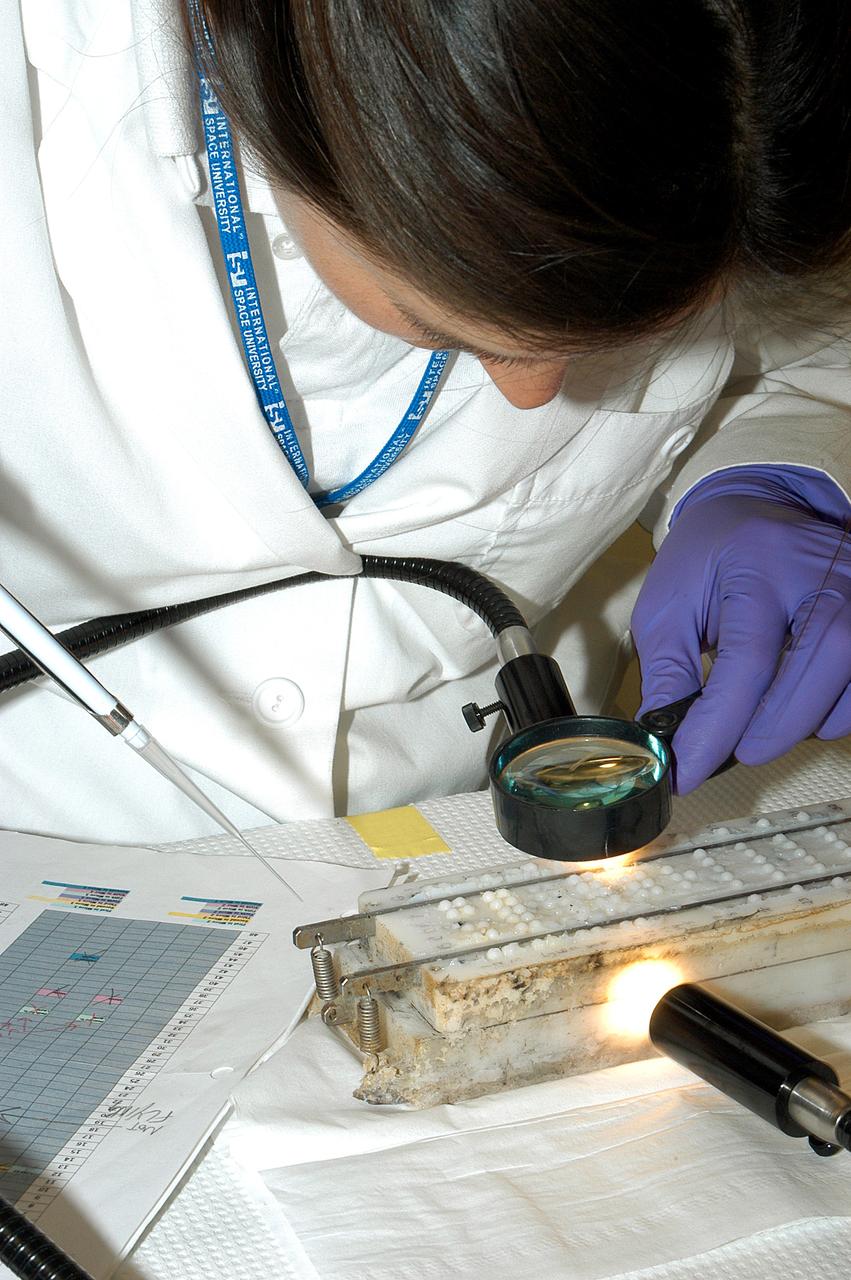
KENNEDY SPACE CENTER, FLA. - Valerie Cassanto, with Instrumentation Technology Associates, Inc., examines closely the container containing one of the experiments carried on mission STS-107.  Several experiments were found during the search for Columbia debris.  Included in the Commercial ITA Biomedical Experiments payload on mission STS-107 are urokinase cancer research, microencapsulation of drugs, the Growth of Bacterial Biofilm on Surfaces during Spaceflight (GOBBSS), and tin crystal formation.
KENNEDY SPACE CENTER, FLA. - Valerie Cassanto, with Instrumentation Technology Associates, Inc., examines closely the container containing one of the experiments carried on mission STS-107. Several experiments were found during the search for Columbia debris. Included in the Commercial ITA Biomedical Experiments payload on mission STS-107 are urokinase cancer research, microencapsulation of drugs, the Growth of Bacterial Biofilm on Surfaces during Spaceflight (GOBBSS), and tin crystal formation.
KENNEDY SPACE CENTER, FLA. -  Valerie Cassanto, Instrumentation Technology Associates, Inc., studies one of the experiments carried on mission STS-107. Several experiments were found during the search for Columbia debris. Included in the Commercial ITA Biomedical Experiments payload on mission STS-107 are urokinase cancer research, microencapsulation of drugs, the Growth of Bacterial Biofilm on Surfaces during Spaceflight (GOBBSS), and tin crystal formation.  The latter was sponsored by the Pembroke Pines Charter Middle School.
KENNEDY SPACE CENTER, FLA. - Valerie Cassanto, Instrumentation Technology Associates, Inc., studies one of the experiments carried on mission STS-107. Several experiments were found during the search for Columbia debris. Included in the Commercial ITA Biomedical Experiments payload on mission STS-107 are urokinase cancer research, microencapsulation of drugs, the Growth of Bacterial Biofilm on Surfaces during Spaceflight (GOBBSS), and tin crystal formation. The latter was sponsored by the Pembroke Pines Charter Middle School.
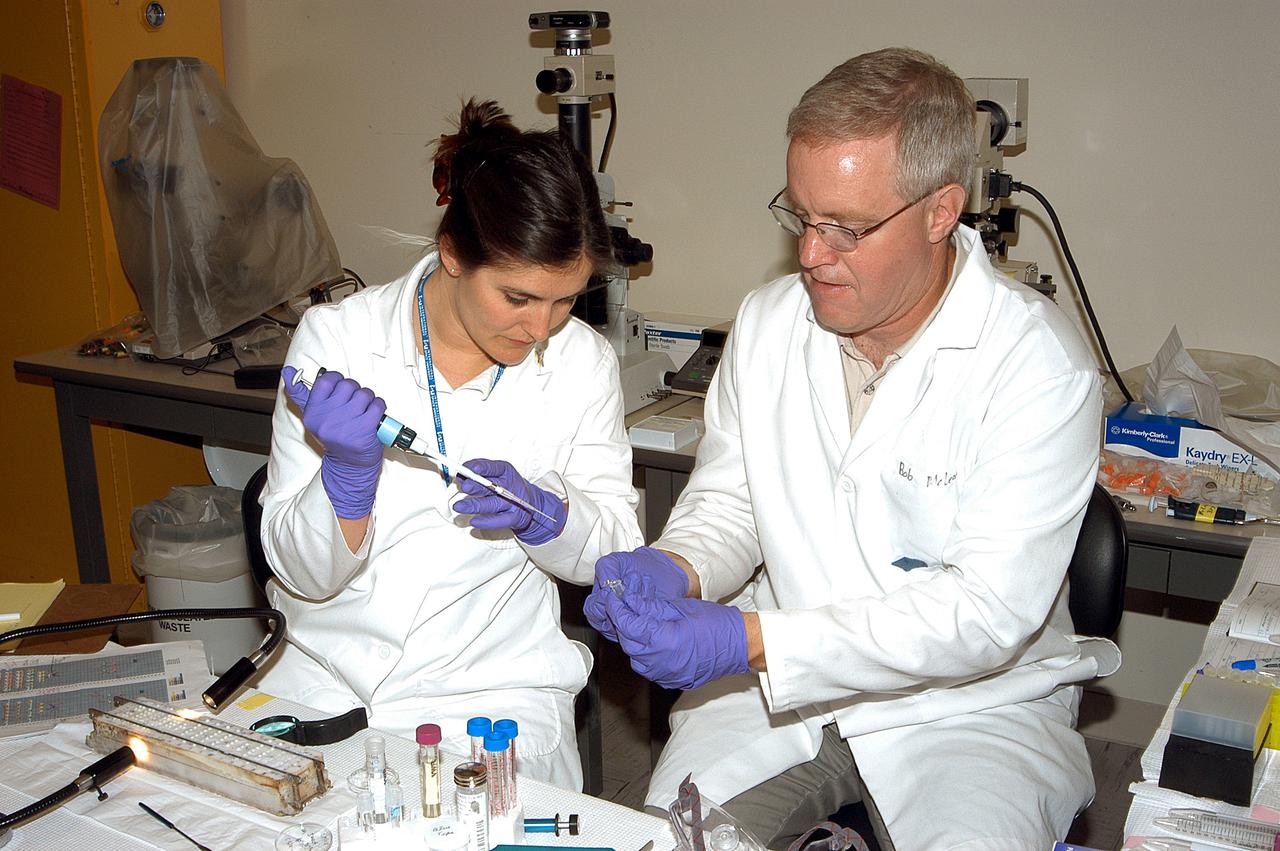
KENNEDY SPACE CENTER, FLA. - Valerie Cassanto, with Instrumentation Technology Associates, Inc., and Bob McLean, from the Southwest Texas State University, transfer to a new container material from one of the experiments carried on mission STS-107.  Several experiments were found during the search for Columbia debris.  Included in the Commercial ITA Biomedical Experiments payload on mission STS-107 are urokinase cancer research, microencapsulation of drugs, the Growth of Bacterial Biofilm on Surfaces during Spaceflight (GOBBSS), and tin crystal formation.
KENNEDY SPACE CENTER, FLA. - Valerie Cassanto, with Instrumentation Technology Associates, Inc., and Bob McLean, from the Southwest Texas State University, transfer to a new container material from one of the experiments carried on mission STS-107. Several experiments were found during the search for Columbia debris. Included in the Commercial ITA Biomedical Experiments payload on mission STS-107 are urokinase cancer research, microencapsulation of drugs, the Growth of Bacterial Biofilm on Surfaces during Spaceflight (GOBBSS), and tin crystal formation.
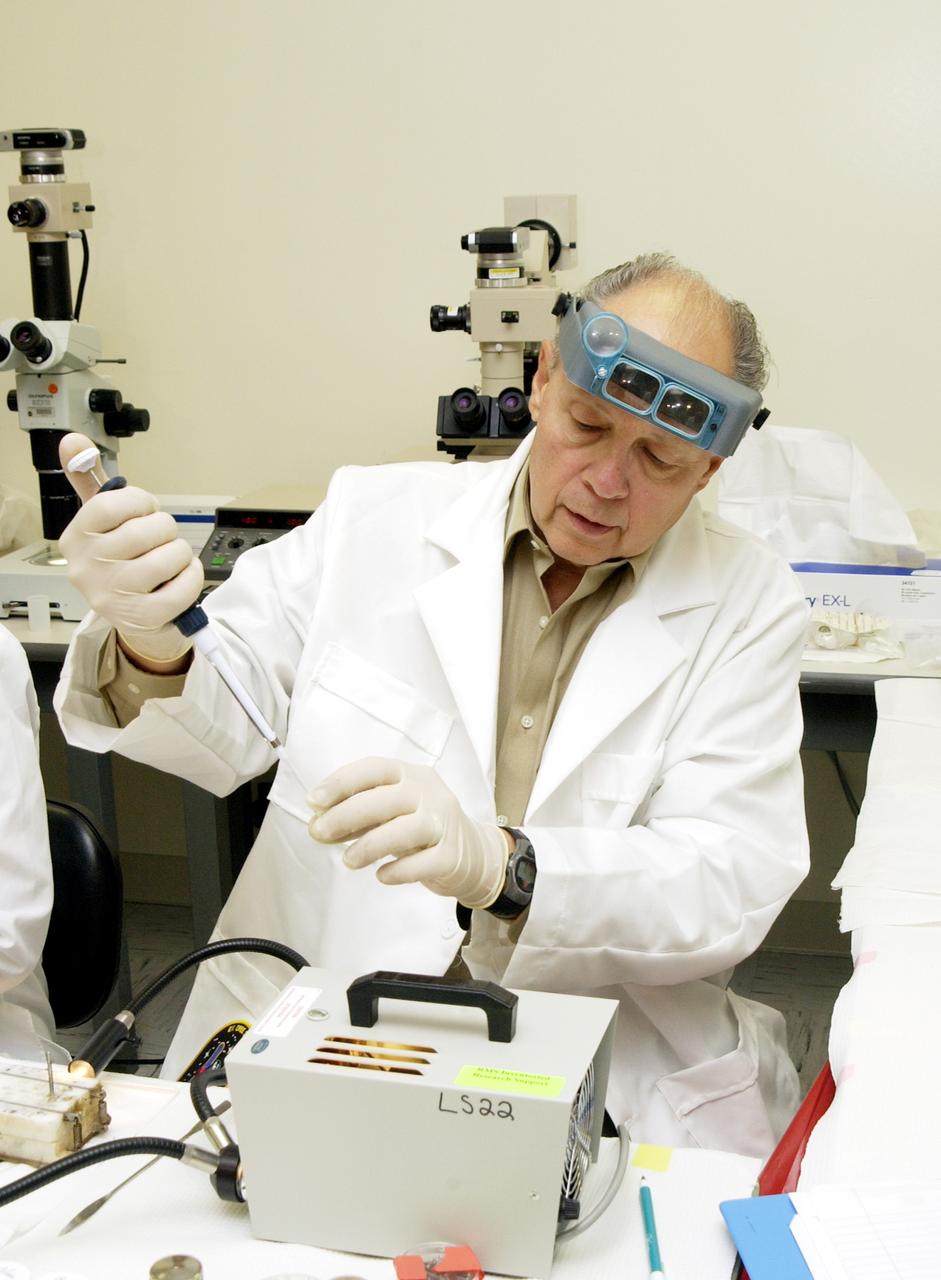
KENNEDY SPACE CENTER, FLA. -  Dr. Dennis Morrison, NASA Johnson Space Center, works with one of the experiments carried on mission STS-107. Several experiments were found during the search for Columbia debris. Included in the Commercial ITA Biomedical Experiments payload on mission STS-107 are urokinase cancer research, microencapsulation of drugs, the Growth of Bacterial Biofilm on Surfaces during Spaceflight (GOBBSS), and tin crystal formation.
KENNEDY SPACE CENTER, FLA. - Dr. Dennis Morrison, NASA Johnson Space Center, works with one of the experiments carried on mission STS-107. Several experiments were found during the search for Columbia debris. Included in the Commercial ITA Biomedical Experiments payload on mission STS-107 are urokinase cancer research, microencapsulation of drugs, the Growth of Bacterial Biofilm on Surfaces during Spaceflight (GOBBSS), and tin crystal formation.
KENNEDY SPACE CENTER, FLA. -  A plaque dedicating the Columbia Village at the Florida Institute of Technology in Melbourne, Fla., is unveiled at a ceremony attended by family members of the STS-107 astronauts and other dignitaries.  Each of the seven new residence halls in the complex is named for one of the STS-107 astronauts who perished during the Columbia accident -- Rick Husband, Willie McCool, Laurel Clark, Michael Anderson, David Brown, Kalpana Chawla, and Ilan Ramon.
KENNEDY SPACE CENTER, FLA. - A plaque dedicating the Columbia Village at the Florida Institute of Technology in Melbourne, Fla., is unveiled at a ceremony attended by family members of the STS-107 astronauts and other dignitaries. Each of the seven new residence halls in the complex is named for one of the STS-107 astronauts who perished during the Columbia accident -- Rick Husband, Willie McCool, Laurel Clark, Michael Anderson, David Brown, Kalpana Chawla, and Ilan Ramon.
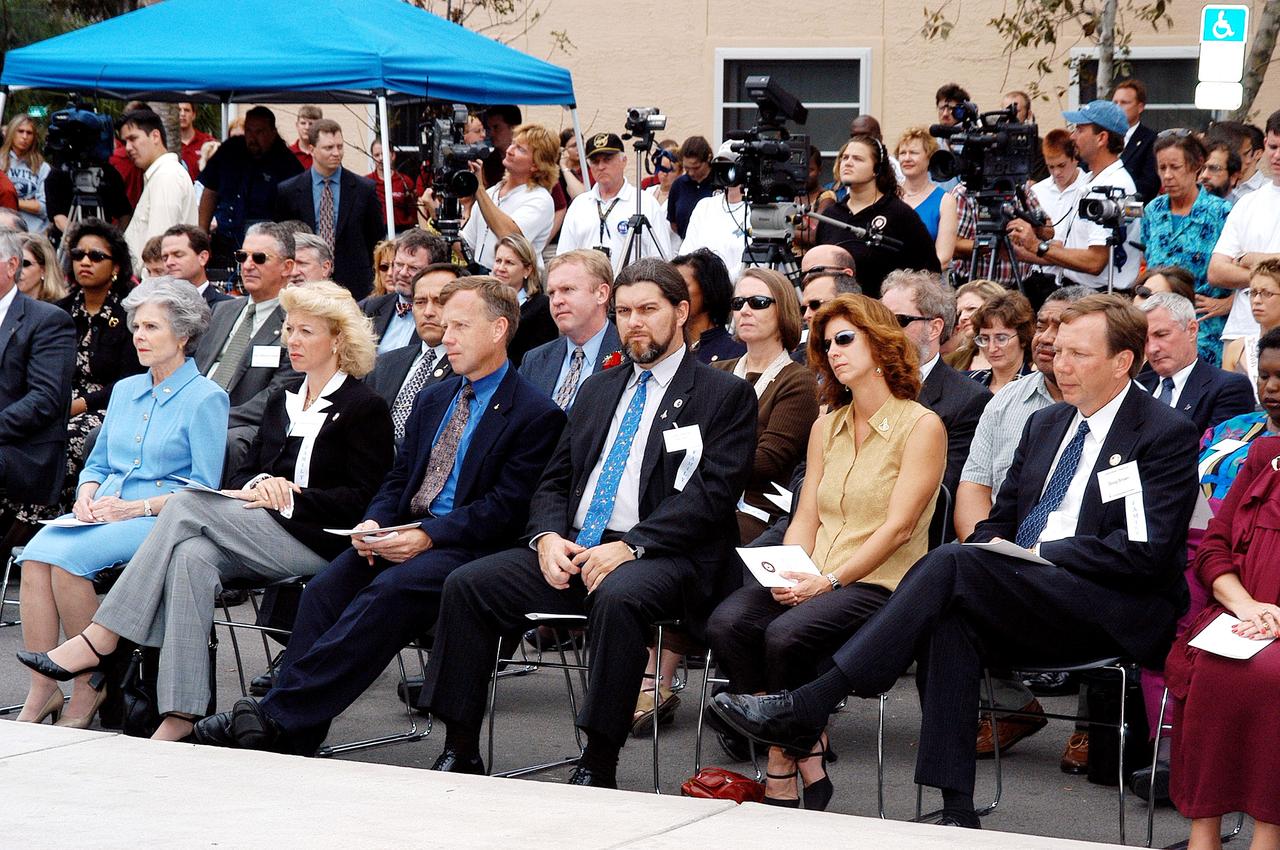
KENNEDY SPACE CENTER, FLA. -  Family members of the STS-107 astronauts, other dignitaries, members of the university community and the public gather for the dedication ceremony of the Columbia Village at the Florida Institute of Technology in Melbourne, Fla.  Each of the seven new residence halls in the complex is named for one of the STS-107 astronauts who perished during the Columbia accident -- Rick Husband, Willie McCool, Laurel Clark, Michael Anderson, David Brown, Kalpana Chawla, and Ilan Ramon.
KENNEDY SPACE CENTER, FLA. - Family members of the STS-107 astronauts, other dignitaries, members of the university community and the public gather for the dedication ceremony of the Columbia Village at the Florida Institute of Technology in Melbourne, Fla. Each of the seven new residence halls in the complex is named for one of the STS-107 astronauts who perished during the Columbia accident -- Rick Husband, Willie McCool, Laurel Clark, Michael Anderson, David Brown, Kalpana Chawla, and Ilan Ramon.
KENNEDY SPACE CENTER, FLA. -  Valerie Cassanto (foreground), Instrumentation Technology Associates, Inc., examines one of the experiments carried on mission STS-107. Several experiments were found during the search for Columbia debris. Included in the Commercial ITA Biomedical Experiments payload on mission STS-107 are urokinase cancer research, microencapsulation of drugs, the Growth of Bacterial Biofilm on Surfaces during Spaceflight (GOBBSS), and tin crystal formation.
KENNEDY SPACE CENTER, FLA. - Valerie Cassanto (foreground), Instrumentation Technology Associates, Inc., examines one of the experiments carried on mission STS-107. Several experiments were found during the search for Columbia debris. Included in the Commercial ITA Biomedical Experiments payload on mission STS-107 are urokinase cancer research, microencapsulation of drugs, the Growth of Bacterial Biofilm on Surfaces during Spaceflight (GOBBSS), and tin crystal formation.
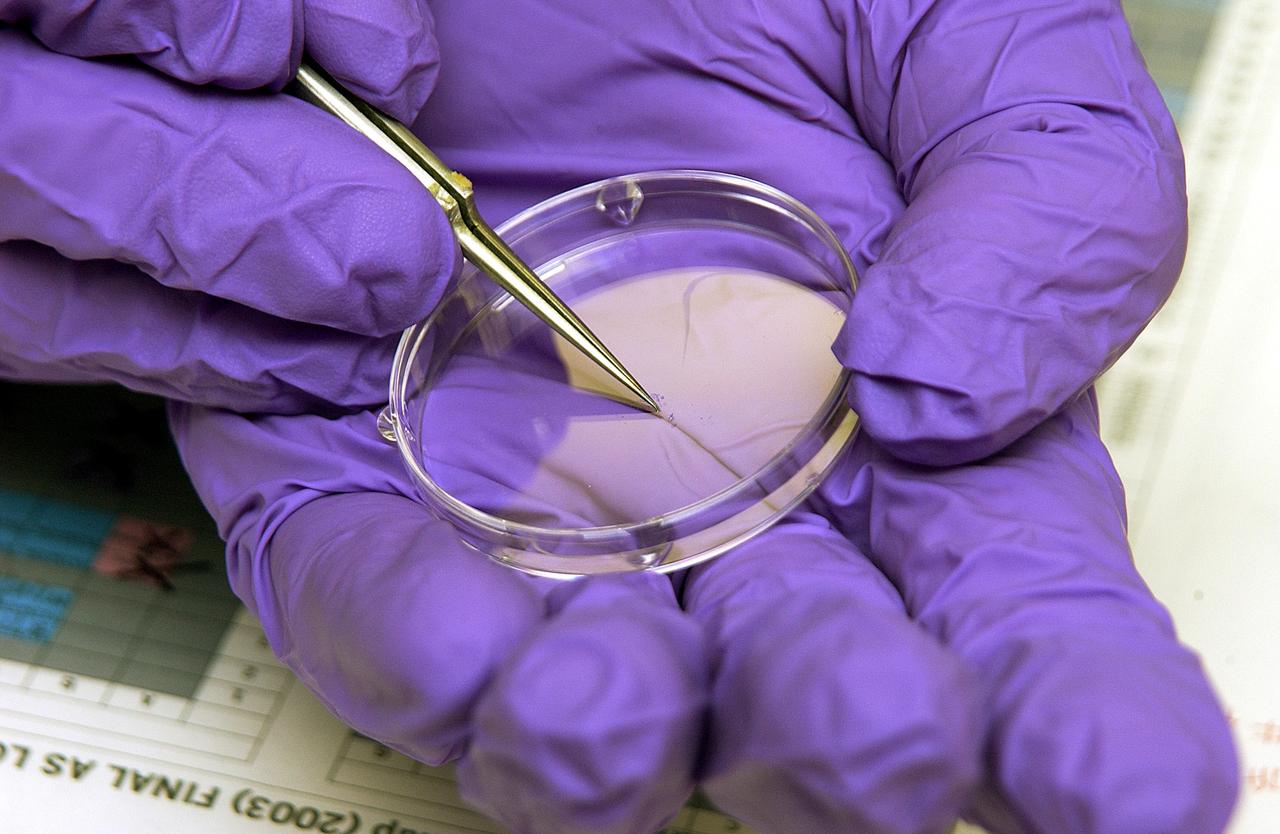
KENNEDY SPACE CENTER, FLA. -  The crystals visible in this laboratory dish were part of an experiment carried on mission STS-107. Several experiments were found during the search for Columbia debris. Included in the Commercial ITA Biomedical Experiments payload on mission STS-107 are urokinase cancer research, microencapsulation of drugs, the Growth of Bacterial Biofilm on Surfaces during Spaceflight (GOBBSS), and tin crystal formation.
KENNEDY SPACE CENTER, FLA. - The crystals visible in this laboratory dish were part of an experiment carried on mission STS-107. Several experiments were found during the search for Columbia debris. Included in the Commercial ITA Biomedical Experiments payload on mission STS-107 are urokinase cancer research, microencapsulation of drugs, the Growth of Bacterial Biofilm on Surfaces during Spaceflight (GOBBSS), and tin crystal formation.
KENNEDY SPACE CENTER, FLA. -  Barry Perlman, Pembroke Pines Charter Middle School in Florida, prepares a computer to receive data from an experiment carried on mission STS-107. Several experiments were found during the search for Columbia debris. Included in the Commercial ITA Biomedical Experiments payload on mission STS-107 are urokinase cancer research, microencapsulation of drugs, the Growth of Bacterial Biofilm on Surfaces during Spaceflight (GOBBSS), and tin crystal formation. The latter was sponsored by the Pembroke Pines Charter Middle School.
KENNEDY SPACE CENTER, FLA. - Barry Perlman, Pembroke Pines Charter Middle School in Florida, prepares a computer to receive data from an experiment carried on mission STS-107. Several experiments were found during the search for Columbia debris. Included in the Commercial ITA Biomedical Experiments payload on mission STS-107 are urokinase cancer research, microencapsulation of drugs, the Growth of Bacterial Biofilm on Surfaces during Spaceflight (GOBBSS), and tin crystal formation. The latter was sponsored by the Pembroke Pines Charter Middle School.
KENNEDY SPACE CENTER, FLA. -  Family members of the STS-107 astronauts and other dignitaries attending the Columbia Village dedication ceremony at the Florida Institute of Technology in Melbourne, Fla., enjoy a rendition of "God Bless America" by the university's Players in Harmony.  Each of the seven new residence halls in the complex is named for one of the STS-107 astronauts who perished during the Columbia accident -- Rick Husband, Willie McCool, Laurel Clark, Michael Anderson, David Brown, Kalpana Chawla, and Ilan Ramon.
KENNEDY SPACE CENTER, FLA. - Family members of the STS-107 astronauts and other dignitaries attending the Columbia Village dedication ceremony at the Florida Institute of Technology in Melbourne, Fla., enjoy a rendition of "God Bless America" by the university's Players in Harmony. Each of the seven new residence halls in the complex is named for one of the STS-107 astronauts who perished during the Columbia accident -- Rick Husband, Willie McCool, Laurel Clark, Michael Anderson, David Brown, Kalpana Chawla, and Ilan Ramon.
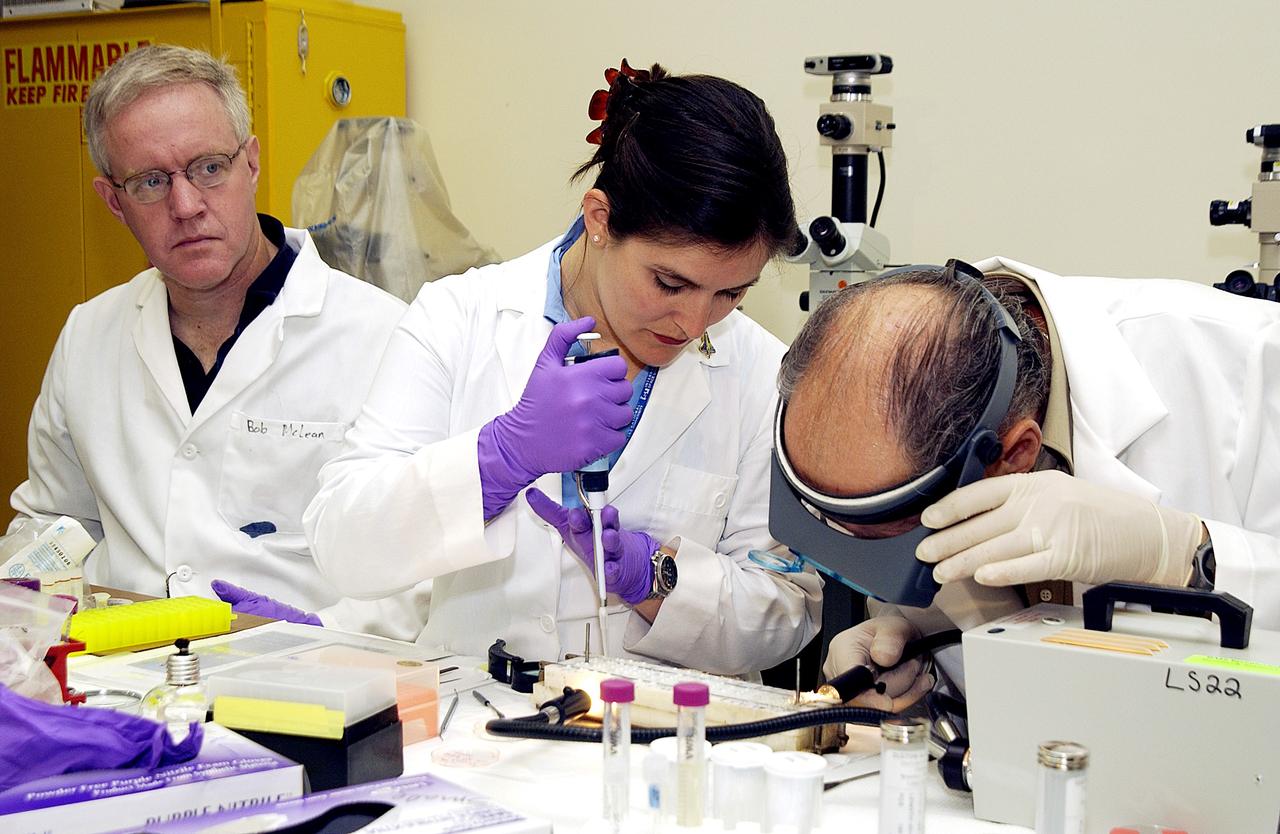
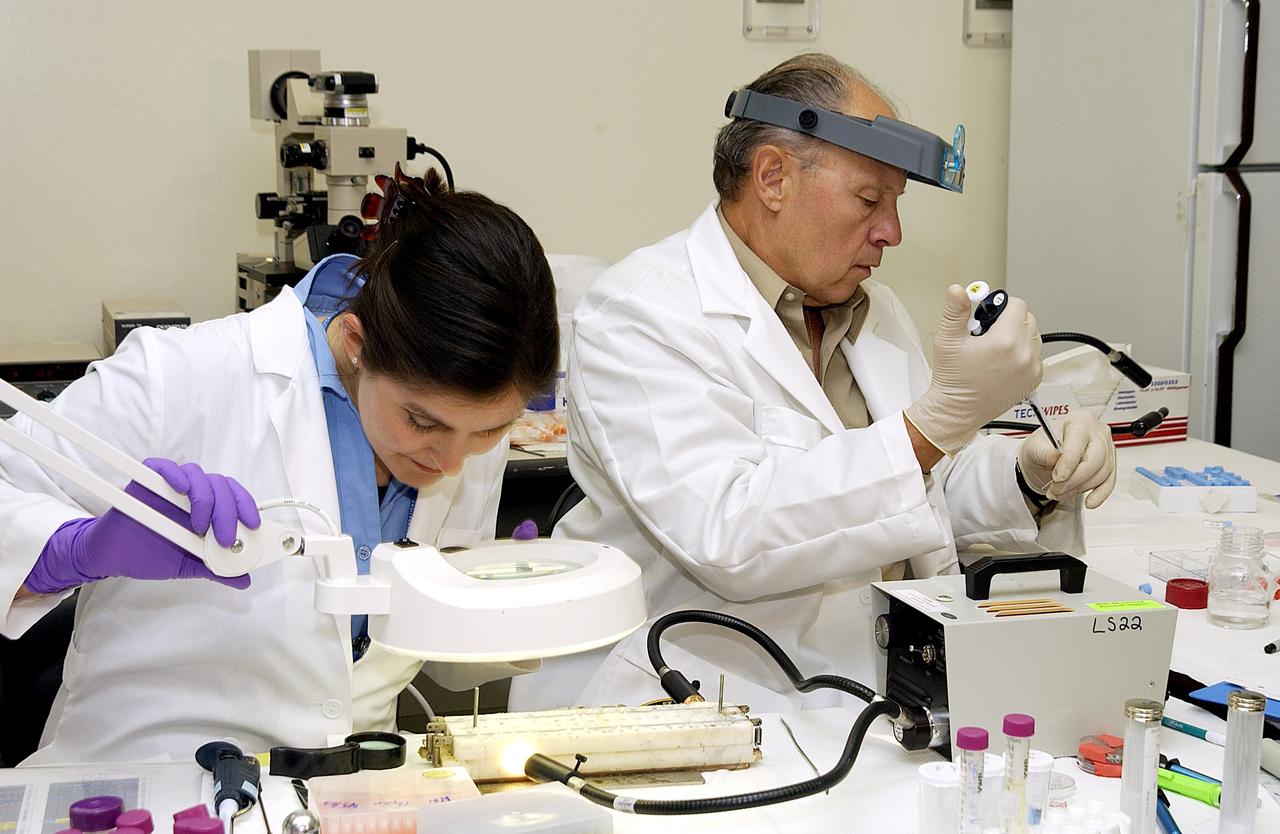
KENNEDY SPACE CENTER, FLA. -  From left, Bob McLean, Southwest Texas State University; Valerie Cassanto, Instrumentation Technology Associates, Inc.; and Dennis Morrison, NASA Johnson Space Center, process one of the experiments carried on mission STS-107. Several experiments were found during the search for Columbia debris. Included in the Commercial ITA Biomedical Experiments payload on mission STS-107 are urokinase cancer research, microencapsulation of drugs, the Growth of Bacterial Biofilm on Surfaces during Spaceflight (GOBBSS), and tin crystal formation.
KENNEDY SPACE CENTER, FLA. - From left, Bob McLean, Southwest Texas State University; Valerie Cassanto, Instrumentation Technology Associates, Inc.; and Dennis Morrison, NASA Johnson Space Center, process one of the experiments carried on mission STS-107. Several experiments were found during the search for Columbia debris. Included in the Commercial ITA Biomedical Experiments payload on mission STS-107 are urokinase cancer research, microencapsulation of drugs, the Growth of Bacterial Biofilm on Surfaces during Spaceflight (GOBBSS), and tin crystal formation.