
KENNEDY SPACE CENTER, FLA. -- The last engine is installed in orbiter Atlantis after a welding and polishing process was undertaken on flow liners where cracks were detected. All engines were removed for inspection of flow liners. Atlantis will next fly on mission STS-112, scheduled for launch no earlier than Oct. 2.
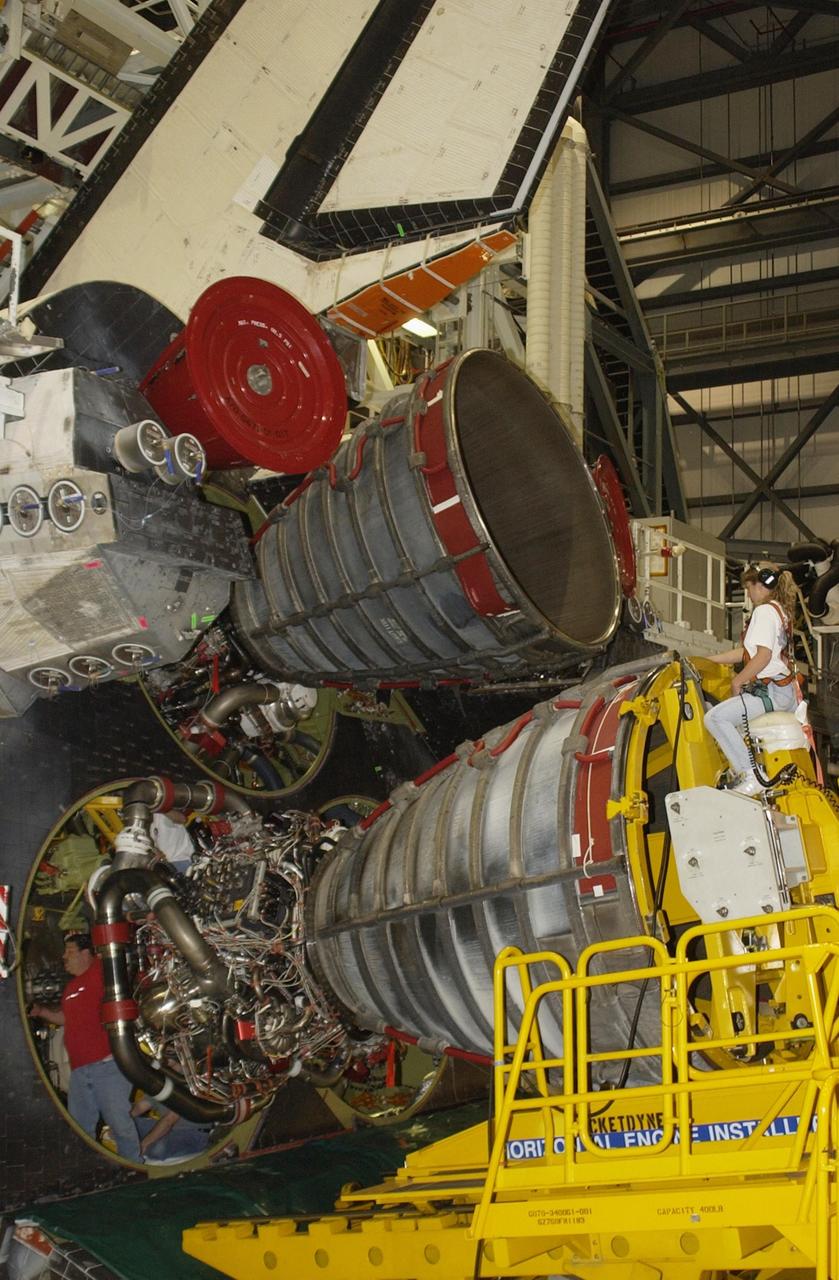
KENNEDY SPACE CENTER, FLA. -- The last engine is installed in orbiter Atlantis after a welding and polishing process was undertaken on flow liners where cracks were detected. All engines were removed for inspection of flow liners. Atlantis will next fly on mission STS-112, scheduled for launch no earlier than Oct. 2.
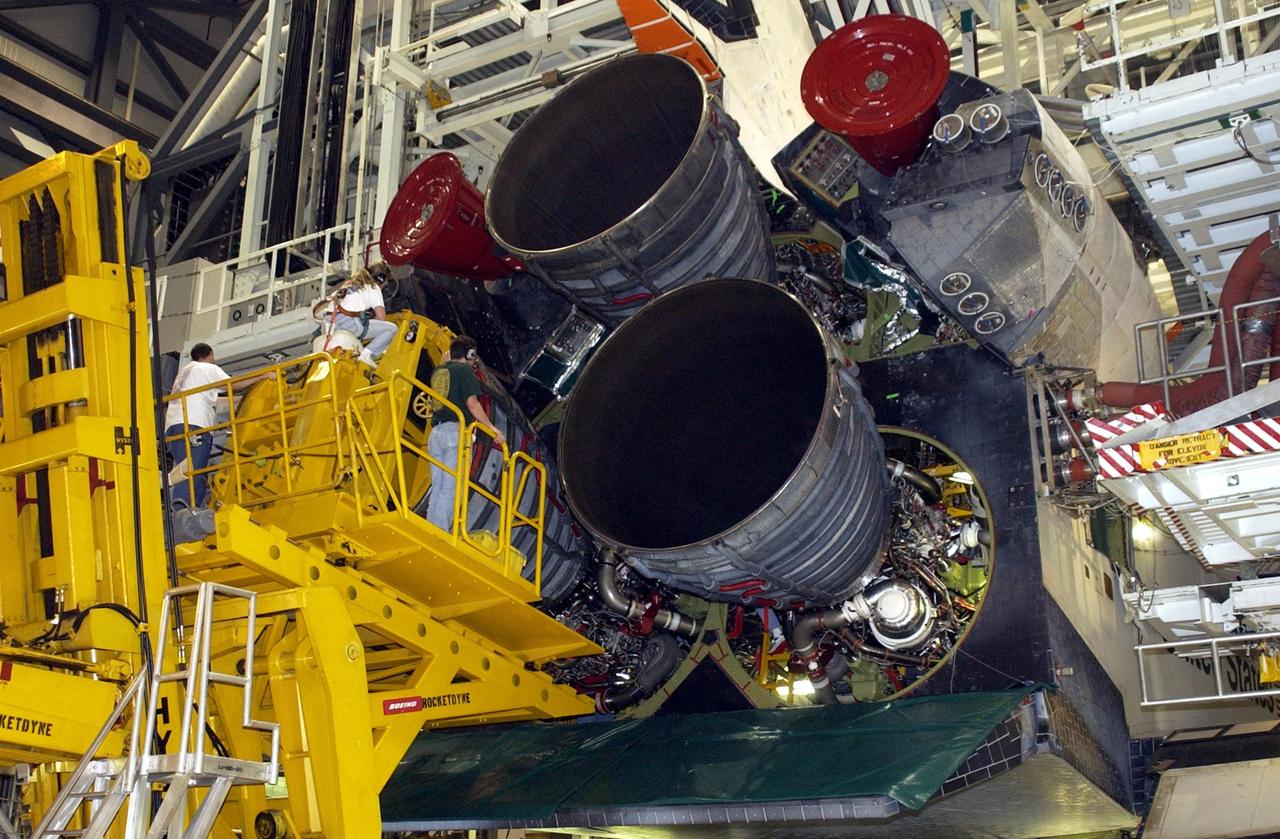
KENNEDY SPACE CENTER, FLA. -- The last engine is installed in orbiter Atlantis after a welding and polishing process was undertaken on flow liners where cracks were detected. All engines were removed for inspection of flow liners. Atlantis will next fly on mission STS-112, scheduled for launch no earlier than Oct. 2.

KENNEDY SPACE CENTER, FLA. - Workers get ready to install the last engine in orbiter Atlantis after a welding and polishing process was undertaken on flow liners where cracks were detected. All engines were removed for inspection of flow liners. Atlantis will next fly on mission STS-112, scheduled for launch no earlier than Oct. 2.

A tracking camera on Launch Pad 39B of the Kennedy Space Center in Florida captures the flames of Space Shuttle Atlantis' three main engines as the Orbiter hurdles into space on mission STS-112. Liftoff occurred at 3:46 pm EDT, October 7, 2002. Atlantis carried the Starboard-1 (S1) Integrated Truss Structure and the Crew and Equipment Translation Aid (CETA) Cart A. The S1 was the second truss structure installed on the International Space Station (ISS). It was attached to the S0 truss which was previously installed by the STS-110 mission. The CETA is the first of two human-powered carts that ride along the ISS railway, providing mobile work platforms for future space walking astronauts. The 11 day mission performed three space walks to attach the S1 truss.

KENNEDY SPACE CENTER, FLA. -- The last engine is being installed in orbiter Atlantis after a welding and polishing process was undertaken on flow liners where cracks were detected. All engines were removed for inspection of flow liners. Atlantis will next fly on mission STS-112, scheduled for launch no earlier than Oct. 2.
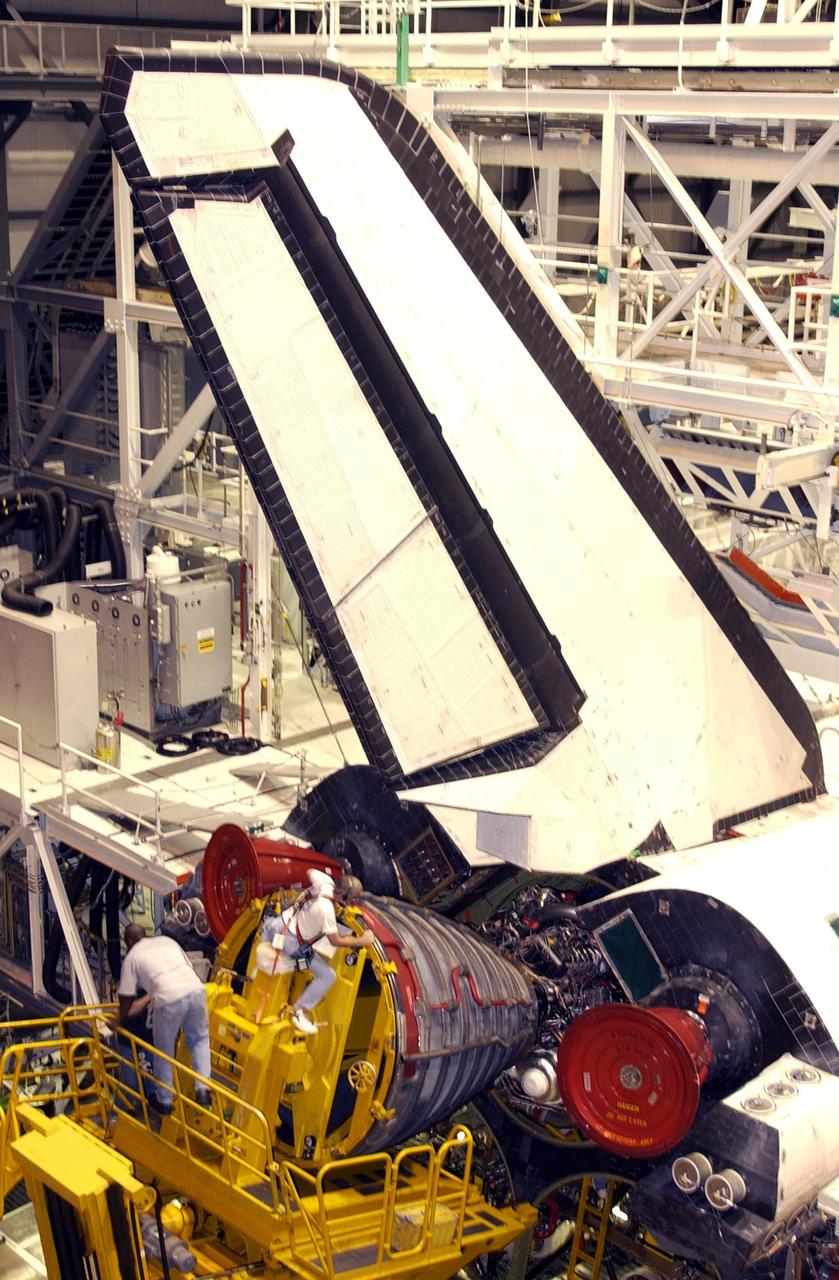
KENNEDY SPACE CENTER, FLA. -- The first Space Shuttle Main Engine (SSME) is installed on Space Shuttle Atlantis following the welding repair of the propulsion system flow liners as preparations to launch mission STS-112 continue. Angela DiMattia is the move director for Rocketdyne. Rocketdyne employee Gerald Braham is seen here behind the engine offering additional guidance. Mission STS-112 is an assembly flight to the International Space Station and is targeted for launch no earlier than Sept. 28, 2002. Members of the STS-112 crew are Commander Jeffrey Ashby; Pilot Pamela Melroy; and Mission Specialists David Wolf, Piers Sellers, Sandra Magnus, and Fyodor Yurchikhin of the Russian Space Agency.
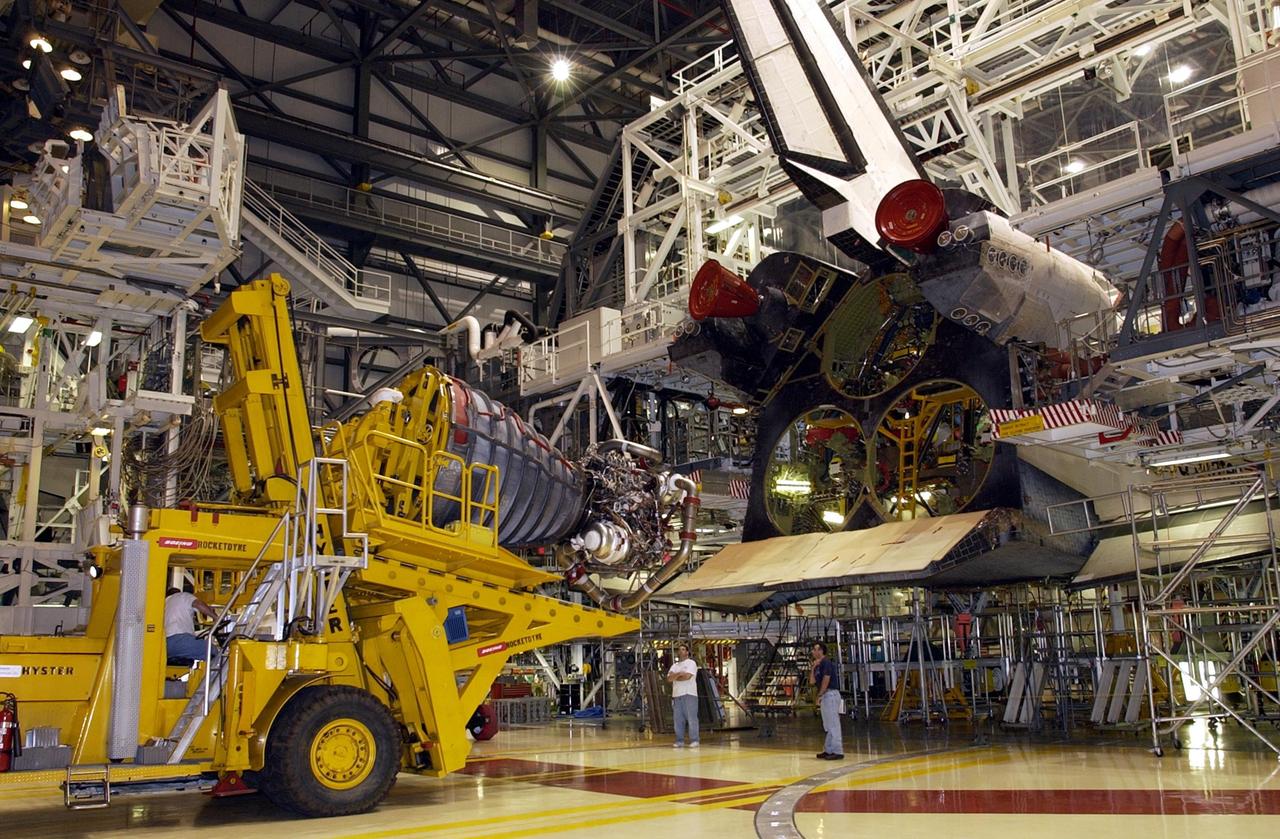
KENNEDY SPACE CENTER, FLA. -- The first Space Shuttle Main Engine (SSME) is installed on Space Shuttle Atlantis following the welding repair of the propulsion system flow liners as preparations to launch mission STS-112 continue. Mission STS-112 is an assembly flight to the International Space Station and is targeted for launch no earlier than Sept. 28, 2002. Members of the STS-112 crew are Commander Jeffrey Ashby; Pilot Pamela Melroy; and Mission Specialists David Wolf, Piers Sellers, Sandra Magnus, and Fyodor Yurchikhin of the Russian Space Agency.
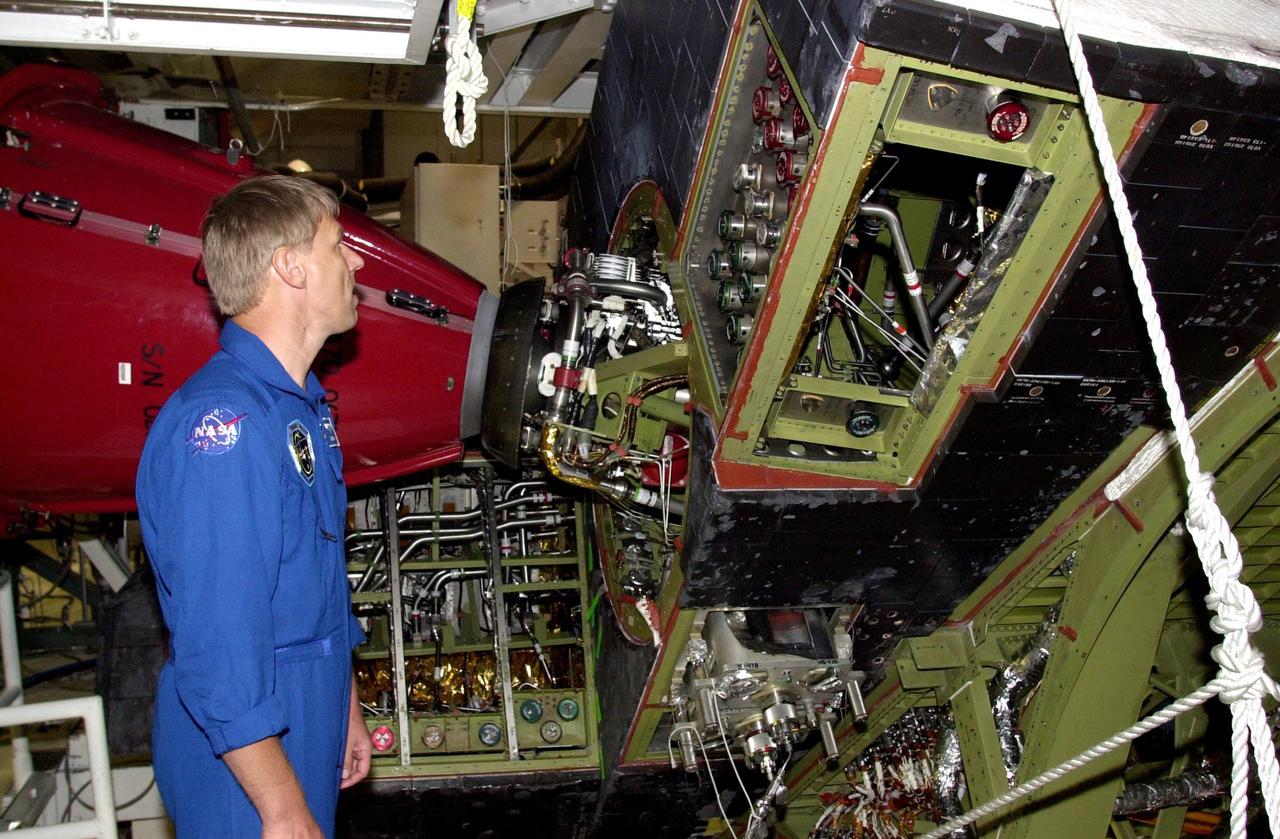
KENNEDY SPACE CENTER, FLA. - During a Crew Equipment Interface Test, STS-112 Mission Specialist Piers Sellers looks at the engine on Atlantis, the designated orbiter for the mission. On the 15th assembly flight to the International Space Station, Atlantis and crew will be ferrying the S1 Integrated Truss Structure. The S1 truss is the first starboard (right-side) truss segment, whose main job is providing structural support for the radiator panels that cool the Space Station's complex power system. The S1 truss segment also will house communications systems, external experiment positions and other subsystems. The S1 truss will be attached to the S0 truss. STS-112 is currently scheduled for launch Aug. 22, 2002

KENNEDY SPACE CENTER, FLA. -- Workers on the engine lift get ready to install the last engine in orbiter Atlantis after a welding and polishing process was undertaken on flow liners where cracks were detected. All engines were removed for inspection of flow liners. Atlantis will next fly on mission STS-112, scheduled for launch no earlier than Oct. 2.
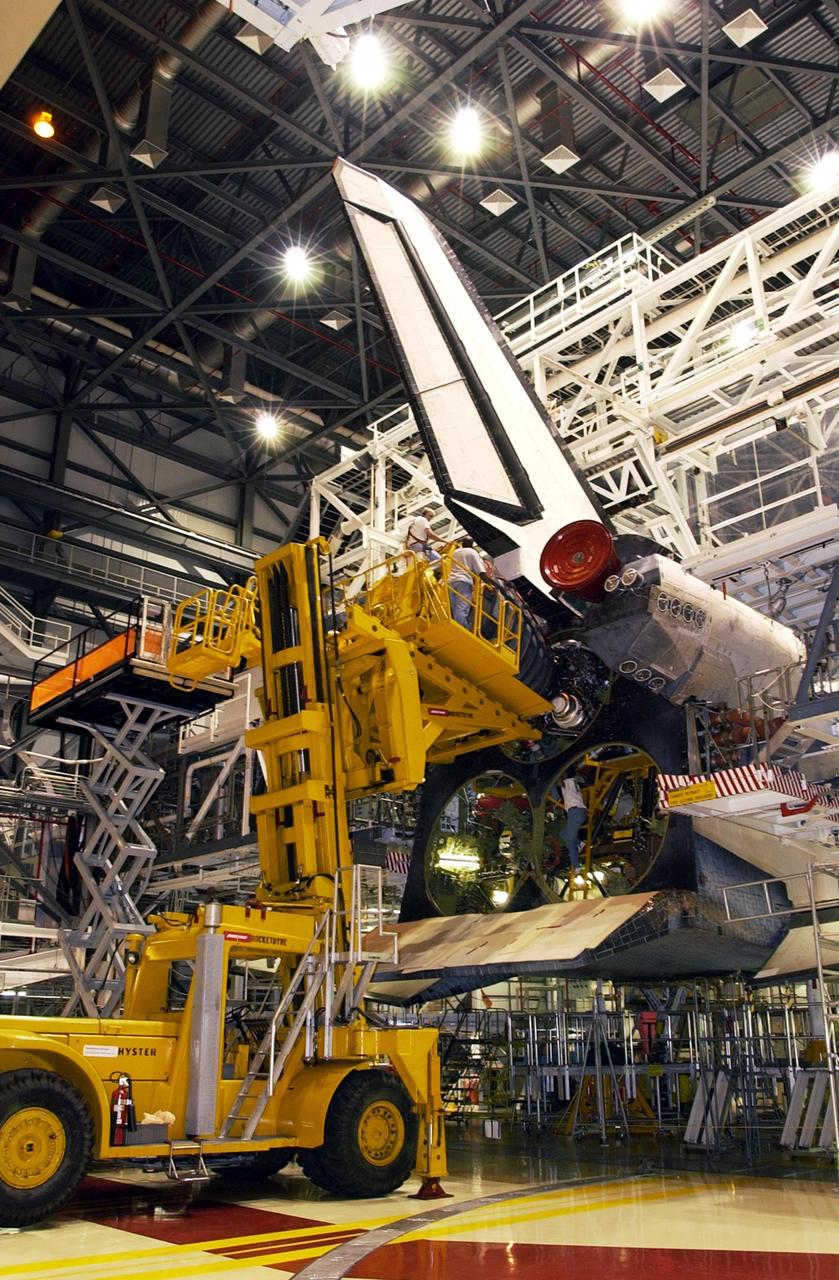
KENNEDY SPACE CENTER, FLA. -- The first Space Shuttle Main Engine (SSME) is installed on Space Shuttle Atlantis following the welding repair of the propulsion flow liners as preparations to launch mission STS-112 continue. Angela DiMattia is the move director for Rocketdyne. Rocketdyne employee Gerald Braham is seen here behind the engine offering additional guidance. Below him is Teryon Jones (right), also of Rocketdyne. Mission STS-112 is an assembly flight to the International Space Station and is targeted for launch no earlier than Sept. 28, 2002. Members of the STS-112 crew are Commander Jeffrey Ashby; Pilot Pamela Melroy; and Mission Specialists David Wolf, Piers Sellers, Sandra Magnus, and Fyodor Yurchikhin of the Russian Space Agency.
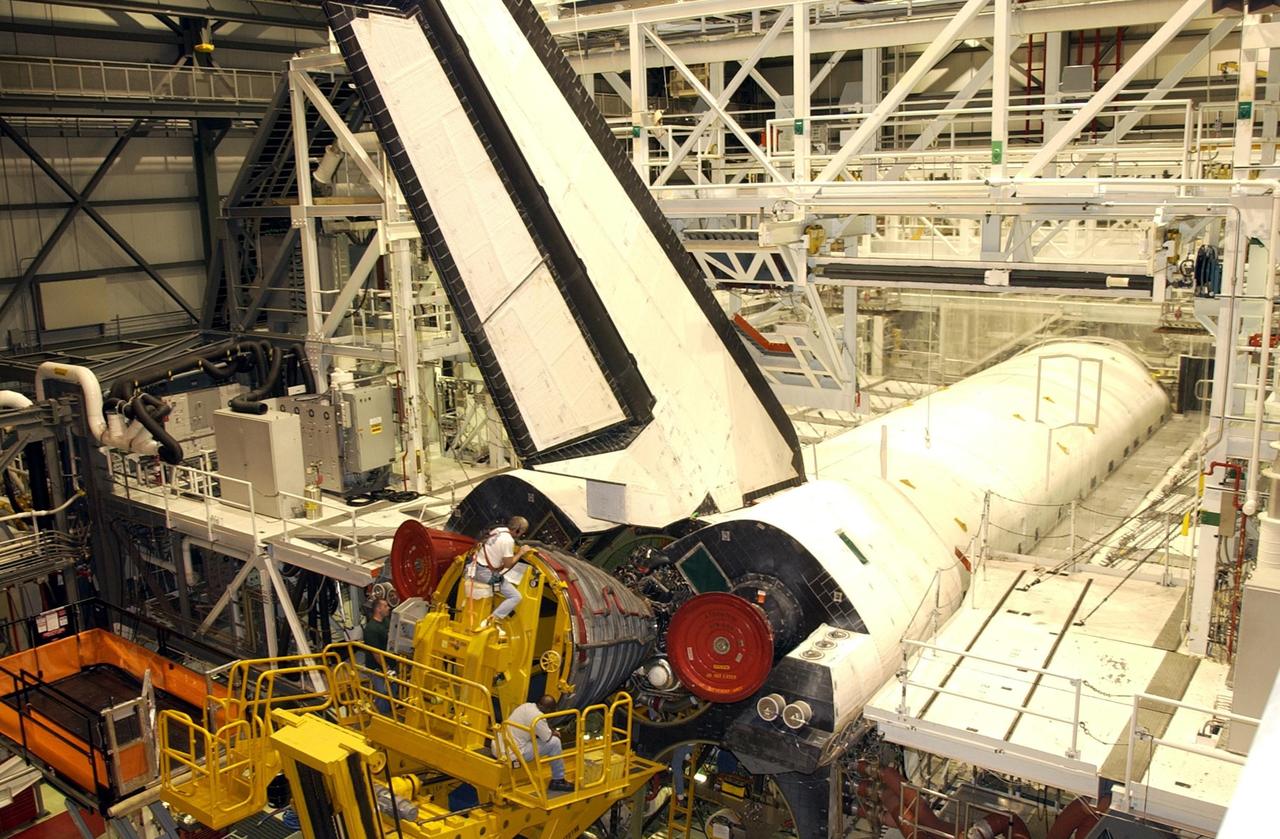
KENNEDY SPACE CENTER, FLA. -- The first Space Shuttle Main Engine (SSME) is installed on Space Shuttle Atlantis following the welding repair of the propulsion system flow liners as preparations to launch mission STS-112 continue. Angela DiMattia is the move director for Rocketdyne. Rocketdyne employee Gerald Braham is seen here behind the engine offering additional guidance. Below him are Mark Starr (left) and Teryon Jones (right), both employees of Rocketdyne. Mission STS-112 is an assembly flight to the International Space Station and is targeted for launch no earlier than Sept. 28, 2002. Members of the STS-112 crew are Commander Jeffrey Ashby; Pilot Pamela Melroy; and Mission Specialists David Wolf, Piers Sellers, Sandra Magnus, and Fyodor Yurchikhin of the Russian Space Agency.
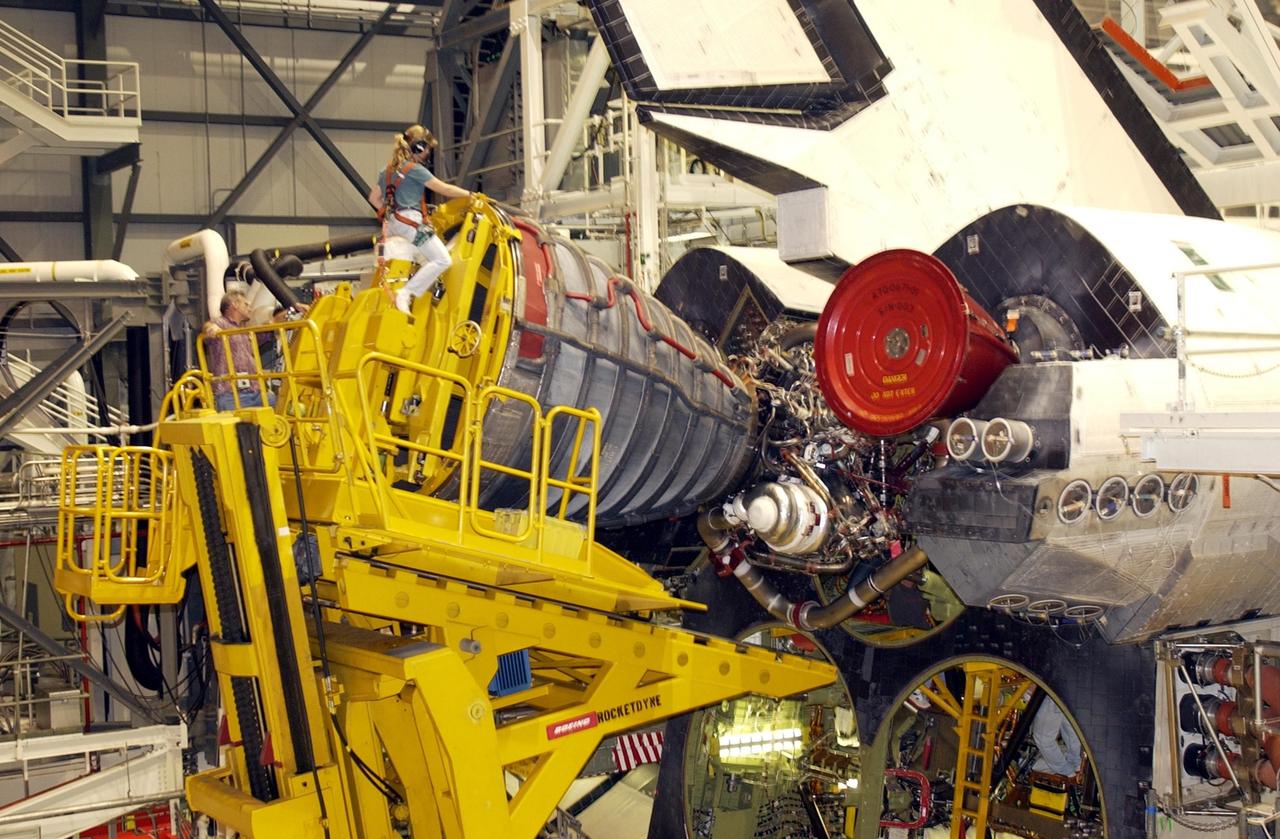
KENNEDY SPACE CENTER, FLA. -- The first Space Shuttle Main Engine (SSME) is installed on Space Shuttle Atlantis following the welding repair of the propulsion system flow liners as preparations to launch mission STS-112 continue. Sitting atop the engine is Angela DiMattia, the move director for Rocketdyne. Just behind and below her is Rocketdyne employee Brickford Lero, offering some additional guidance. Mission STS-112 is an assembly flight to the International Space Station and is targeted for launch no earlier than Sept. 28, 2002. Members of the STS-112 crew are Commander Jeffrey Ashby; Pilot Pamela Melroy; and Mission Specialists David Wolf, Piers Sellers, Sandra Magnus, and Fyodor Yurchikhin of the Russian Space Agency.
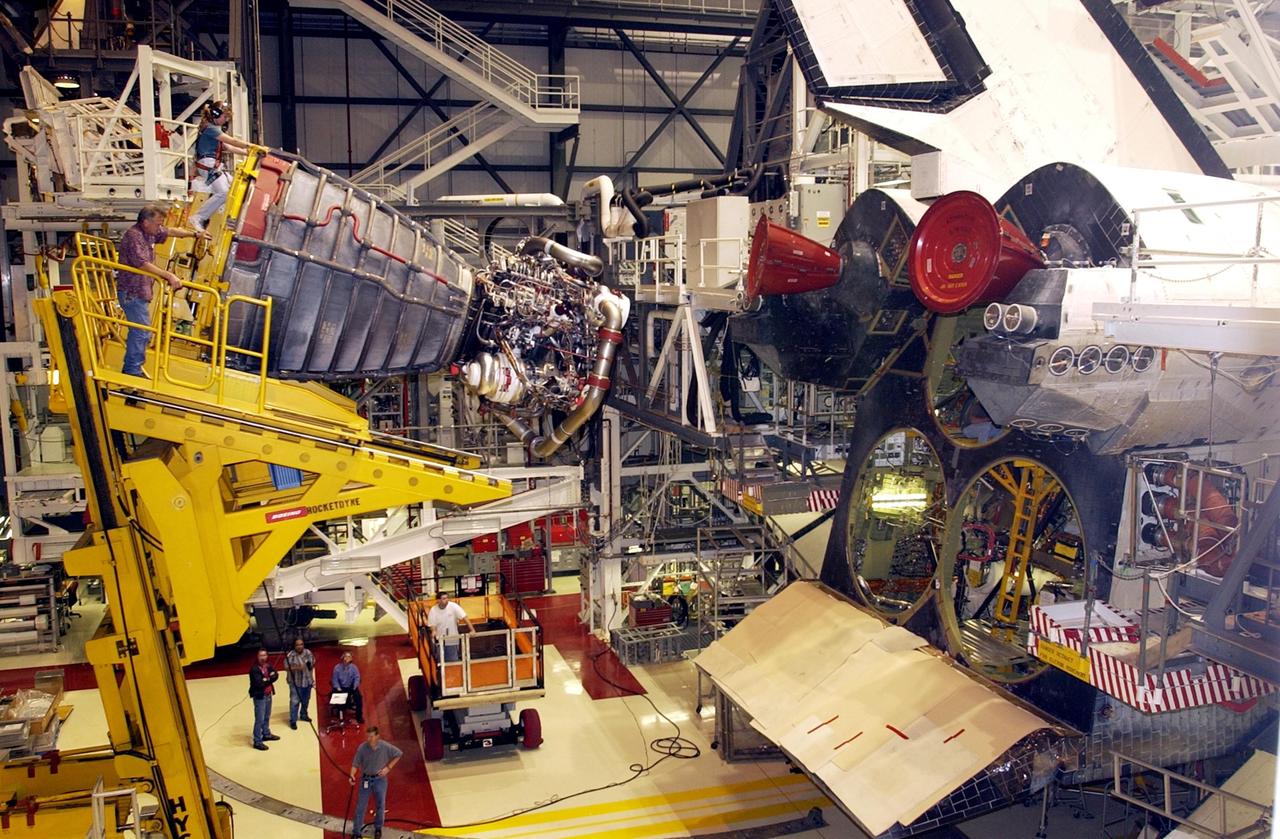
KENNEDY SPACE CENTER, FLA. -- The first Space Shuttle Main Engine (SSME) is installed on Space Shuttle Atlantis following the welding repair of the propulsion system flow liners as preparations to launch mission STS-112 continue. Sitting atop the engine is Angela DiMattia, the move director for Rocketdyne. Just behind and below her is Rocketdyne employee Brickford Lero, offering some additional guidance. Mission STS-112 is an assembly flight to the International Space Station and is targeted for launch no earlier than Sept. 28, 2002. Members of the STS-112 crew are Commander Jeffrey Ashby; Pilot Pamela Melroy; and Mission Specialists David Wolf, Piers Sellers, Sandra Magnus, and Fyodor Yurchikhin of the Russian Space Agency.

KENNEDY SPACE CENTER, FLA. -- During a Crew Equipment Interface Test, STS-112 Mission Specialist Piers Sellers (foreground) points to an engine line on Atlantis, the designated orbiter for the mission, while Commander Jeffrey Ashby (behind) looks on. STS-112 is the 15th assembly flight to the International Space Station and will be ferrying the S1 Integrated Truss Structure. The S1 truss is the first starboard (right-side) truss segment, whose main job is providing structural support for the radiator panels that cool the Space Station's complex power system. The S1 truss segment also will house communications systems, external experiment positions and other subsystems. The S1 truss will be attached to the S0 truss. STS-112 is currently scheduled for launch Aug. 22, 2002

KENNEDY SPACE CENTER, FLA. -- During a Crew Equipment Interface Test, STS-112 Mission Specialist Piers Sellers (left) points to an engine line on Atlantis, the designated orbiter for the mission, while Commander Jeffrey Ashby (right) looks on. STS-112 is the 15th assembly flight to the International Space Station and will be ferrying the S1 Integrated Truss Structure. The S1 truss is the first starboard (right-side) truss segment, whose main job is providing structural support for the radiator panels that cool the Space Station's complex power system. The S1 truss segment also will house communications systems, external experiment positions and other subsystems. The S1 truss will be attached to the S0 truss. STS-112 is currently scheduled for launch Aug. 22, 2002
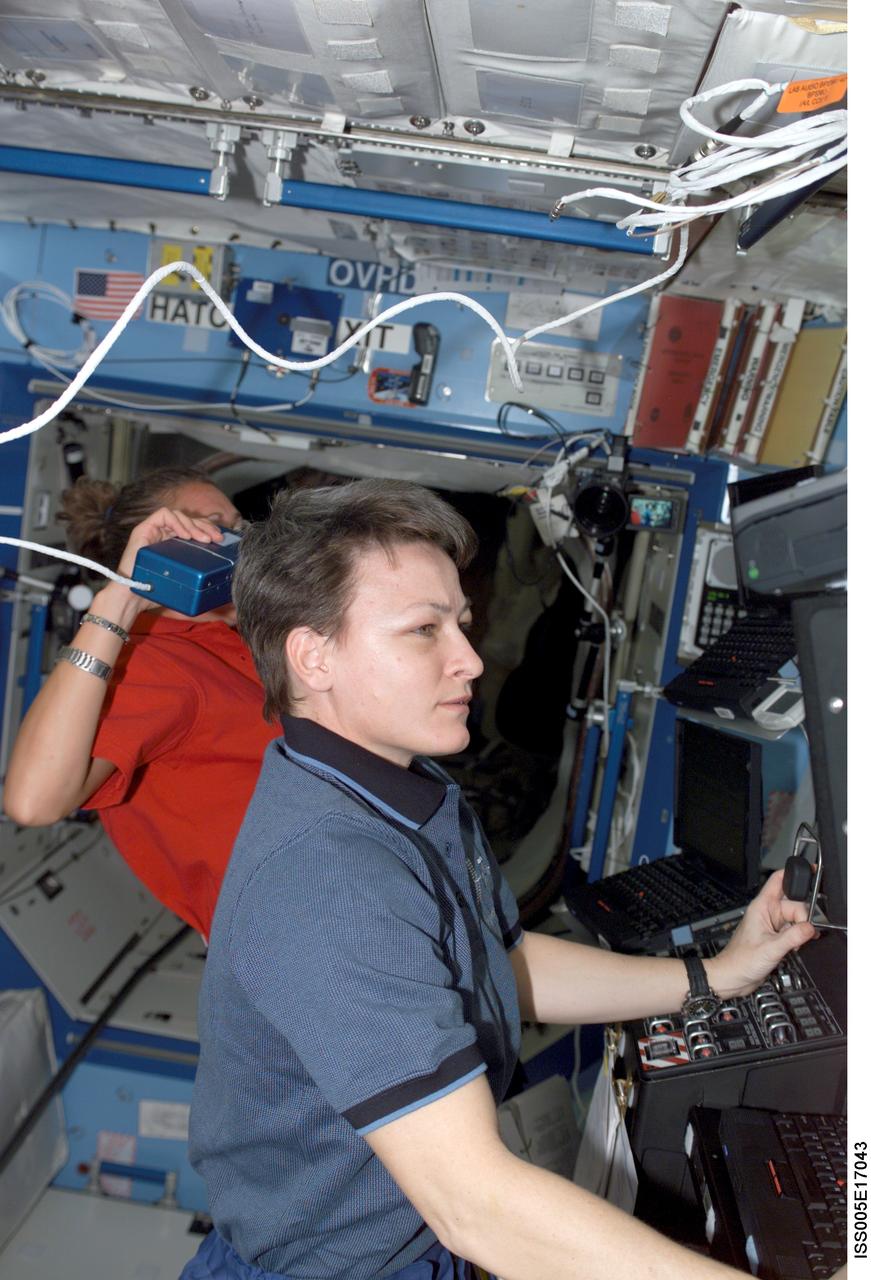
ISS005-E-17043 (10 October 2002) --- Astronauts Peggy A. Whitson (foreground), Expedition Five flight engineer, and Sandra H. Magnus, STS-112 mission specialist, work the controls of the Canadarm2 from inside the Destiny laboratory on the International Space Station (ISS). Whitson and Magnus used the station’s robotic arm to lift the Starboard One (S1) Truss out of the Atlantis’ payload bay and move it into position on the starboard end of the S0 (S-Zero) Truss.
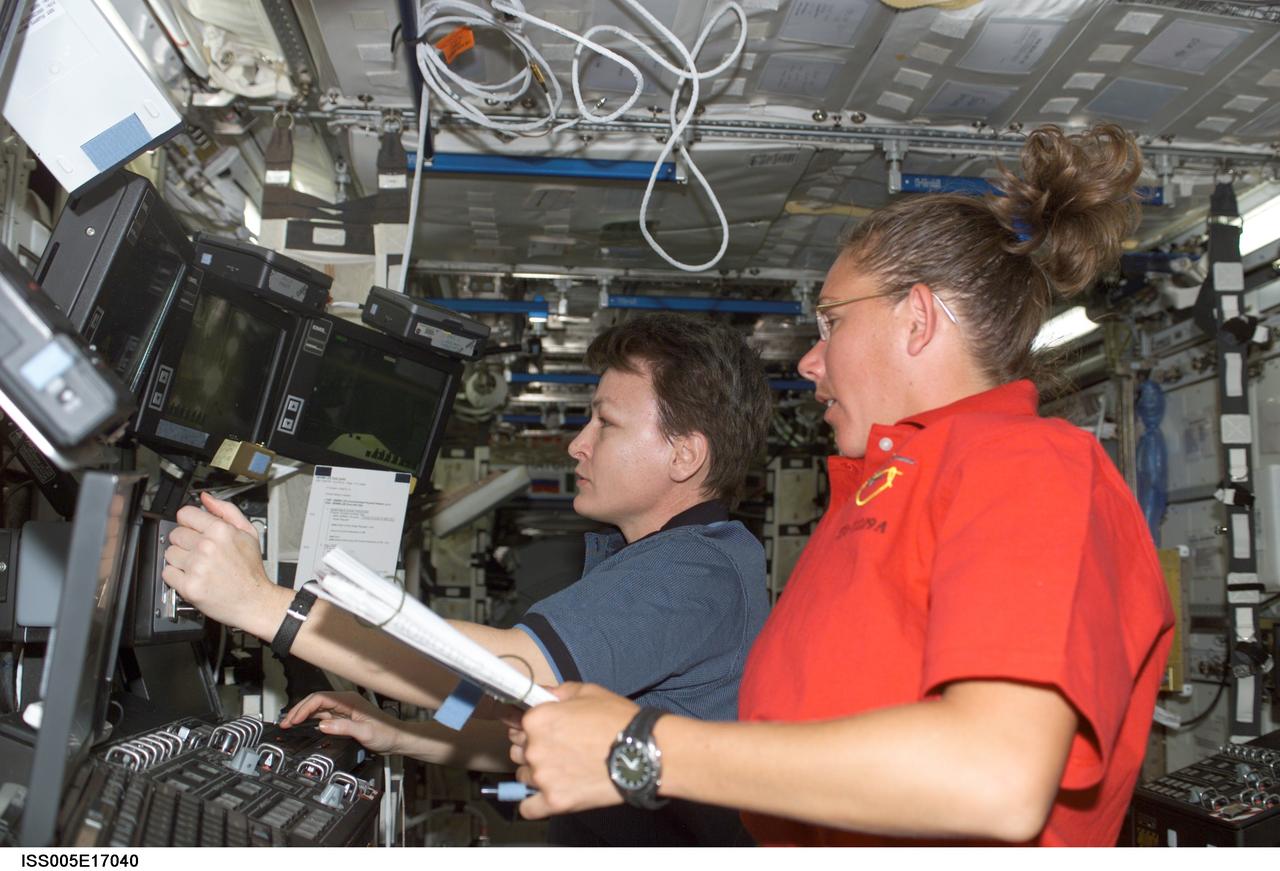
ISS005-E-17040 (10 October 2002) --- Astronauts Peggy A. Whitson (background), Expedition Five flight engineer, and Sandra H. Magnus, STS-112 mission specialist, work the controls of the Canadarm2 from inside the Destiny laboratory on the International Space Station (ISS). Whitson and Magnus used the station’s robotic arm to lift the Starboard One (S1) Truss out of the Atlantis’ payload bay and move it into position on the starboard end of the S0 (S-Zero) Truss.
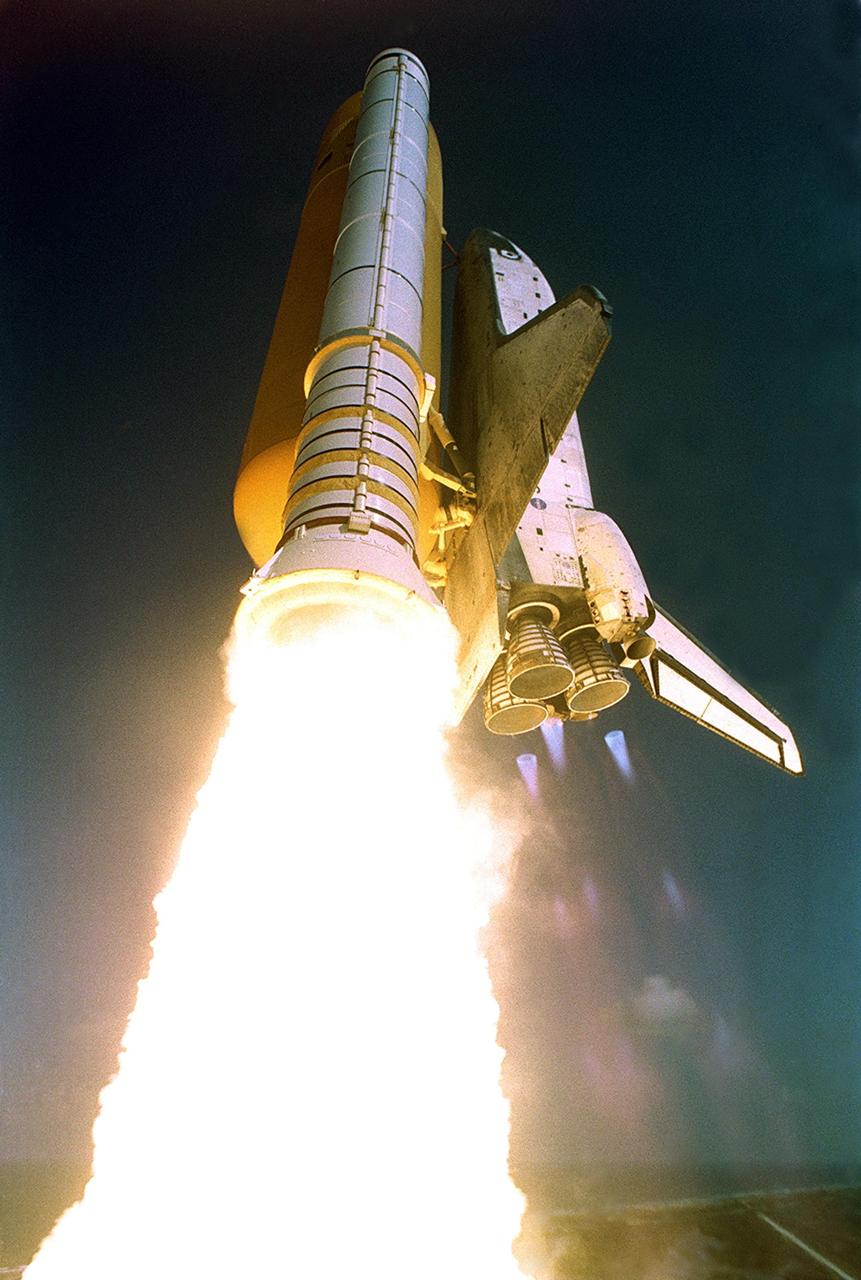
KENNEDY SPACE CENTER, FLA. - A tracking camera on Launch Pad 39B captures the flames of Space Shuttle Atlantis' three main engines as Altantis hurtles into space on mission STS-112. The shoreline of the Atlantic Ocean is visible in the background. Liftoff occurred at 3:46 p.m. EDT. Atlantis carries the S1 Integrated Truss Structure and the Crew and Equipment Translation Aid (CETA) Cart A. The CETA is the first of two human-powered carts that will ride along the ISS railway, providing mobile work platforms for future spacewalking astronauts. On the 11-day mission, three spacewalks are planned to attach the S1 truss.

KENNEDY SPACE CENTER, FLA. -- Workers perform post-polishing inspection on Atlantis' flow liners. Following an extensive investigation into the cause of tiny cracks inside fuel lines of the four space shuttle orbiters, a welding and polishing process is being implemented that will restore flow-liner integrity to design condition. These liners are inside the space shuttle Main Propulsion System fuel lines to preclude liquid hydrogen and oxygen turbulent flow into the engines during launch and climb to orbit. The technique calls for welds of three very small cracks on Atlantis and two on Endeavour. Additionally, the microscopic rough edges of the liner holes are being smoothed by polishing to reduce the chance of more cracks developing in the future. Atlantis is scheduled on mission STS-112, an assembly flight to the International Space Station, no earlier than Sept. 28, 2002.

KENNEDY SPACE CENTER, FLA. -- At the KSC Press Site, Jerry Goudy (left), a technician with United Space Alliance, shows the media an orbiter flow liner similar to the ones in which cracks were found recently. Goudy was responsible for welding the cracks in Atlantis. These liners are inside the space shuttle Main Propulsion System fuel lines to preclude liquid hydrogen and oxygen turbulent flow into the engines during launch and climb to orbit. A welding and polishing process is being implemented that will restore flow-liner integrity to design condition. The technique has called for welds of three very small cracks on Atlantis and two on Endeavour. Additionally, the microscopic rough edges of the liner holes are being smoothed by polishing to reduce the chance of more cracks developing in the future. Atlantis is scheduled to fly on mission STS-112.

KENNEDY SPACE CENTER, FLA. -- Workers perform post-polishing inspection on Atlantis' flow liners. Following an extensive investigation into the cause of tiny cracks inside fuel lines of the four space shuttle orbiters, a welding and polishing process is being implemented that will restore flow-liner integrity to design condition. These liners are inside the space shuttle Main Propulsion System fuel lines to preclude liquid hydrogen and oxygen turbulent flow into the engines during launch and climb to orbit. The technique calls for welds of three very small cracks on Atlantis and two on Endeavour. Additionally, the microscopic rough edges of the liner holes are being smoothed by polishing to reduce the chance of more cracks developing in the future. Atlantis is scheduled on mission STS-112, an assembly flight to the International Space Station, no earlier than Sept. 28, 2002.

KENNEDY SPACE CENTER, FLA. -- At the KSC Press Site, Jerry Goudy (background), a technician with United Space Alliance, explains to the media the welding used to fix the cracks found recently in orbiter flow liners. Goudy was responsible for welding the cracks in Atlantis. These liners are inside the space shuttle Main Propulsion System fuel lines to preclude liquid hydrogen and oxygen turbulent flow into the engines during launch and climb to orbit. A welding and polishing process is being implemented that will restore flow-liner integrity to design condition. The technique has called for welds of three very small cracks on Atlantis and two on Endeavour. Additionally, the microscopic rough edges of the liner holes are being smoothed by polishing to reduce the chance of more cracks developing in the future. Atlantis is scheduled to fly on mission STS-112.

KENNEDY SPACE CENTER, FLA. -- Workers perform post-polishing inspection on Atlantis' flow liners. Following an extensive investigation into the cause of tiny cracks inside fuel lines of the four space shuttle orbiters, a welding and polishing process is being implemented that will restore flow-liner integrity to design condition. These liners are inside the space shuttle Main Propulsion System fuel lines to preclude liquid hydrogen and oxygen turbulent flow into the engines during launch and climb to orbit. The technique calls for welds of three very small cracks on Atlantis and two on Endeavour. Additionally, the microscopic rough edges of the liner holes are being smoothed by polishing to reduce the chance of more cracks developing in the future. Atlantis is scheduled on mission STS-112, an assembly flight to the International Space Station, no earlier than Sept. 28, 2002.

KENNEDY SPACE CENTER, FLA. -- At the KSC Press Site, Jerry Goudy, a technician with United Space Alliance, poses with his helmet and a sample flow liner used in an orbiter. Cracks were found in several flow liners recently; Goudy was responsible for welding the cracks in Atlantis. These liners are inside the space shuttle Main Propulsion System fuel lines to preclude liquid hydrogen and oxygen turbulent flow into the engines during launch and climb to orbit. A welding and polishing process is being implemented that will restore flow-liner integrity to design condition. The technique has called for welds of three very small cracks on Atlantis and two on Endeavour. Additionally, the microscopic rough edges of the liner holes are being smoothed by polishing to reduce the chance of more cracks developing in the future. Atlantis is scheduled to fly on mission STS-112.

KENNEDY SPACE CENTER, FLA. - United Space Alliance technician Jerry Goudy performs arc welding on one of Atlantis' flow liners. Following an extensive investigation into the cause of tiny cracks inside fuel lines of the four space shuttle orbiters, a welding and polishing process is being implemented that will restore flow-liner integrity to design condition. These liners are inside the space shuttle Main Propulsion System fuel lines to preclude liquid hydrogen and oxygen turbulent flow into the engines during launch and climb to orbit. The technique has called for welds of three very small cracks on Atlantis and two on Endeavour. Additionally, the microscopic rough edges of the liner holes are being smoothed by polishing to reduce the chance of more cracks developing in the future. Atlantis is scheduled on mission STS-112, an assembly flight to the International Space Station, no earlier than Sept. 28, 2002.

KENNEDY SPACE CENTER, FLA. -- At the KSC Press Site, Jerry Goudy, a technician with United Space Alliance, poses for a photo. After cracks were found in several flow liners recently, Goudy was responsible for welding the cracks in Atlantis. These liners are inside the space shuttle Main Propulsion System fuel lines to preclude liquid hydrogen and oxygen turbulent flow into the engines during launch and climb to orbit. A welding and polishing process is being implemented that will restore flow-liner integrity to design condition. The technique has called for welds of three very small cracks on Atlantis and two on Endeavour. Additionally, the microscopic rough edges of the liner holes are being smoothed by polishing to reduce the chance of more cracks developing in the future. Atlantis is scheduled to fly on mission STS-112.

KENNEDY SPACE CENTER, FLA. -- At the KSC Press Site, Jerry Goudy, a technician with United Space Alliance, poses for a photo. After cracks were found in several flow liners recently, Goudy was responsible for welding the cracks in Atlantis. These liners are inside the space shuttle Main Propulsion System fuel lines to preclude liquid hydrogen and oxygen turbulent flow into the engines during launch and climb to orbit. A welding and polishing process is being implemented that will restore flow-liner integrity to design condition. The technique has called for welds of three very small cracks on Atlantis and two on Endeavour. Additionally, the microscopic rough edges of the liner holes are being smoothed by polishing to reduce the chance of more cracks developing in the future. Atlantis is scheduled to fly on mission STS-112.

KENNEDY SPACE CENTER, FLA. - United Space Alliance technician Jerry Goudy performs arc welding on one of Atlantis' flow liners. Following an extensive investigation into the cause of tiny cracks inside fuel lines of the four space shuttle orbiters, a welding and polishing process is being implemented that will restore flow-liner integrity to design condition. These liners are inside the space shuttle Main Propulsion System fuel lines to preclude liquid hydrogen and oxygen turbulent flow into the engines during launch and climb to orbit. The technique has called for welds of three very small cracks on Atlantis and two on Endeavour. Additionally, the microscopic rough edges of the liner holes are being smoothed by polishing to reduce the chance of more cracks developing in the future. Atlantis is scheduled on mission STS-112, an assembly flight to the International Space Station, no earlier than Sept. 28, 2002.
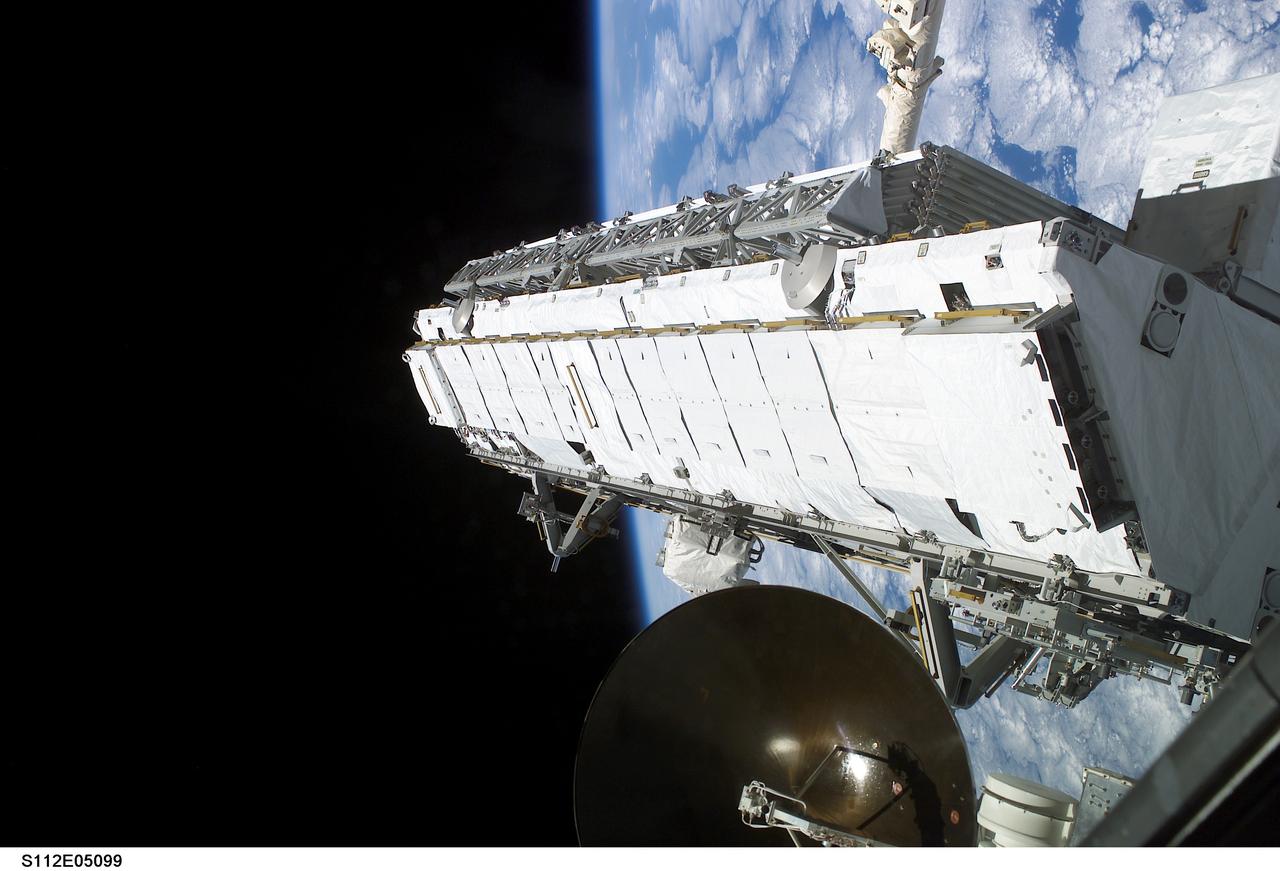
STS112-E-05099 (10 October 2002) --- Backdropped by the blackness of space and Earth’s horizon, the Starboard One (S1) Truss is moved from the Space Shuttle Atlantis’ cargo bay. Astronauts Sandra H. Magnus, STS-112 mission specialist, and Peggy A. Whitson, Expedition Five flight engineer, used the Canadarm2 from inside Destiny laboratory on the International Space Station (ISS) to lift the S1 Truss out of the orbiter’s payload bay and move it into position at the starboard end of the S0 (S-Zero) Truss.
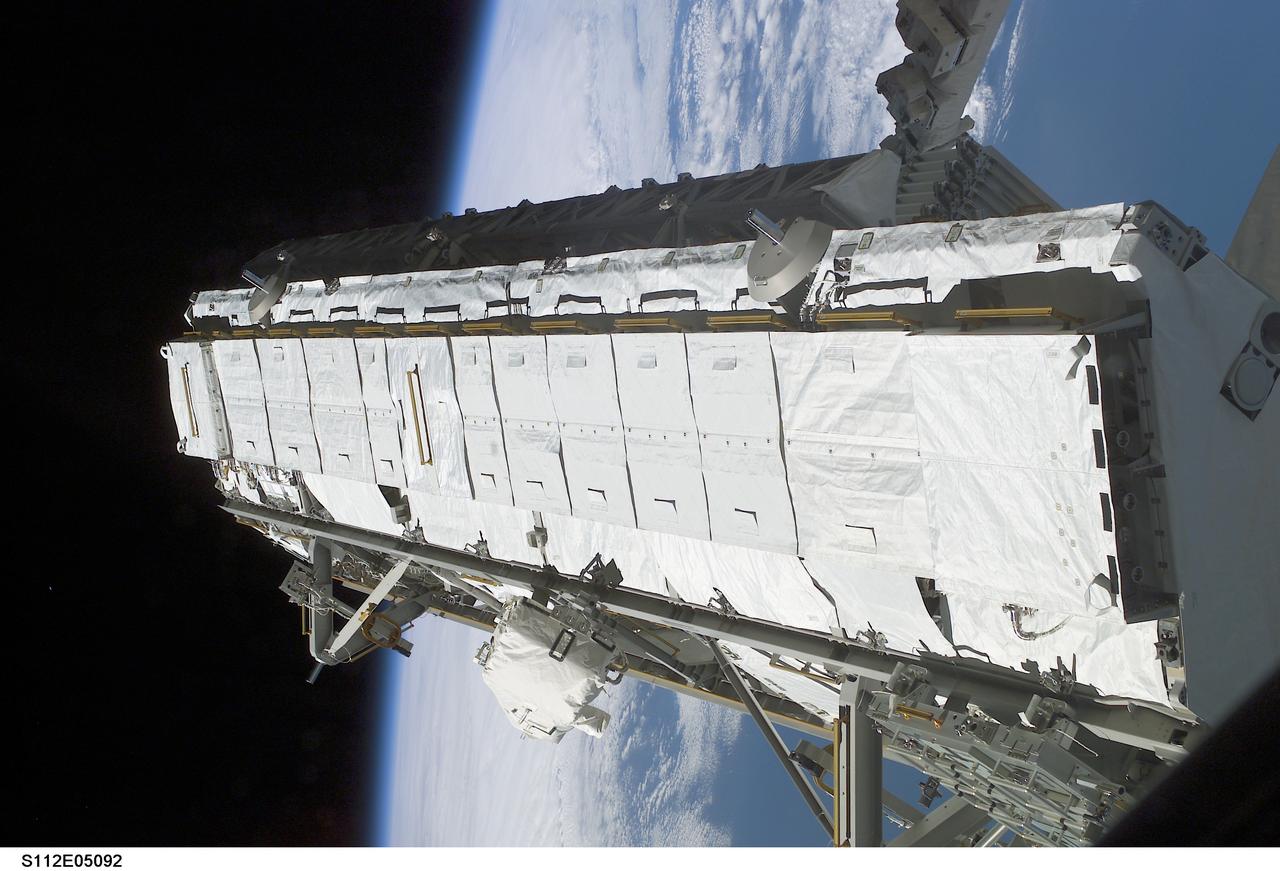
STS112-E-05092 (10 October 2002) --- Backdropped by the blackness of space and Earth’s horizon, the Starboard One (S1) Truss is moved from the Space Shuttle Atlantis’ cargo bay. Astronauts Sandra H. Magnus, STS-112 mission specialist, and Peggy A. Whitson, Expedition Five flight engineer, used the Canadarm2 from inside Destiny laboratory on the International Space Station (ISS) to lift the S1 Truss out of the orbiter’s payload bay and move it into position at the starboard end of the S0 (S-Zero) Truss.
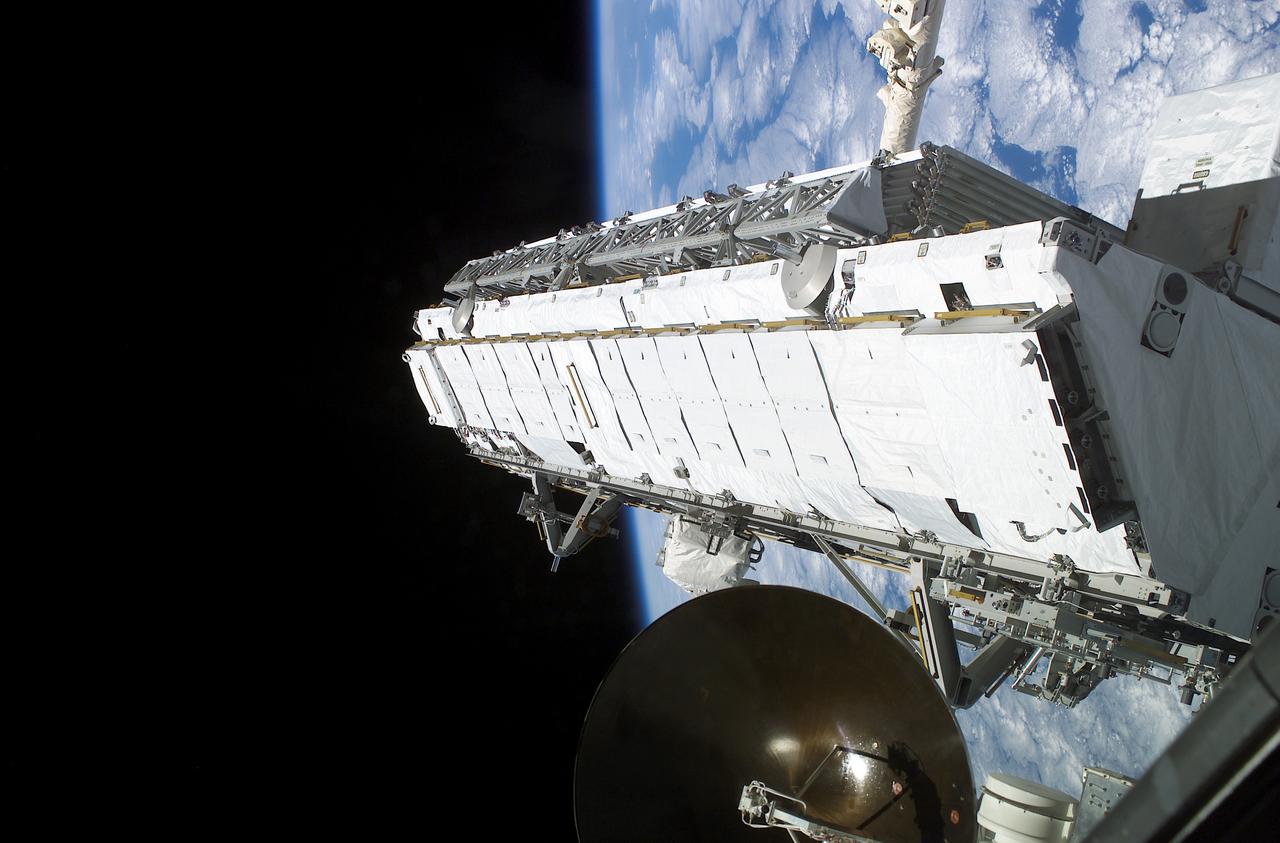
Being attached to the Canadarm2 on the International Space Station (ISS), the Remote Manipulator System arm built by the Canadian Space Agency, the Integrated Truss Assembly (S1) Truss is suspended over the Space Shuttle Orbiter Atlantis' cargo bay. Astronauts Sandra H. Magnus, STS-112 mission specialist, and Peggy A. Whitson, Expedition Five flight engineer, used the Canadarm2 from inside the Destiny laboratory on the ISS to lift the S1 truss out of the orbiter's cargo bay and move it into position prior to its installation on the ISS. The primary payloads of this mission, ISS Assembly Mission 9A, were the Integrated Truss Assembly S1 (S One), the starboard side thermal radiator truss, and the Crew Equipment Translation Aid (CETA) cart to the ISS. The S1 truss provides structural support for the orbiting research facility's radiator panels, which use ammonia to cool the Station's complex power system. The S1 truss was attached to the S0 (S Zero) truss, which was launched on April 8, 2002 aboard the STS-110, and flows 637 pounds of anhydrous ammonia through three heat-rejection radiators. The truss is 45-feet long, 15-feet wide, 10-feet tall, and weighs approximately 32,000 pounds. The CETA cart was attached to the Mobil Transporter and will be used by assembly crews on later missions. Manufactured by the Boeing Company in Huntington Beach, California, the truss primary structure was transferred to the Marshall Space Flight Center in February 1999 for hardware installations and manufacturing acceptance testing. The launch of the STS-112 mission occurred on October 7, 2002, and its 11-day mission ended on October 18, 2002.