
KENNEDY SPACE CENTER, FLA. -- STS-112 crew members share a few words after their arrival at the KSC Shuttle Landing Facility to begin launch preparations. In the center are Commander Jeffrey Ashby (left) and Mission Specialist David Wolf (right). With their backs to the camera are Mission Specialists Piers Sellers (far left) and Sandra Magnus (far right). Not shown are Pilot Pamela Melroy and Mission Specialist Fyodor Yurchikhin, who is with the Russian Space Agency. STS-112, aboard Space Shuttle Atlantis, is the 15th assembly mission to the International Space Station. Atlantis will be carrying the S1 Integrated Truss Structure, the first starboard truss segment, to be attached to the central truss segment, S0, and the Crew and Equipment Translation Aid (CETA) Cart A. The CETA is the first of two human-powered carts that will ride along the ISS railway, providing mobile work platforms for future spacewalking astronauts. The 11-day mission includes three spacewalks. Launch is scheduled for Oct. 2 between 2 and 6 p.m.

KENNEDY SPACE CENTER, FLA. --STS-112 Pilot Pamela Melroy prepares to taxi the Shuttle Training Aircraft to the runway at the Shuttle Landing Facility as part of landing exercises.
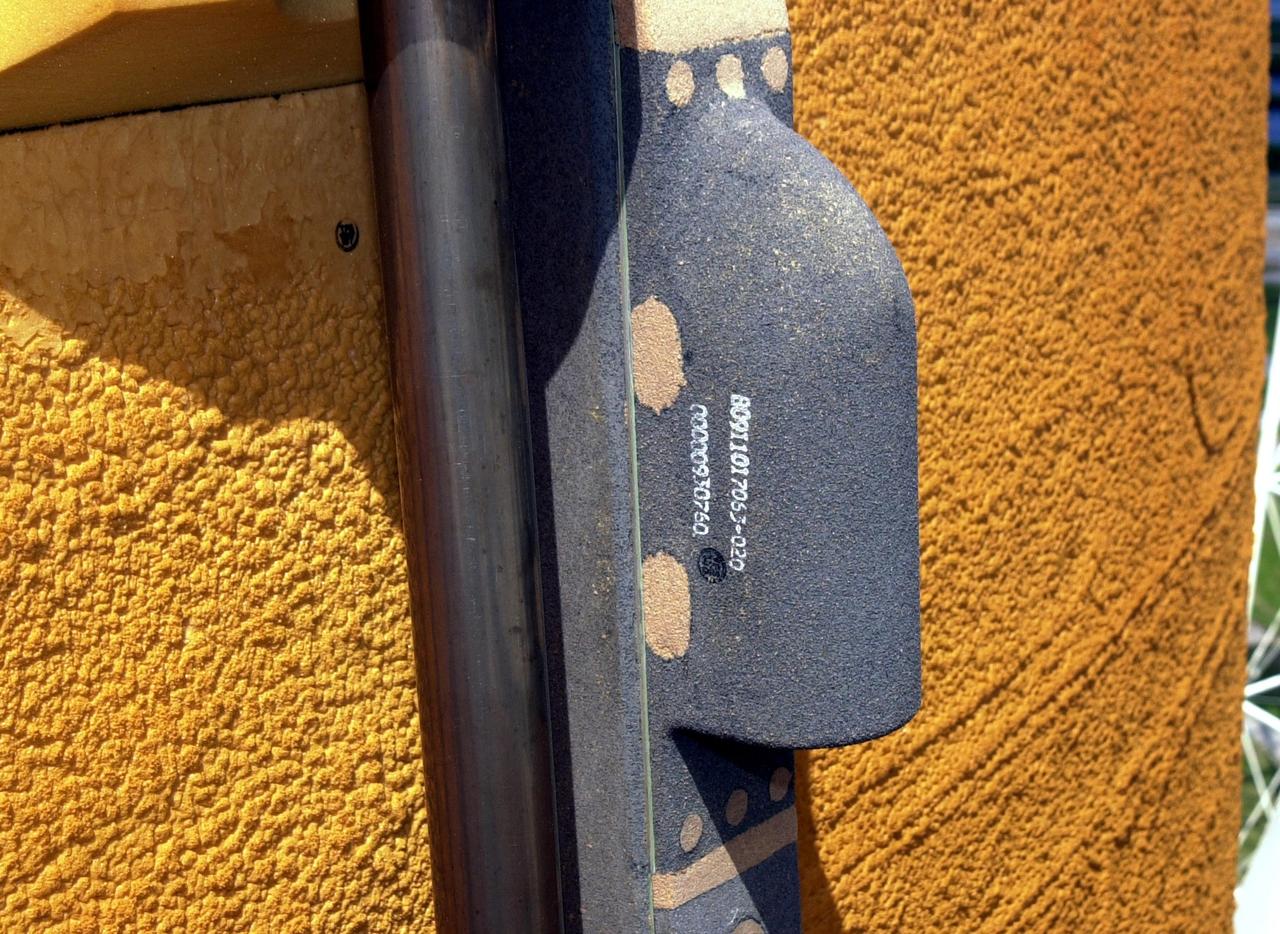
KENNEDY SPACE CENTER, FLA. - A closeup view of the camera mounted on the external tank of Space Shuttle Atlantis. The color video camera mounted to the top of Atlantis' external tank will provide a view of the front and belly of the orbiter and a portion of the solid rocket boosters (SRBs) and external tank during the launch of Atlantis on mission STS-112. It will offer the STS-112 team an opportunity to monitor the shuttle's performance from a new angle. The camera will be turned on fifteen minutes prior to launch and will show the orbiter and solid rocket boosters on the launch pad. The video will be downlinked from the external tank during flight to several NASA data-receiving sites and then relayed to the live television broadcast. The camera is expected to operate for about 15 minutes following liftoff. At liftoff, viewers will see the shuttle clearing the launch tower and, at two minutes after liftoff, see the right SRB separate from the external tank. When the external tank separates from Atlantis about eight minutes into the flight, the camera is expected to continue its live feed for about six more minutes although NASA may be unable to pick up the camera's signal because the tank may have moved out of range.
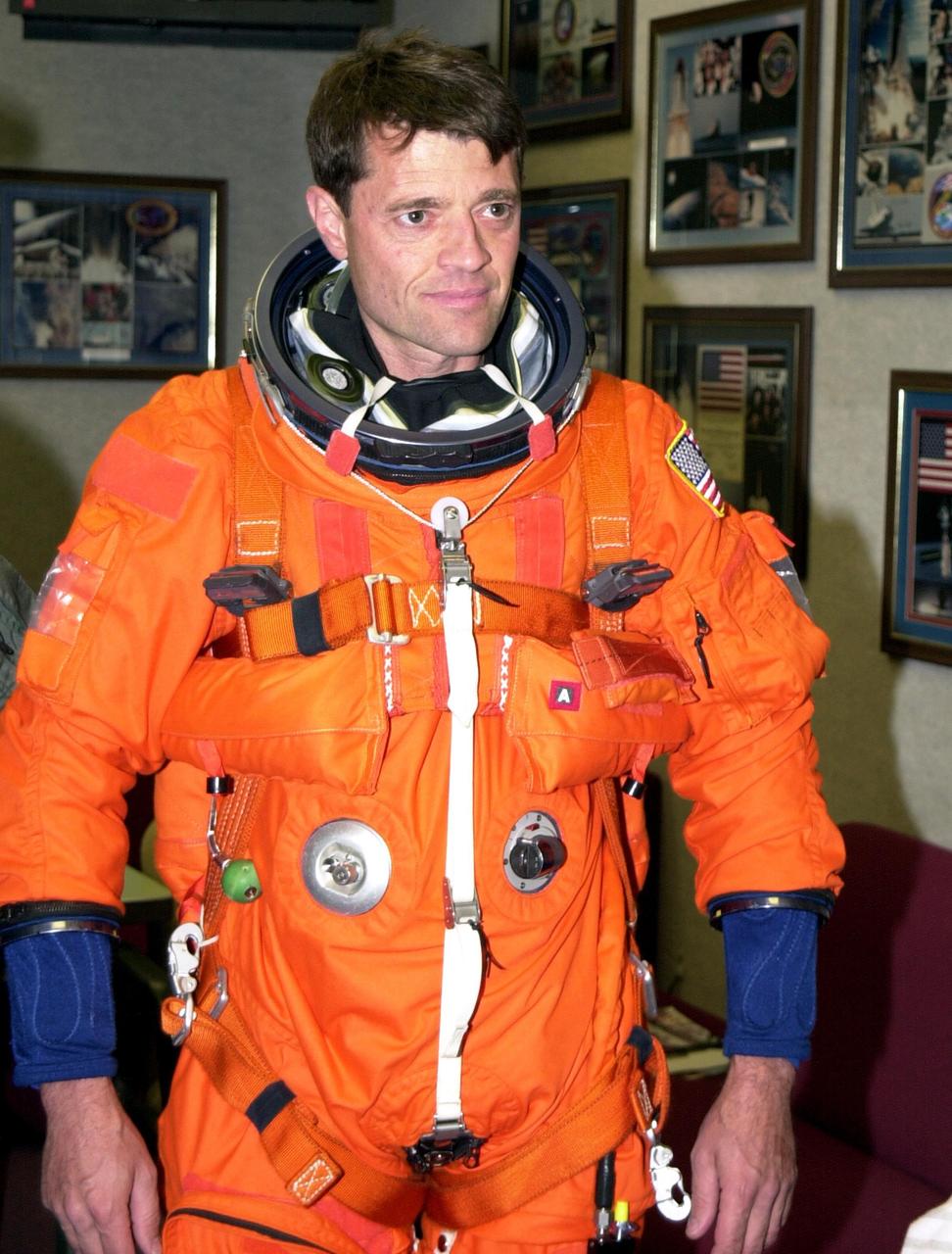
KENNEDY SPACE CENTER, FLA. --STS-112 Commander Jeffrey Ashby is suited up and ready to participate in landing exercises in the Shuttle Training Aircraft at the Shuttle Landing Facility.

KENNEDY SPACE CENTER, FLA. -- The STS-112 crew pauses for a photo after their arrival at the KSC Shuttle Landing Facility. Standing, left to right, are Mission Specialist Piers Sellers, Pilot Pamela Melroy, Commander Jeffrey Ashby, and Mission Specialists David Wolf, Sandra Magnus and cosmonaut Fyodor Yurchikhin. Sellers, Magnus and Yurchikhin are making their first Shuttle flights. STS-112, aboard Space Shuttle Atlantis, is the 15th assembly mission to the International Space Station. Atlantis will be carrying the S1 Integrated Truss Structure, the first starboard truss segment, to be attached to the central truss segment, S0, and the Crew and Equipment Translation Aid (CETA) Cart A. The CETA is the first of two human-powered carts that will ride along the ISS railway, providing mobile work platforms for future spacewalking astronauts. The 11-day mission includes three spacewalks. Launch is scheduled for Oct. 2 between 2 and 6 p.m.
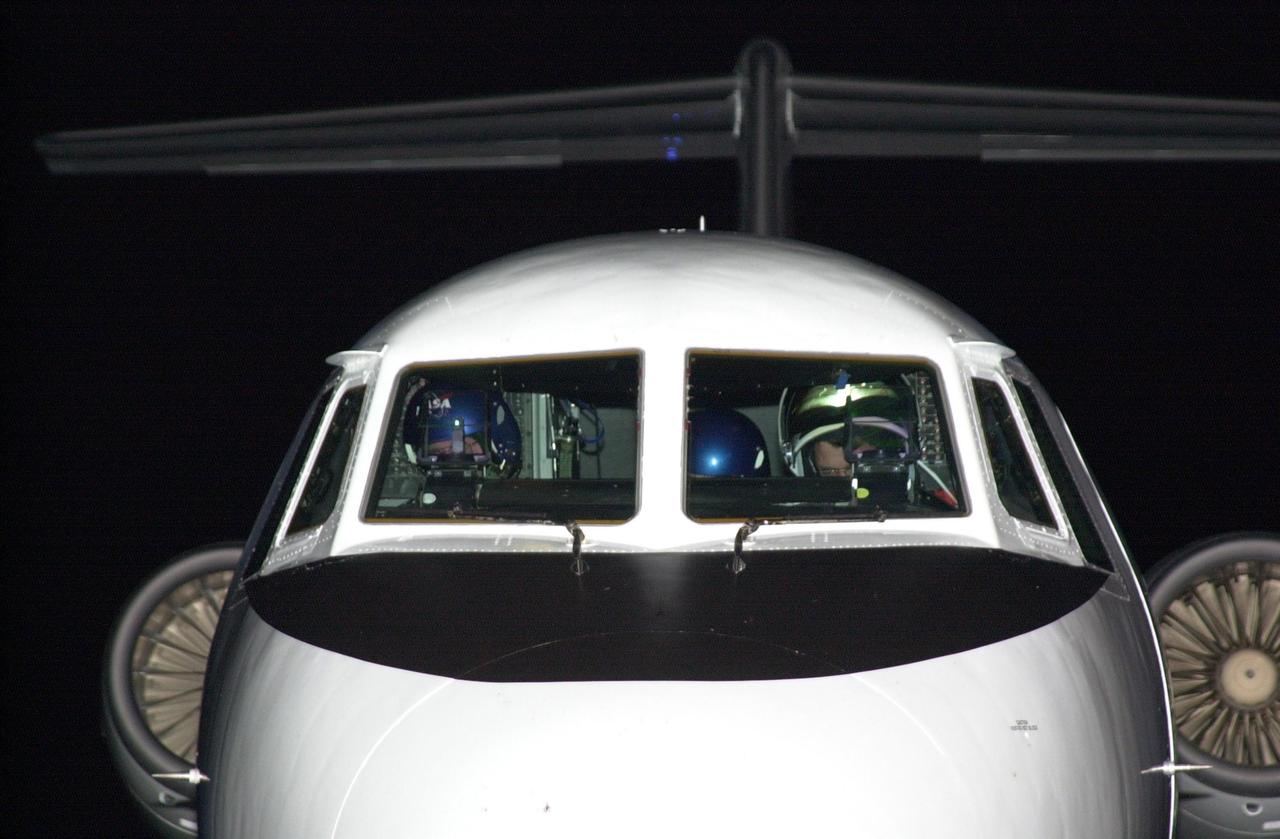
KENNEDY SPACE CENTER, FLA. --STS-112 Commander Jeffrey Ashby prepares to taxi the Shuttle Training Aircraft to the runway at the Shuttle Landing Facility as part of landing exercises.

KENNEDY SPACE CENTER, FLA. --STS-112 Pilot Pamela Melroy prepares to taxi the Shuttle Training Aircraft to the runway at the Shuttle Landing Facility as part of landing exercises.
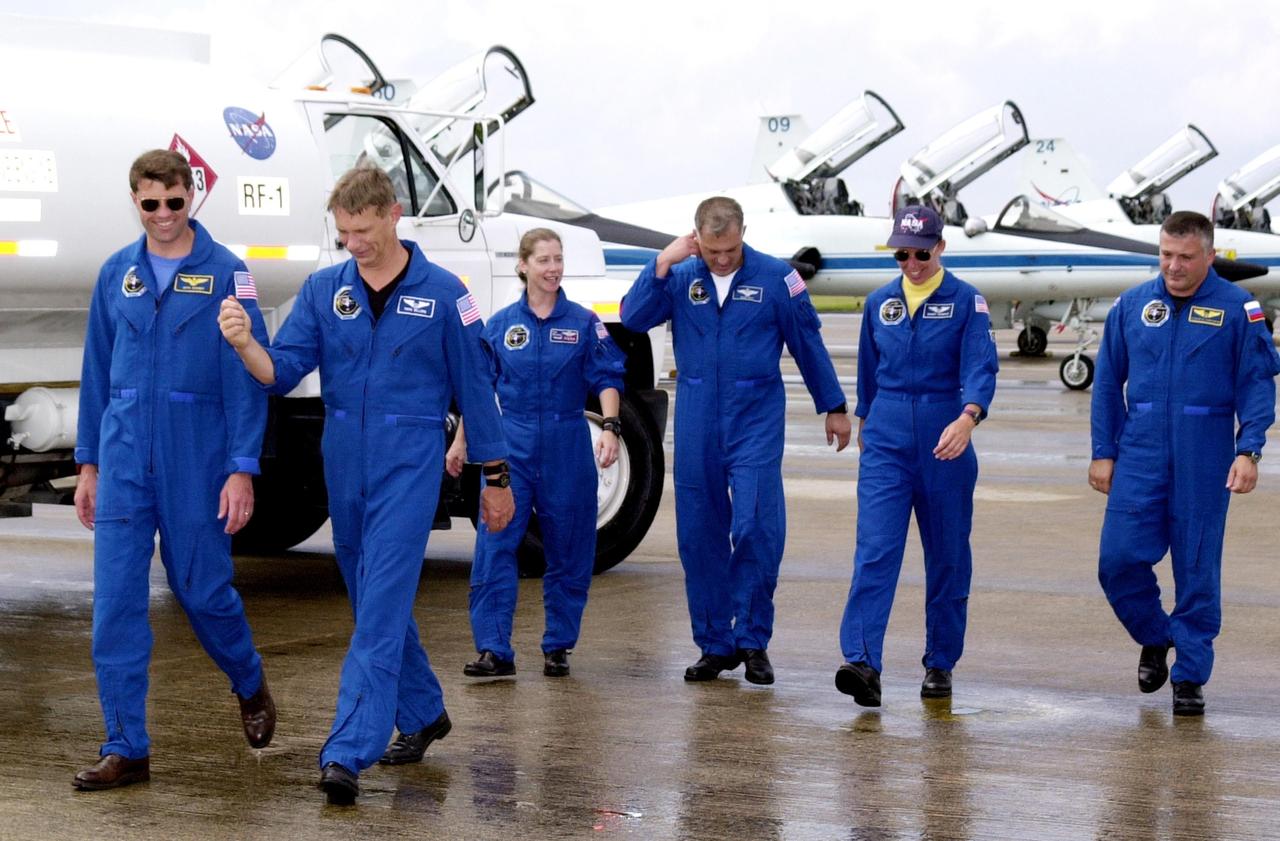
KENNEDY SPACE CENTER, FLA. -- After their arrival at the KSC Shuttle Landing Facility, the STS-112 crew members stride happily to the side of the parking apron and a photo opportunity. From left are Commander Jeffrey Ashby, Mission Specialist Piers Sellers, Pilot Pamela Melroy and Mission Specialists David Wolf, Sandra Magnus and Fyodor Yurchikhin, who is with the Russian Space Agency. Launch is scheduled for Oct. 2 between 2 and 6 p.m. STS-112, aboard Space Shuttle Atlantis, is the 15th assembly mission to the International Space Station. Atlantis will be carrying the S1 Integrated Truss Structure, the first starboard truss segment, to be attached to the central truss segment, S0, and the Crew and Equipment Translation Aid (CETA) Cart A. The CETA is the first of two human-powered carts that will ride along the ISS railway, providing mobile work platforms for future spacewalking astronauts. The 11-day mission includes three spacewalks.
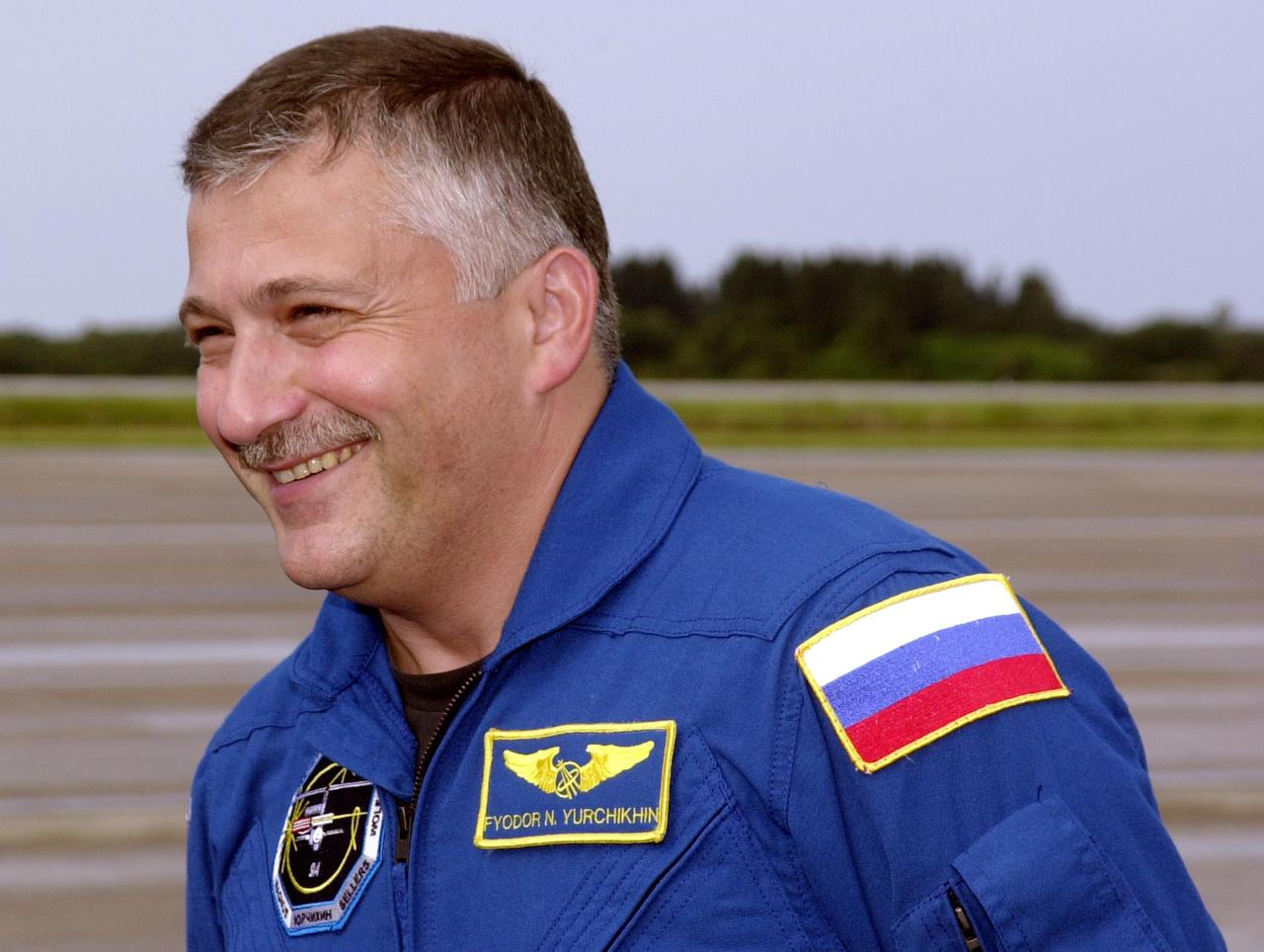
KENNEDY SPACE CENTER, FLA. -- STS-112 Mission Specialist Fyodor Yurchikhin, who is with the Russian Space Agency, shows his happiness at returning to KSC to prepare for launch. He will be making his first Shuttle flight. STS-112, aboard Space Shuttle Atlantis, is the 15th assembly mission to the International Space Station. Atlantis will be carrying the S1 Integrated Truss Structure, the first starboard truss segment, to be attached to the central truss segment, S0, and the Crew and Equipment Translation Aid (CETA) Cart A. The CETA is the first of two human-powered carts that will ride along the ISS railway, providing mobile work platforms for future spacewalking astronauts. The 11-day mission includes three spacewalks. Launch is scheduled for Oct. 2 between 2 and 6 p.m.
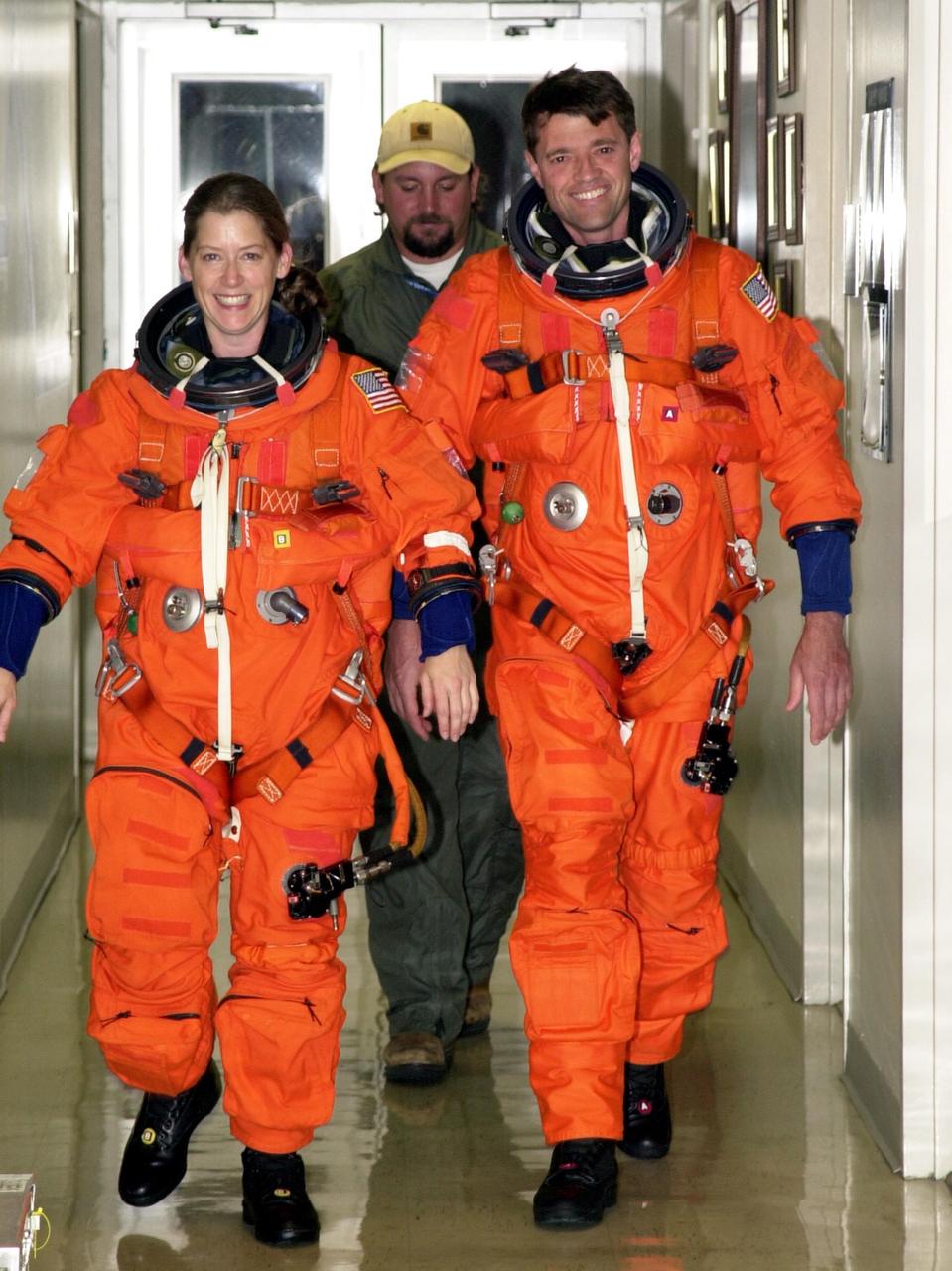
KENNEDY SPACE CENTER, FLA. --STS-112 Pilot Pamela Melroy (left) and Commander Jeffrey Ashby are suited up and ready to participate in landing exercises in the Shuttle Training Aircraft at the Shuttle Landing Facility.
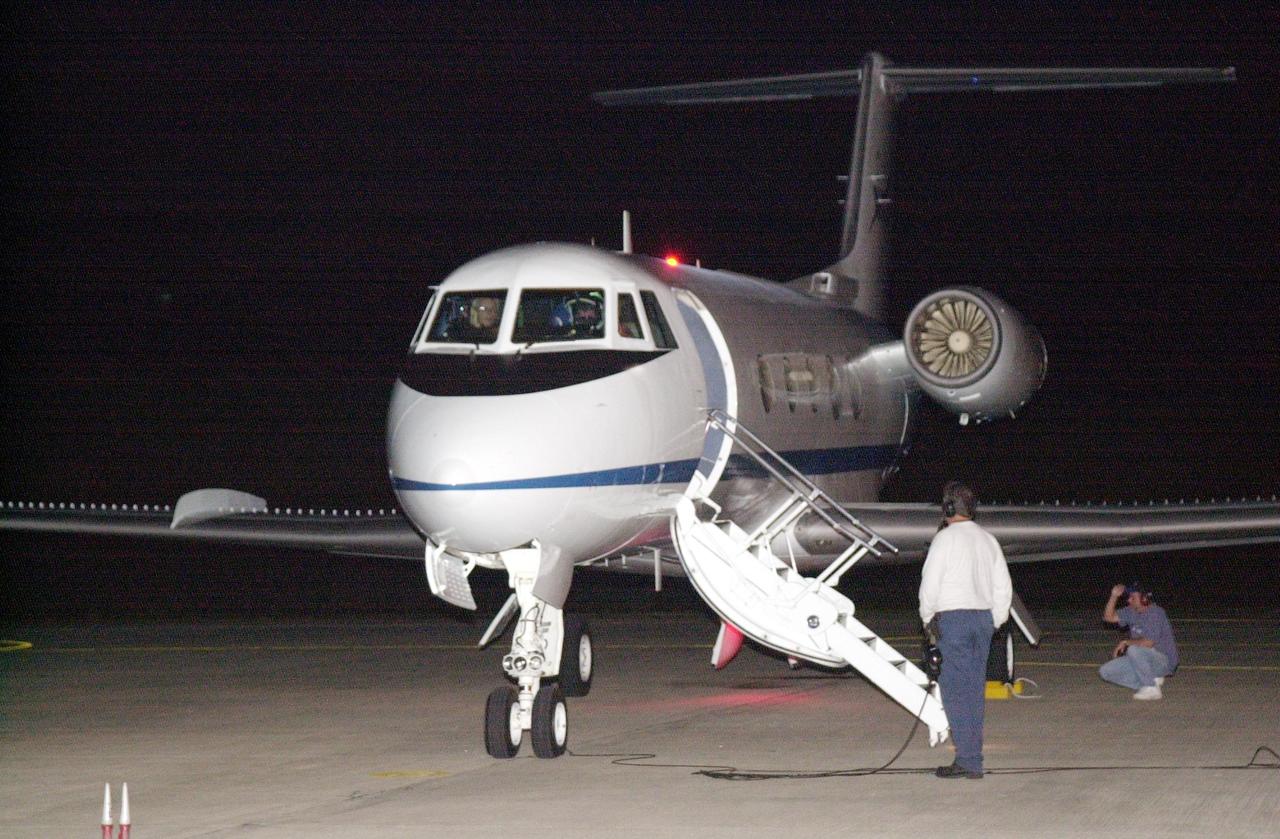
KENNEDY SPACE CENTER, FLA. --STS-112 Commander Jeffrey Ashby prepares to taxi the the Shuttle Training Aircraft to the runway at the Shuttle Landing Facility as part of landing exercises.

KENNEDY SPACE CENTER, FLA. -- STS-112 Mission Specialist Sandra Magnus is happy to return to KSC to prepare for launch. She will be making her first Shuttle flight. STS-112, aboard Space Shuttle Atlantis, is the 15th assembly mission to the International Space Station. Atlantis will be carrying the S1 Integrated Truss Structure, the first starboard truss segment, to be attached to the central truss segment, S0, and the Crew and Equipment Translation Aid (CETA) Cart A. The CETA is the first of two human-powered carts that will ride along the ISS railway, providing mobile work platforms for future spacewalking astronauts. The 11-day mission includes three spacewalks. Launch is scheduled for Oct. 2 between 2 and 6 p.m.
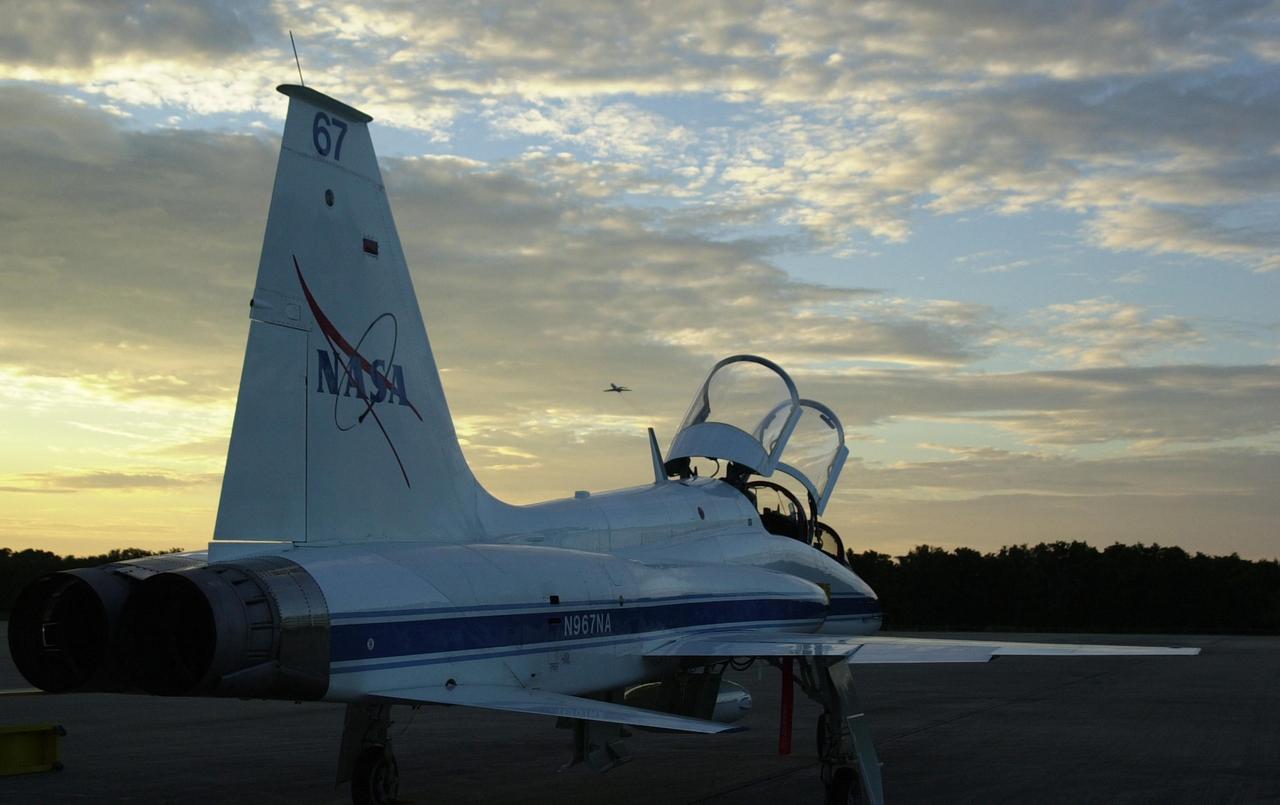
KENNEDY SPACE CENTER, FLA. --Framed by a T-38 on the Shuttle Landing Facility, the Shuttle Training Aircraft can be seen in the distance against the sunset. Commander Jeffrey Ashby and Pilot Pamela Melroy are going through landing exercises on the SLF.
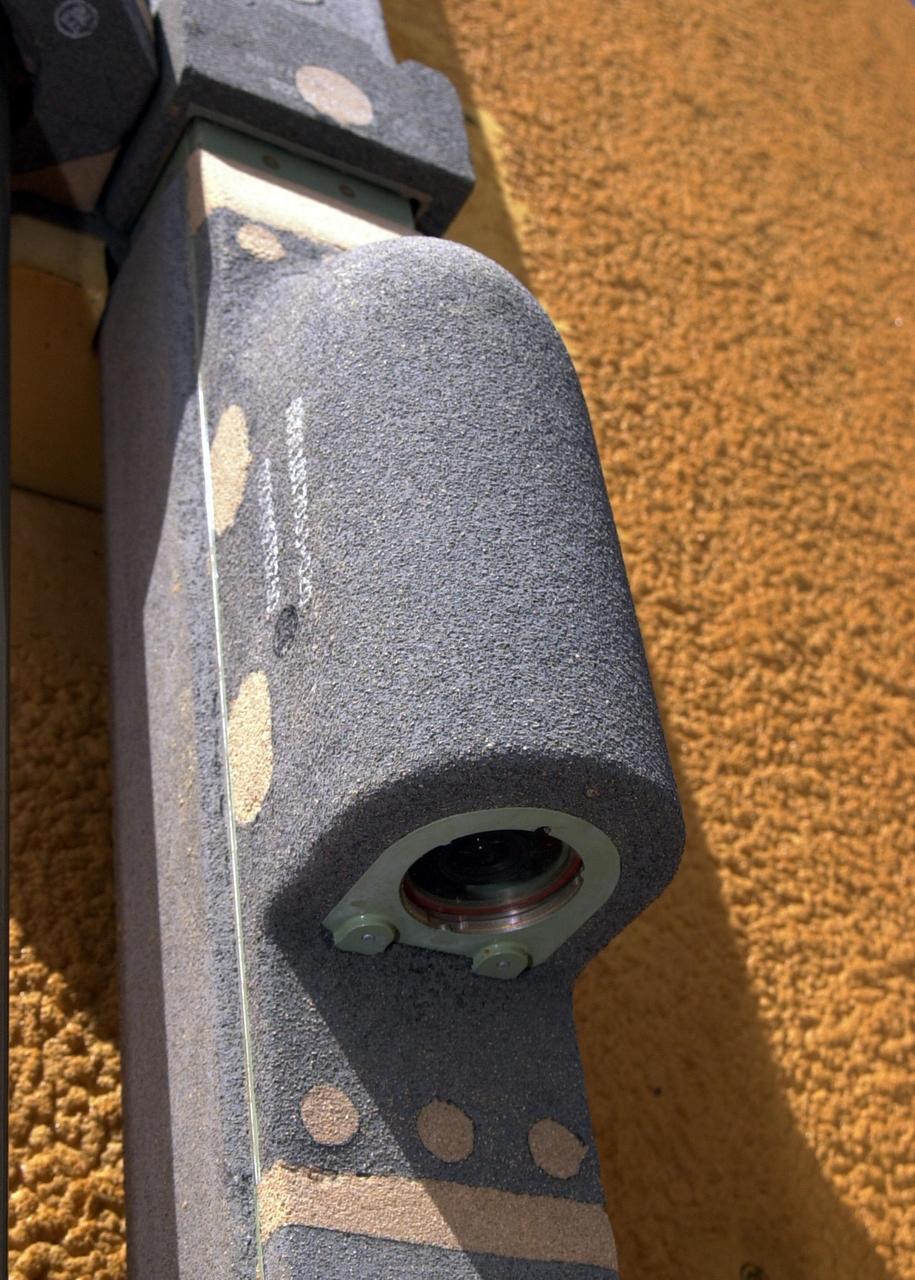
KENNEDY SPACE CENTER, FLA. - A closeup view of the camera mounted on the external tank of Space Shuttle Atlantis. The color video camera mounted to the top of Atlantis' external tank will provide a view of the front and belly of the orbiter and a portion of the solid rocket boosters (SRBs) and external tank during the launch of Atlantis on mission STS-112. It will offer the STS-112 team an opportunity to monitor the shuttle's performance from a new angle. The camera will be turned on fifteen minutes prior to launch and will show the orbiter and solid rocket boosters on the launch pad. The video will be downlinked from the external tank during flight to several NASA data-receiving sites and then relayed to the live television broadcast. The camera is expected to operate for about 15 minutes following liftoff. At liftoff, viewers will see the shuttle clearing the launch tower and, at two minutes after liftoff, see the right SRB separate from the external tank. When the external tank separates from Atlantis about eight minutes into the flight, the camera is expected to continue its live feed for about six more minutes although NASA may be unable to pick up the camera's signal because the tank may have moved out of range.
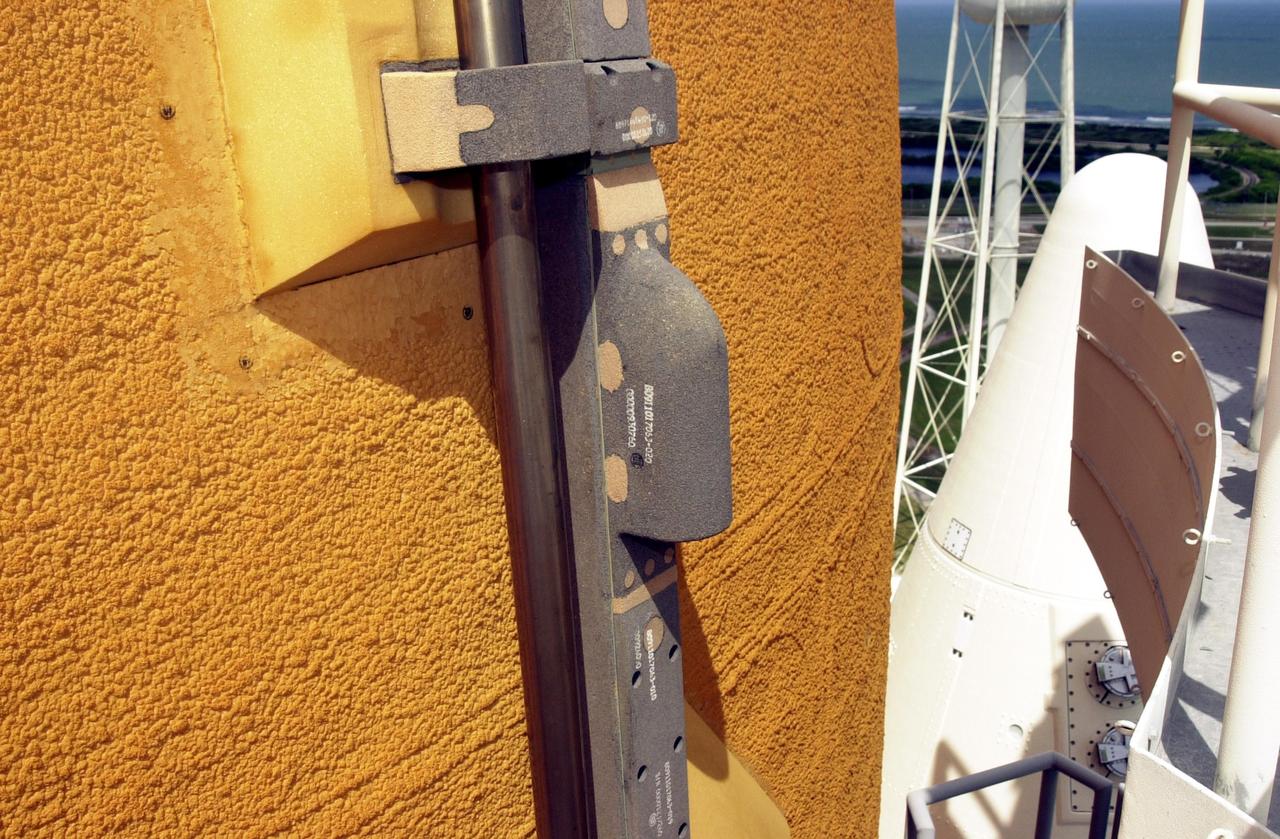
KENNEDY SPACE CENTER, FLA. - A view of the camera mounted on the external tank of Space Shuttle Atlantis. The color video camera mounted to the top of Atlantis' external tank will provide a view of the front and belly of the orbiter and a portion of the solid rocket boosters (SRBs) and external tank during the launch of Atlantis on mission STS-112. It will offer the STS-112 team an opportunity to monitor the shuttle's performance from a new angle. The camera will be turned on fifteen minutes prior to launch and will show the orbiter and solid rocket boosters on the launch pad. The video will be downlinked from the external tank during flight to several NASA data-receiving sites and then relayed to the live television broadcast. The camera is expected to operate for about 15 minutes following liftoff. At liftoff, viewers will see the shuttle clearing the launch tower and, at two minutes after liftoff, see the right SRB separate from the external tank. When the external tank separates from Atlantis about eight minutes into the flight, the camera is expected to continue its live feed for about six more minutes although NASA may be unable to pick up the camera's signal because the tank may have moved out of range.
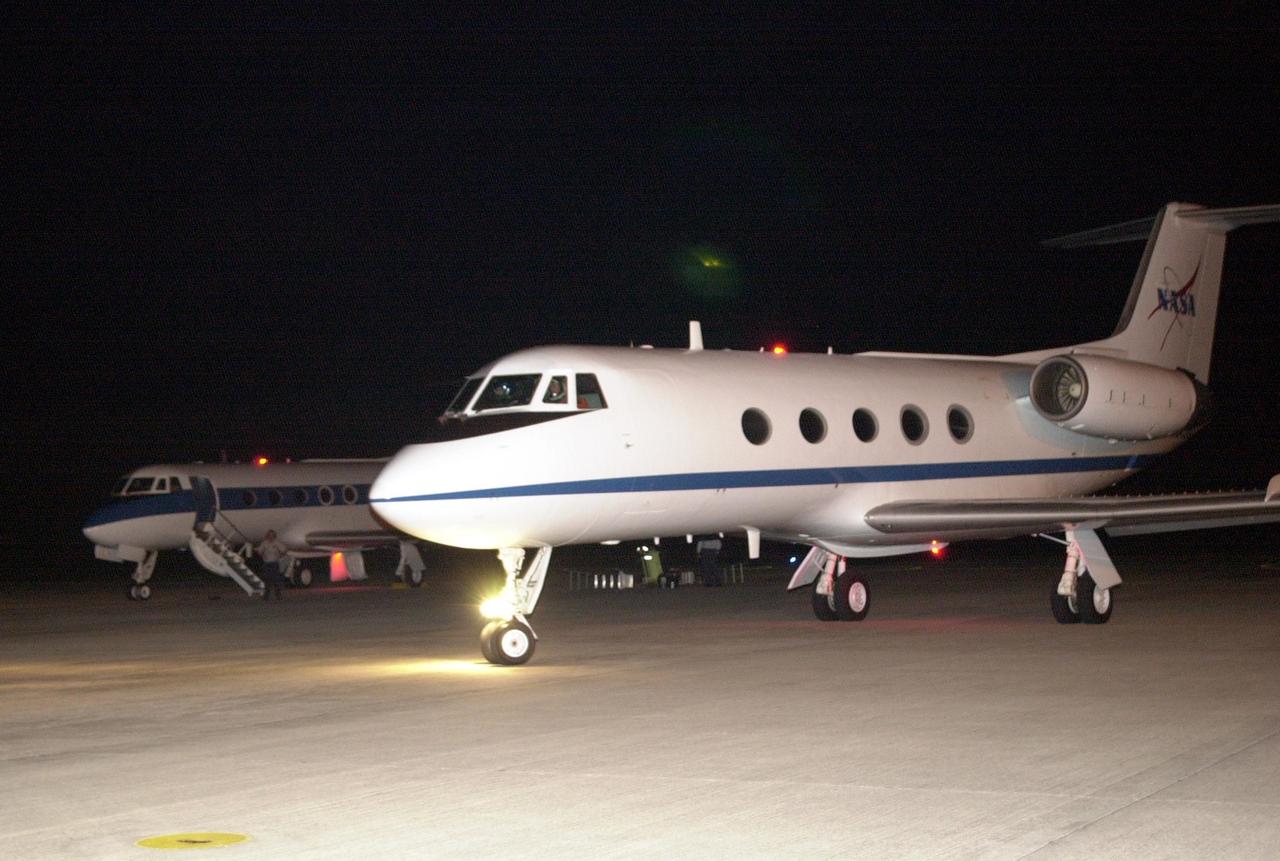
KENNEDY SPACE CENTER, FLA. --STS-112 Commander Jeffrey Ashby prepares to taxi the Shuttle Training Aircraft to the runway at the Shuttle Landing Facility as part of landing exercises.
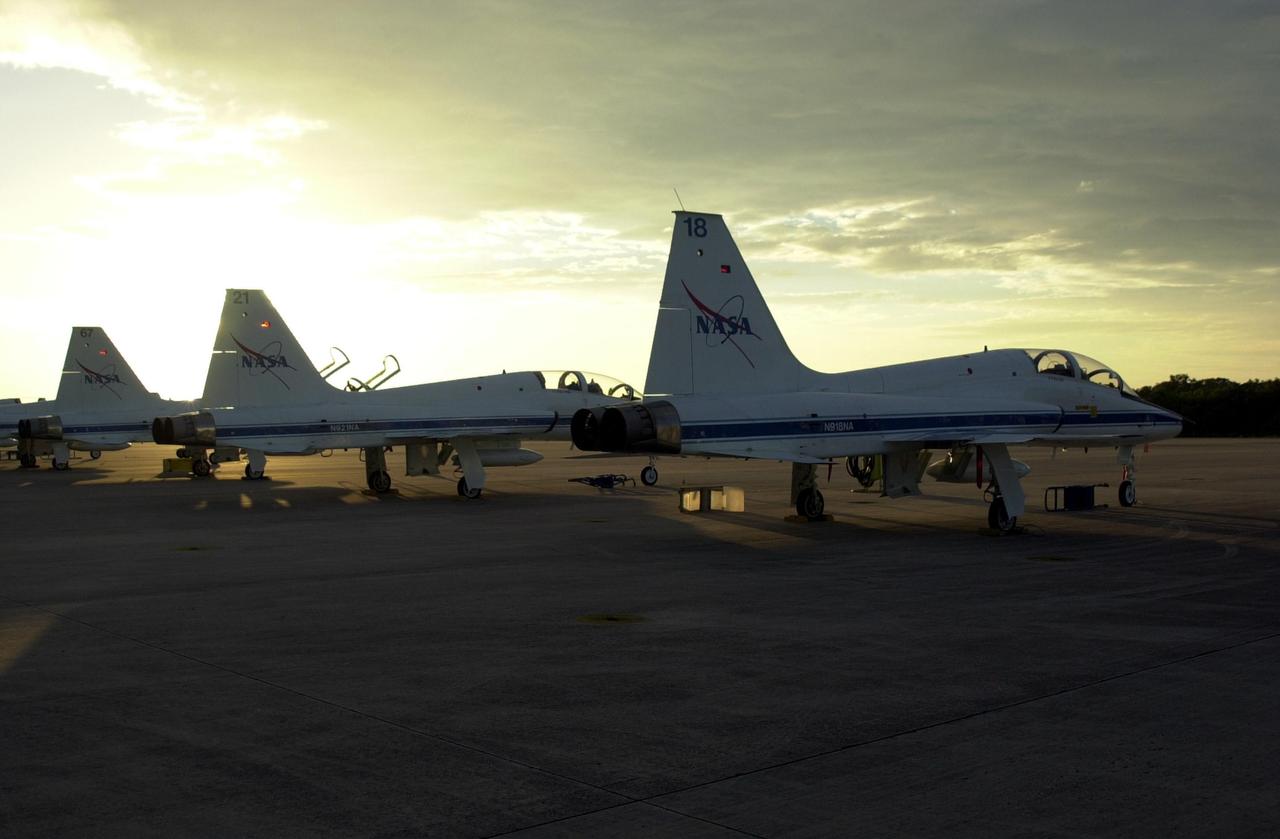
KENNEDY SPACE CENTER, FLA. -- At sunset after the arrival of the STS-112 crew, a row of T-38 jet aircraft are lined up on parking apron of the KSC Shuttle Landing Facility.
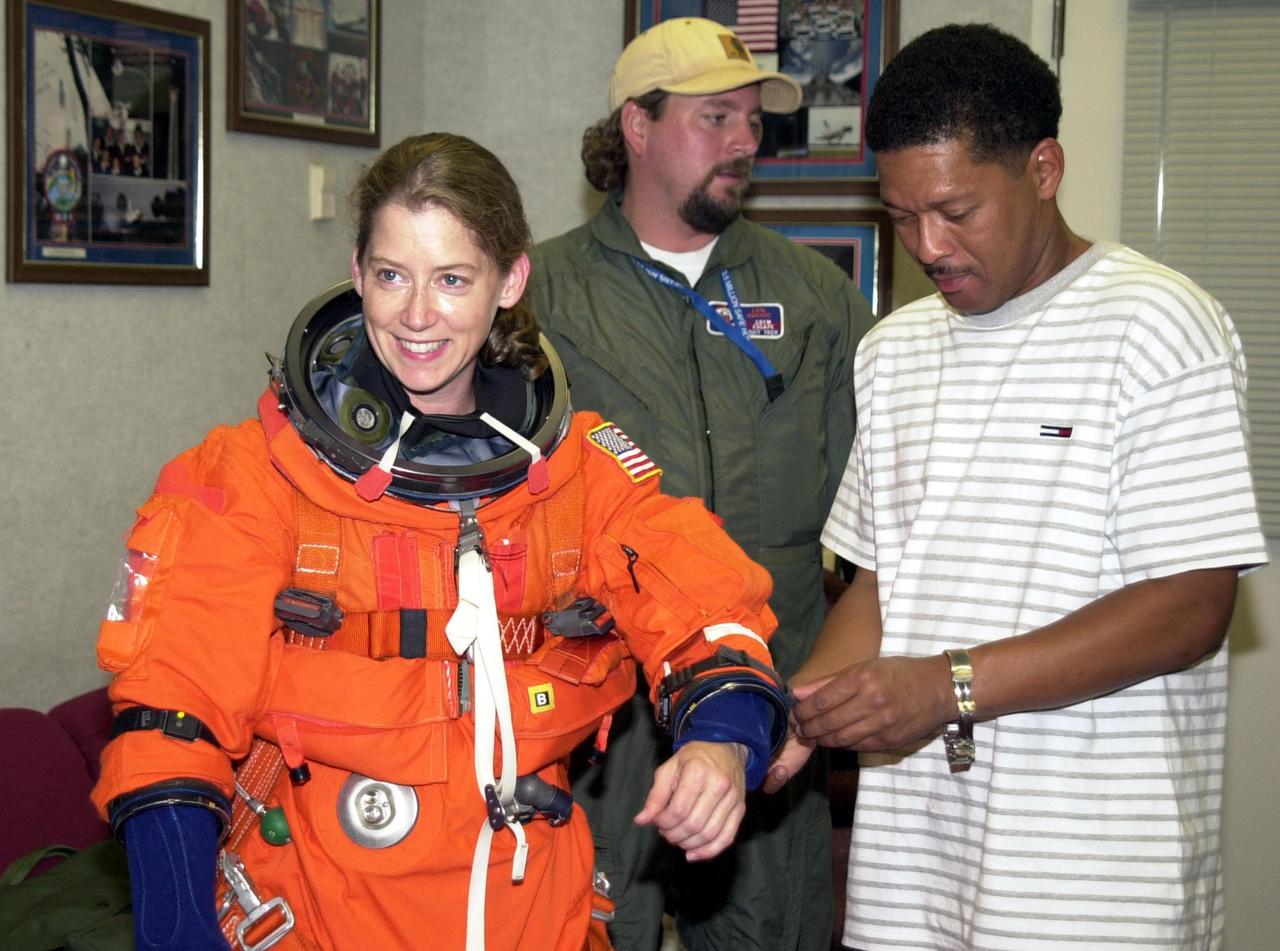
KENNEDY SPACE CENTER, FLA. --STS-112 Pilot Pamela Melroy receives some assistance with her spacesuit as she prepares to participate in landing exercises in the Shuttle Training Aircraft at the Shuttle Landing Facility.