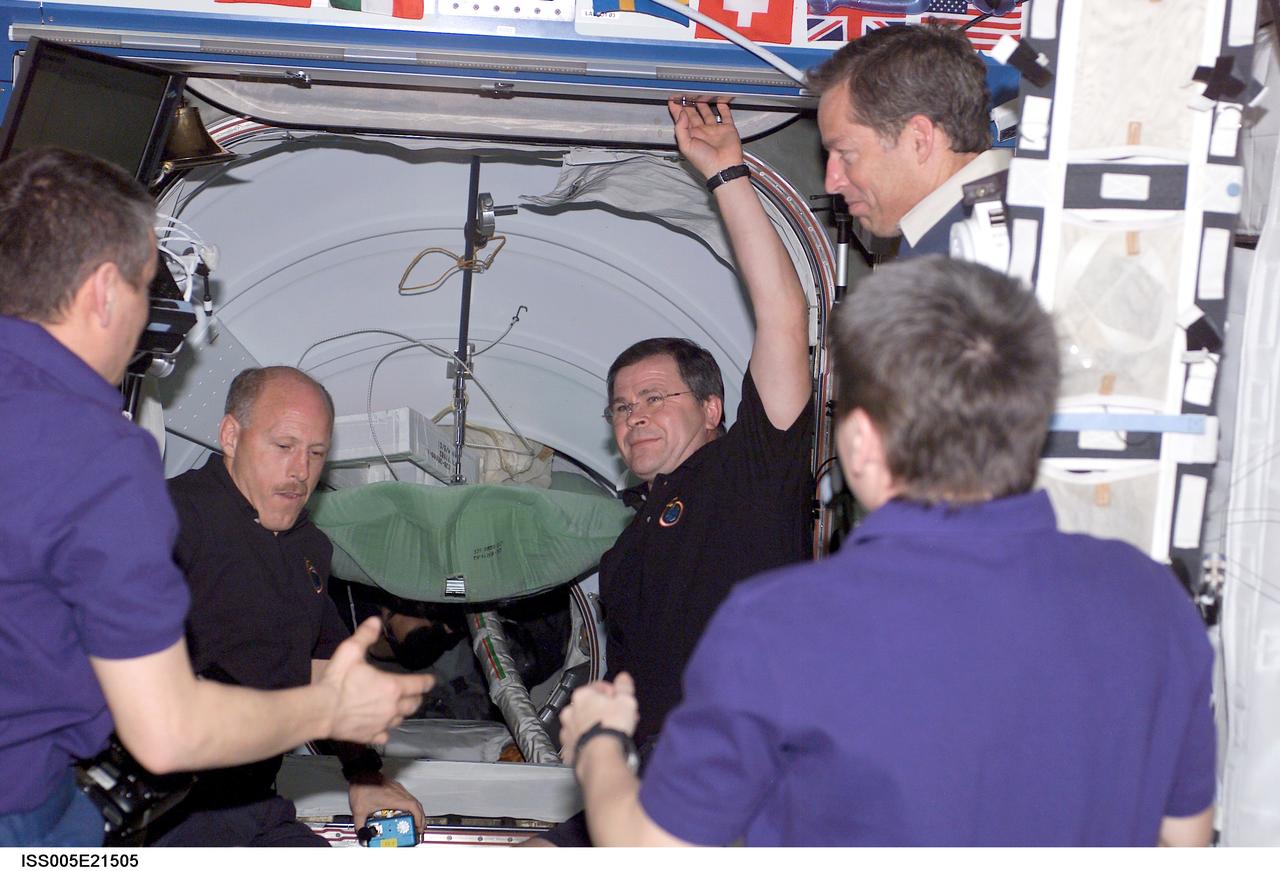
ISS005-E-21505 (25 November 2002) --- The Expedition Five crewmembers greet the Expedition Six and STS-113 crewmembers when the hatch to the Pressurized Mating Adapter 2 (PMA-2) on the International Space Station (ISS) was opened for the STS-113 ingress. Pictured are cosmonaut Valery G. Korzun (back to camera, left), Expedition Five mission commander; astronaut Peggy A. Whitson (back to camera, right), Expedition Five NASA ISS science office. Pictured, left to right (background), are astronaut Kenneth D. Bowersox, Expedition Six mission commander; cosmonaut Nikolai M. Budarin, Expedition Six flight engineer; and astronaut James D. Wetherbee, STS-113 mission commander. Korzun and Budarin represent Rosaviakosmos.
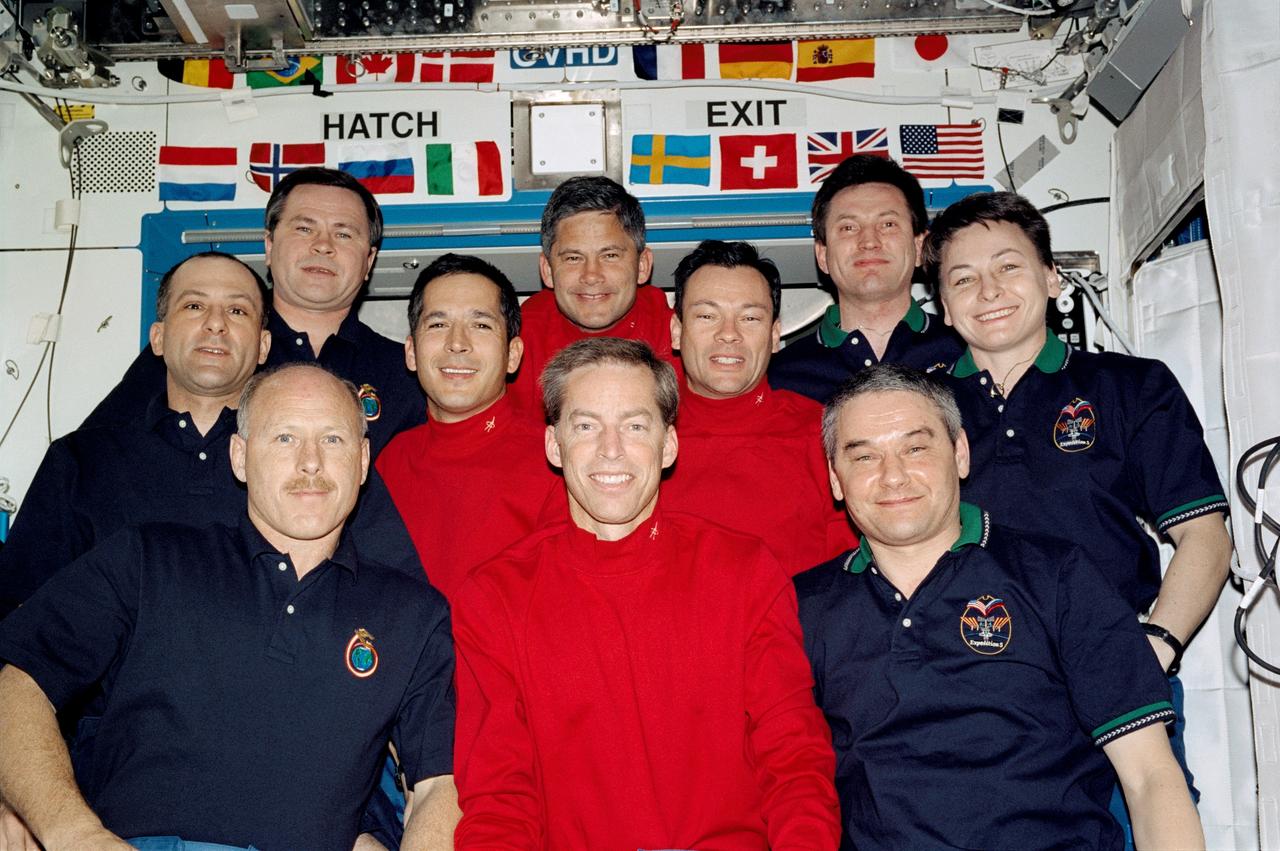
STS113-342-006 (29 November 2002) --- The STS-113 (red shirts), Expedition Five (right) and Expedition Six crewmembers (left) gathered for a group photo in the Destiny laboratory on the International Space Station (ISS). The STS-113 crew, front to back, are astronauts James D. Wetherbee, mission commander; John B. Herrington (left), Michael E. Lopez-Alegria, mission specialists; and Paul S. Lockhart, pilot. The Expedition Six crew, front to back, are astronauts Kenneth D. Bowersox, mission commander; Donald R. Pettit, NASA ISS science officer; and cosmonaut Nikolai M. Budarin, flight engineer. The Expedition Five crew, front to back, are cosmonaut Valery G. Korzun, mission commander; astronaut Peggy A. Whitson, NASA ISS science officer; and cosmonaut Sergei Y. Treschev, flight engineer. Korzun, Treschev and Budarin represent Rosaviakosmos.
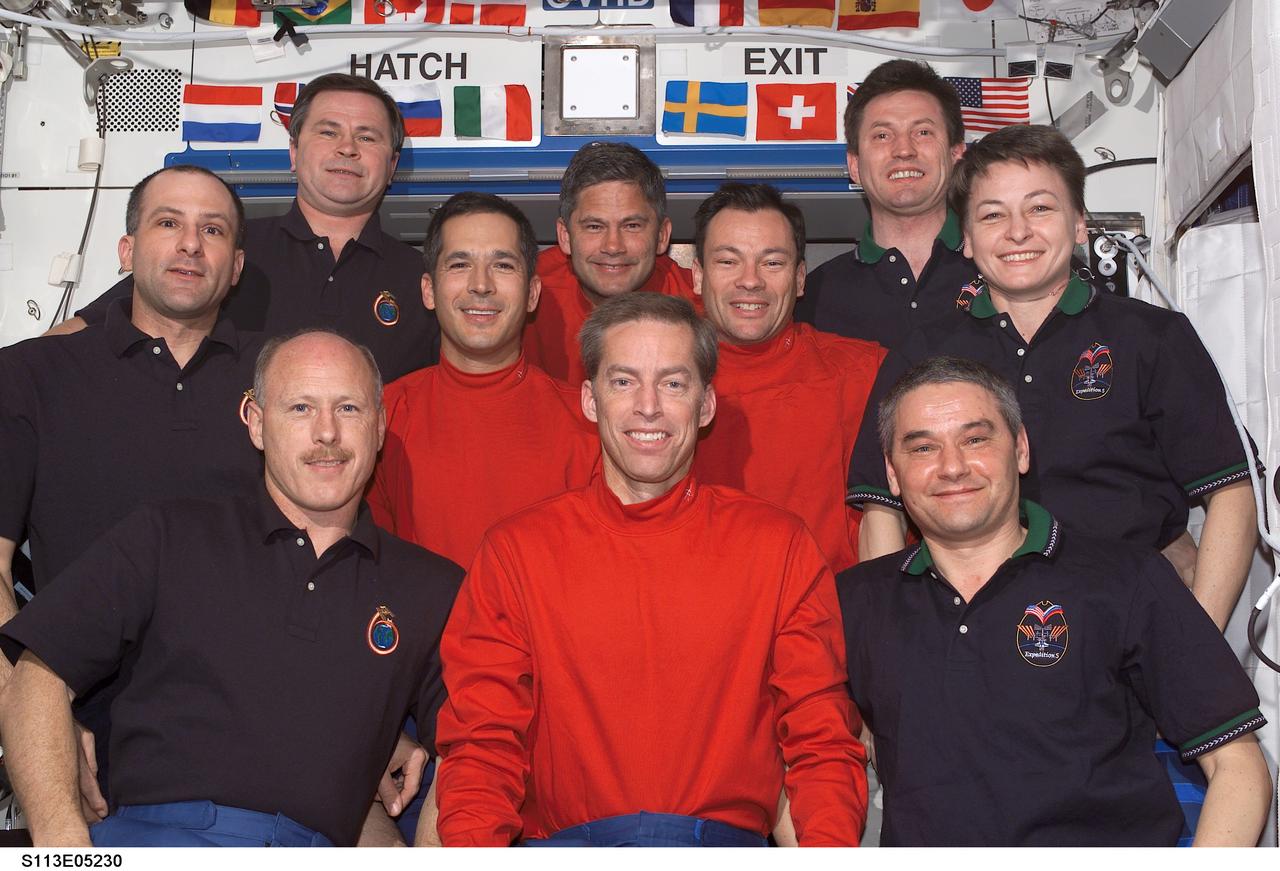
STS113-E-05230 (29 November 2002) --- The STS-113 (red shirts), Expedition Five (right) and Expedition Six crewmembers (left) gathered for a group photo in the Destiny laboratory on the International Space Station (ISS). The STS-113 crew, front to back, are astronauts James D. Wetherbee, mission commander; John B. Herrington (left), Michael E. Lopez-Alegria, mission specialists; and Paul S. Lockhart, pilot. The Expedition Six crew, front to back, are astronauts Kenneth D. Bowersox, mission commander; Donald R. Pettit, NASA ISS science officer; and cosmonaut Nikolai M. Budarin, flight engineer. The Expedition Five crew, front to back, are cosmonaut Valery G. Korzun, mission commander; astronaut Peggy A. Whitson, NASA ISS science officer; and cosmonaut Sergei Y. Treschev, flight engineer. Korzun, Treschev and Budarin represent Rosaviakosmos.
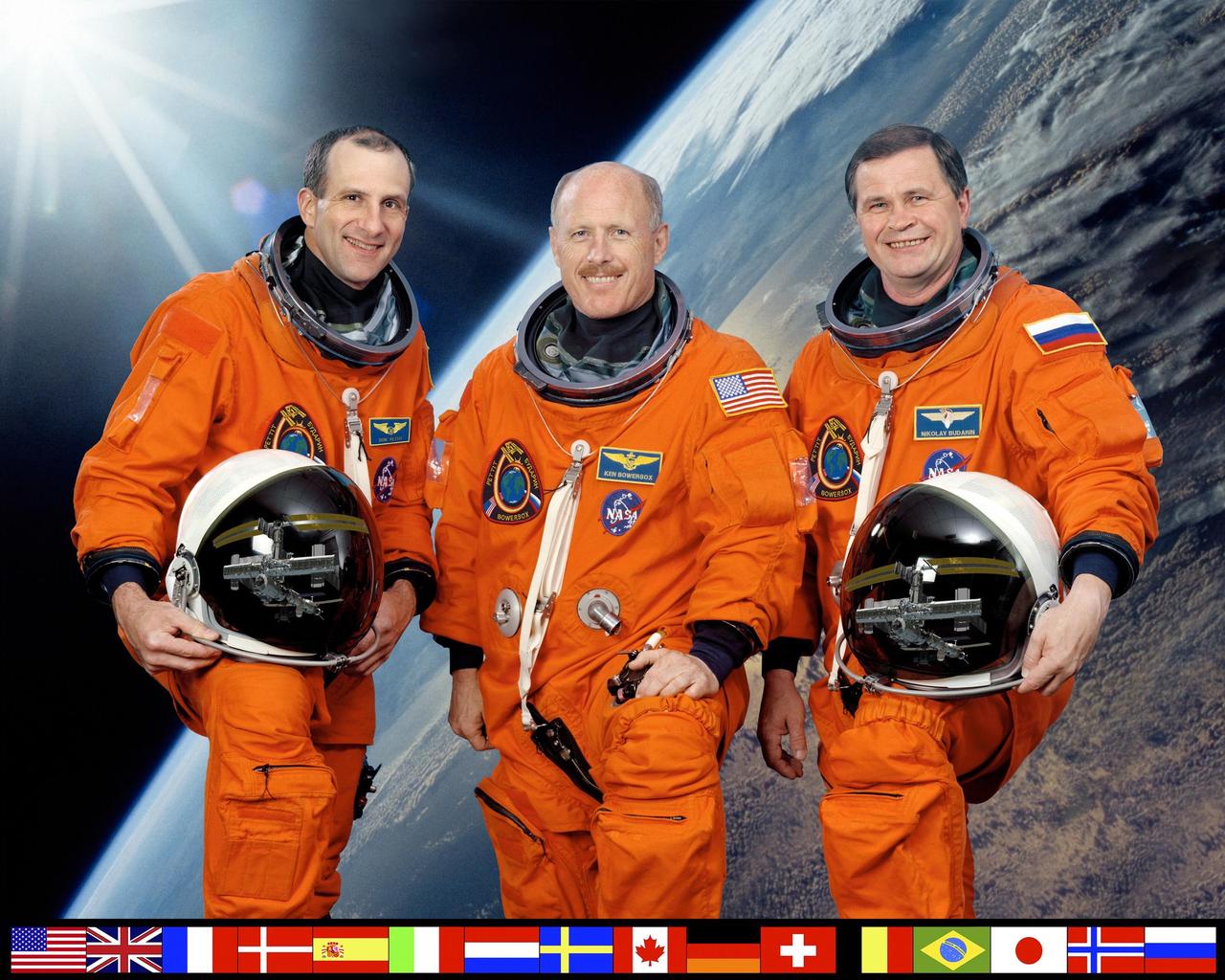
JOHNSON SPACE CENTER, HOUSTON, TEXAS -- (ISS006-S-002) (From left) Astronauts Donald R. Pettit, Expedition Six flight engineer, and Kenneth D. Bowersox, mission commander; and cosmonaut Nikolai M. Budarin, flight engineer, attired in training versions of the Shuttle launch and entry suit, pause from their training schedule for a crew portrait. The three will be launched to the International Space Station (ISS) in late autumn of this year aboard the Space Shuttle Endeavour. Budarin represents Rosaviakosmos.
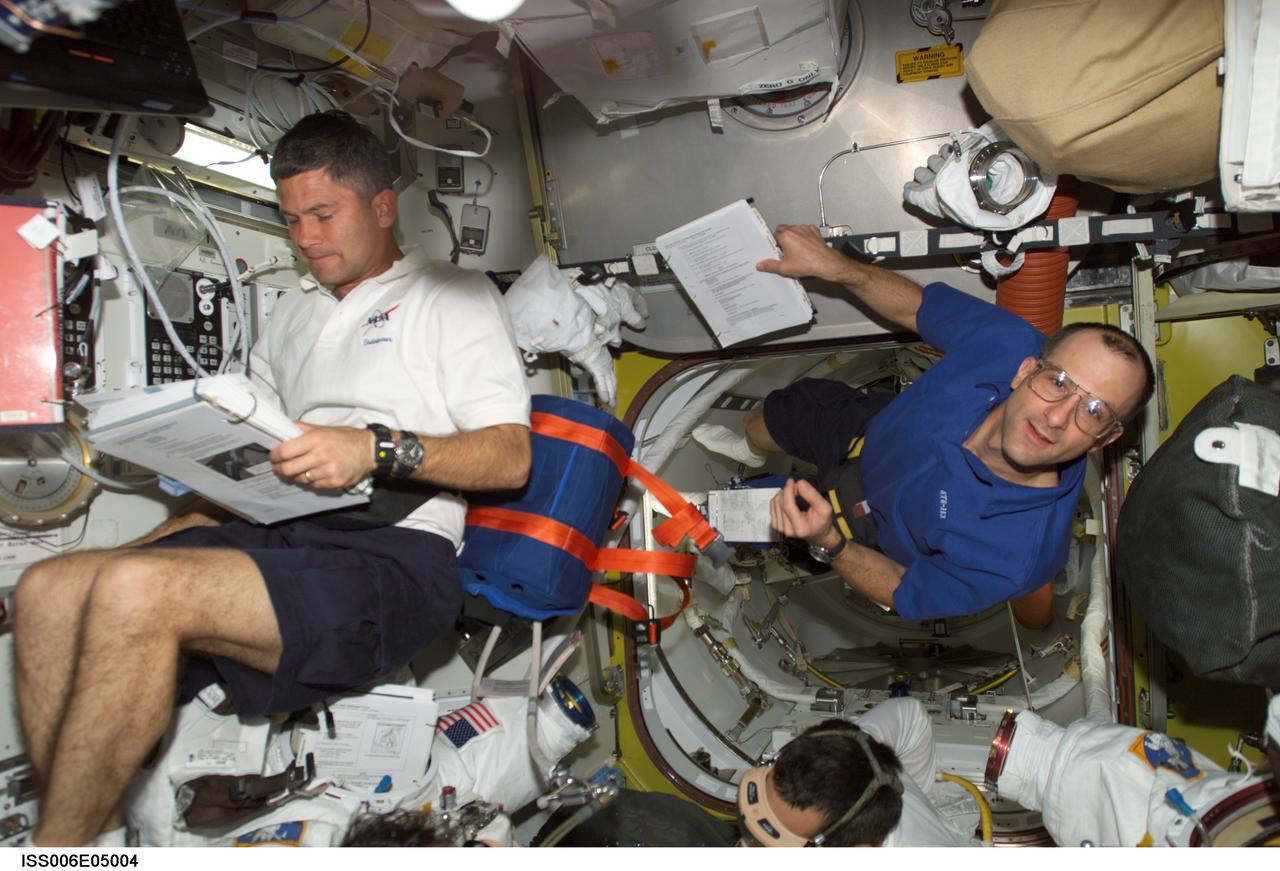
ISS006-E-05004 (28 November 2002) --- Astronaut Paul S. Lockhart (left), STS-113 pilot, looks over a procedures checklist as astronaut Donald R. Pettit, Expedition Six NASA ISS science officer, floats into the Quest Airlock on the International Space Station (ISS).
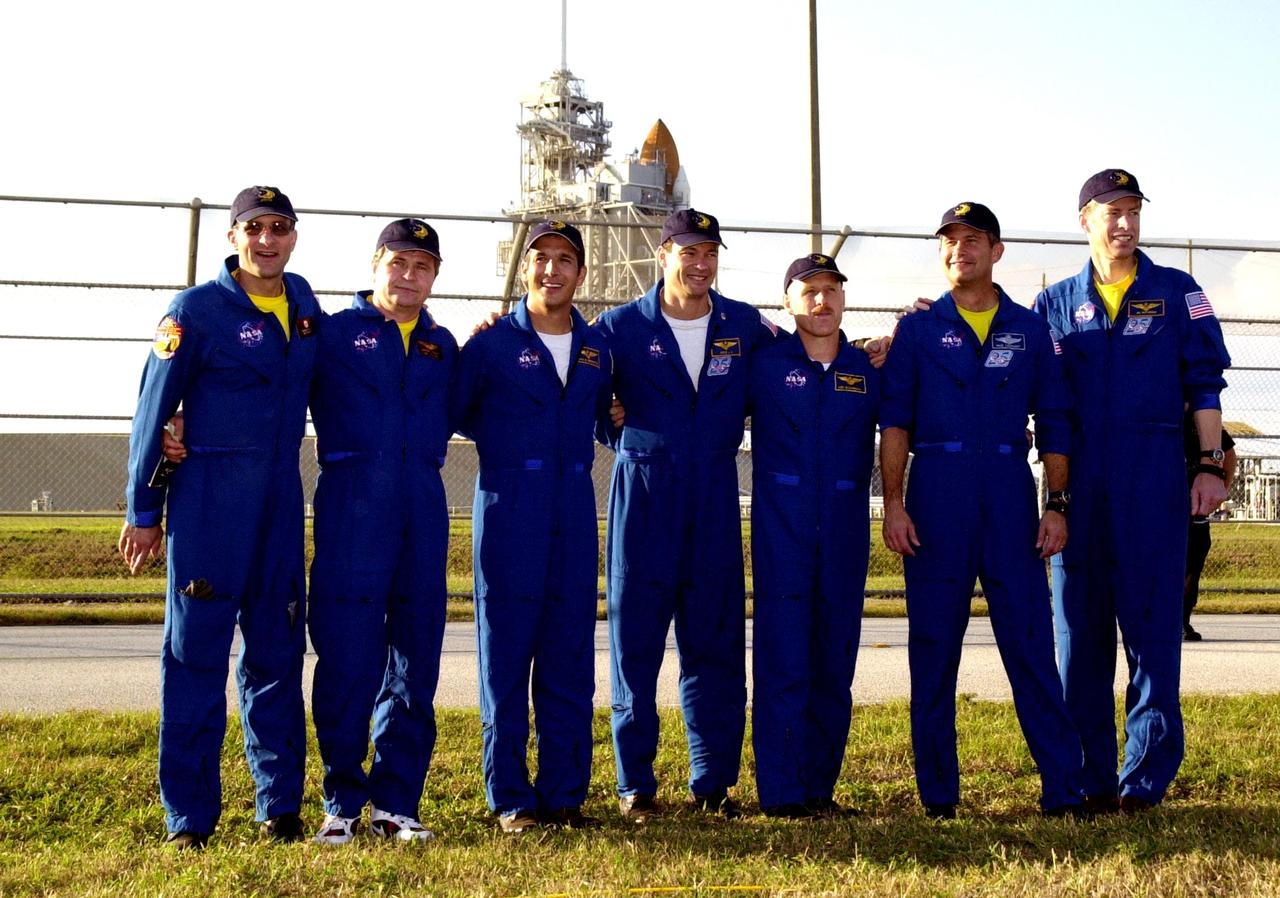
KENNEDY SPACE CENTER, FLA. - The STS-113 and Expedition Six crews pose for a group photo at Launch Pad 39A with Space Shuttle Endeavour in the background during a tour of Kennedy Space Center prior to their launch. From left are Expedition Six crew members Donald Pettit and Nikolai Budarin of the Russian Space Agency, STS-113 Mission Specialists John Herrington and Michael Lopez-Alegria, Expedition Six Commander Ken Bowersox, STS-113 Pilot Paul Lockhart, and STS-113 Commander James Wetherbee. The primary mission of STS-113 is bringing the Expedition 6 crew to the Station and returning the Expedition 5 crew to Earth. Another major objective of the mission is delivery of the Port 1 (P1) Integrated Truss Assembly, which will be attached to the port side of the S0 truss. Three spacewalks are planned to install and activate the truss and its associated equipment. Launch of Space Shuttle Endeavour on mission STS-113 is scheduled for Nov. 11 between midnight and 4 a.m. EST.
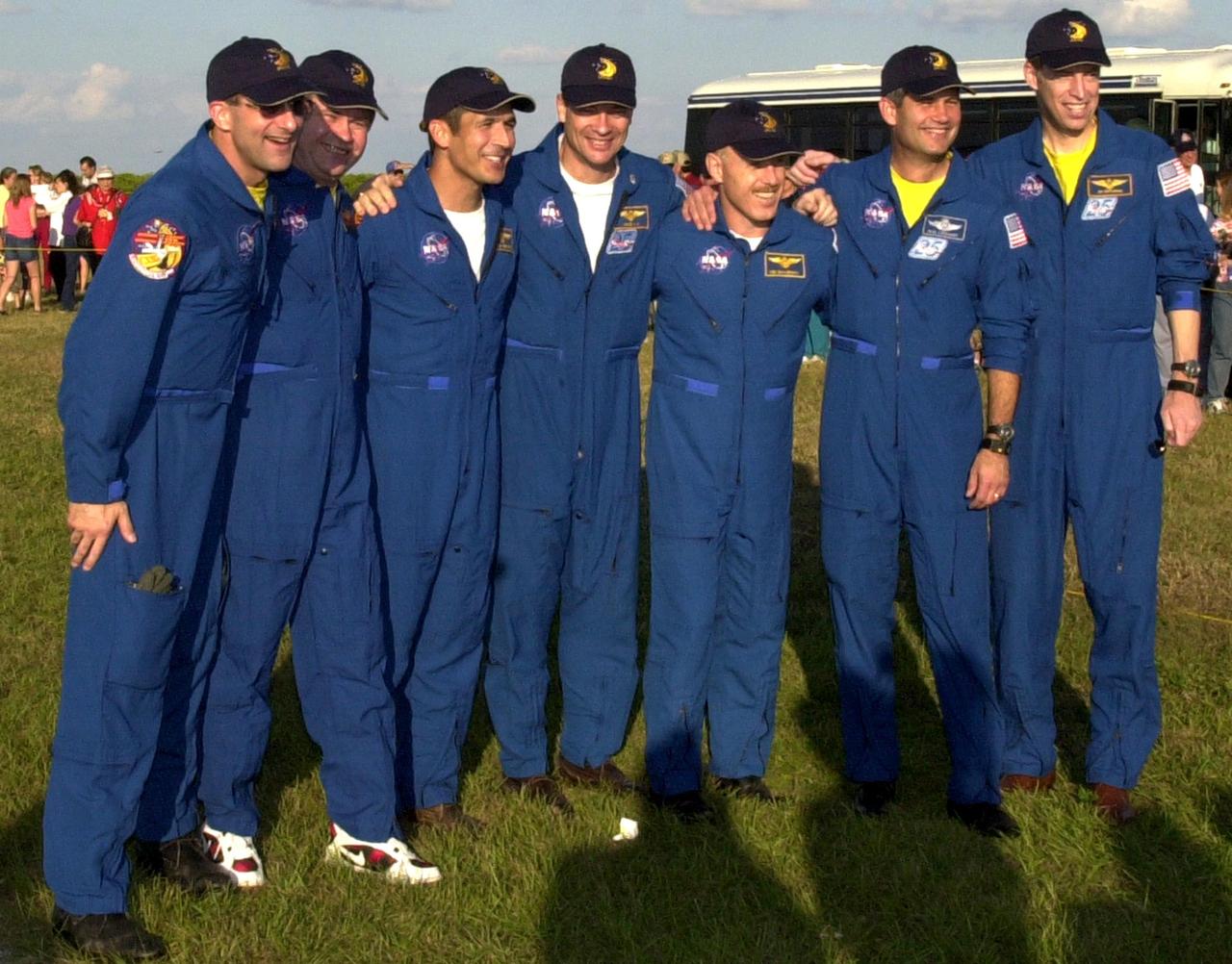
KENNEDY SPACE CENTER, FLA. - The STS-113 and Expedition Six crews pose for a group photo at Launch Pad 39A with Space Shuttle Endeavour in the background during a tour of Kennedy Space Center prior to their launch. From left are Expedition Six crew members Donald Pettit and Nikolai Budarin of the Russian Space Agency, STS-113 Mission Specialists John Herrington and Michael Lopez-Alegria, Expedition Six Commander Ken Bowersox, STS-113 Pilot Paul Lockhart, and STS-113 Commander James Wetherbee. The primary mission of STS-113 is bringing the Expedition 6 crew to the Station and returning the Expedition 5 crew to Earth. Another major objective of the mission is delivery of the Port 1 (P1) Integrated Truss Assembly, which will be attached to the port side of the S0 truss. Three spacewalks are planned to install and activate the truss and its associated equipment. Launch of Space Shuttle Endeavour on mission STS-113 is scheduled for Nov. 11 between midnight and 4 a.m. EST.

JSC2002-E-43944 (28 October 2002) --- Astronaut John B. Herrington, STS-113 mission specialist, fields a question during a joint shuttle-station pre-flight press conference at the Johnson Space Center (JSC).
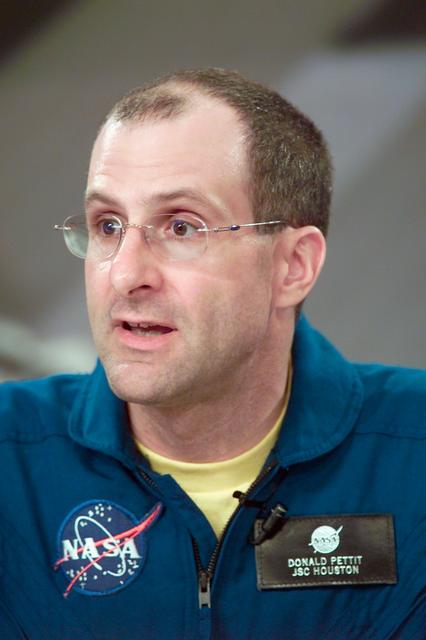
JSC2002-E-43941 (28 October 2002) --- Astronaut Donald R. Pettit, Expedition Six flight engineer, responds to a query during a joint shuttle-station pre-flight press conference at the Johnson Space Center (JSC).
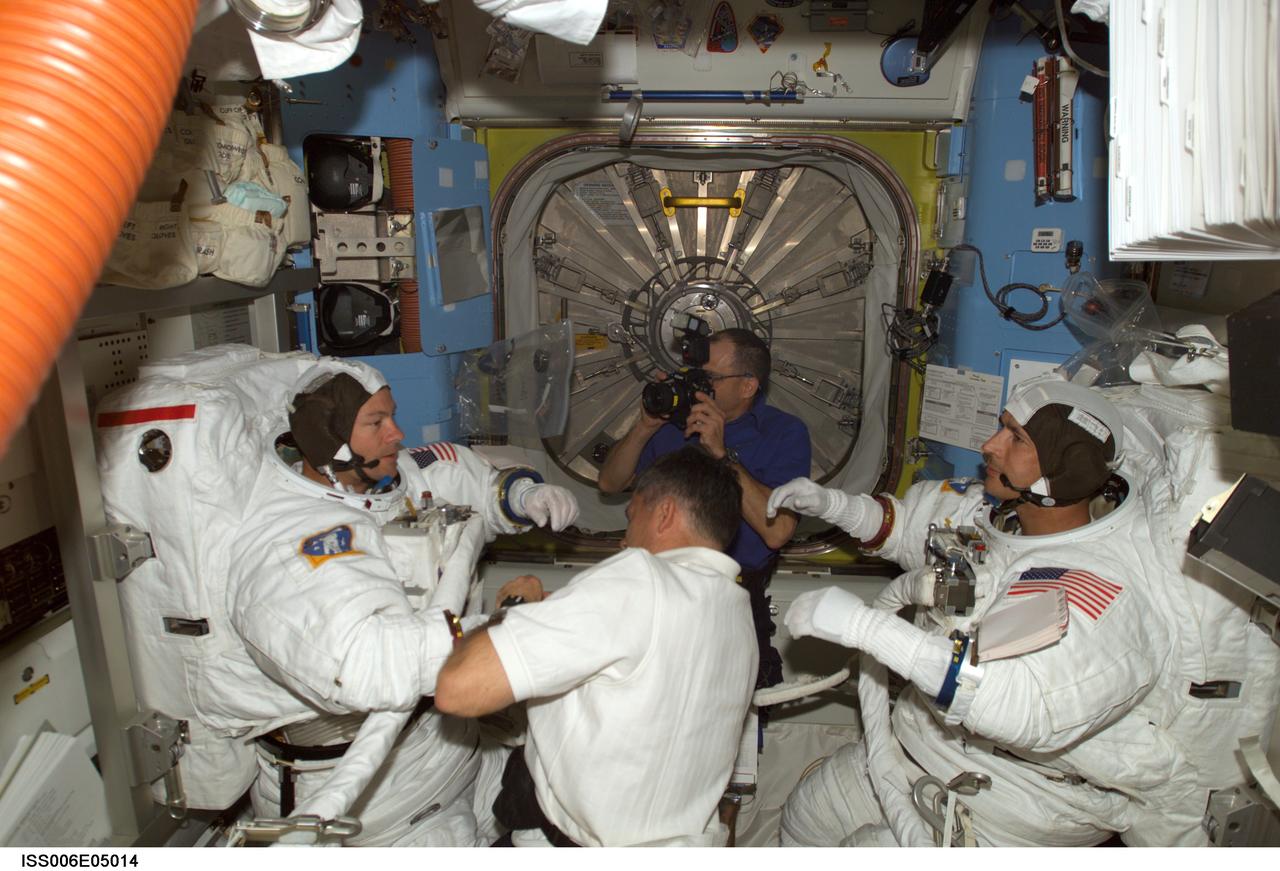
ISS006-E-05014 (28 November 2002) --- Astronaut Paul S. Lockhart, STS-113 pilot, assists astronauts Michael E. Lopez-Alegria (left) and John B. Herrington, STS-113 mission specialists, with their Extravehicular Mobility Unit (EMU) spacesuits in the Quest Airlock on the International Space Station (ISS). Astronaut Donald R. Pettit, Expedition Six NASA ISS science officer, uses a camera in the background.
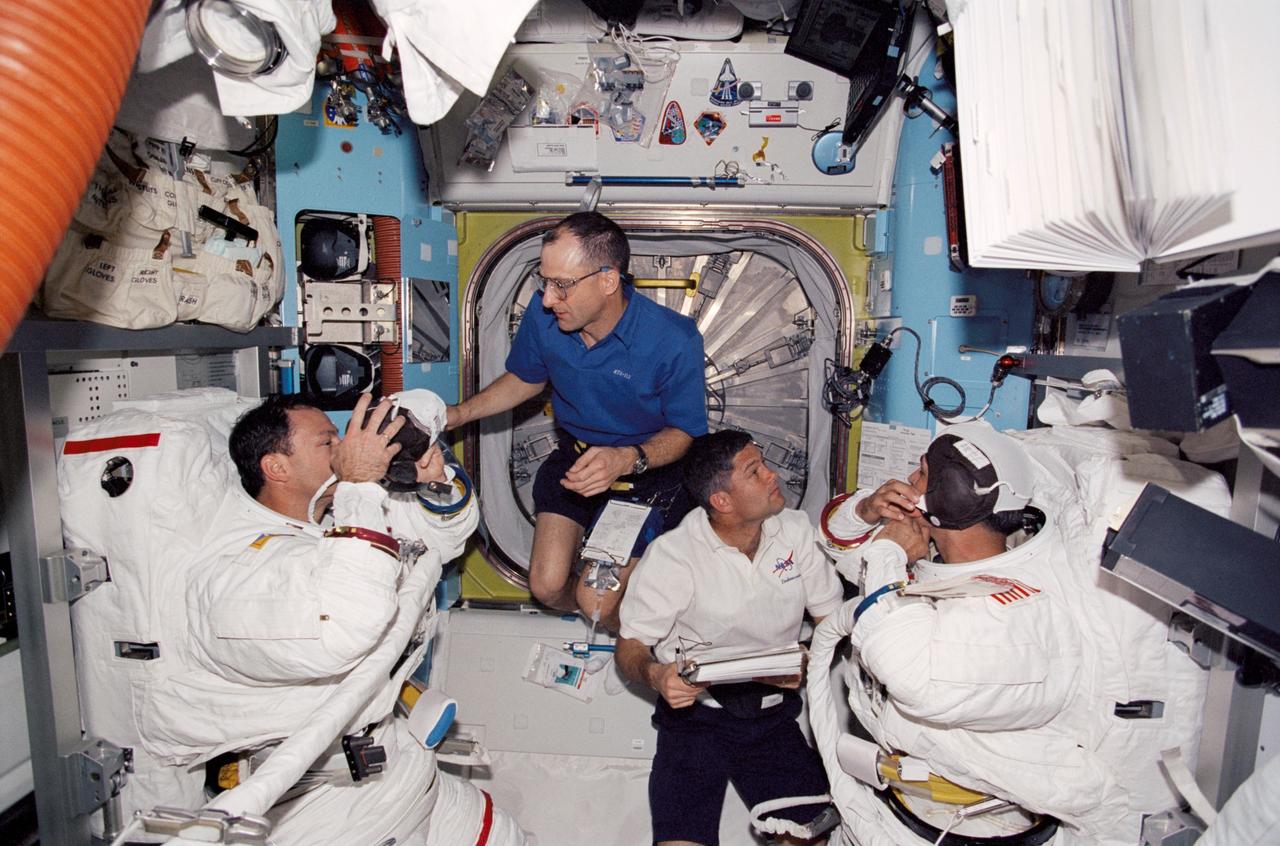
STS113-340-024 (28 November 2002) --- Astronauts Michael E. Lopez-Alegria (left) and John Herrington, both STS-113 mission specialists, assisted by astronauts Donald R. Pettit, Expedition Six NASA ISS science officer, and Paul S. Lockhart, STS-113 pilot, apply the final touches on their Extravehicular Mobility Unit (EMU) spacesuit. Moments later, Lopez-Alegria and Herrington went on to begin the second of three spacewalks to perform work on the International Space Station (ISS).

KENNEDY SPACE CENTER, FLA. -- Expedition Six Commander Ken Bowersox pauses in front of Space Shuttle Endeavour at Launch Pad 39A during a tour of Kennedy Space Center prior to his launch. The primary mission of STS-113 is bringing the Expedition 6 crew to the Station and returning the Expedition 5 crew to Earth. Another major objective of the mission is delivery of the Port 1 (P1) Integrated Truss Assembly, which will be attached to the port side of the S0 truss. Three spacewalks are planned to install and activate the truss and its associated equipment. Launch of Space Shuttle Endeavour on mission STS-113 is scheduled for Nov. 11 between midnight and 4 a.m. EST.
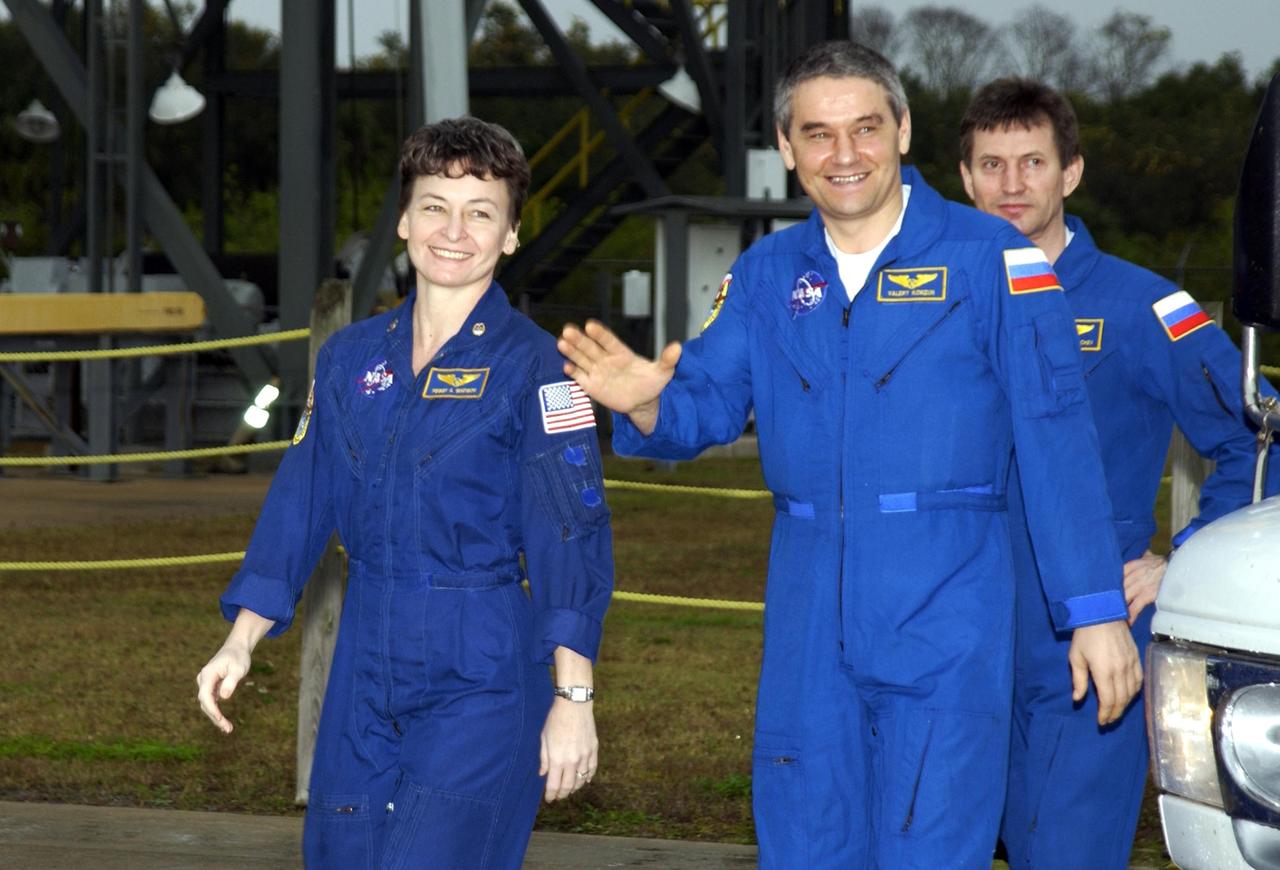
KENNEDY SPACE CENTER, FLA. -- The Expedition Five crew are ready to leave KSC for Houston. From left are Science Officer Peggy Whitson, Commander Valery Korzun and Flight Engineer Sergei Treschev. The three returned to Earth on Endeavour Dec. 7, with the STS-113 crew, after six months on the International Space Station.
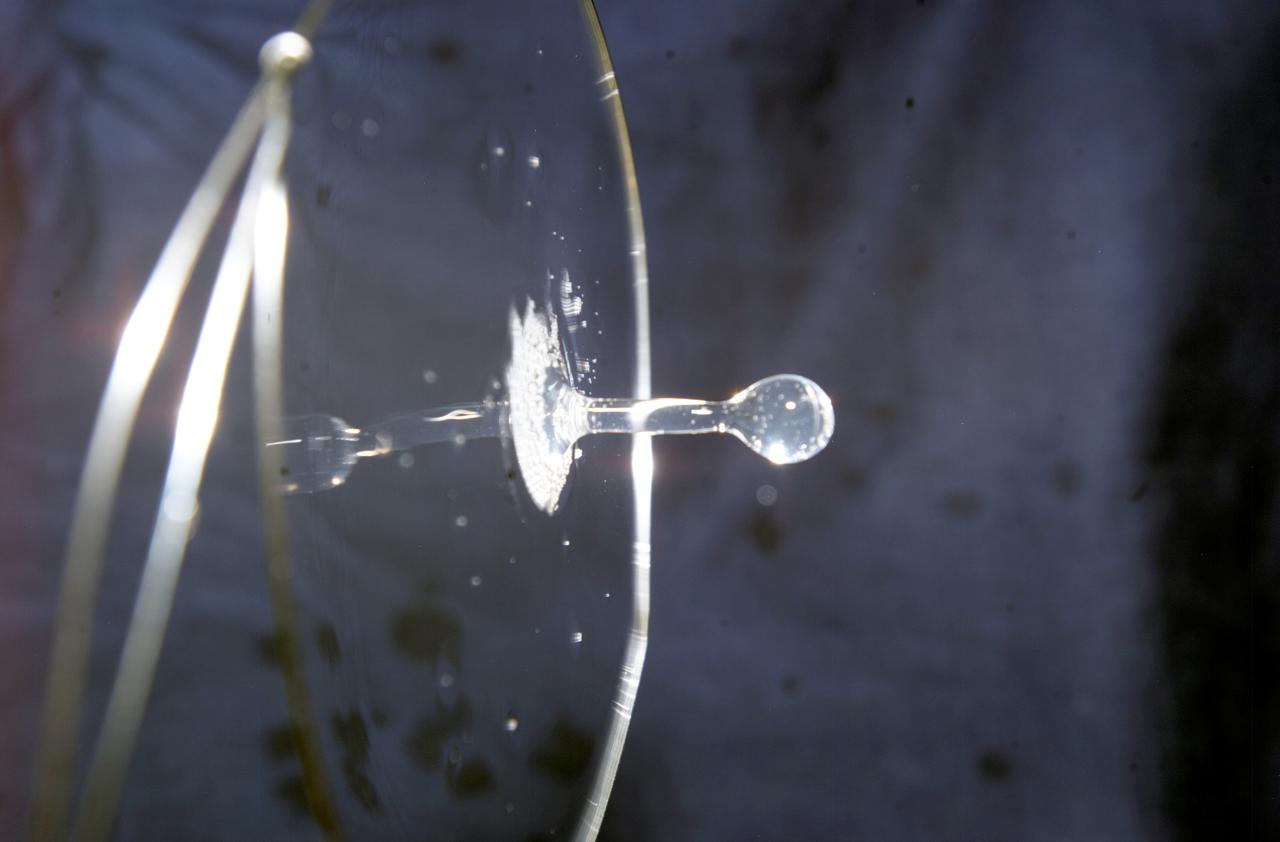
Astronaut Donald R. Pettit, Expedition Six NASA ISS science officer, photographed this view of a surface tension demonstration using water that is held in place by a metal loop. The experiment took place in the Destiny laboratory on the International Space Station (ISS). The Expedition Six crew was delivered to the station via the Space Shuttle Orbiter Endeavor STS-113 mission which was launched on November 23, 2002.
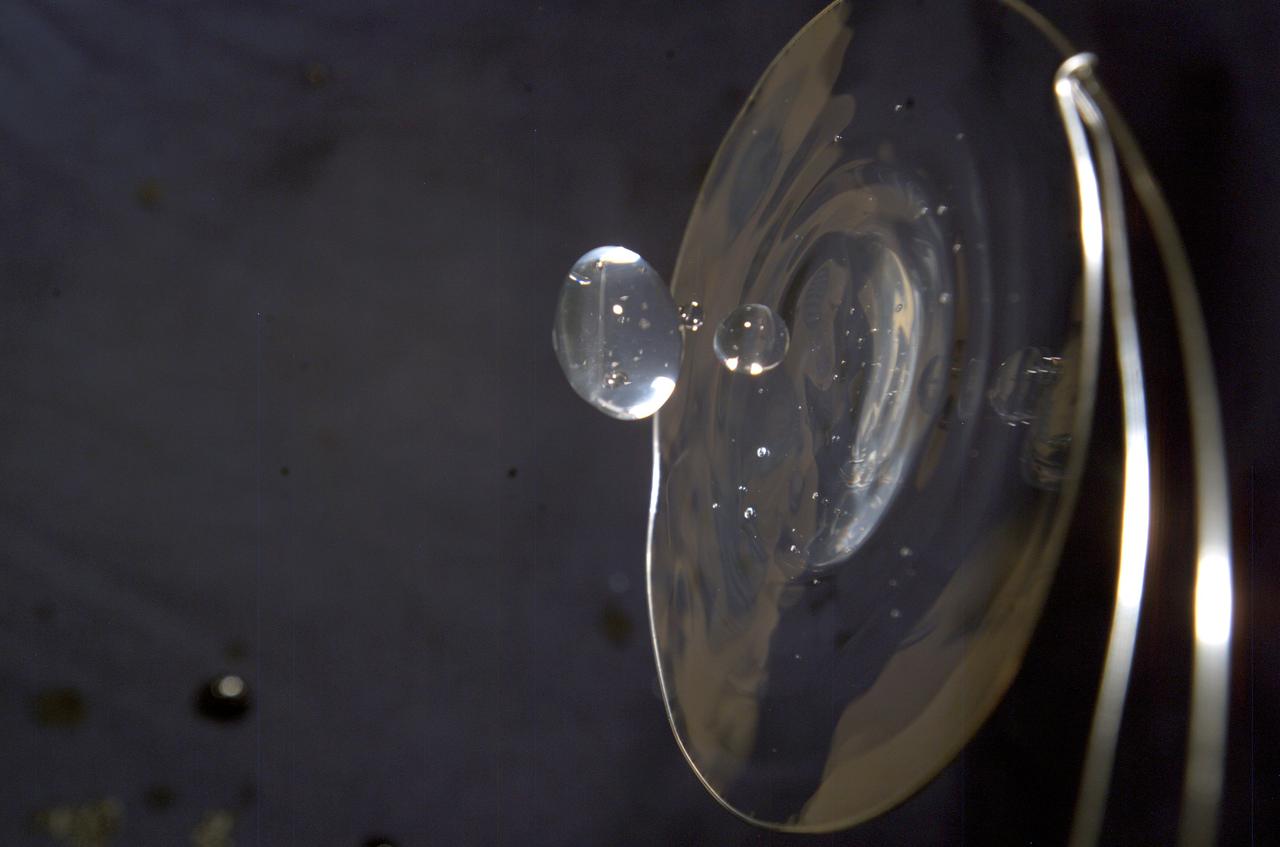
Astronaut Donald R. Pettit, Expedition Six NASA ISS science officer, photographed this view of a surface tension demonstration using water that is held in place by a metal loop. The experiment took place in the Destiny laboratory on the International Space Station (ISS). The Expedition Six crew was delivered to the station via the Space Shuttle Orbiter Endeavor STS-113 mission which was launched on November 23, 2002.
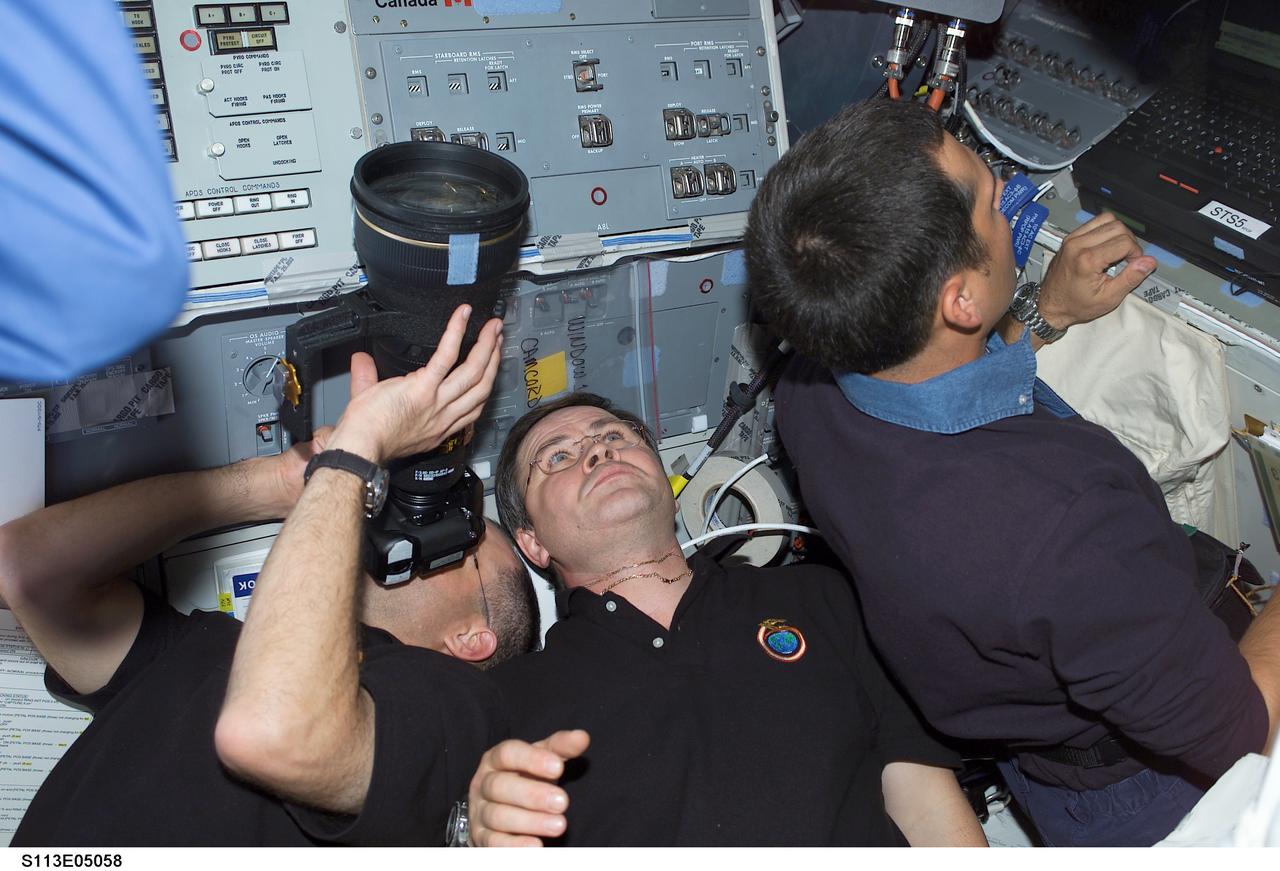
STS113-E-05058 (25 November 2002) --- Astronaut Donald R. Pettit, Expedition Six flight engineer, uses a camera on the aft flight deck of the Space Shuttle Endeavour. Also pictured are cosmonaut Nikolai M. Budarin (center), Expedition Six flight engineer, and astronaut John B. Herrington, STS-113 mission specialist.
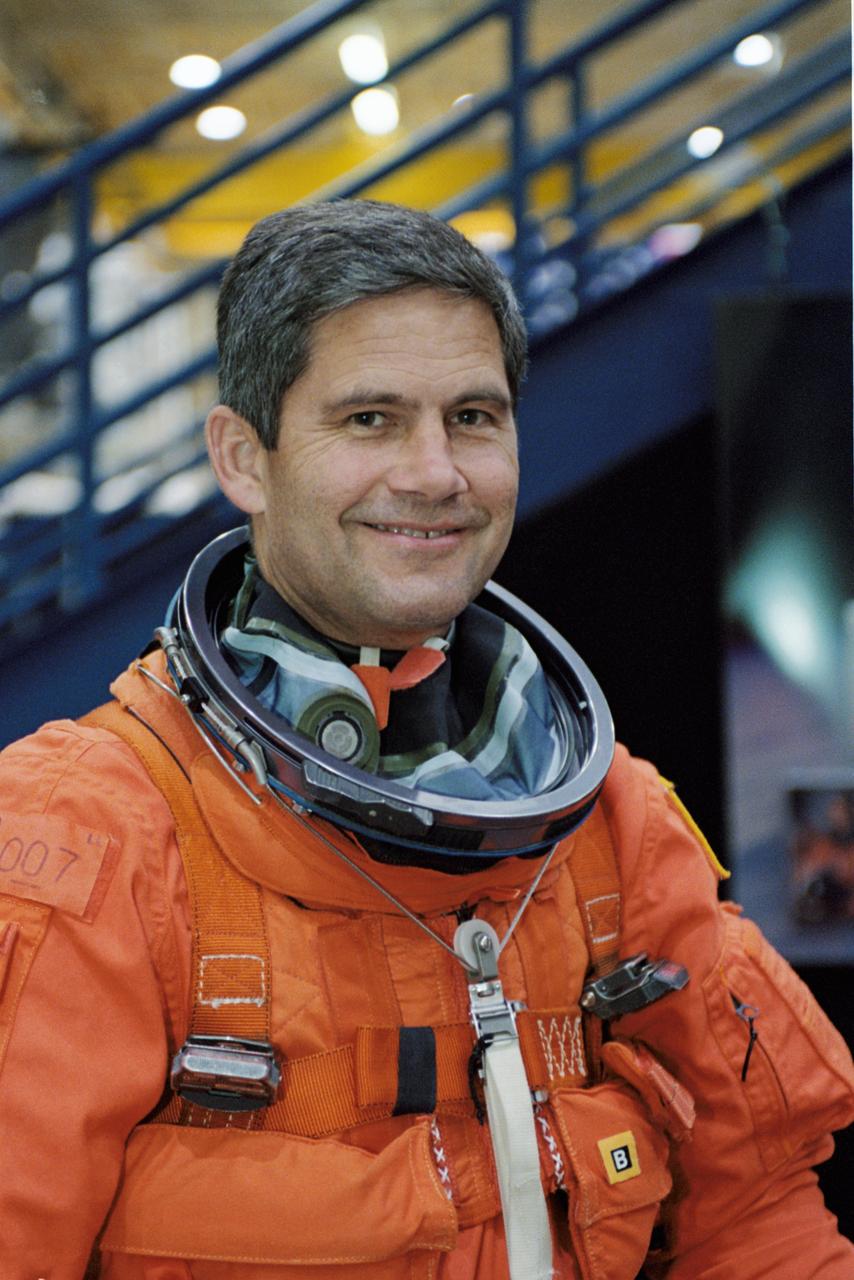
JSC2002-01743 (17 September 2002) --- Astronaut Paul S. Lockhart, STS-113 pilot, awaits the start of a training session in the Space Vehicle Mockup Facility at the Johnson Space Center (JSC). Lockhart is wearing a training version of the shuttle launch and entry suit.
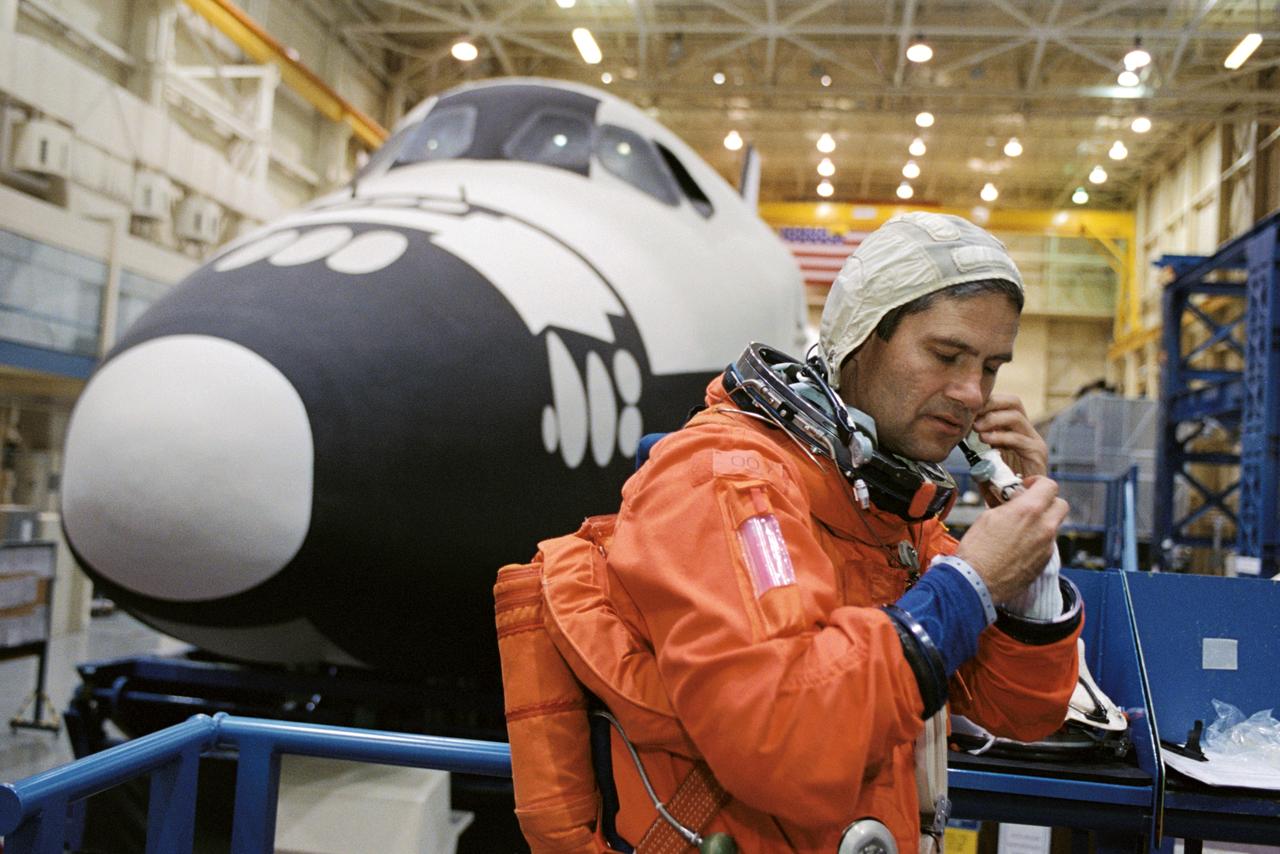
JSC2002-01737 (17 September 2002) --- Astronaut Paul S. Lockhart, STS-113 pilot, dons a training version of the full-pressure launch and entry suit prior to the start of a training session in the Space Vehicle Mockup Facility at the Johnson Space Center (JSC).
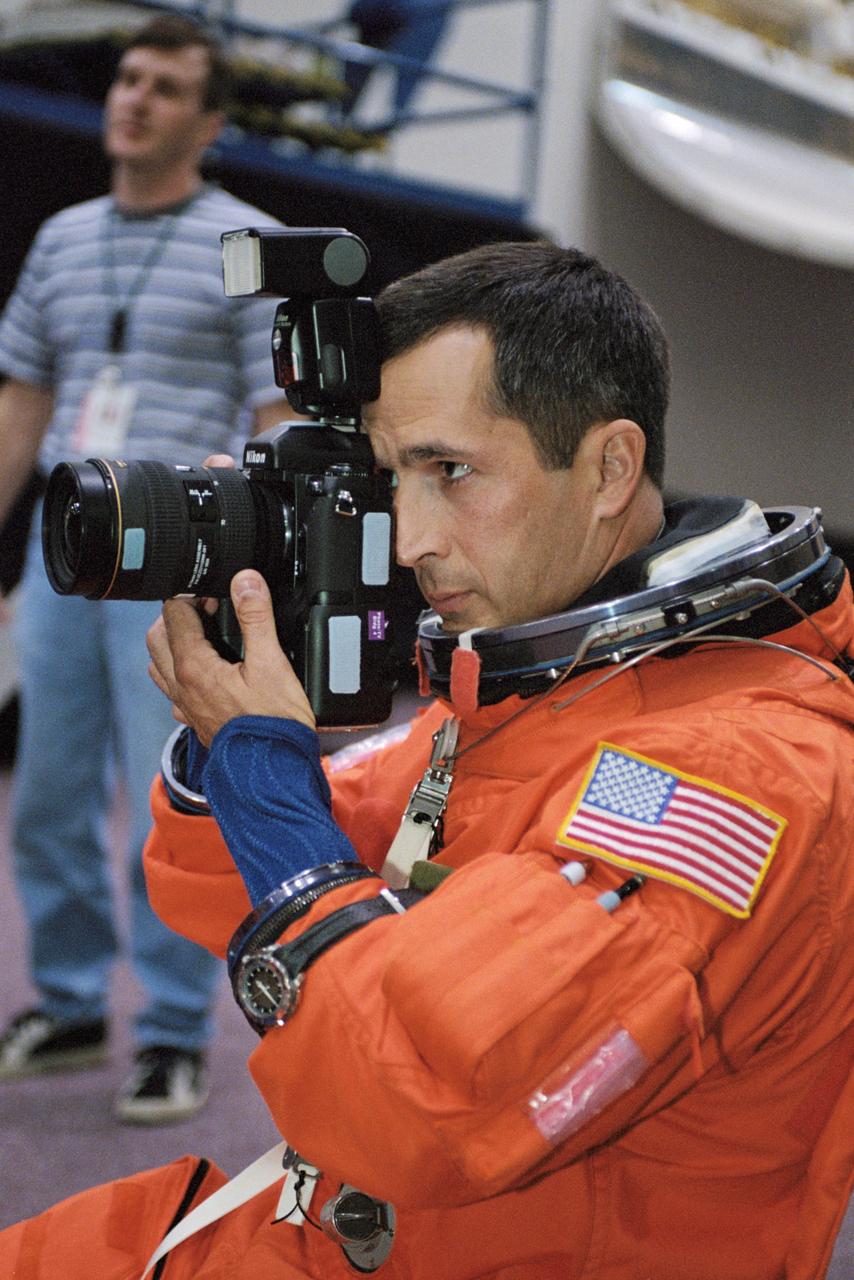
JSC2002-01738 (17 September 2002) --- Astronaut John B. Herrington, STS-113 mission specialist, uses a still camera prior to the start of a training session in the Space Vehicle Mockup Facility at the Johnson Space Center (JSC). Herrington is wearing a training version of the shuttle launch and entry suit.
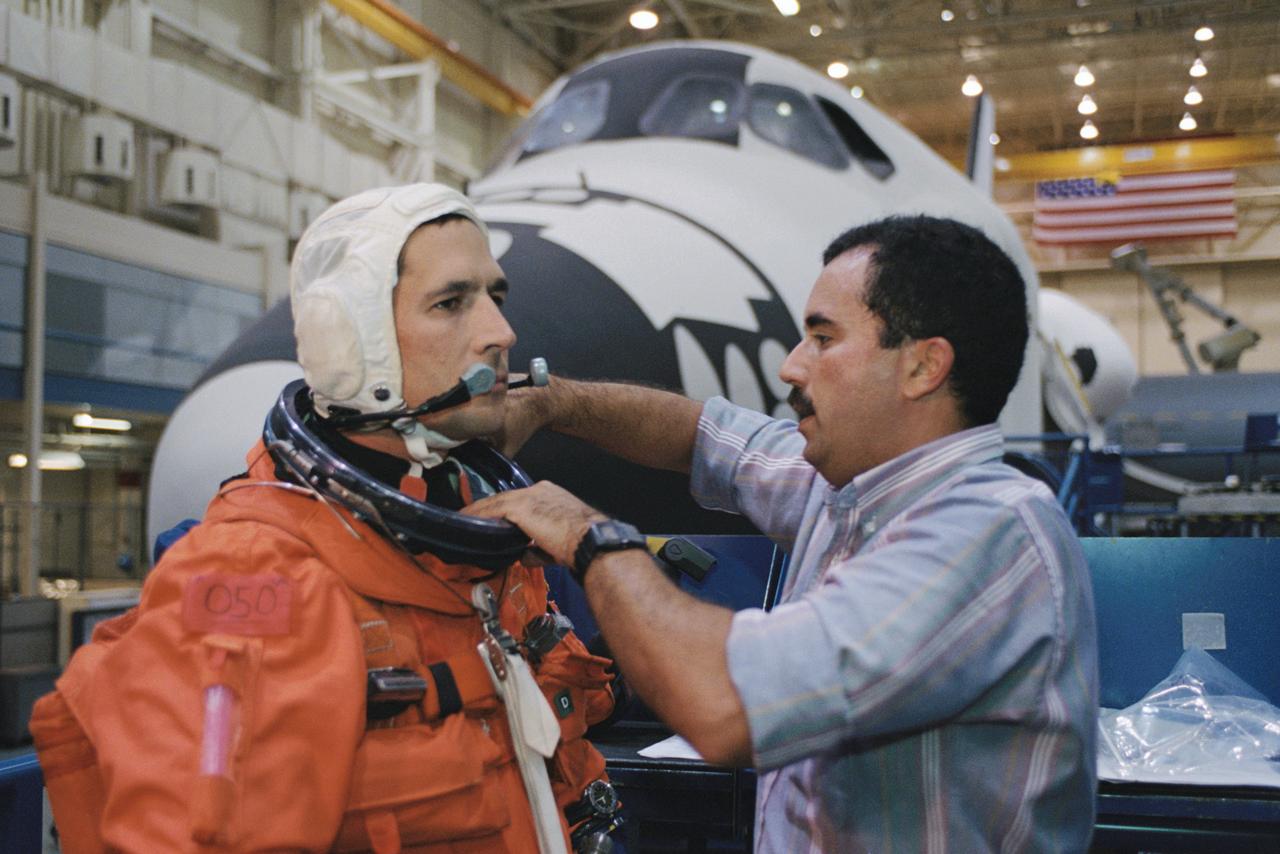
JSC2002-01734 (17 Sept. 2002) --- Astronaut John B. Herrington, STS-113 mission specialist, dons a training version of the full-pressure launch and entry suit prior to the start of a training session in the Space Vehicle Mockup Facility at the Johnson Space Center (JSC). United Space Alliance (USA) suit technician Raymond Cuevas assisted Herrington.
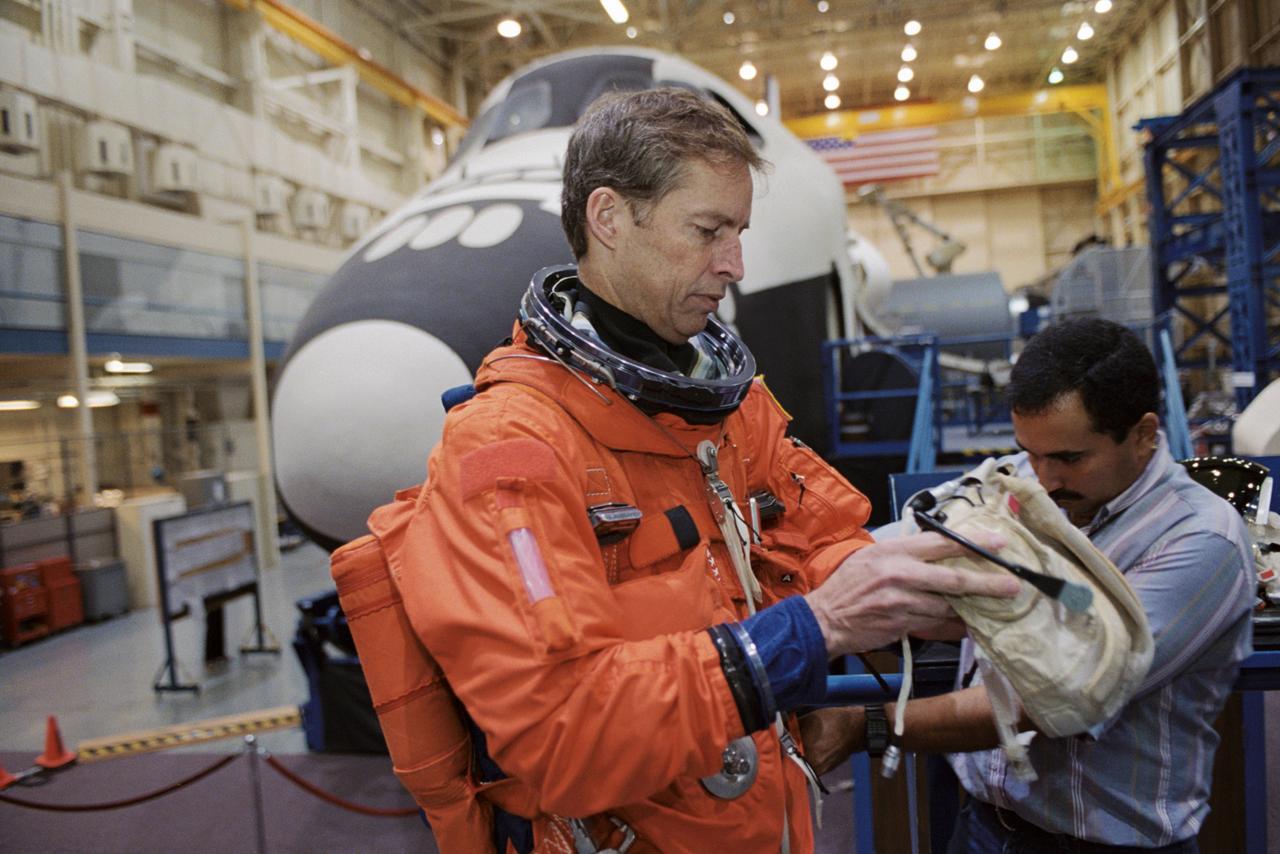
JSC2002-01739 (17 Sept. 2002) --- Astronaut James D. Wetherbee, STS-113 mission commander, dons a training version of the full-pressure launch and entry suit prior to the start of a training session in the Space Vehicle Mockup Facility at the Johnson Space Center (JSC). United Space Alliance (USA) suit technician Raymond Cuevas assisted Herrington.
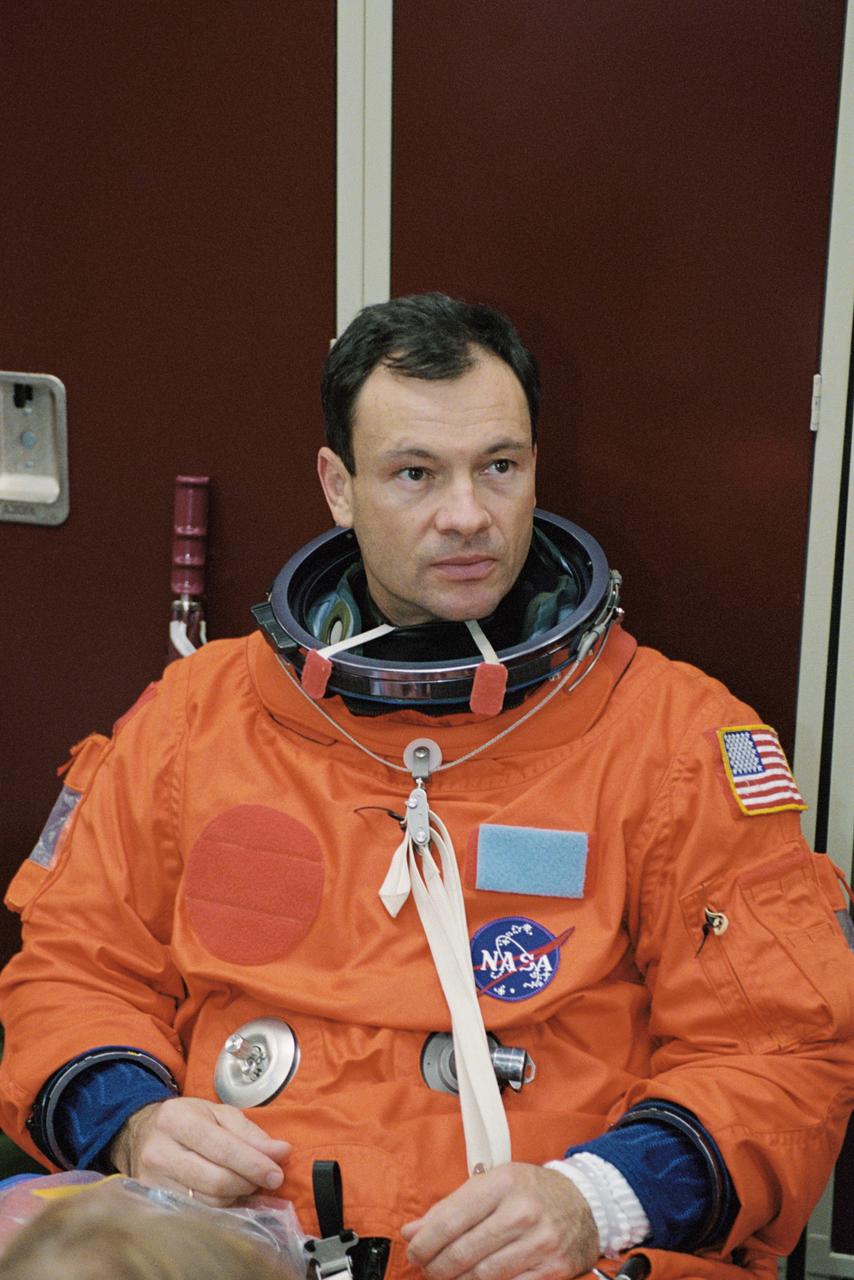
JSC2002-01742 (17 September 2002) --- Astronaut Michael E. Lopez-Alegria, STS-113 mission specialist, awaits the start of a training session in the Space Vehicle Mockup Facility at the Johnson Space Center (JSC). Lopez-Alegria is wearing a training version of the shuttle launch and entry suit.
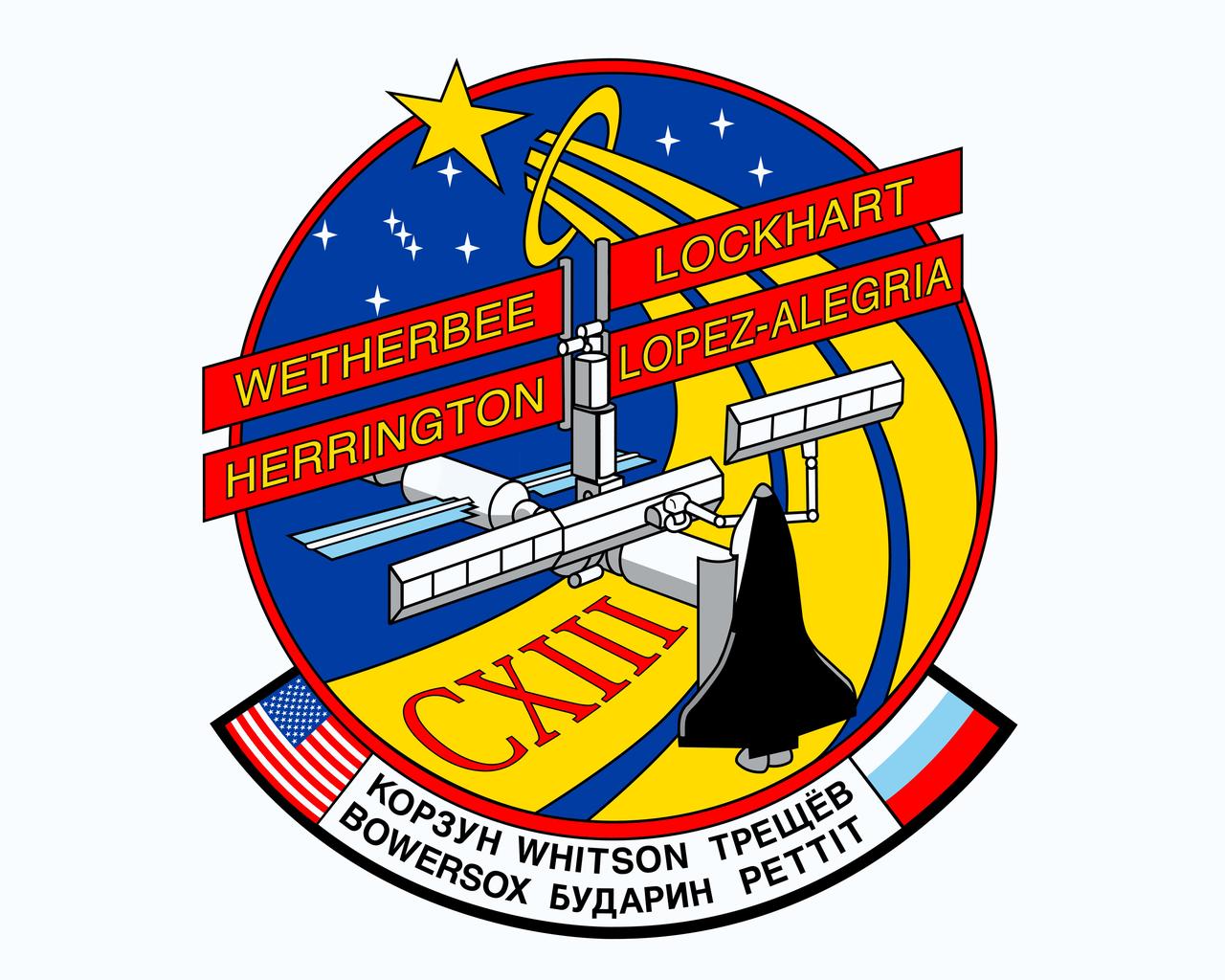
This is the crew patch for the Shuttle Endeavor STS-113 mission, the 16th American assembly flight, and 112th overall American flight to the International Space Station (ISS). STS-113 mission objectives included the delivery of the Expedition Six Crew to the ISS, the return of Expedition Five back to Earth, and the installation and activation of the Port 1 Integrated Truss Assembly (P1). The first major component installed on the left side of the Station, the P1 truss provides an additional three External Thermal Control System radiators. Three space walks, aided by the use of the Robotic Manipulator Systems of both the Shuttle and the Station, were performed in the installation of P1. Also, more than 2,500 pounds (1,134 kilograms) of cargo were transferred between the Shuttle and Station. The Space Shuttle Orbiter Endeavor launched on November 23, 2002 from Kennedy's launch pad 39A and returned 11 days later on December 4, 2002. The patch depicts the Space Shuttle Endeavour docked to the ISS during the installation of the P1 truss with the gold astronaut symbol in the background. The seven stars at the top left center of the patch are the seve brightest stars in the constellation Orion. They represent the combined seven crew members (four Shuttle and three Expedition Six). The three stars to the right of the astronaut symbol represent the returning Expedition Five crew members. The Roman Numeral CXIII represents the mission number 113.

KENNEDY SPACE CENTER, FLA. - Expedition Six crew member Nikolai Budarin, of the Russian Space Agency, pauses in front of Space Shuttle Endeavour at Launch Pad 39A during a tour of Kennedy Space Center prior to his launch. The primary mission of STS-113 is bringing the Expedition 6 crew to the Station and returning the Expedition 5 crew to Earth. Another major objective of the mission is delivery of the Port 1 (P1) Integrated Truss Assembly, which will be attached to the port side of the S0 truss. Three spacewalks are planned to install and activate the truss and its associated equipment. Launch of Space Shuttle Endeavour on mission STS-113 is scheduled for Nov. 11 between midnight and 4 a.m. EST.
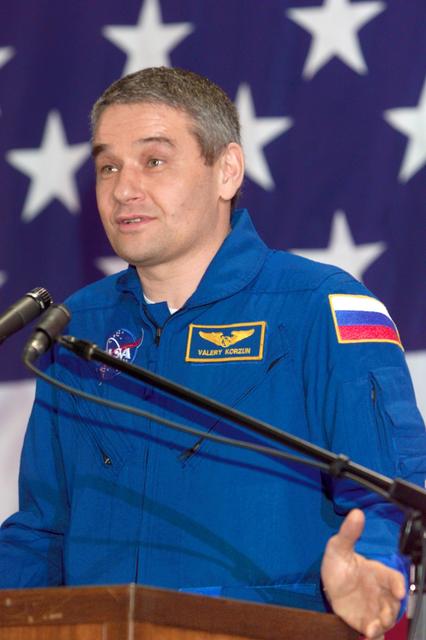
JSC2002-E-48258 (9 December 2002) --- Cosmonaut Valery G. Korzun, Expedition Five commander, addresses a crowd on hand at Ellington Field's Hangar 990. The STS-113 and Expedition Five crews had landed a day earlier aboard the Space Shuttle Endeavour in Florida. For Korzun and his two station crewmates, it had been approximately six months since they had been on terra firma.
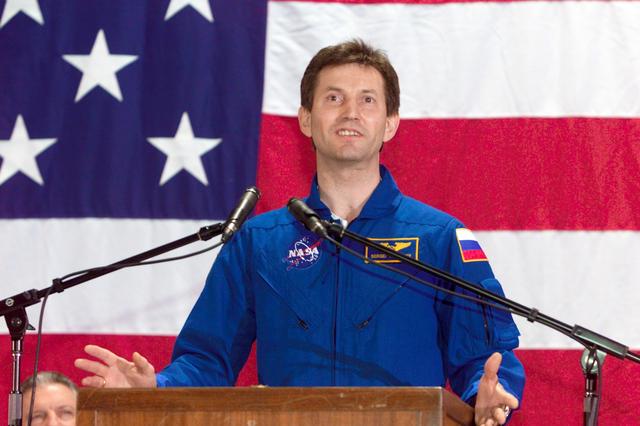
JSC2002-E-48262 (9 December 2002) --- Cosmonaut Sergei Y. Treschev of Rosaviakosmos, who just completed approximately six months of service as Expedition Five flight engineer, addresses a welcoming crowd on hand at Ellington Field's Hangar 990. The STS-113 and Expedition Five crews had landed a day earlier aboard the Space Shuttle Endeavour in Florida.
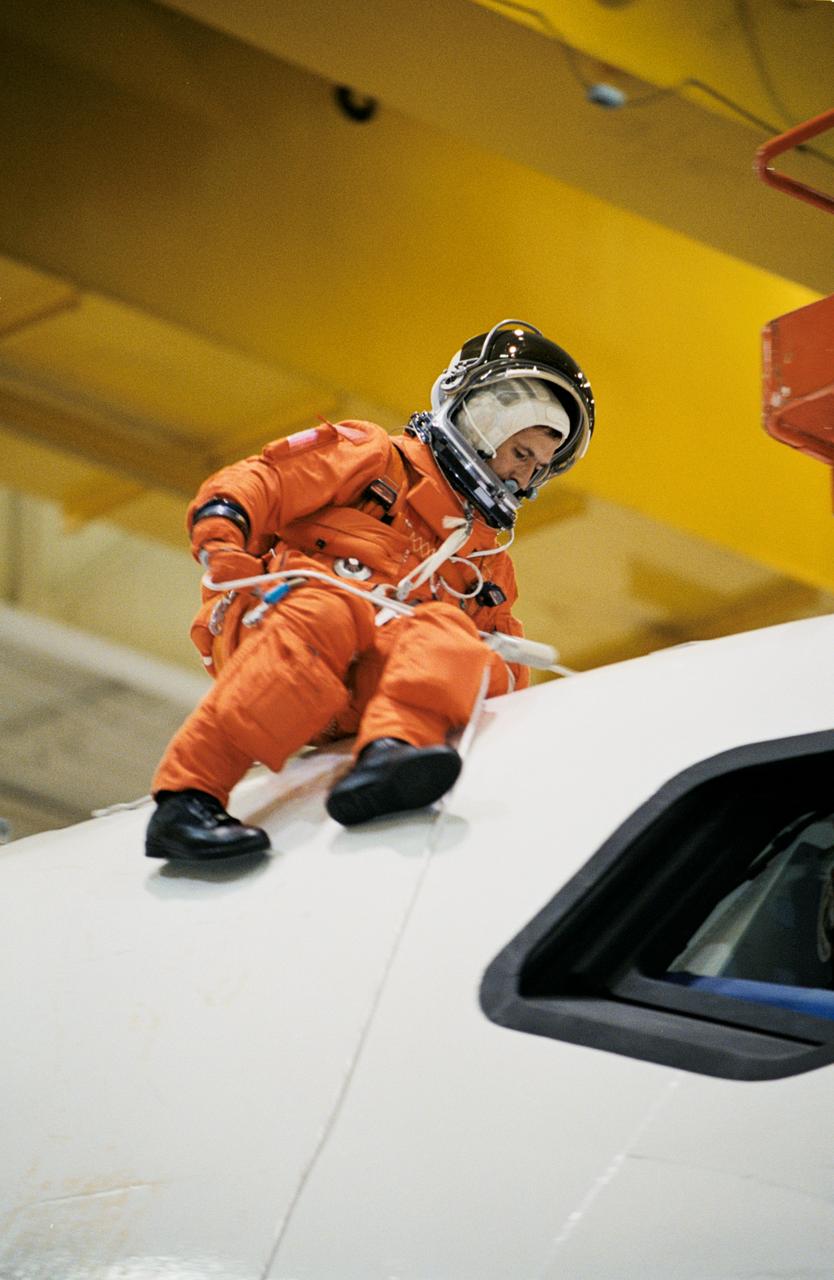
JSC2002-00713 (25 March 2002) --- Astronaut John B. Herrington, STS-113 mission specialist, uses a device called a Sky genie to simulate rappelling from a troubled shuttle in a training session in the Space Vehicle Mockup Facility at the Johnson Space Center (JSC). The mockup is called the Full Fuselage Trainer (FFT). This exercise trains the crewmembers for procedures to follow in egressing a troubled shuttle on the ground. Herrington and his crewmates will drop off the Expedition Six crew at the International Space Station (ISS).
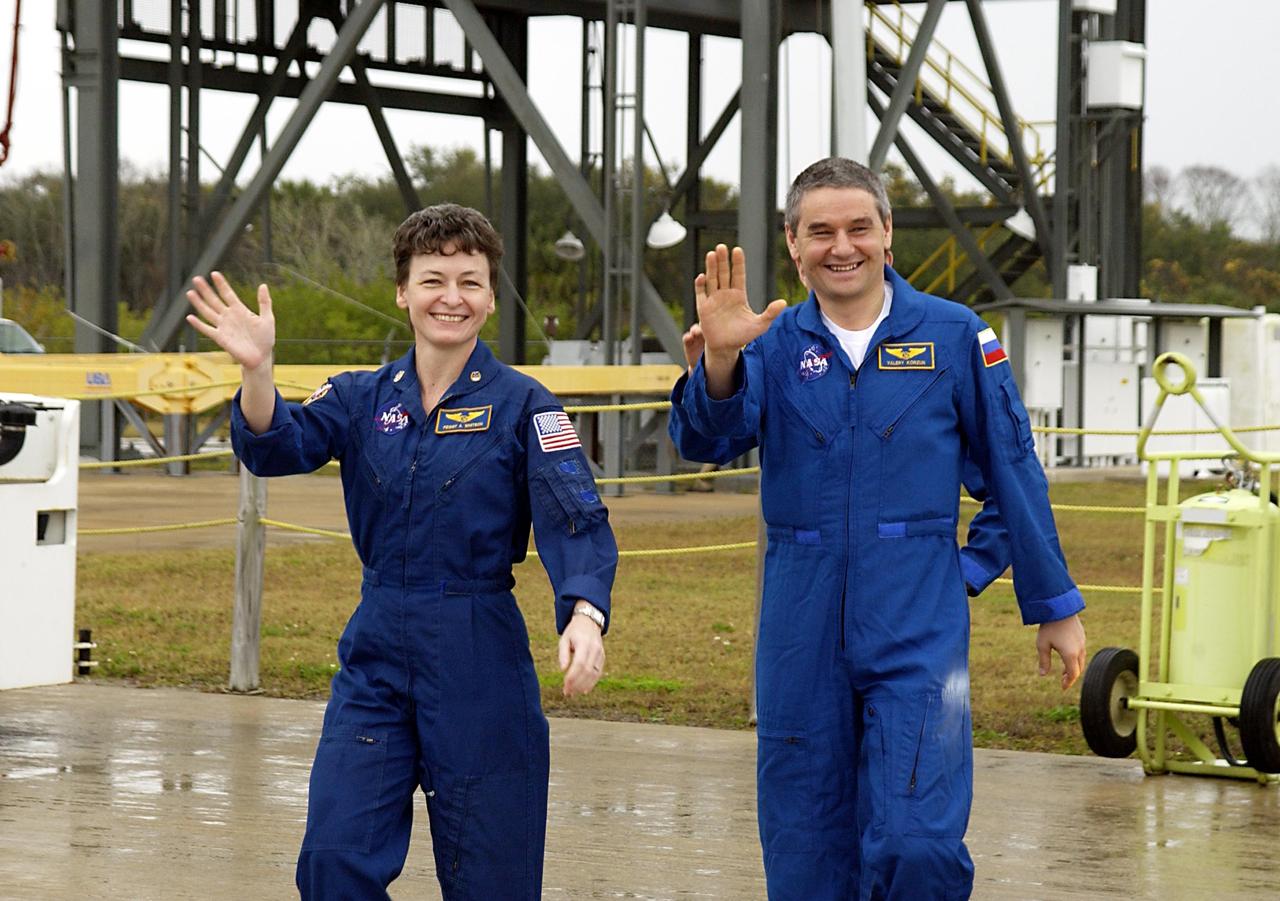
KENNEDY SPACE CENTER, FLA. -- Expedition Five crew members wave to onlookers as they leave KSC for Houston. From left are Science Officer Peggy Whitson and Commander Valery Korzun. Not seen is Flight Engineer Sergei Treschev. The three returned to Earth Dec. 7 on Endeavour, with the STS-113 crew, after six months on the International Space Station.
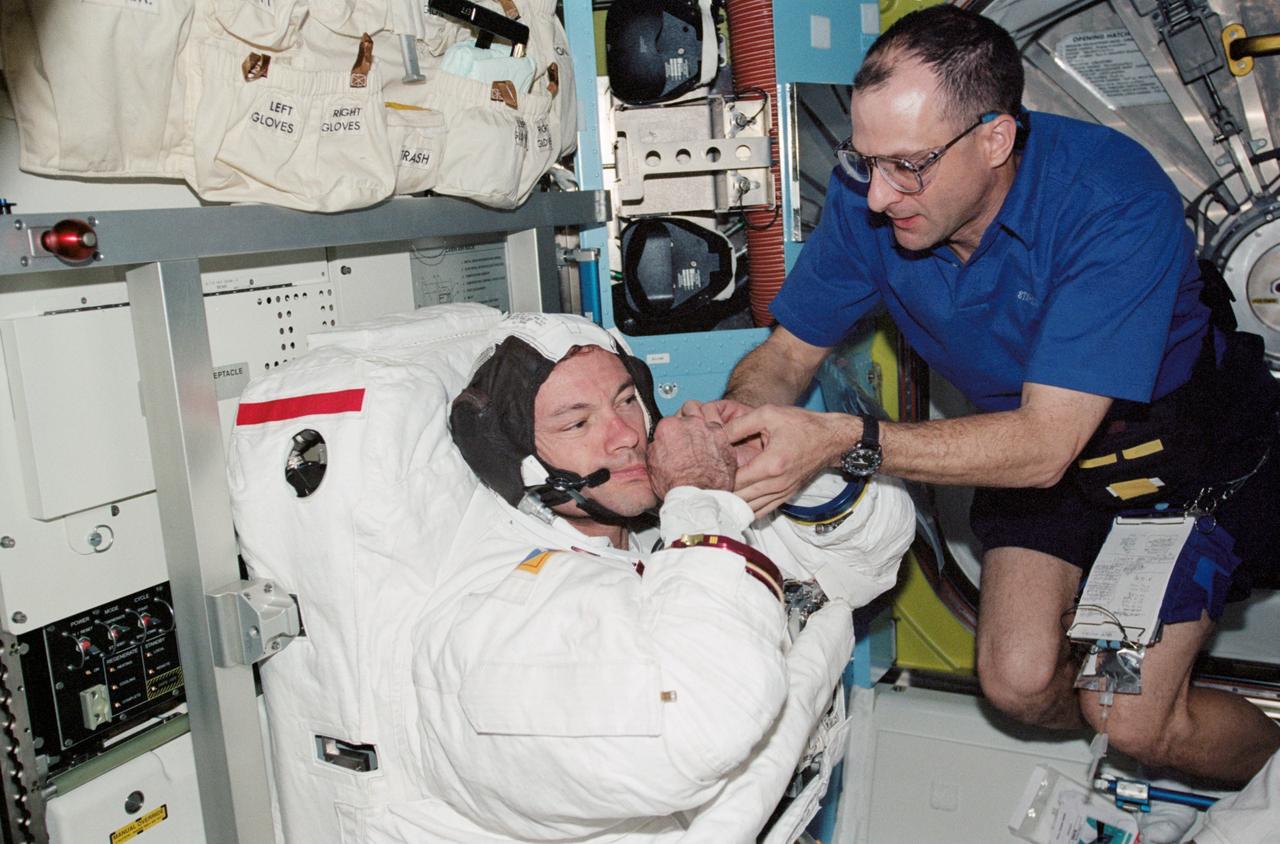
STS113-340-030 (28 November 2002) --- Astronaut Donald R. Pettit, Expedition Six NASA ISS science officer, assists astronaut Michael E. Lopez-Alegria, STS-113 mission specialist, with the final touches on his Extravehicular Mobility Unit (EMU) spacesuit in the Quest Airlock on the International Space Station (ISS). Lopez-Alegria is about to participate in the mission’s second scheduled session of extravehicular activity (EVA).

STS113-340-029 (28 November 2002) --- Astronaut Donald R. Pettit, Expedition Six NASA ISS science officer, assists astronaut John B. Herrington, STS-113 mission specialist, with the final touches on his Extravehicular Mobility Unit (EMU) spacesuit in the Quest Airlock on the International Space Station (ISS). Herrington is about to participate in the mission’s second scheduled session of extravehicular activity (EVA).
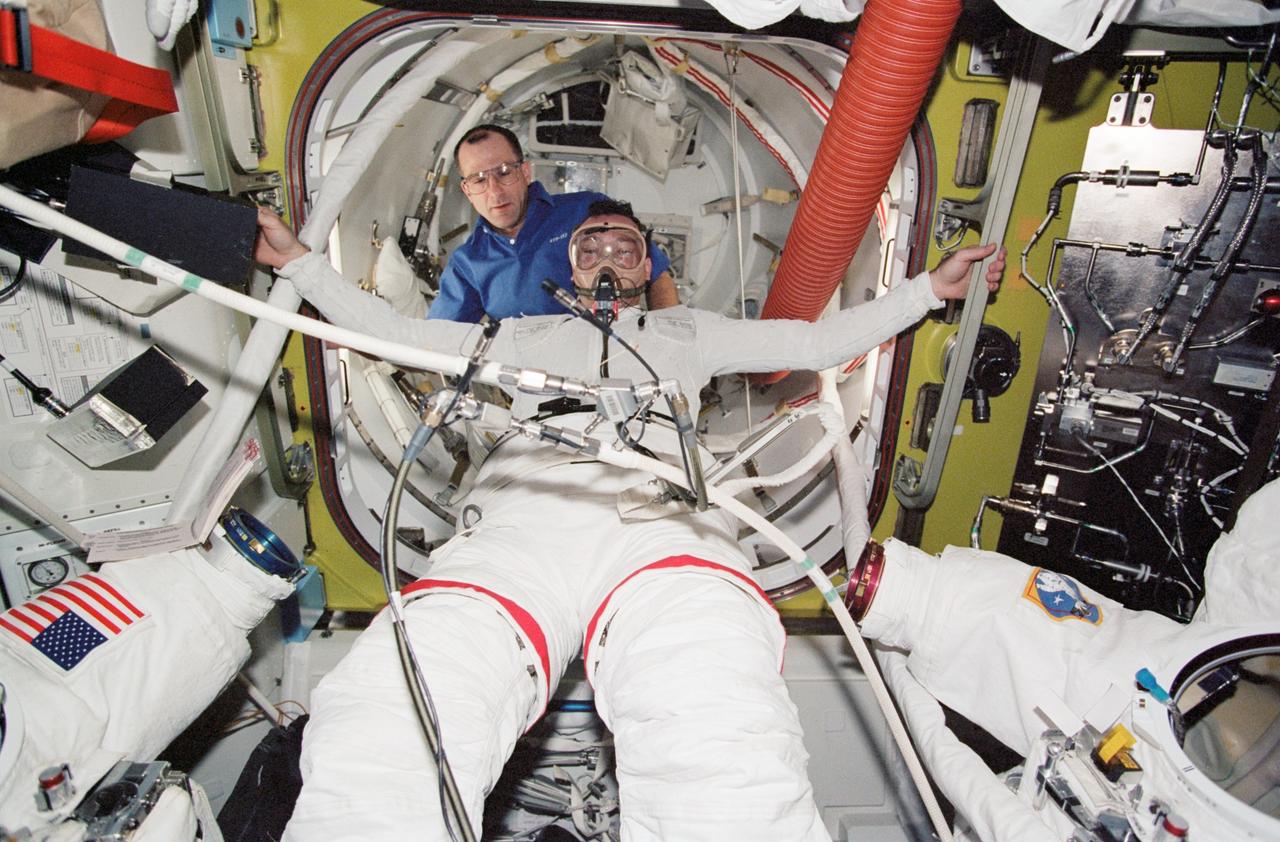
STS113-340-015 (28 November 2002) --- Astronaut Michael E. Lopez-Alegria, STS-113 mission specialist, is photographed in the midst of a pre-breathe exercise in preparation for the mission’s second session of extravehicular activity (EVA) in the Quest Airlock on the International Space Station (ISS). Astronaut Donald R. Pettit, Expedition Six NASA ISS science officer, assisted Lopez-Alegria.
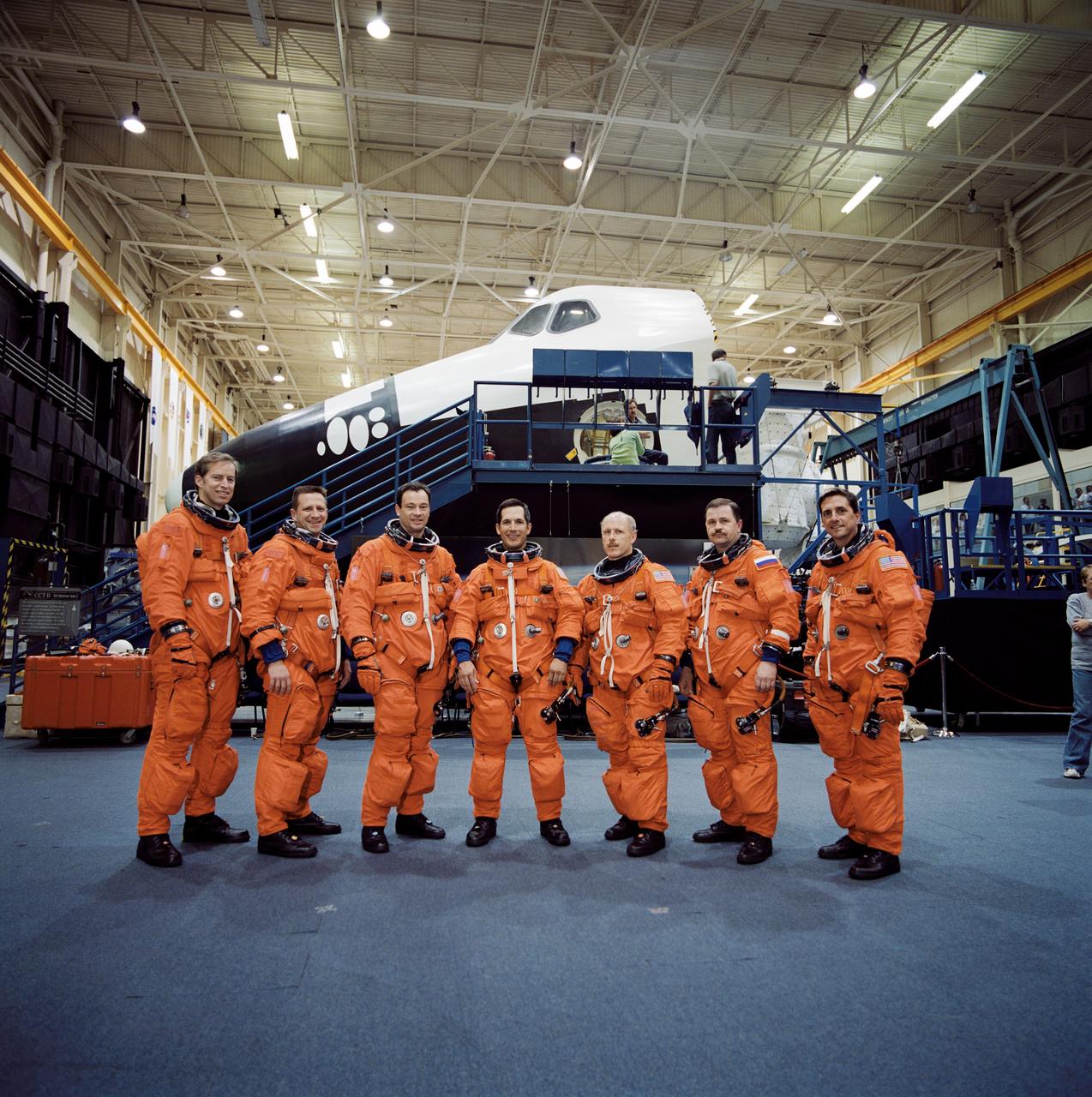
Pictured is the crew for the Shuttle Endeavor STS-113 mission snapped during a training session in the Space Vehicle Mockup Facility at the Johnson Space Center. From the left are Astronauts James D. Wetherbee, STS-113 mission commander; Christopher J. (Gus) Loria, pilot; Michael E. Lopez-Alegria and John B. Herrington, mission specialists; Kerneth D. Bowersox, Expedition Six mission commander; Cosmonaut Nikloai M. Budarin and astronaut Donald A. Thomas, Expedition Six Flight Engineers. The 16th American assembly flight and 112th overall American flight to the International Space Station (ISS), STS-113 mission objectives included the delivery of the Expedition Six Crew to the ISS, the return of Expedition Five back to Earth, and the installation and activation of the Port 1 Integrated Truss Assembly (P1). The first major component installed on the left side of the Station, the P1 truss provides an additional three External Thermal Control System radiators. Weighing in at 27,506 pounds, the P1 truss is 45 feet (13.7 meters) long, 15 feet (4.6 meters) wide, and 13 feet (4 meters) high. Three space walks, aided by the use of the Robotic Manipulator Systems of both the Shuttle and the Station, were performed in the installation of P1. Also, more than 2,500 pounds (1,134 kilograms) of cargo were transferred between the Shuttle and Station. The Space Shuttle Orbiter Endeavor launched on November 23, 2002 from Kennedy's launch pad 39A and returned 11 days later on December 4, 2002.
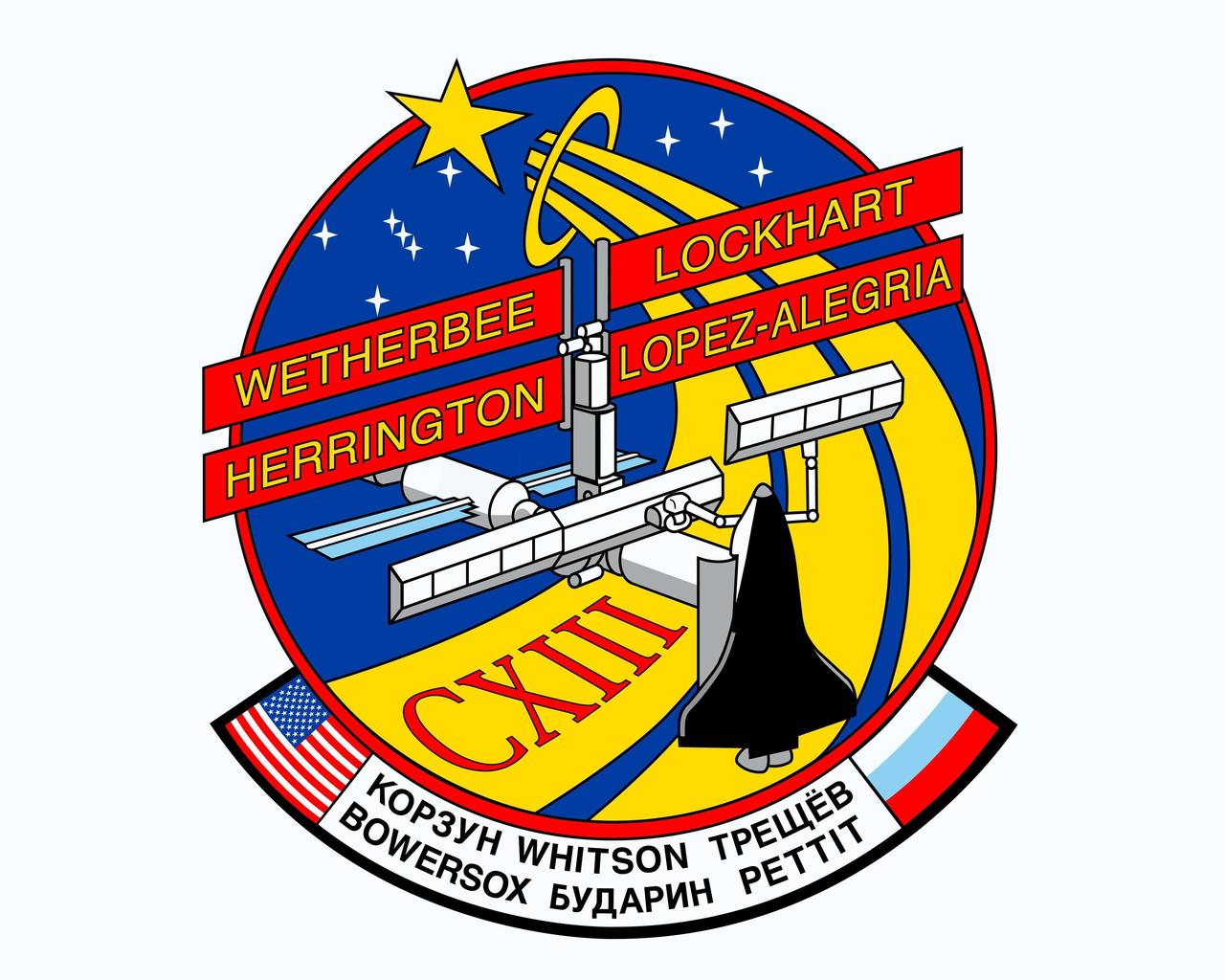
JOHNSON SPACE CENTER, HOUSTON, TEXAS - (STS113-S-001 September 2002) -- This is the crew patch for the STS-113 mission, which will be the 11th American (11A) assembly flight to the International Space Station (ISS). The primary mission will be to take the Expedition Six crew to the ISS and return the Expedition Five crew to Earth. STS-113 will be the first flight in the assembly sequence to install a major component in addition to performing a crew exchange. The Port 1 Integrated Truss Assembly (P1) will be the first truss segment on the left side of the ISS. P1 will provide an additinal three External Thermal Control System radiators, adding to the three radiators on the Starboard 1 (S1) Integrated Truss Assembly. The installation and outfitting of P1 will require three extravehicular activities (spacewalks) as well as coordination between the Shuttle Robotic Manipulator System and the Space Station Robotic Manipulator System. The patch depicts the Space Shuttle Endeavour docked to the ISS during the installation of the P1 truss withthe gold astronaut symbol in the background. The seven stars at the top left center of the patch are the seven brightest stars in the constellation Orion. They represent the combined seven crew members (four Shuttle and three Expedition Six). The three stars to the right of the astronaut symbol represent the returning Expedition Five crew members. The Roman Numeral CXIII represents the mission number 113. The NASA insignia design for Shuttle space flights is reserved for use by the astronauts and other official use as the NASA Administrator may authorize. Public availability has been approved only in the form of illustrations by the various news media. When and if there is any change in this policy, which is not anticipated, such will be publicly announced.
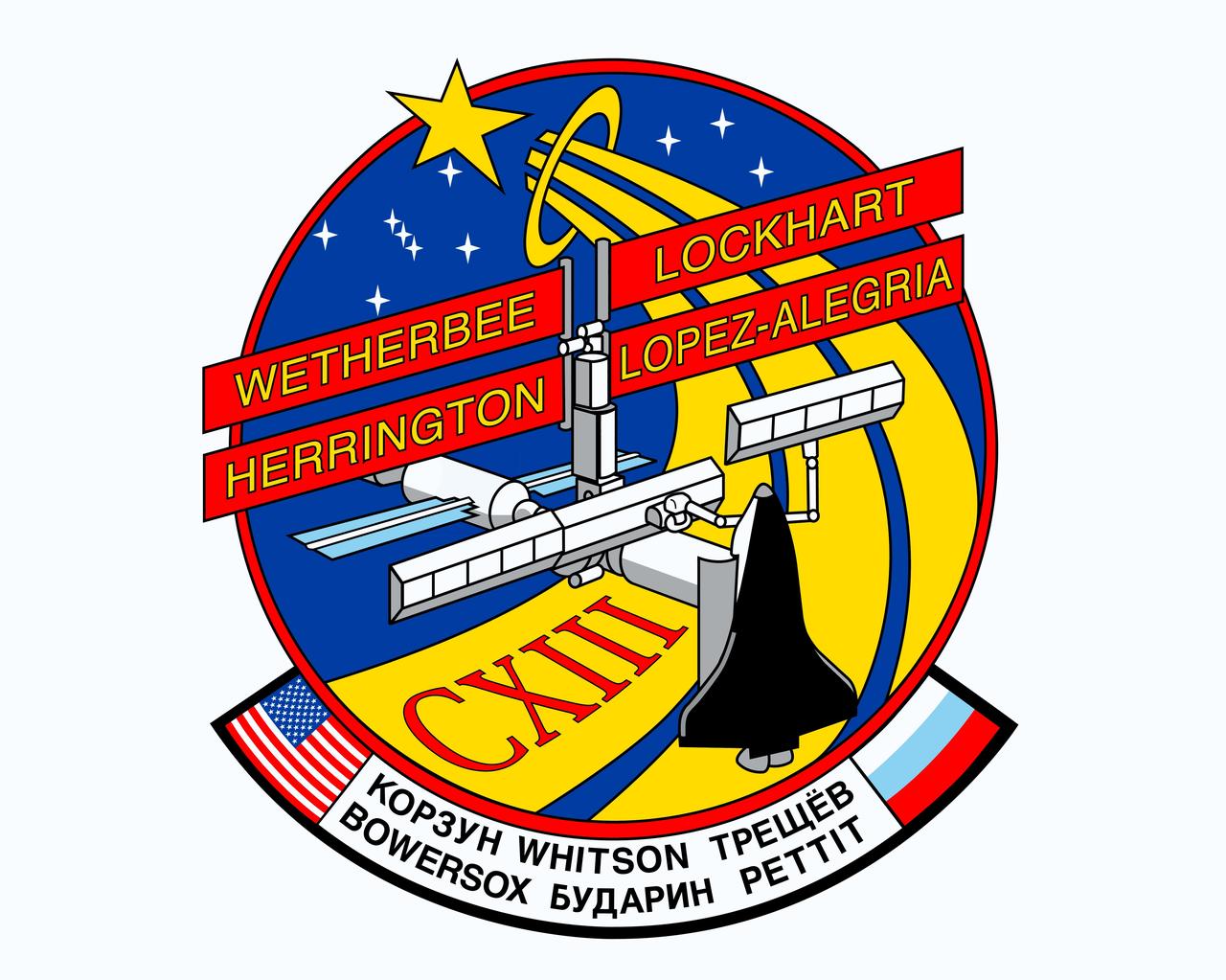
STS113-S-001 (September 2002) --- This is the crew patch for the STS-113 mission, which will be the eleventh American (11A) assembly flight to the International Space Station (ISS). The primary mission will be to take the Expedition Six crew to the ISS and return the Expedition Five crew to Earth. STS-113 will be the first flight in the assembly sequence to install a major component in addition to performing a crew exchange. The Port 1 Integrated Truss Assembly (P1) will be the first truss segment on the left side of the ISS. P1 will provide an additional three External Thermal Control System radiators, adding to the three radiators on the Starboard 1 (S1) Integrated Truss Assembly. The installation and outfitting of P1 will require three extravehicular activities (spacewalks) as well as coordination between the Shuttle Robotic Manipulator System and the Space Station Robotic Manipulator System. The patch depicts the space shuttle Endeavour docked to the ISS during the installation of the P1 truss with the gold astronaut symbol in the background. The seven stars at the top left center of the patch are the seven brightest stars in the constellation Orion. They represent the combined seven crew members (four shuttle and three Expedition Six). The three stars to the right of the astronaut symbol represent the returning Expedition Five crew members. The Roman Numeral CXIII represents the mission number 113. The NASA insignia design for space shuttle flights is reserved for use by the astronauts and for other official use as the NASA Administrator may authorize. Public availability has been approved only in the forms of illustrations by the various news media. When and if there is any change in this policy, which is not anticipated, the change will be publicly announced. Photo credit: NASA
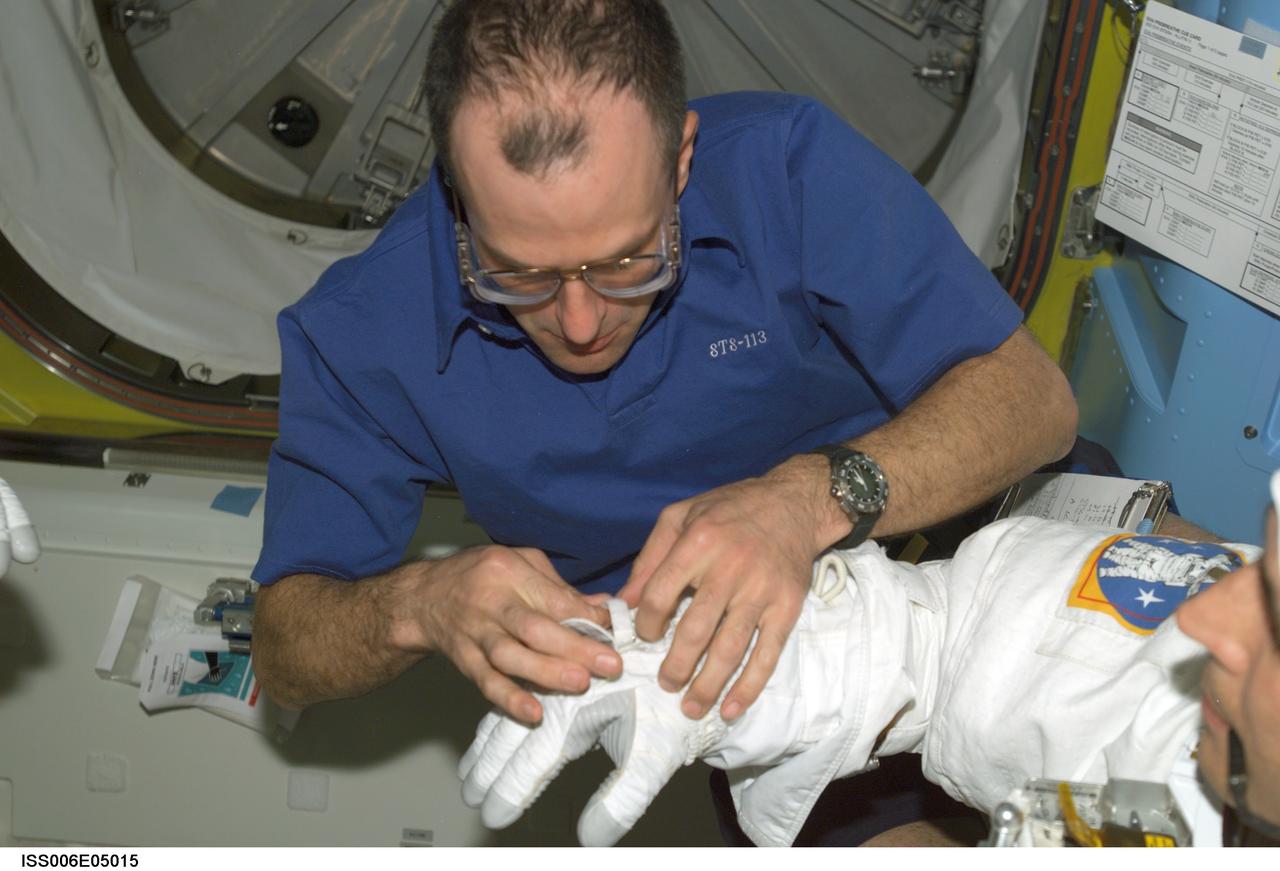
ISS006-E-05015 (28 November 2002) --- Astronaut Donald R. Pettit, NASA ISS science officer, assists astronaut John B. Herrington (partially out of frame), STS-113 mission specialist, with his Extravehicular Mobility Unit (EMU) spacesuit in the Quest Airlock on the International Space Station (ISS).

STS113-E-05023 (25 November 2002) --- Astronaut Donald R. Pettit, Expedition Six flight engineer, holds a camera on the aft flight deck of the Space Shuttle Endeavour.
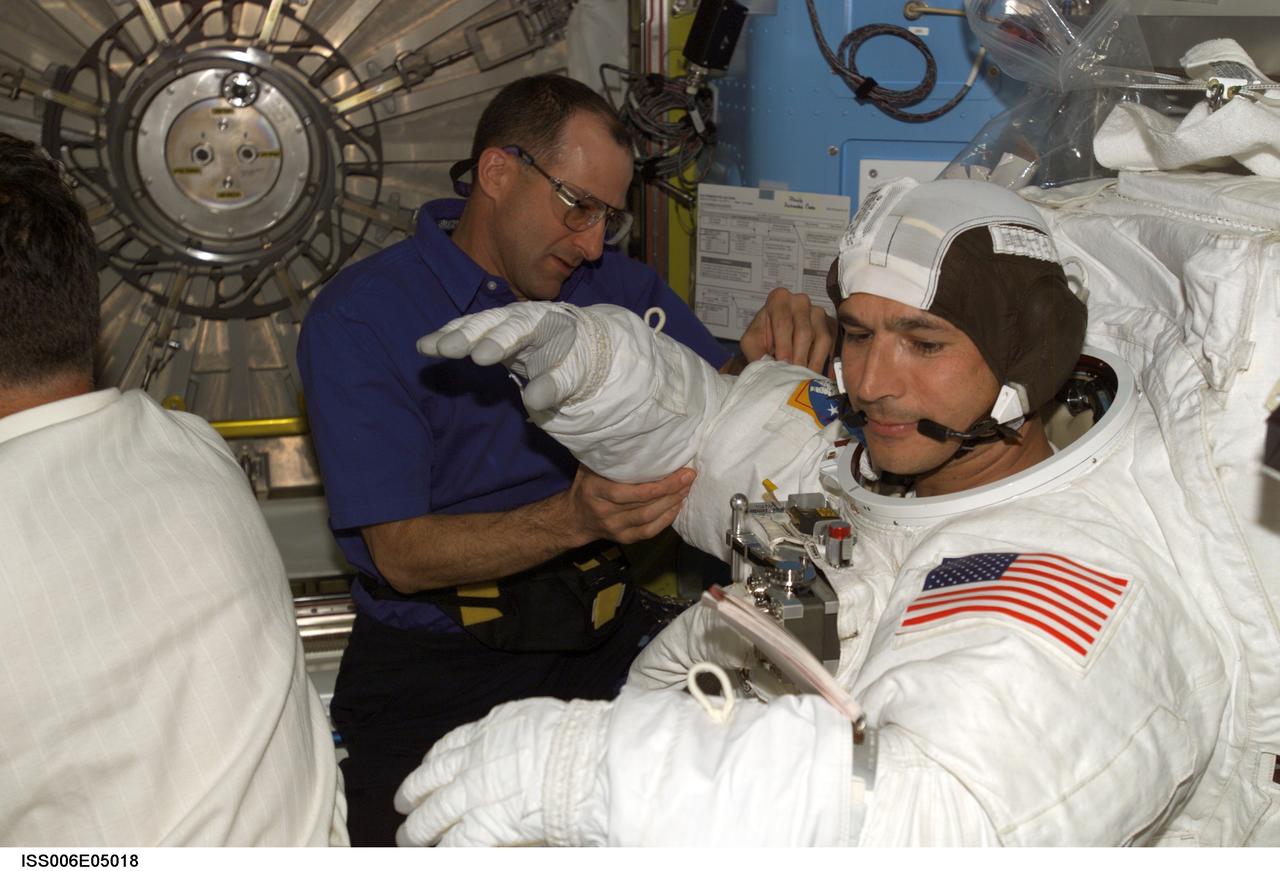
ISS006-E-05018 (28 November 2002) --- Astronaut Donald R. Pettit, NASA ISS science officer, assists astronaut John B. Herrington, STS-113 mission specialist, with his Extravehicular Mobility Unit (EMU) spacesuit in the Quest Airlock on the International Space Station (ISS).
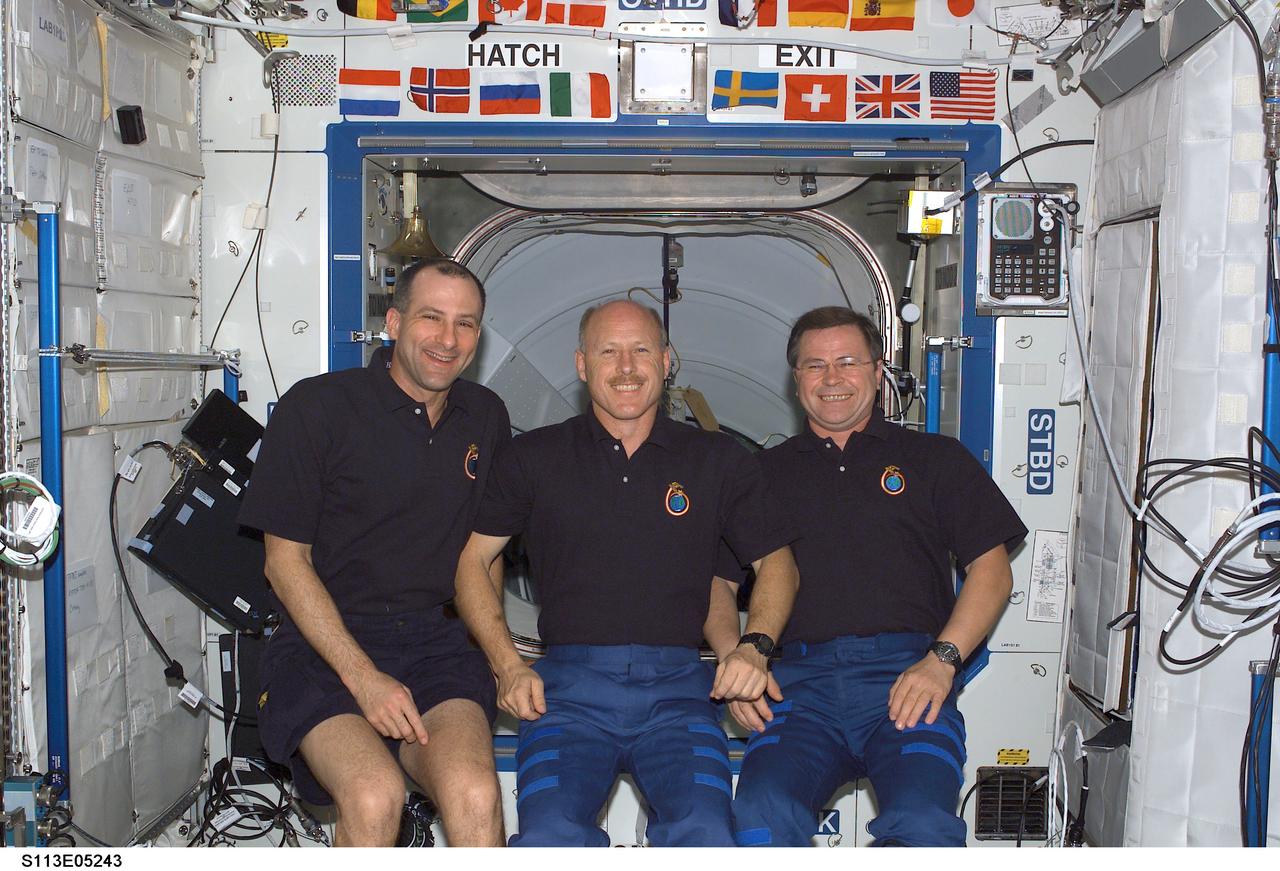
STS113-E-05243 (29 November 2002) --- The Expedition Six crewmembers pose for a crew photo in the Destiny laboratory on the International Space Station (ISS). From the left are astronauts Donald R. Pettit, NASA ISS science officer; Kenneth D. Bowersox, mission commander; and cosmonaut Nikolai M. Budarin, flight engineer representing Rosaviakosmos.
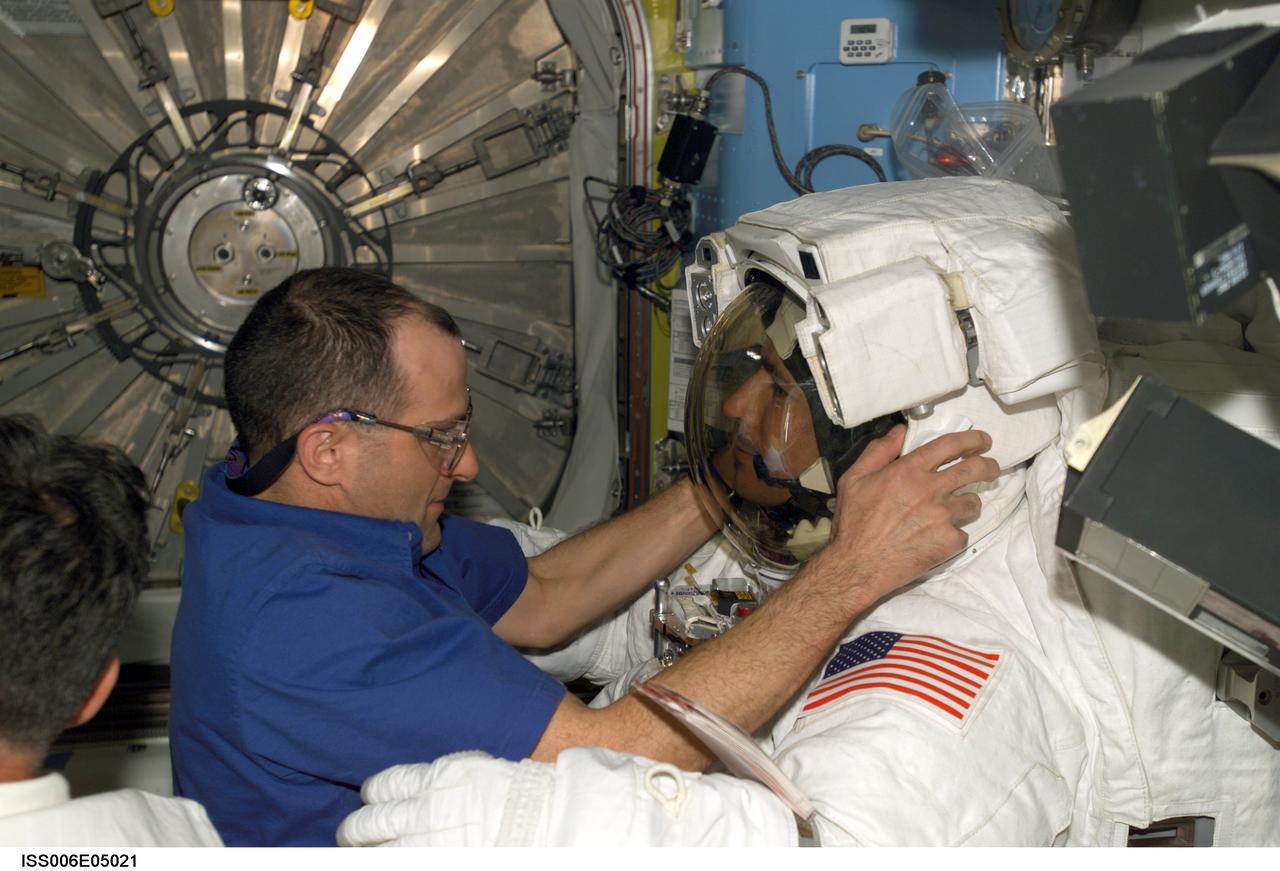
ISS006-E-05021 (28 November 2002) --- Astronaut Donald R. Pettit, NASA ISS science officer, assists astronaut John B. Herrington, STS-113 mission specialist, with his Extravehicular Mobility Unit (EMU) spacesuit in the Quest Airlock on the International Space Station (ISS).
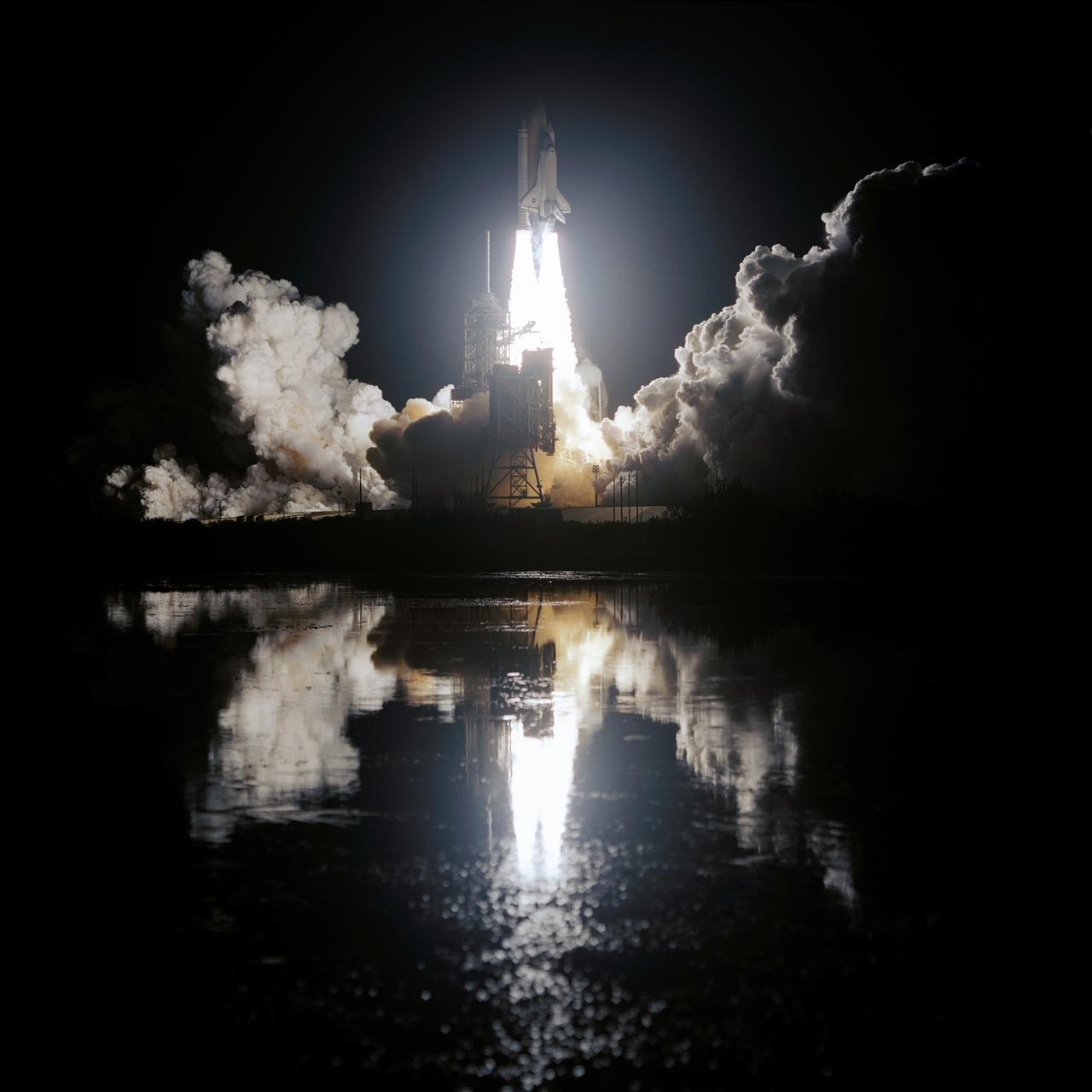
The 16th American assembly flight and 112th overall American flight to the International Space Station (ISS) launched on November 23, 2002 from Kennedy's launch pad 39A aboard the Space Shuttle Orbiter Endeavor STS-113. Mission objectives included the delivery of the Expedition Six Crew to the ISS, the return of Expedition Five crew back to Earth, and the installation and activation of the Port 1 Integrated Truss Assembly (P1). The first major component installed on the left side of the Station, the P1 truss provides an additional three External Thermal Control System radiators. Weighing in at 27,506 pounds, the P1 truss is 45 feet (13.7 meters) long, 15 feet (4.6 meters) wide, and 13 feet (4 meters) high. Three space walks, aided by the use of the Robotic Manipulator Systems of both the Shuttle and the Station, were performed in the installation of P1.
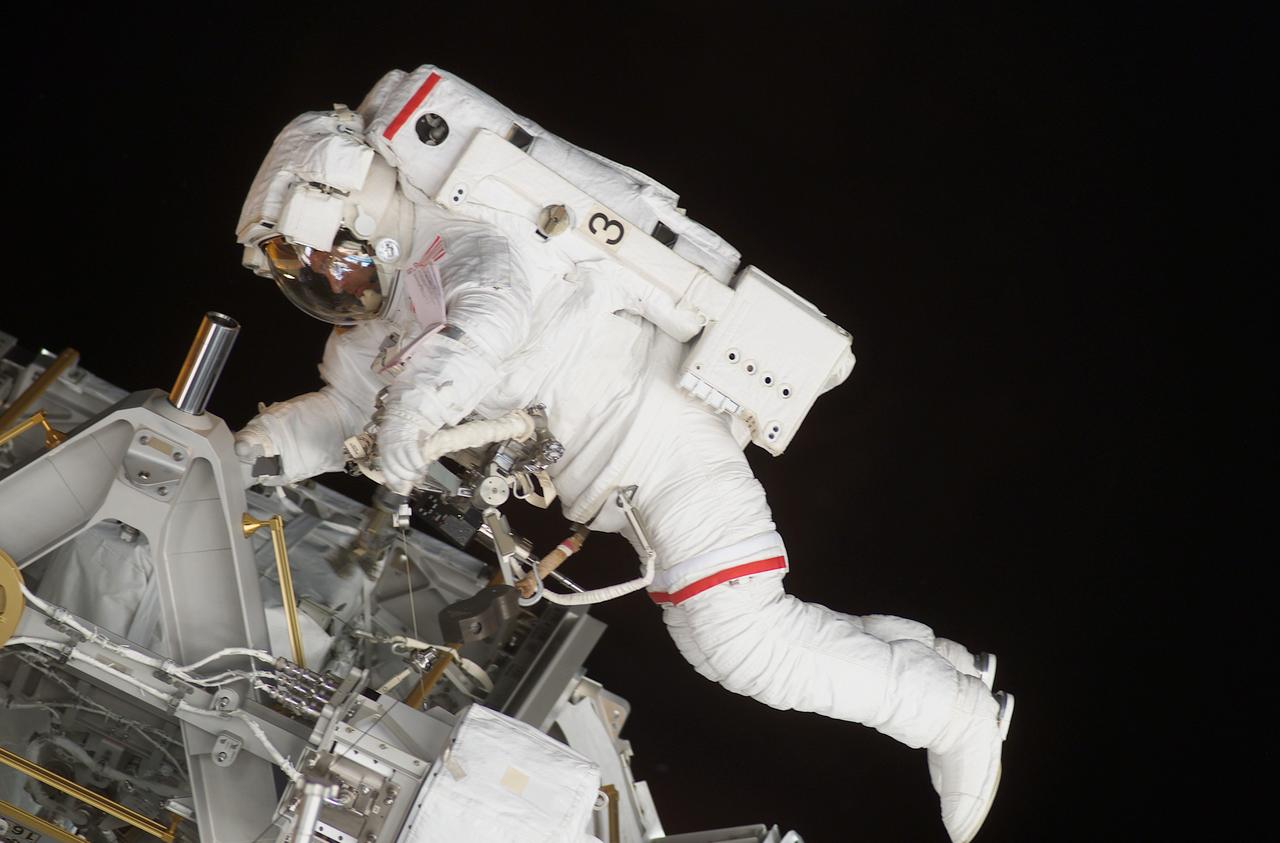
The 16th American assembly flight and 112th overall American flight to the International Space Station (ISS), launched on November 23, 2002 from Kennedy's launch pad 39A aboard the Space Shuttle Orbiter Endeavor STS-113. Mission objectives included the delivery of the Expedition Six Crew to the ISS, the return of Expedition Five crew back to Earth, and the installation and activation of the Port 1 Integrated Truss Assembly (P1). The first major component installed on the left side of the Station, the P1 truss provides an additional three External Thermal Control System radiators. Weighing in at 27,506 pounds, the P1 truss is 45 feet (13.7 meters) long, 15 feet (4.6 meters) wide, and 13 feet (4 meters) high. Three space walks, aided by the use of the Robotic Manipulator Systems of both the Shuttle and the Station, were performed in the installation of P1. In this photograph, astronaut and mission specialist Michael E. Lopez-Alegria works on the newly installed P1 truss during the mission's second scheduled session of extravehicular activity.
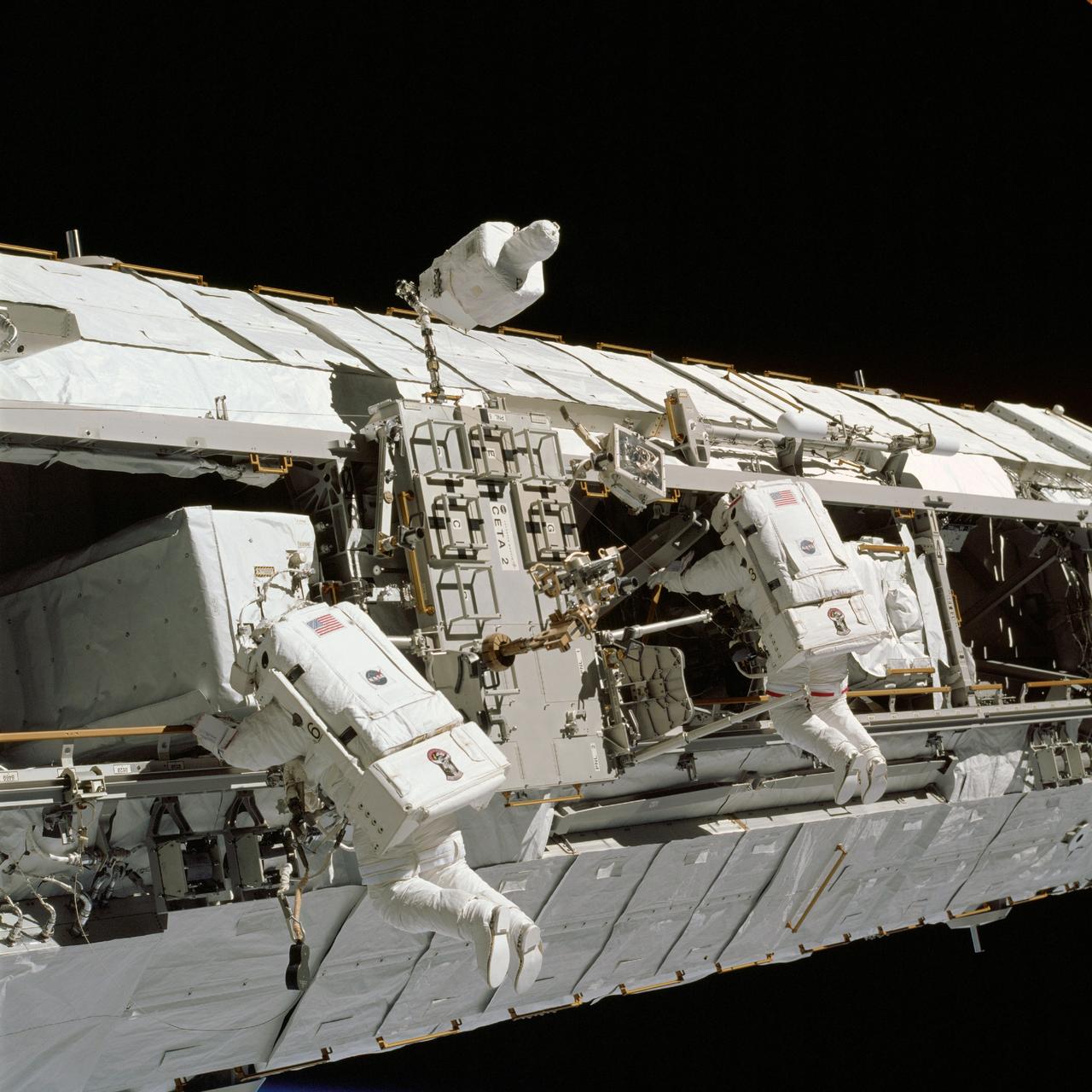
The 16th American assembly flight and 112th overall American flight to the International Space Station (ISS) launched on November 23, 2002 from Kennedy's launch pad 39A aboard the Space Shuttle Orbiter Endeavour STS-113. Mission objectives included the delivery of the Expedition Six Crew to the ISS, the return of Expedition Five crew back to Earth, the delivery of the Crew and Equipment Translation Aid (CETA) cart, and the installation and activation of the Port 1 Integrated Truss Assembly (P1). The first major component installed on the left side of the Station, the P1 truss provides an additional three External Thermal Control System radiators. Weighing in at 27,506 pounds, the P1 truss is 45 feet (13.7 meters) long, 15 feet (4.6 meters) wide, and 13 feet (4 meters) high. Three space walks, aided by the use of the Robotic Manipulator Systems of both the Shuttle and the Station, were performed in the installation of P1. In this photograph, astronauts and mission specialists John B. Herrington (left) and Michael E. Lopez-Alegria (right) work near the CETA cart on a truss on the ISS during a scheduled space walk for the mission. The final major task of the space walk was the relocation of the CETA cart from the Port One (P1) to the Starboard One (S1) Truss, which will allow the Mobile Transporter to move along the P1 to assist in upcoming assembly missions.