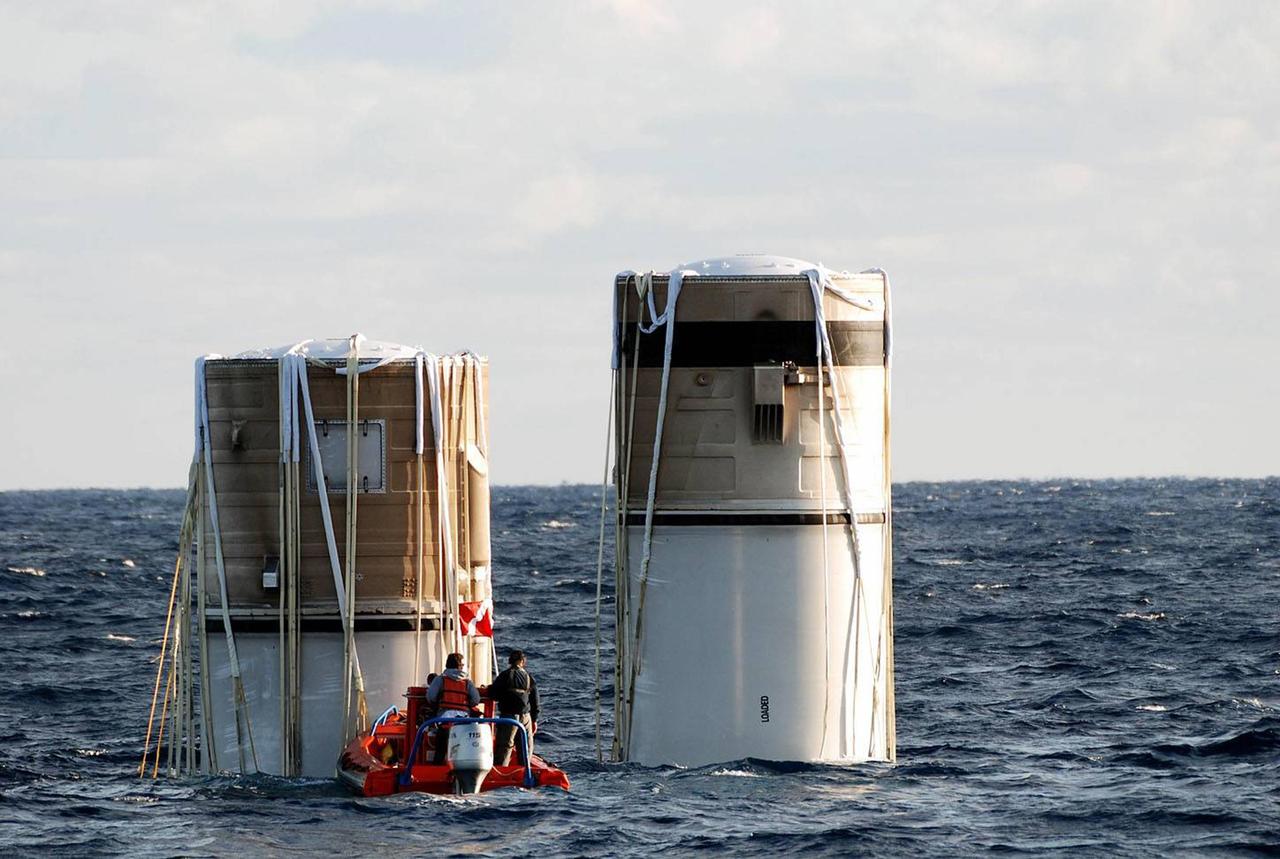
KENNEDY SPACE CENTER, FLA. -- Floating in the Atlantic Ocean about 150 miles north east of Cape Canaveral are the right and left solid rocket boosters, which were jettisoned from the Space Shuttle Discovery two and a half minutes into the ascent to orbit on Dec. 9. Though the boosters landed in the ocean miles from each other, overnight wind and ocean currents allowed the left booster, which was floating higher in the water, to migrate to the location of the right booster. The SRB retrieval team monitored the boosters through the night, and confirmed that the boosters did not contact each other. Both boosters were towed back to Hangar AF at the Cape Canaveral Air Force Station, where the refurbishment operations are now underway. Discovery lifted off from KSC's Launch Pad 39B at 8:47 p.m. EST on mission STS-116. For more information about the process of retrieval, go to http://www-pao.ksc.nasa.gov/kscpao/nasafact/pdf/SRBships06.pdf and http://www.nasa.gov/mission_pages/shuttle/behindscenes/recovery_ships.html. This was the second launch attempt for mission STS-116. The first launch attempt on Dec. 7 was postponed due a low cloud ceiling over Kennedy Space Center. This is Discovery's 33rd mission and the first night launch since 2002. The 20th shuttle mission to the International Space Station, STS-116 carries another truss segment, P5. It will serve as a spacer, mated to the P4 truss that was attached in September. After installing the P5, the crew will reconfigure and redistribute the power generated by two pairs of U.S. solar arrays. Landing is expected Dec. 21 at KSC.
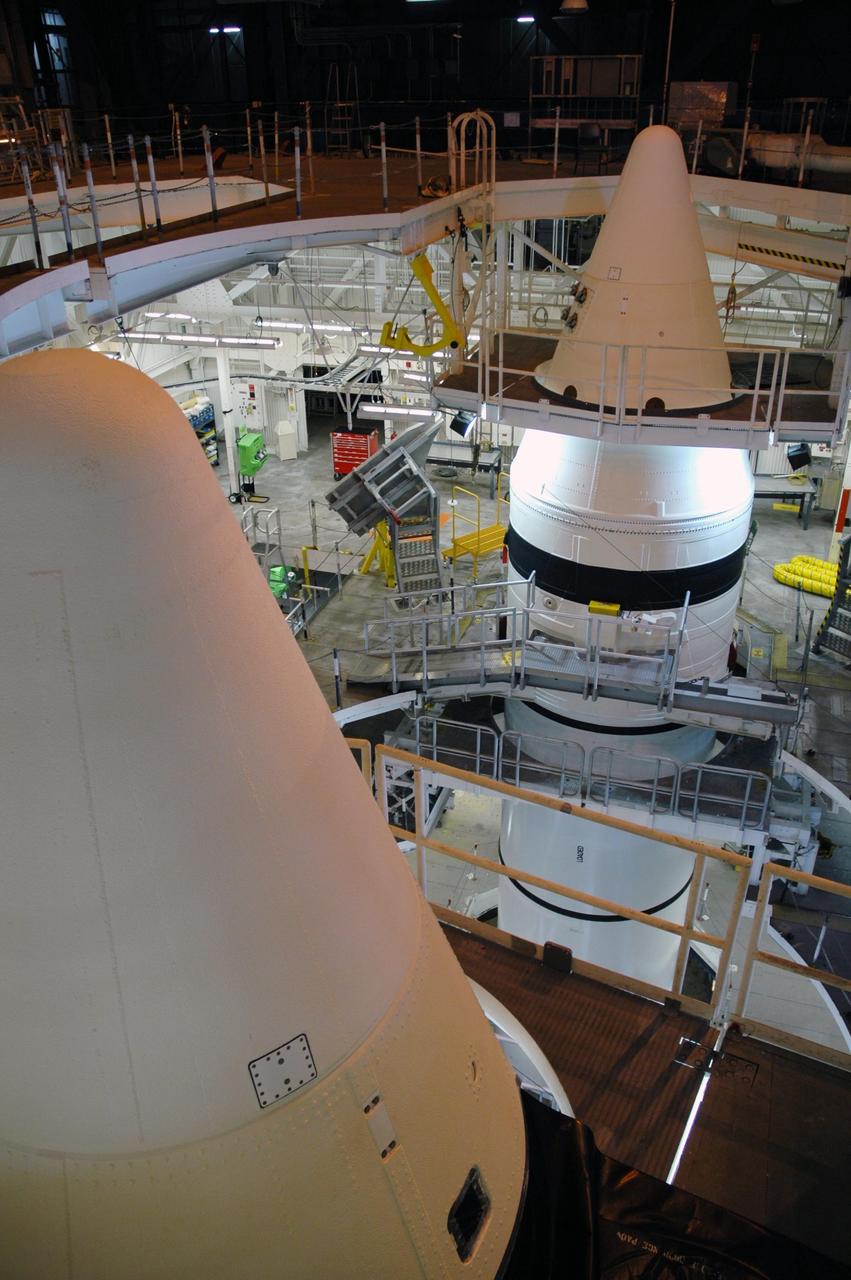
KENNEDY SPACE CENTER, FLA. - In the Vehicle Assembly Building, the solid rocket boosters (SRBs) are being stacked for the orbiter Discovery and mission STS-116. Seen here are the nose cones on top of the SRBs. Discovery will be rolling over to the VAB in early November to be stacked with the SRBs and external tank for launch. STS-116 will be mission number 20 to the International Space Station and construction flight 12A.1. The mission payload is the SPACEHAB module, the P5 integrated truss structure and other key components. Launch is scheduled for no earlier than Dec. 7. Photo credit: NASA/Jack Pfaller
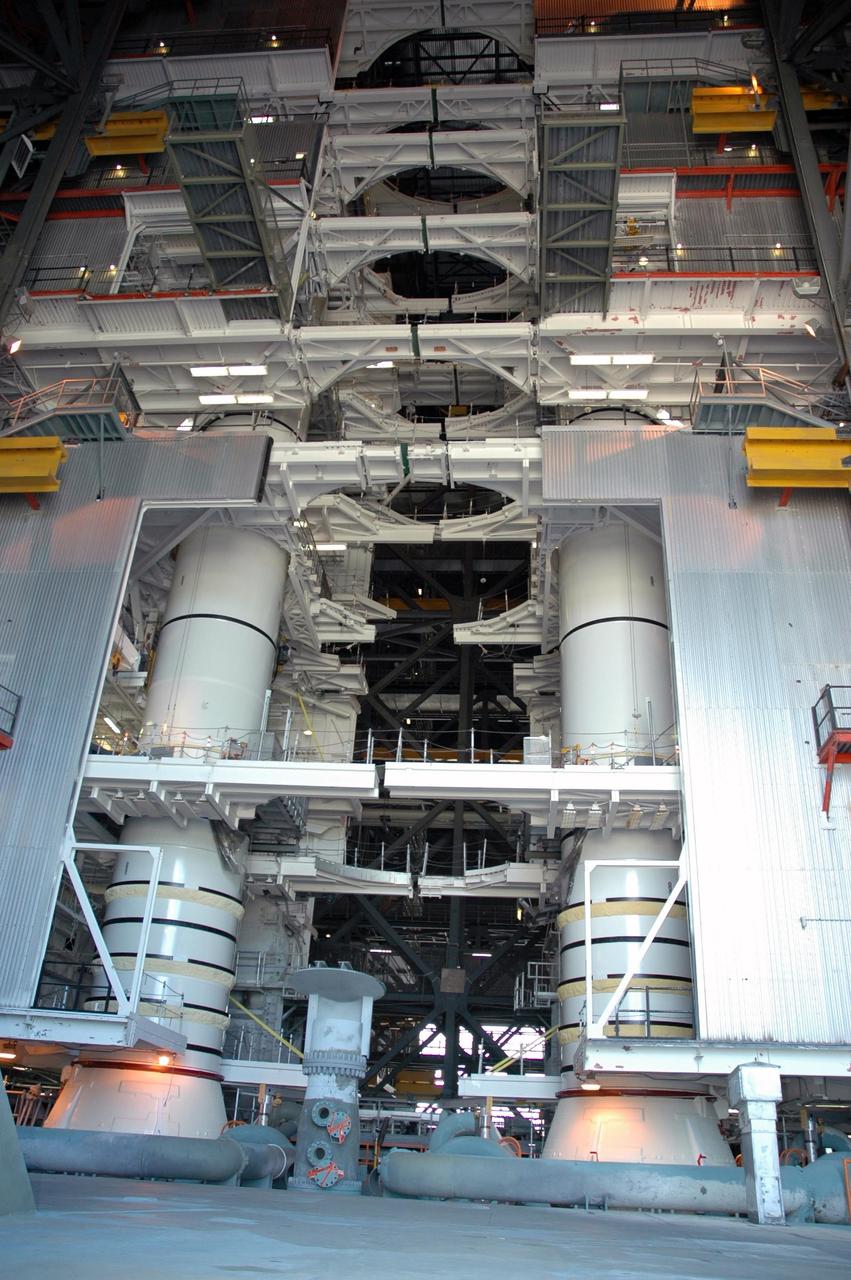
KENNEDY SPACE CENTER, FLA. - - In the Vehicle Assembly Building, the solid rocket boosters (SRBs) are being stacked for the orbiter Discovery and mission STS-116. They are in high bay 3, situated on the mobile launcher platform, seen beneath the aft skirt. Discovery will be rolling over to the VAB in early November to be stacked with the SRBs and external tank for launch. ): STS-116 will be mission number 20 to the International Space Station and construction flight 12A.1. The mission payload is the SPACEHAB module, the P5 integrated truss structure and other key components. Launch is scheduled for no earlier than Dec. 7. Photo credit: NASA/Jack Pfaller
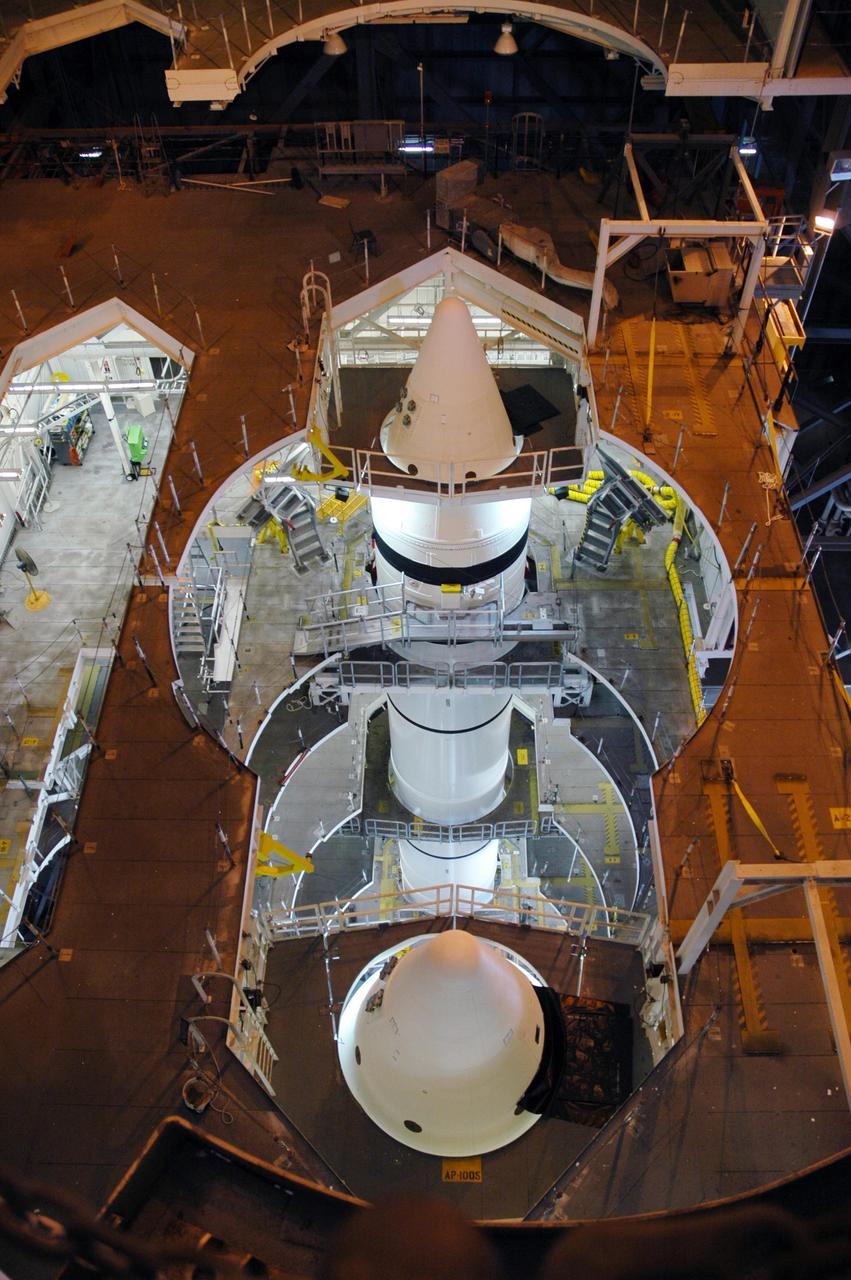
KENNEDY SPACE CENTER, FLA. - From this unique view on an upper level of the Vehicle Assembly Building, the solid rocket boosters (SRBs) are seen being stacked for the orbiter Discovery and mission STS-116. Discovery will be rolling over to the VAB in early November to be stacked with the SRBs and external tank for launch. STS-116 will be mission number 20 to the International Space Station and construction flight 12A.1. The mission payload is the SPACEHAB module, the P5 integrated truss structure and other key components. Launch is scheduled for no earlier than Dec. 7. Photo credit: NASA/Jack Pfaller
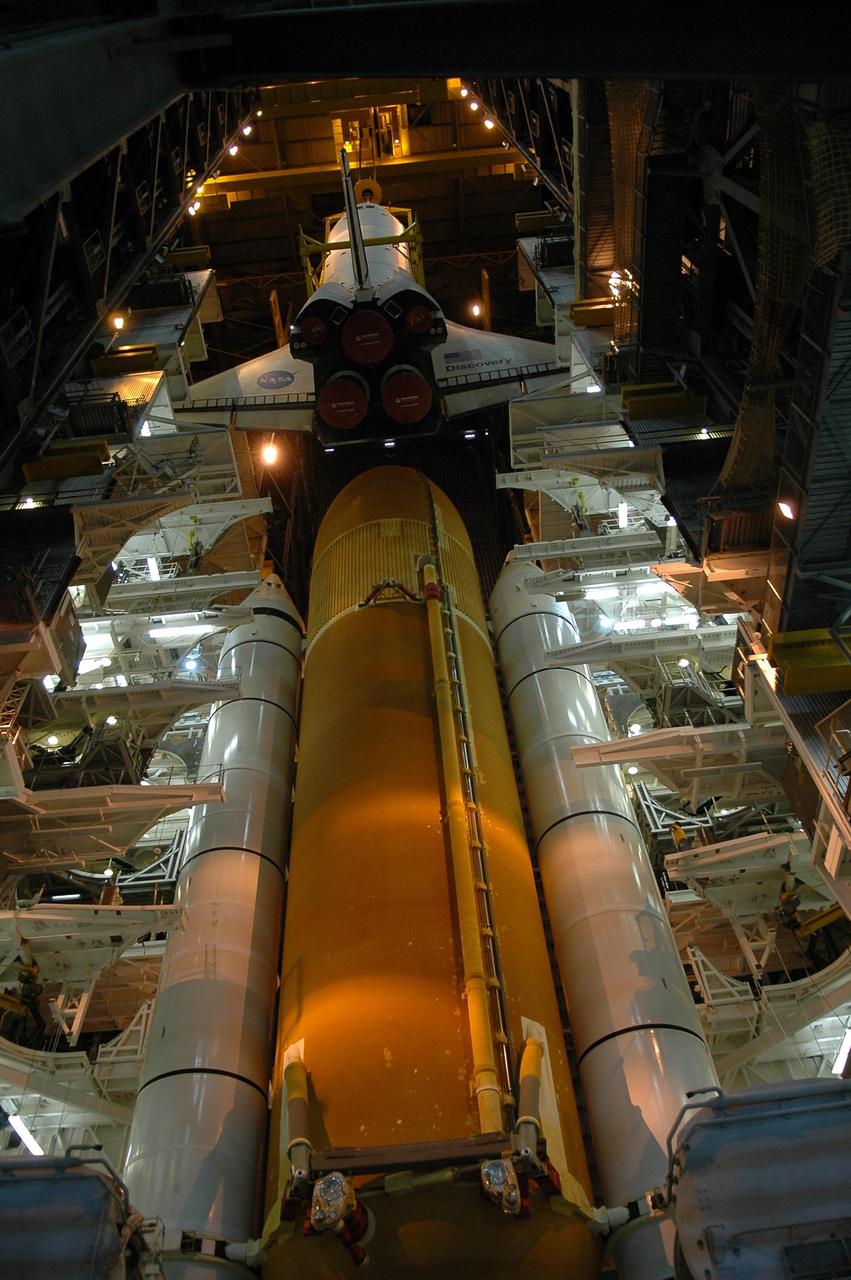
KENNEDY SPACE CENTER, FLA. -- In high bay 3 of the Vehicle Assembly Building, the orbiter Discovery is being lowered toward the external tank and solid rocket boosters installed on the mobile launcher platform. The orbiter will be stacked with the tank and SRBs for launch. Space Shuttle Discovery is scheduled to roll out to Launch Pad 39B no earlier than Nov. 7 for mission STS-116. The mission is No. 20 to the International Space Station and construction flight 12A.1. The mission payload is the SPACEHAB module, the P5 integrated truss structure and other key components. The launch window for mission STS-116 opens Dec. 7. Photo credit: NASA/Kim Shiflett