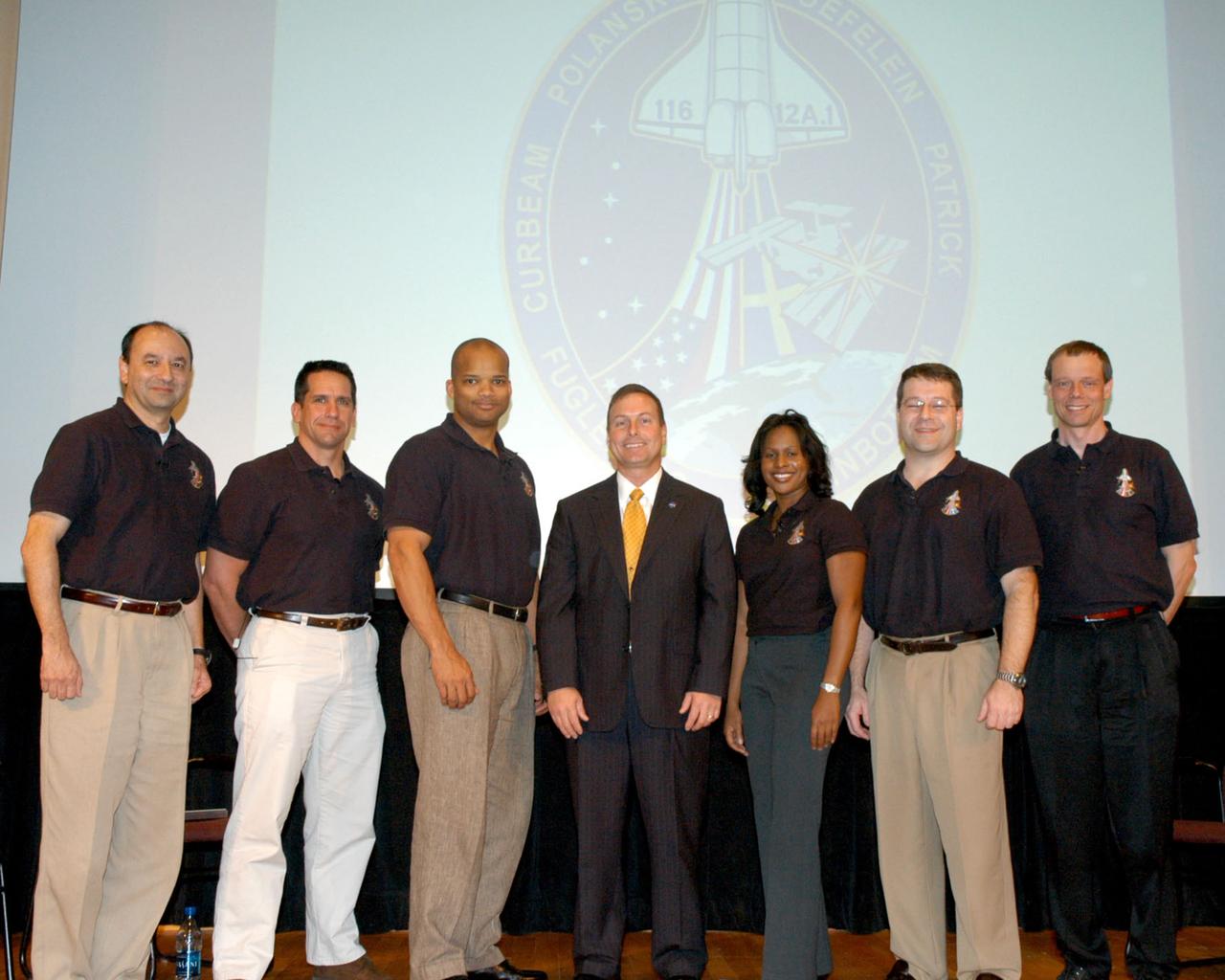
The astronauts of NASA's STS-116 space shuttle mission visited NASA Stennis Space Center in south Mississippi to share highlights of their 13-day mission and to thank SSC employees for the reliability of the space shuttle's main engines, which helped propel Space Shuttle Discovery into orbit during its Dec. 9, 2006, launch. Pictured (from left) are STS-116 crewmembers Commander Mark Polansky, Pilot Bill Oefelein, Mission Specialist Robert Curbeam, SSC Center Director, Richard Gilbrech, Mission Specialists Joan Higginbotham, Nicholas Patrick and Christer Fuglesang. During the mission, which began with the first evening launch since 2002, the astronauts installed the P5 spacer truss segment and rewired the International Space Station's power system.
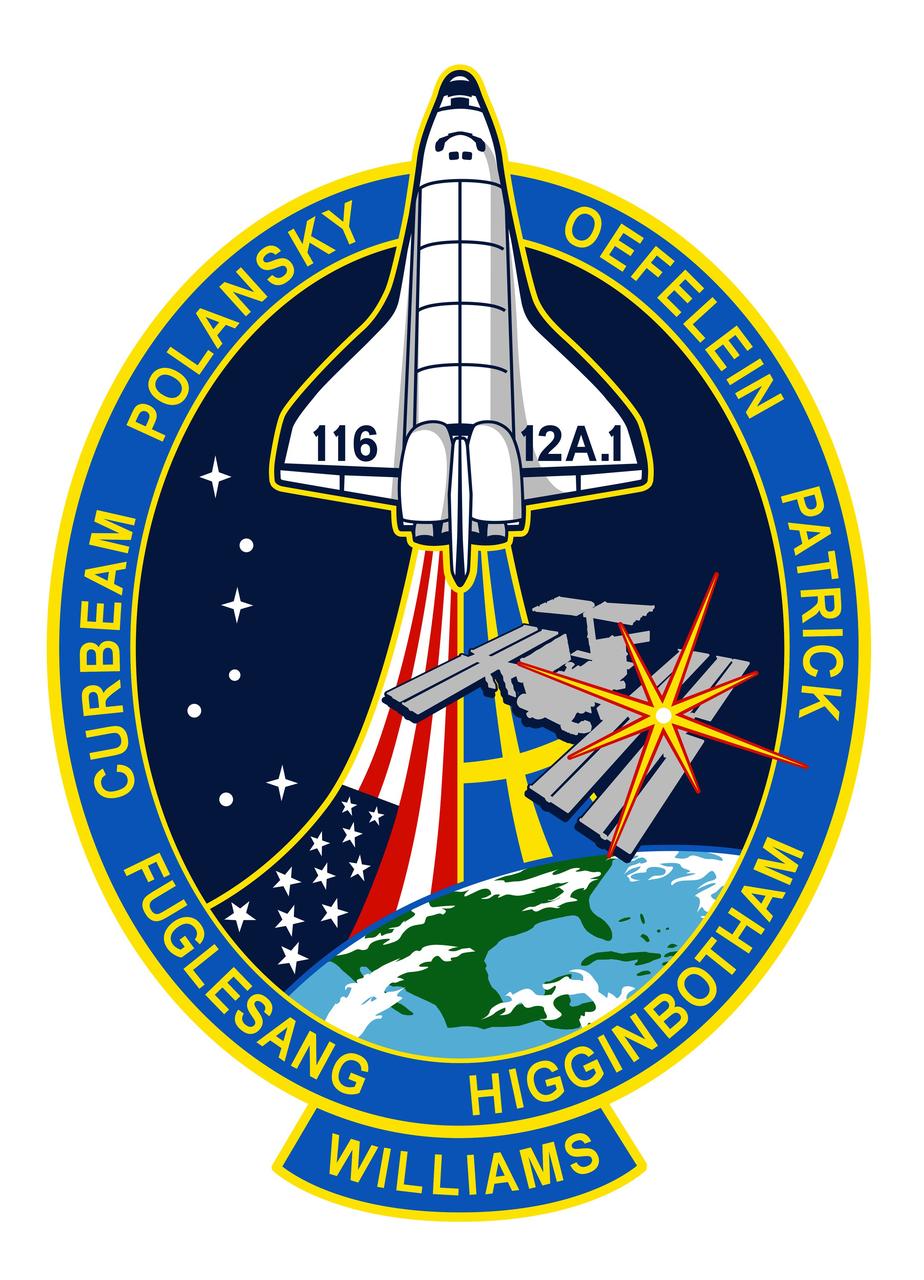
Signifying the continuing assembly of the International Space Station (ISS), the STS-116 crew patch depicts the space shuttle rising above the Earth and the ISS. The United States and Swedish flags trail the orbiter, depicting the international composition of the STS-116 crew. The seven stars of the constellation Ursa Major are used to provide direction to the North Star, which is superimposed over the installation location of the P5 truss on ISS.
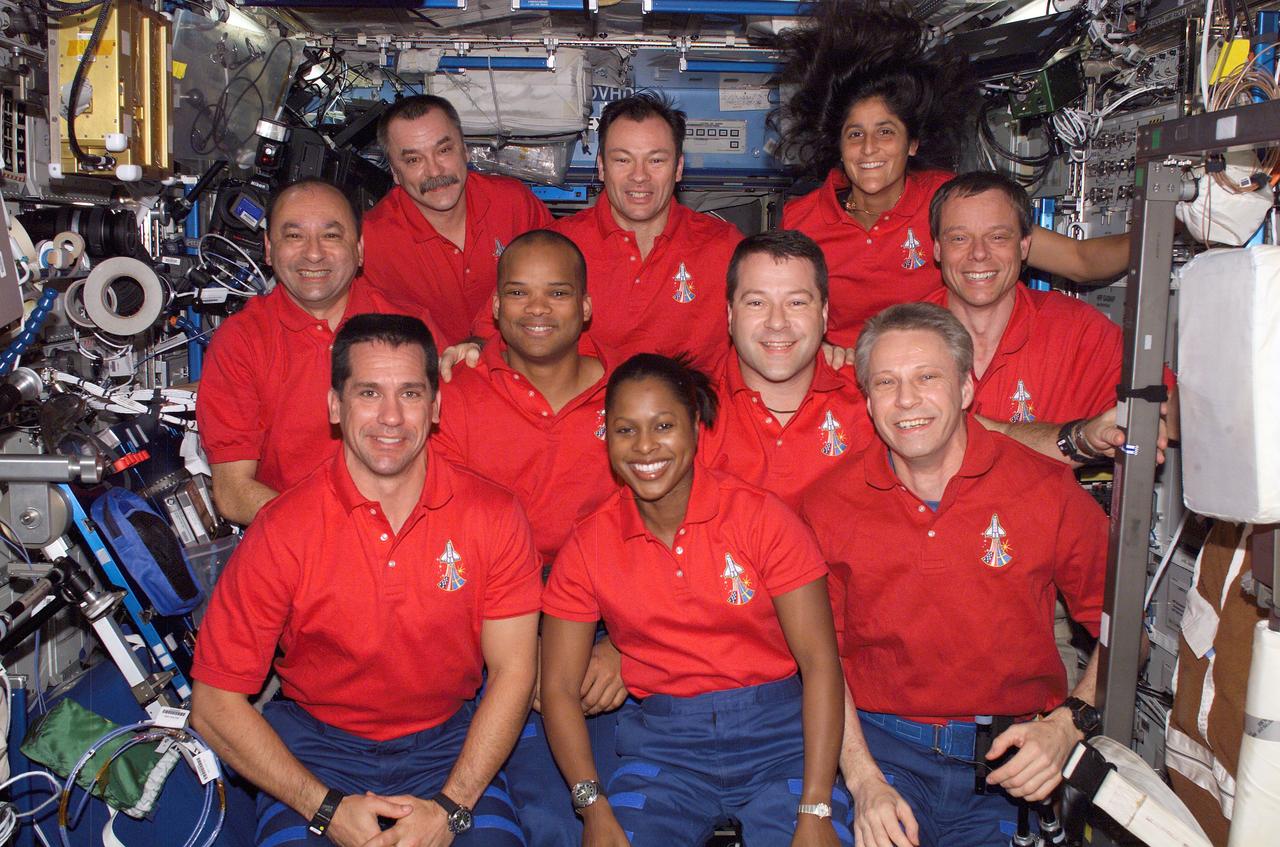
ISS014-E-10265 (19 Dec. 2006) --- The Expedition 14 and STS-116 crewmembers gather for a group portrait in the Destiny laboratory of the International Space Station while Space Shuttle Discovery was docked with the station. From the left (front row) are astronauts William A. (Bill) Oefelein, STS-116 pilot; Joan E. Higginbotham and the European Space Agency's (ESA) Thomas Reiter, both STS-116 mission specialists. From the left (center row) are astronauts Mark L. Polansky, STS-116 commander; Robert L. Curbeam Jr., Nicholas J. M. Patrick and European Space Agency's (ESA) Christer Fuglesang, all STS-116 mission specialists. From the left (back row) are cosmonaut Mikhail Tyurin, Expedition 14 flight engineer representing Russia's Federal Space Agency; astronauts Michael E. Lopez-Alegria, Expedition 14 commander and NASA space station science officer; and Sunita L. Williams, Expedition flight engineer. Shortly after the two spacecraft docked on Dec. 11, Williams became a member of the station crew. At the same time, Reiter became a Discovery crewmember for his ride home, completing about six months in space.
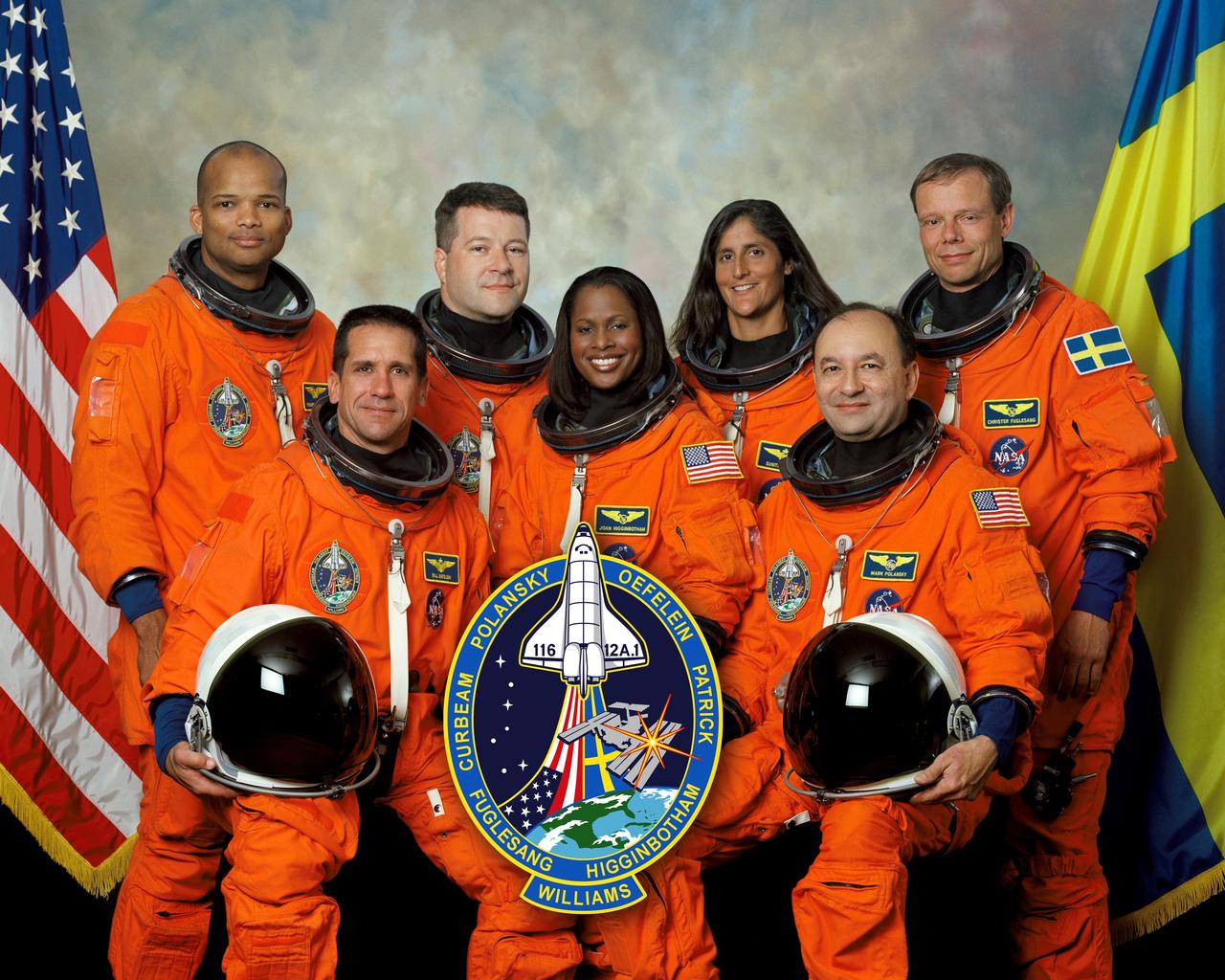
STS116-S-002 (21 July 2006) --- These seven astronauts take a break from training to pose for the STS-116 crew portrait. Scheduled to launch aboard the Space Shuttle Discovery are, front row (from the left), astronauts William A. Oefelein, pilot; Joan E. Higginbotham, mission specialist; and Mark L. Polansky, commander. On the back row (from the left) are astronauts Robert L. Curbeam, Nicholas J.M. Patrick, Sunita L. Williams and the European Space Agency's Christer Fuglesang, all mission specialists. Williams will join Expedition 14 in progress to serve as a flight engineer aboard the International Space Station. The crewmembers are attired in training versions of their shuttle launch and entry suits.
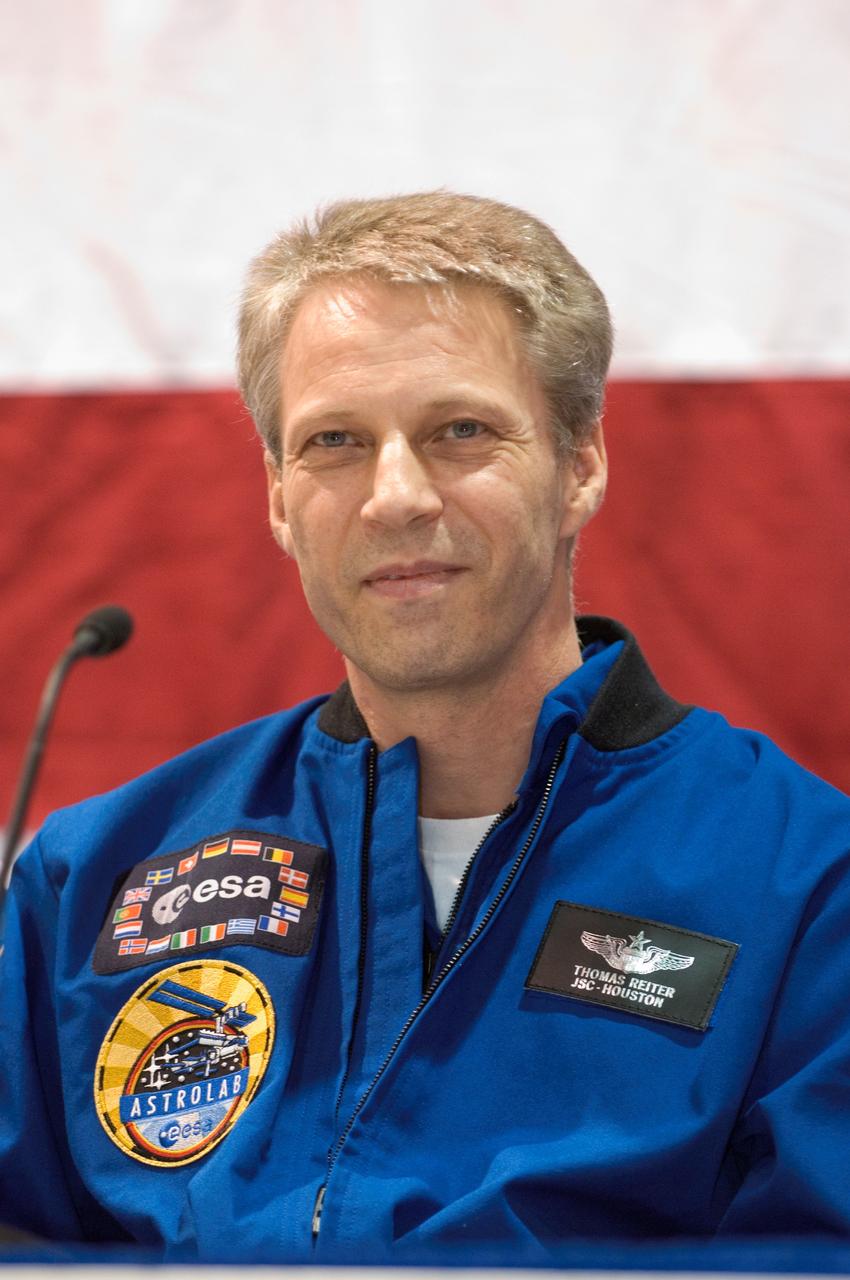
JSC2006-E-54869 (23 Dec. 2006) --- European Space Agency astronaut Thomas Reiter, STS-116 mission specialist, speaks to a crowd of well-wishers at the STS-116 crew return ceremony on the afternoon of Dec. 23 at Ellington Field. Reiter didn't launch with the STS-116 crew, as he had already been onboard the International Space Station for several months when Discovery arrived to link up with it on Dec. 11. Reiter and all six of his crewmates briefly addressed the crowd.

JSC2006-E-54851 (23 Dec. 2006) --- Astronaut Mark L. Polansky, STS-116 commander, smiles at the large turnout of well-wishers at the STS-116 crew return ceremony on the afternoon of Dec. 23 at Ellington Field. Polansky and six crewmates briefly addressed the crowd.
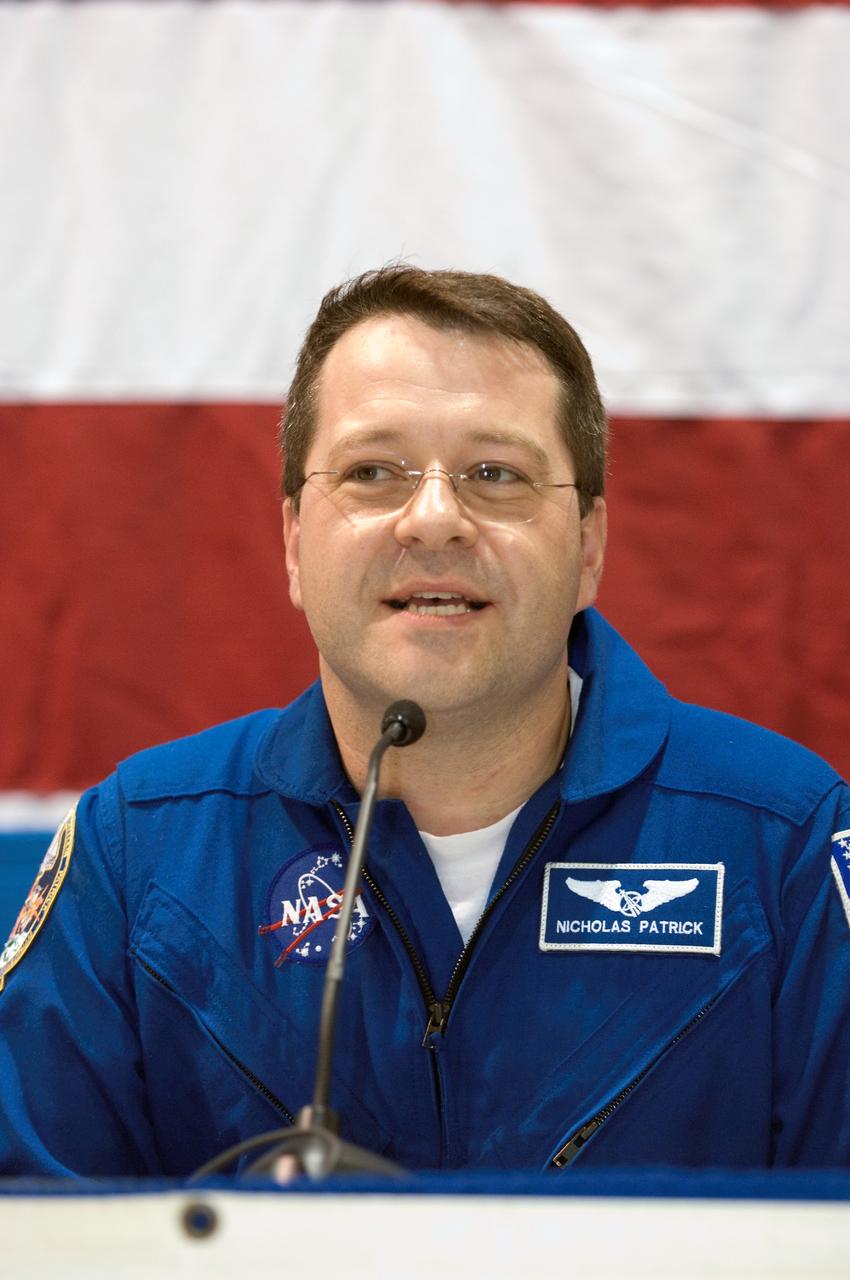
JSC2006-E-54867 (23 Dec. 2006) --- Astronaut Nicholas J.M. Patrick, STS-116 mission specialist, speaks to a crowd of well-wishers at the STS-116 crew return ceremony on the afternoon of Dec. 23 at Ellington Field. Patrick and six crewmates briefly addressed the crowd.
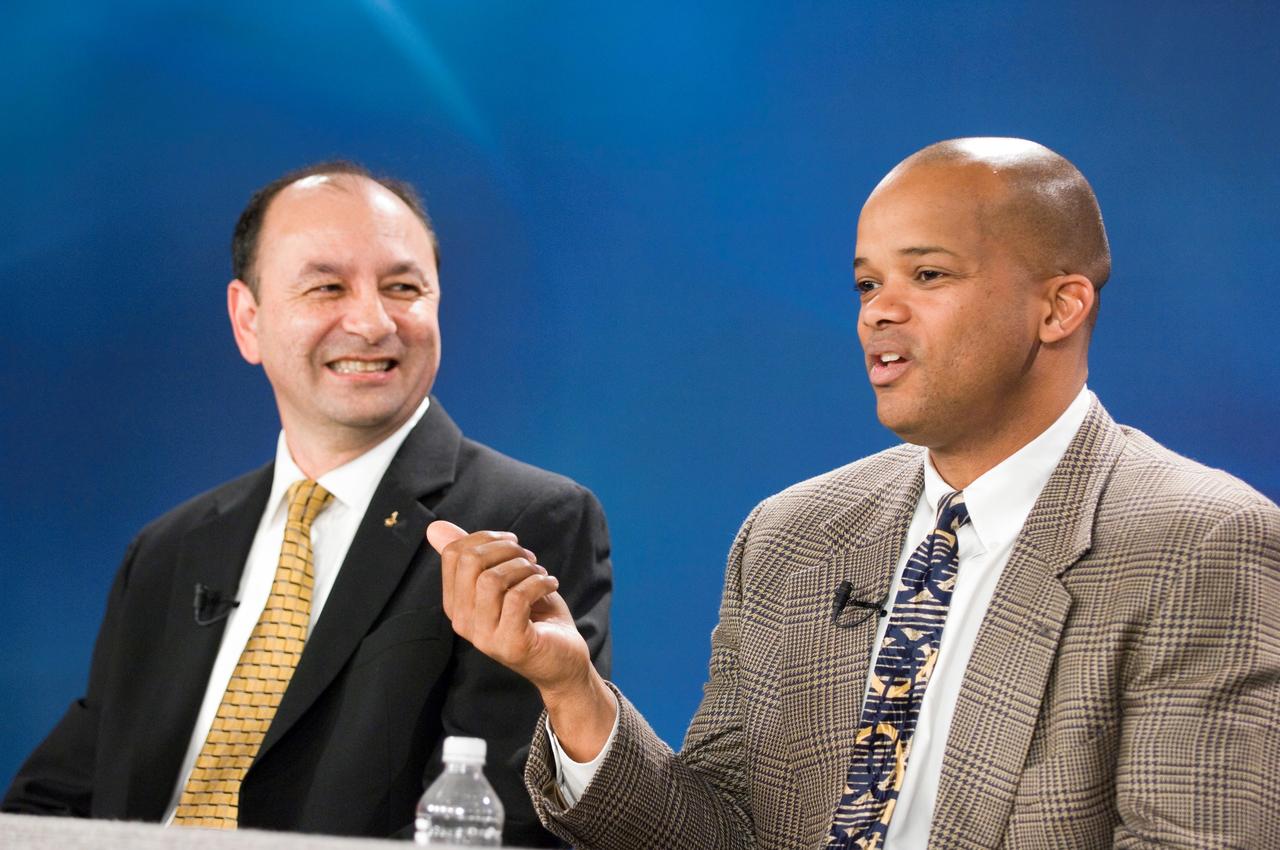
JSC2006-E-47958 (6 November 2006) --- Astronauts Mark L. Polansky, left, and Robert L. Curbeam Jr. respond to a question from a reporter during a Nov. 6 press briefing at the Johnson Space Center. Polansky, commander, and Curbeam, one of five mission specialists, are part of the seven-member STS-116 crew currently in training for a Dec. 2006 visit to the International Space Station.
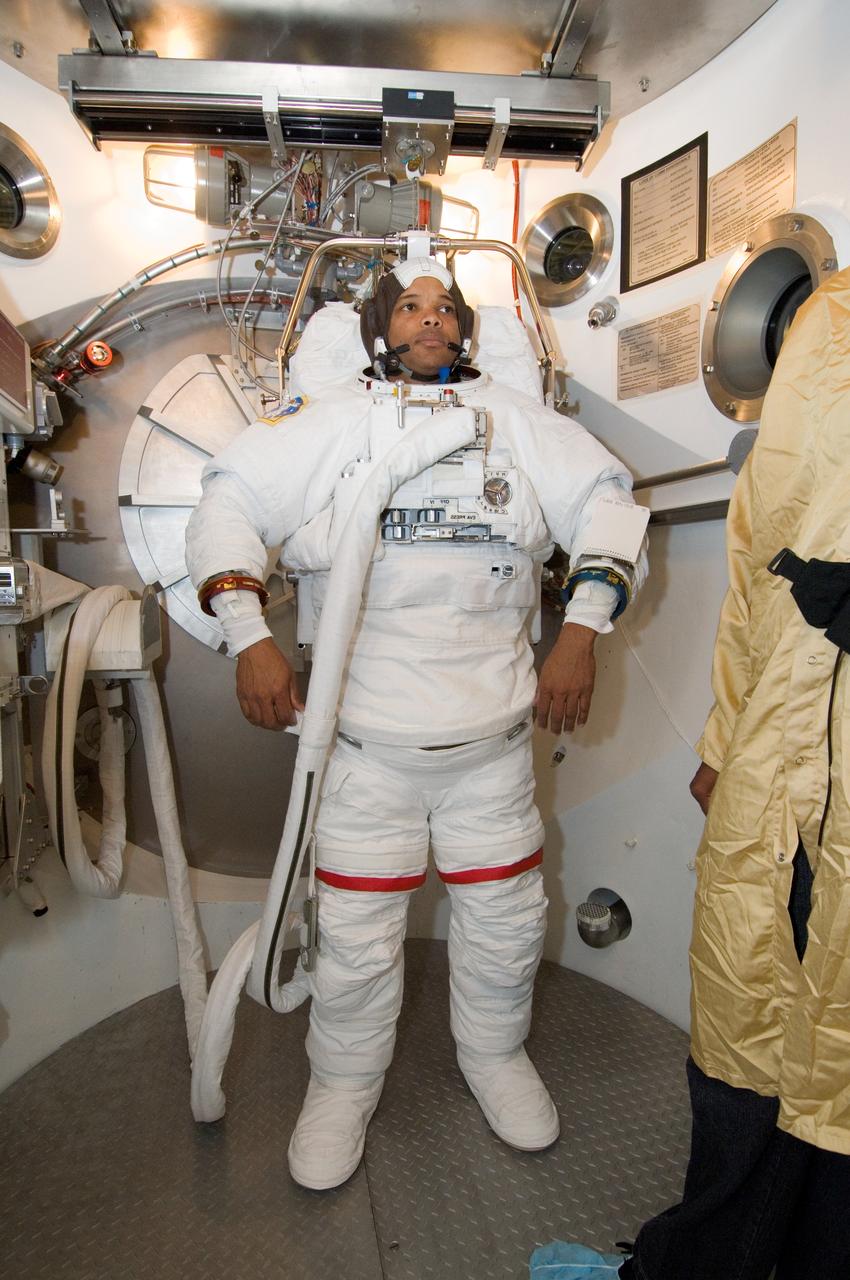
JSC2006-E-41653 (25 Sept. 2006) --- Astronaut Robert L. Curbeam, STS-116 mission specialist, participates in an Extravehicular Mobility Unit (EMU) spacesuit fit check in the Space Station Airlock Test Article (SSATA) in the Crew Systems Laboratory at the Johnson Space Center.
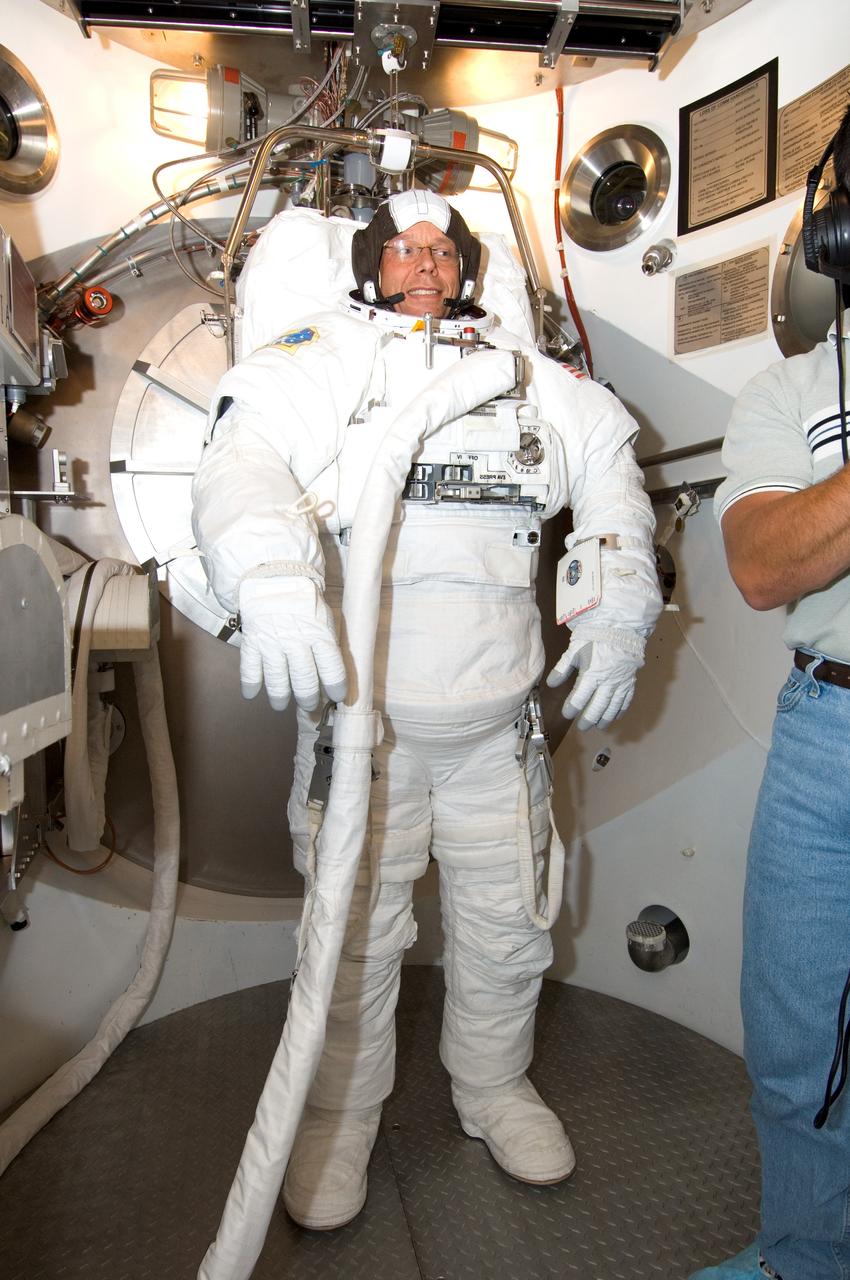
JSC2006-E-31760 (27 July 2006) --- European Space Agency (ESA) astronaut Christer Fuglesang, STS-116 mission specialist, participates in an Extravehicular Mobility Unit (EMU) spacesuit fit check in the Space Station Airlock Test Article (SSATA) in the Crew Systems Laboratory at the Johnson Space Center.
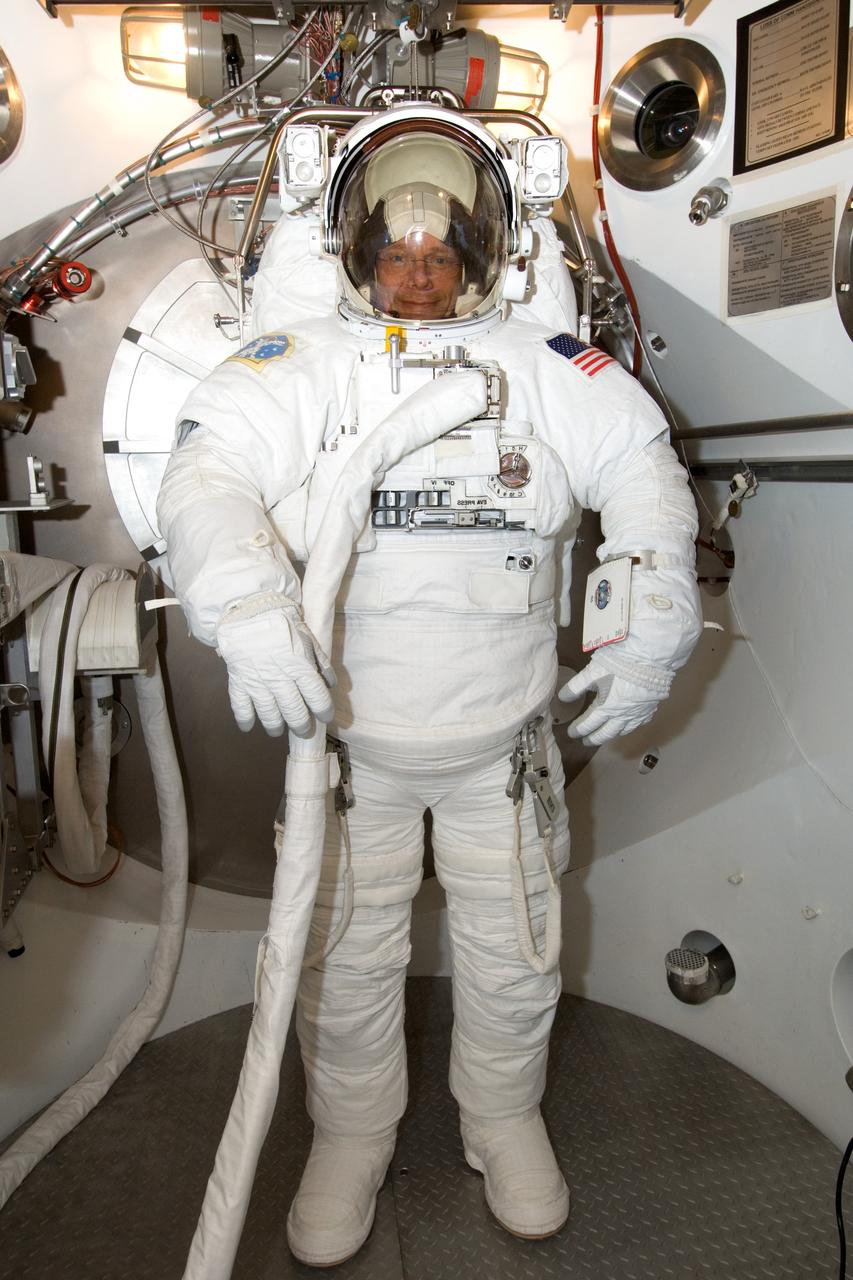
JSC2006-E-31762 (27 July 2006) --- European Space Agency (ESA) astronaut Christer Fuglesang, STS-116 mission specialist, participates in an Extravehicular Mobility Unit (EMU) spacesuit fit check in the Space Station Airlock Test Article (SSATA) in the Crew Systems Laboratory at the Johnson Space Center.
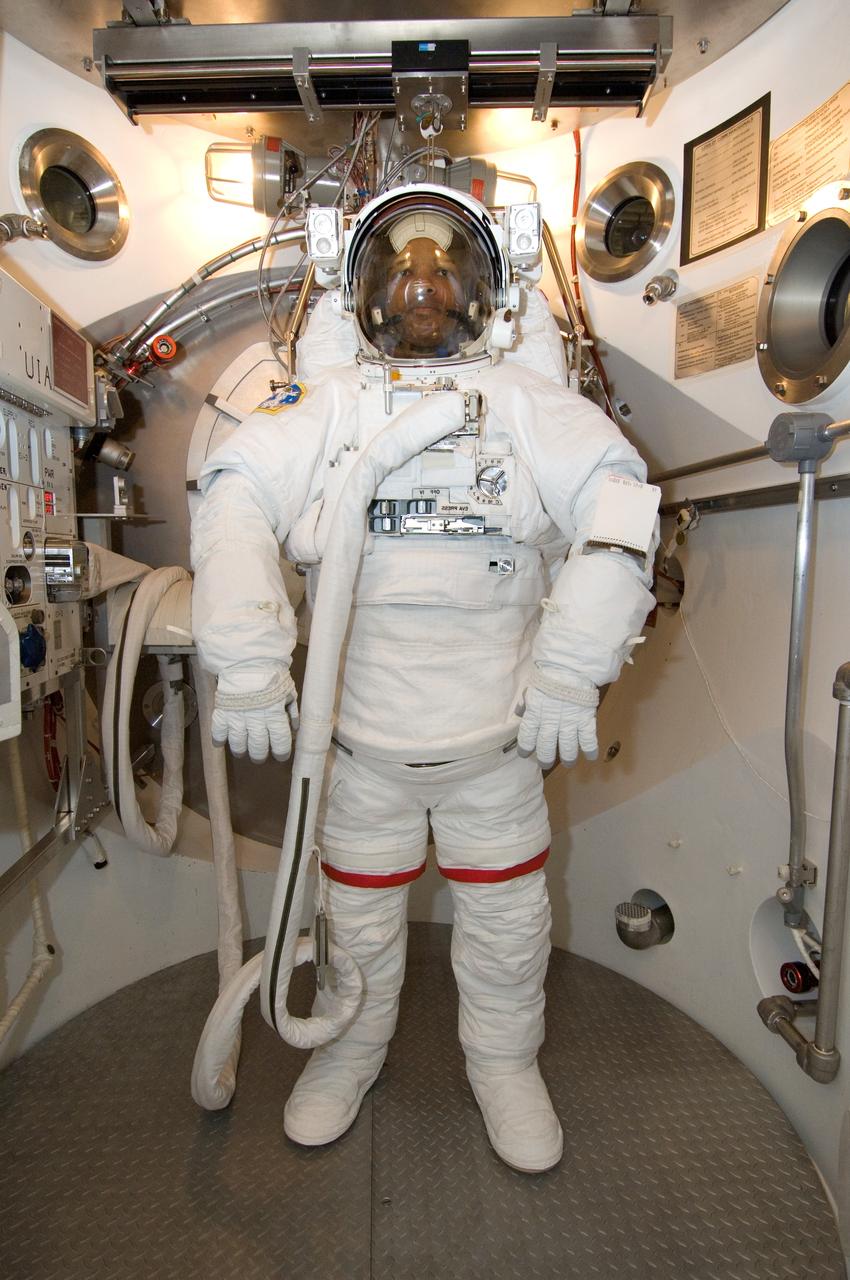
JSC2006-E-41656 (25 Sept. 2006) --- Astronaut Robert L. Curbeam, STS-116 mission specialist, participates in an Extravehicular Mobility Unit (EMU) spacesuit fit check in the Space Station Airlock Test Article (SSATA) in the Crew Systems Laboratory at the Johnson Space Center.
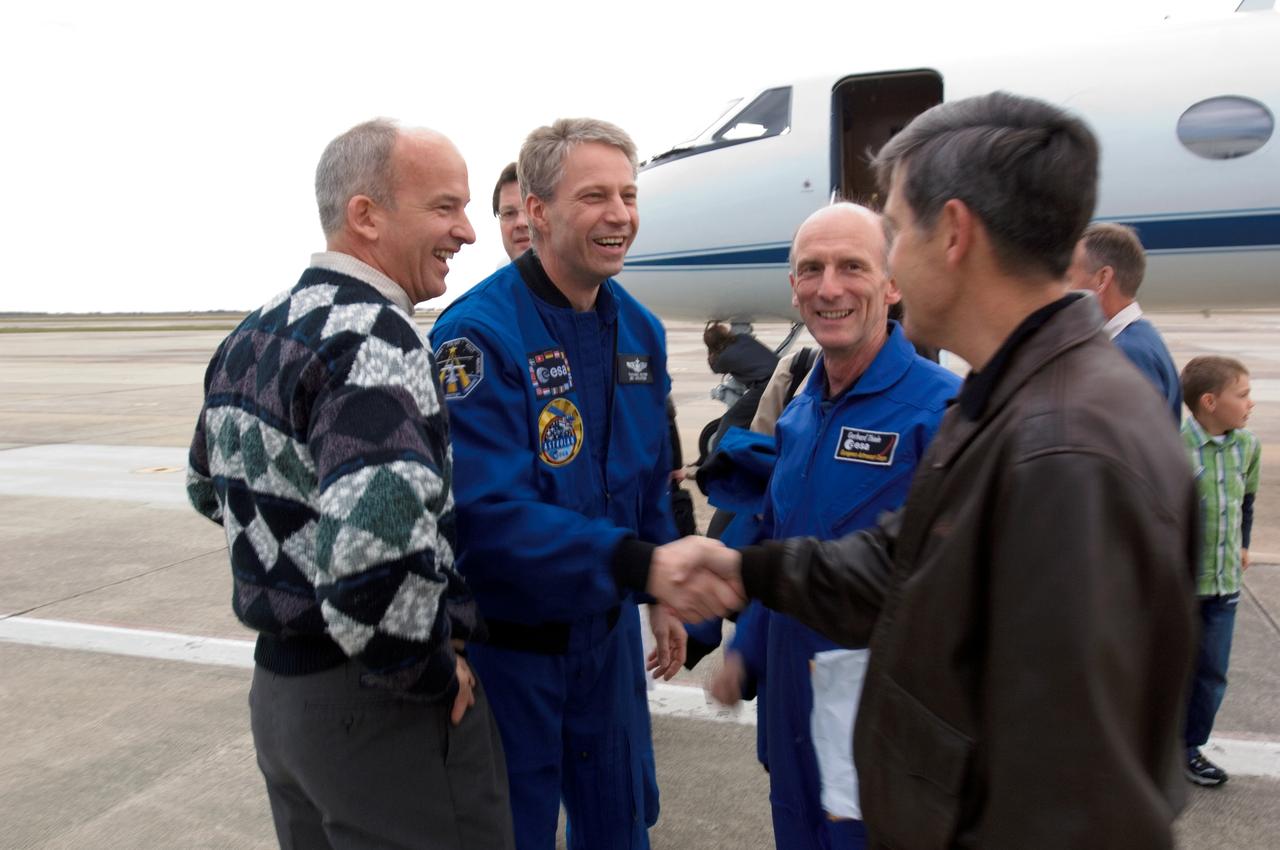
JSC2006-E-54836 (23 Dec. 2006) --- In this scene at Ellington Field, European Space Agency astronaut Thomas Reiter (second left, foreground) shakes hands with JSC deputy director Robert D. Cabana. Reiter had just arrived from Florida, along with the STS-116 crew. He completed half a year aboard the International Space Station before departing the station with the STS-116 astronauts, who landed at the Kennedy Space Center on Dec. 22. Part of Reiter's time onboard the orbital outpost was spent with astronaut Jeffrey N. Williams, left, Expedition 13 flight engineer and NASA station science officer. ESA astronaut Gerhard Thiele is also pictured.
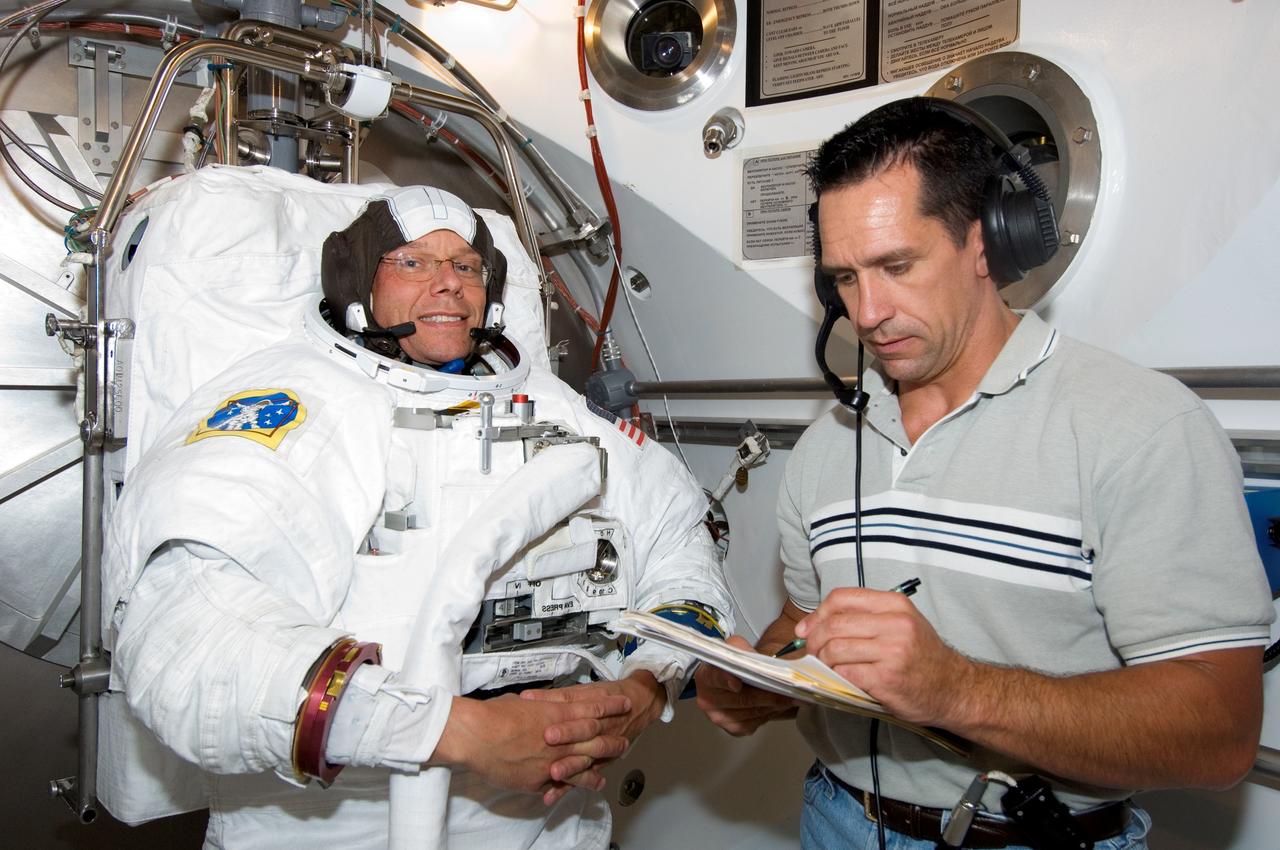
JSC2006-E-31759 (27 July 2006) --- European Space Agency (ESA) astronaut Christer Fuglesang, STS-116 mission specialist, participates in an Extravehicular Mobility Unit (EMU) spacesuit fit check in the Space Station Airlock Test Article (SSATA) in the Crew Systems Laboratory at the Johnson Space Center. Astronaut William A. Oefelein, pilot, assisted Fuglesang.
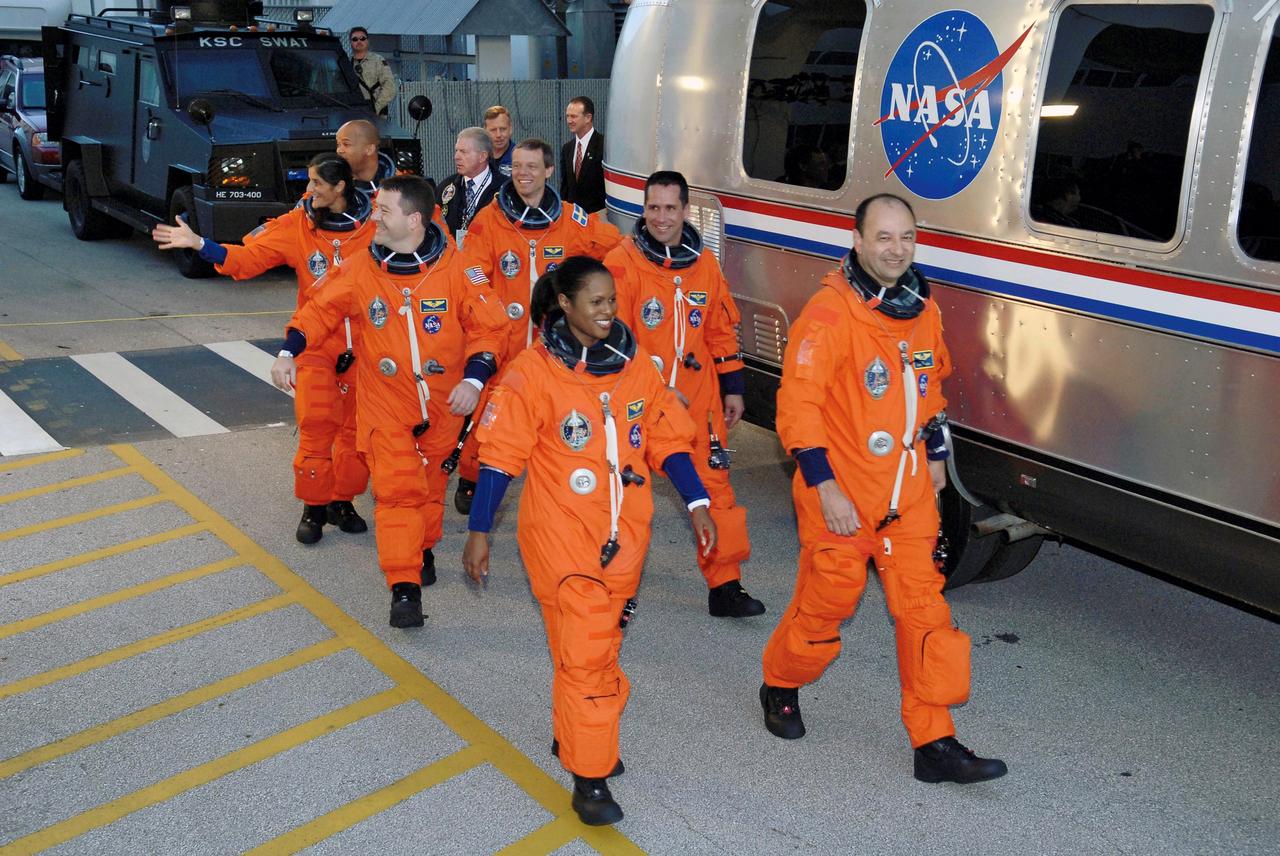
STS116-S-006 (9 Dec. 2006) --- After suiting up, the STS-116 crewmembers exit the Operations and Checkout Building to board the Astrovan, which will take them to launch pad 39B at Kennedy Space Center. On the right (front to back) are astronauts Mark L. Polansky, commander; William S. (Bill) Oefelein, pilot; and Christer Fuglesang, mission specialists representing the European Space Agency (ESA). On the left (front to back) are astronauts Joan E. Higginbotham, Nicholas J. M. Patrick, Sunita L. Williams and Robert L. Curbeam, Jr., all mission specialists. Discovery's seven-member crew will link up with the International Space Station on Monday, Dec. 11, to begin a complex, week-long stay that will rewire the outpost and increase its power supply. During three spacewalks and intricate choreography with ground controllers, the astronauts will bring electrical power on line generated by a giant solar array wing delivered to the station in September.
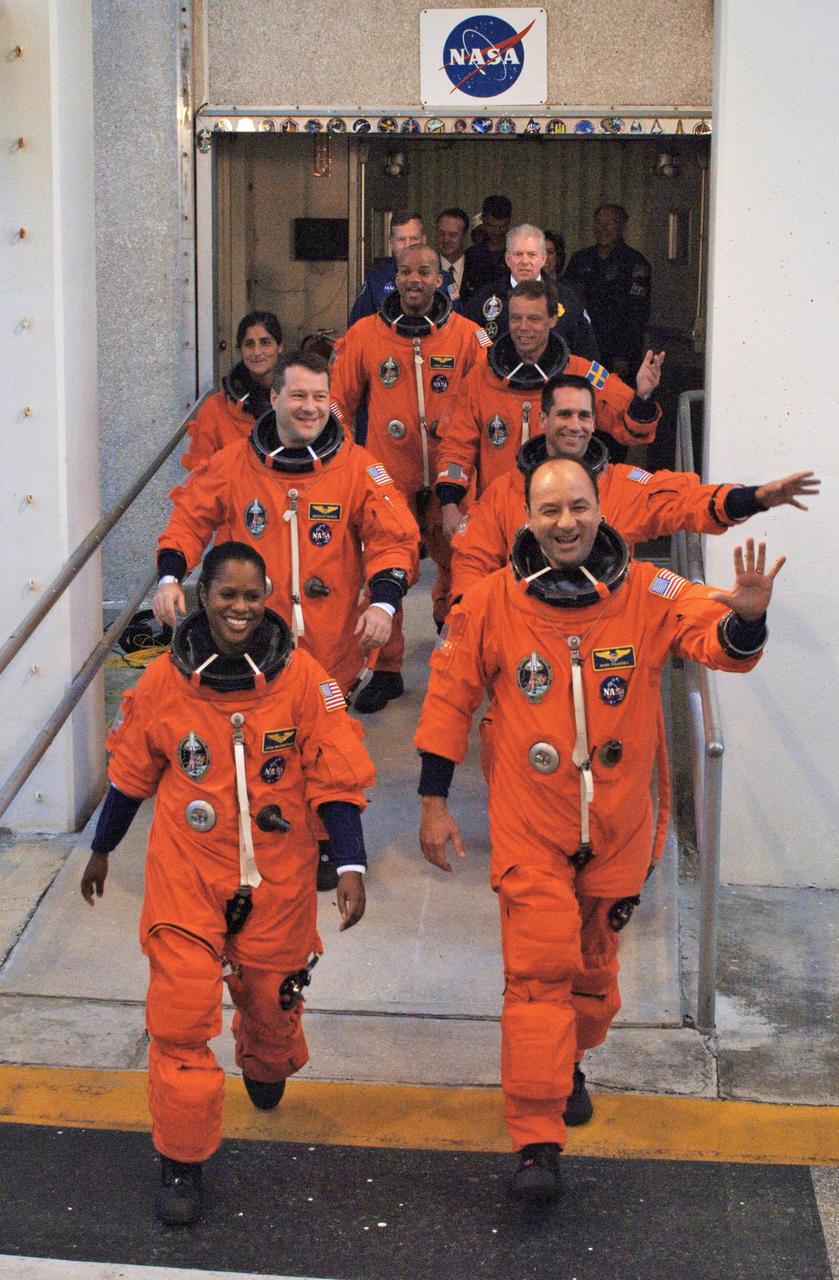
STS116-S-005 (9 Dec. 2006) --- After suiting up, the STS-116 crewmembers exit the Operations and Checkout Building to board the Astrovan, which will take them to launch pad 39B at Kennedy Space Center. On the right (front to back) are astronauts Mark L. Polansky, commander; William S. (Bill) Oefelein, pilot; and Christer Fuglesang, mission specialists representing the European Space Agency (ESA). On the left (front to back) are astronauts Joan E. Higginbotham, Nicholas J. M. Patrick, Sunita L. Williams and Robert L. Curbeam, Jr., all mission specialists. Discovery's seven-member crew will link up with the International Space Station on Monday, Dec. 11, to begin a complex, week-long stay that will rewire the outpost and increase its power supply. During three spacewalks and intricate choreography with ground controllers, the astronauts will bring electrical power on line generated by a giant solar array wing delivered to the station in September.
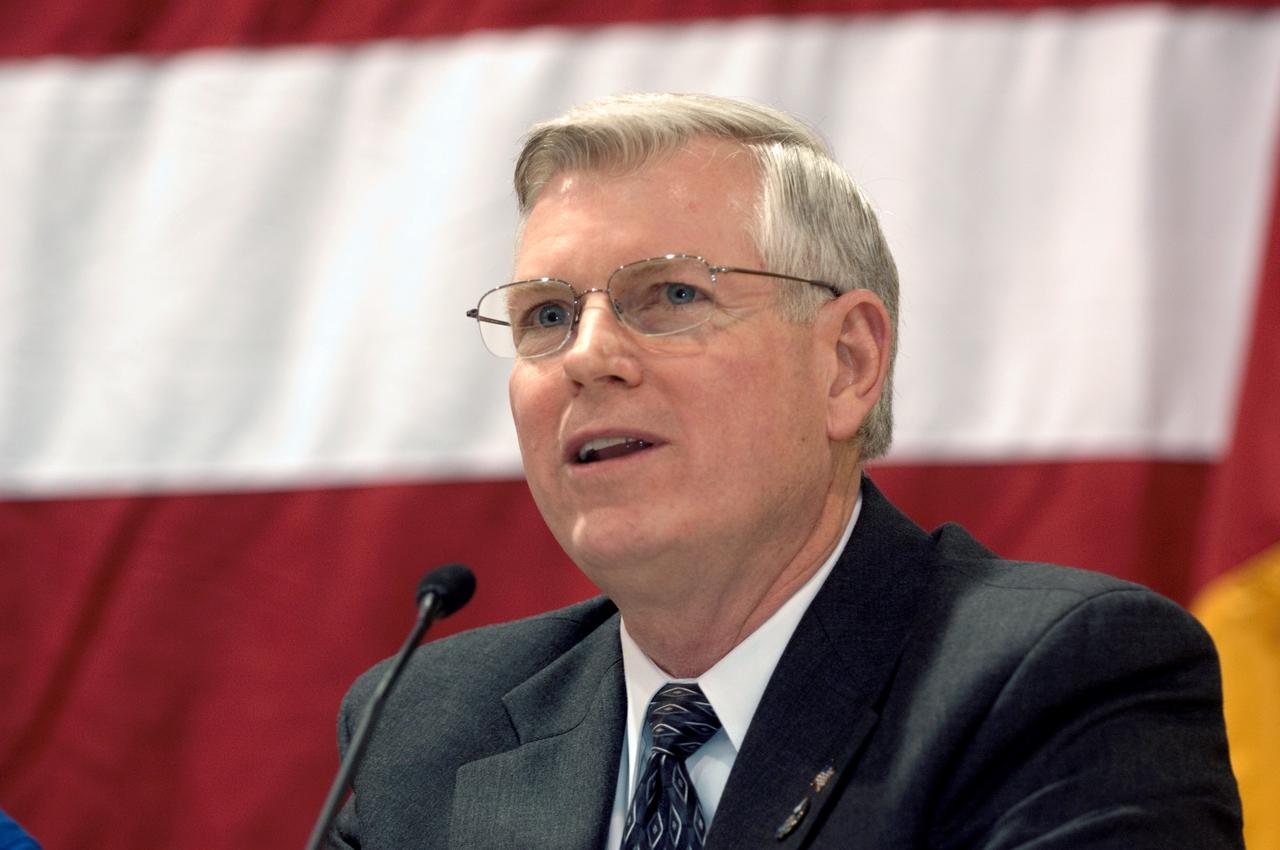
JSC2006-E-54858 (23 Dec. 2006) --- Michael L. Coats, director of the Johnson Space Center, addresses a large turnout of well-wishers at the STS-116 crew return ceremony on the afternoon of Dec. 23 at Ellington Field. Coats congratulated and thanked the Space Shuttle Discovery astronauts, whose work on the International Space Station represented one of the most difficult mission tasks in NASA's history. Seated not far away from Coats on the stage were the seven astronauts who returned to Earth on Dec. 22 aboard the Discovery. They spent their first night back on Earth in Florida, near their Kennedy Space Center landing site.
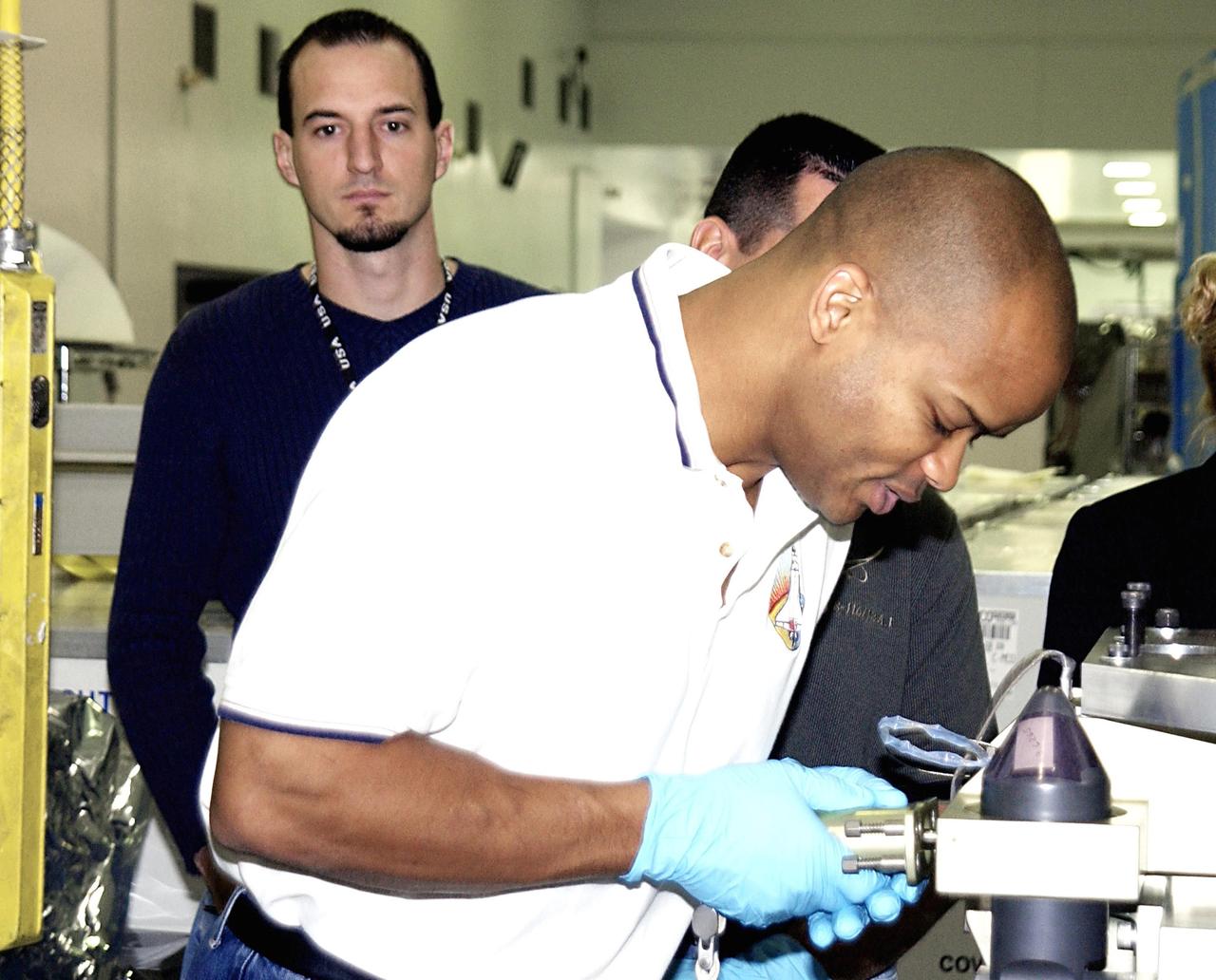
KENNEDY SPACE CENTER, FLA. - In the Space Station Processing Facility, STS-116 Mission Specialist Robert Curbeam works on equipment for the mission during a Crew Equipment Interface Test activity. Mission STS-116 is the 19th assembly flight to the International Space Station, delivering the third port truss segment, the P5 Truss, that will be attached to the second port truss segment, the P3/P4 Truss. The mission will also deliver the eighth expedition crew to the ISS and return Expedition 7. STS-116 is scheduled for launch July 24, 2003.
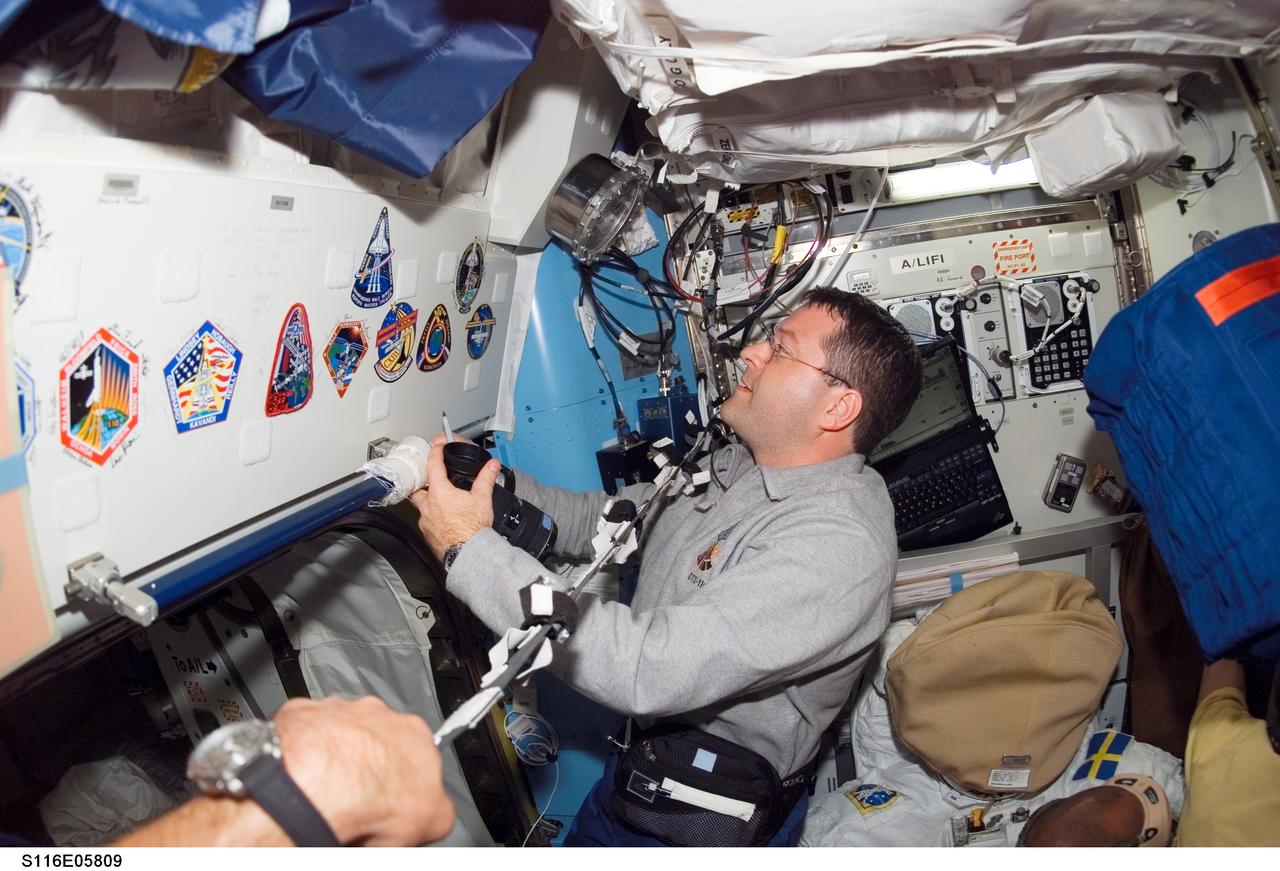
S116-E-05809 (12 Dec. 2006) --- Astronaut Nicholas J. M. Patrick, STS-116 mission specialist, looks at the STS-116 patch which was previously added to the growing collection of insignias representing crews who have performed spacewalks from the Quest Airlock of the International Space Station.
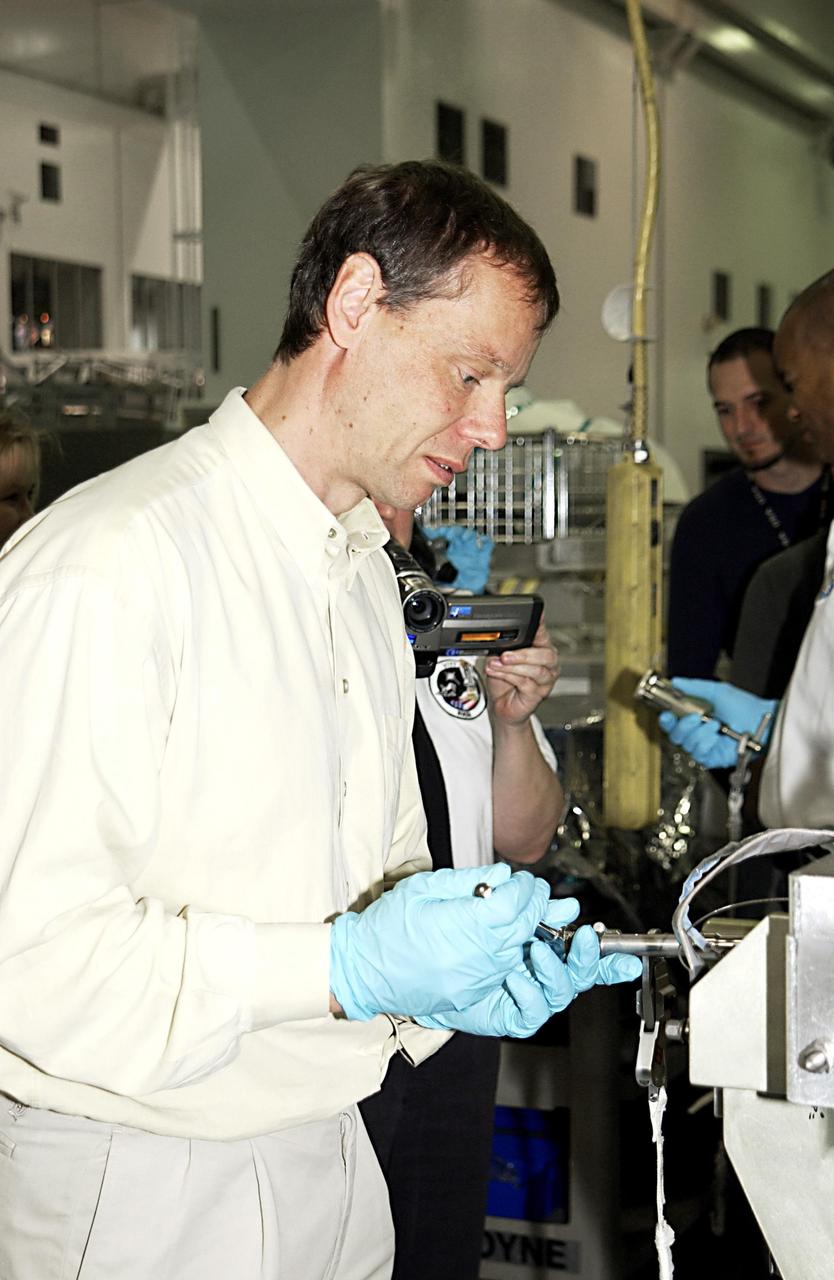
KENNEDY SPACE CENTER, FLA. - In the Space Station Processing Facility, STS-116 Mission Specialist Christer Fuglesang, who is with the European Space Agency, works on equipment for the mission during a Crew Equipment Interface Test activity. Mission STS-116 is the 19th assembly flight to the International Space Station, delivering the third port truss segment, the P5 Truss, that will be attached to the second port truss segment, the P3/P4 Truss. The mission will also deliver the eighth expedition crew to the ISS and return Expedition 7. STS-116 is scheduled for launch July 24, 2003.
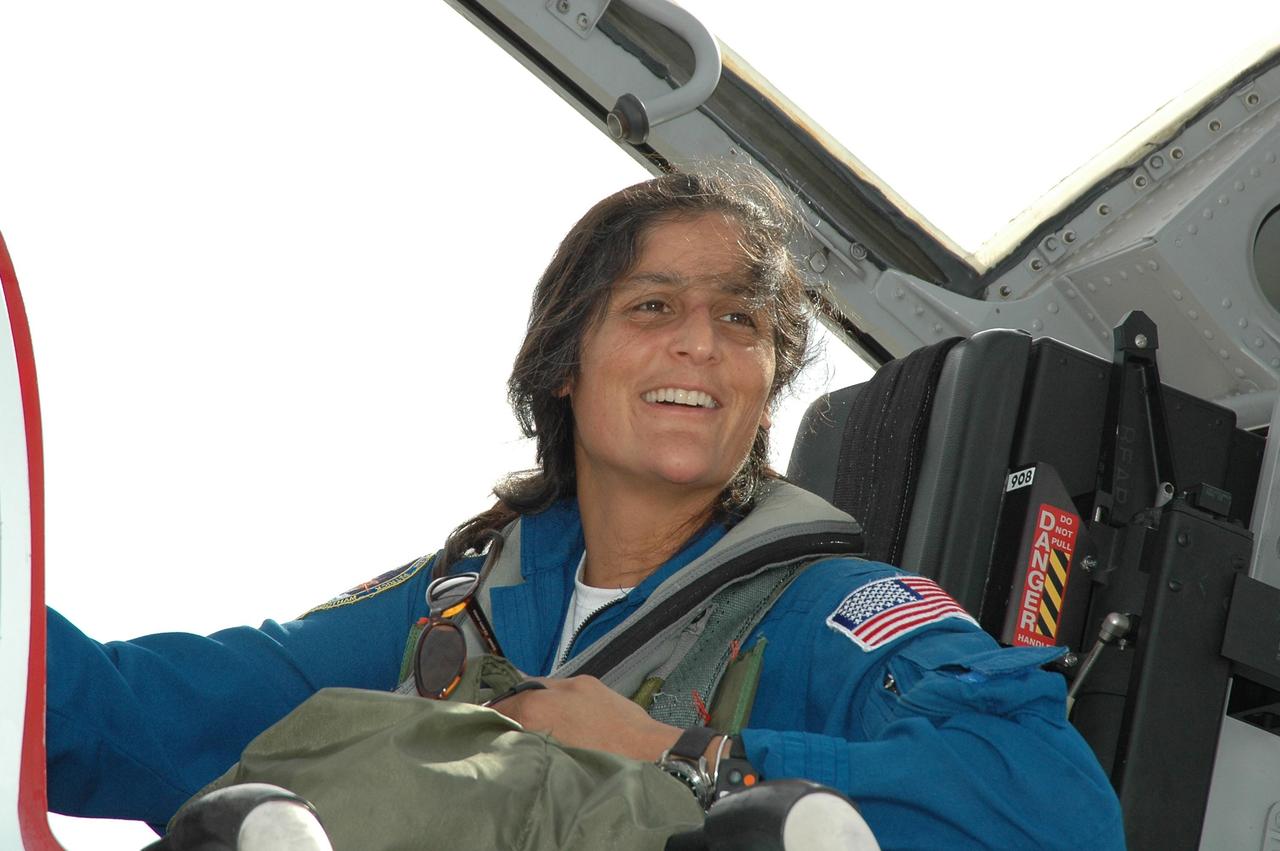
KENNEDY SPACE CENTER, FLA. - Mission STS-116 Mission Specialist Sunita Williams arrives at Kennedy Space Center’s Shuttle Landing Facility for the Crew Equipment Interface Test. Williams will join Expedition 14 in progress and serve as a flight engineer after traveling to the station on mission STS-116. Mission crews make frequent trips to the Space Coast to become familiar with the equipment and payloads they will be using. STS-116 will be mission No. 20 to the International Space Station and construction flight 12A.1. The mission payload is the SPACEHAB module, the P5 integrated truss structure and other key components. Launch is scheduled for no earlier than Dec. 7. Photo credit: NASA/Kim Shiflett
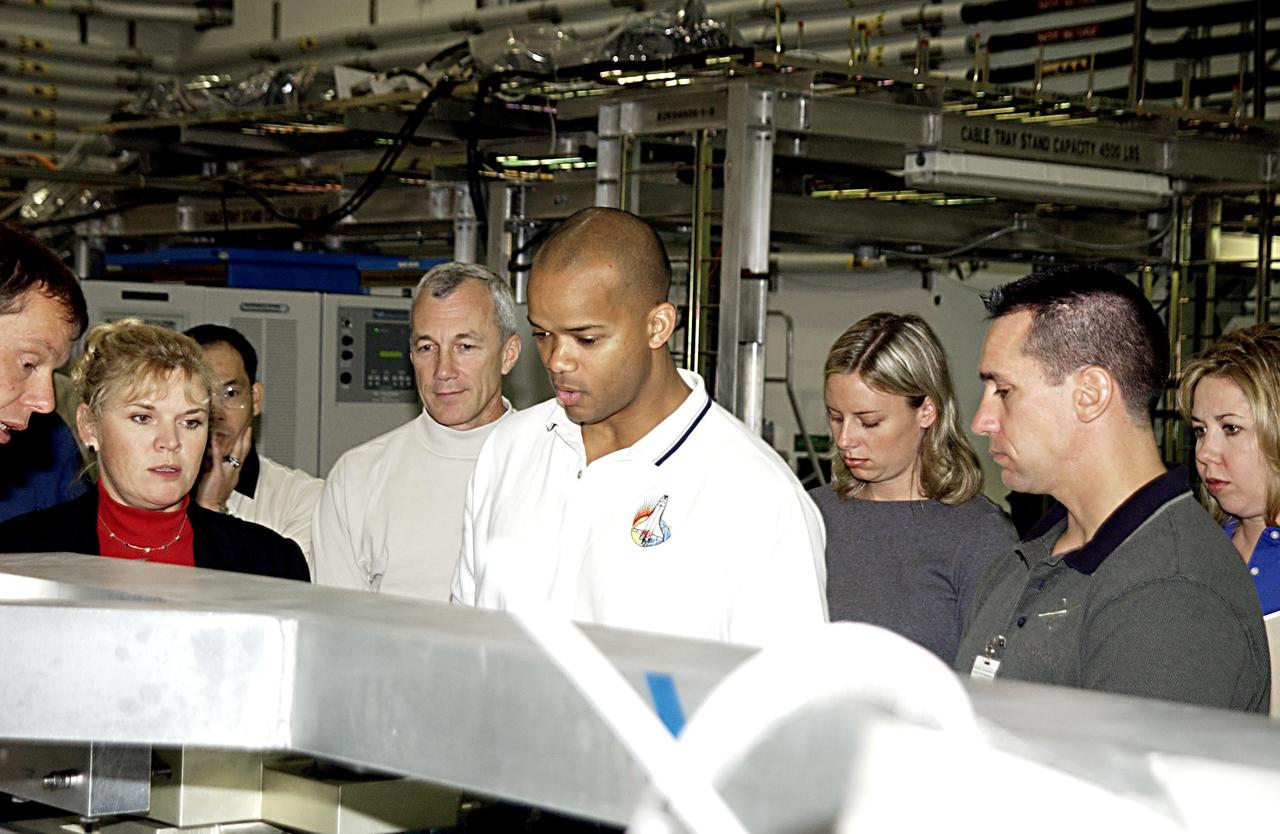
KENNEDY SPACE CENTER, FLA. - In the Space Station Processing Facility, STS-116 Mission Specialist Robert Curbeam (center, foreground) and Pilot William Oefelein (right, foreground), check out equipment for the mission during a Crew Equipment Interface Test activity. Mission STS-116 is the 19th assembly flight to the International Space Station, delivering the third port truss segment, the P5 Truss, that will be attached to the second port truss segment, the P3/P4 Truss. The mission will also deliver the eighth expedition crew to the ISS and return Expedition 7. STS-116 is scheduled for launch July 24, 2003.
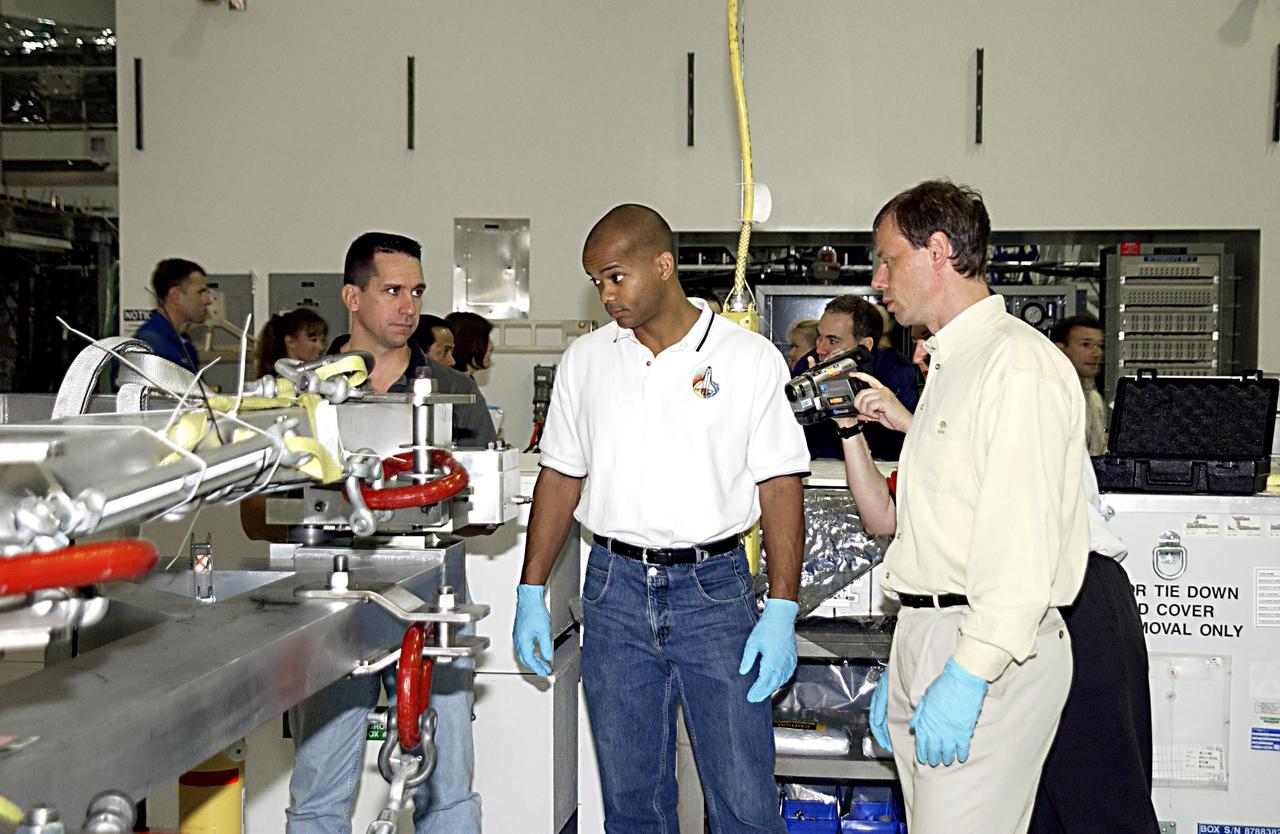
KENNEDY SPACE CENTER, FLA. - In the Space Station Processing Facility, STS-116 Pilot William Oefelein (left), Mission Specialists Robert Curbeam (center) and Christer Fuglesang (right) check out equipment for the mission during a Crew Equipment Interface Test activity. Fuglesang is with the European Space Agency. Mission STS-116 is the 19th assembly flight to the International Space Station, delivering the third port truss segment, the P5 Truss, that will be attached to the second port truss segment, the P3/P4 Truss. The mission will also deliver the eighth expedition crew to the ISS and return Expedition 7. STS-116 is scheduled for launch July 24, 2003.
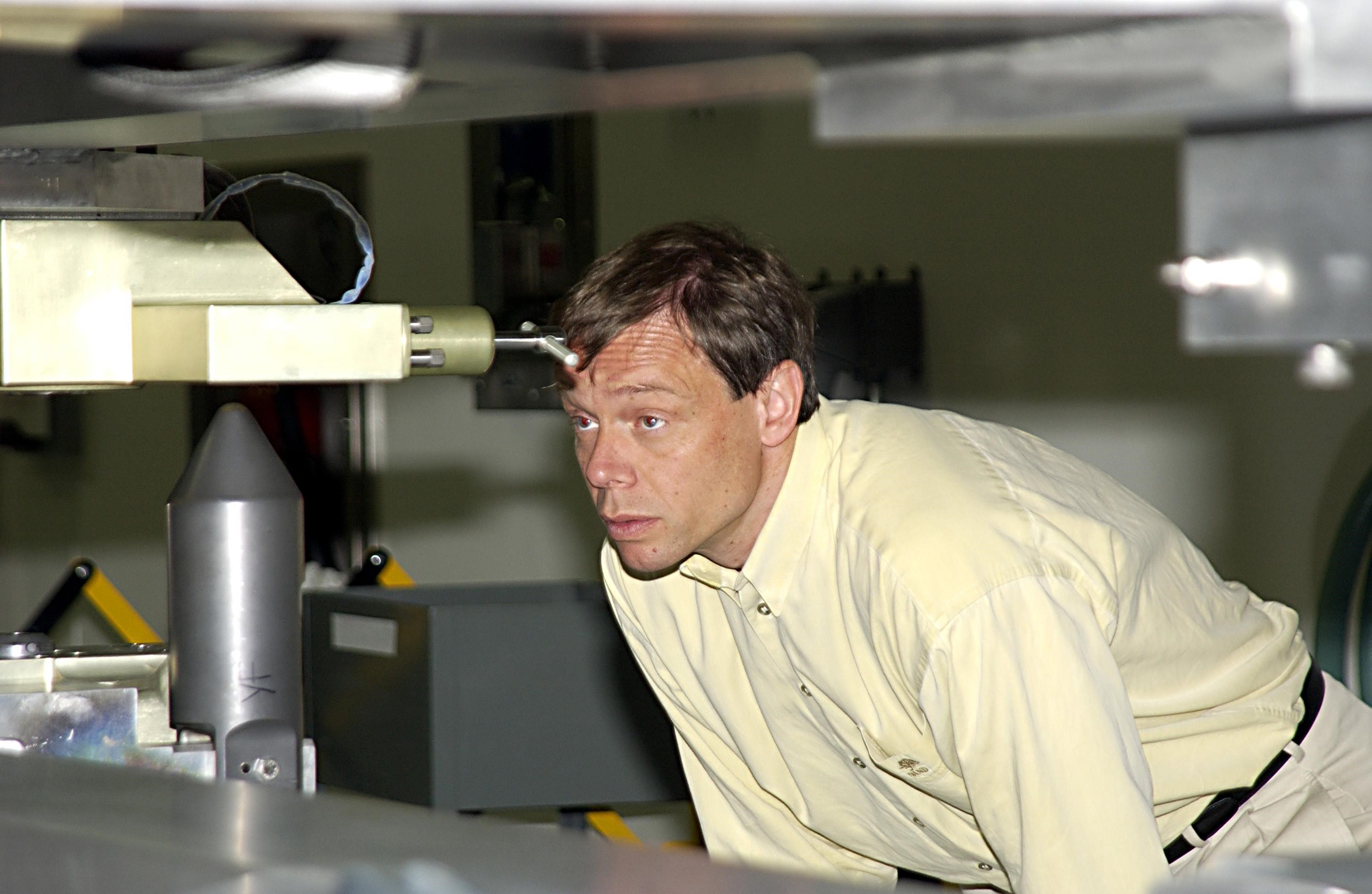
KENNEDY SPACE CENTER, FLA. - In the Space Station Processing Facility, STS-116 Mission Specialist Christer Fuglesang, who is with the European Space Agency, looks over equipment for the mission during a Crew Equipment Interface Test activity. Mission STS-116 is the 19th assembly flight to the International Space Station, delivering the third port truss segment, the P5 Truss, that will be attached to the second port truss segment, the P3/P4 Truss. The mission will also deliver the eighth expedition crew to the ISS and return Expedition 7. STS-116 is scheduled for launch July 24, 2003.
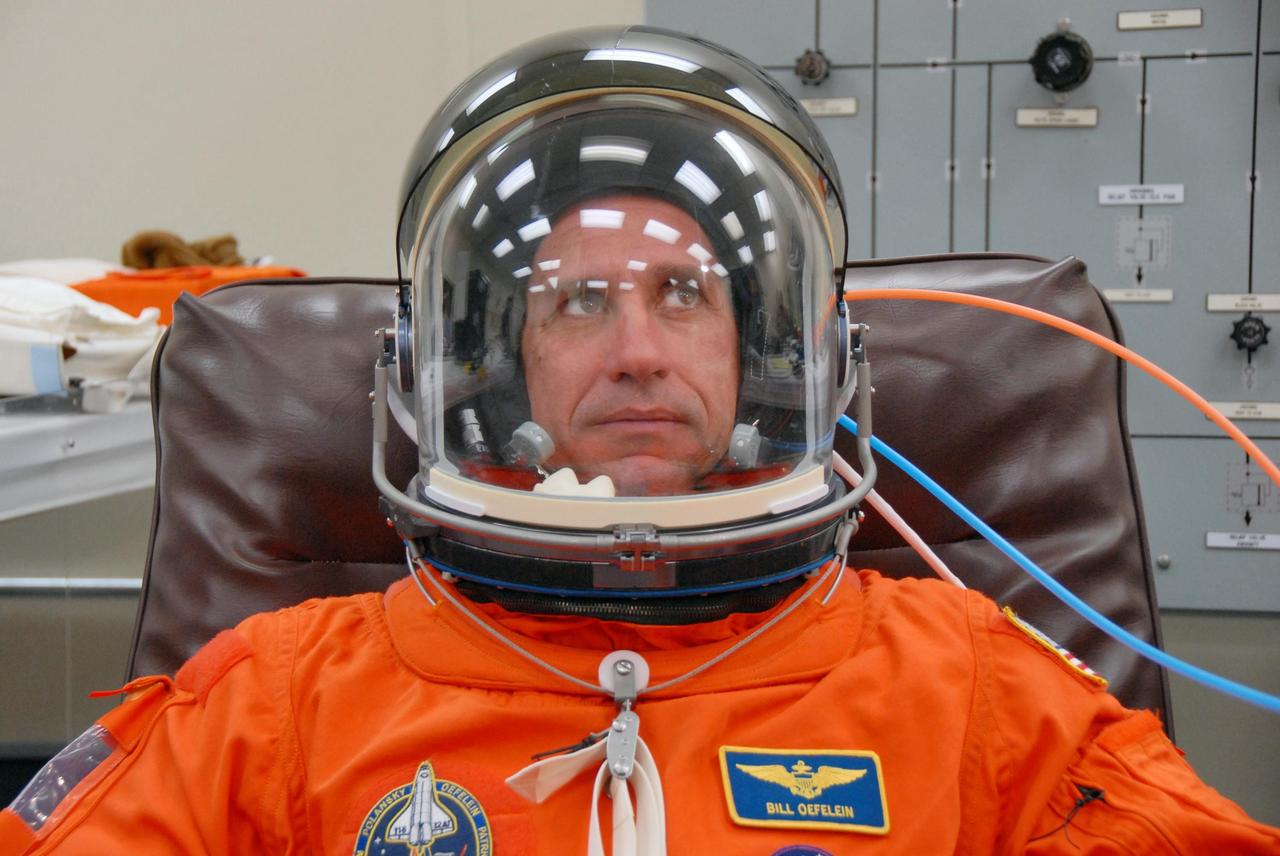
KENNEDY SPACE CENTER, FLA. -- Following orbiter landing practice in the shuttle training aircraft (STA), STS-116 Pilot William Oefelein has completed suit fit-check with his helmet. Launch of Space Shuttle Discovery on mission STS-116 is scheduled for 9:35 p.m. Dec. 7. On the mission, the STS-116 crew will deliver truss segment, P5, to the International Space Station and begin the intricate process of reconfiguring and redistributing the power generated by two pairs of U.S. solar arrays. The P5 will be mated to the P4 truss that was delivered and attached during the STS-115 mission in September. Photo credit: NASA/Kim Shiflett
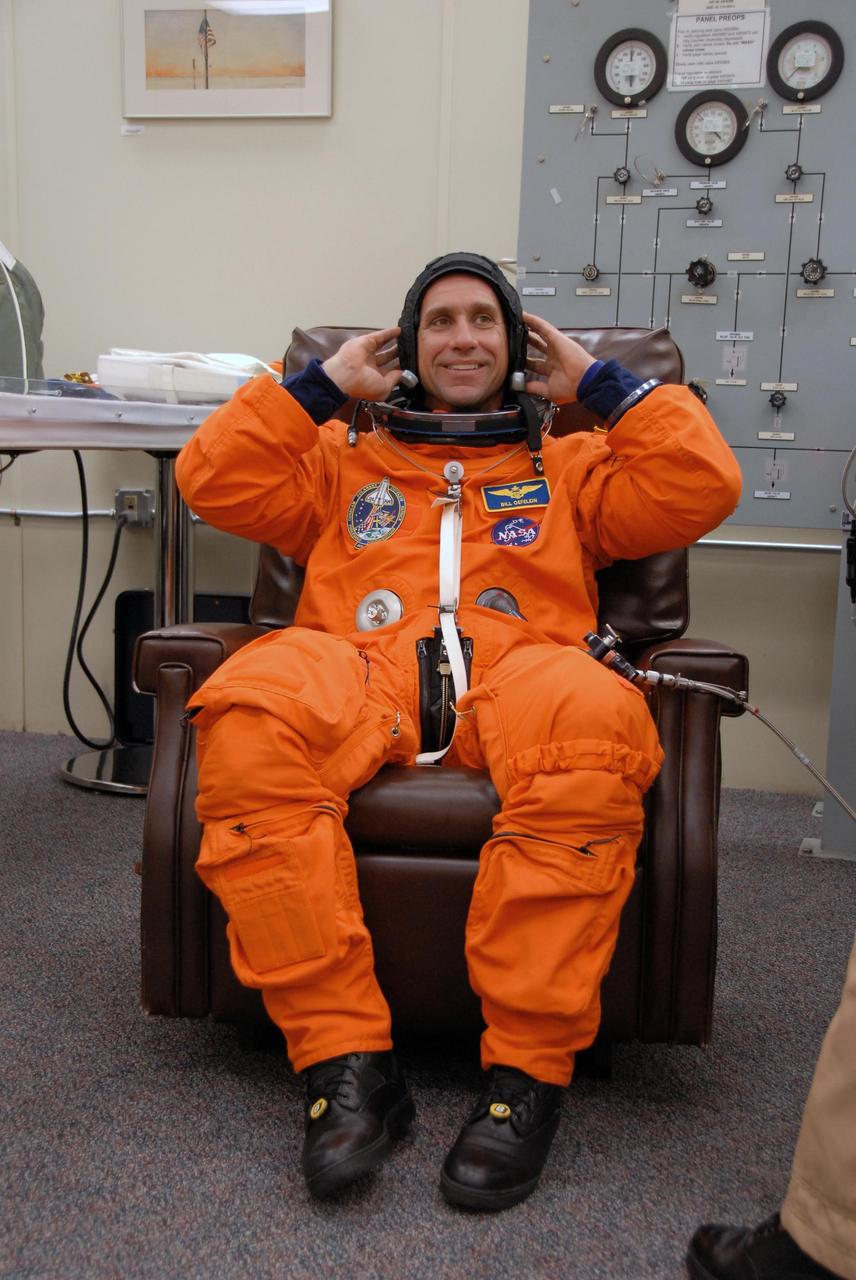
KENNEDY SPACE CENTER, FLA. -- Following orbiter landing practice in the shuttle training aircraft (STA), STS-116 Pilot William Oefelein gives a final check to his launch suit. Launch of Space Shuttle Discovery on mission STS-116 is scheduled for 9:35 p.m. Dec. 7. On the mission, the STS-116 crew will deliver truss segment, P5, to the International Space Station and begin the intricate process of reconfiguring and redistributing the power generated by two pairs of U.S. solar arrays. The P5 will be mated to the P4 truss that was delivered and attached during the STS-115 mission in September. Photo credit: NASA/Kim Shiflett
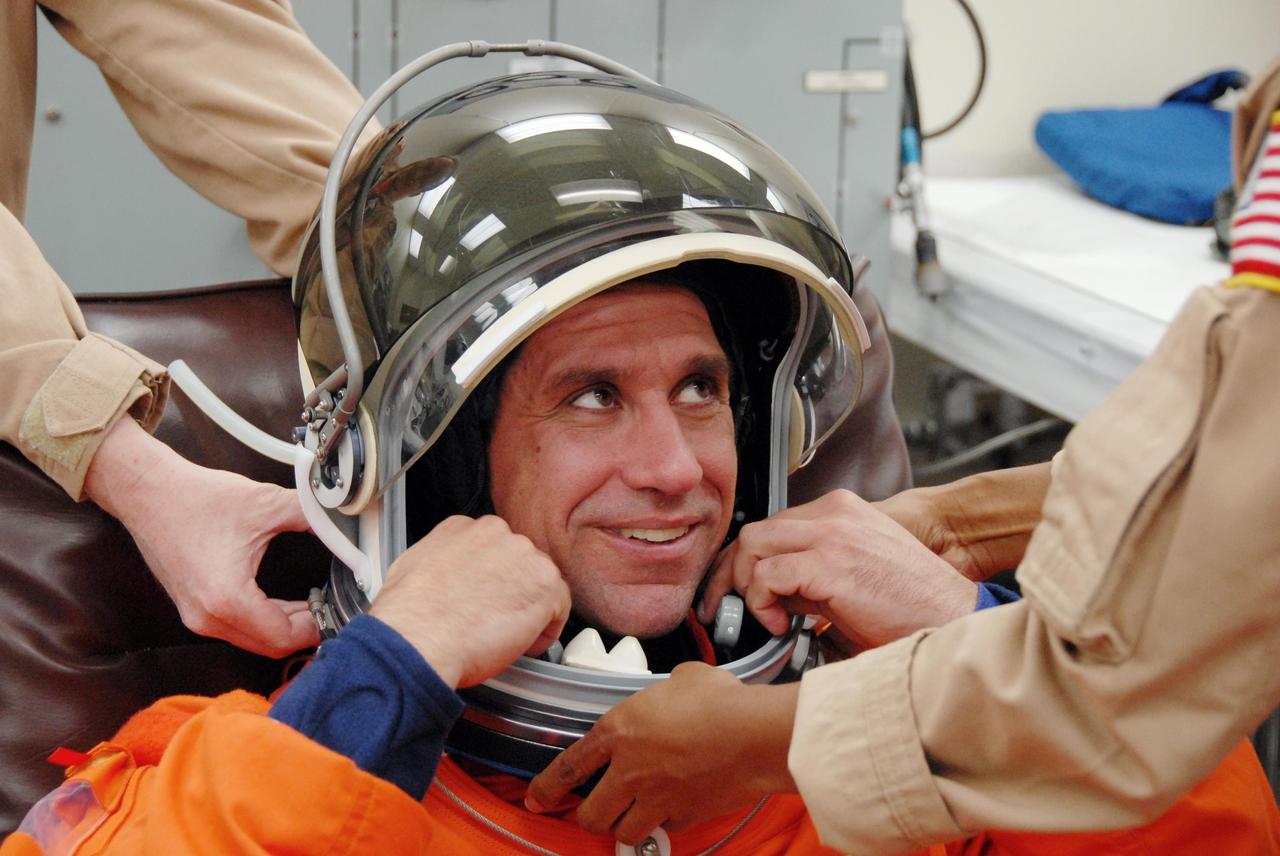
KENNEDY SPACE CENTER, FLA. -- Following orbiter landing practice in the shuttle training aircraft (STA), STS-116 Pilot William Oefelein adjusts his helmet during suit fit-check. Launch of Space Shuttle Discovery on mission STS-116 is scheduled for 9:35 p.m. Dec. 7. On the mission, the STS-116 crew will deliver truss segment, P5, to the International Space Station and begin the intricate process of reconfiguring and redistributing the power generated by two pairs of U.S. solar arrays. The P5 will be mated to the P4 truss that was delivered and attached during the STS-115 mission in September. Photo credit: NASA/Kim Shiflett
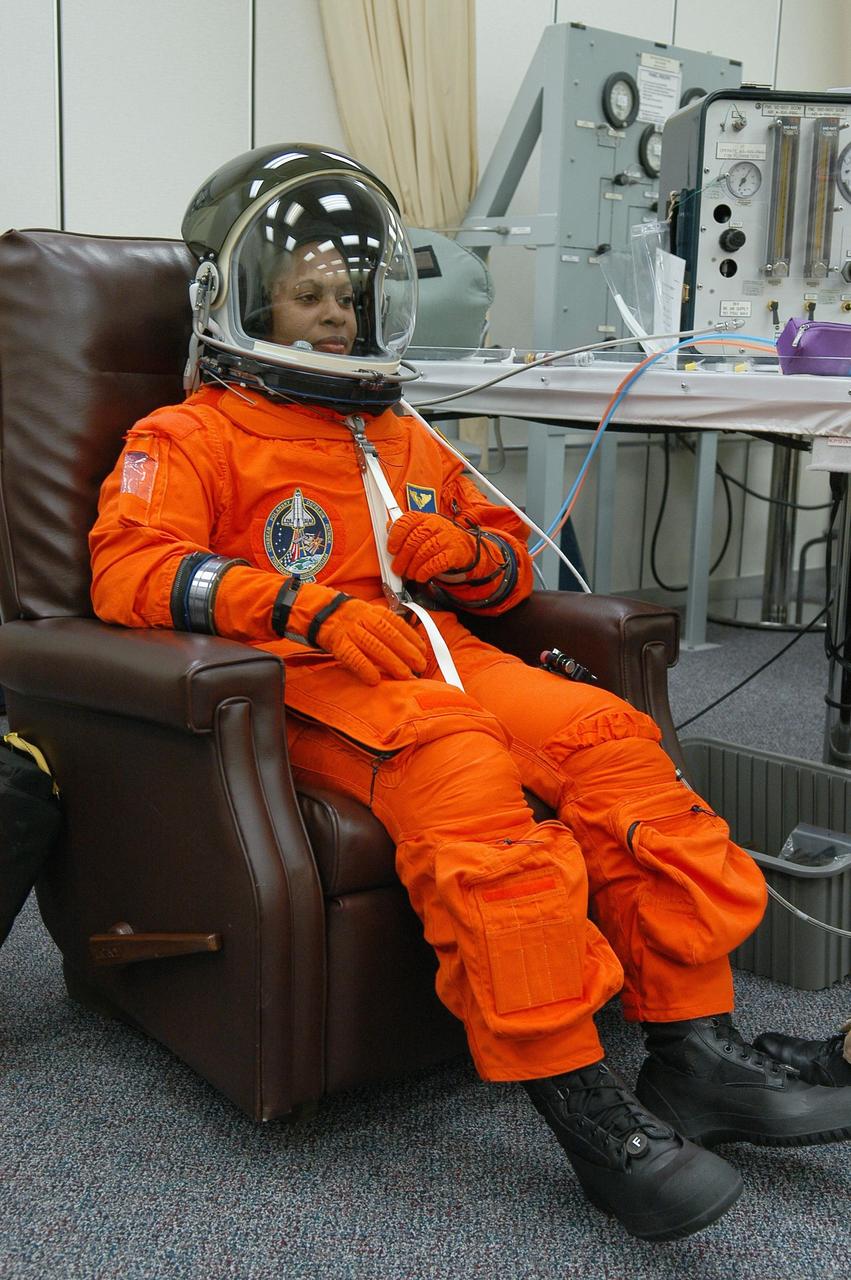
KENNEDY SPACE CENTER, FLA. -- The STS-116 mission crew practices for launch with a simulation of activities, from crew breakfast and suit-up to countdown in the orbiter. In this photo Mission Specialist Joan Higginbotham is suited up before heading to Launch Pad 39B. The STS-116 mission is No. 20 to the International Space Station and construction flight 12A.1. The mission payload is the SPACEHAB module, the P5 integrated truss structure and other key components. Launch is scheduled for no earlier than Dec. 7. Photo credit: NASA/Kim Shiflett

KENNEDY SPACE CENTER, FLA. -- During Crew Equipment Interface Test (CEIT), members of the STS-116 crew look over equipment they will be working with during their mission to the International Space Station. On the stand at left is Mission Specialist Robert Curbeam. The 19th assembly flight to the ISS, the mission will deliver the third port truss segment, the P5 Truss, to attach to second port truss segment, the P3/P4 Truss, to be assembled in an earlier mission. STS-116 is scheduled for launch in June 2003.
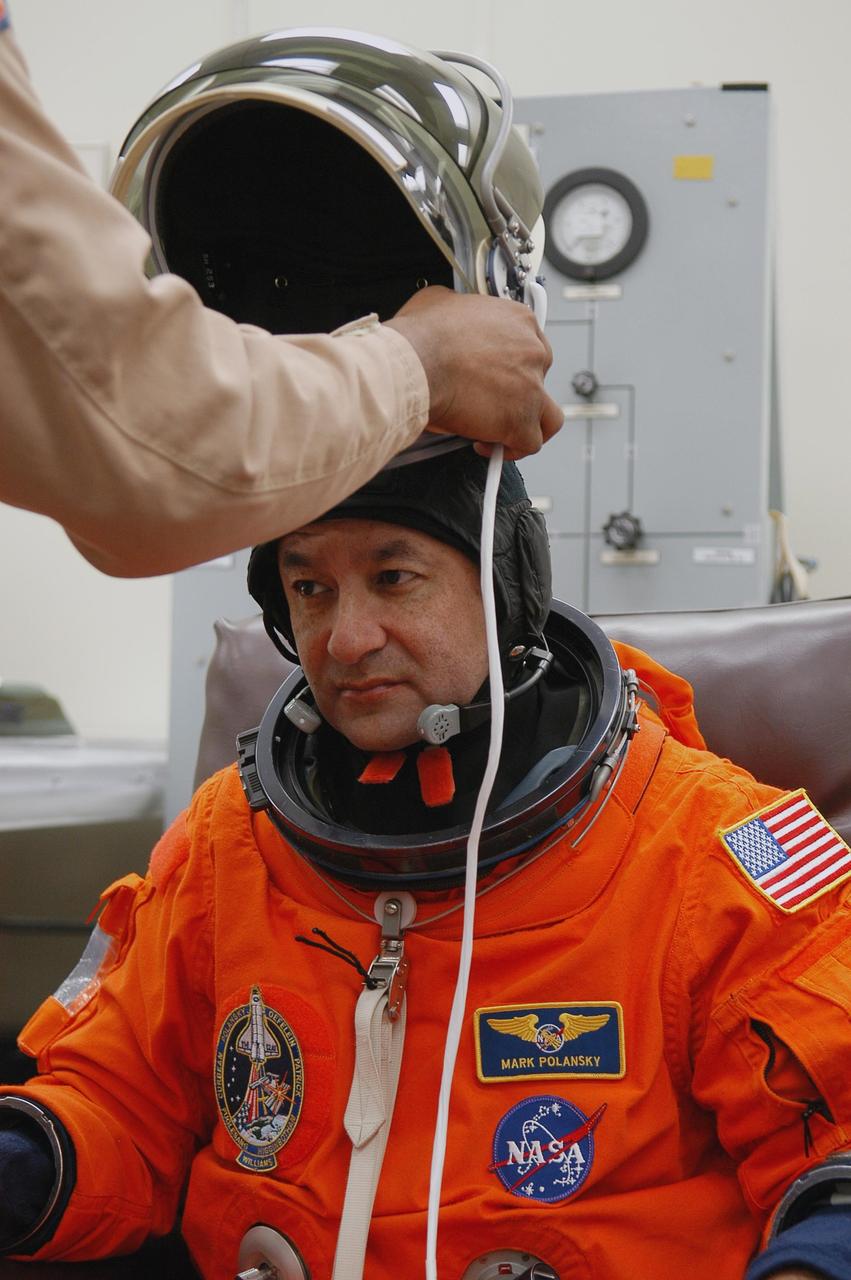
KENNEDY SPACE CENTER, FLA. -- The STS-116 mission crew practices for launch with a simulation of activities, from crew breakfast and suit-up to countdown in the orbiter. In this photo Commander Mark Polansky is helped with his helmet before heading to Launch Pad 39B. The STS-116 mission is No. 20 to the International Space Station and construction flight 12A.1. The mission payload is the SPACEHAB module, the P5 integrated truss structure and other key components. Launch is scheduled for no earlier than Dec. 7. Photo credit: NASA/Kim Shiflett
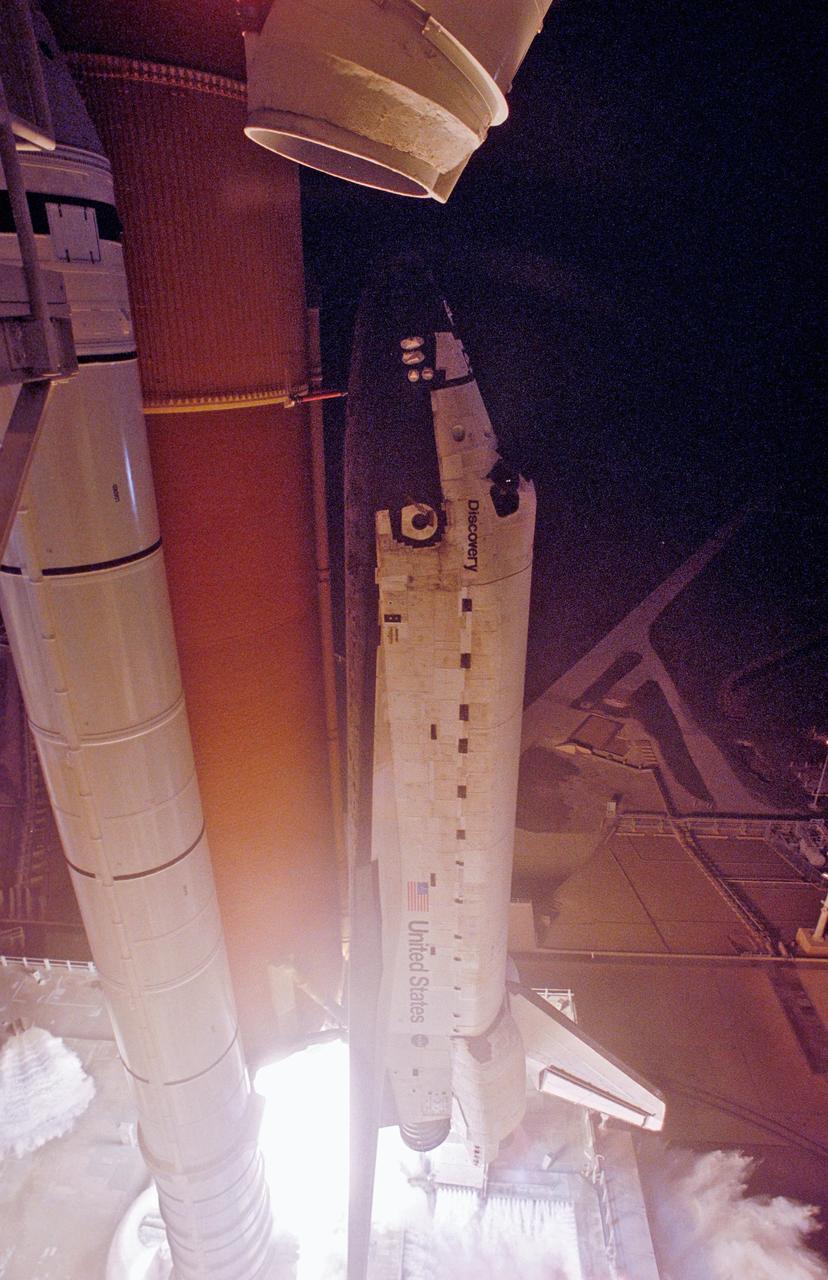
KENNEDY SPACE CENTER, FLA. -- This closeup view shows the water flooding the mobile launcher platform below Space Shuttle Discovery as it lifts off Launch Pad 39B on mission STS-116. Discovery lifted off from KSC's Launch Pad 39B at 8:47 p.m. EST on mission STS-116. This was the second launch attempt for mission STS-116. The first launch attempt on Dec. 7 was postponed due a low cloud ceiling over Kennedy Space Center. This is Discovery's 33rd mission and the first night launch since 2002. The 20th shuttle mission to the International Space Station, STS-116 carries another truss segment, P5. It will serve as a spacer, mated to the P4 truss that was attached in September. After installing the P5, the crew will reconfigure and redistribute the power generated by two pairs of U.S. solar arrays. Landing is expected Dec. 21 at KSC.
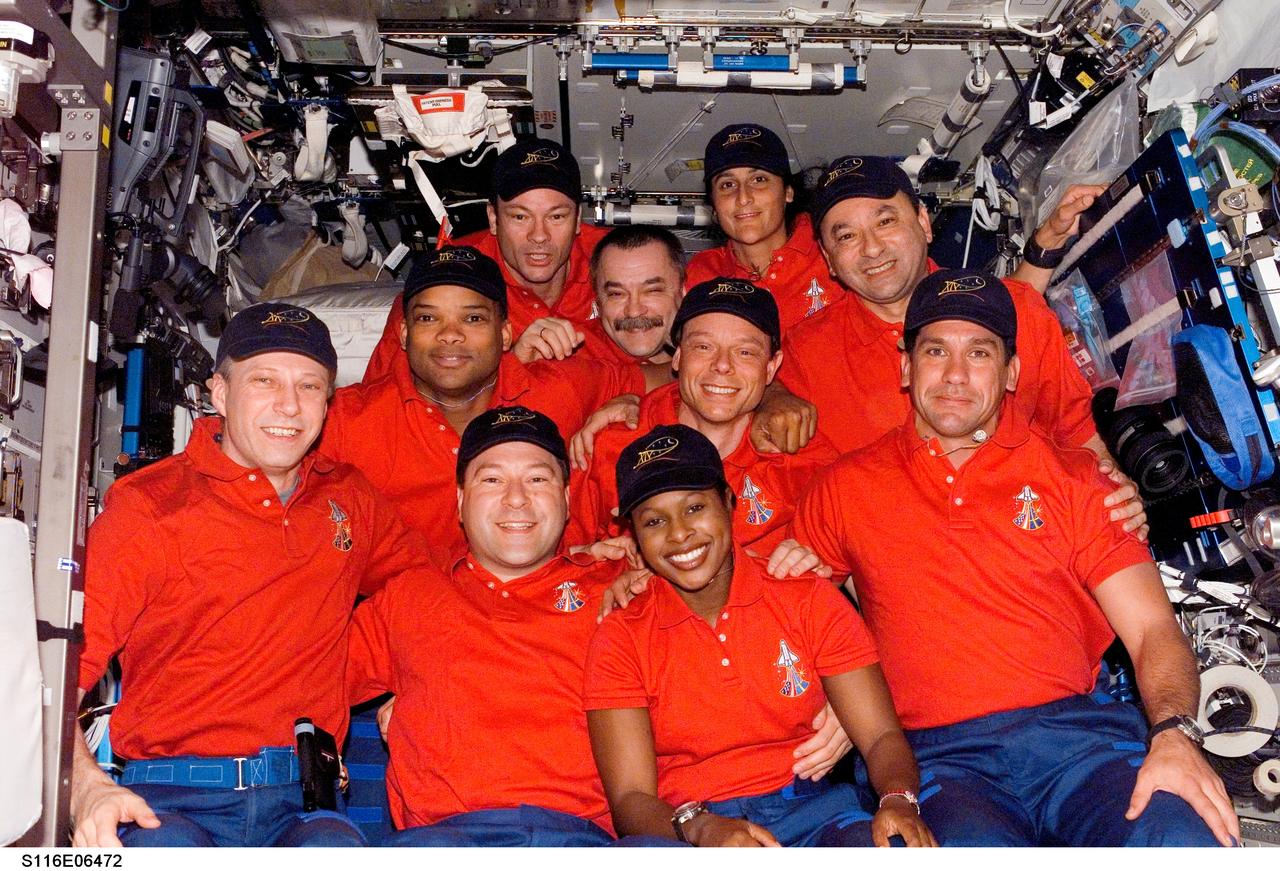
S116-E-06472 (15 Dec. 2006) --- The STS-116 and Expedition 14 crewmembers gather for a group portrait during a joint crew press conference in the Destiny laboratory of the International Space Station while Space Shuttle Discovery was docked with the station. From the left (front row) are European Space Agency (ESA) astronaut Thomas Reiter, Nicholas J. M. Patrick, Joan E. Higginbotham, all STS-116 mission specialists; and William A. (Bill) Oefelein, STS-116 pilot. From the left (center row) are astronaut Robert L. Curbeam, Jr., European Space Agency (ESA) astronaut Christer Fuglesang, STS-116 mission specialists; and astronaut Mark L. Polansky, STS-116 commander. From the left (back row) are astronaut Michael E. Lopez-Alegria, Expedition 14 commander and NASA space station science officer; cosmonaut Mikhail Tyurin, Expedition 14 flight engineer representing Russia's Federal Space Agency; and astronaut Sunita L. Williams, Expedition 14 flight engineer. Shortly after the two spacecraft docked on Dec. 11, Williams became a member of the station crew. At the same time, Reiter became a Discovery crewmember for his ride home, completing about six months in space.
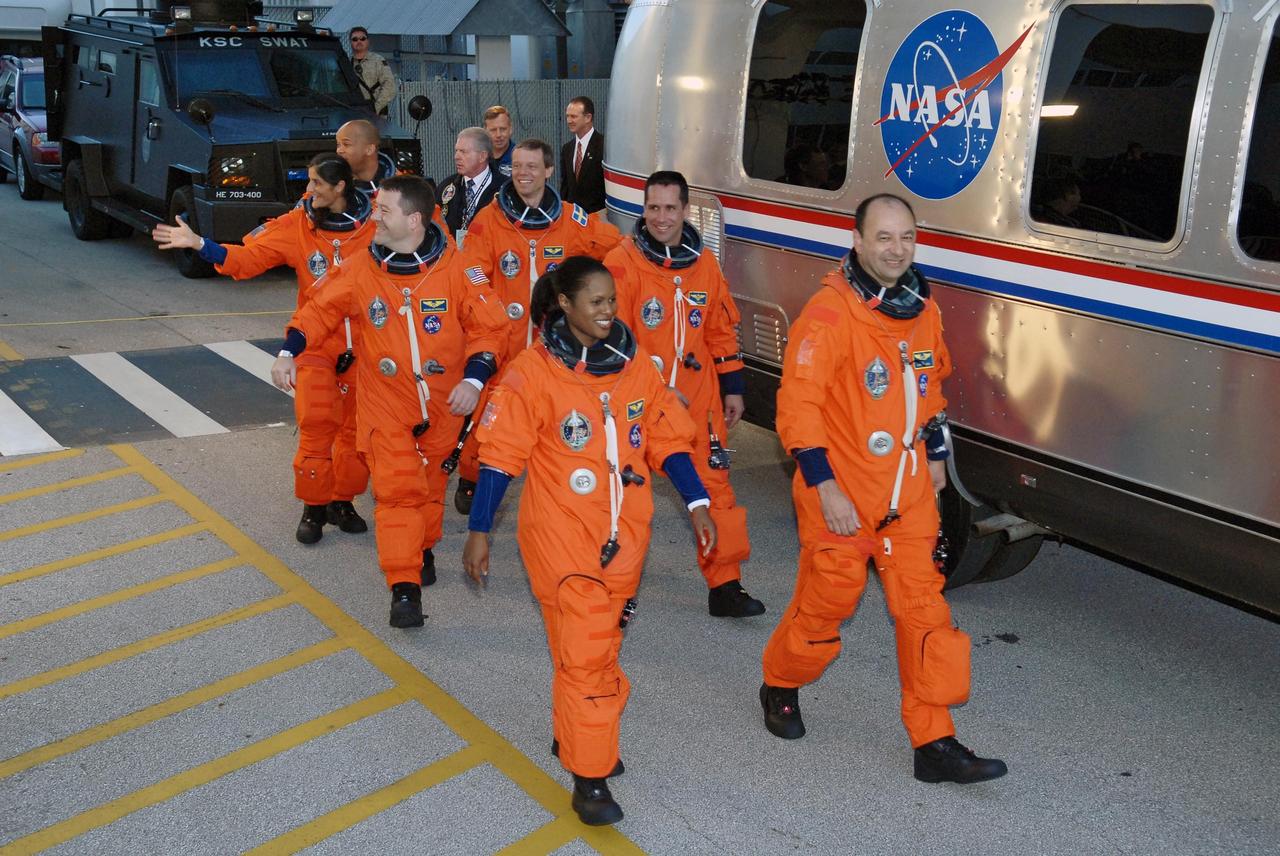
KENNEDY SPACE CENTER, FLA. -- The STS-116 crew members greet well-wishers as they head to the Astrovan that will take them to Launch Pad 39B. Leading the way, at right, is Commander Mark Polansky. The others, from left, are Mission Specialists Sunita Williams, Robert Curbeam, Nicholas Patrick, Christer Fuglesang and Joan Higginbotham; and Pilot William Oefelein. This is the second launch attempt for the crew. The first launch attempt of STS-116 on Dec. 7 was postponed due a low cloud ceiling over Kennedy Space Center. This is Discovery's 33rd mission and the first night launch since 2002. The 20th shuttle mission to the International Space Station, STS-116 carries another truss segment, P5. It will serve as a spacer, mated to the P4 truss that was attached in September. After installing the P5, the crew will reconfigure and redistribute the power generated by two pairs of U.S. solar arrays. Landing is expected Dec. 19 at KSC. Photo credit: NASA/Kim Shiflett
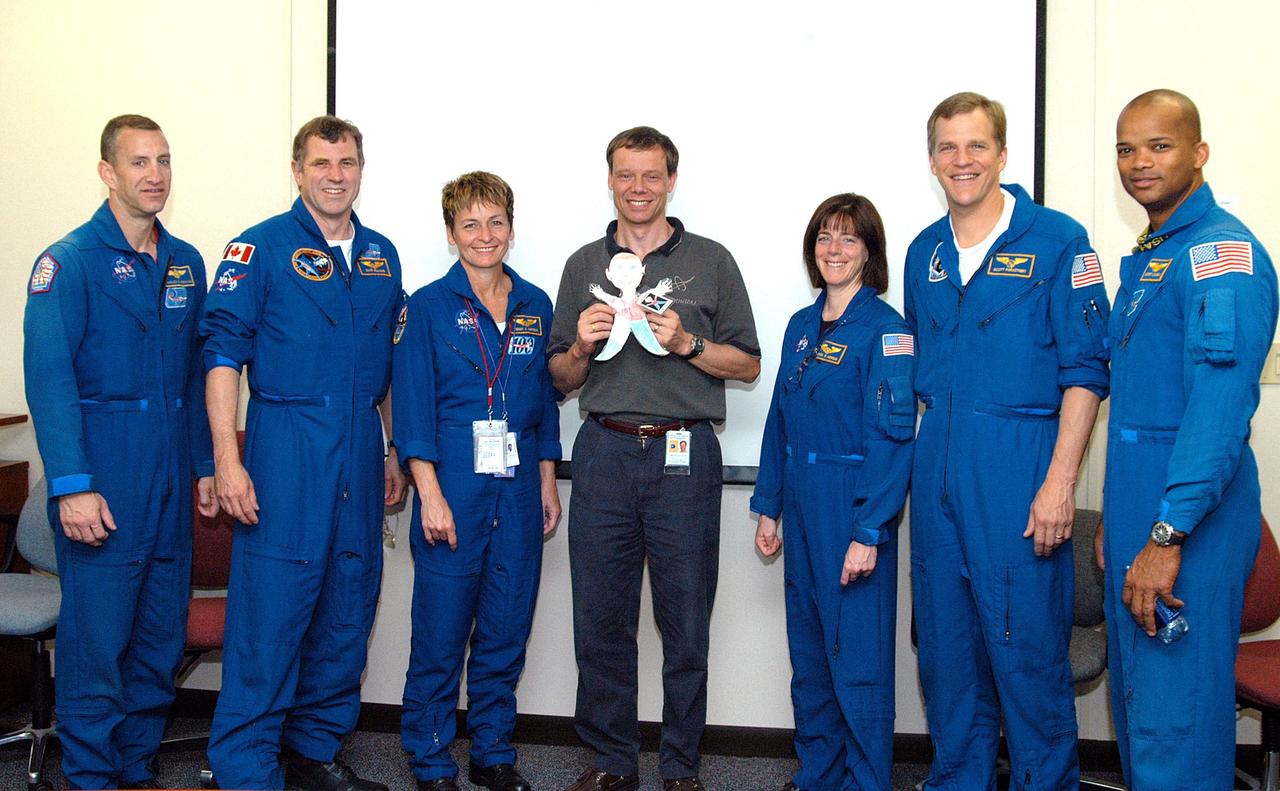
KENNEDY SPACE CENTER, FLA. - Members of the STS-116 and STS-118 crews pause during their visit to KSC for a photo. From left are STS-118 Pilot Charles Hobaugh and Mission Specialist Dafydd Williams (Canadian Space Agency); astronaut Peggy Whitson; STS-116 Mission Specialist Christer Fugelsang (European Space Agency), holding the paper figure of “Flat Stanley,” an education tool; STS-118 Mission Specialists Barbara Morgan and Scott Parazynski; and STS-116 Mission Specialist Robert Curbeam. The crews are taking part in equipment familiarization in the Space Station Processing Facility. The STS-116 mission will deliver the third port truss segment, the P5 Truss, to attach to the second port truss segment, the P3/P4 Truss. The STS-118 mission will be delivering and installing the third starboard truss segment, the ITS S5, to the International Space Station, and carry a SPACEHAB Single Cargo Module with supplies and equipment. Launch dates for both missions are under review.
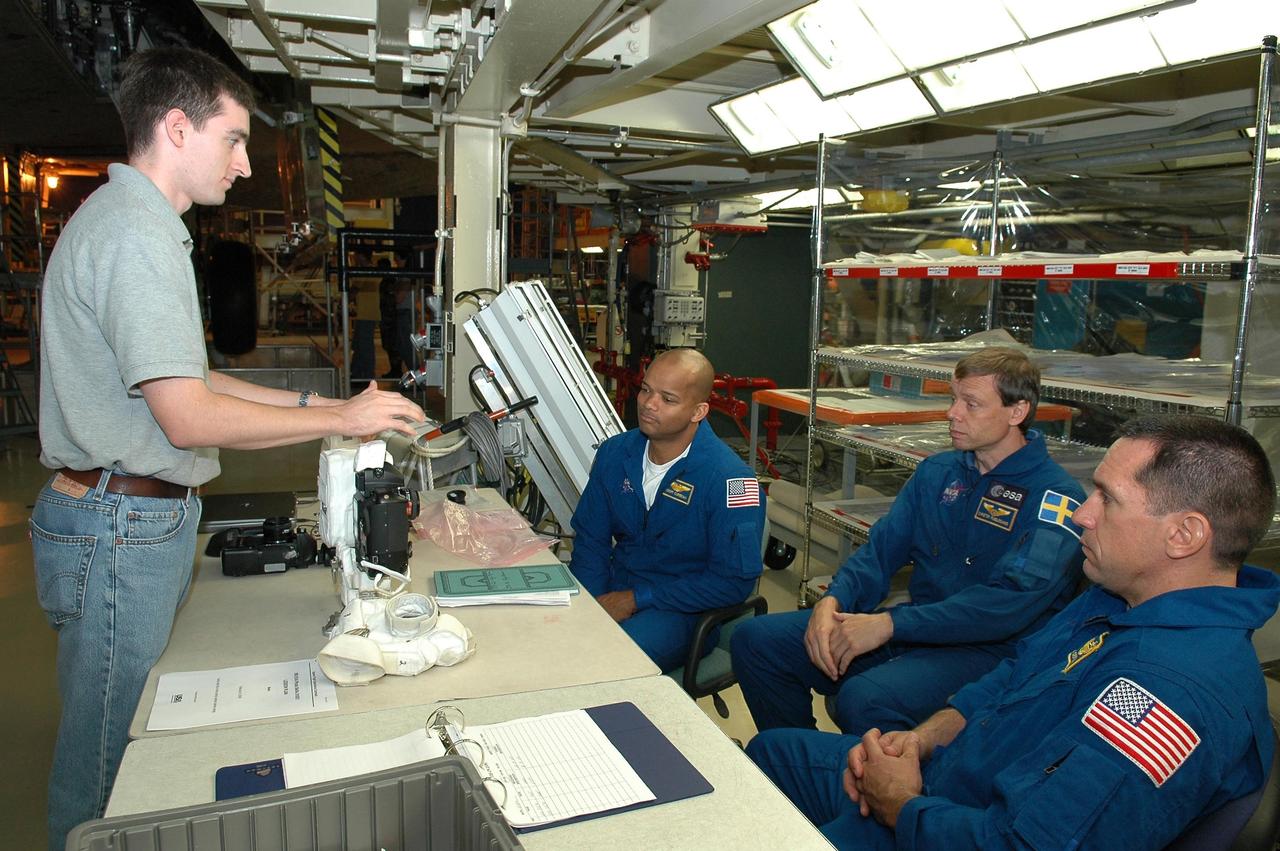
KENNEDY SPACE CENTER, FLA. - STS-116 crew members (at right) are briefed on the cameras they will be using during the mission. The astronauts are, from left, Mission Specialists Robert Curbeam and Christer Fugelsang and Pilot William Oefelein. The crew is at KSC for a Crew Equipment Interface Test. Mission crews make frequent trips to the Kennedy Space Center to become familiar with the equipment and payloads they will be using. STS-116 will be mission No. 20 to the International Space Station and construction flight 12A.1. The mission payload is the SPACEHAB module, the P5 integrated truss structure and other key components. Launch is scheduled for no earlier than Dec. 7. Photo credit: NASA/Kim Shiflett
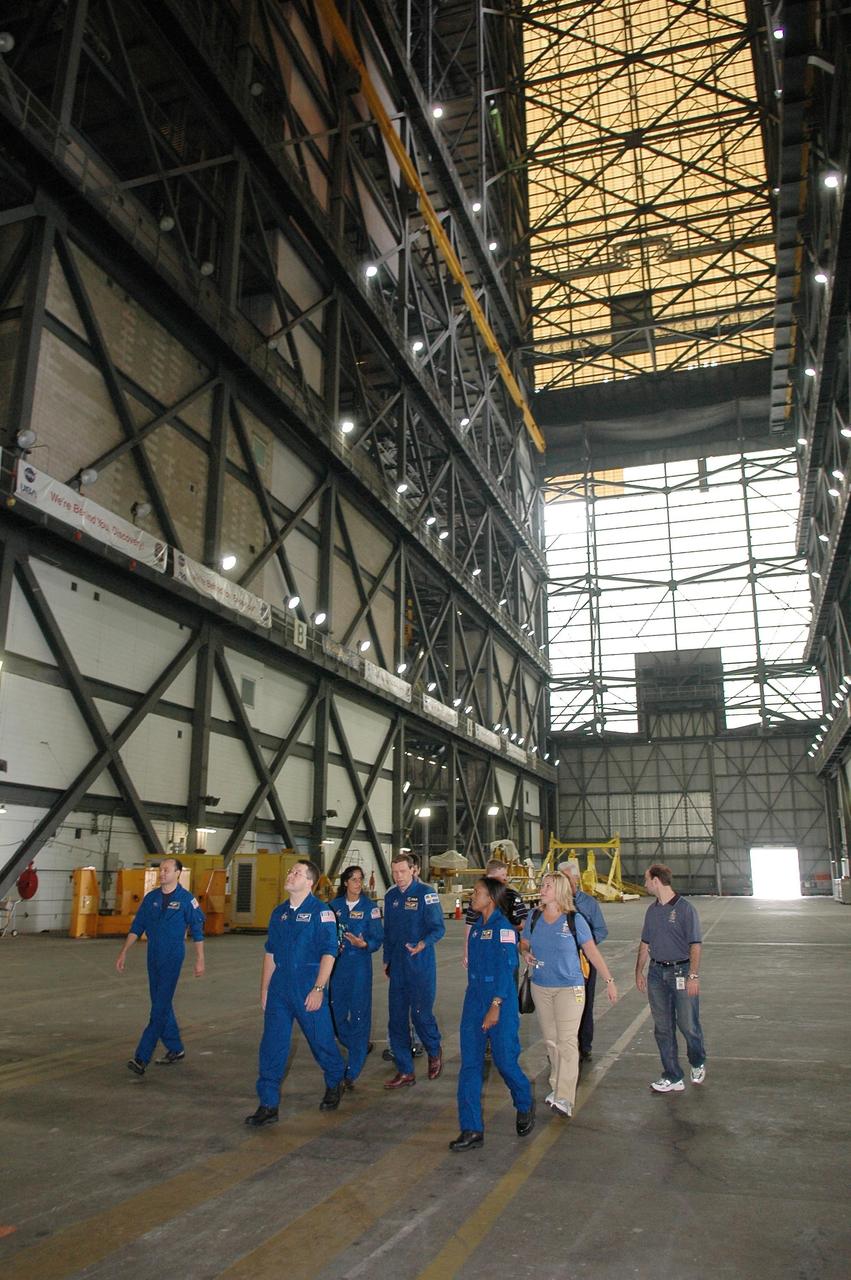
KENNEDY SPACE CENTER, FLA. - Striding through the Vehicle Assembly Building are STS-116 crew members (from left) Mark Polansky, commander; Nicholas Patrick, Sunita Williams, Christer Fugelsang and Joan Higginbotham, mission specialists. The crew is at KSC for a Crew Equipment Interface Test. Mission crews make frequent trips to the Kennedy Space Center to become familiar with the equipment and payloads they will be using. STS-116 will be mission No. 20 to the International Space Station and construction flight 12A.1. The mission payload is the SPACEHAB module, the P5 integrated truss structure and other key components. Launch is scheduled for no earlier than Dec. 7. Photo credit: NASA/Kim Shiflett
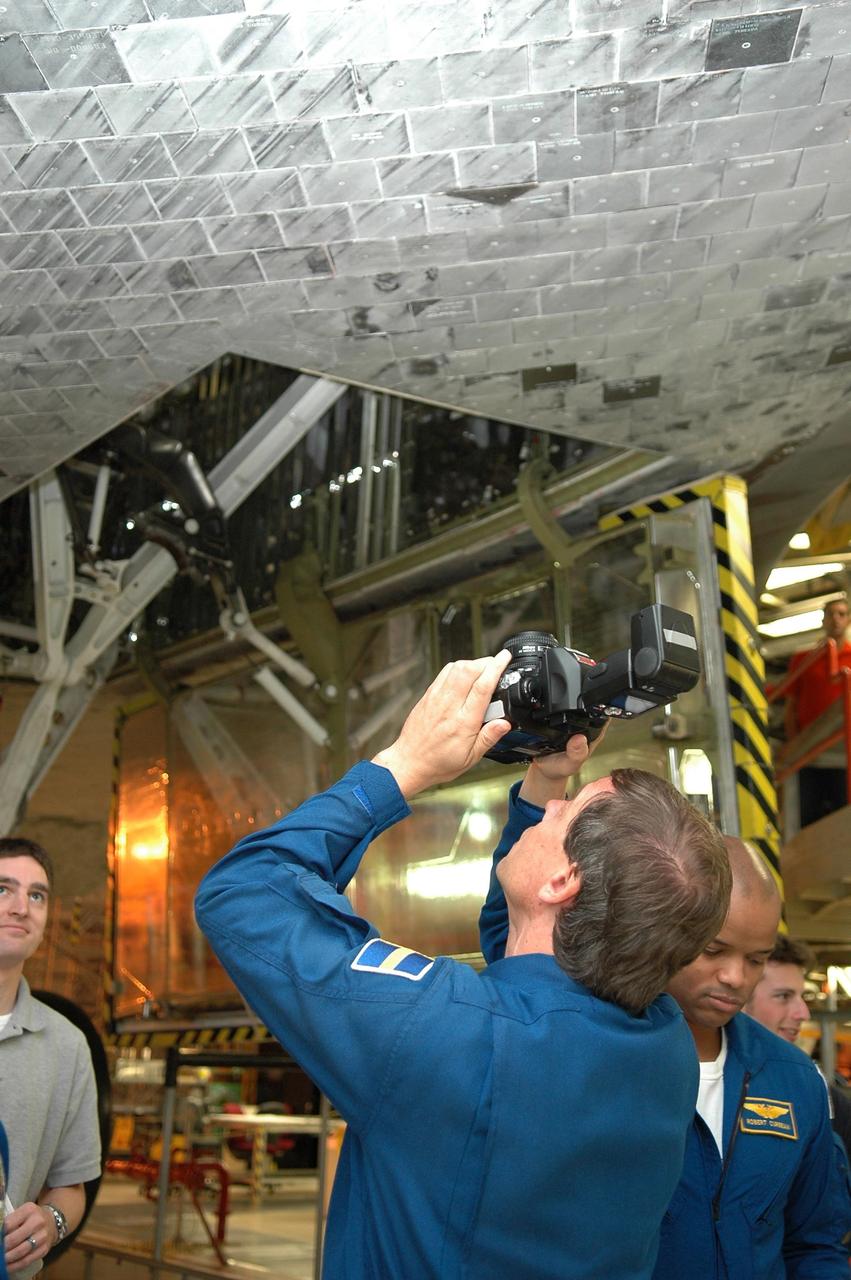
KENNEDY SPACE CENTER, FLA. - In the Orbiter Processing Facility, STS-116 Mission Specialist Christer Fugelsang practices photographing the orbiter Discovery with a camera similar to those the crew will use on the mission. At right is Mission Specialist Robert Curbeam. The crew is at KSC for a Crew Equipment Interface Test. Mission crews make frequent trips to the Kennedy Space Center to become familiar with the equipment and payloads they will be using. STS-116 will be mission No. 20 to the International Space Station and construction flight 12A.1. The mission payload is the SPACEHAB module, the P5 integrated truss structure and other key components. Launch is scheduled for no earlier than Dec. 7. Photo credit: NASA/Kim Shiflett
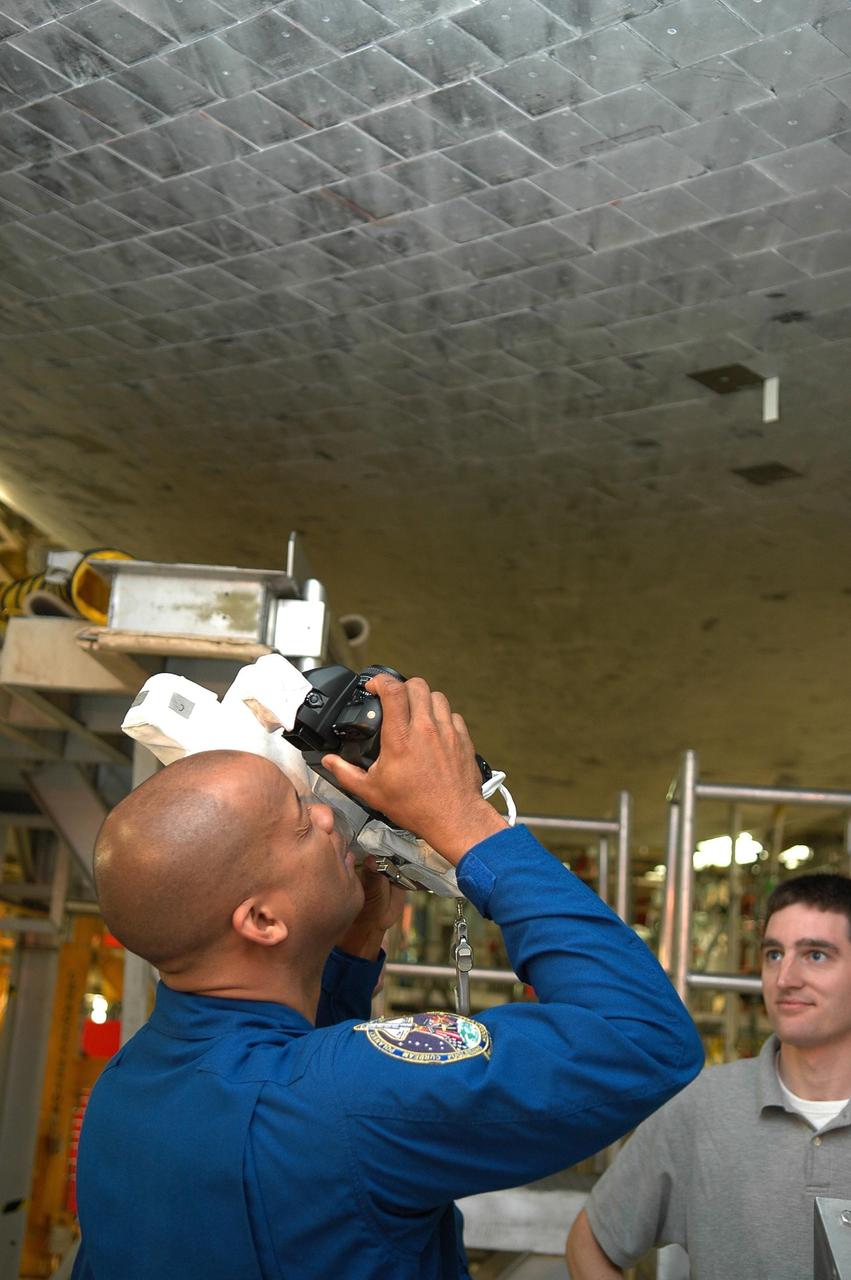
KENNEDY SPACE CENTER, FLA. - In the Orbiter Processing Facility, STS-116 Mission Specialist Robert Curbeam practices photographing the orbiter Discovery with a camera similar to those the crew will use on the mission. The crew is at KSC for a Crew Equipment Interface Test Mission crews make frequent trips to the Kennedy Space Center to become familiar with the equipment and payloads they will be using. STS-116 will be mission No. 20 to the International Space Station and construction flight 12A.1. The mission payload is the SPACEHAB module, the P5 integrated truss structure and other key components. Launch is scheduled for no earlier than Dec. 7. Photo credit: NASA/Kim Shiflett
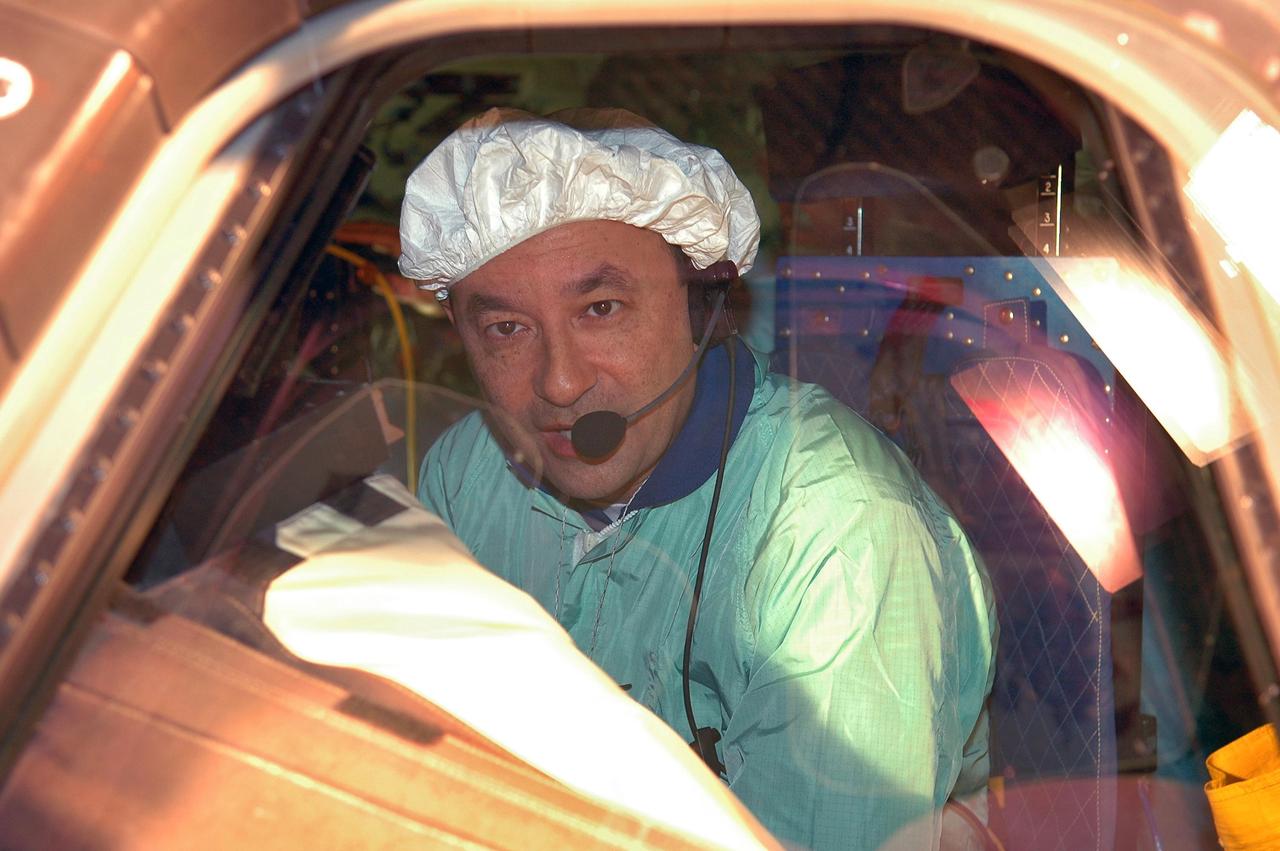
KENNEDY SPACE CENTER, FLA. - In the Orbiter Processing Facility, STS-116 Commander Mark Polansky checks the cockpit window of Discovery as part of a Crew Equipment Interface Test (CEIT). A CEIT allows astronauts to become familiar with equipment and hardware they will use on the mission. STS-116 will be mission No. 20 to the International Space Station and construction flight 12A.1. The mission payload is the SPACEHAB module, the P5 integrated truss structure and other key components. Launch is scheduled for no earlier than Dec. 7. Photo credit: NASA/Kim Shiflett

KENNEDY SPACE CENTER, FLA. - In the Orbiter Processing Facility, STS-116 Pilot William Oefelein checks the cockpit window of Discovery as part of a Crew Equipment Interface Test (CEIT). A CEIT allows astronauts to become familiar with equipment and hardware they will use on the mission. STS-116 will be mission No. 20 to the International Space Station and construction flight 12A.1. The mission payload is the SPACEHAB module, the P5 integrated truss structure and other key components. Launch is scheduled for no earlier than Dec. 7. Photo credit: NASA/Kim Shiflett
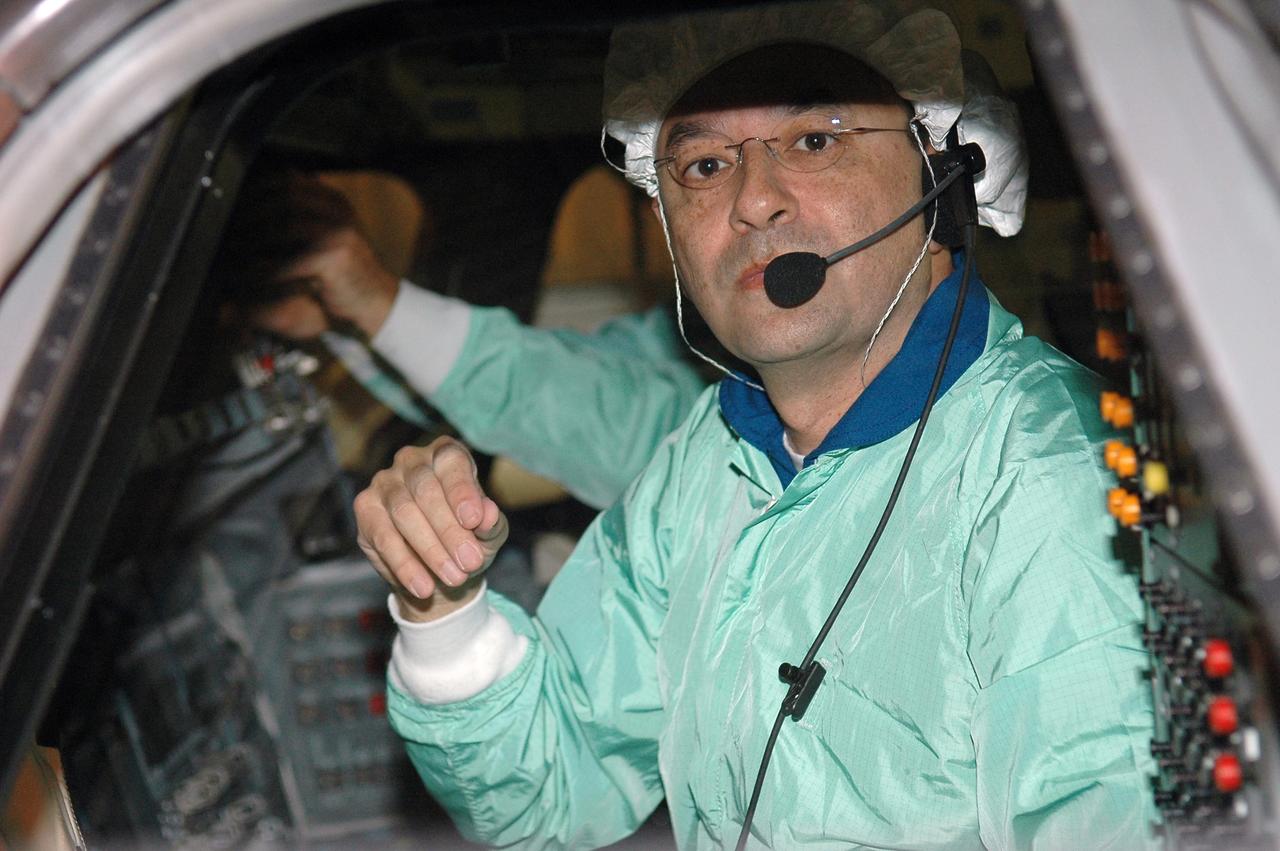
KENNEDY SPACE CENTER, FLA. - In the Orbiter Processing Facility, STS-116 Commander Mark Polansky checks the cockpit window as part of a Crew Equipment Interface Test (CEIT). A CEIT allows astronauts to become familiar with equipment and hardware they will use on the mission. STS-116 will be mission No. 20 to the International Space Station and construction flight 12A.1. The mission payload is the SPACEHAB module, the P5 integrated truss structure and other key components. Launch is scheduled for no earlier than Dec. 7. Photo credit: NASA/Kim Shiflett
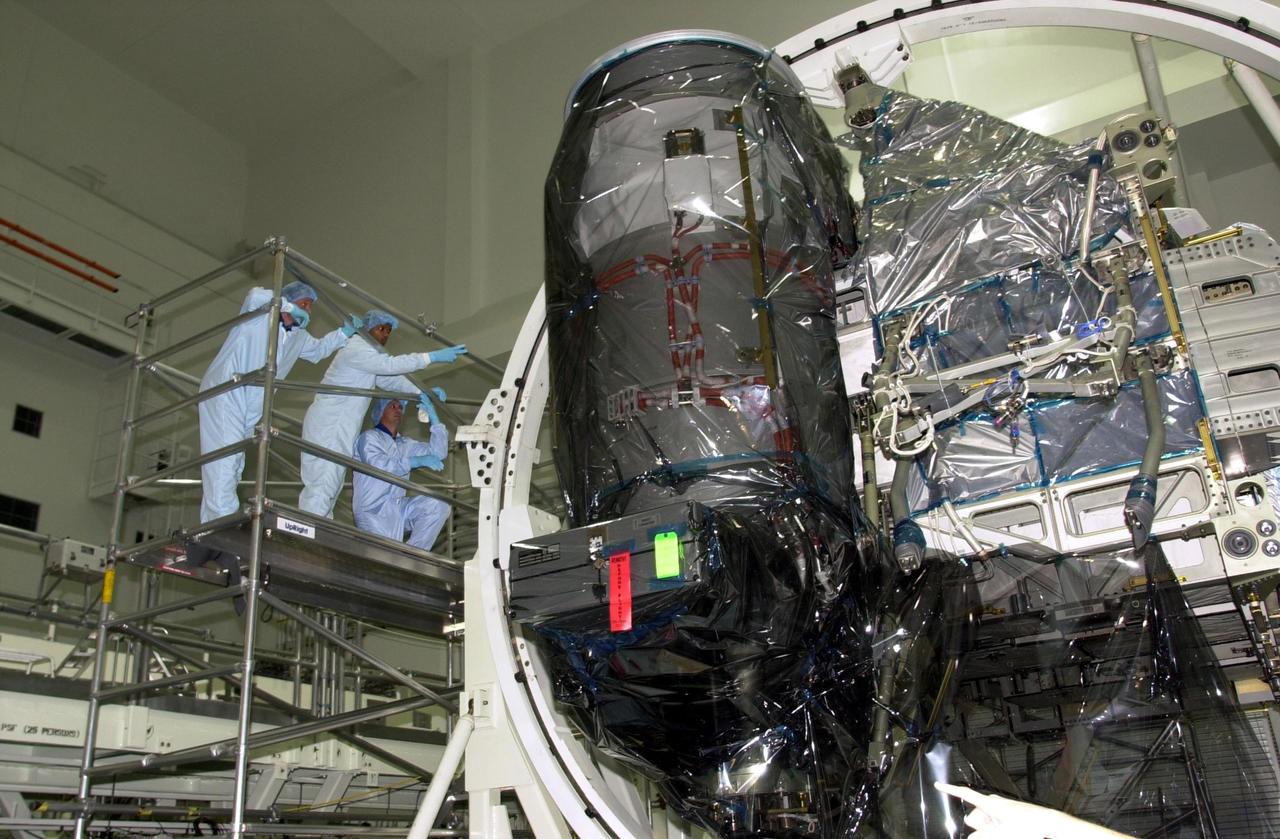
KENNEDY SPACE CENTER, FLA. -- During Crew Equipment Interface Test (CEIT), STS-116 Mission Specialist Christer Fugelsang, with the European Space Agency, Mission Specialist Robert Curbeam and Pilot William Oelefein look over equipment they will be working with during their mission to the International Space Station. The 19th assembly flight to the ISS, the mission will deliver the third port truss segment, the P5 Truss, to attach to second port truss segment, the P3/P4 Truss, to be assembled in an earlier mission. STS-116 is scheduled for launch in June 2003.
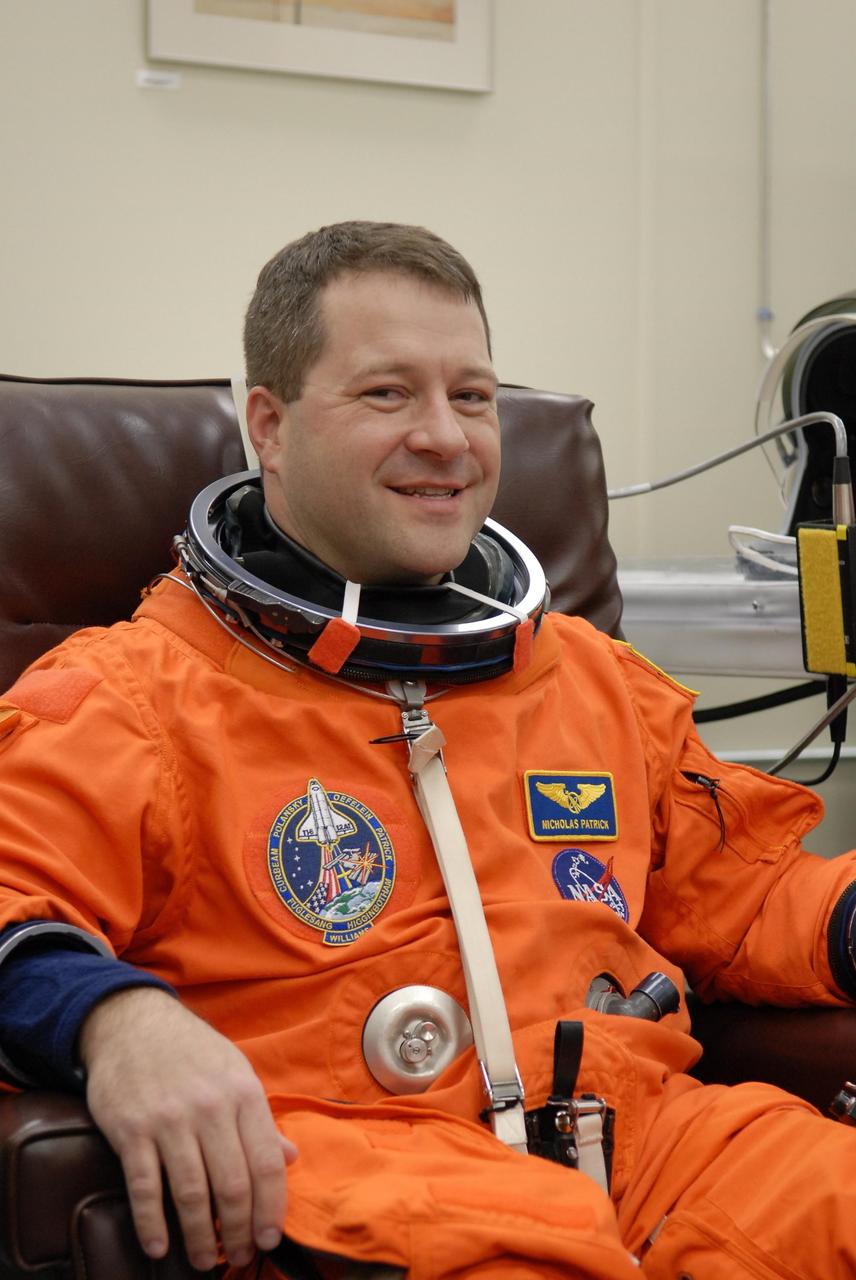
KENNEDY SPACE CENTER, FLA. -- The crew members of mission STS-116 are suiting up for a second launch attempt at 8:47 p.m. EST from Launch Pad 39B aboard Space Shuttle Discovery. Pictured here is Mission Specialist Nicholas Patrick, who will be making his first shuttle flight. The first launch attempt of STS-116 on Dec. 7 was postponed due a low cloud ceiling over Kennedy Space Center. This is Discovery's 33rd mission and the first night launch since 2002. The 20th shuttle mission to the International Space Station, STS-116 carries another truss segment, P5. It will serve as a spacer, mated to the P4 truss that was attached in September. After installing the P5, the crew will reconfigure and redistribute the power generated by two pairs of U.S. solar arrays. Landing is expected Dec. 19 at KSC. Photo credit: NASA/Kim Shiflett
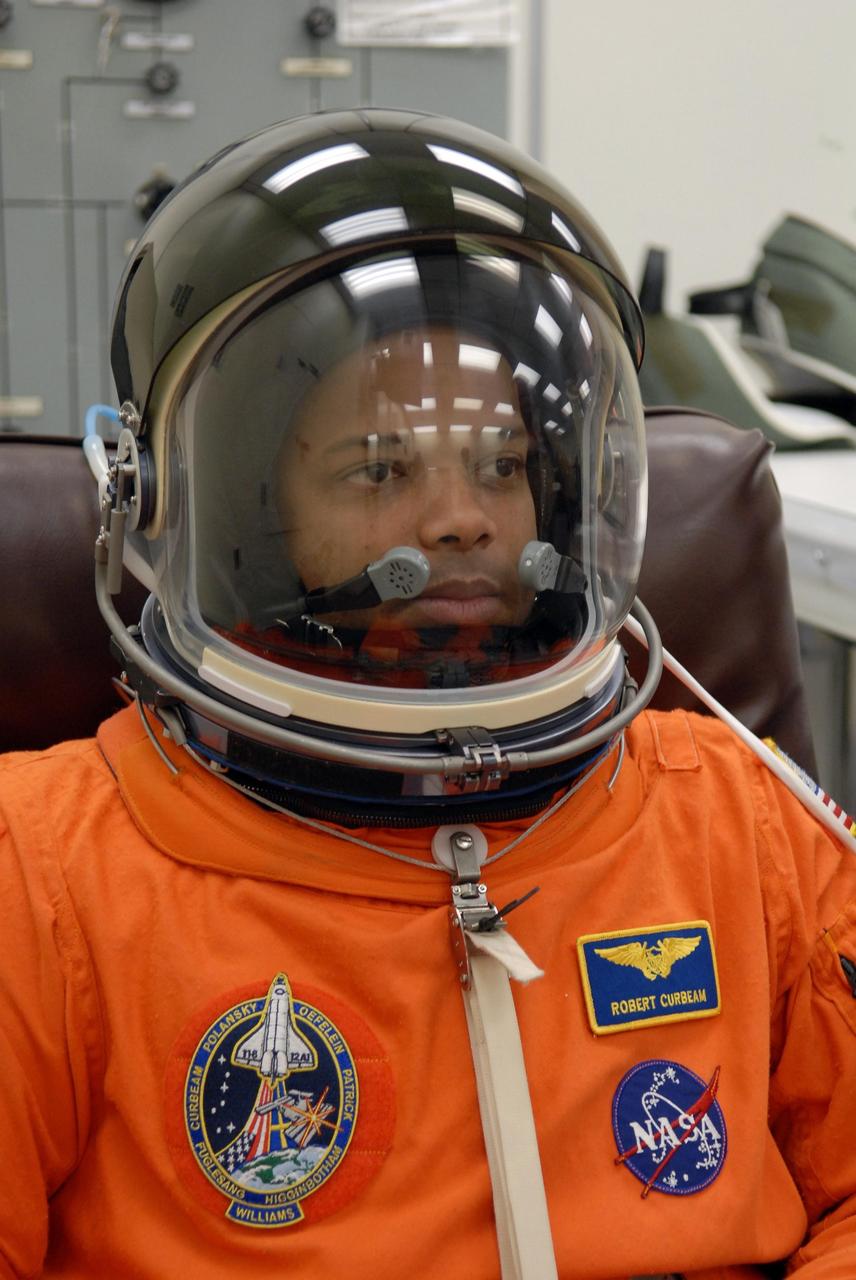
KENNEDY SPACE CENTER, FLA. -- The crew members of mission STS-116 are suiting up for a second launch attempt at 8:47 p.m. EST from Launch Pad 39B aboard Space Shuttle Discovery. Pictured here is Mission Specialist Robert Curbeam, after donning his helmet. Curbeam will be making his third shuttle flight. The first launch attempt of STS-116 on Dec. 7 was postponed due a low cloud ceiling over Kennedy Space Center. This is Discovery's 33rd mission and the first night launch since 2002. The 20th shuttle mission to the International Space Station, STS-116 carries another truss segment, P5. It will serve as a spacer, mated to the P4 truss that was attached in September. After installing the P5, the crew will reconfigure and redistribute the power generated by two pairs of U.S. solar arrays. Landing is expected Dec. 19 at KSC. Photo credit: NASA/Kim Shiflett
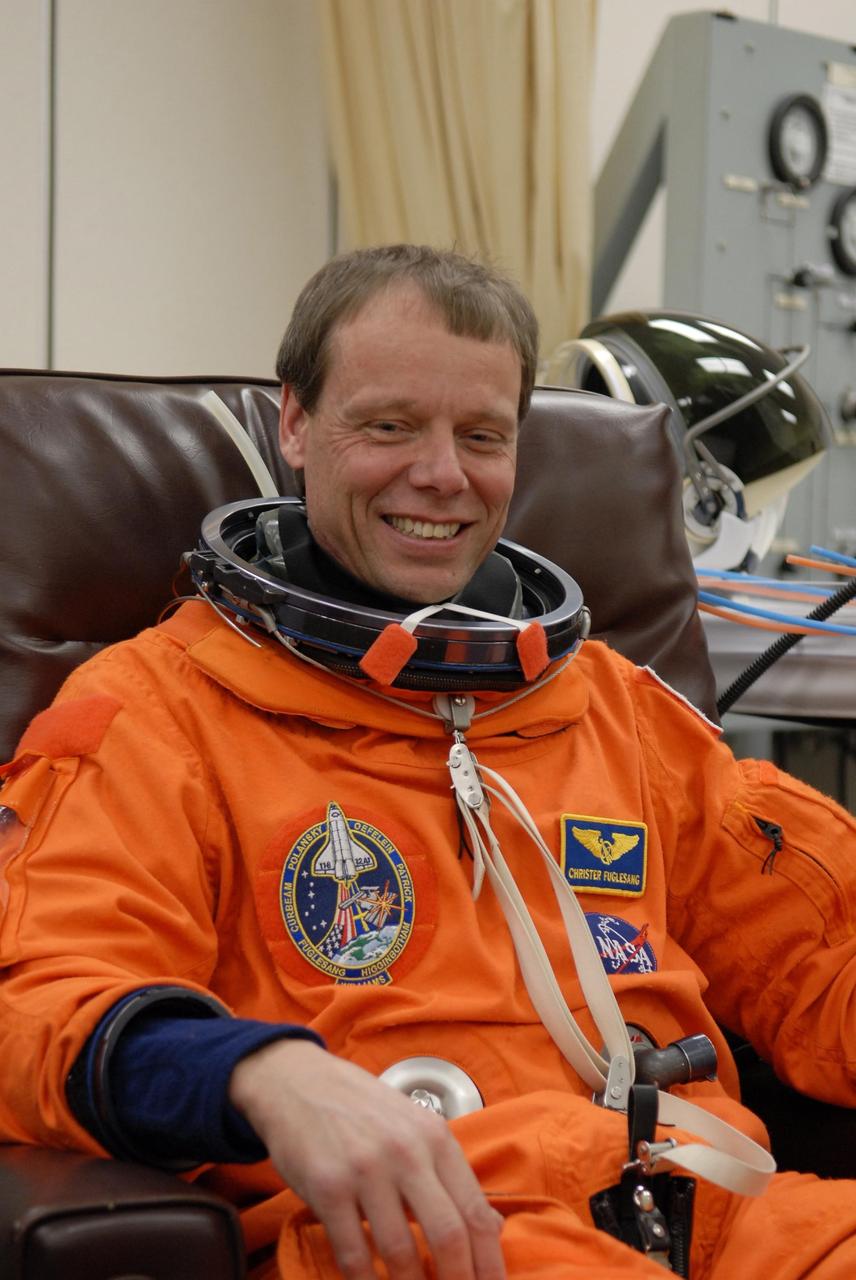
KENNEDY SPACE CENTER, FLA. -- The crew members of mission STS-116 are suiting up for a second launch attempt at 8:47 p.m. EST from Launch Pad 39B aboard Space Shuttle Discovery. Pictured here is Mission Specialist Christer Fuglesang, who represents the European Space Agency. Fuglesang is making his first shuttle flight. The first launch attempt of STS-116 on Dec. 7 was postponed due a low cloud ceiling over Kennedy Space Center. This is Discovery's 33rd mission and the first night launch since 2002. The 20th shuttle mission to the International Space Station, STS-116 carries another truss segment, P5. It will serve as a spacer, mated to the P4 truss that was attached in September. After installing the P5, the crew will reconfigure and redistribute the power generated by two pairs of U.S. solar arrays. Landing is expected Dec. 19 at KSC. Photo credit: NASA/Kim Shiflett
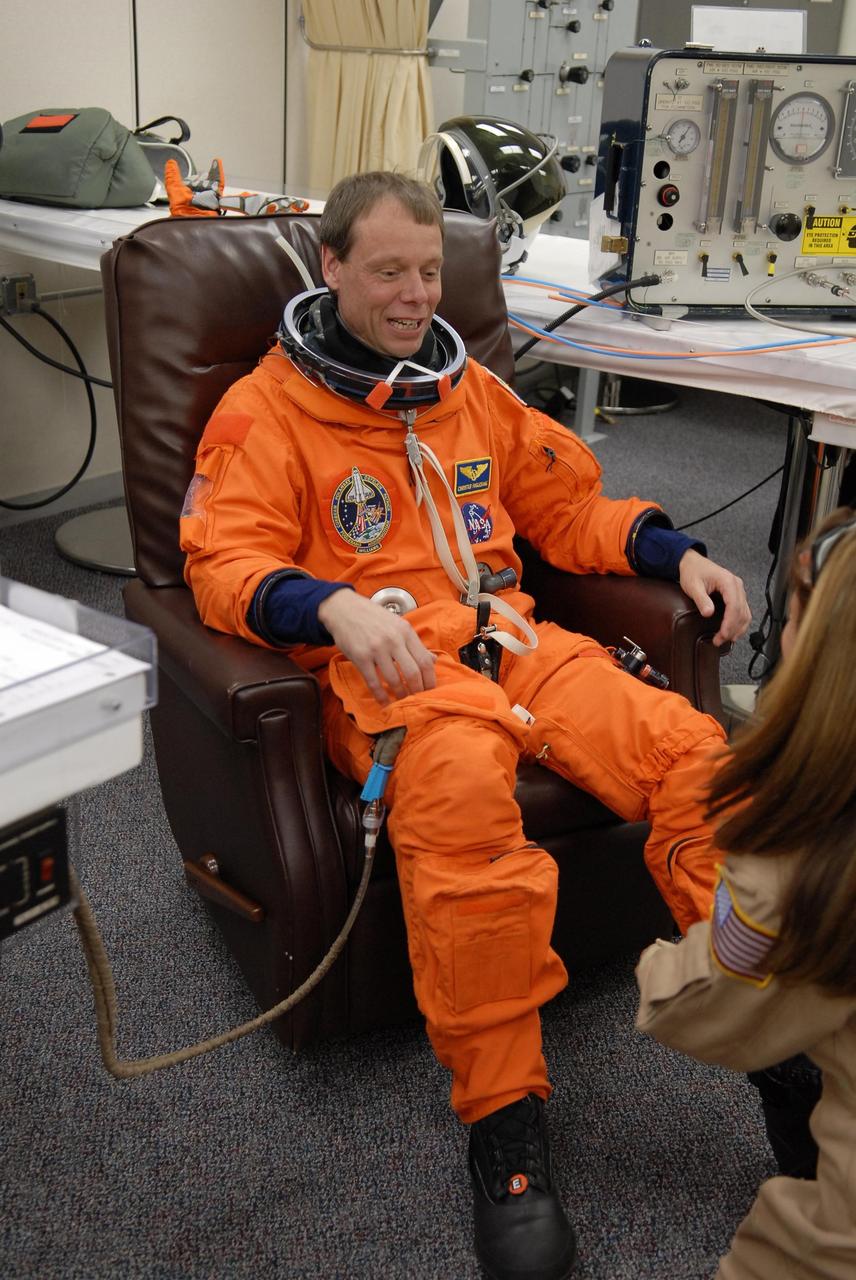
KENNEDY SPACE CENTER, FLA. -- The crew members of mission STS-116 are suiting up for a second launch attempt at 8:47 p.m. EST from Launch Pad 39B aboard Space Shuttle Discovery. Pictured here, Mission Specialist Christer Fuglesang is helped with his boot. Fuglesang represents the European Space Agency. He is making his first shuttle flight. The first launch attempt of STS-116 on Dec. 7 was postponed due a low cloud ceiling over Kennedy Space Center. This is Discovery's 33rd mission and the first night launch since 2002. The 20th shuttle mission to the International Space Station, STS-116 carries another truss segment, P5. It will serve as a spacer, mated to the P4 truss that was attached in September. After installing the P5, the crew will reconfigure and redistribute the power generated by two pairs of U.S. solar arrays. Landing is expected Dec. 19 at KSC. Photo credit: NASA/Kim Shiflett
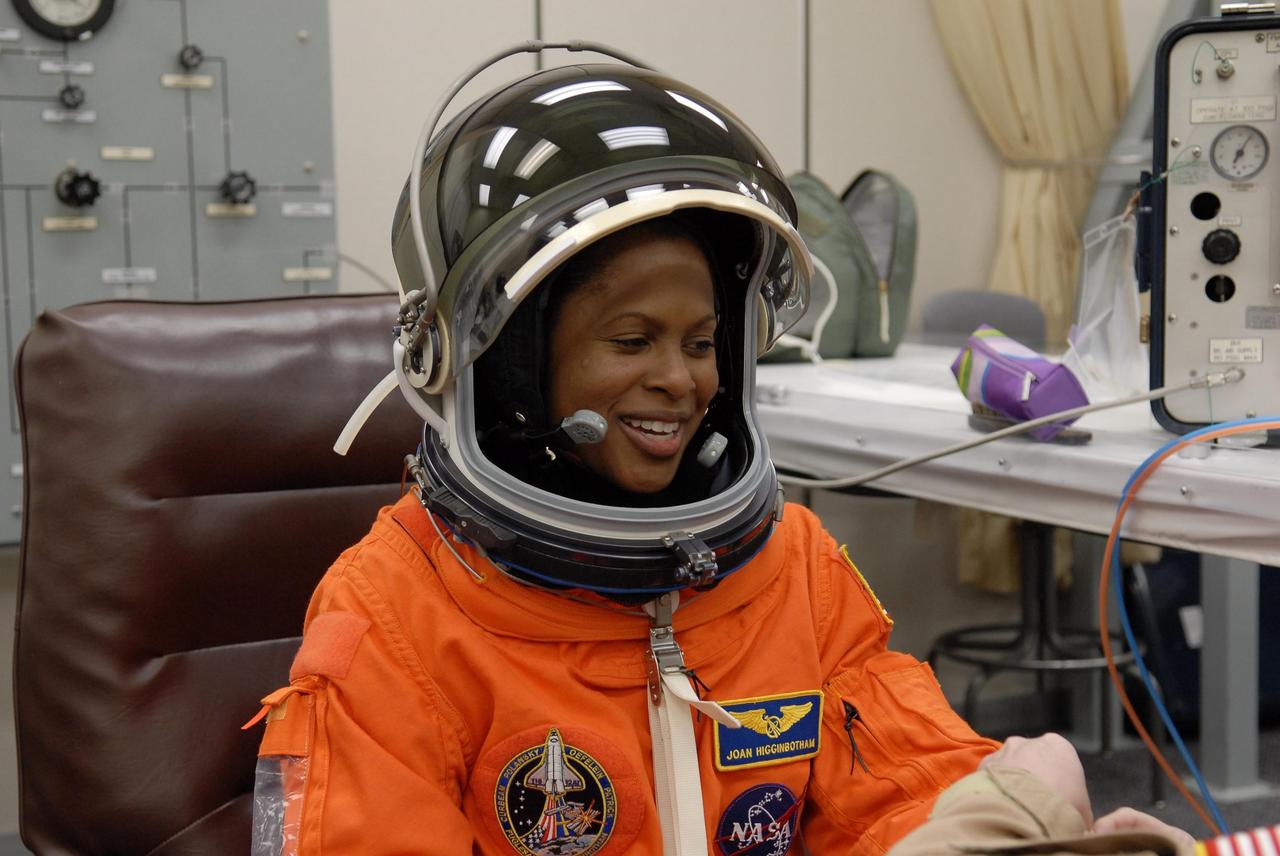
KENNEDY SPACE CENTER, FLA. -- The crew members of mission STS-116 are suiting up for a second launch attempt at 8:47 p.m. EST from Launch Pad 39B aboard Space Shuttle Discovery. Pictured here, Mission Specialist Joan Higginbotham, who will be making her first shuttle flight, has donned her helmet. The first launch attempt of STS-116 on Dec. 7 was postponed due a low cloud ceiling over Kennedy Space Center. This is Discovery's 33rd mission and the first night launch since 2002. The 20th shuttle mission to the International Space Station, STS-116 carries another truss segment, P5. It will serve as a spacer, mated to the P4 truss that was attached in September. After installing the P5, the crew will reconfigure and redistribute the power generated by two pairs of U.S. solar arrays. Landing is expected Dec. 19 at KSC. Photo credit: NASA/Kim Shiflett
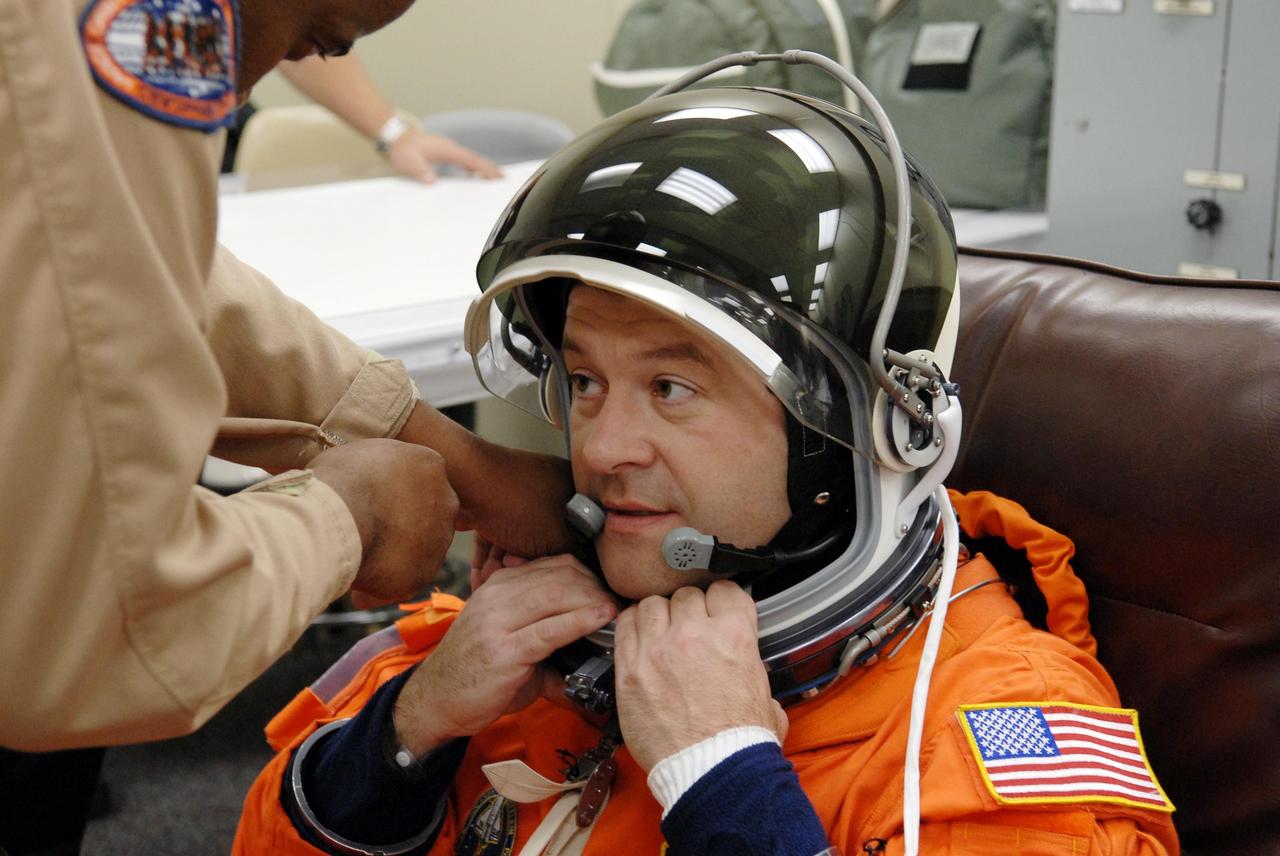
KENNEDY SPACE CENTER, FLA. -- The crew members of mission STS-116 are suiting up for a second launch attempt at 8:47 p.m. EST from Launch Pad 39B aboard Space Shuttle Discovery. Pictured here is Mission Specialist Nicholas Patrick, who will be making his first shuttle flight, being helped with his helmet. The first launch attempt of STS-116 on Dec. 7 was postponed due a low cloud ceiling over Kennedy Space Center. This is Discovery's 33rd mission and the first night launch since 2002. The 20th shuttle mission to the International Space Station, STS-116 carries another truss segment, P5. It will serve as a spacer, mated to the P4 truss that was attached in September. After installing the P5, the crew will reconfigure and redistribute the power generated by two pairs of U.S. solar arrays. Landing is expected Dec. 19 at KSC. Photo credit: NASA/Kim Shiflett
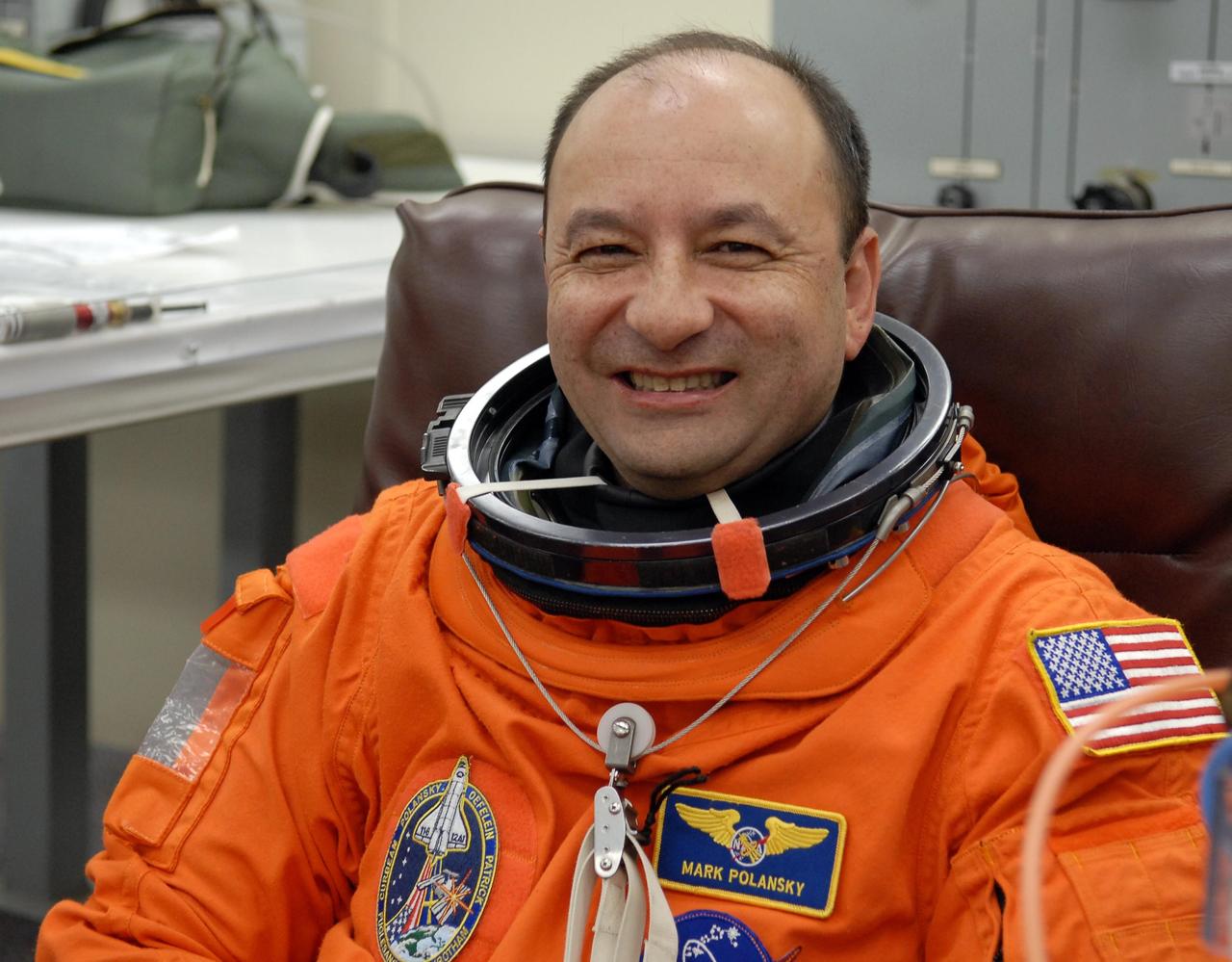
KENNEDY SPACE CENTER, FLA. -- The crew members of mission STS-116 are suiting up for a second launch attempt at 8:47 p.m. EST from Launch Pad 39B aboard Space Shuttle Discovery. Pictured here is Commander Mark Polansky, who shows his delight in progressing toward another launch attempt. The first launch attempt of STS-116 on Dec. 7 was postponed due a low cloud ceiling over Kennedy Space Center. This is Discovery's 33rd mission and the first night launch since 2002. The 20th shuttle mission to the International Space Station, STS-116 carries another truss segment, P5. It will serve as a spacer, mated to the P4 truss that was attached in September. After installing the P5, the crew will reconfigure and redistribute the power generated by two pairs of U.S. solar arrays. Landing is expected Dec. 19 at KSC. Photo credit: NASA/Kim Shiflett
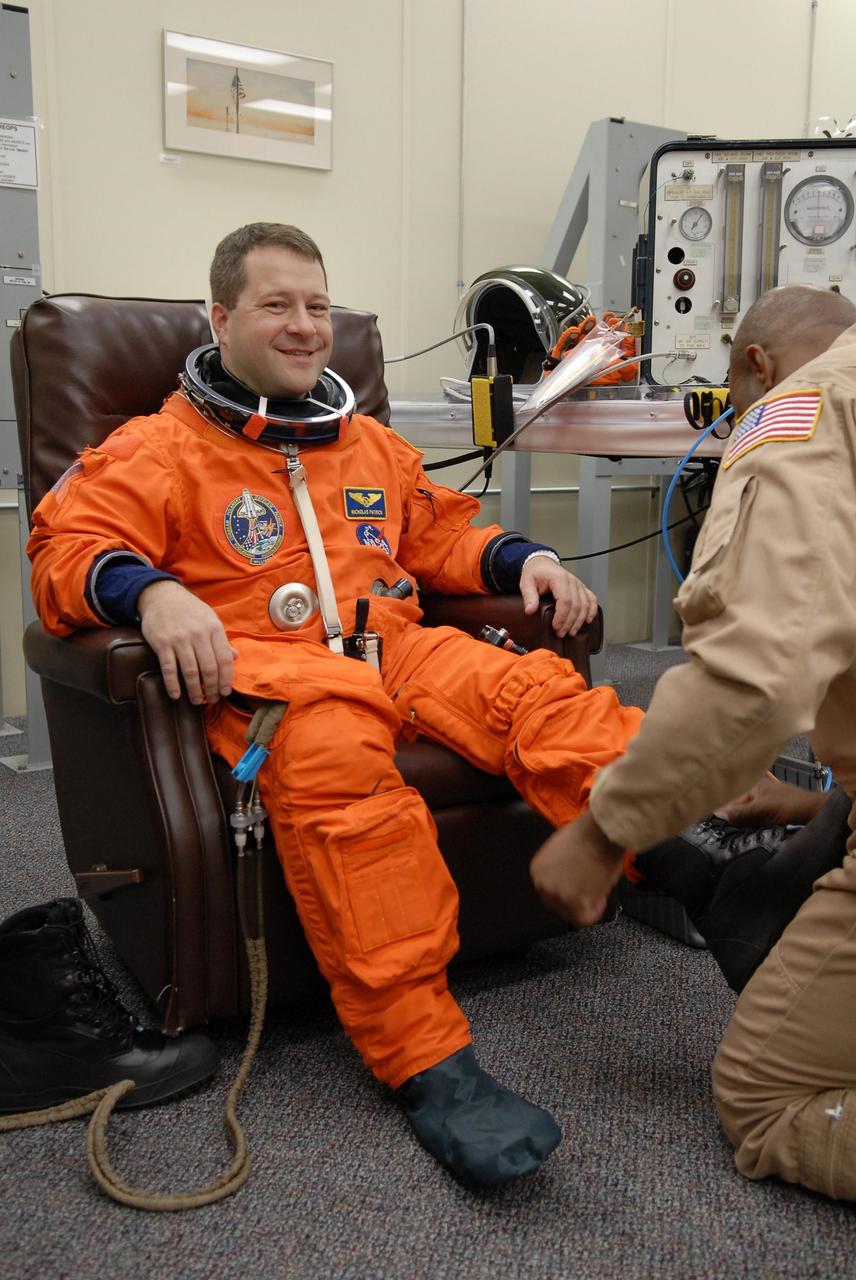
KENNEDY SPACE CENTER, FLA. -- The crew members of mission STS-116 are suiting up for a second launch attempt at 8:47 p.m. EST from Launch Pad 39B aboard Space Shuttle Discovery. Pictured here is Mission Specialist Nicholas Patrick, who will be making his first shuttle flight, being helped with his boot. The first launch attempt of STS-116 on Dec. 7 was postponed due a low cloud ceiling over Kennedy Space Center. This is Discovery's 33rd mission and the first night launch since 2002. The 20th shuttle mission to the International Space Station, STS-116 carries another truss segment, P5. It will serve as a spacer, mated to the P4 truss that was attached in September. After installing the P5, the crew will reconfigure and redistribute the power generated by two pairs of U.S. solar arrays. Landing is expected Dec. 19 at KSC. Photo credit: NASA/Kim Shiflett
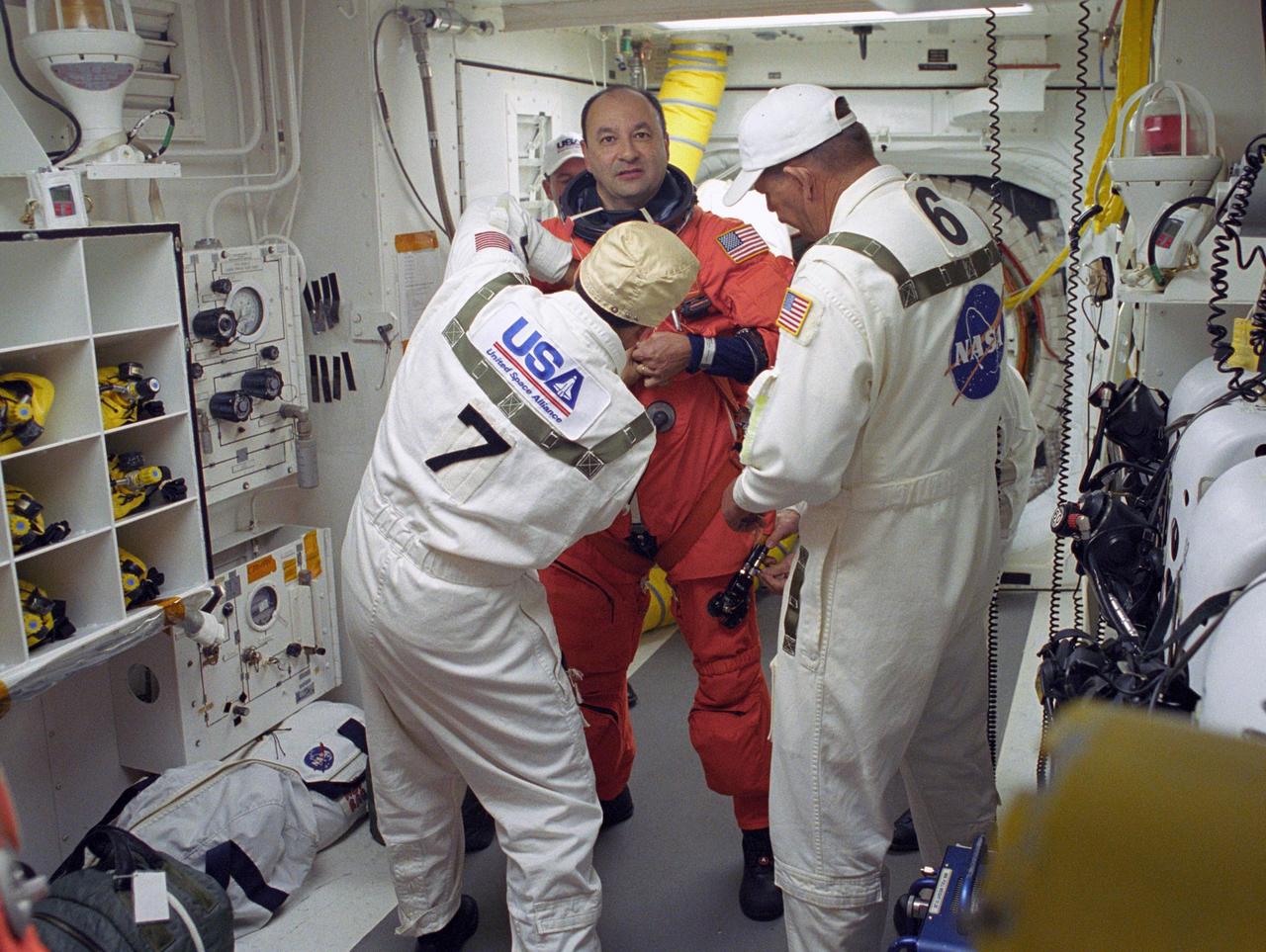
KENNEDY SPACE CENTER, FLA. -- STS-116 Commander Mark Polansky is helped by the closeout crew in the White Room to secure his launch suit before climbing into Space Shuttle Discovery. The White Room is at the end of the orbiter access arm that extends from the fixed service structure and provides entry into the orbiter. The first launch attempt of STS-116 on Dec. 7 was postponed due a low cloud ceiling over Kennedy Space Center. This second launch attempt is scheduled for 8:47 p.m. This is Discovery's 33rd mission and the first night launch since 2002. The 20th shuttle mission to the International Space Station, STS-116 carries another truss segment, P5. It will serve as a spacer, mated to the P4 truss that was attached in September. After installing the P5, the crew will reconfigure and redistribute the power generated by two pairs of U.S. solar arrays. Landing is expected Dec. 21 at KSC. Photo credit: NASA/Tony Gray & Don Kight
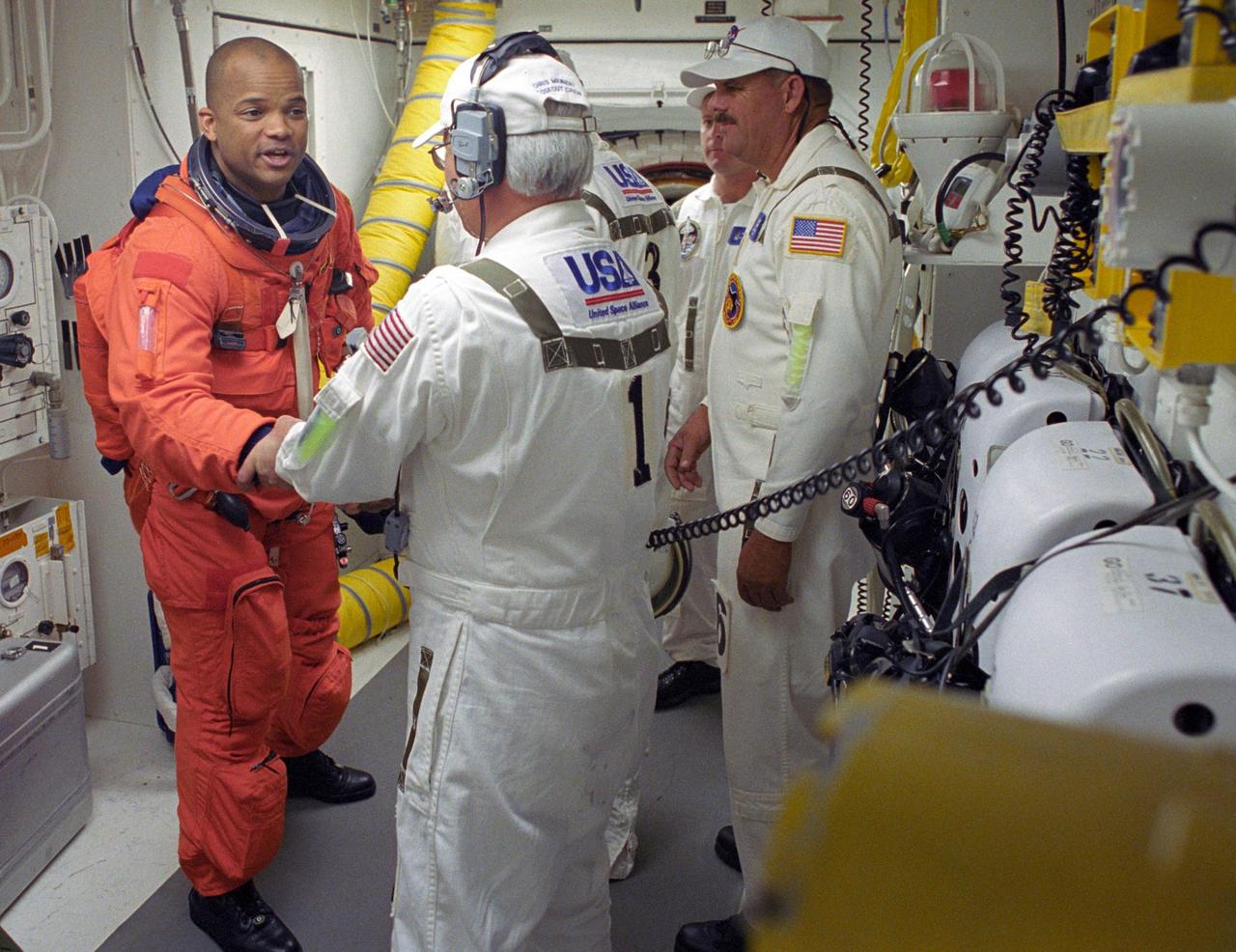
KENNEDY SPACE CENTER, FLA. -- STS-116 Mission Specialist Robert Curbeam thanks the closeout crew for their help in completing his suitup before climbing into Space Shuttle Discovery. The White Room is at the end of the orbiter access arm that extends from the fixed service structure and provides entry into the orbiter. The first launch attempt of STS-116 on Dec. 7 was postponed due a low cloud ceiling over Kennedy Space Center. This second launch attempt is scheduled for 8:47 p.m. This is Discovery's 33rd mission and the first night launch since 2002. The 20th shuttle mission to the International Space Station, STS-116 carries another truss segment, P5. It will serve as a spacer, mated to the P4 truss that was attached in September. After installing the P5, the crew will reconfigure and redistribute the power generated by two pairs of U.S. solar arrays. Landing is expected Dec. 21 at KSC. Photo credit: NASA/Tony Gray & Don Kight
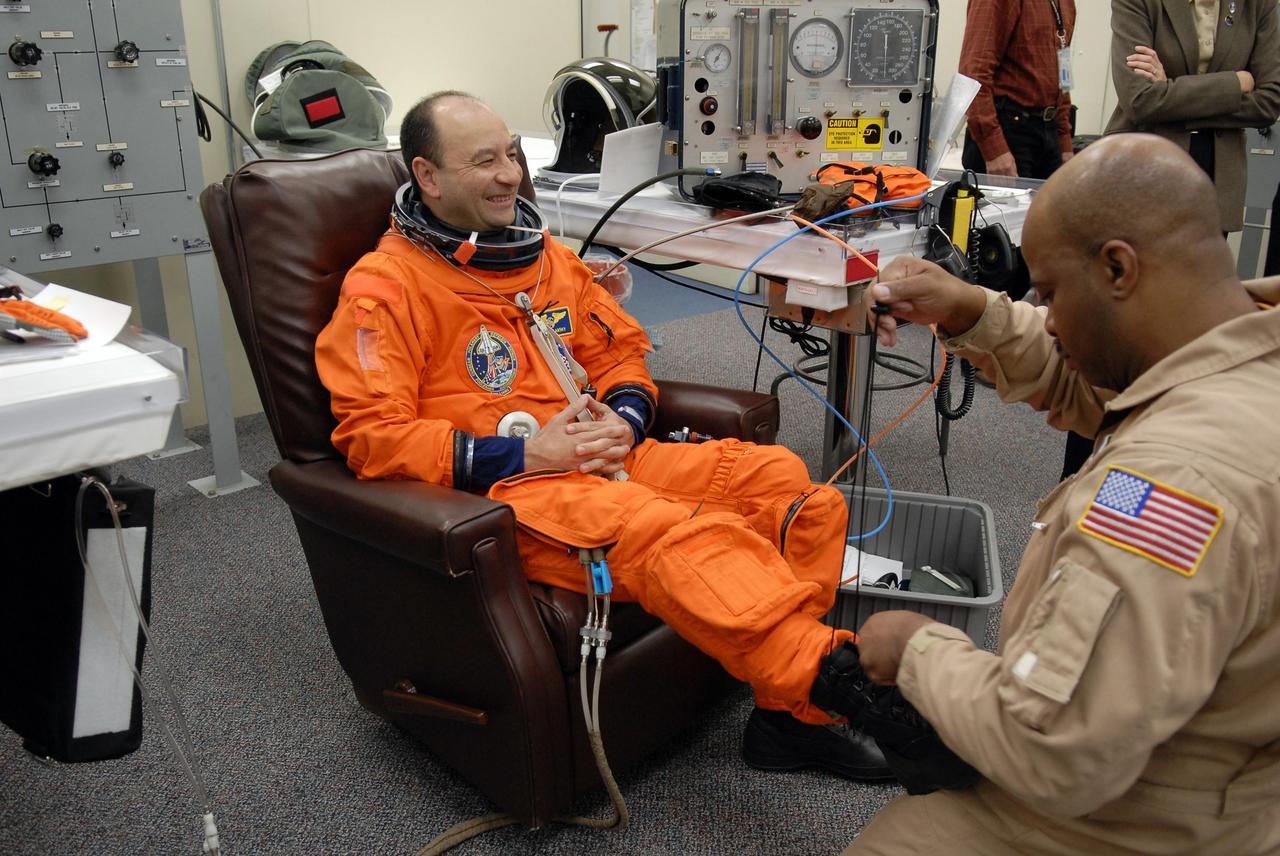
KENNEDY SPACE CENTER, FLA. -- The crew members of mission STS-116 are suiting up for a second launch attempt at 8:47 p.m. EST from Launch Pad 39B aboard Space Shuttle Discovery. Pictured here is Commander Mark Polansky, being helped with his boot. Polansky will be making his second shuttle flight. The first launch attempt of STS-116 on Dec. 7 was postponed due a low cloud ceiling over Kennedy Space Center. This is Discovery's 33rd mission and the first night launch since 2002. The 20th shuttle mission to the International Space Station, STS-116 carries another truss segment, P5. It will serve as a spacer, mated to the P4 truss that was attached in September. After installing the P5, the crew will reconfigure and redistribute the power generated by two pairs of U.S. solar arrays. Landing is expected Dec. 19 at KSC. Photo credit: NASA/Kim Shiflett
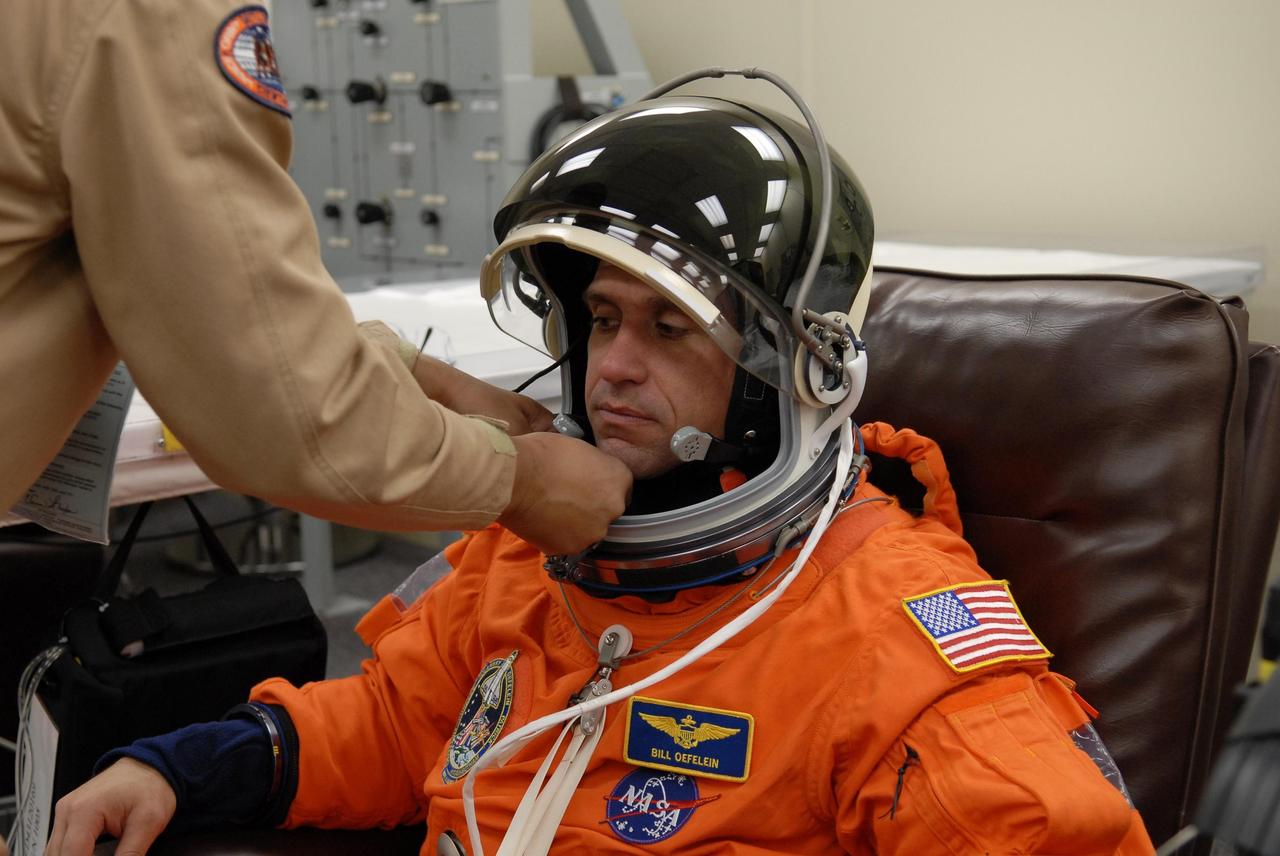
KENNEDY SPACE CENTER, FLA. -- The crew members of mission STS-116 are suiting up for a second launch attempt at 8:47 p.m. EST from Launch Pad 39B aboard Space Shuttle Discovery. Pictured here is Pilot William Oefelein, being helped with his helmet. Oefelein is making his first shuttle flight. The first launch attempt of STS-116 on Dec. 7 was postponed due a low cloud ceiling over Kennedy Space Center. This is Discovery's 33rd mission and the first night launch since 2002. The 20th shuttle mission to the International Space Station, STS-116 carries another truss segment, P5. It will serve as a spacer, mated to the P4 truss that was attached in September. After installing the P5, the crew will reconfigure and redistribute the power generated by two pairs of U.S. solar arrays. Landing is expected Dec. 19 at KSC. Photo credit: NASA/Kim Shiflett
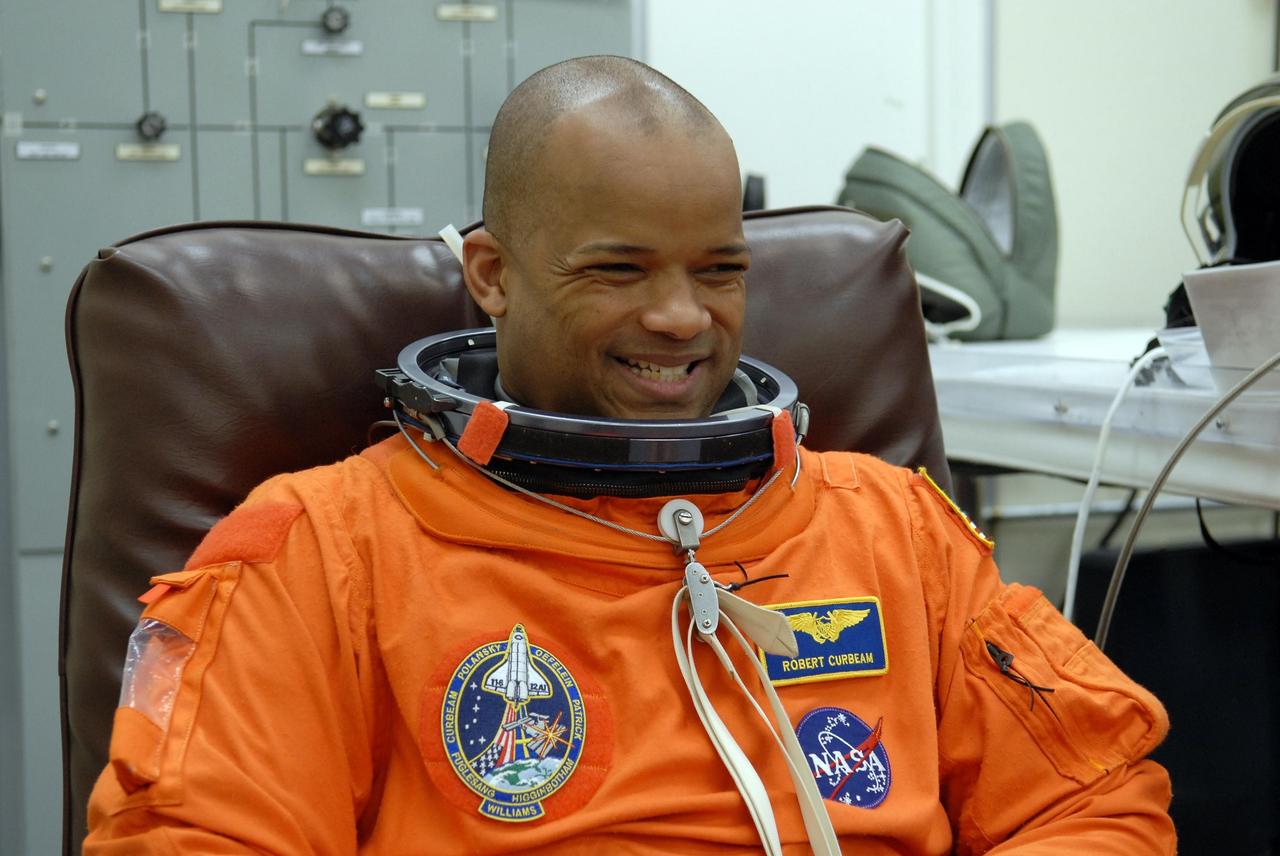
KENNEDY SPACE CENTER, FLA. -- The crew members of mission STS-116 are suiting up for a second launch attempt at 8:47 p.m. EST from Launch Pad 39B aboard Space Shuttle Discovery. Pictured here is Mission Specialist Robert Curbeam, who is making his third shuttle flight. The first launch attempt of STS-116 on Dec. 7 was postponed due a low cloud ceiling over Kennedy Space Center. This is Discovery's 33rd mission and the first night launch since 2002. The 20th shuttle mission to the International Space Station, STS-116 carries another truss segment, P5. It will serve as a spacer, mated to the P4 truss that was attached in September. After installing the P5, the crew will reconfigure and redistribute the power generated by two pairs of U.S. solar arrays. Landing is expected Dec. 19 at KSC. Photo credit: NASA/Kim Shiflett
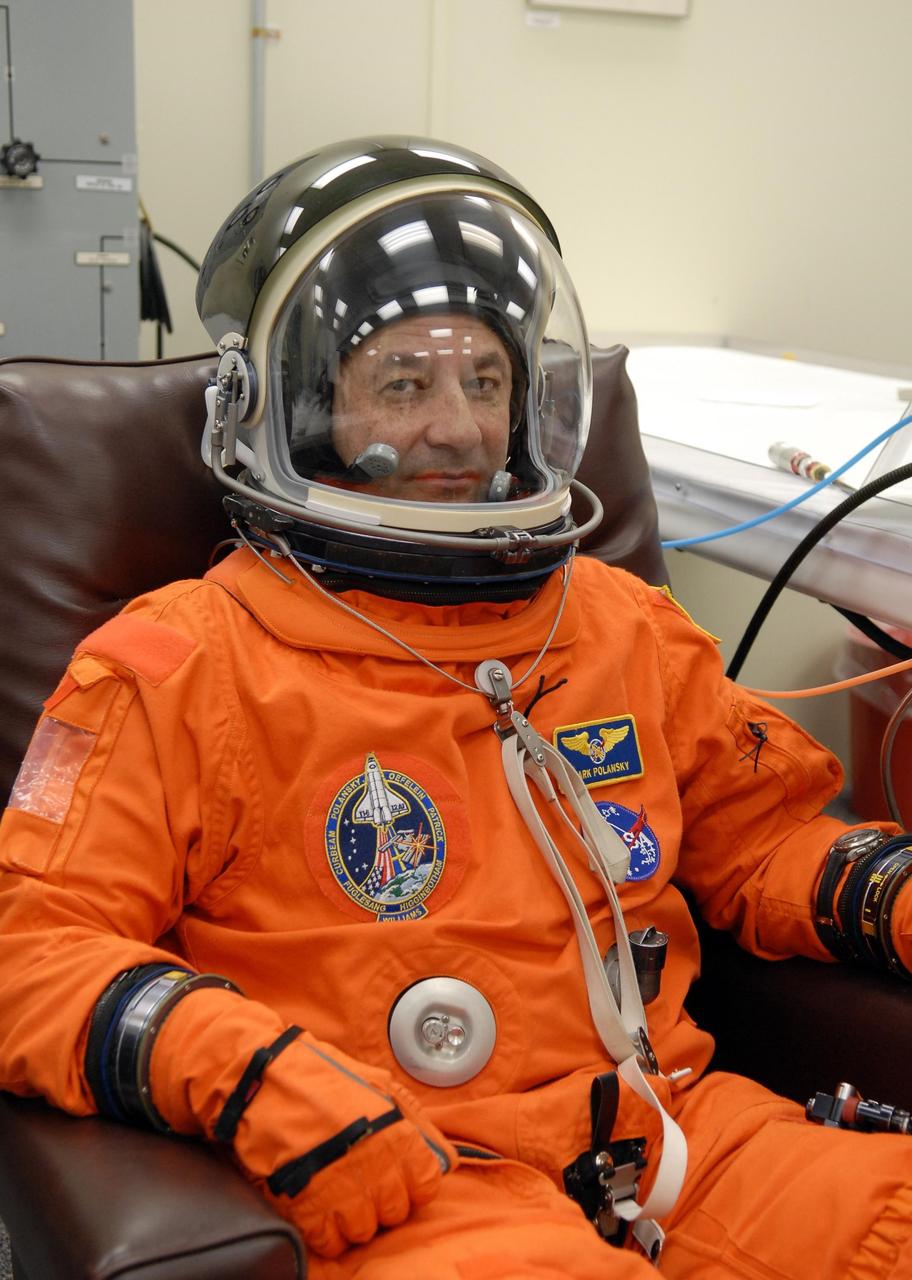
KENNEDY SPACE CENTER, FLA. -- The crew members of mission STS-116 are suiting up for a second launch attempt at 8:47 p.m. EST from Launch Pad 39B aboard Space Shuttle Discovery. Polansky is making his second shuttle flight. The first launch attempt of STS-116 on Dec. 7 was postponed due a low cloud ceiling over Kennedy Space Center. This is Discovery's 33rd mission and the first night launch since 2002. The 20th shuttle mission to the International Space Station, STS-116 carries another truss segment, P5. It will serve as a spacer, mated to the P4 truss that was attached in September. After installing the P5, the crew will reconfigure and redistribute the power generated by two pairs of U.S. solar arrays. Landing is expected Dec. 19 at KSC. Photo credit: NASA/Kim Shiflett
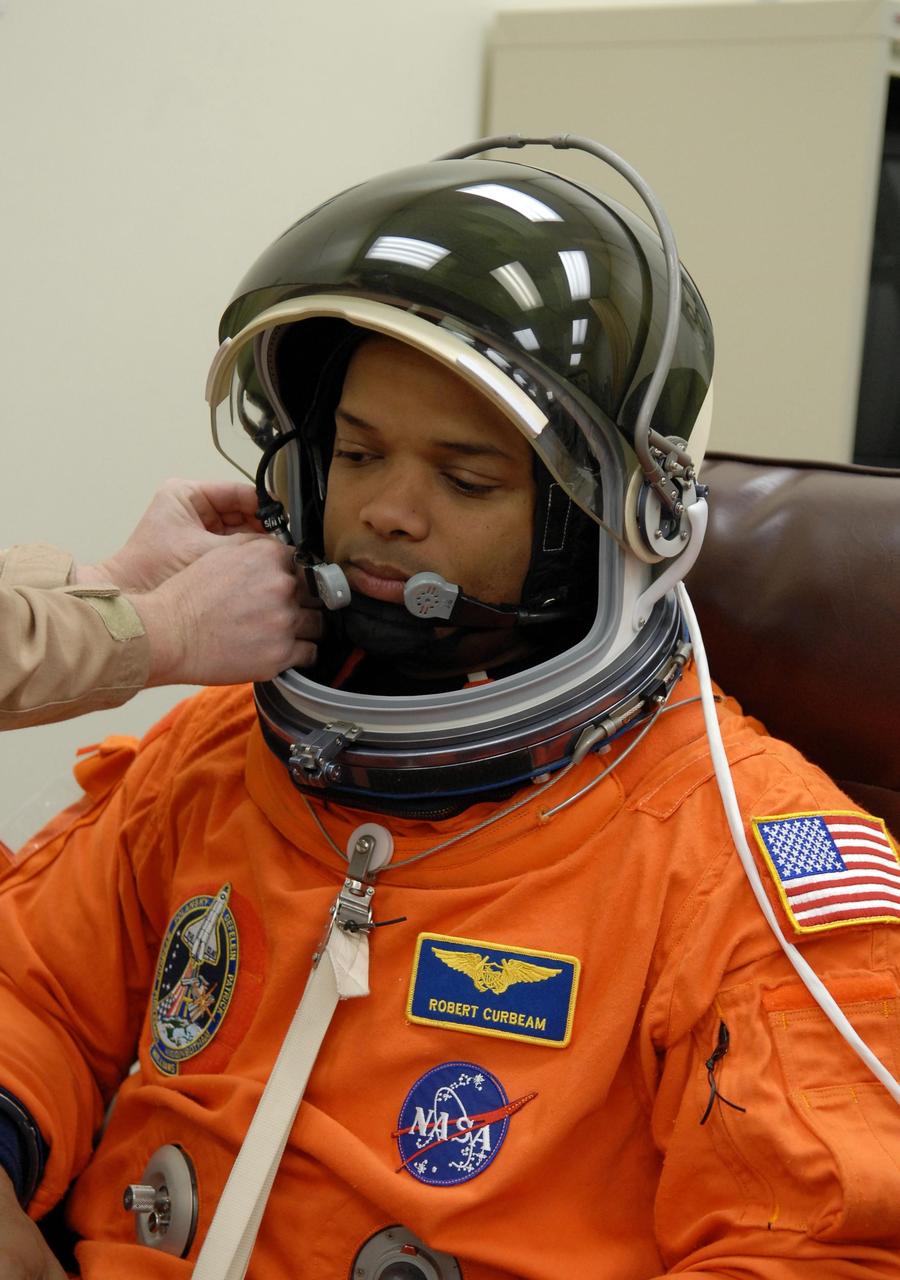
KENNEDY SPACE CENTER, FLA. -- The crew members of mission STS-116 are suiting up for a second launch attempt at 8:47 p.m. EST from Launch Pad 39B aboard Space Shuttle Discovery. Pictured here is Mission Specialist Robert Curbeam, getting help with the helmet. Curbeam will be making his third shuttle flight. The first launch attempt of STS-116 on Dec. 7 was postponed due a low cloud ceiling over Kennedy Space Center. This is Discovery's 33rd mission and the first night launch since 2002. The 20th shuttle mission to the International Space Station, STS-116 carries another truss segment, P5. It will serve as a spacer, mated to the P4 truss that was attached in September. After installing the P5, the crew will reconfigure and redistribute the power generated by two pairs of U.S. solar arrays. Landing is expected Dec. 19 at KSC. Photo credit: NASA/Kim Shiflett
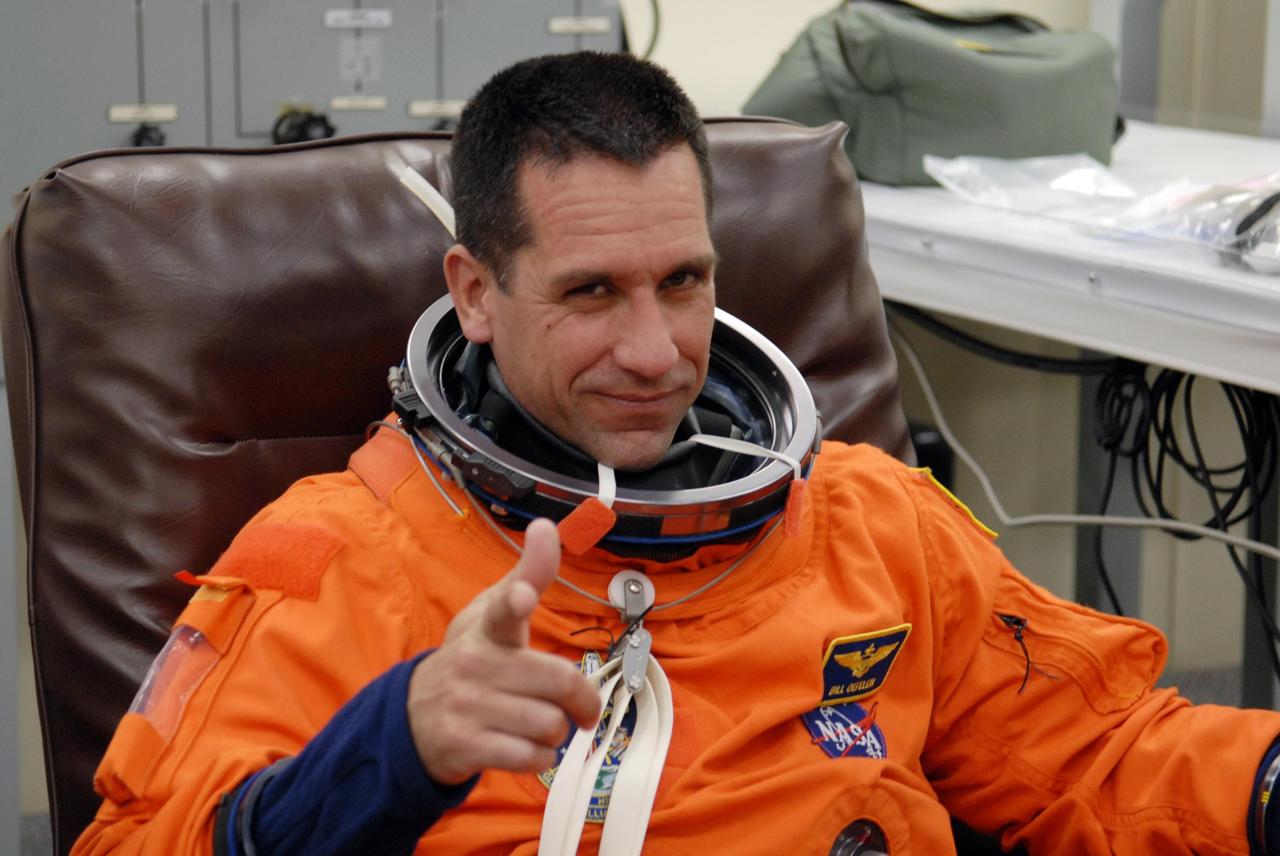
KENNEDY SPACE CENTER, FLA. -- The crew members of mission STS-116 are suiting up for a second launch attempt at 8:47 p.m. EST from Launch Pad 39B aboard Space Shuttle Discovery. Pictured here is Pilot William Oefelein, who will be making his first shuttle flight. The first launch attempt of STS-116 on Dec. 7 was postponed due a low cloud ceiling over Kennedy Space Center. This is Discovery's 33rd mission and the first night launch since 2002. The 20th shuttle mission to the International Space Station, STS-116 carries another truss segment, P5. It will serve as a spacer, mated to the P4 truss that was attached in September. After installing the P5, the crew will reconfigure and redistribute the power generated by two pairs of U.S. solar arrays. Landing is expected Dec. 19 at KSC. Photo credit: NASA/Kim Shiflett
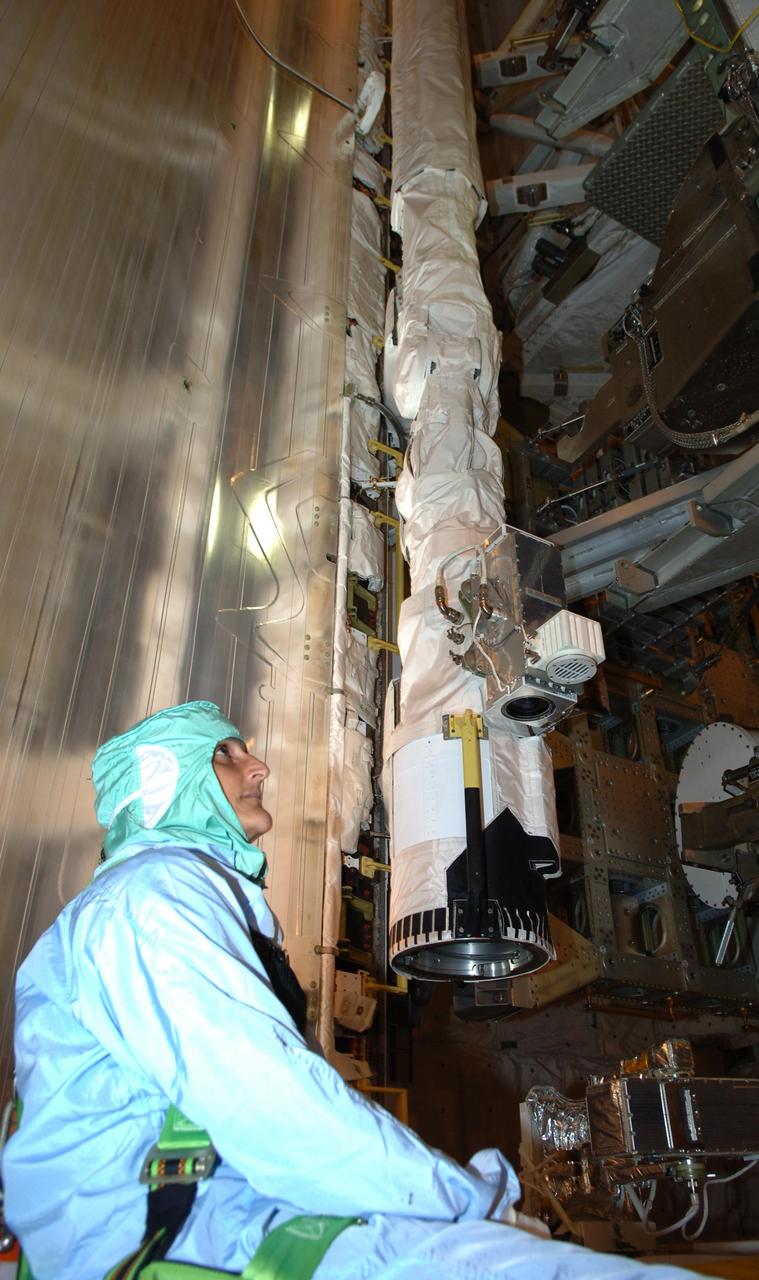
KENNEDY SPACE CENTER, FLA. -- In the payload changeout room on Launch Pad 39B, Expedition 14 Flight Engineer Sunita Williams looks over the STS-116 mission payload one more time before launch. Williams will be traveling aboard Discovery with the STS-116 crew and staying on the International Space Station. The crew is at KSC to take part in Terminal Countdown Demonstration Test activities, which include emergency egress training, a simulated launch countdown and payload familiarization. The TCDT is part of prelaunch preparations for the mission that is scheduled to lift off in a window opening no earlier than Dec. 7. The STS-116 mission is No. 20 to the International Space Station and construction flight 12A.1. The mission payload is the SPACEHAB module, the P5 integrated truss structure and other key components. Photo credit: NASA/Kim Shiflett
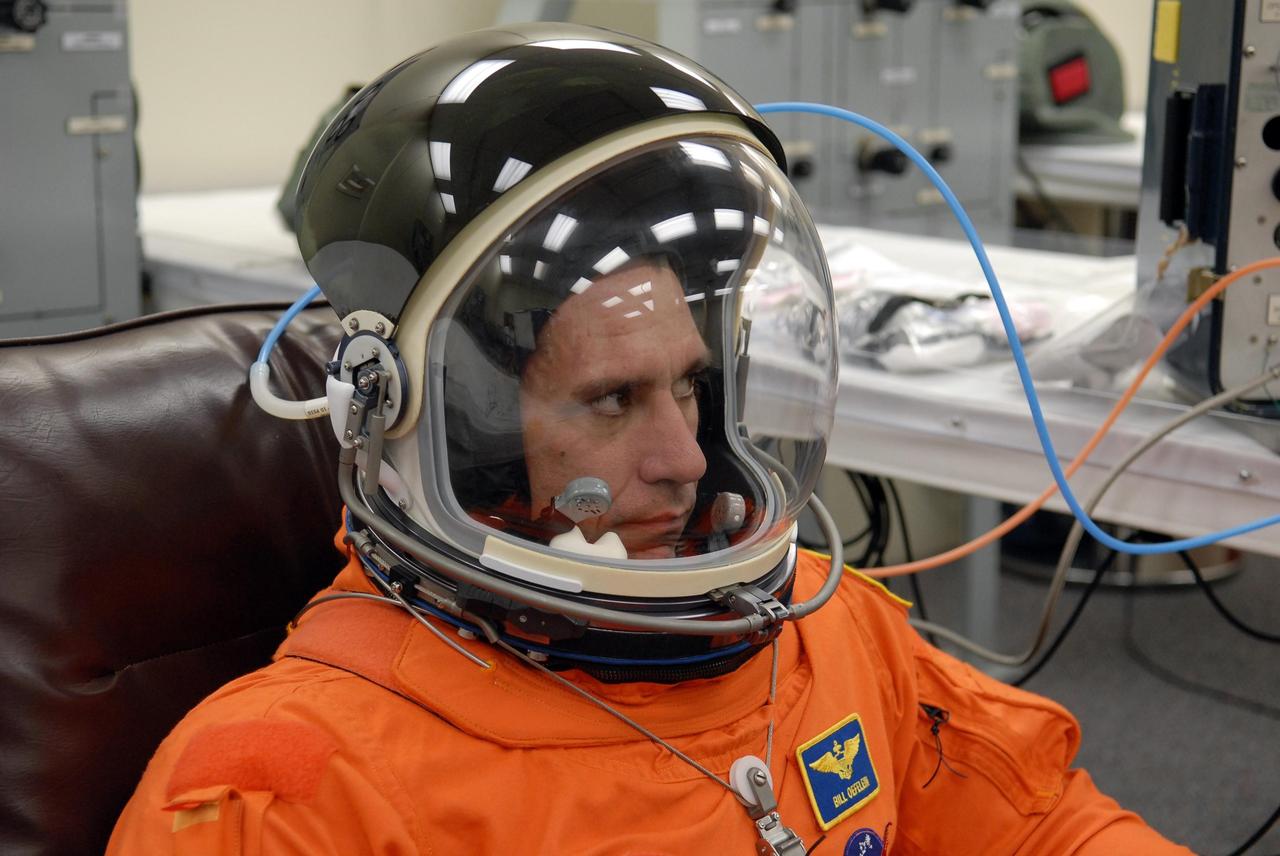
KENNEDY SPACE CENTER, FLA. -- The crew members of mission STS-116 are suiting up for a second launch attempt at 8:47 p.m. EST from Launch Pad 39B aboard Space Shuttle Discovery. Pictured here is Pilot William Oefelein, who is making his first shuttle flight. The first launch attempt of STS-116 on Dec. 7 was postponed due a low cloud ceiling over Kennedy Space Center. This is Discovery's 33rd mission and the first night launch since 2002. The 20th shuttle mission to the International Space Station, STS-116 carries another truss segment, P5. It will serve as a spacer, mated to the P4 truss that was attached in September. After installing the P5, the crew will reconfigure and redistribute the power generated by two pairs of U.S. solar arrays. Landing is expected Dec. 19 at KSC. Photo credit: NASA/Kim Shiflett
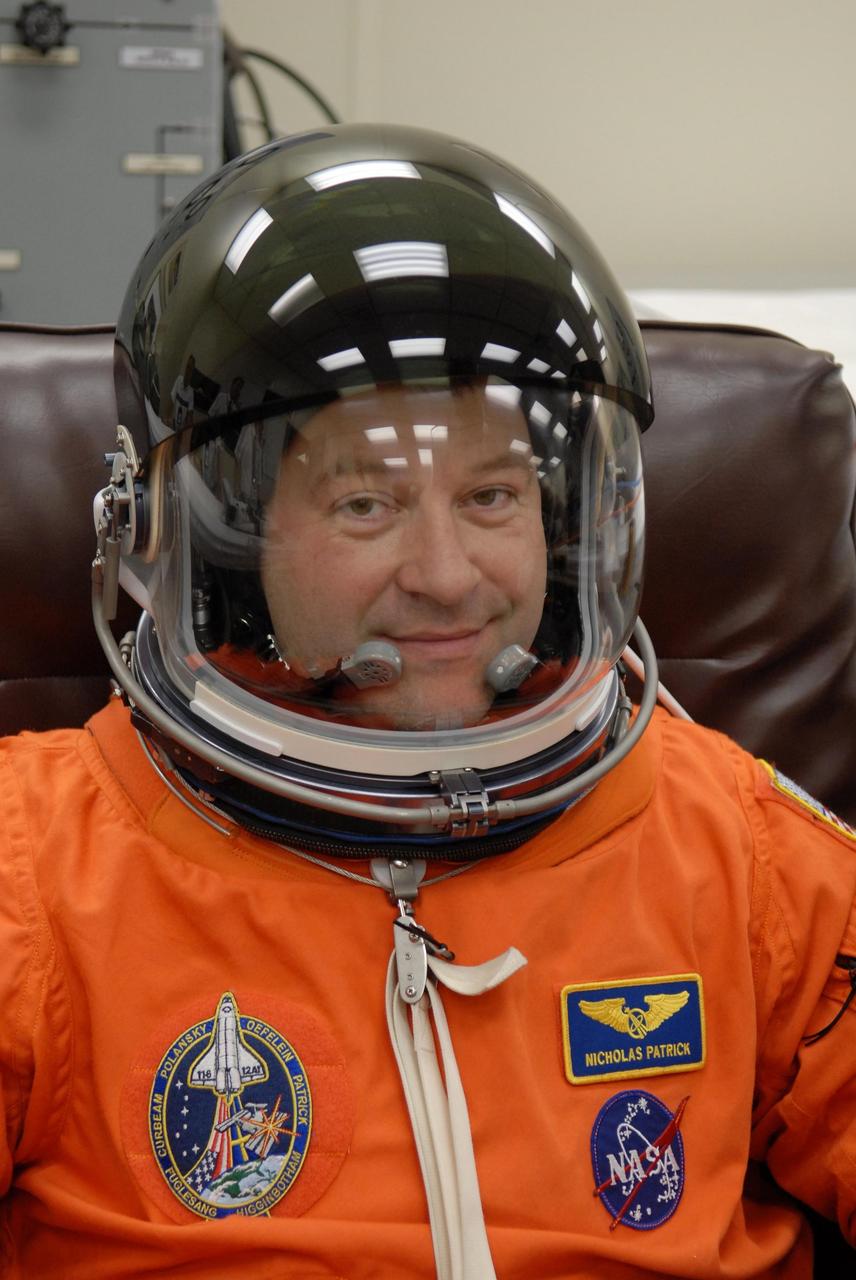
KENNEDY SPACE CENTER, FLA. -- The crew members of mission STS-116 are suiting up for a second launch attempt at 8:47 p.m. EST from Launch Pad 39B aboard Space Shuttle Discovery. Pictured here, Mission Specialist Nicholas Patrick is ready after donning his helmet. Patrick will be making his first shuttle flight. The first launch attempt of STS-116 on Dec. 7 was postponed due a low cloud ceiling over Kennedy Space Center. This is Discovery's 33rd mission and the first night launch since 2002. The 20th shuttle mission to the International Space Station, STS-116 carries another truss segment, P5. It will serve as a spacer, mated to the P4 truss that was attached in September. After installing the P5, the crew will reconfigure and redistribute the power generated by two pairs of U.S. solar arrays. Landing is expected Dec. 19 at KSC. Photo credit: NASA/Kim Shiflett
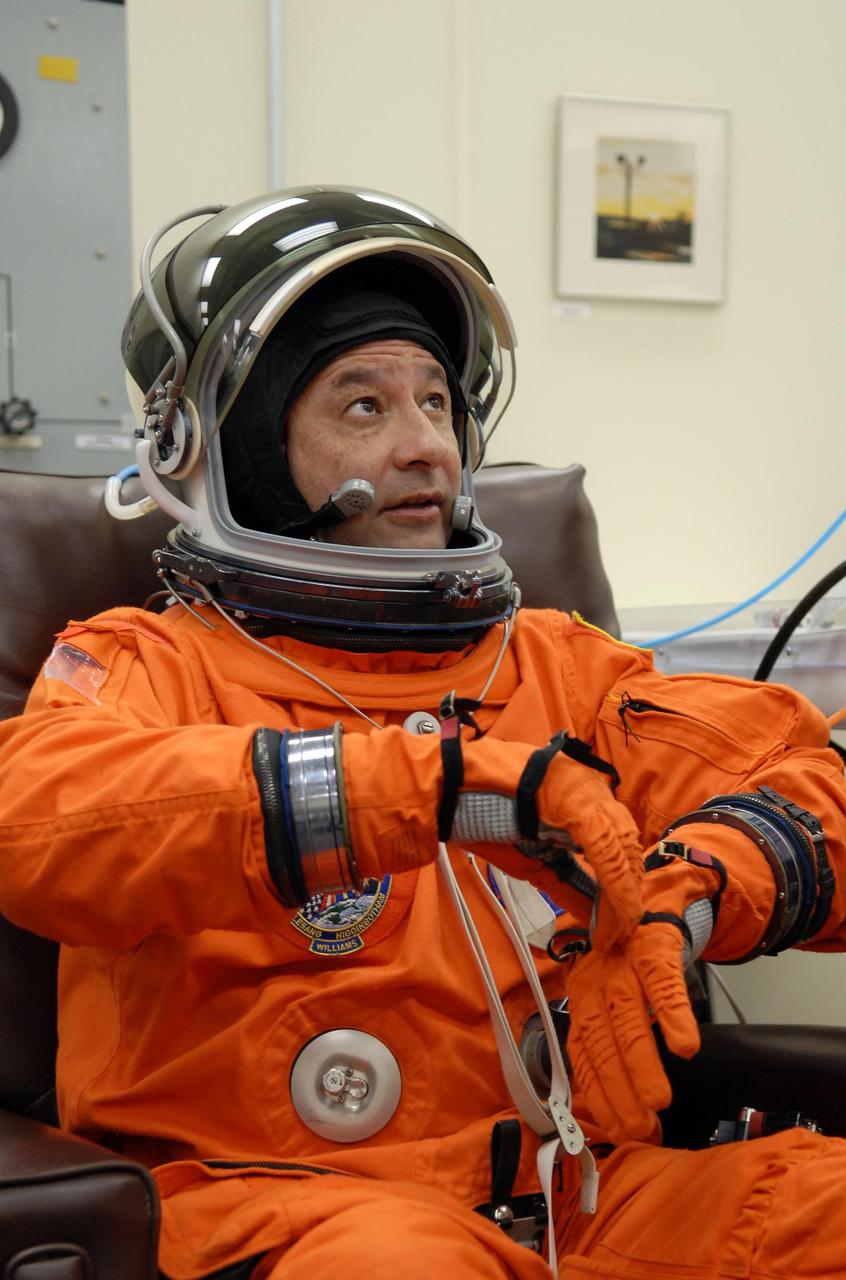
KENNEDY SPACE CENTER, FLA. -- The crew members of mission STS-116 are suiting up for a second launch attempt at 8:47 p.m. EST from Launch Pad 39B aboard Space Shuttle Discovery. Here, Commander Mark Polansky adjusts his glove. Polansky will be making his second shuttle flight. The first launch attempt of STS-116 on Dec. 7 was postponed due a low cloud ceiling over Kennedy Space Center. This is Discovery's 33rd mission and the first night launch since 2002. The 20th shuttle mission to the International Space Station, STS-116 carries another truss segment, P5. It will serve as a spacer, mated to the P4 truss that was attached in September. After installing the P5, the crew will reconfigure and redistribute the power generated by two pairs of U.S. solar arrays. Landing is expected Dec. 19 at KSC. Photo credit: NASA/Kim Shiflett
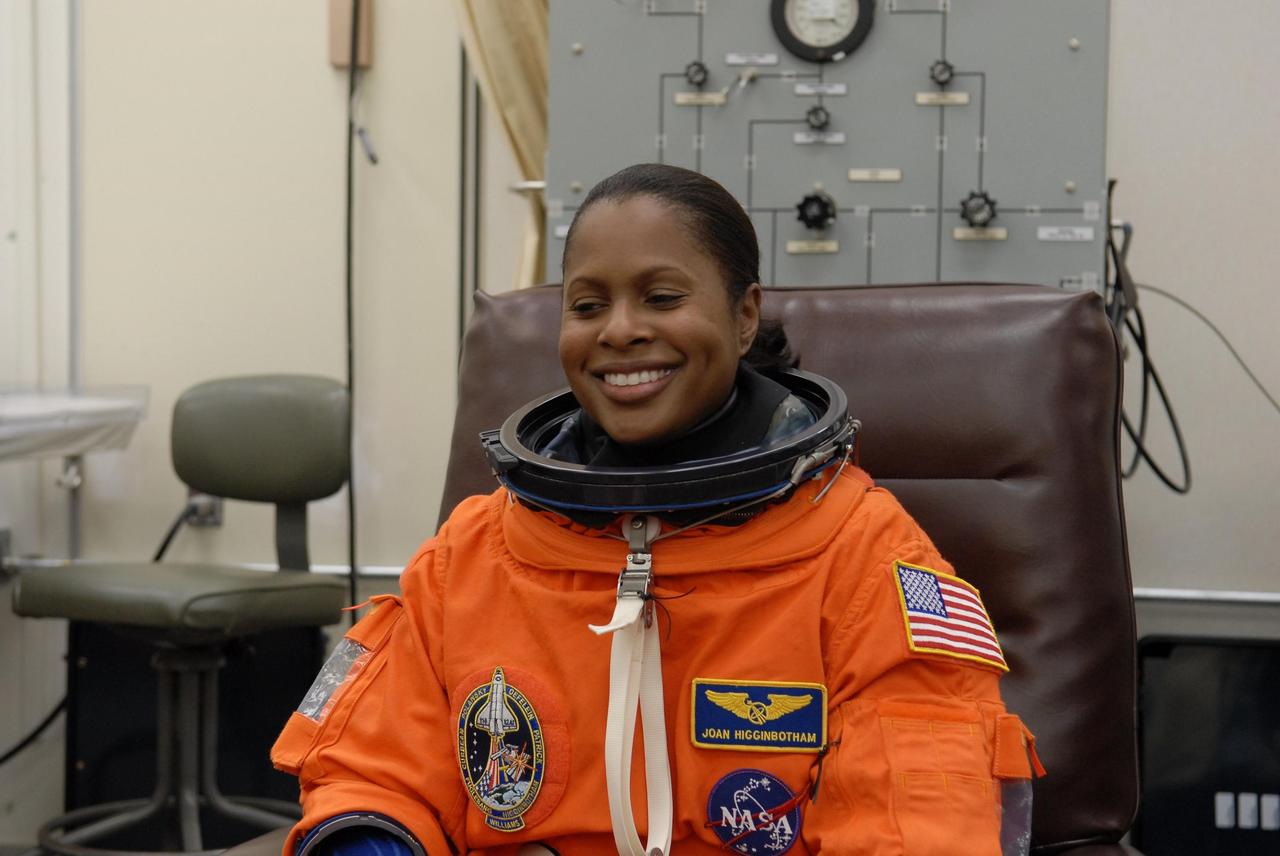
KENNEDY SPACE CENTER, FLA. -- The crew members of mission STS-116 are suiting up for a second launch attempt at 8:47 p.m. EST from Launch Pad 39B aboard Space Shuttle Discovery. Pictured here is Mission Specialist Joan Higginbotham, who will be making her first shuttle flight. The first launch attempt of STS-116 on Dec. 7 was postponed due a low cloud ceiling over Kennedy Space Center. This is Discovery's 33rd mission and the first night launch since 2002. The 20th shuttle mission to the International Space Station, STS-116 carries another truss segment, P5. It will serve as a spacer, mated to the P4 truss that was attached in September. After installing the P5, the crew will reconfigure and redistribute the power generated by two pairs of U.S. solar arrays. Landing is expected Dec. 19 at KSC. Photo credit: NASA/Kim Shiflett
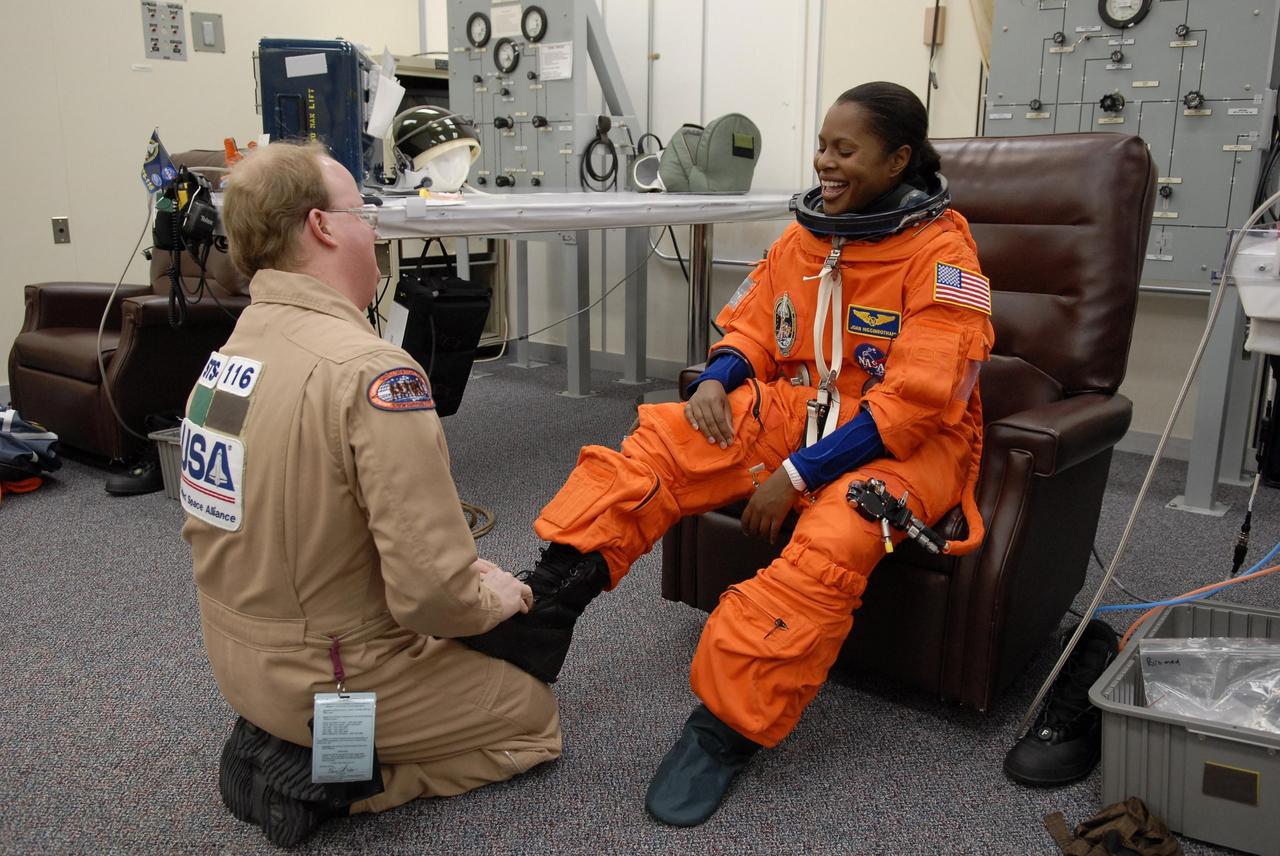
KENNEDY SPACE CENTER, FLA. -- The crew members of mission STS-116 are suiting up for a second launch attempt at 8:47 p.m. EST from Launch Pad 39B aboard Space Shuttle Discovery. Pictured here, Mission Specialist Joan Higginbotham, who will be making her first shuttle flight, is helped with her boot. The first launch attempt of STS-116 on Dec. 7 was postponed due a low cloud ceiling over Kennedy Space Center. This is Discovery's 33rd mission and the first night launch since 2002. The 20th shuttle mission to the International Space Station, STS-116 carries another truss segment, P5. It will serve as a spacer, mated to the P4 truss that was attached in September. After installing the P5, the crew will reconfigure and redistribute the power generated by two pairs of U.S. solar arrays. Landing is expected Dec. 19 at KSC. Photo credit: NASA/Kim Shiflett
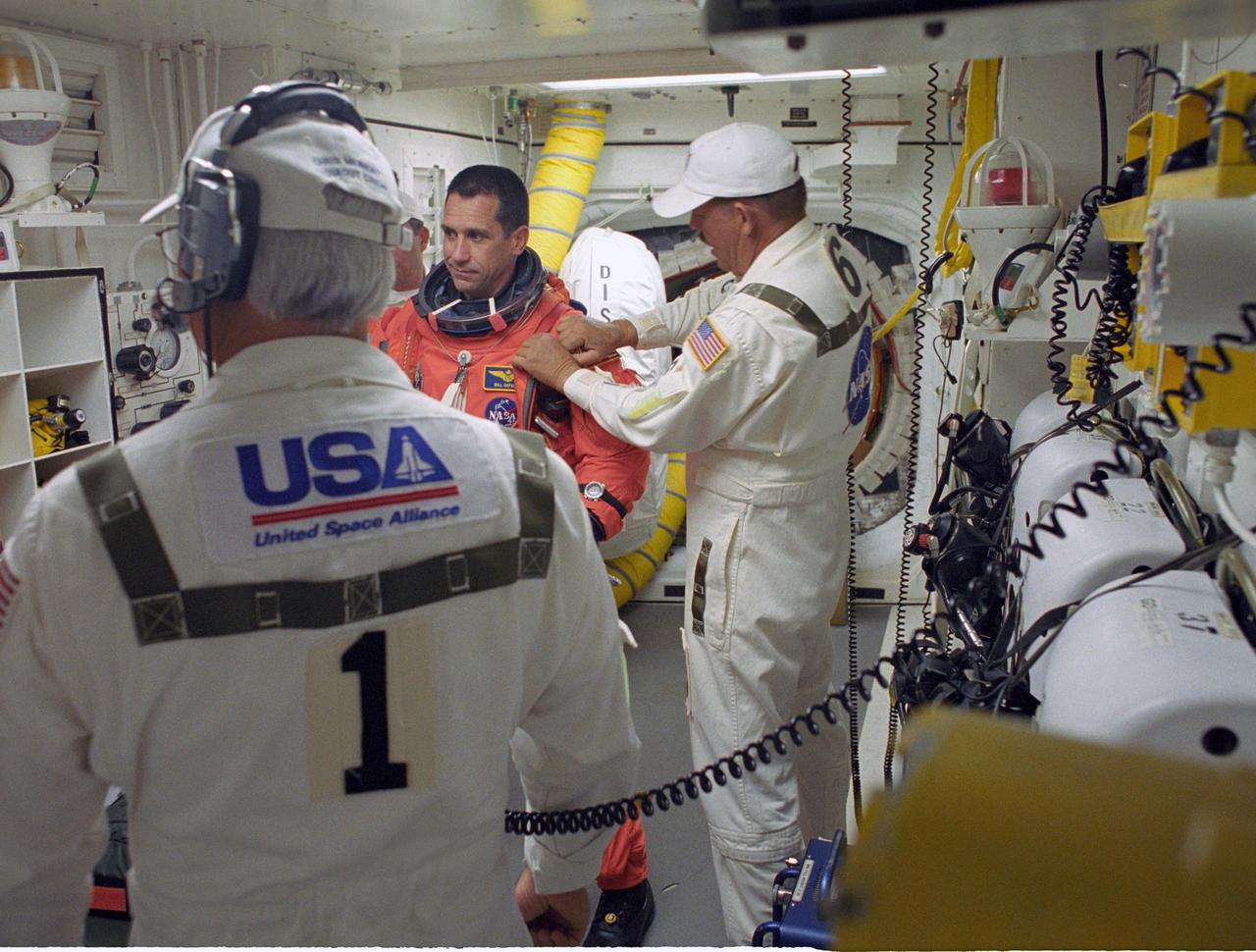
KENNEDY SPACE CENTER, FLA. -- STS-116 Commander William Oefelein is helped by the closeout crew in the White Room to secure his launch suit before climbing into Space Shuttle Discovery. The White Room is at the end of the orbiter access arm that extends from the fixed service structure and provides entry into the orbiter. The first launch attempt of STS-116 on Dec. 7 was postponed due a low cloud ceiling over Kennedy Space Center. This second launch attempt is scheduled for 8:47 p.m. This is Discovery's 33rd mission and the first night launch since 2002. The 20th shuttle mission to the International Space Station, STS-116 carries another truss segment, P5. It will serve as a spacer, mated to the P4 truss that was attached in September. After installing the P5, the crew will reconfigure and redistribute the power generated by two pairs of U.S. solar arrays. Landing is expected Dec. 21 at KSC. Photo credit: NASA/Tony Gray & Don Kight
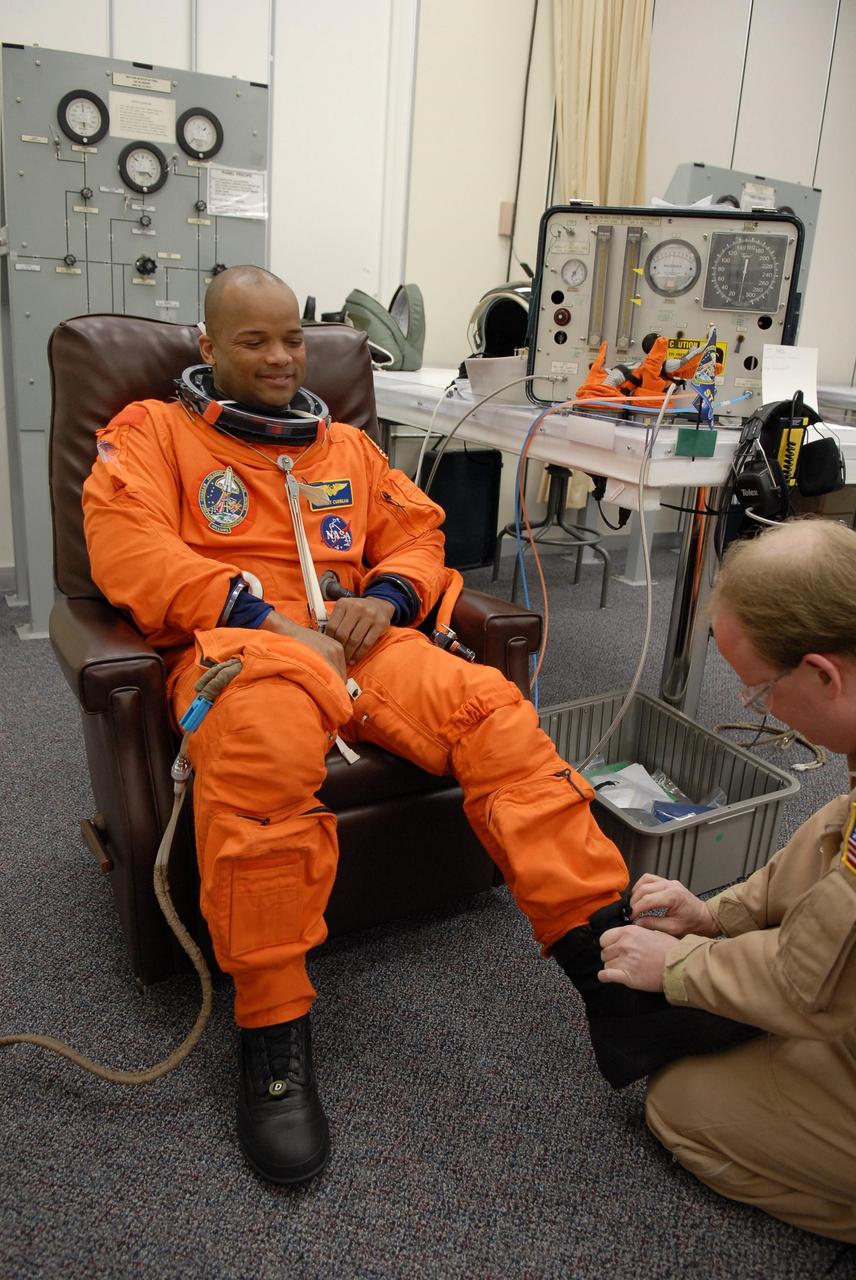
KENNEDY SPACE CENTER, FLA. -- The crew members of mission STS-116 are suiting up for a second launch attempt at 8:47 p.m. EST from Launch Pad 39B aboard Space Shuttle Discovery. Pictured here is Mission Specialist Robert Curbeam, who is helped with his boot. Curbeam is making his third shuttle flight. The first launch attempt of STS-116 on Dec. 7 was postponed due a low cloud ceiling over Kennedy Space Center. This is Discovery's 33rd mission and the first night launch since 2002. The 20th shuttle mission to the International Space Station, STS-116 carries another truss segment, P5. It will serve as a spacer, mated to the P4 truss that was attached in September. After installing the P5, the crew will reconfigure and redistribute the power generated by two pairs of U.S. solar arrays. Landing is expected Dec. 19 at KSC. Photo credit: NASA/Kim Shiflett
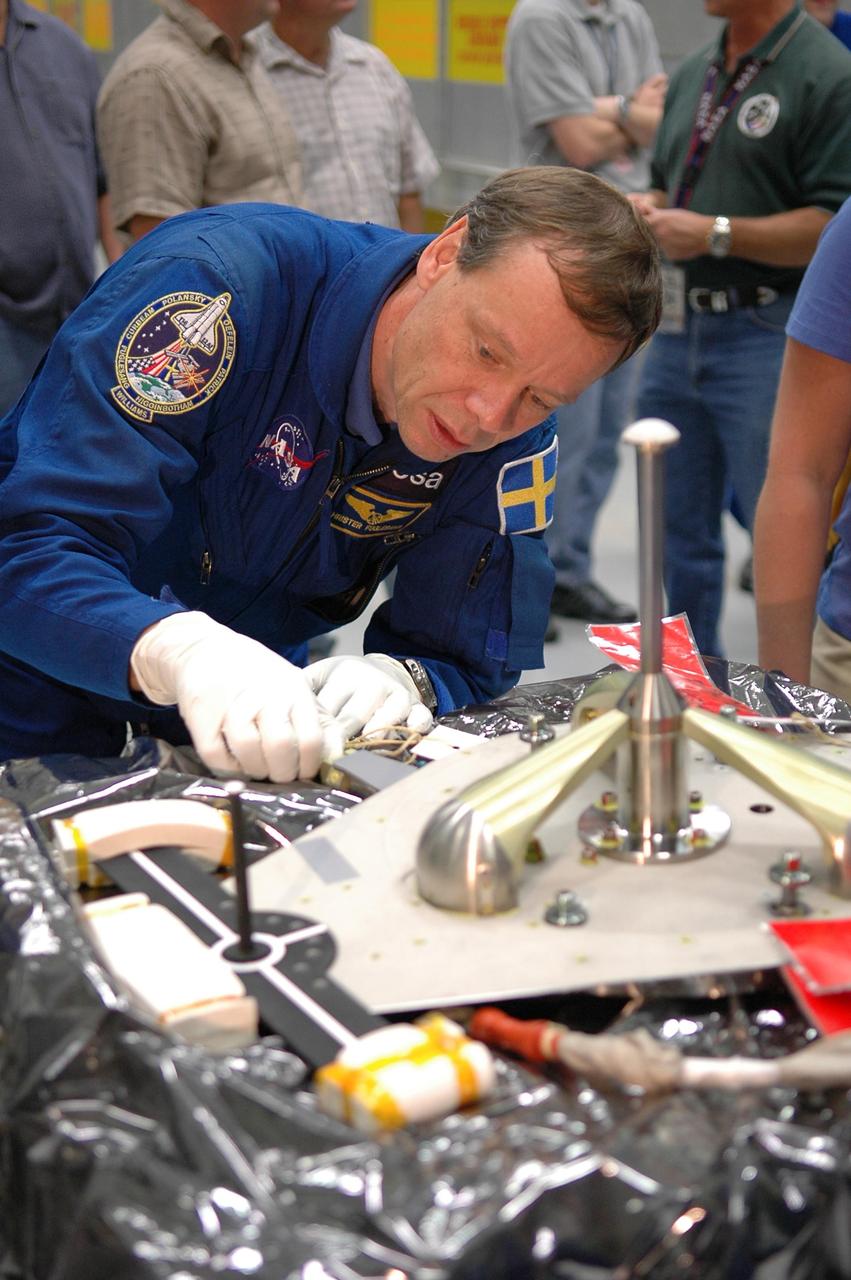
KENNEDY SPACE CENTER, FLA. - In the Orbiter Processing Facility, STS-116 Mission Specialist Christer Fugelsang, who represents the European Space Agency, gets hands-on experience working with a piece of flight hardware. He and other crew members are at KSC for a Crew Equipment Interface Test. Mission crews make frequent trips to the Kennedy Space Center to become familiar with the equipment and payloads they will be using. STS-116 will be mission No. 20 to the International Space Station and construction flight 12A.1. The mission payload is the SPACEHAB module, the P5 integrated truss structure and other key components. Launch is scheduled for no earlier than Dec. 7. Photo credit: NASA/Kim Shiflett
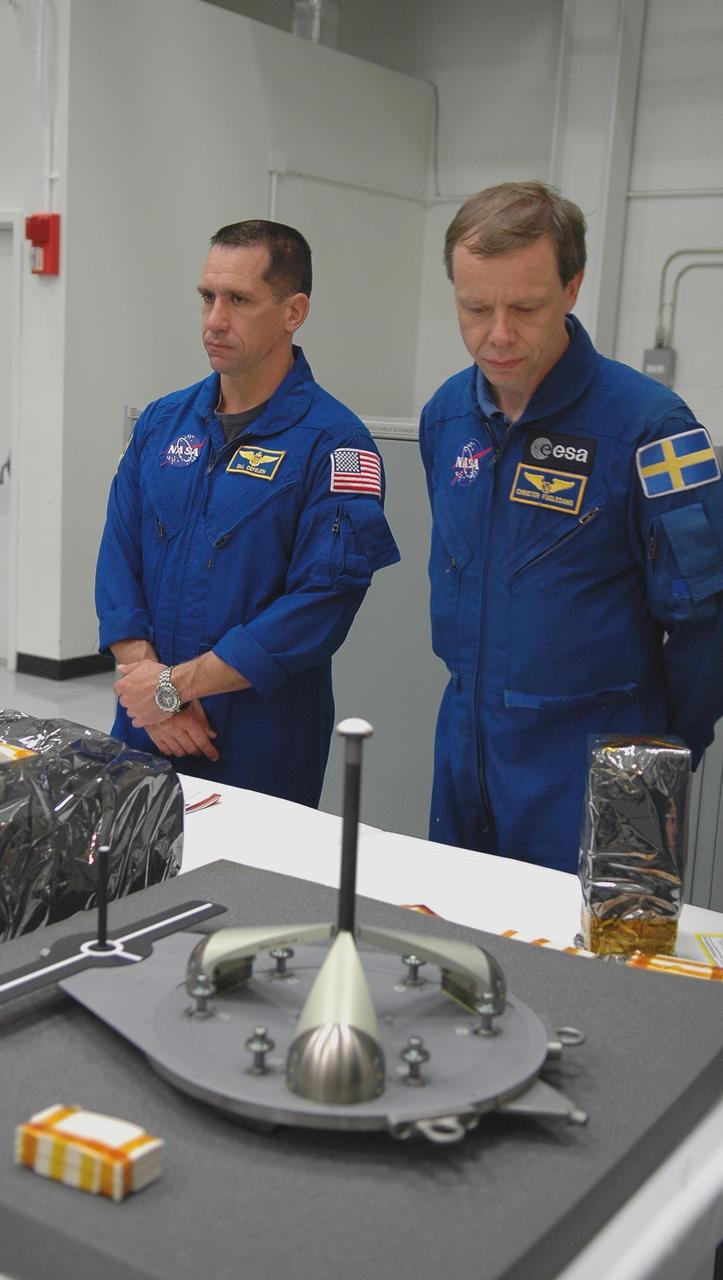
KENNEDY SPACE CENTER, FLA. - In the Orbiter Processing Facility, members of the STS-116 crew look over flight hardware during the Crew Equipment Interface Test. Seen here are Pilot William Oefelein (left) and Mission Specialist Christer Fugelsang, who represents the European Space Agency. Mission crews make frequent trips to the Kennedy Space Center to become familiar with the equipment and payloads they will be using. STS-116 will be mission No. 20 to the International Space Station and construction flight 12A.1. The mission payload is the SPACEHAB module, the P5 integrated truss structure and other key components. Launch is scheduled for no earlier than Dec. 7. Photo credit: NASA/Kim Shiflett
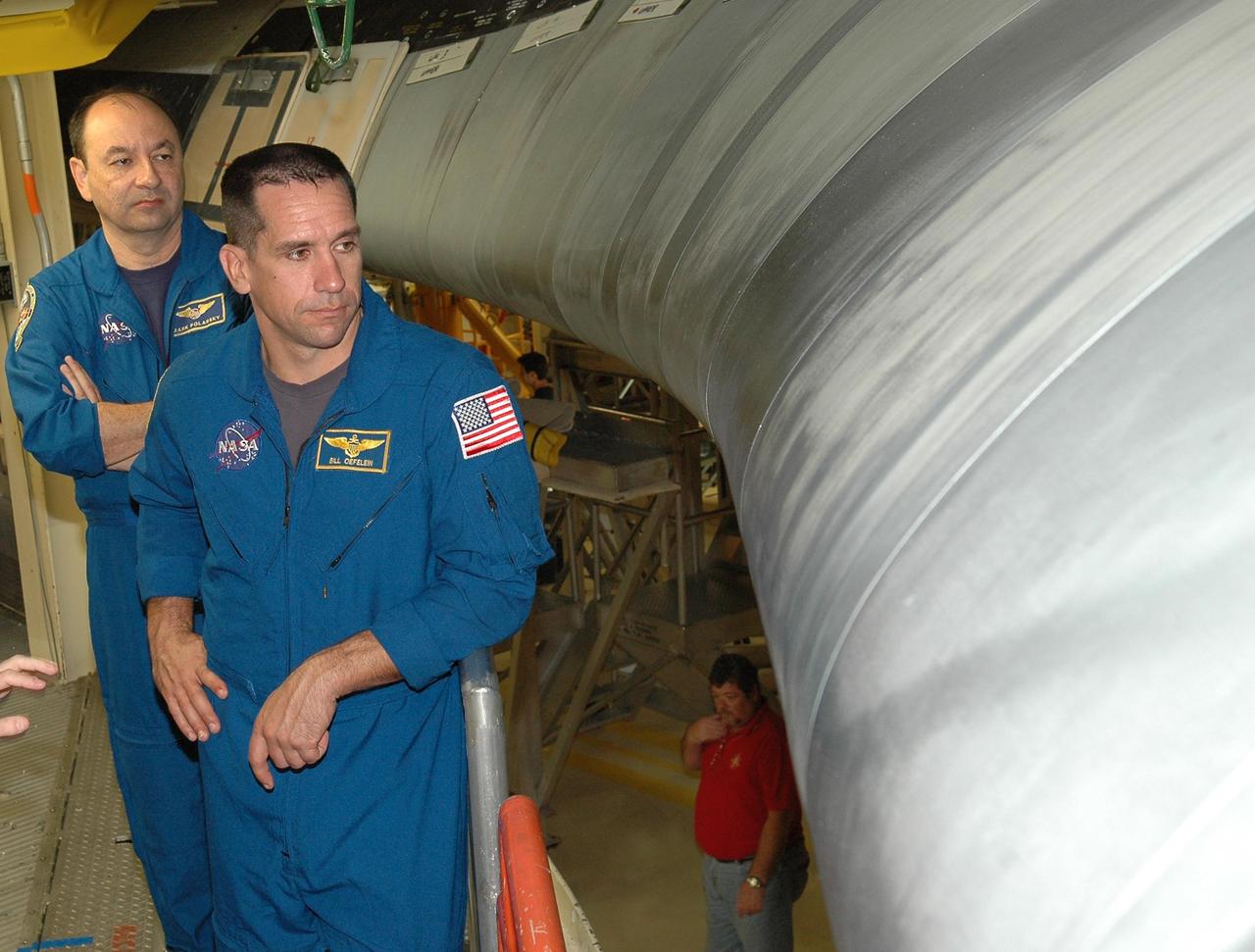
KENNEDY SPACE CENTER, FLA. - From a platform in the Orbiter Processing Facility, STS-116 Commander Mark Polansky (left) and Pilot William Oefelein look at one of Discovery’s reinforced carbon-carbon wing leading edge. They and other crew members are at KSC for a Crew Equipment Interface Test. Mission crews make frequent trips to the Kennedy Space Center to become familiar with the equipment and payloads they will be using. STS-116 will be mission No. 20 to the International Space Station and construction flight 12A.1. The mission payload is the SPACEHAB module, the P5 integrated truss structure and other key components. Launch is scheduled for no earlier than Dec. 7. Photo credit: NASA/Kim Shiflett
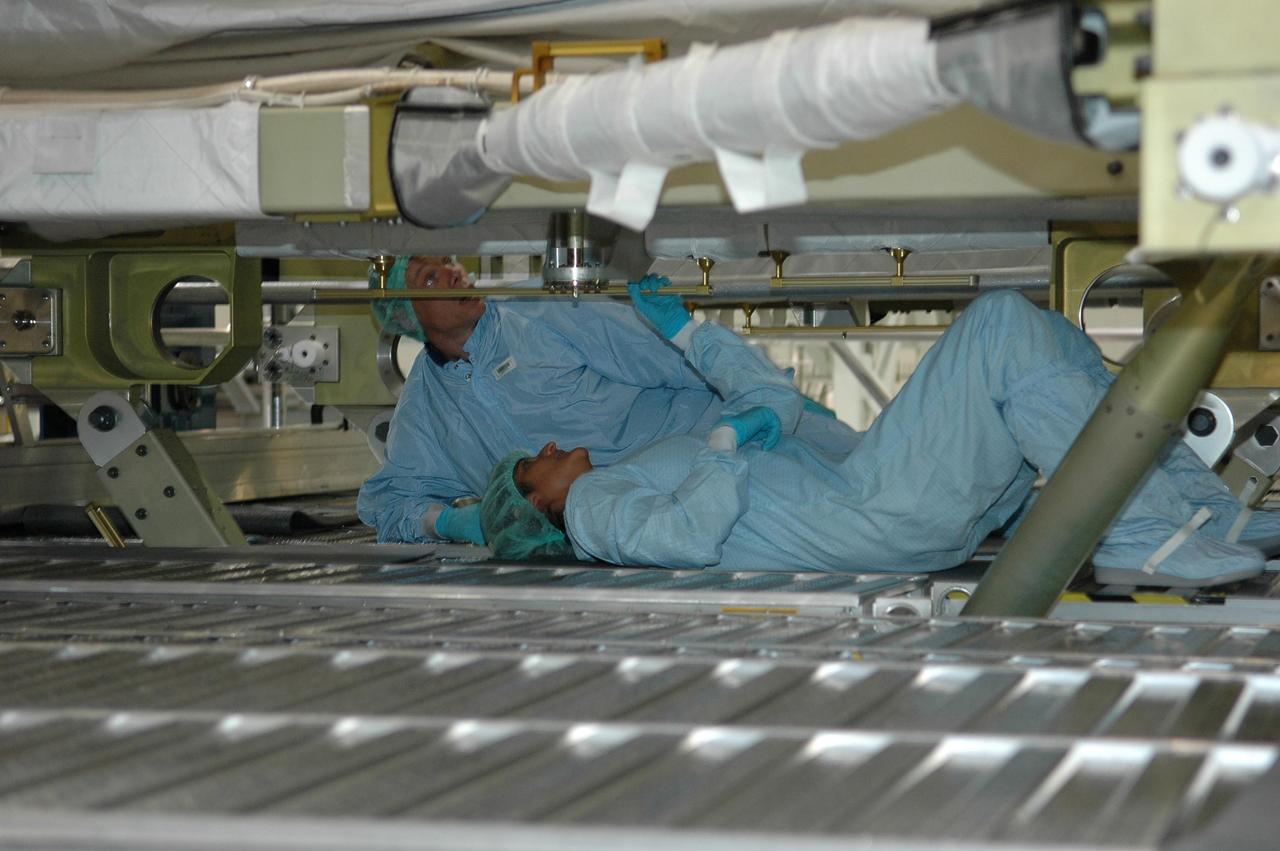
KENNEDY SPACE CENTER, FLA. - In the Space Station Processing Facility, STS-116 crew members check out the port integrated truss structure, P5, which is the primary payload on their mission. Seen here are Mission Specialists Christer Fugelsang, who represents the European Space Agency, and Sunita Williams. The crew is taking part in a Crew Equipment Interface Test that enables them to become familiar with the equipment and payloads they will be using. STS-116 will be mission No. 20 to the International Space Station and construction flight 12A.1. The mission payload is the SPACEHAB module, the P5 integrated truss structure and other key components. Launch is scheduled for no earlier than Dec. 7. Photo credit: NASA/Kim Shiflett
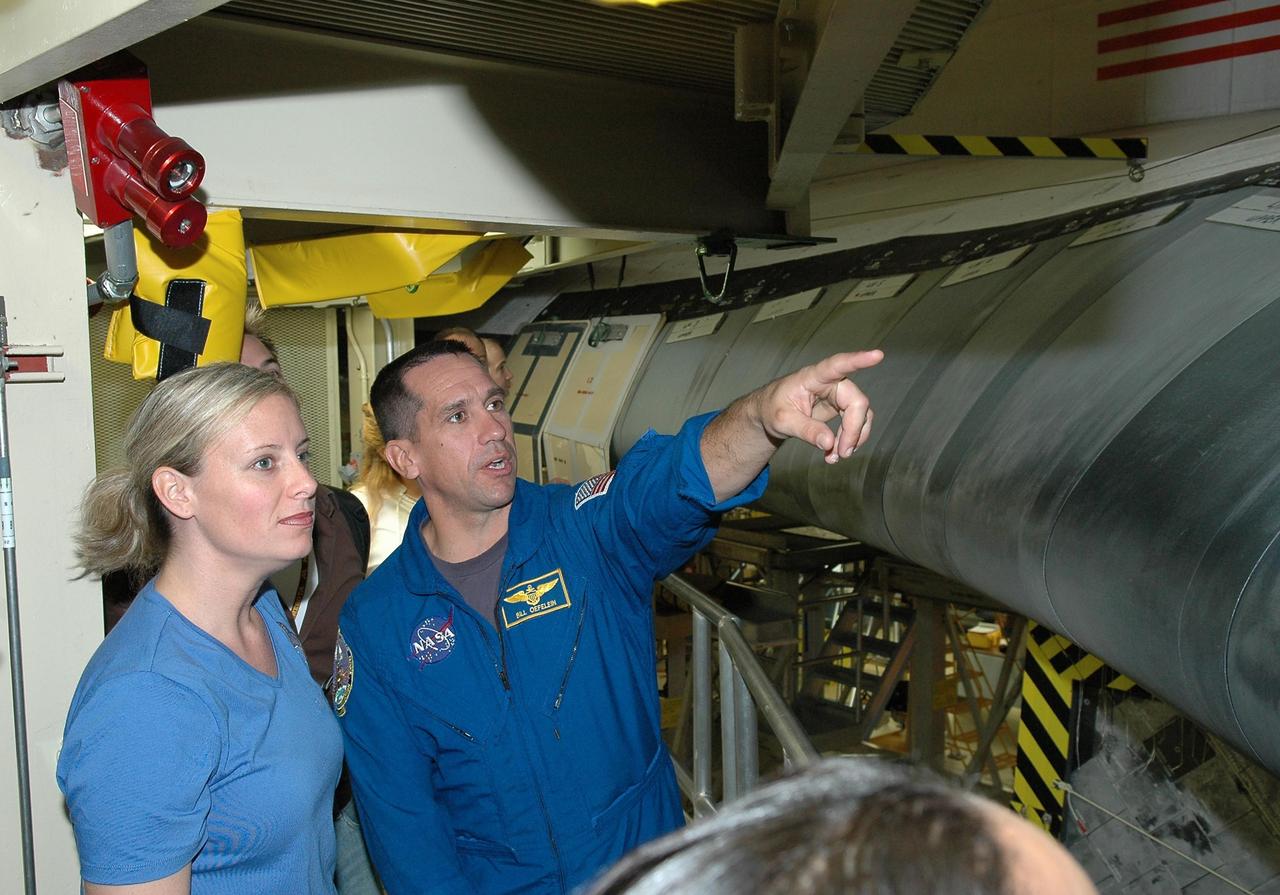
KENNEDY SPACE CENTER, FLA. - From a platform in the Orbiter Processing Facility, STS-116 Pilot William Oefelein points to Discovery’s reinforced carbon-carbon wing leading edge. He and other crew members are at KSC for a Crew Equipment Interface Test. Mission crews make frequent trips to the Kennedy Space Center to become familiar with the equipment and payloads they will be using. STS-116 will be mission No. 20 to the International Space Station and construction flight 12A.1. The mission payload is the SPACEHAB module, the P5 integrated truss structure and other key components. Launch is scheduled for no earlier than Dec. 7. Photo credit: NASA/Kim Shiflett
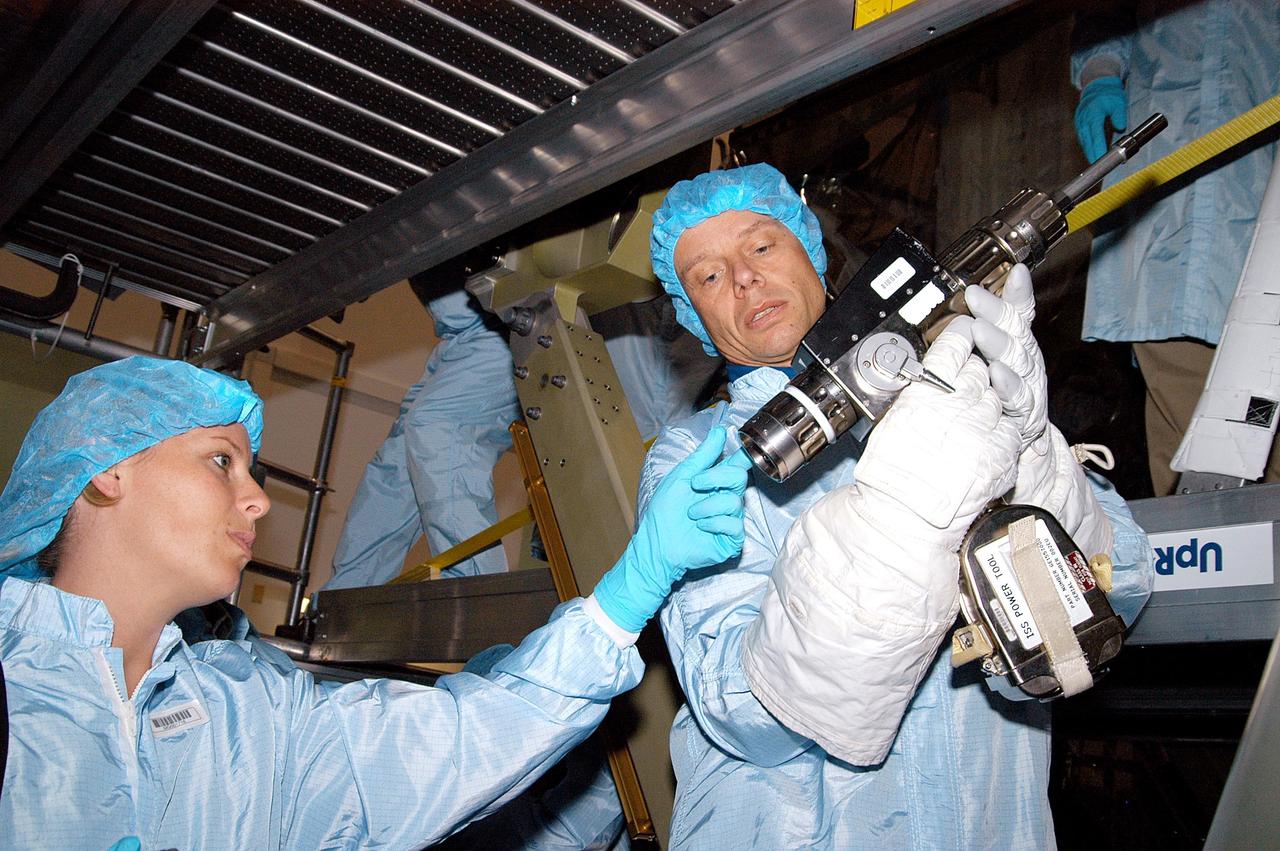
KENNEDY SPACE CENTER, FLA. - STS-116 Mission Specialist Christer Fuglesang (right) (European Space Agency) practices using a tool that is part of the equipment for the mission. He joined STS-118 crew members for the familiarization activities in the Space Station Processing Facility. The STS-116 mission will deliver the third port truss segment, the P5 Truss, to attach to the second port truss segment, the P3/P4 Truss. The STS-118 mission will be delivering and installing the third starboard truss segment, the ITS S5, to the International Space Station, and carry a SPACEHAB Single Cargo Module with supplies and equipment. Launch dates for both missions are under review.
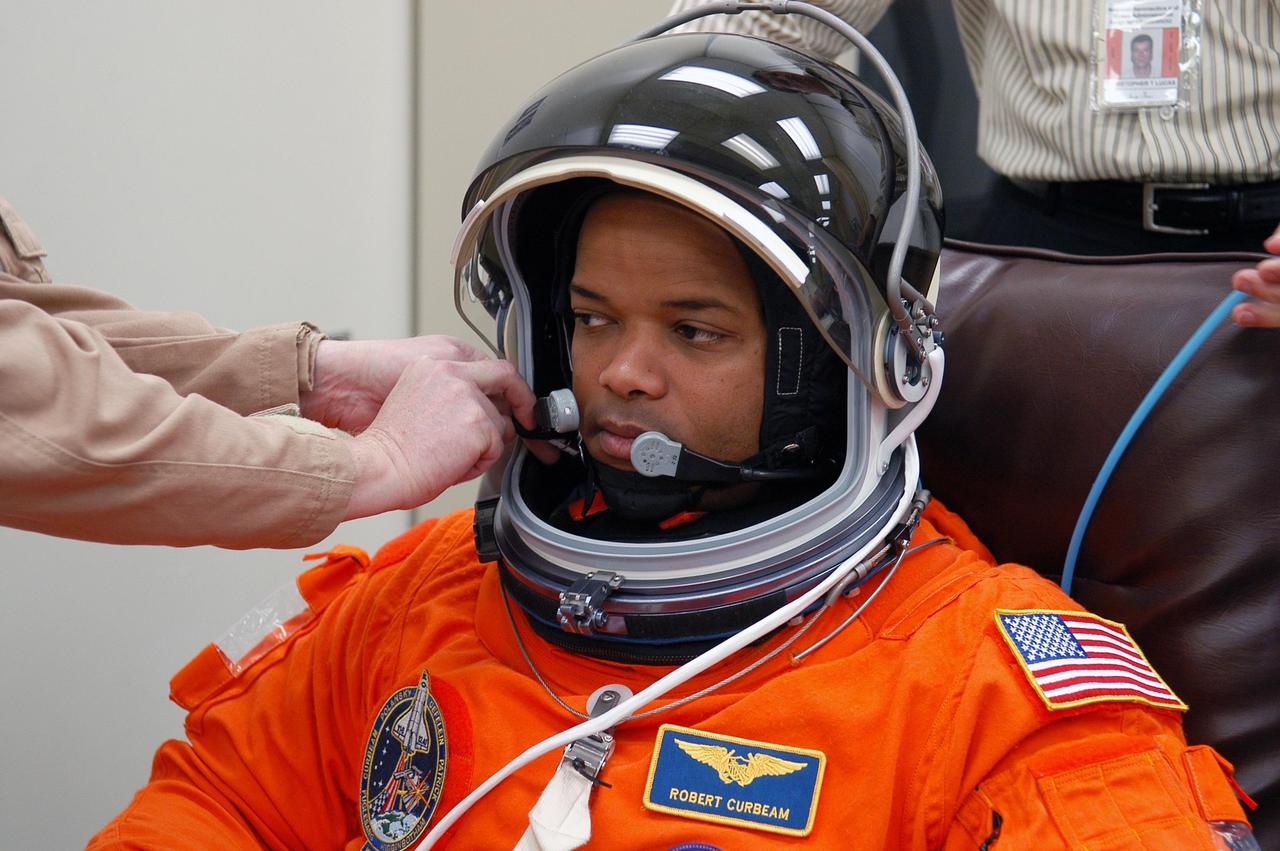
KENNEDY SPACE CENTER, FLA. -- The STS-116 mission crew practices for launch with a simulation of activities, from crew breakfast and suit-up to countdown in the orbiter. In this photo Mission Specialist Robert Curbeam has his helmet adjusted before heading to Launch Pad 39B. The STS-116 mission is No. 20 to the International Space Station and construction flight 12A.1. The mission payload is the SPACEHAB module, the P5 integrated truss structure and other key components. Launch is scheduled for no earlier than Dec. 7. Photo credit: NASA/Kim Shiflett
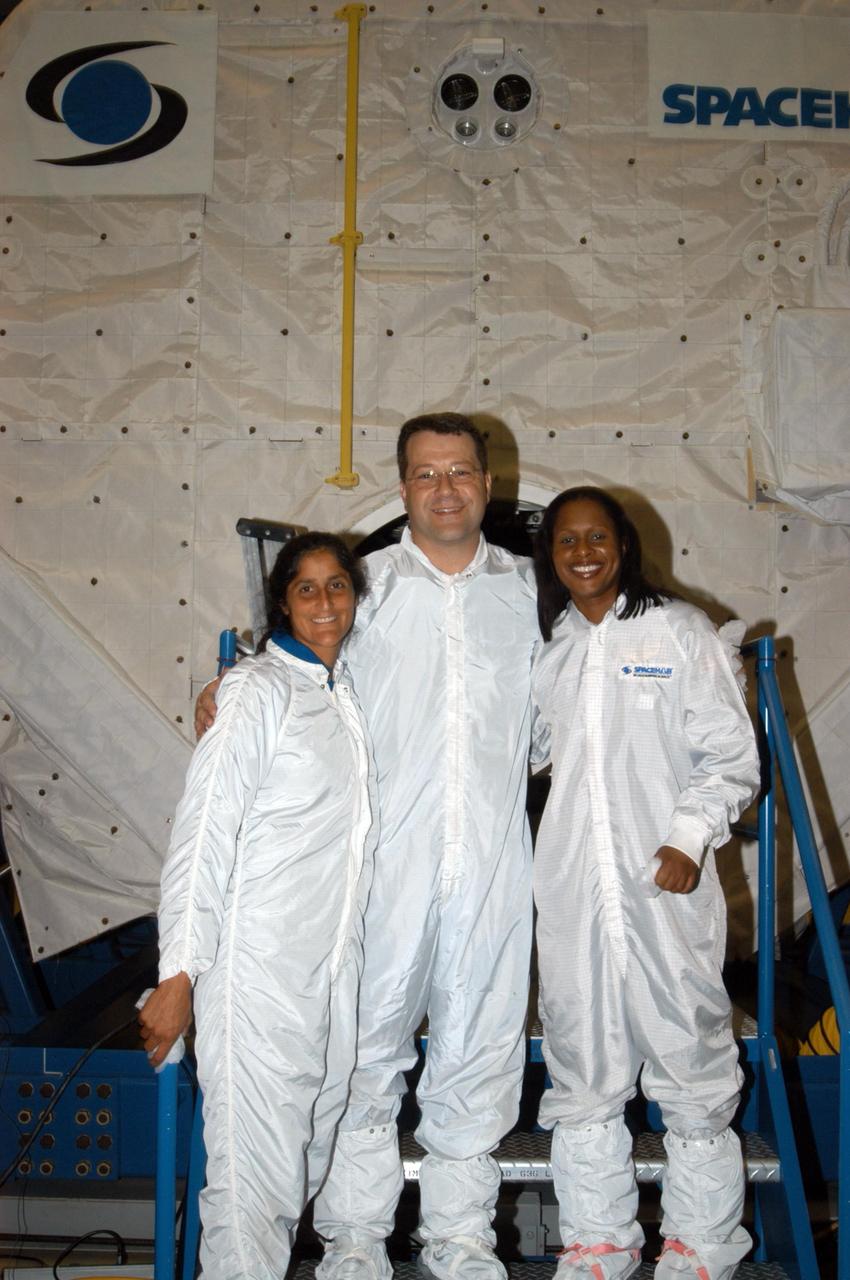
KENNEDY SPACE CENTER, FLA. - At SPACEHAB in Cape Canaveral, Fla., the STS-116 crew takes a break from equipment familiarization in the SPACEHAB module to pose for a group photo. From left are Mission Specialists Sunita Williams, Nicholas Patrick and Joan Higginbotham. Mission crews make frequent trips to the Space Coast to become familiar with the equipment and payloads they will be using. STS-116 will be mission number 20 to the International Space Station and construction flight 12A.1. The mission payload is the SPACEHAB module, the P5 integrated truss structure and other key components. Launch is scheduled for no earlier than Dec. 7. Photo credit: NASA/George Shelton
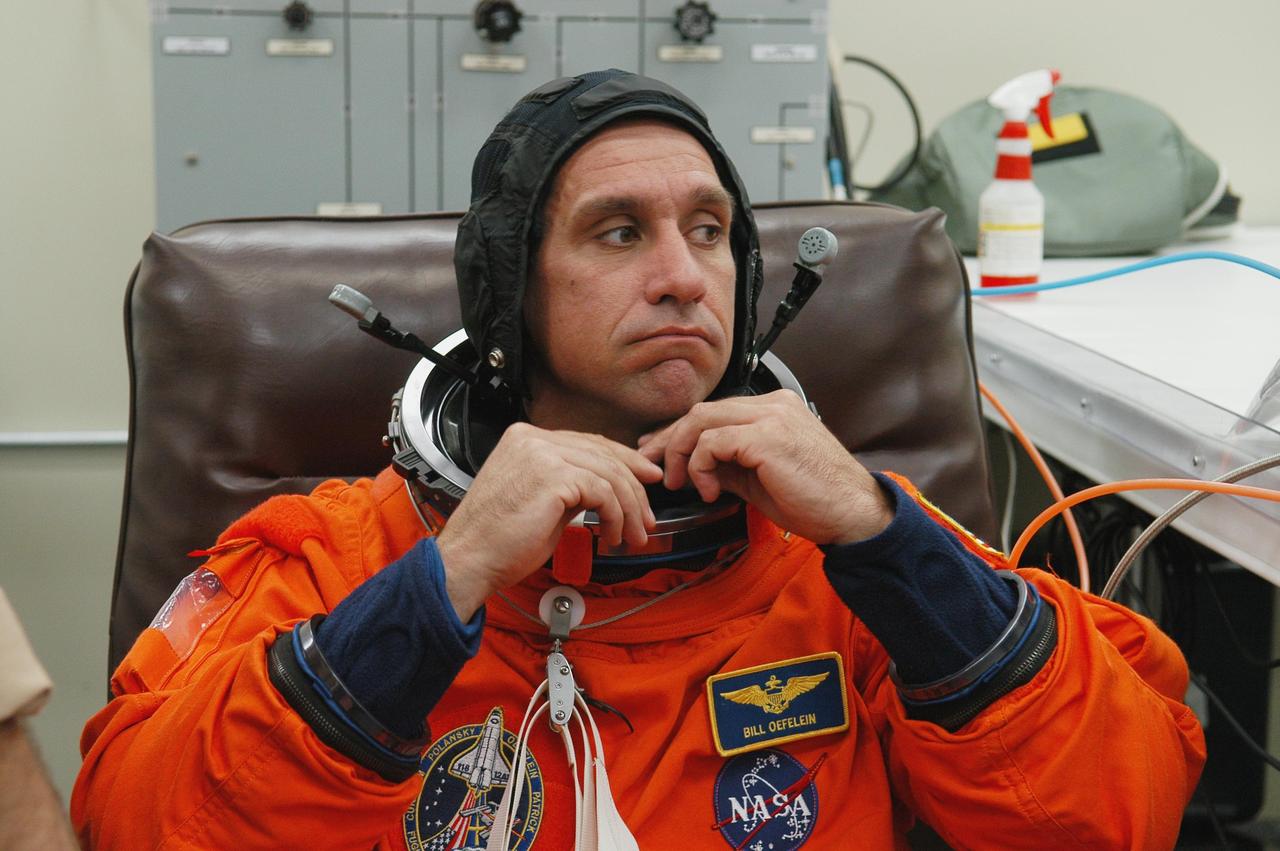
KENNEDY SPACE CENTER, FLA. -- The STS-116 mission crew practices for launch with a simulation of activities, from crew breakfast and suit-up to countdown in the orbiter. In this photo Pilot William Oefelein fixes the neck of his launch suit before heading to Launch Pad 39B. The STS-116 mission is No. 20 to the International Space Station and construction flight 12A.1. The mission payload is the SPACEHAB module, the P5 integrated truss structure and other key components. Launch is scheduled for no earlier than Dec. 7. Photo credit: NASA/Kim Shiflett

KENNEDY SPACE CENTER, FLA. - Inside the SPACEHAB Payload Processing Facility at Port Canaveral, Fla., STS-116 Mission Specialists (from left) Joan Higginbotham, Sunita Williams and Nicholas Patrick look over flight hardware during the Crew Equipment Interface Test. Mission crews make frequent trips to the Space Coast to become familiar with the equipment and payloads they will be using. STS-116 will be mission No. 20 to the International Space Station and construction flight 12A.1. The mission payload is the SPACEHAB module, the P5 integrated truss structure and other key components. Launch is scheduled for no earlier than Dec. 7. Photo credit: NASA/Kim Shiflett
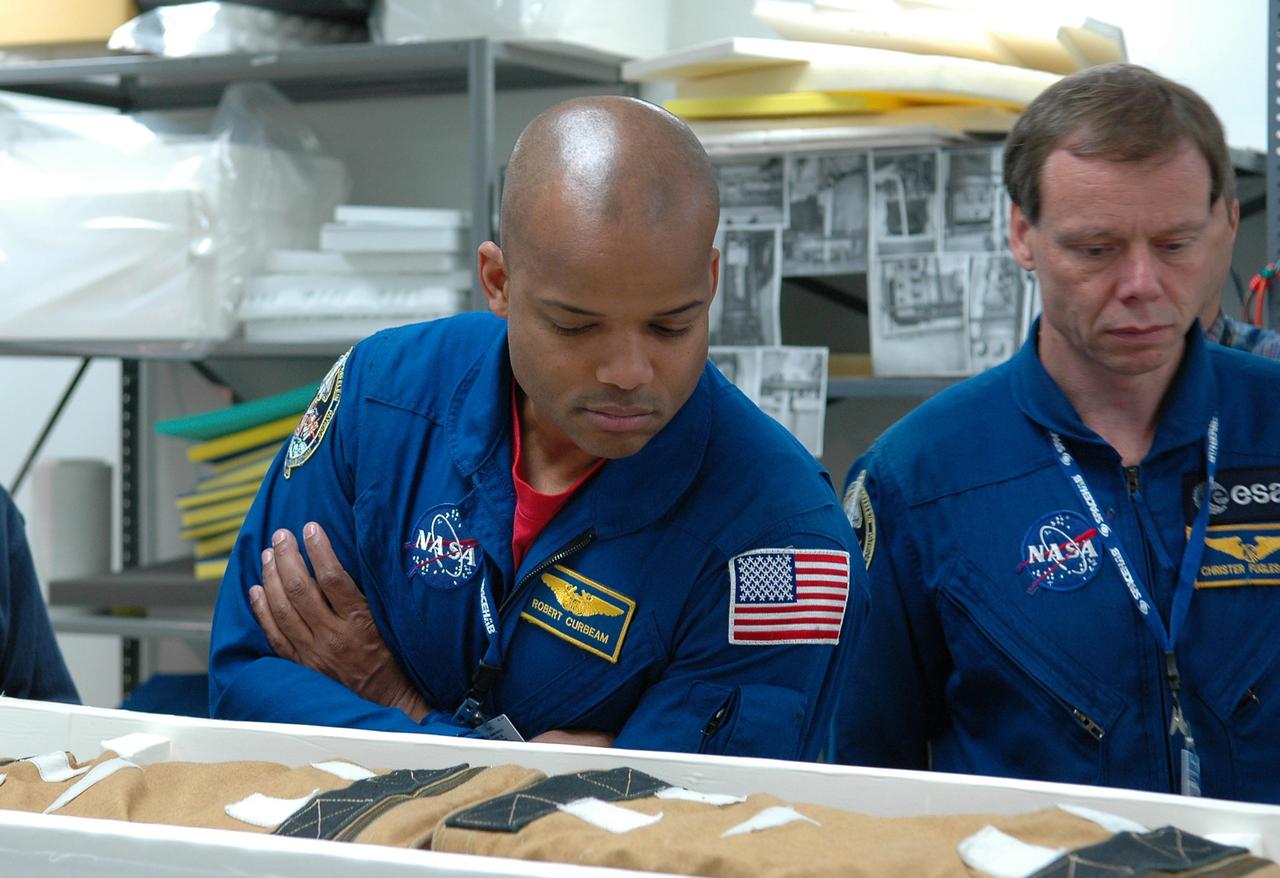
KENNEDY SPACE CENTER, FLA. - STS-116 Mission Specialists Robert Curbeam and Christer Fuglesang, who is with the European Space Agency, inspect flight hardware at the SPACEHAB Payload Processing Facility at Port Canaveral, Fla., during the Crew Equipment Interface Test. Mission crews make frequent trips to the Space Coast to become familiar with the equipment and payloads they will be using. STS-116 will be mission No. 20 to the International Space Station and construction flight 12A.1. The mission payload is the SPACEHAB module, the P5 integrated truss structure and other key components. Launch is scheduled for no earlier than Dec. 7. Photo credit: NASA/Kim Shiflett
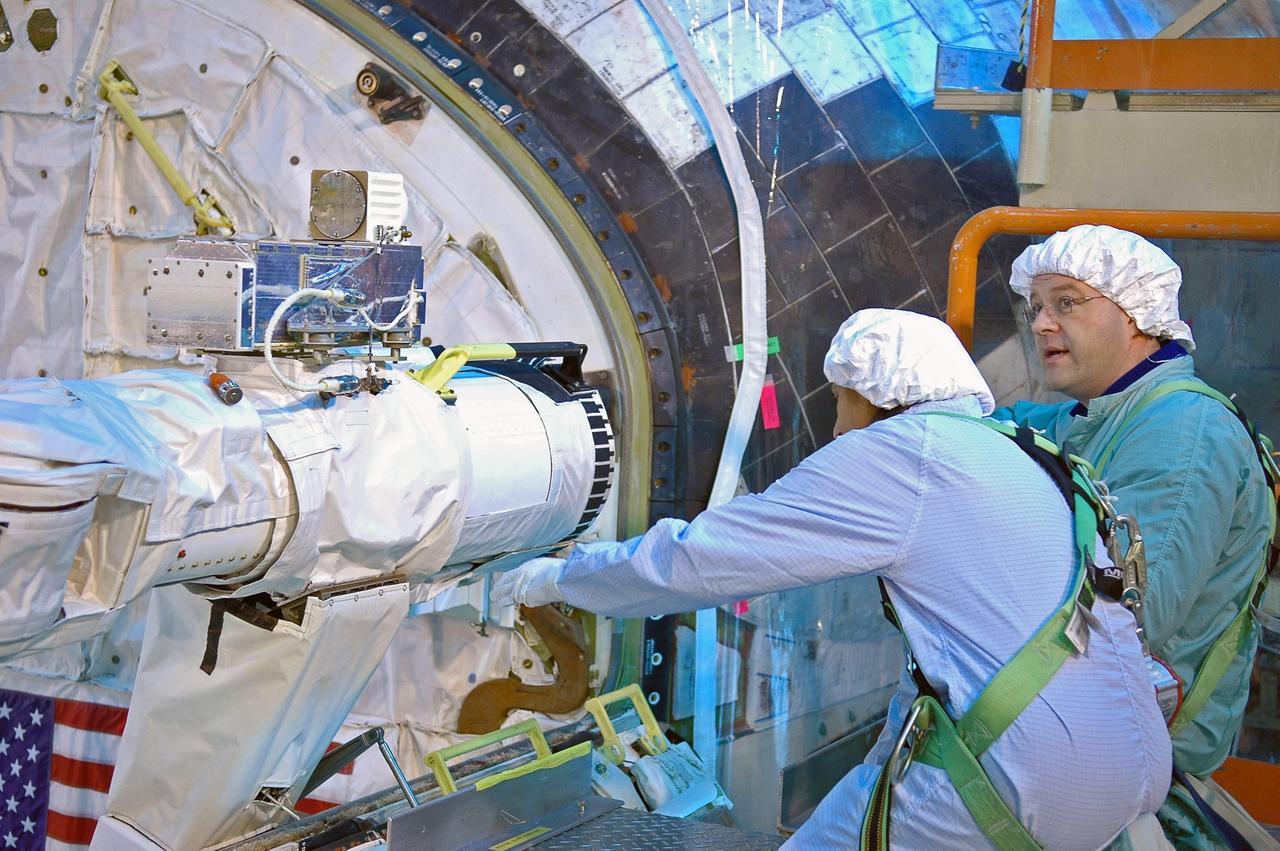
KENNEDY SPACE CENTER, FLA. - During a Crew Equipment Interface Test (CEIT) in the Orbiter Processing Facility, STS-116 crew members check out the payload bay of the orbiter Discovery. Seen here, Mission Specialists Sunita Williams and Nicholas Patrick are in the region of the mid-body. A CEIT allows astronauts to become familiar with equipment and hardware they will use on the mission. STS-116 will be mission No. 20 to the International Space Station and construction flight 12A.1. The mission payload is the SPACEHAB module, the P5 integrated truss structure and other key components. Launch is scheduled for no earlier than Dec. 7. Photo credit: NASA/Kim Shiflett
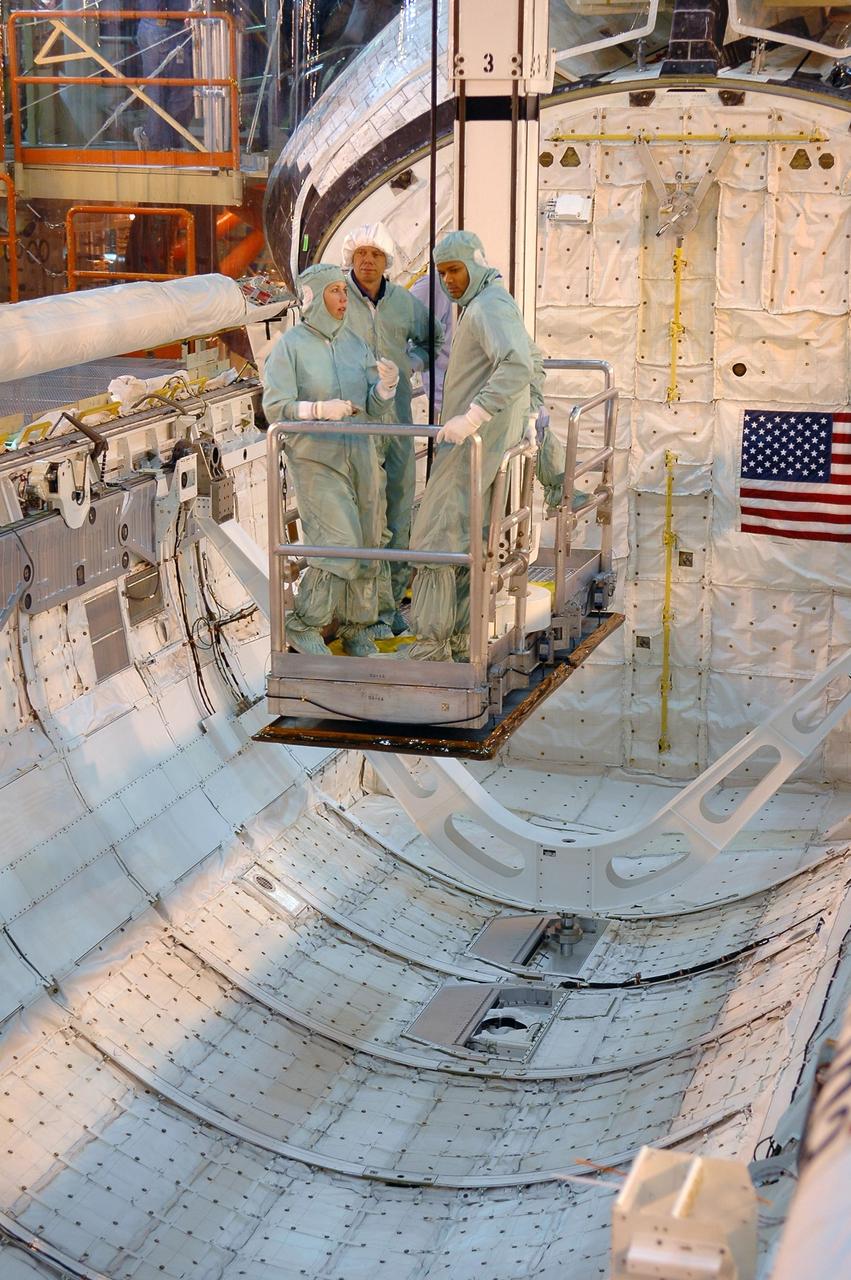
KENNEDY SPACE CENTER, FLA. - During a Crew Equipment Interface Test (CEIT) in the Orbiter Processing Facility, STS-116 crew members are lowered into Discovery’s payload bay for a closer look. In the white cap is Mission Specialist Christer Fugelsang; at right is Mission Specialist Robert Curbeam. Fugelsang represents the European Space Agency. A CEIT allows astronauts to become familiar with equipment and hardware they will use on the mission. STS-116 will be mission No. 20 to the International Space Station and construction flight 12A.1. The mission payload is the SPACEHAB module, the P5 integrated truss structure and other key components. Launch is scheduled for no earlier than Dec. 7. Photo credit: NASA/Kim Shiflett
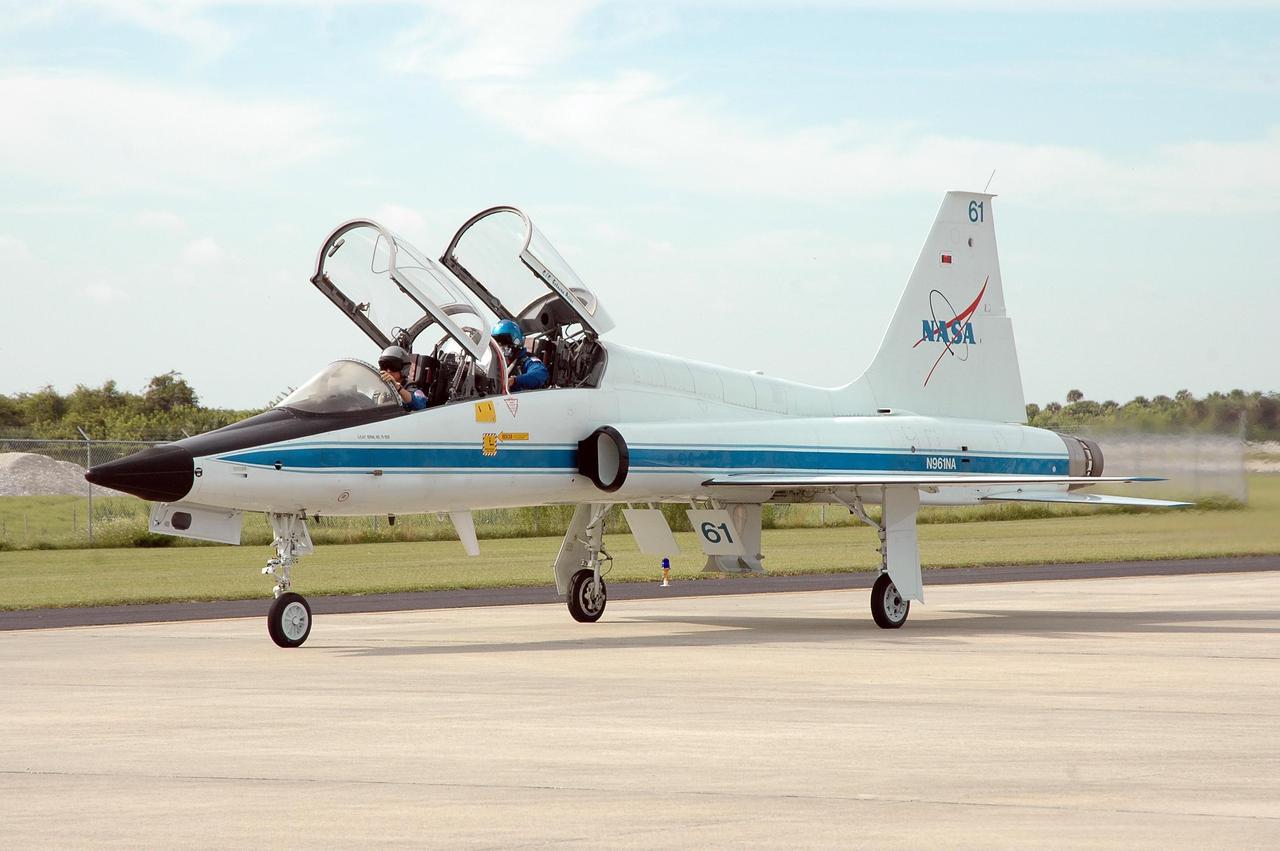
KENNEDY SPACE CENTER, FLA. - STS-116 Mission Specialist Robert Curbeam (in back) arrives at Kennedy Space Center’s Shuttle Landing Facility aboard a T-38 jet for the Crew Equipment Interface Test. Mission crews make frequent trips to the Space Coast to become familiar with the equipment and payloads they will be using. STS-116 will be mission No. 20 to the International Space Station and construction flight 12A.1. The mission payload is the SPACEHAB module, the P5 integrated truss structure and other key components. Launch is scheduled for no earlier than Dec. 7. Photo credit: NASA/Kim Shiflett
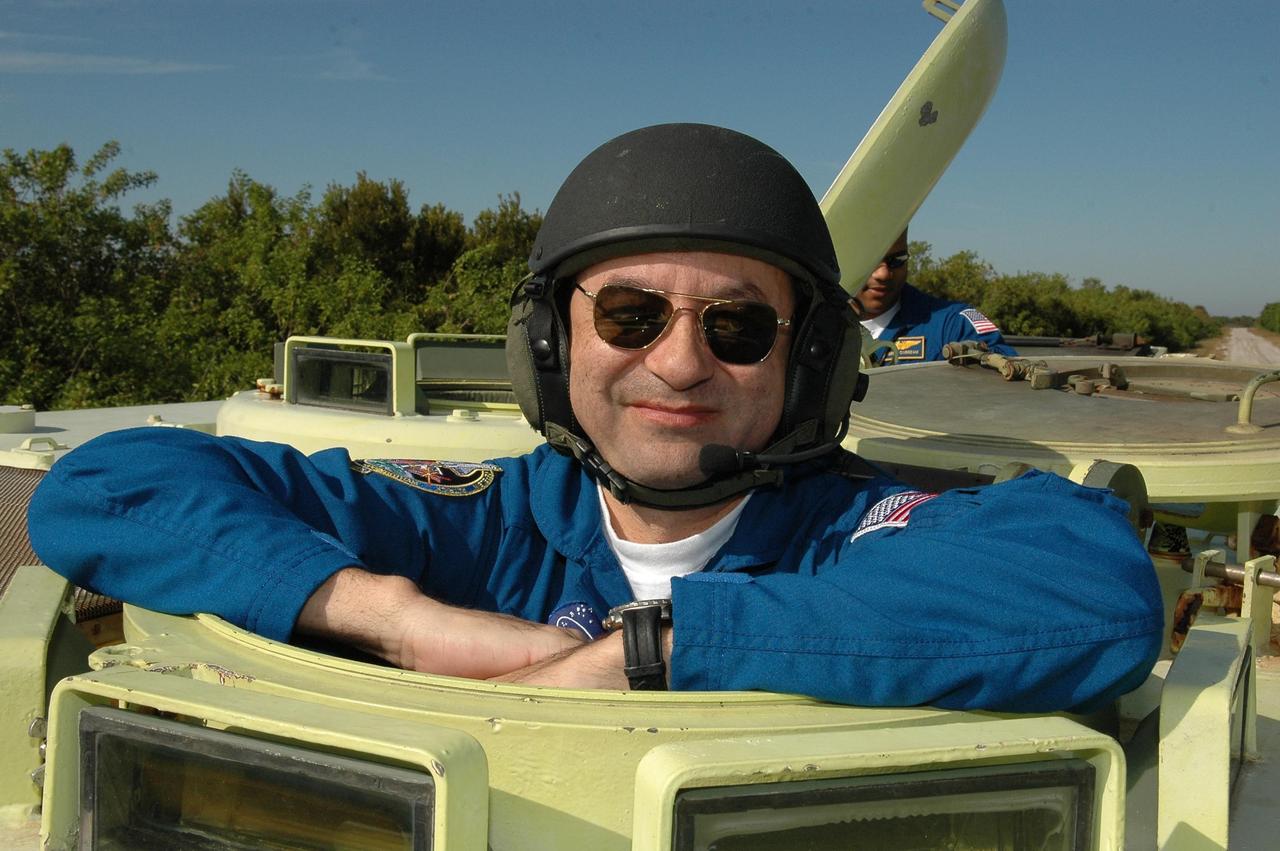
KENNEDY SPACE CENTER, FLA. -- STS-116 Commander Mark Polansky is ready for his turn at driving the M-113 armored personnel carrier. The mission crew is at KSC for terminal countdown demonstration test (TCDT) activities that are preparation for launch. The M-113 could be used to move the crew quickly away from the launch pad in the event of an emergency. Behind Polansky is Mission Specialist Robert Curbeam. The STS-116 mission is No. 20 to the International Space Station and construction flight 12A.1. The mission payload is the SPACEHAB module, the P5 integrated truss structure and other key components. Launch is scheduled for no earlier than Dec. 7. Photo credit: NASA/Kim Shiflett
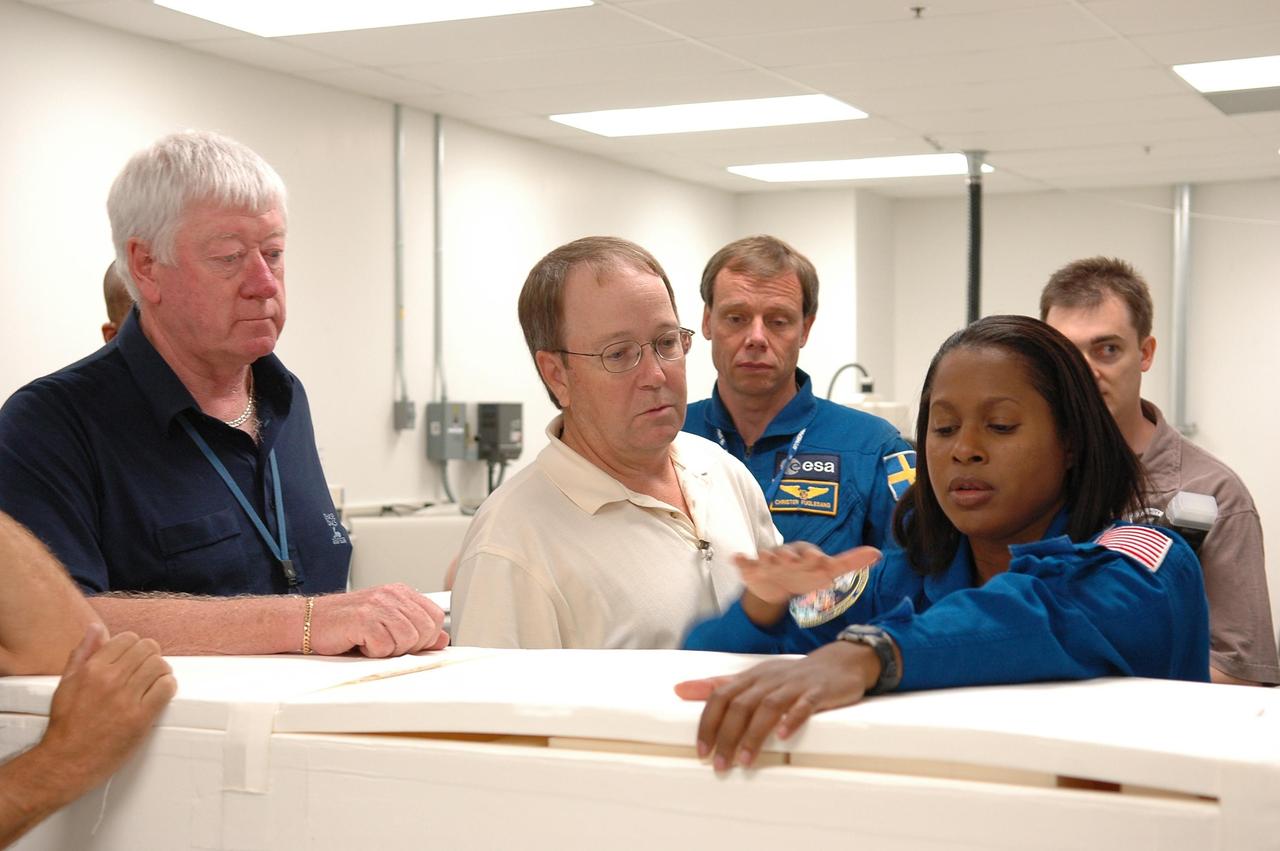
KENNEDY SPACE CENTER, FLA. - STS-116 Mission Specialists Joan Higgenbotham and Christer Fuglesang, who is with the European Space Agency, inspect flight hardware at the SPACEHAB Payload Processing Facility at Port Canaveral, Fla., during the Crew Equipment Interface Test. Mission crews make frequent trips to the Space Coast to become familiar with the equipment and payloads they will be using. STS-116 will be mission No. 20 to the International Space Station and construction flight 12A.1. The mission payload is the SPACEHAB module, the P5 integrated truss structure and other key components. Launch is scheduled for no earlier than Dec. 7. Photo credit: NASA/Kim Shiflett
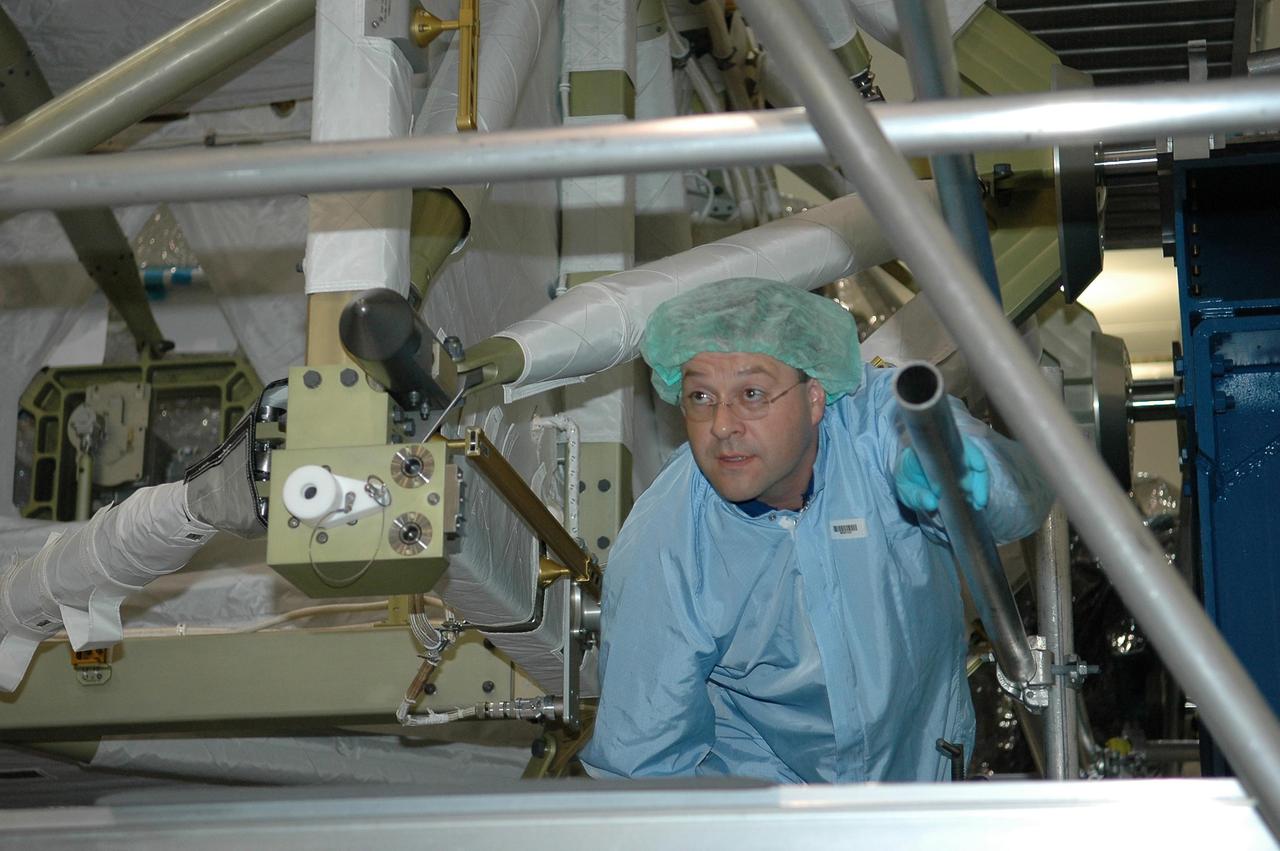
KENNEDY SPACE CENTER, FLA. - In the Space Station Processing Facility, STS-116 Mission Specialist Nicholas Patrick moves in close for a better look at the port integrated truss structure, P5, which is the primary payload on the mission. The crew is taking part in a Crew Equipment Interface Test that enables them to become familiar with the equipment and payloads they will be using. STS-116 will be mission No. 20 to the International Space Station and construction flight 12A.1. The mission payload is the SPACEHAB module, the P5 integrated truss structure and other key components. Launch is scheduled for no earlier than Dec. 7. Photo credit: NASA/Kim Shiflett
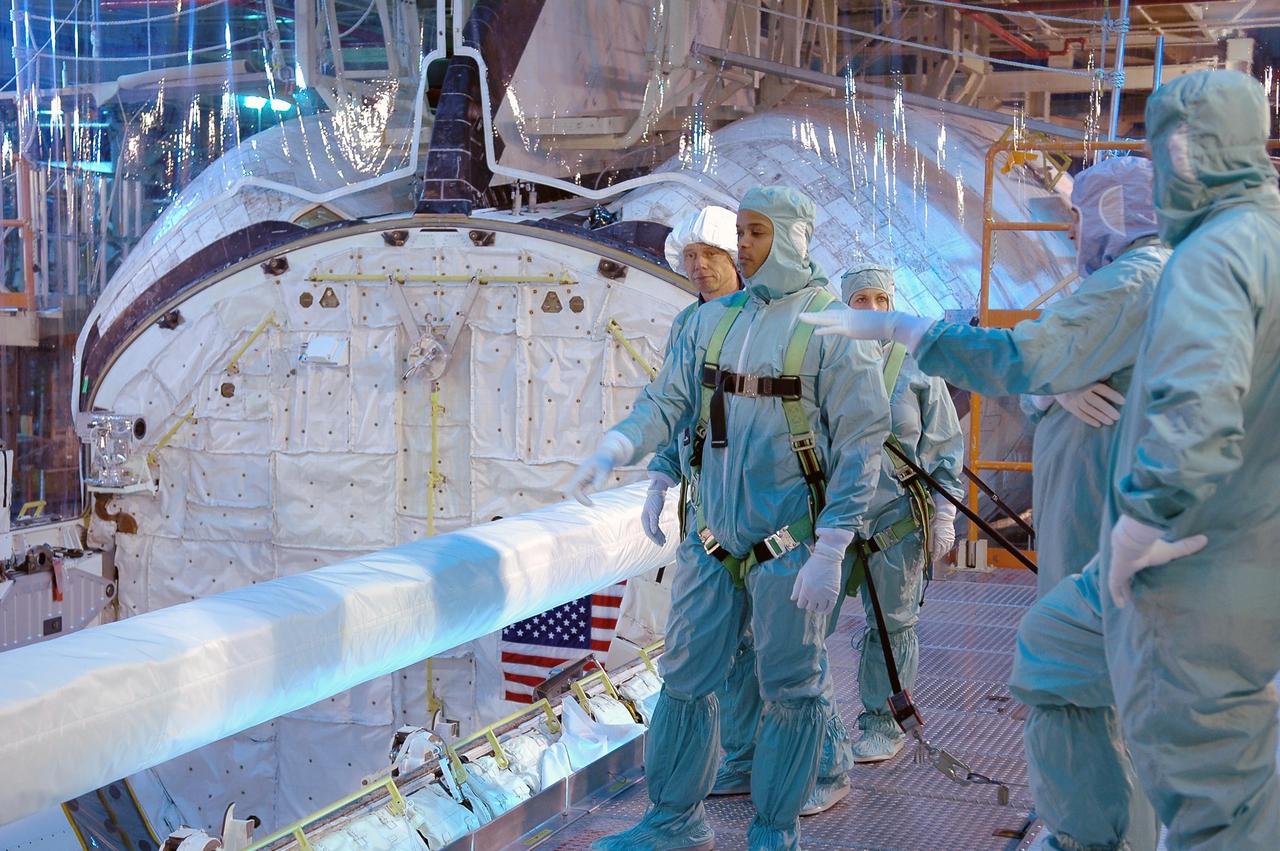
KENNEDY SPACE CENTER, FLA. - During a Crew Equipment Interface Test (CEIT) in the Orbiter Processing Facility, STS-116 crew members get information about the orbiter boom sensor system in Discovery’s payload bay. In the center are Mission Specialists Christer Fugelsang, who represents the European Space Agency, and Robert Curbeam. A CEIT allows astronauts to become familiar with equipment and hardware they will use on the mission. STS-116 will be mission No. 20 to the International Space Station and construction flight 12A.1. The mission payload is the SPACEHAB module, the P5 integrated truss structure and other key components. Launch is scheduled for no earlier than Dec. 7. Photo credit: NASA/Kim Shiflett
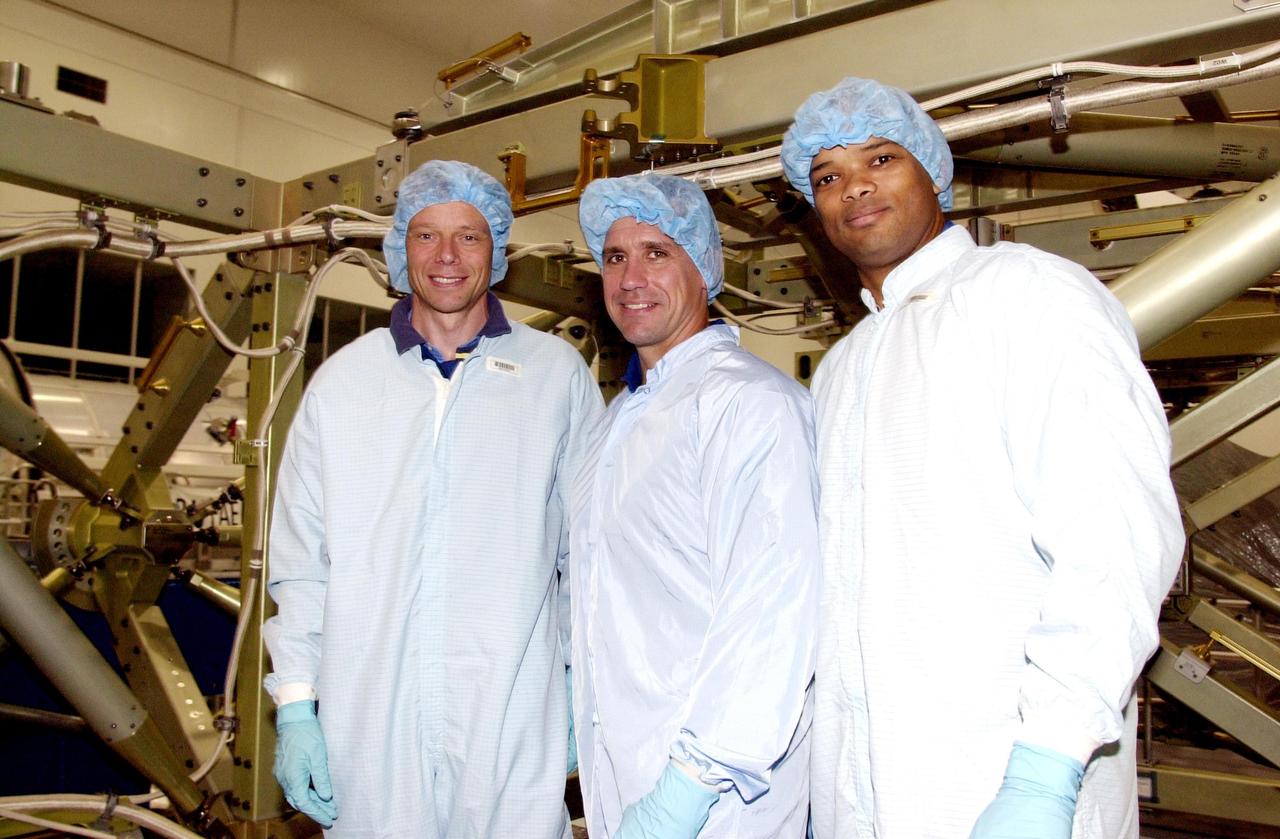
KENNEDY SPACE CENTER, FLA. -- During Crew Equipment Interface Test (CEIT), members of the STS-116 crew pose in front of trusses they will be working with during their mission to the International Space Station. From left are Mission Specialist Christer Fugelsang, with the European Space Agency, Pilot William Oefelein and Mission Specialist Robert Curbeam. The 19th assembly flight to the ISS, the mission will deliver the third port truss segment, the P5 Truss, to attach to second port truss segment, the P3/P4 Truss, to be assembled in an earlier mission. STS-116 is scheduled for launch in June 2003.
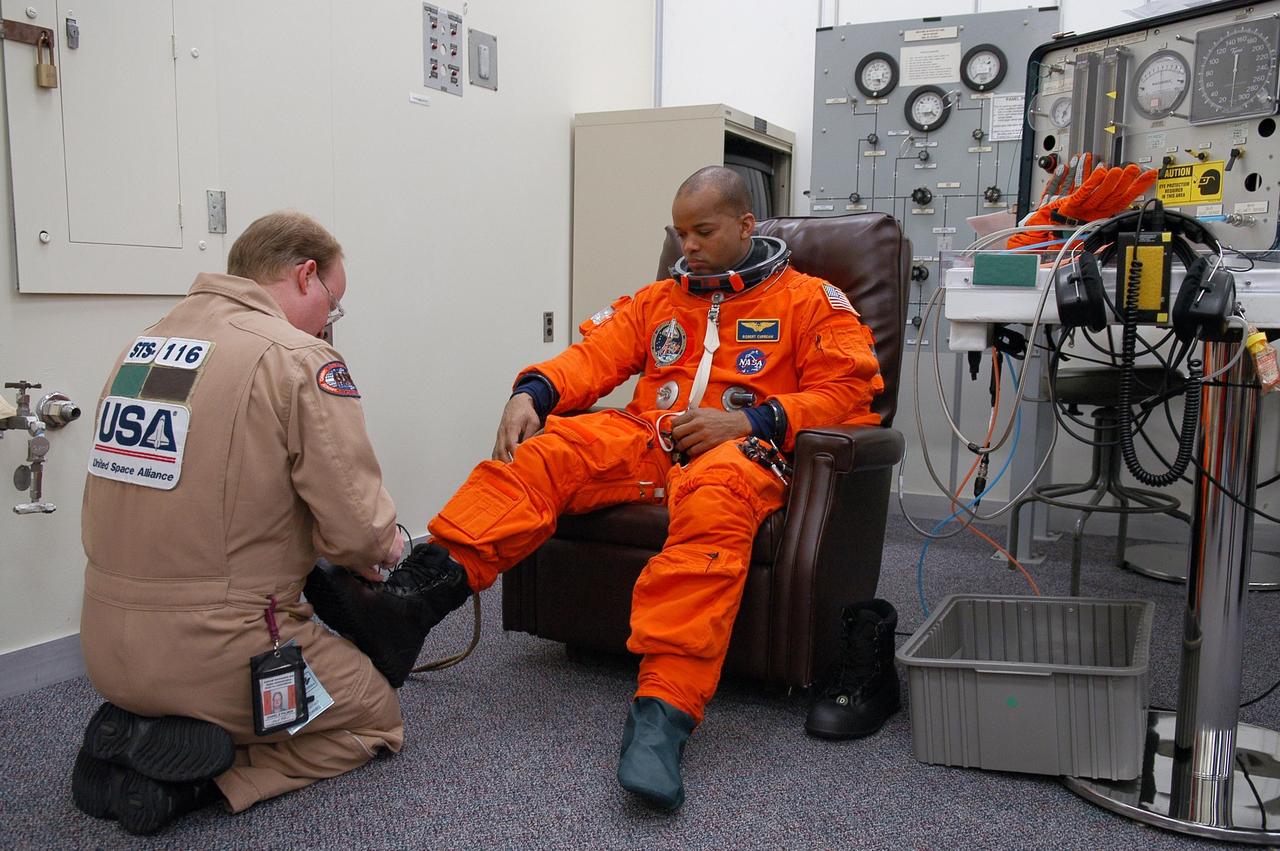
KENNEDY SPACE CENTER, FLA. -- The STS-116 mission crew practices for launch with a simulation of activities, from crew breakfast and suit-up to countdown in the orbiter. In this photo Mission Specialist Robert Curbeam gets help fitting his boot before heading to Launch Pad 39B. The STS-116 mission is No. 20 to the International Space Station and construction flight 12A.1. The mission payload is the SPACEHAB module, the P5 integrated truss structure and other key components. Launch is scheduled for no earlier than Dec. 7. Photo credit: NASA/Kim Shiflett
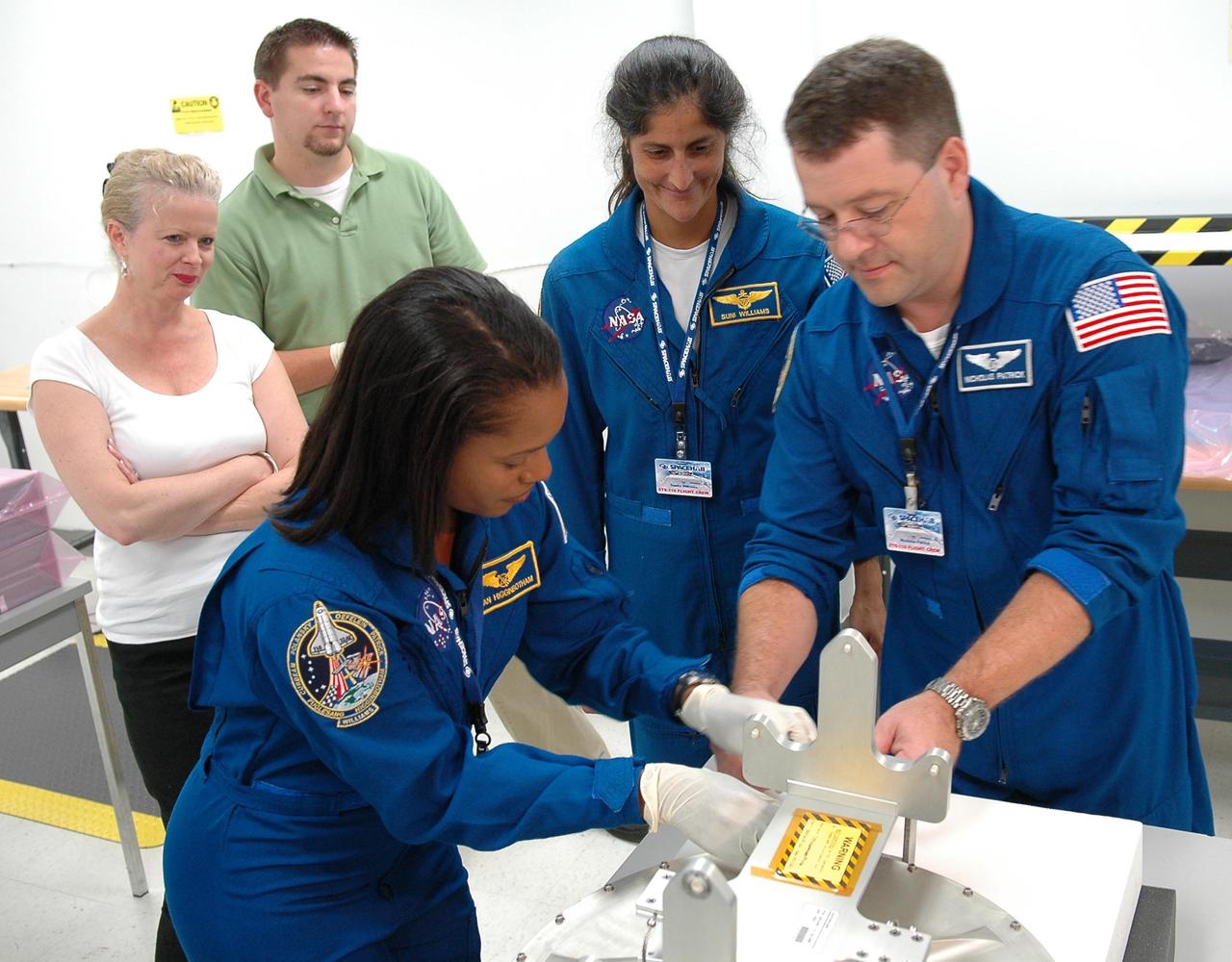
KENNEDY SPACE CENTER, FLA. - Inside the SPACEHAB Payload Processing Facility at Port Canaveral, Fla., STS-116 Mission Specialists (from left) Joan Higginbotham, Sunita Williams and Nicholas Patrick look over flight hardware during the Crew Equipment Interface Test. Mission crews make frequent trips to the Space Coast to become familiar with the equipment and payloads they will be using. STS-116 will be mission No. 20 to the International Space Station and construction flight 12A.1. The mission payload is the SPACEHAB module, the P5 integrated truss structure and other key components. Launch is scheduled for no earlier than Dec. 7. Photo credit: NASA/Kim Shiflett
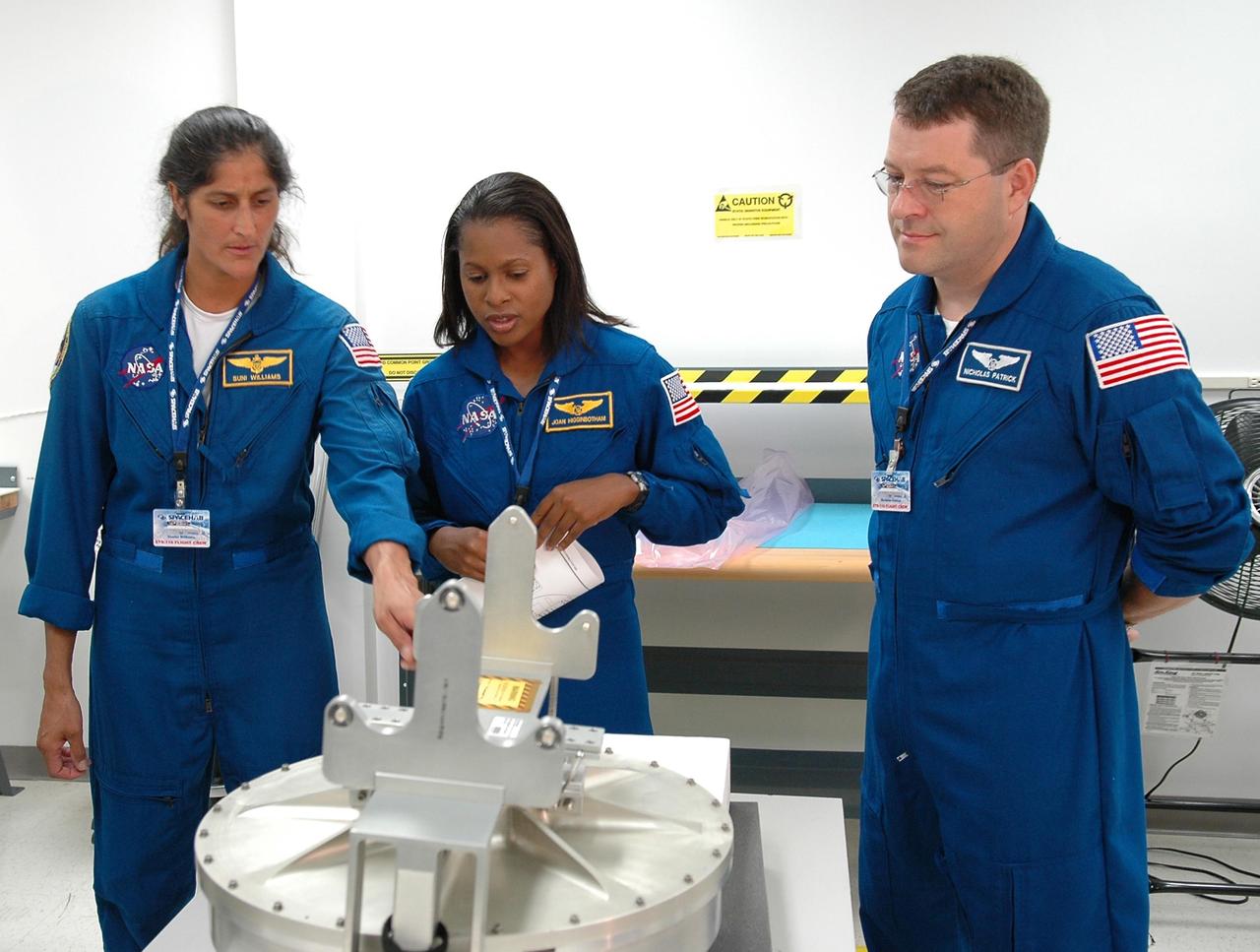
KENNEDY SPACE CENTER, FLA. - Inside the SPACEHAB Payload Processing Facility at Port Canaveral, Fla., STS-116 Mission Specialists (from left) Sunita Williams, Joan Higginbotham and Nicholas Patrick look over flight hardware during the Crew Equipment Interface Test. Mission crews make frequent trips to the Space Coast to become familiar with the equipment and payloads they will be using. STS-116 will be mission No. 20 to the International Space Station and construction flight 12A.1. The mission payload is the SPACEHAB module, the P5 integrated truss structure and other key components. Launch is scheduled for no earlier than Dec. 7. Photo credit: NASA/Kim Shiflett
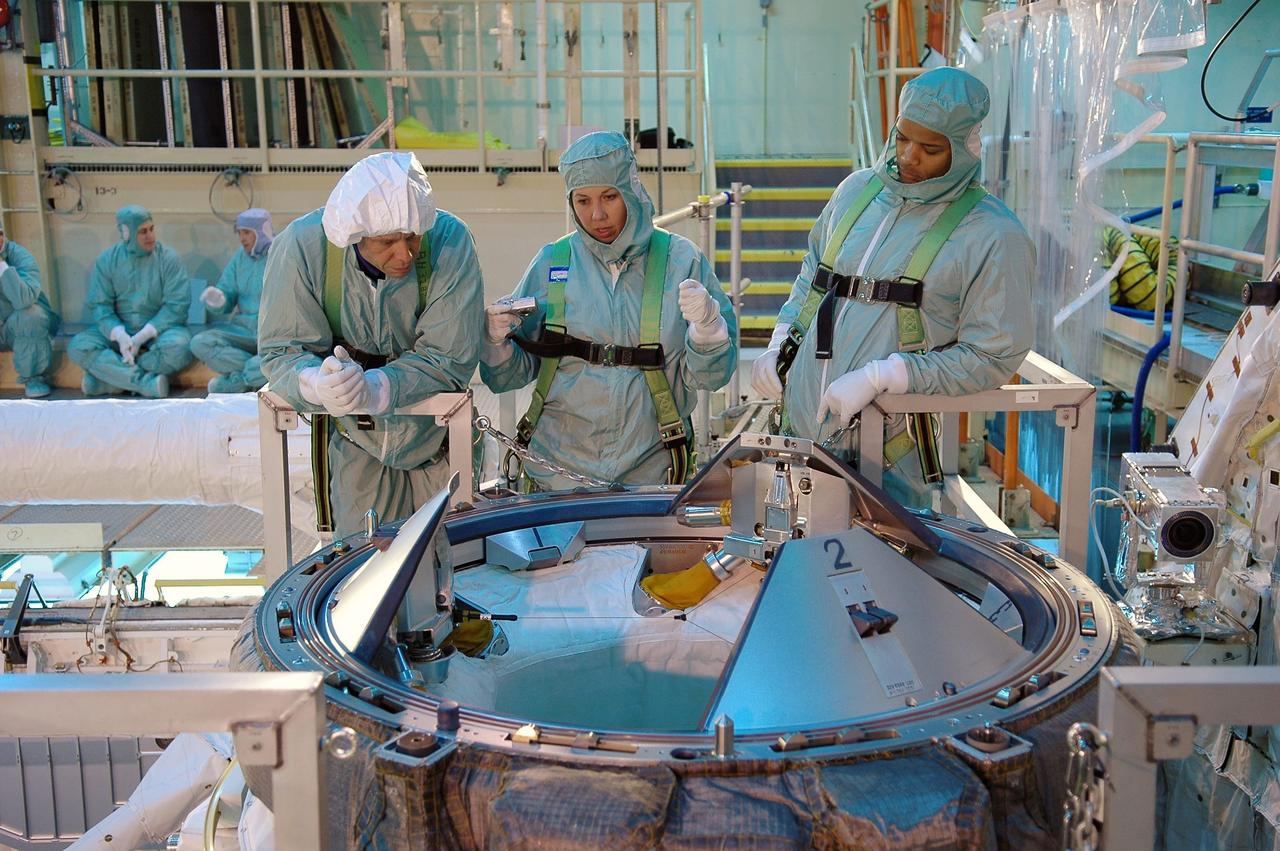
KENNEDY SPACE CENTER, FLA. - During a Crew Equipment Interface Test (CEIT) in the Orbiter Processing Facility, STS-116 crew members get information about the external air lock they are looking at. At left is Mission Specialist Christer Fugelsang and at right is Mission Specialist Robert Curbeam. Fugelsang represents the European Space Agency. A CEIT allows astronauts to become familiar with equipment and hardware they will use on the mission. STS-116 will be mission No. 20 to the International Space Station and construction flight 12A.1. The mission payload is the SPACEHAB module, the P5 integrated truss structure and other key components. Launch is scheduled for no earlier than Dec. 7. Photo credit: NASA/Kim Shiflett

KENNEDY SPACE CENTER, FLA. - Inside the SPACEHAB Payload Processing Facility at Port Canaveral, Fla., STS-116 Mission Specialist Joan Higginbotham looks over flight hardware during the Crew Equipment Interface Test. Mission crews make frequent trips to the Space Coast to become familiar with the equipment and payloads they will be using. STS-116 will be mission No. 20 to the International Space Station and construction flight 12A.1. The mission payload is the SPACEHAB module, the P5 integrated truss structure and other key components. Launch is scheduled for no earlier than Dec. 7. Photo credit: NASA/Kim Shiflett
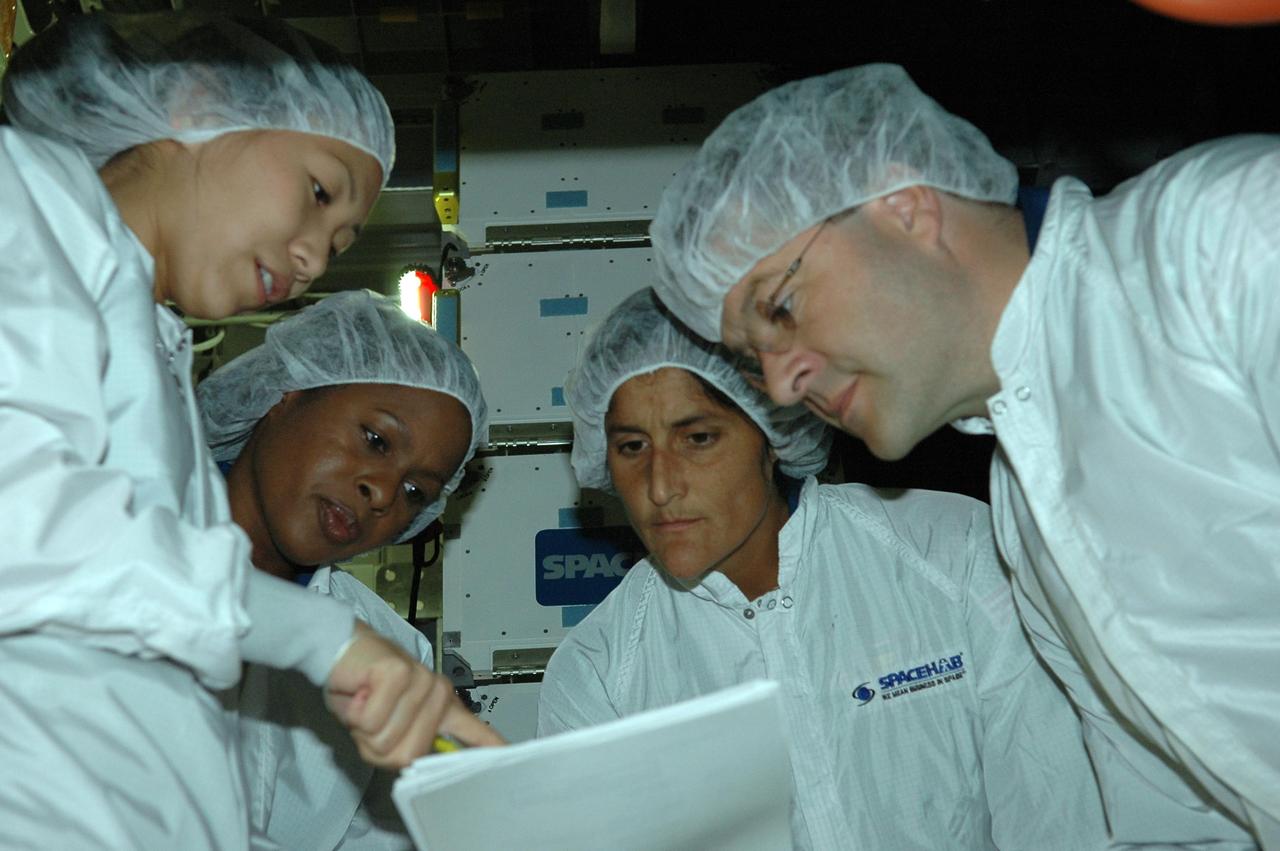
KENNEDY SPACE CENTER, FLA. - Inside the SPACEHAB Payload Processing Facility at Port Canaveral, Fla., (from left) a technician reviews procedures with STS-116 Mission Specialists Joan Higgenbotham, Sunita Williams and Nicholas Patrick during the Crew Equipment Interface Test. Mission crews make frequent trips to the Space Coast to become familiar with the equipment and payloads they will be using. STS-116 will be mission No. 20 to the International Space Station and construction flight 12A.1. The mission payload is the SPACEHAB module, the P5 integrated truss structure and other key components. Launch is scheduled for no earlier than Dec. 7. Photo credit: NASA/Kim Shiflett
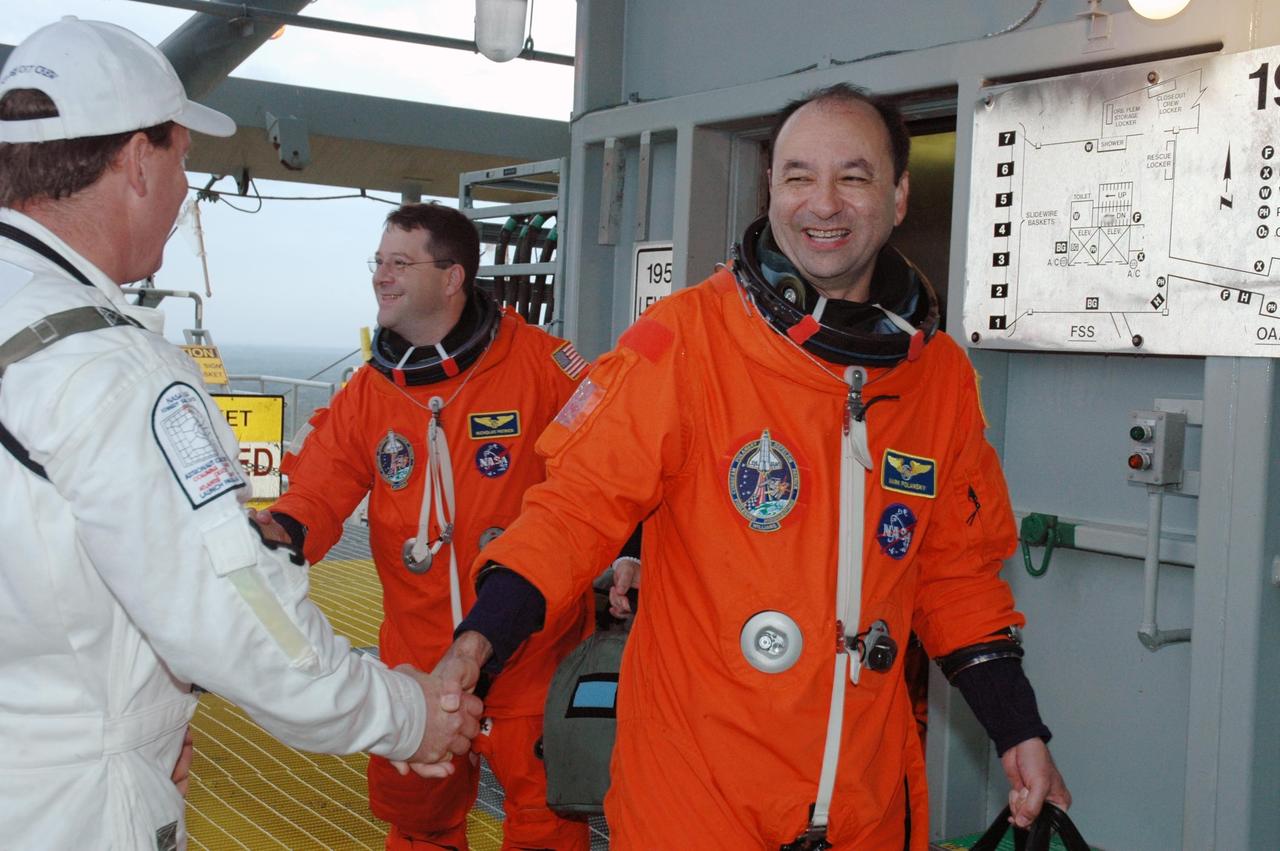
KENNEDY SPACE CENTER, FLA. -- On their way to the white room on Launch Pad 39B to enter Space Shuttle Discovery, Commander Mark Polansky (right) and Mission Specialist Nicholas Patrick are greeted by the closeout crew. The STS-116 mission crew practices for launch with a simulation of activities, from suit-up to countdown in the orbiter. The STS-116 mission is No. 20 to the International Space Station and construction flight 12A.1. The mission payload is the SPACEHAB module, the P5 integrated truss structure and other key components. Launch is scheduled for no earlier than Dec. 7. Photo credit: NASA/Amanda Diller
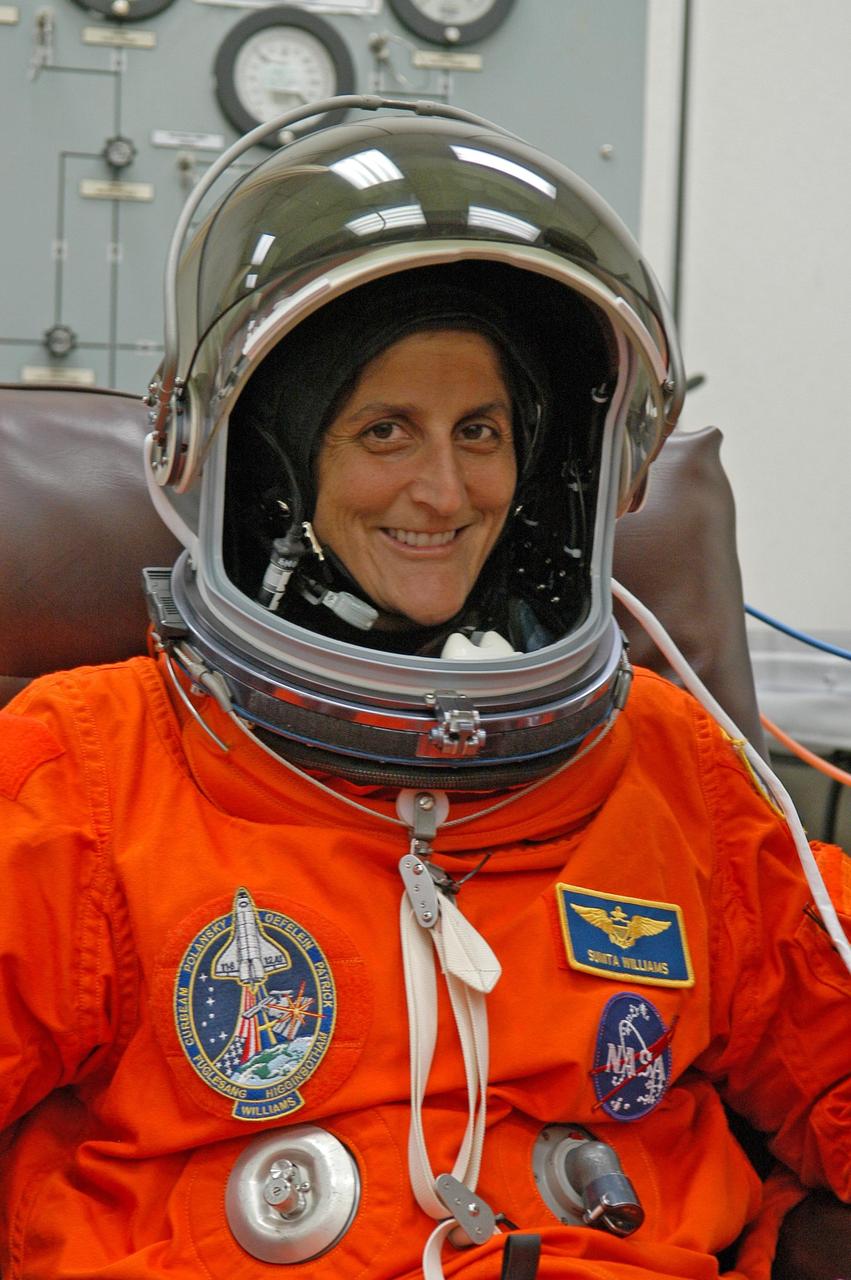
KENNEDY SPACE CENTER, FLA. -- The STS-116 mission crew practices for launch with a simulation of activities, from crew breakfast and suit-up to countdown in the orbiter. In this photo Mission Specialist Sunita Williams puts on her helmet before heading to Launch Pad 39B. The STS-116 mission is No. 20 to the International Space Station and construction flight 12A.1. The mission payload is the SPACEHAB module, the P5 integrated truss structure and other key components. Launch is scheduled for no earlier than Dec. 7. Photo credit: NASA/Kim Shiflett
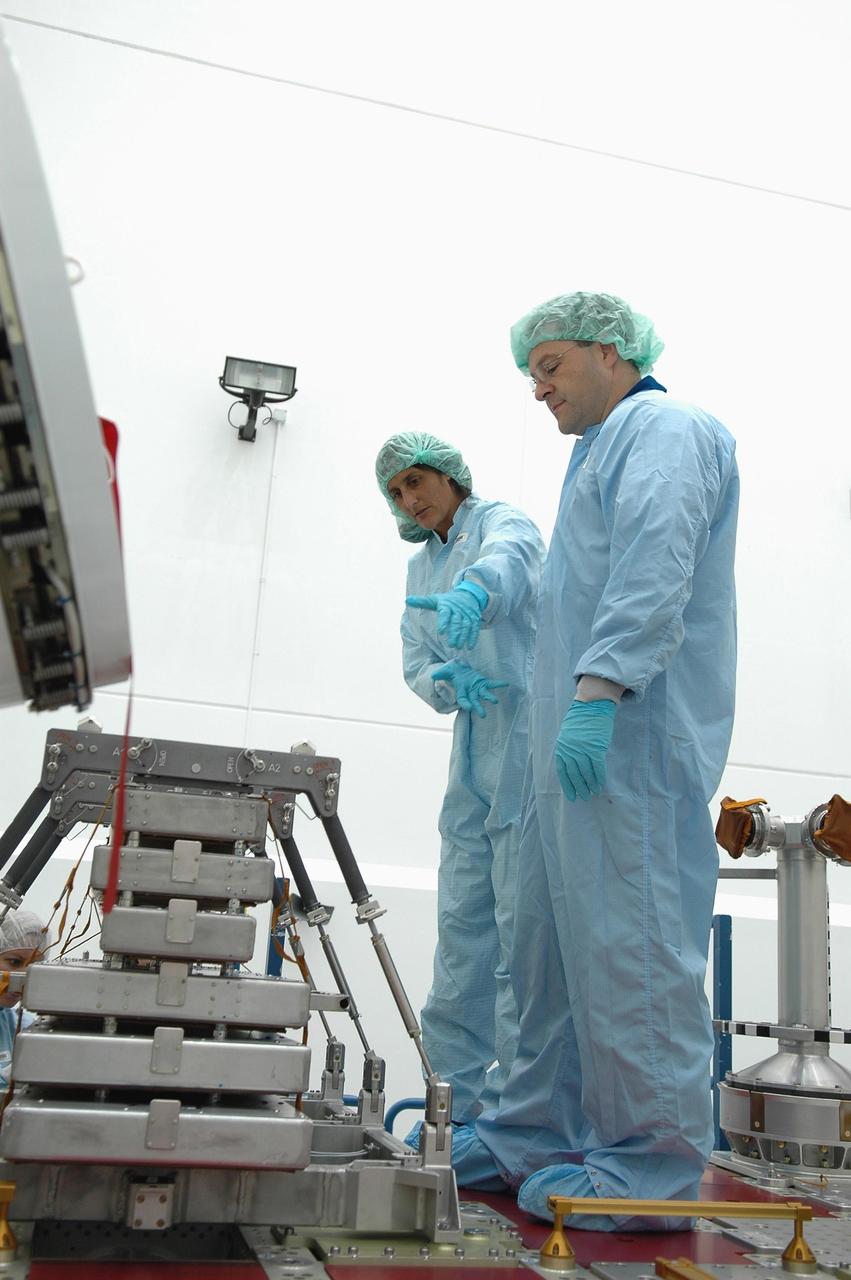
KENNEDY SPACE CENTER, FLA. - Inside Astrotech Space Operations in Titusville, Fla., STS-116 Mission Specialists Sunita Williams and Nicholas Patrick are inspecting flight hardware during the Crew Equipment Interface Test. Mission crews make frequent trips to the Kennedy Space Center to become familiar with the equipment and payloads they will be using. STS-116 will be mission No. 20 to the International Space Station and construction flight 12A.1. The mission payload is the SPACEHAB module, the P5 integrated truss structure and other key components. Launch is scheduled for no earlier than Dec. 7. Photo credit: NASA/Kim Shiflett
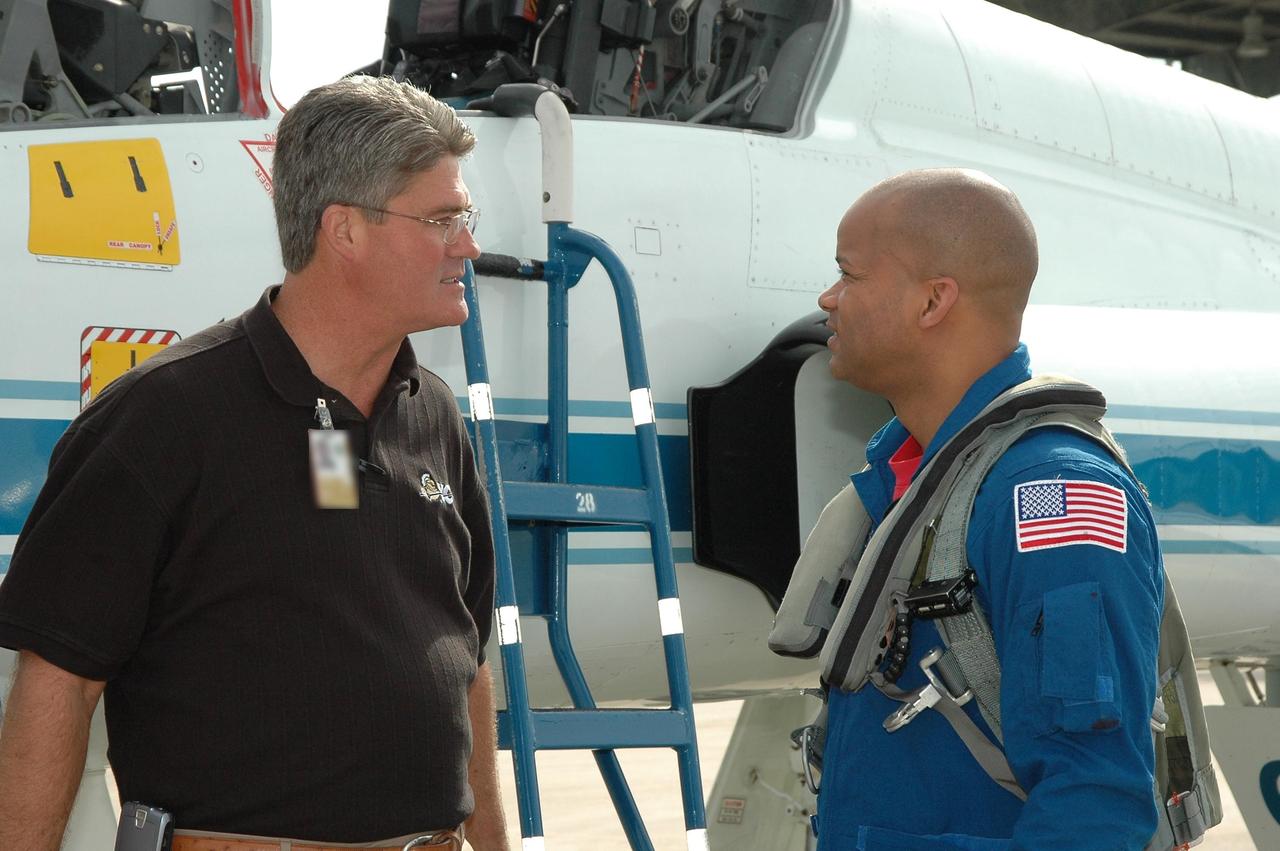
KENNEDY SPACE CENTER, FLA. - At Kennedy Space Center’s Shuttle Landing Facility, Deputy Director William Parsons (left) greets STS-116 Mission Specialist Robert Curbeam after his arrival for the Crew Equipment Interface Test. Mission crews make frequent trips to the Space Coast to become familiar with the equipment and payloads they will be using. STS-116 will be mission No. 20 to the International Space Station and construction flight 12A.1. The mission payload is the SPACEHAB module, the P5 integrated truss structure and other key components. Launch is scheduled for no earlier than Dec. 7. Photo credit: NASA/Kim Shiflett

KENNEDY SPACE CENTER, FLA. -- On the fixed service structure on Launch Pad 39B, the STS-116 crew gets instruction on using the slidewire baskets for emergency egress from the orbiter. The astronauts seen here are (on the left) Mission Specialists Christer Fuglesang, Sunita Williams and Joan Higginbotham and (on the right) Mission Specialists Robert Curbeam and Nicholas Patrick. The mission crew is at KSC for the TCDT, which includes a simulated launch countdown. The STS-116 mission is No. 20 to the International Space Station and construction flight 12A.1. The mission payload is the SPACEHAB module, the P5 integrated truss structure and other key components. Launch is scheduled for no earlier than Dec. 7. Photo credit: NASA/Kim Shiflett
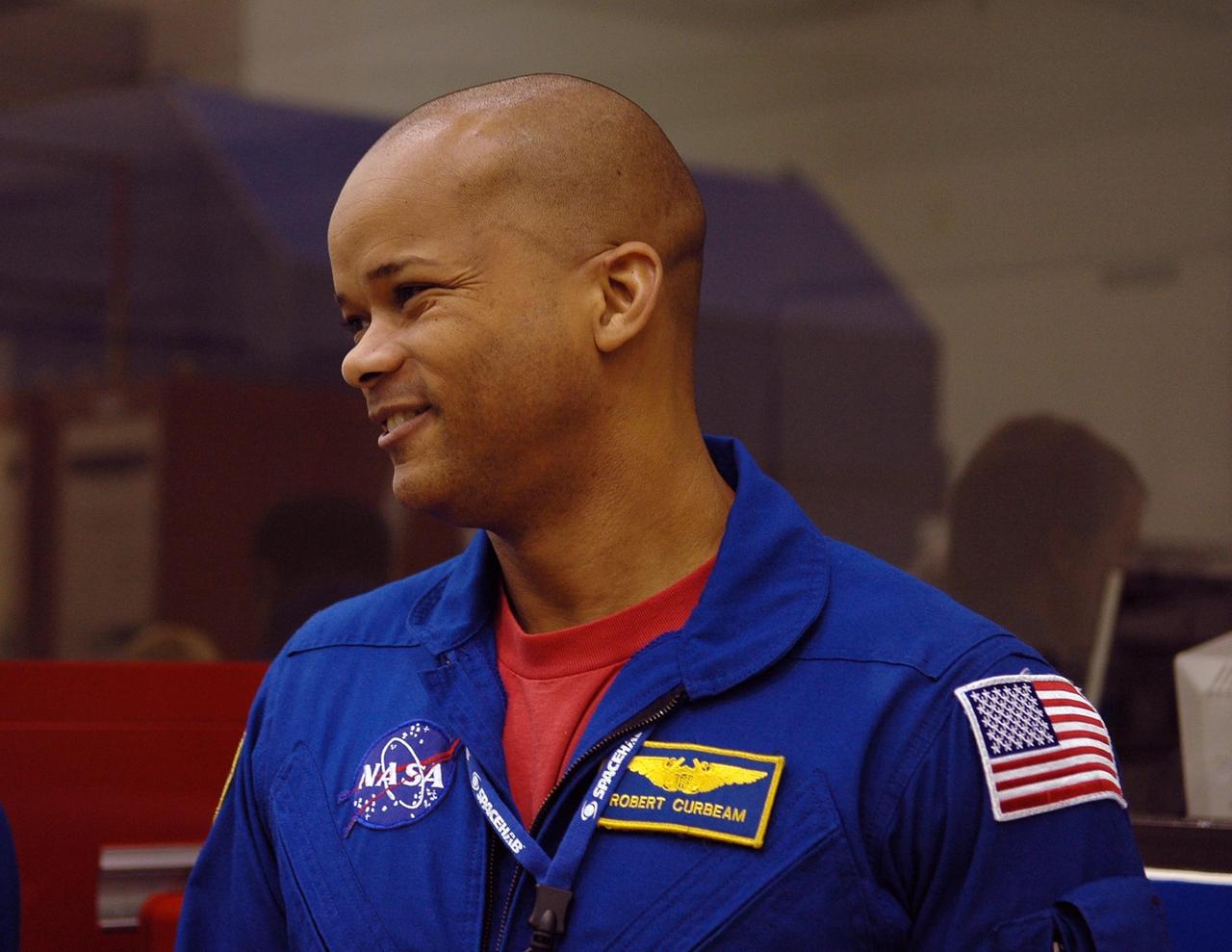
KENNEDY SPACE CENTER, FLA. - STS-116 Mission Specialist Robert Curbeam arrives at the SPACEHAB Payload Processing Facility at Port Canaveral, Fla., to participate in the Crew Equipment Interface Test. Mission crews make frequent trips to the Space Coast to become familiar with the equipment and payloads they will be using. STS-116 will be mission No. 20 to the International Space Station and construction flight 12A.1. The mission payload is the SPACEHAB module, the P5 integrated truss structure and other key components. Launch is scheduled for no earlier than Dec. 7. Photo credit: NASA/Kim Shiflett
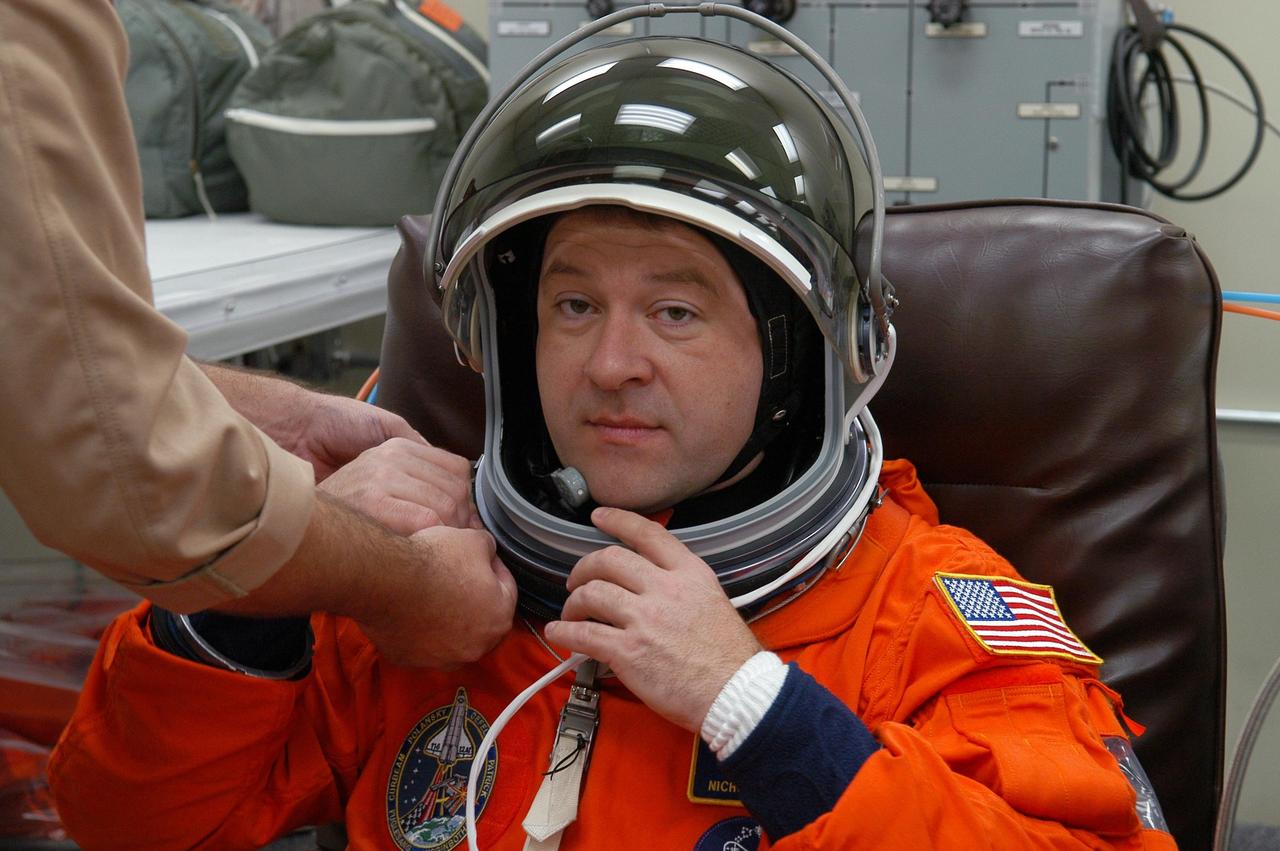
KENNEDY SPACE CENTER, FLA. -- The STS-116 mission crew practices for launch with a simulation of activities, from crew breakfast and suit-up to countdown in the orbiter. In this photo Mission Specialist Nicholas Patrick puts on his helmet before heading to Launch Pad 39B. The STS-116 mission is No. 20 to the International Space Station and construction flight 12A.1. The mission payload is the SPACEHAB module, the P5 integrated truss structure and other key components. Launch is scheduled for no earlier than Dec. 7. Photo credit: NASA/Kim Shiflett
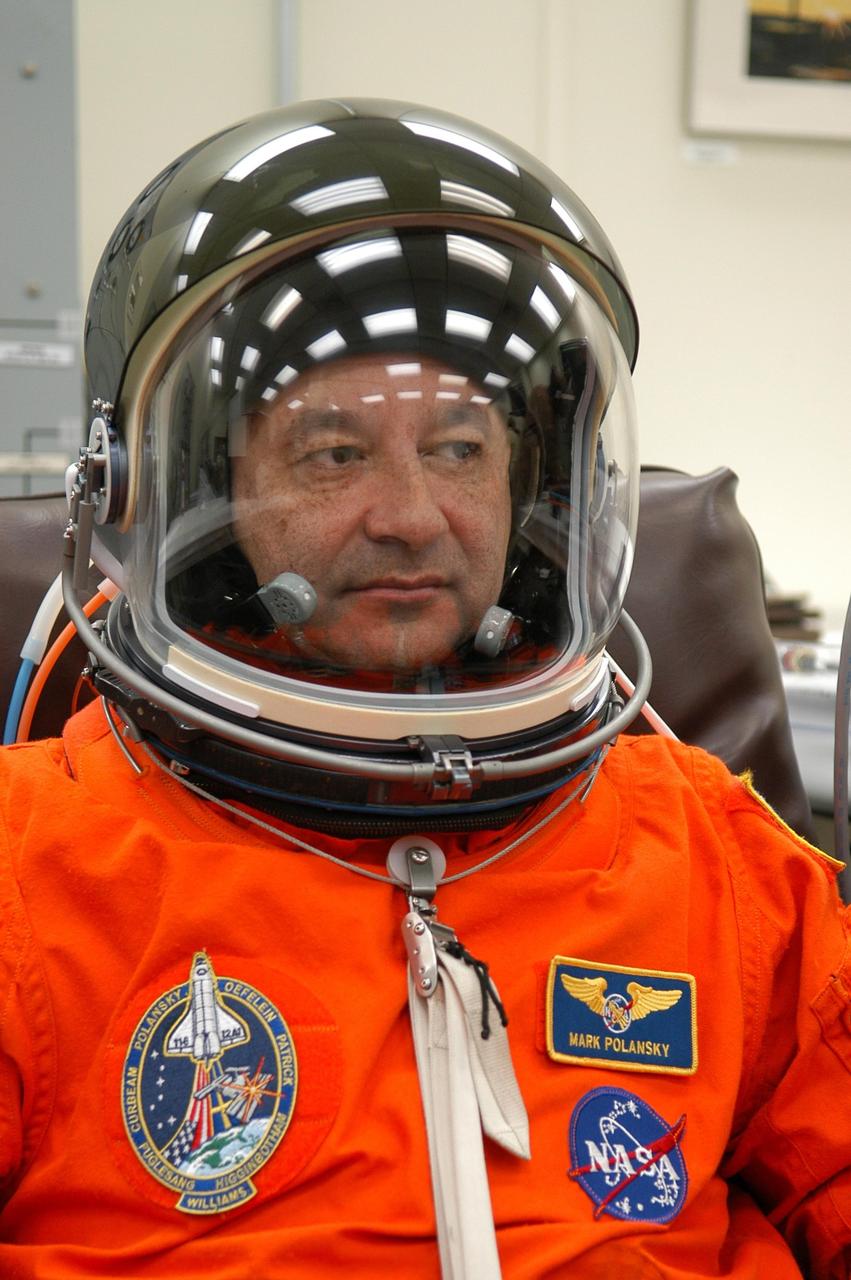
KENNEDY SPACE CENTER, FLA. -- The STS-116 mission crew practices for launch with a simulation of activities, from crew breakfast and suit-up to countdown in the orbiter. In this photo Commander Mark Polansky completes his suit fitting before heading to Launch Pad 39B. The STS-116 mission is No. 20 to the International Space Station and construction flight 12A.1. The mission payload is the SPACEHAB module, the P5 integrated truss structure and other key components. Launch is scheduled for no earlier than Dec. 7. Photo credit: NASA/Kim Shiflett
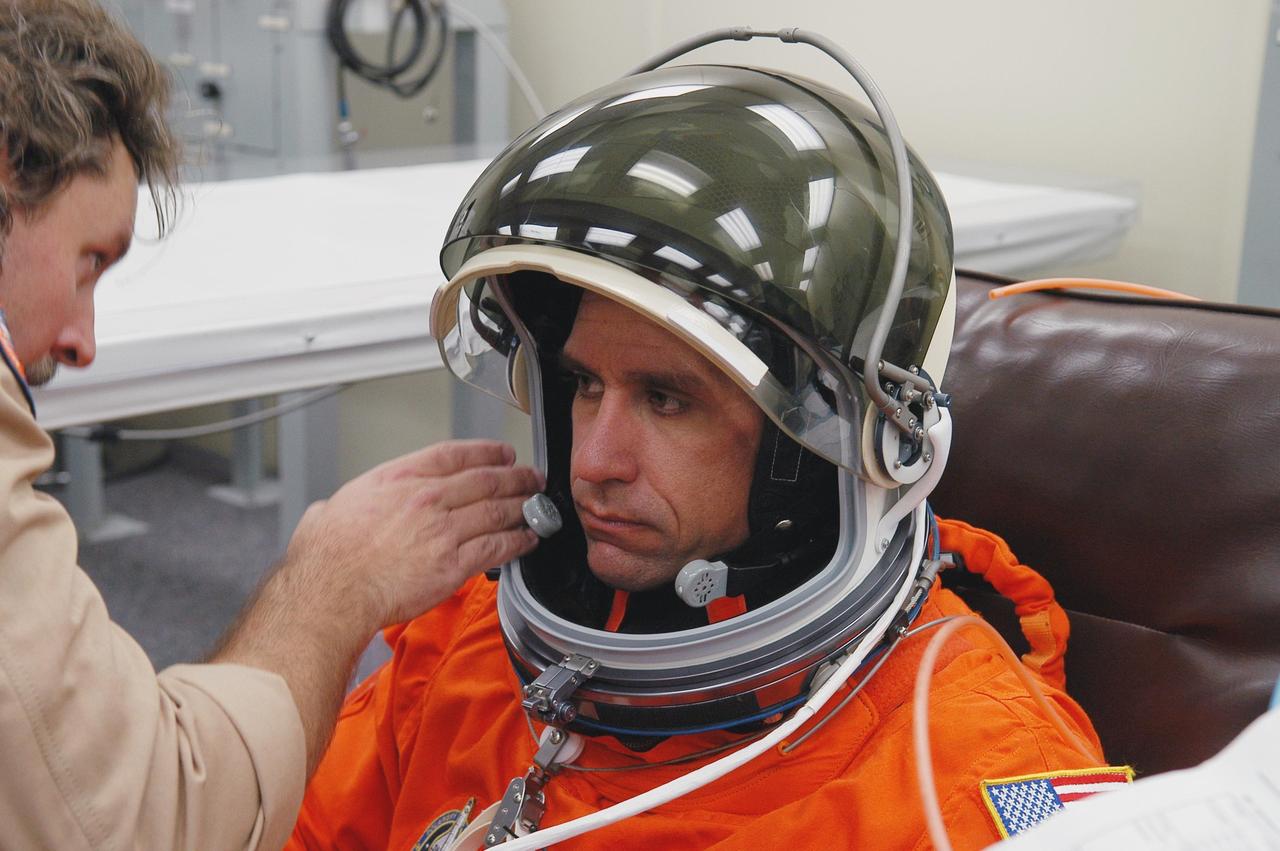
KENNEDY SPACE CENTER, FLA. -- The STS-116 mission crew practices for launch with a simulation of activities, from crew breakfast and suit-up to countdown in the orbiter. In this photo Pilot William Oefelein has his helmet adjusted before heading to Launch Pad 39B. The STS-116 mission is No. 20 to the International Space Station and construction flight 12A.1. The mission payload is the SPACEHAB module, the P5 integrated truss structure and other key components. Launch is scheduled for no earlier than Dec. 7. Photo credit: NASA/Kim Shiflett