
Stennis Space Center Director Gene Goldman (r to l) presents a commemorative photo of a space shuttle main engine test firing to STS-119 Mission Commander Lee Archambault, Pilot Tony Antonelli and Mission Specialists Steve Swanson and Richard Arnold during the crew's May 5 visit to the facility.
CAPE CANAVERAL, Fla. – In the Space Station Processing Facility at NASA's Kennedy Space Center, from left, STS-119 Mission Specialists Steve Swanson, Richard Arnold and Joseph Acaba inspect hardware slated to fly on their upcoming space shuttle mission. On the STS-119 mission, space shuttle Discovery will carry the S6 truss segment to complete the 361-foot-long backbone of the International Space Station. The truss includes the fourth pair of solar array wings and electronics that convert sunlight to power for the orbiting laboratory. Launch is targeted for Feb. 12, 2009. Photo credit: NASA/Kim Shiflett
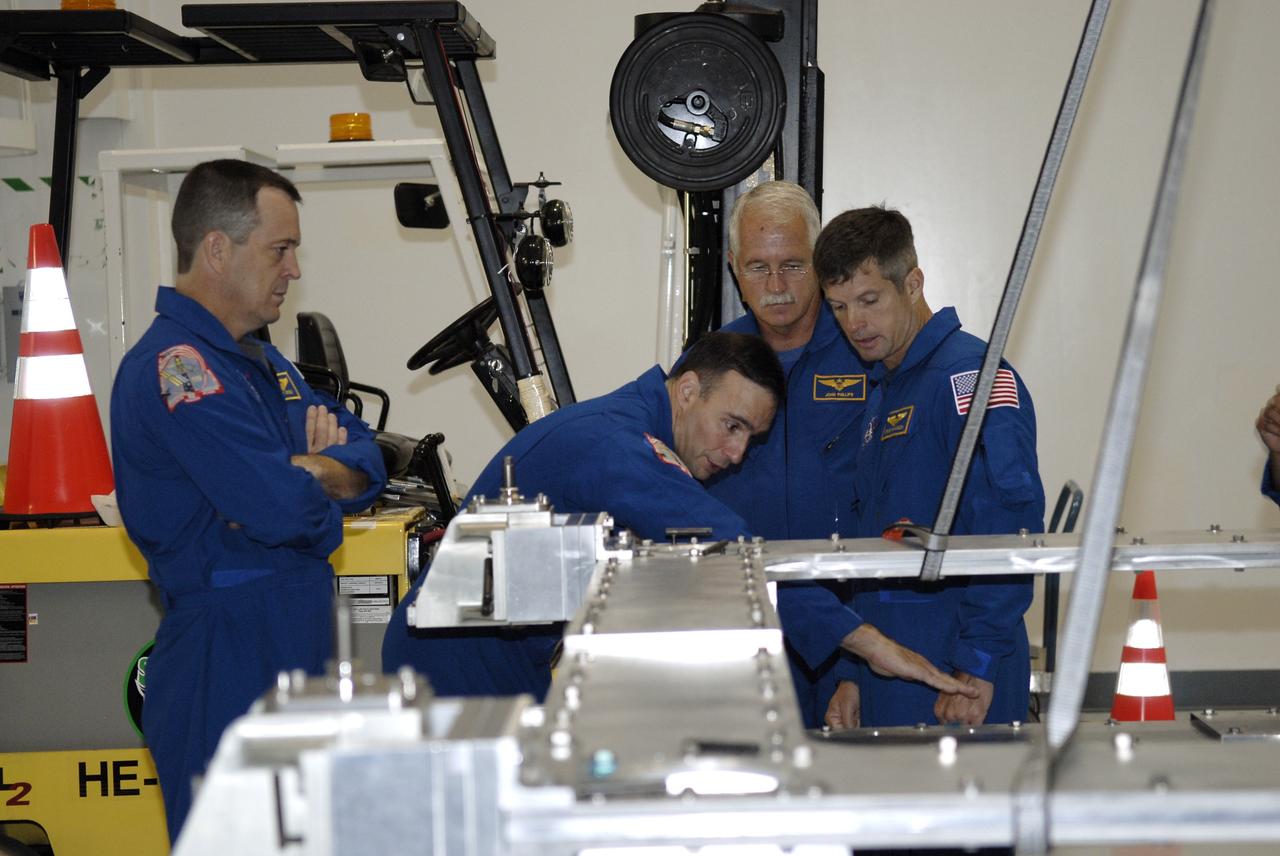
CAPE CANAVERAL, Fla. – In the Space Station Processing Facility at NASA's Kennedy Space Center, from left, STS-119 Mission Specialist Richard Arnold, Commander Lee Archambault, and Mission Specialists John Phillips and Steve Swanson familiarize themselves with hardware slated to fly on their upcoming space shuttle mission. On the STS-119 mission, space shuttle Discovery will carry the S6 truss segment to complete the 361-foot-long backbone of the International Space Station. The truss includes the fourth pair of solar array wings and electronics that convert sunlight to power for the orbiting laboratory. Launch is targeted for Feb. 12, 2009. Photo credit: NASA/Kim Shiflett
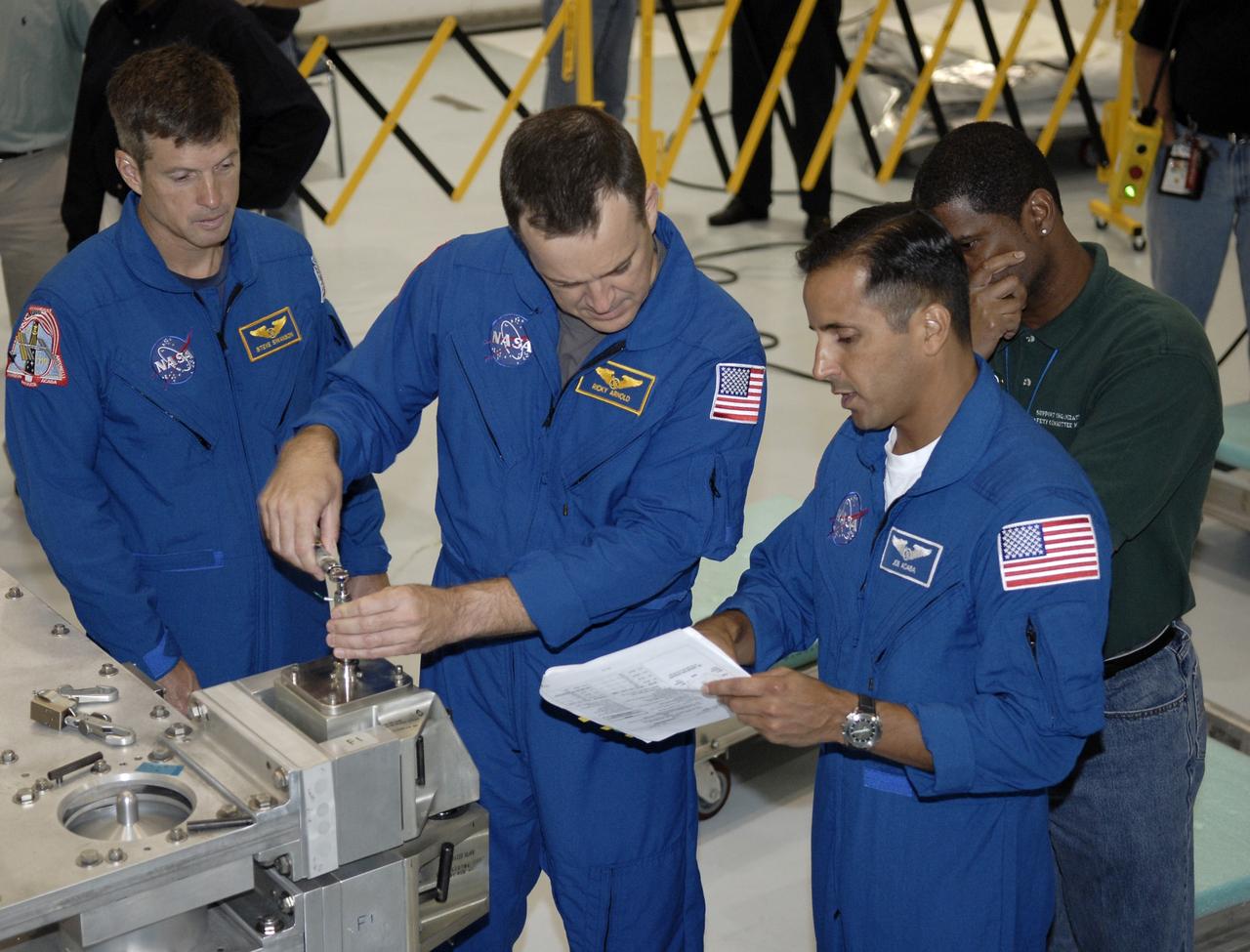
CAPE CANAVERAL, Fla. - In the Space Station Processing Facility at NASA's Kennedy Space Center, STS-119 Mission Specialist Richard Arnold, assisted by Mission Specialist Joseph Acaba at right, gets some hands-on training with hardware slated to fly on his upcoming space shuttle mission. Mission Specialist Steve Swanson observes at left. On the STS-119 mission, space shuttle Discovery will carry the S6 truss segment to complete the 361-foot-long backbone of the International Space Station. The truss includes the fourth pair of solar array wings and electronics that convert sunlight to power for the orbiting laboratory. Launch is targeted for Feb. 12, 2009. Photo credit: NASA/Kim Shiflett
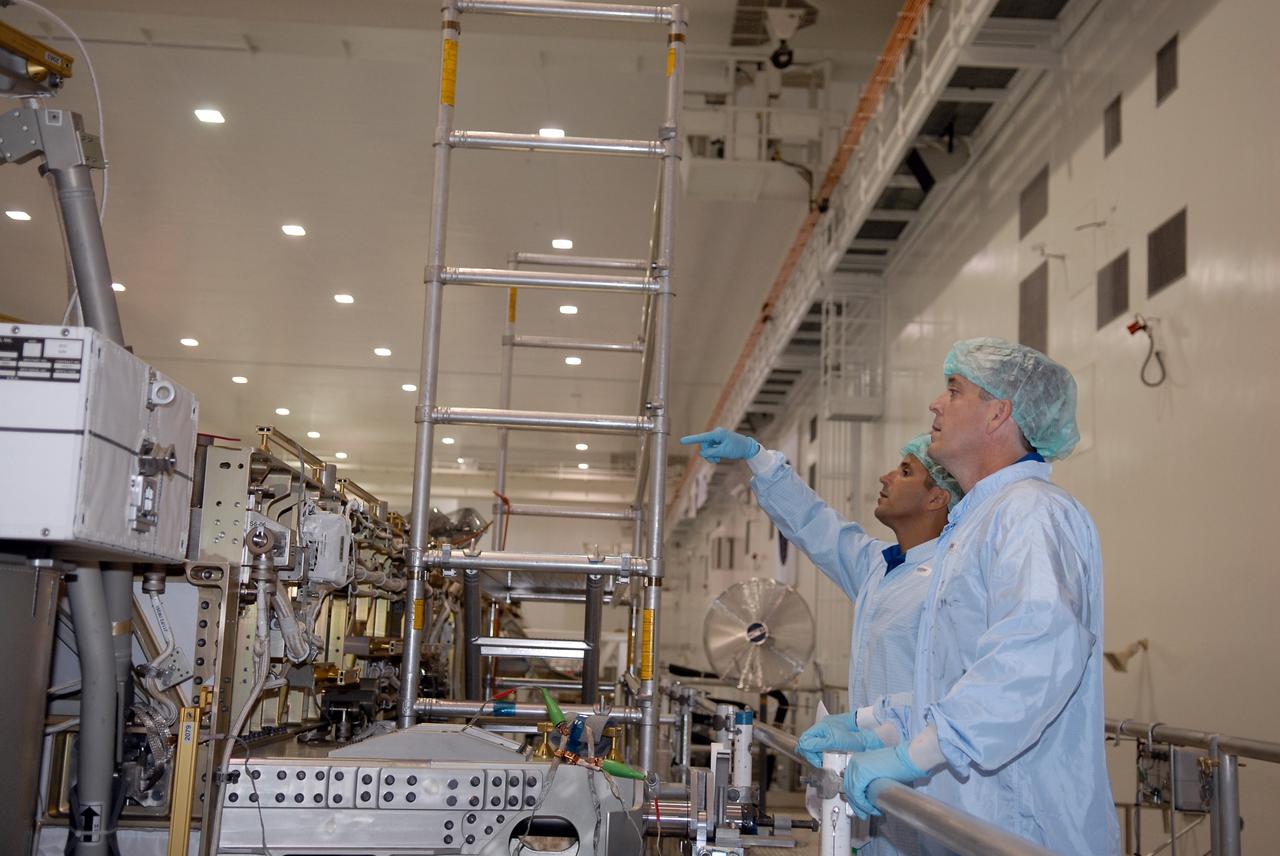
CAPE CANAVERAL, Fla. – In the Space Station Processing Facility at NASA's Kennedy Space Center, STS-119 Mission Specialists Joseph Acaba, left, and Richard Arnold inspect hardware slated to fly on their upcoming space shuttle mission. On the STS-119 mission, space shuttle Discovery will carry the S6 truss segment to complete the 361-foot-long backbone of the International Space Station. The truss includes the fourth pair of solar array wings and electronics that convert sunlight to power for the orbiting laboratory. Launch is targeted for Feb. 12, 2009. Photo credit: NASA/Kim Shiflett
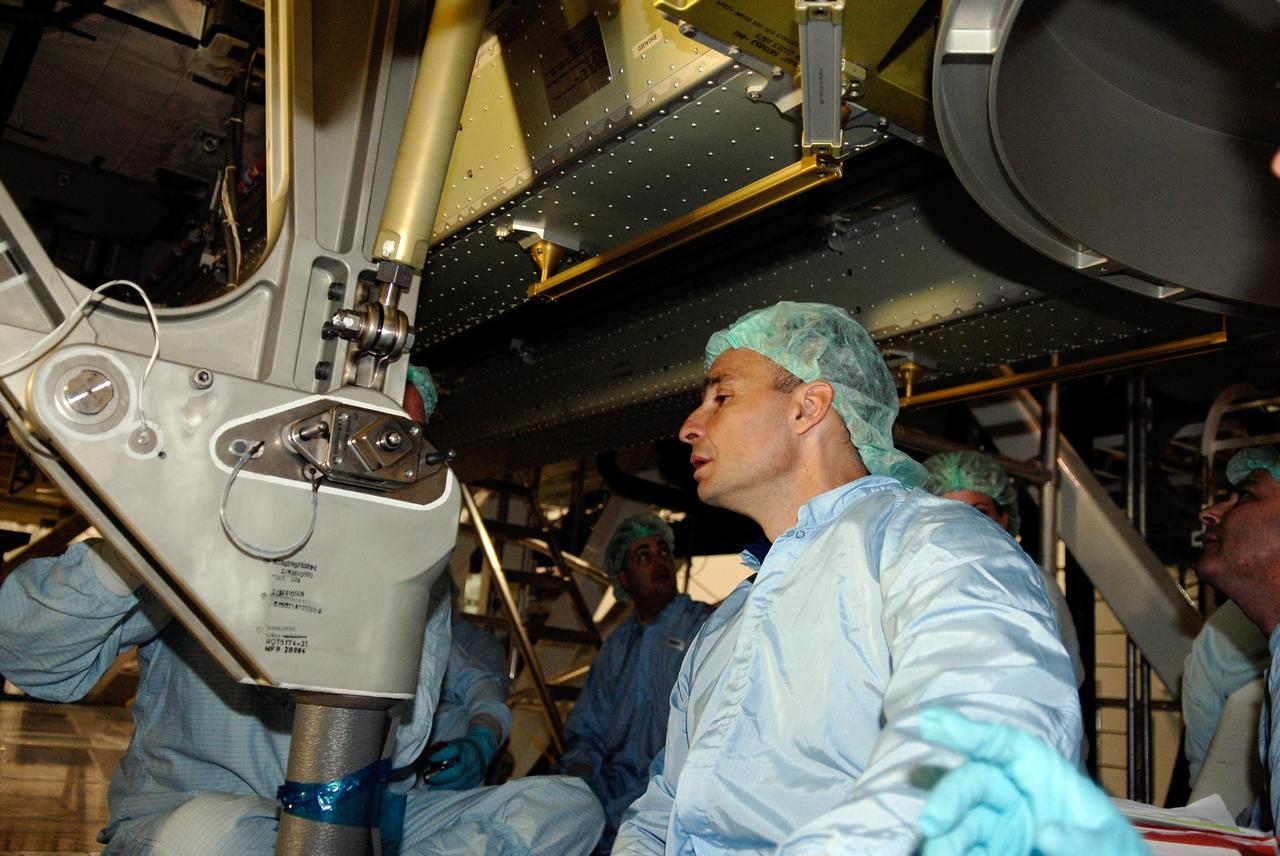
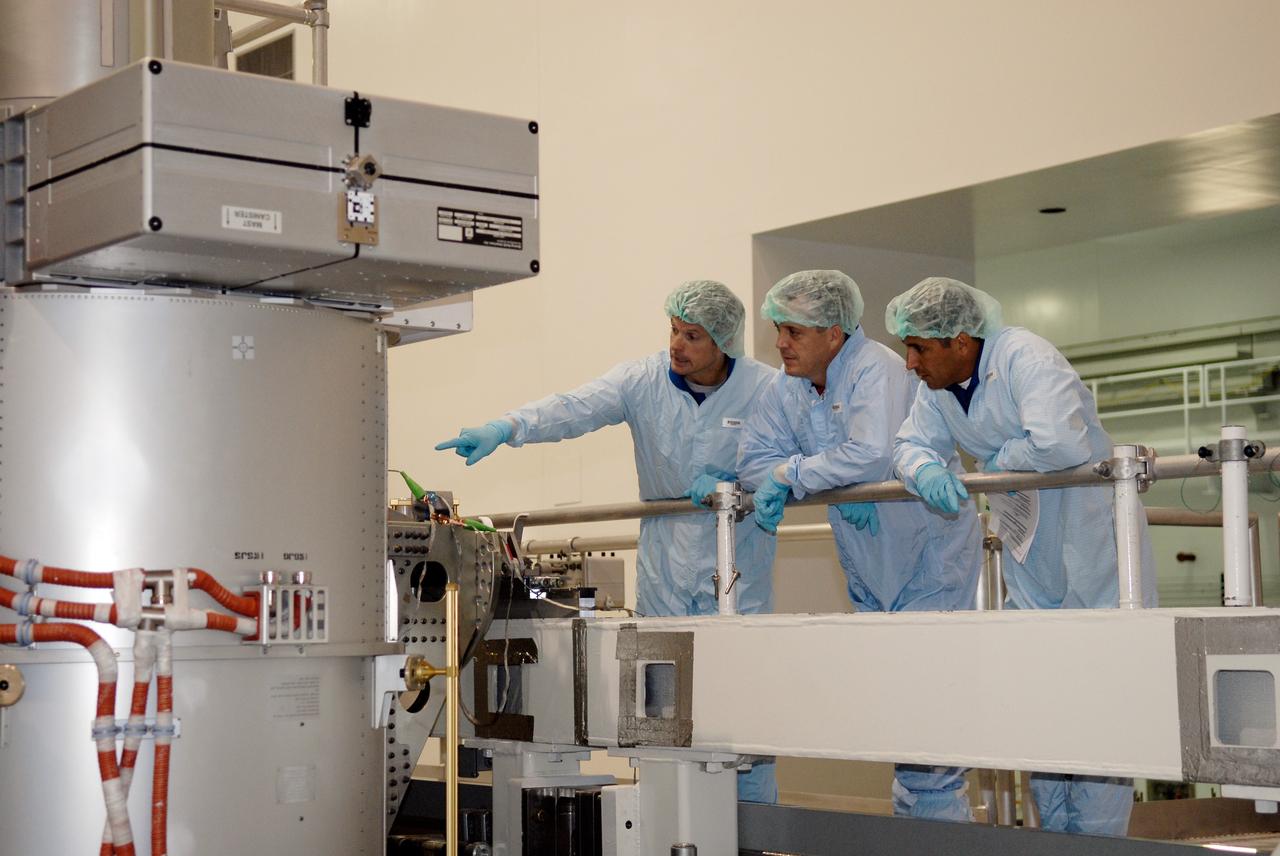
CAPE CANAVERAL, Fla. – In the Space Station Processing Facility at NASA's Kennedy Space Center, STS-119 Commander Lee Archambault inspects hardware slated to fly on his upcoming space shuttle mission. On the STS-119 mission, space shuttle Discovery will carry the S6 truss segment to complete the 361-foot-long backbone of the International Space Station. The truss includes the fourth pair of solar array wings and electronics that convert sunlight to power for the orbiting laboratory. Launch is targeted for Feb. 12, 2009. Photo credit: NASA/Kim Shiflett
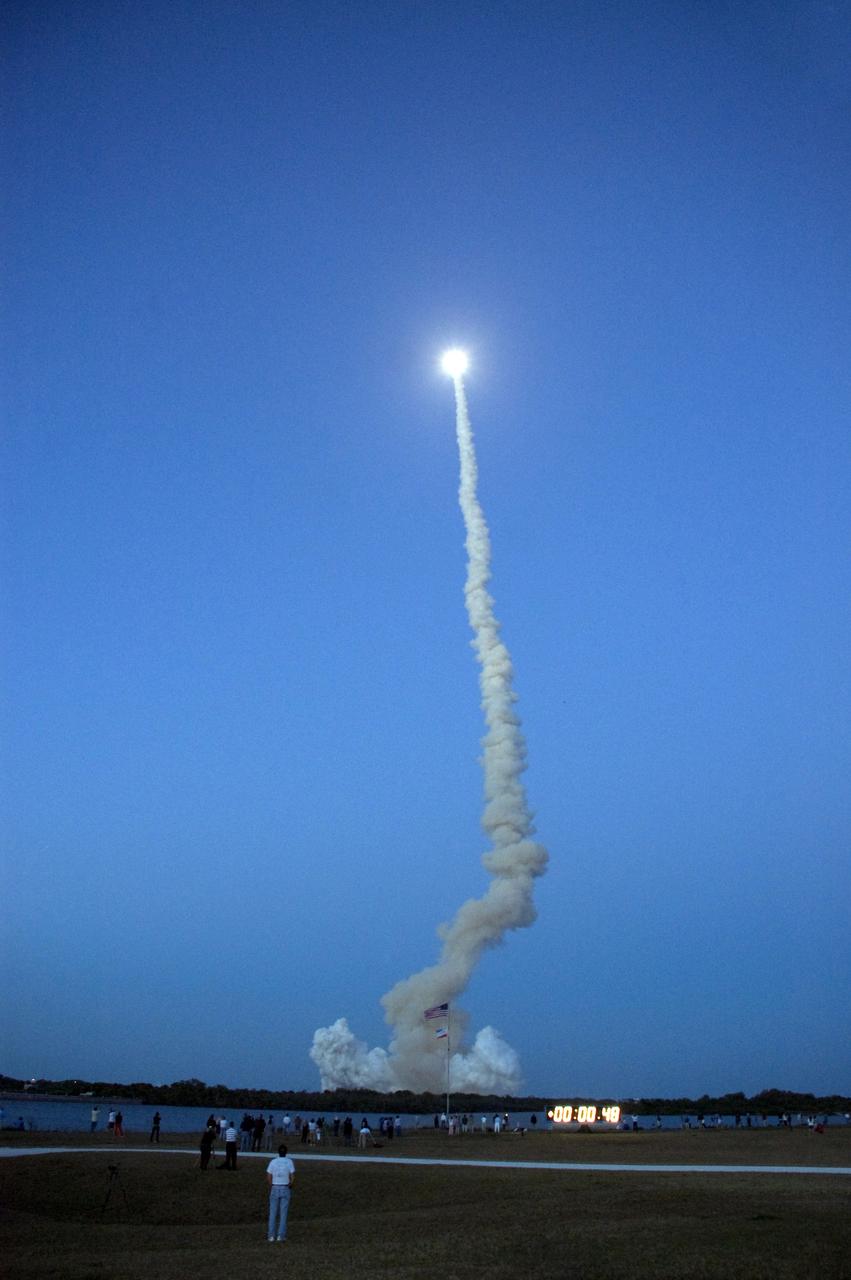
CAPE CANAVERAL, Fla. – Looking like a sun riding a column of smoke, space shuttle Discovery hurtles into the evening sky on the STS-119 mission. Liftoff was on time at 7:43 p.m. EDT. The STS-119 mission is the 28th to the International Space Station and the 125th space shuttle flight. Discovery will deliver the final pair of power-generating solar array wings and the S6 truss segment. Installation of S6 will signal the station's readiness to house a six-member crew for conducting increased science. Photo credit: NASA/Fletch Hildreth
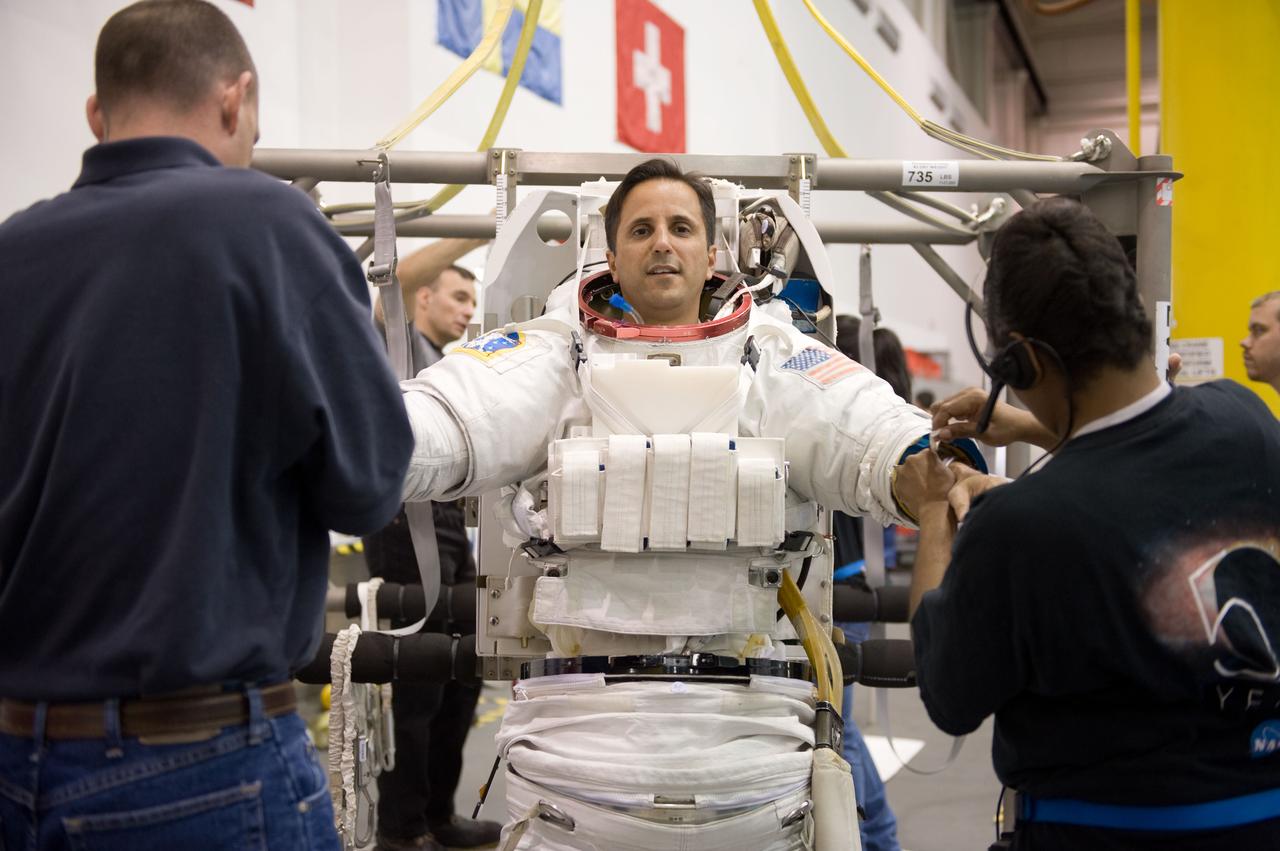
STS-119 crew training during NBL EVA3 training.
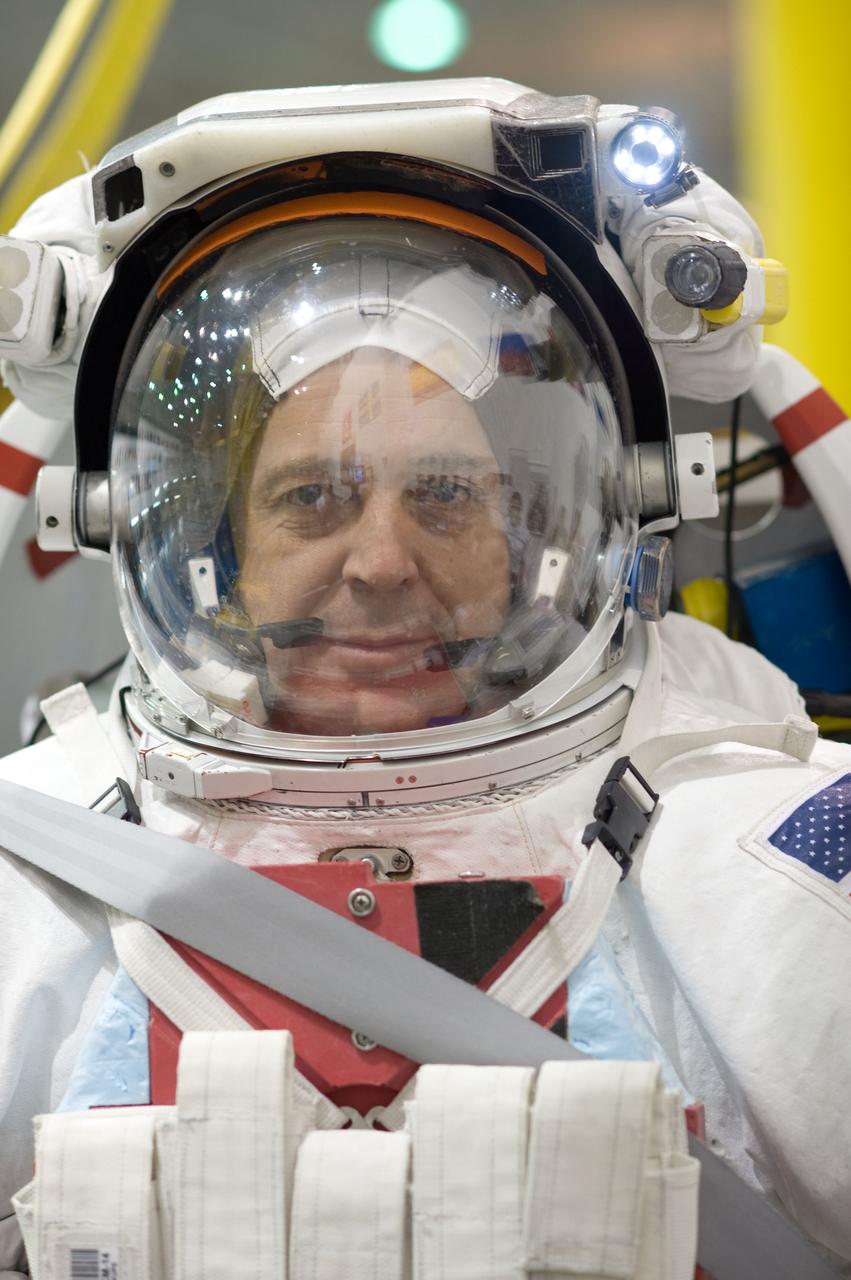
STS-119 crew training during NBL EVA3 training.
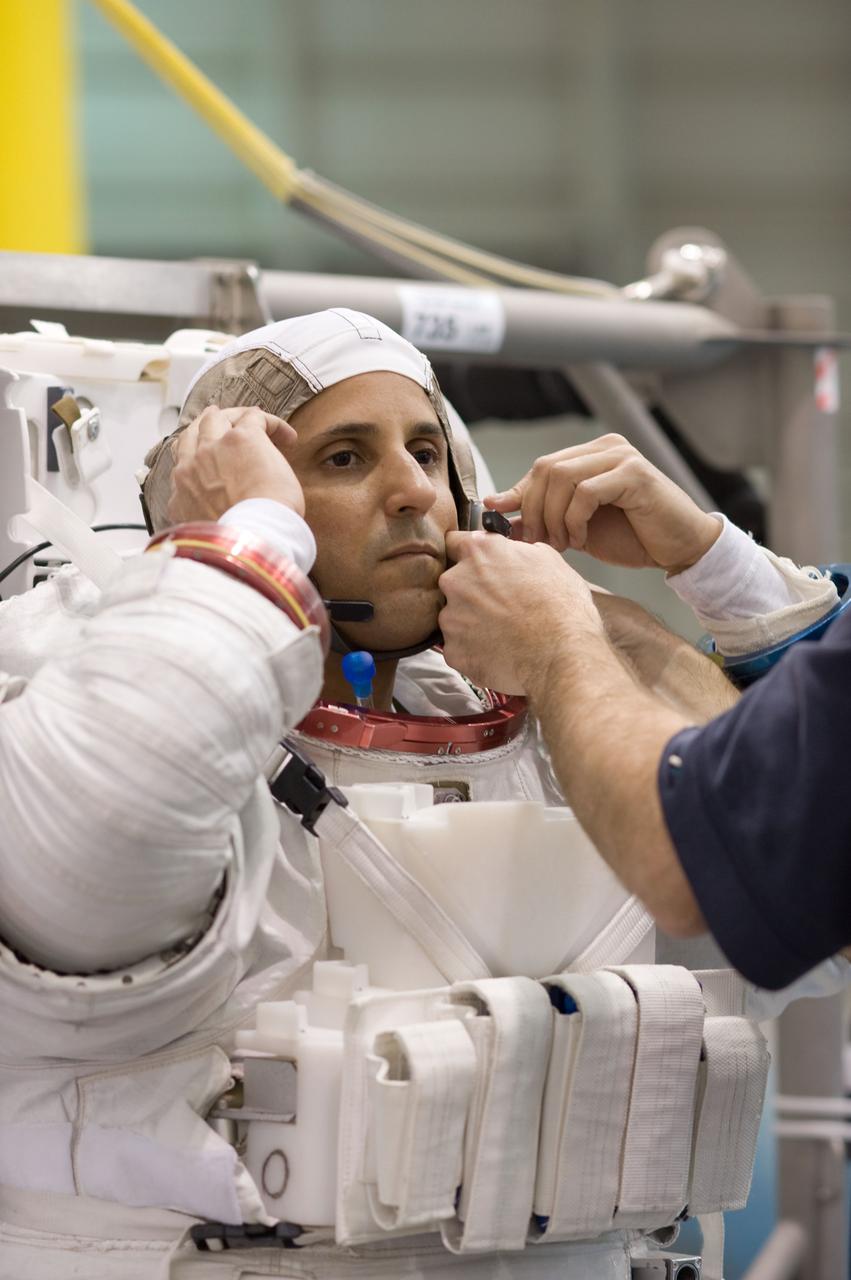
STS-119 crew training during NBL EVA3 training.
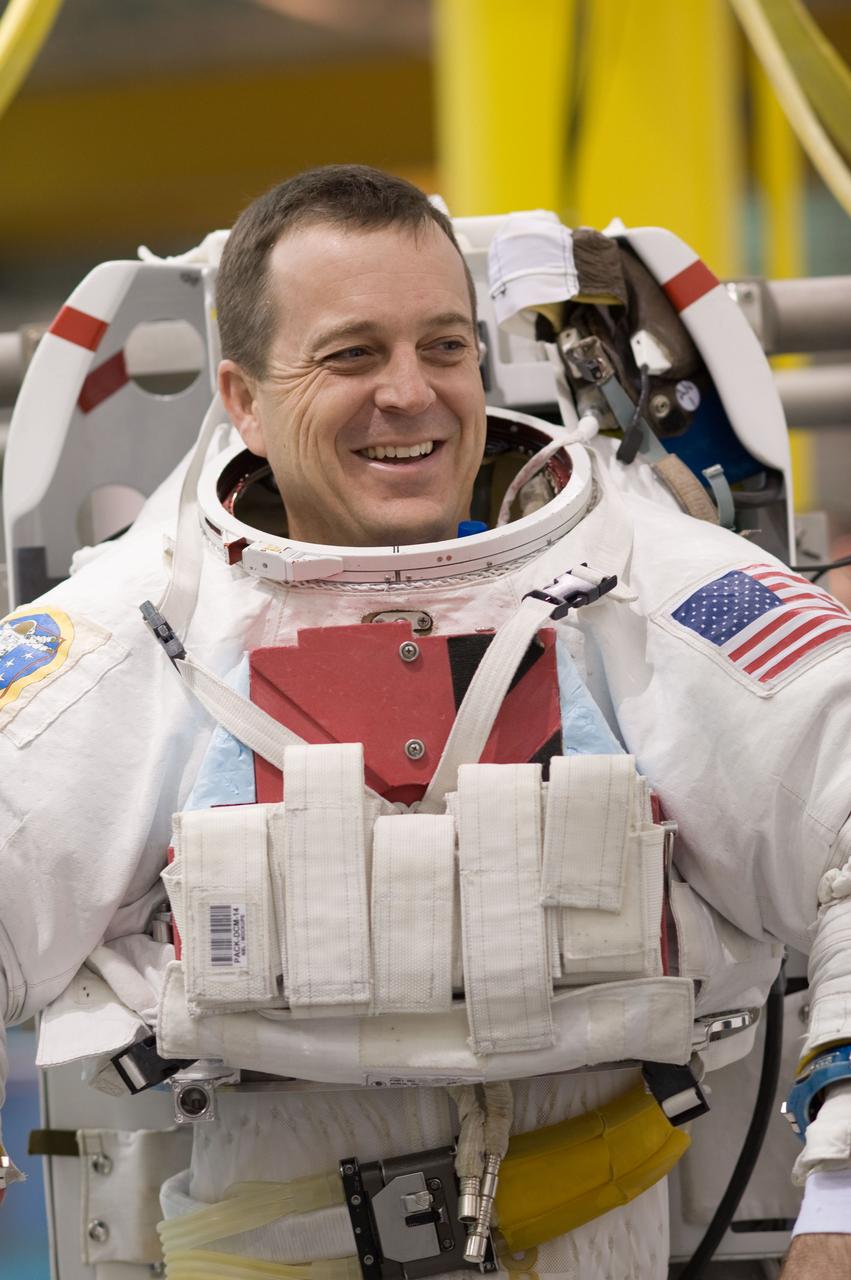
STS-119 crew training during NBL EVA3 training.
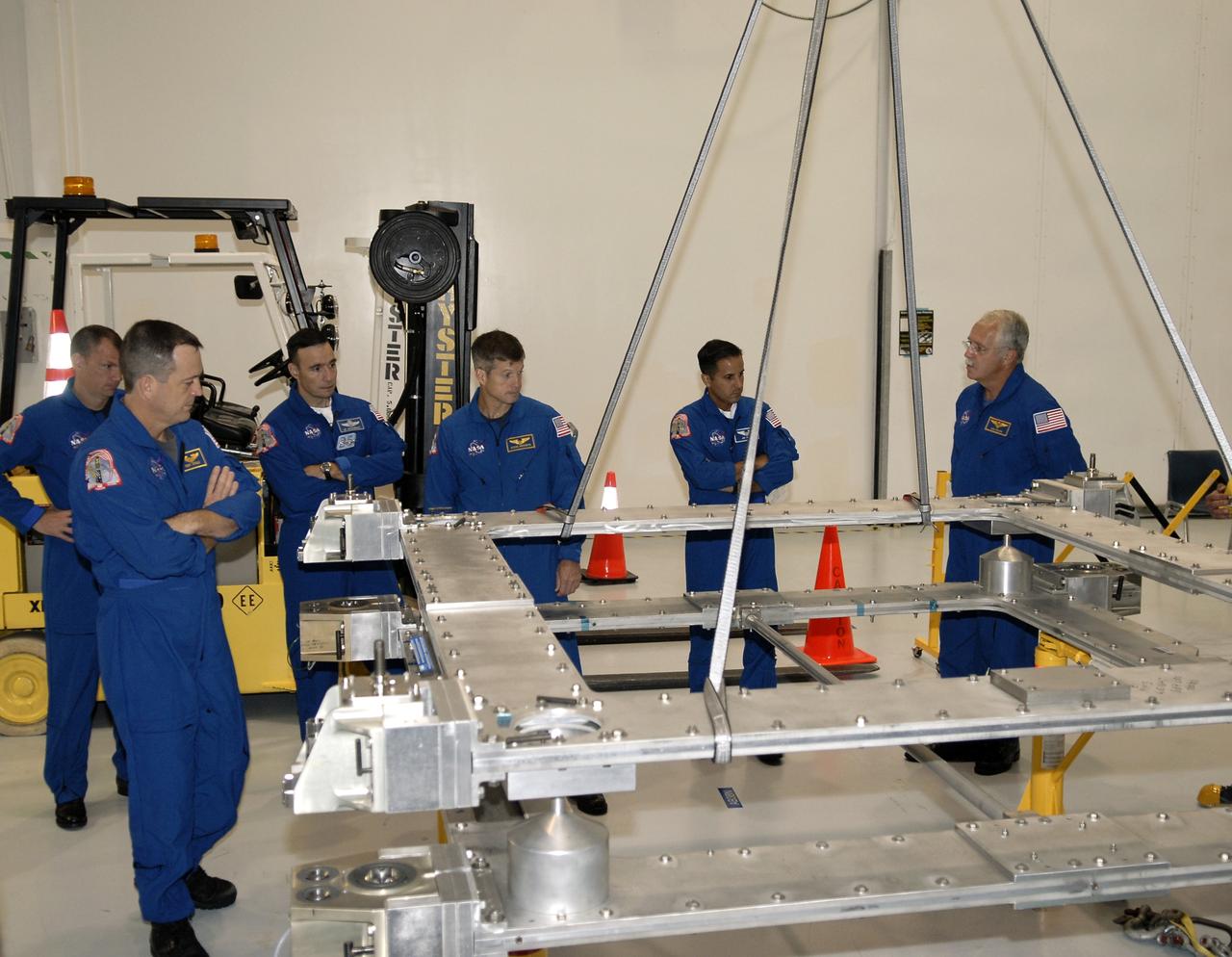
CAPE CANAVERAL, Fla. – In the Space Station Processing Facility at NASA's Kennedy Space Center, the STS-119 crew takes time to familiarize themselves with hardware slated to fly on their upcoming space shuttle mission. From left are Pilot Tony Antonelli, Mission Specialist Richard Arnold, Commander Lee Archambault, and Mission Specialists Steve Swanson, Joseph Acaba and John Phillips. On the STS-119 mission, space shuttle Discovery will carry the S6 truss segment to complete the 361-foot-long backbone of the International Space Station. The truss includes the fourth pair of solar array wings and electronics that convert sunlight to power for the orbiting laboratory. Launch is targeted for Feb. 12, 2009. Photo credit: NASA/Kim Shiflett
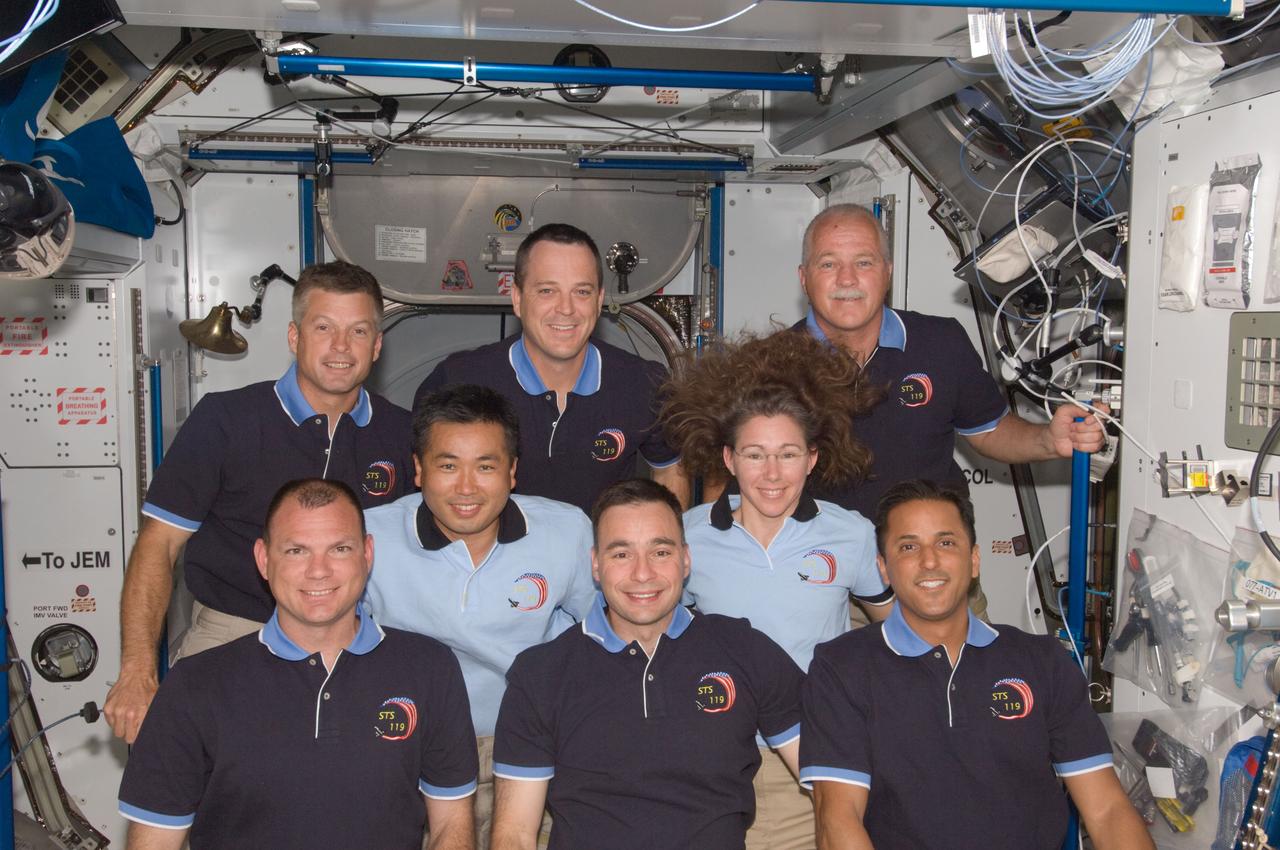
S119-E-007794 (24 March 2009) --- Eight out of the ten crewmembers on the International Space Station pose for a group photo following a joint news conference in the Harmony node while Space Shuttle Discovery remains docked with the station. From the left are NASA astronauts Tony Antonelli, STS-119 pilot; Lee Archambault, STS-119 commander; and Joseph Acaba, STS-119 mission specialist. From the left (middle row) are Japan Aerospace Exploration Agency astronaut (JAXA) Koichi Wakata, Expedition 18 flight engineer; and NASA astronaut Sandra Magnus, STS-119 mission specialist. From the left (back row) are astronauts Steve Swanson, Richard Arnold and John Phillips, all STS-119 mission specialists. Magnus, who joined the station’s Expedition 18 crew in November 2008, is being replaced by Wakata, who arrived at the station with the STS-119 crew.
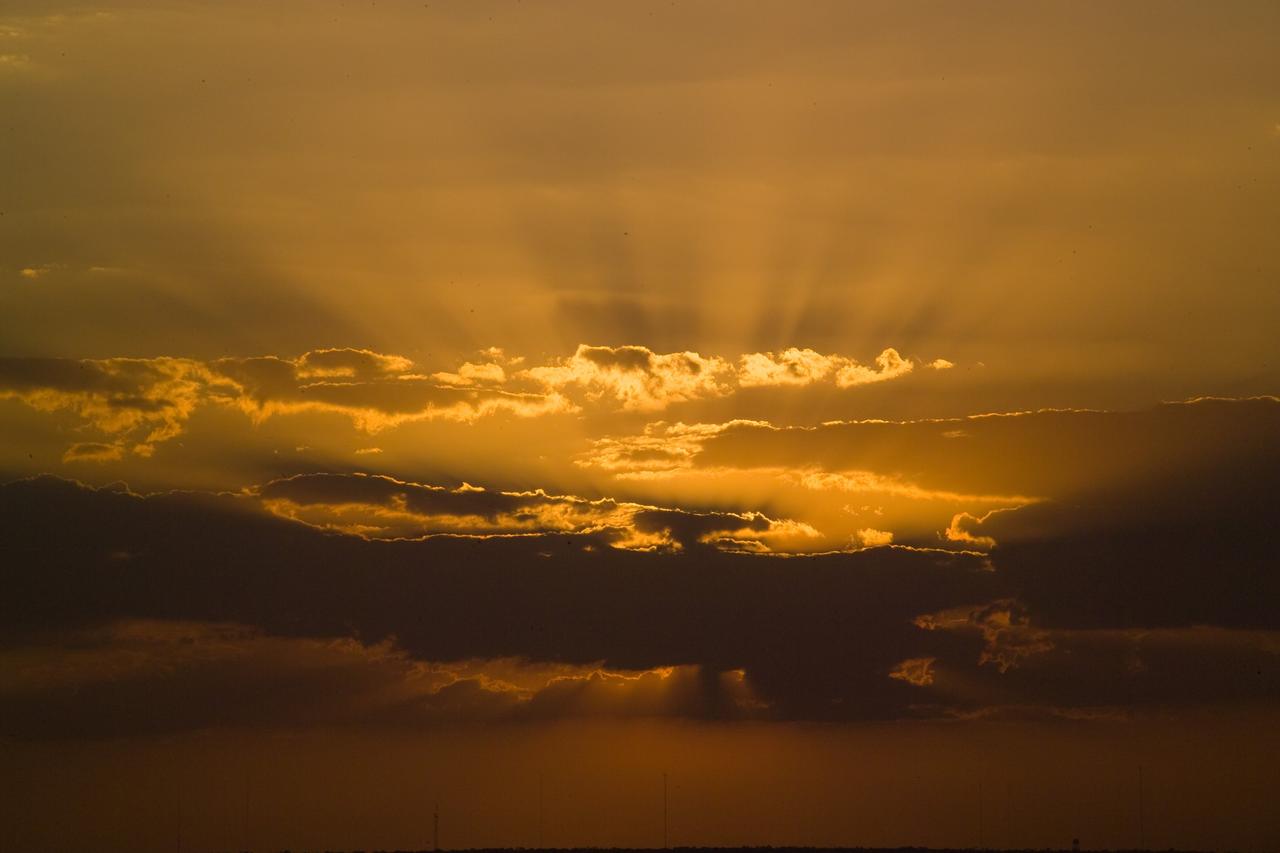
CAPE CANAVERAL, Fla. – The setting sun paints the clouds over NASA's Kennedy Space Center in Florida before the launch of space shuttle Discovery on the STS-119 mission. Liftoff of Discovery was on time at 7:43 p.m. EDT. The STS-119 mission is the 28th to the International Space Station and the 125th space shuttle flight. Discovery will deliver the final pair of power-generating solar array wings and the S6 truss segment. Installation of S6 will signal the station's readiness to house a six-member crew for conducting increased science. Photo credit: NASA/Jeff Wolfe
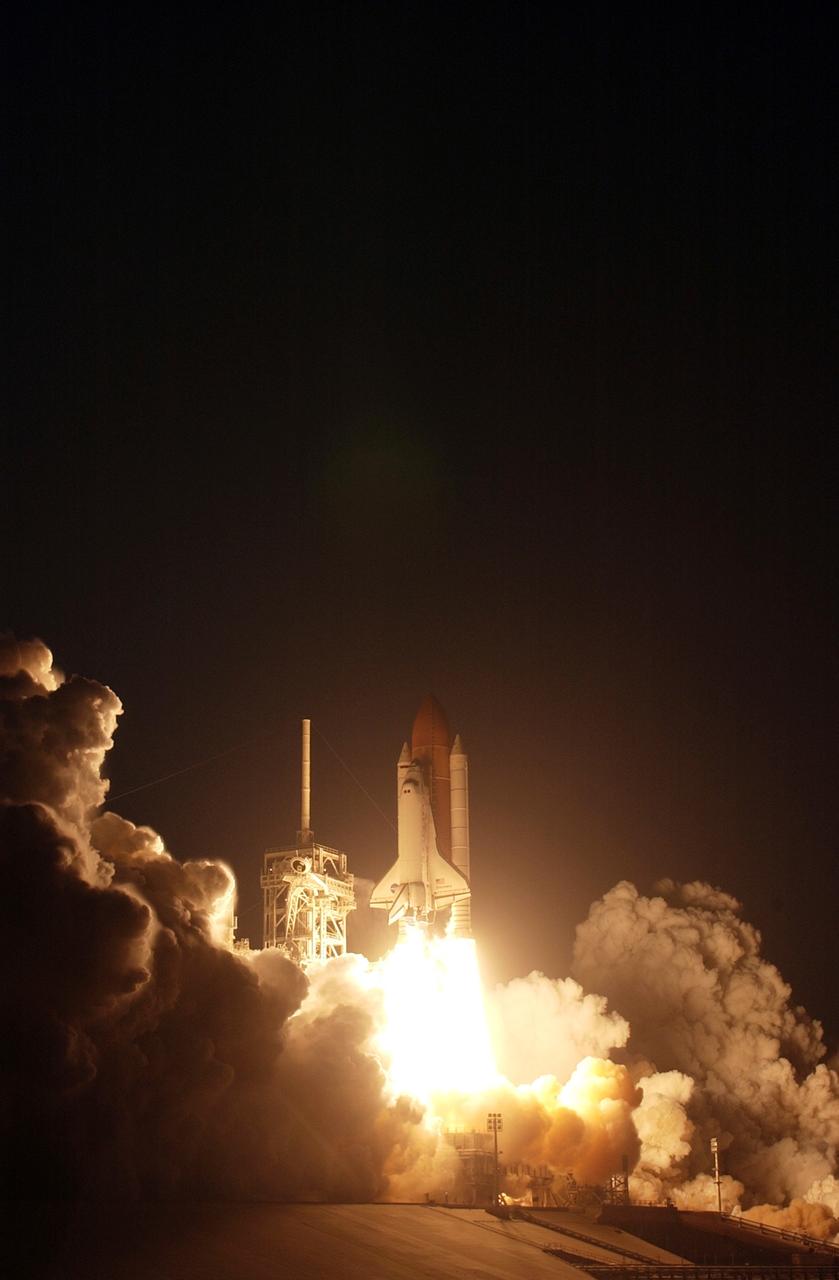
CAPE CANAVERAL, Fla. – Clouds of smoke and steam roll across Launch Pad 39A at NASA's Kennedy Space Center in Florida as space shuttle Discovery races toward space on mission STS-119. Launch was on time at 7:43 p.m. EDT. The STS-119 mission is the 28th to the International Space Station and the 125th space shuttle flight. Discovery will deliver the final pair of power-generating solar array wings and the S6 truss segment. Installation of S6 will signal the station's readiness to house a six-member crew for conducting increased science. Photo credit: NASA/Sandra Joseph, Kevin O'Connell
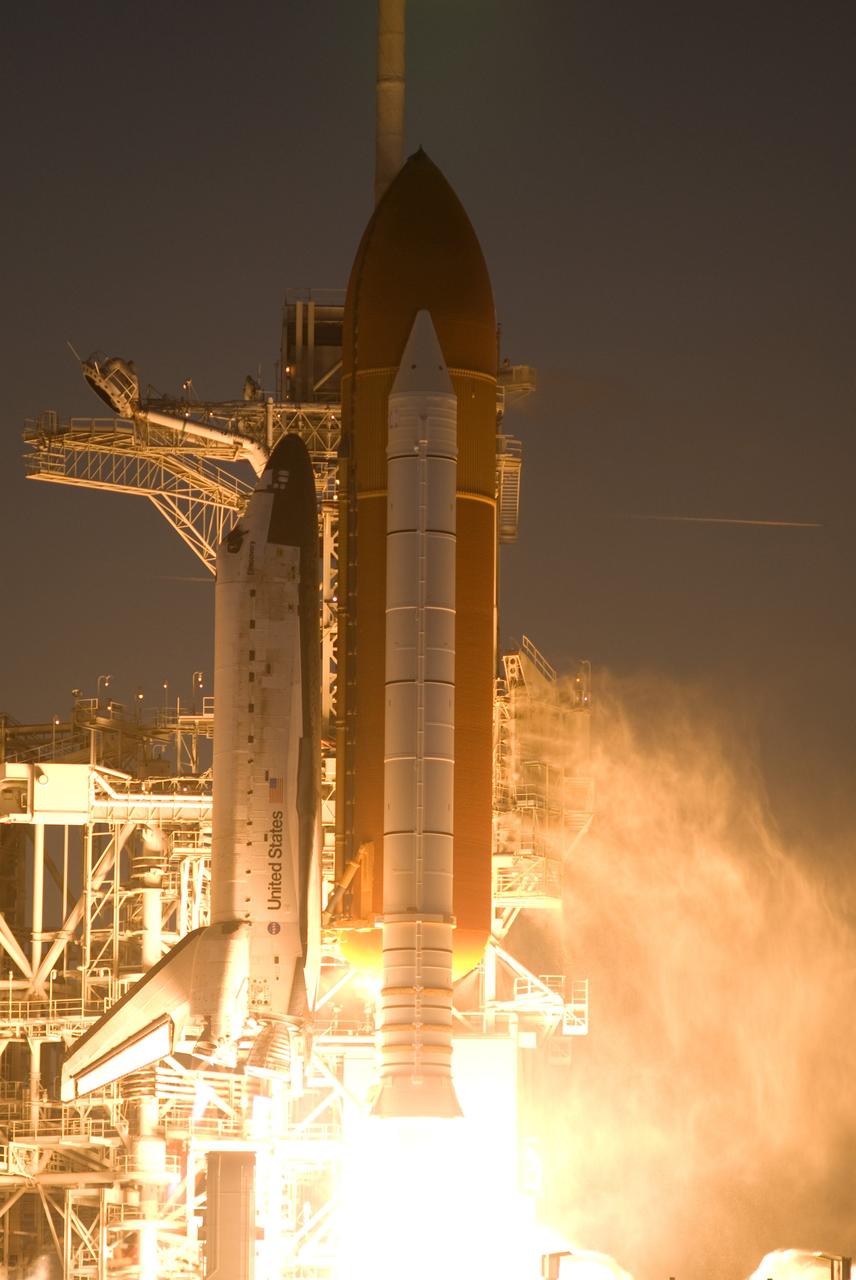
CAPE CANAVERAL, Fla. – Steam rises from Launch Pad 39A at NASA's Kennedy Space Center in Florida as space shuttle Discovery lifts off on mission STS-119. Launch was on time at 7:43 p.m. EDT. The STS-119 mission is the 28th to the International Space Station and the 125th space shuttle flight. Discovery will deliver the final pair of power-generating solar array wings and the S6 truss segment. Installation of S6 will signal the station's readiness to house a six-member crew for conducting increased science. Photo credit: NASA/Rusty Backer, George Roberts
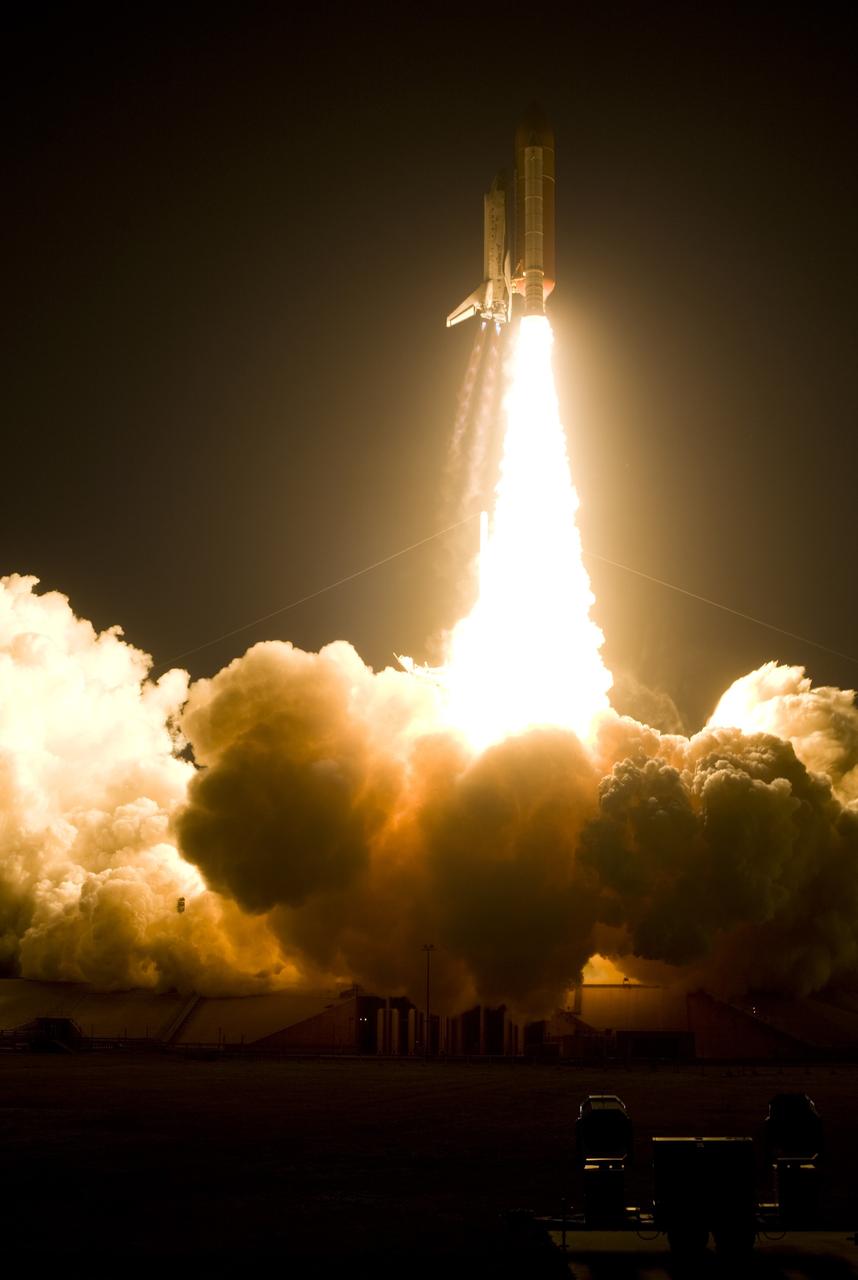
CAPE CANAVERAL, Fla. – Propelled by a column of fire, space shuttle Discovery races toward space on the STS-119 mission after liftoff from Launch Pad 39A at NASA's Kennedy Space Center in Florida. Launch was on time at 7:43 p.m. EDT. The STS-119 mission is the 28th to the International Space Station and the 125th space shuttle flight. Discovery will deliver the final pair of power-generating solar array wings and the S6 truss segment. Installation of S6 will signal the station's readiness to house a six-member crew for conducting increased science. Photo courtesy of Scott Andrews
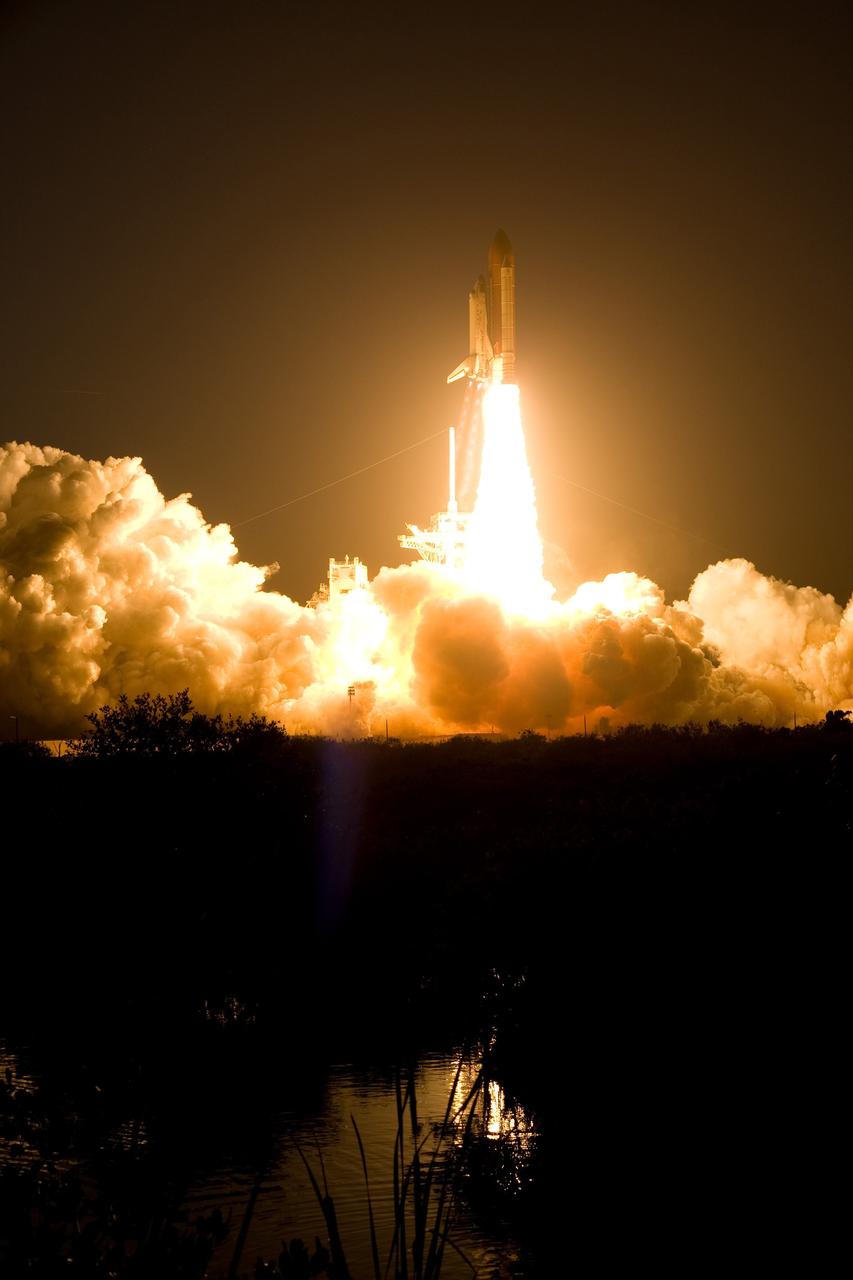
CAPE CANAVERAL, Fla. – Brilliant flames ignite the sky over Launch Pad 39A at NASA's Kennedy Space Center in Florida as space shuttle Discovery roars toward space on the STS-119 mission. Liftoff was on time at 7:43 p.m. EDT. The STS-119 mission is the 28th to the International Space Station and the 125th space shuttle flight. Discovery will deliver the final pair of power-generating solar array wings and the S6 truss segment. Installation of S6 will signal the station's readiness to house a six-member crew for conducting increased science. Photo credit: NASA/Sandra Joseph, Kevin O'Connell
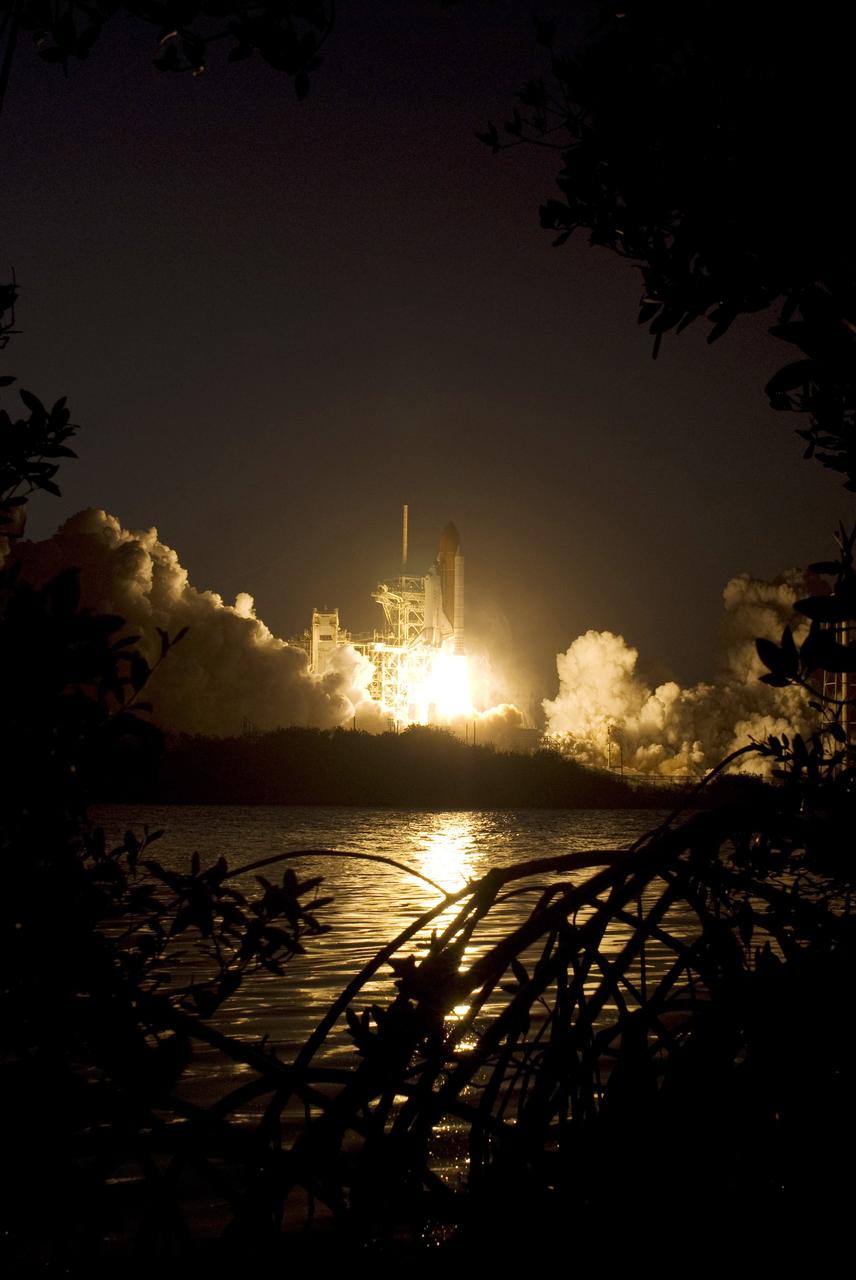
CAPE CANAVERAL, Fla. – Viewed across the water near Launch Pad 39A at NASA's Kennedy Space Center in Florida, launch of space shuttle Discovery on the STS-119 mission spews fire into the night. The launch was on time at 7:43 p.m. EDT. The STS-119 mission is the 28th to the International Space Station and the 125th space shuttle flight. Discovery will deliver the final pair of power-generating solar array wings and the S6 truss segment. Installation of S6 will signal the station's readiness to house a six-member crew for conducting increased science. Photo credit: NASA/Sandra Joseph, Kevin O'Connell
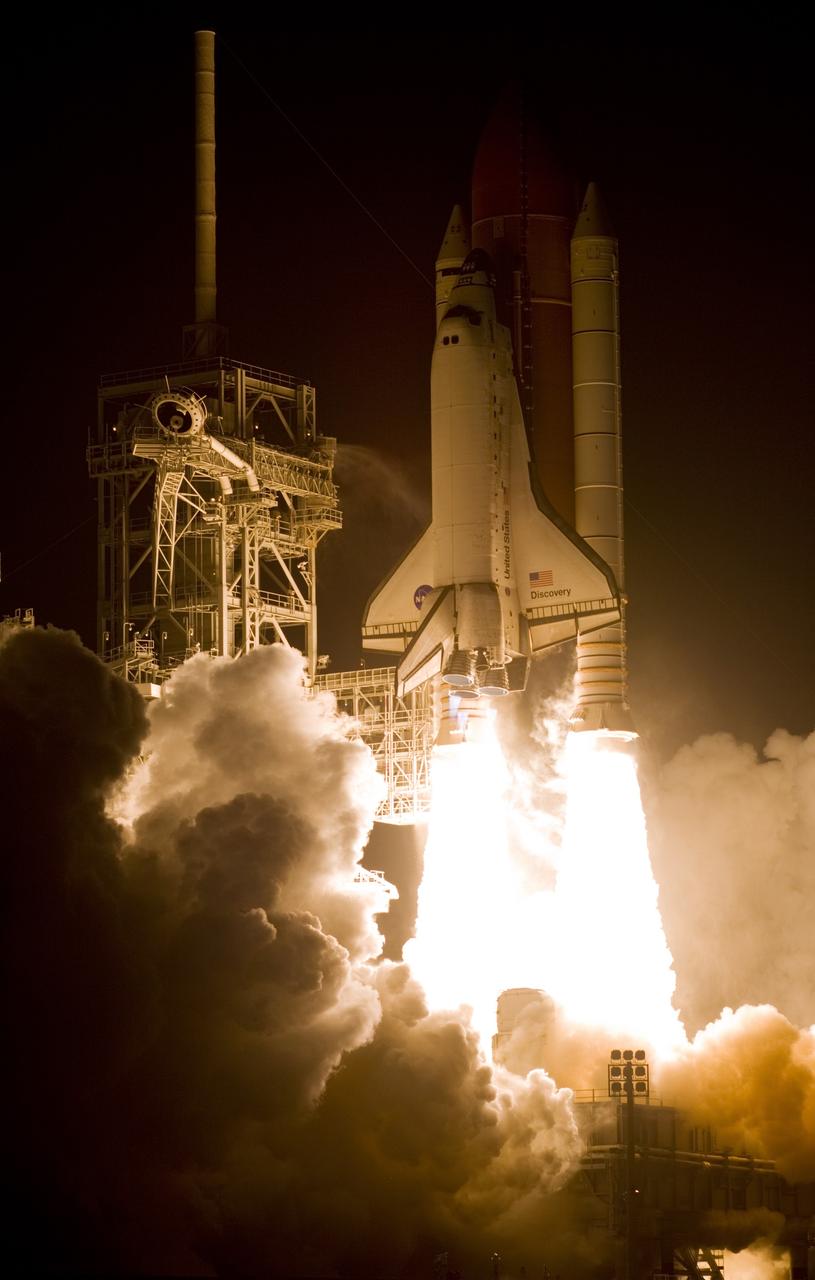
CAPE CANAVERAL, Fla. – At NASA's Kennedy Space Center in Florida, twin columns of fire propel space shuttle Discovery from Launch Pad 39A toward space on mission STS-119. Launch was on time at 7:43 p.m. EDT. The STS-119 mission is the 28th to the International Space Station and the 125th space shuttle flight. Discovery will deliver the final pair of power-generating solar array wings and the S6 truss segment. Installation of S6 will signal the station's readiness to house a six-member crew for conducting increased science. Photo courtesy of Scott Andrews
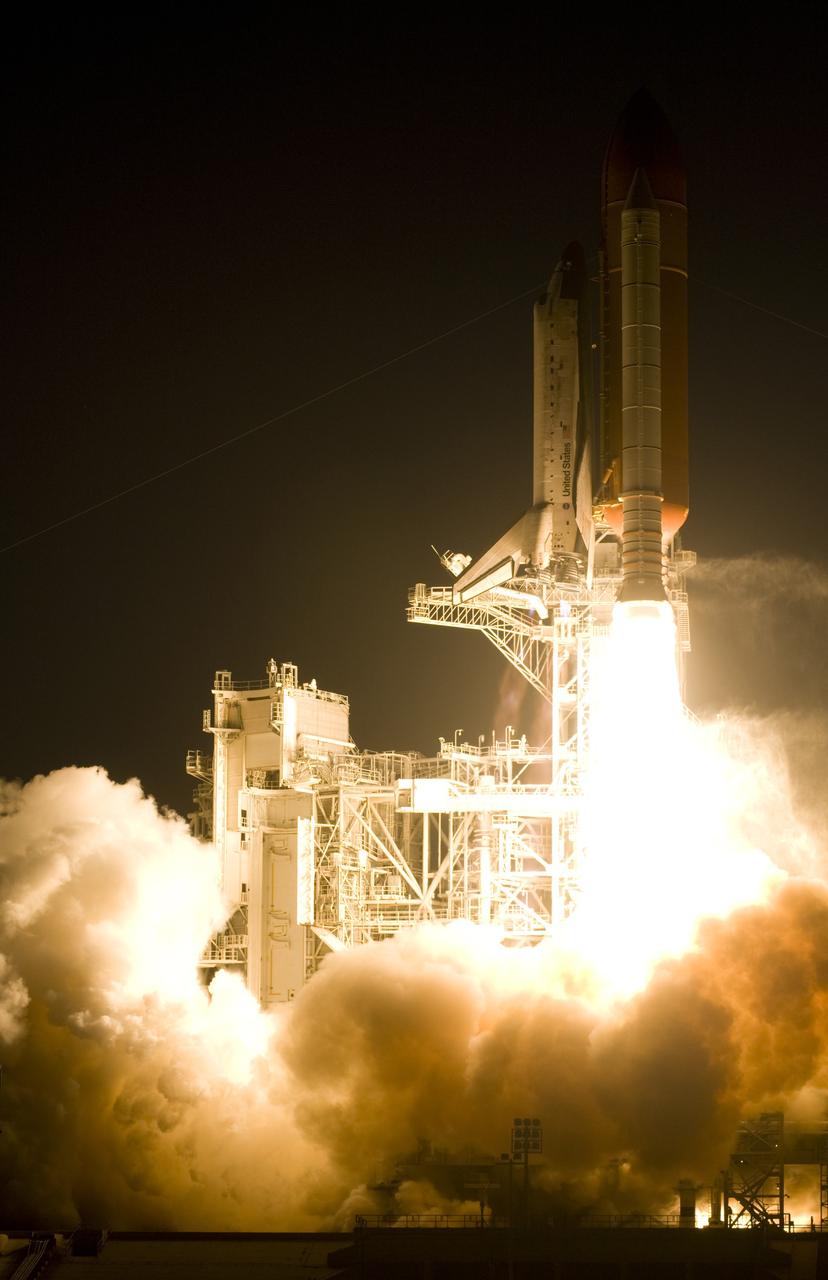
CAPE CANAVERAL, Fla. – Propelled by a column of fire, space shuttle Discovery races toward space on the STS-119 mission after liftoff from Launch Pad 39A at NASA's Kennedy Space Center in Florida. Clouds of smoke and steam roll across the pad. Launch was on time at 7:43 p.m. EDT. The STS-119 mission is the 28th to the International Space Station and the 125th space shuttle flight. Discovery will deliver the final pair of power-generating solar array wings and the S6 truss segment. Installation of S6 will signal the station's readiness to house a six-member crew for conducting increased science. Photo courtesy of Scott Andrews
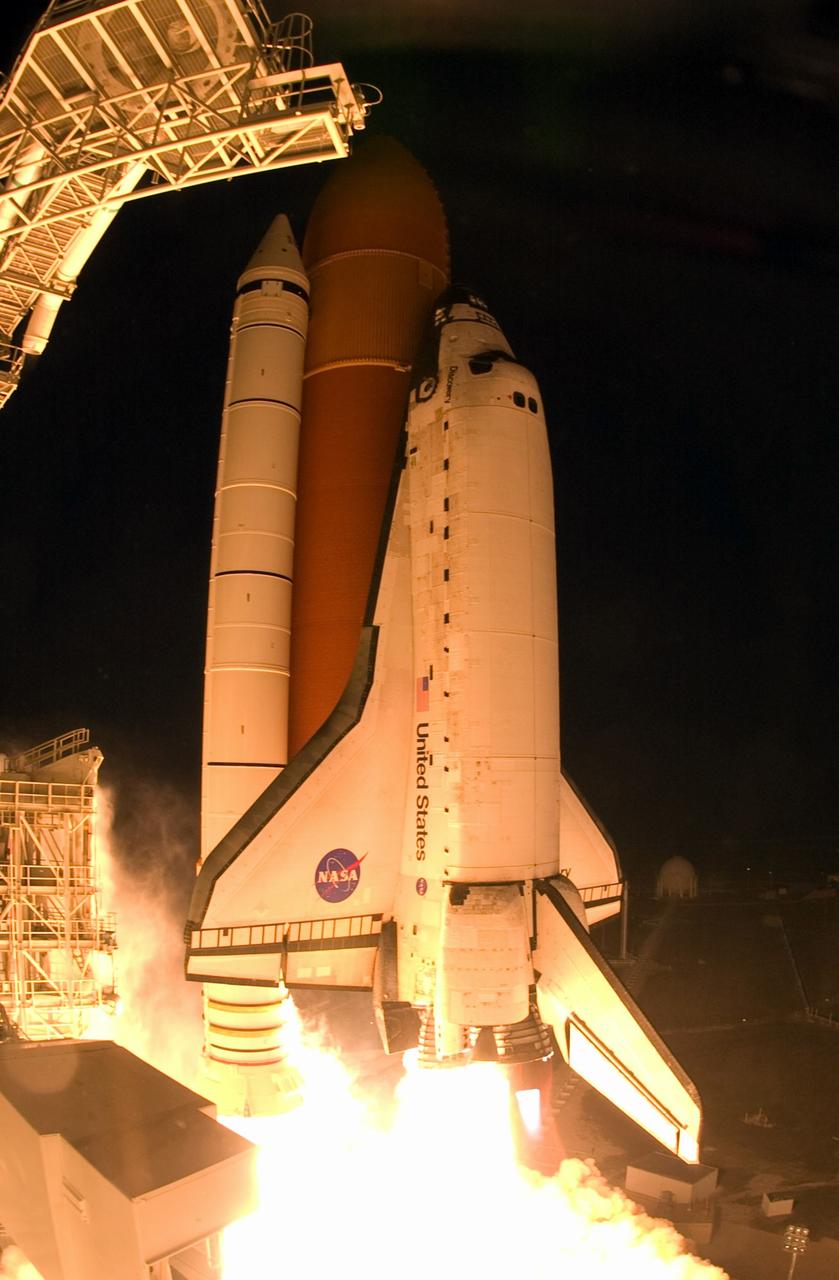
CAPE CANAVERAL, Fla. – Fire seems to surround Launch Pad 39A at NASA's Kennedy Space Center in Florida as space shuttle Discovery leaps from the pad to begin its STS-119 mission. Launch was on time at 7:43 p.m. EDT. The STS-119 mission is the 28th to the International Space Station and the 125th space shuttle flight. Discovery will deliver the final pair of power-generating solar array wings and the S6 truss segment. Installation of S6 will signal the station's readiness to house a six-member crew for conducting increased science. Photo credit: NASA/Tony Gray, Tom Farrar
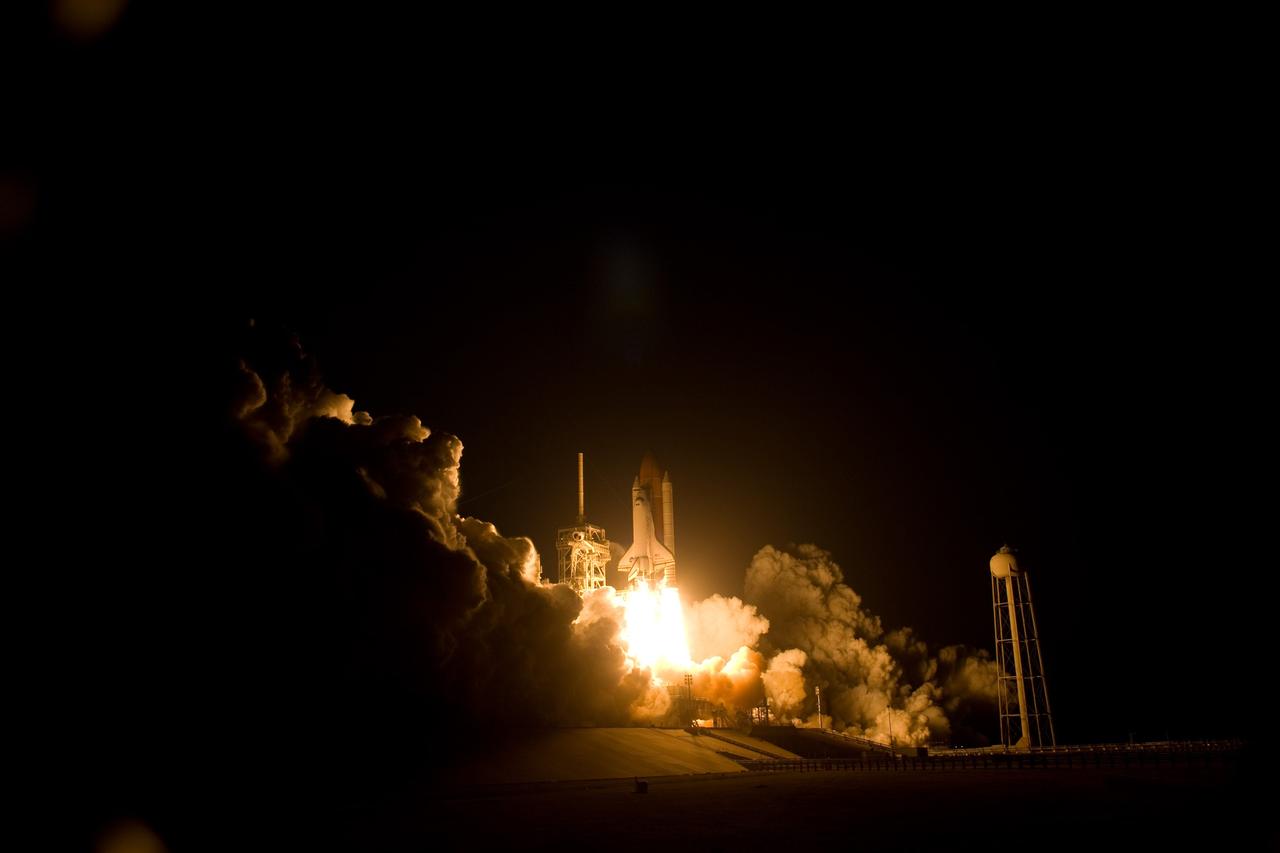
CAPE CANAVERAL, Fla. – Clouds of smoke and steam roll across Launch Pad 39A at NASA's Kennedy Space Center in Florida as space shuttle Discovery roars into the night sky on the STS-119 mission. The launch was on time at 7:43 p.m. EDT. The STS-119 mission is the 28th to the International Space Station and the 125th space shuttle flight. Discovery will deliver the final pair of power-generating solar array wings and the S6 truss segment. Installation of S6 will signal the station's readiness to house a six-member crew for conducting increased science. Photo credit: NASA/Sandra Joseph, Kevin O'Connell
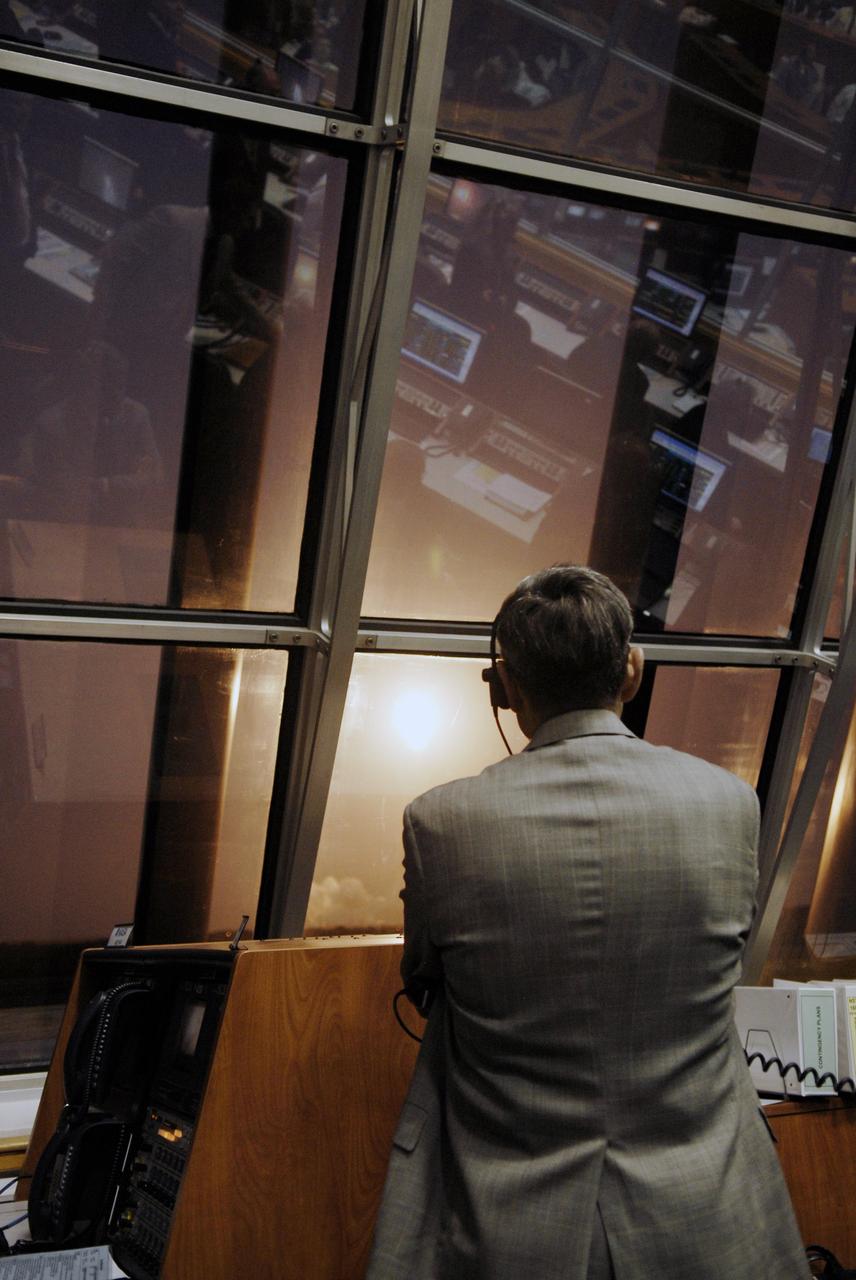
CAPE CANAVERAL, Fla. – In Firing Room 4 of the Launch Control Center at NASA's Kennedy Space Center in Florida, Center Director Bob Cabana watches the brilliant launch of space shuttle Discovery on the STS-119 mission. Launch was on time at 7:43 p.m. EDT. The STS-119 mission is the 28th to the space station and Discovery's 36th flight. Discovery will deliver the final pair of power-generating solar array wings and the S6 truss segment. Installation of S6 will signal the station's readiness to house a six-member crew for conducting increased science. Photo credit: NASA/Kim Shiflett
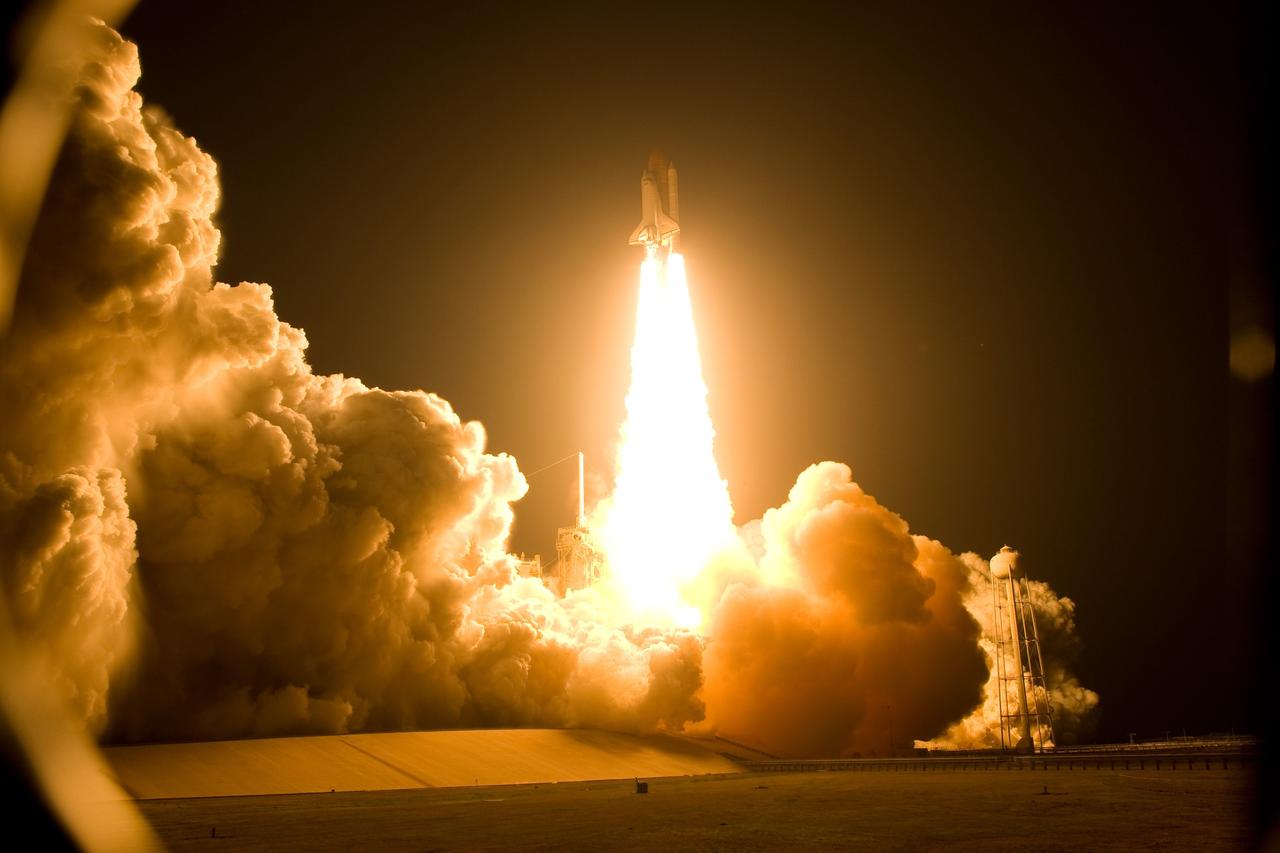
CAPE CANAVERAL, Fla. – Liftoff of space shuttle Discovery from Launch Pad 39A at NASA's Kennedy Space Center in Florida lights up the evening sky as it begins the STS-119 mission. The launch was on time at 7:43 p.m. EDT. The STS-119 mission is the 28th to the International Space Station and the 125th space shuttle flight. Discovery will deliver the final pair of power-generating solar array wings and the S6 truss segment. Installation of S6 will signal the station's readiness to house a six-member crew for conducting increased science. Photo credit: NASA/Sandra Joseph, Kevin O'Connell
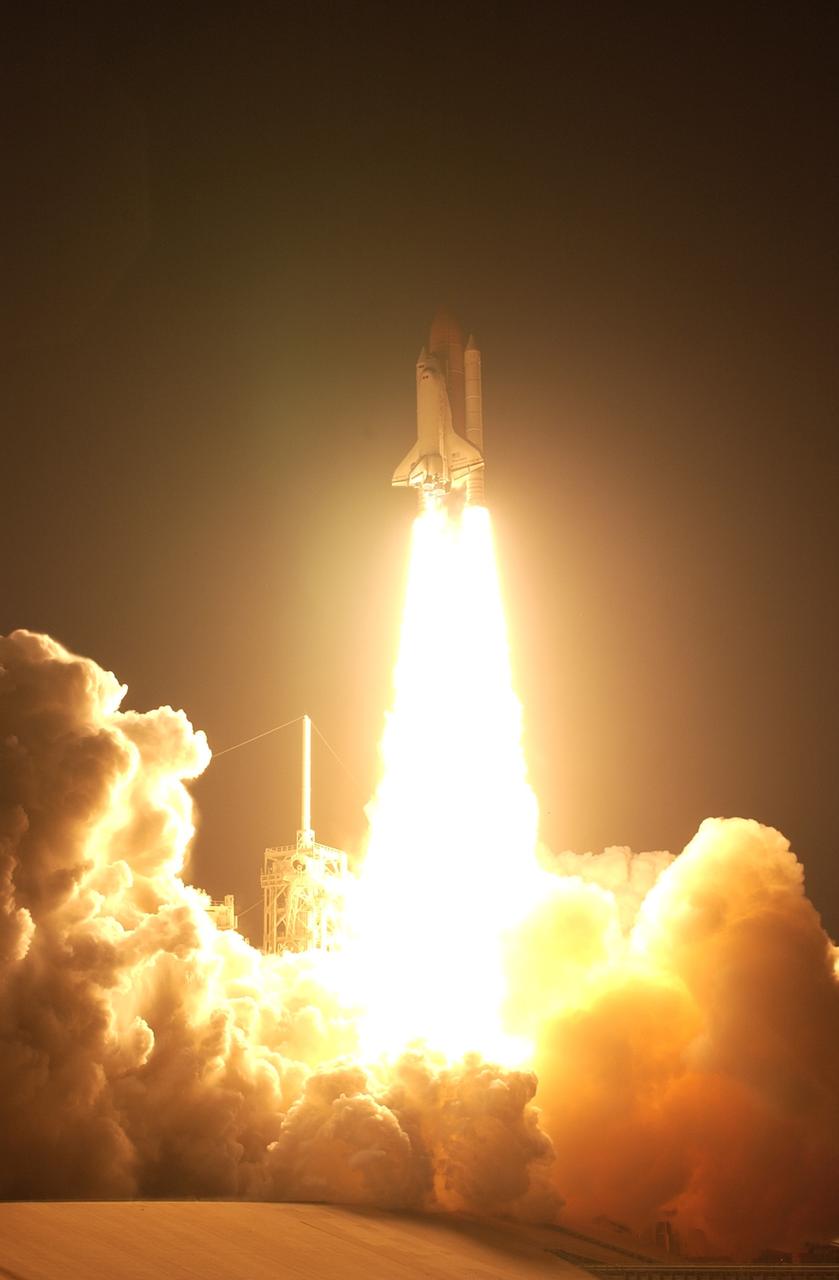
CAPE CANAVERAL, Fla. – Propelled by columns of fire, space shuttle Discovery races toward space on the STS-119 mission after liftoff from Launch Pad 39A at NASA's Kennedy Space Center in Florida. Clouds of smoke and steam roll across the pad. Launch was on time at 7:43 p.m. EDT. The STS-119 mission is the 28th to the International Space Station and the 125th space shuttle flight. Discovery will deliver the final pair of power-generating solar array wings and the S6 truss segment. Installation of S6 will signal the station's readiness to house a six-member crew for conducting increased science. Photo credit: NASA/Sandra Joseph, Kevin O'Connell
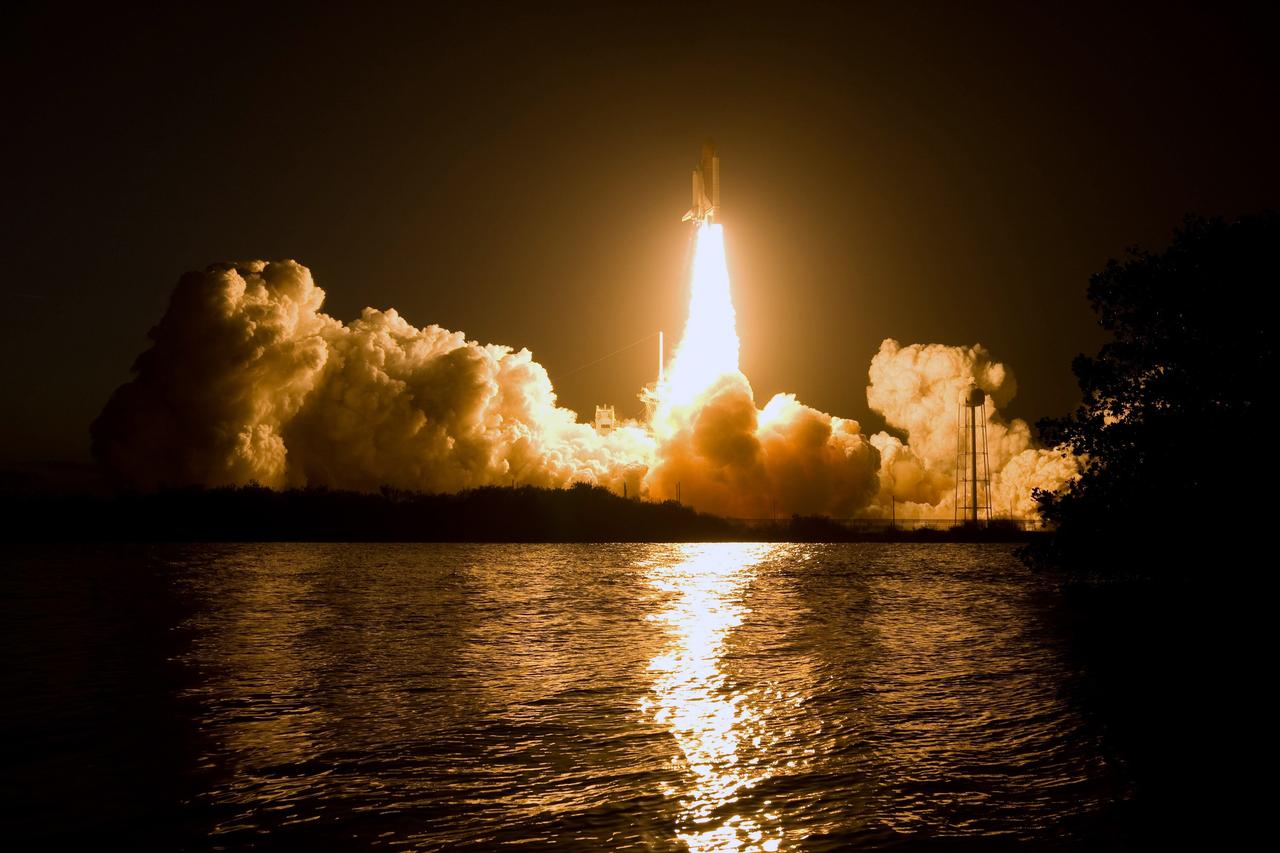
CAPE CANAVERAL, Fla. – Billows of smoke and the water near Launch Pad 39A at NASA's Kennedy Space Center in Florida capture the brilliant light of space shuttle Discovery's lift-off on the STS-119 mission. The launch was on time at 7:43 p.m. EDT. The STS-119 mission is the 28th to the International Space Station and the 125th space shuttle flight. Discovery will deliver the final pair of power-generating solar array wings and the S6 truss segment. Installation of S6 will signal the station's readiness to house a six-member crew for conducting increased science. Photo credit: NASA/Sandra Joseph, Kevin O'Connell
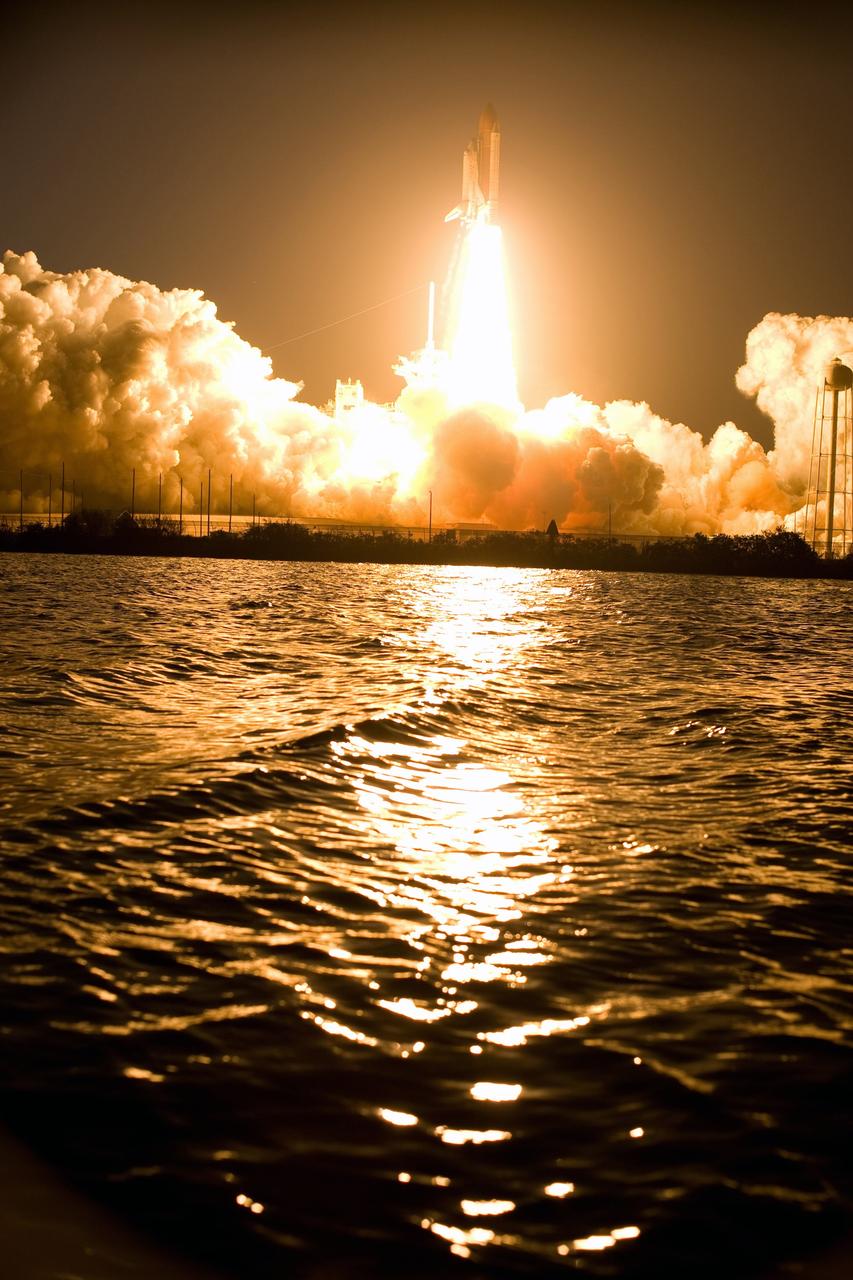
CAPE CANAVERAL, Fla. – Water near Launch Pad 39A at NASA's Kennedy Space Center in Florida captures the brilliant flames as space shuttle Discovery lifts off on the STS-119 mission. The launch was on time at 7:43 p.m. EDT. The STS-119 mission is the 28th to the International Space Station and the 125th space shuttle flight. Discovery will deliver the final pair of power-generating solar array wings and the S6 truss segment. Installation of S6 will signal the station's readiness to house a six-member crew for conducting increased science. Photo credit: NASA/Tony Gray, Tom Farrar
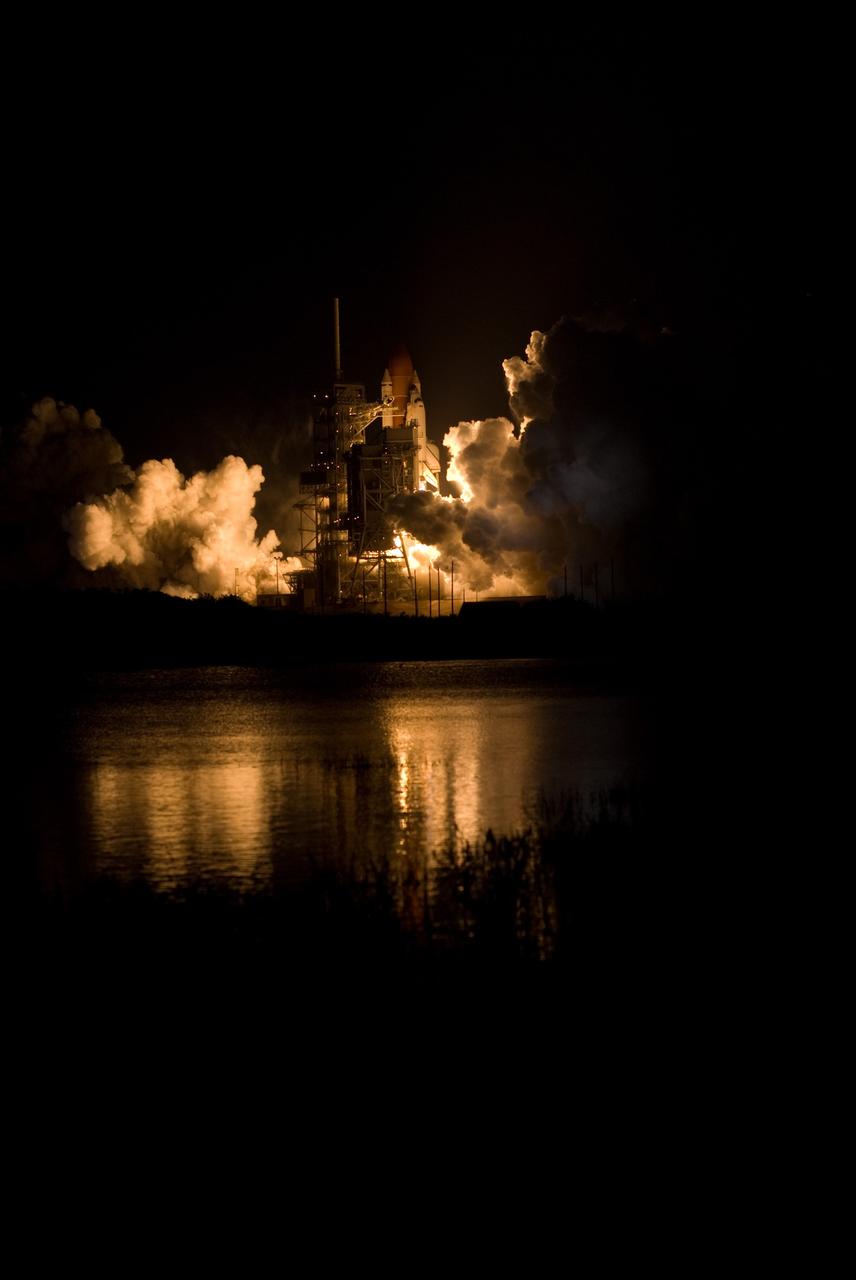
CAPE CANAVERAL, Fla. – Billows of smoke and the water near Launch Pad 39A at NASA's Kennedy Space Center in Florida capture the brilliant light of space shuttle Discovery's lift-off on the STS-119 mission. The launch was on time at 7:43 p.m. EDT.The STS-119 mission is the 28th to the International Space Station and the 125th space shuttle flight. Discovery will deliver the final pair of power-generating solar array wings and the S6 truss segment. Installation of S6 will signal the station's readiness to house a six-member crew for conducting increased science. Photo credit: NASA/Tony Gray, Tom Farrar
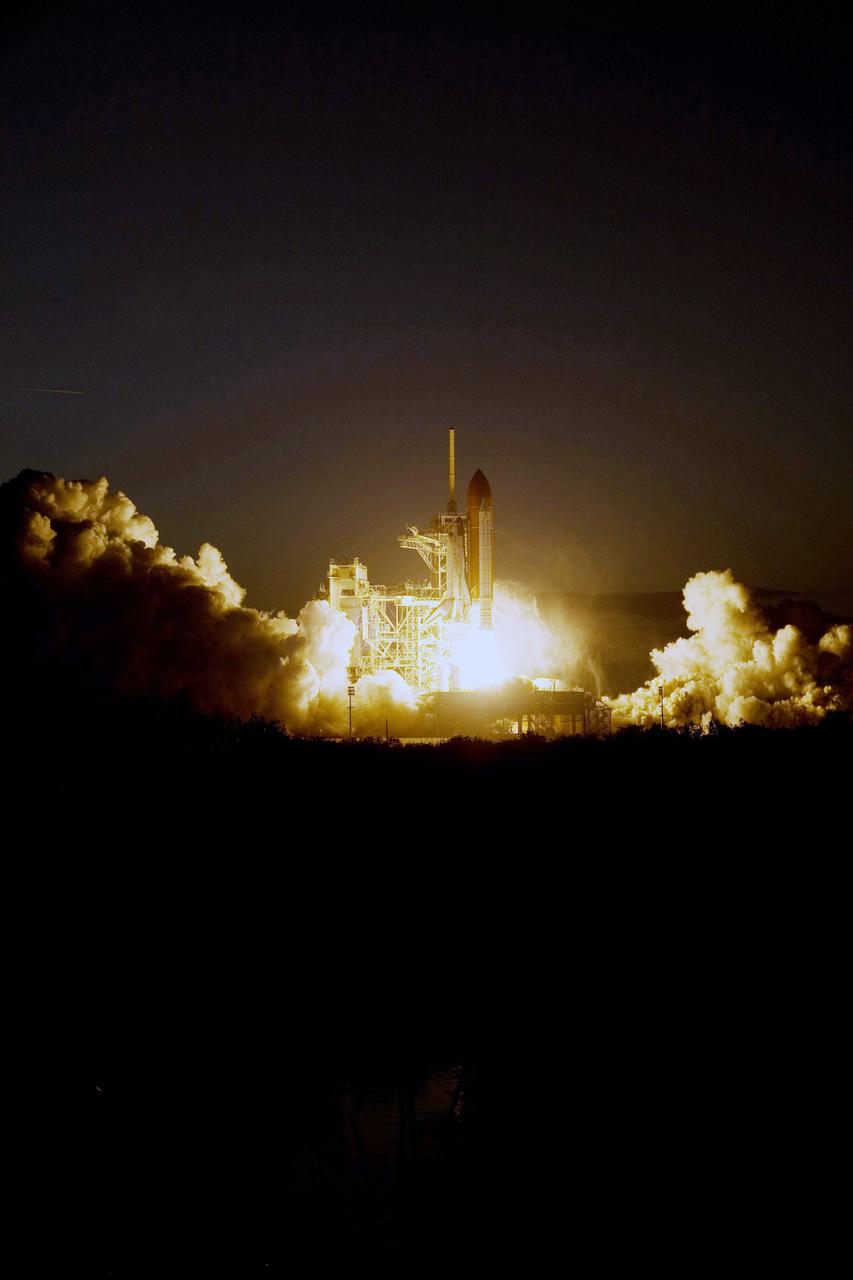
CAPE CANAVERAL, Fla. – The fiery light of ignition spills over Launch Pad 39A at NASA's Kennedy Space Center in Florida as space shuttle Discovery roars toward space on the STS-119 mission. Liftoff was on time at 7:43 p.m. EDT. The STS-119 mission is the 28th to the International Space Station and the 125th space shuttle flight. Discovery will deliver the final pair of power-generating solar array wings and the S6 truss segment. Installation of S6 will signal the station's readiness to house a six-member crew for conducting increased science. Photo credit: NASA/Sandra Joseph, Kevin O'Connell
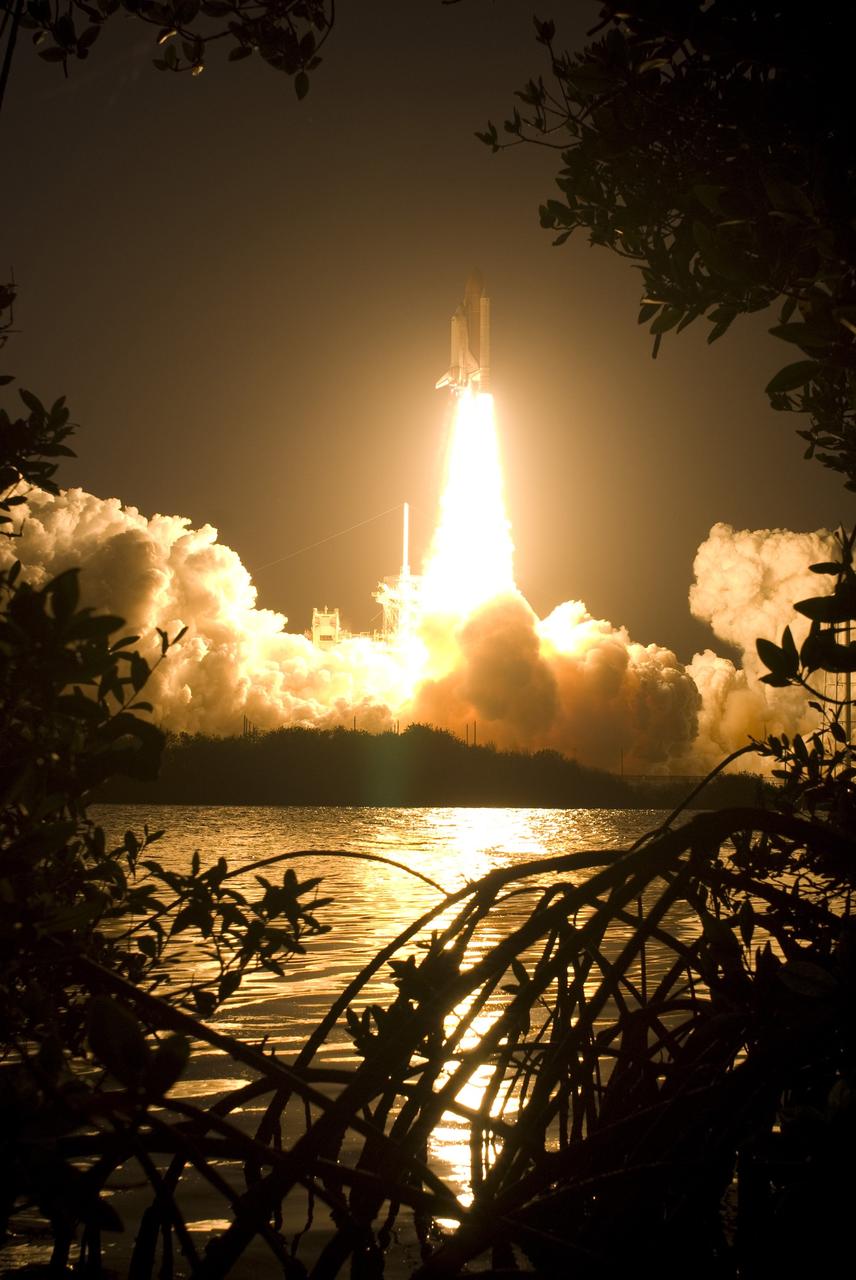
CAPE CANAVERAL, Fla. – Atop a column of fire, space shuttle Discovery roars toward space as it lifts off Launch Pad 39A at NASA's Kennedy Space Center in Florida on the STS-119 mission. The launch was on time at 7:43 p.m. EDT. The STS-119 mission is the 28th to the International Space Station and the 125th space shuttle flight. Discovery will deliver the final pair of power-generating solar array wings and the S6 truss segment. Installation of S6 will signal the station's readiness to house a six-member crew for conducting increased science. Photo credit: NASA/Sandra Joseph, Kevin O'Connell
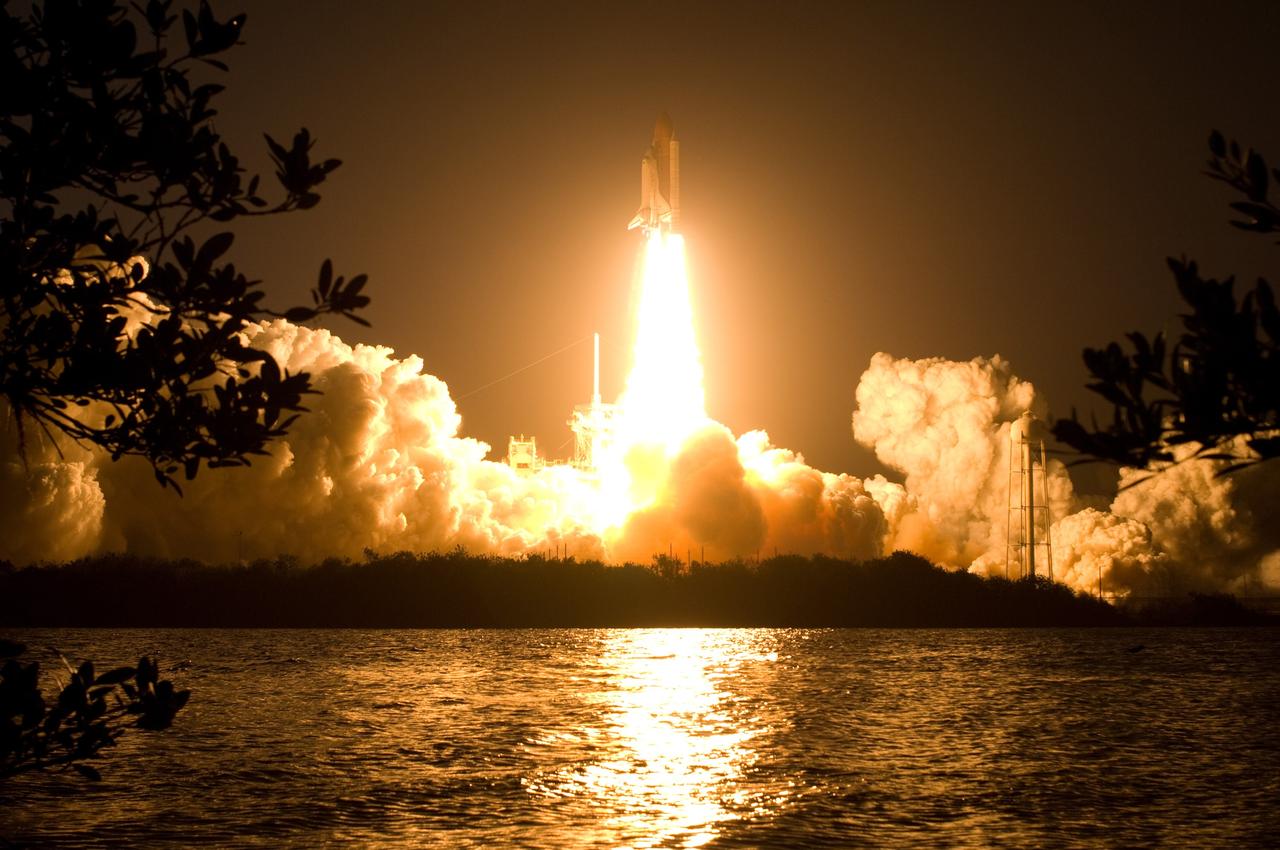
CAPE CANAVERAL, Fla. – Billows of smoke and the water near Launch Pad 39A at NASA's Kennedy Space Center in Florida capture the brilliant light of space shuttle Discovery's lift-off on the STS-119 mission. The launch was on time at 7:43 p.m. EDT. The STS-119 mission is the 28th to the International Space Station and the 125th space shuttle flight. Discovery will deliver the final pair of power-generating solar array wings and the S6 truss segment. Installation of S6 will signal the station's readiness to house a six-member crew for conducting increased science. Photo credit: NASA/Sandra Joseph, Kevin O'Connell
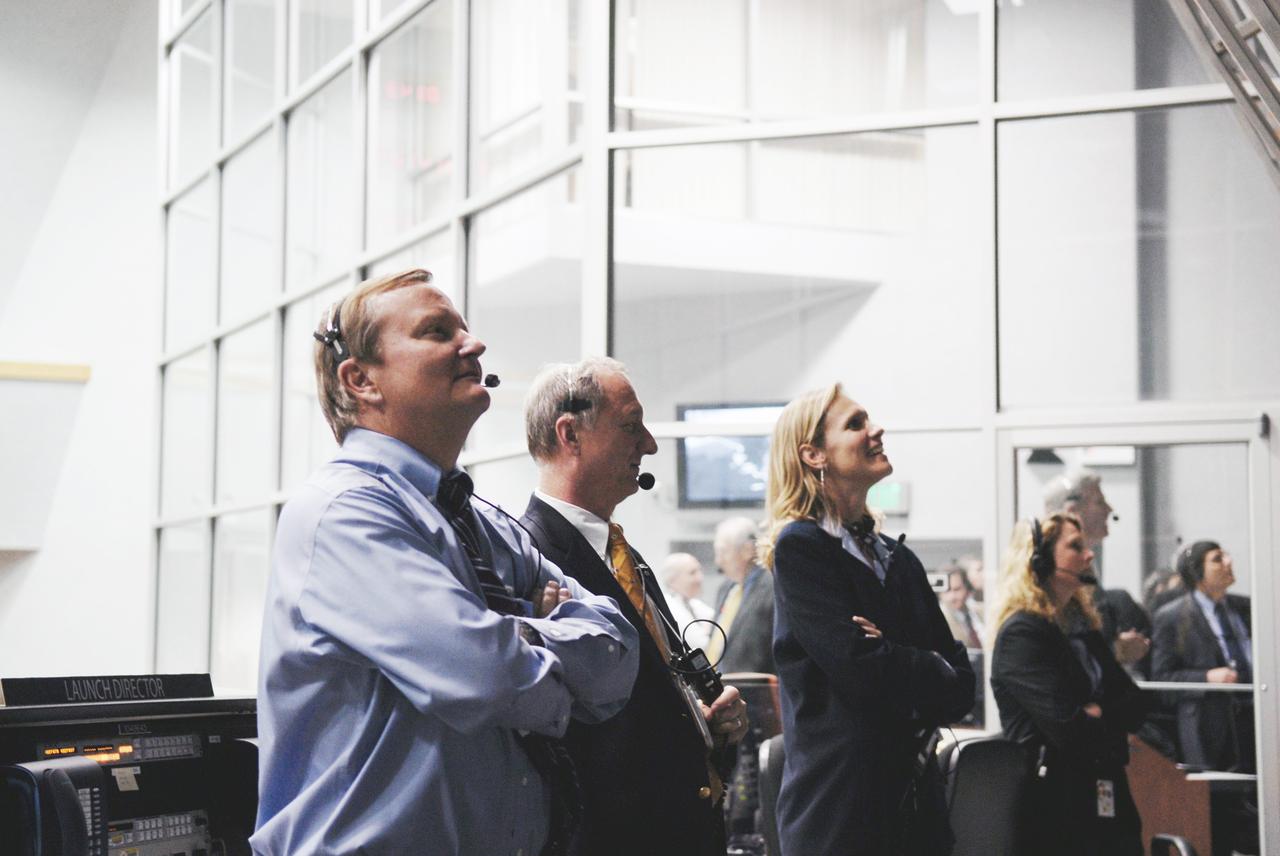
CAPE CANAVERAL, Fla. – In Firing Room 4 of the Launch Control Center at NASA's Kennedy Space Center in Florida, Center Director Bob Cabana watches the brilliant launch of space shuttle Discovery on the STS-119 mission. Launch was on time at 7:43 p.m. EDT. The STS-119 mission is the 28th to the space station and Discovery's 36th flight. Discovery will deliver the final pair of power-generating solar array wings and the S6 truss segment. Installation of S6 will signal the station's readiness to house a six-member crew for conducting increased science. Photo credit: NASA/Kim Shiflett
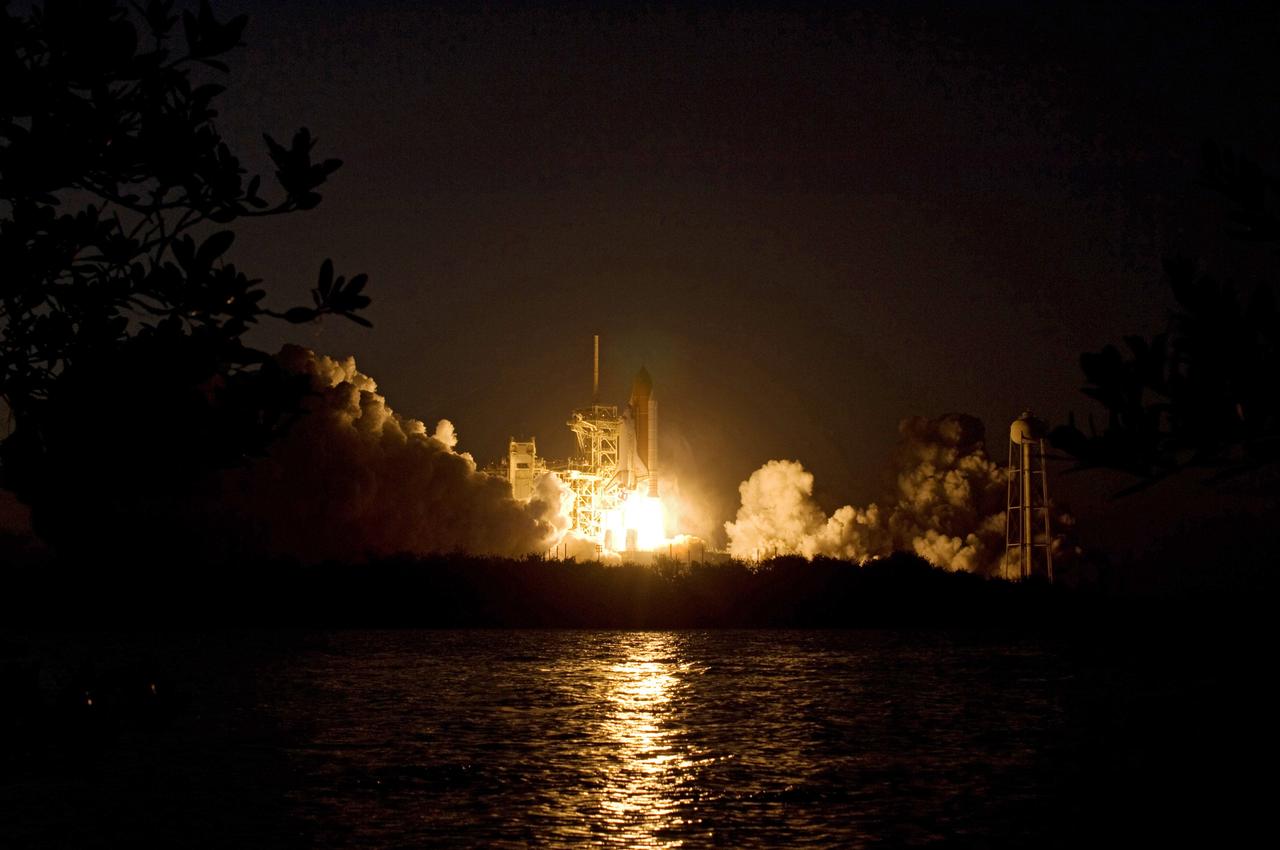
CAPE CANAVERAL, Fla. – The brilliant light of space shuttle Discovery's lift-off on the STS-119 mission lights up the clouds of smoke and the water near Launch Pad 39A at NASA's Kennedy Space Center in Florida. The launch was on time at 7:43 p.m. EDT. The STS-119 mission is the 28th to the International Space Station and the 125th space shuttle flight. Discovery will deliver the final pair of power-generating solar array wings and the S6 truss segment. Installation of S6 will signal the station's readiness to house a six-member crew for conducting increased science. Photo credit: NASA/Sandra Joseph, Kevin O'Connell
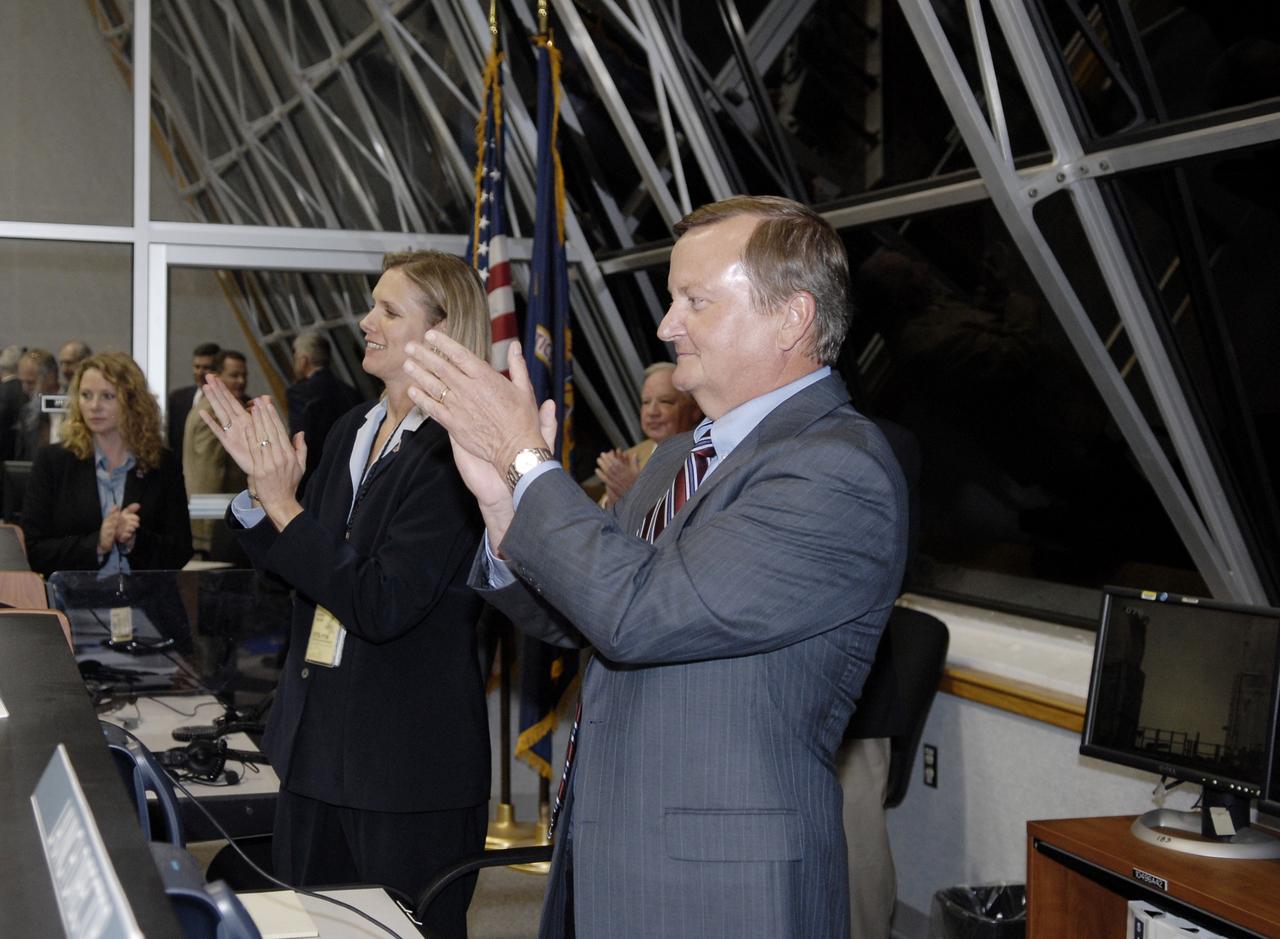
CAPE CANAVERAL, Fla. – In Firing Room 4 of the Launch Control Center at NASA's Kennedy Space Center in Florida, Flow Director for space shuttle Discovery Stephanie Stilson (center) and Shuttle Launch Director Mike Leinbach applaud the mission management team for the successful launch of space shuttle Discovery on the STS-119 mission. Launch was on time at 7:43 p.m. EDT. The STS-119 mission is the 28th to the space station and Discovery's 36th flight. Discovery will deliver the final pair of power-generating solar array wings and the S6 truss segment. Installation of S6 will signal the station's readiness to house a six-member crew for conducting increased science. Photo credit: NASA/Kim Shiflett
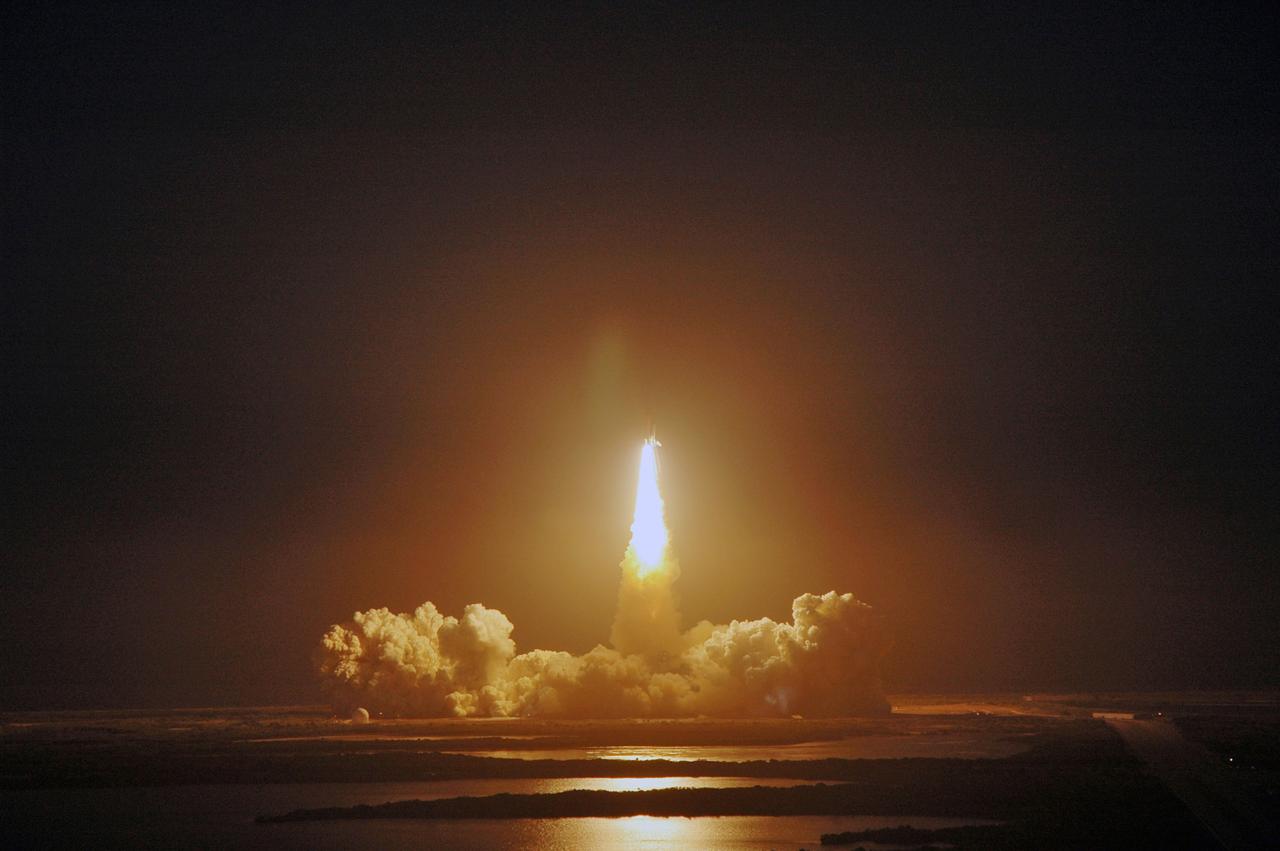
CAPE CANAVERAL, Fla. – Viewed from the roof of the Vehicle Assembly Building at NASA's Kennedy Space Center in Florida, space shuttle Discovery rides the tower of flames as it roars into space on the STS-119 mission. Liftoff was on time at 7:43 p.m. EDT. The STS-119 mission is the 28th to the International Space Station and the 125th space shuttle flight. Discovery will deliver the final pair of power-generating solar array wings and the S6 truss segment. Installation of S6 will signal the station's readiness to house a six-member crew for conducting increased science. Photo credit: NASA/Marino Jeffrey
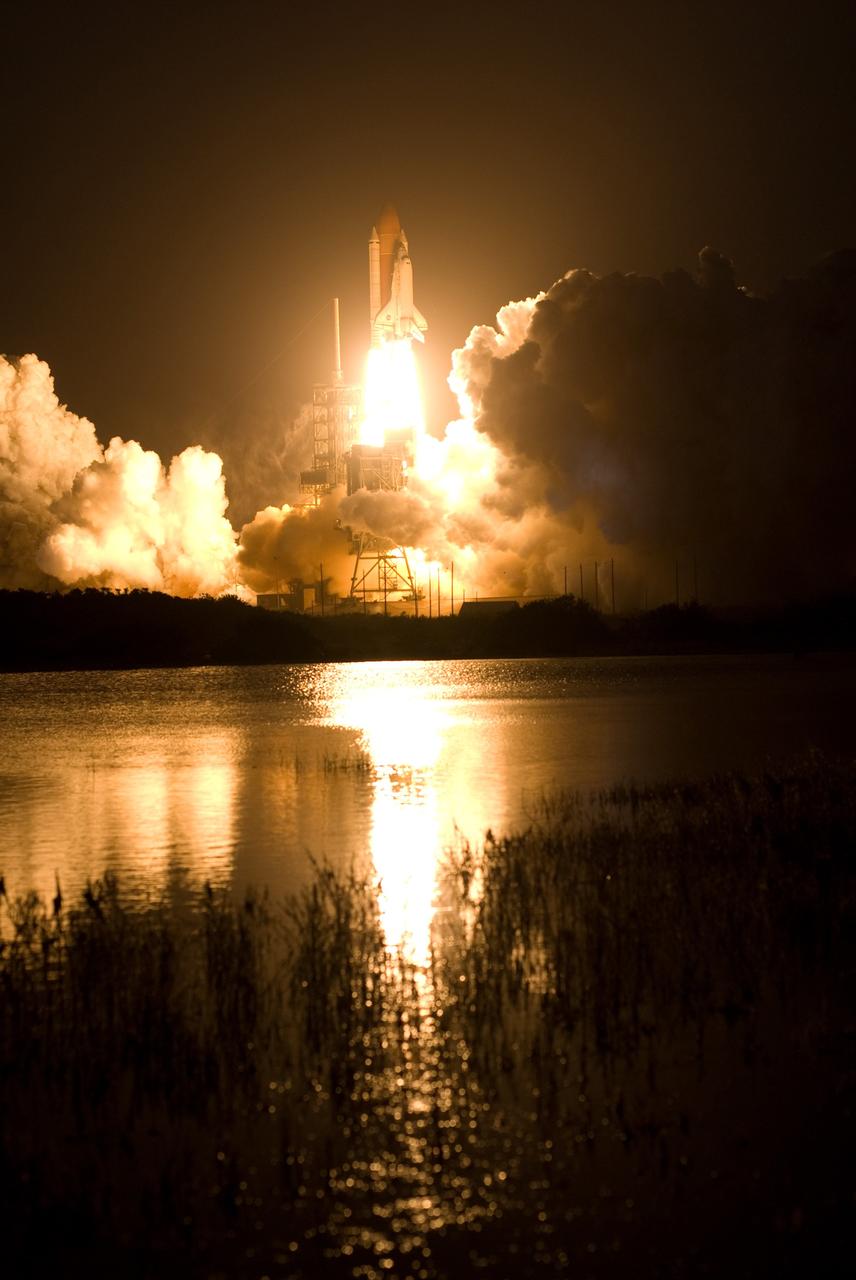
CAPE CANAVERAL, Fla. – The brilliant light of space shuttle Discovery's lift-off on the STS-119 mission lights up the clouds of smoke and the water near Launch Pad 39A at NASA's Kennedy Space Center in Florida. The launch was on time at 7:43 p.m. EDT. The STS-119 mission is the 28th to the International Space Station and the 125th space shuttle flight. Discovery will deliver the final pair of power-generating solar array wings and the S6 truss segment. Installation of S6 will signal the station's readiness to house a six-member crew for conducting increased science. Photo credit: NASA/Tony Gray, Tom Farrar
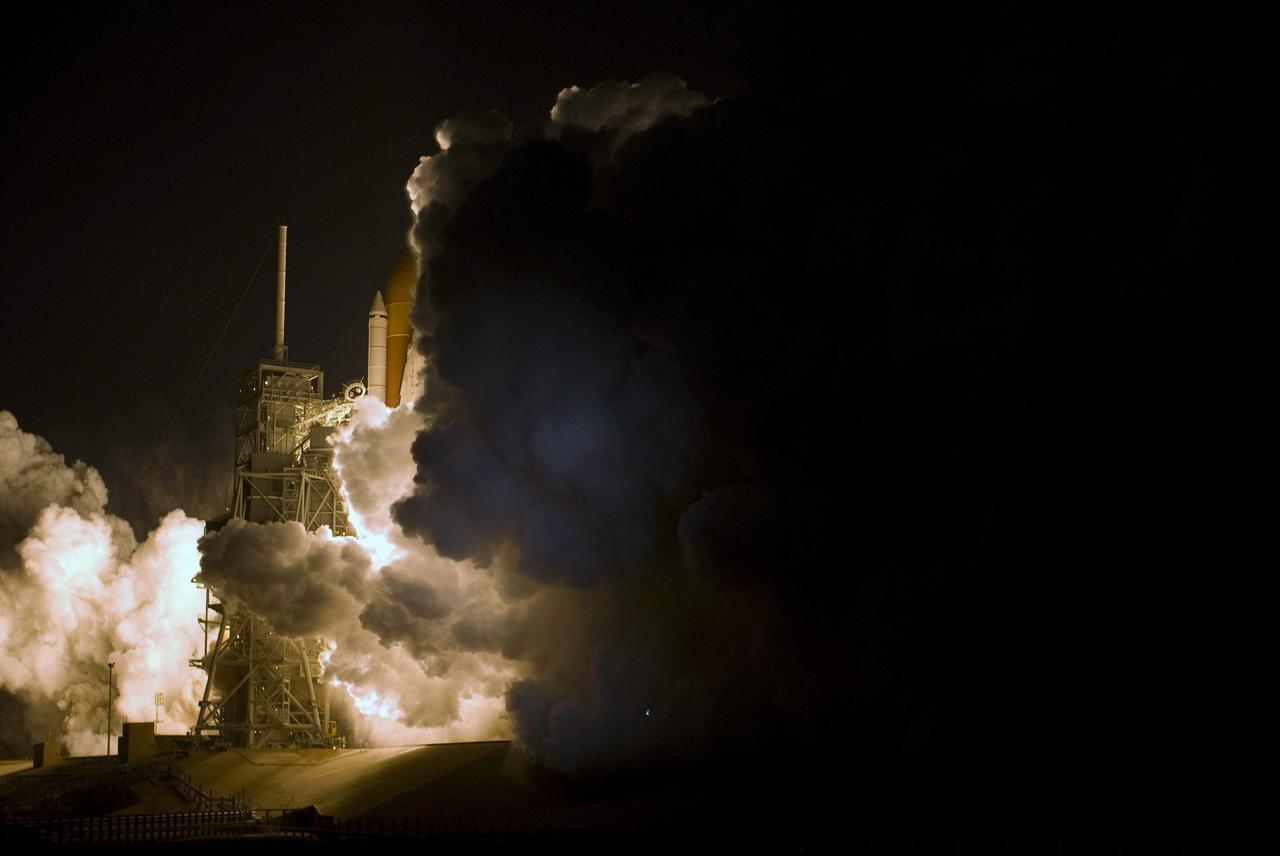
CAPE CANAVERAL, Fla. – Light and dark clouds of smoke and steam, spawned by the fire of liftoff, roll across Launch Pad 39A at NASA's Kennedy Space Center in Florida as space shuttle Discovery heads to space on the STS-119 mission. Liftoff was on time at 7:43 p.m. EDT. The STS-119 mission is the 28th to the International Space Station and the 125th space shuttle flight. Discovery will deliver the final pair of power-generating solar array wings and the S6 truss segment. Installation of S6 will signal the station's readiness to house a six-member crew for conducting increased science. Photo credit: NASA/Tony Gray, Tom Farrar
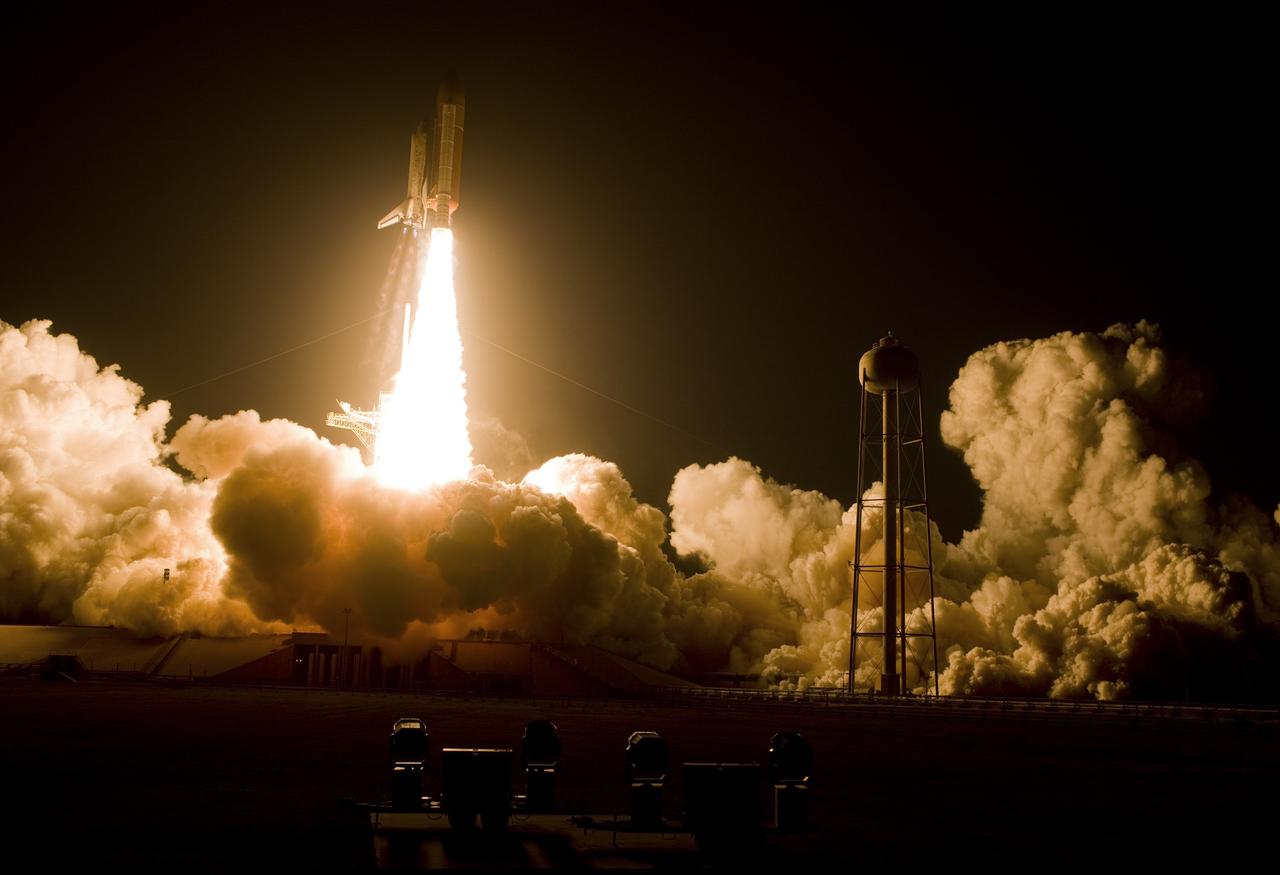
CAPE CANAVERAL, Fla. – Clouds of smoke and steam roll across Launch Pad 39A at NASA's Kennedy Space Center in Florida as space shuttle Discovery races toward space on mission STS-119. Launch was on time at 7:43 p.m. EDT. The STS-119 mission is the 28th to the International Space Station and the 125th space shuttle flight. Discovery will deliver the final pair of power-generating solar array wings and the S6 truss segment. Installation of S6 will signal the station's readiness to house a six-member crew for conducting increased science. Photo courtesy of Scott Andrews
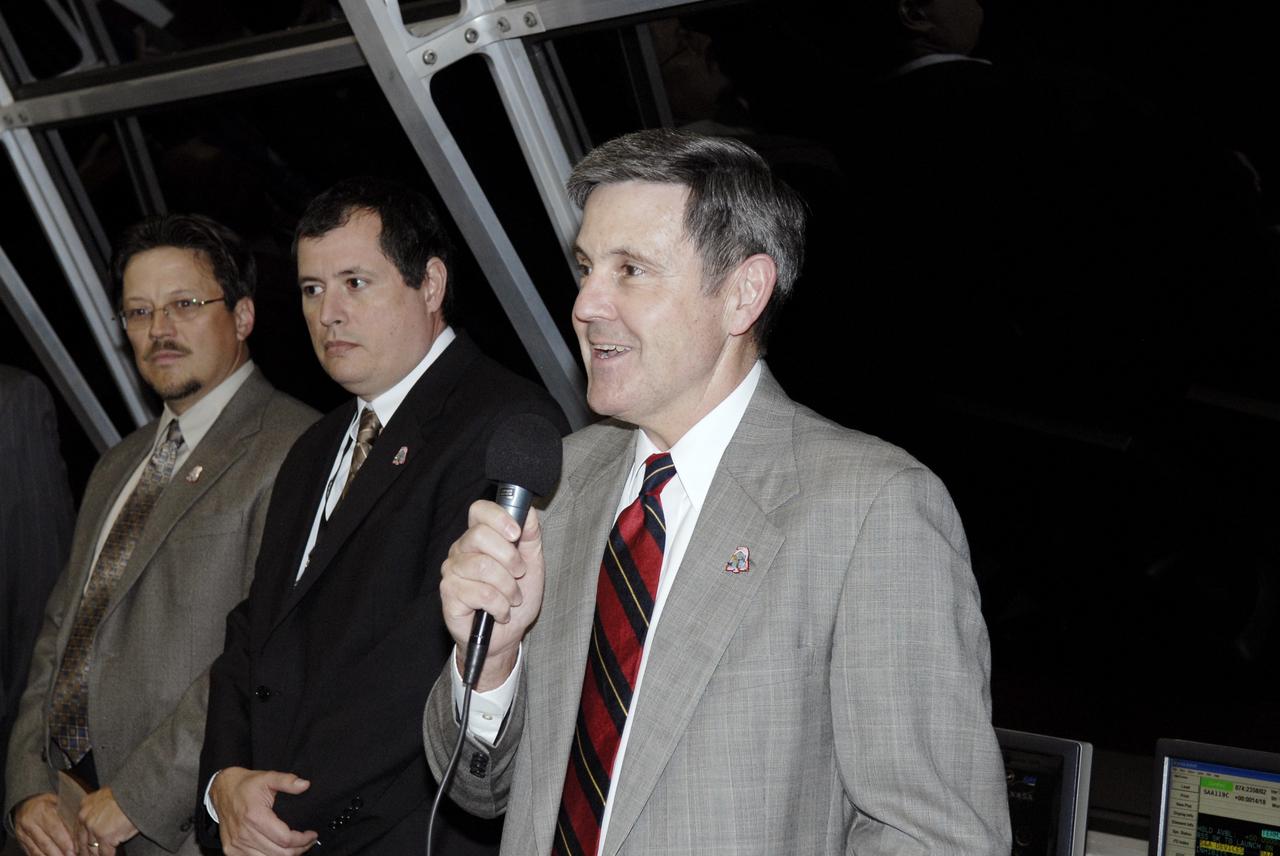
CAPE CANAVERAL, Fla. – In Firing Room 4 of the Launch Control Center at NASA's Kennedy Space Center in Florida, Center Director Bob Cabana (with microphone) congratulates the mission management team after the successful launch of space shuttle Discovery on the STS-119 mission. Launch was on time at 7:43 p.m. EDT. The STS-119 mission is the 28th to the space station and Discovery's 36th flight. Discovery will deliver the final pair of power-generating solar array wings and the S6 truss segment. Installation of S6 will signal the station's readiness to house a six-member crew for conducting increased science. Photo credit: NASA/Kim Shiflett
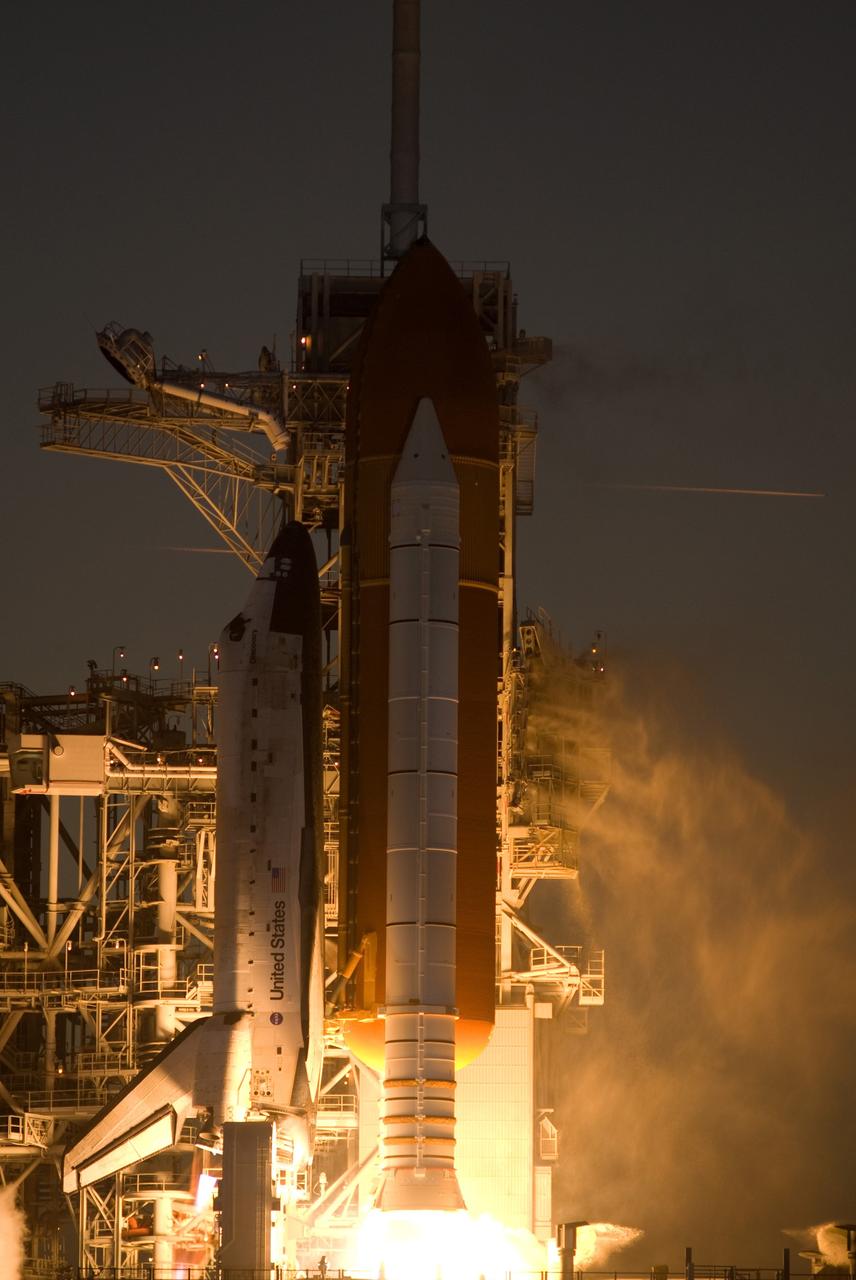
CAPE CANAVERAL, Fla. – At NASA's Kennedy Space Center in Florida, space shuttle Discovery rises from Launch Pad 39A on columns of fire as it begins its 13-day journey into space on mission STS-119. Launch was on time at 7:43 p.m. EDT. The STS-119 mission is the 28th to the International Space Station and the 125th space shuttle flight. Discovery will deliver the final pair of power-generating solar array wings and the S6 truss segment. Installation of S6 will signal the station's readiness to house a six-member crew for conducting increased science. Photo credit: NASA/Rusty Backer, George Roberts
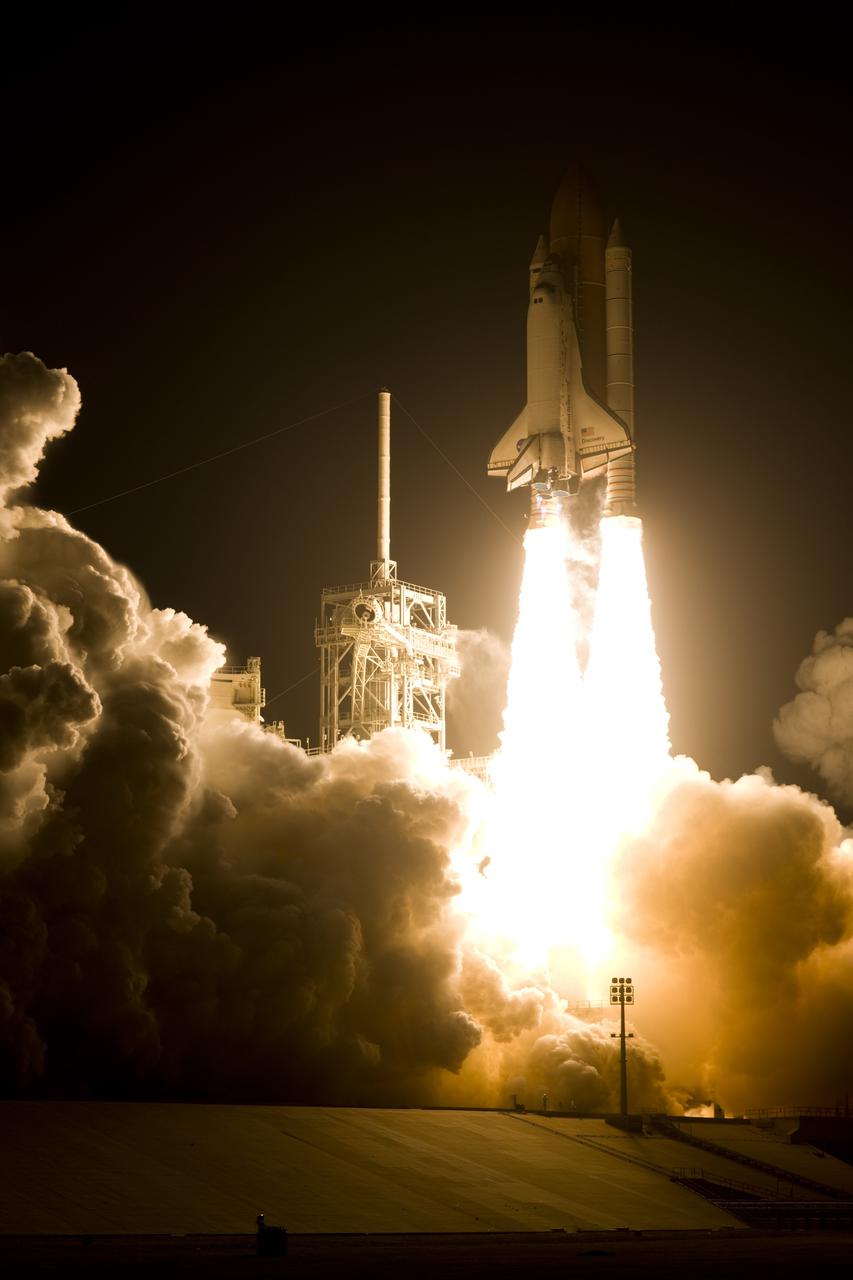
CAPE CANAVERAL, Fla. – At NASA's Kennedy Space Center in Florida, twin columns of fire propel space shuttle Discovery past the lightning mast on Launch Pad 39A toward space on mission STS-119. Launch was on time at 7:43 p.m. EDT. The STS-119 mission is the 28th to the International Space Station and the 125th space shuttle flight. Discovery will deliver the final pair of power-generating solar array wings and the S6 truss segment. Installation of S6 will signal the station's readiness to house a six-member crew for conducting increased science. Photo courtesy of Scott Andrews
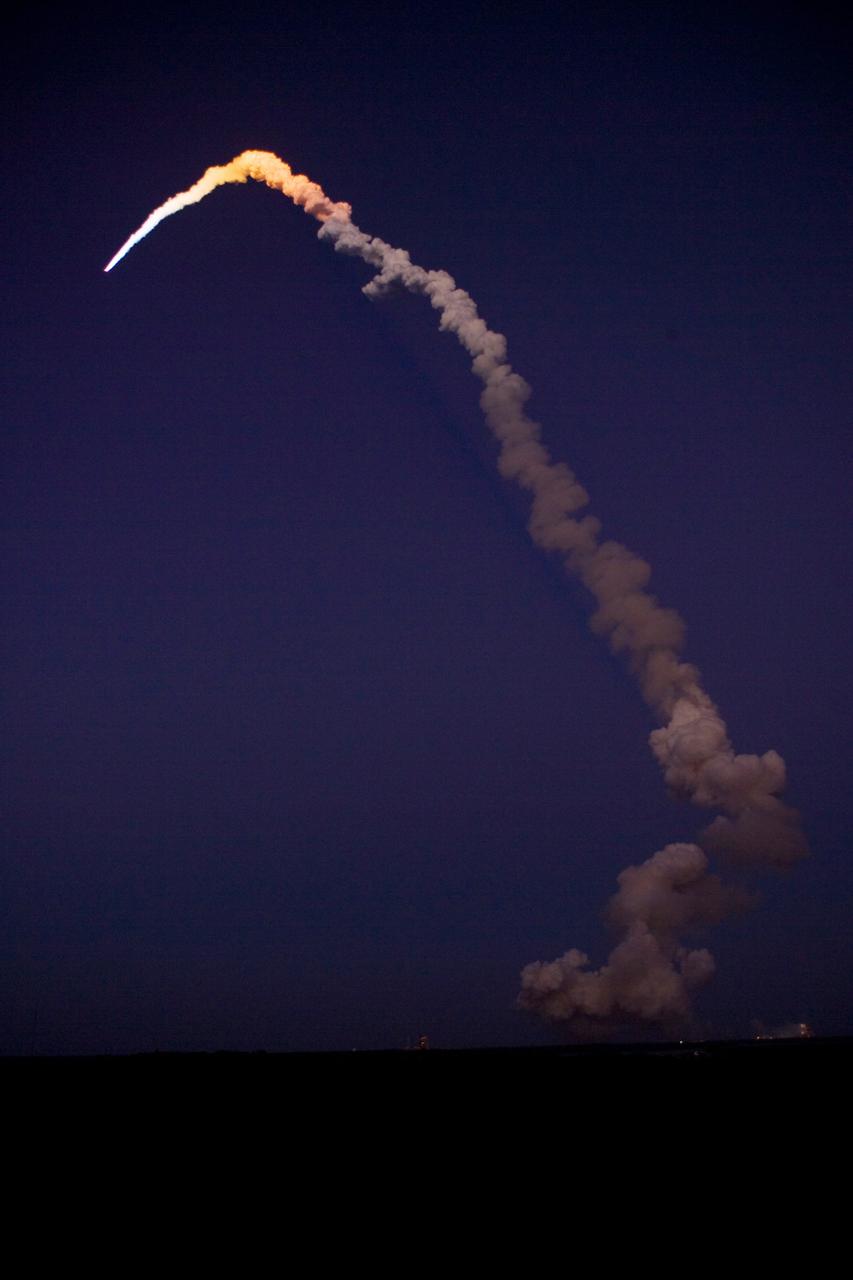
CAPE CANAVERAL, Fla. – As it arcs into space, space shuttle Discovery is lighted by sunlight after leaving the darker skies over NASA's Kennedy Space Center in Florida on the STS-119 mission. Liftoff was on time at 7:43 p.m. EDT. The STS-119 mission is the 28th to the International Space Station and the 125th space shuttle flight. Discovery will deliver the final pair of power-generating solar array wings and the S6 truss segment. Installation of S6 will signal the station's readiness to house a six-member crew for conducting increased science. Photo credit: NASA/Jeff Wolfe
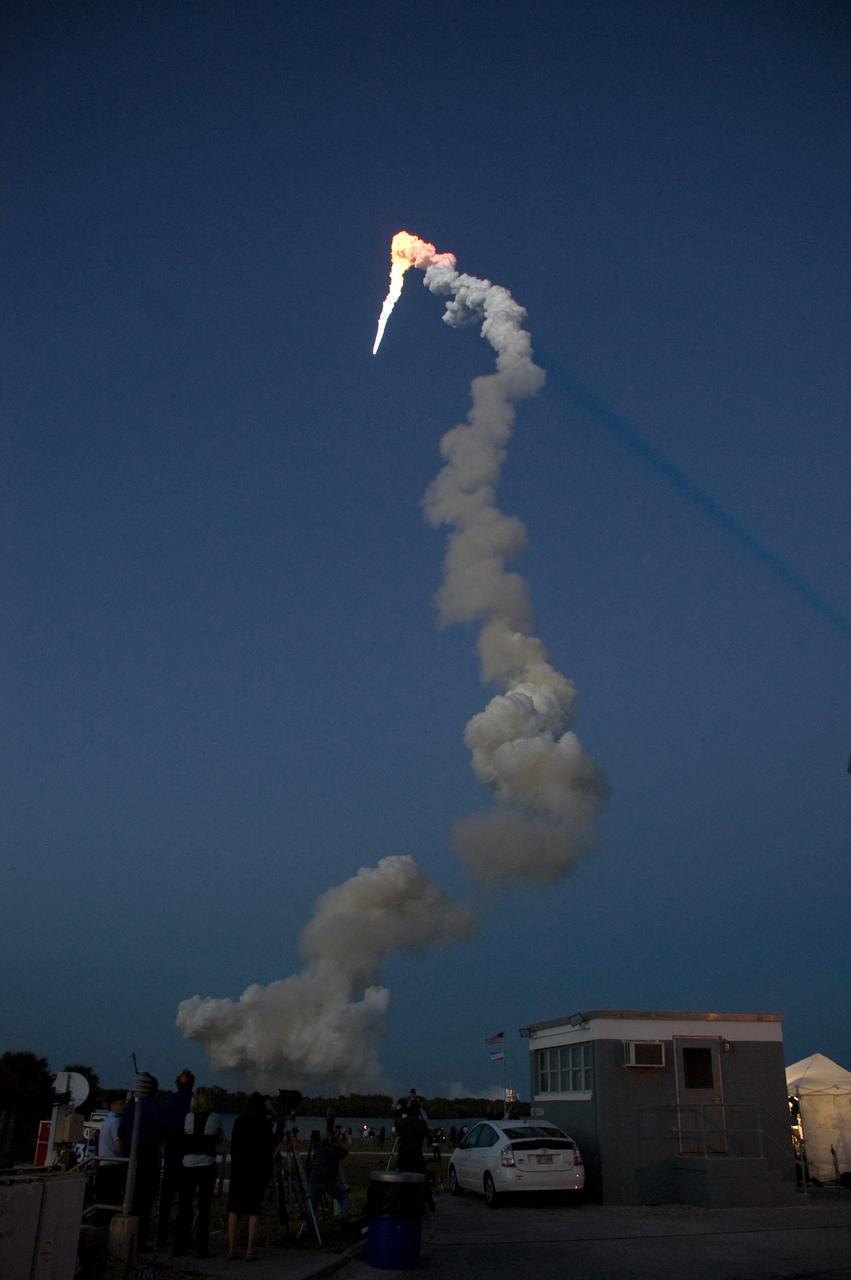
CAPE CANAVERAL, Fla. – As it arcs into space, space shuttle Discovery is lighted by sunlight after leaving the darker skies over NASA's Kennedy Space Center in Florida on the STS-119 mission. Liftoff was on time at 7:43 p.m. EDT. The STS-119 mission is the 28th to the International Space Station and the 125th space shuttle flight. Discovery will deliver the final pair of power-generating solar array wings and the S6 truss segment. Installation of S6 will signal the station's readiness to house a six-member crew for conducting increased science. Photo credit: NASA/Fletch Hildreth
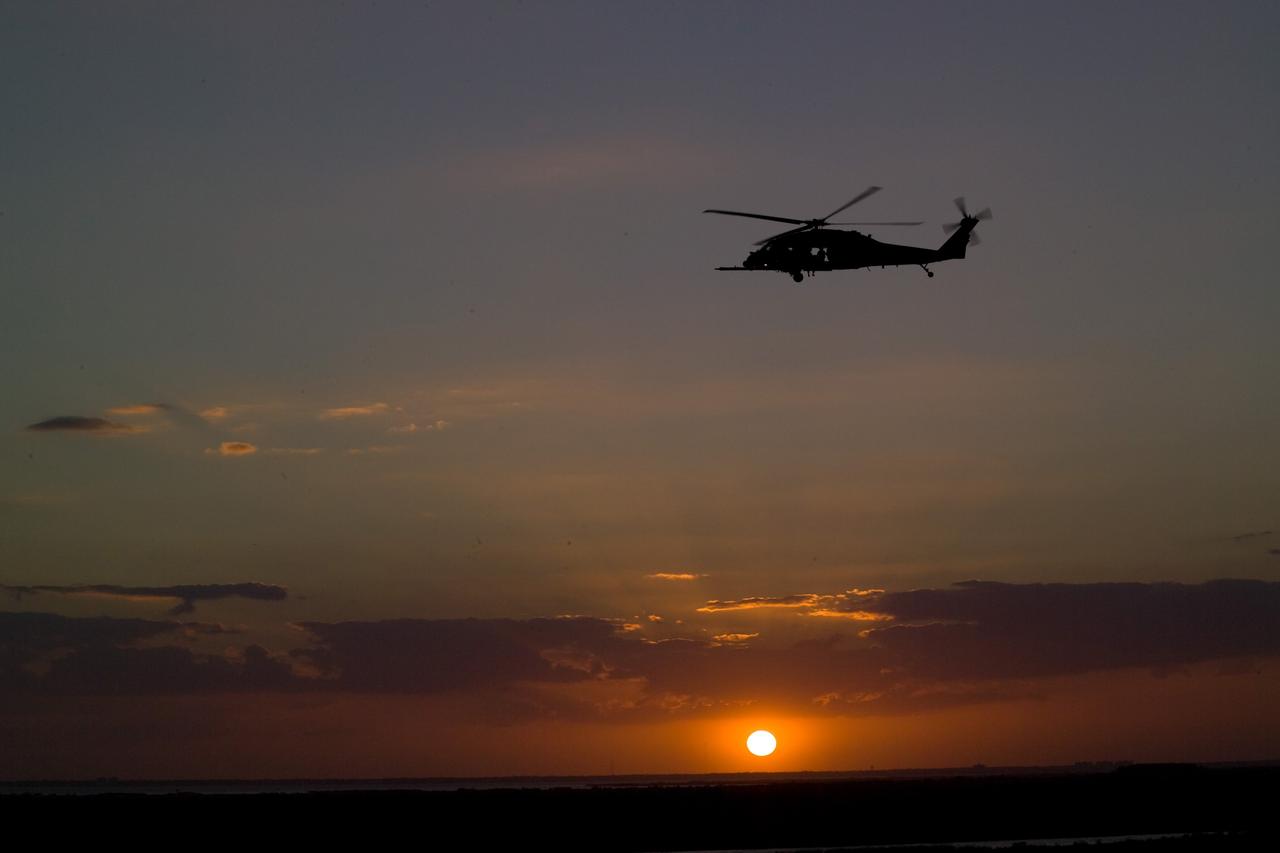
CAPE CANAVERAL, Fla. – A helicopter patrols the sky over NASA's Kennedy Space Center in Florida before launch of space shuttle Discovery on the STS-119 mission. Liftoff of Discovery was on time at 7:43 p.m. EDT. The STS-119 mission is the 28th to the International Space Station and the 125th space shuttle flight. Discovery will deliver the final pair of power-generating solar array wings and the S6 truss segment. Installation of S6 will signal the station's readiness to house a six-member crew for conducting increased science. Photo credit: NASA/Jeff Wolfe
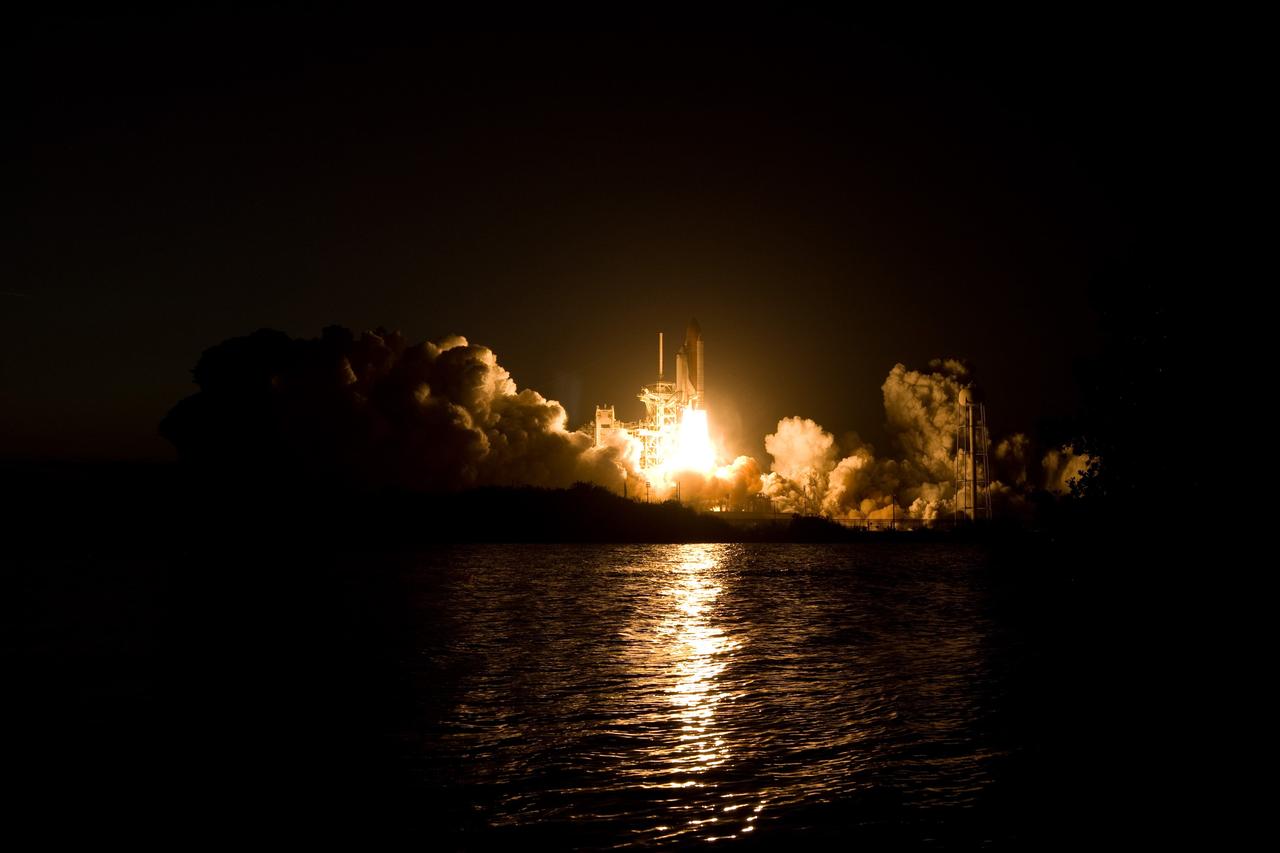
CAPE CANAVERAL, Fla. – Billows of smoke and the water near Launch Pad 39A at NASA's Kennedy Space Center in Florida capture the brilliant light of space shuttle Discovery's lift-off on the STS-119 mission. The launch was on time at 7:43 p.m. EDT. The STS-119 mission is the 28th to the International Space Station and the 125th space shuttle flight. Discovery will deliver the final pair of power-generating solar array wings and the S6 truss segment. Installation of S6 will signal the station's readiness to house a six-member crew for conducting increased science. Photo credit: NASA/Sandra Joseph, Kevin O'Connell
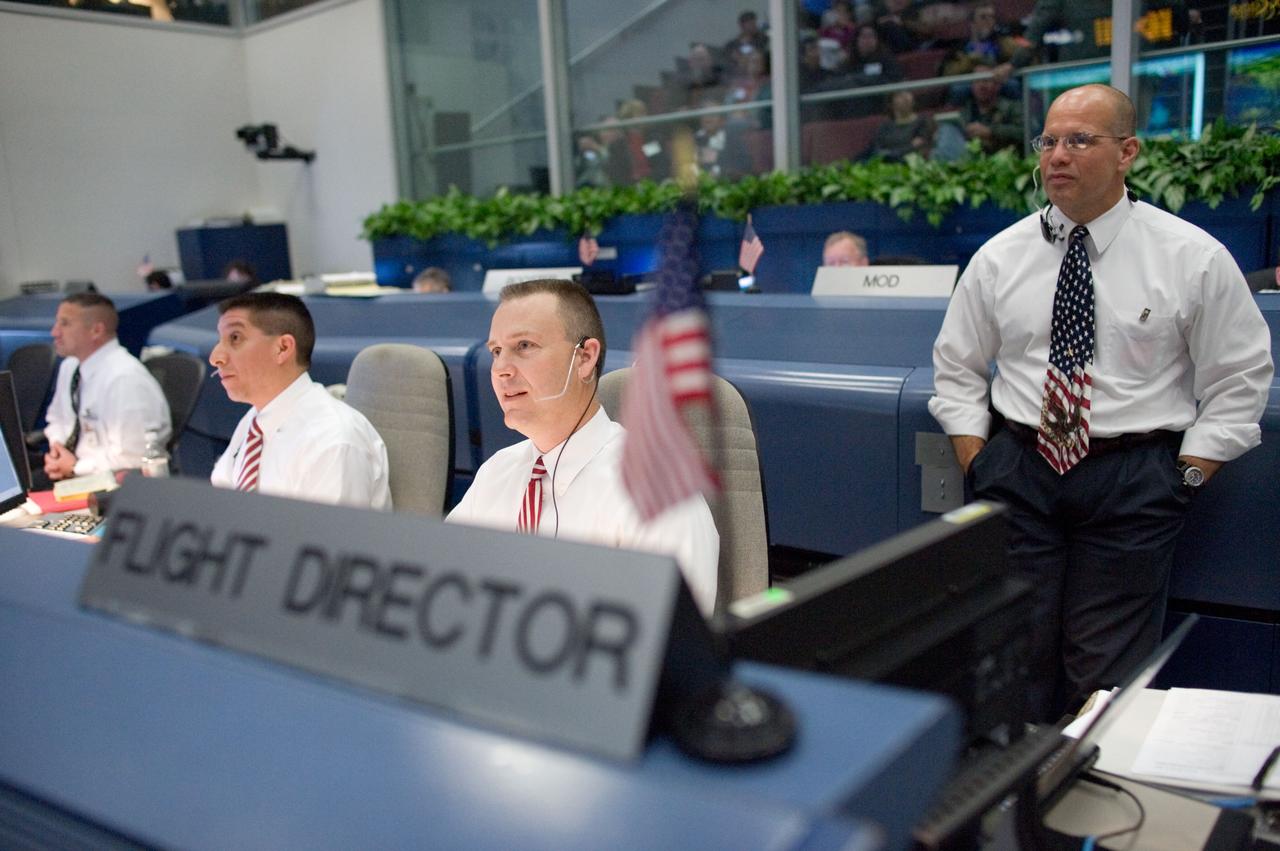
PHOTO DATE: 03-16-09 LOCATION: Bldg 30, WFCR SUBJECT: Launch of STS-119 with Flight Director Richard Jones, W-FCR PHOTOGRAPHER: BLAIR & BOLDT
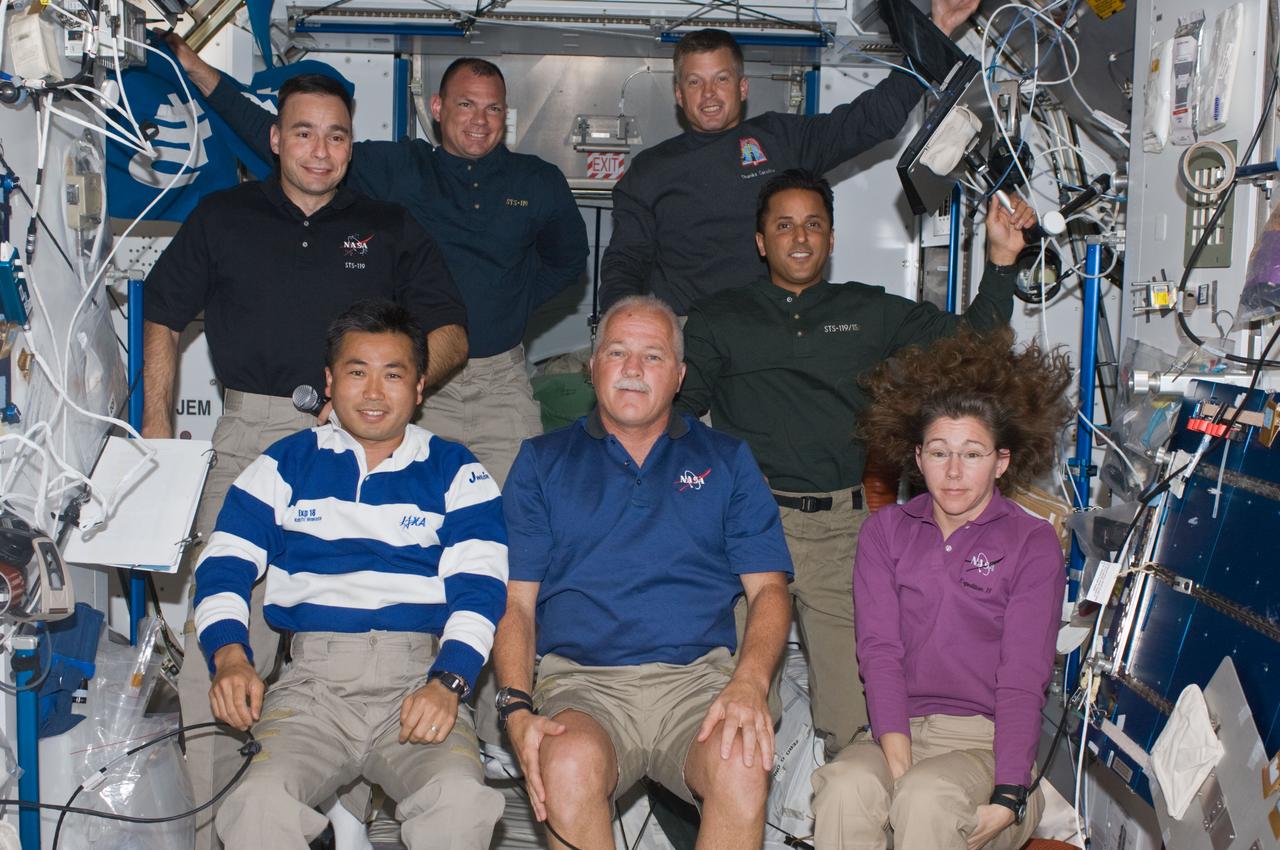
ISS018-E-042673 (22 March 2009) --- Seven of the ten crewmembers on the International Space Station are pictured in the Harmony node while Space Shuttle Discovery remains docked with the station. Pictured from the left (bottom) are Japan Aerospace Exploration Agency (JAXA) astronaut Koichi Wakata, Expedition 18 flight engineer; NASA astronauts John Phillips and Sandra Magnus, both STS-119 mission specialists. From the left (top) are astronauts Lee Archambault, STS-119 commander; Tony Antonelli, STS-119 pilot; Steve Swanson and Joseph Acaba, both STS-119 mission specialists.
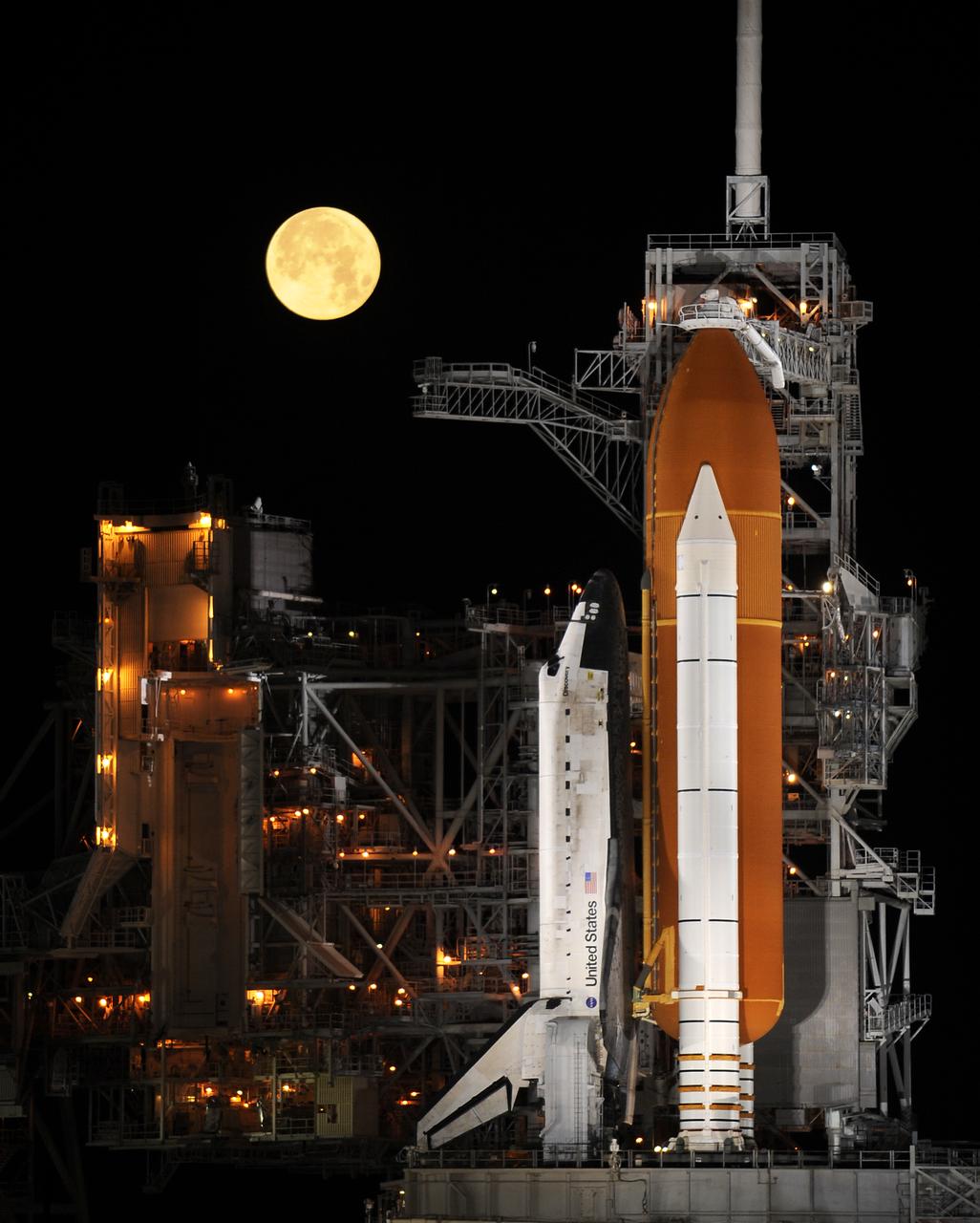
A nearly full Moon sets as the space shuttle Discovery sits atop Launch pad 39A at the Kennedy Space Center in Cape Canaveral, Florida, Wednesday, March 11, 2009. Photo Credit: (NASA/Bill Ingalls)

HOUSTON, Texas -- JSC2008-E-053106: Astronaut Richard Arnold, mission specialist on mission STS-119.
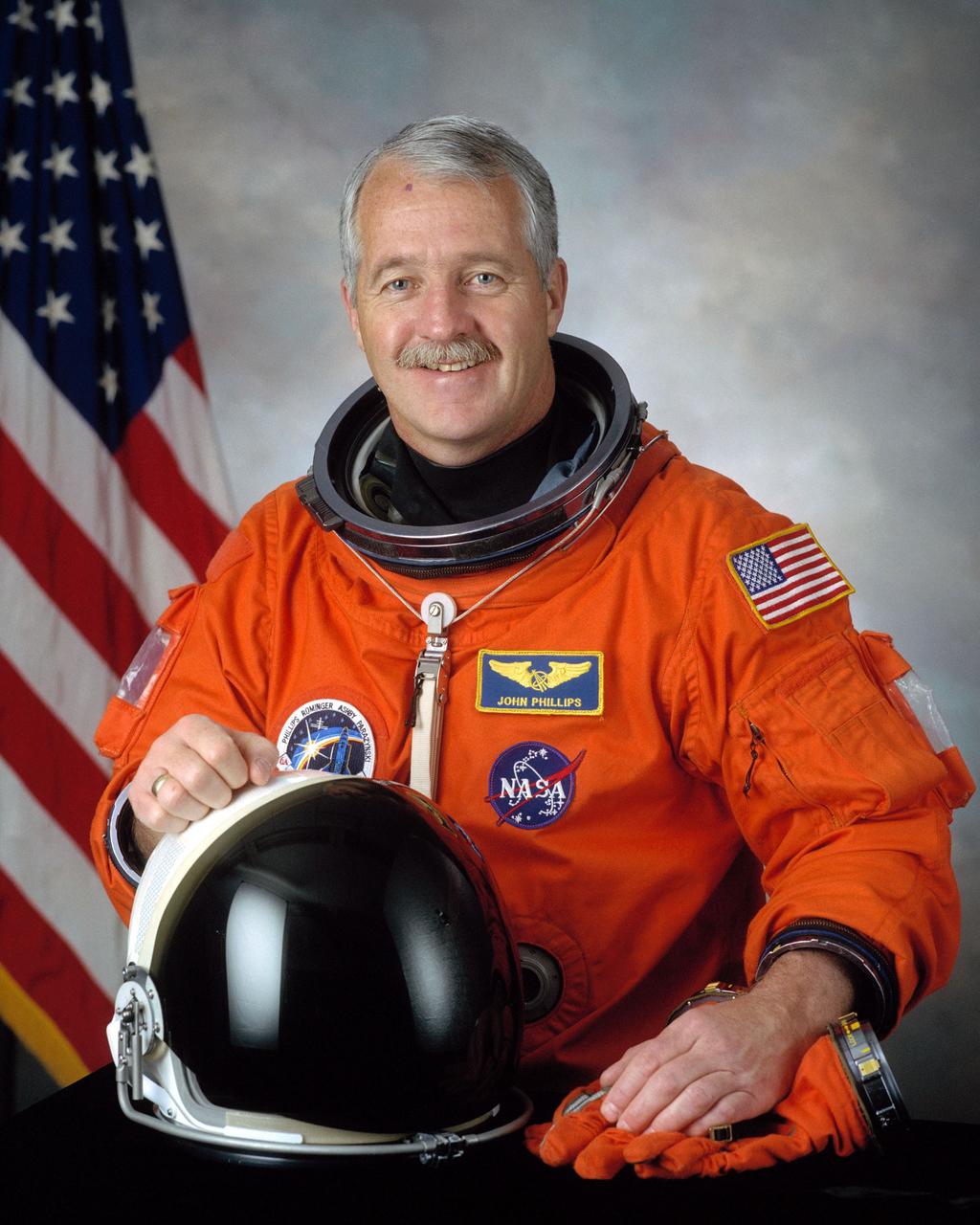
HOUSTON, Texas -- JSC2002-00859: Astronaut John L. Phillips, mission specialist, on mission STS-119.
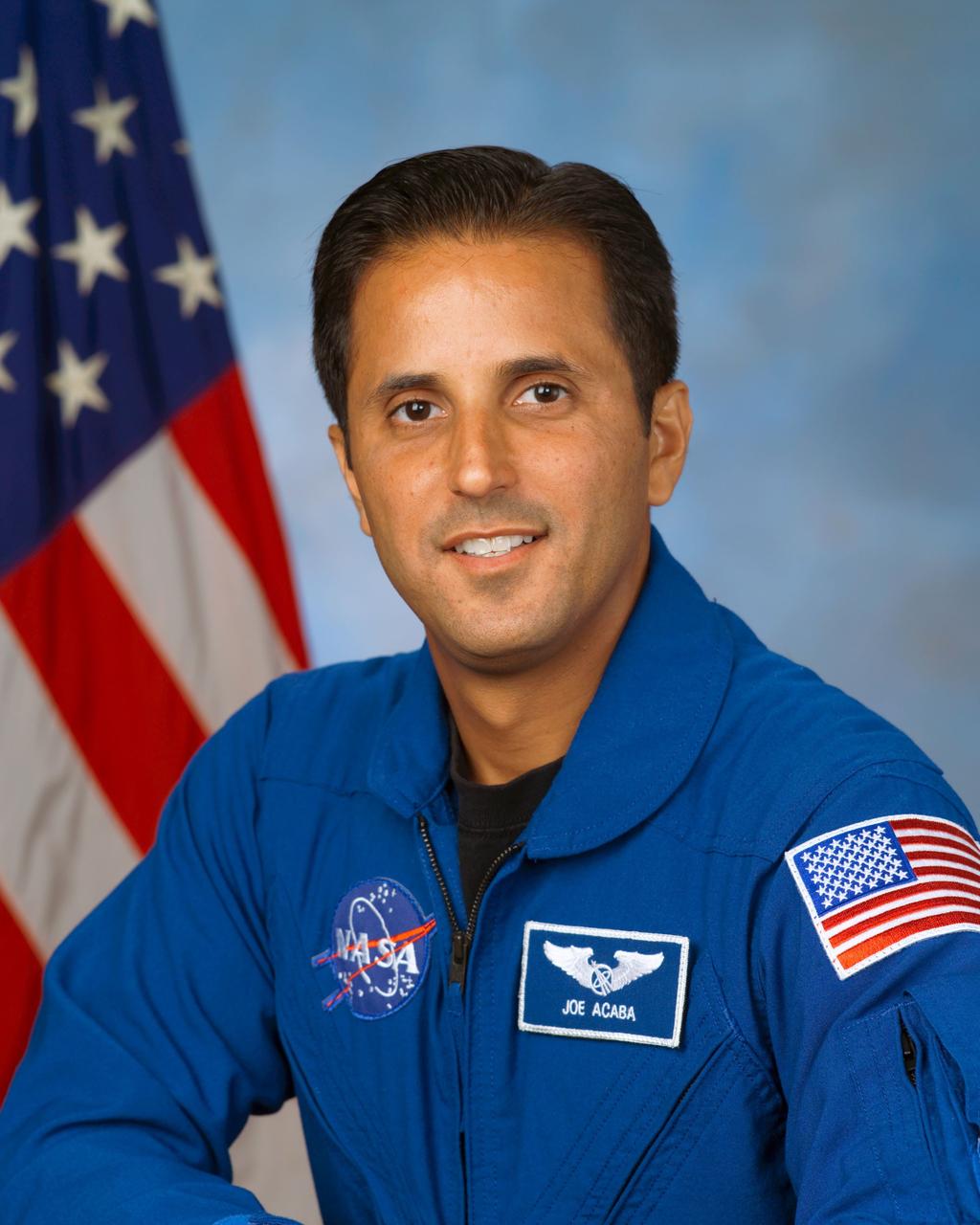
HOUSTON, Texas -- JSC2004-E-40629: Joseph M. (Joe) Acaba, mission specialist on mission STS-119.
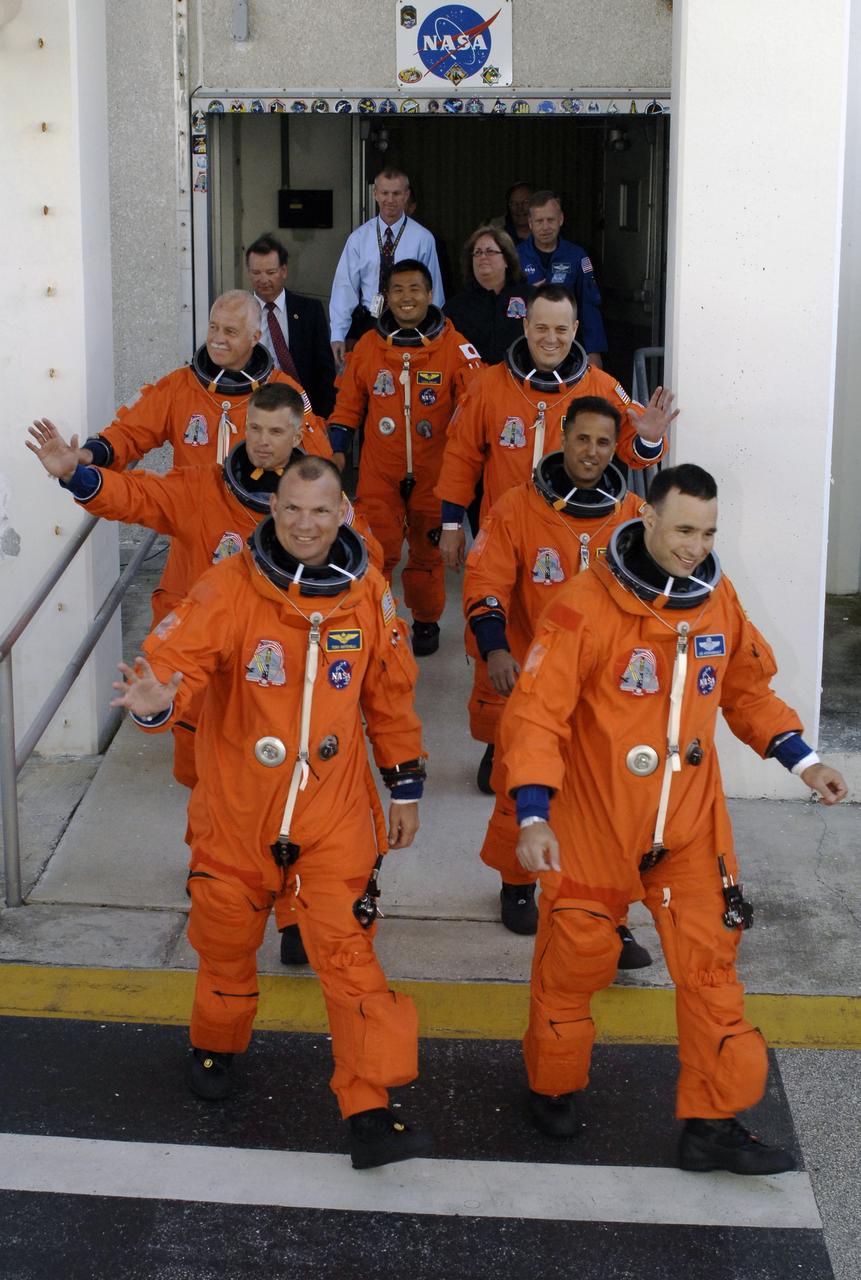
CAPE CANAVERAL, Fla. – The crew members of the STS-119 mission stride out of the Operations and Checkout Building at NASA's Kennedy Space Center in Florida, heading for the Astrovan that will take them to Launch Pad 39A. Clockwise from left are Pilot Tony Antonelli, Mission Specialists Steve Swanson, John Phillips, Koichi Wakata, Richard Arnold and Joseph Acaba, and Commander Lee Archambault. Wakata represents the Japan Aerospace Exploration Agency and will remain on the International Space Station, replacing Expedition 18 Flight Engineer Sandra Magnus, who returns to Earth with the STS-119 crew. Liftoff of Discovery is scheduled for 7:43 p.m. EDT. The STS-119 mission is the 28th to the space station and the 125th space shuttle flight. Discovery will deliver the final pair of power-generating solar array wings and the S6 truss segment. Installation of S6 will signal the station's readiness to house a six-member crew for conducting increased science. Photo credit: NASA/Kim Shiflett
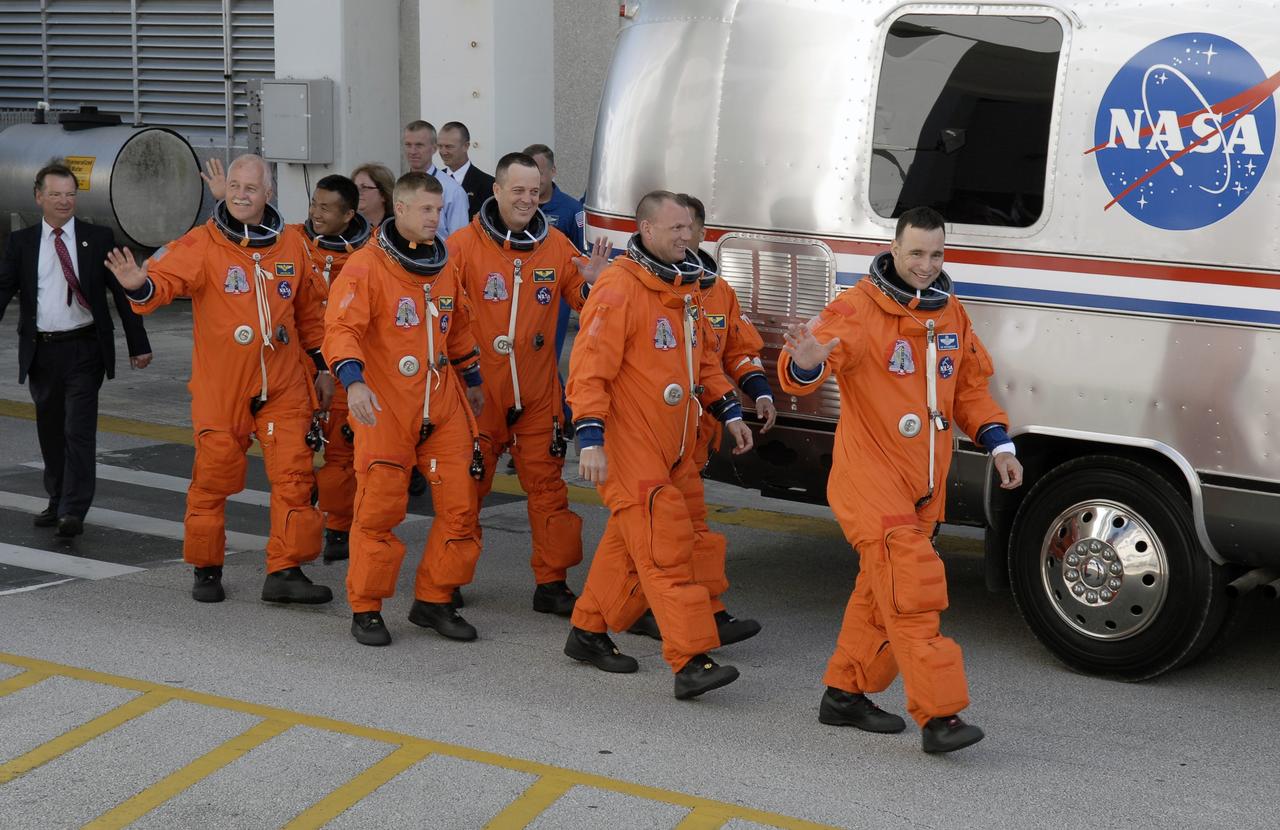
CAPE CANAVERAL, Fla. – The STS-119 crew members head for the Astrovan to take them to Launch Pad 39A at NASA's Kennedy Space Center in Florida for launch of space shuttle Discovery to the International Space Station. From left are Mission Specialists John Phillips, Koichi Wakata, Steve Swanson and Richard Arnold, Pilot Tony Antonelli, Mission Specialist Joseph Acaba (behind Antonelli) and Commander Lee Archambault. Wakata represents the Japan Aerospace Exploration Agency and will remain on the International Space Station, replacing Expedition 18 Flight Engineer Sandra Magnus, who returns to Earth with the STS-119 crew. Liftoff of Discovery is scheduled for 7:43 p.m. EDT on March 15. An earlier launch attempt March 11 was scrubbed at 2:36 p.m. due to a gaseous hydrogen leak from the external tank at the Ground Umbilical Carrier Plate during tanking. A seven-inch quick disconnect and two seals were replaced. The STS-119 mission is the 28th to the space station and the 125th space shuttle flight. Discovery will deliver the final pair of power-generating solar array wings and the S6 truss segment. Installation of S6 will signal the station's readiness to house a six-member crew for conducting increased science. Photo credit: NASA/Kim Shiflett
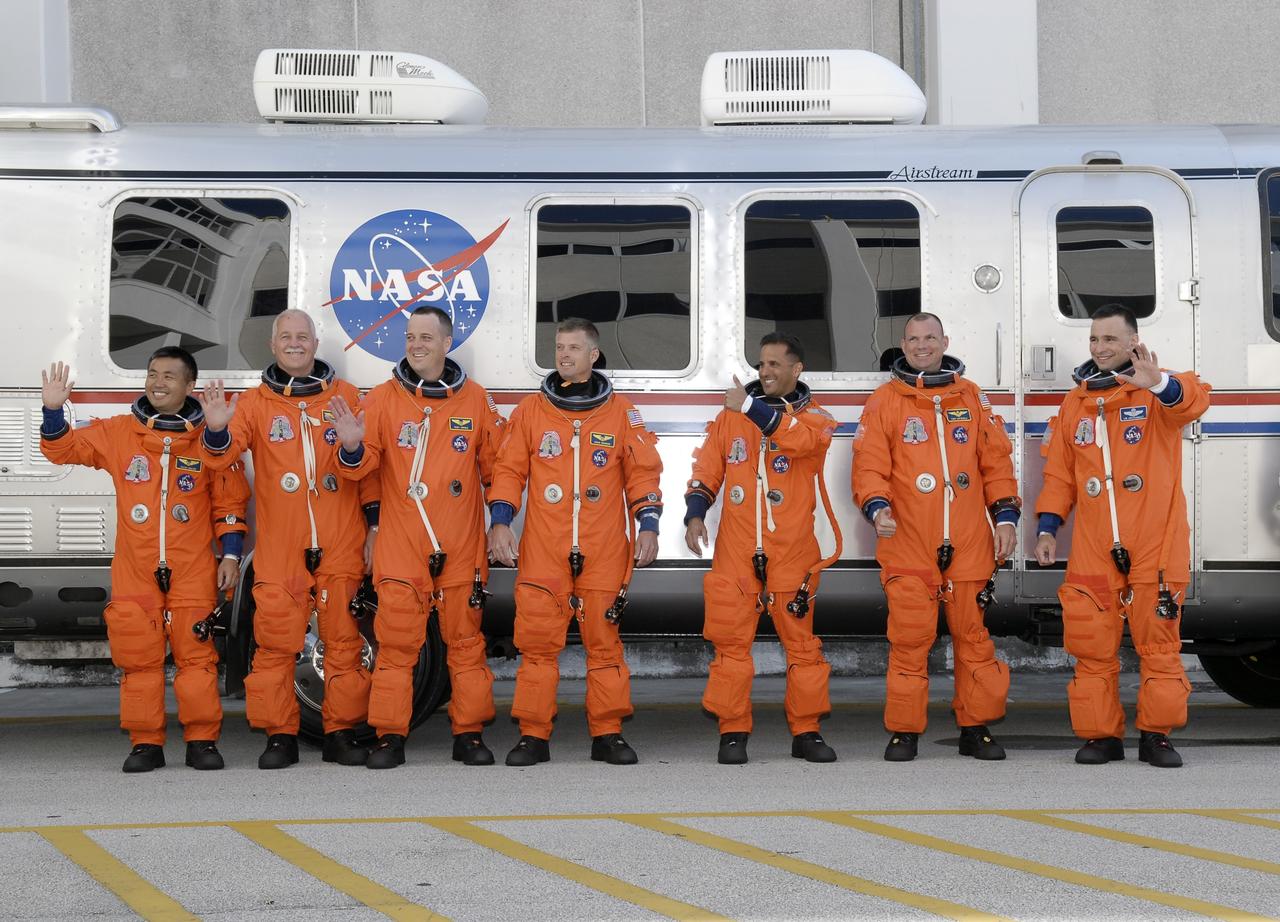
CAPE CANAVERAL, Fla. – The STS-119 crew members pause for photos before boarding the Astrovan to take them to Launch Pad 39A at NASA's Kennedy Space Center in Florida for launch of space shuttle Discovery to the International Space Station. From left are Mission Specialists Koichi Wakata, John Phillips, Richard Arnold, Steve Swanson and Joseph Acaba, Pilot Tony Antonelli and Commander Lee Archambault. Wakata represents the Japan Aerospace Exploration Agency and will remain on the International Space Station, replacing Expedition 18 Flight Engineer Sandra Magnus, who returns to Earth with the STS-119 crew. Liftoff of Discovery is scheduled for 7:43 p.m. EDT on March 15. An earlier launch attempt March 11 was scrubbed at 2:36 p.m. due to a gaseous hydrogen leak from the external tank at the Ground Umbilical Carrier Plate during tanking. A seven-inch quick disconnect and two seals were replaced. The STS-119 mission is the 28th to the space station and the 125th space shuttle flight. Discovery will deliver the final pair of power-generating solar array wings and the S6 truss segment. Installation of S6 will signal the station's readiness to house a six-member crew for conducting increased science. Photo credit: NASA/Kim Shiflett

HOUSTON, Texas -- STS119-S-001: The shape of the STS-119/15A patch comes from the shape of a solar array viewed at an angle. The International Space Station (ISS), which is the destination of the mission, is placed accordingly in the center of the patch just below the gold astronaut symbol. The gold solar array of the ISS highlights the main cargo and task of STS-119/15A -- the installation of the S6 truss segment and deployment of the S6's solar arrays, the last to be delivered to the ISS. Under the Japanese Kibo module, marked by a red circle, is the name of Japanese astronaut Koichi Wakata, who goes up to the ISS to serve as flight engineer representing JAXA. The rest of the STS-119/15A crew members are denoted on the outer band of the patch. The 17 white stars on the patch represent, in the crew's words, "the enormous sacrifice the crews of Apollo1, Challenger, and Columbia have given to our space program." The U.S. flag flowing into the Space Shuttle signifies the support the people of the United States have given our space program over the years, along with pride the U.S. astronauts have in representing the United States on this mission. The NASA insignia for design for Shuttle flights is reserved for use by the astronauts and for other official use as the NASA Administrator may authorize. Public availability has been approved only in the form of illustrations by the various news media. When and if there is any change in this policy, it will be publicly announced.
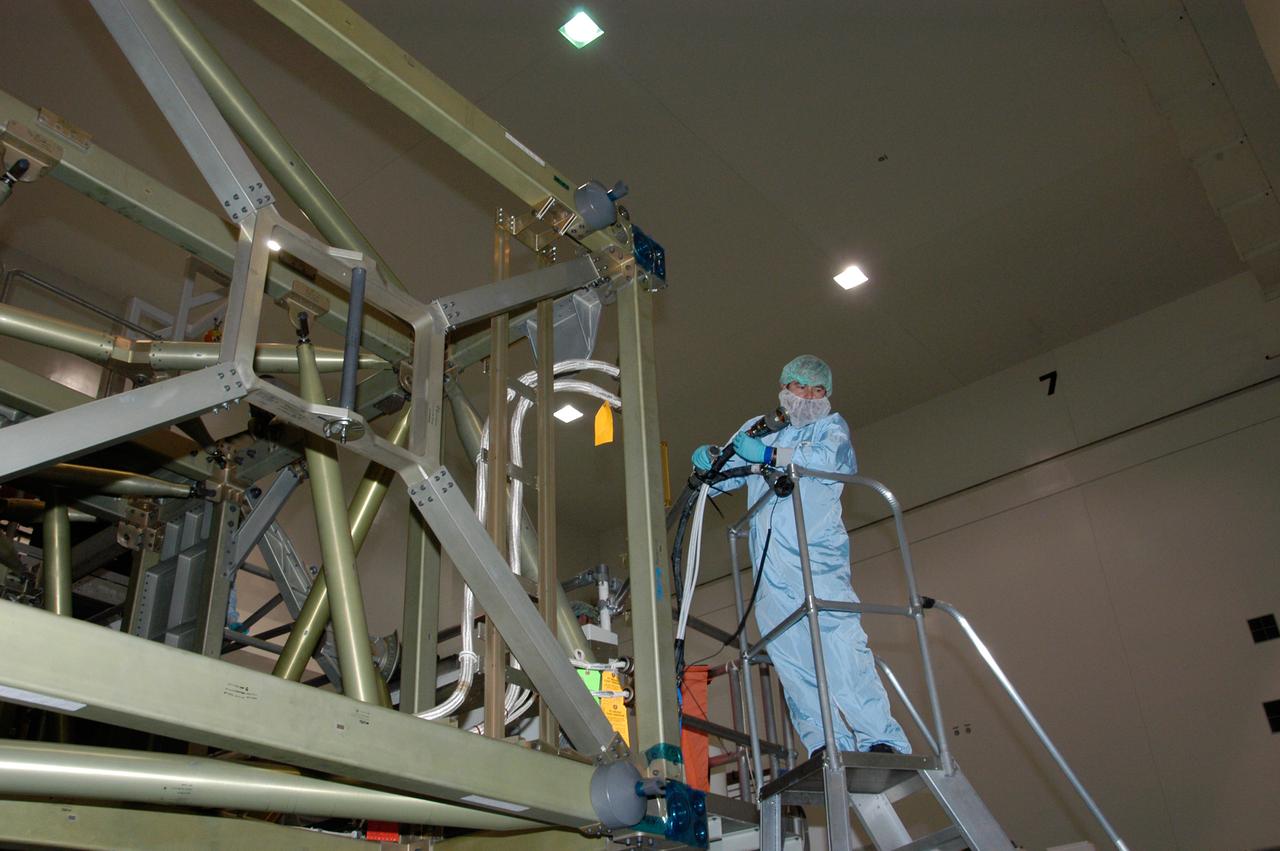
In the Space Station Processing Facility at NASA's Kennedy Space Center, a worker holds a cable that will help recharge the battery for the S6 integrated truss. The final starboard truss in the assembly of the International Space Station, the S6 is scheduled to fly on space shuttle mission STS-119, whose launch date is not yet determined.
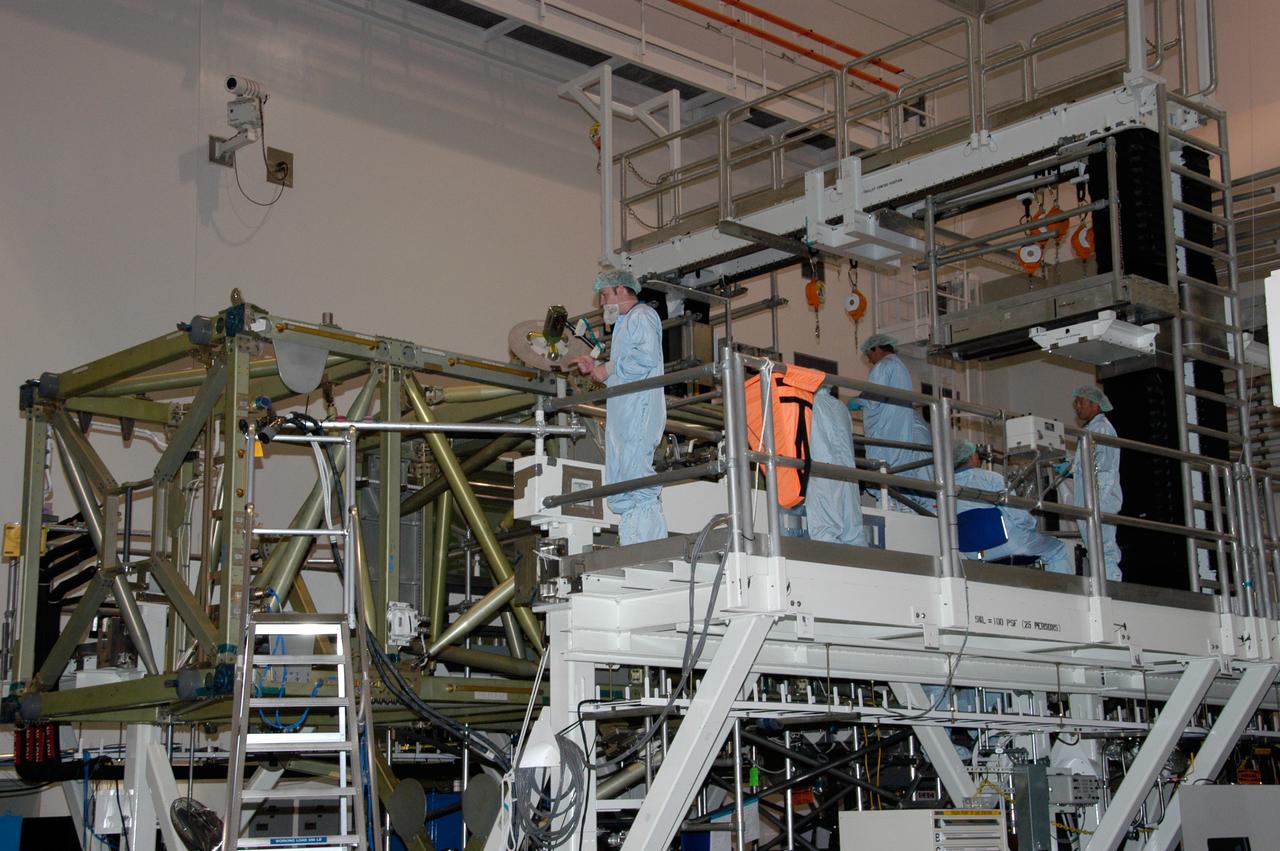
In the Space Station Processing Facility at NASA's Kennedy Space Center, workers prepare to connect cables that will recharge the battery for the S6 integrated truss. The final starboard truss in the assembly of the International Space Station, the S6 is scheduled to fly on space shuttle mission STS-119, whose launch date is not yet determined.
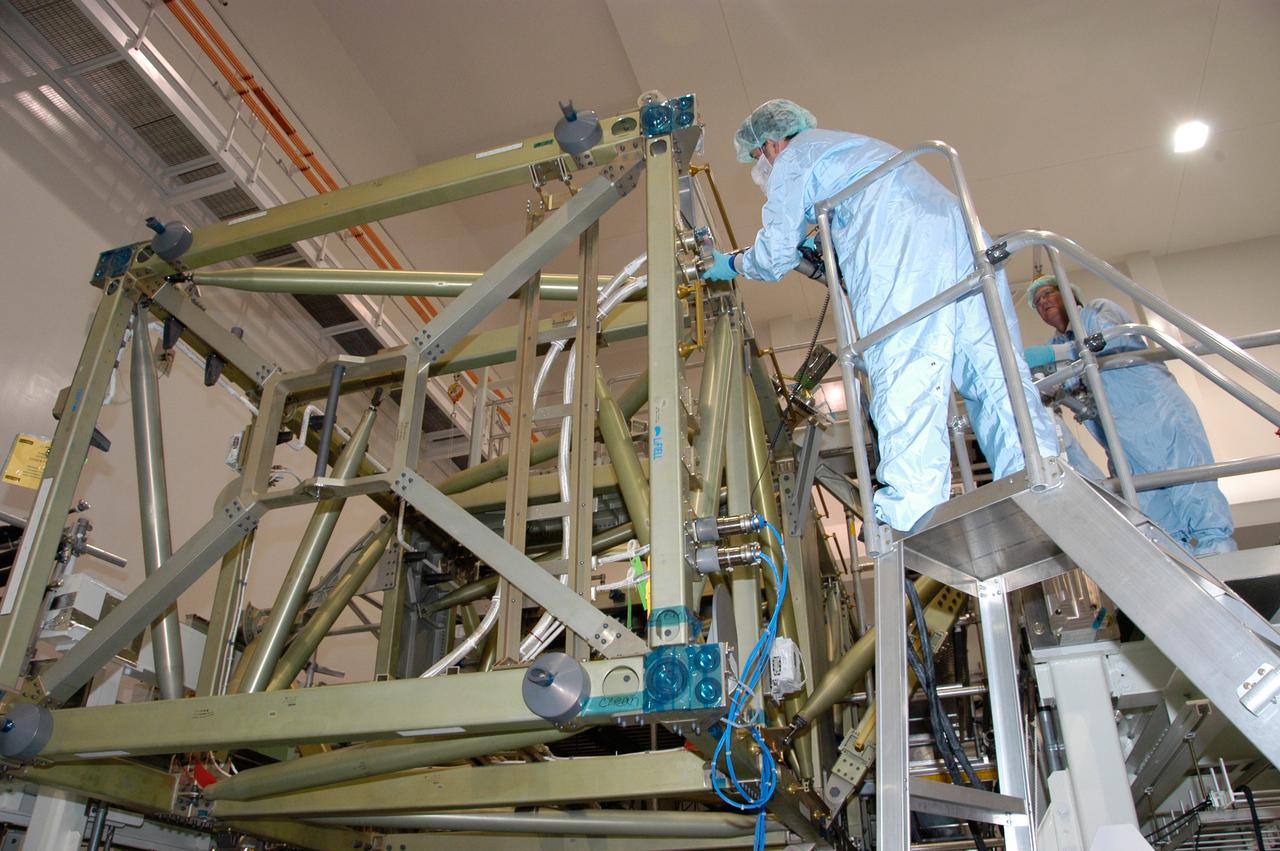
In the Space Station Processing Facility at NASA's Kennedy Space Center, a worker connects a cable to recharge the battery for the S6 integrated truss. The final starboard truss in the assembly of the International Space Station, the S6 is scheduled to fly on space shuttle mission STS-119, whose launch date is not yet determined.
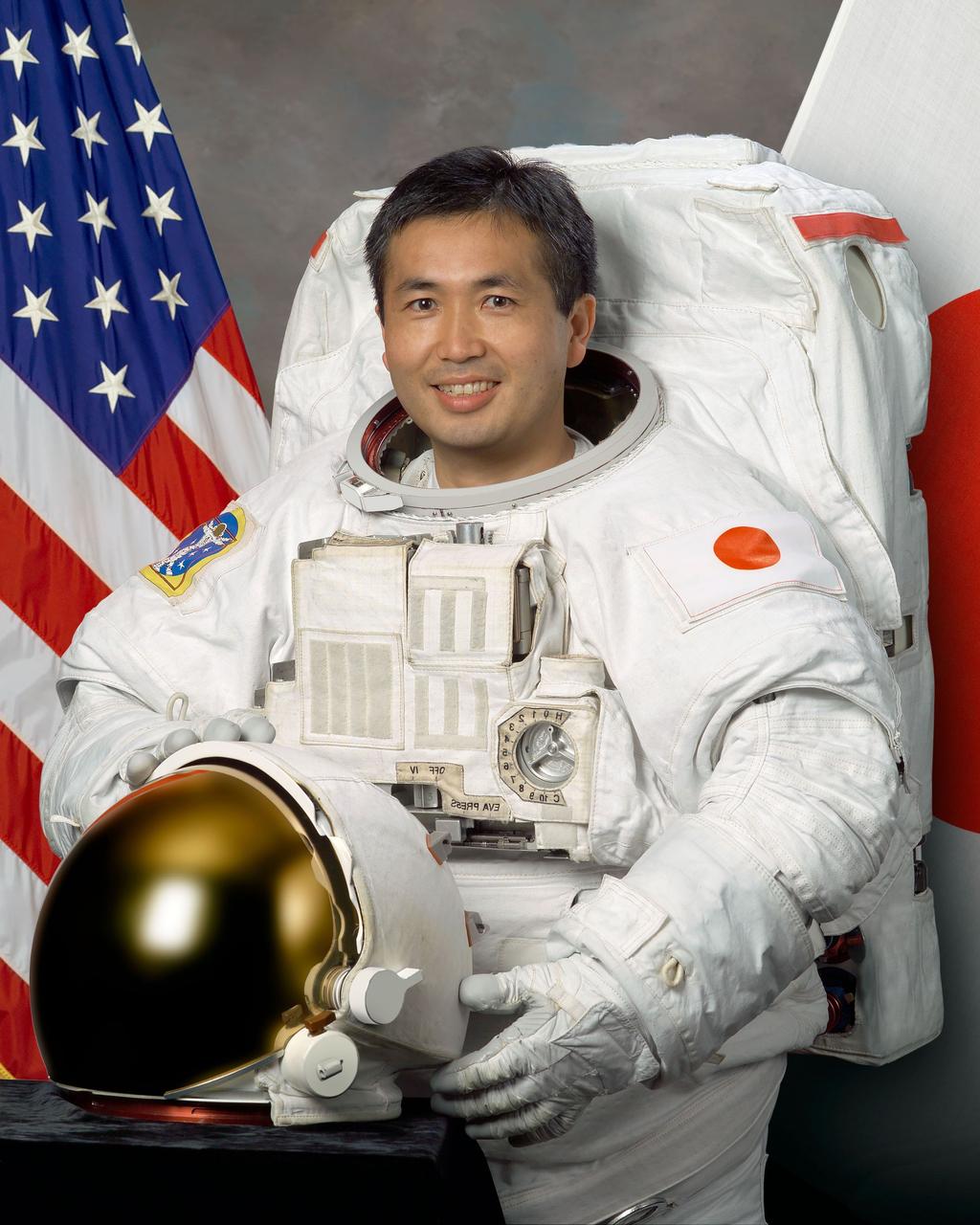
HOUSTON, Texas -- JSC2007-E-19404: Japan Aerospace Exploration Agency (JAXA) astronaut Koichi Wakata, flight engineer on mission STS-119.
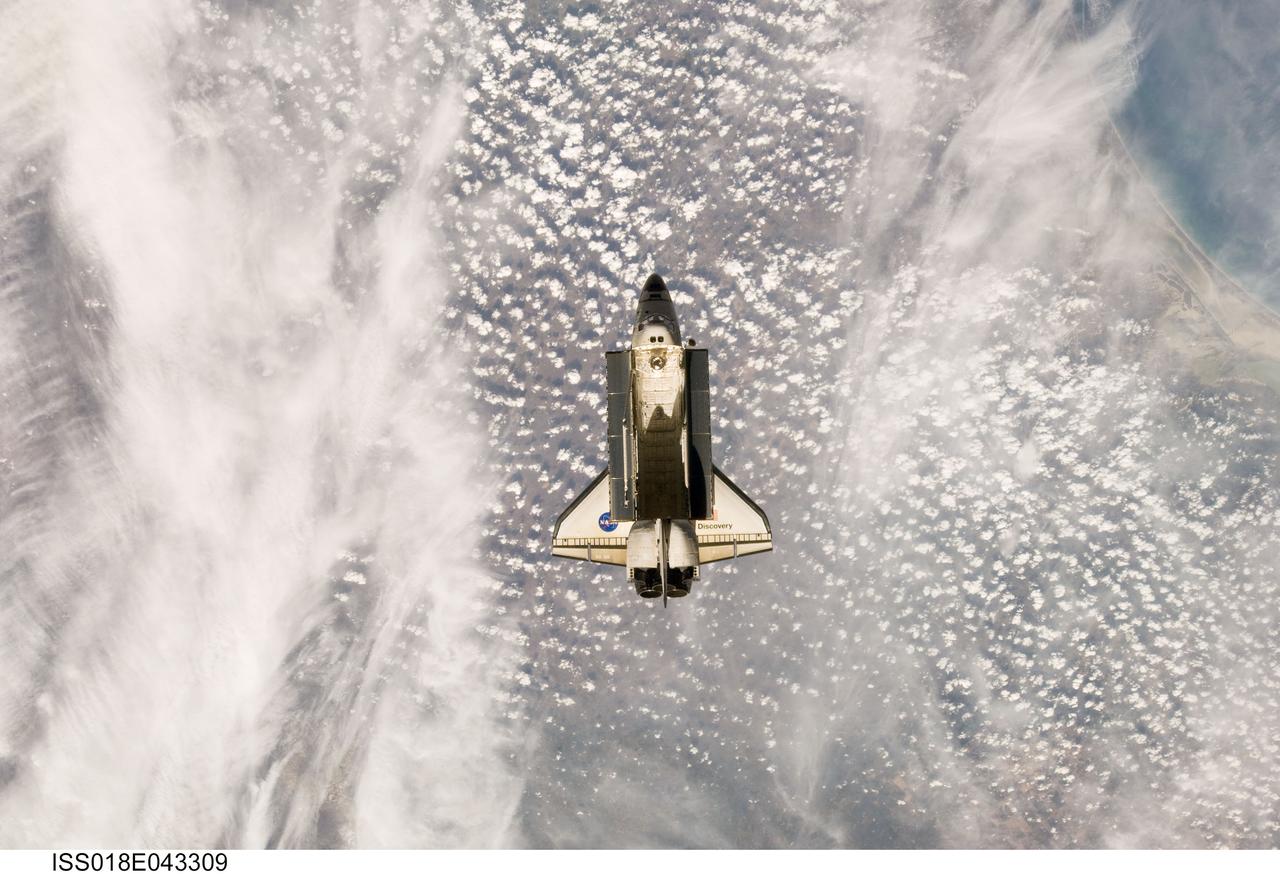
ISS018-E-043309 (25 March 2009) --- Backdropped by a blue and white part of Earth, Space Shuttle Discovery (STS-119) is featured in this image photographed by an Expedition 18 crew member on the International Space Station soon after the shuttle and station began their post-undocking relative separation on March 25, 2009.
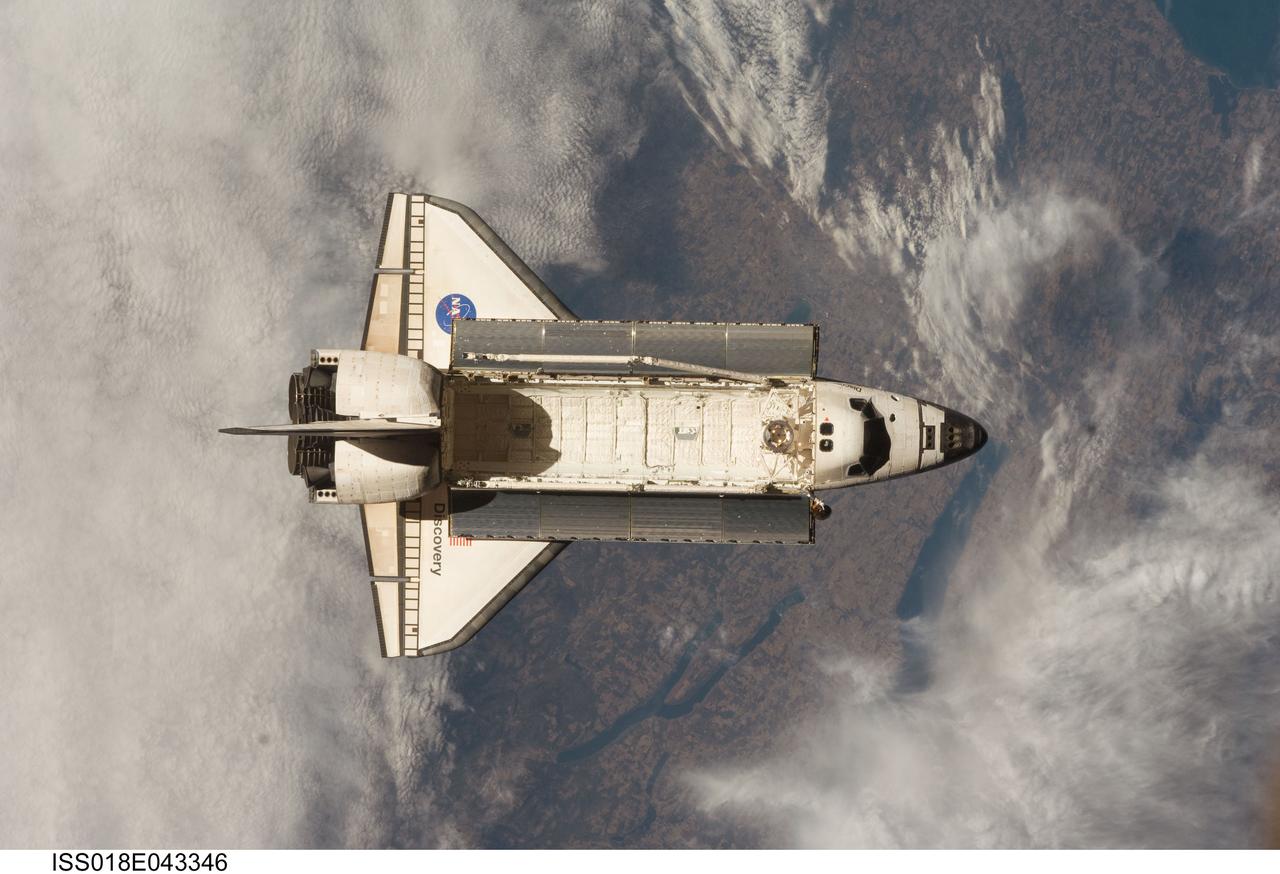
ISS018-E-043346 (25 March 2009) --- Backdropped by a colorful Earth, Space Shuttle Discovery (STS-119) is featured in this image photographed by an Expedition 18 crew member on the International Space Station soon after the shuttle and station began their post-undocking relative separation on March 25, 2009.
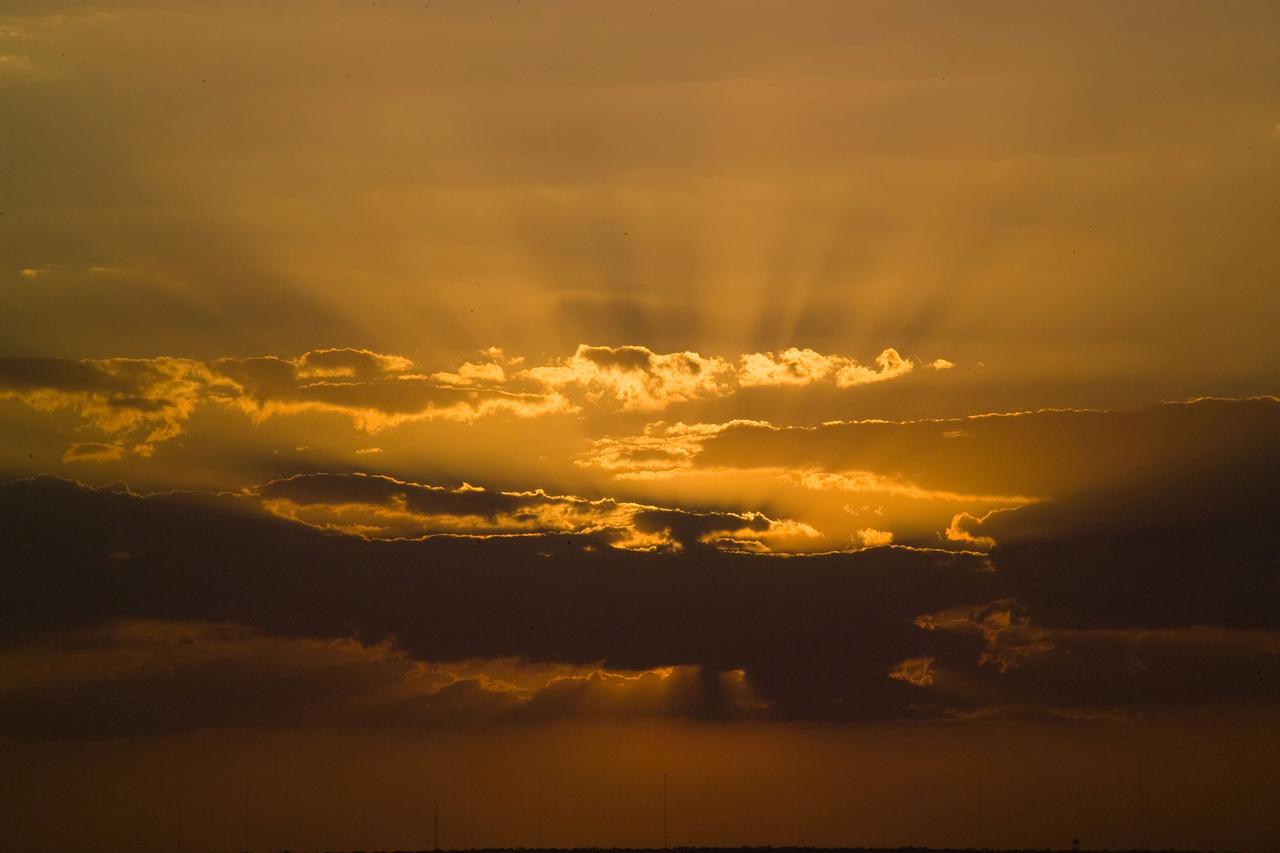
STS119-S-025 (15 March 2009) --- The setting sun paints the clouds over NASA's Kennedy Space Center in Florida before the launch of Space Shuttle Discovery on the STS-119 mission. Liftoff is scheduled for 7:43 p.m. (EDT) on March 15, 2009.
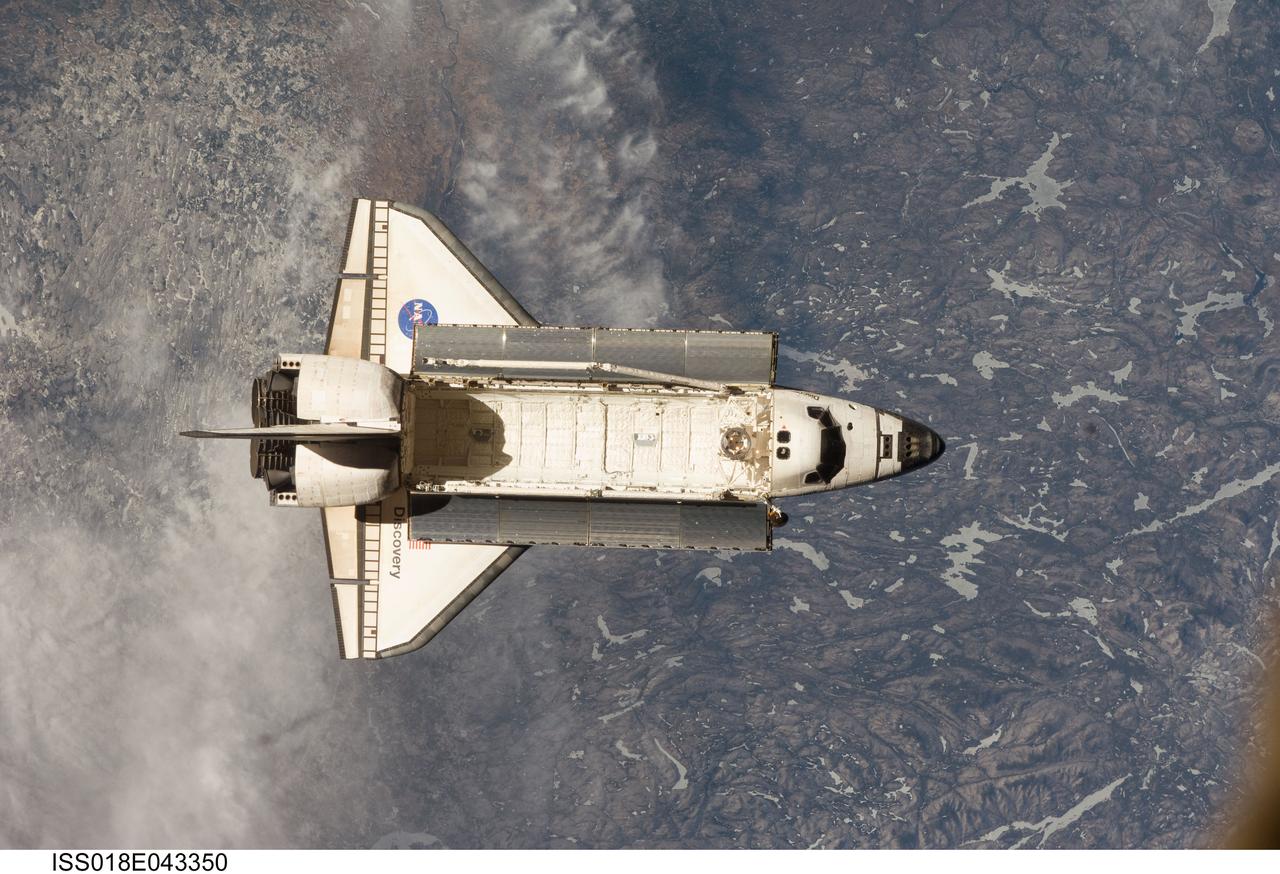
ISS018-E-043350 (25 March 2009) --- Backdropped by a colorful Earth, Space Shuttle Discovery (STS-119) is featured in this image photographed by an Expedition 18 crew member on the International Space Station soon after the shuttle and station began their post-undocking relative separation on March 25, 2009.
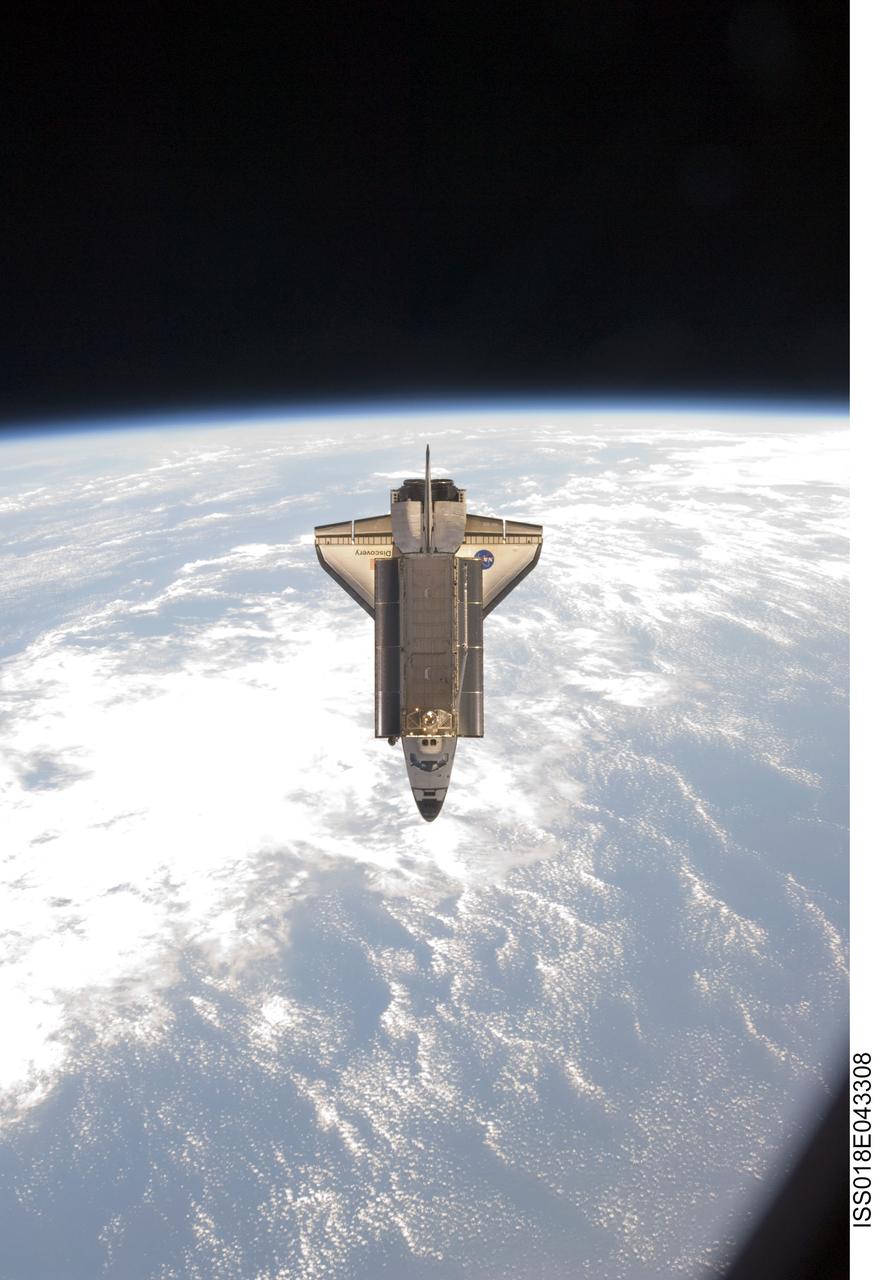
ISS018-E-043308 (25 March 2009) --- Backdropped by the blackness of space and Earth?s horizon, Space Shuttle Discovery (STS-119) is featured in this image photographed by an Expedition 18 crew member on the International Space Station soon after the shuttle and station began their post-undocking relative separation on March 25, 2009.
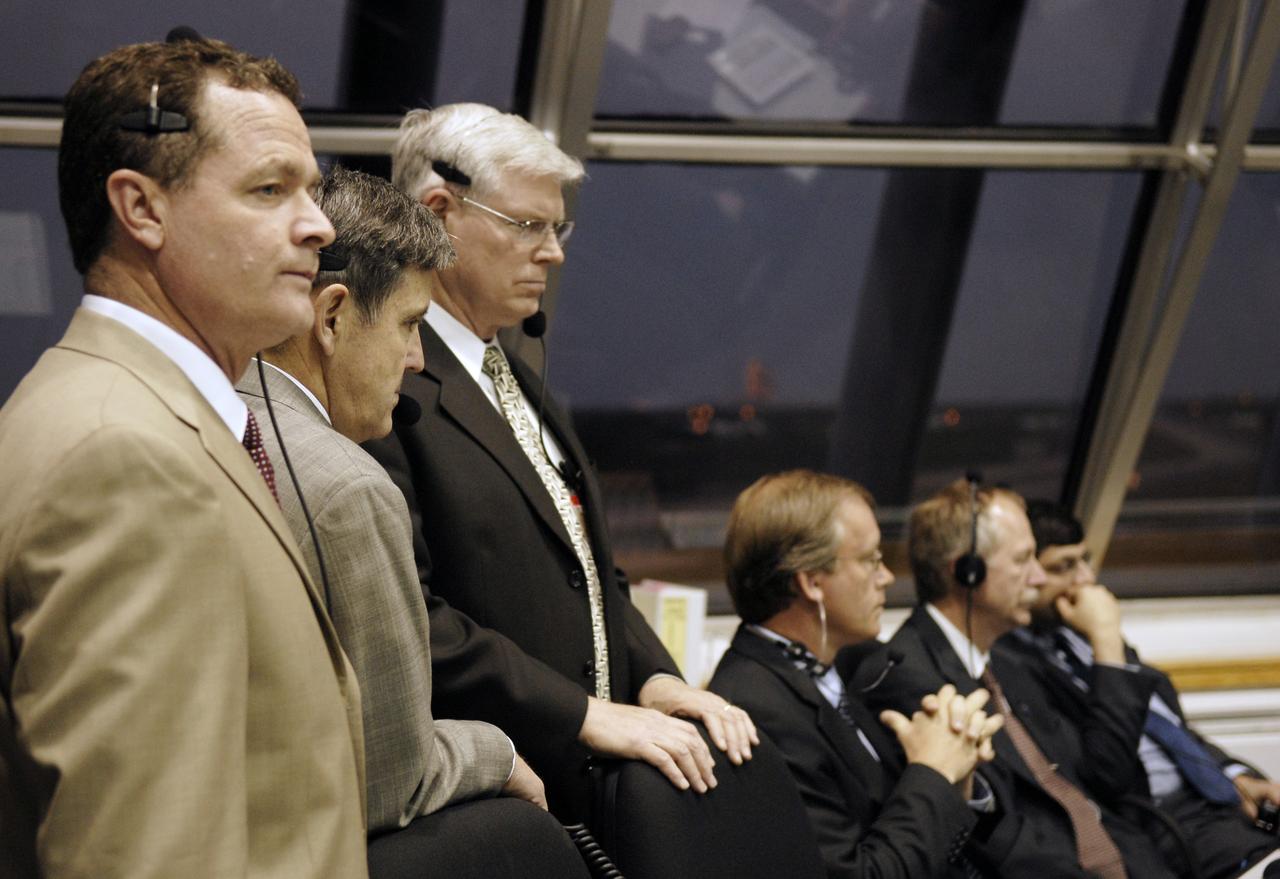
CAPE CANAVERAL, Fla. – In Firing Room 4 of the Launch Control Center at NASA's Kennedy Space Center in Florida, NASA management waits for the launch of space shuttle Discovery on the STS-119 mission. From left are (standing) Director of NASA's Marshall Space Flight Center Dave King, Center Director Bob Cabana, Director of NASA's Johnson Space Center Michael Coats, (seated) Space Shuttle Program Manager John Shannon, NASA Associate Administrator for Space Operations William Gerstenmaier and NASA Acting Administrator Chris Scolese. Launch was on time at 7:43 p.m. EDT. The STS-119 mission is the 28th to the space station and Discovery's 36th flight. Discovery will deliver the final pair of power-generating solar array wings and the S6 truss segment. Installation of S6 will signal the station's readiness to house a six-member crew for conducting increased science. Photo credit: NASA/Kim Shiflett
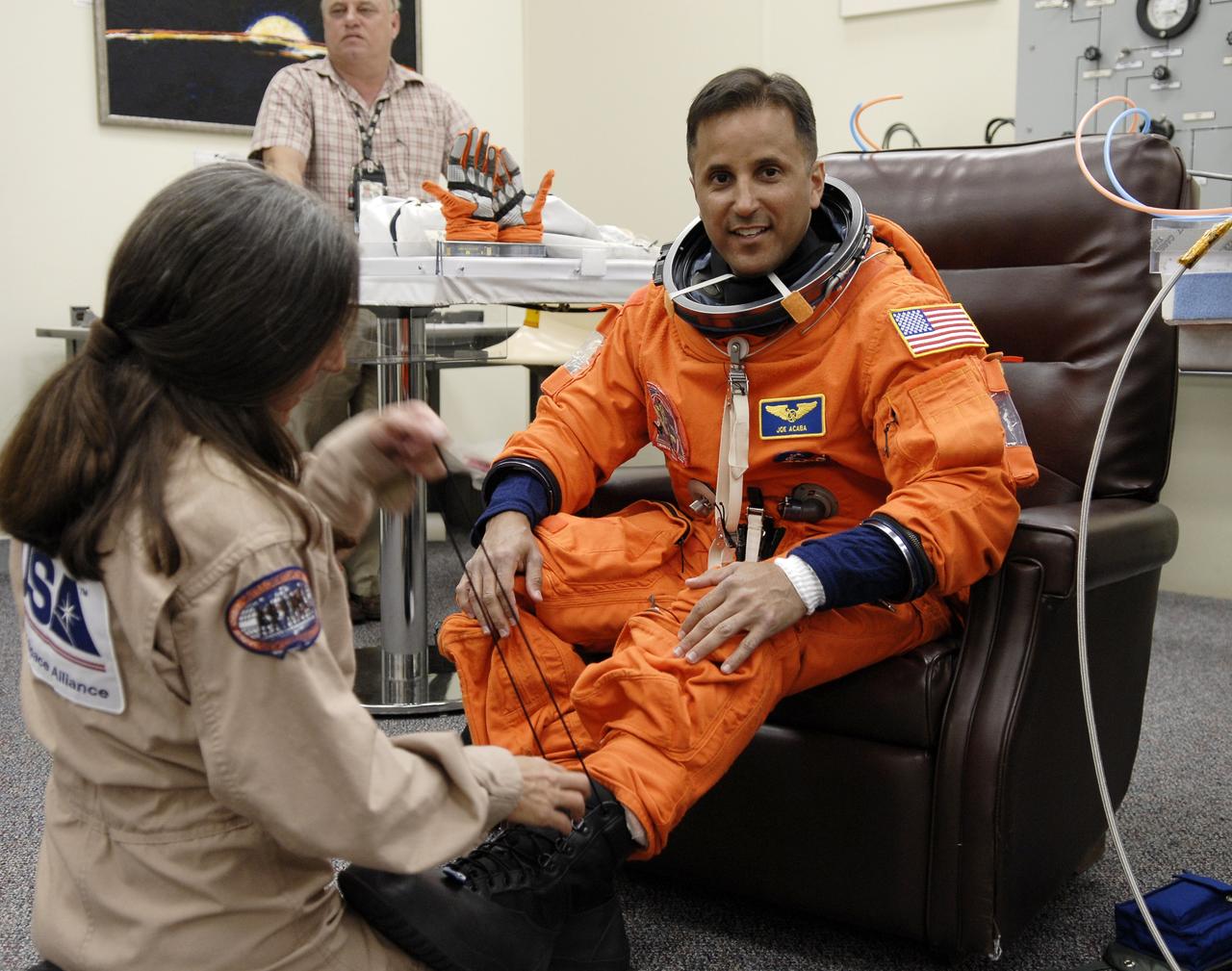
CAPE CANAVERAL, Fla. – In the Operations and Checkout Building at NASA's Kennedy Space Center in Florida, STS-119 Mission Specialist Joseph Acaba is helped putting on his boots with his launch-and-entry suit. The crew will be heading for Launch Pad 39A and liftoff of space shuttle Discovery, scheduled for 7:43 p.m. EDT on March 15. An earlier launch attempt March 11 was scrubbed at 2:36 p.m. due to a gaseous hydrogen leak from the external tank at the Ground Umbilical Carrier Plate during tanking. A seven-inch quick disconnect and two seals were replaced. The STS-119 mission is the 28th to the International Space Station and the 125th space shuttle flight. Discovery will deliver the final pair of power-generating solar array wings and the S6 truss segment. Installation of S6 will signal the station's readiness to house a six-member crew for conducting increased science. Photo credit: NASA/Kim Shiflett
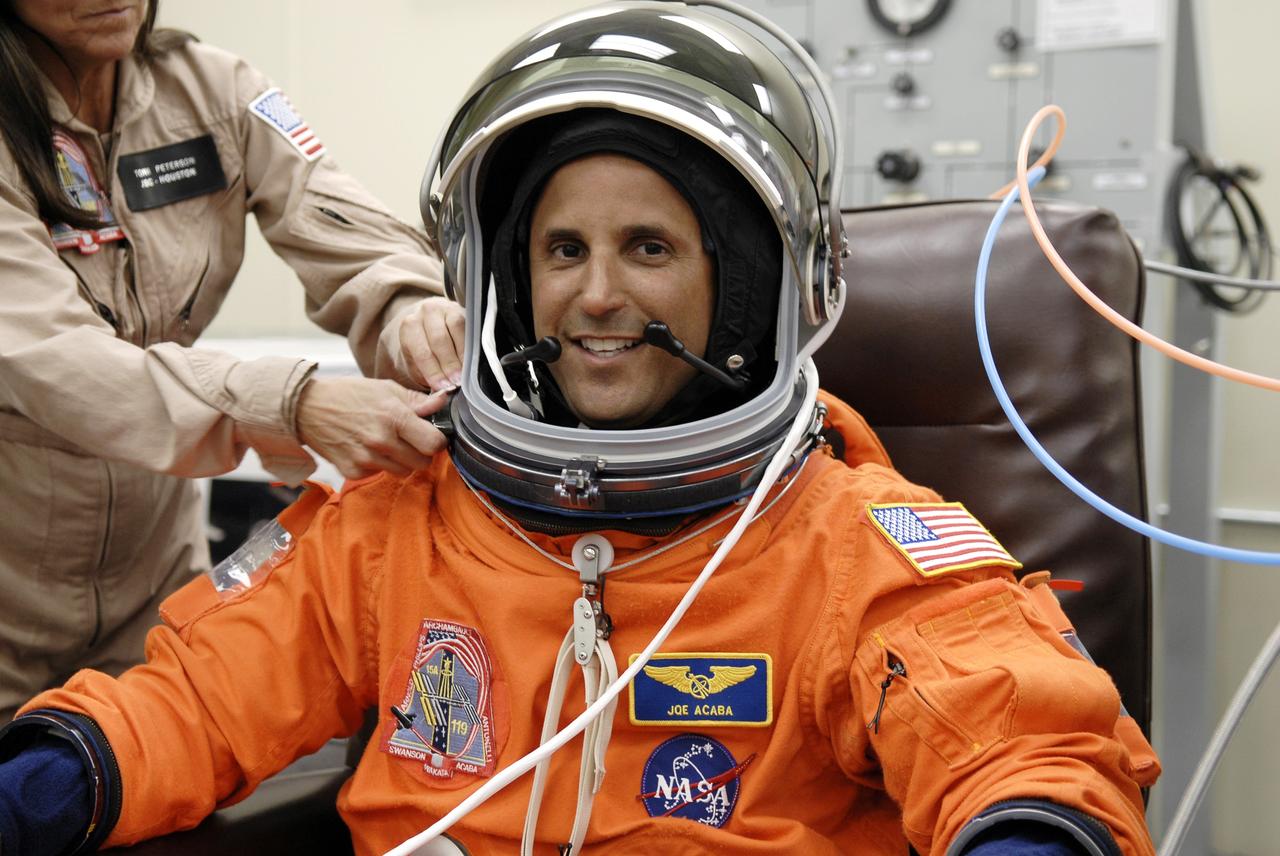
CAPE CANAVERAL, Fla. – In the Operations and Checkout Building at NASA's Kennedy Space Center in Florida, STS-119 Mission Specialist Joseph Acaba has his helmet fitted on his launch-and-entry suit. The crew will be heading for Launch Pad 39A and liftoff of space shuttle Discovery, scheduled for 7:43 p.m. EDT on March 15. An earlier launch attempt March 11 was scrubbed at 2:36 p.m. due to a gaseous hydrogen leak from the external tank at the Ground Umbilical Carrier Plate during tanking. A seven-inch quick disconnect and two seals were replaced. The STS-119 mission is the 28th to the International Space Station and the 125th space shuttle flight. Discovery will deliver the final pair of power-generating solar array wings and the S6 truss segment. Installation of S6 will signal the station's readiness to house a six-member crew for conducting increased science. Photo credit: NASA/Kim Shiflett
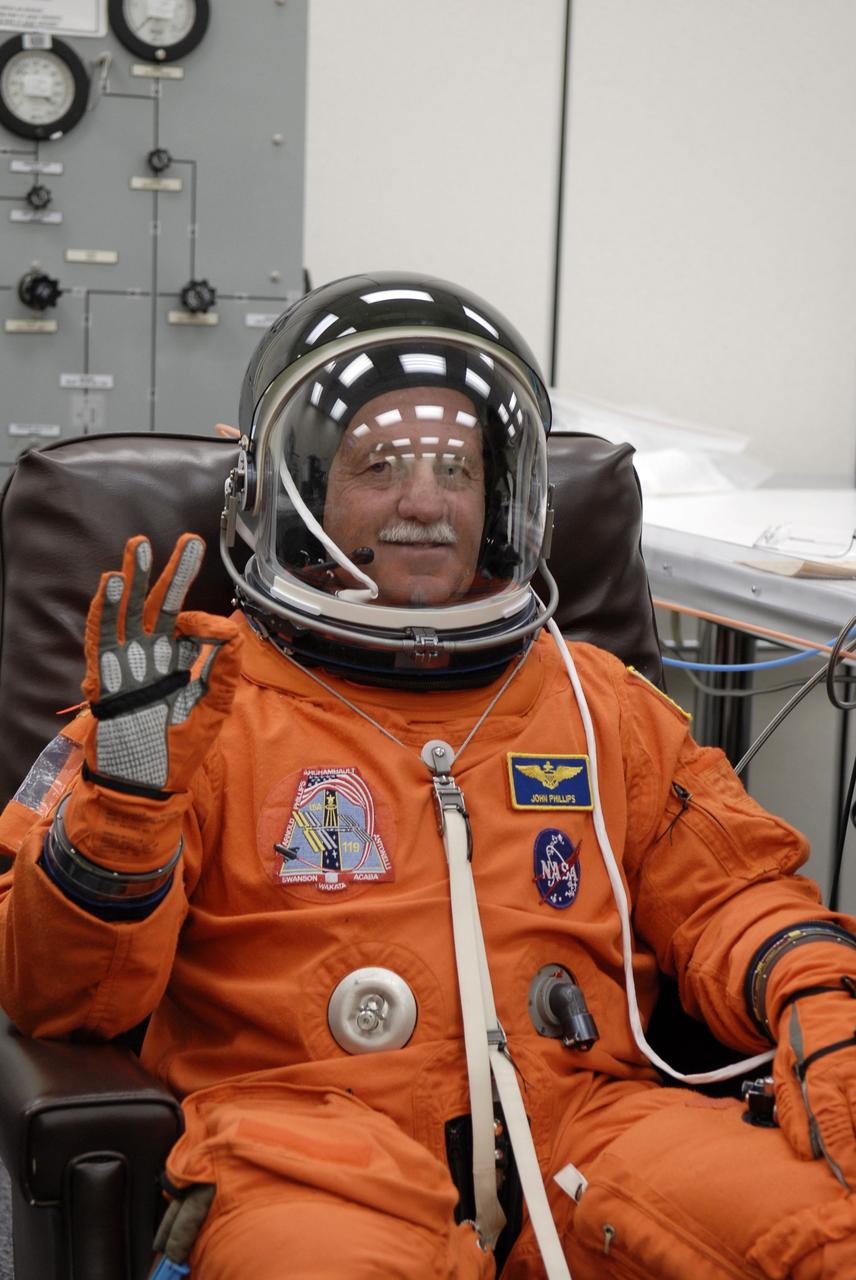
CAPE CANAVERAL, Fla. – In the Operations and Checkout Building at NASA's Kennedy Space Center in Florida, STS-119 Mission Specialist John Phillips is eager for launch as he puts on his launch-and-entry suit. The crew will be heading for Launch Pad 39A and liftoff of space shuttle Discovery, scheduled for 7:43 p.m. EDT on March 15. An earlier launch attempt March 11 was scrubbed at 2:36 p.m. due to a gaseous hydrogen leak from the external tank at the Ground Umbilical Carrier Plate during tanking. A seven-inch quick disconnect and two seals were replaced. The STS-119 mission is the 28th to the International Space Station and the 125th space shuttle flight. Discovery will deliver the final pair of power-generating solar array wings and the S6 truss segment. Installation of S6 will signal the station's readiness to house a six-member crew for conducting increased science. Photo credit: NASA/Kim Shiflett
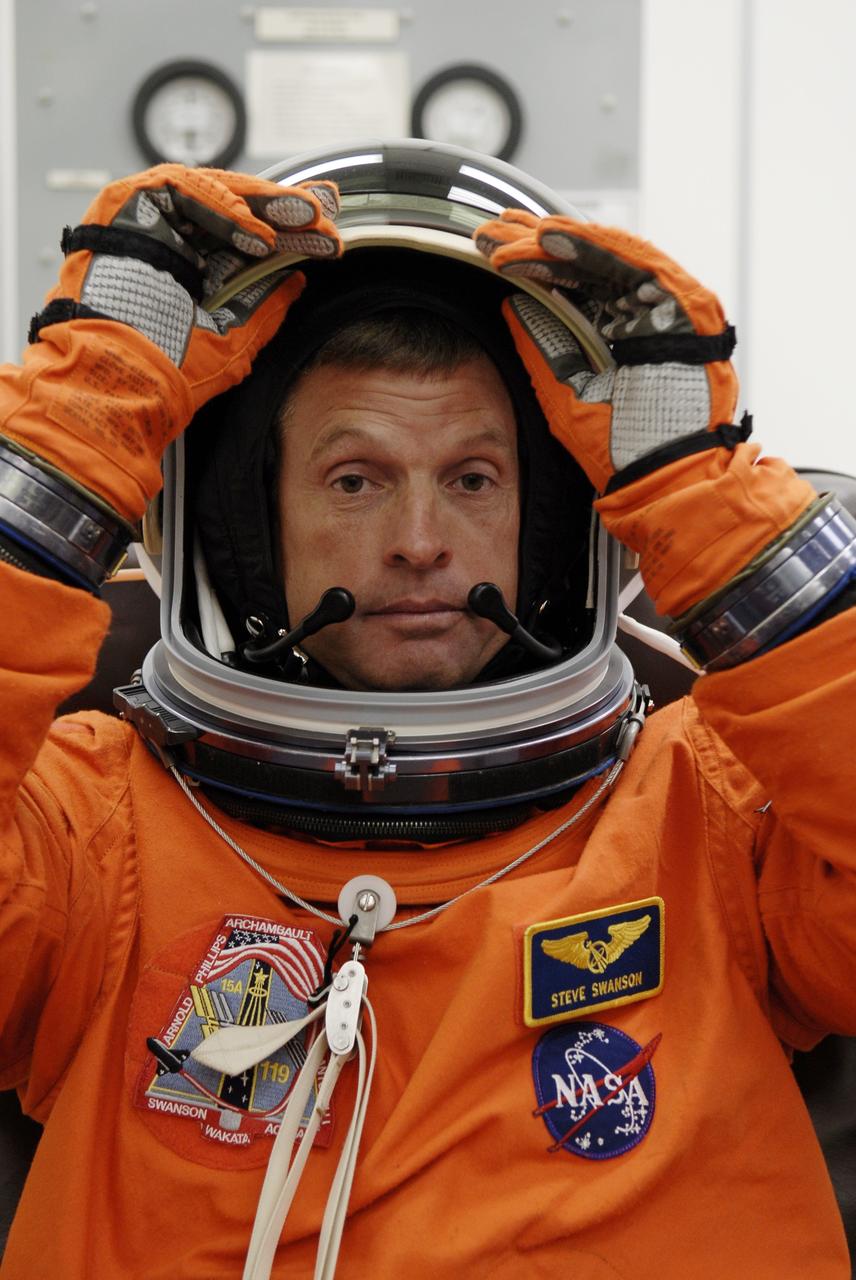
CAPE CANAVERAL, Fla. – In the Operations and Checkout Building at NASA's Kennedy Space Center in Florida, STS-119 Mission Specialist Steve Swanson adjusts his helmet as he puts on the launch-and-entry suit for the launch of space shuttle Discovery. The crew will be heading for Launch Pad 39A and liftoff of Discovery, scheduled for 7:43 p.m. EDT on March 15. An earlier launch attempt March 11 was scrubbed at 2:36 p.m. due to a gaseous hydrogen leak from the external tank at the Ground Umbilical Carrier Plate during tanking. A seven-inch quick disconnect and two seals were replaced. The STS-119 mission is the 28th to the International Space Station and the 125th space shuttle flight. Discovery will deliver the final pair of power-generating solar array wings and the S6 truss segment. Installation of S6 will signal the station's readiness to house a six-member crew for conducting increased science. Photo credit: NASA/Kim Shiflett
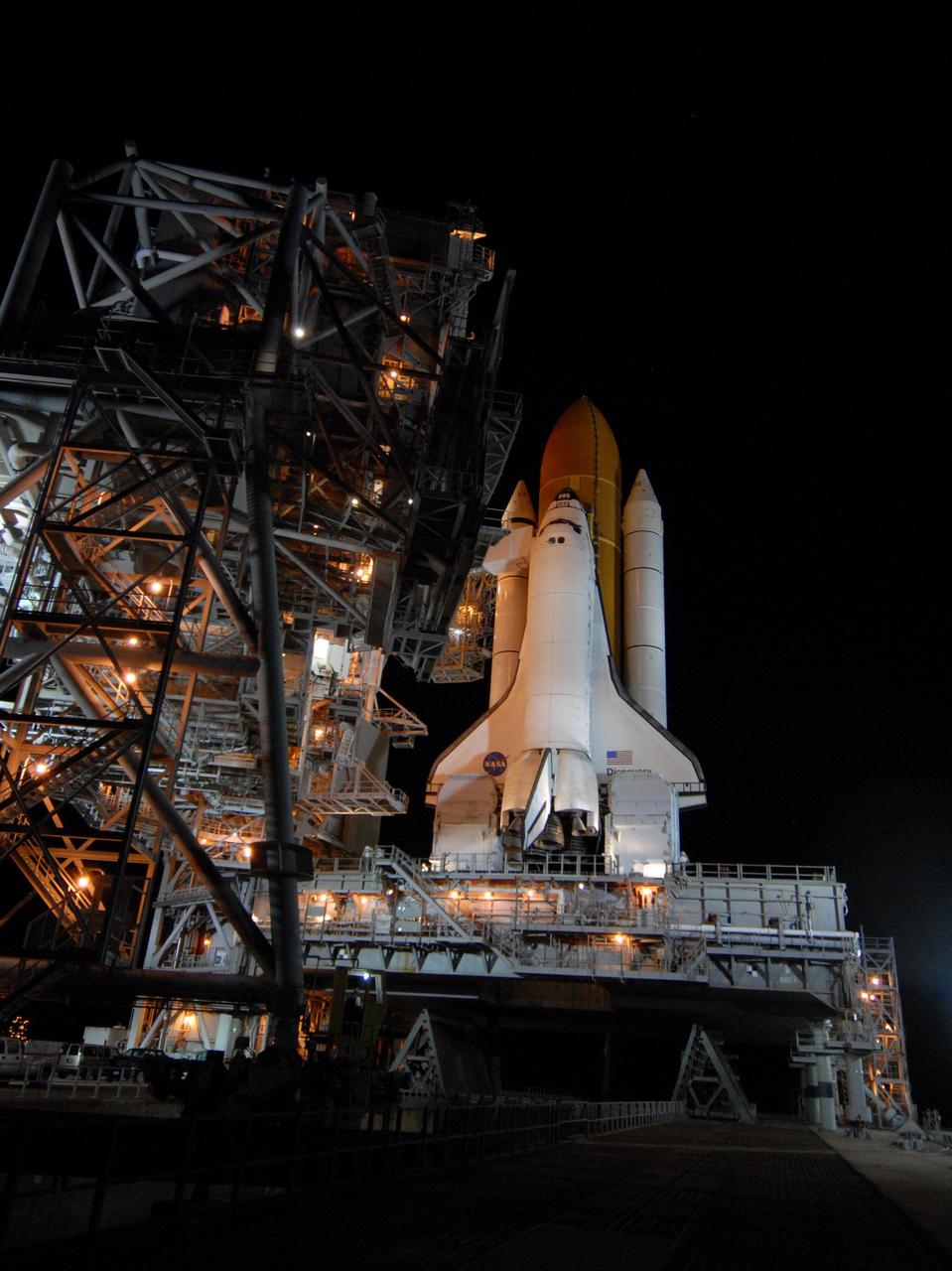
CAPE CANAVERAL, Fla. – Bathed in light on Launch Pad 39A at NASA's Kennedy Space Center in Florida, space shuttle Discovery is revealed after the rotating service structure has been rolled back. The rollback is in preparation for Discovery's liftoff on the STS-119 mission with a crew of seven. An earlier launch attempt March 11 was scrubbed at 2:36 p.m. due to a gaseous hydrogen leak from the external tank at the Ground Umbilical Carrier Plate during tanking. A seven-inch quick disconnect and two seals were replaced. The STS-119 mission is the 28th to the International Space Station and the 125th space shuttle flight. Discovery will deliver the final pair of power-generating solar array wings and the S6 truss segment. Installation of S6 will signal the station's readiness to house a six-member crew for conducting increased science. Liftoff of Discovery is scheduled for 7:43 p.m. EDT on March 15. Photo credit: NASA/Jack Pfaller
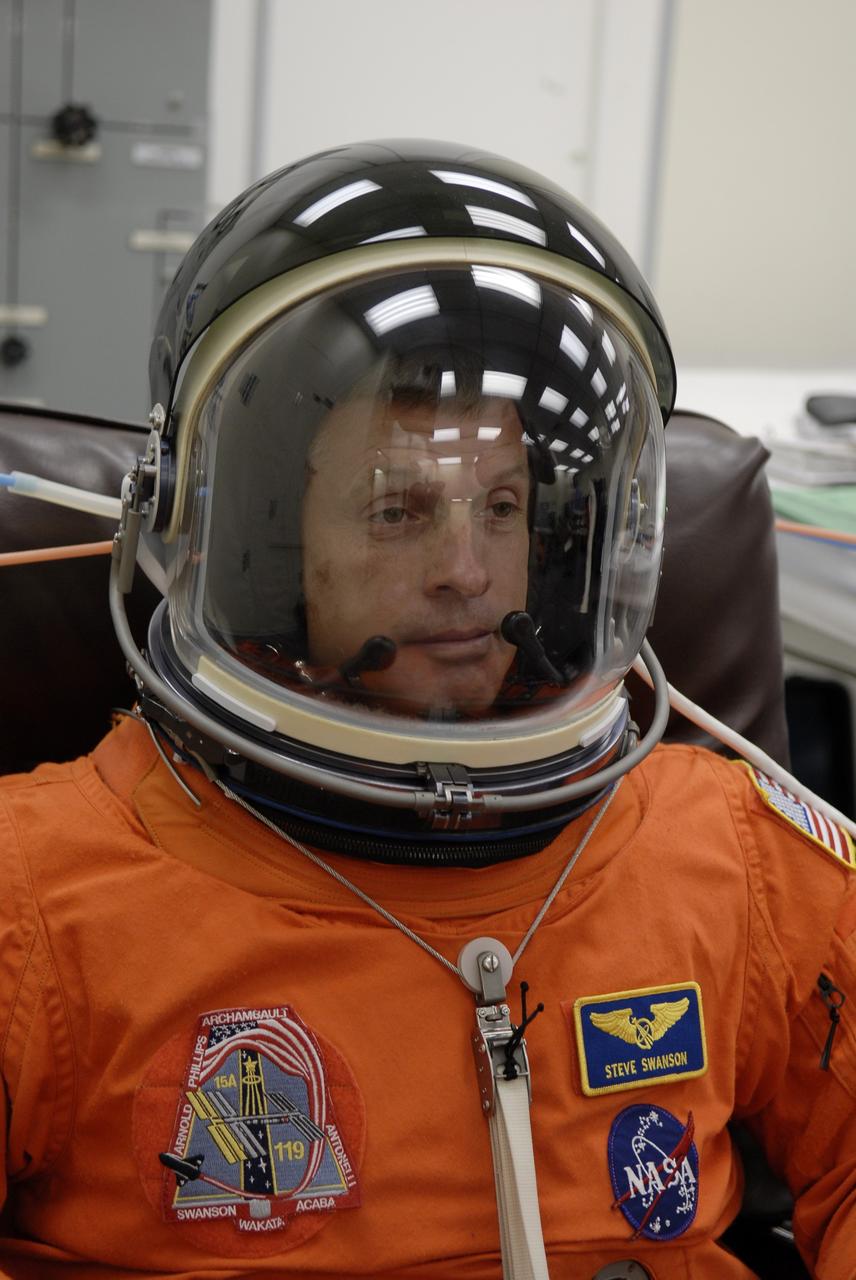
CAPE CANAVERAL, Fla. – In the Operations and Checkout Building at NASA's Kennedy Space Center in Florida, STS-119 Mission Specialist Steve Swanson completes putting on the launch-and-entry suit, with the helmet, for the launch of space shuttle Discovery. The crew will be heading for Launch Pad 39A and liftoff of Discovery, scheduled for 7:43 p.m. EDT on March 15. An earlier launch attempt March 11 was scrubbed at 2:36 p.m. due to a gaseous hydrogen leak from the external tank at the Ground Umbilical Carrier Plate during tanking. A seven-inch quick disconnect and two seals were replaced. The STS-119 mission is the 28th to the International Space Station and the 125th space shuttle flight. Discovery will deliver the final pair of power-generating solar array wings and the S6 truss segment. Installation of S6 will signal the station's readiness to house a six-member crew for conducting increased science. Photo credit: NASA/Kim Shiflett
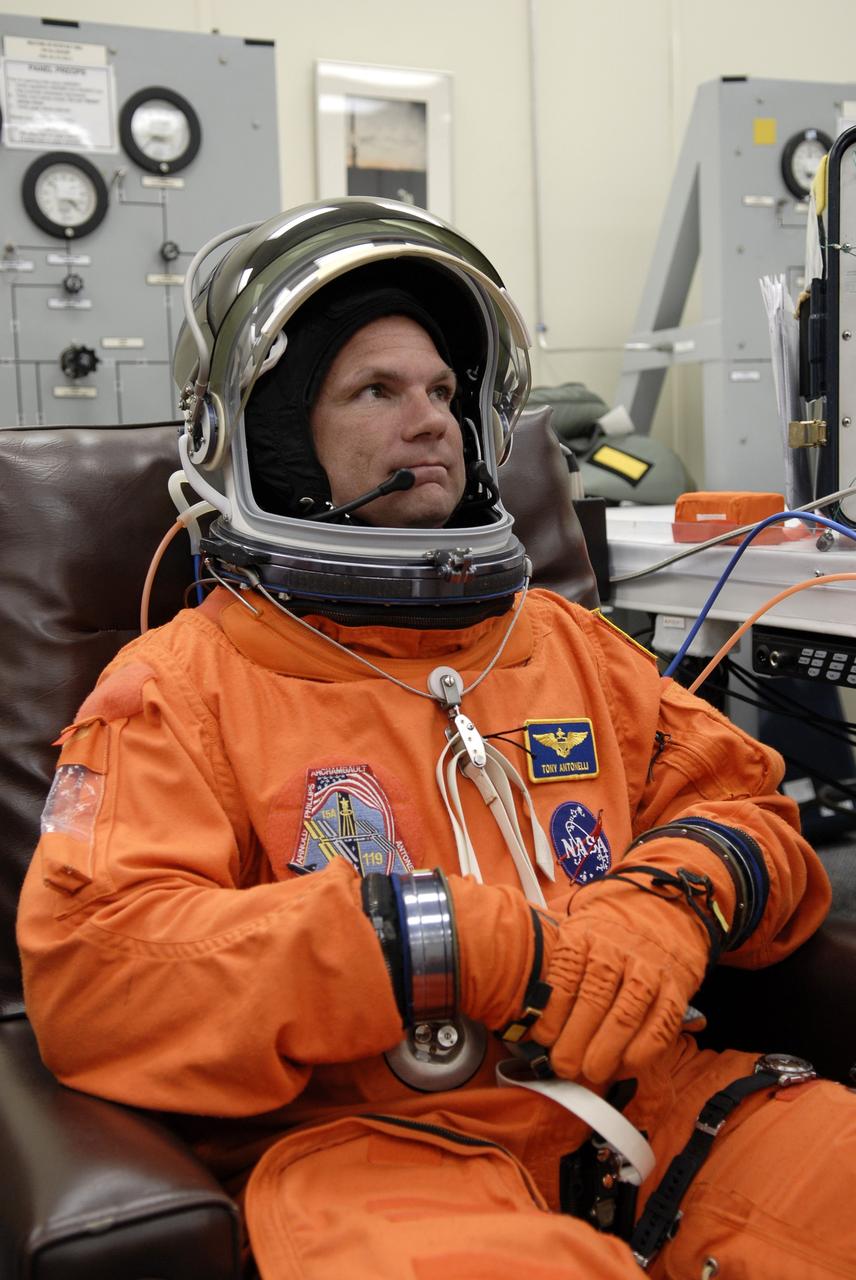
CAPE CANAVERAL, Fla. – – In the Operations and Checkout Building at NASA's Kennedy Space Center in Florida, STS-119 Pilot Tony Antonelli adds the helmet as he puts on his launch-and-entry suit for the launch of space shuttle Discovery. The crew will be heading for Launch Pad 39A and liftoff of Discovery, scheduled for 7:43 p.m. EDT on March 15. An earlier launch attempt March 11 was scrubbed at 2:36 p.m. due to a gaseous hydrogen leak from the external tank at the Ground Umbilical Carrier Plate during tanking. A seven-inch quick disconnect and two seals were replaced. The STS-119 mission is the 28th to the International Space Station and the 125th space shuttle flight. Discovery will deliver the final pair of power-generating solar array wings and the S6 truss segment. Installation of S6 will signal the station's readiness to house a six-member crew for conducting increased science. Photo credit: NASA/Kim Shiflett
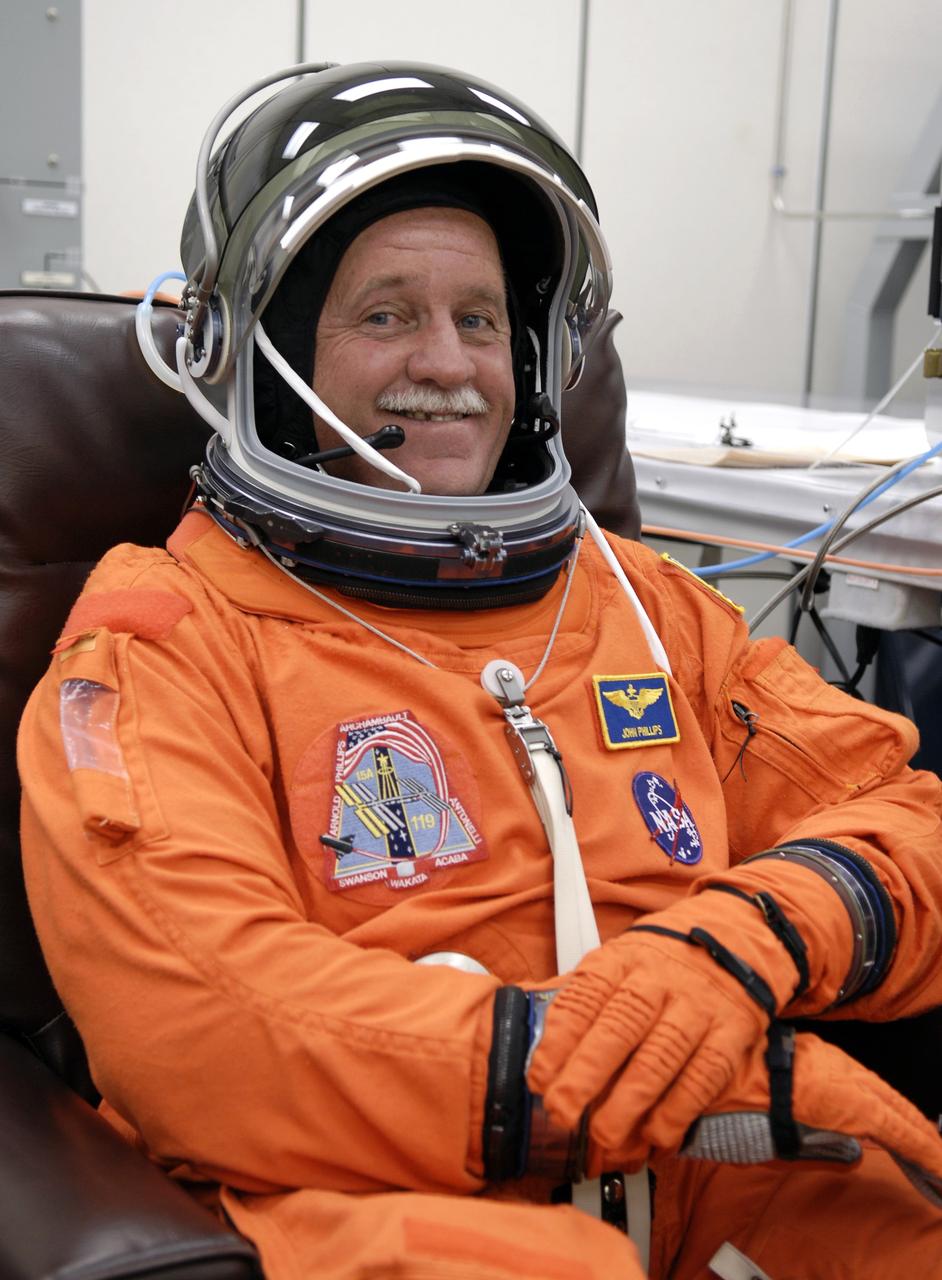
CAPE CANAVERAL, Fla. – In the Operations and Checkout Building at NASA's Kennedy Space Center in Florida, STS-119 Mission Specialist John Phillips completes putting on his launch-and-entry suit, including the helmet, for the launch of space shuttle Discovery. The crew will be heading for Launch Pad 39A and liftoff of Discovery, scheduled for 7:43 p.m. EDT on March 15. An earlier launch attempt March 11 was scrubbed at 2:36 p.m. due to a gaseous hydrogen leak from the external tank at the Ground Umbilical Carrier Plate during tanking. A seven-inch quick disconnect and two seals were replaced. The STS-119 mission is the 28th to the International Space Station and the 125th space shuttle flight. Discovery will deliver the final pair of power-generating solar array wings and the S6 truss segment. Installation of S6 will signal the station's readiness to house a six-member crew for conducting increased science. Photo credit: NASA/Kim Shiflett

CAPE CANAVERAL, Fla. – In the Operations and Checkout Building at NASA's Kennedy Space Center in Florida, STS-119 Pilot Tony Antonelli puts on his launch-and-entry suit for the launch of space shuttle Discovery. The crew will be heading for Launch Pad 39A and liftoff of Discovery, scheduled for 7:43 p.m. EDT on March 15. An earlier launch attempt March 11 was scrubbed at 2:36 p.m. due to a gaseous hydrogen leak from the external tank at the Ground Umbilical Carrier Plate during tanking. A seven-inch quick disconnect and two seals were replaced. The STS-119 mission is the 28th to the International Space Station and the 125th space shuttle flight. Discovery will deliver the final pair of power-generating solar array wings and the S6 truss segment. Installation of S6 will signal the station's readiness to house a six-member crew for conducting increased science. Photo credit: NASA/Kim Shiflett
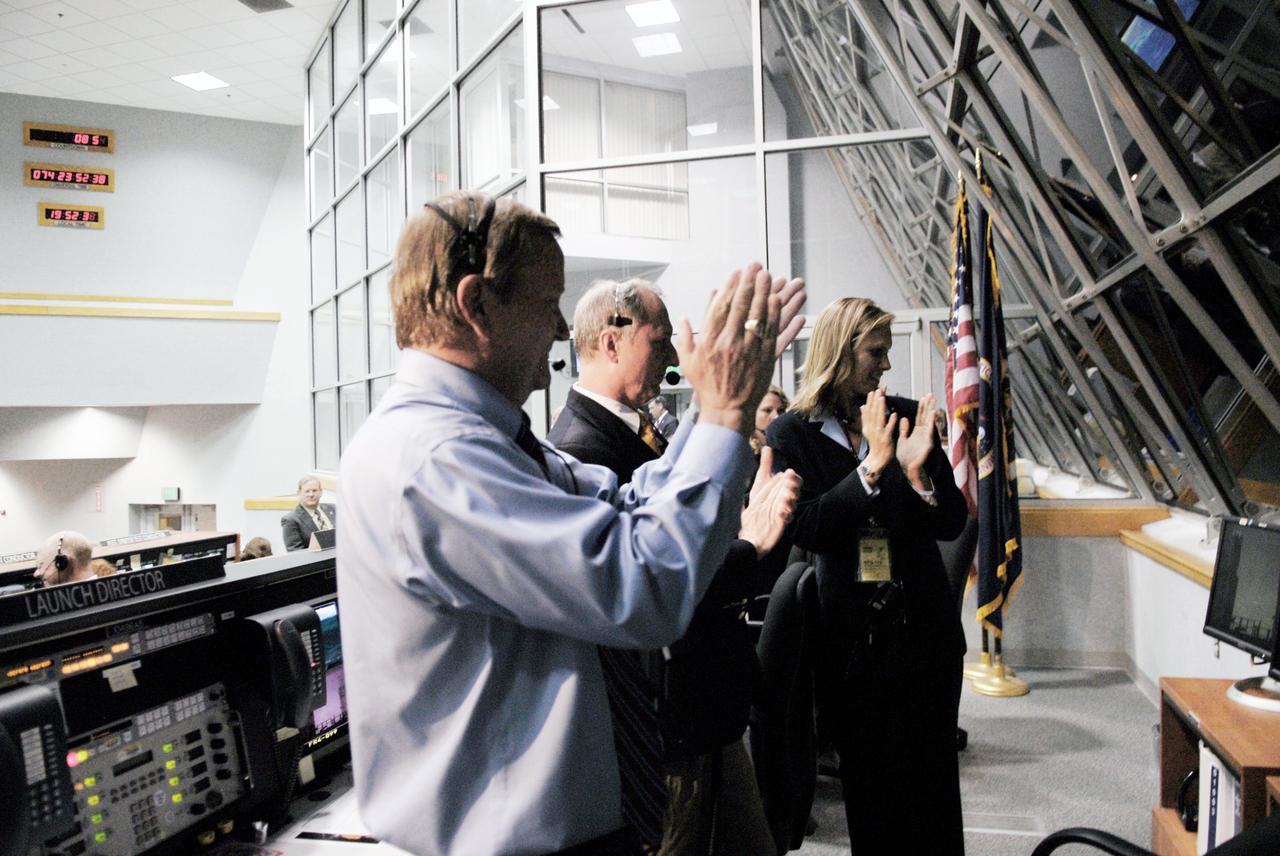
CAPE CANAVERAL, Fla. – In Firing Room 4 of the Launch Control Center at NASA's Kennedy Space Center in Florida, Shuttle Launch Director Mike Leinbach, Assistant Launch Director Pete Nickolenko and Flow Director for space shuttle Discovery Stephanie Stilson applaud the successful launch of space shuttle Discovery on the STS-119 mission. Launch was on time at 7:43 p.m. EDT. The STS-119 mission is the 28th to the space station and Discovery's 36th flight. Discovery will deliver the final pair of power-generating solar array wings and the S6 truss segment. Installation of S6 will signal the station's readiness to house a six-member crew for conducting increased science. Photo credit: NASA/Kim Shiflett
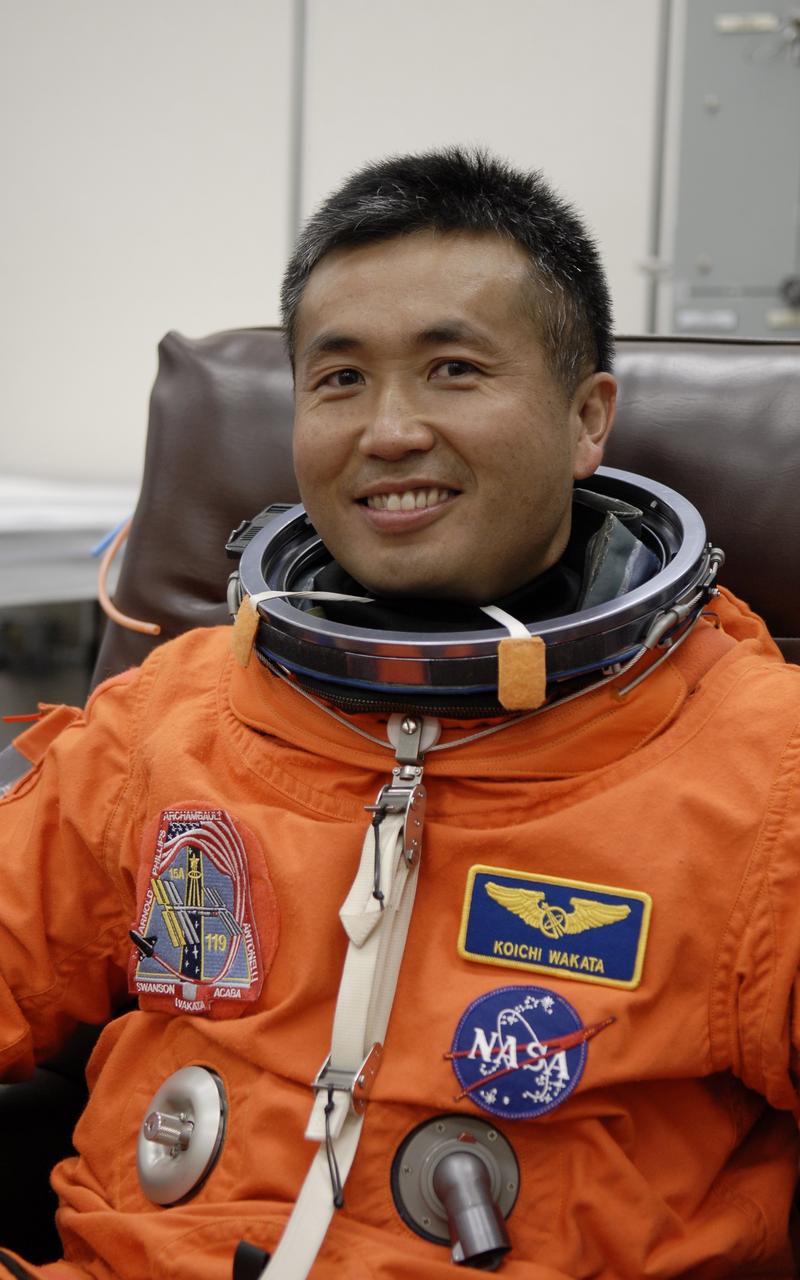
CAPE CANAVERAL, Fla. – In the Operations and Checkout Building at NASA's Kennedy Space Center in Florida, STS-119 Mission Specialist Koichi Wakata is happy to be suiting up for the launch of space shuttle Discovery. The crew will be heading for Launch Pad 39A and liftoff of Discovery, scheduled for 7:43 p.m. EDT on March 15. An earlier launch attempt March 11 was scrubbed at 2:36 p.m. due to a gaseous hydrogen leak from the external tank at the Ground Umbilical Carrier Plate during tanking. A seven-inch quick disconnect and two seals were replaced. The STS-119 mission is the 28th to the International Space Station and the 125th space shuttle flight. Discovery will deliver the final pair of power-generating solar array wings and the S6 truss segment. Installation of S6 will signal the station's readiness to house a six-member crew for conducting increased science. Photo credit: NASA/Kim Shiflett
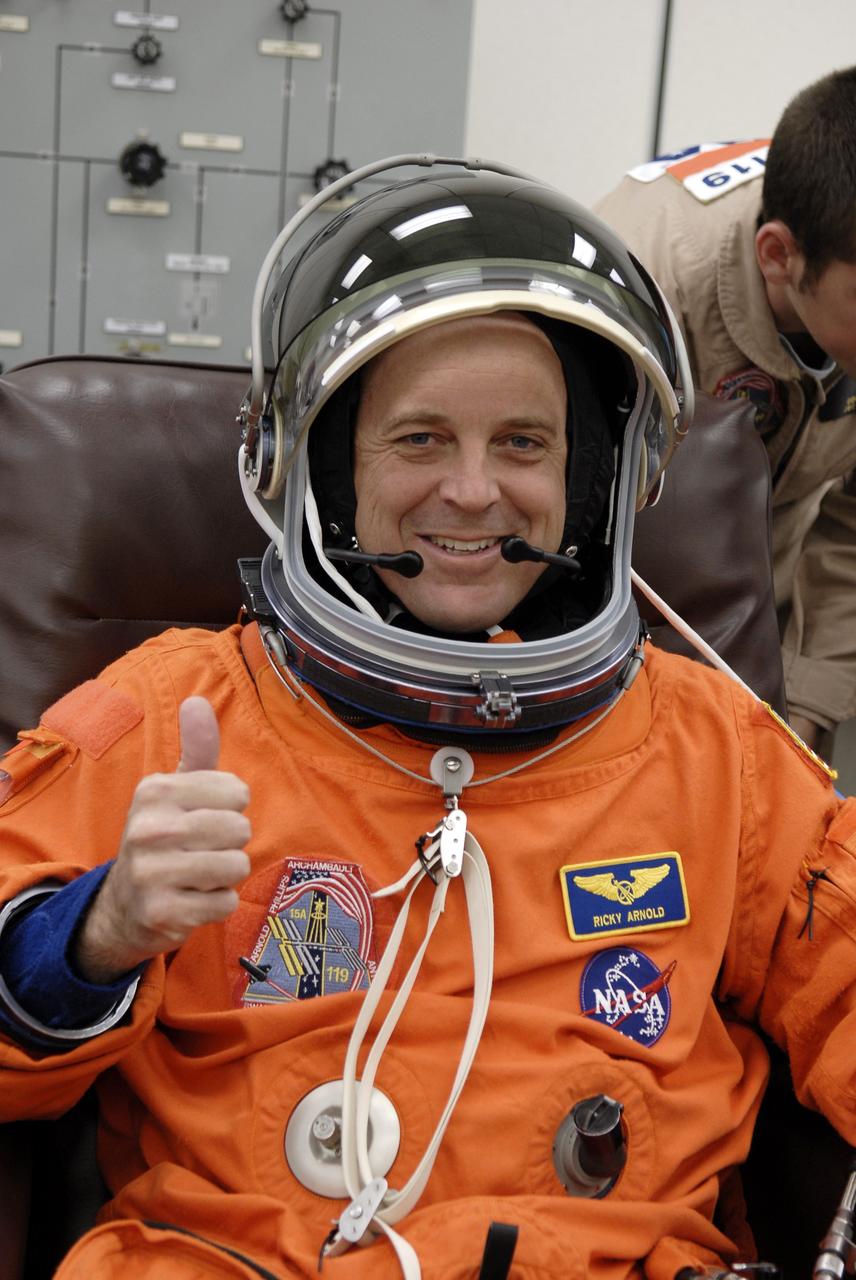
CAPE CANAVERAL, Fla. – In the Operations and Checkout Building at NASA's Kennedy Space Center in Florida, STS-119 Mission Specialist Richard Arnold completes putting on his launch-and-entry suit, including the helmet, for the launch of space shuttle Discovery. The crew will be heading for Launch Pad 39A and liftoff of Discovery, scheduled for 7:43 p.m. EDT on March 15. An earlier launch attempt March 11 was scrubbed at 2:36 p.m. due to a gaseous hydrogen leak from the external tank at the Ground Umbilical Carrier Plate during tanking. A seven-inch quick disconnect and two seals were replaced. The STS-119 mission is the 28th to the International Space Station and the 125th space shuttle flight. Discovery will deliver the final pair of power-generating solar array wings and the S6 truss segment. Installation of S6 will signal the station's readiness to house a six-member crew for conducting increased science. Photo credit: NASA/Kim Shiflett
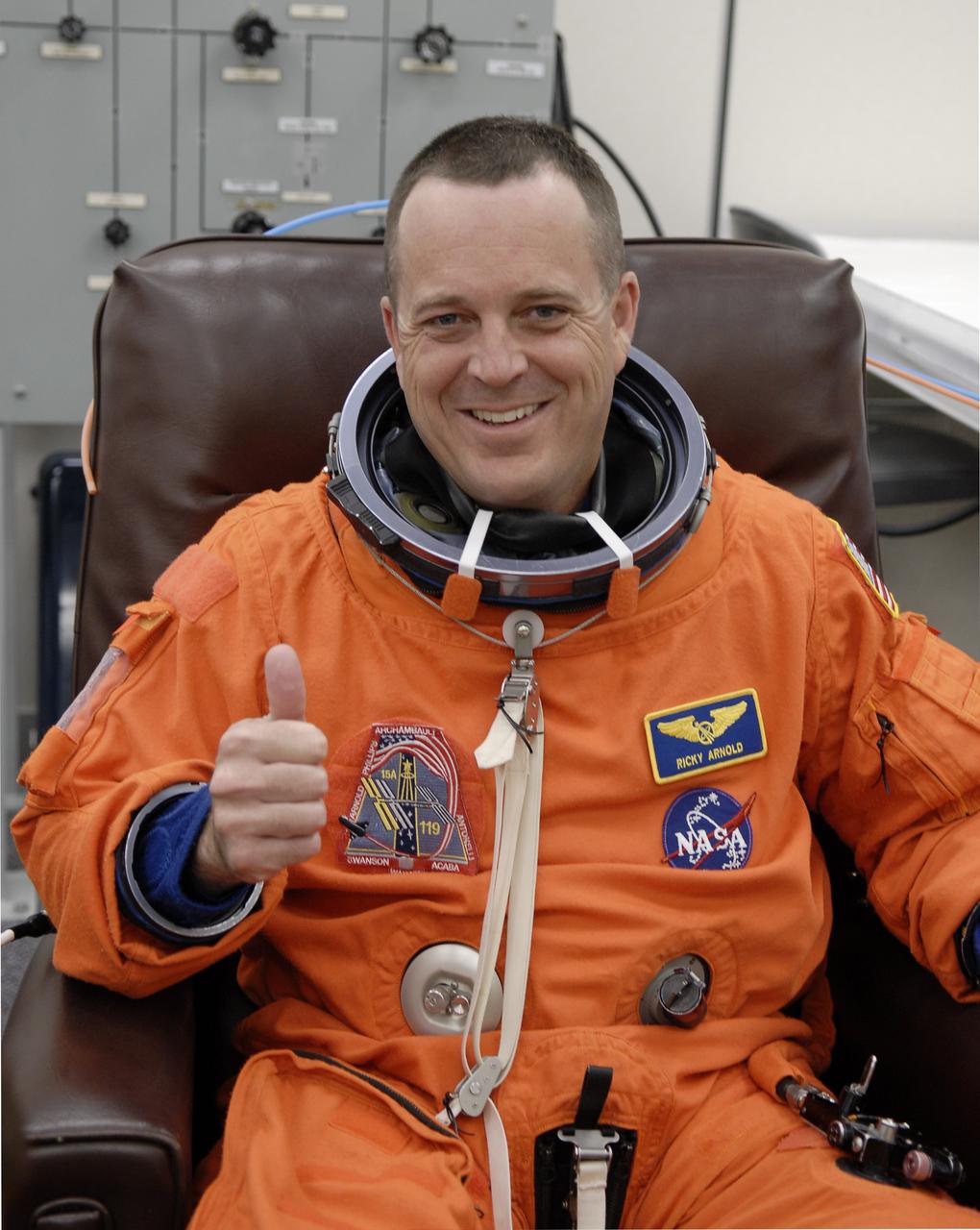
CAPE CANAVERAL, Fla. – In the Operations and Checkout Building at NASA's Kennedy Space Center in Florida, STS-119 Mission Specialist Richard Arnold is eager for launch as he puts on his launch-and-entry suit. The crew will be heading for Launch Pad 39A and liftoff of space shuttle Discovery, scheduled for 7:43 p.m. EDT on March 15. An earlier launch attempt March 11 was scrubbed at 2:36 p.m. due to a gaseous hydrogen leak from the external tank at the Ground Umbilical Carrier Plate during tanking. A seven-inch quick disconnect and two seals were replaced. The STS-119 mission is the 28th to the International Space Station and the 125th space shuttle flight. Discovery will deliver the final pair of power-generating solar array wings and the S6 truss segment. Installation of S6 will signal the station's readiness to house a six-member crew for conducting increased science. Photo credit: NASA/Kim Shiflett
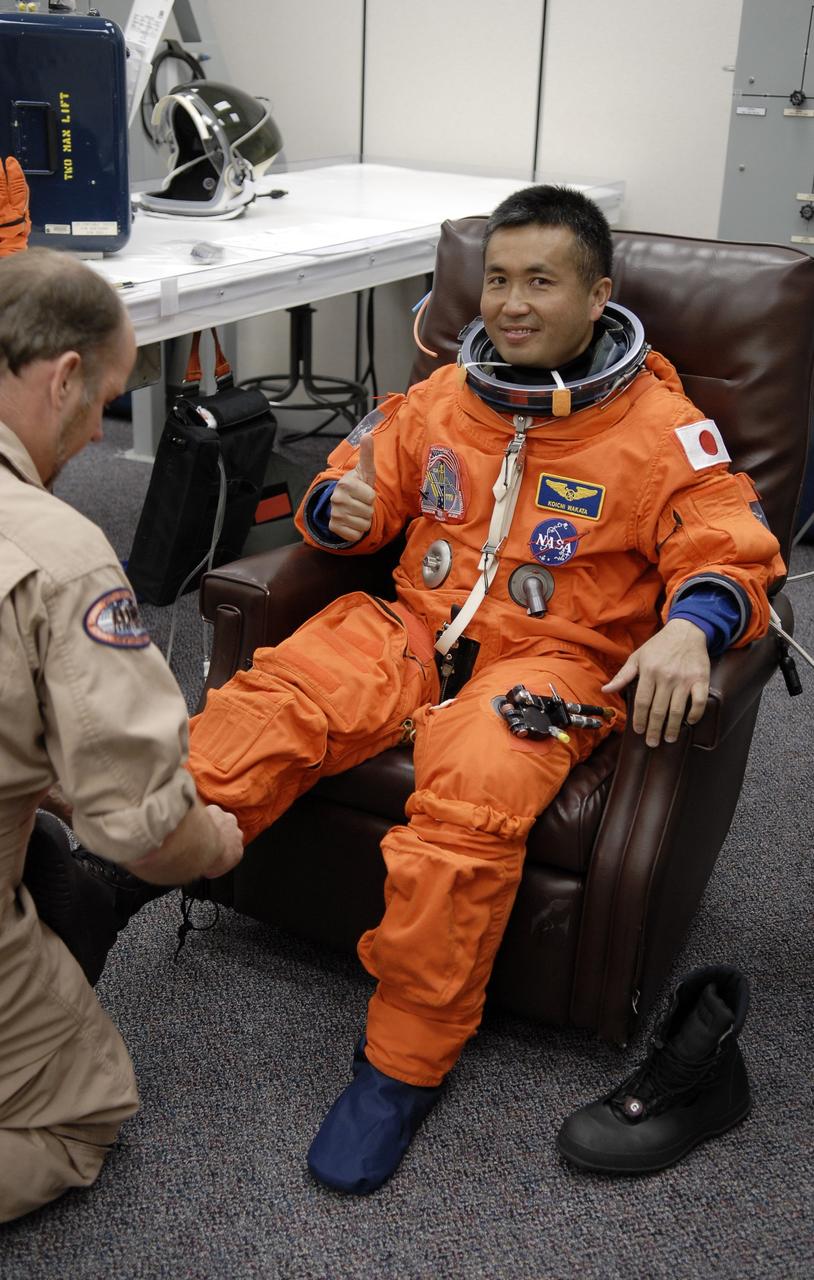
CAPE CANAVERAL, Fla. – In the Operations and Checkout Building at NASA's Kennedy Space Center in Florida, STS-119 Mission Specialist Koichi Wakata is helped with his boots as he puts on his launch-and-entry suit. The crew will be heading for Launch Pad 39A and liftoff of space shuttle Discovery, scheduled for 7:43 p.m. EDT on March 15. An earlier launch attempt March 11 was scrubbed at 2:36 p.m. due to a gaseous hydrogen leak from the external tank at the Ground Umbilical Carrier Plate during tanking. A seven-inch quick disconnect and two seals were replaced. The STS-119 mission is the 28th to the International Space Station and the 125th space shuttle flight. Discovery will deliver the final pair of power-generating solar array wings and the S6 truss segment. Installation of S6 will signal the station's readiness to house a six-member crew for conducting increased science. Photo credit: NASA/Kim Shiflett
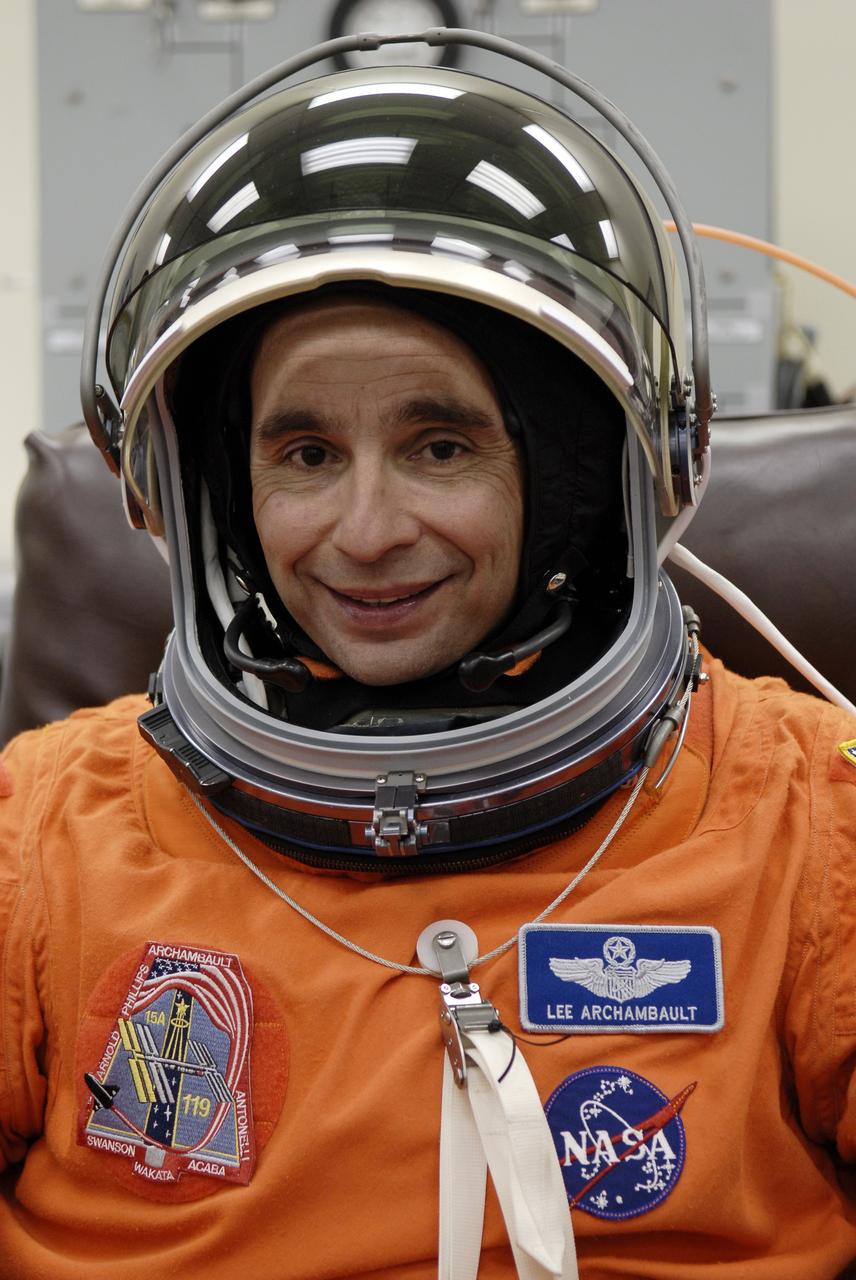
CAPE CANAVERAL, Fla. – In the Operations and Checkout Building at NASA's Kennedy Space Center in Florida, STS-119 Commander Lee Archambault fits the helmet on his launch-and-entry suit for the launch of space shuttle Discovery. The crew will be heading for Launch Pad 39A and liftoff of Discovery, scheduled for 7:43 p.m. EDT on March 15. An earlier launch attempt March 11 was scrubbed at 2:36 p.m. due to a gaseous hydrogen leak from the external tank at the Ground Umbilical Carrier Plate during tanking. A seven-inch quick disconnect and two seals were replaced. The STS-119 mission is the 28th to the International Space Station and the 125th space shuttle flight. Discovery will deliver the final pair of power-generating solar array wings and the S6 truss segment. Installation of S6 will signal the station's readiness to house a six-member crew for conducting increased science. Photo credit: NASA/Kim Shiflett
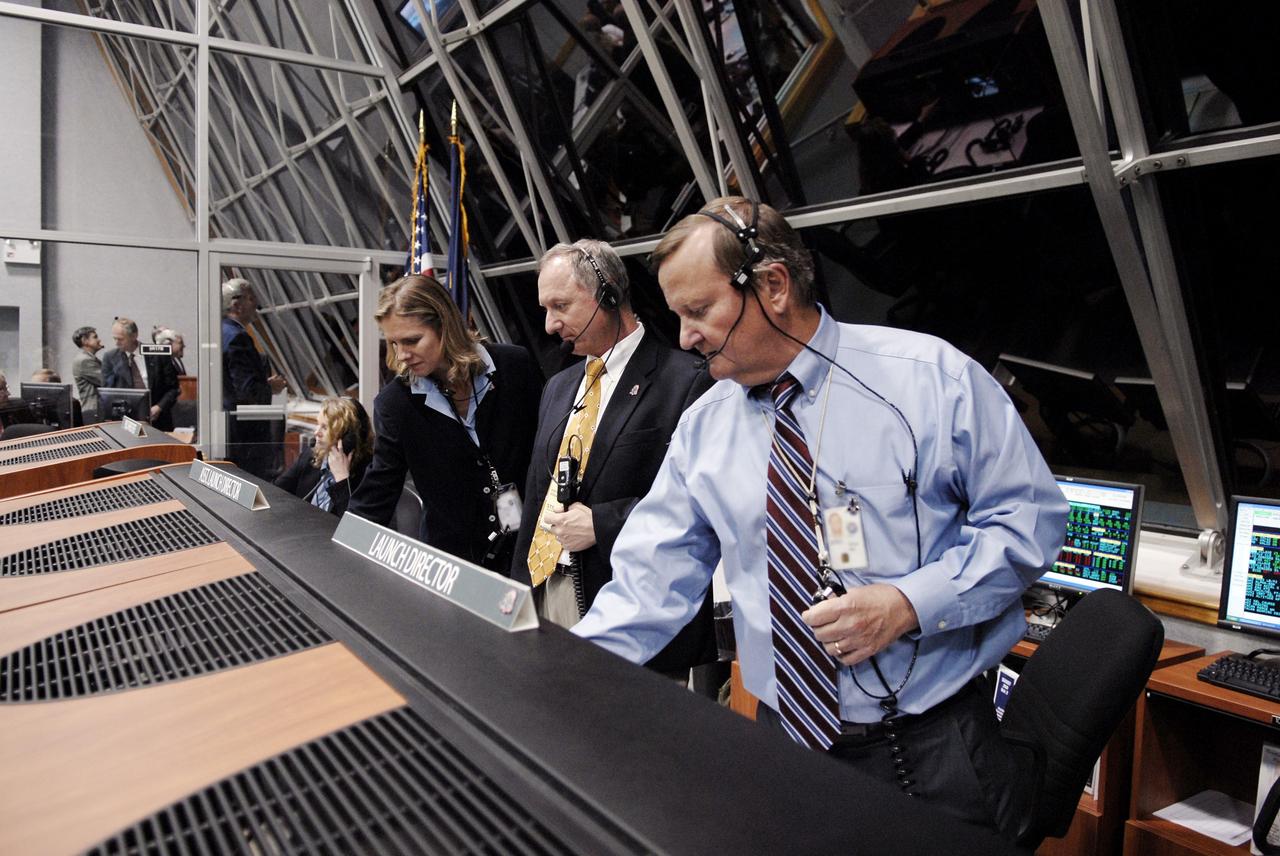
CAPE CANAVERAL, Fla. – In Firing Room 4 of the Launch Control Center at NASA's Kennedy Space Center in Florida, Flow Director for space shuttle Discovery Stephanie Stilson, Assistant Launch Director Pete Nickolenko and Shuttle Launch Director Mike Leinbach check the computers for follow-up images of the launch of space shuttle Discovery on the STS-119 mission. Launch was on time at 7:43 p.m. EDT. The STS-119 mission is the 28th to the space station and Discovery's 36th flight. Discovery will deliver the final pair of power-generating solar array wings and the S6 truss segment. Installation of S6 will signal the station's readiness to house a six-member crew for conducting increased science. Photo credit: NASA/Kim Shiflett
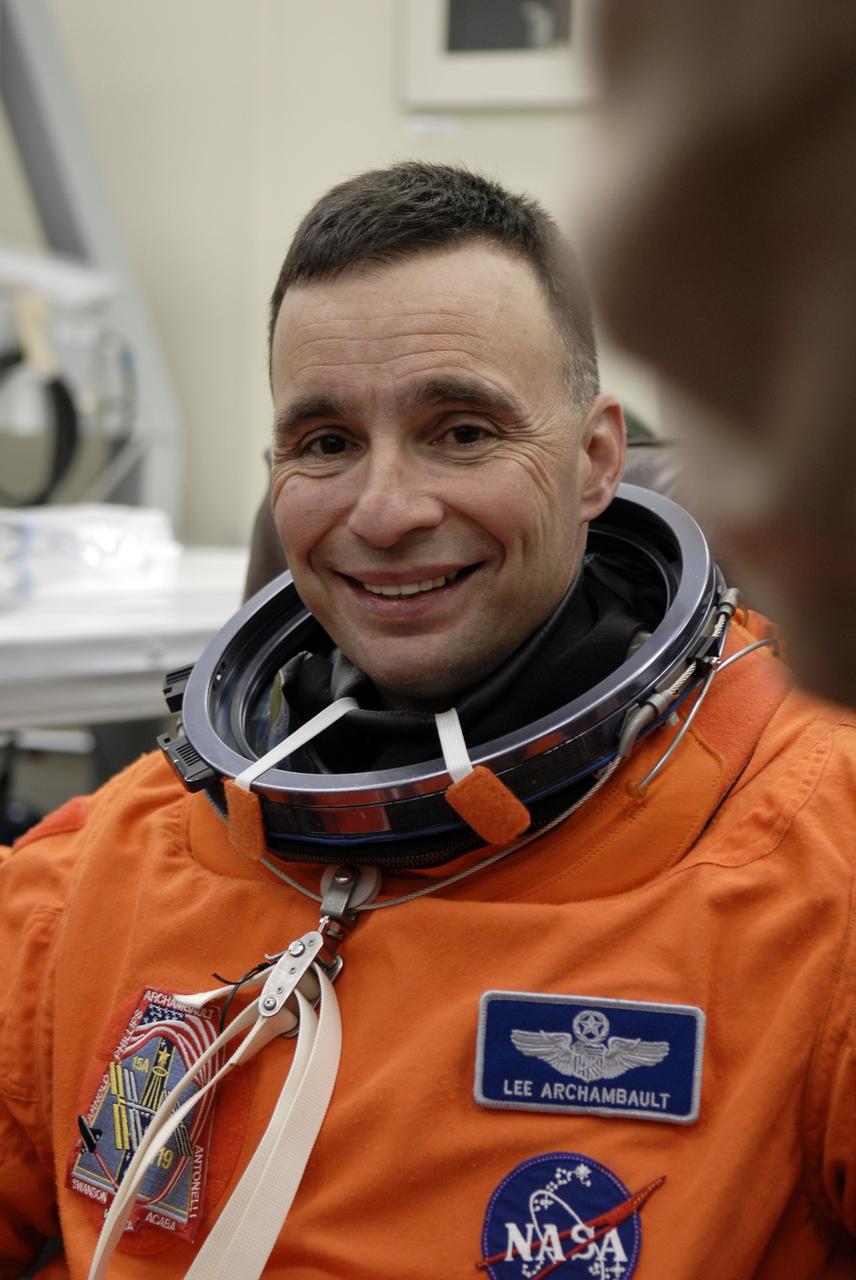
CAPE CANAVERAL, Fla. – In the Operations and Checkout Building at NASA's Kennedy Space Center in Florida, STS-119 Commander Lee Archambault puts on his launch-and-entry suit for the launch of space shuttle Discovery. The crew will be heading for Launch Pad 39A and liftoff of Discovery, scheduled for 7:43 p.m. EDT on March 15. An earlier launch attempt March 11 was scrubbed at 2:36 p.m. due to a gaseous hydrogen leak from the external tank at the Ground Umbilical Carrier Plate during tanking. A seven-inch quick disconnect and two seals were replaced. The STS-119 mission is the 28th to the International Space Station and the 125th space shuttle flight. Discovery will deliver the final pair of power-generating solar array wings and the S6 truss segment. Installation of S6 will signal the station's readiness to house a six-member crew for conducting increased science. Photo credit: NASA/Kim Shiflett
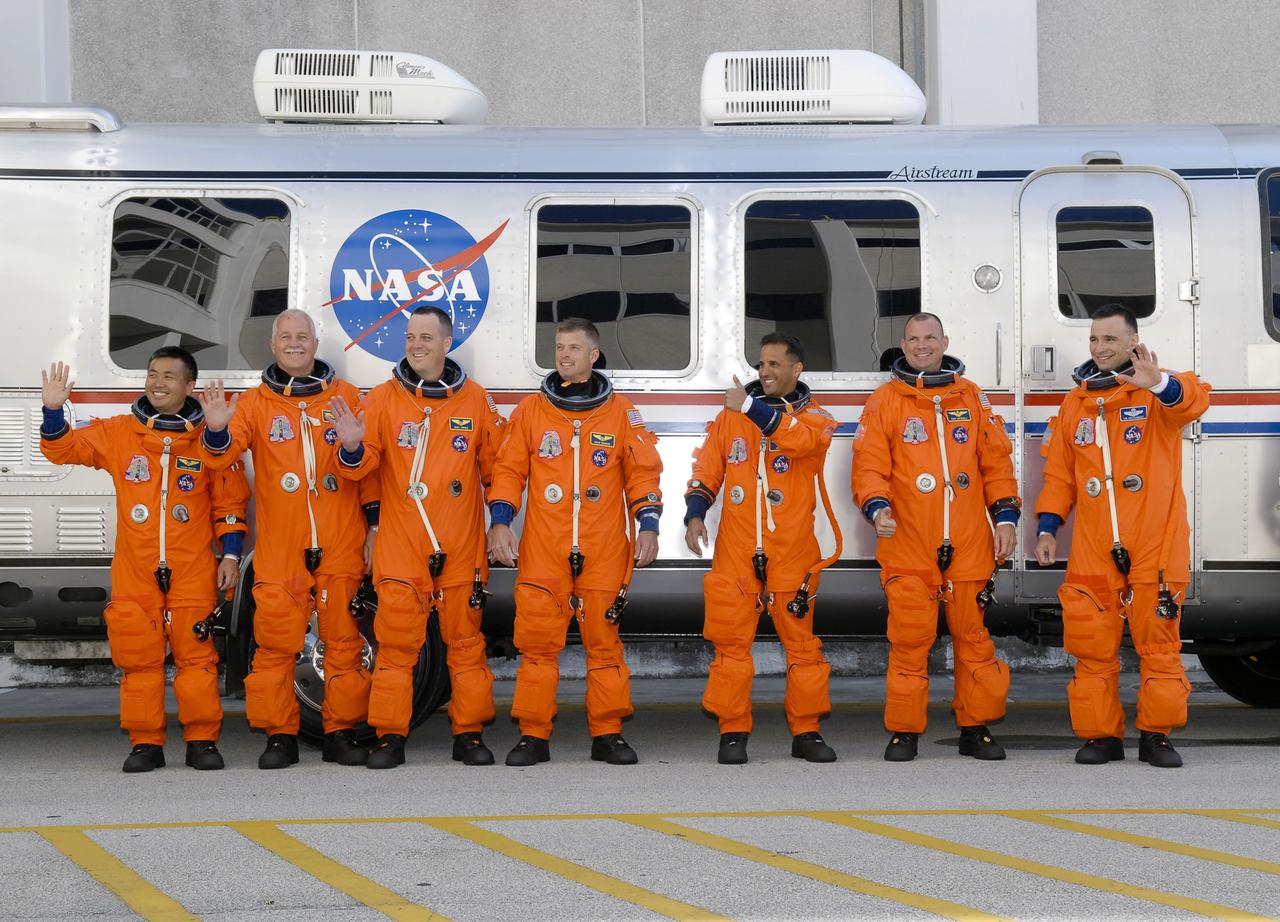
STS119-S-008 (15 March 2009) --- After suiting up, the STS-119 crewmembers pause alongside the Astrovan to wave farewell to onlookers before heading for launch pad 39A for the launch of Space Shuttle Discovery on the STS-119 mission. From the right are astronauts Lee Archambault, commander; Tony Antonelli, pilot; Joseph Acaba, Steve Swanson, Richard Arnold, John Phillips and Japan Aerospace Exploration Agency’s Koichi Wakata, all mission specialists. Wakata will join Expedition 18 in progress to serve as a flight engineer aboard the International Space Station. Discovery will deliver the final pair of power-generating solar array wings and the S6 truss segment. Installation of S6 will signal the station's readiness to house a six-member crew for conducting increased science.
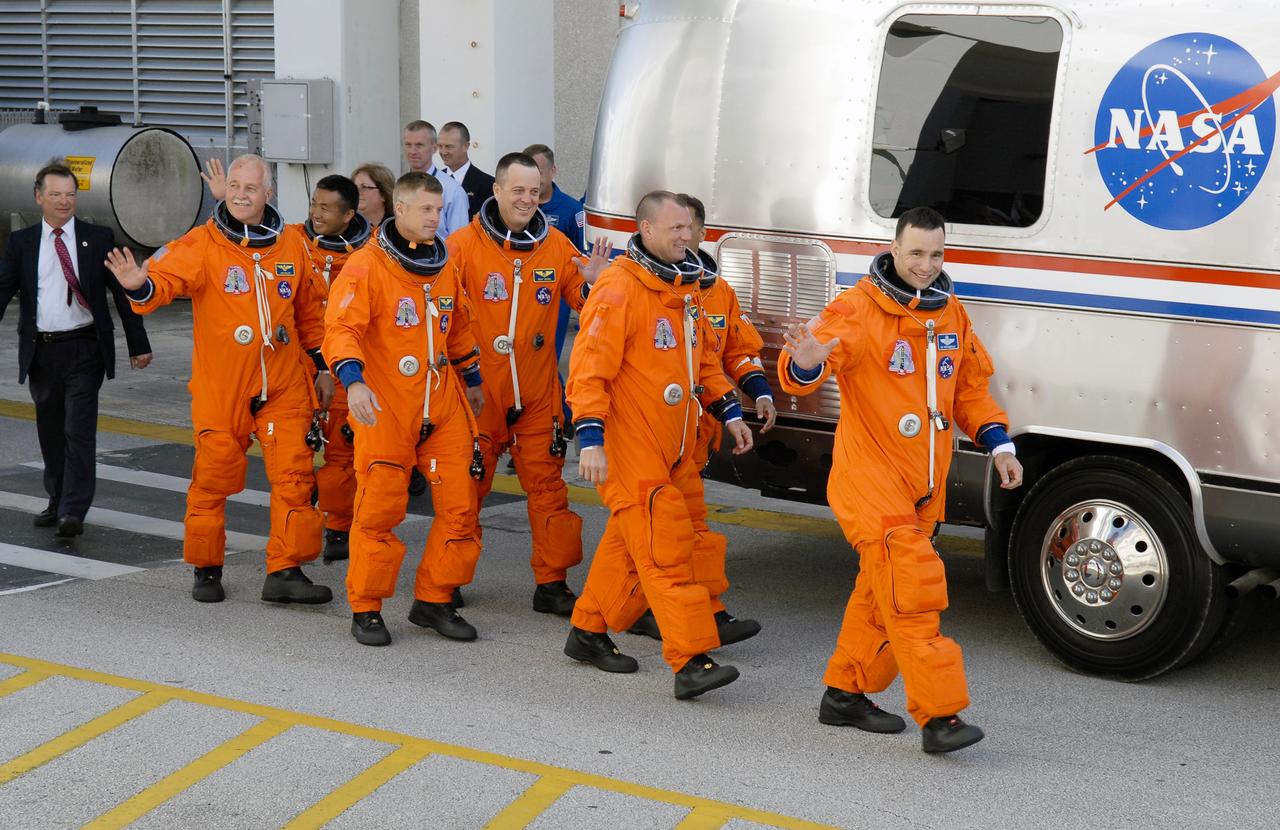
STS119-S-007 (15 March 2009) --- After suiting up, the STS-119 crewmembers exit the Operations and Checkout Building to board the Astrovan, which will take them to launch pad 39A for the launch of Space Shuttle Discovery on the STS-119 mission. From the left are astronauts John Phillips, Japan Aerospace Exploration Agency’s Koichi Wakata, Steve Swanson, Richard Arnold, all mission specialists; Tony Antonelli, pilot; Joseph Acaba (behind Antonelli), mission specialist; and Lee Archambault, commander. Wakata will join Expedition 18 in progress to serve as a flight engineer aboard the International Space Station. Discovery will deliver the final pair of power-generating solar array wings and the S6 truss segment. Installation of S6 will signal the station's readiness to house a six-member crew for conducting increased science.
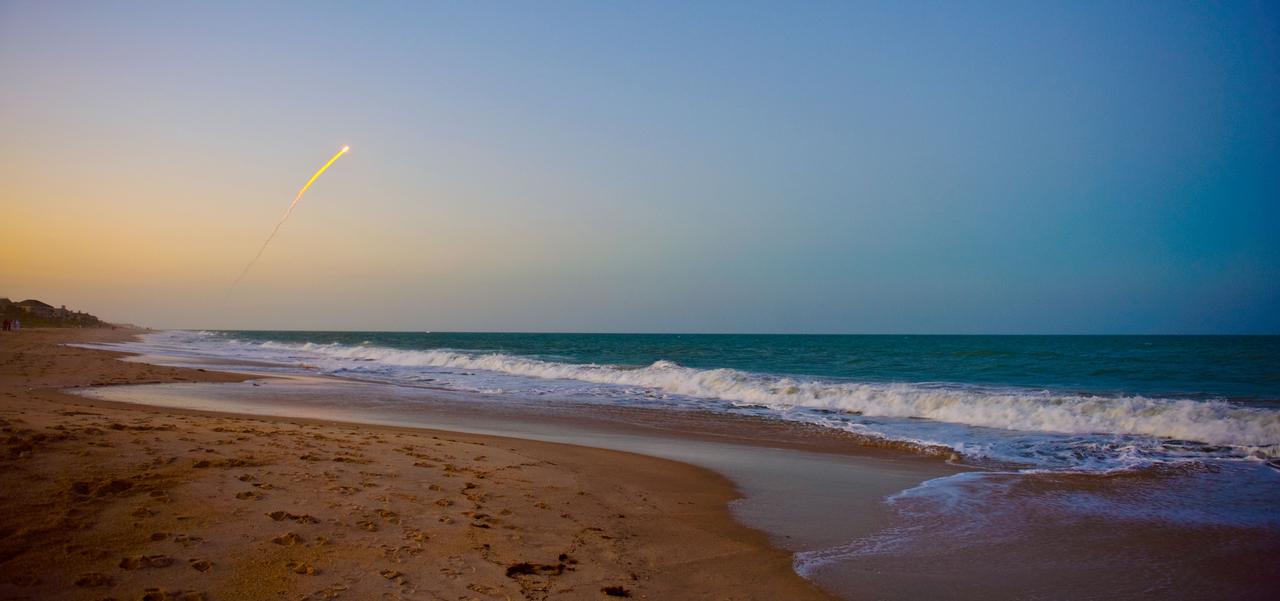
STS-119 Launch from remote Coastline Location: John's Island, Vero Beach, Fla.
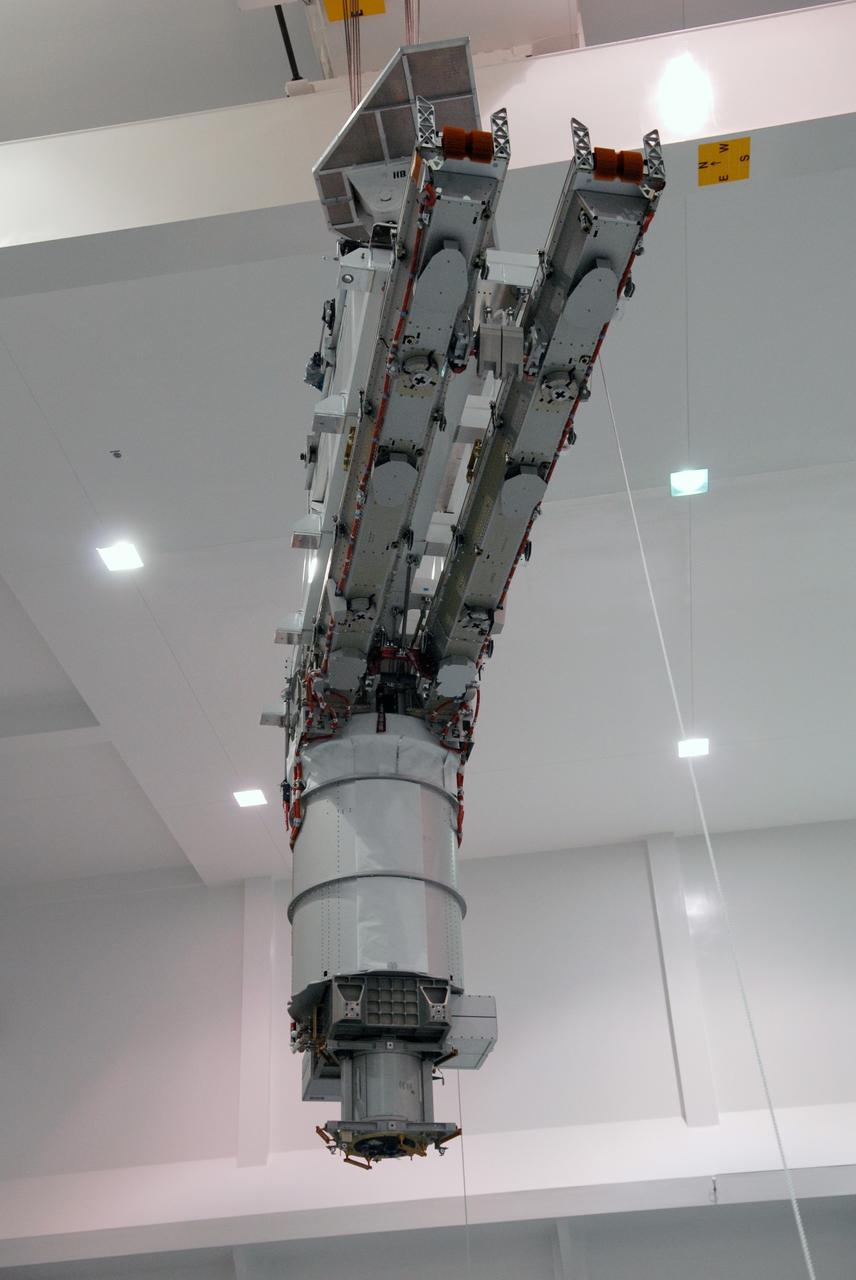
CAPE CANAVERAL, Fla. – In the Space Station Processing Facility at NASA's Kennedy Space Center, the final solar array wing for the International Space Station is moved into position for installation onto the S6 truss element. Scheduled to launch on the STS-119 mission, space shuttle Discovery will carry the S6 truss segment to complete the 361-foot-long backbone of the International Space Station. The truss includes the fourth pair of solar array wings and electronics that convert sunlight to power for the orbiting laboratory. Launch is targeted for Feb. 12, 2009. Photo credit: NASA/Troy Cryder
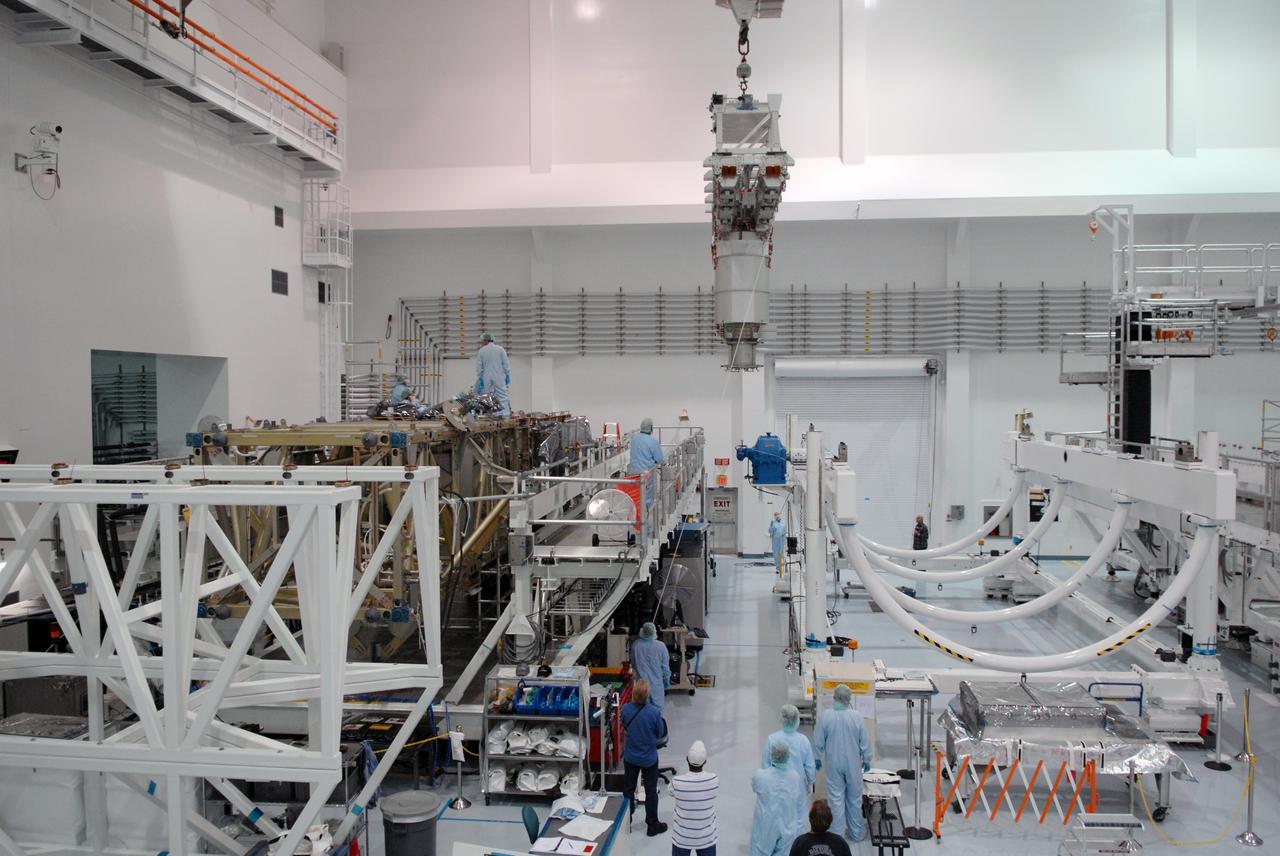
CAPE CANAVERAL, Fla. – In the Space Station Processing Facility at NASA's Kennedy Space Center, workers move the final solar array wing for the International Space Station into position for installation on the S6 truss element. Scheduled to launch on the STS-119 mission, space shuttle Discovery will carry the S6 truss segment to complete the 361-foot-long backbone of the International Space Station. The truss includes the fourth pair of solar array wings and electronics that convert sunlight to power for the orbiting laboratory. Launch is targeted for Feb. 12, 2009. Photo credit: NASA/Troy Cryder

CAPE CANAVERAL, Fla. – In the Space Station Processing Facility at NASA's Kennedy Space Center, workers install the final solar array wing for the International Space Station onto the S6 truss element. Scheduled to launch on the STS-119 mission, space shuttle Discovery will carry the S6 truss segment to complete the 361-foot-long backbone of the International Space Station. The truss includes the fourth pair of solar array wings and electronics that convert sunlight to power for the orbiting laboratory. Launch is targeted for Feb. 12, 2009. Photo credit: NASA/Troy Cryder
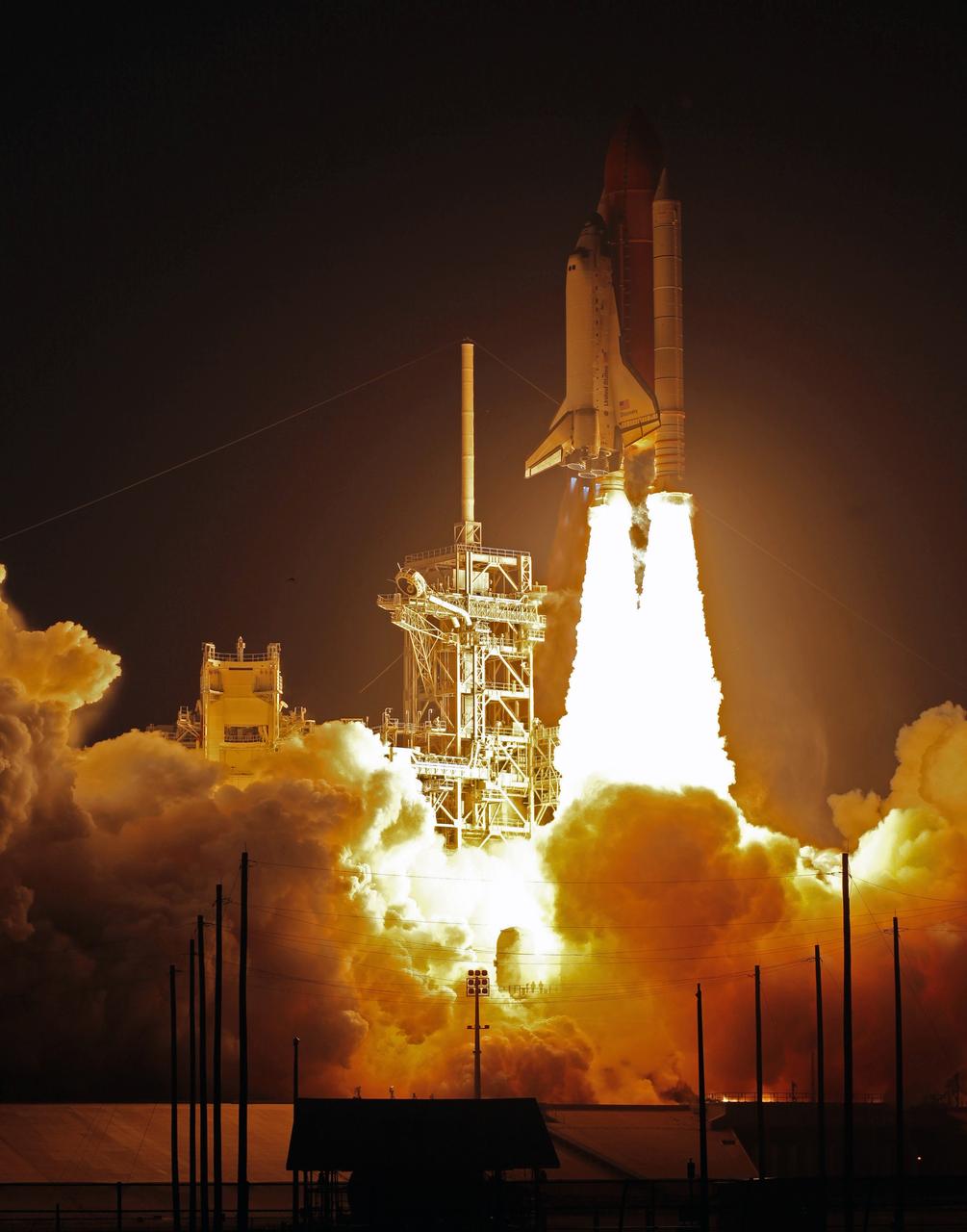
CAPE CANAVERAL, Fla. – Space shuttle Discovery roars off Launch Pad 39A on the STS-119 mission atop twin towers of fire that light up the sky after sunset at NASA's Kennedy Space Center in Florida. Liftoff was on time at 7:43 p.m. EDT. The STS-119 mission is the 28th to the International Space Station and the 125th space shuttle flight. Discovery will deliver the final pair of power-generating solar array wings and the S6 truss segment. Installation of S6 will signal the station's readiness to house a six-member crew for conducting increased science. Photo courtesy of Scott Andrews
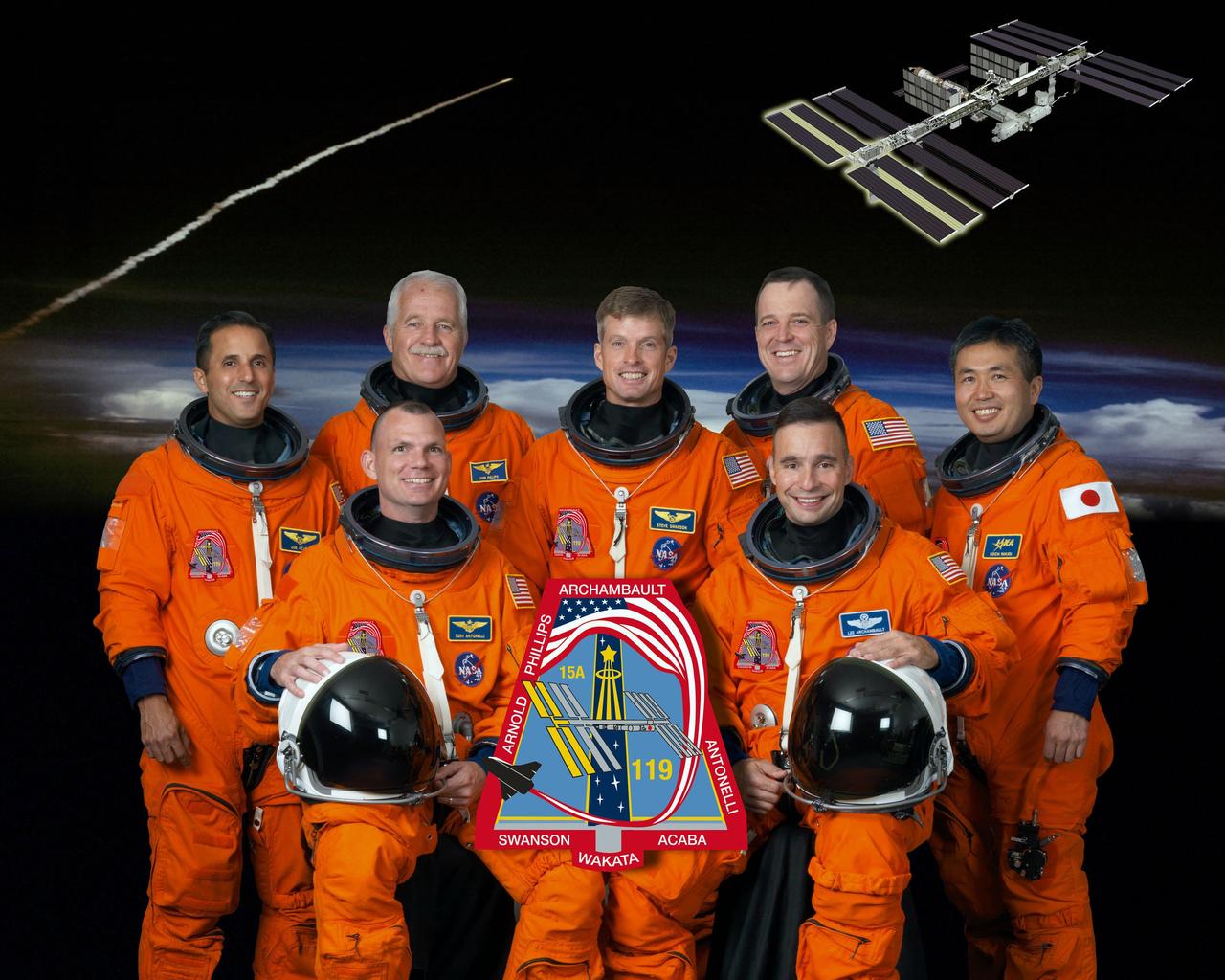
HOUSTON, Texas -- STS119-S-002: Attired in training versions of their shuttle launch and entry suits, these seven astronauts take a break from training to pose for the STS-119 crew portrait. From the right (front row) are NASA astronauts Lee Archambault, commander, and Tony Antonelli, pilot. From the left (back row) are NASA astronauts Joseph Acaba, John Phillips, Steve Swanson, Richard Arnold and Japan Aerospace Exploration Agency astronaut Koichi Wakata, all mission specialists. Wakata is scheduled to join Expedition 18 as flight engineer after launching to the International Space Station on STS-119.
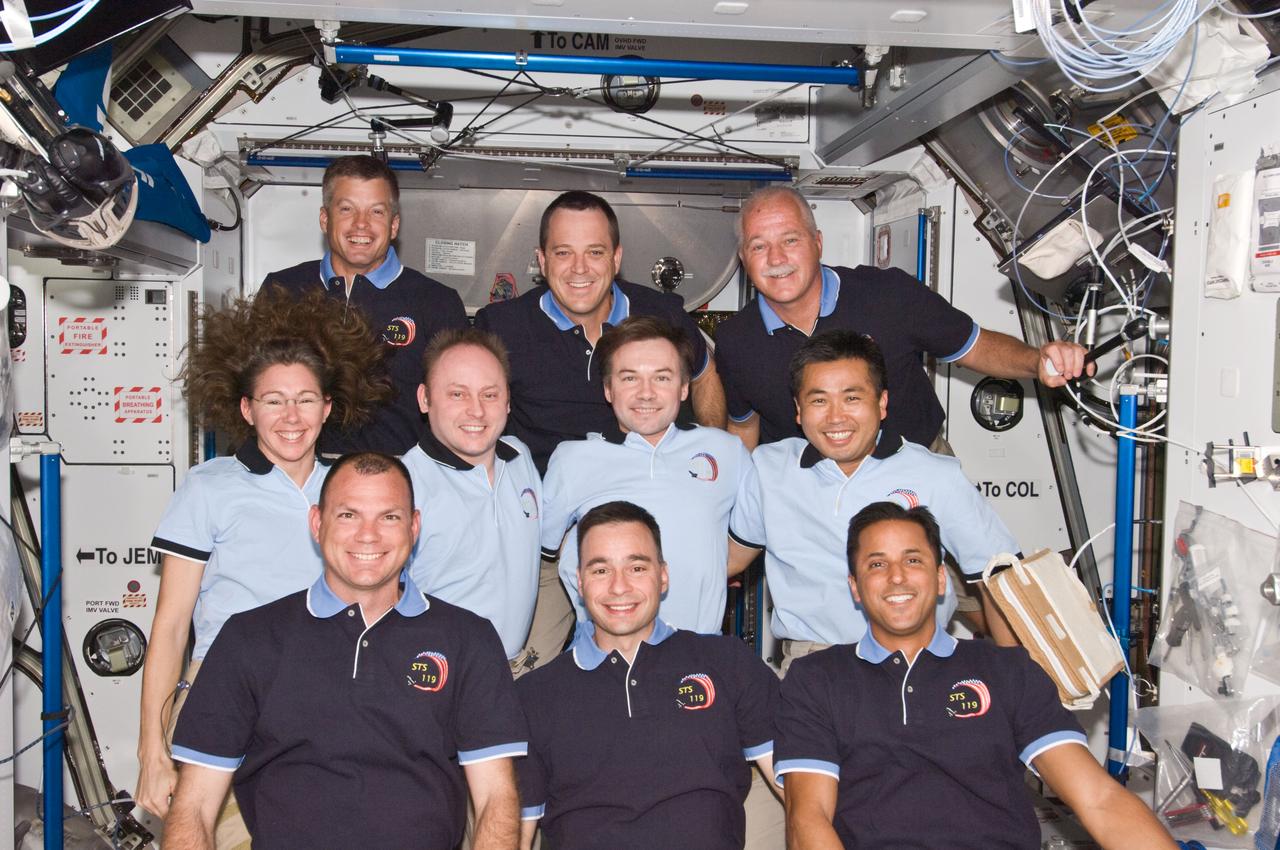
S119-E-007753 (24 March 2009) --- STS-119 and Expedition 18 crewmembers pose for a group photo following a joint news conference in the Harmony node of the International Space Station while Space Shuttle Discovery remains docked with the station. From the left (bottom row) are NASA astronauts Tony Antonelli, STS-119 pilot; Lee Archambault, STS-119 commander; and Joseph Acaba, STS-119 mission specialist. From the left (middle row) are NASA astronauts Sandra Magnus, STS-119 mission specialist; and Michael Fincke, Expedition 18 commander; along with cosmonaut Yury Lonchakov and Japan Aerospace Exploration Agency astronaut (JAXA) Koichi Wakata, both Expedition 18 flight engineers. From the left (top row) are NASA astronauts Steve Swanson, Richard Arnold and John Phillips, all STS-119 mission specialists. Magnus, who joined the station’s Expedition 18 crew in November 2008, is being replaced by Wakata, who arrived at the station with the STS-119 crew.
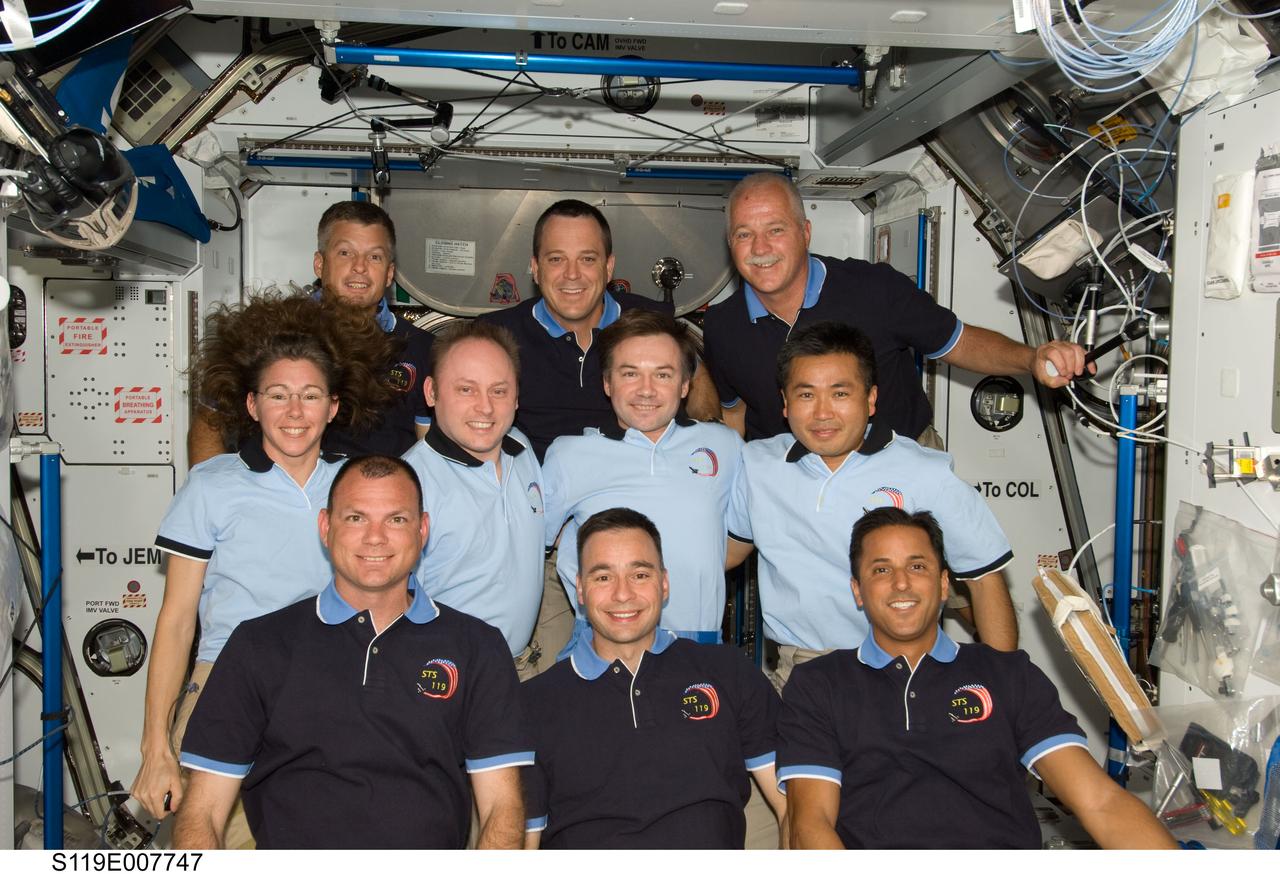
S119-E-007747 (24 March 2009) --- STS-119 and Expedition 18 crewmembers pose for a group photo following a joint news conference in the Harmony node of the International Space Station while Space Shuttle Discovery remains docked with the station. From the left (bottom row) are NASA astronauts Tony Antonelli, STS-119 pilot; Lee Archambault, STS-119 commander; and Joseph Acaba, STS-119 mission specialist. From the left (middle row) are NASA astronauts Sandra Magnus, STS-119 mission specialist; and Michael Fincke, Expedition 18 commander; along with cosmonaut Yury Lonchakov and Japan Aerospace Exploration Agency astronaut (JAXA) Koichi Wakata, both Expedition 18 flight engineers. From the left (top row) are NASA astronauts Steve Swanson, Richard Arnold and John Phillips, all STS-119 mission specialists. Magnus, who joined the station’s Expedition 18 crew in November 2008, is being replaced by Wakata, who arrived at the station with the STS-119 crew.
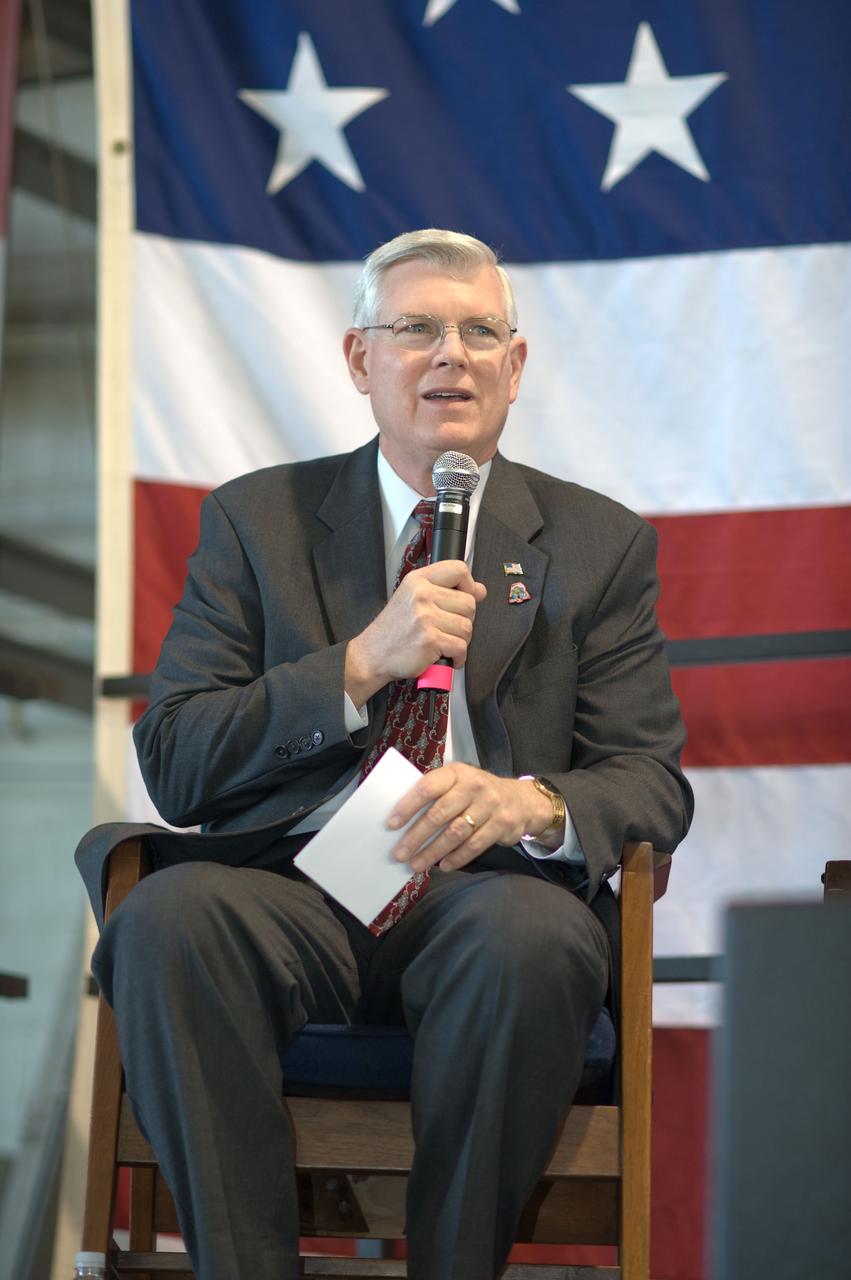
STS-119 Crew Return Ceremony to Ellington Field. Photo Date: March 29, 2009. Location: Ellington Field - Hangar 990. Photographer: Robert Markowitz
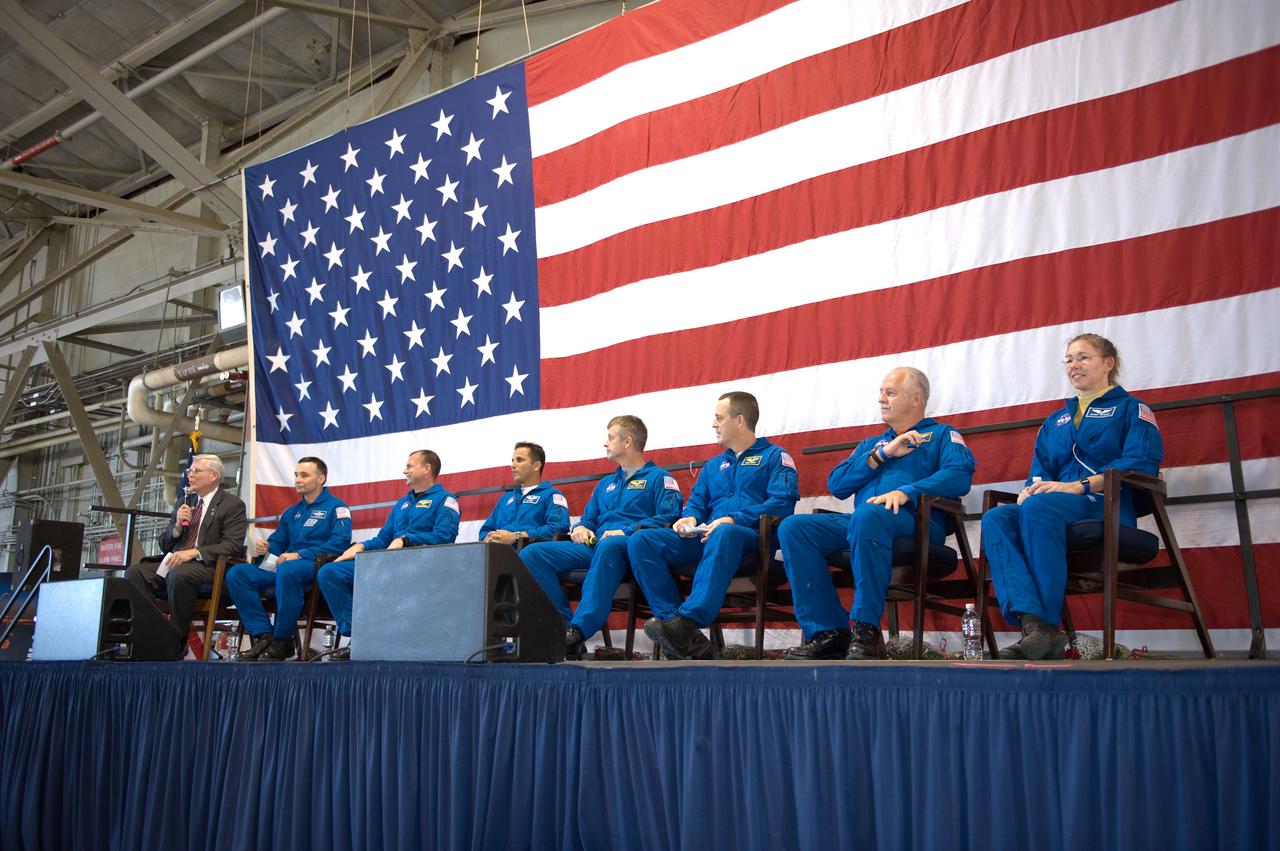
STS-119 Crew Return Ceremony to Ellington Field. Photo Date: March 29, 2009. Location: Ellington Field - Hangar 990. Photographer: Robert Markowitz
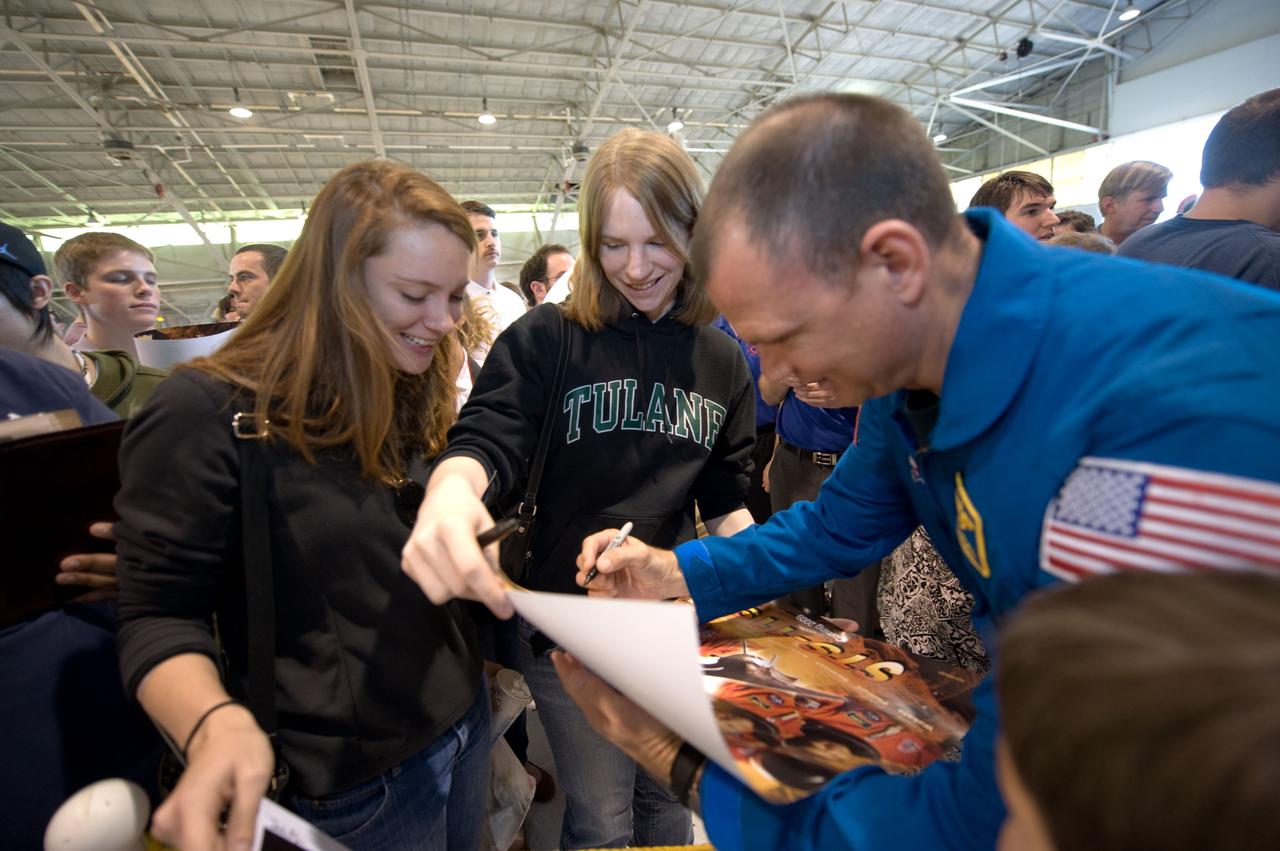
STS-119 Crew Return Ceremony to Ellington Field. Photo Date: March 29, 2009. Location: Ellington Field - Hangar 990. Photographer: Robert Markowitz
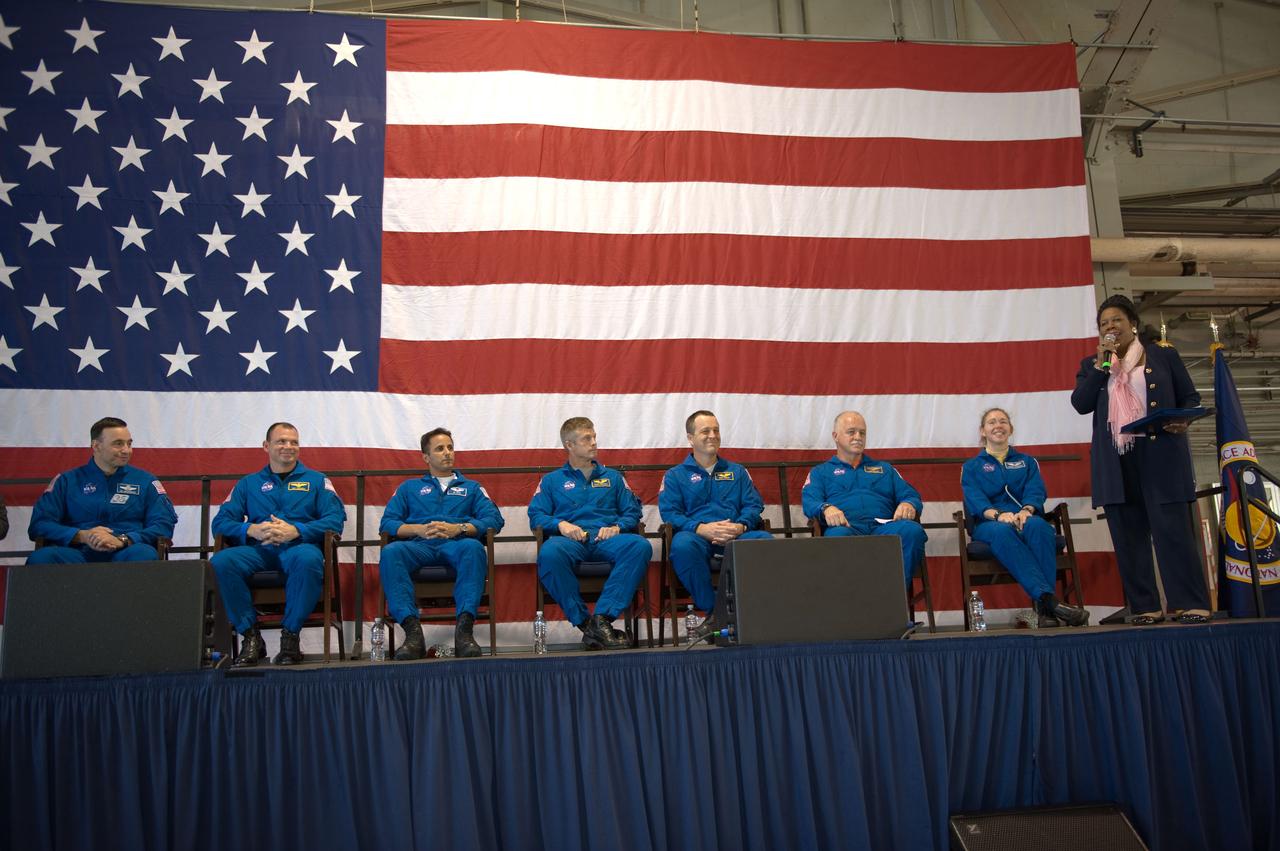
STS-119 Crew Return Ceremony to Ellington Field. Photo Date: March 29, 2009. Location: Ellington Field - Hangar 990. Photographer: Robert Markowitz

ISS018-E-041355 (21 March 2009) --- Astronaut Tony Antonelli, STS-119 pilot; and Japan Aerospace Exploration Agency (JAXA) astronaut Koichi Wakata, Expedition 18 flight engineer, watch their crewmates through a small window on the hatch door in the Quest Airlock of the International Space Station while Space Shuttle Discovery remains docked with the station. Astronauts Joseph Acaba and Steve Swanson, both STS-119 mission specialists, were exiting the airlock to begin the mission's second session of extravehicular activity (EVA).
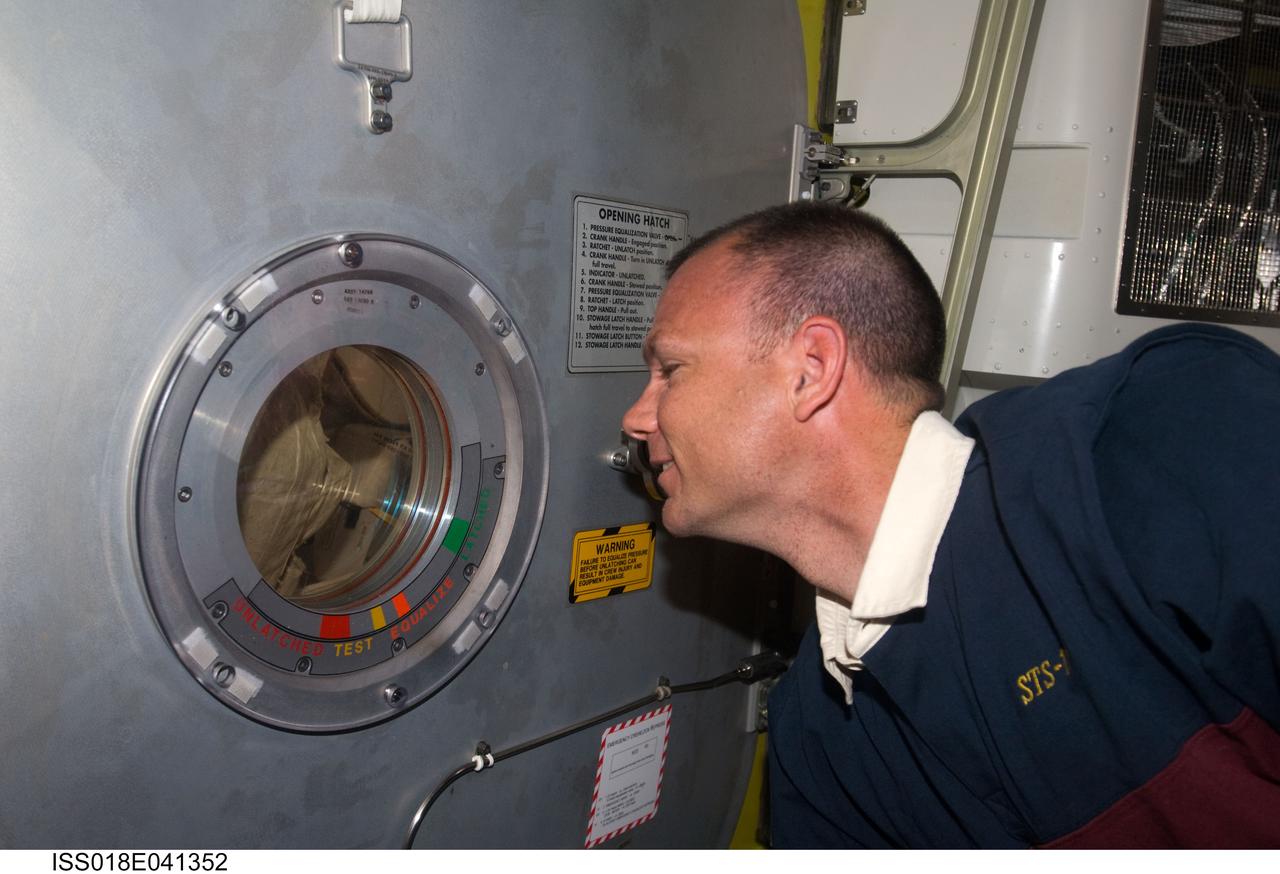
ISS018-E-041352 (21 March 2009) --- Astronaut Tony Antonelli, STS-119 pilot, watches his crewmates through a small window on the hatch door in the Quest Airlock of the International Space Station while Space Shuttle Discovery remains docked with the station. Astronauts Joseph Acaba and Steve Swanson, both STS-119 mission specialists, were exiting the airlock to begin the mission's second session of extravehicular activity (EVA).
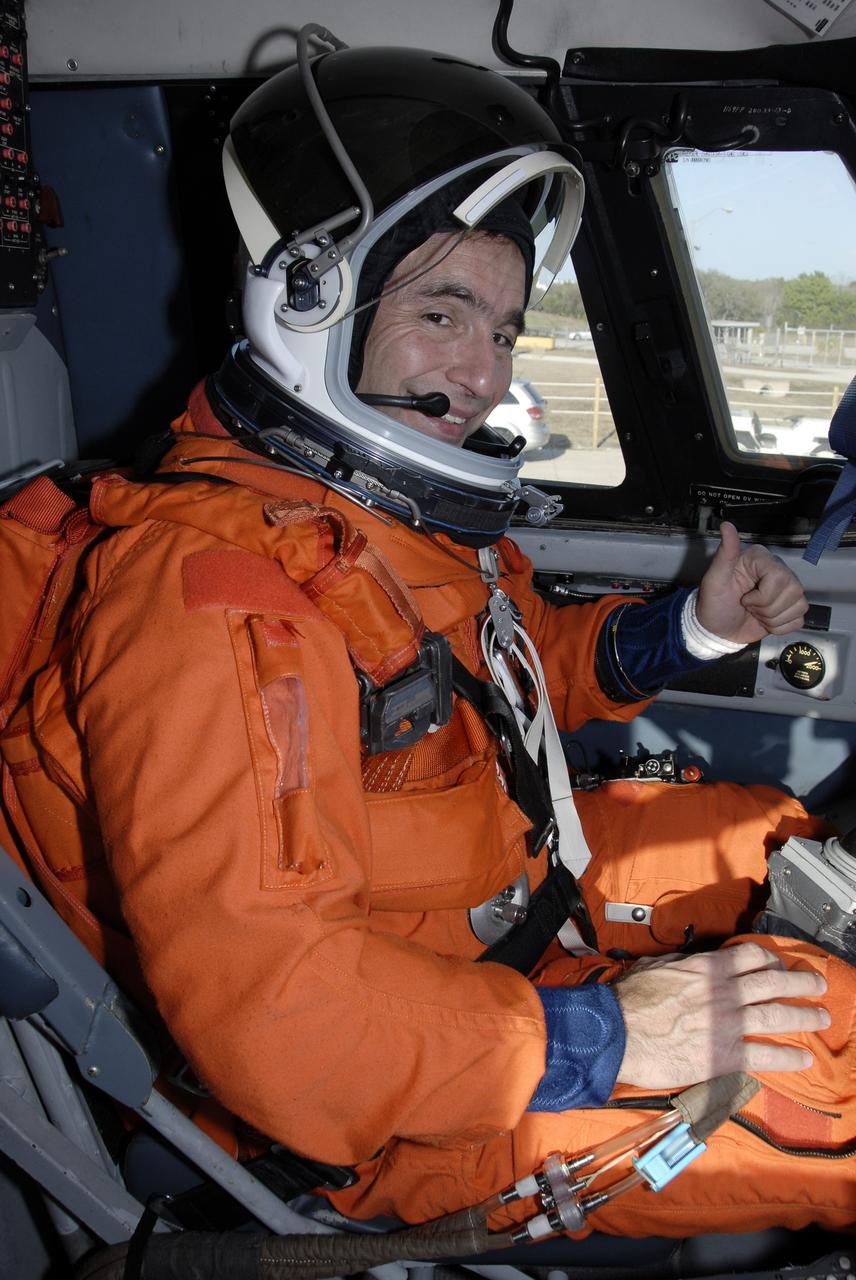
CAPE CANAVERAL, Fla. – On the Shuttle Landing Facility at NASA's Kennedy Space Center in Florida, STS-119 Commander Lee Archambault is seated in the Shuttle Training Aircraft to practice shuttle landings. The mission crew members arrived in the afternoon at Kennedy to prepare for launch. The mission is the 28th to the International Space Station and the 125th space shuttle flight. Space shuttle Discovery will deliver the final pair of power-generating solar array wings and truss element, S6. Photo credit: NASA/Kim Shiflett