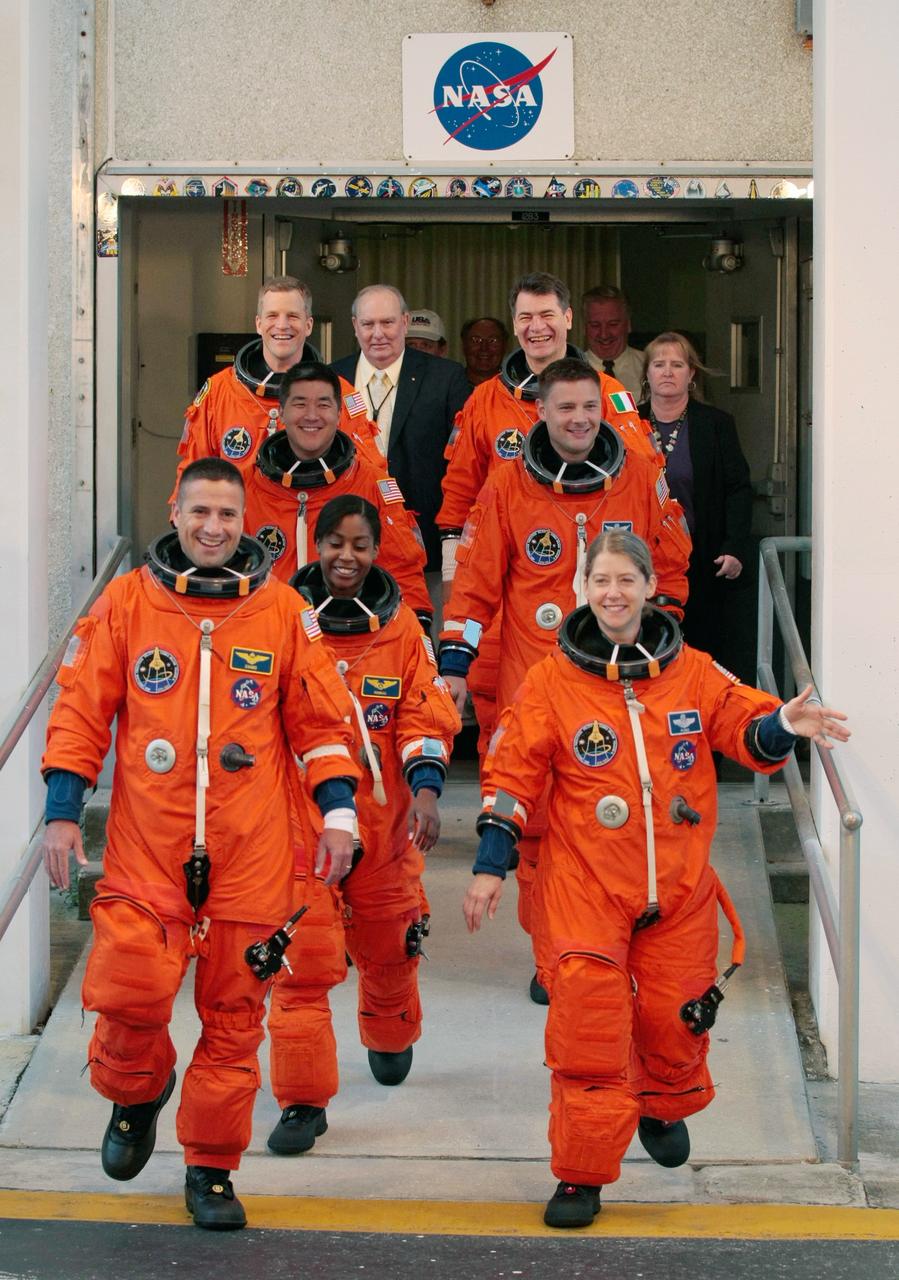
Crew members of space shuttle mission STS-120 prepare to board the bus that will transport them to Launch Pad 39A.
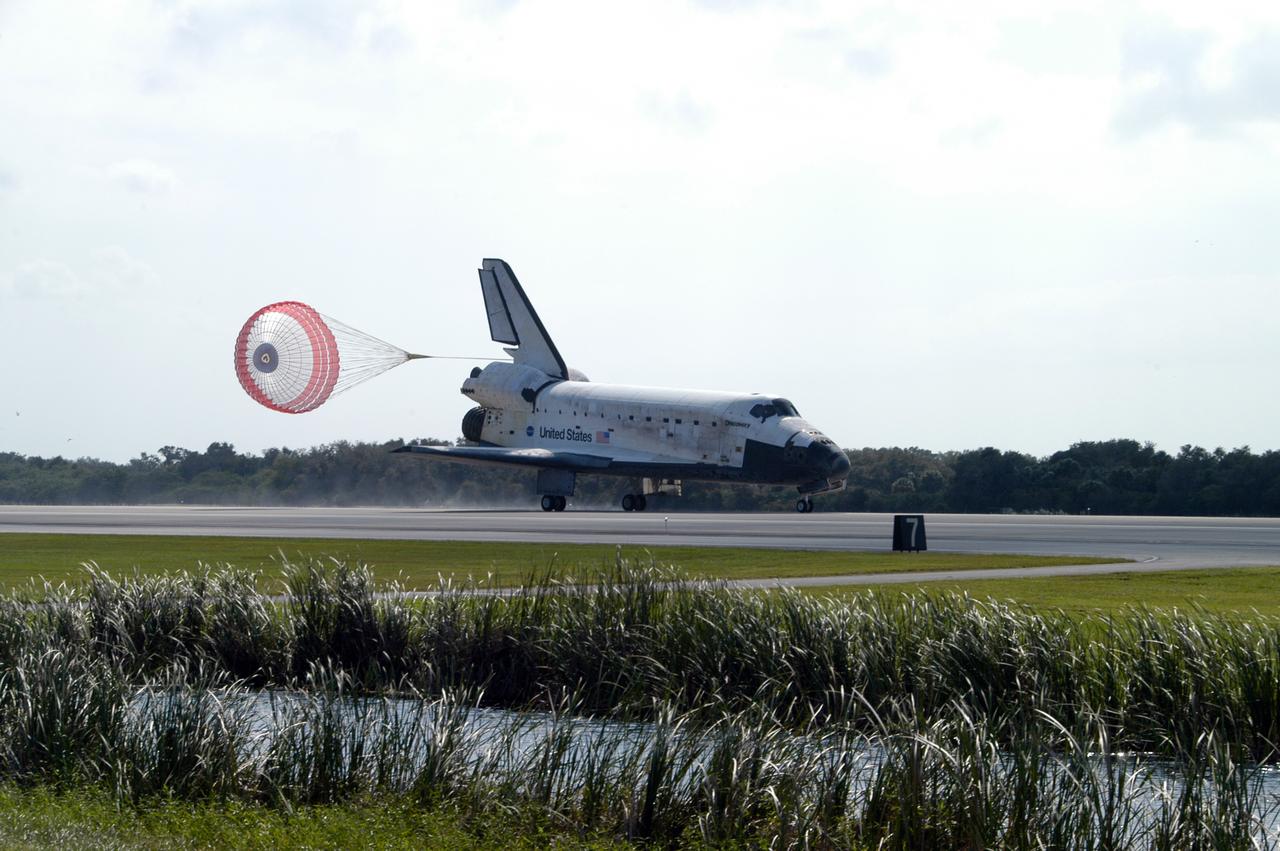
The drag chute deployed behind space shuttle Discovery helps slow its smooth landing on Runway 33 of the Shuttle Landing Facility at NASA's Kennedy Space Center, completing the 15-day mission STS-120. Main gear touchdown was 1:01:16 p.m. Wheel stop was at 1:02:07 p.m. Mission elapsed time was 15 days, 2 hours, 24 minutes and 2 seconds. The STS-120 crew continued the construction of the station with the installation of the Harmony Node 2 module and the relocation of the P6 truss.
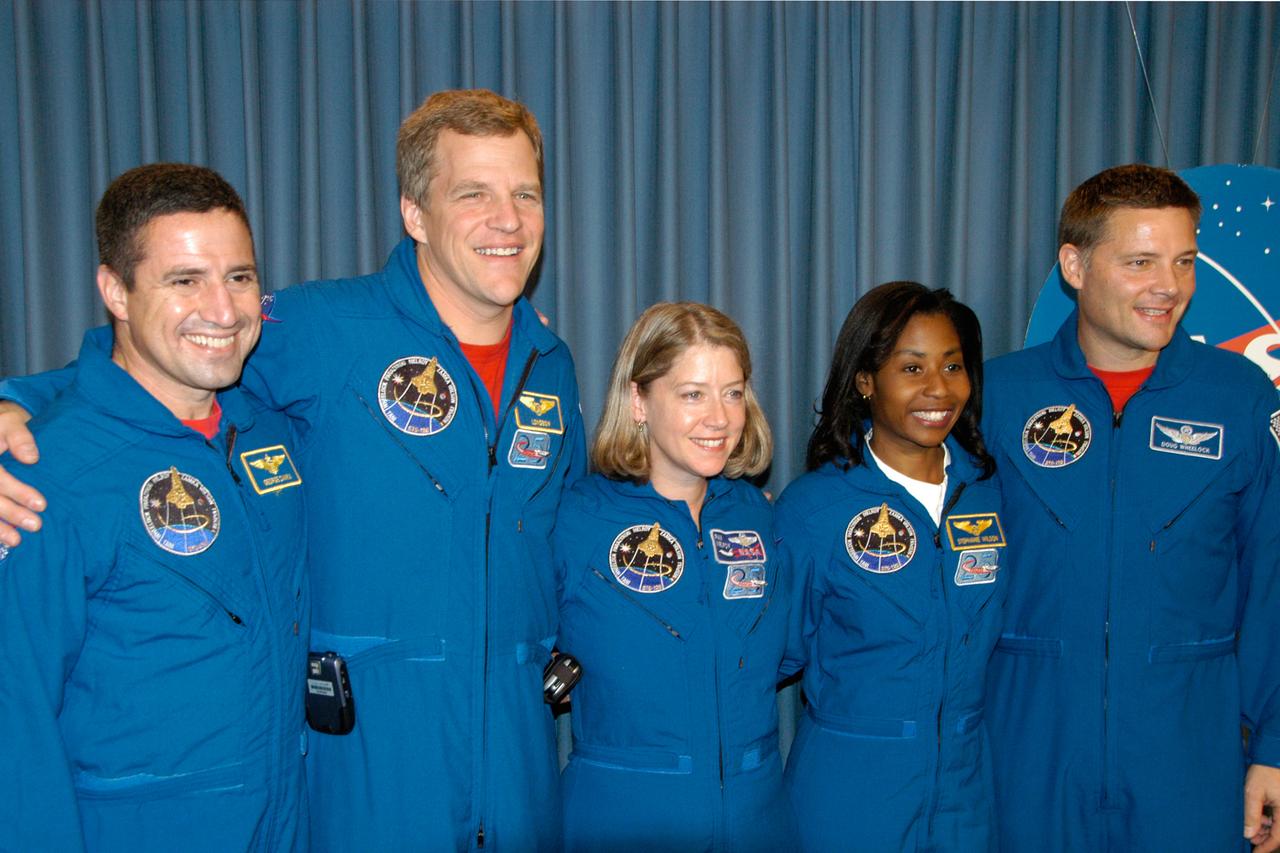
After a post-landing news conference, members of the STS-120 crew pose for photographers. From left are Pilot George Zamka, Mission Specialist Scott Parazynski, Commander Pamela Melroy and Mission Specialists Stephanie Wilson and Doug Wheelock. The crew completed a 15-day mission to the International Space Station with a smooth landing on Runway 33. Main gear touchdown was 1:01:16 p.m. Wheel stop was at 1:02:07 p.m. Mission elapsed time was 15 days, 2 hours, 24 minutes and 2 seconds. Mission STS-120 continued the construction of the station with the installation of the Harmony Node 2 module and the relocation of the P6 truss.
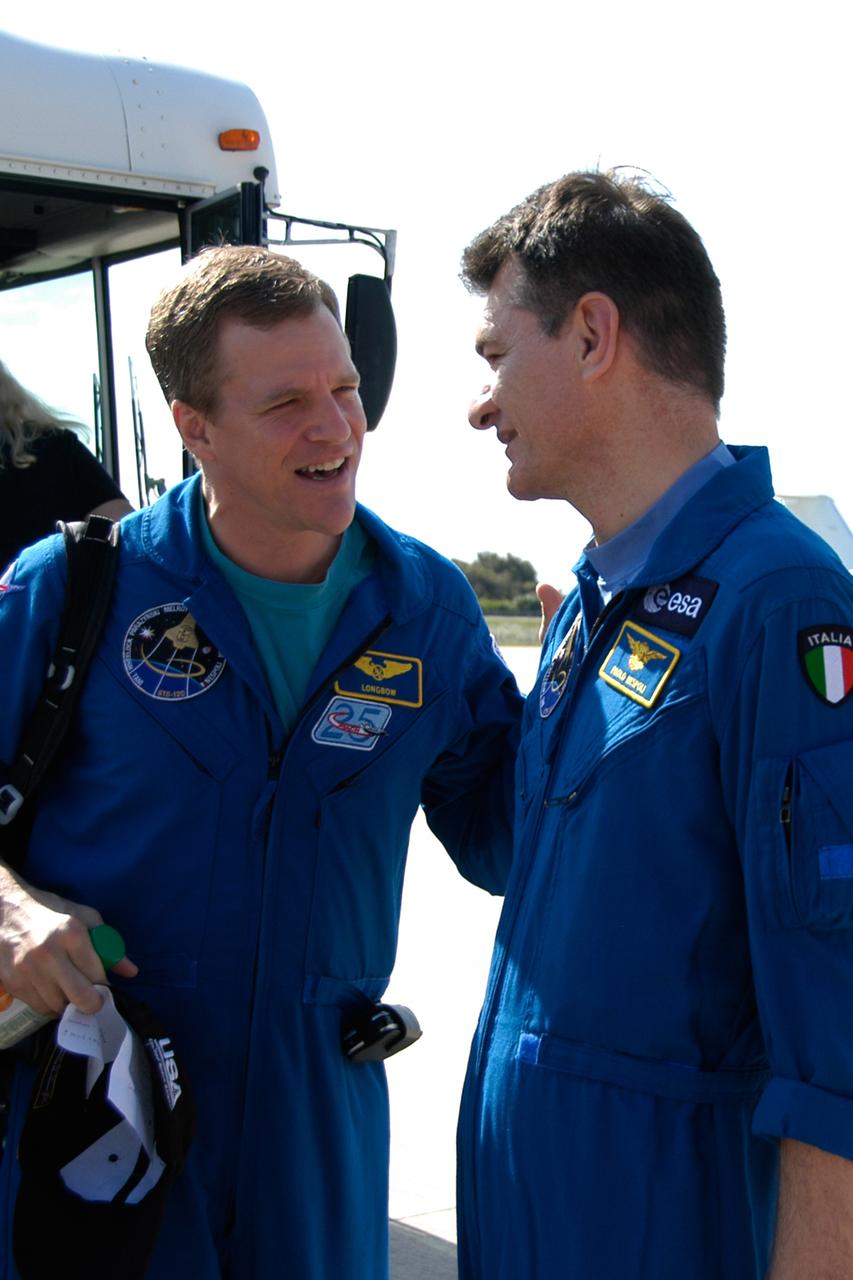
STS-120 Mission Specialists Scott Parazynski (left) and Paolo Nespoli talk before their return to flight to Houston. A welcoming ceremony for the crew is planned at NASA's Hangar 276 on the south end of Ellington Field in Texas. On the 15-day mission, the STS-120 crew continued the construction of the station with the installation of the Harmony Node 2 module and the relocation of the P6 truss. They landed Nov. 7 at NASA's Kennedy Space Center.
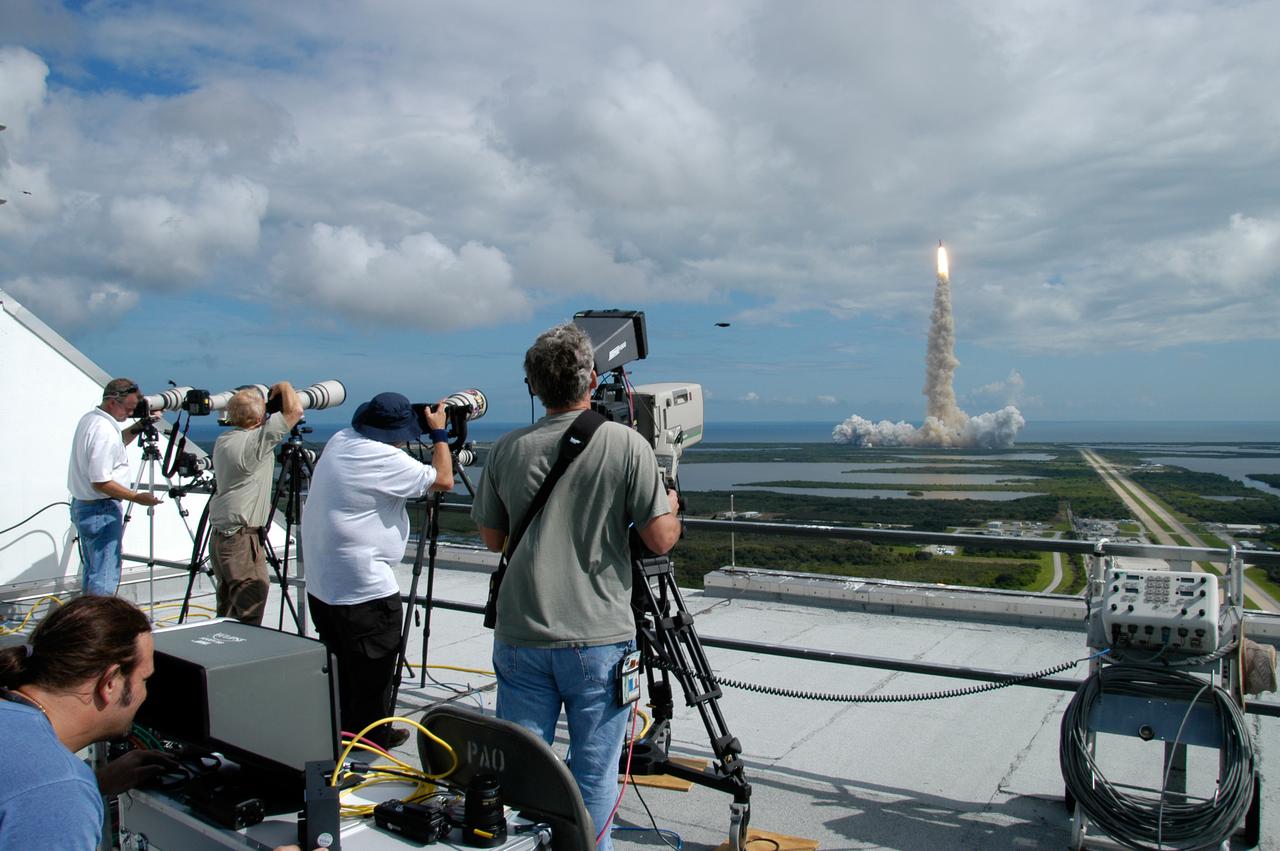
From the roof of the Vehicle Assembly Building at NASA's Kennedy Space Center, media photographers capture the launch of space shuttle Discovery as it soars from its seaside launch pad. Liftoff was on time at 11:38:19 a.m. EDT. Discovery carries the Italian-built U.S. Node 2, called Harmony. During the 14-day STS-120 mission, the crew will install Harmony and move the P6 solar arrays to their permanent position and deploy them. Discovery is expected to complete its mission and return home at 4:47 a.m. EST on Nov. 6.
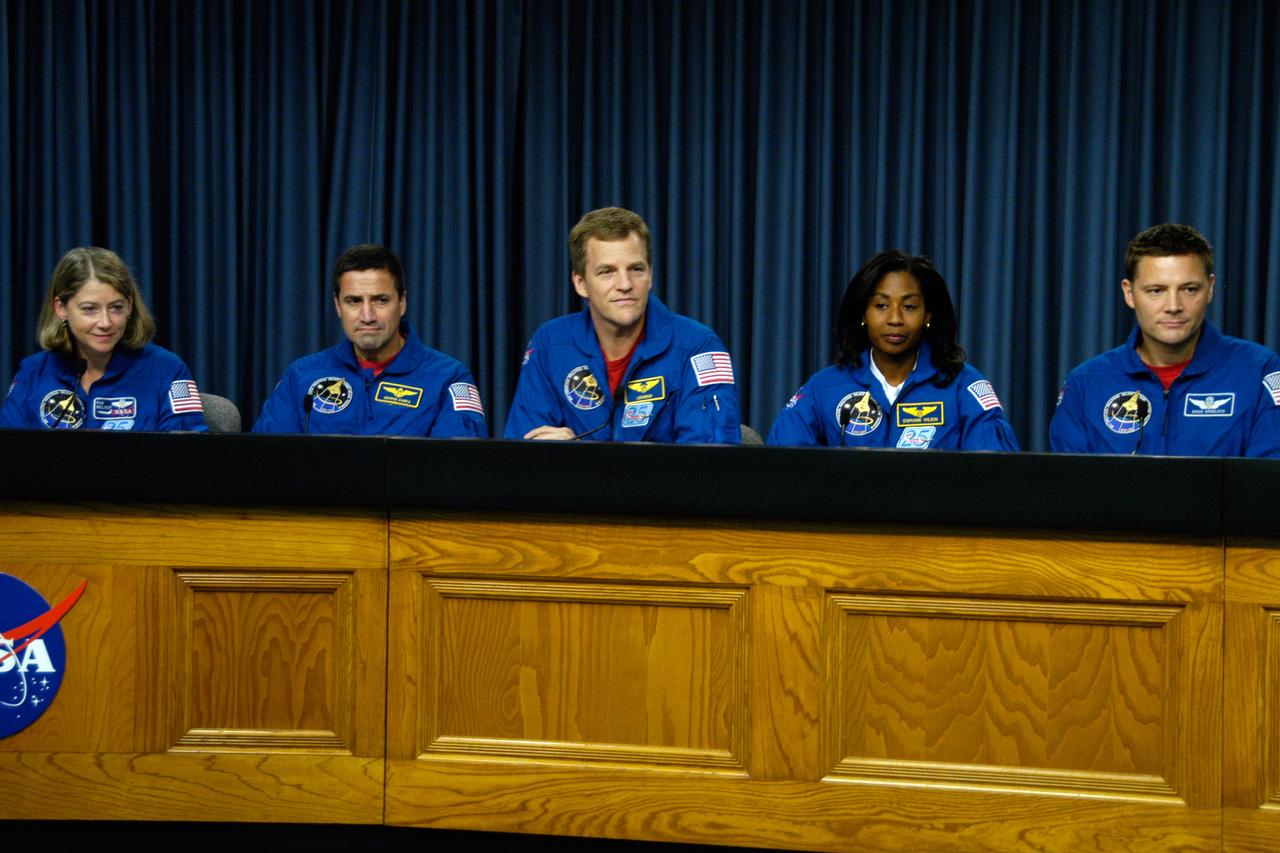
Members of the STS-120 crew take part in a news conference after their successful landing aboard space shuttle Discovery at NASA's Kennedy Space Center. From left are Commander Pamela Melroy, Pilot George Zamka and mission specialists Scott Parazynski, Stephanie Wilson and Doug Wheelock. The crew completed a 15-day mission to the International Space Station with a smooth landing on Runway 33. Main gear touchdown was 1:01:16 p.m. Wheel stop was at 1:02:07 p.m. Mission elapsed time was 15 days, 2 hours, 24 minutes and 2 seconds. Mission STS-120 continued the construction of the station with the installation of the Harmony Node 2 module and the relocation of the P6 truss.
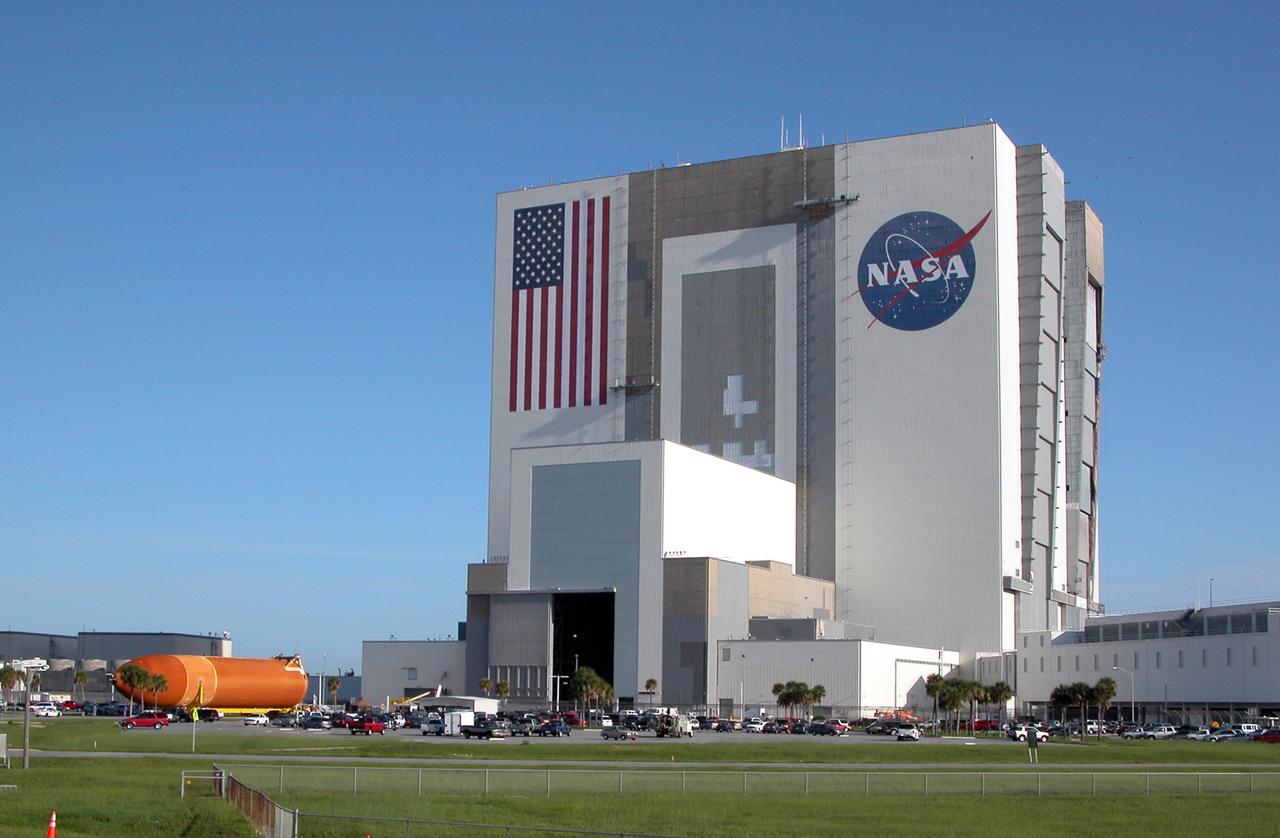
Aboard a transporter, external tank No. 120 heads for the open door of the Vehicle Assembly Building. There it will be lifted into a checkout cell. ET-120 will be used for launching Space Shuttle Discovery on mission STS-120 in October.
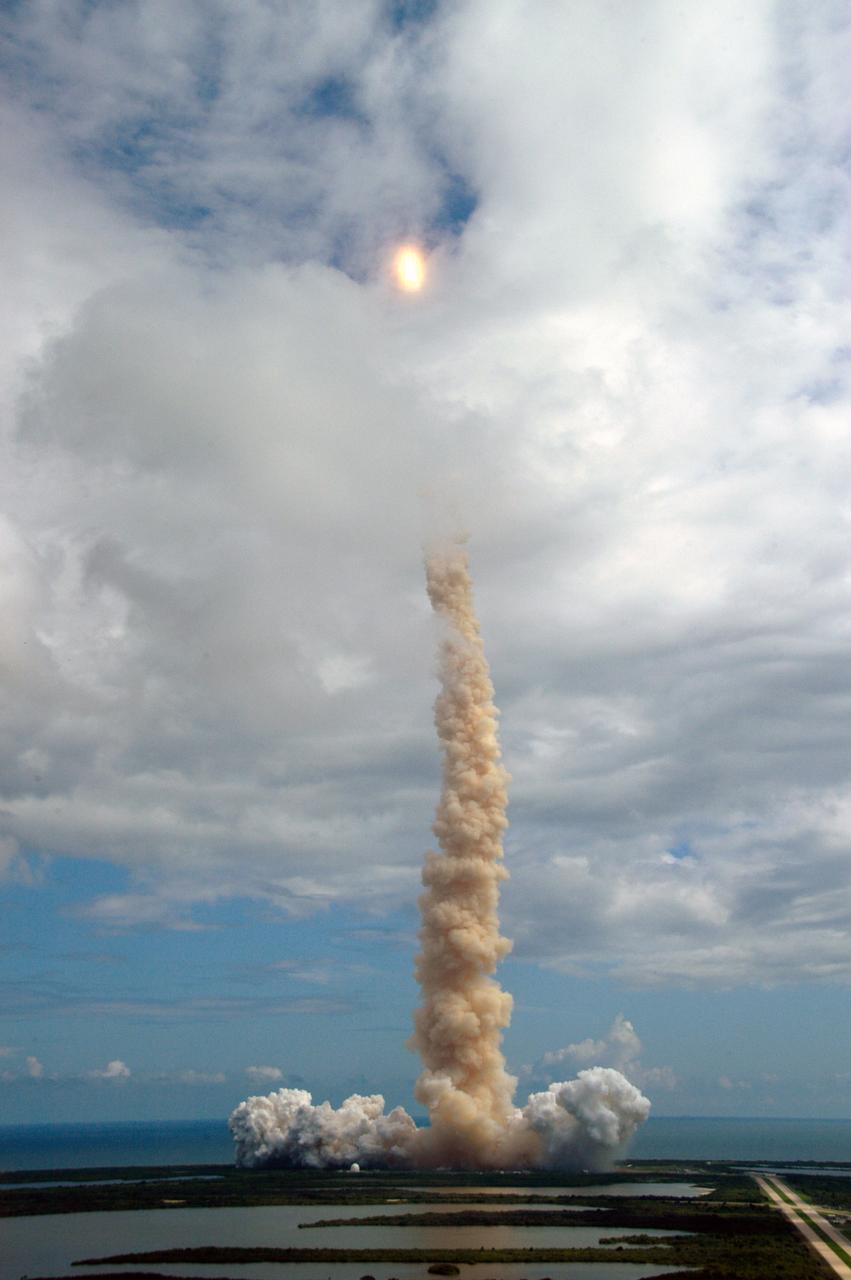
From the roof of the Vehicle Assembly Building at NASA's Kennedy Space Center, space shuttle Discovery rivals the sun as it soars through the clouds toward space. Liftoff was on time at 11:38:19 a.m. EDT. Discovery carries the Italian-built U.S. Node 2, called Harmony. During the 14-day STS-120 mission, the crew will install Harmony and move the P6 solar arrays to their permanent position and deploy them. Discovery is expected to complete its mission and return home at 4:47 a.m. EST on Nov. 6.
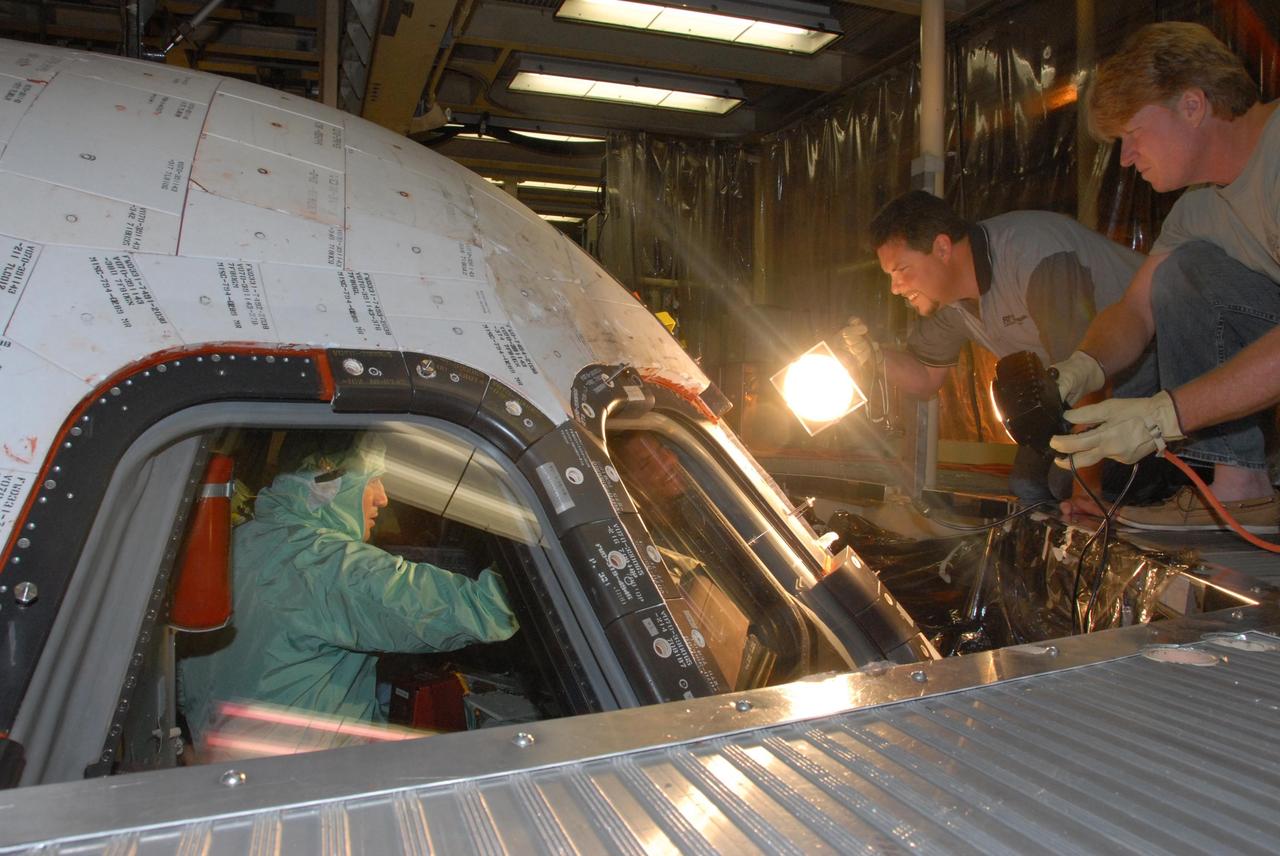
KENNEDY SPACE CENTER, FLA. - In the Orbiter Processing Facility bay 3, STS-120 Commander Pamela A. Melroy makes a close inspection of the cockpit window on the orbiter Discovery. The STS-120 crew is at Kennedy for a crew equipment interface test, or CEIT, which includes harness training, inspection of the thermal protection system and camera operation for planned extravehicular activities, or EVAs. The STS-120 mission will deliver the Harmony module, christened after a school contest, which will provide attachment points for European and Japanese laboratory modules on the International Space Station. Known in technical circles as Node 2, it is similar to the six-sided Unity module that links the U.S. and Russian sections of the station. Built in Italy for the United States, Harmony will be the first new U.S. pressurized component to be added. The STS-120 mission is targeted to launch on Oct. 20. Photo credit: NASA/George Shelton
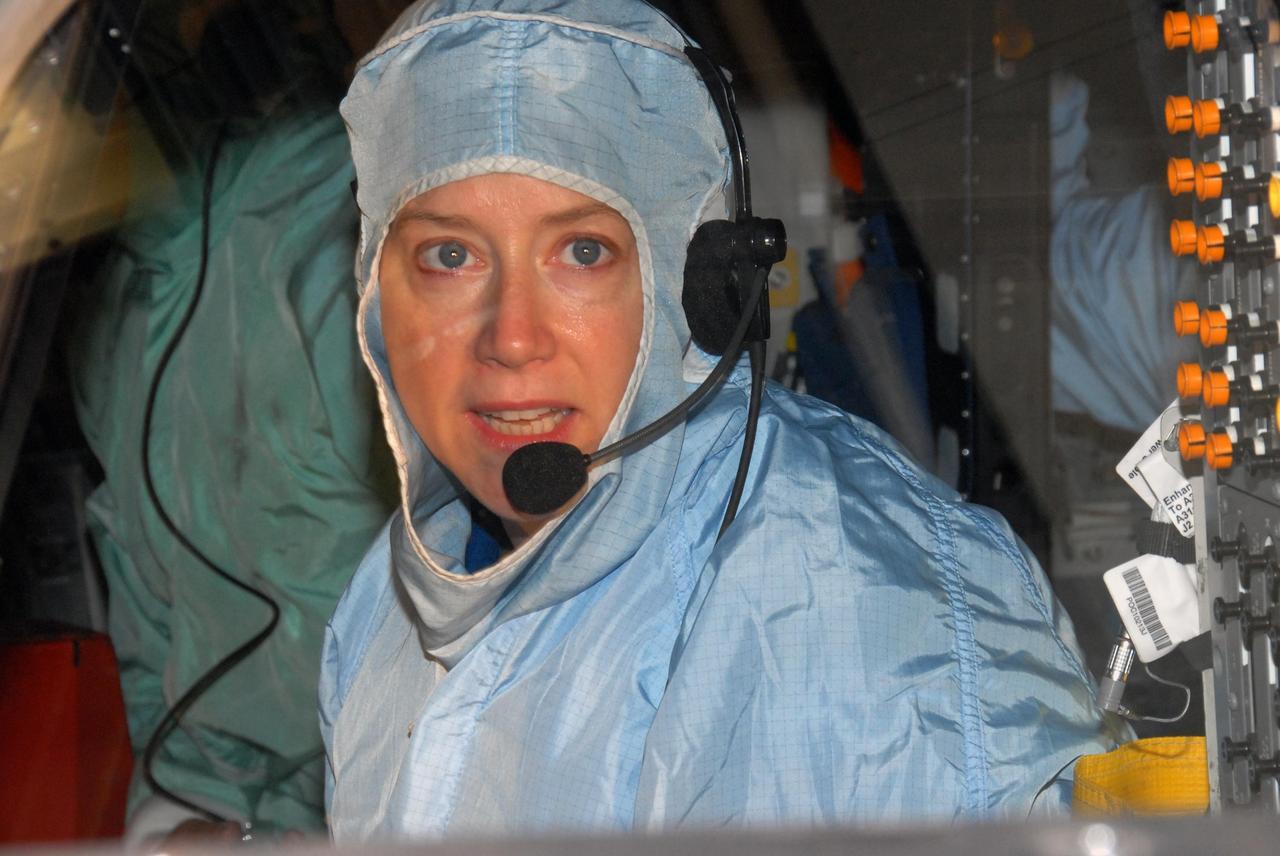
KENNEDY SPACE CENTER, FLA. - In the Orbiter Processing Facility bay 3, STS-120 Commander Pamela A. Melroy sits in the orbiter Discovery to inspect the cockpit windows. The STS-120 crew is at Kennedy for a crew equipment interface test, or CEIT, which includes harness training, inspection of the thermal protection system and camera operation for planned extravehicular activities, or EVAs. The STS-120 mission will deliver the Harmony module, christened after a school contest, which will provide attachment points for European and Japanese laboratory modules on the International Space Station. Known in technical circles as Node 2, it is similar to the six-sided Unity module that links the U.S. and Russian sections of the station. Built in Italy for the United States, Harmony will be the first new U.S. pressurized component to be added. The STS-120 mission is targeted to launch on Oct. 20. Photo credit: NASA/George Shelton
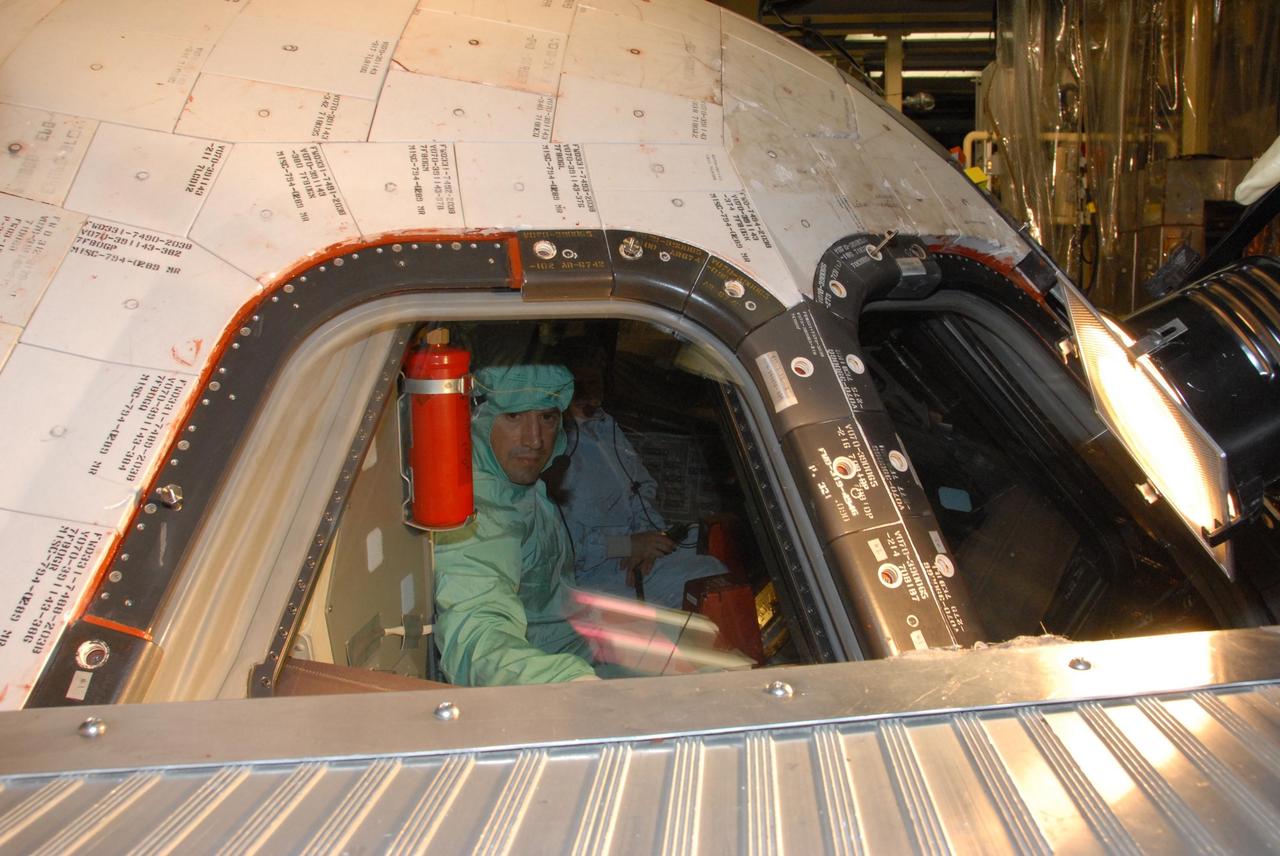
KENNEDY SPACE CENTER, FLA. - In the Orbiter Processing Facility bay 3, STS-120 Pilot George D. Zamka makes a close inspection of the cockpit window on the orbiter Discovery. Seated next to him is Commander Pamela A. Melroy. The STS-120 crew is at Kennedy for a crew equipment interface test, or CEIT, which includes harness training, inspection of the thermal protection system and camera operation for planned extravehicular activities, or EVAs. The STS-120 mission will deliver the Harmony module, christened after a school contest, which will provide attachment points for European and Japanese laboratory modules on the International Space Station. Known in technical circles as Node 2, it is similar to the six-sided Unity module that links the U.S. and Russian sections of the station. Built in Italy for the United States, Harmony will be the first new U.S. pressurized component to be added. The STS-120 mission is targeted to launch on Oct. 20. NASA/George Shelton
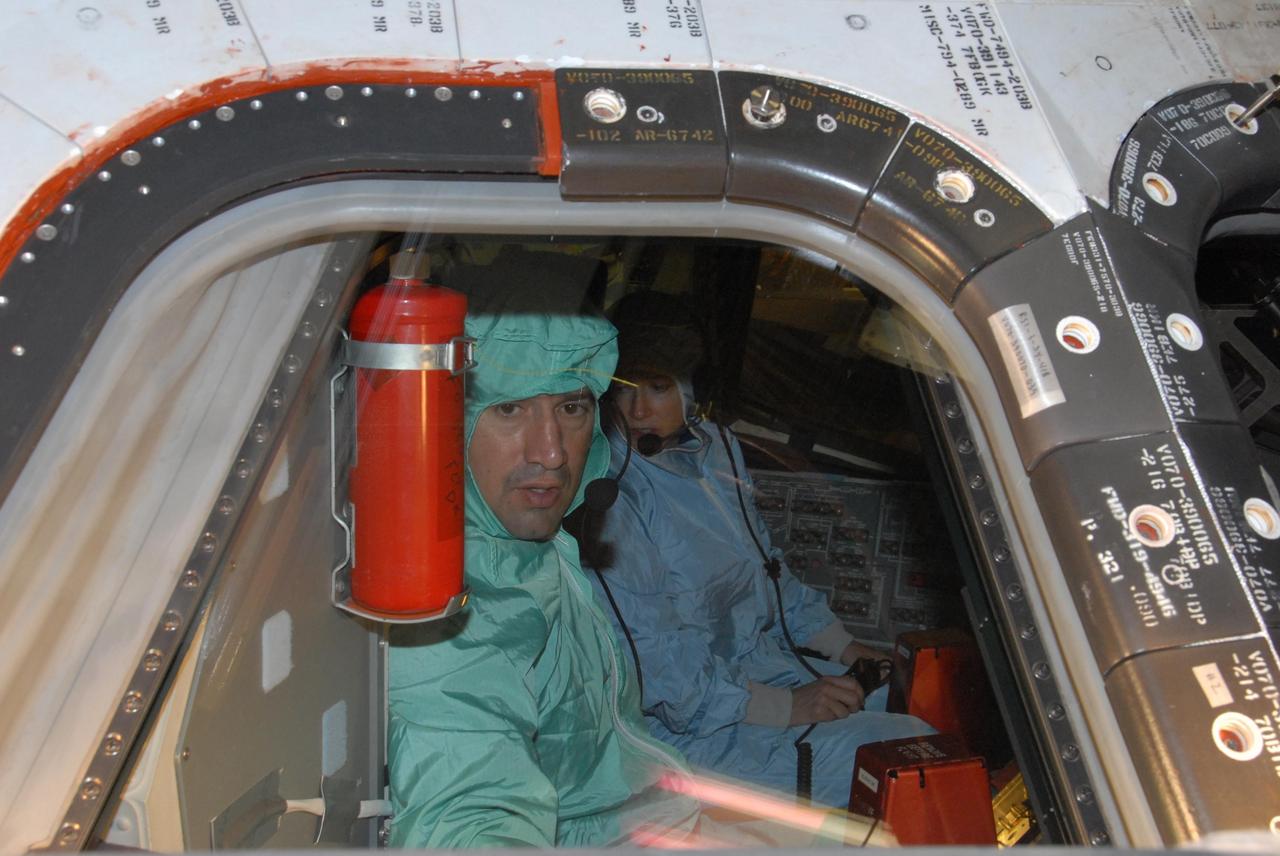
KENNEDY SPACE CENTER, FLA. - In the Orbiter Processing Facility bay 3, STS-120 Pilot George D. Zamka makes a close inspection of the cockpit window on the orbiter Discovery. Seated next to him is Commander Pamela A. Melroy. The STS-120 crew is at Kennedy for a crew equipment interface test, or CEIT, which includes harness training, inspection of the thermal protection system and camera operation for planned extravehicular activities, or EVAs. The STS-120 mission will deliver the Harmony module, christened after a school contest, which will provide attachment points for European and Japanese laboratory modules on the International Space Station. Known in technical circles as Node 2, it is similar to the six-sided Unity module that links the U.S. and Russian sections of the station. Built in Italy for the United States, Harmony will be the first new U.S. pressurized component to be added. The STS-120 mission is targeted to launch on Oct. 20. Photo credit: NASA/George Shelton
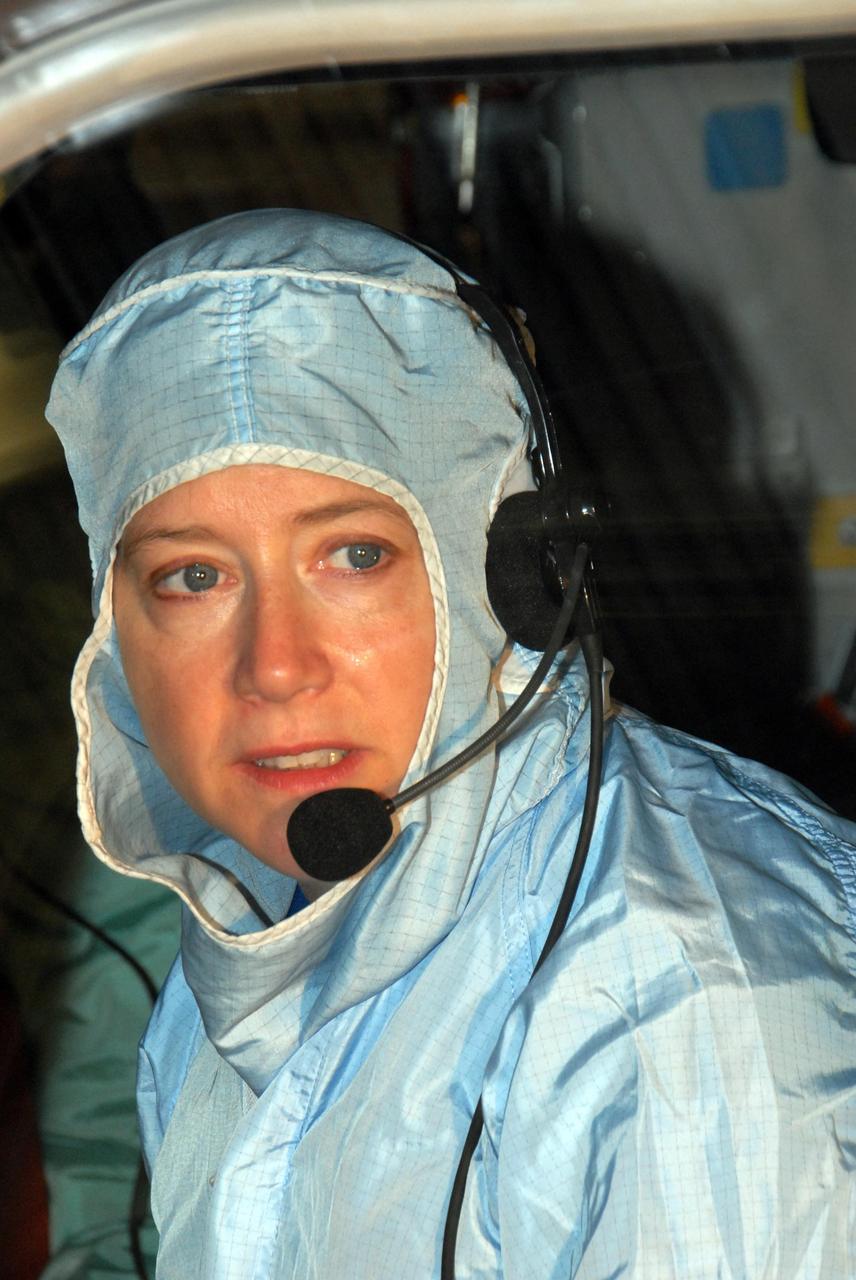
KENNEDY SPACE CENTER, FLA. - In the Orbiter Processing Facility bay 3,STS-120 Commander Pamela A. Melroy sits in the orbiter Discovery to inspect the cockpit windows. The STS-120 crew is at Kennedy for a crew equipment interface test, or CEIT, which includes harness training, inspection of the thermal protection system and camera operation for planned extravehicular activities, or EVAs. The STS-120 mission will deliver the Harmony module, christened after a school contest, which will provide attachment points for European and Japanese laboratory modules on the International Space Station. Known in technical circles as Node 2, it is similar to the six-sided Unity module that links the U.S. and Russian sections of the station. Built in Italy for the United States, Harmony will be the first new U.S. pressurized component to be added. The STS-120 mission is targeted to launch on Oct. 20. Photo credit: NASA/George Shelton
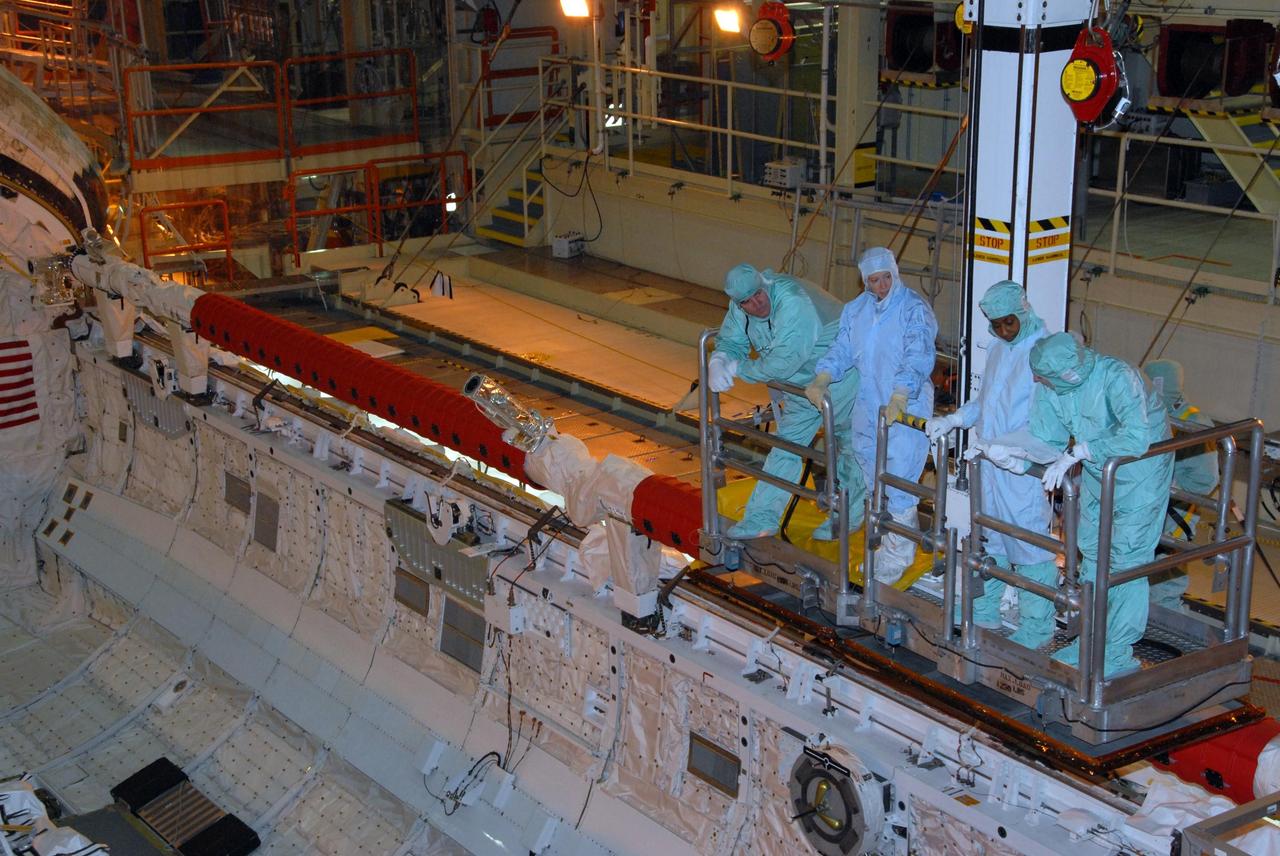
KENNEDY SPACE CENTER, FLA. -In Orbiter Processing Facility bay 3, STS-120 Commander Pamela A. Melroy (center left) and Mission Specialist Stephanie D. Wilson (center right) are lowered in a bucket into Discovery's payload bay. The STS-120 crew is at Kennedy for a crew equipment interface test, or CEIT, which includes harness training, inspection of the thermal protection system and camera operation for planned extravehicular activities, or EVAs. The STS-120 mission will deliver the Harmony module, christened after a school contest, which will provide attachment points for European and Japanese laboratory modules on the International Space Station. Known in technical circles as Node 2, it is similar to the six-sided Unity module that links the U.S. and Russian sections of the station. Built in Italy for the United States, Harmony will be the first new U.S. pressurized component to be added. The STS-120 mission is targeted to launch on Oct. 20. Photo credit: NASA/George Shelton

KENNEDY SPACE CENTER, FLA. - In the Orbiter Processing Facility bay 3, STS-120 Commander Pamela A. Melroy makes a close inspection of the cockpit window on the orbiter Discovery. The STS-120 crew is at Kennedy for a crew equipment interface test, or CEIT, which includes harness training, inspection of the thermal protection system and camera operation for planned extravehicular activities, or EVAs. The STS-120 mission will deliver the Harmony module, christened after a school contest, which will provide attachment points for European and Japanese laboratory modules on the International Space Station. Known in technical circles as Node 2, it is similar to the six-sided Unity module that links the U.S. and Russian sections of the station. Built in Italy for the United States, Harmony will be the first new U.S. pressurized component to be added. The STS-120 mission is targeted to launch on Oct. 20. Photo credit: NASA/George Shelton
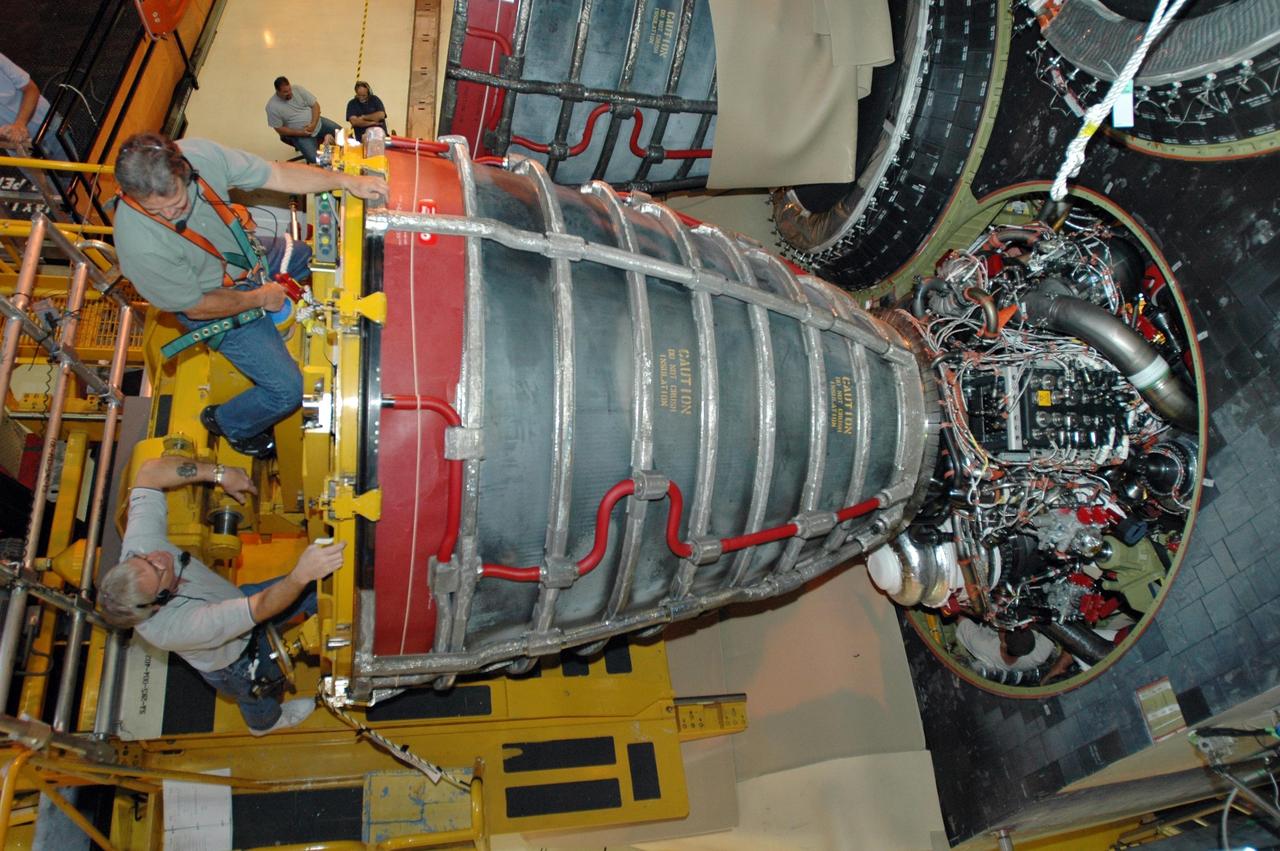
KENNEDY SPACE CENTER, FLA. -- In this overhead view inside Orbiter Processing Facility 3 at Kennedy Space Center, technicians guide engine No. 3 toward the aft fuselage of Discovery for installation during processing for mission STS-120. Mission STS-120 will be the 23rd flight to the International Space Station. Space Shuttle Discovery will carry the U.S. Node 2. Launch is targeted for Oct. 20. NASA/Dimitri Gerondidakis
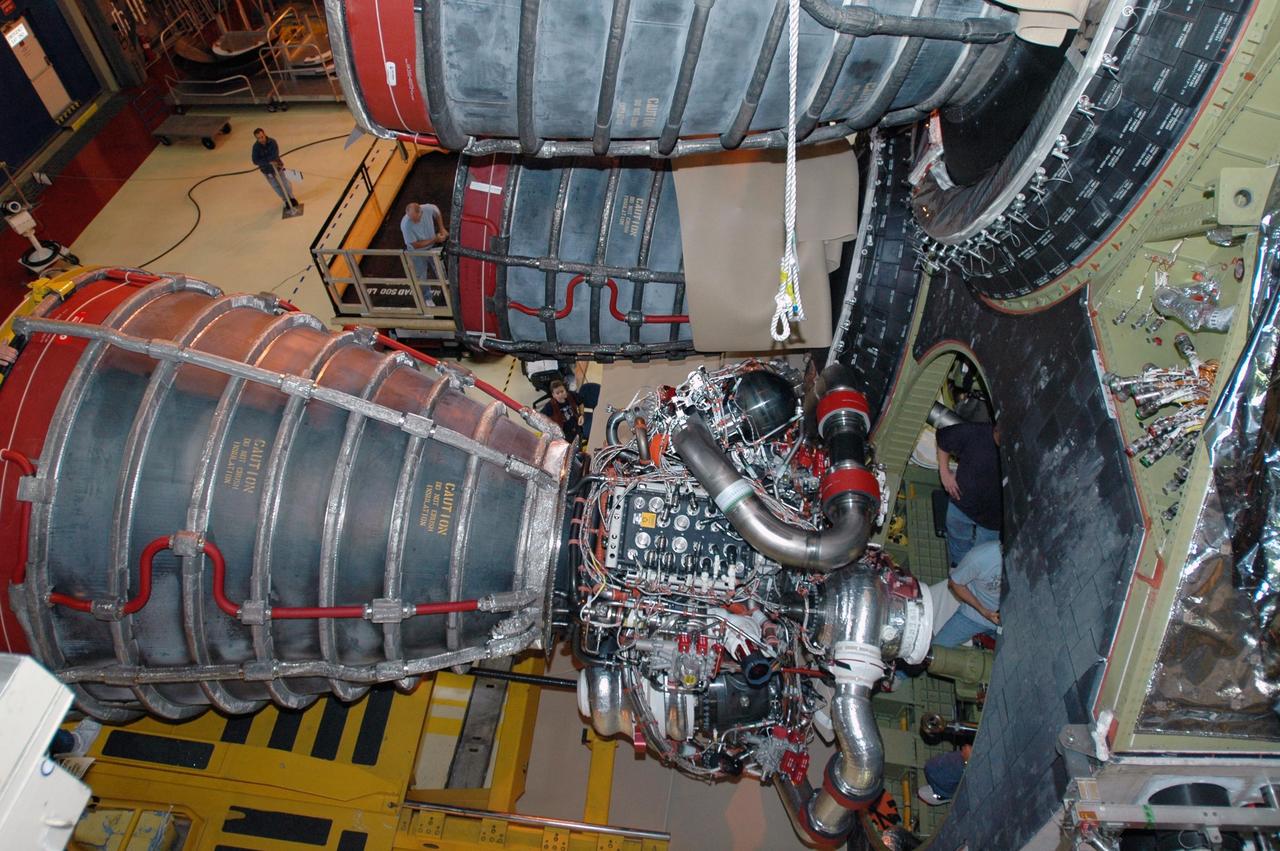
KENNEDY SPACE CENTER, FLA. -- Inside Orbiter Processing Facility 3 at Kennedy Space Center, technicians prepare to install engine No. 3 as it nears the aft fuselage of the vehicle during processing for mission STS-120. Mission STS-120 will be the 23rd flight to the International Space Station. Space Shuttle Discovery will carry the U.S. Node 2. Launch is targeted for Oct. 20. NASA/Dimitri Gerondidakis
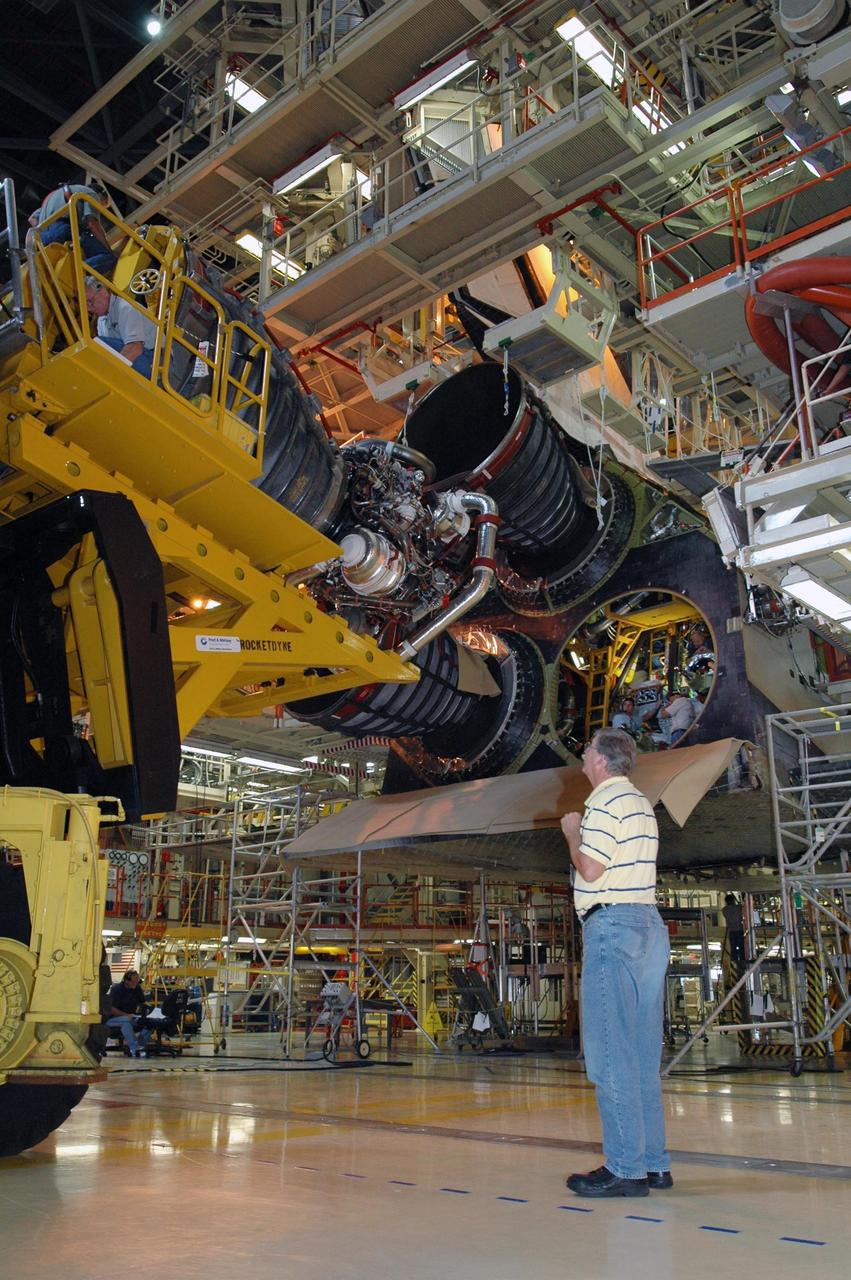
KENNEDY SPACE CENTER, FLA. -- Inside Orbiter Processing Facility 3 at Kennedy Space Center, technicians prepare to install engine No. 3 to Discovery during processing for mission STS-120. Mission STS-120 will be the 23rd flight to the International Space Station. Space Shuttle Discovery will carry the U.S. Node 2. Launch is targeted for Oct. 20. NASA/Dimitri Gerondidakis
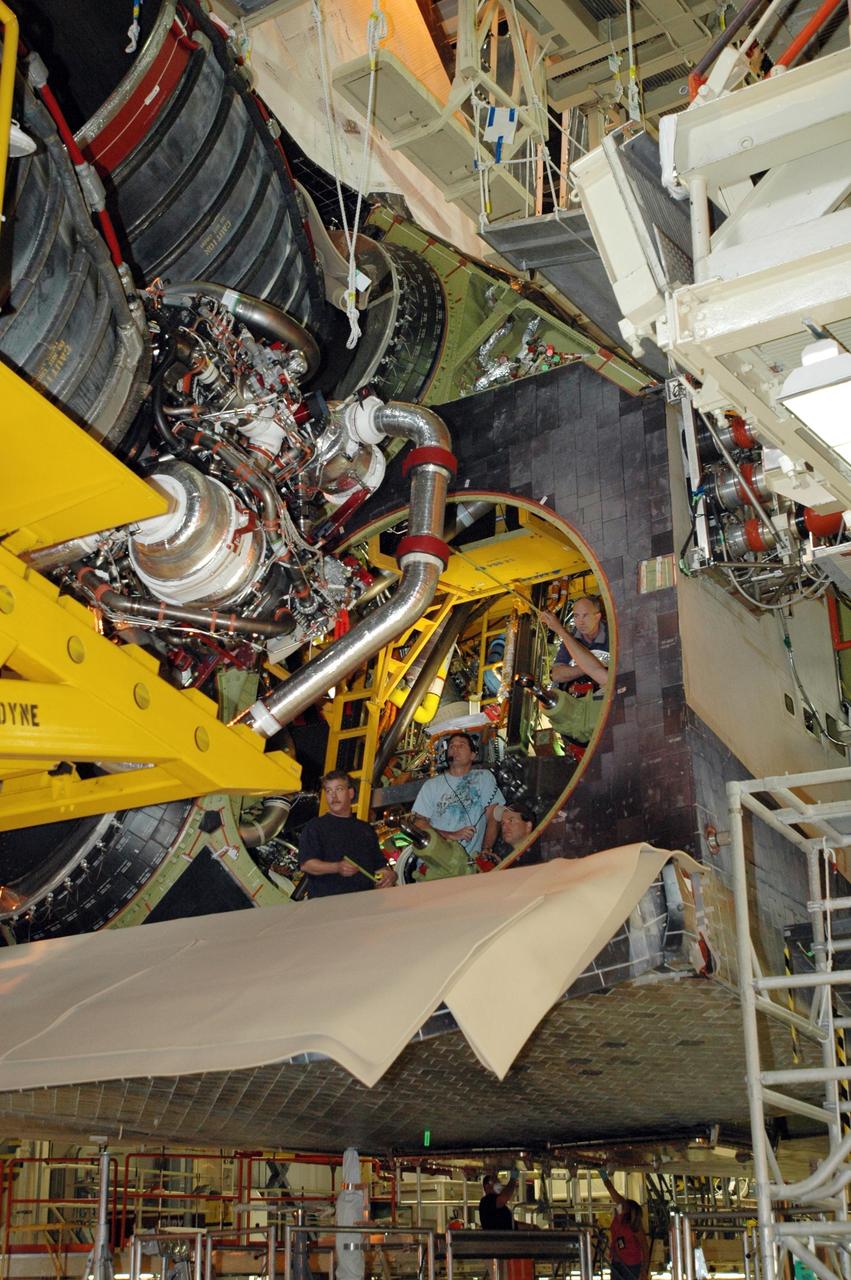
KENNEDY SPACE CENTER, FLA. -- Inside Orbiter Processing Facility 3 at Kennedy Space Center, technicians prepare to install engine No. 3 to Discovery during processing for mission STS-120. Mission STS-120 will be the 23rd flight to the International Space Station. Space Shuttle Discovery will carry the U.S. Node 2. Launch is targeted for Oct. 20. NASA/Dimitri Gerondidakis
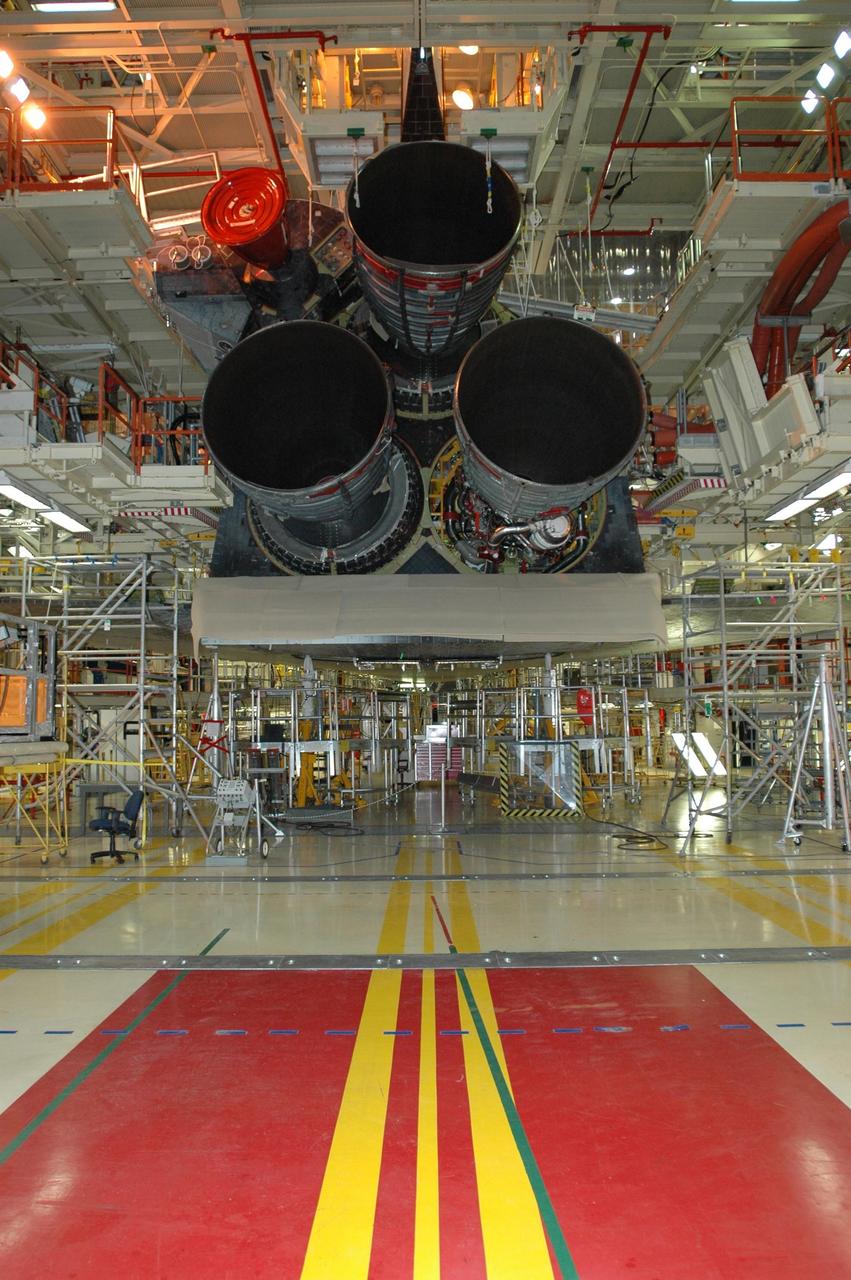
KENNEDY SPACE CENTER, FLA. -- Inside Orbiter Processing Facility 3 at Kennedy Space Center, the massive space shuttle main engines can be seen installed on orbiter Discovery during processing for mission STS-120. Mission STS-120 will be the 23rd flight to the International Space Station. Space Shuttle Discovery will carry the U.S. Node 2. Launch is targeted for Oct. 20. NASA/Dimitri Gerondidakis
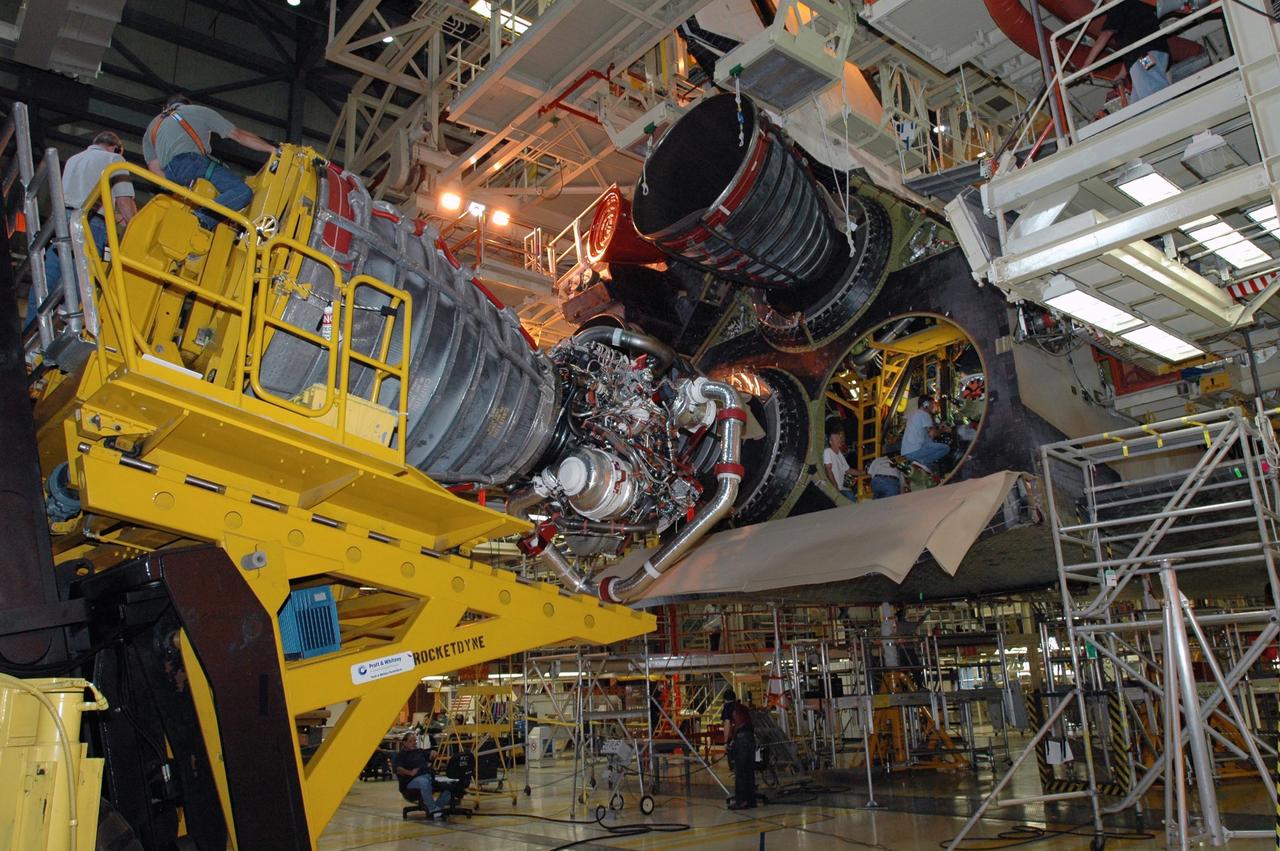
KENNEDY SPACE CENTER, FLA. -- Inside Orbiter Processing Facility 3 at Kennedy Space Center, technicians prepare to install engine No. 3 to Discovery during processing for mission STS-120. Mission STS-120 will be the 23rd flight to the International Space Station. Space Shuttle Discovery will carry the U.S. Node 2. Launch is targeted for Oct. 20. NASA/Dimitri Gerondidakis
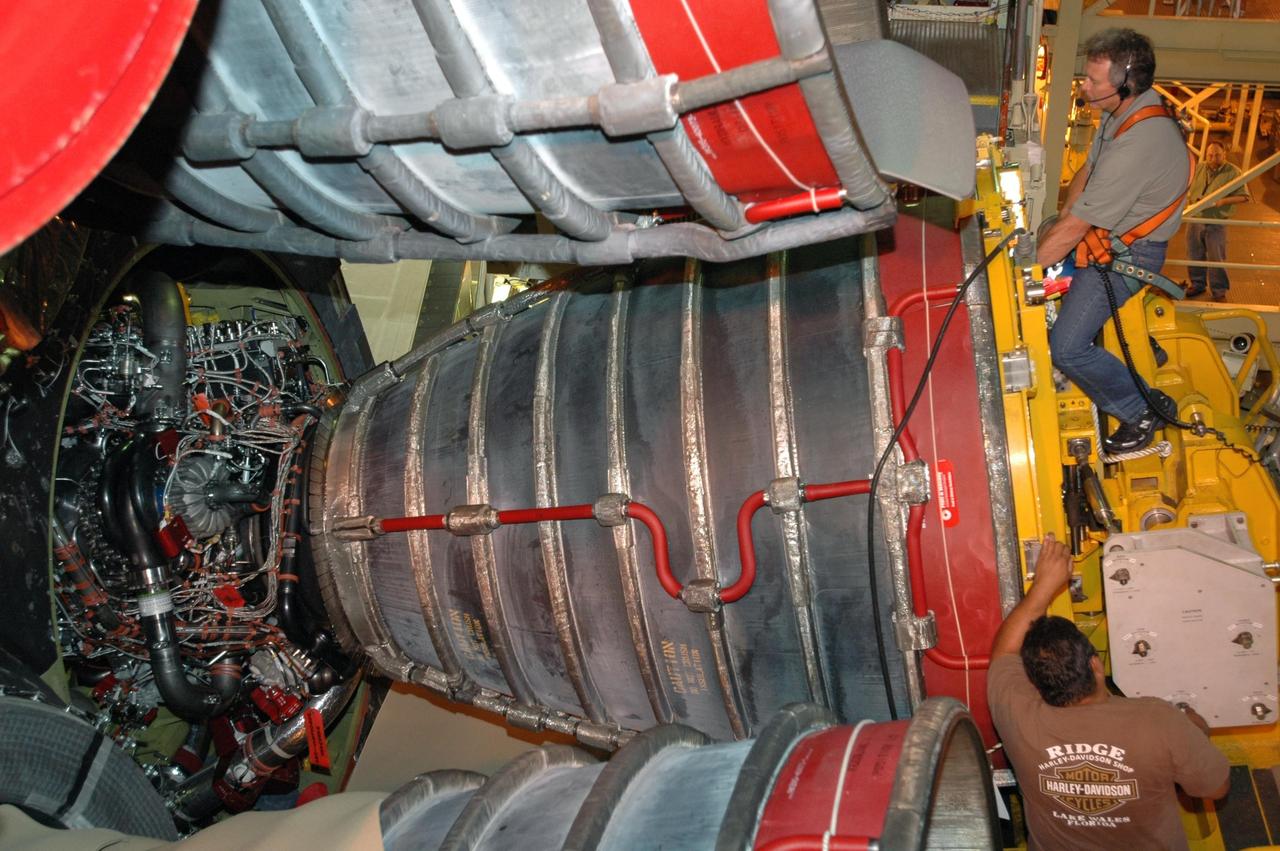
KENNEDY SPACE CENTER, FLA. -- Inside Orbiter Processing Facility 3 at Kennedy Space Center, technicians guide engine No. 3 toward the aft fuselage of Discovery for installation during processing for mission STS-120. Mission STS-120 will be the 23rd flight to the International Space Station. Space Shuttle Discovery will carry the U.S. Node 2. Launch is targeted for Oct. 20. NASA/Dimitri Gerondidakis
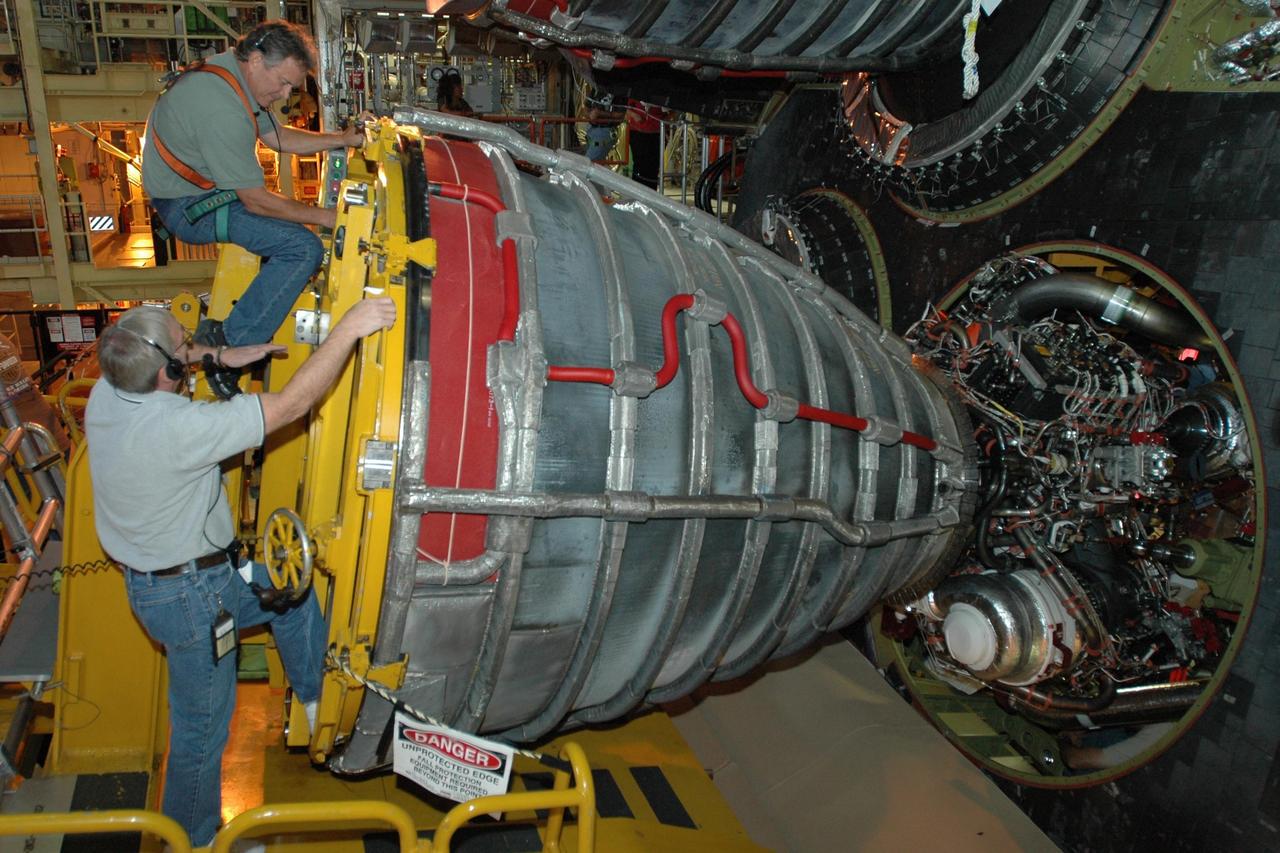
KENNEDY SPACE CENTER, FLA. -- Inside Orbiter Processing Facility 3 at Kennedy Space Center, technicians move engine No. 3 toward the aft fuselage of Discovery for installation during processing for mission STS-120. Mission STS-120 will be the 23rd flight to the International Space Station. Space Shuttle Discovery will carry the U.S. Node 2. Launch is targeted for Oct. 20. NASA/Dimitri Gerondidakis
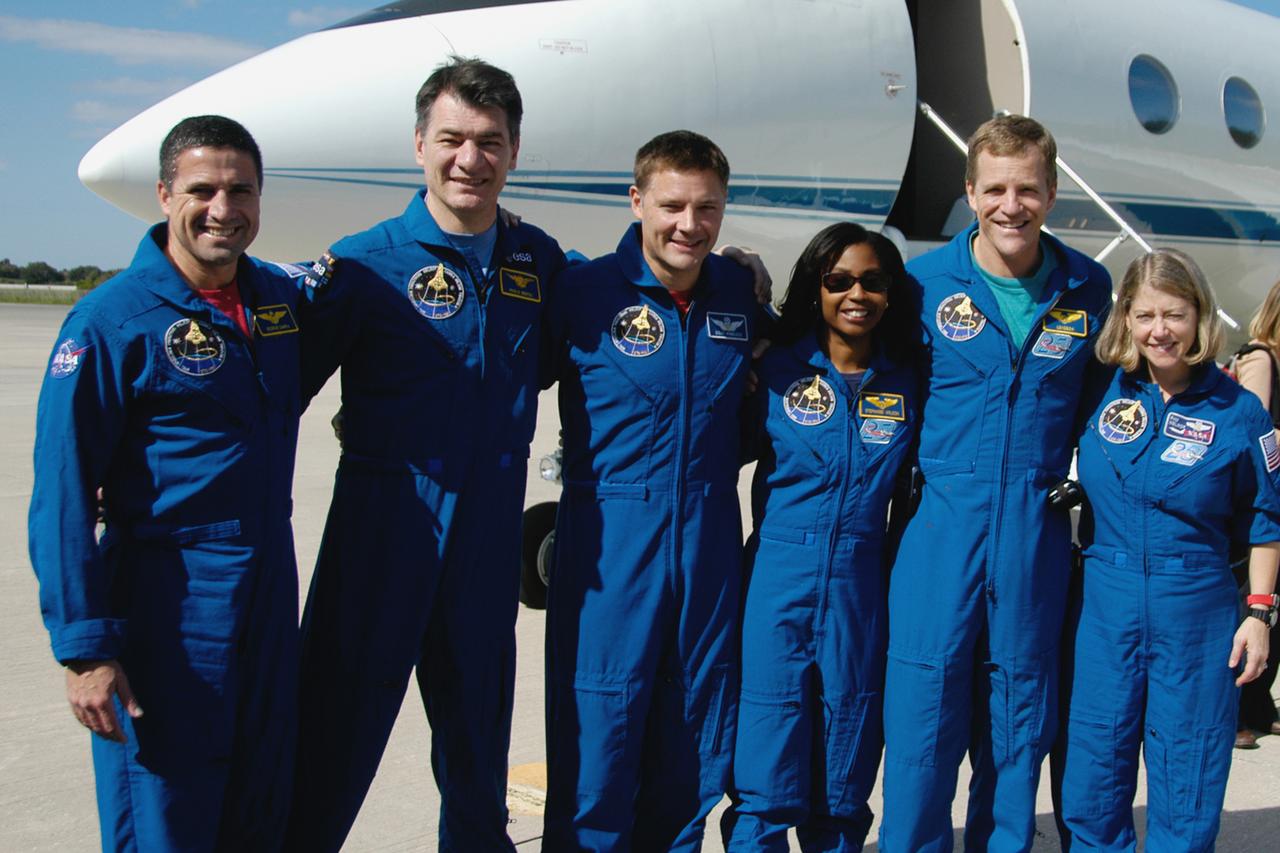
The STS-120 crew members are ready for their return to flight to Houston. From left are Pilot George Zamka, Mission Specialists Paolo Nespoli, Doug Wheelock, Stephanie Wilson and Scott Parazynski, and Commander Pamela Melroy. A welcoming ceremony for the crew is planned at NASA's Hangar 276 on the south end of Ellington Field in Texas. On the 15-day mission, the STS-120 crew continued the construction of the station with the installation of the Harmony Node 2 module and the relocation of the P6 truss. They landed Nov. 7 at NASA's Kennedy Space Center.
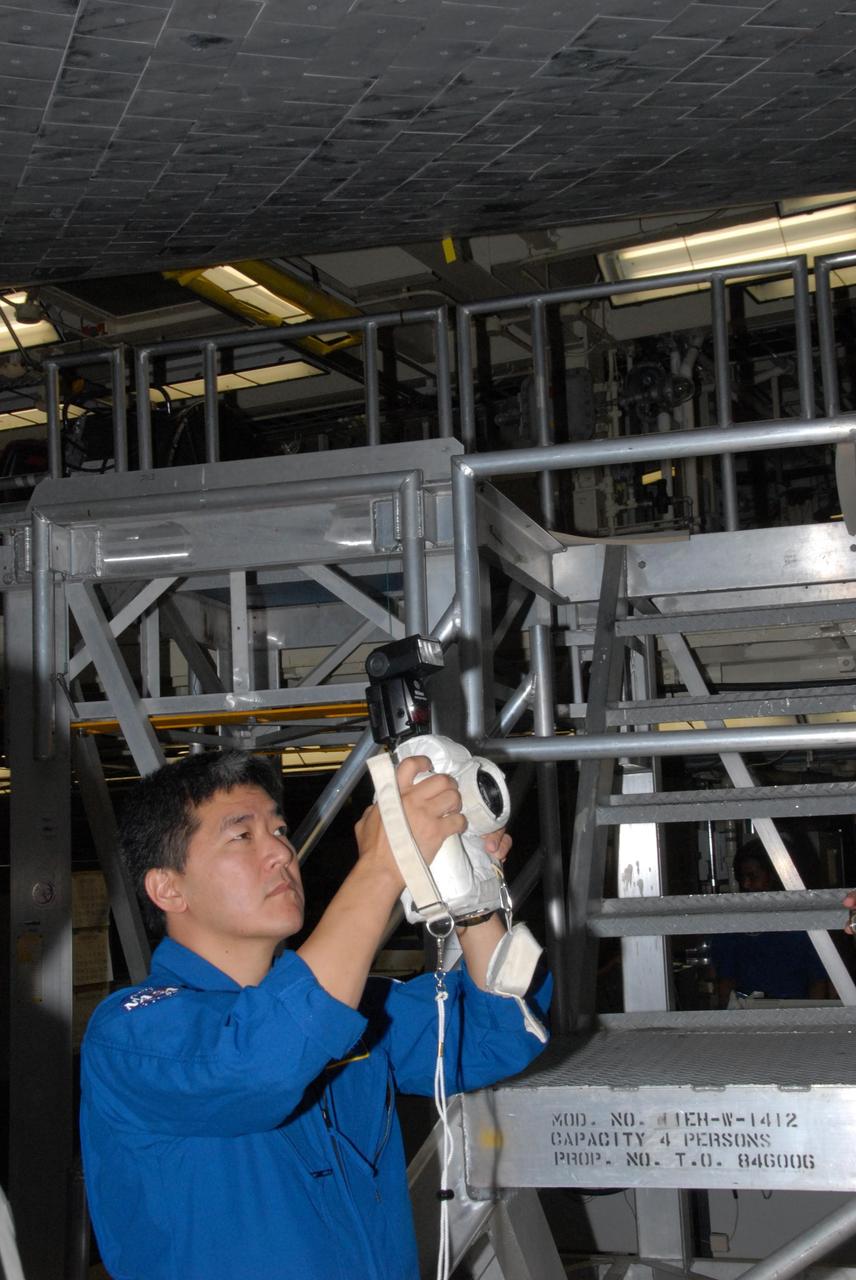
KENNEDY SPACE CENTER, FLA. - The STS-120 crew is at Kennedy for a crew equipment interface test, or CEIT. In Orbiter Processing Facility bay 3, Expedition 16 Flight Engineer Daniel M. Tani is given the opportunity to operate a camera that will fly on the mission. Among the activities standard to a CEIT are harness training, inspection of the thermal protection system and camera operation for planned extravehicular activities, or EVAs. The STS-120 mission will deliver the Harmony module, christened after a school contest, which will provide attachment points for European and Japanese laboratory modules on the International Space Station. Known in technical circles as Node 2, it is similar to the six-sided Unity module that links the U.S. and Russian sections of the station. Built in Italy for the United States, Harmony will be the first new U.S. pressurized component to be added. The STS-120 mission is targeted to launch on Oct. 20. Photo credit: NASA/George Shelton
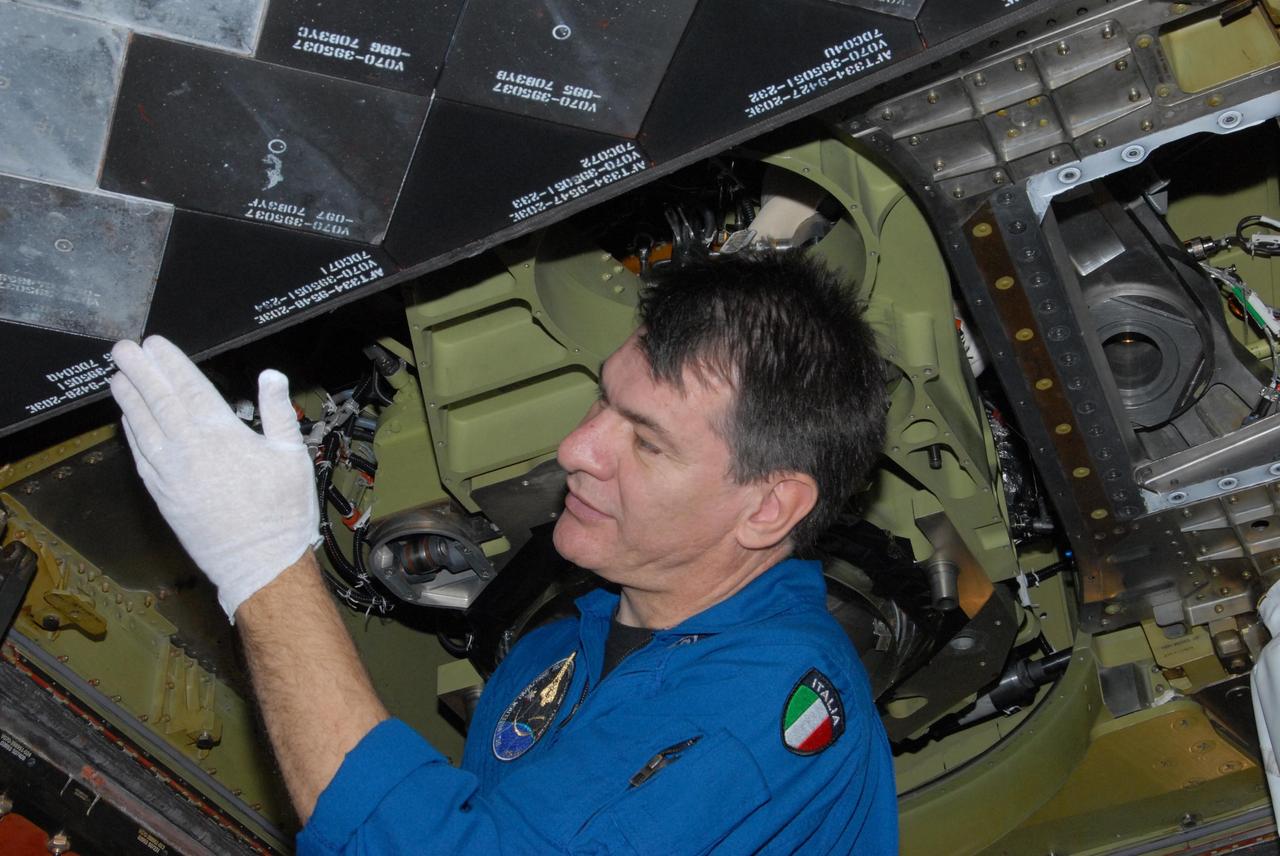
KENNEDY SPACE CENTER, FLA. - The STS-120 crew is at Kennedy for a crew equipment interface test, or CEIT. Inspecting the thermal protection system, or TPS, tiles under space shuttle Discovery in Orbiter Processing Facility bay 3 is Mission Specialist Paolo A. Nespoli, a European Space Agency astronaut from Italy. Among the activities standard to a CEIT are harness training, inspection of the thermal protection system and camera operation for planned extravehicular activities, or EVAs. The STS-120 mission will deliver the Harmony module, christened after a school contest, which will provide attachment points for European and Japanese laboratory modules on the International Space Station. Known in technical circles as Node 2, it is similar to the six-sided Unity module that links the U.S. and Russian sections of the station. Built in Italy for the United States, Harmony will be the first new U.S. pressurized component to be added. The STS-120 mission is targeted to launch on Oct. 20. Photo credit: NASA/George Shelton
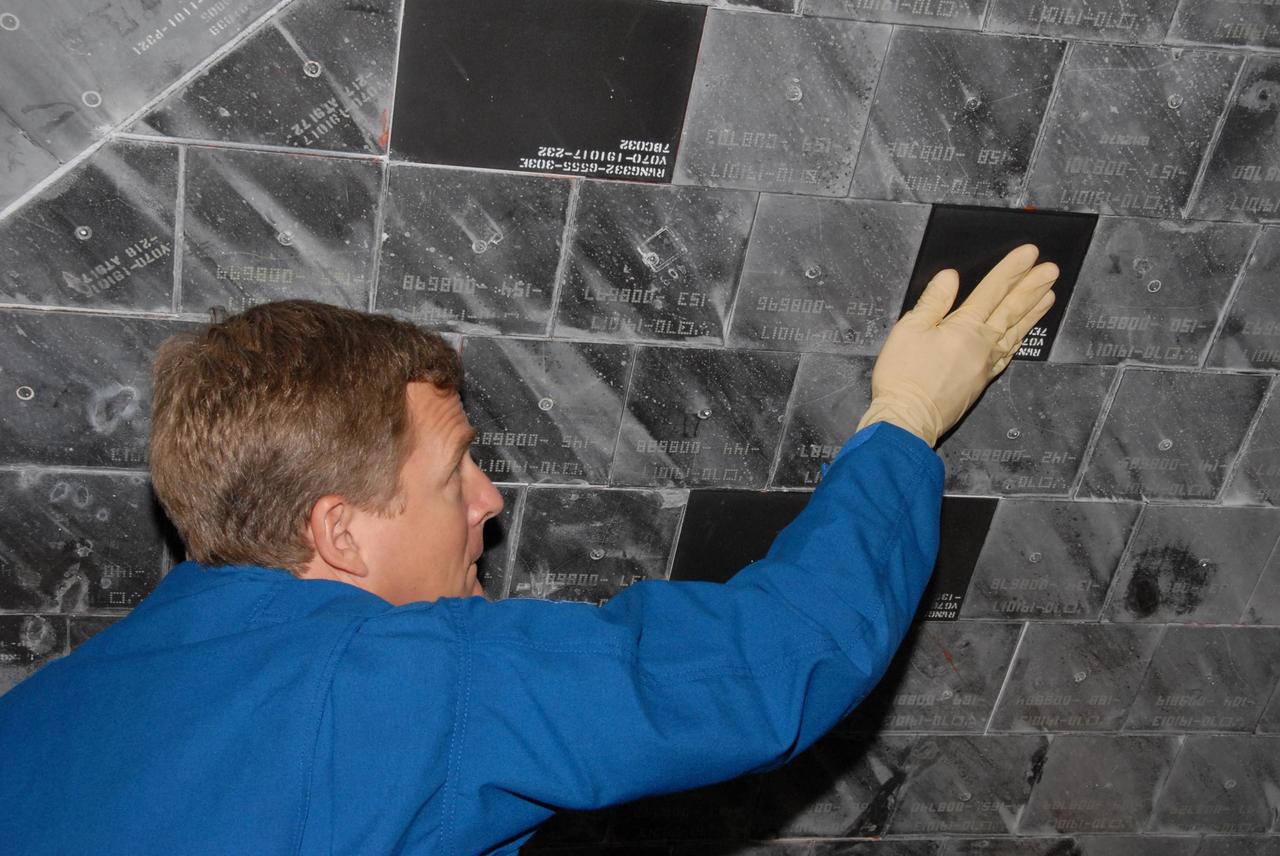
KENNEDY SPACE CENTER, FLA. - The STS-120 crew is at Kennedy for a crew equipment interface test, or CEIT. Inspecting the thermal protection system, or TPS, tiles under space shuttle Discovery in Orbiter Processing Facility bay 3 is Mission Specialist Scott E. Parazynski, the lead spacewalker on the mission. Among the activities standard to a CEIT are harness training, inspection of the thermal protection system and camera operation for planned extravehicular activities, or EVAs. The STS-120 mission will deliver the Harmony module, christened after a school contest, which will provide attachment points for European and Japanese laboratory modules on the International Space Station. Known in technical circles as Node 2, it is similar to the six-sided Unity module that links the U.S. and Russian sections of the station. Built in Italy for the United States, Harmony will be the first new U.S. pressurized component to be added. The STS-120 mission is targeted to launch on Oct. 20. Photo credit: NASA/George Shelton
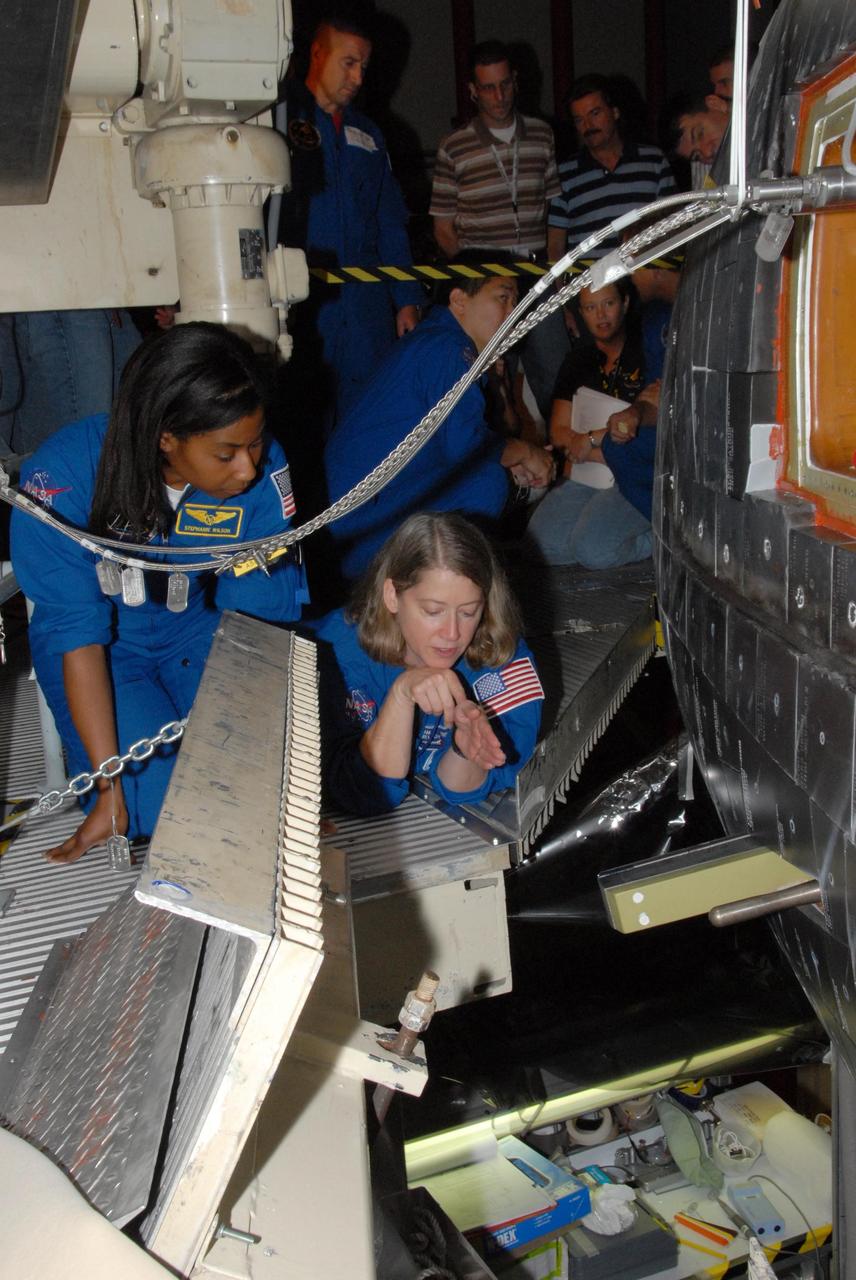
KENNEDY SPACE CENTER, FLA. - The STS-120 crew is at Kennedy for a crew equipment interface test, or CEIT. Giving a close inspection to space shuttle Discovery in Orbiter Processing Facility bay 3 are Mission Specialist Stephanie D. Wilson and Commander Pamela A. Melroy. Among the activities standard to a CEIT are harness training, inspection of the thermal protection system and camera operation for planned extravehicular activities, or EVAs. The STS-120 mission will deliver the Harmony module, christened after a school contest, which will provide attachment points for European and Japanese laboratory modules on the International Space Station. Known in technical circles as Node 2, it is similar to the six-sided Unity module that links the U.S. and Russian sections of the station. Built in Italy for the United States, Harmony will be the first new U.S. pressurized component to be added. The STS-120 mission is targeted to launch on Oct. 20. Photo credit: NASA/George Shelton
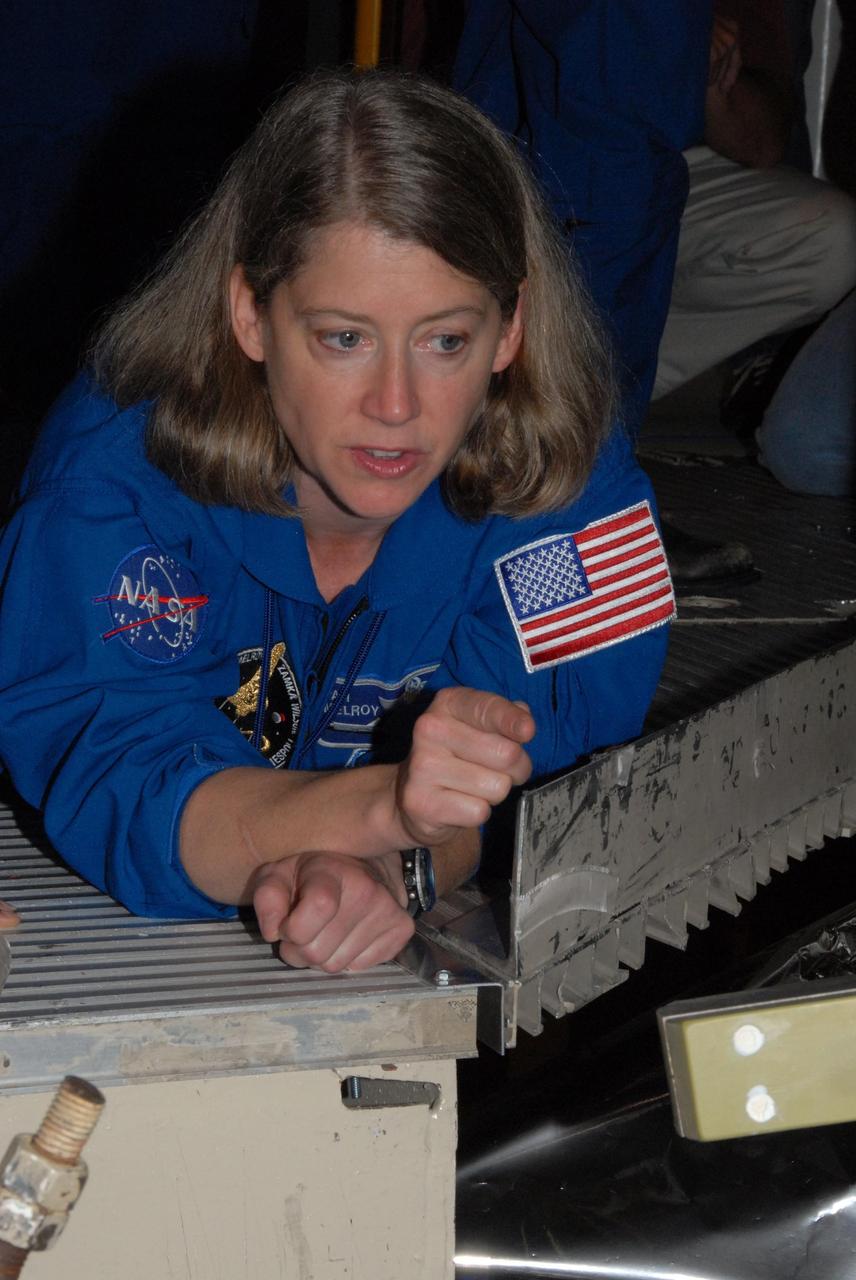
KENNEDY SPACE CENTER, FLA. - The STS-120 crew is at Kennedy for a crew equipment interface test, or CEIT. Commander Pamela A. Melroy gives a close inspection to space shuttle Discovery in Orbiter Processing Facility bay 3. Among the activities standard to a CEIT are harness training, inspection of the thermal protection system and camera operation for planned extravehicular activities, or EVAs. The STS-120 mission will deliver the Harmony module, christened after a school contest, which will provide attachment points for European and Japanese laboratory modules on the International Space Station. Known in technical circles as Node 2, it is similar to the six-sided Unity module that links the U.S. and Russian sections of the station. Built in Italy for the United States, Harmony will be the first new U.S. pressurized component to be added. The STS-120 mission is targeted to launch on Oct. 20. Photo credit: NASA/George Shelton
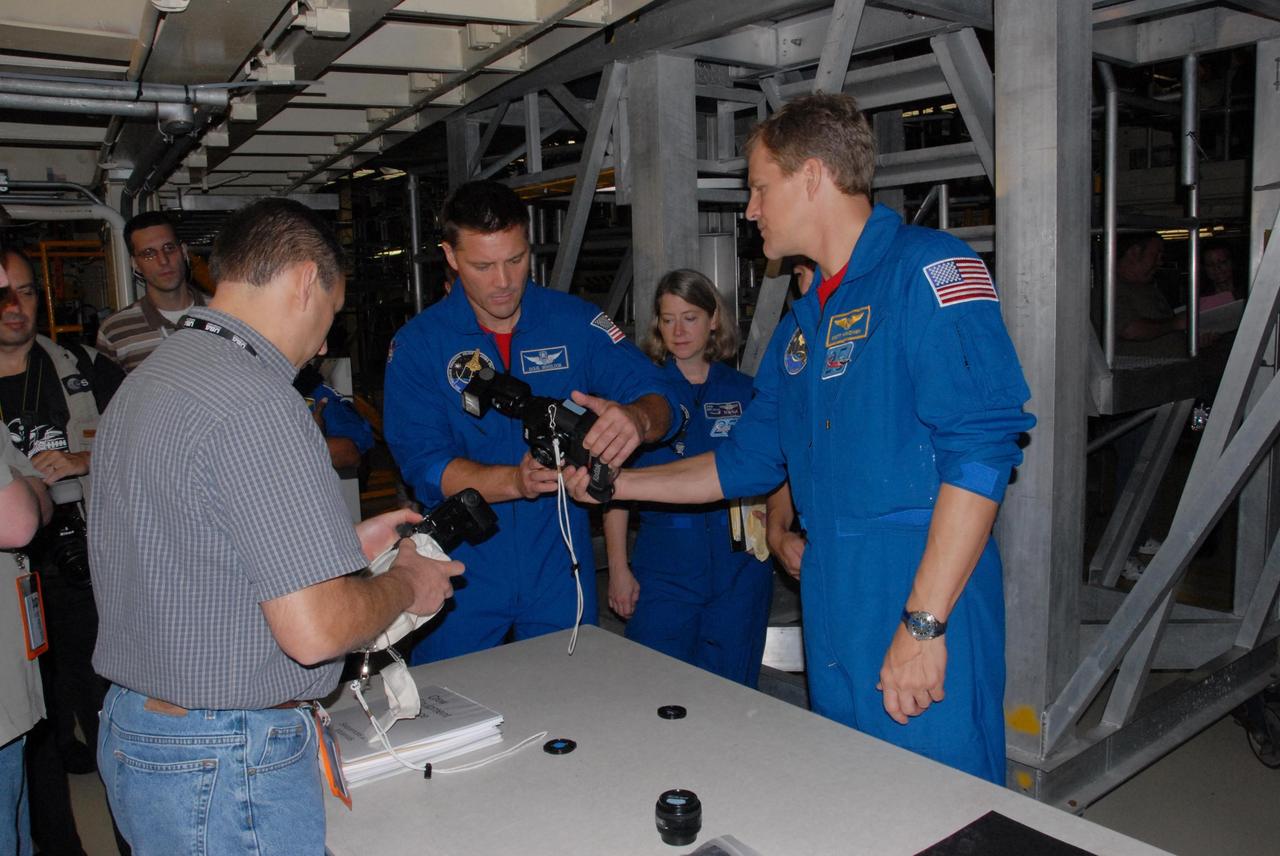
KENNEDY SPACE CENTER, FLA. - The STS-120 crew is at Kennedy for a crew equipment interface test, or CEIT. From left in blue flight suits, STS-120 Mission Specialist Douglas H. Wheelock, Commander Pamela A. Melroy and Mission Specialist Scott E. Parazynski receive instruction in Orbiter Processing Facility bay 3 on the operation of cameras that will fly on their mission. Among the activities standard to a CEIT are harness training, inspection of the thermal protection system and camera operation for planned extravehicular activities, or EVAs. The STS-120 mission will deliver the Harmony module, christened after a school contest, which will provide attachment points for European and Japanese laboratory modules on the International Space Station. Known in technical circles as Node 2, it is similar to the six-sided Unity module that links the U.S. and Russian sections of the station. Built in Italy for the United States, Harmony will be the first new U.S. pressurized component to be added. The STS-120 mission is targeted to launch on Oct. 20. Photo credit: NASA/George Shelton
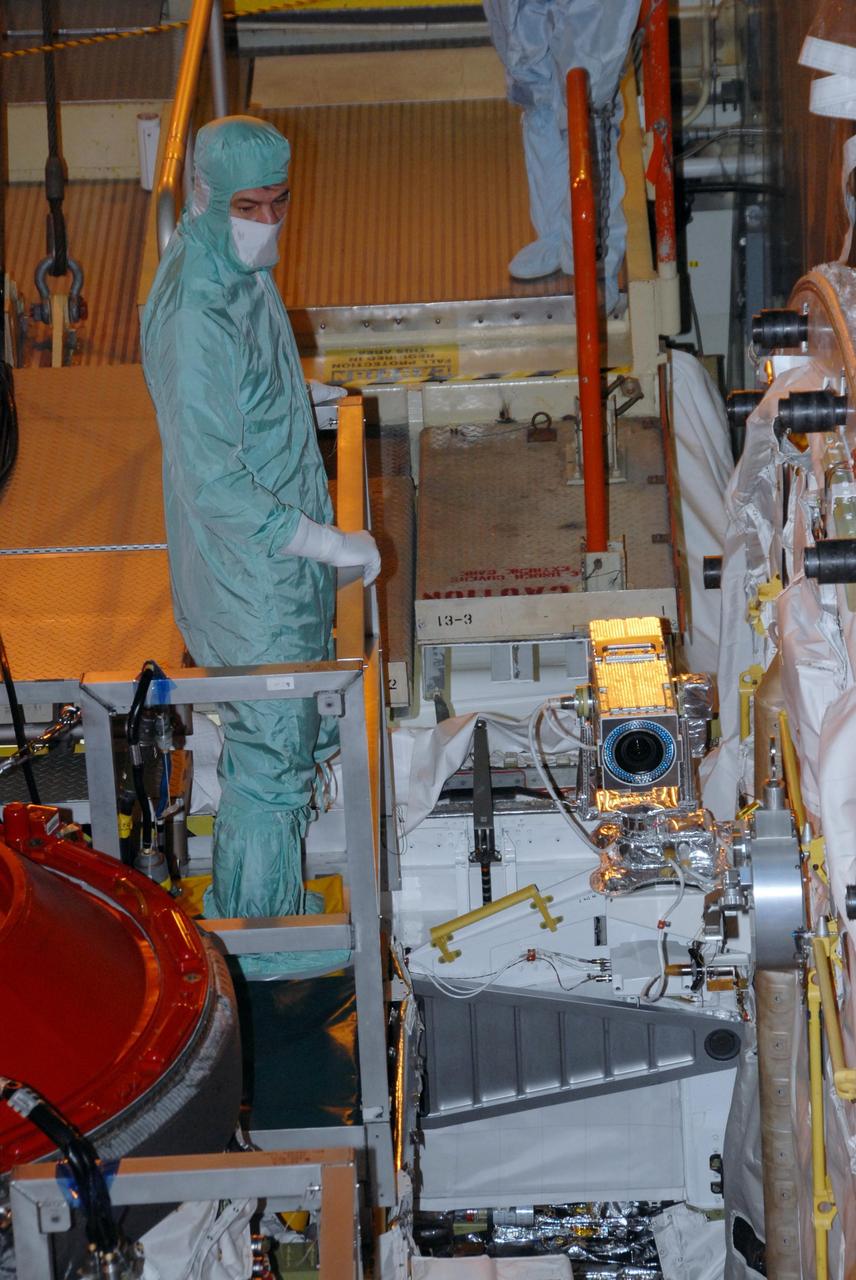
KENNEDY SPACE CENTER, FLA. - In Orbiter Processing Facility bay 3, STS-120 crew members get a close look at hardware in Discovery's payload bay. In the bucket at left is Mission Specialist Paolo A. Nespoli, who is a European Space Agency astronaut from Italy. The object with the shiny gold surface is a payload bay bulkhead camera. The STS-120 crew is at Kennedy for a crew equipment interface test, or CEIT, which includes harness training, inspection of the thermal protection system and camera operation for planned extravehicular activities, or EVAs. The STS-120 mission will deliver the Harmony module, christened after a school contest, which will provide attachment points for European and Japanese laboratory modules on the International Space Station. Known in technical circles as Node 2, it is similar to the six-sided Unity module that links the U.S. and Russian sections of the station. Built in Italy for the United States, Harmony will be the first new U.S. pressurized component to be added. The STS-120 mission is targeted to launch on Oct. 20. Photo credit: NASA/George Shelton
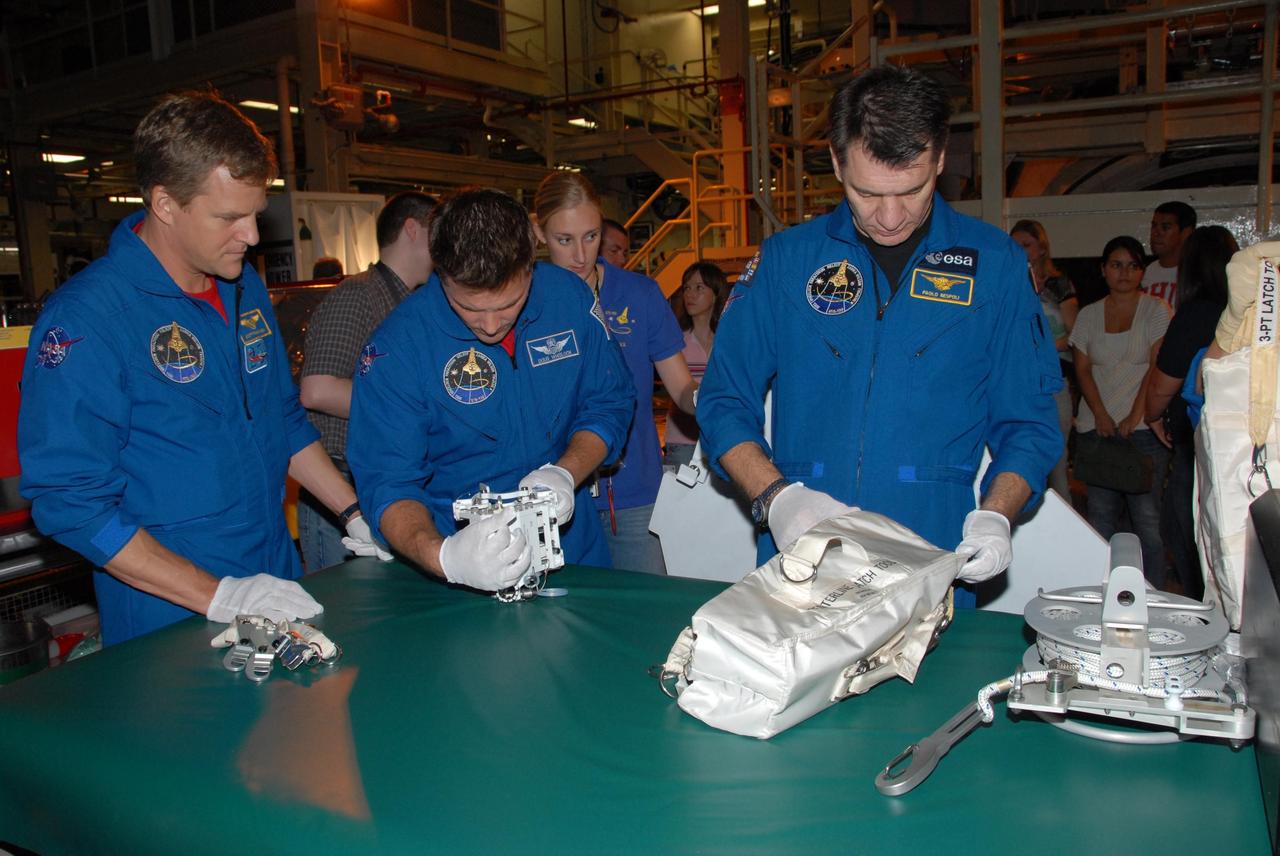
KENNEDY SPACE CENTER, FLA. - In Orbiter Processing Facility bay 3, STS-120 Mission Specialists Scott E. Parazynski, Douglas H. Wheelock and Paolo A. Nespoli inspect tools they will use during the mission. Nespoli is a European Space Agency astronaut from Italy. Behind them is Allison Bolinger, an EVA technician with NASA. The STS-120 crew is at Kennedy for a crew equipment interface test, or CEIT, which includes harness training, inspection of the thermal protection system and camera operation for planned extravehicular activities, or EVAs. The STS-120 mission will deliver the Harmony module, christened after a school contest, which will provide attachment points for European and Japanese laboratory modules on the International Space Station. Known in technical circles as Node 2, it is similar to the six-sided Unity module that links the U.S. and Russian sections of the station. Built in Italy for the United States, Harmony will be the first new U.S. pressurized component to be added. The STS-120 mission is targeted to launch on Oct. 20. Photo credit: NASA/George Shelton
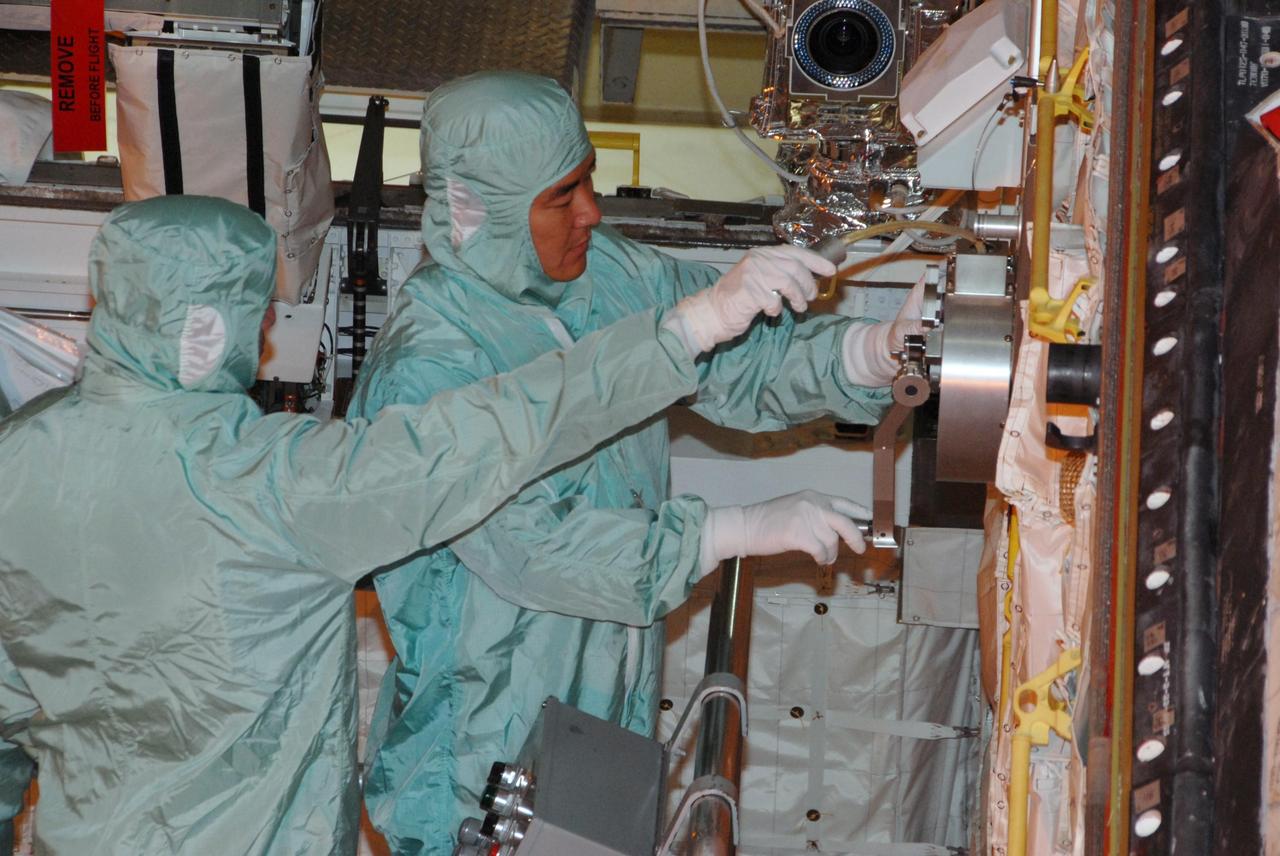
KENNEDY SPACE CENTER, FLA. - In Discovery's payload bay in Orbiter Processing Facility bay 3, STS-120 crew members are getting hands-on experience with a winch that is used to manually close the payload bay doors in the event that becomes necessary. At right is Expedition 16 Flight Engineer Daniel M. Tani. The STS-120 crew is at Kennedy for a crew equipment interface test, or CEIT, which includes harness training, inspection of the thermal protection system and camera operation for planned extravehicular activities, or EVAs. The STS-120 mission will deliver the Harmony module, christened after a school contest, which will provide attachment points for European and Japanese laboratory modules on the International Space Station. Known in technical circles as Node 2, it is similar to the six-sided Unity module that links the U.S. and Russian sections of the station. Built in Italy for the United States, Harmony will be the first new U.S. pressurized component to be added. The STS-120 mission is targeted to launch on Oct. 20. Photo credit: NASA/George Shelton
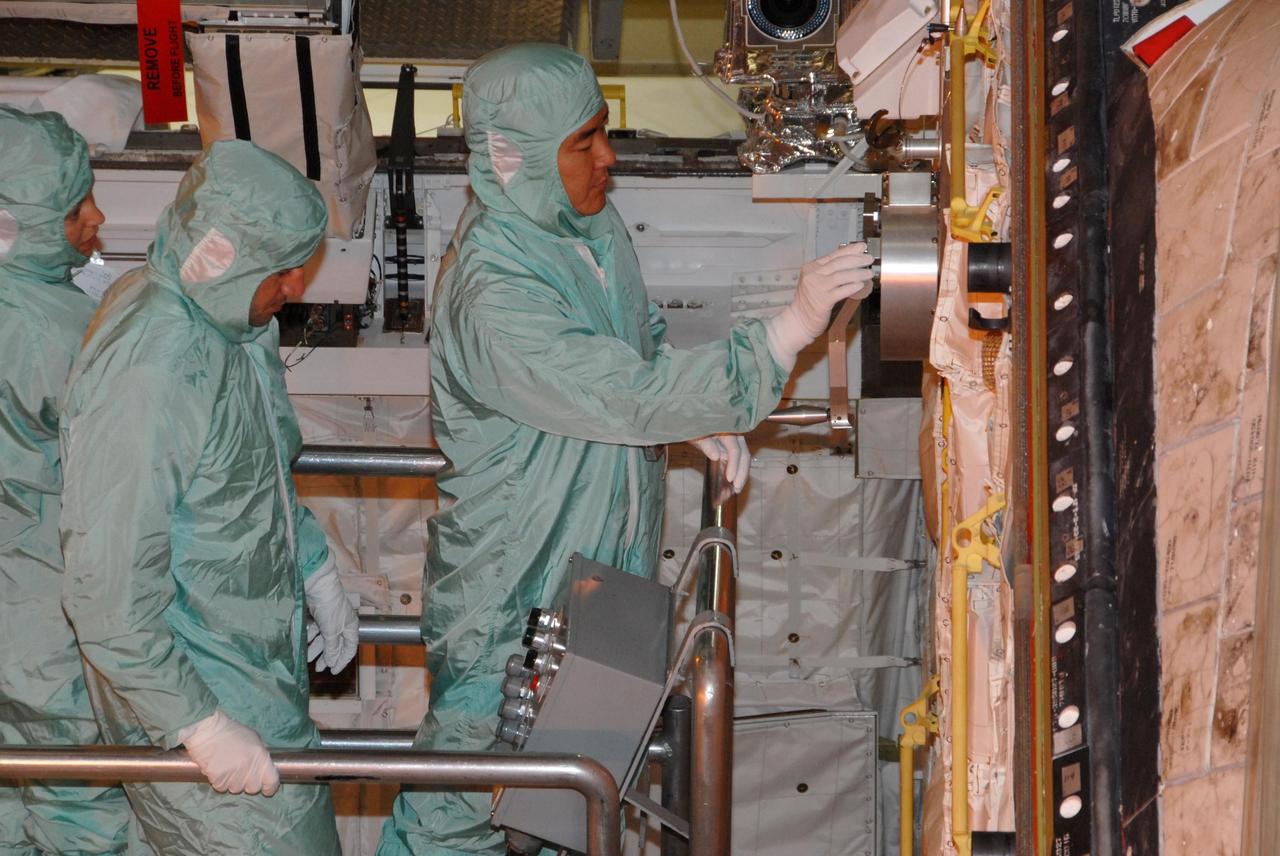
KENNEDY SPACE CENTER, FLA. - In Discovery's payload bay in Orbiter Processing Facility bay 3, STS-120 crew members are getting hands-on experience with a winch that is used to manually close the payload bay doors in the event that becomes necessary. At center is Pilot George D. Zamka and at right is Expedition 16 Flight Engineer Daniel M. Tani. The STS-120 crew is at Kennedy for a crew equipment interface test, or CEIT, which includes harness training, inspection of the thermal protection system and camera operation for planned extravehicular activities, or EVAs. The STS-120 mission will deliver the Harmony module, christened after a school contest, which will provide attachment points for European and Japanese laboratory modules on the International Space Station. Known in technical circles as Node 2, it is similar to the six-sided Unity module that links the U.S. and Russian sections of the station. Built in Italy for the United States, Harmony will be the first new U.S. pressurized component to be added. The STS-120 mission is targeted to launch on Oct. 20. Photo credit: NASA/George Shelton
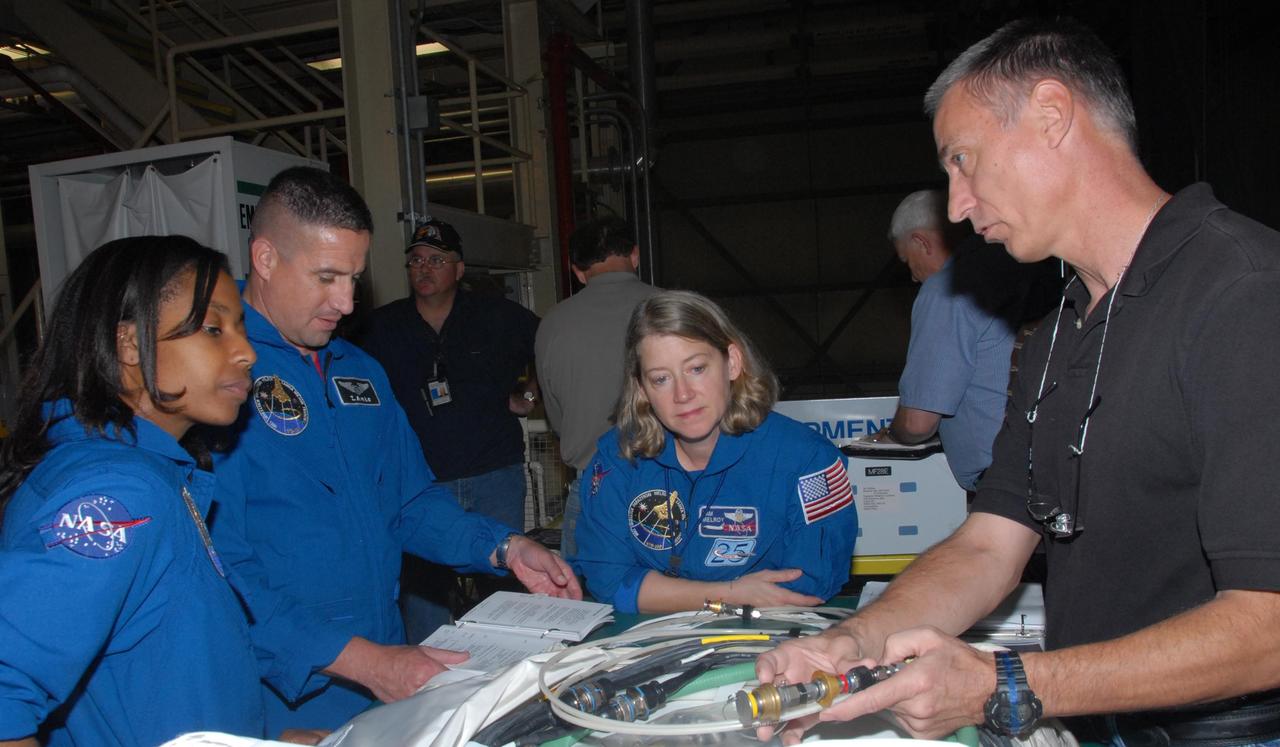
KENNEDY SPACE CENTER, FLA. - In Orbiter Processing Facility bay 3, STS-120 crew members practice handling tools they will use during the mission. From left are Mission Specialist Stephanie D. Wilson, Pilot George D. Zamka and Commander Pamela A. Melroy. The STS-120 crew is at Kennedy for a crew equipment interface test, or CEIT, which includes harness training, inspection of the thermal protection system and camera operation for planned extravehicular activities, or EVAs. The STS-120 mission will deliver the Harmony module, christened after a school contest, which will provide attachment points for European and Japanese laboratory modules on the International Space Station. Known in technical circles as Node 2, it is similar to the six-sided Unity module that links the U.S. and Russian sections of the station. Built in Italy for the United States, Harmony will be the first new U.S. pressurized component to be added. The STS-120 mission is targeted to launch on Oct. 20. Photo credit: NASA/George Shelton
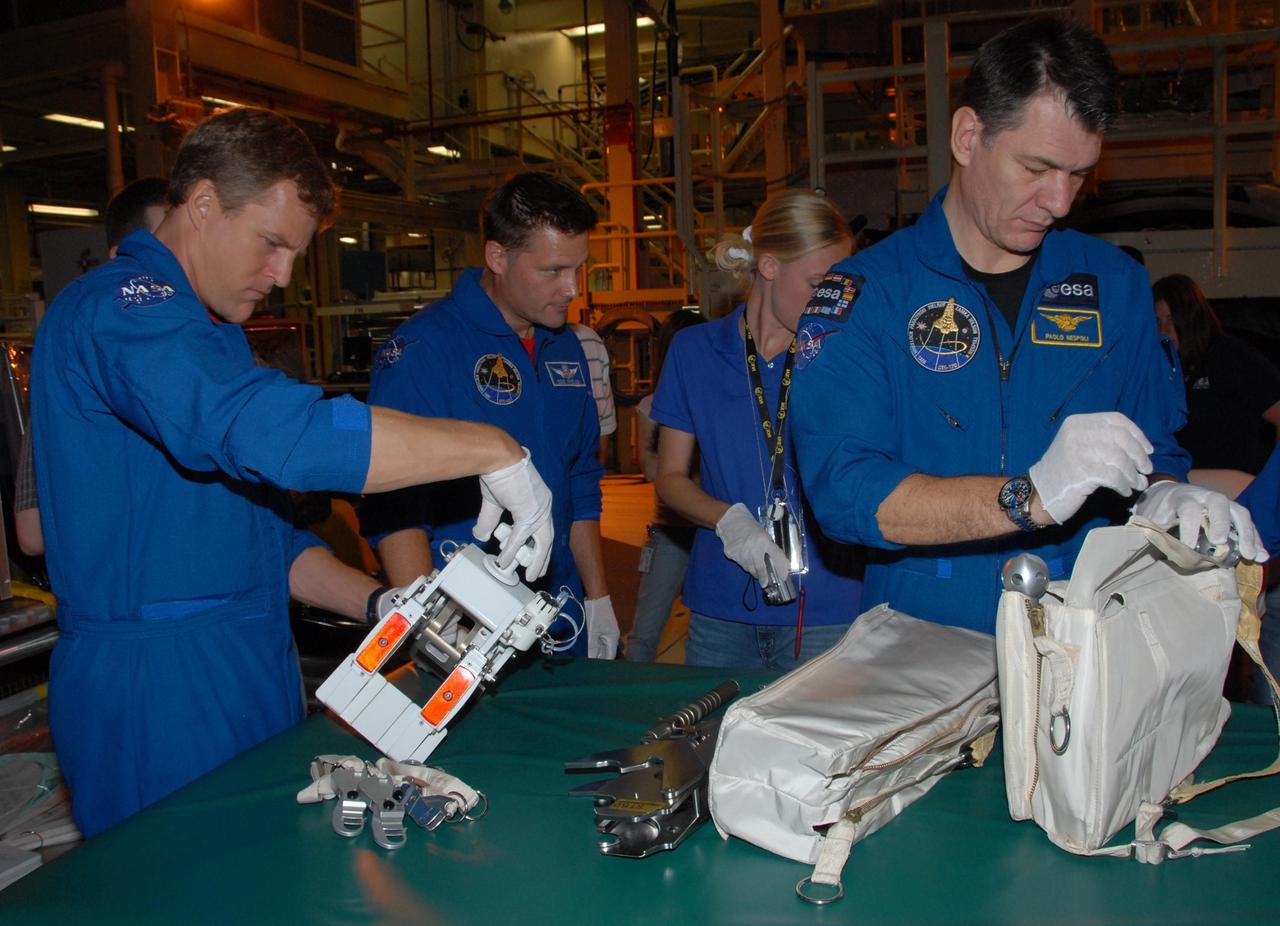
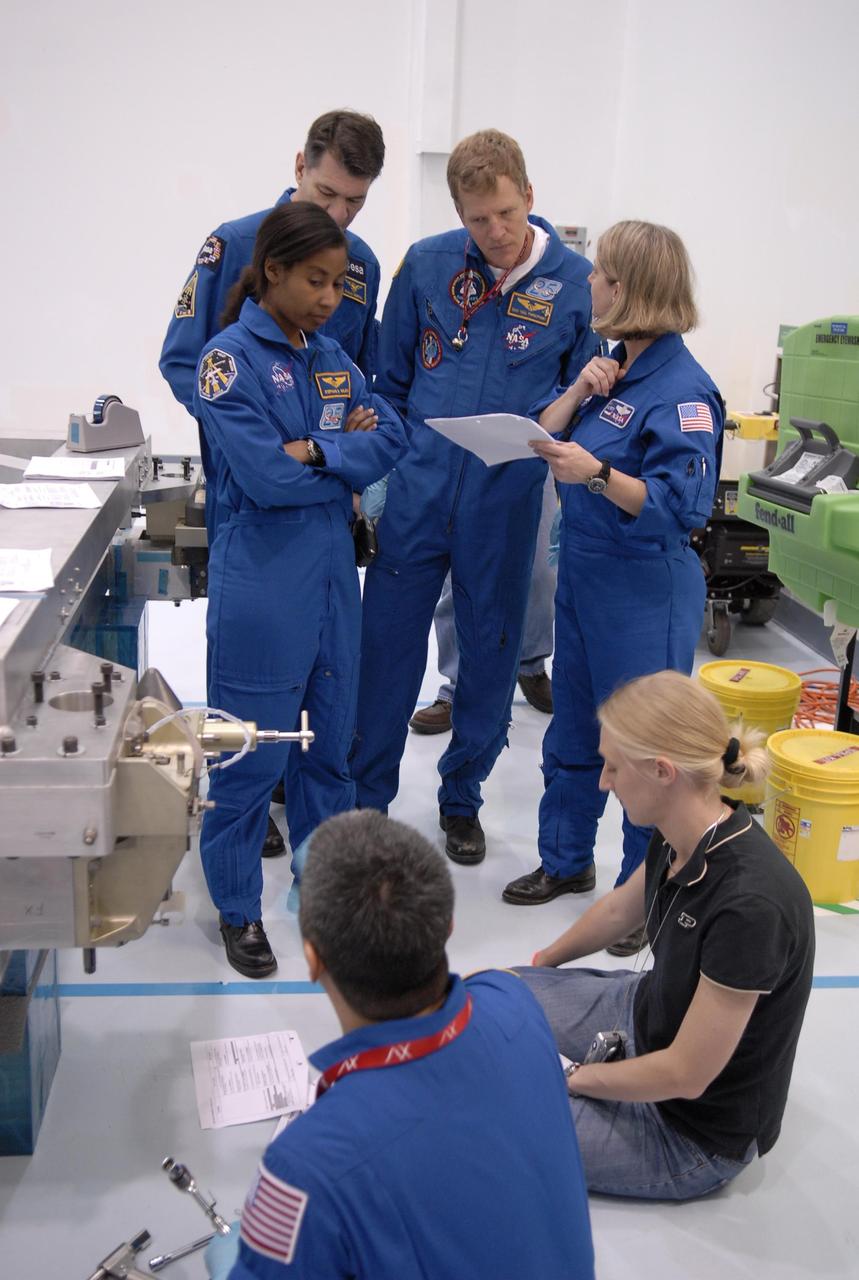
KENNEDY SPACE CENTER, FLA. - In Orbiter Processing Facility bay 3, STS-120 Mission Specialists Scott E. Parazynski and Paolo A. Nespoli (foreground) inspect tools they will use during the mission. Nespoli is a European Space Agency astronaut from Italy. Behind them are Mission Specialist Douglas H. Wheelock and Allison Bolinger, an EVA technician with NASA. The STS-120 crew is at Kennedy for a crew equipment interface test, or CEIT, which includes harness training, inspection of the thermal protection system and camera operation for planned extravehicular activities, or EVAs. The STS-120 mission will deliver the Harmony module, christened after a school contest, which will provide attachment points for European and Japanese laboratory modules on the International Space Station. Known in technical circles as Node 2, it is similar to the six-sided Unity module that links the U.S. and Russian sections of the station. Built in Italy for the United States, Harmony will be the first new U.S. pressurized component to be added. The STS-120 mission is targeted to launch on Oct. 20. Photo credit: NASA/George Shelton
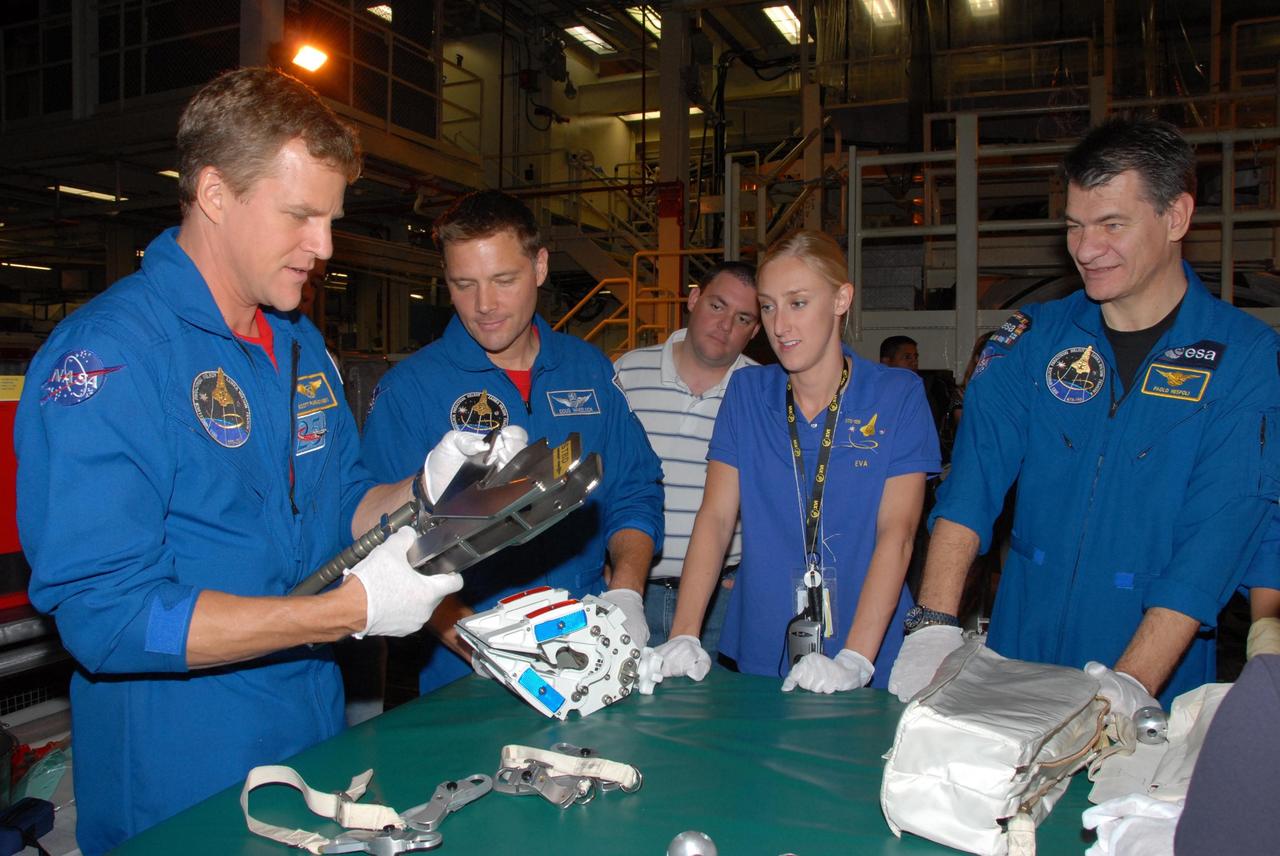
KENNEDY SPACE CENTER, FLA. - In Orbiter Processing Facility bay 3, STS-120 Mission Specialists Scott E. Parazynski, Douglas H. Wheelock and Paolo A. Nespoli inspect tools they will use during the mission. Nespoli is a European Space Agency astronaut from Italy. With them is Allison Bolinger, an EVA technician with NASA. The STS-120 crew is at Kennedy for a crew equipment interface test, or CEIT, which includes harness training, inspection of the thermal protection system and camera operation for planned extravehicular activities, or EVAs. The STS-120 mission will deliver the Harmony module, christened after a school contest, which will provide attachment points for European and Japanese laboratory modules on the International Space Station. Known in technical circles as Node 2, it is similar to the six-sided Unity module that links the U.S. and Russian sections of the station. Built in Italy for the United States, Harmony will be the first new U.S. pressurized component to be added. The STS-120 mission is targeted to launch on Oct. 20. Photo credit: NASA/George Shelton
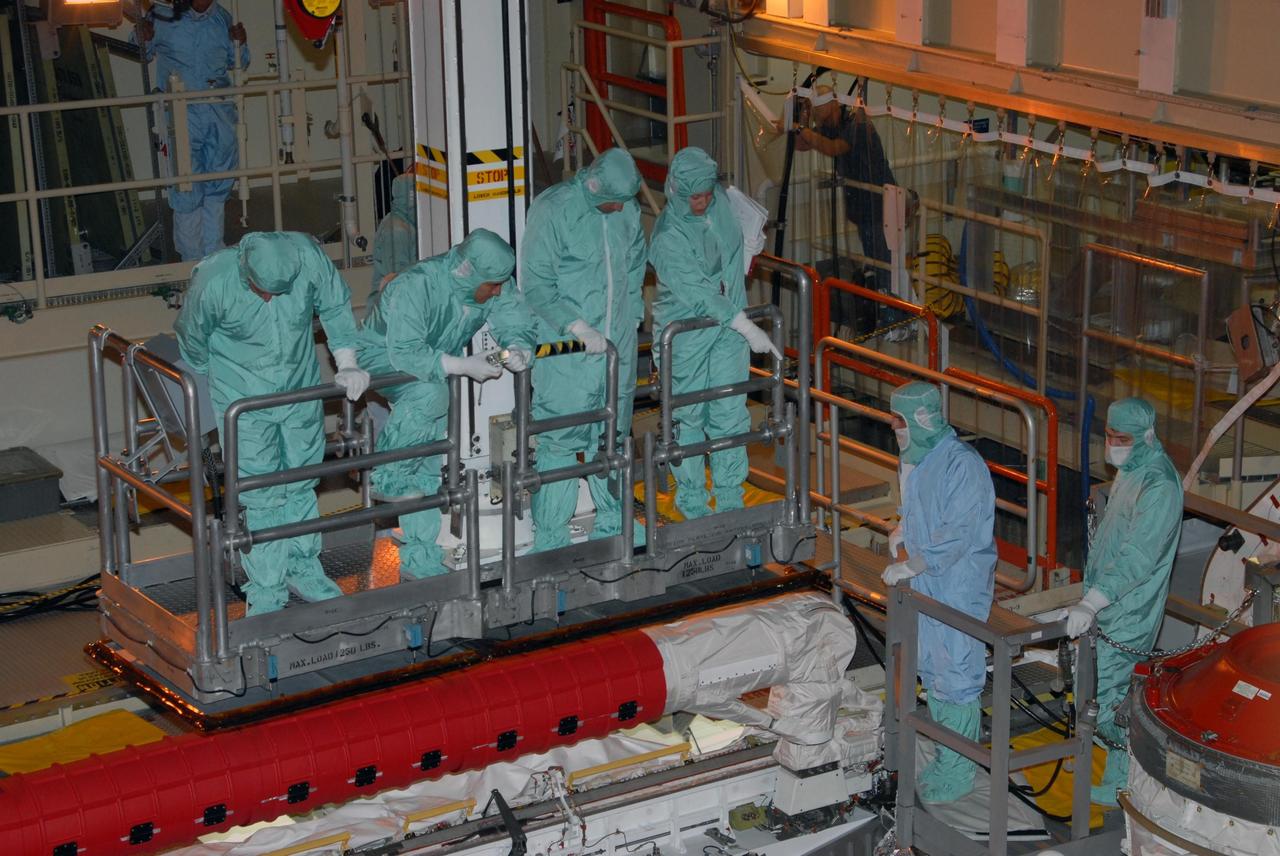
KENNEDY SPACE CENTER, FLA. - In Orbiter Processing Facility bay 3, STS-120 crew members get a close look at hardware in Discovery's payload bay. The crew includes Commander Pamela A. Melroy, Pilot George D. Zamka and Mission Specialists Scott E. Parazynski, Douglas H. Wheelock, Stephanie D. Wilson and Paolo A. Nespoli, who is a European Space Agency astronaut from Italy. The STS-120 crew is at Kennedy for a crew equipment interface test, or CEIT, which includes harness training, inspection of the thermal protection system and camera operation for planned extravehicular activities, or EVAs. The STS-120 mission will deliver the Harmony module, christened after a school contest, which will provide attachment points for European and Japanese laboratory modules on the International Space Station. Known in technical circles as Node 2, it is similar to the six-sided Unity module that links the U.S. and Russian sections of the station. Built in Italy for the United States, Harmony will be the first new U.S. pressurized component to be added. The STS-120 mission is targeted to launch on Oct. 20. Photo credit: NASA/George Shelton
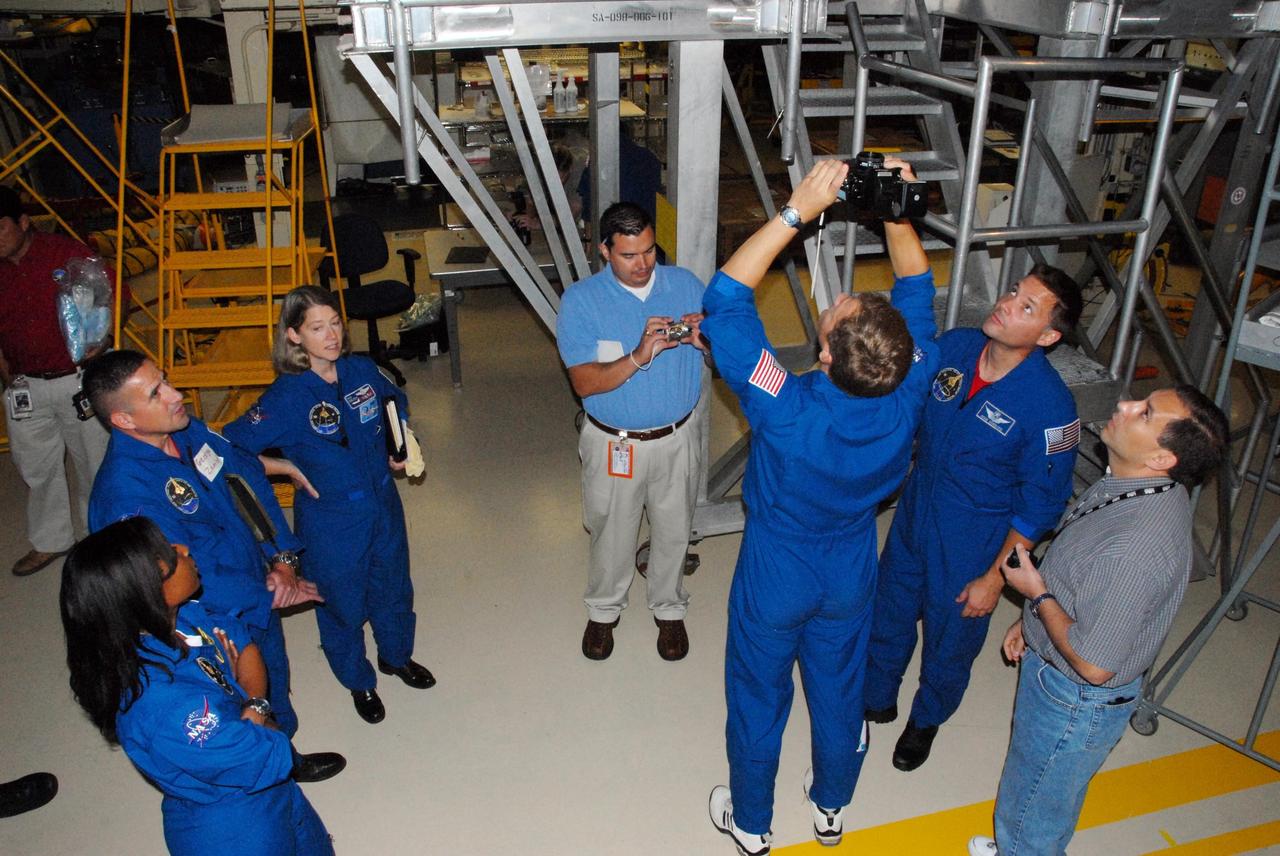
KENNEDY SPACE CENTER, FLA. - The STS-120 crew is at Kennedy for a crew equipment interface test, or CEIT. In Orbiter Processing Facility bay 3, from left in blue flight suits, STS-120 Mission Specialist Stephanie D. Wilson, Pilot George D. Zamka, Commander Pamela A. Melroy, Mission Specialist Scott E. Parazynski (holding camera) and Mission Specialist Douglas H. Wheelock are given the opportunity to operate the cameras that will fly on their mission. Among the activities standard to a CEIT are harness training, inspection of the thermal protection system and camera operation for planned extravehicular activities, or EVAs. The STS-120 mission will deliver the Harmony module, christened after a school contest, which will provide attachment points for European and Japanese laboratory modules on the International Space Station. Known in technical circles as Node 2, it is similar to the six-sided Unity module that links the U.S. and Russian sections of the station. Built in Italy for the United States, Harmony will be the first new U.S. pressurized component to be added. The STS-120 mission is targeted to launch on Oct. 20. Photo credit: NASA/George Shelton
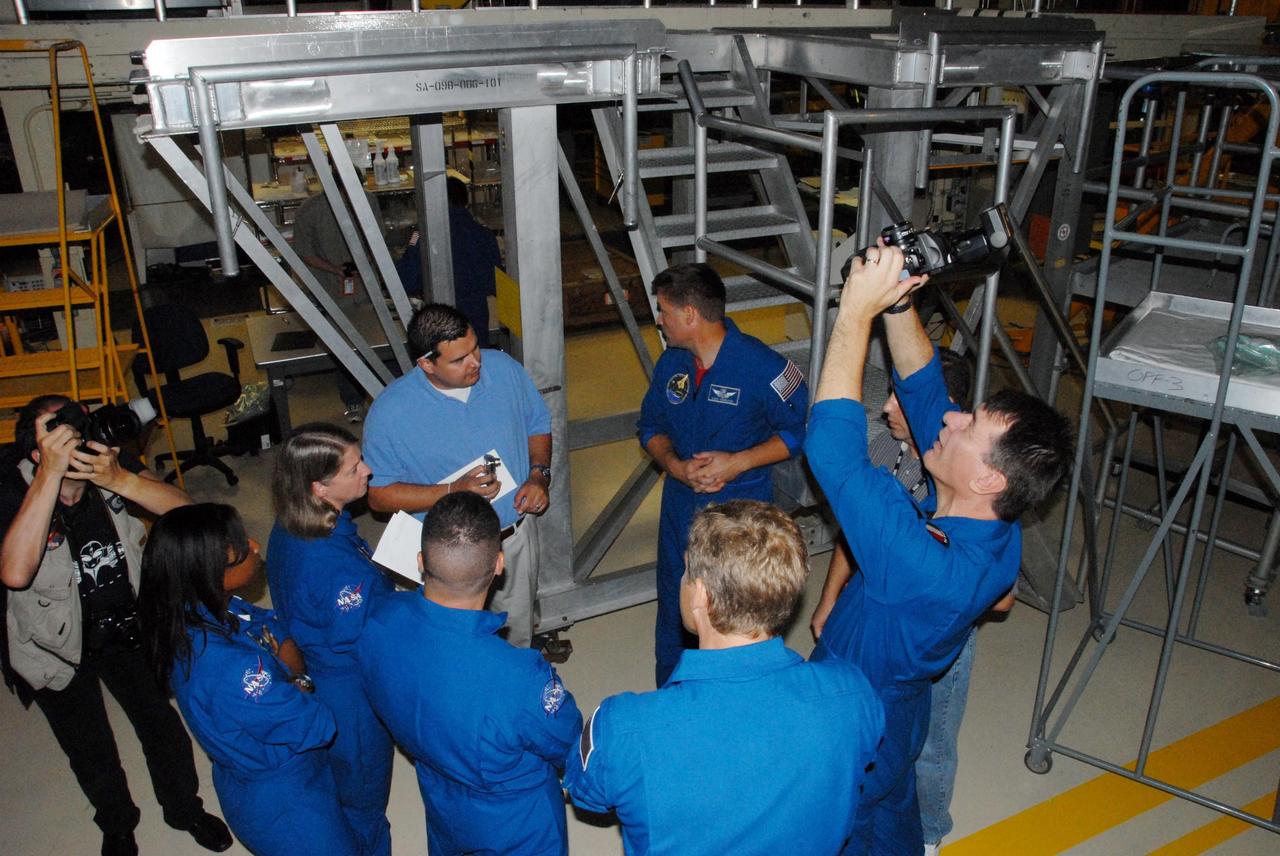
KENNEDY SPACE CENTER, FLA. - The STS-120 crew is at Kennedy for a crew equipment interface test, or CEIT. In Orbiter Processing Facility bay 3, from left in blue flight suits, STS-120 Mission Specialist Stephanie D. Wilson, Commander Pamela A. Melroy, Pilot George D. Zamka, Mission Specialist Scott E. Parazynski (back to camera), Mission Specialist Douglas H. Wheelock and Mission Specialist Paolo A. Nespoli (holding camera), a European Space Agency astronaut from Italy, are given the opportunity to operate the cameras that will fly on their mission. Among the activities standard to a CEIT are harness training, inspection of the thermal protection system and camera operation for planned extravehicular activities, or EVAs. The STS-120 mission will deliver the Harmony module, christened after a school contest, which will provide attachment points for European and Japanese laboratory modules on the International Space Station. Known in technical circles as Node 2, it is similar to the six-sided Unity module that links the U.S. and Russian sections of the station. Built in Italy for the United States, Harmony will be the first new U.S. pressurized component to be added. The STS-120 mission is targeted to launch on Oct. 20. Photo credit: NASA/George Shelton
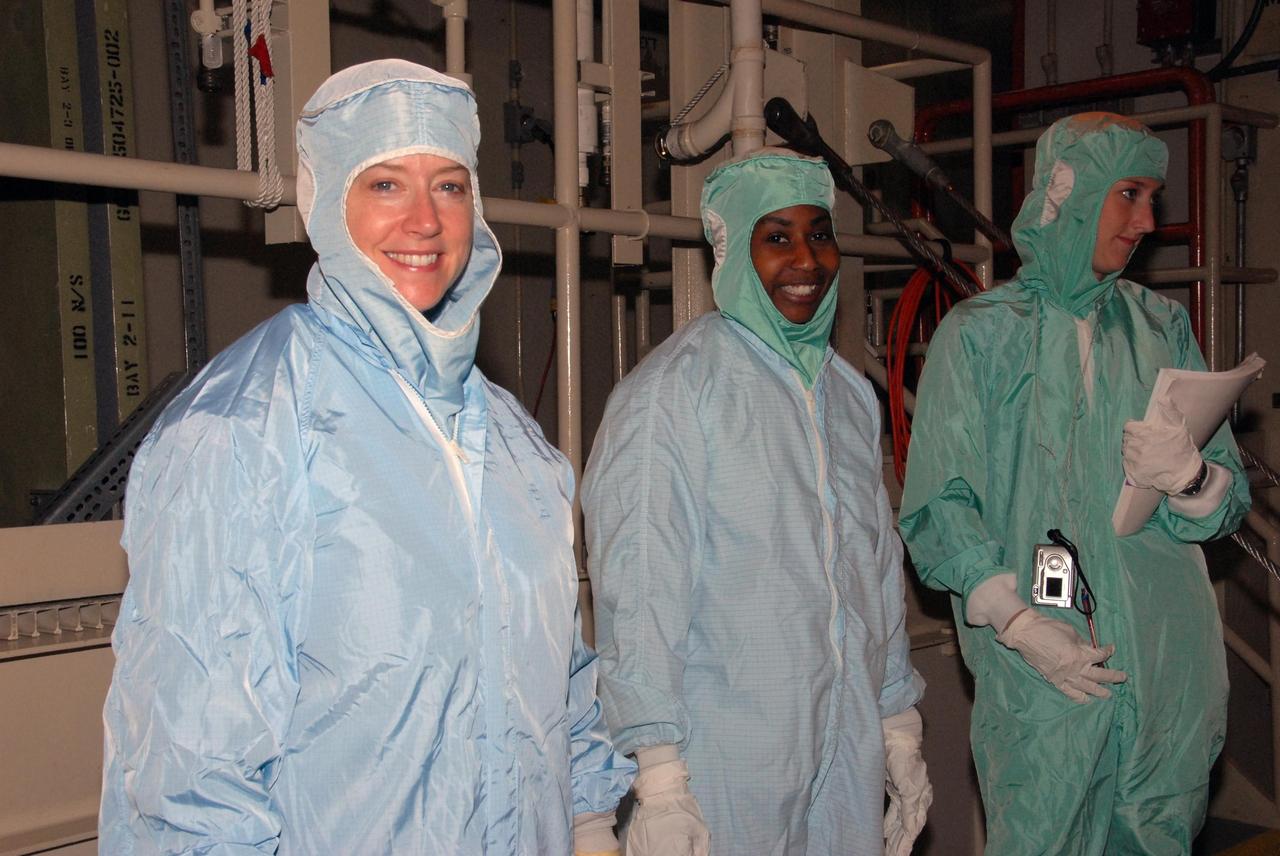
KENNEDY SPACE CENTER, FLA. - Dressed in clean-room suits are STS-120 Commander Pamela A. Melroy (left) and Mission Specialist Stephanie D. Wilson (center), getting ready to get into the bucket that will lower them into Discovery's payload bay in bay 3 of the Orbiter Processing Facility. The STS-120 crew is at Kennedy for a crew equipment interface test, or CEIT, which includes harness training, inspection of the thermal protection system and camera operation for planned extravehicular activities, or EVAs. The STS-120 mission will deliver the Harmony module, christened after a school contest, which will provide attachment points for European and Japanese laboratory modules on the International Space Station. Known in technical circles as Node 2, it is similar to the six-sided Unity module that links the U.S. and Russian sections of the station. Built in Italy for the United States, Harmony will be the first new U.S. pressurized component to be added. The STS-120 mission is targeted to launch on Oct. 20. Photo credit: NASA/George Shelton
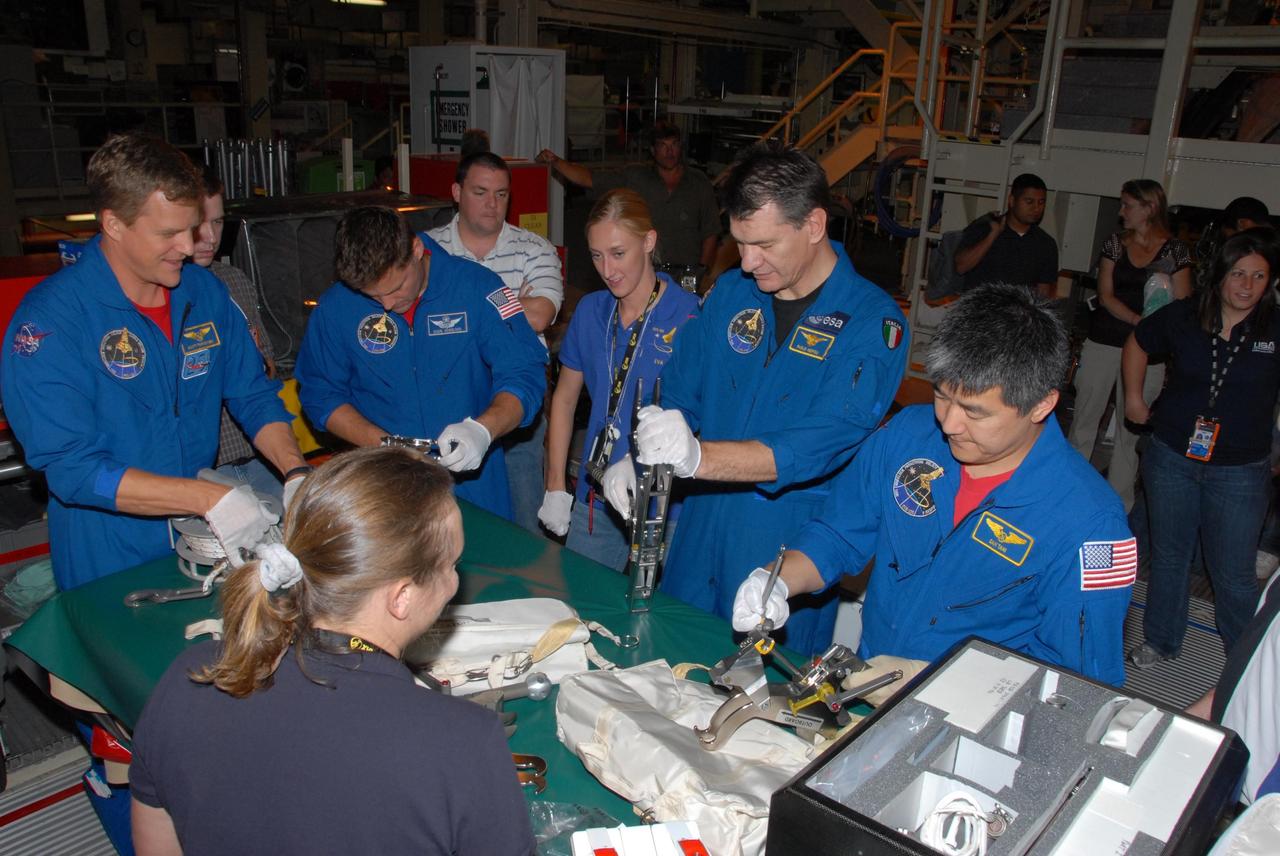
KENNEDY SPACE CENTER, FLA. - In Orbiter Processing Facility bay 3, STS-120 crew members practice handling tools they will use during the mission. Around the table, at center, dressed in blue flight suits are Mission Specialists Scott E. Parazynski, Douglas H. Wheelock, Paolo A. Nespoli and Expedition 16 Flight Engineer Daniel M. Tani. Between Wheelock and Nespoli is Allison Bolinger, an EVA technician with NASA. In the foreground is Dina Contella, a thermal protection system specialist with NASA. Nespoli is a European Space Agency astronaut from Italy. The STS-120 crew is at Kennedy for a crew equipment interface test, or CEIT, which includes harness training, inspection of the thermal protection system and camera operation for planned extravehicular activities, or EVAs. The STS-120 mission will deliver the Harmony module, christened after a school contest, which will provide attachment points for European and Japanese laboratory modules on the International Space Station. Known in technical circles as Node 2, it is similar to the six-sided Unity module that links the U.S. and Russian sections of the station. Built in Italy for the United States, Harmony will be the first new U.S. pressurized component to be added. The STS-120 mission is targeted to launch on Oct. 20. Photo credit: NASA/George Shelton
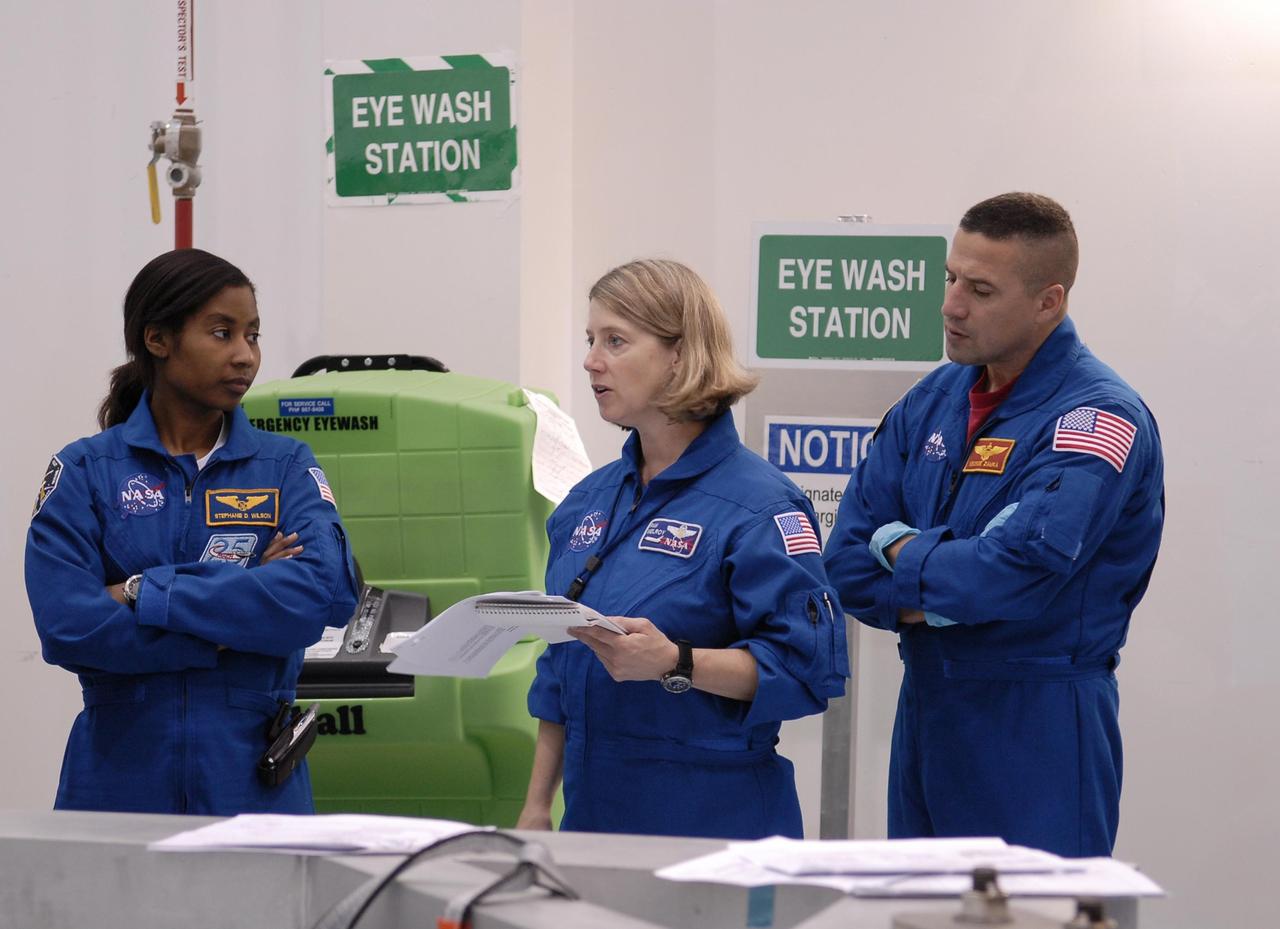
KENNEDY SPACE CENTER, FLA. -- During a familiarization visit to the Space Station Processing Facility, mission STS-120 Mission Specialist Stephanie Wilson, Commander Pam Melroy and Pilot George Zamka review safety procedures. Other STS-120 crew members include Mission Specialists Scott Parazynski, Douglas Wheelock, Daniel Tani, Paolo Nespoli (with the European Space Agency) and Clayton Anderson. Mission STS-120 will deliver the Node 2 "Harmony" connecting module to the station. During the mission, Tani and Anderson will transfer to the station and remain as flight engineers for Expedition 15. The mission is tentatively scheduled for August of this year. Photo credit: NASA/Kim Shiflett
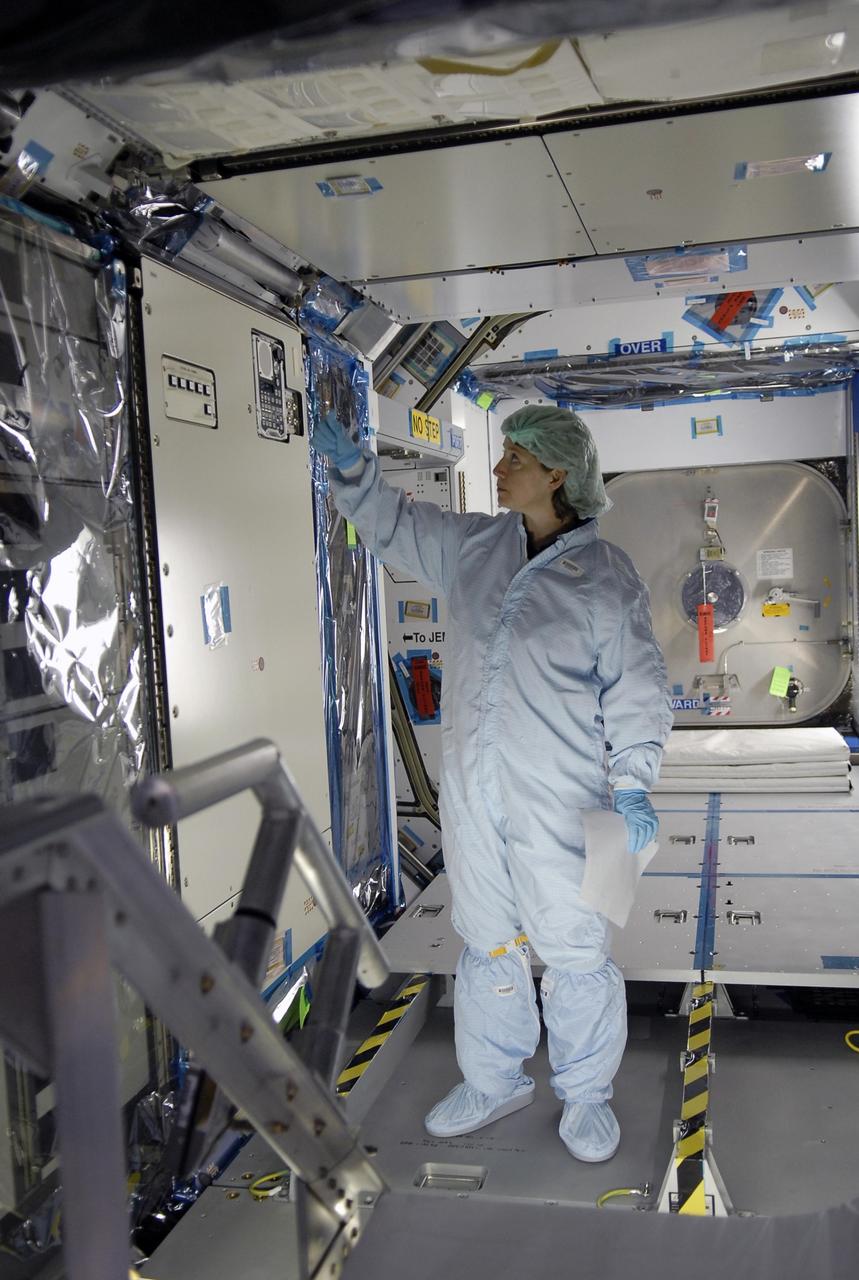
KENNEDY SPACE CENTER, FLA. -- Mission STS-120 Commander Pam Melroy familiarizes herself with the Node 2 Harmony module inside the Space Station Processing Facility during a visit to Kennedy Space Center. Other STS-120 crew members include Pilot George Zamka and Mission Specialists Scott Parazynski, Douglas Wheelock, Stephanie Wilson, Paolo Nespoli (with the European Space Agency), Daniel Tani and Clayton Anderson. Mission STS-120 will deliver the Node 2 "Harmony" connecting module to the station. During the mission, Tani and Anderson will transfer to the station and remain as flight engineers for Expedition 15. The mission is tentatively scheduled for August of this year. Photo credit: NASA/Kim Shiflett
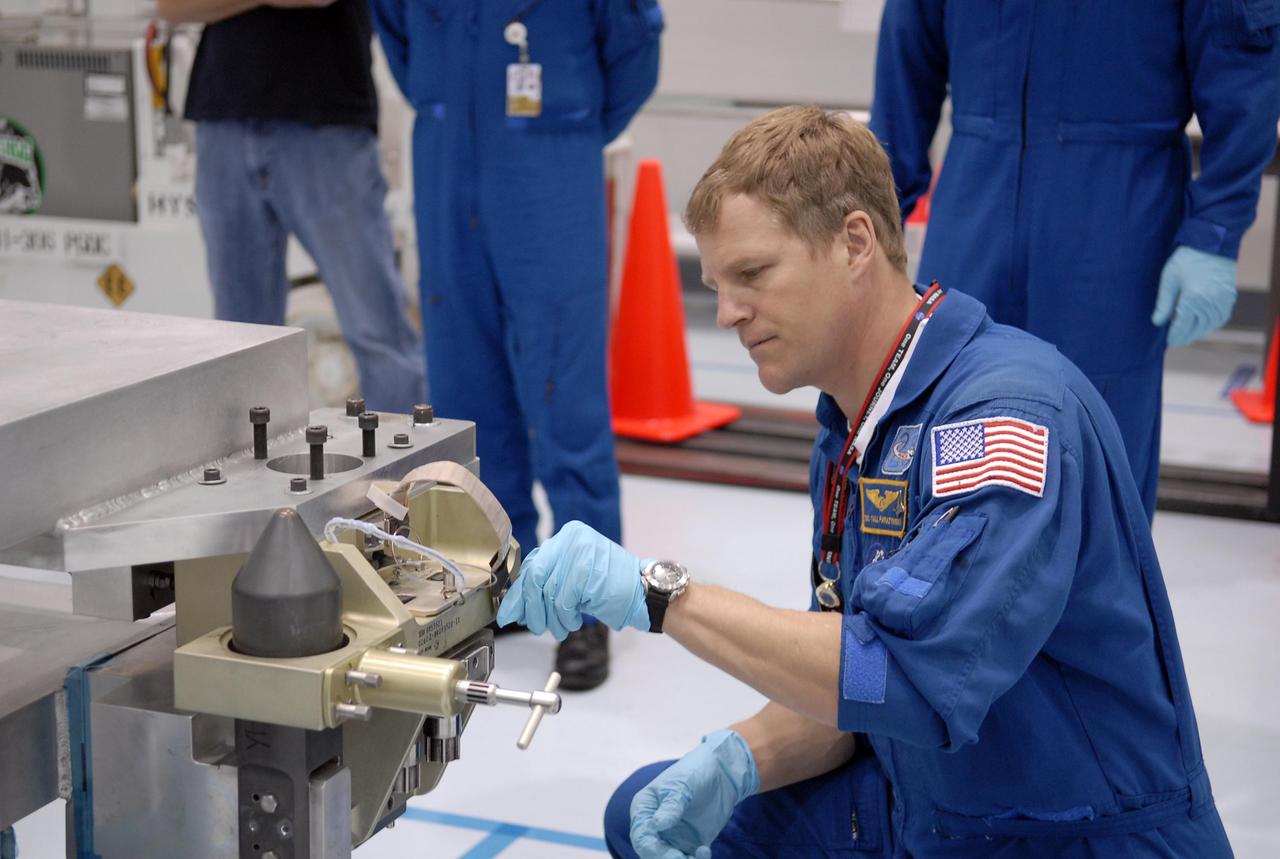
KENNEDY SPACE CENTER, FLA. -- Mission STS-120 Mission Specialist Scott Parazynski familiarizes himself with equipment inside the Space Station Processing Facility during a visit to Kennedy Space Center. Other STS-120 crew members include Commander Pam Melroy, Pilot George Zamka, and Mission Specialists Douglas Wheelock, Stephanie Wilson, Daniel Tani, Paolo Nespoli (with the European Space Agency) and Clayton Anderson. Mission STS-120 will deliver the Node 2 "Harmony" connecting module to the station. During the mission, Tani and Anderson will transfer to the station and remain as flight engineers for Expedition 15. The mission is tentatively scheduled for August of this year. Photo credit: NASA/Kim Shiflett
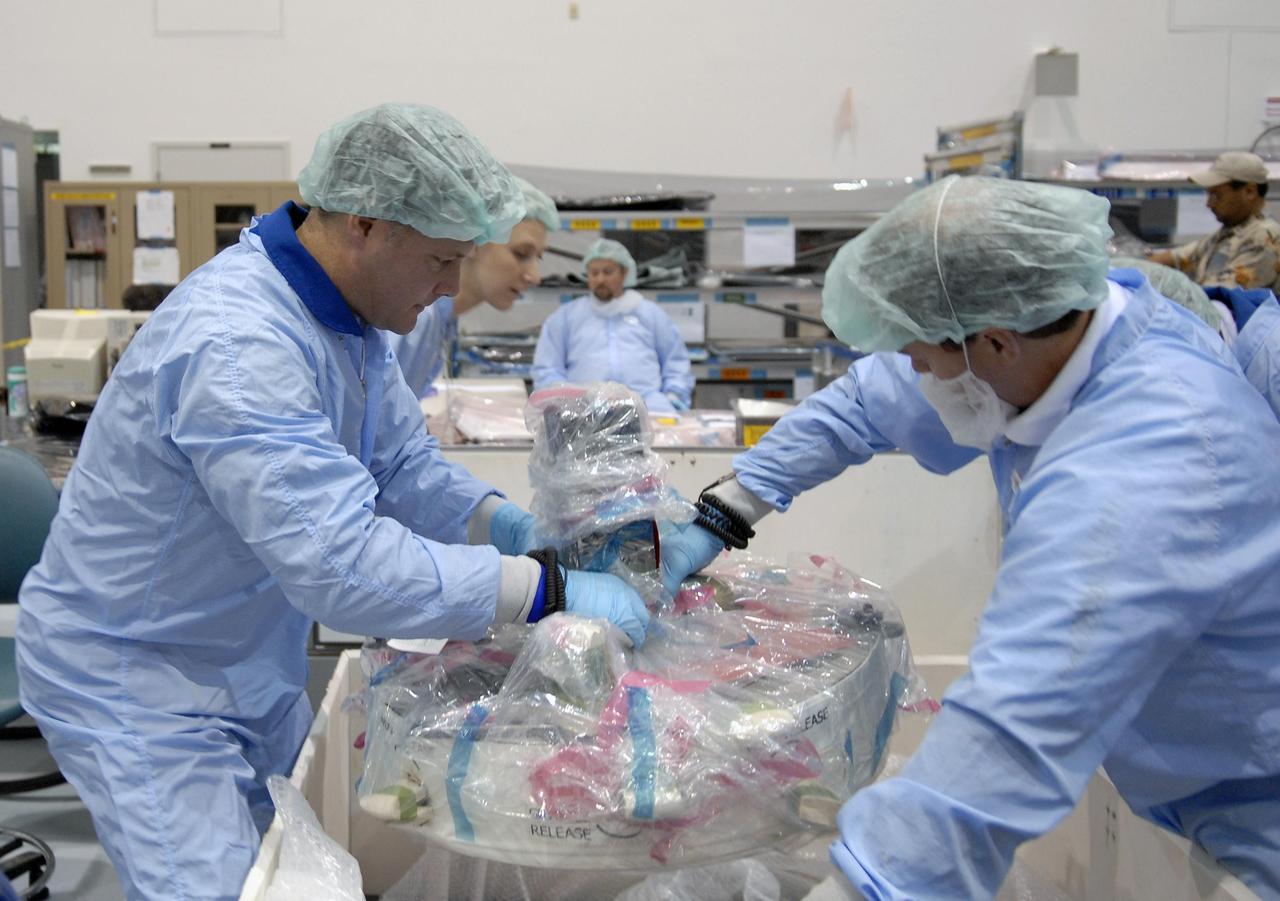
KENNEDY SPACE CENTER, FLA. -- STS-120 Mission Specialist Doug Wheelock (left) gets hands-on experience with equipment earmarked for the mission. The primary payload for mission STS-120 is the U.S. Node 2, another element to be added to the International Space Station. Node 2 will provide a passageway between three station science experiment facilities: the U.S. Destiny Laboratory, the Kibo Japanese Experiment Module, and the European Columbus Laboratory. STS-120 is targeted for launch on Sept. 7 with a crew of six, including Commander Pam Melroy, Pilot George Zamka, and Mission Specialist Mike Foreman. Photo credit: NASA/Kim Shiflett
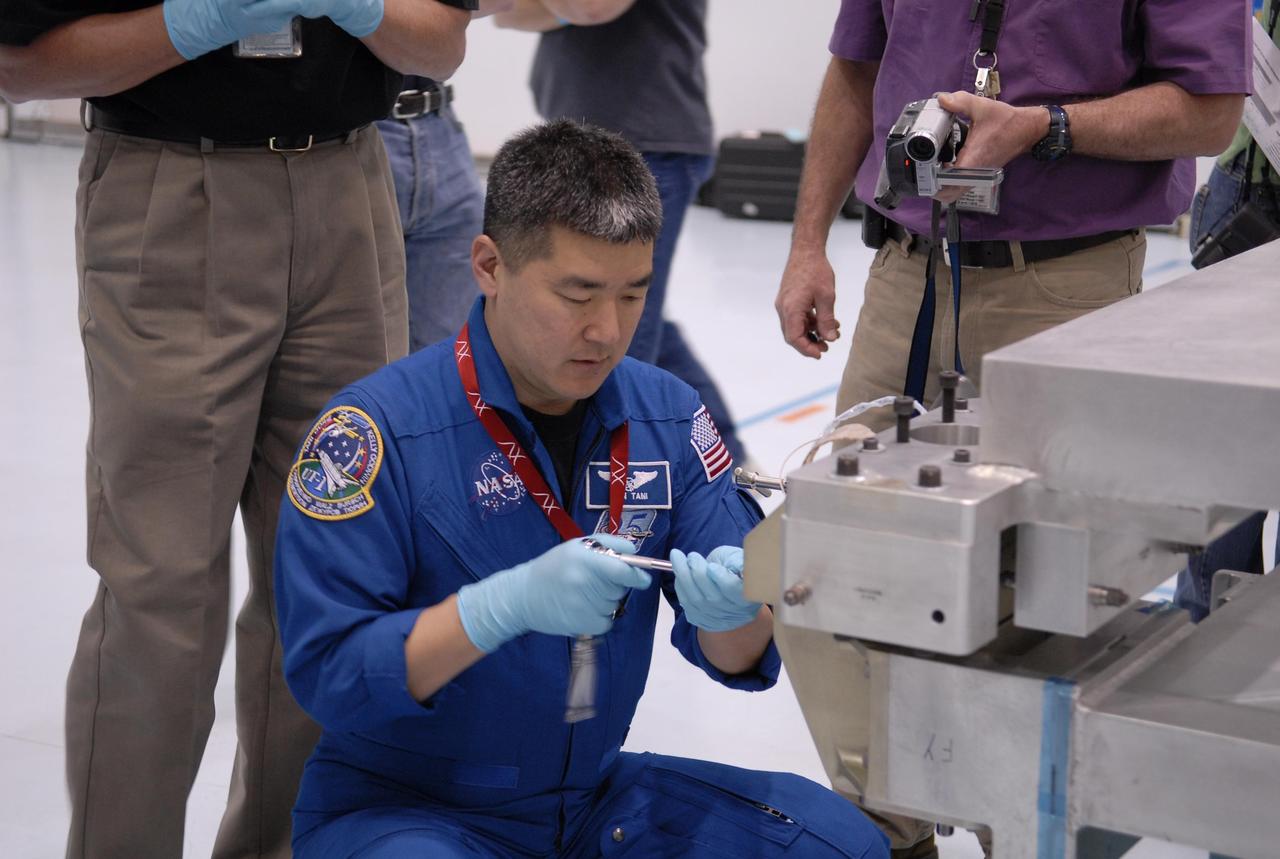
KENNEDY SPACE CENTER, FLA. -- Mission STS-120 Mission Specialist Daniel Tani familiarizes himself with equipment inside the Space Station Processing Facility during a visit to Kennedy Space Center. Other STS-120 crew members include Commander Pam Melroy, Pilot George Zamka, and Mission Specialists Scott Parazynski, Douglas Wheelock, Stephanie Wilson, Paolo Nespoli (with the European Space Agency) and Clayton Anderson. Mission STS-120 will deliver the Node 2 "Harmony" connecting module to the station. During the mission, Tani and Anderson will transfer to the station and remain as flight engineers for Expedition 15. The mission is tentatively scheduled for August of this year. Photo credit: NASA/Kim Shiflett
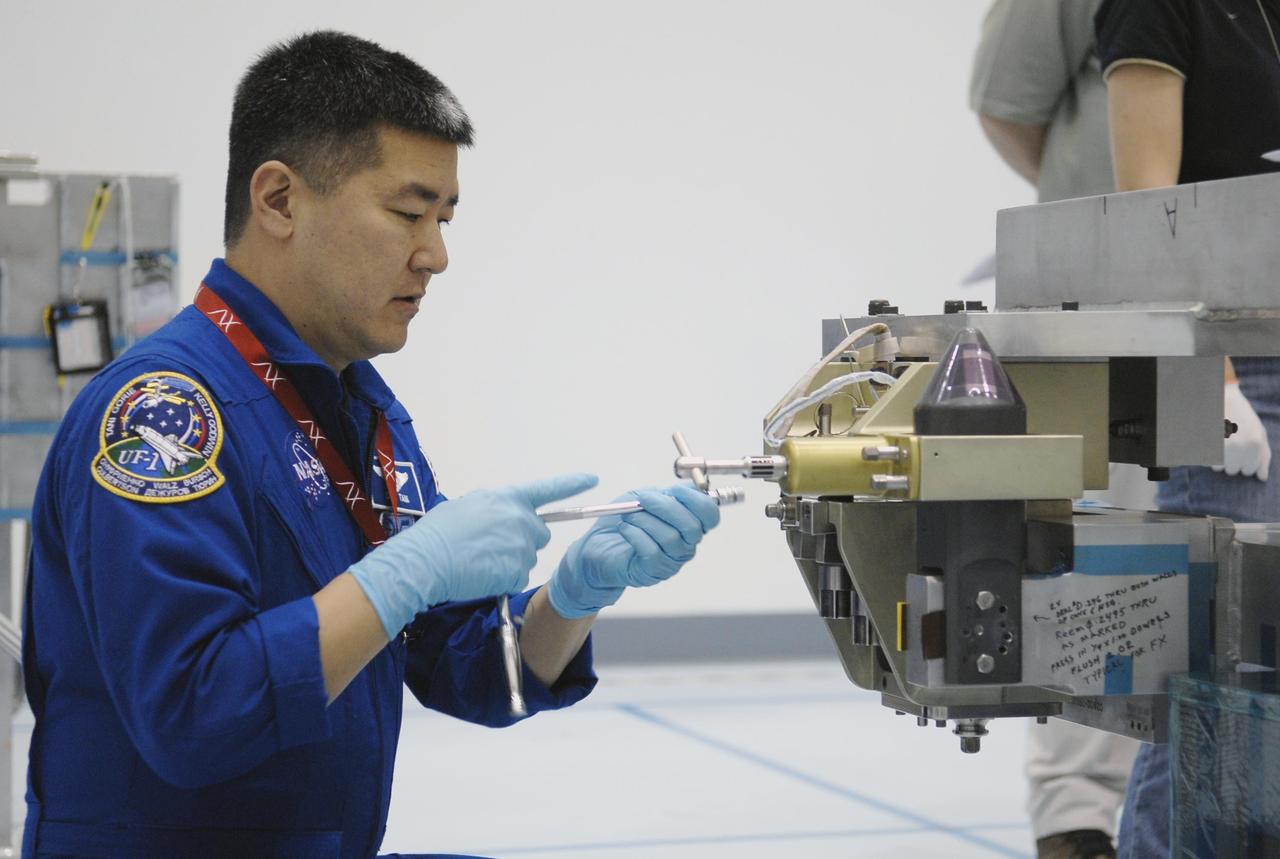
KENNEDY SPACE CENTER, FLA. -- Mission STS-120 Mission Specialist Daniel Tani familiarizes himself with equipment inside the Space Station Processing Facility during a visit to Kennedy Space Center. Other STS-120 crew members include Commander Pam Melroy, Pilot George Zamka, and Mission Specialists Scott Parazynski, Douglas Wheelock, Stephanie Wilson, Paolo Nespoli (with the European Space Agency) and Clayton Anderson. Mission STS-120 will deliver the Node 2 "Harmony" connecting module to the station. During the mission, Tani and Anderson will transfer to the station and remain as flight engineers for Expedition 15. The mission is tentatively scheduled for August of this year. Photo credit: NASA/Kim Shiflett
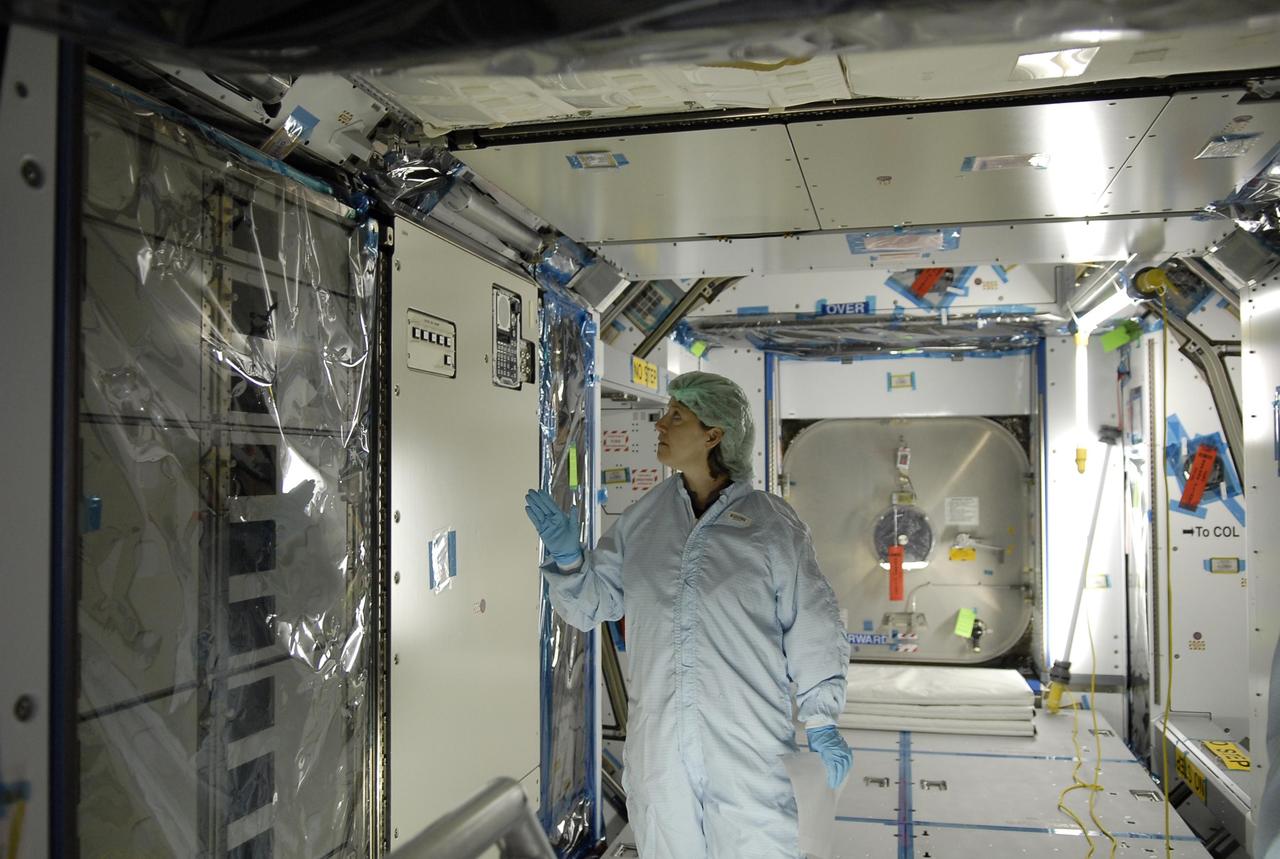
KENNEDY SPACE CENTER, FLA. -- Inside the Space Station Processing Facility, mission STS-120 Commander Pam Melroy stands inside the Node 2 Harmony module to familiarize herself with equipment during a visit to Kennedy Space Center. Other STS-120 crew members include Pilot George Zamka and Mission Specialists Scott Parazynski, Douglas Wheelock, Stephanie Wilson, Paolo Nespoli (with the European Space Agency), Daniel Tani and Clayton Anderson. Mission STS-120 will deliver the Node 2 "Harmony" connecting module to the station. During the mission, Tani and Anderson will transfer to the station and remain as flight engineers for Expedition 15. The mission is tentatively scheduled for August of this year. Photo credit: NASA/Kim Shiflett
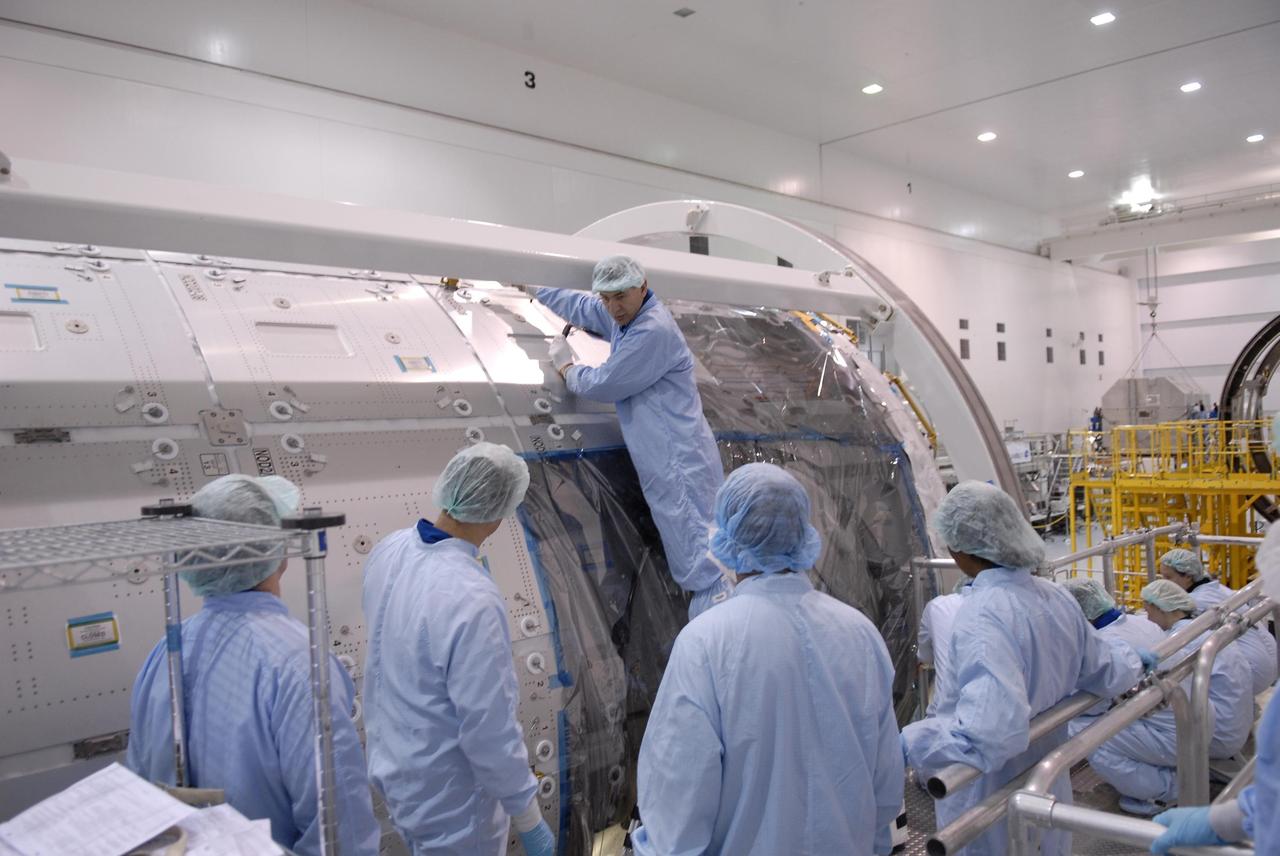
KENNEDY SPACE CENTER, FLA. -- Mission STS-120 crew members familiarize themselves with equipment and payloads inside the Space Station Processing Facility during a visit to Kennedy Space Center. Standing in front of the Node 2 Harmony module is Paolo Nespoli, who is with the European Space Agency. Other STS-120 crew members include Commander Pam Melroy, Pilot George Zamka and Mission Specialists Scott Parazynski, Douglas Wheelock, Stephanie Wilson, Daniel Tani and Clayton Anderson. Mission STS-120 will deliver the Node 2 "Harmony" connecting module to the station. During the mission, Tani and Anderson will transfer to the station and remain as flight engineers for Expedition 15. The mission is tentatively scheduled for August of this year. Photo credit: NASA/Kim Shiflett
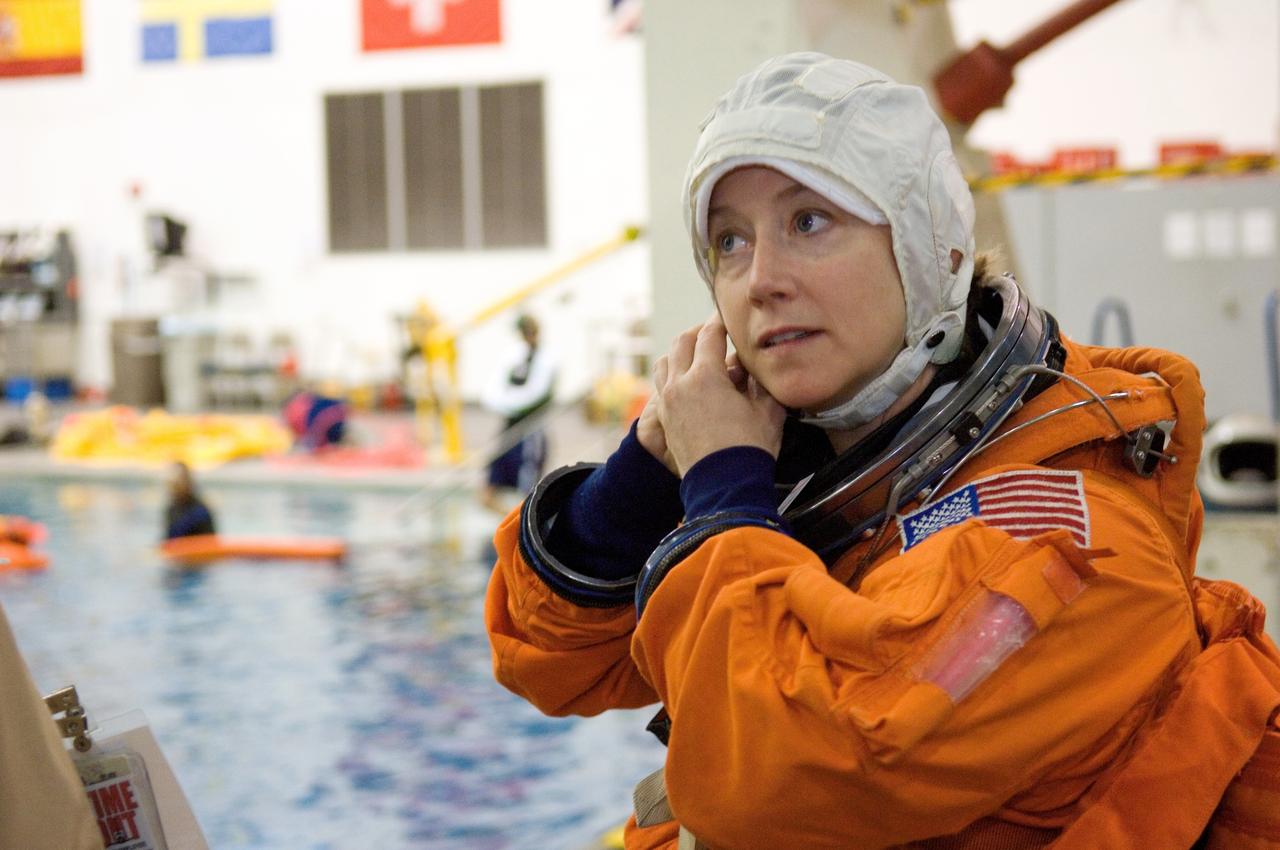
Donned in a training version of her shuttle launch and entry suit, astronaut Pamela A. Melroy, STS-120 commander, awaits the start of a training session in the Space Vehicle Mockup Facility at Johnson Space Center. Melroy and her crew were preparing for their STS-120 mission duties. Launch occurred on October 23, 2007.
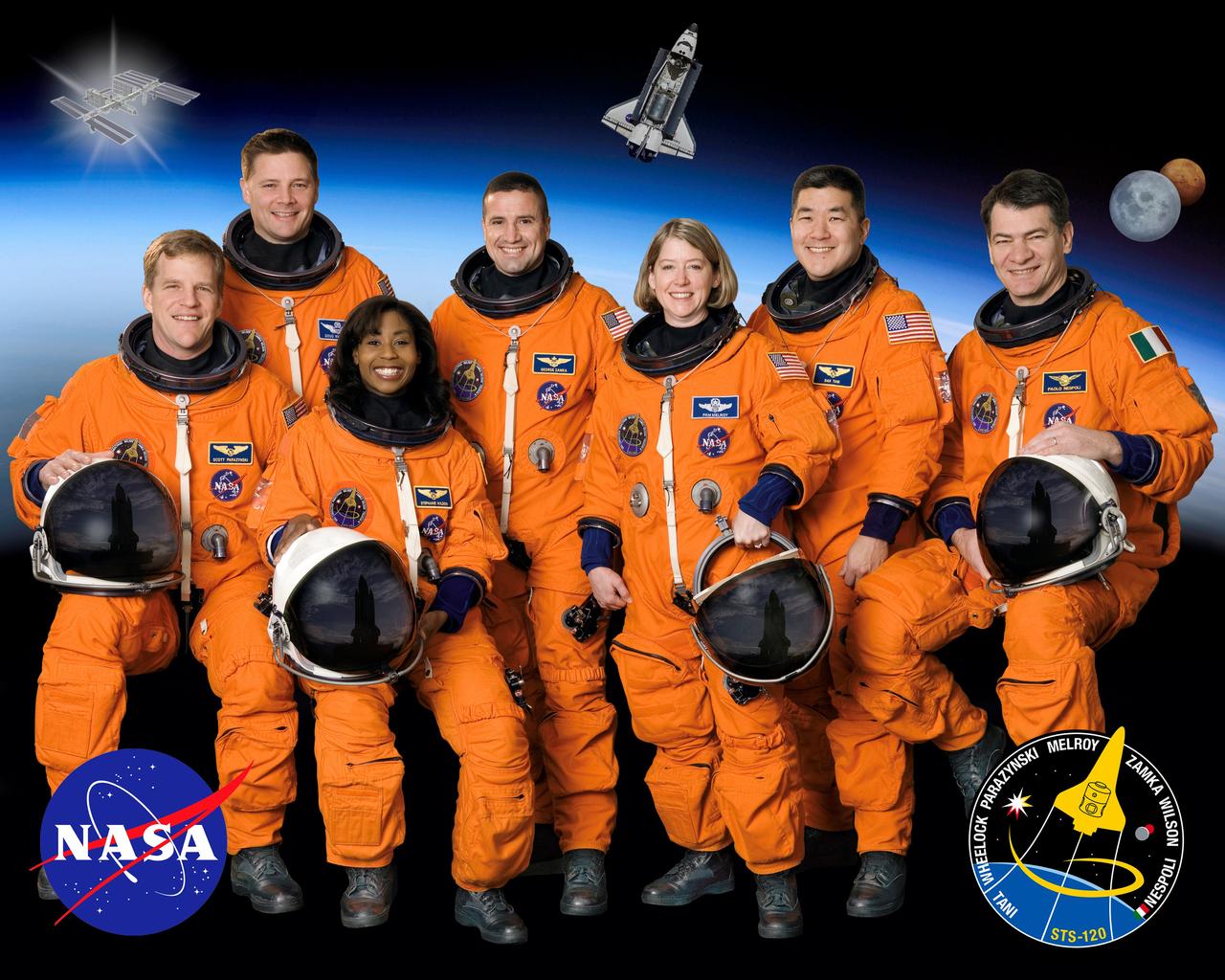
These seven astronauts took a break from training to pose for the STS-120 crew portrait. Pictured from the left are astronauts Scott E. Parazynski, Douglas H. Wheelock, Stephanie D. Wilson, all mission specialists; George D. Zamka, pilot; Pamela A. Melroy, commander; Daniel M. Tani, Expedition 16 flight engineer; and Paolo A. Nespoli, mission specialist representing the European Space Agency (ESA). The crew members were attired in training versions of their shuttle launch and entry suits. Tani joined Expedition 16 as flight engineer after launching to the International Space Station (ISS) and is scheduled to return home on mission STS-122. STS-120 launched October 23, 2007 with the main objectives of installing the U.S. Node 2, Harmony, and the relocation and deployment of the P6 truss to its permanent location.
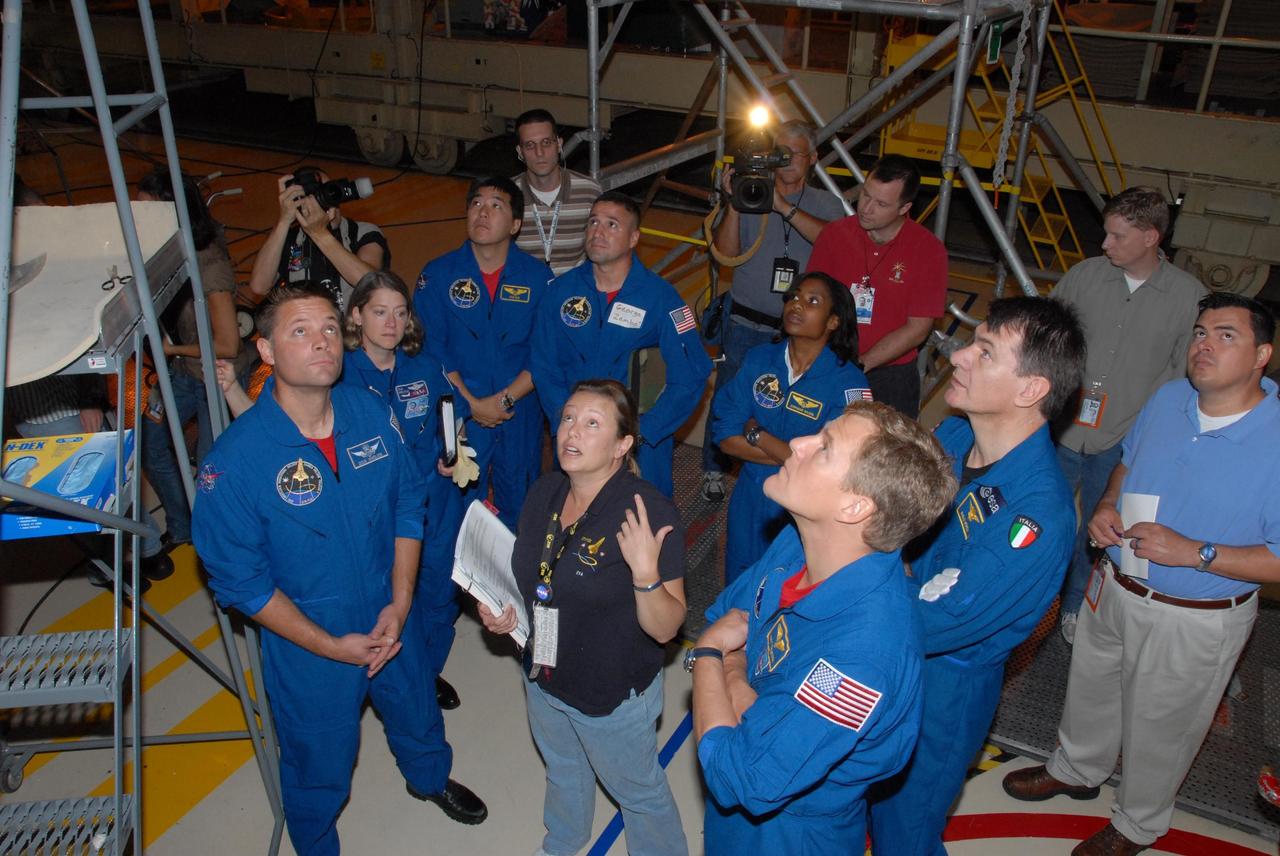
KENNEDY SPACE CENTER, FLA. - The STS-120 crew is at Kennedy for a crew equipment interface test, or CEIT. Receiving instruction from Allison Bolinger, an EVA technician with NASA, under space shuttle Discovery in Orbiter Processing Facility bay 3 are, from left in blue flight suits, Mission Specialist Douglas H. Wheelock; Commander Pamela A. Melroy; Expedition 16 Flight Engineer Daniel M. Tani; Pilot George D. Zamka; and Mission Specialists Stephanie D. Wilson, Scott E. Parazynski and Paolo A. Nespoli, a European Space Agency astronaut from Italy. Among the activities standard to a CEIT are harness training, inspection of the thermal protection system and camera operation for planned extravehicular activities, or EVAs. The STS-120 mission will deliver the Harmony module, christened after a school contest, which will provide attachment points for European and Japanese laboratory modules on the International Space Station. Known in technical circles as Node 2, it is similar to the six-sided Unity module that links the U.S. and Russian sections of the station. Built in Italy for the United States, Harmony will be the first new U.S. pressurized component to be added. The STS-120 mission is targeted to launch on Oct. 20. Photo credit: NASA/George Shelton
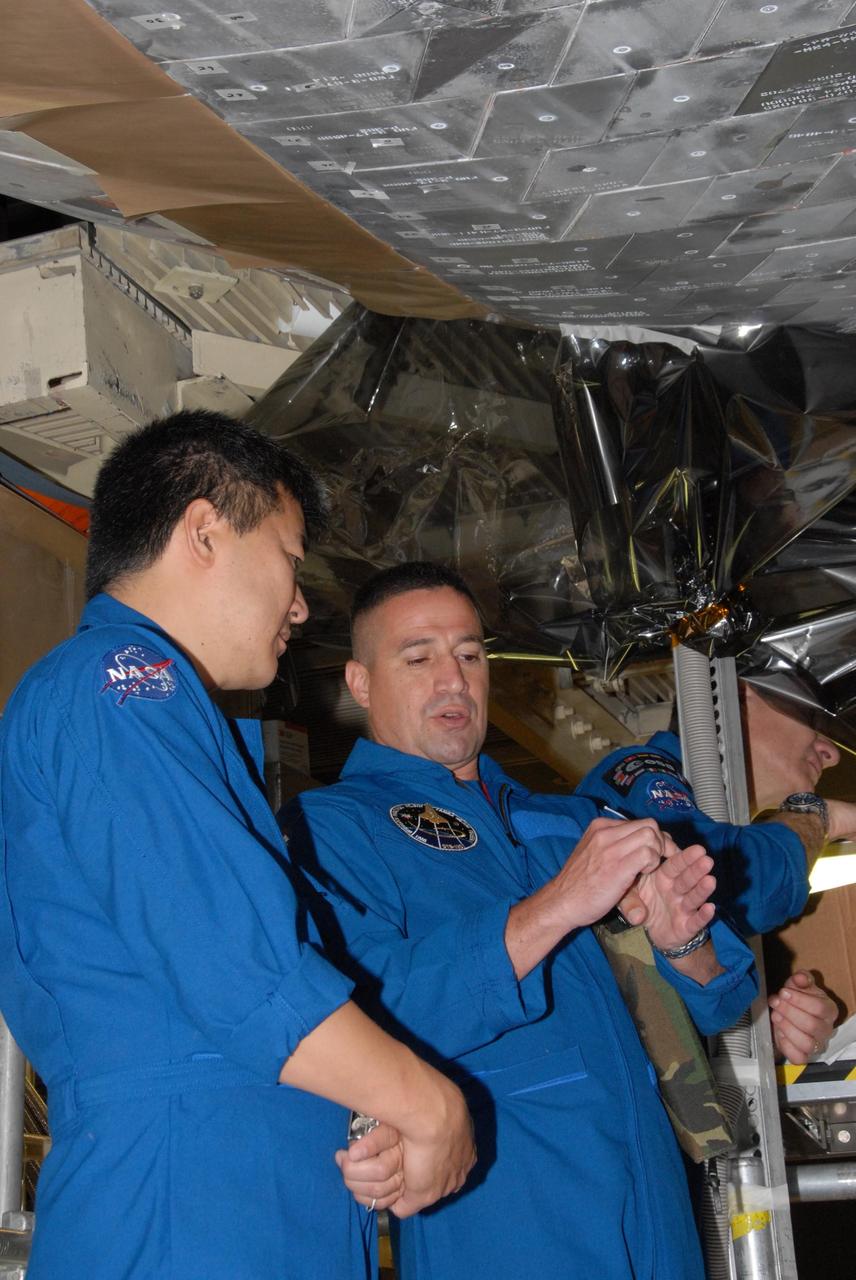
KENNEDY SPACE CENTER, FLA. - The STS-120 crew is at Kennedy for a crew equipment interface test, or CEIT. Standing under space shuttle Discovery in Orbiter Processing Facility bay 3, from left, are Expedition 16 Flight Engineer Daniel M. Tani, Pilot George D. Zamka and Mission Specialist Paolo A. Nespoli, a European Space Agency astronaut from Italy. Among the activities standard to a CEIT are harness training, inspection of the thermal protection system and camera operation for planned extravehicular activities, or EVAs. The STS-120 mission will deliver the Harmony module, christened after a school contest, which will provide attachment points for European and Japanese laboratory modules on the International Space Station. Known in technical circles as Node 2, it is similar to the six-sided Unity module that links the U.S. and Russian sections of the station. Built in Italy for the United States, Harmony will be the first new U.S. pressurized component to be added. The STS-120 mission is targeted to launch on Oct. 20. Photo credit: NASA/George Shelton

KENNEDY SPACE CENTER, FLA. - The STS-120 crew is at Kennedy for a crew equipment interface test, or CEIT. Inspecting the thermal protection system, or TPS, tiles under space shuttle Discovery in Orbiter Processing Facility bay 3 are, from left, Mission Specialist Douglas H. Wheelock (standing); Pilot George D. Zamka; Mission Specialist Paolo A. Nespoli, a European Space Agency astronaut from Italy; Allison Bolinger (pointing), an EVA technician with NASA; Commander Pamela A. Melroy; Mission Specialists Scott E. Parazynski and Stephanie D. Wilson; two support personnel and Erin Schlichenmaier, with United Space Alliance TPS Engineering. Among the activities standard to a CEIT are harness training, inspection of the thermal protection system and camera operation for planned extravehicular activities, or EVAs. The STS-120 mission will deliver the Harmony module, christened after a school contest, which will provide attachment points for European and Japanese laboratory modules on the International Space Station. Known in technical circles as Node 2, it is similar to the six-sided Unity module that links the U.S. and Russian sections of the station. Built in Italy for the United States, Harmony will be the first new U.S. pressurized component to be added. The STS-120 mission is targeted to launch on Oct. 20. Photo credit: NASA/George Shelton
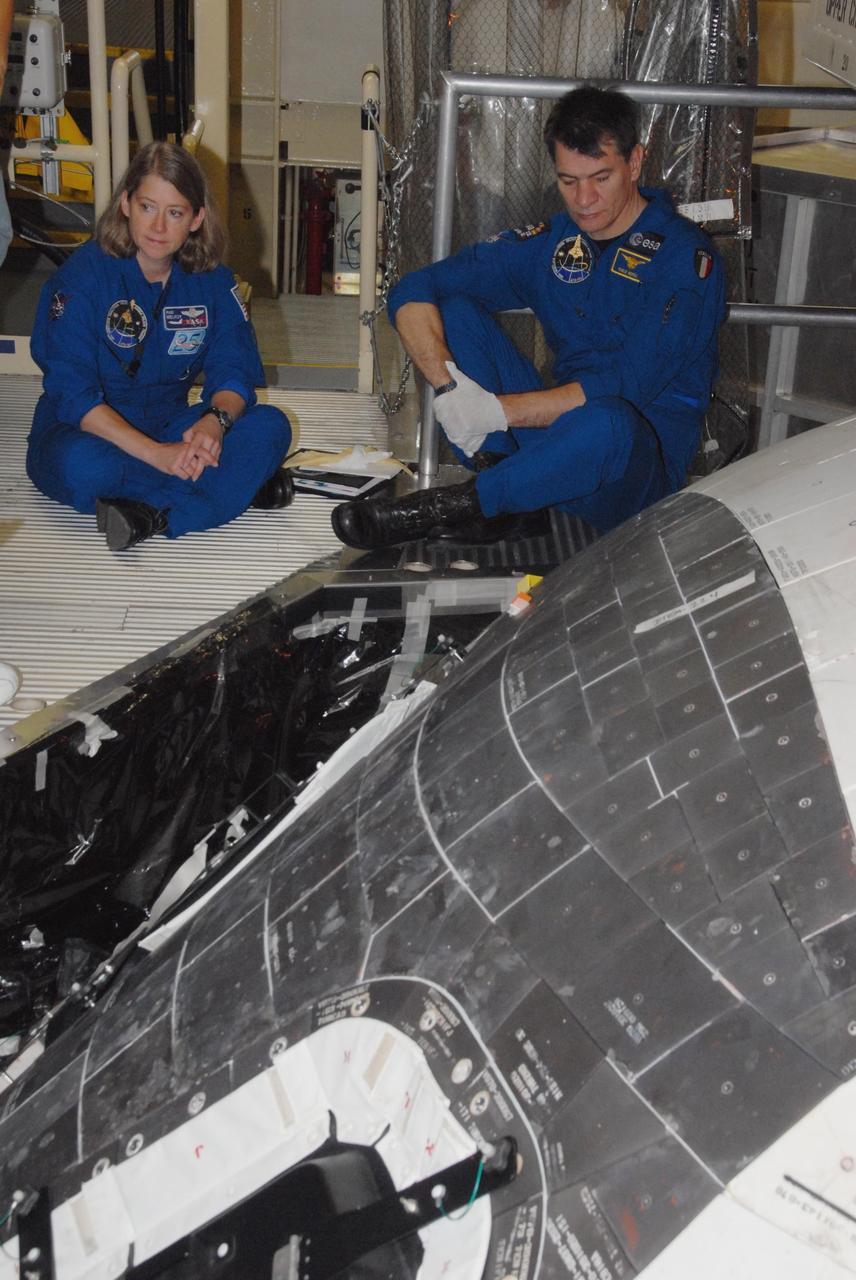
KENNEDY SPACE CENTER, FLA. - The STS-120 crew is at Kennedy for a crew equipment interface test, or CEIT. Receiving a briefing on the thermal protection system, or TPS, tiles on space shuttle Discovery in Orbiter Processing Facility bay 3 are Commander Pamela A. Melroy and Mission Specialist Paolo A. Nespoli, a European Space Agency astronaut from Italy. Among the activities standard to a CEIT are harness training, inspection of the thermal protection system and camera operation for planned extravehicular activities, or EVAs. The STS-120 mission will deliver the Harmony module, christened after a school contest, which will provide attachment points for European and Japanese laboratory modules on the International Space Station. Known in technical circles as Node 2, it is similar to the six-sided Unity module that links the U.S. and Russian sections of the station. Built in Italy for the United States, Harmony will be the first new U.S. pressurized component to be added. The STS-120 mission is targeted to launch on Oct. 20. Photo credit: NASA/George Shelton
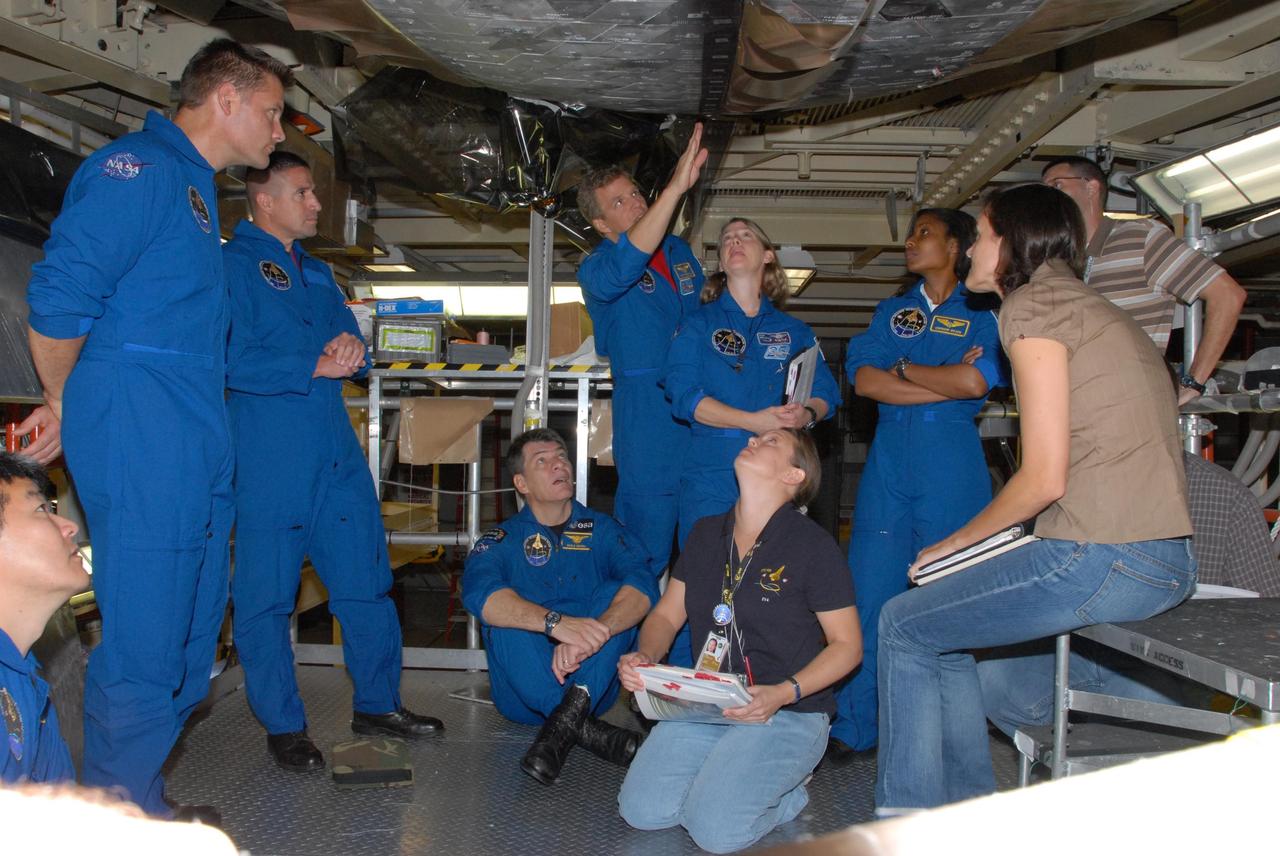
KENNEDY SPACE CENTER, FLA. - The STS-120 crew is at Kennedy for a crew equipment interface test, or CEIT. Inspecting the thermal protection system, or TPS, tiles under space shuttle Discovery in Orbiter Processing Facility bay 3 are, from left, Expedition 16 Flight Engineer Daniel M. Tani; Mission Specialist Douglas H. Wheelock; Pilot George D. Zamka; Mission Specialist Paolo A. Nespoli (sitting), a European Space Agency astronaut from Italy; Mission Specialist Scott E. Parazynski (pointing); Commander Pamela A. Melroy; Allison Bolinger (kneeling), an EVA technician with NASA; Mission Specialist Stephanie D. Wilson; and Erin Schlichenmaier, with United Space Alliance TPS Engineering. Among the activities standard to a CEIT are harness training, inspection of the thermal protection system and camera operation for planned extravehicular activities, or EVAs. The STS-120 mission will deliver the Harmony module, christened after a school contest, which will provide attachment points for European and Japanese laboratory modules on the International Space Station. Known in technical circles as Node 2, it is similar to the six-sided Unity module that links the U.S. and Russian sections of the station. Built in Italy for the United States, Harmony will be the first new U.S. pressurized component to be added. The STS-120 mission is targeted to launch on Oct. 20. Photo credit: NASA/George Shelton
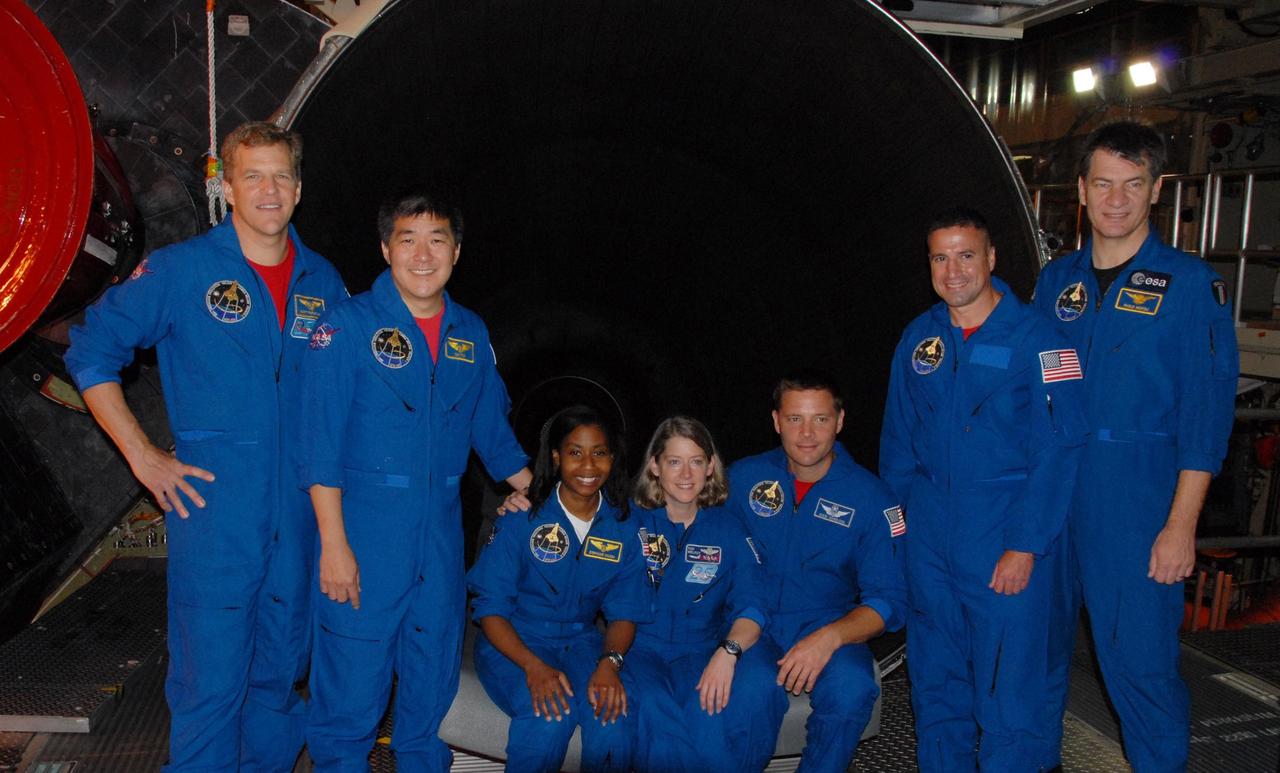
KENNEDY SPACE CENTER, FLA. - The STS-120 crew takes a break from activities during their crew equipment interface test, or CEIT, to pose for a portrait in front of one of space shuttle Discovery's main engines. From left are Mission Specialist Scott E. Parazynski, Expedition 16 Flight Engineer Daniel M. Tani, Mission Specialist Stephanie D. Wilson, Commander Pamela A. Melroy, Mission Specialist Douglas H. Wheelock, Pilot George D. Zamka and Mission Specialist Paolo A. Nespoli, a European Space Agency astronaut from Italy. Among the activities standard to a CEIT are harness training, inspection of the thermal protection system and camera operation for planned extravehicular activities, or EVAs. The STS-120 mission will deliver the Harmony module, christened after a school contest, which will provide attachment points for European and Japanese laboratory modules on the International Space Station. Known in technical circles as Node 2, it is similar to the six-sided Unity module that links the U.S. and Russian sections of the station. Built in Italy for the United States, Harmony will be the first new U.S. pressurized component to be added. The STS-120 mission is targeted to launch on Oct. 20. Photo credit: NASA/George Shelton
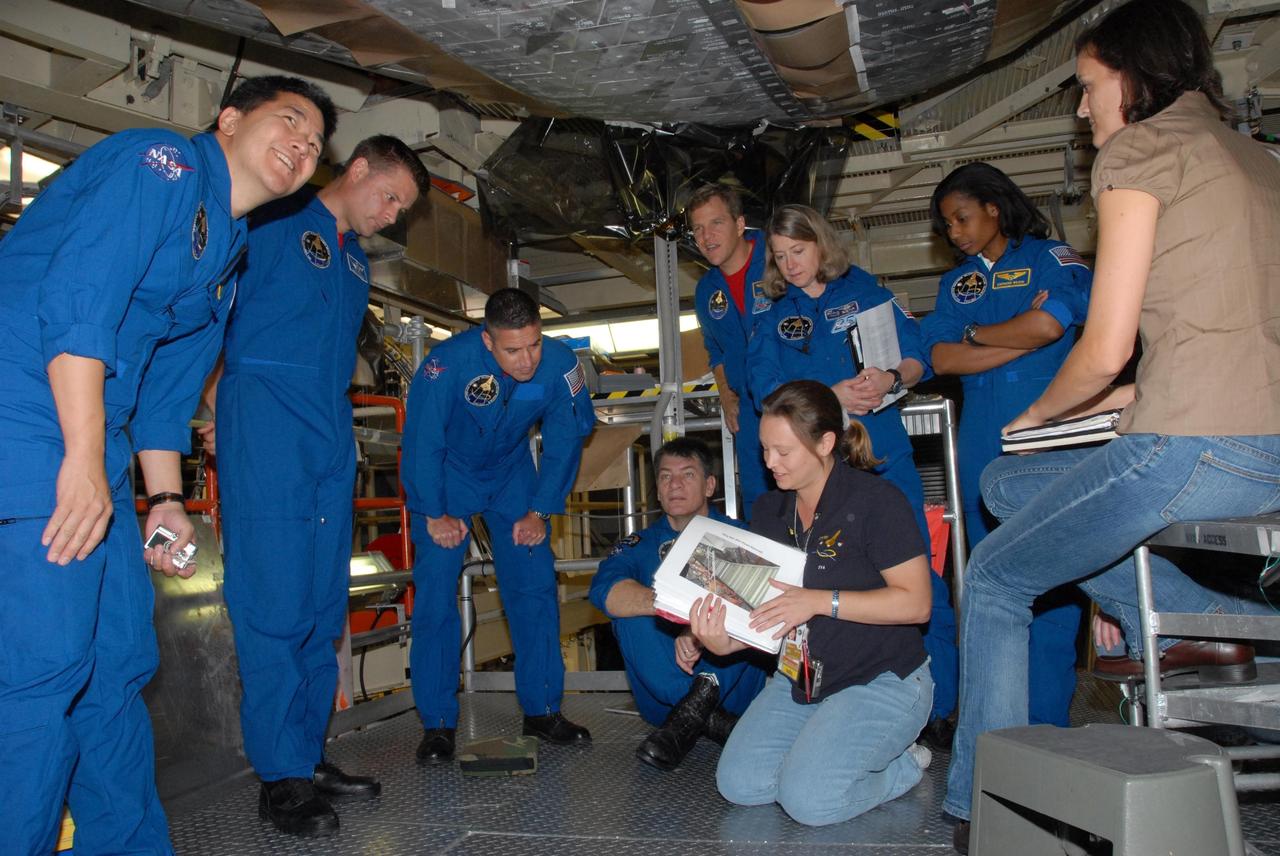
KENNEDY SPACE CENTER, FLA. - The STS-120 crew is at Kennedy for a crew equipment interface test, or CEIT. Inspecting the thermal protection system, or TPS, tiles under space shuttle Discovery in Orbiter Processing Facility bay 3 are, from left, Expedition 16 Flight Engineer Daniel M. Tani; Mission Specialist Douglas H. Wheelock; Pilot George D. Zamka; Mission Specialist Paolo A. Nespoli (kneeling), a European Space Agency astronaut from Italy; Mission Specialist Scott E. Parazynski; Commander Pamela A. Melroy; Allison Bolinger (kneeling), an EVA technician with NASA; Mission Specialist Stephanie D. Wilson; and Erin Schlichenmaier, with United Space Alliance TPS Engineering. Among the activities standard to a CEIT are harness training, inspection of the thermal protection system and camera operation for planned extravehicular activities, or EVAs. The STS-120 mission will deliver the Harmony module, christened after a school contest, which will provide attachment points for European and Japanese laboratory modules on the International Space Station. Known in technical circles as Node 2, it is similar to the six-sided Unity module that links the U.S. and Russian sections of the station. Built in Italy for the United States, Harmony will be the first new U.S. pressurized component to be added. The STS-120 mission is targeted to launch on Oct. 20. Photo credit: NASA/George Shelton
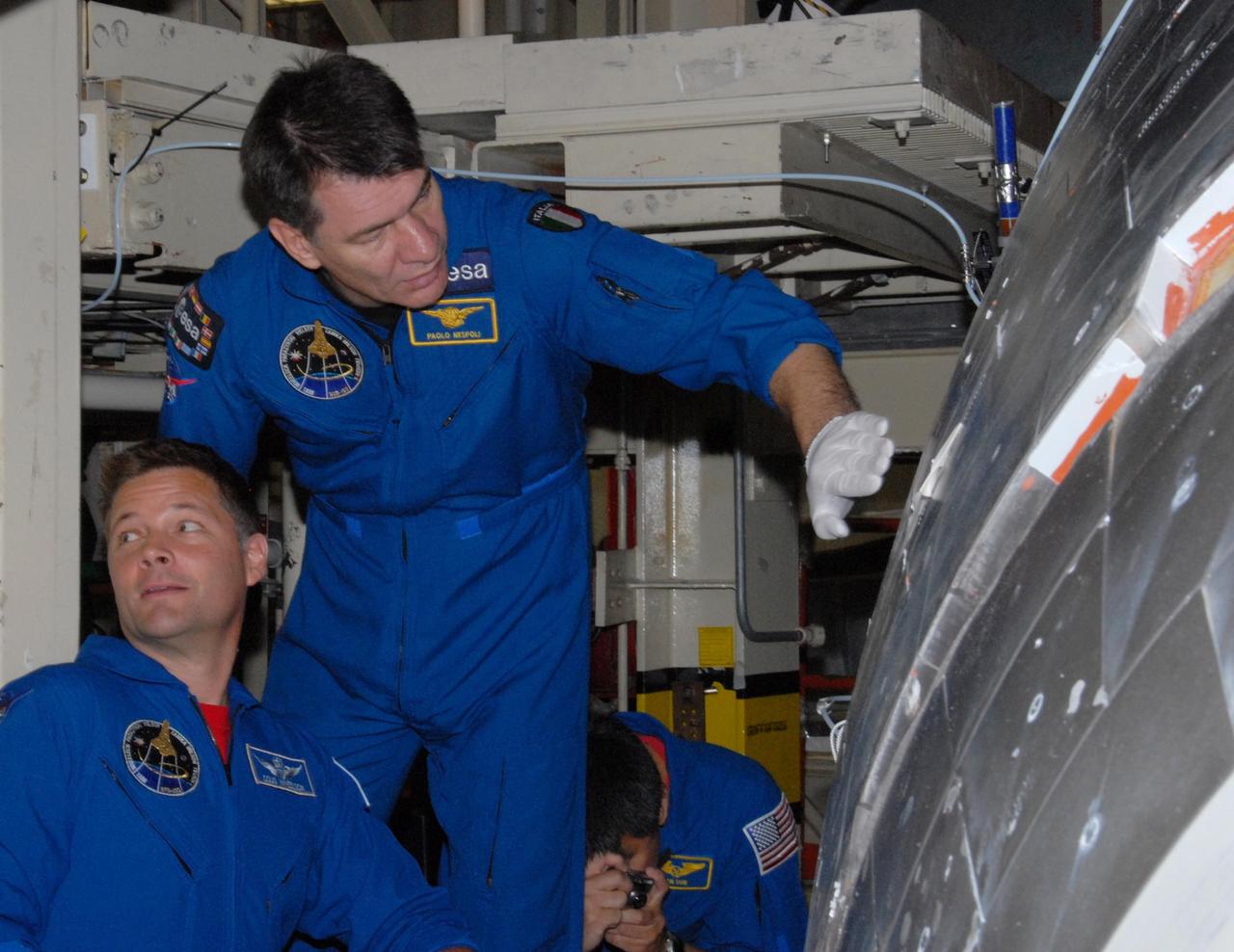
KENNEDY SPACE CENTER, FLA. - The STS-120 crew is at Kennedy for a crew equipment interface test, or CEIT. Inspecting the thermal protection system, or TPS, tiles on space shuttle Discovery in Orbiter Processing Facility bay 3 are Mission Specialists Douglas H. Wheelock and Paolo A. Nespoli, a European Space Agency astronaut from Italy, and Expedition 16 Flight Engineer Daniel M. Tani (with camera). Among the activities standard to a CEIT are harness training, inspection of the thermal protection system and camera operation for planned extravehicular activities, or EVAs. The STS-120 mission will deliver the Harmony module, christened after a school contest, which will provide attachment points for European and Japanese laboratory modules on the International Space Station. Known in technical circles as Node 2, it is similar to the six-sided Unity module that links the U.S. and Russian sections of the station. Built in Italy for the United States, Harmony will be the first new U.S. pressurized component to be added. The STS-120 mission is targeted to launch on Oct. 20. Photo credit: NASA/George Shelton
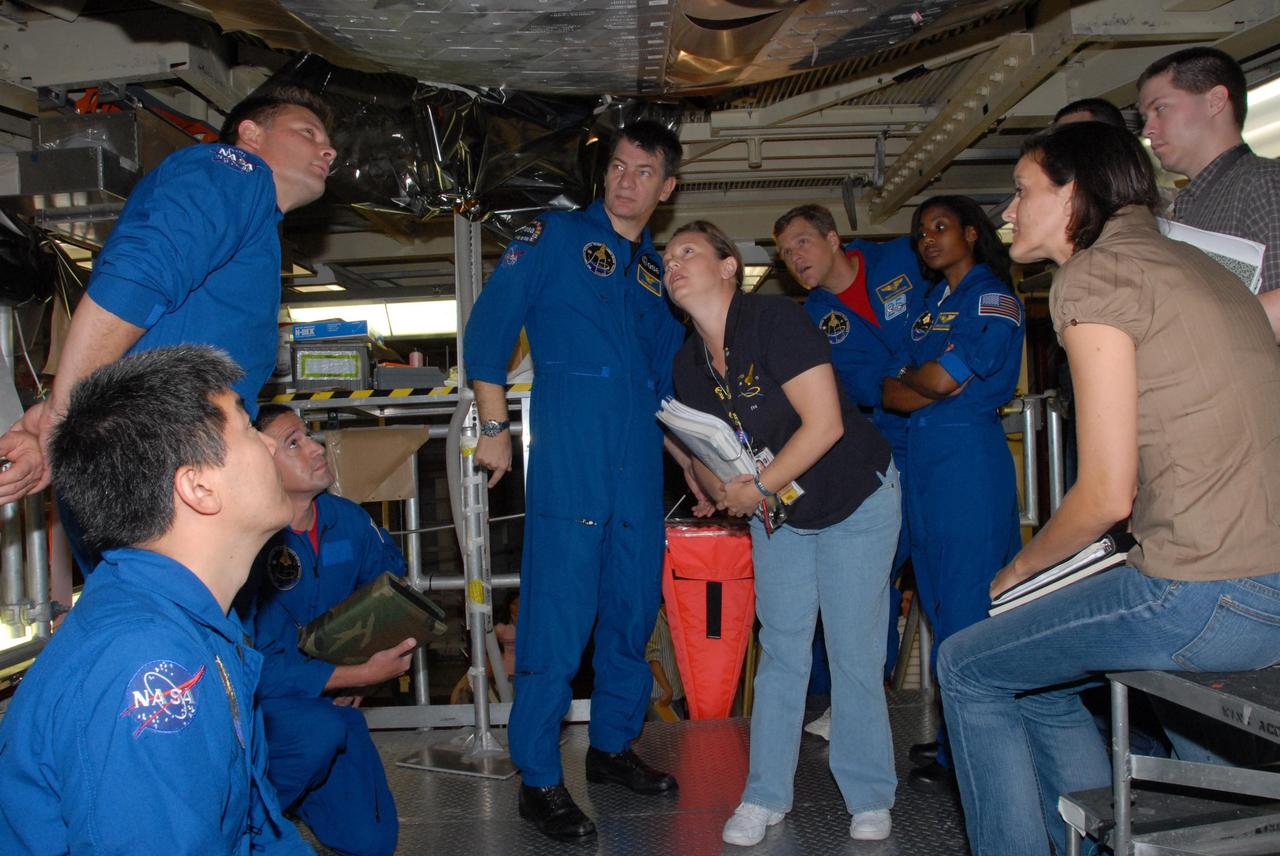
KENNEDY SPACE CENTER, FLA. - The STS-120 crew is at Kennedy for a crew equipment interface test, or CEIT. Inspecting the thermal protection system, or TPS, tiles under space shuttle Discovery in Orbiter Processing Facility bay 3 are, from left, Expedition 16 Flight Engineer Daniel M. Tani; Mission Specialist Douglas H. Wheelock; Pilot George D. Zamka; Mission Specialist Paolo A. Nespoli, a European Space Agency astronaut from Italy; Allison Bolinger, an EVA technician with NASA; Mission Specialists Scott E. Parazynski and Stephanie D. Wilson; and Erin Schlichenmaier, of TPS Engineering with United Space Alliance. Among the activities standard to a CEIT are harness training, inspection of the thermal protection system and camera operation for planned extravehicular activities, or EVAs. The STS-120 mission will deliver the Harmony module, christened after a school contest, which will provide attachment points for European and Japanese laboratory modules on the International Space Station. Known in technical circles as Node 2, it is similar to the six-sided Unity module that links the U.S. and Russian sections of the station. Built in Italy for the United States, Harmony will be the first new U.S. pressurized component to be added. The STS-120 mission is targeted to launch on Oct. 20. Photo credit: NASA/George Shelton
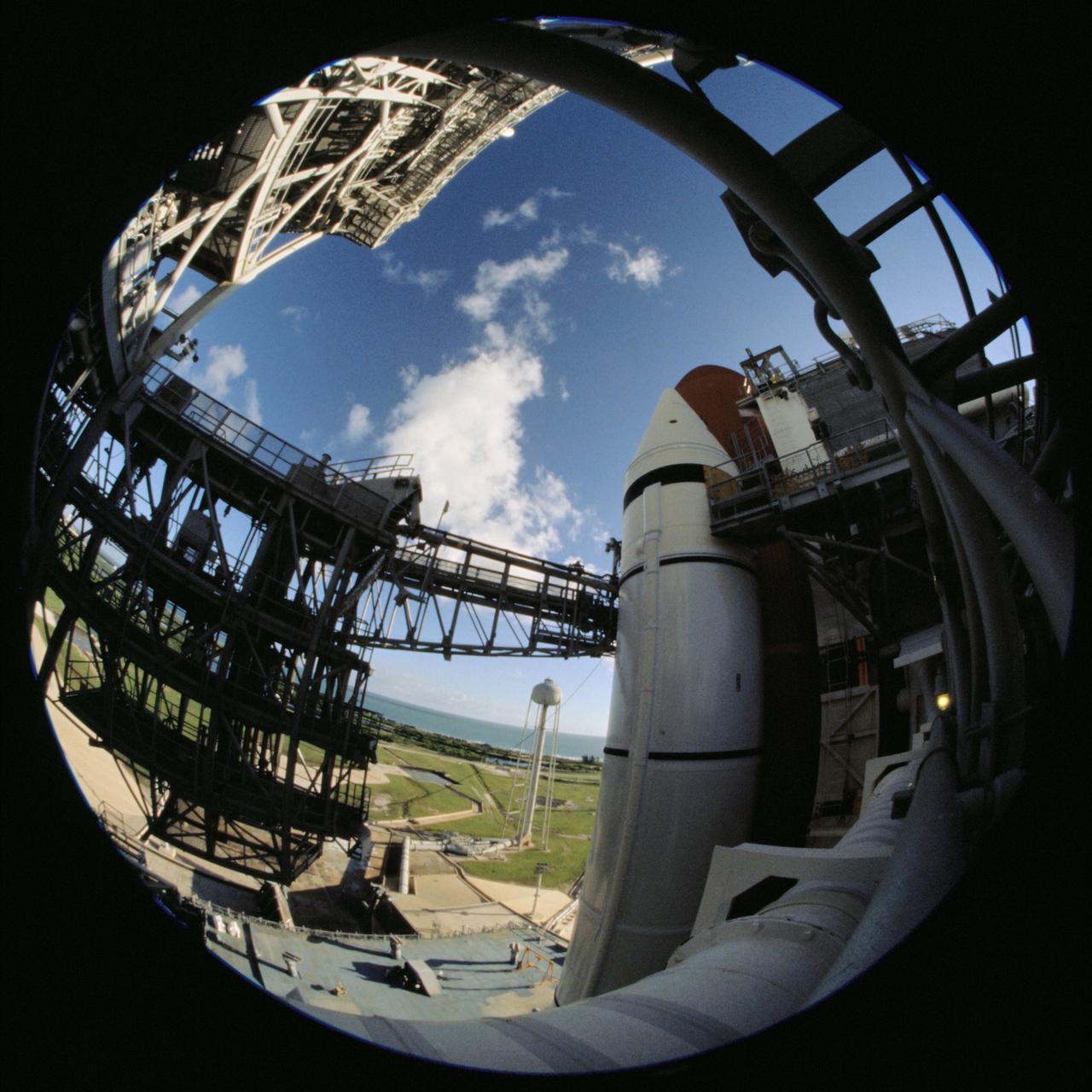
A photographer used a fisheye lens attached to an electronic still camera to record a series of photos of the Space Shuttle Discovery at the launch pad while the STS-120 crew was at Kennedy Space Center for the Terminal Countdown Demonstration Test in October 2007. The STS-120 mission launched from Kennedy Space Center's launch pad 39A at 11:38:19 a.m. (EDT) on October 23, 2007. The crew included Scott E. Parazynski, Douglas H. Wheelock, Stephanie D. Wilson, all mission specialists; George D. Zamka, pilot; Pamela A. Melroy, commander; Daniel M. Tani, Expedition 16 flight engineer; and Paolo A. Nespoli, mission specialist representing the European Space Agency (ESA). Major objectives included the installation of the P6 solar array of the port truss and delivery and installment of Harmony, the Italian-built U.S. Node 2 on the International Space Station (ISS).
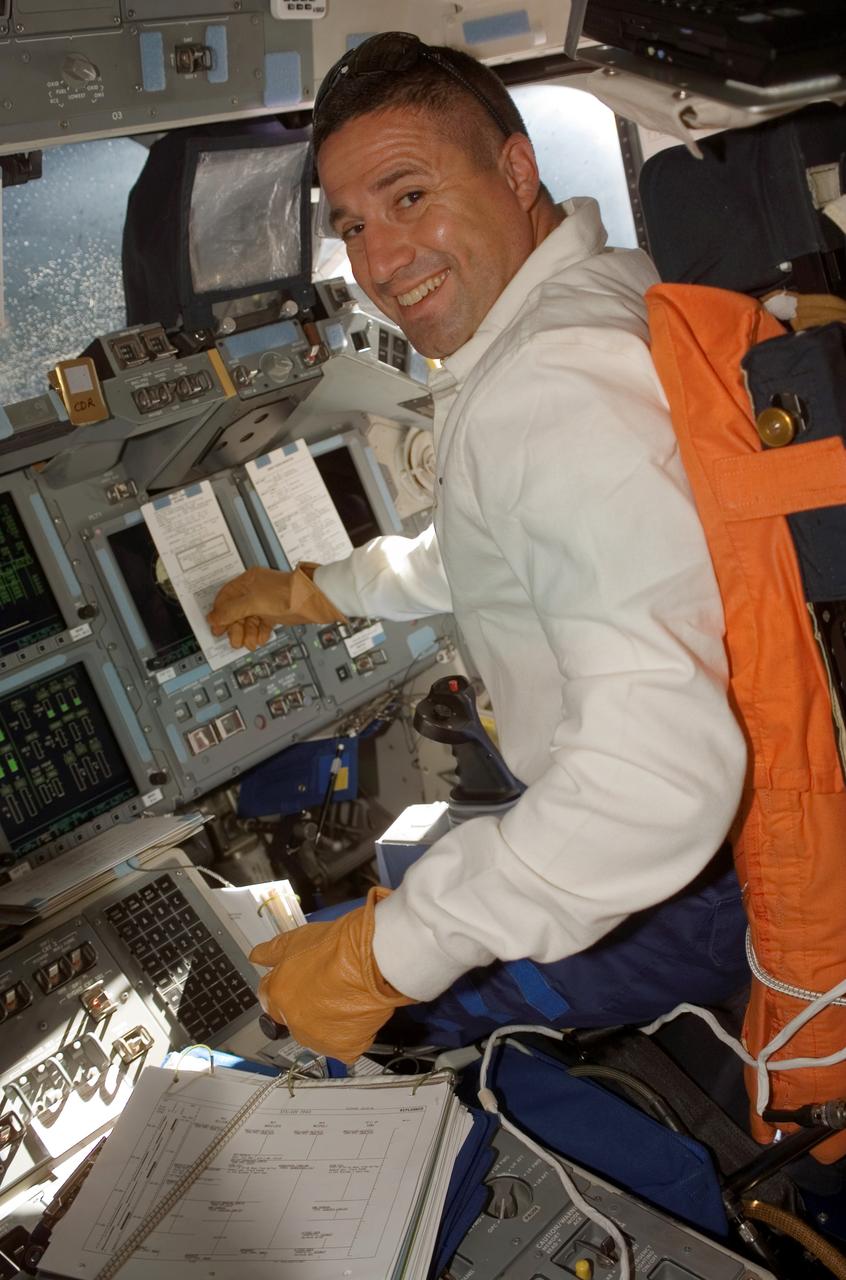
Astronaut George Zamka, STS-120 pilot, is seated at the pilot's station on the forward flight deck of the Space Shuttle Discovery during rendezvous and docking operations with the International Space Station (ISS). The STS-120 mission launched from Kennedy Space Center's launch pad 39A at 11:38:19 a.m. (EDT) on October 23, 2007. The crew also included Scott E. Parazynski, Douglas H. Wheelock, Stephanie D. Wilson, all mission specialists; Pamela A. Melroy, commander; Daniel M. Tani, Expedition 16 flight engineer; and Paolo A. Nespoli, mission specialist representing the European Space Agency (ESA). Major objectives included the installation of the P6 solar array of the port truss and delivery and installment of Harmony, the Italian-built U.S. Node 2 on the ISS.
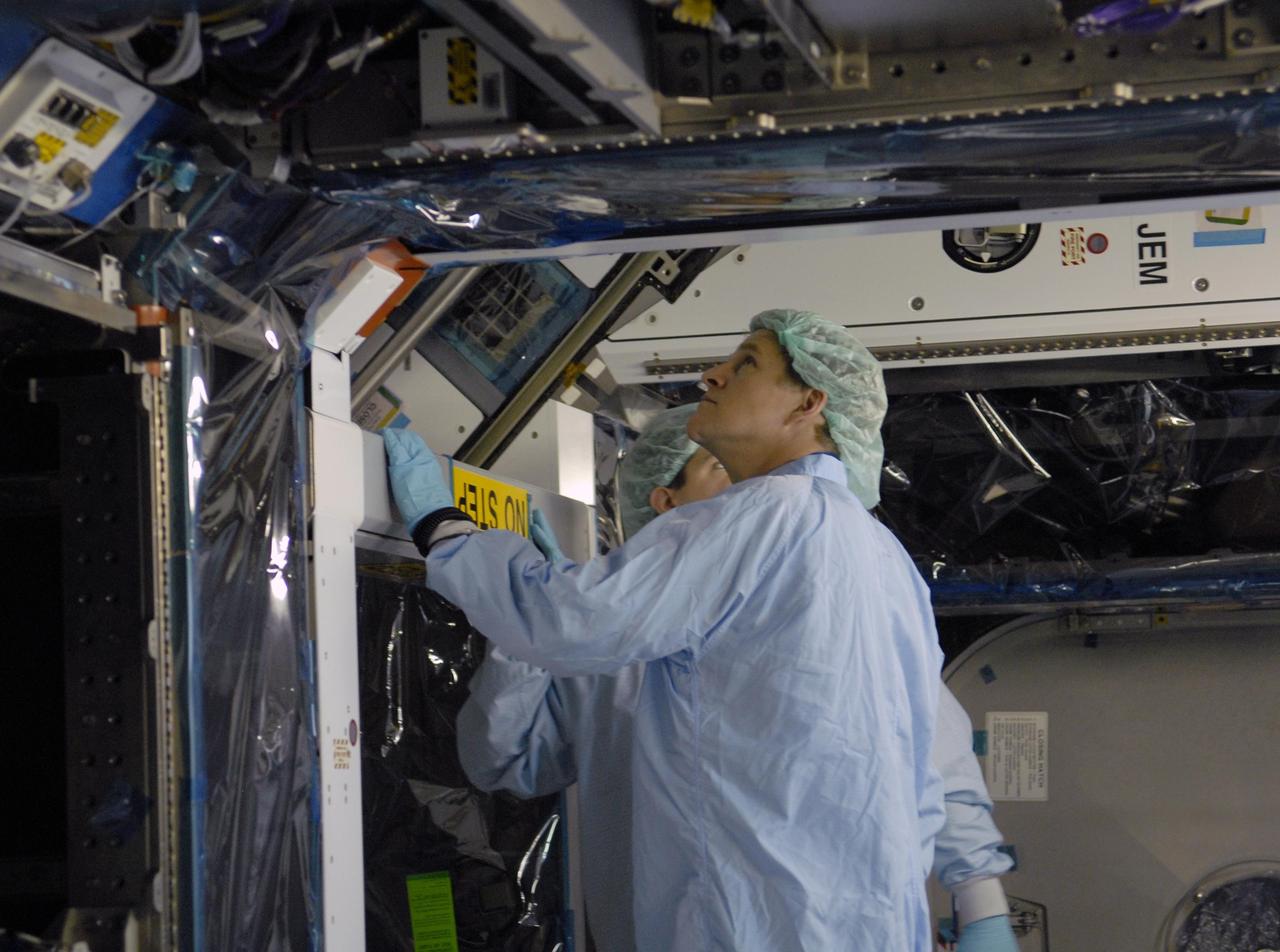
KENNEDY SPACE CENTER, FLA. -- STS-120 Mission Specialist Scott Parazynski takes a look underneath the primary payload for the mission: the U.S. Node 2, another element to be added to the International Space Station. Node 2 will provide a passageway between three station science experiment facilities: the U.S. Destiny Laboratory, the Kibo Japanese Experiment Module, and the European Columbus Laboratory. STS-120 is targeted for launch on Sept. 7 with a crew of six, including Commander Pam Melroy, Pilot George Zamka, and Mission Specialist Mike Foreman. Photo credit: NASA/Kim Shiflett
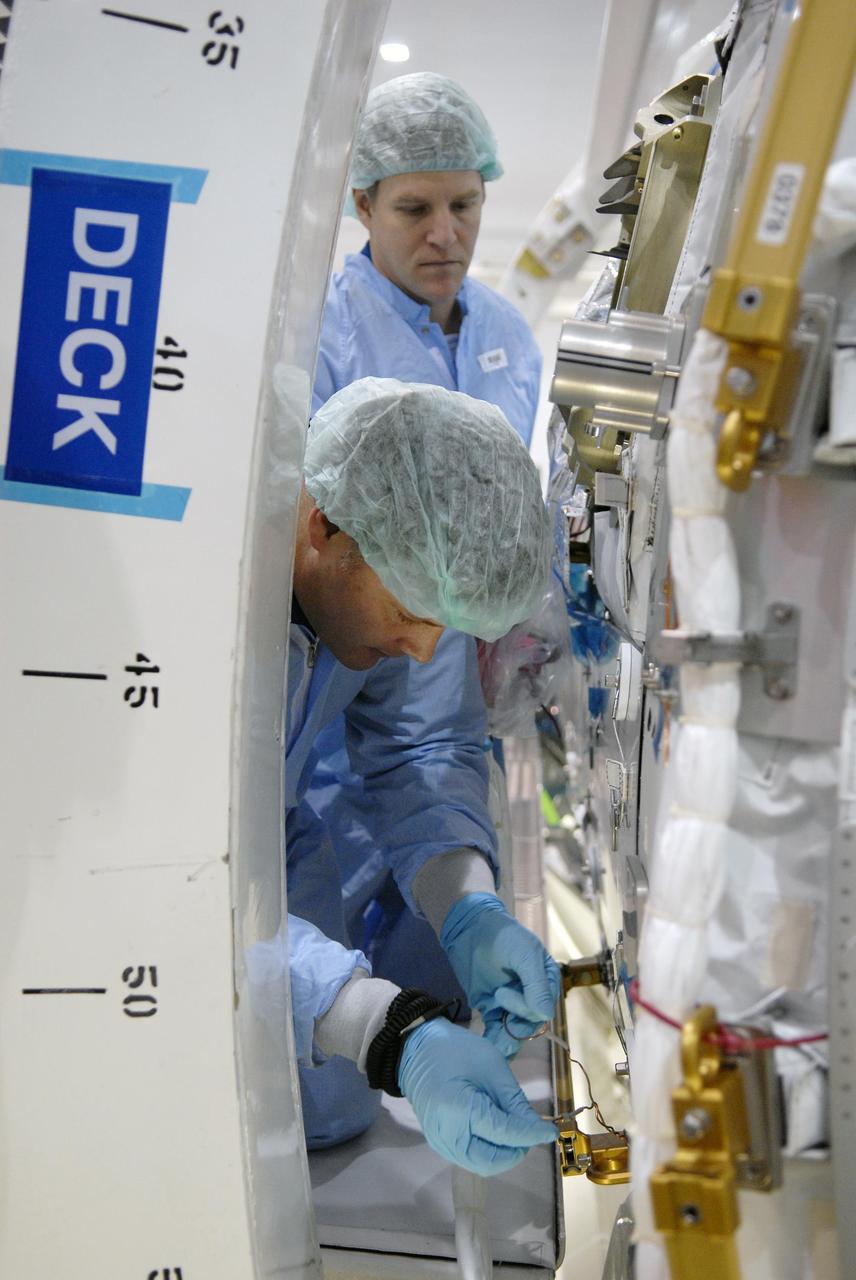
KENNEDY SPACE CENTER, FLA. -- STS-120 Mission Specialist Scott Parazynski (background) watches Mission Specialist Doug Wheelock work with a wire on the primary payload for the mission: the U.S. Node 2, another element to be added to the International Space Station. Parazynski, Wheelock and other crew members are familiarizing themselves with the payload. Node 2 will provide a passageway between three station science experiment facilities: the U.S. Destiny Laboratory, the Kibo Japanese Experiment Module, and the European Columbus Laboratory. STS-120 is targeted for launch on Sept. 7 with a crew of six, including Commander Pam Melroy, Pilot George Zamka, and Mission Specialist Mike Foreman. Photo credit: NASA/Kim Shiflett
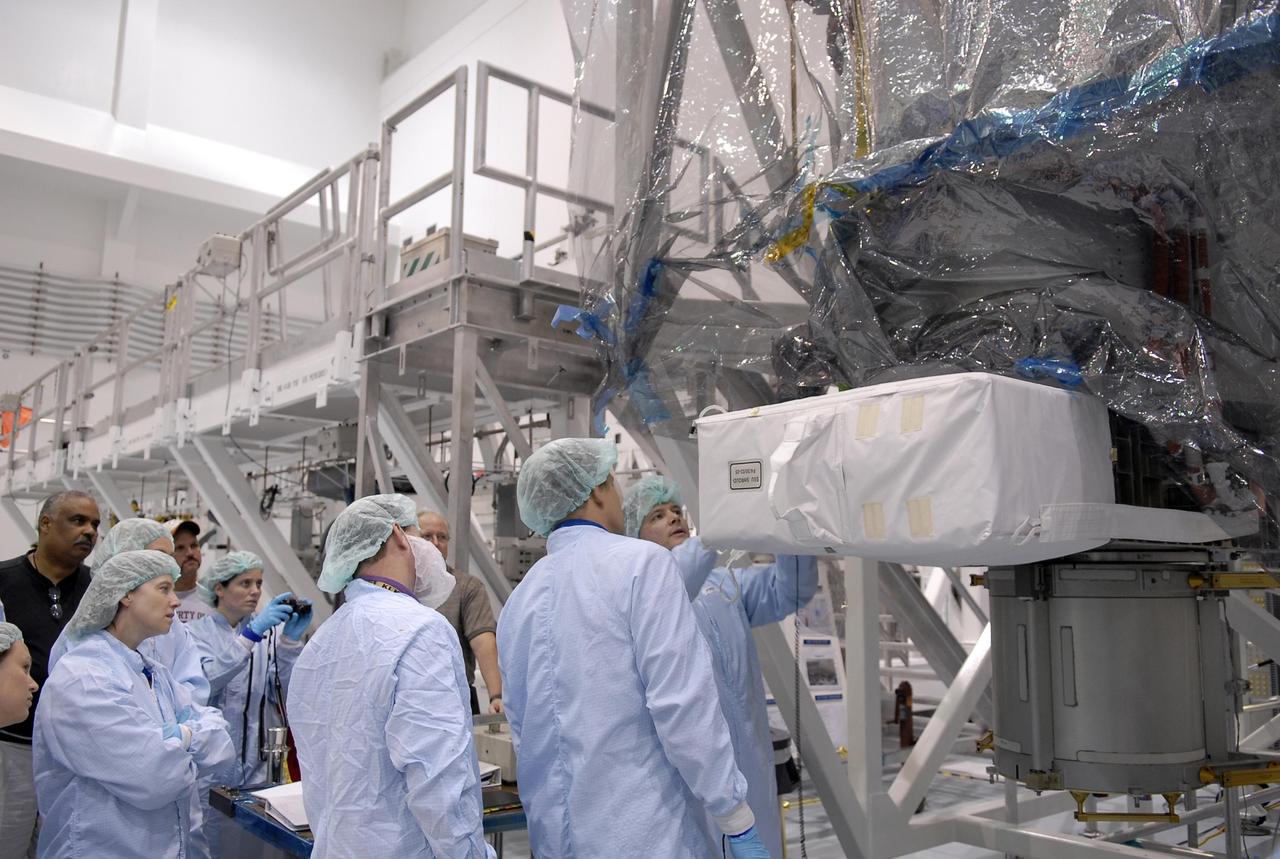
KENNEDY SPACE CENTER, FLA. -- Inside the Space Station Processing Facility, mission STS-120 crew members familiarize themselves with equipment during a visit to Kennedy Space Center. Crew members are Commander Pam Melroy, Pilot George Zamka and Mission Specialists Scott Parazynski, Douglas Wheelock, Stephanie Wilson, Paolo Nespoli (with the European Space Agency), Daniel Tani and Clayton Anderson. Mission STS-120 will deliver the Node 2 "Harmony" connecting module to the station. During the mission, Tani and Anderson will transfer to the station and remain as flight engineers for Expedition 15. The mission is tentatively scheduled for August of this year. Photo credit: NASA/Kim Shiflett
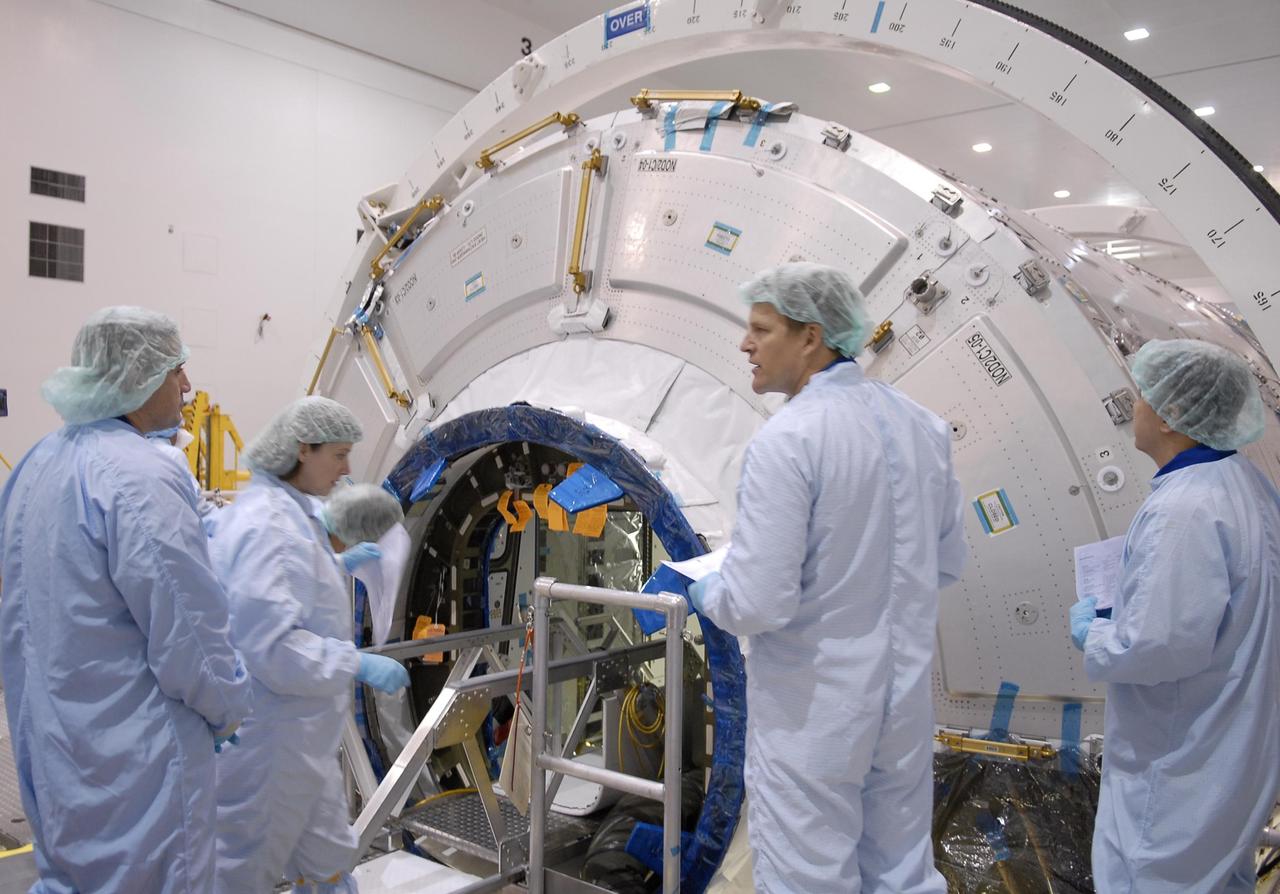
KENNEDY SPACE CENTER, FLA. -- Inside the Space Station Processing Facility, mission STS-120 crew members familiarize themselves with equipment during a visit to Kennedy Space Center. Crew members are Commander Pam Melroy, Pilot George Zamka and Mission Specialists Scott Parazynski, Douglas Wheelock, Stephanie Wilson, Paolo Nespoli (with the European Space Agency), Daniel Tani and Clayton Anderson. Mission STS-120 will deliver the Node 2 "Harmony" connecting module to the station. During the mission, Tani and Anderson will transfer to the station and remain as flight engineers for Expedition 15. The mission is tentatively scheduled for August of this year. Photo credit: NASA/Kim Shiflett
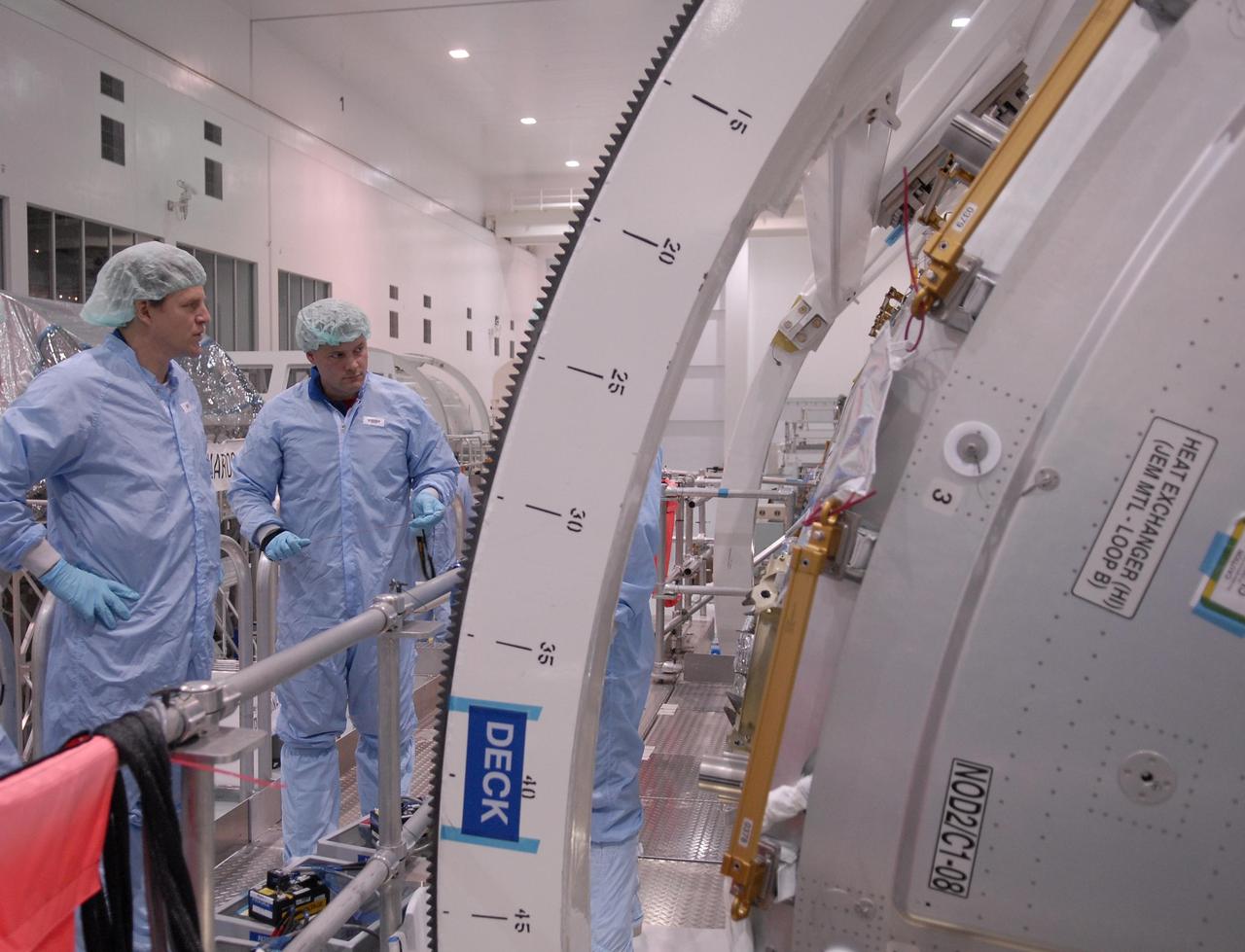
KENNEDY SPACE CENTER, FLA. -- STS-120 Mission Specialists Scott Parazynski (left) and Doug Wheelock check out the primary payload for the mission: the U.S. Node 2, another element to be added to the International Space Station. They are familiarizing themselves with the payload. Node 2 will provide a passageway between three station science experiment facilities: the U.S. Destiny Laboratory, the Kibo Japanese Experiment Module, and the European Columbus Laboratory. STS-120 is targeted for launch on Sept. 7 with a crew of six, including Commander Pam Melroy, Pilot George Zamka, and Mission Specialist Mike Foreman. Photo credit: NASA/Kim Shiflett
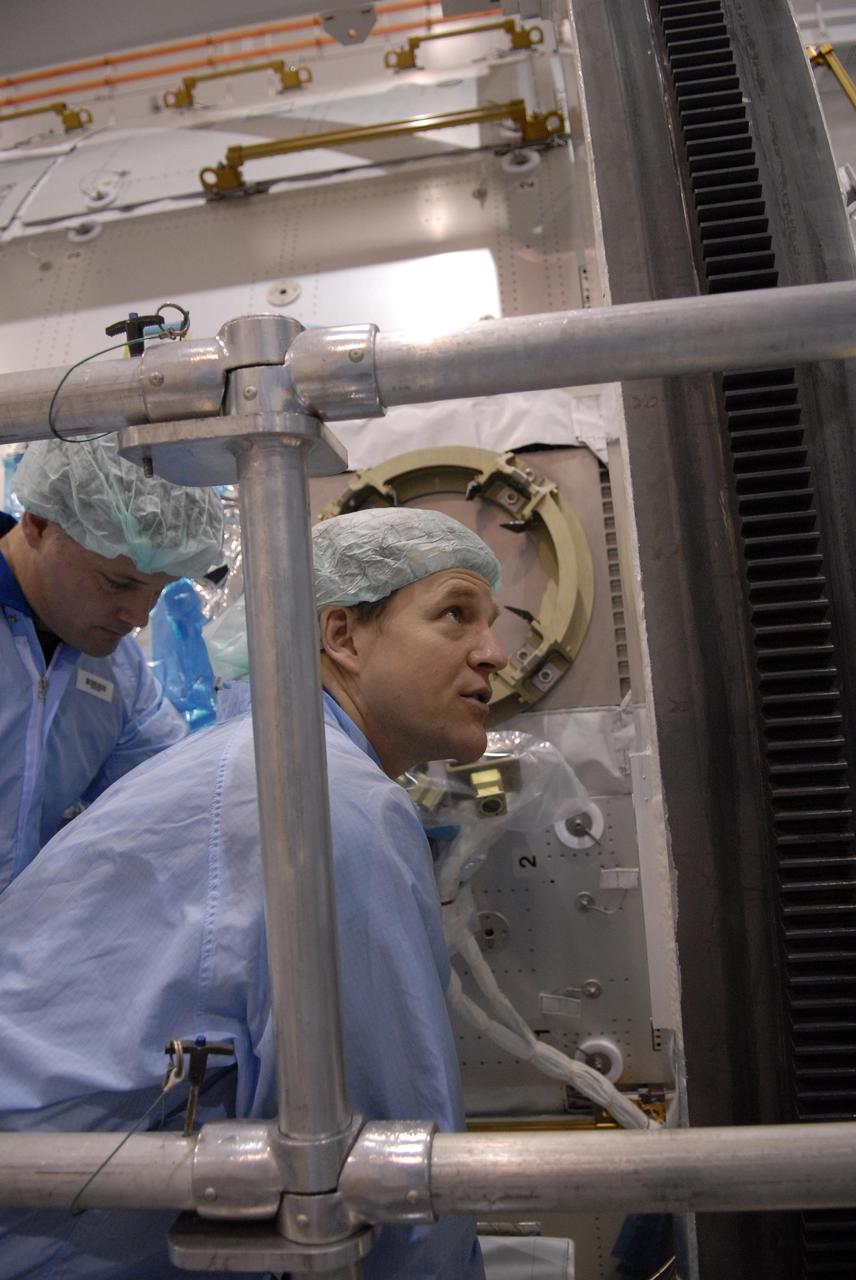
KENNEDY SPACE CENTER, FLA. -- In the Space Station Processing Facility at NASA's Kennedy Space Center, STS-120 Mission Specialist Scott Parazynski checks out the primary payload for the mission: the U.S. Node 2, another element to be added to the International Space Station. Parazynski and other crew members are familiarizing themselves with the payload. Node 2 will provide a passageway between three station science experiment facilities: the U.S. Destiny Laboratory, the Kibo Japanese Experiment Module, and the European Columbus Laboratory. STS-120 is targeted for launch on Sept. 7 with a crew of six, including Commander Pam Melroy, Pilot George Zamka, and Mission Specialist Mike Foreman. Photo credit: NASA/Kim Shiflett
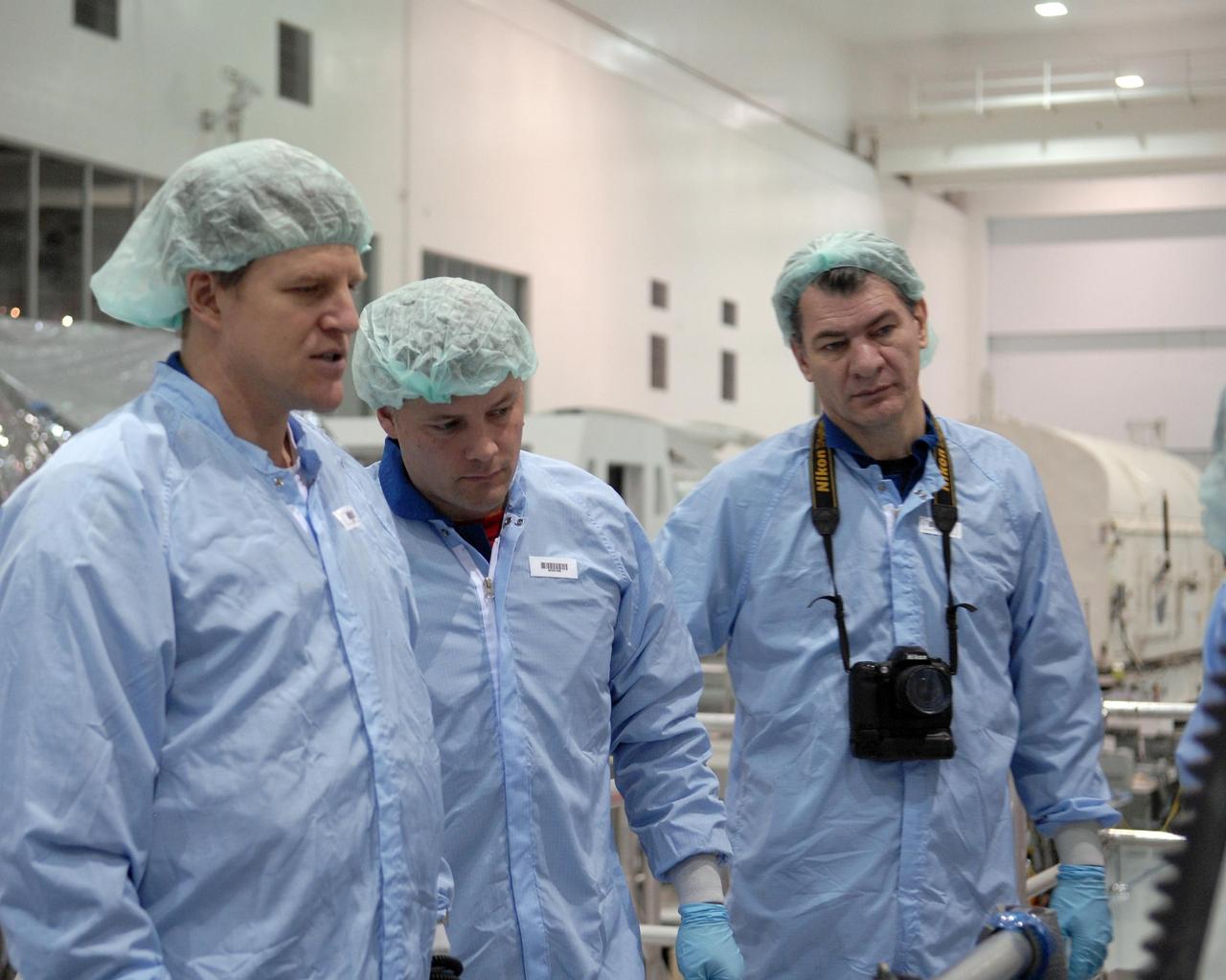
KENNEDY SPACE CENTER, FLA. -- STS-120 Mission Specialists Scott Parazynski (left), Doug Wheelock (center) and Paolo Nespoli (right) check out the primary payload for the mission: the U.S. Node 2, another element to be added to the International Space Station. Nespoli represents the European Space Agency. Node 2 will provide a passageway between three station science experiment facilities: the U.S. Destiny Laboratory, the Kibo Japanese Experiment Module, and the European Columbus Laboratory. STS-120 is targeted for launch on Sept. 7 with a crew of six, including Commander Pam Melroy, Pilot George Zamka, and Mission Specialist Mike Foreman. Photo credit: NASA/Kim Shiflett
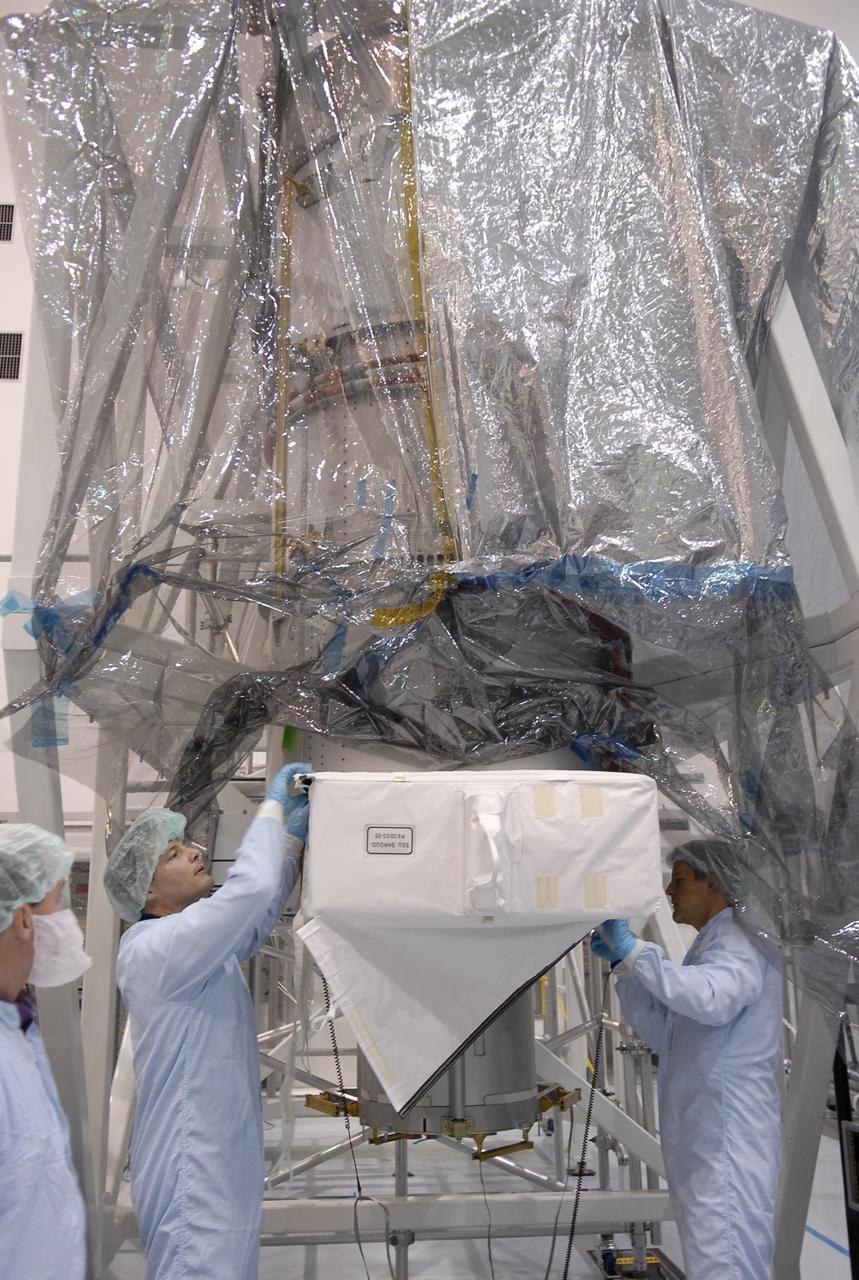
KENNEDY SPACE CENTER, FLA. -- Mission STS-120 Mission Specialists Douglas Wheelock (left) and Scott Parazynski familiarize themselves with equipment inside the Space Station Processing Facility during a visit to Kennedy Space Center. Other crew members include Commander Pam Melroy, Pilot George Zamka and Mission Specialists Stephanie Wilson, Paolo Nespoli (with the European Space Agency), Daniel Tani and Clayton Anderson. Mission STS-120 will deliver the Node 2 "Harmony" connecting module to the station. During the mission, Tani and Anderson will transfer to the station and remain as flight engineers for Expedition 15. The mission is tentatively scheduled for August of this year. Photo credit: NASA/Kim Shiflett
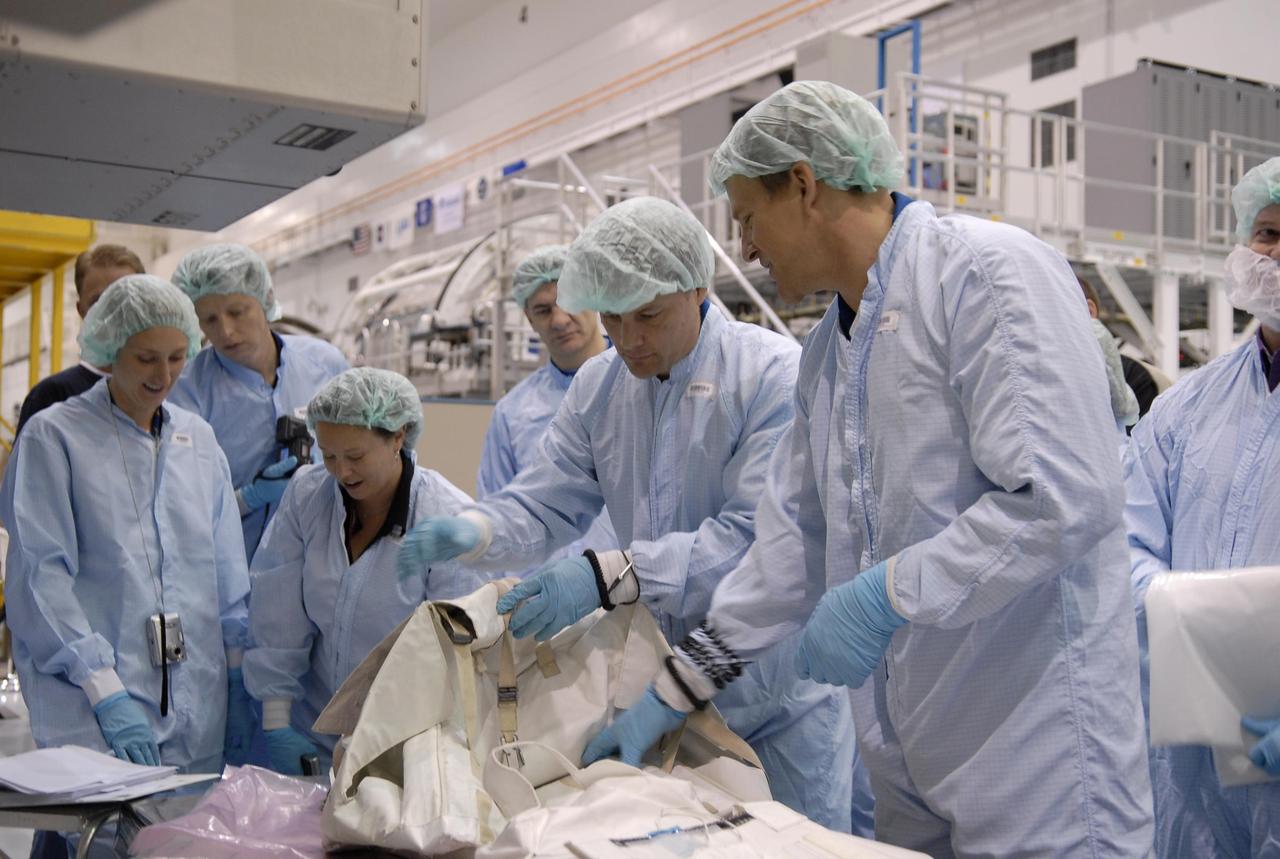
KENNEDY SPACE CENTER, FLA. -- Inside the Space Station Processing Facility, mission STS-120 crew members familiarize themselves with equipment. Beginning third from left are Commander Pam Melroy, Mission Specialists Paolo Nespoli (with the European Space Agency), Douglas Wheelock and Scott Parazynski. Other crew members include Pilot George Zamka and Mission Specialists Stephanie Wilson, Daniel Tani and Clayton Anderson. Mission STS-120 will deliver the Node 2 "Harmony" connecting module to the station. During the mission, Tani and Anderson will transfer to the station and remain as flight engineers for Expedition 15. The mission is tentatively scheduled for August of this year. Photo credit: NASA/Kim Shiflett
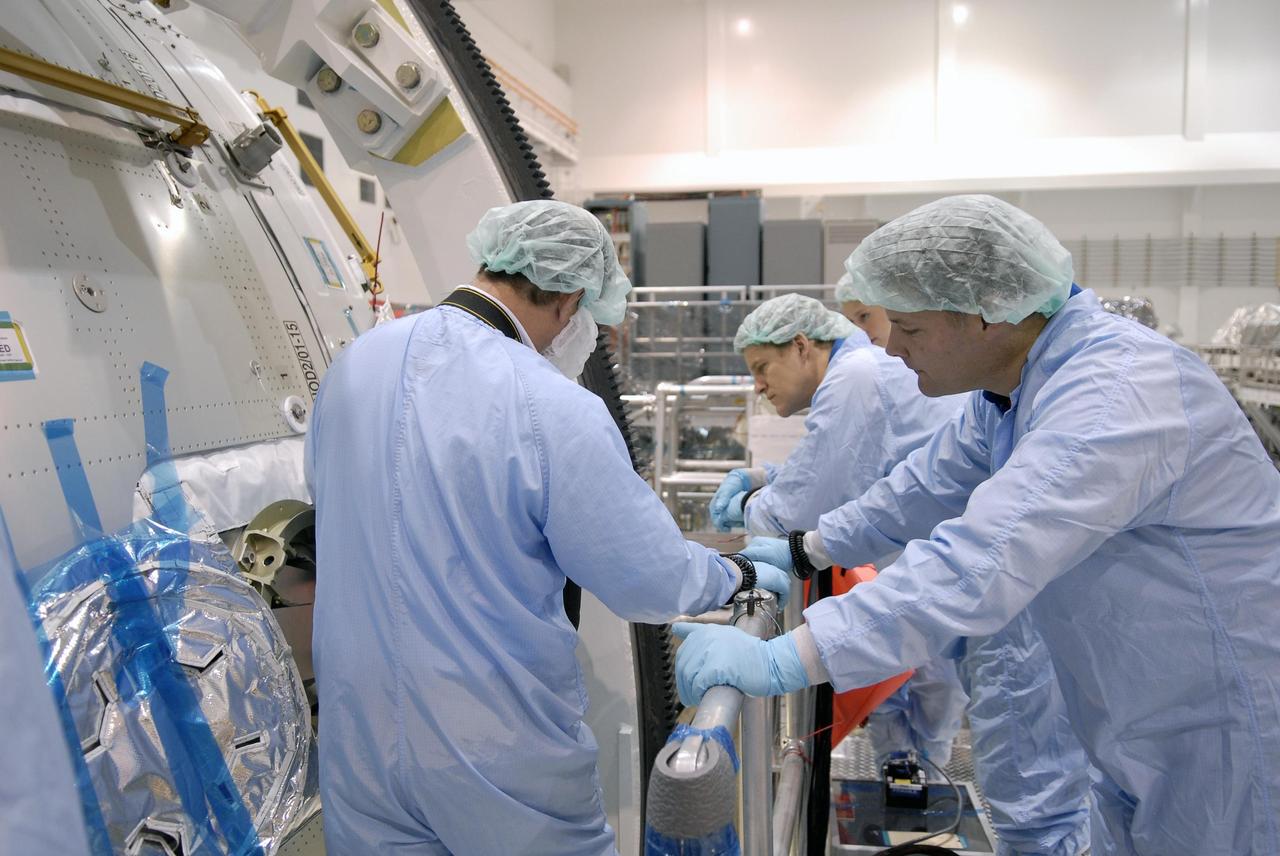
KENNEDY SPACE CENTER, FLA. -- At right are STS-120 Mission Specialists Scott Parazynski (background) and Doug Wheelock (foreground), looking over the primary payload for the mission: the U.S. Node 2, another element to be added to the International Space Station. Node 2 will provide a passageway between three station science experiment facilities: the U.S. Destiny Laboratory, the Kibo Japanese Experiment Module, and the European Columbus Laboratory. STS-120 is targeted for launch on Sept. 7 with a crew of six, including Commander Pam Melroy, Pilot George Zamka, and Mission Specialist Mike Foreman. Photo credit: NASA/Kim Shiflett
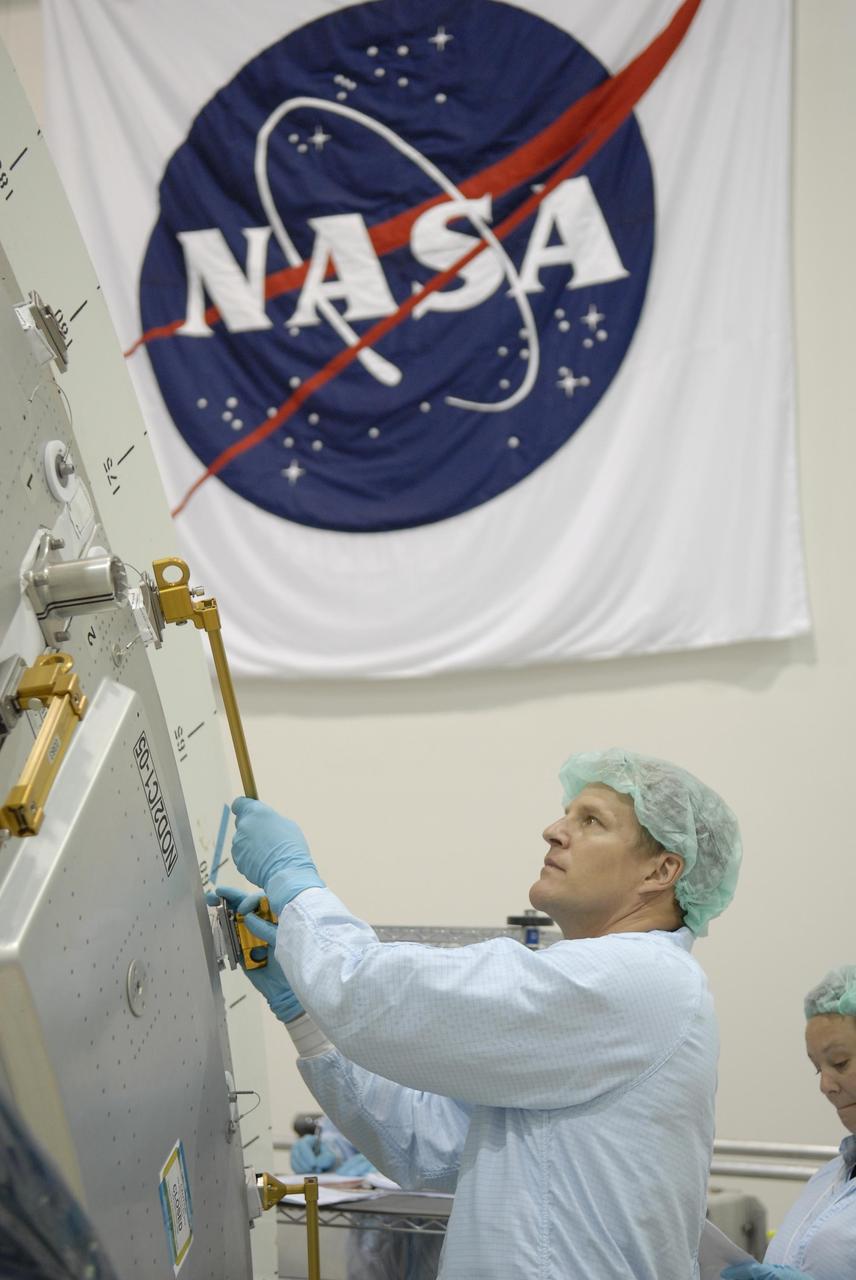
KENNEDY SPACE CENTER, FLA. -- With the NASA logo serving as a backdrop, STS-120 Mission Specialist Scott Parazynski familiarizes himself with equipment inside the Space Station Processing Facility during a visit to Kennedy Space Center. Other crew members include Commander Pam Melroy, Pilot George Zamka, and Mission Specialists Douglas Wheelock, Stephanie Wilson, Daniel Tani, Paolo Nespoli (with the European Space Agency) and Clayton Anderson. Mission STS-120 will deliver the Node 2 "Harmony" connecting module to the station. During the mission, Tani and Anderson will transfer to the station and remain as flight engineers for Expedition 15. The mission is tentatively scheduled for August of this year. Photo credit: NASA/Kim Shiflett
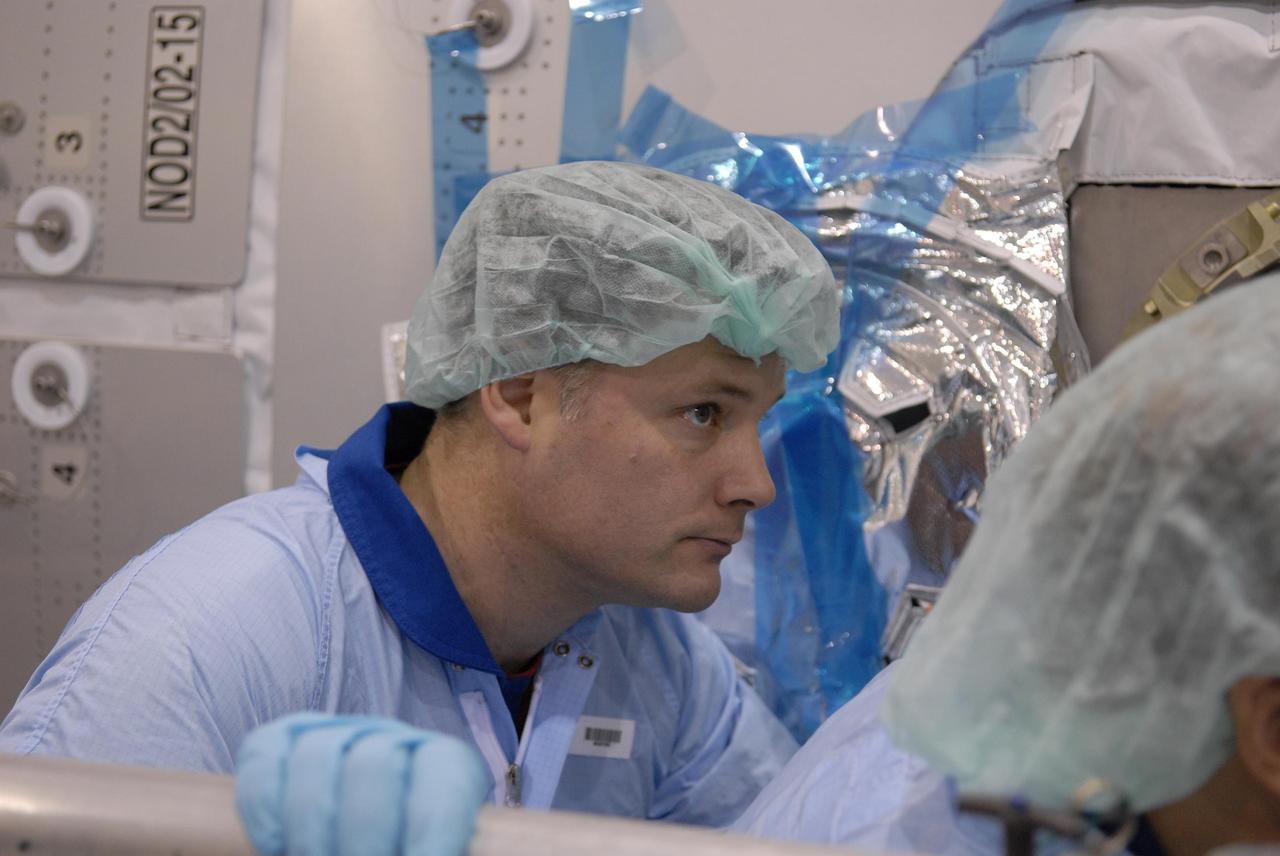
KENNEDY SPACE CENTER, FLA. -- STS-120 Mission Specialist Doug Wheelock checks out the primary payload for the mission: the U.S. Node 2, another element to be added to the International Space Station. Wheelock and other crew members are familiarizing themselves with the payload. Node 2 will provide a passageway between three station science experiment facilities: the U.S. Destiny Laboratory, the Kibo Japanese Experiment Module, and the European Columbus Laboratory. STS-120 is targeted for launch on Sept. 7 with a crew of six, including Commander Pam Melroy, Pilot George Zamka, and Mission Specialist Mike Foreman. Photo credit: NASA/Kim Shiflett
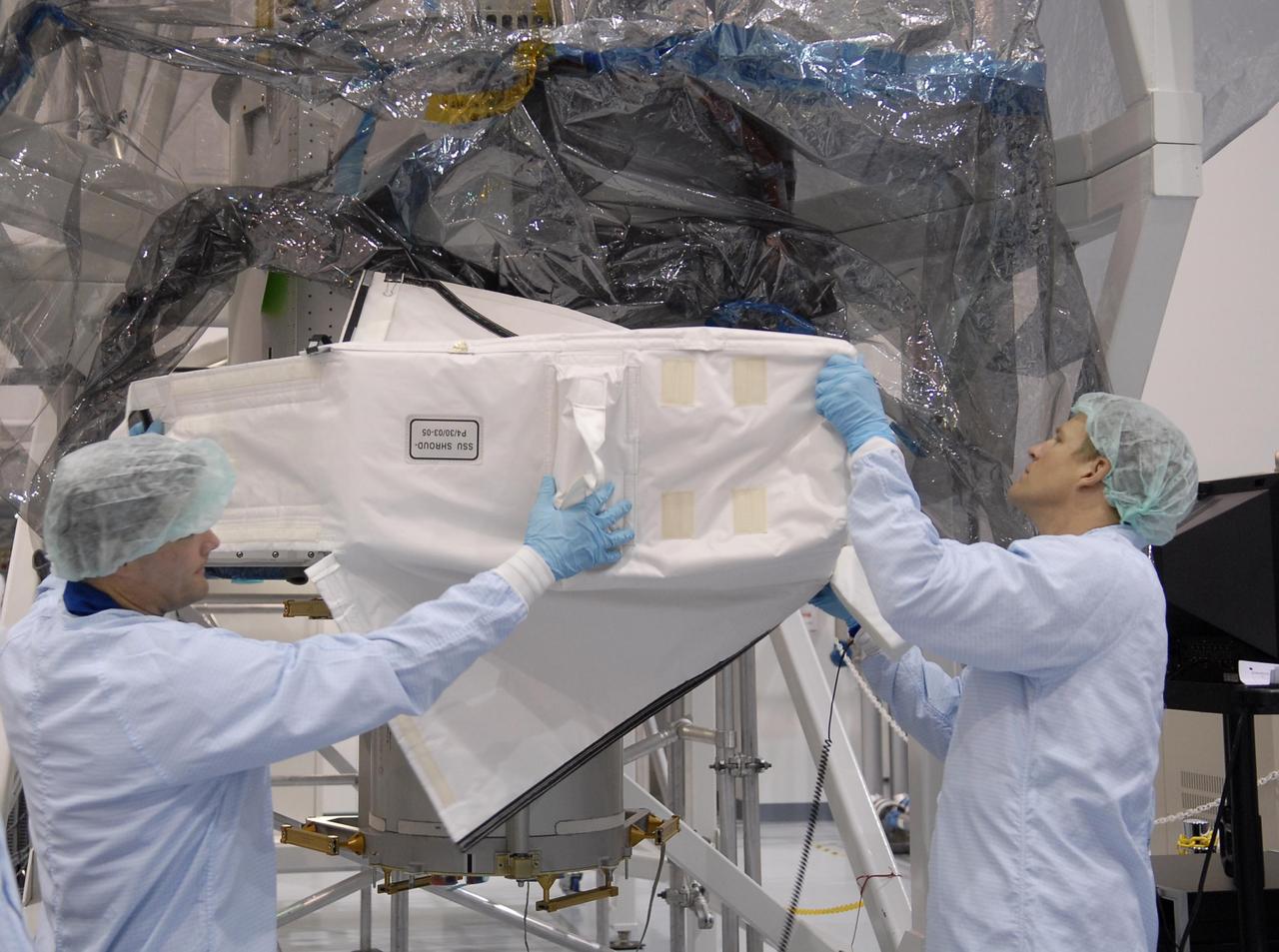
KENNEDY SPACE CENTER, FLA. -- Mission STS-120 Mission Specialists Douglas Wheelock (left) and Scott Parazynski familiarize themselves with equipment inside the Space Station Processing Facility during a visit to Kennedy Space Center. Other crew members include Commander Pam Melroy, Pilot George Zamka and Mission Specialists Stephanie Wilson, Paolo Nespoli (with the European Space Agency), Daniel Tani and Clayton Anderson. Mission STS-120 will deliver the Node 2 "Harmony" connecting module to the station. During the mission, Tani and Anderson will transfer to the station and remain as flight engineers for Expedition 15. The mission is tentatively scheduled for August of this year. Photo credit: NASA/Kim Shiflett
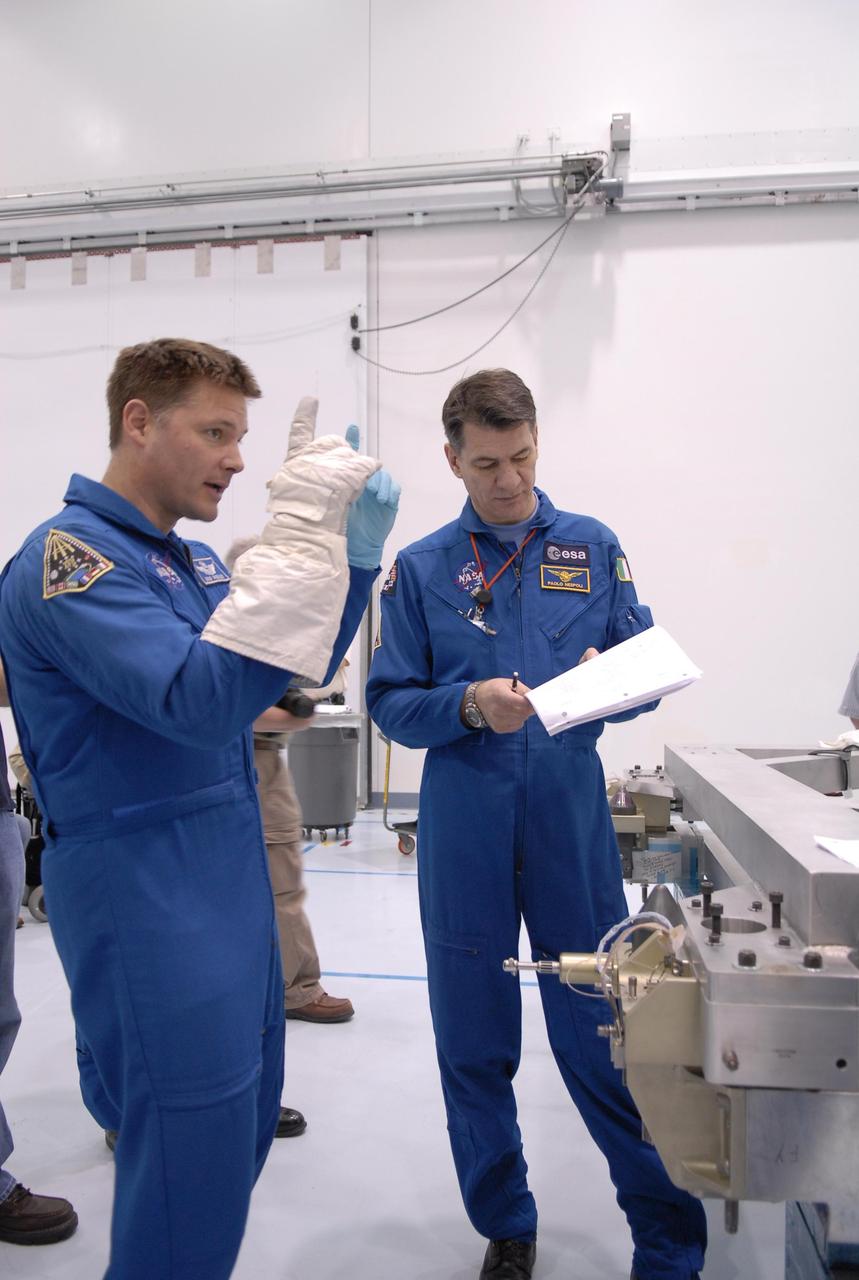
KENNEDY SPACE CENTER, FLA. -- Mission STS-120 Mission Specialists Douglas Wheelock and Paolo Nespoli (with the European Space Agency) familiarize themselves with equipment inside the Space Station Processing Facility during a visit to Kennedy Space Center. Other crew members include Commander Pam Melroy, Pilot George Zamka and Mission Specialists Scott Parazynski, Stephanie Wilson, Daniel Tani and Clayton Anderson. Mission STS-120 will deliver the Node 2 "Harmony" connecting module to the station. During the mission, Tani and Anderson will transfer to the station and remain as flight engineers for Expedition 15. The mission is tentatively scheduled for August of this year. Photo credit: NASA/Kim Shiflett
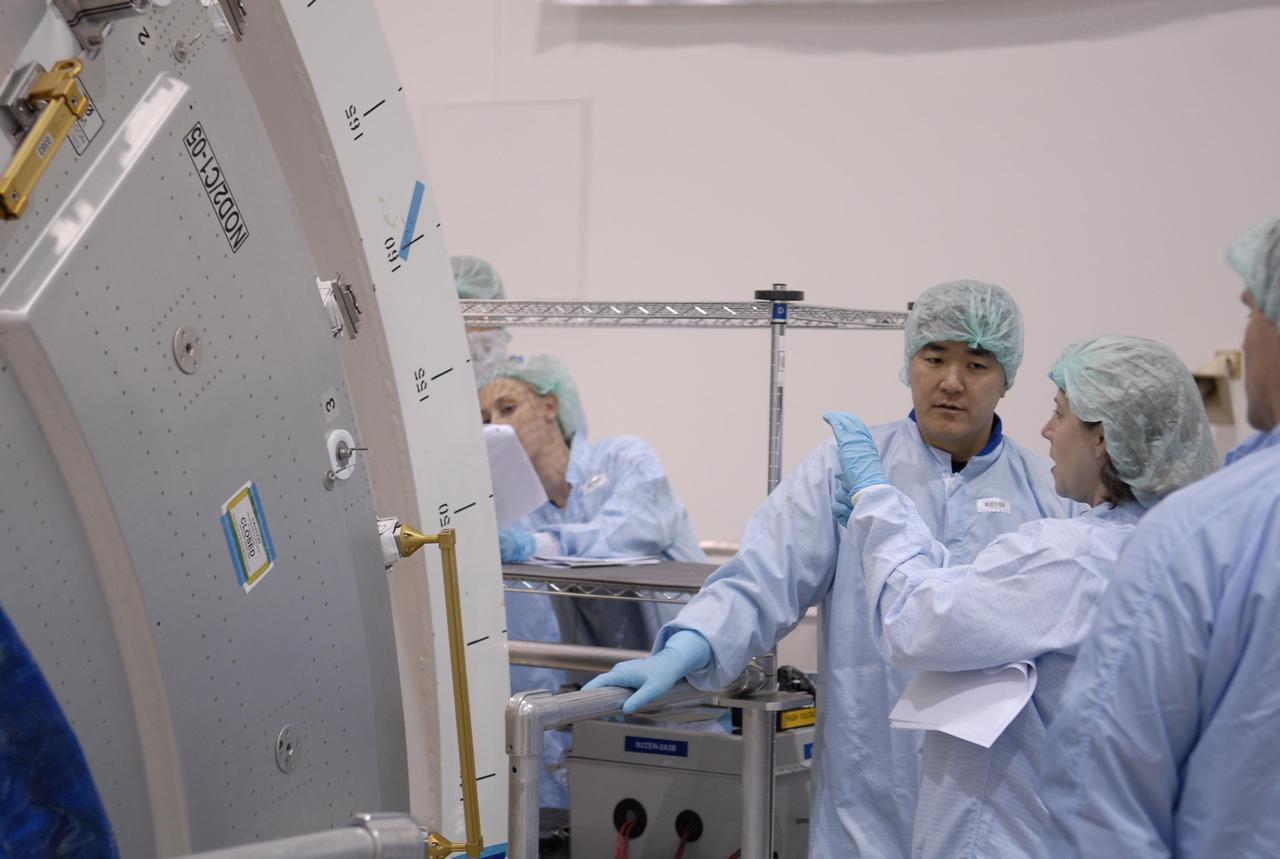
KENNEDY SPACE CENTER, FLA. -- Mission STS-120 Mission Specialist Daniel Tani and Commander Pam Melroy familiarize themselves with the Node 2 Harmony module inside the Space Station Processing Facility during a visit to Kennedy Space Center. Other crew members include Pilot George Zamka and Mission Specialists Scott Parazynski, Douglas Wheelock, Stephanie Wilson, Paolo Nespoli (with the European Space Agency) and Clayton Anderson. Mission STS-120 will deliver the Node 2 "Harmony" connecting module to the station. During the mission, Tani and Anderson will transfer to the station and remain as flight engineers for Expedition 15. The mission is tentatively scheduled for August of this year. Photo credit: NASA/Kim Shiflett
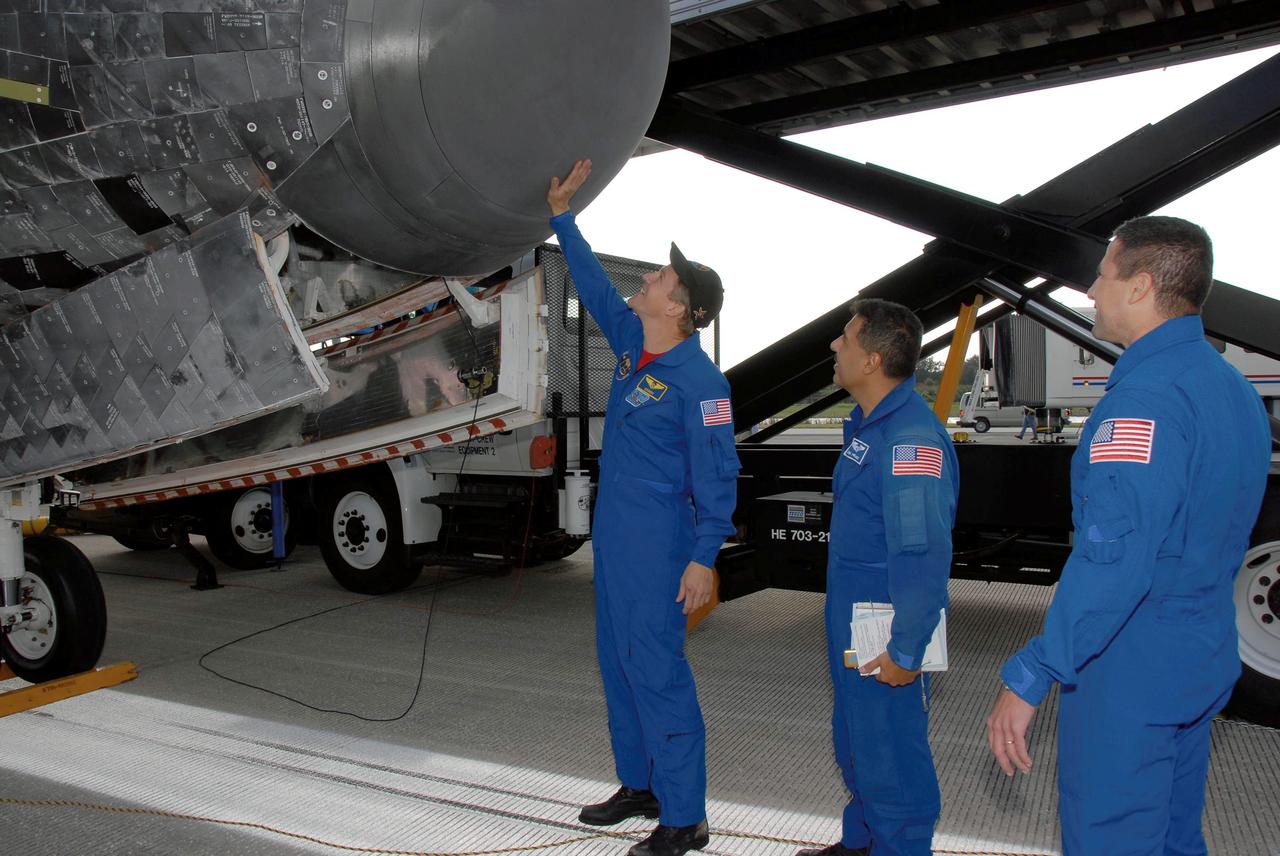
STS120-S-092 (7 Nov. 2007) --- Astronaut Scott Parazynski, STS-120 mission specialist, touches the nose cone of Space Shuttle Discovery after its landing at NASA's Kennedy Space Center. At far right is astronaut George Zamka, STS-120 pilot, and at center is astronaut Jose Hernandez. The crew is taking part in the traditional walkdown to look at the state of the shuttle after a launch and landing. The Discovery crew completed the 15-day STS-120 mission, with an on-time landing at 1:01:16 p.m. (EST). Wheel stop was at 1:02:07 p.m. Mission elapsed time was 15 days, 2 hours, 24 minutes and 2 seconds. The STS-120 crew continued the construction of the station with the installation of the Harmony Node 2 module and the relocation of the P6 truss.
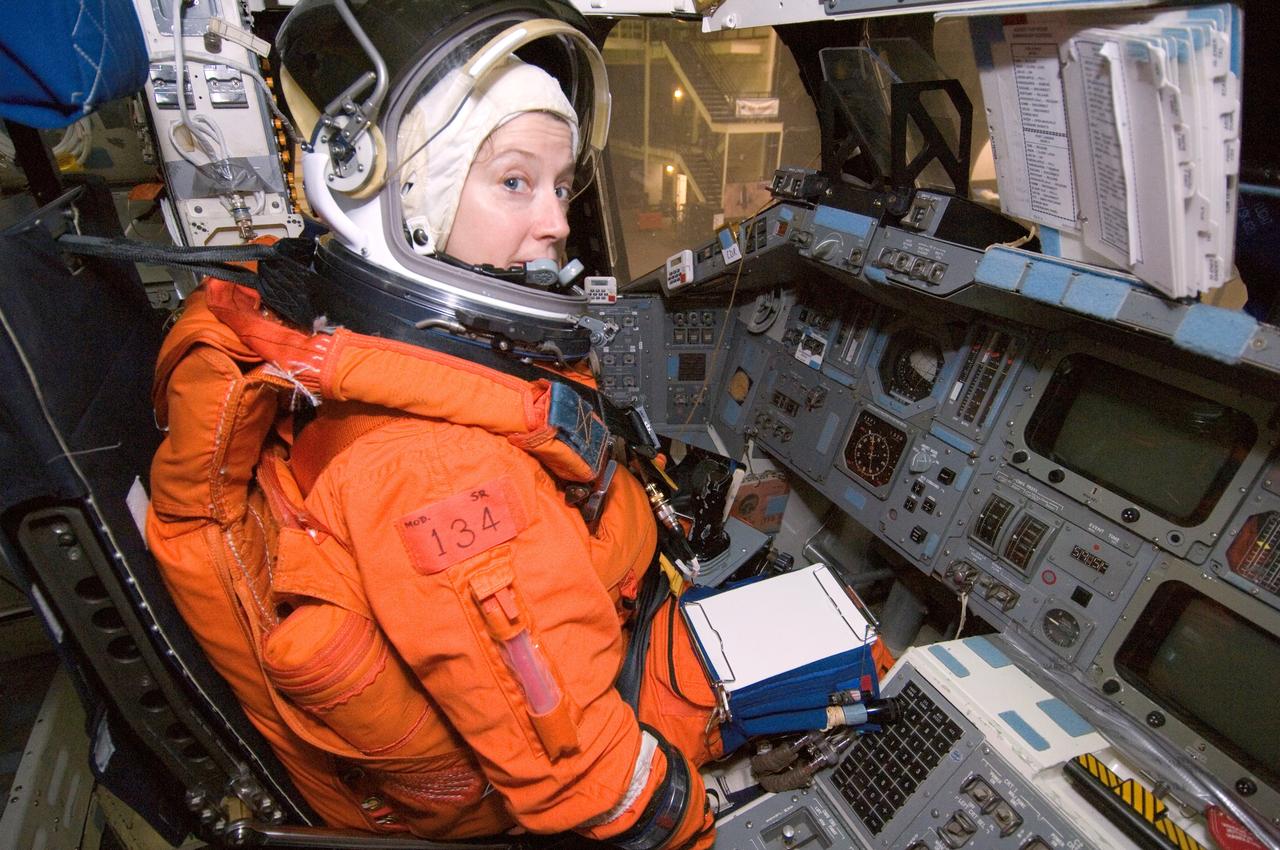
While seated at the commander's station, astronaut Pamela A. Melroy, STS-120 commander, participates in a training session in the crew compartment trainer (CCT-2) in the Space Vehicle Mockup Facility at Johnson Space Center. Preparing for the STS-120 mission which launched October 23, 2007, Melroy is wearing a training version of her shuttle launch and entry suit.
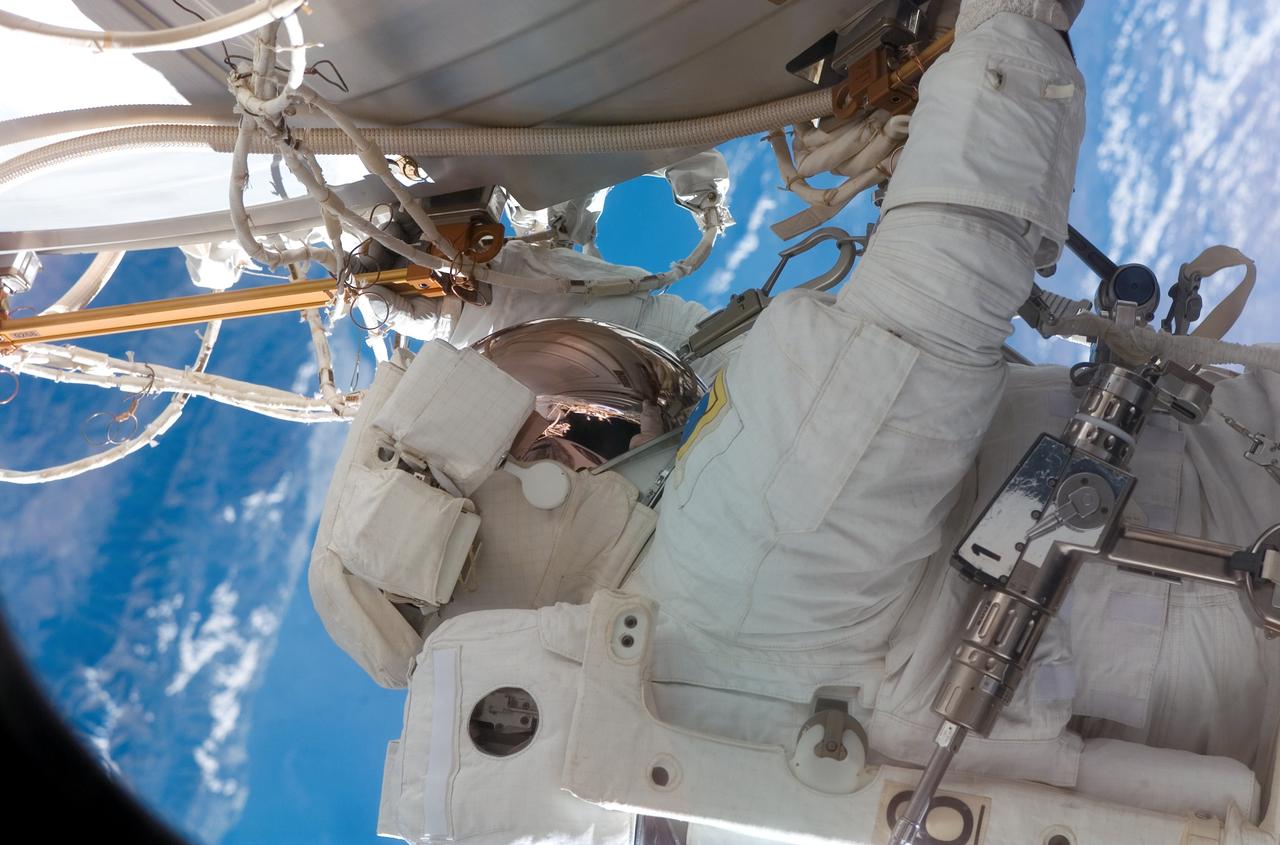
Astronaut Doug Wheelock, STS-120 mission specialist, participated in the third scheduled session of extravehicular activity (EVA) as construction continued on the International Space Station (ISS). During a 7-hour and 8-minute space walk, Wheelock and mission specialist Scott Parazynski (out of frame), installed the P6 truss segment with its set of solar arrays to its permanent home, installed a spare main bus switching unit on a stowage platform, and performed a few get-ahead tasks.
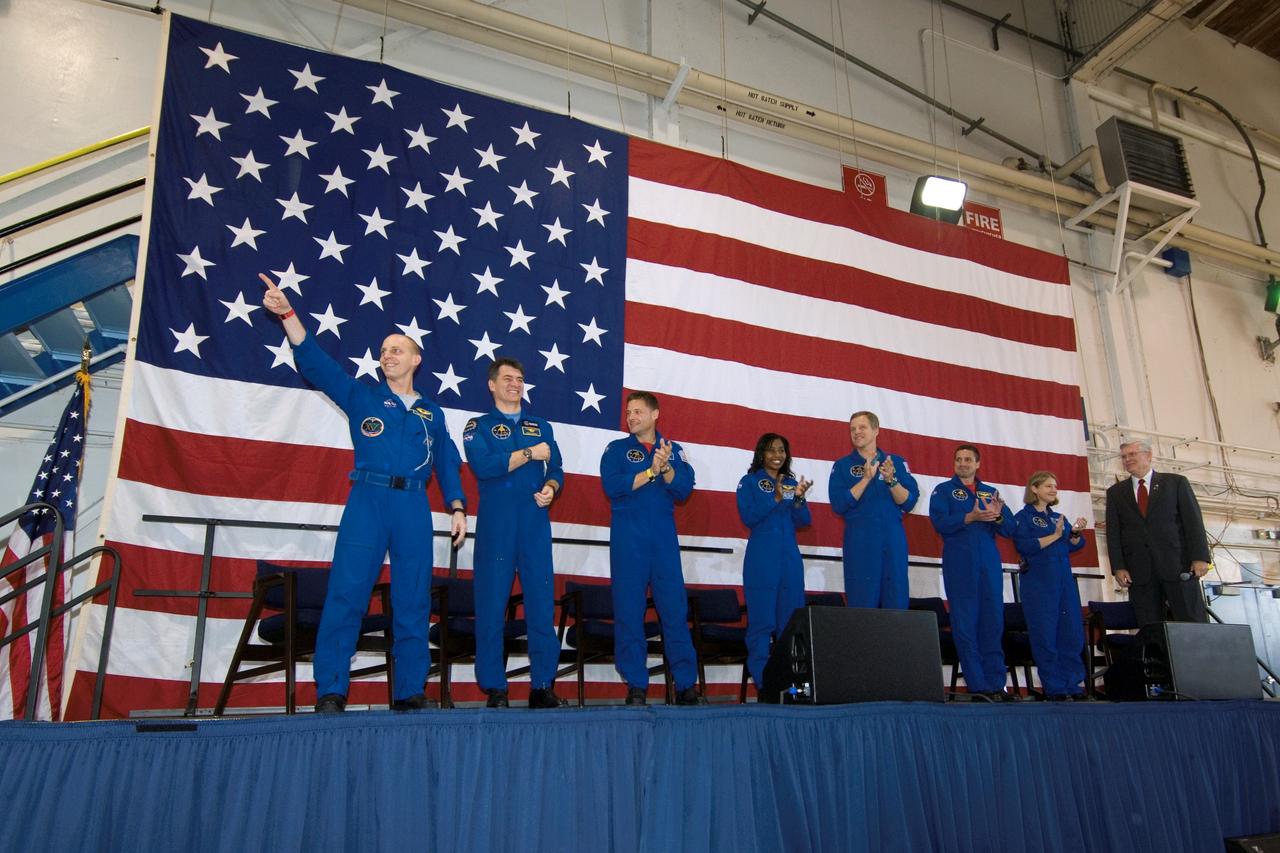
JSC2007-E-098002 (8 Nov. 2007) --- The crew of the STS-120 mission was welcomed home to Houston Nov. 8, following the landing of Space Shuttle Discovery in Florida on Nov. 7. Center Director Mike Coats, far right, introduced the crew to the crowd on hand at Ellington Field. From the right are STS-120 commander Pam Melroy, pilot George Zamka and mission specialists Scott Parazynski, Stephanie Wilson, Doug Wheelock, Paolo Nespoli (ESA) and Clay Anderson were welcomed by family and friends during the ceremony.
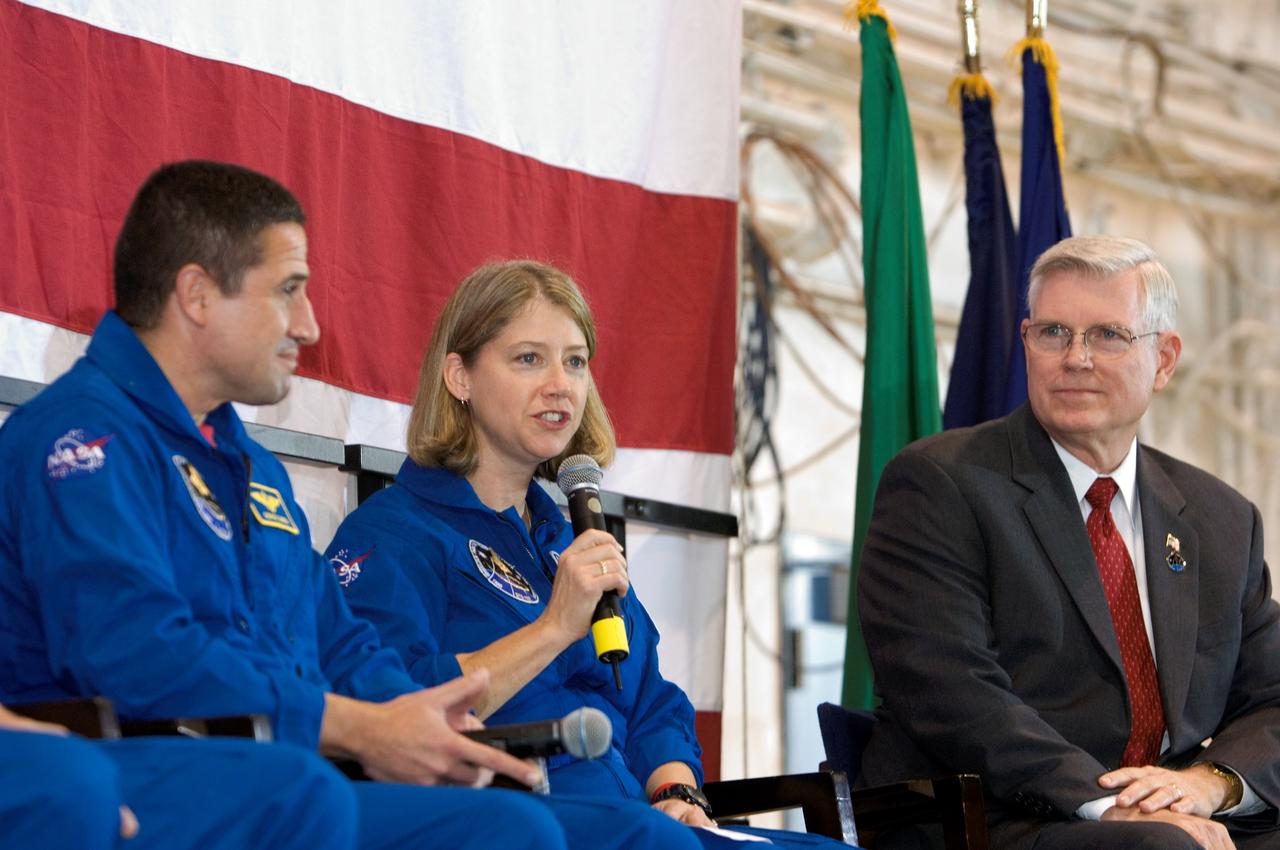
JSC2007-E-098003 (8 Nov. 2007) --- The crew of the STS-120 mission was welcomed home to Houston Nov. 8, following the landing of Space Shuttle Discovery in Florida on Nov. 7. STS-120 commander Pam Melroy, pilot George Zamka (both pictured here with JSC Director Mike Coats) along with mission specialists Scott Parazynski, Stephanie Wilson, Doug Wheelock, Paolo Nespoli (ESA) and Clay Anderson (all out of frame) were welcomed by family and friends during a ceremony at Houston's Ellington Field.
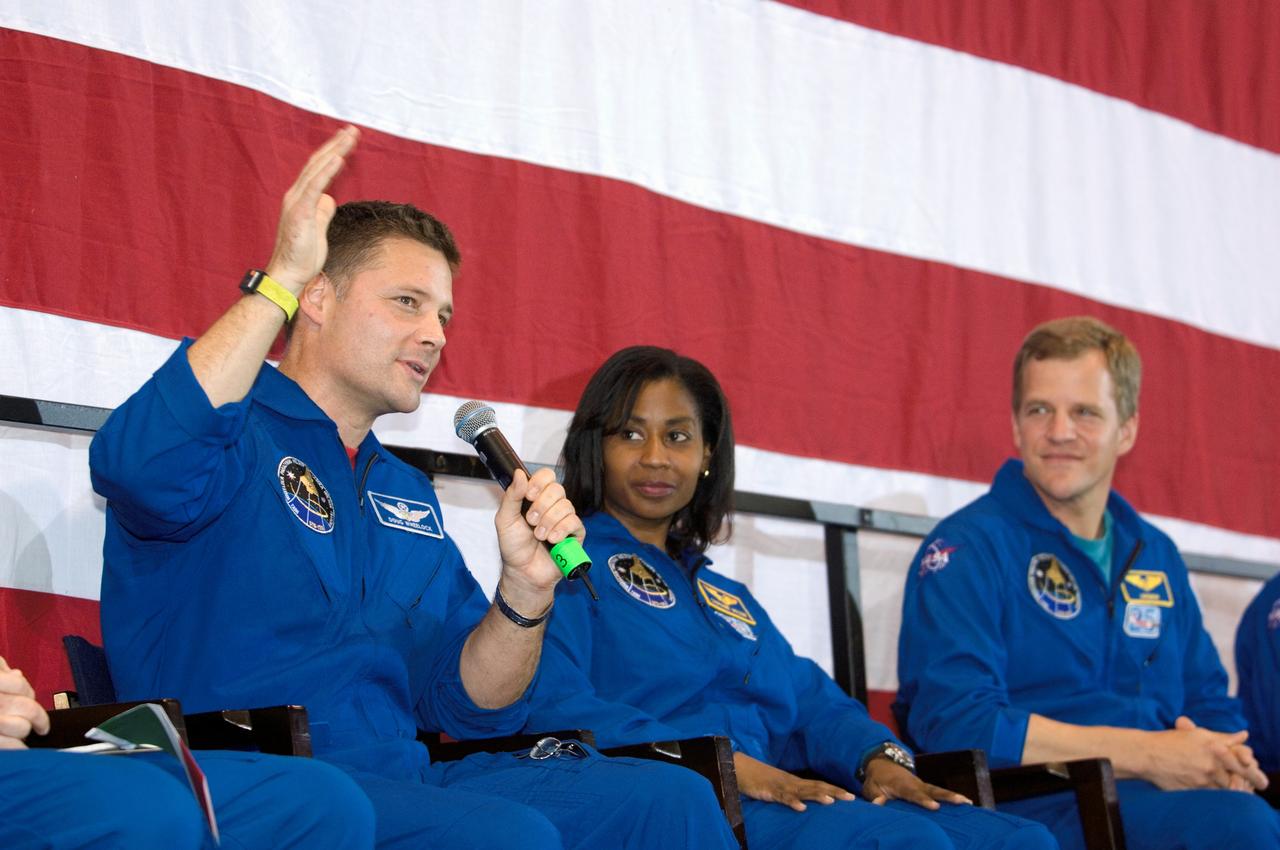
JSC2007-E-098007 (8 Nov. 2007) --- The crew of the STS-120 mission was welcomed home to Houston Nov. 8, following the landing of Space Shuttle Discovery in Florida on Nov. 7. Astronaut Doug Wheelock, mission specialist, addresses the crowd on hand at Ellington Field. Also seen are astronauts Stephanie Wilson and Scott Parazynski, mission specialists. Not pictured are STS-120 commander Pam Melroy, pilot George Zamka and mission specialists Paolo Nespoli (ESA) and Clay Anderson.
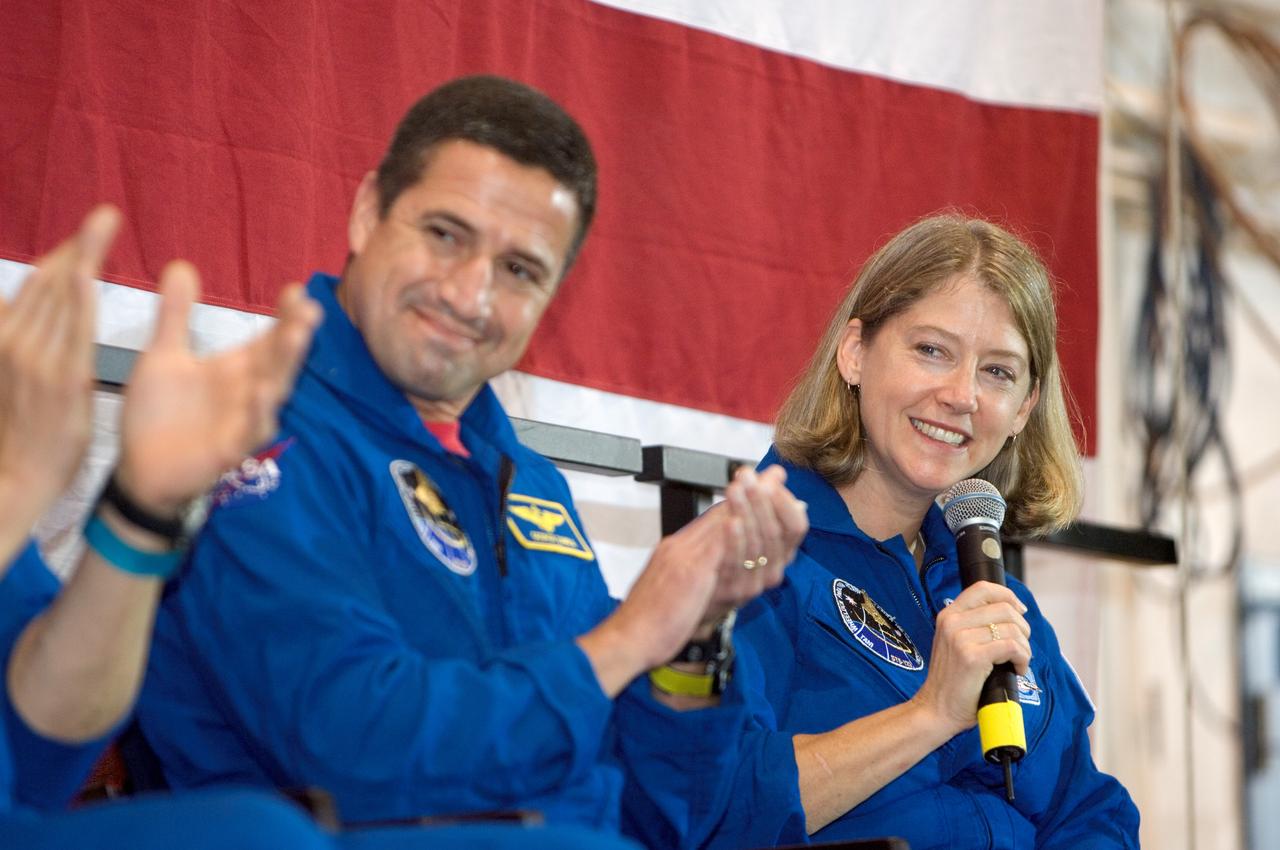
JSC2007-E-098004 (8 Nov. 2007) --- The crew of the STS-120 mission was welcomed home to Houston Nov. 8, following the landing of Space Shuttle Discovery in Florida on Nov. 7. STS-120 commander Pam Melroy, and pilot George Zamka (both pictured) along with mission specialists Scott Parazynski, Stephanie Wilson, Doug Wheelock, Paolo Nespoli (ESA) and Clay Anderson (all out of frame) were welcomed by family and friends during a ceremony at Houston's Ellington Field.
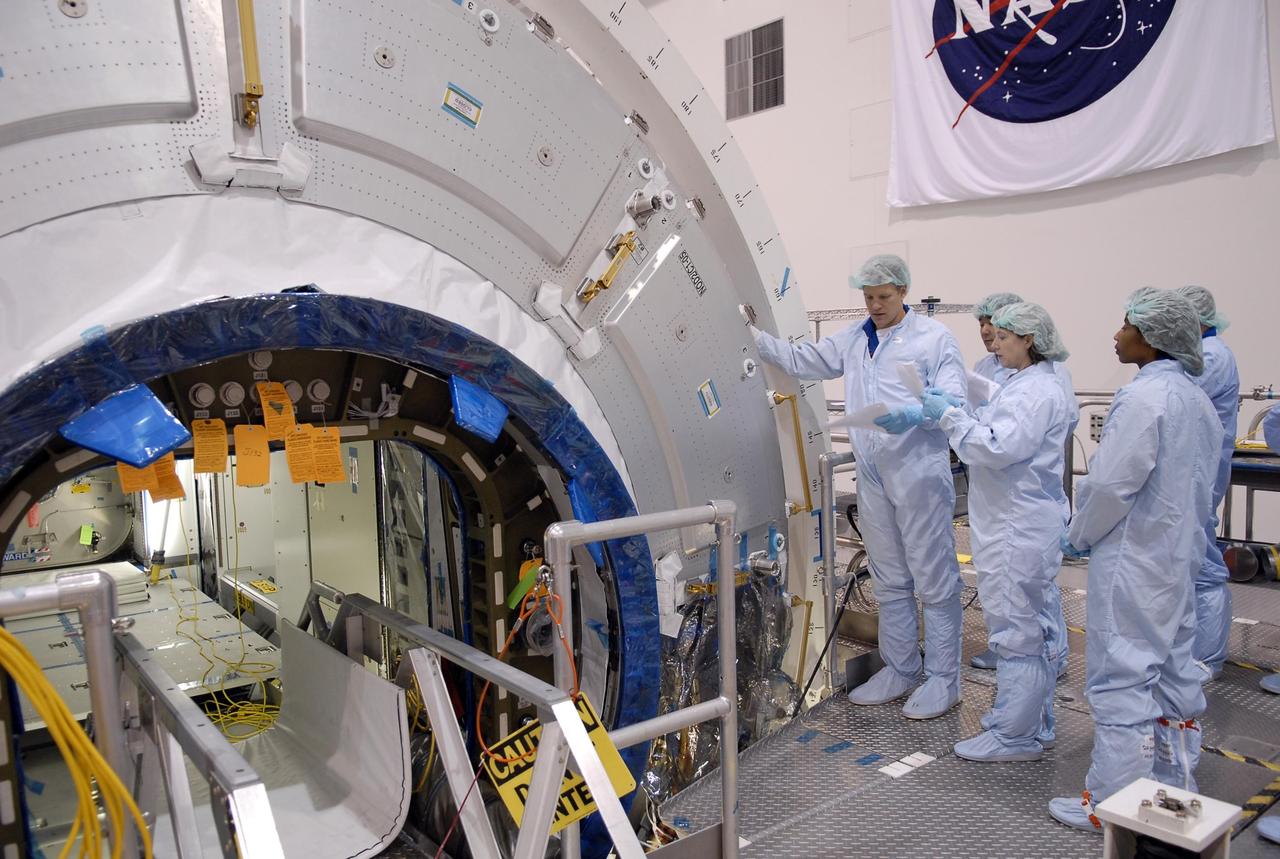
KENNEDY SPACE CENTER, FLA. -- Inside the Space Station Processing Facility, mission STS-120 crew members familiarize themselves with the Node 2 Harmony module during a visit to Kennedy Space Center. From left are Mission Specialist Scott Parazynski, Commander Pam Melroy and Mission Specialist Stephanie Wilson. Other crew members include Pilot George Zamka and Mission Specialists Douglas Wheelock, Paoli Nespoli (with the European Space Agency), Daniel Tani and Clayton Anderson. Mission STS-120 will deliver the Node 2 "Harmony" connecting module to the station. During the mission, Tani and Anderson will transfer to the station and remain as flight engineers for Expedition 15. The mission is tentatively scheduled for August of this year. Photo credit: NASA/Kim Shiflett
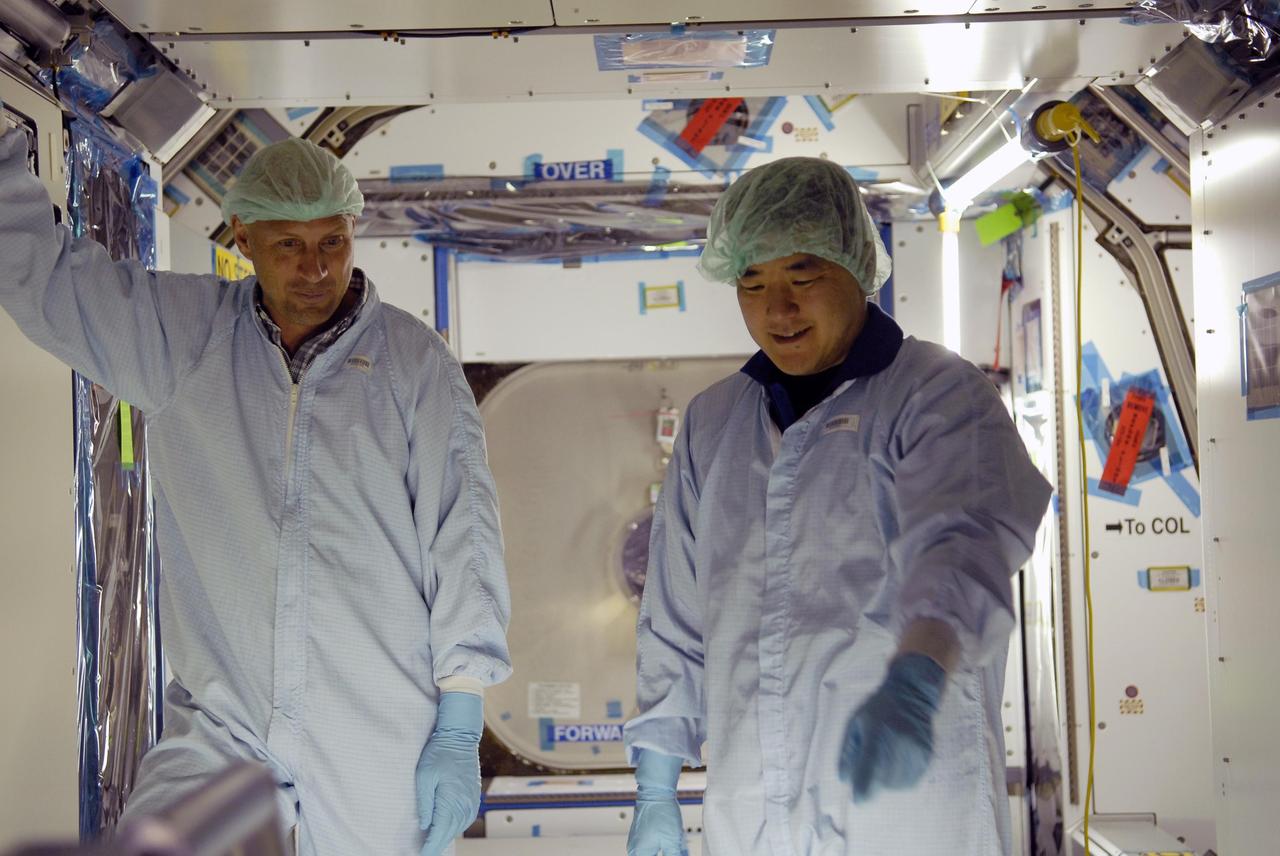
KENNEDY SPACE CENTER, FLA. -- Mission STS-120 Mission Specialists Clayton Anderson (left) and Daniel Tani familiarize themselves with the Node 2 Harmony module inside the Space Station Processing Facility during a visit to Kennedy Space Center. Other crew members include Commander Pam Melroy, Pilot George Zamka, and Mission Specialists Scott Parazynski, Douglas Wheelock, Stephanie Wilson and Paolo Nespoli (with the European Space Agency). Mission STS-120 will deliver the Node 2 "Harmony" connecting module to the station. During the mission, Tani and Anderson will transfer to the station and remain as flight engineers for Expedition 15. The mission is tentatively scheduled for August of this year. Photo credit: NASA/Kim Shiflett
KENNEDY SPACE CENTER, FLA. -- Mission STS-120 crew members familiarize themselves with equipment inside the Space Station Processing Facility during a visit to Kennedy Space Center. Standing from left, are Mission Specialists Stephanie Wilson, Paolo Nespoli (with the European Space Agency), Scott Parazynski and Commander Pam Melroy. In the foreground at left is Mission Specialist Daniel Tani. Other crew members include Pilot George Zamka and Mission Specialists Douglas Wheelock and Clayton Anderson. Mission STS-120 will deliver the Node 2 "Harmony" connecting module to the station. During the mission, Tani and Anderson will transfer to the station and remain as flight engineers for Expedition 15. The mission is tentatively scheduled for August of this year. Photo credit: NASA/Kim Shiflett
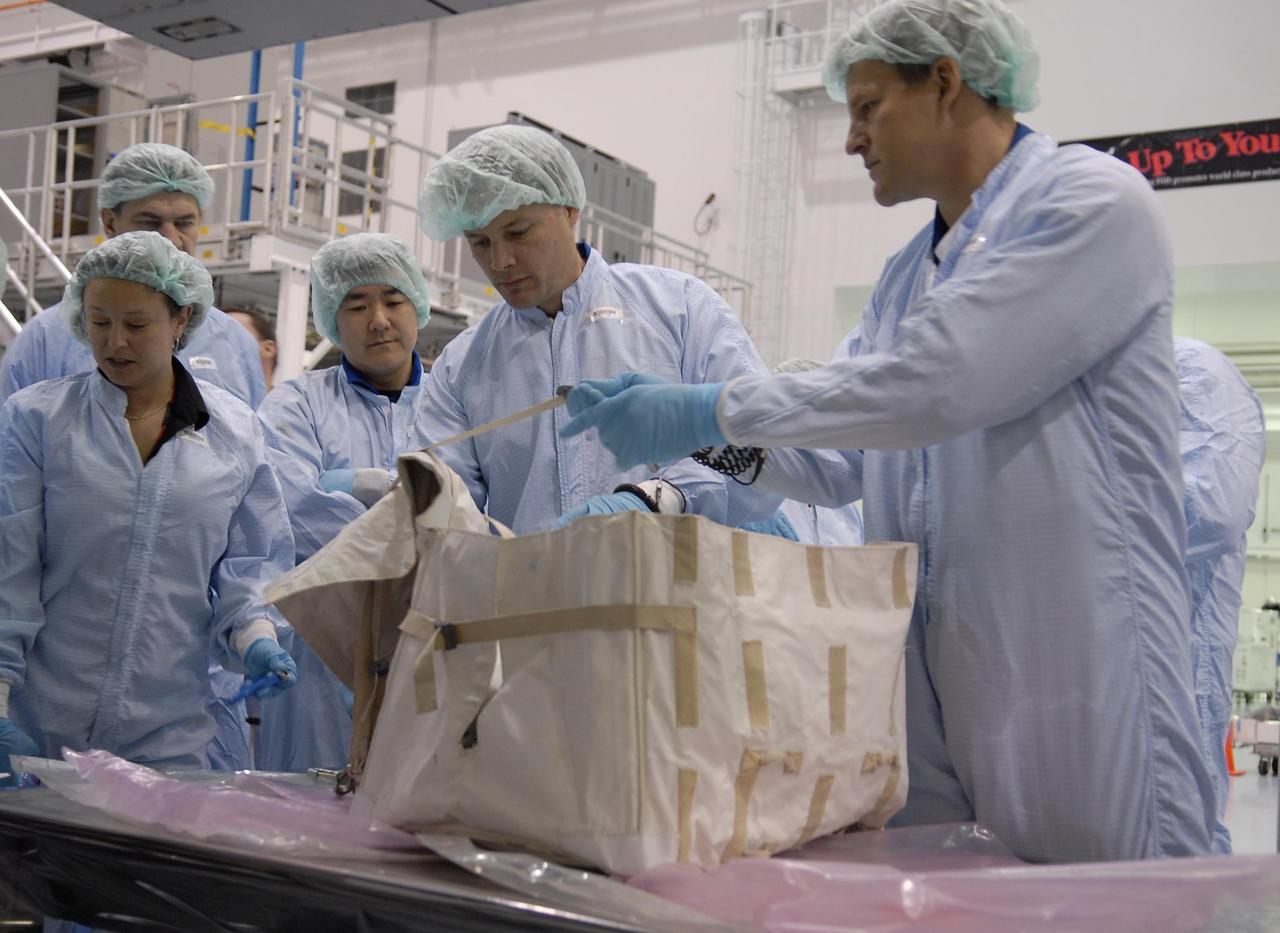
KENNEDY SPACE CENTER, FLA. -- Mission STS-120 crew members familiarize themselves with equipment inside the Space Station Processing Facility during a visit to Kennedy Space Center. From the left are Commander Pam Melroy and Mission Specialists Paolo Nespoli (with the European Space Agency), Daniel Tani, Douglas Wheelock and Scott Parazynski. Other crew members include Pilot George Zamka and Mission Specialists Stephanie Wilson and Clayton Anderson. Mission STS-120 will deliver the Node 2 "Harmony" connecting module to the station. During the mission, Tani and Anderson will transfer to the station and remain as flight engineers for Expedition 15. The mission is tentatively scheduled for August of this year. Photo credit: NASA/Kim Shiflett
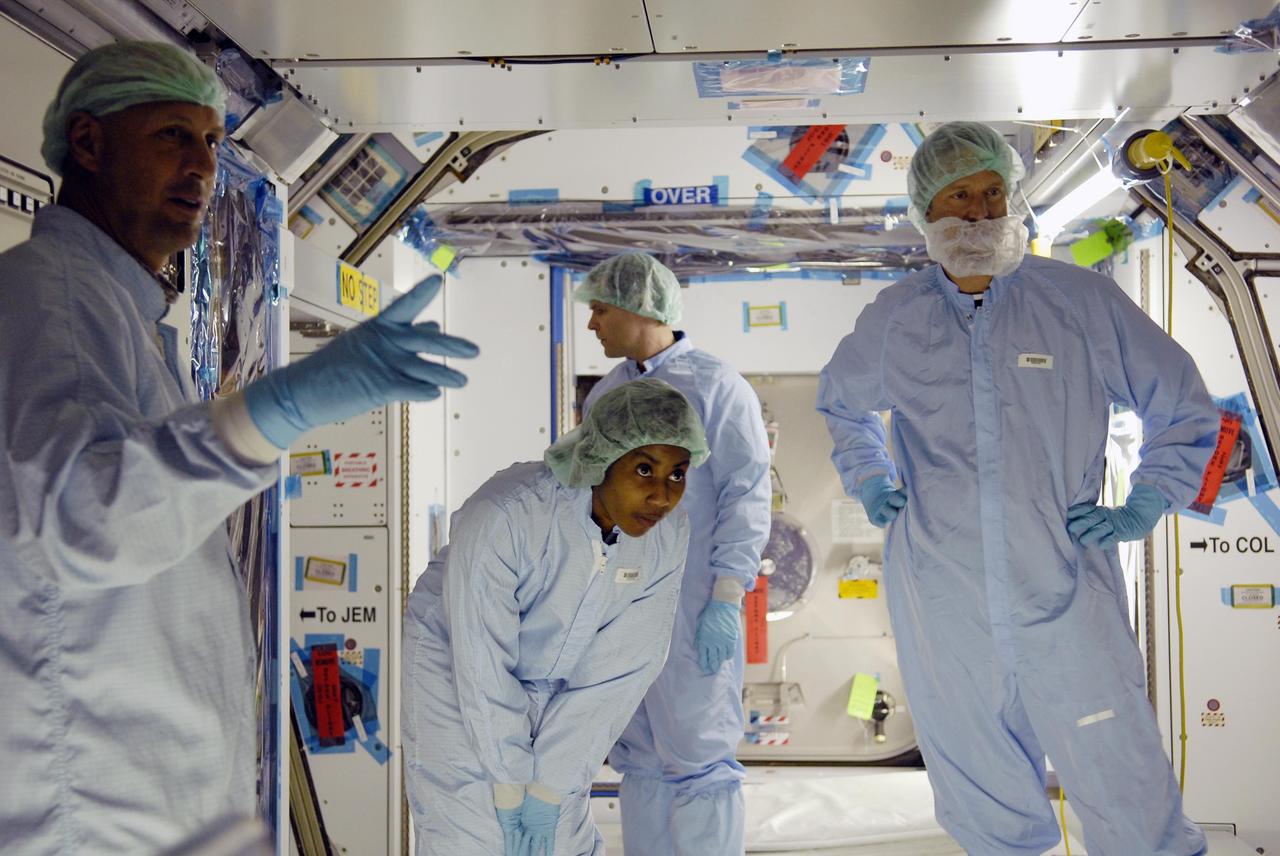
KENNEDY SPACE CENTER, FLA. -- Mission STS-120 crew members familiarize themselves with equipment and payloads inside the Space Station Processing Facility during a visit to Kennedy Space Center. Standing inside the Node 2 Harmony module are (from left) Mission Specialists Clayton Anderson and Stephanie Wilson. Other crew members include Commander Pam Melroy, Pilot George Zamka and Mission Specialists Scott Parazynski, Douglas Wheelock, Daniel Tani, Paolo Nespoli (with the European Space Agency) and Clayton Anderson. Mission STS-120 will deliver the Node 2 "Harmony" connecting module to the station. During the mission, Tani and Anderson will transfer to the station and remain as flight engineers for Expedition 15. The mission is tentatively scheduled for August of this year. Photo credit: NASA/Kim Shiflett
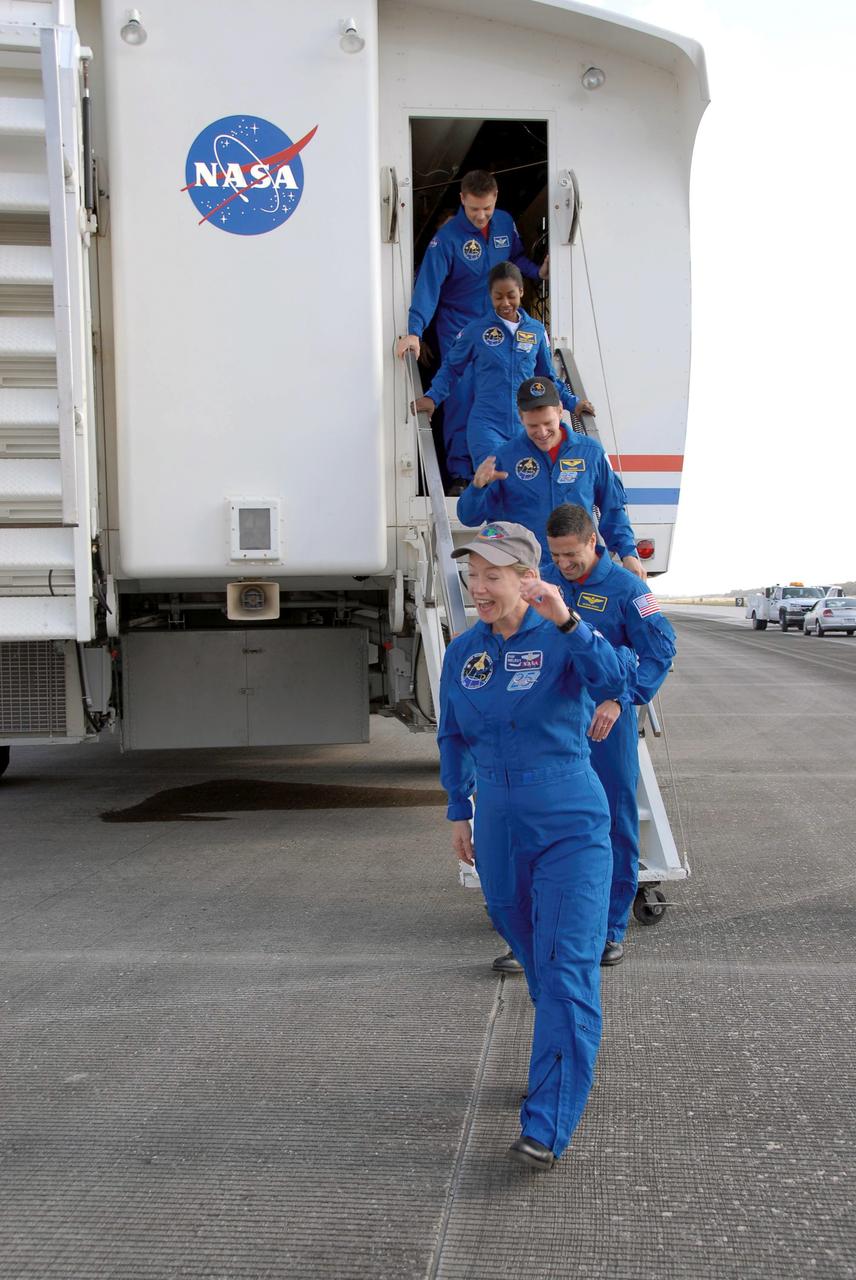
STS120-S-090 (7 Nov. 2007) --- At NASA's Kennedy Space Center, the STS-120 crewmembers exit the crew transport vehicle after their successful landing aboard Space Shuttle Discovery. Leading the way is astronaut Pam Melroy, commander; followed by George Zamka, pilot; and Scott Parazynski, Stephanie Wilson and Doug Wheelock, all mission specialists. The Discovery crew completed the 15-day STS-120 mission, with an on-time landing at 1:01:16 p.m. (EST). Wheel stop was at 1:02:07 p.m. Mission elapsed time was 15 days, 2 hours, 24 minutes and 2 seconds. The STS-120 crew continued the construction of the station with the installation of the Harmony Node 2 module and the relocation of the P6 truss.
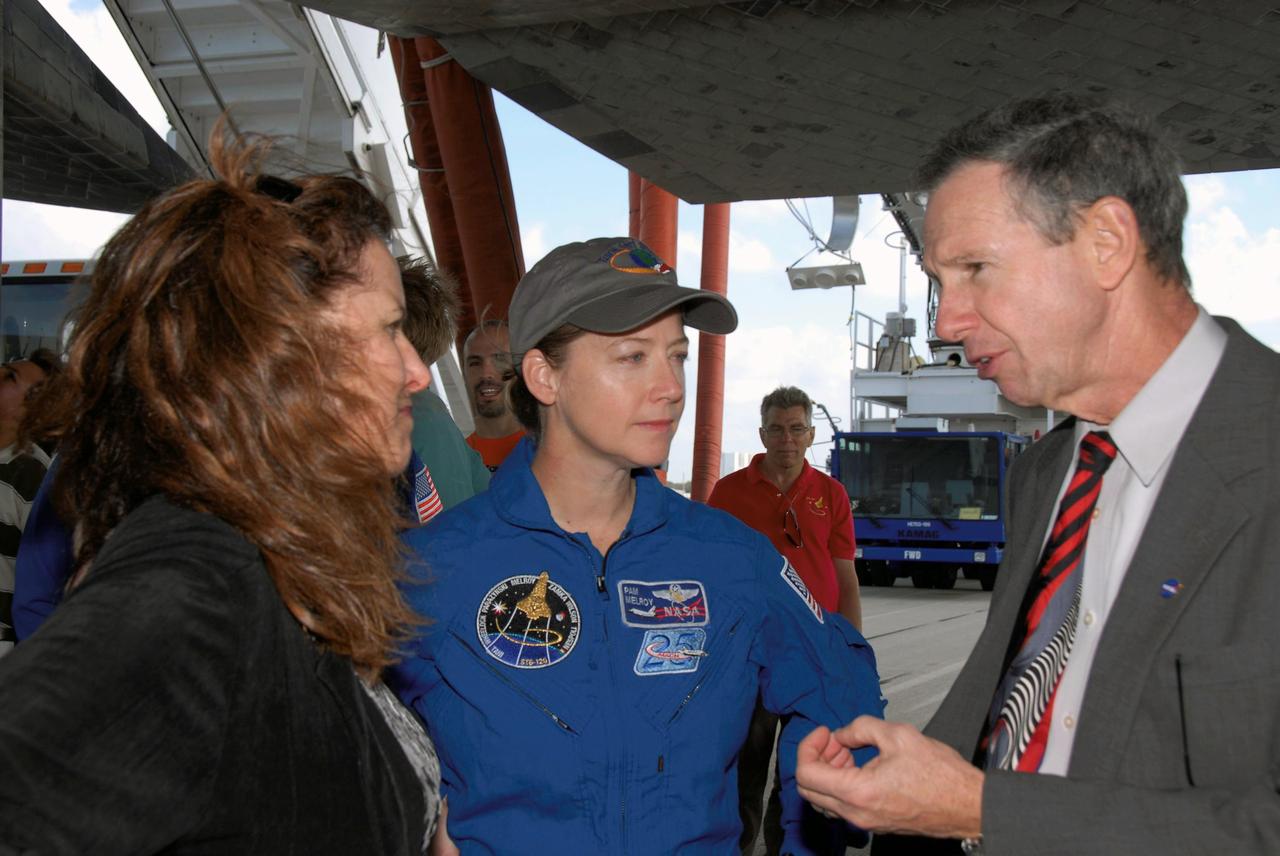
STS120-S-093 (7 Nov. 2007) --- Standing underneath Space Shuttle Discovery on the Shuttle Landing Facility at NASA's Kennedy Space Center, NASA Administrator Mike Griffin (right) talks with astronaut Pam Melroy (center), STS-120 commander, after the landing of the vehicle. At left is Rebecca Griffin, wife of the administrator. The Discovery crew completed the 15-day STS-120 mission, with an on-time landing at 1:01:16 p.m. (EST). Wheel stop was at 1:02:07 p.m. Mission elapsed time was 15 days, 2 hours, 24 minutes and 2 seconds. The STS-120 crew continued the construction of the station with the installation of the Harmony Node 2 module and the relocation of the P6 truss.
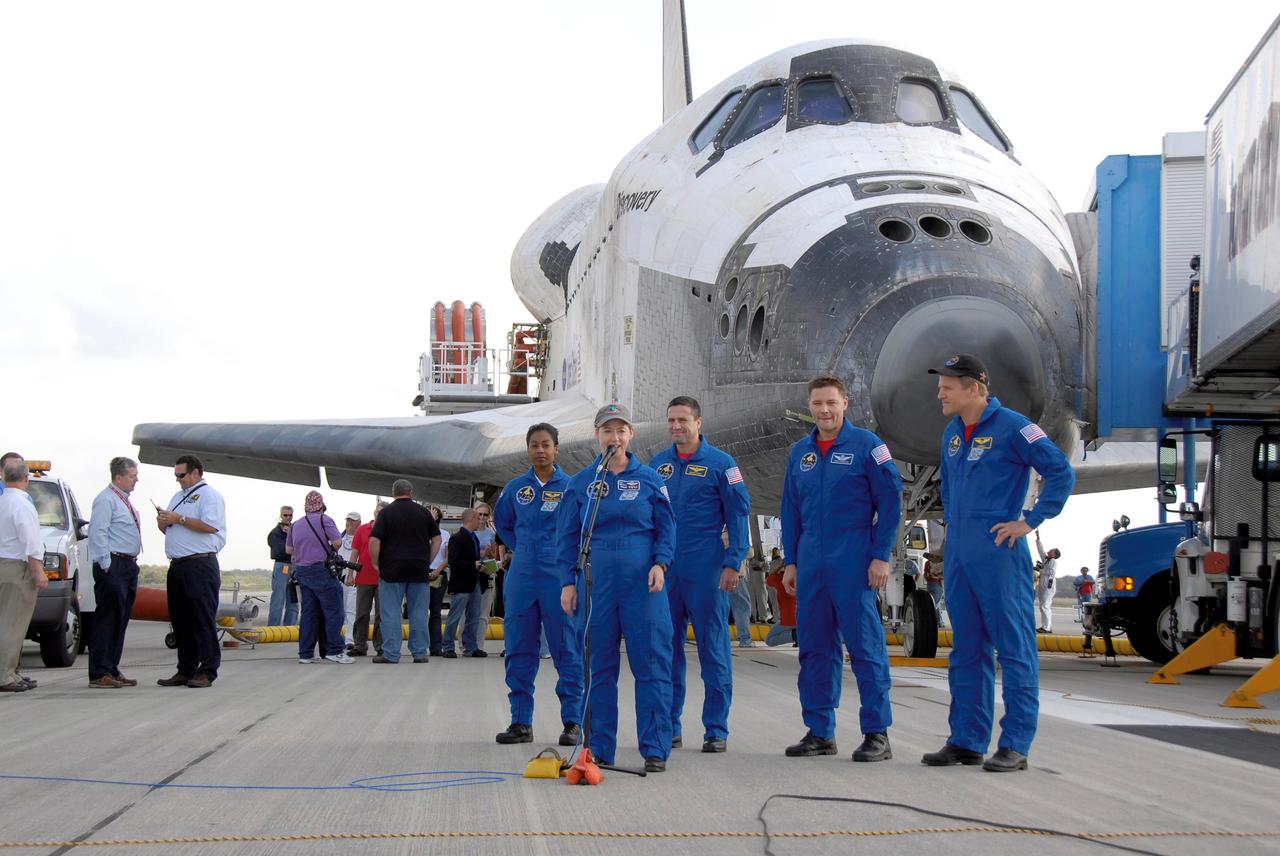
STS120-S-095 (7 Nov. 2007) --- Astronaut Pam Melroy, STS-120 commander, talks to media and guests on the Shuttle Landing Facility at NASA's Kennedy Space Center after guiding the landing of Space Shuttle Discovery. Behind Melroy are (from the left) astronauts Stephanie Wilson, mission specialist; George Zamka, pilot; Doug Wheelock and Scott Parazynski, both mission specialists. The Discovery crew completed the 15-day STS-120 mission, with an on-time landing at 1:01:16 p.m. (EST). Wheel stop was at 1:02:07 p.m. Mission elapsed time was 15 days, 2 hours, 24 minutes and 2 seconds. The STS-120 crew continued the construction of the station with the installation of the Harmony Node 2 module and the relocation of the P6 truss.
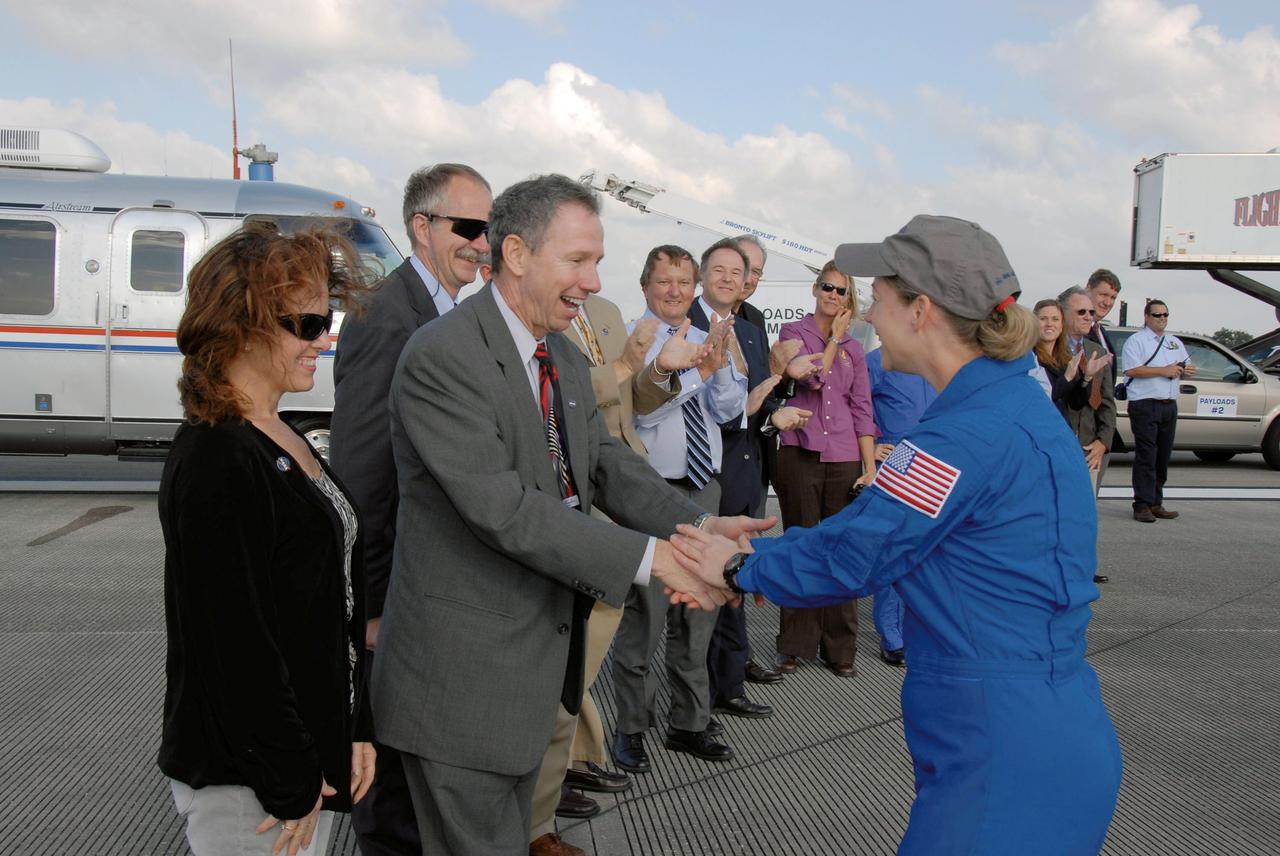
STS120-S-091 (7 Nov. 2007) --- NASA Administrator Mike Griffin and his wife Rebecca Griffin (left) greet astronaut Pam Melroy, STS-120 commander, at NASA's Kennedy Space Center. Behind Griffin is Associate Administrator for NASA Space Operations William Gerstenmaier. Melroy and the Space Shuttle Discovery crew completed the 15-day STS-120 mission, with an on-time landing at 1:01:16 p.m. (EST). Wheel stop was at 1:02:07 p.m. Mission elapsed time was 15 days, 2 hours, 24 minutes and 2 seconds. The STS-120 crew continued the construction of the station with the installation of the Harmony Node 2 module and the relocation of the P6 truss.
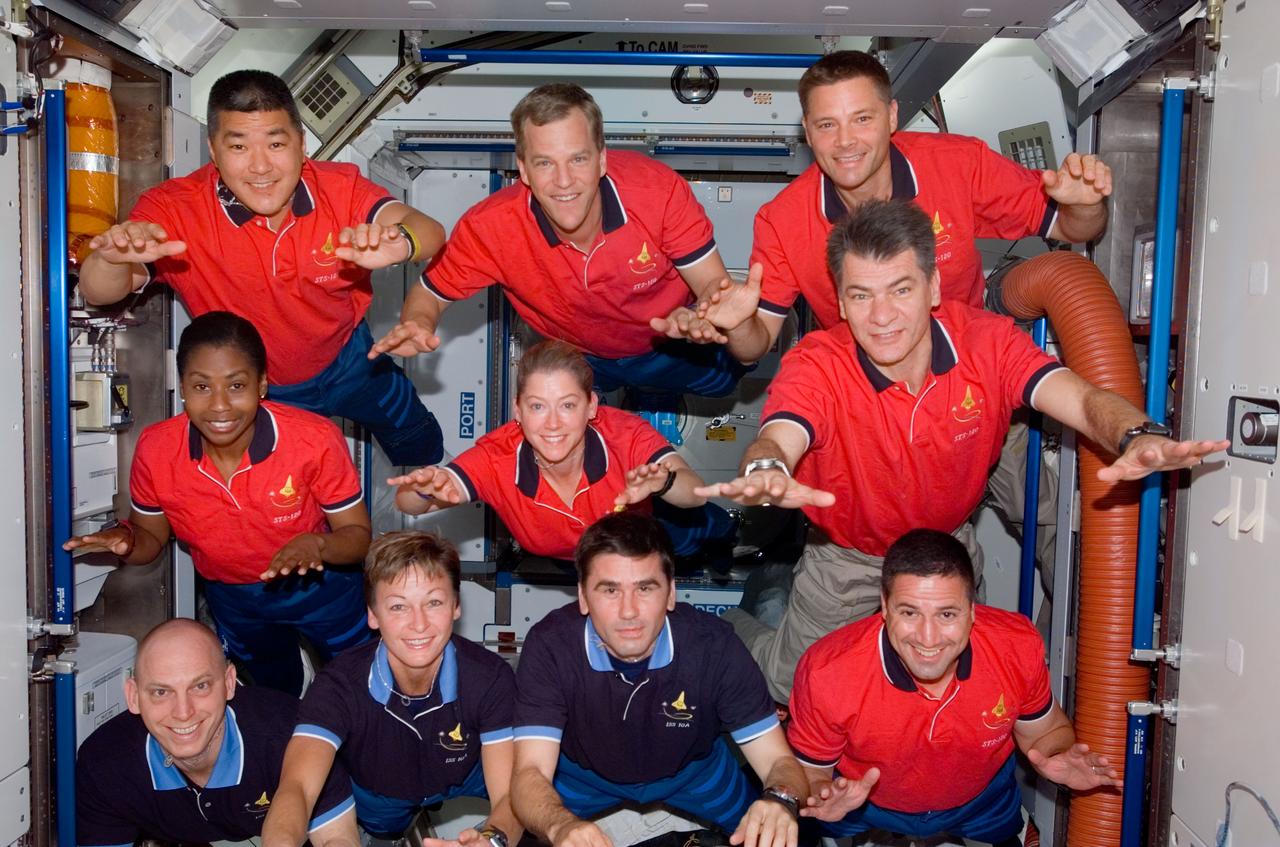
S120-E-007608 (31 Oct. 2007) --- STS-120 and Expedition 16 crewmembers pose for a group photo following a joint news conference in the Harmony node of the International Space Station while Space Shuttle Discovery is docked with the station. From the left (bottom) are astronauts Clayton Anderson, STS-120 mission specialist; Peggy A. Whitson, Expedition 16 commander; cosmonaut Yuri I. Malenchenko, Expedition 16 flight engineer representing Russia's Federal Space Agency; and George Zamka, STS-120 pilot. From the left (center) are astronauts Stephanie Wilson, STS-120 mission specialist; Pam Melroy, STS-120 commander; and Paolo Nespoli, mission specialist representing the European Space Agency (ESA). From the left (top) are astronauts Daniel Tani, Expedition 16 flight engineer; Scott Parazynski and Doug Wheelock, both STS-120 mission specialists.
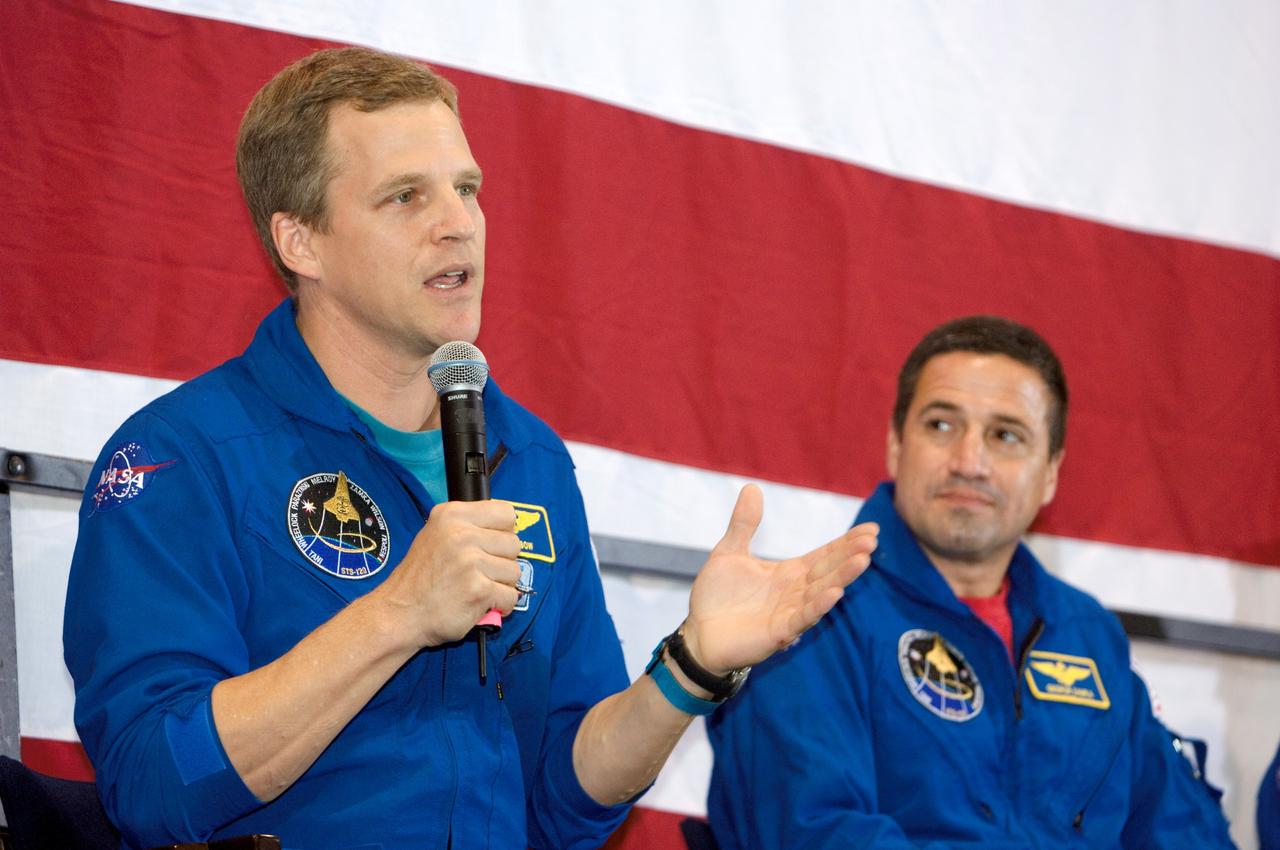
JSC2007-E-098006 (8 Nov. 2007) --- The crew of the STS-120 mission was welcomed home to Houston Nov. 8, following the landing of Space Shuttle Discovery in Florida on Nov. 7. Astronaut Scott Parazynski, who participated in all four STS-120 spacewalks, addresses well-wishers. Astronaut George Zamka, pilot, looks on. Not pictured are astronaut Pam Melroy, commander, and mission specialists Scott Parazynski, Stephanie Wilson, Doug Wheelock, Paolo Nespoli (ESA) and Clay Anderson (all out of frame). The astronauts were welcomed by family and friends during an afternoon ceremony at Houston's Ellington Field.
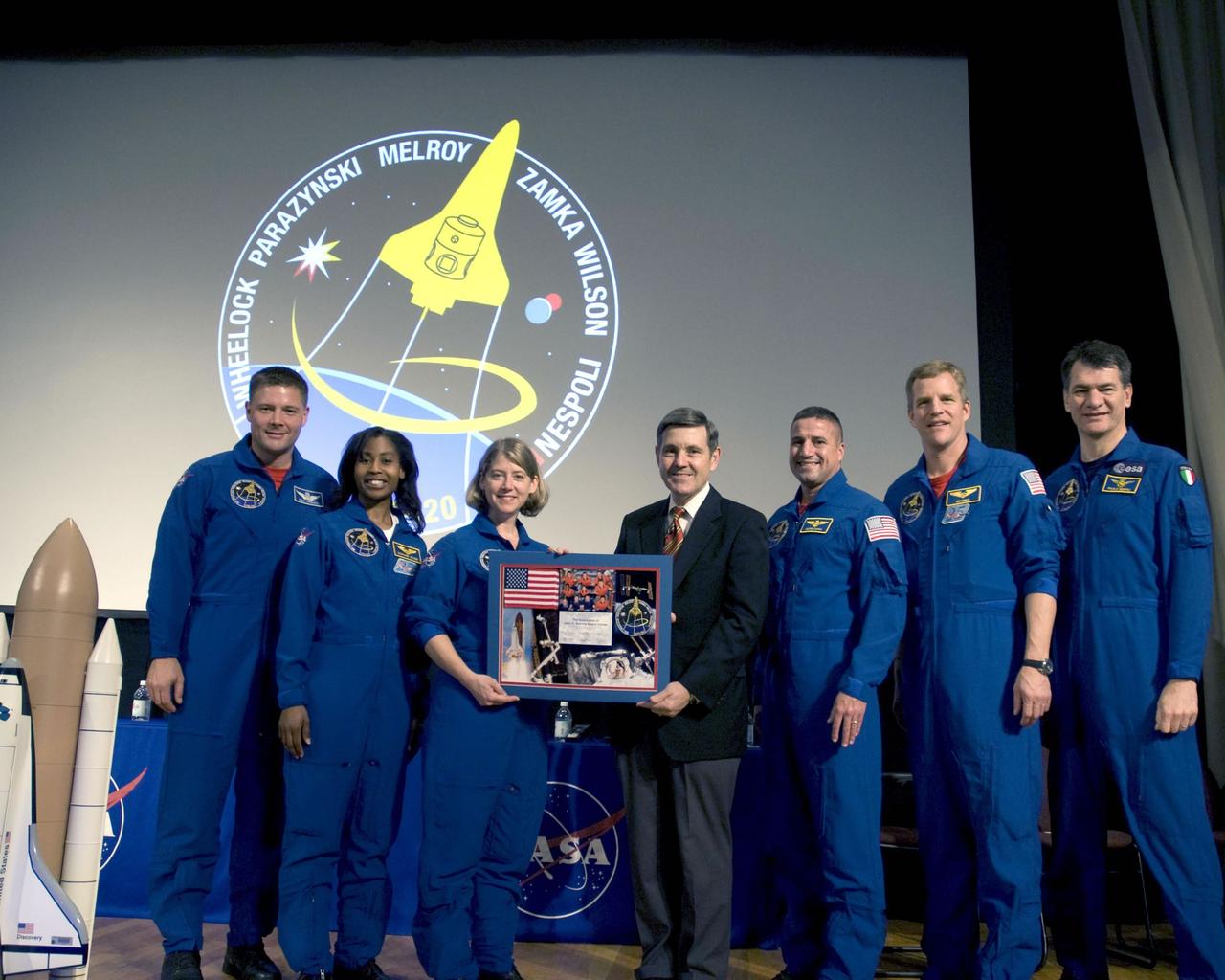
Astronaut Pam Melroy presents a commemorative collage of photos and items flown aboard space shuttle Discovery to Bob Cabana, director of NASA's Stennis Space Center in South Mississippi. Melroy commanded NASA's space shuttle mission STS-120. She and fellow crewmembers (from left) Doug Wheelock, Stephanie Wilson, George Zamka, Scott Parazynski and Paolo Nespoli visited Stennis Dec. 13, 2007, to thank employees for the reliability and safe performance of the space shuttle's main engines, which on Oct. 23 launched them aboard Discovery on their mission to the International Space Station.
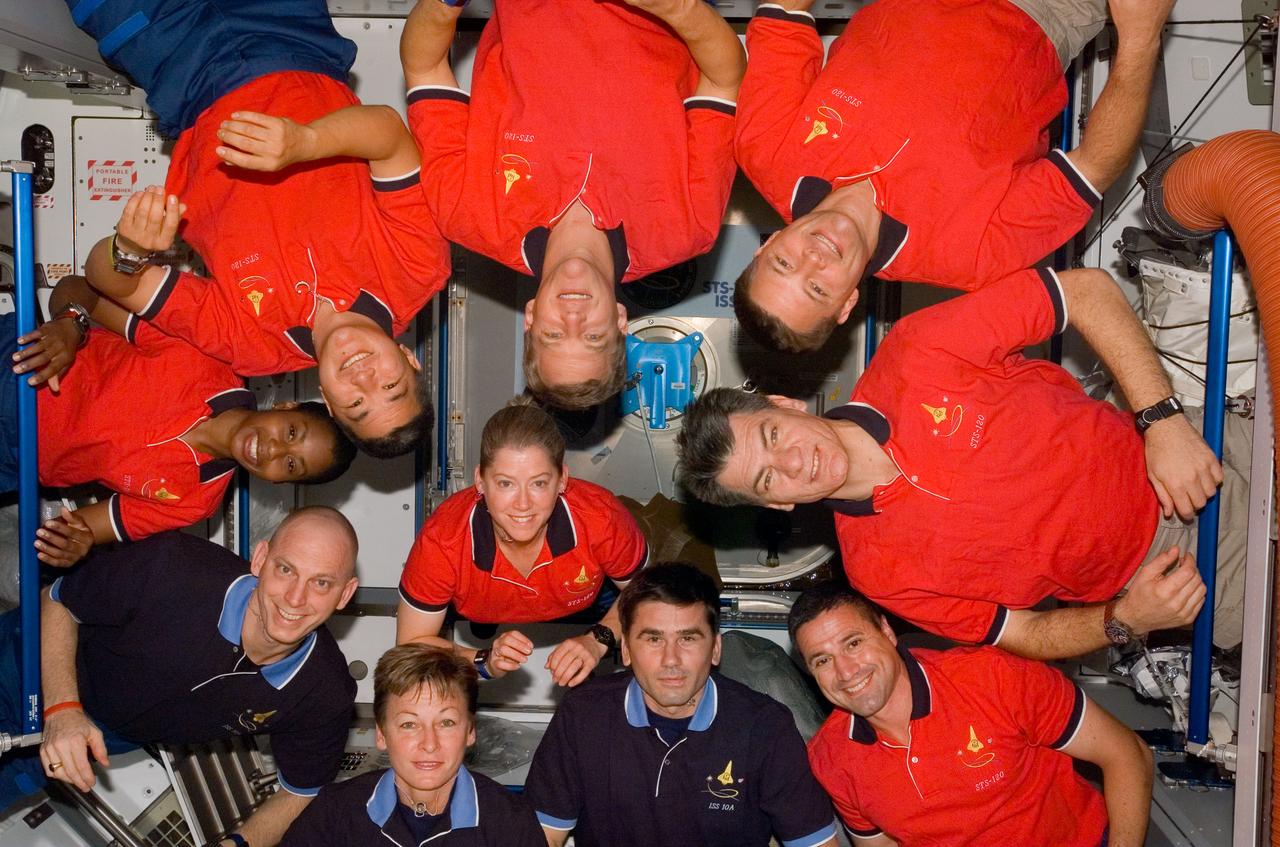
S120-E-007617 (31 Oct. 2007) --- STS-120 and Expedition 16 crewmembers pose for a group photo following a joint news conference in the Harmony node of the International Space Station while Space Shuttle Discovery is docked with the station. Astronaut Pam Melroy, STS-120 commander, is at center. Pictured clockwise are astronauts Peggy A. Whitson (bottom left), Expedition 16 commander; Clayton Anderson and Stephanie Wilson, both STS-120 mission specialists; Daniel Tani, Expedition 16 flight engineer; Scott Parazynski, Doug Wheelock, European Space Agency's (ESA) Paolo Nespoli, all STS-120 mission specialists; George Zamka, STS-120 pilot; and cosmonaut Yuri I. Malenchenko, Expedition 16 flight engineer representing Russia's Federal Space Agency.
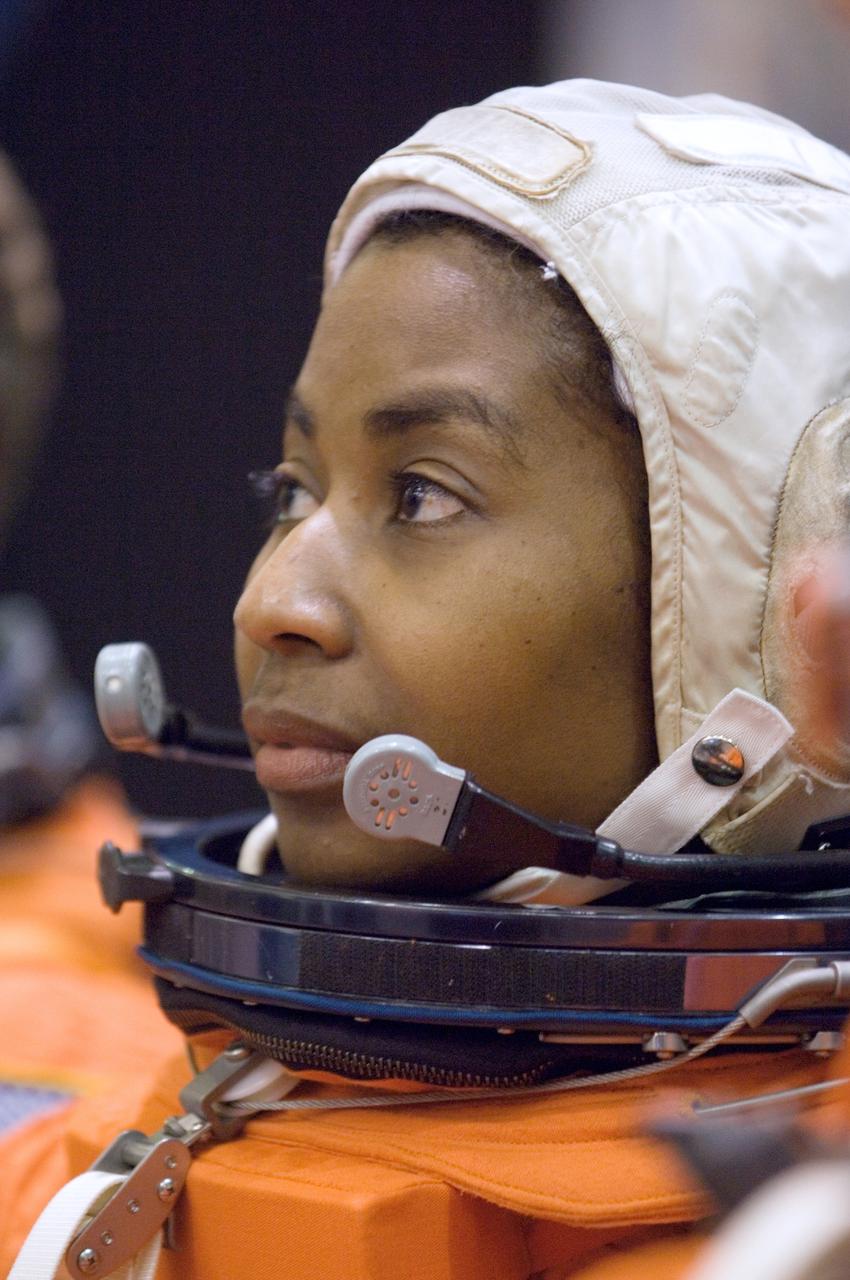
Attired in a training version of her shuttle launch and entry suit, astronaut Stephanie D. Wilson, STS-120 mission specialist, awaits the start of a training session in the Space Vehicle Mockup Facility at Johnson Space Center. Wilson was preparing for her launch aboard Space Shuttle Discovery which occurred on October 23, 2007.
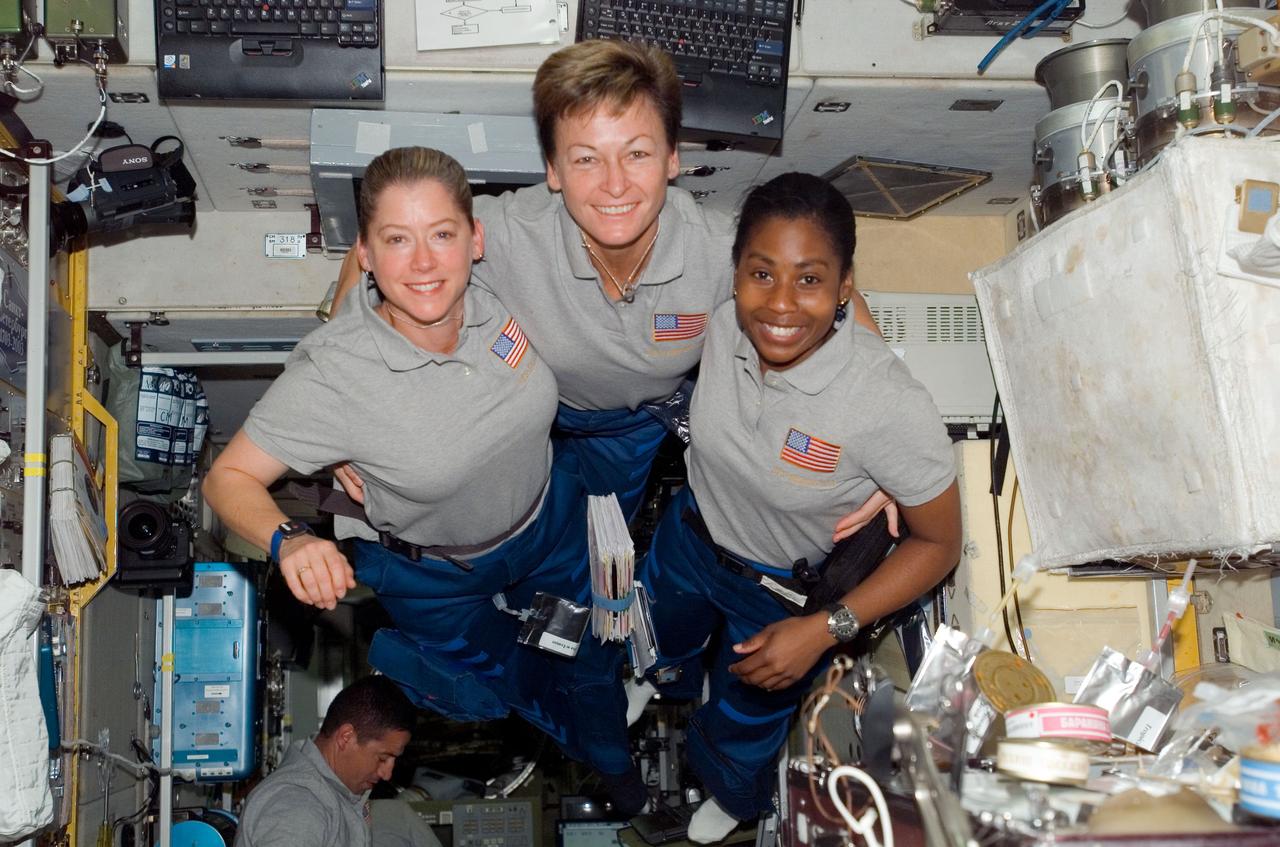
S120-E-008339 (4 Nov. 2007) --- Astronauts Pam Melroy (left), STS-120 commander; Peggy Whitson, Expedition 16 commander; and Stephanie Wilson, STS-120 mission specialist, pose for a photo in the Zvezda Service Module of the International Space Station while Space Shuttle Discovery is docked with the station.