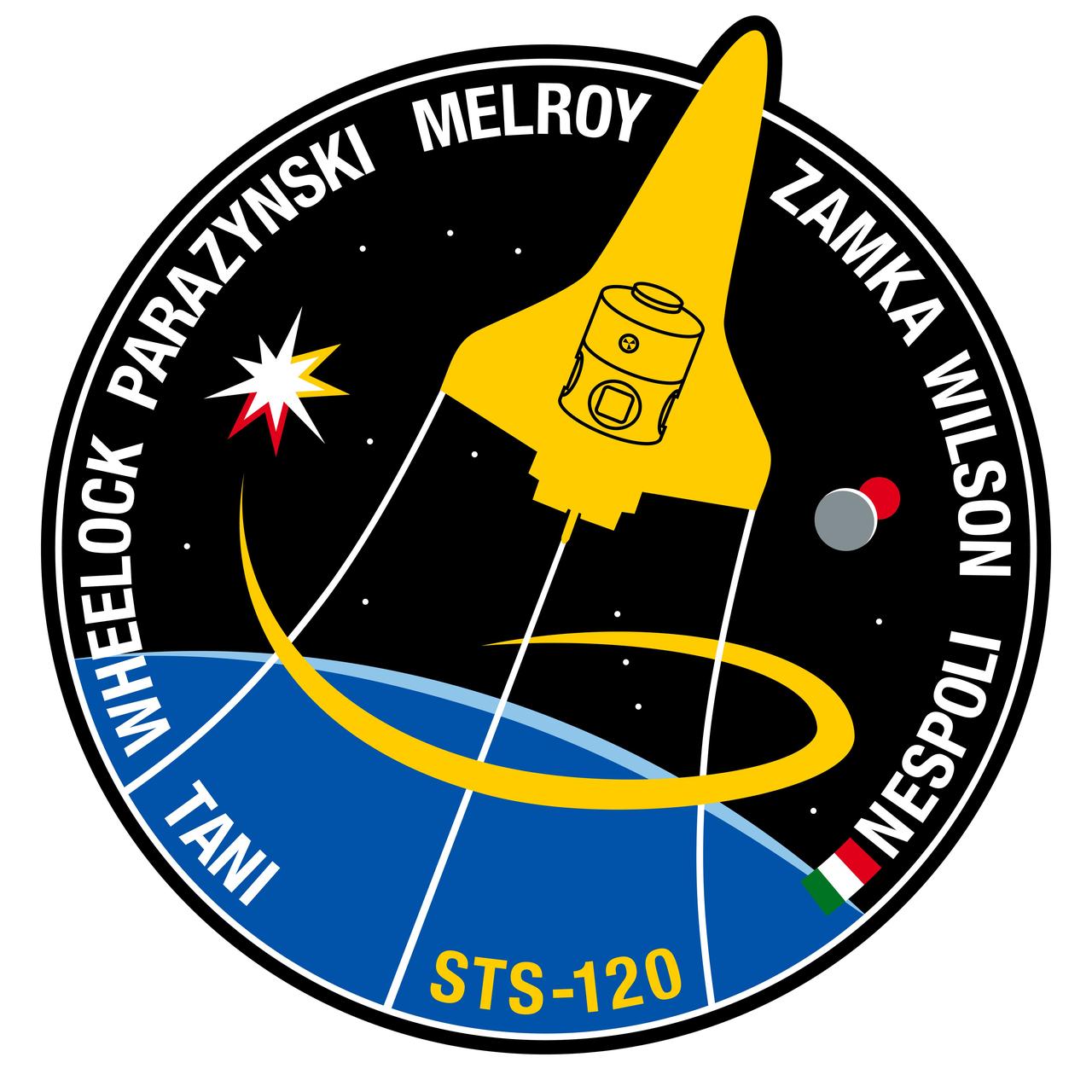
The STS-120 patch reflects the role of the mission in the future of the space program. The shuttle payload bay carries Node 2, Harmony, the doorway to the future international laboratory elements on the International Space Station (ISS). The star on the left represents the ISS; the red colored points represent the current location of the P6 solar array, furled and awaiting relocation when the crew arrives. During the mission, the crew will move P6 to its final home at the end of the port truss. The gold points represent the P6 solar array in its new location, unfurled and producing power for science and life support. On the right, the moon and Mars can be seen representing the future of NASA. The constellation Orion rises in the background, symbolizing NASA's new exploration vehicle. Through all, the shuttle rises up and away, leading the way to the future.
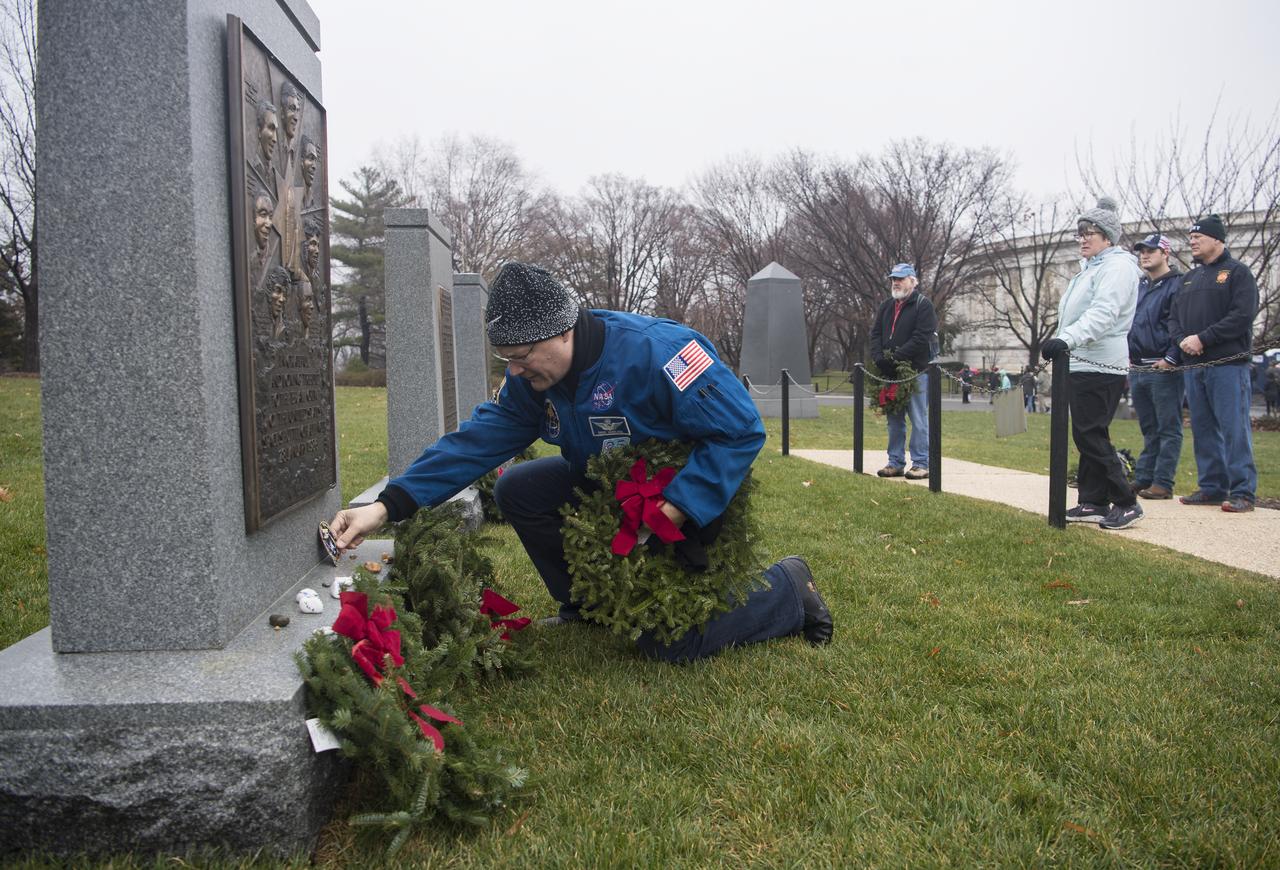
NASA astronaut Doug Wheelock leaves his STS-120 mission patch at the memorial for the Space Shuttle Challenger crew during National Wreaths Across America Day at Arlington National Cemetery, Sat., Dec. 14, 2019 in Arlington, Va. National Wreaths Across America Day is held annually to celebrate the lives of military veterans and wreaths are placed at the foot of every headstone. Wheelock honored those who lost their lives in the quest for space exploration as well as fellow service members. Photo Credit: (NASA/Aubrey Gemignani)
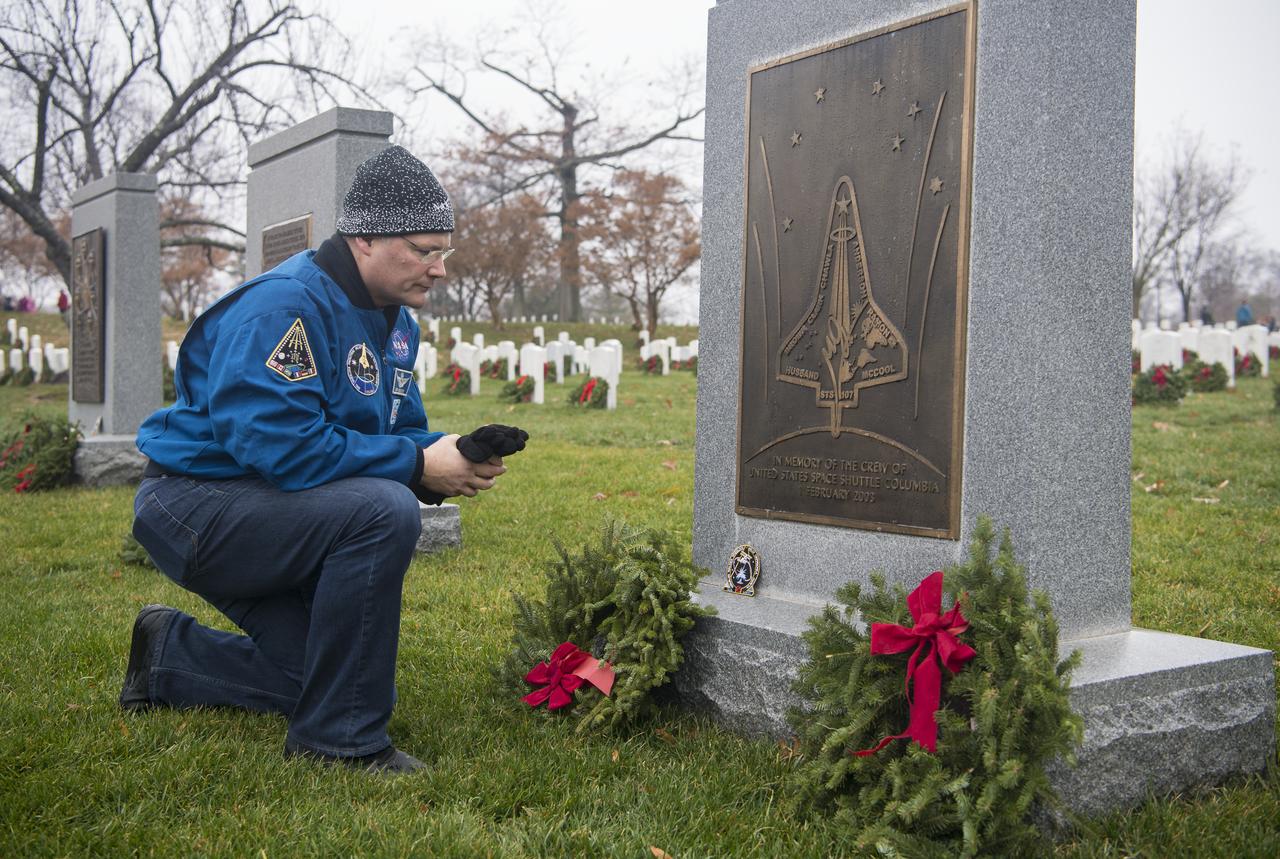
NASA astronaut Doug Wheelock takes a moment after leaving his STS-120 mission patch at the memorial for the Space Shuttle Columbia crew during National Wreaths Across America Day at Arlington National Cemetery, Sat., Dec. 14, 2019 in Arlington, Va. National Wreaths Across America Day is held annually to celebrate the lives of military veterans and wreaths are placed at the foot of every headstone. Wheelock honored those who lost their lives in the quest for space exploration as well as fellow service members. Photo Credit: (NASA/Aubrey Gemignani)
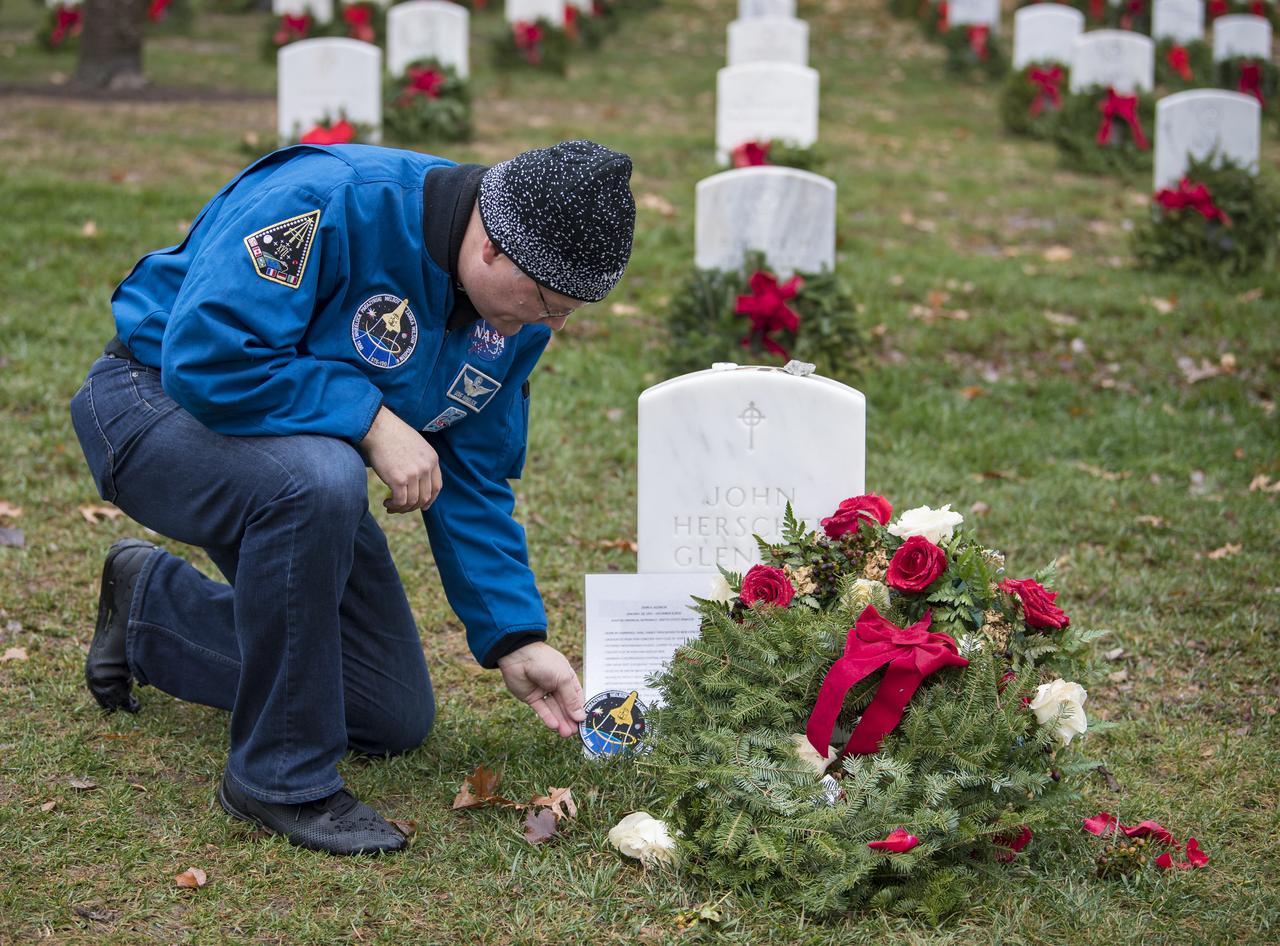
NASA astronaut Doug Wheelock leaves his STS-120 mission patch at the gravesite of former astronaut and U.S. Senator John Glenn during National Wreaths Across America Day at Arlington National Cemetery, Sat., Dec. 14, 2019 in Arlington, Va. National Wreaths Across America Day is held annually to celebrate the lives of military veterans and wreaths are placed at the foot of every headstone. Wheelock honored those who lost their lives in the quest for space exploration as well as fellow service members. Photo Credit: (NASA/Aubrey Gemignani)
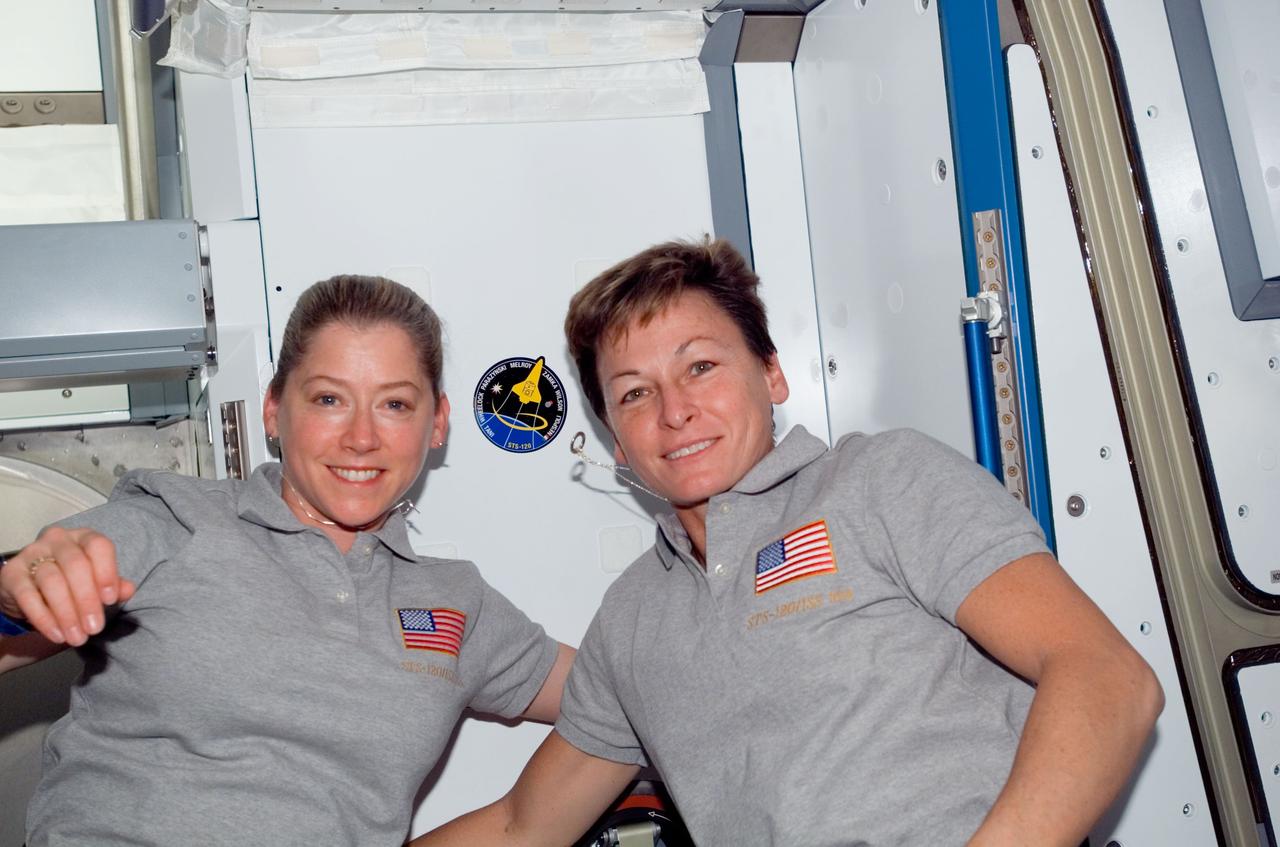
S120-E-008356 (4 Nov. 2007) --- Astronauts Pam Melroy (left), STS-120 commander; and Peggy Whitson, Expedition 16 commander, pose for a photo after placing the STS-120 crew patch in the Harmony node -- newest addition to the International Space Station -- while Space Shuttle Discovery is docked with the station.
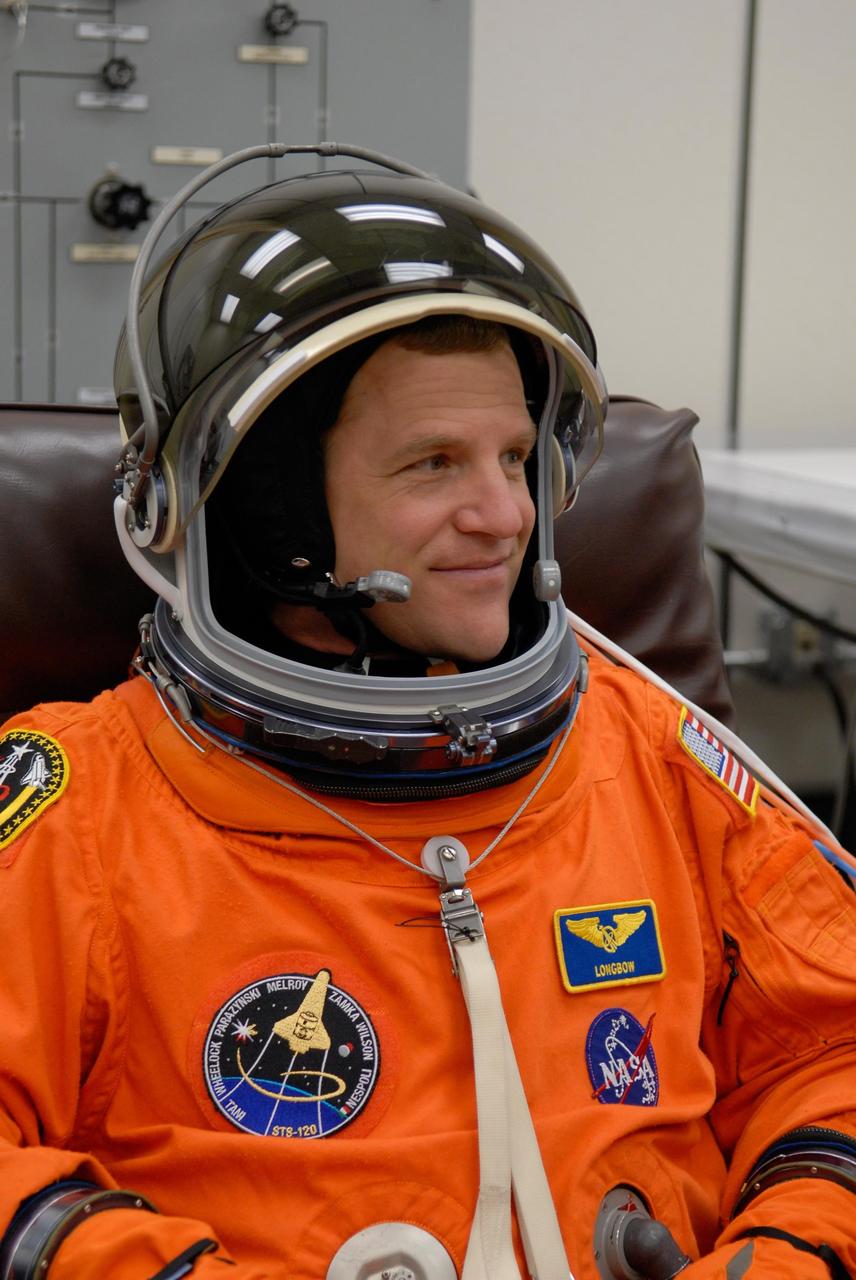
KENNEDY SPACE CENTER, FLA. -- STS-120 Mission Specialist Scott Parazynski completes suiting up to take part in a simulated launch countdown, part of the prelaunch terminal countdown demonstration test, or TCDT. His name patch reflects the nicknames the crew gave each other for the event. The TCDT provides astronauts and ground crews an opportunity to participate in various launch preparation activities, including equipment familiarization, emergency training and the simulated countdown. The STS-120 mission will deliver the U.S. Node 2 module, named Harmony, aboard space shuttle Discovery to the International Space Station. Launch of Discovery on mission STS-120 is targeted for Oct. 23 at 11:38 a.m. EDT on a 14-day mission. Photo credit: NASA/Kim Shiflett
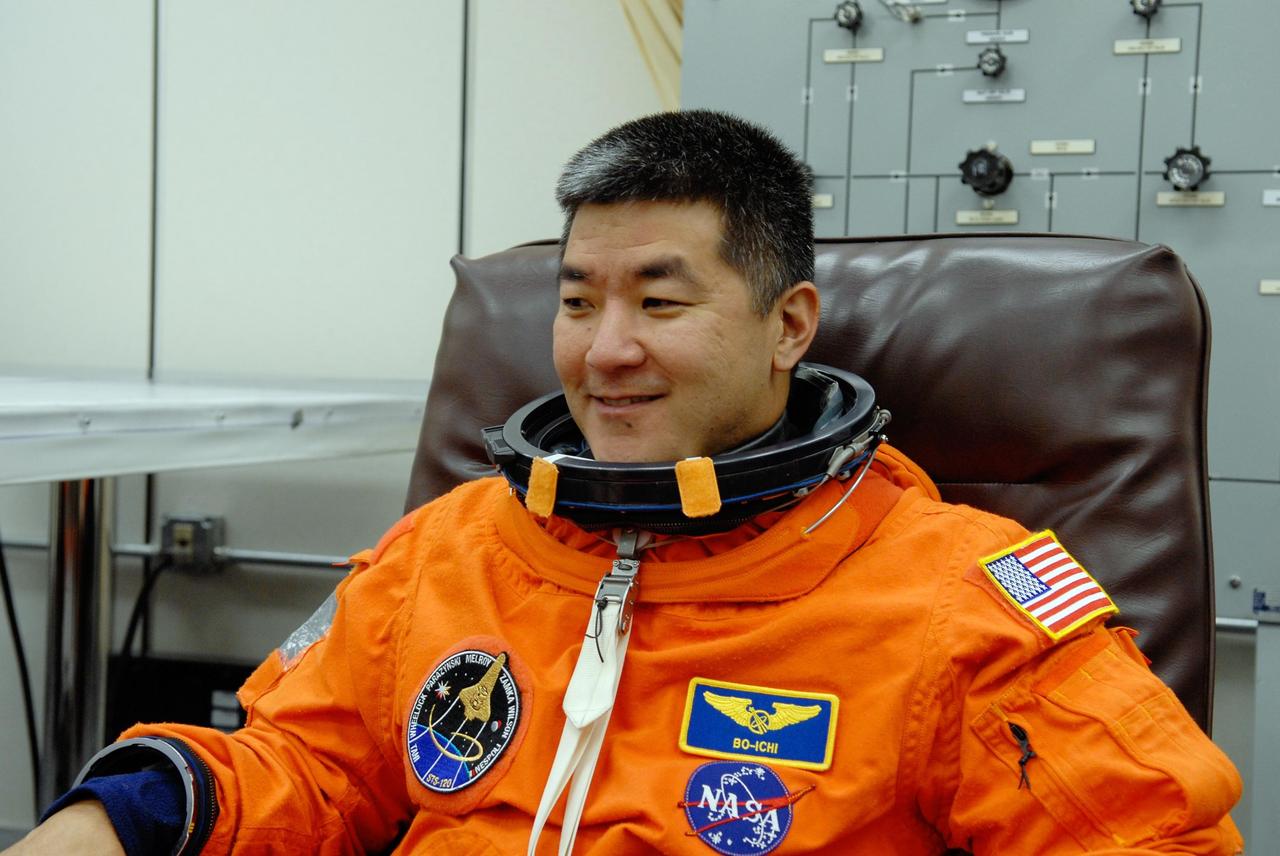
KENNEDY SPACE CENTER, FLA. -- STS-120 Mission Specialist Daniel Tani is putting on his launch and entry suit for a simulated launch countdown, part of the prelaunch terminal countdown demonstration test, or TCDT. His name patch reflects the nicknames the crew gave each other for the event. The TCDT provides astronauts and ground crews an opportunity to participate in various launch preparation activities, including equipment familiarization, emergency training and the simulated countdown. The STS-120 mission will deliver the U.S. Node 2 module, named Harmony, aboard space shuttle Discovery to the International Space Station. Launch of Discovery on mission STS-120 is targeted for Oct. 23 at 11:38 a.m. EDT on a 14-day mission. Photo credit: NASA/Kim Shiflett
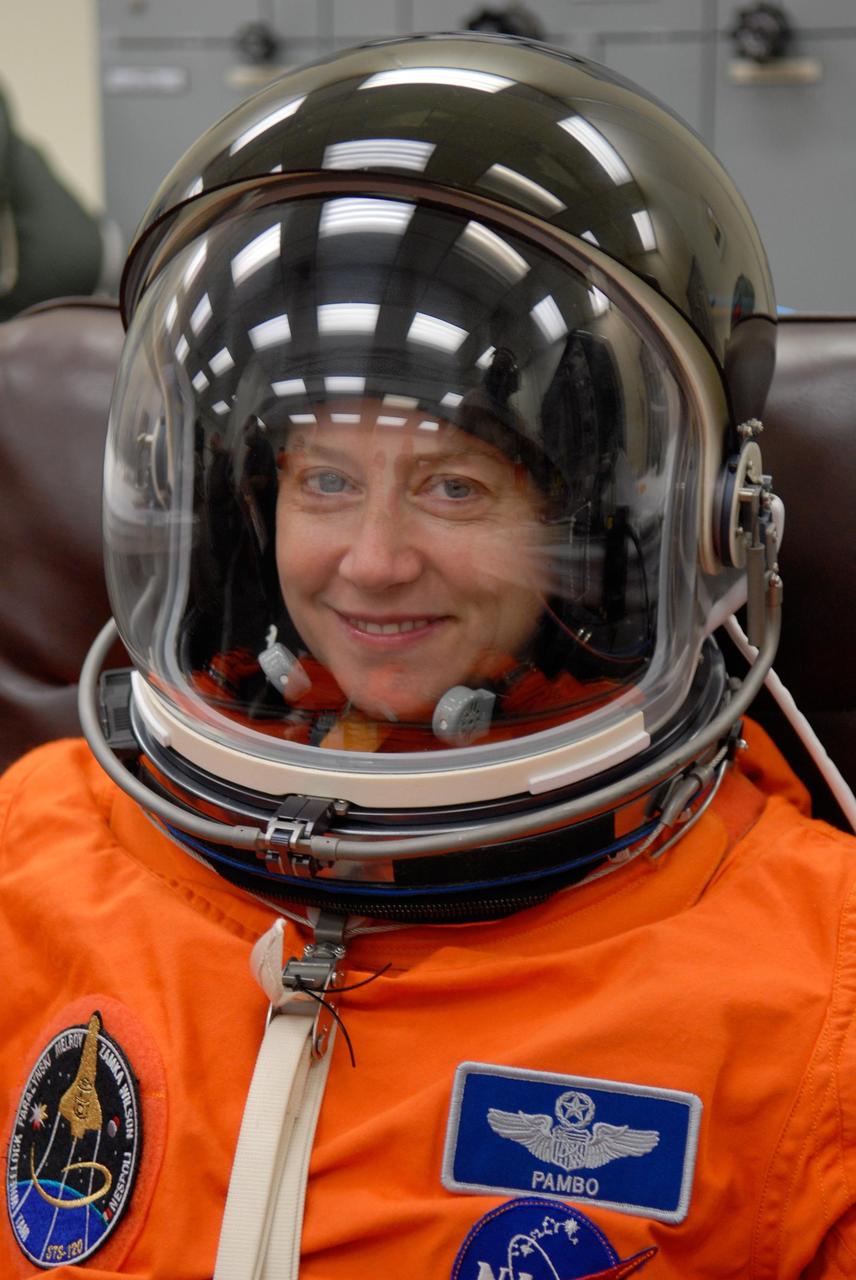
KENNEDY SPACE CENTER, FLA. -- STS-120 Commander Pamela Melroy completes suiting up to take part in a simulated launch countdown, part of the prelaunch terminal countdown demonstration test, or TCDT. His name patch reflects the nicknames the crew gave each other for the event. The TCDT provides astronauts and ground crews an opportunity to participate in various launch preparation activities, including equipment familiarization, emergency training and the simulated countdown. The STS-120 mission will deliver the U.S. Node 2 module, named Harmony, aboard space shuttle Discovery to the International Space Station. Launch of Discovery on mission STS-120 is targeted for Oct. 23 at 11:38 a.m. EDT on a 14-day mission. Photo credit: NASA/Kim Shiflett
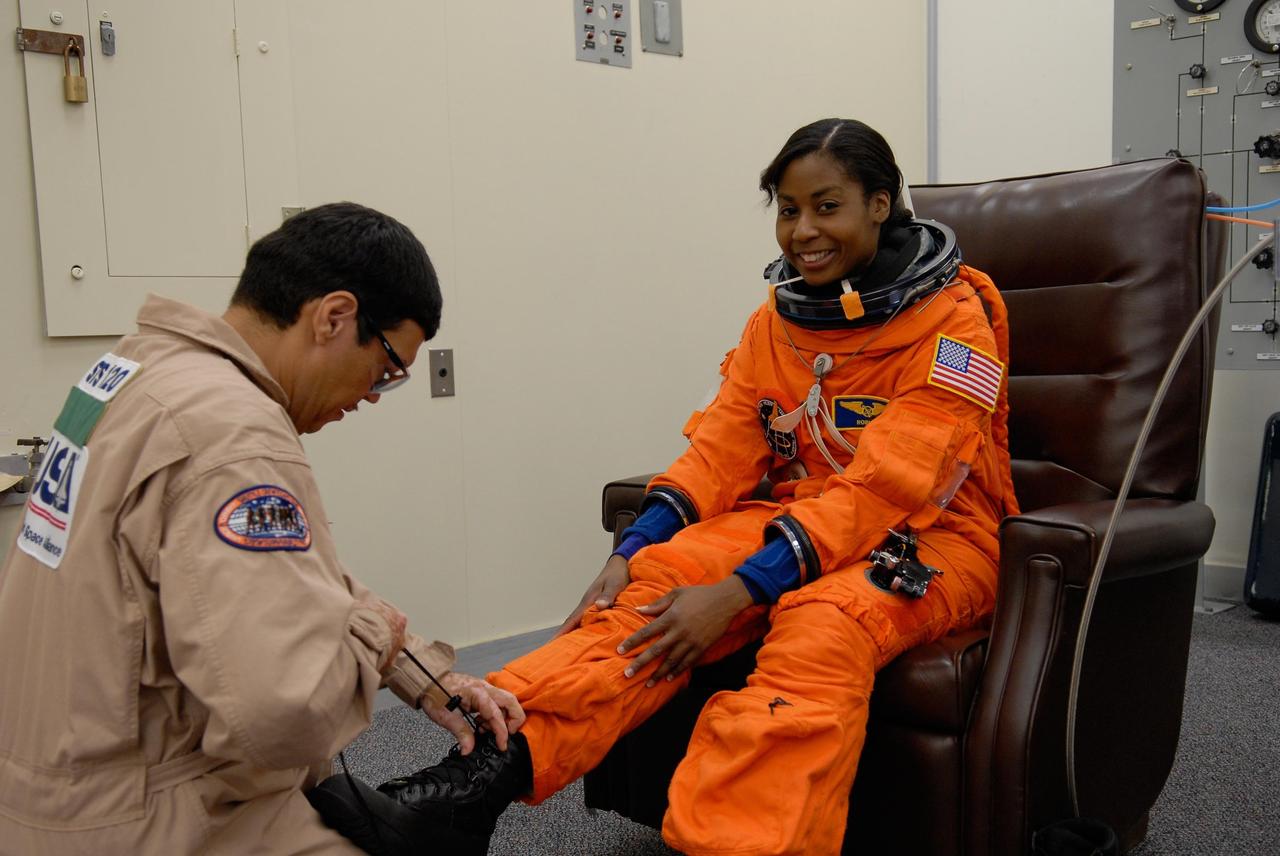
KENNEDY SPACE CENTER, FLA. -- STS-120 Mission Specialist Stephanie Wilson is helped with her boot during suitup for a simulated launch countdown, part of the prelaunch terminal countdown demonstration test, or TCDT. Her name patch reflects the nicknames the crew gave each other for the event. The TCDT provides astronauts and ground crews an opportunity to participate in various launch preparation activities, including equipment familiarization, emergency training and the simulated countdown. The STS-120 mission will deliver the U.S. Node 2 module, named Harmony, aboard space shuttle Discovery to the International Space Station. Launch of Discovery on mission STS-120 is targeted for Oct. 23 at 11:38 a.m. EDT on a 14-day mission. Photo credit: NASA/Kim Shiflett
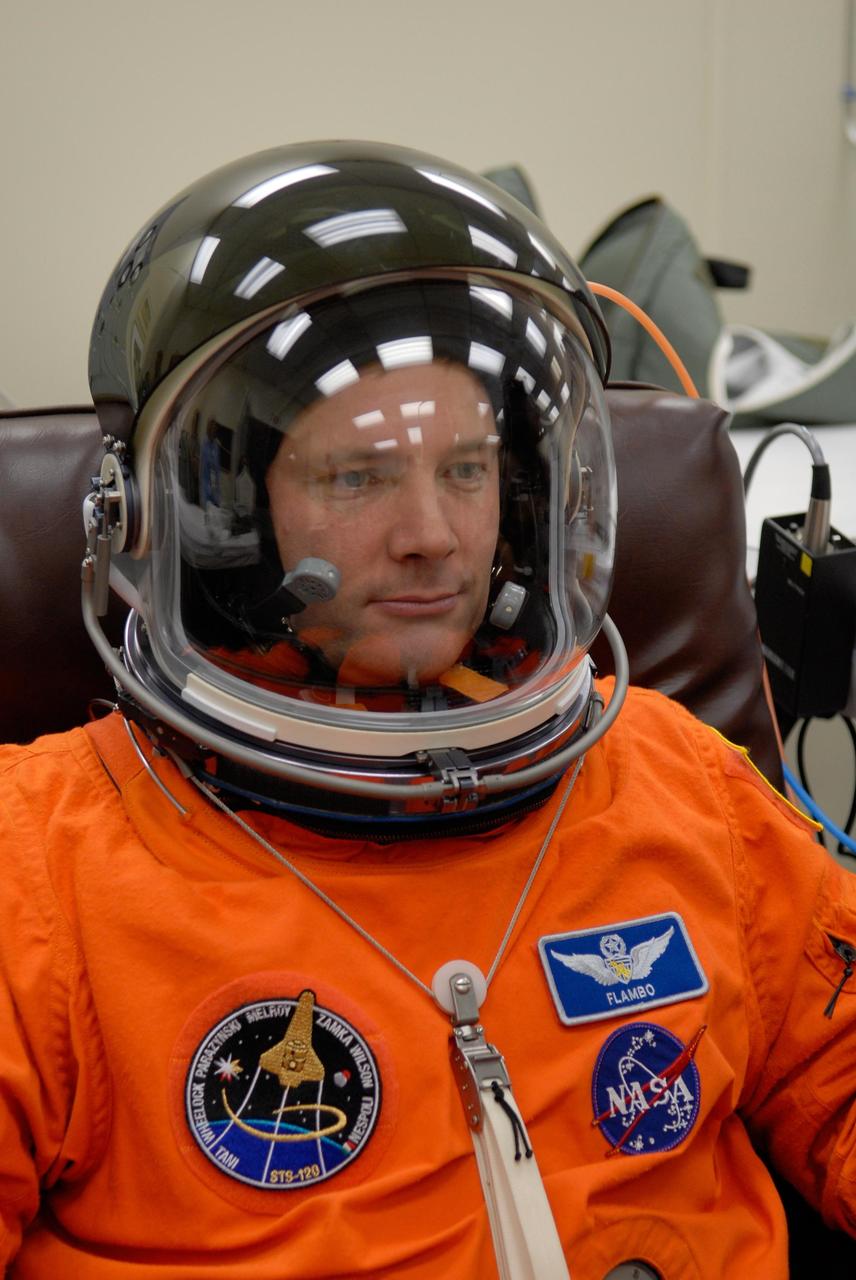
KENNEDY SPACE CENTER, FLA. -- STS-120 Mission Specialist Doug Wheelock completes suiting up to take part in a simulated launch countdown, part of the prelaunch terminal countdown demonstration test, or TCDT. His name patch reflects the nicknames the crew gave each other for the event. The TCDT provides astronauts and ground crews an opportunity to participate in various launch preparation activities, including equipment familiarization, emergency training and the simulated countdown. The STS-120 mission will deliver the U.S. Node 2 module, named Harmony, aboard space shuttle Discovery to the International Space Station. Launch of Discovery on mission STS-120 is targeted for Oct. 23 at 11:38 a.m. EDT on a 14-day mission. Photo credit: NASA/Kim Shiflett
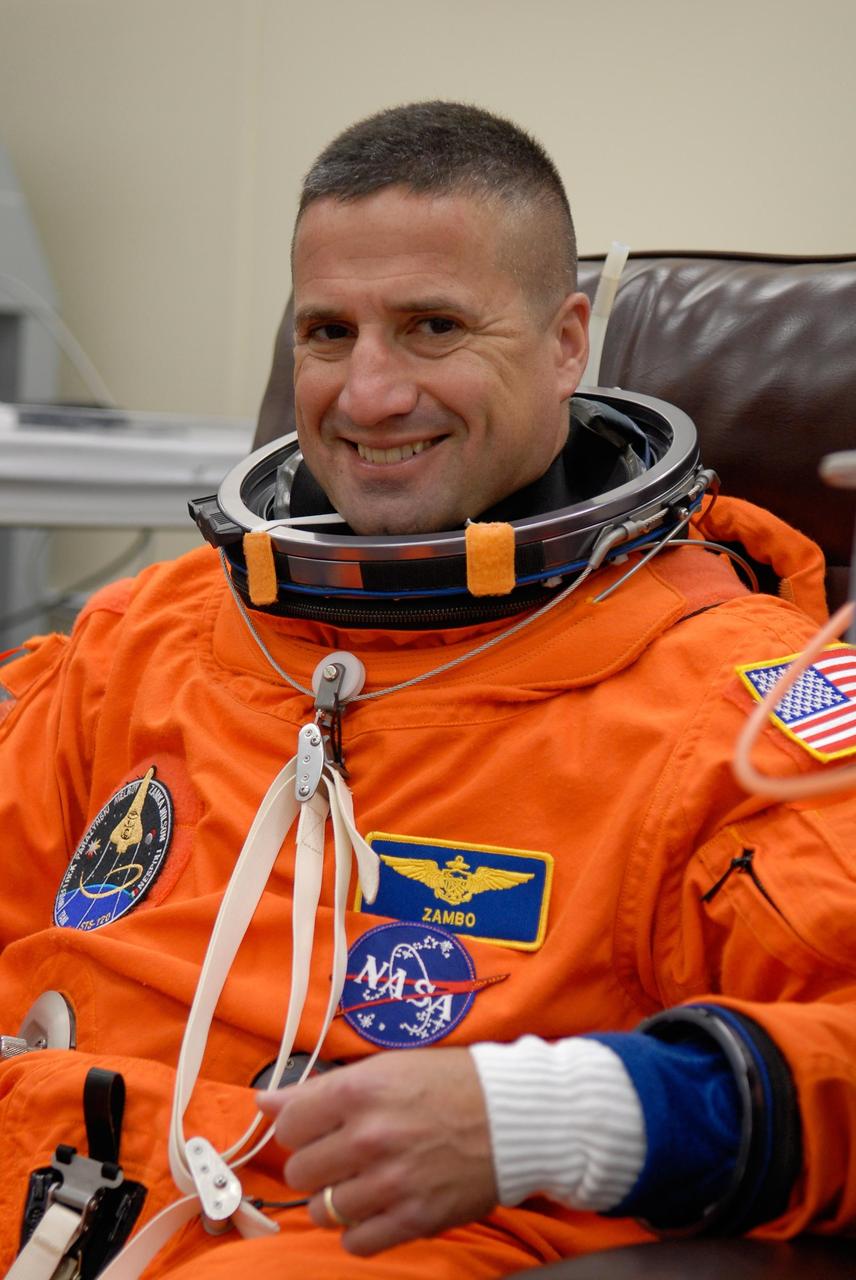
KENNEDY SPACE CENTER, FLA. -- STS-120 Pilot George Zamka is donning his launch and entry suit to take part in a simulated launch countdown, part of the prelaunch terminal countdown demonstration test, or TCDT. His name patch reflects the nicknames the crew gave each other for the event. The TCDT provides astronauts and ground crews an opportunity to participate in various launch preparation activities, including equipment familiarization, emergency training and the simulated countdown. The STS-120 mission will deliver the U.S. Node 2 module, named Harmony, aboard space shuttle Discovery to the International Space Station. Launch of Discovery on mission STS-120 is targeted for Oct. 23 at 11:38 a.m. EDT on a 14-day mission. Photo credit: NASA/Kim Shiflett
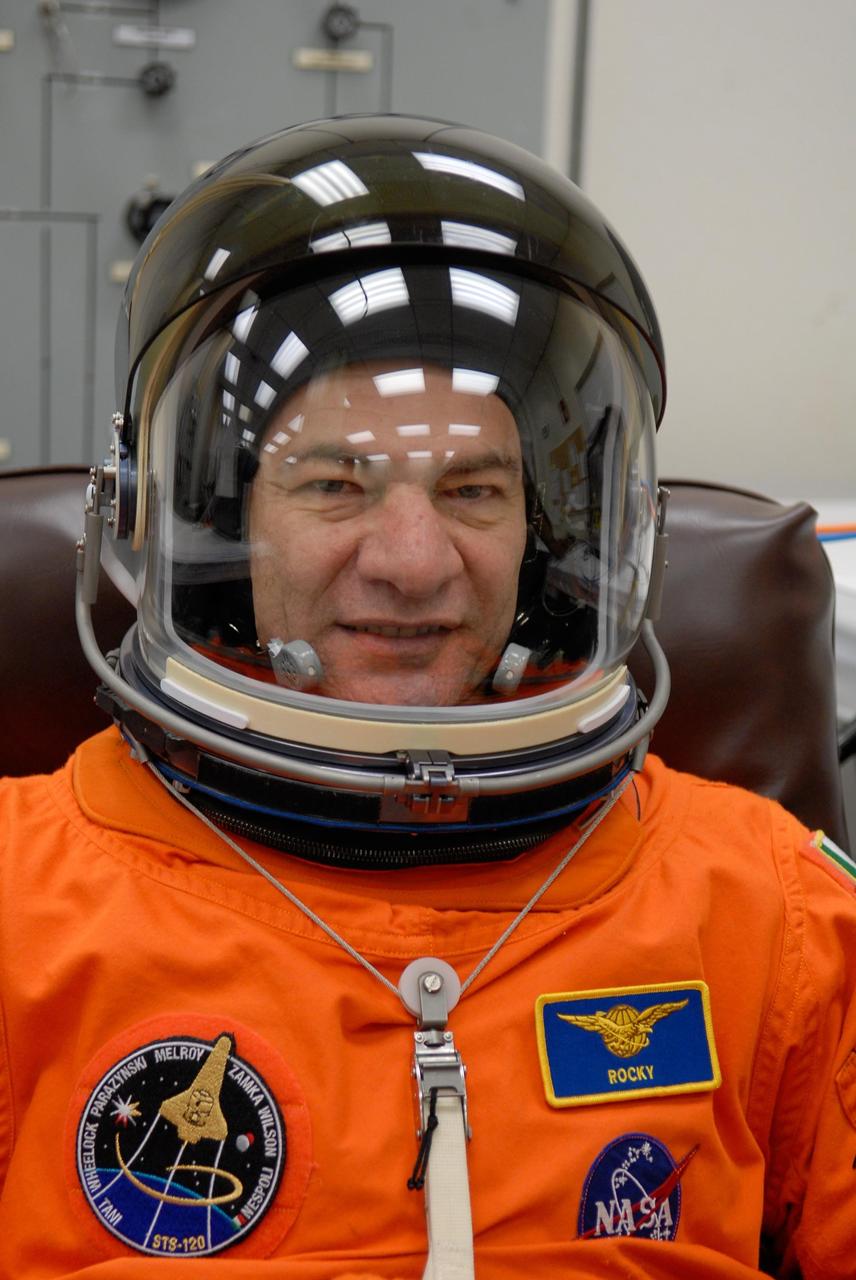
KENNEDY SPACE CENTER, FLA. -- STS-120 Mission Specialist Paolo Nespoli completes suiting up to take part in a simulated launch countdown, part of the prelaunch terminal countdown demonstration test, or TCDT. Nespoli represents the European Space Agency. His name patch reflects the nicknames the crew gave each other for the event. The TCDT provides astronauts and ground crews an opportunity to participate in various launch preparation activities, including equipment familiarization, emergency training and the simulated countdown. The STS-120 mission will deliver the U.S. Node 2 module, named Harmony, aboard space shuttle Discovery to the International Space Station. Launch of Discovery on mission STS-120 is targeted for Oct. 23 at 11:38 a.m. EDT on a 14-day mission. Photo credit: NASA/Kim Shiflett
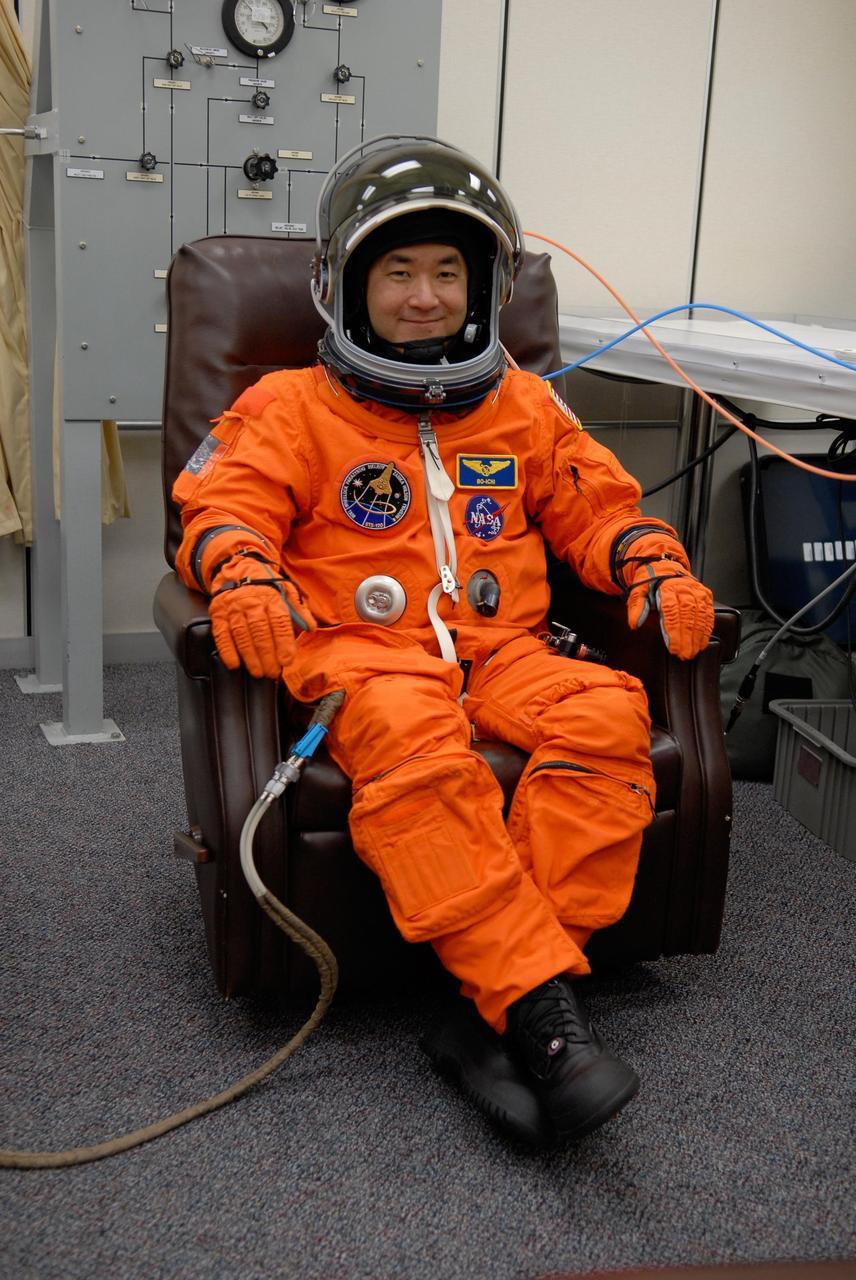
KENNEDY SPACE CENTER, FLA. -- STS-120 Mission Specialist Daniel Tani is fully suited and ready to take part in a simulated launch countdown, part of the prelaunch terminal countdown demonstration test, or TCDT. His name patch reflects the nicknames the crew gave each other for the event. The TCDT provides astronauts and ground crews an opportunity to participate in various launch preparation activities, including equipment familiarization, emergency training and the simulated countdown. The STS-120 mission will deliver the U.S. Node 2 module, named Harmony, aboard space shuttle Discovery to the International Space Station. Launch of Discovery on mission STS-120 is targeted for Oct. 23 at 11:38 a.m. EDT on a 14-day mission. Photo credit: NASA/Kim Shiflett
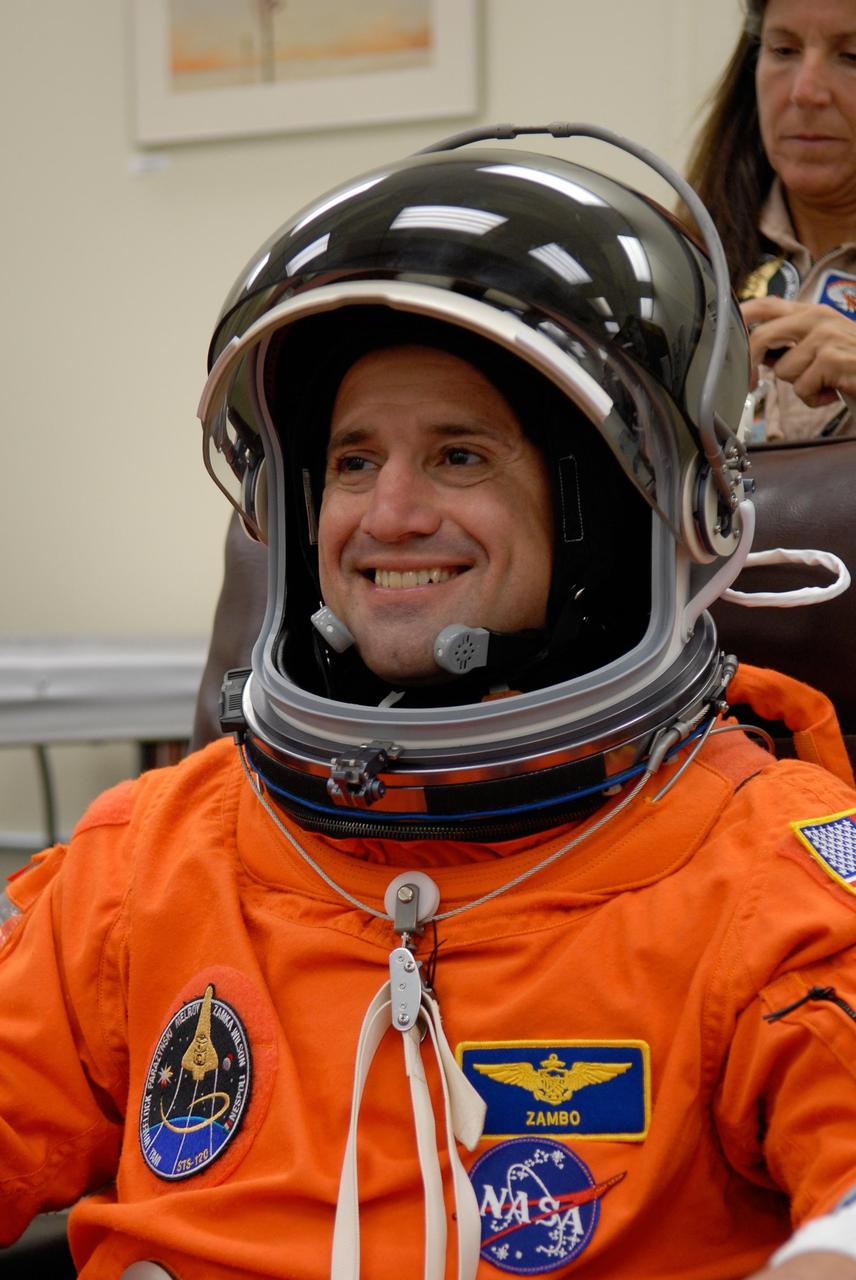
KENNEDY SPACE CENTER, FLA. -- STS-120 Pilot George Zamka completes suiting up to take part in a simulated launch countdown, part of the prelaunch terminal countdown demonstration test, or TCDT. His name patch reflects the nicknames the crew gave each other for the event. The TCDT provides astronauts and ground crews an opportunity to participate in various launch preparation activities, including equipment familiarization, emergency training and the simulated countdown. The STS-120 mission will deliver the U.S. Node 2 module, named Harmony, aboard space shuttle Discovery to the International Space Station. Launch of Discovery on mission STS-120 is targeted for Oct. 23 at 11:38 a.m. EDT on a 14-day mission. Photo credit: NASA/Kim Shiflett
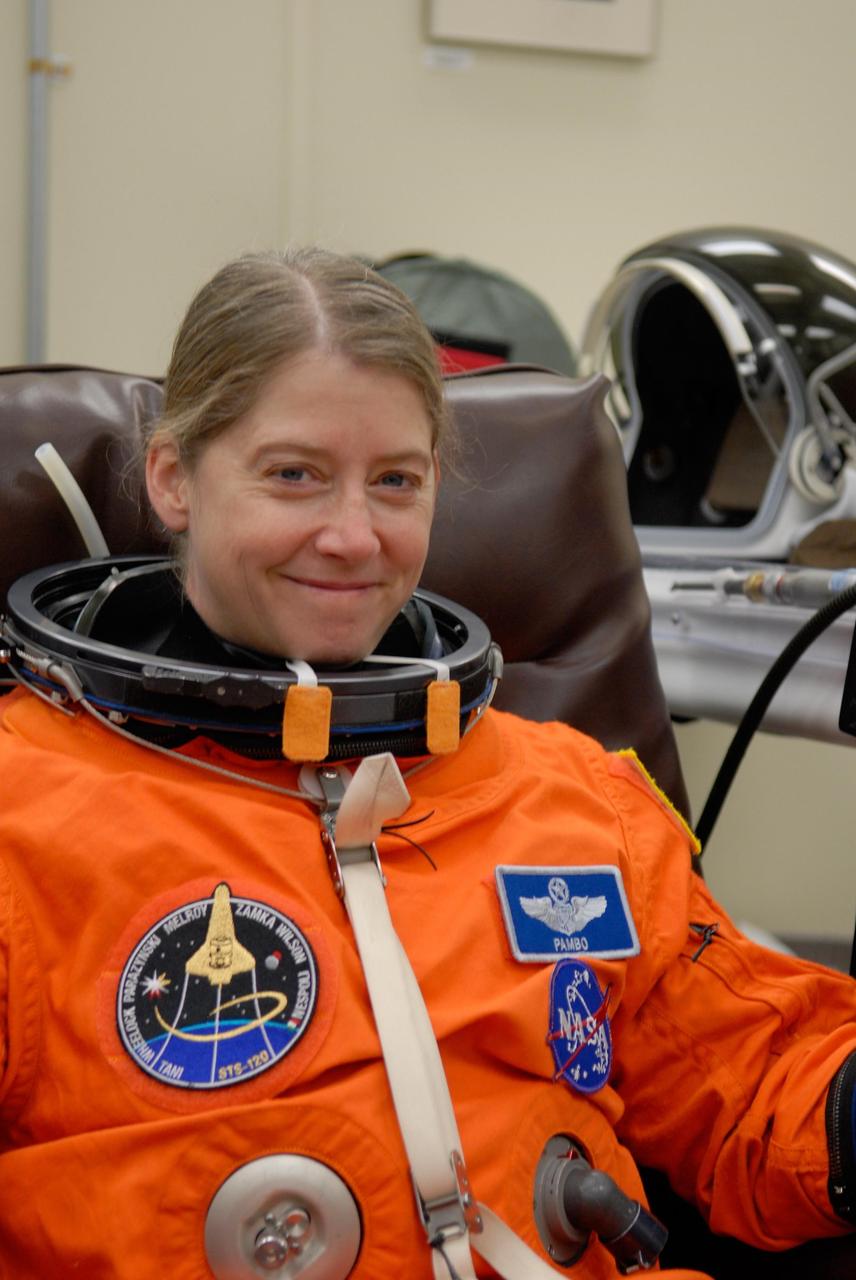
KENNEDY SPACE CENTER, FLA. -- STS-120 Commander Pamela Melroy is donning her launch and entry suit to take part in a simulated launch countdown, part of the prelaunch terminal countdown demonstration test, or TCDT. Her name patch reflects the nicknames the crew gave each other for the event. The TCDT provides astronauts and ground crews an opportunity to participate in various launch preparation activities, including equipment familiarization, emergency training and the simulated countdown. The STS-120 mission will deliver the U.S. Node 2 module, named Harmony, aboard space shuttle Discovery to the International Space Station. Launch of Discovery on mission STS-120 is targeted for Oct. 23 at 11:38 a.m. EDT on a 14-day mission. Photo credit: NASA/Kim Shiflett
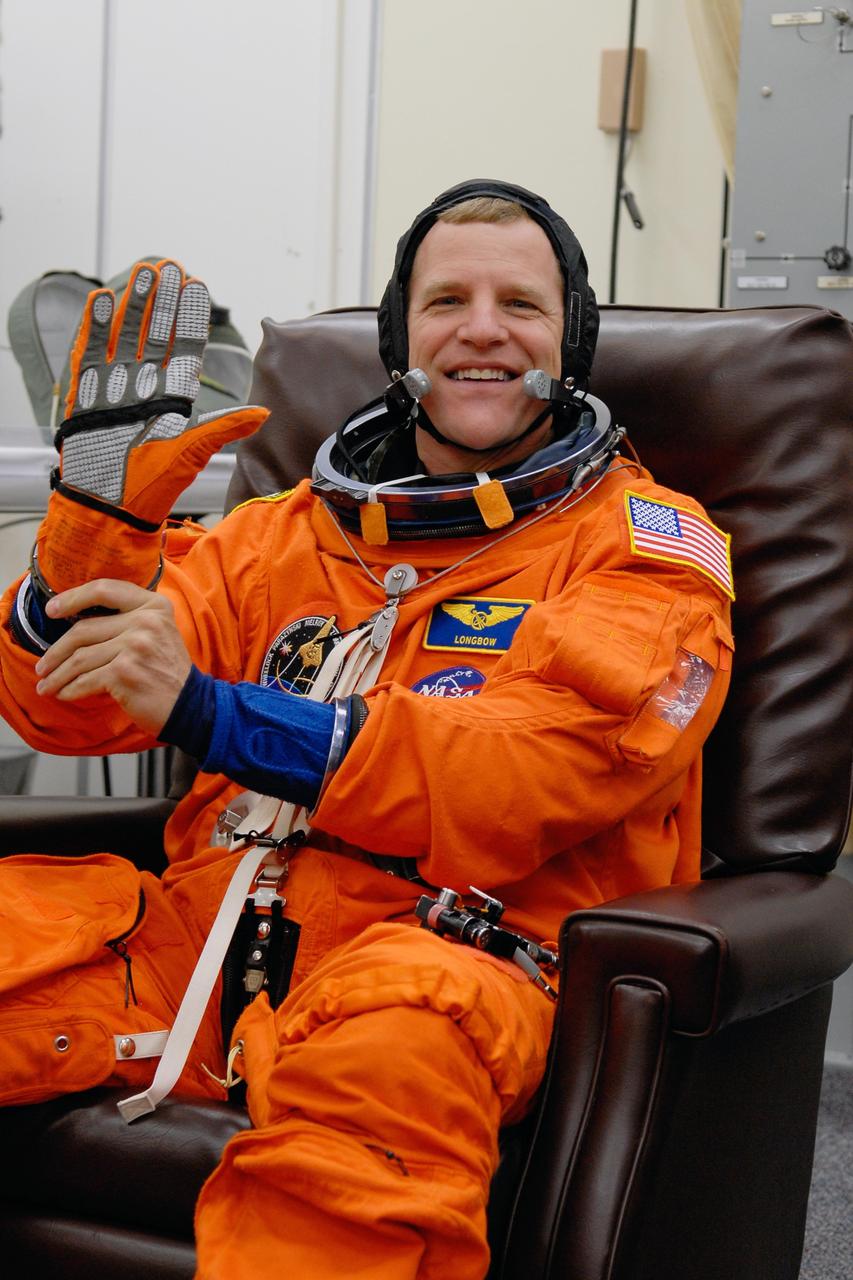
KENNEDY SPACE CENTER, FLA. -- STS-120 Mission Specialist Scott Parazynski is putting on his launch and entry suit for a simulated launch countdown, part of the prelaunch terminal countdown demonstration test, or TCDT. His name patch reflects the nicknames the crew gave each other for the event. The TCDT provides astronauts and ground crews an opportunity to participate in various launch preparation activities, including equipment familiarization, emergency training and the simulated countdown. The STS-120 mission will deliver the U.S. Node 2 module, named Harmony, aboard space shuttle Discovery to the International Space Station. Launch of Discovery on mission STS-120 is targeted for Oct. 23 at 11:38 a.m. EDT on a 14-day mission. Photo credit: NASA/Kim Shiflett
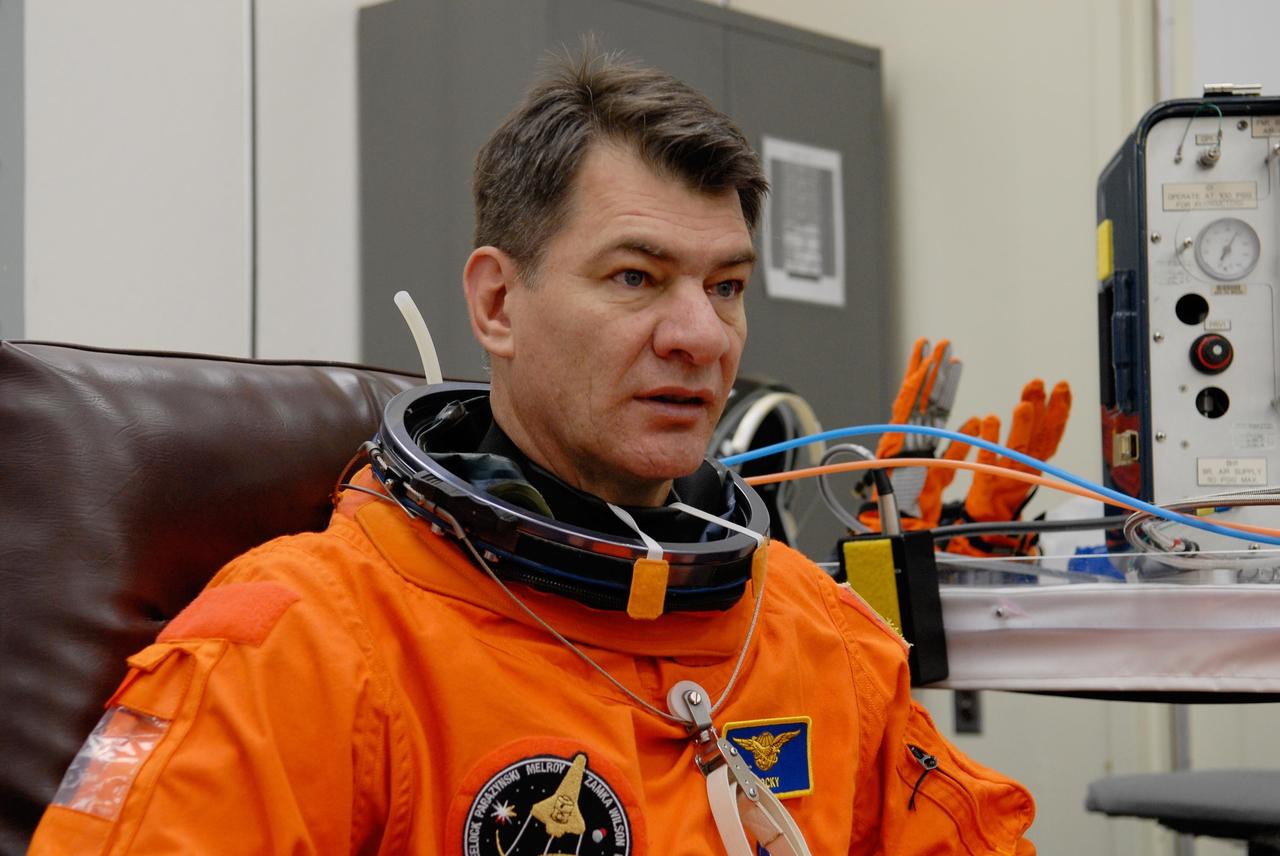
KENNEDY SPACE CENTER, FLA. -- STS-120 Mission Specialist Paolo Nespoli is putting on his launch and entry suit for a simulated launch countdown, part of the prelaunch terminal countdown demonstration test, or TCDT. His name patch reflects the nicknames the crew gave each other for the event. The TCDT provides astronauts and ground crews an opportunity to participate in various launch preparation activities, including equipment familiarization, emergency training and the simulated countdown. The STS-120 mission will deliver the U.S. Node 2 module, named Harmony, aboard space shuttle Discovery to the International Space Station. Launch of Discovery on mission STS-120 is targeted for Oct. 23 at 11:38 a.m. EDT on a 14-day mission. Photo credit: NASA/Kim Shiflett
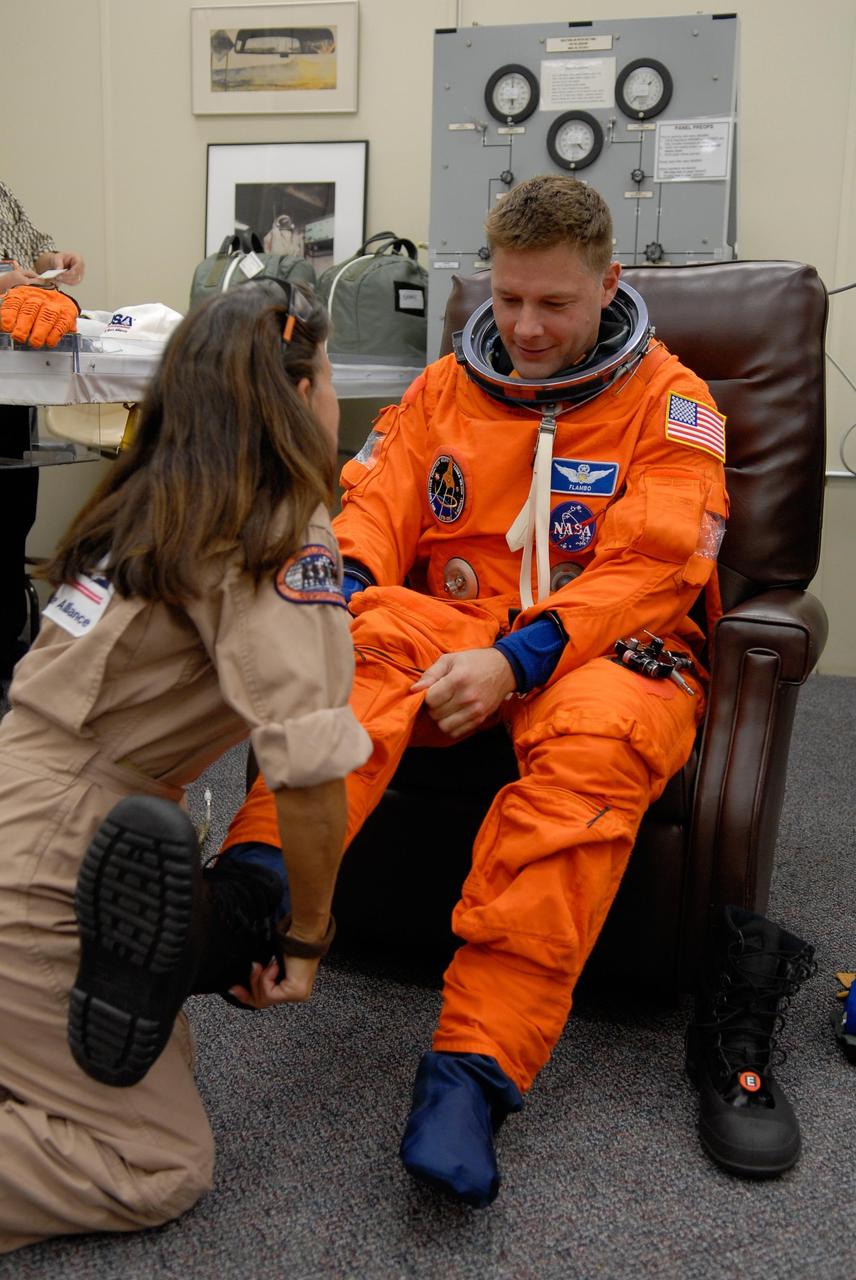
KENNEDY SPACE CENTER, FLA. -- STS-120 Mission Specialist Doug Wheelock gets help with his boot as he suits up for a simulated launch countdown, part of the prelaunch terminal countdown demonstration test, or TCDT. His name patch reflects the nicknames the crew gave each other for the event. The TCDT provides astronauts and ground crews an opportunity to participate in various launch preparation activities, including equipment familiarization, emergency training and the simulated countdown. The STS-120 mission will deliver the U.S. Node 2 module, named Harmony, aboard space shuttle Discovery to the International Space Station. Launch of Discovery on mission STS-120 is targeted for Oct. 23 at 11:38 a.m. EDT on a 14-day mission. Photo credit: NASA/Kim Shiflett
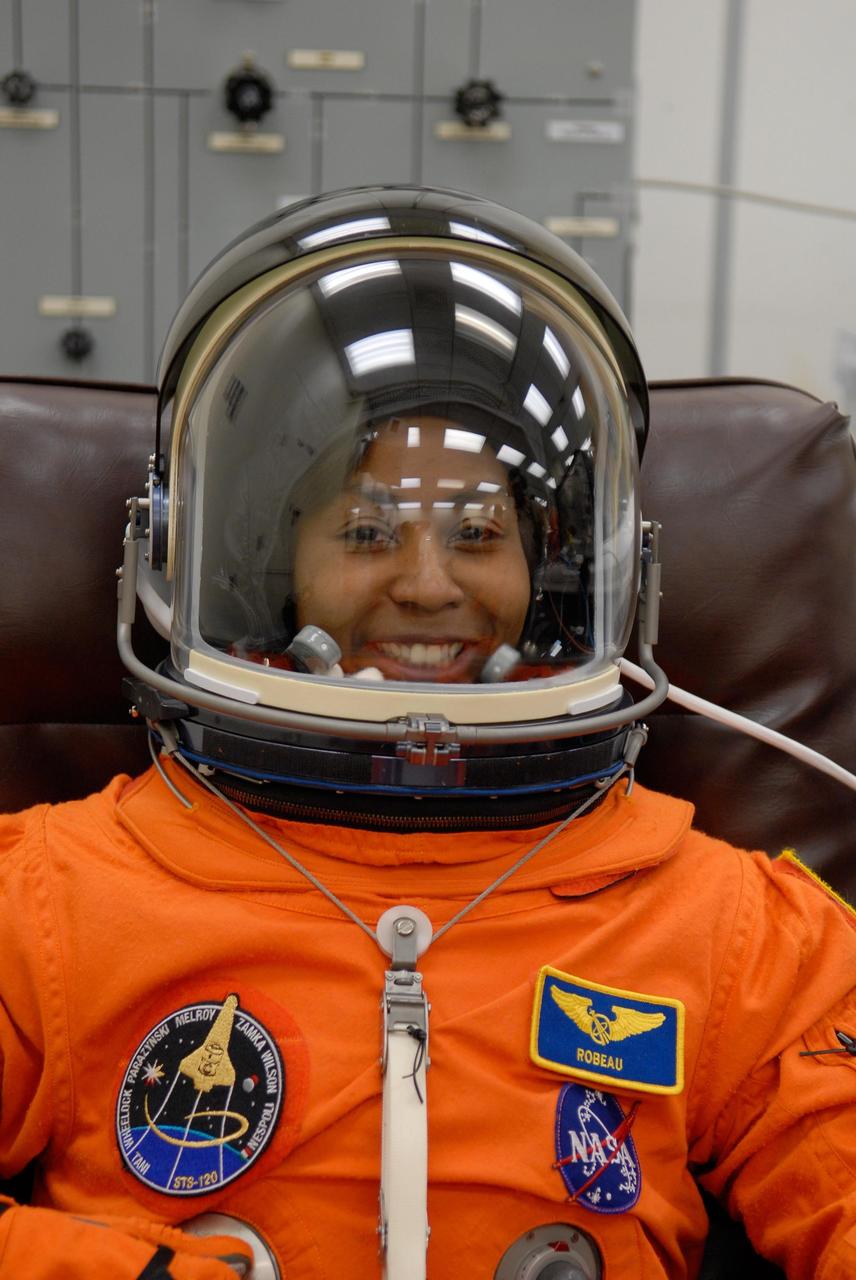
KENNEDY SPACE CENTER, FLA. -- STS-120 Mission Specialist Stephanie Wilson completes suiting up to take part in a simulated launch countdown, part of the prelaunch terminal countdown demonstration test, or TCDT. His name patch reflects the nicknames the crew gave each other for the event. The TCDT provides astronauts and ground crews an opportunity to participate in various launch preparation activities, including equipment familiarization, emergency training and the simulated countdown. The STS-120 mission will deliver the U.S. Node 2 module, named Harmony, aboard space shuttle Discovery to the International Space Station. Launch of Discovery on mission STS-120 is targeted for Oct. 23 at 11:38 a.m. EDT on a 14-day mission. Photo credit: NASA/Kim Shiflett
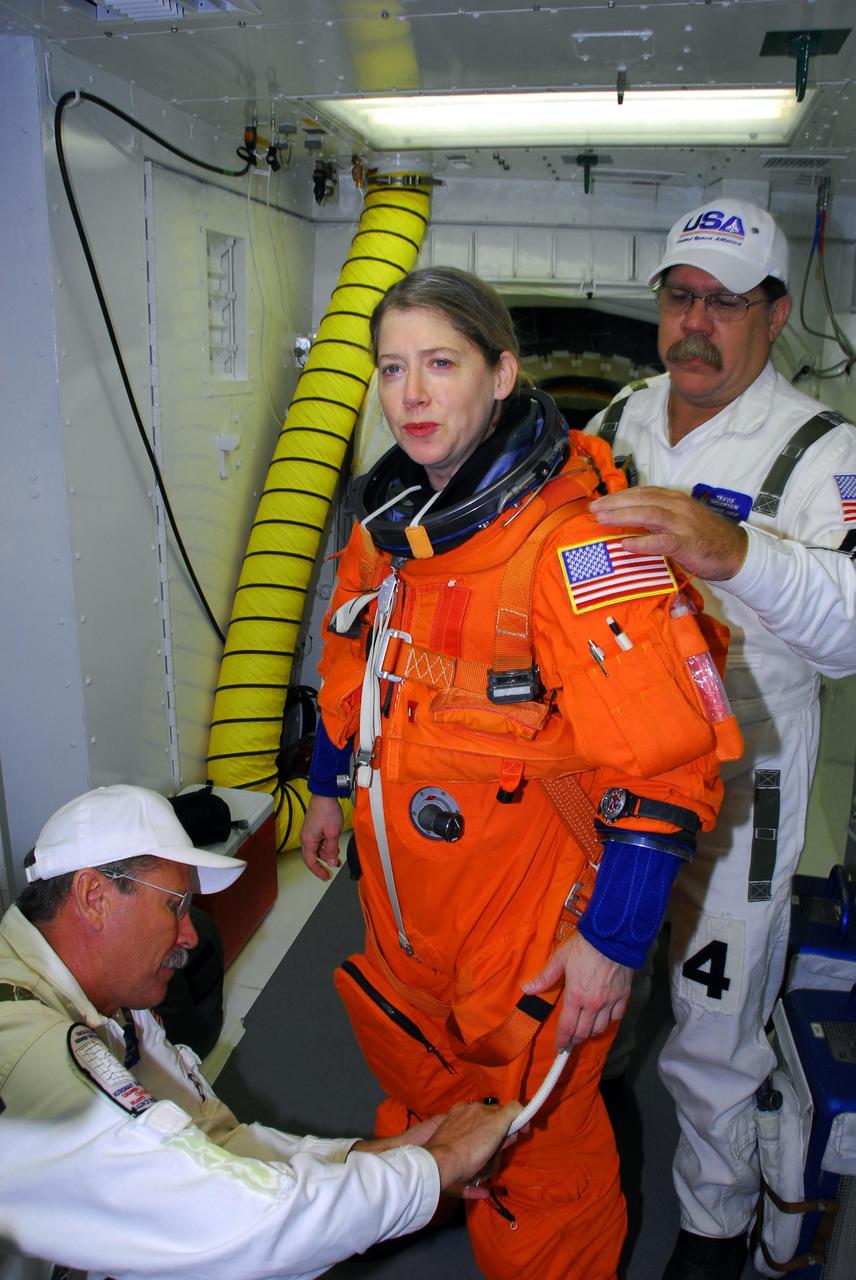
KENNEDY SPACE CENTER, FLA. -- In the white room on Launch Pad 39A, STS-120 Commander Pamela Melroy is helped by the closeout crew in donning a parachute pack before she crawls through the open hatch into space shuttle Discovery for a simulated launch countdown. The countdown is the culmination of the prelaunch terminal countdown demonstration test, or TCDT. Her name patch reflects the nicknames the crew gave each other for the event. The TCDT at NASA's Kennedy Space Center provides astronauts and ground crews an opportunity to participate in various launch preparation activities, including equipment familiarization and emergency training. The STS-120 mission will deliver the U.S. Node 2 module, named Harmony, aboard space shuttle Discovery to the International Space Station. Discovery is targeted to launch on its 14-day mission at 11:38 a.m. EDT on Oct. 23. Photo credit: NASA/George Shelton
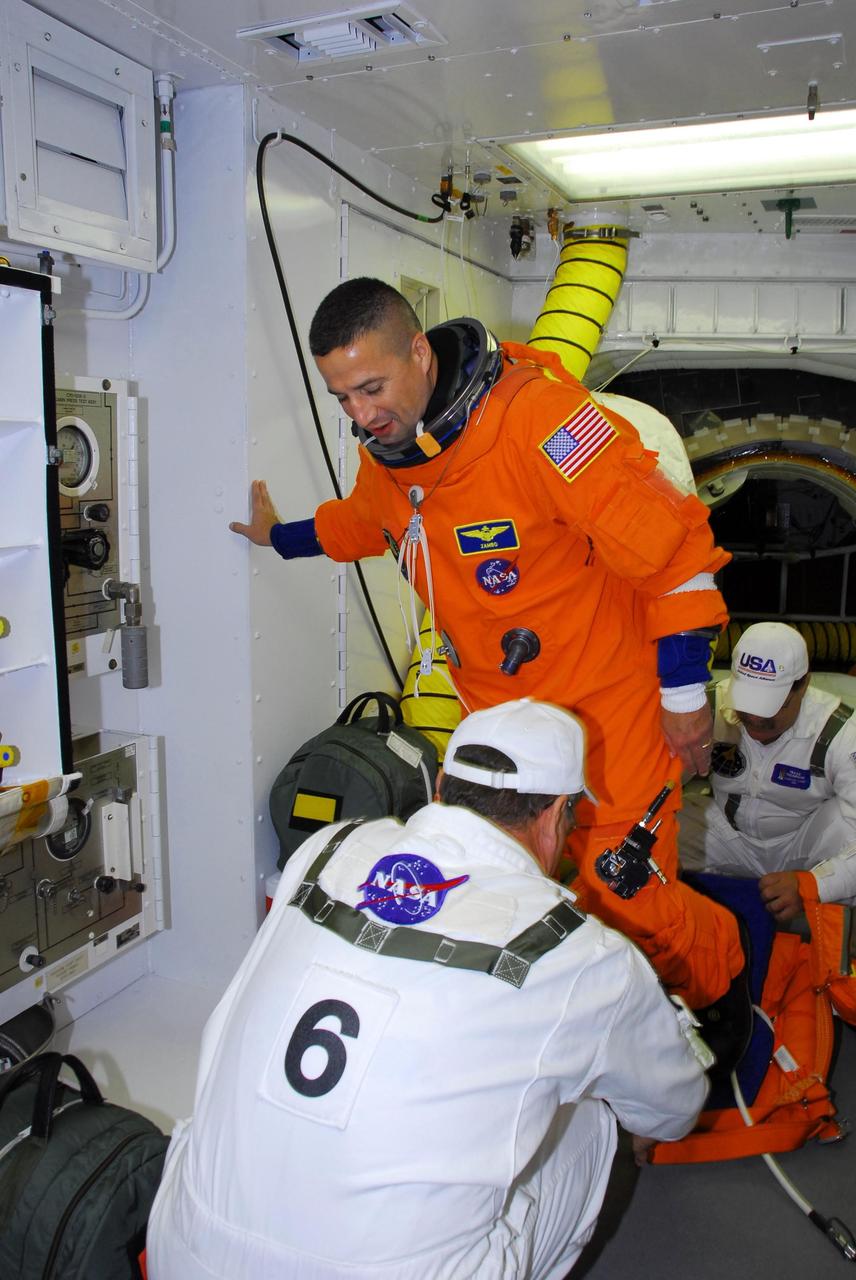
KENNEDY SPACE CENTER, FLA. -- In the white room on Launch Pad 39A, the closeout crew helps STS-120 Pilot George Zamka to get into a parachute pack before entering space shuttle Discovery for a simulated launch countdown. The countdown is the culmination of the prelaunch terminal countdown demonstration test, or TCDT. His name patch reflects the nicknames the crew gave each other for the event. The TCDT at NASA's Kennedy Space Center provides astronauts and ground crews an opportunity to participate in various launch preparation activities, including equipment familiarization and emergency training. The STS-120 mission will deliver the U.S. Node 2 module, named Harmony, aboard space shuttle Discovery to the International Space Station. Discovery is targeted to launch on its 14-day mission at 11:38 a.m. EDT on Oct. 23. Photo credit: NASA/George Shelton
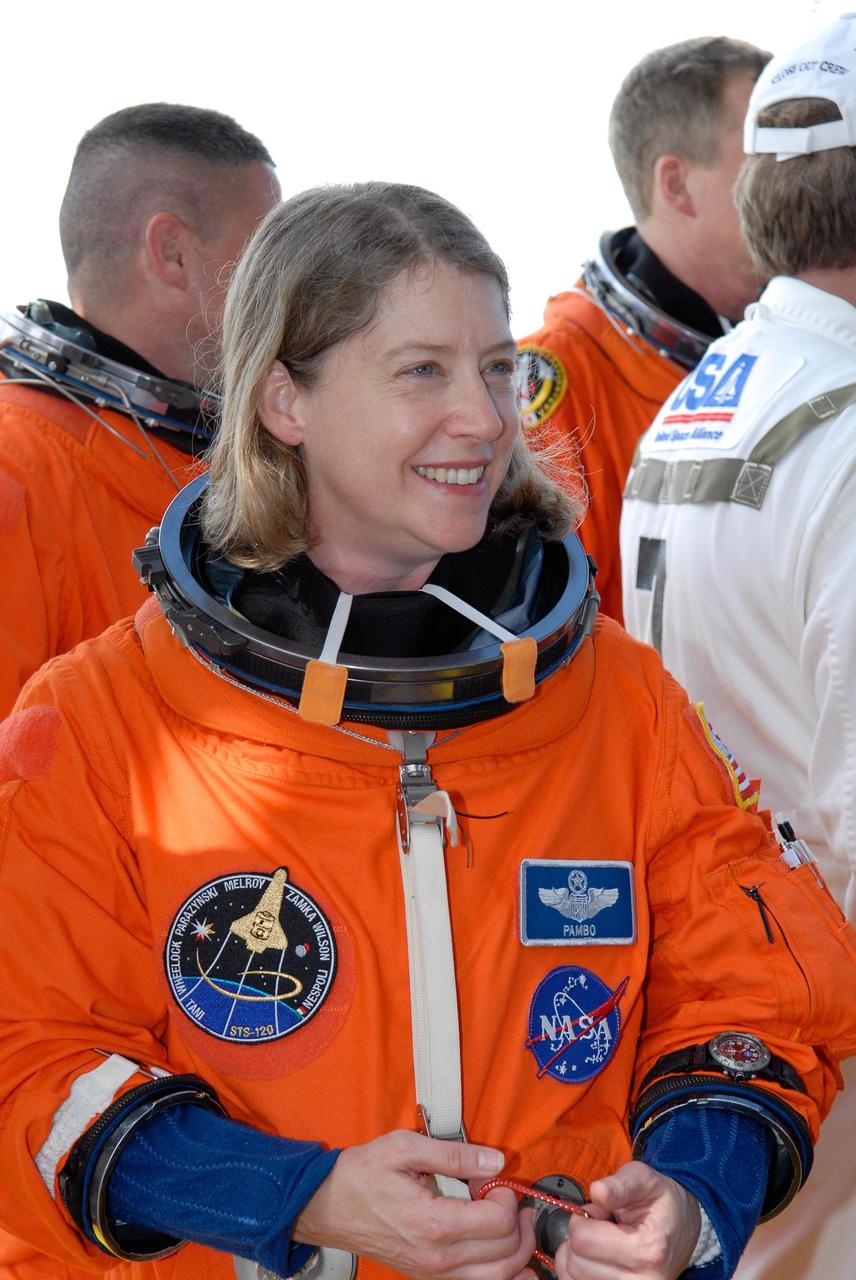
KENNEDY SPACE CENTER, FLA. -- The STS-120 crew gathers at the slidewire basket area on Launch Pad 39A after practicing emergency egress, part of the prelaunch terminal countdown demonstration test, or TCDT. Seen here in their launch and entry suits are (from left) Pilot George Zamka, Commander Pamela Melroy and Mission Specialist Scott Parazynski. Their name patches reflect the nicknames the crew gave each other for the event. The TCDT at NASA's Kennedy Space Center provides astronauts and ground crews an opportunity to participate in various launch preparation activities, including equipment familiarization and emergency training. The STS-120 mission will deliver the U.S. Node 2 module, named Harmony, aboard space shuttle Discovery to the International Space Station. Discovery is targeted to launch on its 14-day mission at 11:38 a.m. EDT on Oct. 23. Photo credit: NASA/Kim Shiflett
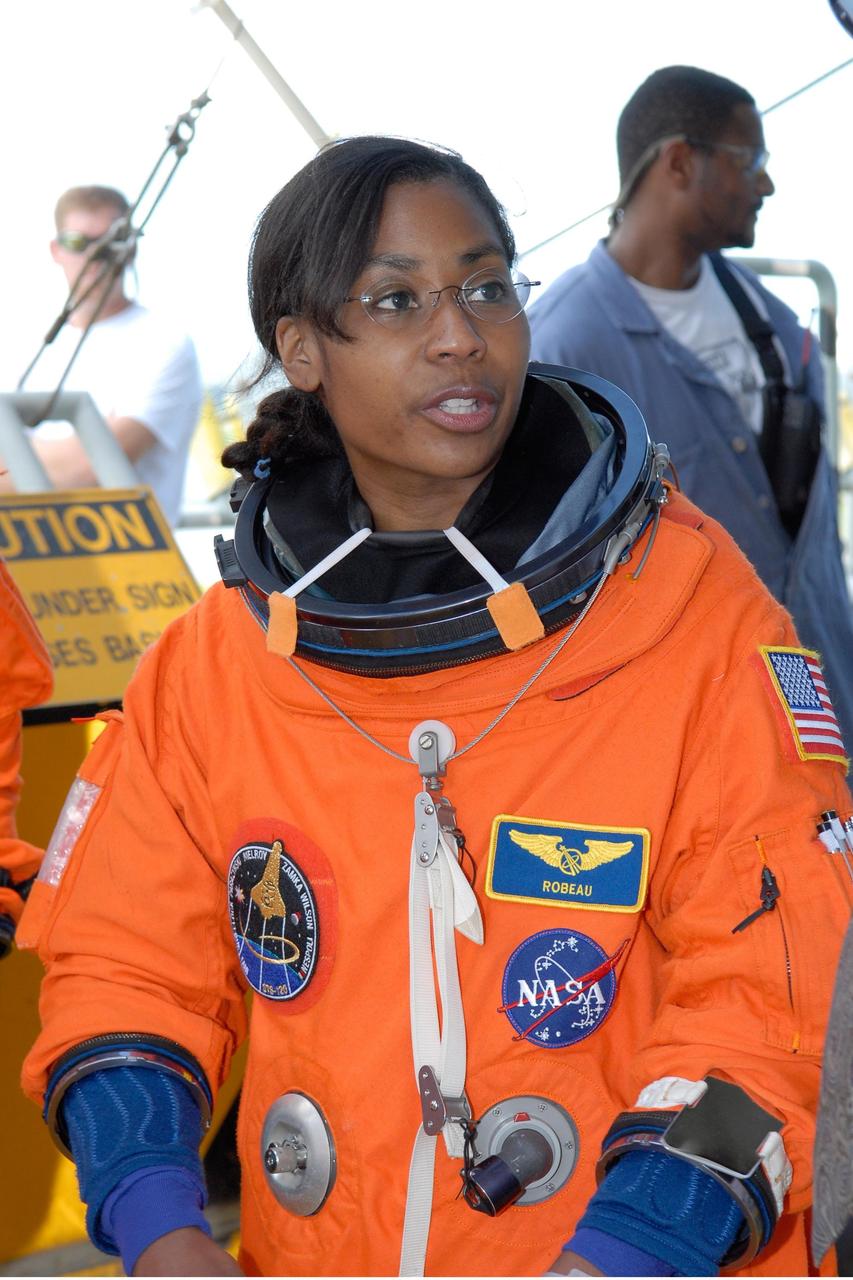
KENNEDY SPACE CENTER, FLA. -- STS-120 Mission Specialist Stephanie Wilson relaxes after practicing emergency egress, part of the prelaunch terminal countdown demonstration test, or TCDT. Her name patch reflects the nicknames the crew gave each other for the event. The TCDT at NASA's Kennedy Space Center provides astronauts and ground crews an opportunity to participate in various launch preparation activities, including equipment familiarization and emergency training. The STS-120 mission will deliver the U.S. Node 2 module, named Harmony, aboard space shuttle Discovery to the International Space Station. Discovery is targeted to launch on its 14-day mission at 11:38 a.m. EDT on Oct. 23. Photo credit: NASA/Kim Shiflett
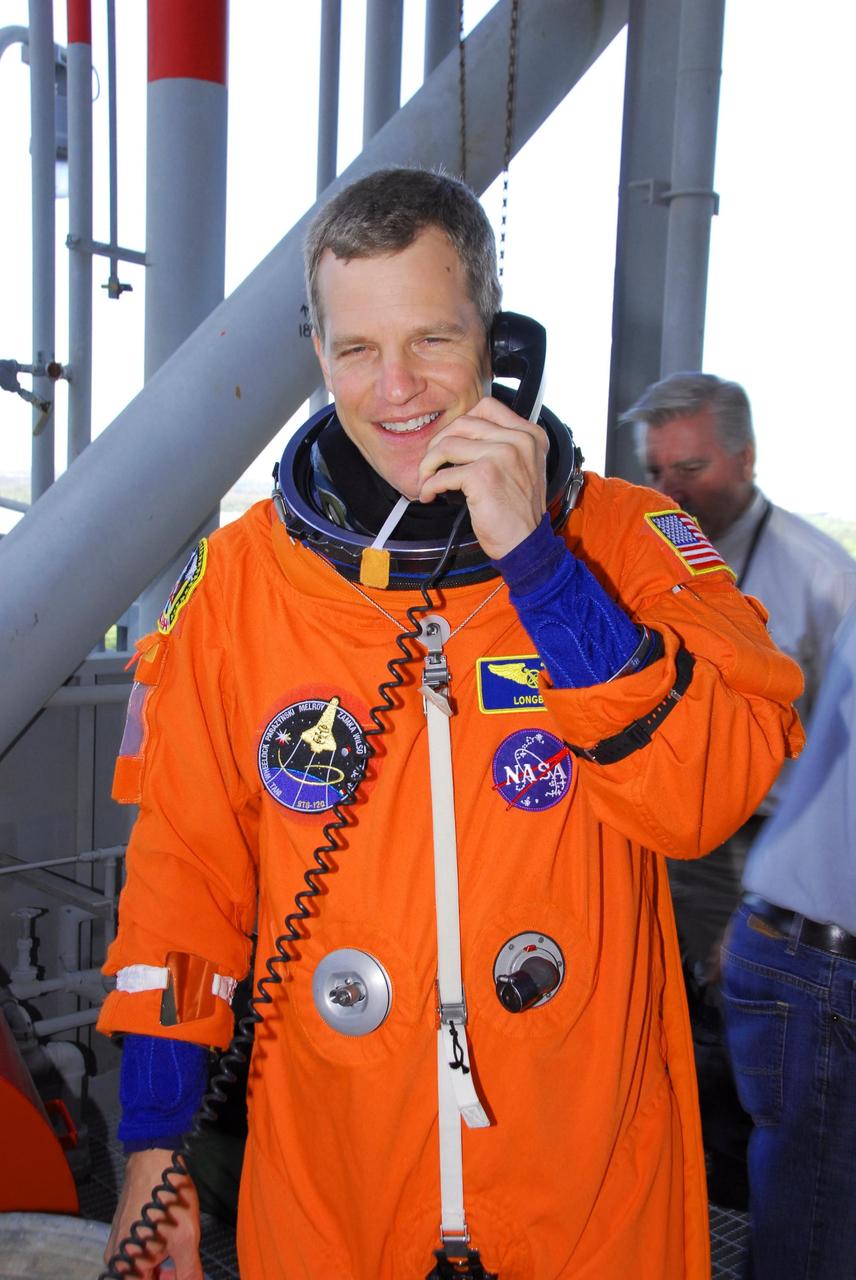
KENNEDY SPACE CENTER, FLA. -- STS-120 Mission Specialist Scott Parazynski arrives on Launch Pad 39A to start a simulated launch countdown, culmination of the prelaunch terminal countdown demonstration test, or TCDT. His name patch reflects the nicknames the crew gave each other for the event. The TCDT at NASA's Kennedy Space Center provides astronauts and ground crews an opportunity to participate in various launch preparation activities, including equipment familiarization and emergency training. The STS-120 mission will deliver the U.S. Node 2 module, named Harmony, aboard space shuttle Discovery to the International Space Station. Discovery is targeted to launch on its 14-day mission at 11:38 a.m. EDT on Oct. 23. Photo credit: NASA/George Shelton
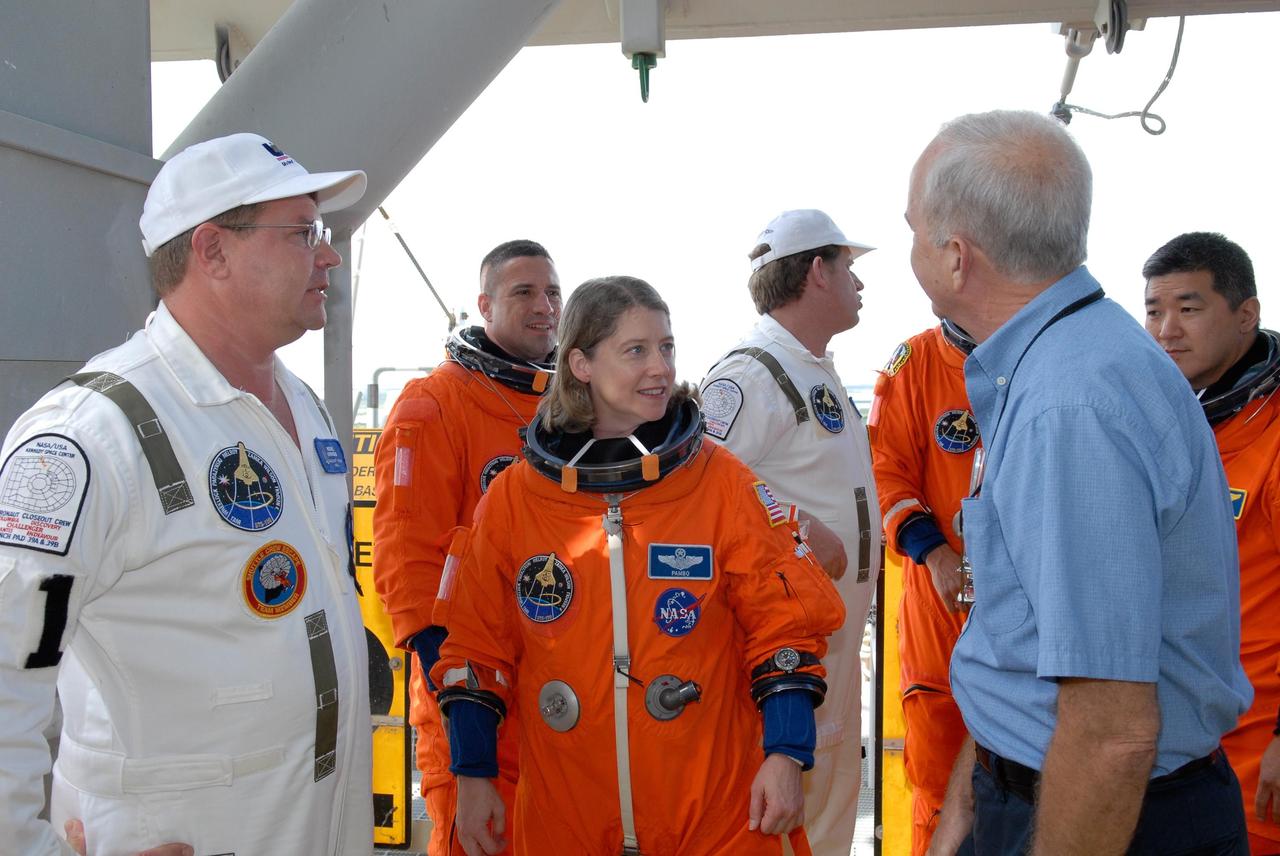
KENNEDY SPACE CENTER, FLA. -- The STS-120 crew gathers at the slidewire basket area on Launch Pad 39A after practicing emergency egress, part of the prelaunch terminal countdown demonstration test, or TCDT. Seen here in their launch and entry suits are (from left) Pilot George Zamka, Commander Pamela Melroy and (far right) Mission Specialist Daniel Tani. Their name patches reflect the nicknames the crew gave each other for the event. The TCDT at NASA's Kennedy Space Center provides astronauts and ground crews an opportunity to participate in various launch preparation activities, including equipment familiarization and emergency training. The STS-120 mission will deliver the U.S. Node 2 module, named Harmony, aboard space shuttle Discovery to the International Space Station. Discovery is targeted to launch on its 14-day mission at 11:38 a.m. EDT on Oct. 23. Photo credit: NASA/Kim Shiflett
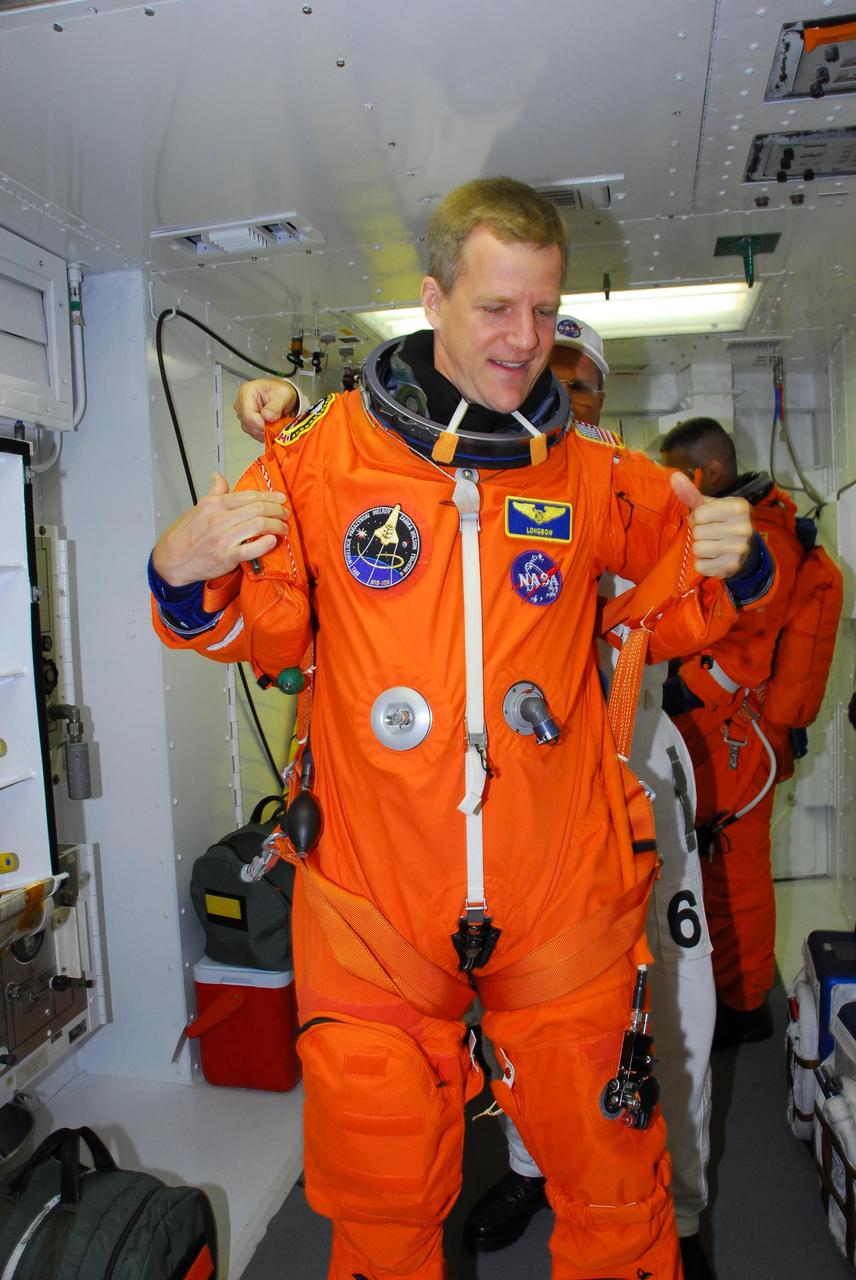
KENNEDY SPACE CENTER, FLA. -- In the white room on Launch Pad 39A, STS-120 Mission Specialist Scott Parazynski dons his parachute pack before entering space shuttle Discovery for a simulated launch countdown. The countdown is the culmination of the prelaunch terminal countdown demonstration test, or TCDT. His name patch reflects the nicknames the crew gave each other for the event. The TCDT at NASA's Kennedy Space Center provides astronauts and ground crews an opportunity to participate in various launch preparation activities, including equipment familiarization and emergency training. The STS-120 mission will deliver the U.S. Node 2 module, named Harmony, aboard space shuttle Discovery to the International Space Station. Discovery is targeted to launch on its 14-day mission at 11:38 a.m. EDT on Oct. 23. Photo credit: NASA/George Shelton
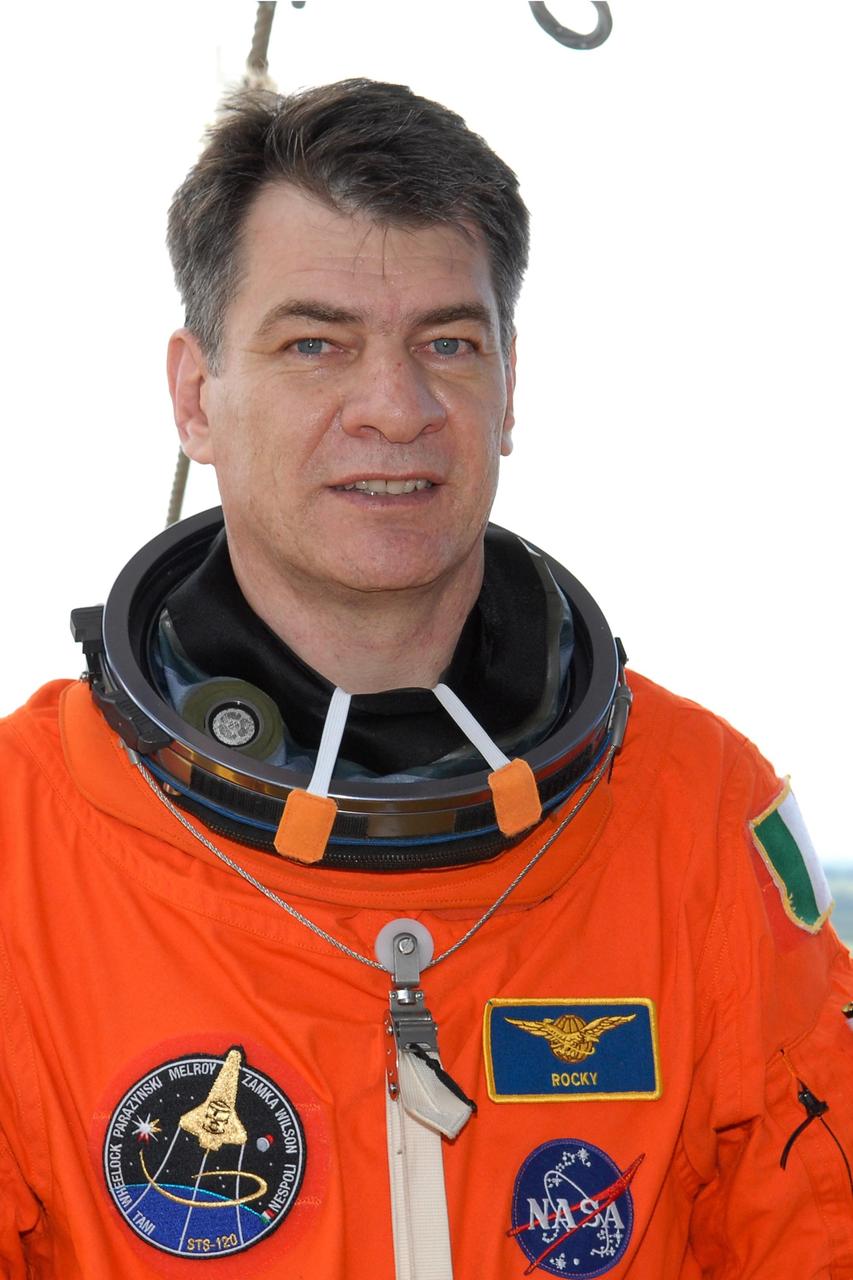
KENNEDY SPACE CENTER, FLA. -- STS-120 Mission Specialist Paolo Nespoli relaxes after practicing emergency egress, part of the prelaunch terminal countdown demonstration test, or TCDT. His name patch reflects the nicknames the crew gave each other for the event. The TCDT at NASA's Kennedy Space Center provides astronauts and ground crews an opportunity to participate in various launch preparation activities, including equipment familiarization and emergency training. The STS-120 mission will deliver the U.S. Node 2 module, named Harmony, aboard space shuttle Discovery to the International Space Station. Discovery is targeted to launch on its 14-day mission at 11:38 a.m. EDT on Oct. 23. Photo credit: NASA/Kim Shiflett
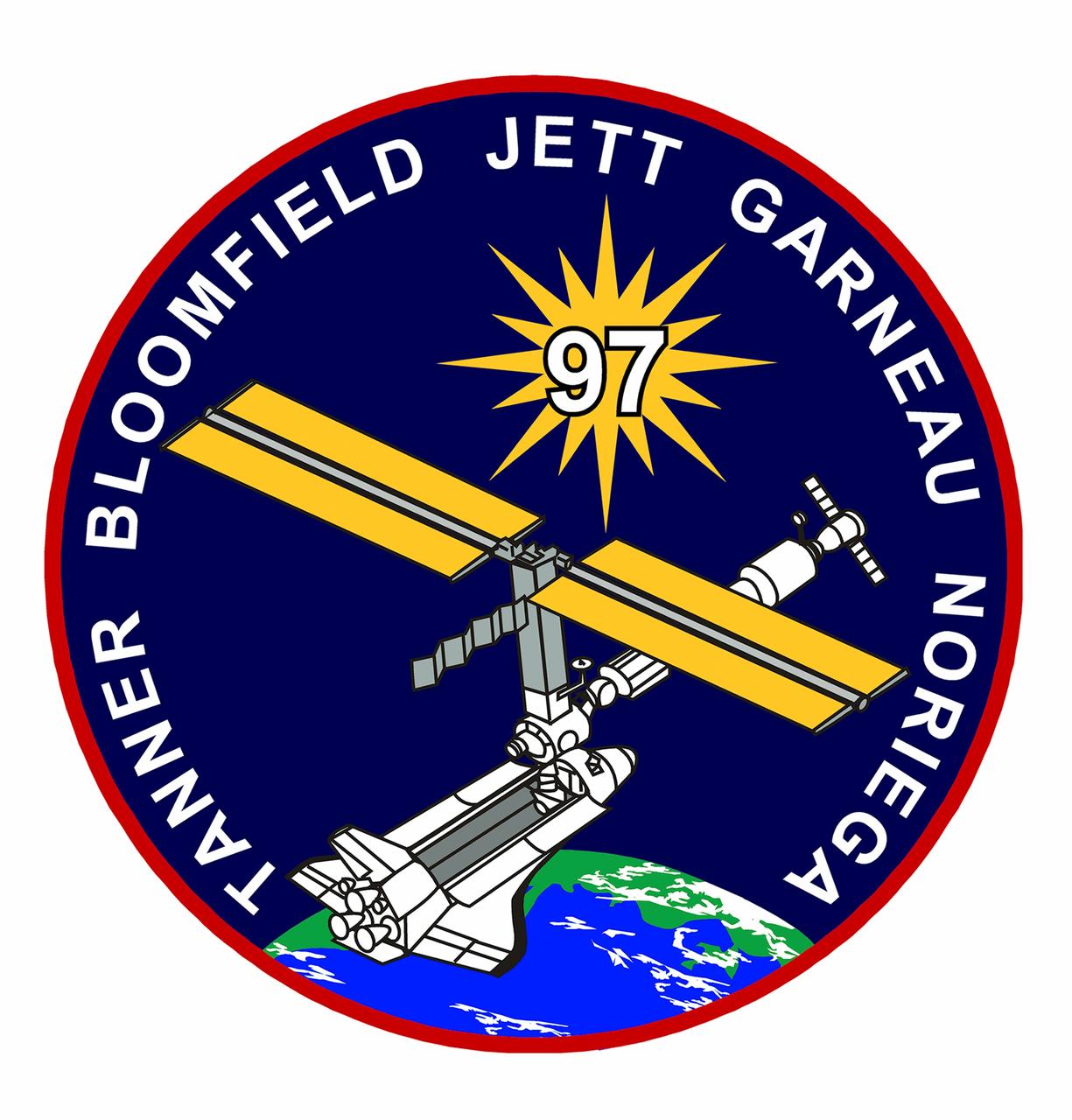
STS097-S-001 (January 2000) --- This is the crew insignia for STS-97, which will deliver, assemble, and activate the U.S. electrical power system on board the International Space Station (ISS). The electrical power system, which is built into a 47-foot integrated truss structure known as P6, consists of solar arrays, radiators, batteries, and electronics. P6 will be attached to the station using the shuttle's robotic arm in coordination with spacewalking crew members that will make the final connections. The spacewalkers will then prepare P6 for the subsequent deployments of the large solar arrays and radiator, which are critical steps in the activation of the electrical power system. The 120-foot solar arrays will provide the power necessary for the first ISS crews to live and work in the U.S. segment. The crew patch depicts the space shuttle docked to ISS in low Earth orbit after the activation of the P6 electrical power system. Gold and silver are used to highlight the portion of ISS that will be installed by the STS-97 crew. The Sun, central to the design, is the source of energy for ISS. The NASA insignia design for space shuttle flights is reserved for use by the astronauts and for other official use as the NASA Administrator may authorize. Public availability has been approved only in the forms of illustrations by the various news media. When and if there is any change in this policy, which is not anticipated, the change will be publicly announced. Photo credit: NASA

STS120-S-001 (February 2007) --- The STS-120 patch reflects the role of the mission in the future of the space program. The shuttle payload bay carries Node 2, the doorway to the future international laboratory elements on the International Space Station. On the left the star represents the International Space Station; the red colored points represent the current location of the P6 solar array, furled and awaiting relocation when the crew arrives. During the mission, the crew will move P6 to its final home at the end of the port truss. The gold points represent the P6 solar array in its new location, unfurled and producing power for science and life support. On the right, the moon and Mars can be seen representing the future of NASA. The constellation Orion rises in the background, symbolizing NASA's new exploration vehicle. Through all, the shuttle rises up and away, leading the way to the future. The NASA insignia design for space shuttle flights is reserved for use by the astronauts and for other official use as the NASA Administrator may authorize. Public availability has been approved only in the forms of illustrations by the various news media. When and if there is any change in this policy, which is not anticipated, the change will be publicly announced. Photo credit: NASA
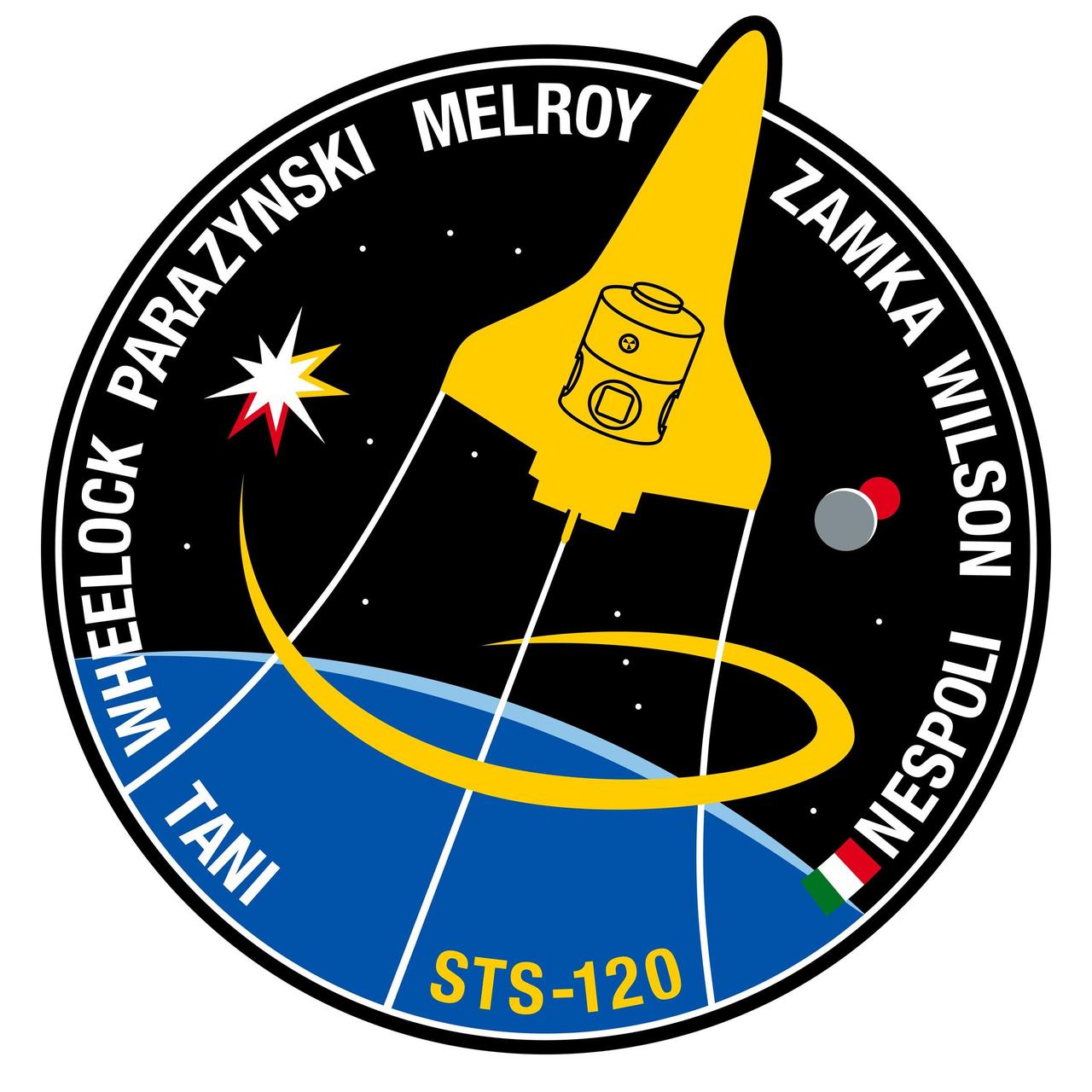
JOHNSON SPACE CENTER, Houston, Texas -- STS120-S-001 -- The STS-120 patch reflects the role of the mission in the future of the space program. The shuttle payload bay carries Node 2, the doorway to the future international laboratory elements on the International Space Station. On the left, the star represents the International Space Station; the red-colored points represent the current location of the P6 solar array, furled and awaiting relocation when the crew arrives. During the mission, the crew will move P6 to its final home at the end of the port truss. The gold points represent the P6 solar array in its new location, unfurled and producing power for science and life support. On the right, the moon and Mars can be seen representing the future of NASA. The constellation Orion rises in the background, symbolizing NASA's new exploration vehicle. Through all, the shuttle rises up and away, leading the way to the future. The NASA insignia design for shuttle flights is reserved for use by the astronauts and for other official use as the NASA Administrator may authorize. Public availability has been approved only in the form of illustrations by the various news media. When and if there is any change in this policy, which is not anticipated, it will be publicly announced.