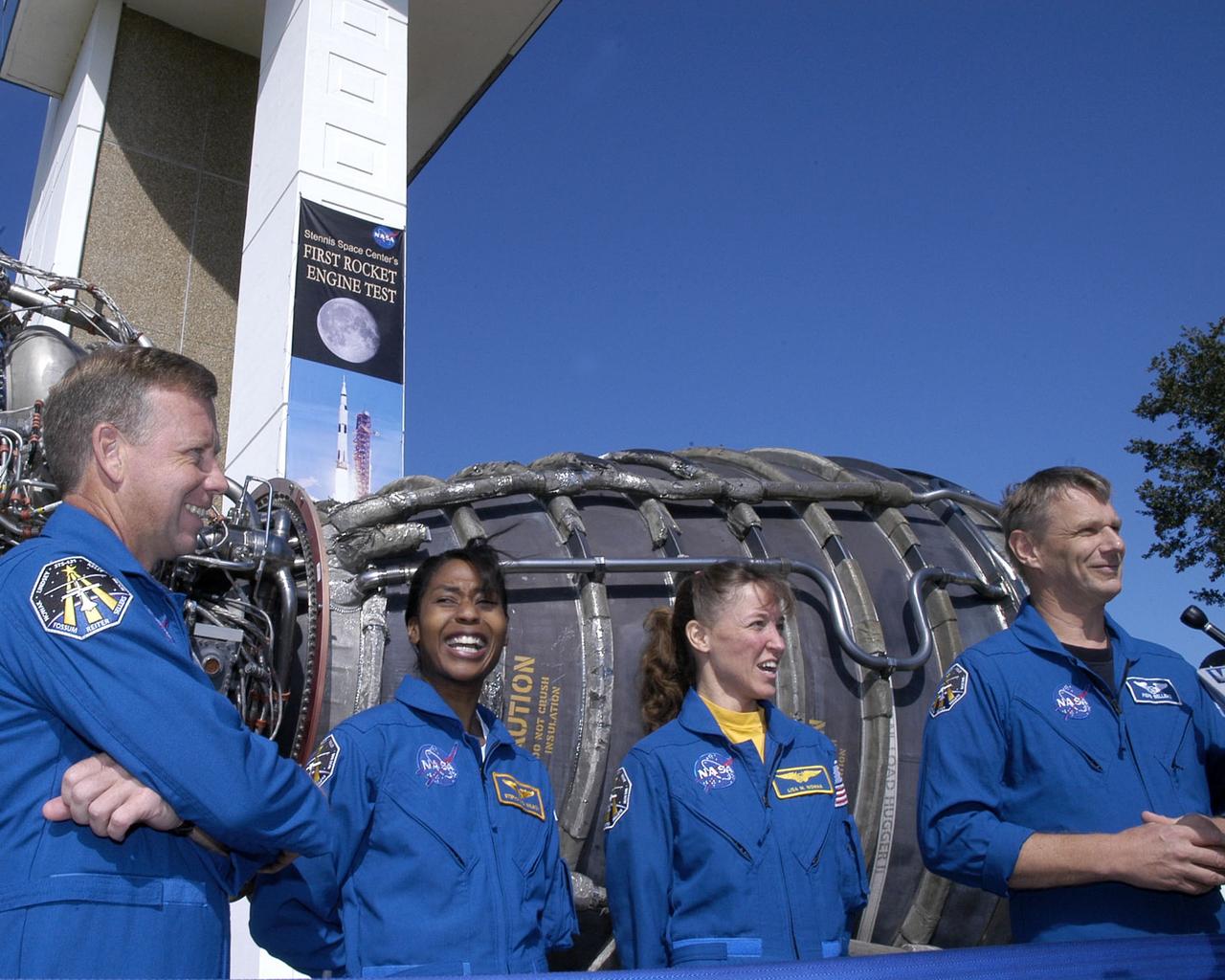
Astronauts Steve Lindsey (left), Stephanie Wilson, Lisa Nowak and Piers Sellers meet with employees at NASA Stennis Space Center. The crewmembers on NASA's space shuttle mission STS-121, which launched July 4, 2006, thanked SSC's workers for their dedication and safe work history. `We feel blessed that you are a part of the NASA family,' Wilson said. All four expressed gratitude for the reliability of the space shuttle's main engines, which helped propel the STS-121 crew into orbit on their 13-day mission.
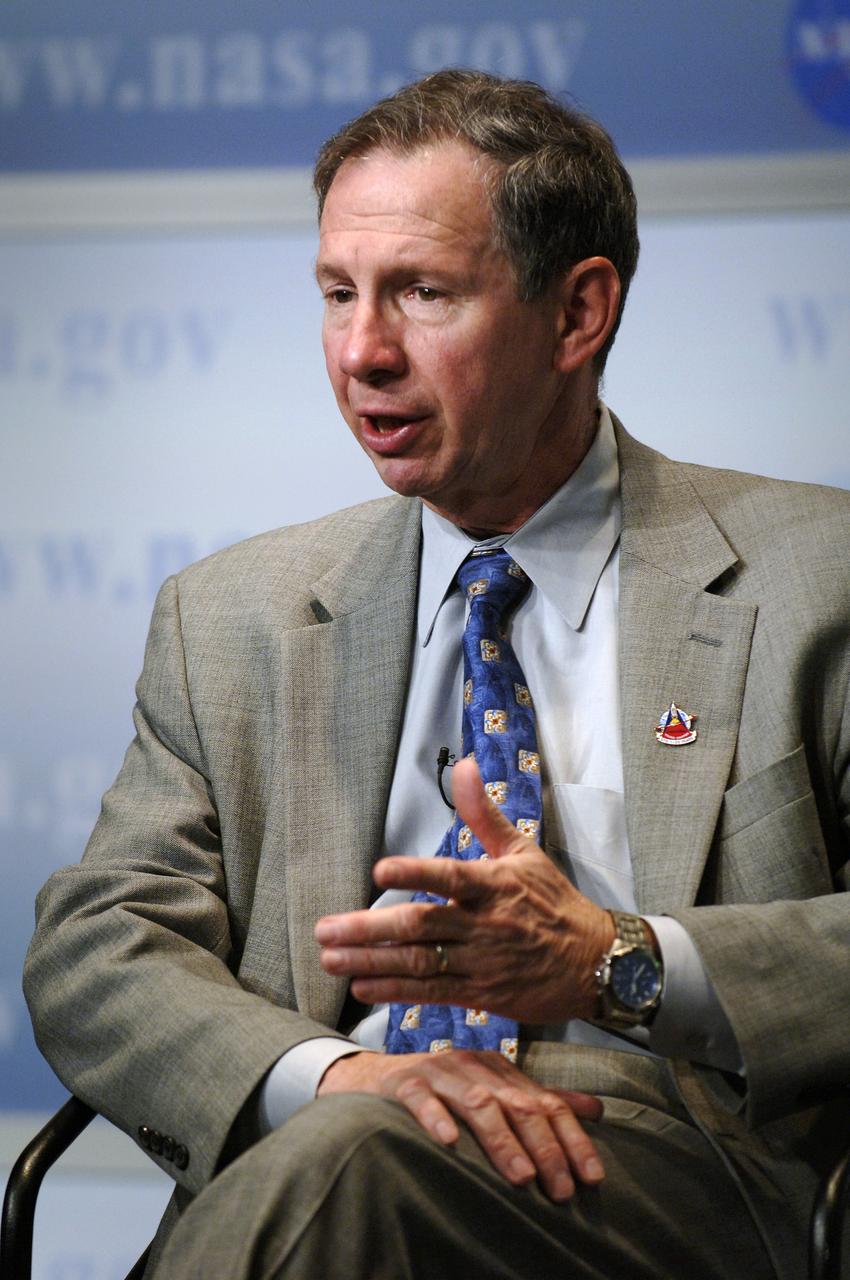
NASA Administrator Michael Griffin speaks during a media briefing about the space shuttle program and processing for the STS-121 mission, Friday, April 28, 2006, at NASA Headquarters in Washington. Photo Credit (NASA/Bill Ingalls)
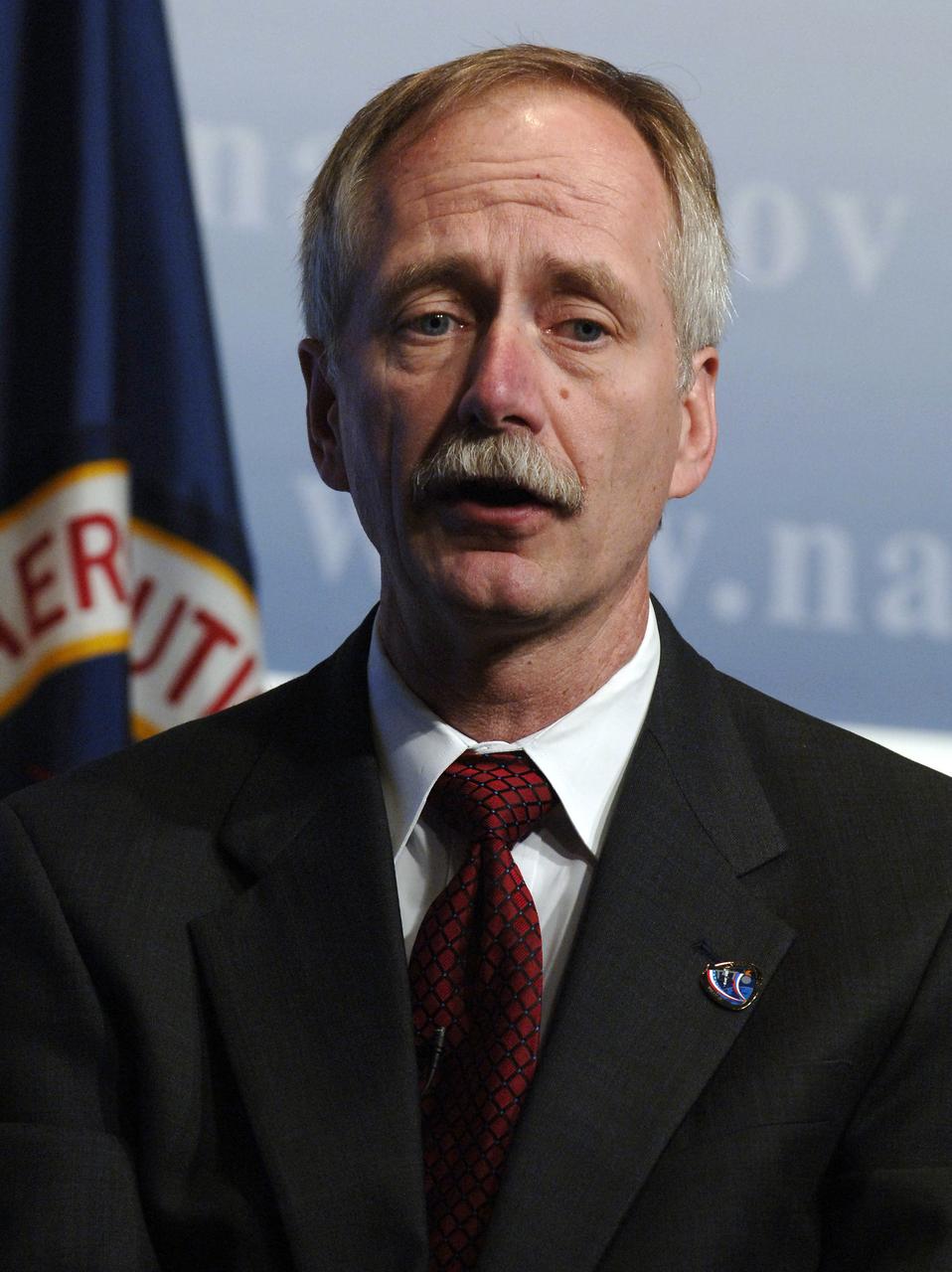
NASA Associate Administrator for Space Operations William Gerstenmaier speaks during a media briefing about the space shuttle program and processing for the STS-121 mission, Friday, April 28, 2006, at NASA Headquarters in Washington. Photo Credit (NASA/Bill Ingalls)
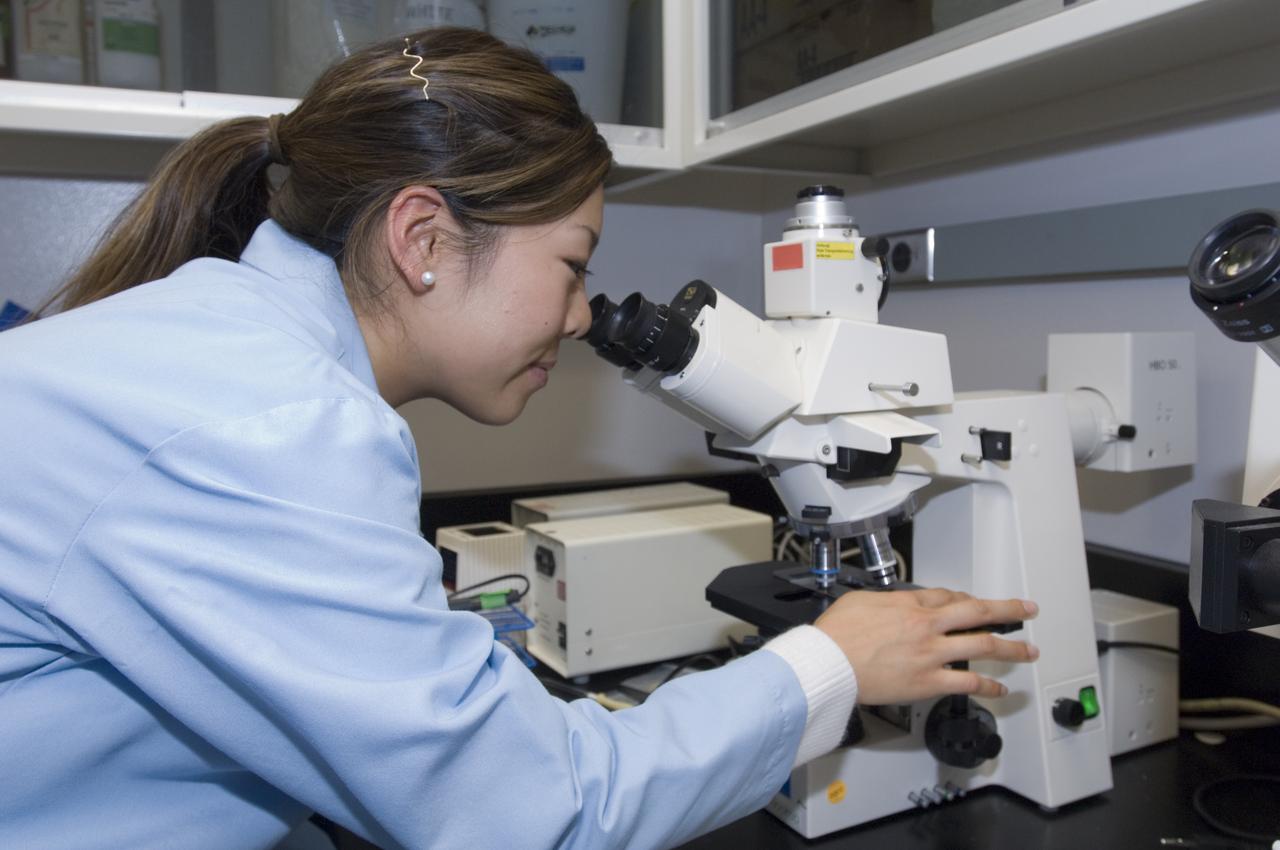
STS-121 PAYLOAD; FIT FRUITFLIES (DORSOPHILA) Post flight with Min Choi checking microscope
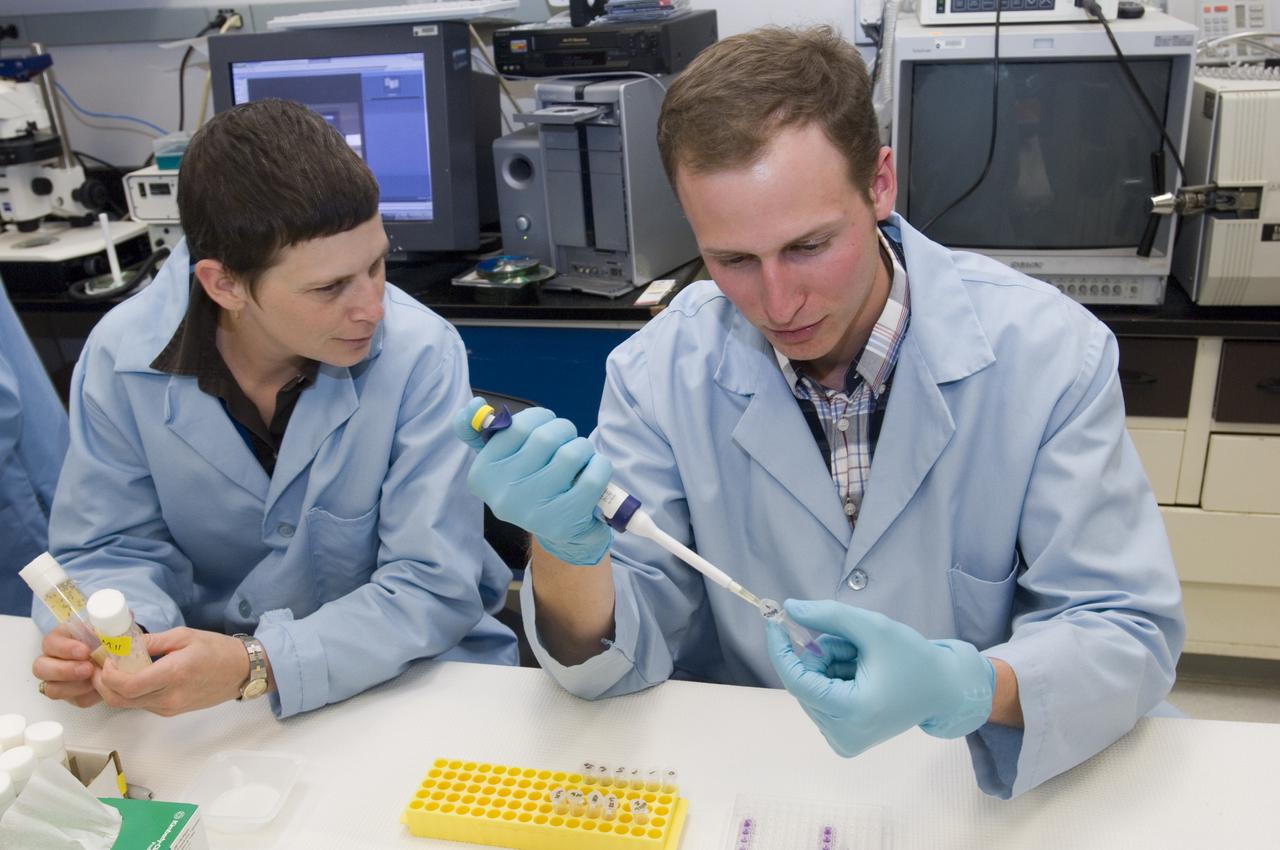
STS-121 PAYLOAD; FIT FRUITFLIES (DORSOPHILA) Post flight with Laura Higgins (r) and Florian Selch (l)
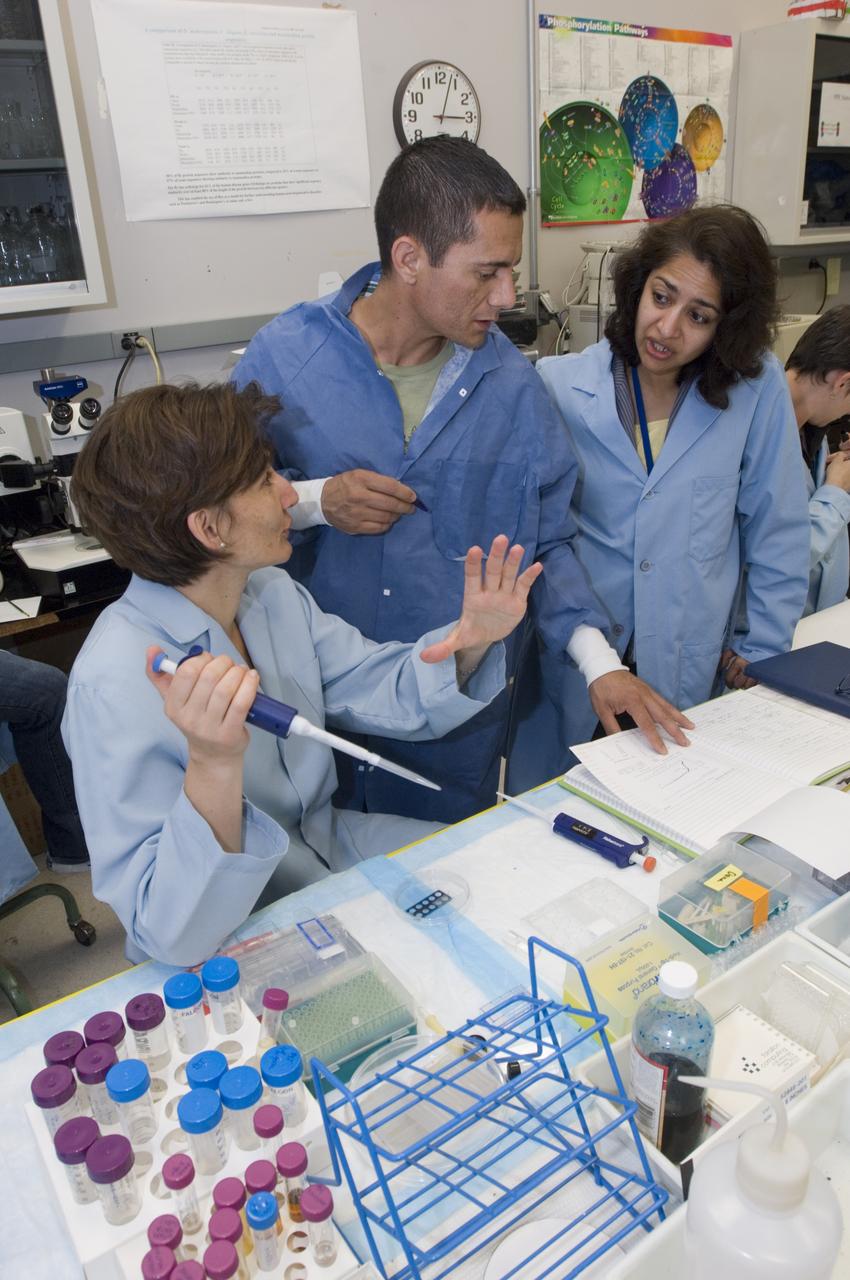
STS-121 PAYLOAD; FIT FRUITFLIES (DORSOPHILA) Post flight with L-R: Oana Marcu, Max Sanchez and Sharmila Bhattacarya. P.I.
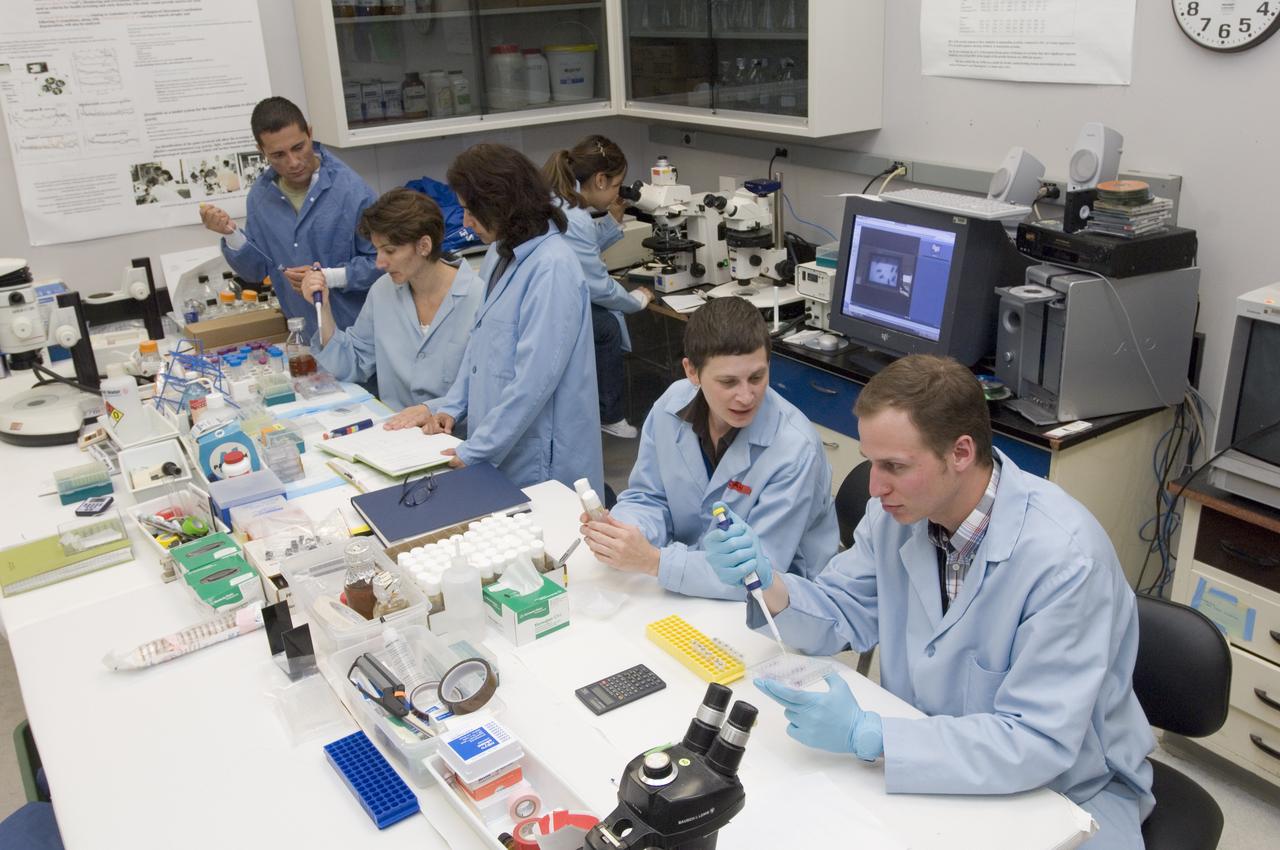
STS-121 PAYLOAD; FIT FRUITFLIES (DORSOPHILA) Post flight w/l-r: Max Sanchez, Oana Marcu, Sharmila Bhattacharya, P.I., Laura Higgins and Florian Selch and Min Chi in background on microscope
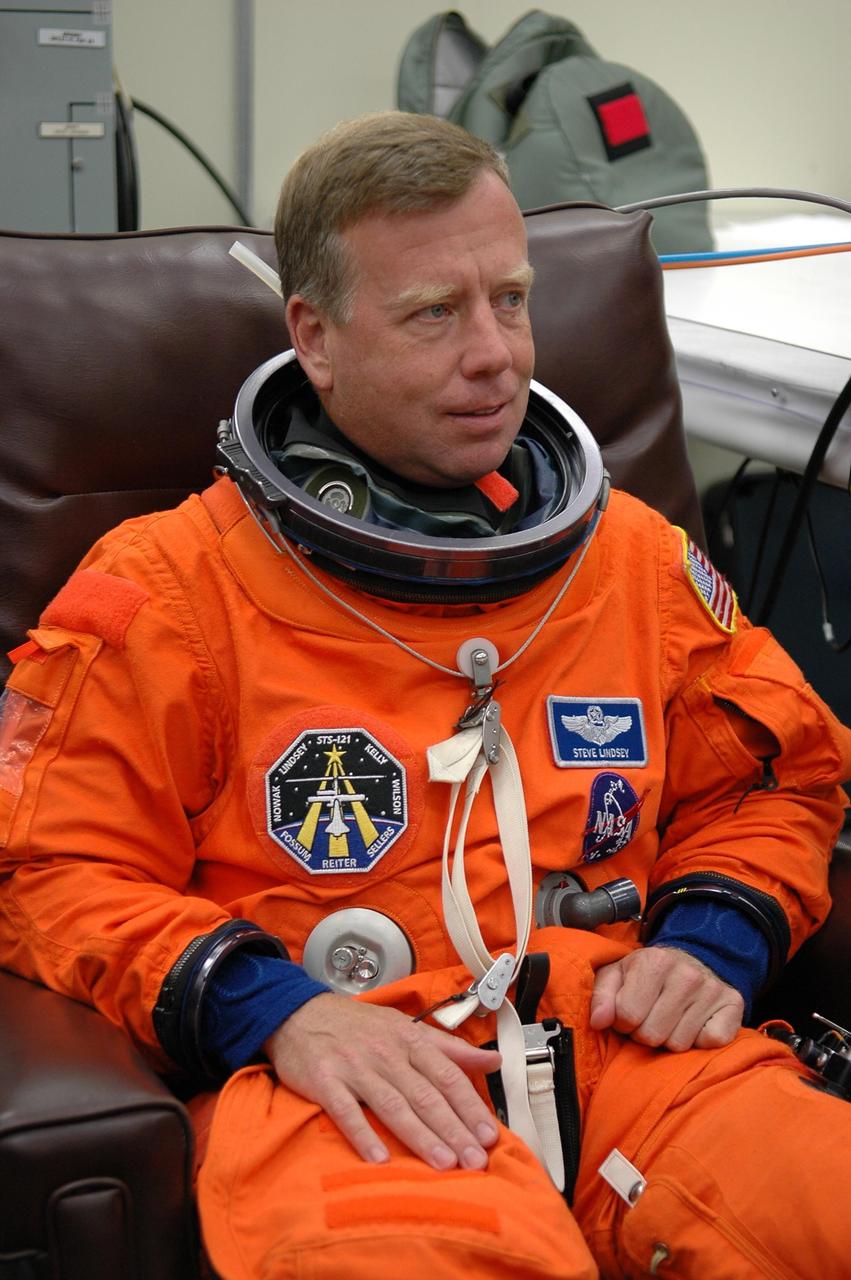
KENNEDY SPACE CENTER, FLA. - STS-121 Commander Steven Lindsey is eager for a third launch attempt on the mission. Here, he is donning his launch suit before heading to Launch Pad 39B. The July 2 launch attempt was scrubbed due to the presence of showers and thunderstorms within the surrounding area of the launch site. The launch of Space Shuttle Discovery on mission STS-121 is the 115th shuttle flight and the 18th U.S. flight to the International Space Station. During the 12-day mission, the STS-121 crew will test new equipment and procedures to improve shuttle safety, as well as deliver supplies and make repairs to the International Space Station. Photo credit: NASA/Kim Shiflett
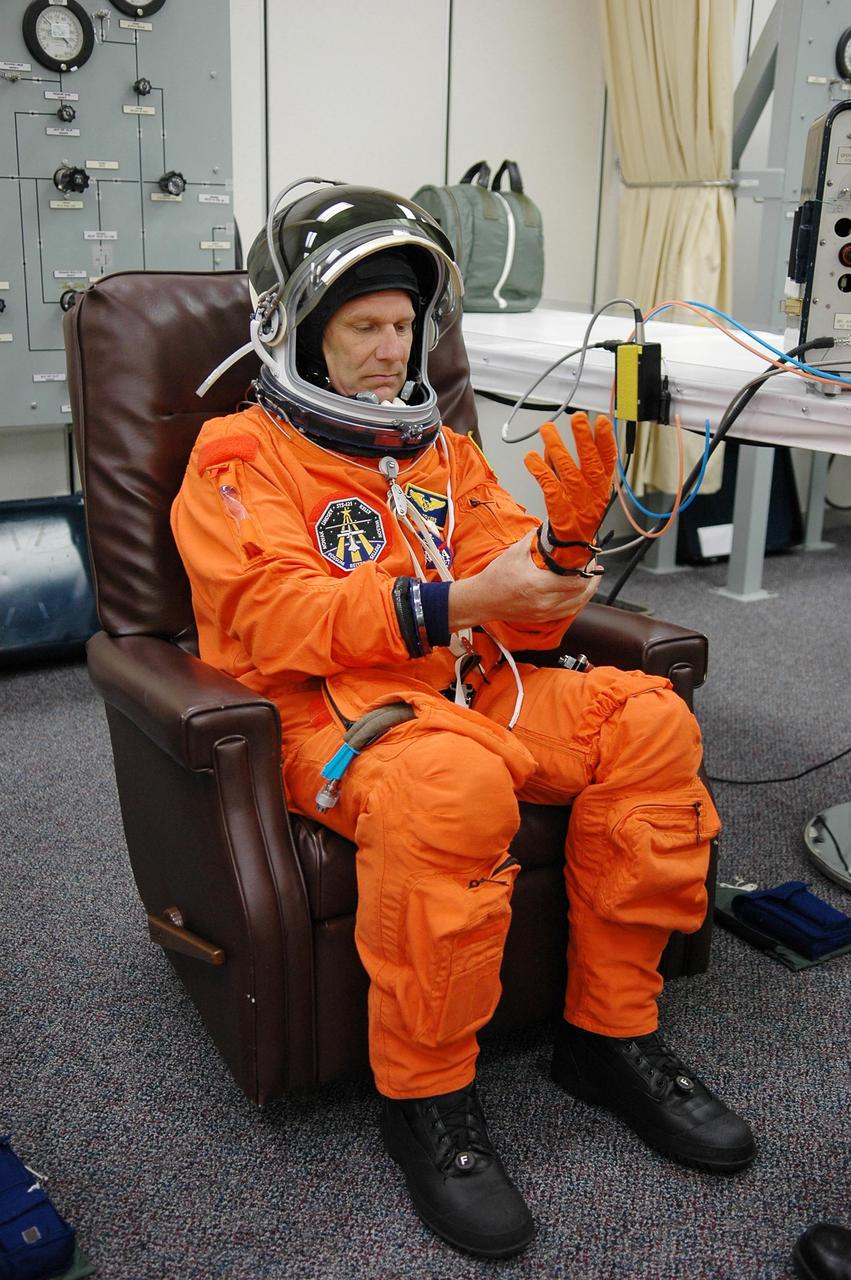
KENNEDY SPACE CENTER, FLA. - Prior to the third launch attempt on mission STS-121, Mission Specialist Piers Sellers fixes one of his gloves during suitup before heading to Launch Pad 39B. The July 2 launch attempt was scrubbed due to the presence of showers and thunderstorms within the surrounding area of the launch site. The launch of Space Shuttle Discovery on mission STS-121 is the 115th shuttle flight and the 18th U.S. flight to the International Space Station. During the 12-day mission, the STS-121 crew will test new equipment and procedures to improve shuttle safety, as well as deliver supplies and make repairs to the International Space Station. Photo credit: NASA/Kim Shiflett
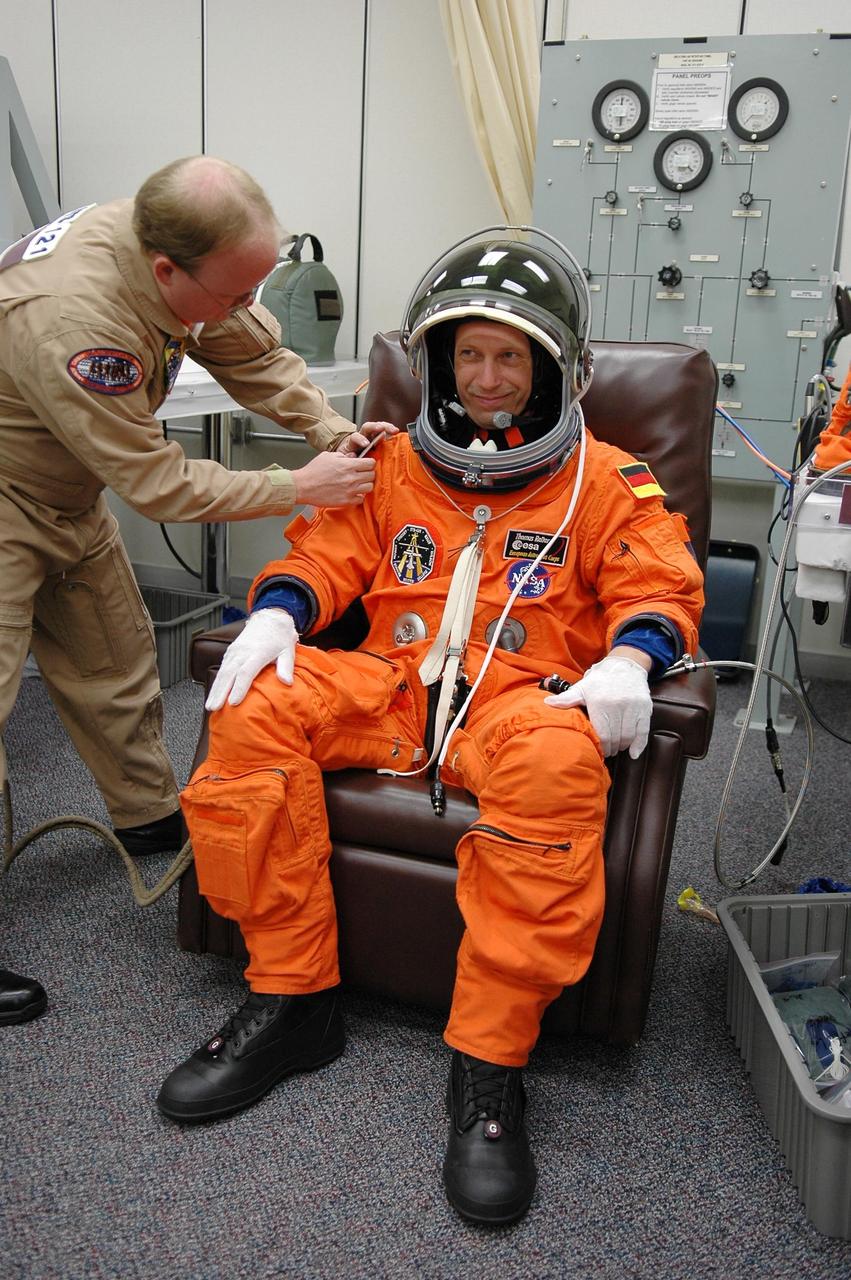
KENNEDY SPACE CENTER, FLA. - Prior to the third launch attempt on mission STS-121, Mission Specialist Thomas Reiter is helped with his launch suit before heading to Launch Pad 39B. The July 2 launch attempt was scrubbed due to the presence of showers and thunderstorms within the surrounding area of the launch site. The launch of Space Shuttle Discovery on mission STS-121 is the 115th shuttle flight and the 18th U.S. flight to the International Space Station. During the 12-day mission, the STS-121 crew will test new equipment and procedures to improve shuttle safety, as well as deliver supplies and make repairs to the International Space Station. Photo credit: NASA/Kim Shiflett
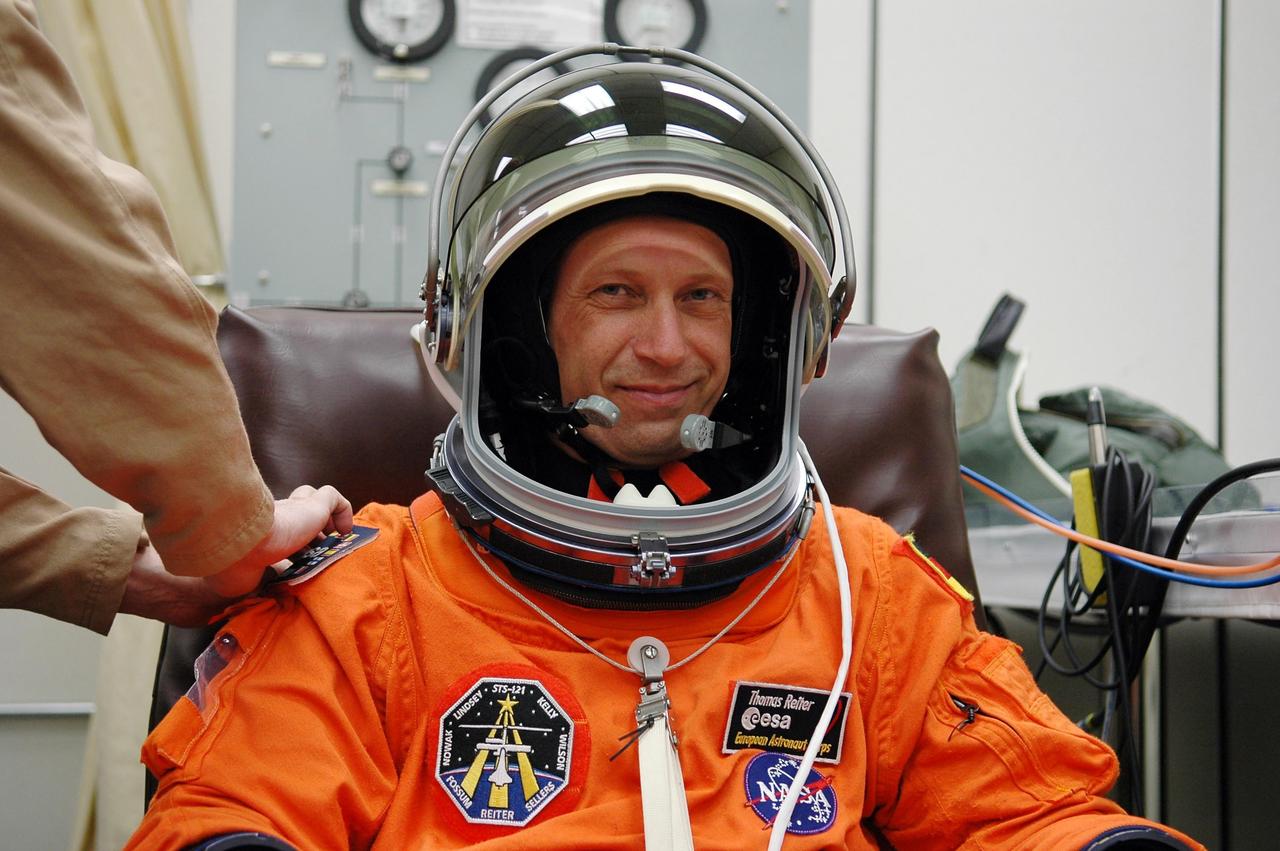
KENNEDY SPACE CENTER, FLA. - Prior to the third launch attempt on mission STS-121, Mission Specialist Thomas Reiter is suiting up before heading to Launch Pad 39B. The July 2 launch attempt was scrubbed due to the presence of showers and thunderstorms within the surrounding area of the launch site. The launch of Space Shuttle Discovery on mission STS-121 is the 115th shuttle flight and the 18th U.S. flight to the International Space Station. During the 12-day mission, the STS-121 crew will test new equipment and procedures to improve shuttle safety, as well as deliver supplies and make repairs to the International Space Station. Photo credit: NASA/Kim Shiflett
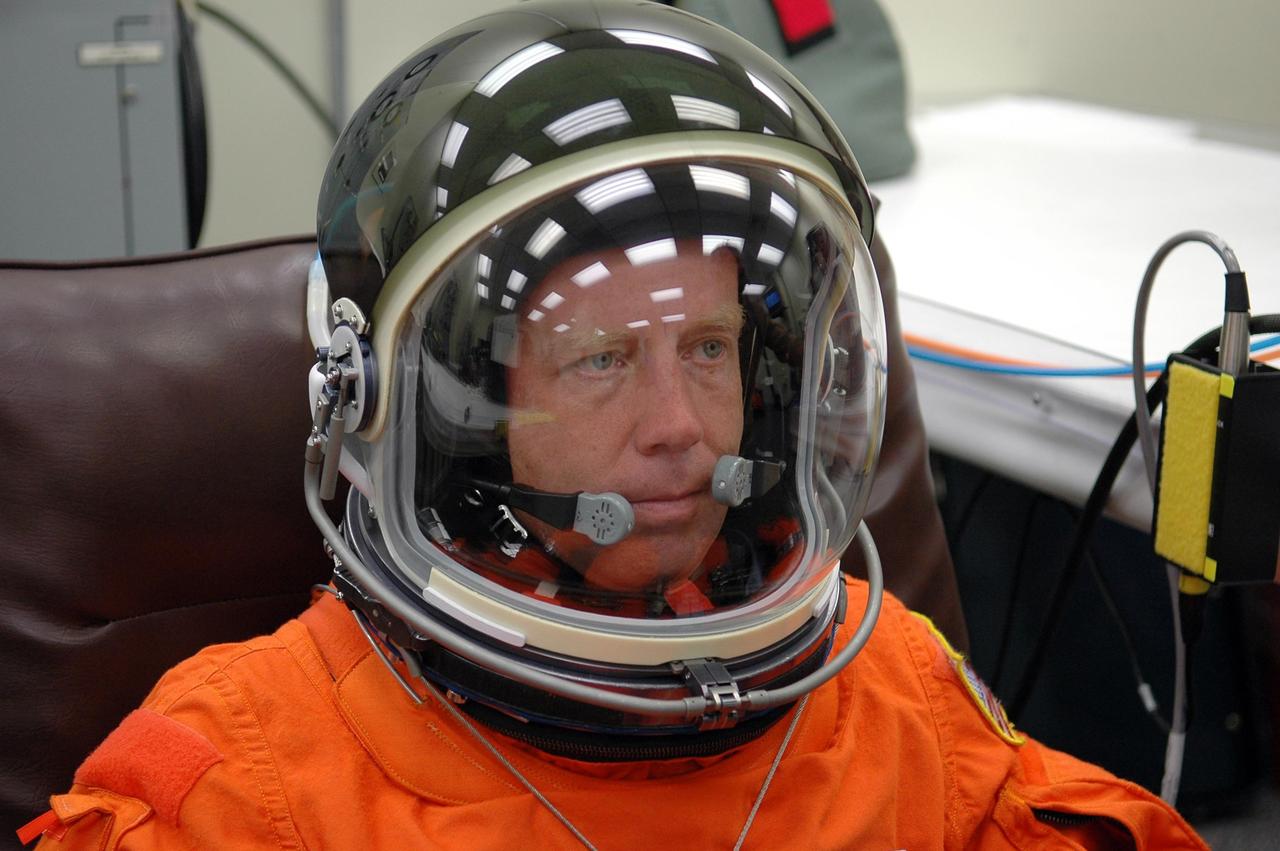
KENNEDY SPACE CENTER, FLA. - Prior to the third launch attempt on mission STS-121, Commander Steven Lindsey looks thoughtful as he completes suiting up before heading to Launch Pad 39B. The July 2 launch attempt was scrubbed due to the presence of showers and thunderstorms within the surrounding area of the launch site. The launch of Space Shuttle Discovery on mission STS-121 is the 115th shuttle flight and the 18th U.S. flight to the International Space Station. During the 12-day mission, the STS-121 crew will test new equipment and procedures to improve shuttle safety, as well as deliver supplies and make repairs to the International Space Station. Photo credit: NASA/Kim Shiflett

KENNEDY SPACE CENTER, FLA. - Prior to the third launch attempt on mission STS-121, Mission Specialist Stephanie Wilson gets help with her helmet during suitup before heading to Launch Pad 39B. The July 2 launch attempt was scrubbed due to the presence of showers and thunderstorms within the surrounding area of the launch site. The launch of Space Shuttle Discovery on mission STS-121 is the 115th shuttle flight and the 18th U.S. flight to the International Space Station. During the 12-day mission, the STS-121 crew will test new equipment and procedures to improve shuttle safety, as well as deliver supplies and make repairs to the International Space Station. Photo credit: NASA/Kim Shiflett
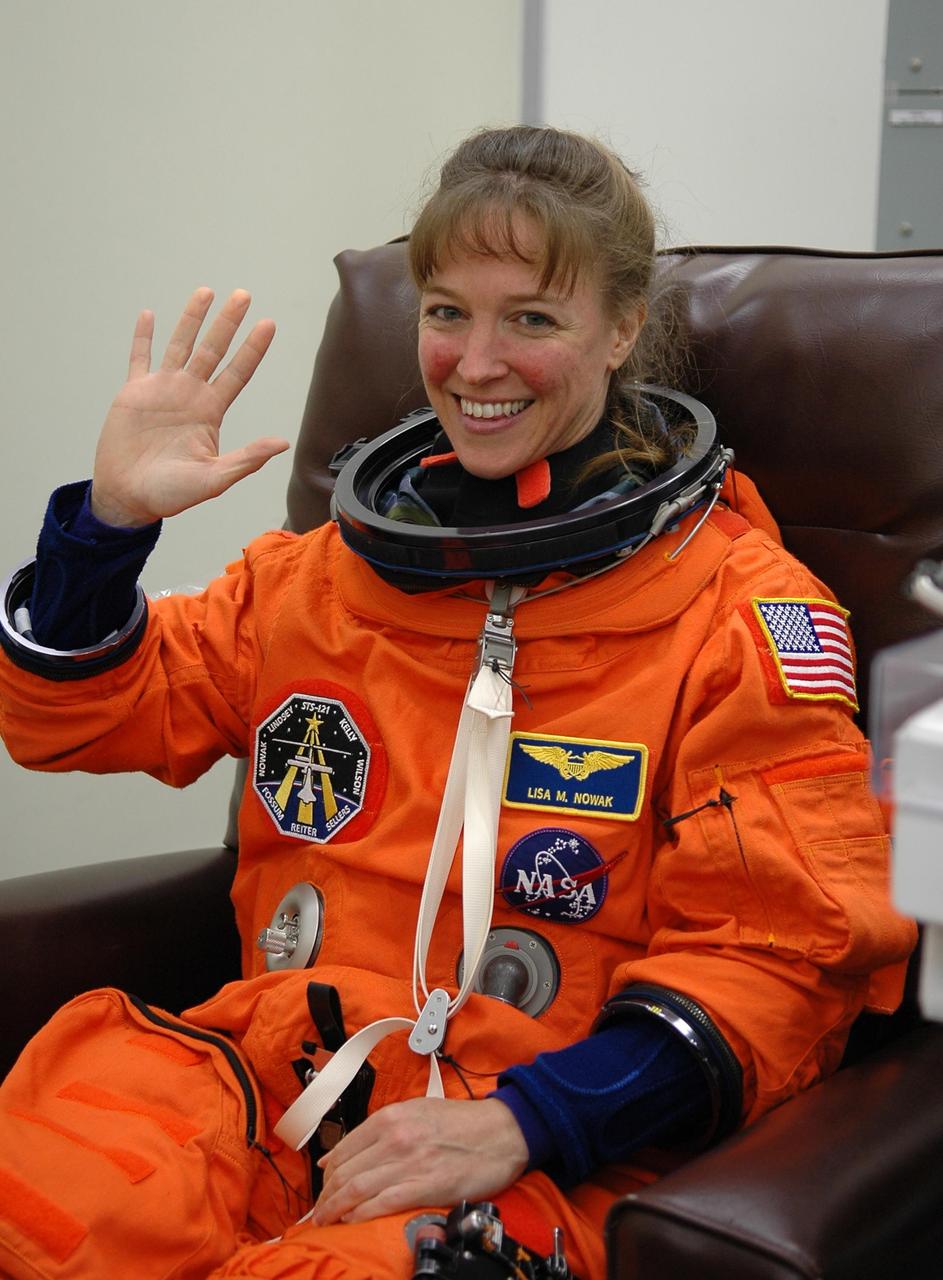
KENNEDY SPACE CENTER, FLA. - STS-121 Mission Specialist Lisa Nowak is happy to be making a third launch attempt on the mission. She is suiting up before heading to Launch Pad 39B. The July 2 launch attempt was scrubbed due to the presence of showers and thunderstorms within the surrounding area of the launch site. The launch of Space Shuttle Discovery on mission STS-121 is the 115th shuttle flight and the 18th U.S. flight to the International Space Station. During the 12-day mission, the STS-121 crew will test new equipment and procedures to improve shuttle safety, as well as deliver supplies and make repairs to the International Space Station. Photo credit: NASA/Kim Shiflett
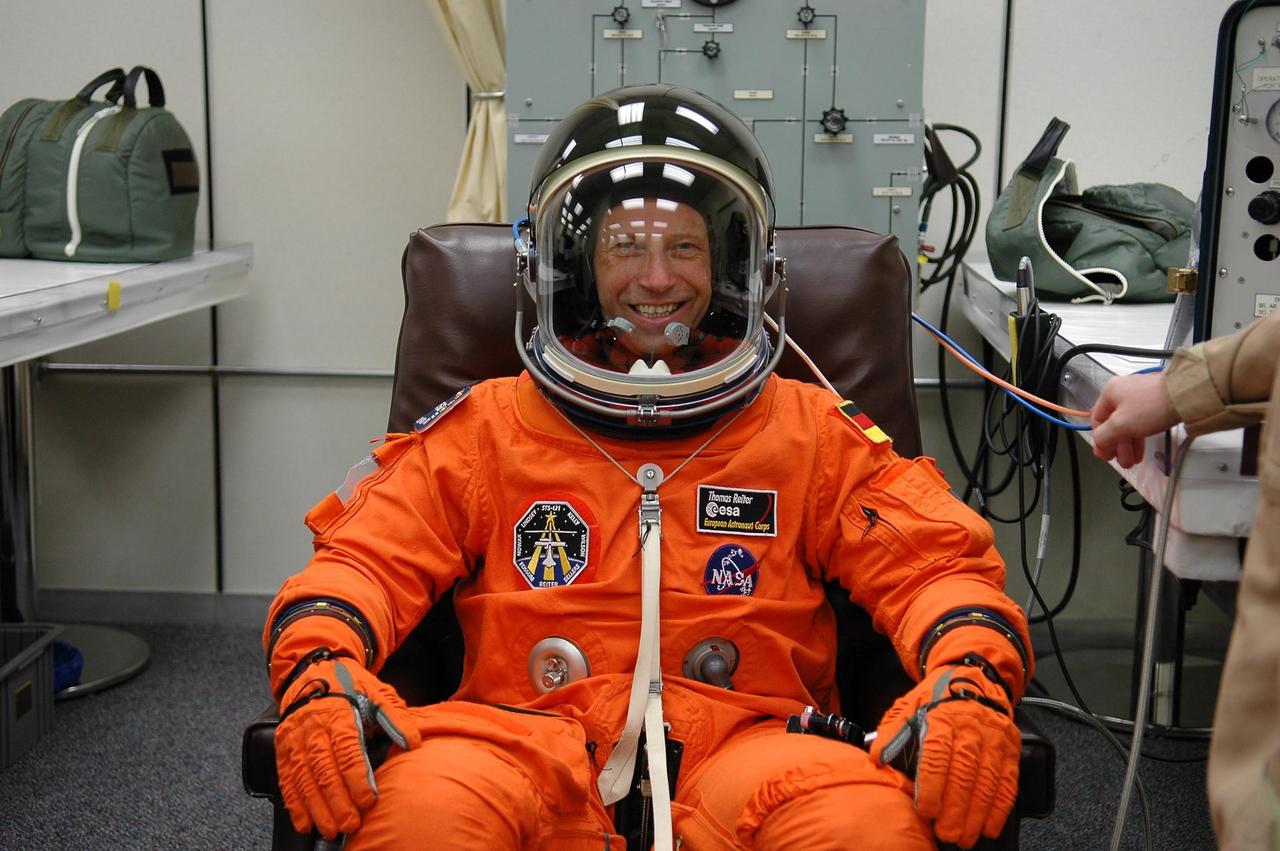
KENNEDY SPACE CENTER, FLA. - Mission Specialist Thomas Reiter, happy to be making a third launch attempt on mission STS-121, is suited up before heading to Launch Pad 39B. The July 2 launch attempt was scrubbed due to the presence of showers and thunderstorms within the surrounding area of the launch site. The launch of Space Shuttle Discovery on mission STS-121 is the 115th shuttle flight and the 18th U.S. flight to the International Space Station. During the 12-day mission, the STS-121 crew will test new equipment and procedures to improve shuttle safety, as well as deliver supplies and make repairs to the International Space Station. Photo credit: NASA/Kim Shiflett
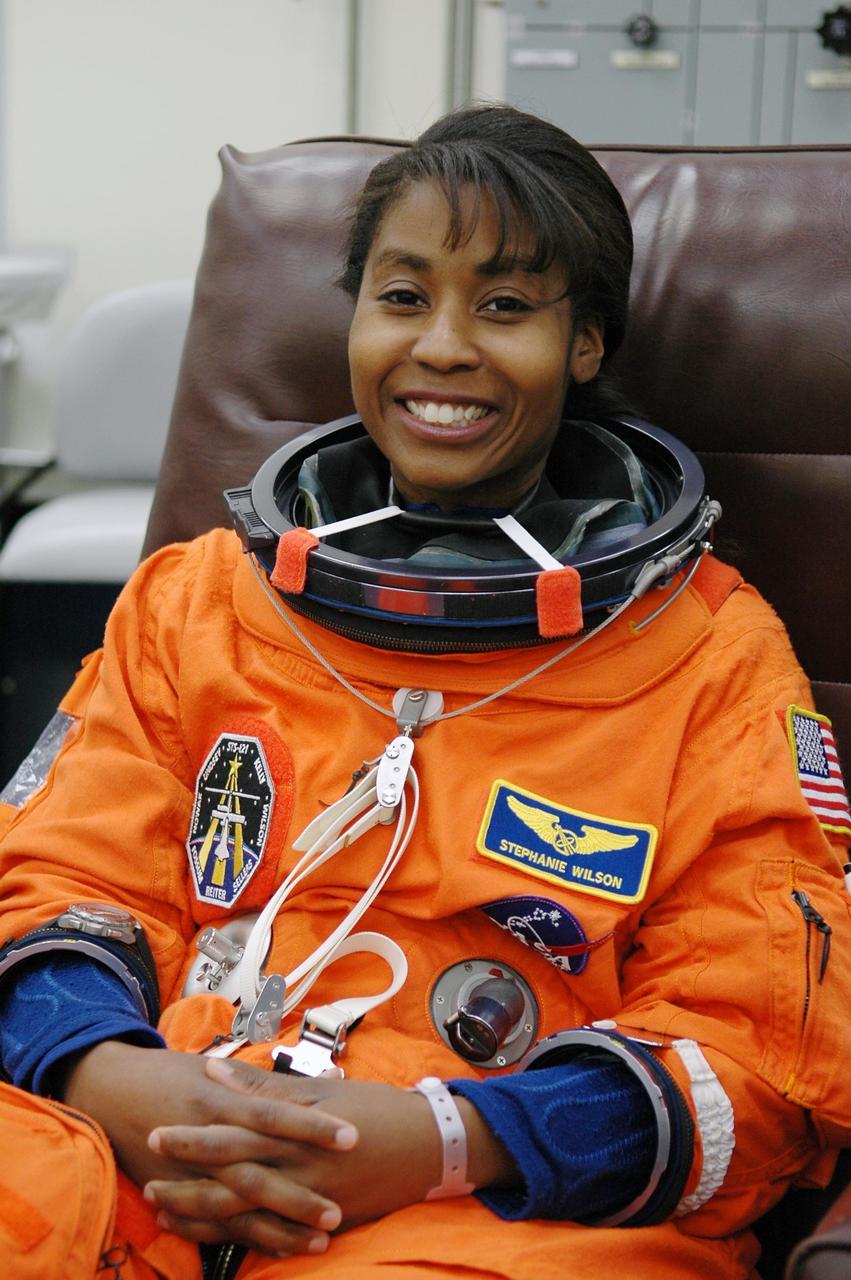
KENNEDY SPACE CENTER, FLA. - Getting ready for a third launch attempt on mission STS-121, Mission Specialist Stephanie Wilson is suiting up before heading to Launch Pad 39B. The July 2 launch attempt was scrubbed due to the presence of showers and thunderstorms within the surrounding area of the launch site. The launch of Space Shuttle Discovery on mission STS-121 is the 115th shuttle flight and the 18th U.S. flight to the International Space Station. During the 12-day mission, the STS-121 crew will test new equipment and procedures to improve shuttle safety, as well as deliver supplies and make repairs to the International Space Station. Photo credit: NASA/Kim Shiflett
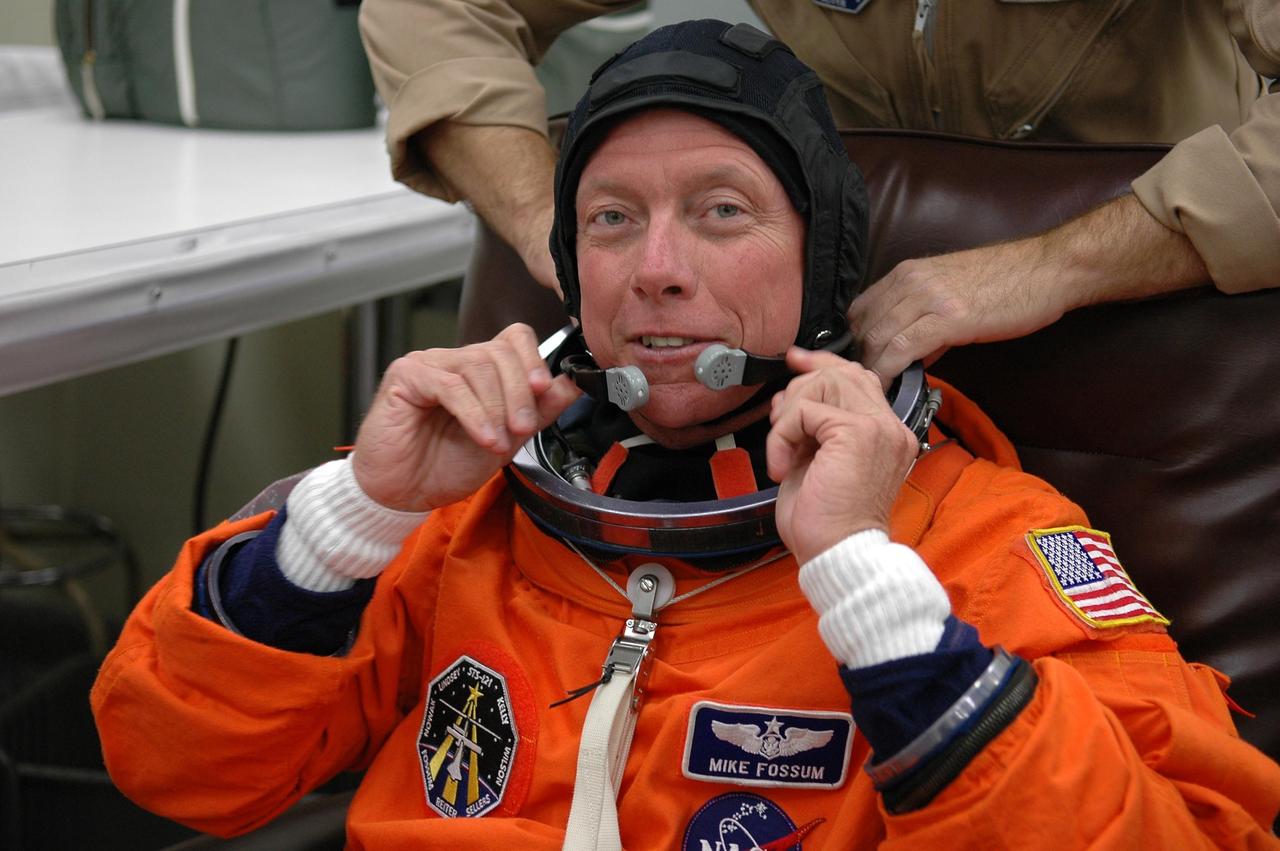
KENNEDY SPACE CENTER, FLA. - Prior to the third launch attempt on mission STS-121, Mission Specialist Michael Fossum is helped with his launch suit before heading to Launch Pad 39B. The July 2 launch attempt was scrubbed due to the presence of showers and thunderstorms within the surrounding area of the launch site. The launch of Space Shuttle Discovery on mission STS-121 is the 115th shuttle flight and the 18th U.S. flight to the International Space Station. During the 12-day mission, the STS-121 crew will test new equipment and procedures to improve shuttle safety, as well as deliver supplies and make repairs to the International Space Station. Photo credit: NASA/Kim Shiflett
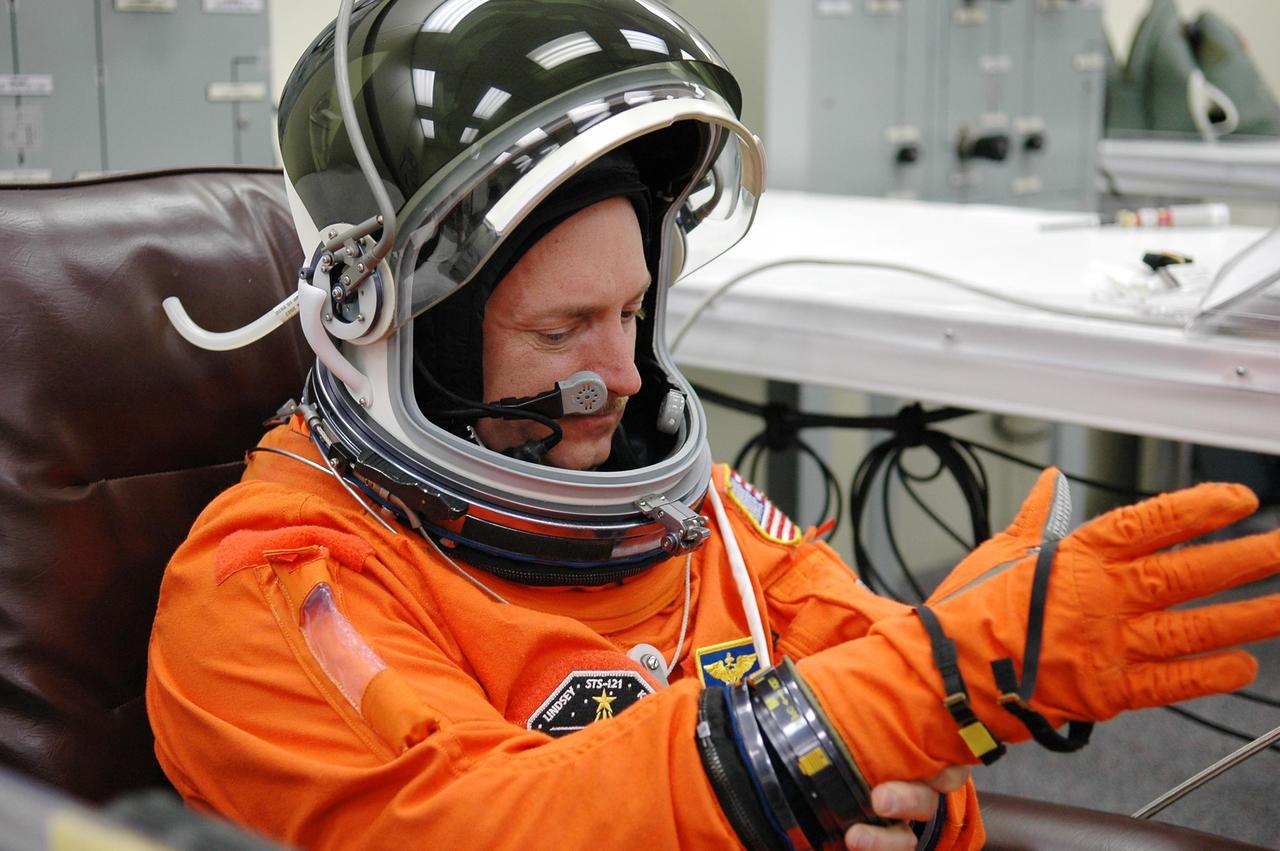
KENNEDY SPACE CENTER, FLA. - Prior to the third launch attempt on mission STS-121, Pilot Mark Kelly fixes his glove during suitup before heading to Launch Pad 39B. The July 2 launch attempt was scrubbed due to the presence of showers and thunderstorms within the surrounding area of the launch site. The launch of Space Shuttle Discovery on mission STS-121 is the 115th shuttle flight and the 18th U.S. flight to the International Space Station. During the 12-day mission, the STS-121 crew will test new equipment and procedures to improve shuttle safety, as well as deliver supplies and make repairs to the International Space Station. Photo credit: NASA/Kim Shiflett
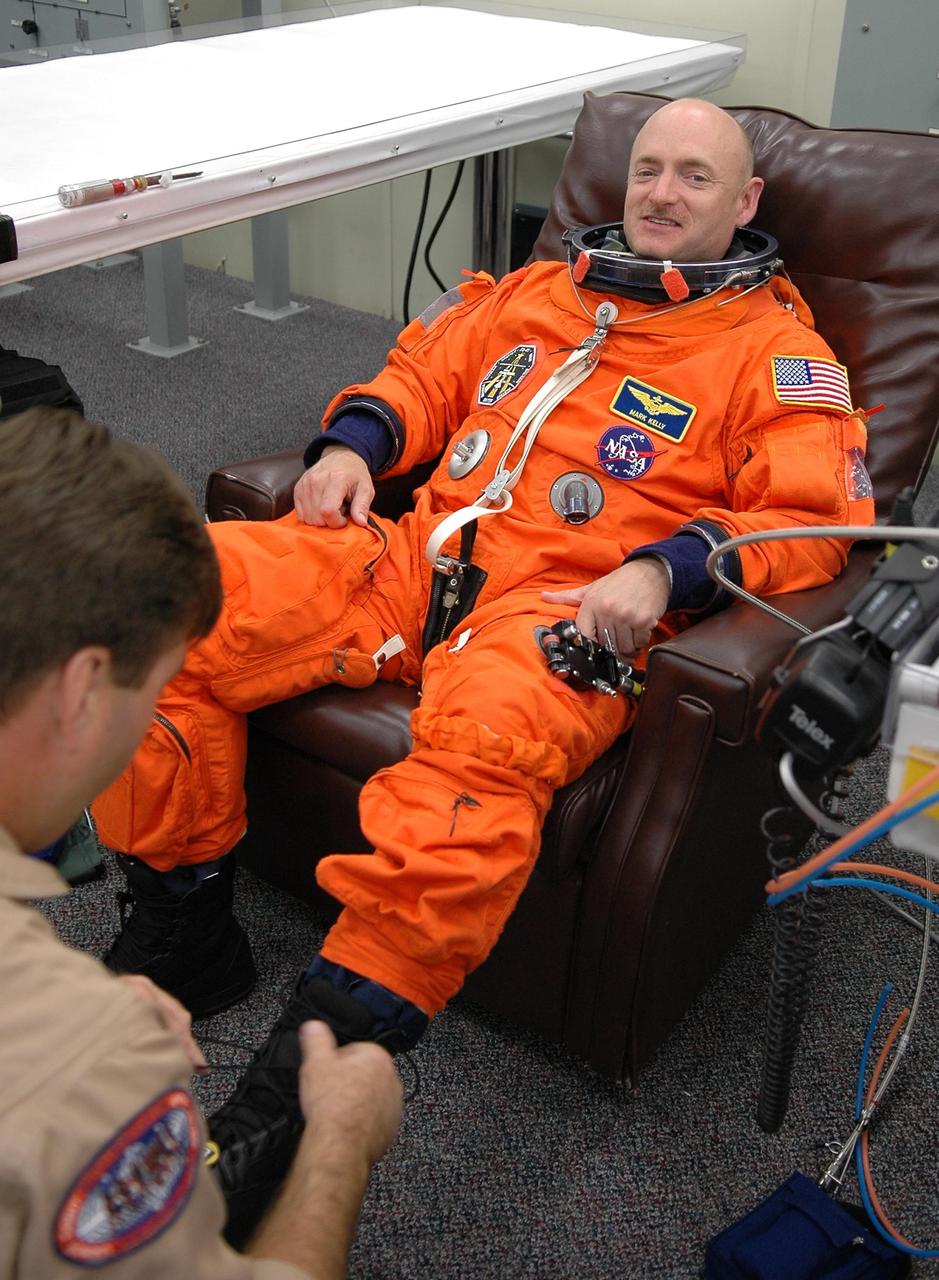
KENNEDY SPACE CENTER, FLA. - Prior to the third launch attempt on mission STS-121, Pilot Mark Kelly is helped with his boots during suitup before heading to Launch Pad 39B. The July 2 launch attempt was scrubbed due to the presence of showers and thunderstorms within the surrounding area of the launch site. The launch of Space Shuttle Discovery on mission STS-121 is the 115th shuttle flight and the 18th U.S. flight to the International Space Station. During the 12-day mission, the STS-121 crew will test new equipment and procedures to improve shuttle safety, as well as deliver supplies and make repairs to the International Space Station. Photo credit: NASA/Kim Shiflett
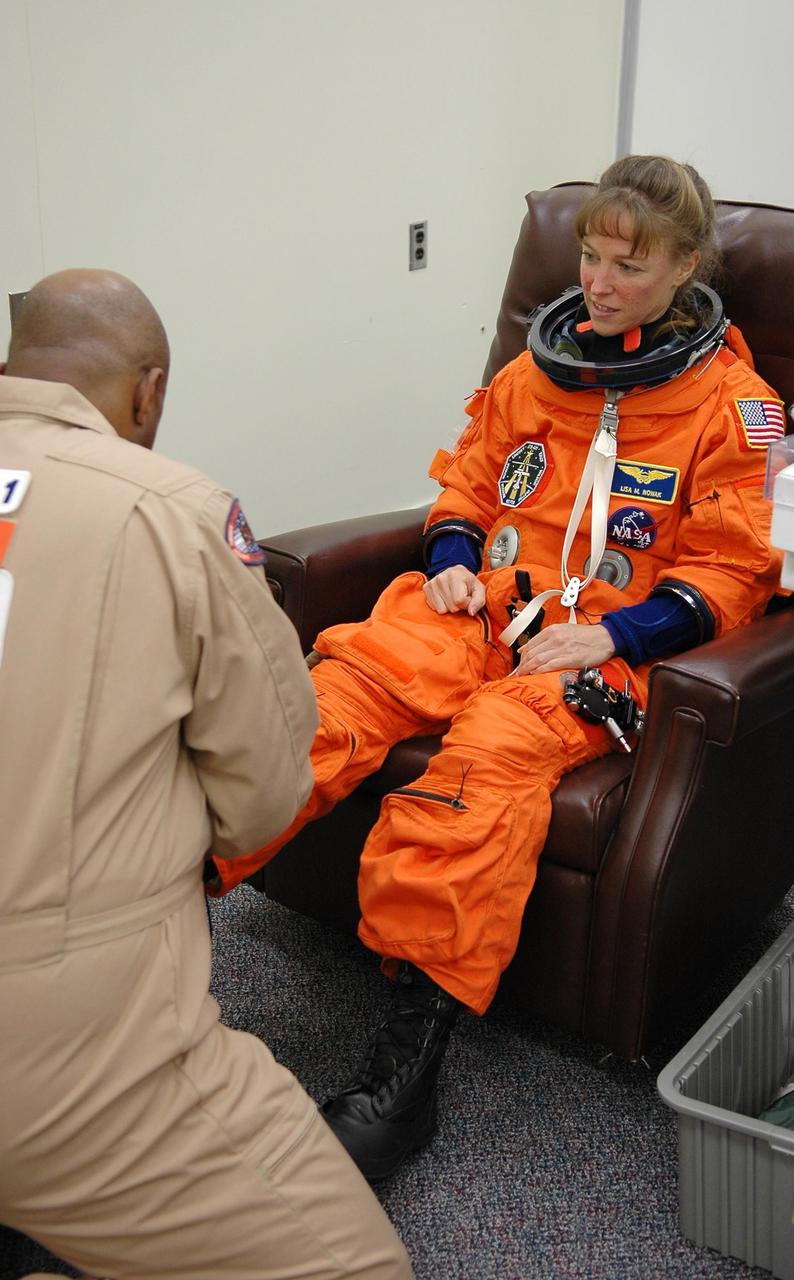
KENNEDY SPACE CENTER, FLA. - STS-121 Mission Specialist Lisa Nowak is helped with her boots during suitup before heading to Launch Pad 39B and a third launch attempt. The July 2 launch attempt was scrubbed due to the presence of showers and thunderstorms within the surrounding area of the launch site. The launch of Space Shuttle Discovery on mission STS-121 is the 115th shuttle flight and the 18th U.S. flight to the International Space Station. During the 12-day mission, the STS-121 crew will test new equipment and procedures to improve shuttle safety, as well as deliver supplies and make repairs to the International Space Station. Photo credit: NASA/Kim Shiflett

KENNEDY SPACE CENTER, FLA. - STS-121 Commander Steven Lindsey is eager for a third launch attempt on the mission. Here, he is donning his launch suit before heading to Launch Pad 39B. The July 2 launch attempt was scrubbed due to the presence of showers and thunderstorms within the surrounding area of the launch site. The launch of Space Shuttle Discovery on mission STS-121 is the 115th shuttle flight and the 18th U.S. flight to the International Space Station. During the 12-day mission, the STS-121 crew will test new equipment and procedures to improve shuttle safety, as well as deliver supplies and make repairs to the International Space Station. Photo credit: NASA/Kim Shiflett
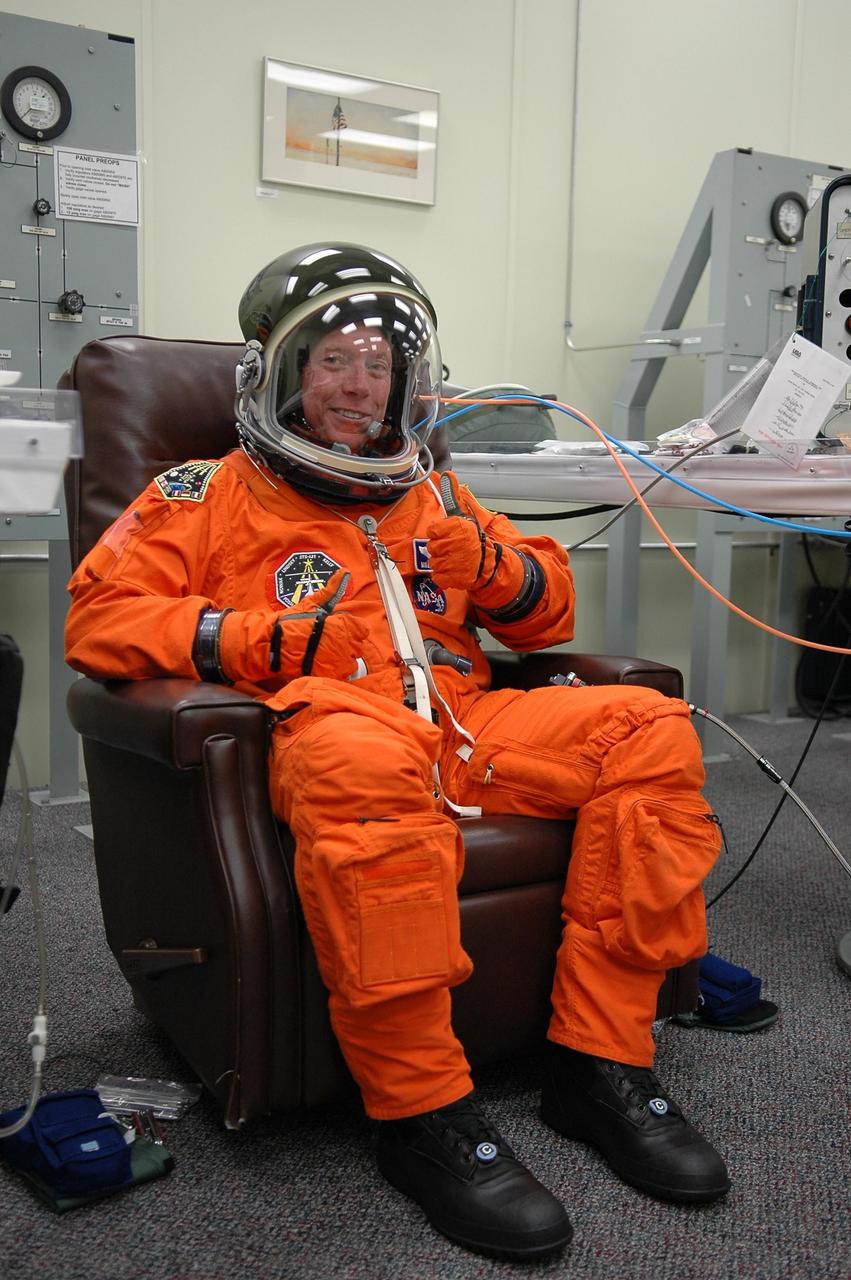
KENNEDY SPACE CENTER, FLA. - After suiting up in his launch suit, Mission Specialist Michael Fossum gives a thumbs up for a third launch attempt on mission STS-121. The July 2 launch attempt was scrubbed due to the presence of showers and thunderstorms within the surrounding area of the launch site. The launch of Space Shuttle Discovery on mission STS-121 is the 115th shuttle flight and the 18th U.S. flight to the International Space Station. During the 12-day mission, the STS-121 crew will test new equipment and procedures to improve shuttle safety, as well as deliver supplies and make repairs to the International Space Station. Photo credit: NASA/Kim Shiflett
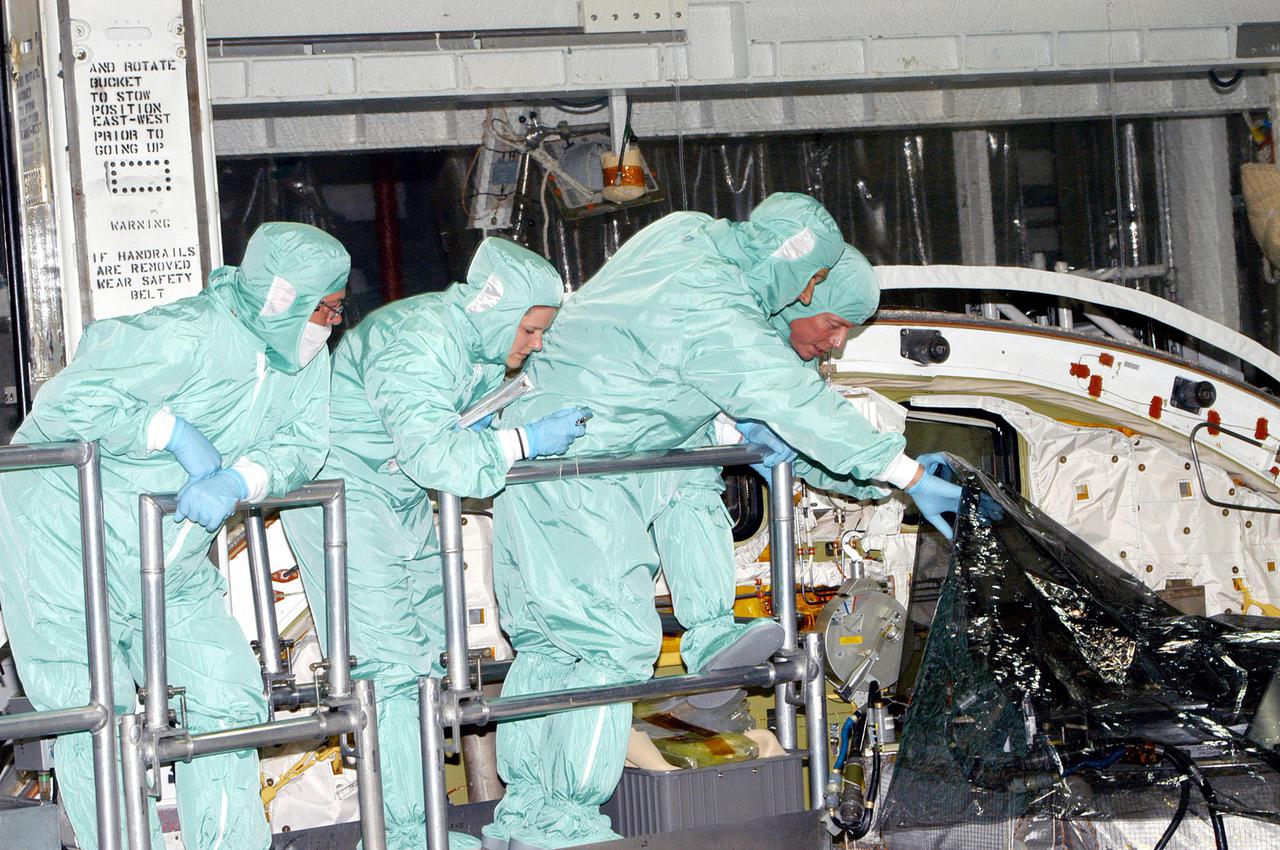
KENNEDY SPACE CENTER, FLA. - During Crew Equipment Interface Test (CEIT) at NASA’s Kennedy Space Center, STS-121 crew members inspect the docking station to become familiar with using the sockets. STS-121 is the second Return to Flight mission to the International Space Station. During CEIT, the crew has an opportunity to get a hands-on look at the orbiter and equipment they will be working with on their mission. Mission STS-121 is scheduled to launch aboard Space Shuttle Atlantis in July.
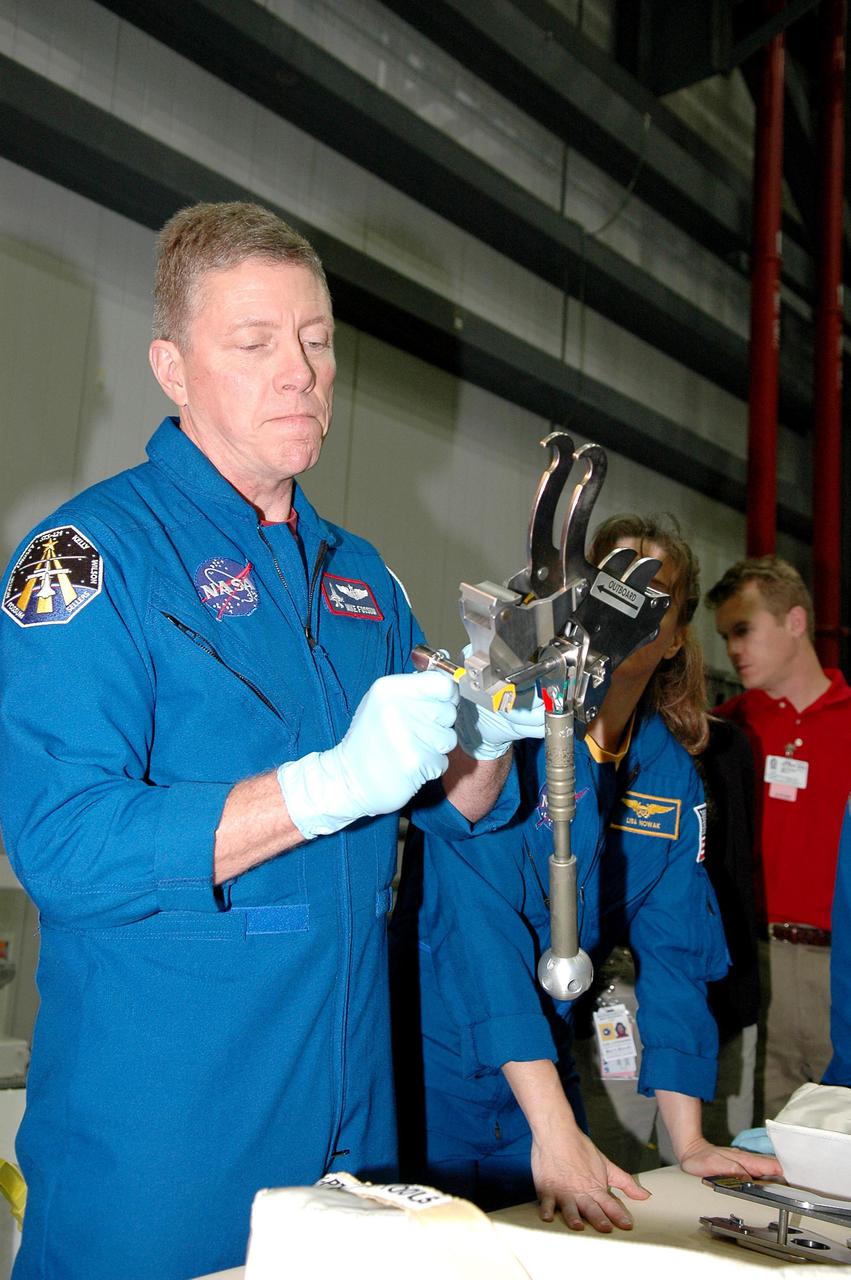
KENNEDY SPACE CENTER, FLA. - In the Orbiter Processing Facility at NASA’s Kennedy Space Center, STS-121 Mission Specialist Michael E. Fossum practices using the Emergency Payload Door Closure Device. At right is Mission Specialist Lisa Nowak. STS-121 is the second Return to Flight mission. The crew is at KSC to participate in the Crew Equipment Interface Test (CEIT). During CEIT, the crew has an opportunity to get a hands-on look at the orbiter and equipment they will be working with on their missions. Mission STS-121 is scheduled to launch aboard Atlantis in July.
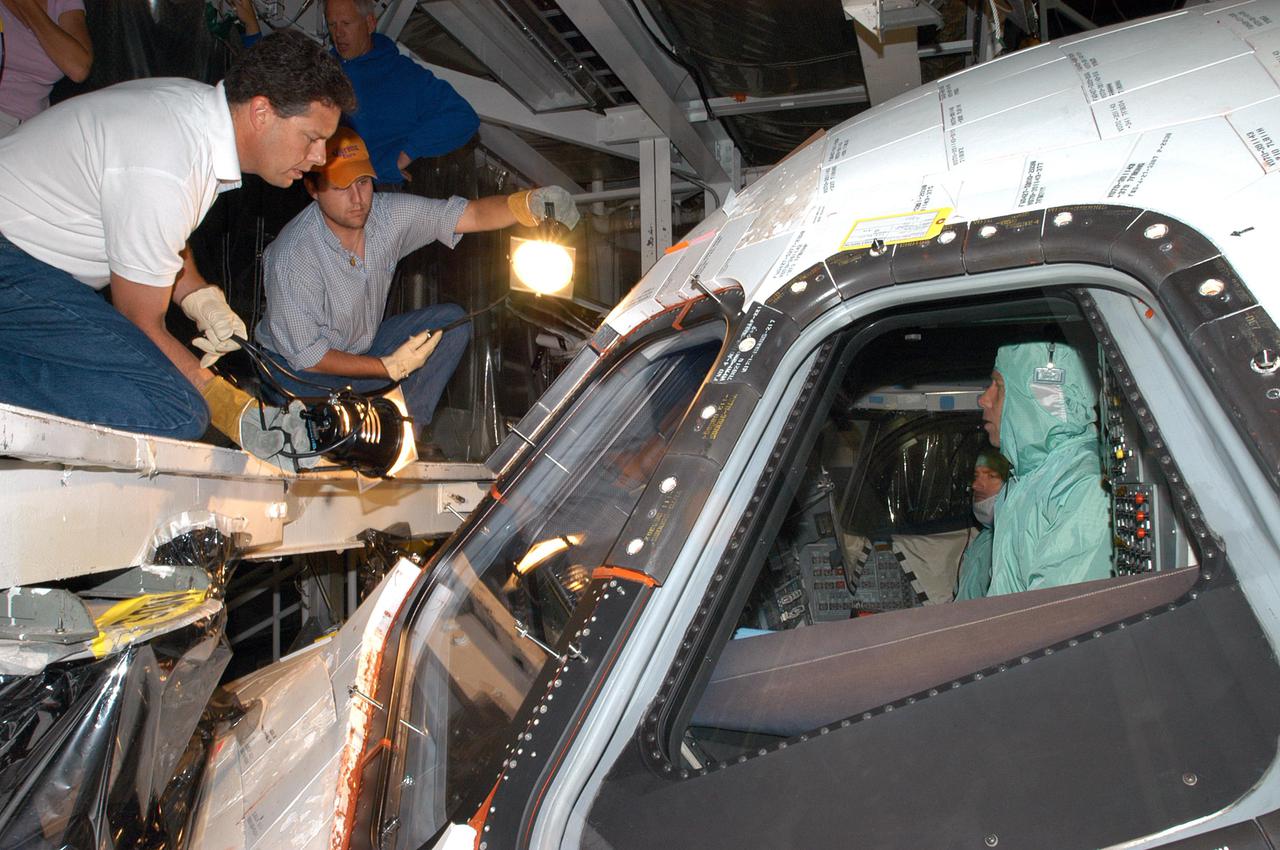
KENNEDY SPACE CENTER, FLA. - In Orbiter Processing Facility bay 1, United Space Alliance technicians help STS-121 Mission Commander Steven W. Lindsey (right) and Pilot Mark E. Kelly with an inspection of the windows in Atlantis' cockpit. The STS-121 crew is at KSC to participate in the Crew Equipment Interface Test (CEIT). During CEIT, the crew has an opportunity to get a hands-on look at the orbiter and equipment they will be working with on their mission. STS-121, the second Return to Flight mission, is scheduled to launch aboard Atlantis in July.
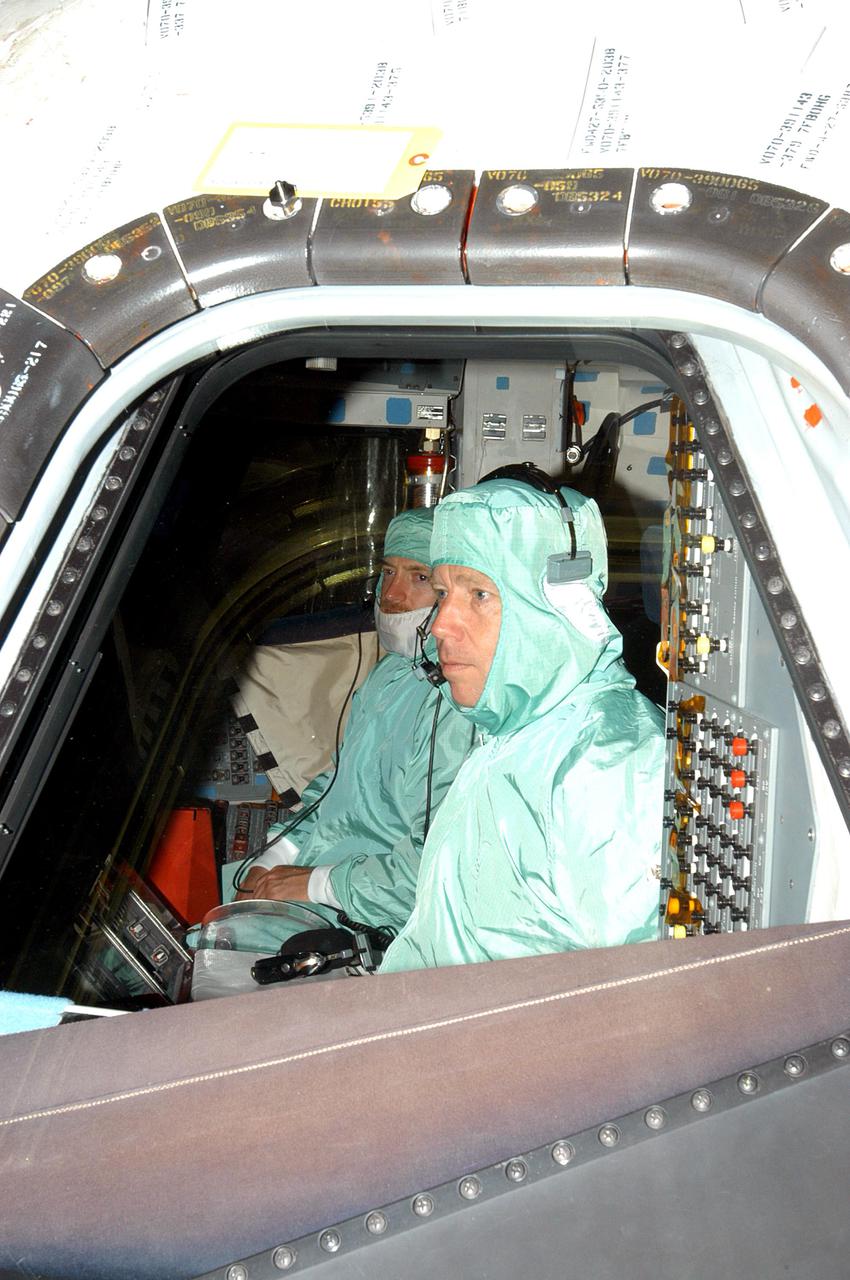
KENNEDY SPACE CENTER, FLA. - In Orbiter Processing Facility bay 1, STS-121 Mission Commander Steven W. Lindsey (right) and Pilot Mark E. Kelly inspect the windows in Atlantis' cockpit. The STS-121 crew is at KSC to participate in the Crew Equipment Interface Test (CEIT). During CEIT, the crew has an opportunity to get a hands-on look at the orbiter and equipment they will be working with on their mission. STS-121, the second Return to Flight mission, is scheduled to launch aboard Atlantis in July.
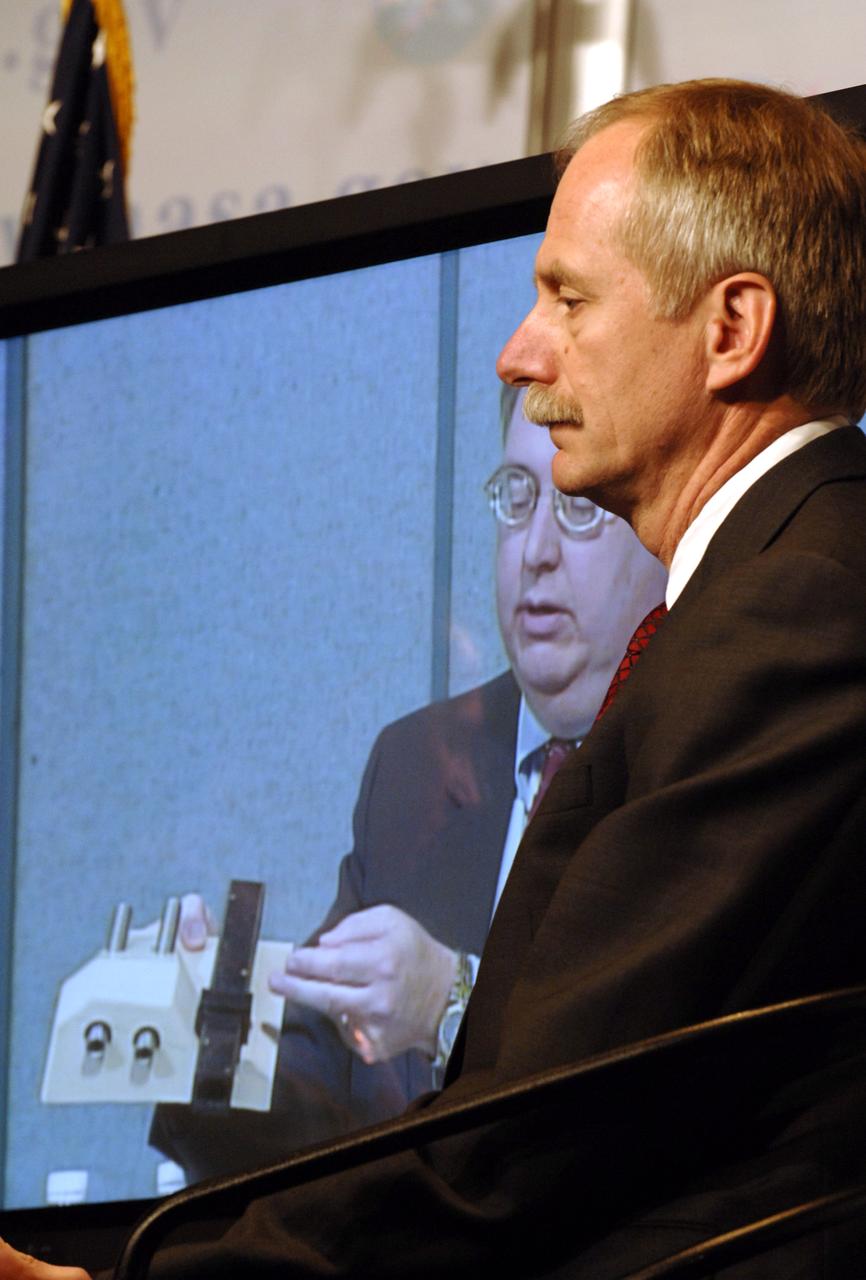
NASA Associate Administrator for Space Operations William Gerstenmaier, right, look on as Space Shuttle Program Manager Wayne Hale speaks from NASA's Marshall Space Flight Center during a media briefing about the space shuttle program and processing for the STS-121 mission, Friday, April 28, 2006, at NASA Headquarters in Washington. Photo Credit (NASA/Bill Ingalls)
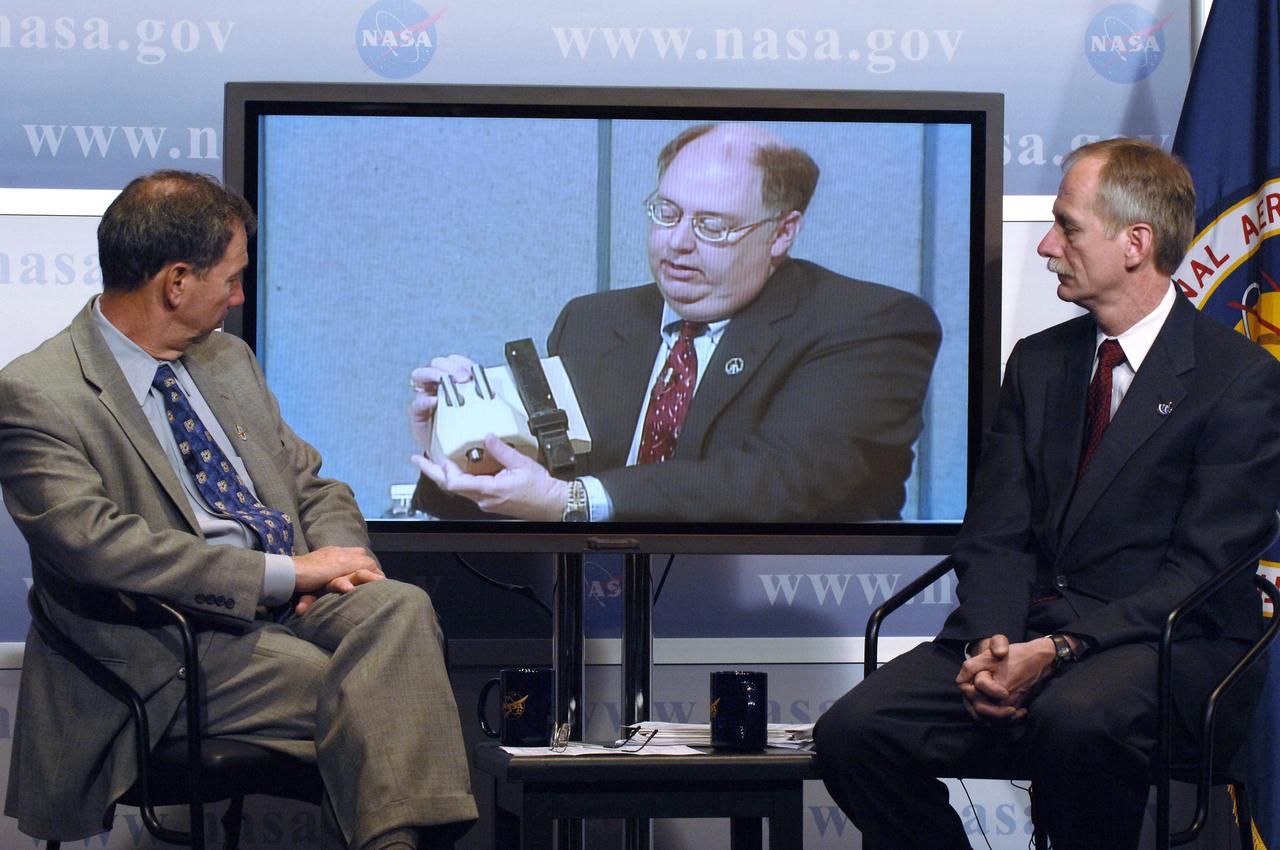
NASA Administrator Michael Griffin, left, and Associate Administrator for Space Operations William Gerstenmaier, right, look on as Space Shuttle Program Manager Wayne Hale talks from NASA's Marshall Space Flight Center about the space shuttle's ice frost ramps during a media briefing about the space shuttle program and processing for the STS-121 mission, Friday, April 28, 2006, at NASA Headquarters in Washington. Photo Credit (NASA/Bill Ingalls)
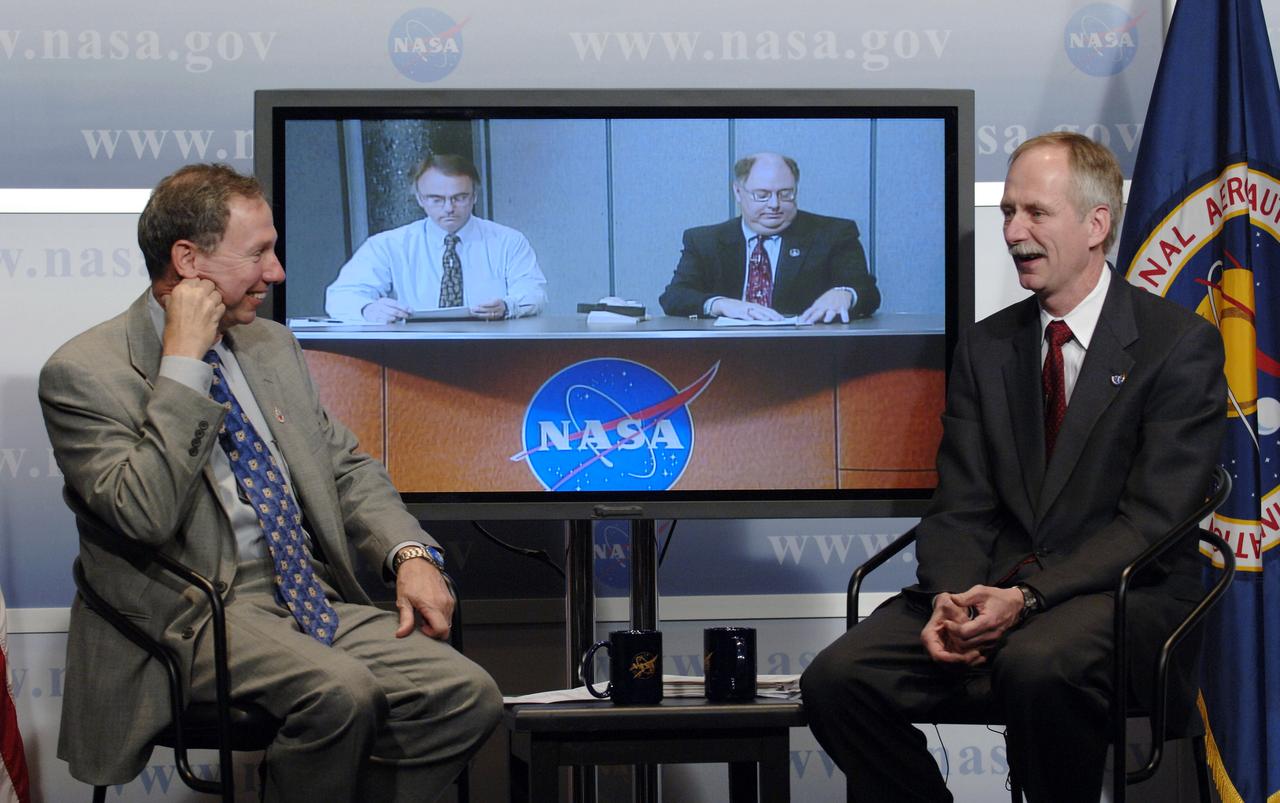
NASA Administrator Michael Griffin, left, and Associate Administrator for Space Operations William Gerstenmaier, right, smile as Space Shuttle Program Manager Wayne Hale, right on television screen, and Ken Welzyn, External Tank Chief Engineer, join in from NASA's Marshall Space Flight Center during a media briefing about the space shuttle program and processing for the STS-121 mission, Friday, April 28, 2006, at NASA Headquarters in Washington. Photo Credit (NASA/Bill Ingalls)
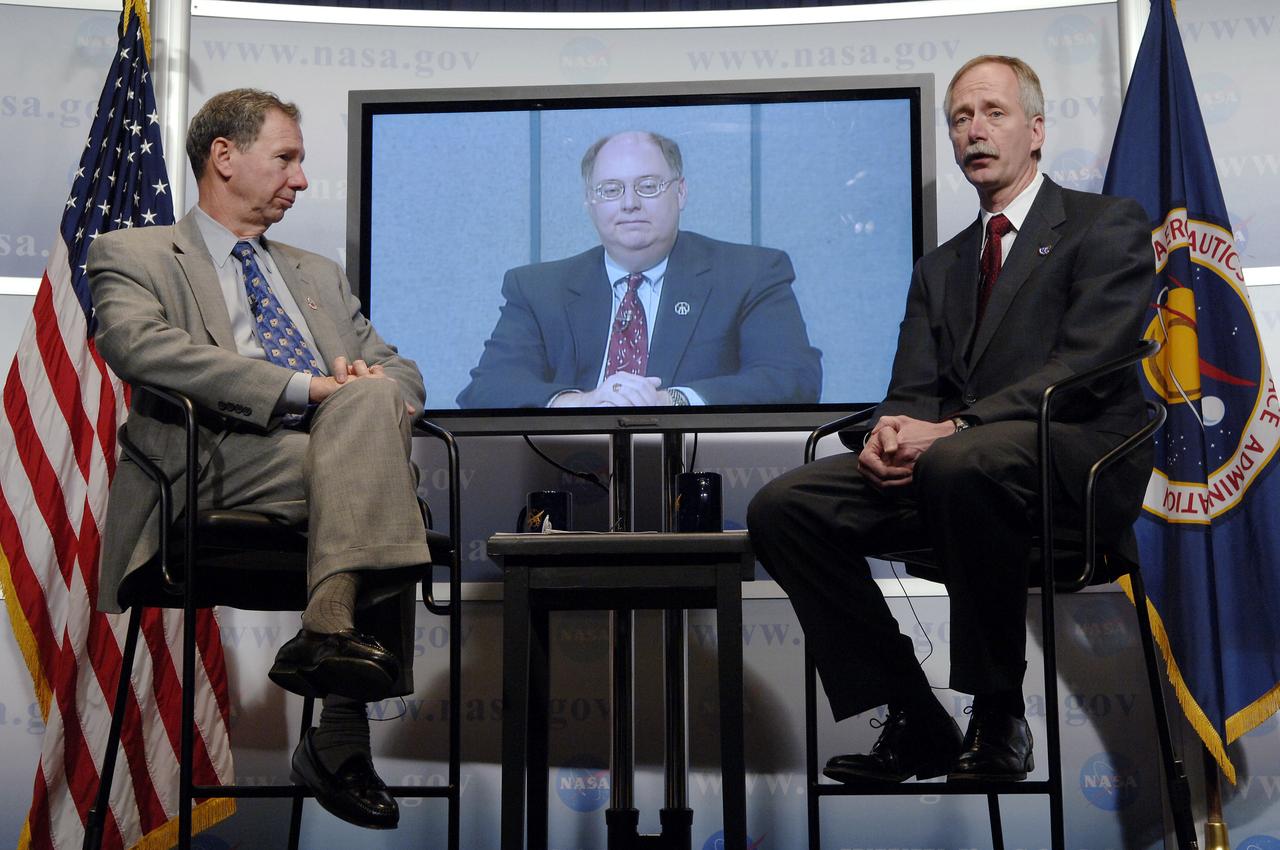
NASA Administrator Michael Griffin, left, looks on as Associate Administrator for Space Operations William Gerstenmaier, right, speaks while Space Shuttle Program Manager Wayne Hale of NASA's Marshall Space Flight Center waits by during a media briefing about the space shuttle program and processing for the STS-121 mission, Friday, April 28, 2006, at NASA Headquarters in Washington. Photo Credit (NASA/Bill Ingalls)
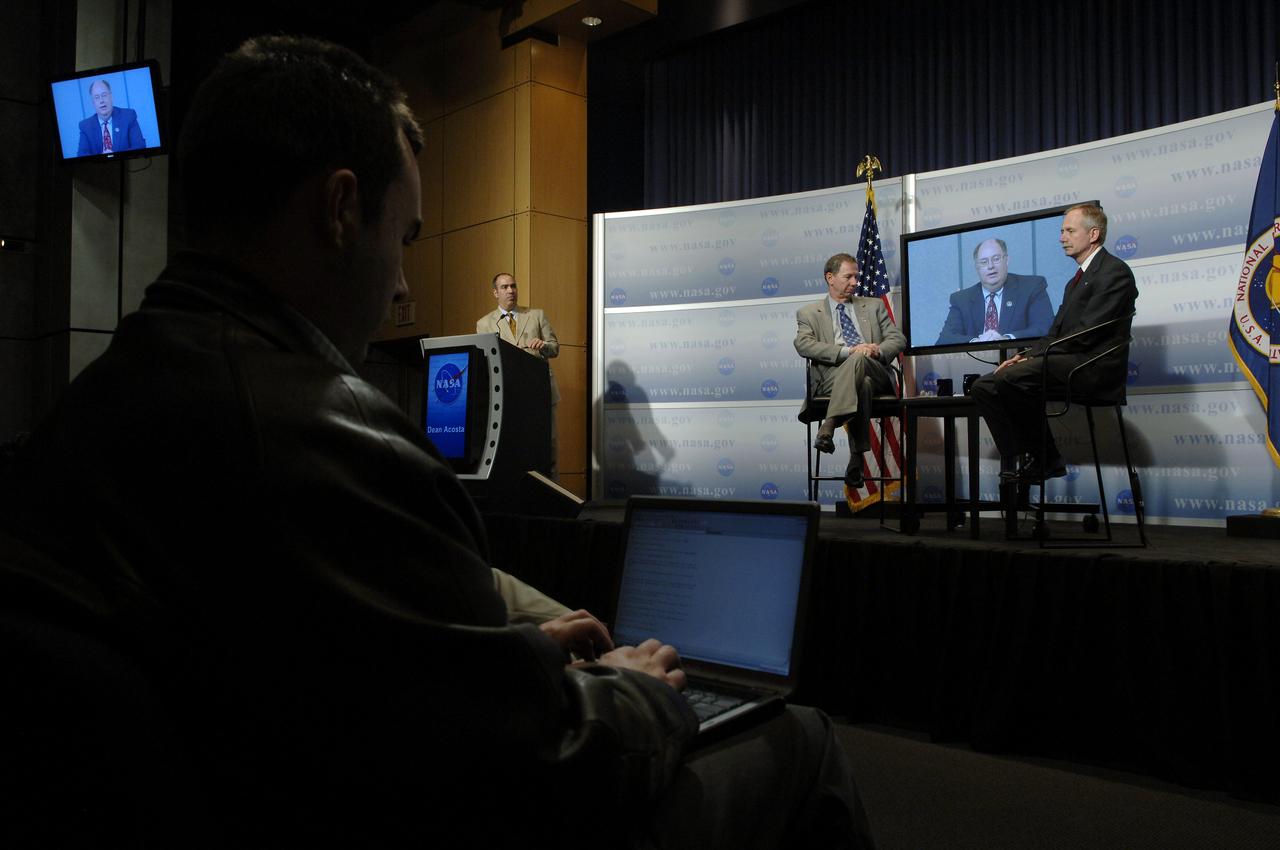
NASA Administrator Michael Griffin, second from left, and Associate Administrator for Space Operations William Gerstenmaier, right, look on as Space Shuttle Program Manager Wayne Hale speaks from NASA's Marshall Space Flight Center during a media briefing about the space shuttle program and processing for the STS-121 mission, Friday, April 28, 2006, at NASA Headquarters in Washington. Moderator Dean Acosta looks on af far left. Photo Credit (NASA/Bill Ingalls)
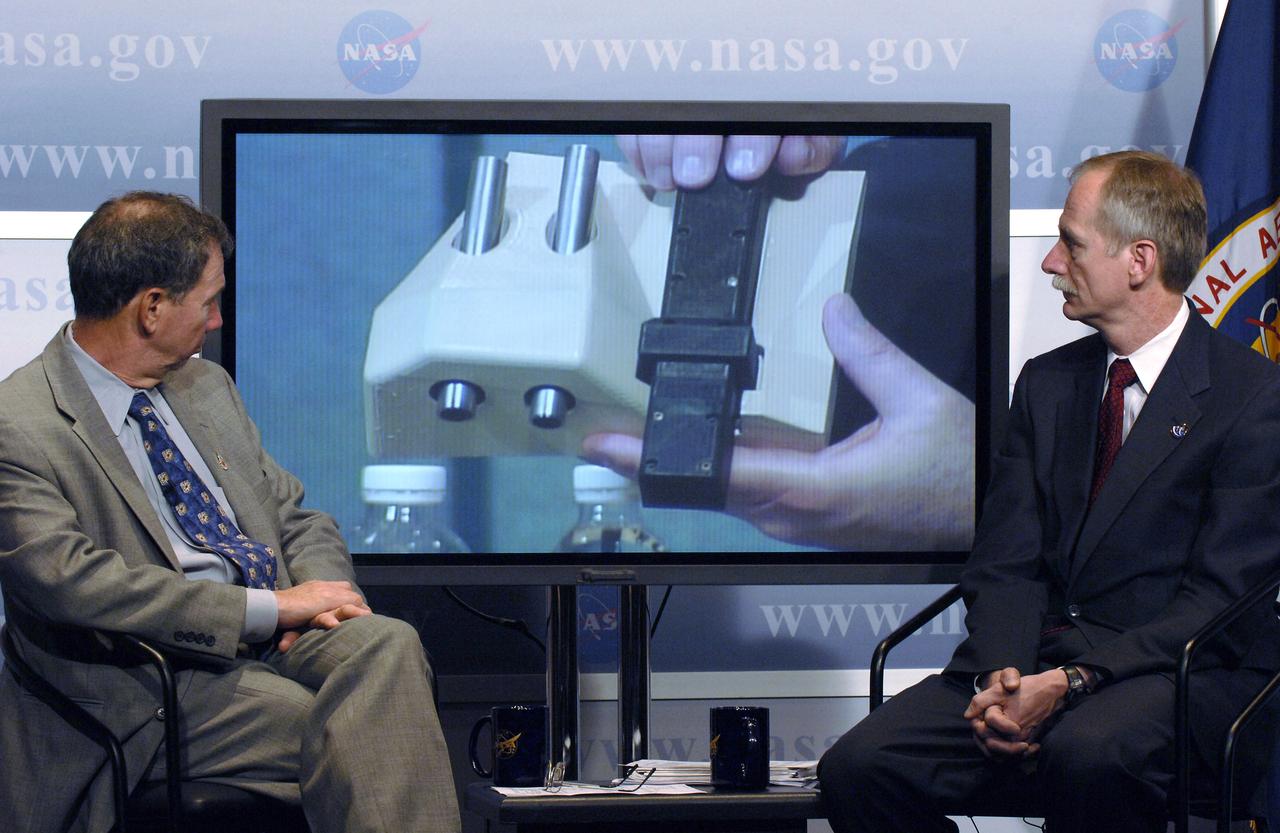
NASA Administrator Michael Griffin, left, and Associate Administrator for Space Operations William Gerstenmaier, right, look on as Space Shuttle Program Manager Wayne Hale from NASA's Marshall Space Flight Center, holds a test configuration of an ice frost ramp during a media briefing about the space shuttle program and processing for the STS-121 mission, Friday, April 28, 2006, at NASA Headquarters in Washington. Photo Credit (NASA/Bill Ingalls)
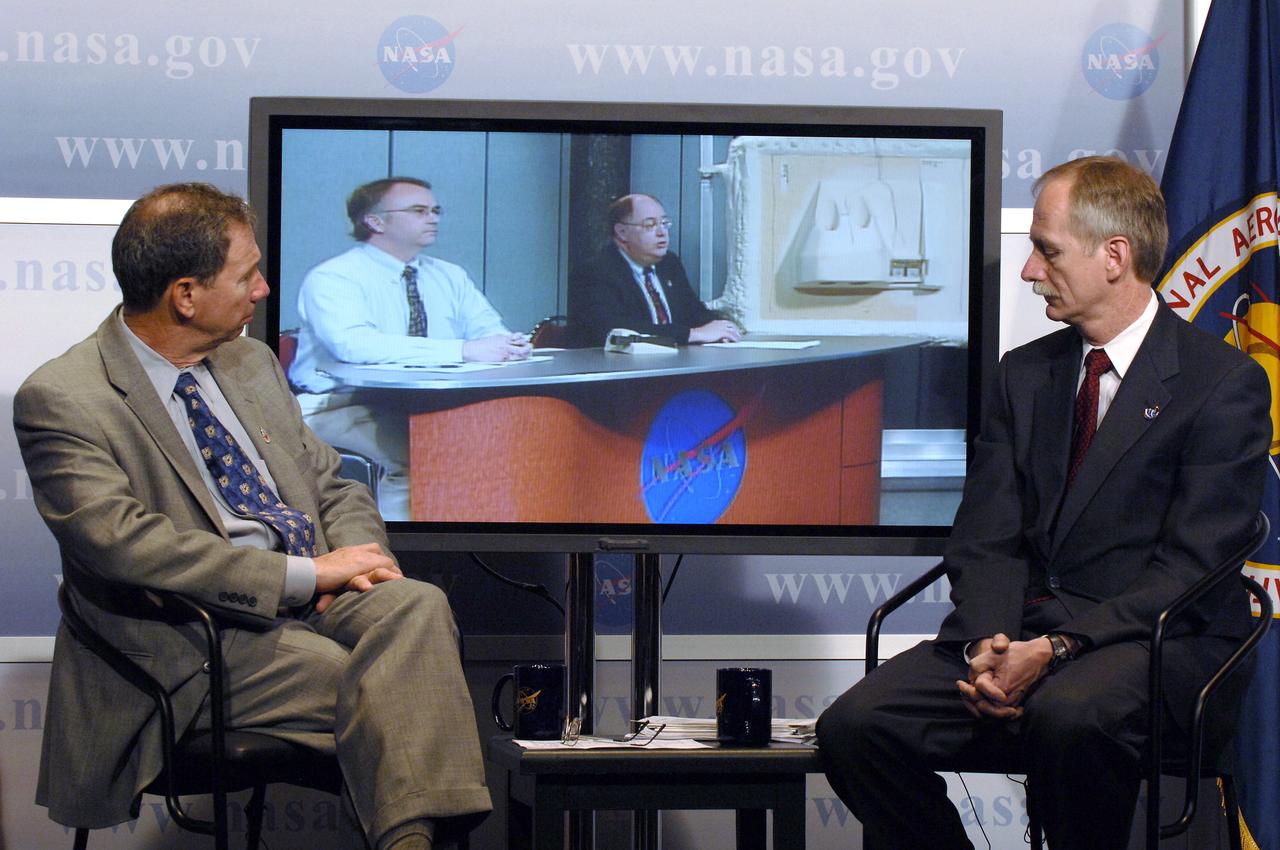
NASA Administrator Michael Griffin, left, and Associate Administrator for Space Operations William Gerstenmaier, right, look on as Space Shuttle Program Manager Wayne Hale speaks from NASA's Marshall Space Flight Center during a media briefing about the space shuttle program and processing for the STS-121 mission, Friday, April 28, 2006, at NASA Headquarters in Washington. At left on screen is Ken Welzyn, External Tank Chief Engineer. Photo Credit (NASA/Bill Ingalls)
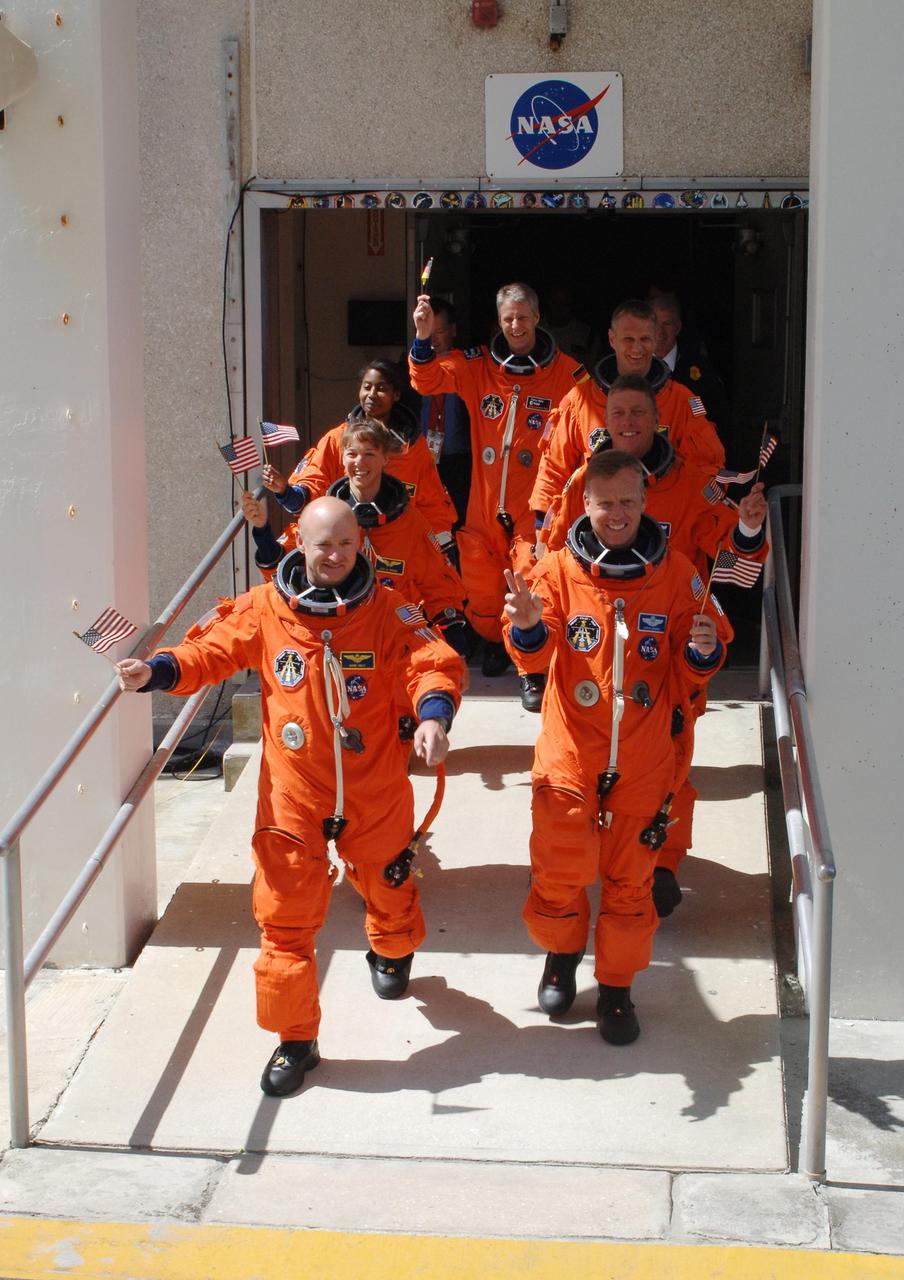
KENNEDY SPACE CENTER, FLA. - The STS-121 crew displays the spirit of the Fourth of July holiday with their flags and their eagerness to launch as they stride out of the Operations and Checkout Building. Leading the way are Pilot Mark Kelly (left) and Commander Steven Lindsey (right). Behind them are Mission Specialists (second row) Lisa Nowak and Michael Fossum; (third row) Stephanie Wilson and Piers Sellers; and (at the rear) Thomas Reiter, who represents the European Space Agency. The July 2 launch attempt was scrubbed due to the presence of showers and thunderstorms within the surrounding area of the launch site. The launch of Space Shuttle Discovery on mission STS-121 is the 115th shuttle flight and the 18th U.S. flight to the International Space Station. During the 12-day mission, the STS-121 crew will test new equipment and procedures to improve shuttle safety, as well as deliver supplies and make repairs to the International Space Station. Photo credit: NASA/Kim Shiflett
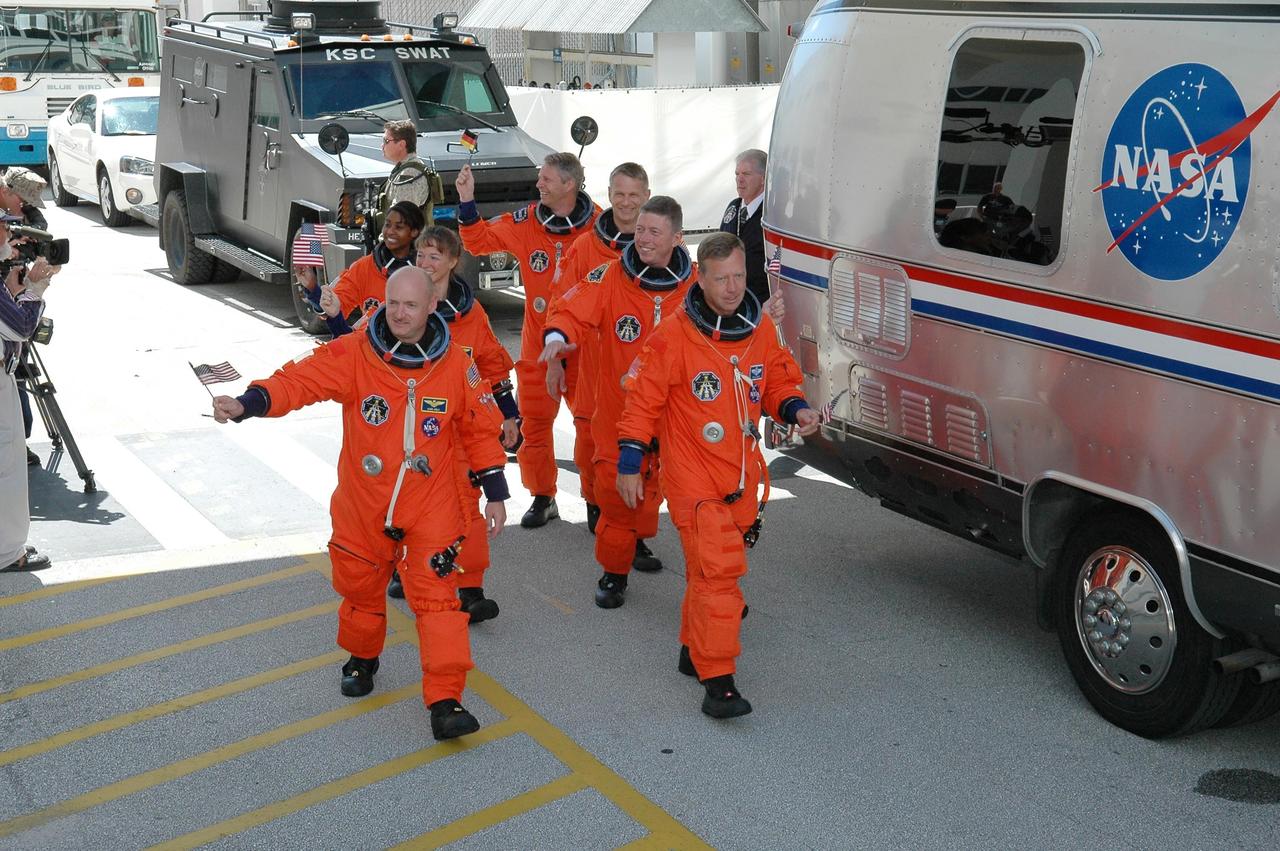
KENNEDY SPACE CENTER, FLA. - Waving flags for the Fourth of July, the STS-121 crew heads for the Astrovan and the ride to Launch Pad 39B for a third launch attempt. Leading the way are Pilot Mark Kelly (left) and Commander Steven Lindsey (right). Behind them are, left and right, Mission Specialists (second row) Lisa Nowak and Michael Fossum; (third row) Stephanie Wilson and Piers Sellers; and (at the rear) Thomas Reiter, who represents the European Space Agency. The July 2 launch attempt was scrubbed due to the presence of showers and thunderstorms within the surrounding area of the launch site. The launch of Space Shuttle Discovery on mission STS-121 is the 115th shuttle flight and the 18th U.S. flight to the International Space Station. During the 12-day mission, the STS-121 crew will test new equipment and procedures to improve shuttle safety, as well as deliver supplies and make repairs to the International Space Station. Photo credit: NASA/Kim Shiflett
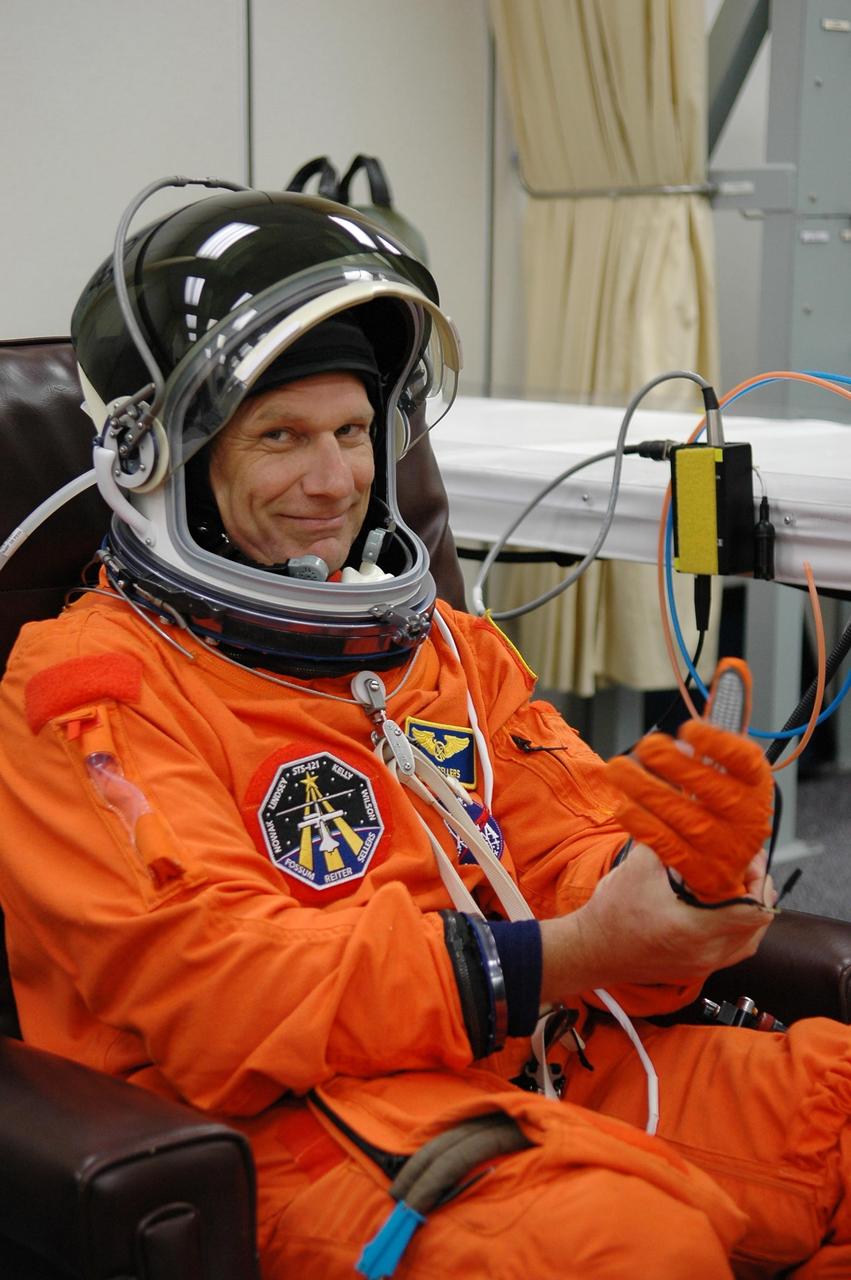
KENNEDY SPACE CENTER, FLA. - Mission Specialist Piers Sellers is happy to be making a third launch attempt on mission STS-121. Here, he fixes one of his gloves during suitup before heading to Launch Pad 39B. The July 2 launch attempt was scrubbed due to the presence of showers and thunderstorms within the surrounding area of the launch site. The launch of Space Shuttle Discovery on mission STS-121 is the 115th shuttle flight and the 18th U.S. flight to the International Space Station. During the 12-day mission, the STS-121 crew will test new equipment and procedures to improve shuttle safety, as well as deliver supplies and make repairs to the International Space Station. Photo credit: NASA/Kim Shiflett
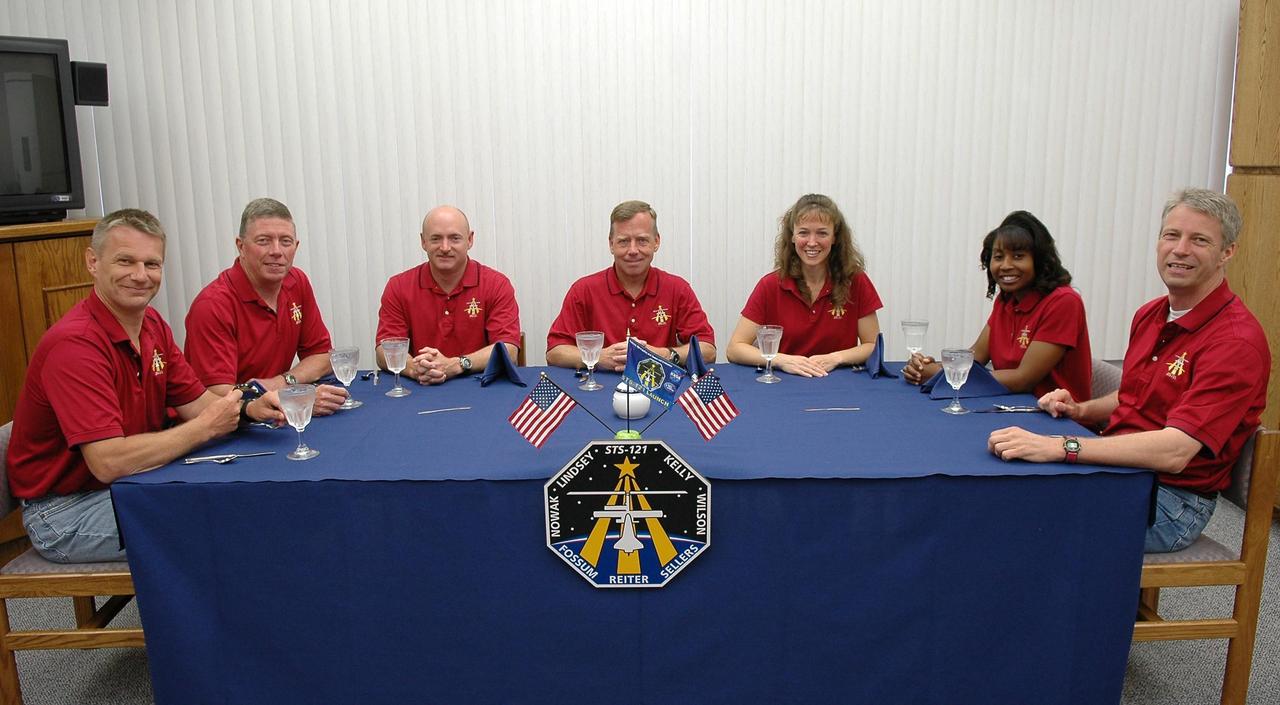
KENNEDY SPACE CENTER, FLA. - Trying a third time for launch, and still smiling, the STS-121 crew gathers again for the traditional breakfast before suiting up. Seated left to right are Mission Specialists Piers Sellers and Michael Fossum, Pilot Mark Kelly, Commander Steven Lindsey, and Mission Specialists Lisa Nowak, Stephanie Wilson and Thomas Reiter, who represents the European Space Agency. The July 2 launch attempt was scrubbed due to the presence of showers and thunderstorms within the surrounding area of the launch site. The launch of Space Shuttle Discovery on mission STS-121 is the 115th shuttle flight and the 18th U.S. flight to the International Space Station. During the 12-day mission, the STS-121 crew will test new equipment and procedures to improve shuttle safety, as well as deliver supplies and make repairs to the International Space Station. Photo credit: NASA/Kim Shiflett
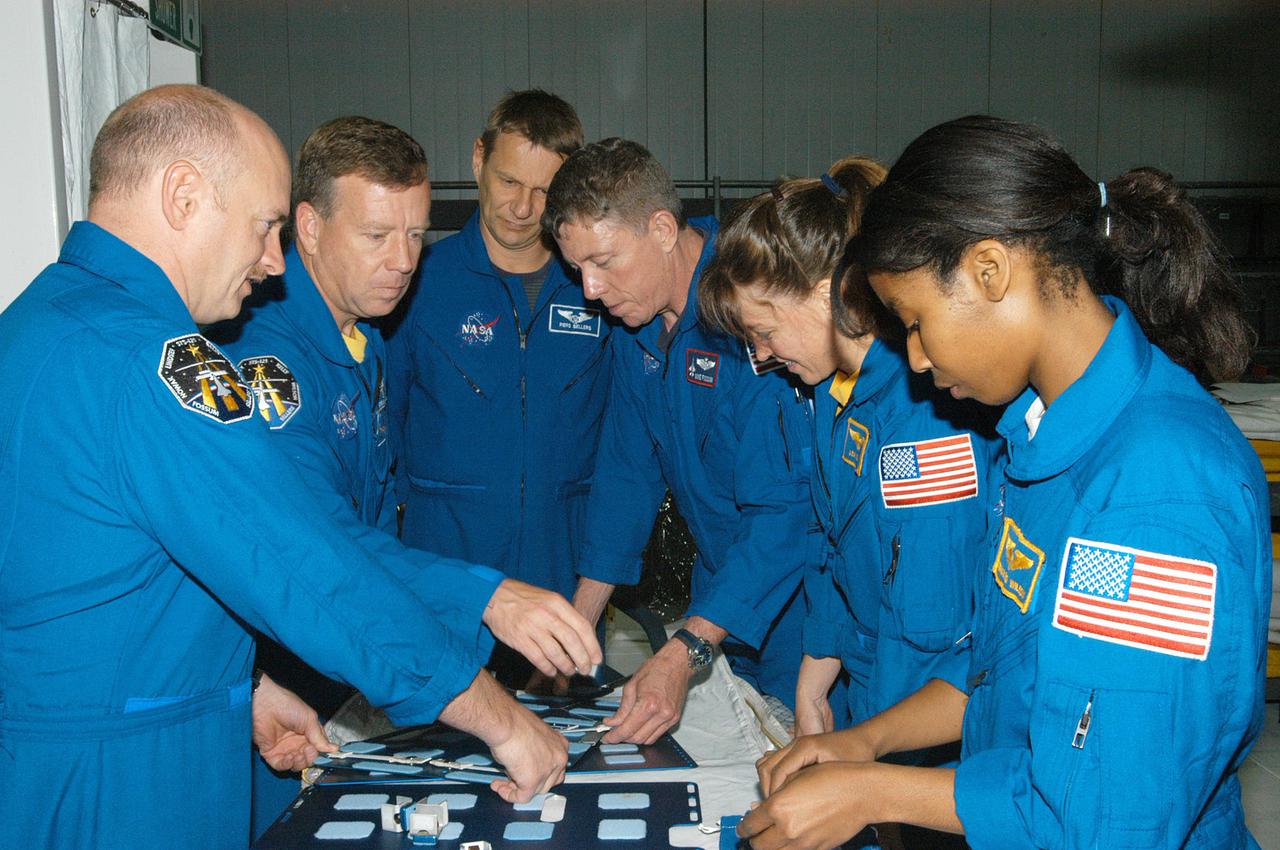
KENNEDY SPACE CENTER, FLA. - During Crew Equipment Interface Test (CEIT) at NASA’s Kennedy Space Center, STS-121 crew members look at panel assemblies that hold laptop computers in place while in space. From left are Pilot Mark E. Kelly, Commander Steven W. Lindsey, and Mission Specialists Piers J. Sellers, Michael E. Fossum, Lisa Nowak and Stephanie Wilson. STS-121 is the second Return to Flight mission to the International Space Station. During CEIT, the crew has an opportunity to get a hands-on look at the orbiter and equipment they will be working with on their mission. Mission STS-121 is scheduled to launch aboard Space Shuttle Atlantis in July.
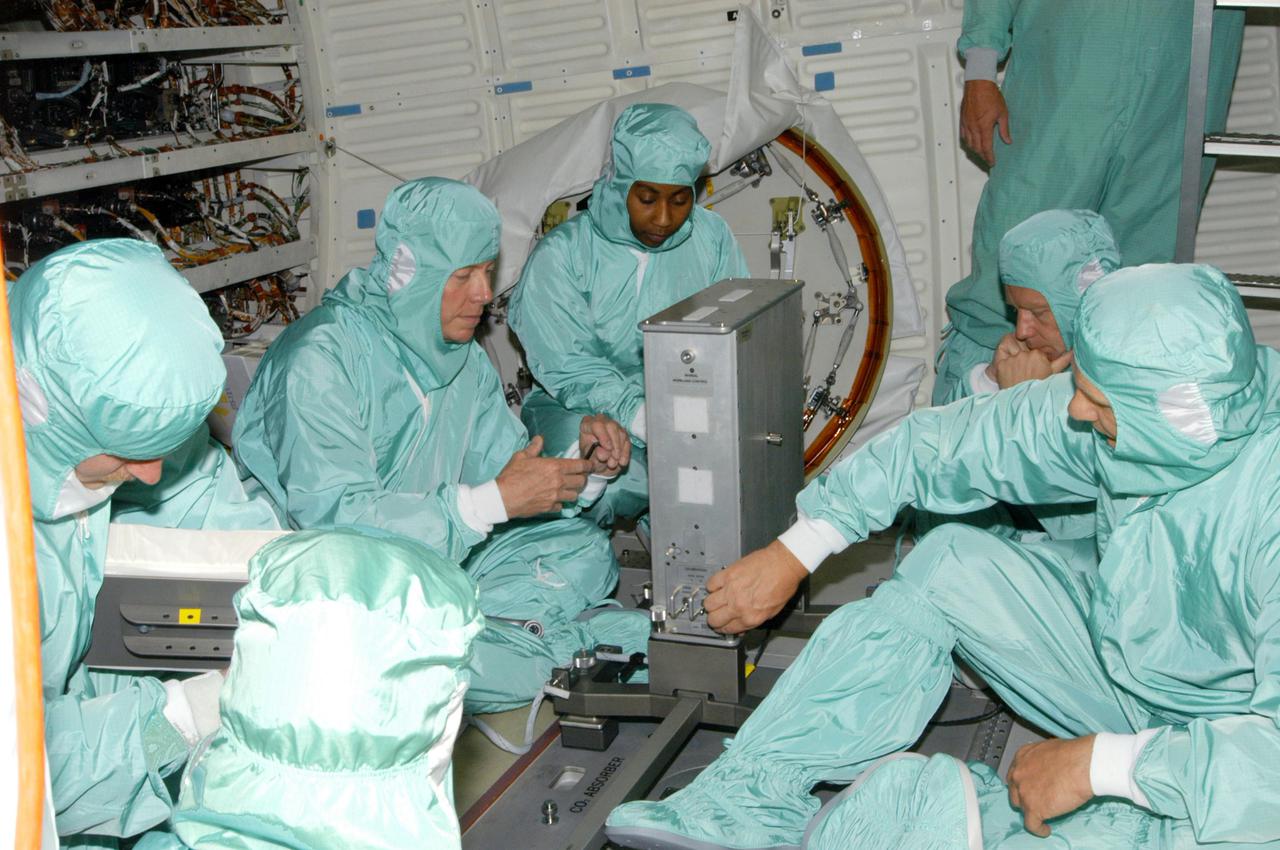
KENNEDY SPACE CENTER, FLA. - During Crew Equipment Interface Test (CEIT) at NASA’s Kennedy Space Center, STS-121 crew members are testing the ergometer that will be used for exercising while in space. Seen in the photo are (center left) Commander Steven W. Lindsey and Mission Specialists Stephanie Wilson, Michael E. Fossum and Piers J. Sellers. STS-121 is the second Return to Flight mission to the International Space Station. During CEIT, the crew has an opportunity to get a hands-on look at the orbiter and equipment they will be working with on their mission. Mission STS-121 is scheduled to launch aboard Space Shuttle Atlantis in July.
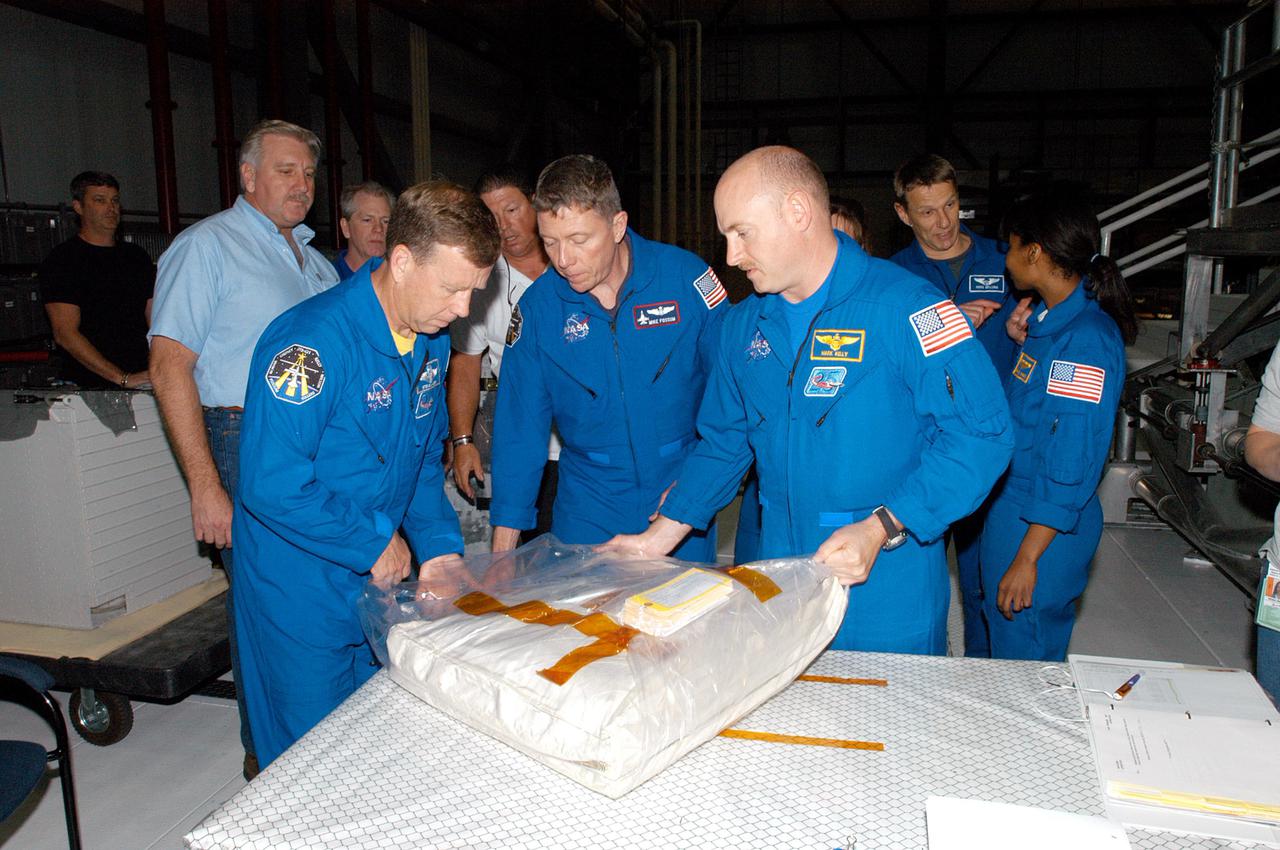
KENNEDY SPACE CENTER, FLA. - During Crew Equipment Interface Test (CEIT) at NASA’s Kennedy Space Center, STS-121 crew members are opening Window Shade bag for review. From left are Commander Steven W. Lindsey, Mission Specialist Michael E. Fossum and Pilot Mark E. Kelly. Behind them, at right, are Mission Specialists Piers J. Sellers and Stephanie Wilson. STS-121 is the second Return to Flight mission to the International Space Station. During CEIT, the crew has an opportunity to get a hands-on look at the orbiter and equipment they will be working with on their mission. Mission STS-121 is scheduled to launch aboard Space Shuttle Atlantis in July.
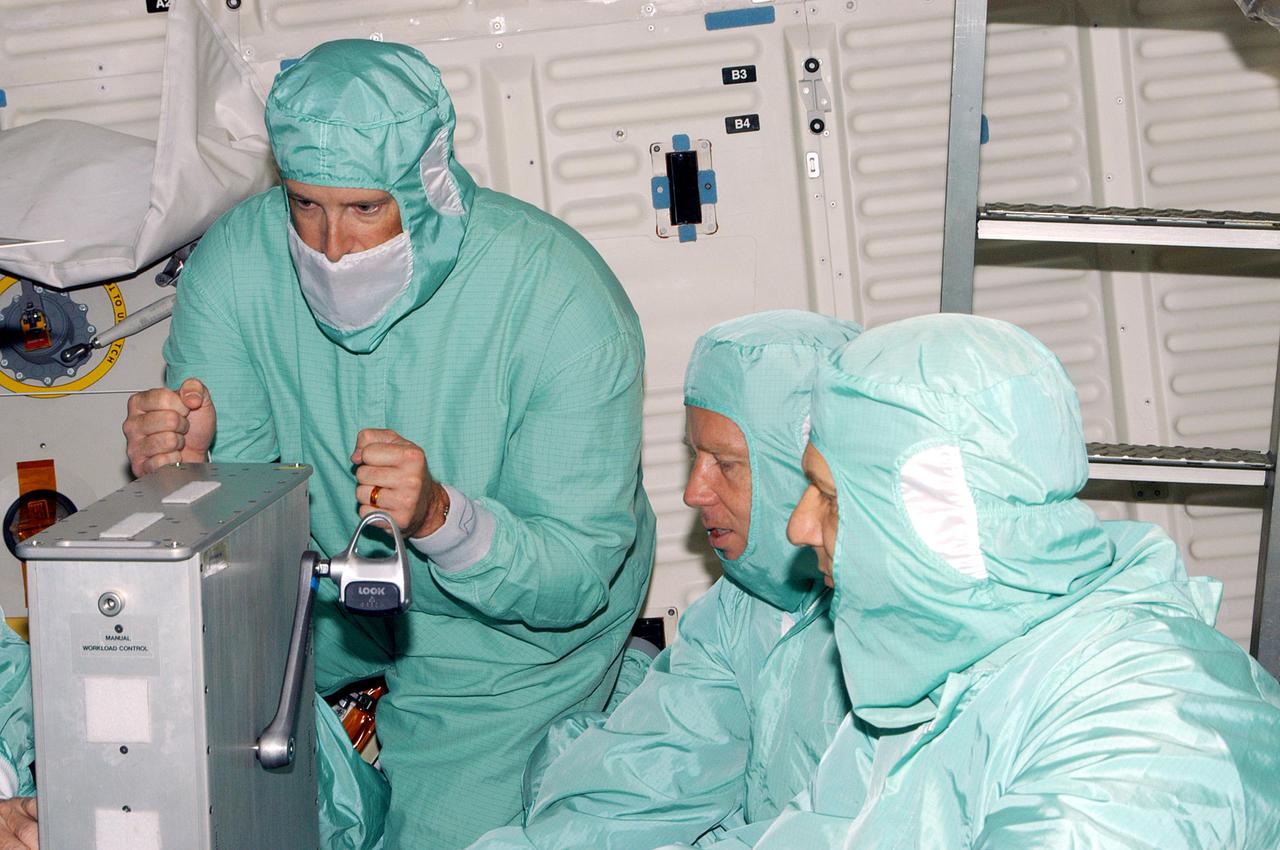
KENNEDY SPACE CENTER, FLA. - During Crew Equipment Interface Test (CEIT) at NASA’s Kennedy Space Center, STS-121 crew members are testing the ergometer that will be used for exercising while in space. Seen in the photo are Mission Specialists Michael E. Fossum (left) and Piers J. Sellers. STS-121 is the second Return to Flight mission to the International Space Station. During CEIT, the crew has an opportunity to get a hands-on look at the orbiter and equipment they will be working with on their mission. Mission STS-121 is scheduled to launch aboard Space Shuttle Atlantis in July.
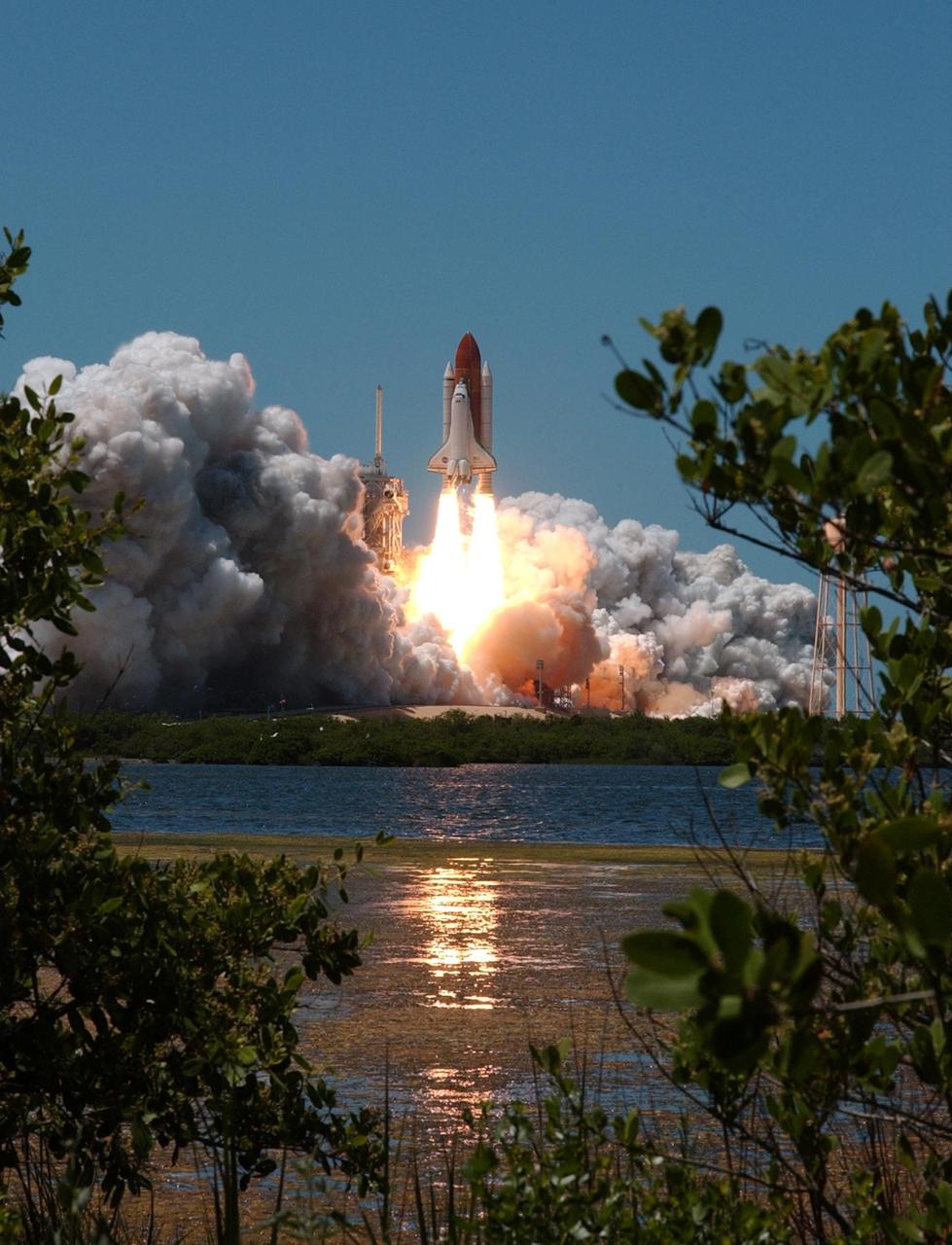
KENNEDY SPACE CENTER, FLA. - Space Shuttle Discovery kicks off the Fourth of July fireworks with its own fiery display as it rockets into the blue sky, spewing foam and smoke over the ground, on mission STS-121. It was the third launch attempt in four days; the others were scrubbed due to weather concerns. Liftoff was on-time at 2:38 p.m. EDT. During the 12-day mission, the STS-121 crew of seven will test new equipment and procedures to improve shuttle safety, as well as deliver supplies and make repairs to the International Space Station. Landing is scheduled for July 16 or 17 at Kennedy's Shuttle Landing Facility. Photo credit: NASA/Sandy Joseph, Robert Murray
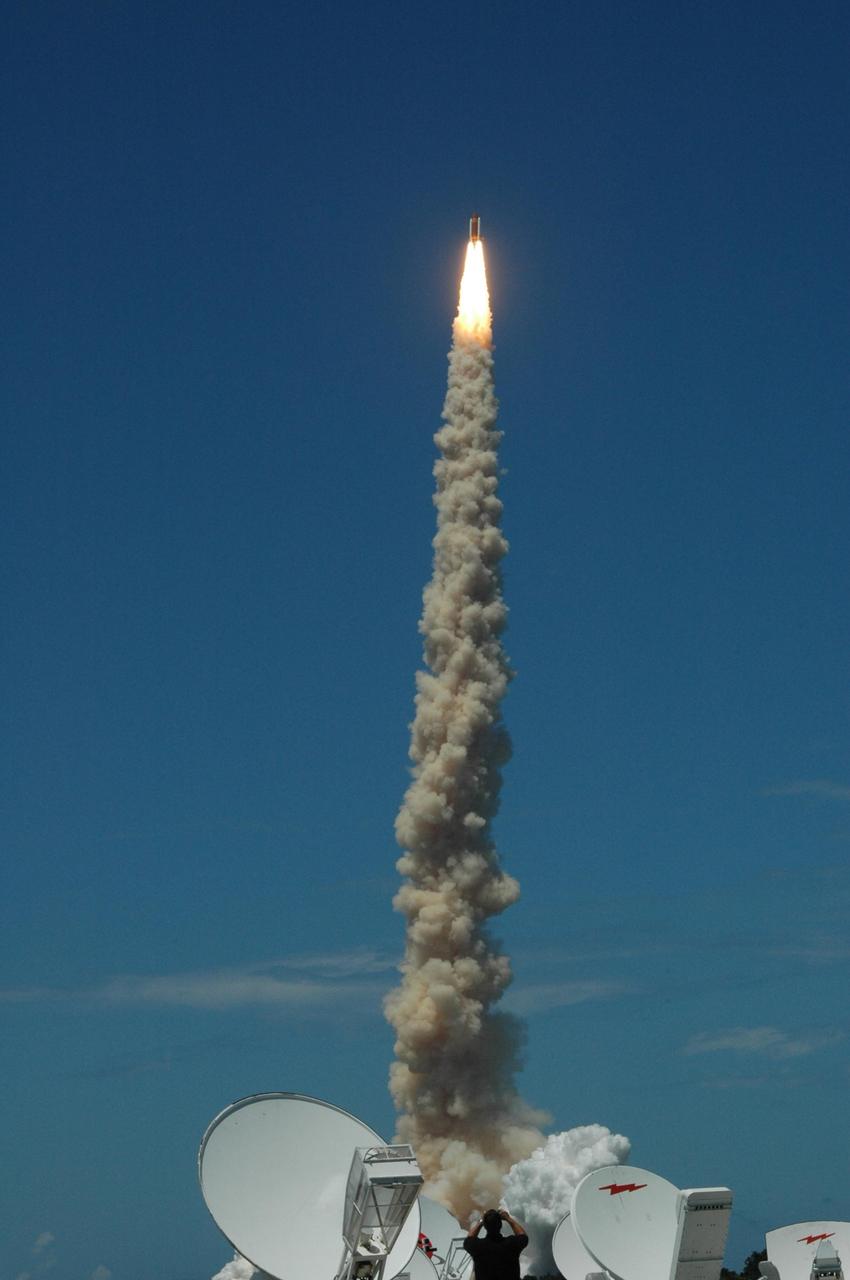
KENNEDY SPACE CENTER, FLA. - Like a roman candle shooting through the blue sky, the launch of Space Shuttle Discovery on mission STS-121 kicks off the fireworks for the U.S. holiday in its third launch attempt in four days. Liftoff was on-time at 2:38 p.m. EDT. During the 12-day mission, the STS-121 crew of seven will test new equipment and procedures to improve shuttle safety, as well as deliver supplies and make repairs to the International Space Station. Landing is scheduled for July 16 or 17 at Kennedy's Shuttle Landing Facility. Photo credit: NASA/Ken Thornsley
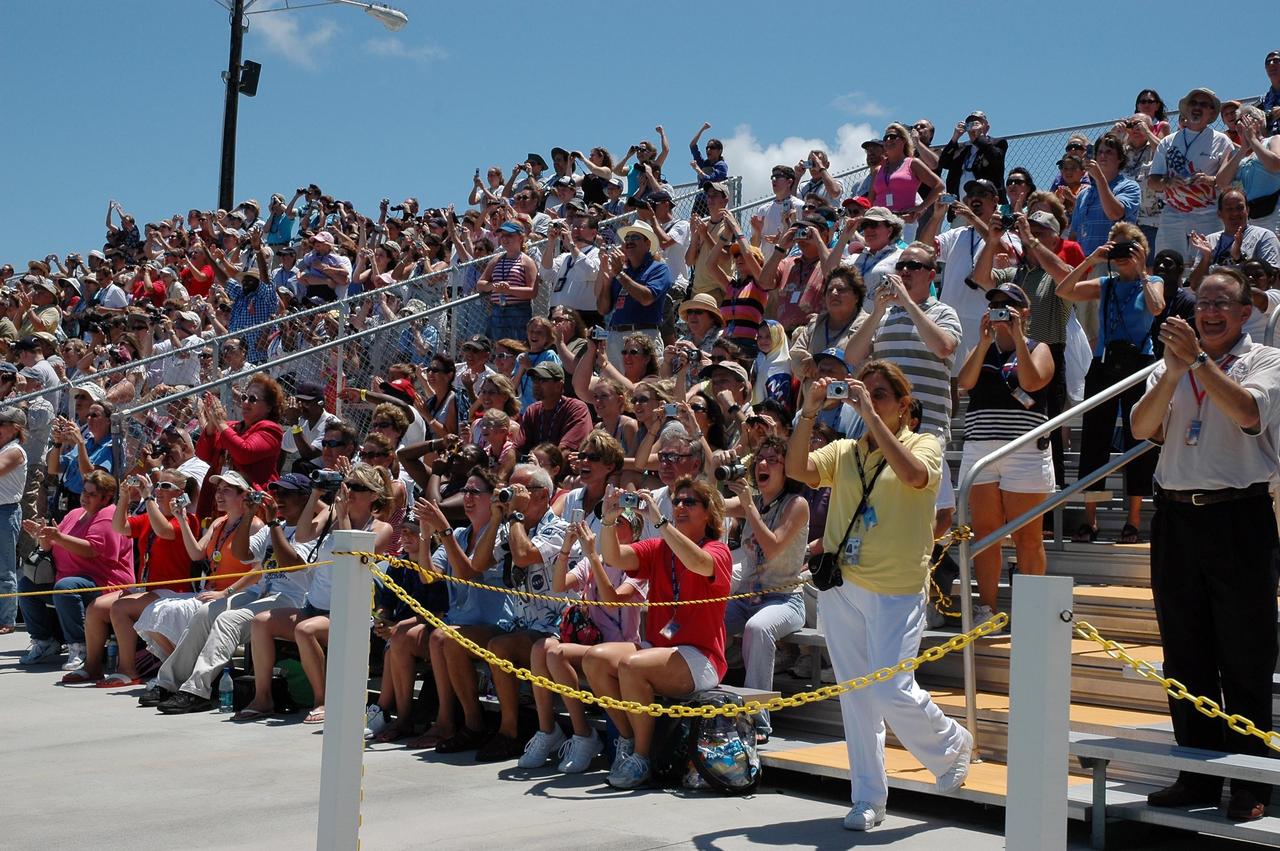
KENNEDY SPACE CENTER, FLA. - Cameras are the accessory of the day at the Kennedy Space Center's Banana River viewing site. All eyes and lenses are focused on Launch Pad 39B and the successful launch of Space Shuttle Discovery on mission STS-121. It was the third launch attempt in four days; the others were scrubbed due to weather concerns. Liftoff was on-time at 2:38 p.m. EDT. During the 12-day mission, the STS-121 crew of seven will test new equipment and procedures to improve shuttle safety, as well as deliver supplies and make repairs to the International Space Station. Landing is scheduled for July 16 or 17 at Kennedy's Shuttle Landing Facility. Photo credit: NASA/Louie Roguevert

KENNEDY SPACE CENTER, FLA. - Space Shuttle Discovery kicks off the Fourth of July fireworks with its own fiery display as it rockets into the blue sky, spewing foam and smoke over the ground, on mission STS-121. It was the third launch attempt in four days; the others were scrubbed due to weather concerns. Liftoff was on-time at 2:38 p.m. EDT. During the 12-day mission, the STS-121 crew of seven will test new equipment and procedures to improve shuttle safety, as well as deliver supplies and make repairs to the International Space Station. Landing is scheduled for July 16 or 17 at Kennedy's Shuttle Landing Facility. Photo credit:NASA/Sandy Joseph, Robert Murray
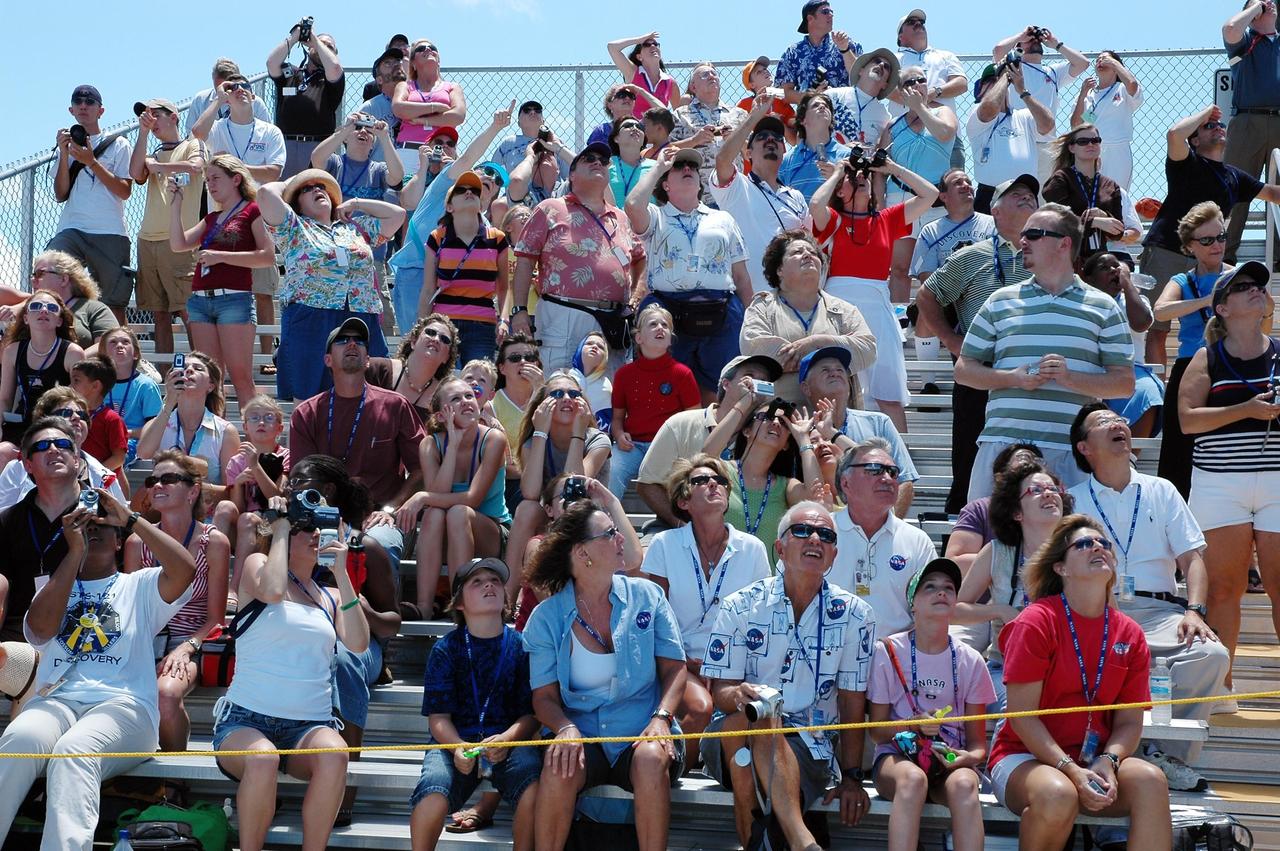
KENNEDY SPACE CENTER, FLA. - Visitors at the Kennedy Space Center's Banana River viewing site stay focused on the historic ride of Space Shuttle Discovery on mission STS-121 as it rockets into the blue sky for an historic launch -- the first ever on Independence Day. Liftoff was on-time at 2:38 p.m. EDT. During the 12-day mission, the STS-121 crew of seven will test new equipment and procedures to improve shuttle safety, as well as deliver supplies and make repairs to the International Space Station. Landing is scheduled for July 16 or 17 at Kennedy's Shuttle Landing Facility. Photo credit: NASA/Louie Roguevert
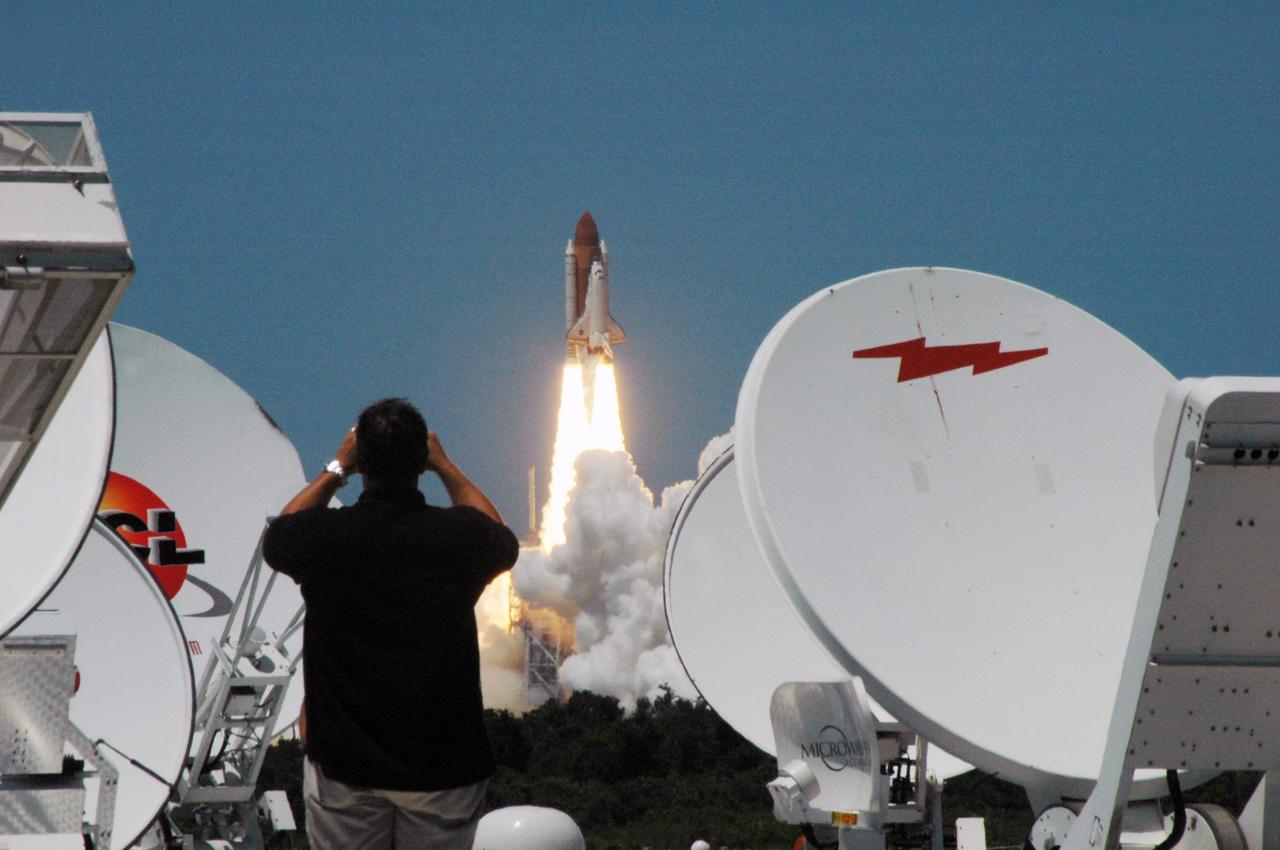
KENNEDY SPACE CENTER, FLA. - Under clear blue skies, the launch of Space Shuttle Discovery on mission STS-121 kicks off the fireworks for the U.S. holiday in its third launch attempt in four days. Liftoff was on-time at 2:38 p.m. EDT. During the 12-day mission, the STS-121 crew of seven will test new equipment and procedures to improve shuttle safety, as well as deliver supplies and make repairs to the International Space Station. Landing is scheduled for July 16 or 17 at Kennedy's Shuttle Landing Facility. Photo credit: NASA/Ken Thornsley
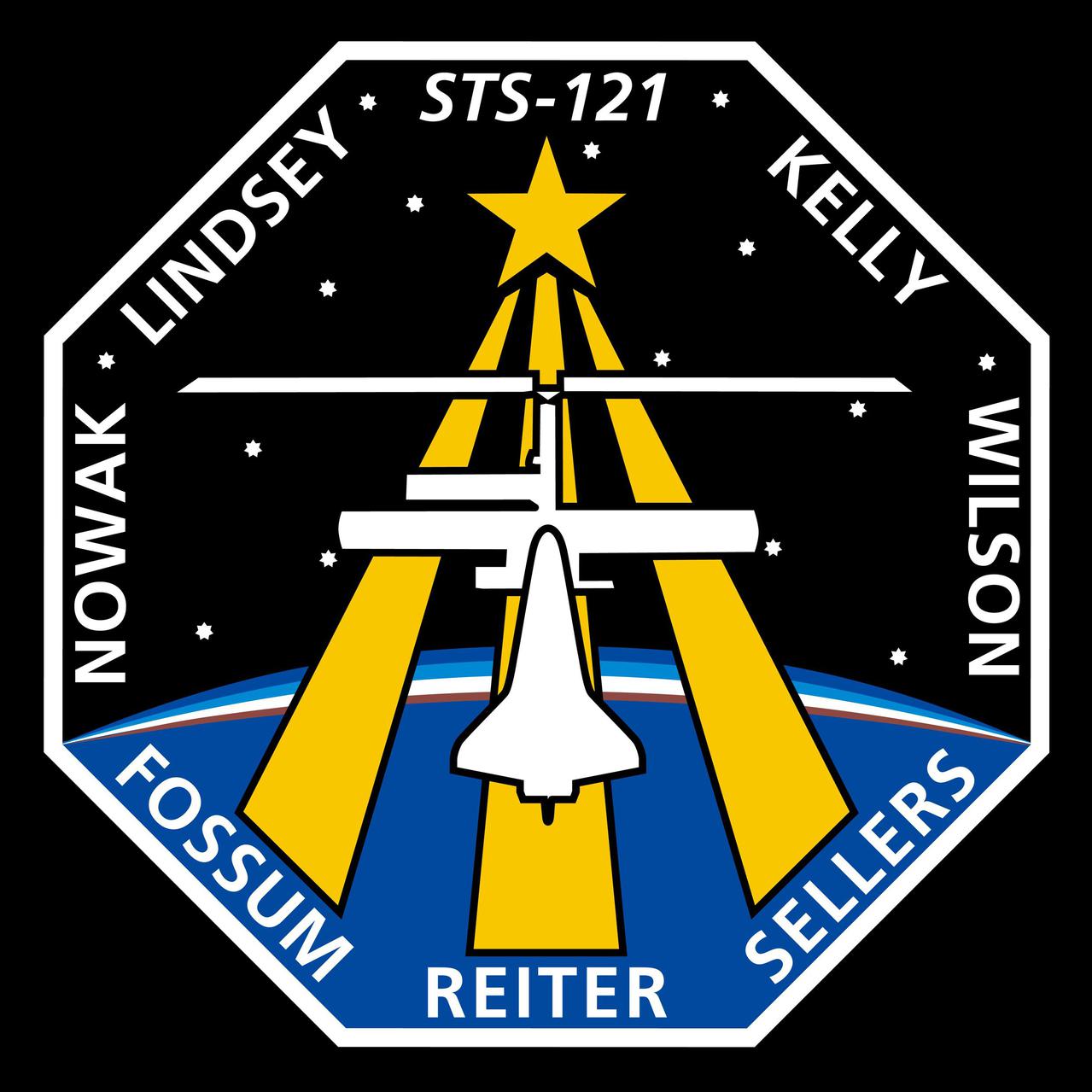
JOHNSON SPACE CENTER, HOUSTON - STS121-S-001 (June 2005) --- The STS-121 patch depicts the Space Shuttle Atlantis docked with the International Space Station (ISS) in the foreground, overlaying the astronaut symbol with three gold columns and a gold star. The ISS is shown in the configuration that it will be in during the STS-121 mission. The background shows the nighttime Earth with a dawn breaking over the horizon. STS-121, ISS mission ULF1.1, is the final Shuttle Return to Flight test mission. This utilization and logistics flight will bring a Multi-Purpose Logistics Module (MPLM) to the ISS with several thousand pounds of new supplies and experiments. In addition, some new Orbital Replacement Units (ORUs) will be delivered and stowed externally on ISS on a special pallet. These ORUs are spares for critical machinery located on the outside of the ISS. During this mission the crew will also carry out testing of Shuttle inspection and repair hardware, as well as evaluate operational techniques and concepts for conducting on-orbit inspection and repair. The NASA insignia design for Shuttle space flights is reserved for use by the astronauts and other official use as the NASA Administrator may authorize. Public availability has been approved only in the form of illustrations by the various news media. When and if there is any change in this policy, which is not anticipated, such will be publicly announced.
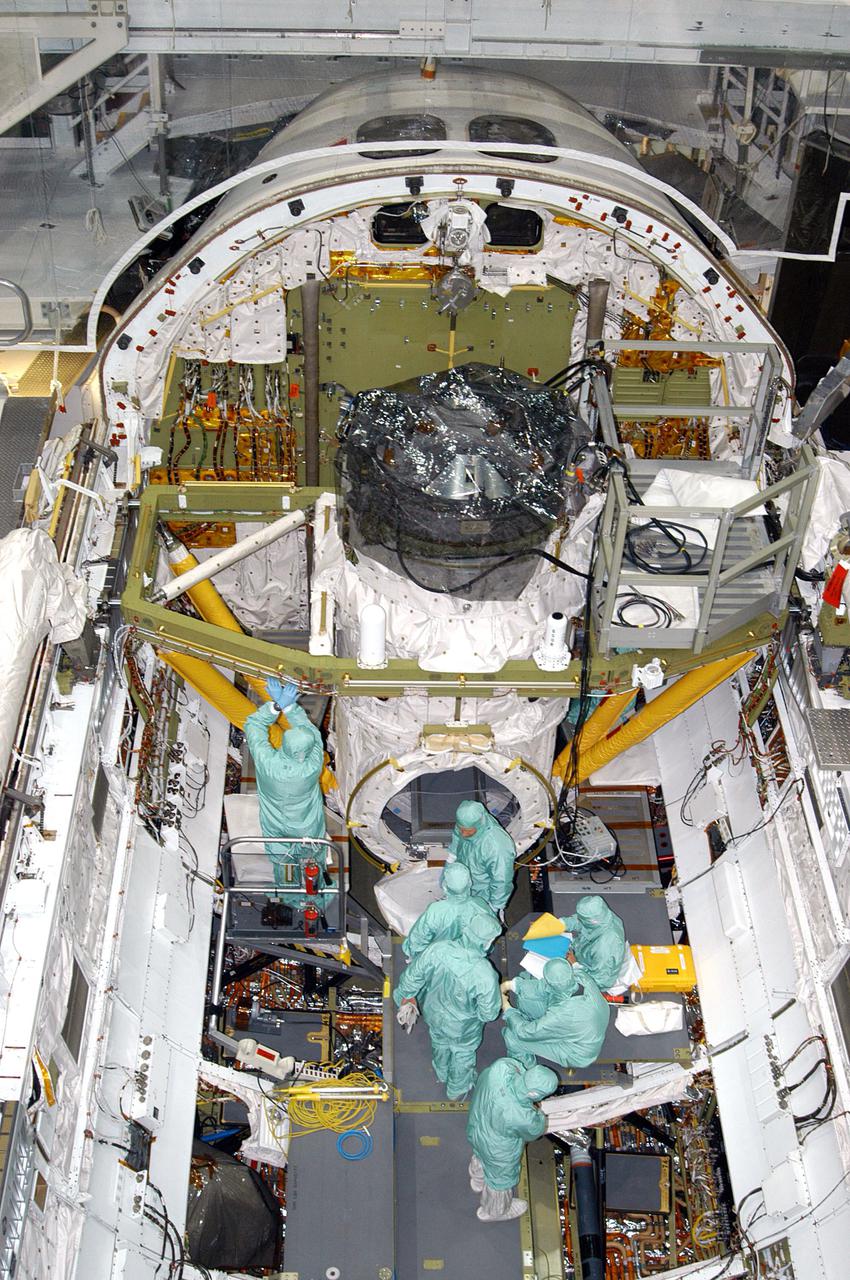
KENNEDY SPACE CENTER, FLA. - During Crew Equipment Interface Test (CEIT) in the Orbiter Processing Facility at NASA’s Kennedy Space Center, STS-121 crew members take a close look at equipment in the payload bay of Atlantis. The Airlock is in the center. During CEIT, the crew has an opportunity to get a hands-on look at the orbiter and equipment they will be working with on their mission. Mission STS-121 is scheduled to launch aboard Space Shuttle Atlantis in July.
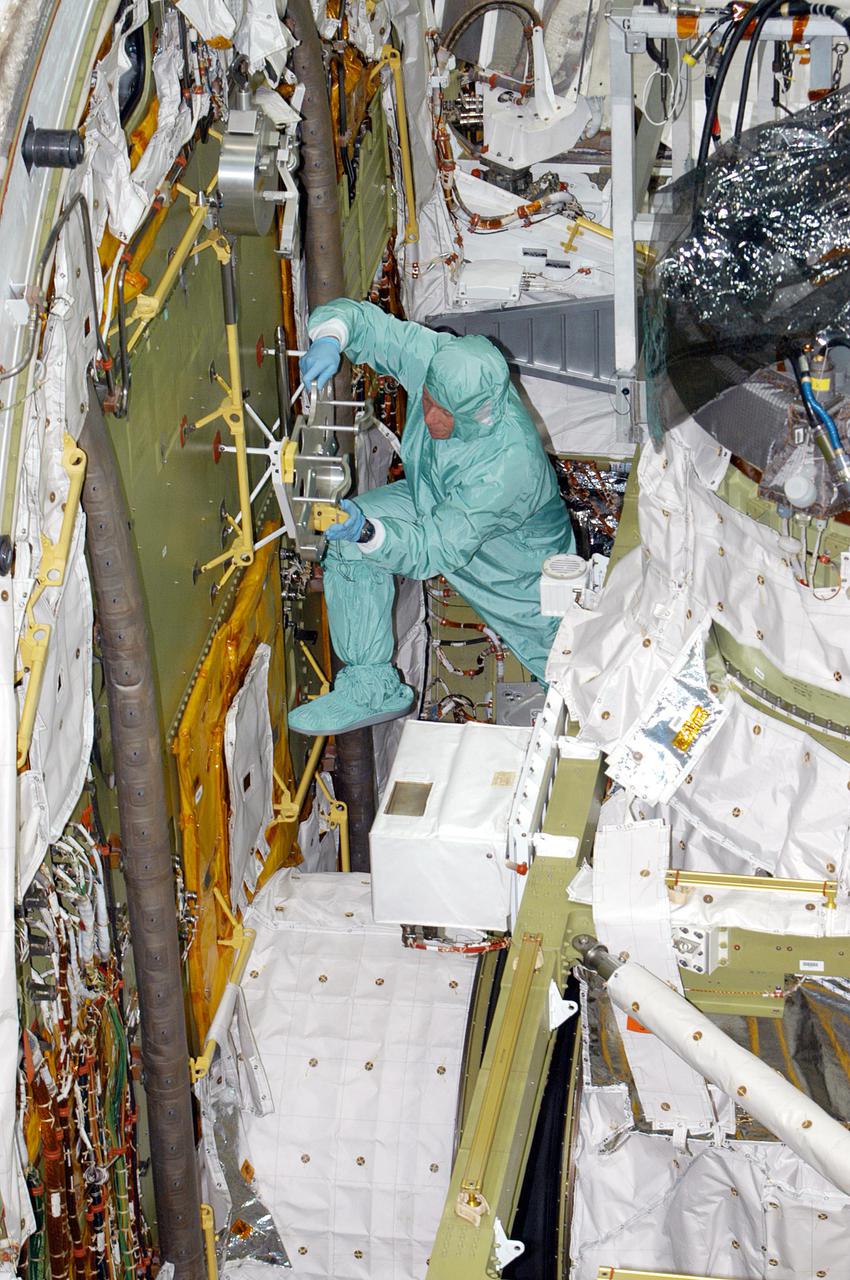
KENNEDY SPACE CENTER, FLA. - During Crew Equipment Interface Test (CEIT) in the Orbiter Processing Facility at NASA’s Kennedy Space Center, STS-121 Mission Specialist Michael E. Fossum familiarizes himself with the Portable Foot Restraint on the forward bulkhead of Atlantis. The Airlock is in the center. During CEIT, the crew has an opportunity to get a hands-on look at the orbiter and equipment they will be working with on their mission. Mission STS-121 is scheduled to launch aboard Space Shuttle Atlantis in July.
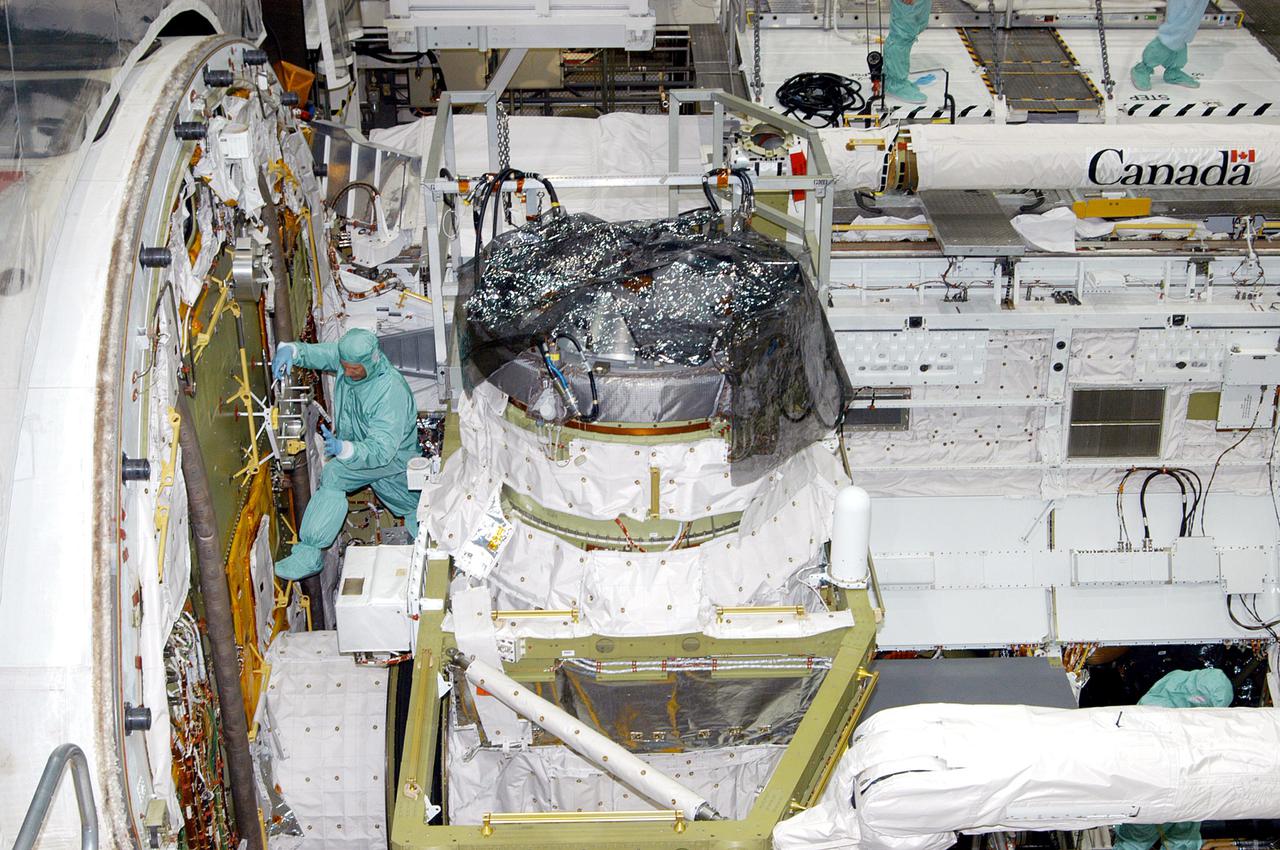
KENNEDY SPACE CENTER, FLA. - During Crew Equipment Interface Test (CEIT) in the Orbiter Processing Facility at NASA’s Kennedy Space Center, STS-121 Mission Specialist Michael E. Fossum familiarizes himself with the Portable Foot Restraint on the forward bulkhead of Atlantis. The Airlock is in the center. During CEIT, the crew has an opportunity to get a hands-on look at the orbiter and equipment they will be working with on their mission. Mission STS-121 is scheduled to launch aboard Space Shuttle Atlantis in July.
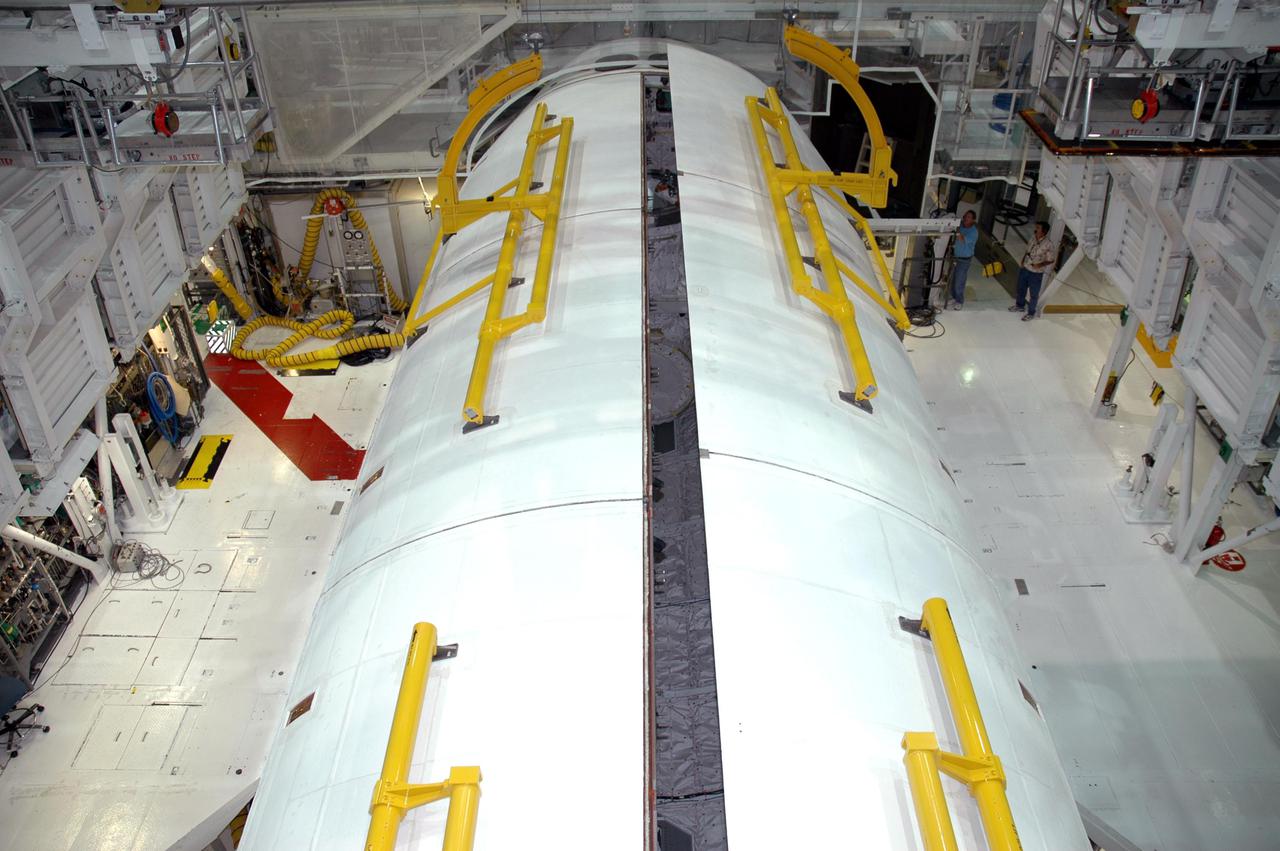
KENNEDY SPACE CENTER, FLA. - In the Orbiter Processing Facility at Kennedy Space Center in Florida, the payload bay doors of the orbiter Atlantis are nearly closed. Atlantis is scheduled to fly on the second Return to Flight mission, STS-121, targeted for launch in a window extending from Sept. 9 to Sept. 24.
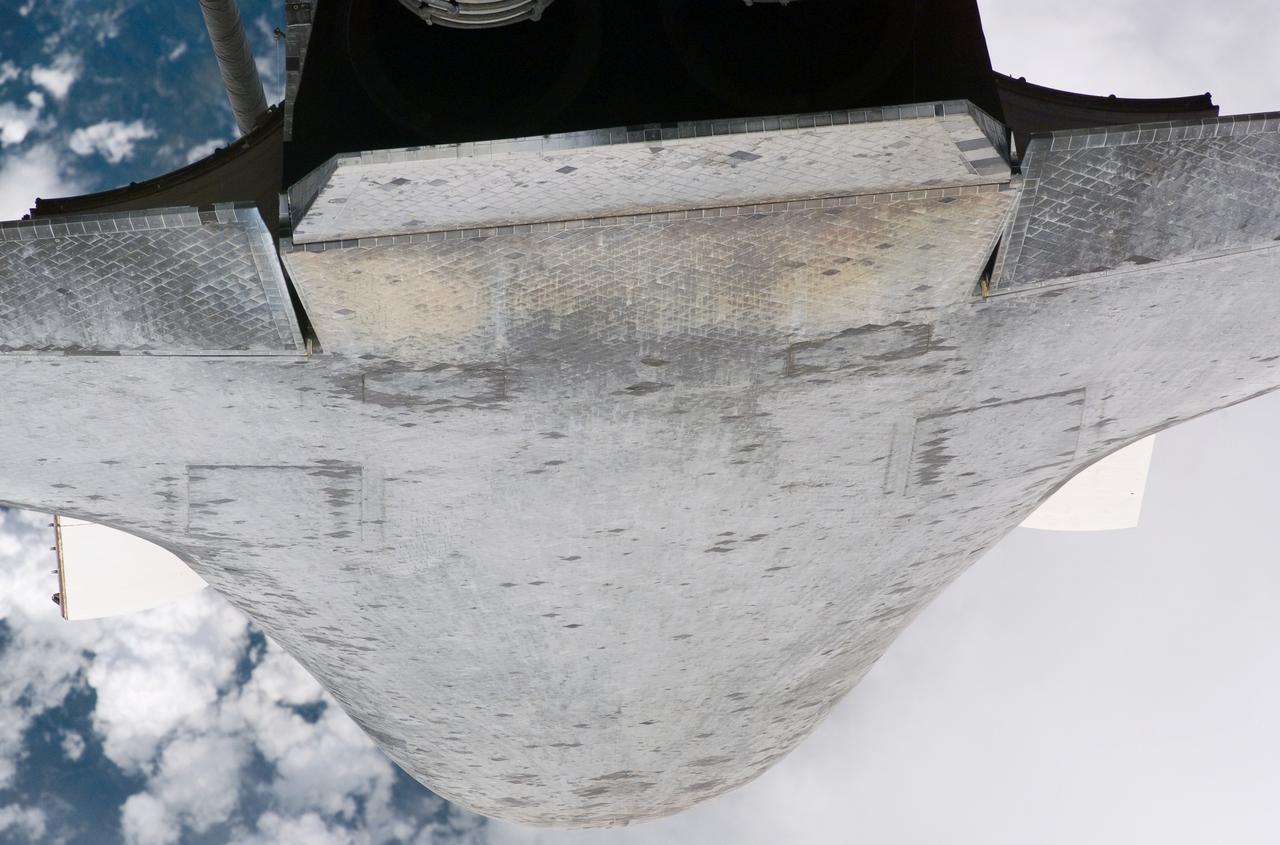
Though very close to the International Space Station, the majority of Discovery's underside is visible in this frame. The image was captured by one of the Expedition 13 crew members onboard the International Space Station (ISS) during the STS-121 Rotating Pitch Maneuver (RPM) survey prior to docking of the two spacecraft.
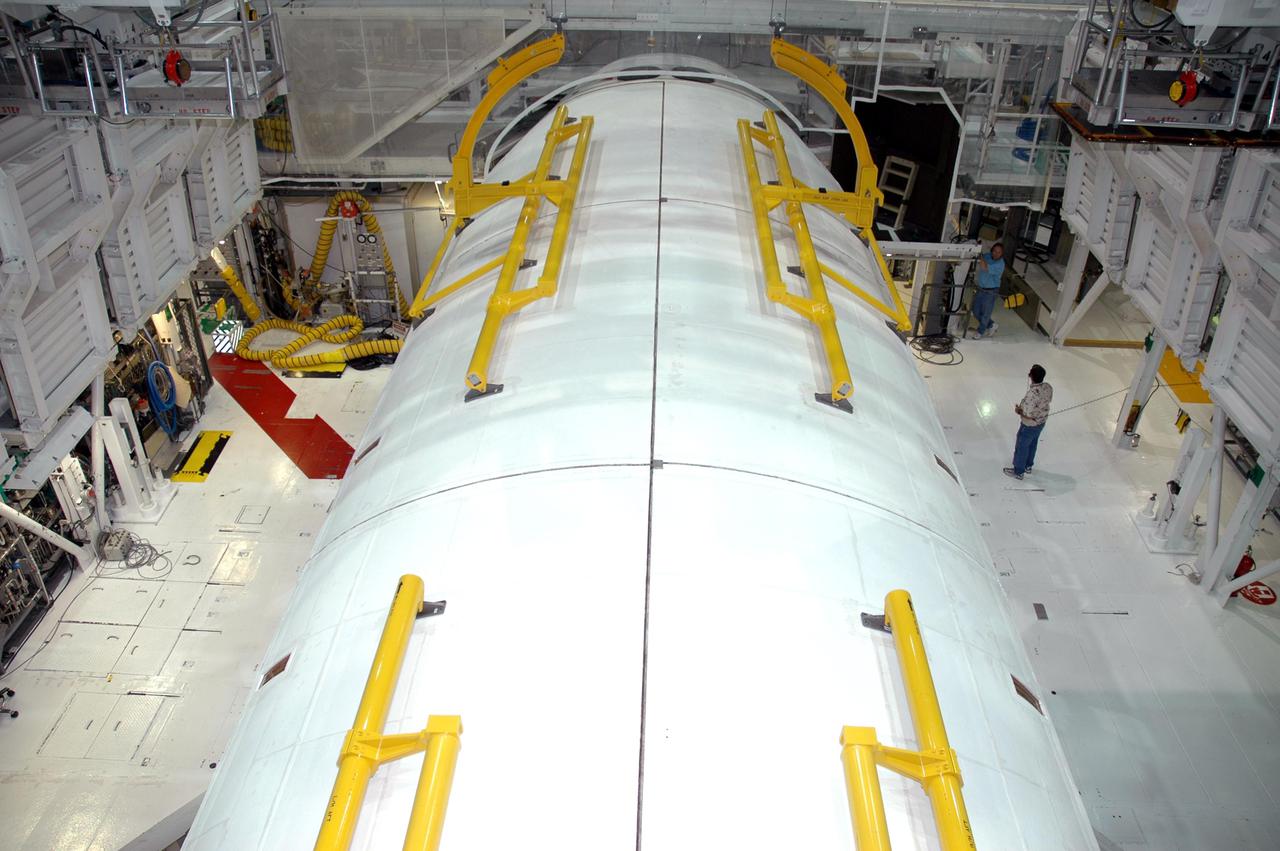
KENNEDY SPACE CENTER, FLA. - In the Orbiter Processing Facility at Kennedy Space Center in Florida, the payload bay doors of the orbiter Atlantis are closed. Atlantis is scheduled to fly on the second Return to Flight mission, STS-121, targeted for launch in a window extending from Sept. 9 to Sept. 24.
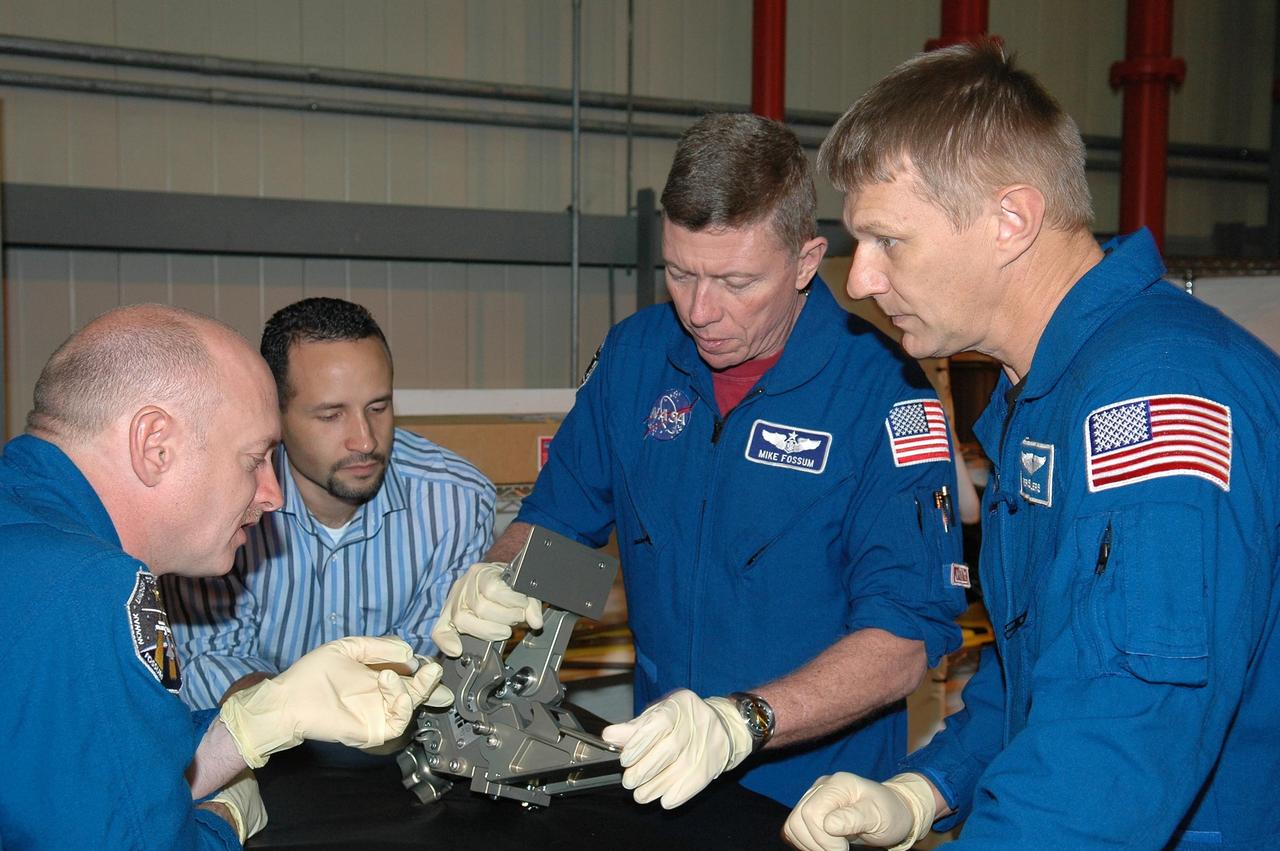
KENNEDY SPACE CENTER, FLA. - In NASA Kennedy Space Center's Orbiter Processing Facility bay 3, members of the STS-121 crew practice working with hardware for the mission under the watchful eyes of Tomas Gonzalez-Torres, with NASA's Johnson Space Center. At left is Pilot Mark Kelly; at right are Mission Specialists Michael Fossum and Piers Sellers. The crew is at Kennedy to take part in the crew equipment interface test, which provides hands-on experience with equipment to be used on-orbit. Launch of Space Shuttle Discovery on mission STS-121, the second return-to-flight mission, is scheduled no earlier than May.
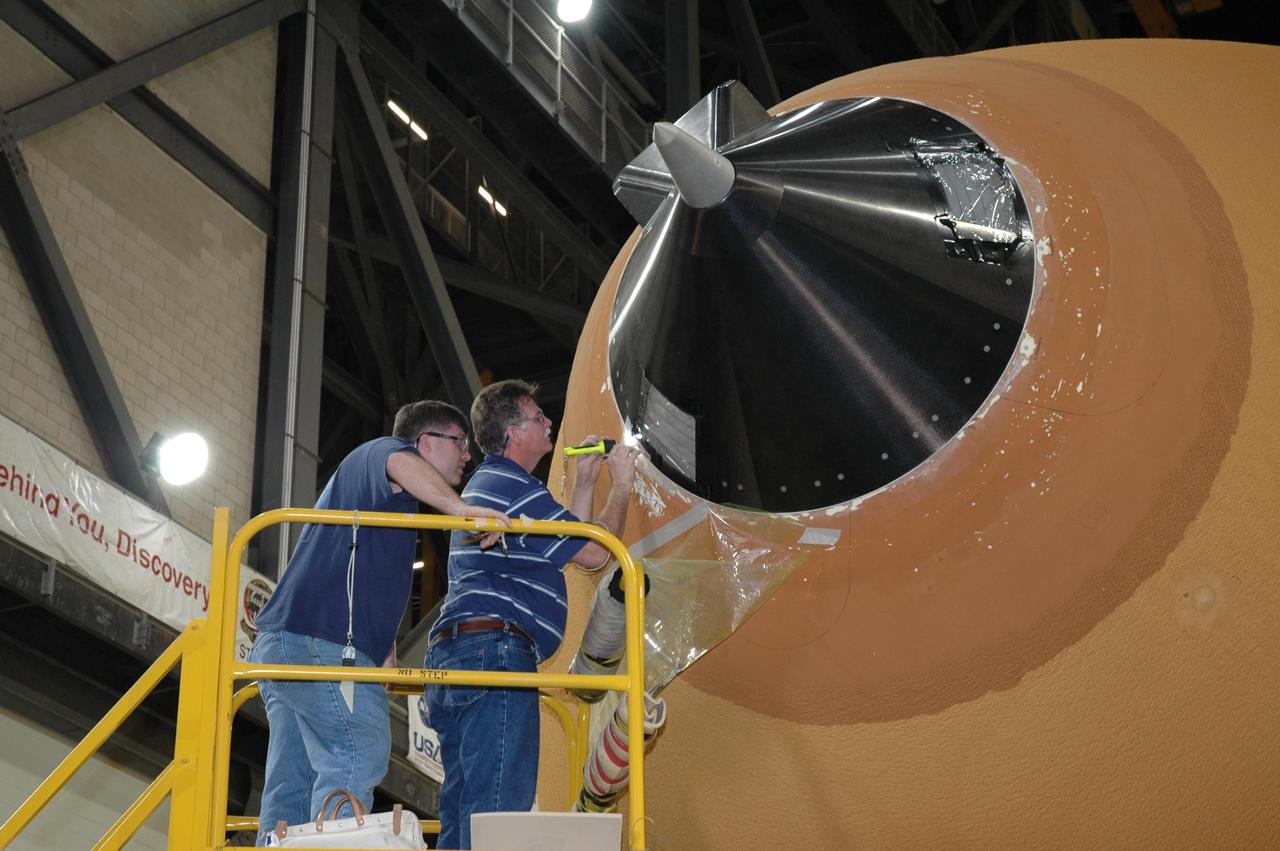
KENNEDY SPACE CENTER, FLA. - In the transfer aisle of the Vehicle Assembly Building, workers work on the rim around the nose cap of external tank number 119, the tank designated for mission STS-121. The cap was removed in order to install a new gaseous oxygen vent valve underneath. Vapors are created prior to launch as the liquid oxygen in the external tank boils off. At the forward end of each external tank propellant tank is a vent and relief valve that can be opened before launch for venting or by excessive tank pressure for relief. The vent function is available only before launch. Mission STS-121 to the International Space Station is scheduled for launch in July. Photo credit: NASA/Jim Grossmann
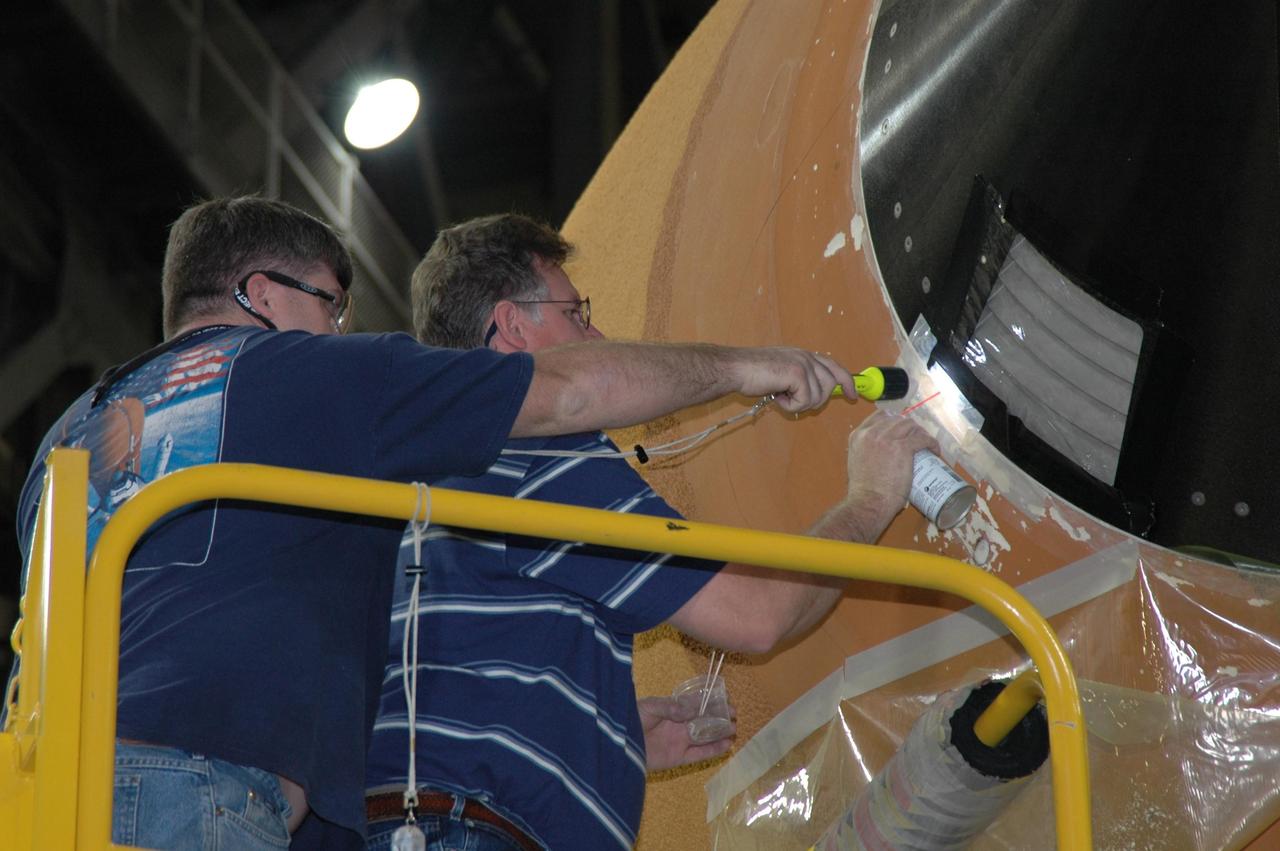
KENNEDY SPACE CENTER, FLA. - In the transfer aisle of the Vehicle Assembly Building, workers check the rim around the nose cap of external tank number 119, the tank designated for mission STS-121. The cap was removed in order to install a new gaseous oxygen vent valve underneath. Vapors are created prior to launch as the liquid oxygen in the external tank boils off. At the forward end of each external tank propellant tank is a vent and relief valve that can be opened before launch for venting or by excessive tank pressure for relief. The vent function is available only before launch. Mission STS-121 to the International Space Station is scheduled for launch in July. Photo credit: NASA/Jim Grossmann
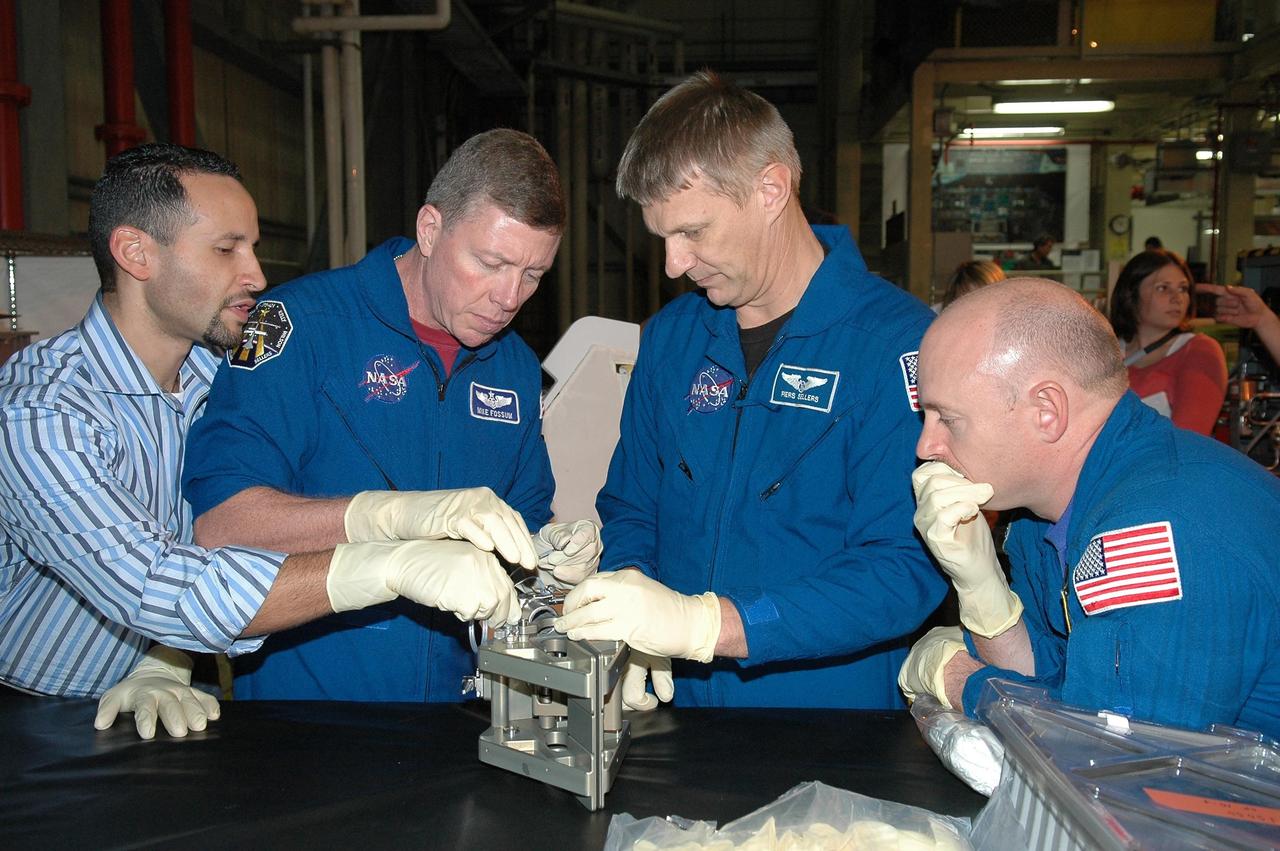
KENNEDY SPACE CENTER, FLA. - In NASA Kennedy Space Center's Orbiter Processing Facility bay 3, members of the STS-121 crew, under the watchful eyes of Tomas Gonzalez-Torres, with NASA's Johnson Space Center, practice working with hardware for the mission. Seen are (second from left) Mission Specialists Michael Fossum and Piers Sellers and Pilot Mark Kelly. The crew is at Kennedy to take part in the crew equipment interface test, which provides hands-on experience with equipment to be used on-orbit. Launch of Space Shuttle Discovery on mission STS-121, the second return-to-flight mission, is scheduled no earlier than May.
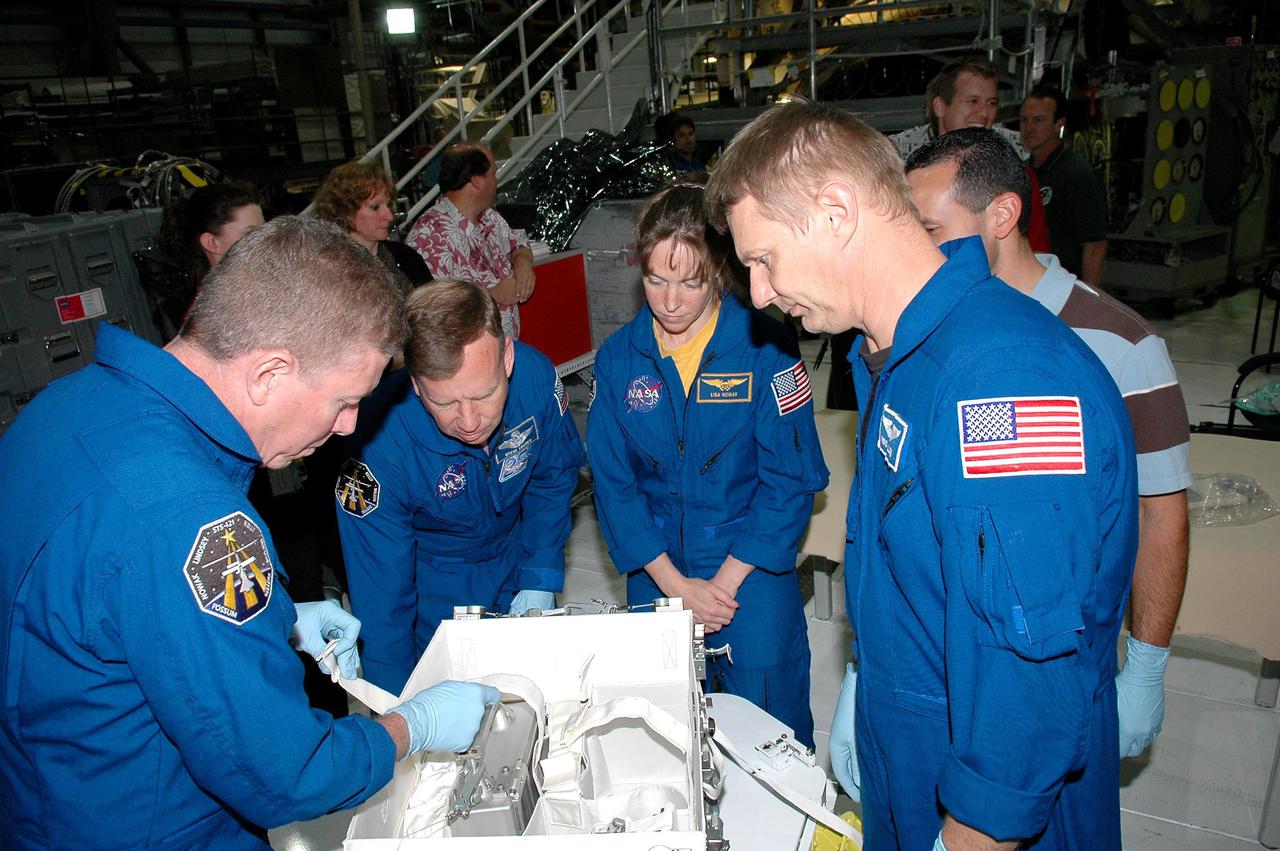
KENNEDY SPACE CENTER, FLA. - In the Orbiter Processing Facility at NASA’s Kennedy Space Center, astronauts of the second Return to Flight mission, STS-121, practice using the Tile Repair Kit. Crew members seen in this photo are, left to right, Mission Specialist Michael E. Fossum, Commander Steven W. Lindsey, and Mission Specialists Lisa Nowak and Piers J. Sellers. The crew is at KSC to participate in the Crew Equipment Interface Test (CEIT). During CEIT, the crew has an opportunity to get a hands-on look at the orbiter and equipment they will be working with on their missions. Mission STS-121 is scheduled to launch aboard Atlantis in July.
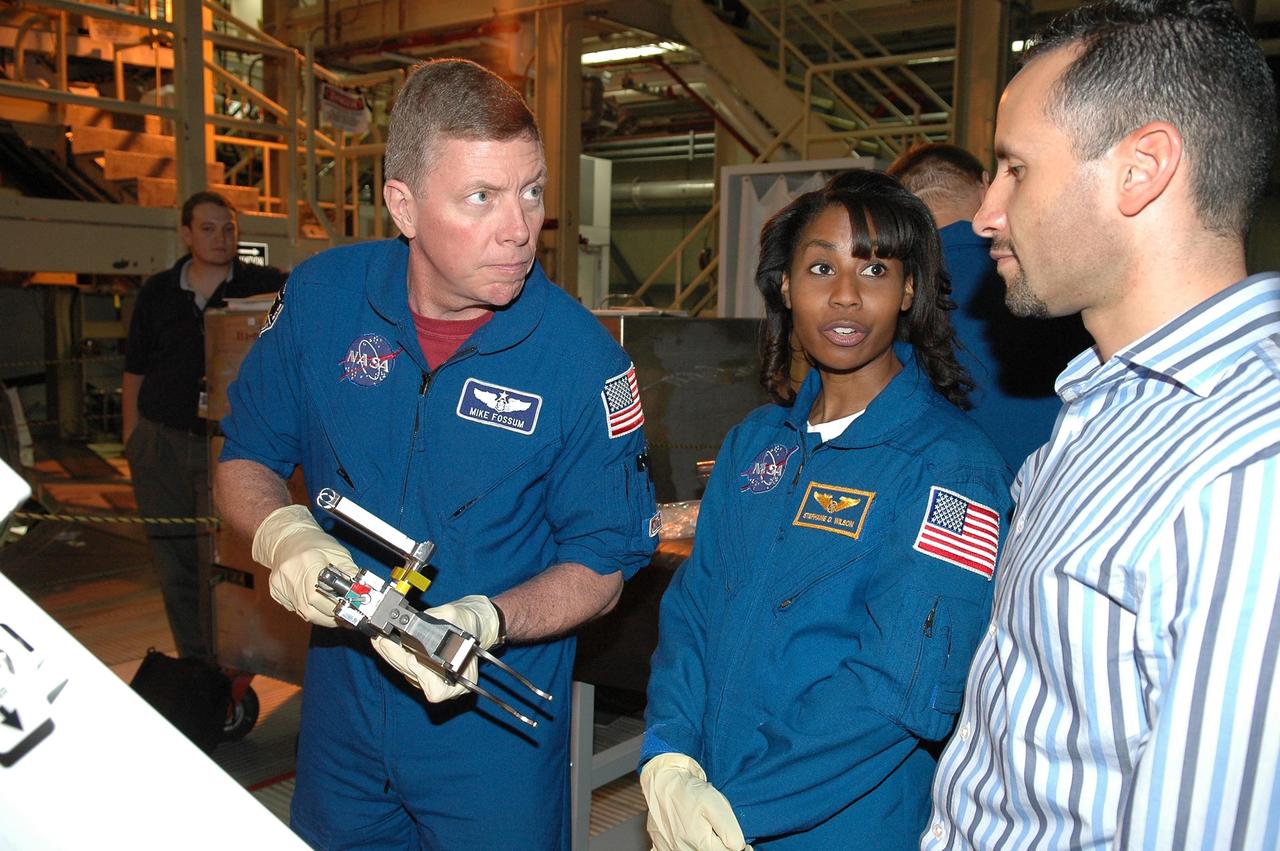
KENNEDY SPACE CENTER, FLA. - In NASA Kennedy Space Center's Orbiter Processing Facility bay 3, STS-121 Mission Specialist Michael Fossum (left) talks to Tomas Gonzalez-Torres, with NASA's Johnson Space Center, about the equipment he is handling. Next to Fossum is Mission Specialist Stephanie Wilson. The crew is at Kennedy to take part in the crew equipment interface test, which provides hands-on experience with equipment to be used on-orbit. Launch of Space Shuttle Discovery on mission STS-121, the second return-to-flight mission, is scheduled no earlier than May.
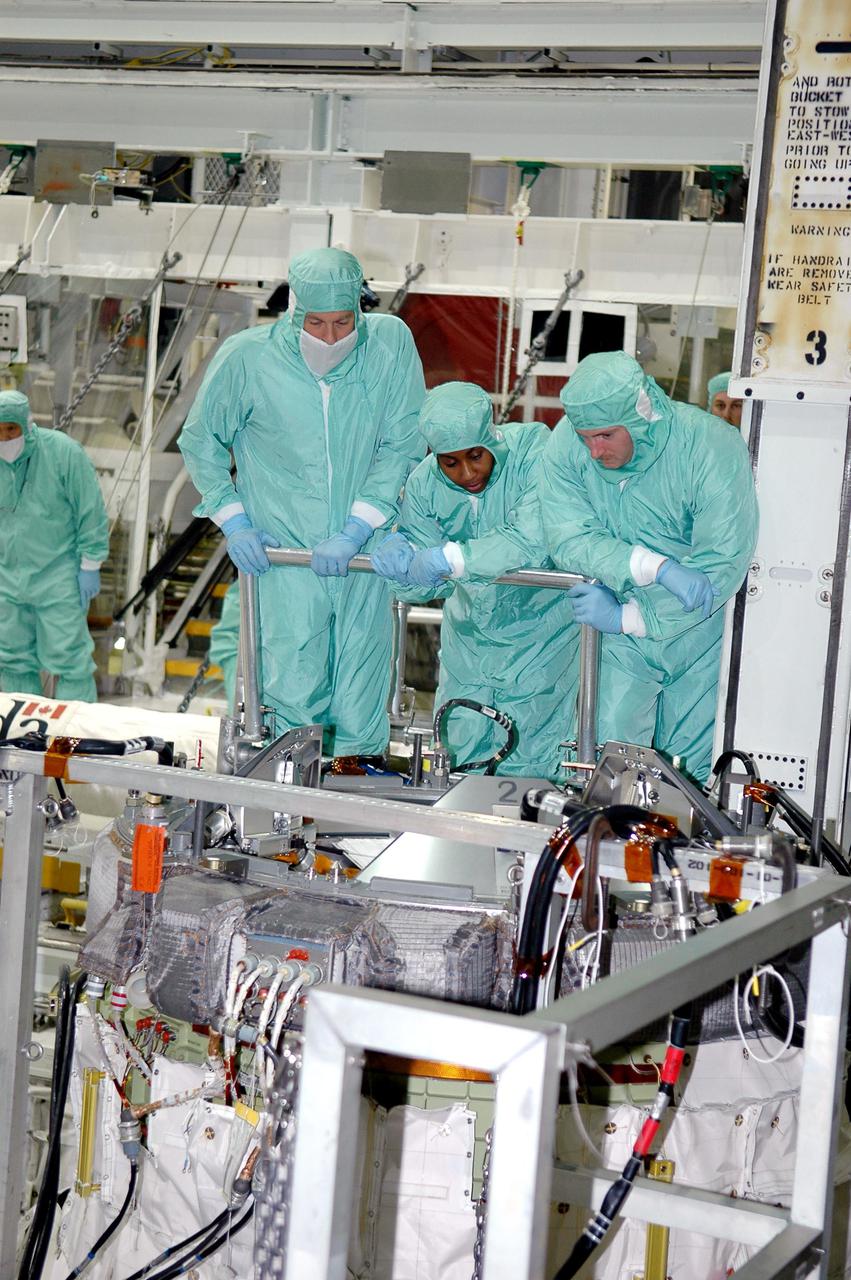
KENNEDY SPACE CENTER, FLA. - In the Orbiter Processing Facility at NASA’s Kennedy Space Center, astronauts of the second Return to Flight mission, STS-121, look over hardware in Atlantis' payload bay. From left are United Space Alliance trainer Steve Kieffer, Mission Specialist Stephanie D. Wilson and Pilot Mark E. Kelly. The crew is at KSC to participate in the Crew Equipment Interface Test (CEIT). During CEIT, the crew has an opportunity to get a hands-on look at the orbiter and equipment they will be working with on their missions. Mission STS-121 is scheduled to launch aboard Atlantis in July.
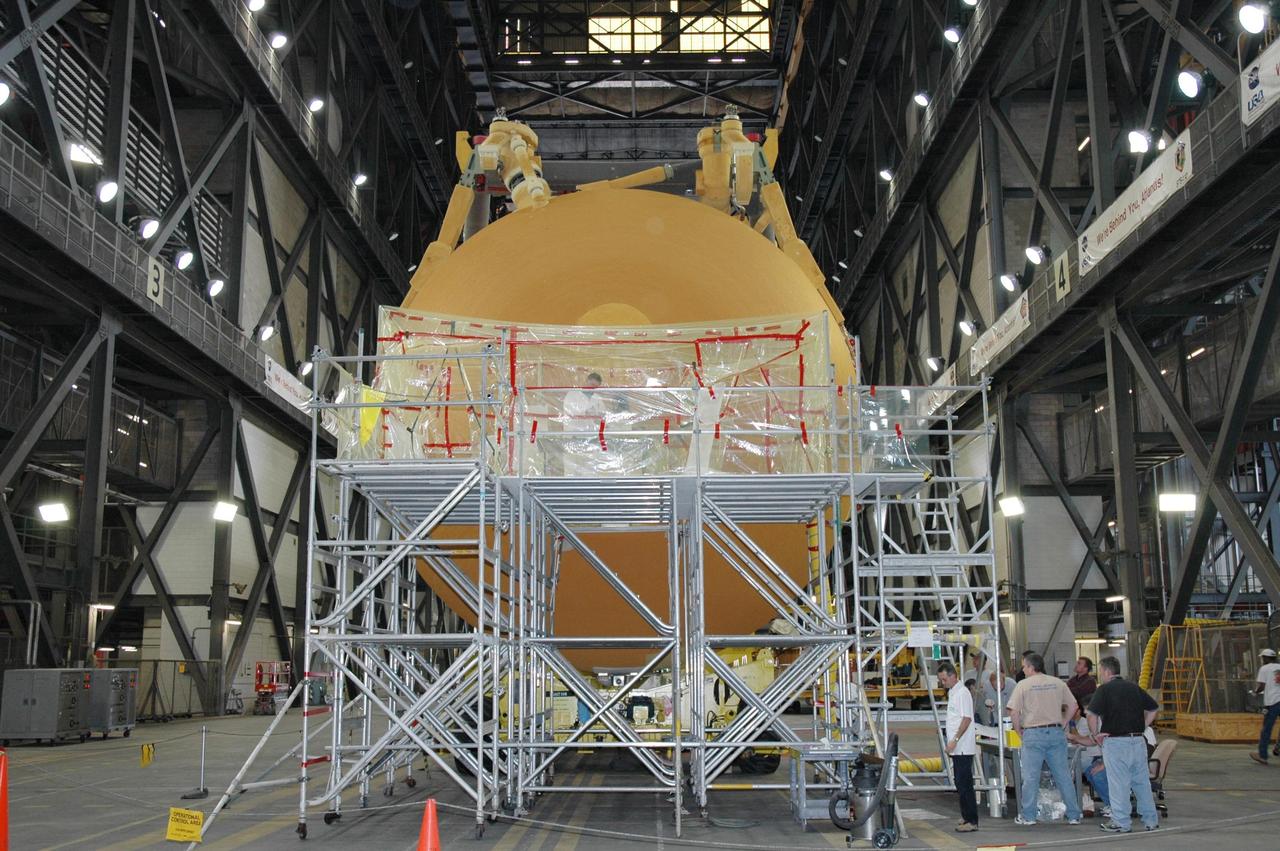
KENNEDY SPACE CENTER, FLA. - In the transfer aisle of the Vehicle Assembly Building, a stand is ready for workers to refoam the cover, called the "manhole," on the bottom of external tank number 119. The manhole was removed to access the area where the tank's four liquid hydrogen engine cutoff sensors were replaced. The tank is being prepared to launch Space Shuttle Discovery on mission STS-121 in July. Photo credit: NASA/Jim Grossmann The tank is being prepared to launch Space Shuttle Discovery on mission STS-121 in July. Photo credit: NASA/Jim Grossmann
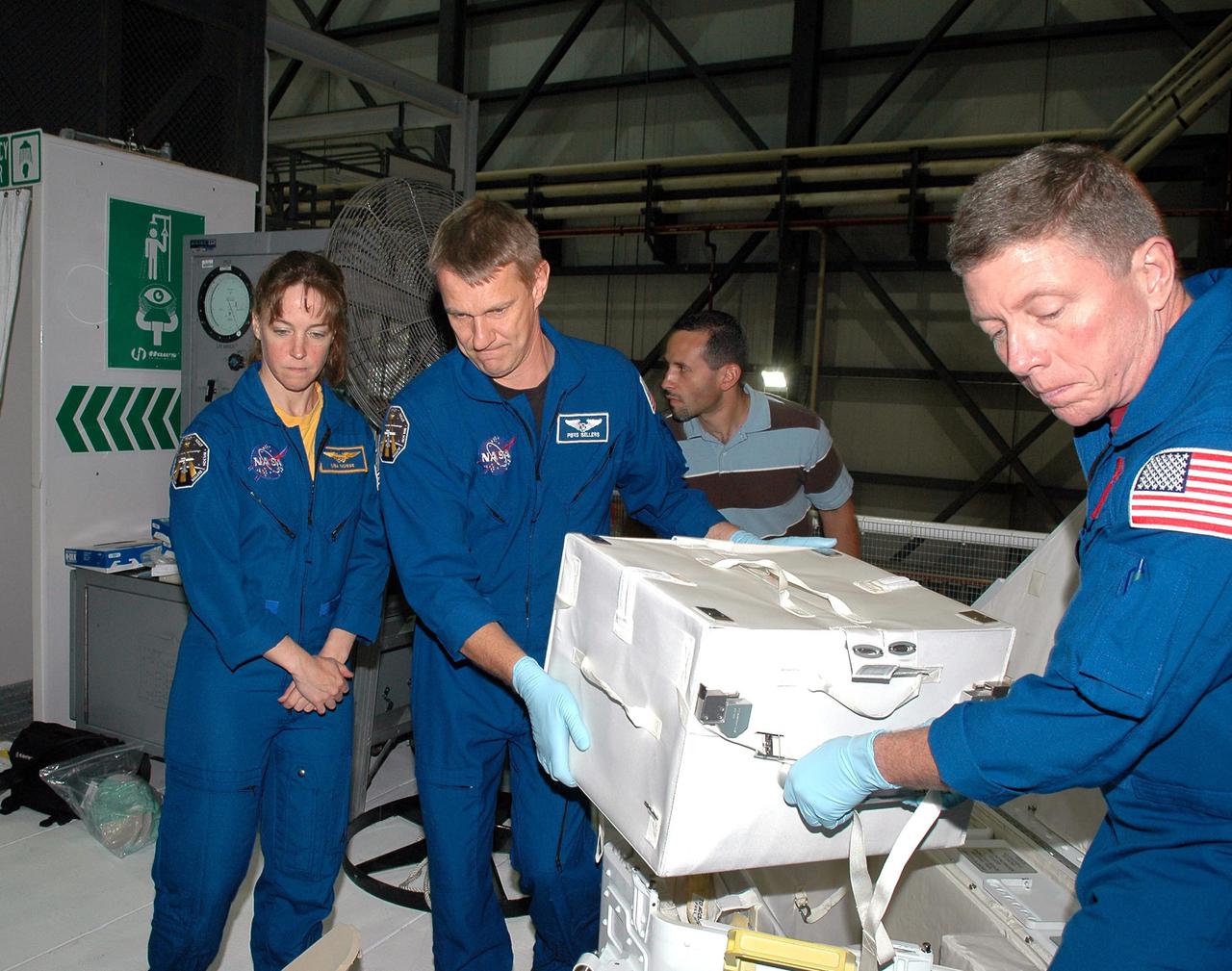
KENNEDY SPACE CENTER, FLA. - In the Orbiter Processing Facility at NASA’s Kennedy Space Center, astronauts of the second Return to Flight mission, STS-121, unload the Tile Repair Kit for a closer look at hardware they will be working with on the mission. Crew members seen in this photo are, left to right, Mission Specialists Lisa Nowak, Piers J. Sellers and Michael E. Fossum. The crew is at KSC to participate in the Crew Equipment Interface Test (CEIT). During CEIT, the crew has an opportunity to get a hands-on look at the orbiter and equipment they will be working with on their missions. Mission STS-121 is scheduled to launch aboard Atlantis in July.
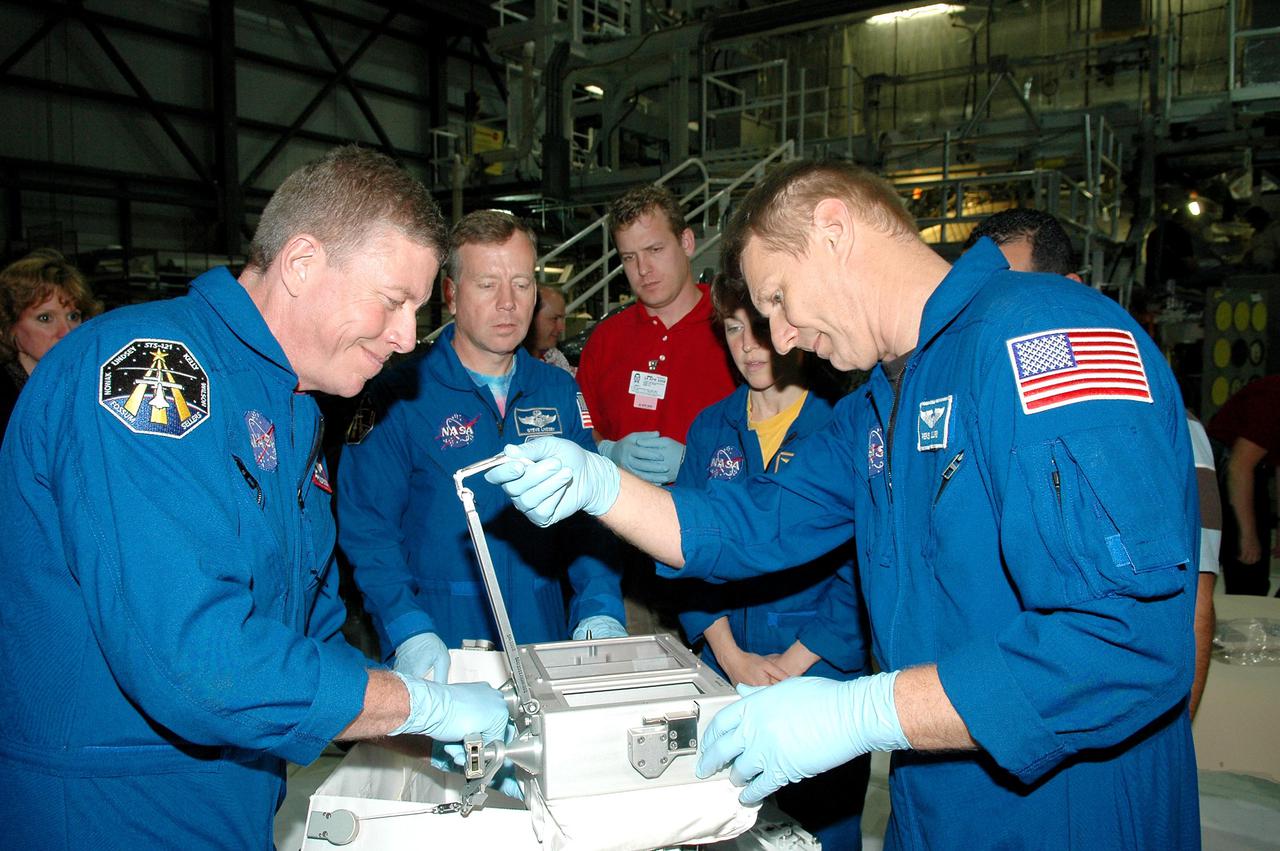
KENNEDY SPACE CENTER, FLA. - In the Orbiter Processing Facility at NASA’s Kennedy Space Center, astronauts of the second Return to Flight mission, STS-121, practice using the Tile Repair Kit. Crew members seen in this photo are, left to right, Mission Specialist Michael E. Fossum, Commander Steven W. Lindsey, and Mission Specialists Lisa Nowak and Piers J. Sellers. The crew is at KSC to participate in the Crew Equipment Interface Test (CEIT). During CEIT, the crew has an opportunity to get a hands-on look at the orbiter and equipment they will be working with on their missions. Mission STS-121 is scheduled to launch aboard Atlantis in July.
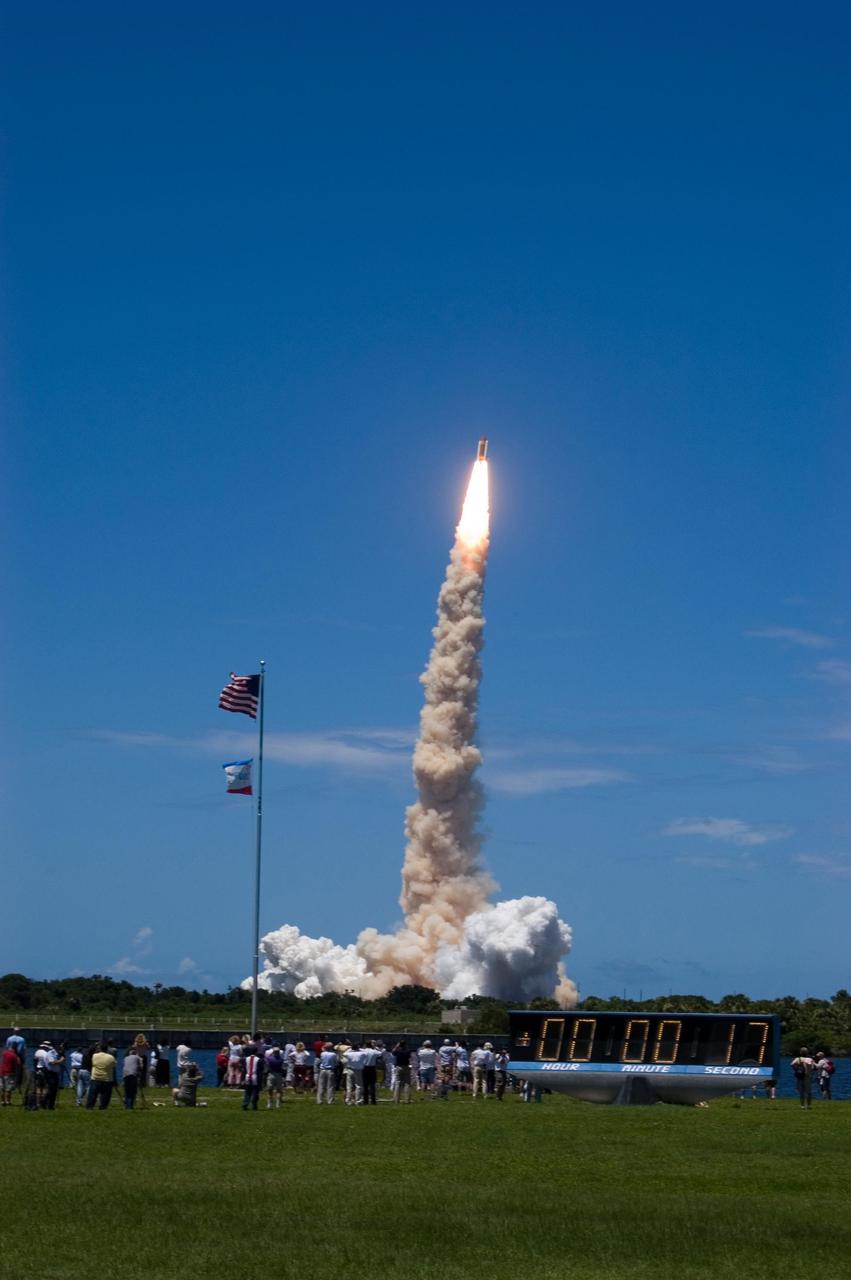
KENNEDY SPACE CENTER, FLA. - Like a roman candle shooting through the blue sky, the launch of Space Shuttle Discovery on mission STS-121 kicks off the fireworks for the U.S. holiday in its third launch attempt in four days. Liftoff was on-time at 2:38 p.m. EDT. The countdown clock on the grounds of the NASA News Center shows 17 seconds into the launch. Media crowd the banks of the turn basin to capture the sight of the launch. During the 12-day mission, the STS-121 crew of seven will test new equipment and procedures to improve shuttle safety, as well as deliver supplies and make repairs to the International Space Station. Landing is scheduled for July 16 or 17 at Kennedy's Shuttle Landing Facility. Photo credit: NASA/George Shelton
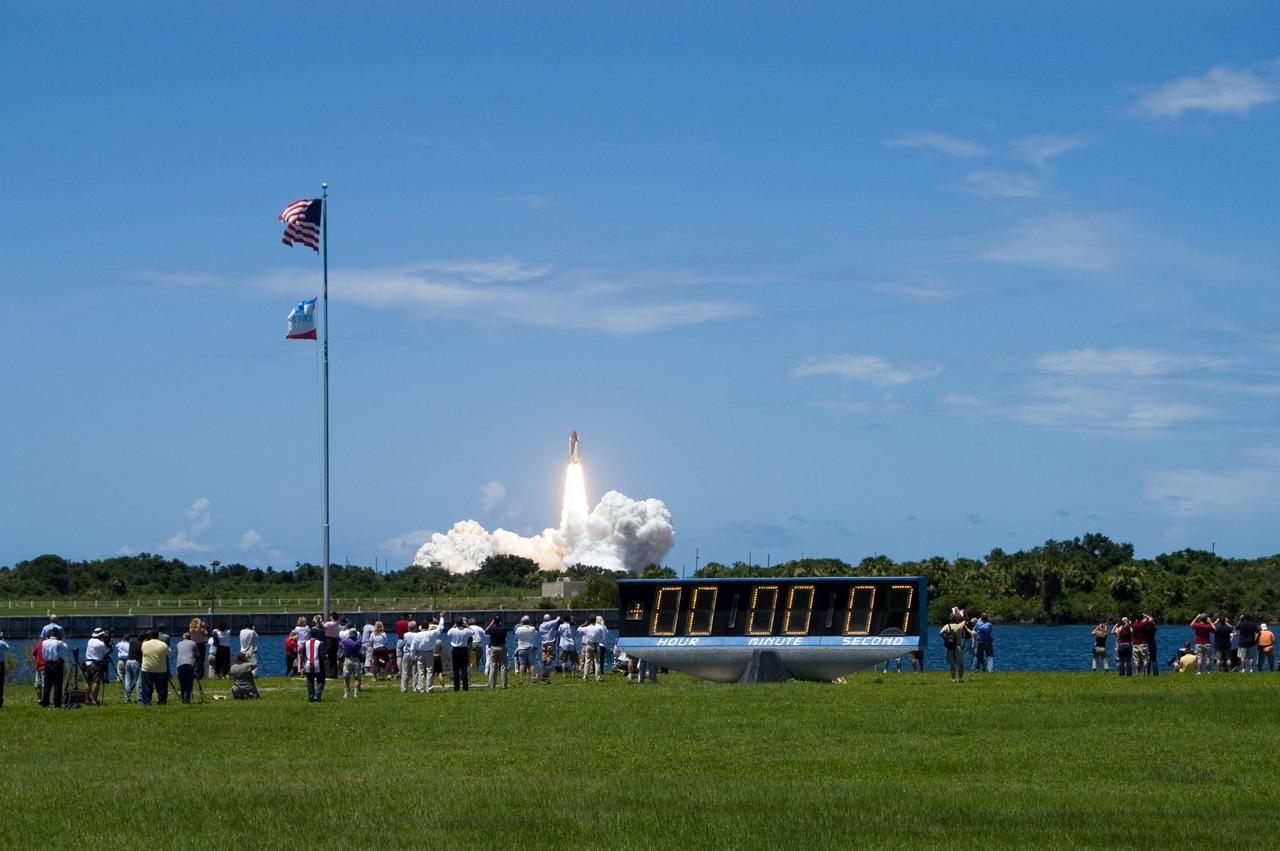
KENNEDY SPACE CENTER, FLA. - Like a roman candle shooting through the blue sky, the launch of Space Shuttle Discovery on mission STS-121 kicks off the fireworks for the U.S. holiday in its third launch attempt in four days. Liftoff was on-time at 2:38 p.m. EDT. The countdown clock on the grounds of the NASA News Center shows 7 seconds into the launch. Media crowd the banks of the turn basin to capture the sight of the launch. During the 12-day mission, the STS-121 crew of seven will test new equipment and procedures to improve shuttle safety, as well as deliver supplies and make repairs to the International Space Station. Landing is scheduled for July 16 or 17 at Kennedy's Shuttle Landing Facility. Photo credit: NASA/George Shelton
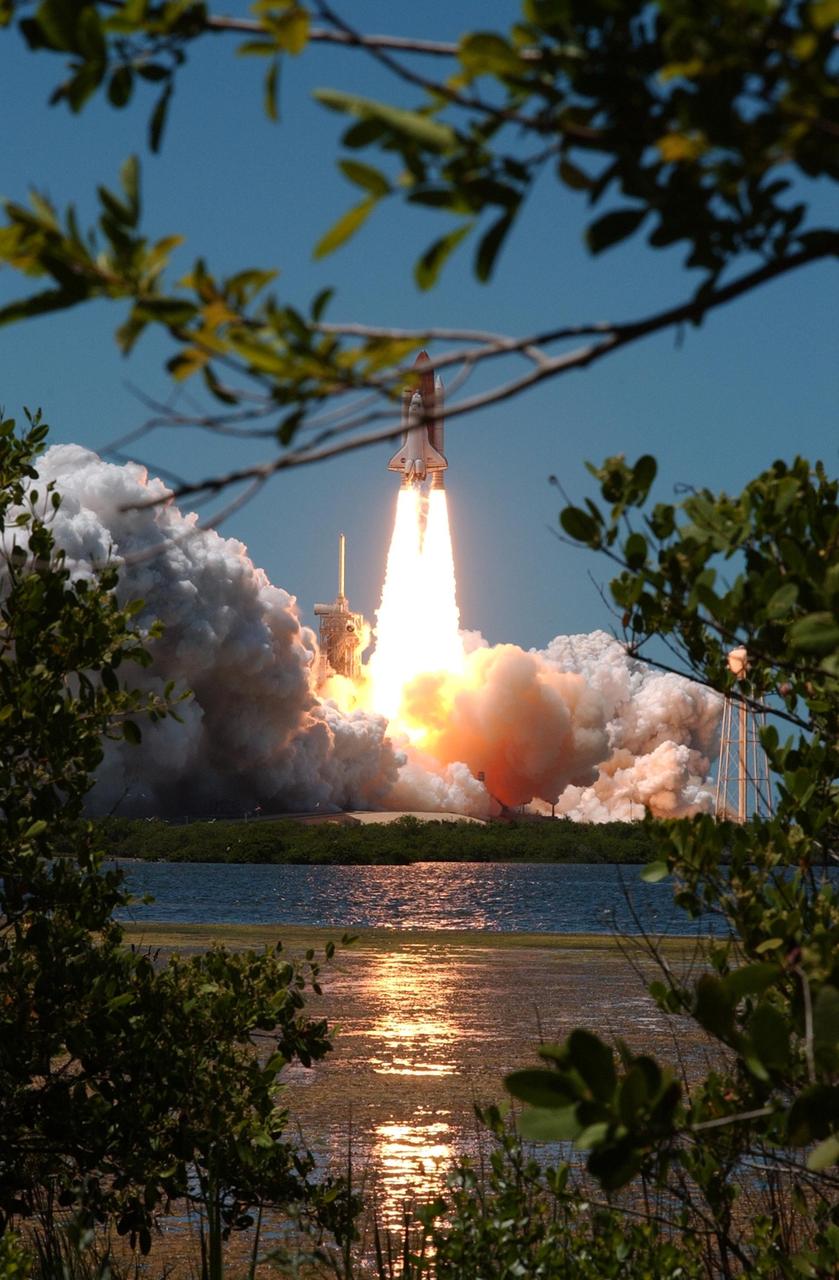
KENNEDY SPACE CENTER, FLA. - Framed by the woods across the pond, Space Shuttle Discovery kicks off the Fourth of July fireworks with its own fiery display as it rockets into the blue sky, spewing foam and smoke over the ground, on mission STS-121. It was the third launch attempt in four days; the others were scrubbed due to weather concerns. Liftoff was on-time at 2:38 p.m. EDT. During the 12-day mission, the STS-121 crew of seven will test new equipment and procedures to improve shuttle safety, as well as deliver supplies and make repairs to the International Space Station. Landing is scheduled for July 16 or 17 at Kennedy's Shuttle Landing Facility. Photo credit: NASA/Sandy Joseph, Robert Murray
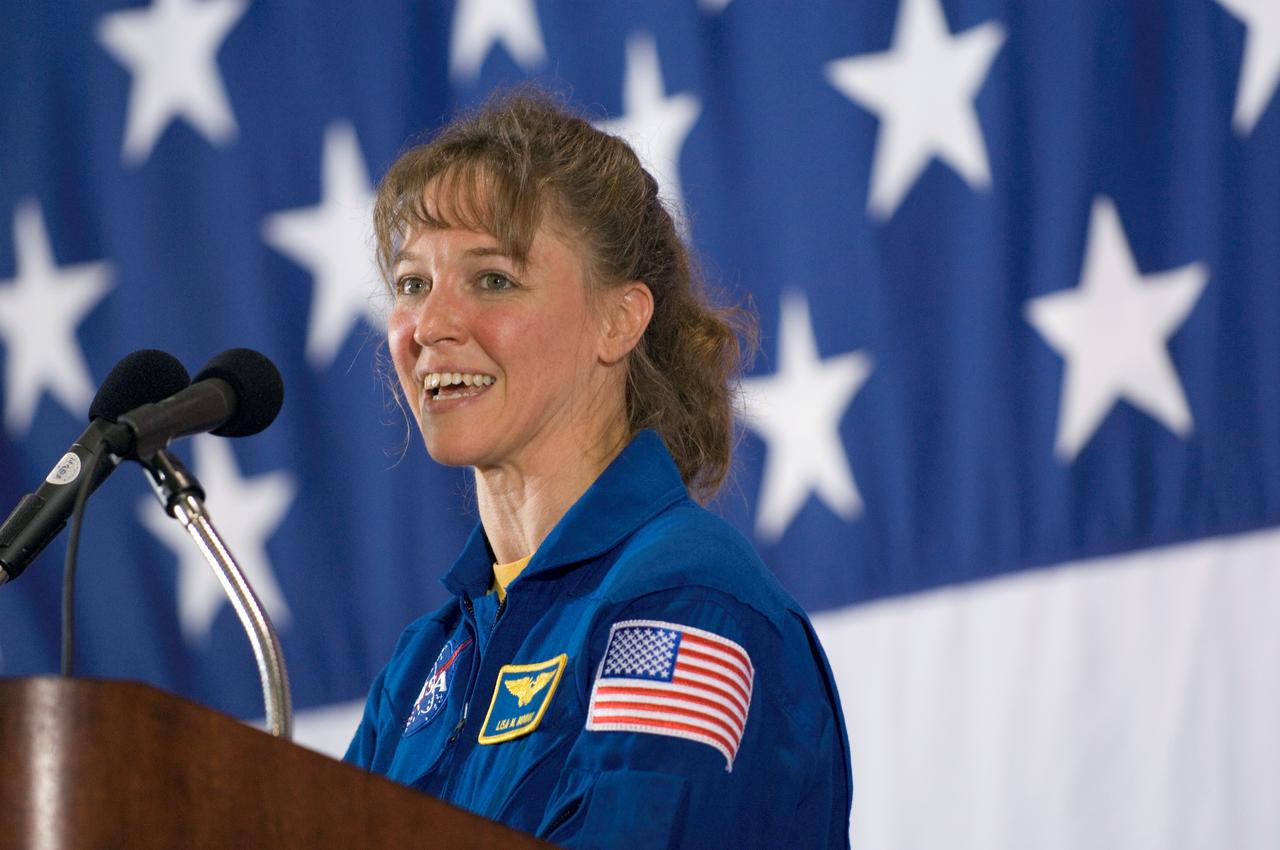
JSC2006-E-28451 (18 July 2006) --- Astronaut Lisa M. Nowak, STS-121 mission specialist, speaks from a lectern in Ellington Field's Hangar 276 near Johnson Space Center during the STS-121 crew return ceremonies.
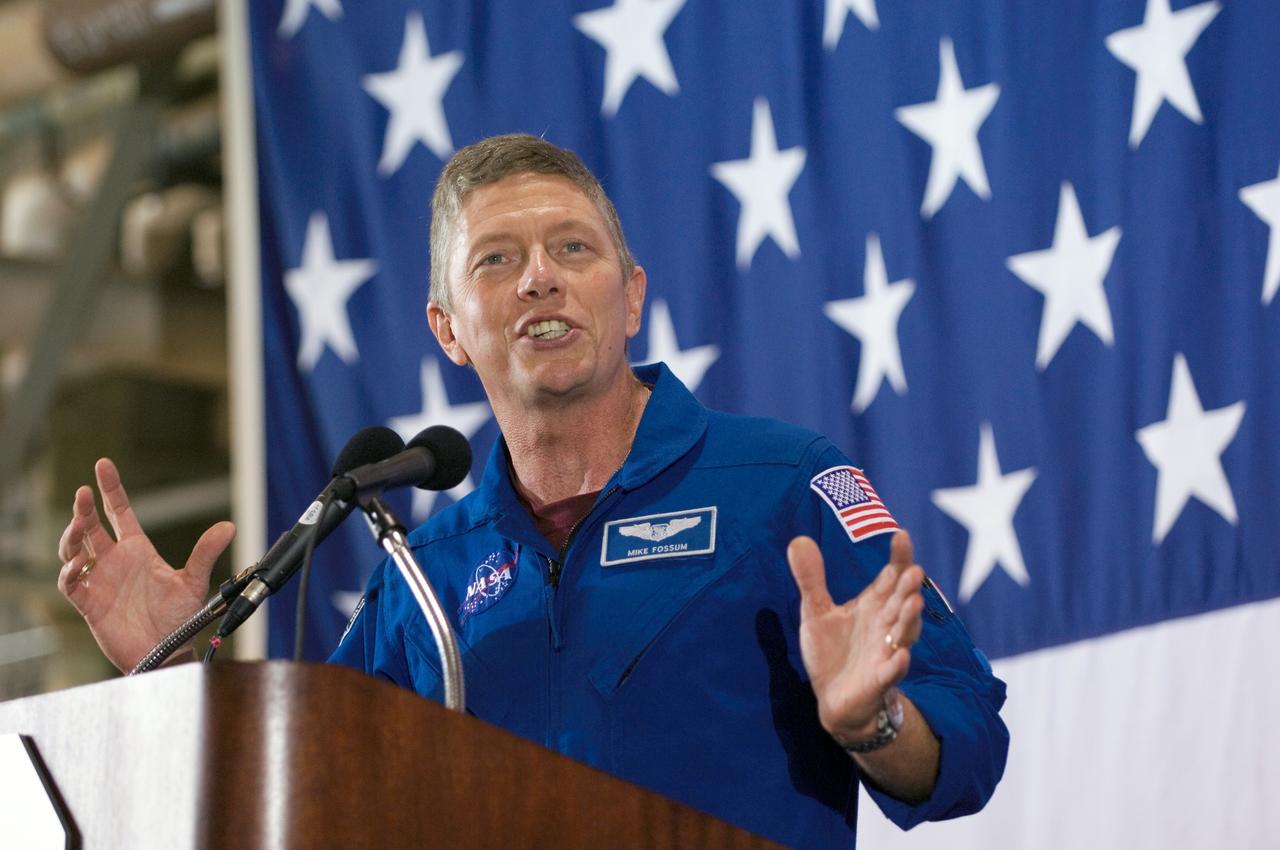
JSC2006-E-28449 (18 July 2006) --- Astronaut Michael E. Fossum, STS-121 mission specialist, speaks from a lectern in Ellington Field's Hangar 276 near Johnson Space Center during the STS-121 crew return ceremonies.
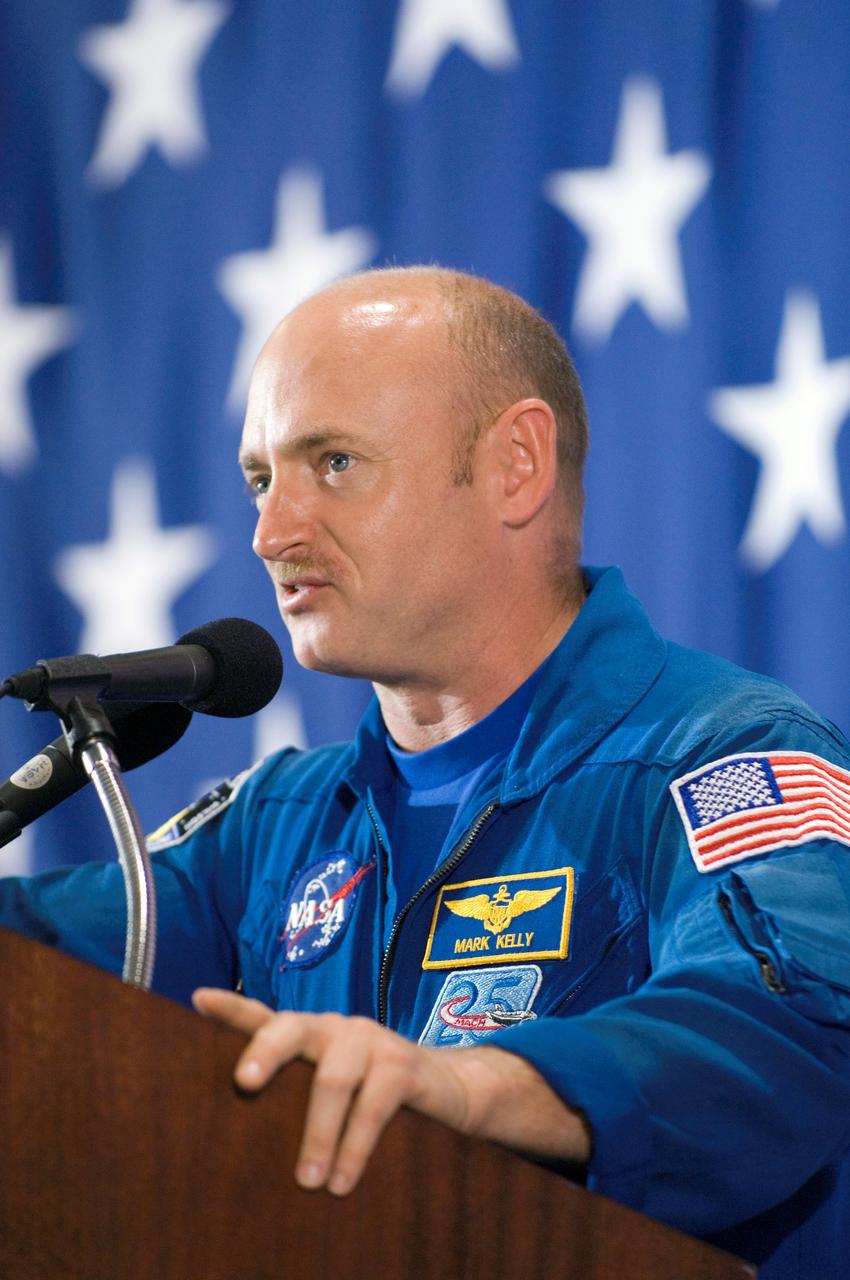
JSC2006-E-28444 (18 July 2006) --- Astronaut Mark E. Kelly, STS-121 pilot, speaks from a lectern in Ellington Field's Hangar 276 near Johnson Space Center during the STS-121 crew return ceremonies.
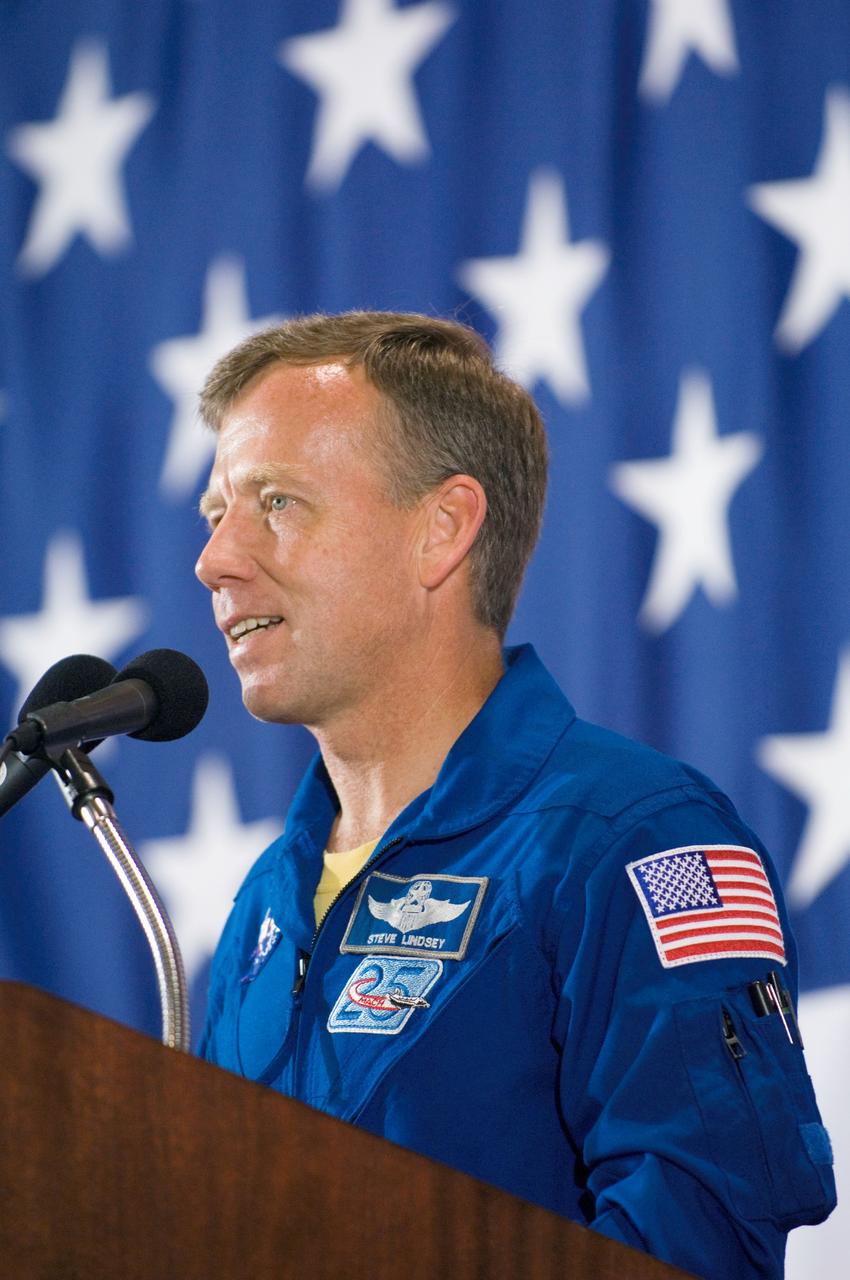
JSC2006-E-28458 (18 July 2006) --- Astronaut Steven W. Lindsey, STS-121 commander, speaks from a lectern in Ellington Field's Hangar 276 near Johnson Space Center during the STS-121 crew return ceremonies.
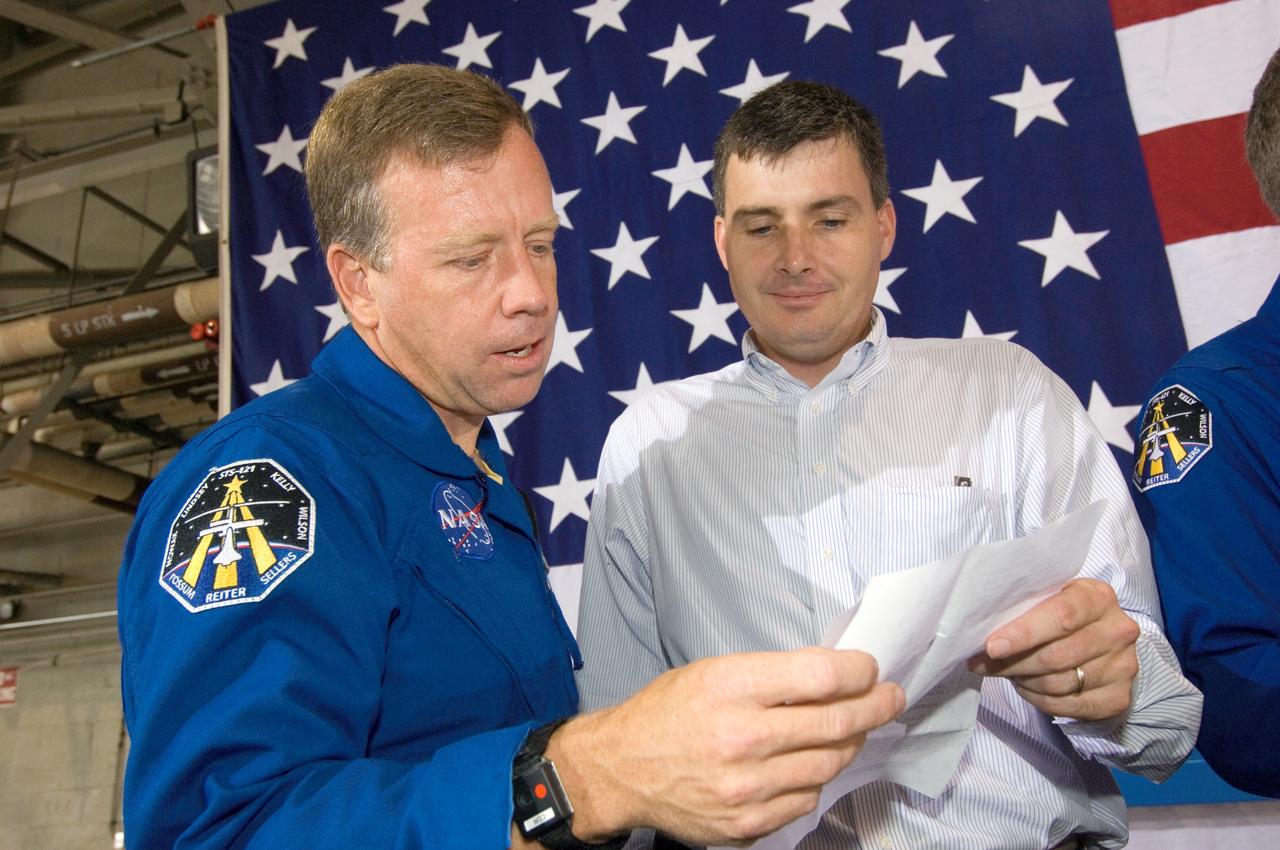
JSC2006-E-28463 (18 July 2006) --- Astronaut Steven W. Lindsey (left), STS-121 commander, and flight director Steve Stich visit in Ellington Field's Hangar 276 near JSC during the STS-121 crew return ceremonies.
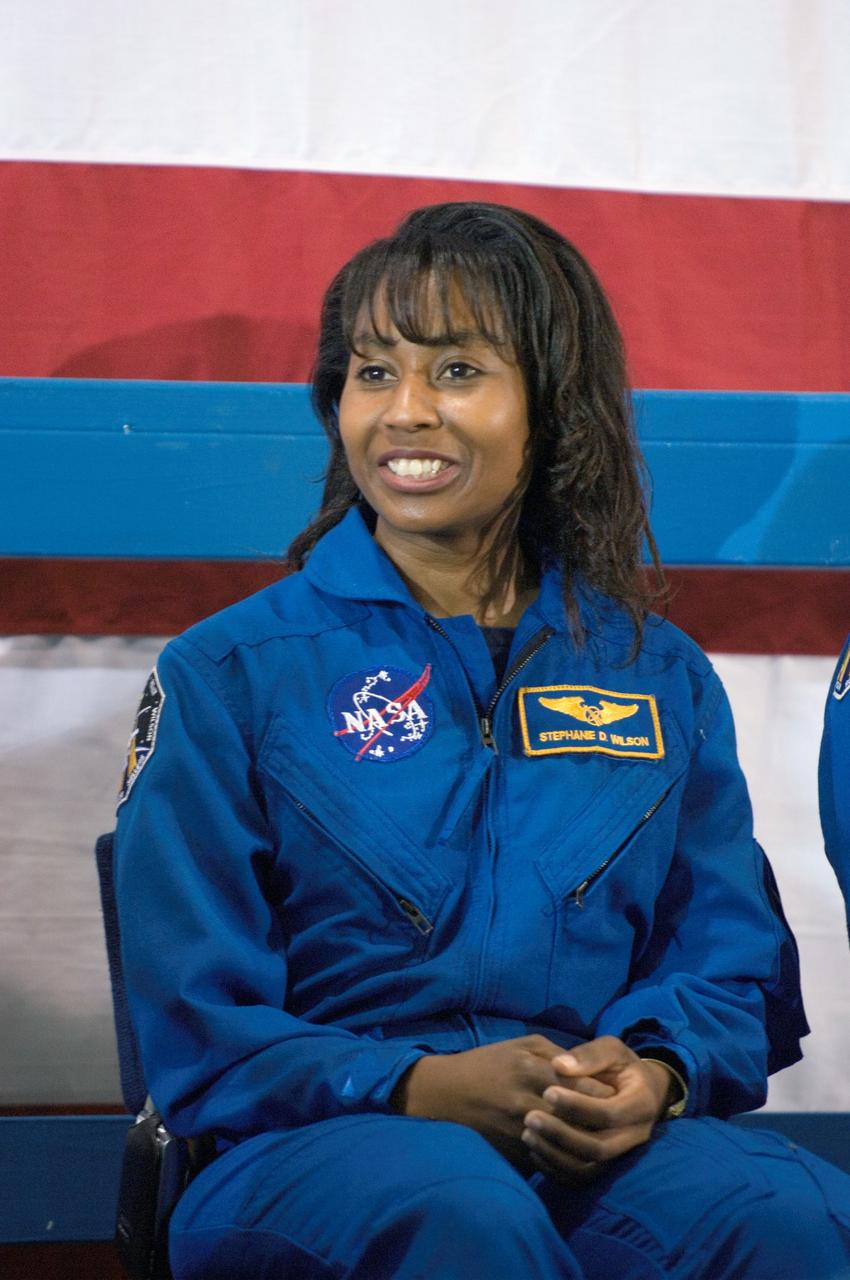
JSC2006-E-28445 (18 July 2006) --- Astronaut Stephanie D. Wilson, STS-121 mission specialist, photographed in Ellington Field's Hangar 276 near Johnson Space Center during the STS-121 crew return ceremonies.
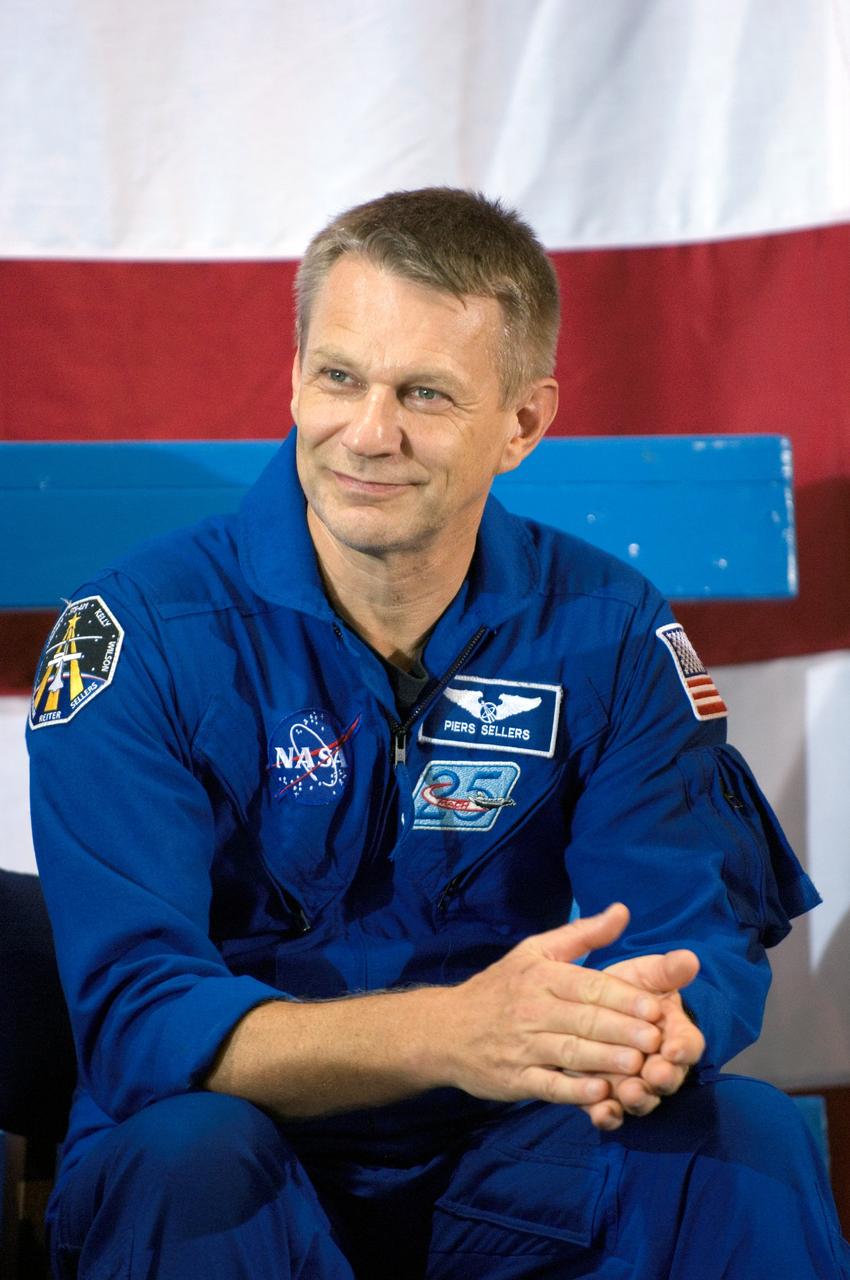
JSC2006-E-28442 (18 July 2006) --- Astronaut Piers J. Sellers, STS-121 mission specialist, applauds during the STS-121 crew return ceremonies in Ellington Field's Hangar 276 near Johnson Space Center.
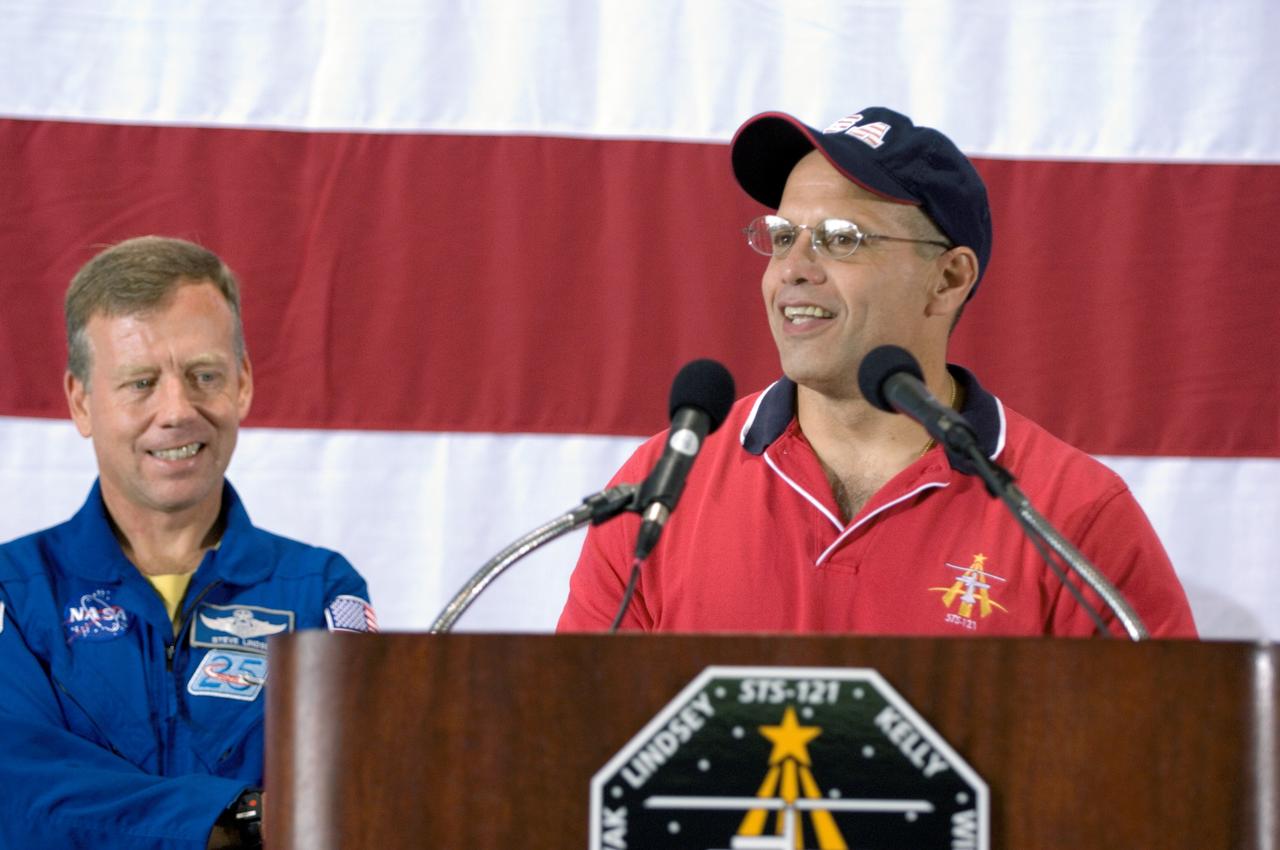
JSC2006-E-28439 (18 July 2006) --- Flight director Tony Ceccacci speaks from a lectern in Ellington Field's Hangar 276 near Johnson Space Center during the STS-121 crew return ceremonies. Astronaut Steven W. Lindsey, STS-121 commander, is at left.
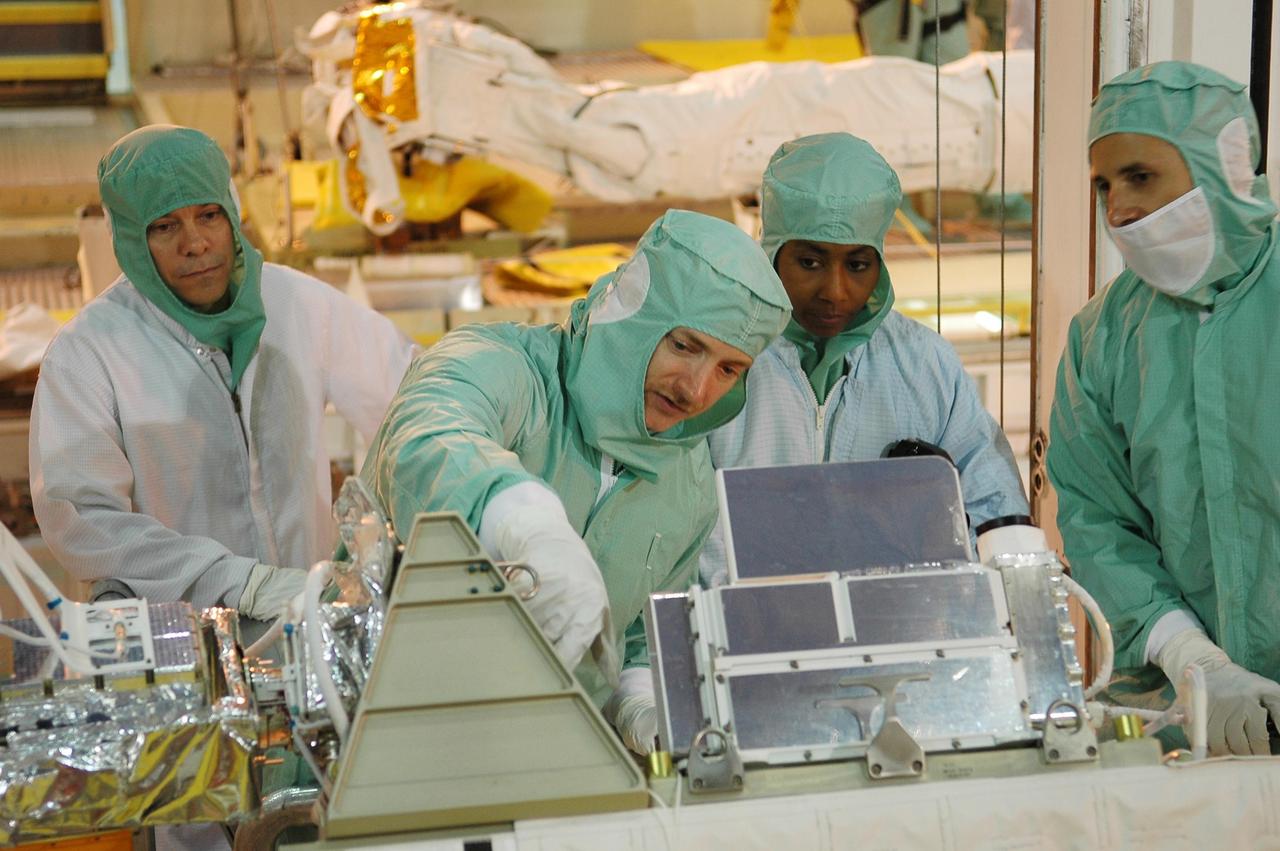
KENNEDY SPACE CENTER, FLA. - In NASA Kennedy Space Center's Orbiter Processing Facility bay 3, STS-121 Pilot Mark Kelly and Mission Specialist Stephanie Wilson are joined by two shuttle technicians as they work with equipment that will be on the mission. The crew is at Kennedy to take part in the crew equipment interface test, which provides hands-on experience with equipment to be used on-orbit. Launch of Space Shuttle Discovery on mission STS-121, the second return-to-flight mission, is scheduled no earlier than May.
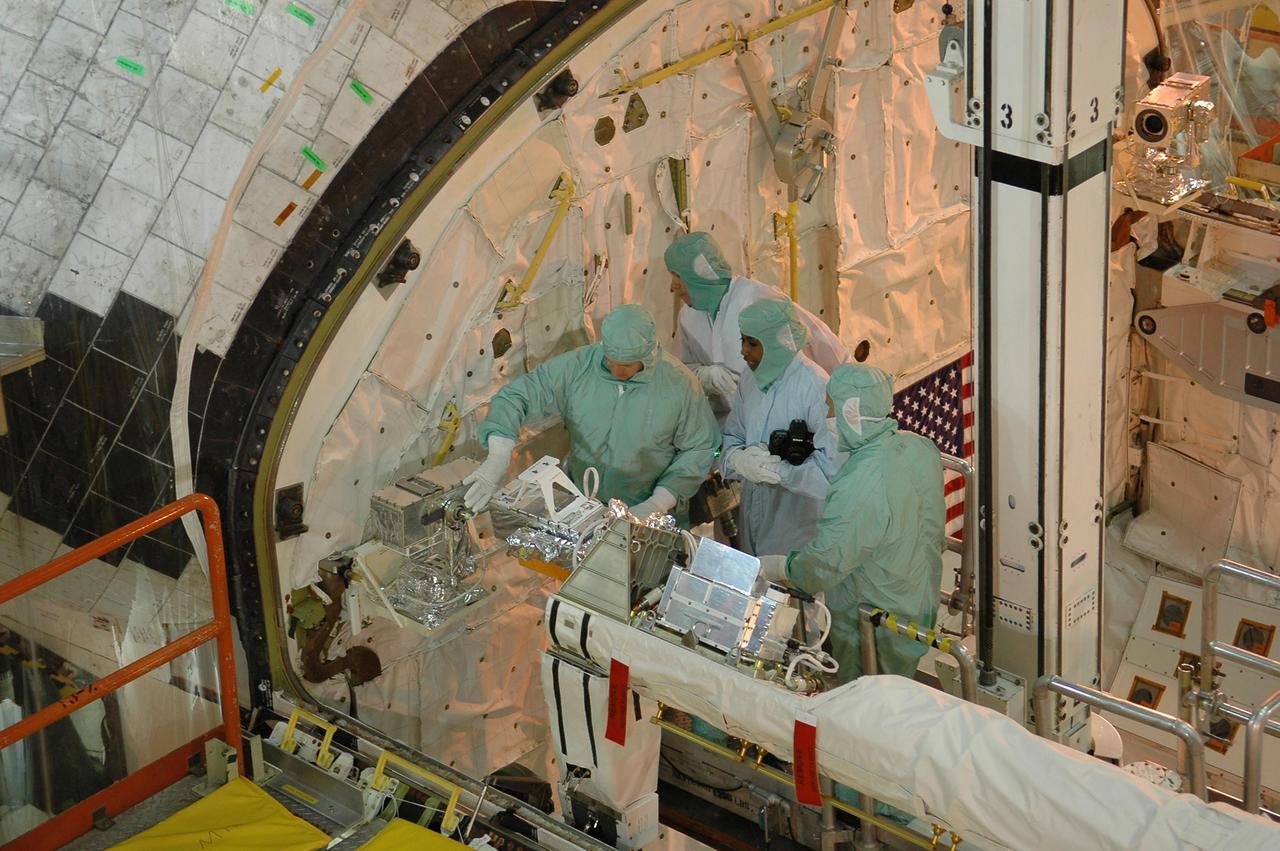
KENNEDY SPACE CENTER, FLA. - In NASA Kennedy Space Center's Orbiter Processing Facility bay 3, STS-121 Pilot Mark Kelly and Mission Specialist Stephanie Wilson are joined by two shuttle technicians as they work with equipment that will be on the mission. The crew is at Kennedy to take part in the crew equipment interface test, which provides hands-on experience with equipment to be used on-orbit. Launch of Space Shuttle Discovery on mission STS-121, the second return-to-flight mission, is scheduled no earlier than May.
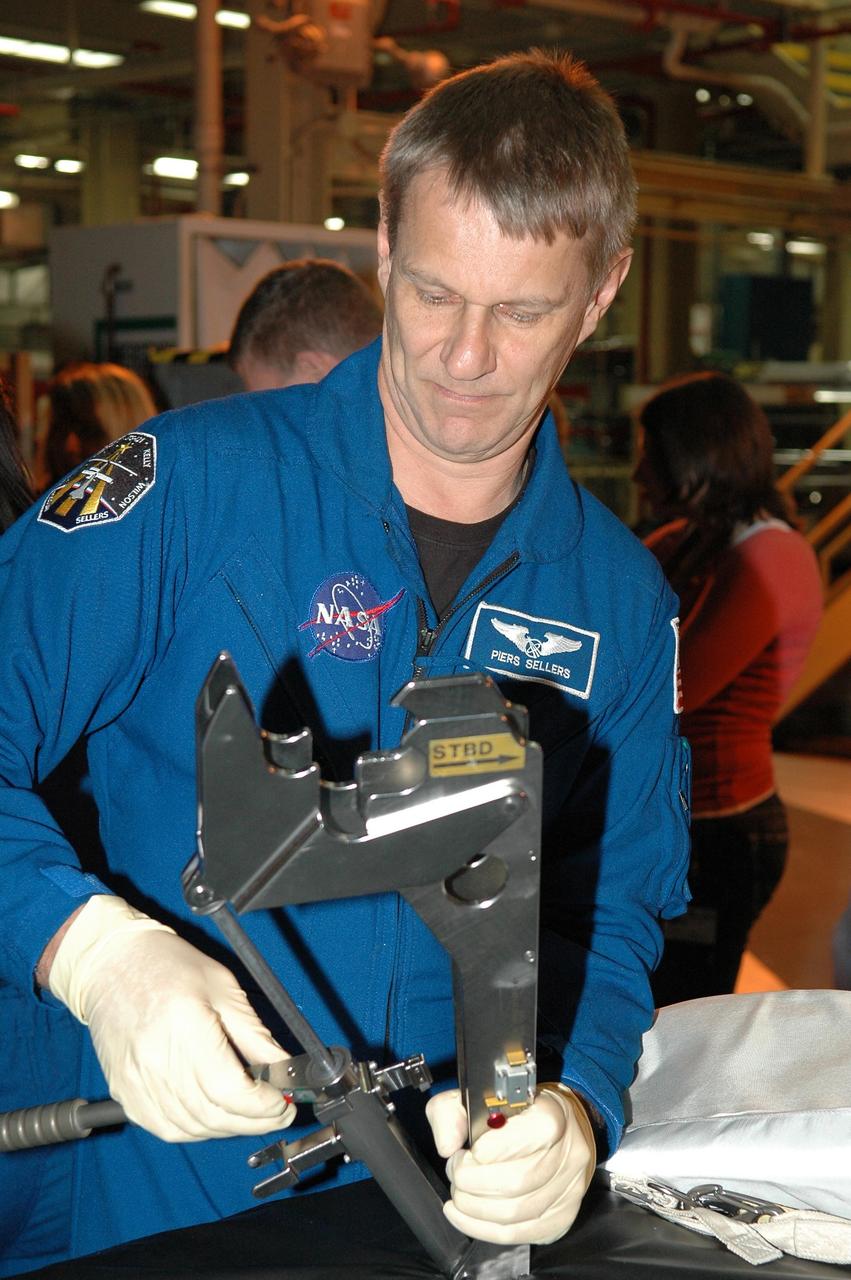
KENNEDY SPACE CENTER, FLA. - In NASA Kennedy Space Center's Orbiter Processing Facility bay 3, STS-121 Mission Specialist Piers Sellers practices using a piece of equipment that will be on the mission. The crew is at Kennedy to take part in the crew equipment interface test, which provides hands-on experience with equipment to be used on-orbit. Launch of Space Shuttle Discovery on mission STS-121, the second return-to-flight mission, is scheduled no earlier than May.
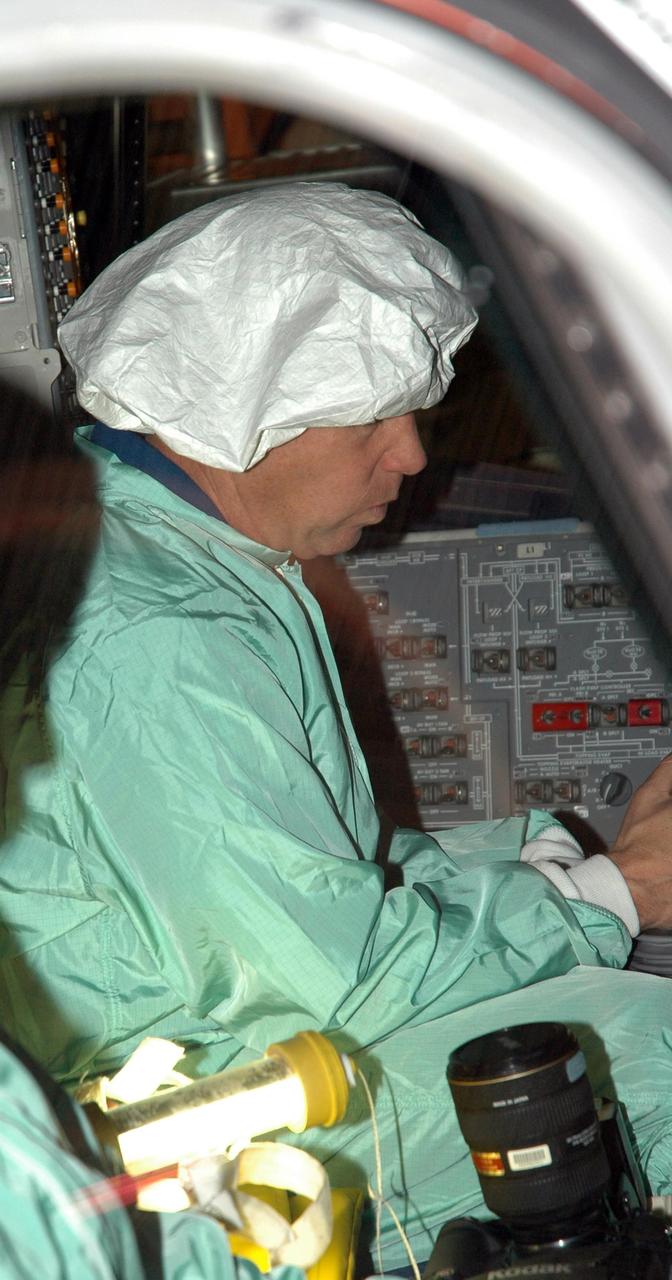
KENNEDY SPACE CENTER, FLA. - In NASA Kennedy Space Center's Orbiter Processing Facility bay 3, STS-121 Commander Steve Lindsey inspects one of the windows that will fly on Space Shuttle Discovery during the mission. The crew is at Kennedy to take part in the crew equipment interface test, which provides hands-on experience with equipment to be used on-orbit. Launch of Space Shuttle Discovery on mission STS-121, the second return-to-flight mission, is scheduled no earlier than May.
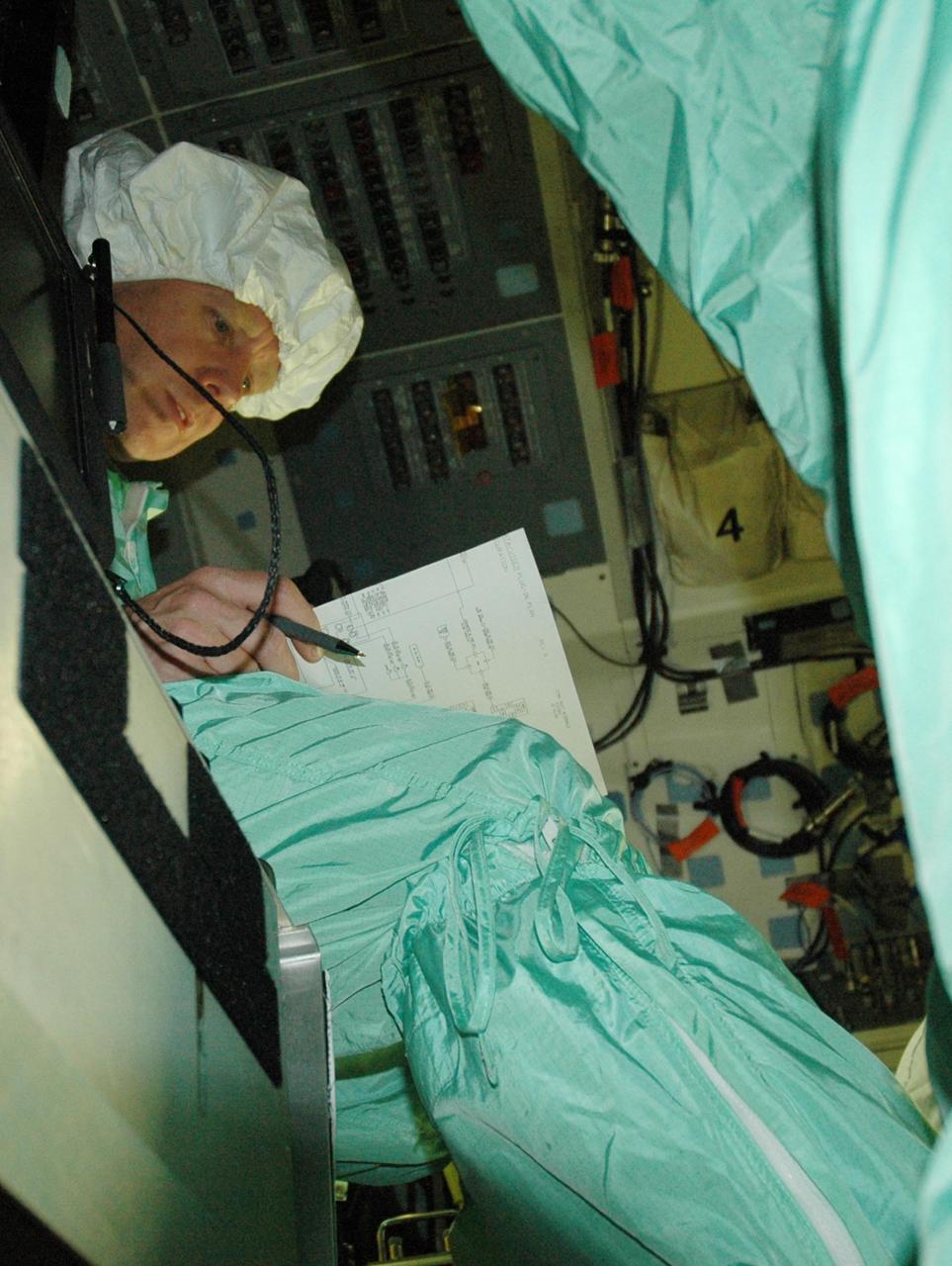
KENNEDY SPACE CENTER, FLA. - In NASA Kennedy Space Center's Orbiter Processing Facility bay 3, STS-121 Commander Steve Lindsey prepares for his upcoming mission inside Space Shuttle Discovery. The crew is at Kennedy to take part in the crew equipment interface test, which provides hands-on experience with equipment to be used on-orbit. Launch of Space Shuttle Discovery on mission STS-121, the second return-to-flight mission, is scheduled no earlier than May.
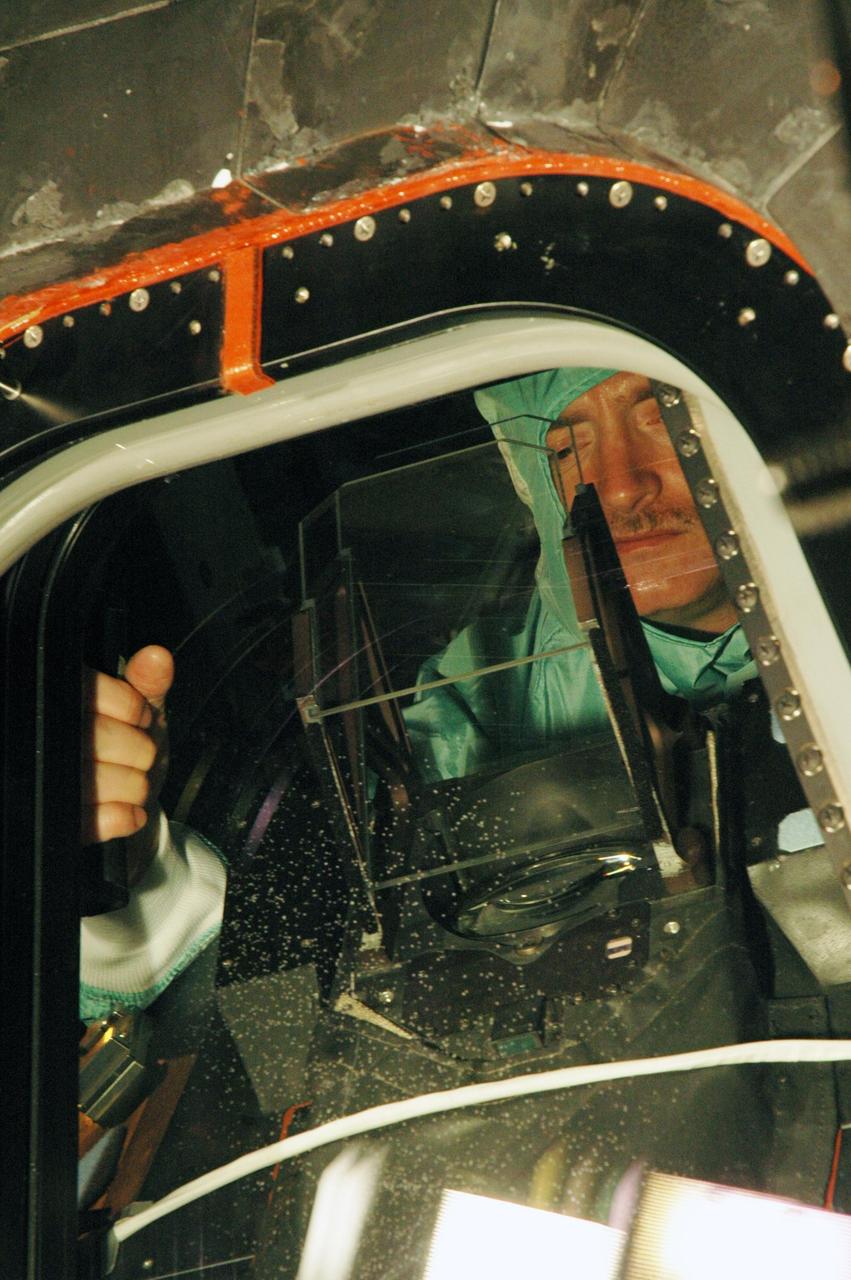
KENNEDY SPACE CENTER, FLA. - In NASA Kennedy Space Center's Orbiter Processing Facility bay 3, STS-121 Pilot Mark Kelly inspects one of the windows that will fly on Space Shuttle Discovery during the mission. The crew is at Kennedy to take part in the crew equipment interface test, which provides hands-on experience with equipment to be used on-orbit. Launch of Space Shuttle Discovery on mission STS-121, the second return-to-flight mission, is scheduled no earlier than May.
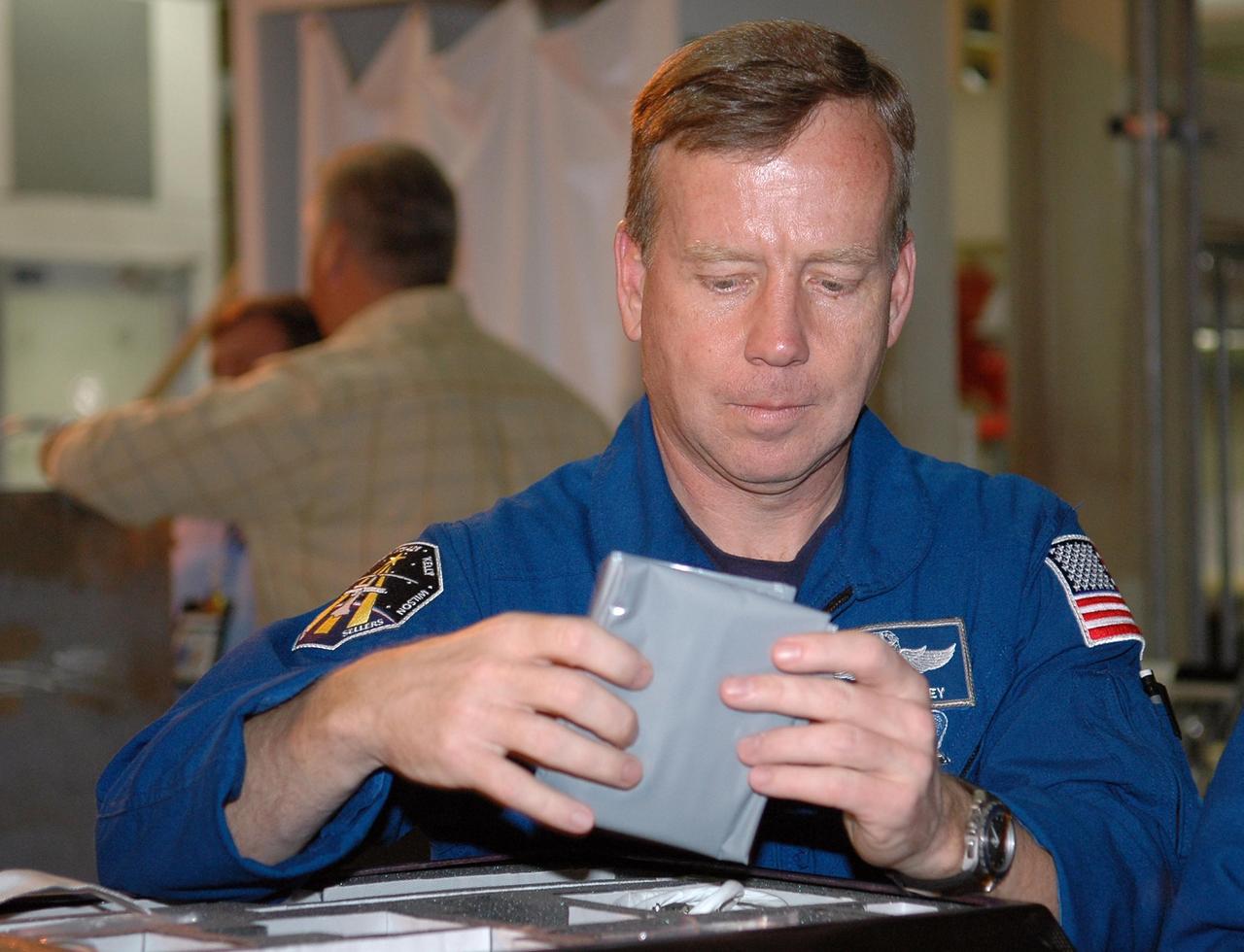
KENNEDY SPACE CENTER, FLA. - In NASA Kennedy Space Center's Orbiter Processing Facility bay 3, STS-121 Commander Steve Lindsey works with equipment that will be on the mission. The crew is at Kennedy to take part in the crew equipment interface test, which provides hands-on experience with equipment to be used on-orbit. Launch of Space Shuttle Discovery on mission STS-121, the second return-to-flight mission, is scheduled no earlier than May.
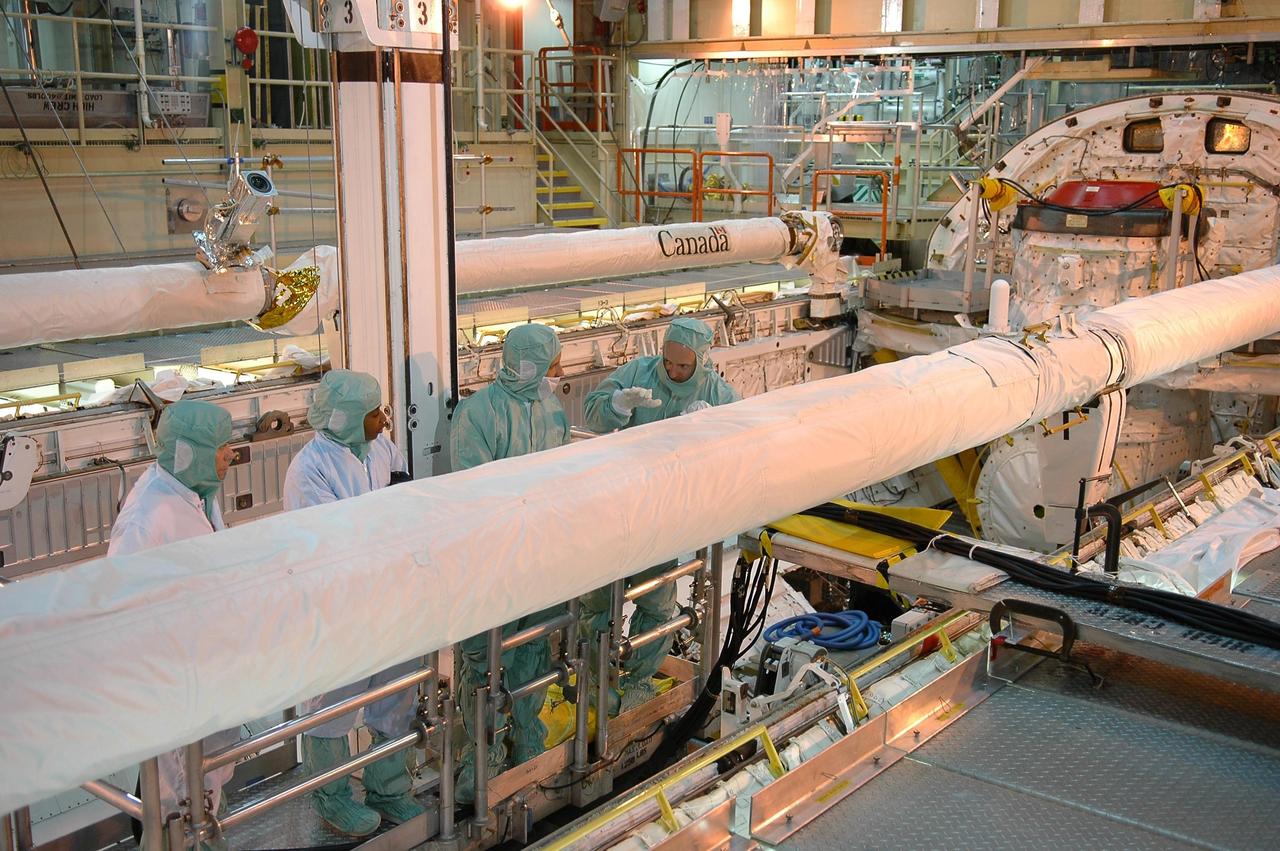
KENNEDY SPACE CENTER, FLA. - In NASA Kennedy Space Center's Orbiter Processing Facility bay 3, STS-121 Pilot Mark Kelly and Mission Specialist Stephanie Wilson are joined by two shuttle technicians as they examine the orbiter boom sensor system in Discovery's payload bay. The crew is at Kennedy to take part in the crew equipment interface test, which provides hands-on experience with equipment to be used on-orbit. Launch of Space Shuttle Discovery on mission STS-121, the second return-to-flight mission, is scheduled no earlier than May.
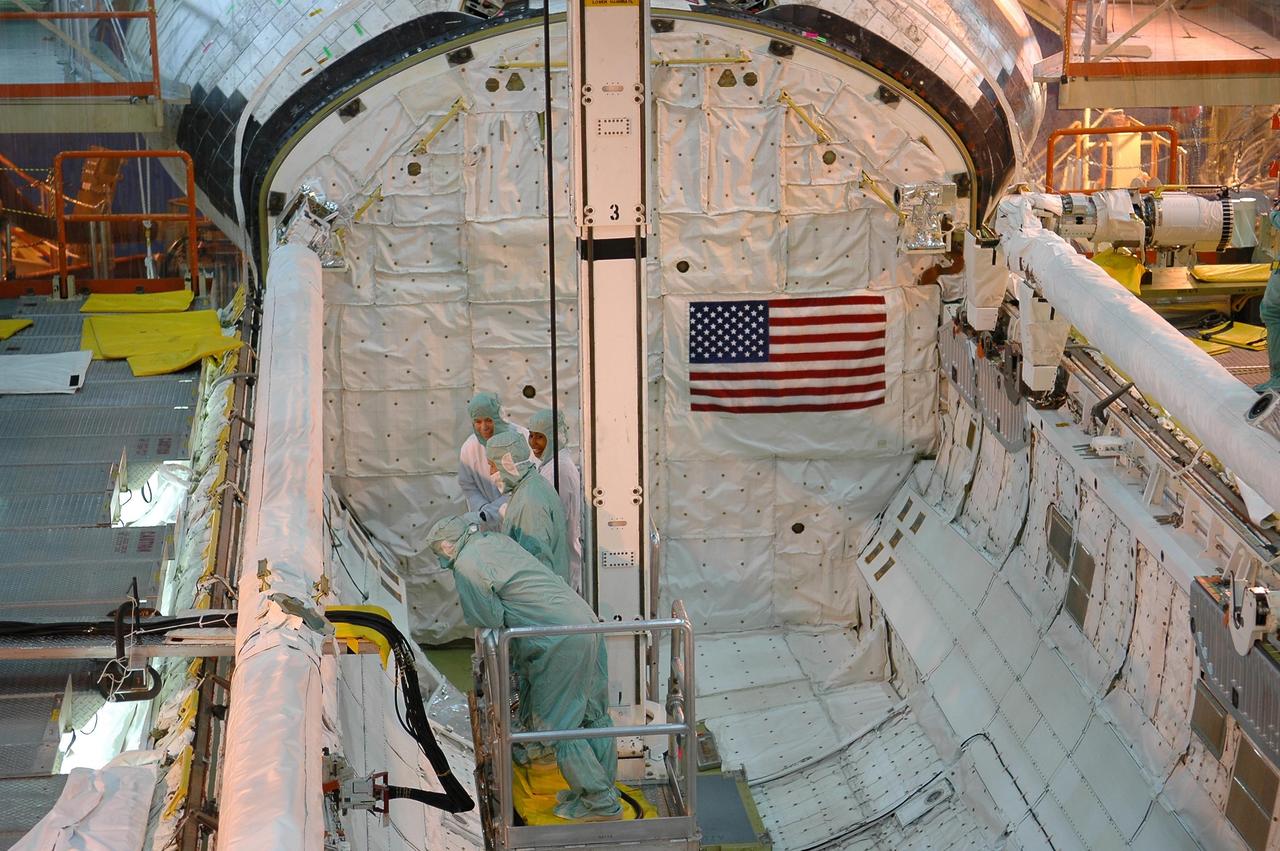
KENNEDY SPACE CENTER, FLA. - In NASA Kennedy Space Center's Orbiter Processing Facility bay 3, STS-121 Pilot Mark Kelly and Mission Specialist Stephanie Wilson are joined by two shuttle technicians in Discovery's payload bay as they examine equipment that will be on the mission. The crew is at Kennedy to take part in the crew equipment interface test, which provides hands-on experience with equipment to be used on-orbit. Launch of Space Shuttle Discovery on mission STS-121, the second return-to-flight mission, is scheduled no earlier than May.

KENNEDY SPACE CENTER, FLA. - In NASA Kennedy Space Center's Orbiter Processing Facility bay 3, STS-121 Pilot Mark Kelly works with equipment that will be on the mission. The crew is at Kennedy to take part in the crew equipment interface test, which provides hands-on experience with equipment to be used on-orbit. Launch of Space Shuttle Discovery on mission STS-121, the second return-to-flight mission, is scheduled no earlier than May.
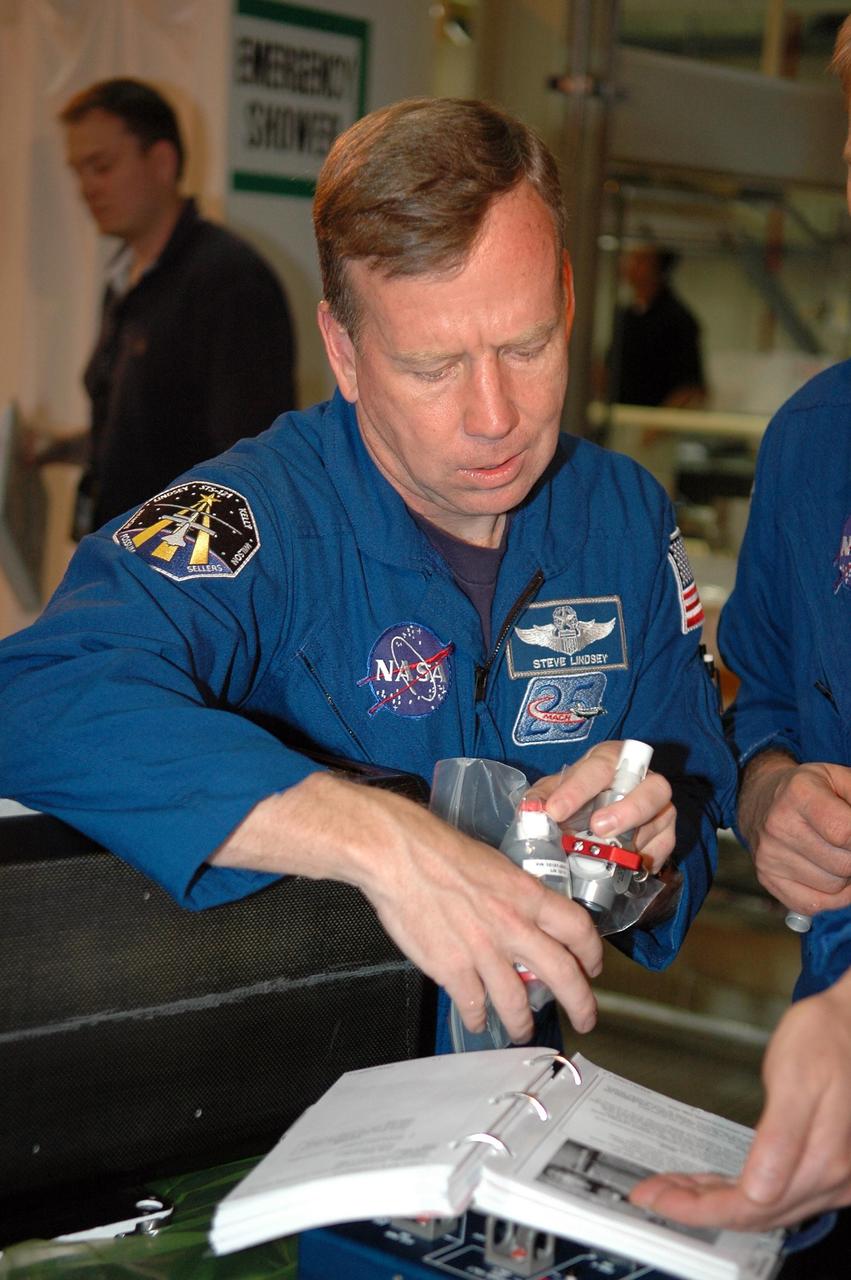
KENNEDY SPACE CENTER, FLA. - In NASA Kennedy Space Center's Orbiter Processing Facility bay 3, STS-121 Commander Steve Lindsey works with equipment that will be on the mission. The crew is at Kennedy to take part in the crew equipment interface test, which provides hands-on experience with equipment to be used on-orbit. Launch of Space Shuttle Discovery on mission STS-121, the second return-to-flight mission, is scheduled no earlier than May.
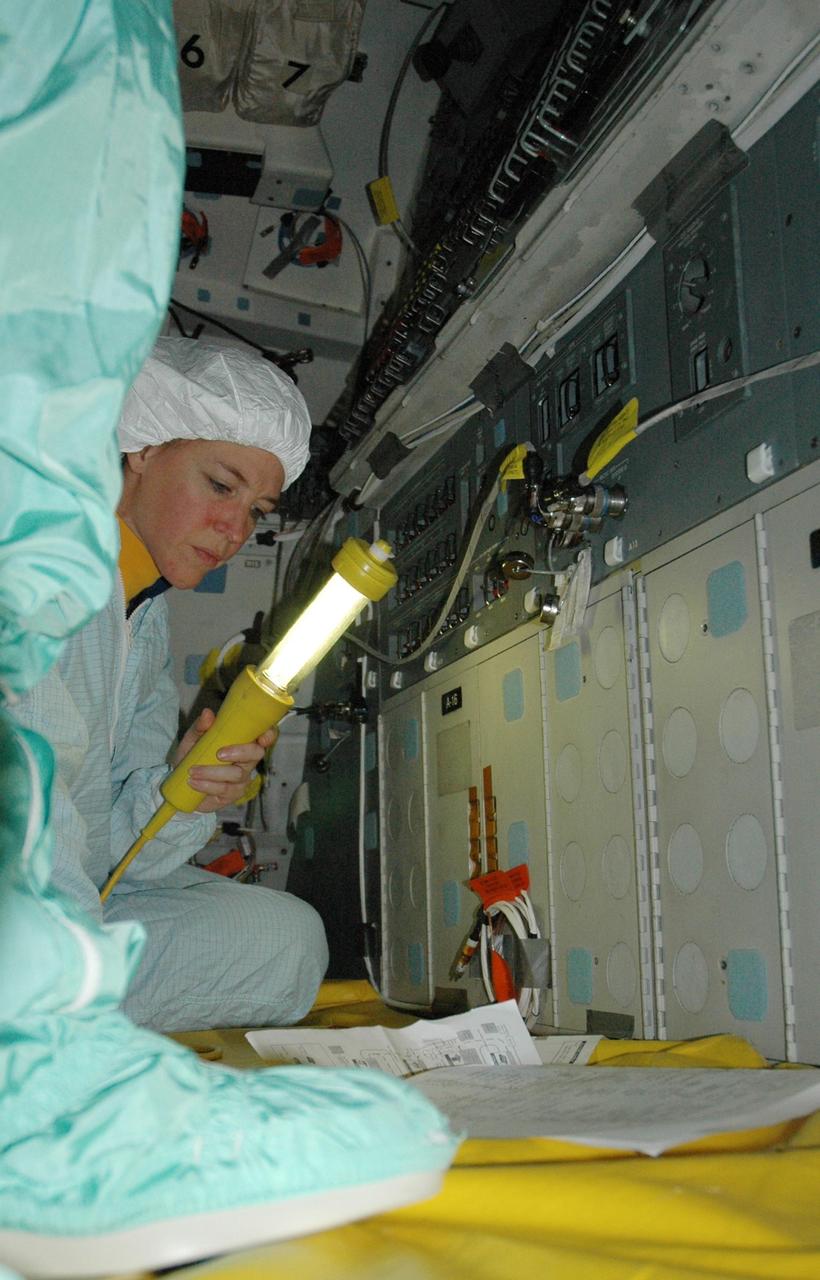
KENNEDY SPACE CENTER, FLA. - In NASA Kennedy Space Center's Orbiter Processing Facility bay 3, STS-121 Mission Specialist Lisa Nowak prepares for her upcoming mission inside Space Shuttle Discovery. The crew is at Kennedy to take part in the crew equipment interface test, which provides hands-on experience with equipment to be used on-orbit. Launch of Space Shuttle Discovery on mission STS-121, the second return-to-flight mission, is scheduled no earlier than May.
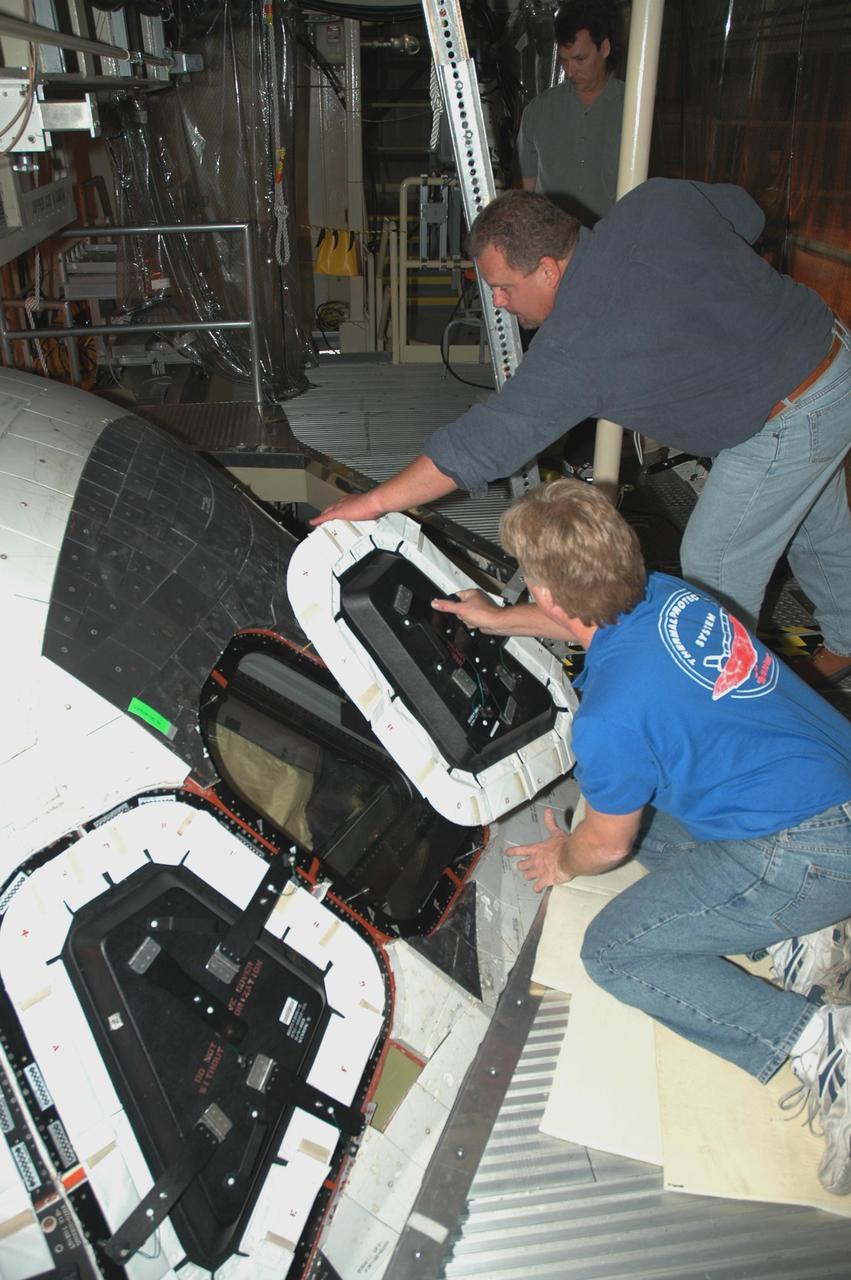
KENNEDY SPACE CENTER, FLA. - In NASA Kennedy Space Center's Orbiter Processing Facility bay 3, United Space Alliance shuttle technicians remove the hard cover from a window on Space Shuttle Discovery to enable STS-121 crew members to inspect the window from the cockpit. Launch of Space Shuttle Discovery on mission STS-121, the second return-to-flight mission, is scheduled no earlier than May.
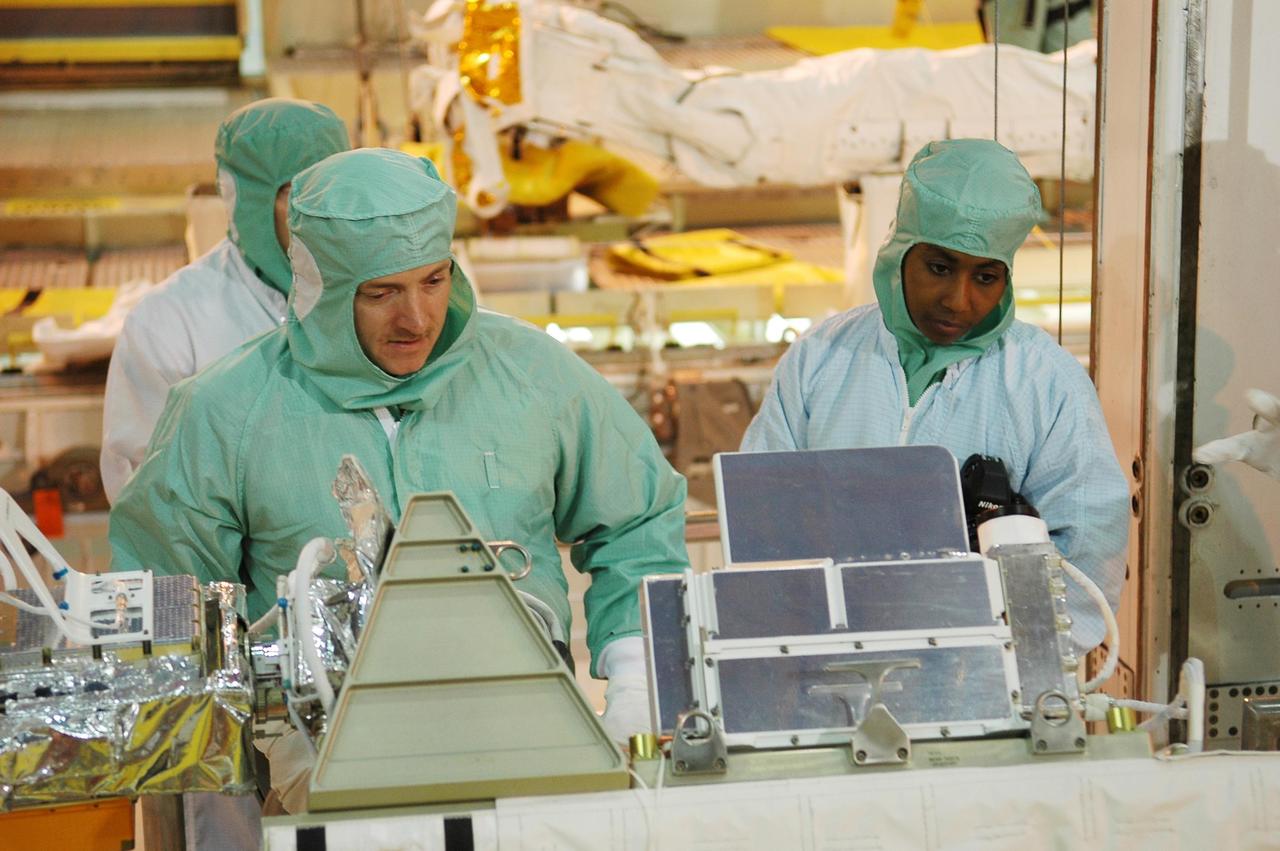
KENNEDY SPACE CENTER, FLA. - In NASA Kennedy Space Center's Orbiter Processing Facility bay 3, STS-121 Pilot Mark Kelly and Mission Specialist Stephanie Wilson work with equipment that will be on the mission. The crew is at Kennedy to take part in the crew equipment interface test, which provides hands-on experience with equipment to be used on-orbit. Launch of Space Shuttle Discovery on mission STS-121, the second return-to-flight mission, is scheduled no earlier than May.
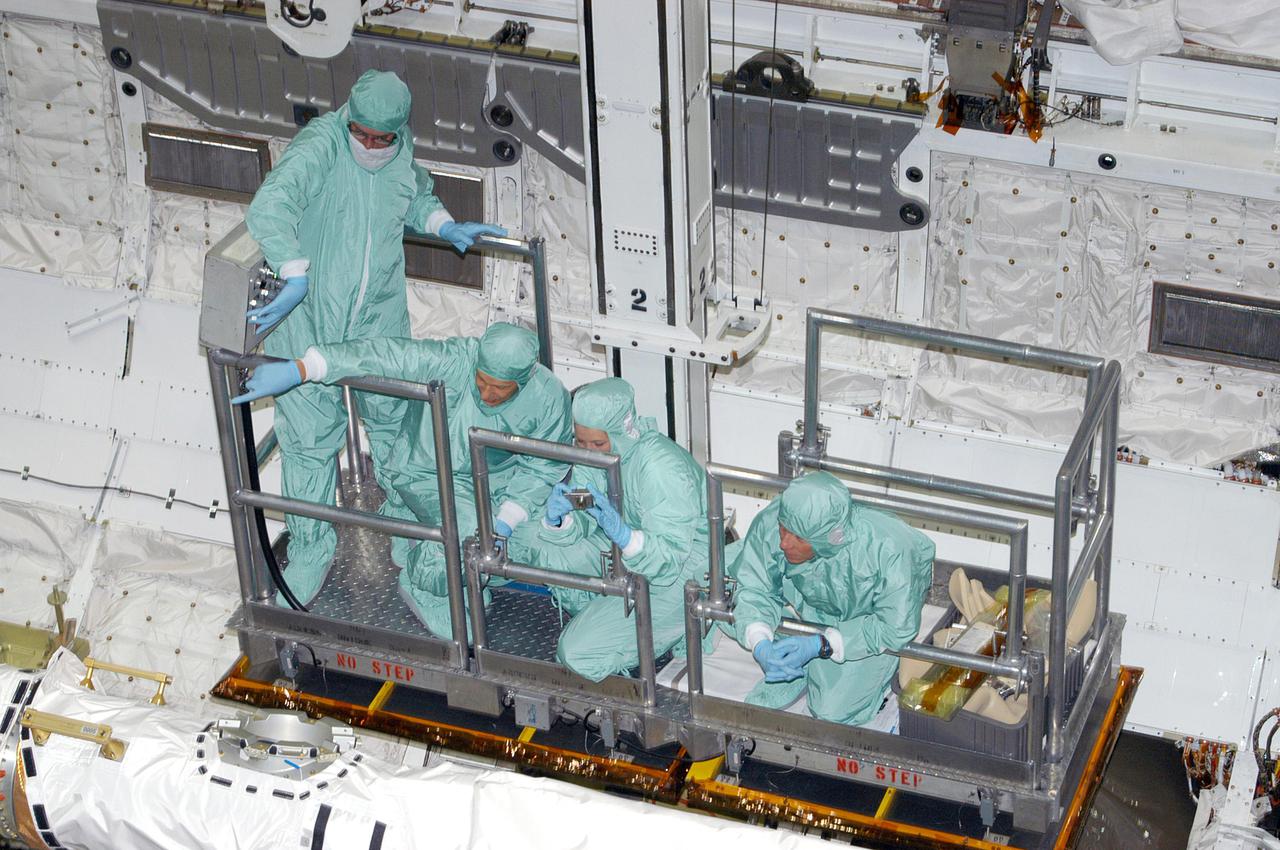
KENNEDY SPACE CENTER, FLA. - In Orbiter Processing Facility bay 1, astronauts of the second Return to Flight mission, STS-121, and United Space Alliance technicians look over the Orbital Boom Sensor System (OBSS) in Atlantis' payload bay. In the railed enclosure are, from left, the United Space Alliance (USA) bucket operator, Mission Specialist Piers J. Sellers, a USA trainer, and Mission Specialist Michael E. Fossum. The 50-foot-long OBSS is attached to the Remote Manipulator System, or Shuttle robotic arm, and is one of the new safety measures for Return to Flight, equipping the orbiter with cameras and laser systems to inspect the Shuttle’s Thermal Protection System while in space. The STS-121 crew is at KSC to participate in the Crew Equipment Interface Test (CEIT). During CEIT, the crew has an opportunity to get a hands-on look at the orbiter and equipment they will be working with on their mission. STS-121, the second Return to Flight mission, is scheduled to launch aboard Atlantis in July.
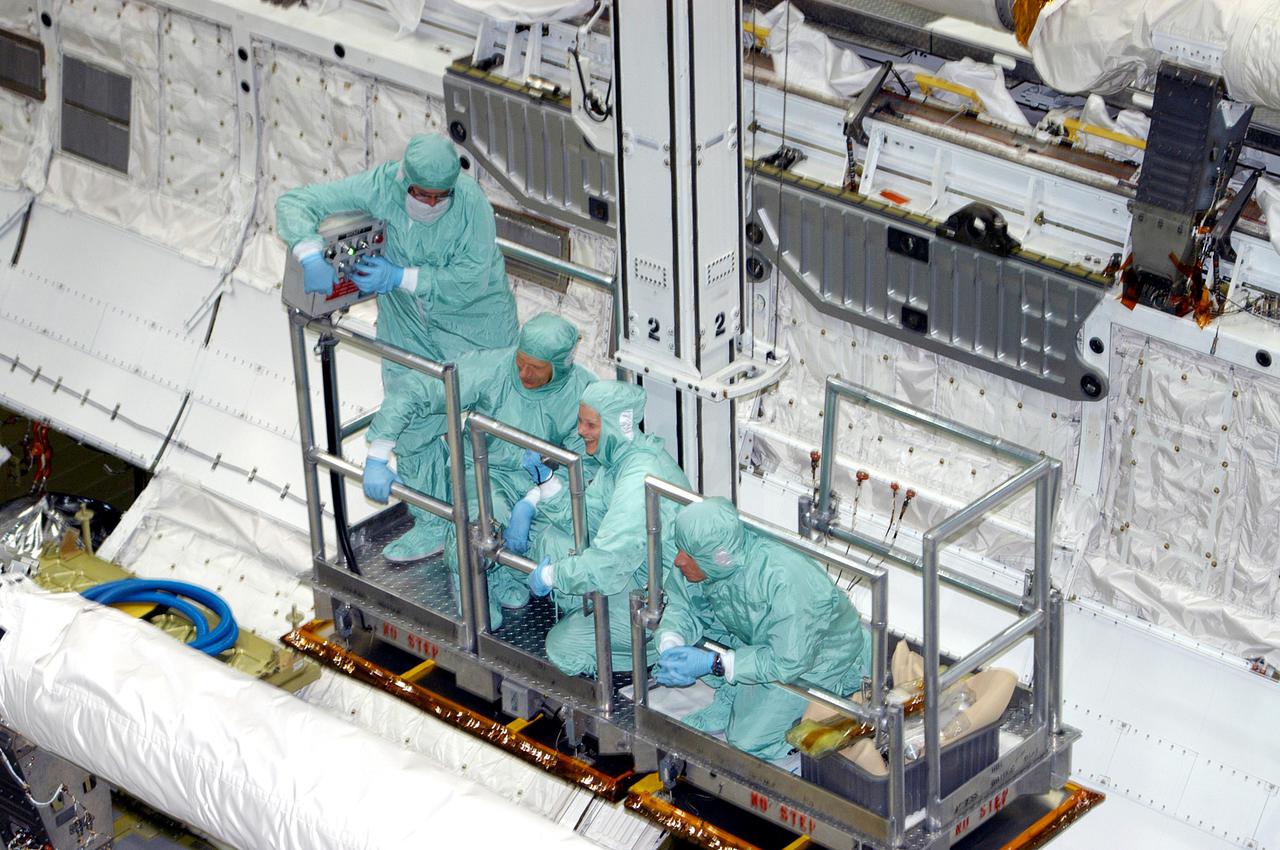
KENNEDY SPACE CENTER, FLA. - In Orbiter Processing Facility bay 1, astronauts of the second Return to Flight mission, STS-121, and United Space Alliance technicians look over the Orbital Boom Sensor System (OBSS) in Atlantis' payload bay. In the railed enclosure are, from left, the United Space Alliance (USA) bucket operator, Mission Specialist Piers J. Sellers, a USA trainer, and Mission Specialist Michael E. Fossum. The 50-foot-long OBSS is attached to the Remote Manipulator System, or Shuttle robotic arm, and is one of the new safety measures for Return to Flight, equipping the orbiter with cameras and laser systems to inspect the Shuttle’s Thermal Protection System while in space. The STS-121 crew is at KSC to participate in the Crew Equipment Interface Test (CEIT). During CEIT, the crew has an opportunity to get a hands-on look at the orbiter and equipment they will be working with on their mission. STS-121, the second Return to Flight mission, is scheduled to launch aboard Atlantis in July.

KENNEDY SPACE CENTER, FLA. - Inside the Vehicle Assembly Building at NASA's Kennedy Space Center, a solid rocket booster segment (upper left) is mated with the lower segment. The booster is part of the shuttle stack for Discovery and mission STS-121. Launch of Discovery is scheduled for no earlier than May. Photo credit: NASA/Jack Pfaller
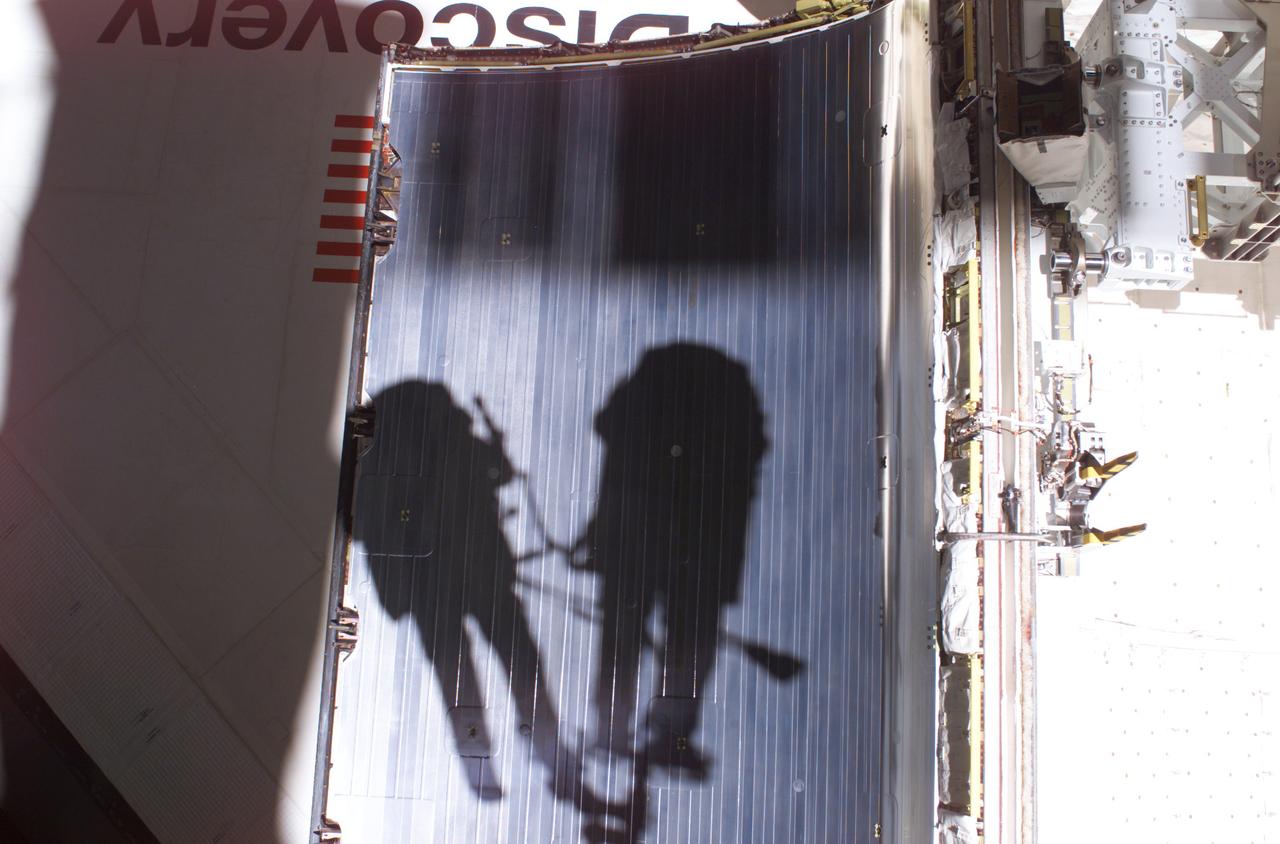
The shadows of astronauts Piers J. Sellers and Michael E. Fossum, STS-121 mission specialists, who are anchored to the Space Shuttle Discovery's Remote Manipulator System/Orbiter Boom Sensor System (RMS/OBSS) foot restraint, are visible against a shuttle's payload bay door during a session of extravehicular activity (EVA).
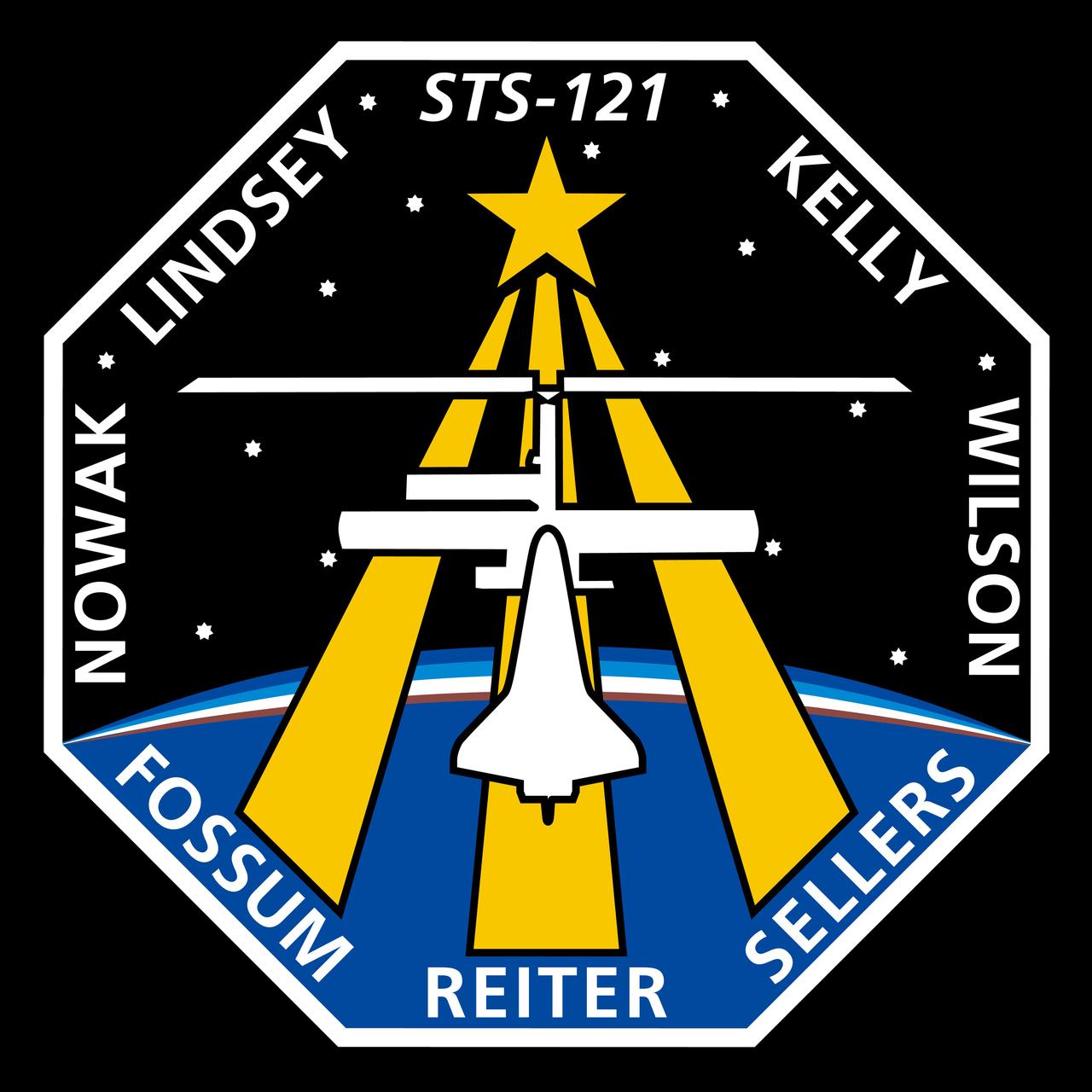
The STS-121 patch depicts the Space Shuttle docked with the International Space Station (ISS) in the foreground, overlaying the astronaut symbol with three gold columns and a gold star. The ISS is shown in the configuration that it was during the STS-121 mission. The background shows the nighttime Earth with a dawn breaking over the horizon. STS-121, ISS mission ULF1.1, was the final Shuttle Return to Flight test mission. This utilization and logistics flight delivered a multipurpose logistics module (MPLM) to the ISS with several thousand pounds of new supplies and experiments. In addition, some new orbital replacement units (ORUs) were delivered and stowed externally on the ISS on a special pallet. These ORUs are spares for critical machinery located on the outside of the ISS. During this mission the crew also carried out testing of Shuttle inspection and repair hardware, as well as evaluated operational techniques and concepts for conducting on-orbit inspection and repair.
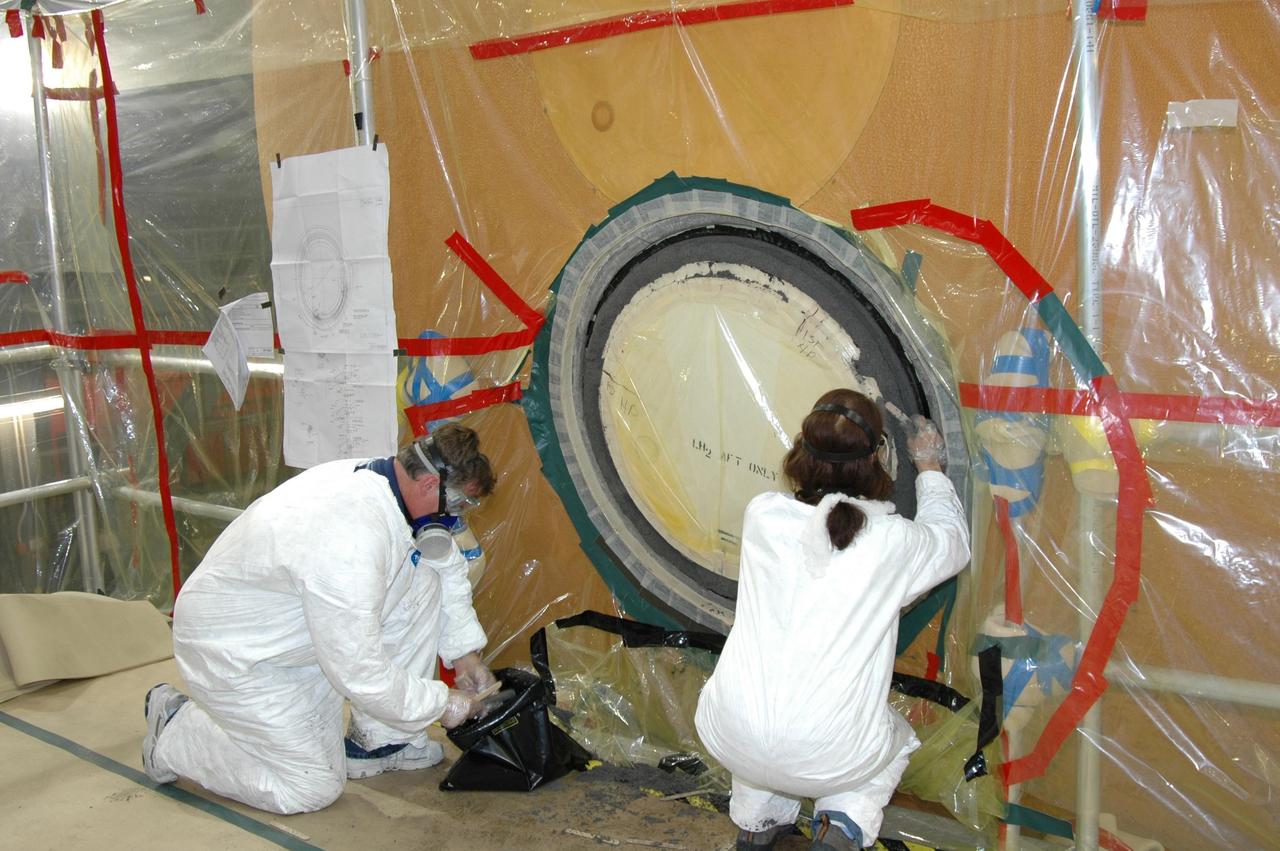
KENNEDY SPACE CENTER, FLA. -- In the transfer aisle of the Vehicle Assembly Building, workers pack type 2 ablator over the bolts around the "manhole" or cover on the bottom of external tank number 119. The manhole was removed to access the area where the tank's four liquid hydrogen engine cutoff sensors were replaced. The tank is being prepared to launch Space Shuttle Discovery on mission STS-121 in July. Photo credit: NASA/Jim Grossmann
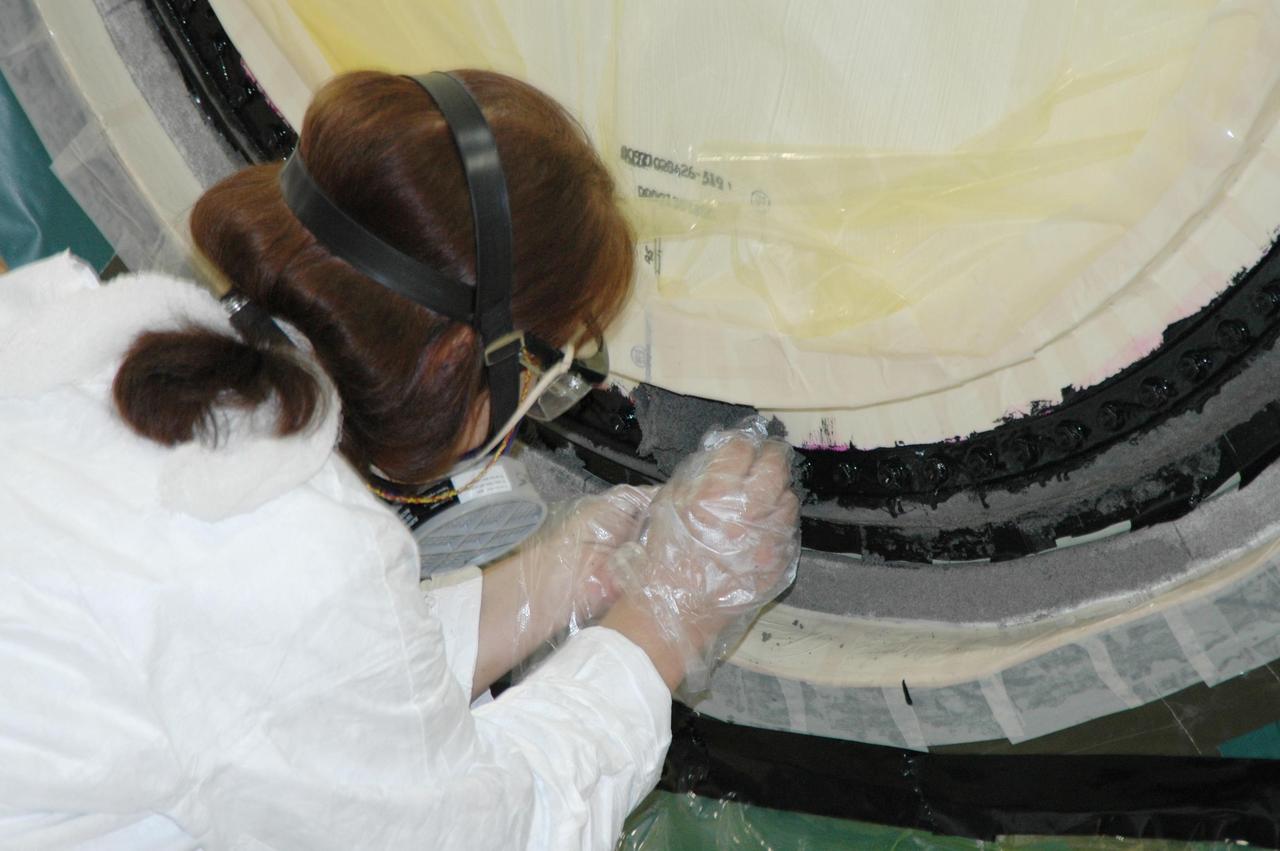
KENNEDY SPACE CENTER, FLA. -- In the transfer aisle of the Vehicle Assembly Building, a worker packs type 2 ablator over the bolts around the "manhole" or cover on the bottom of external tank number 119. The manhole was removed to access the area where the tank's four liquid hydrogen engine cutoff sensors were replaced. The tank is being prepared to launch Space Shuttle Discovery on mission STS-121 in July. Photo credit: NASA/Jim Grossmann
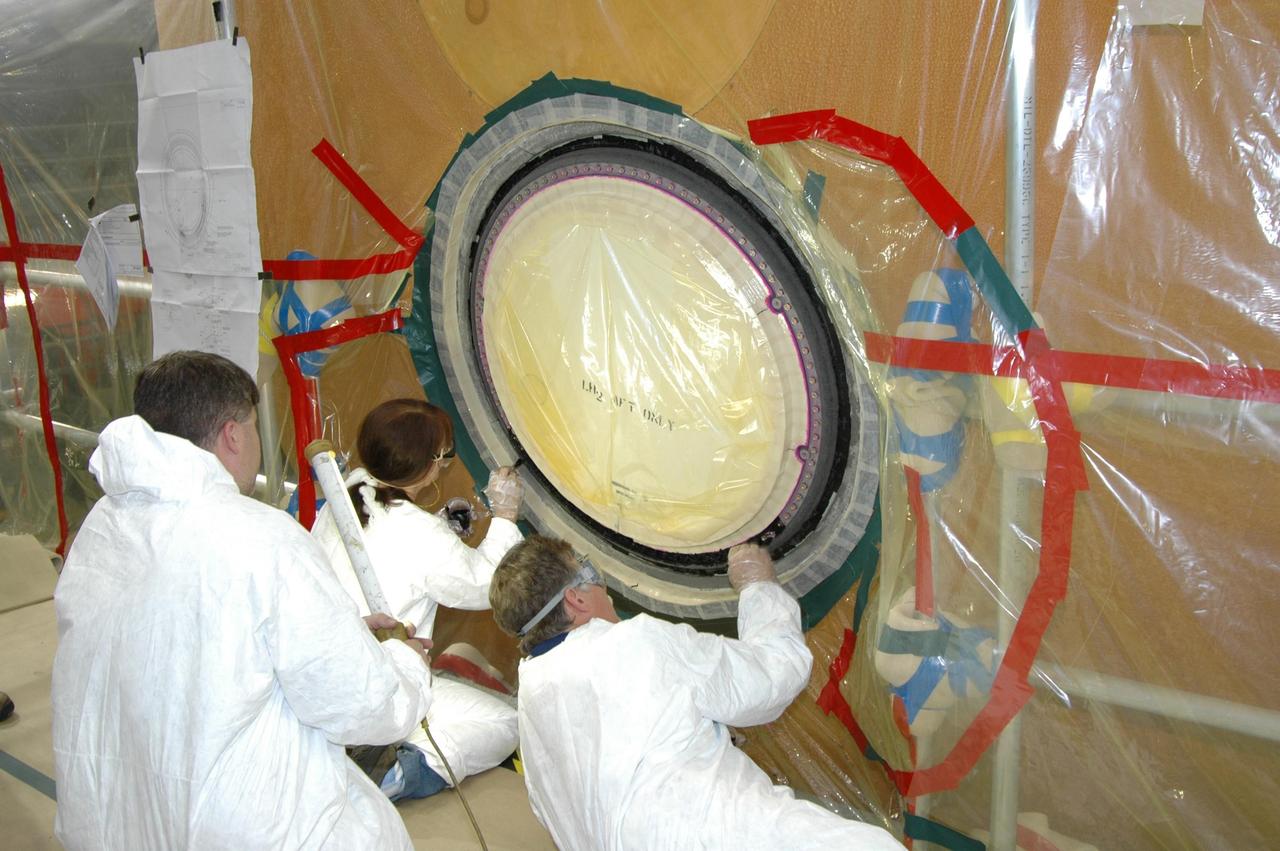
KENNEDY SPACE CENTER, FLA. -- In the transfer aisle of the Vehicle Assembly Building, workers pack type 2 ablator over the bolts around the "manhole" or cover on the bottom of external tank number 119. The manhole was removed to access the area where the tank's four liquid hydrogen engine cutoff sensors were replaced. The tank is being prepared to launch Space Shuttle Discovery on mission STS-121 in July. Photo credit: NASA/Jim Grossmann
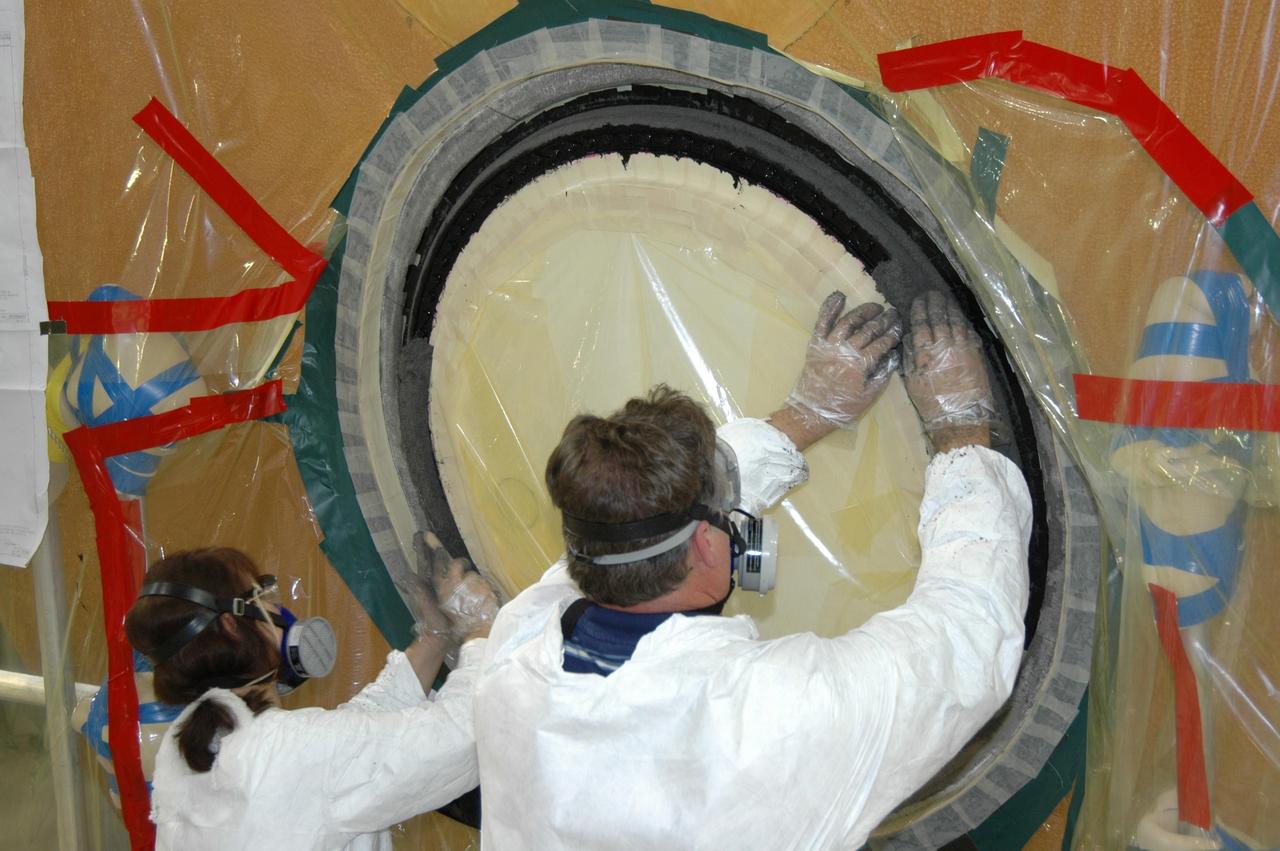
KENNEDY SPACE CENTER, FLA. -- In the transfer aisle of the Vehicle Assembly Building, workers pack type 2 ablator over the bolts around the "manhole" or cover on the bottom of external tank number 119. The manhole was removed to access the area where the tank's four liquid hydrogen engine cutoff sensors were replaced. The tank is being prepared to launch Space Shuttle Discovery on mission STS-121 in July. Photo credit: NASA/Jim Grossmann
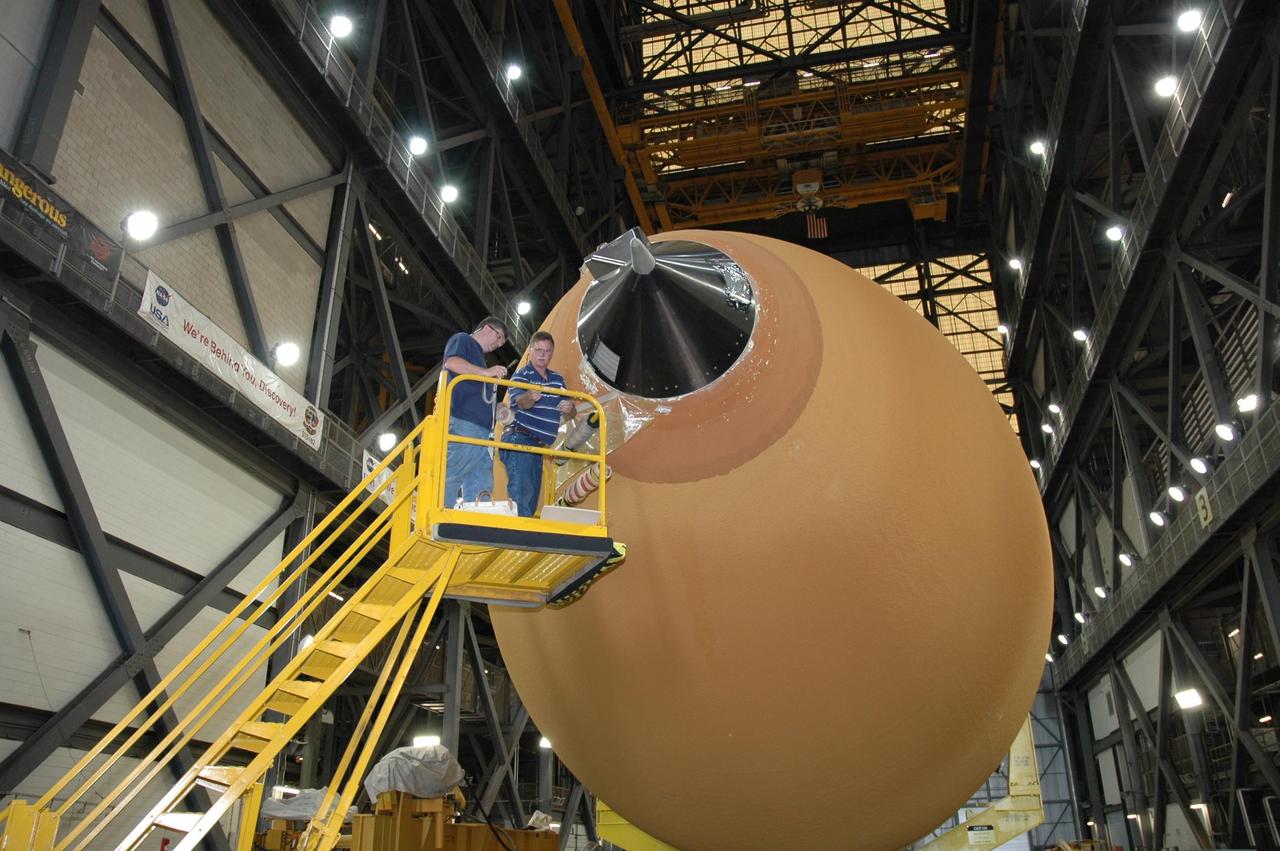
KENNEDY SPACE CENTER, FLA. - In the transfer aisle of the Vehicle Assembly Building, workers get ready to ablate the rim around the nose cap of external tank number 119, the tank designated for mission STS-121. The cap was removed in order to install a new gaseous oxygen vent valve underneath. Vapors are created prior to launch as the liquid oxygen in the external tank boils off. At the forward end of each external tank propellant tank is a vent and relief valve that can be opened before launch for venting or by excessive tank pressure for relief. The vent function is available only before launch. Mission STS-121 to the International Space Station is scheduled for launch in July. Photo credit: NASA/Jim Grossmann
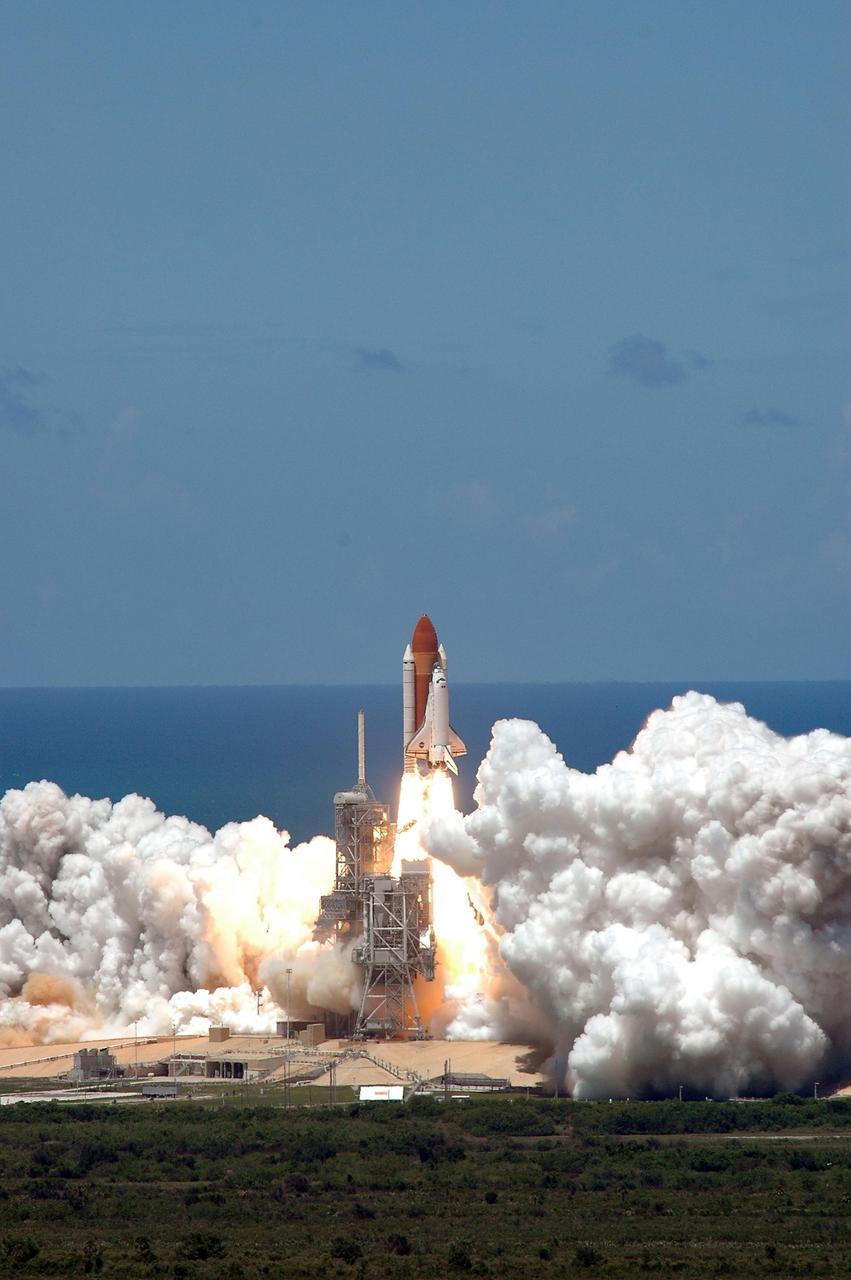
KENNEDY SPACE CENTER, FLA. - Viewed from the top of the Vehicle Assembly Building at NASA's Kennedy Space Center, Space Shuttle Discovery kicks off the Fourth of July fireworks with its own fiery display as it rockets over the blue Atlantic Ocean and into the blue sky, spewing foam and smoke over the ground, on mission STS-121. It was the third launch attempt in four days; the others were scrubbed due to weather concerns. Liftoff was on-time at 2:38 p.m. EDT. During the 12-day mission, the STS-121 crew of seven will test new equipment and procedures to improve shuttle safety, as well as deliver supplies and make repairs to the International Space Station. Landing is scheduled for July 16 or 17 at Kennedy's Shuttle Landing Facility. Photo credit: NASA/Gianni Woods