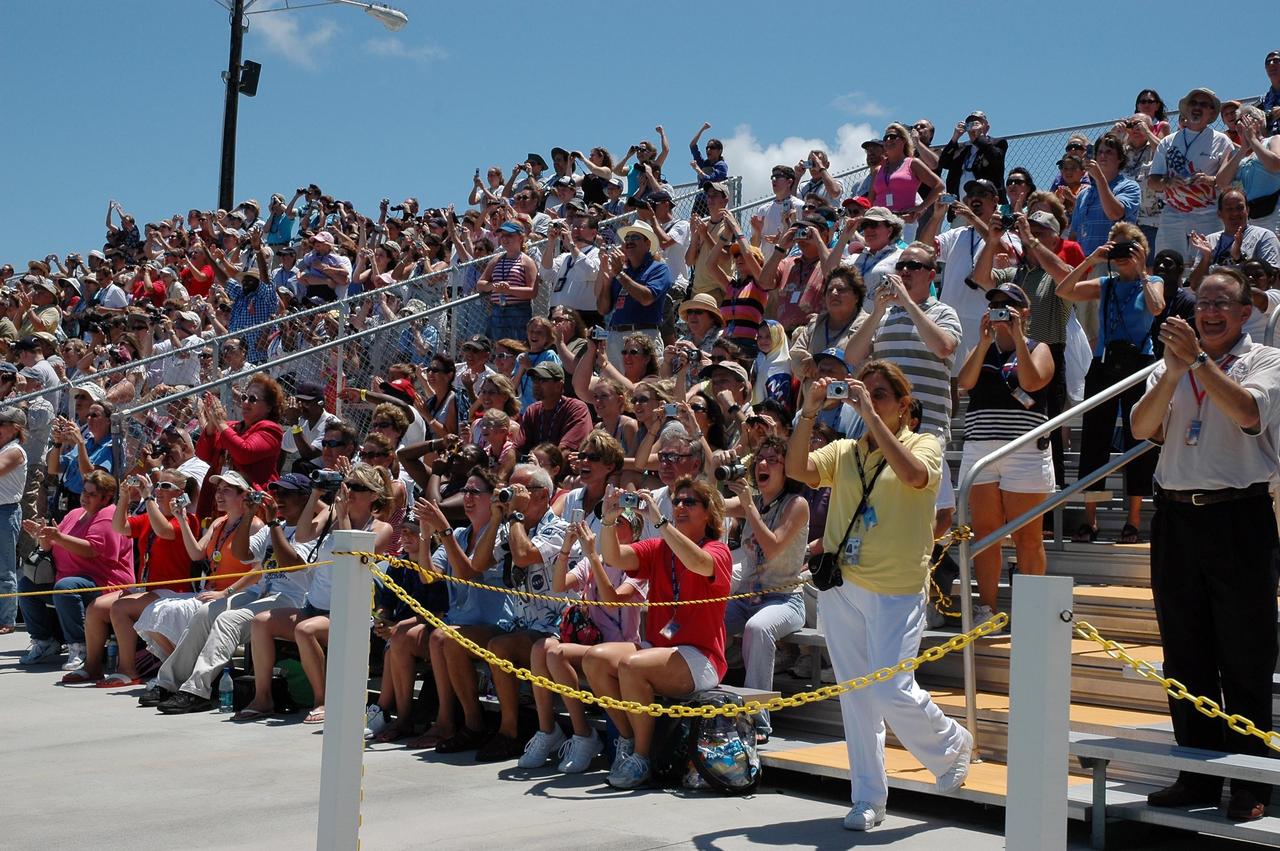
KENNEDY SPACE CENTER, FLA. - Cameras are the accessory of the day at the Kennedy Space Center's Banana River viewing site. All eyes and lenses are focused on Launch Pad 39B and the successful launch of Space Shuttle Discovery on mission STS-121. It was the third launch attempt in four days; the others were scrubbed due to weather concerns. Liftoff was on-time at 2:38 p.m. EDT. During the 12-day mission, the STS-121 crew of seven will test new equipment and procedures to improve shuttle safety, as well as deliver supplies and make repairs to the International Space Station. Landing is scheduled for July 16 or 17 at Kennedy's Shuttle Landing Facility. Photo credit: NASA/Louie Roguevert
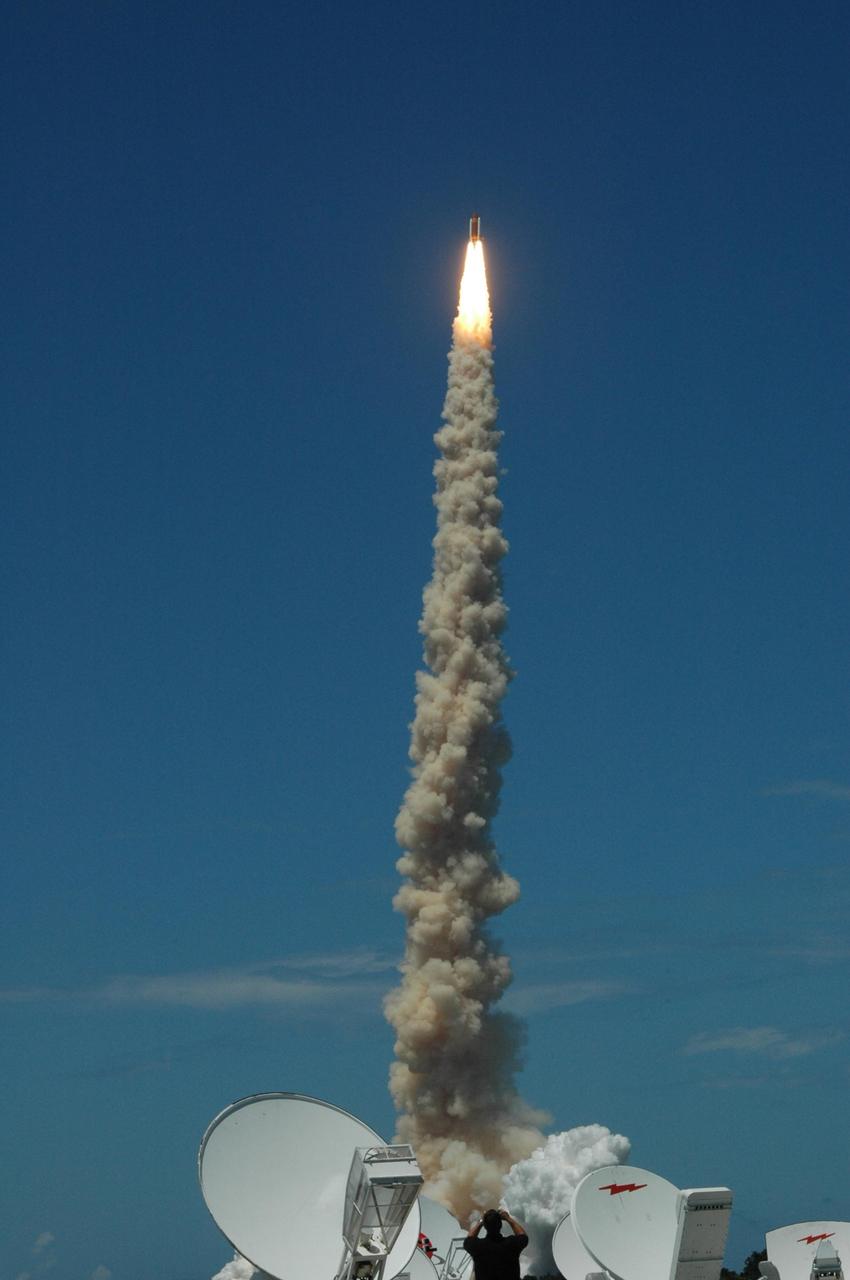
KENNEDY SPACE CENTER, FLA. - Like a roman candle shooting through the blue sky, the launch of Space Shuttle Discovery on mission STS-121 kicks off the fireworks for the U.S. holiday in its third launch attempt in four days. Liftoff was on-time at 2:38 p.m. EDT. During the 12-day mission, the STS-121 crew of seven will test new equipment and procedures to improve shuttle safety, as well as deliver supplies and make repairs to the International Space Station. Landing is scheduled for July 16 or 17 at Kennedy's Shuttle Landing Facility. Photo credit: NASA/Ken Thornsley
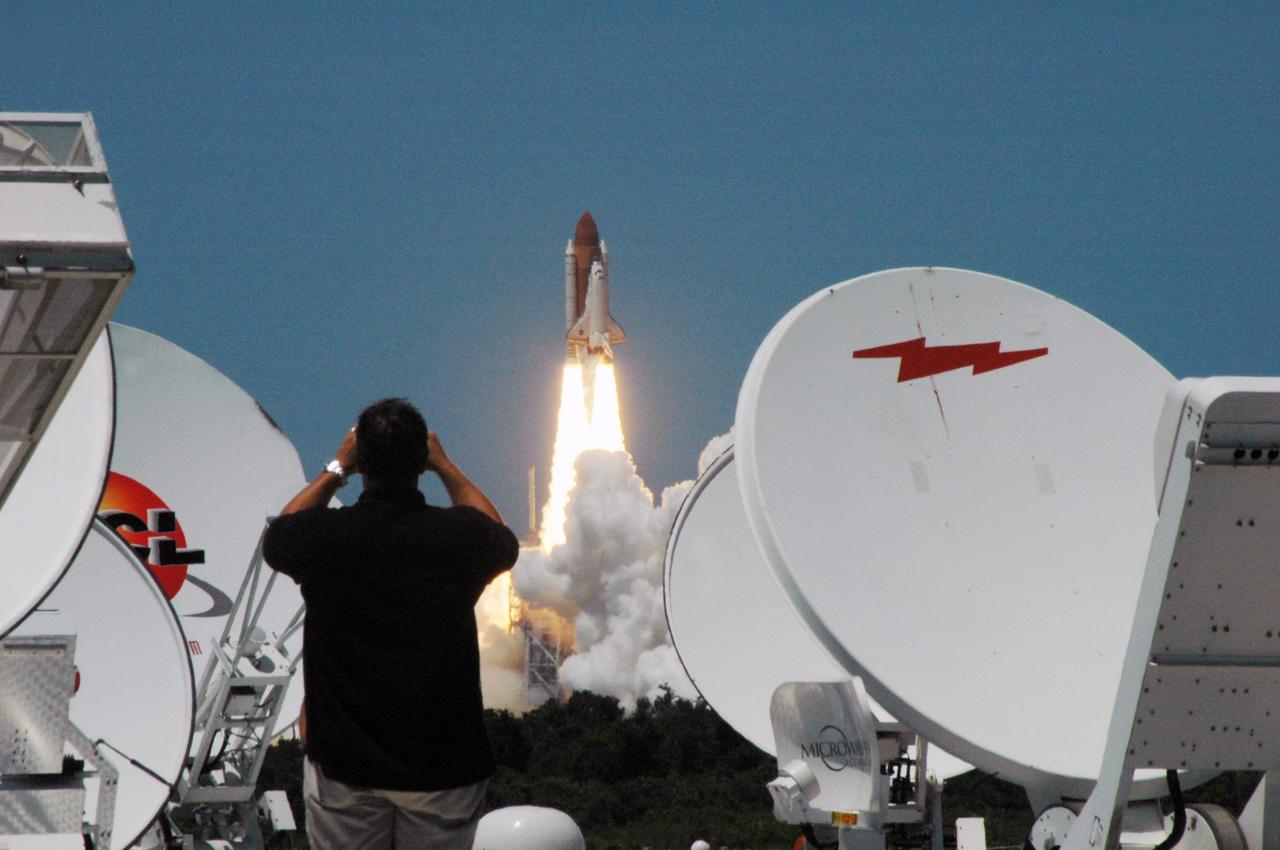
KENNEDY SPACE CENTER, FLA. - Under clear blue skies, the launch of Space Shuttle Discovery on mission STS-121 kicks off the fireworks for the U.S. holiday in its third launch attempt in four days. Liftoff was on-time at 2:38 p.m. EDT. During the 12-day mission, the STS-121 crew of seven will test new equipment and procedures to improve shuttle safety, as well as deliver supplies and make repairs to the International Space Station. Landing is scheduled for July 16 or 17 at Kennedy's Shuttle Landing Facility. Photo credit: NASA/Ken Thornsley
KENNEDY SPACE CENTER, FLA. - Space Shuttle Discovery kicks off the Fourth of July fireworks with its own fiery display as it rockets into the blue sky, spewing foam and smoke over the ground, on mission STS-121. It was the third launch attempt in four days; the others were scrubbed due to weather concerns. Liftoff was on-time at 2:38 p.m. EDT. During the 12-day mission, the STS-121 crew of seven will test new equipment and procedures to improve shuttle safety, as well as deliver supplies and make repairs to the International Space Station. Landing is scheduled for July 16 or 17 at Kennedy's Shuttle Landing Facility. Photo credit: NASA/Sandy Joseph, Robert Murray

KENNEDY SPACE CENTER, FLA. - Space Shuttle Discovery kicks off the Fourth of July fireworks with its own fiery display as it rockets into the blue sky, spewing foam and smoke over the ground, on mission STS-121. It was the third launch attempt in four days; the others were scrubbed due to weather concerns. Liftoff was on-time at 2:38 p.m. EDT. During the 12-day mission, the STS-121 crew of seven will test new equipment and procedures to improve shuttle safety, as well as deliver supplies and make repairs to the International Space Station. Landing is scheduled for July 16 or 17 at Kennedy's Shuttle Landing Facility. Photo credit:NASA/Sandy Joseph, Robert Murray
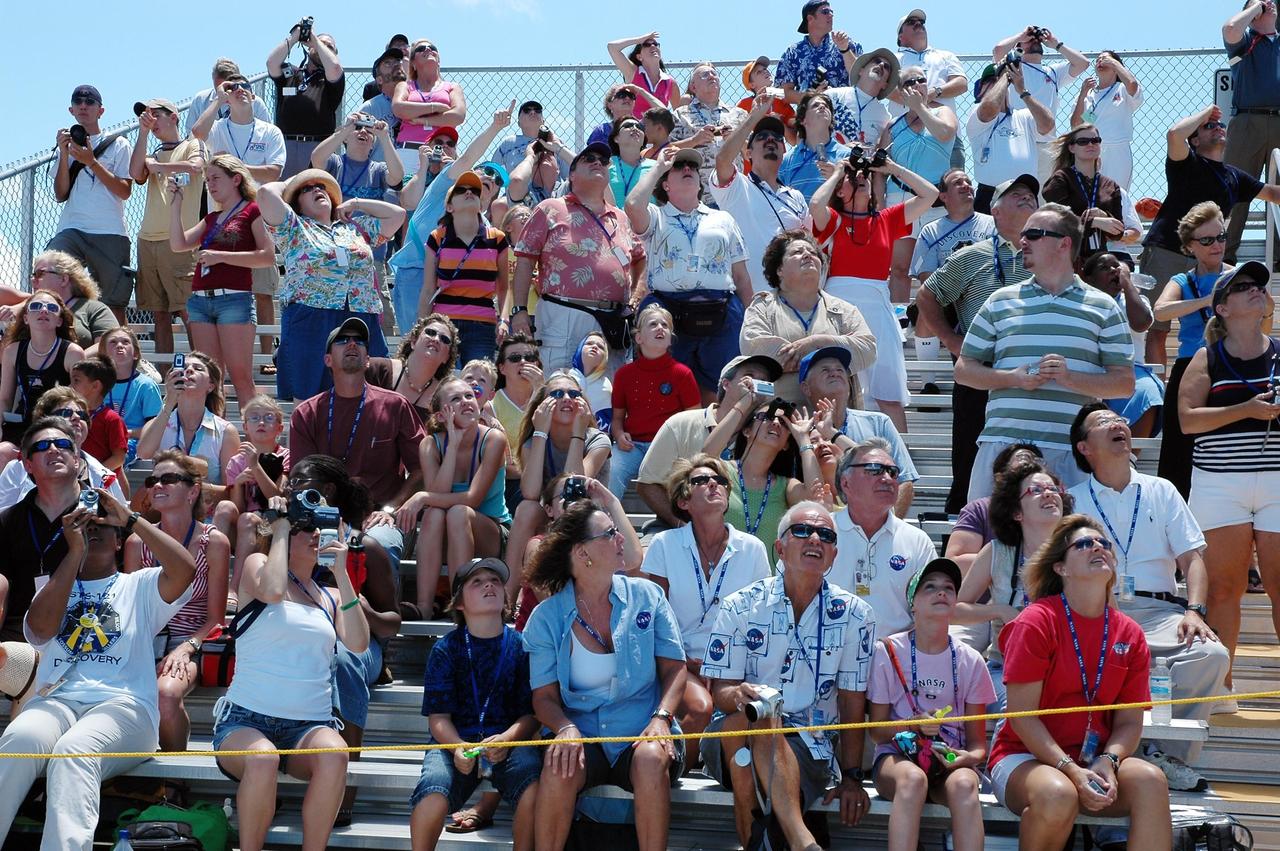
KENNEDY SPACE CENTER, FLA. - Visitors at the Kennedy Space Center's Banana River viewing site stay focused on the historic ride of Space Shuttle Discovery on mission STS-121 as it rockets into the blue sky for an historic launch -- the first ever on Independence Day. Liftoff was on-time at 2:38 p.m. EDT. During the 12-day mission, the STS-121 crew of seven will test new equipment and procedures to improve shuttle safety, as well as deliver supplies and make repairs to the International Space Station. Landing is scheduled for July 16 or 17 at Kennedy's Shuttle Landing Facility. Photo credit: NASA/Louie Roguevert
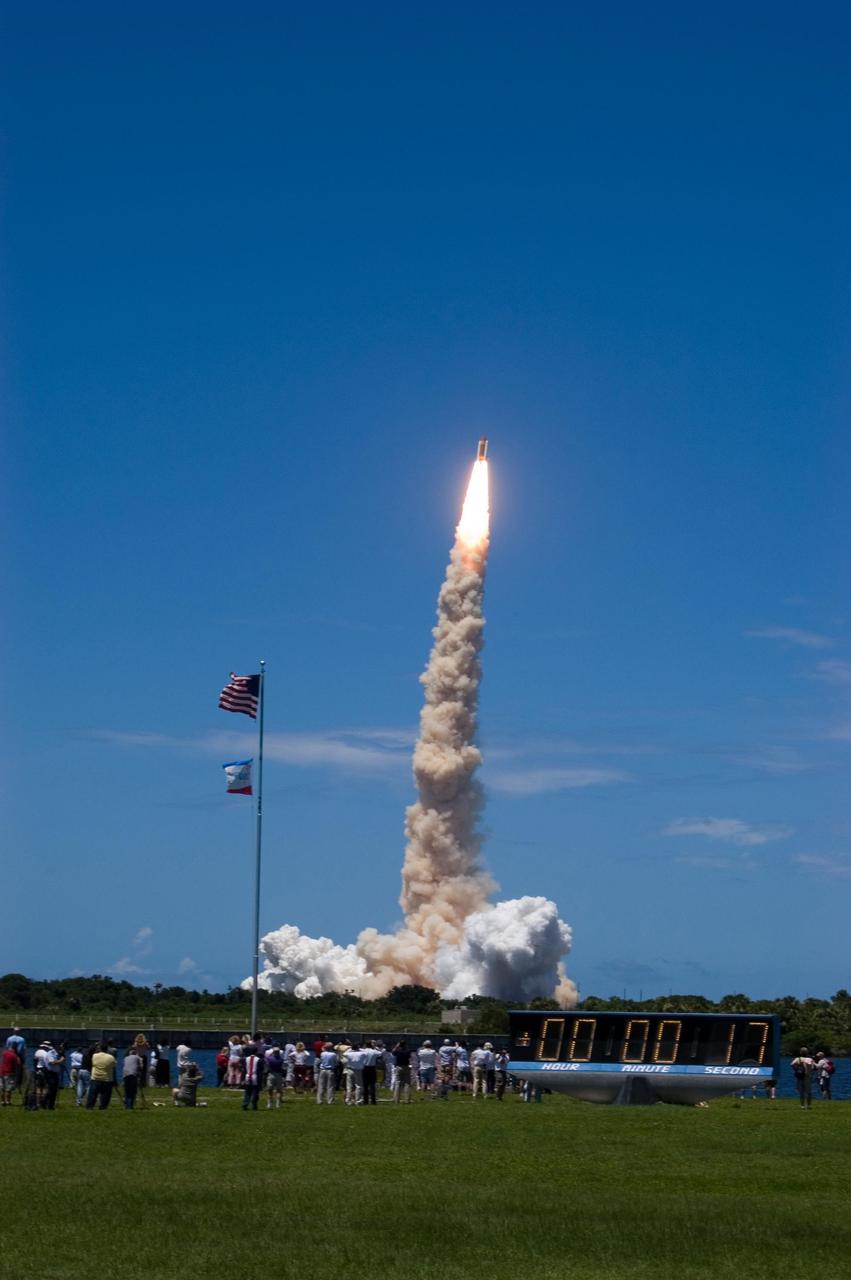
KENNEDY SPACE CENTER, FLA. - Like a roman candle shooting through the blue sky, the launch of Space Shuttle Discovery on mission STS-121 kicks off the fireworks for the U.S. holiday in its third launch attempt in four days. Liftoff was on-time at 2:38 p.m. EDT. The countdown clock on the grounds of the NASA News Center shows 17 seconds into the launch. Media crowd the banks of the turn basin to capture the sight of the launch. During the 12-day mission, the STS-121 crew of seven will test new equipment and procedures to improve shuttle safety, as well as deliver supplies and make repairs to the International Space Station. Landing is scheduled for July 16 or 17 at Kennedy's Shuttle Landing Facility. Photo credit: NASA/George Shelton
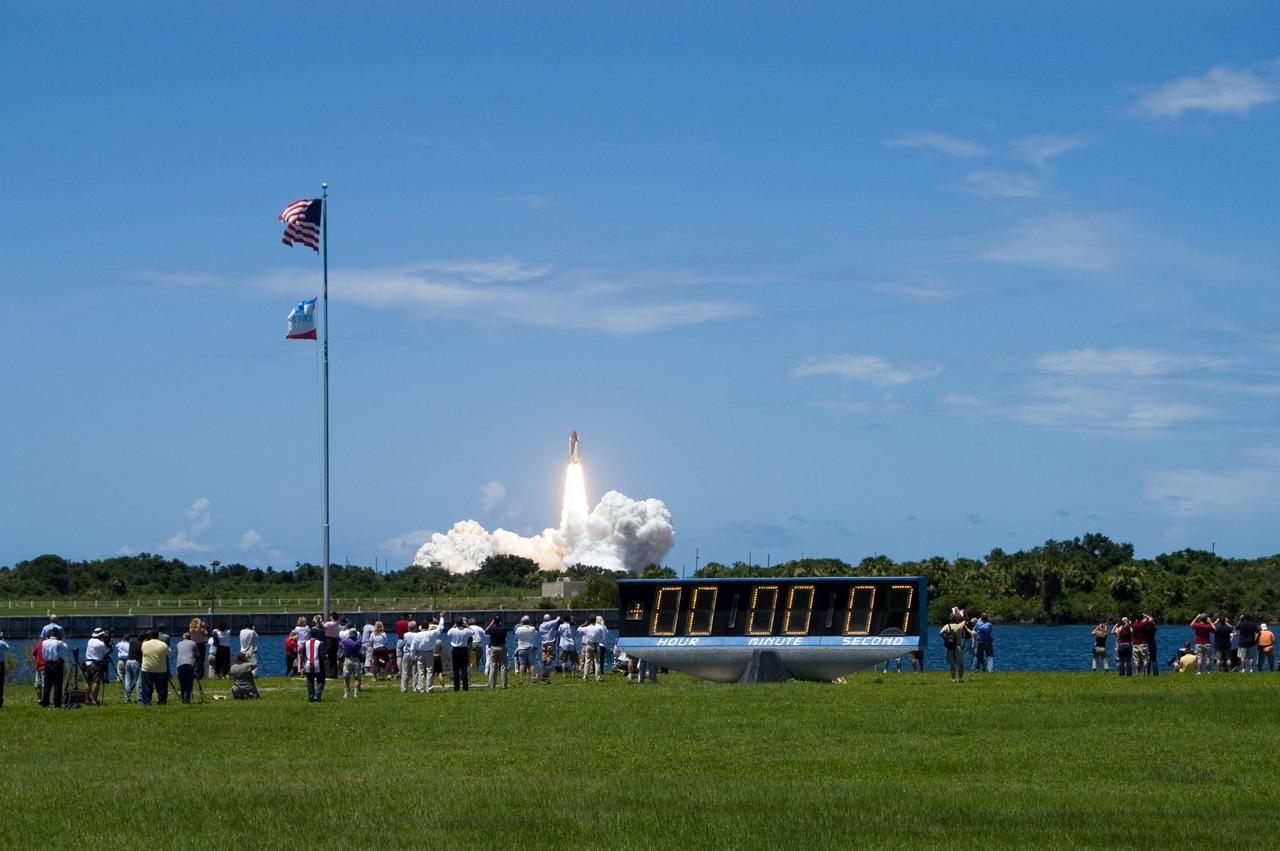
KENNEDY SPACE CENTER, FLA. - Like a roman candle shooting through the blue sky, the launch of Space Shuttle Discovery on mission STS-121 kicks off the fireworks for the U.S. holiday in its third launch attempt in four days. Liftoff was on-time at 2:38 p.m. EDT. The countdown clock on the grounds of the NASA News Center shows 7 seconds into the launch. Media crowd the banks of the turn basin to capture the sight of the launch. During the 12-day mission, the STS-121 crew of seven will test new equipment and procedures to improve shuttle safety, as well as deliver supplies and make repairs to the International Space Station. Landing is scheduled for July 16 or 17 at Kennedy's Shuttle Landing Facility. Photo credit: NASA/George Shelton
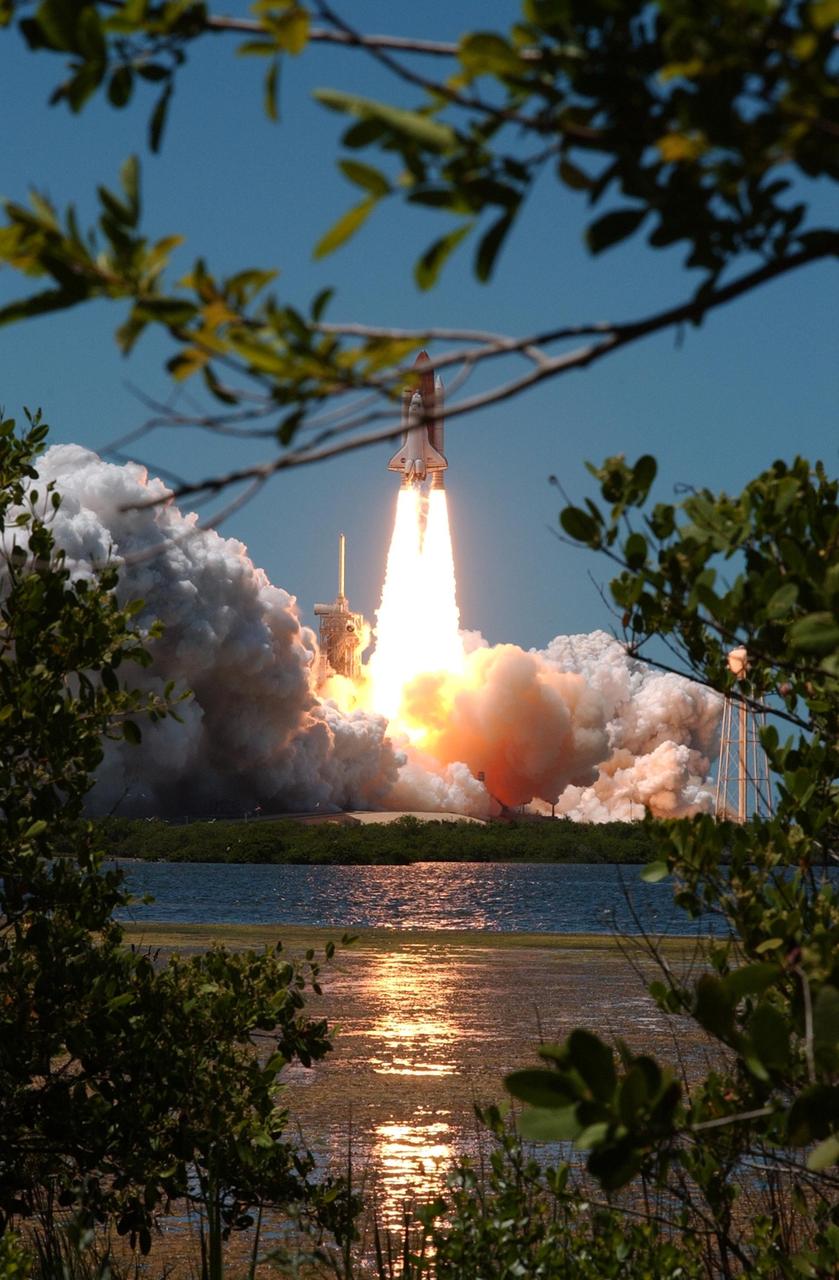
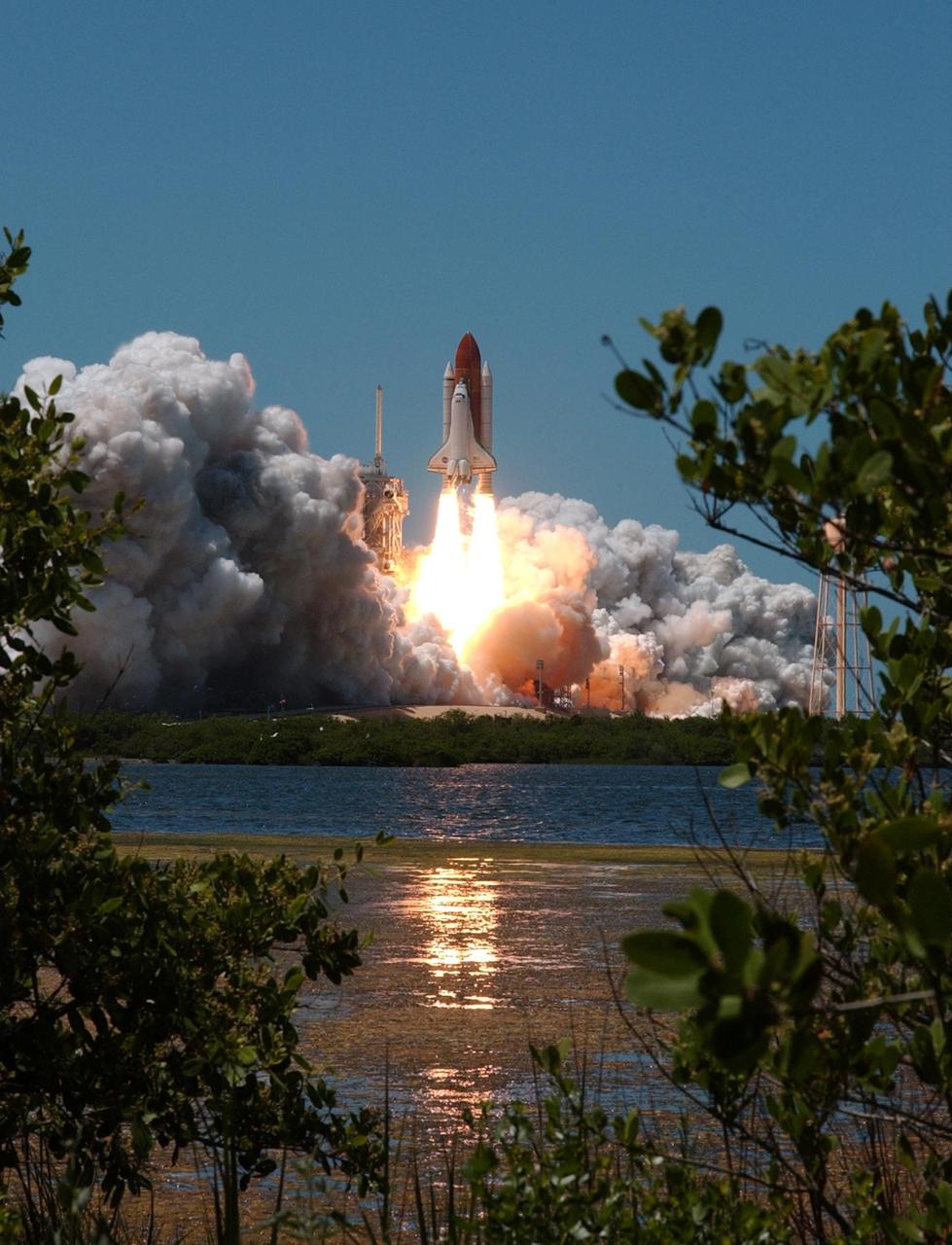
KENNEDY SPACE CENTER, FLA. - Framed by the woods across the pond, Space Shuttle Discovery kicks off the Fourth of July fireworks with its own fiery display as it rockets into the blue sky, spewing foam and smoke over the ground, on mission STS-121. It was the third launch attempt in four days; the others were scrubbed due to weather concerns. Liftoff was on-time at 2:38 p.m. EDT. During the 12-day mission, the STS-121 crew of seven will test new equipment and procedures to improve shuttle safety, as well as deliver supplies and make repairs to the International Space Station. Landing is scheduled for July 16 or 17 at Kennedy's Shuttle Landing Facility. Photo credit: NASA/Sandy Joseph, Robert Murray
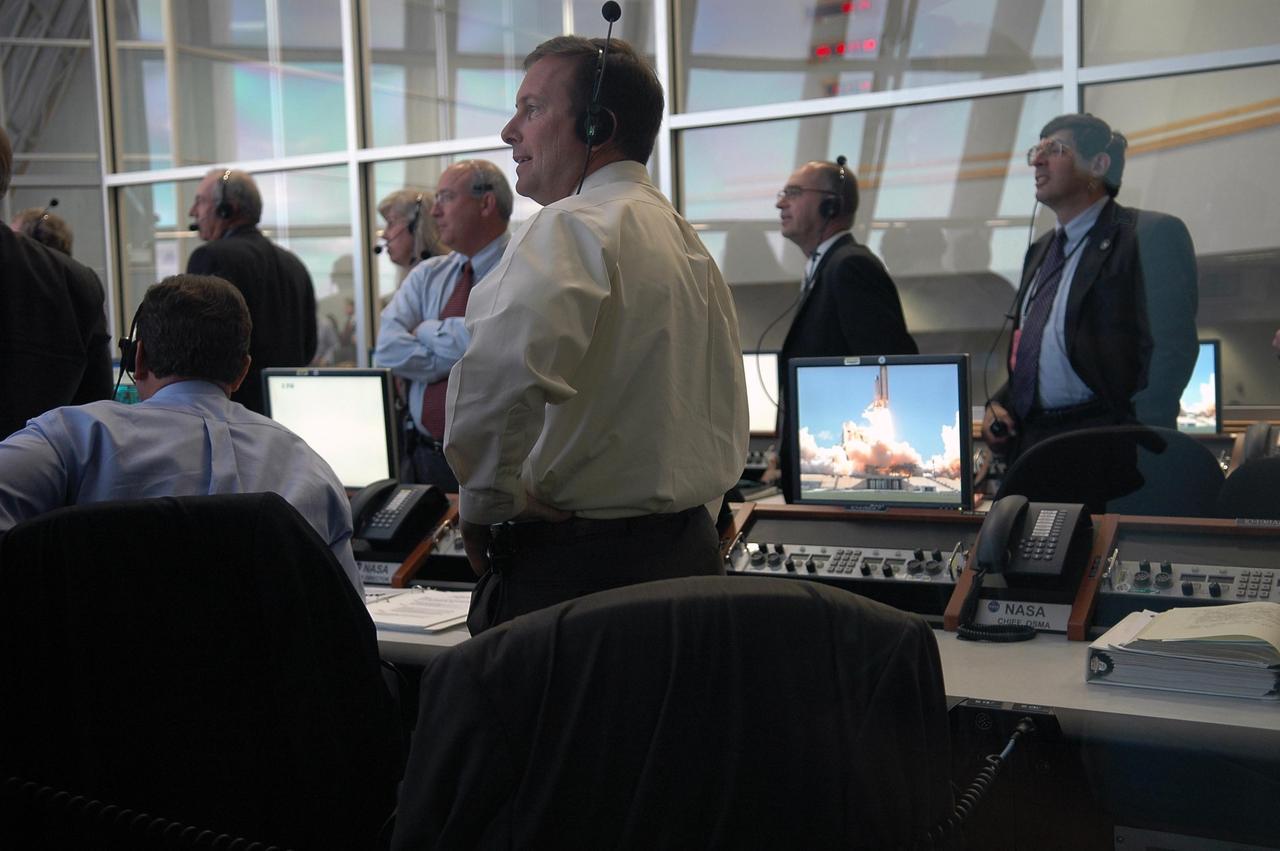
KENNEDY SPACE CENTER, FLA. - In Firing Room 4 of the Launch Control Center, the launch team stands to view the liftoff of Space Shuttle Discovery on mission STS-121 -- the first ever Independence Day launch of a space shuttle. Liftoff was on-time at 2:38 p.m. EDT. During the 12-day mission, the STS-121 crew of seven will test new equipment and procedures to improve shuttle safety, as well as deliver supplies and make repairs to the International Space Station. Landing is scheduled for July 16 or 17 at Kennedy's Shuttle Landing Facility. Photo credit: NASA/Kim Shiflett
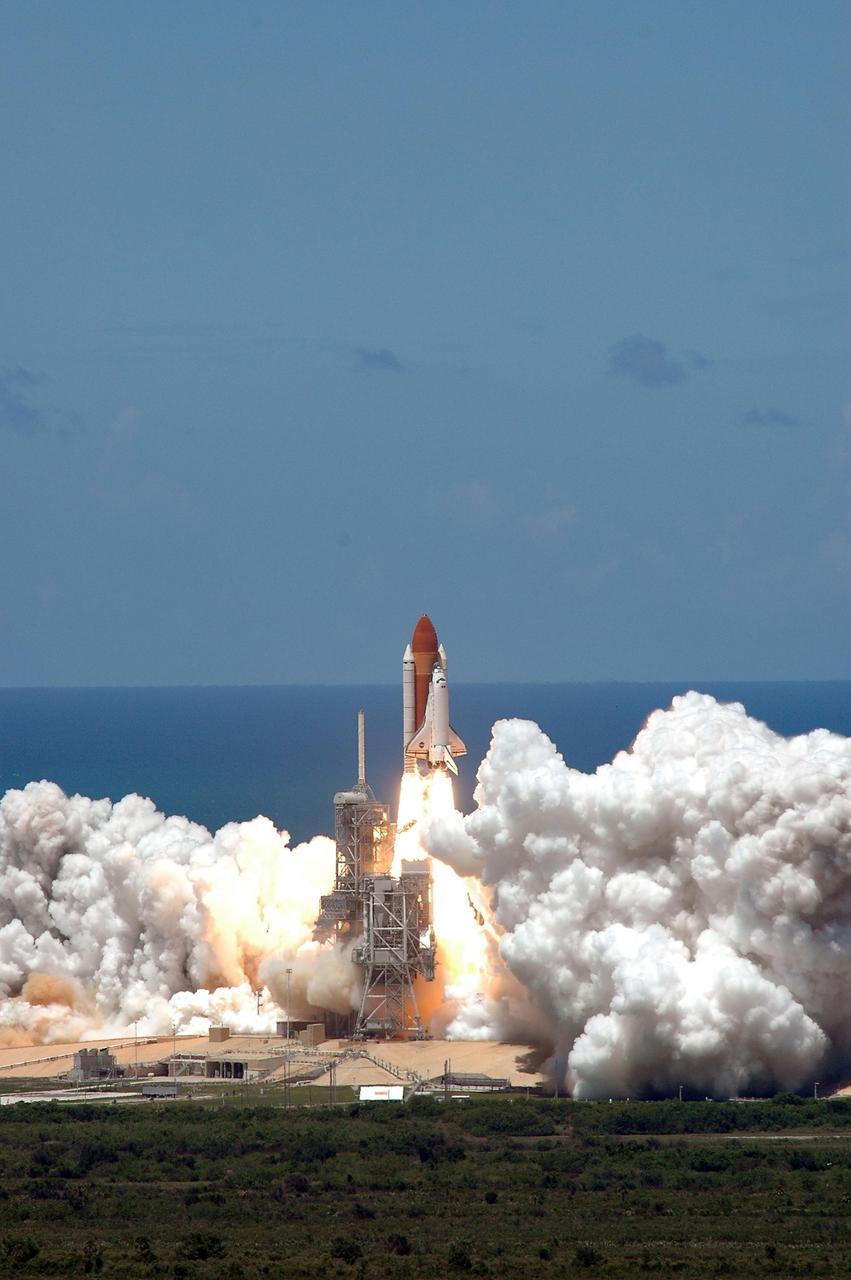
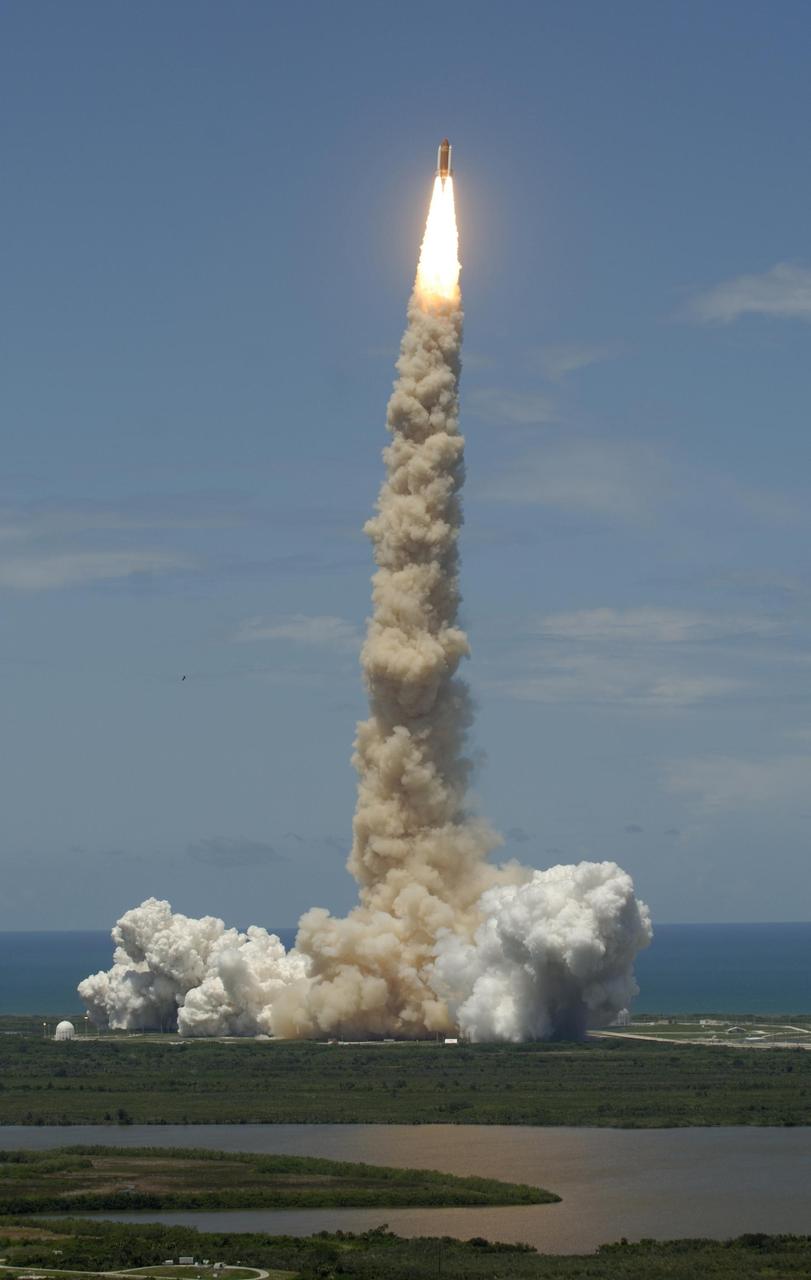
KENNEDY SPACE CENTER, FLA. - Viewed from the top of the Vehicle Assembly Building at NASA's Kennedy Space Center, Space Shuttle Discovery kicks off the Fourth of July fireworks with its own fiery display as it rockets over the blue Atlantic Ocean and into the blue sky, spewing foam and smoke over the ground, on mission STS-121. It was the third launch attempt in four days; the others were scrubbed due to weather concerns. Liftoff was on-time at 2:38 p.m. EDT. During the 12-day mission, the STS-121 crew of seven will test new equipment and procedures to improve shuttle safety, as well as deliver supplies and make repairs to the International Space Station. Landing is scheduled for July 16 or 17 at Kennedy's Shuttle Landing Facility. Photo credit: NASA/Gianni Woods
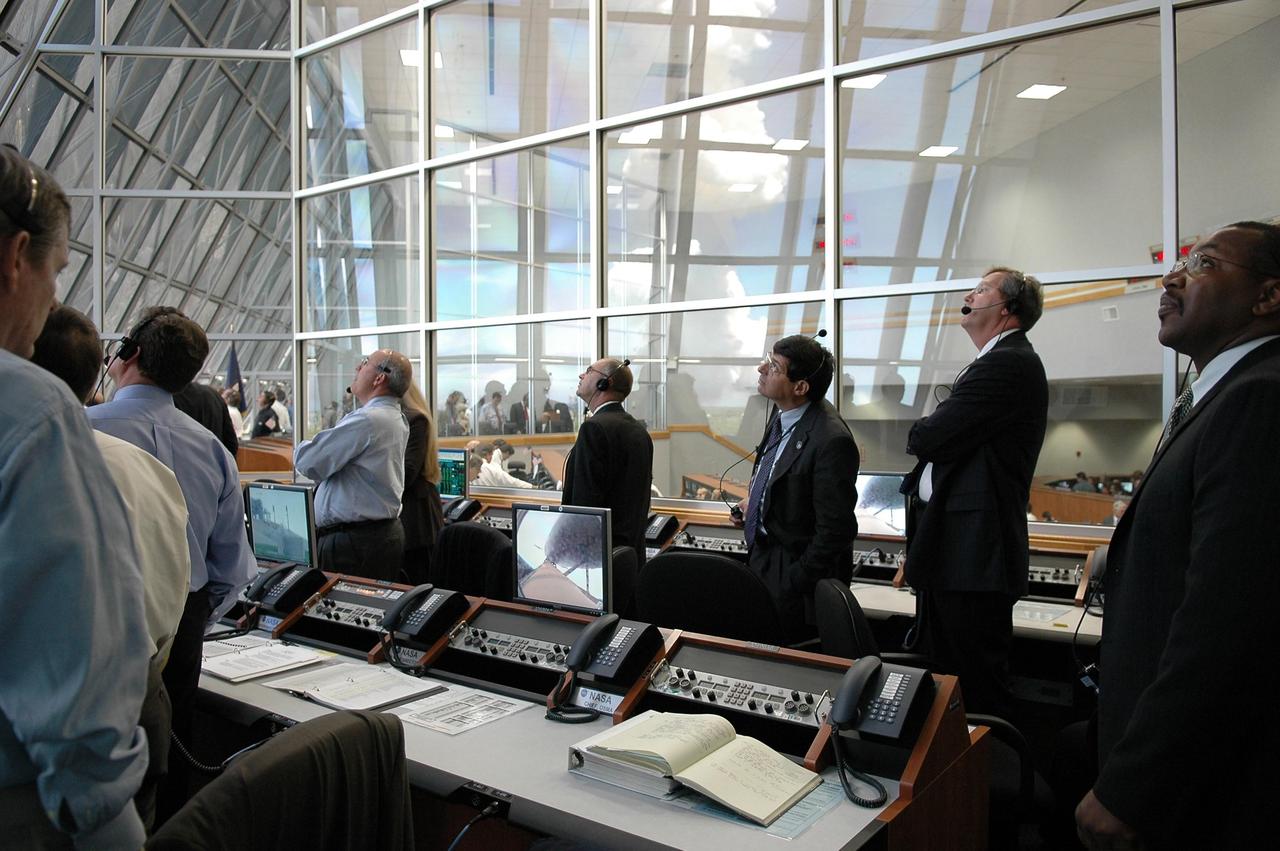
KENNEDY SPACE CENTER, FLA. - Members of the launch team in Firing Room 4 of the Launch Control Center watch the historic ride of Space Shuttle Discovery as it rockets through the sky on mission STS-121 -- the first ever Independence Day launch of a space shuttle. Liftoff was on-time at 2:38 p.m. EDT. During the 12-day mission, the STS-121 crew of seven will test new equipment and procedures to improve shuttle safety, as well as deliver supplies and make repairs to the International Space Station. Landing is scheduled for July 16 or 17 at Kennedy's Shuttle Landing Facility. Photo credit: NASA/Kim Shiflett
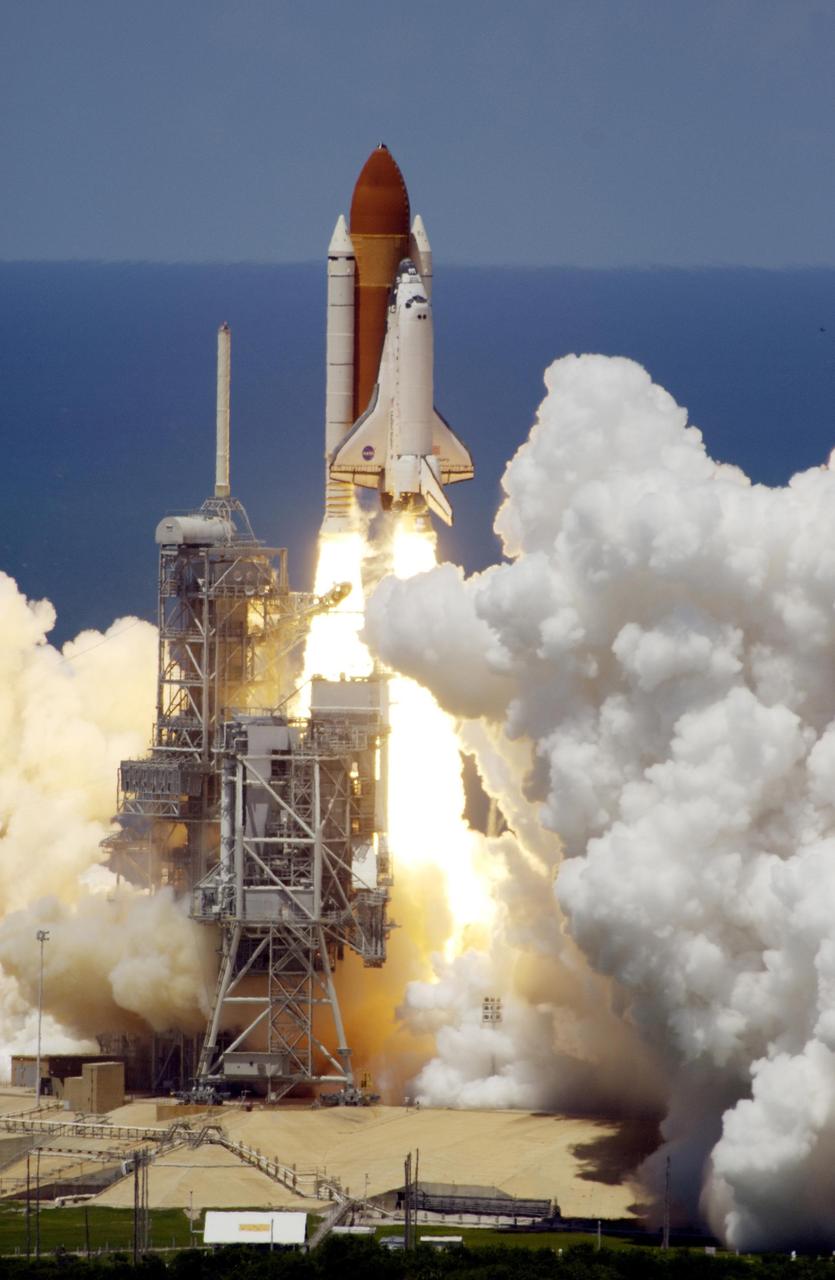
KENNEDY SPACE CENTER, FLA. - As the ground fills with smoke and steam, Space Shuttle Discovery creates its own fireworks display, fitting for the first ever launch to be made on Independence Day. It was the third launch attempt in four days; the others were scrubbed due to weather concerns. Liftoff on mission STS-121 was on-time at 2:38 p.m. EDT. During the 12-day mission, the STS-121 crew of seven will test new equipment and procedures to improve shuttle safety, as well as deliver supplies and make repairs to the International Space Station. Landing is scheduled for July 16 or 17 at Kennedy's Shuttle Landing Facility. Photo courtesy of Nikon/Scott Andrews
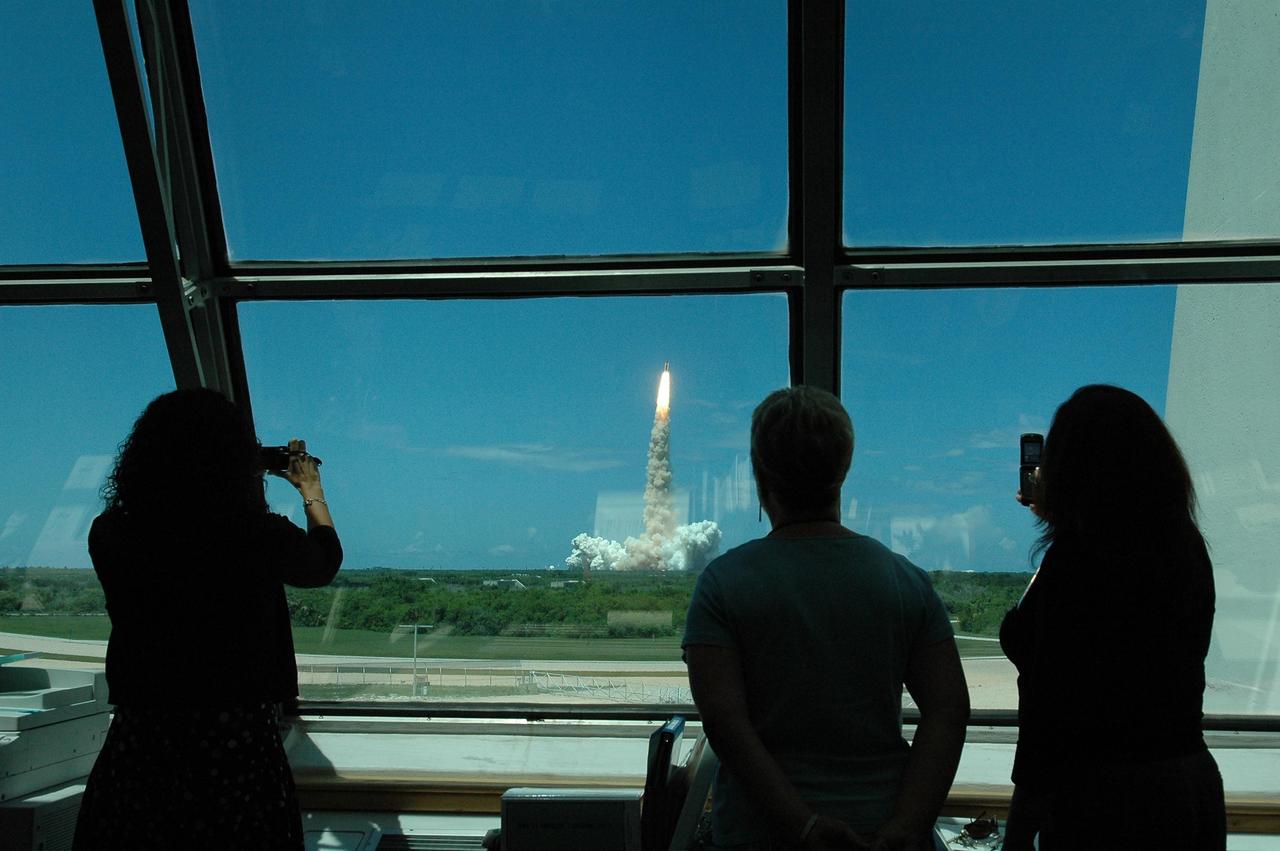
KENNEDY SPACE CENTER, FLA. - Workers in Firing Room 4 of the Launch Control Center take advantage of the view as Space Shuttle Discovery lifts off on mission STS-121 -- the first ever Independence Day launch of a space shuttle. Liftoff was on-time at 2:38 p.m. EDT. During the 12-day mission, the STS-121 crew of seven will test new equipment and procedures to improve shuttle safety, as well as deliver supplies and make repairs to the International Space Station. Landing is scheduled for July 16 or 17 at Kennedy's Shuttle Landing Facility. Photo credit: NASA/Kim Shiflett
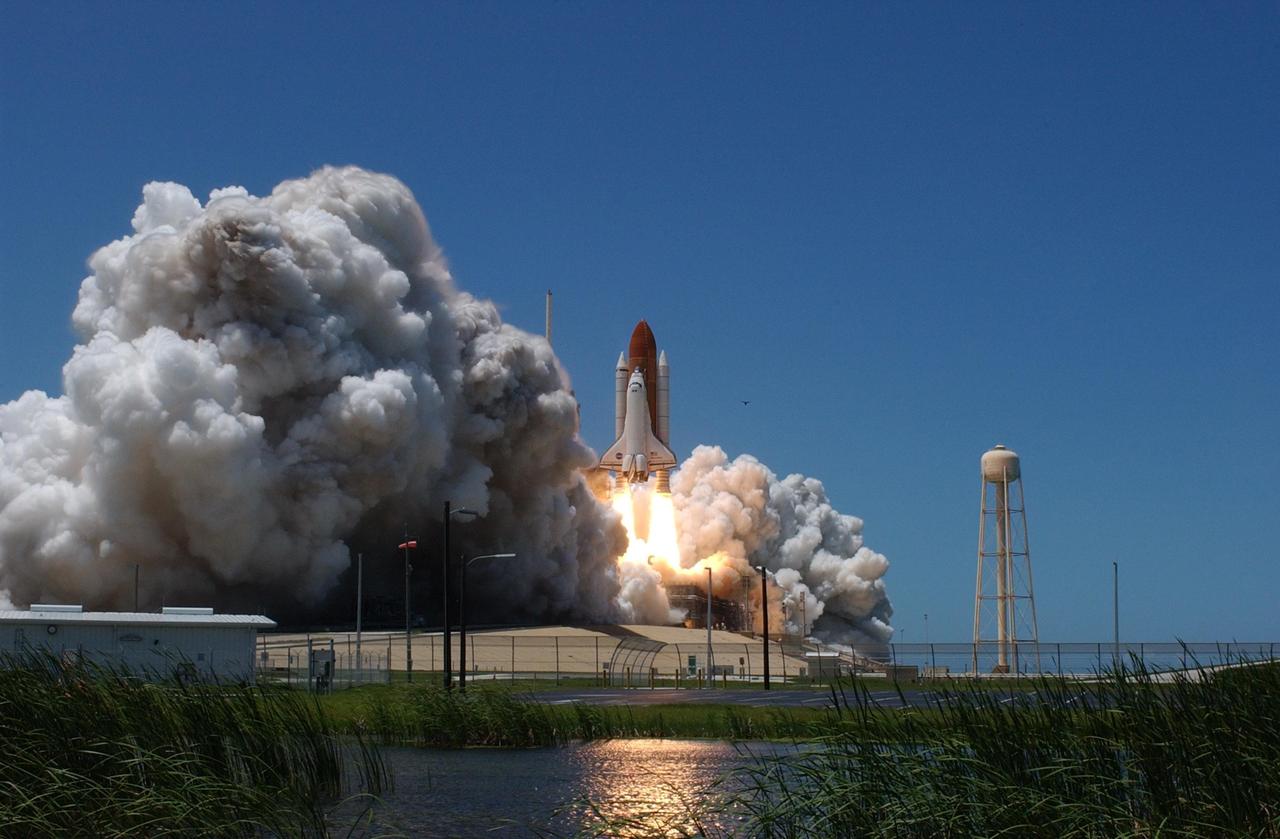
KENNEDY SPACE CENTER, FLA. - From the west side of Launch Pad 39B, Space Shuttle Discovery is viewed moments after liftoff on mission STS-121. The fiery display fit the day: Fourth of July. The launch made history as it was the first ever to take place on Independence Day. During the 12-day mission, the STS-121 crew of seven will test new equipment and procedures to improve shuttle safety, as well as deliver supplies and make repairs to the International Space Station. Landing is scheduled for July 16 or 17 at Kennedy's Shuttle Landing Facility. Photo credit: NASA/Sandy Joseph, Robert Murray

KENNEDY SPACE CENTER, FLA. - In Firing Room 4 of the Launch Control Center, Kennedy Space Center Director Jim Kennedy watches one of the computer screens as the countdown heads for launch of Space Shuttle Discovery on mission STS-121. Liftoff was on-time at 2:38 p.m. EDT. During the 12-day mission, the STS-121 crew of seven will test new equipment and procedures to improve shuttle safety, as well as deliver supplies and make repairs to the International Space Station. Landing is scheduled for July 16 or 17 at Kennedy's Shuttle Landing Facility. Photo credit: NASA/Kim Shiflett
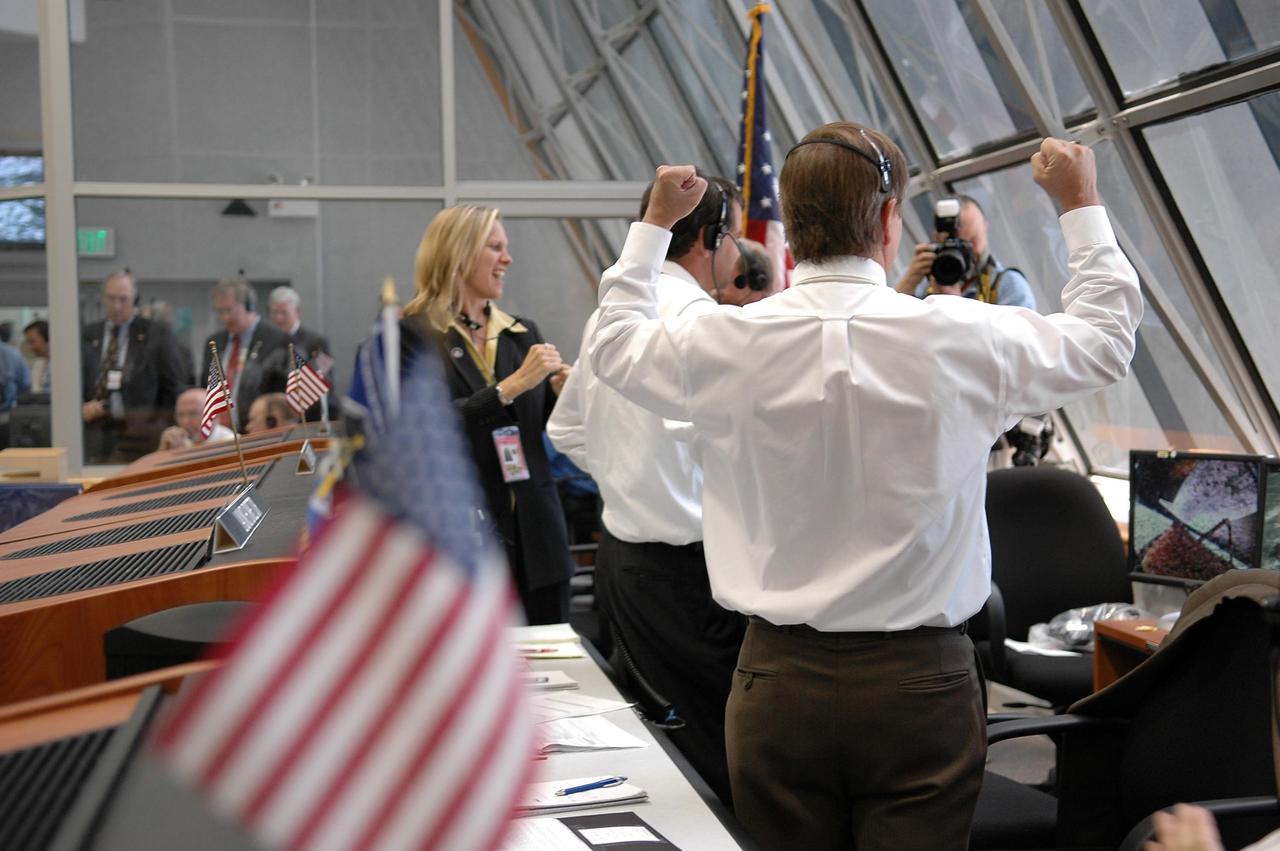
KENNEDY SPACE CENTER, FLA. - In Firing Room 4 of the Launch Control Center, Shuttle Launch Director Mike Leinbach (foreground) cheers over the successful liftoff of Space Shuttle Discovery, watching it rocket through the sky on mission STS-121 -- the first ever Independence Day launch of a space shuttle. At far left is Stephanie Stilson, NASA flow director in the Process Integration Branch of the Shuttle Processing Directorate, who began conducting Discovery's processing operations in December 2000. Liftoff was on-time at 2:38 p.m. EDT. During the 12-day mission, the STS-121 crew of seven will test new equipment and procedures to improve shuttle safety, as well as deliver supplies and make repairs to the International Space Station. Landing is scheduled for July 16 or 17 at Kennedy's Shuttle Landing Facility. Photo credit: NASA/Kim Shiflett
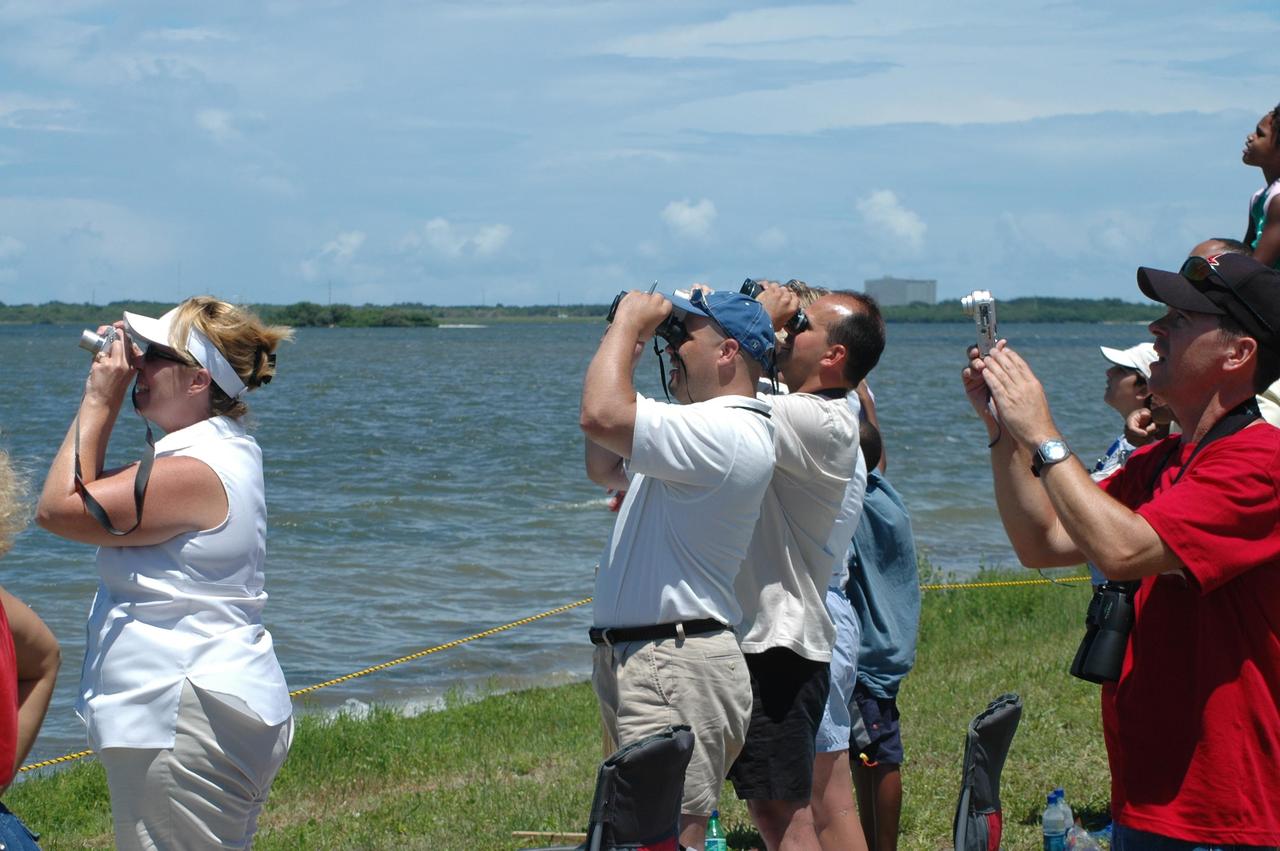
KENNEDY SPACE CENTER, FLA. - All eyes, and lenses, focus on the perfect launch of Space Shuttle Discovery on its third attempt in four days. Kicking off the Fourth of July with its own fireworks, the launch made history as it was the first ever launch on Independence Day. Liftoff was on-time at 2:38 p.m. EDT. During the 12-day mission, the STS-121 crew of seven will test new equipment and procedures to improve shuttle safety, as well as deliver supplies and make repairs to the International Space Station. Landing is scheduled for July 16 or 17 at Kennedy's Shuttle Landing Facility. Photo credit: NASA/Carl Winebarger
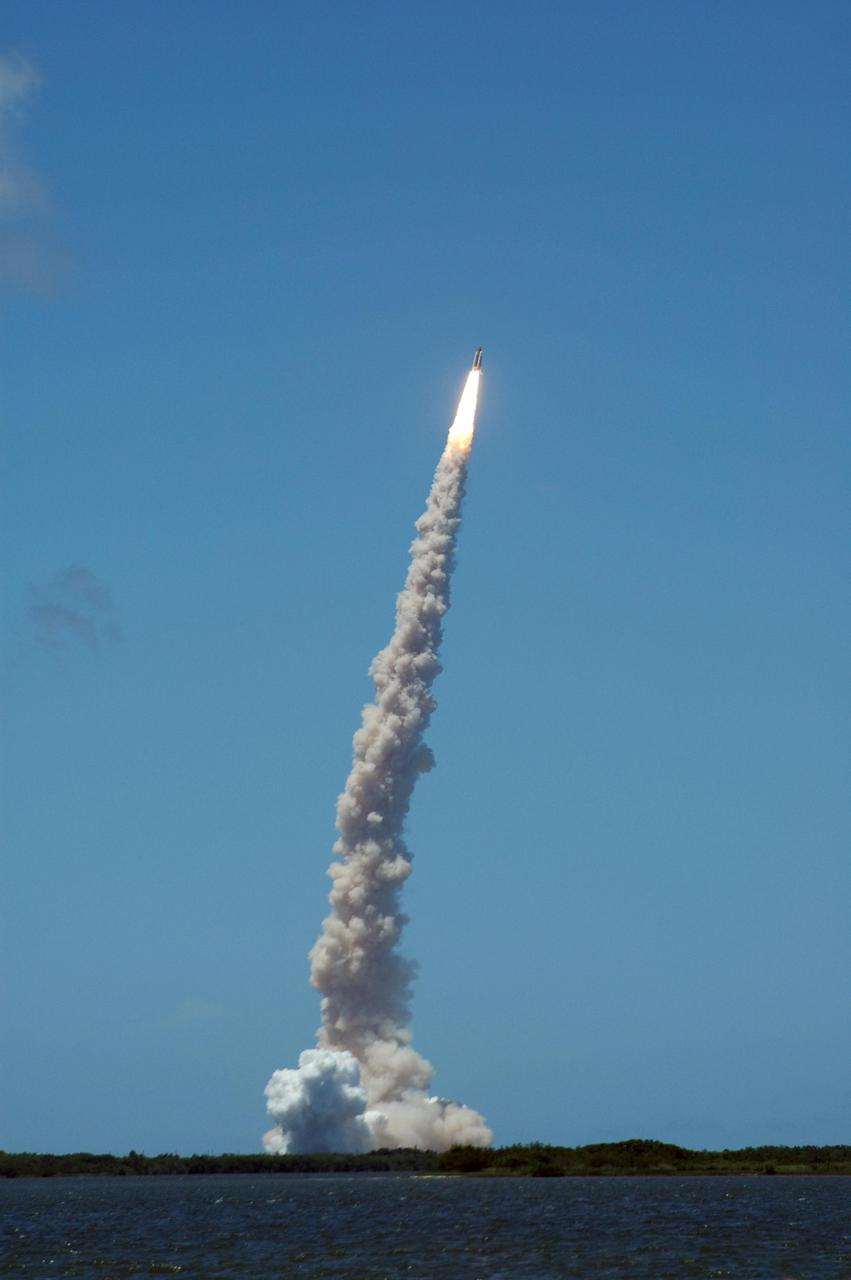
KENNEDY SPACE CENTER, FLA. - Viewed from the NASA Causeway, Space Shuttle Discovery makes a perfect launch as it shoots into the blue sky with its own Fourth of July fireworks. The launch made history as it was the first ever launch on Independence Day. Liftoff was on-time at 2:38 p.m. EDT. During the 12-day mission, the STS-121 crew of seven will test new equipment and procedures to improve shuttle safety, as well as deliver supplies and make repairs to the International Space Station. Landing is scheduled for July 16 or 17 at Kennedy's Shuttle Landing Facility. Photo credit: NASA/Carl Winebarger
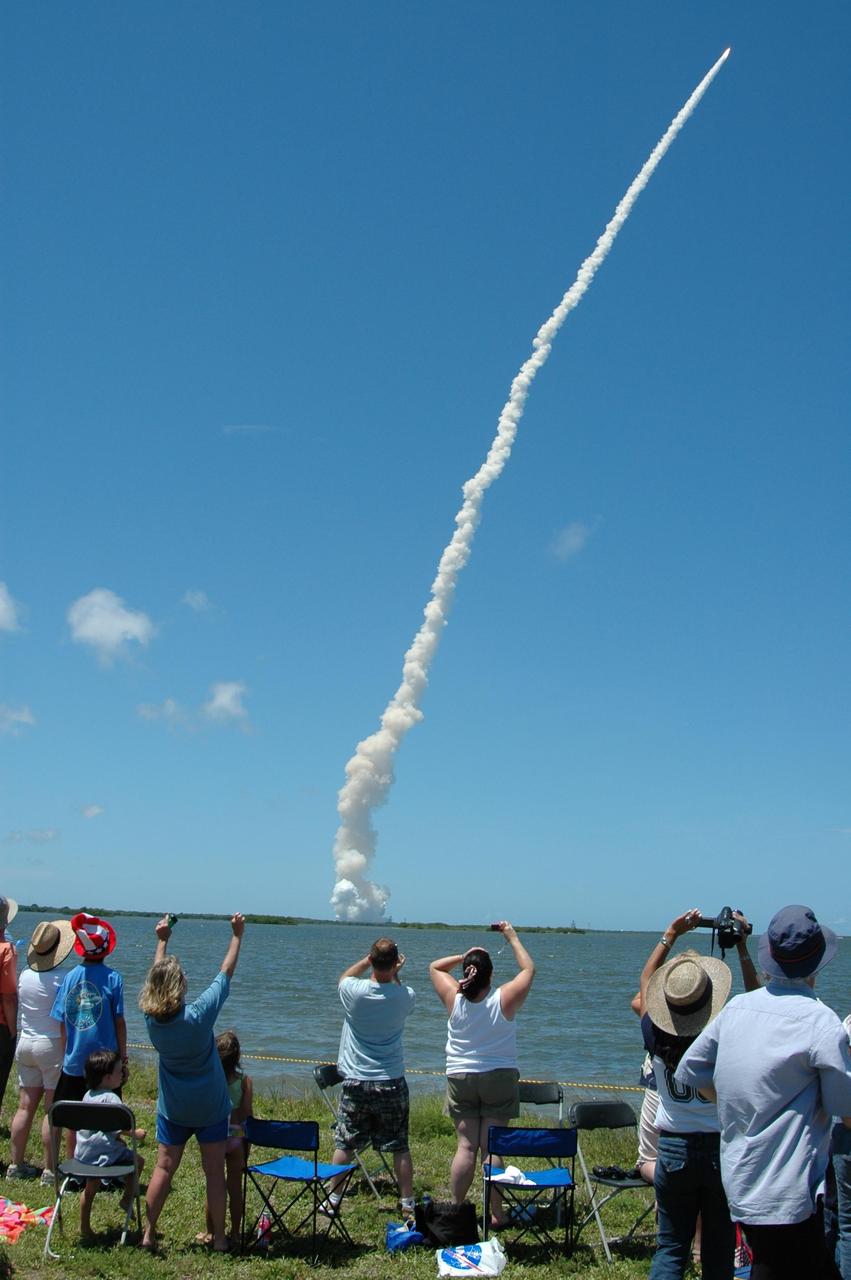
KENNEDY SPACE CENTER, FLA. - Crowds along the NASA Causeway are excited as Space Shuttle Discovery makes a perfect launch, shooting into the blue sky with its own Fourth of July fireworks. The launch made history as it was the first ever launch on Independence Day. Liftoff was on-time at 2:38 p.m. EDT. During the 12-day mission, the STS-121 crew of seven will test new equipment and procedures to improve shuttle safety, as well as deliver supplies and make repairs to the International Space Station. Landing is scheduled for July 16 or 17 at Kennedy's Shuttle Landing Facility. Photo credit: NASA/Carl Winebarger
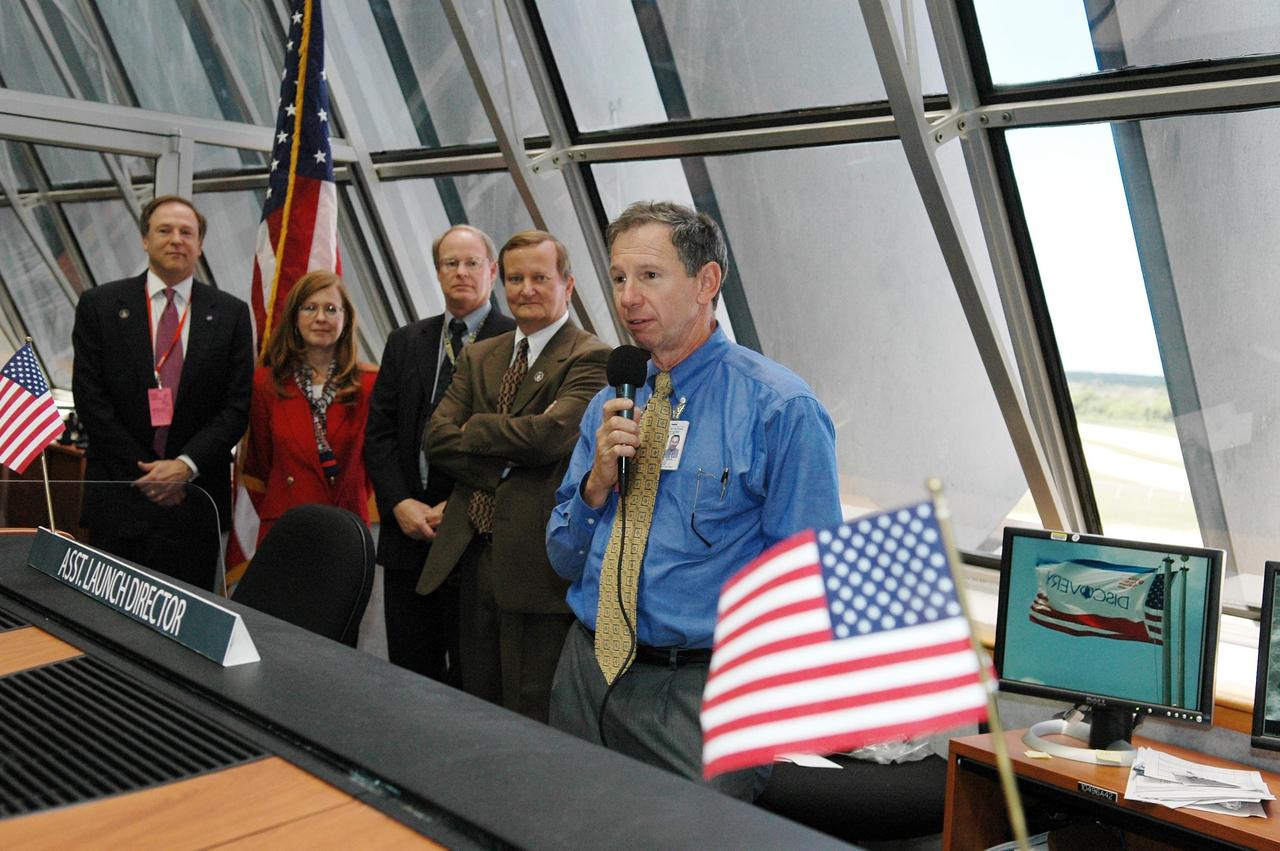
KENNEDY SPACE CENTER, FLA. - In Firing Room 4 of the Launch Control Center, NASA Administrator Mike Griffin congratulates the launch team on the successful launch of Space Shuttle Discovery on mission STS-121. The launch was the first ever to take place on Independence Day. Liftoff was on-time at 2:38 p.m. EDT. Others next to Griffin are (left to right) David R. Mould, assistant administrator for NASA Public Affairs ; Lisa Malone, director of External Relations at Kennedy; Bruce Buckingham, news chief at the NASA News Center at Kennedy; and Mike Leinbach, Shuttle Program director. During the 12-day mission, the STS-121 crew of seven will test new equipment and procedures to improve shuttle safety, as well as deliver supplies and make repairs to the International Space Station. Landing is scheduled for July 16 or 17 at Kennedy's Shuttle Landing Facility. Photo credit: NASA/Kim Shiflett
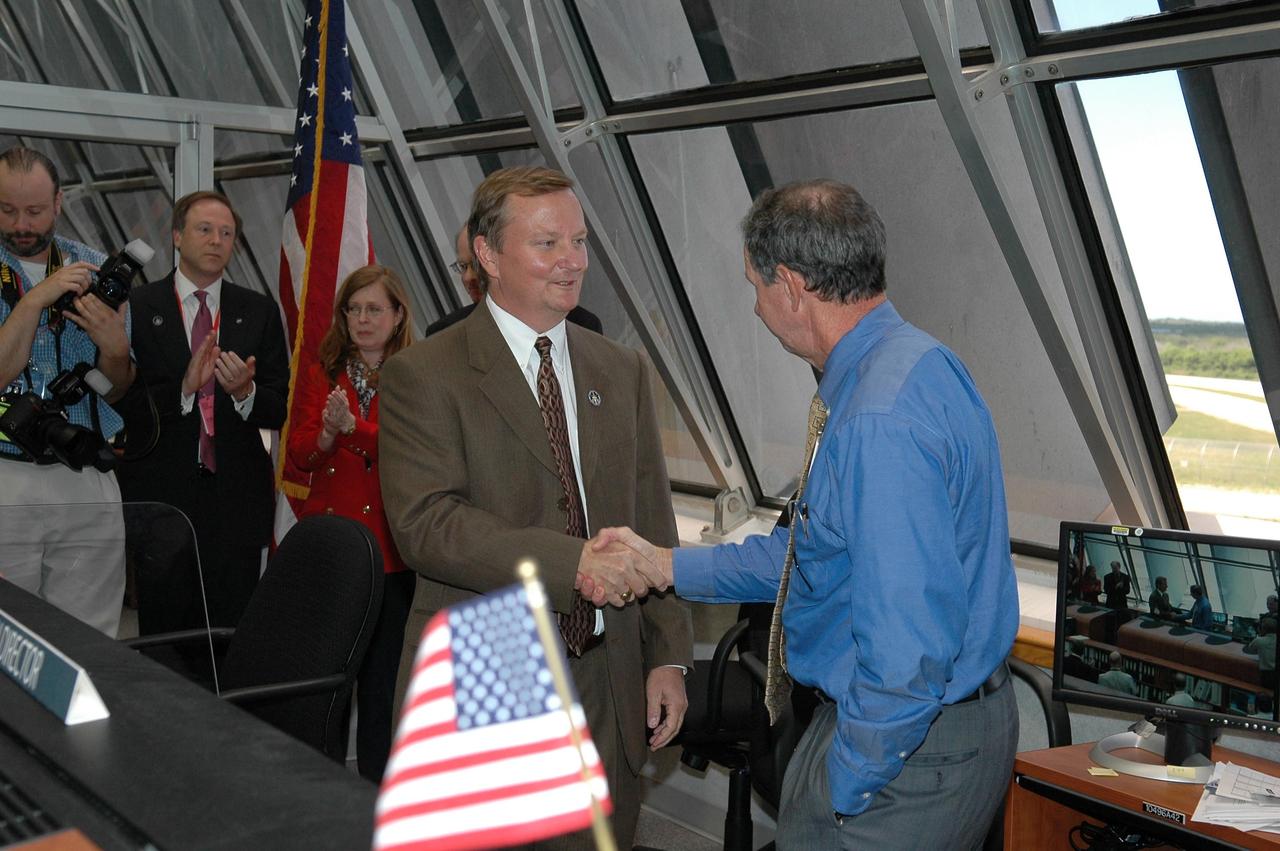
KENNEDY SPACE CENTER, FLA. - In Firing Room 4 of the Launch Control Center, Shuttle Launch Director Mike Leinbach (center) is congratulated by NASA Administrator Mike Griffin (right) for the successful launch of Space Shuttle Discovery on mission STS-121. The launch was the first ever to take place on Independence Day. Behind Leinbach are David R. Mould, assistant administrator for Public Affairs NASA, and Lisa Malone, director of External Relations at Kennedy. Liftoff was on-time at 2:38 p.m. EDT. During the 12-day mission, the STS-121 crew of seven will test new equipment and procedures to improve shuttle safety, as well as deliver supplies and make repairs to the International Space Station. Landing is scheduled for July 16 or 17 at Kennedy's Shuttle Landing Facility. Photo credit: NASA/Kim Shiflett
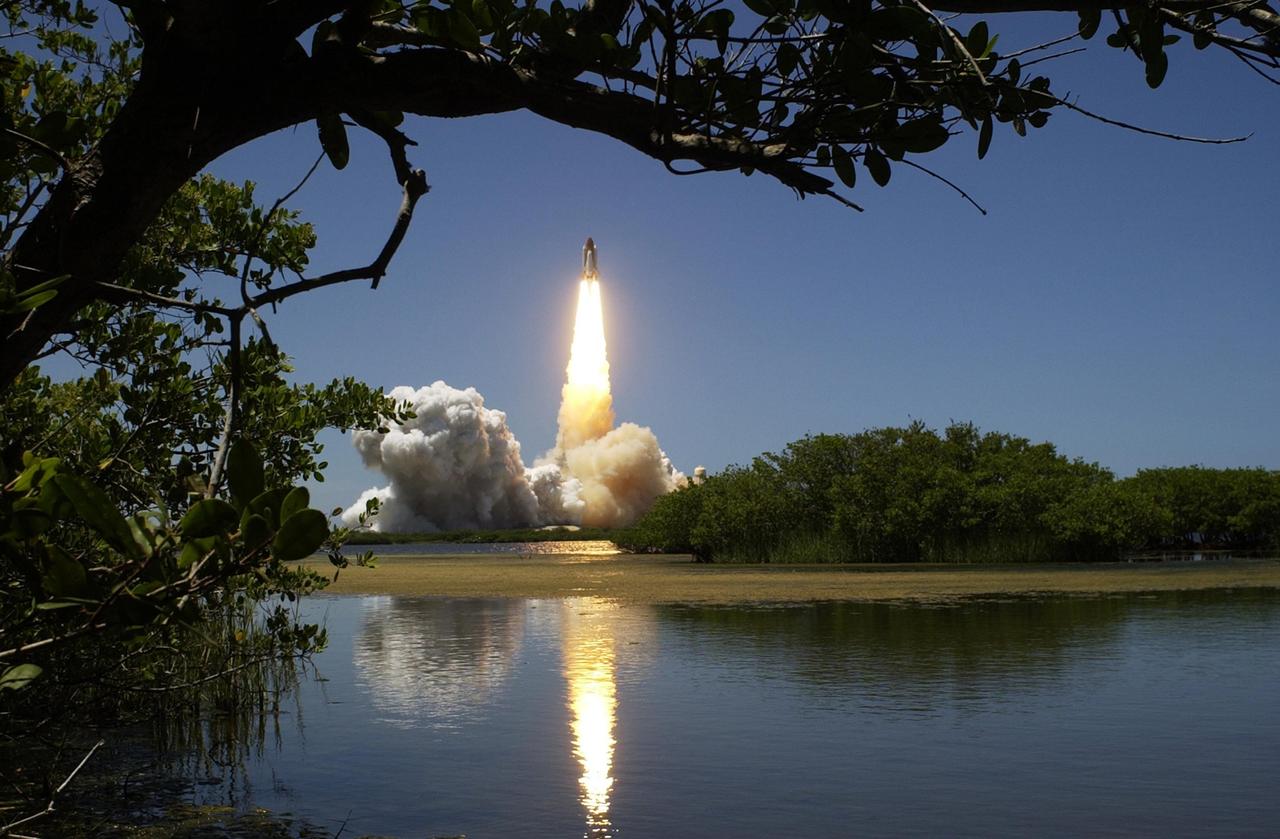
KENNEDY SPACE CENTER, FLA. - Shooting like a roman candle into Florida's blue sky from Launch Pad 39B, Space Shuttle Discovery kicks off the Fourth of July fireworks with its own fiery display, reflected as well in the nearby water. History was made with the first ever launch on Independence Day. It was the third launch attempt in four days; the others were scrubbed due to weather concerns. Liftoff on mission STS-121 was on-time at 2:38 p.m. EDT. During the 12-day mission, the STS-121 crew of seven will test new equipment and procedures to improve shuttle safety, as well as deliver supplies and make repairs to the International Space Station. Landing is scheduled for July 16 or 17 at Kennedy's Shuttle Landing Facility. Photo courtesy of Nikon/Scott Andrews
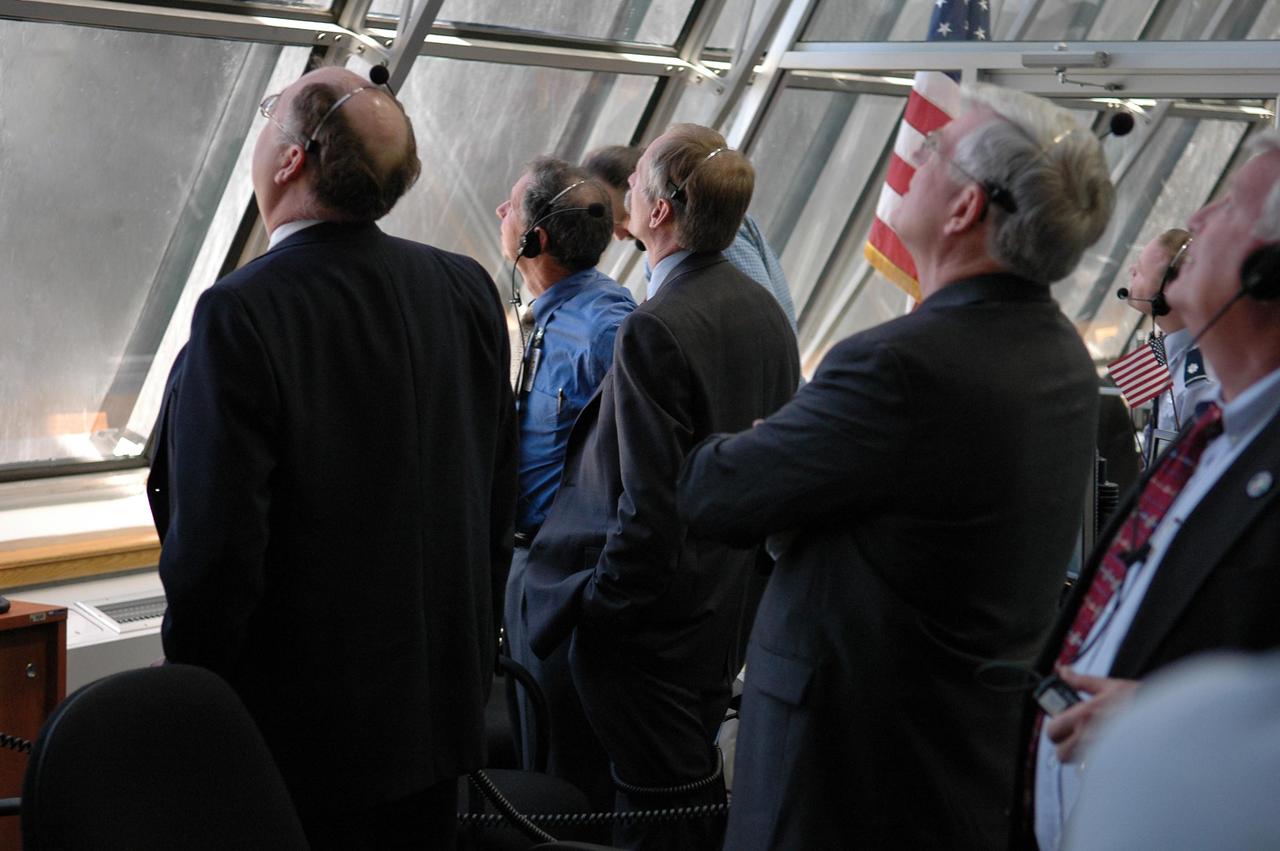
KENNEDY SPACE CENTER, FLA. - In Firing Room 4 of the Launch Control Center, Shuttle Program manager Wayne Hale (far left), NASA Associate Administrator for Space Operations Mission Bill Gerstenmaier (third from left) and Center Director Jim Kennedy (far right) watch the historic ride of Space Shuttle Discovery as it rockets through the sky on mission STS-121 -- the first ever Independence Day launch of a space shuttle. Liftoff was on-time at 2:38 p.m. EDT. During the 12-day mission, the STS-121 crew of seven will test new equipment and procedures to improve shuttle safety, as well as deliver supplies and make repairs to the International Space Station. Landing is scheduled for July 16 or 17 at Kennedy's Shuttle Landing Facility. Photo credit: NASA/Kim Shiflett
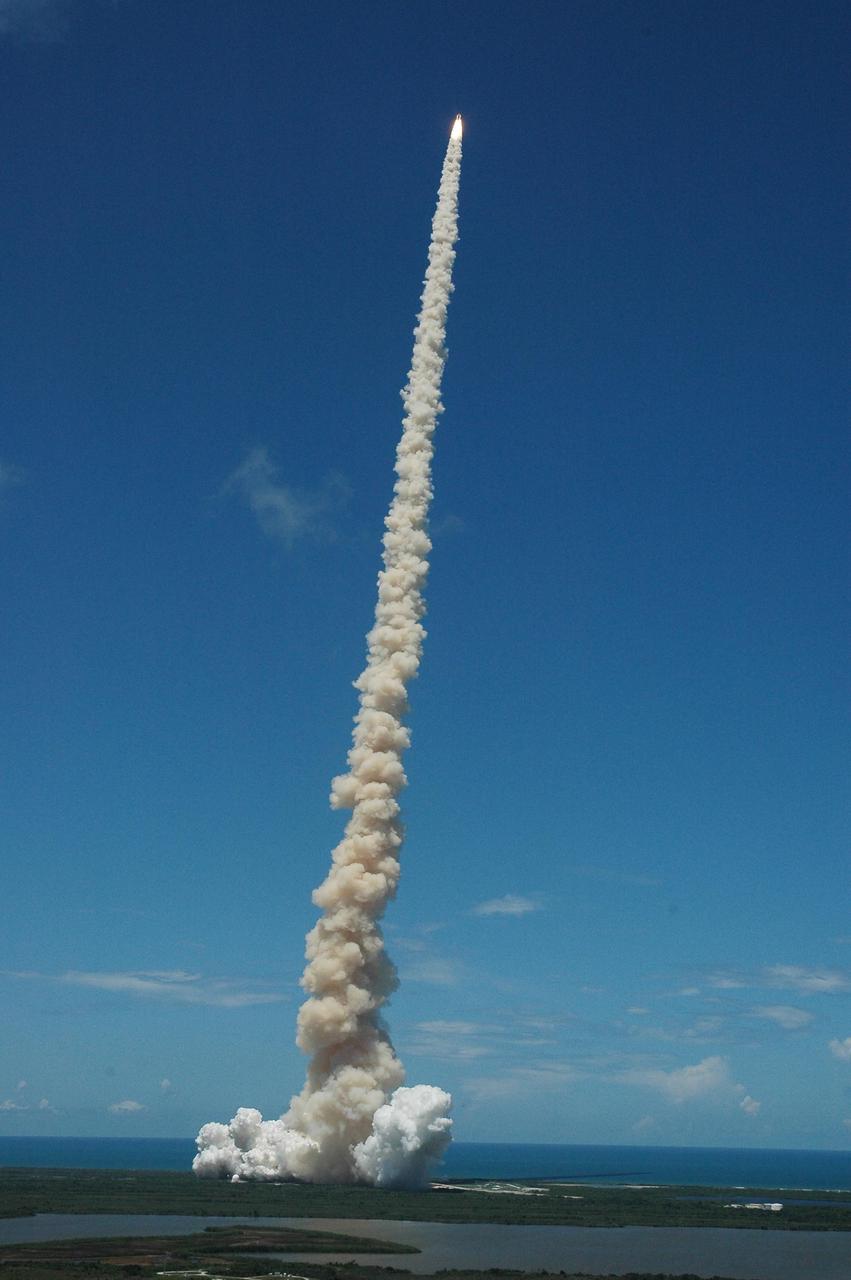
KENNEDY SPACE CENTER, FLA. - Space Shuttle Discovery shoots into Florida's blue sky over the blue Atlantic Ocean, kicking off Fourth of July fireworks with its own fiery display. History was made with the first ever launch on Independence Day. It was the third launch attempt in four days; the others were scrubbed due to weather concerns. Liftoff on mission STS-121 was on-time at 2:38 p.m. EDT. During the 12-day mission, the STS-121 crew of seven will test new equipment and procedures to improve shuttle safety, as well as deliver supplies and make repairs to the International Space Station. Landing is scheduled for July 16 or 17 at Kennedy's Shuttle Landing Facility. Photo courtesy of Nikon/Scott Andrews
KENNEDY SPACE CENTER, FLA. - Shooting like a roman candle into Florida's blue sky, Space Shuttle Discovery kicks off the Fourth of July fireworks with its own fiery display and makes history with the first ever launch on Independence Day. It was the third launch attempt in four days; the others were scrubbed due to weather concerns. Liftoff was on-time at 2:38 p.m. EDT. During the 12-day mission, the STS-121 crew of seven will test new equipment and procedures to improve shuttle safety, as well as deliver supplies and make repairs to the International Space Station. Landing is scheduled for July 16 or 17 at Kennedy's Shuttle Landing Facility. Photo credit: NASA/Gianni Woods
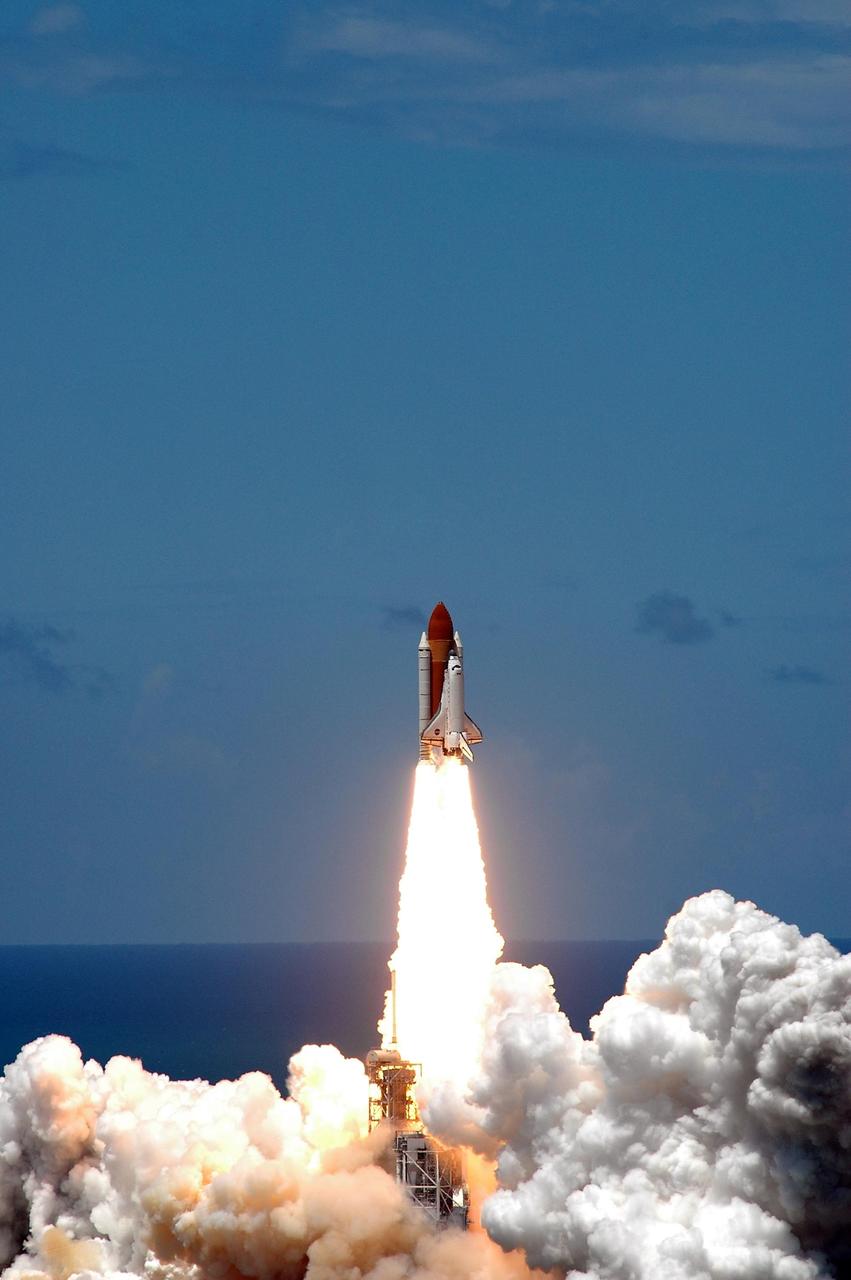
KENNEDY SPACE CENTER, FLA. - Viewed from the top of the Vehicle Assembly Building at NASA's Kennedy Space Center, Space Shuttle Discovery shoots like a roman candle into the blue sky, kicking off the Fourth of July fireworks with its own fiery display. It was the third launch attempt in four days; the others were scrubbed due to weather concerns. Liftoff was on-time at 2:38 p.m. EDT. During the 12-day mission, the STS-121 crew of seven will test new equipment and procedures to improve shuttle safety, as well as deliver supplies and make repairs to the International Space Station. Landing is scheduled for July 16 or 17 at Kennedy's Shuttle Landing Facility. Photo credit: NASA/Gianni Woods
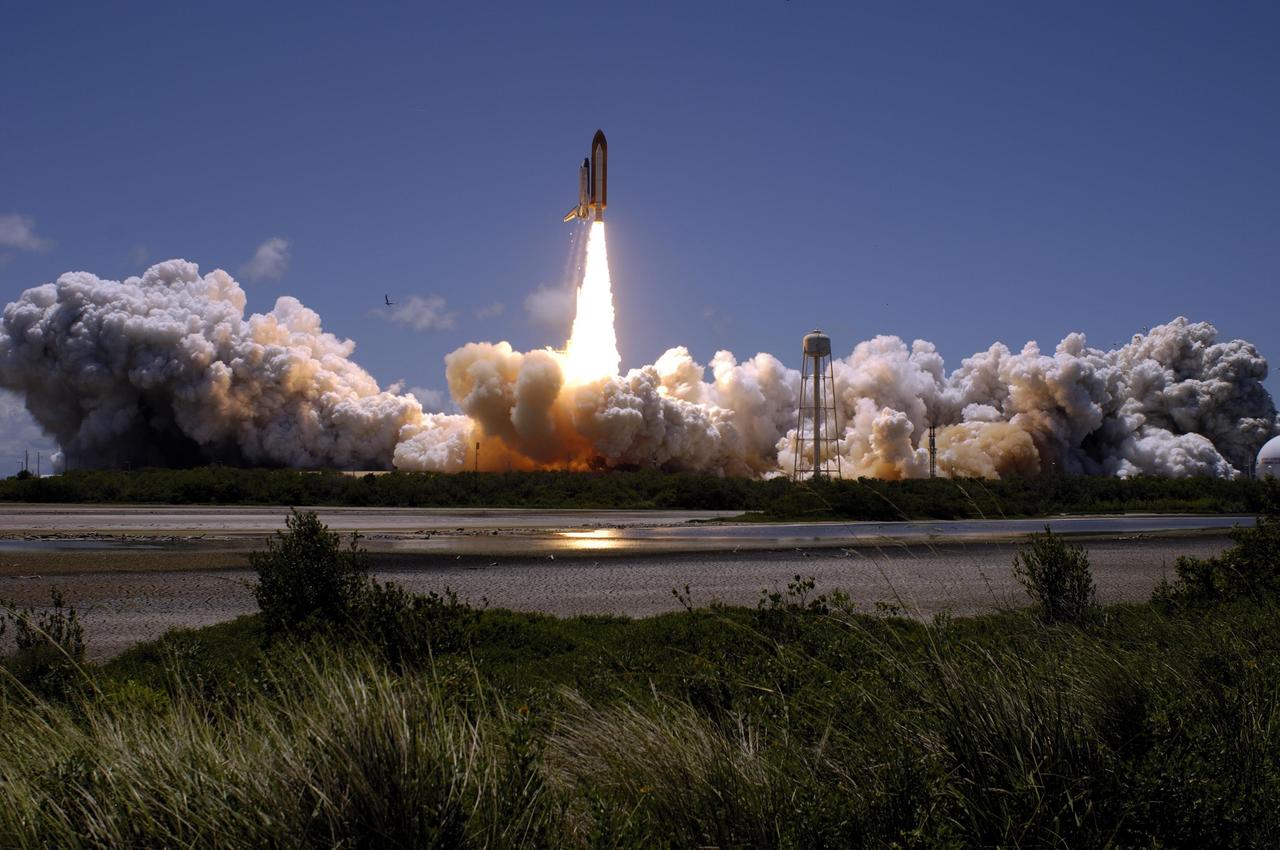
KENNEDY SPACE CENTER, FLA. - As smoke and steam billows across the ground, Space Shuttle Discovery leaps free and rockets into the clear blue sky, creating its own fireworks display. History was made with the first ever launch on Independence Day. It was the third launch attempt in four days; the others were scrubbed due to weather concerns. Liftoff was on-time at 2:38 p.m. EDT. During the 12-day mission, the STS-121 crew of seven will test new equipment and procedures to improve shuttle safety, as well as deliver supplies and make repairs to the International Space Station. Landing is scheduled for July 16 or 17 at Kennedy's Shuttle Landing Facility. Photo courtesy of Nikon/Scott Andrews
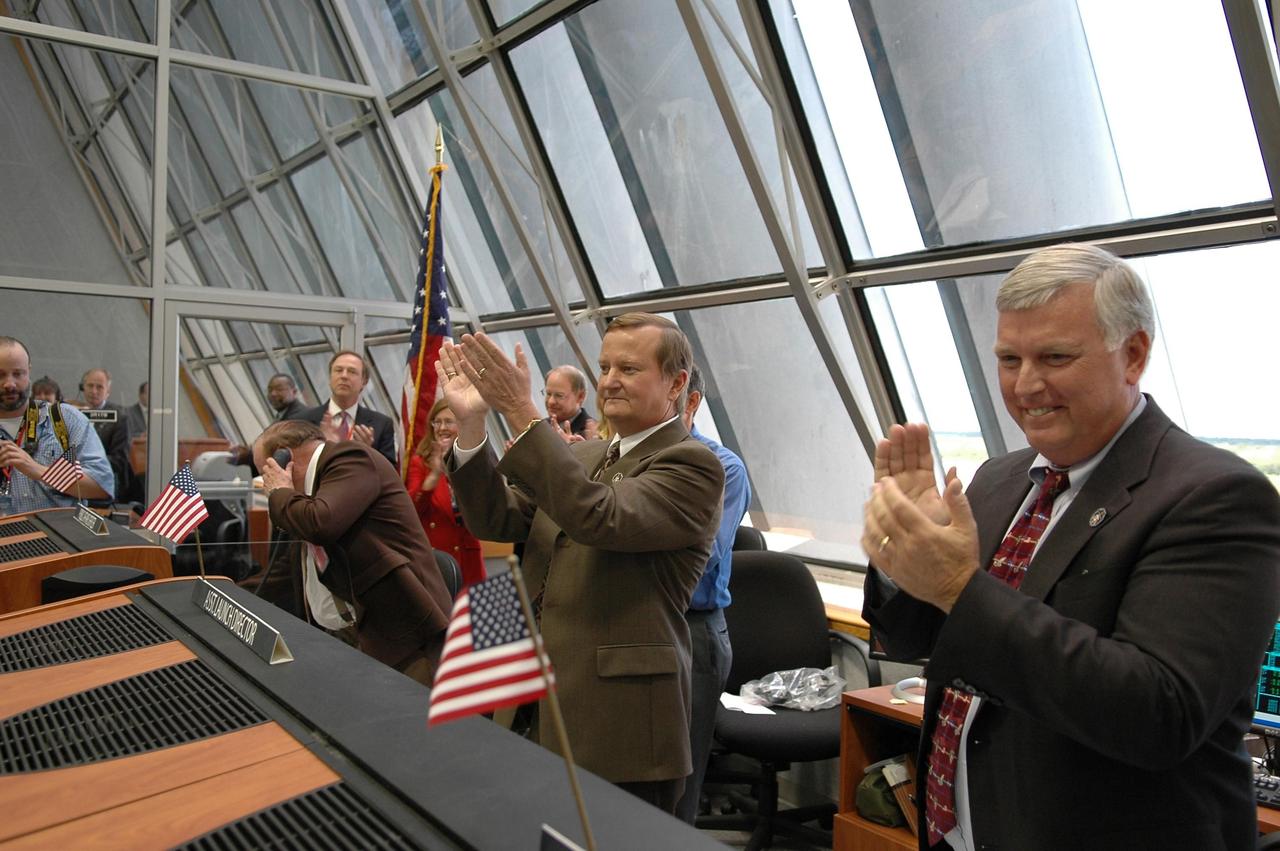
KENNEDY SPACE CENTER, FLA. - In Firing Room 4 of the Launch Control Center, Shuttle Launch Director Mike Leinbach (center) and Center Director Jim Kennedy congratulate the launch team after the successful launch of Space Shuttle Discovery on mission STS-121. The launch was the first ever to take place on Independence Day. During the 12-day mission, the STS-121 crew of seven will test new equipment and procedures to improve shuttle safety, as well as deliver supplies and make repairs to the International Space Station. Landing is scheduled for July 16 or 17 at Kennedy's Shuttle Landing Facility. Photo credit: NASA/Kim Shiflett
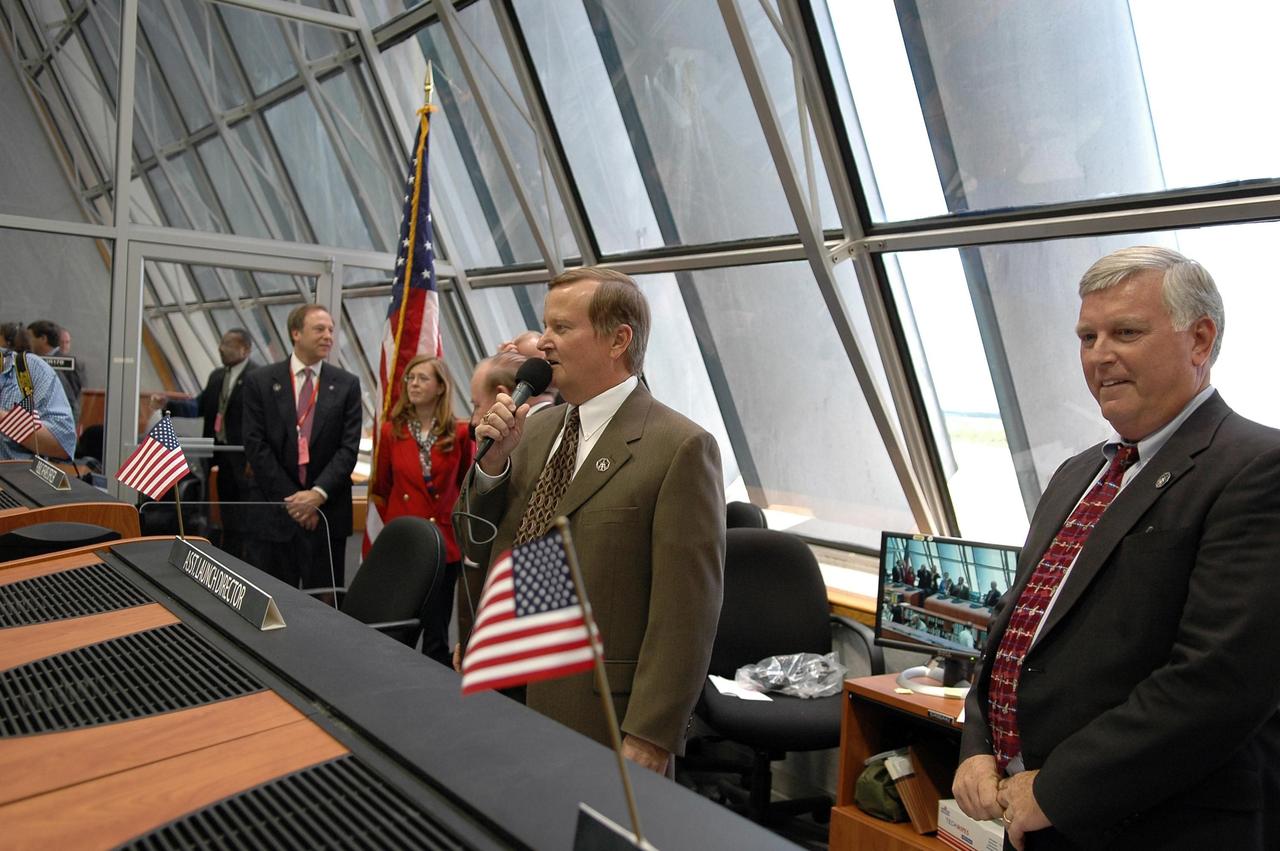
KENNEDY SPACE CENTER, FLA. - In Firing Room 4 of the Launch Control Center, Shuttle Launch Director Mike Leinbach (center) congratulates the launch team after the successful launch of Space Shuttle Discovery on mission STS-121. The launch was the first ever to take place on Independence Day. At far right is Center Director Jim Kennedy. During the 12-day mission, the STS-121 crew of seven will test new equipment and procedures to improve shuttle safety, as well as deliver supplies and make repairs to the International Space Station. Landing is scheduled for July 16 or 17 at Kennedy's Shuttle Landing Facility. Photo credit: NASA/Kim Shiflett
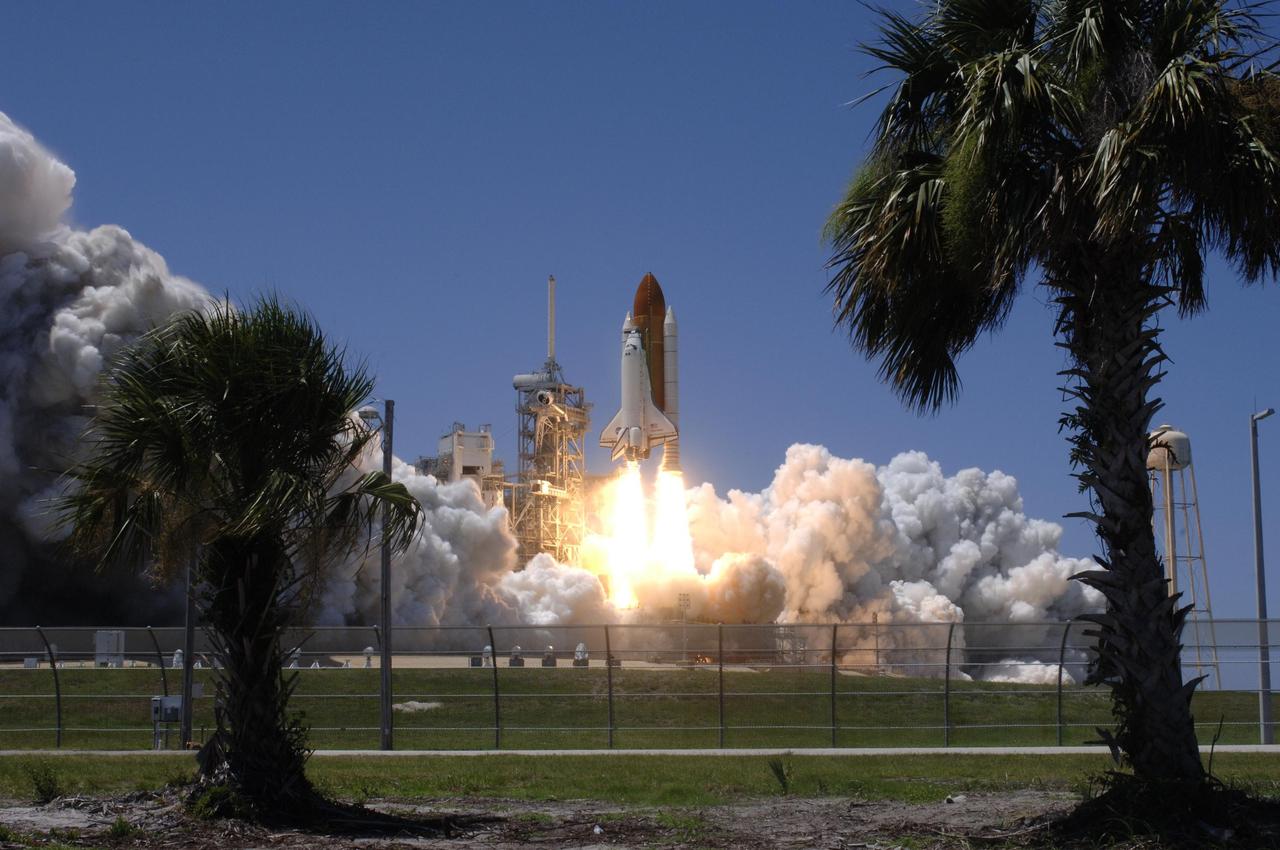
KENNEDY SPACE CENTER, FLA. - Framed by palm trees, Space Shuttle Discovery lifts off Launch Pad 39B at 2:38 p.m. EDT. The fiery display fit the day: Fourth of July. The launch made history as it was the first ever launch on Independence Day. During the 12-day mission, the STS-121 crew of seven will test new equipment and procedures to improve shuttle safety, as well as deliver supplies and make repairs to the International Space Station. Landing is scheduled for July 16 or 17 at Kennedy's Shuttle Landing Facility. Photo credit: NASA/Sandy Joseph, Robert Murray
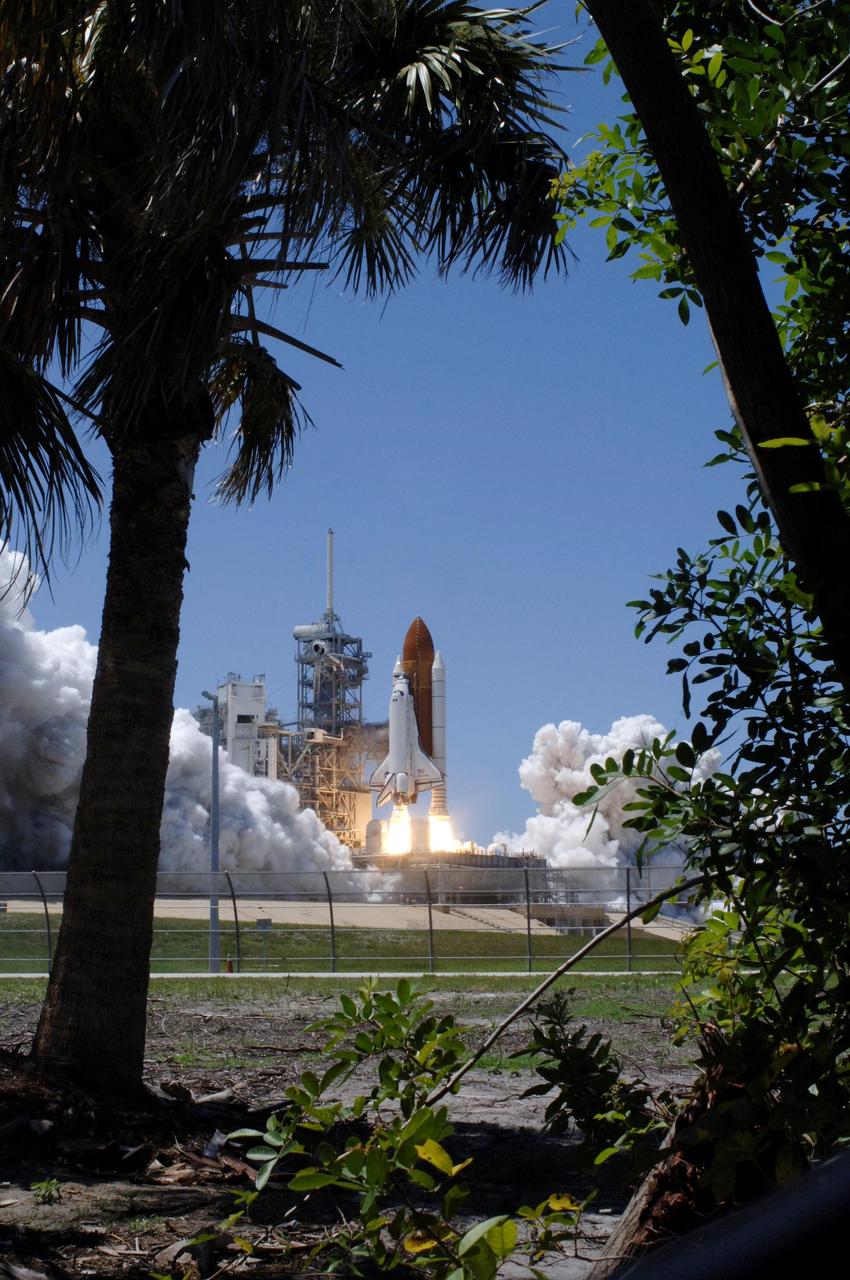
KENNEDY SPACE CENTER, FLA. - Framed by palm trees, Space Shuttle Discovery lifts off Launch Pad 39B at 2:38 p.m. EDT. The fiery display fit the day: Fourth of July. The launch made history as it was the first ever launch on Independence Day. During the 12-day mission, the STS-121 crew of seven will test new equipment and procedures to improve shuttle safety, as well as deliver supplies and make repairs to the International Space Station. Landing is scheduled for July 16 or 17 at Kennedy's Shuttle Landing Facility. Photo credit: NASA/Sandy Joseph, Robert Murray
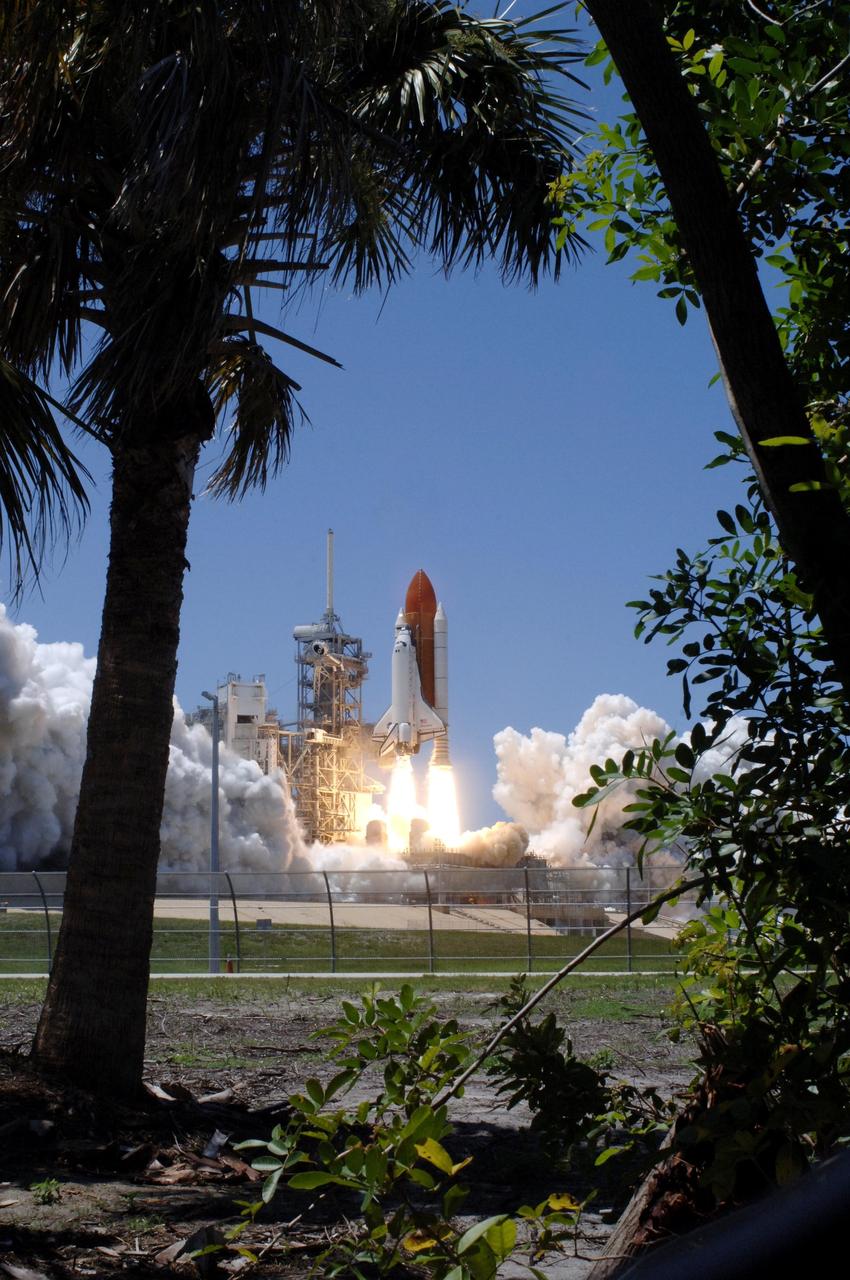
KENNEDY SPACE CENTER, FLA. - Framed by palm trees, Space Shuttle Discovery lifts off Launch Pad 39B at 2:38 p.m. EDT. The fiery display fit the day: Fourth of July. The launch made history as it was the first ever launch on Independence Day. During the 12-day mission, the STS-121 crew of seven will test new equipment and procedures to improve shuttle safety, as well as deliver supplies and make repairs to the International Space Station. Landing is scheduled for July 16 or 17 at Kennedy's Shuttle Landing Facility. Photo credit: NASA/Sandy Joseph, Robert Murray
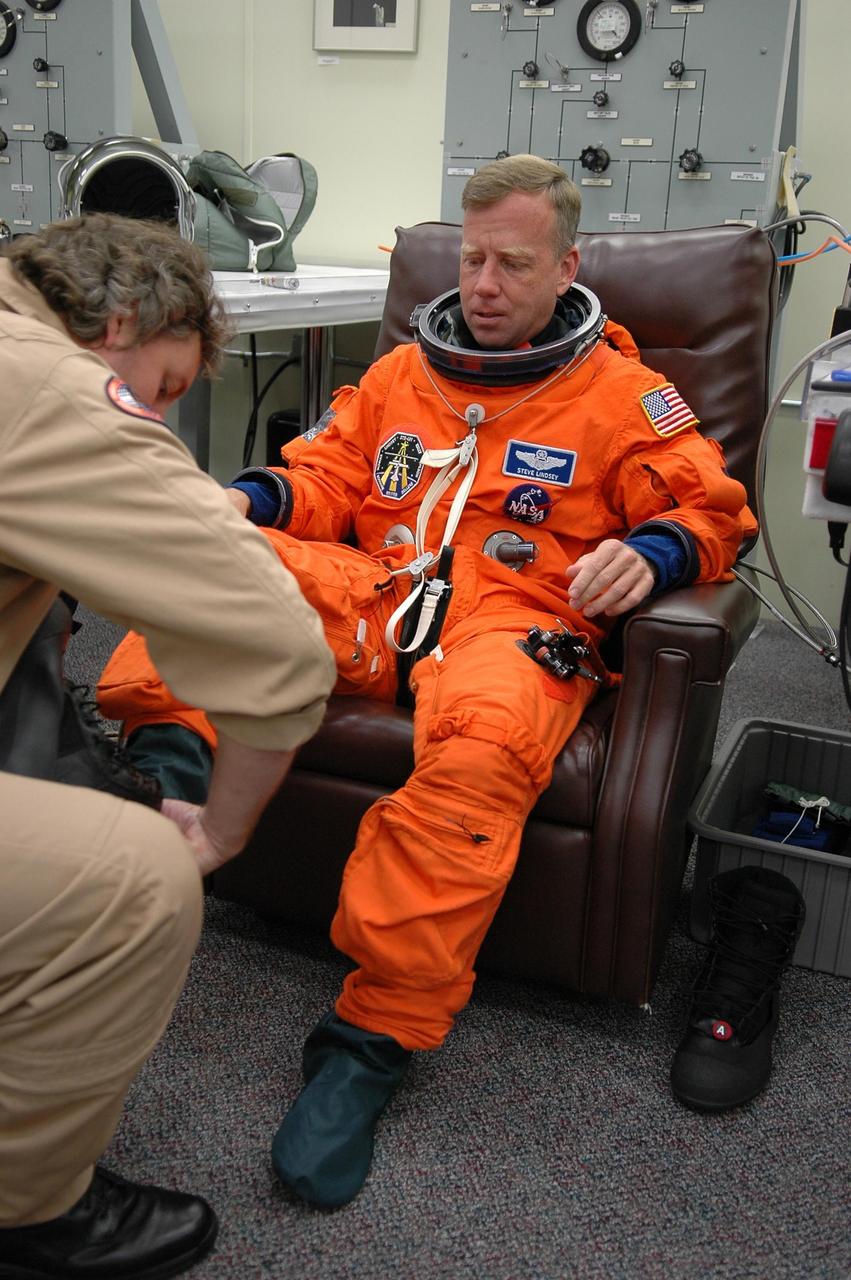
KENNEDY SPACE CENTER, FLA. - STS-121 Commander Steven Lindsey is helped with his boot during suitup before heading to Launch Pad 39B and the third attempt at liftoff on mission STS-121. The launch of Space Shuttle Discovery on mission STS-121 is the 115th shuttle flight and the 18th U.S. flight to the International Space Station. During the 12-day mission, the STS-121 crew will test new equipment and procedures to improve shuttle safety, as well as deliver supplies and make repairs to the International Space Station. Photo credit: NASA/Kim Shiflett
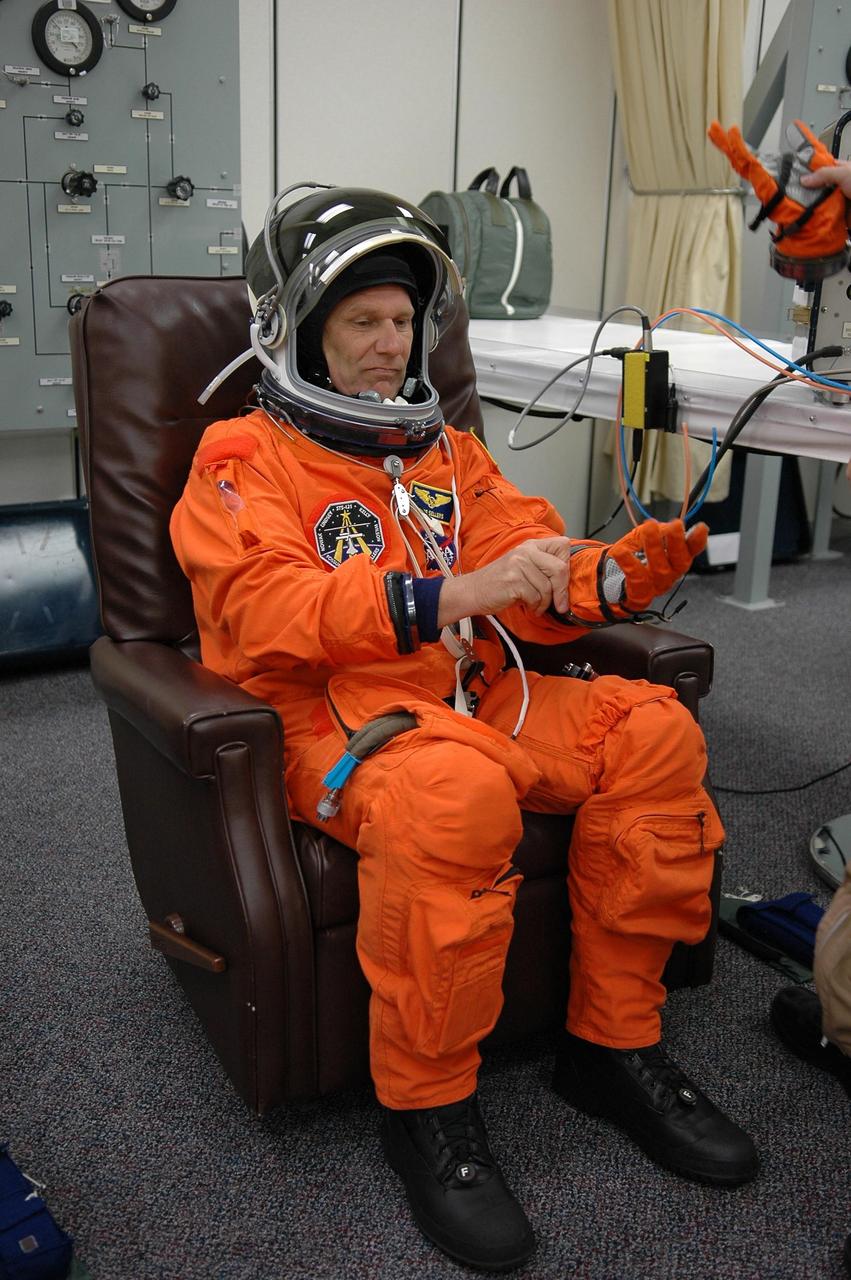
KENNEDY SPACE CENTER, FLA. - Mission Specialist Piers Sellers adjusts his glove while donning his launch suit before heading to Launch Pad 39B and liftoff on mission STS-121. The launch of Space Shuttle Discovery on mission STS-121 is the 115th shuttle flight and the 18th U.S. flight to the International Space Station. During the 12-day mission, the STS-121 crew will test new equipment and procedures to improve shuttle safety, as well as deliver supplies and make repairs to the International Space Station. Photo credit: NASA/Kim Shiflett
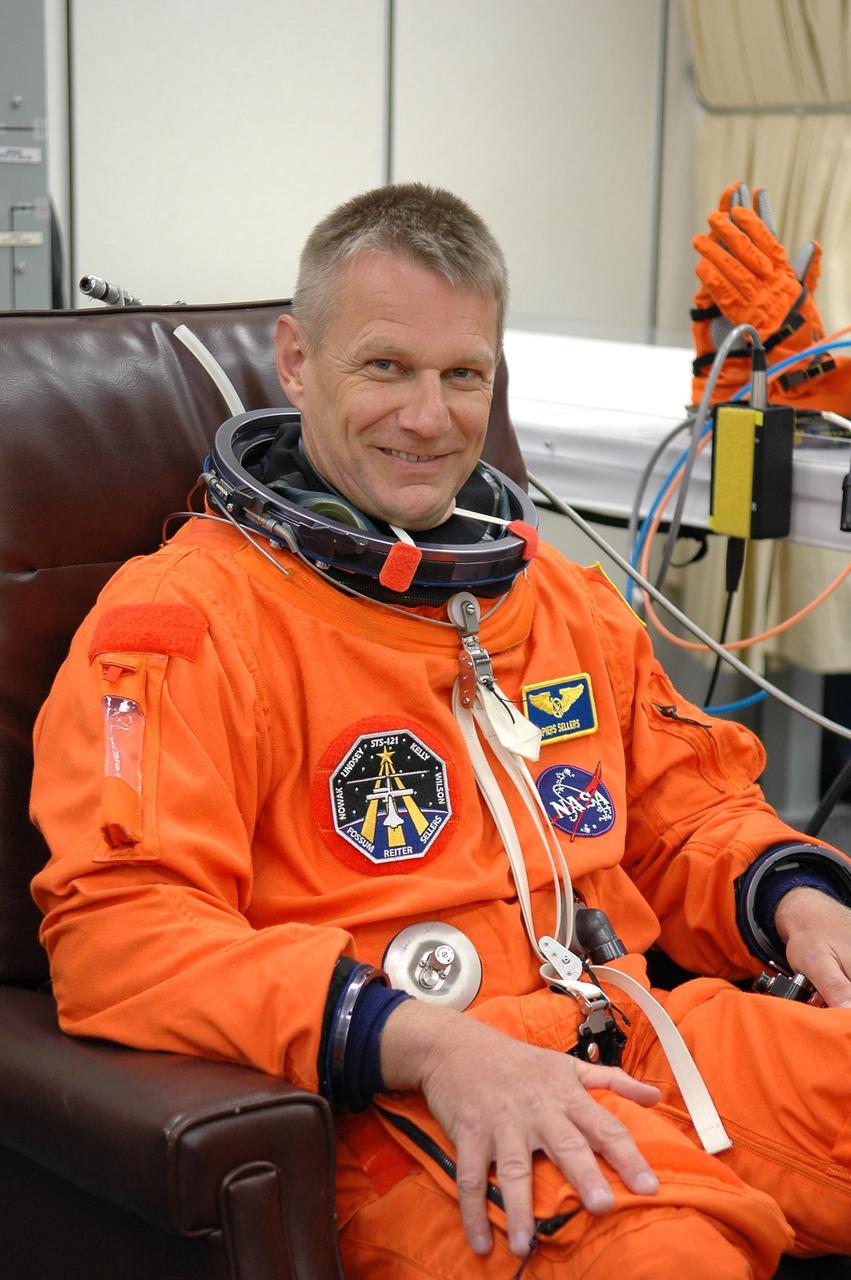
KENNEDY SPACE CENTER, FLA. - STS-121 Mission Specialist Piers Sellers is eager for launch as he suits up before heading to Launch Pad 39B and liftoff. The launch is the 115th shuttle flight and the 18th U.S. flight to the International Space Station. During the 12-day mission, the STS-121 crew will test new equipment and procedures to improve shuttle safety, as well as deliver supplies and make repairs to the International Space Station. Photo credit: NASA/Kim Shiflett
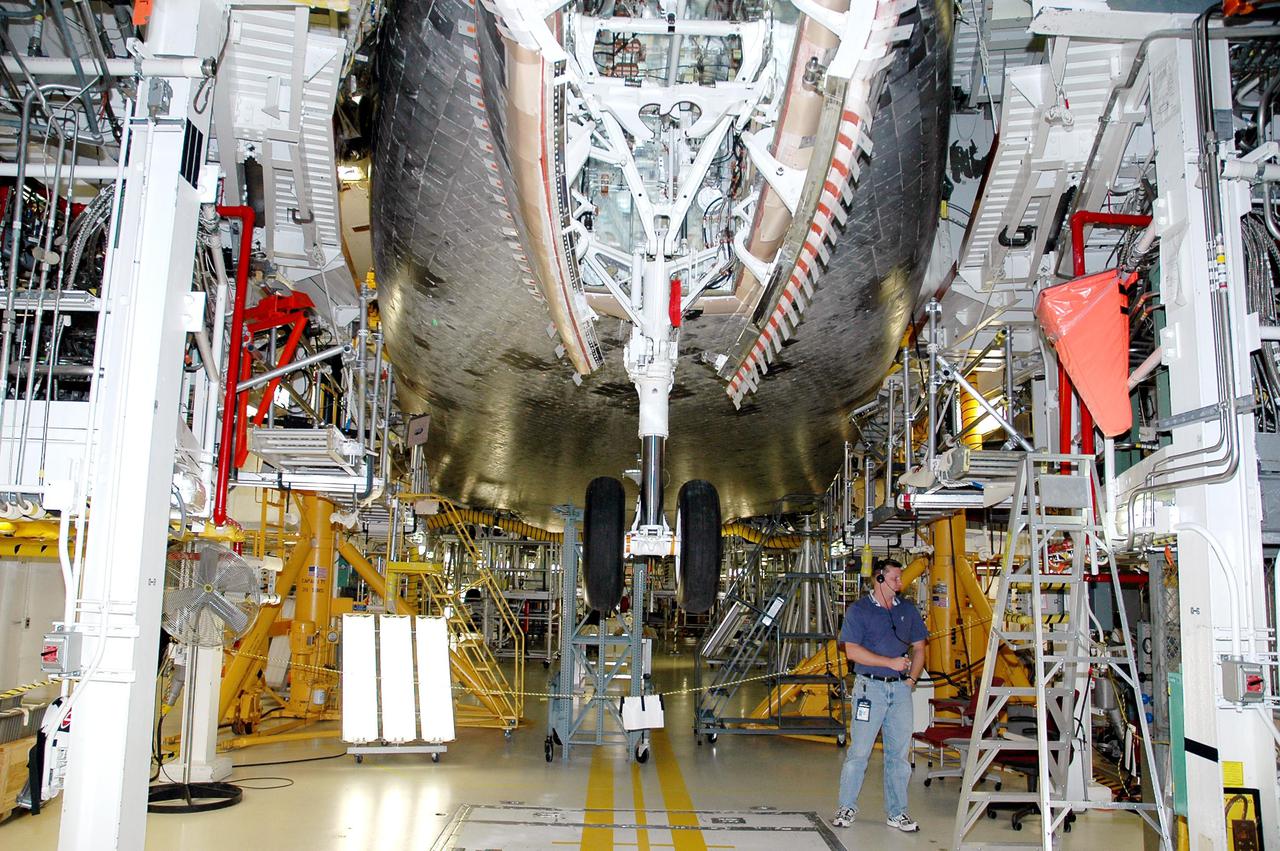
KENNEDY SPACE CENTER, FLA. - In the Orbiter Processing Facility bay 1 at NASA’s Kennedy Space Center in Florida, Atlantis’ nose wheels are cycled to test compression of the new Thermal Protection System seal. Processing continues on Atlantis for mission STS-121 to the International Space Station. The second Return to Flight mission, STS-121 is scheduled for liftoff in a launch window extending from Sept. 9 - 24.
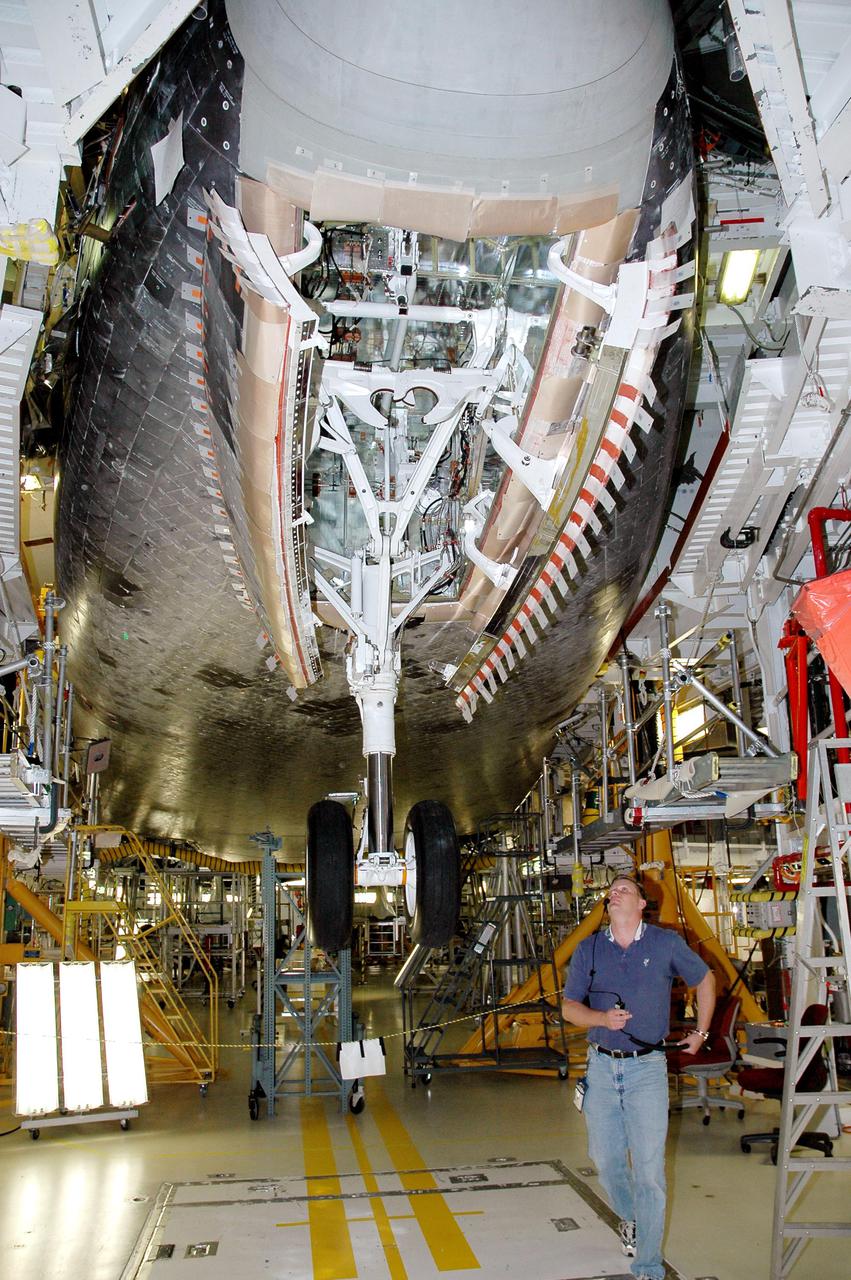
KENNEDY SPACE CENTER, FLA. - In the Orbiter Processing Facility bay 1 at NASA’s Kennedy Space Center in Florida, Atlantis’ nose wheels are cycled to test compression of the new Thermal Protection System seal. Processing continues on Atlantis for mission STS-121 to the International Space Station. The second Return to Flight mission, STS-121 is scheduled for liftoff in a launch window extending from Sept. 9 - 24.
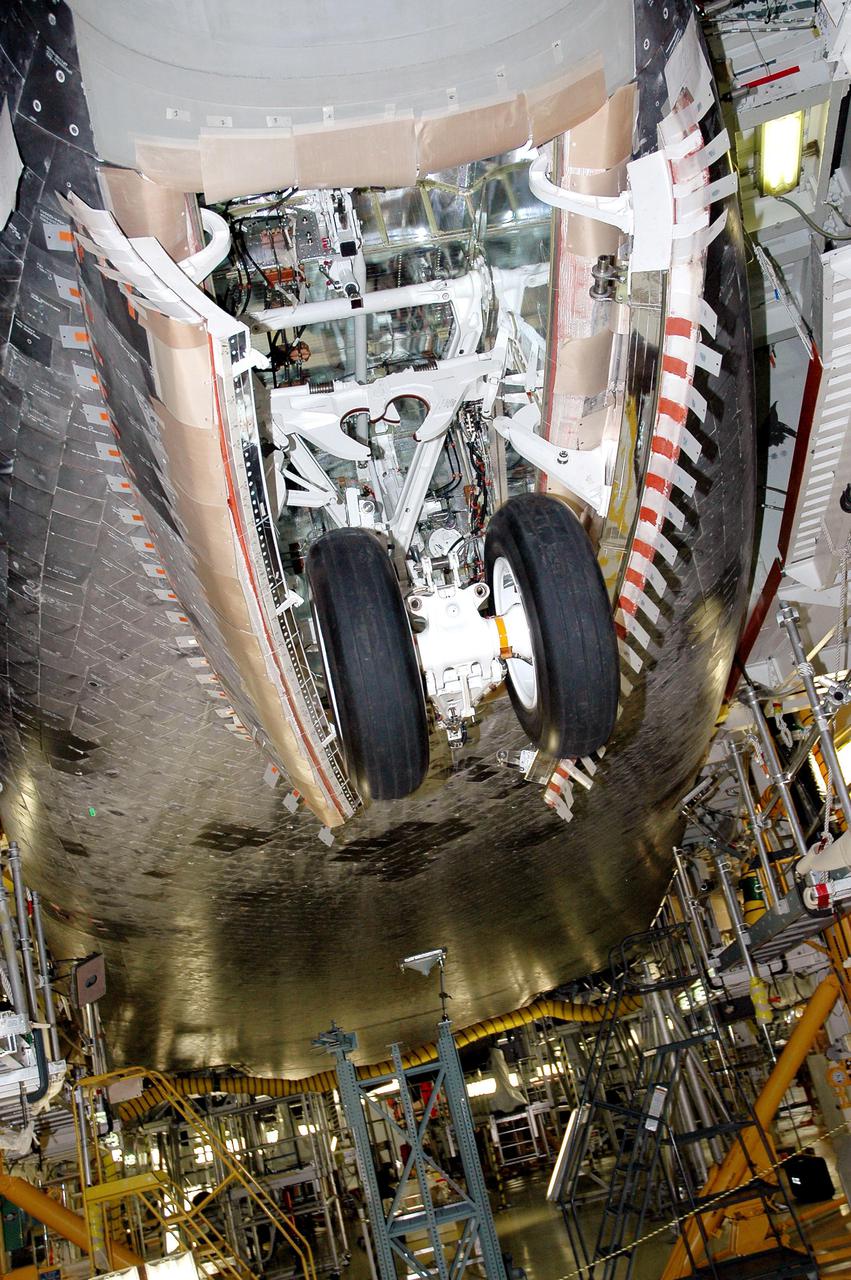
KENNEDY SPACE CENTER, FLA. - In the Orbiter Processing Facility bay 1 at NASA’s Kennedy Space Center in Florida, Atlantis’ nose wheels are cycled to test compression of the new Thermal Protection System seal. Processing continues on Atlantis for mission STS-121 to the International Space Station. The second Return to Flight mission, STS-121 is scheduled for liftoff in a launch window extending from Sept. 9 - 24.

KENNEDY SPACE CENTER, FLA. - In Firing Room 4 of the Launch Control Center, NASA launch team members cheer and wave American flags at the successful launch of Space Shuttle Discovery on mission STS-121. The launch made history as the first to occur on Independence Day. Liftoff was on-time at 2:38 p.m. EDT. During the 12-day mission, the STS-121 crew of seven will test new equipment and procedures to improve shuttle safety, as well as deliver supplies and make repairs to the International Space Station. Landing is scheduled for July 16 or 17 at Kennedy's Shuttle Landing Facility. Photo credit: NASA/Bill Ingalls
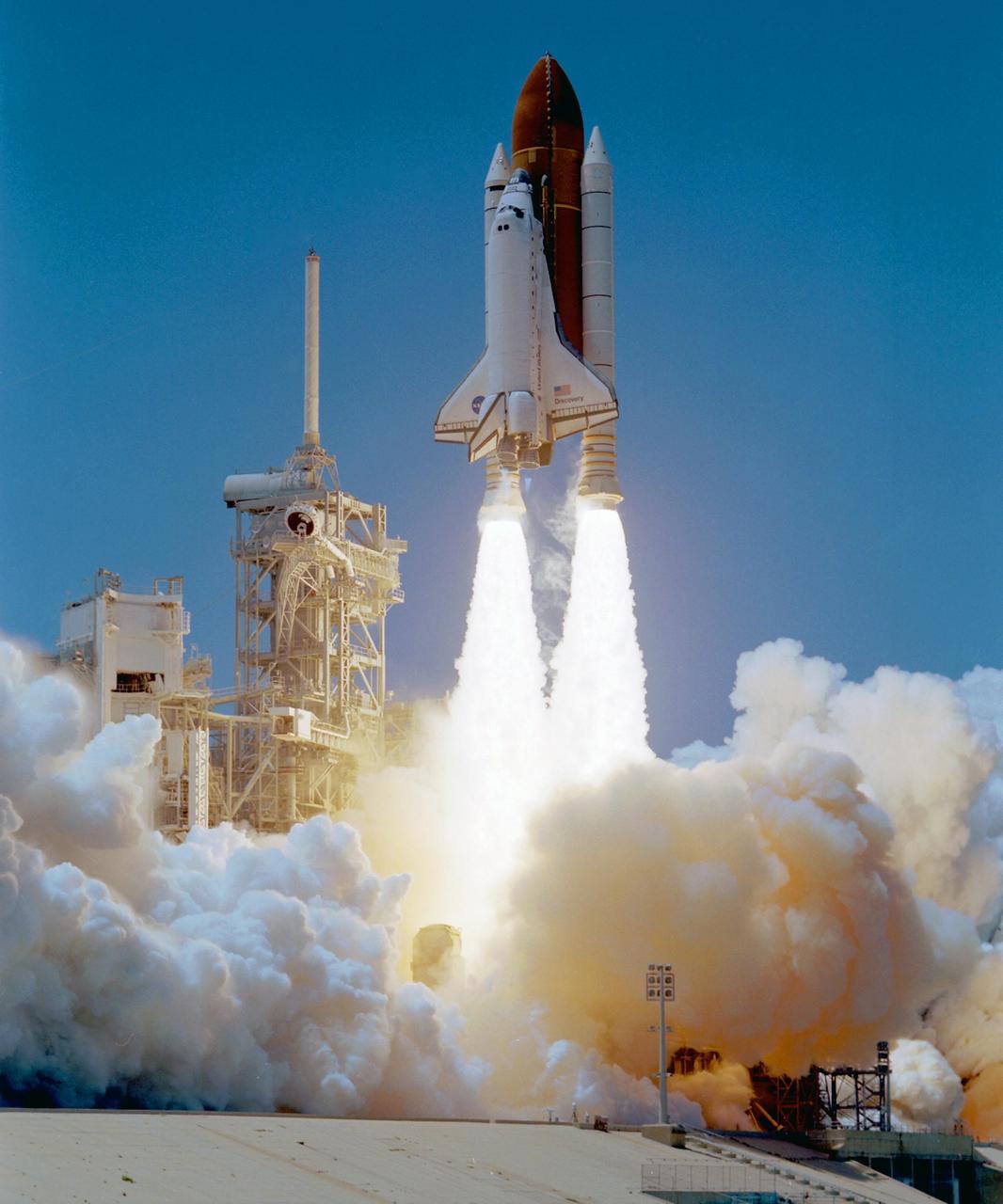
KENNEDY SPACE CENTER, FLA. - Smoke and steam billow across Launch Pad 39B as the launch of Space Shuttle Discovery on mission STS-121 kicks off the fireworks for the U.S. holiday and makes history as the first time a shuttle has launched on Independence Day. Liftoff was on-time at 2:38 p.m. EDT. During the 12-day mission, the STS-121 crew of seven will test new equipment and procedures to improve shuttle safety, as well as deliver supplies and make repairs to the International Space Station. Landing is scheduled for July 16 or 17 at Kennedy's Shuttle Landing Facility. Photo credit: NASA/Tony Gray & Tim Powers
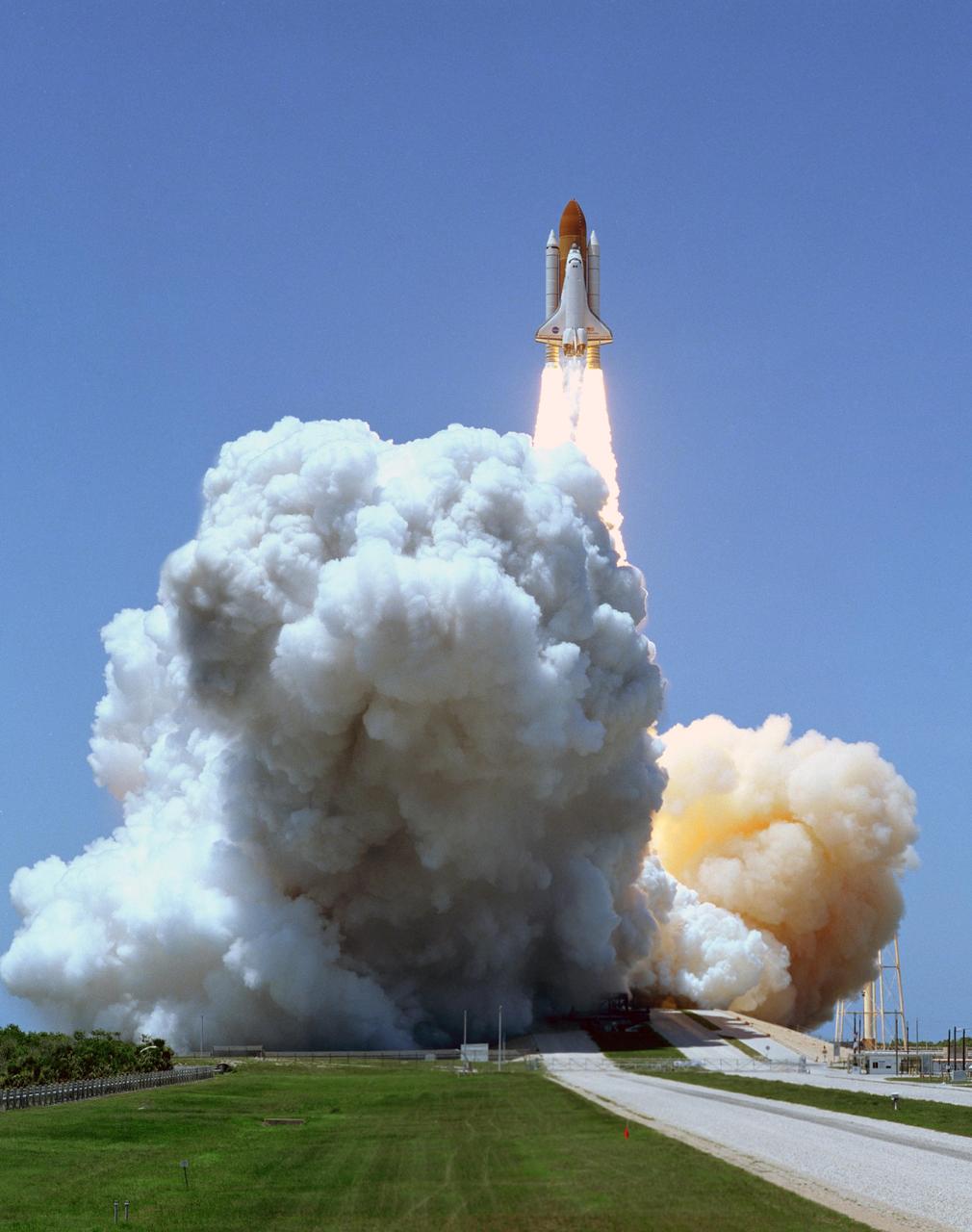
KENNEDY SPACE CENTER, FLA. - Under clear blue skies, the launch of Space Shuttle Discovery on mission STS-121 kicks off the fireworks for the U.S. holiday in its third launch attempt in four days. Liftoff from Launch Pad 39B was on-time at 2:38 p.m. EDT. During the 12-day mission, the STS-121 crew of seven will test new equipment and procedures to improve shuttle safety, as well as deliver supplies and make repairs to the International Space Station. Landing is scheduled for July 16 or 17 at Kennedy's Shuttle Landing Facility. Photo credit: NASA/Sandy Joseph & Robert Murrary
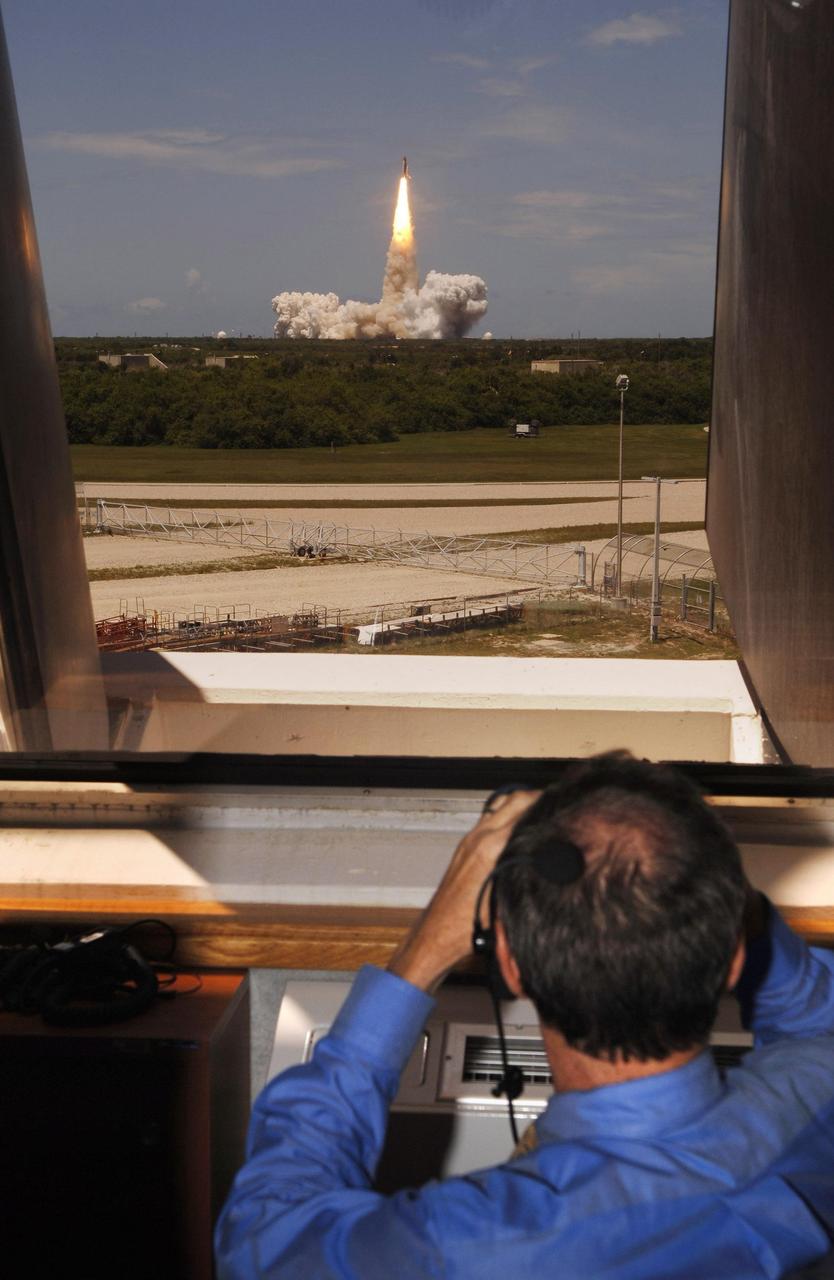
KENNEDY SPACE CENTER, FLA. - From Firing Room 4 of the Launch Control Center, NASA Administrator Mike Griffin uses binoculars to view of the launch of Space Shuttle Discovery (in the background) on mission STS-121. The launch made history as the first to occur on Independence Day. Liftoff was on-time at 2:38 p.m. EDT. During the 12-day mission, the STS-121 crew of seven will test new equipment and procedures to improve shuttle safety, as well as deliver supplies and make repairs to the International Space Station. Landing is scheduled for July 16 or 17 at Kennedy's Shuttle Landing Facility. Photo credit: NASA/Bill Ingalls
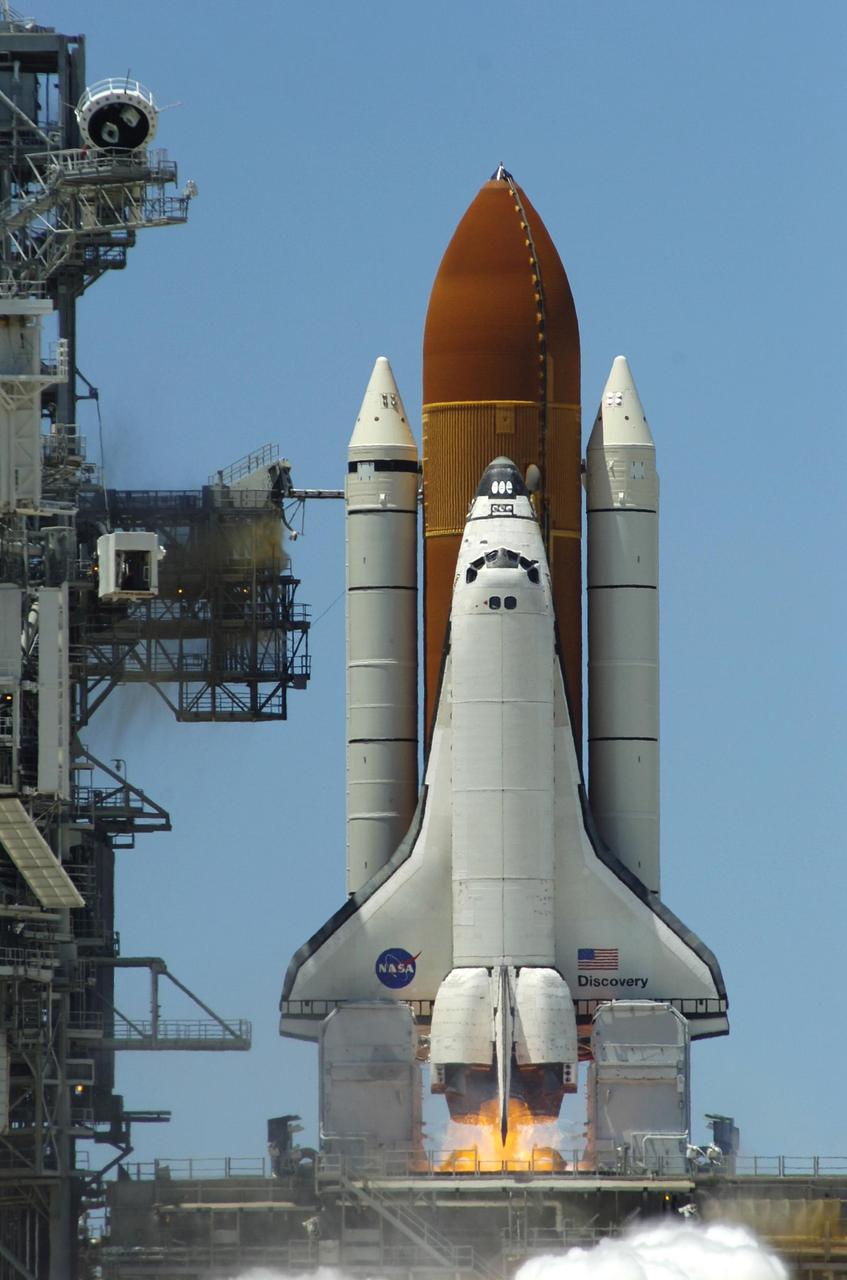
KENNEDY SPACE CENTER, FLA. - The moment of ignition is captured in this photo of Space Shuttle Discovery being launched on mission STS-121 from Launch Pad 39B. The launch was the first ever made on Independence Day. Liftoff was on-time at 2:38 p.m. EDT. During the 12-day mission, the STS-121 crew of seven will test new equipment and procedures to improve shuttle safety, as well as deliver supplies and make repairs to the International Space Station. Landing is scheduled for July 17 at Kennedy's Shuttle Landing Facility. Photo courtesy of Nikon/Scott Andrews

KENNEDY SPACE CENTER, FLA. - Smoke and steam billow across Launch Complex 39B as the launch of Space Shuttle Discovery on mission STS-121 kicks off the fireworks for the U.S. holiday and making history as the first time a shuttle has launched on Independence Day. Liftoff was on-time at 2:38 p.m. EDT. During the 12-day mission, the STS-121 crew of seven will test new equipment and procedures to improve shuttle safety, as well as deliver supplies and make repairs to the International Space Station. Landing is scheduled for July 16 or 17 at Kennedy's Shuttle Landing Facility. Photo credit: NASA/Sandy Joseph & Robert Murray
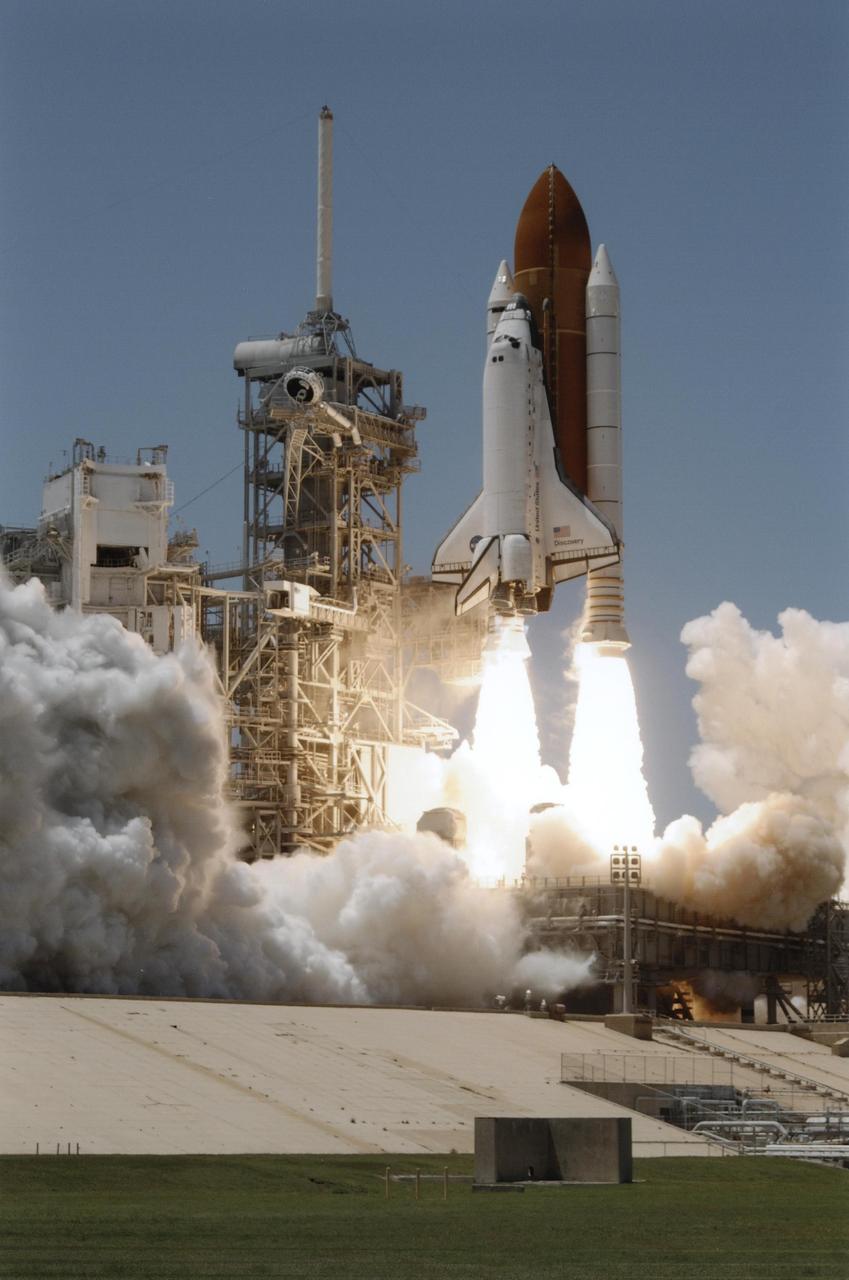
KENNEDY SPACE CENTER, FLA. - Under clear blue skies, the launch of Space Shuttle Discovery on mission STS-121 kicks off the fireworks for the U.S. holiday in its third launch attempt in four days. Liftoff was on-time at 2:38 p.m. EDT. During the 12-day mission, the STS-121 crew of seven will test new equipment and procedures to improve shuttle safety, as well as deliver supplies and make repairs to the International Space Station. Landing is scheduled for July 17 at Kennedy's Shuttle Landing Facility. Photo courtesy of Nikon/Scott Andrews
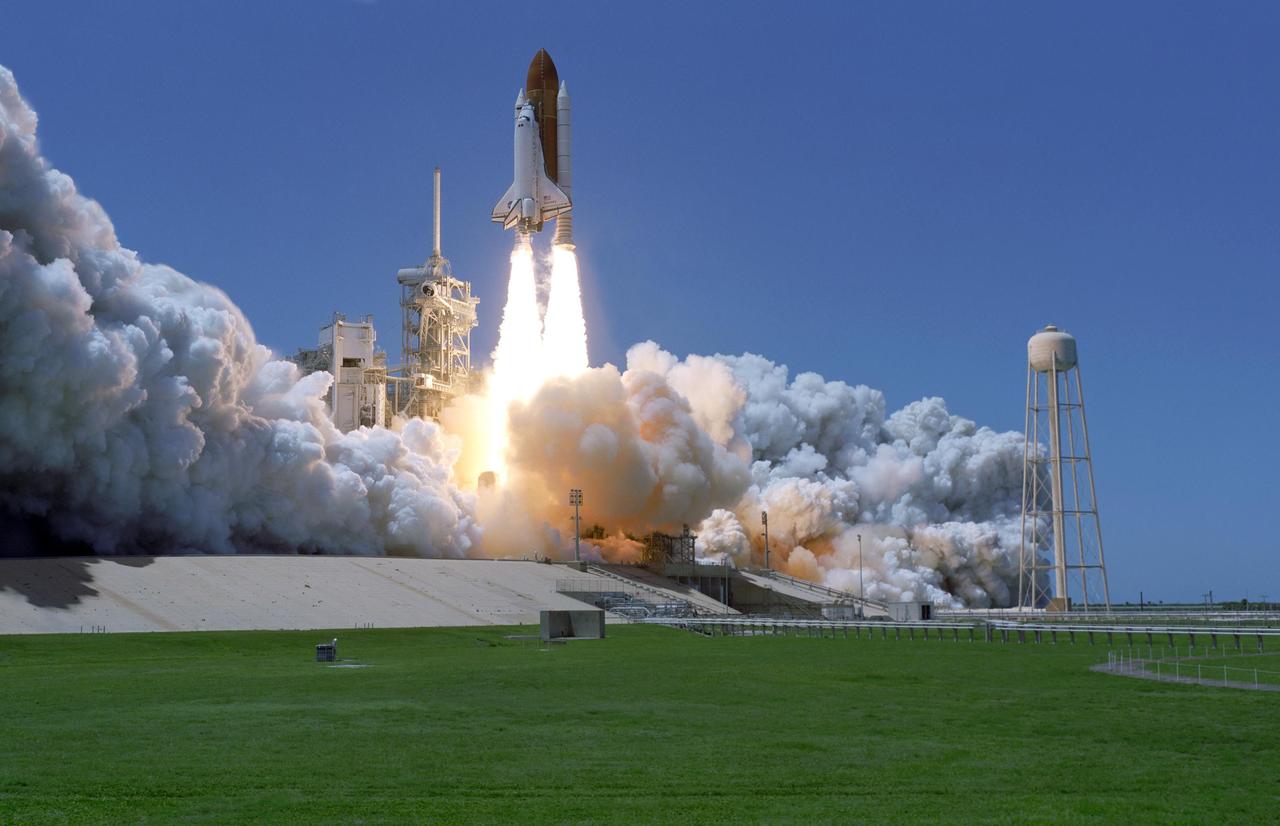
KENNEDY SPACE CENTER, FLA. - As smoke and team billow across Launch Pad 39B, Space Shuttle Discovery on mission STS-121 kicks off the fireworks for the U.S. holiday and makes history as the first time a shuttle has launched on Independence Day. Liftoff was on-time at 2:38 p.m. EDT. During the 12-day mission, the STS-121 crew of seven will test new equipment and procedures to improve shuttle safety, as well as deliver supplies and make repairs to the International Space Station. Landing is scheduled for July 16 or 17 at Kennedy's Shuttle Landing Facility. Photo credit: NASA/Tony Gray
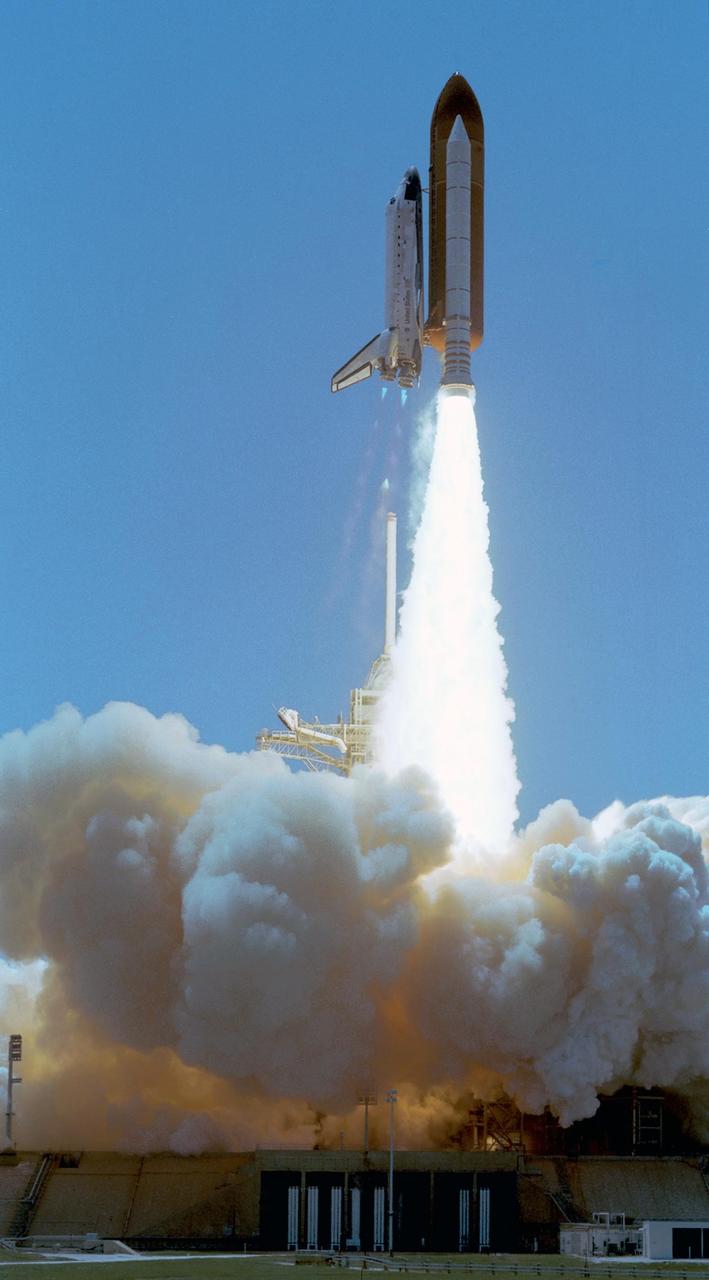
KENNEDY SPACE CENTER, FLA. - Making history with the first-ever launch on Independence Day, Space Shuttle Discovery rockets into the blue sky on mission STS-121, trailing fiery exhaust and blue mach diamonds from the main engine nozzles. Liftoff from Launch Pad 39B (seen below) was on-time at 2:38 p.m. EDT. During the 12-day mission, the STS-121 crew of seven will test new equipment and procedures to improve shuttle safety, as well as deliver supplies and make repairs to the International Space Station. Landing is scheduled for July 17 at Kennedy's Shuttle Landing Facility. Photo credit: NASA/Tony Gray & Tim Powers
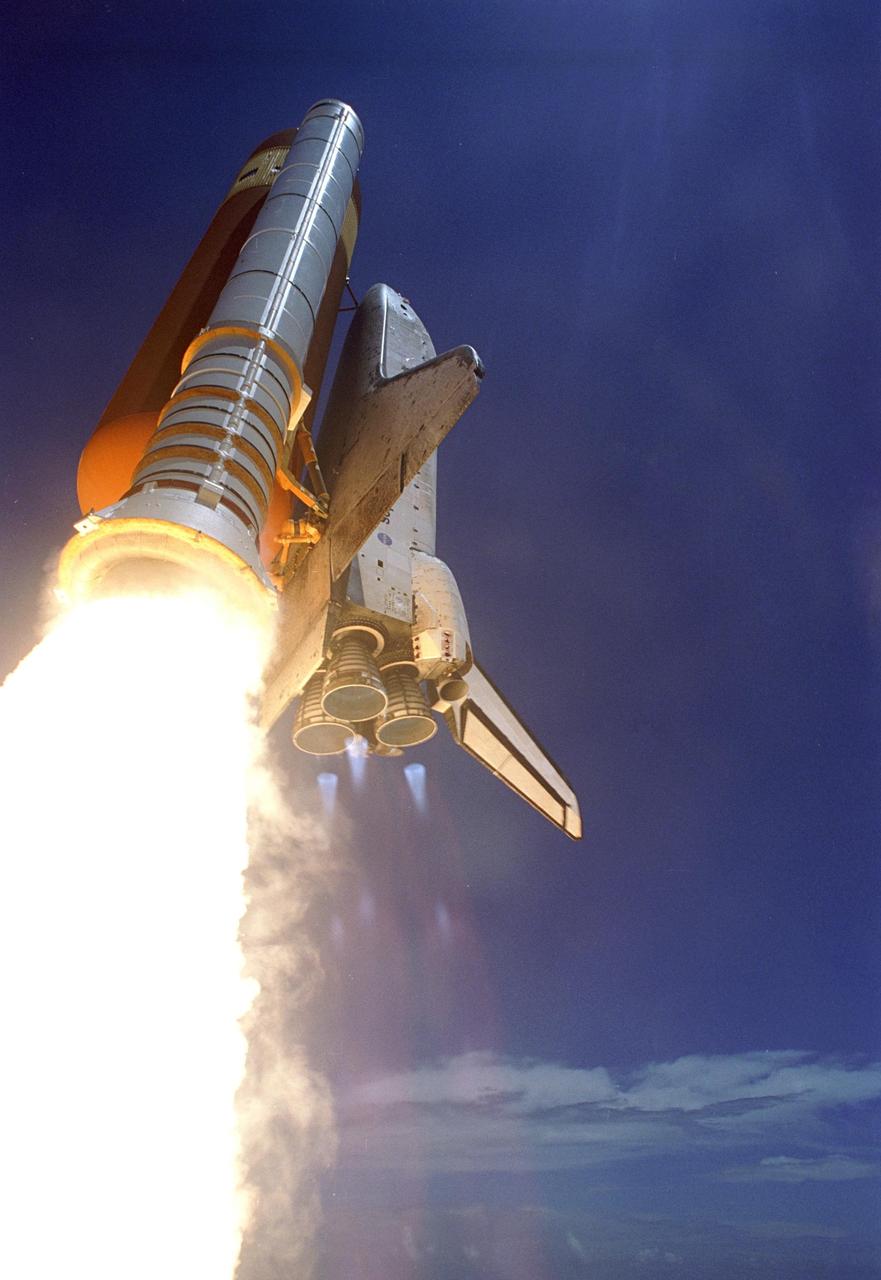
KENNEDY SPACE CENTER, FLA. - Making history with the first-ever launch on Independence Day, Space Shuttle Discovery rockets into the blue sky on mission STS-121, trailing fiery exhaust and blue mach diamonds from the main engine nozzles. Liftoff was on-time at 2:38 p.m. EDT. During the 12-day mission, the STS-121 crew of seven will test new equipment and procedures to improve shuttle safety, as well as deliver supplies and make repairs to the International Space Station. Landing is scheduled for July 16 or 17 at Kennedy's Shuttle Landing Facility. Photo credit: NASA/Regina Mitchell-Ryall & Don Kight
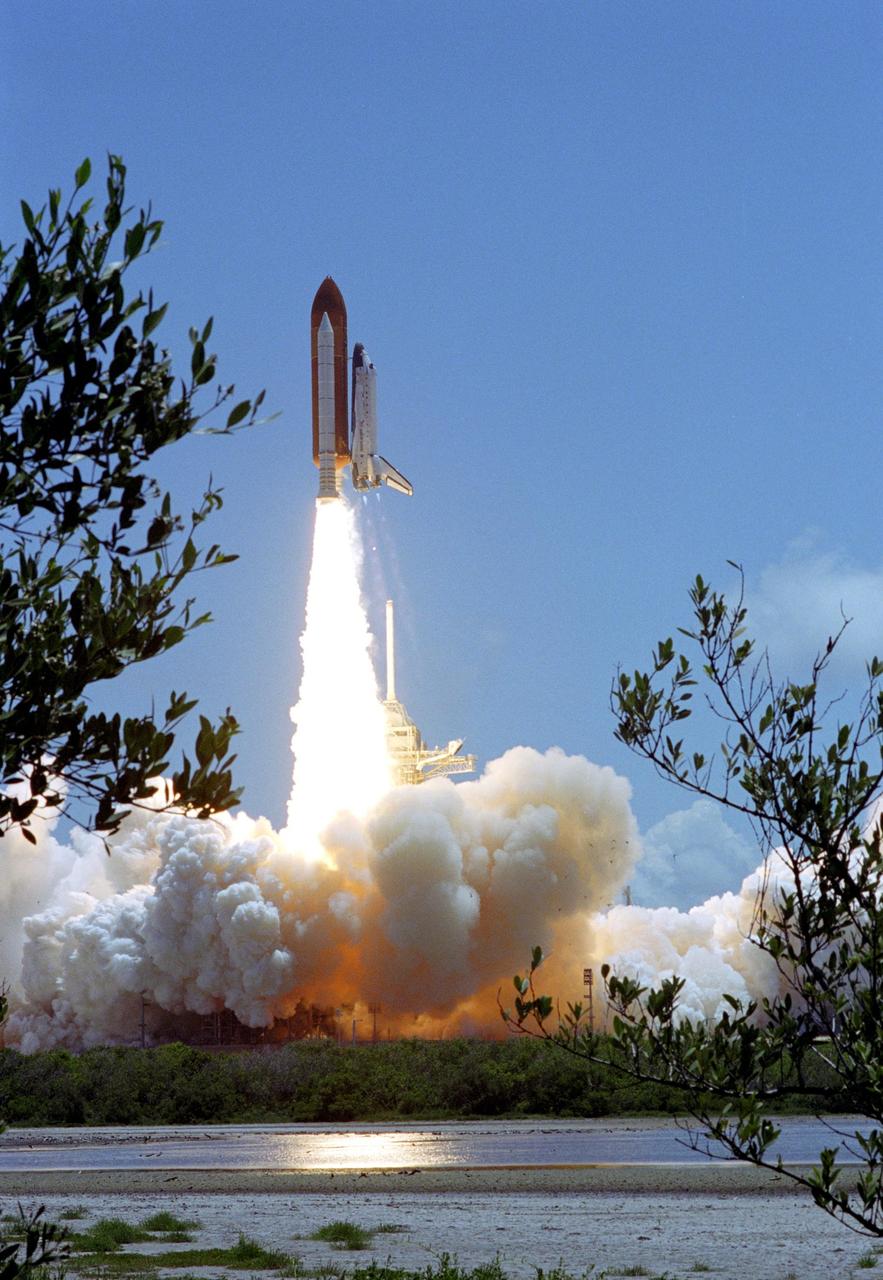
KENNEDY SPACE CENTER, FLA. - Making history with the first-ever launch on Independence Day, Space Shuttle Discovery clears the lightning mast and rockets into the blue sky on mission STS-121, trailing fiery exhaust. Liftoff was on-time at 2:38 p.m. EDT. During the 12-day mission, the STS-121 crew of seven will test new equipment and procedures to improve shuttle safety, as well as deliver supplies and make repairs to the International Space Station. Landing is scheduled for July 16 or 17 at Kennedy's Shuttle Landing Facility. Photo credit: NASA/Sandy Joseph & Robert Murray
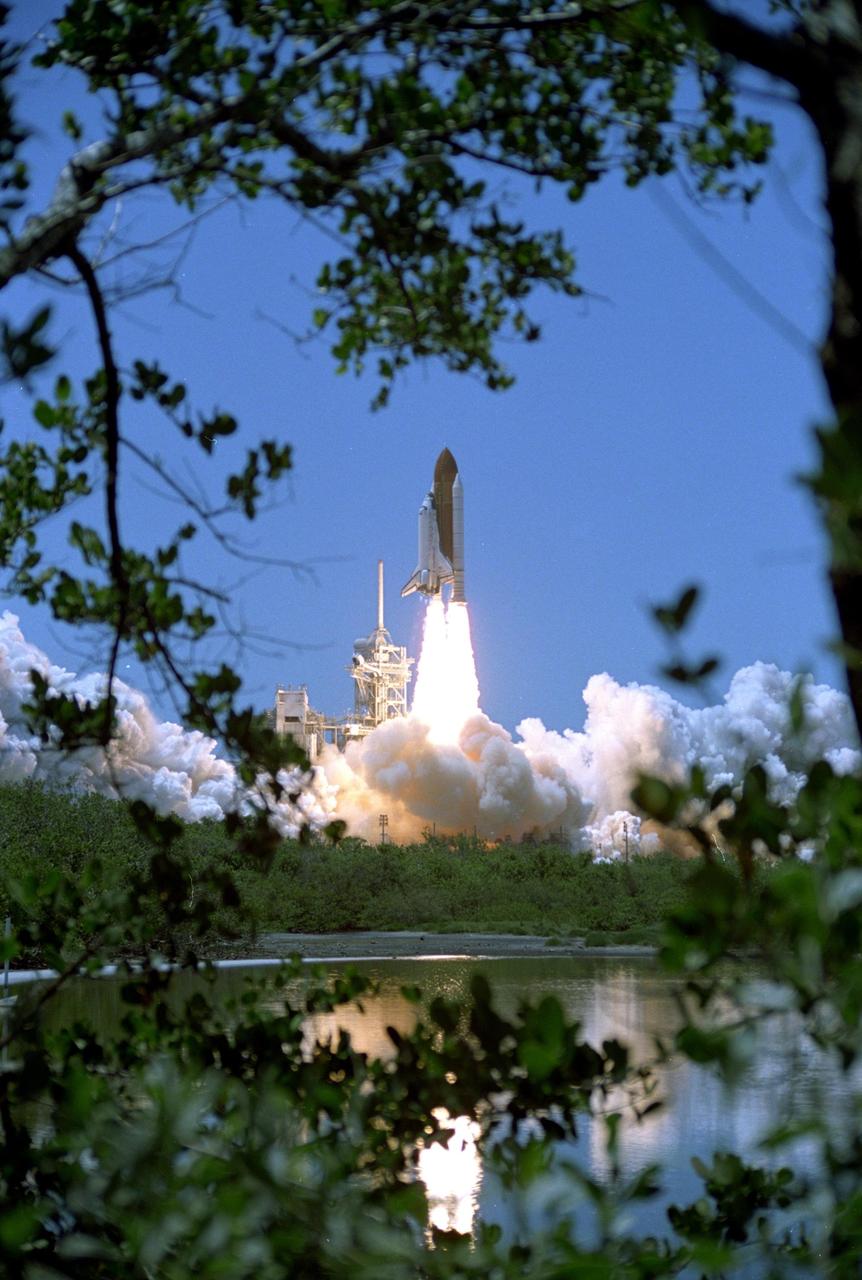
KENNEDY SPACE CENTER, FLA. - Framed by trees in nearby woods, Space Shuttle Discovery rockets into the blue sky from Launch Pad 39B on mission STS-121, kicking off the fiery festivities of Independence Day. Liftoff was on-time at 2:38 p.m. EDT. During the 12-day mission, the STS-121 crew of seven will test new equipment and procedures to improve shuttle safety, as well as deliver supplies and make repairs to the International Space Station. Landing is scheduled for July 16 or 17 at Kennedy's Shuttle Landing Facility. Photo credit: NASA/Sandy Joseph & Robert Murray
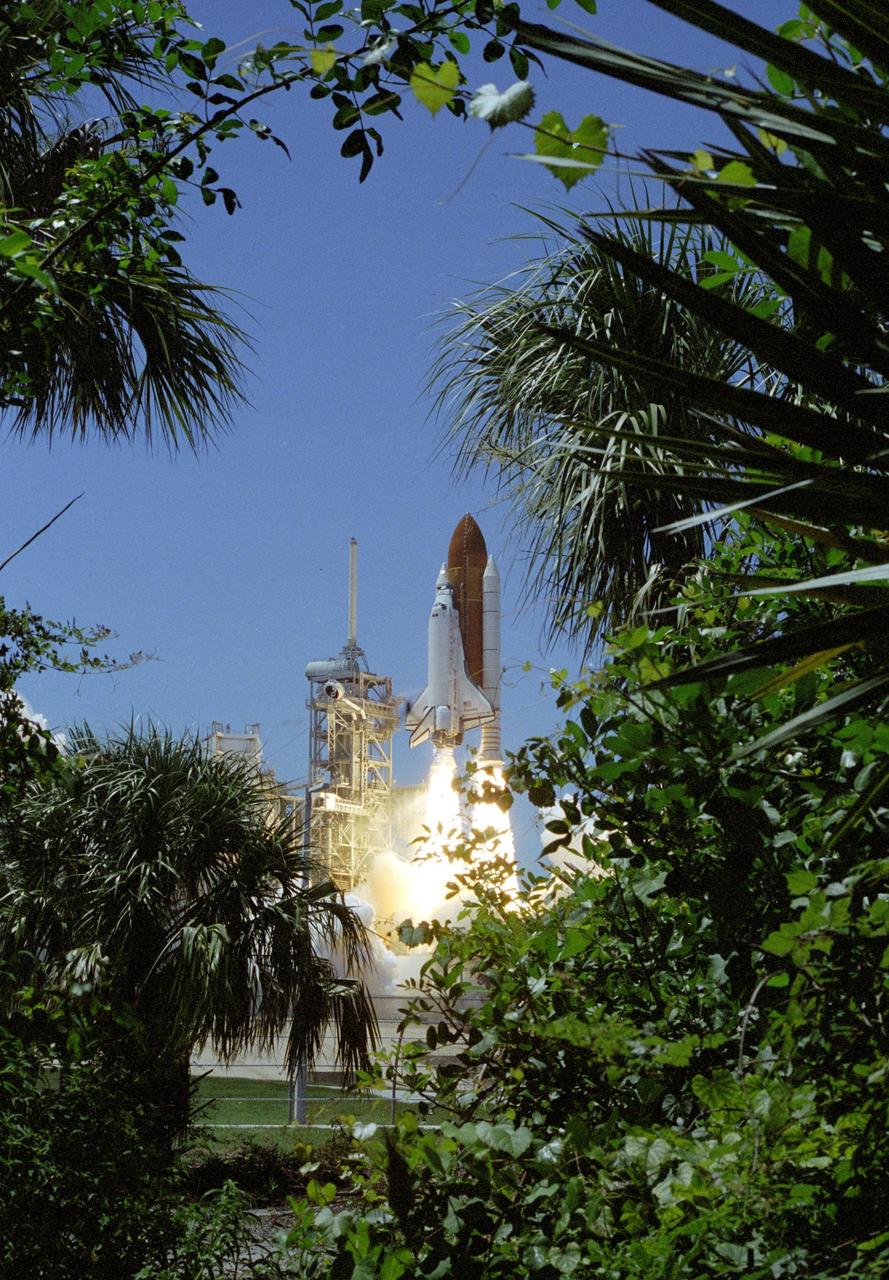
KENNEDY SPACE CENTER, FLA. - Space Shuttle Discovery appears to leap from the midst of palms as it rockets into the blue sky from Launch Pad 39B on mission STS-121, kicking off the fiery festivities of Independence Day. Liftoff was on-time at 2:38 p.m. EDT. During the 12-day mission, the STS-121 crew of seven will test new equipment and procedures to improve shuttle safety, as well as deliver supplies and make repairs to the International Space Station. Landing is scheduled for July 16 or 17 at Kennedy's Shuttle Landing Facility. Photo credit: NASA/Sandy Joseph & Robert Murray
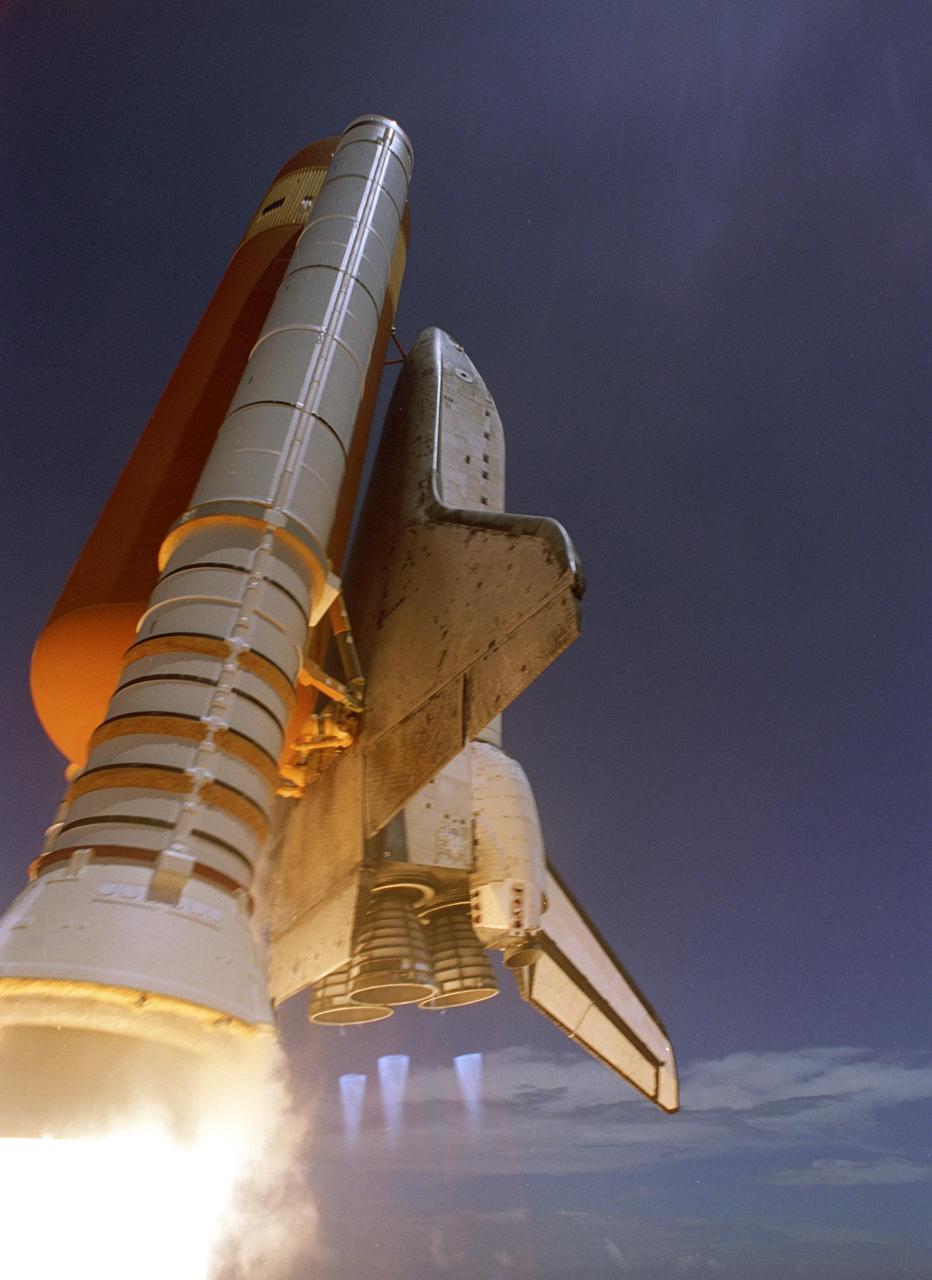
KENNEDY SPACE CENTER, FLA. - Making history with the first-ever launch on Independence Day, Space Shuttle Discovery rockets into the blue sky on mission STS-121, trailing fiery exhaust and blue mach diamonds from the main engine nozzles. Liftoff was on-time at 2:38 p.m. EDT. During the 12-day mission, the STS-121 crew of seven will test new equipment and procedures to improve shuttle safety, as well as deliver supplies and make repairs to the International Space Station. Landing is scheduled for July 16 or 17 at Kennedy's Shuttle Landing Facility. Photo credit: NASA/Regina Mitchell-Ryall & Don Kight
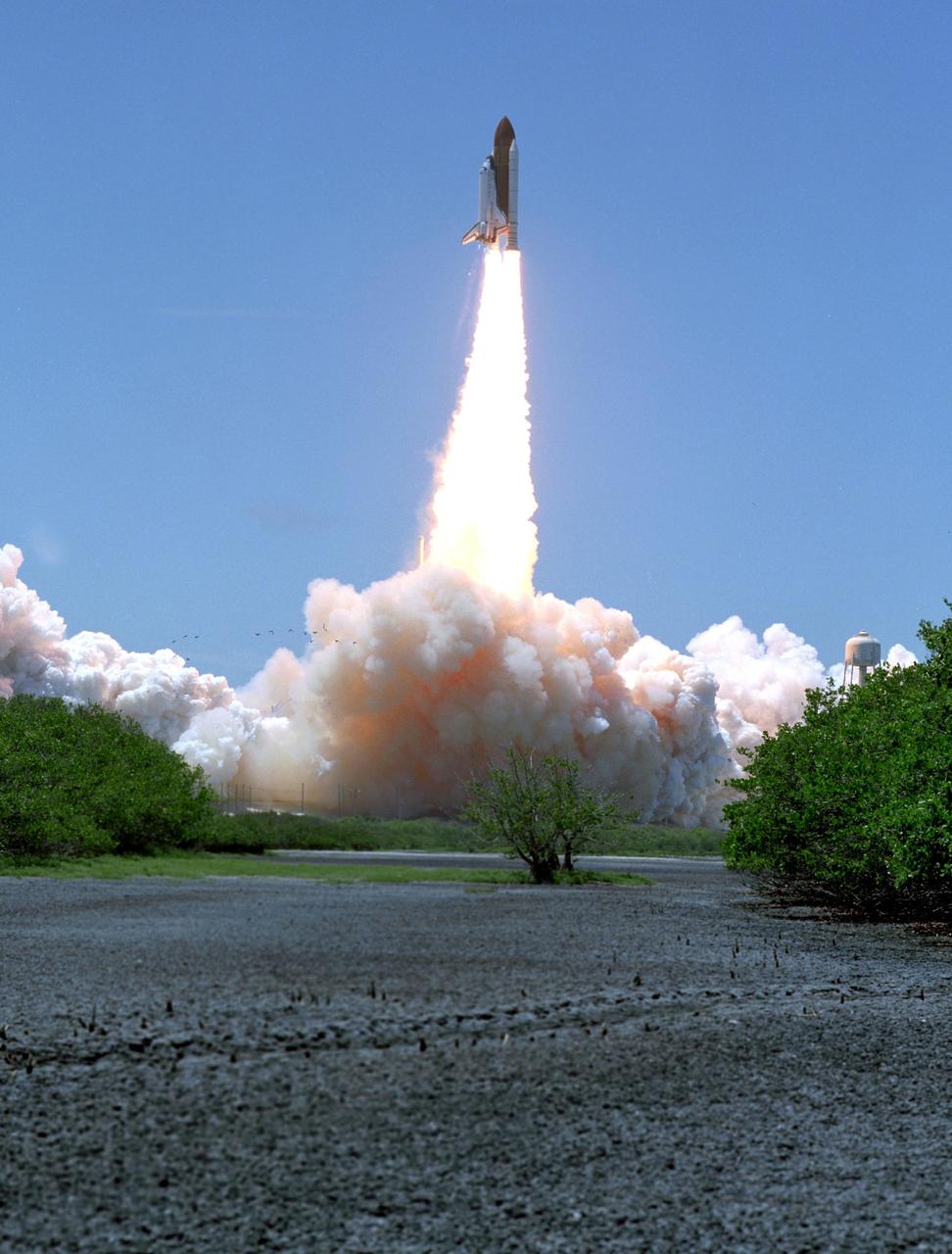
KENNEDY SPACE CENTER, FLA. - As if erupting from the earth and smoke, Space Shuttle Discovery vaults into the clear blue sky, trailing a fiery plume, on mission STS-121. The launch was the first ever made on Independence Day. Liftoff was on-time at 2:38 p.m. EDT. During the 12-day mission, the STS-121 crew of seven will test new equipment and procedures to improve shuttle safety, as well as deliver supplies and make repairs to the International Space Station. Landing is scheduled for July 16 or 17 at Kennedy's Shuttle Landing Facility. Photo credit: NASA/Sandy Joseph & Robert Murray
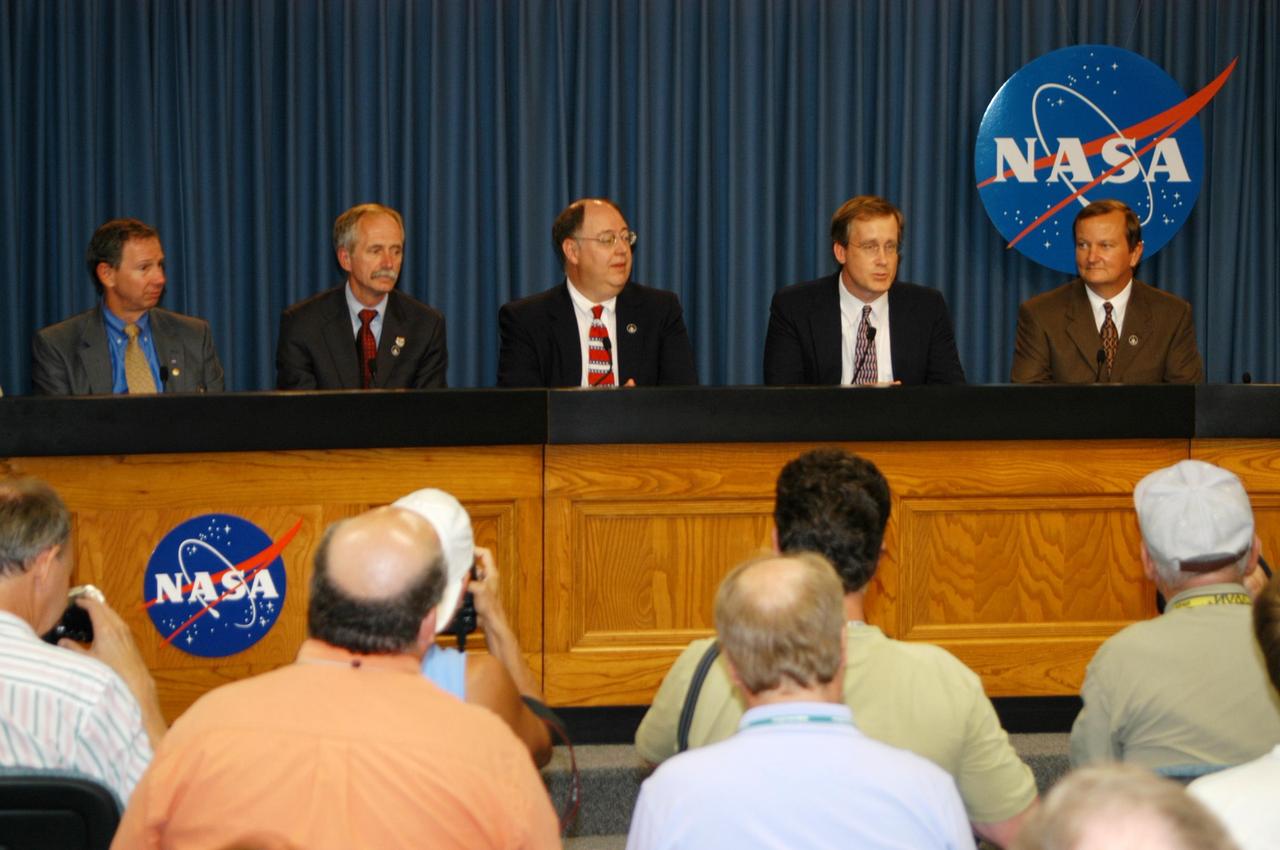
KENNEDY SPACE CENTER, FLA. - At a post-launch briefing, Shuttle Program Manager Wayne Hale, center, briefs the media about the successful launch of Space Shuttle Discovery on mission STS-121. Seated with him are, left to right, NASA Administrator Mike Griffin, NASA Associate Administrator for Space Operations Mission Bill Gerstenmaier, Chief of the Mission Management Team John Shannon, and Shuttle Launch Director Mike Leinbach. Liftoff of Discovery was on time at 2:30 p.m. EDT.
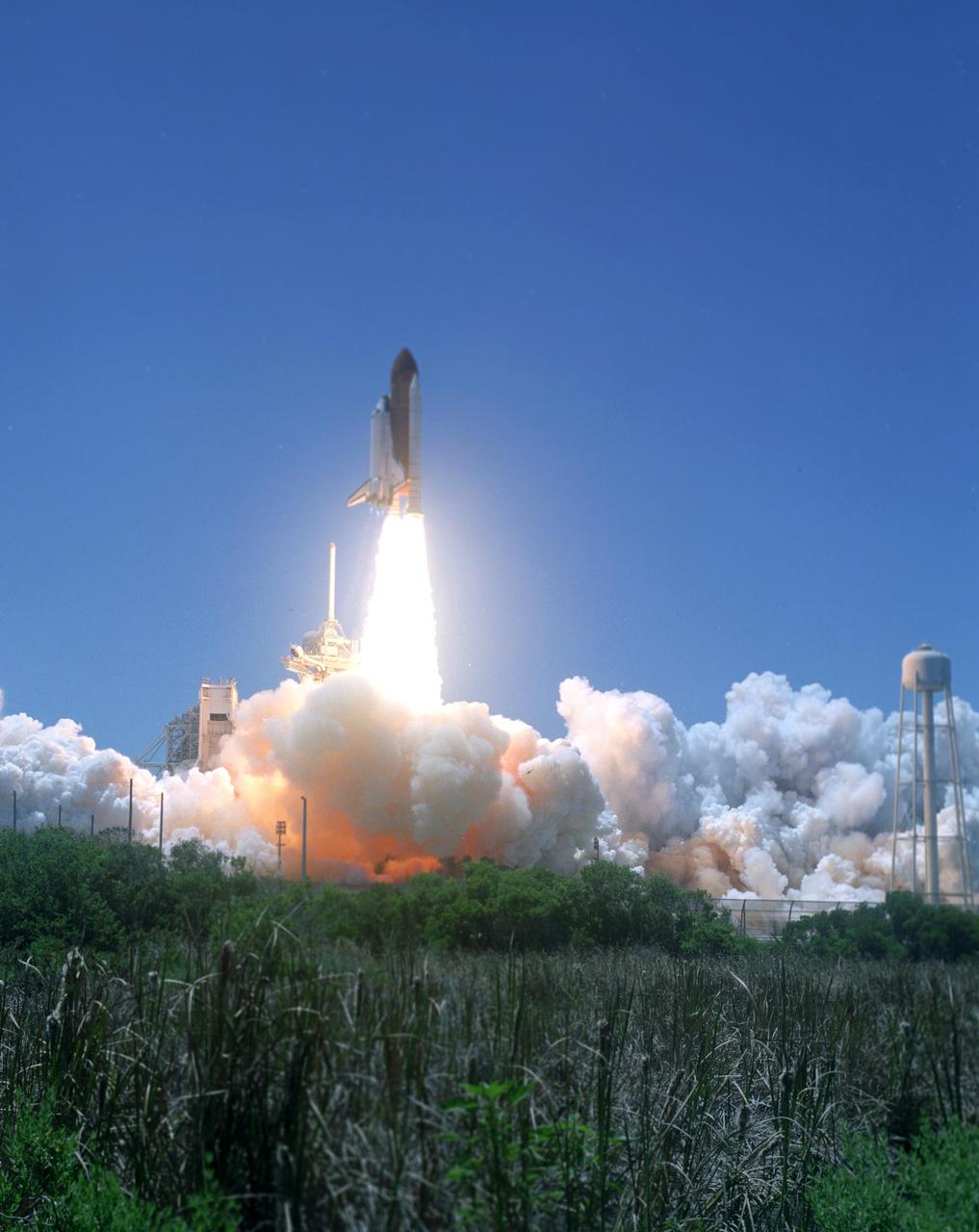
KENNEDY SPACE CENTER, FLA. - Clearing the lighting rod on Launch Pad 39B, Space Shuttle Discovery makes history as the first to launch on Independence Day as it rockets into the clear blue sky. Liftoff was on-time at 2:38 p.m. EDT. During the 12-day mission, the STS-121 crew of seven will test new equipment and procedures to improve shuttle safety, as well as deliver supplies and make repairs to the International Space Station. Landing is scheduled for July 16 or 17 at Kennedy's Shuttle Landing Facility. Photo credit: NASA/Sandy Joseph & Robert Murray
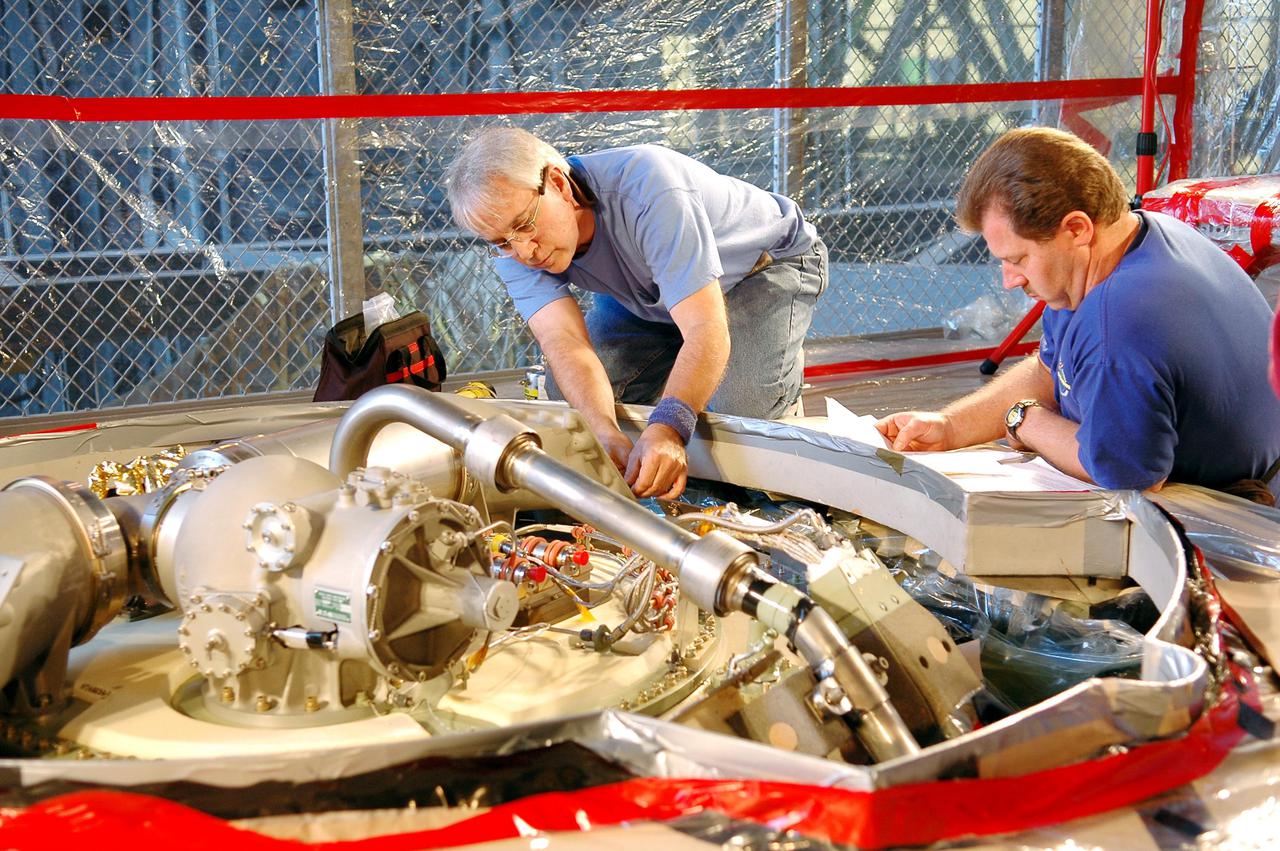
KENNEDY SPACE CENTER, FLA. - In the Vehicle Assembly Building, Michael Cinquigianno (left), who is a system test mechanical technician with Lockheed Martin, checks out the vent valve assembly on External Tank 121. Looking on is Lance Mercier, with Lockheed Martin Quality Control. The assembly sits on top of the tank and, when on the launch pad, is connected to the “beanie cap,” a swing-arm-mounted cap that covers the oxygen tank vent on top of the tank during the countdown. The cap is retracted about two minutes before liftoff. The cap siphons off oxygen vapor that threatens to form large ice on the tank, thus protecting the orbiter’s thermal protection system during launch. The External Tanks are built by Lockheed Martin at the Michoud Assembly Facility near New Orleans. The tank is being prepared to fly with Discovery on mission STS-114, whose launch window extends July 13 to July 31.
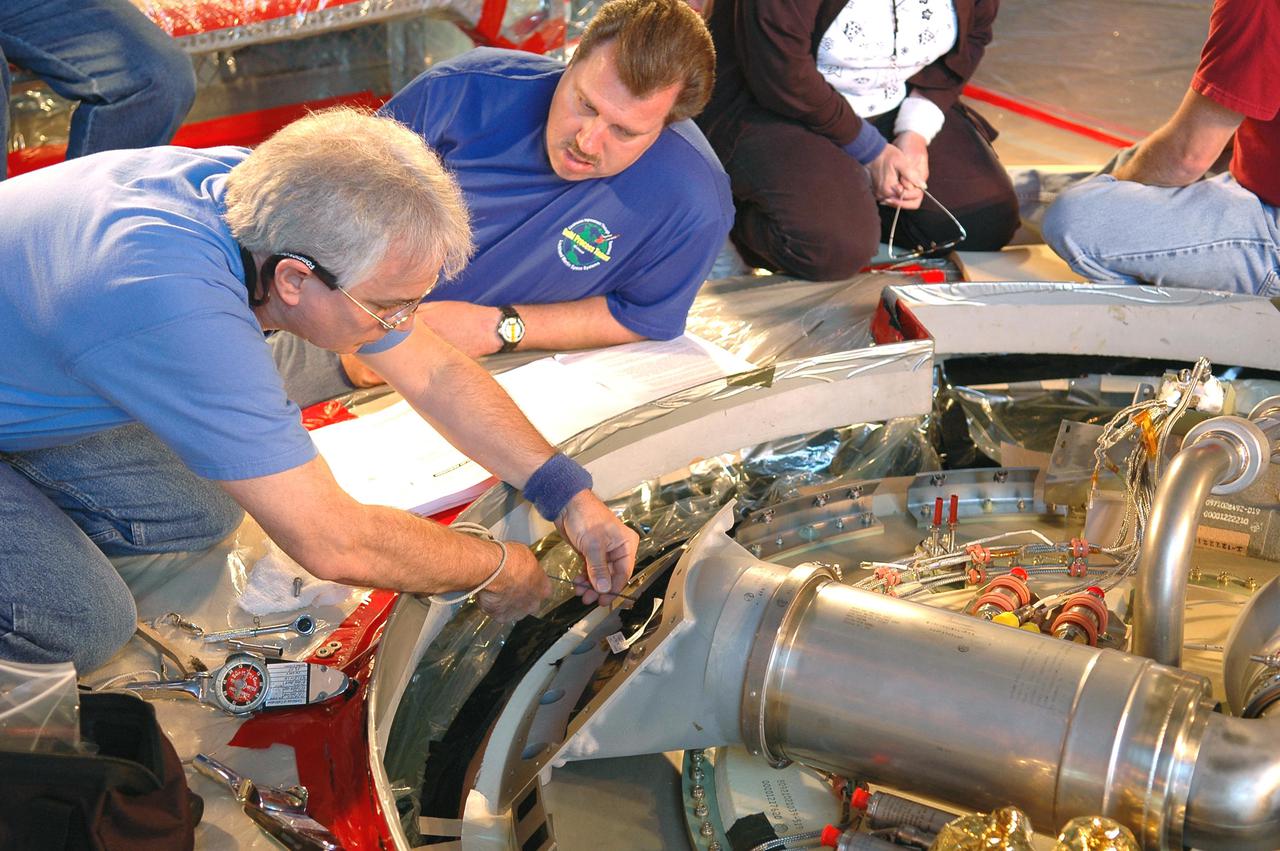
KENNEDY SPACE CENTER, FLA. - In the Vehicle Assembly Building, Michael Cinquigianno (left), who is a system test mechanical technician with Lockheed Martin, checks out the vent valve assembly on External Tank 121. Looking on is Lance Mercier, with Lockheed Martin Quality Control. The assembly sits on top of the tank and, when on the launch pad, is connected to the “beanie cap,” a swing-arm-mounted cap that covers the oxygen tank vent on top of the tank during the countdown. The cap is retracted about two minutes before liftoff. The cap siphons off oxygen vapor that threatens to form large ice on the tank, thus protecting the orbiter’s thermal protection system during launch. The External Tanks are built by Lockheed Martin at the Michoud Assembly Facility near New Orleans. The tank is being prepared to fly with Discovery on mission STS-114, whose launch window extends July 13 to July 31.
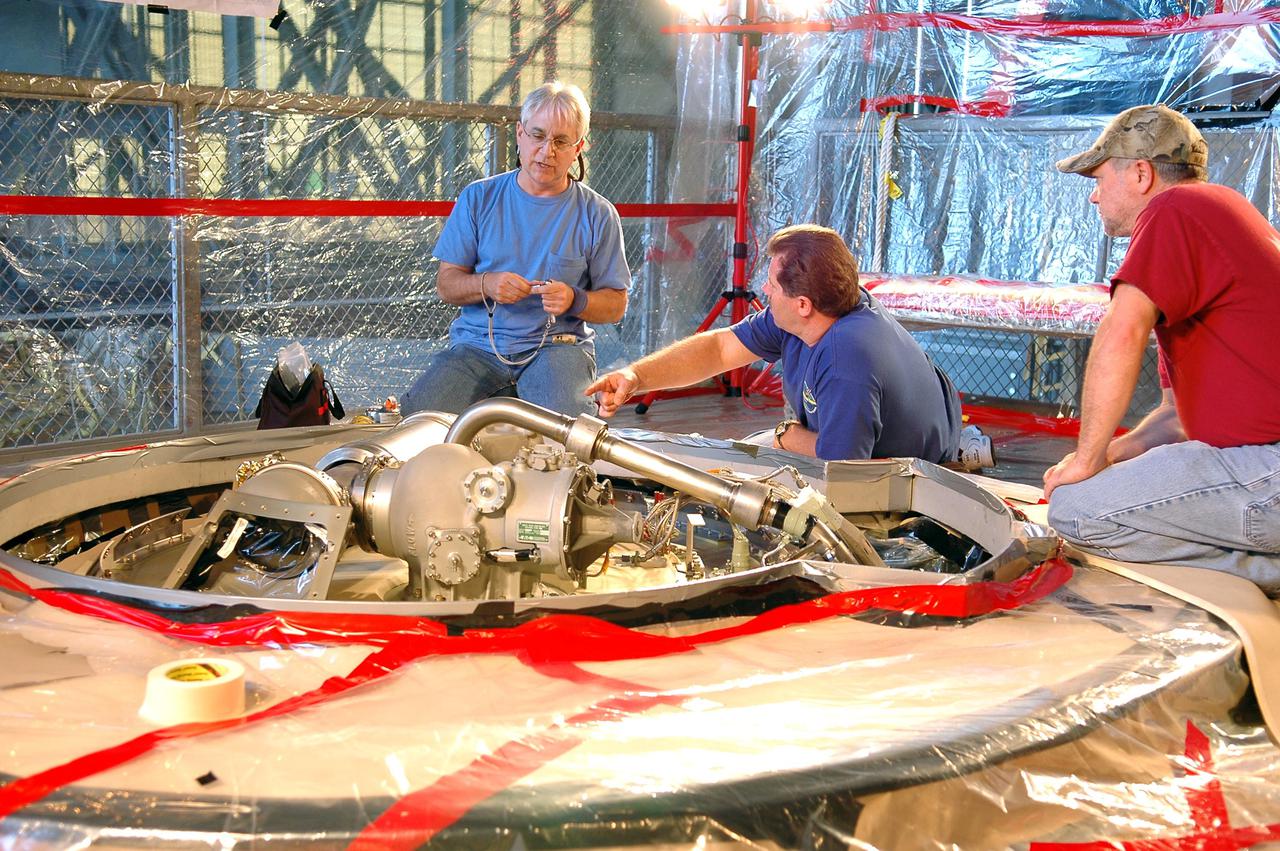
KENNEDY SPACE CENTER, FLA. - In the Vehicle Assembly Building, Michael Cinquigianno (left), who is a system test mechanical technician with Lockheed Martin, checks out the vent valve assembly on External Tank 121. Next to him is Lance Mercier, with Lockheed Martin Quality Control. The assembly sits on top of the tank and, when on the launch pad, is connected to the “beanie cap,” a swing-arm-mounted cap that covers the oxygen tank vent on top of the tank during the countdown. The cap is retracted about two minutes before liftoff. The cap siphons off oxygen vapor that threatens to form large ice on the tank, thus protecting the orbiter’s thermal protection system during launch. The External Tanks are built by Lockheed Martin at the Michoud Assembly Facility near New Orleans. The tank is being prepared to fly with Discovery on mission STS-114, whose launch window extends July 13 to July 31.
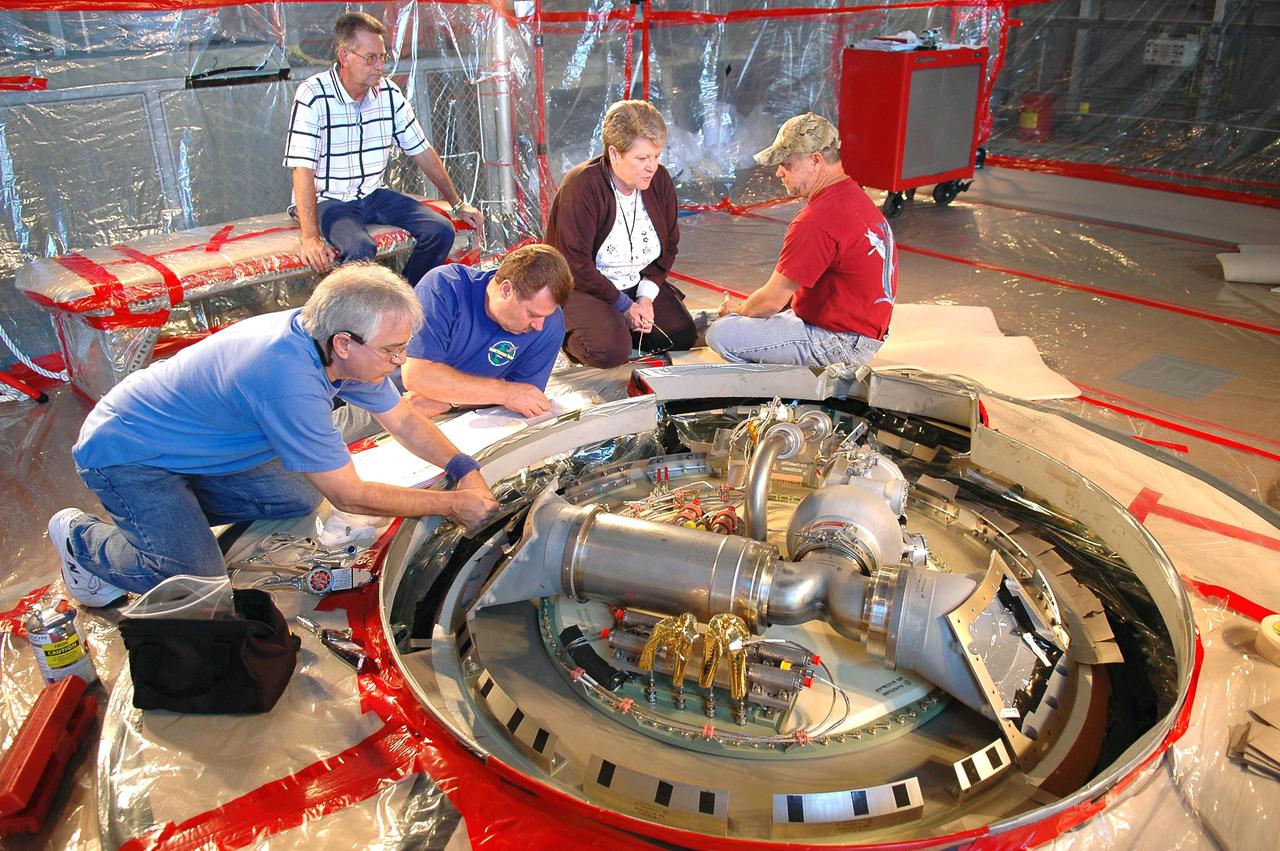
KENNEDY SPACE CENTER, FLA. - In the Vehicle Assembly Building, Michael Cinquigianno (left), who is a system test mechanical technician with Lockheed Martin, checks out the vent valve assembly on External Tank 121. Next to him is Lance Mercier, with Lockheed Martin Quality Control. The assembly sits on top of the tank and, when on the launch pad, is connected to the “beanie cap,” a swing-arm-mounted cap that covers the oxygen tank vent on top of the tank during the countdown. The cap is retracted about two minutes before liftoff. The cap siphons off oxygen vapor that threatens to form large ice on the tank, thus protecting the orbiter’s thermal protection system during launch. The External Tanks are built by Lockheed Martin at the Michoud Assembly Facility near New Orleans. The tank is being prepared to fly with Discovery on mission STS-114, whose launch window extends July 13 to July 31.
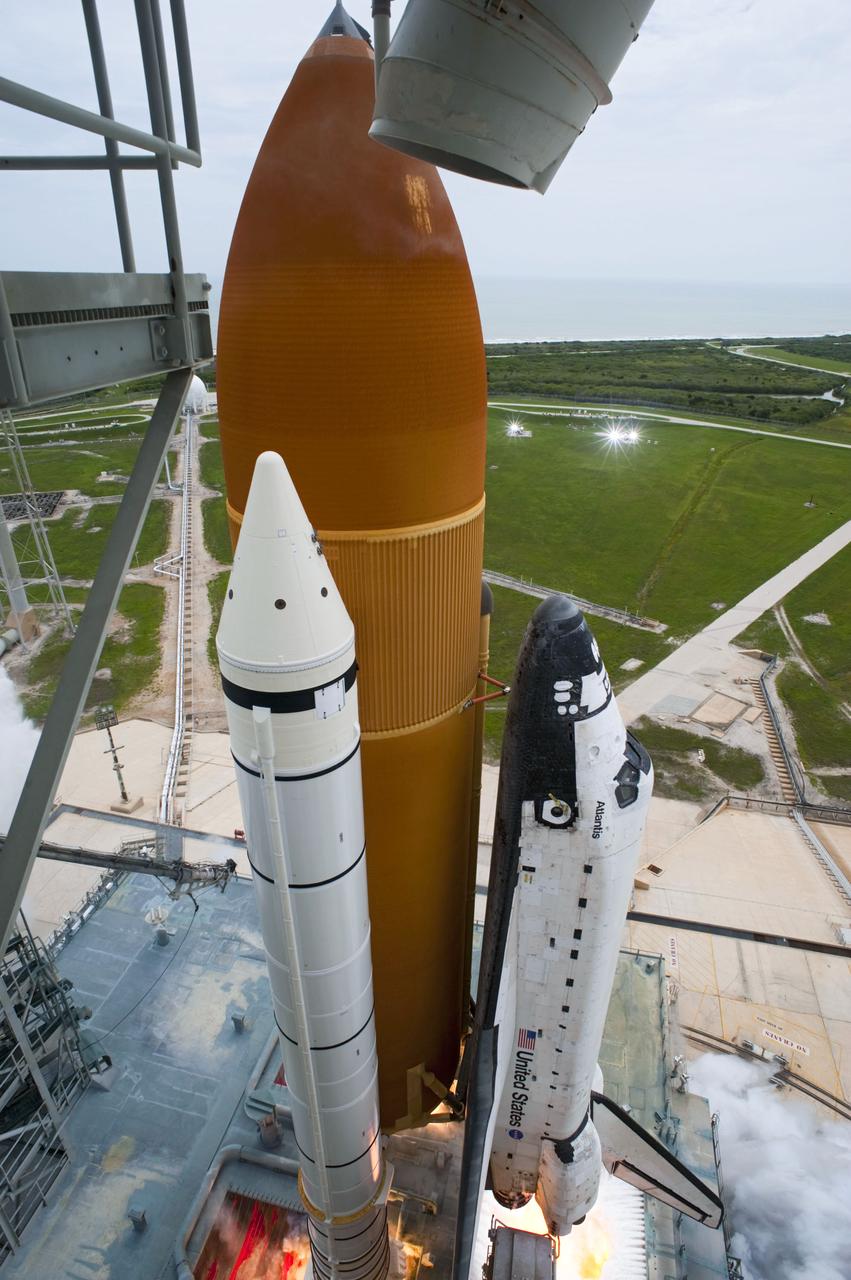
STS135-S-121 (8 July 2011) --- Space shuttle Atlantis' main engines are ignited for liftoff at Launch Pad 39A at NASA's Kennedy Space Center in Florida as it begins its STS-135 mission to the International Space Station. Liftoff was at 11:29 a.m. (EDT) on July 8, 2011. Onboard are NASA astronauts Chris Ferguson, commander; Doug Hurley, pilot; Sandy Magnus and Rex Walheim, both mission specialists. STS-135 will deliver the Raffaello multi-purpose logistics module packed with supplies and spare parts for the space station. Atlantis also carries the Robotic Refueling Mission experiment that will investigate the potential for robotically refueling existing satellites in orbit. In addition, Atlantis will return with a failed ammonia pump module to help NASA better understand the failure mechanism and improve pump designs for future systems. STS-135 will be the 33rd flight of Atlantis, the 37th shuttle mission to the space station, and the 135th and final mission of NASA's Space Shuttle Program. Photo credit: NASA
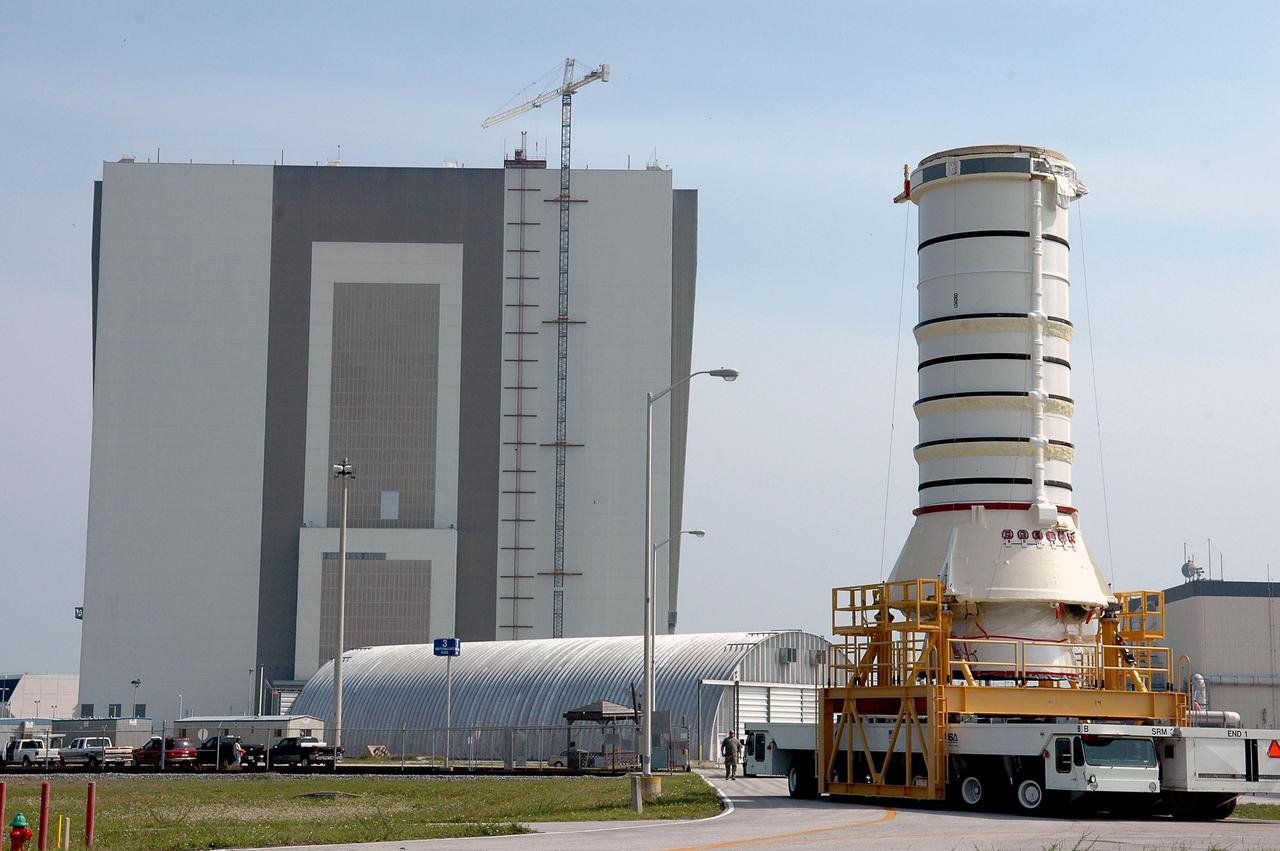
KENNEDY SPACE CENTER, FLA. - The aft segment of a Solid Rocket Booster is transported to the Vehicle Assembly Building (in the background). The segment will be mated with other segments for use on the launch of Space Shuttle Atlantis on the second Return to Flight mission, STS-121. SRBs are used as matched pairs and each is made up of four solid rocket motor segments. Two SRBs provide the main thrust to lift the Space Shuttle off the pad to an altitude of about 150,000 feet. In addition, the two SRBs carry the entire weight of the External Tank and orbiter and transmit the weight load through their structure to the Mobile Launcher Platform. Each booster has a thrust (sea level) of approximately 3,300,000 pounds at launch, and provide 71.4 percent of the thrust at liftoff and during first-stage ascent.
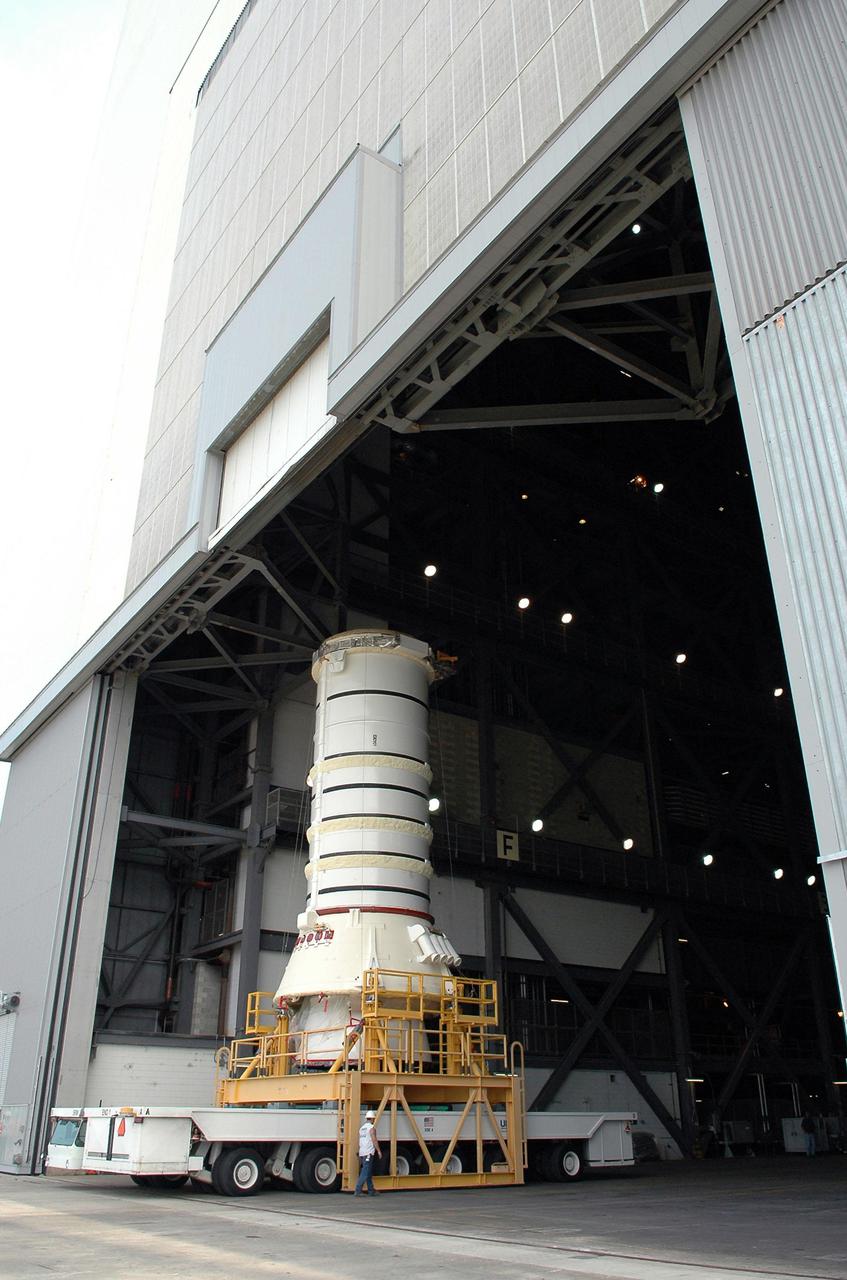
KENNEDY SPACE CENTER, FLA. - The aft segment of a Solid Rocket Booster rolls into the Vehicle Assembly Building. The segment will be mated with other segments for use on the launch of Space Shuttle Atlantis on the second Return to Flight mission, STS-121. SRBs are used as matched pairs and each is made up of four solid rocket motor segments. Two SRBs provide the main thrust to lift the Space Shuttle off the pad to an altitude of about 150,000 feet. In addition, the two SRBs carry the entire weight of the External Tank and orbiter and transmit the weight load through their structure to the Mobile Launcher Platform. Each booster has a thrust (sea level) of approximately 3,300,000 pounds at launch, and provide 71.4 percent of the thrust at liftoff and during first-stage ascent.
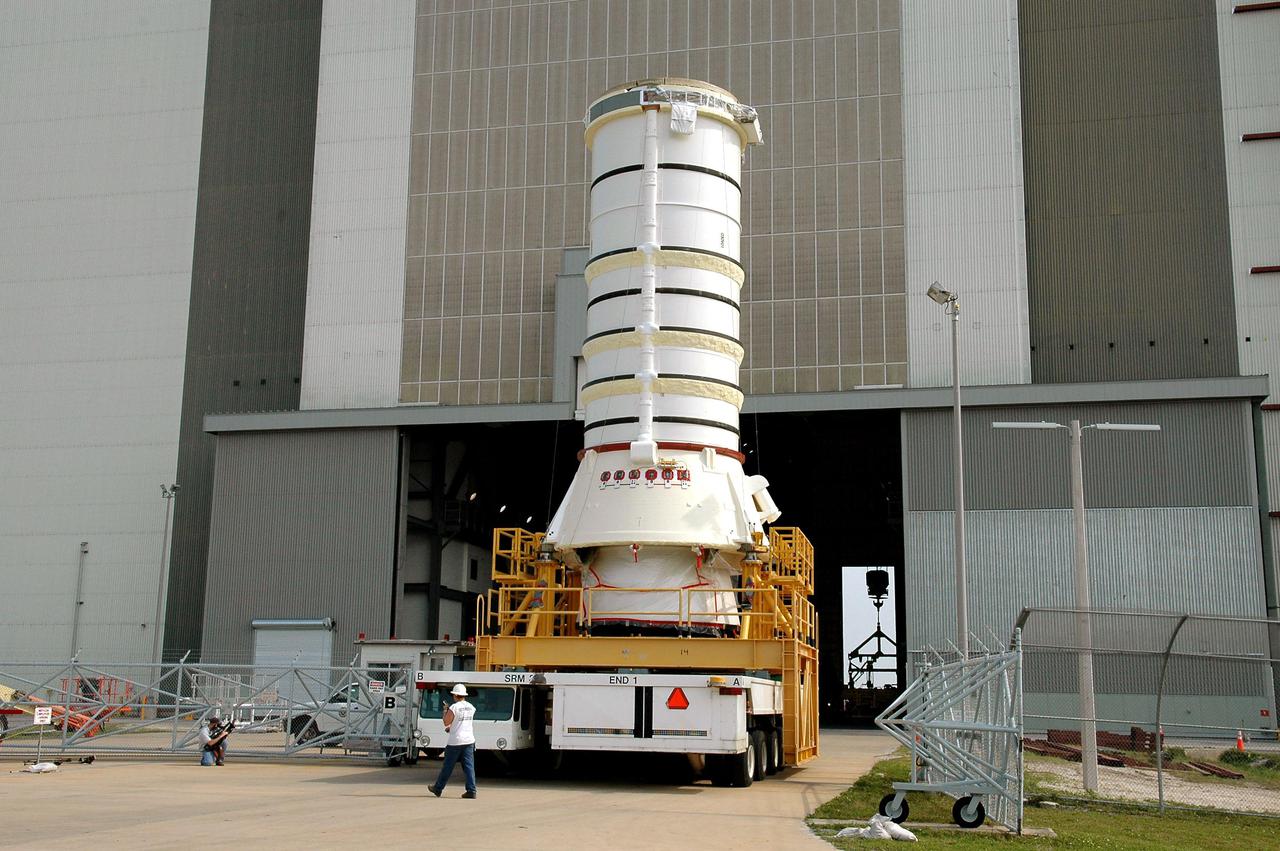
KENNEDY SPACE CENTER, FLA. - The aft segment of a Solid Rocket Booster rolls toward the opening in the Vehicle Assembly Building. The segment will be mated with other segments for use on the launch of Space Shuttle Atlantis on the second Return to Flight mission, STS-121. SRBs are used as matched pairs and each is made up of four solid rocket motor segments. Two SRBs provide the main thrust to lift the Space Shuttle off the pad to an altitude of about 150,000 feet. In addition, the two SRBs carry the entire weight of the External Tank and orbiter and transmit the weight load through their structure to the Mobile Launcher Platform. Each booster has a thrust (sea level) of approximately 3,300,000 pounds at launch, and provide 71.4 percent of the thrust at liftoff and during first-stage ascent.
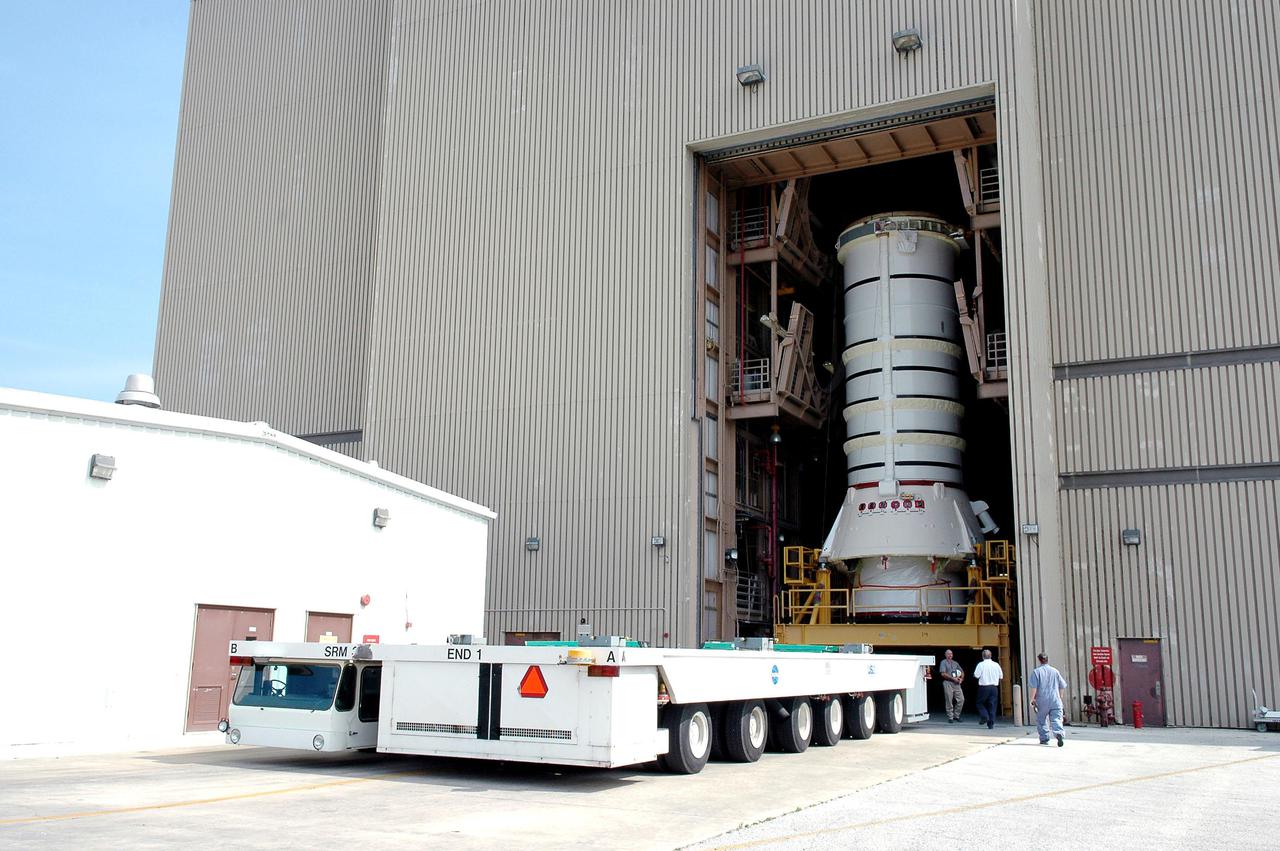
KENNEDY SPACE CENTER, FLA. - The aft segment of a Solid Rocket Booster (SRB) is ready to roll out of the Rotation Processing and Surge Facility at NASA’s Kennedy Space Center. The segment is being moved to the Vehicle Assembly Building where it will be mated with other segments for use on the launch of Space Shuttle Atlantis on the second Return to Flight mission, STS-121. SRBs are used as matched pairs and each is made up of four solid rocket motor segments. Two SRBs provide the main thrust to lift the Space Shuttle off the pad to an altitude of about 150,000 feet. In addition, the two SRBs carry the entire weight of the External Tank and orbiter and transmit the weight load through their structure to the Mobile Launcher Platform. Each booster has a thrust (sea level) of approximately 3,300,000 pounds at launch, and provide 71.4 percent of the thrust at liftoff and during first-stage ascent.
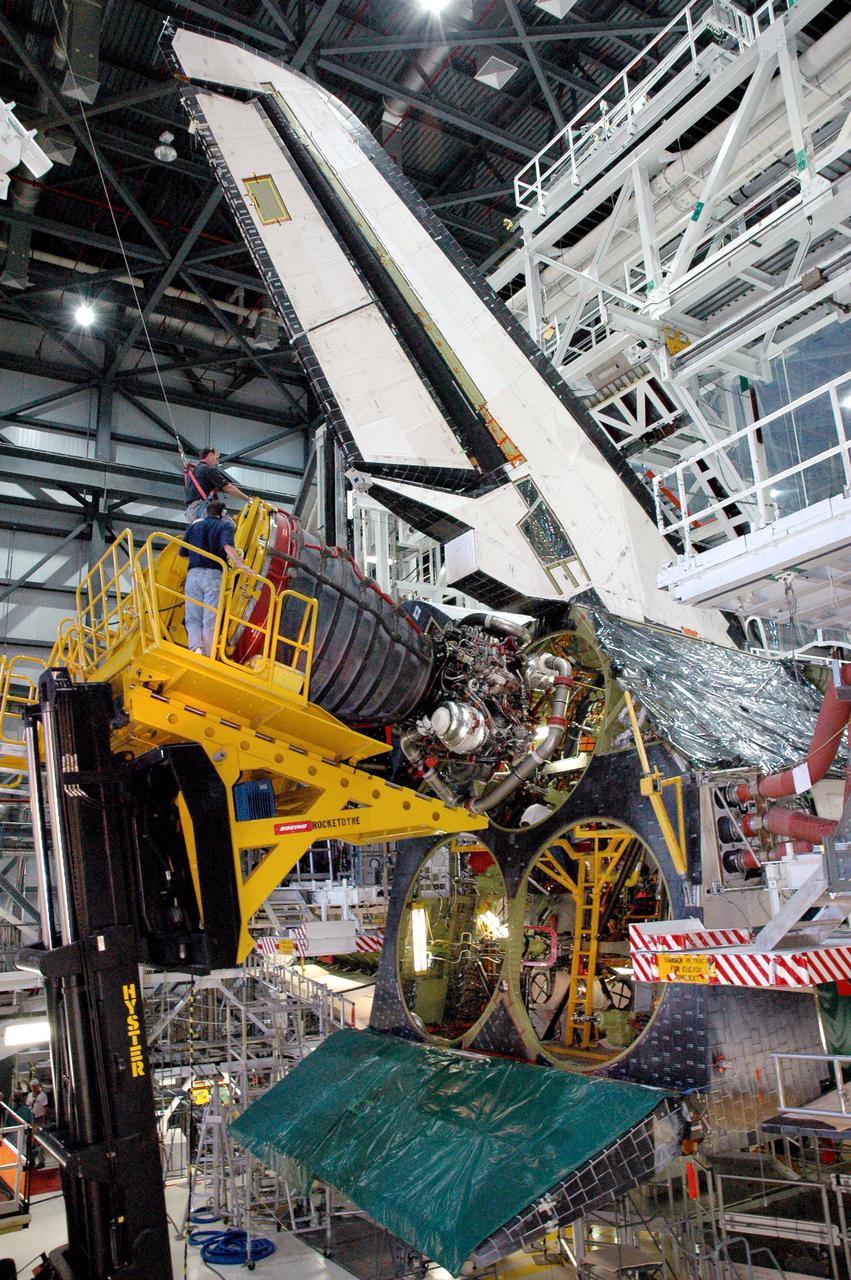
KENNEDY SPACE CENTER, FLA. - In the Orbiter Processing Facility bay 1 at NASA’s Kennedy Space Center, a Space Shuttle Main Engine (SSME), held by a Hyster fork lift, is maneuvered into place in position number one (upper chamber) in Atlantis. Overall, an SSME weighs approximately 7,000 pounds. Three engines provide the thrust, along with the two Solid Rocket Boosters, for liftoff. After about 2 minutes, the two boosters are spent and are separated from the external tank. The SSMEs continue firing for about 8 minutes. They shut down just before the craft is inserted into orbit. The SSMEs are tested at Stennis Space Center in Mississippi. Atlantis is being processed for the second Return to Flight mission, STS-121, scheduled for launch in a window from July 12 through July 31.
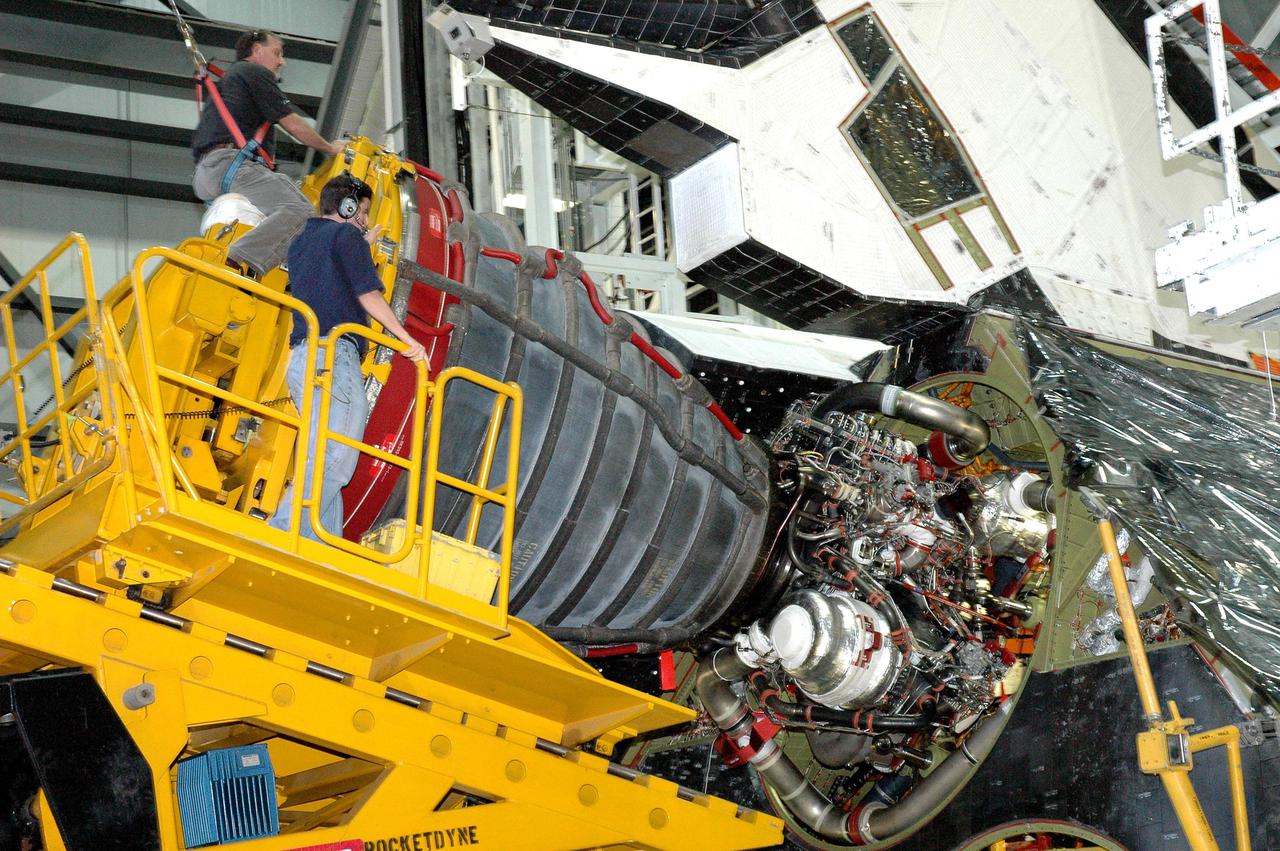
KENNEDY SPACE CENTER, FLA. - In the Orbiter Processing Facility bay 1 at NASA’s Kennedy Space Center, workers guide the Hyster fork lift close to Atlantis to install a Space Shuttle Main Engine (SSME) in position number 1 (upper chamber). Overall, an SSME weighs approximately 7,000 pounds. Three engines provide the thrust, along with the two Solid Rocket Boosters, for liftoff. After about 2 minutes, the two boosters are spent and are separated from the external tank. The SSMEs continue firing for about 8 minutes. They shut down just before the craft is inserted into orbit. The SSMEs are tested at Stennis Space Center in Mississippi. Atlantis is being processed for the second Return to Flight mission, STS-121, scheduled for launch in a window from July 12 through July 31.
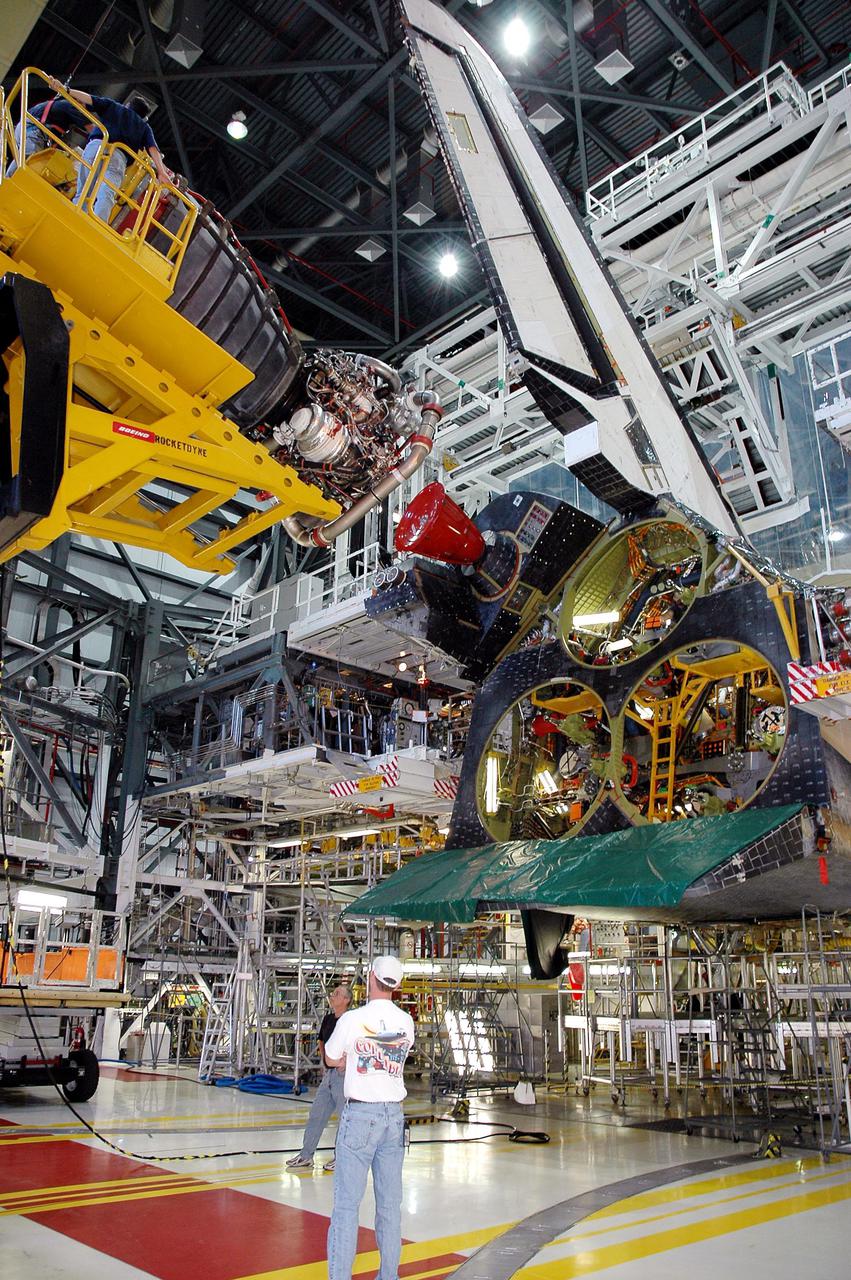
KENNEDY SPACE CENTER, FLA. - In the Orbiter Processing Facility bay 1 at NASA’s Kennedy Space Center, a Hyster fork lift (left) holding a Space Shuttle Main Engine (SSME) maneuvers into position number 1 (upper chamber) behind Atlantis for installation. Overall, an SSME weighs approximately 7,000 pounds. Three engines provide the thrust, along with the two Solid Rocket Boosters, for liftoff. After about 2 minutes, the two boosters are spent and are separated from the external tank. The SSMEs continue firing for about 8 minutes. They shut down just before the craft is inserted into orbit. The SSMEs are tested at Stennis Space Center in Mississippi. Atlantis is being processed for the second Return to Flight mission, STS-121, scheduled for launch in a window from July 12 through July 31.
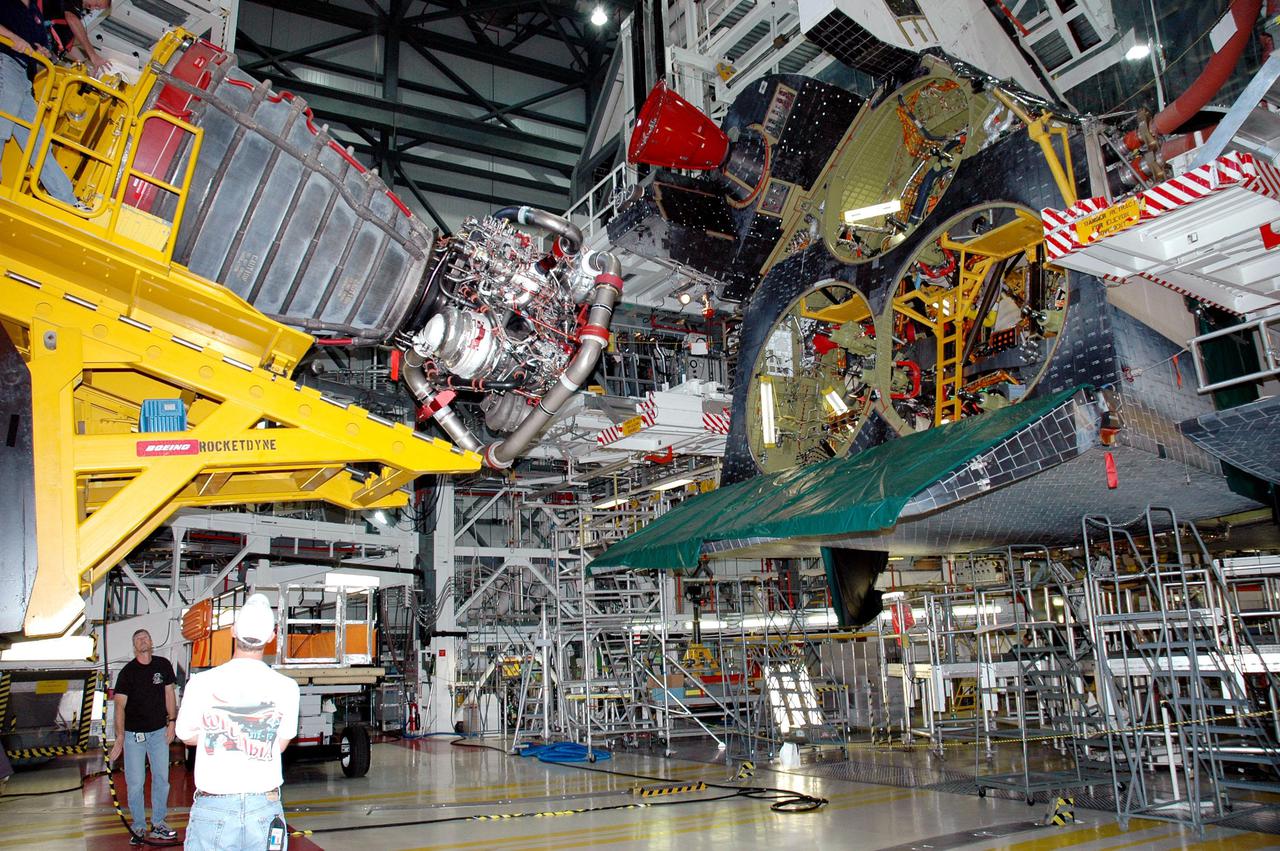
KENNEDY SPACE CENTER, FLA. - In the Orbiter Processing Facility bay 1 at NASA’s Kennedy Space Center, a Hyster fork lift (left) holding the first Space Shuttle Main Engine (SSME) maneuvers into position number 1 (upper chamber) behind Atlantis for installation. Overall, an SSME weighs approximately 7,000 pounds. Three engines provide the thrust, along with the two Solid Rocket Boosters, for liftoff. After about 2 minutes, the two boosters are spent and are separated from the external tank. The SSMEs continue firing for about 8 minutes. They shut down just before the craft is inserted into orbit. The SSMEs are tested at Stennis Space Center in Mississippi. Atlantis is being processed for the second Return to Flight mission, STS-121, scheduled for launch in a window from July 12 through July 31.
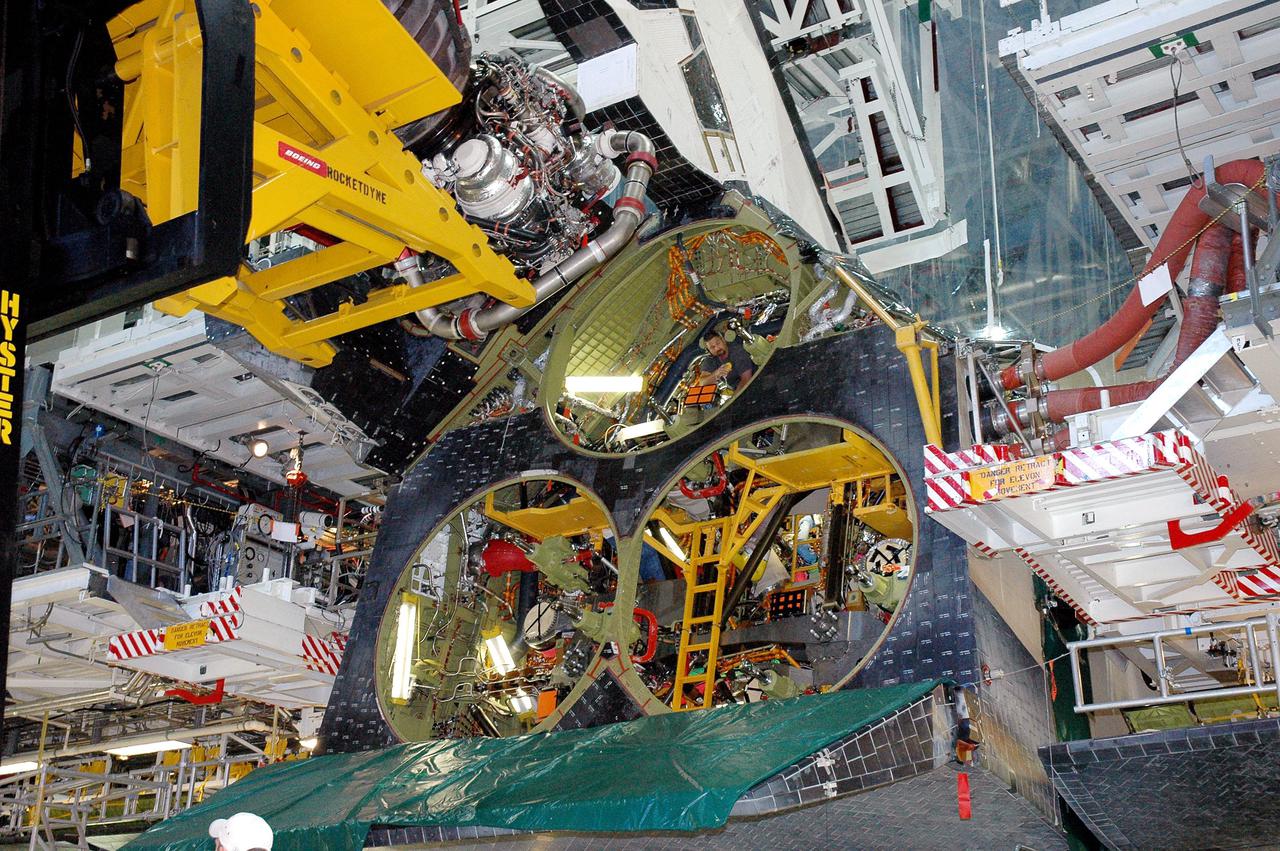
KENNEDY SPACE CENTER, FLA. - In the Orbiter Processing Facility bay 1 at NASA’s Kennedy Space Center, a worker looks out from the position number one engine opening in Atlantis as a Hyster fork lift (left) holding a Space Shuttle Main Engine (SSME) maneuvers into position for installation. Overall, an SSME weighs approximately 7,000 pounds. Three engines provide the thrust, along with the two Solid Rocket Boosters, for liftoff. After about 2 minutes, the two boosters are spent and are separated from the external tank. The SSMEs continue firing for about 8 minutes. They shut down just before the craft is inserted into orbit. The SSMEs are tested at Stennis Space Center in Mississippi. Atlantis is being processed for the second Return to Flight mission, STS-121, scheduled for launch in a window from July 12 through July 31.
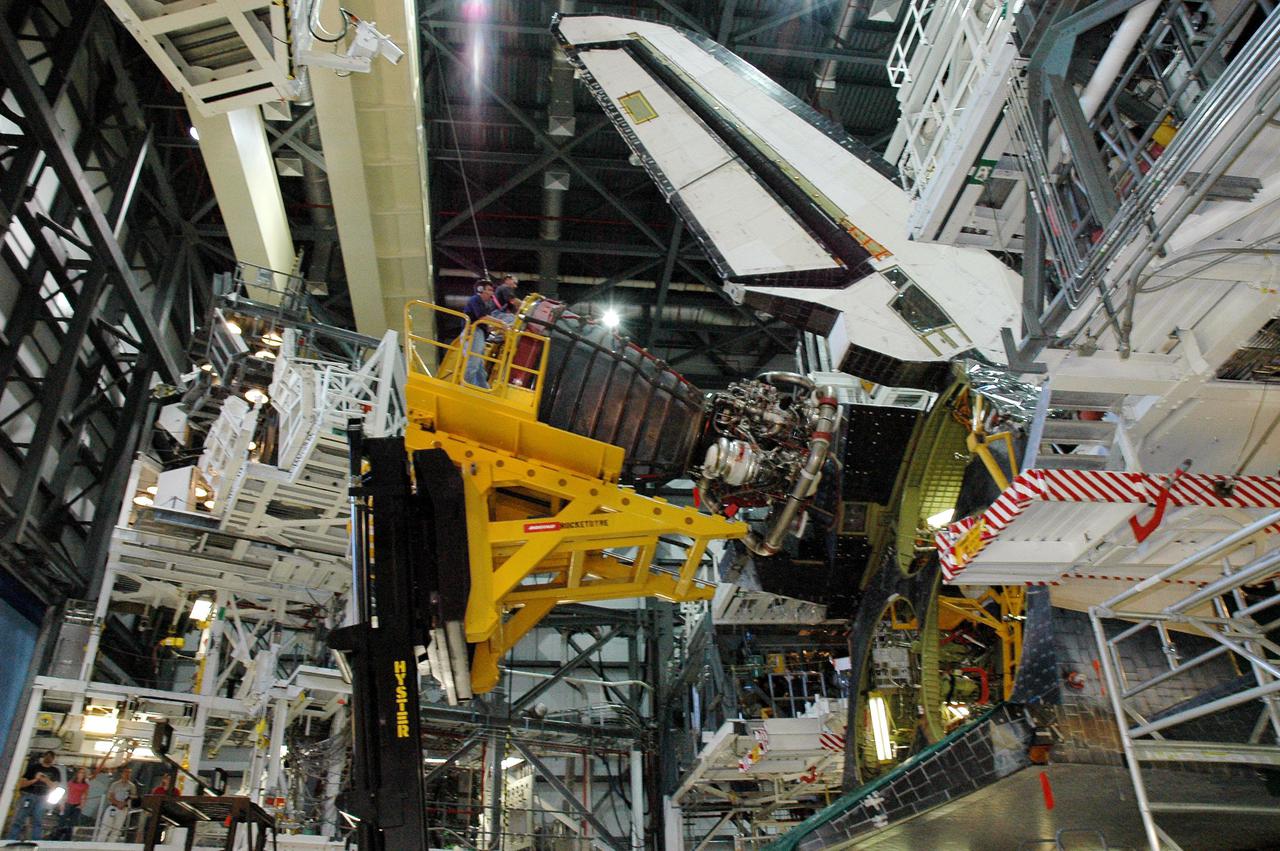
KENNEDY SPACE CENTER, FLA. - In the Orbiter Processing Facility bay 1 at NASA’s Kennedy Space Center, a Hyster fork lift (left) holding Space Shuttle Main Engine (SSME) closes in on position number 1 for installation in Atlantis. Overall, an SSME weighs approximately 7,000 pounds. Three engines provide the thrust, along with the two Solid Rocket Boosters, for liftoff. After about 2 minutes, the two boosters are spent and are separated from the external tank. The SSMEs continue firing for about 8 minutes. They shut down just before the craft is inserted into orbit. The SSMEs are tested at Stennis Space Center in Mississippi. Atlantis is being processed for the second Return to Flight mission, STS-121, scheduled for launch in a window from July 12 through July 31.
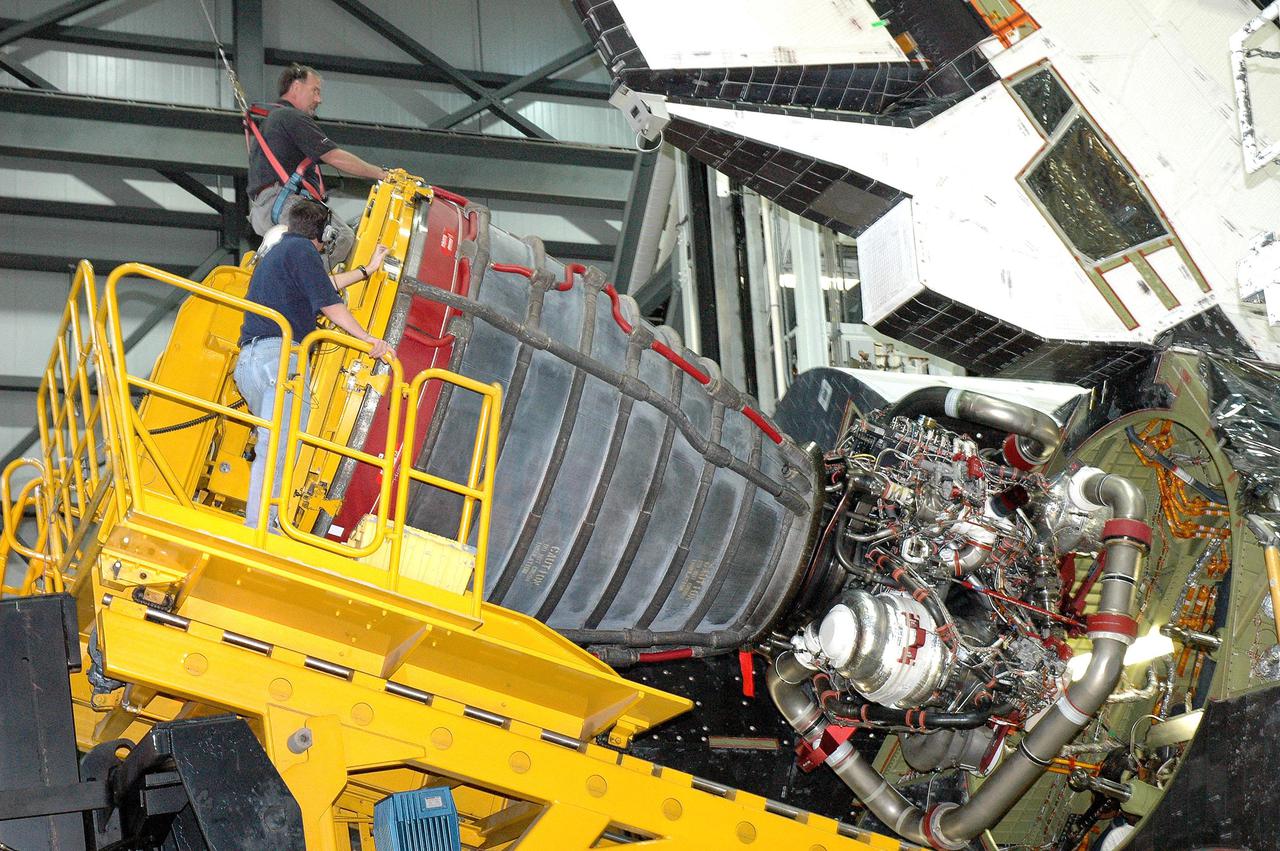
KENNEDY SPACE CENTER, FLA. - In the Orbiter Processing Facility bay 1 at NASA’s Kennedy Space Center, workers guide the Hyster fork lift close to Atlantis to install a Space Shuttle Main Engine (SSME) in position number one (upper chamber). Overall, an SSME weighs approximately 7,000 pounds. Three engines provide the thrust, along with the two Solid Rocket Boosters, for liftoff. After about 2 minutes, the two boosters are spent and are separated from the external tank. The SSMEs continue firing for about 8 minutes. They shut down just before the craft is inserted into orbit. The SSMEs are tested at Stennis Space Center in Mississippi. Atlantis is being processed for the second Return to Flight mission, STS-121, scheduled for launch in a window from July 12 through July 31.