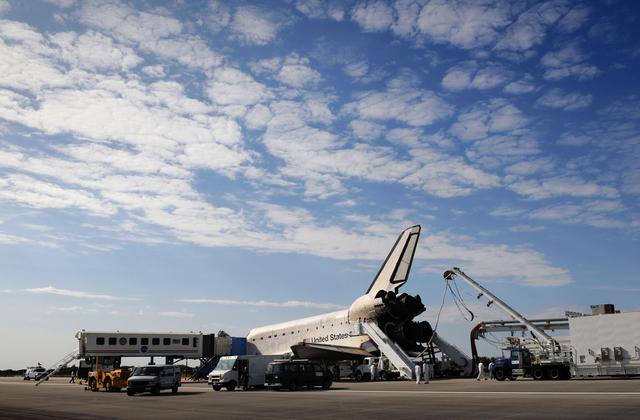
The space shuttle Atlantis (STS-122) is serviced by support vehicles and crew at the Shuttle Landing Facility after the safe landing at 9:07a.m., Wednesday, Feb. 20, 2008 at Kennedy Space Center, Fla. Atlantis and the crew of STS-122 completed delivery of the European Space Agency’s (ESA) Columbus laboratory to the International Space Station. Photo Credit: (NASA/Bill Ingalls)
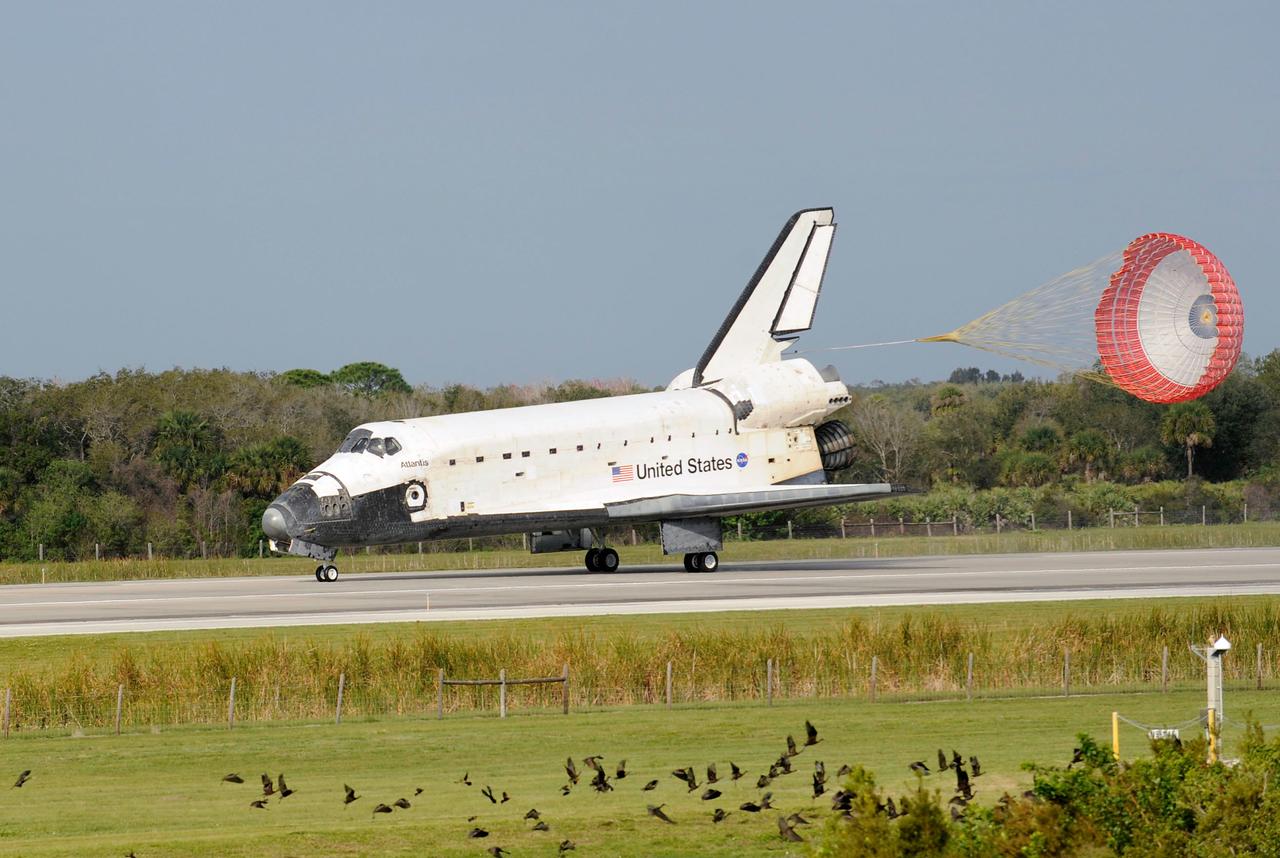
The space shuttle Atlantis (STS-122) lands at the Shuttle Landing Facility, 9:07a.m., Wednesday, Feb. 20, 2008 at Kennedy Space Center, Fla. completing delivery of the European Space Agency’s (ESA) Columbus laboratory to the International Space Station. Photo Credit: (NASA/Bill Ingalls)
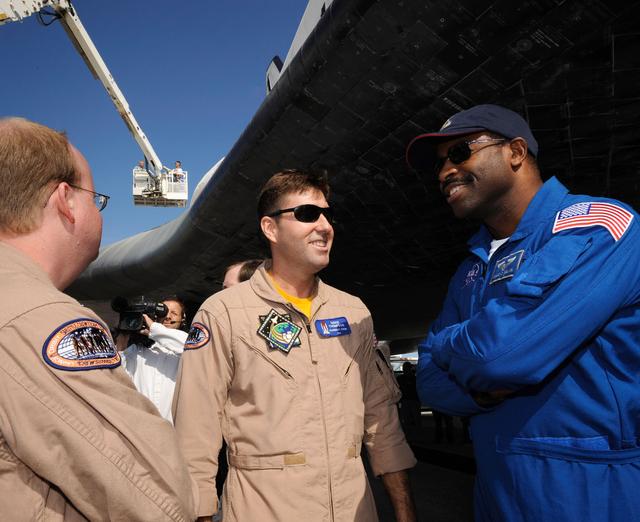
STS-122 Mission Specialist Leland Melvin, right, talks with members of the space shuttle close out crew underneath the wing of the space shuttle Atlantis. Atlantis landed at the Shuttle Landing Facility, 9:07a.m., Wednesday, Feb. 20, 2008 at Kennedy Space Center, Fla. completing delivery of the European Space Agency’s (ESA) Columbus laboratory to the International Space Station. Photo Credit: (NASA/Bill Ingalls)
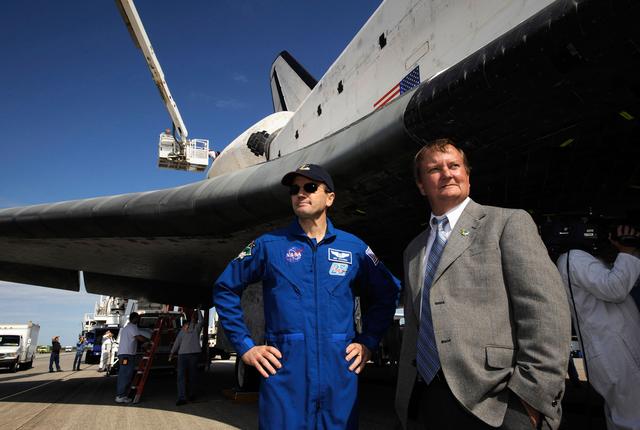
STS-122 Mission Specialist, Rex Walheim, left, and Shuttle Launch Director, Michael D. Leinbach take a moment to watch the close out crew work on the space shuttle Atlantis. Atlantis landed at the Shuttle Landing Facility, 9:07a.m., Wednesday, Feb. 20, 2008 at Kennedy Space Center, Fla. completing delivery of the European Space Agency’s (ESA) Columbus laboratory to the International Space Station. Photo Credit: (NASA/Bill Ingalls)
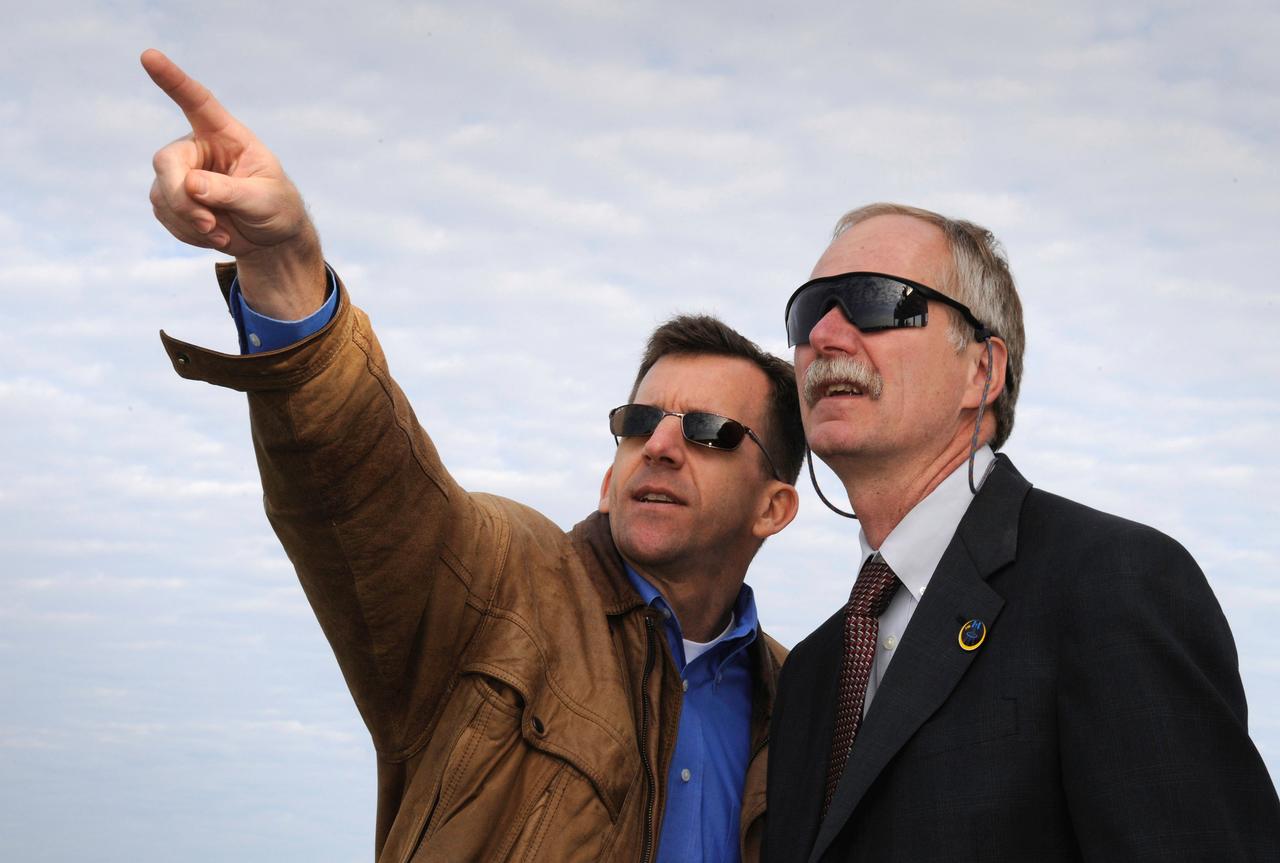
NASA Manager for Launch Integration, Leroy Cain, left, and NASA Associate Administrator for Space Operations, William H. Gerstenmaier watch as the The space shuttle Atlantis (STS-122) lands at the Shuttle Landing Facility, 9:07a.m., Wednesday, Feb. 20, 2008 at Kennedy Space Center, Fla. completing delivery of the European Space Agency’s (ESA) Columbus laboratory to the International Space Station. Photo Credit: (NASA/Bill Ingalls)
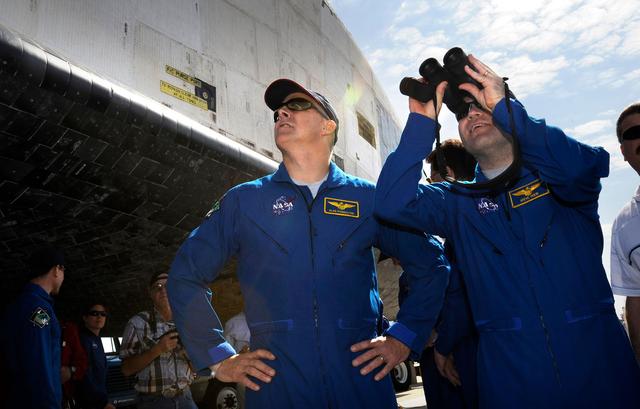
STS-122 Mission Commander Steve Frick, right, and Pilot Alan Poindexter use a pair of binoculars to inspect the outside of the space shuttle Atlantis. Atlantis landed at the Shuttle Landing Facility, 9:07a.m., Wednesday, Feb. 20, 2008 at Kennedy Space Center, Fla. completing delivery of the European Space Agency’s (ESA) Columbus laboratory to the International Space Station. Photo Credit: (NASA/Bill Ingalls)

CAPE CANAVERAL, Fla. -- In the Vehicle Assembly Building at NASA's Kennedy Space Center in Florida, External Fuel Tank-122 sits on its transporter in the transfer aisle waiting to be lifted into a test cell. ET-122, the Space Shuttle Program's last external fuel tank was delivered to Kennedy's Turn Basin from NASA’s Michoud Assembly Facility in New Orleans aboard the Pegasus Barge. After testing, ET-122 eventually will be attached to space shuttle Endeavour for the STS-134 mission to the International Space Station targeted to launch February, 2011. For more information visit: http://www.nasa.gov/mission_pages/shuttle/shuttlemissions/sts134/index.html. Photo credit: NASA/Dimitri Gerondidakis
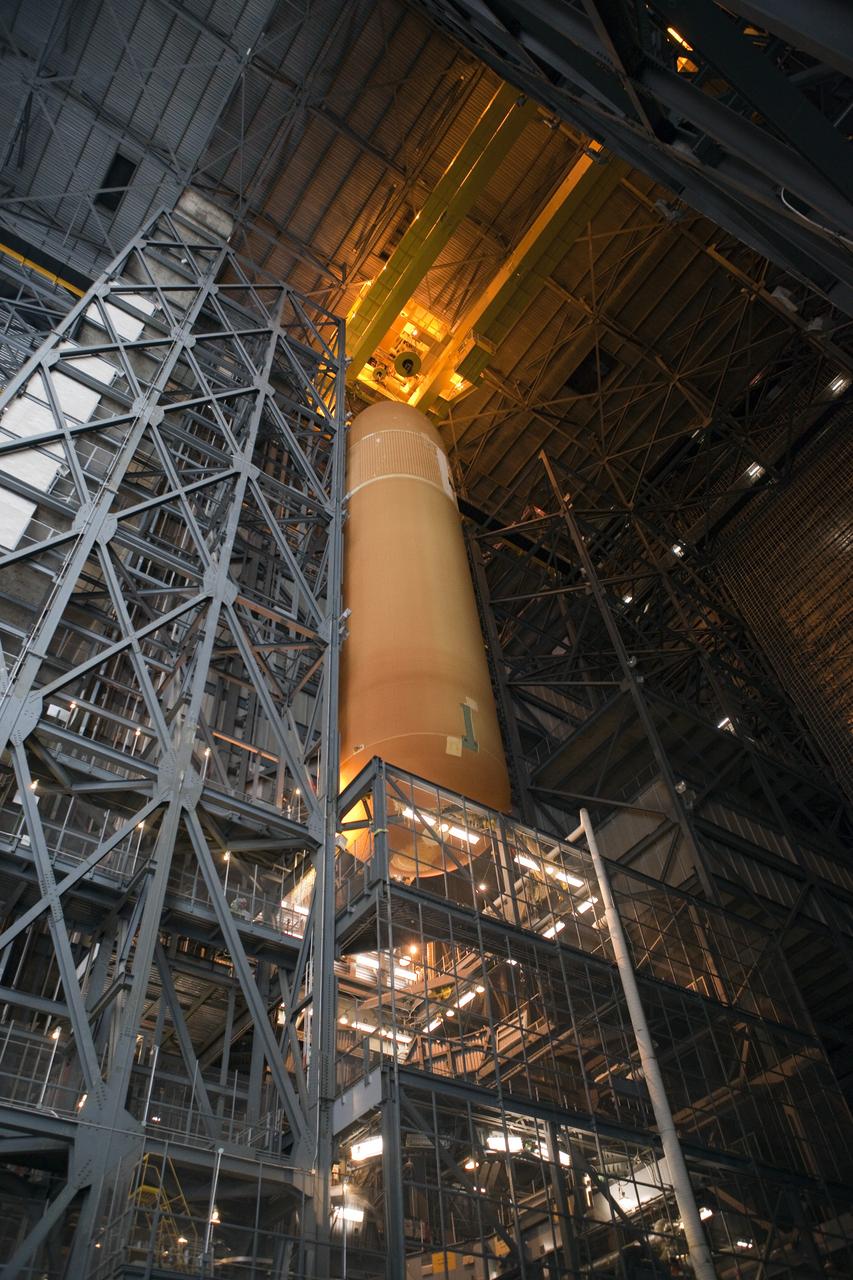
CAPE CANAVERAL, Fla. -- In the Vehicle Assembly Building at NASA's Kennedy Space Center in Florida, External Fuel Tank-122 is being lowered toward a test stand where it will be checked out before launch. ET-122, the Space Shuttle Program's last external fuel tank was delivered to Kennedy's Turn Basin from NASA’s Michoud Assembly Facility in New Orleans aboard the Pegasus Barge. After testing, ET-122 eventually will be attached to space shuttle Endeavour for the STS-134 mission to the International Space Station targeted to launch February, 2011. For more information visit: http://www.nasa.gov/mission_pages/shuttle/shuttlemissions/sts134/index.html. Photo credit: NASA/Dimitri Gerondidakis
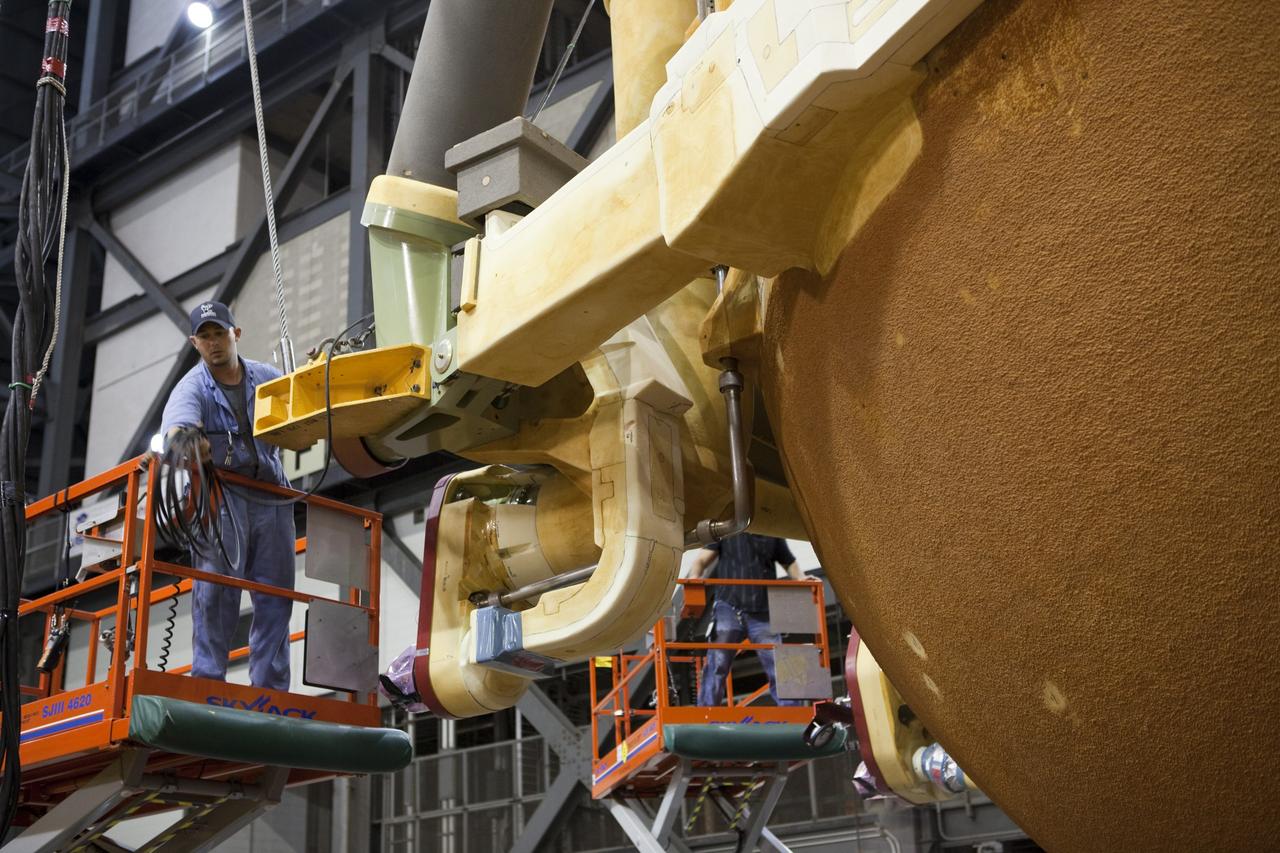
CAPE CANAVERAL, Fla. -- In the Vehicle Assembly Building at NASA's Kennedy Space Center in Florida, workers check the hoist connections on External Fuel Tank-122 as it is lifted toward a test cell. ET-122, the Space Shuttle Program's last external fuel tank was delivered to Kennedy's Turn Basin from NASA’s Michoud Assembly Facility in New Orleans aboard the Pegasus Barge. After testing, ET-122 eventually will be attached to space shuttle Endeavour for the STS-134 mission to the International Space Station targeted to launch February, 2011. For more information visit: http://www.nasa.gov/mission_pages/shuttle/shuttlemissions/sts134/index.html. Photo credit: NASA/Dimitri Gerondidakis
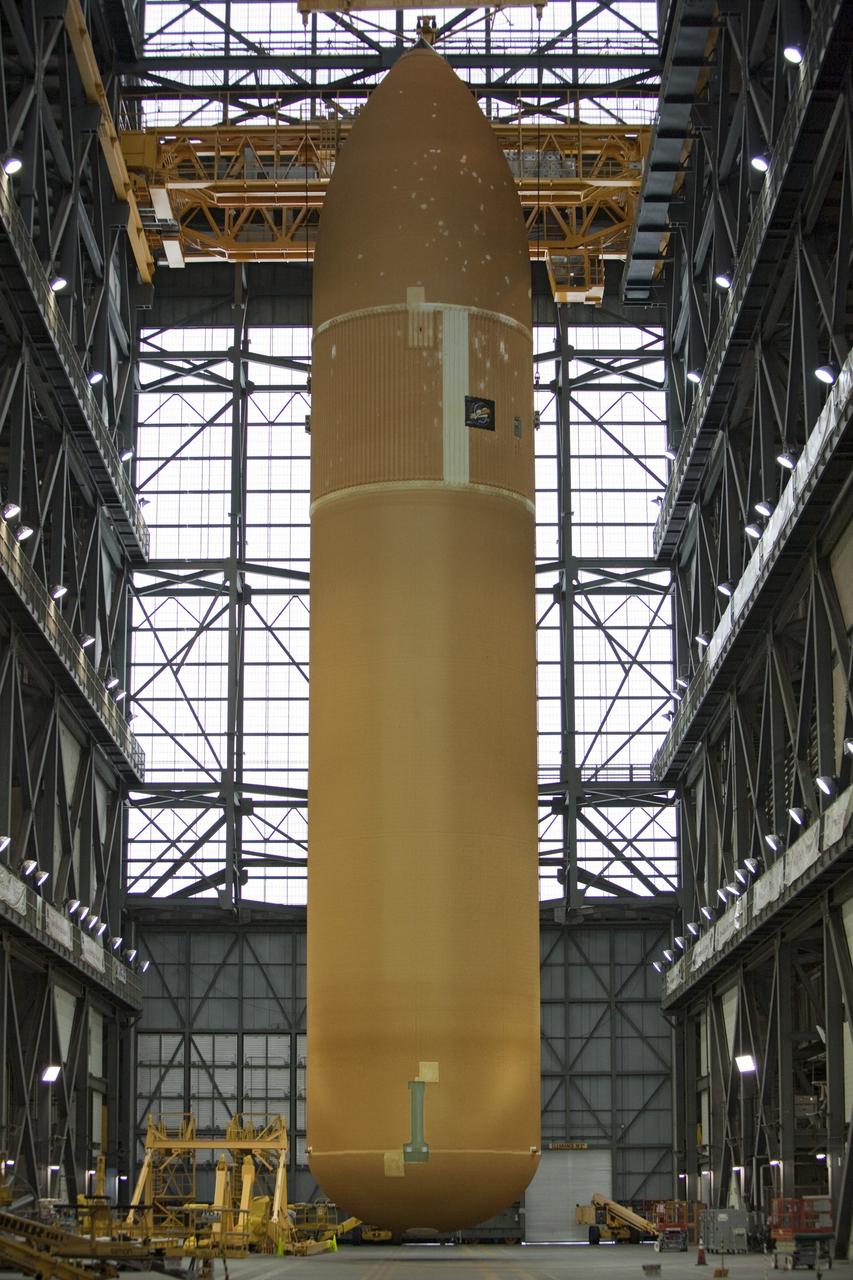
CAPE CANAVERAL, Fla. -- At NASA’s Kennedy Space Center in Florida, External Fuel Tank-122 is suspended vertically over the transfer aisle of the Vehicle Assembly Building as it is lifted toward a test cell. ET-122, the Space Shuttle Program's last external fuel tank was delivered to Kennedy's Turn Basin from NASA’s Michoud Assembly Facility in New Orleans aboard the Pegasus Barge. After testing, ET-122 eventually will be attached to space shuttle Endeavour for the STS-134 mission to the International Space Station targeted to launch February, 2011. For more information visit: http://www.nasa.gov/mission_pages/shuttle/shuttlemissions/sts134/index.html. Photo credit: NASA/Dimitri Gerondidakis
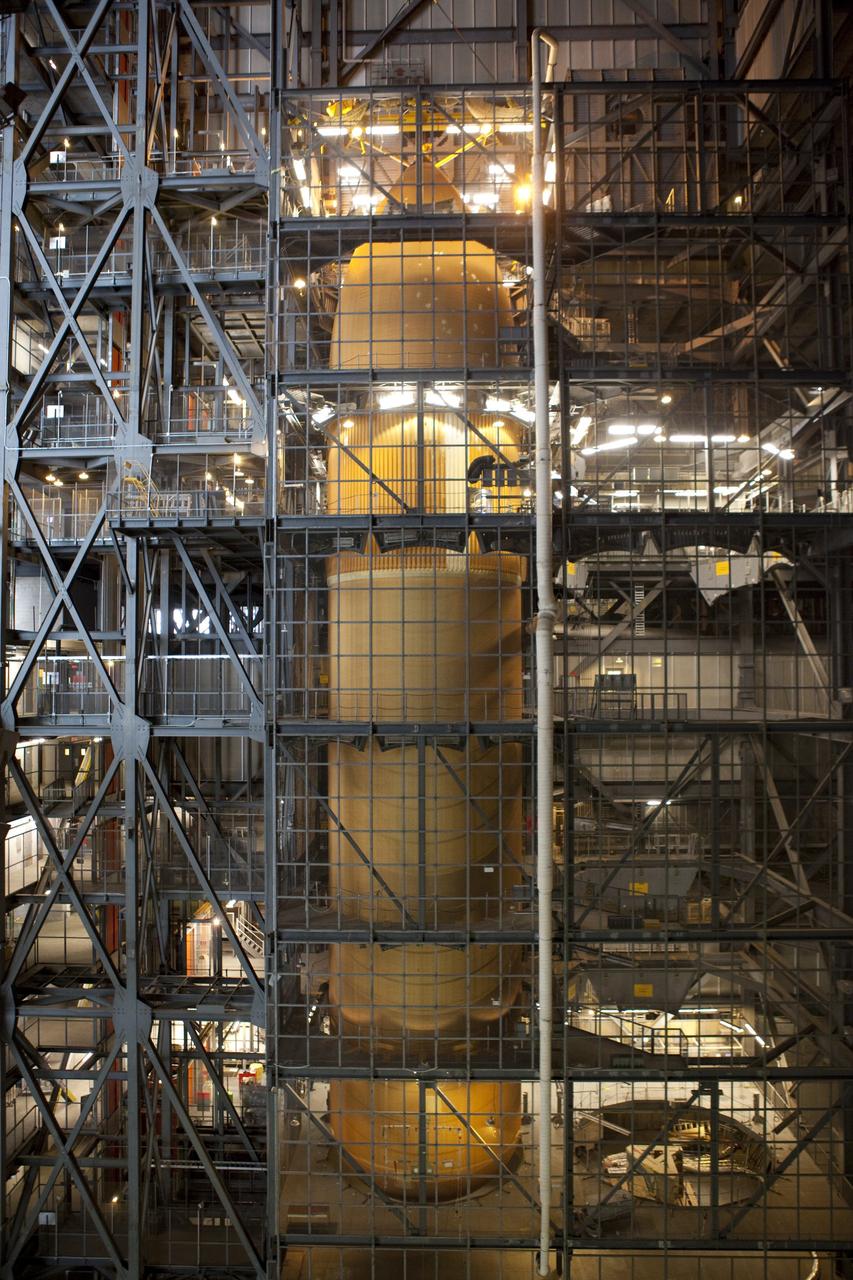
CAPE CANAVERAL, Fla. -- In the Vehicle Assembly Building at NASA's Kennedy Space Center in Florida, External Fuel Tank-122 is being lowered onto a test stand where it will be checked out before launch. ET-122, the Space Shuttle Program's last external fuel tank was delivered to Kennedy's Turn Basin from NASA’s Michoud Assembly Facility in New Orleans aboard the Pegasus Barge. After testing ET-122 eventually will be attached to space shuttle Endeavour for the STS-134 mission to the International Space Station targeted to launch February, 2011. For more information visit: http://www.nasa.gov/mission_pages/shuttle/shuttlemissions/sts134/index.html. Photo credit: NASA/Dimitri Gerondidakis
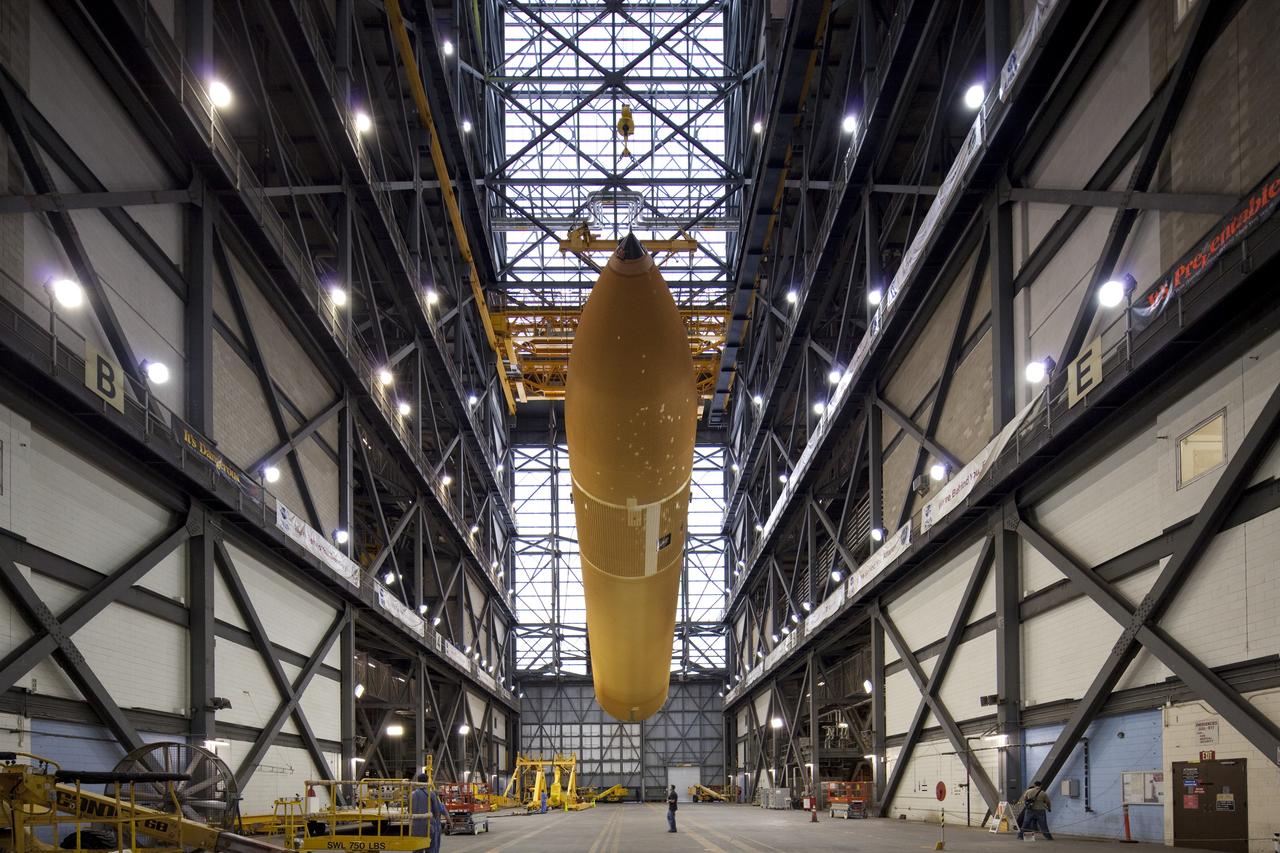
CAPE CANAVERAL, Fla. -- In the Vehicle Assembly Building at NASA's Kennedy Space Center in Florida, workers monitor the progress of External Fuel Tank-122 as it is lifted toward a test cell. ET-122, the Space Shuttle Program's last external fuel tank was delivered to Kennedy's Turn Basin from NASA’s Michoud Assembly Facility in New Orleans aboard the Pegasus Barge. After testing, ET-122 eventually will be attached to space shuttle Endeavour for the STS-134 mission to the International Space Station targeted to launch February, 2011. For more information visit: http://www.nasa.gov/mission_pages/shuttle/shuttlemissions/sts134/index.html. Photo credit: NASA/Dimitri Gerondidakis
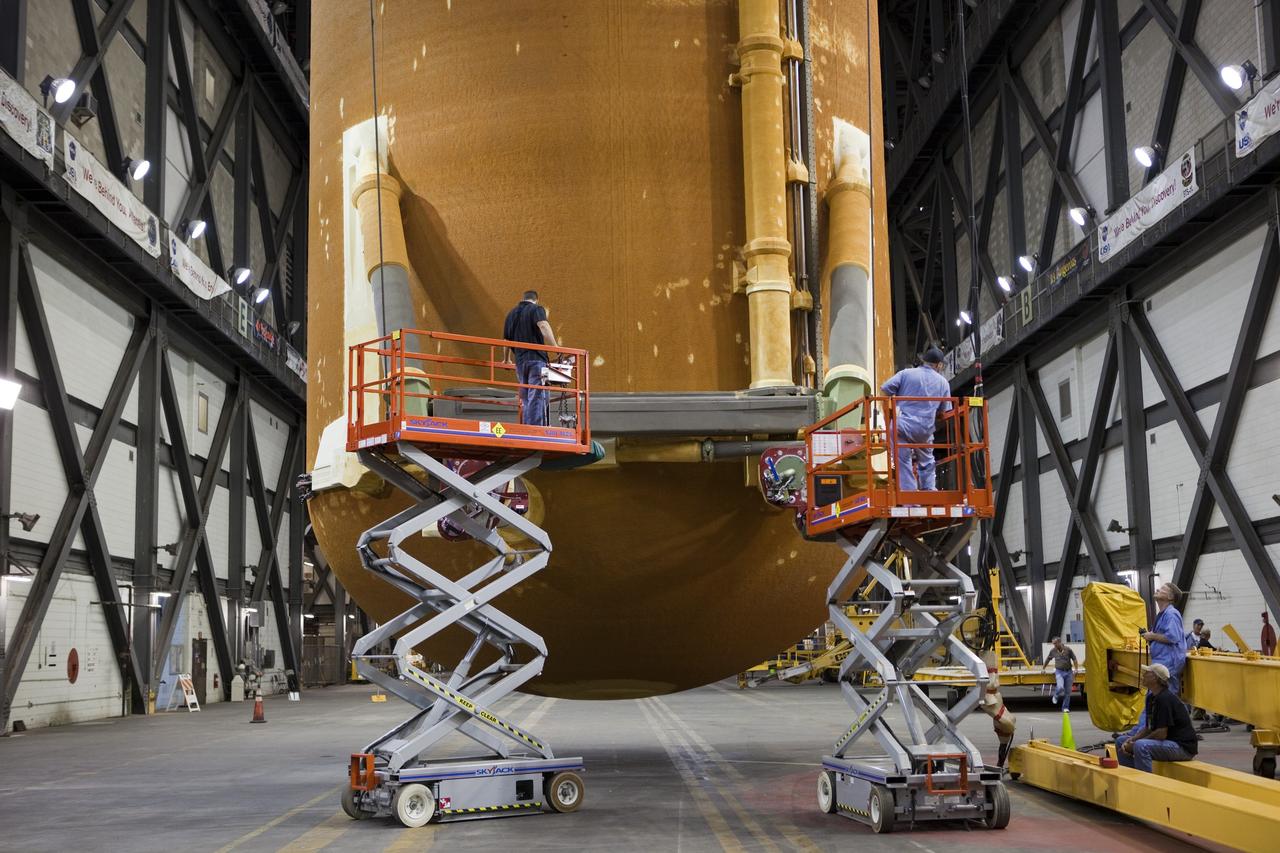
CAPE CANAVERAL, Fla. -- In the Vehicle Assembly Building at NASA's Kennedy Space Center in Florida, workers check the hoist connections on External Fuel Tank-122 as it is lifted toward a test cell. ET-122, the Space Shuttle Program's last external fuel tank was delivered to Kennedy's Turn Basin from NASA’s Michoud Assembly Facility in New Orleans aboard the Pegasus Barge. After testing, ET-122 eventually will be attached to space shuttle Endeavour for the STS-134 mission to the International Space Station targeted to launch February, 2011. For more information visit: http://www.nasa.gov/mission_pages/shuttle/shuttlemissions/sts134/index.html. Photo credit: NASA/Dimitri Gerondidakis

CAPE CANAVERAL, Fla. -- In the Vehicle Assembly Building at NASA's Kennedy Space Center in Florida, External Fuel Tank-122 is being lowered toward a test stand where it will be checked out before launch. ET-122, the Space Shuttle Program's last external fuel tank was delivered to Kennedy's Turn Basin from NASA’s Michoud Assembly Facility in New Orleans aboard the Pegasus Barge. After testing, ET-122 eventually will be attached to space shuttle Endeavour for the STS-134 mission to the International Space Station targeted to launch February, 2011. For more information visit: http://www.nasa.gov/mission_pages/shuttle/shuttlemissions/sts134/index.html. Photo credit: NASA/Dimitri Gerondidakis
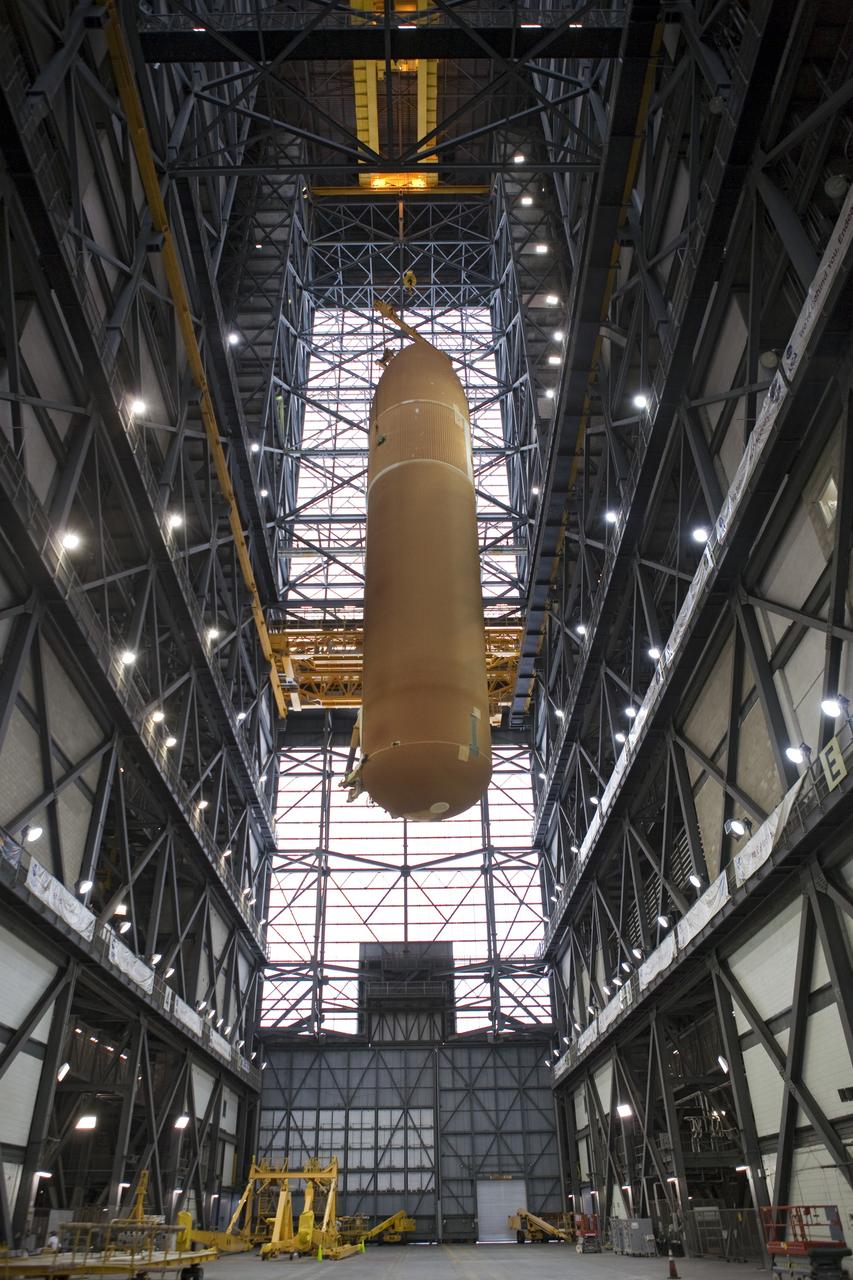
CAPE CANAVERAL, Fla. -- In the Vehicle Assembly Building at NASA's Kennedy Space Center in Florida, External Fuel Tank-122 is lifted into a vertical position above the transfer aisle. The external tank is being moved to a test cell where it will be checked out before launch. ET-122, the Space Shuttle Program's last external fuel tank was delivered to Kennedy's Turn Basin from NASA’s Michoud Assembly Facility in New Orleans aboard the Pegasus Barge. After testing ET-122 eventually will be attached to space shuttle Endeavour for the STS-134 mission to the International Space Station targeted to launch February, 2011. For more information visit: http://www.nasa.gov/mission_pages/shuttle/shuttlemissions/sts134/index.html. Photo credit: NASA/Dimitri Gerondidakis
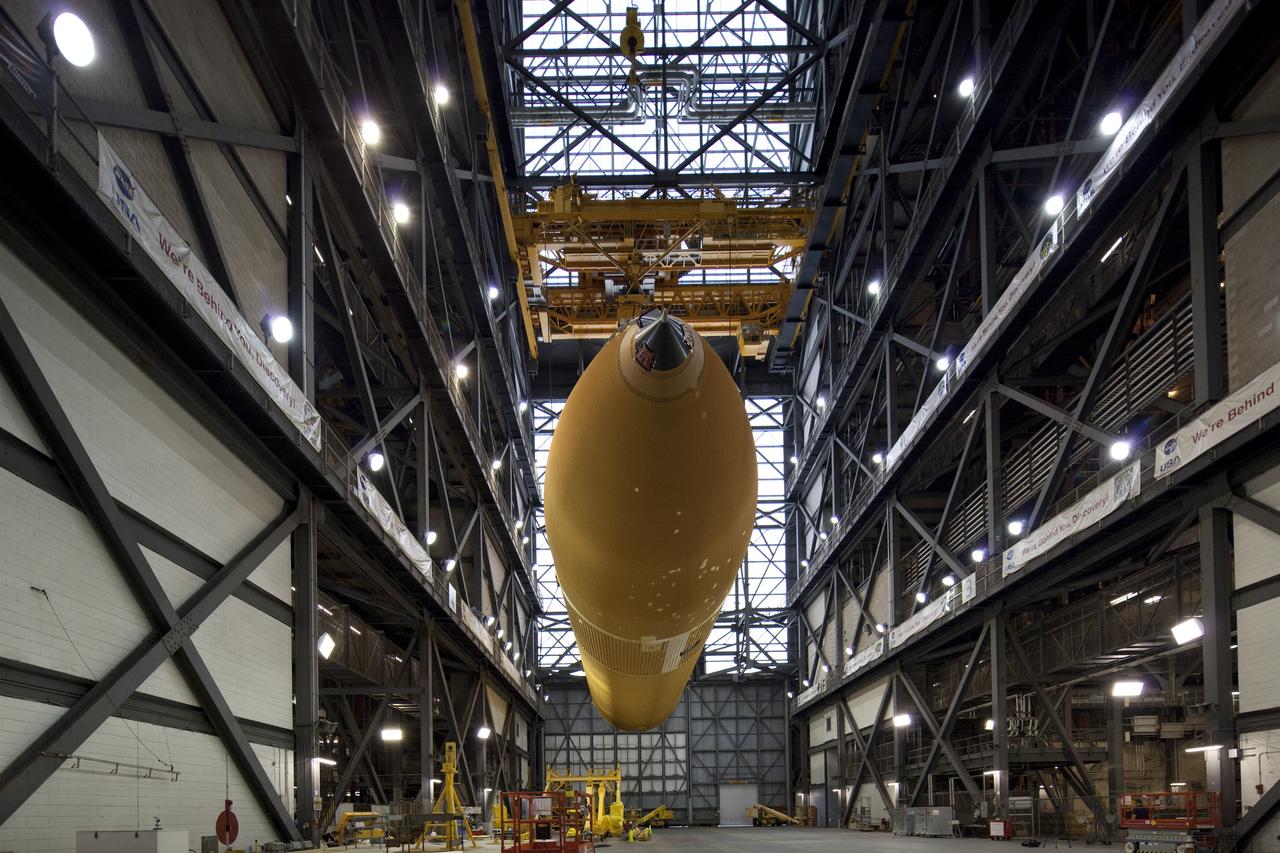
CAPE CANAVERAL, Fla. -- In the Vehicle Assembly Building at NASA's Kennedy Space Center in Florida, External Fuel Tank-122 is lifted above the transfer aisle. The external tank is being moved into a test cell where it will be checked out before launch. ET-122, the Space Shuttle Program's last external fuel tank was delivered to Kennedy's Turn Basin from NASA’s Michoud Assembly Facility in New Orleans aboard the Pegasus Barge. After testing ET-122 eventually will be attached to space shuttle Endeavour for the STS-134 mission to the International Space Station targeted to launch February, 2011. For more information visit: http://www.nasa.gov/mission_pages/shuttle/shuttlemissions/sts134/index.html. Photo credit: NASA/Dimitri Gerondidakis
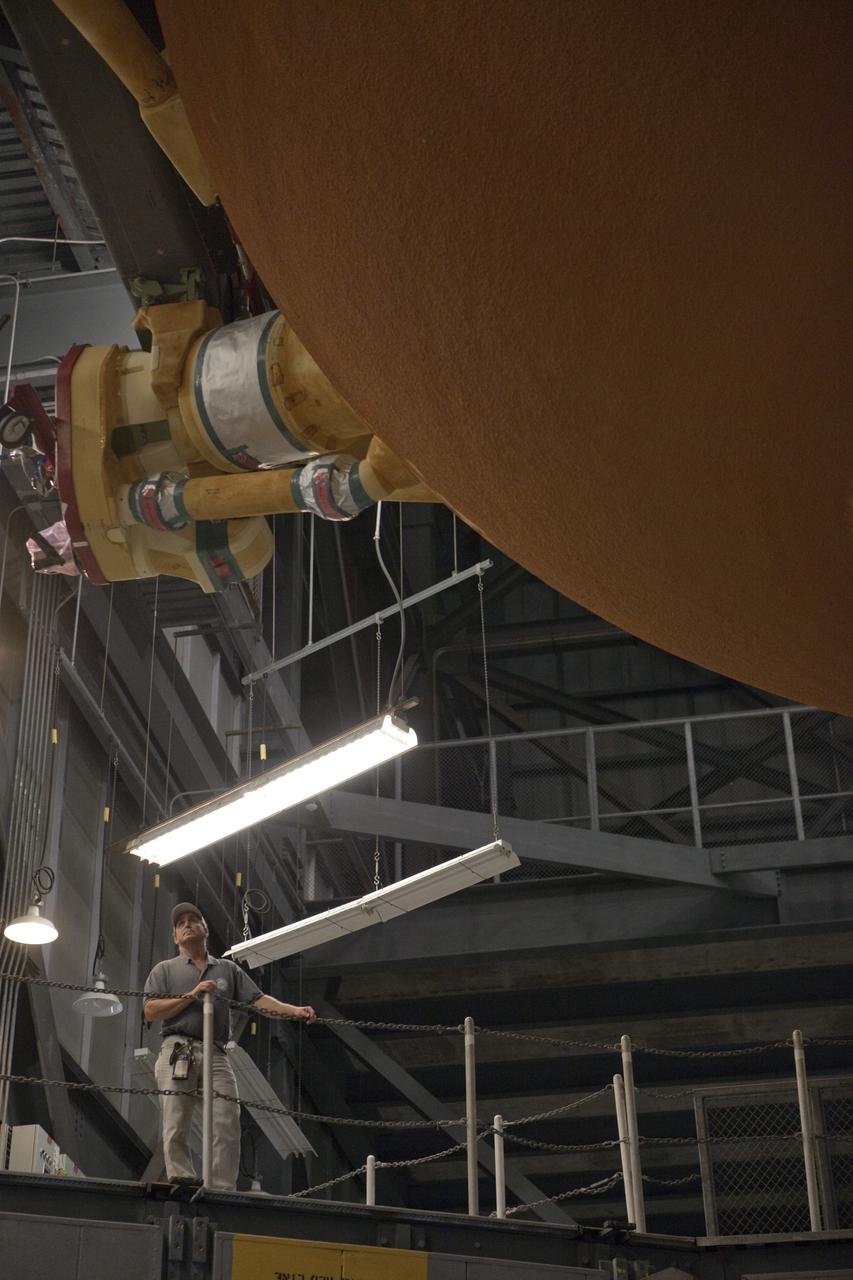
CAPE CANAVERAL, Fla. -- In the Vehicle Assembly Building at NASA's Kennedy Space Center in Florida, a worker checks the progress of External Fuel Tank-122 as it is being lowered into a test stand where it will be checked out before launch. ET-122, the Space Shuttle Program's last external fuel tank was delivered to Kennedy's Turn Basin from NASA’s Michoud Assembly Facility in New Orleans aboard the Pegasus Barge. After testing, ET-122 eventually will be attached to space shuttle Endeavour for the STS-134 mission to the International Space Station targeted to launch February, 2011. For more information visit: http://www.nasa.gov/mission_pages/shuttle/shuttlemissions/sts134/index.html. Photo credit: NASA/Dimitri Gerondidakis
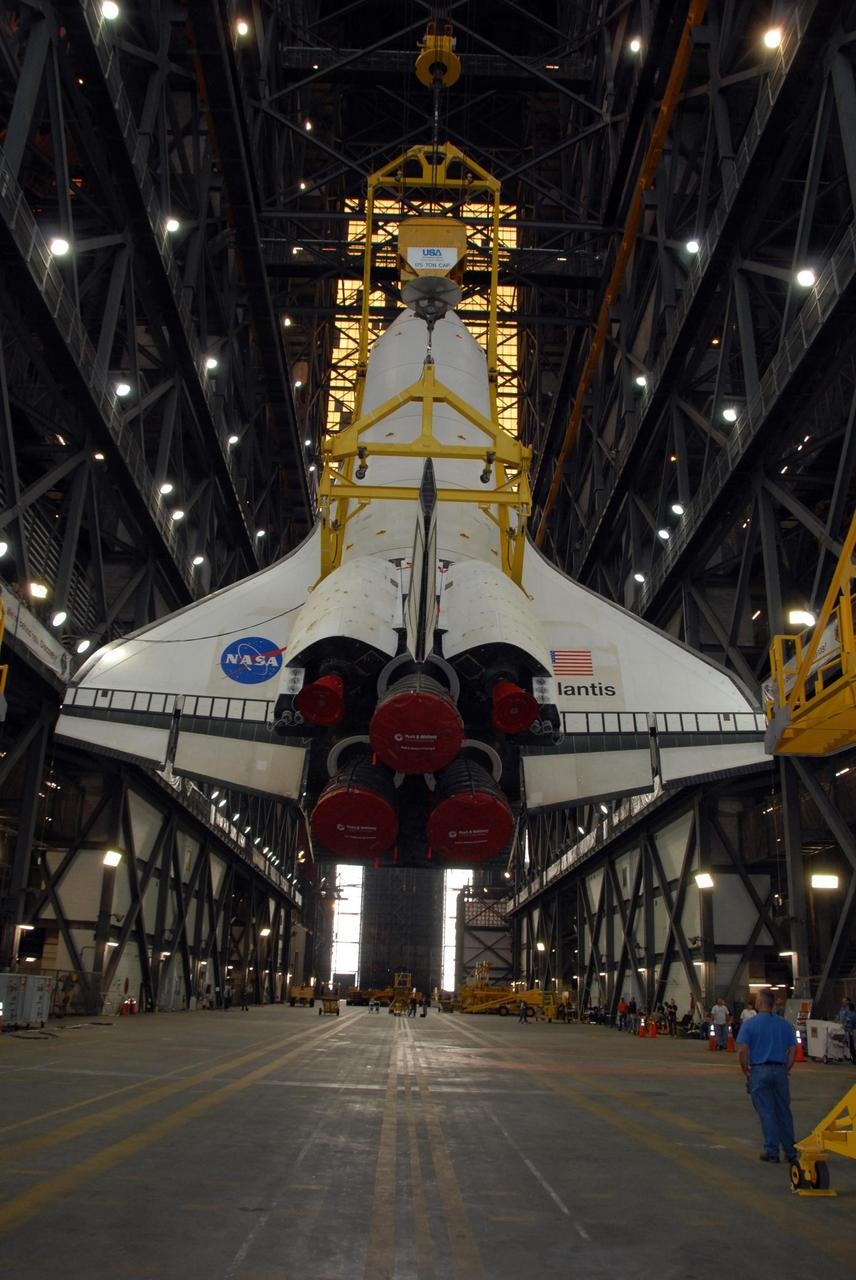
KENNEDY SPACE CENTER, FLA. — In the transfer aisle of the Vehicle Assembly Building at NASA's Kennedy Space Center, space shuttle Atlantis is raised into a vertical position. Atlantis will next be lifted into high bay 3 and mated with the external tank and solid rocket boosters designated for mission STS-122, already secured atop a mobile launcher platform. On this mission, Atlantis will deliver the Columbus module to the International Space Station. The European Space Agency's largest contribution to the station, Columbus is a multifunctional, pressurized laboratory that will be permanently attached to U.S. Node 2, called Harmony. The module is approximately 23 feet long and 15 feet wide, allowing it to hold 10 large racks of experiments. The laboratory will expand the research facilities aboard the station, providing crew members and scientists from around the world the ability to conduct a variety of experiments in the physical, materials and life sciences. Mission STS-122 is targeted for launch on Dec. 6. Photo credit: NASA/George Shelton

KENNEDY SPACE CENTER, FLA. — In the transfer aisle of the Vehicle Assembly Building at NASA's Kennedy Space Center, space shuttle Atlantis is raised into a vertical position. Atlantis will next be lifted into high bay 3 and mated with the external tank and solid rocket boosters designated for mission STS-122, already secured atop a mobile launcher platform. On this mission, Atlantis will deliver the Columbus module to the International Space Station. The European Space Agency's largest contribution to the station, Columbus is a multifunctional, pressurized laboratory that will be permanently attached to U.S. Node 2, called Harmony. The module is approximately 23 feet long and 15 feet wide, allowing it to hold 10 large racks of experiments. The laboratory will expand the research facilities aboard the station, providing crew members and scientists from around the world the ability to conduct a variety of experiments in the physical, materials and life sciences. Mission STS-122 is targeted for launch on Dec. 6. Photo credit: NASA/George Shelton
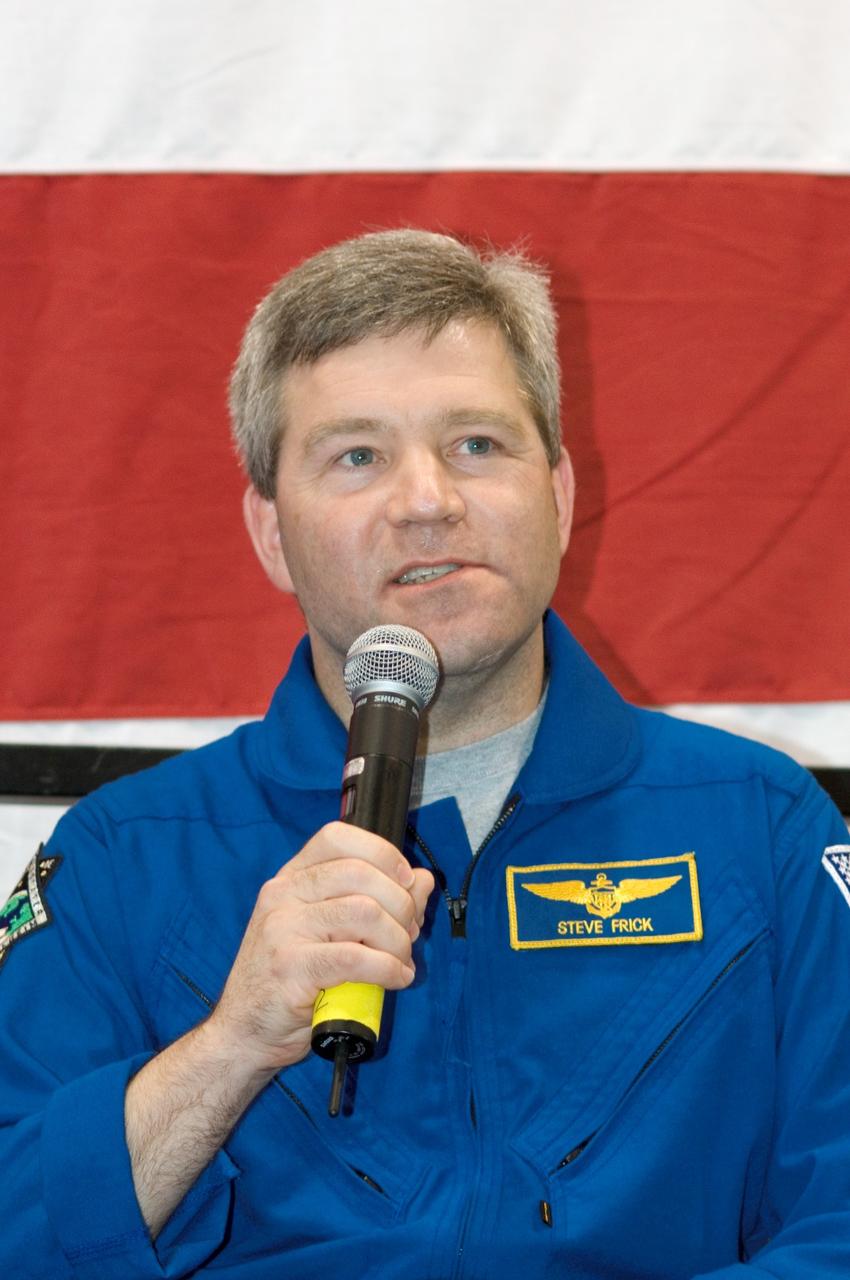
JSC2008-E-014966 (21 Feb. 2008) --- Astronaut Steve Frick, STS-122 commander, is pictured at the STS-122 crew return ceremony on Thursday, Feb. 21 in Ellington Field's Hangar 276 near Johnson Space Center.
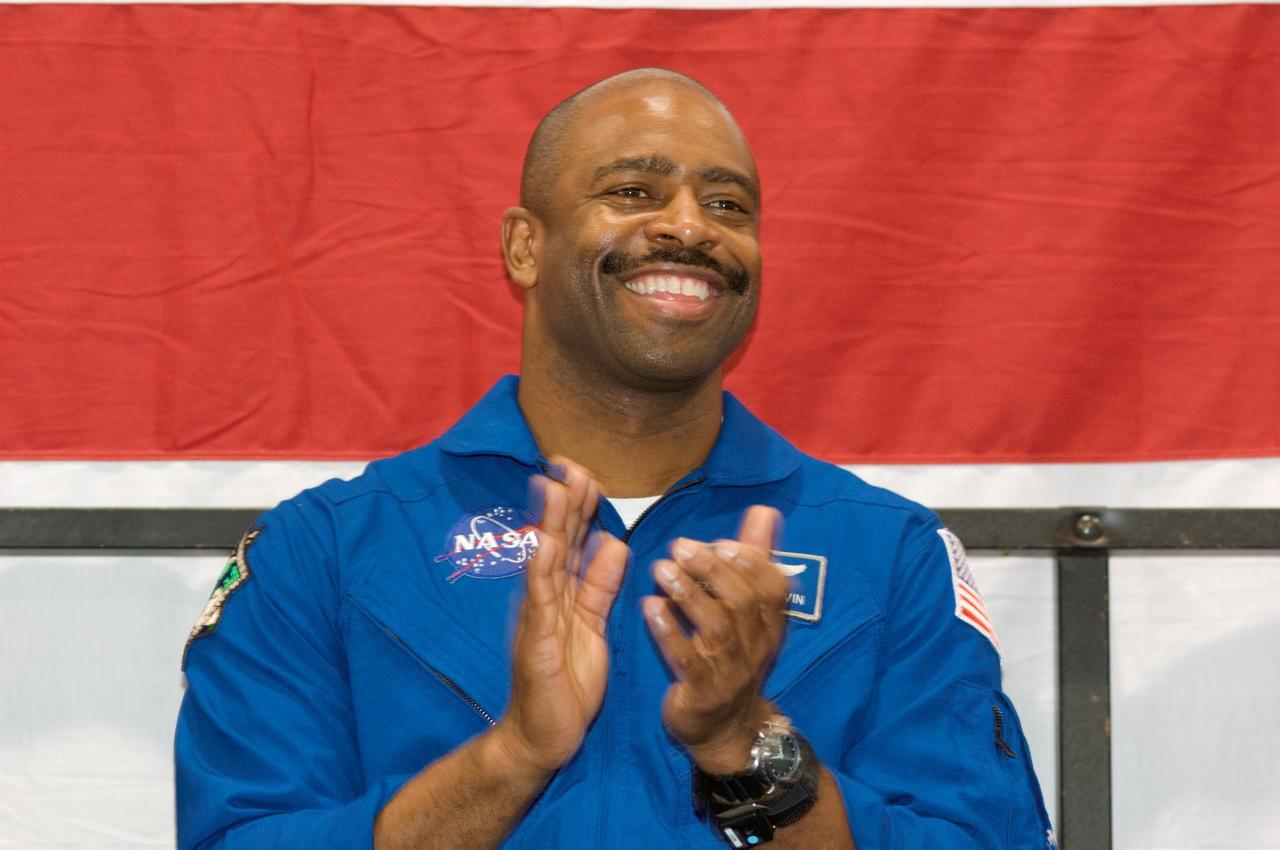
JSC2008-E-014959 (21 Feb. 2008) --- Astronaut Leland Melvin, STS-122 mission specialist, is pictured at the STS-122 crew return ceremony on Thursday, Feb. 21 in Ellington Field's Hangar 276 near Johnson Space Center.

JSC2008-E-014907 (21 Feb. 2008) --- Johnson Space Center's (JSC) director Michael L. Coats (right) greets astronauts Rex Walheim (left) and Leland Melvin, STS-122 mission specialists, at Ellington Field near JSC prior to the STS-122 crew return ceremonies.
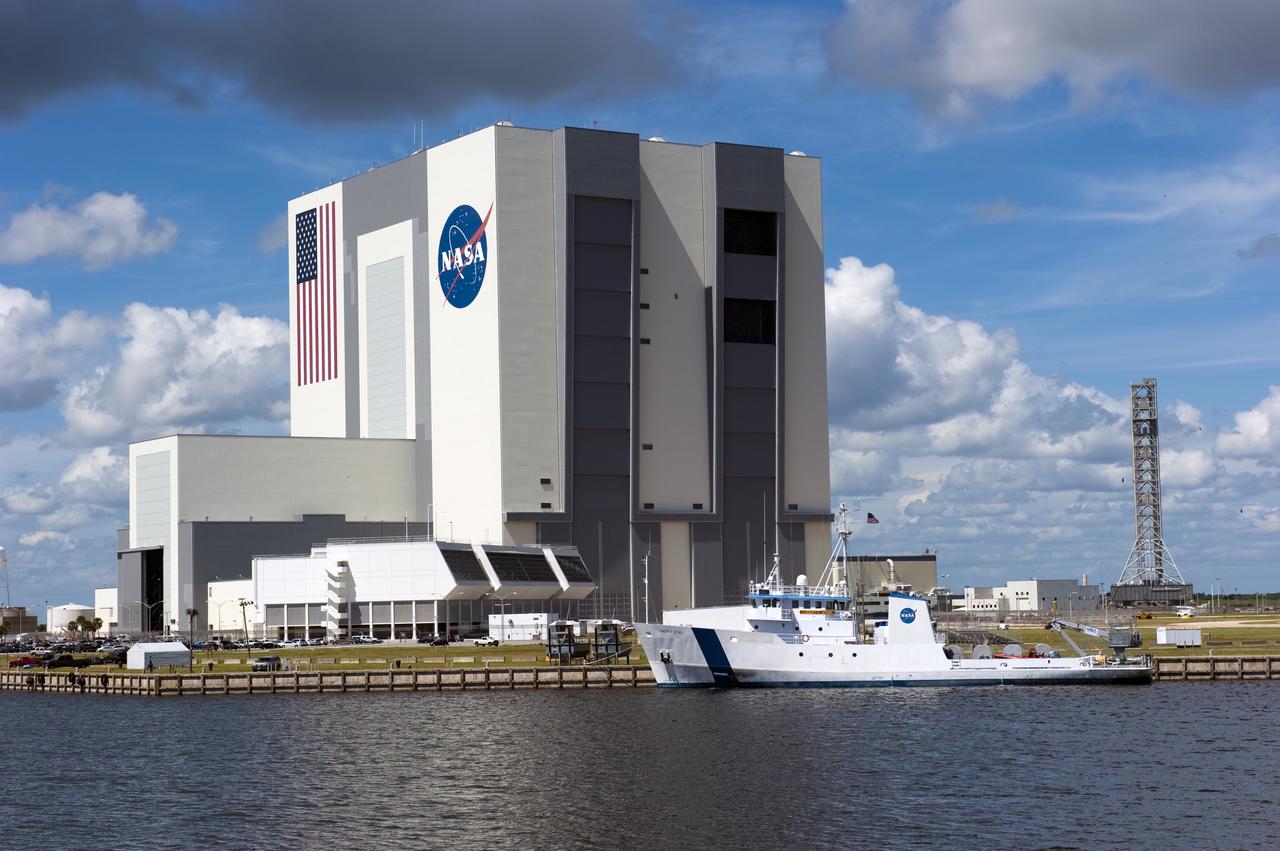
CAPE CANAVERAL, Fla. -- Liberty Star, one of NASA's solid rocket booster retrieval ships, is pictured in the Turn Basin at NASA's Kennedy Space Center in Florida. In the background is the Vehicle Assembly Building where External Tank ET-122 was just delivered from NASA's Michoud Assembly Facility in New Orleans for Endeavour's STS-134 mission to the International Space Station. STS-134, targeted to launch in Feb. 2011, currently is scheduled to be the last mission in the Space Shuttle Program. Photo credit: NASA/Kim Shiflett
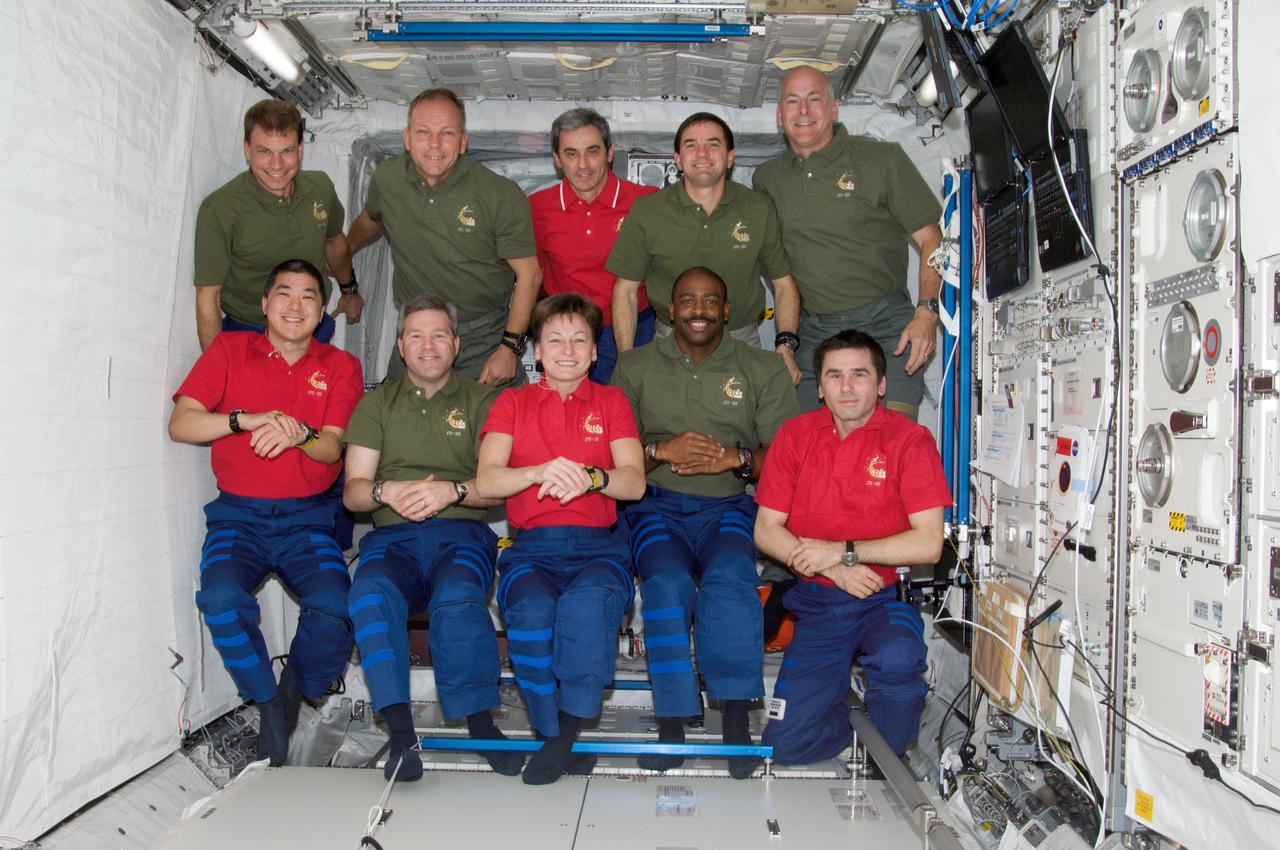
ISS016-E-029867 (16 Feb. 2008) --- STS-122 and Expedition 16 crewmembers pose for a group photo following a joint news conference in the Columbus laboratory of the International Space Station while Space Shuttle Atlantis is docked with the station. From the left (bottom) are NASA astronauts Daniel Tani, STS-122 mission specialist; Steve Frick, STS-122 commander; Peggy Whitson, Expedition 16 commander; Leland Melvin, STS-122 mission specialist; and cosmonaut Yuri Malenchenko, Expedition 16 flight engineer representing Russia's Federal Space Agency. From the left (top) are NASA astronaut Stanley Love, European Space Agency (ESA) astronaut Hans Schlegel, both STS-122 mission specialists; ESA astronaut Leopold Eyharts, Expedition 16 flight engineer; NASA astronauts Rex Walheim, STS-122 mission specialist; and Alan Poindexter, STS-122 pilot. Tani, who joined the station's Expedition 16 crew in October, is being replaced by Eyharts, who arrived at the station with the STS-122 crew.
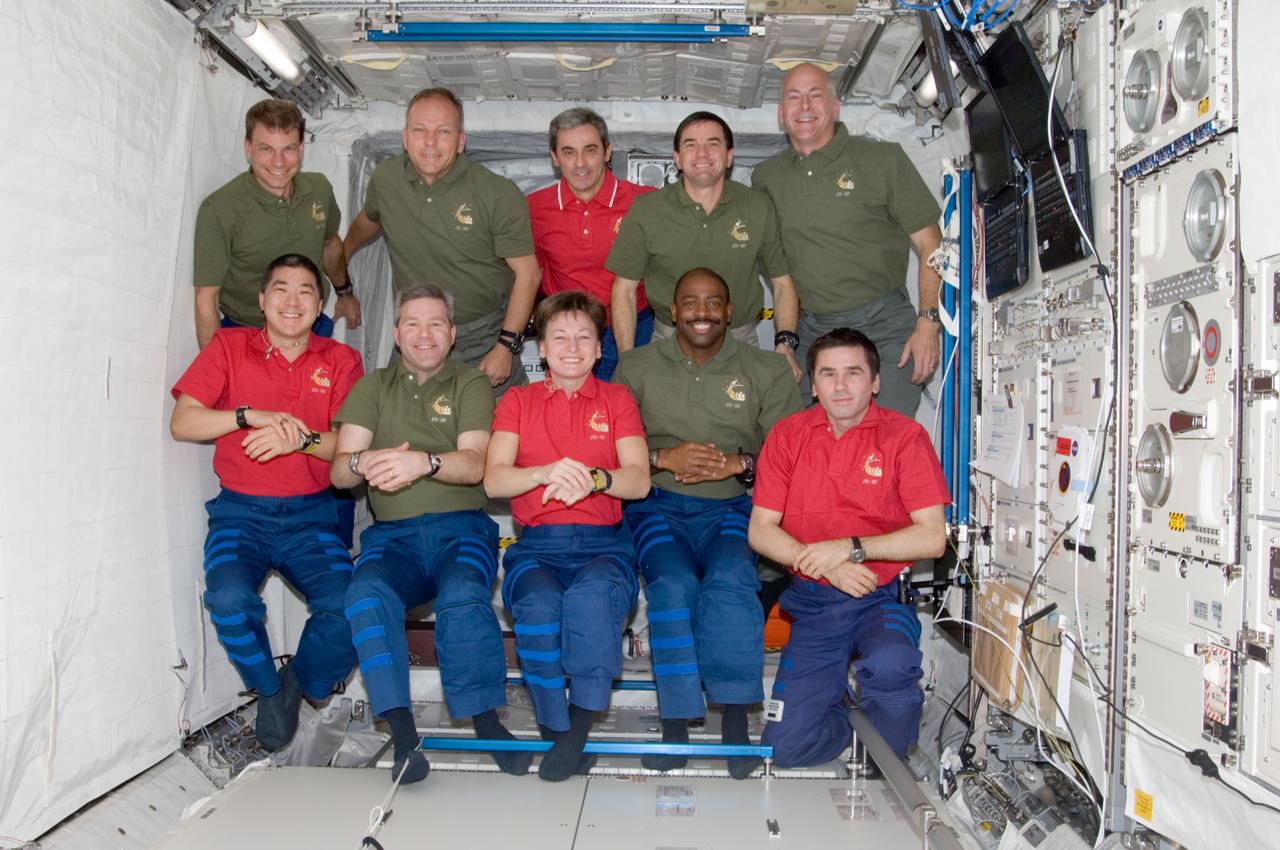
ISS016-E-029866 (16 Feb. 2008) --- STS-122 and Expedition 16 crewmembers pose for a group photo following a joint news conference in the Columbus laboratory of the International Space Station while Space Shuttle Atlantis is docked with the station. From the left (bottom) are NASA astronauts Daniel Tani, STS-122 mission specialist; Steve Frick, STS-122 commander; Peggy Whitson, Expedition 16 commander; Leland Melvin, STS-122 mission specialist; and cosmonaut Yuri Malenchenko, Expedition 16 flight engineer representing Russia's Federal Space Agency. From the left (top) are NASA astronaut Stanley Love, European Space Agency (ESA) astronaut Hans Schlegel, both STS-122 mission specialists; ESA astronaut Leopold Eyharts, Expedition 16 flight engineer; NASA astronauts Rex Walheim, STS-122 mission specialist; and Alan Poindexter, STS-122 pilot. Tani, who joined the station's Expedition 16 crew in October, is being replaced by Eyharts, who arrived at the station with the STS-122 crew.

S122-E-006262 (8 Feb. 2008) --- Astronaut Steve Frick, STS-122 commander, eats a snack on the middeck of Space Shuttle Atlantis.
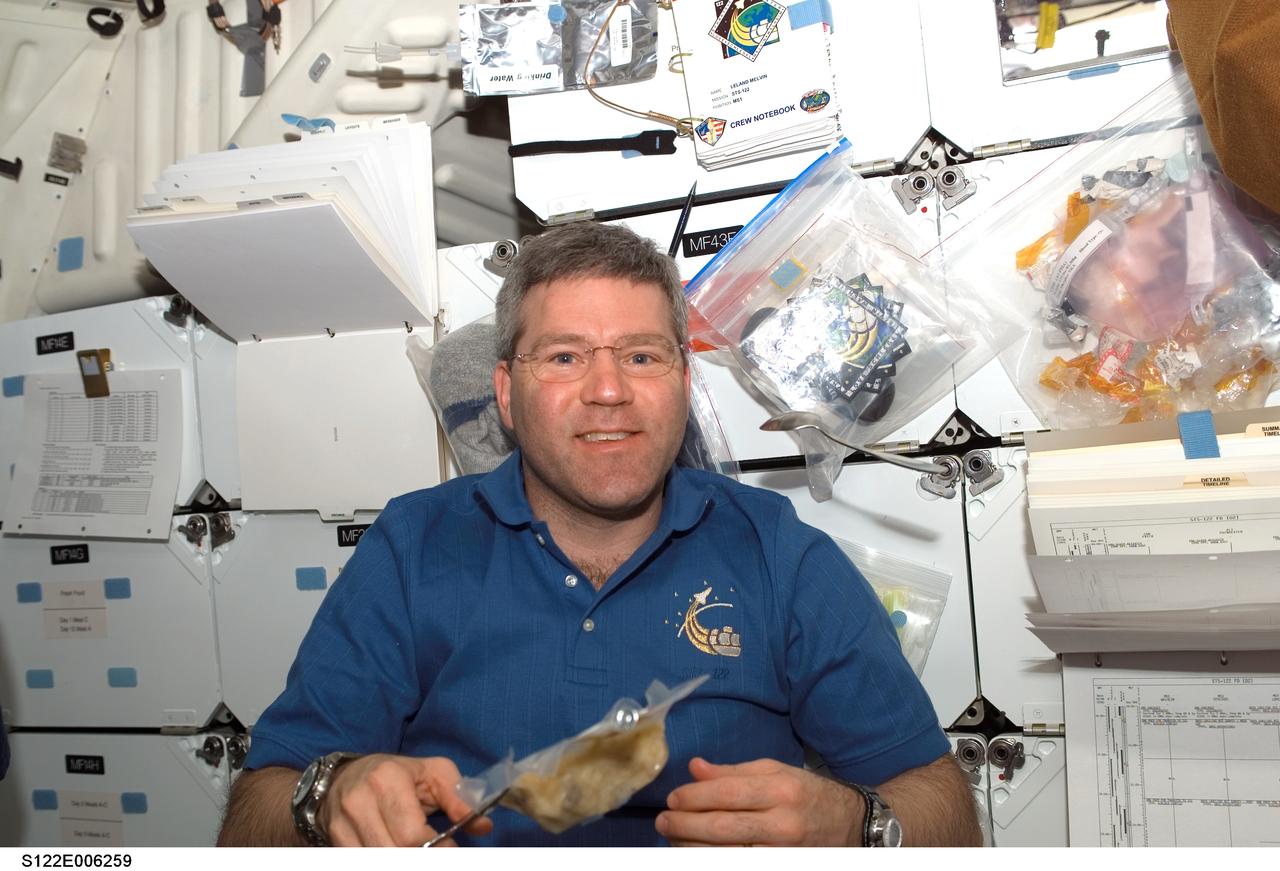
S122-E-006259 (8 Feb. 2008) --- Astronaut Steve Frick, STS-122 commander, prepares to eat a snack on the middeck of Space Shuttle Atlantis.
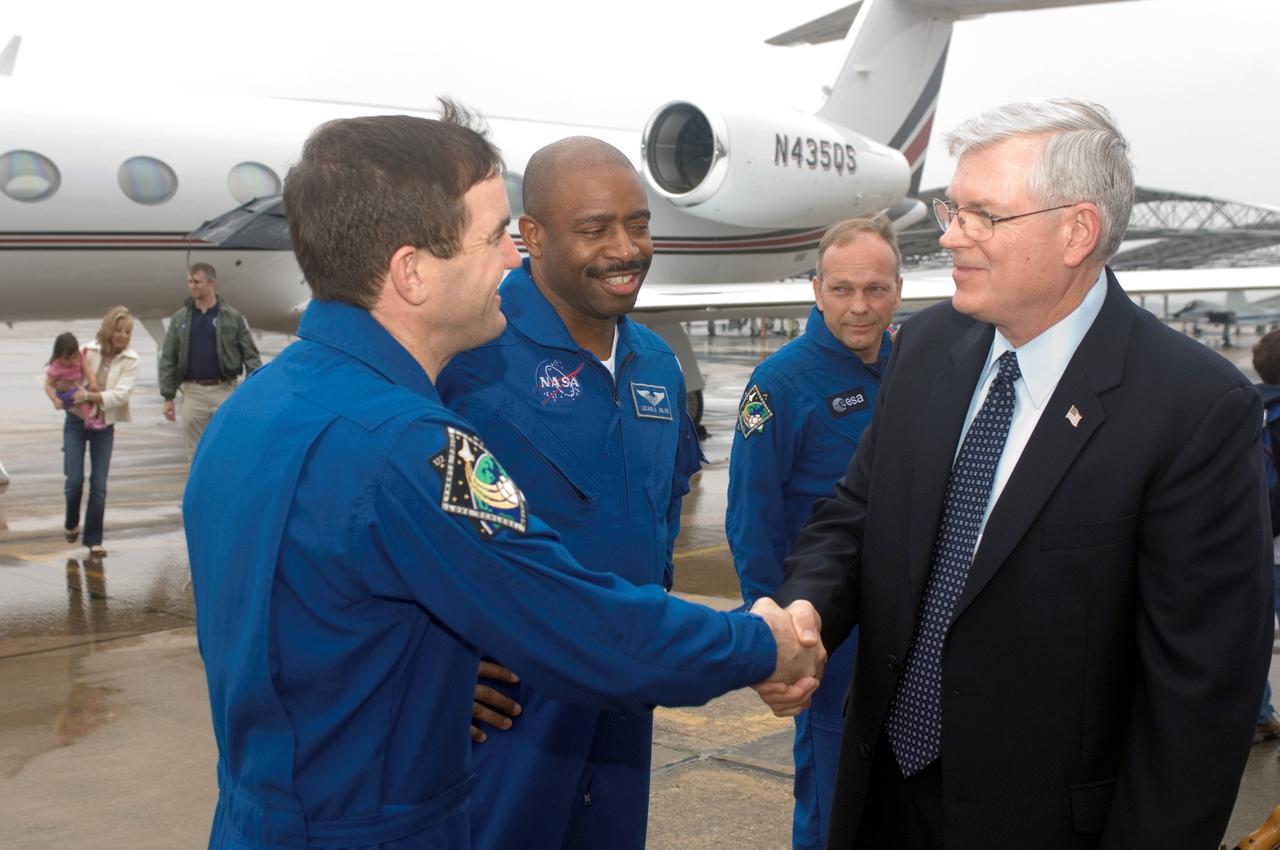
JSC2008-E-014908 (21 Feb. 2008) --- Johnson Space Center's (JSC) director Michael L. Coats (right) greets astronauts Rex Walheim (left) and Leland Melvin, STS-122 mission specialists, at Ellington Field near JSC prior to the STS-122 crew return ceremonies. European Space Agency (ESA) astronaut Hans Schlegel, mission specialist, is visible in the background.
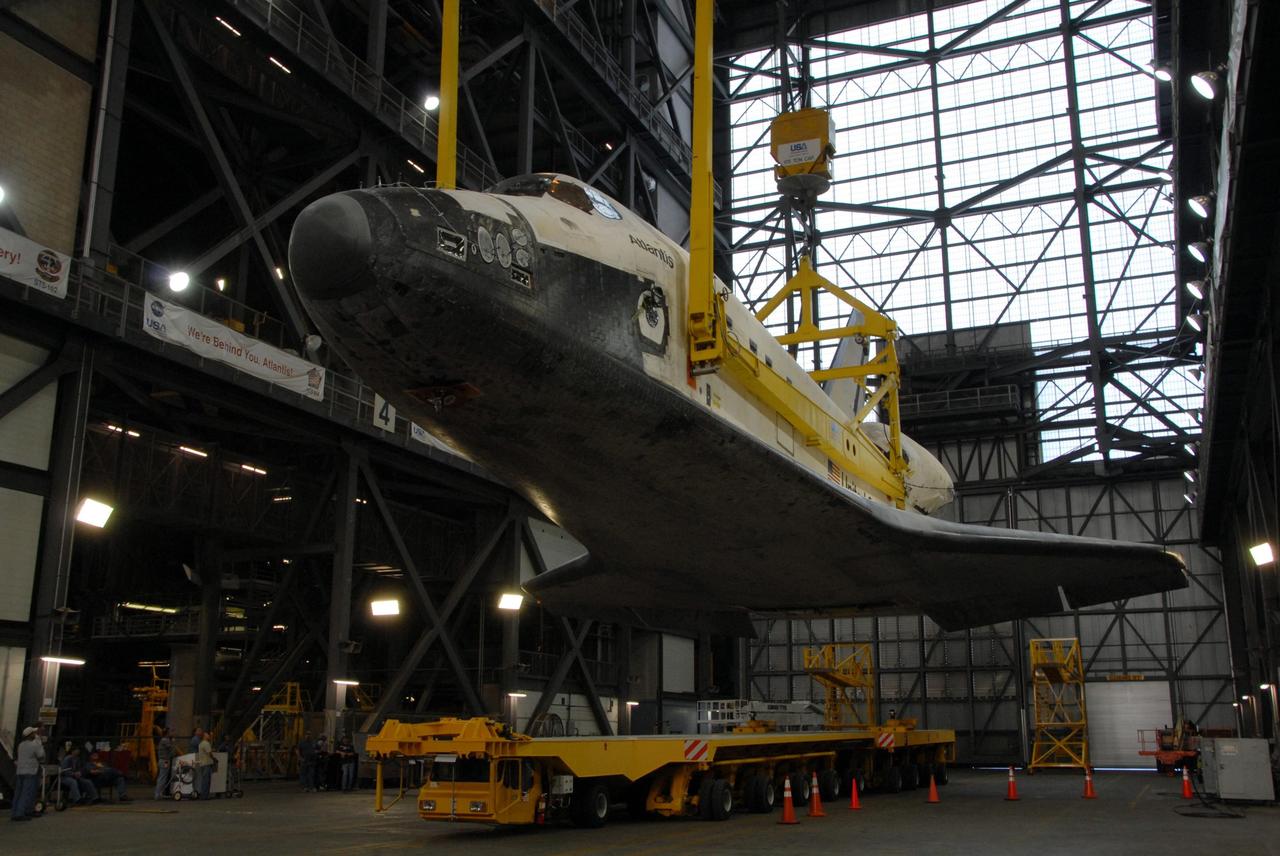
KENNEDY SPACE CENTER, FLA. — In the transfer aisle of the Vehicle Assembly Building at NASA's Kennedy Space Center, space shuttle Atlantis is raised off its transporter. After raised to a vertical position, Atlantis will be lifted into high bay 3 and mated with the external tank and solid rocket boosters designated for mission STS-122, already secured atop a mobile launcher platform. On this mission, Atlantis will deliver the Columbus module to the International Space Station. The European Space Agency's largest contribution to the station, Columbus is a multifunctional, pressurized laboratory that will be permanently attached to U.S. Node 2, called Harmony. The module is approximately 23 feet long and 15 feet wide, allowing it to hold 10 large racks of experiments. The laboratory will expand the research facilities aboard the station, providing crew members and scientists from around the world the ability to conduct a variety of experiments in the physical, materials and life sciences. Mission STS-122 is targeted for launch on Dec. 6. Photo credit: NASA/George Shelton
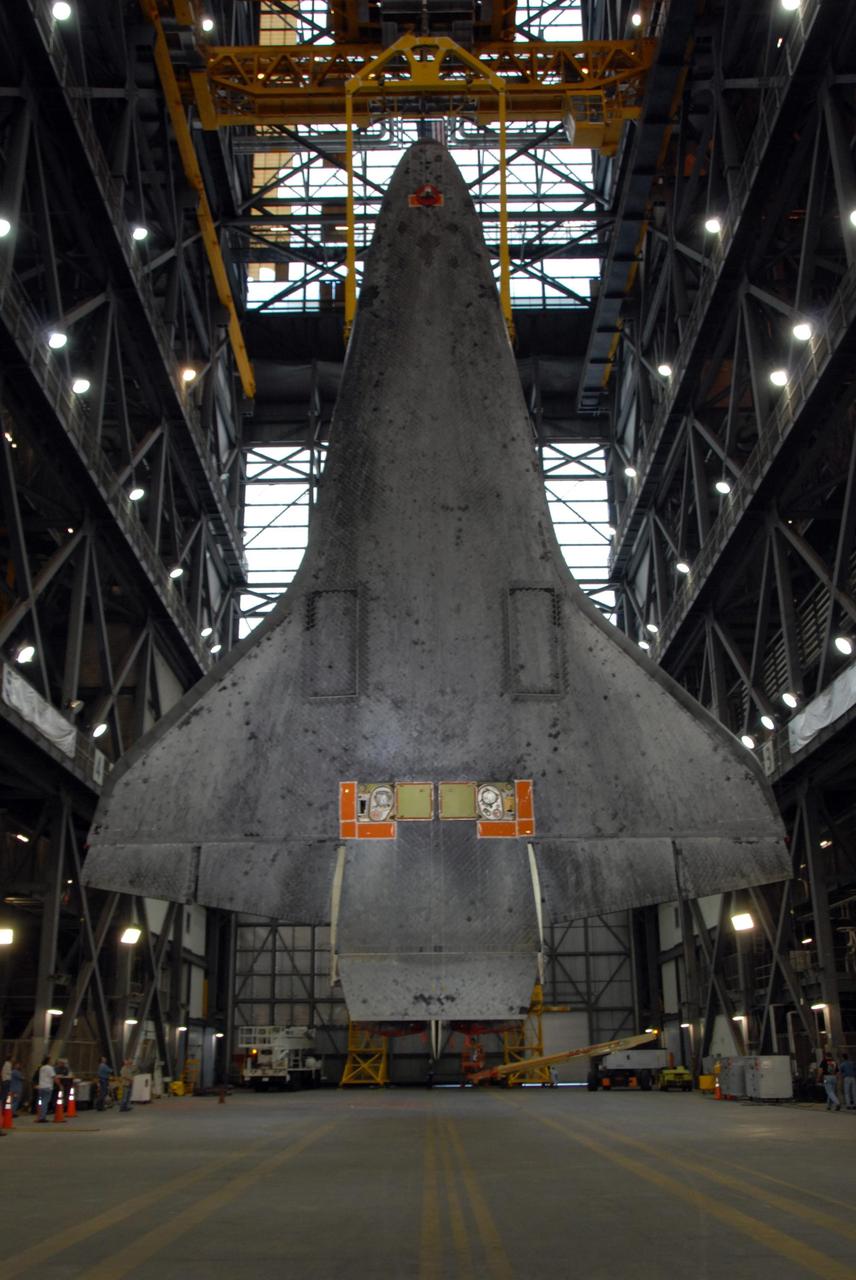
KENNEDY SPACE CENTER, FLA. — Looking like a giant bat, space shuttle Atlantis hangs from an overhead crane over the transfer aisle of the Vehicle Assembly Building at NASA's Kennedy Space Center. Atlantis will next be lifted into high bay 3 and mated with the external tank and solid rocket boosters designated for mission STS-122, already secured atop a mobile launcher platform. On this mission, Atlantis will deliver the Columbus module to the International Space Station. The European Space Agency's largest contribution to the station, Columbus is a multifunctional, pressurized laboratory that will be permanently attached to U.S. Node 2, called Harmony. The module is approximately 23 feet long and 15 feet wide, allowing it to hold 10 large racks of experiments. The laboratory will expand the research facilities aboard the station, providing crew members and scientists from around the world the ability to conduct a variety of experiments in the physical, materials and life sciences. Mission STS-122 is targeted for launch on Dec. 6. Photo credit: NASA/George Shelton
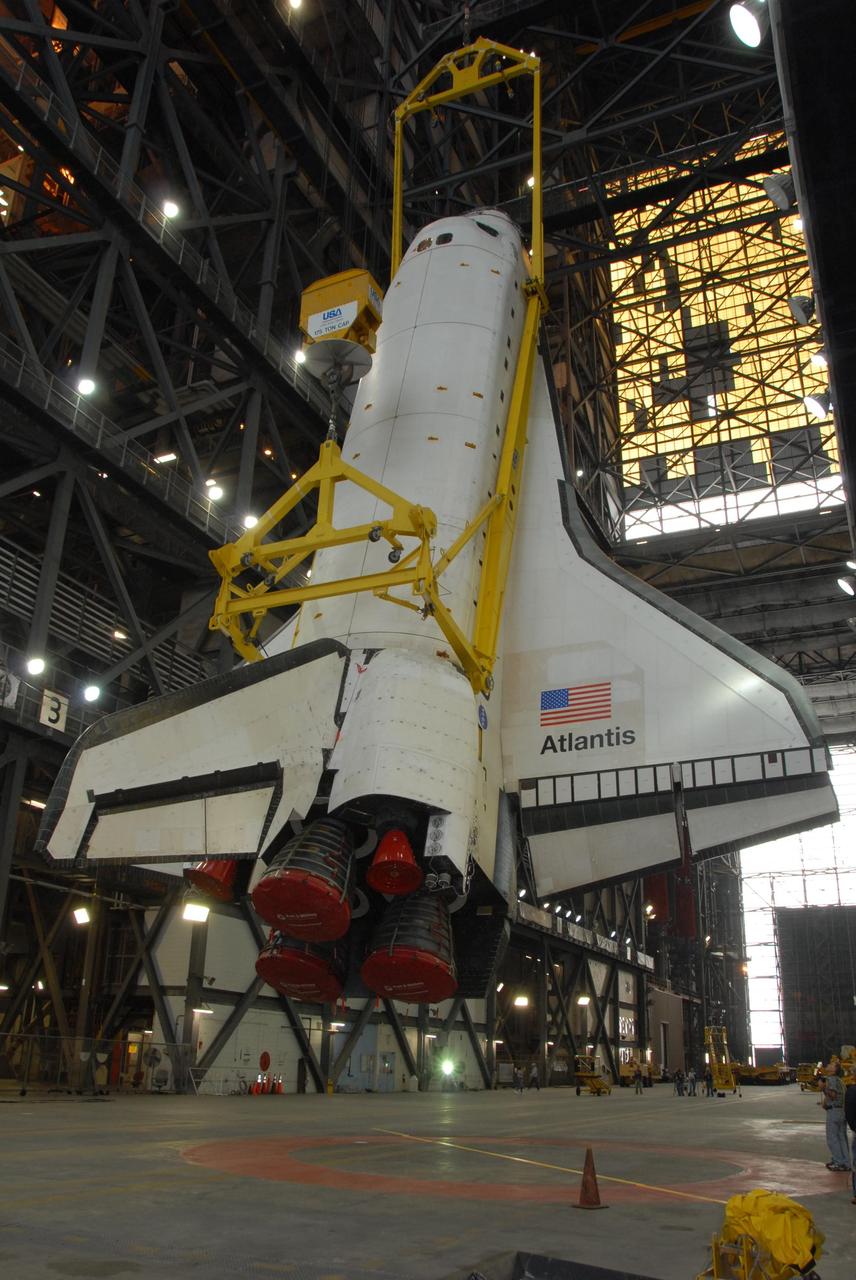
KENNEDY SPACE CENTER, FLA. — In the transfer aisle of the Vehicle Assembly Building at NASA's Kennedy Space Center, space shuttle Atlantis is raised to a nearly vertical position. Atlantis will next be lifted into high bay 3 and mated with the external tank and solid rocket boosters designated for mission STS-122, already secured atop a mobile launcher platform. On this mission, Atlantis will deliver the Columbus module to the International Space Station. The European Space Agency's largest contribution to the station, Columbus is a multifunctional, pressurized laboratory that will be permanently attached to U.S. Node 2, called Harmony. The module is approximately 23 feet long and 15 feet wide, allowing it to hold 10 large racks of experiments. The laboratory will expand the research facilities aboard the station, providing crew members and scientists from around the world the ability to conduct a variety of experiments in the physical, materials and life sciences. Mission STS-122 is targeted for launch on Dec. 6. Photo credit: NASA/George Shelton
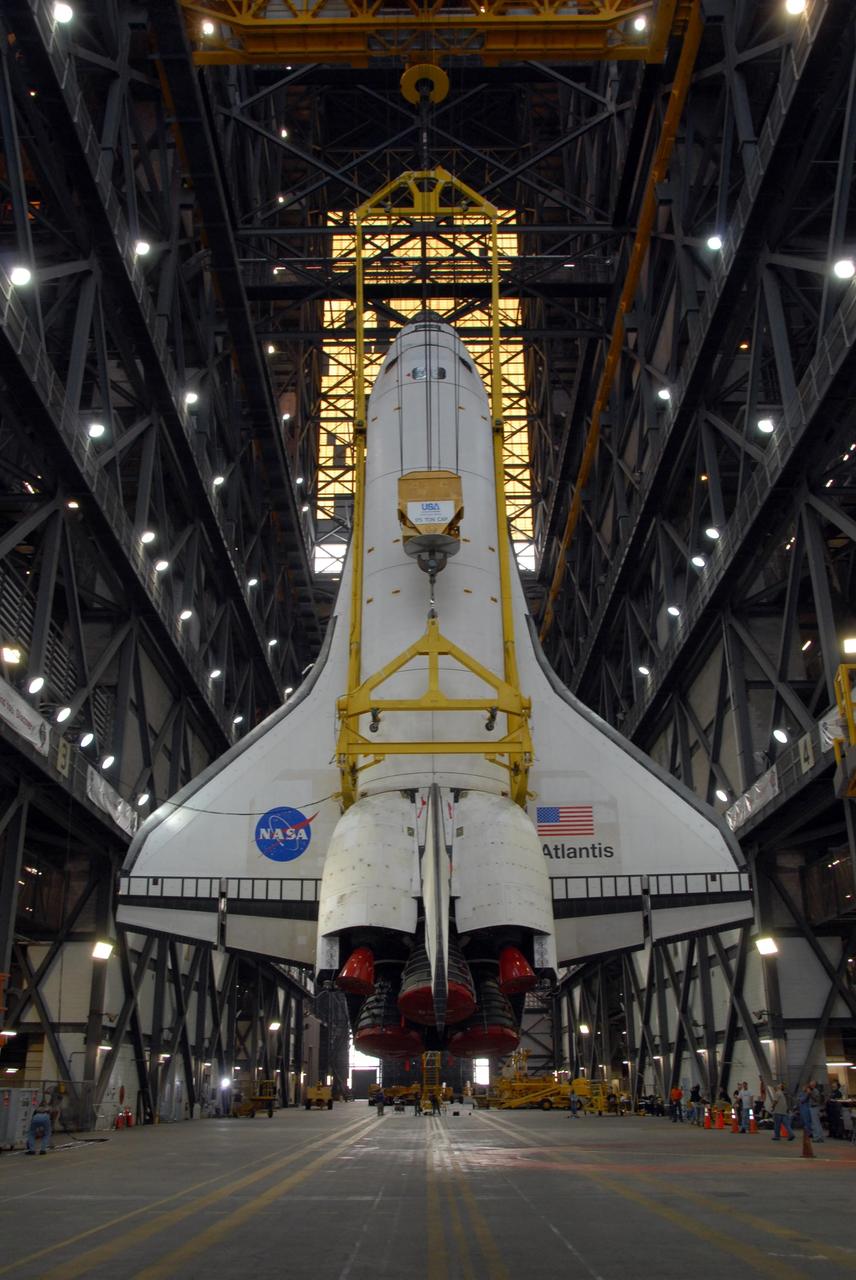
KENNEDY SPACE CENTER, FLA. — In the transfer aisle of the Vehicle Assembly Building at NASA's Kennedy Space Center, space shuttle Atlantis is raised to a nearly vertical position. Atlantis will next be lifted into high bay 3 and mated with the external tank and solid rocket boosters designated for mission STS-122, already secured atop a mobile launcher platform. On this mission, Atlantis will deliver the Columbus module to the International Space Station. The European Space Agency's largest contribution to the station, Columbus is a multifunctional, pressurized laboratory that will be permanently attached to U.S. Node 2, called Harmony. The module is approximately 23 feet long and 15 feet wide, allowing it to hold 10 large racks of experiments. The laboratory will expand the research facilities aboard the station, providing crew members and scientists from around the world the ability to conduct a variety of experiments in the physical, materials and life sciences. Mission STS-122 is targeted for launch on Dec. 6. Photo credit: NASA/George Shelton
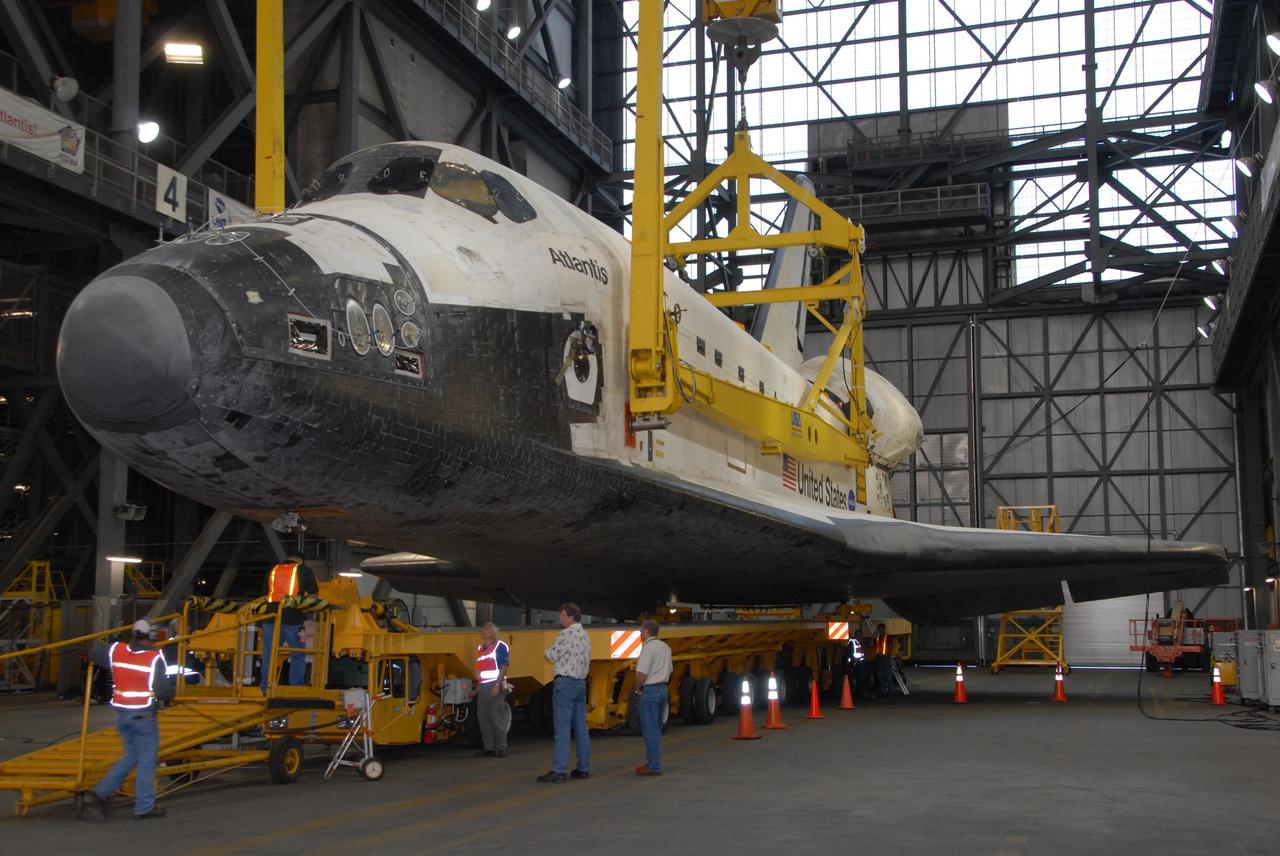
KENNEDY SPACE CENTER, FLA. — In the transfer aisle of the Vehicle Assembly Building at NASA's Kennedy Space Center, space shuttle Atlantis is fitted with a sling to raise it off its transporter into a vertical position. Atlantis will be lifted into high bay 3 and mated with the external tank and solid rocket boosters designated for mission STS-122, already secured atop a mobile launcher platform. On this mission, Atlantis will deliver the Columbus module to the International Space Station. The European Space Agency's largest contribution to the station, Columbus is a multifunctional, pressurized laboratory that will be permanently attached to U.S. Node 2, called Harmony. The module is approximately 23 feet long and 15 feet wide, allowing it to hold 10 large racks of experiments. The laboratory will expand the research facilities aboard the station, providing crew members and scientists from around the world the ability to conduct a variety of experiments in the physical, materials and life sciences. Mission STS-122 is targeted for launch on Dec. 6. Photo credit: NASA/George Shelton
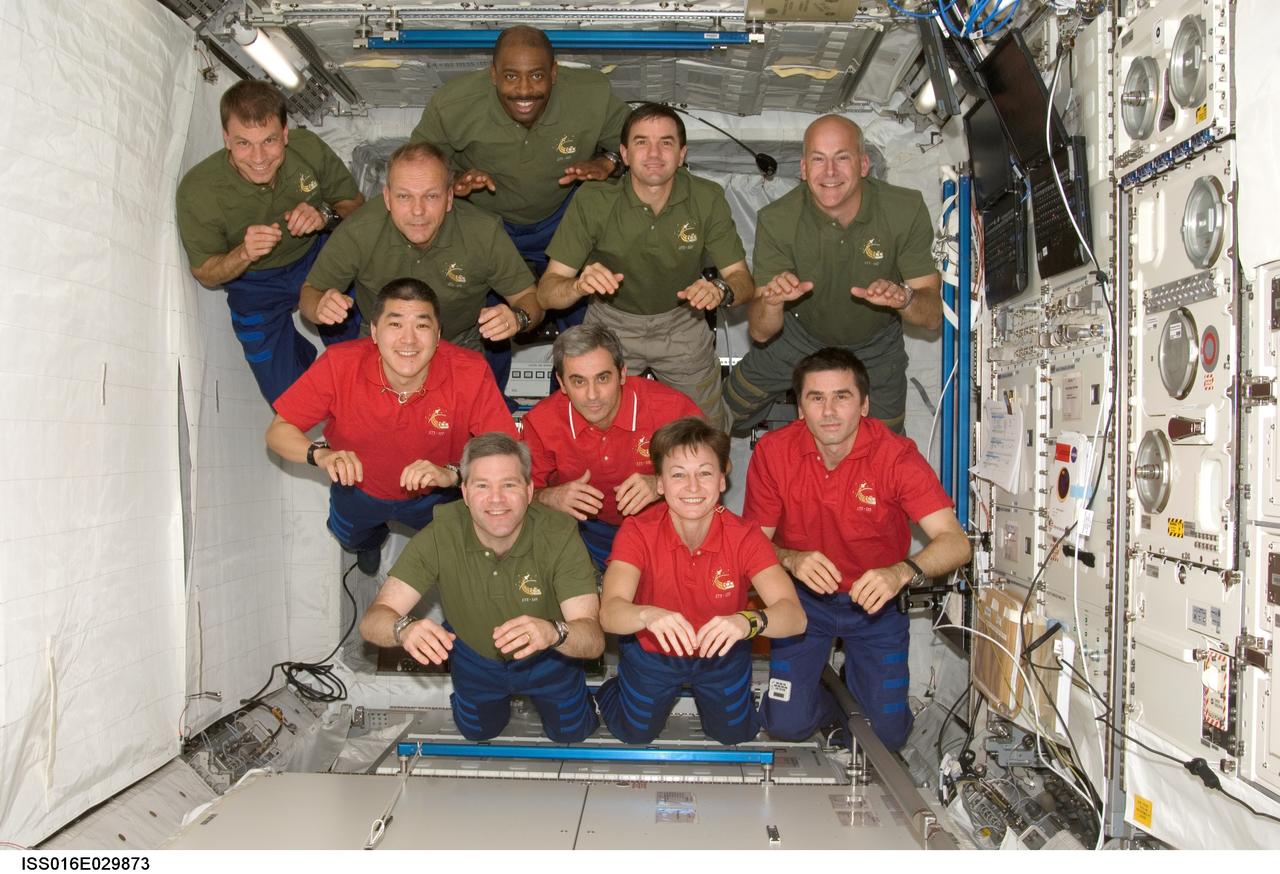
ISS016-E-029873 (16 Feb. 2008) --- STS-122 and Expedition 16 crewmembers pose for a group photo following a joint news conference in the Columbus laboratory of the International Space Station while Space Shuttle Atlantis is docked with the station. From the left (bottom) are NASA astronaut Steve Frick, STS-122 commander; and Peggy Whitson, Expedition 16 commander. From the left (middle row) are NASA astronaut Daniel Tani, STS-122 mission specialist; European Space Agency (ESA) astronaut Leopold Eyharts, Expedition 16 flight engineer; and cosmonaut Yuri Malenchenko, Expedition 16 flight engineer representing Russia's Federal Space Agency. From the left (top row) are NASA astronaut Stanley Love, ESA astronaut Hans Schlegel, NASA astronauts Leland Melvin, Rex Walheim, all STS-122 mission specialists; and Alan Poindexter, STS-122 pilot. Tani, who joined the station's Expedition 16 crew in October, is being replaced by Eyharts, who arrived at the station with the STS-122 crew.
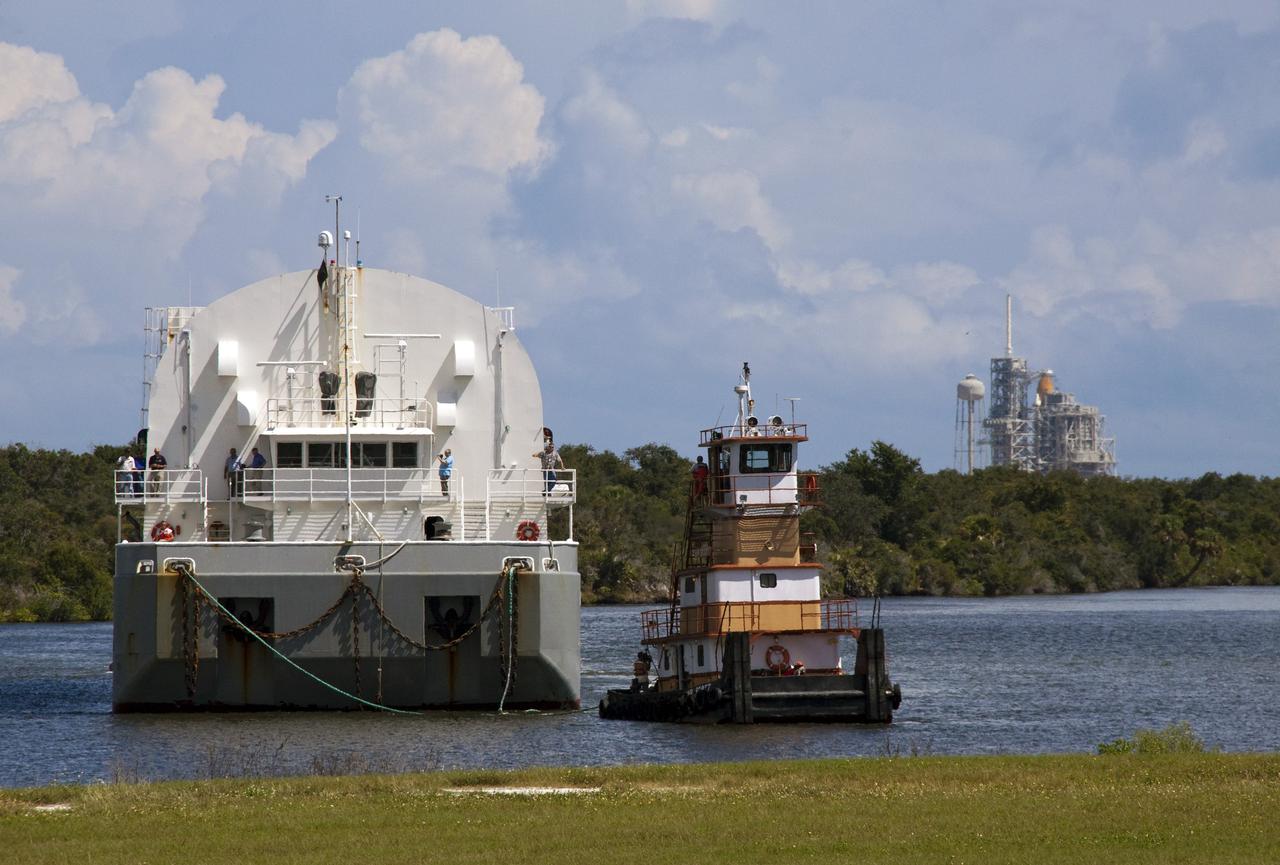
CAPE CANAVERAL, Fla. -- A tugboat pulls the Pegasus Barge carrying the Space Shuttle Program's last external fuel tank, ET-122, toward the Turn Basin at NASA's Kennedy Space Center in Florida. The tank traveled 900 miles by sea from NASA's Michoud Assembly Facility in New Orleans. In the background, space shuttle Discovery is on Launch Pad 39A awaiting liftoff on the STS-133 mission to the International Space Station. Next, the tank will be offloaded and moved to the Vehicle Assembly Building where it eventually will be attached to space shuttle Endeavour for the STS-134 mission to the station. STS-134, targeted to launch in Feb. 2011, currently is scheduled to be the last mission in the Space Shuttle Program. The tank, which is the largest element of the space shuttle stack, was damaged during Hurricane Katrina in August 2005 and restored to flight configuration by Lockheed Martin Space Systems Company employees. Photo credit: NASA/Jack Pfaller
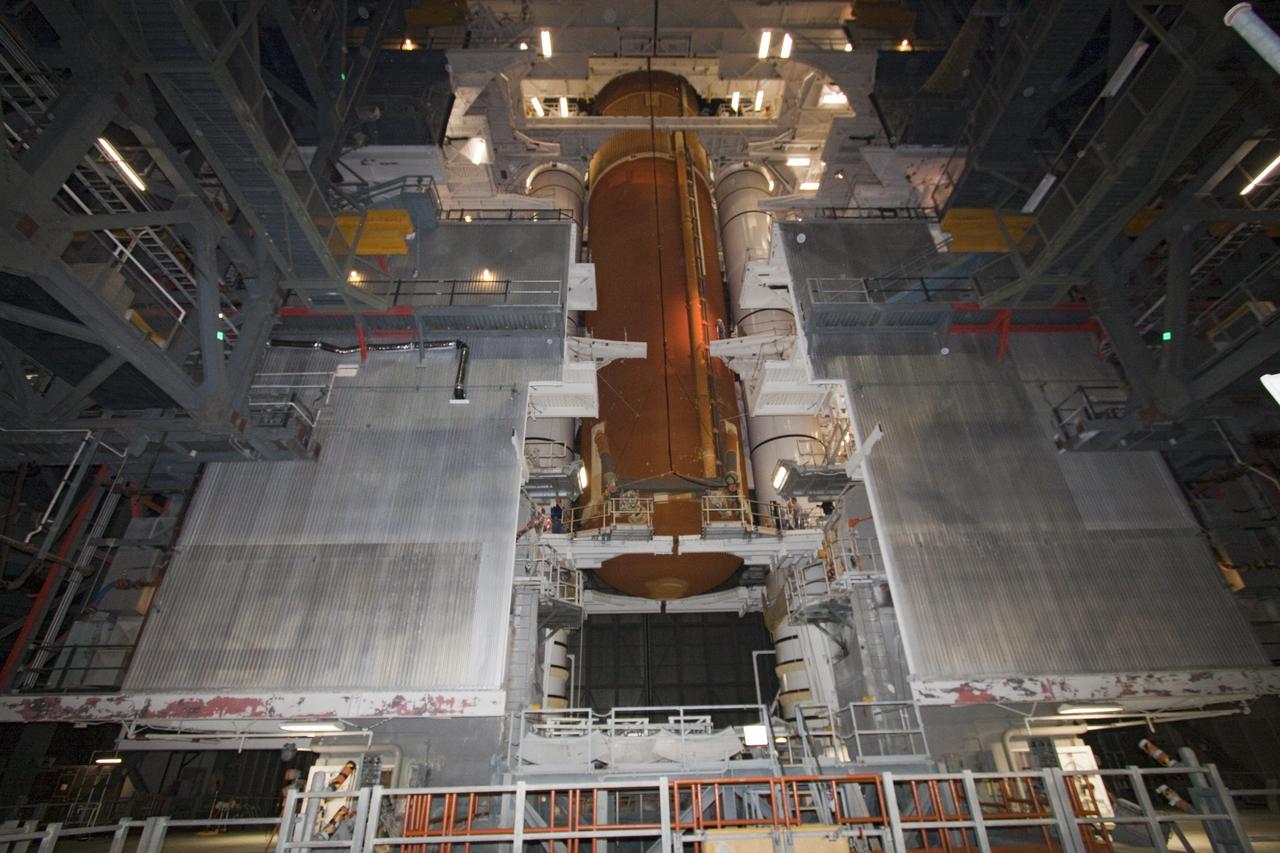
CAPE CANAVERAL, Fla. -- In the Vehicle Assembly Building at NASA's Kennedy Space Center in Florida, workers monitor the progress of external fuel tank, ET-122, for space shuttle Endeavour's STS-134 mission as it is being attached to the twin solid rocket boosters on the mobile launcher platform. Endeavour and its crew will deliver the Express Logistics Carrier-3 and the Alpha Magnetic Spectrometer to the International Space Station. Launch is targeted for April 19. For more information visit, http://www.nasa.gov/mission_pages/shuttle/shuttlemissions/sts134/index.html. Photo credit: NASA/Jack Pfaller
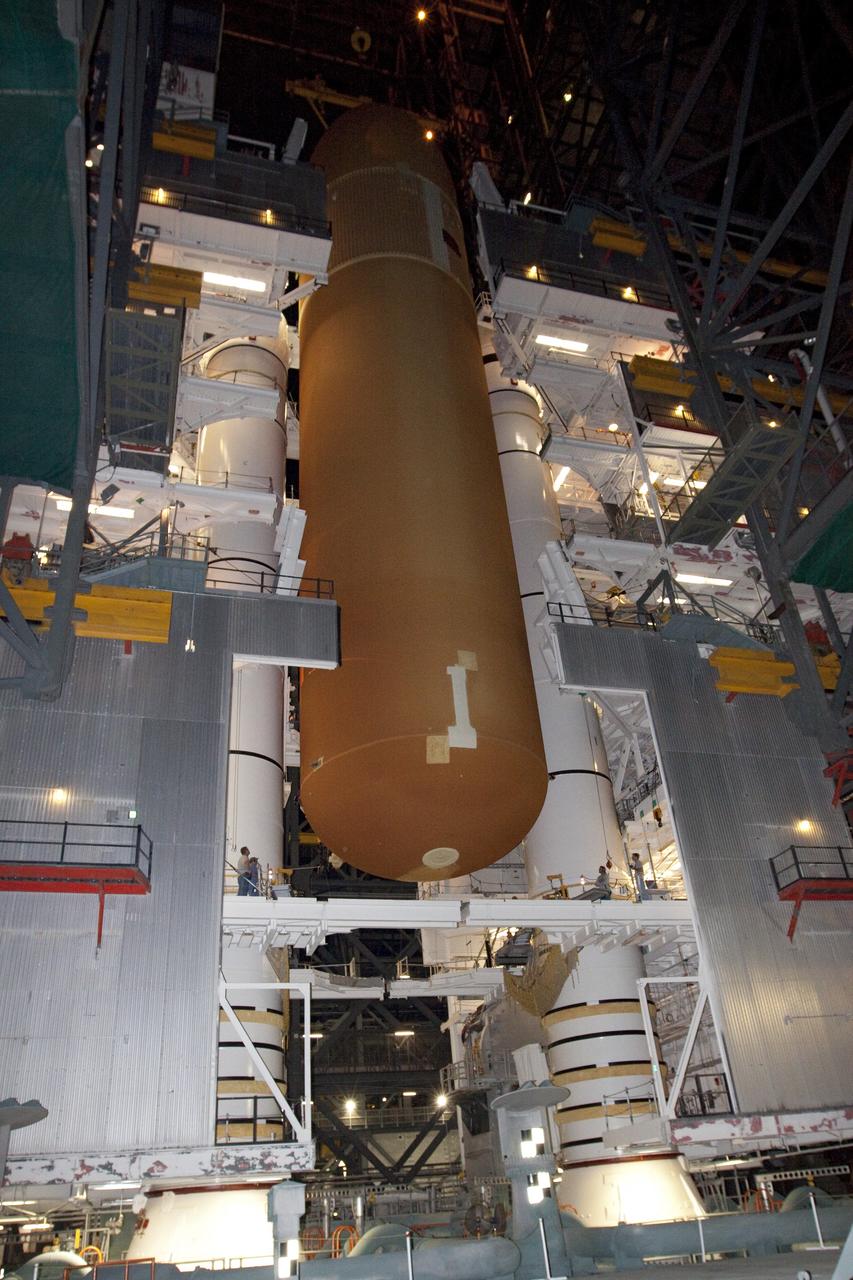
CAPE CANAVERAL, Fla. -- In the Vehicle Assembly Building at NASA's Kennedy Space Center in Florida, workers monitor the progress of external fuel tank, ET-122, for space shuttle Endeavour's STS-134 mission as it is being attached to the twin solid rocket boosters on the mobile launcher platform. Endeavour and its crew will deliver the Express Logistics Carrier-3 and the Alpha Magnetic Spectrometer to the International Space Station. Launch is targeted for April 19. For more information visit, http://www.nasa.gov/mission_pages/shuttle/shuttlemissions/sts134/index.html. Photo credit: NASA/Jack Pfaller
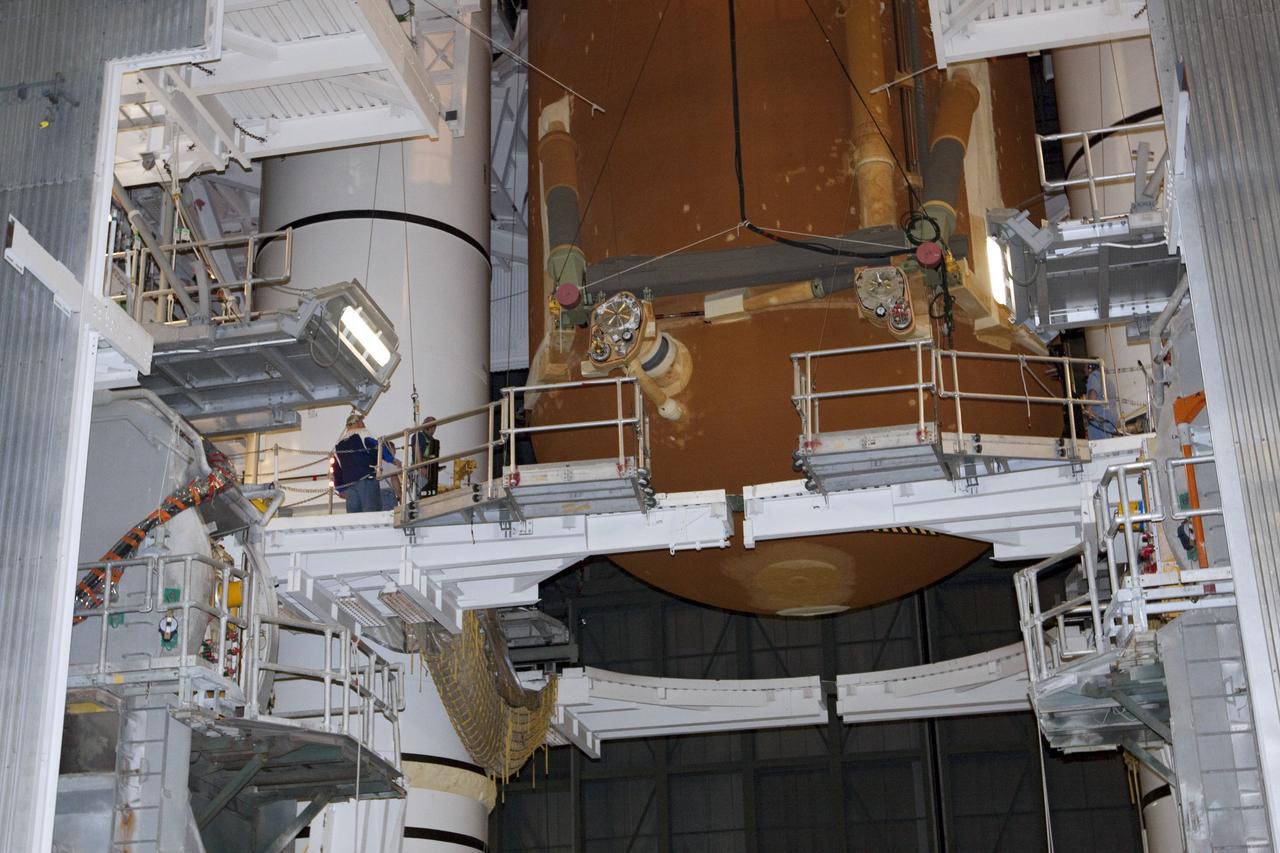
CAPE CANAVERAL, Fla. -- In the Vehicle Assembly Building at NASA's Kennedy Space Center in Florida, workers monitor the progress of external fuel tank, ET-122, for space shuttle Endeavour's STS-134 mission as it is being attached to the twin solid rocket boosters on the mobile launcher platform. Endeavour and its crew will deliver the Express Logistics Carrier-3 and the Alpha Magnetic Spectrometer to the International Space Station. Launch is targeted for April 19. For more information visit, http://www.nasa.gov/mission_pages/shuttle/shuttlemissions/sts134/index.html. Photo credit: NASA/Jack Pfaller
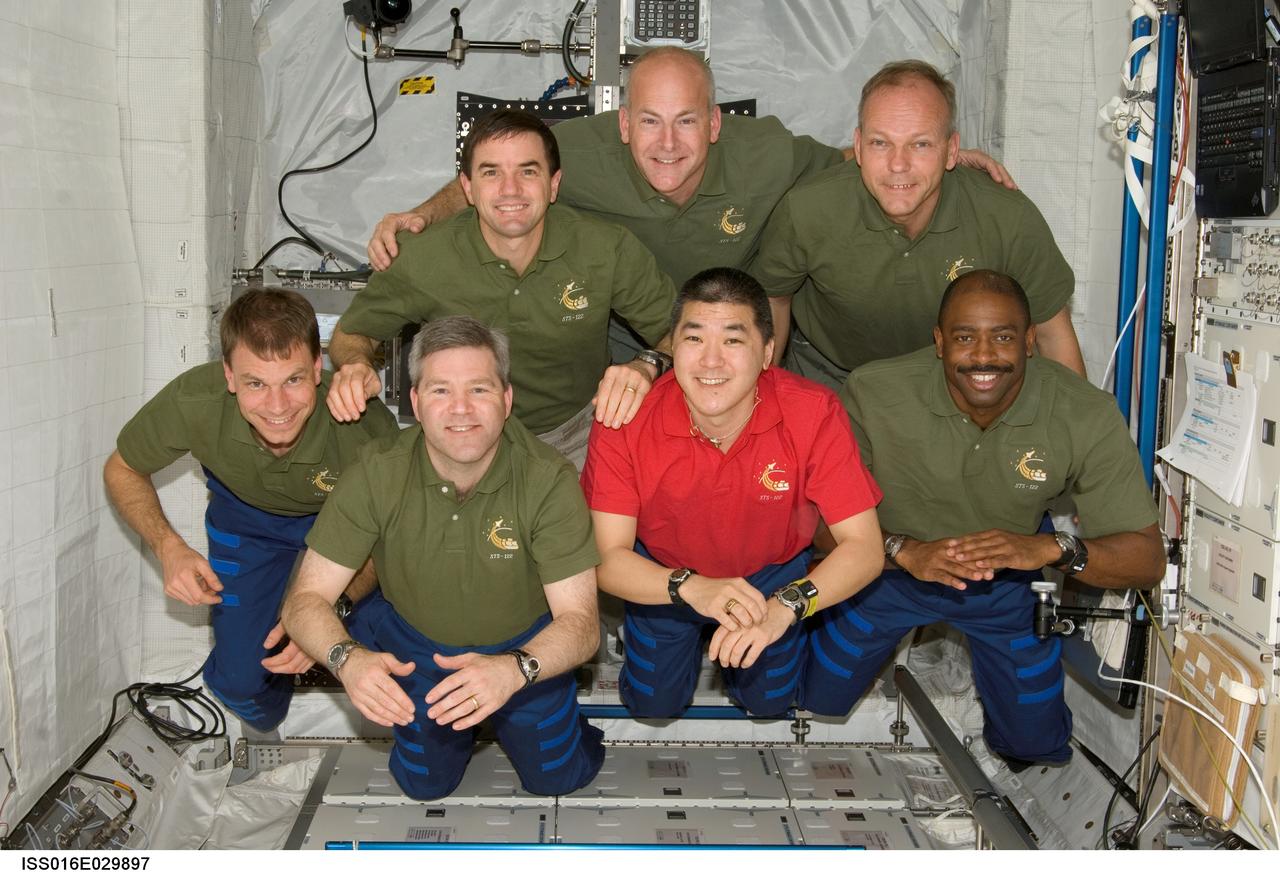
ISS016-E-029897 (16 Feb. 2008) --- The STS-122 crewmembers pose for an in-flight crew portrait following a joint news conference with the Expedition 16 crewmembers from the Columbus laboratory of the International Space Station while Space Shuttle Atlantis is docked with the station. From the left (front row) are NASA astronauts Stanley Love, mission specialist; Steve Frick, commander; Daniel Tani and Leland Melvin, both mission specialists. From the left (top) are NASA astronauts Rex Walheim, mission specialist; Alan Poindexter, pilot; and European Space Agency (ESA) astronaut Hans Schlegel, mission specialist. Tani, who joined the station's Expedition 16 crew in October, is being replaced by ESA astronaut Leopold Eyharts (out of frame), who arrived at the station with the STS-122 crew.
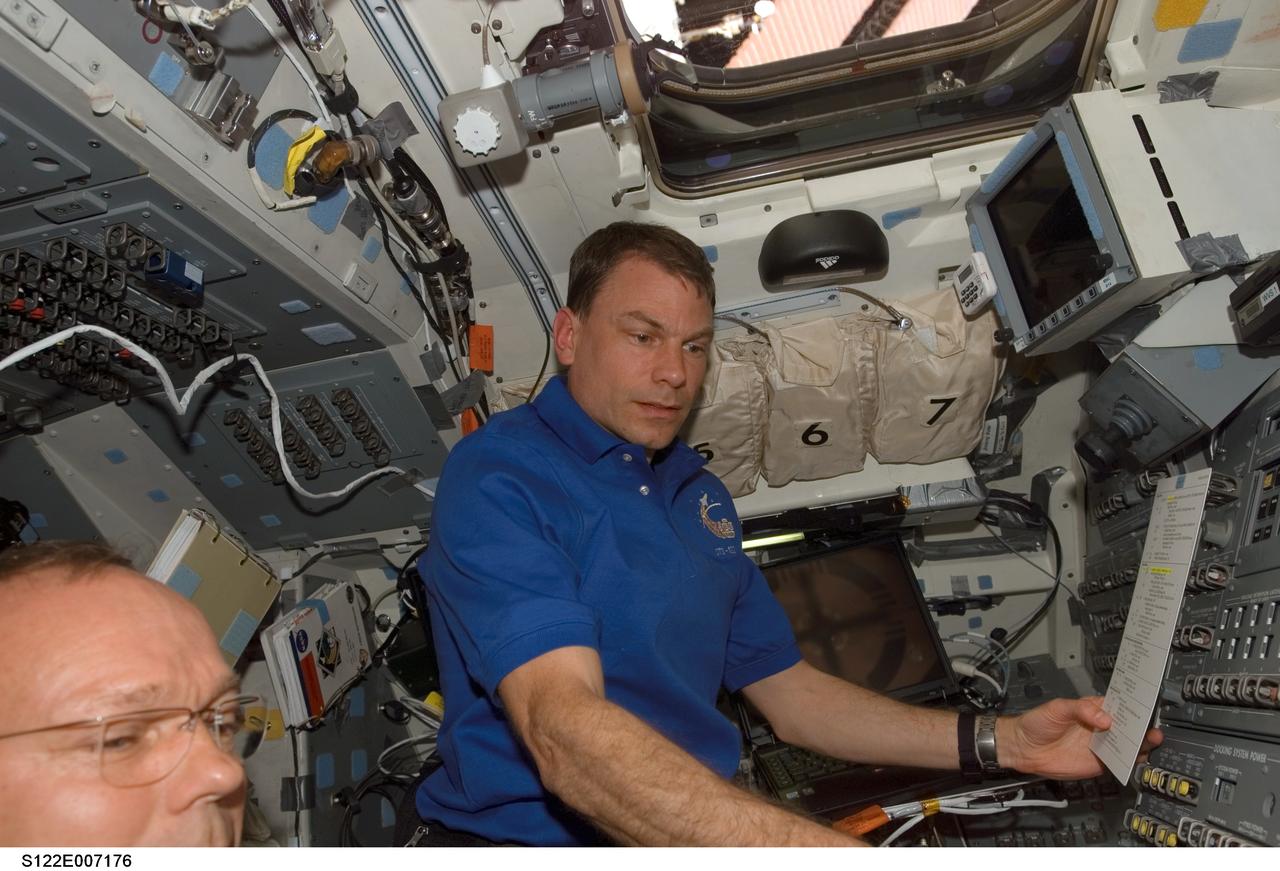
S122-E-007176 (9 Feb. 2008) --- Astronaut Stanley Love, STS-122 mission specialist, works on the aft flight deck of Space Shuttle Atlantis during flight day three activities.
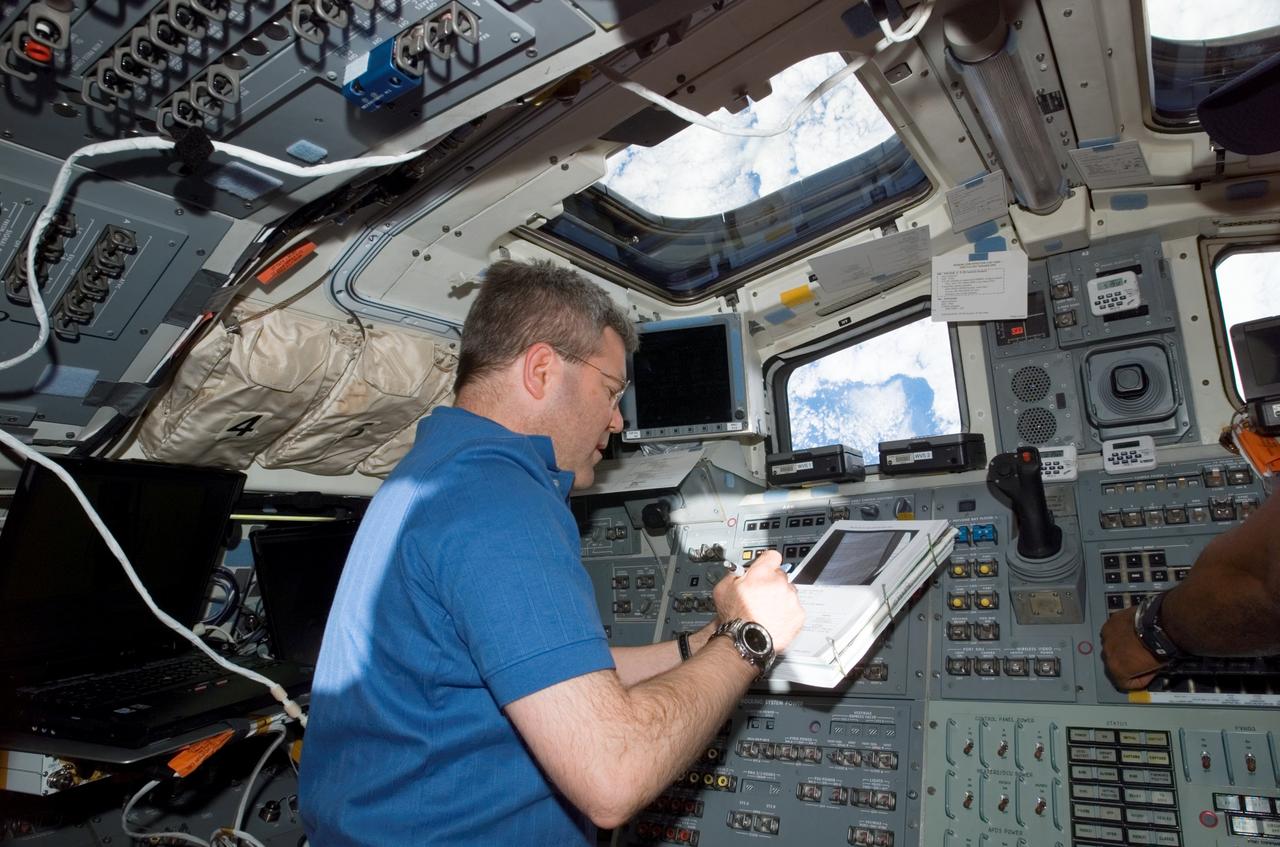
S122-E-006301 (8 Feb. 2008) --- Astronaut Steve Frick, STS-122 commander, looks over a checklist while working on the aft flight deck of Space Shuttle Atlantis during flight day two activities.
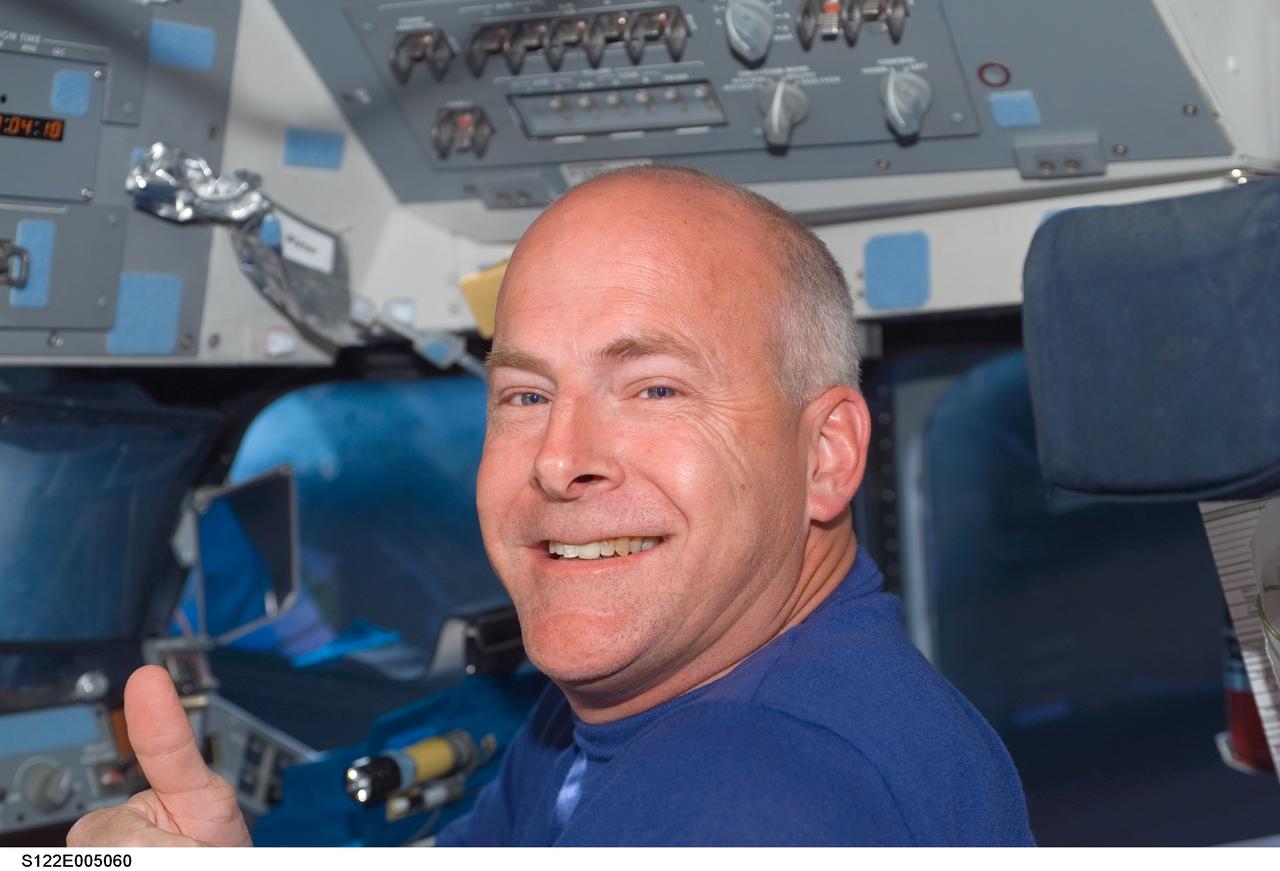
S122-E-005060 (7 Feb. 2008) --- Astronaut Alan Poindexter, STS-122 pilot, gives a "thumbs-up" signal on the flight deck of Space Shuttle Atlantis during flight day one activities.
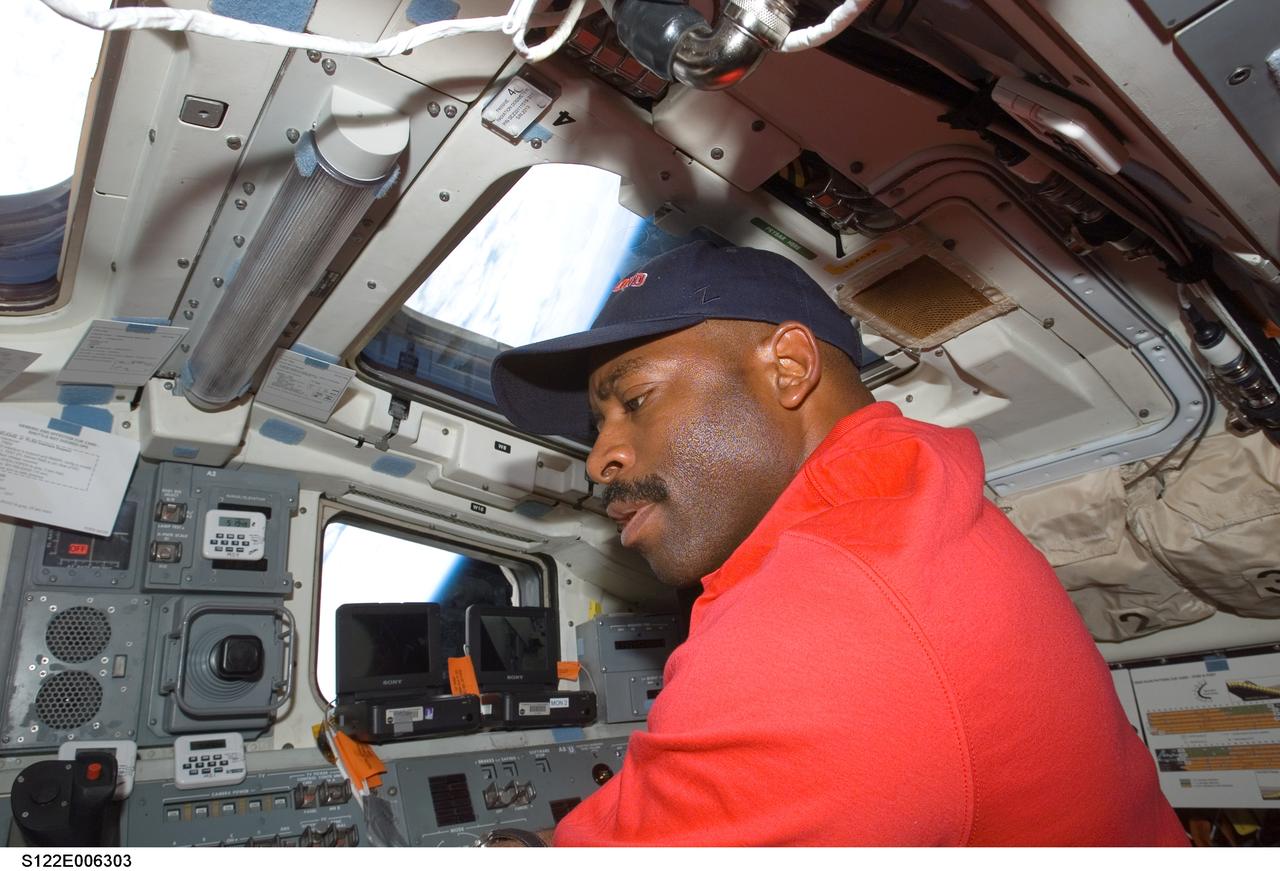
S122-E-006303 (8 Feb. 2008) --- Astronaut Leland Melvin, STS-122 mission specialist, works on the aft flight deck of Space Shuttle Atlantis during flight day two activities.
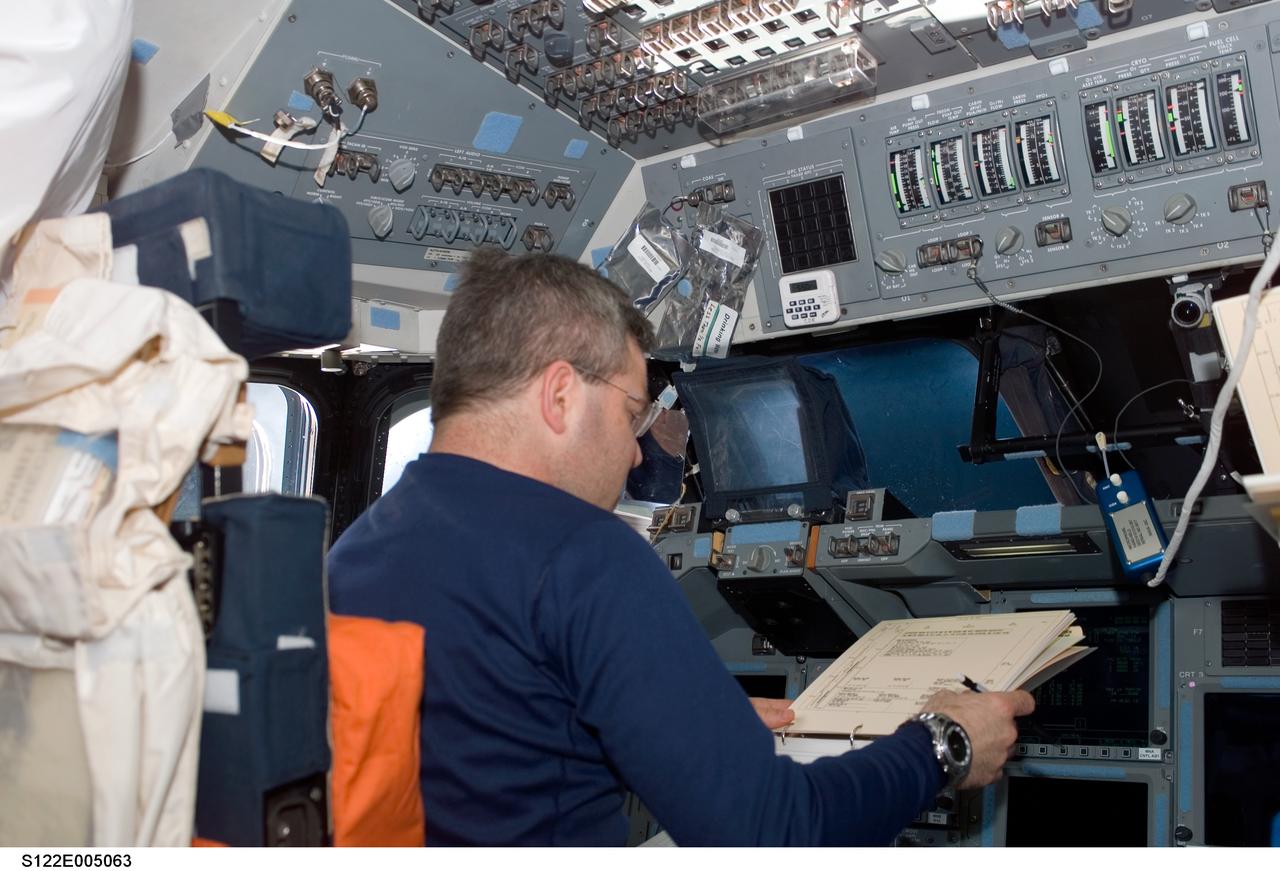
S122-E-005063 (7 Feb. 2008) --- Astronaut Steve Frick, STS-122 commander, looks over procedures checklists on the flight deck of Space Shuttle Atlantis during flight day one activities.
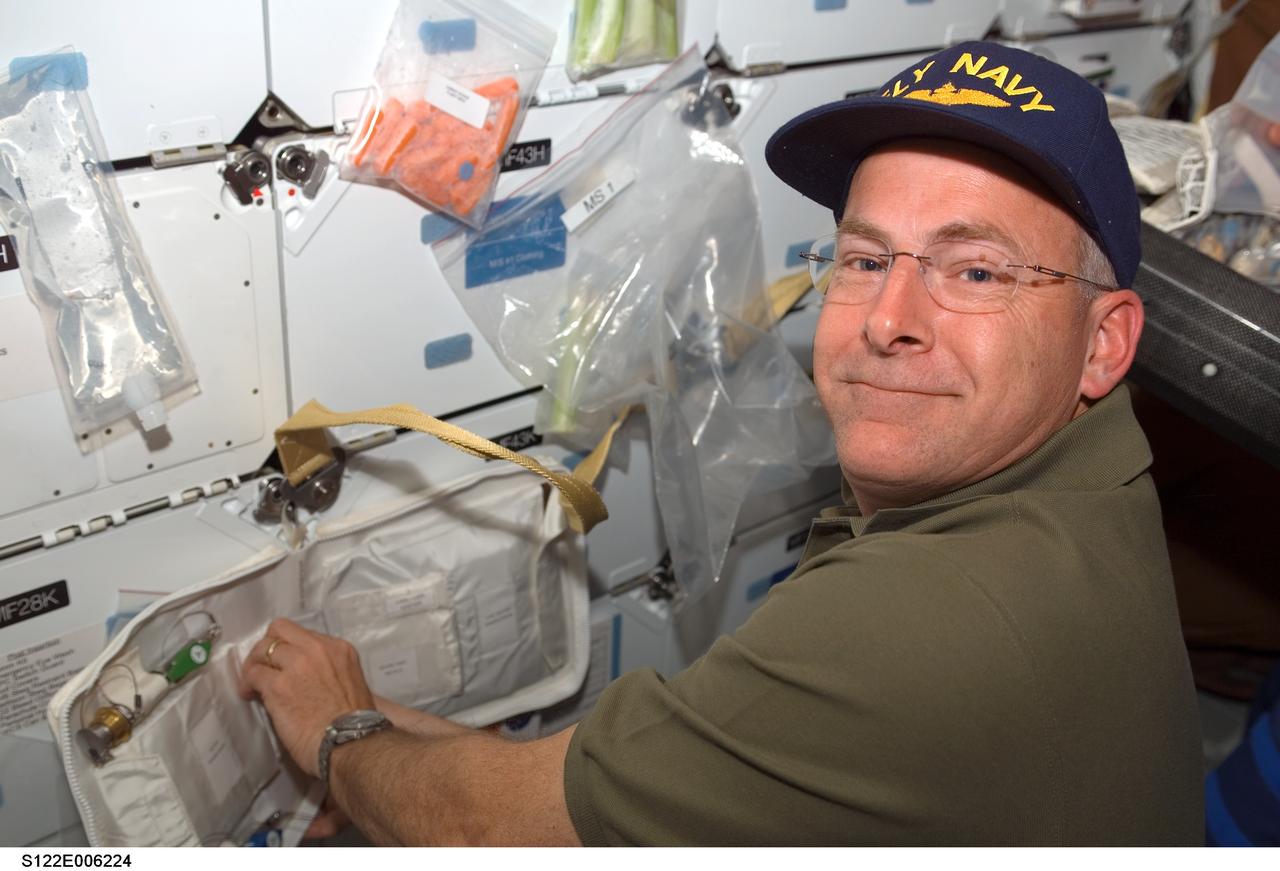
S122-E-006224 (8 Feb. 2008) --- Astronaut Alan Poindexter, STS-122 pilot, works on the middeck of Space Shuttle Atlantis during flight day two activities.
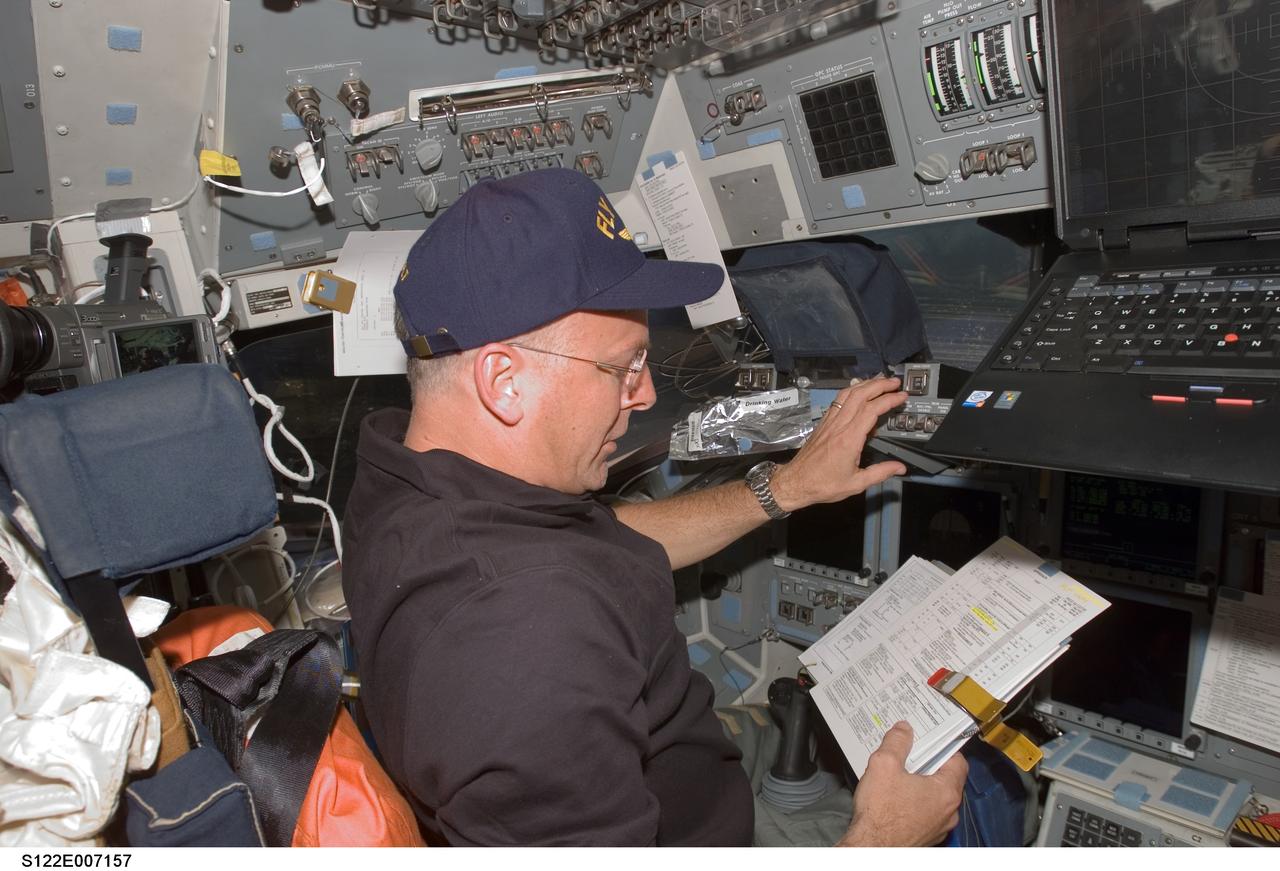
S122-E-007157 (9 Feb. 2008) --- Astronaut Alan Poindexter, STS-122 pilot, looks over a checklist while working on the flight deck of Space Shuttle Atlantis during flight day three activities.
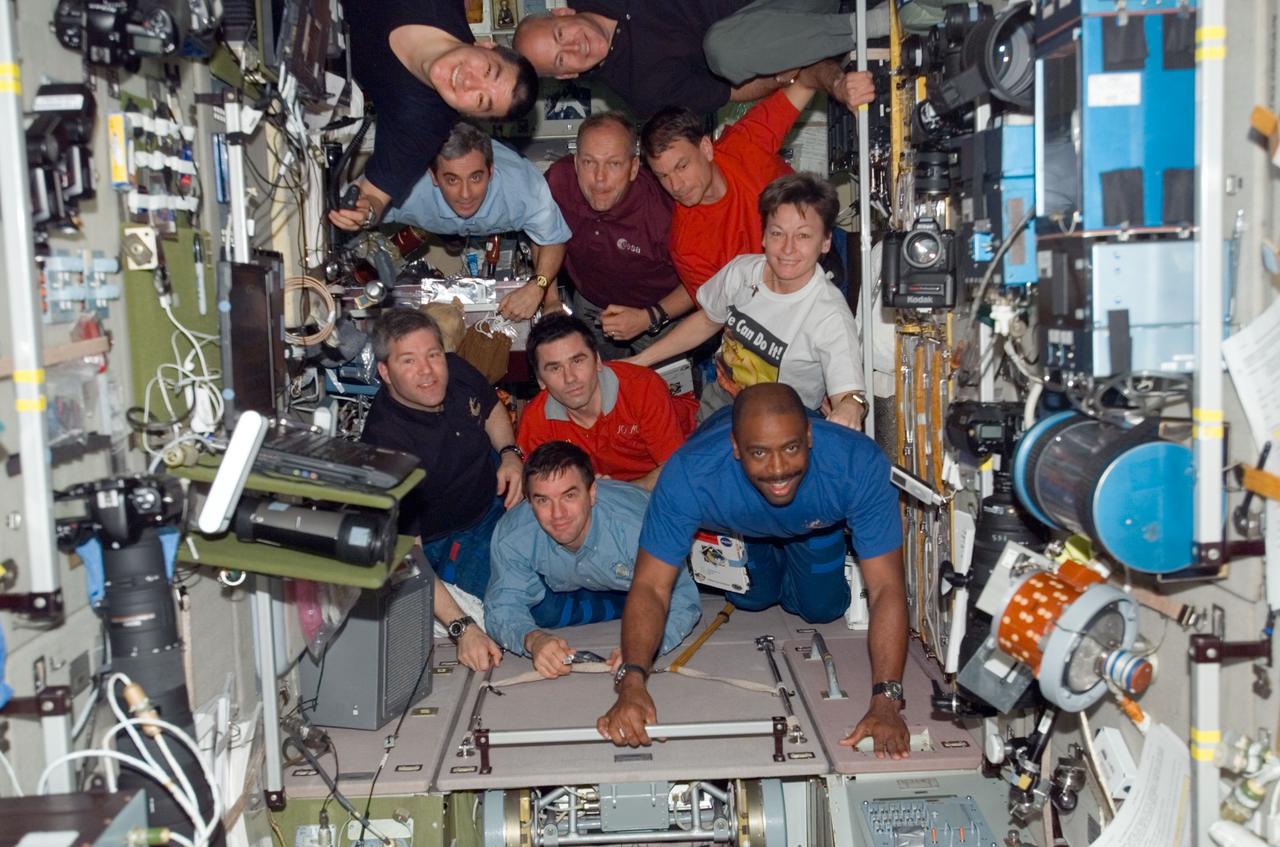
S122-E-009694 (17 Feb. 2008) --- The STS-122 and Expedition 16 crewmembers gather for a photo in the Zvezda Service Module of the International Space Station. NASA astronauts pictured are Steve Frick (bottom left), STS-122 commander; Rex Walheim (bottom center) and Leland Melvin (bottom right), both STS-122 mission specialists; Peggy Whitson, Expedition 16 commander; Stanley Love (above Whitson), STS-122 mission specialist; Alan Poindexter (top right), STS-122 pilot; and Daniel Tani (top left), STS-122 mission specialist. European Space Agency (ESA) astronauts pictured are Leopold Eyharts (left middle), Expedition 16 flight engineer; and Hans Schlegel, STS-122 mission specialist. Russia's Federal Space Agency cosmonaut Yuri I. Malenchenko, Expedition 16 flight engineer, is pictured above Walheim.
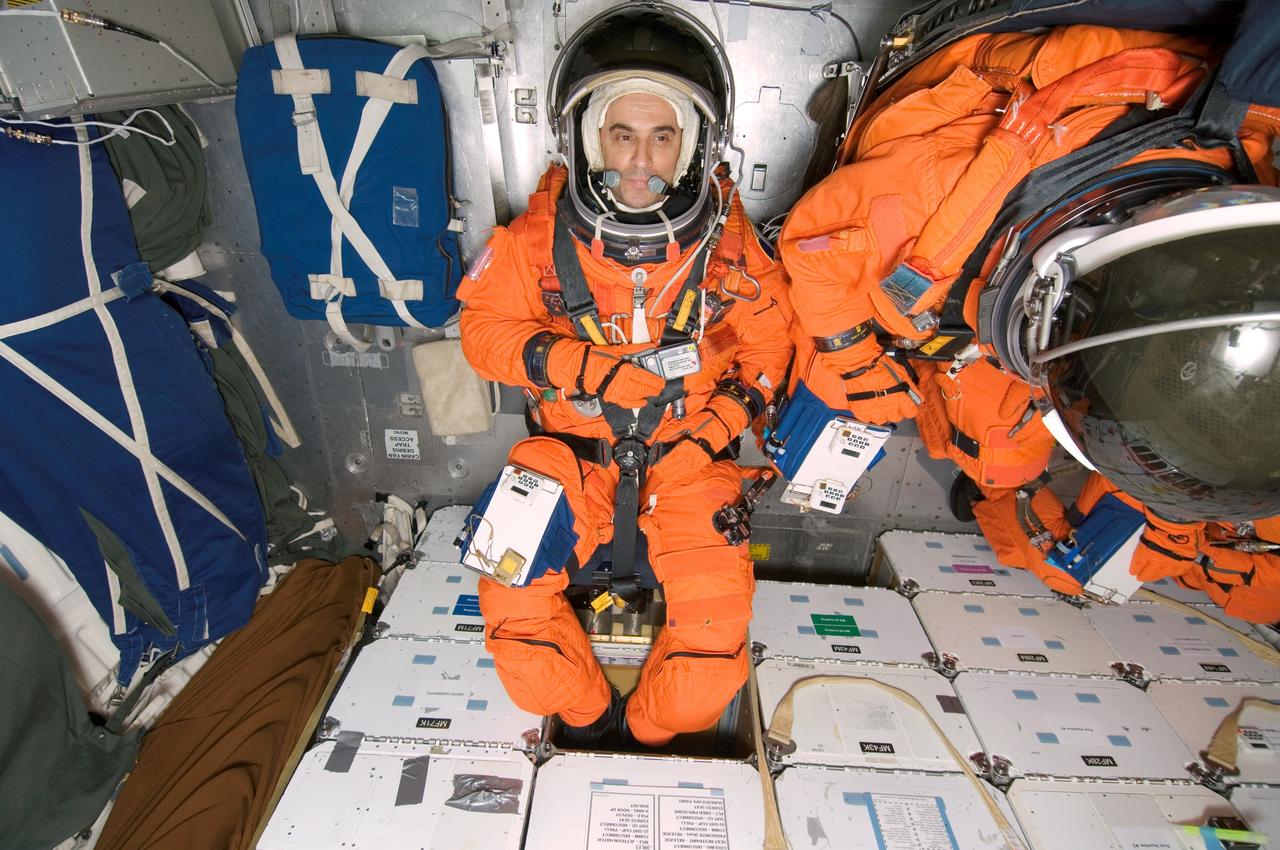
JSC2007-E-21237 (1 May 2007) --- European Space Agency (ESA) astronaut Leopold Eyharts, Expedition 16 flight engineer; astronaut Stanley G. Love (partially out of frame) and ESA astronaut Hans Schlegel (out of frame), both STS-122 mission specialists, participate in a training session in one of the full-scale trainers in the Space Vehicle Mockup Facility at Johnson Space Center. Attired in training versions of their shuttle launch and entry suits, the three are seated on the middeck for a post insertion/de-orbit training session. Eyharts is scheduled to join Expedition 16 as flight engineer after launching to the International Space Station on mission STS-122.

JSC2007-E-21236 (1 May 2007) --- European Space Agency (ESA) astronaut Leopold Eyharts (foreground), Expedition 16 flight engineer; astronaut Stanley G. Love and ESA astronaut Hans Schlegel, both STS-122 mission specialists, participate in a training session in one of the full-scale trainers in the Space Vehicle Mockup Facility at Johnson Space Center. Attired in training versions of their shuttle launch and entry suits, the three are seated on the middeck for a post insertion/de-orbit training session. Eyharts is scheduled to join Expedition 16 as flight engineer after launching to the International Space Station on mission STS-122.
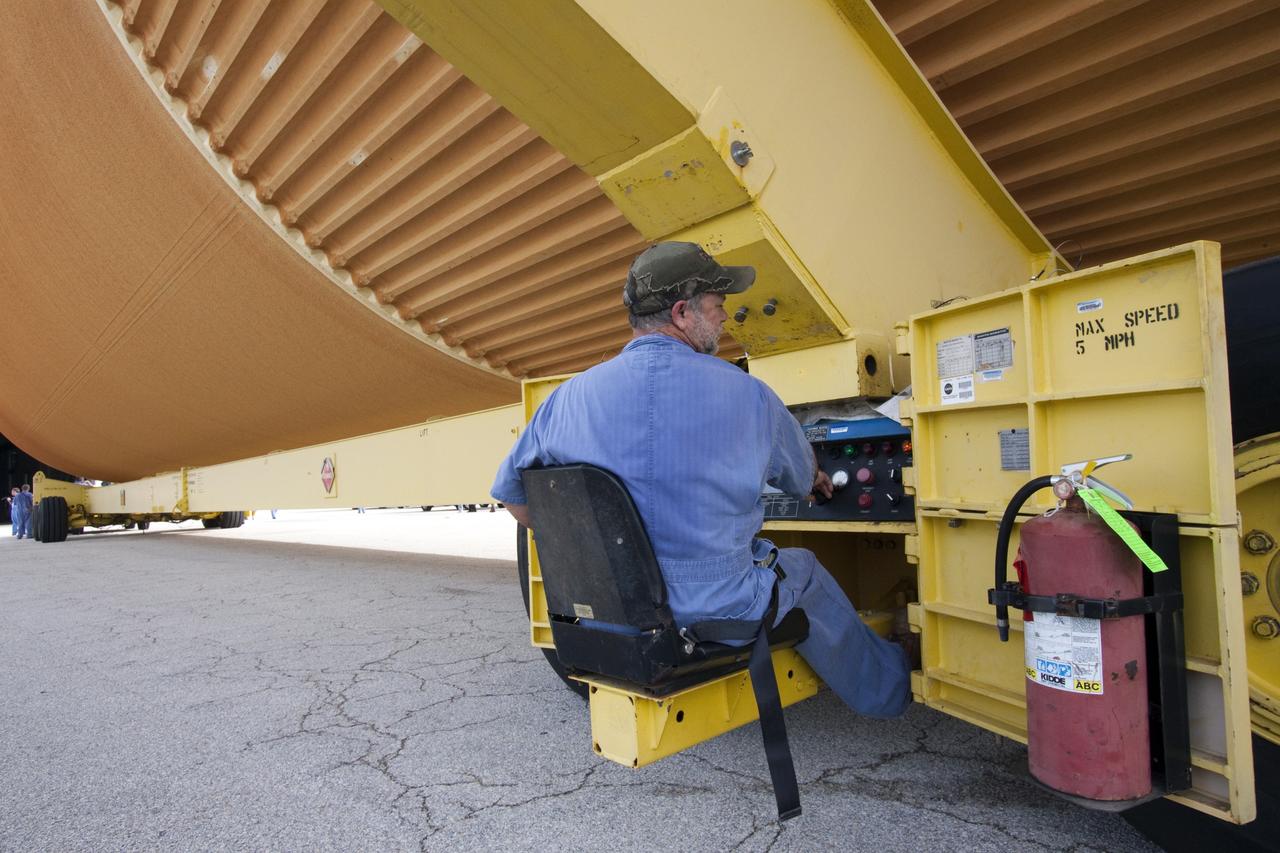
CAPE CANAVERAL, Fla. -- A United Space Alliance technician monitors the Space Shuttle Program's last external fuel tank, ET-122, as it moves from the Turn Basin to the Vehicle Assembly Building at NASA's Kennedy Space Center in Florida. The tank traveled 900 miles by sea from NASA's Michoud Assembly Facility in New Orleans aboard the Pegasus Barge. Once inside the Vehicle Assembly Building, it eventually will be attached to space shuttle Endeavour for the STS-134 mission to the International Space Station. STS-134, targeted to launch in Feb. 2011, currently is scheduled to be the last mission in the shuttle program. The tank, which is the largest element of the space shuttle stack, was damaged during Hurricane Katrina in August 2005 and restored to flight configuration by Lockheed Martin Space Systems Company employees. Photo credit: NASA/Jack Pfaller
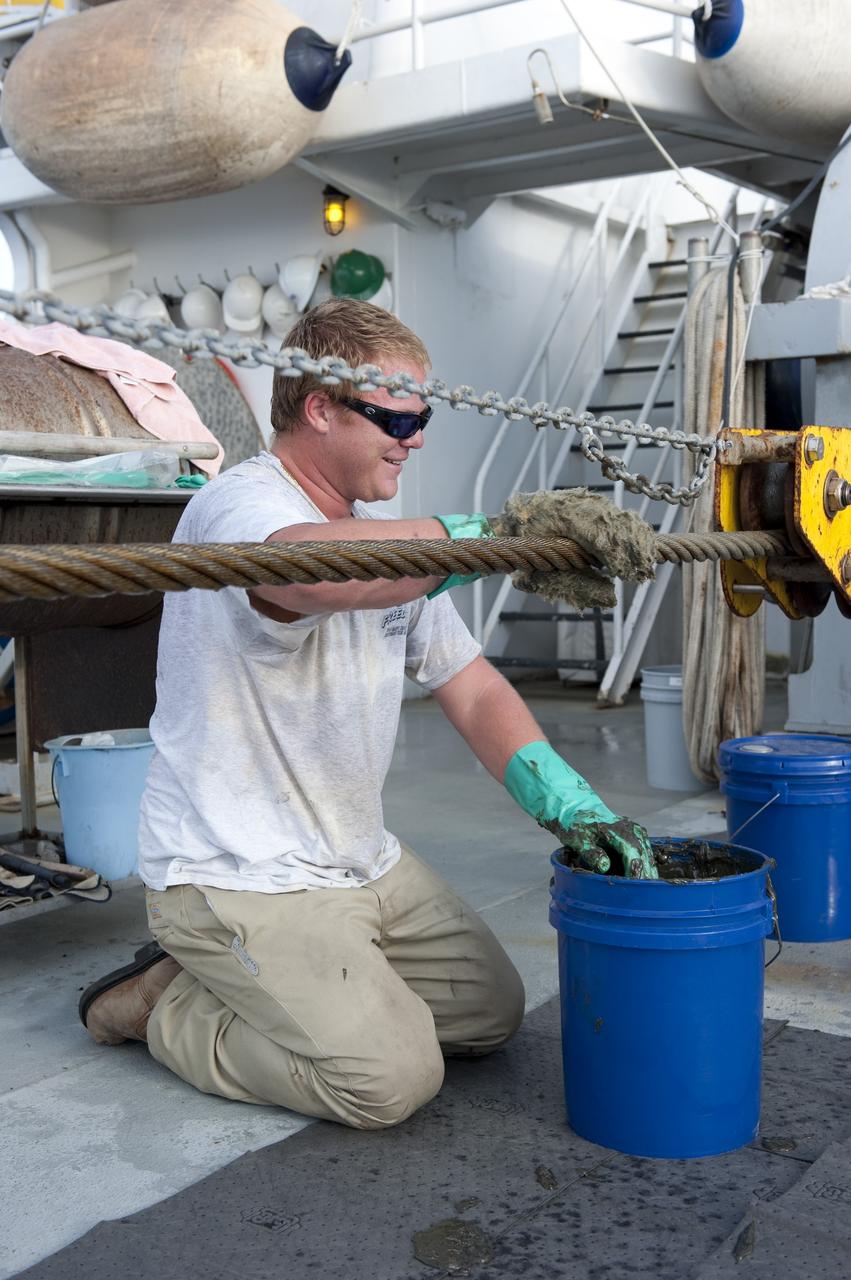
CAPE CANAVERAL, Fla. -- A deckhand on Freedom Star, one of NASA's solid rocket booster retrieval ships, keeps the ship in good repair as it pulls the Pegasus Barge carrying the Space Shuttle Program's last external fuel tank, ET-122. The tank will travel 900 miles by sea to NASA's Kennedy Space Center in Florida before being offloaded and moved to Kennedy's Vehicle Assembly Building. There it will be integrated to space shuttle Endeavour for the STS-134 mission to the International Space Station. The tank, which is the largest element of the space shuttle stack, was damaged during Hurricane Katrina in August 2005 and restored to flight configuration by Lockheed Martin Space Systems Company employees. STS-134, targeted to launch Feb. 2011, currently is scheduled to be the last mission in the Space Shuttle Program. Photo credit: NASA/Kim Shiflett
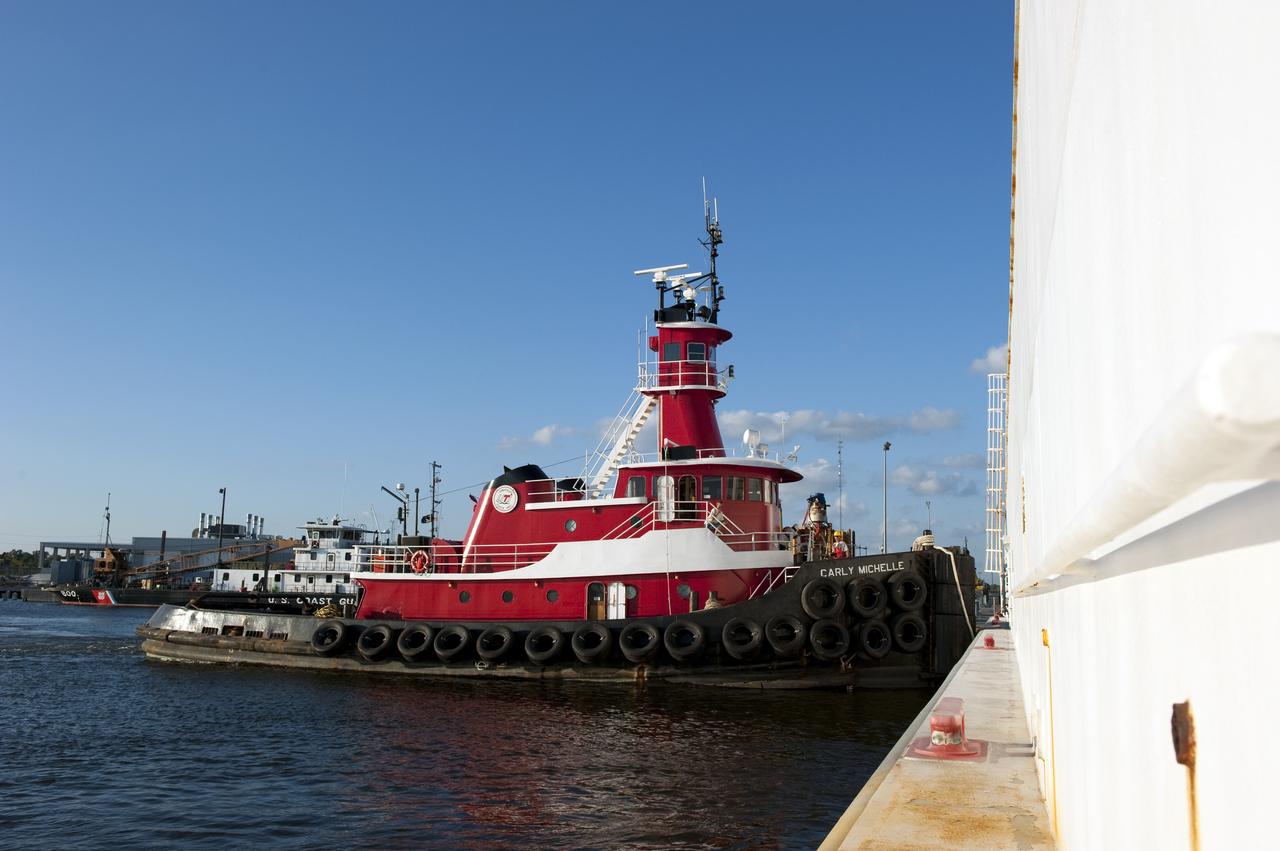
NEW ORLEANS -- At NASA's Michoud Assembly Facility in New Orleans a tug boat is prepared to escort the Space Shuttle Program's last external fuel tank, ET-122, for transportation to NASA's Kennedy Space Center in Florida. Secured aboard the Pegasus Barge the tank will travel 900 miles by sea before being offloaded and moved to Kennedy's Vehicle Assembly Building. There it will be integrated to space shuttle Endeavour for the STS-134 mission to the International Space Station. The tank, which is the largest element of the space shuttle stack, was damaged during Hurricane Katrina in August 2005 and restored to flight configuration by Lockheed Martin Space Systems Company employees. STS-134, targeted to launch Feb. 2011, currently is scheduled to be the last mission in the Space Shuttle Program. Photo credit: NASA/Kim Shiflett
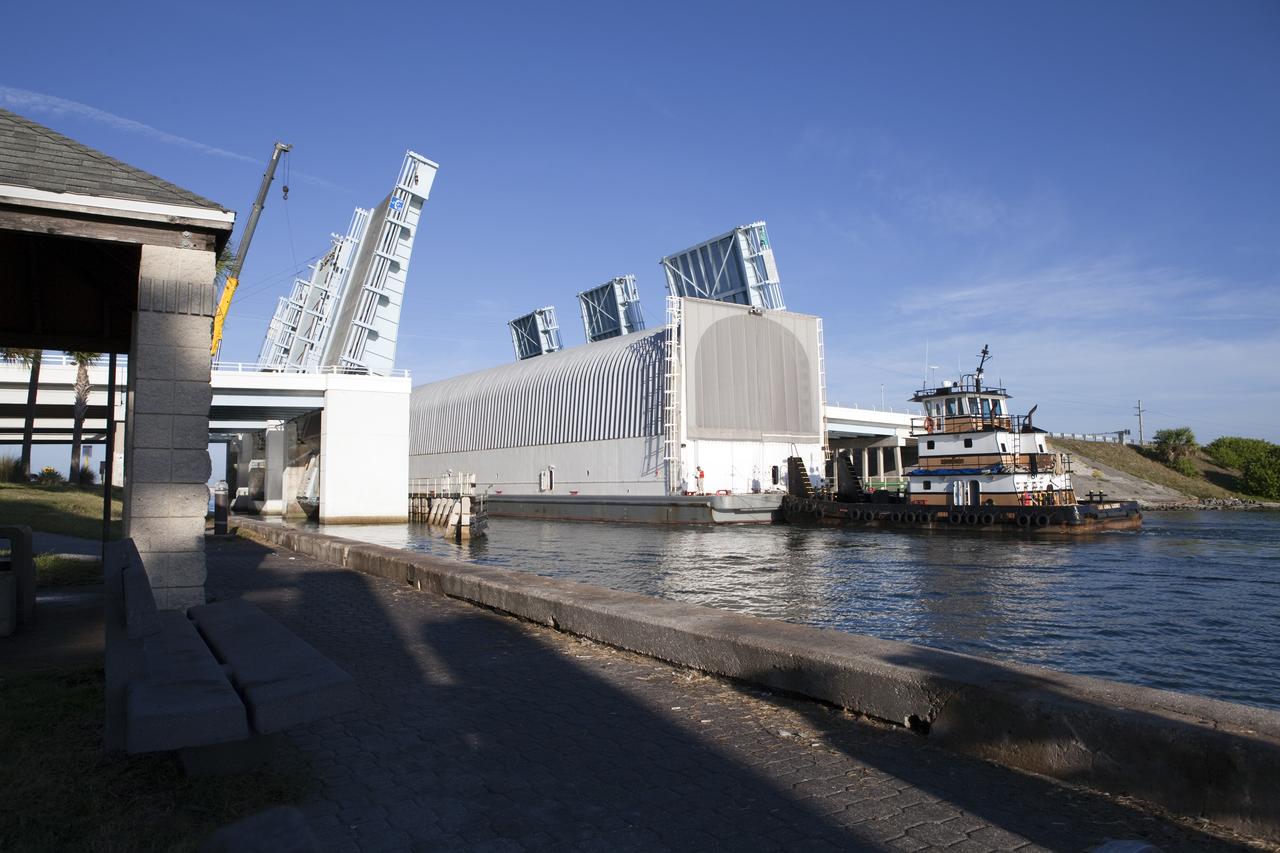
CAPE CANAVERAL, Fla. -- A tug boat pulls the Space Shuttle Program's last external fuel tank, ET-122, toward the Turn Basin at NASA's Kennedy Space Center in Florida. The tank traveled 900 miles by sea from NASA's Michoud Assembly Facility in New Orleans aboard the Pegasus Barge. Next, the tank will be offloaded and moved to Kennedy's Vehicle Assembly Building where it eventually will be attached to space shuttle Endeavour for the STS-134 mission to the International Space Station. STS-134, targeted to launch in Feb., 2011, currently is scheduled to be the last mission in the Space Shuttle Program. The tank, which is the largest element of the space shuttle stack, was damaged during Hurricane Katrina in August 2005 and restored to flight configuration by Lockheed Martin Space Systems Company employees. Photo credit: NASA/Frankie Martin
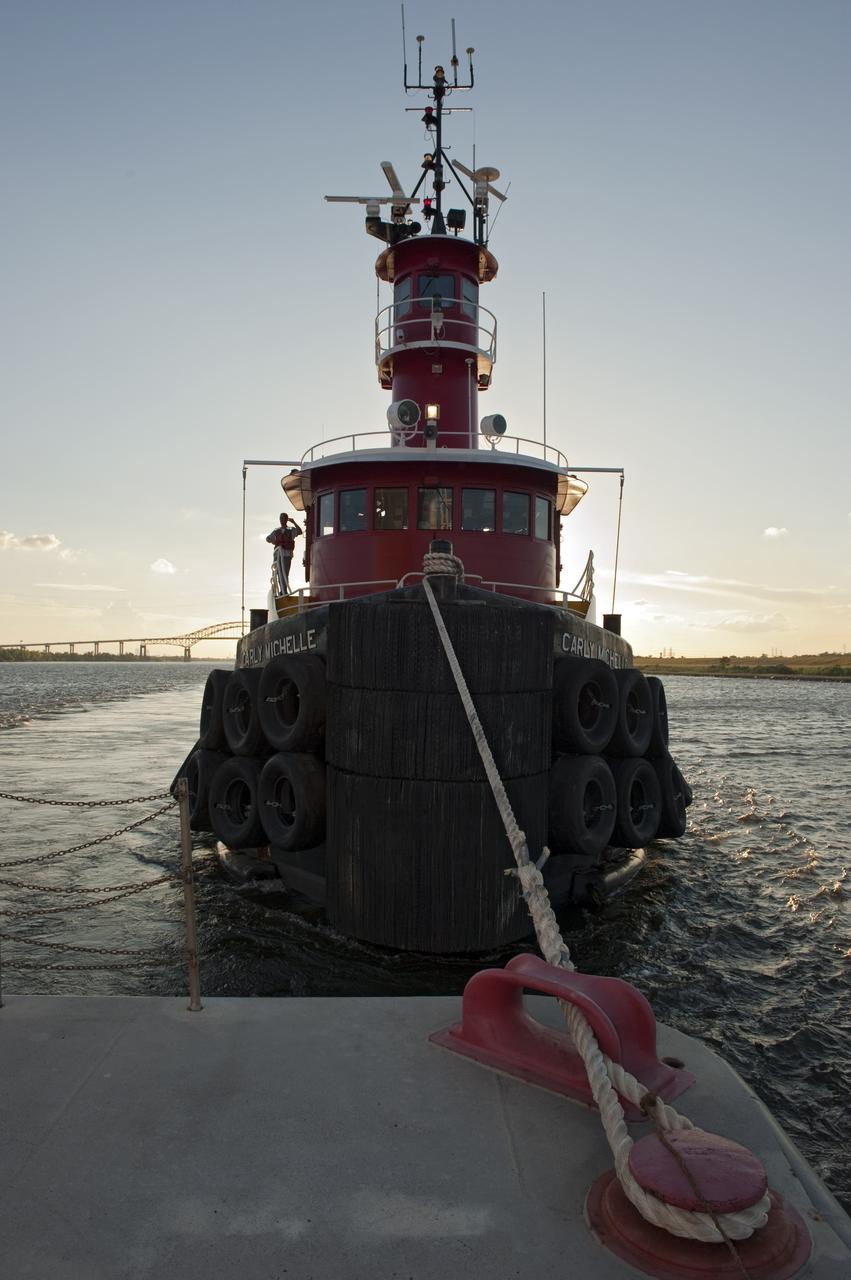
NEW ORLEANS -- A tug boat pulls the Pegasus Barge carrying the Space Shuttle Program's last external fuel tank, ET-122, from NASA's Michoud Assembly Facility in New Orleans to NASA's Kennedy Space Center in Florida. The tank will travel 900 miles by sea before being offloaded and moved to Kennedy's Vehicle Assembly Building. There it will be integrated to space shuttle Endeavour for the STS-134 mission to the International Space Station. The tank, which is the largest element of the space shuttle stack, was damaged during Hurricane Katrina in August 2005 and restored to flight configuration by Lockheed Martin Space Systems Company employees. STS-134, targeted to launch Feb. 2011, currently is scheduled to be the last mission in the Space Shuttle Program. Photo credit: NASA/Kim Shiflett
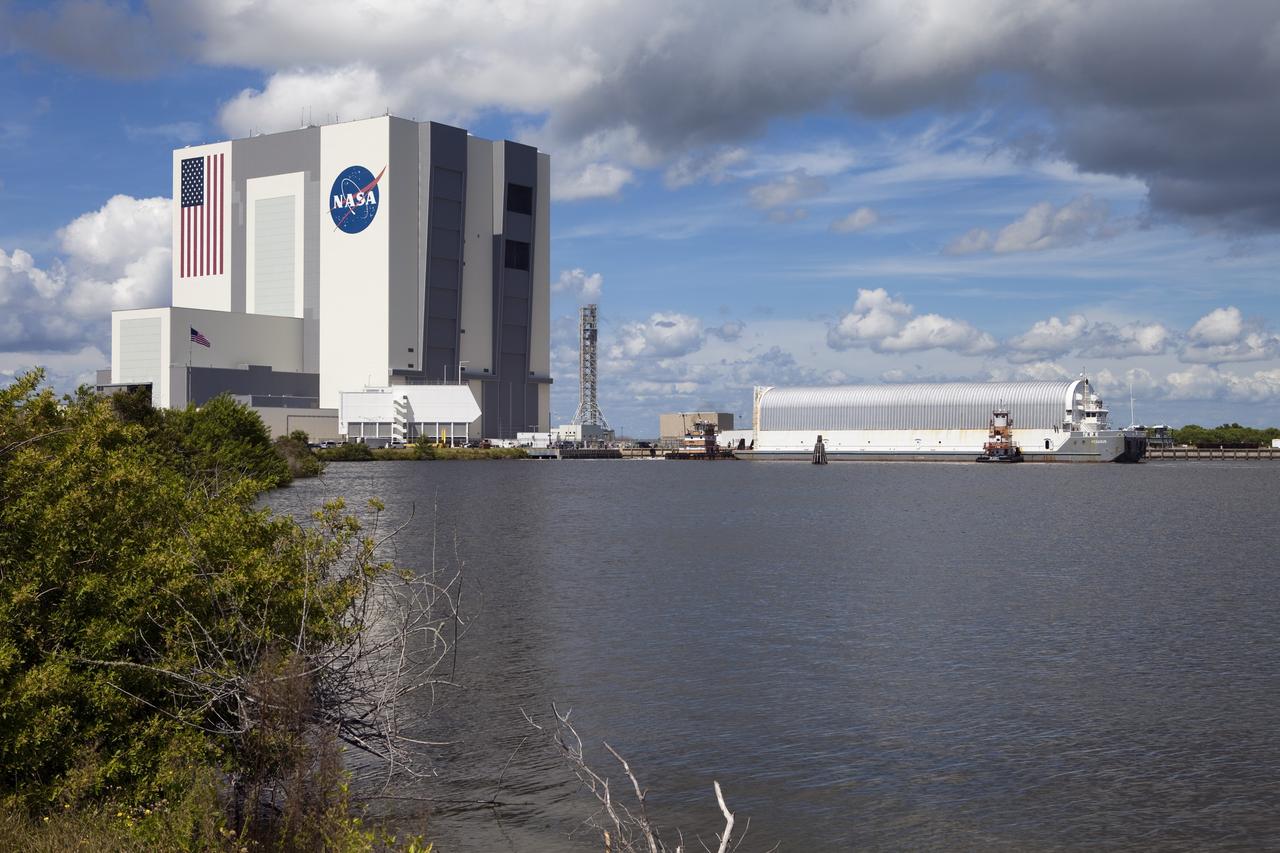
CAPE CANAVERAL, Fla. -- At NASA's Kennedy Space Center in Florida, the Pegasus Barge, carrying the Space Shuttle Program's last external fuel tank, ET-122, arrives at the Turn Basin. The tank traveled 900 miles by sea from NASA's Michoud Assembly Facility in New Orleans. Next, the tank will be offloaded and moved to Kennedy's Vehicle Assembly Building where it eventually will be attached to space shuttle Endeavour for the STS-134 mission to the International Space Station. STS-134, targeted to launch in Feb. 2011, currently is scheduled to be the last mission in the Space Shuttle Program. The tank, which is the largest element of the space shuttle stack, was damaged during Hurricane Katrina in August 2005 and restored to flight configuration by Lockheed Martin Space Systems Company employees. Photo credit: NASA/Frankie Martin
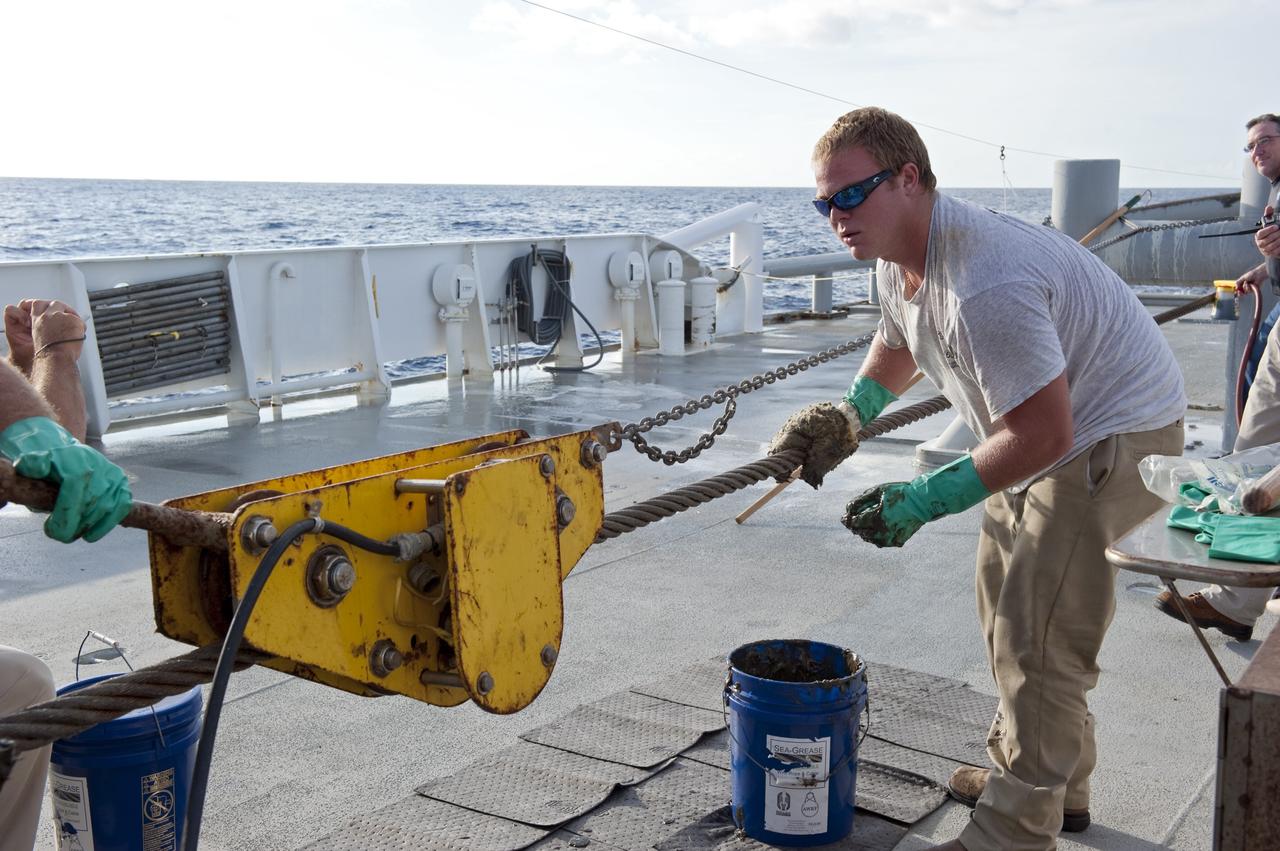
CAPE CANAVERAL, Fla. -- Deckhands on Freedom Star, one of NASA's solid rocket booster retrieval ships, keep the ship in good repair as it pulls the Pegasus Barge carrying the Space Shuttle Program's last external fuel tank, ET-122. The tank will travel 900 miles by sea to NASA's Kennedy Space Center in Florida before being offloaded and moved to Kennedy's Vehicle Assembly Building. There it will be integrated to space shuttle Endeavour for the STS-134 mission to the International Space Station. The tank, which is the largest element of the space shuttle stack, was damaged during Hurricane Katrina in August 2005 and restored to flight configuration by Lockheed Martin Space Systems Company employees. STS-134, targeted to launch Feb. 2011, currently is scheduled to be the last mission in the Space Shuttle Program. Photo credit: NASA/Kim Shiflett
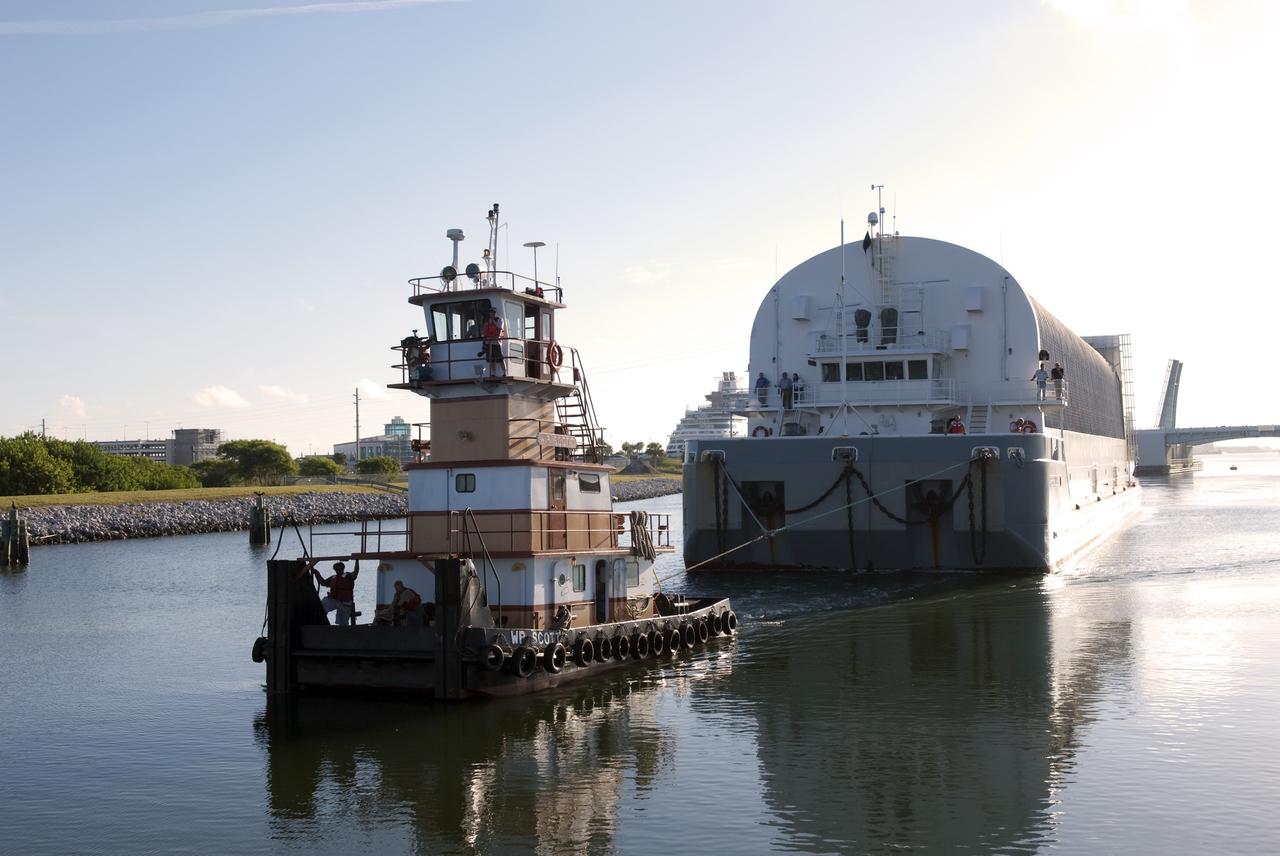
CAPE CANAVERAL, Fla. -- A tugboat pulls the Pegasus Barge carrying the Space Shuttle Program's last external fuel tank, ET-122, toward NASA's Kennedy Space Center in Florida. The tank traveled 900 miles by sea from NASA's Michoud Assembly Facility in New Orleans. After reaching the Turn Basin at Kennedy, the tank will be offloaded and moved to the Vehicle Assembly Building where it eventually will be attached to space shuttle Endeavour for the STS-134 mission to the International Space Station. STS-134, targeted to launch in Feb. 2011, currently is scheduled to be the last mission in the Space Shuttle Program. The tank, which is the largest element of the space shuttle stack, was damaged during Hurricane Katrina in August 2005 and restored to flight configuration by Lockheed Martin Space Systems Company employees. Photo credit: NASA/Jim Grossmann
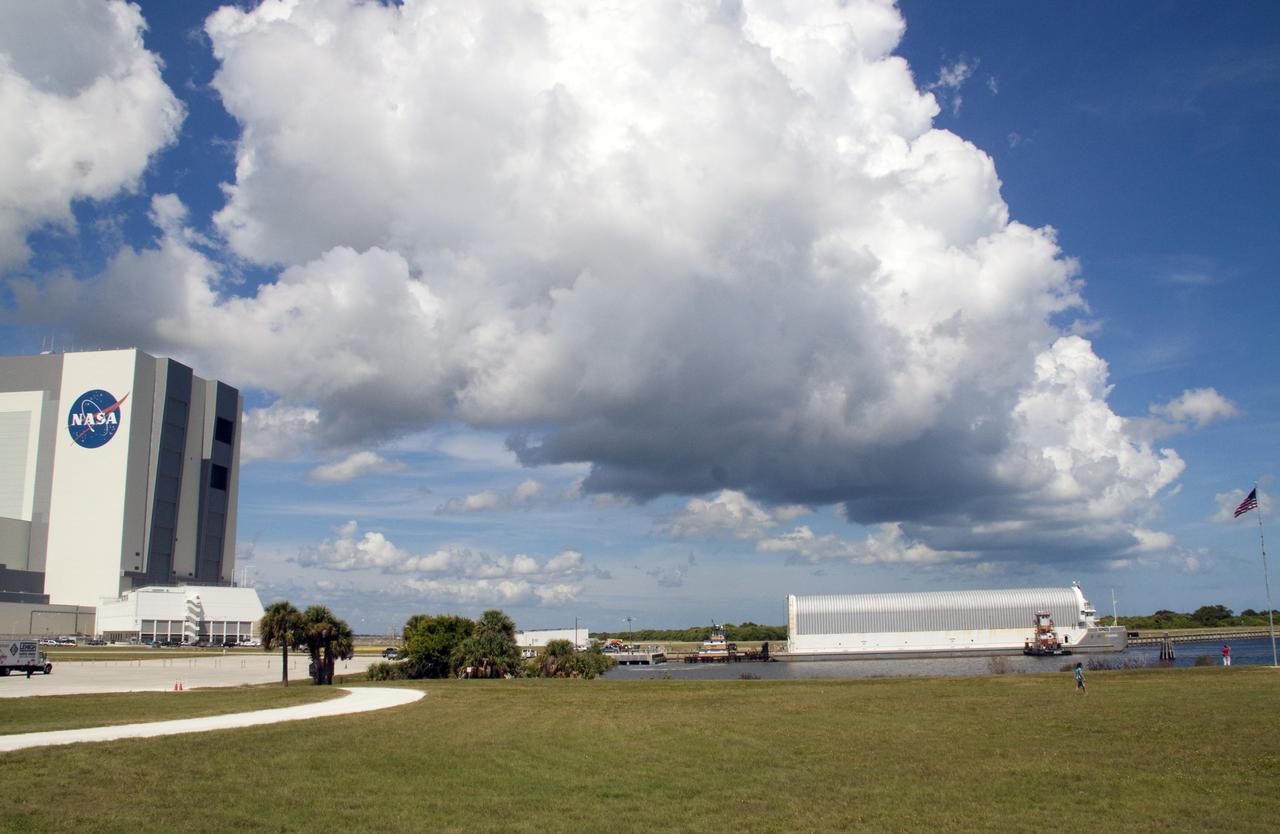
CAPE CANAVERAL, Fla. -- The Pegasus Barge carrying the Space Shuttle Program's last external fuel tank, ET-122, arrives at the Turn Basin at NASA's Kennedy Space Center in Florida. The tank traveled 900 miles by sea from NASA's Michoud Assembly Facility in New Orleans. Next, the tank will be offloaded and moved to the Vehicle Assembly Building where it eventually will be attached to space shuttle Endeavour for the STS-134 mission to the International Space Station. STS-134, targeted to launch in Feb. 2011, currently is scheduled to be the last mission in the Space Shuttle Program. The tank, which is the largest element of the space shuttle stack, was damaged during Hurricane Katrina in August 2005 and restored to flight configuration by Lockheed Martin Space Systems Company employees. Photo credit: NASA/Jack Pfaller
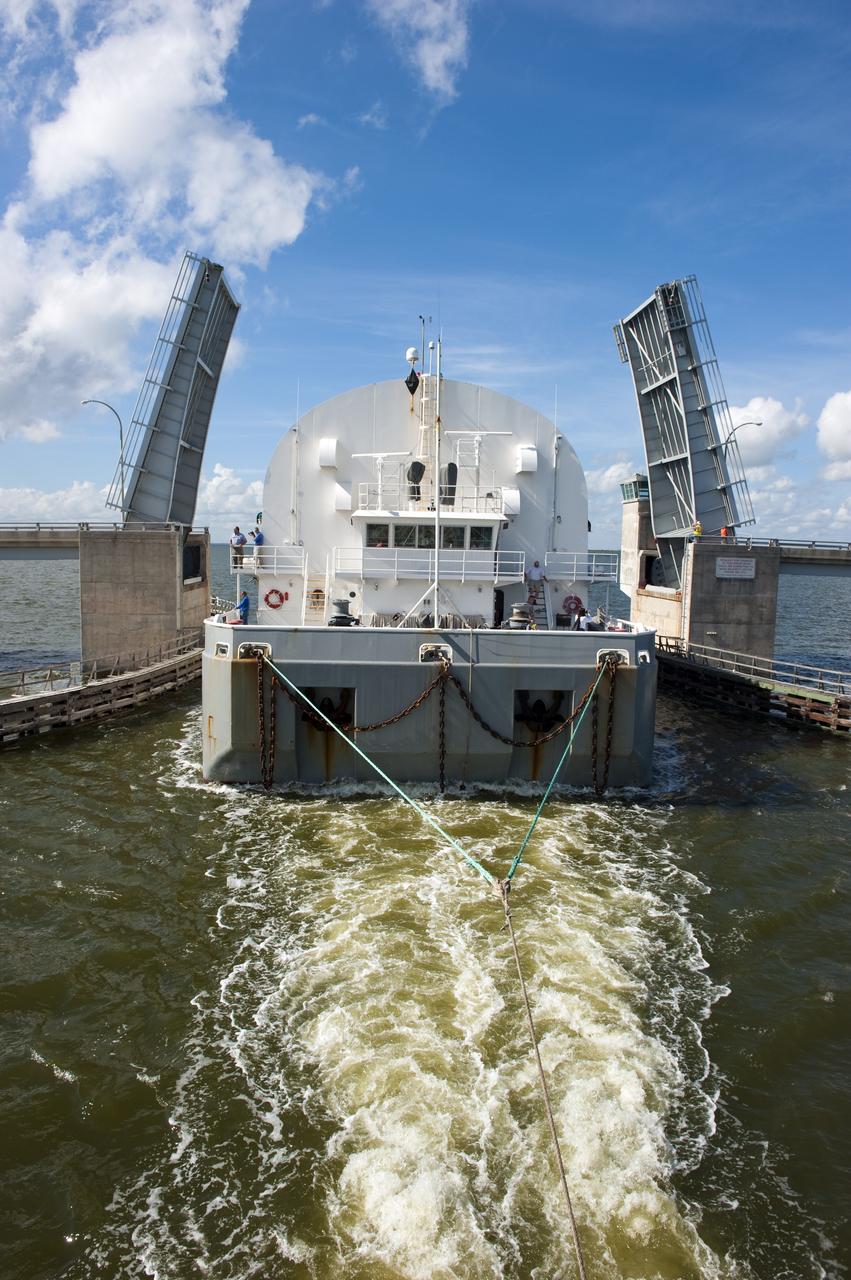
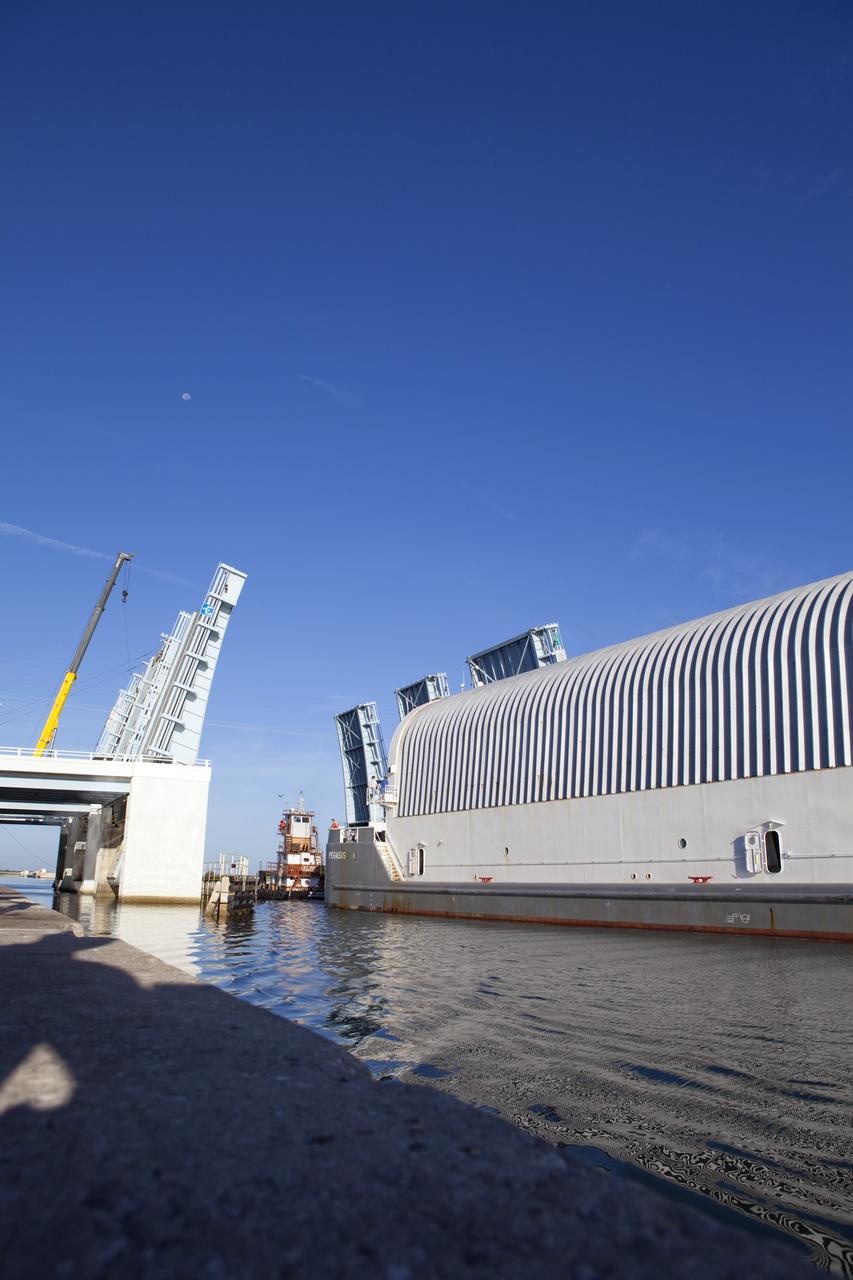
CAPE CANAVERAL, Fla. -- NASA's Pegasus barge is pulled through the bridge at the NASA Causeway. The barge is carrying the Space Shuttle Program's last external fuel tank, ET-122, toward NASA's Kennedy Space Center in Florida. The tank traveled 900 miles by sea from NASA's Michoud Assembly Facility in New Orleans. After reaching the Turn Basin at Kennedy, the tank will be offloaded and moved to the Vehicle Assembly Building where it eventually will be attached to space shuttle Endeavour for the STS-134 mission to the International Space Station. STS-134, targeted to launch in Feb. 2011, currently is scheduled to be the last mission in the Space Shuttle Program. The tank, which is the largest element of the space shuttle stack, was damaged during Hurricane Katrina in August 2005 and restored to flight configuration by Lockheed Martin Space Systems Company employees. Photo credit: NASA/Kim Shiflett
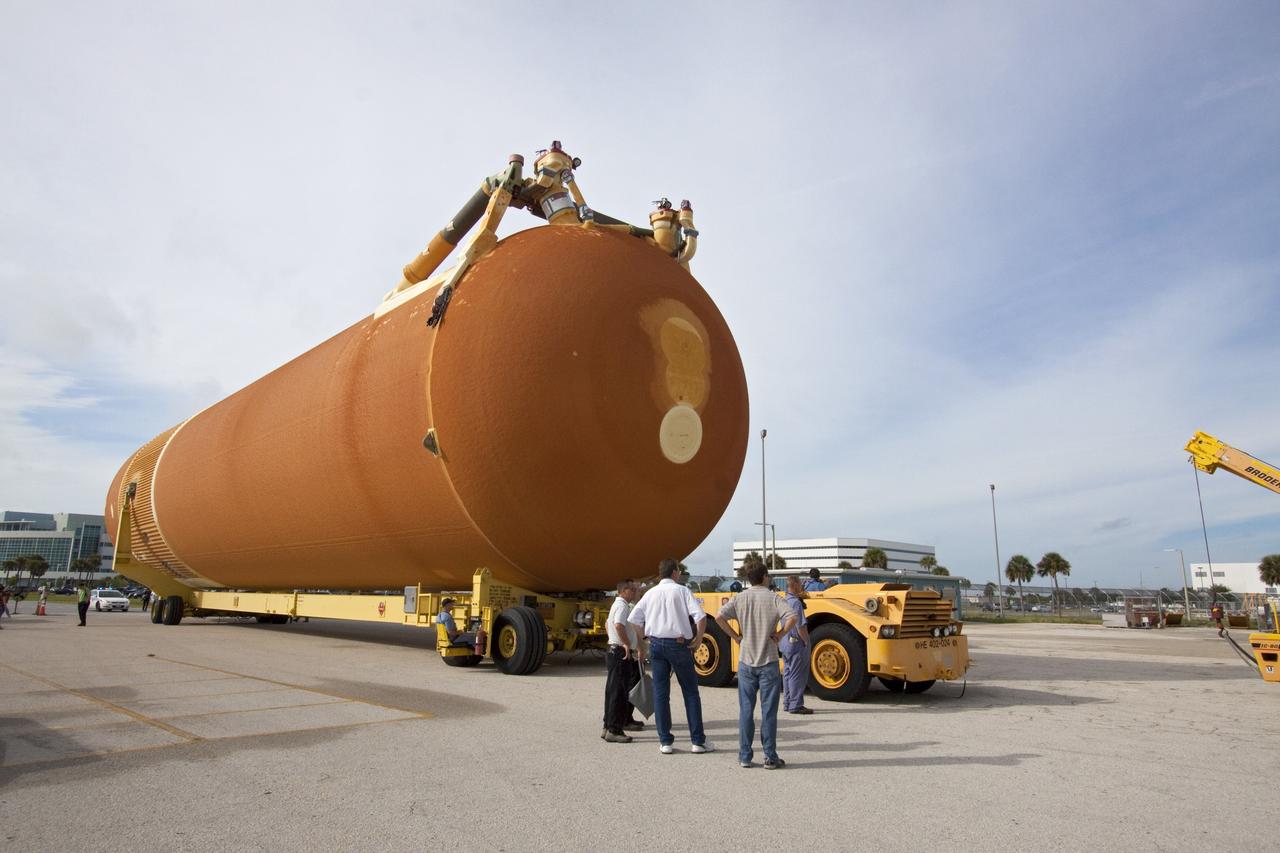
CAPE CANAVERAL, Fla. -- The Space Shuttle Program's last external fuel tank, ET-122, moves from the Turn Basin to the Vehicle Assembly Building at NASA's Kennedy Space Center in Florida. The tank traveled 900 miles by sea from NASA's Michoud Assembly Facility in New Orleans aboard the Pegasus Barge. Once inside the Vehicle Assembly Building, it eventually will be attached to space shuttle Endeavour for the STS-134 mission to the International Space Station. STS-134, targeted to launch in Feb. 2011, currently is scheduled to be the last mission in the shuttle program. The tank, which is the largest element of the space shuttle stack, was damaged during Hurricane Katrina in August 2005 and restored to flight configuration by Lockheed Martin Space Systems Company employees. Photo credit: NASA/Jack Pfaller
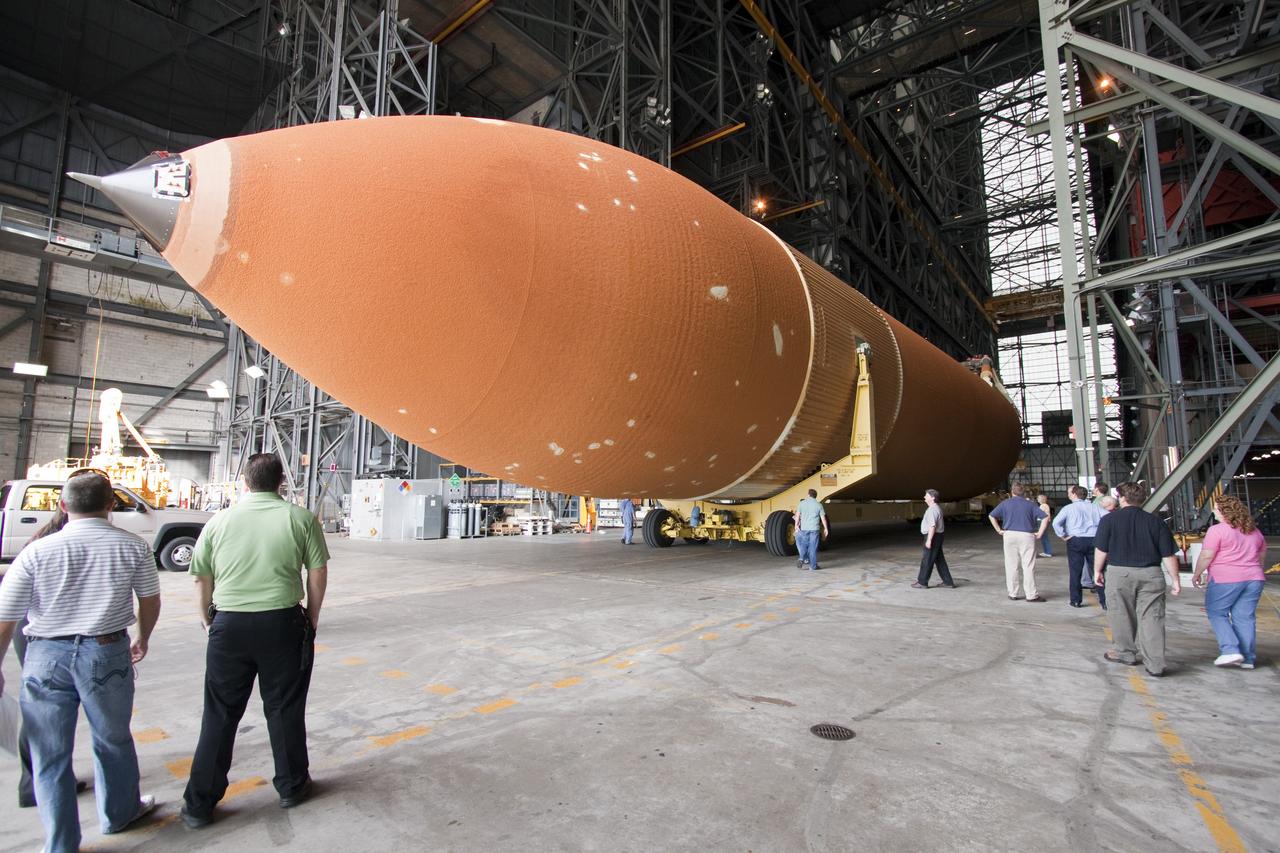
CAPE CANAVERAL, Fla. -- The Space Shuttle Program's last external fuel tank, ET-122, moves into the Vehicle Assembly Building at NASA's Kennedy Space Center in Florida. The tank traveled 900 miles by sea from NASA's Michoud Assembly Facility in New Orleans to Kennedy's Turn Basin aboard the Pegasus Barge. The tank eventually will be attached to space shuttle Endeavour for the STS-134 mission to the International Space Station. STS-134, targeted to launch in Feb. 2011, currently is scheduled to be the last mission in the shuttle program. The tank, which is the largest element of the space shuttle stack, was damaged during Hurricane Katrina in August 2005 and restored to flight configuration by Lockheed Martin Space Systems Company employees. Photo credit: NASA/Jack Pfaller
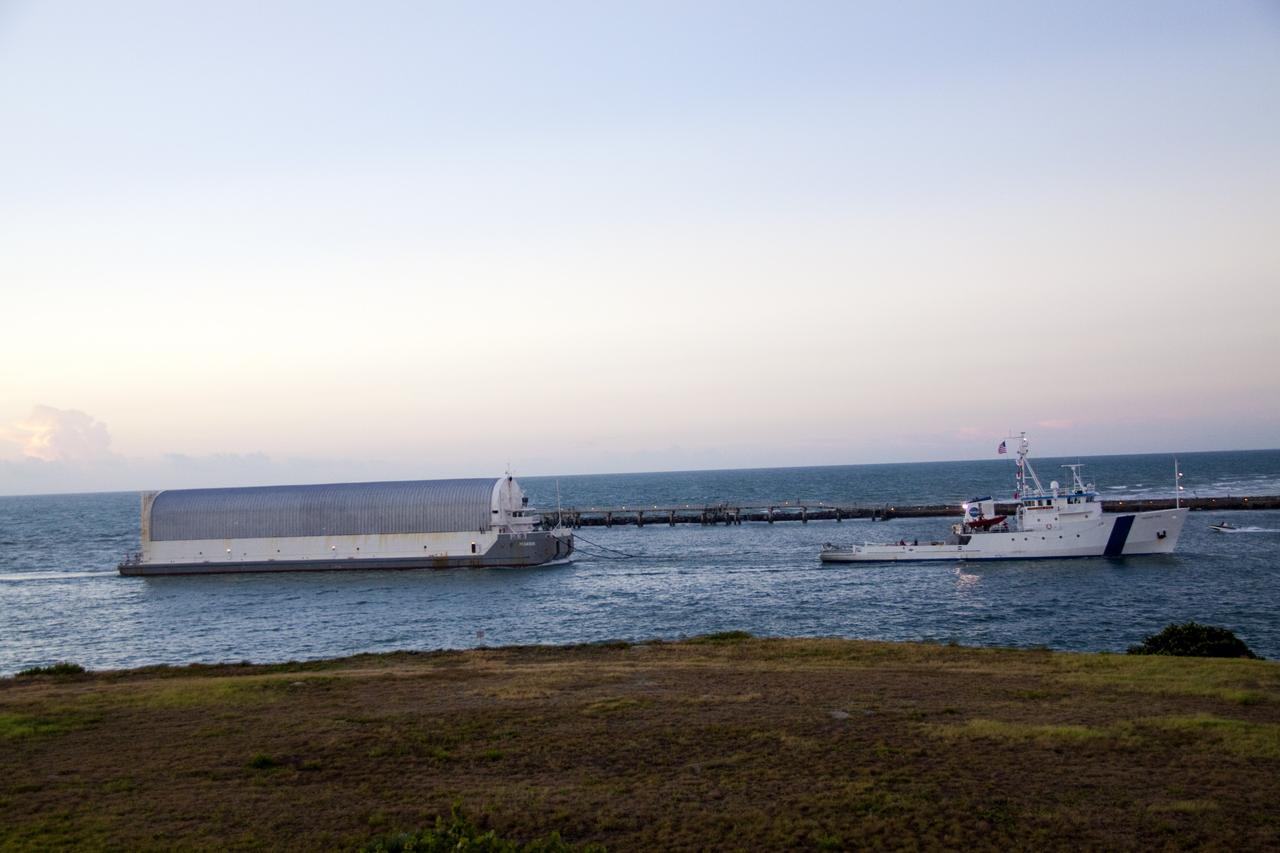
CAPE CANAVERAL, Fla. -- Freedom Star, one of NASA's solid rocket booster retrieval ships, pulls the Space Shuttle Program's last external fuel tank, ET-122, toward NASA's Kennedy Space Center in Florida. The tank traveled 900 miles by sea from NASA's Michoud Assembly Facility in New Orleans aboard the Pegasus Barge. After reaching the Turn Basin at Kennedy, the tank will be offloaded and moved to the Vehicle Assembly Building where it eventually will be attached to space shuttle Endeavour for the STS-134 mission to the International Space Station. STS-134, targeted to launch in Feb. 2011, currently is scheduled to be the last mission in the Space Shuttle Program. The tank, which is the largest element of the space shuttle stack, was damaged during Hurricane Katrina in August 2005 and restored to flight configuration by Lockheed Martin Space Systems Company employees. Photo credit: NASA/Jack Pfaller
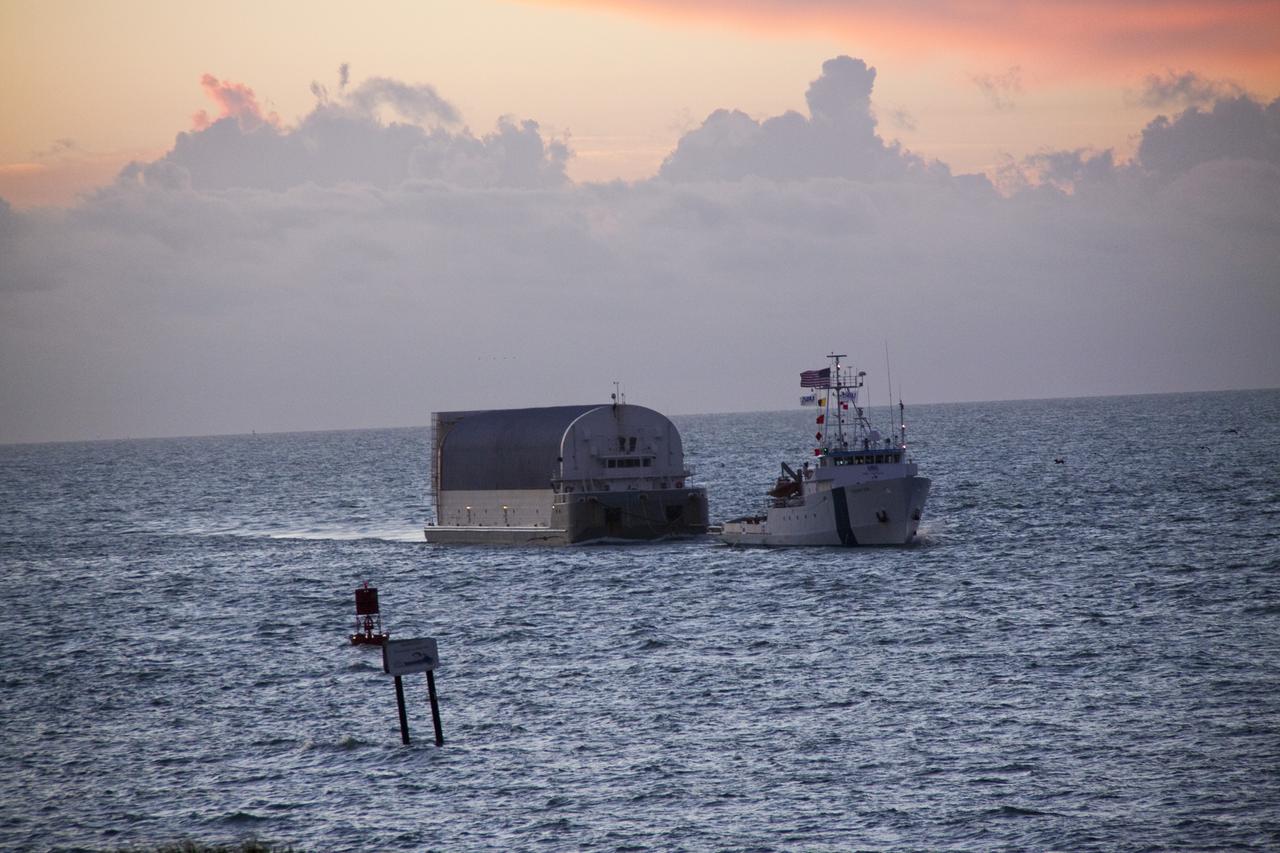
CAPE CANAVERAL, Fla. -- Freedom Star, one of NASA's solid rocket booster retrieval ships, pulls the Space Shuttle Program's last external fuel tank, ET-122, toward NASA's Kennedy Space Center in Florida. The tank traveled 900 miles by sea from NASA's Michoud Assembly Facility in New Orleans aboard the Pegasus Barge. After reaching the Turn Basin at Kennedy, the tank will be offloaded and moved to the Vehicle Assembly Building where it eventually will be attached to space shuttle Endeavour for the STS-134 mission to the International Space Station. STS-134, targeted to launch in Feb. 2011, currently is scheduled to be the last mission in the Space Shuttle Program. The tank, which is the largest element of the space shuttle stack, was damaged during Hurricane Katrina in August 2005 and restored to flight configuration by Lockheed Martin Space Systems Company employees. Photo credit: NASA/Jack Pfaller

NEW ORLEANS -- Associate Administrator for Space Operations Bill Gerstenmaier and Manny Zulueta, Lockheed Martin vice president and site executive at NASA's Michoud Assembly Facility in New Orleans, watch the progress of the Space Shuttle Program's last external fuel tank, ET-122, as it is being transported from the facility to the Pegasus Barge. The tank will travel 900 miles by sea to NASA's Kennedy Space Center in Florida secured aboard the barge, offloaded and moved to Kennedy's Vehicle Assembly Building where it will be integrated to space shuttle Endeavour for the STS-134 mission to the International Space Station. The tank, which is the largest element of the space shuttle stack, was damaged during Hurricane Katrina in August 2005 and restored to flight configuration by Lockheed Martin Space Systems Company employees. STS-134, targeted to launch Feb. 2011, currently is scheduled to be the last mission in the Space Shuttle Program. Photo credit: NASA/Kim Shiflett
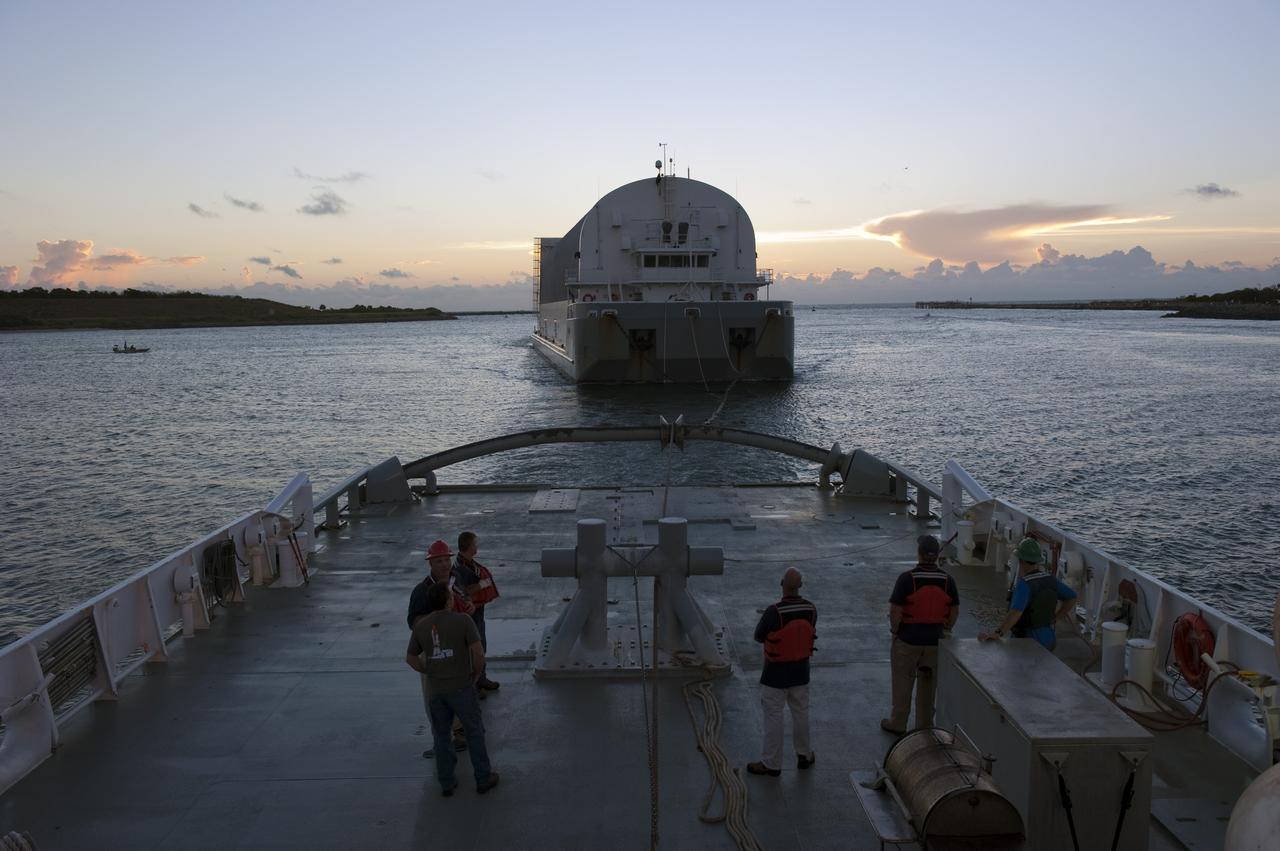
CAPE CANAVERAL, Fla. -- Freedom Star, one of NASA's solid rocket booster retrieval ships, pulls the Space Shuttle Program's last external fuel tank, ET-122, toward NASA's Kennedy Space Center in Florida. The tank traveled 900 miles by sea from NASA's Michoud Assembly Facility in New Orleans aboard the Pegasus Barge. After reaching the Turn Basin at Kennedy, the tank will be offloaded and moved to the Vehicle Assembly Building where it eventually will be attached to space shuttle Endeavour for the STS-134 mission to the International Space Station. STS-134, targeted to launch in Feb. 2011, currently is scheduled to be the last mission in the Space Shuttle Program. The tank, which is the largest element of the space shuttle stack, was damaged during Hurricane Katrina in August 2005 and restored to flight configuration by Lockheed Martin Space Systems Company employees. Photo credit: NASA/Kim Shiflett
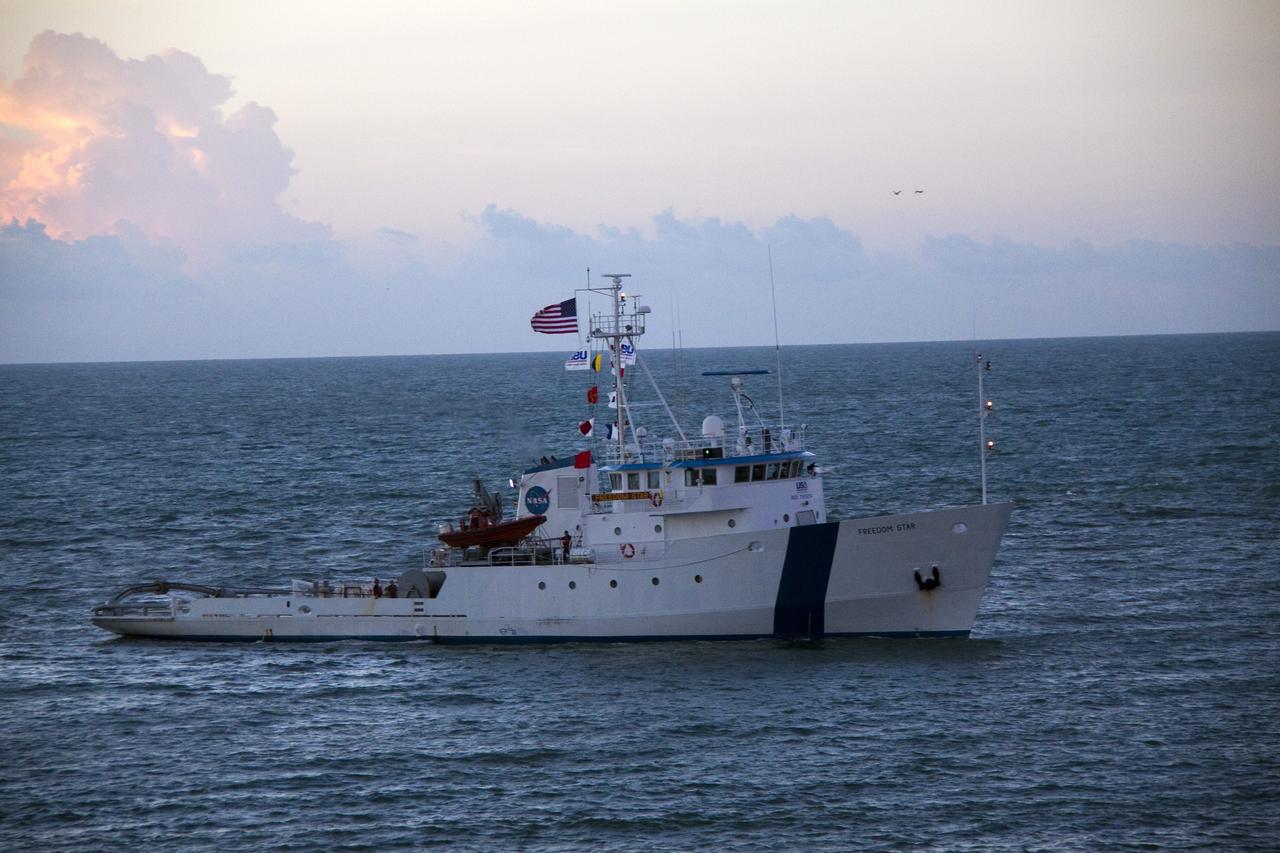
CAPE CANAVERAL, Fla. -- Freedom Star, one of NASA's solid rocket booster retrieval ships, pulls the Space Shuttle Program's last external fuel tank, ET-122, toward NASA's Kennedy Space Center in Florida. The tank traveled 900 miles by sea from NASA's Michoud Assembly Facility in New Orleans aboard the Pegasus Barge. After reaching the Turn Basin at Kennedy, the tank will be offloaded and moved to the Vehicle Assembly Building where it eventually will be attached to space shuttle Endeavour for the STS-134 mission to the International Space Station. STS-134, targeted to launch in Feb. 2011, currently is scheduled to be the last mission in the Space Shuttle Program. The tank, which is the largest element of the space shuttle stack, was damaged during Hurricane Katrina in August 2005 and restored to flight configuration by Lockheed Martin Space Systems Company employees. Photo credit: NASA/Jack Pfaller
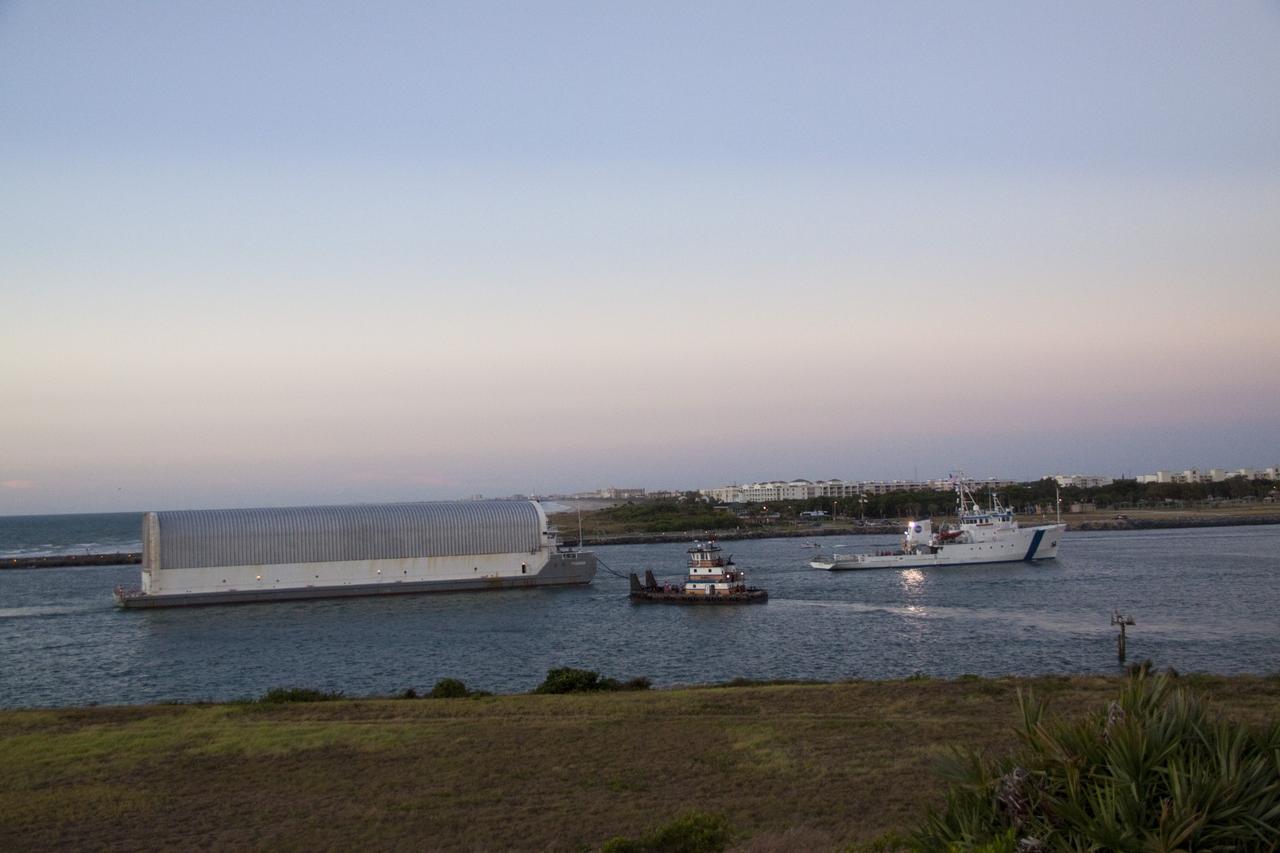
CAPE CANAVERAL, Fla. -- Freedom Star, one of NASA's solid rocket booster retrieval ships, pulls the Space Shuttle Program's last external fuel tank, ET-122, toward NASA's Kennedy Space Center in Florida. The tank traveled 900 miles by sea from NASA's Michoud Assembly Facility in New Orleans aboard the Pegasus Barge. After reaching the Turn Basin at Kennedy, the tank will be offloaded and moved to the Vehicle Assembly Building where it eventually will be attached to space shuttle Endeavour for the STS-134 mission to the International Space Station. STS-134, targeted to launch in Feb. 2011, currently is scheduled to be the last mission in the Space Shuttle Program. The tank, which is the largest element of the space shuttle stack, was damaged during Hurricane Katrina in August 2005 and restored to flight configuration by Lockheed Martin Space Systems Company employees. Photo credit: NASA/Jack Pfaller
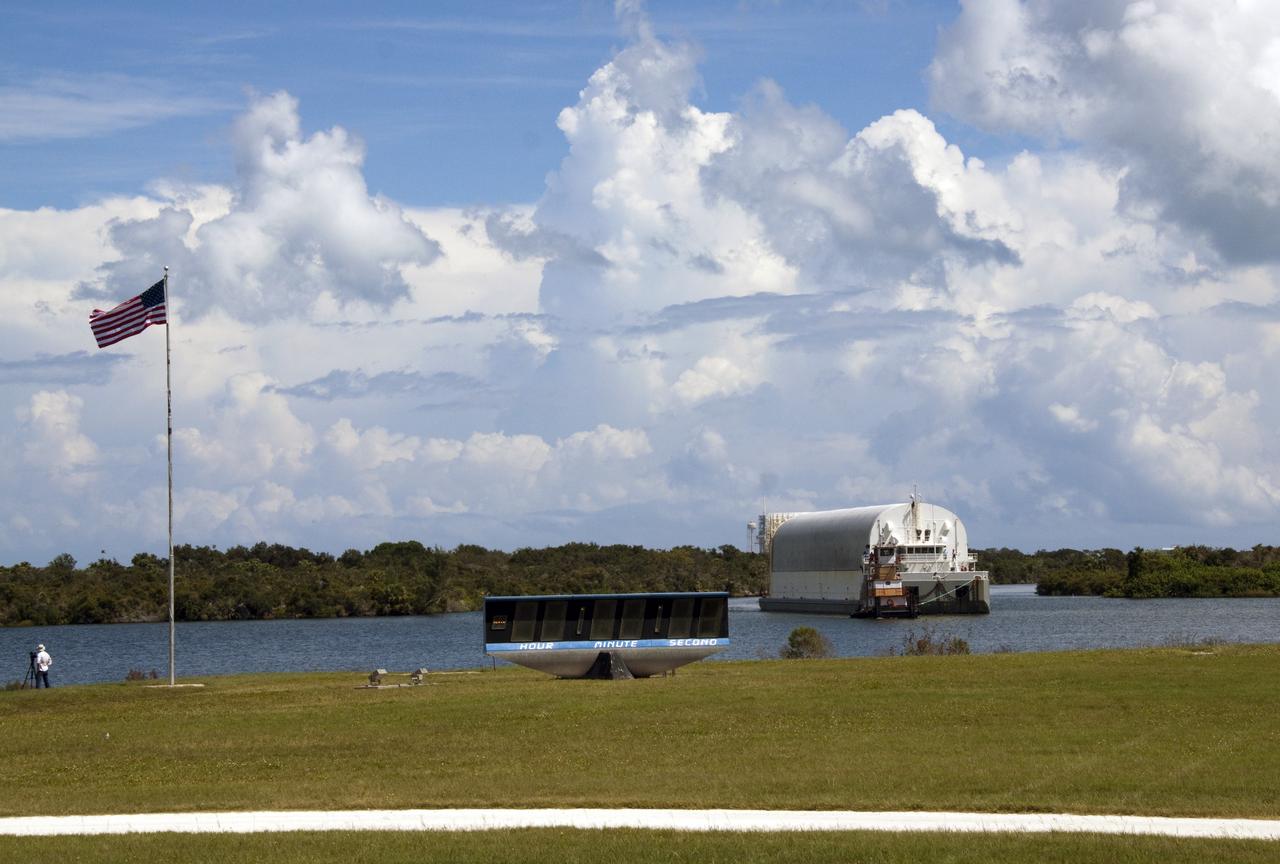
CAPE CANAVERAL, Fla. -- A tugboat pulls the Pegasus Barge carrying the Space Shuttle Program's last external fuel tank, ET-122, toward the Turn Basin at NASA's Kennedy Space Center in Florida. The tank traveled 900 miles by sea from NASA's Michoud Assembly Facility in New Orleans. Next, the tank will be offloaded and moved to the Vehicle Assembly Building where it eventually will be attached to space shuttle Endeavour for the STS-134 mission to the International Space Station. STS-134, targeted to launch in Feb. 2011, currently is scheduled to be the last mission in the Space Shuttle Program. The tank, which is the largest element of the space shuttle stack, was damaged during Hurricane Katrina in August 2005 and restored to flight configuration by Lockheed Martin Space Systems Company employees. Photo credit: NASA/Jack Pfaller
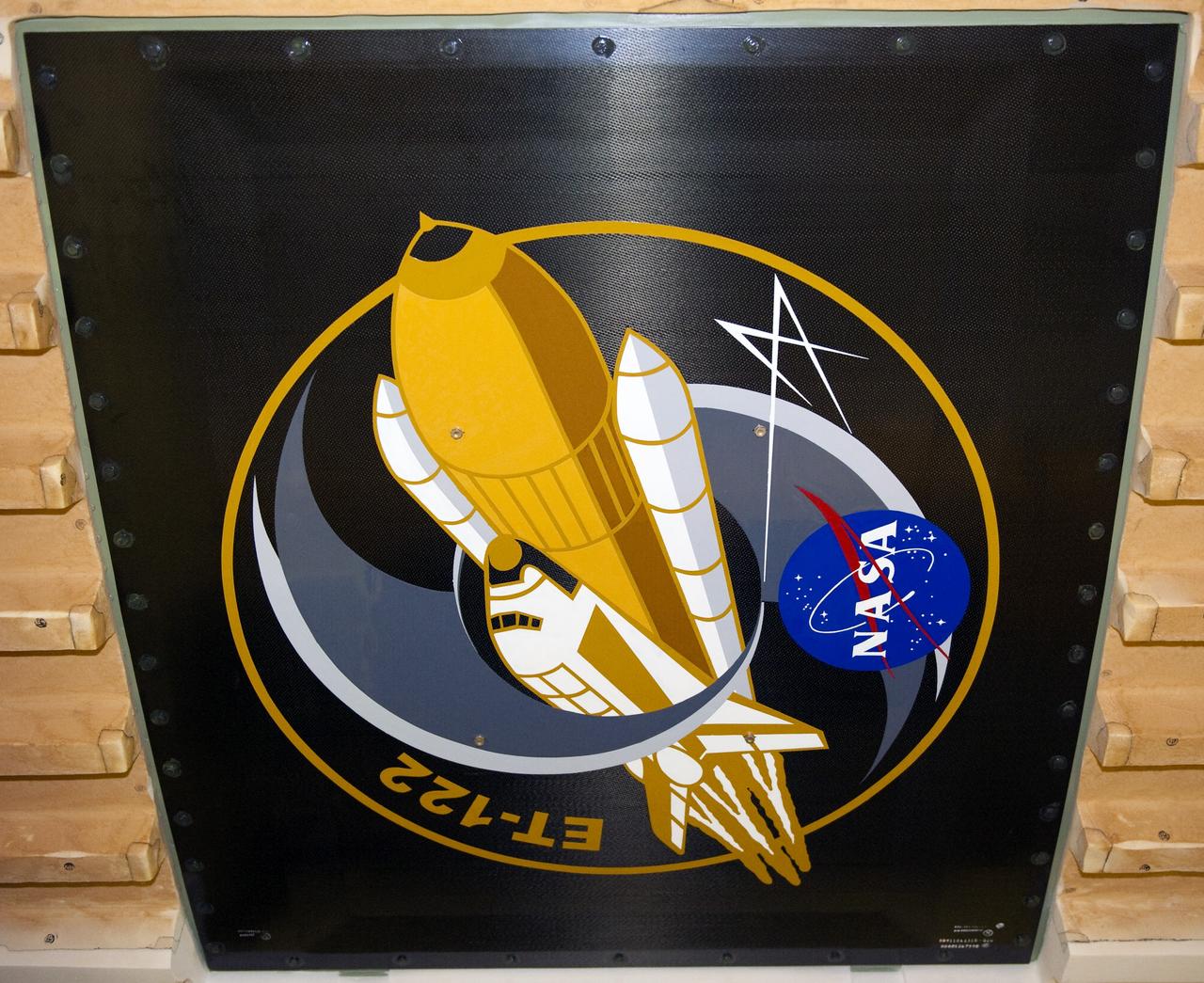
NEW ORLEANS -- To commemorate the history of the Space Shuttle Program's last external fuel tank, its intertank door is emblazoned with an ET-122 insignia. The external tank will travel 900 miles by sea from NASA's Michoud Assembly Facility in New Orleans to NASA's Kennedy Space Center in Florida secured aboard the Pegasus Barge, offloaded and moved to Kennedy's Vehicle Assembly Building where it will be integrated to space shuttle Endeavour for the STS-134 mission to the International Space Station. The tank, which is the largest element of the space shuttle stack, was damaged during Hurricane Katrina in August 2005 and restored to flight configuration by Lockheed Martin Space Systems Company employees. STS-134, targeted to launch Feb. 2011, currently is scheduled to be the last mission in the Space Shuttle Program. Photo credit: NASA/Kim Shiflett
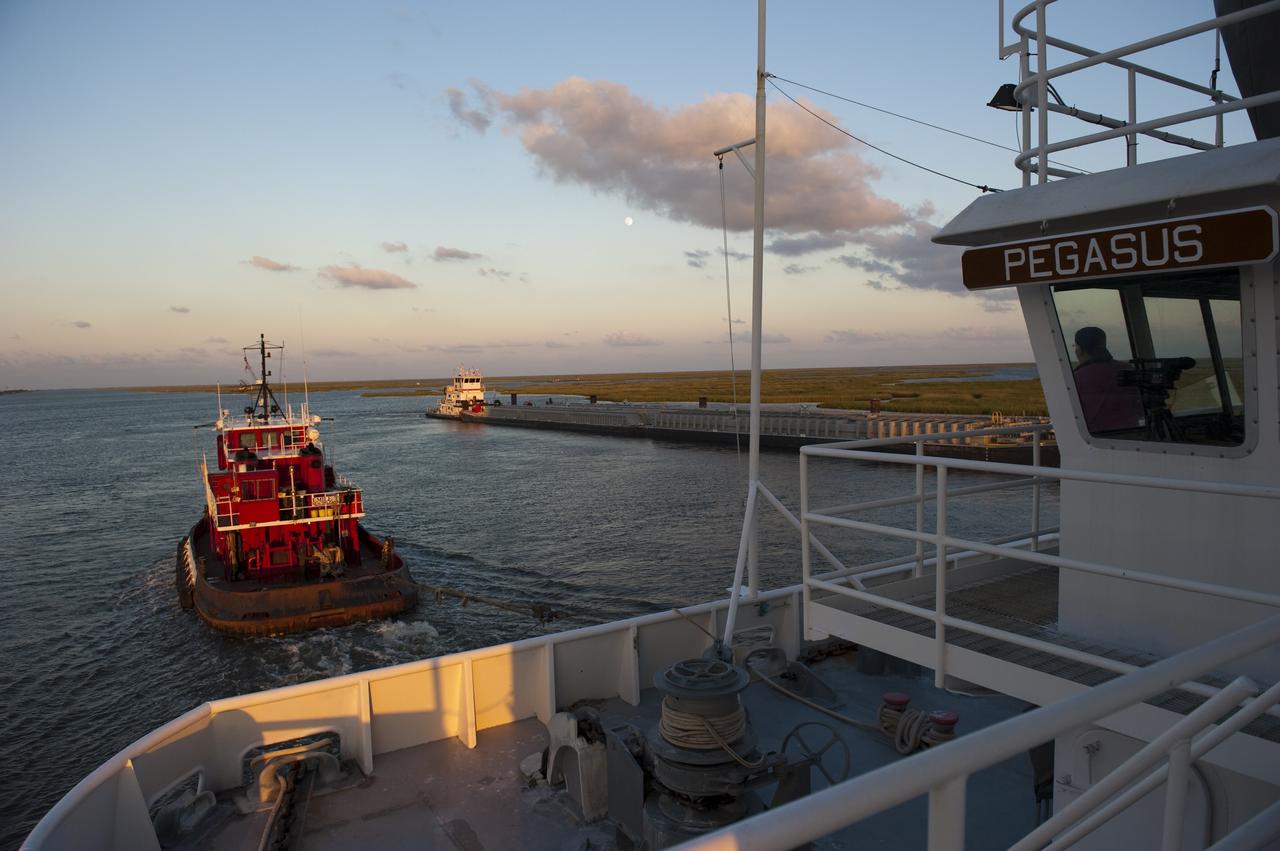
NEW ORLEANS -- A tug boat is pulls the Pegasus Barge carrying the Space Shuttle Program's last external fuel tank, ET-122, from NASA's Michoud Assembly Facility in New Orleans to NASA's Kennedy Space Center in Florida. The tank will travel 900 miles by sea before being offloaded and moved to Kennedy's Vehicle Assembly Building. There it will be integrated to space shuttle Endeavour for the STS-134 mission to the International Space Station. The tank, which is the largest element of the space shuttle stack, was damaged during Hurricane Katrina in August 2005 and restored to flight configuration by Lockheed Martin Space Systems Company employees. STS-134, targeted to launch Feb. 2011, currently is scheduled to be the last mission in the Space Shuttle Program. Photo credit: NASA/Kim Shiflett
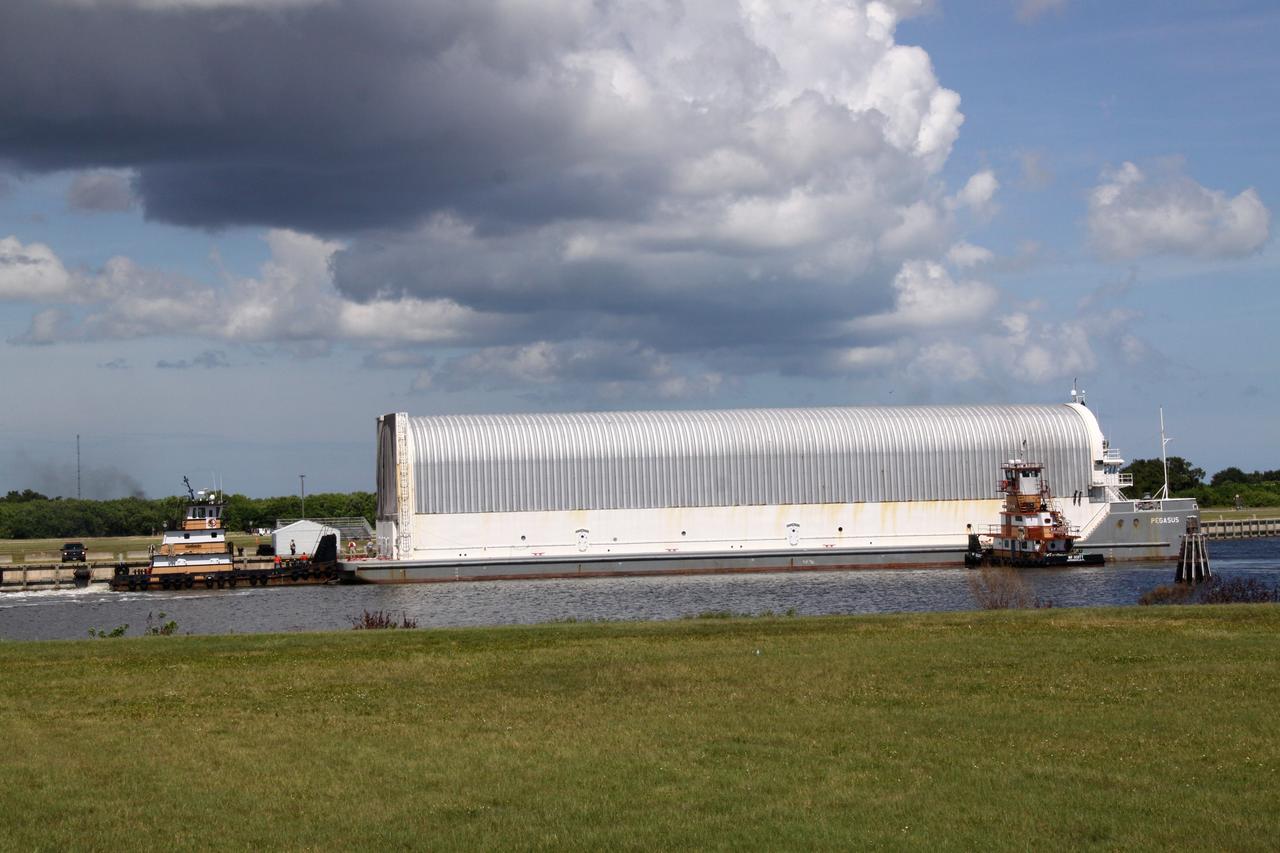
CAPE CANAVERAL, Fla. -- The Pegasus Barge carrying the Space Shuttle Program's last external fuel tank, ET-122, arrives at the Turn Basin at NASA's Kennedy Space Center in Florida. The tank traveled 900 miles by sea from NASA's Michoud Assembly Facility in New Orleans. Next, the tank will be offloaded and moved to the Vehicle Assembly Building where it eventually will be attached to space shuttle Endeavour for the STS-134 mission to the International Space Station. STS-134, targeted to launch in Feb. 2011, currently is scheduled to be the last mission in the Space Shuttle Program. The tank, which is the largest element of the space shuttle stack, was damaged during Hurricane Katrina in August 2005 and restored to flight configuration by Lockheed Martin Space Systems Company employees. Photo credit: NASA/Jack Pfaller
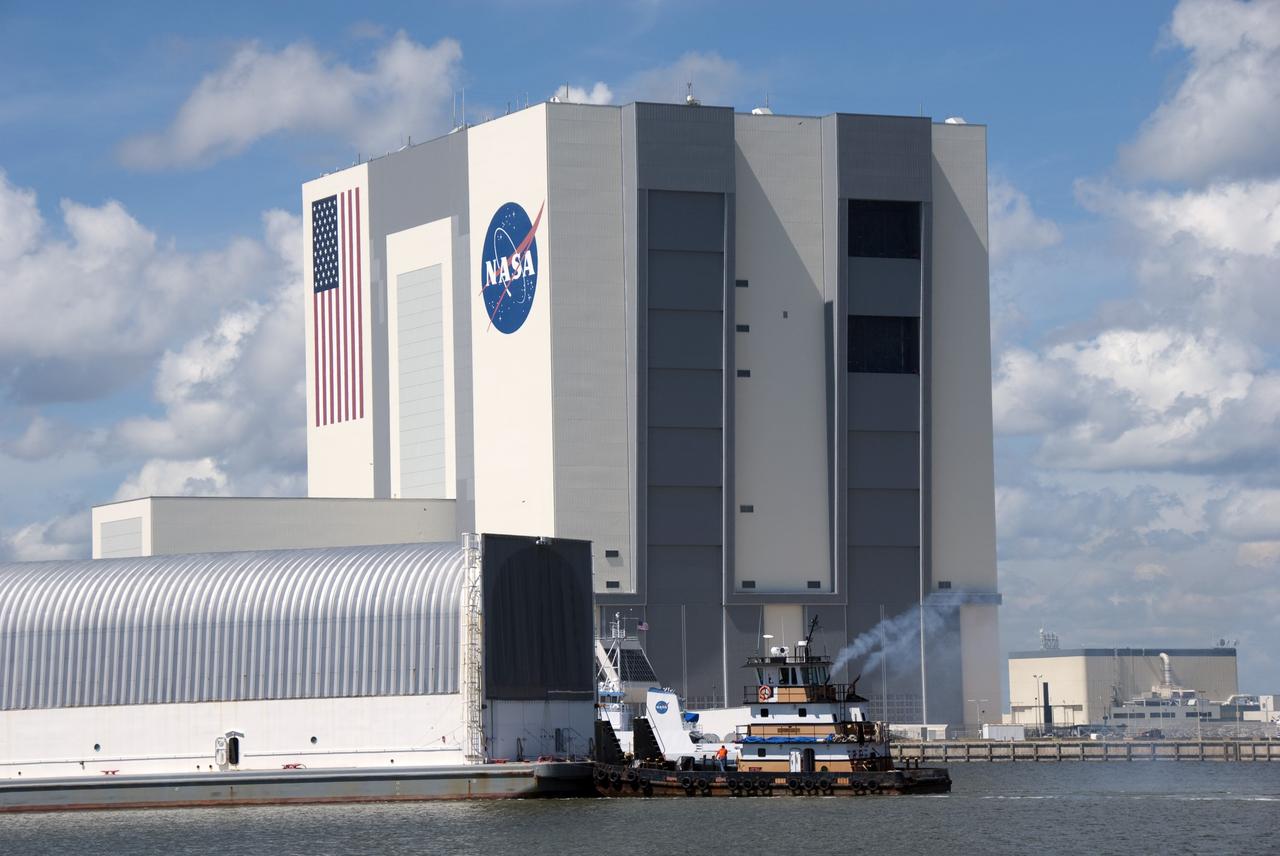
CAPE CANAVERAL, Fla. -- A tugboat pushes the Pegasus Barge carrying the Space Shuttle Program's last external fuel tank, ET-122, toward NASA's Kennedy Space Center in Florida. The tank traveled 900 miles by sea from NASA's Michoud Assembly Facility in New Orleans. After reaching the Turn Basin at Kennedy, the tank will be offloaded and moved to the Vehicle Assembly Building where it eventually will be attached to space shuttle Endeavour for the STS-134 mission to the International Space Station. STS-134, targeted to launch in Feb. 2011, currently is scheduled to be the last mission in the Space Shuttle Program. The tank, which is the largest element of the space shuttle stack, was damaged during Hurricane Katrina in August 2005 and restored to flight configuration by Lockheed Martin Space Systems Company employees. Photo credit: NASA/Jim Grossmann
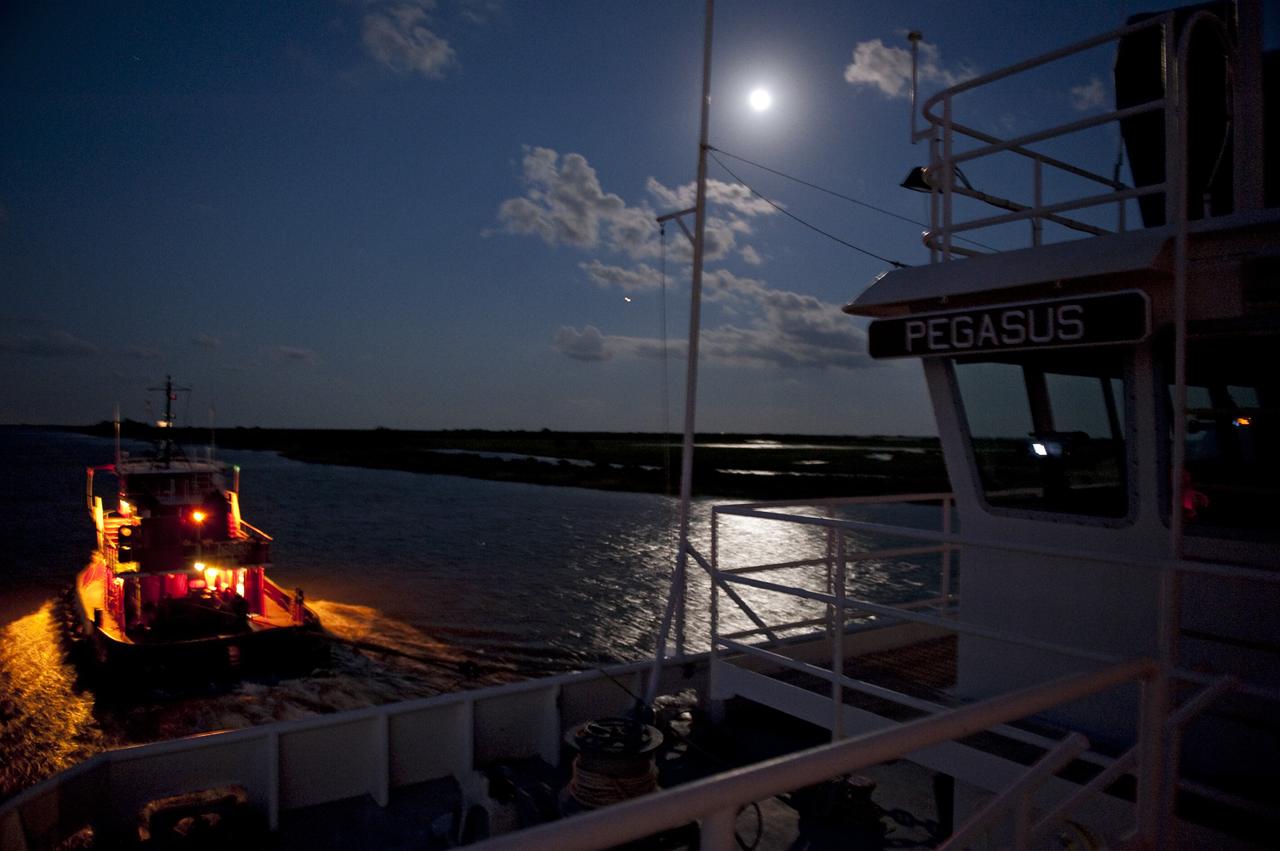
NEW ORLEANS -- As the moon lights up the water, as tug boat pulls the Pegasus Barge carrying the Space Shuttle Program's last external fuel tank, ET-122, from NASA's Michoud Assembly Facility in New Orleans to NASA's Kennedy Space Center in Florida. The tank will travel 900 miles by sea before being offloaded and moved for Kennedy's Vehicle Assembly Building. There it will be integrated to space shuttle Endeavour for the STS-134 mission to the International Space Station. The tank, which is the largest element of the space shuttle stack, was damaged during Hurricane Katrina in August 2005 and restored to flight configuration by Lockheed Martin Space Systems Company employees. STS-134, targeted to launch Feb. 2011, currently is scheduled to be the last mission in the Space Shuttle Program. Photo credit: NASA/Kim Shiflett
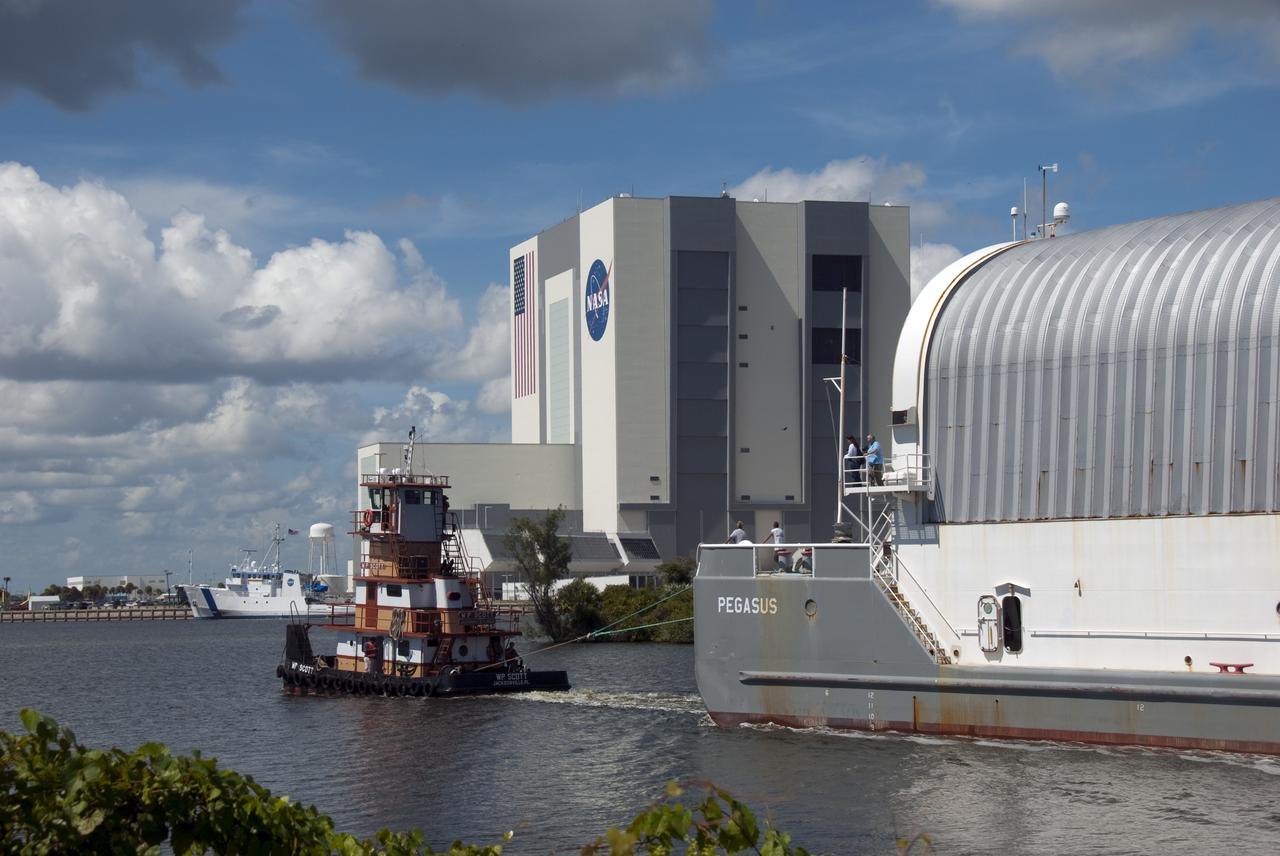
CAPE CANAVERAL, Fla. -- A tugboat pulls the Pegasus Barge carrying the Space Shuttle Program's last external fuel tank, ET-122, toward NASA's Kennedy Space Center in Florida. The tank traveled 900 miles by sea from NASA's Michoud Assembly Facility in New Orleans. After reaching the Turn Basin at Kennedy, the tank will be offloaded and moved to the Vehicle Assembly Building where it eventually will be attached to space shuttle Endeavour for the STS-134 mission to the International Space Station. STS-134, targeted to launch in Feb. 2011, currently is scheduled to be the last mission in the Space Shuttle Program. The tank, which is the largest element of the space shuttle stack, was damaged during Hurricane Katrina in August 2005 and restored to flight configuration by Lockheed Martin Space Systems Company employees. Photo credit: NASA/Jim Grossmann
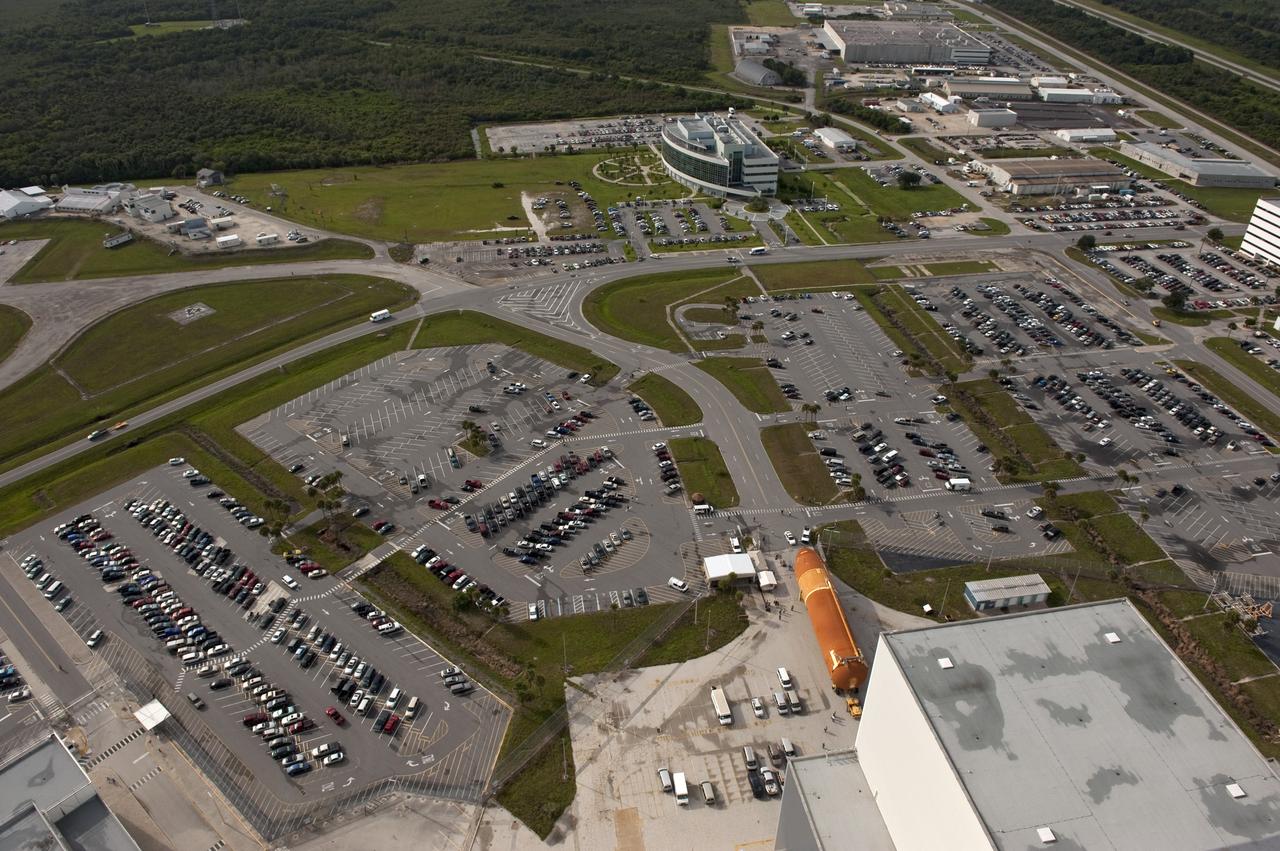
CAPE CANAVERAL, Fla. -- This overhead view shows the Space Shuttle Program's last external fuel tank, ET-122 (right), as it is being transported to the Vehicle Assembly Building (VAB) at NASA's Kennedy Space Center in Florida. The tank traveled 900 miles by sea, carried in the Pegasus Barge, from NASA's Michoud Assembly Facility in New Orleans. Once inside the VAB, it eventually will be attached to space shuttle Endeavour for the STS-134 mission to the International Space Station targeted to launch Feb. 2011. STS-134 currently is scheduled to be the last mission in the shuttle program. The tank, which is the largest element of the space shuttle stack, was damaged during Hurricane Katrina in August 2005 and restored to flight configuration by Lockheed Martin Space Systems Company employees. Photo credit: NASA/Kevin O'Connell
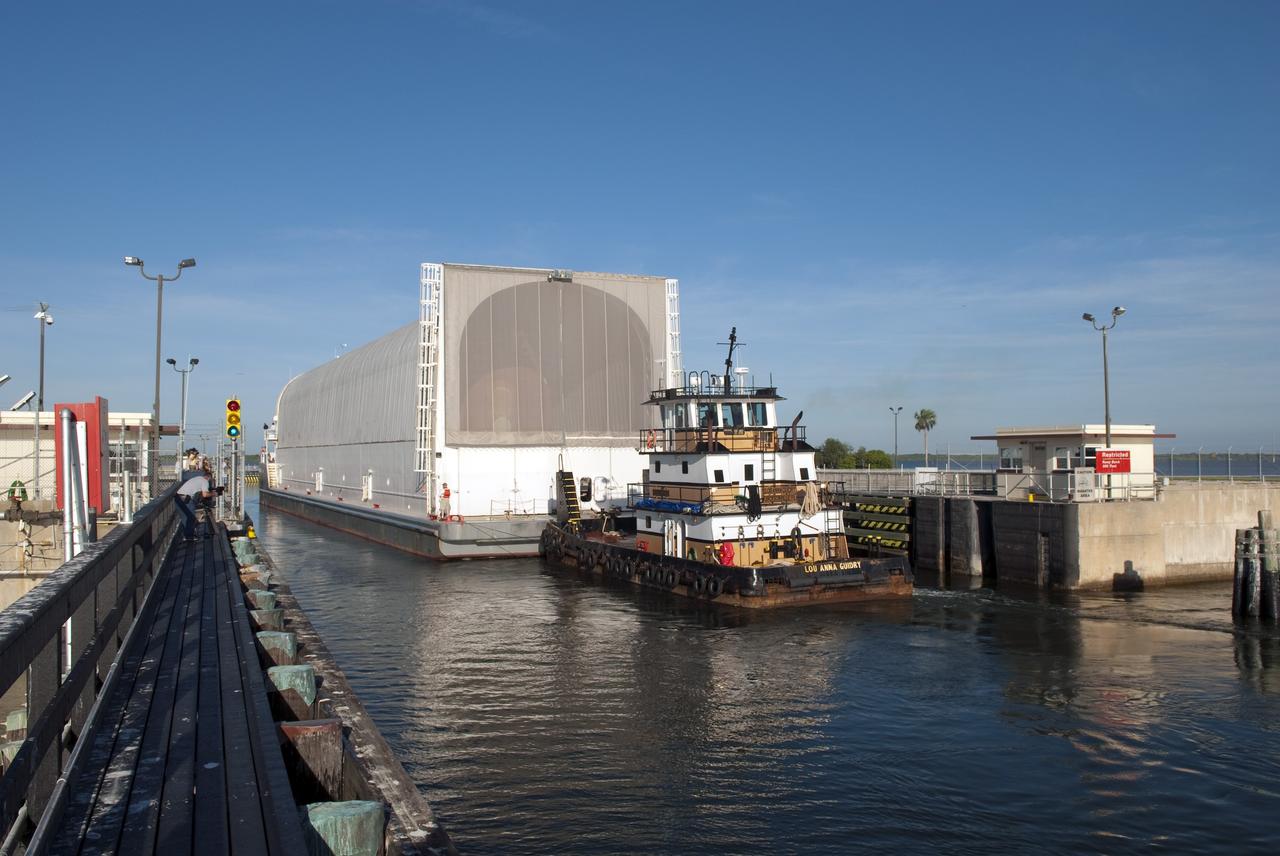
CAPE CANAVERAL, Fla. -- A tugboat pulls the Pegasus Barge carrying the Space Shuttle Program's last external fuel tank, ET-122, toward NASA's Kennedy Space Center in Florida. The tank traveled 900 miles by sea from NASA's Michoud Assembly Facility in New Orleans. After reaching the Turn Basin at Kennedy, the tank will be offloaded and moved to the Vehicle Assembly Building where it eventually will be attached to space shuttle Endeavour for the STS-134 mission to the International Space Station. STS-134, targeted to launch in Feb. 2011, currently is scheduled to be the last mission in the Space Shuttle Program. The tank, which is the largest element of the space shuttle stack, was damaged during Hurricane Katrina in August 2005 and restored to flight configuration by Lockheed Martin Space Systems Company employees. Photo credit: NASA/Jim Grossmann
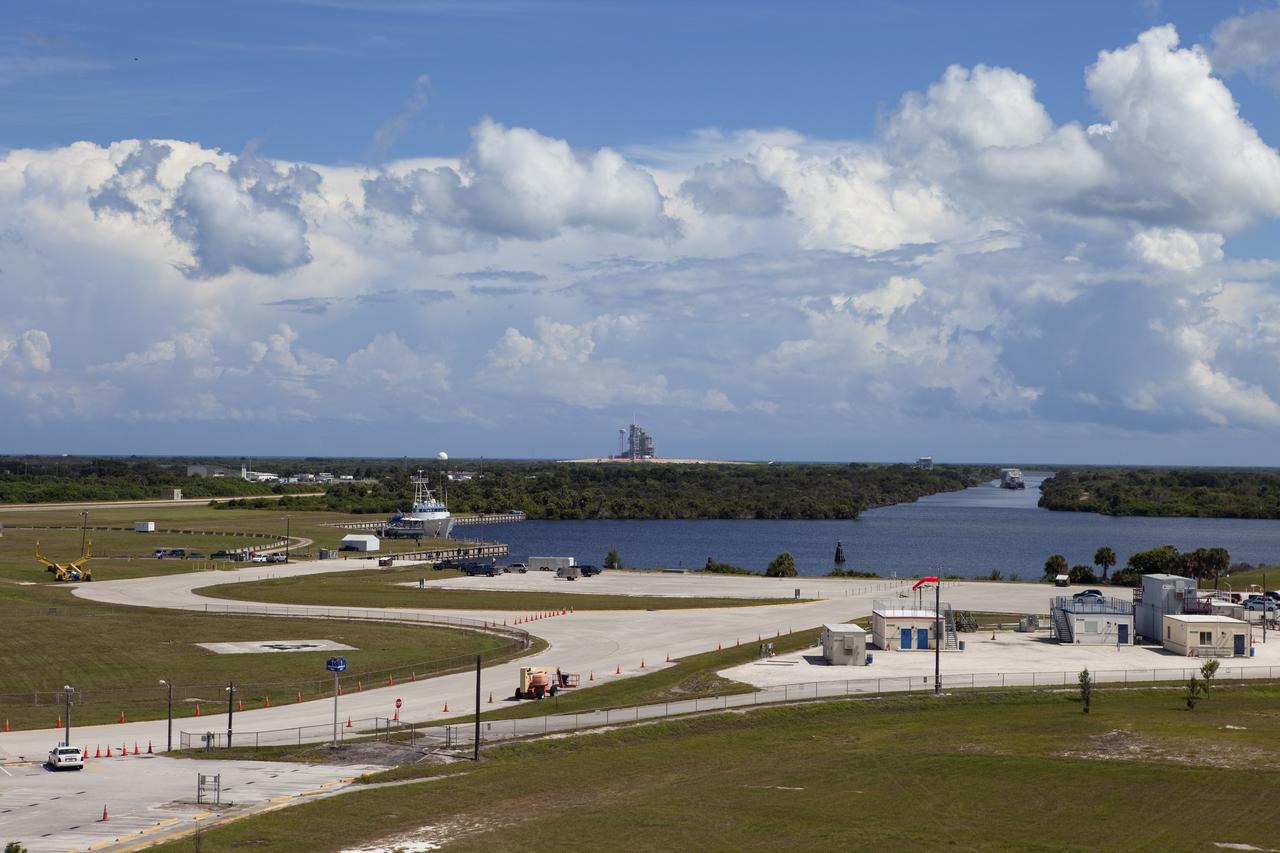
CAPE CANAVERAL, Fla. -- A tug boat pulls the Space Shuttle Program's last external fuel tank, ET-122, to the Turn Basin at NASA's Kennedy Space Center in Florida. The tank traveled 900 miles by sea from NASA's Michoud Assembly Facility in New Orleans aboard the Pegasus Barge. Next, the tank will be offloaded and moved to Kennedy's Vehicle Assembly Building where it eventually will be attached to space shuttle Endeavour for the STS-134 mission to the International Space Station. STS-134, targeted to launch in Feb. 2011, currently is scheduled to be the last mission in the Space Shuttle Program. The tank, which is the largest element of the space shuttle stack, was damaged during Hurricane Katrina in August 2005 and restored to flight configuration by Lockheed Martin Space Systems Company employees. Photo credit: NASA/Frankie Martin
CAPE CANAVERAL, Fla. -- A tug boat pulls the Space Shuttle Program's last external fuel tank, ET-122, toward the Turn Basin at NASA's Kennedy Space Center in Florida. The tank traveled 900 miles by sea from NASA's Michoud Assembly Facility in New Orleans aboard the Pegasus Barge. Next, the tank will be offloaded and moved to Kennedy's Vehicle Assembly Building where it eventually will be attached to space shuttle Endeavour for the STS-134 mission to the International Space Station. STS-134, targeted to launch in Feb. 2011, currently is scheduled to be the last mission in the Space Shuttle Program. The tank, which is the largest element of the space shuttle stack, was damaged during Hurricane Katrina in August 2005 and restored to flight configuration by Lockheed Martin Space Systems Company employees. Photo credit: NASA/Frankie Martin
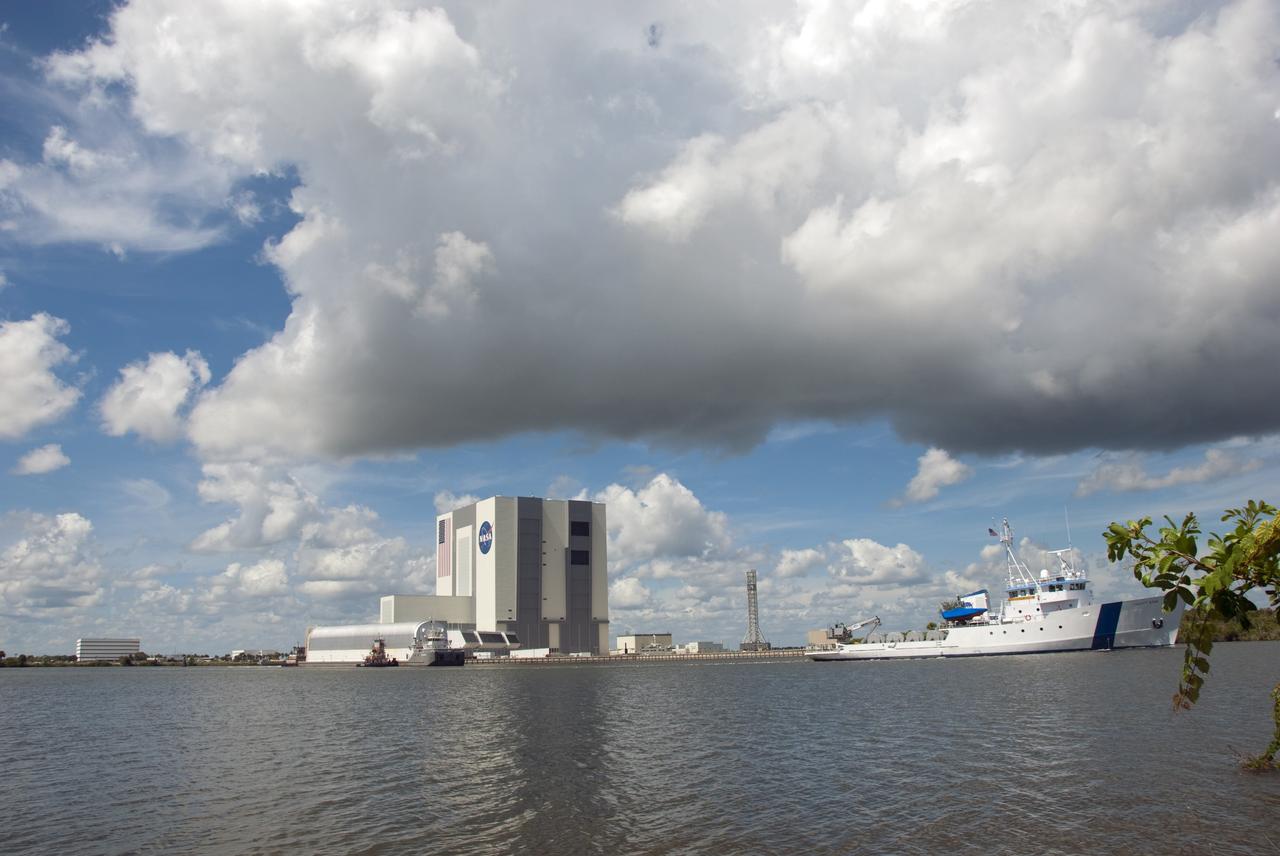
CAPE CANAVERAL, Fla. -- NASA's Pegasus barge, which was ushered by two tug boats and Liberty Star, arrives at NASA's Kennedy Space Center in Florida. The barge is carrying the Space Shuttle Program's last external fuel tank, ET-122 and traveled 900 miles by sea from NASA's Michoud Assembly Facility in New Orleans. Next, the tank will be offloaded and moved to the Vehicle Assembly Building where it eventually will be attached to space shuttle Endeavour for the STS-134 mission to the International Space Station. STS-134, targeted to launch in Feb. 2011, currently is scheduled to be the last mission in the Space Shuttle Program. The tank, which is the largest element of the space shuttle stack, was damaged during Hurricane Katrina in August 2005 and restored to flight configuration by Lockheed Martin Space Systems Company employees. Photo credit: NASA/Jim Grossmann
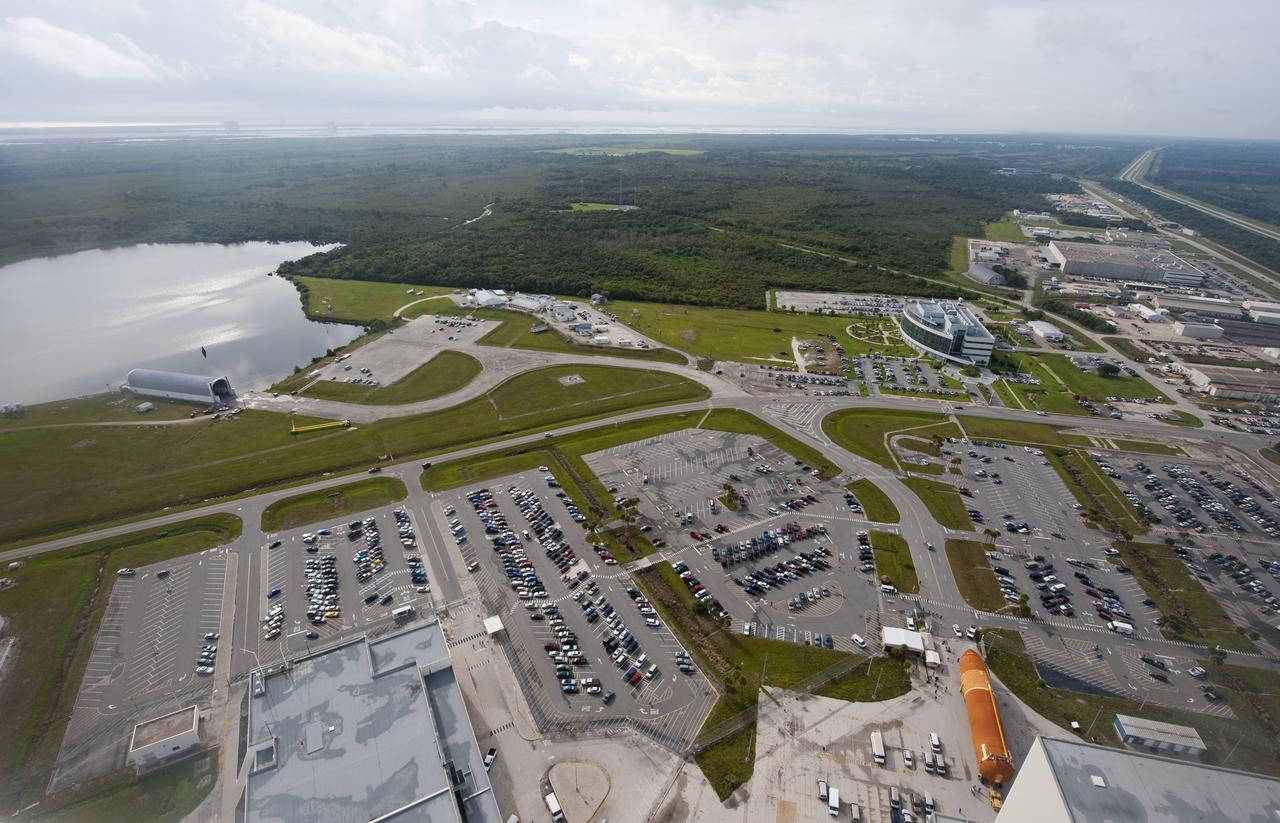
CAPE CANAVERAL, Fla. -- This overhead view shows the Space Shuttle Program's last external fuel tank, ET-122 (right), as it is being transported to the Vehicle Assembly Building (VAB) at NASA's Kennedy Space Center in Florida. The tank traveled 900 miles by sea, carried in the Pegasus Barge, from NASA's Michoud Assembly Facility in New Orleans. Once inside the VAB, it eventually will be attached to space shuttle Endeavour for the STS-134 mission to the International Space Station targeted to launch Feb. 2011. STS-134 currently is scheduled to be the last mission in the shuttle program. The tank, which is the largest element of the space shuttle stack, was damaged during Hurricane Katrina in August 2005 and restored to flight configuration by Lockheed Martin Space Systems Company employees. Photo credit: NASA/Kevin O'Connell
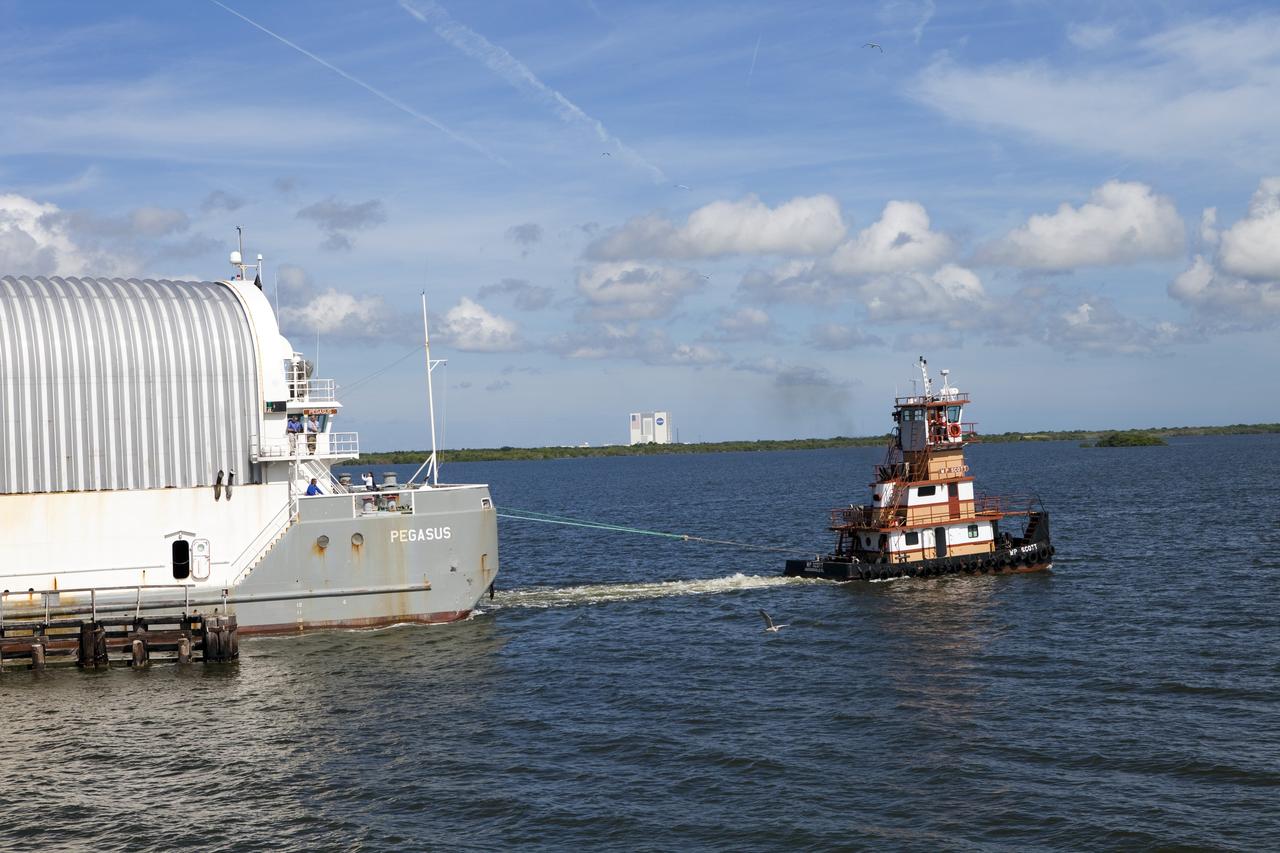
CAPE CANAVERAL, Fla. -- A tug boat pulls the Space Shuttle Program's last external fuel tank, ET-122, to the Turn Basin at NASA's Kennedy Space Center in Florida. The tank traveled 900 miles by sea from NASA's Michoud Assembly Facility in New Orleans aboard the Pegasus Barge. Next, the tank will be offloaded and moved to Kennedy's Vehicle Assembly Building where it eventually will be attached to space shuttle Endeavour for the STS-134 mission to the International Space Station. STS-134, targeted to launch in Feb. 2011, currently is scheduled to be the last mission in the Space Shuttle Program. The tank, which is the largest element of the space shuttle stack, was damaged during Hurricane Katrina in August 2005 and restored to flight configuration by Lockheed Martin Space Systems Company employees. Photo credit: NASA/Frankie Martin
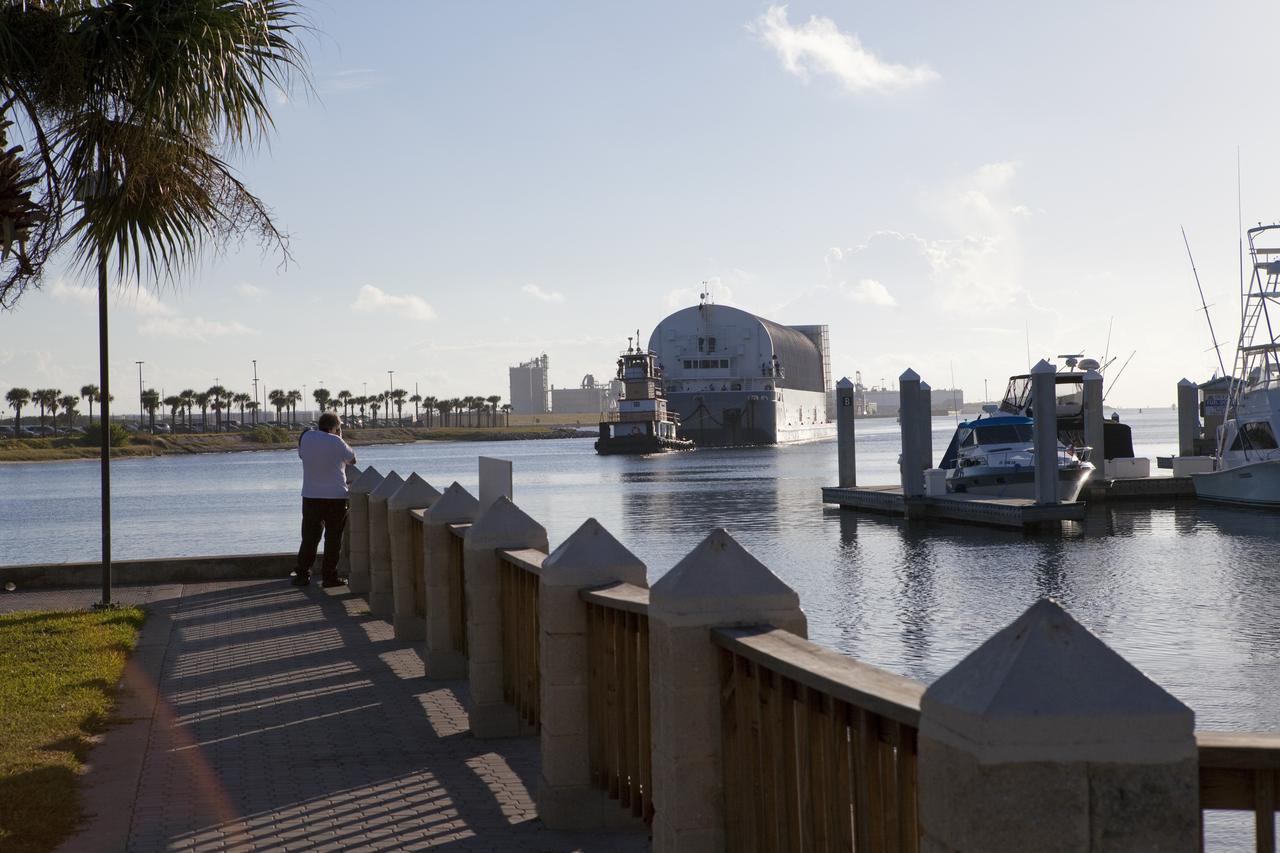
CAPE CANAVERAL, Fla. -- A tug boat pulls the Space Shuttle Program's last external fuel tank, ET-122, toward the Turn Basin at NASA's Kennedy Space Center in Florida. The tank traveled 900 miles by sea from NASA's Michoud Assembly Facility in New Orleans aboard the Pegasus Barge. Next, the tank will be offloaded and moved to Kennedy's Vehicle Assembly Building where it eventually will be attached to space shuttle Endeavour for the STS-134 mission to the International Space Station. STS-134, targeted to launch in Feb. 2011, currently is scheduled to be the last mission in the Space Shuttle Program. The tank, which is the largest element of the space shuttle stack, was damaged during Hurricane Katrina in August 2005 and restored to flight configuration by Lockheed Martin Space Systems Company employees. Photo credit: NASA/Frankie Martin
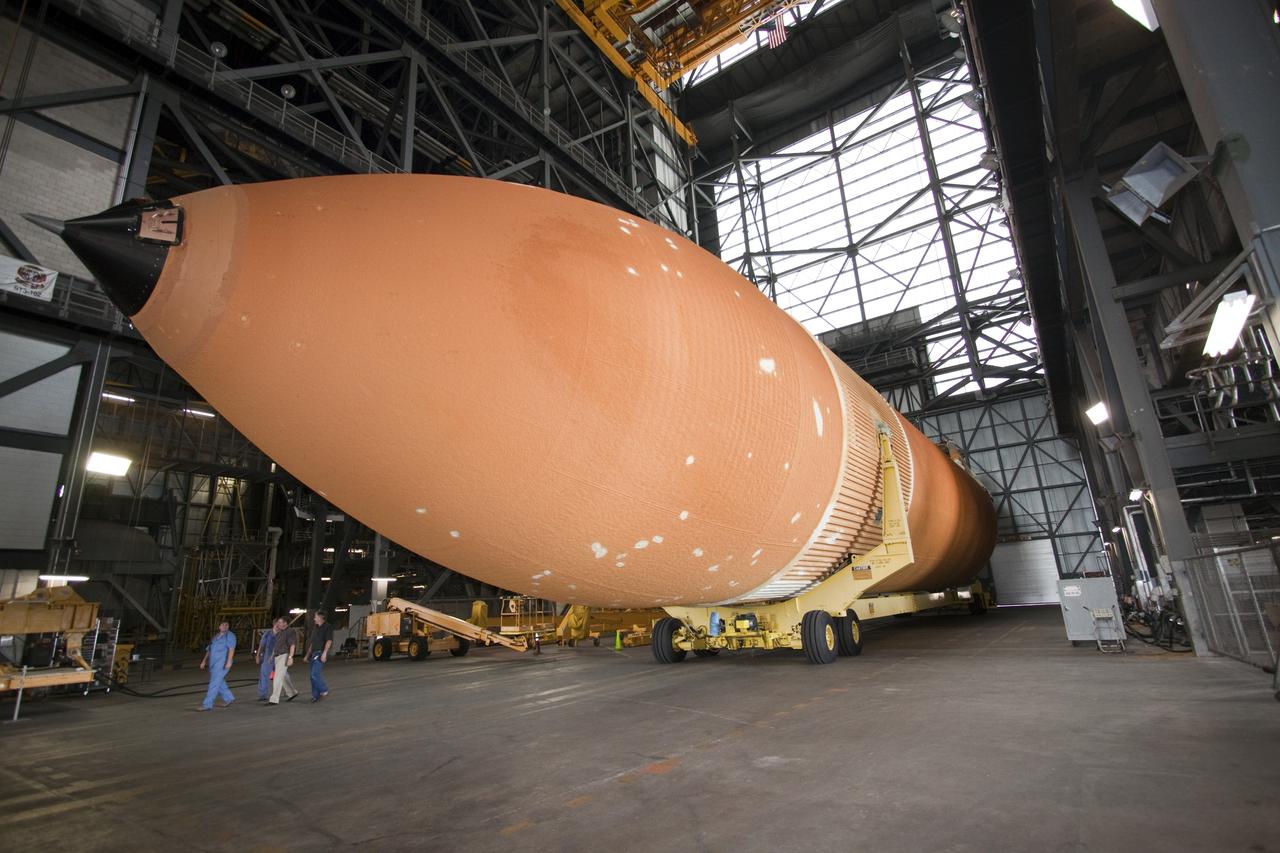
CAPE CANAVERAL, Fla. -- To commemorate the history of the Space Shuttle Program's last external fuel tank, its intertank door is emblazoned with an ET-122 insignia. The tank is in the Vehicle Assembly Building at NASA's Kennedy Space Center in Florida after traveling 900 miles by sea from NASA's Michoud Assembly Facility in New Orleans aboard the Pegasus Barge. It eventually will be attached to space shuttle Endeavour for the STS-134 mission to the International Space Station. STS-134, targeted to launch in Feb. 2011, currently is scheduled to be the last mission in the shuttle program. The tank, which is the largest element of the space shuttle stack, was completed in 2002, modified during Return to Flight operations in 2003 and 2004, damaged during Hurricane Katrina in 2005, and then restored to flight configuration by Lockheed Martin Space Systems Company employees in 2008 at NASA's Marshall Space Flight Center in Alabama. Photo credit: NASA/Jack Pfaller
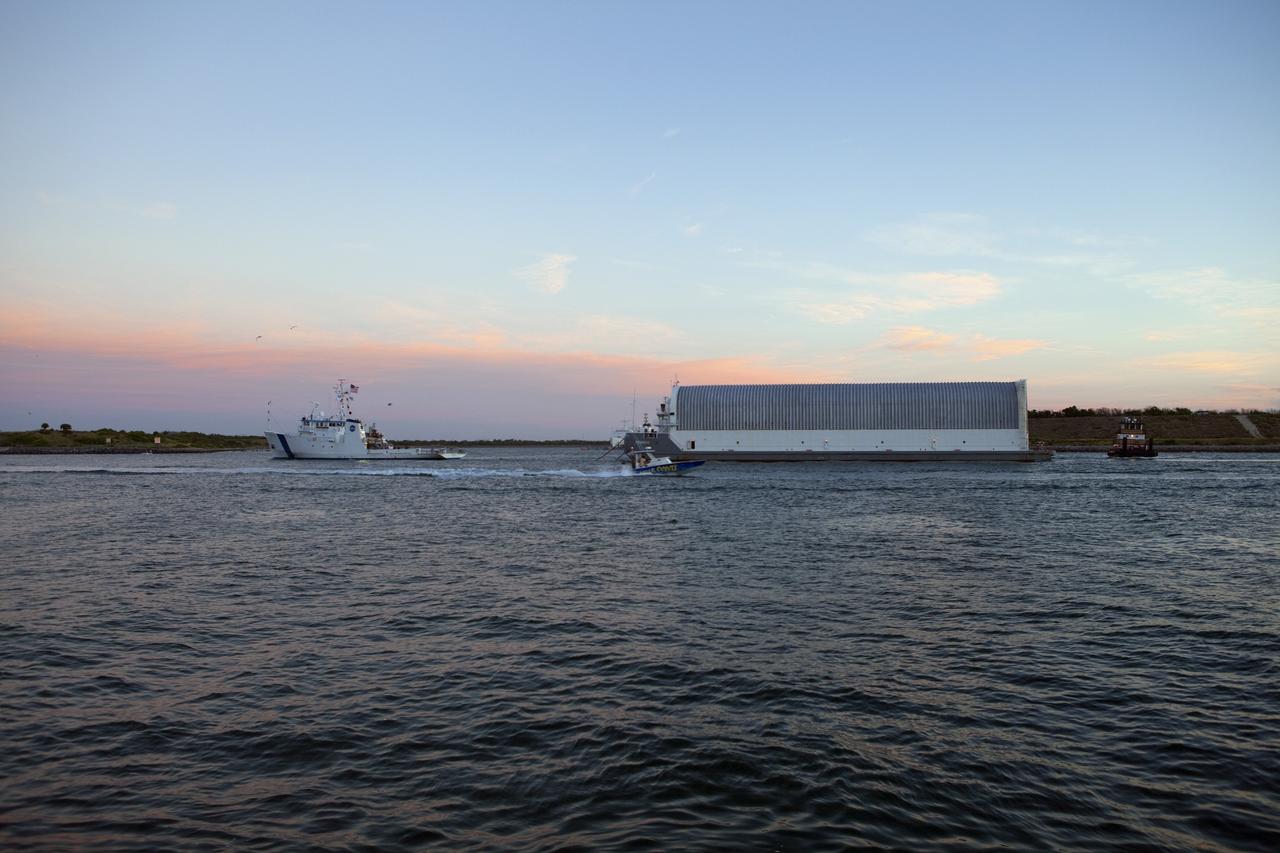
CAPE CANAVERAL, Fla. -- Freedom Star, one of NASA's solid rocket booster retrieval ships, ushers the Space Shuttle Program's last external fuel tank, ET-122, toward NASA's Kennedy Space Center in Florida. The tank traveled 900 miles by sea from NASA's Michoud Assembly Facility in New Orleans aboard the Pegasus Barge. After reaching the Turn Basin at Kennedy, the tank will be offloaded and moved to the Vehicle Assembly Building where it eventually will be attached to space shuttle Endeavour for the STS-134 mission to the International Space Station. STS-134, targeted to launch in Feb. 2011, currently is scheduled to be the last mission in the Space Shuttle Program. The tank, which is the largest element of the space shuttle stack, was damaged during Hurricane Katrina in August 2005 and restored to flight configuration by Lockheed Martin Space Systems Company employees. Photo credit: NASA/Frankie Martin
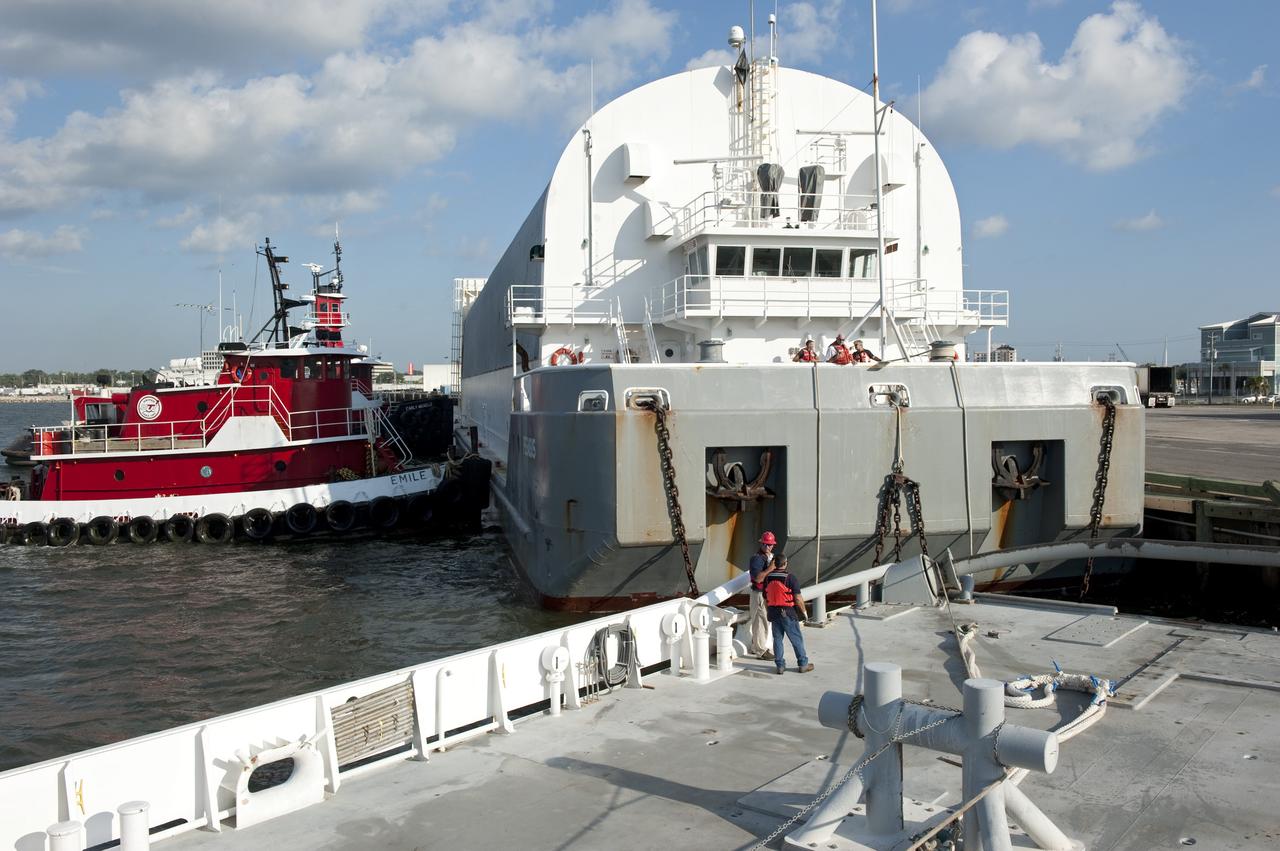
LOUISIANA -- In Gulfport, La., workers connect the Pegasus Barge carrying the Space Shuttle Program's last external fuel tank, ET-122, to Freedom Star, NASA's solid rocket booster retrieval ship. The tank will travel 900 miles by sea to NASA's Kennedy Space Center in Florida before being offloaded and moved to Kennedy's Vehicle Assembly Building. There it will be integrated to space shuttle Endeavour for the STS-134 mission to the International Space Station. The tank, which is the largest element of the space shuttle stack, was damaged during Hurricane Katrina in August 2005 and restored to flight configuration by Lockheed Martin Space Systems Company employees. STS-134, targeted to launch Feb. 2011, currently is scheduled to be the last mission in the Space Shuttle Program. Photo credit: NASA/Kim Shiflett
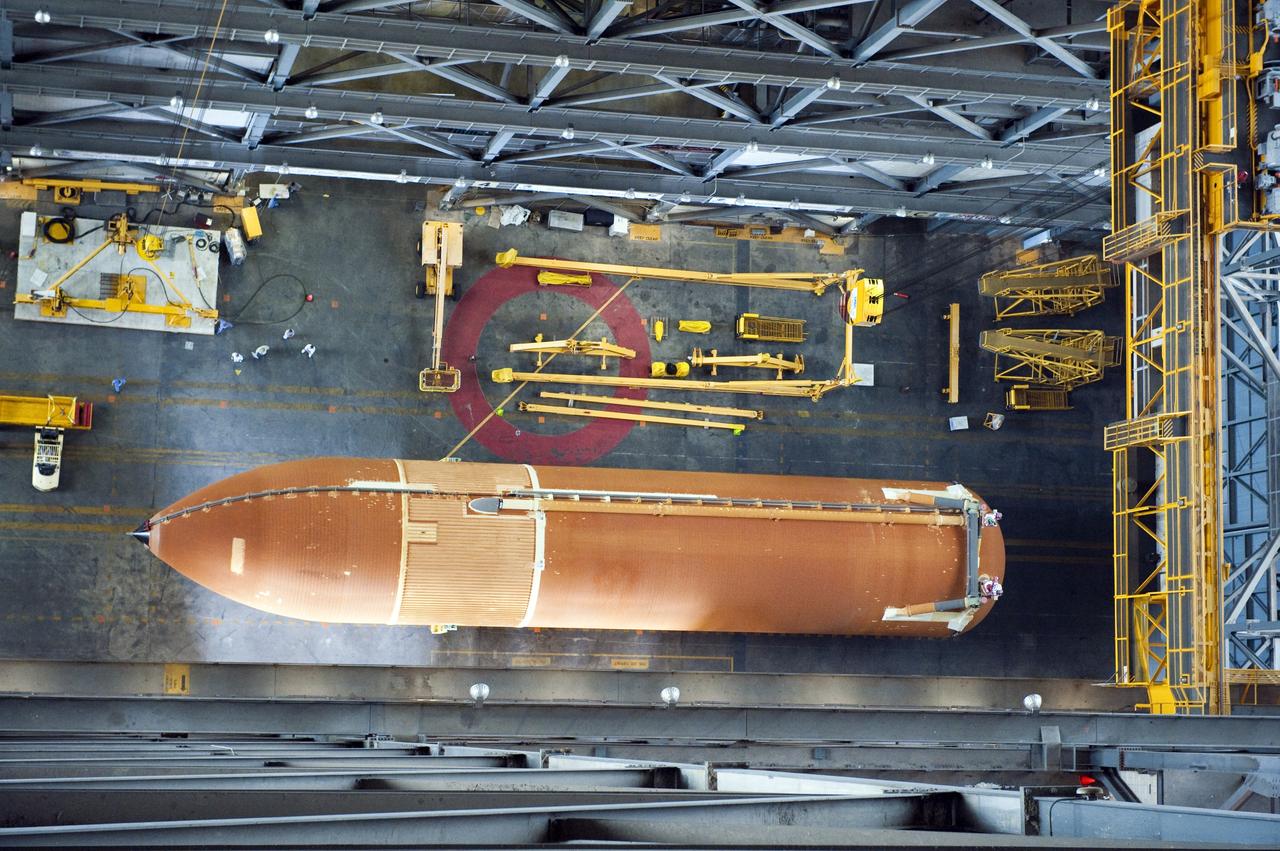
CAPE CANAVERAL, Fla. -- At NASA's Kennedy Space Center in Florida, this overhead image shows the Space Shuttle Program's last external fuel tank, ET-122, after it was delivered to the transfer aisle of the Vehicle Assembly Building (VAB). The tank traveled 900 miles by sea, carried in the Pegasus Barge, from NASA's Michoud Assembly Facility in New Orleans. Once inside the VAB, it eventually will be attached to space shuttle Endeavour for the STS-134 mission to the International Space Station targeted to launch Feb. 2011. STS-134 currently is scheduled to be the last mission in the shuttle program. The tank, which is the largest element of the space shuttle stack, was damaged during Hurricane Katrina in August 2005 and restored to flight configuration by Lockheed Martin Space Systems Company employees. Photo credit: NASA/Kevin O'Connell

CAPE CANAVERAL, Fla. -- This overhead view shows the path taken by the Space Shuttle Program's last external fuel tank, ET-122, from the Pegasus Barge (background) to the Vehicle Assembly Building (VAB) at NASA's Kennedy Space Center in Florida. The tank traveled 900 miles by sea, carried in the Pegasus Barge, from NASA's Michoud Assembly Facility in New Orleans. Once inside the VAB, it eventually will be attached to space shuttle Endeavour for the STS-134 mission to the International Space Station targeted to launch Feb. 2011. STS-134 currently is scheduled to be the last mission in the shuttle program. The tank, which is the largest element of the space shuttle stack, was damaged during Hurricane Katrina in August 2005 and restored to flight configuration by Lockheed Martin Space Systems Company employees. Photo credit: NASA/Kevin O'Connell
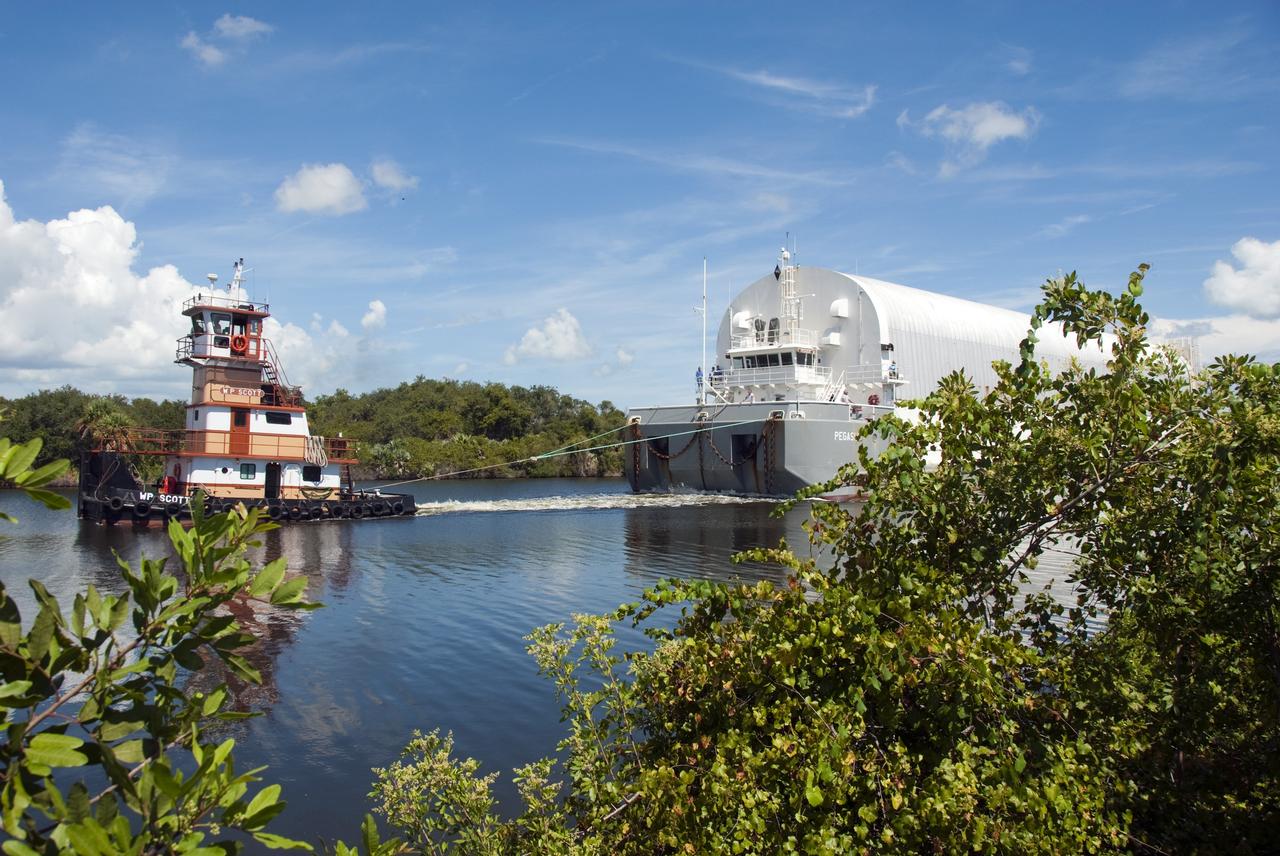
CAPE CANAVERAL, Fla. -- A tugboat pulls the Pegasus Barge carrying the Space Shuttle Program's last external fuel tank, ET-122, toward NASA's Kennedy Space Center in Florida. The tank traveled 900 miles by sea from NASA's Michoud Assembly Facility in New Orleans. After reaching the Turn Basin at Kennedy, the tank will be offloaded and moved to the Vehicle Assembly Building where it eventually will be attached to space shuttle Endeavour for the STS-134 mission to the International Space Station. STS-134, targeted to launch in Feb. 2011, currently is scheduled to be the last mission in the Space Shuttle Program. The tank, which is the largest element of the space shuttle stack, was damaged during Hurricane Katrina in August 2005 and restored to flight configuration by Lockheed Martin Space Systems Company employees. Photo credit: NASA/Jim Grossmann
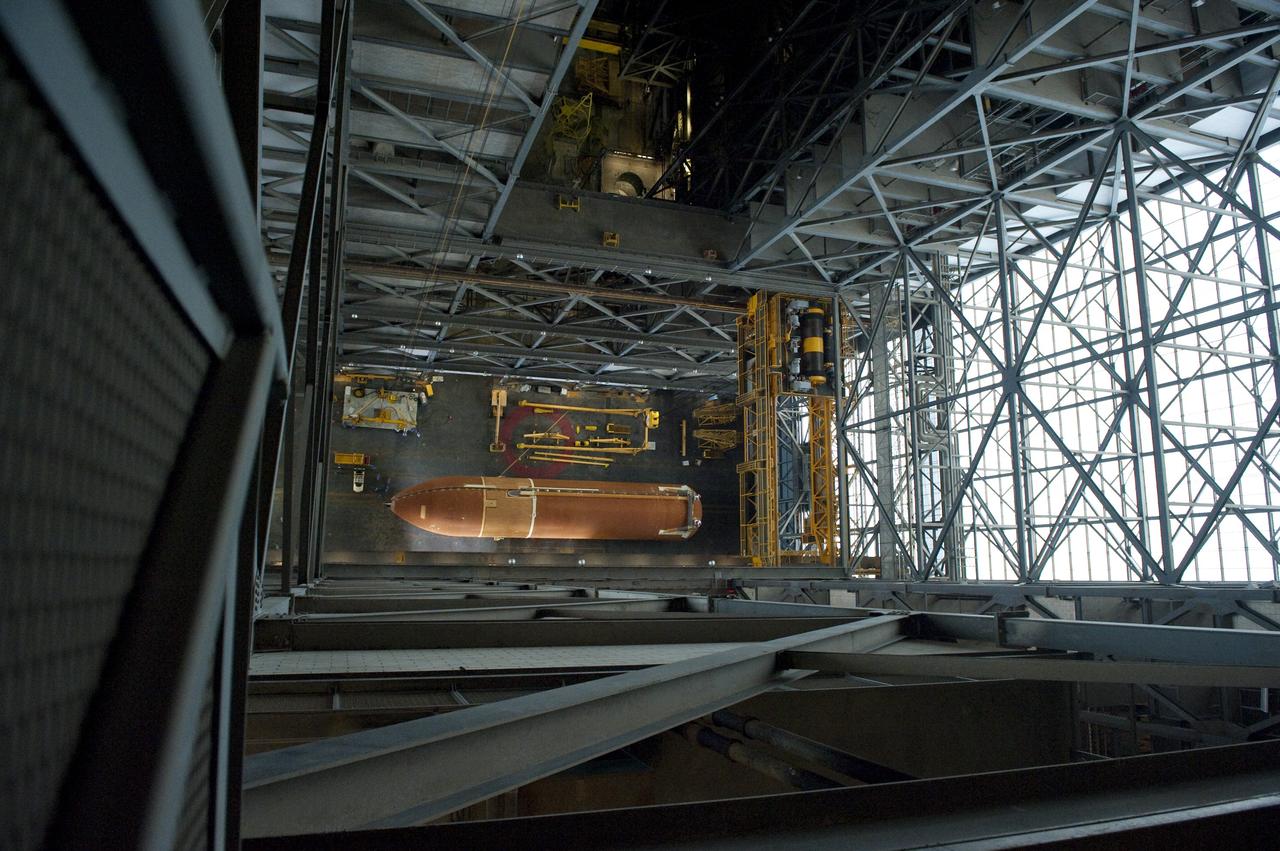
CAPE CANAVERAL, Fla. -- At NASA's Kennedy Space Center in Florida, this overhead image shows the Space Shuttle Program's last external fuel tank, ET-122, after it was delivered to the transfer aisle of the Vehicle Assembly Building (VAB). The tank traveled 900 miles by sea, carried in the Pegasus Barge, from NASA's Michoud Assembly Facility in New Orleans. Once inside the VAB, it eventually will be attached to space shuttle Endeavour for the STS-134 mission to the International Space Station targeted to launch Feb. 2011. STS-134 currently is scheduled to be the last mission in the shuttle program. The tank, which is the largest element of the space shuttle stack, was damaged during Hurricane Katrina in August 2005 and restored to flight configuration by Lockheed Martin Space Systems Company employees. Photo credit: NASA/Kevin O'Connell
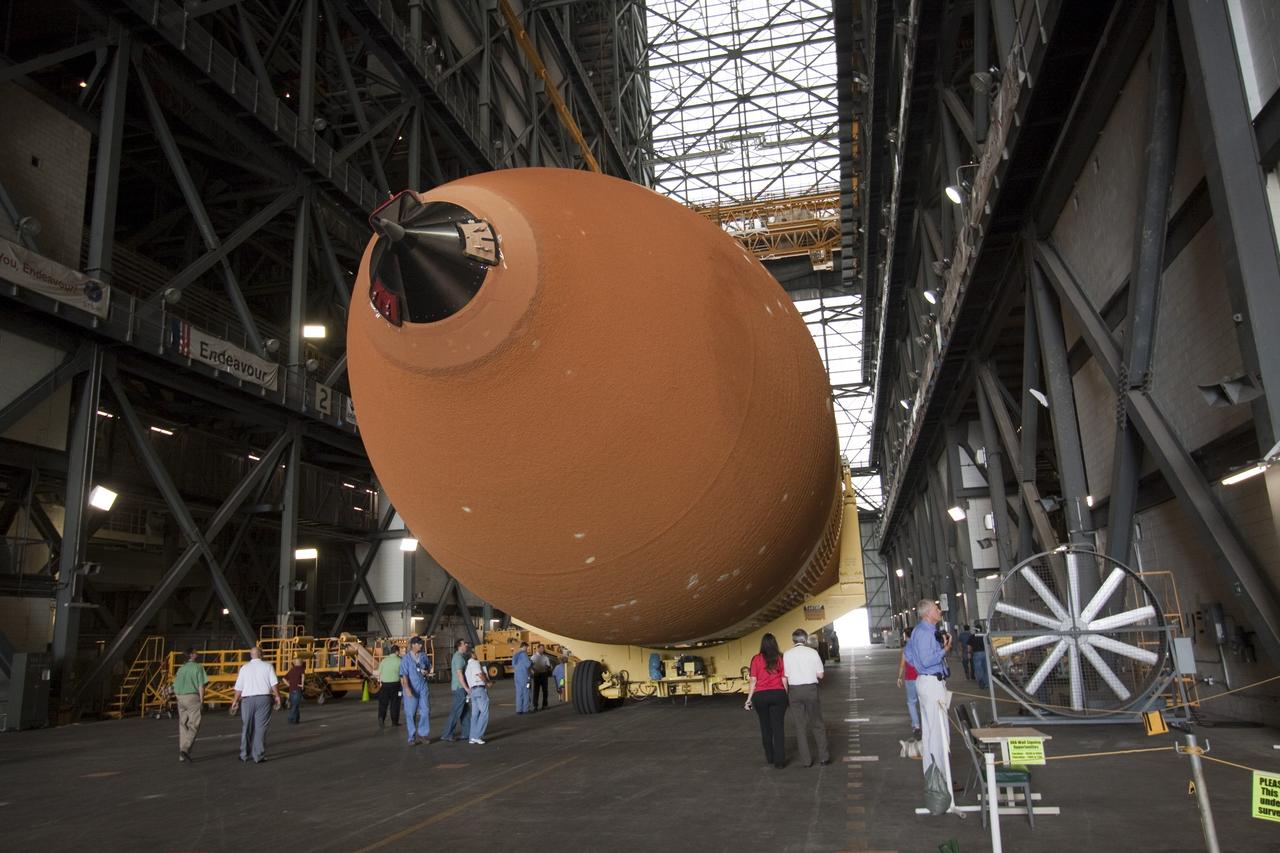
CAPE CANAVERAL, Fla. -- The Space Shuttle Program's last external fuel tank, ET-122, has been moved inside the Vehicle Assembly Building at NASA's Kennedy Space Center in Florida. The tank traveled 900 miles by sea from NASA's Michoud Assembly Facility in New Orleans to Kennedy's Turn Basin aboard the Pegasus Barge. The tank eventually will be attached to space shuttle Endeavour for the STS-134 mission to the International Space Station. STS-134, targeted to launch in Feb. 2011, currently is scheduled to be the last mission in the shuttle program. The tank, which is the largest element of the space shuttle stack, was damaged during Hurricane Katrina in August 2005 and restored to flight configuration by Lockheed Martin Space Systems Company employees. Photo credit: NASA/Jack Pfaller
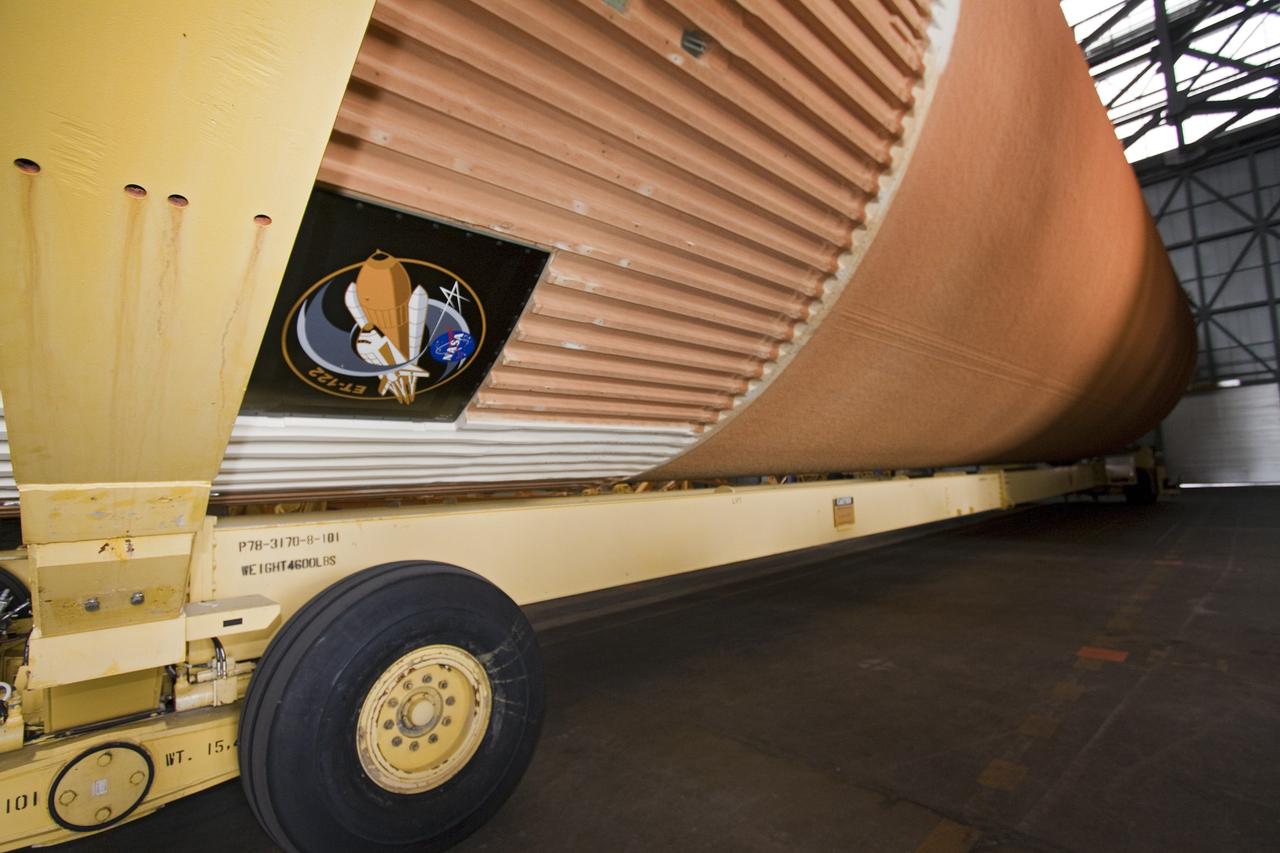
CAPE CANAVERAL, Fla. -- To commemorate the history of the Space Shuttle Program's last external fuel tank, its intertank door is emblazoned with an ET-122 insignia. The tank is in the Vehicle Assembly Building at NASA's Kennedy Space Center in Florida after traveling 900 miles by sea from NASA's Michoud Assembly Facility in New Orleans aboard the Pegasus Barge. It eventually will be attached to space shuttle Endeavour for the STS-134 mission to the International Space Station. STS-134, targeted to launch in Feb. 2011, currently is scheduled to be the last mission in the shuttle program. The tank, which is the largest element of the space shuttle stack, was completed in 2002, modified during Return to Flight operations in 2003 and 2004, damaged during Hurricane Katrina in 2005, and then restored to flight configuration by Lockheed Martin Space Systems Company employees in 2008 at NASA's Marshall Space Flight Center in Alabama. Photo credit: NASA/Jack Pfaller
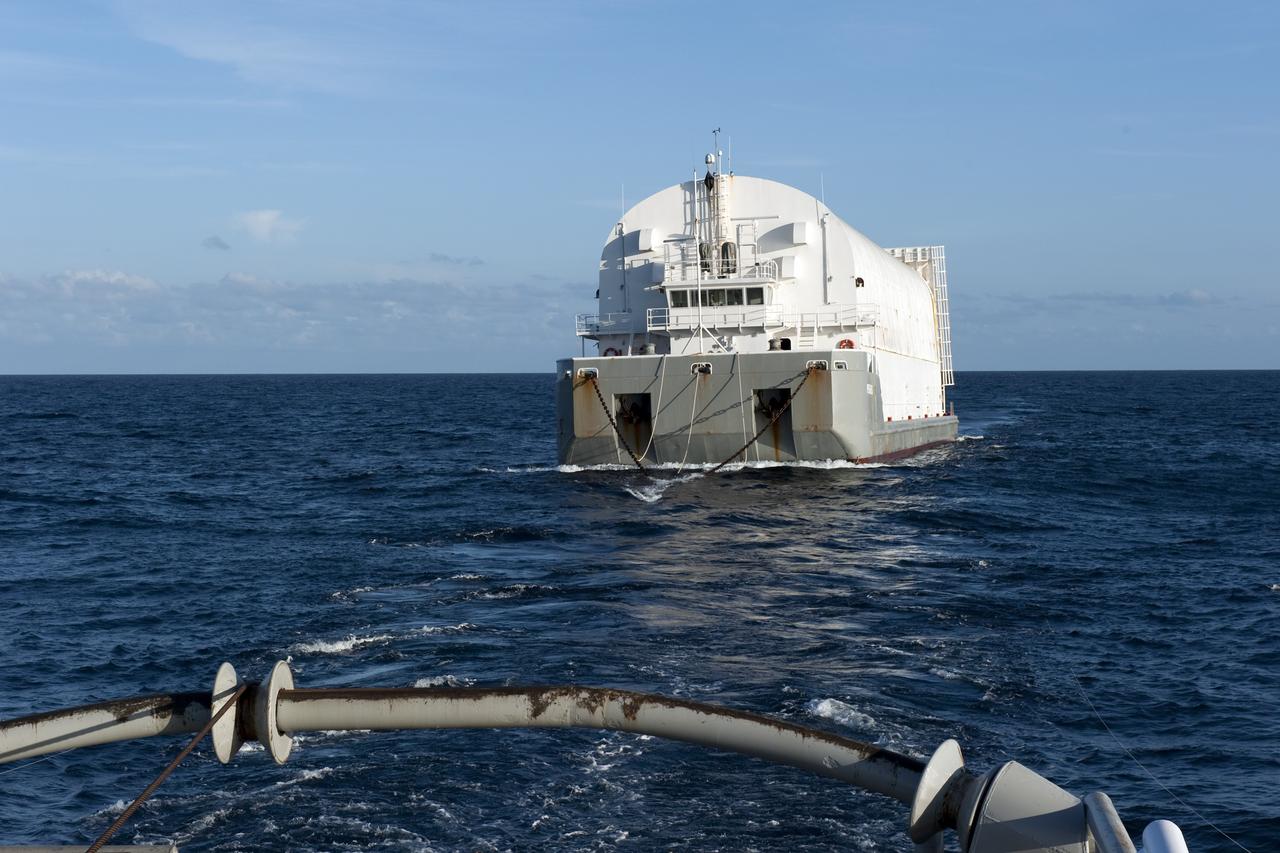
CAPE CANAVERAL, Fla. -- This view from the stern of Freedom Star, one of NASA's solid rocket booster retrieval ships, shows the Pegasus Barge carrying the Space Shuttle Program's last external fuel tank, ET-122. The tank will travel 900 miles by sea to NASA's Kennedy Space Center in Florida before being offloaded and moved to Kennedy's Vehicle Assembly Building. There it will be integrated to space shuttle Endeavour for the STS-134 mission to the International Space Station. The tank, which is the largest element of the space shuttle stack, was damaged during Hurricane Katrina in August 2005 and restored to flight configuration by Lockheed Martin Space Systems Company employees. STS-134, targeted to launch Feb. 2011, currently is scheduled to be the last mission in the Space Shuttle Program. Photo credit: NASA/Kim Shiflett
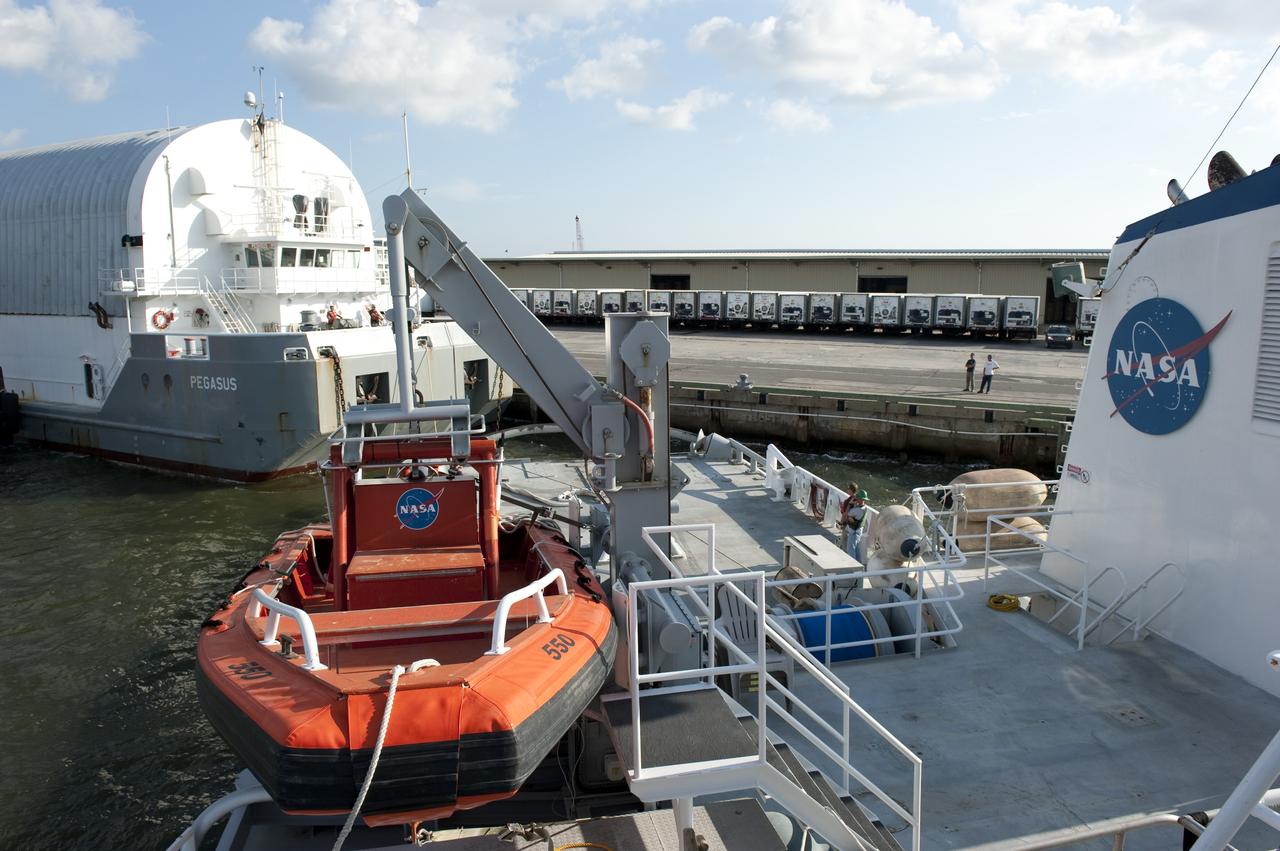
LOUISIANA -- In Gulfport, La., workers connect the Pegasus Barge carrying the Space Shuttle Program's last external fuel tank, ET-122, to Freedom Star, NASA's solid rocket booster retrieval ship. The tank will travel 900 miles by sea to NASA's Kennedy Space Center in Florida before being offloaded and moved to Kennedy's Vehicle Assembly Building. There it will be integrated to space shuttle Endeavour for the STS-134 mission to the International Space Station. The tank, which is the largest element of the space shuttle stack, was damaged during Hurricane Katrina in August 2005 and restored to flight configuration by Lockheed Martin Space Systems Company employees. STS-134, targeted to launch Feb. 2011, currently is scheduled to be the last mission in the Space Shuttle Program. Photo credit: NASA/Kim Shiflett
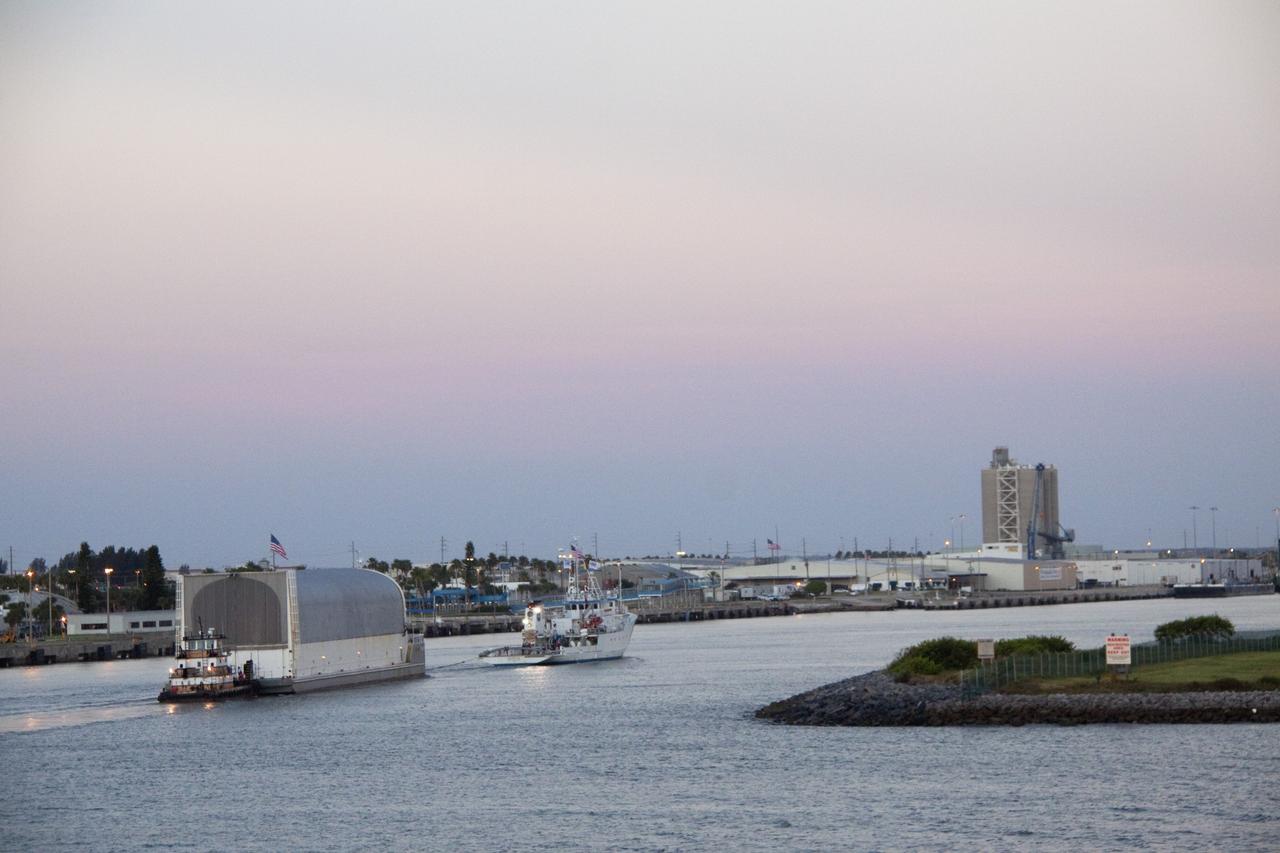
CAPE CANAVERAL, Fla. -- Freedom Star, one of NASA's solid rocket booster retrieval ships, pulls the Space Shuttle Program's last external fuel tank, ET-122, toward NASA's Kennedy Space Center in Florida. The tank traveled 900 miles by sea from NASA's Michoud Assembly Facility in New Orleans aboard the Pegasus Barge. After reaching the Turn Basin at Kennedy, the tank will be offloaded and moved to the Vehicle Assembly Building where it eventually will be attached to space shuttle Endeavour for the STS-134 mission to the International Space Station. STS-134, targeted to launch in Feb. 2011, currently is scheduled to be the last mission in the Space Shuttle Program. The tank, which is the largest element of the space shuttle stack, was damaged during Hurricane Katrina in August 2005 and restored to flight configuration by Lockheed Martin Space Systems Company employees. Photo credit: NASA/Jack Pfaller
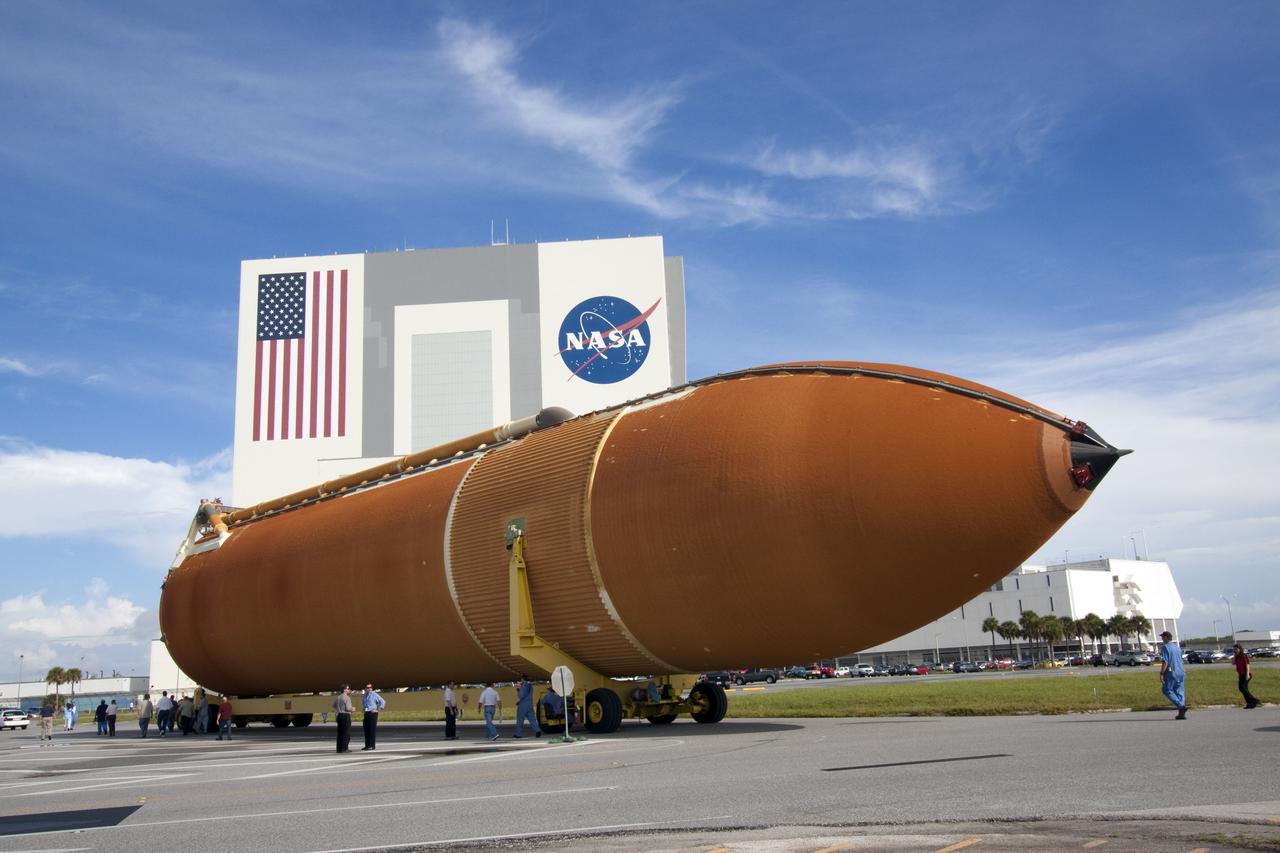
CAPE CANAVERAL, Fla. -- The Space Shuttle Program's last external fuel tank, ET-122, moves from the Turn Basin to the Vehicle Assembly Building at NASA's Kennedy Space Center in Florida. The tank traveled 900 miles by sea from NASA's Michoud Assembly Facility in New Orleans aboard the Pegasus Barge. Once inside the Vehicle Assembly Building, it eventually will be attached to space shuttle Endeavour for the STS-134 mission to the International Space Station. STS-134, targeted to launch in Feb. 2011, currently is scheduled to be the last mission in the shuttle program. The tank, which is the largest element of the space shuttle stack, was damaged during Hurricane Katrina in August 2005 and restored to flight configuration by Lockheed Martin Space Systems Company employees. Photo credit: NASA/Jack Pfaller
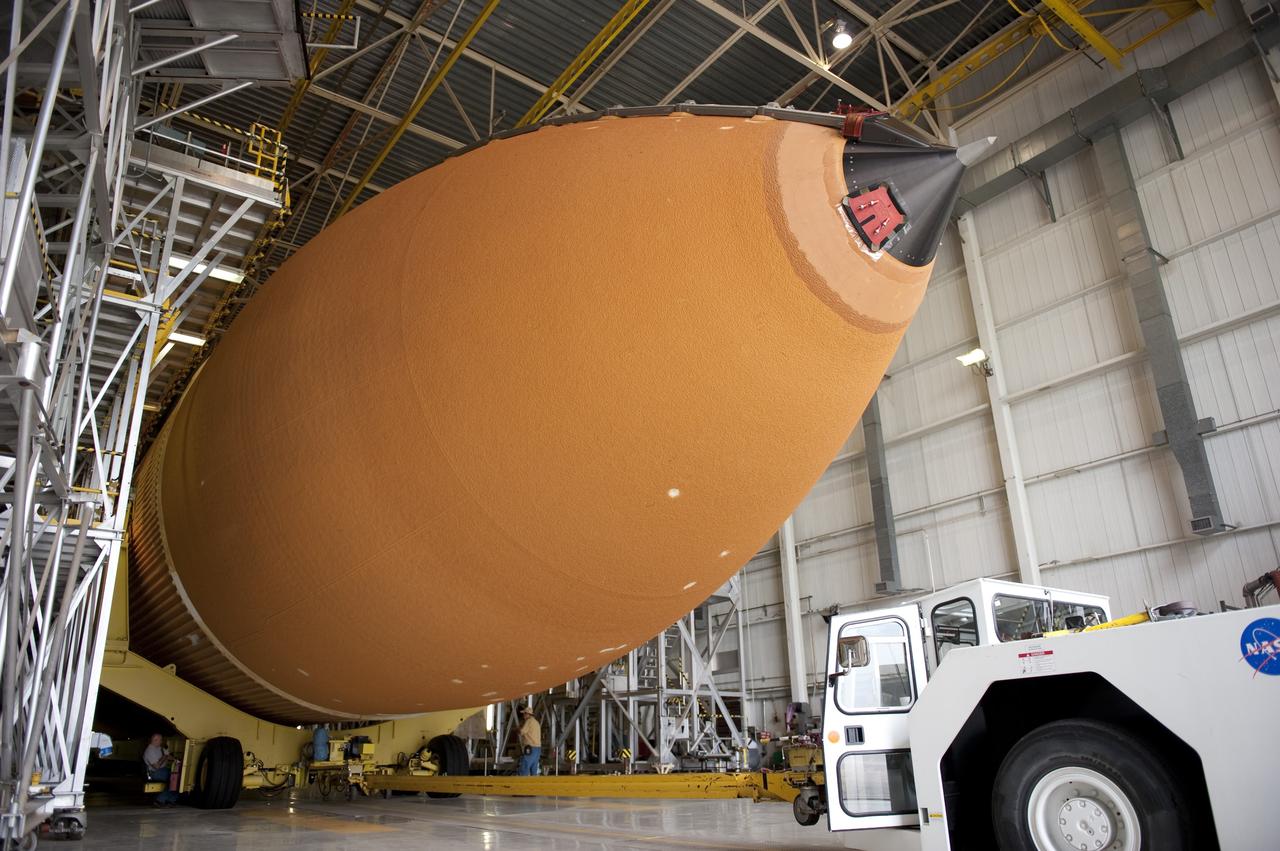
NEW ORLEANS -- Workers at NASA's Michoud Assembly Facility in New Orleans prepare the Space Shuttle Program's last external fuel tank, ET-122, for transportation to NASA's Kennedy Space Center in Florida. The tank will travel 900 miles by sea secured aboard the Pegasus Barge, offloaded and moved to Kennedy's Vehicle Assembly Building where it will be integrated to space shuttle Endeavour for the STS-134 mission to the International Space Station. The tank, which is the largest element of the space shuttle stack, was damaged during Hurricane Katrina in August 2005 and restored to flight configuration by Lockheed Martin Space Systems Company employees. STS-134, targeted to launch Feb. 2011, currently is scheduled to be the last mission in the Space Shuttle Program. Photo credit: NASA/Kim Shiflett
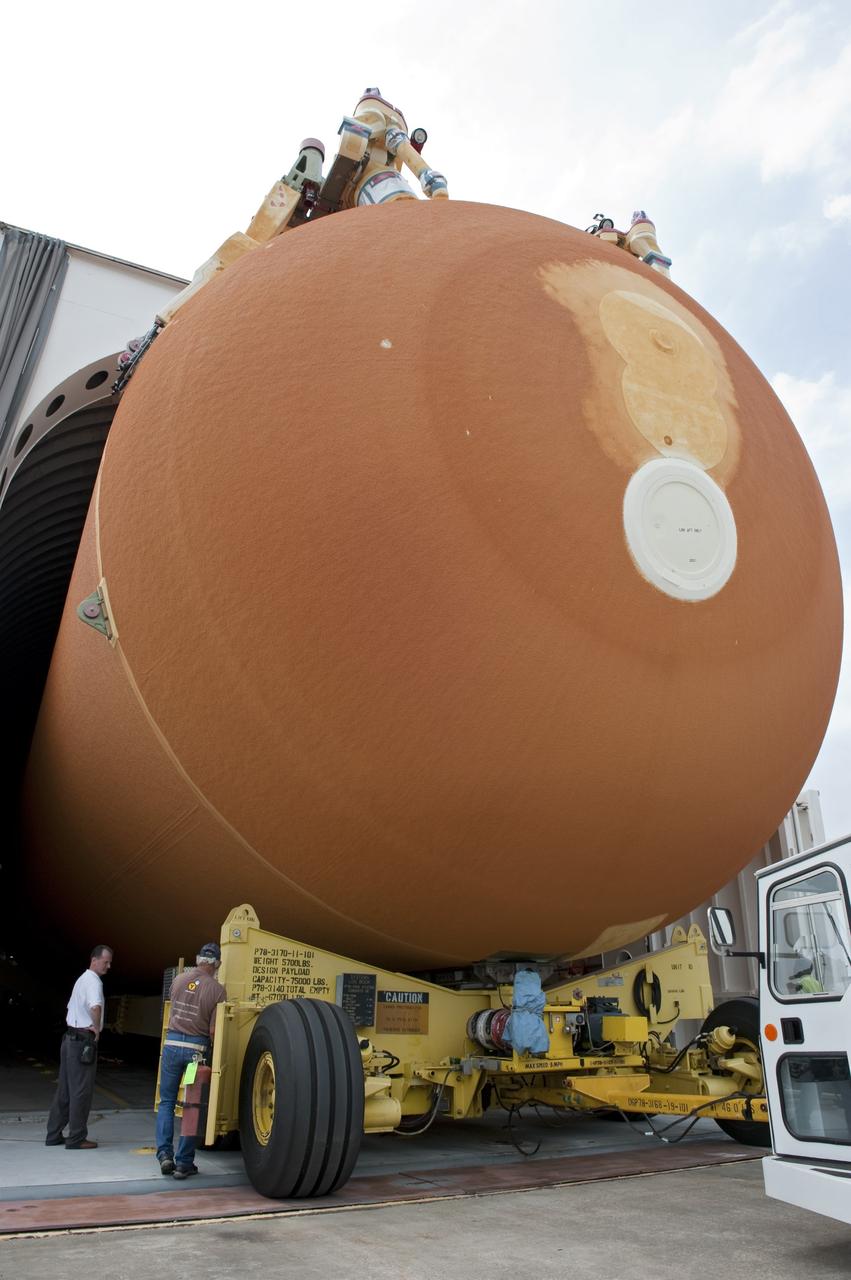
NEW ORLEANS -- Workers watch the progress of the Space Shuttle Program's last external fuel tank, ET-122, at NASA's Michoud Assembly Facility in New Orleans, as it is being loaded onto the Pegasus Barge. The tank will travel 900 miles by sea to NASA's Kennedy Space Center in Florida secured aboard the barge, offloaded and moved to Kennedy's Vehicle Assembly Building where it will be integrated to space shuttle Endeavour for the STS-134 mission to the International Space Station. The tank, which is the largest element of the space shuttle stack, was damaged during Hurricane Katrina in August 2005 and restored to flight configuration by Lockheed Martin Space Systems Company employees. STS-134, targeted to launch Feb. 2011, currently is scheduled to be the last mission in the Space Shuttle Program. Photo credit: NASA/Kim Shiflett
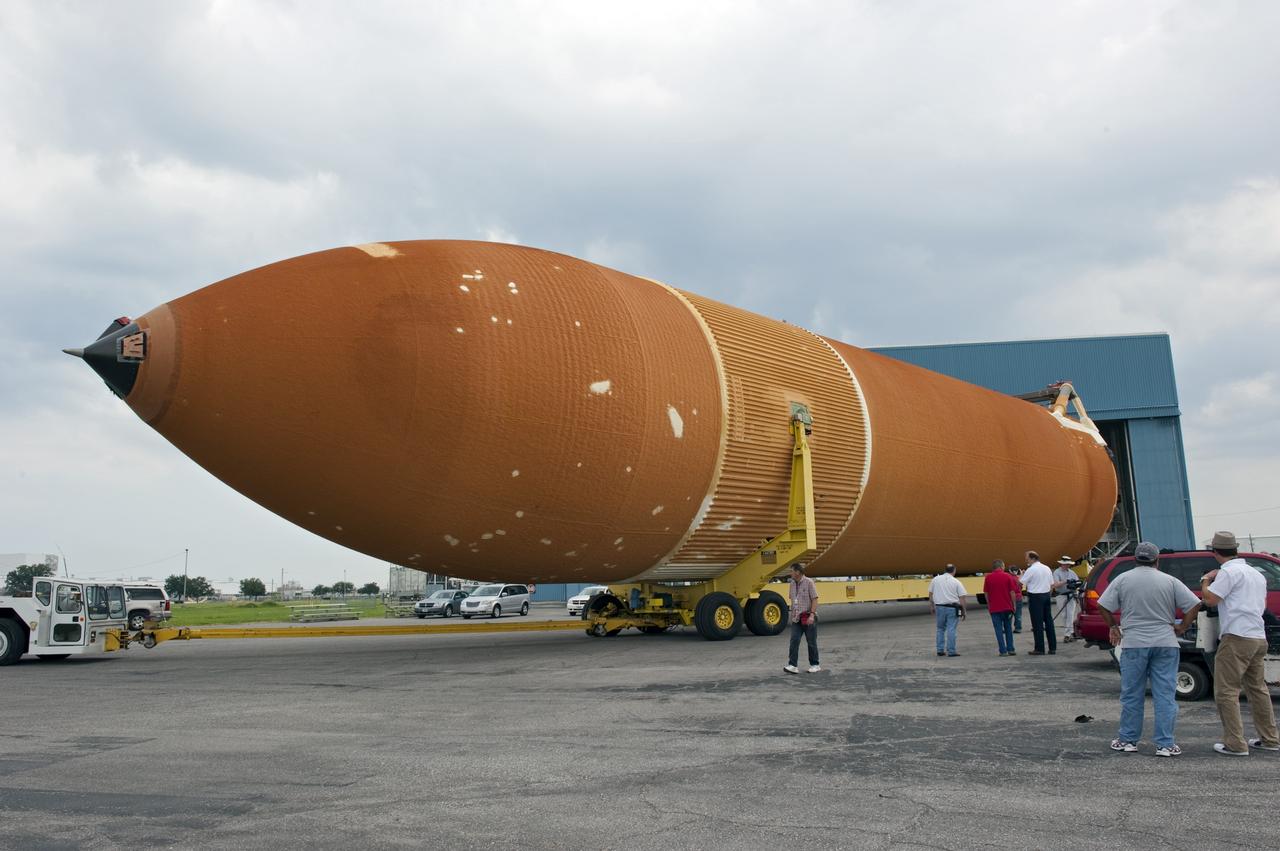
NEW ORLEANS -- Workers escort the Space Shuttle Program's last external fuel tank, ET-122, from NASA's Michoud Assembly Facility in New Orleans onto the Pegasus Barge. The tank will travel 900 miles by sea to NASA's Kennedy Space Center in Florida secured aboard the barge, offloaded and moved to Kennedy's Vehicle Assembly Building where it will be integrated to space shuttle Endeavour for the STS-134 mission to the International Space Station. The tank, which is the largest element of the space shuttle stack, was damaged during Hurricane Katrina in August 2005 and restored to flight configuration by Lockheed Martin Space Systems Company employees. STS-134, targeted to launch Feb. 2011, currently is scheduled to be the last mission in the Space Shuttle Program. Photo credit: NASA/Kim Shiflett
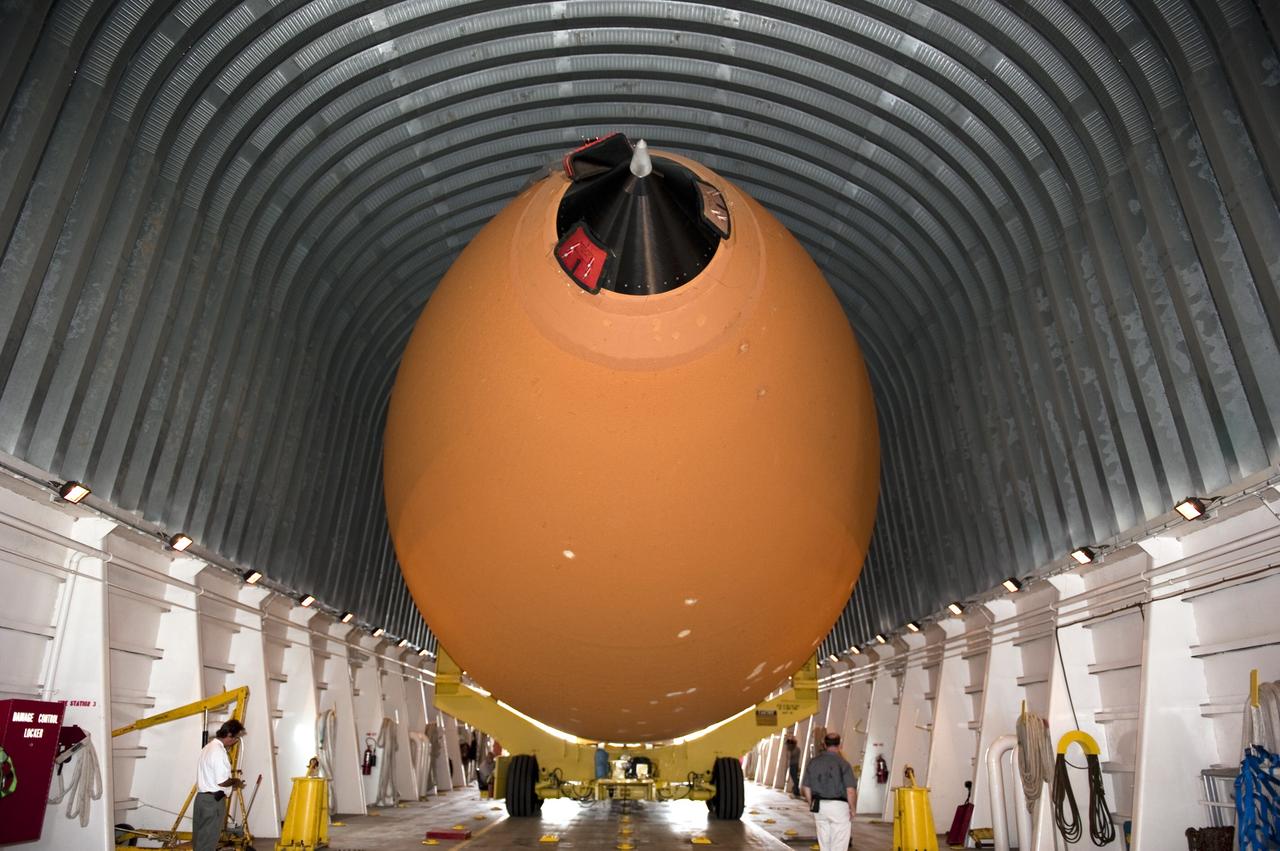
NEW ORLEANS -- Workers monitor the progress of the Space Shuttle Program's last external fuel tank, ET-122, at NASA's Michoud Assembly Facility in New Orleans as it is being loaded onto the Pegasus BargeThe tank will travel 900 miles by sea to NASA's Kennedy Space Center in Florida secured aboard the barge, offloaded and moved to Kennedy's Vehicle Assembly Building where it will be integrated to space shuttle Endeavour for the STS-134 mission to the International Space Station. The tank, which is the largest element of the space shuttle stack, was damaged during Hurricane Katrina in August 2005 and restored to flight configuration by Lockheed Martin Space Systems Company employees. STS-134, targeted to launch Feb. 2011, currently is scheduled to be the last mission in the Space Shuttle Program. Photo credit: NASA/Kim Shiflett
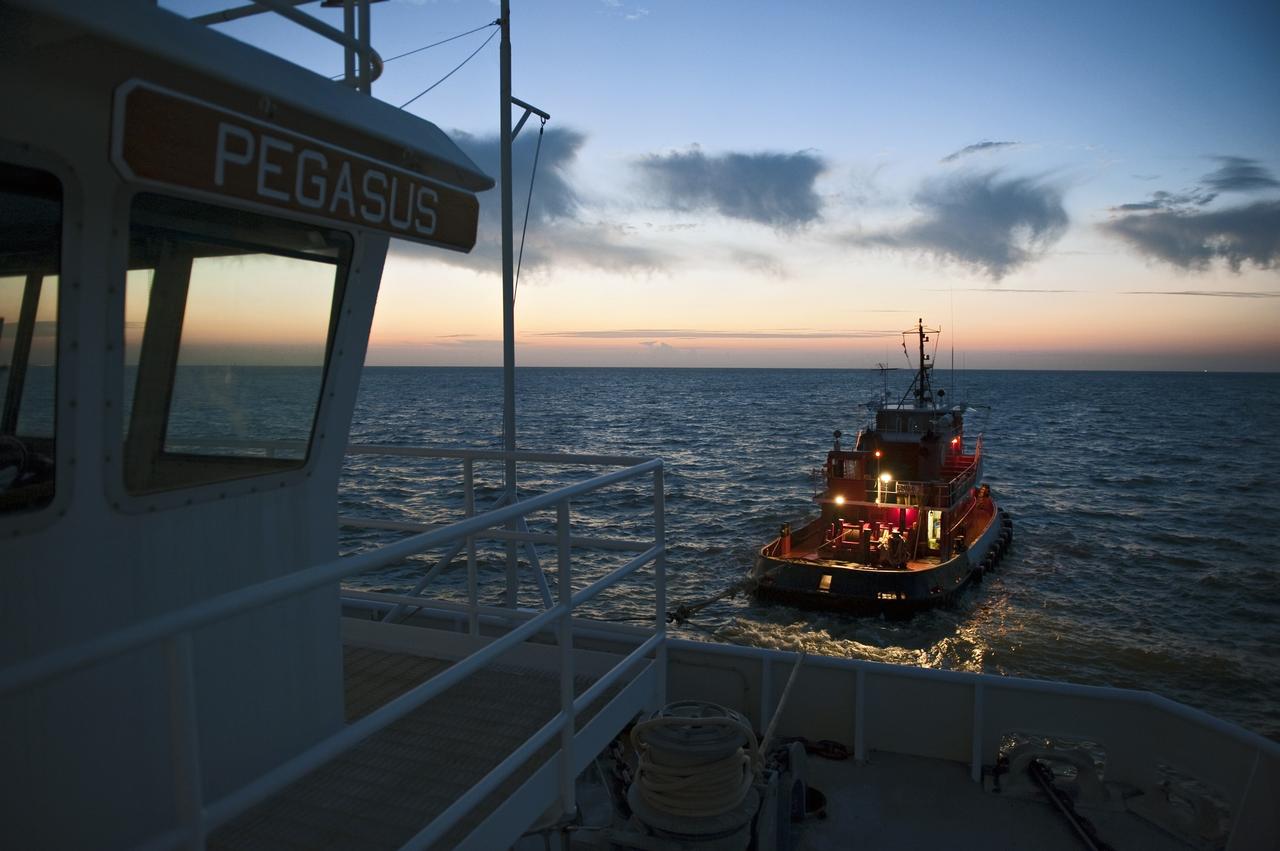
LOUISIANA -- A tug boat pulls the Pegasus Barge carrying the Space Shuttle Program's last external fuel tank, ET-122, from NASA's Michoud Assembly Facility in New Orleans toward Gulfport, La. The barge will meet up with Freedom Star, NASA's solid rocket booster retrieval ship, which will escort it to NASA's Kennedy Space Center in Florida. The tank will travel 900 miles by sea before being offloaded and moved to Kennedy's Vehicle Assembly Building. There it will be integrated to space shuttle Endeavour for the STS-134 mission to the International Space Station. The tank, which is the largest element of the space shuttle stack, was damaged during Hurricane Katrina in August 2005 and restored to flight configuration by Lockheed Martin Space Systems Company employees. STS-134, targeted to launch Feb. 2011, currently is scheduled to be the last mission in the Space Shuttle Program. Photo credit: NASA/Kim Shiflett