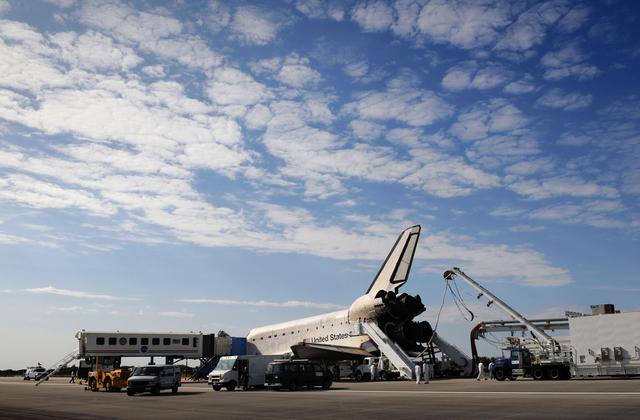
The space shuttle Atlantis (STS-122) is serviced by support vehicles and crew at the Shuttle Landing Facility after the safe landing at 9:07a.m., Wednesday, Feb. 20, 2008 at Kennedy Space Center, Fla. Atlantis and the crew of STS-122 completed delivery of the European Space Agency’s (ESA) Columbus laboratory to the International Space Station. Photo Credit: (NASA/Bill Ingalls)
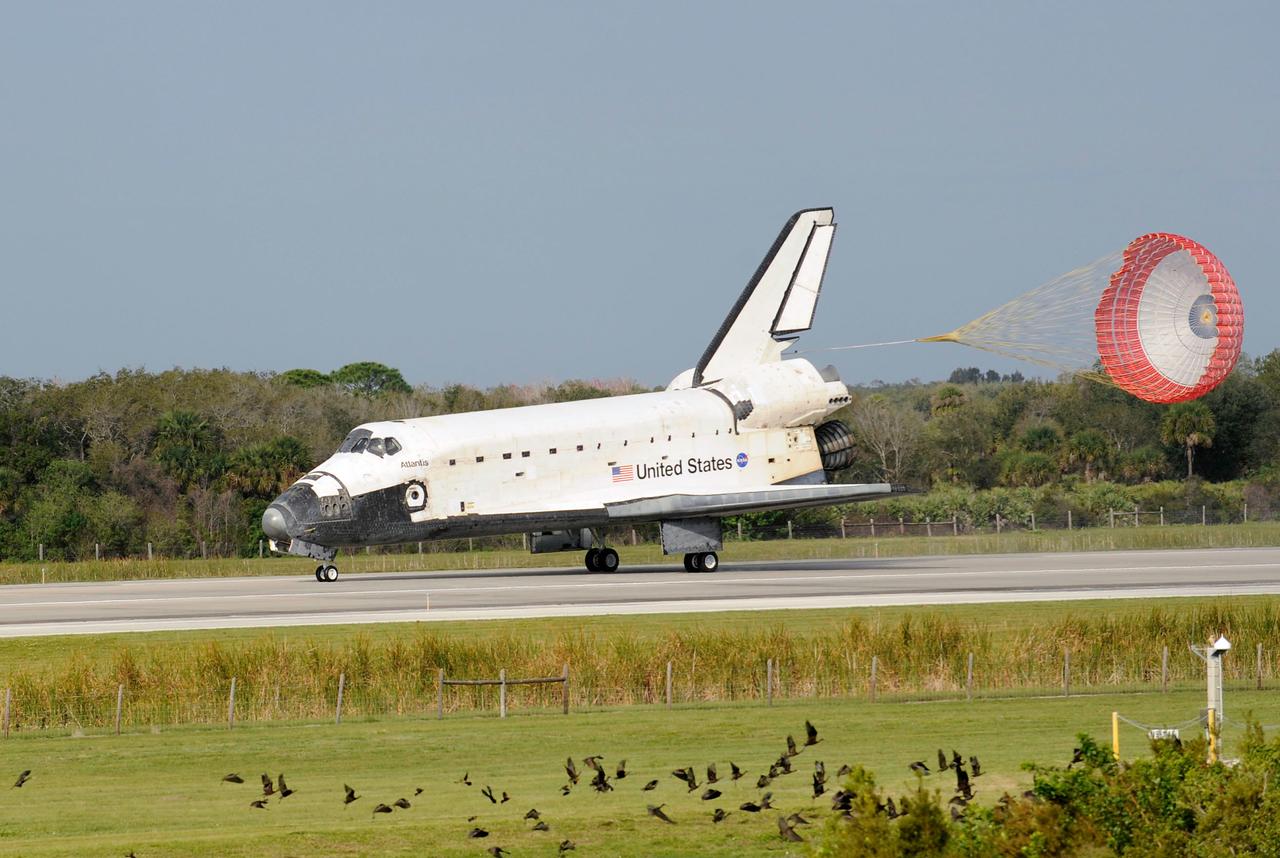
The space shuttle Atlantis (STS-122) lands at the Shuttle Landing Facility, 9:07a.m., Wednesday, Feb. 20, 2008 at Kennedy Space Center, Fla. completing delivery of the European Space Agency’s (ESA) Columbus laboratory to the International Space Station. Photo Credit: (NASA/Bill Ingalls)
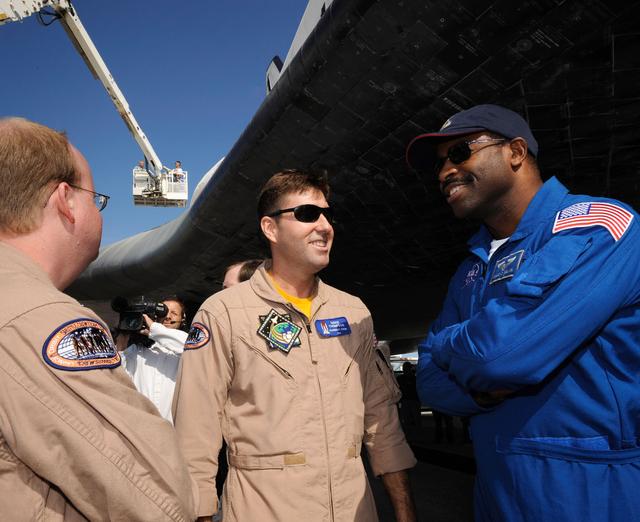
STS-122 Mission Specialist Leland Melvin, right, talks with members of the space shuttle close out crew underneath the wing of the space shuttle Atlantis. Atlantis landed at the Shuttle Landing Facility, 9:07a.m., Wednesday, Feb. 20, 2008 at Kennedy Space Center, Fla. completing delivery of the European Space Agency’s (ESA) Columbus laboratory to the International Space Station. Photo Credit: (NASA/Bill Ingalls)
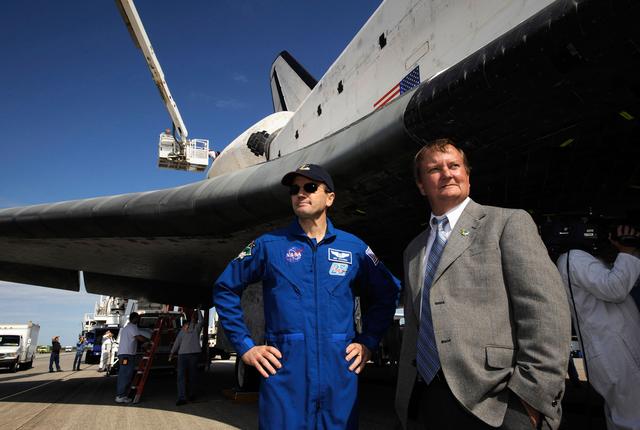
STS-122 Mission Specialist, Rex Walheim, left, and Shuttle Launch Director, Michael D. Leinbach take a moment to watch the close out crew work on the space shuttle Atlantis. Atlantis landed at the Shuttle Landing Facility, 9:07a.m., Wednesday, Feb. 20, 2008 at Kennedy Space Center, Fla. completing delivery of the European Space Agency’s (ESA) Columbus laboratory to the International Space Station. Photo Credit: (NASA/Bill Ingalls)
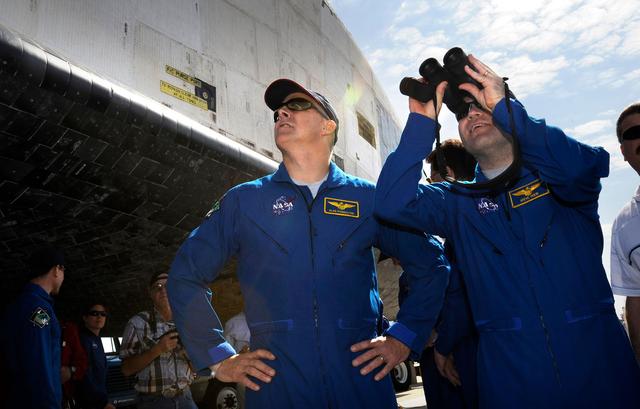
STS-122 Mission Commander Steve Frick, right, and Pilot Alan Poindexter use a pair of binoculars to inspect the outside of the space shuttle Atlantis. Atlantis landed at the Shuttle Landing Facility, 9:07a.m., Wednesday, Feb. 20, 2008 at Kennedy Space Center, Fla. completing delivery of the European Space Agency’s (ESA) Columbus laboratory to the International Space Station. Photo Credit: (NASA/Bill Ingalls)
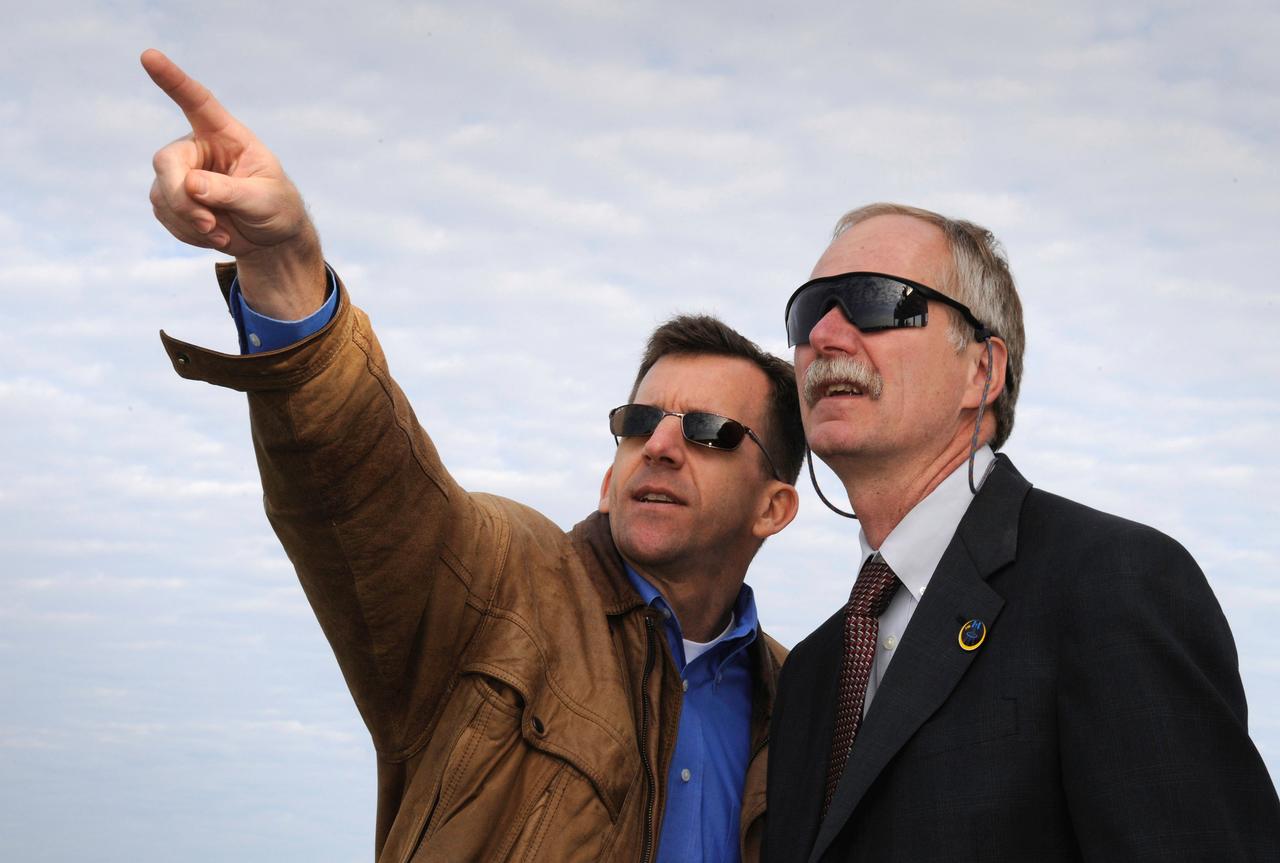
NASA Manager for Launch Integration, Leroy Cain, left, and NASA Associate Administrator for Space Operations, William H. Gerstenmaier watch as the The space shuttle Atlantis (STS-122) lands at the Shuttle Landing Facility, 9:07a.m., Wednesday, Feb. 20, 2008 at Kennedy Space Center, Fla. completing delivery of the European Space Agency’s (ESA) Columbus laboratory to the International Space Station. Photo Credit: (NASA/Bill Ingalls)
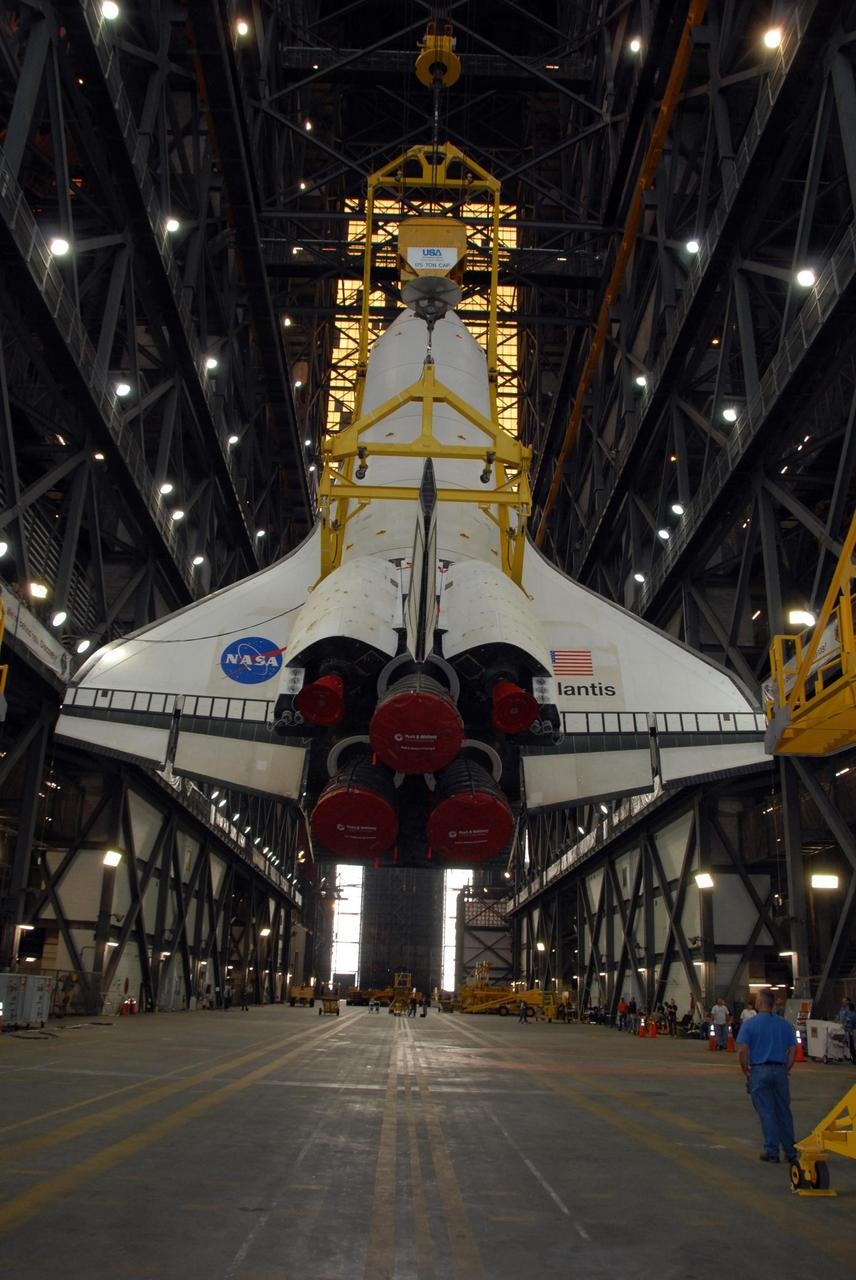
KENNEDY SPACE CENTER, FLA. — In the transfer aisle of the Vehicle Assembly Building at NASA's Kennedy Space Center, space shuttle Atlantis is raised into a vertical position. Atlantis will next be lifted into high bay 3 and mated with the external tank and solid rocket boosters designated for mission STS-122, already secured atop a mobile launcher platform. On this mission, Atlantis will deliver the Columbus module to the International Space Station. The European Space Agency's largest contribution to the station, Columbus is a multifunctional, pressurized laboratory that will be permanently attached to U.S. Node 2, called Harmony. The module is approximately 23 feet long and 15 feet wide, allowing it to hold 10 large racks of experiments. The laboratory will expand the research facilities aboard the station, providing crew members and scientists from around the world the ability to conduct a variety of experiments in the physical, materials and life sciences. Mission STS-122 is targeted for launch on Dec. 6. Photo credit: NASA/George Shelton

KENNEDY SPACE CENTER, FLA. — In the transfer aisle of the Vehicle Assembly Building at NASA's Kennedy Space Center, space shuttle Atlantis is raised into a vertical position. Atlantis will next be lifted into high bay 3 and mated with the external tank and solid rocket boosters designated for mission STS-122, already secured atop a mobile launcher platform. On this mission, Atlantis will deliver the Columbus module to the International Space Station. The European Space Agency's largest contribution to the station, Columbus is a multifunctional, pressurized laboratory that will be permanently attached to U.S. Node 2, called Harmony. The module is approximately 23 feet long and 15 feet wide, allowing it to hold 10 large racks of experiments. The laboratory will expand the research facilities aboard the station, providing crew members and scientists from around the world the ability to conduct a variety of experiments in the physical, materials and life sciences. Mission STS-122 is targeted for launch on Dec. 6. Photo credit: NASA/George Shelton
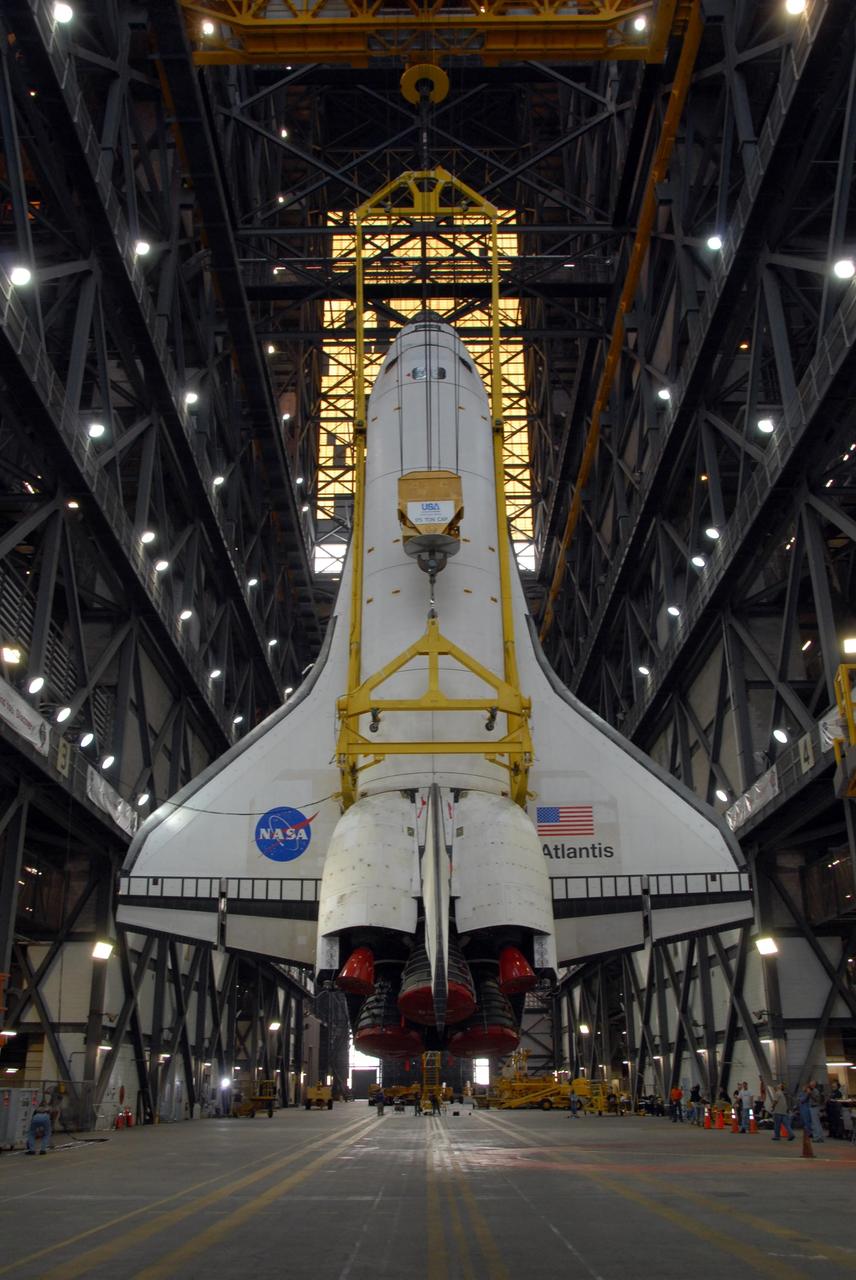
KENNEDY SPACE CENTER, FLA. — In the transfer aisle of the Vehicle Assembly Building at NASA's Kennedy Space Center, space shuttle Atlantis is raised to a nearly vertical position. Atlantis will next be lifted into high bay 3 and mated with the external tank and solid rocket boosters designated for mission STS-122, already secured atop a mobile launcher platform. On this mission, Atlantis will deliver the Columbus module to the International Space Station. The European Space Agency's largest contribution to the station, Columbus is a multifunctional, pressurized laboratory that will be permanently attached to U.S. Node 2, called Harmony. The module is approximately 23 feet long and 15 feet wide, allowing it to hold 10 large racks of experiments. The laboratory will expand the research facilities aboard the station, providing crew members and scientists from around the world the ability to conduct a variety of experiments in the physical, materials and life sciences. Mission STS-122 is targeted for launch on Dec. 6. Photo credit: NASA/George Shelton
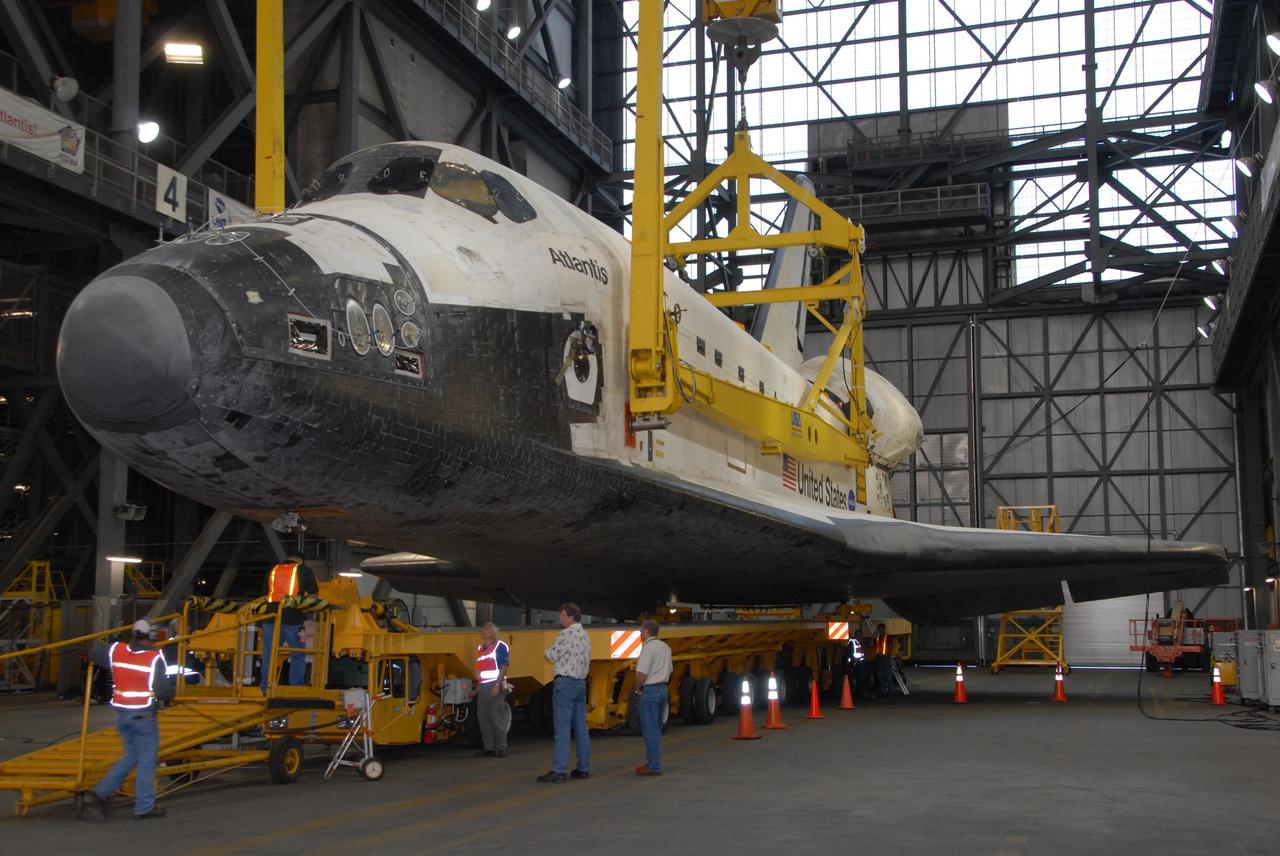
KENNEDY SPACE CENTER, FLA. — In the transfer aisle of the Vehicle Assembly Building at NASA's Kennedy Space Center, space shuttle Atlantis is fitted with a sling to raise it off its transporter into a vertical position. Atlantis will be lifted into high bay 3 and mated with the external tank and solid rocket boosters designated for mission STS-122, already secured atop a mobile launcher platform. On this mission, Atlantis will deliver the Columbus module to the International Space Station. The European Space Agency's largest contribution to the station, Columbus is a multifunctional, pressurized laboratory that will be permanently attached to U.S. Node 2, called Harmony. The module is approximately 23 feet long and 15 feet wide, allowing it to hold 10 large racks of experiments. The laboratory will expand the research facilities aboard the station, providing crew members and scientists from around the world the ability to conduct a variety of experiments in the physical, materials and life sciences. Mission STS-122 is targeted for launch on Dec. 6. Photo credit: NASA/George Shelton
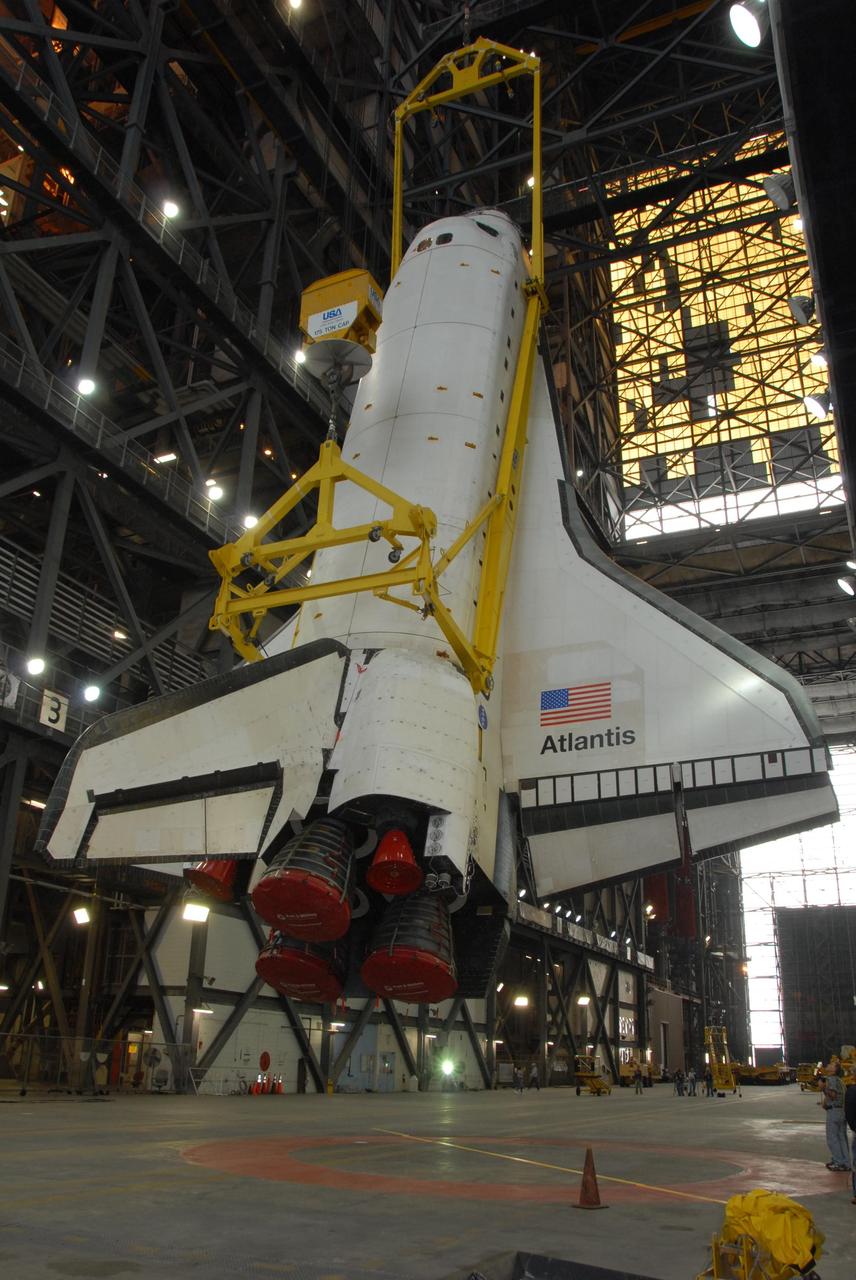
KENNEDY SPACE CENTER, FLA. — In the transfer aisle of the Vehicle Assembly Building at NASA's Kennedy Space Center, space shuttle Atlantis is raised to a nearly vertical position. Atlantis will next be lifted into high bay 3 and mated with the external tank and solid rocket boosters designated for mission STS-122, already secured atop a mobile launcher platform. On this mission, Atlantis will deliver the Columbus module to the International Space Station. The European Space Agency's largest contribution to the station, Columbus is a multifunctional, pressurized laboratory that will be permanently attached to U.S. Node 2, called Harmony. The module is approximately 23 feet long and 15 feet wide, allowing it to hold 10 large racks of experiments. The laboratory will expand the research facilities aboard the station, providing crew members and scientists from around the world the ability to conduct a variety of experiments in the physical, materials and life sciences. Mission STS-122 is targeted for launch on Dec. 6. Photo credit: NASA/George Shelton
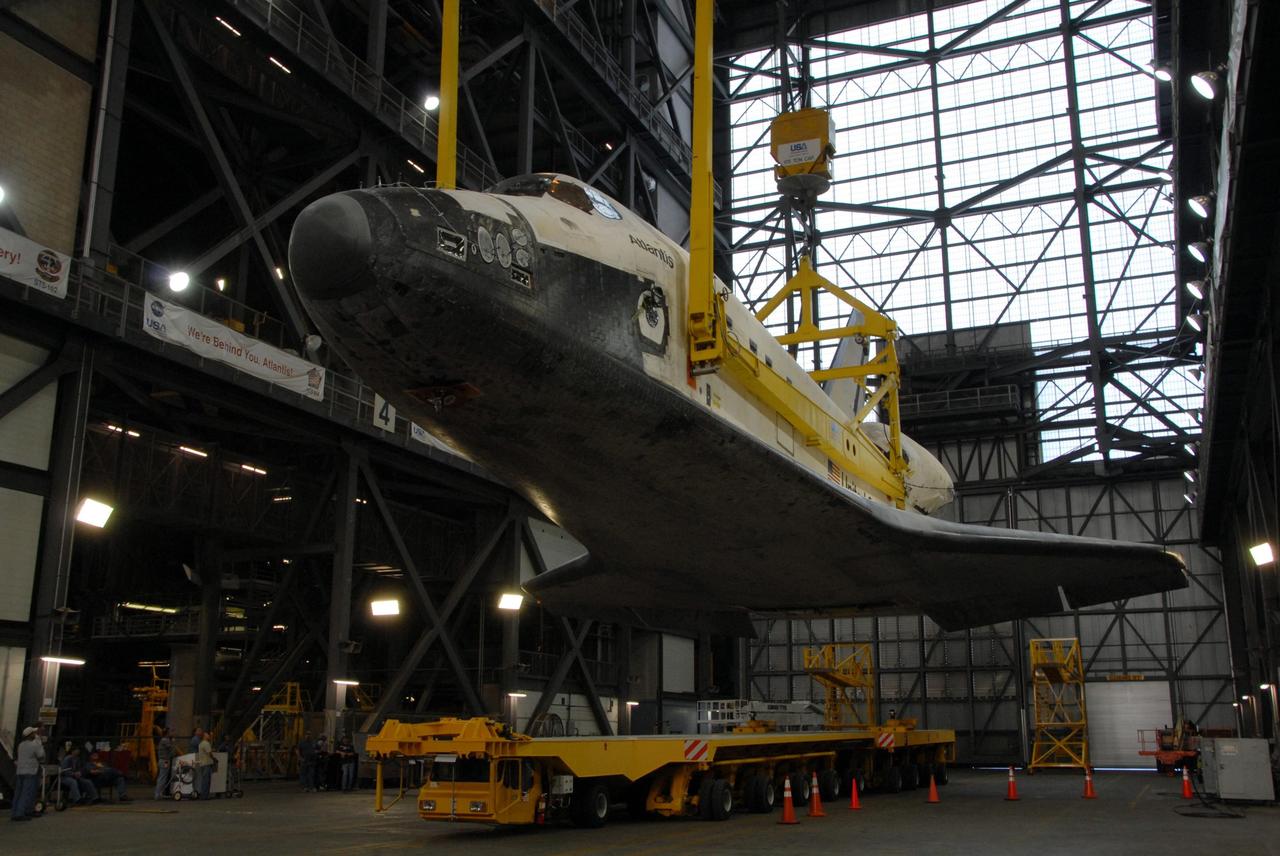
KENNEDY SPACE CENTER, FLA. — In the transfer aisle of the Vehicle Assembly Building at NASA's Kennedy Space Center, space shuttle Atlantis is raised off its transporter. After raised to a vertical position, Atlantis will be lifted into high bay 3 and mated with the external tank and solid rocket boosters designated for mission STS-122, already secured atop a mobile launcher platform. On this mission, Atlantis will deliver the Columbus module to the International Space Station. The European Space Agency's largest contribution to the station, Columbus is a multifunctional, pressurized laboratory that will be permanently attached to U.S. Node 2, called Harmony. The module is approximately 23 feet long and 15 feet wide, allowing it to hold 10 large racks of experiments. The laboratory will expand the research facilities aboard the station, providing crew members and scientists from around the world the ability to conduct a variety of experiments in the physical, materials and life sciences. Mission STS-122 is targeted for launch on Dec. 6. Photo credit: NASA/George Shelton
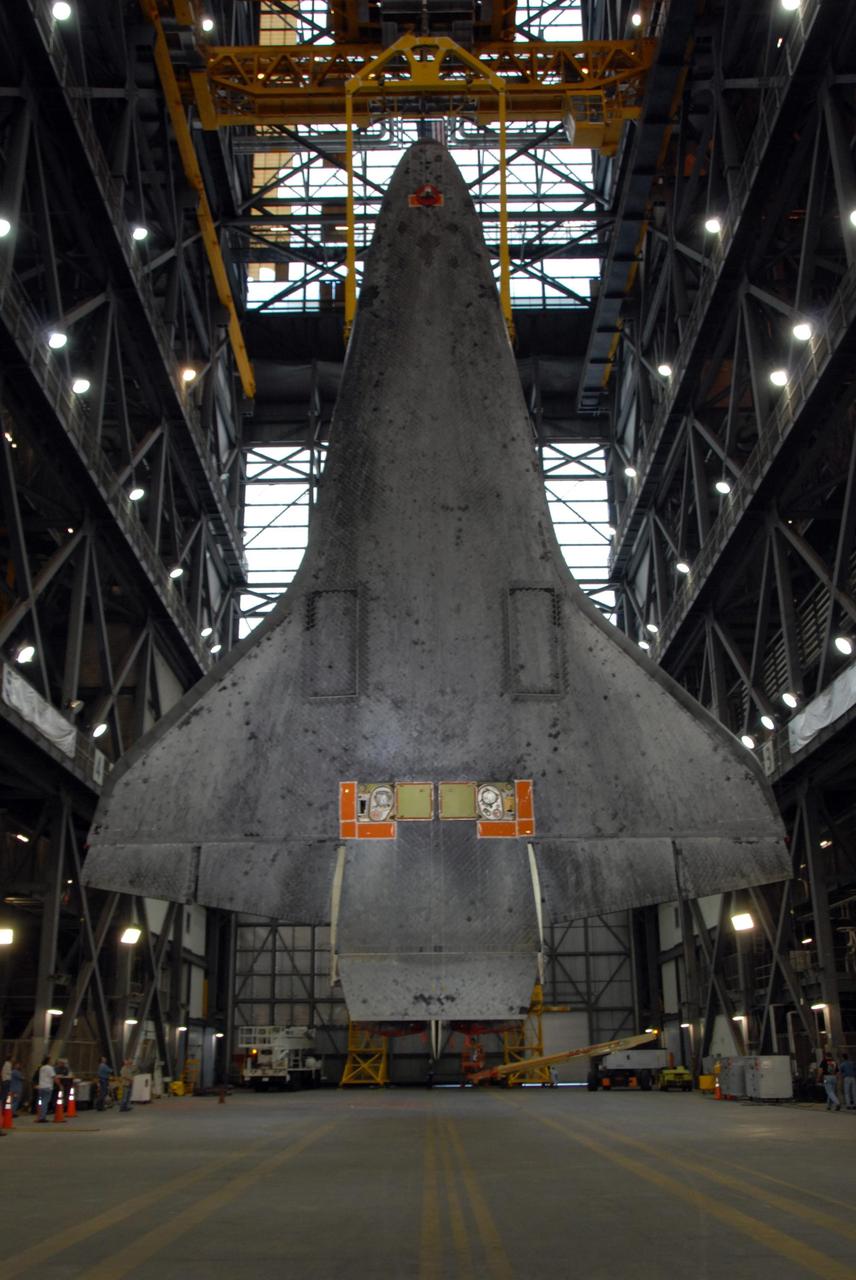
KENNEDY SPACE CENTER, FLA. — Looking like a giant bat, space shuttle Atlantis hangs from an overhead crane over the transfer aisle of the Vehicle Assembly Building at NASA's Kennedy Space Center. Atlantis will next be lifted into high bay 3 and mated with the external tank and solid rocket boosters designated for mission STS-122, already secured atop a mobile launcher platform. On this mission, Atlantis will deliver the Columbus module to the International Space Station. The European Space Agency's largest contribution to the station, Columbus is a multifunctional, pressurized laboratory that will be permanently attached to U.S. Node 2, called Harmony. The module is approximately 23 feet long and 15 feet wide, allowing it to hold 10 large racks of experiments. The laboratory will expand the research facilities aboard the station, providing crew members and scientists from around the world the ability to conduct a variety of experiments in the physical, materials and life sciences. Mission STS-122 is targeted for launch on Dec. 6. Photo credit: NASA/George Shelton
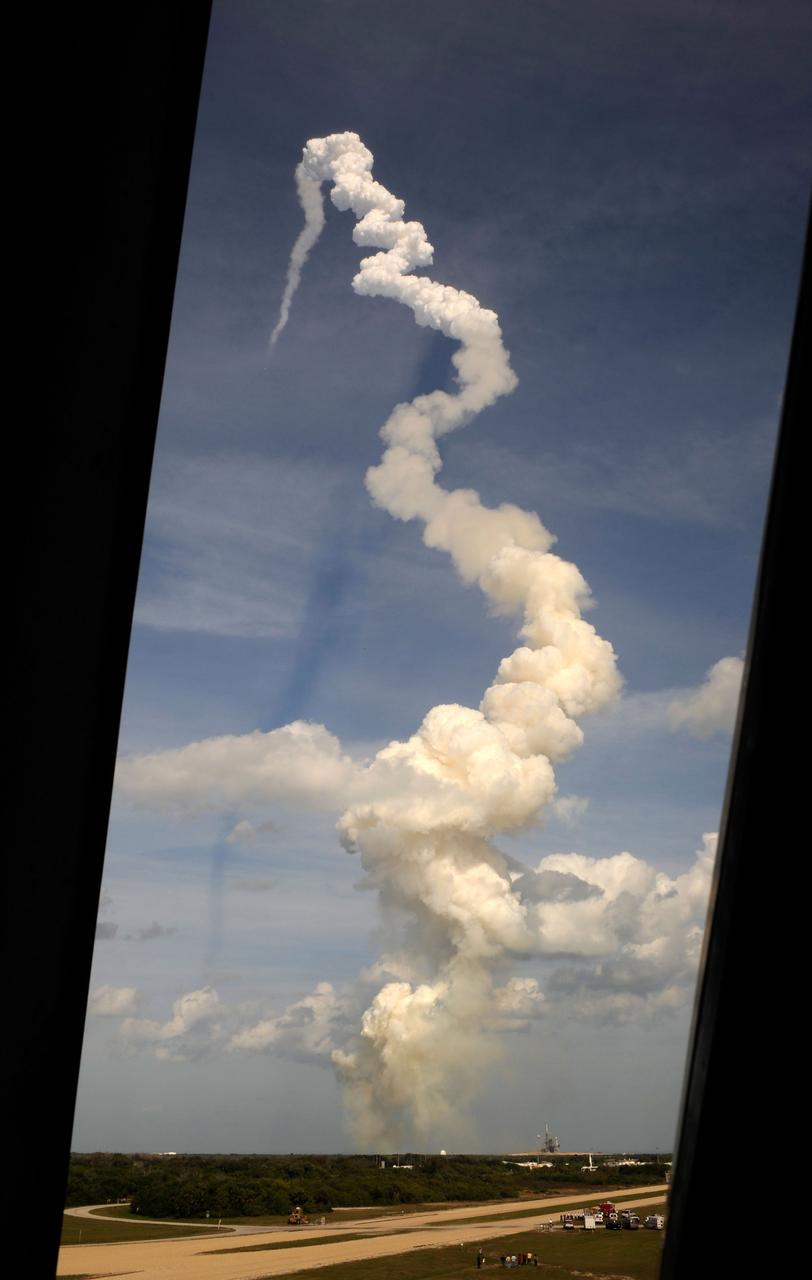
The launch of the Space Shuttle Atlantis (STS-122) as seen through the louvered windows of the Launch Control Center Thursday, Feb. 7, 2008, at the Kennedy Space Center in Cape Canaveral, Fla. The Shuttle lifted off from launch pad 39A at 2:45p.m. EST. Photo Credit: (NASA/Bill Ingalls)
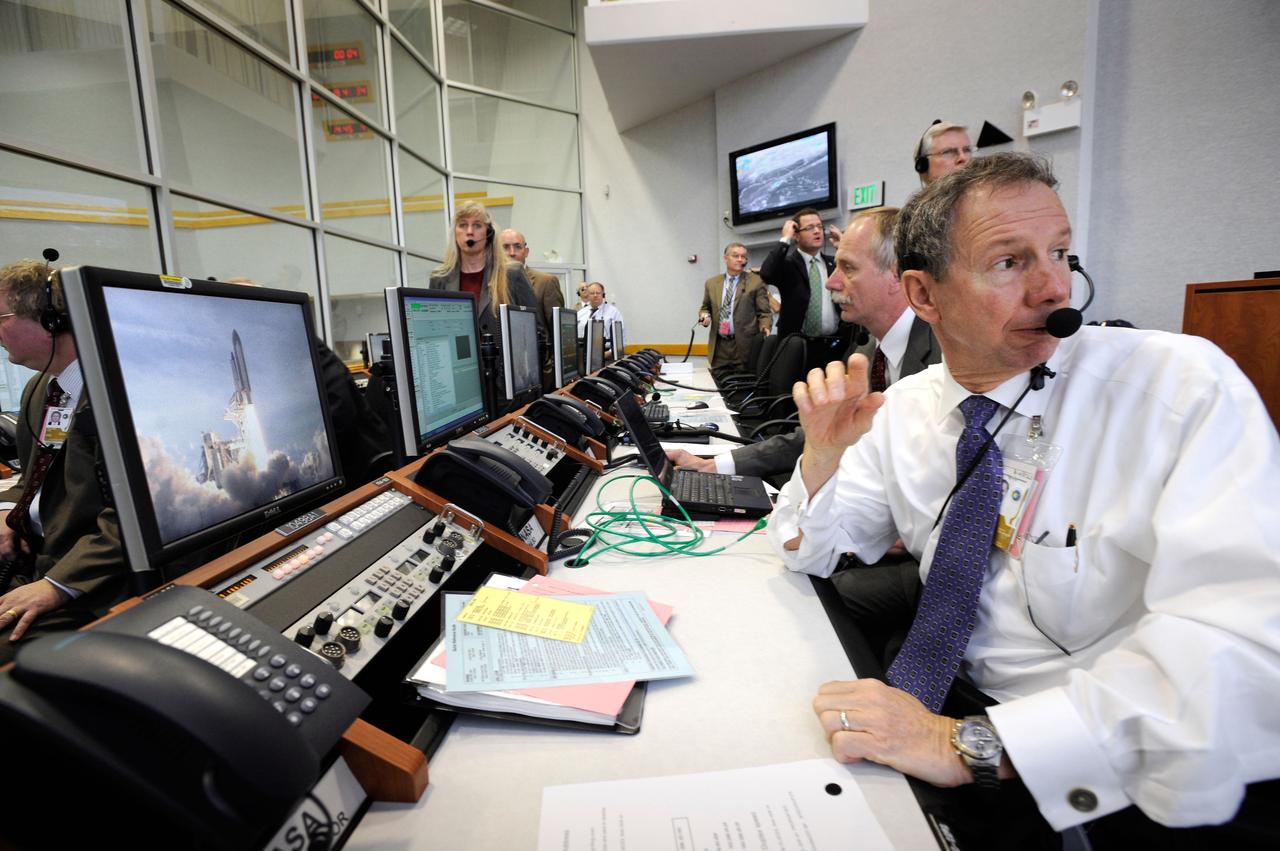
NASA Administrator, Michael Griffin watches the launch of the Space Shuttle Atlantis (STS-122) from the Launch Control Center Thursday, Feb. 7, 2008, at the Kennedy Space Center in Cape Canaveral, Fla. The Shuttle lifted off from launch pad 39A at 2:45p.m. EST. Photo Credit: (NASA/Bill Ingalls)
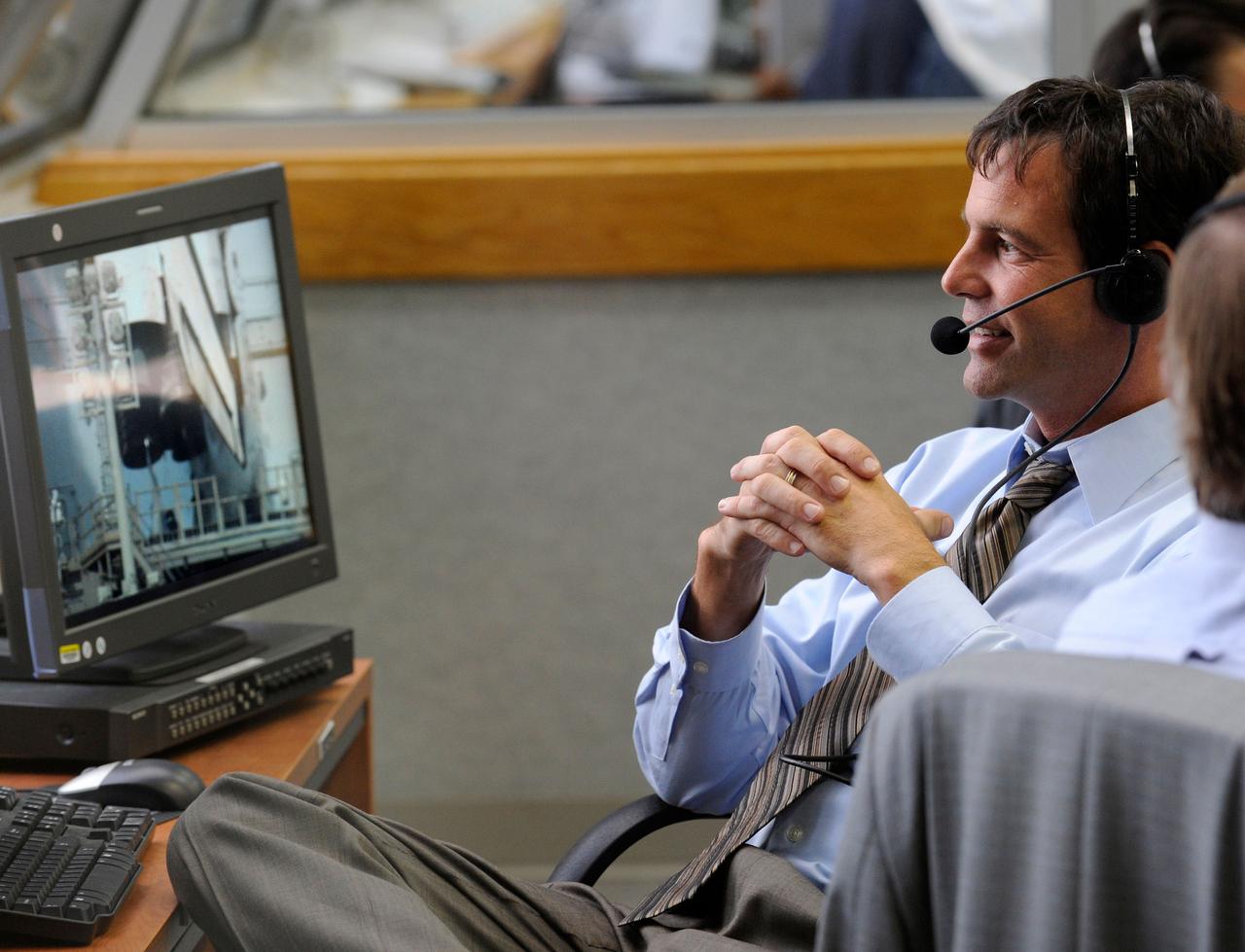
Launch Director for the space shuttle Atlantis, Doug Lyons monitors the weather and shuttle systems prior to the launch of the Space Shuttle Atlantis (STS-122) from the Launch Control Center Thursday, Feb. 7, 2008, at the Kennedy Space Center in Cape Canaveral, Fla. The Shuttle lifted off from launch pad 39A at 2:45p.m. EST. Photo Credit: (NASA/Bill Ingalls)
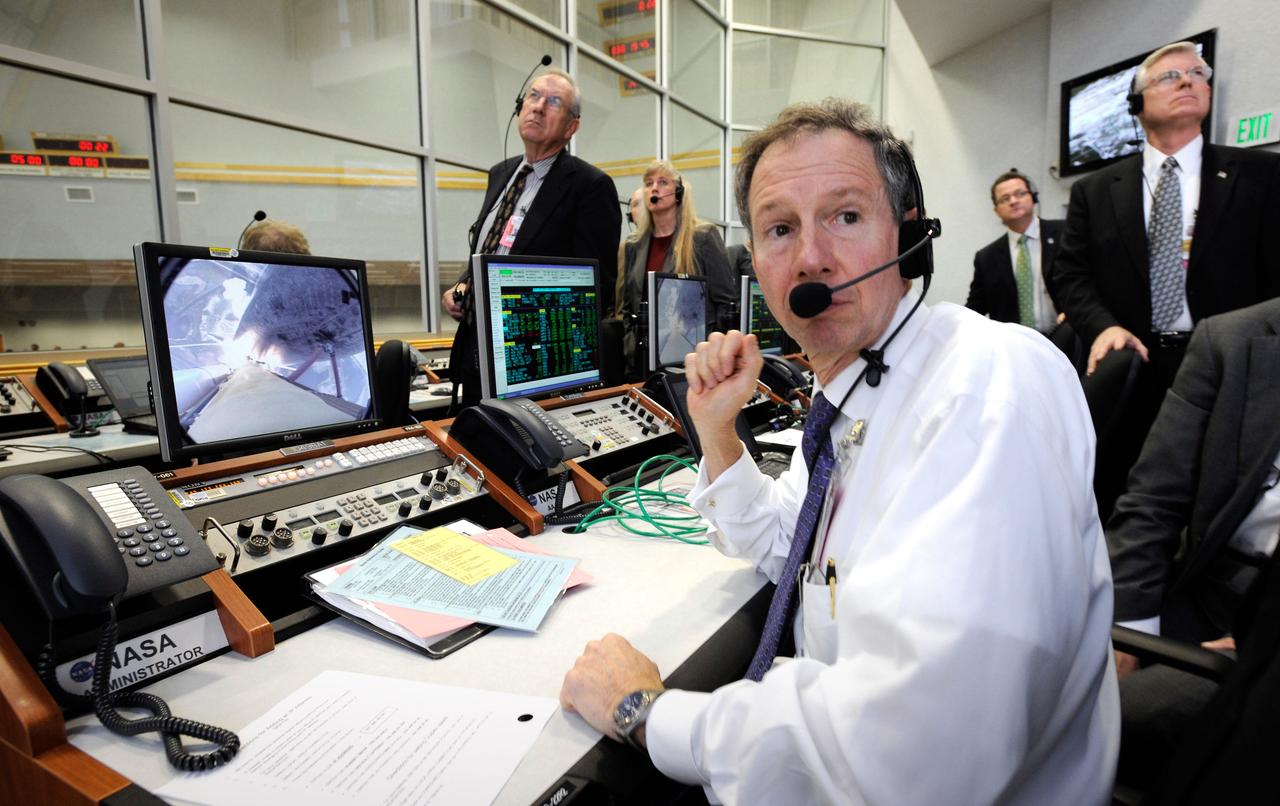
NASA Administrator, Michael Griffin and other management watch the launch of the Space Shuttle Atlantis (STS-122) from the Launch Control Center Thursday, Feb. 7, 2008, at the Kennedy Space Center in Cape Canaveral, Fla. The Shuttle lifted off from launch pad 39A at 2:45p.m. EST. Photo Credit: (NASA/Bill Ingalls)
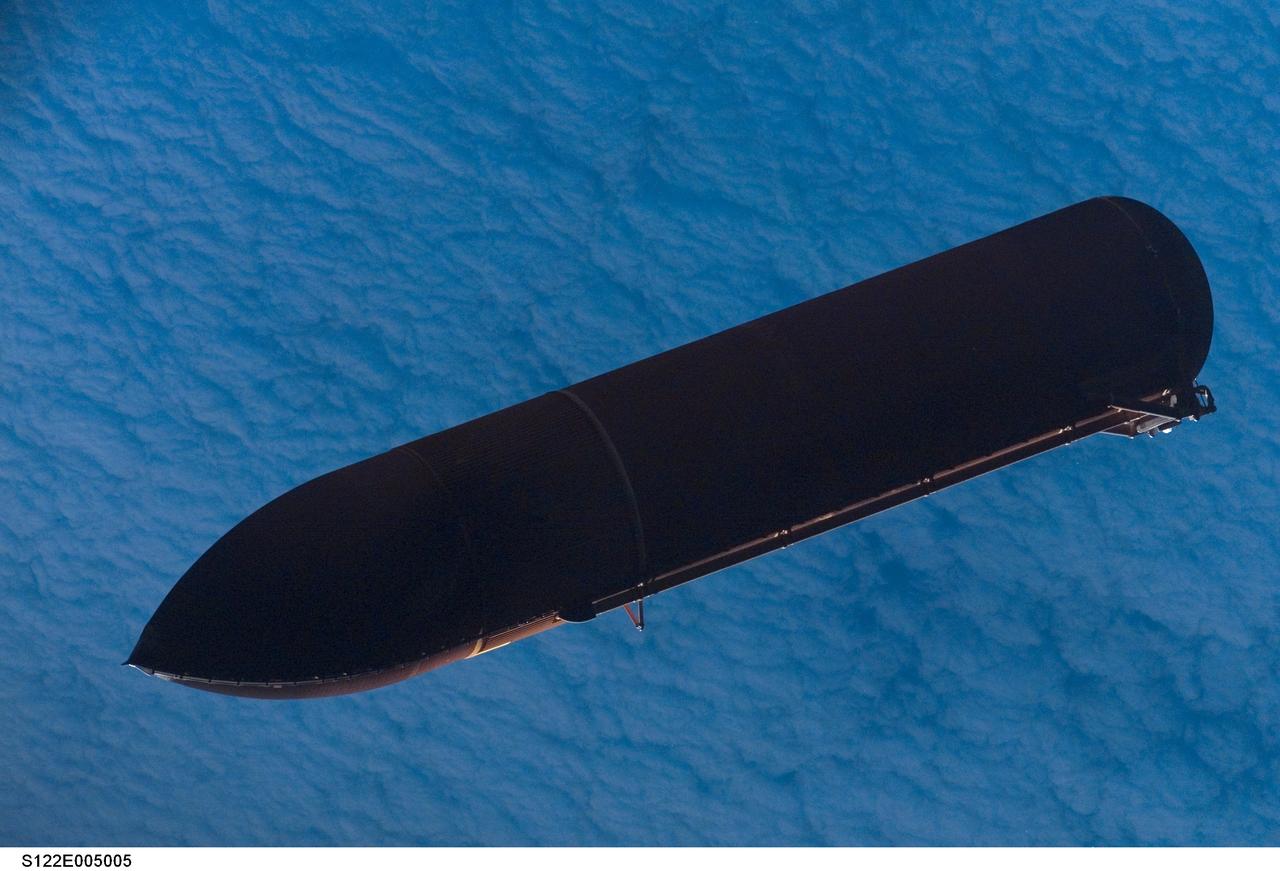
S122-E-005005 (7 Feb. 2008) --- Backdropped against a blanket of clouds, the STS-122 external fuel tank (ET) begins its relative separation from the Space Shuttle Atlantis. An STS-122 crewmember recorded the scene with a digital still camera.
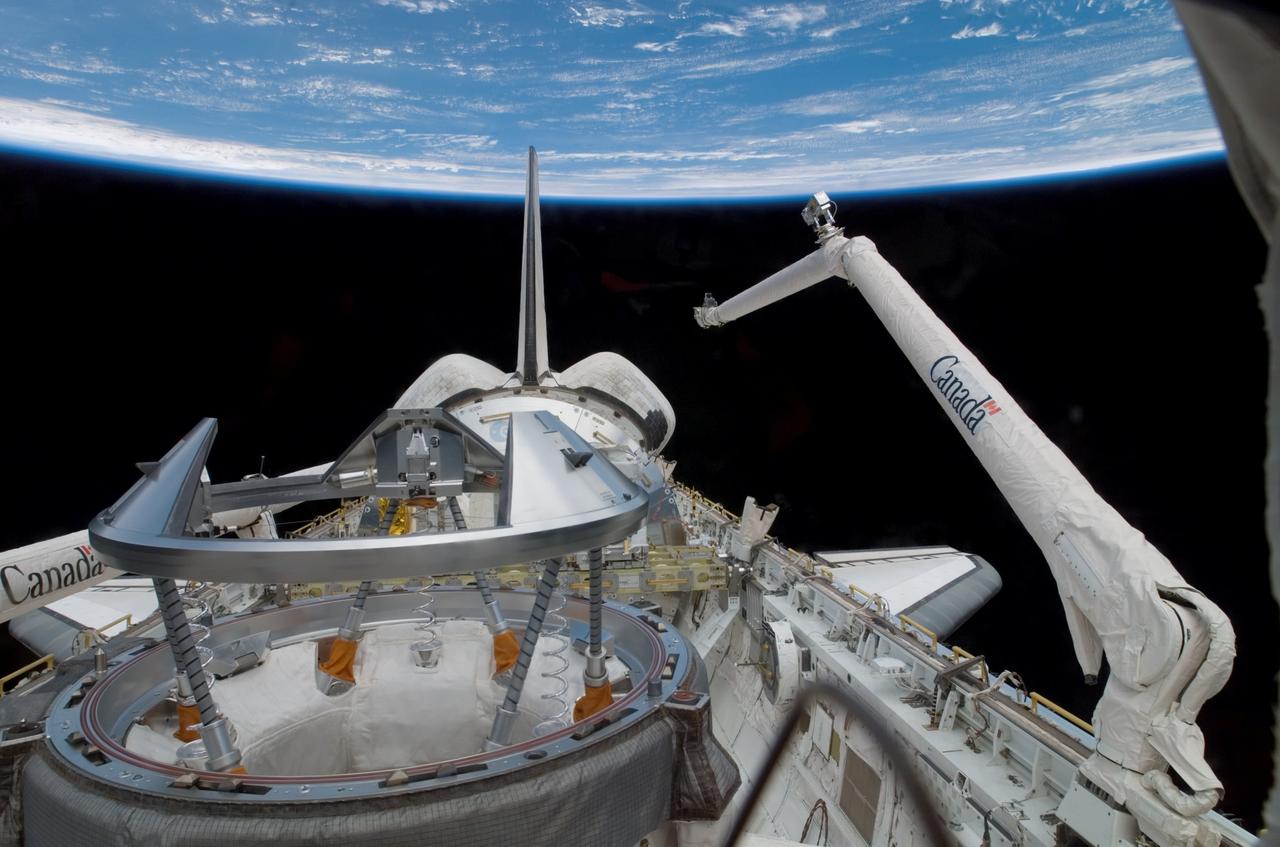
S122-E-006381 (8 Feb. 2008) --- Backdropped by the blackness of space and Earth's horizon, Atlantis' orbiter docking system (foreground) and the Canadarm Remote Manipulator System (RMS) in the payload bay are featured in this image photographed by a STS-122 crewmember during flight day two activities.

KENNEDY SPACE CENTER, FLA. -- On Launch Pad 39A at NASA's Kennedy Space Center, foam insulation is being trimmed for placement around the engine cutoff, or ECO, sensor system connector and wiring on space shuttle Atlantis' external tank. The foam was removed to enable engineers to remove and replace a feed-through ECO sensor connector on the tank. The feed-through connector passes the wires from the inside of the tank to the outside. Results of a tanking test on Dec. 18 pointed to an open circuit in the feed-through connector wiring, which is located at the base of the tank. The pins in the replacement connector were precisely soldered to create a connection that allows sensors inside the tank to send signals to the computers onboard Atlantis. The launch date for the shuttle's STS-122 mission has now been targeted for Feb. 7. Photo credit: NASA/Kim Shiflett
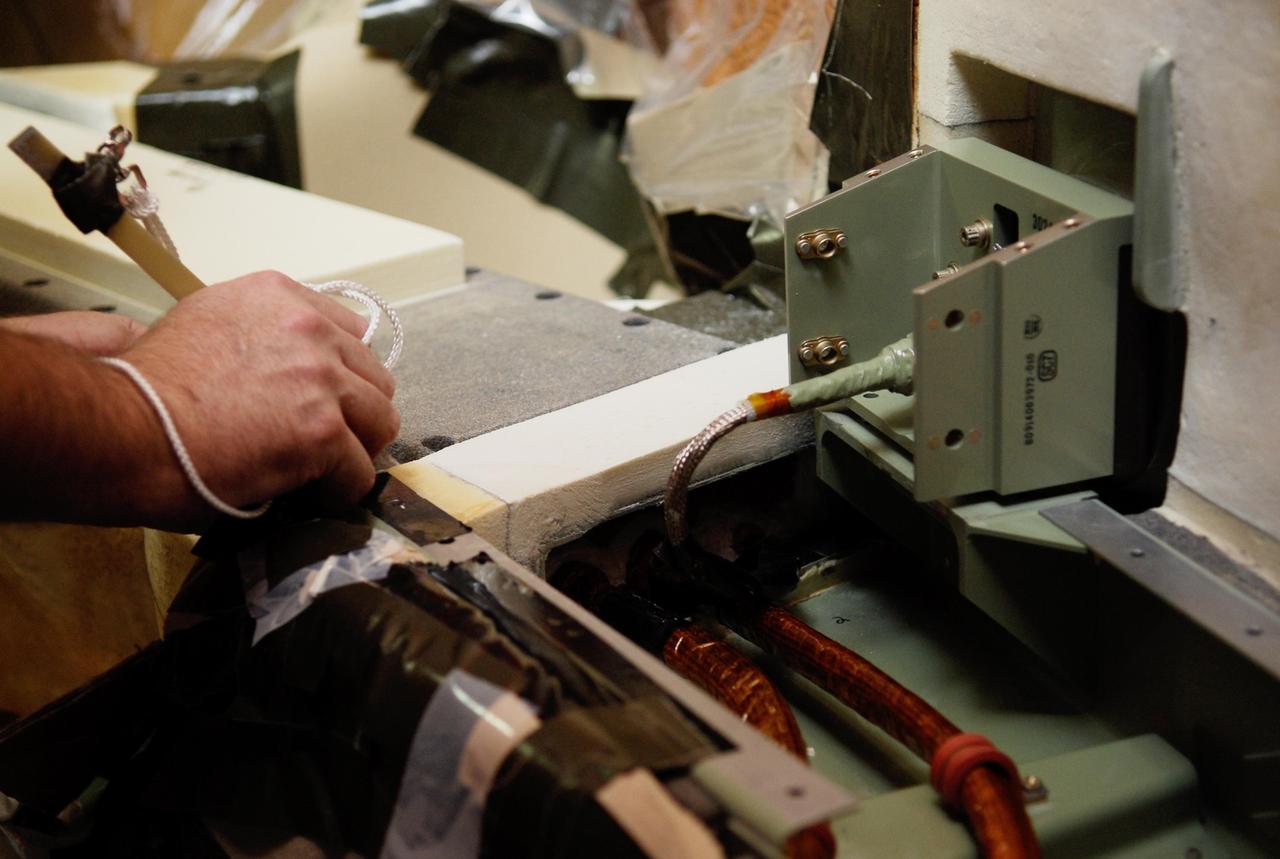
KENNEDY SPACE CENTER, FLA. -- On Launch Pad 39A at NASA's Kennedy Space Center, foam insulation is being trimmed for placement around the engine cutoff, or ECO, sensor system connector and wiring on space shuttle Atlantis' external tank. The foam was removed to enable engineers to remove and replace a feed-through ECO sensor connector on the tank. The feed-through connector passes the wires from the inside of the tank to the outside. Results of a tanking test on Dec. 18 pointed to an open circuit in the feed-through connector wiring, which is located at the base of the tank. The pins in the replacement connector were precisely soldered to create a connection that allows sensors inside the tank to send signals to the computers onboard Atlantis. The launch date for the shuttle's STS-122 mission has now been targeted for Feb. 7. Photo credit: NASA/Kim Shiflett
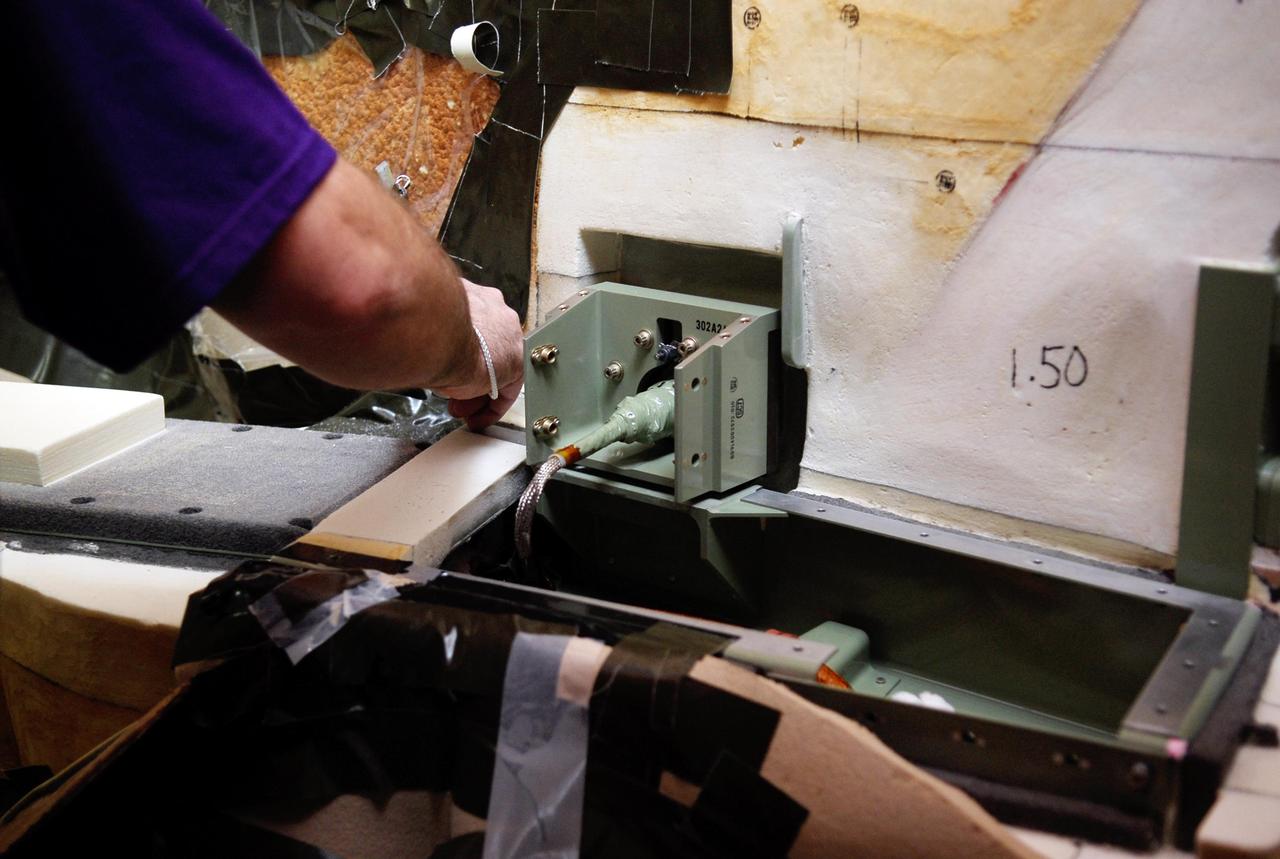
KENNEDY SPACE CENTER, FLA. -- On Launch Pad 39A at NASA's Kennedy Space Center, foam insulation is being trimmed for placement around the engine cutoff, or ECO, sensor system connector and wiring on space shuttle Atlantis' external tank. The foam was removed to enable engineers to remove and replace a feed-through ECO sensor connector on the tank. The feed-through connector passes the wires from the inside of the tank to the outside. Results of a tanking test on Dec. 18 pointed to an open circuit in the feed-through connector wiring, which is located at the base of the tank. The pins in the replacement connector were precisely soldered to create a connection that allows sensors inside the tank to send signals to the computers onboard Atlantis. The launch date for the shuttle's STS-122 mission has now been targeted for Feb. 7. Photo credit: NASA/Kim Shiflett
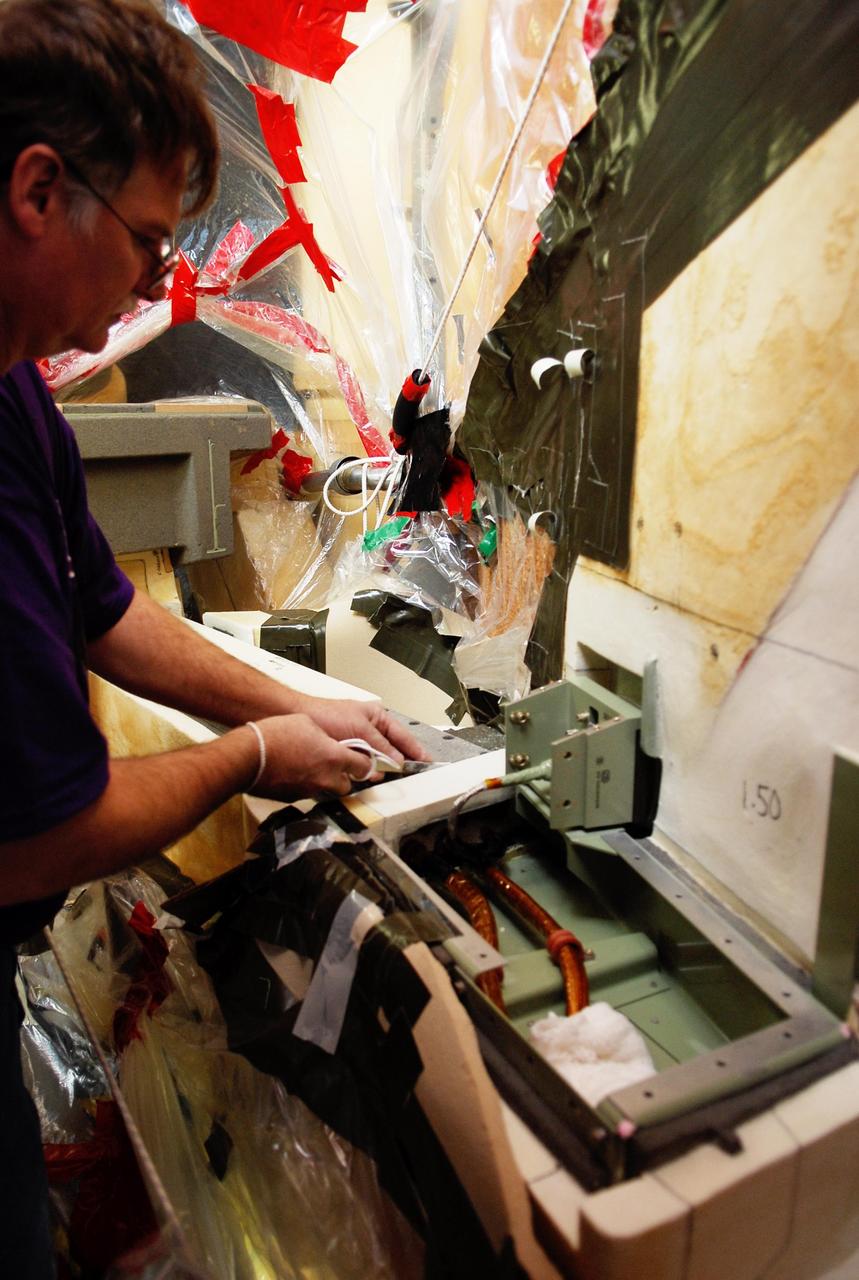
KENNEDY SPACE CENTER, FLA. -- On Launch Pad 39A at NASA's Kennedy Space Center, foam insulation is being trimmed for placement around the engine cutoff, or ECO, sensor system connector and wiring on space shuttle Atlantis' external tank. The foam was removed to enable engineers to remove and replace a feed-through ECO sensor connector on the tank. The feed-through connector passes the wires from the inside of the tank to the outside. Results of a tanking test on Dec. 18 pointed to an open circuit in the feed-through connector wiring, which is located at the base of the tank. The pins in the replacement connector were precisely soldered to create a connection that allows sensors inside the tank to send signals to the computers onboard Atlantis. The launch date for the shuttle's STS-122 mission has now been targeted for Feb. 7. Photo credit: NASA/Kim Shiflett
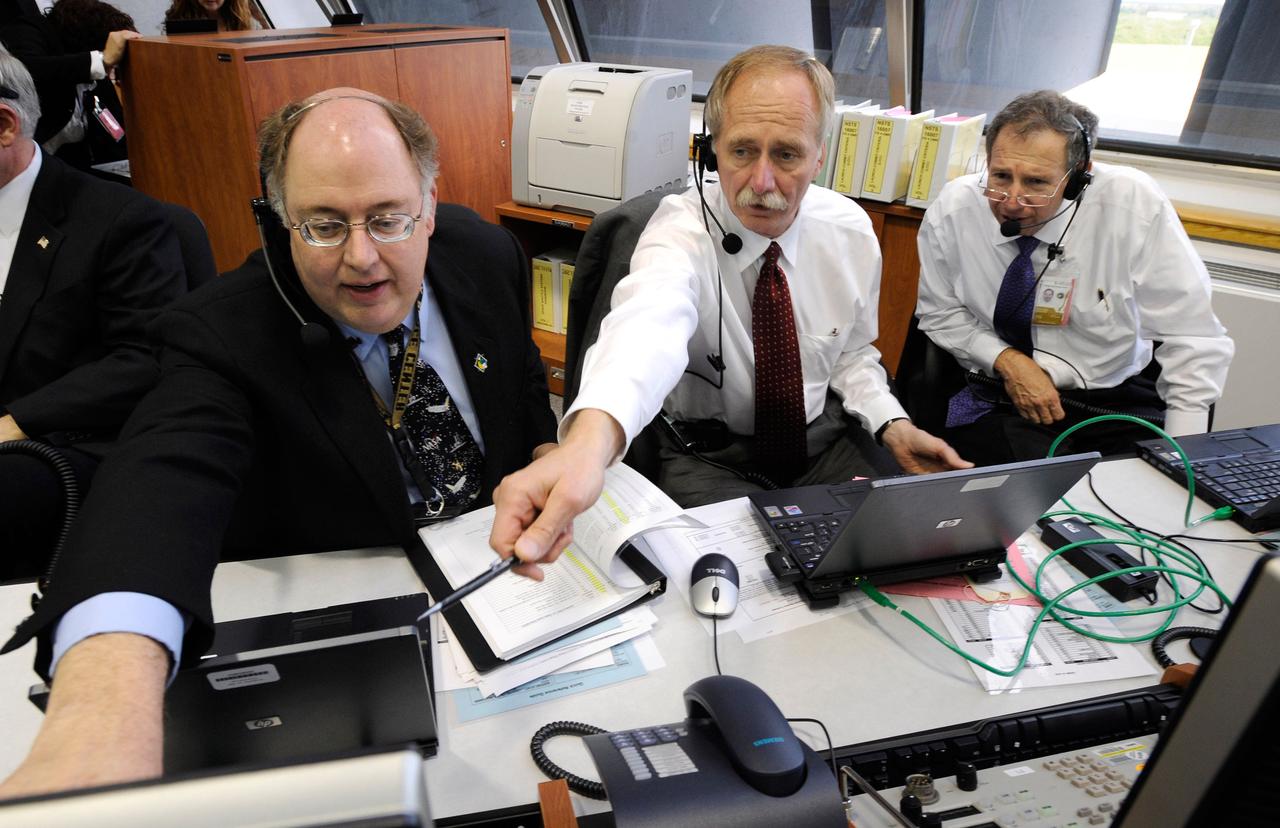
Space Program Manager Wayne Hale, Associate Administrator for Space Operations Bill Gerstenmaier and NASA Administrator Michael Griffin monitor the weather and shuttle systems prior to the launch of the Space Shuttle Atlantis (STS-122) from the Launch Control Center Thursday, Feb. 7, 2008, at the Kennedy Space Center in Cape Canaveral, Fla. The Shuttle lifted off from launch pad 39A at 2:45p.m. EST. Photo Credit: (NASA/Bill Ingalls)
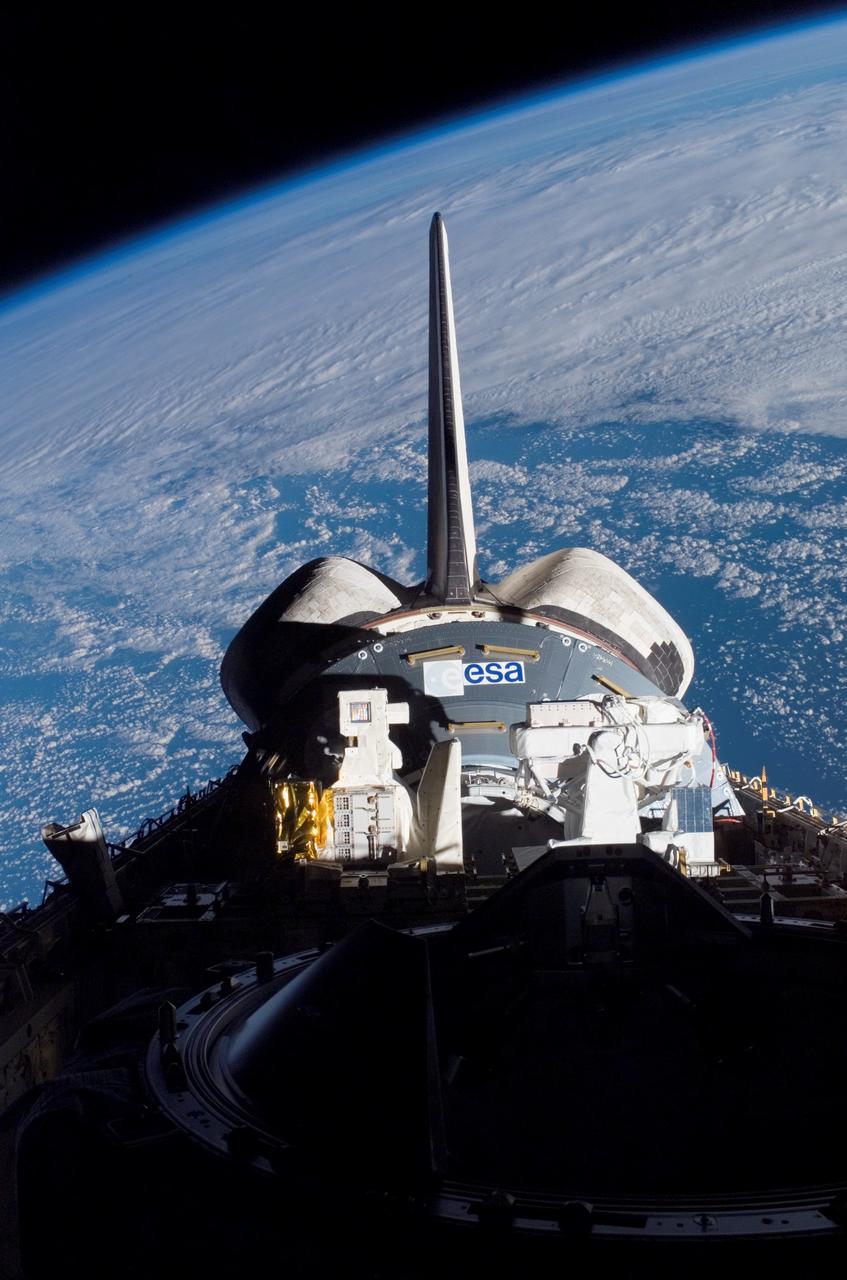
S122-E-006274 (8 Feb. 2008) --- Backdropped by the blackness of space and Earth's horizon, the Columbus laboratory in Space Shuttle Atlantis' payload bay, vertical stabilizer and orbital maneuvering system (OMS) pods are featured in this image photographed by a STS-122 crewmember during flight day two activities.
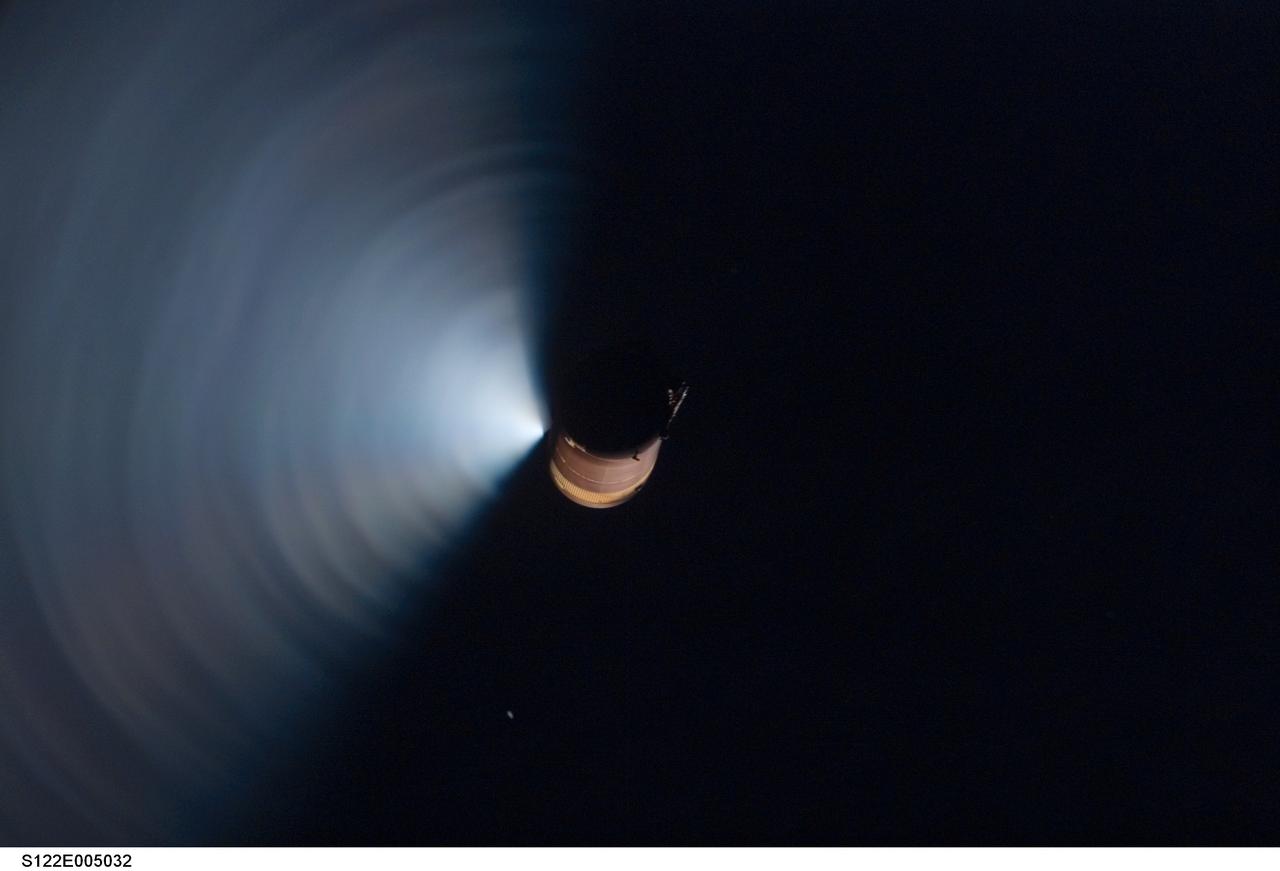
S122-E-005032 (7 Feb. 2008) --- Backdropped against the blackness of space, the STS-122 external fuel tank (ET) begins its relative separation from the Space Shuttle Atlantis. An STS-122 crewmember recorded the scene with a digital still camera. The fan-shaped bright area is the result of ET venting after orbiter separation. What happens in this nominal occurence is that the residual cryogenics in the tank heat up to some extent and the pressure increases, popping the relief valve. The residual LOX and LH2 spray out of the tank and are quite noticeable with the light reflection.
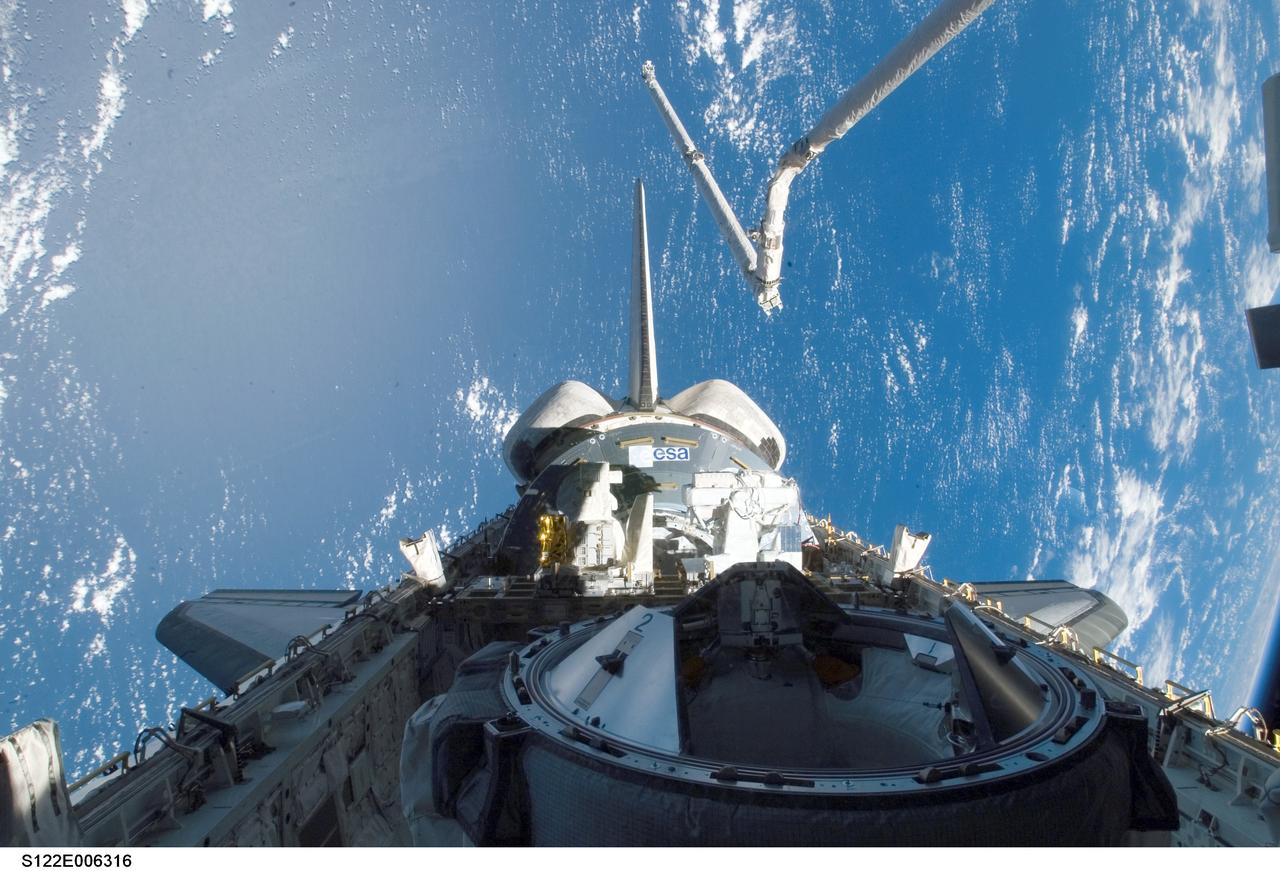
S122-E-006316 (8 Feb. 2008) --- Backdropped by a blue and white Earth, the docking mechanism (foreground), Columbus laboratory in Space Shuttle Atlantis' aft payload bay, vertical stabilizer, orbital maneuvering system (OMS) pods and Atlantis' Remote Manipulator System/Orbiter Boom Sensor System (RMS/OBSS) are featured in this image photographed by a STS-122 crewmember during flight day two activities.
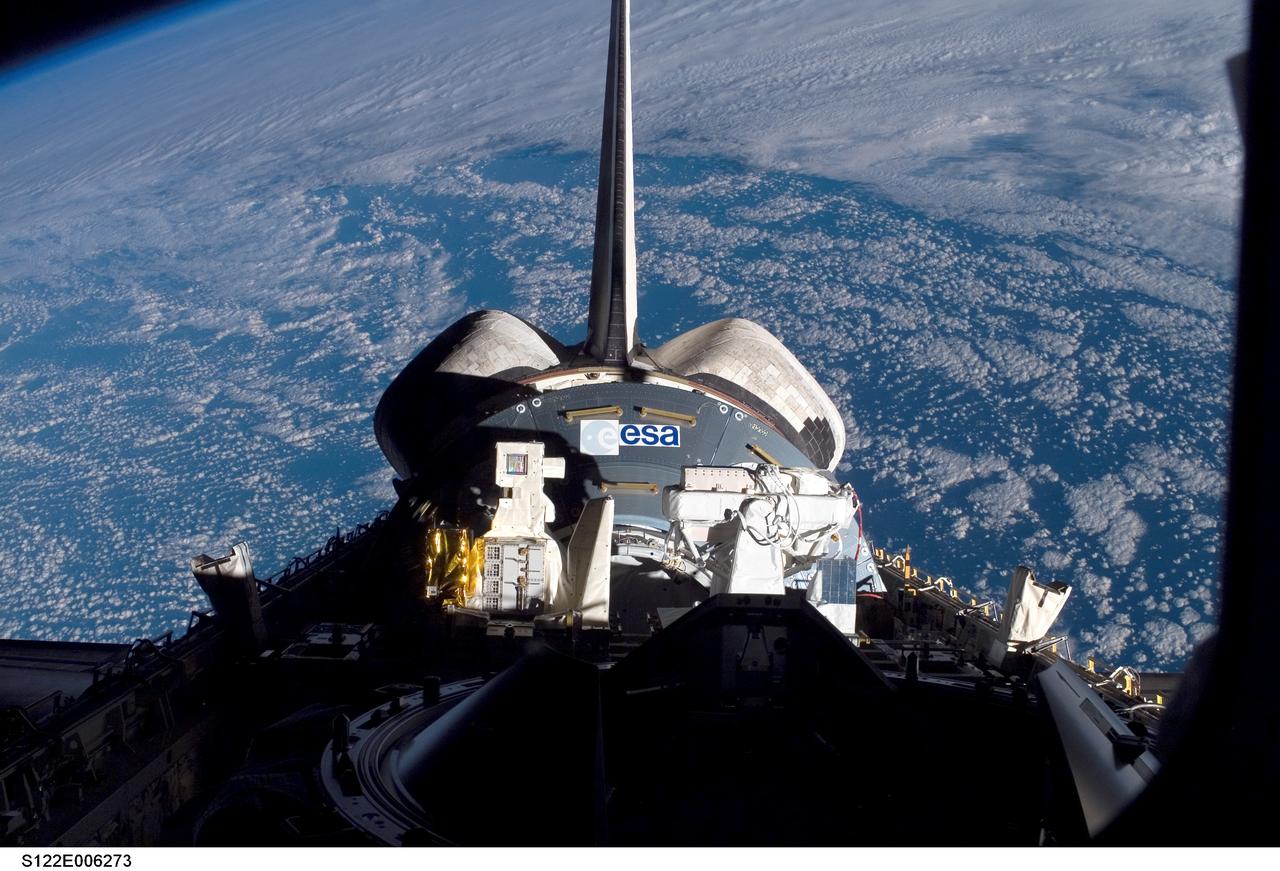
S122-E-006273 (8 Feb. 2008) --- Backdropped against a cloud-covered portion of Earth, the European Space Agency's Columbus laboratory and associated ESA hardware sit in the aft section of Space Shuttle Atlantis' cargo bay on the eve of the shuttle's scheduled docking to the International Space Station. The addition of Columbus to the orbital outpost is one of the primary tasks of the STS-122 mission.
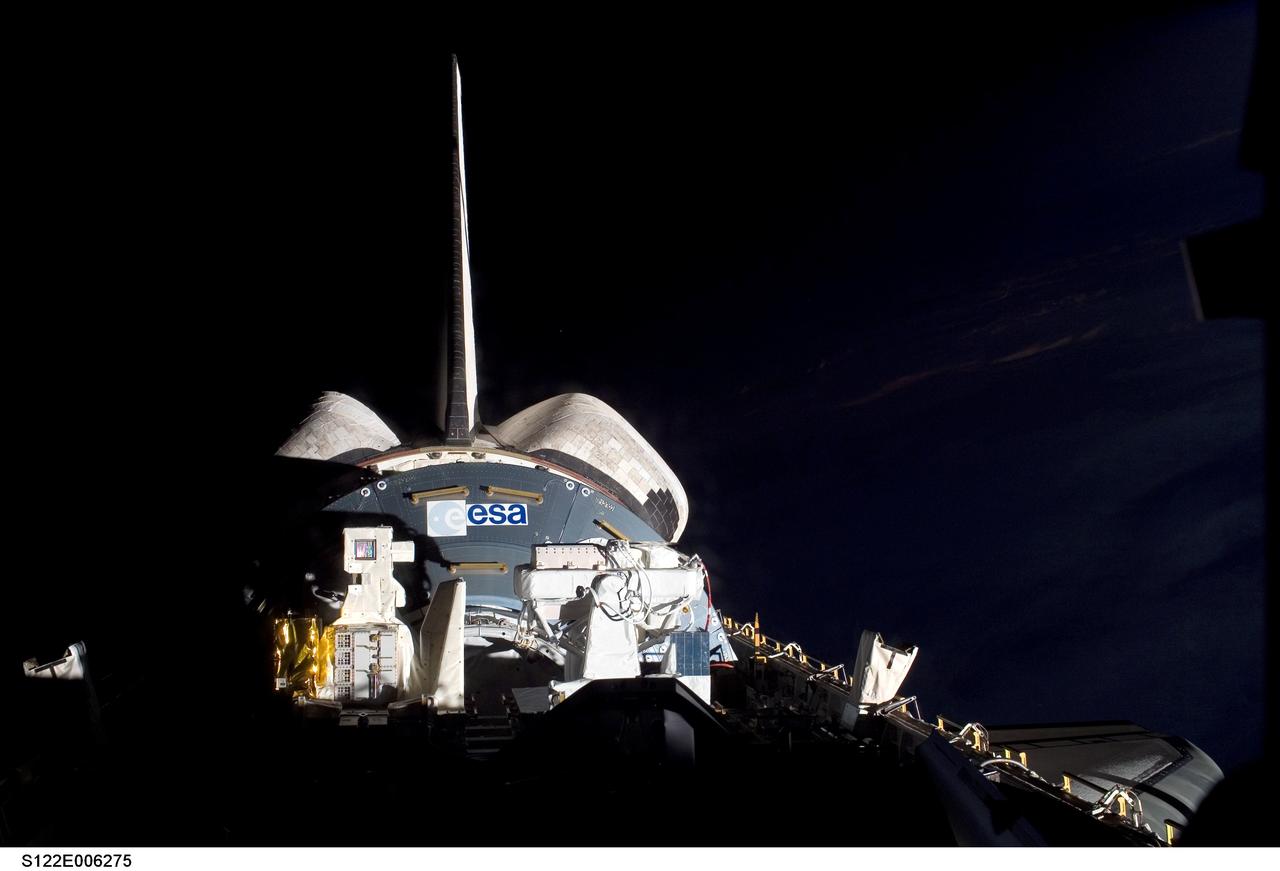
S122-E-006275 (8 Feb. 2008) --- Backdropped against the blackness of space, the European Space Agency's Columbus laboratory and associated ESA hardware sit in the aft portion of Space Shuttle Atlantis' cargo bay on the eve of the shuttle's scheduled docking to the International Space Station. The addition of Columbus to the orbital outpost is one of the primary tasks of the STS-122 mission.
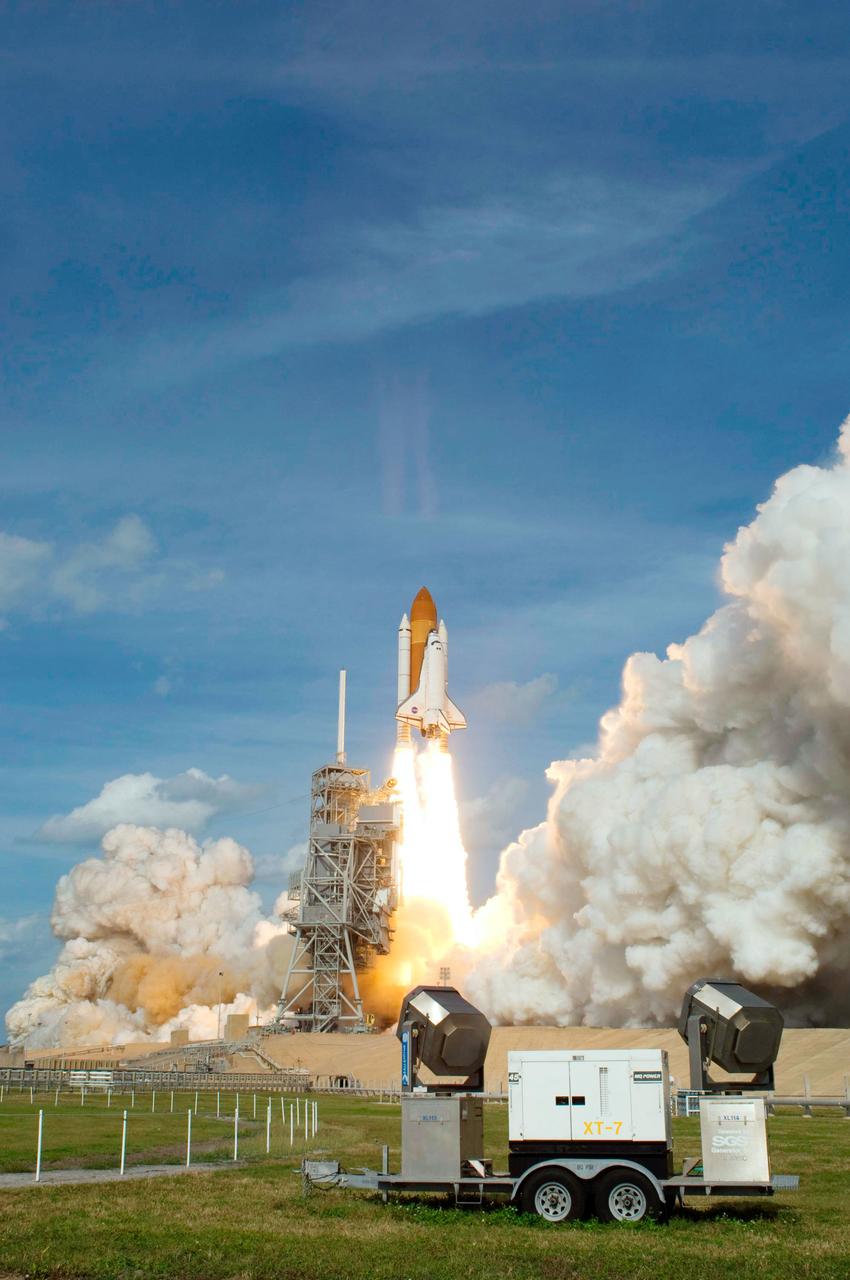
Launch of space shuttle Atlantis STS-122
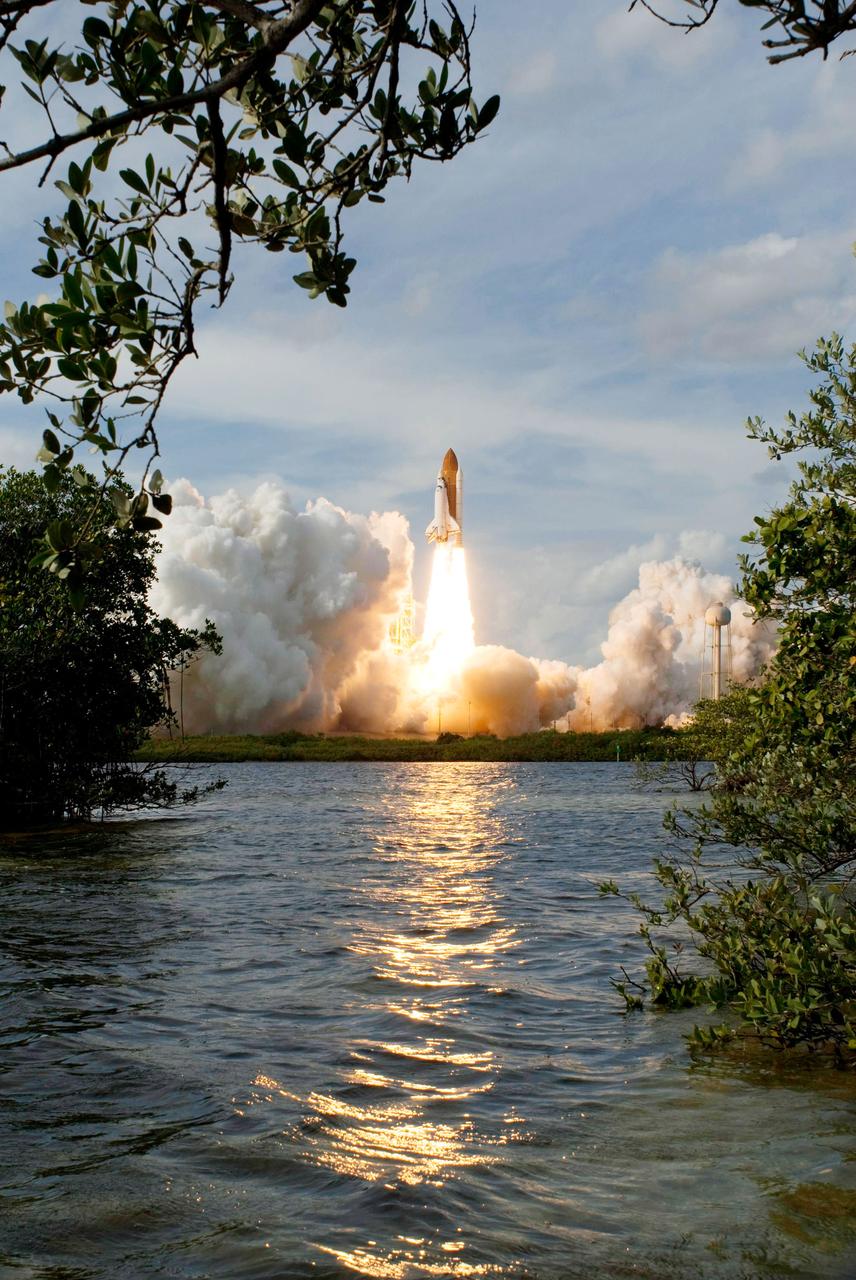
Launch of space shuttle Atlantis STS-122
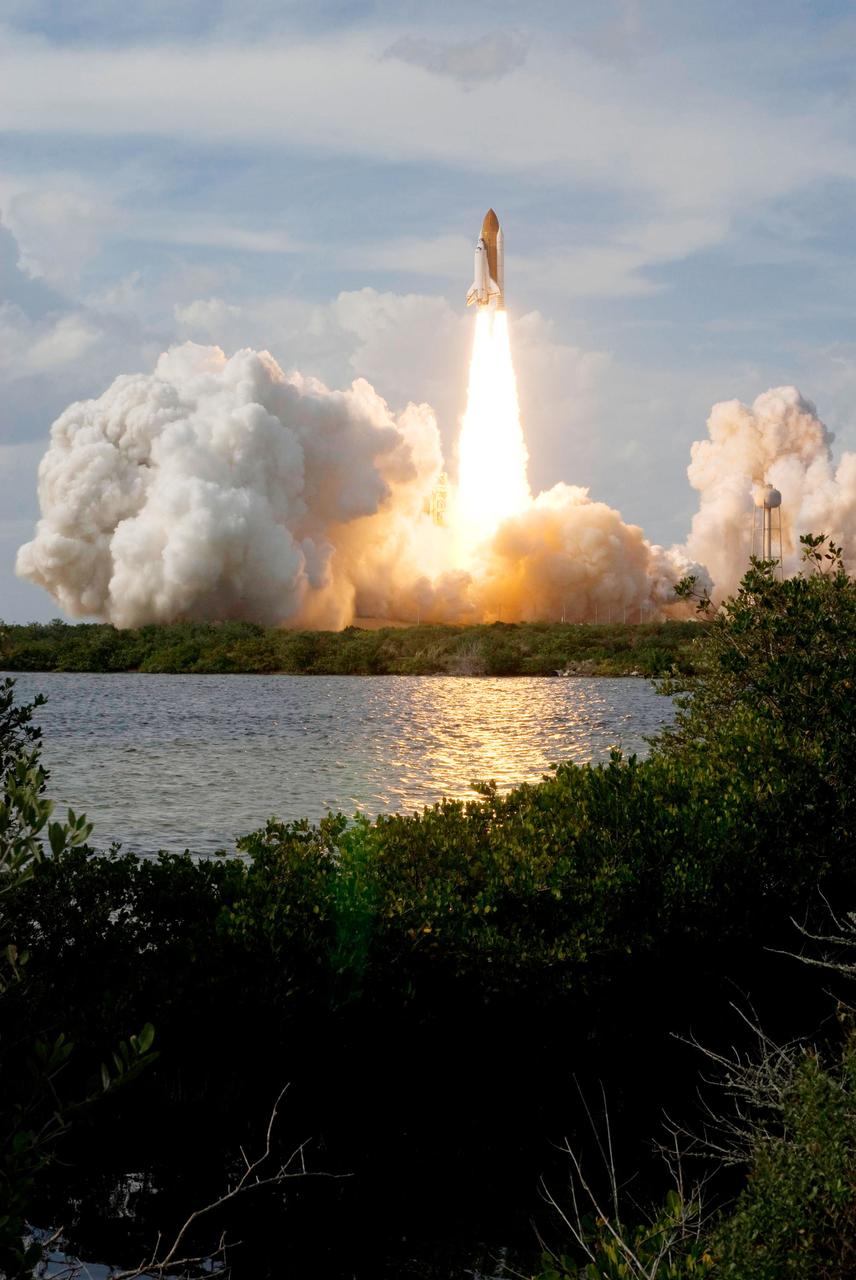
Launch of space shuttle Atlantis STS-122
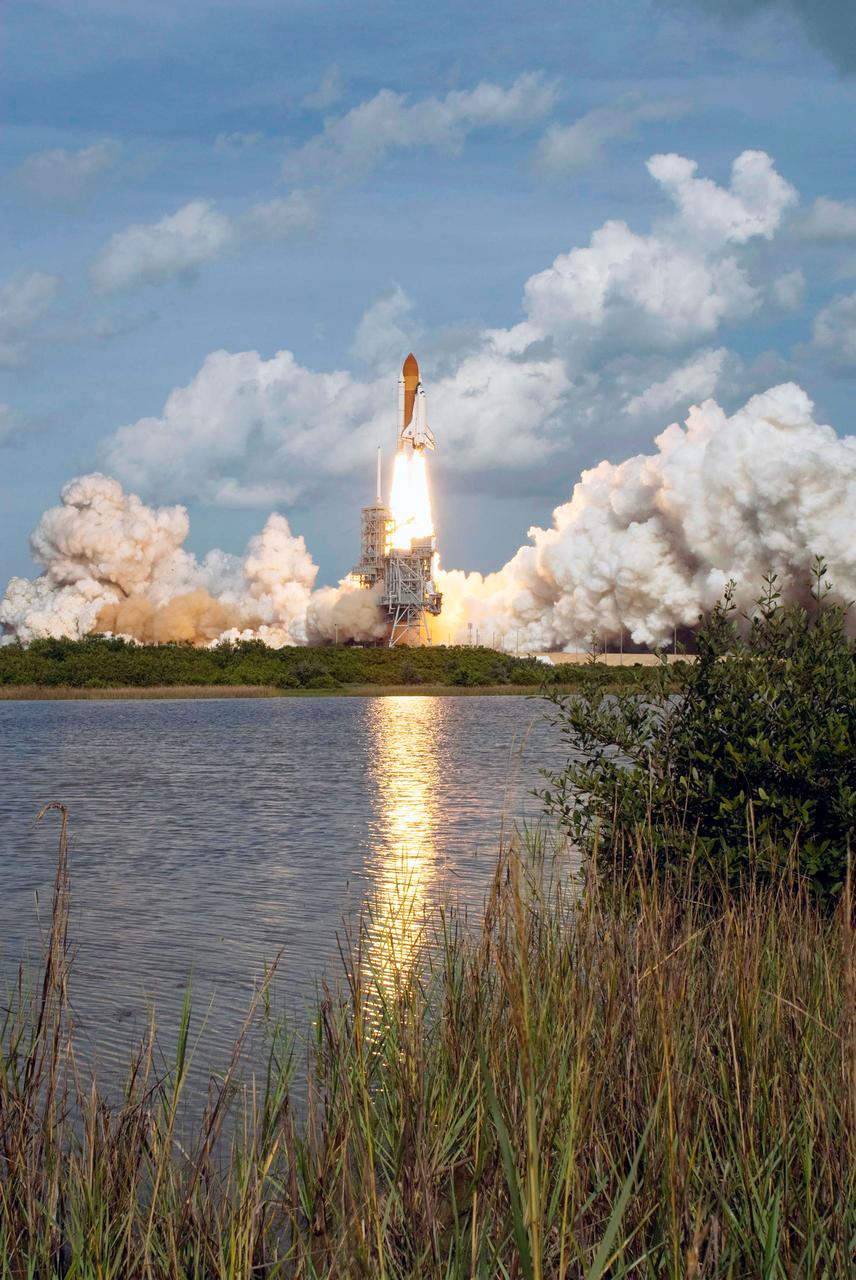
Launch of space shuttle Atlantis STS-122
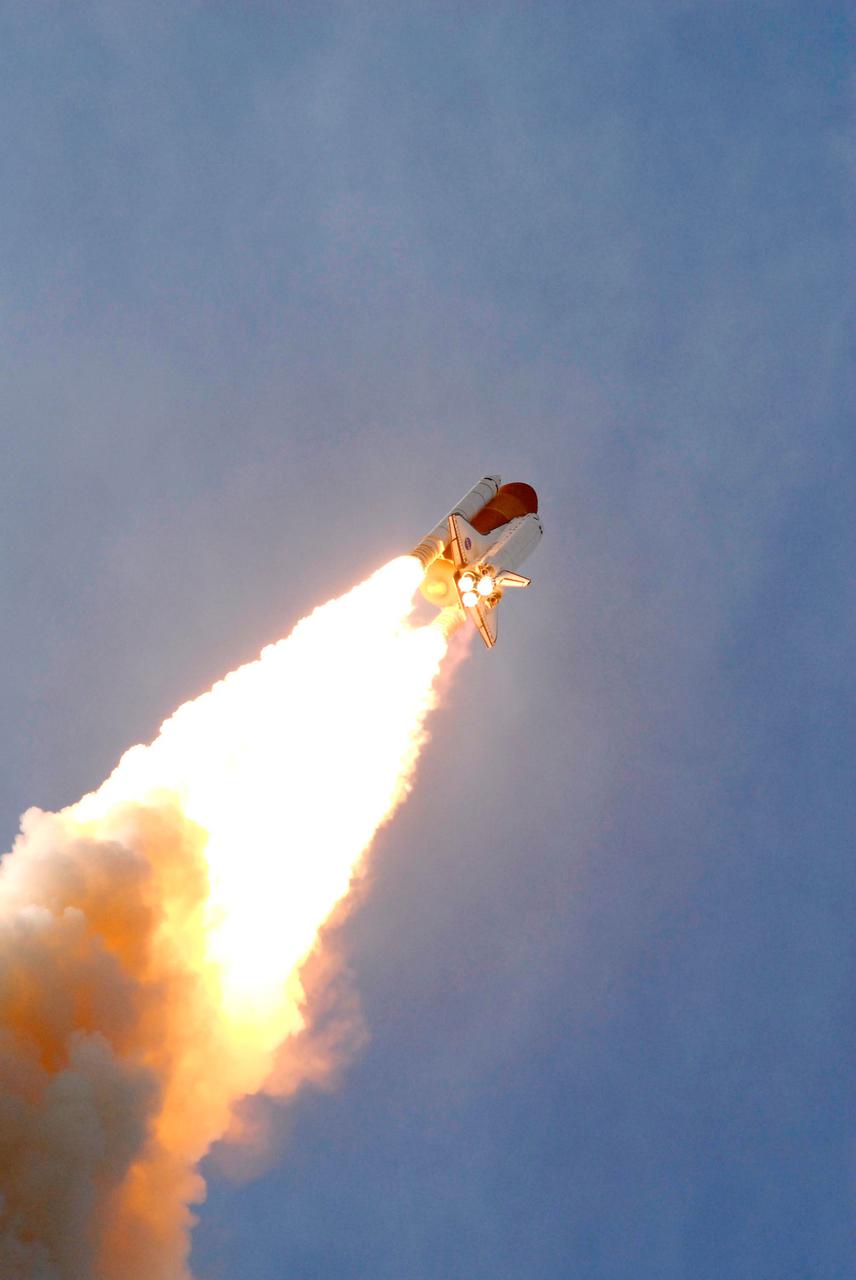
Launch of space shuttle Atlantis STS-122
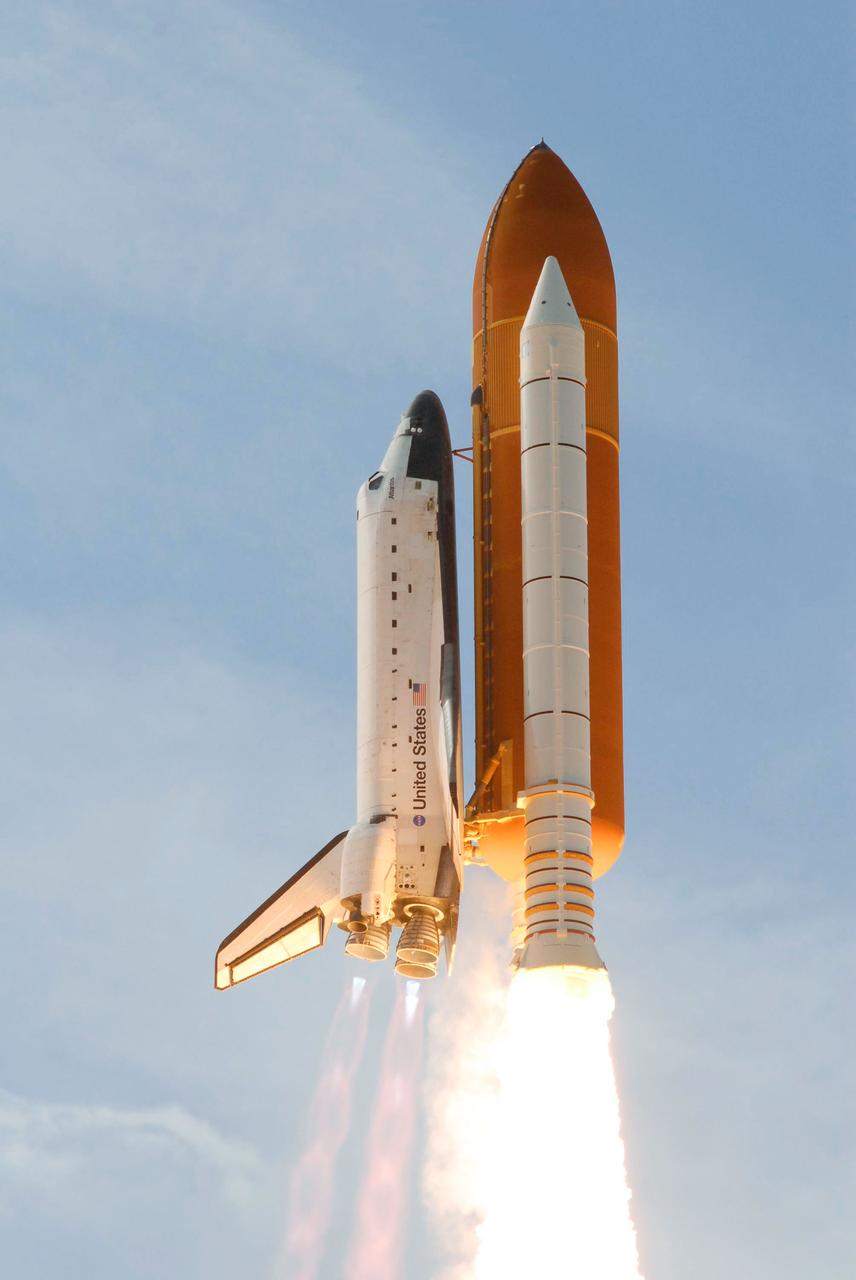
Launch of space shuttle Atlantis STS-122
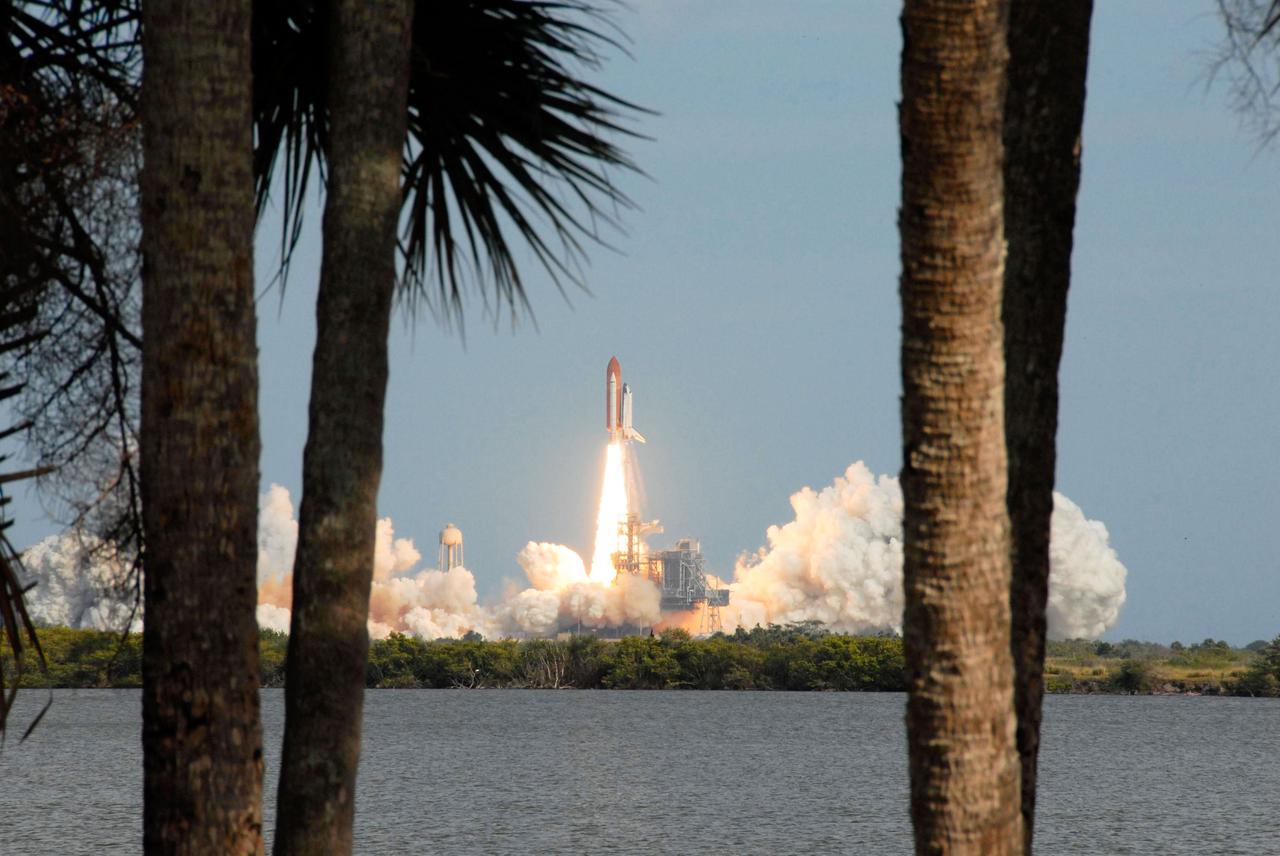
Launch of space shuttle Atlantis STS-122
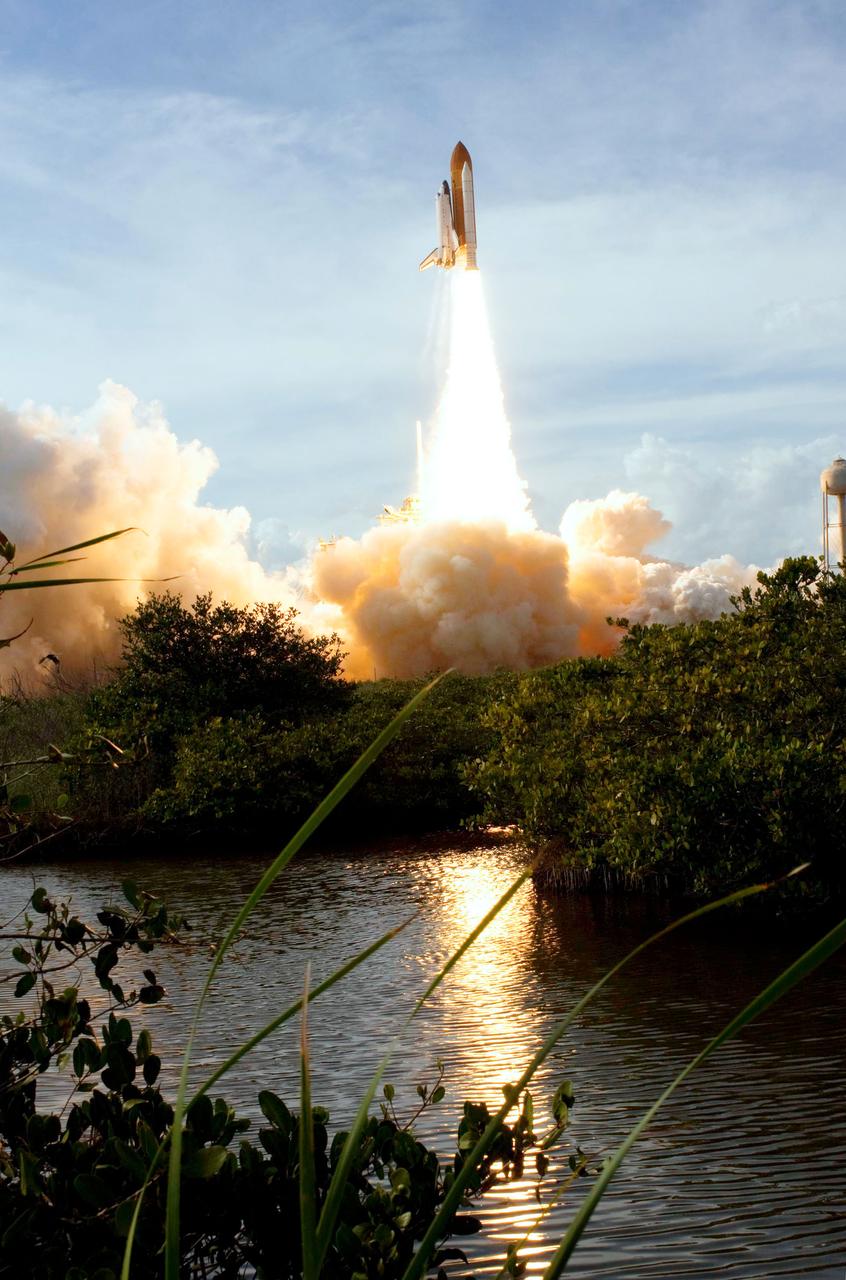
Launch of space shuttle Atlantis STS-122
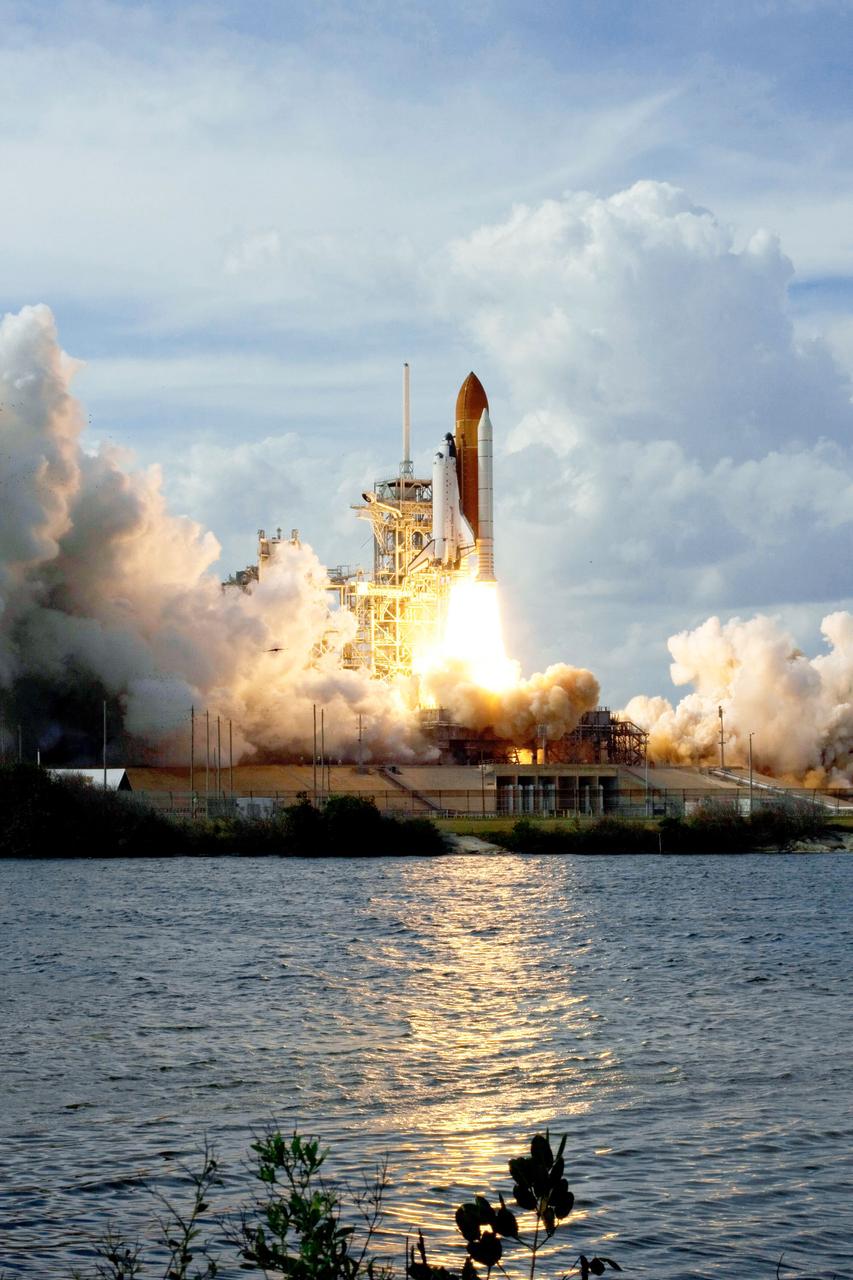
Launch of space shuttle Atlantis STS-122
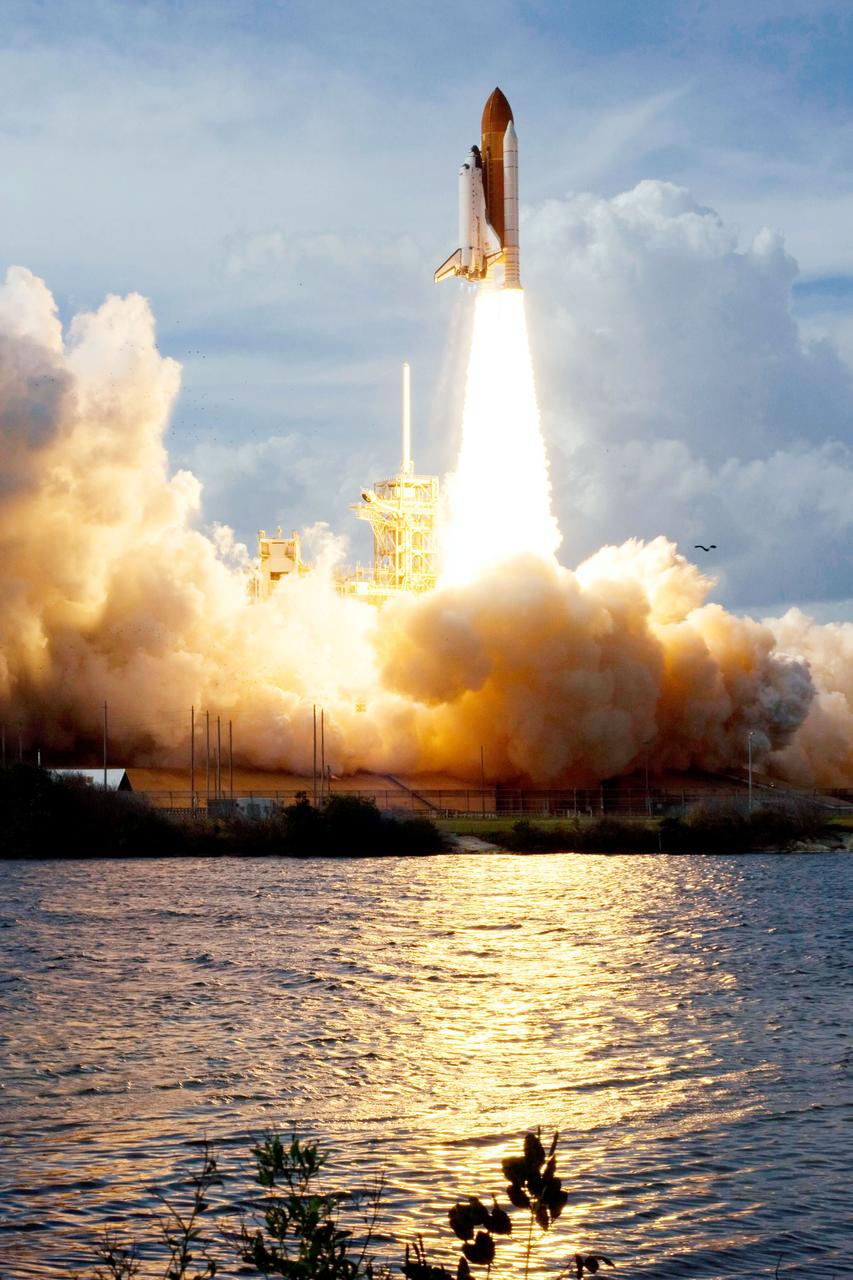
Launch of space shuttle Atlantis STS-122
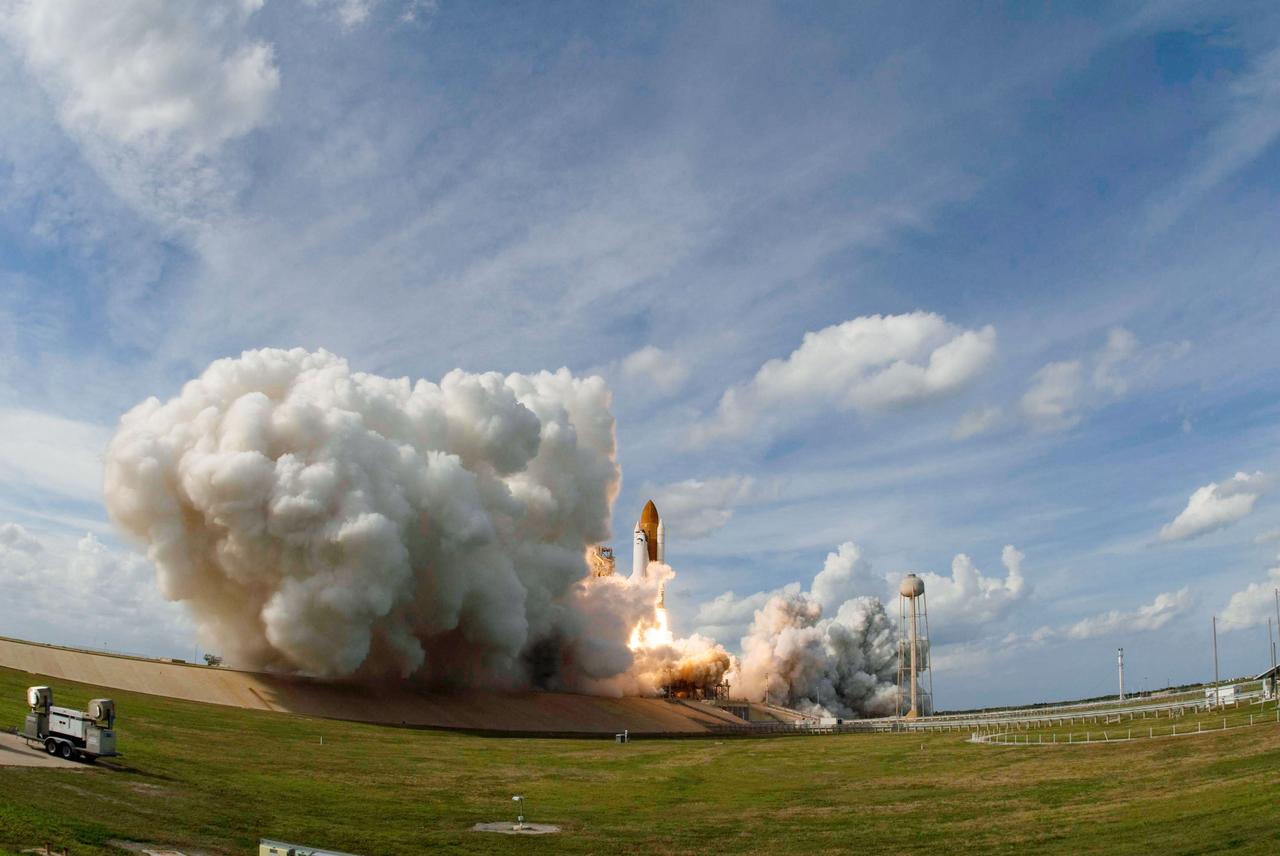
Launch of space shuttle Atlantis STS-122
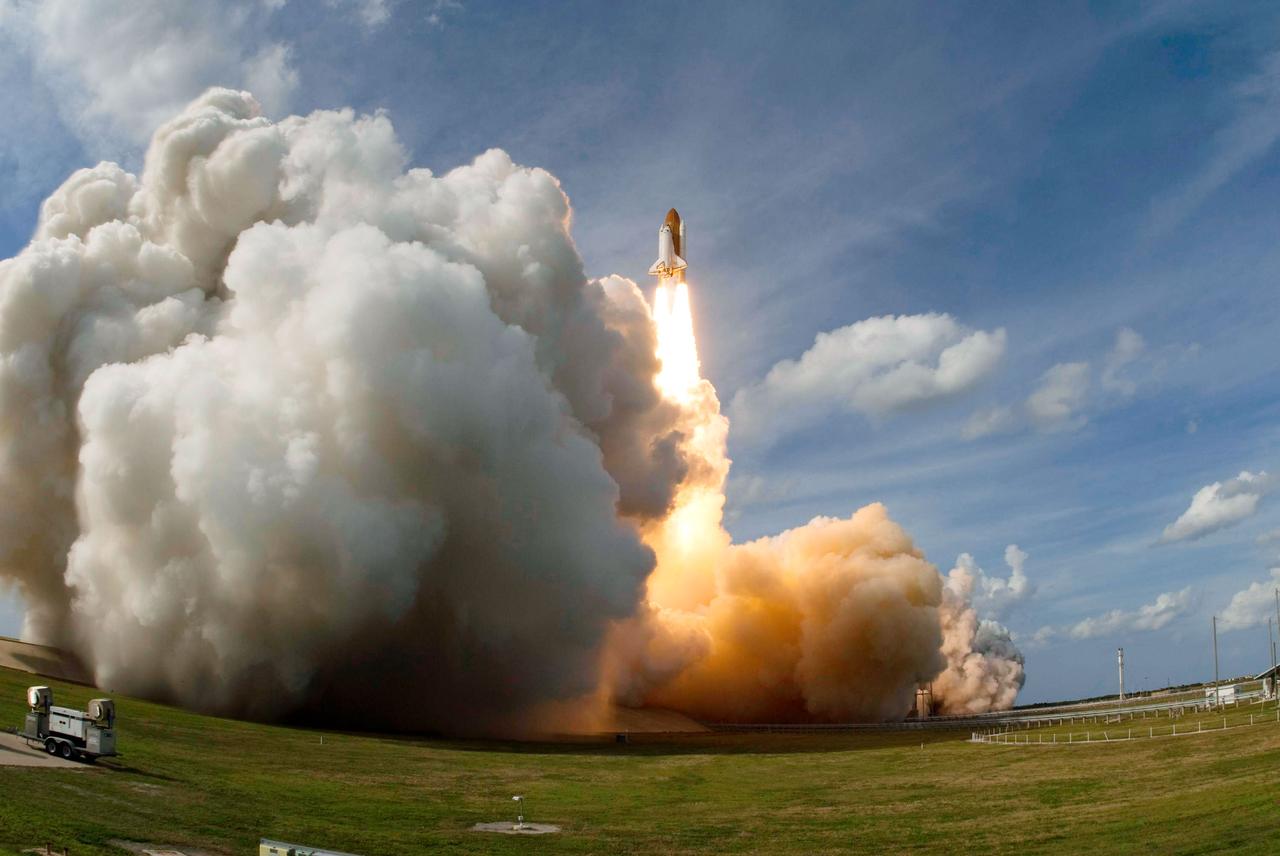
Launch of space shuttle Atlantis STS-122
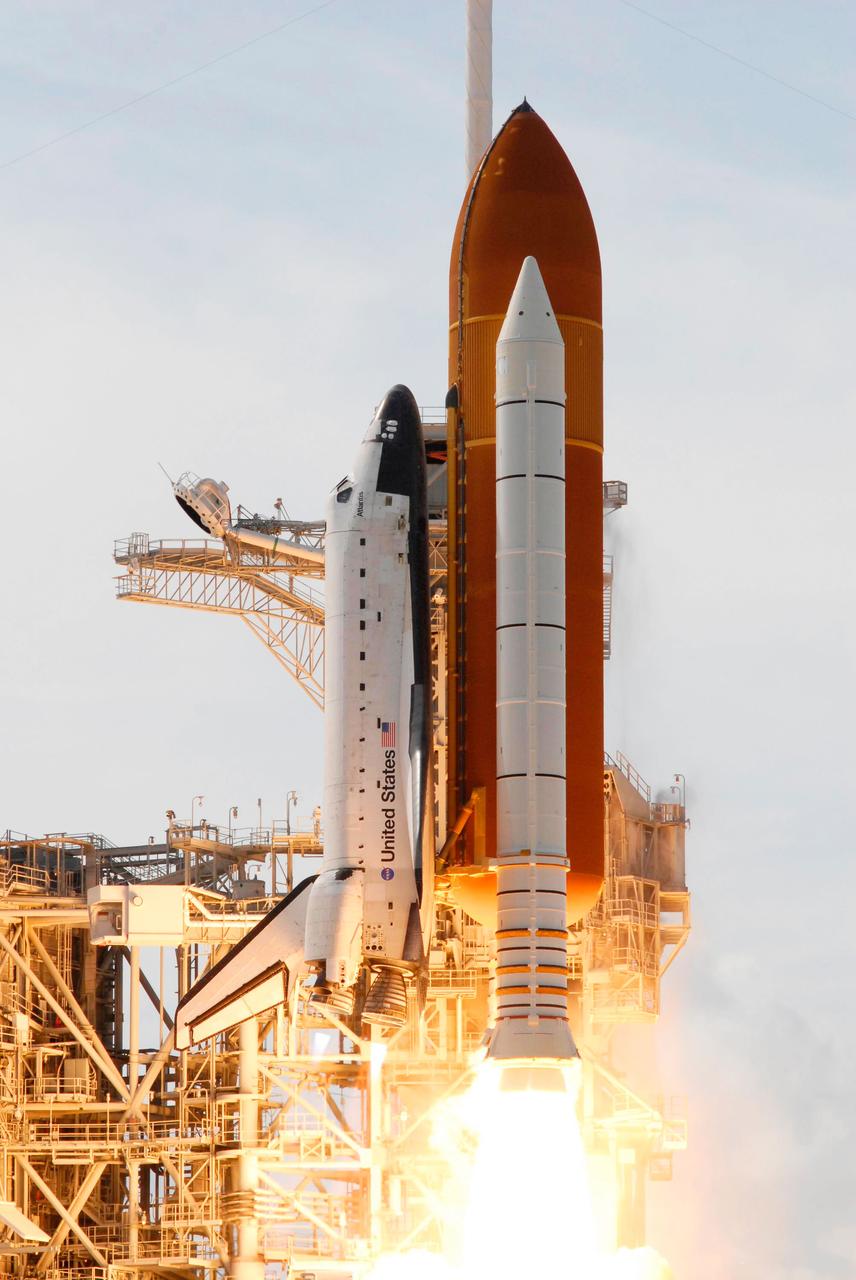
Launch of space shuttle Atlantis STS-122
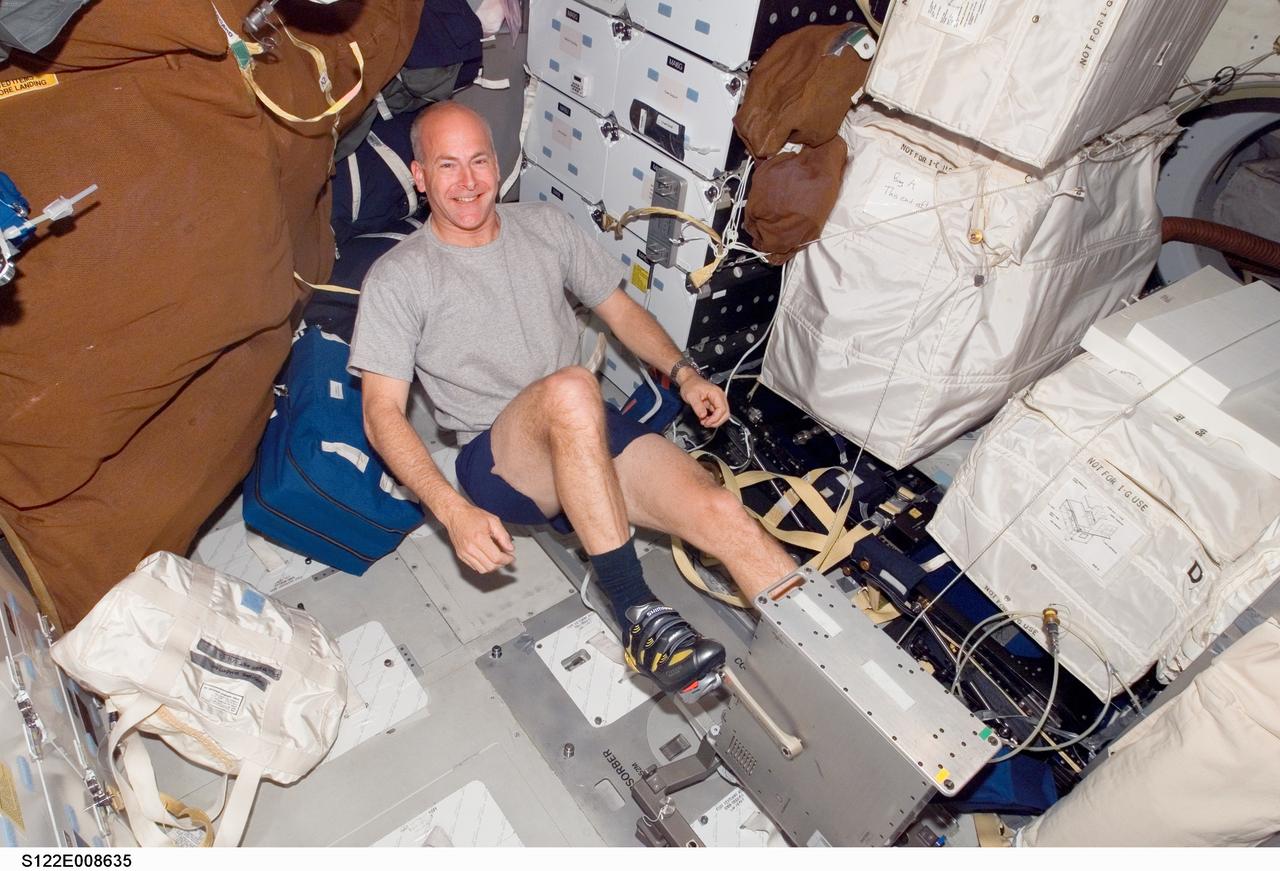
STS-122 Pilot Alan Poindexter exercises on the Cycle Ergometer on the Middeck (MDK) of the orbiter Atlantis. Photo was taken during Expedition 16/STS-122 joint operations.
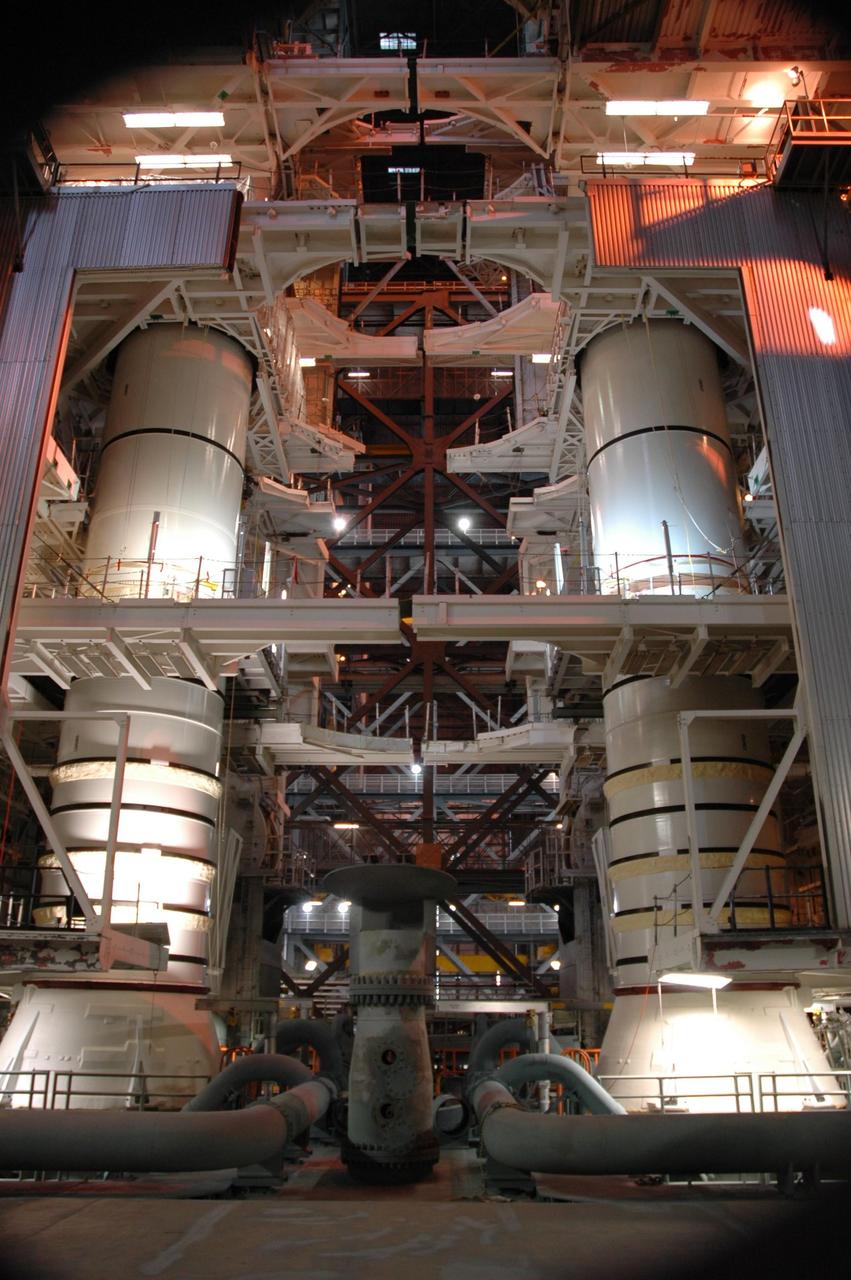
KENNEDY SPACE CENTER, FLA. -- In the Vehicle Assembly Building, the solid rocket booster segments are being stacked on the mobile launcher platform for mission STS-122. Space shuttle Atlantis is targeted for launch on mission STS-122 on Dec. 6. Photo credit: NASA/Jack Pfaller
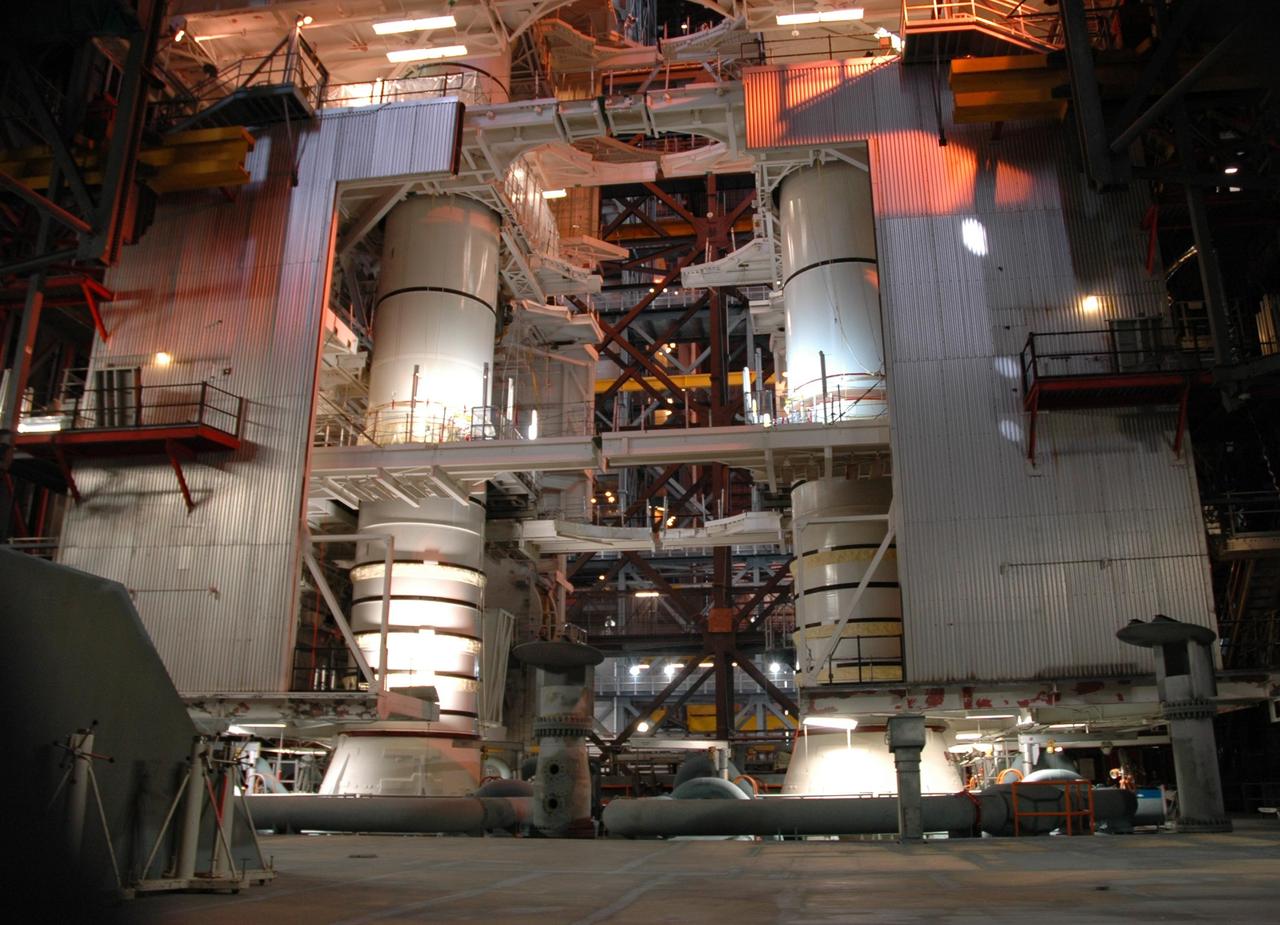
KENNEDY SPACE CENTER, FLA. -- In the Vehicle Assembly Building, the solid rocket booster segments are being stacked on the mobile launcher platform for mission STS-122. Space shuttle Atlantis is targeted for launch on mission STS-122 on Dec. 6. Photo credit: NASA/Jack Pfaller
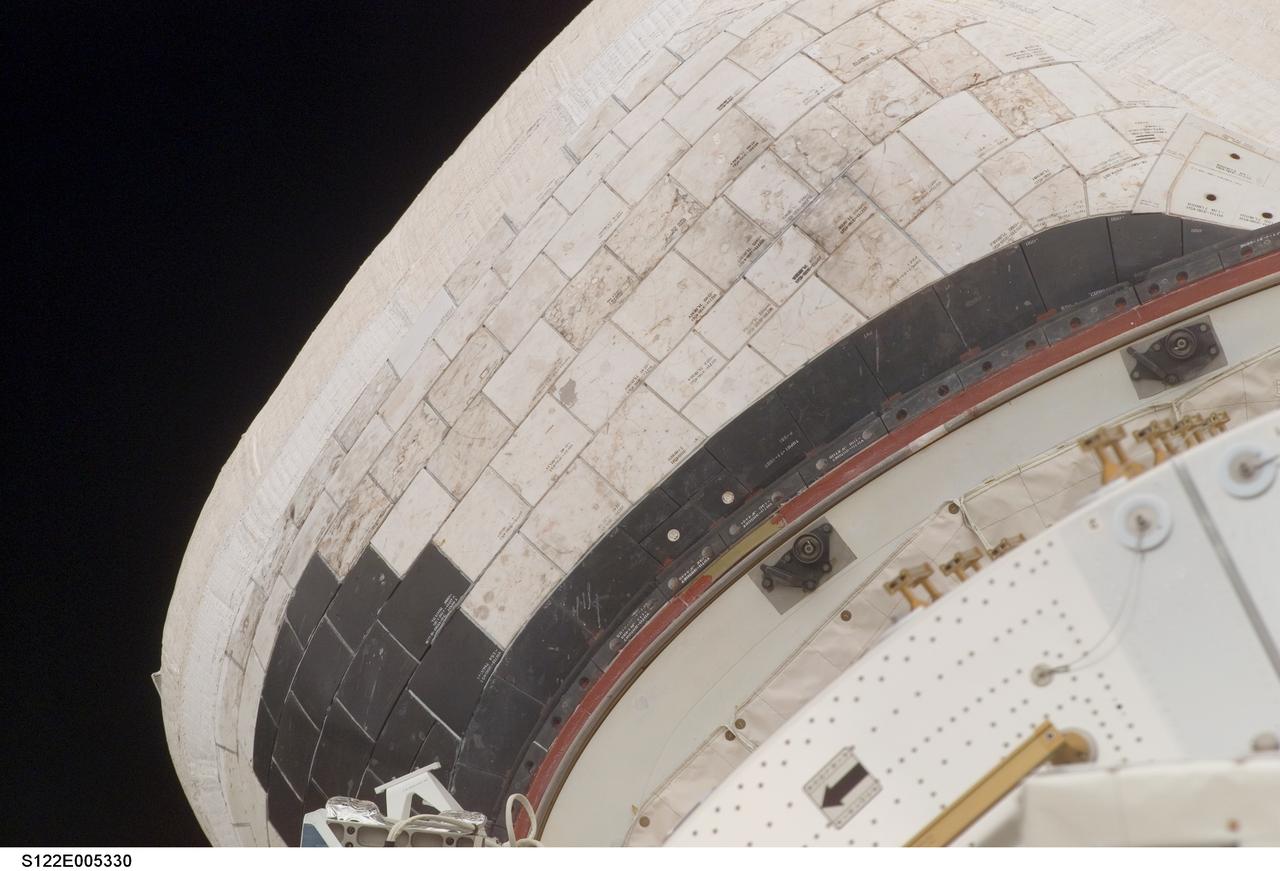
S122-E-005330 (8 Feb. 2008) --- This image, showing a slight protrusion of a thermal blanket on the starboard Orbital Maneuvering System (OMS) pod of Space Shuttle Atlantis, was photographed during a standard arm checkout and payload bay survey on Feb. 8, 2008.
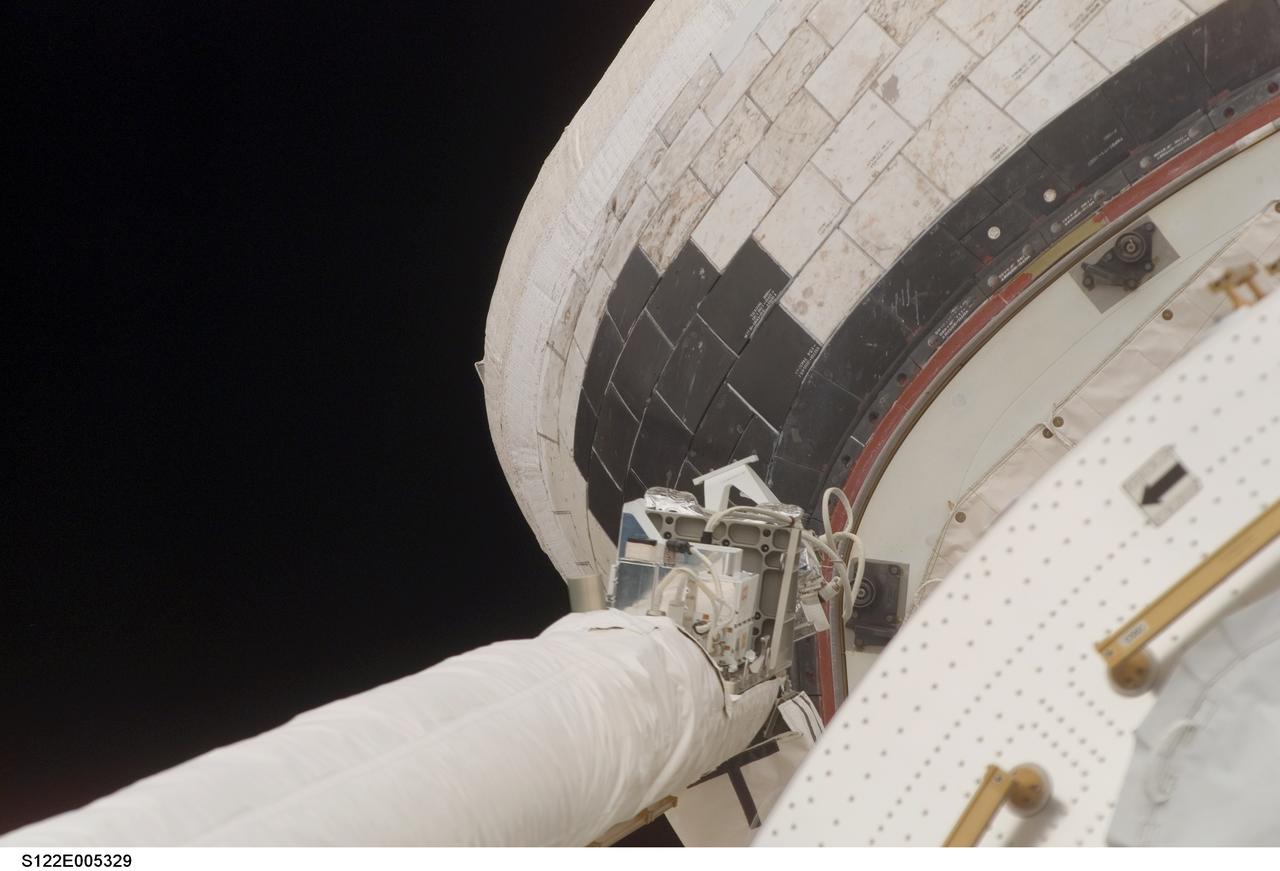
S122-E-005329 (8 Feb. 2008) --- This image, showing a slight protrusion of a thermal blanket on the starboard Orbital Maneuvering System (OMS) pod of Space Shuttle Atlantis, was photographed during a standard arm checkout and payload bay survey on Feb. 8, 2008.
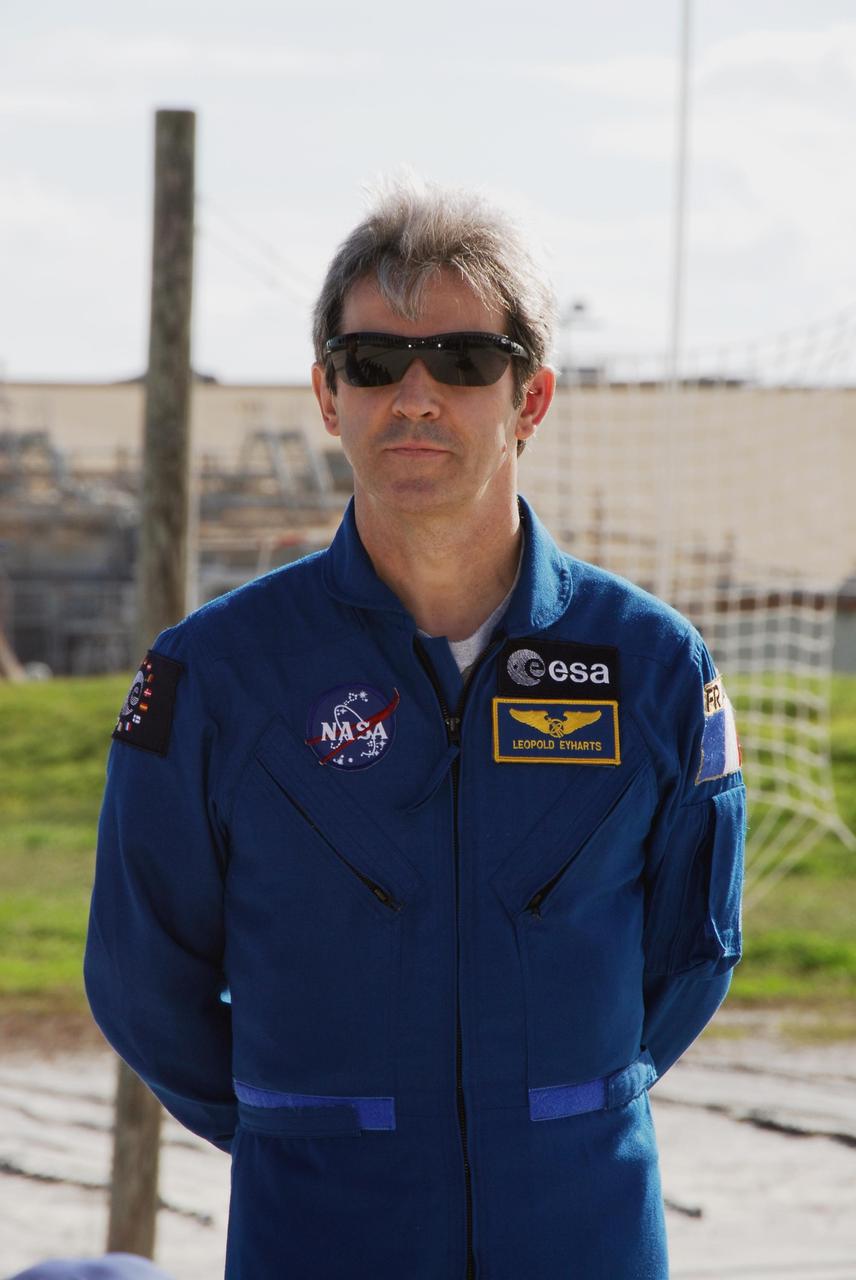
KENNEDY SPACE CENTER, FLA. -- Space shuttle Atlantis STS-122 Mission Specialist Leopold Eyharts takes part in a press conference at the slidewire basket landing on Launch Pad 39A. Eyharts is with the European Space Agency and will remain on the International Space Station as a flight engineer for Expedition 16 following the STS-122 mission. The STS-122 crew is at NASA's Kennedy Space Center to take part in terminal countdown demonstration test, or TCDT, activities, a standard part of launch preparations. The TCDT provides astronauts and ground crews with equipment familiarization, emergency egress training and a simulated launch countdown. On mission STS-122, Atlantis will deliver the European Space Agency's Columbus module to the International Space Station. Columbus is a multifunctional, pressurized laboratory that will be permanently attached to U.S. Node 2, called Harmony, and will expand the research facilities aboard the station. Launch is targeted for Dec. 6. Photo credit: NASA/Kim Shiflett

S122-E-006262 (8 Feb. 2008) --- Astronaut Steve Frick, STS-122 commander, eats a snack on the middeck of Space Shuttle Atlantis.
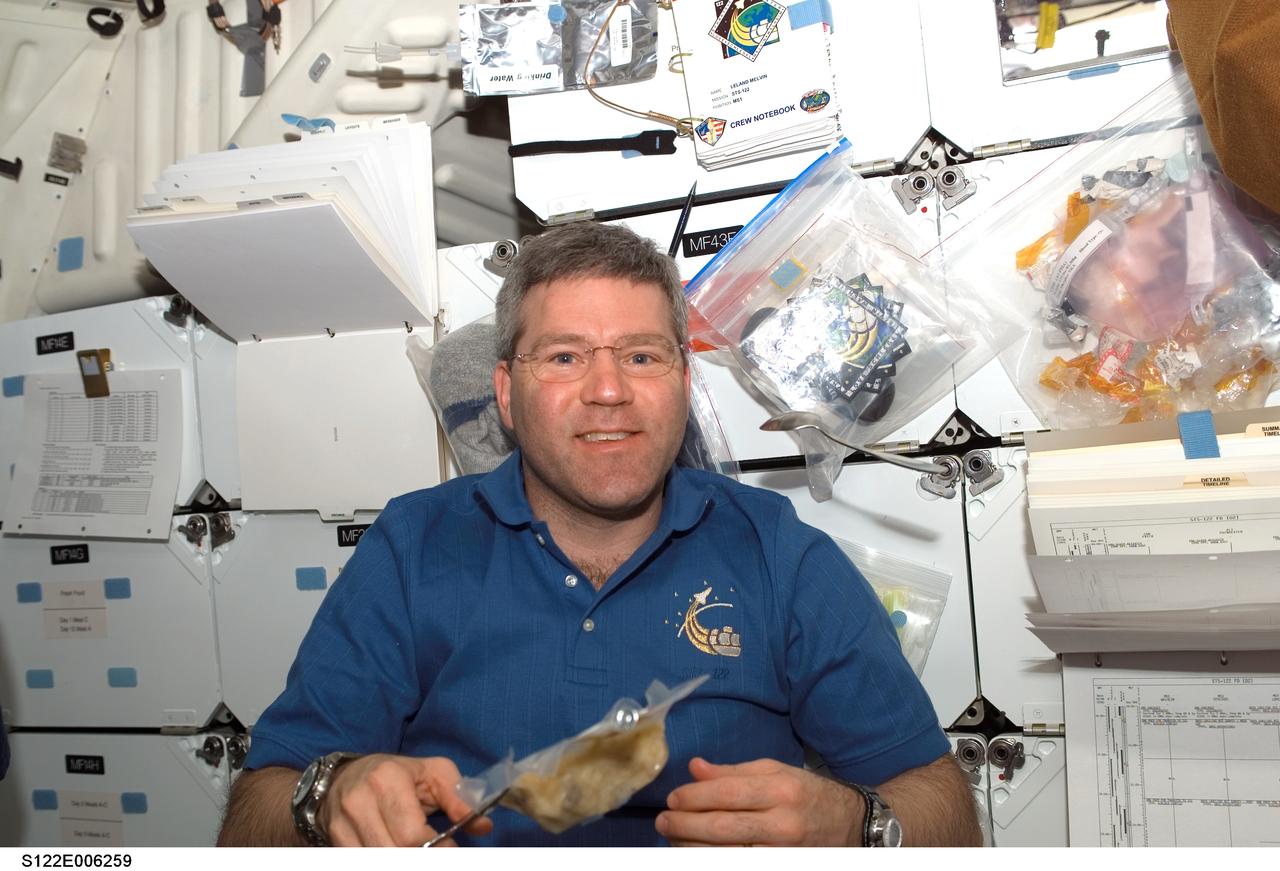
S122-E-006259 (8 Feb. 2008) --- Astronaut Steve Frick, STS-122 commander, prepares to eat a snack on the middeck of Space Shuttle Atlantis.
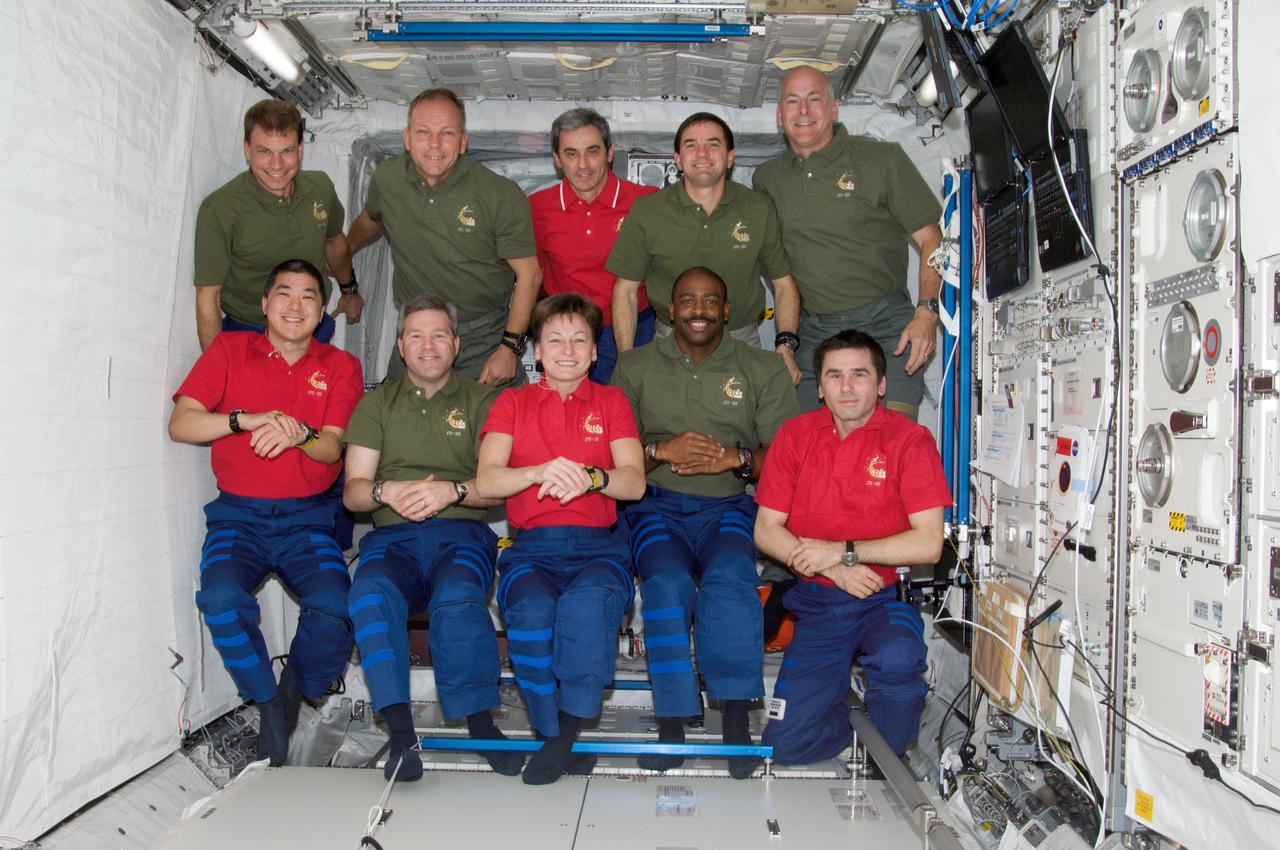
ISS016-E-029867 (16 Feb. 2008) --- STS-122 and Expedition 16 crewmembers pose for a group photo following a joint news conference in the Columbus laboratory of the International Space Station while Space Shuttle Atlantis is docked with the station. From the left (bottom) are NASA astronauts Daniel Tani, STS-122 mission specialist; Steve Frick, STS-122 commander; Peggy Whitson, Expedition 16 commander; Leland Melvin, STS-122 mission specialist; and cosmonaut Yuri Malenchenko, Expedition 16 flight engineer representing Russia's Federal Space Agency. From the left (top) are NASA astronaut Stanley Love, European Space Agency (ESA) astronaut Hans Schlegel, both STS-122 mission specialists; ESA astronaut Leopold Eyharts, Expedition 16 flight engineer; NASA astronauts Rex Walheim, STS-122 mission specialist; and Alan Poindexter, STS-122 pilot. Tani, who joined the station's Expedition 16 crew in October, is being replaced by Eyharts, who arrived at the station with the STS-122 crew.
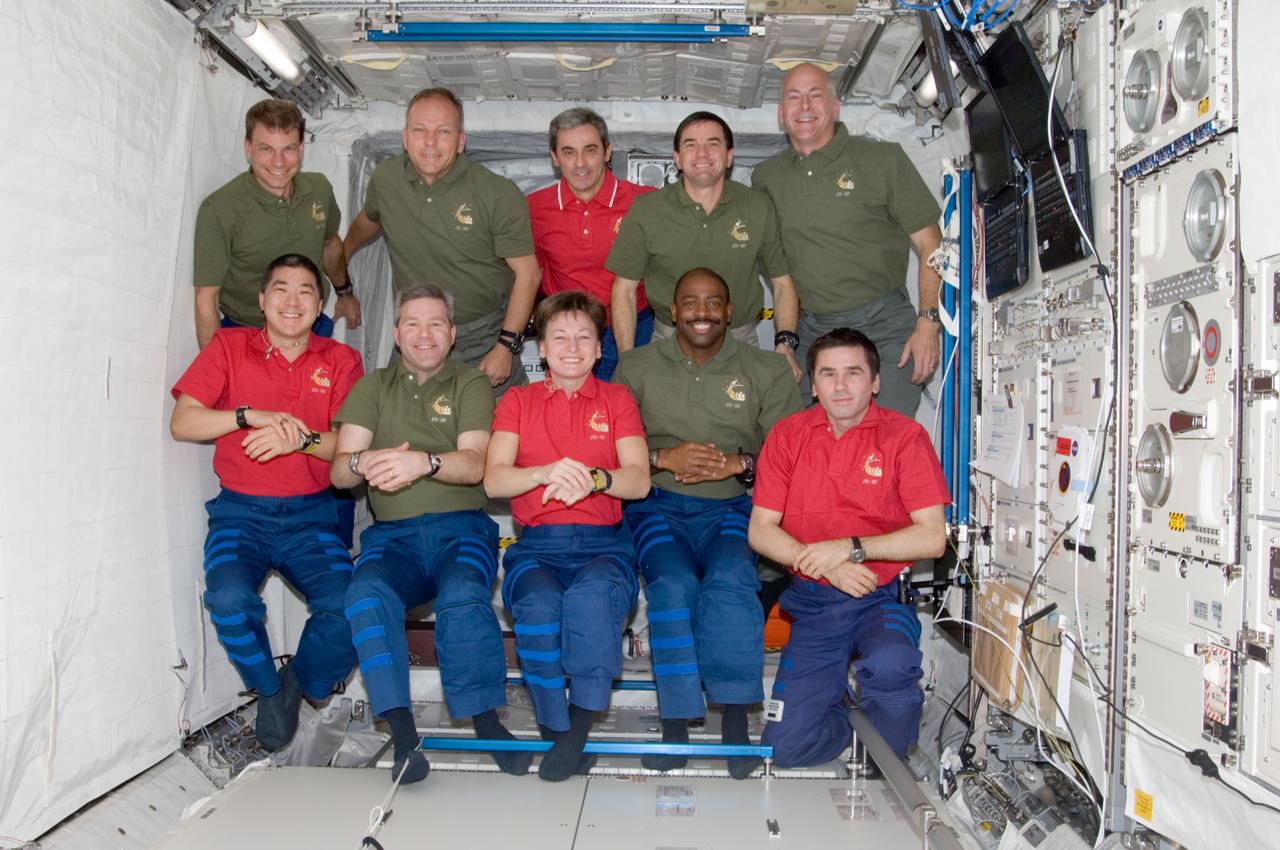
ISS016-E-029866 (16 Feb. 2008) --- STS-122 and Expedition 16 crewmembers pose for a group photo following a joint news conference in the Columbus laboratory of the International Space Station while Space Shuttle Atlantis is docked with the station. From the left (bottom) are NASA astronauts Daniel Tani, STS-122 mission specialist; Steve Frick, STS-122 commander; Peggy Whitson, Expedition 16 commander; Leland Melvin, STS-122 mission specialist; and cosmonaut Yuri Malenchenko, Expedition 16 flight engineer representing Russia's Federal Space Agency. From the left (top) are NASA astronaut Stanley Love, European Space Agency (ESA) astronaut Hans Schlegel, both STS-122 mission specialists; ESA astronaut Leopold Eyharts, Expedition 16 flight engineer; NASA astronauts Rex Walheim, STS-122 mission specialist; and Alan Poindexter, STS-122 pilot. Tani, who joined the station's Expedition 16 crew in October, is being replaced by Eyharts, who arrived at the station with the STS-122 crew.
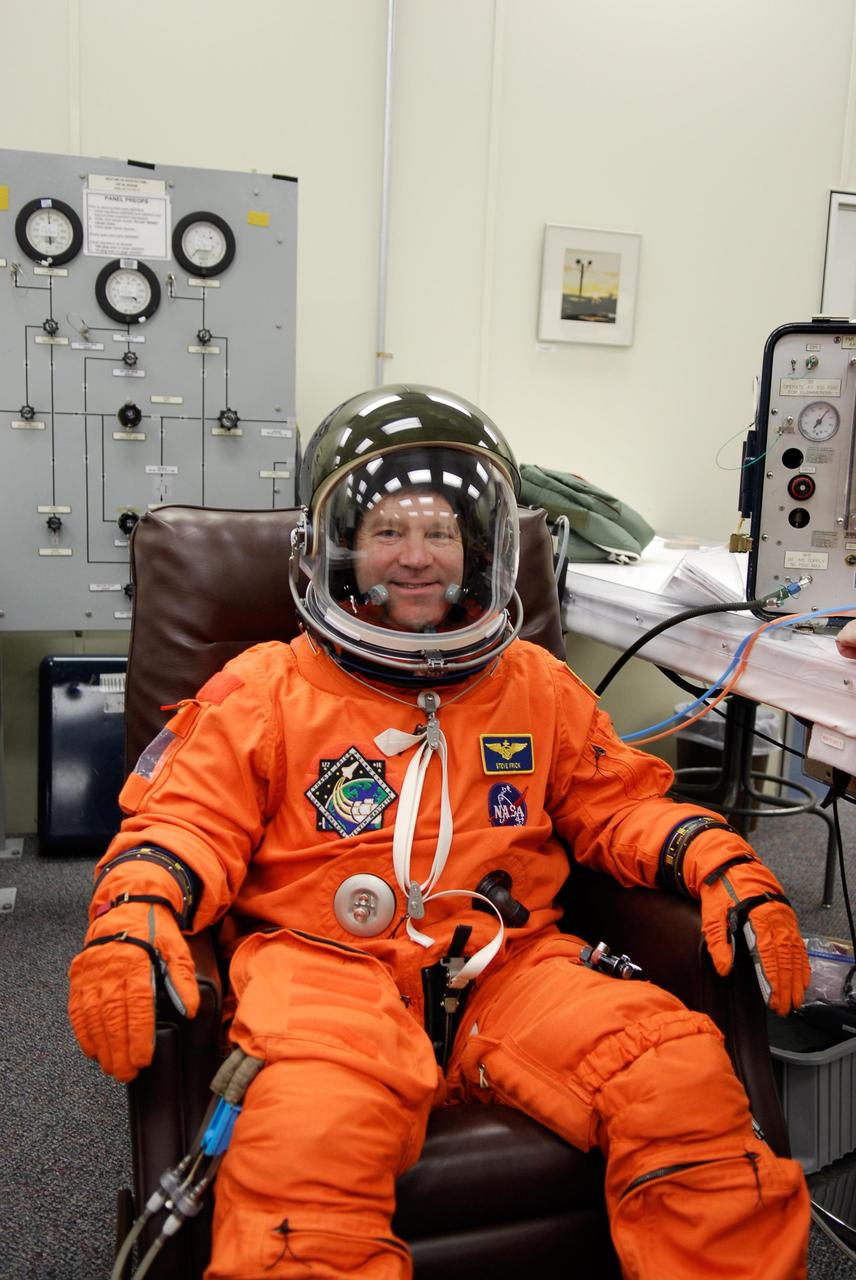
KENNEDY SPACE CENTER, FLA. -- Space shuttle Atlantis STS-122 Commander Steve Frick is fully attired in his launch and entry suit, in astronaut crew quarters. The STS-122 crew is preparing for a simulated launch countdown aboard Atlantis, part of terminal countdown demonstration test, or TCDT, activities at NASA's Kennedy Space Center. The TCDT is a dress rehearsal for launch and also provides astronauts and ground crews with equipment familiarization and emergency egress training. On mission STS-122, Atlantis will deliver the Columbus module to the International Space Station. The European Space Agency's largest single contribution to the station, Columbus is a multifunctional, pressurized laboratory that will be permanently attached to U.S. Node 2, called Harmony. The laboratory will expand the research facilities aboard the station, providing crew members and scientists from around the world the ability to conduct a variety of experiments in the physical, materials and life sciences. Launch is targeted for Dec. 6. Photo credit: NASA/Kim Shiflett

KENNEDY SPACE CENTER, FLA. -- Space shuttle Atlantis STS-122 Mission Specialist Rex Walheim puts on his launch and entry suit, in astronaut crew quarters. The STS-122 crew is preparing for a simulated launch countdown aboard Atlantis, part of terminal countdown demonstration test, or TCDT, activities at NASA's Kennedy Space Center. The TCDT is a dress rehearsal for launch and also provides astronauts and ground crews with equipment familiarization and emergency egress training. On mission STS-122, Atlantis will deliver the Columbus module to the International Space Station. The European Space Agency's largest single contribution to the station, Columbus is a multifunctional, pressurized laboratory that will be permanently attached to U.S. Node 2, called Harmony. The laboratory will expand the research facilities aboard the station, providing crew members and scientists from around the world the ability to conduct a variety of experiments in the physical, materials and life sciences. Launch is targeted for Dec. 6. Photo credit: NASA/Kim Shiflett
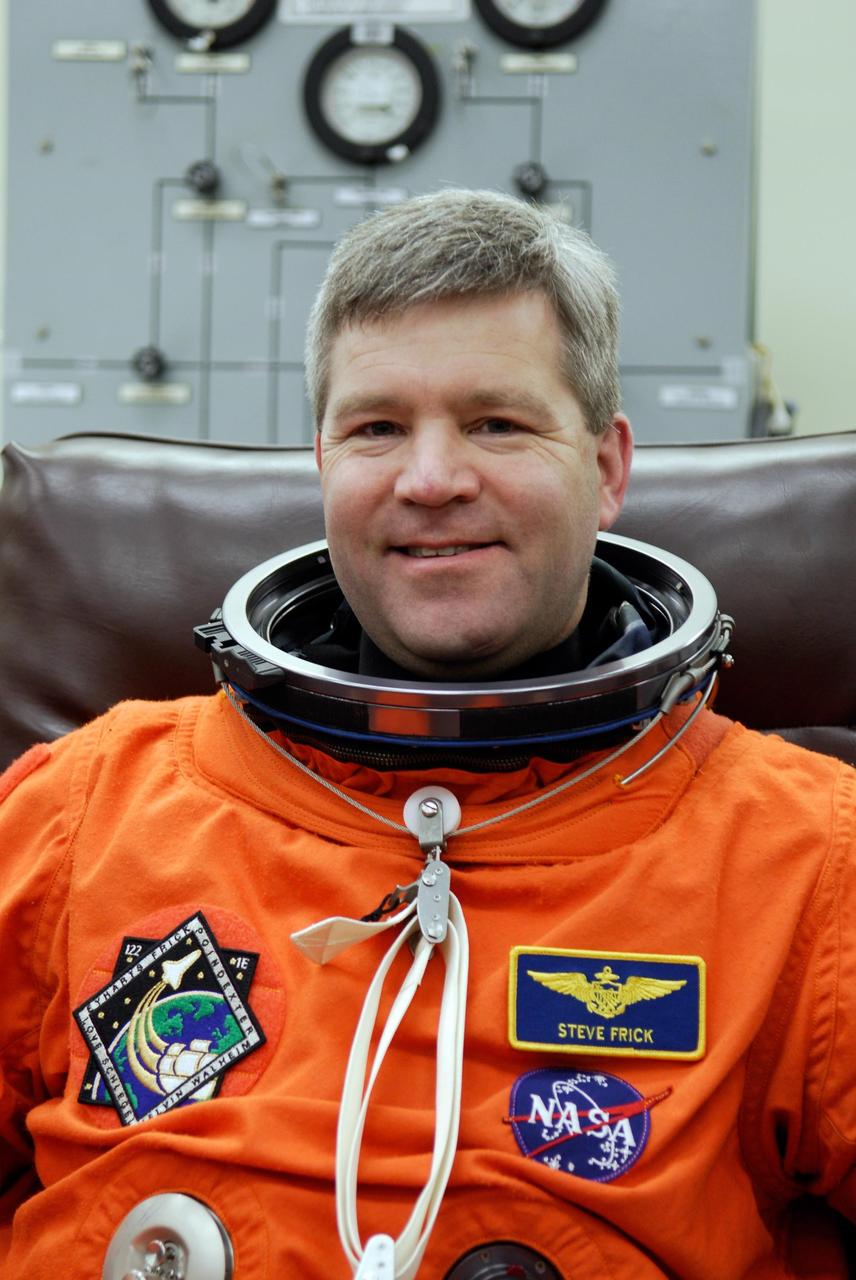
KENNEDY SPACE CENTER, FLA. -- Space shuttle Atlantis STS-122 Commander Steve Frick dons his launch and entry suit, in astronaut crew quarters. The STS-122 crew is preparing for a simulated launch countdown aboard Atlantis, part of terminal countdown demonstration test, or TCDT, activities at NASA's Kennedy Space Center. The TCDT is a dress rehearsal for launch and also provides astronauts and ground crews with equipment familiarization and emergency egress training. On mission STS-122, Atlantis will deliver the Columbus module to the International Space Station. The European Space Agency's largest single contribution to the station, Columbus is a multifunctional, pressurized laboratory that will be permanently attached to U.S. Node 2, called Harmony. The laboratory will expand the research facilities aboard the station, providing crew members and scientists from around the world the ability to conduct a variety of experiments in the physical, materials and life sciences. Launch is targeted for Dec. 6. Photo credit: NASA/Kim Shiflett
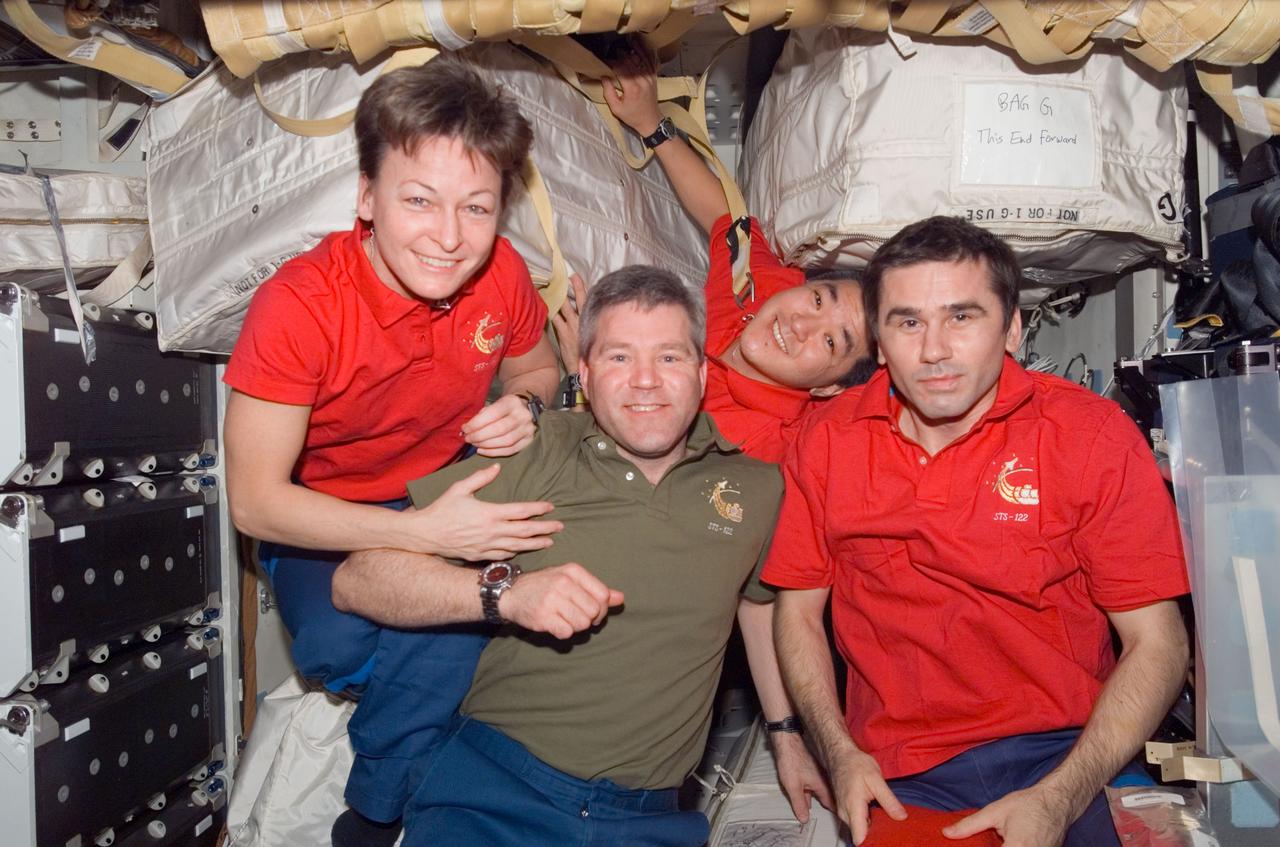
S122-E-009497 (16 Feb. 2008) --- NASA astronauts Peggy Whitson, Expedition 16 commander; Steve Frick (second left), STS-122 commander; Daniel Tani, STS-122 mission specialist; and Russian Federal Space Agency cosmonaut Yuri Malenchenko, Expedition 16 flight engineer, take a moment for a photo on the middeck of Space Shuttle Atlantis while docked with the International Space Station. Tani, who joined the station's Expedition 16 crew as flight engineer in October, is being replaced by ESA astronaut Leopold Eyharts (out of frame), who arrived at the station with the STS-122 crew.
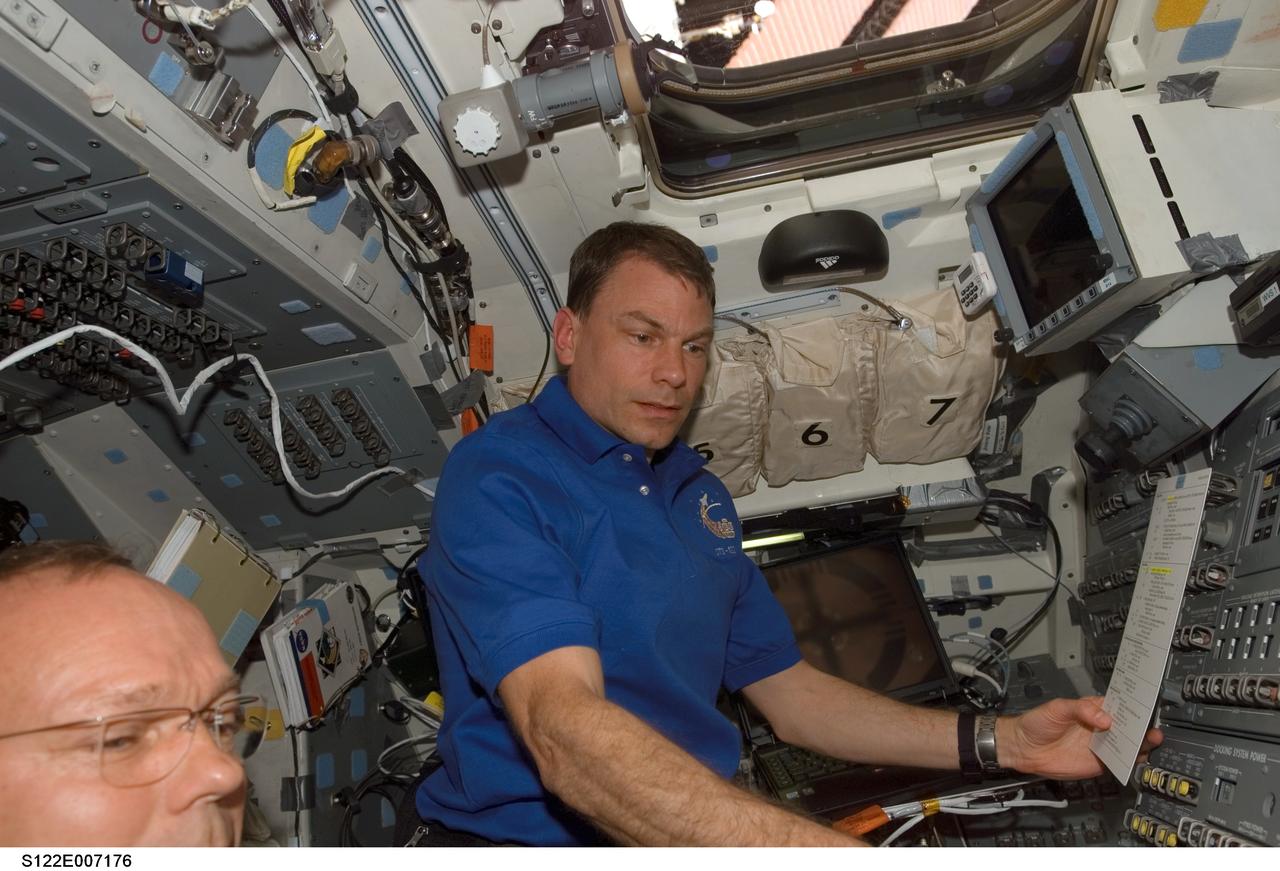
S122-E-007176 (9 Feb. 2008) --- Astronaut Stanley Love, STS-122 mission specialist, works on the aft flight deck of Space Shuttle Atlantis during flight day three activities.
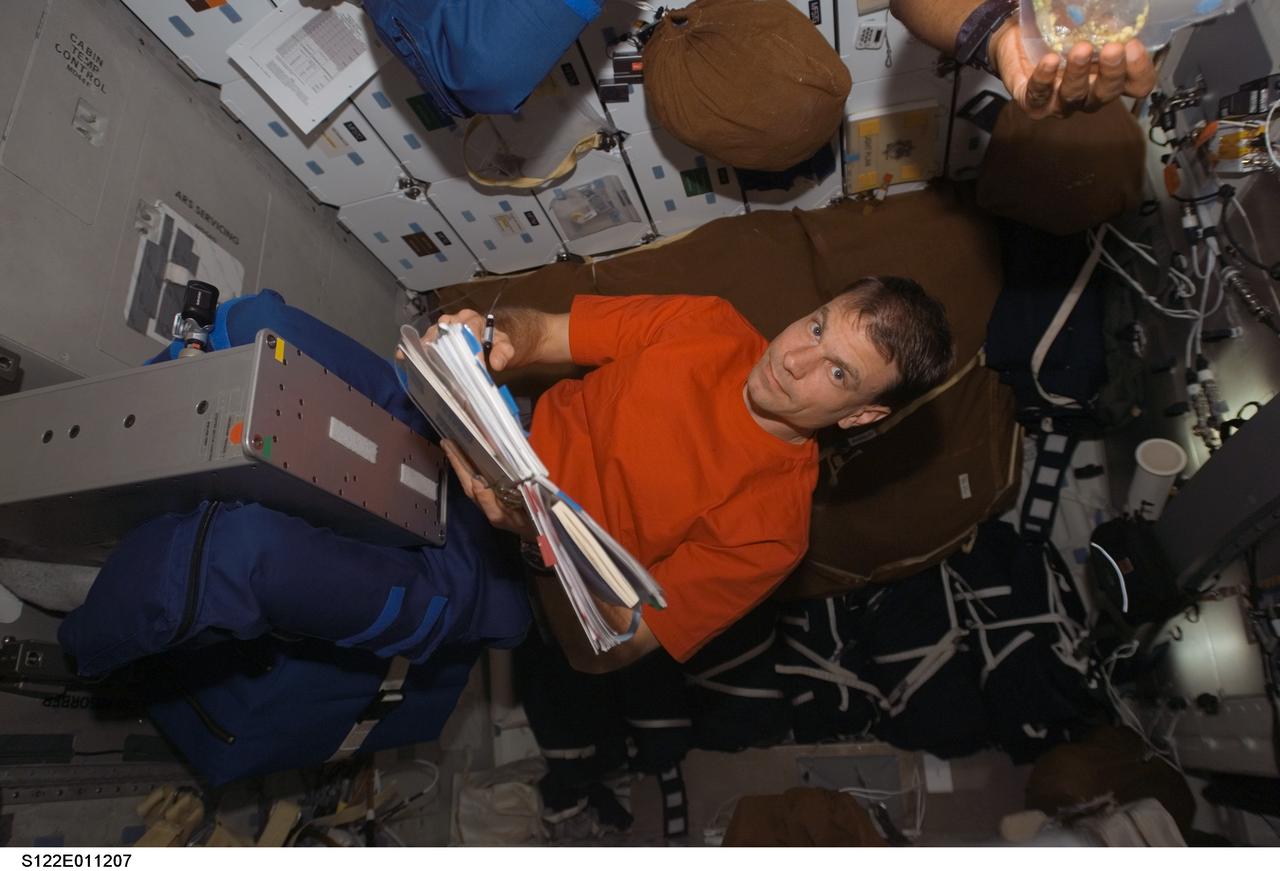
S122-E-011207 (18 Feb. 2008) --- Astronaut Stanley Love, STS-122 mission specialist, looks over procedures checklists while occupying the bicycle ergometer on the middeck of the Space Shuttle Atlantis.
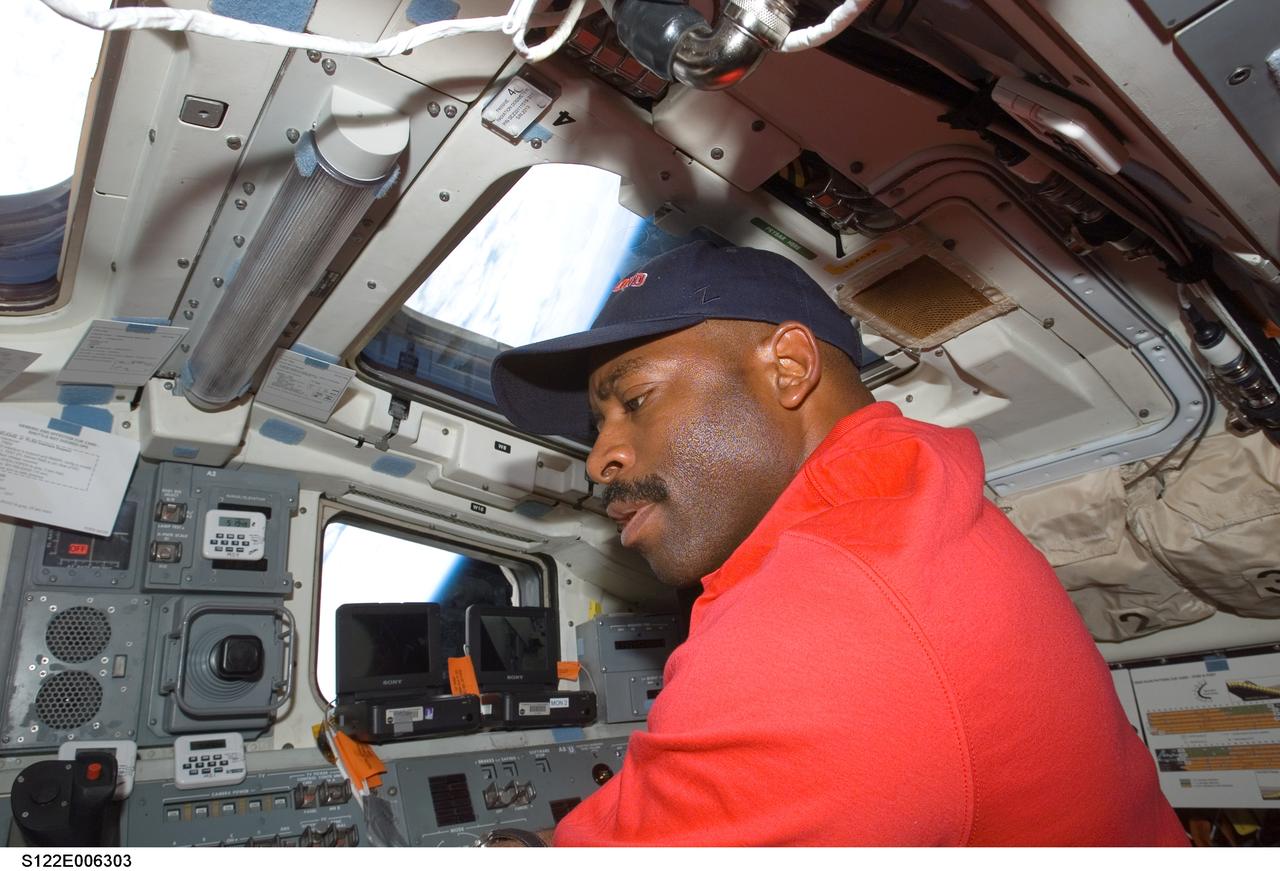
S122-E-006303 (8 Feb. 2008) --- Astronaut Leland Melvin, STS-122 mission specialist, works on the aft flight deck of Space Shuttle Atlantis during flight day two activities.
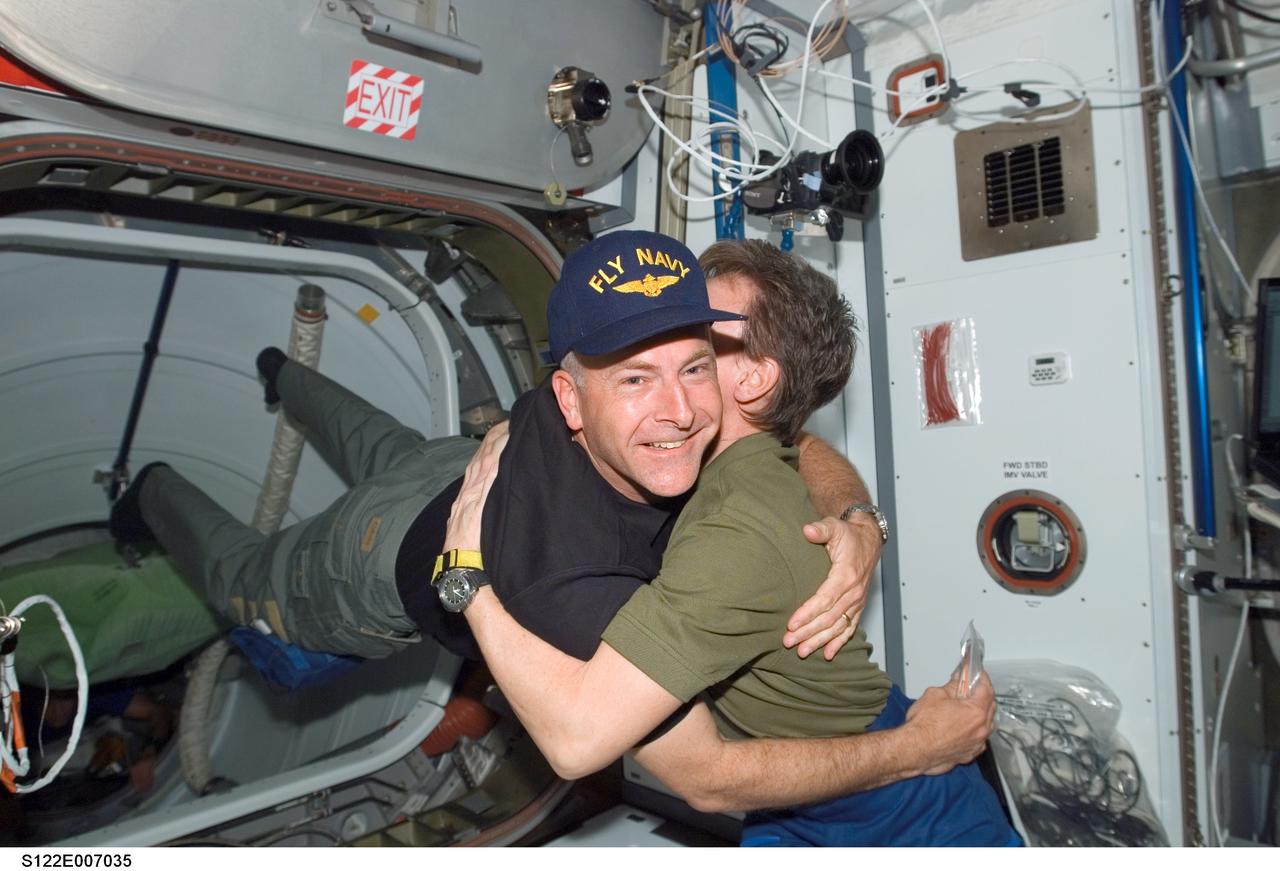
S122-E-007035 (9 Feb. 2008) --- Astronaut Alan Poindexter, STS-122 pilot, greets astronaut Peggy Whitson, Expedition 16 commander, as the Atlantis crew joined the ISS crewmembers onboard the orbiting outpost.
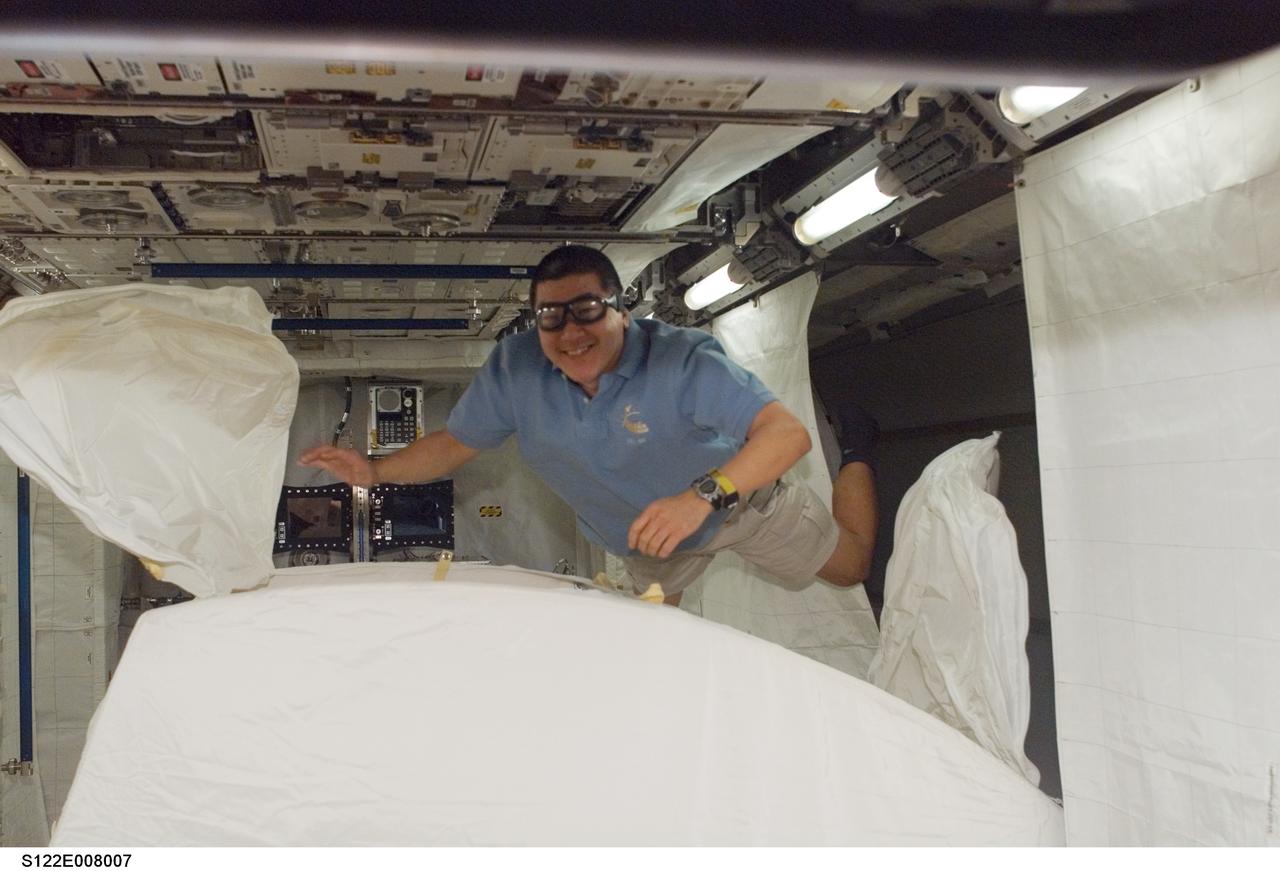
S122-E-008007 (12 Feb. 2008) --- Astronaut Daniel Tani, STS-122 mission specialist, works in the Columbus laboratory -- the newest addition to the International Space Station -- while Space Shuttle Atlantis is docked with the station.
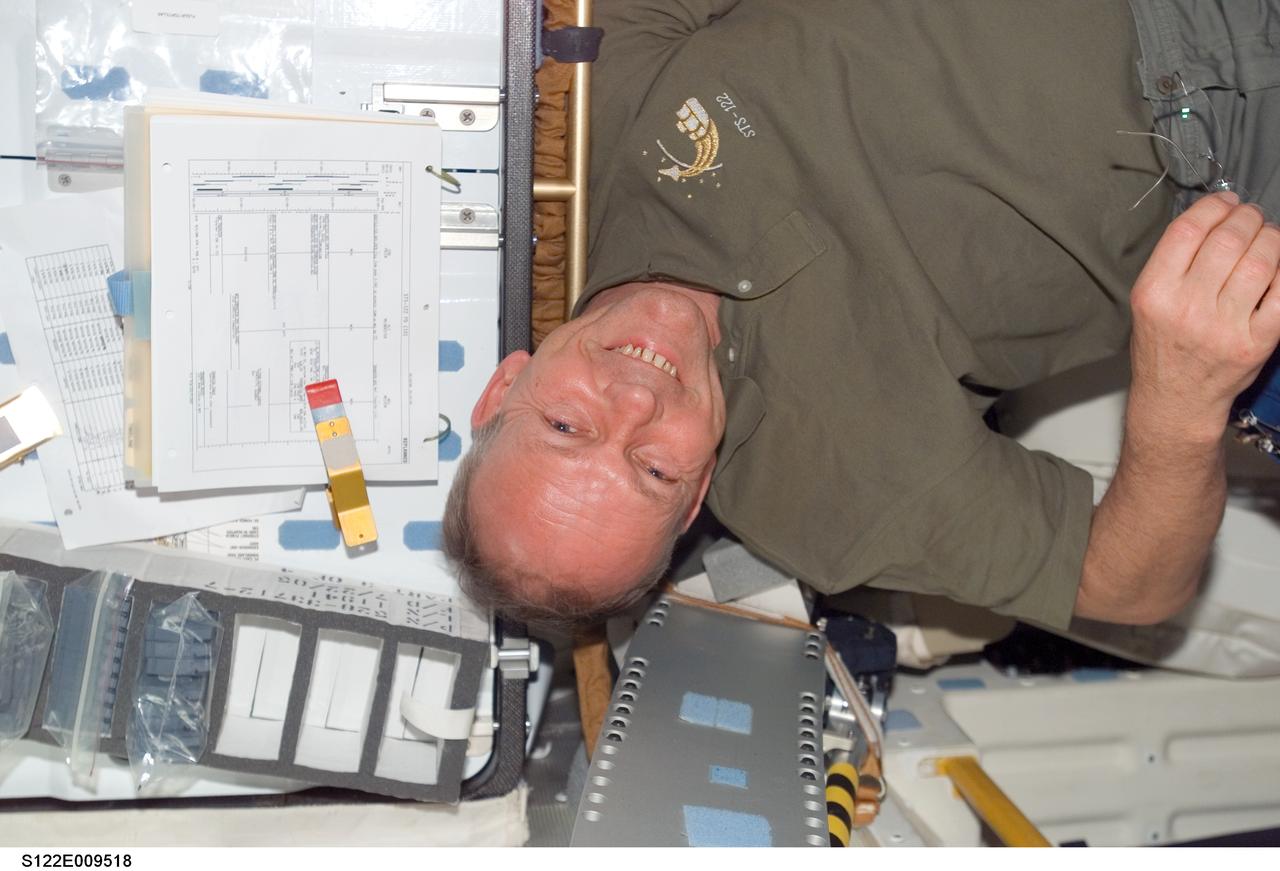
S122-E-009518 (16 Feb. 2008) --- European Space Agency (ESA) astronaut Hans Schlegel, STS-122 mission specialist, is pictured on the middeck of Space Shuttle Atlantis while docked with the International Space Station.
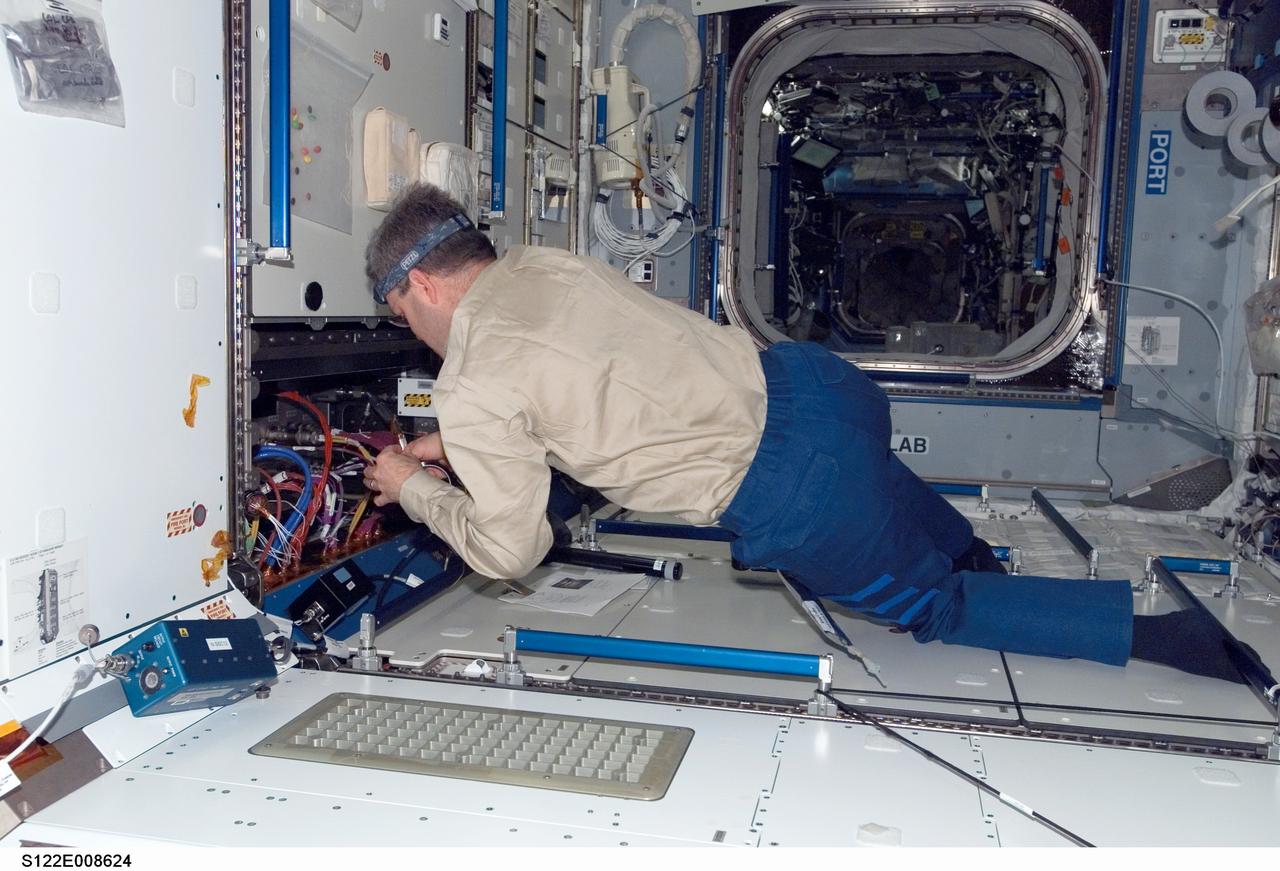
S122-E-008624 (14 Feb. 2008) --- Astronaut Steve Frick, STS-122 commander, works in the Harmony module of the International Space Station while Space Shuttle Atlantis is docked with the station.
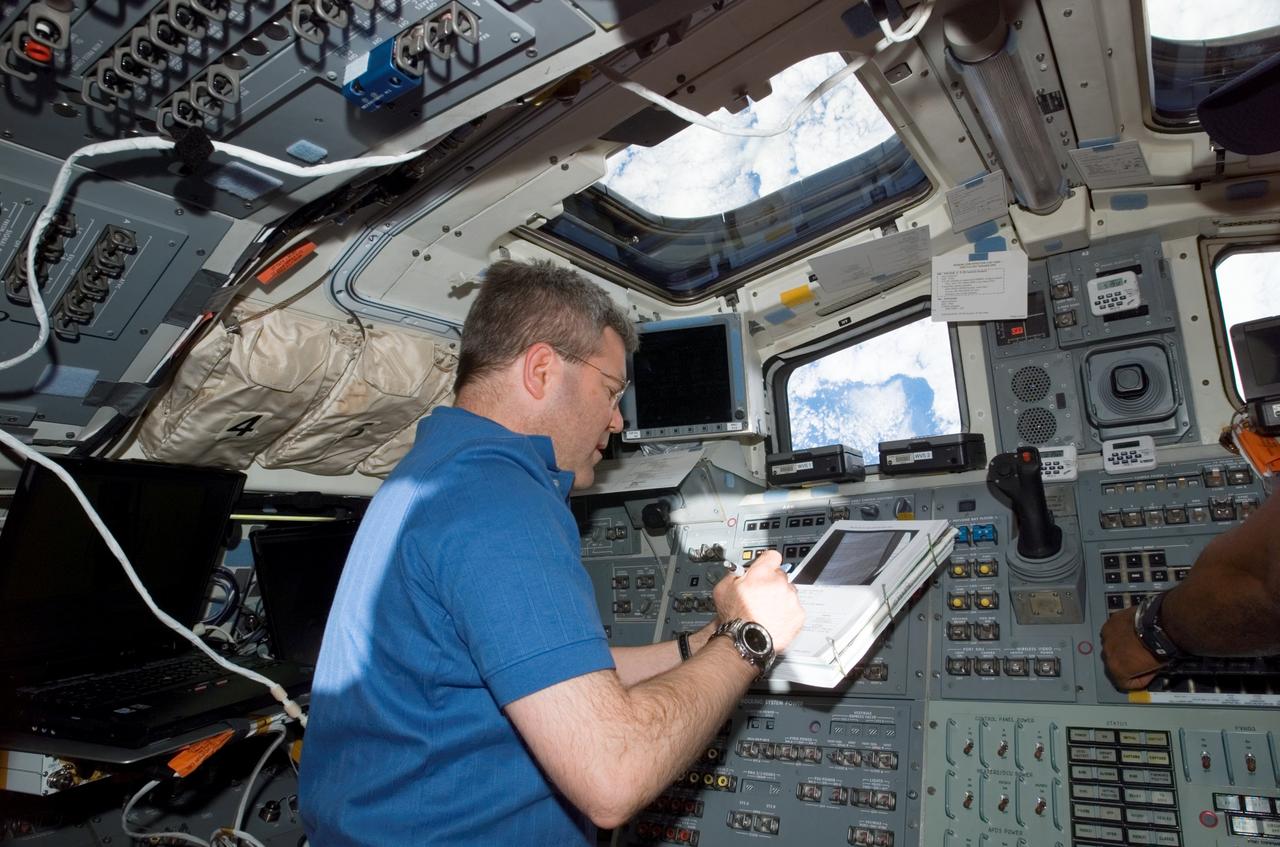
S122-E-006301 (8 Feb. 2008) --- Astronaut Steve Frick, STS-122 commander, looks over a checklist while working on the aft flight deck of Space Shuttle Atlantis during flight day two activities.
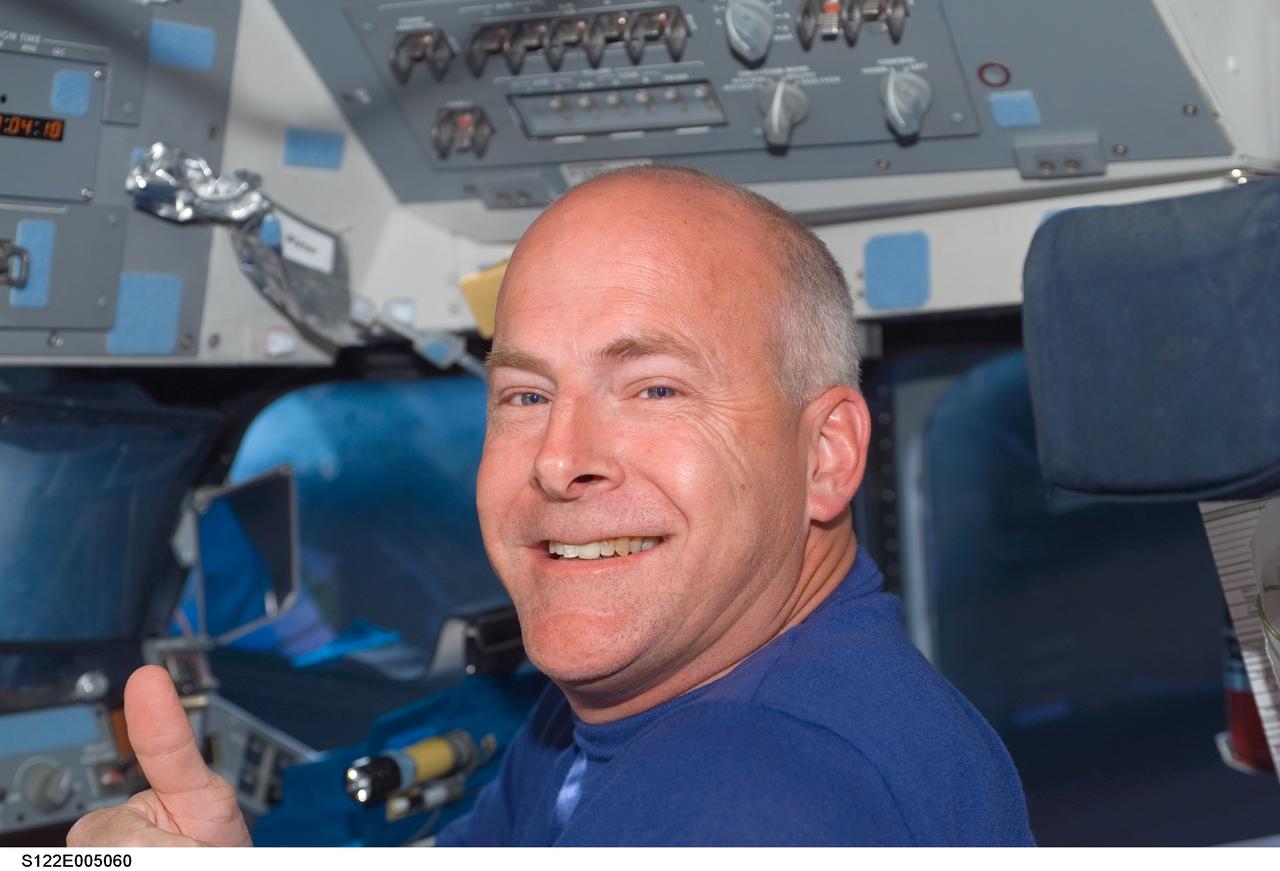
S122-E-005060 (7 Feb. 2008) --- Astronaut Alan Poindexter, STS-122 pilot, gives a "thumbs-up" signal on the flight deck of Space Shuttle Atlantis during flight day one activities.
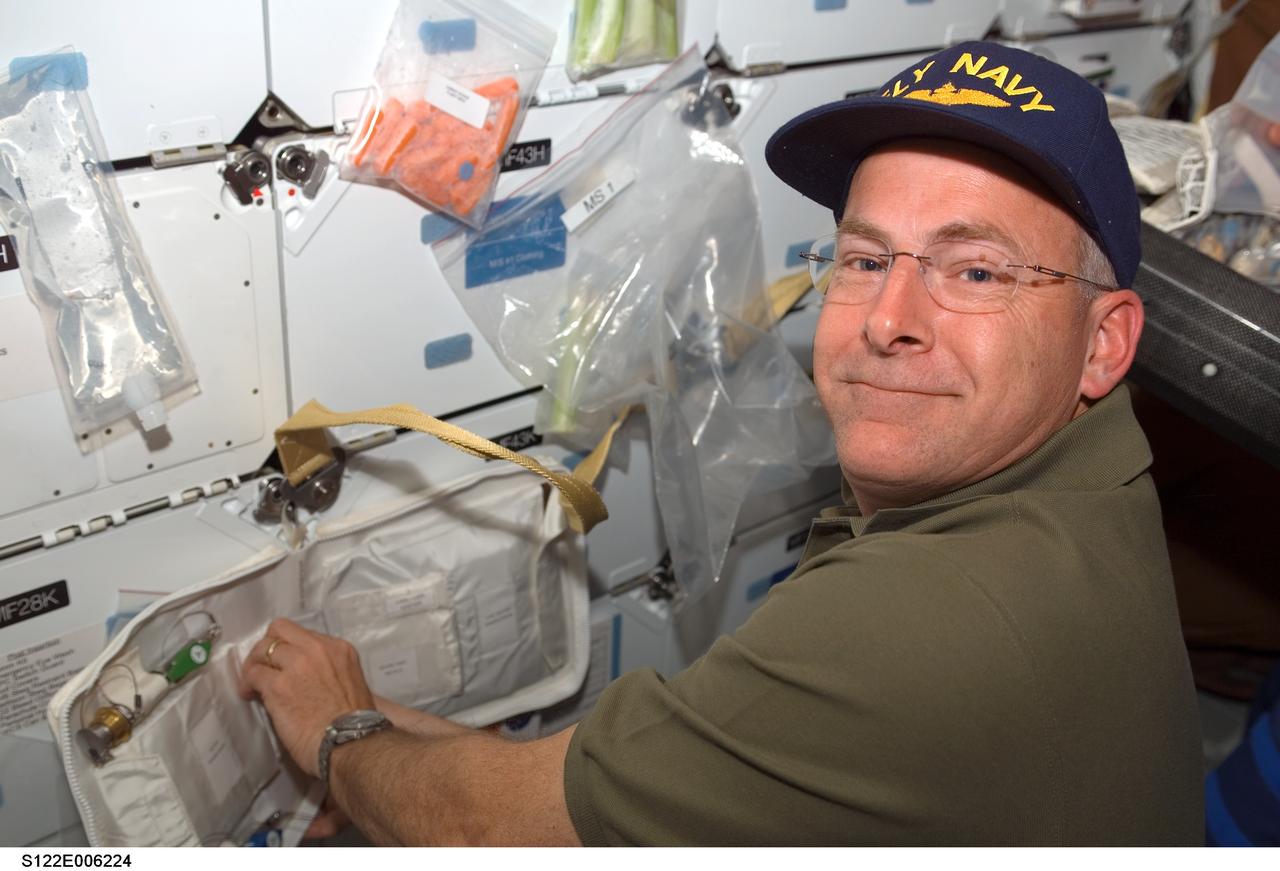
S122-E-006224 (8 Feb. 2008) --- Astronaut Alan Poindexter, STS-122 pilot, works on the middeck of Space Shuttle Atlantis during flight day two activities.

S122-E-006247 (8 Feb. 2008) --- A colorful view of airglow layers at Earth's horizon is featured in this image photographed by a STS-122 crewmember on the Space Shuttle Atlantis.
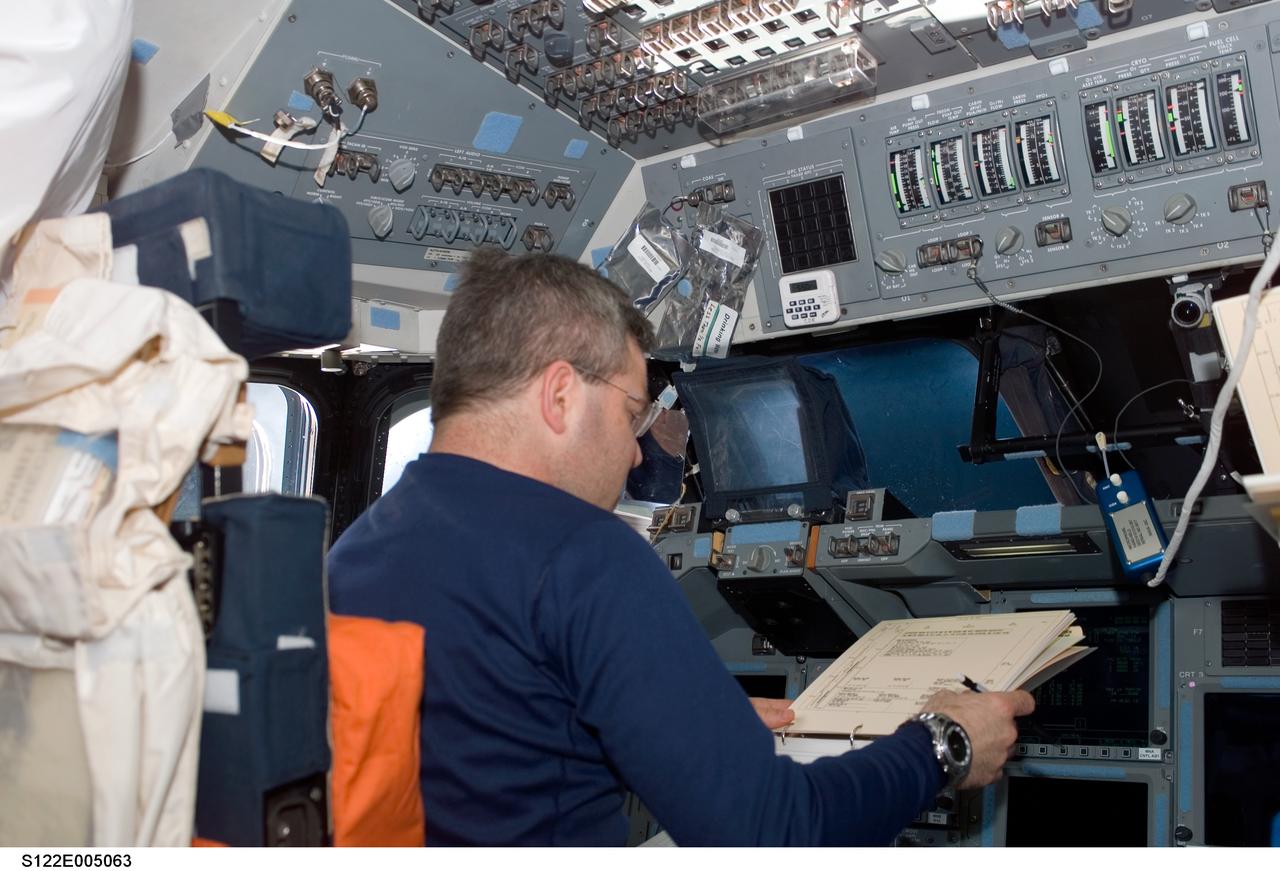
S122-E-005063 (7 Feb. 2008) --- Astronaut Steve Frick, STS-122 commander, looks over procedures checklists on the flight deck of Space Shuttle Atlantis during flight day one activities.
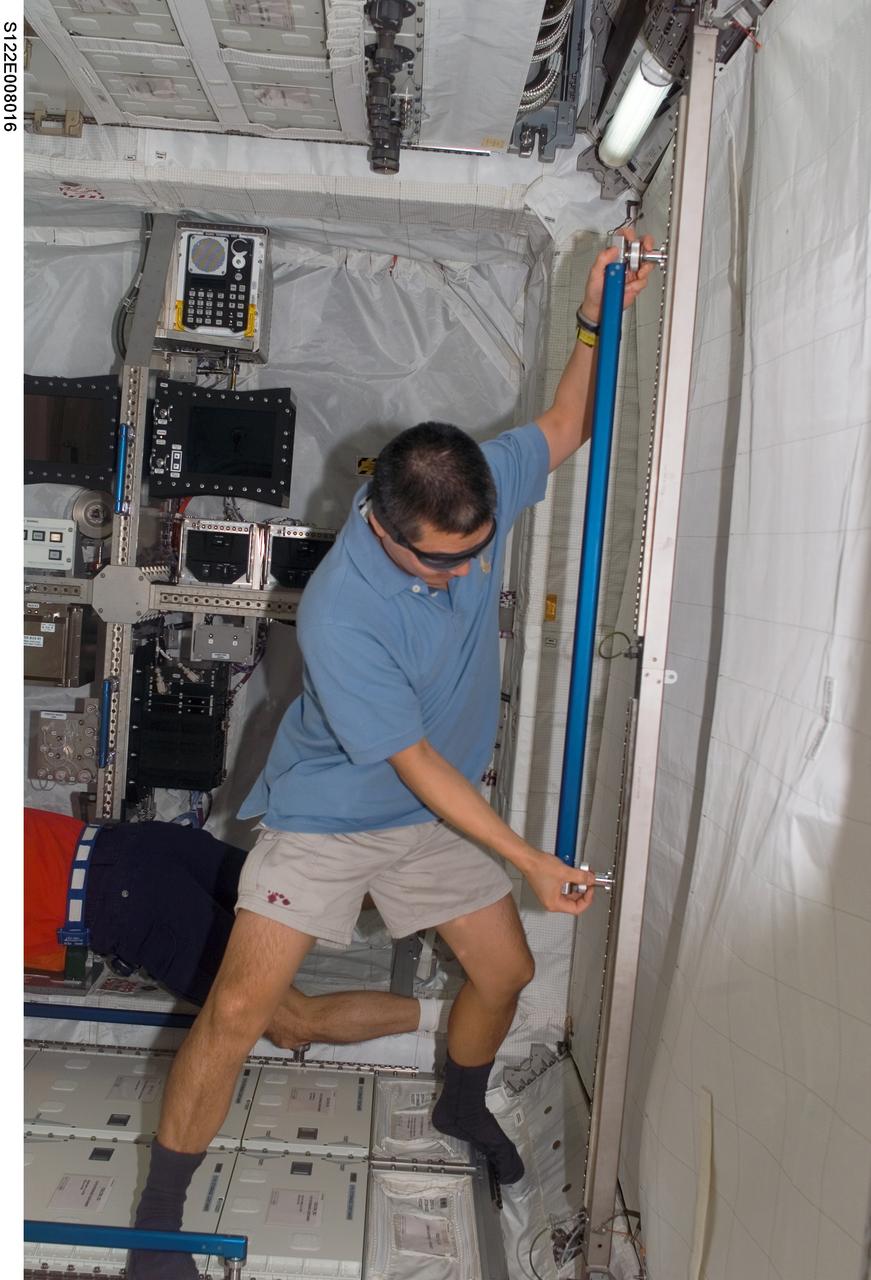
S122-E-008016 (12 Feb. 2008) --- Astronaut Daniel Tani, STS-122 mission specialist, works in the Columbus laboratory -- the newest addition to the International Space Station -- while Space Shuttle Atlantis is docked with the station.

S122-E-009521 (16 Feb. 2008) --- Astronaut Peggy Whitson, Expedition 16 commander, holds a beverage on the middeck of Space Shuttle Atlantis (STS-122) while docked with the International Space Station.
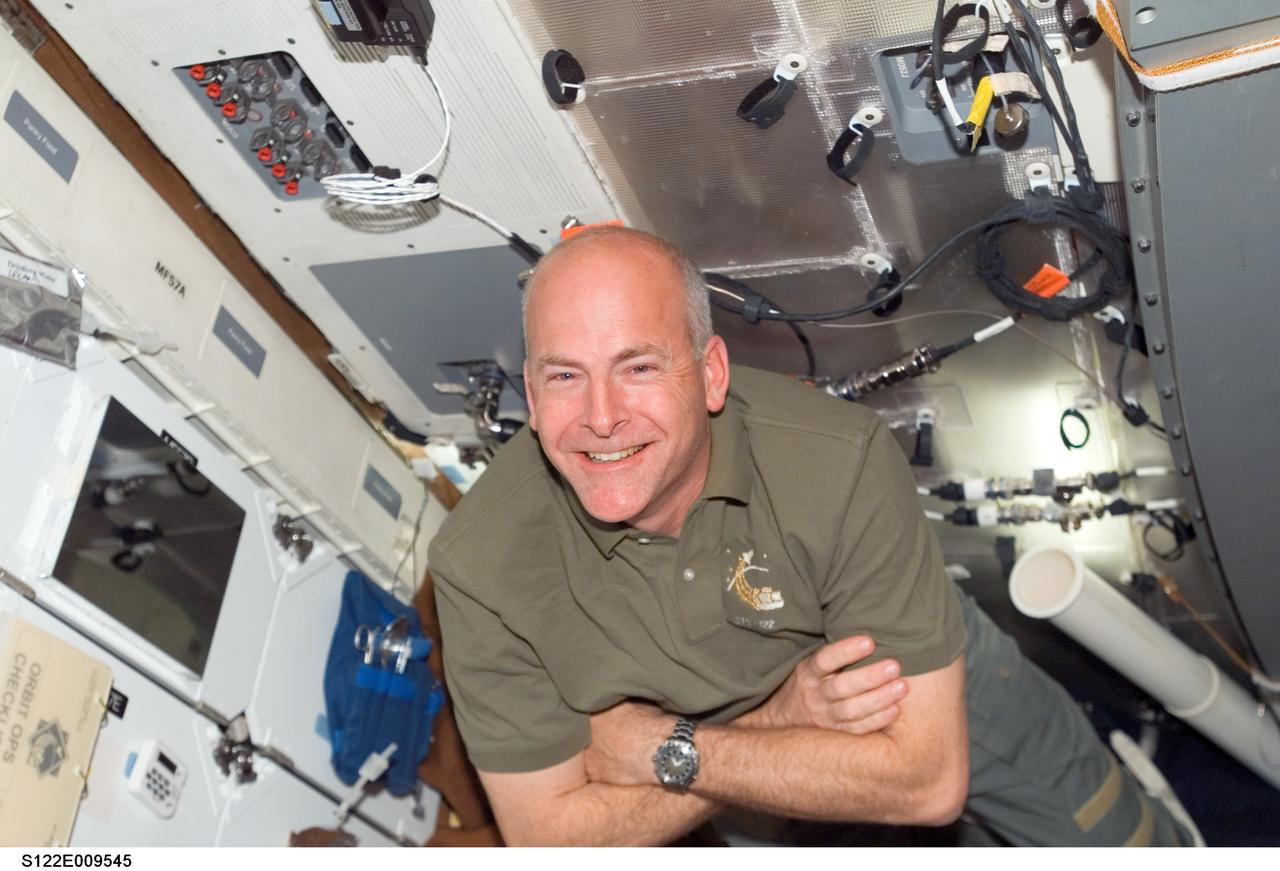
S122-E-009545 (16 Feb. 2008) --- Astronaut Alan Poindexter, STS-122 pilot, smiles for a photo as he floats on the middeck of Space Shuttle Atlantis while docked with the International Space Station.
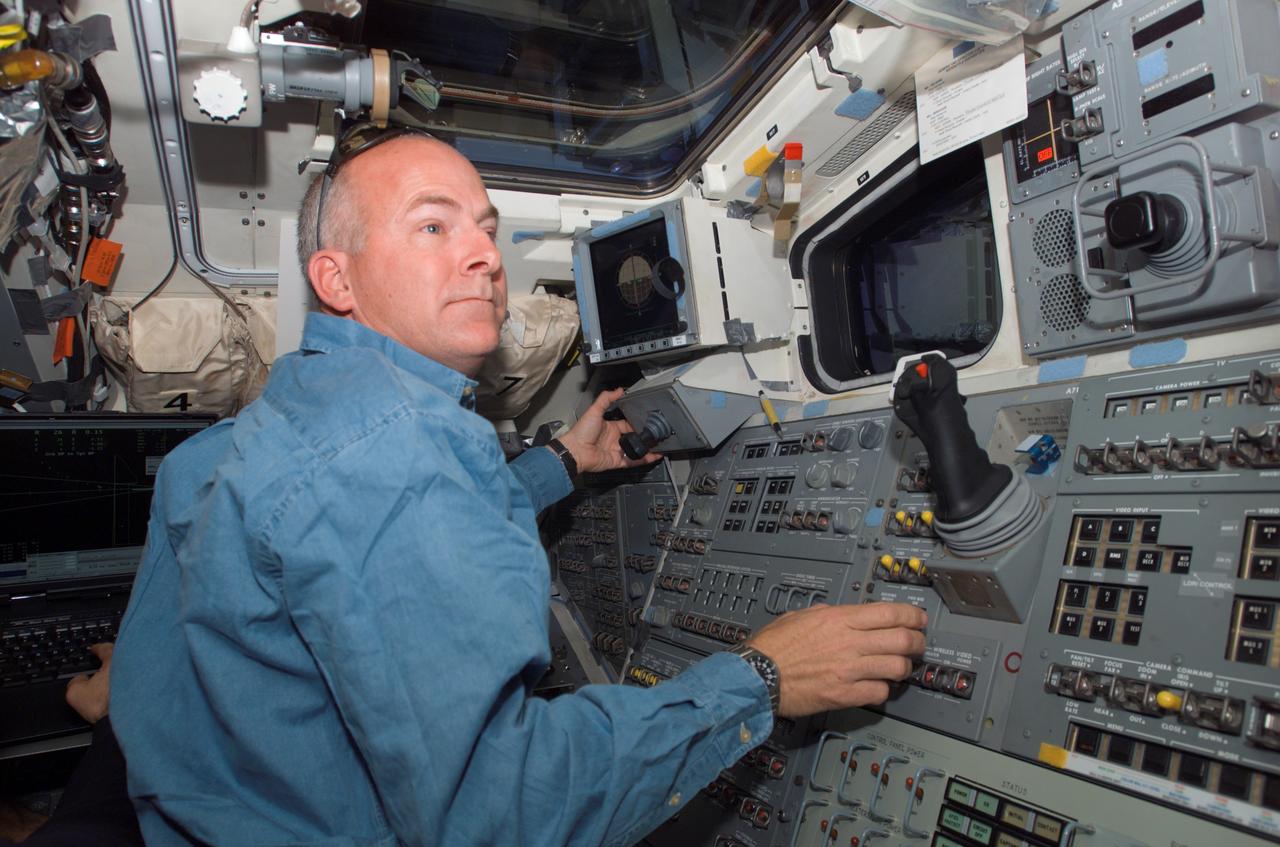
S122-E-009799 (18 Feb. 2008) --- Astronaut Alan Poindexter, STS-122 pilot, works the controls on the aft flight deck of Space Shuttle Atlantis during flight day 12 activities.
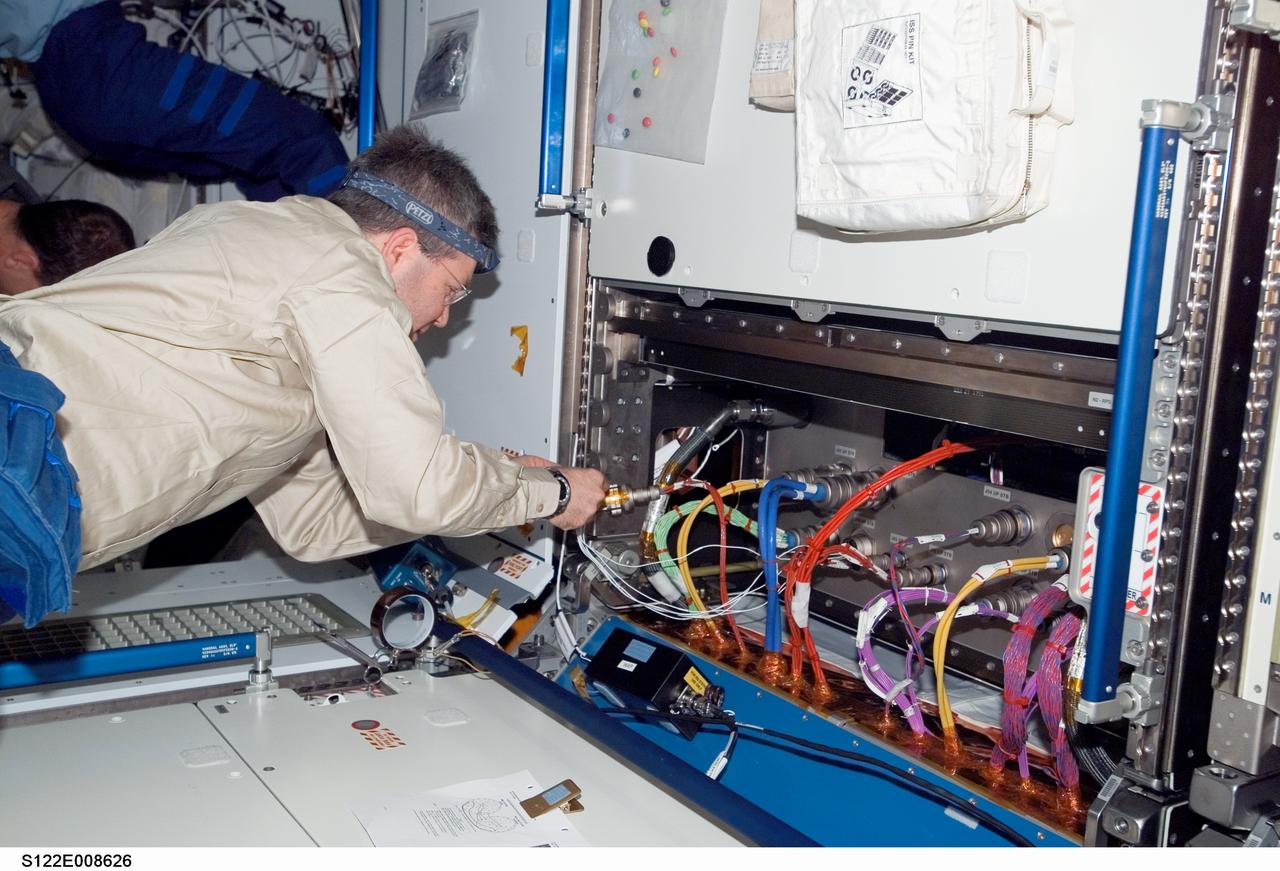
S122-E-008626 (14 Feb. 2008) --- Astronaut Steve Frick, STS-122 commander, works in the Harmony module of the International Space Station while Space Shuttle Atlantis is docked with the station.
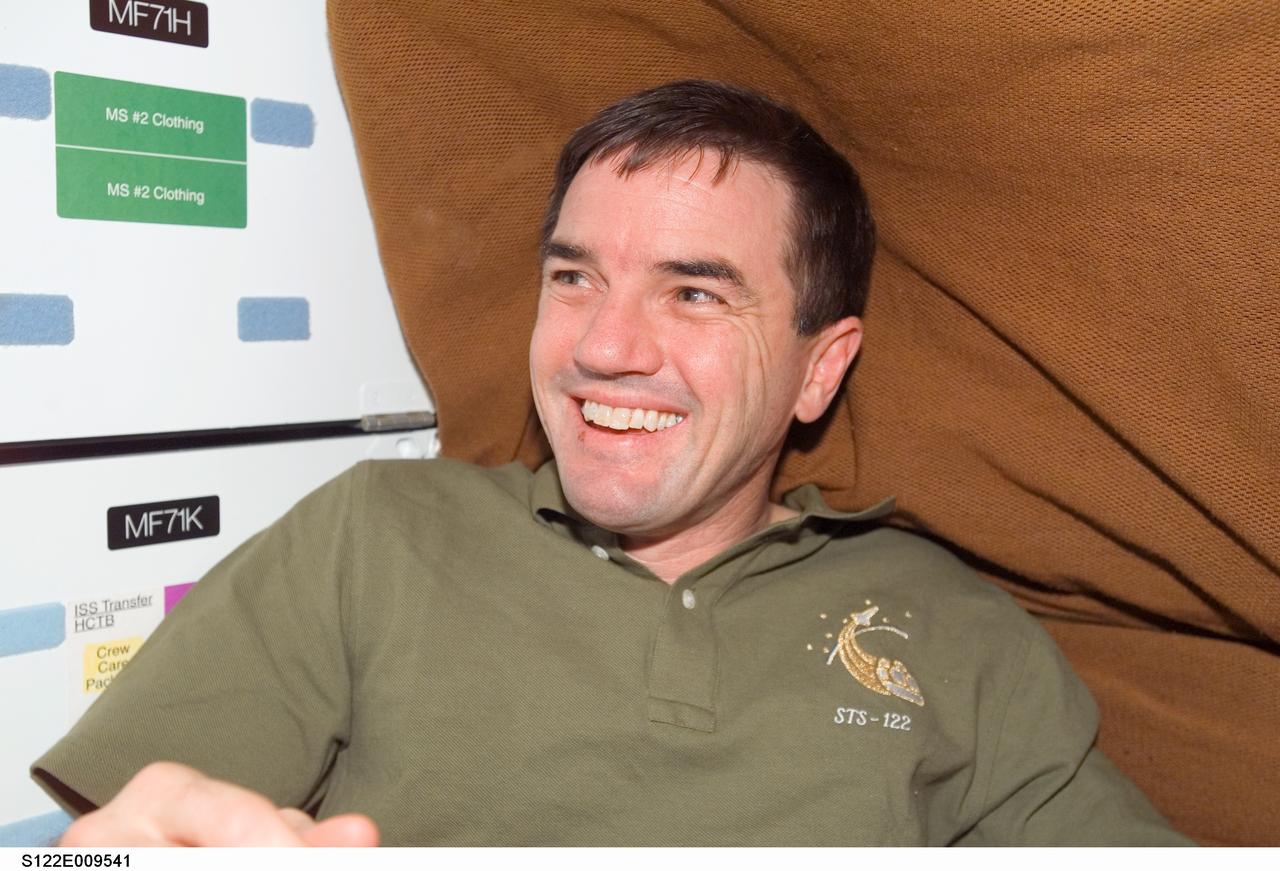
S122-E-009541 (16 Feb. 2008) --- Astronaut Rex Walheim, STS-122 mission specialist, is pictured on the middeck of Space Shuttle Atlantis while docked with the International Space Station.
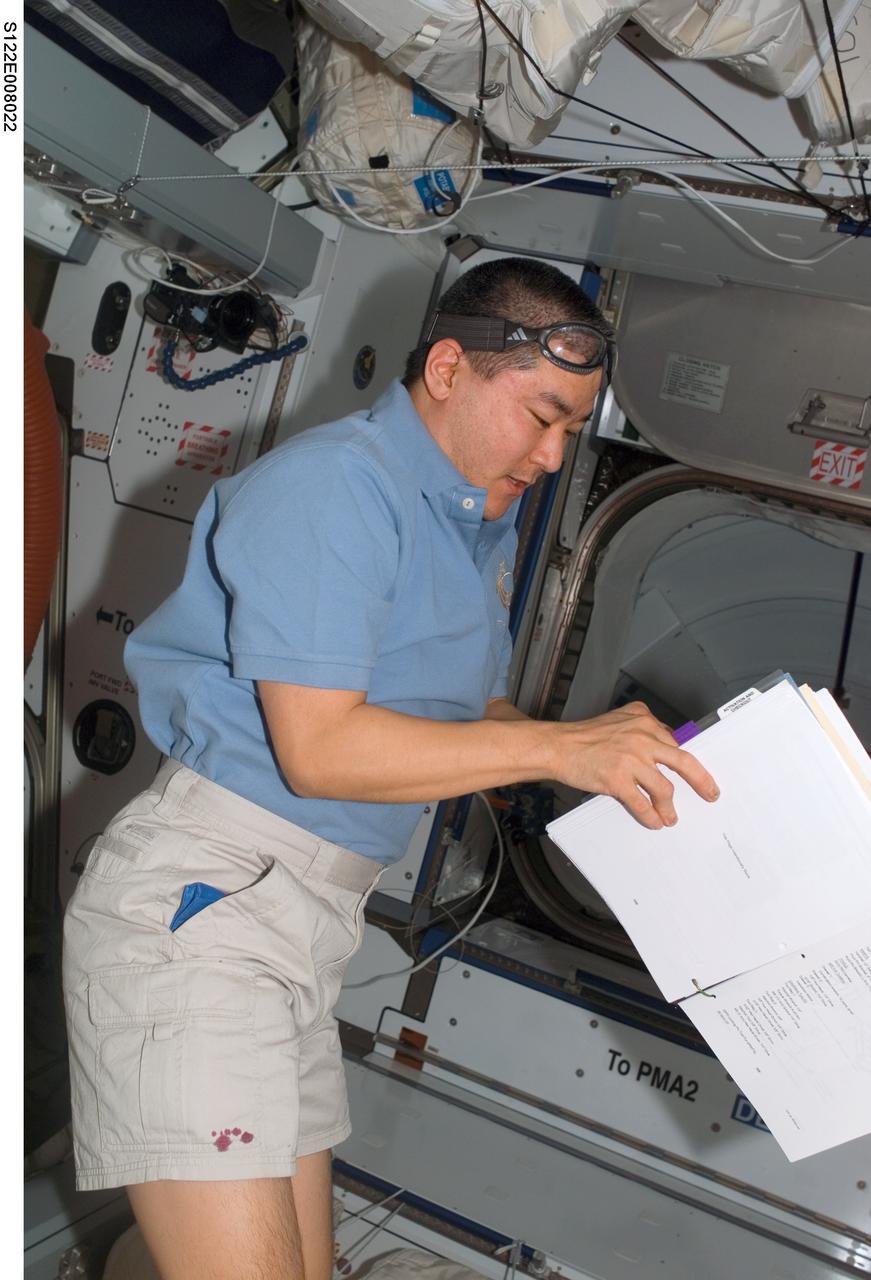
S122-E-008022 (12 Feb. 2008) --- Astronaut Daniel Tani, STS-122 mission specialist, works in the Harmony module of the International Space Station while Space Shuttle Atlantis is docked with the station.
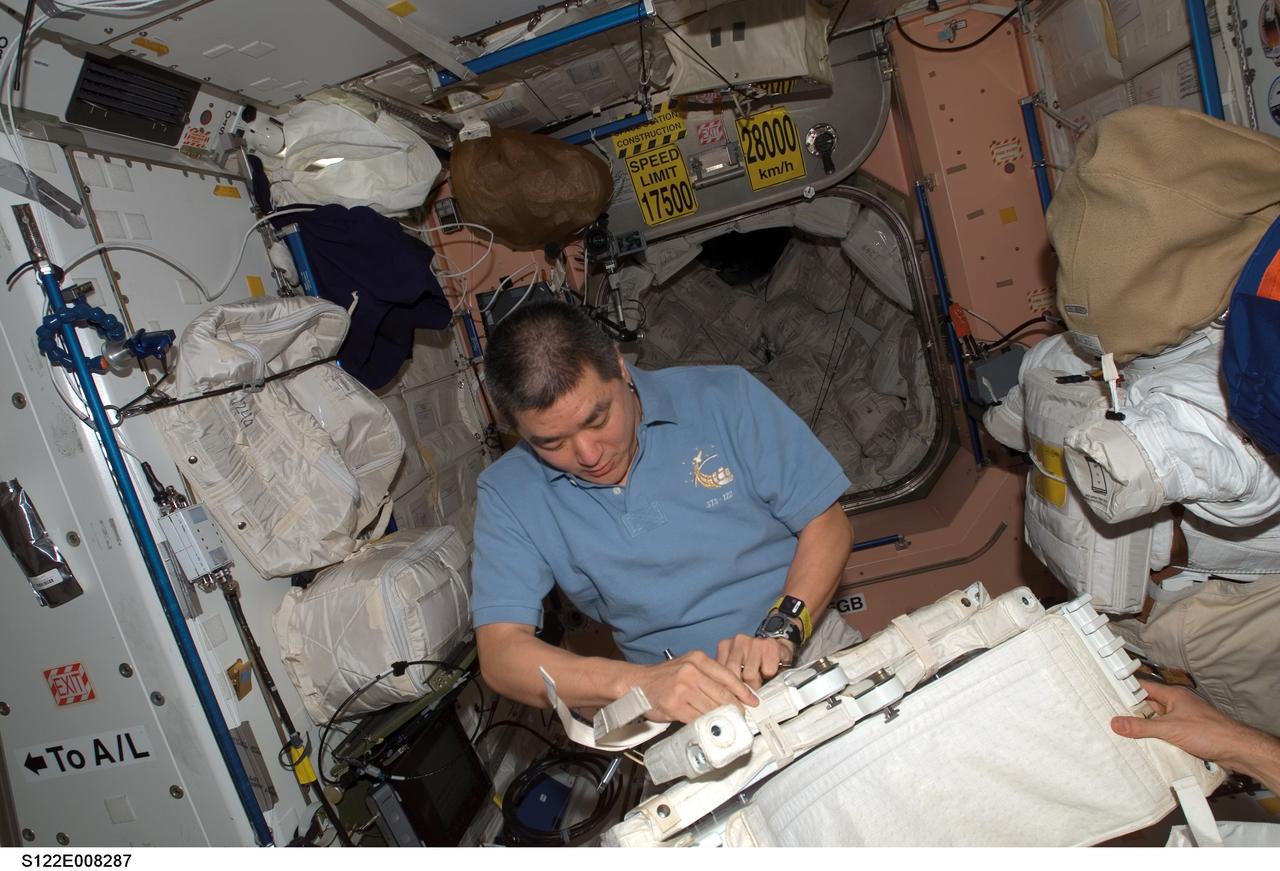
S122-E-008287 (13 Feb. 2008) --- Astronaut Daniel Tani, STS-122 mission specialist, works in the Unity node of the International Space Station while Space Shuttle Atlantis is docked with the station.
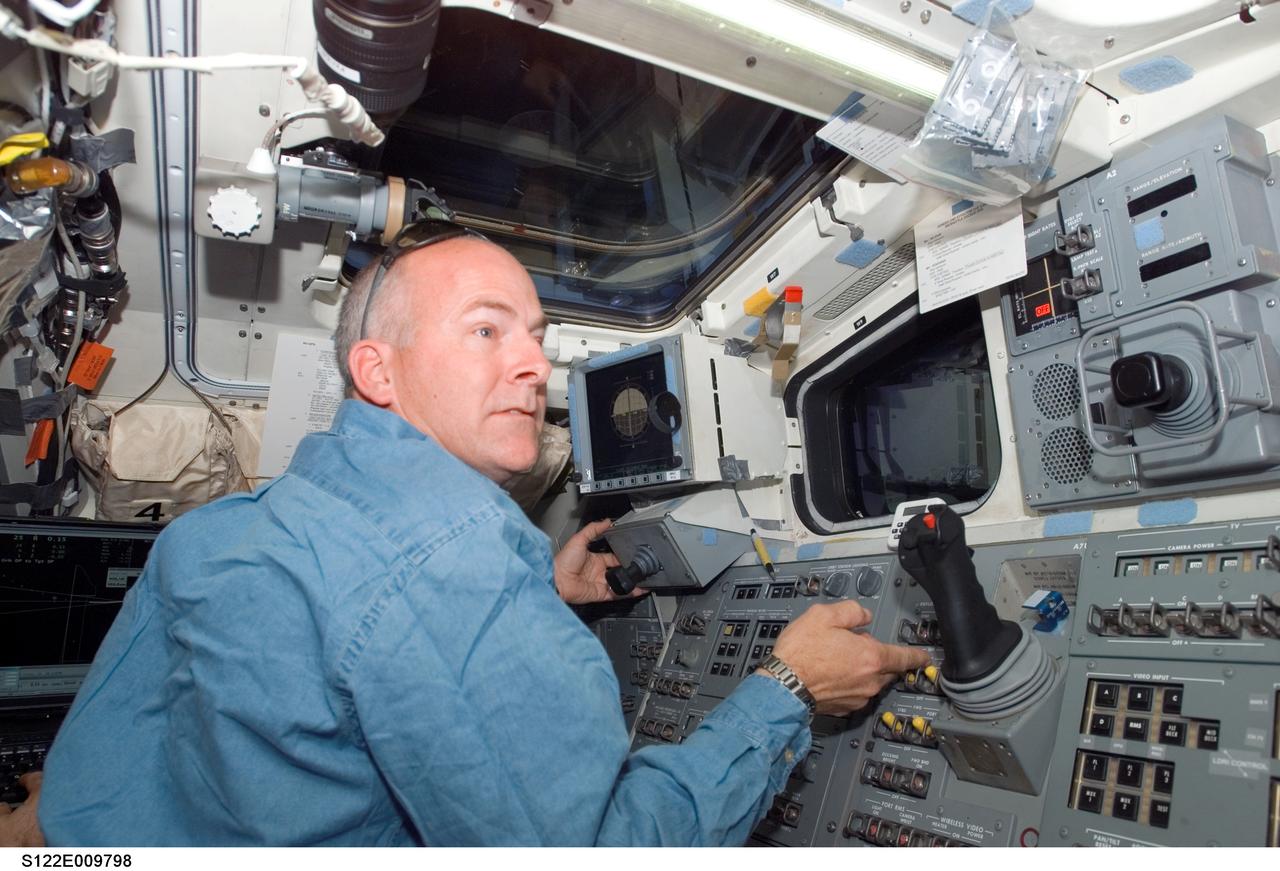
S122-E-009798 (18 Feb. 2008) --- Astronaut Alan Poindexter, STS-122 pilot, works the controls on the aft flight deck of Space Shuttle Atlantis during flight day 12 activities.
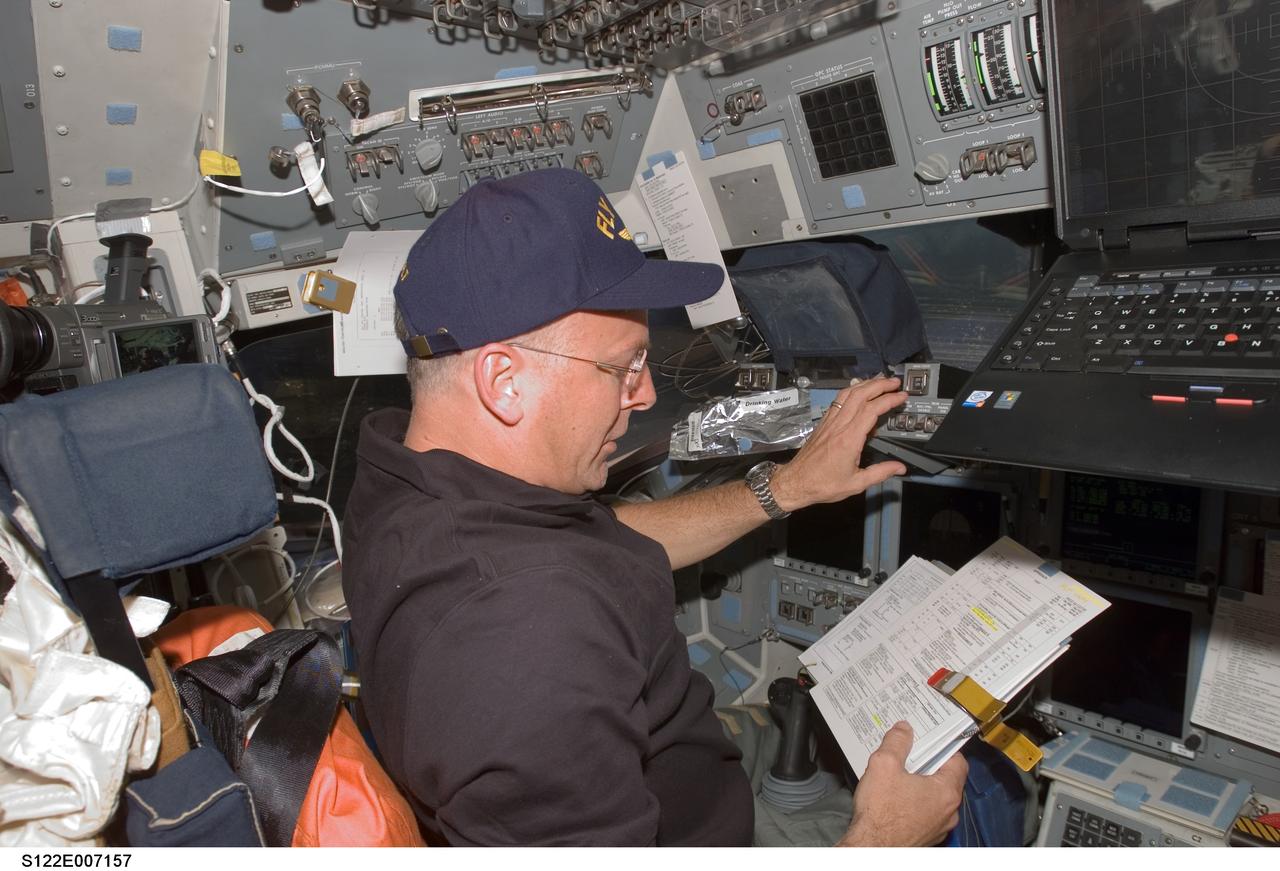
S122-E-007157 (9 Feb. 2008) --- Astronaut Alan Poindexter, STS-122 pilot, looks over a checklist while working on the flight deck of Space Shuttle Atlantis during flight day three activities.
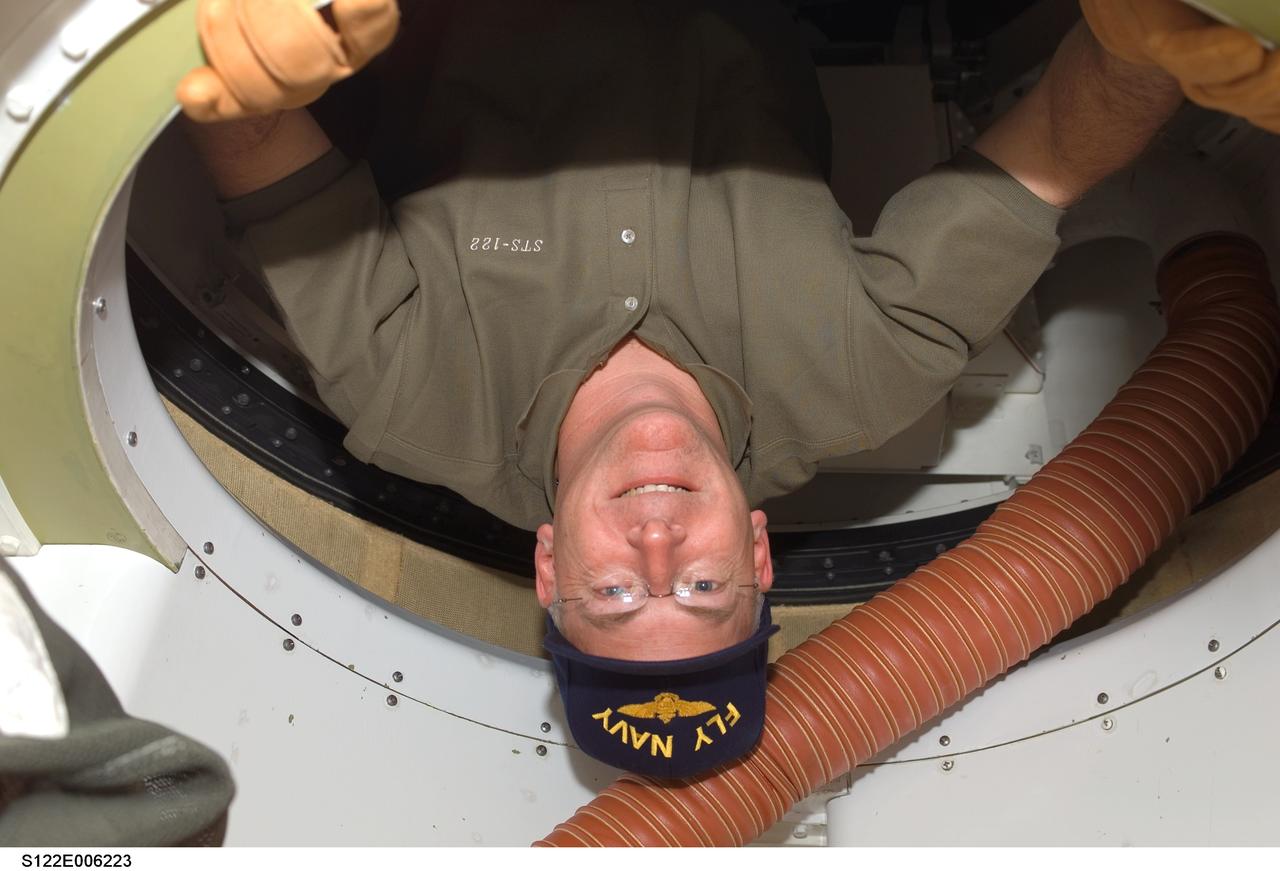
S122-E-006223 (8 Feb. 2008) --- Astronaut Alan Poindexter, STS-122 pilot, passes through a tunnel on the Space Shuttle Atlantis on the eve of the docking of the shuttle to the International Space Station.
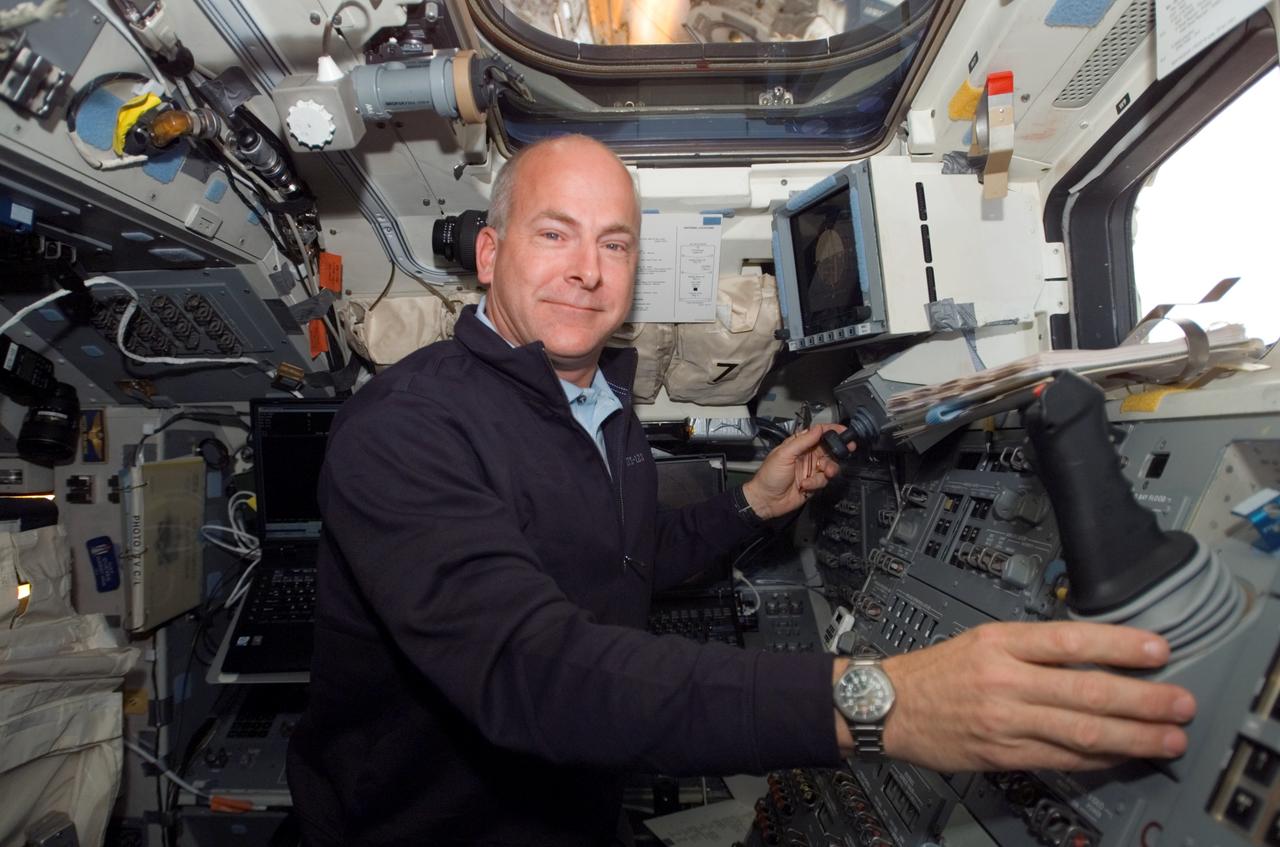
S122-E-011243 (18 Feb. 2008) --- Astronaut Alan Poindexter, STS-122 pilot, works the controls on the aft flight deck of Space Shuttle Atlantis during flight day 12 activities.
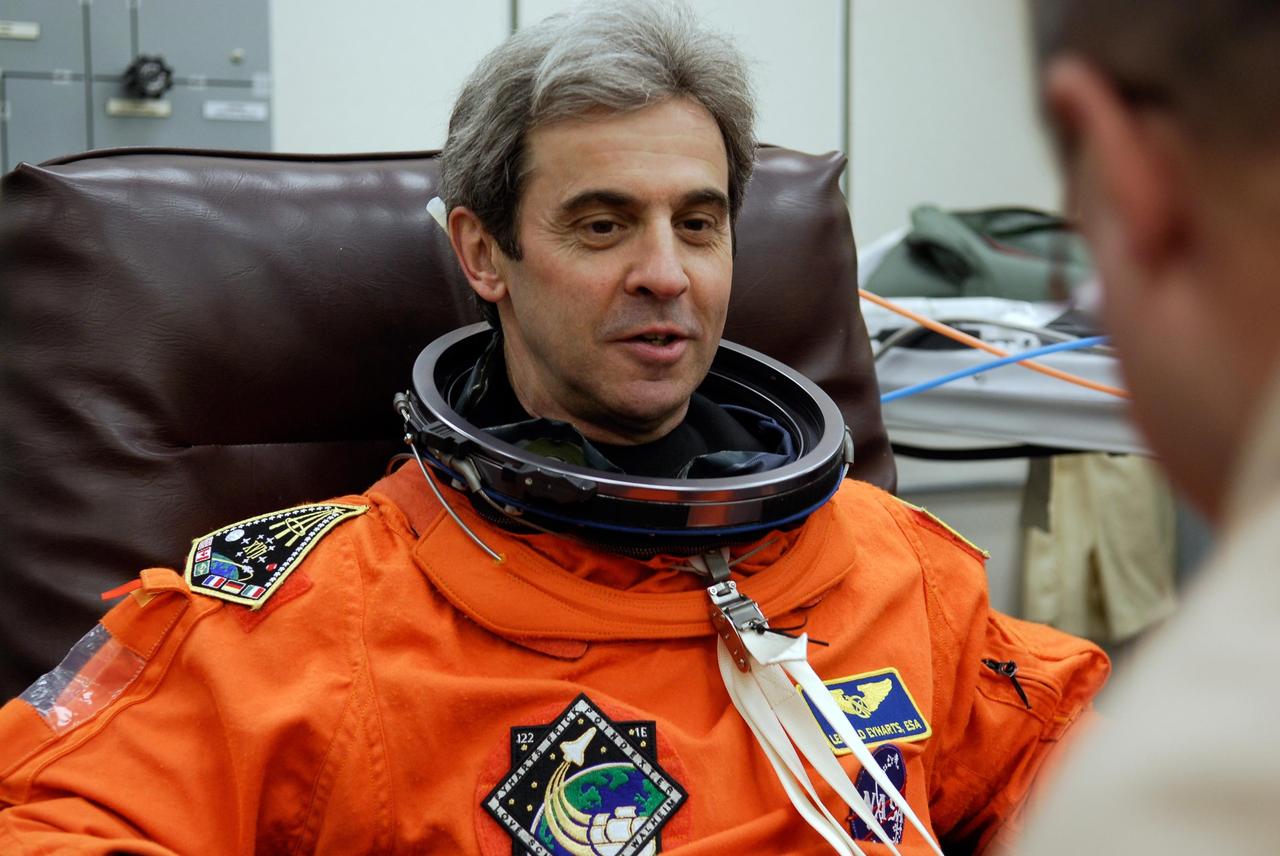
KENNEDY SPACE CENTER, FLA. -- Space shuttle Atlantis STS-122 Mission Specialist Leopold Eyharts talks to the suit technician helping him put on his launch and entry suit, in astronaut crew quarters. A European Space Agency astronaut, Eyharts will remain on the International Space Station as a flight engineer for Expedition 16 following the STS-122 mission. The STS-122 crew is preparing for a simulated launch countdown aboard Atlantis, part of terminal countdown demonstration test, or TCDT, activities at NASA's Kennedy Space Center. The TCDT is a dress rehearsal for launch and also provides astronauts and ground crews with equipment familiarization and emergency egress training. On mission STS-122, Atlantis will deliver the Columbus module to the International Space Station. The European Space Agency's largest single contribution to the station, Columbus is a multifunctional, pressurized laboratory that will be permanently attached to U.S. Node 2, called Harmony. The laboratory will expand the research facilities aboard the station, providing crew members and scientists from around the world the ability to conduct a variety of experiments in the physical, materials and life sciences. Launch is targeted for Dec. 6. Photo credit: NASA/Kim Shiflett
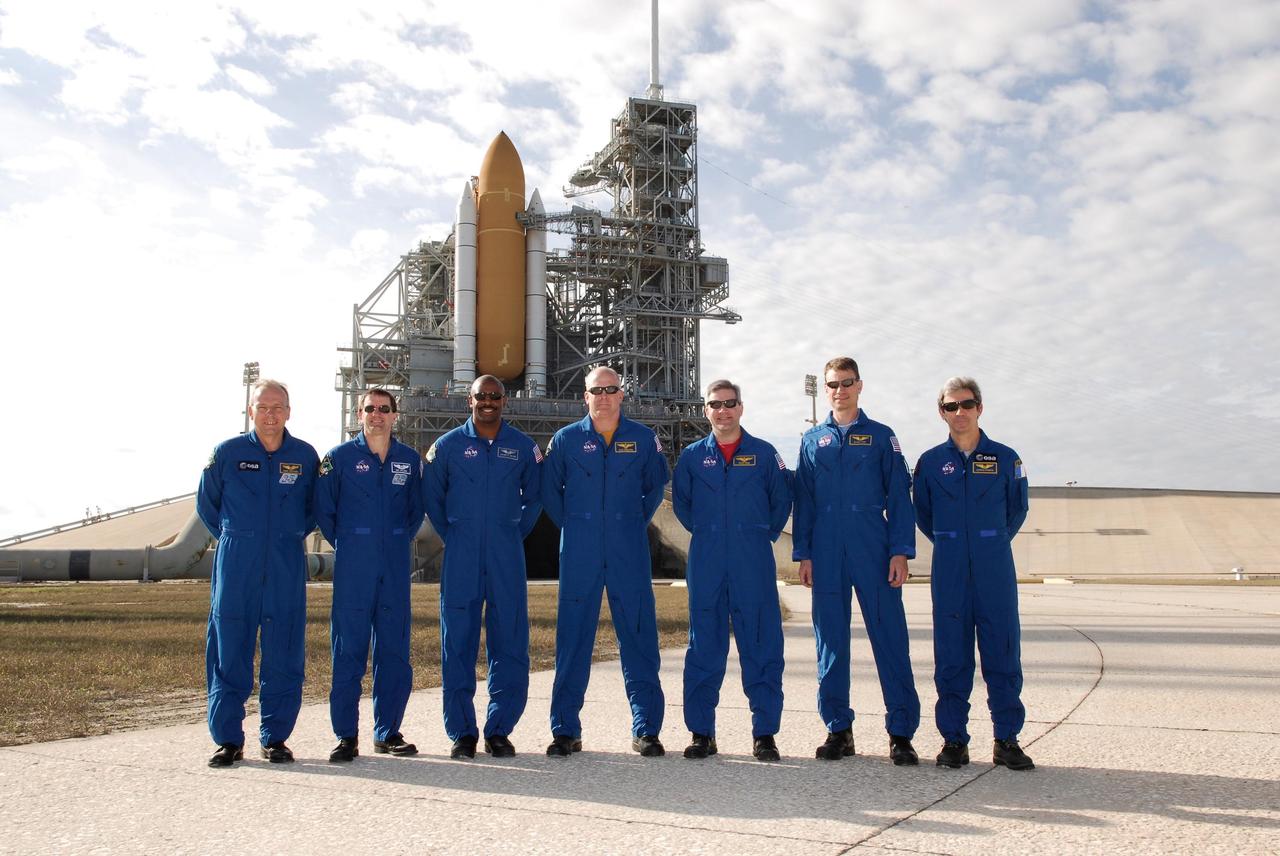
KENNEDY SPACE CENTER, FLA. -- The space shuttle Atlantis STS-122 crew poses for a group portrait at Launch Pad 39A as Atlantis undergoes final preparations for launch behind them. From left are Mission Specialists Hans Schlegel, Rex Walheim and Leland Melvin; Pilot Alan Poindexter; Commander Steve Frick; and Mission Specialists Stanley Love and Leopold Eyharts. Schlegel and Eyharts are with the European Space Agency. Eyharts will remain on the International Space Station as a flight engineer for Expedition 16 following the STS-122 mission. The STS-122 crew is at NASA's Kennedy Space Center to take part in terminal countdown demonstration test, or TCDT, activities, a standard part of launch preparations. The TCDT provides astronauts and ground crews with equipment familiarization, emergency egress training and a simulated launch countdown. On mission STS-122, Atlantis will deliver the European Space Agency's Columbus module to the International Space Station. Columbus is a multifunctional, pressurized laboratory that will be permanently attached to U.S. Node 2, called Harmony, and will expand the research facilities aboard the station. Launch is targeted for Dec. 6. Photo credit: NASA/Kim Shiflett
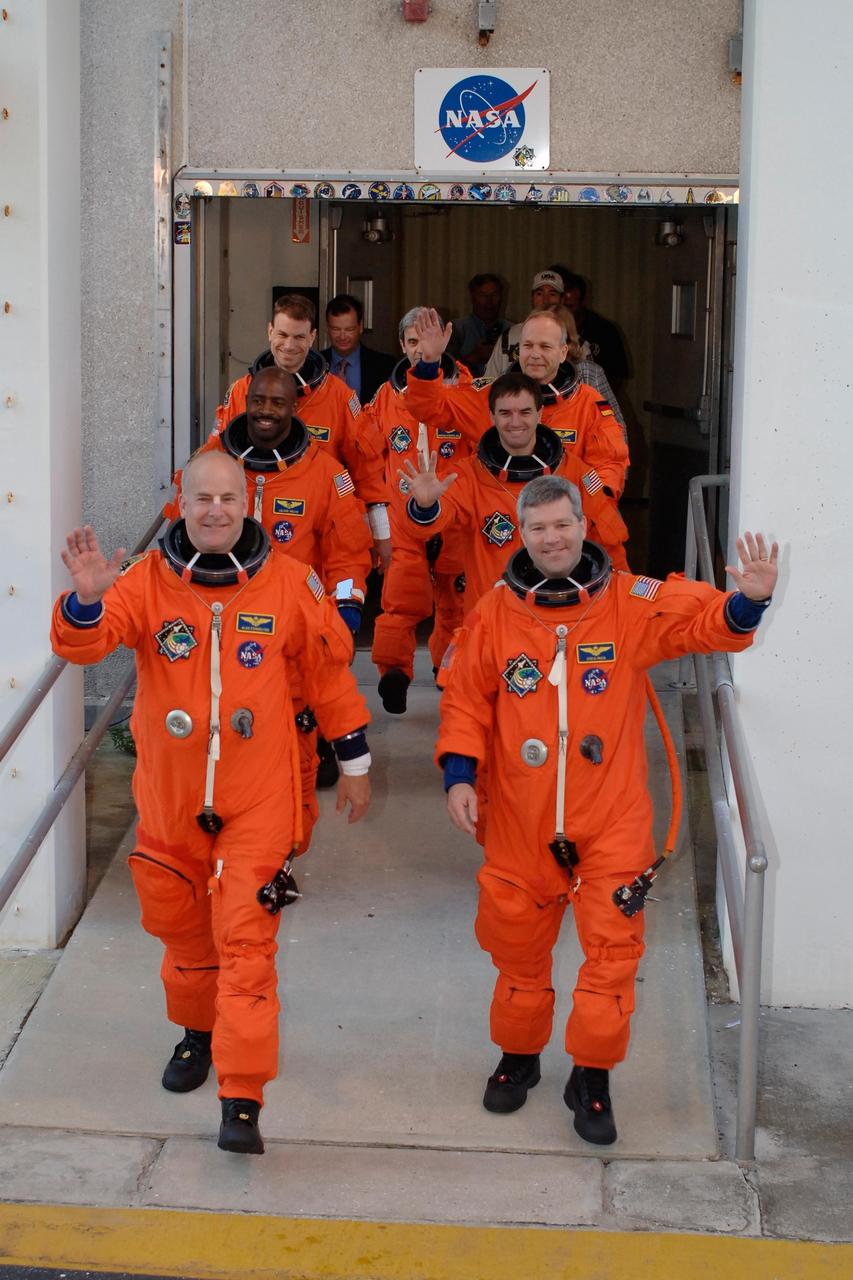
KENNEDY SPACE CENTER, FLA. -- Dressed in their launch and entry suits, the space shuttle Atlantis STS-122 crew greet the media and employees on hand to cheer them on as the leave the Operations and Checkout Building for Launch Pad 39A. Clockwise, from left front, are Pilot Alan Poindexter; Mission Specialists Leland Melvin, Stanley Love, Leopold Eyharts, Hans Schlegel, and Rex Walheim; and Commander Steve Frick. Eyharts and Schlegel are with the European Space Agency. Eyharts will remain on the International Space Station as a flight engineer for Expedition 16 following the STS-122 mission. The STS-122 crew is preparing for a simulated launch countdown aboard Atlantis, part of terminal countdown demonstration test, or TCDT, activities at NASA's Kennedy Space Center. The TCDT is a dress rehearsal for launch and also provides astronauts and ground crews with equipment familiarization and emergency egress training. On mission STS-122, Atlantis will deliver the Columbus module to the International Space Station. The European Space Agency's largest single contribution to the station, Columbus is a multifunctional, pressurized laboratory that will be permanently attached to U.S. Node 2, called Harmony. The laboratory will expand the research facilities aboard the station, providing crew members and scientists from around the world the ability to conduct a variety of experiments in the physical, materials and life sciences. Launch is targeted for Dec. 6. Photo credit: NASA/Kim Shiflett

KENNEDY SPACE CENTER, FLA. -- Space shuttle Atlantis STS-122 Mission Specialist Leopold Eyharts awaits adjustments to his helmet, part of his launch and entry suit, in astronaut crew quarters. A European Space Agency astronaut, Eyharts will remain on the International Space Station as a flight engineer for Expedition 16 following the STS-122 mission. The STS-122 crew is preparing for a simulated launch countdown aboard Atlantis, part of terminal countdown demonstration test, or TCDT, activities at NASA's Kennedy Space Center. The TCDT is a dress rehearsal for launch and also provides astronauts and ground crews with equipment familiarization and emergency egress training. On mission STS-122, Atlantis will deliver the Columbus module to the International Space Station. The European Space Agency's largest single contribution to the station, Columbus is a multifunctional, pressurized laboratory that will be permanently attached to U.S. Node 2, called Harmony. The laboratory will expand the research facilities aboard the station, providing crew members and scientists from around the world the ability to conduct a variety of experiments in the physical, materials and life sciences. Launch is targeted for Dec. 6. Photo credit: NASA/Kim Shiflett

KENNEDY SPACE CENTER, FLA. -- Dressed in their launch and entry suits, the space shuttle Atlantis STS-122 crew exits the Operations and Checkout Building for their ride to Launch Pad 39A. Clockwise, from left front, are Pilot Alan Poindexter; Mission Specialists Leland Melvin, Stanley Love, Leopold Eyharts, Hans Schlegel, and Rex Walheim; and Commander Steve Frick. Eyharts and Schlegel are with the European Space Agency. Eyharts will remain on the International Space Station as a flight engineer for Expedition 16 following the STS-122 mission. The STS-122 crew is preparing for a simulated launch countdown aboard Atlantis, part of terminal countdown demonstration test, or TCDT, activities at NASA's Kennedy Space Center. The TCDT is a dress rehearsal for launch and also provides astronauts and ground crews with equipment familiarization and emergency egress training. On mission STS-122, Atlantis will deliver the Columbus module to the International Space Station. The European Space Agency's largest single contribution to the station, Columbus is a multifunctional, pressurized laboratory that will be permanently attached to U.S. Node 2, called Harmony. The laboratory will expand the research facilities aboard the station, providing crew members and scientists from around the world the ability to conduct a variety of experiments in the physical, materials and life sciences. Launch is targeted for Dec. 6. Photo credit: NASA/Kim Shiflett

KENNEDY SPACE CENTER, FLA. -- Dressed in their launch and entry suits, the space shuttle Atlantis STS-122 crew poses for a group portrait in front of the astronaut van as they leave the Operations and Checkout Building for Launch Pad 39A. From left are Mission Specialists Leopold Eyharts, Stanley Love, Hans Schlegel, Rex Walheim, and Leland Melvin; Pilot Alan Poindexter; and Commander Steve Frick. Eyharts and Schlegel are with the European Space Agency. Eyharts will remain on the International Space Station as a flight engineer for Expedition 16 following the STS-122 mission. The STS-122 crew is preparing for a simulated launch countdown aboard Atlantis, part of terminal countdown demonstration test, or TCDT, activities at NASA's Kennedy Space Center. The TCDT is a dress rehearsal for launch and also provides astronauts and ground crews with equipment familiarization and emergency egress training. On mission STS-122, Atlantis will deliver the Columbus module to the International Space Station. The European Space Agency's largest single contribution to the station, Columbus is a multifunctional, pressurized laboratory that will be permanently attached to U.S. Node 2, called Harmony. The laboratory will expand the research facilities aboard the station, providing crew members and scientists from around the world the ability to conduct a variety of experiments in the physical, materials and life sciences. Launch is targeted for Dec. 6. Photo credit: NASA/Kim Shiflett
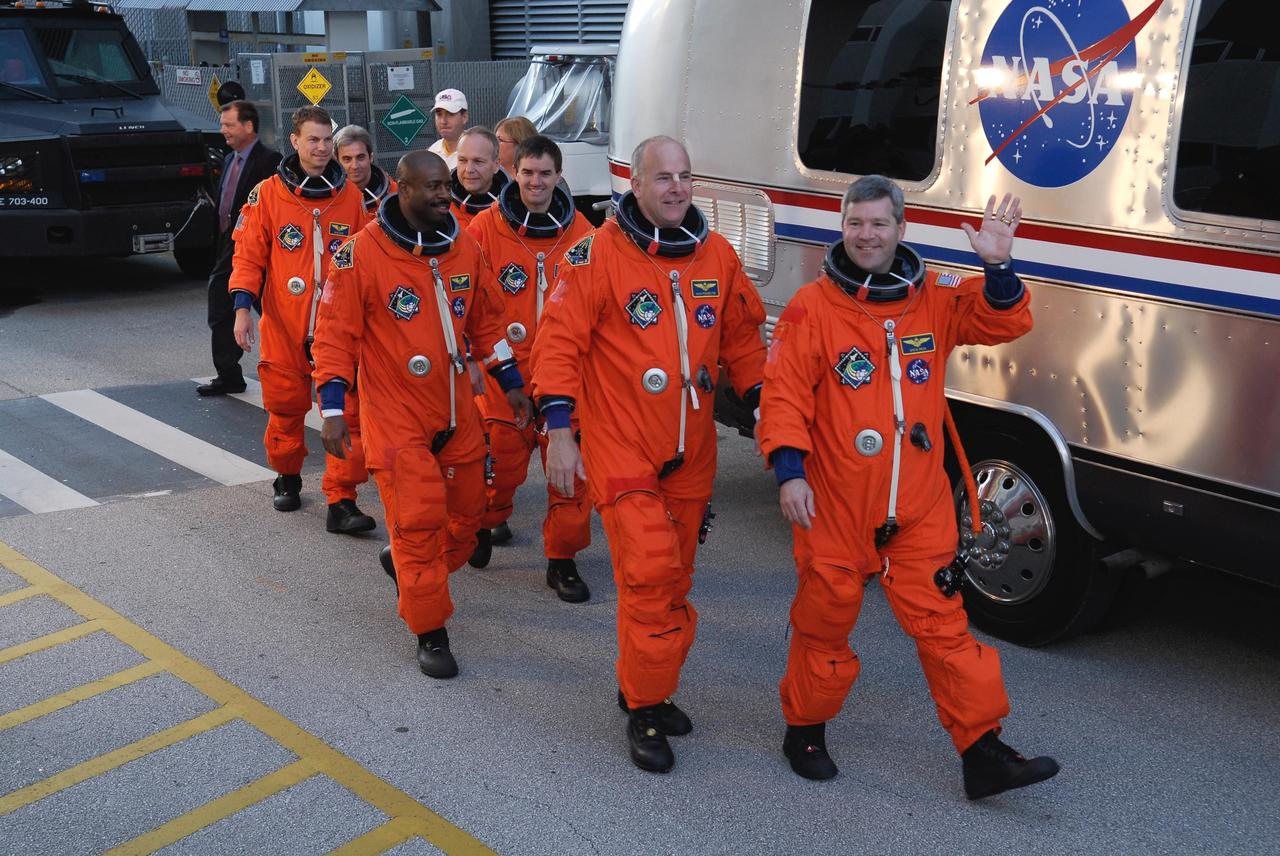
KENNEDY SPACE CENTER, FLA. -- Dressed in their launch and entry suits, the space shuttle Atlantis STS-122 crew leaves the Operations and Checkout Building for their trip to Launch Pad 39A aboard the astronaut van. From left are Mission Specialists Stanley Love, Leopold Eyharts, Leland Melvin, Hans Schlegel, and Rex Walheim; Pilot Alan Poindexter; and Commander Steve Frick. Eyharts and Schlegel are with the European Space Agency. Eyharts will remain on the International Space Station as a flight engineer for Expedition 16 following the STS-122 mission. The STS-122 crew is preparing for a simulated launch countdown aboard Atlantis, part of terminal countdown demonstration test, or TCDT, activities at NASA's Kennedy Space Center. The TCDT is a dress rehearsal for launch and also provides astronauts and ground crews with equipment familiarization and emergency egress training. On mission STS-122, Atlantis will deliver the Columbus module to the International Space Station. The European Space Agency's largest single contribution to the station, Columbus is a multifunctional, pressurized laboratory that will be permanently attached to U.S. Node 2, called Harmony. The laboratory will expand the research facilities aboard the station, providing crew members and scientists from around the world the ability to conduct a variety of experiments in the physical, materials and life sciences. Launch is targeted for Dec. 6. Photo credit: NASA/Kim Shiflett
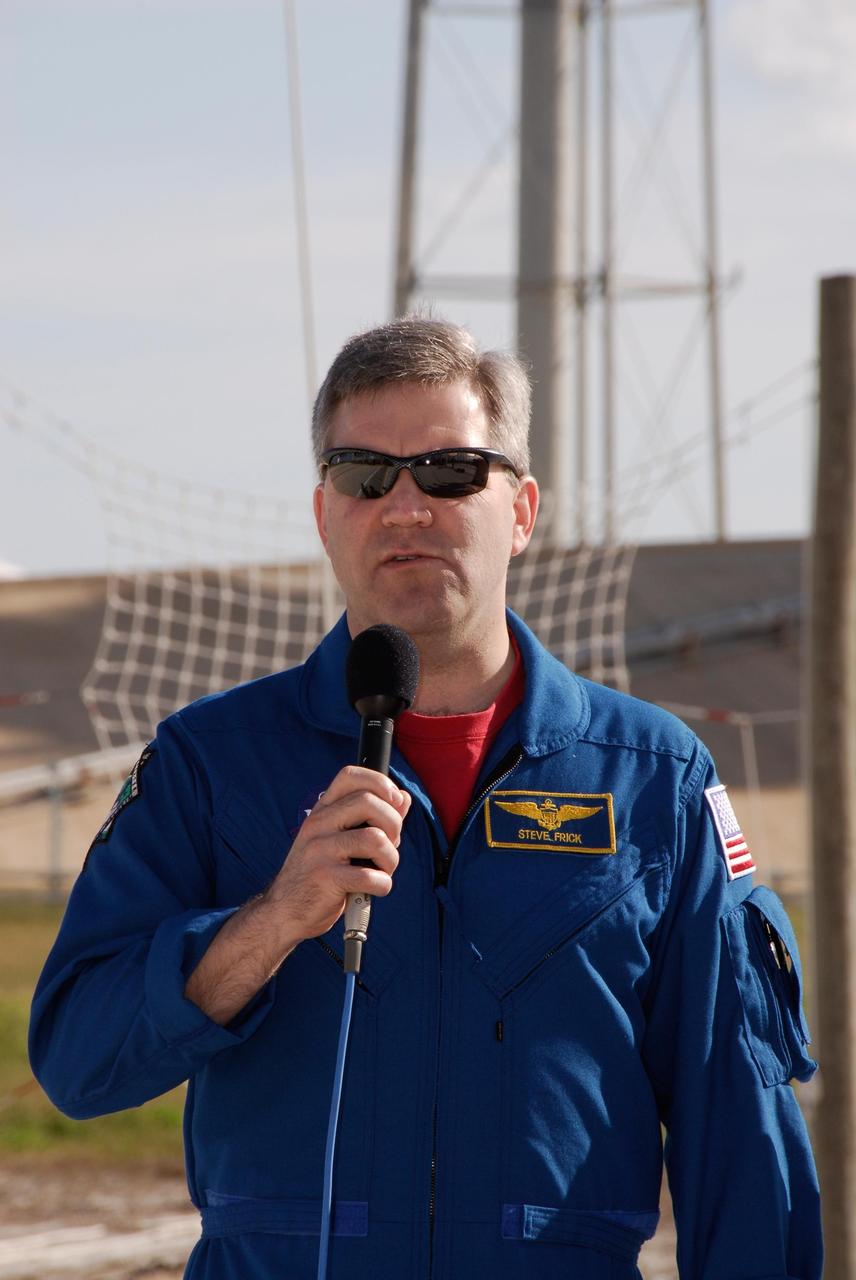
KENNEDY SPACE CENTER, FLA. -- Space shuttle Atlantis STS-122 Commander Steve Frick responds to a question from the media during a press conference at the slidewire basket landing on Launch Pad 39A. The STS-122 crew is at NASA's Kennedy Space Center to take part in terminal countdown demonstration test, or TCDT, activities, a standard part of launch preparations. The TCDT provides astronauts and ground crews with equipment familiarization, emergency egress training and a simulated launch countdown. On mission STS-122, Atlantis will deliver the European Space Agency's Columbus module to the International Space Station. Columbus is a multifunctional, pressurized laboratory that will be permanently attached to U.S. Node 2, called Harmony, and will expand the research facilities aboard the station. Launch is targeted for Dec. 6. Photo credit: NASA/Kim Shiflett
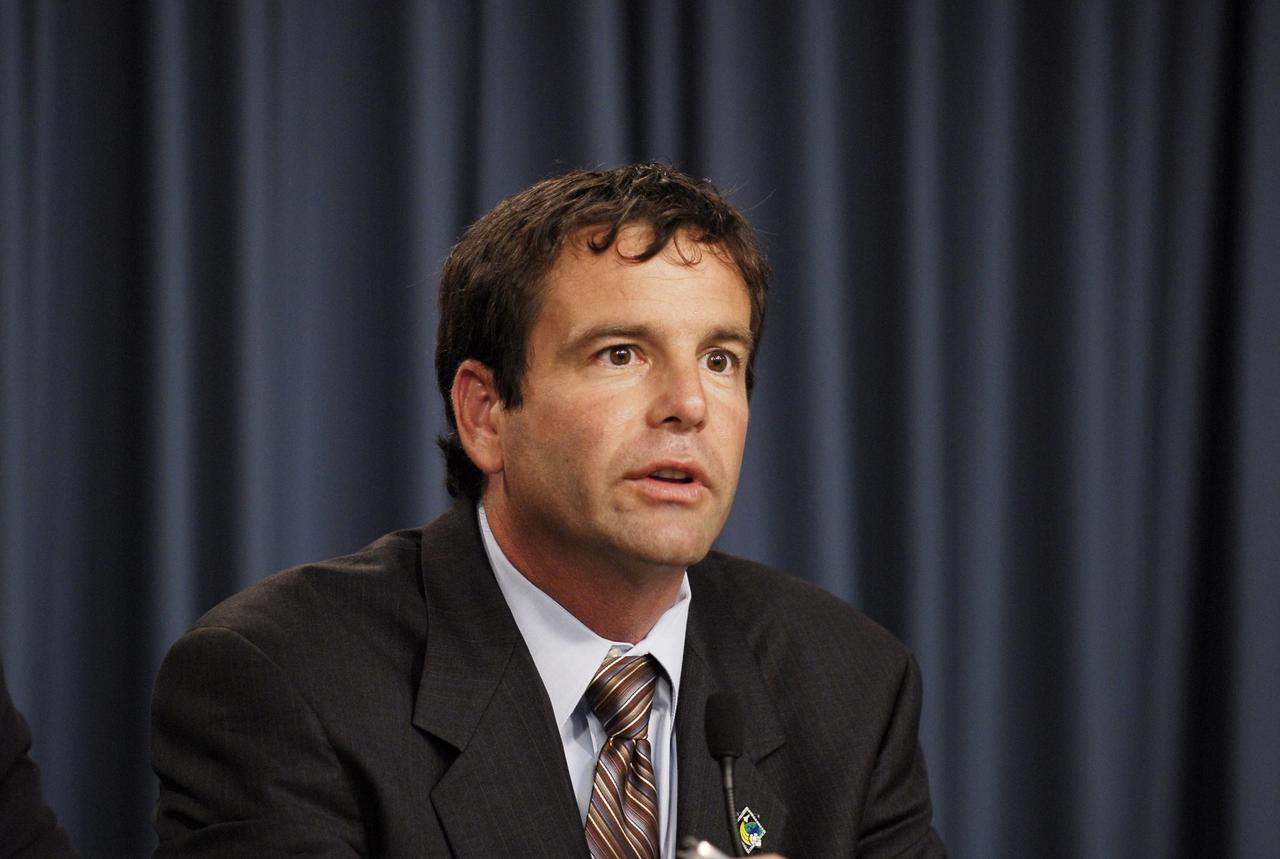
KENNEDY SPACE CENTER, FLA. -- Doug Lyons, STS-122 launch director, participates in a news briefing following the conclusion of a Mission Management Team, or MMT, meeting. The meeting followed the morning's launch scrub of the space shuttle Atlantis STS-122 mission caused by problems experienced with the external tank's engine cutoff sensor system during tanking for the second launch attempt. An announcement was made during the briefing that the STS-122 launch is postponed to no earlier than Jan. 2, 2008, to give the team time to resolve the system's problems. Atlantis will carry the Columbus Laboratory, the European Space Agency's largest contribution to the construction of the International Space Station. It will support scientific and technological research in a microgravity environment. Permanently attached to the Harmony node of the space station, the laboratory will carry out experiments in materials science, fluid physics and biosciences, as well as perform a number of technological applications. Photo credit: NASA/Kim Shiflett
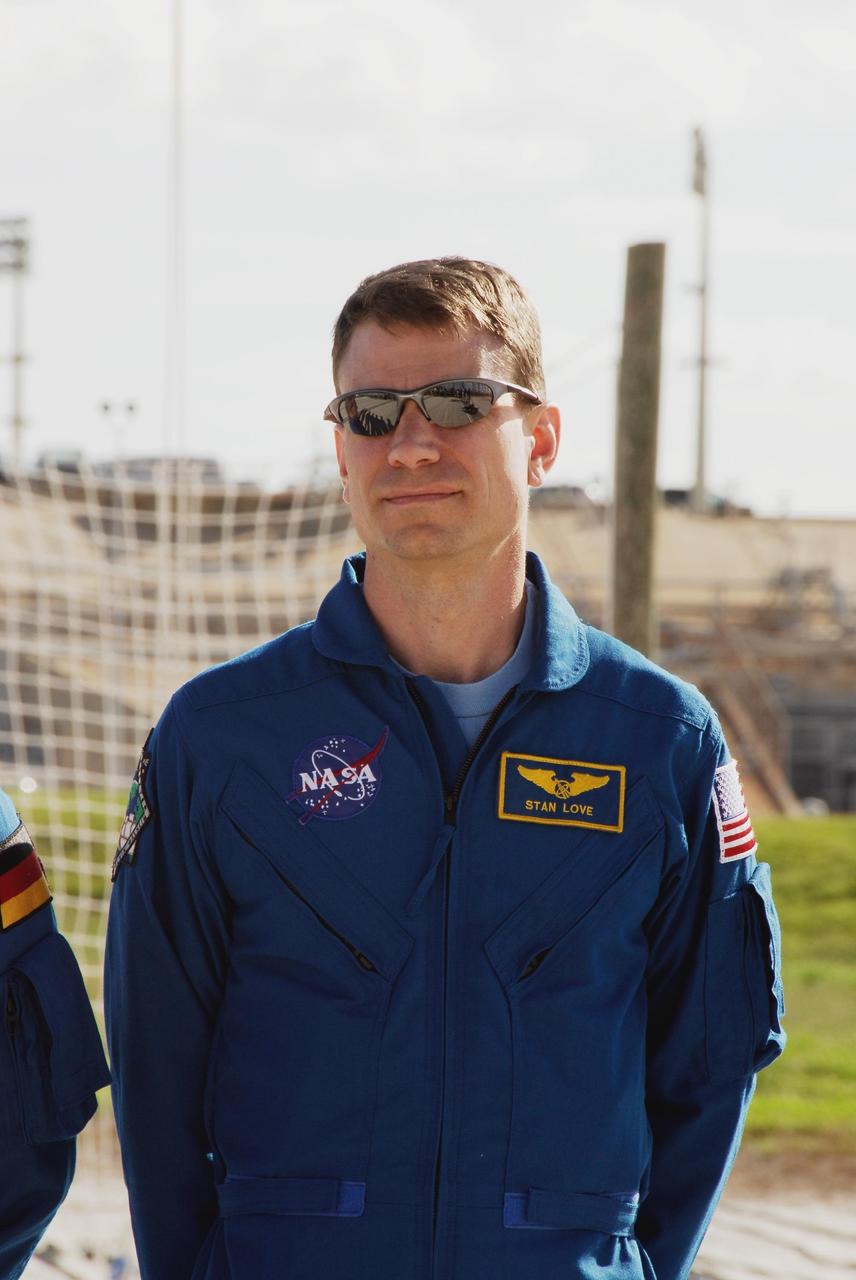
KENNEDY SPACE CENTER, FLA. -- Space shuttle Atlantis STS-122 Mission Specialist Stanley Love takes part in a press conference at the slidewire basket landing on Launch Pad 39A. The STS-122 crew is at NASA's Kennedy Space Center to take part in terminal countdown demonstration test, or TCDT, activities, a standard part of launch preparations. The TCDT provides astronauts and ground crews with equipment familiarization, emergency egress training and a simulated launch countdown. On mission STS-122, Atlantis will deliver the European Space Agency's Columbus module to the International Space Station. Columbus is a multifunctional, pressurized laboratory that will be permanently attached to U.S. Node 2, called Harmony, and will expand the research facilities aboard the station. Launch is targeted for Dec. 6. Photo credit: NASA/Kim Shiflett
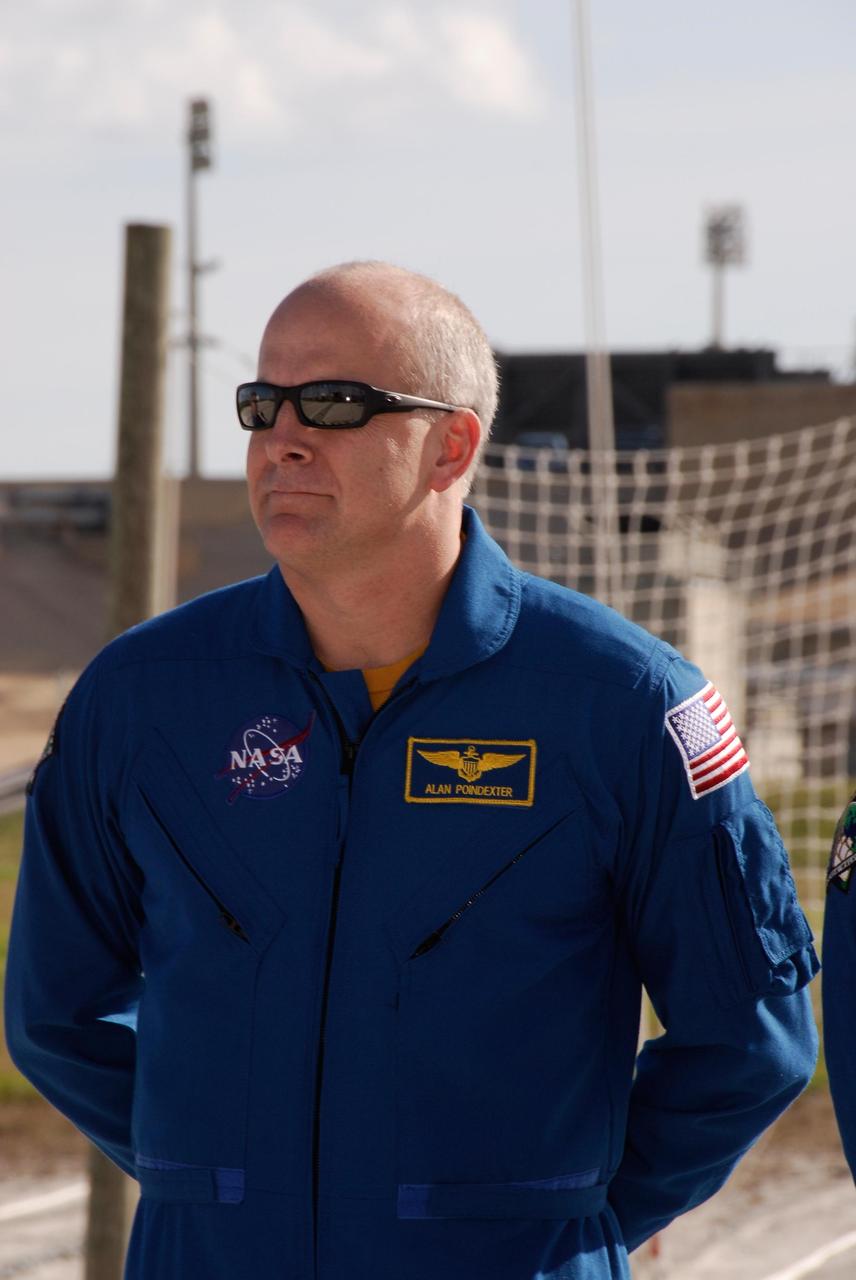
KENNEDY SPACE CENTER, FLA. -- Space shuttle Atlantis STS-122 Pilot Alan Poindexter takes part in a press conference at the slidewire basket landing on Launch Pad 39A. The STS-122 crew is at NASA's Kennedy Space Center to take part in terminal countdown demonstration test, or TCDT, activities, a standard part of launch preparations. The TCDT provides astronauts and ground crews with equipment familiarization, emergency egress training and a simulated launch countdown. On mission STS-122, Atlantis will deliver the European Space Agency's Columbus module to the International Space Station. Columbus is a multifunctional, pressurized laboratory that will be permanently attached to U.S. Node 2, called Harmony, and will expand the research facilities aboard the station. Launch is targeted for Dec. 6. Photo credit: NASA/Kim Shiflett
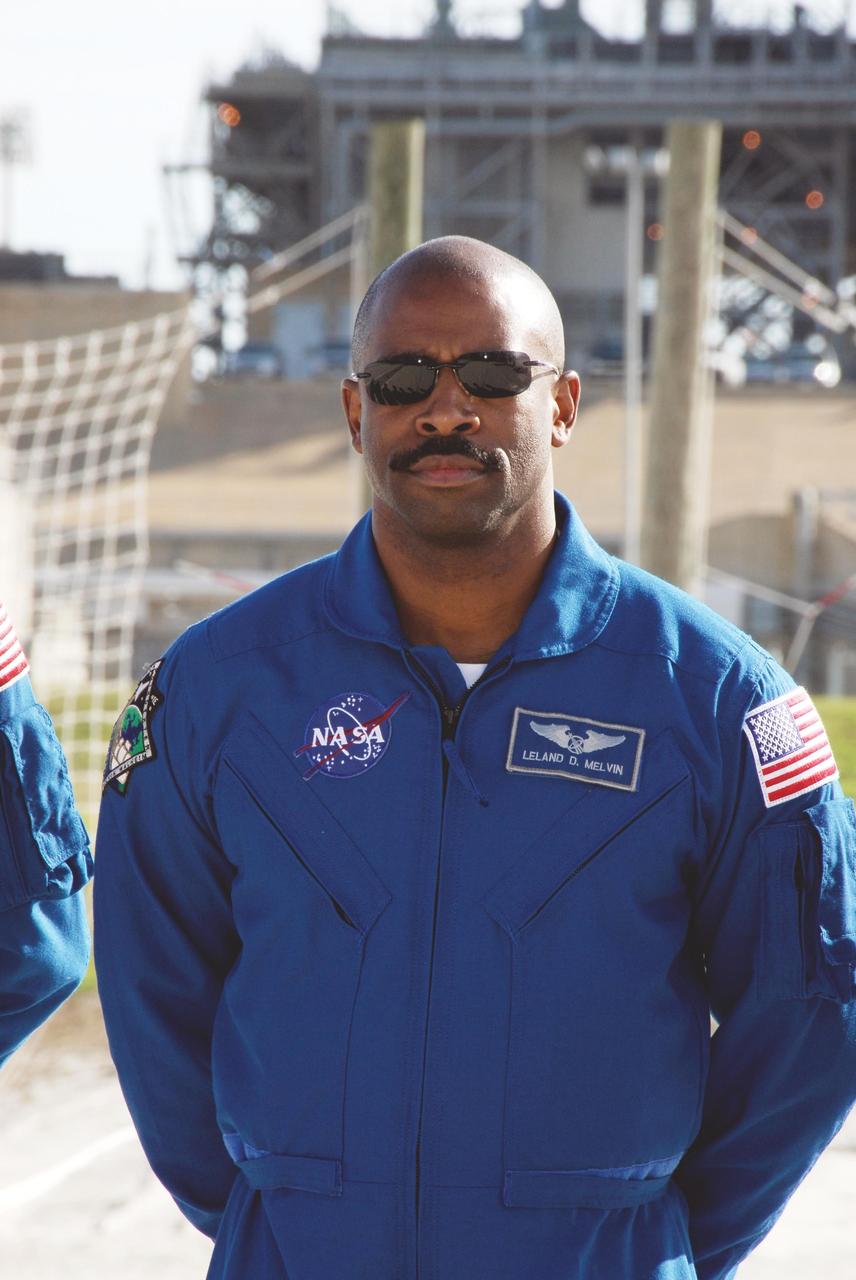
KENNEDY SPACE CENTER, FLA. -- Space shuttle Atlantis STS-122 Mission Specialist Leland Melvin takes part in a press conference at the slidewire basket landing on Launch Pad 39A. The STS-122 crew is at NASA's Kennedy Space Center to take part in terminal countdown demonstration test, or TCDT, activities, a standard part of launch preparations. The TCDT provides astronauts and ground crews with equipment familiarization, emergency egress training and a simulated launch countdown. On mission STS-122, Atlantis will deliver the European Space Agency's Columbus module to the International Space Station. Columbus is a multifunctional, pressurized laboratory that will be permanently attached to U.S. Node 2, called Harmony, and will expand the research facilities aboard the station. Launch is targeted for Dec. 6. Photo credit: NASA/Kim Shiflett
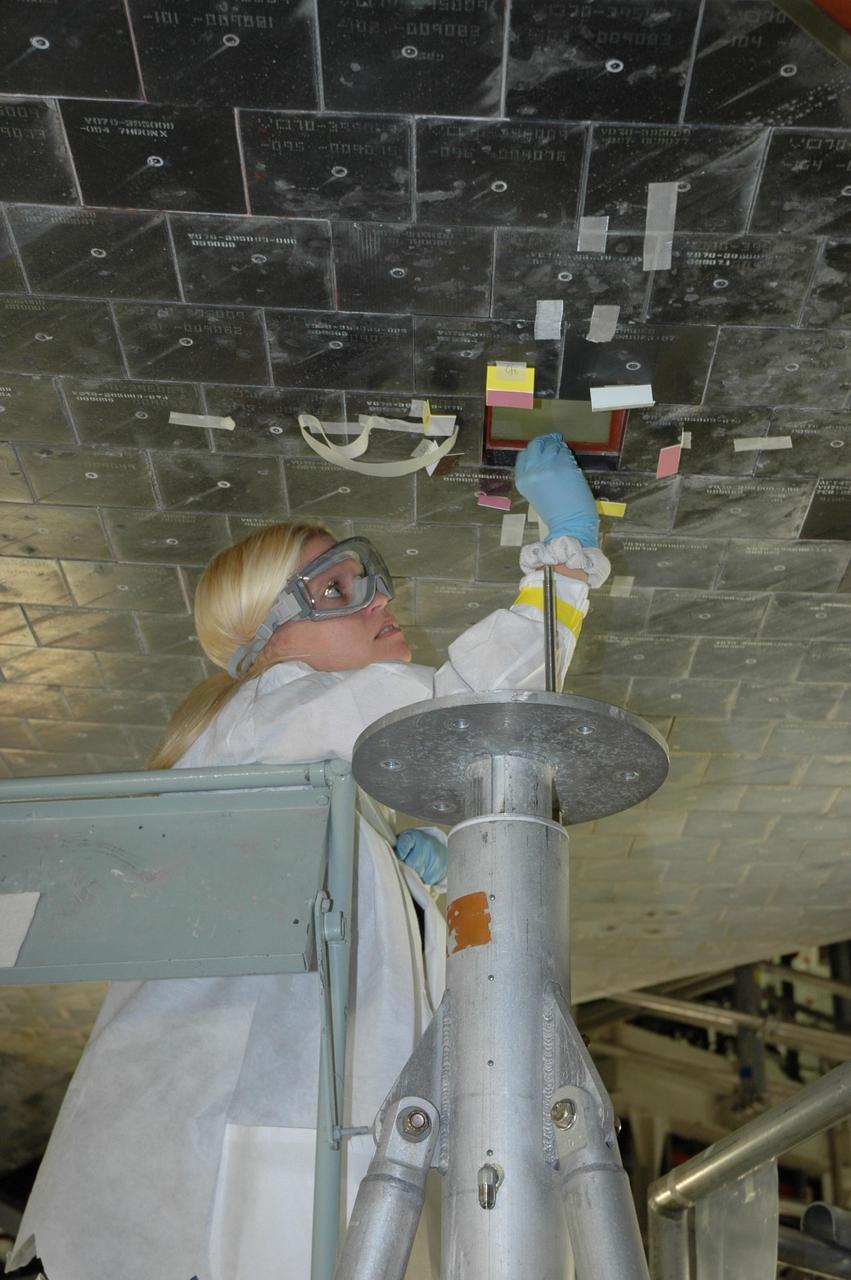
KENNEDY SPACE CENTER, FLA. -- In the Orbiter Processing Facility, a United Space Alliance technician prepares the surface of Atlantis for installation of a thermal protection system tile. Space shuttle Atlantis is targeted for launch on mission STS-122 on Dec. 6. Photo credit: NASA/Jack Pfaller
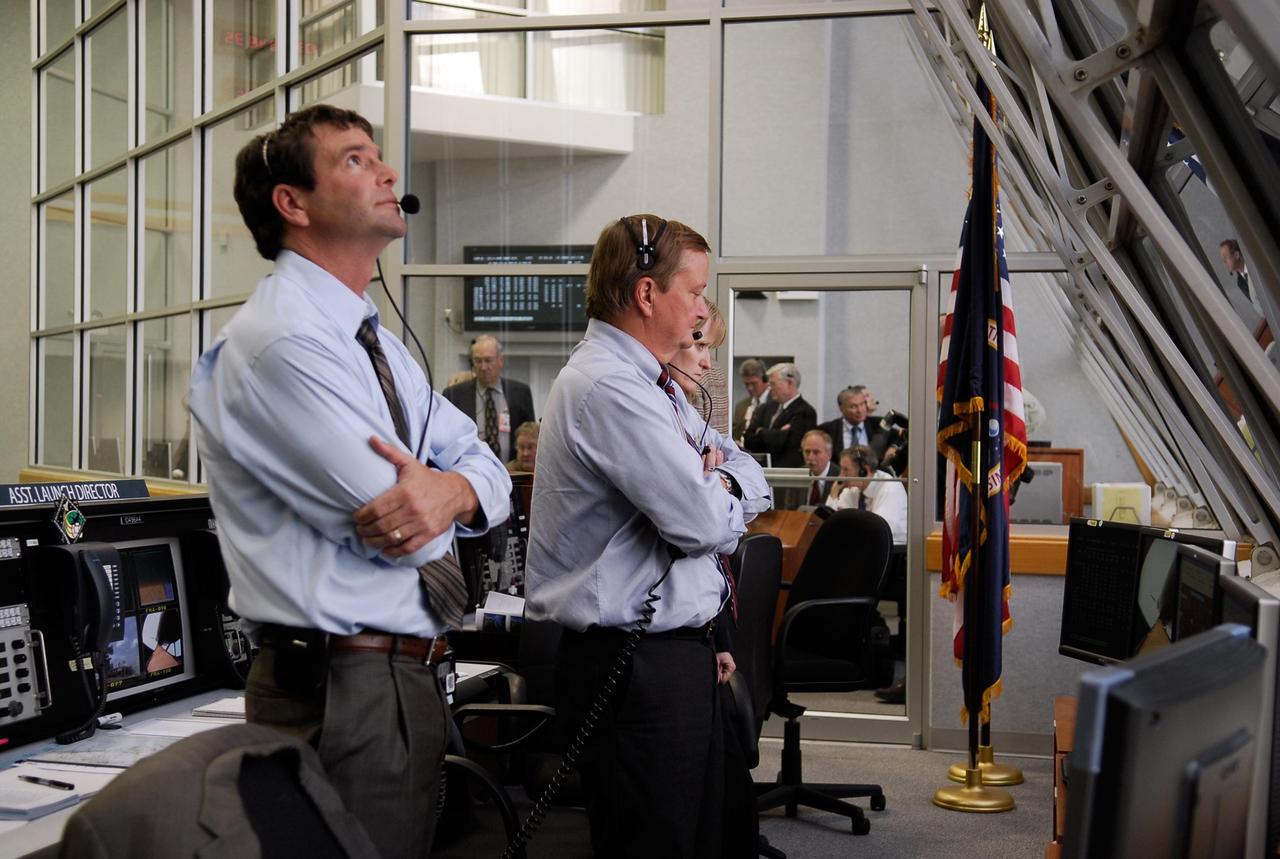
KENNEDY SPACE CENTER, FLA. -- Inside the Launch Control Center Firing Room at NASA's Kennedy Space Center, STS-122 Launch Director Doug Lyons (left) and Shuttle Launch Director Mike Leinbach watch the launch of space shuttle Atlantis on the STS-122 mission to the International Space Station. Liftoff was on time at 2:45 p.m. EST from Launch Pad 39A. The launch is the third attempt for Atlantis since December 2007 to carry the European Space Agency's Columbus laboratory to the International Space Station. During the 11-day mission, the crew's prime objective is to attach the laboratory to the Harmony module, adding to the station's size and capabilities. Photo credit: NASA/Kim Shiflett

KENNEDY SPACE CENTER, FLA. -- The STS-122 crew members greet onlookers as they head for the Astrovan and their ride to Launch Pad 39A for the launch of space shuttle Atlantis on the STS-122 mission. From left are Mission Specialists Leland Melvin, Stanley Love and Leopold Eyharts, Pilot Alan Poindexter, Mission Specialists Hans Schlegel and Rex Walheim, and Commander Steve Frick. The launch will be the third attempt for Atlantis since December 2007 to carry the European Space Agency's Columbus laboratory to the International Space Station. During the 11-day mission, the crew's prime objective is to attach the laboratory to the Harmony module, adding to the station's size and capabilities. Photo credit: NASA/Kim Shiflett
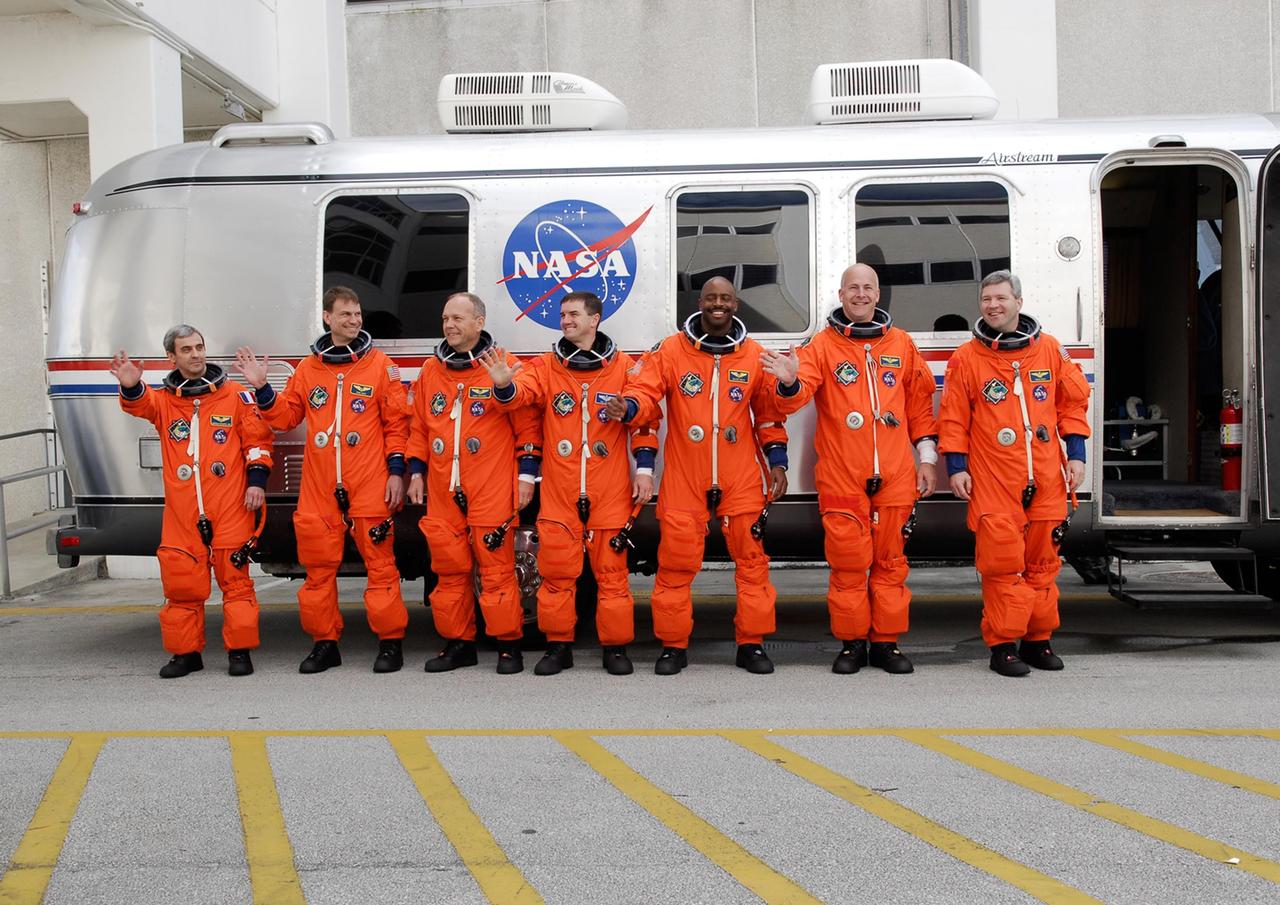
KENNEDY SPACE CENTER, FLA. -- The STS-122 crew pauses alongside the Astrovan to wave farewell to onlookers before heading for Launch Pad 39A for the launch of space shuttle Atlantis on the STS-122 mission. From left are Mission Specialists Leopold Eyharts, Stanley Love, Hans Schlegel, Rex Walheim and Leland Melvin, Pilot Alan Poindexter and Commander Steve Frick. The launch will be the third attempt for Atlantis since December 2007 to carry the European Space Agency's Columbus laboratory to the International Space Station. During the 11-day mission, the crew's prime objective is to attach the laboratory to the Harmony module, adding to the station's size and capabilities. Photo credit: NASA/Kim Shiflett
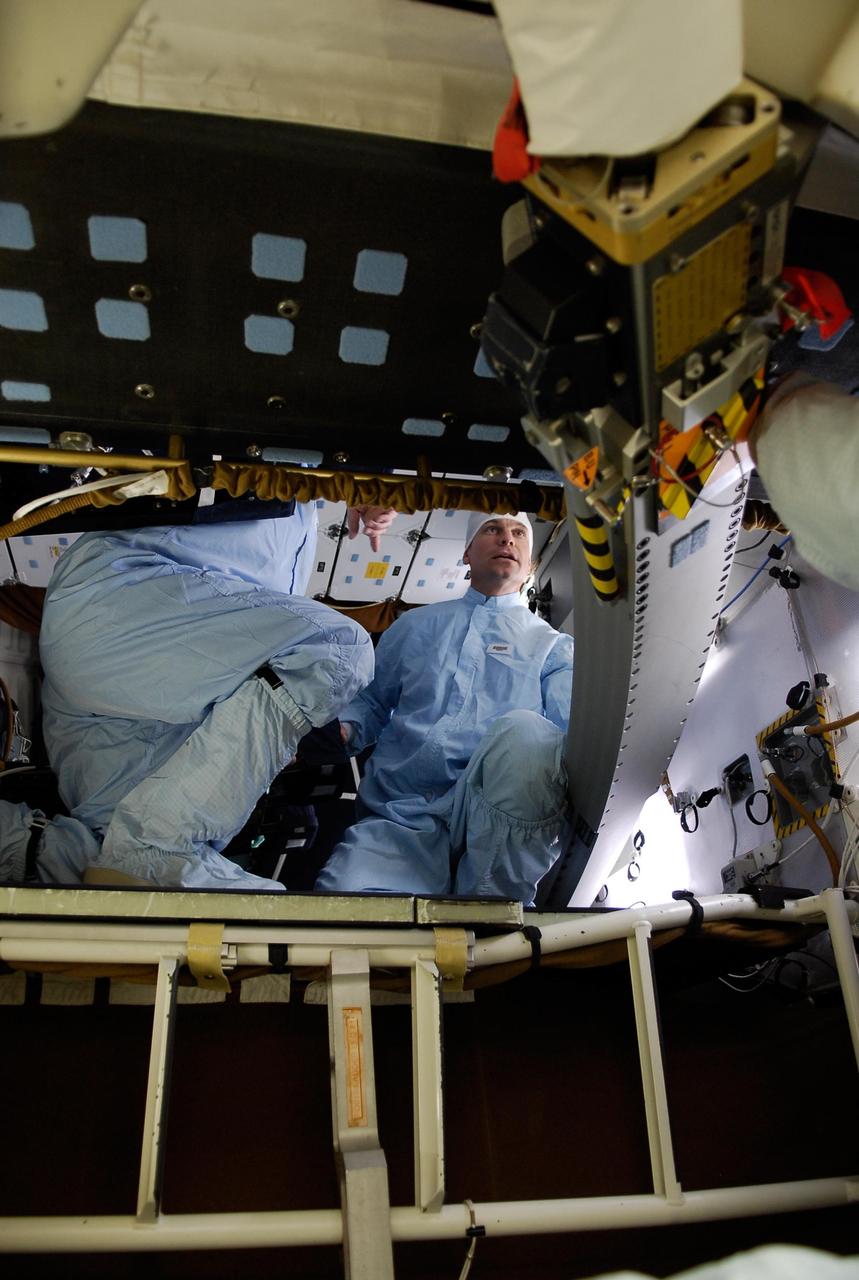
KENNEDY SPACE CENTER, FLA. -- On the flight deck of space shuttle Atlantis, STS-122 Mission Specialist Stanley Love looks at cables and controls. The STS-122 mission to the International Space Station is scheduled to launch at 2:45 p.m. Feb. 7 with a crew of seven. Atlantis will carry the Columbus Laboratory, Europe's largest contribution to the construction of the station. Columbus will support scientific and technological research in a microgravity environment. Columbus is a multifunctional, pressurized laboratory that will be permanently attached to the Harmony module to carry out experiments in materials science, fluid physics and biosciences, as well as to perform a number of technological applications. Photo credit: NASA/Kim Shiflett
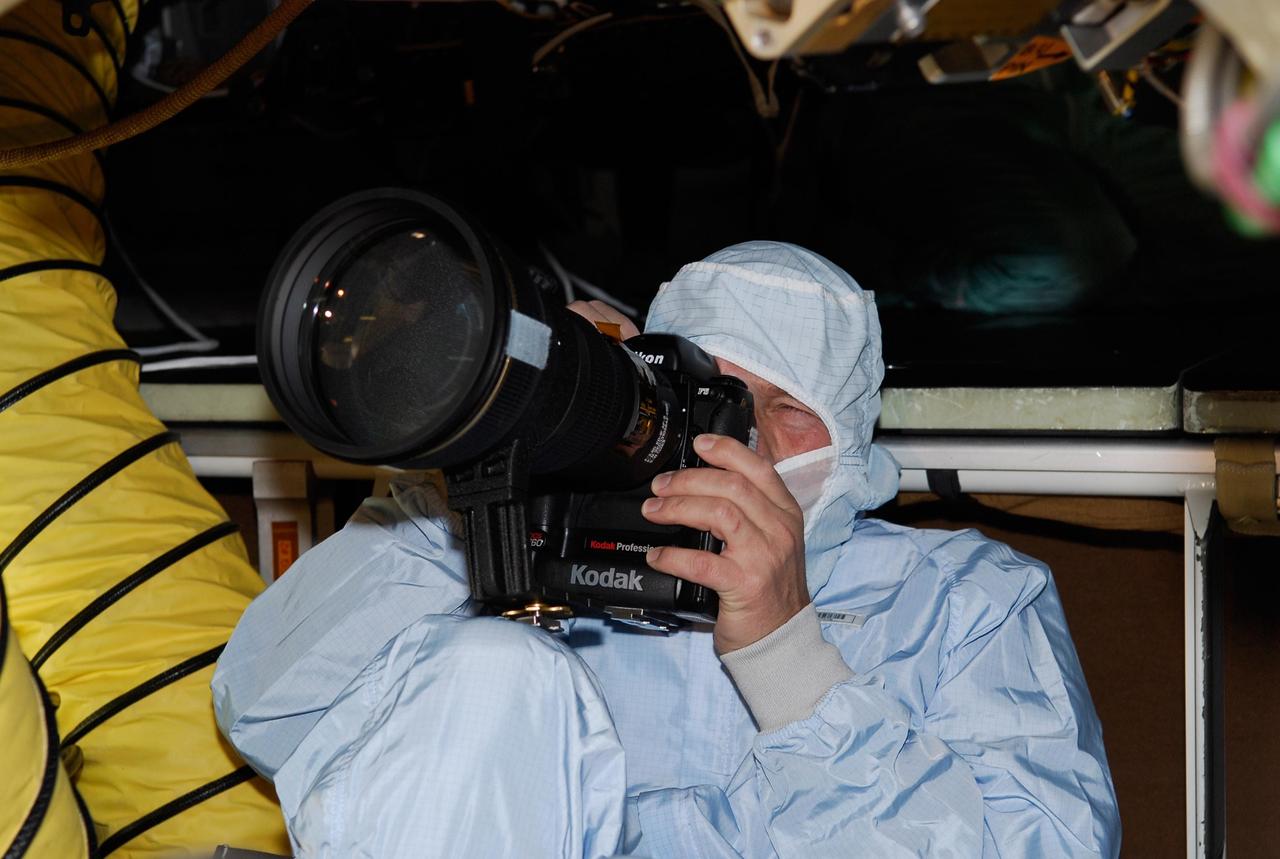
KENNEDY SPACE CENTER, FLA. -- On the flight deck of space shuttle Atlantis, STS-122 Mission Specialist Hans Schlegel handles the camera to be used during the mission. Schlegel represents the European Space Agency. The STS-122 mission to the International Space Station is scheduled to launch at 2:45 p.m. Feb. 7 with a crew of seven. Atlantis will carry the Columbus Laboratory, Europe's largest contribution to the construction of the station. Columbus will support scientific and technological research in a microgravity environment. Columbus is a multifunctional, pressurized laboratory that will be permanently attached to the Harmony module to carry out experiments in materials science, fluid physics and biosciences, as well as to perform a number of technological applications. Photo credit: NASA/Kim Shiflett

KENNEDY SPACE CENTER, FLA. -- On the flight deck of space shuttle Atlantis, STS-122 Mission Specialist Hans Schlegel handles the camera to be used during the mission. Schlegel represents the European Space Agency. The STS-122 mission to the International Space Station is scheduled to launch at 2:45 p.m. Feb. 7 with a crew of seven. Atlantis will carry the Columbus Laboratory, Europe's largest contribution to the construction of the station. Columbus will support scientific and technological research in a microgravity environment. Columbus is a multifunctional, pressurized laboratory that will be permanently attached to the Harmony module to carry out experiments in materials science, fluid physics and biosciences, as well as to perform a number of technological applications. Photo credit: NASA/Kim Shiflett
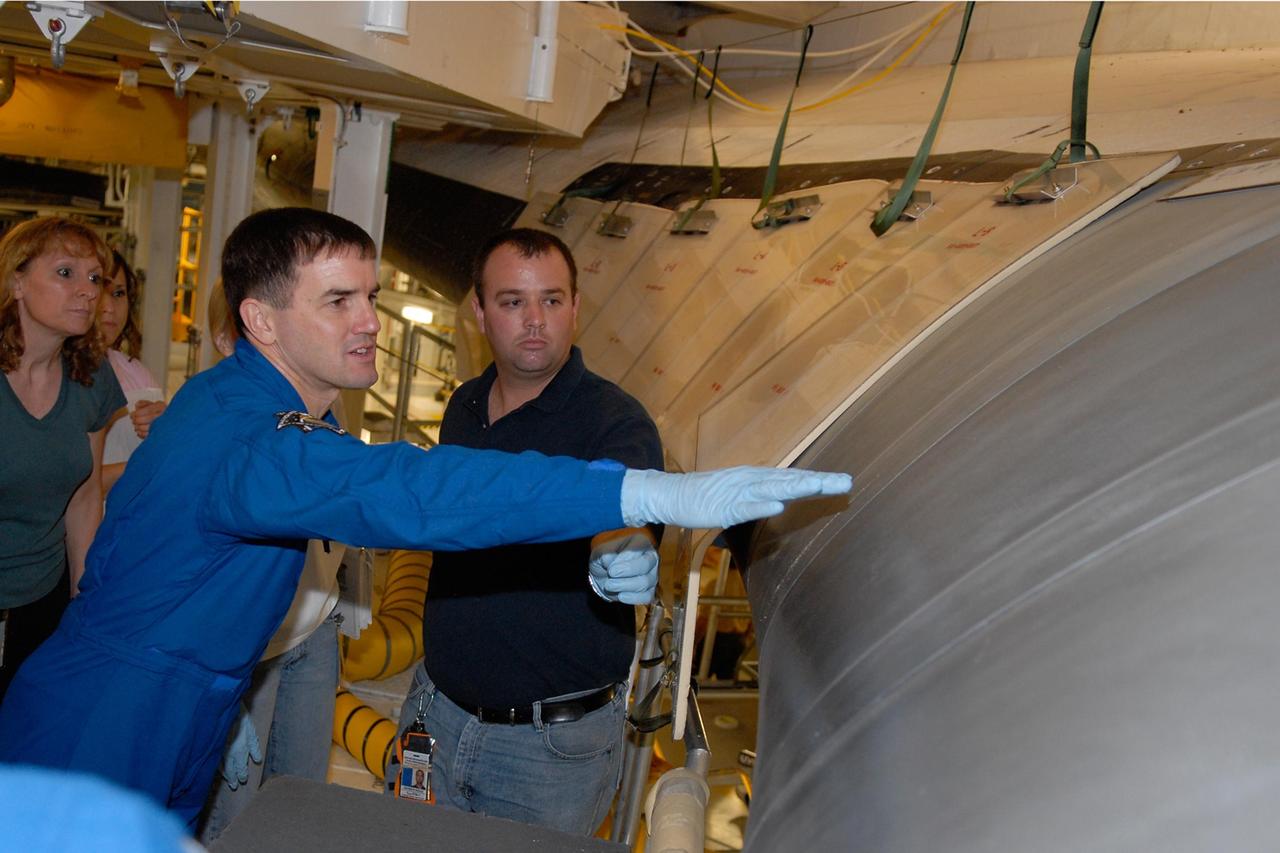
KENNEDY SPACE CENTER, FLA. -- In the Orbiter Processing Facility, STS-122 Mission Specialist Rex Walheim reaches toward the wing of space shuttle Atlantis. The crew is at Kennedy to take part in a crew equipment interface test, or CEIT, which helps familiarize them with equipment and payloads for the mission. Among the activities standard to a CEIT are harness training, inspection of the thermal protection system and camera operation for planned extravehicular activities, or EVAs. STS-122 is targeted for launch in December. Photo credit: NASA/Kim Shiflett