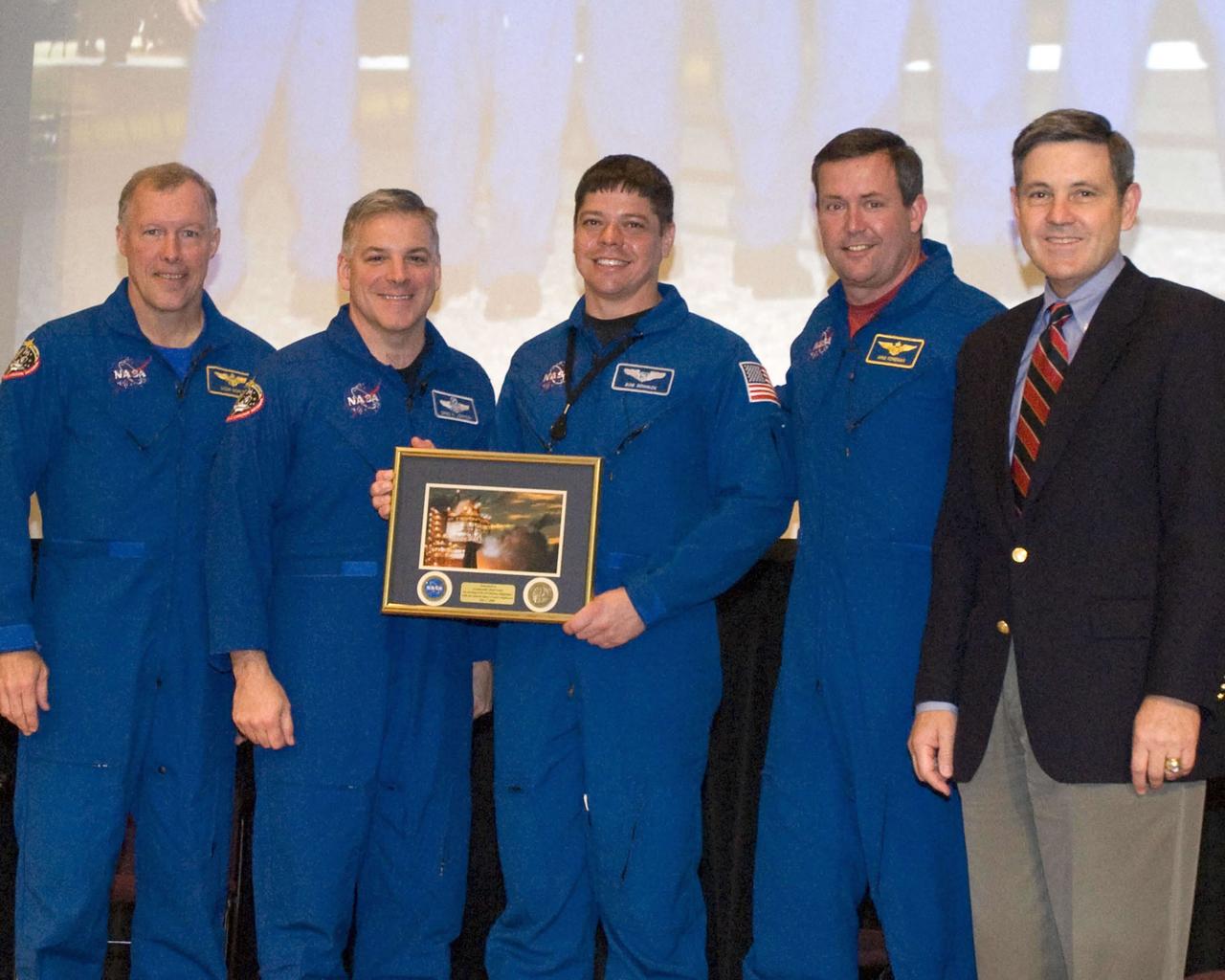
STS-123 crew visit to Stennis Space Center; Bob Cabana
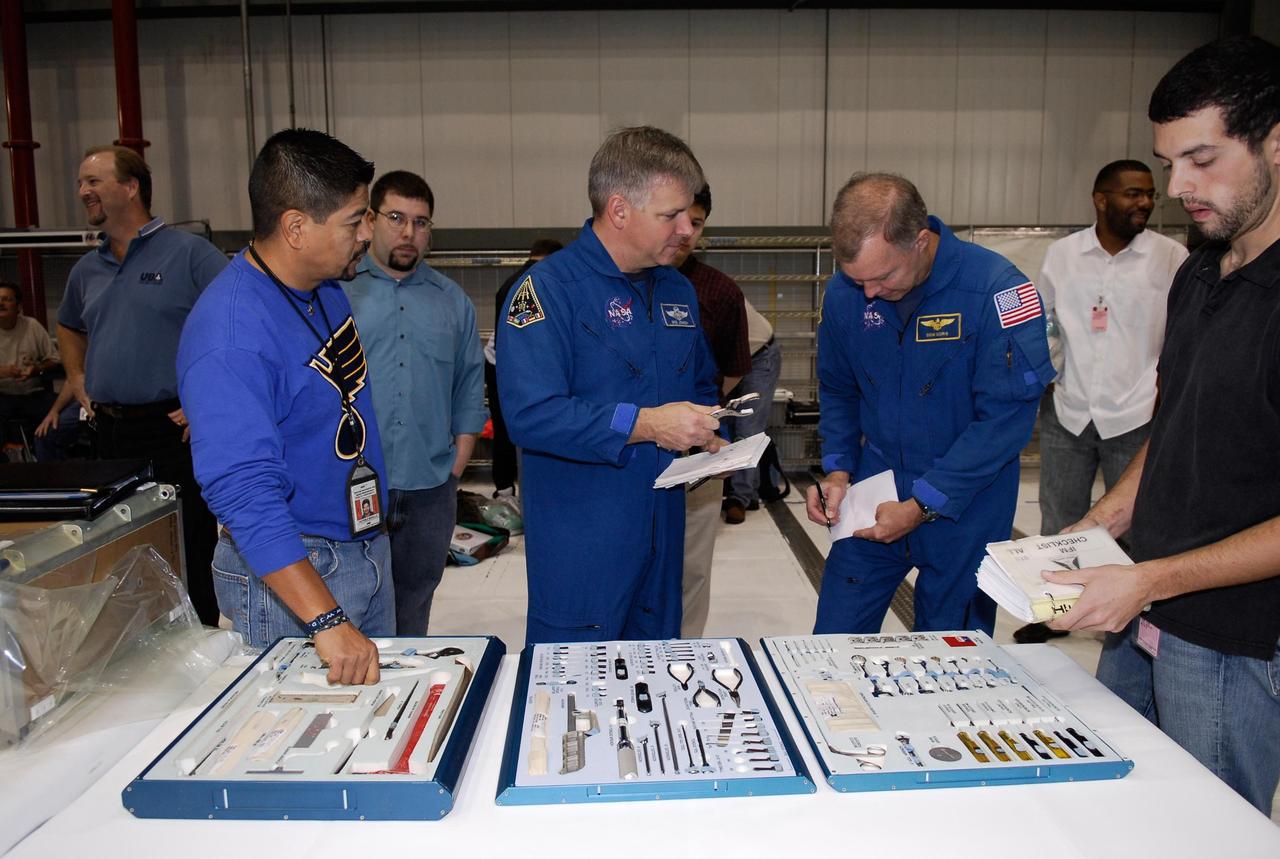
KENNEDY SPACE CENTER, FLA. -- In the Orbiter Processing Facility at NASA's Kennedy Space Center, space shuttle Endeavour's STS-123 Pilot Gregory Johnson (center) and Commander Dominic Gorie (right) look over tools that will be carried on the mission. The crew is at Kennedy for crew equipment interface test, a process of familiarization with payloads, hardware and the space shuttle. The STS-123 mission is targeted for launch on Feb. 14. It will be the 25th assembly flight of the station. Photo credit: NASA/Kim Shiflett
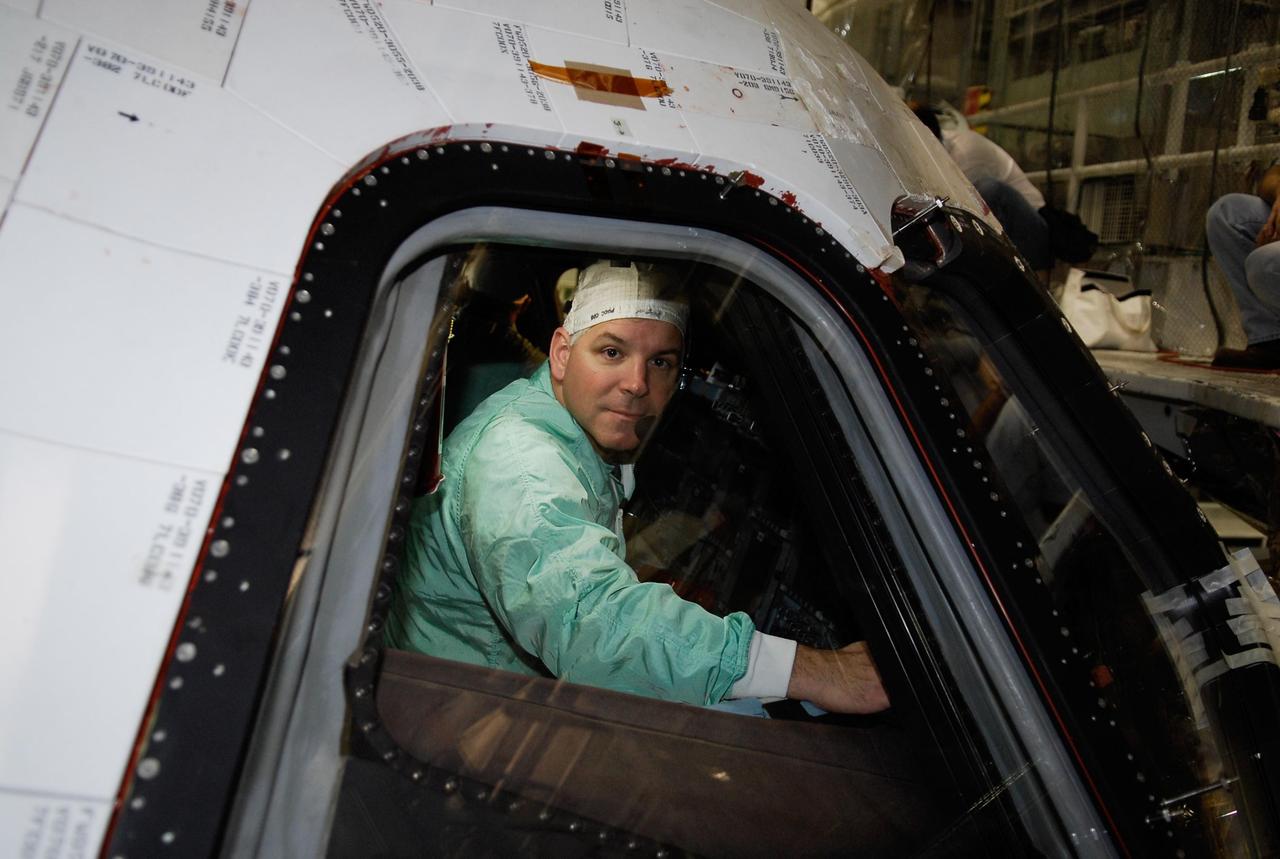
KENNEDY SPACE CENTER, FLA. -- In the Orbiter Processing Facility at NASA's Kennedy Space Center, space shuttle Endeavour's STS-123 Pilot Gregory Johnson inspects the window in space shuttle Endeavour. The crew is at Kennedy for crew equipment interface test, a process of familiarization with payloads, hardware and the space shuttle. The STS-123 mission is targeted for launch on Feb. 14. It will be the 25th assembly flight of the station. Photo credit: NASA/Kim Shiflett
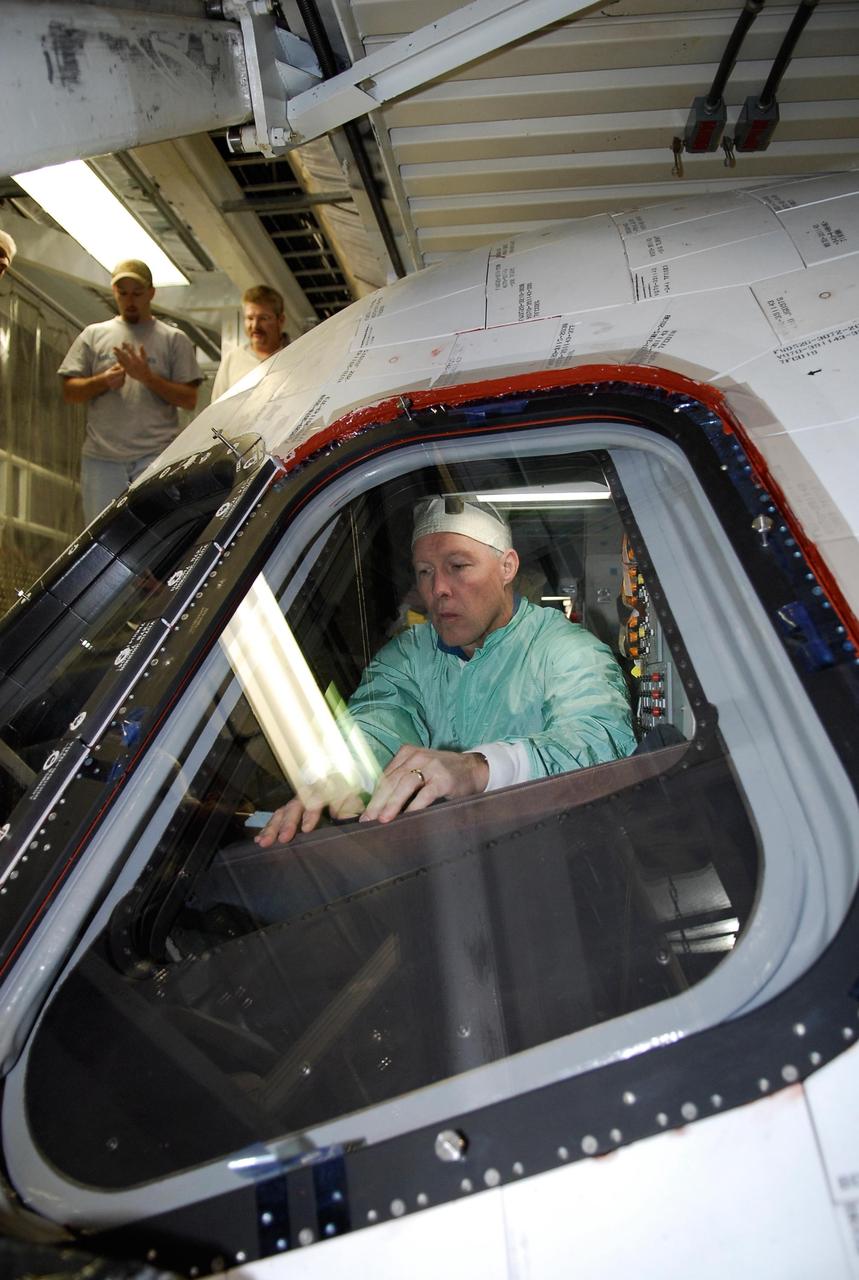
KENNEDY SPACE CENTER, FLA. -- In the Orbiter Processing Facility at NASA's Kennedy Space Center, space shuttle Endeavour's STS-123 Commander Dominic Gorie inspects the window in space shuttle Endeavour. The crew is at Kennedy for crew equipment interface test, a process of familiarization with payloads, hardware and the space shuttle. The STS-123 mission is targeted for launch on Feb. 14. It will be the 25th assembly flight of the station. Photo credit: NASA/Kim Shiflett
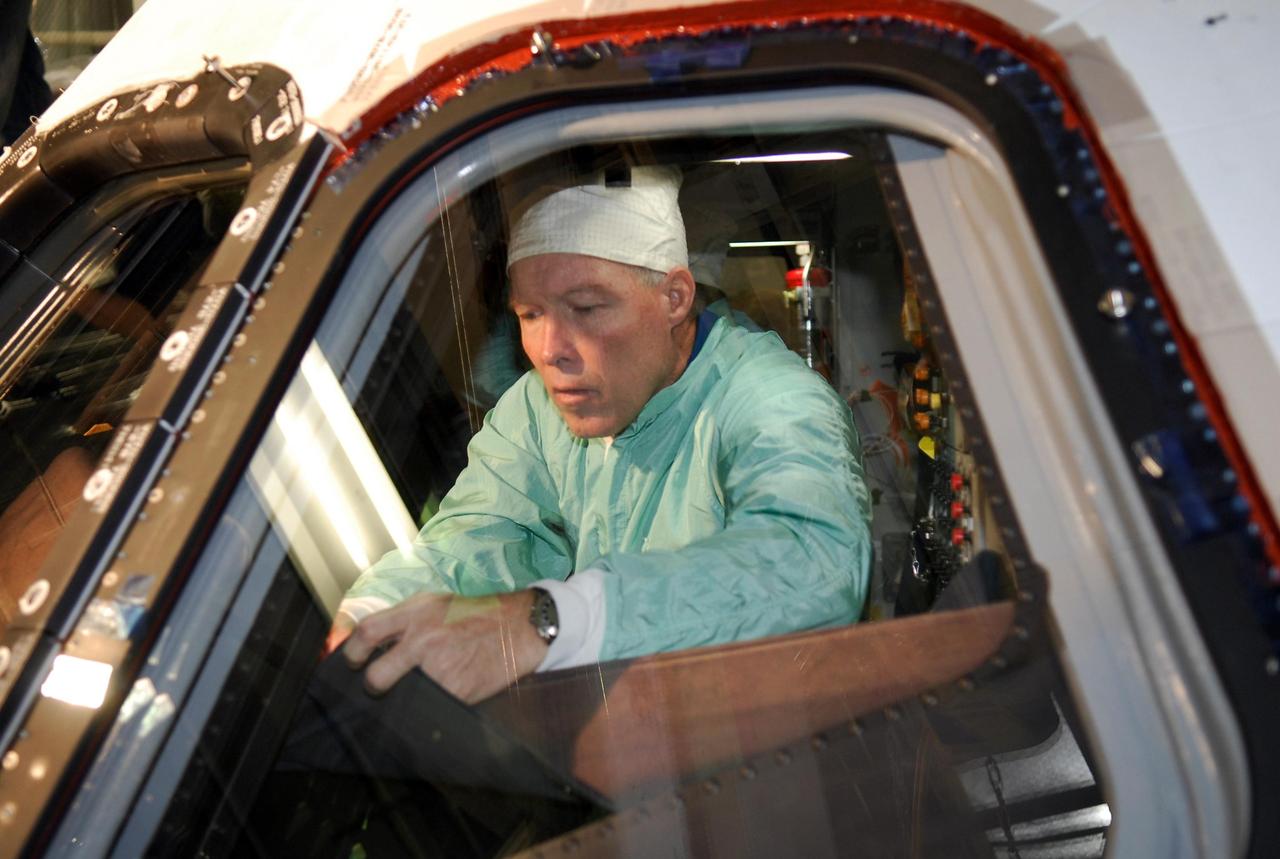
KENNEDY SPACE CENTER, FLA. -- In the Orbiter Processing Facility at NASA's Kennedy Space Center, space shuttle Endeavour's STS-123 Commander Dominic Gorie inspects the window in space shuttle Endeavour. The crew is at Kennedy for crew equipment interface test, a process of familiarization with payloads, hardware and the space shuttle. The STS-123 mission is targeted for launch on Feb. 14. It will be the 25th assembly flight of the station. Photo credit: NASA/Kim Shiflett
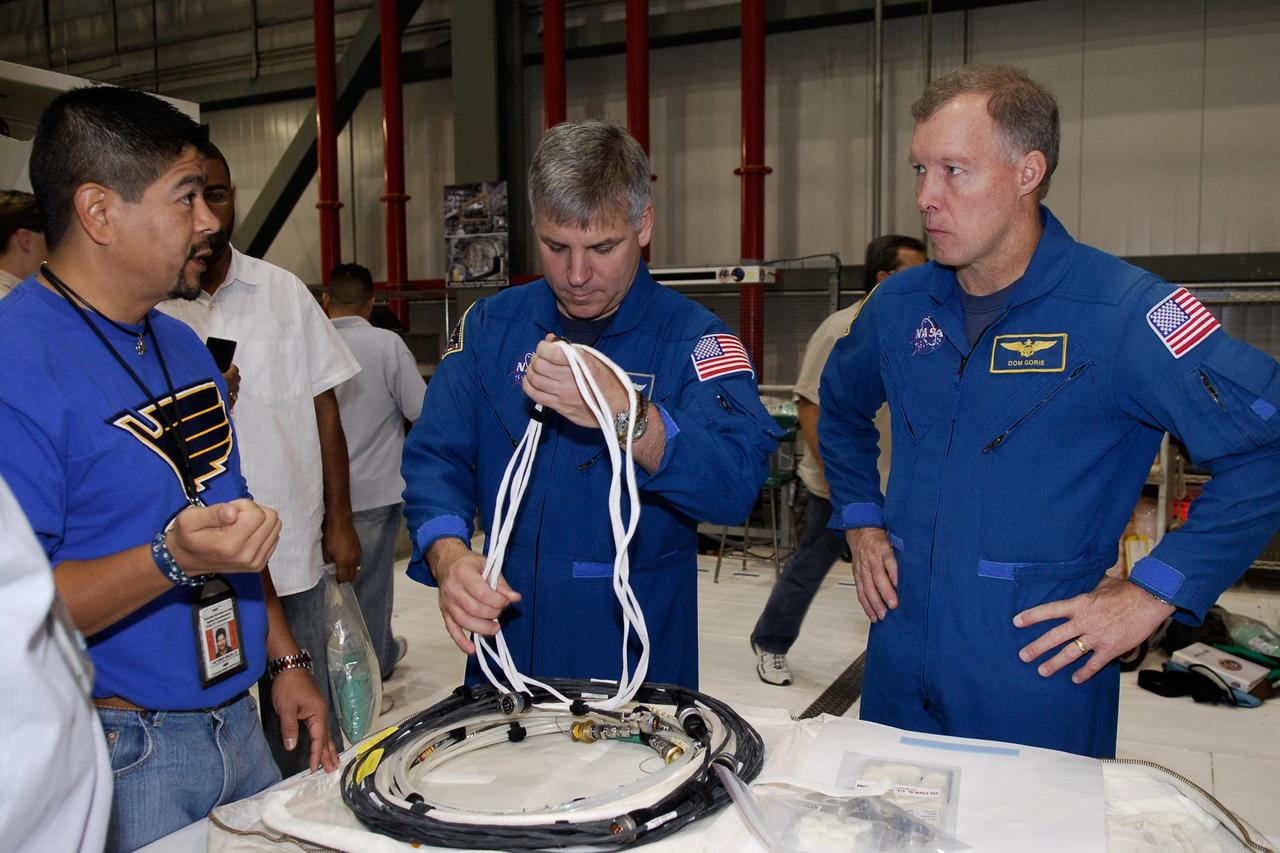
KENNEDY SPACE CENTER, FLA. -- In the Orbiter Processing Facility at NASA's Kennedy Space Center, space shuttle Endeavour's STS-123 Pilot Gregory Johnson (center) handles equipment that will be carried on the mission. At right, Commander Dominic Gorie listens to a technician describing the equipment. The crew is at Kennedy for crew equipment interface test, a process of familiarization with payloads, hardware and the space shuttle. The STS-123 mission is targeted for launch on Feb. 14. It will be the 25th assembly flight of the station. Photo credit: NASA/Kim Shiflett
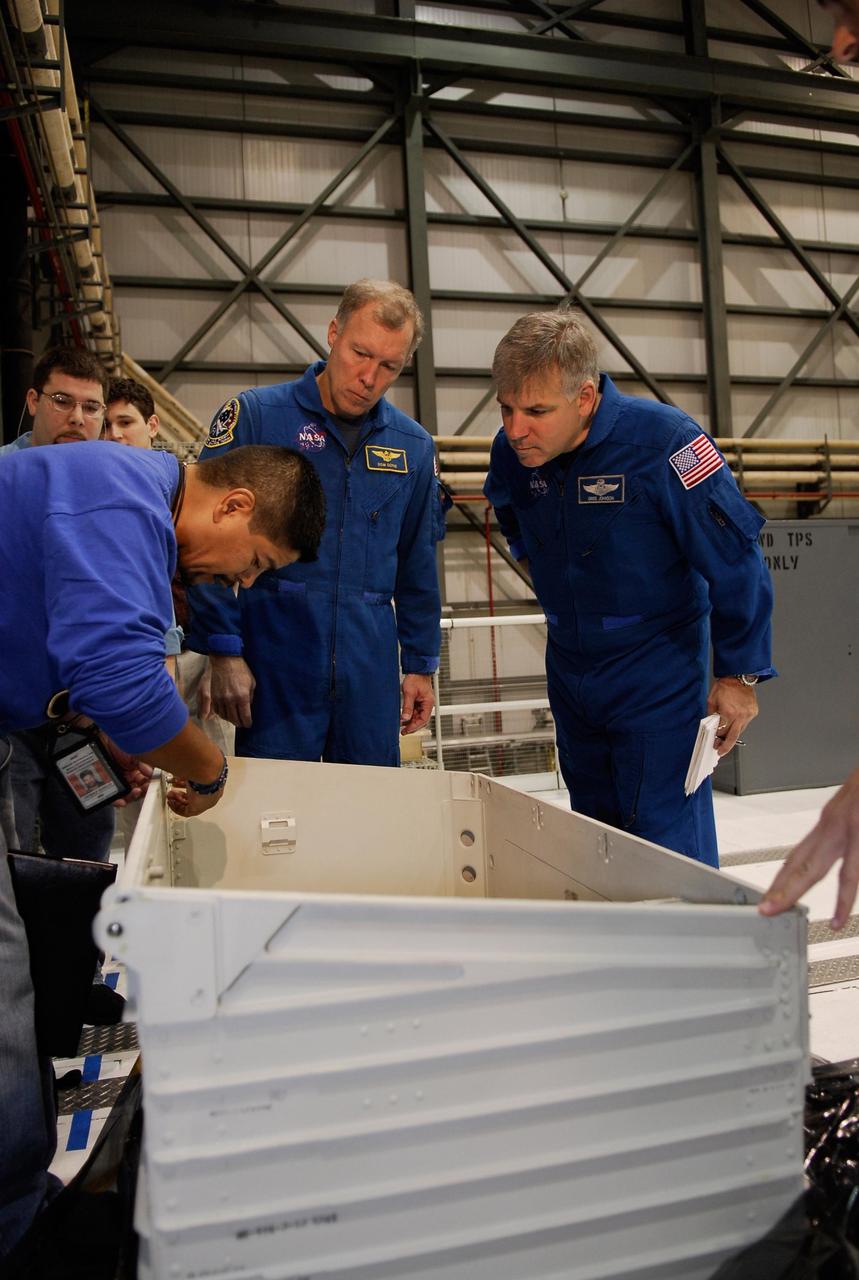
KENNEDY SPACE CENTER, FLA. -- In the Orbiter Processing Facility at NASA's Kennedy Space Center, space shuttle Endeavour's STS-123 Commander Dominic Gorie (center) and Pilot Gregory Johnson (right) look over equipment for the mission. The crew is at Kennedy for crew equipment interface test, a process of familiarization with payloads, hardware and the space shuttle. The STS-123 mission is targeted for launch on Feb. 14. It will be the 25th assembly flight of the station. Photo credit: NASA/Kim Shiflett
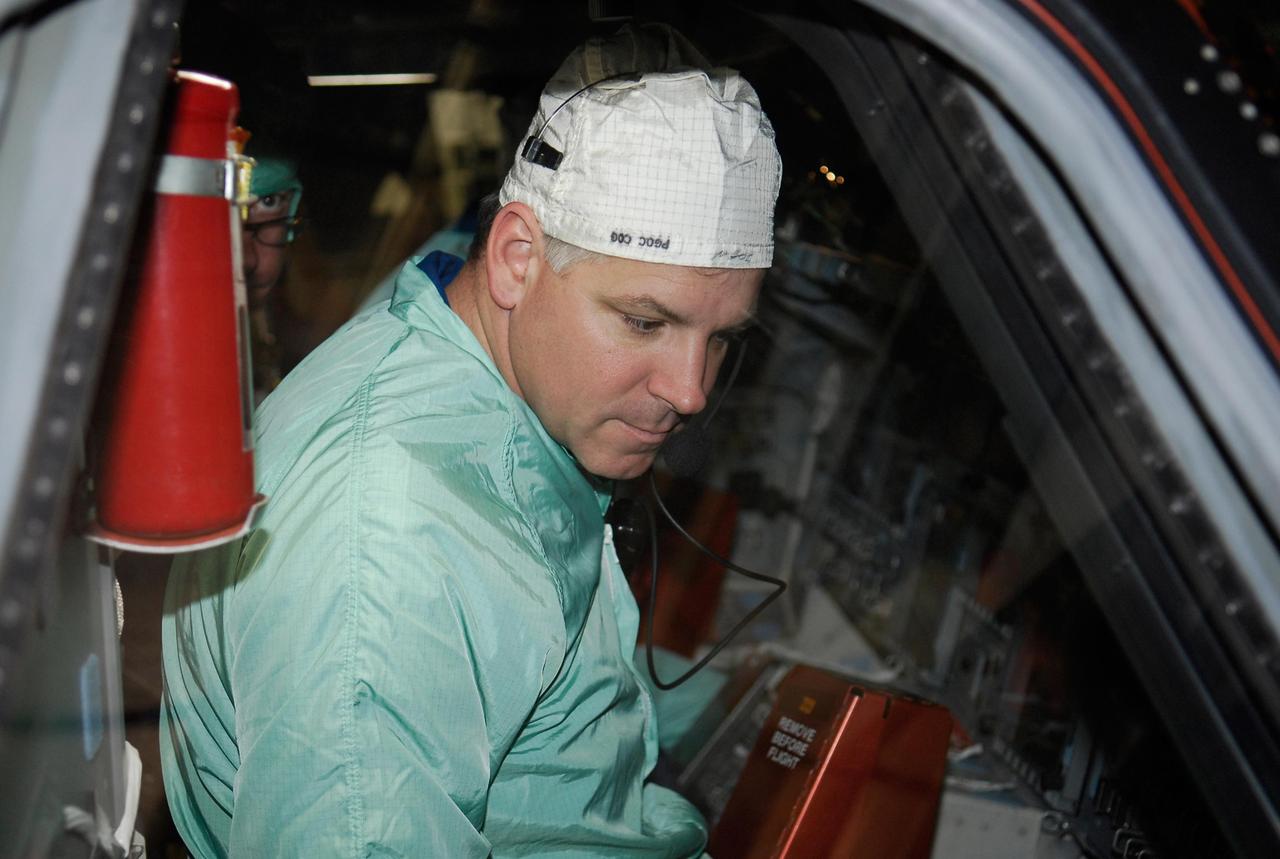
KENNEDY SPACE CENTER, FLA. -- In the Orbiter Processing Facility at NASA's Kennedy Space Center, space shuttle Endeavour's STS-123 Pilot Gregory Johnson inspects the window in space shuttle Endeavour. The crew is at Kennedy for crew equipment interface test, a process of familiarization with payloads, hardware and the space shuttle. The STS-123 mission is targeted for launch on Feb. 14. It will be the 25th assembly flight of the station. Photo credit: NASA/Kim Shiflett
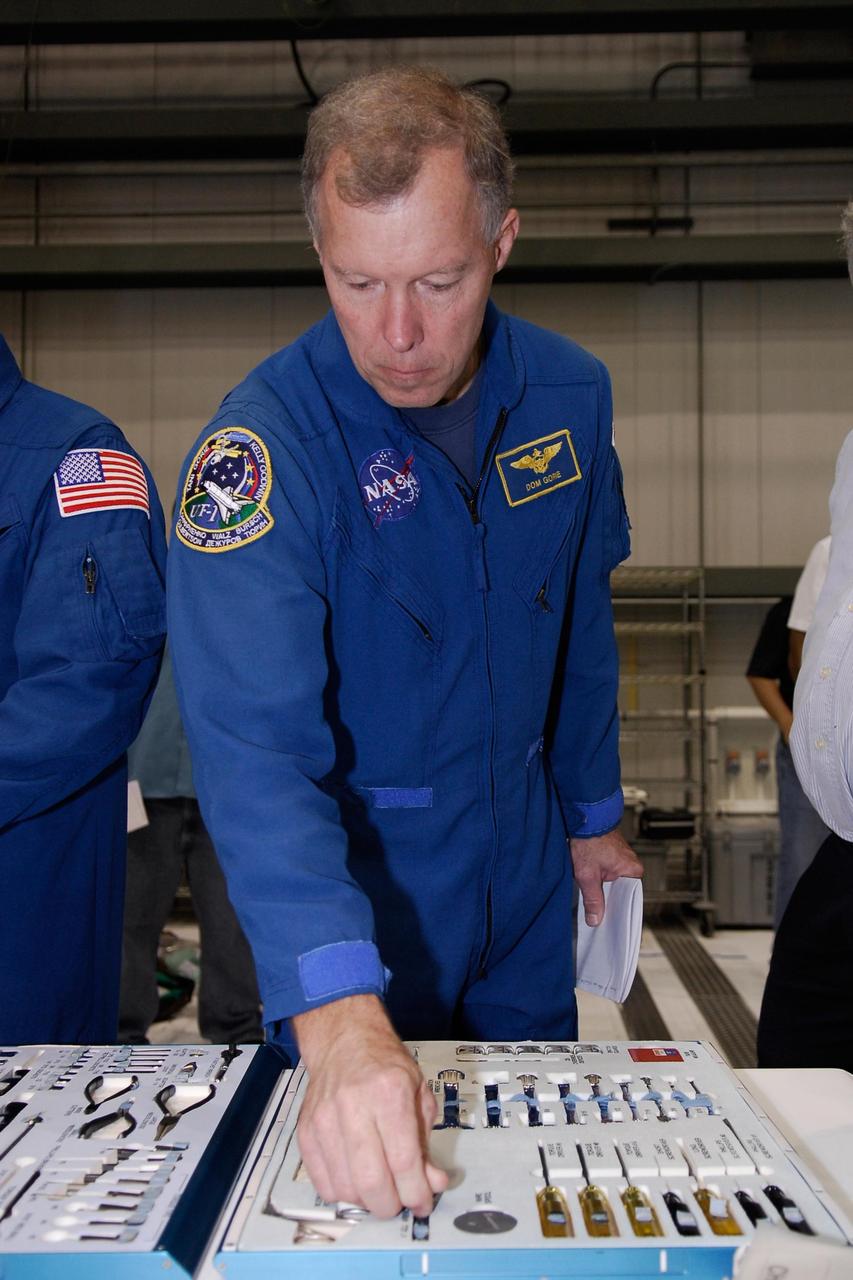
KENNEDY SPACE CENTER, FLA. -- In the Orbiter Processing Facility at NASA's Kennedy Space Center, space shuttle Endeavour's STS-123 Commander Dominic Gorie checks out tools that will be carried on the mission. The crew is at Kennedy for crew equipment interface test, a process of familiarization with payloads, hardware and the space shuttle. The STS-123 mission is targeted for launch on Feb. 14. It will be the 25th assembly flight of the station. Photo credit: NASA/Kim Shiflett
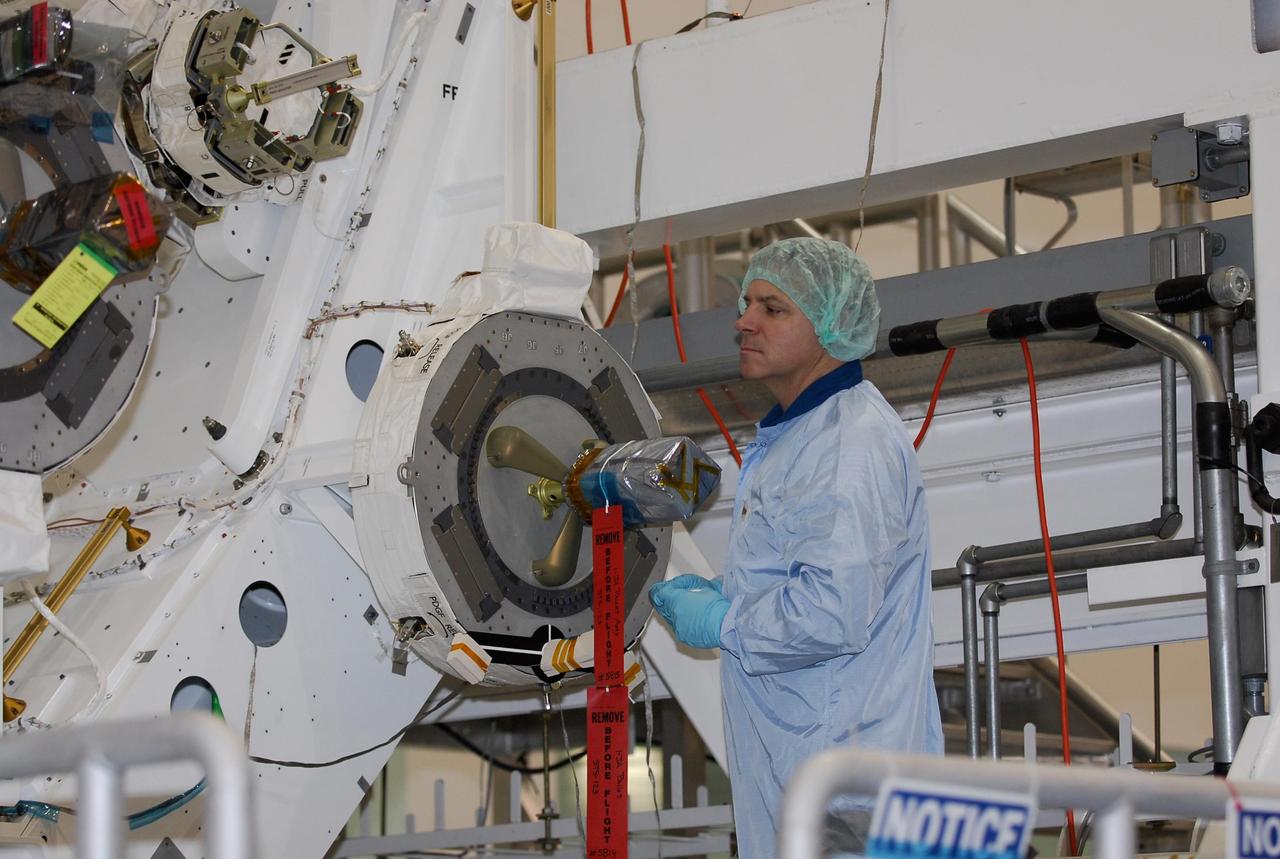
KENNEDY SPACE CENTER, FLA. -- In the Space Station Processing Facility at NASA's Kennedy Space Center, space shuttle Endeavour's STS-123 Pilot Gregory Johnson looks over part of the payload on the mission, the Special Purpose Dexterous Manipulator, known as Dextre. Dextre will work with the mobile base and Canadarm2 on the International Space Station to perform critical construction and maintenance tasks. The crew is at Kennedy for crew equipment interface test, a process of familiarization with payloads, hardware and the space shuttle. The STS-123 mission is targeted for launch on Feb. 14. It will be the 25th assembly flight of the station. Photo credit: NASA/Kim Shiflett
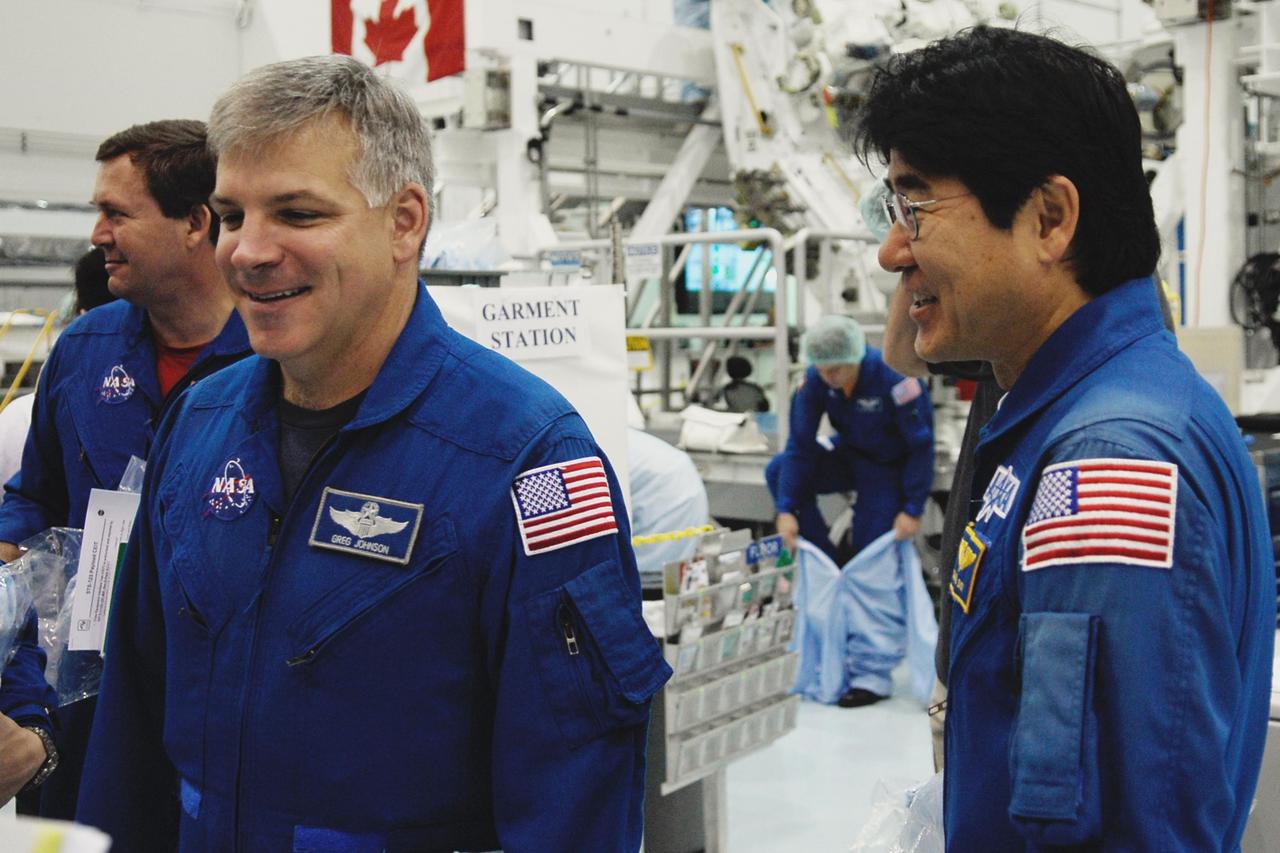
KENNEDY SPACE CENTER, FLA. -- In the Space Station Processing Facility at NASA's Kennedy Space Center, members of space shuttle Endeavour's STS-123 crew get ready to inspect part of the payload for the mission, the Special Purpose Dexterous Manipulator, known as Dextre. Seen in front are Pilot Gregory Johnson and Mission Specialist Takao Doi, who represents the Japanese Aerospace and Exploration Agency. Dextre will work with the mobile base and Canadarm2 on the International Space Station to perform critical construction and maintenance tasks. The crew is at Kennedy for crew equipment interface test, a process of familiarization with payloads, hardware and the space shuttle. The STS-123 mission is targeted for launch on Feb. 14. It will be the 25th assembly flight of the station. Photo credit: NASA/Kim Shiflett
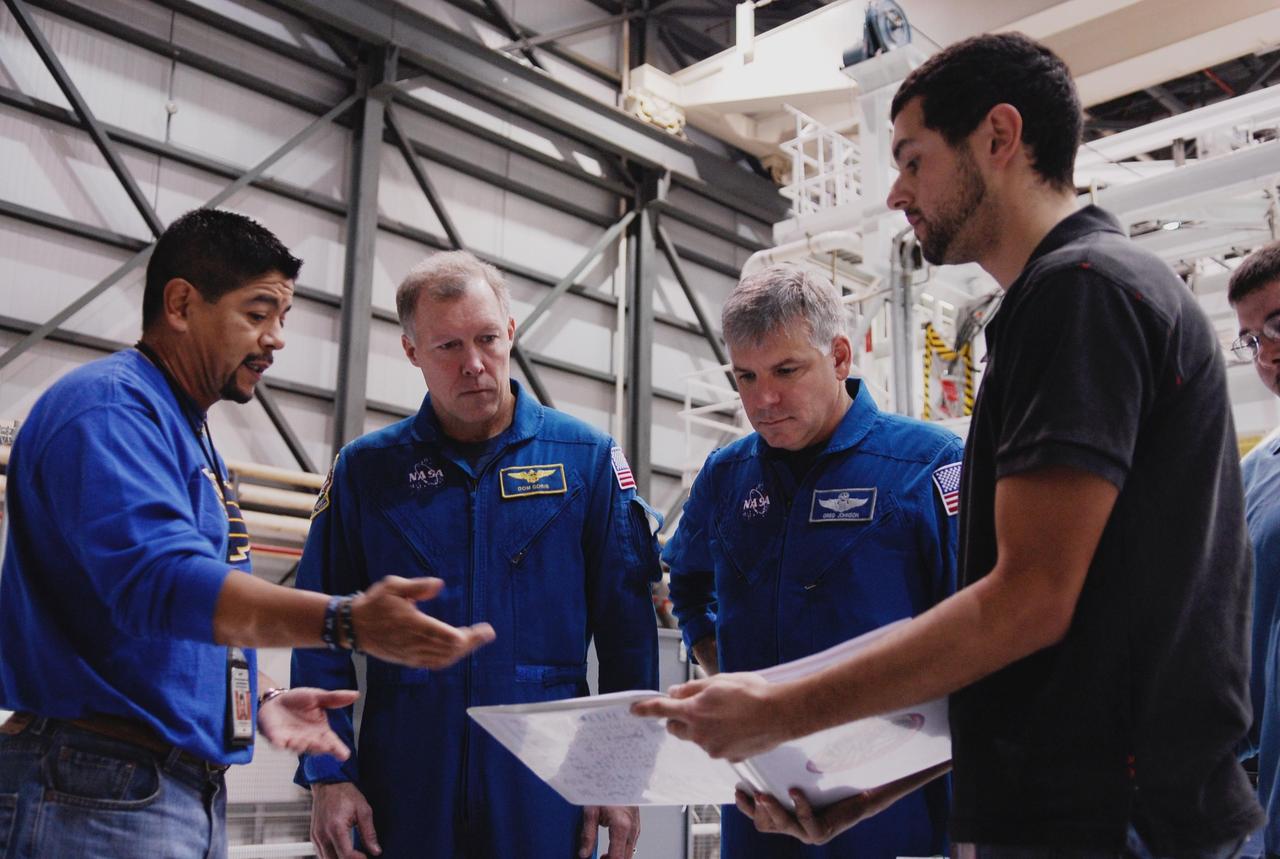
KENNEDY SPACE CENTER, FLA. -- In the Orbiter Processing Facility at NASA's Kennedy Space Center, STS-123 Commander Dominic Gorie (second from left) and Pilot Gregory Johnson (second from right) look over payload information. On the mission, space shuttle Endeavour will carry the Special Purpose Dexterous Manipulator, known as Dextre, and the Japanese Experiment Module's Experiment Logistics Module Pressurized Section, or ELM-PS. Dextre will work with the mobile base and Canadarm2 on the International Space Station to perform critical construction and maintenance tasks. The crew is at Kennedy for crew equipment interface test, a process of familiarization with payloads, hardware and the space shuttle. The STS-123 mission is targeted for launch on Feb. 14. It will be the 25th assembly flight of the station. Photo credit: NASA/Kim Shiflett
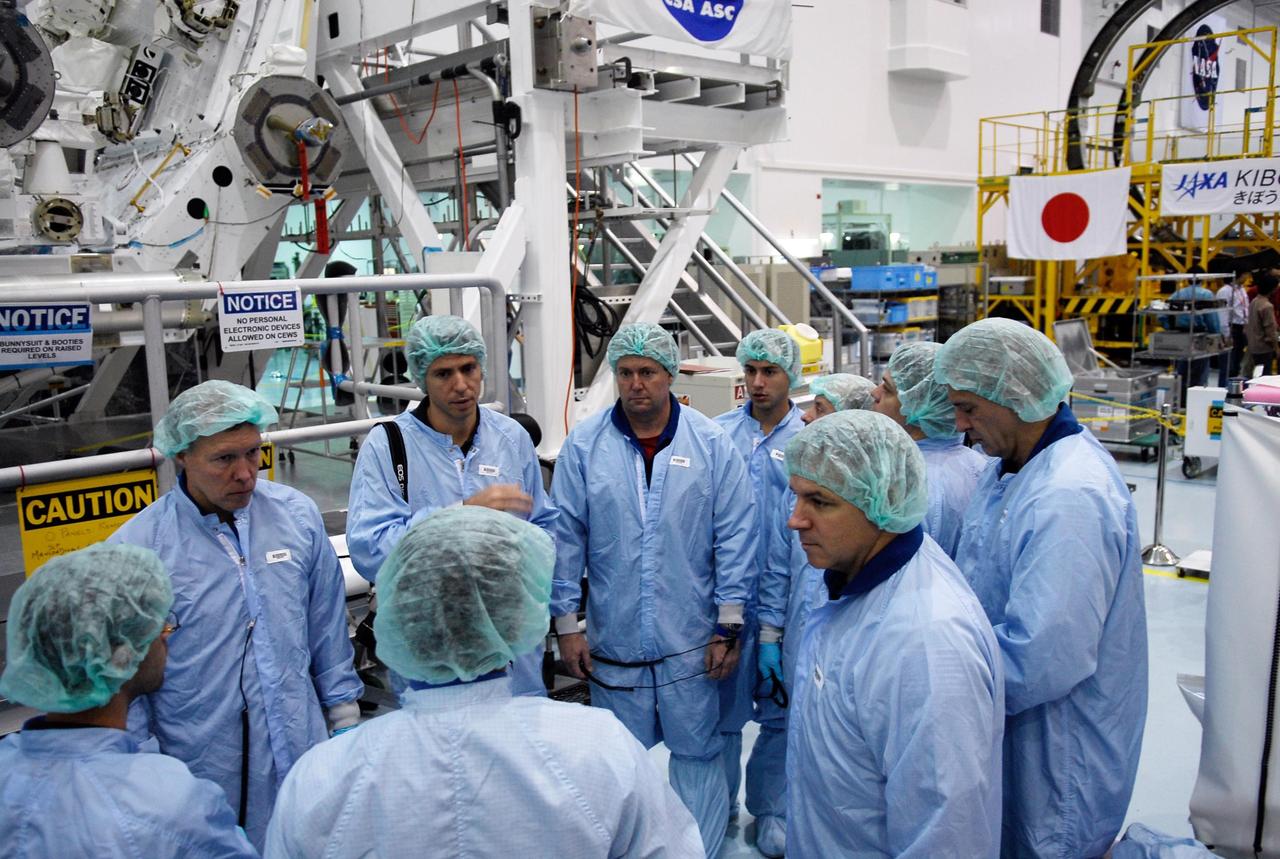
KENNEDY SPACE CENTER, FLA. -- In the Space Station Processing Facility at NASA's Kennedy Space Center, members of space shuttle Endeavour's STS-123 crew, dressed in protective suits, get ready to inspect part of the payload for the mission, the Special Purpose Dexterous Manipulator, known as Dextre. At left is Commander Dominic Gorie and at center is Mission Specialist Michael Foreman. At right are Pilot Gregory Johnson and Mission Specialist Richard Linnehan. Dextre will work with the mobile base and Canadarm2 on the International Space Station to perform critical construction and maintenance tasks. The crew is at Kennedy for crew equipment interface test, a process of familiarization with payloads, hardware and the space shuttle. The STS-123 mission is targeted for launch on Feb. 14. It will be the 25th assembly flight of the station. Photo credit: NASA/Kim Shiflett
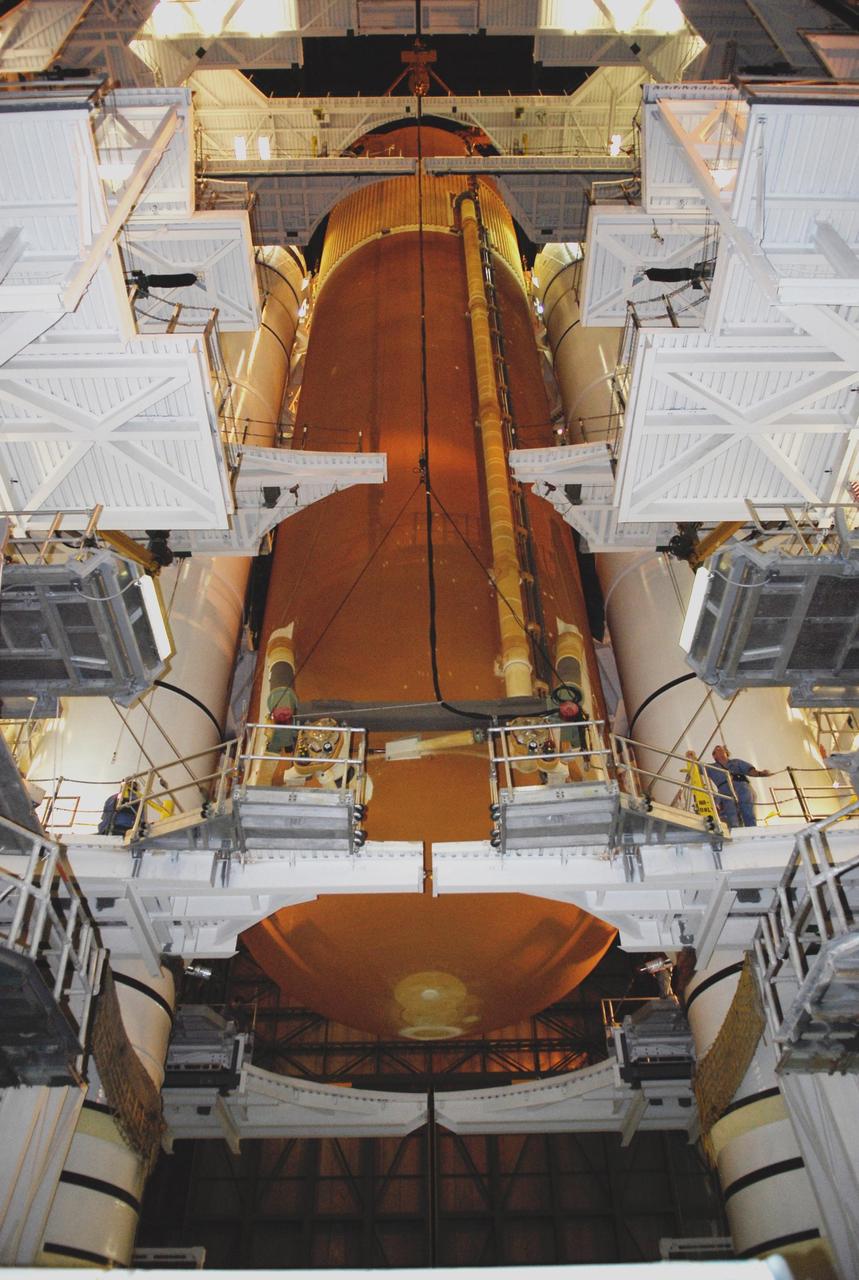
KENNEDY SPACE CENTER, FLA. -- In high bay 1 of the Vehicle Assembly Building at NASA's Kennedy Space Center, the suspended external tank is lowered between the solid rocket boosters, or SRBs, installed on the mobile launcher platform. The tank will be mated with the boosters for launch. Work to remove and replace the feed-through connector on the external tank will be done in parallel with integrated ET/SRB testing in preparation for space shuttle Endeavour to join the stack later in January. The STS-123 mission is targeted for launch on Endeavour in mid-March. The 25th assembly flight to the International Space Station, Endeavour's payload includes the Japanese Experiment Logistics Module Pressurized Section. Photo credit: NASA/Kim Shiflett
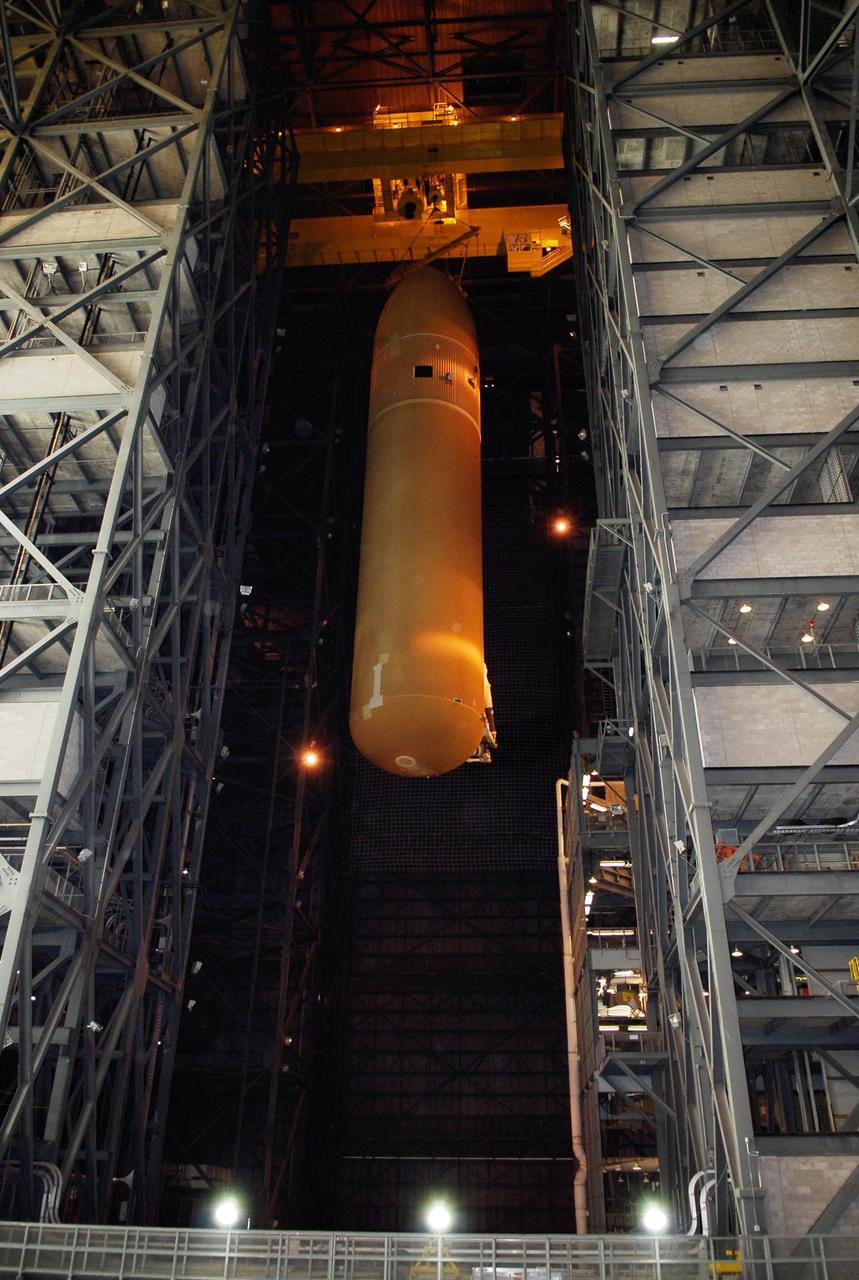
KENNEDY SPACE CENTER, FLA. -- In the Vehicle Assembly Building at NASA's Kennedy Space Center, the suspended external tank is lowered into high bay 1 toward the mobile launcher platform. The tank will be mated with the solid rocket boosters, or SRBs, already installed on the platform. Work to remove and replace the feed-through connector on the external tank will be done in parallel with integrated ET/SRB testing in preparation for space shuttle Endeavour to join the stack later in January. The STS-123 mission is targeted for launch on Endeavour in mid-March. The 25th assembly flight to the International Space Station, Endeavour's payload includes the Japanese Experiment Logistics Module Pressurized Section. Photo credit: NASA/Kim Shiflett
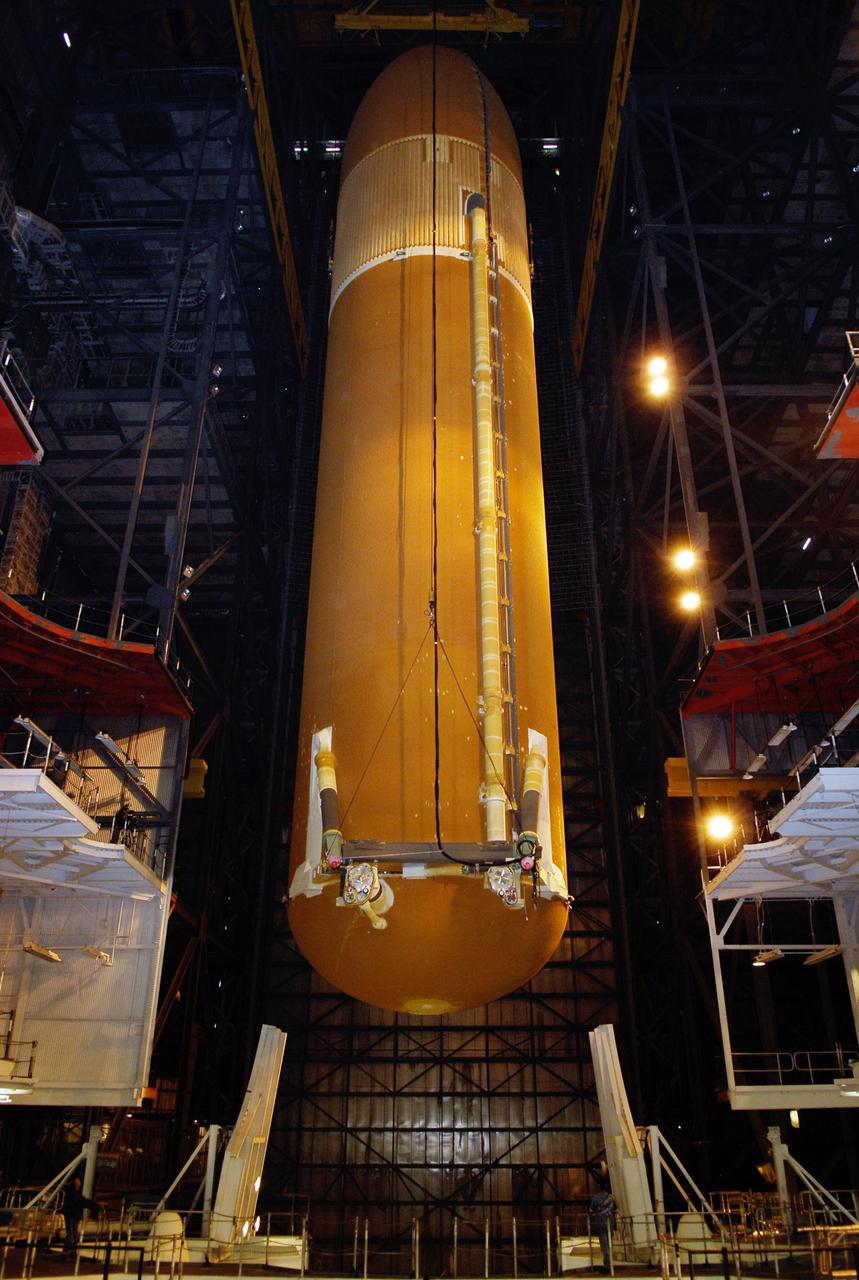
KENNEDY SPACE CENTER, FLA. -- In the Vehicle Assembly Building at NASA's Kennedy Space Center, the suspended external tank is lowered into high bay 1 toward the mobile launcher platform. The tank will be mated with the solid rocket boosters, or SRBs, already installed on the platform. Work to remove and replace the feed-through connector on the external tank will be done in parallel with integrated ET/SRB testing in preparation for space shuttle Endeavour to join the stack later in January. The STS-123 mission is targeted for launch on Endeavour in mid-March. The 25th assembly flight to the International Space Station, Endeavour's payload includes the Japanese Experiment Logistics Module Pressurized Section. Photo credit: NASA/Kim Shiflett
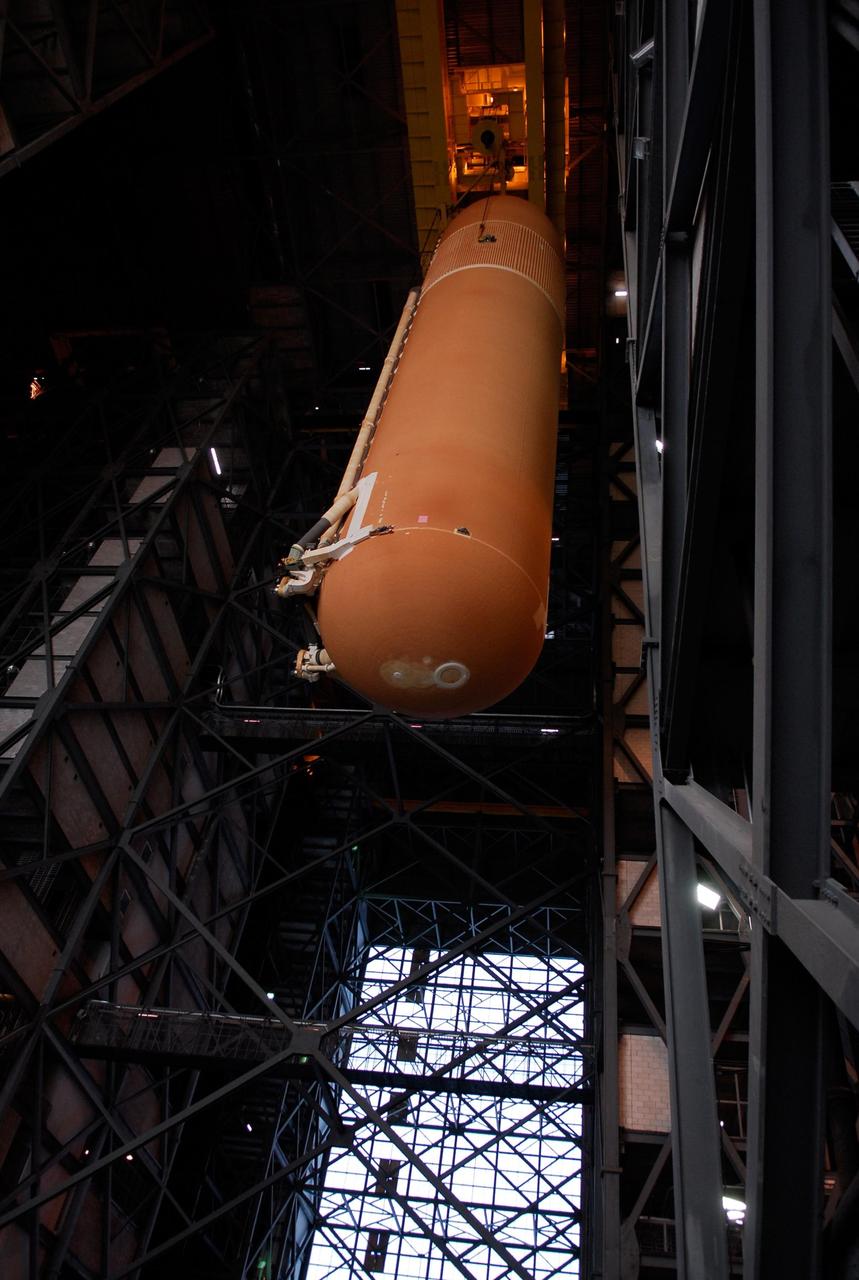
KENNEDY SPACE CENTER, FLA. -- In the Vehicle Assembly Building at NASA's Kennedy Space Center, the suspended external tank is lowered into high bay 1 toward the mobile launcher platform. The tank will be mated with the solid rocket boosters, or SRBs, already installed on the platform. Work to remove and replace the feed-through connector on the external tank will be done in parallel with integrated ET/SRB testing in preparation for space shuttle Endeavour to join the stack later in January. The STS-123 mission is targeted for launch on Endeavour in mid-March. The 25th assembly flight to the International Space Station, Endeavour's payload includes the Japanese Experiment Logistics Module Pressurized Section. Photo credit: NASA/Kim Shiflett
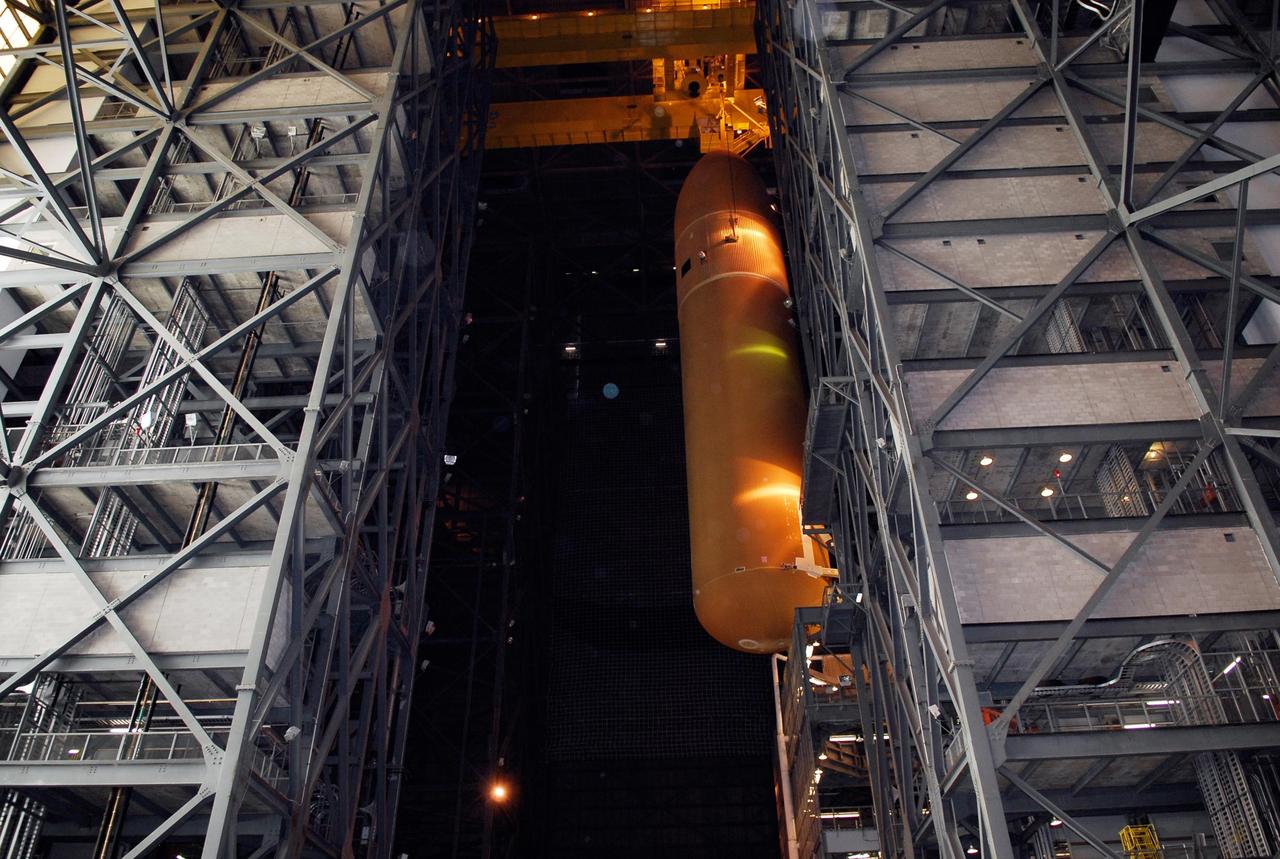
KENNEDY SPACE CENTER, FLA. -- In the Vehicle Assembly Building at NASA's Kennedy Space Center, the suspended external tank is moved into high bay 1. The tank will be lowered toward the mobile launcher platform for mating with the solid rocket boosters, or SRBs, already installed on the platform. Work to remove and replace the feed-through connector on the external tank will be done in parallel with integrated ET/SRB testing in preparation for space shuttle Endeavour to join the stack later in January. The STS-123 mission is targeted for launch on Endeavour in mid-March. The 25th assembly flight to the International Space Station, Endeavour's payload includes the Japanese Experiment Logistics Module Pressurized Section. Photo credit: NASA/Kim Shiflett
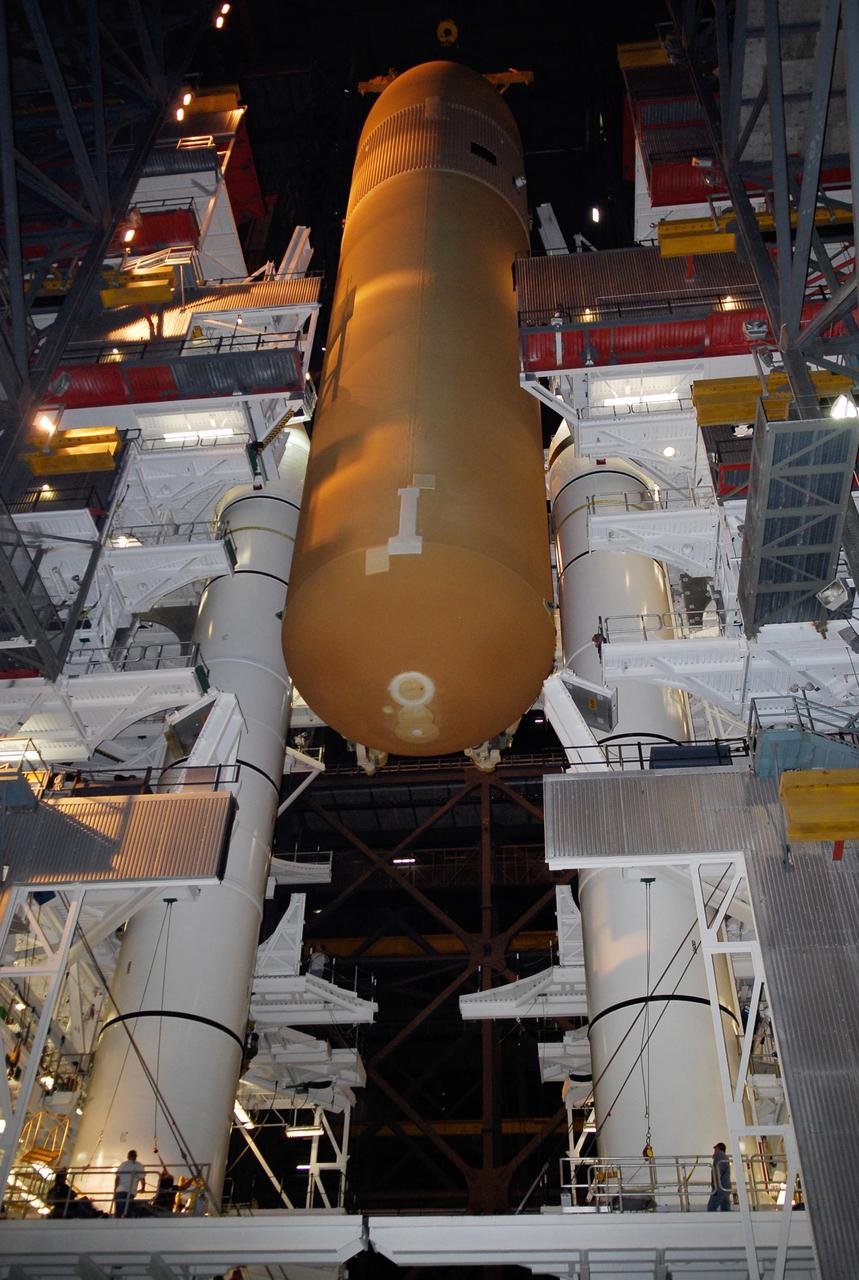
KENNEDY SPACE CENTER, FLA. -- In high bay 1 of the Vehicle Assembly Building at NASA's Kennedy Space Center, the suspended external tank is lowered between the solid rocket boosters, or SRBs, installed on the mobile launcher platform. The tank will be mated with the boosters for launch. Work to remove and replace the feed-through connector on the external tank will be done in parallel with integrated ET/SRB testing in preparation for space shuttle Endeavour to join the stack later in January. The STS-123 mission is targeted for launch on Endeavour in mid-March. The 25th assembly flight to the International Space Station, Endeavour's payload includes the Japanese Experiment Logistics Module Pressurized Section. Photo credit: NASA/Kim Shiflett
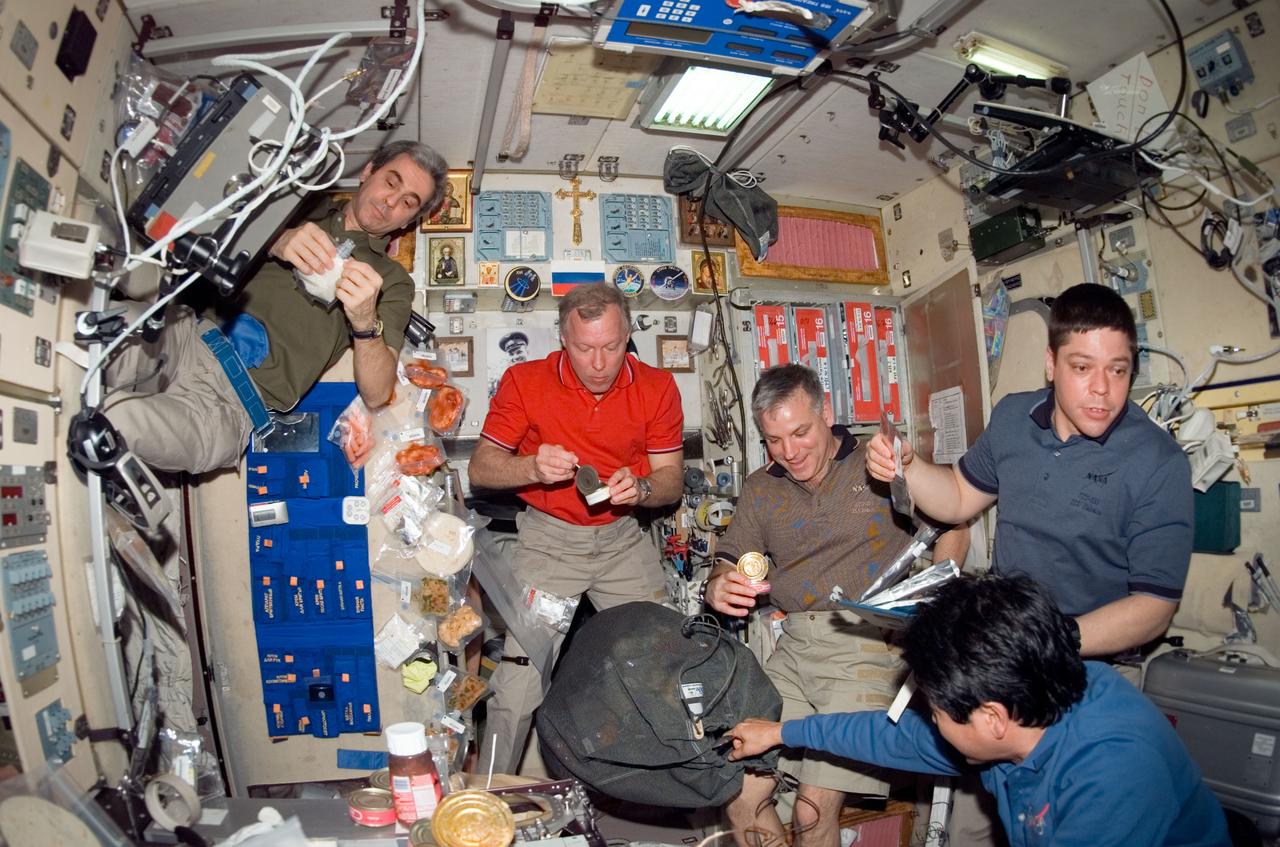
S123-E-007231 (19 March 2008) --- The STS-123 and Expedition 16 crewmembers share a meal near the galley in the Zvezda Service Module of the International Space Station while Space Shuttle Endeavour is docked with the station. Pictured (from the left) are European Space Agency (ESA) astronaut Leopold Eyharts, STS-123 mission specialist; NASA astronauts Dominic Gorie, STS-123 commander; Gregory H. Johnson, STS-123 pilot; Robert L. Behnken and Japan Aerospace Exploration Agency (JAXA) astronaut Takao Doi, both STS-123 mission specialists.
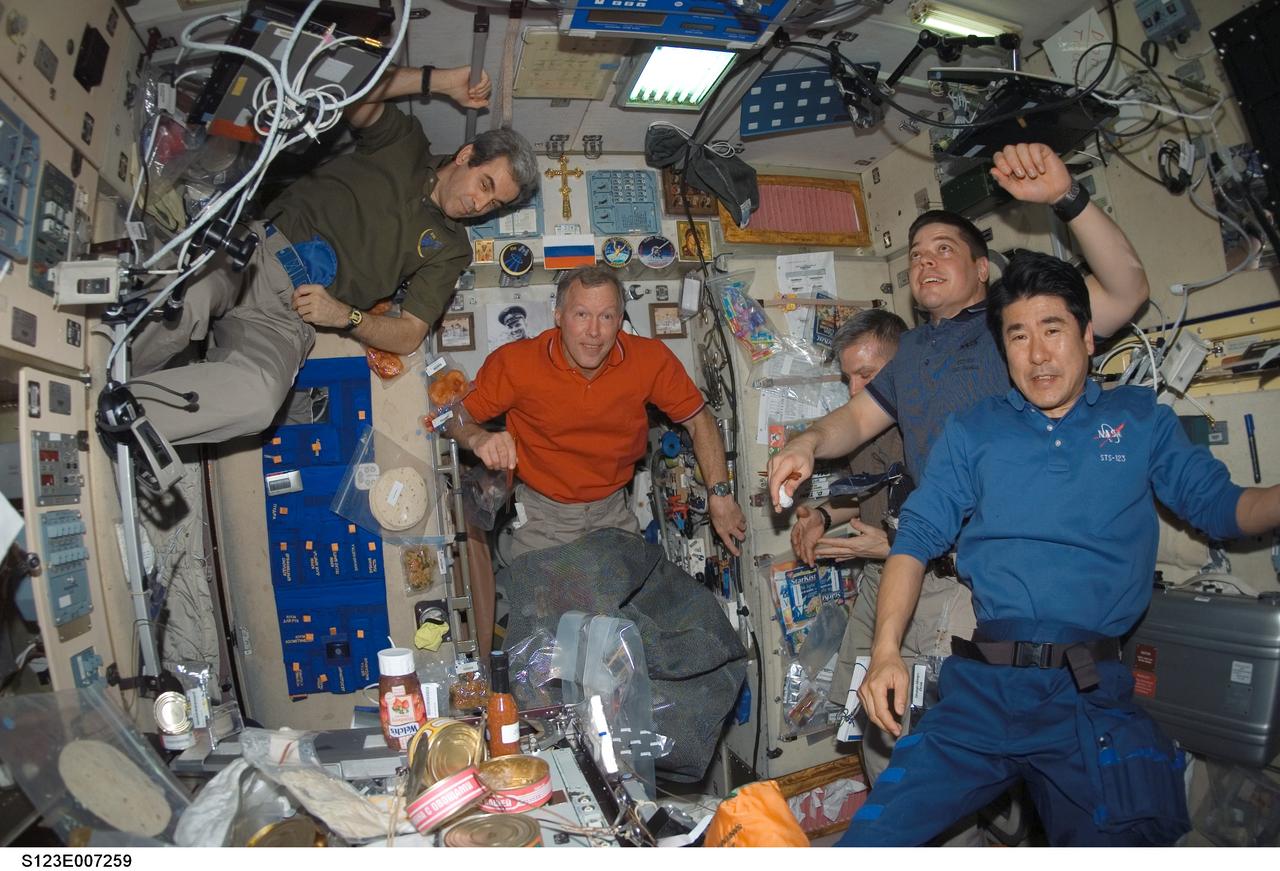
S123-E-007259 (19 March 2008) --- The STS-123 and Expedition 16 crewmembers share a meal near the galley in the Zvezda Service Module of the International Space Station while Space Shuttle Endeavour is docked with the station. Pictured (from the left) are European Space Agency (ESA) astronaut Leopold Eyharts, STS-123 mission specialist; NASA astronauts Dominic Gorie, STS-123 commander; Gregory H. Johnson (partially obscured), STS-123 pilot; Robert L. Behnken and Japan Aerospace Exploration Agency (JAXA) astronaut Takao Doi, both STS-123 mission specialists.
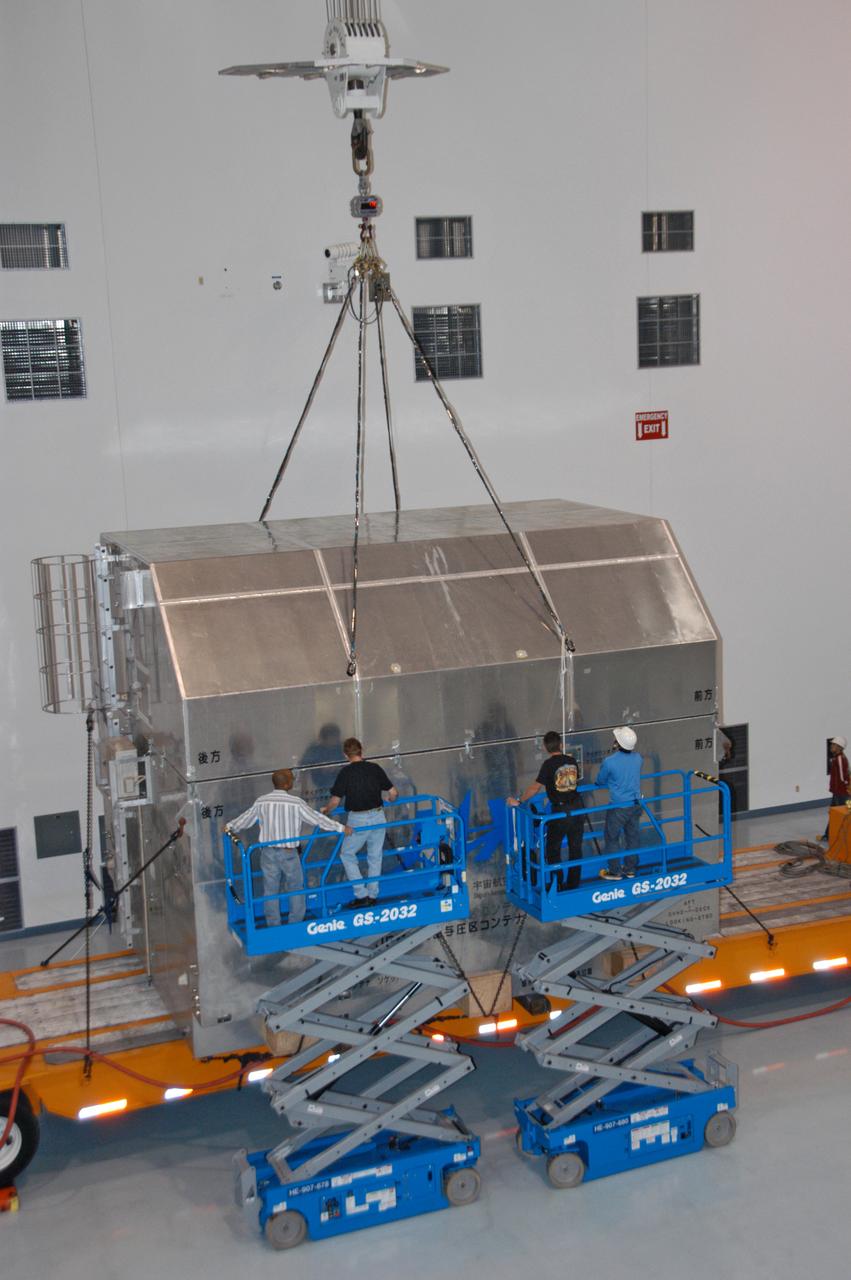
Inside the Space Station Processing Facility, workers monitor progress as a huge crane is used to remove the top of the crate carrying the Experiment Logistics Module Pressurized Section for the Japanese Experiment Module. The logistics module is one of the components of the Japanese Experiment Module or JEM, also known as Kibo, which means "hope" in Japanese. Kibo comprises six components: two research facilities -- the Pressurized Module and Exposed Facility; a Logistics Module attached to each of them; a Remote Manipulator System; and an Inter-Orbit Communication System unit. Kibo also has a scientific airlock through which experiments are transferred and exposed to the external environment of space. Kibo is Japan's first human space facility and its primary contribution to the station. Kibo will enhance the unique research capabilities of the orbiting complex by providing an additional environment in which astronauts can conduct science experiments. The various components of JEM will be assembled in space over the course of three Space Shuttle missions. The first of those three missions, STS-123, will carry the Experiment Logistics Module Pressurized Section aboard the Space Shuttle Endeavour, targeted for launch in 2007.
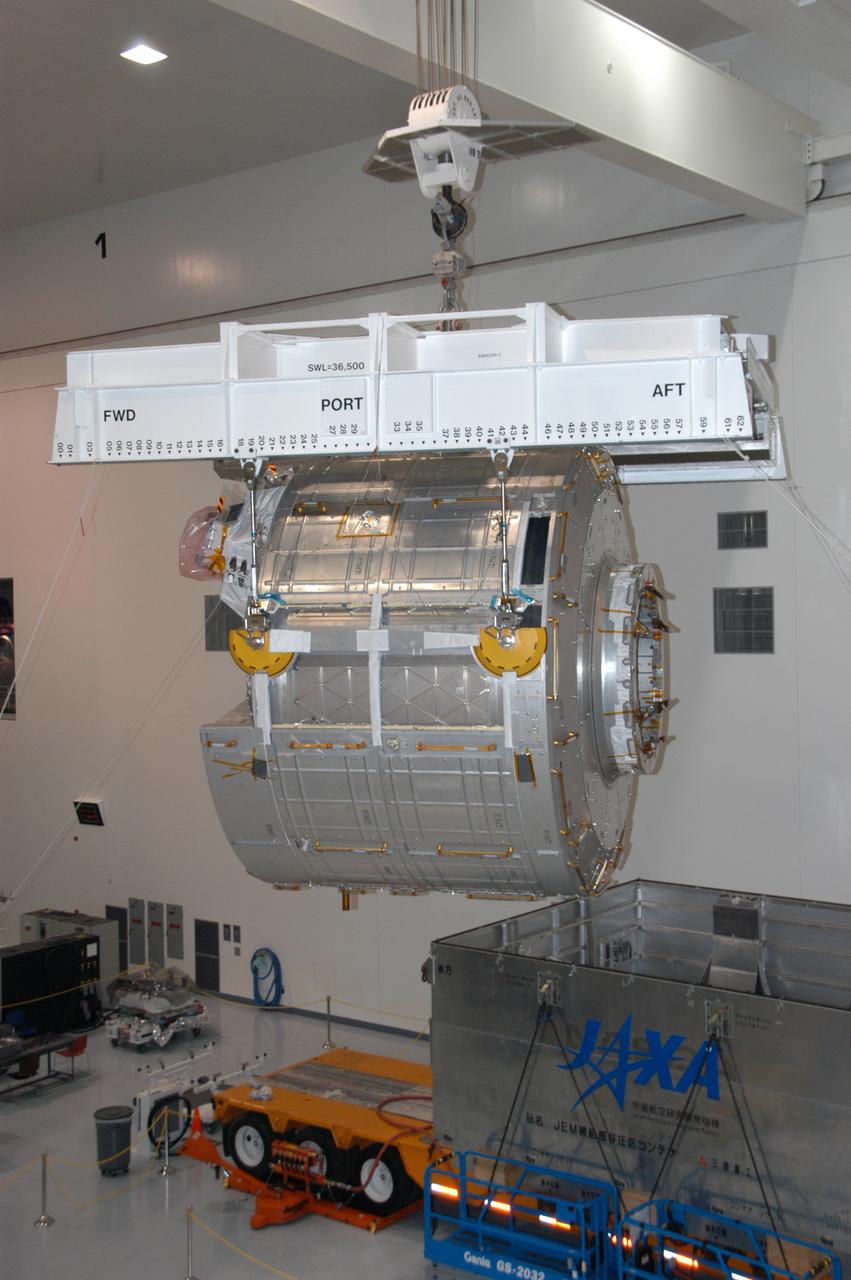
In the Space Station Processing Facility, an overhead crane lifts the JEM Experiment Logistics Module Pressurized Section from its shipping container and moves it toward a scale for weight and center-of-gravity measurements. The module will then be moved to a work stand. The logistics module is one of the components of the Japanese Experiment Module or JEM, also known as Kibo, which means "hope" in Japanese. Kibo comprises six components: two research facilities -- the Pressurized Module and Exposed Facility; a Logistics Module attached to each of them; a Remote Manipulator System; and an Inter-Orbit Communication System unit. Kibo also has a scientific airlock through which experiments are transferred and exposed to the external environment of space. Kibo is Japan's first human space facility and its primary contribution to the station. Kibo will enhance the unique research capabilities of the orbiting complex by providing an additional environment in which astronauts can conduct science experiments. The various components of JEM will be assembled in space over the course of three Space Shuttle missions. The first of those three missions, STS-123, will carry the Experiment Logistics Module Pressurized Section aboard the Space Shuttle Endeavour, targeted for launch in 2007.
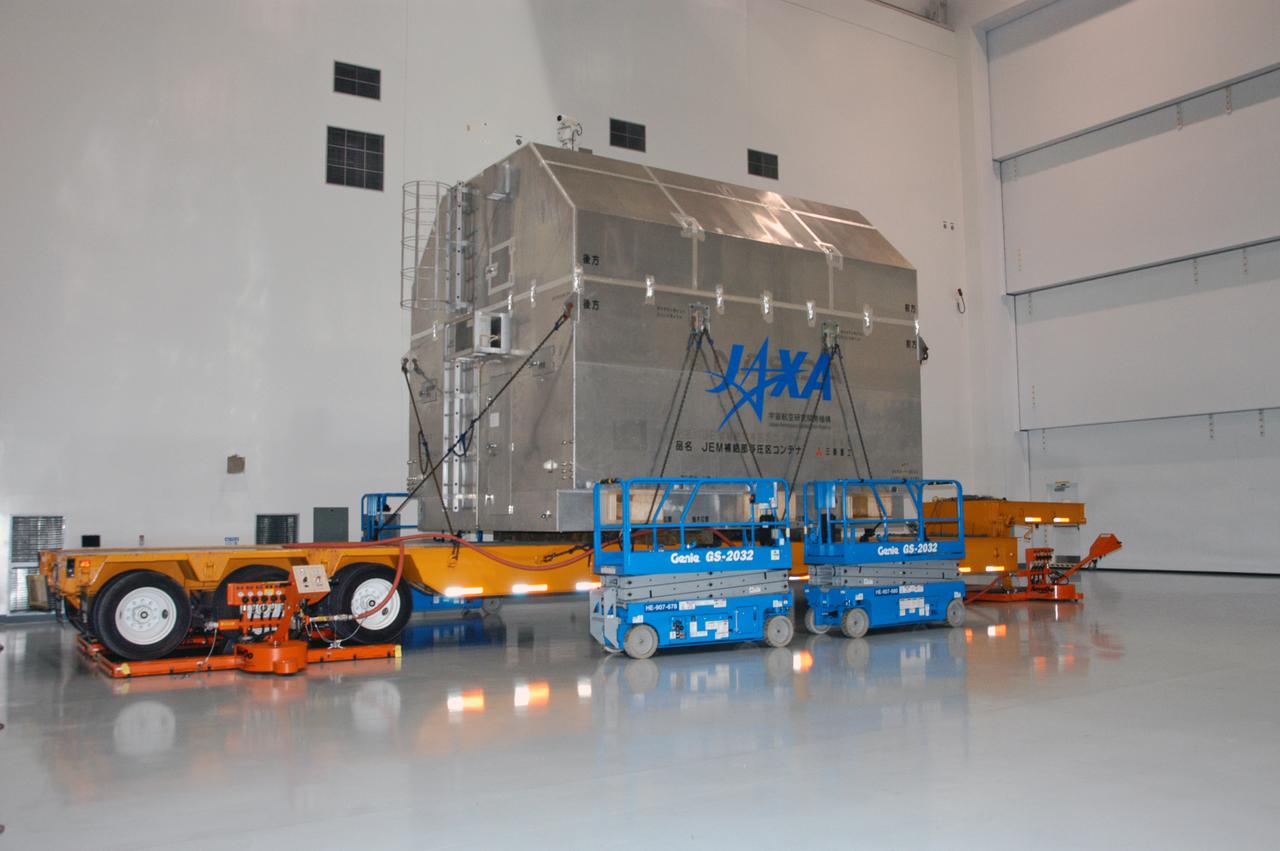
The Experiment Logistics Module Pressurized Section for the Japanese Experiment Module arrives at the Space Station Processing Facility for uncrating. The logistics module is one of the components of the Japanese Experiment Module or JEM, also known as Kibo, which means "hope" in Japanese. Kibo comprises six components: two research facilities -- the Pressurized Module and Exposed Facility; a Logistics Module attached to each of them; a Remote Manipulator System; and an Inter-Orbit Communication System unit. Kibo also has a scientific airlock through which experiments are transferred and exposed to the external environment of space. Kibo is Japan's first human space facility and its primary contribution to the station. Kibo will enhance the unique research capabilities of the orbiting complex by providing an additional environment in which astronauts can conduct science experiments. The various components of JEM will be assembled in space over the course of three Space Shuttle missions. The first of those three missions, STS-123, will carry the Experiment Logistics Module Pressurized Section aboard the Space Shuttle Endeavour, targeted for launch in 2007.
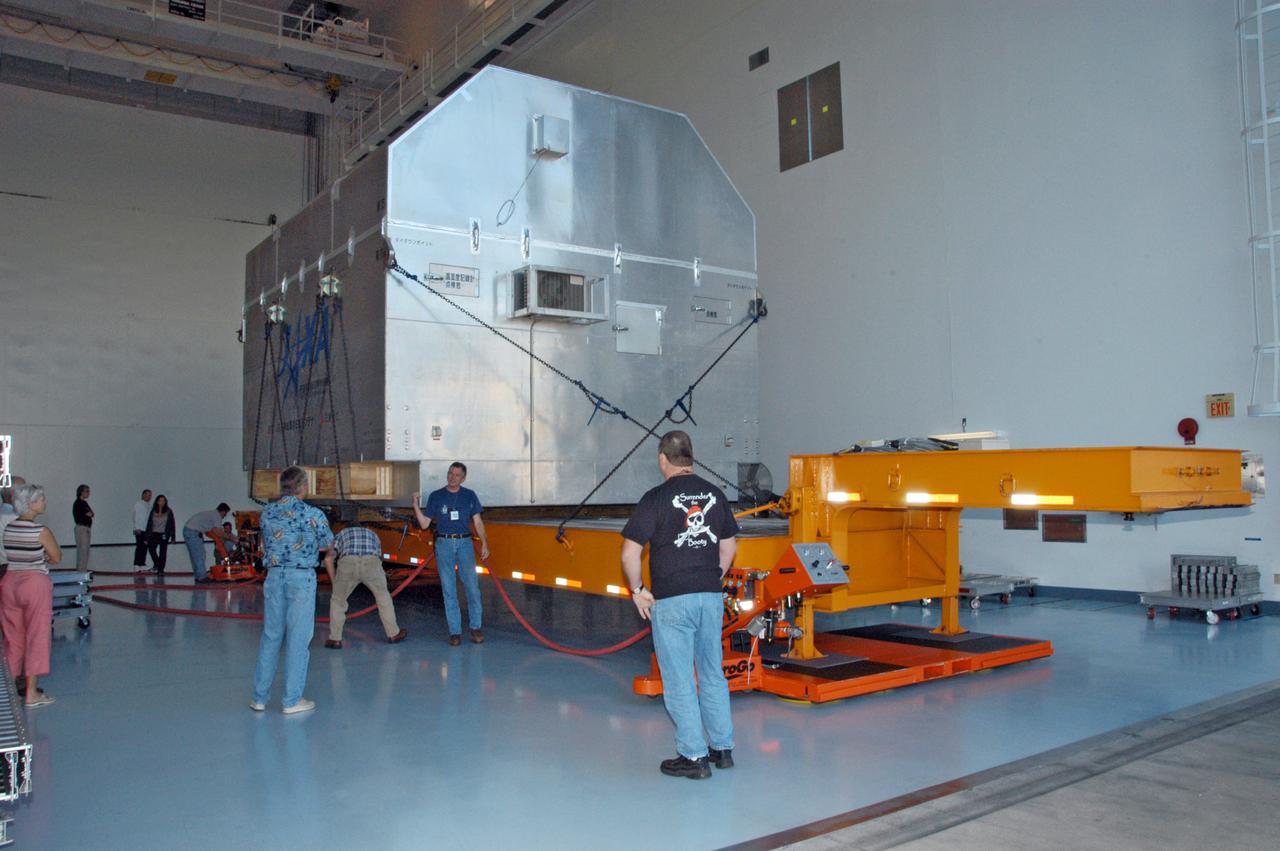
The Experiment Logistics Module Pressurized Section for the Japanese Experiment Module arrives at the Space Station Processing Facility for uncrating. The logistics module is one of the components of the Japanese Experiment Module or JEM, also known as Kibo, which means "hope" in Japanese. Kibo comprises six components: two research facilities -- the Pressurized Module and Exposed Facility; a Logistics Module attached to each of them; a Remote Manipulator System; and an Inter-Orbit Communication System unit. Kibo also has a scientific airlock through which experiments are transferred and exposed to the external environment of space. Kibo is Japan's first human space facility and its primary contribution to the station. Kibo will enhance the unique research capabilities of the orbiting complex by providing an additional environment in which astronauts can conduct science experiments. The various components of JEM will be assembled in space over the course of three Space Shuttle missions. The first of those three missions, STS-123, will carry the Experiment Logistics Module Pressurized Section aboard the Space Shuttle Endeavour, targeted for launch in 2007.
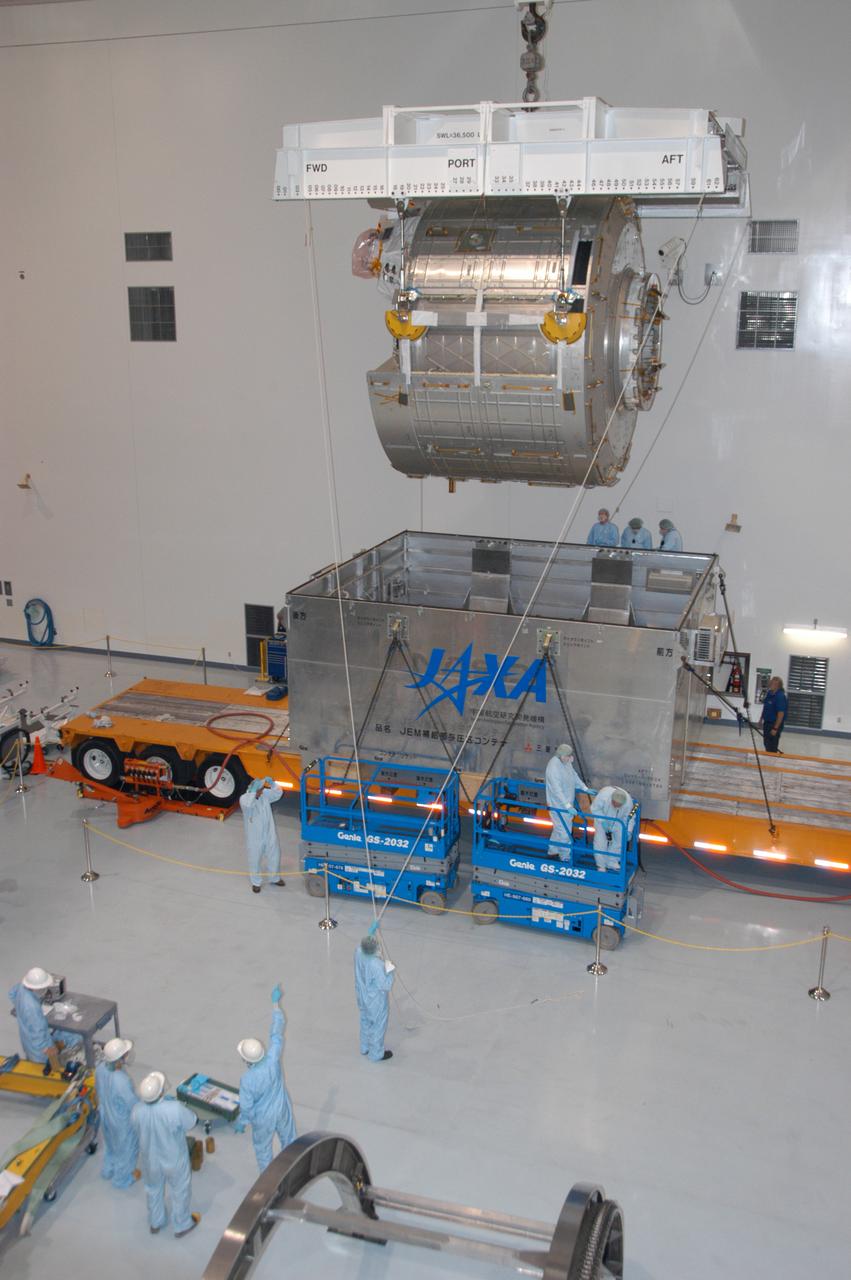
The JEM Experiment Logistics Module Pressurized Section is lifted from its shipping crate in the Space Station Processing Facility. The module will be moved to a scale for weight and center-of-gravity measurements and then to a work stand. The logistics module is one of the components of the Japanese Experiment Module or JEM, also known as Kibo, which means "hope" in Japanese. Kibo comprises six components: two research facilities -- the Pressurized Module and Exposed Facility; a Logistics Module attached to each of them; a Remote Manipulator System; and an Inter-Orbit Communication System unit. Kibo also has a scientific airlock through which experiments are transferred and exposed to the external environment of space. Kibo is Japan's first human space facility and its primary contribution to the station. Kibo will enhance the unique research capabilities of the orbiting complex by providing an additional environment in which astronauts can conduct science experiments. The various components of JEM will be assembled in space over the course of three Space Shuttle missions. The first of those three missions, STS-123, will carry the Experiment Logistics Module Pressurized Section aboard the Space Shuttle Endeavour, targeted for launch in 2007.
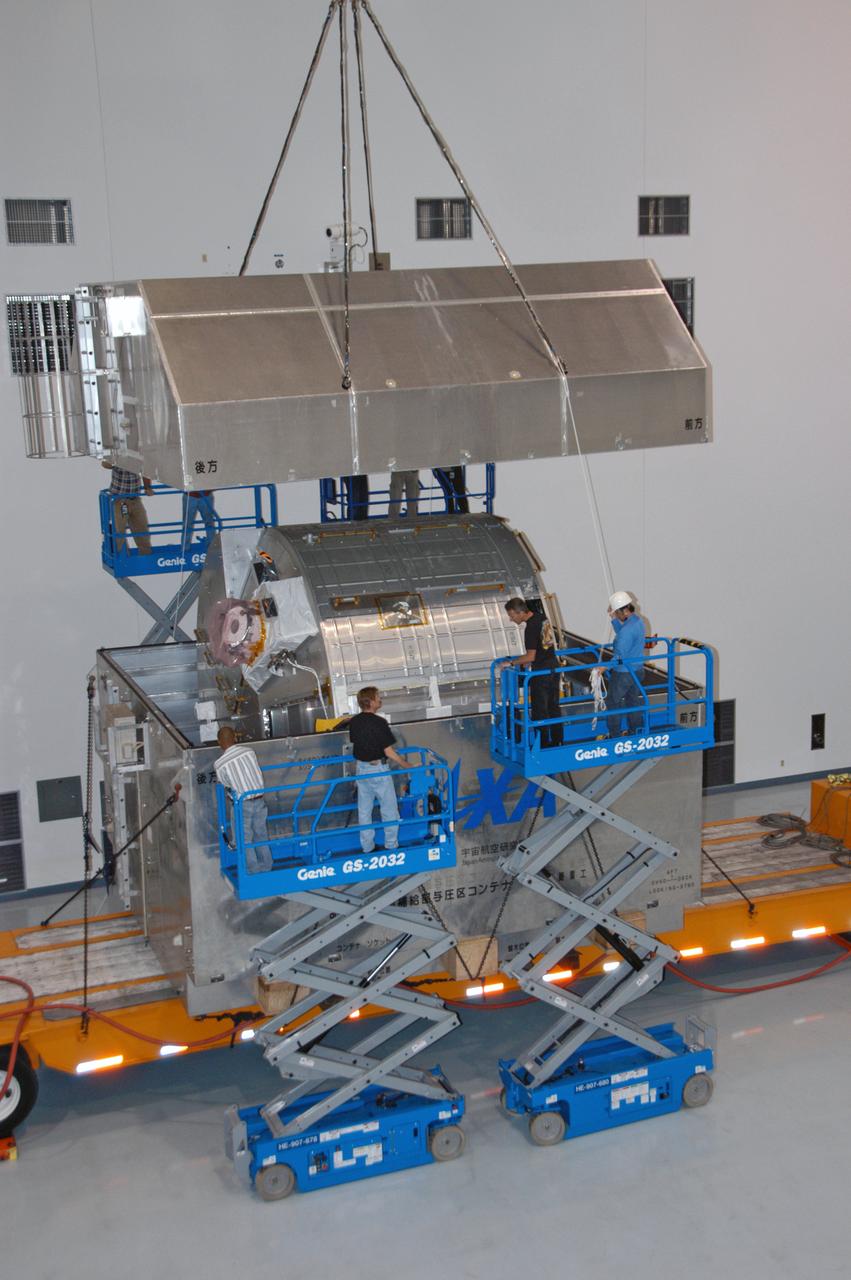
Inside the Space Station Processing Facility, workers monitor progress as a huge crane is used to remove the top of the crate carrying the Experiment Logistics Module Pressurized Section for the Japanese Experiment Module. The logistics module is one of the components of the Japanese Experiment Module or JEM, also known as Kibo, which means "hope" in Japanese. Kibo comprises six components: two research facilities -- the Pressurized Module and Exposed Facility; a Logistics Module attached to each of them; a Remote Manipulator System; and an Inter-Orbit Communication System unit. Kibo also has a scientific airlock through which experiments are transferred and exposed to the external environment of space. Kibo is Japan's first human space facility and its primary contribution to the station. Kibo will enhance the unique research capabilities of the orbiting complex by providing an additional environment in which astronauts can conduct science experiments. The various components of JEM will be assembled in space over the course of three Space Shuttle missions. The first of those three missions, STS-123, will carry the Experiment Logistics Module Pressurized Section aboard the Space Shuttle Endeavour, targeted for launch in 2007.
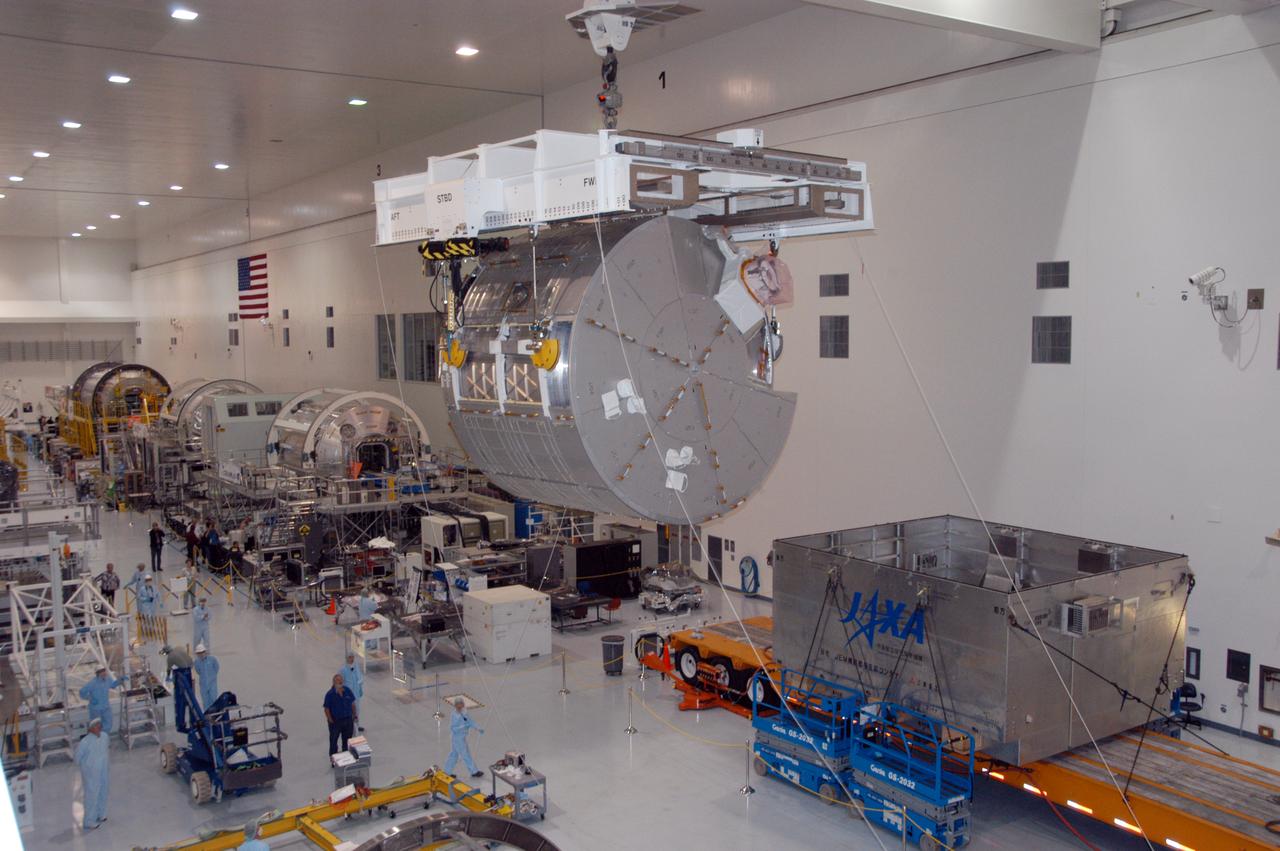
An overhead crane moves the JEM Experiment Logistics Module Pressurized Section above the floor of the Space Station Processing Facility to a scale for weight and center-of-gravity measurements. The module will then be moved to a work stand. The logistics module is one of the components of the Japanese Experiment Module or JEM, also known as Kibo, which means "hope" in Japanese. Kibo comprises six components: two research facilities -- the Pressurized Module and Exposed Facility; a Logistics Module attached to each of them; a Remote Manipulator System; and an Inter-Orbit Communication System unit. Kibo also has a scientific airlock through which experiments are transferred and exposed to the external environment of space. Kibo is Japan's first human space facility and its primary contribution to the station. Kibo will enhance the unique research capabilities of the orbiting complex by providing an additional environment in which astronauts can conduct science experiments. The various components of JEM will be assembled in space over the course of three Space Shuttle missions. The first of those three missions, STS-123, will carry the Experiment Logistics Module Pressurized Section aboard the Space Shuttle Endeavour, targeted for launch in 2007.

The Experiment Logistics Module Pressurized Section for the Japanese Experiment Module arrives at the Space Station Processing Facility. The logistics module is one of the components of the Japanese Experiment Module or JEM, also known as Kibo, which means "hope" in Japanese. Kibo comprises six components: two research facilities -- the Pressurized Module and Exposed Facility; a Logistics Module attached to each of them; a Remote Manipulator System; and an Inter-Orbit Communication System unit. Kibo also has a scientific airlock through which experiments are transferred and exposed to the external environment of space. Kibo is Japan's first human space facility and its primary contribution to the station. Kibo will enhance the unique research capabilities of the orbiting complex by providing an additional environment in which astronauts can conduct science experiments. The various components of JEM will be assembled in space over the course of three Space Shuttle missions. The first of those three missions, STS-123, will carry the Experiment Logistics Module Pressurized Section aboard the Space Shuttle Endeavour, targeted for launch in 2007.
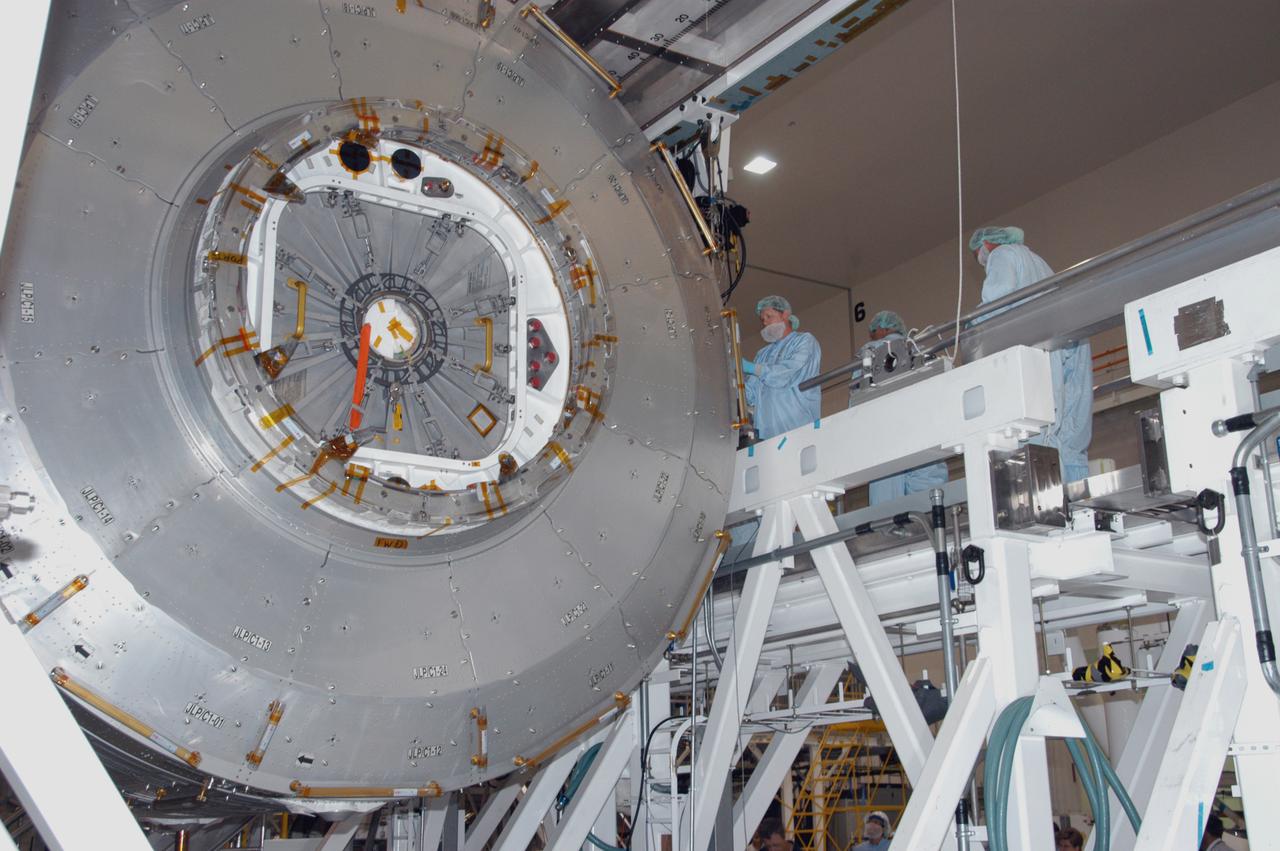
In the Space Station Processing Facility, the JEM Experiment Logistics Module Pressurized Section is lowered onto a scale for weight and center-of-gravity measurements. The module will then be moved to a work stand. The logistics module is one of the components of the Japanese Experiment Module or JEM, also known as Kibo, which means "hope" in Japanese. Kibo comprises six components: two research facilities -- the Pressurized Module and Exposed Facility; a Logistics Module attached to each of them; a Remote Manipulator System; and an Inter-Orbit Communication System unit. Kibo also has a scientific airlock through which experiments are transferred and exposed to the external environment of space. Kibo is Japan's first human space facility and its primary contribution to the station. Kibo will enhance the unique research capabilities of the orbiting complex by providing an additional environment in which astronauts can conduct science experiments. The various components of JEM will be assembled in space over the course of three Space Shuttle missions. The first of those three missions, STS-123, will carry the Experiment Logistics Module Pressurized Section aboard the Space Shuttle Endeavour, targeted for launch in 2007.
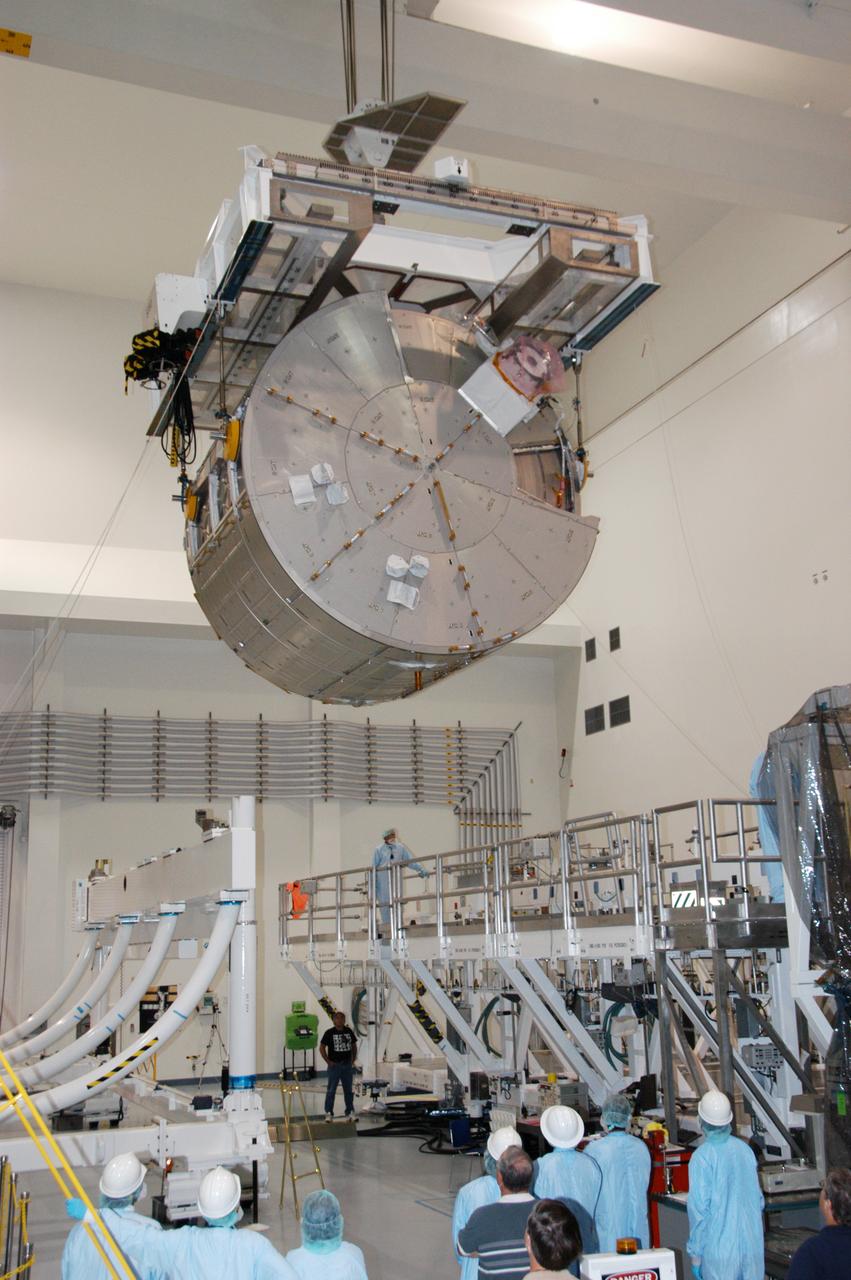
In the Space Station Processing Facility, an overhead crane moves the JEM Experiment Logistics Module Pressurized Section toward a scale (at left) for weight and center-of-gravity measurements. The module will then be moved to a work stand. The logistics module is one of the components of the Japanese Experiment Module or JEM, also known as Kibo, which means "hope" in Japanese. Kibo comprises six components: two research facilities -- the Pressurized Module and Exposed Facility; a Logistics Module attached to each of them; a Remote Manipulator System; and an Inter-Orbit Communication System unit. Kibo also has a scientific airlock through which experiments are transferred and exposed to the external environment of space. Kibo is Japan's first human space facility and its primary contribution to the station. Kibo will enhance the unique research capabilities of the orbiting complex by providing an additional environment in which astronauts can conduct science experiments. The various components of JEM will be assembled in space over the course of three Space Shuttle missions. The first of those three missions, STS-123, will carry the Experiment Logistics Module Pressurized Section aboard the Space Shuttle Endeavour, targeted for launch in 2007.
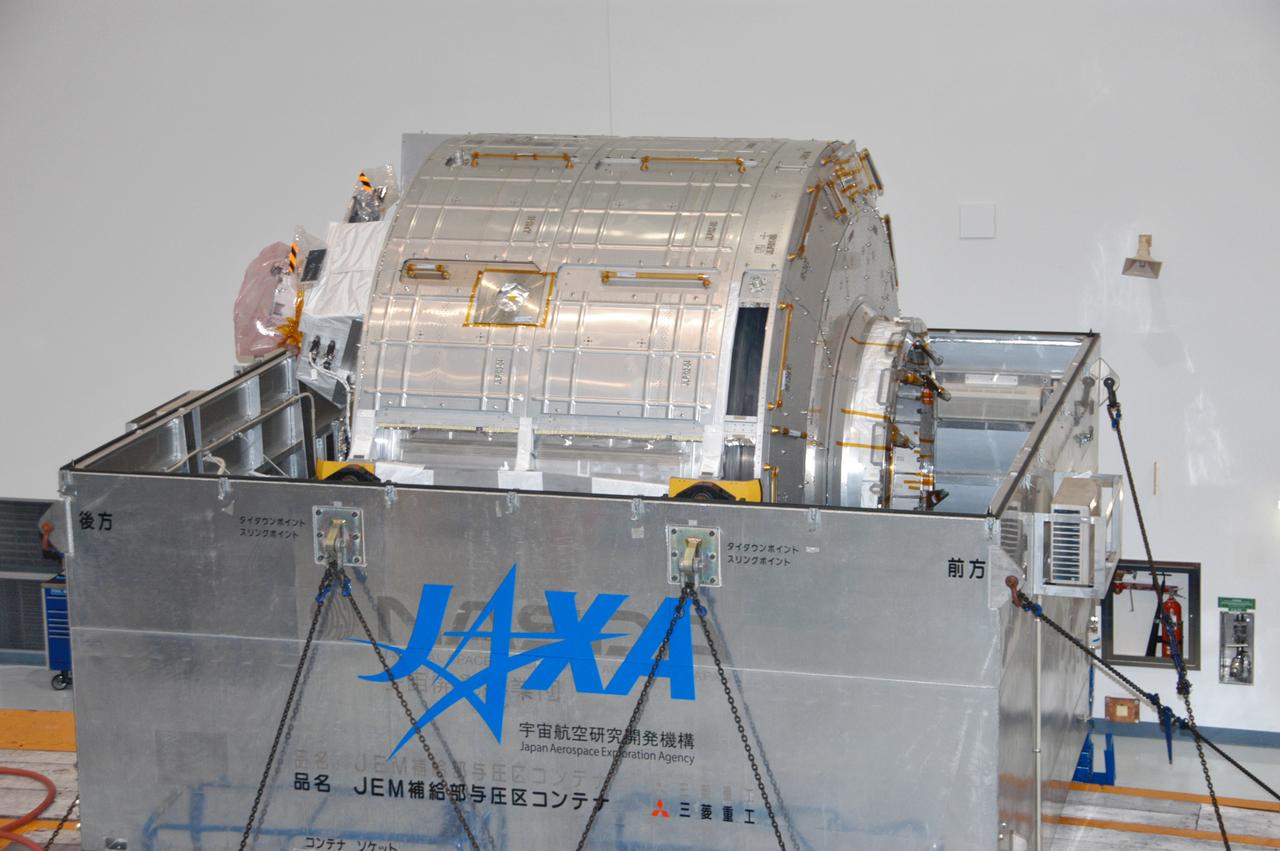
Inside the Space Station Processing Facility, the Experiment Logistics Module Pressurized Section for the Japanese Experiment Module is revealed after the top of the crate is removed. The logistics module is one of the components of the Japanese Experiment Module or JEM, also known as Kibo, which means "hope" in Japanese. Kibo comprises six components: two research facilities -- the Pressurized Module and Exposed Facility; a Logistics Module attached to each of them; a Remote Manipulator System; and an Inter-Orbit Communication System unit. Kibo also has a scientific airlock through which experiments are transferred and exposed to the external environment of space. Kibo is Japan's first human space facility and its primary contribution to the station. Kibo will enhance the unique research capabilities of the orbiting complex by providing an additional environment in which astronauts can conduct science experiments. The various components of JEM will be assembled in space over the course of three Space Shuttle missions. The first of those three missions, STS-123, will carry the Experiment Logistics Module Pressurized Section aboard the Space Shuttle Endeavour, targeted for launch in 2007.
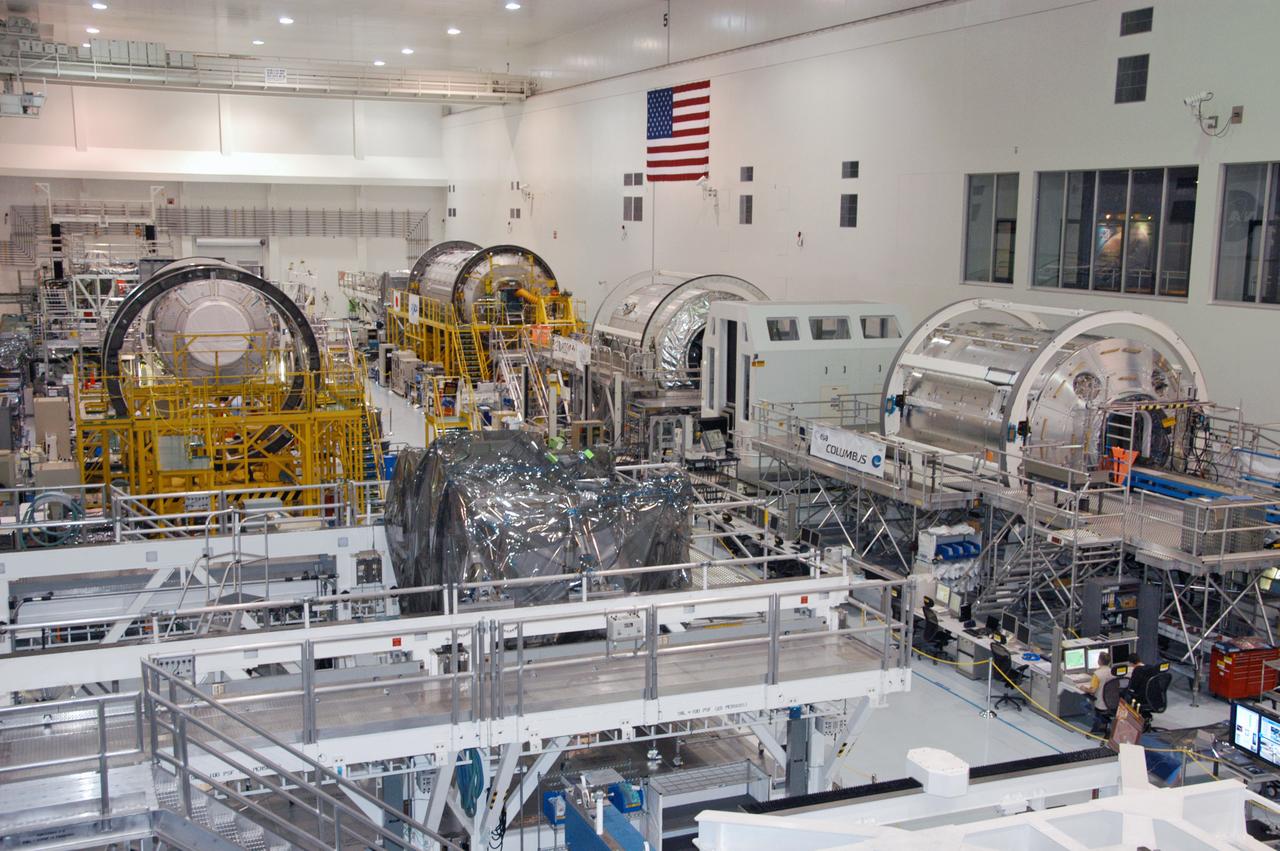
Several components for delivery to the International Space Station sit in test stands inside the Space Station Processing Facility highbay. To the right, from back to front, are the Japanese Experiment Module, the Raffaello multi-purpose logistics module, and the European Space Agency's Columbus scientific research module. To the left in front is the starboard truss segment S5. Behind it is the test stand that will hold the Experiment Logistics Module Pressurized Section for the Japanese Experiment Module. The logistics module is one of the components of the Japanese Experiment Module or JEM, also known as Kibo, which means "hope" in Japanese. Kibo comprises six components: two research facilities -- the Pressurized Module and Exposed Facility; a Logistics Module attached to each of them; a Remote Manipulator System; and an Inter-Orbit Communication System unit. Kibo also has a scientific airlock through which experiments are transferred and exposed to the external environment of space. Kibo is Japan's first human space facility and its primary contribution to the station. Kibo will enhance the unique research capabilities of the orbiting complex by providing an additional environment in which astronauts can conduct science experiments. The various components of JEM will be assembled in space over the course of three Space Shuttle missions. The first of those three missions, STS-123, will carry the Experiment Logistics Module Pressurized Section aboard the Space Shuttle Endeavour, targeted for launch in 2007.

Inside the Space Station Processing Facility, workers monitor progress as a huge crane is used to remove the top of the crate carrying the Experiment Logistics Module Pressurized Section for the Japanese Experiment Module. The logistics module is one of the components of the Japanese Experiment Module or JEM, also known as Kibo, which means "hope" in Japanese. Kibo comprises six components: two research facilities -- the Pressurized Module and Exposed Facility; a Logistics Module attached to each of them; a Remote Manipulator System; and an Inter-Orbit Communication System unit. Kibo also has a scientific airlock through which experiments are transferred and exposed to the external environment of space. Kibo is Japan's first human space facility and its primary contribution to the station. Kibo will enhance the unique research capabilities of the orbiting complex by providing an additional environment in which astronauts can conduct science experiments. The various components of JEM will be assembled in space over the course of three Space Shuttle missions. The first of those three missions, STS-123, will carry the Experiment Logistics Module Pressurized Section aboard the Space Shuttle Endeavour, targeted for launch in 2007.
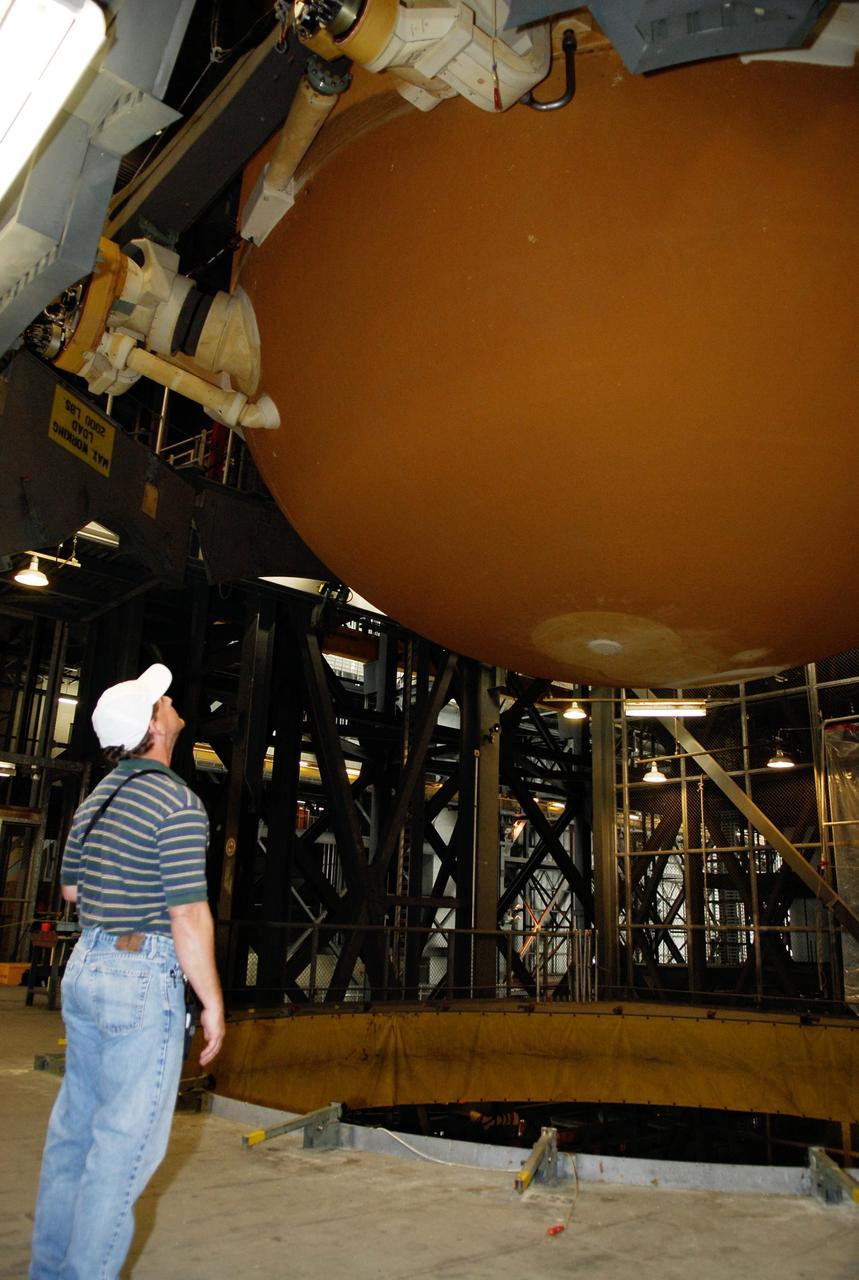
KENNEDY SPACE CENTER, FLA. -- In the Vehicle Assembly Building at NASA's Kennedy Space Center, a technician monitors the movement of the external tank as it is lifted out of the checkout cell. The tank will be lifted into high bay 1 for mating with the solid rocket boosters, or SRBs, already installed on the mobile launcher platform. Work to remove and replace the feed-through connector on the external tank will be done in parallel with integrated ET/SRB testing in preparation for space shuttle Endeavour to join the stack later in January. The STS-123 mission is targeted for launch on Endeavour in mid-March. The 25th assembly flight to the International Space Station, Endeavour's payload includes the Japanese Experiment Logistics Module Pressurized Section. Photo credit: NASA/Kim Shiflett
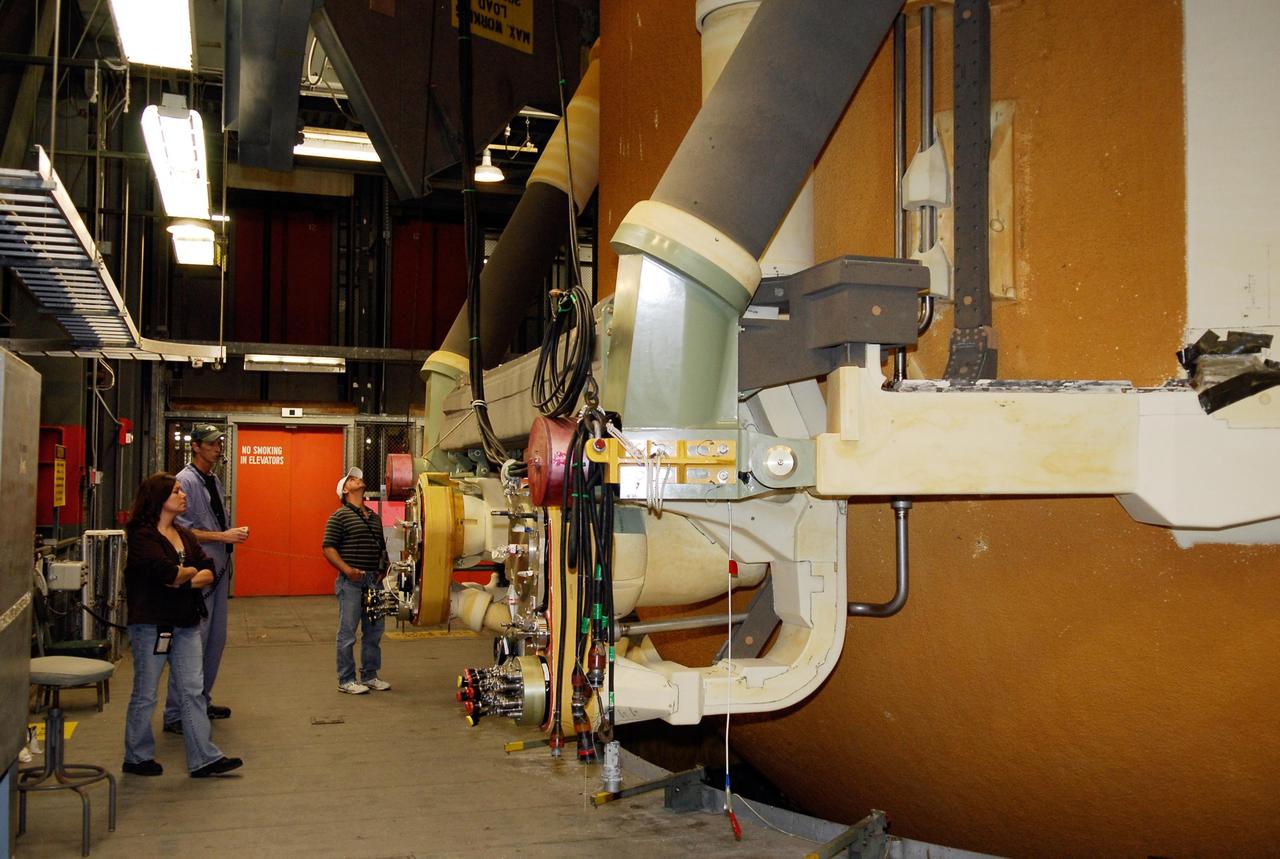
KENNEDY SPACE CENTER, FLA. -- In the Vehicle Assembly Building at NASA's Kennedy Space Center, technicians look over the equipment that will lift the external tank out of the checkout cell. The tank will be lifted into high bay 1 for mating with the solid rocket boosters, or SRBs, already installed on the mobile launcher platform. Work to remove and replace the feed-through connector on the external tank will be done in parallel with integrated ET/SRB testing in preparation for space shuttle Endeavour to join the stack later in January. The STS-123 mission is targeted for launch on Endeavour in mid-March. The 25th assembly flight to the International Space Station, Endeavour's payload includes the Japanese Experiment Logistics Module Pressurized Section. Photo credit: NASA/Kim Shiflett

KENNEDY SPACE CENTER, FLA. -- In high bay 1 of the Vehicle Assembly Building at NASA's Kennedy Space Center, the suspended external tank is lowered toward the mobile launcher platform. The tank will be mated with the solid rocket boosters, or SRBs, already installed on the platform. The boosters' nose cones can be seen in the foreground and behind the tank. Work to remove and replace the feed-through connector on the external tank will be done in parallel with integrated ET/SRB testing in preparation for space shuttle Endeavour to join the stack later in January. The STS-123 mission is targeted for launch on Endeavour in mid-March. The 25th assembly flight to the International Space Station, Endeavour's payload includes the Japanese Experiment Logistics Module Pressurized Section. Photo credit: NASA/Kim Shiflett
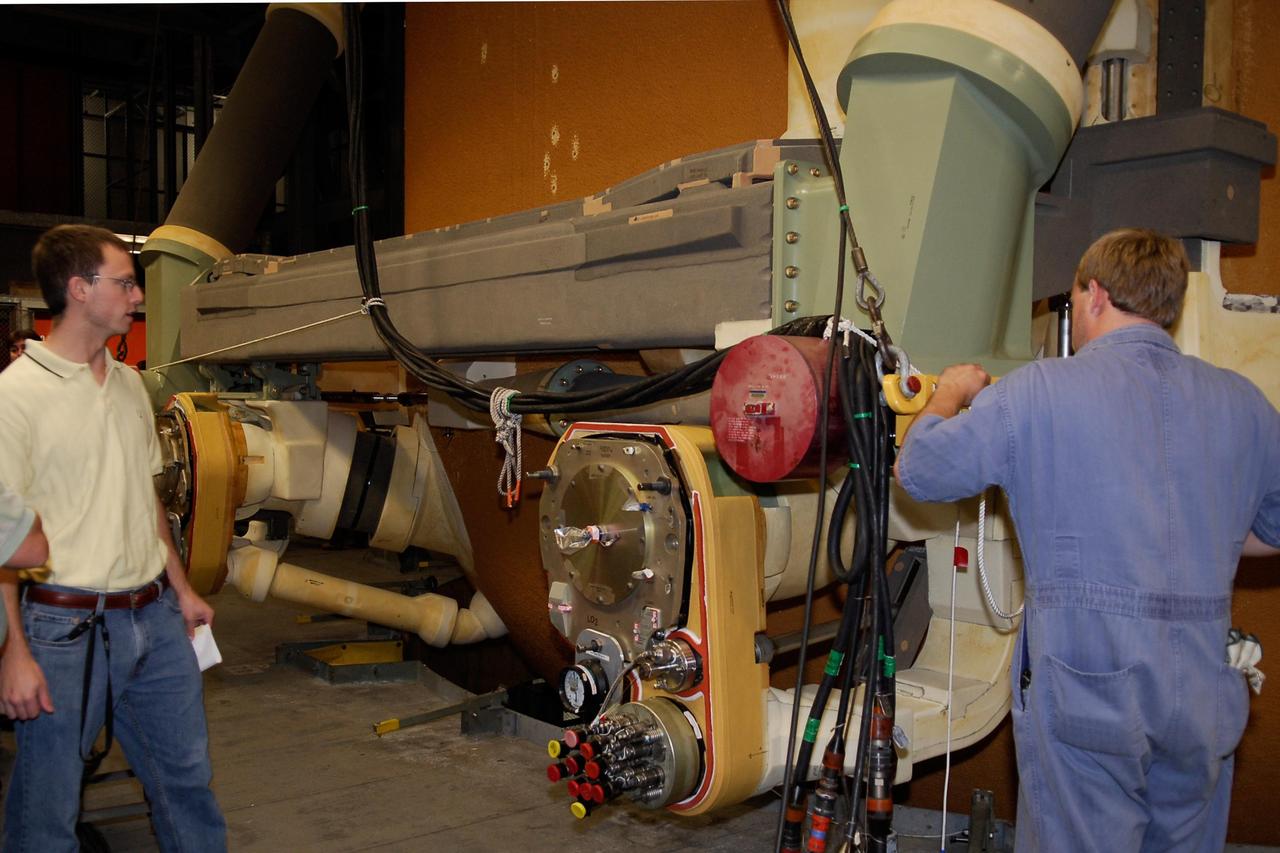
KENNEDY SPACE CENTER, FLA. -- In the Vehicle Assembly Building at NASA's Kennedy Space Center, technicians check the fitting on the cable that will help lift the external tank out of the checkout cell. The tank will be lifted into high bay 1 for mating with the solid rocket boosters, or SRBs, already installed on the mobile launcher platform. Work to remove and replace the feed-through connector on the external tank will be done in parallel with integrated ET/SRB testing in preparation for space shuttle Endeavour to join the stack later in January. The STS-123 mission is targeted for launch on Endeavour in mid-March. The 25th assembly flight to the International Space Station, Endeavour's payload includes the Japanese Experiment Logistics Module Pressurized Section. Photo credit: NASA/Kim Shiflett
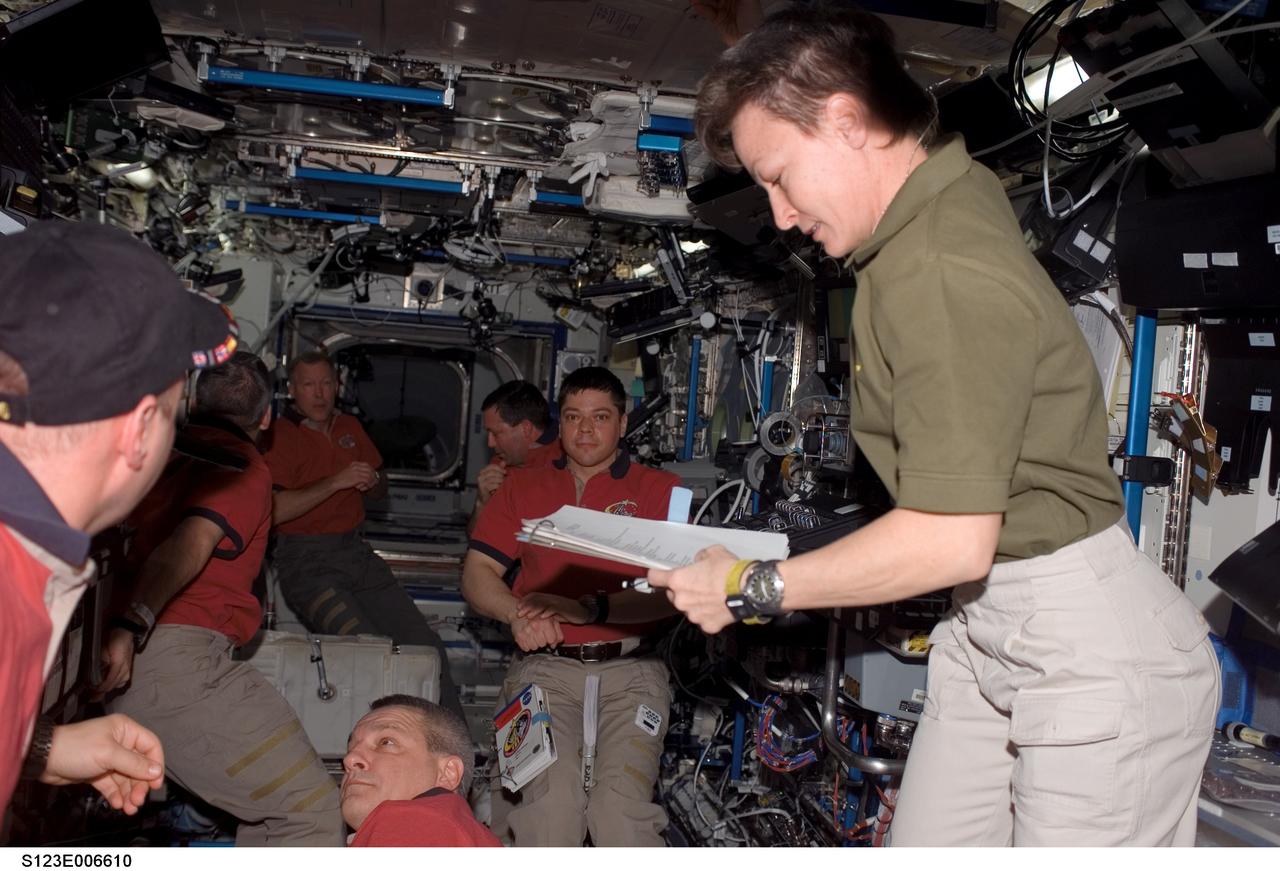
S123-E-006610 (13 March 2008) --- STS-123 and Expedition 16 crewmembers are busy working various tasks in the Destiny laboratory of the International Space Station while Space Shuttle Endeavour is docked with the station. Pictured in the foreground are astronauts Peggy Whitson, Expedition 16 commander, and Garrett Reisman, Expedition 16 flight engineer. Pictured in the background are astronauts Gregory H. Johnson, STS-123 pilot; Rick Linnehan, Robert L. Behnken, Mike Foreman, all STS-123 mission specialists; and Dominic Gorie, STS-123 commander.
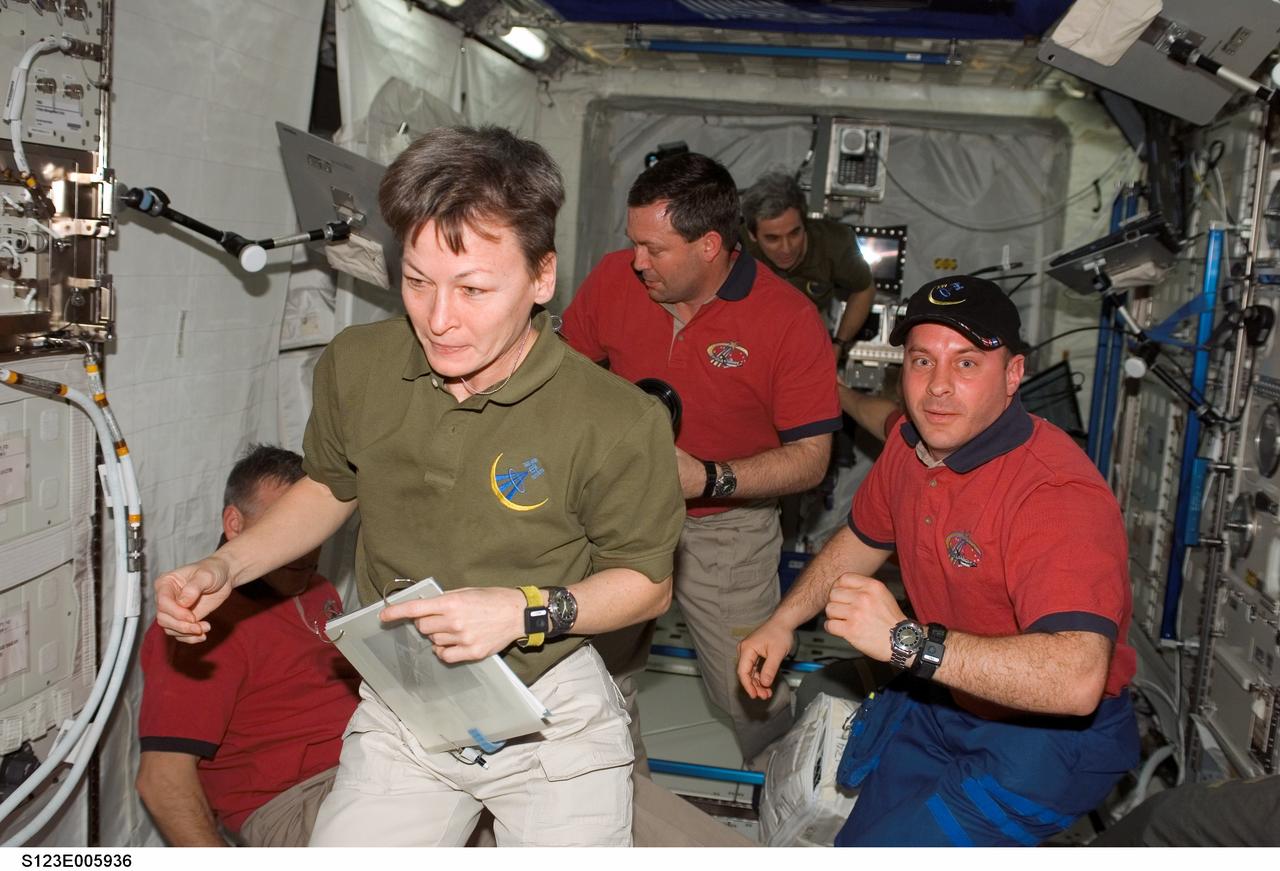
S123-E-005936 (13 March 2008) --- STS-123 and Expedition 16 crewmembers onboard the International Space Station work in the Columbus laboratory while Space Shuttle Endeavour is docked with the station. Pictured are NASA astronauts Peggy Whitson, Expedition 16 commander; Garrett Reisman (right), Expedition 16 flight engineer; Gregory H. Johnson (lower left), STS-123 pilot; Mike Foreman (center) and European Space Agency (ESA) astronaut Leopold Eyharts, both STS-123 mission specialists.
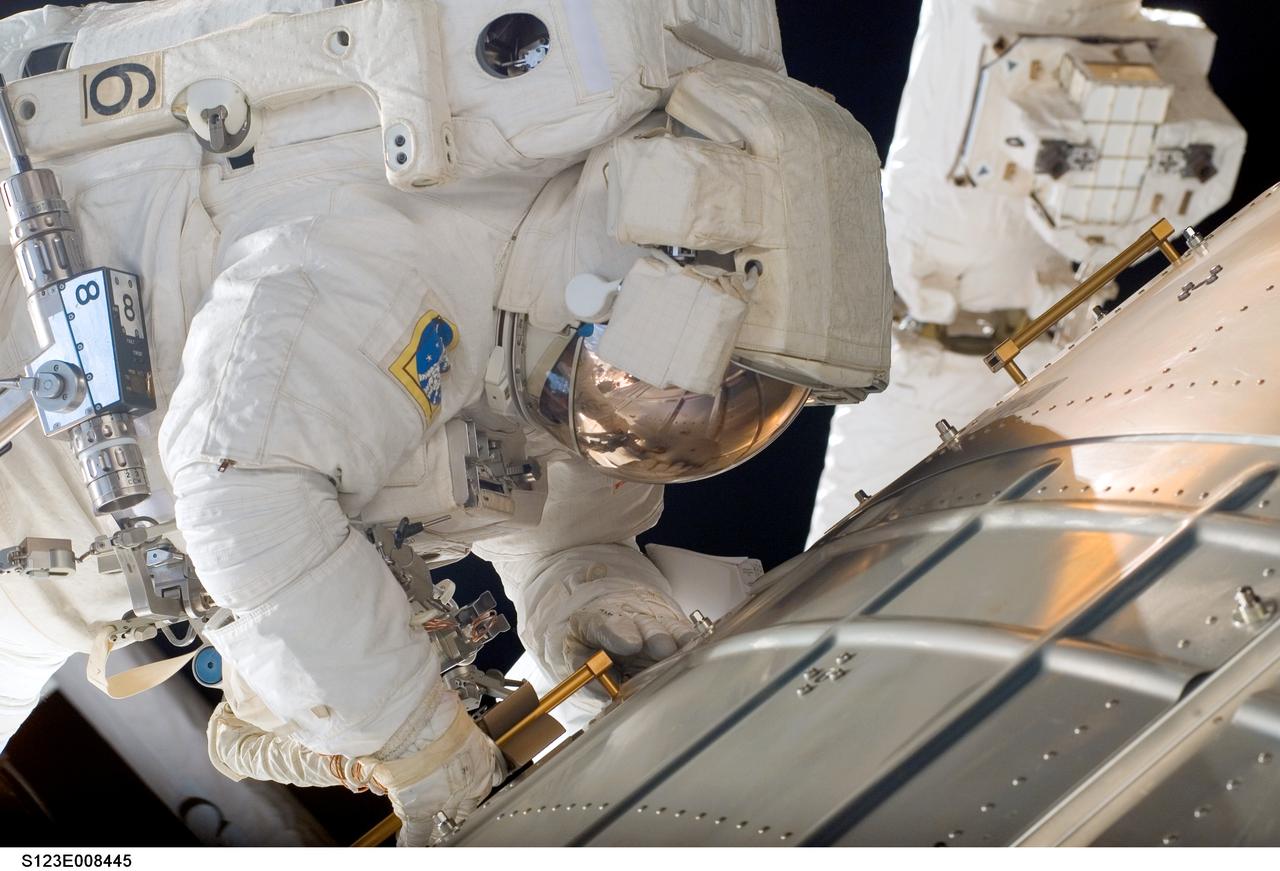
S123-E-008445 (23 March 2008) --- Astronaut Robert L. Behnken, STS-123 mission specialist, working with astronaut Mike Foreman (out of frame), nears the completion of the fifth and final spacewalk involving the STS-123/Expedition 16 crewmembers
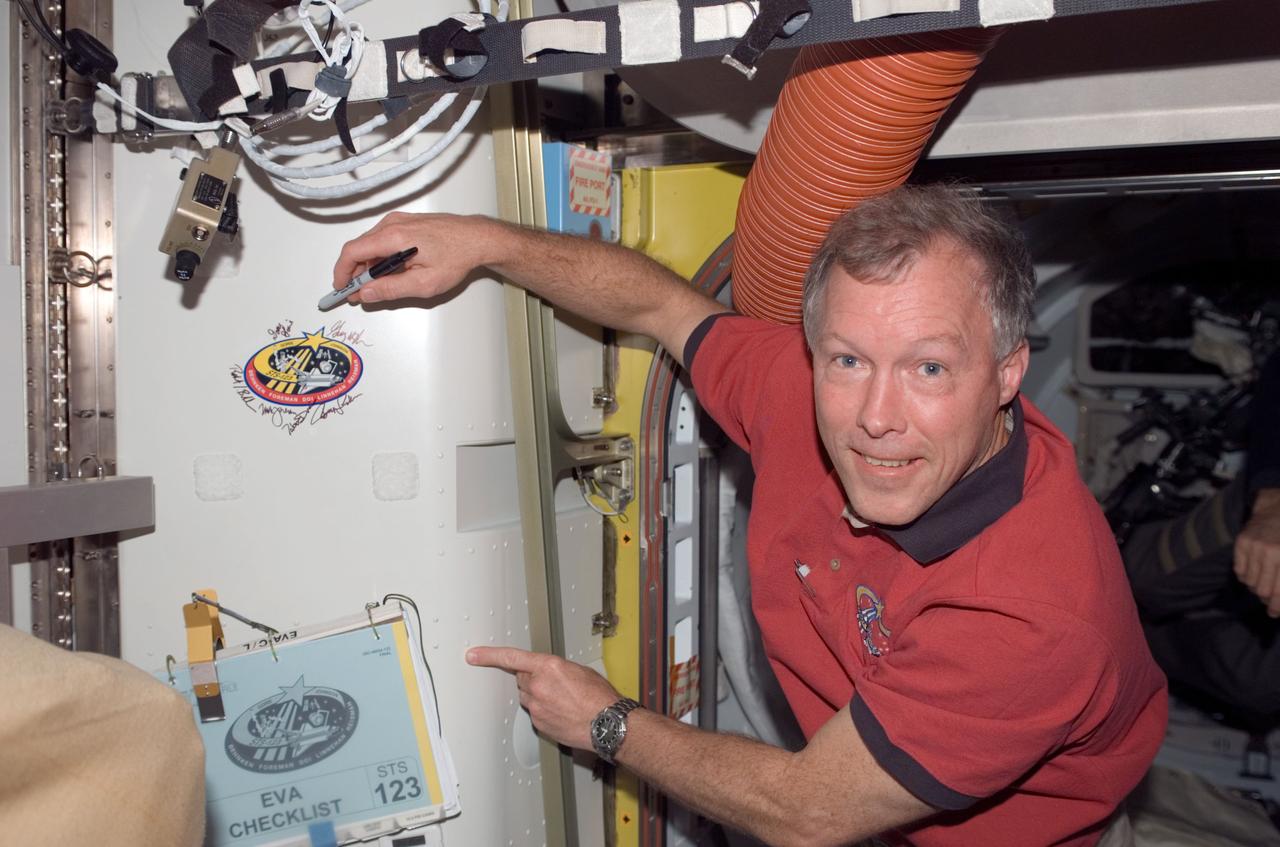
S123-E-008765 (23 March 2008) --- Astronaut Dominic Gorie, STS-123 commander, points to the STS-123 patch which was previously added to the growing collection of insignias representing crews who have performed spacewalks from the Quest Airlock of the International Space Station.
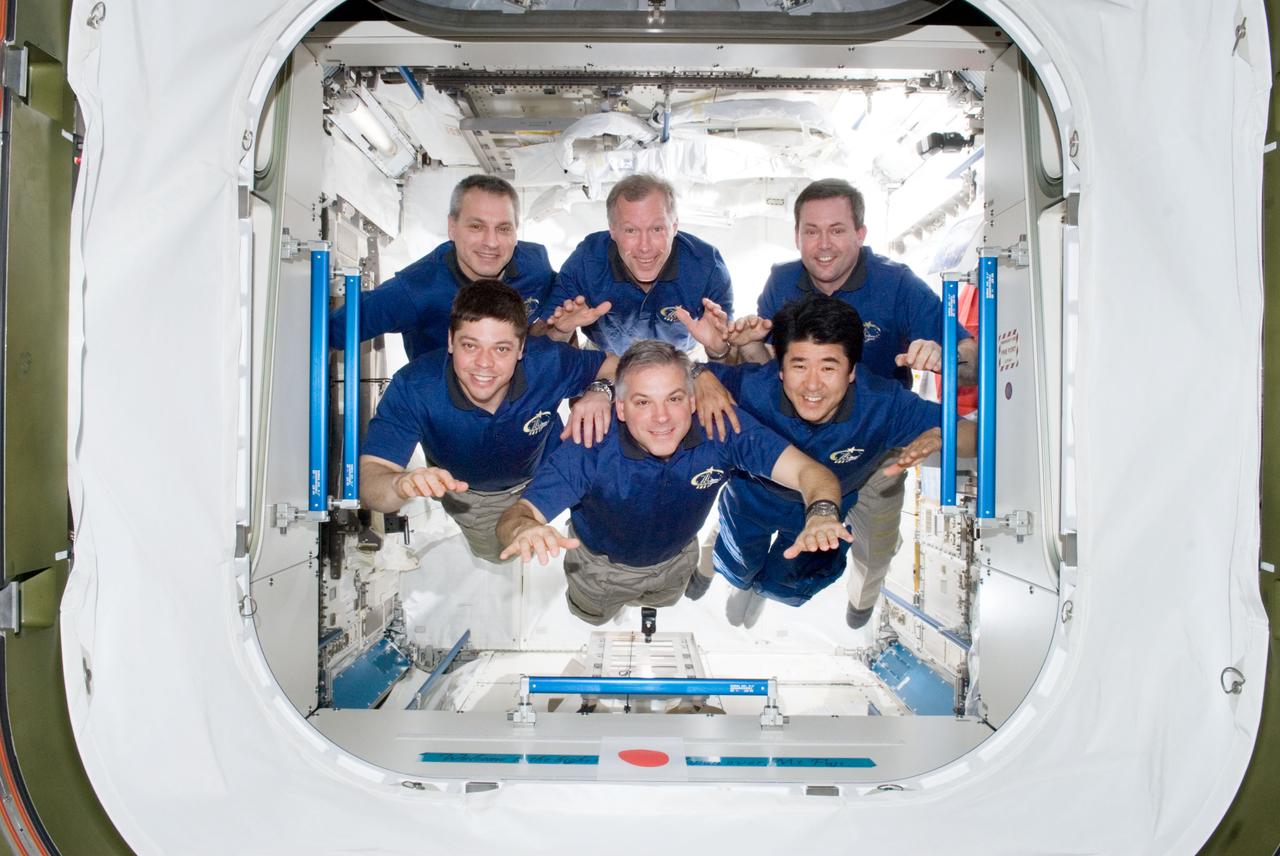
ISS016-E-033709 (24 March 2008) --- The STS-123 crew used part of its last full day onboard the International Space Station posing for some in-space crew portraits. These six astronauts launched aboard the Space Shuttle Endeavour on March 11 and are scheduled to return aboard it on March 26. The crewmembers include astronauts Dominic Gorie (top center), commander; Gregory H. Johnson (bottom center), pilot; along with astronauts Rick Linnehan (top left), Mike Foreman (top right), Robert L. Behnken (bottom left) and JAXA's Takao Doi (bottom right), all mission specialists.
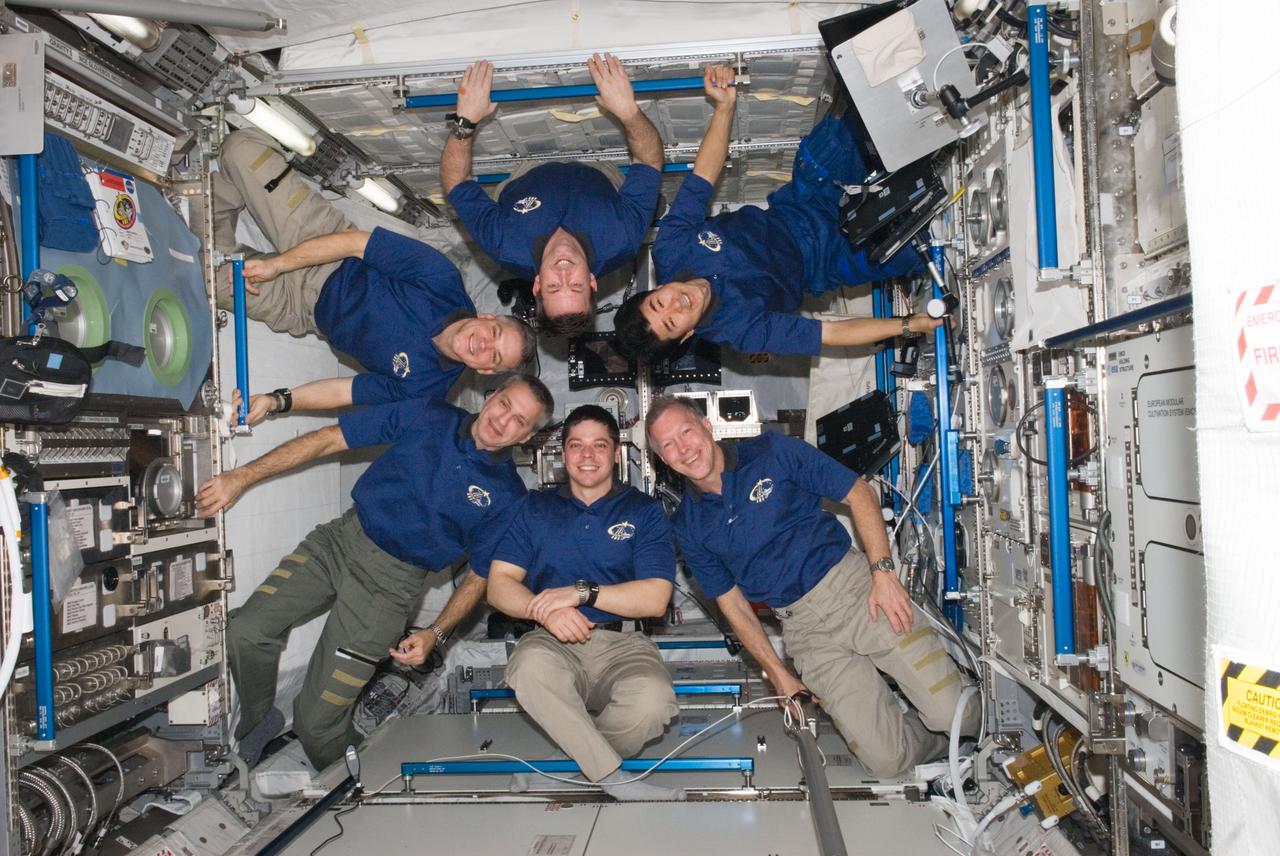
ISS016-E-033691 (24 March 2008) --- The STS-123 crew used part of its last full day onboard the International Space Station posing for some in-space crew portraits. These six astronauts launched aboard the Space Shuttle Endeavour on March 11 and are scheduled to return aboard it on March 26. Clockwise from the lower right corner are astronauts Dominic Gorie, commander; Robert L. Behnken and Rick Linnehan, both mission specialists; Gregory H. Johnson, pilot; and Mike Foreman and JAXA's Takao Doi, both mission specialists.
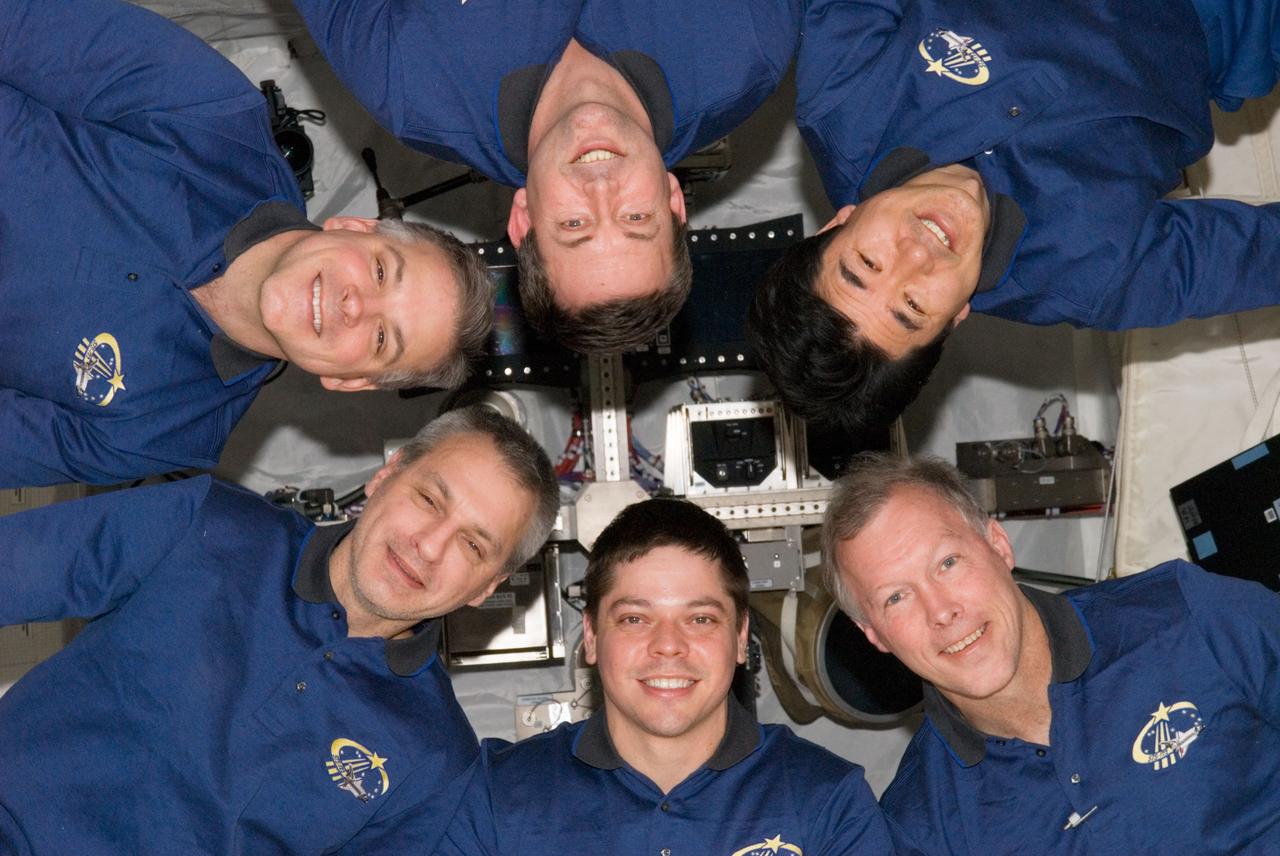
ISS016-E-033689 (24 March 2008) --- The STS-123 crew used part of its last full day onboard the International Space Station posing for some in-space crew portraits. These six astronauts launched aboard the Space Shuttle Endeavour on March 11 and are scheduled to return aboard it on March 26. Clockwise from the lower right corner are astronauts Dominic Gorie, commander; Robert L. Behnken and Rick Linnehan, both mission specialists; Gregory H. Johnson, pilot; and Mike Foreman and JAXA's Takao Doi, both mission specialists.

S123-E-009188 (24 March 2008) --- Backdropped by the blackness of space, the International Space Station is seen from Space Shuttle Endeavour as the two spacecraft begin their relative separation. Earlier the STS-123 and Expedition 16 crews concluded 12 days of cooperative work onboard the shuttle and station. Undocking of the two spacecraft occurred at 7:25 p.m. (CDT) on March 24, 2008.
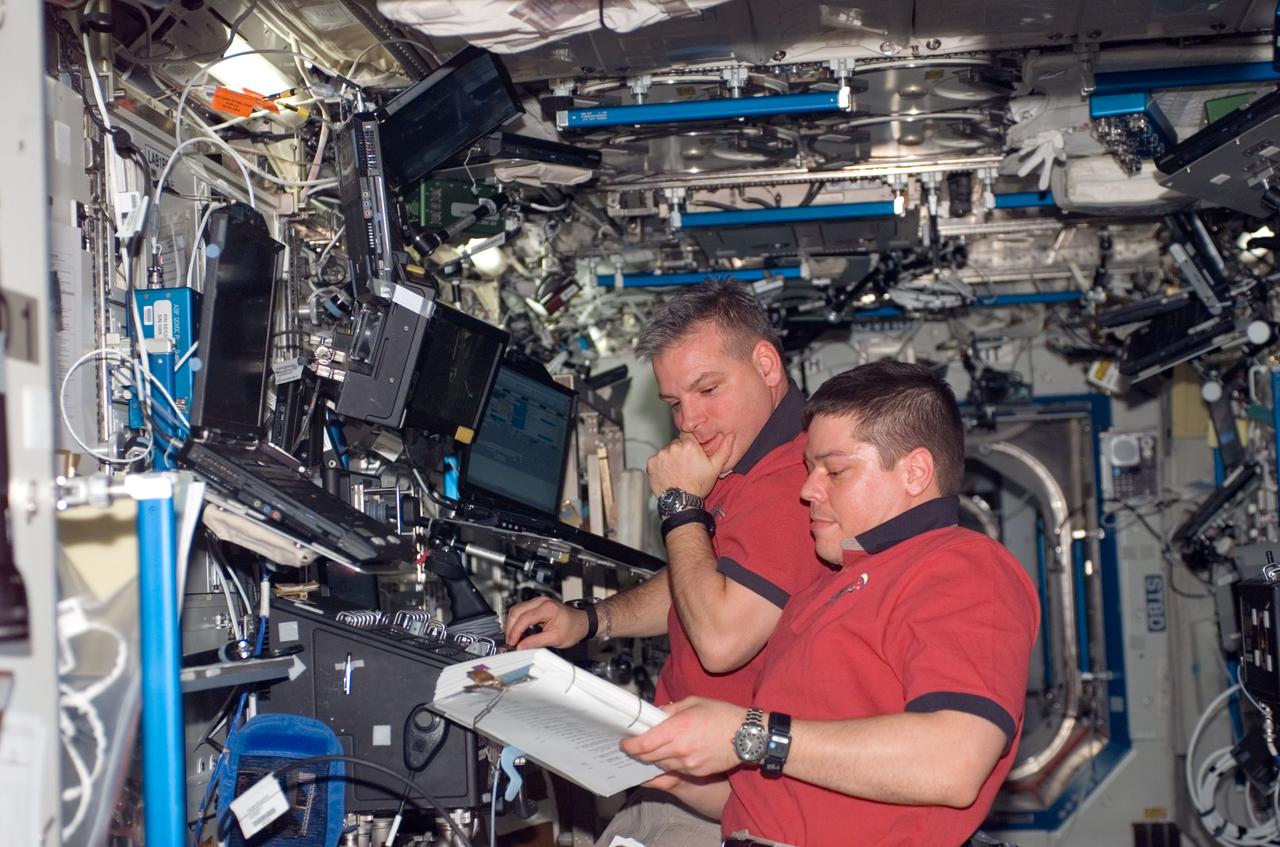
S123-E-005942 (13 March 2008) --- NASA astronauts Gregory H. Johnson, STS-123 pilot; and Robert L. Behnken (foreground), mission specialist, work the controls of the station's robotic Canadarm2 in the Destiny laboratory of the International Space Station while Space Shuttle Endeavour is docked with the station.
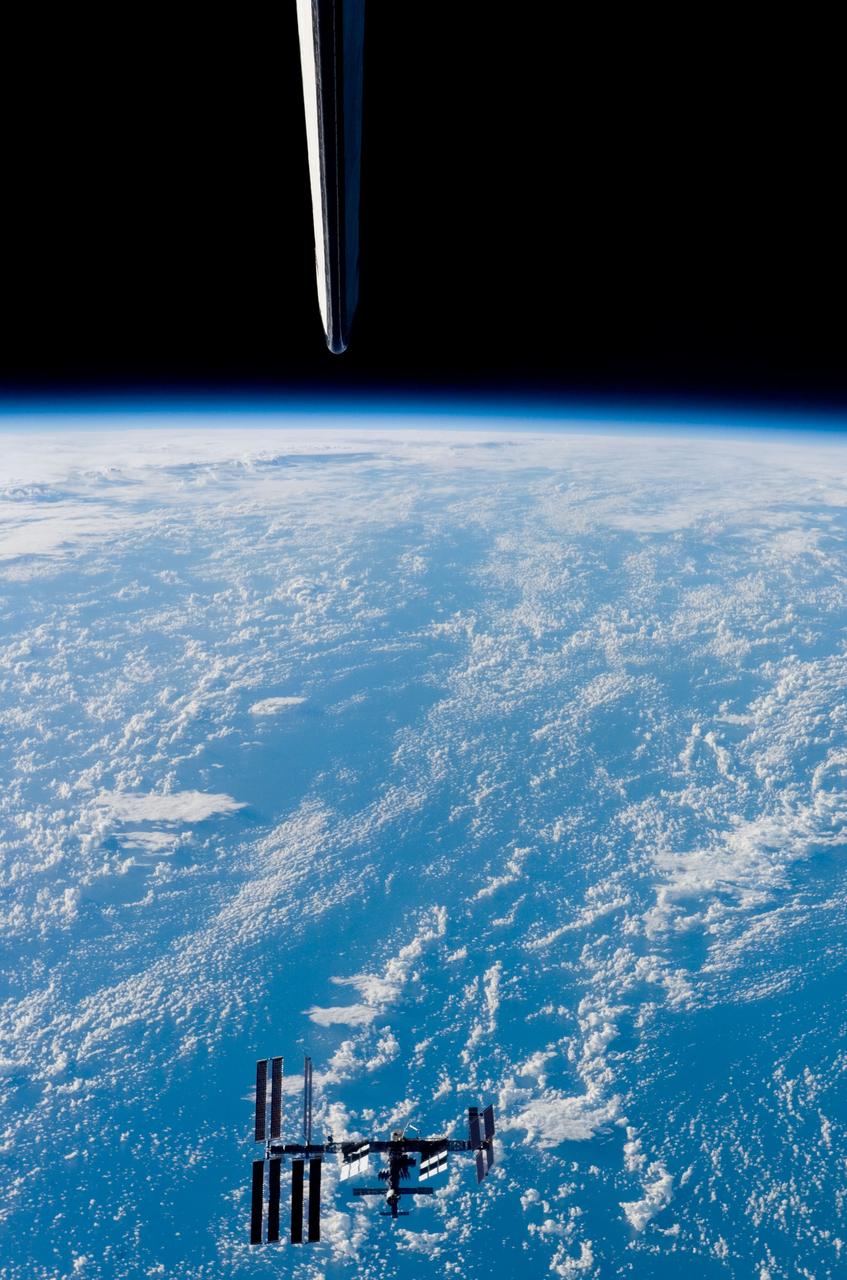
S123-E-009202 (24 March 2008) --- Backdropped by Earth's horizon and the blackness of space, the International Space Station appears small from the point of view of the Space Shuttle Endeavour as the two spacecraft carry out their relative separation. Endeavour's vertical stabilizer is seen in this image photographed by a STS-123 crewmember onboard the shuttle. Earlier the STS-123 and Expedition 16 crews concluded 12 days of cooperative work onboard the shuttle and station. Undocking of the two spacecraft occurred at 7:25 p.m. (CDT) on March 24, 2008.
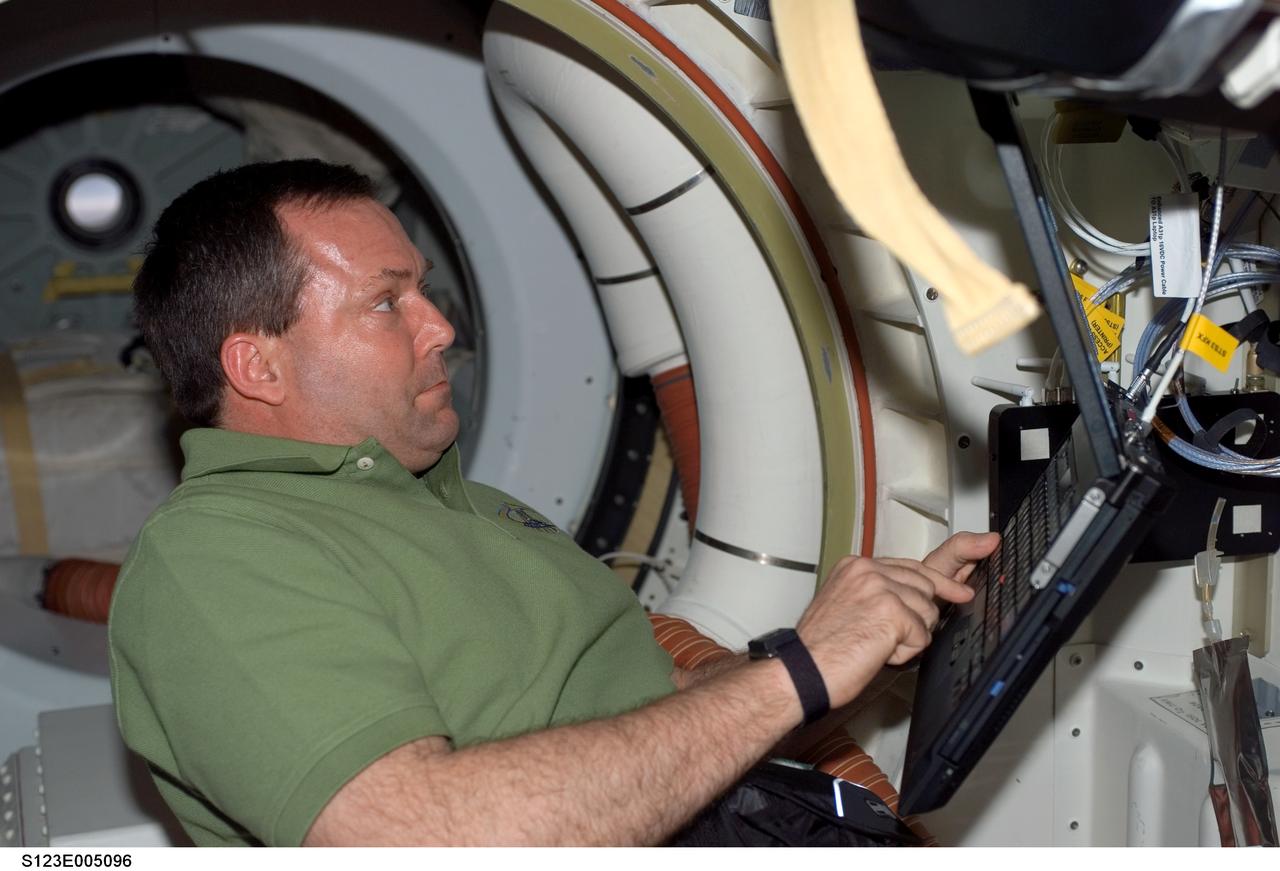
S123-E-005096 (11 March 2008) --- Astronaut Mike Foreman, STS-123 mission specialist, uses a computer on the middeck of Space Shuttle Endeavour late in flight day one activities.
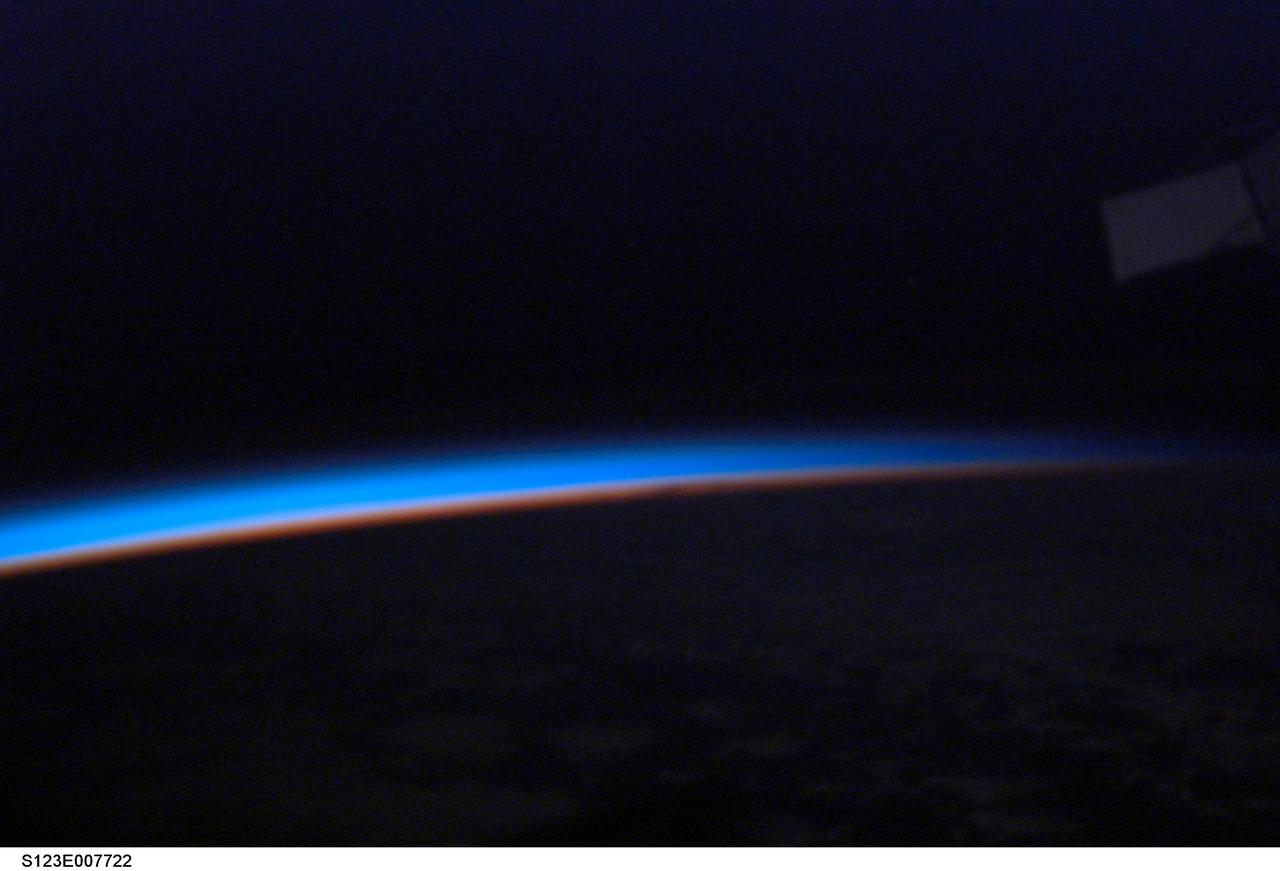
S123-E-007722 (20 March 2008) --- A colorful view of airglow layers at Earth's horizon is featured in this image photographed by a STS-123 crewmember on the Space Shuttle Endeavour while docked with the International Space Station.
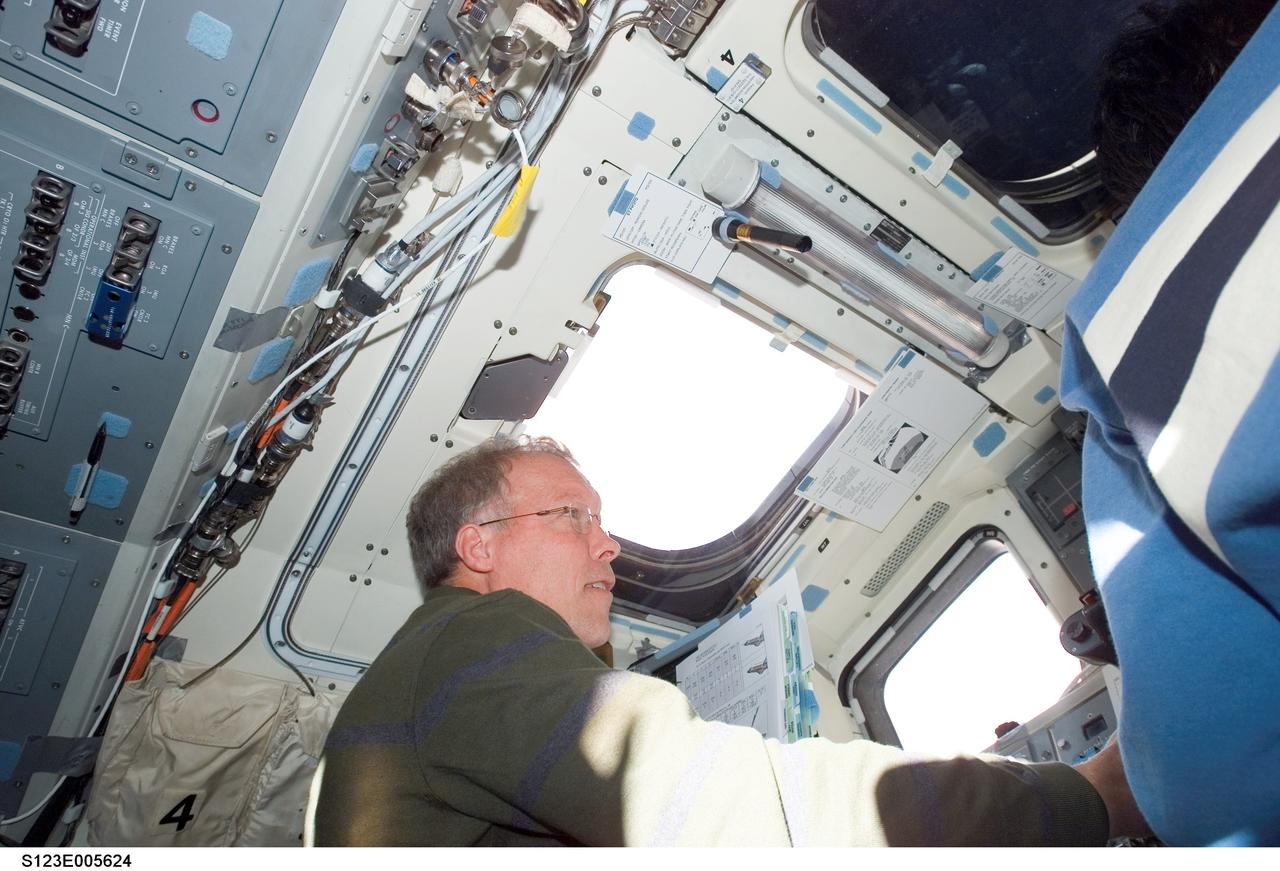
S123-E-005624 (13 March 2008) --- Astronaut Dominic Gorie, STS-123 commander, works the controls on the aft flight deck of Space Shuttle Endeavour during flight day three activities.
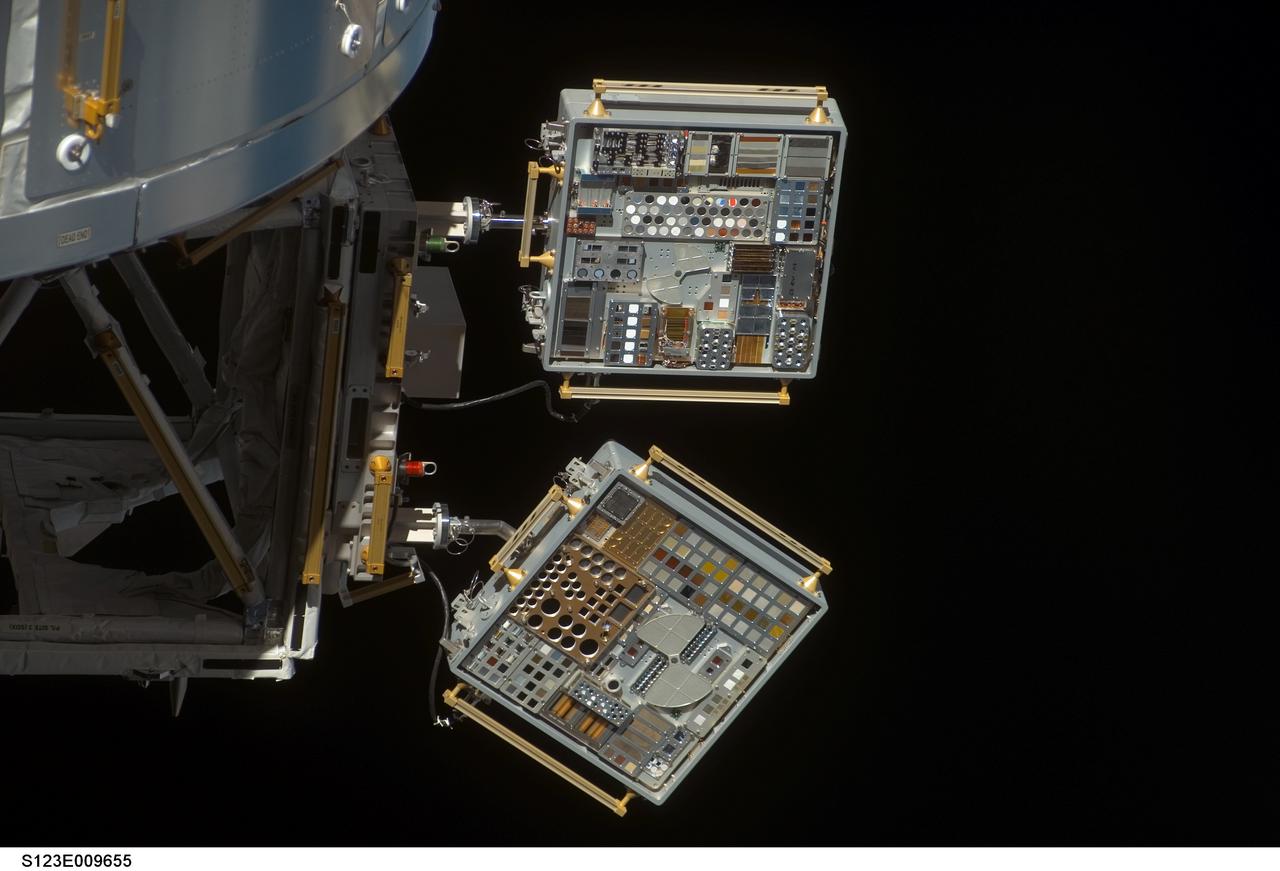
s123e009655 (3/25/2008) --- View of Materials International Space Station Experiment (MISSE) 6 Passive Experiment Container (PEC) on European Laboratory/Columbus. Photo was taken during flyaround of STS-123 Space Shuttle Endeavor.
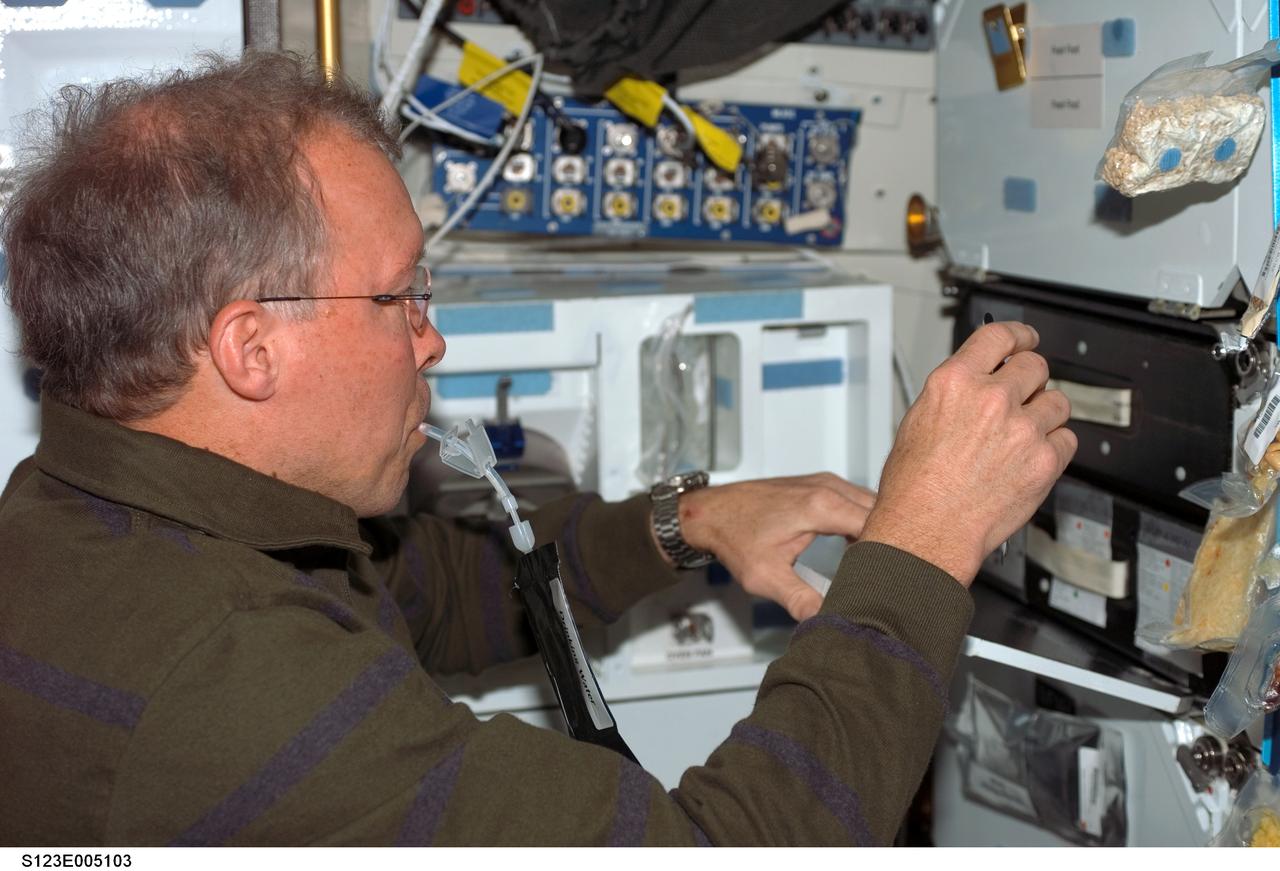
S123-E-005103 (11 March 2008) --- Astronaut Dominic Gorie, STS-123 commander, drinks a beverage at the galley on the middeck of Space Shuttle Endeavour late in flight day one activities.
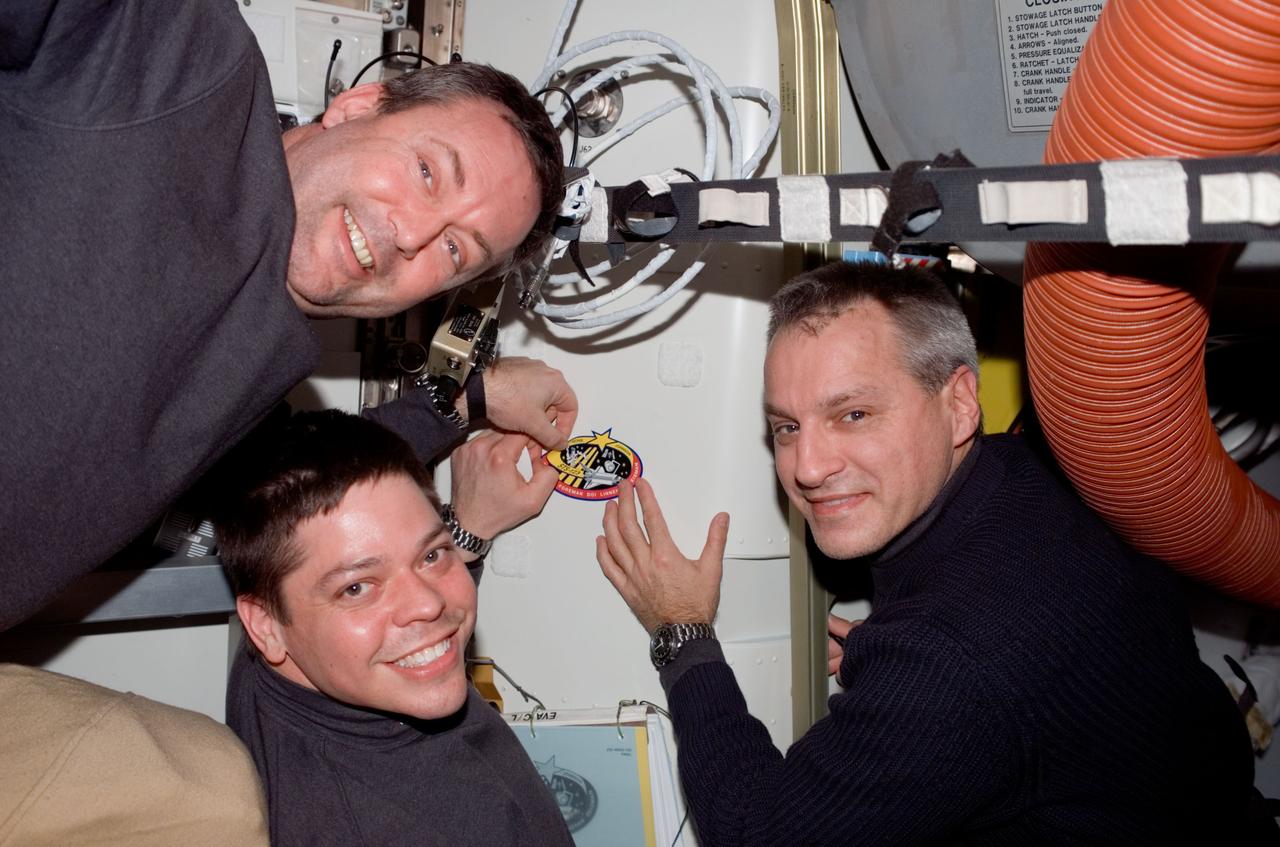
S123-E-008756 (23 March 2008) --- Astronauts Mike Foreman (left), Robert L. Behnken and Rick Linnehan, all STS-123 mission specialists, add the STS-123 patch to the growing collection of insignias representing crews who have performed spacewalks from the Quest Airlock of the International Space Station.
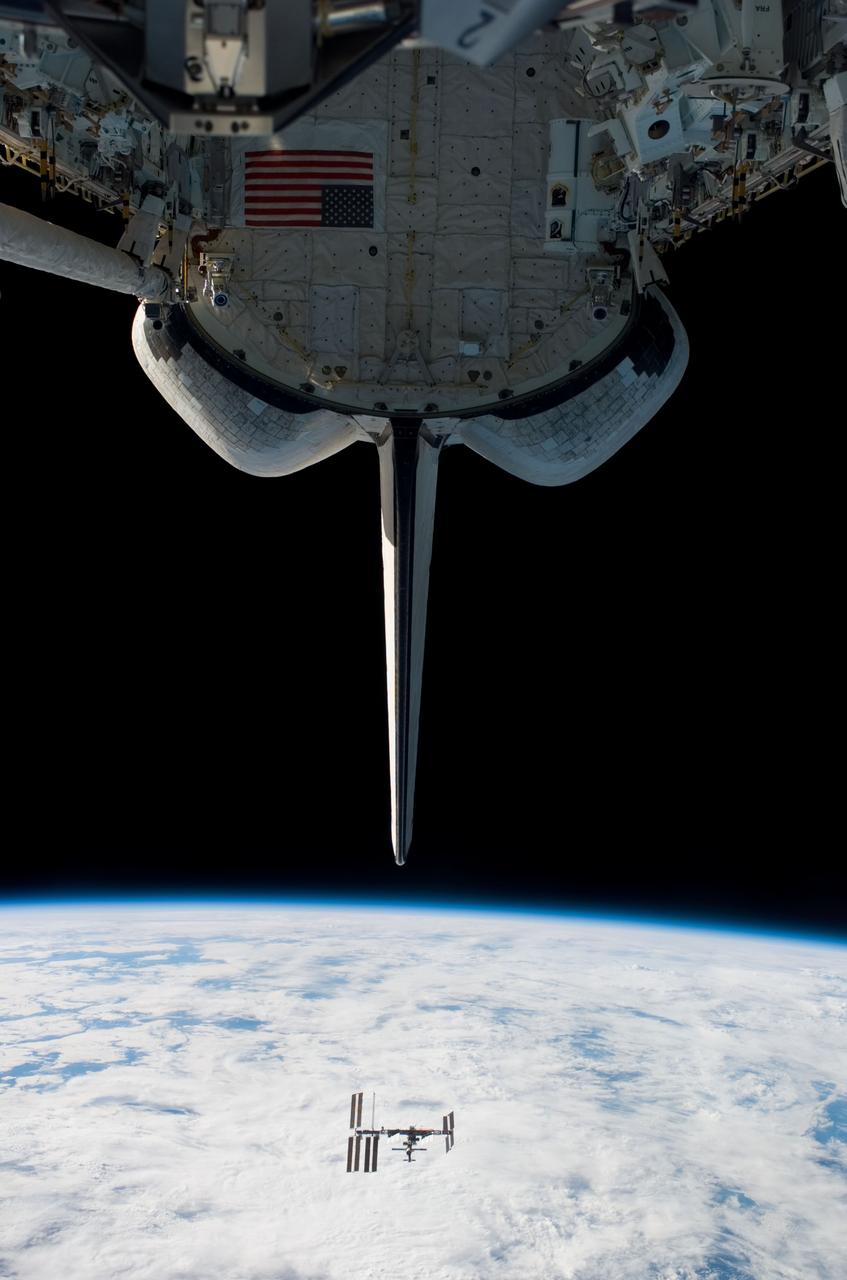
S123-E-009210 (24 March 2008) --- Backdropped by Earth's horizon and the blackness of space, the International Space Station appears very small from the point of view of the Space Shuttle Endeavour as the two spacecraft carry out their relative separation. Endeavour's vertical stabilizer, orbital maneuvering system (OMS) pods and payload bay are seen in this image photographed by an STS-123 crewmember onboard the shuttle. Earlier the STS-123 and Expedition 16 crews concluded 12 days of cooperative work onboard the shuttle and station. Undocking of the two spacecraft occurred at 7:25 p.m. (CDT) on March 24, 2008.
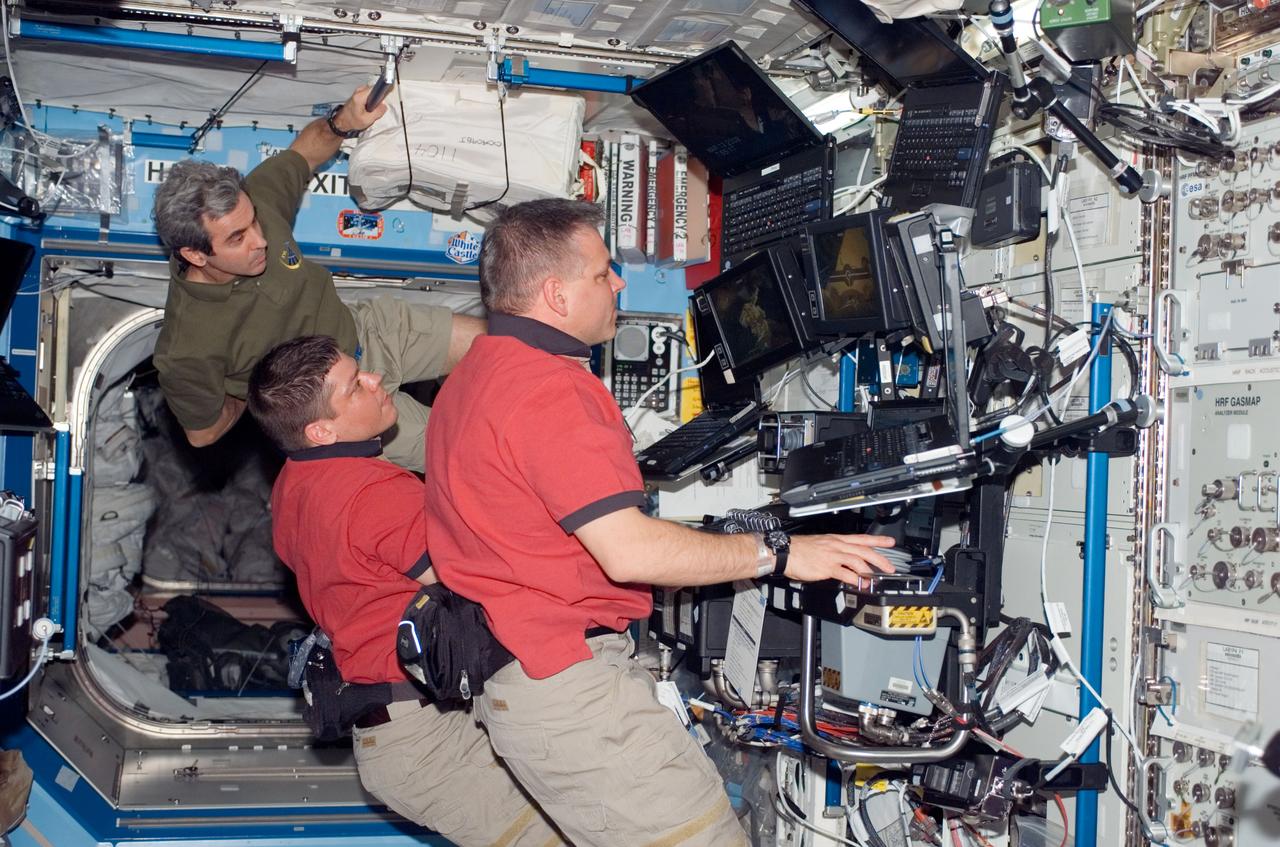
S123-E-005937 (13 March 2008) --- NASA astronauts Gregory H. Johnson (foreground), STS-123 pilot; and Robert L. Behnken, mission specialist, work the controls of the station's robotic Canadarm2 in the Destiny laboratory of the International Space Station while Space Shuttle Endeavour is docked with the station. European Space Agency (ESA) astronaut Leopold Eyharts, mission specialist, looks on.
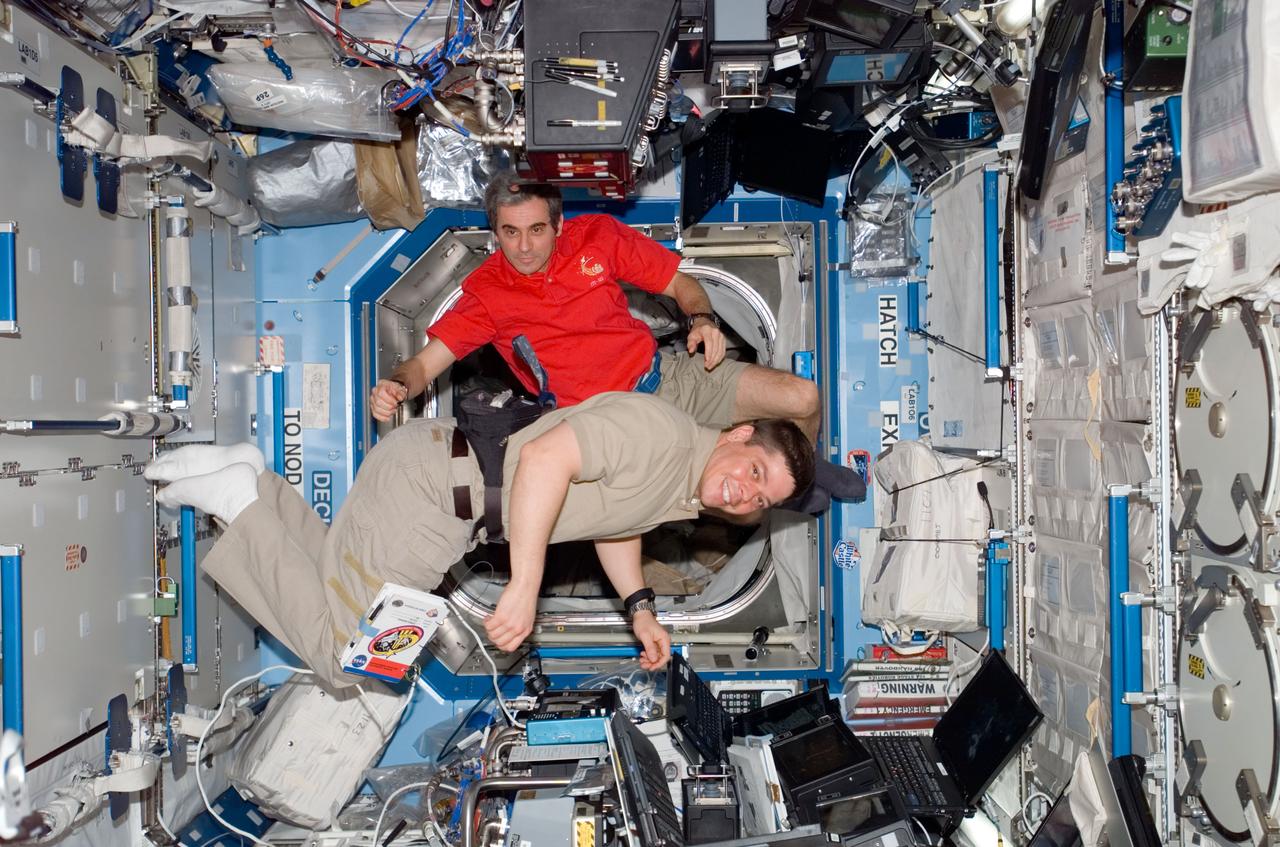
S123-E-006253 (15 March 2008) --- NASA astronaut Robert L. Behnken (bottom) and European Space Agency (ESA) astronaut Leopold Eyharts, both STS-123 mission specialists, take a moment for a photo while they work the controls of the space station's robotic Canadarm2 in the Destiny laboratory of the International Space Station while Space Shuttle Endeavour is docked with the station.
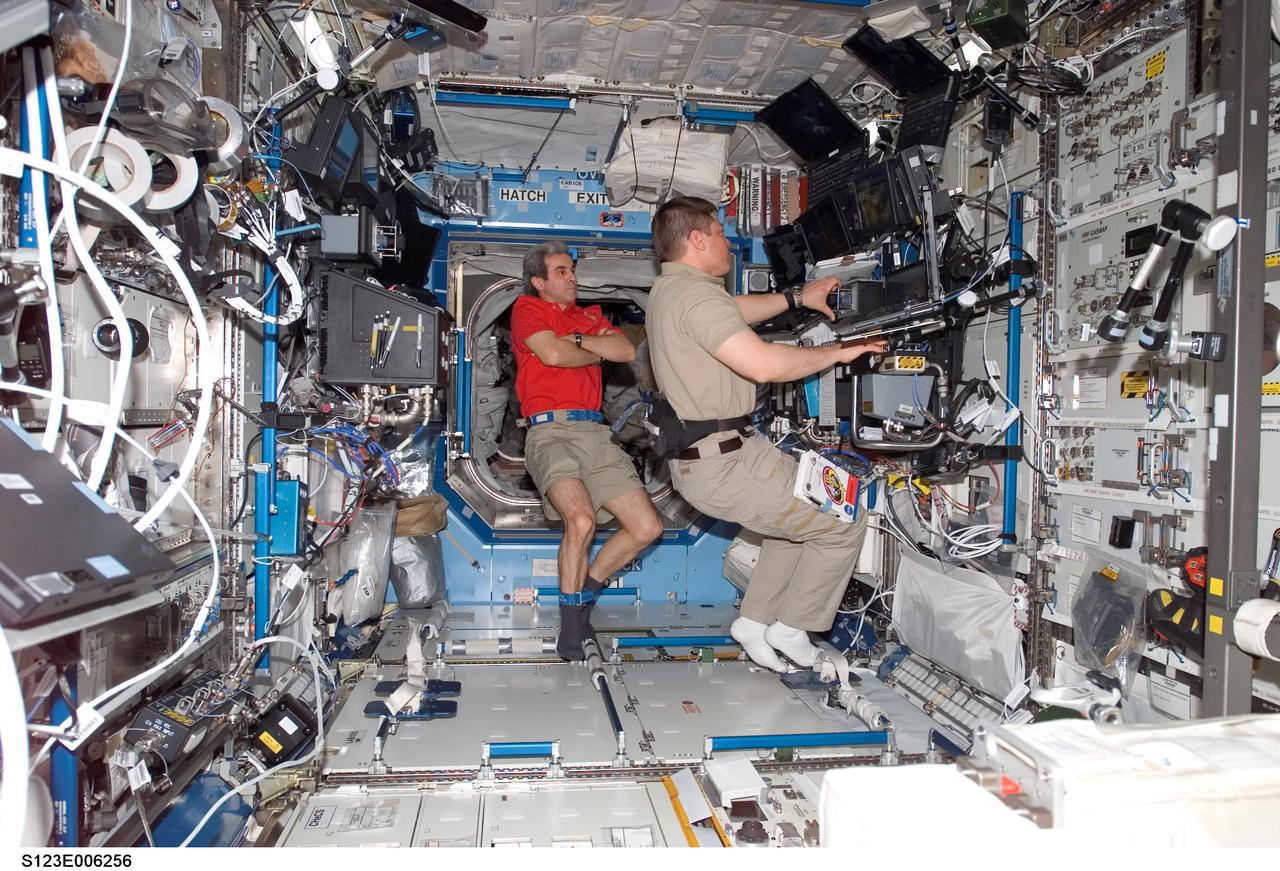
S123-E-006256 (15 March 2008) --- NASA astronaut Robert L. Behnken (right), STS-123 mission specialist, works the controls of the space station's robotic Canadarm2 in the Destiny laboratory of the International Space Station while Space Shuttle Endeavour is docked with the station. European Space Agency (ESA) astronaut Leopold Eyharts, mission specialist, looks on.
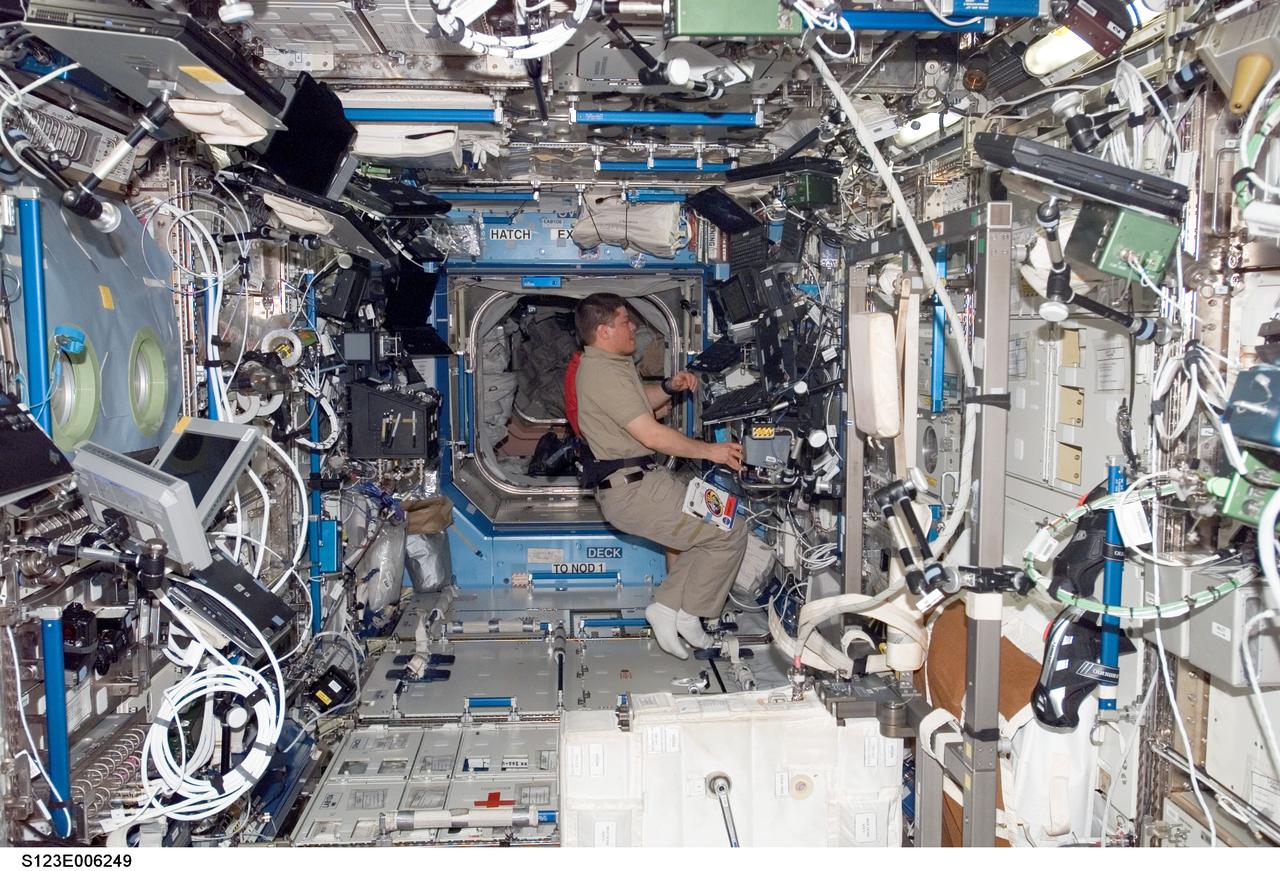
S123-E-006249 (15 March 2008) --- NASA astronaut Robert L. Behnken and European Space Agency (ESA) astronaut Leopold Eyharts (partially obscured), both STS-123 mission specialists, work the controls of the space station's robotic Canadarm2 in the Destiny laboratory of the International Space Station while Space Shuttle Endeavour is docked with the station.
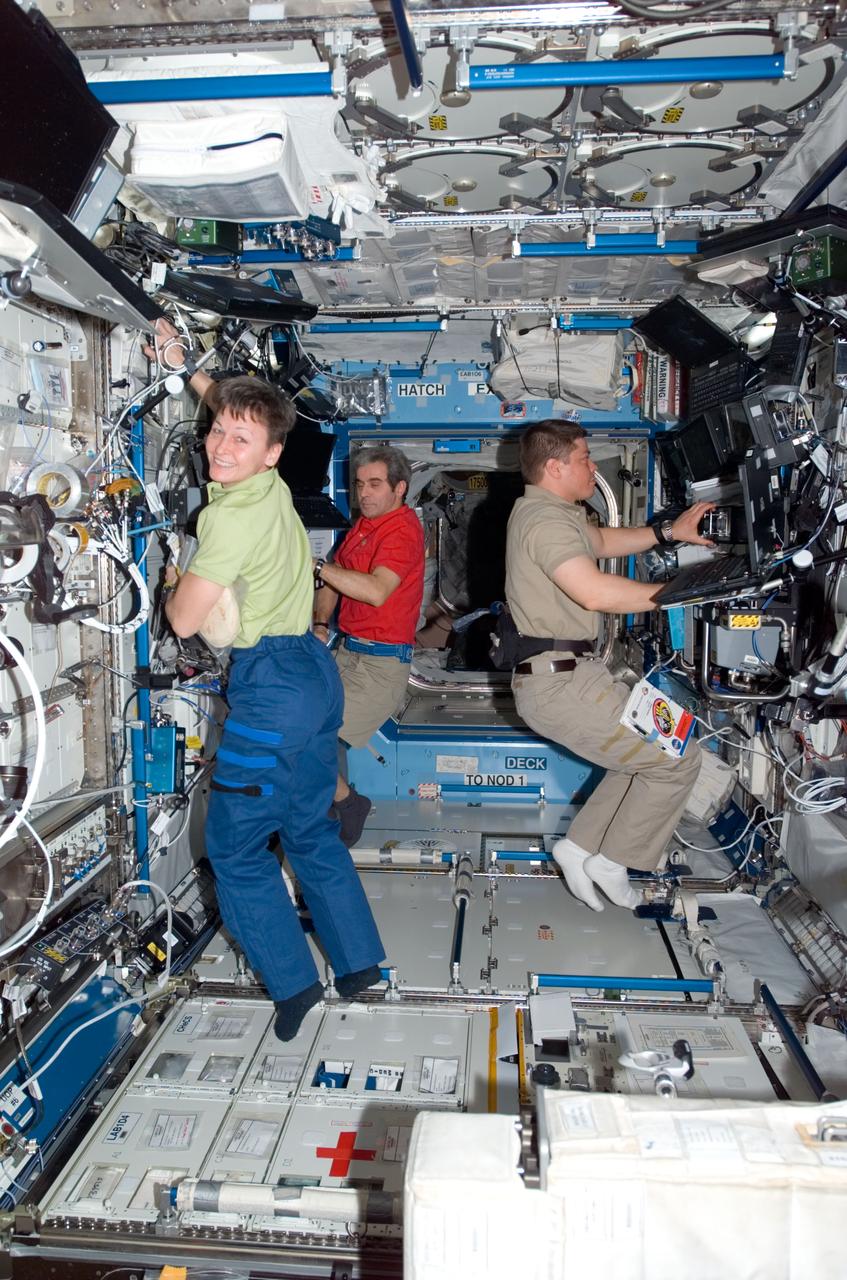
S123-E-006258 (15 March 2008) --- Astronaut Peggy Whitson, Expedition 16 commander, joins two members of the Space Shuttle Endeavour's STS-123 crew onboard Destiny, the U.S. laboratory. European Space Agency astronaut Leopold Eyharts, center, will return to Earth with the Endeavour crew after having served a couple of months as flight engineer onboard the station. Astronaut Robert L. Behnken, mission specialist, is at the station's Canadarm2 controls.

S123-E-005056 (11 Mar. 2008) --- During their first full day in space, STS-123 crewmembers aboard the Earth-orbiting Space Shuttle Endeavour recorded and downlinked pictures of its cargo bay where the logistics module for the Japanese Kibo laboratory awaits being added to the growing International Space Station.
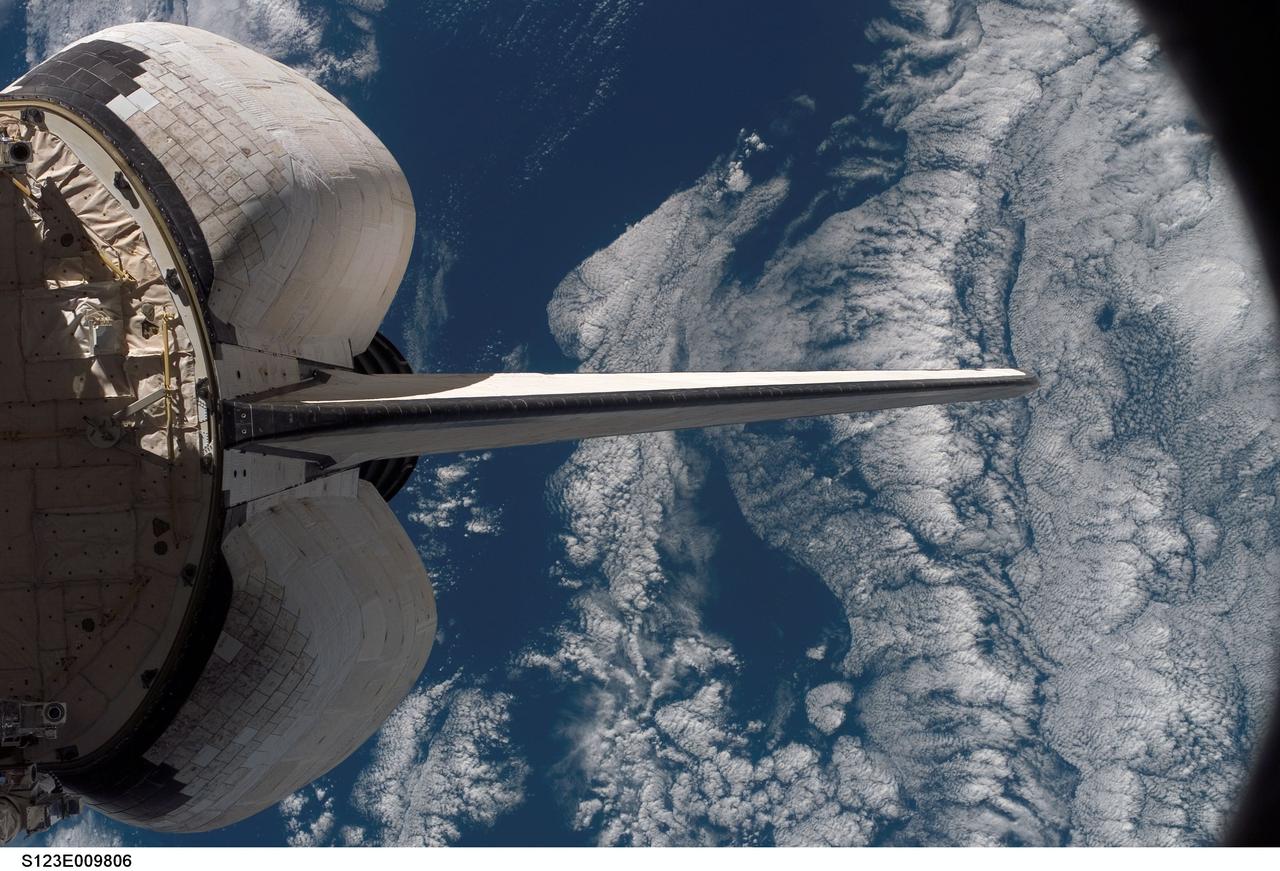
S123-E-009806 (24 March 2008) --- Backdropped by a large area of white clouds, Space Shuttle Endeavour's vertical stabilizer and orbital maneuvering system pods are featured in this image photographed by a STS-123 crew member while docked with the International Space Station.
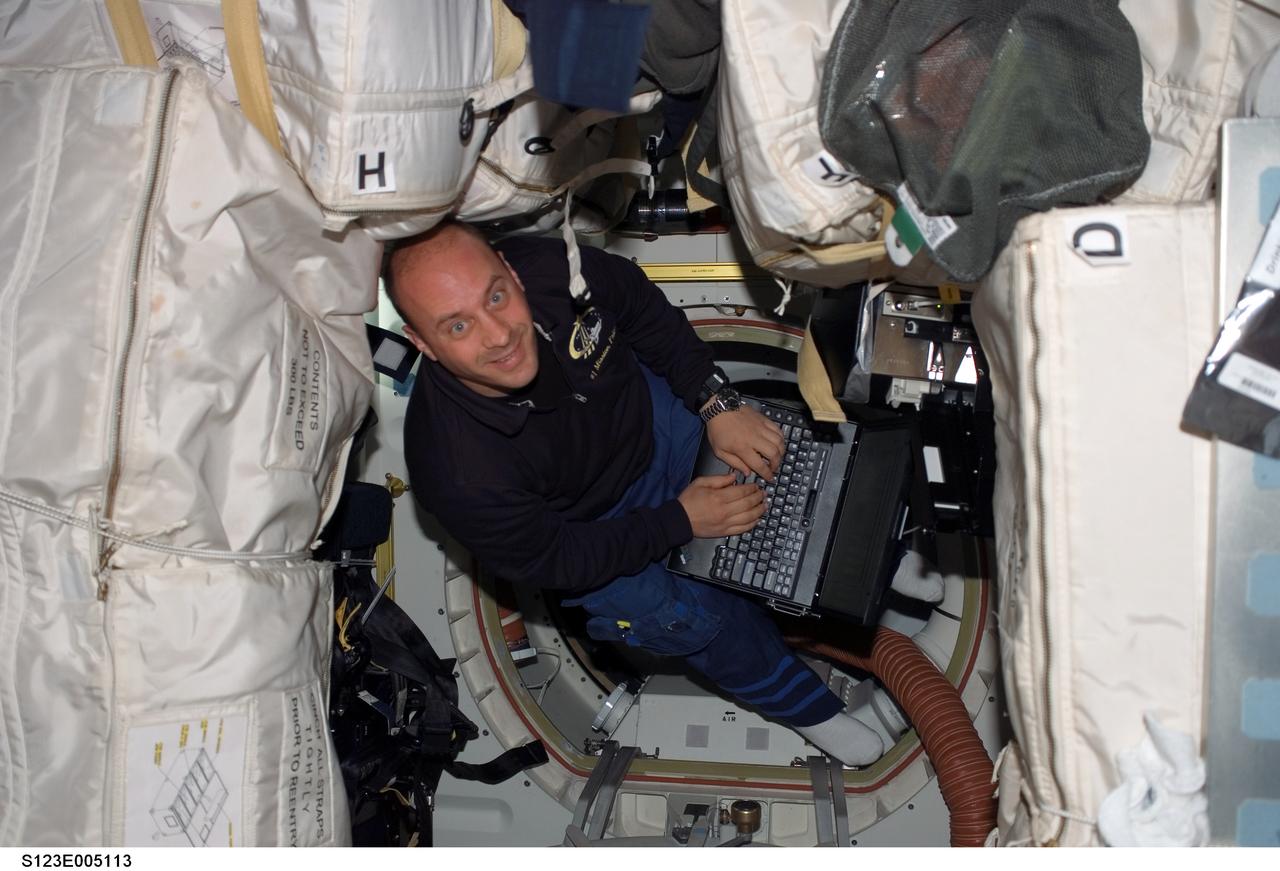
S123-E-005113 (11 March 2008) --- Astronaut Garrett Reisman, STS-123 mission specialist, uses a computer on the middeck of Space Shuttle Endeavour late in flight day one activities. After docking with the International Space Station, Reisman will join Expedition 16 in progress to serve as a flight engineer.
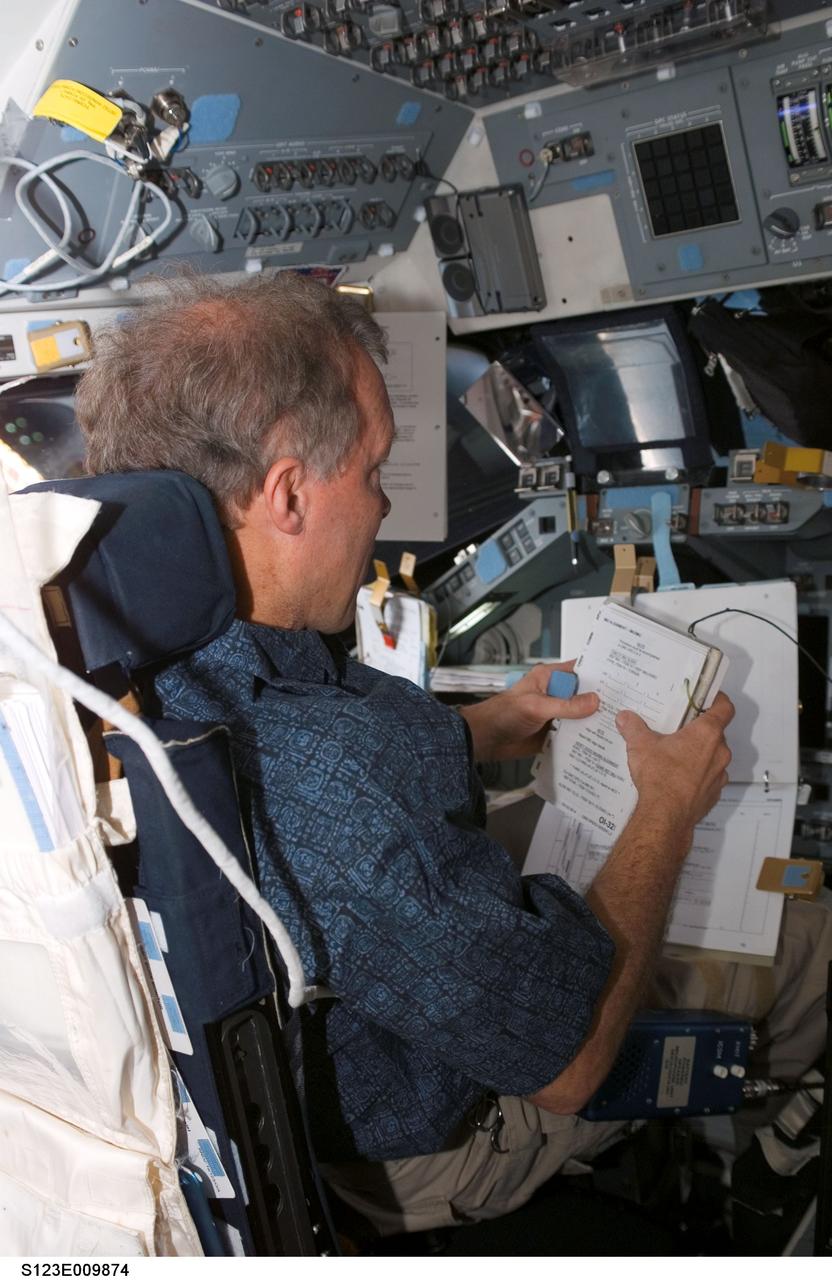
S123-E-009874 (24 March 2008) --- Astronaut Dominic Gorie, STS-123 commander, looks over a checklist while occupying the commander's station on the flight deck of Space Shuttle Endeavour while docked with the International Space Station.
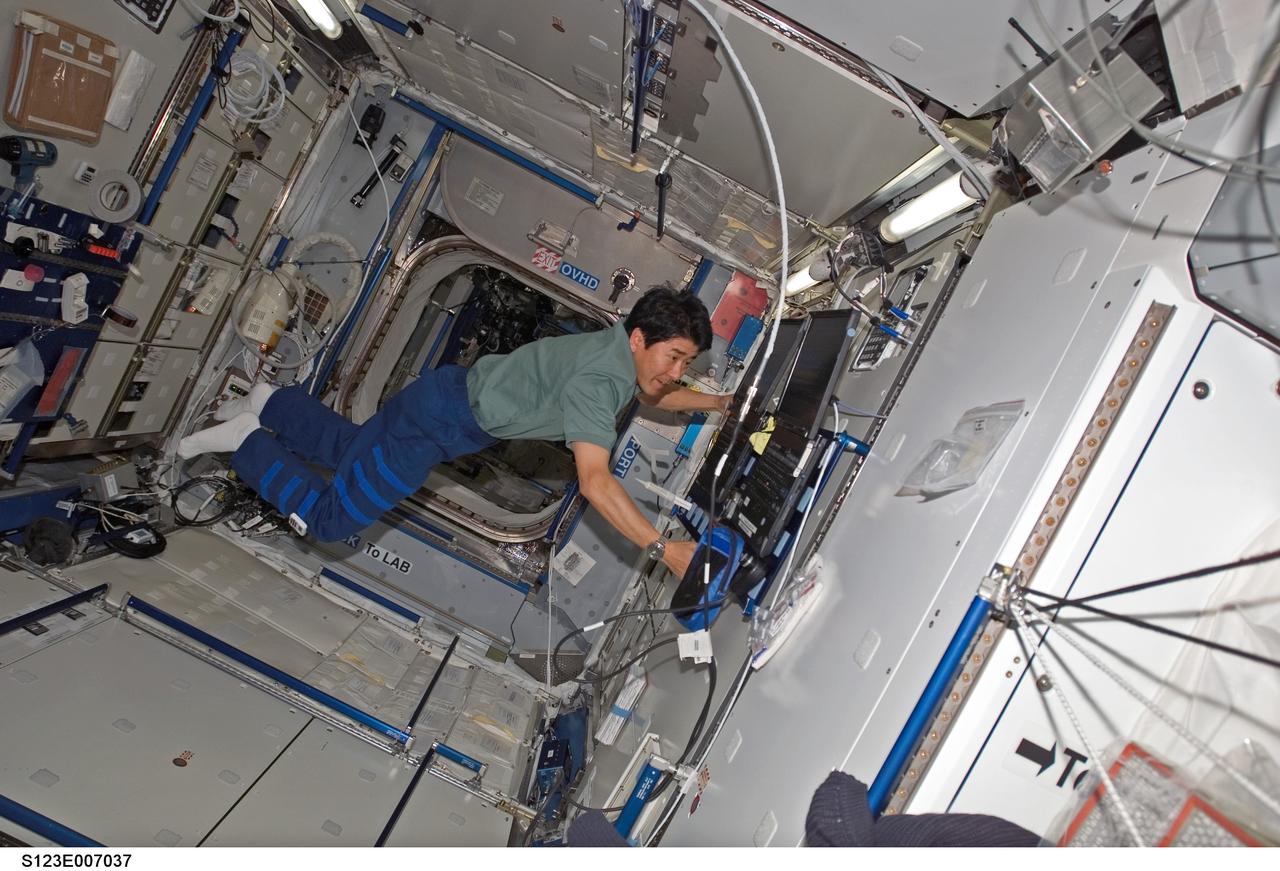
S123-E-007037 (18 March 2008) --- Japan Aerospace Exploration Agency (JAXA) astronaut Takao Doi, STS-123 mission specialist, works in the Harmony node of the International Space Station while Space Shuttle Endeavour is docked with the station.
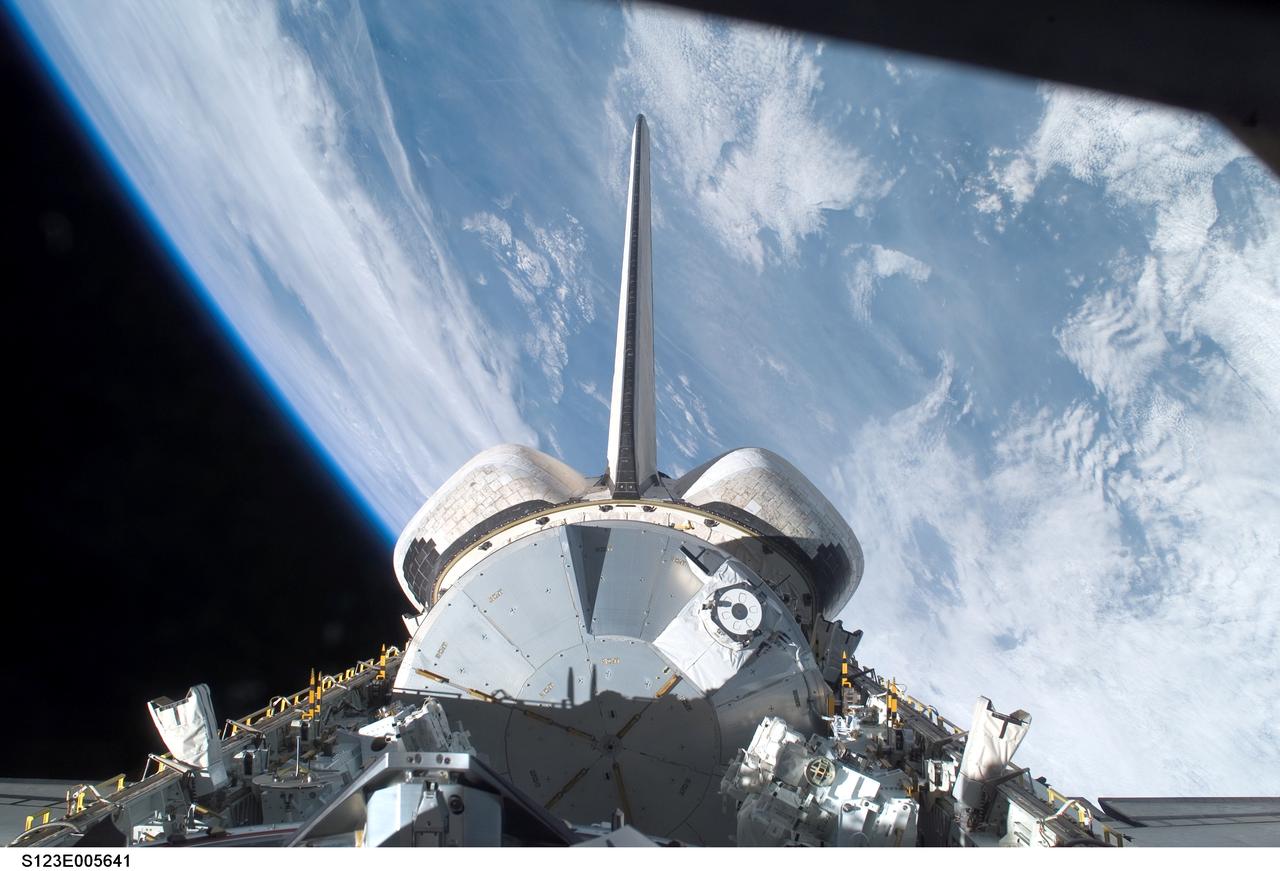
S123-E-005641 (13 March 2008) --- Backdropped by Earth's horizon and the blackness of space, the logistics module for the Japanese Kibo laboratory in Space Shuttle Endeavour's payload bay, vertical stabilizer and orbital maneuvering system (OMS) pods are featured in this image photographed by a STS-123 crewmember.

S123-E-005126 (11 March 2008) --- Japan Aerospace Exploration Agency (JAXA) astronaut Takao Doi, STS-123 mission specialist, prepares a meal at the galley on the middeck of Space Shuttle Endeavour late in flight day one activities.
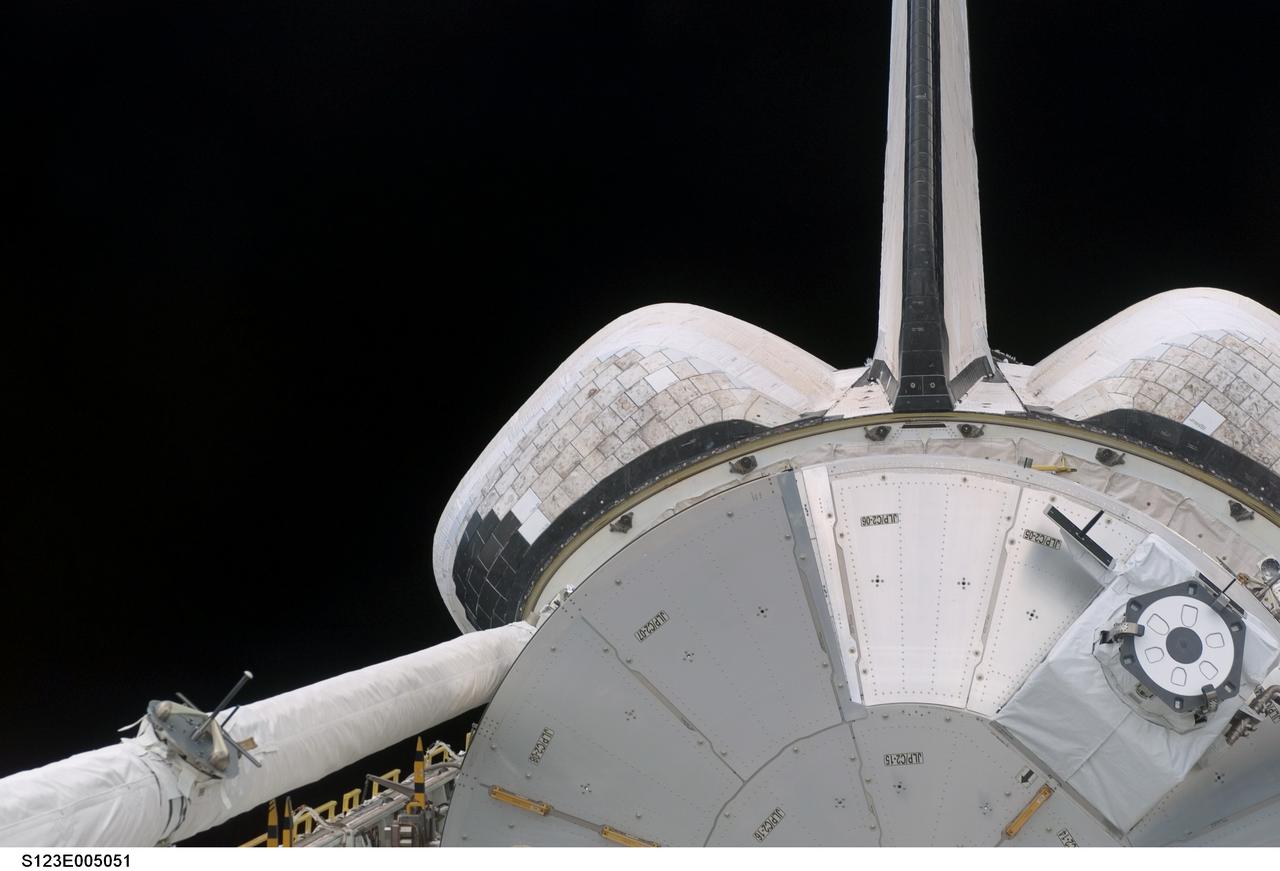
S123-E-005051 (11 Mar. 2008) --- During their first full day in space, STS-123 crewmembers aboard the Earth-orbiting Space Shuttle Endeavour recorded and downlinked pictures of its cargo bay where the logistics module for the Japanese Kibo laboratory awaits being added to the growing International Space Station.
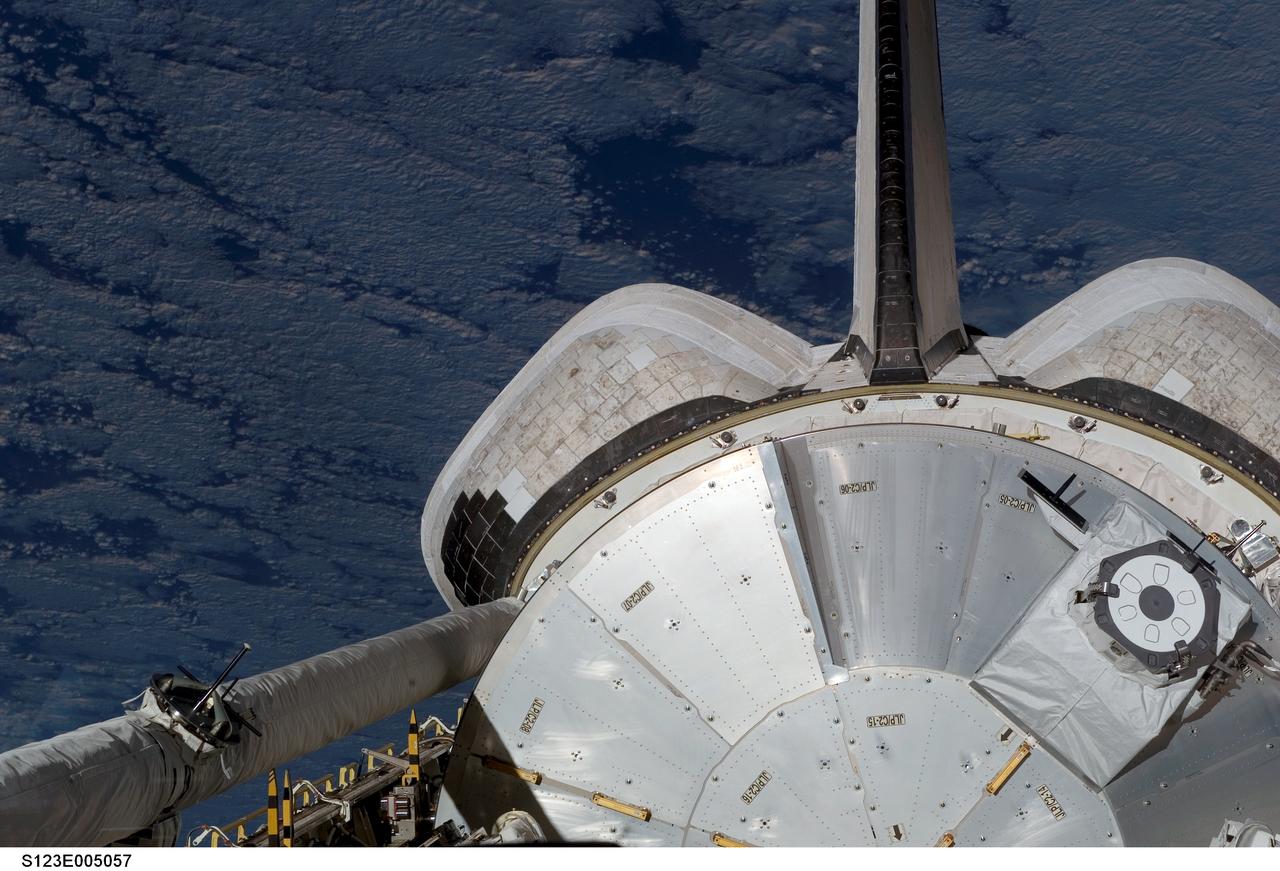
S123-E-005057 (11 Mar. 2008) --- During their first full day in space, STS-123 crewmembers aboard the Earth-orbiting Space Shuttle Endeavour recorded and downlinked pictures of its cargo bay where the logistics module for the Japanese Kibo laboratory awaits being added to the growing International Space Station.
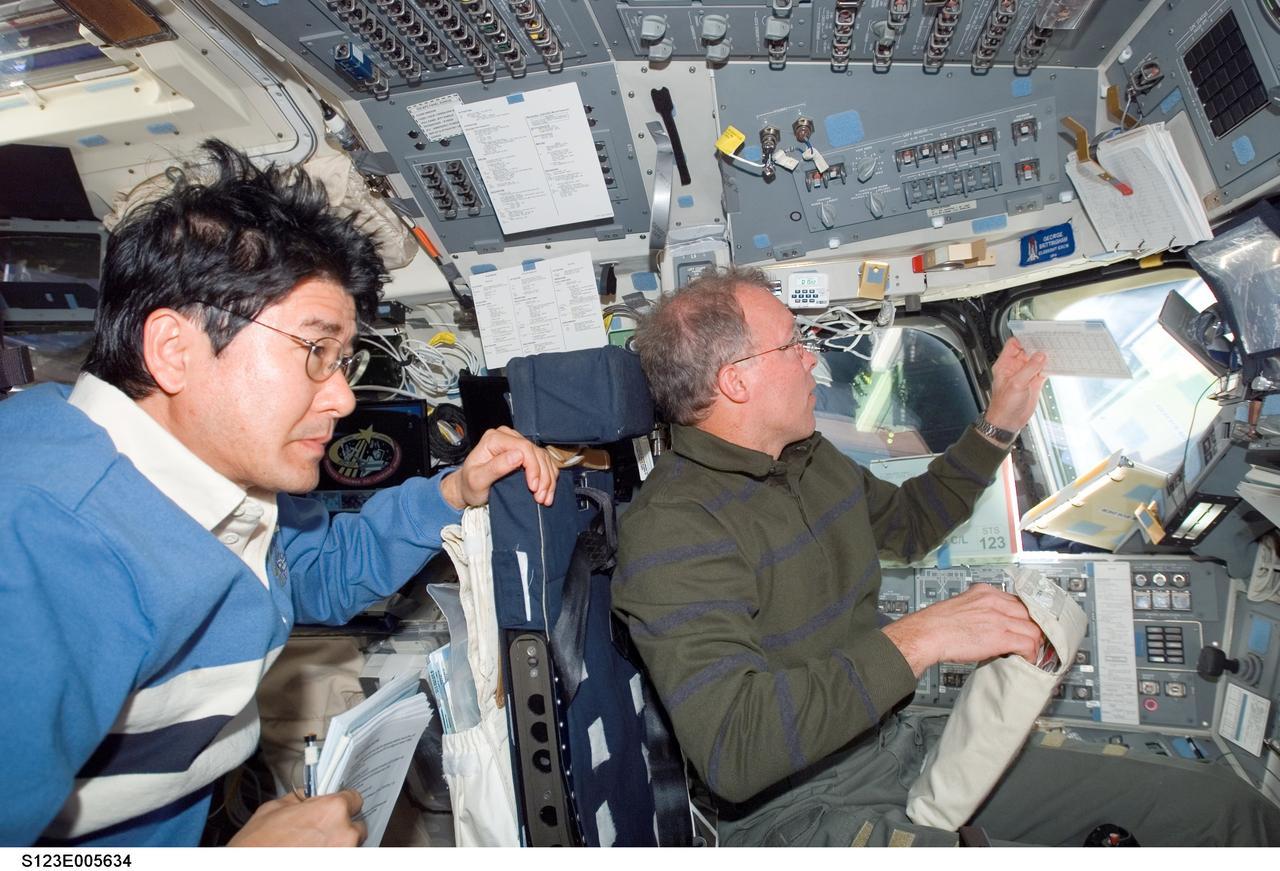
S123-E-005634 (13 March 2008) --- NASA astronaut Dominic Gorie (right), STS-123 commander; and Japan Aerospace Exploration Agency (JAXA) astronaut Takao Doi, mission specialist, are pictured on the flight deck of Space Shuttle Endeavour during flight day three activities.

S123-E-008274 (21 March 2008) --- Framed by components of the International Space Station, a full moon is visible in this view above Earth's horizon and airglow, photographed by a STS-123 crewmember on the station while Space Shuttle Endeavour is docked with the orbital complex.
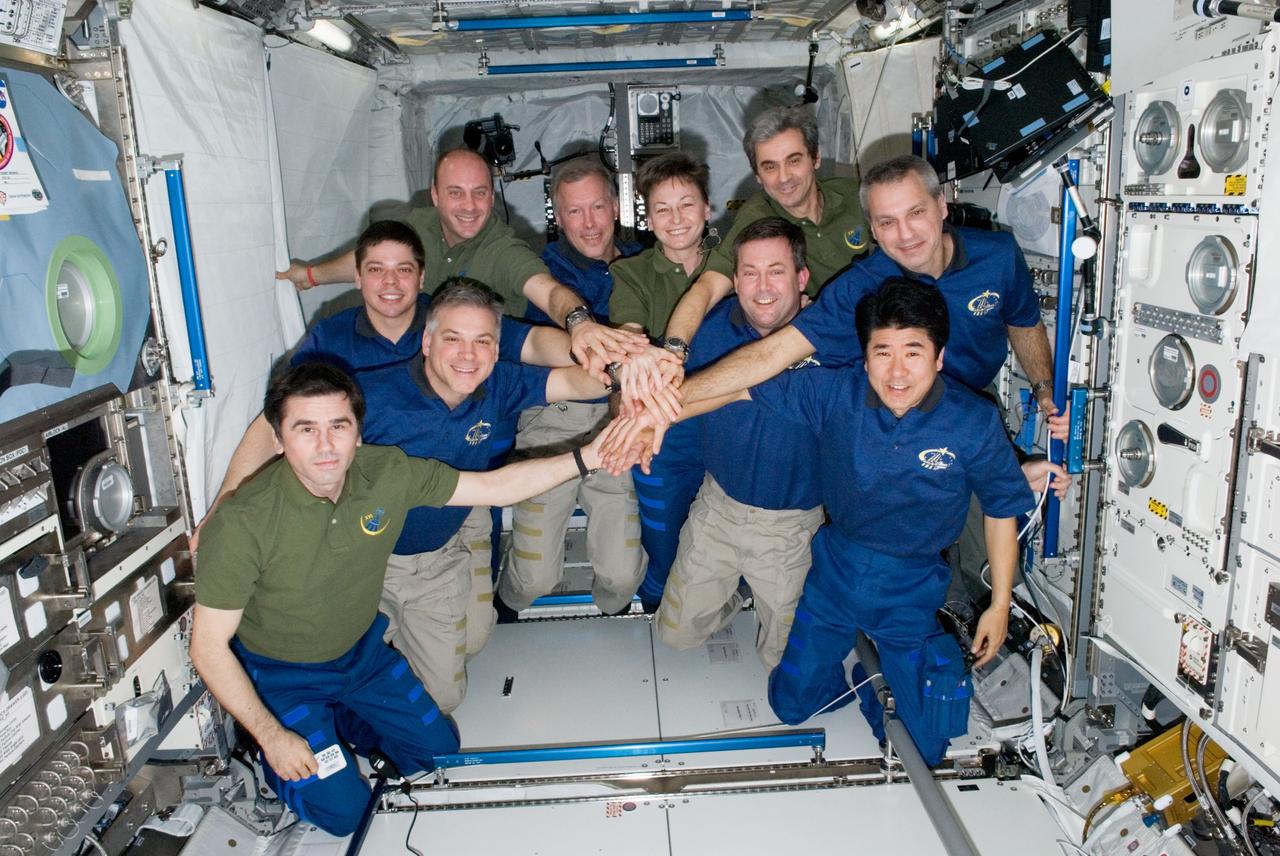
ISS016-E-033684 (24 March 2008) --- (NOTE: Picture should be rotated 180 degrees to match the identifications). The STS-123 crew used part of its last full day onboard the International Space Station posing for some in-space crew portraits. This grouping shows members of the crews for both the Space Shuttle Endeavour and Expedition 16. The Expedition 16 crew (wearing olive shirts) are astronaut Peggy Whitson (second right, rear), commander; Federal Space Agency cosmonaut Yuri Malenchenko (left, front), flight engineer; and astronaut Garrett Reisman (left rear), flight engineer. Also in a green shirt is European Space Agency astronaut Leopold Eyharts (right rear), former Expedition 16 flight engineer, who has moved over to the STS-123 crew. Soon to be leaving the station at this juncture along with Eyharts are the blue-clad Endeavour crew of astronauts Dominic Gorie (second left, rear), commander; Gregory H. Johnson (behind Malenchenko), pilot; and JAXA astronaut Takao Doi (right front), Rick Linnehan (behind Doi); Mike Foreman (second right, center row); Robert L. Behnken (far left, center row) all mission specialists.
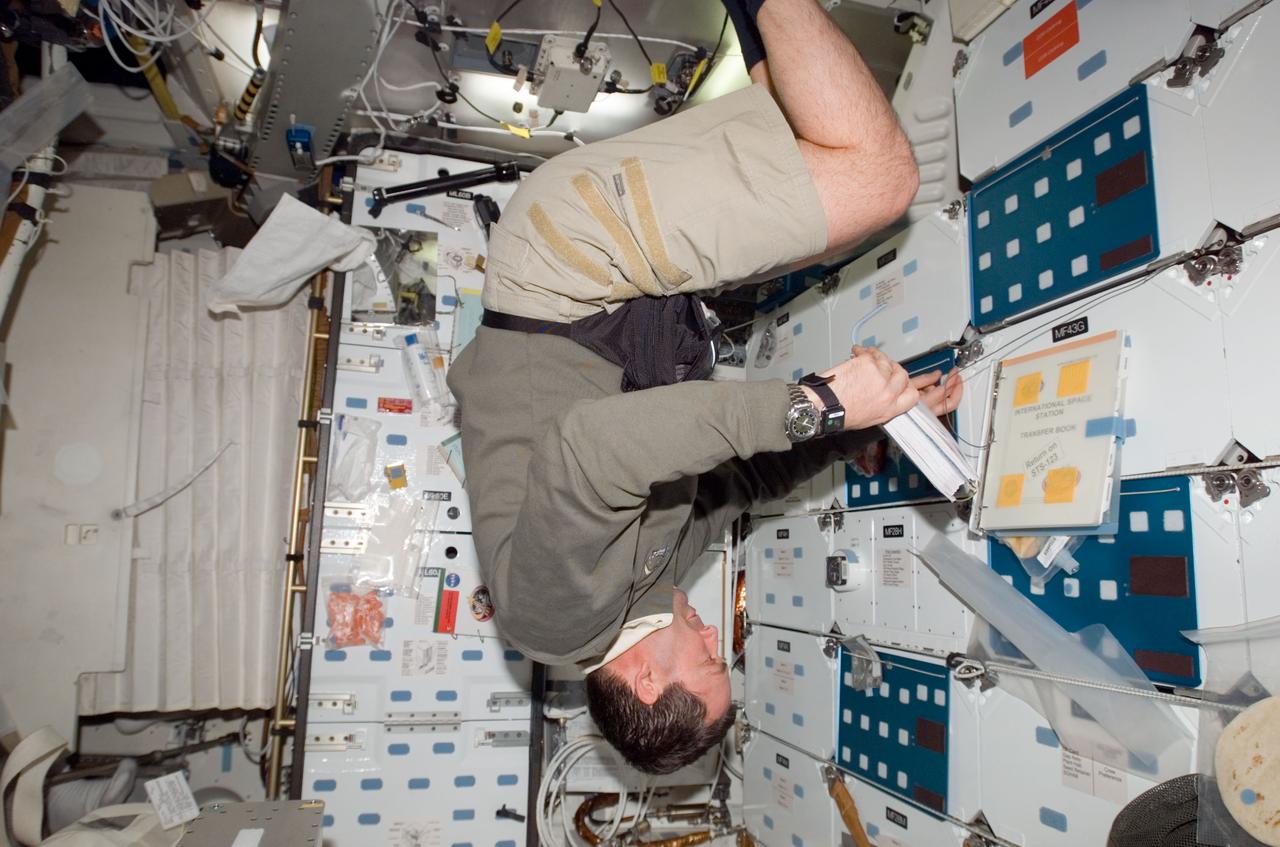
S123-E-006666 (17 March 2008) --- Astronaut Mike Foreman, STS-123 mission specialist, floating upside-down, looks over a checklist on the middeck of Space Shuttle Endeavour while docked with the International Space Station.
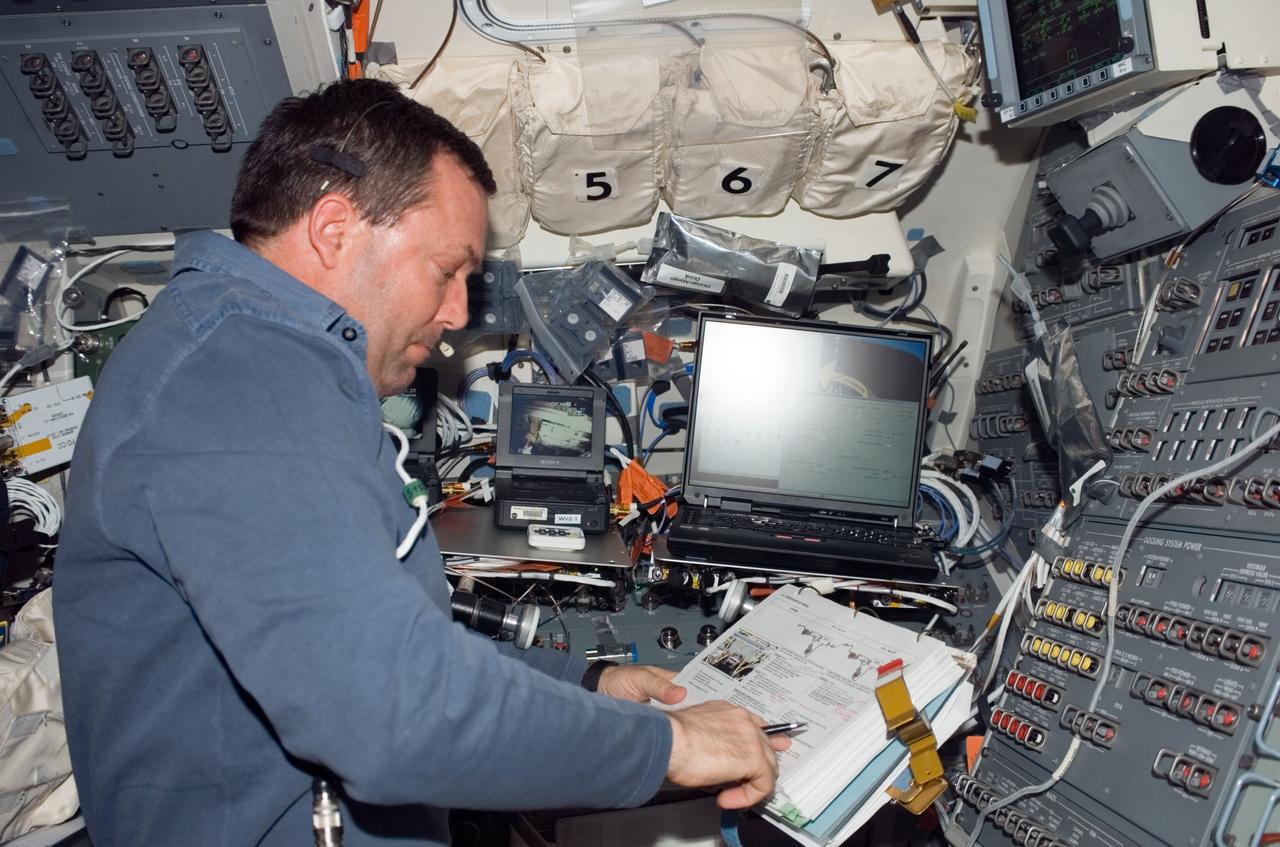
S123-E-005950 (14 March 2008) --- Astronaut Mike Foreman, STS-123 mission specialist, looks over a checklist on the aft flight deck of Space Shuttle Endeavour while docked with the International Space Station.
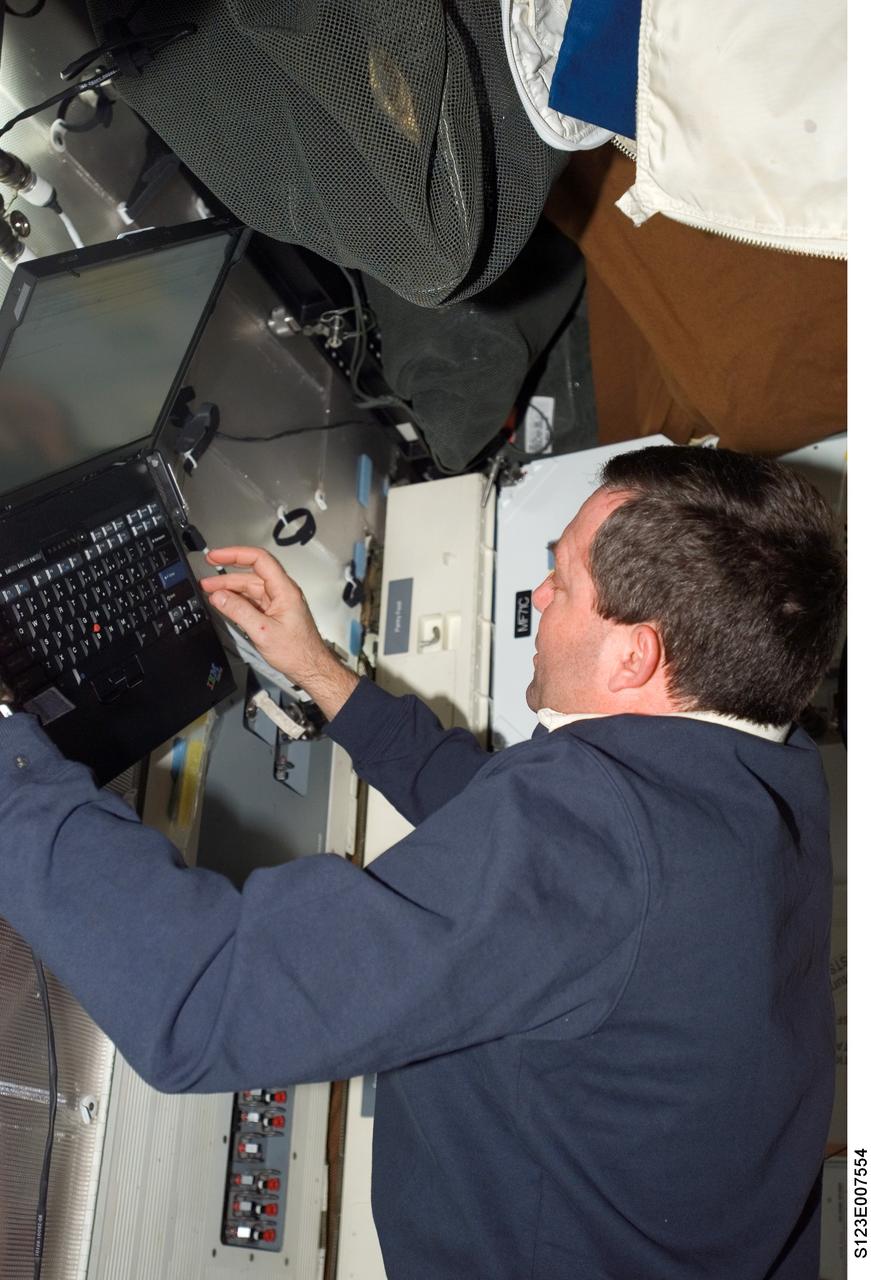
S123-E-007554 (19 March 2008) --- NASA astronaut Mike Foreman, STS-123 mission specialist, uses a computer on the middeck of Space Shuttle Endeavour while docked with the International Space Station.
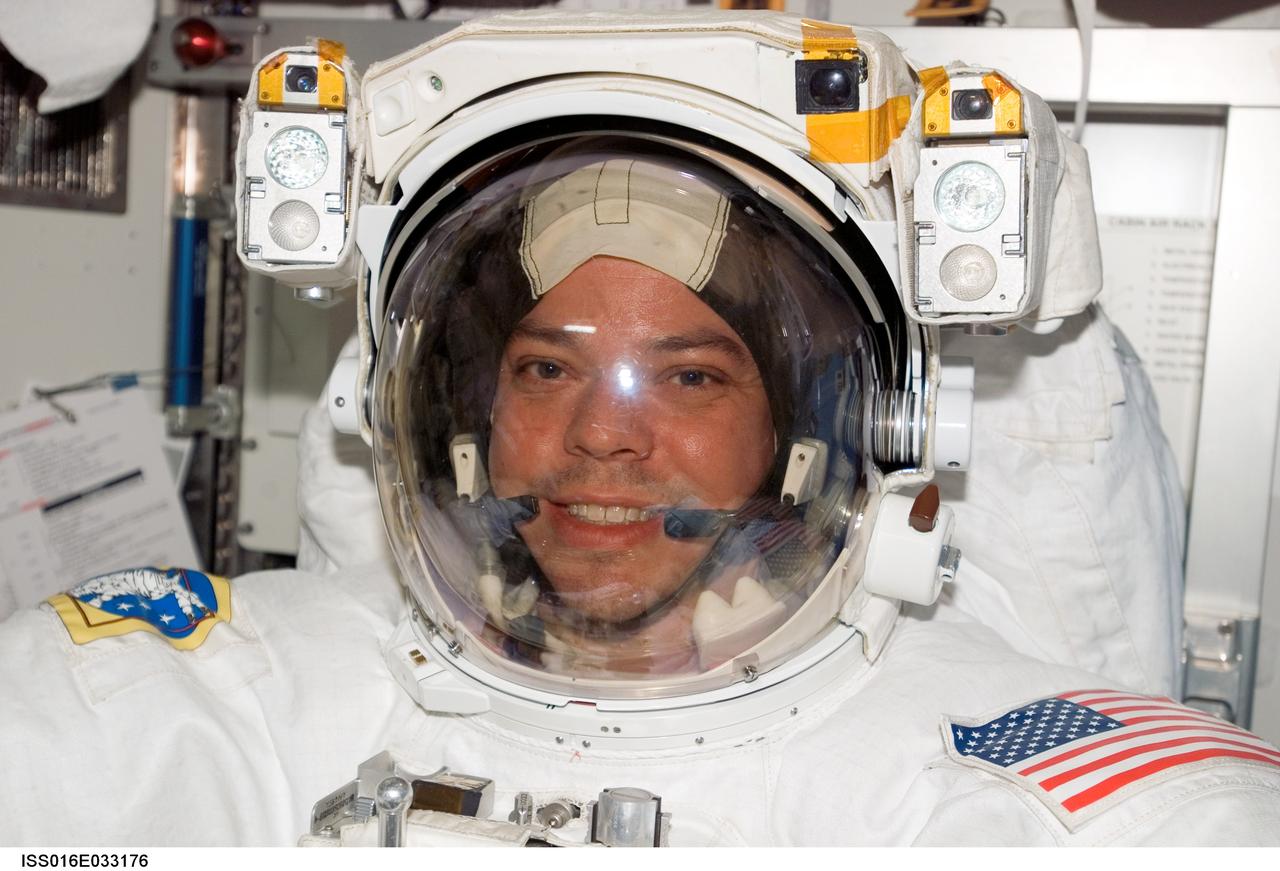
ISS016-E-033176 (20 March 2008) --- Attired in his Extravehicular Mobility Unit (EMU) spacesuit, astronaut Robert L. Behnken, STS-123 mission specialist, is pictured in the Quest Airlock of the International Space Station prior to the start of the mission's fourth scheduled session of extravehicular activity (EVA) while Space Shuttle Endeavour is docked with the station.
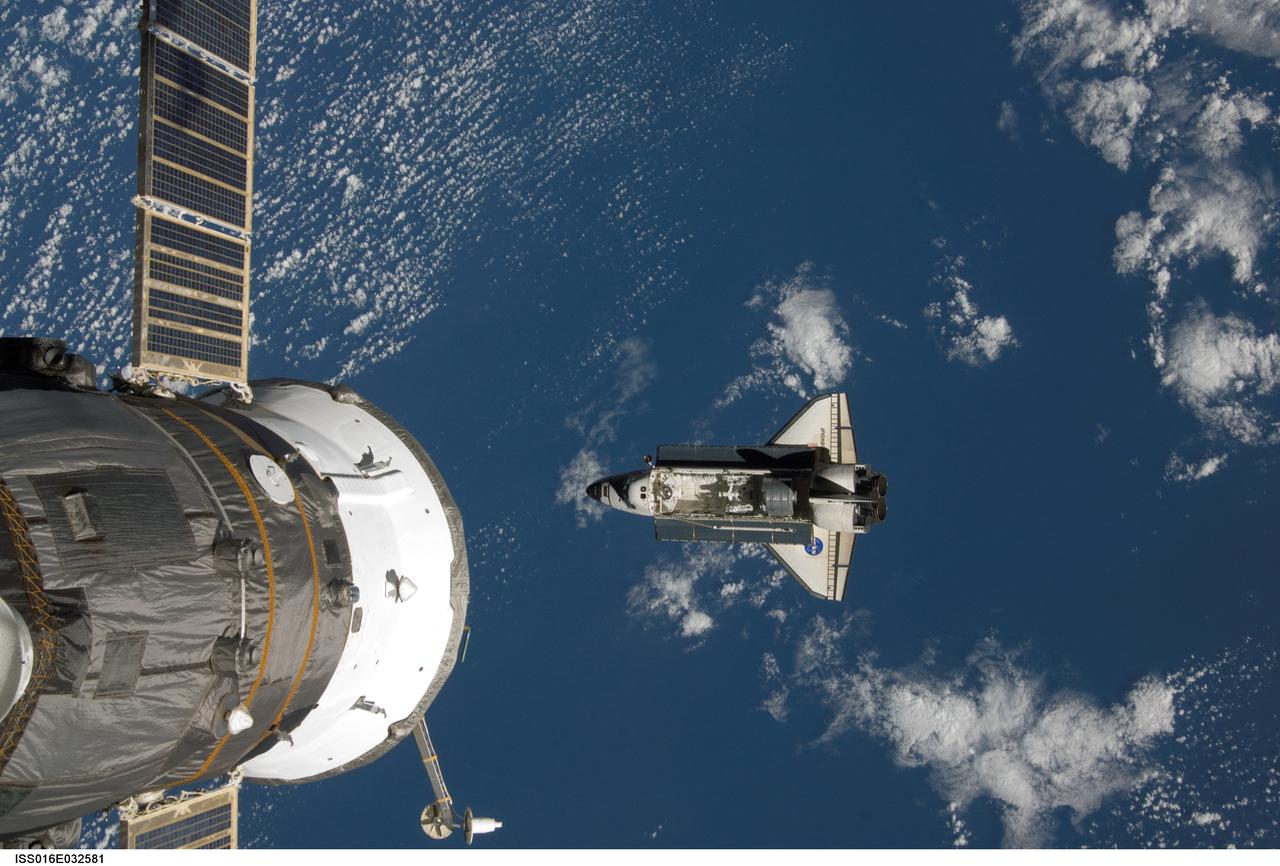
ISS016-E-032581 (12 March 2008) --- Backdropped by a blue and white Earth, Space Shuttle Endeavour approaches the International Space Station during STS-123 rendezvous and docking operations. Docking occurred at 10:49 p.m. (CDT) on March 12, 2008. The Canadian-built Dextre robotic system and the logistics module for the Japanese Kibo laboratory are visible in Endeavour's cargo bay. A Russian spacecraft, docked to the station, is visible in the foreground.
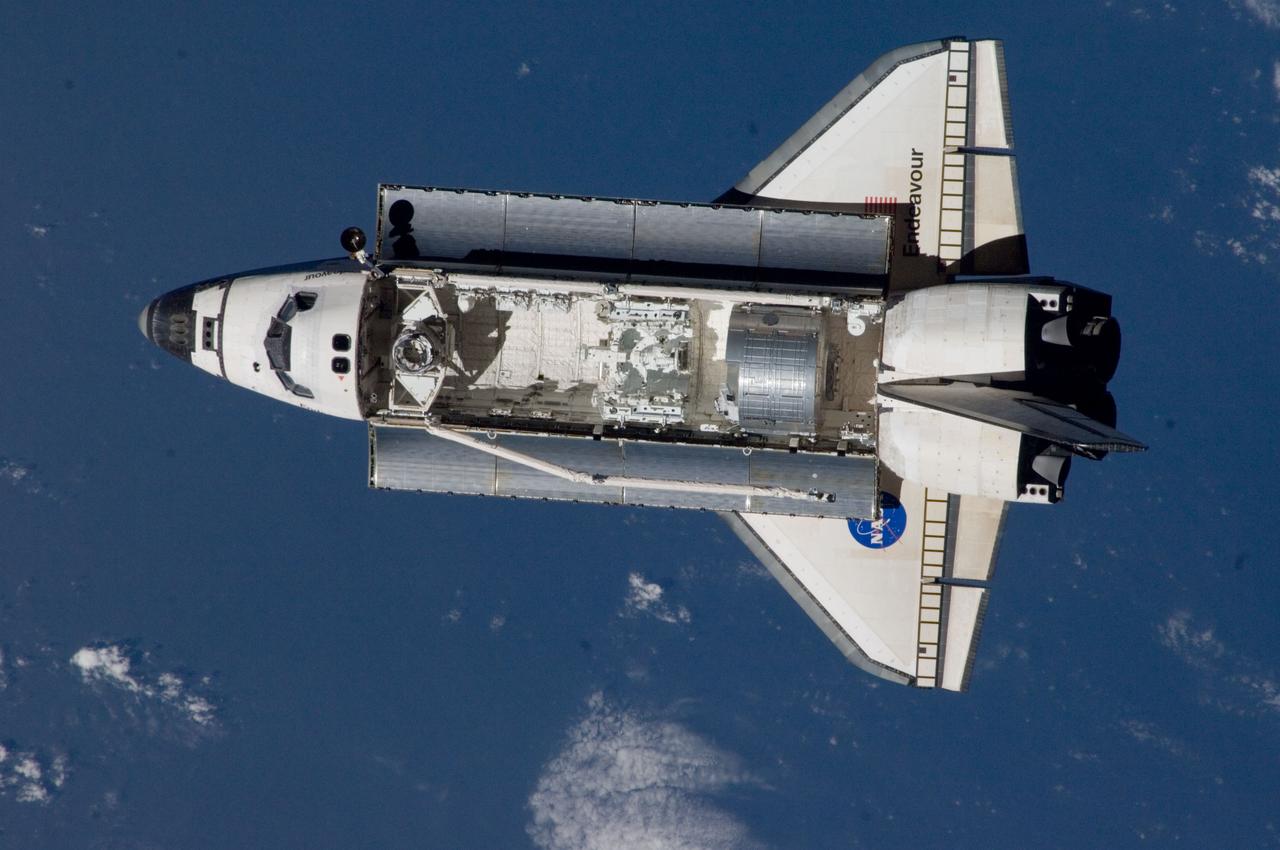
ISS016-E-032567 (12 March 2008) --- Backdropped by a blue and white Earth, Space Shuttle Endeavour approaches the International Space Station during STS-123 rendezvous and docking operations. Docking occurred at 10:49 p.m. (CDT) on March 12, 2008. The Canadian-built Dextre robotic system and the logistics module for the Japanese Kibo laboratory are visible in Endeavour's cargo bay.
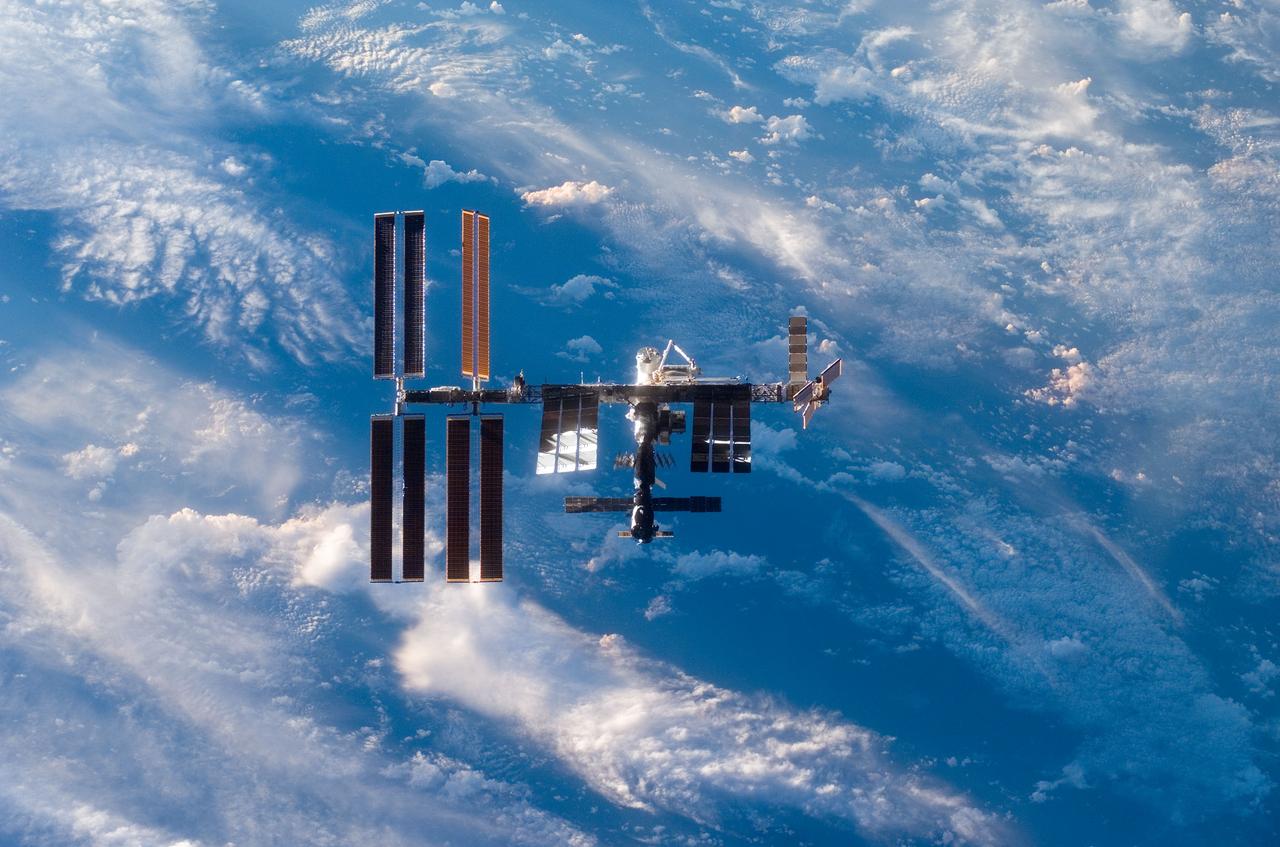
S123-E-010116 (24 March 2008) --- Backdropped by a blue and white part of Earth, the International Space Station is seen from Space Shuttle Endeavour as the two spacecraft begin their relative separation. Earlier the STS-123 and Expedition 16 crews concluded 12 days of cooperative work onboard the shuttle and station. Undocking of the two spacecraft occurred at 7:25 p.m. (CDT) on March 24, 2008.
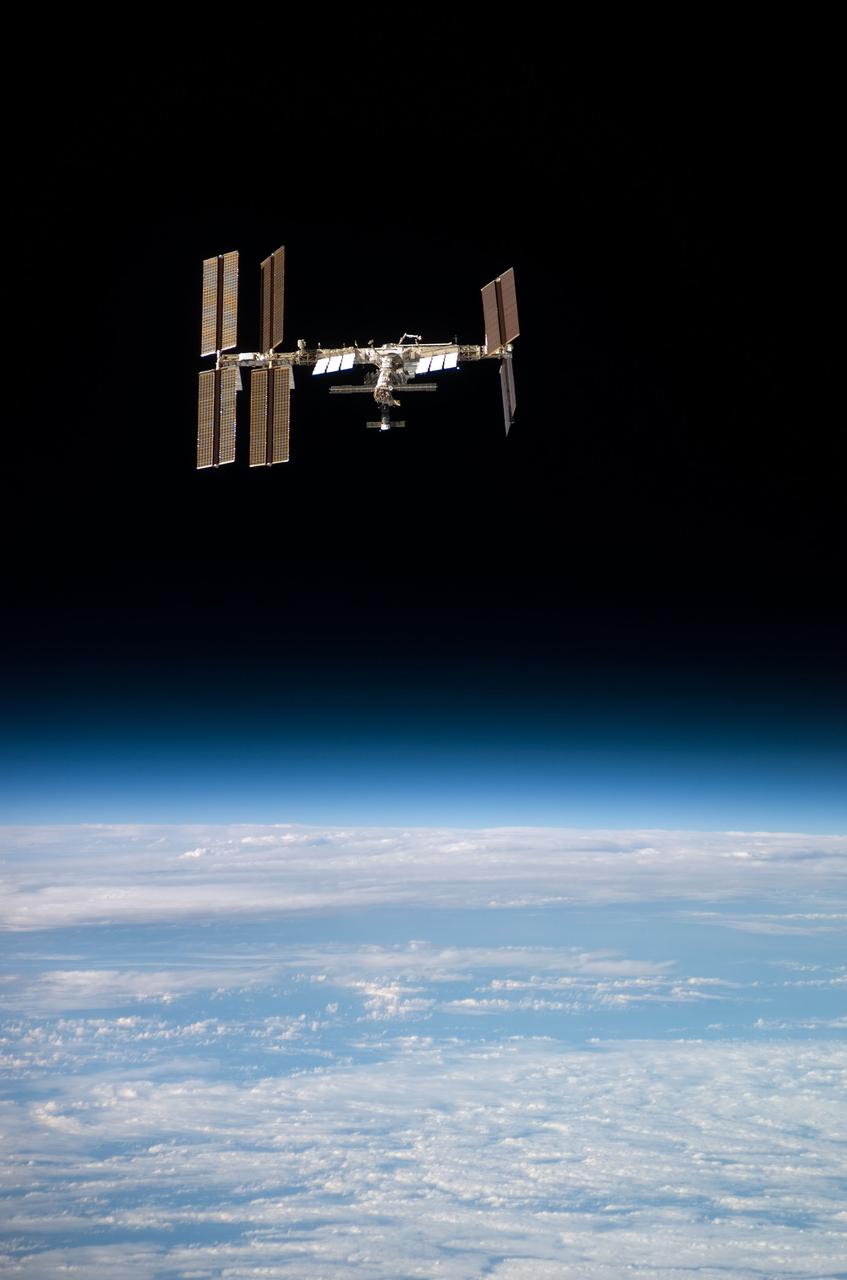
S123-E-010177 (24 March 2008) --- Backdropped by Earth's horizon and the blackness of space, the International Space Station is seen from Space Shuttle Endeavour as the two spacecraft begin their relative separation. Earlier the STS-123 and Expedition 16 crews concluded 12 days of cooperative work onboard the shuttle and station. Undocking of the two spacecraft occurred at 7:25 p.m. (CDT) on March 24, 2008.
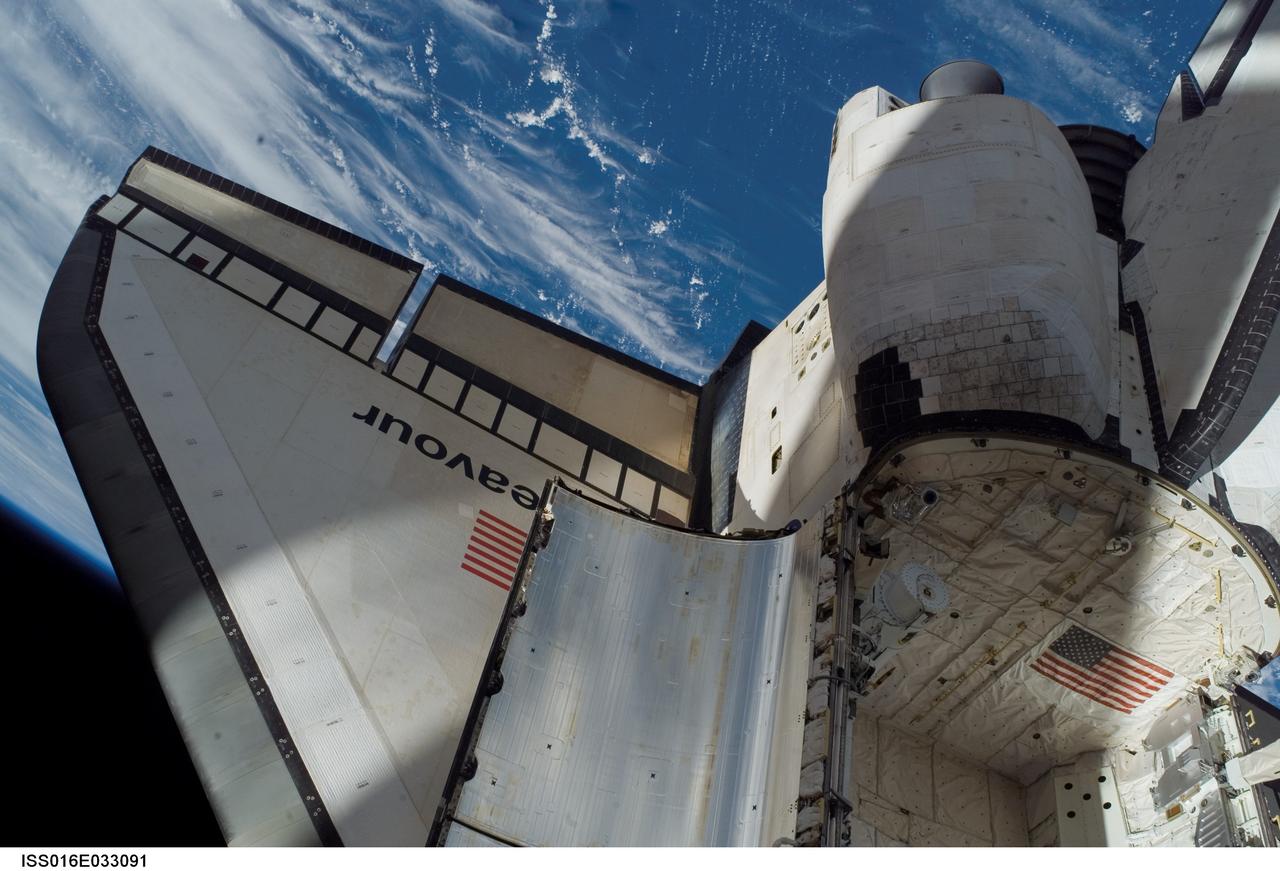
ISS016-E-033091 (18 March 2008) --- Backdropped by a blue and white section of Earth and the blackness of space, Space Shuttle Endeavour's starboard wing, a portion of its payload bay and part of its orbital maneuvering system (OMS) pods are featured in this image photographed by a crewmember during the STS-123 mission's third planned session of extravehicular activity (EVA).
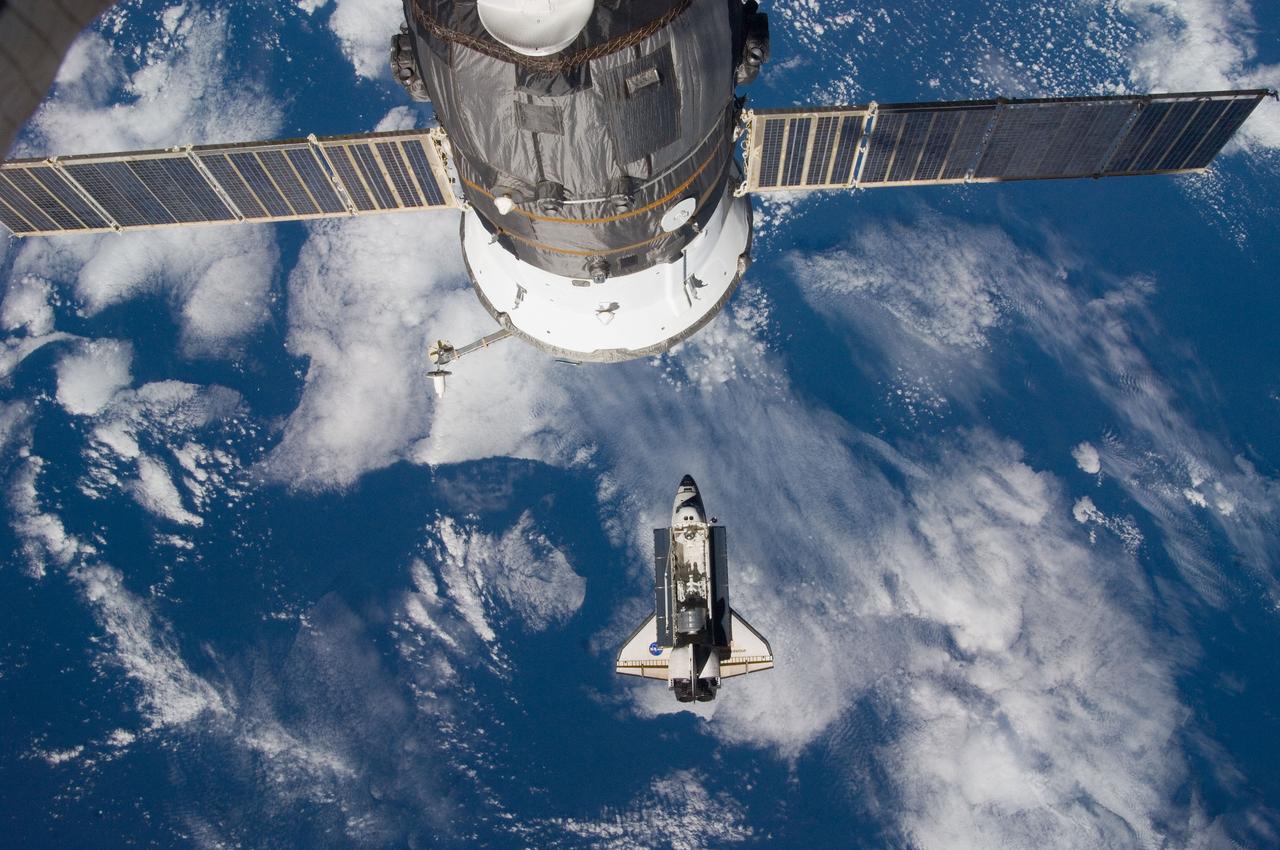
ISS016-E-032577 (12 March 2008) --- Backdropped by a blue and white Earth, Space Shuttle Endeavour approaches the International Space Station during STS-123 rendezvous and docking operations. Docking occurred at 10:49 p.m. (CDT) on March 12, 2008. The Canadian-built Dextre robotic system and the logistics module for the Japanese Kibo laboratory are visible in Endeavour's cargo bay. A Russian spacecraft, docked to the station, is visible in the foreground.
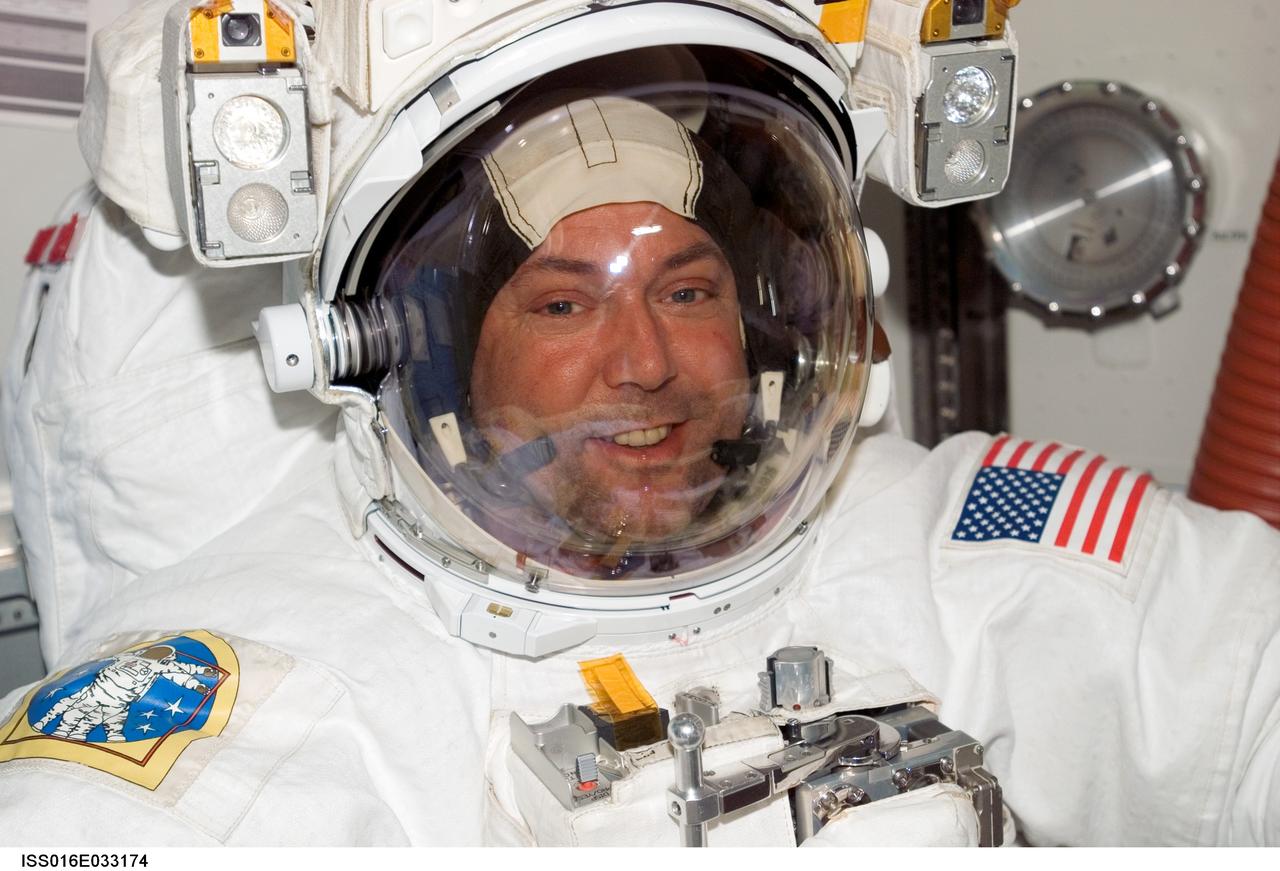
ISS016-E-033174 (20 March 2008) --- Attired in his Extravehicular Mobility Unit (EMU) spacesuit, astronaut Mike Foreman, STS-123 mission specialist, is pictured in the Quest Airlock of the International Space Station prior to the start of the mission's fourth scheduled session of extravehicular activity (EVA) while Space Shuttle Endeavour is docked with the station.
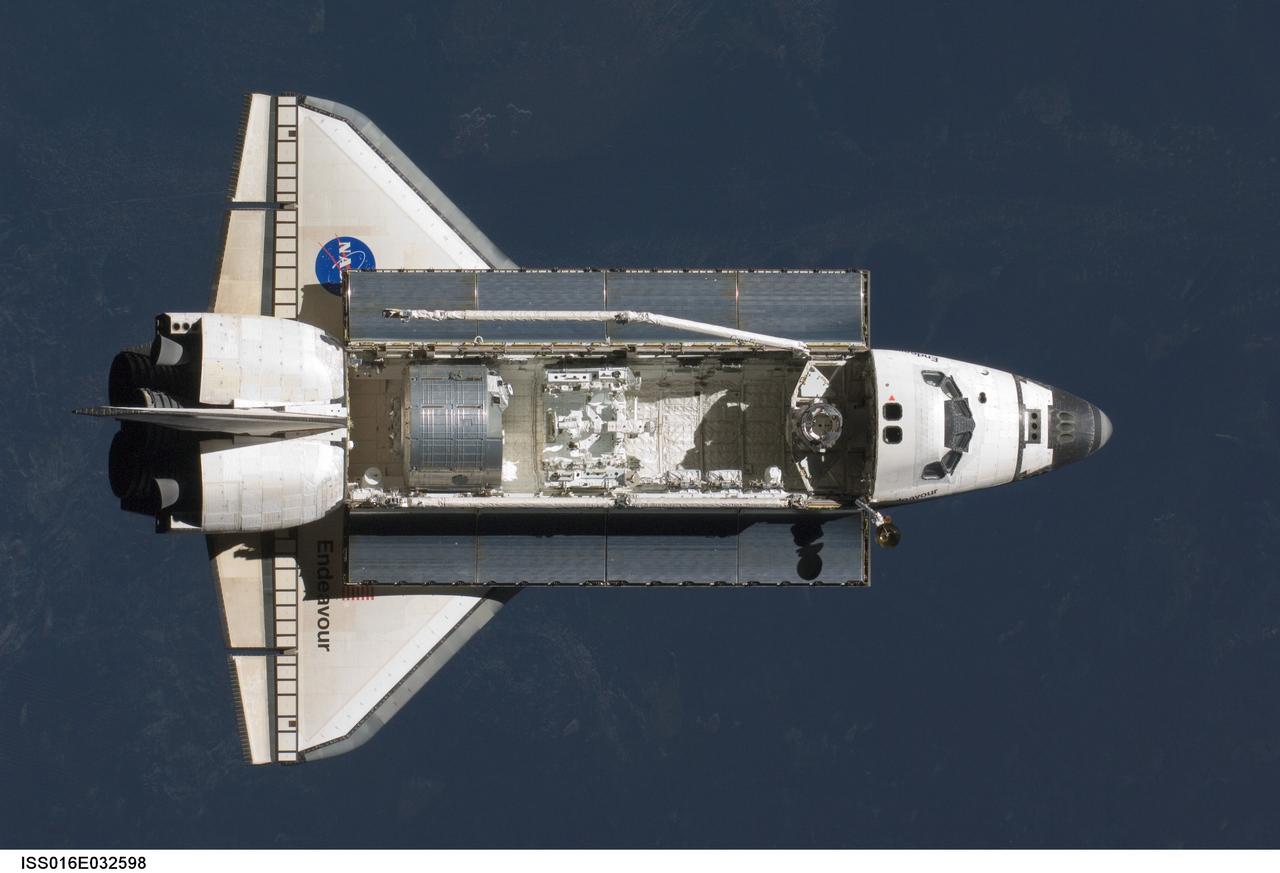
ISS016-E-032598 (12 March 2008) --- Space Shuttle Endeavour approaches the International Space Station during STS-123 rendezvous and docking operations. Docking occurred at 10:49 p.m. (CDT) on March 12, 2008. The Canadian-built Dextre robotic system and the logistics module for the Japanese Kibo laboratory are visible in Endeavour's cargo bay.
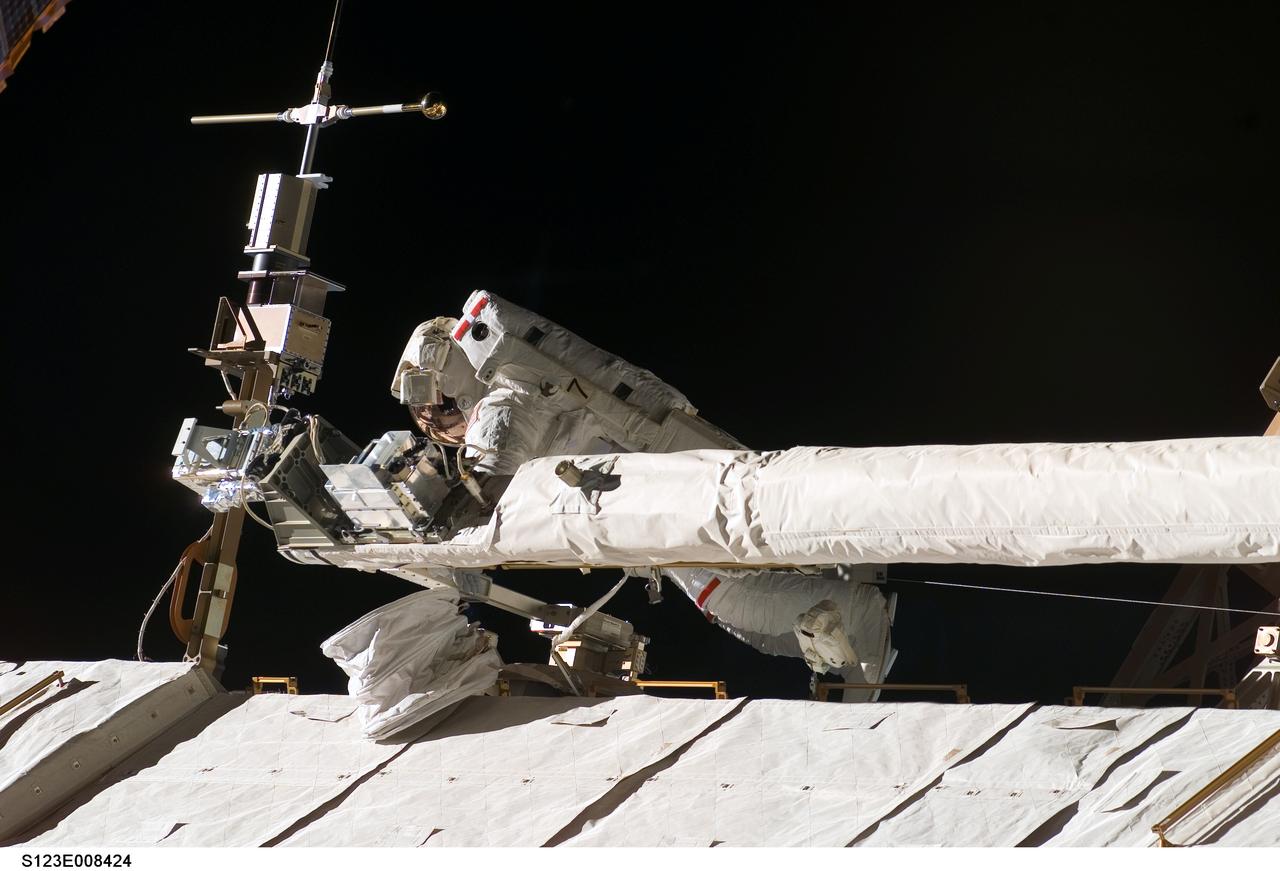
S123-E-008424 (23 March 2008) --- Astronaut Mike Foreman, STS-123 mission specialist, helps to tie down the Orbiter Boom Sensor System on the International Space Station's S1 truss during EVA 5 on March 22. The structure at the end of the boom is a transmission device for laser imagery from the laser devices used for scanning the thermal protection system.
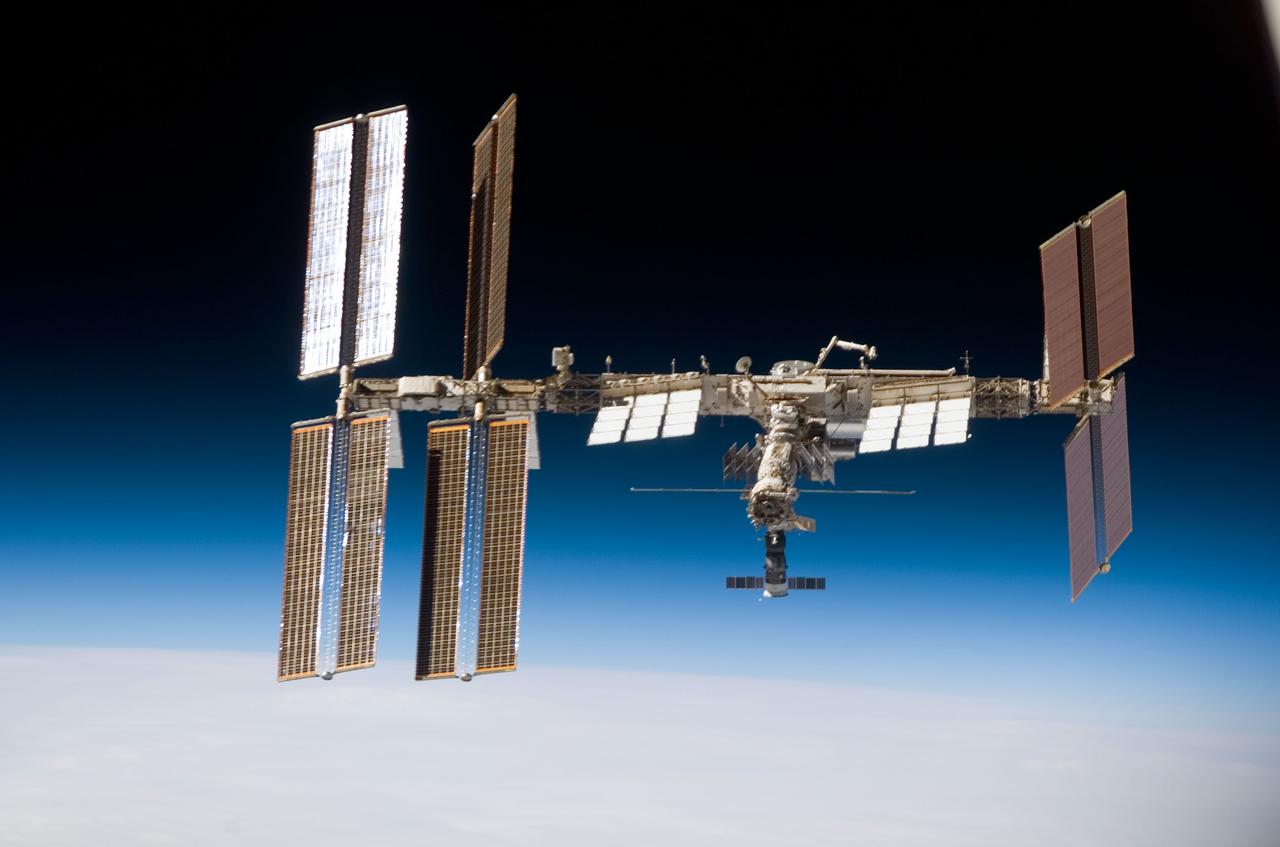
S123-E-009345 (24 March 2008) --- Backdropped by the airglow of Earth's horizon and the blackness of space, the International Space Station is seen from Space Shuttle Endeavour as the two spacecraft begin their relative separation. Earlier the STS-123 and Expedition 16 crews concluded 12 days of cooperative work onboard the shuttle and station. Undocking of the two spacecraft occurred at 7:25 p.m. (CDT) on March 24, 2008.
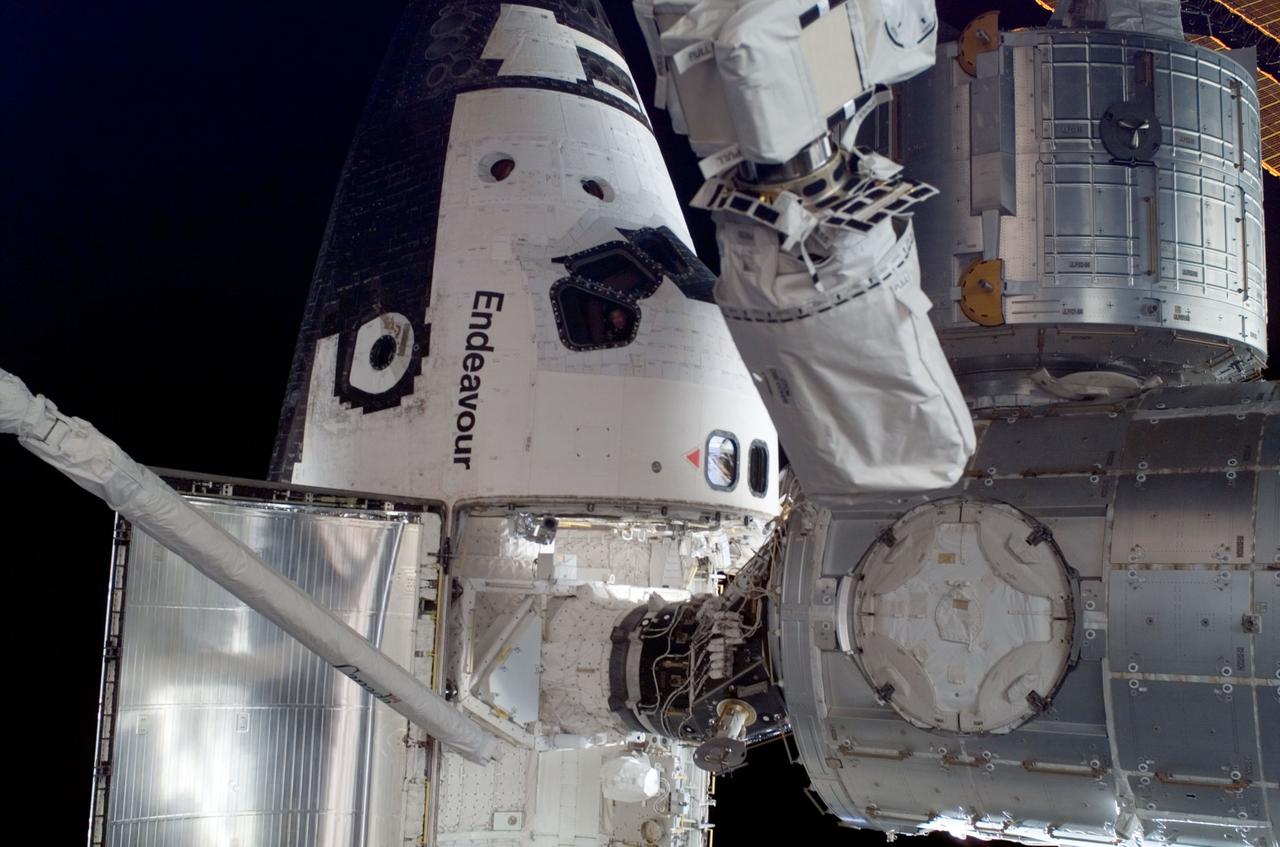
ISS016-E-032993 (18 March 2008) --- Space Shuttle Endeavour, docked to the Pressurized Mating Adapter (PMA-2) on the International Space Station, is featured in this image photographed by a crewmember during the STS-123 mission's third planned session of extravehicular activity (EVA). The newly installed Japanese Logistics Module - Pressurized Section (JLP) is visible at top right. The JLP is the first pressurized component of the Japan Aerospace Exploration Agency's Kibo laboratory and the newest component of the station.
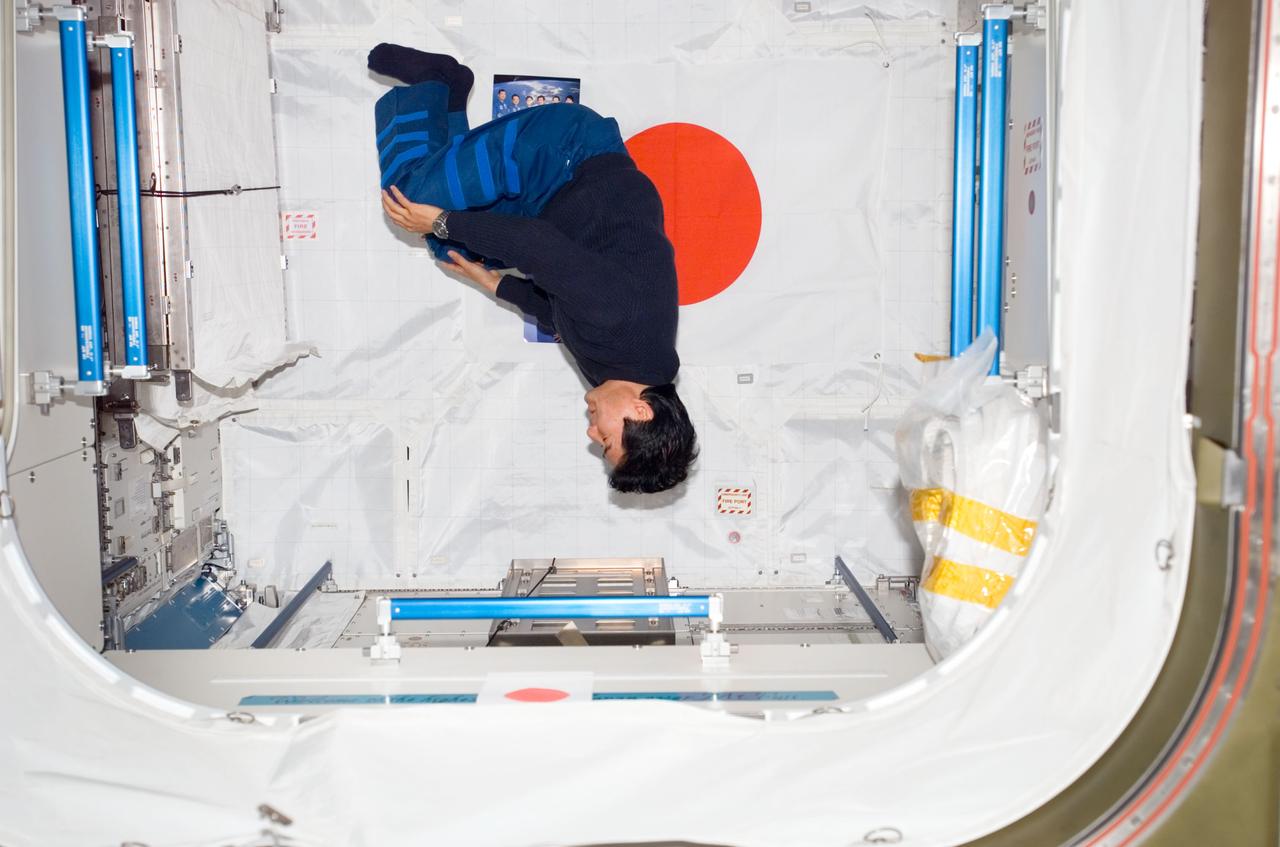
S123-E-007352 (19 March 2008) --- Japan Aerospace Exploration Agency (JAXA) astronaut Takao Doi, STS-123 mission specialist, floats in the newly installed Japanese Logistics Module - Pressurized Section (JLP) of the International Space Station while Space Shuttle Endeavour is docked with the station. The JLP is the first pressurized component of the Japan Aerospace Exploration Agency's Kibo laboratory and the newest component of the station.
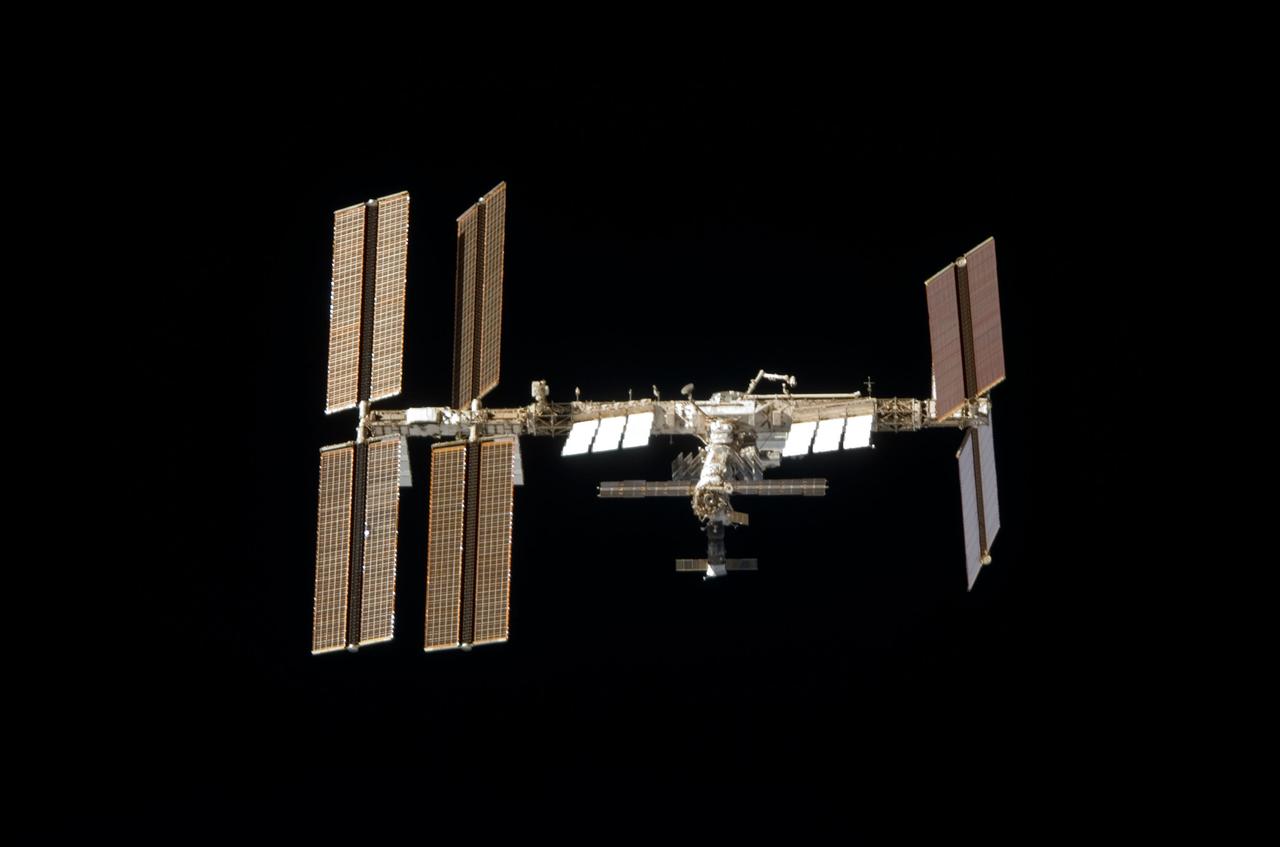
S123-E-009354 (24 March 2008) --- Backdropped by the blackness of space, the International Space Station is seen from Space Shuttle Endeavour as the two spacecraft begin their relative separation. Earlier the STS-123 and Expedition 16 crews concluded 12 days of cooperative work onboard the shuttle and station. Undocking of the two spacecraft occurred at 7:25 p.m. (CDT) on March 24, 2008.
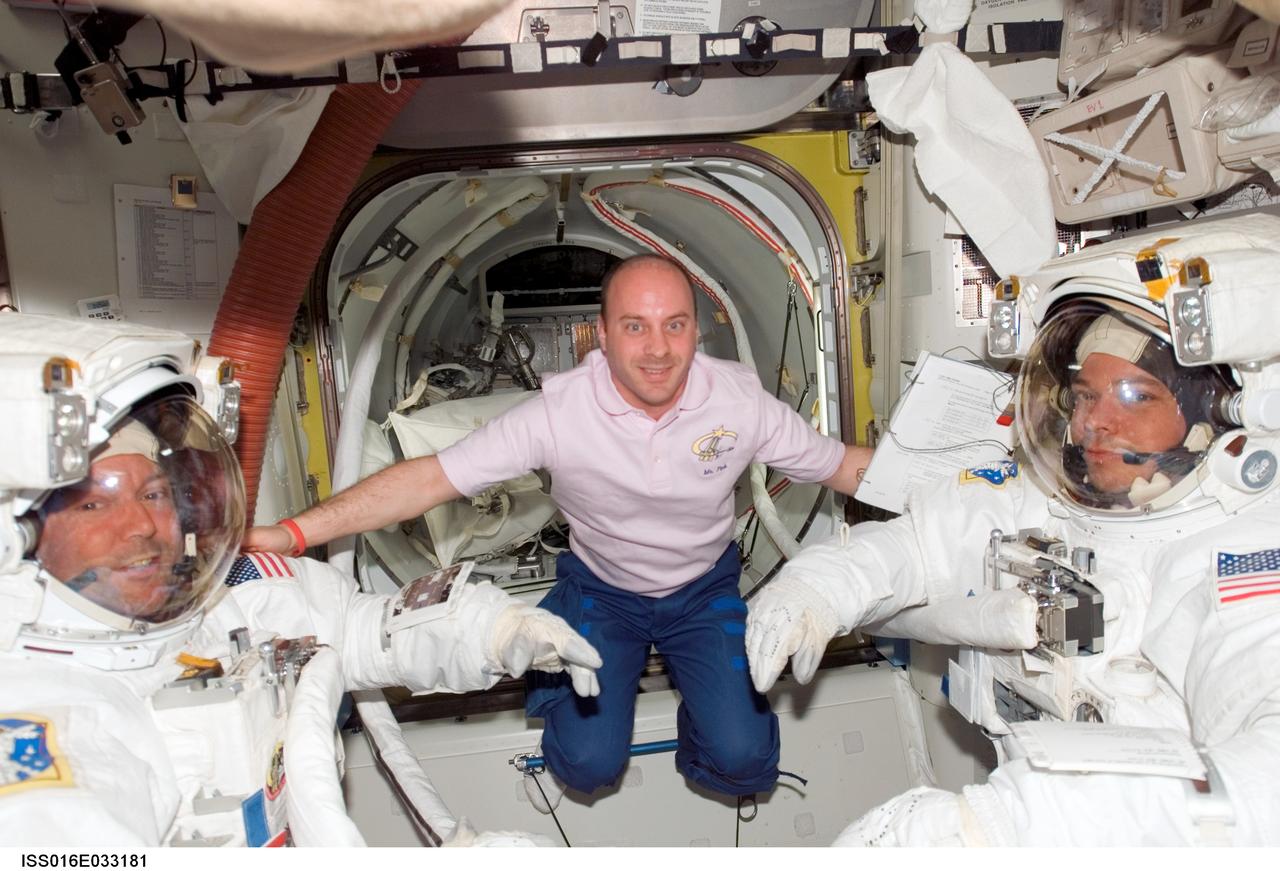
ISS016-E-033181 (20 March 2008) --- Attired in their Extravehicular Mobility Unit (EMU) spacesuits, astronauts Mike Foreman (left) and Robert L. Behnken, both STS-123 mission specialists; along with astronaut Garrett Reisman (center), Expedition 16 flight engineer, take a moment to pose for a photo as they prepare for the mission's fourth spacewalk in the Quest Airlock of the International Space Station while Space Shuttle Endeavour is docked with the station.
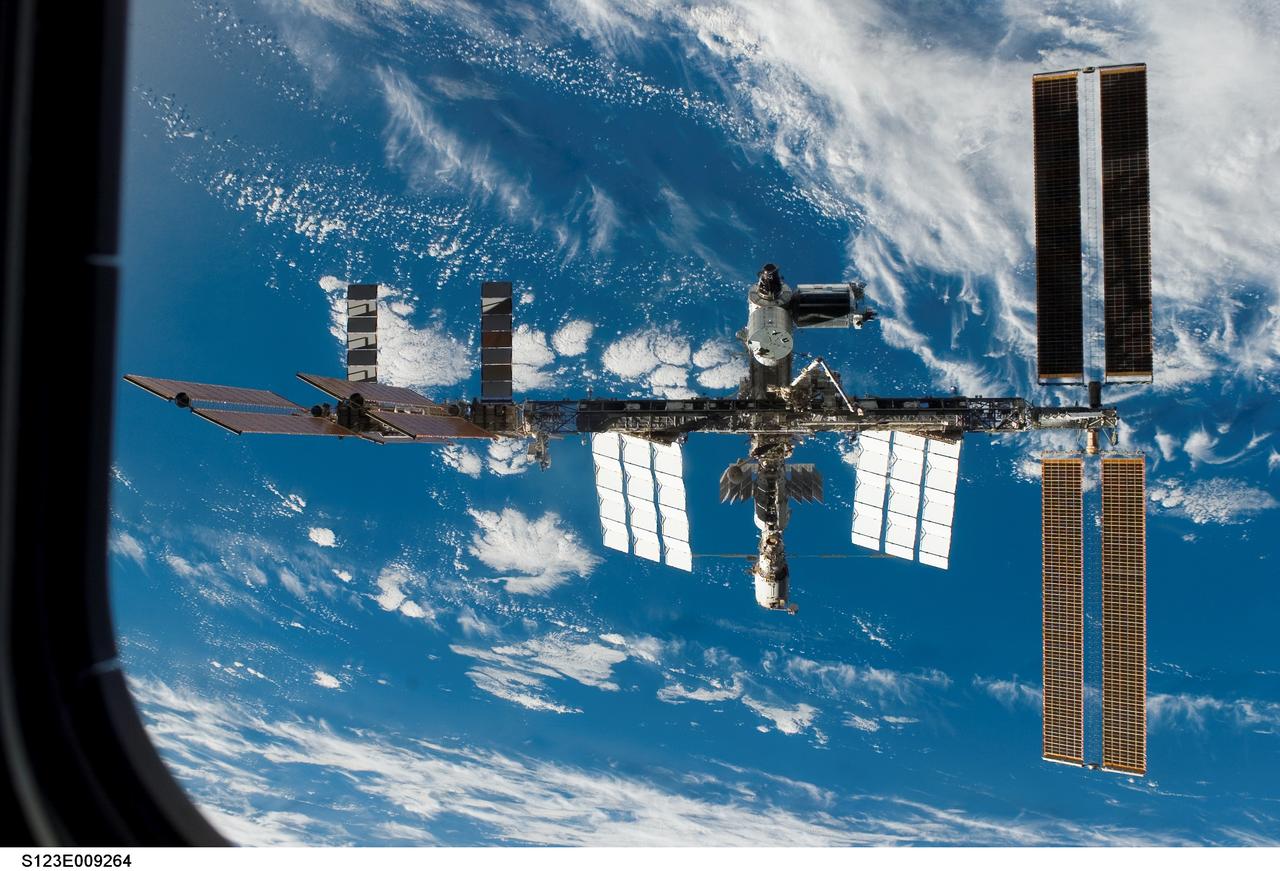
S123-E-009264 (24 March 2008) --- Backdropped by a blue and white part of Earth, the International Space Station is seen from Space Shuttle Endeavour as the two spacecraft begin their relative separation. Earlier the STS-123 and Expedition 16 crews concluded 12 days of cooperative work onboard the shuttle and station. Undocking of the two spacecraft occurred at 7:25 p.m. (CDT) on March 24, 2008.
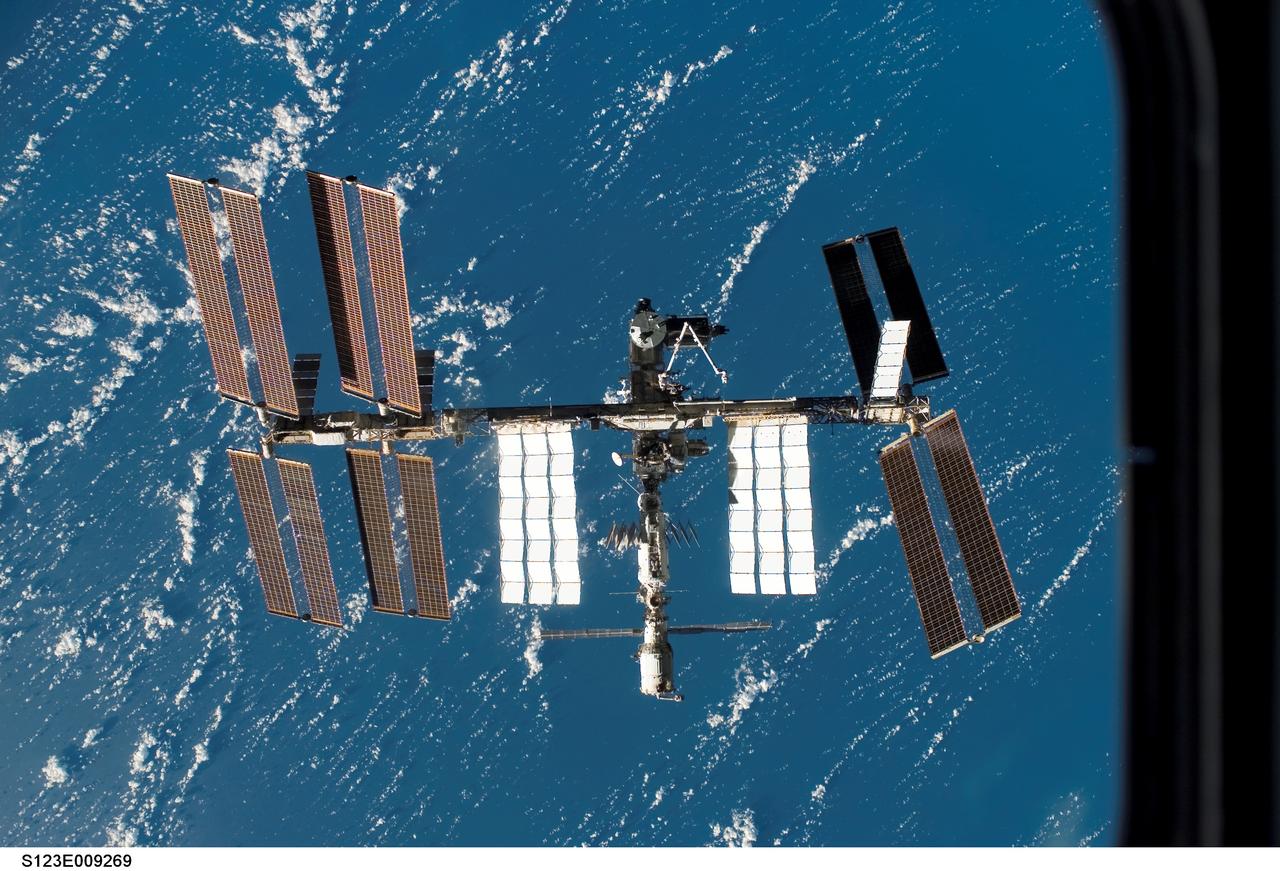
S123-E-009269 (24 March 2008) --- Backdropped by a blue and white part of Earth, the International Space Station is seen from Space Shuttle Endeavour as the two spacecraft begin their relative separation. Earlier the STS-123 and Expedition 16 crews concluded 12 days of cooperative work onboard the shuttle and station. Undocking of the two spacecraft occurred at 7:25 p.m. (CDT) on March 24, 2008.
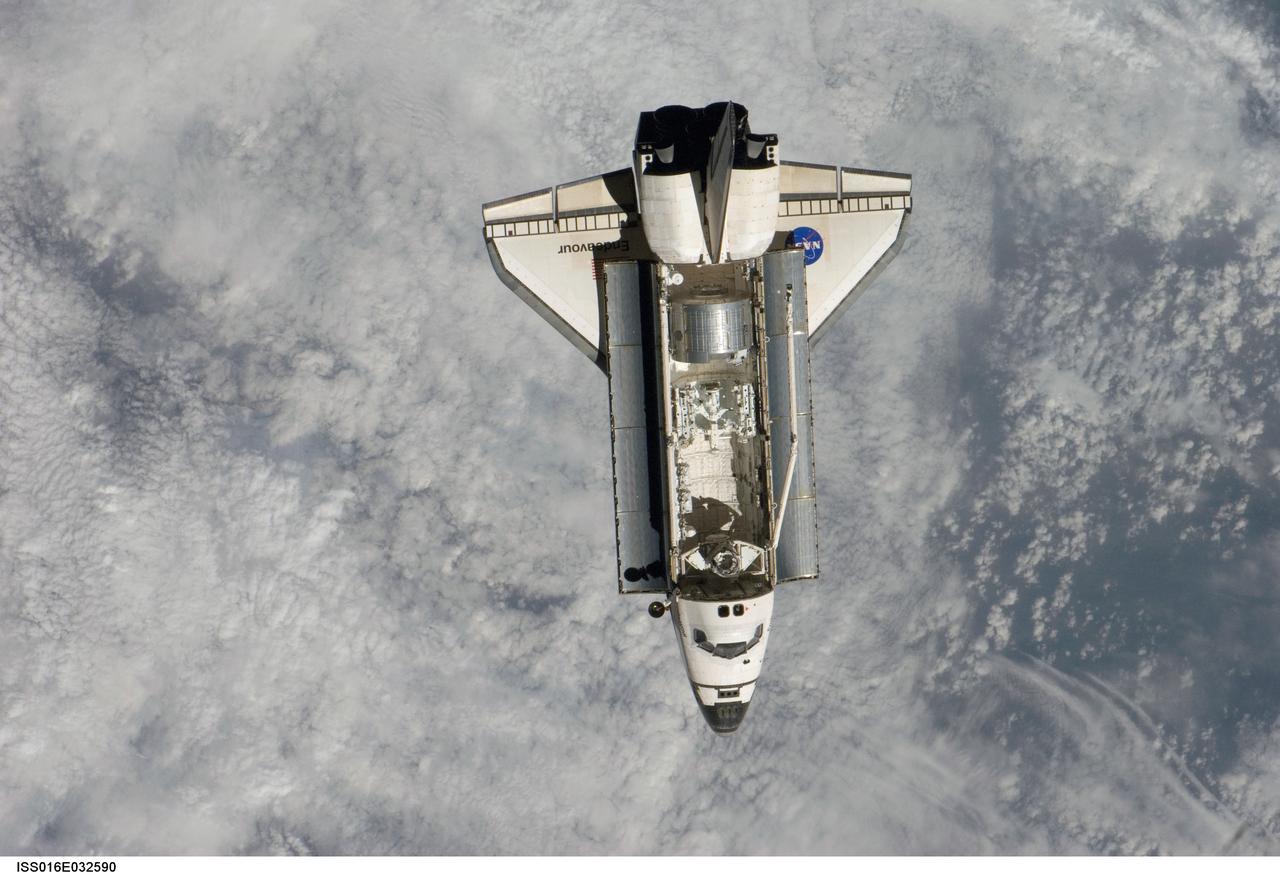
ISS016-E-032590 (12 March 2008) --- Backdropped by a cloud-covered part of Earth, Space Shuttle Endeavour approaches the International Space Station during STS-123 rendezvous and docking operations. Docking occurred at 10:49 p.m. (CDT) on March 12, 2008. The Canadian-built Dextre robotic system and the logistics module for the Japanese Kibo laboratory are visible in Endeavour's cargo bay.
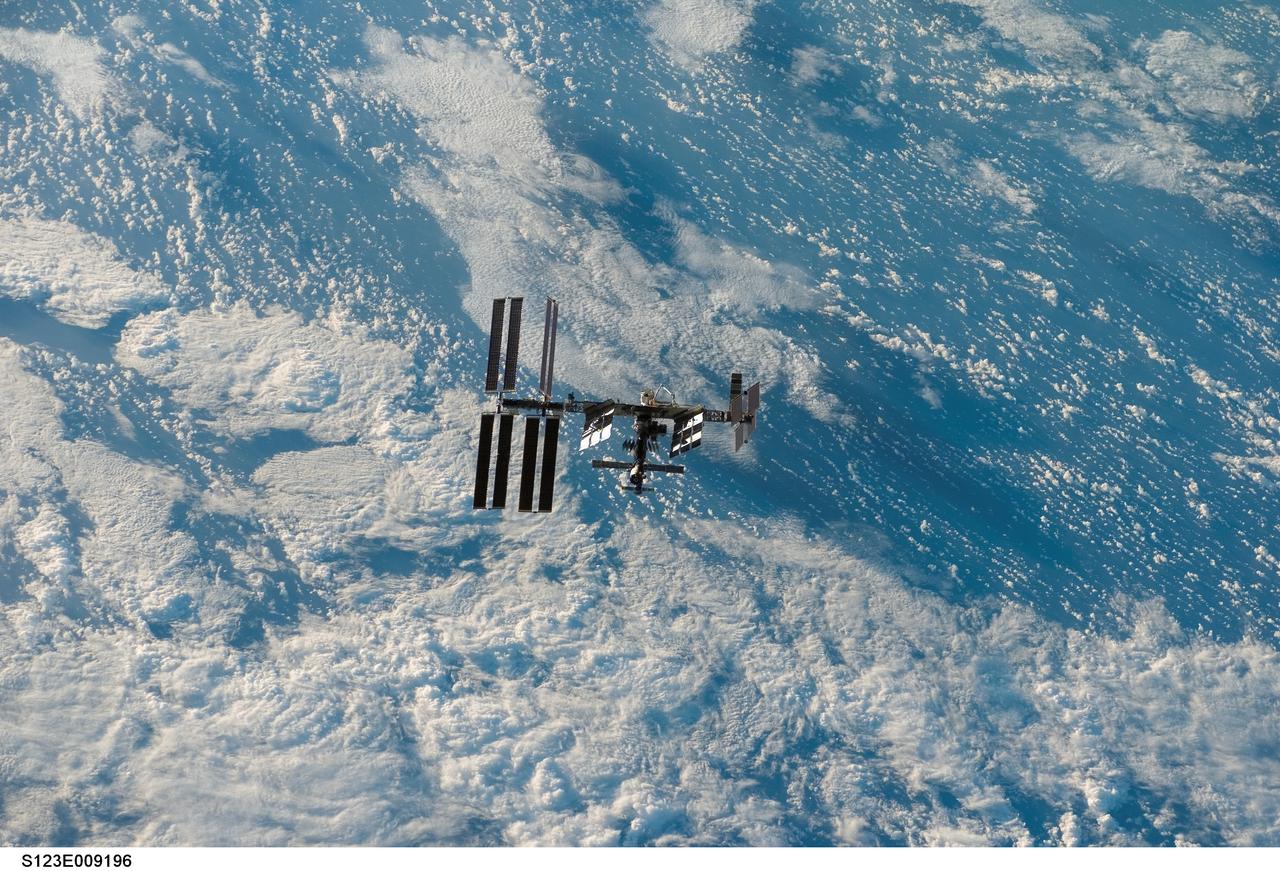
S123-E-009196 (24 March 2008) --- Backdropped by a blue and white part of Earth, the International Space Station is seen from Space Shuttle Endeavour as the two spacecraft begin their relative separation. Earlier the STS-123 and Expedition 16 crews concluded 12 days of cooperative work onboard the shuttle and station. Undocking of the two spacecraft occurred at 7:25 p.m. (CDT) on March 24, 2008.
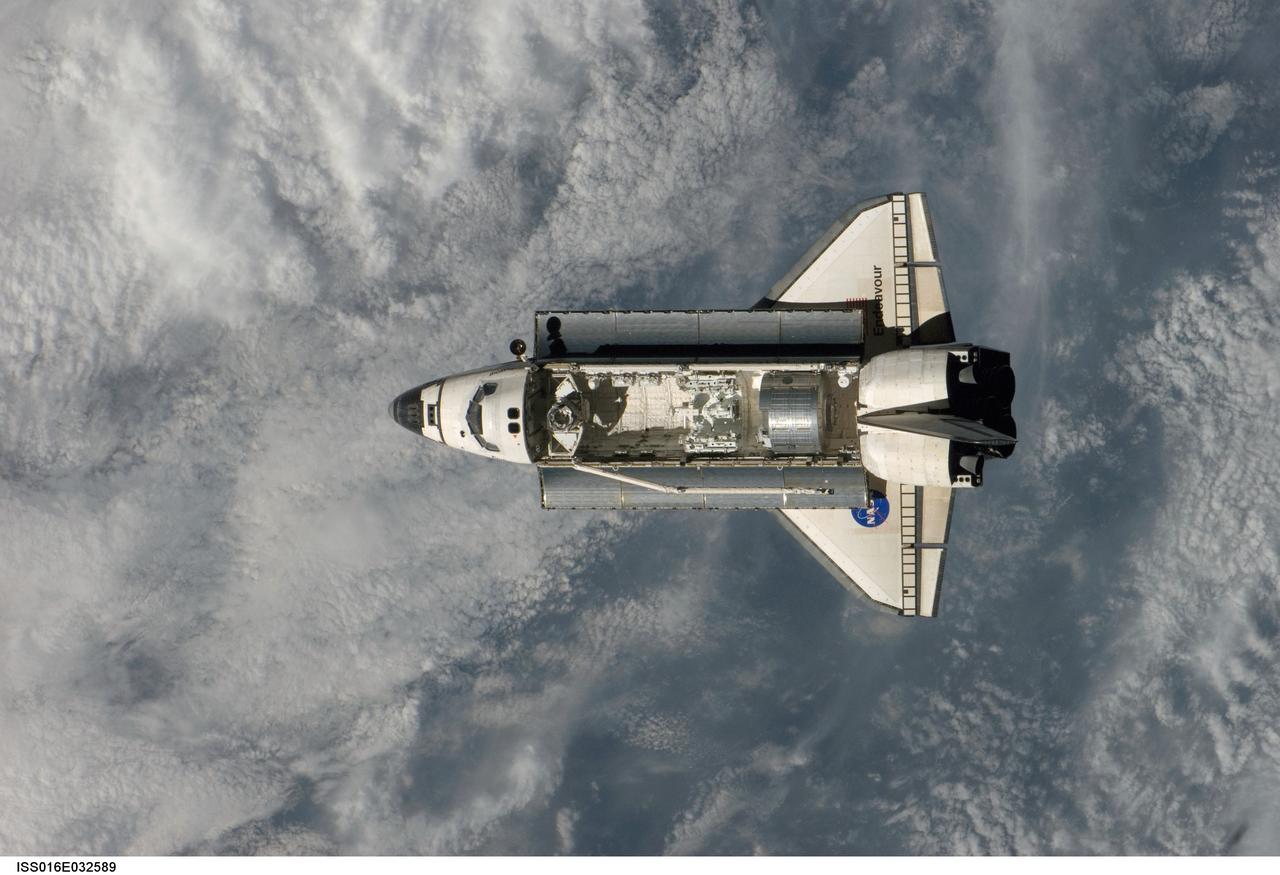
ISS016-E-032589 (12 March 2008) --- Backdropped by a cloud-covered part of Earth, Space Shuttle Endeavour approaches the International Space Station during STS-123 rendezvous and docking operations. Docking occurred at 10:49 p.m. (CDT) on March 12, 2008. The Canadian-built Dextre robotic system and the logistics module for the Japanese Kibo laboratory are visible in Endeavour's cargo bay.
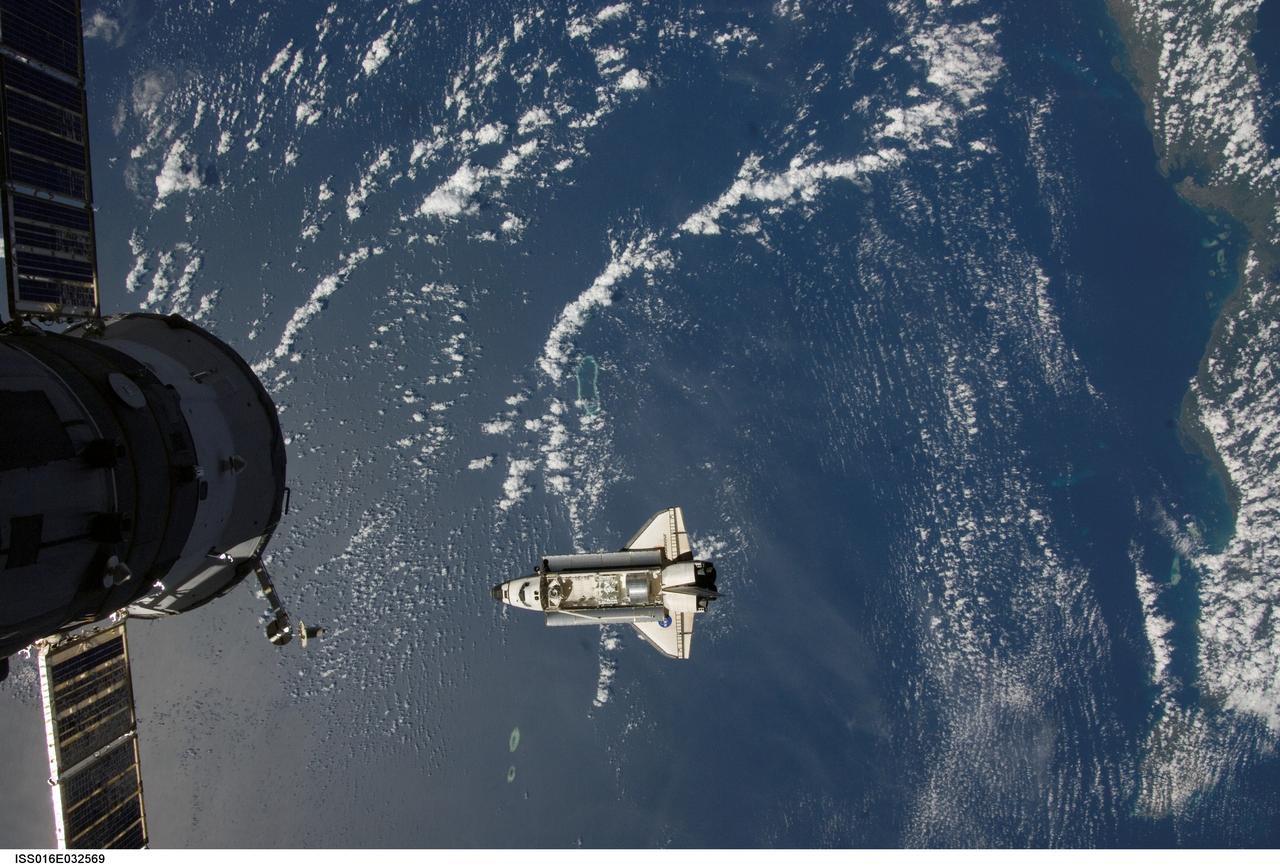
ISS016-E-032569 (12 March 2008) --- Backdropped by a blue and white Earth, Space Shuttle Endeavour approaches the International Space Station during STS-123 rendezvous and docking operations. Docking occurred at 10:49 p.m. (CDT) on March 12, 2008. The Canadian-built Dextre robotic system and the logistics module for the Japanese Kibo laboratory are visible in Endeavour's cargo bay. A Russian spacecraft, docked to the station, is visible in the foreground.
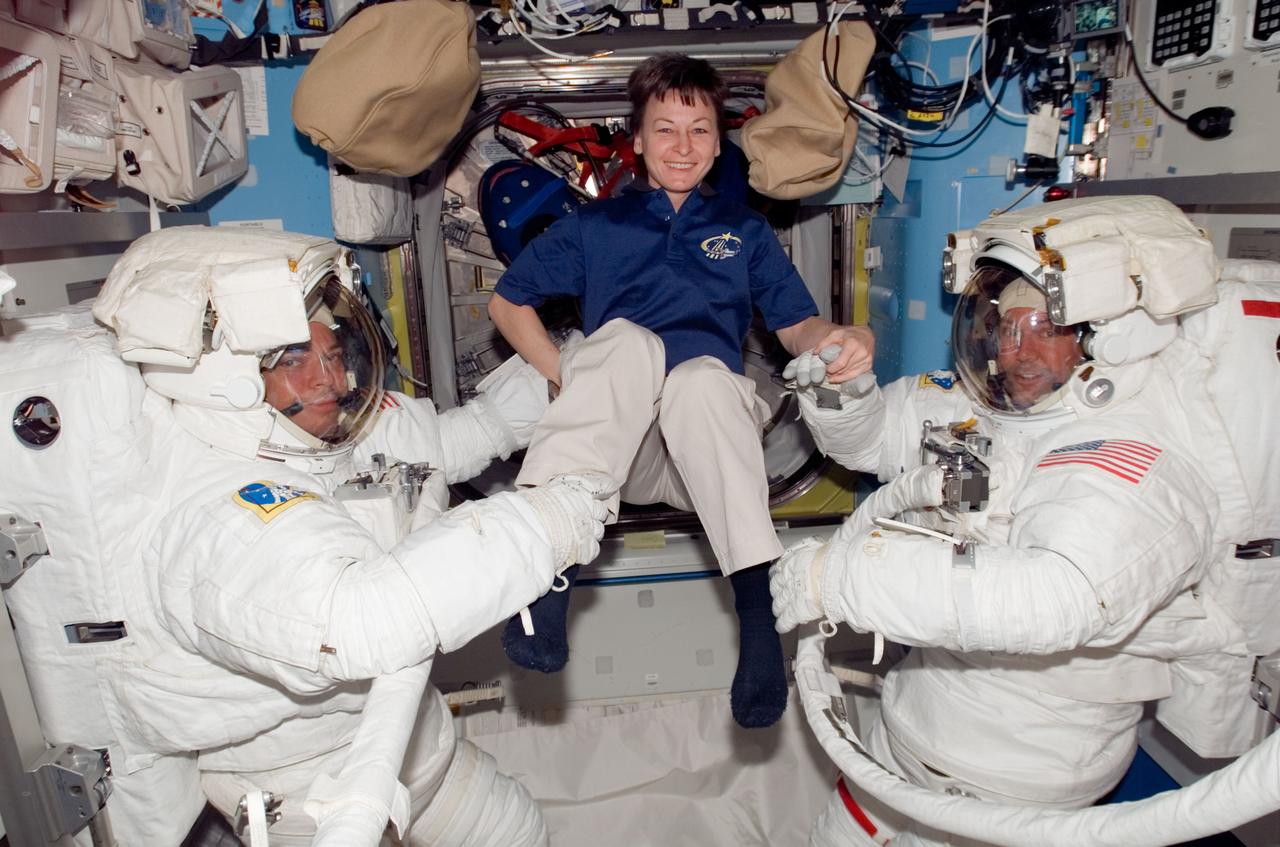
ISS016-E-033182 (20 March 2008) --- Attired in their Extravehicular Mobility Unit (EMU) spacesuits, astronauts Mike Foreman (left) and Robert L. Behnken, both STS-123 mission specialists; along with astronaut Peggy Whitson, Expedition 16 commander, take a moment to pose for a photo as they prepare for the mission's fourth spacewalk in the Quest Airlock of the International Space Station while Space Shuttle Endeavour is docked with the station.
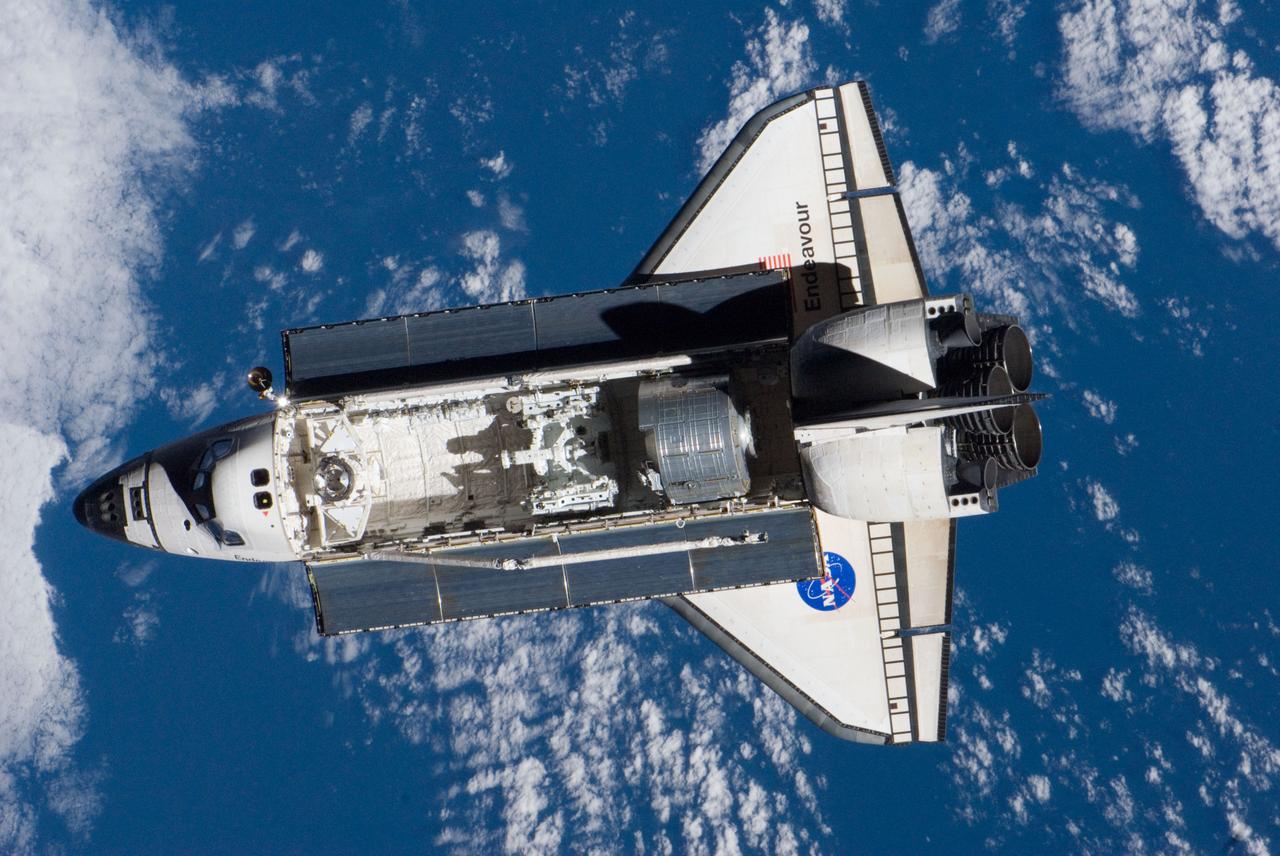
ISS016-E-032596 (12 March 2008) --- Backdropped by a blue and white Earth, Space Shuttle Endeavour approaches the International Space Station during STS-123 rendezvous and docking operations. Docking occurred at 10:49 p.m. (CDT) on March 12, 2008. The Canadian-built Dextre robotic system and the logistics module for the Japanese Kibo laboratory are visible in Endeavour's cargo bay.
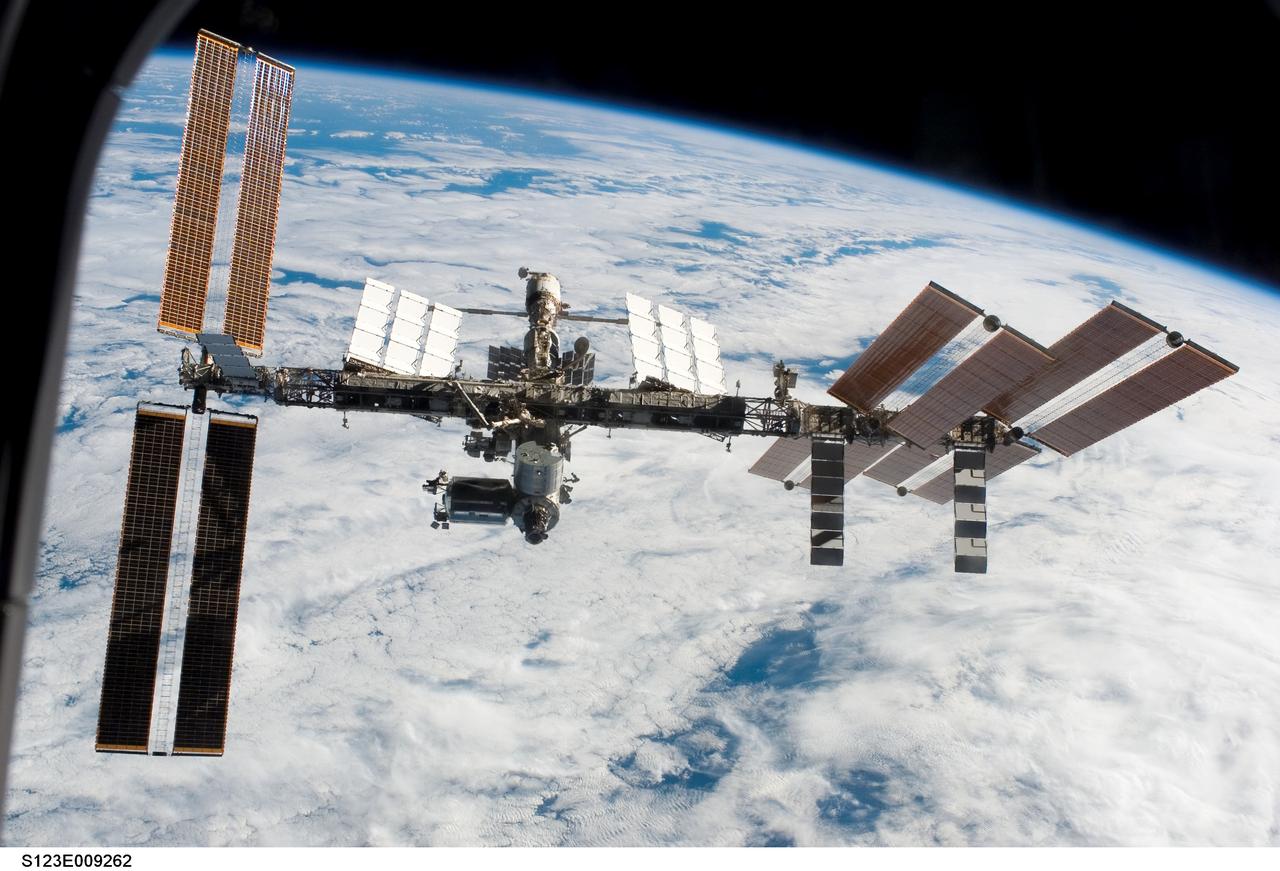
S123-E-009262 (24 March 2008) --- Backdropped by Earth's horizon and the blackness of space, the International Space Station is seen from Space Shuttle Endeavour as the two spacecraft begin their relative separation. Earlier the STS-123 and Expedition 16 crews concluded 12 days of cooperative work onboard the shuttle and station. Undocking of the two spacecraft occurred at 7:25 p.m. (CDT) on March 24, 2008.
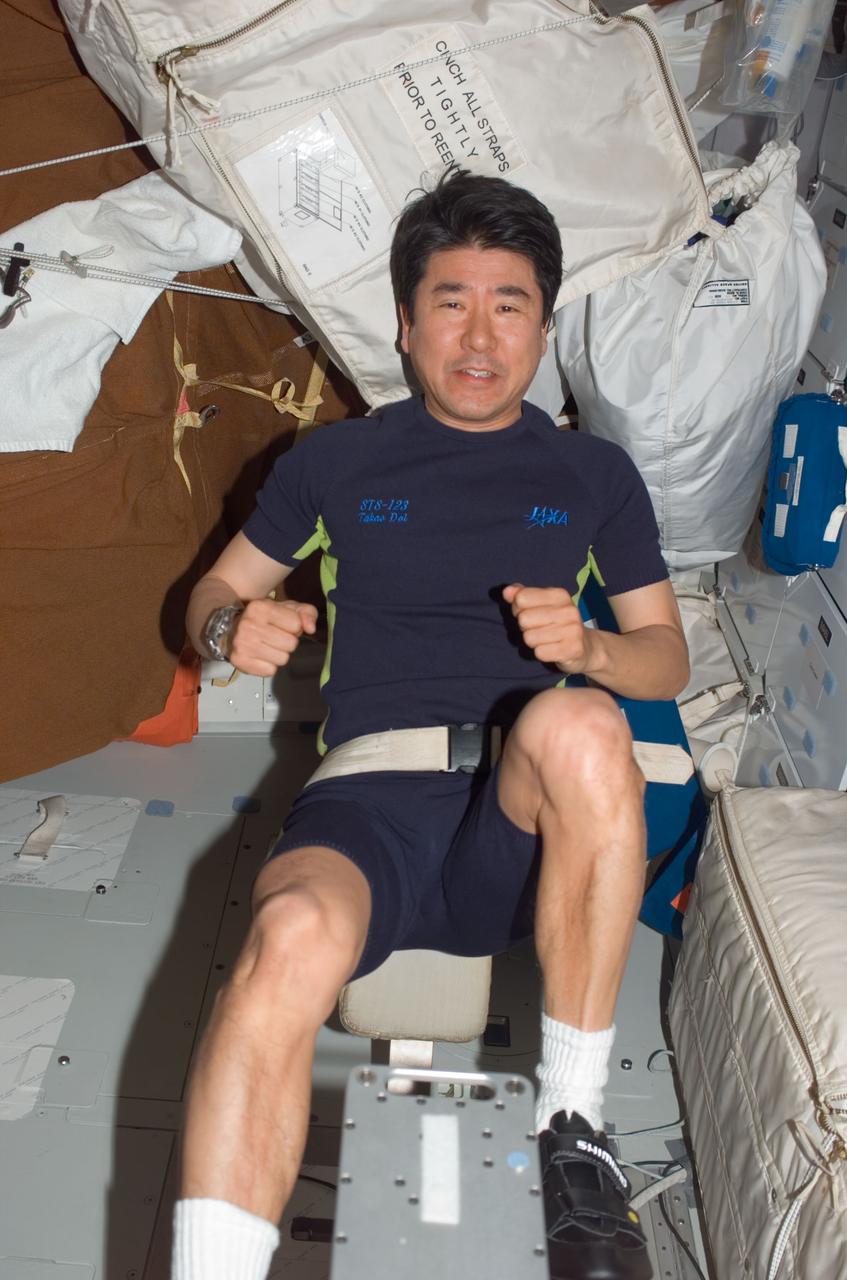
S123-E-006703 (16 March 2008) --- Japan Aerospace Exploration Agency (JAXA) astronaut Takao Doi, STS-123 mission specialist, exercises on a bicycle ergometer on the middeck of the Space Shuttle Endeavour while docked with the International Space Station.