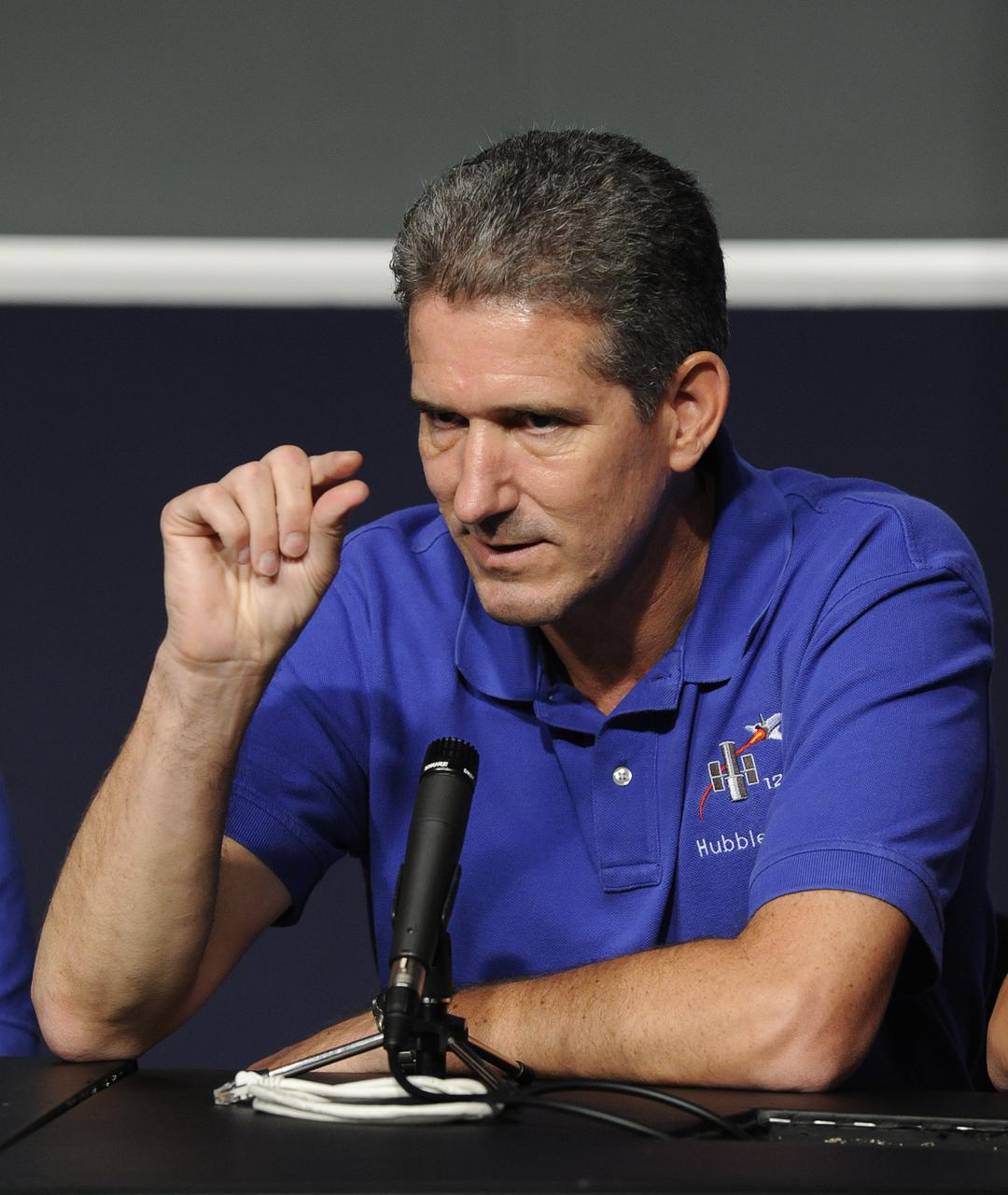
NASA Astronaut and STS-125 Mission Specialist Michael Good answers a question during a presentation with fellow STS-125 shuttle mission crew members at the NASA Tweetup event held at NASA Headquarters, July 21, 2009 in Washington. Nearly 200 of NASA’s Twitter followers are in attendance. Photo Credit: (Carla Cioffi)
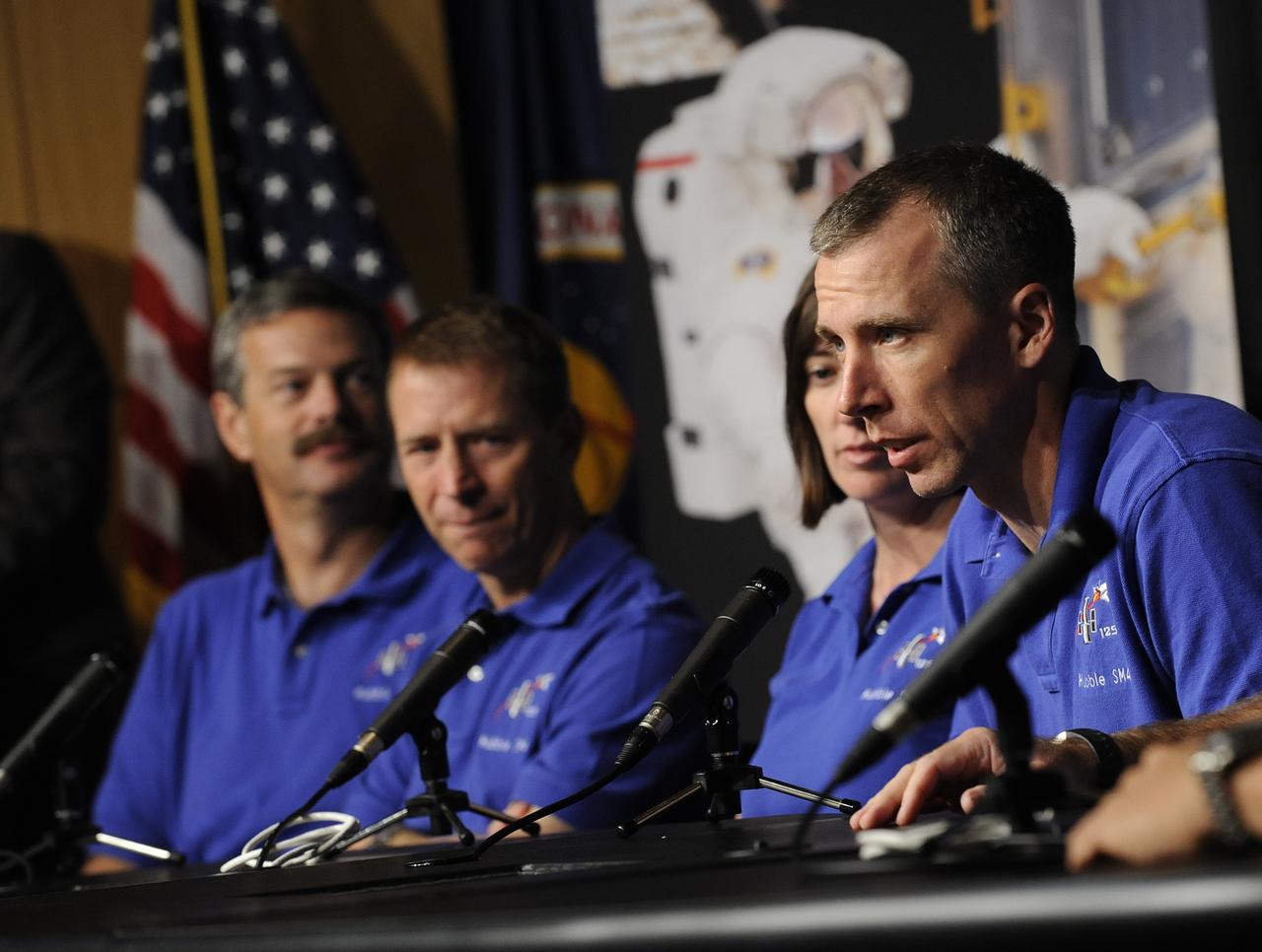
NASA AStronaut and STS-125 Mission Specialist Andrew Feustel, right, answers a question during a presentation with fellow STS-125 shuttle mission crew members at the NASA Tweetup event held at NASA Headquarters, July 21, 2009 in Washington. Nearly 200 of NASA’s Twitter followers are in attendance. Photo Credit: (Carla Cioffi)
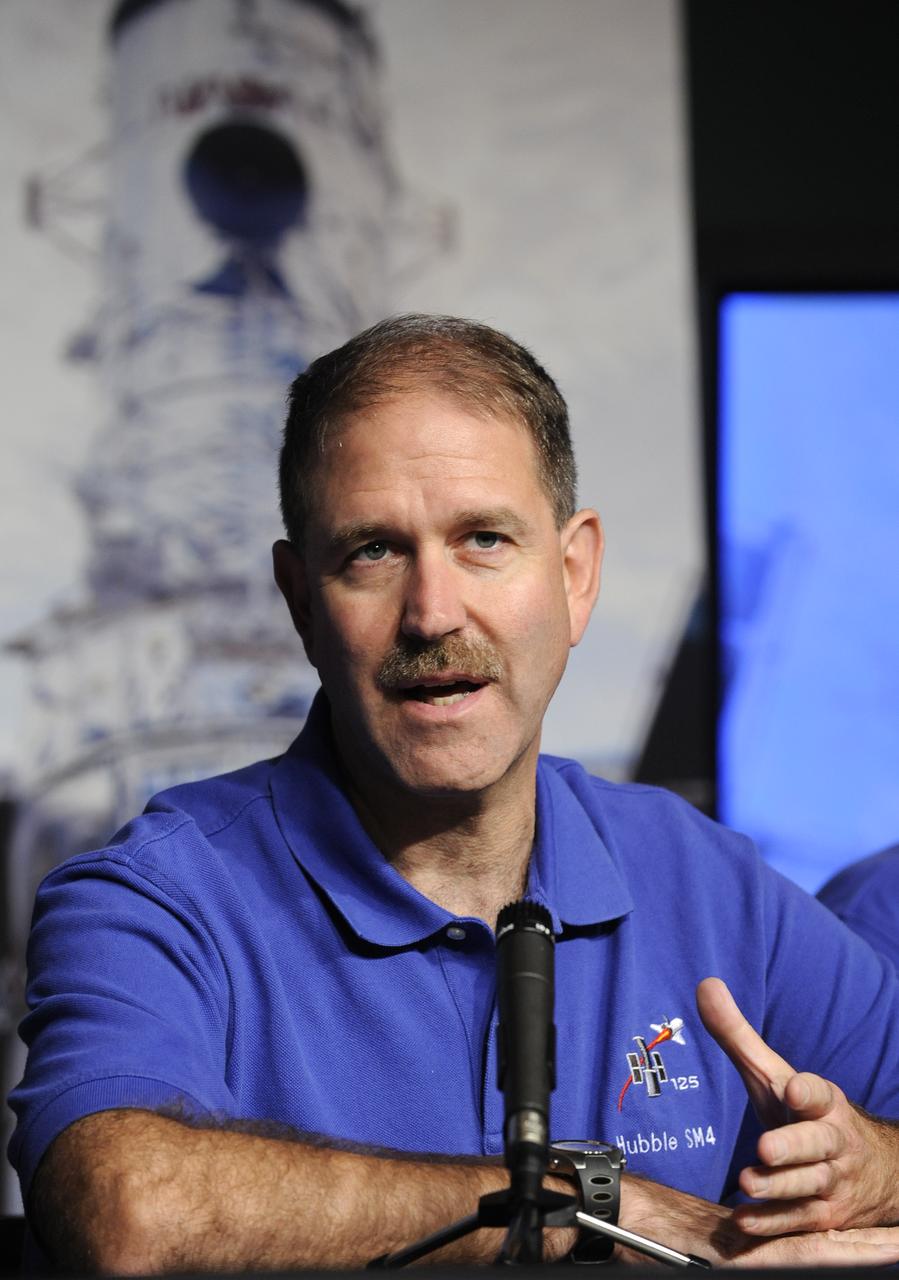
NASA Astronaut and STS-125 Mission Specialist John Grunsfeld answers a question during a presentation with fellow STS-125 shuttle mission crew members at the NASA Tweetup event held at NASA Headquarters, July 21, 2009 in Washington. Nearly 200 of NASA’s Twitter followers are in attendance. Photo Credit: (Carla Cioffi)
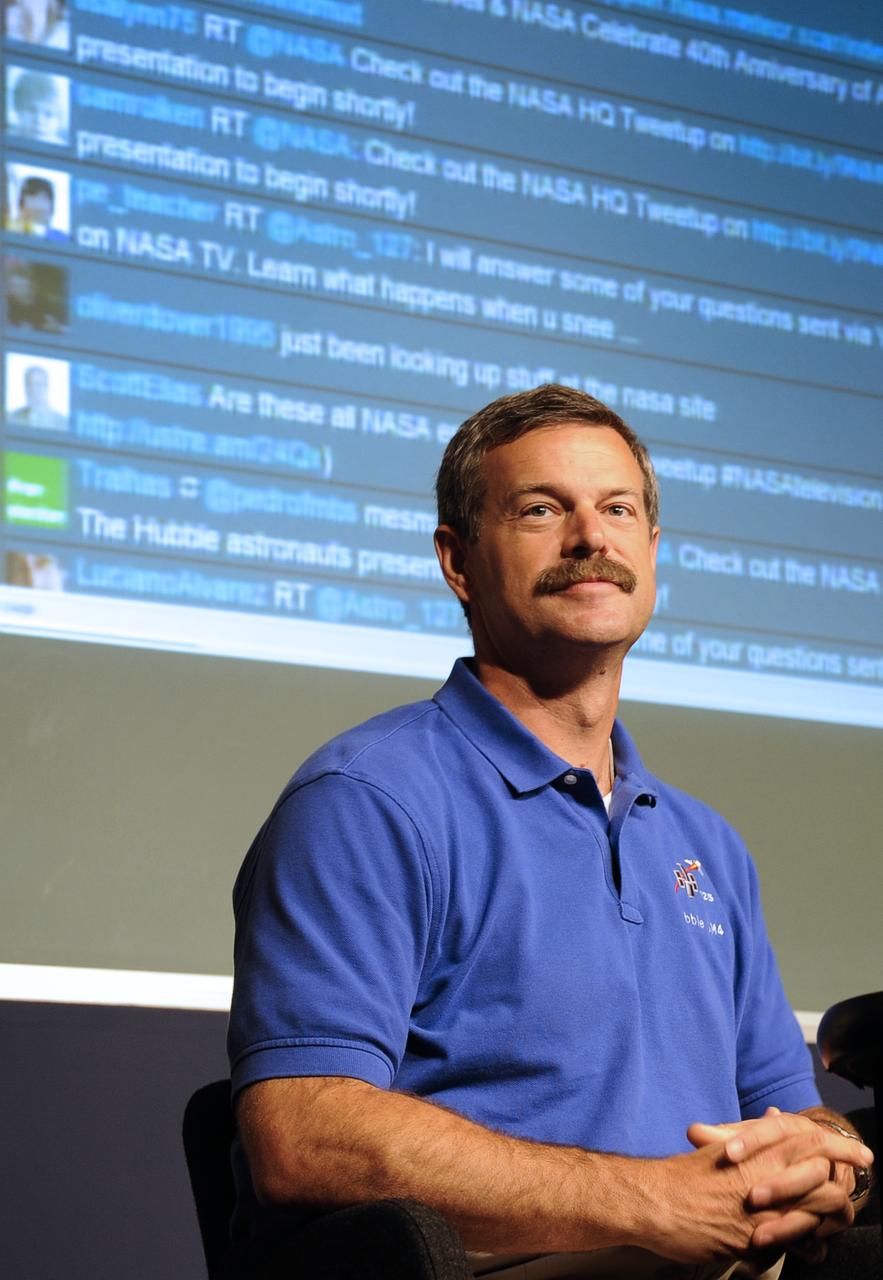
NASA Astronaut and STS-125 Mission Pilot Scott Altman prepares to give a presentation with fellow STS-125 shuttle mission crew members at the NASA Tweetup event held at NASA Headquarters, July 21, 2009 in Washington. Nearly 200 of NASA’s Twitter followers are in attendance. Photo Credit: (Carla Cioffi)
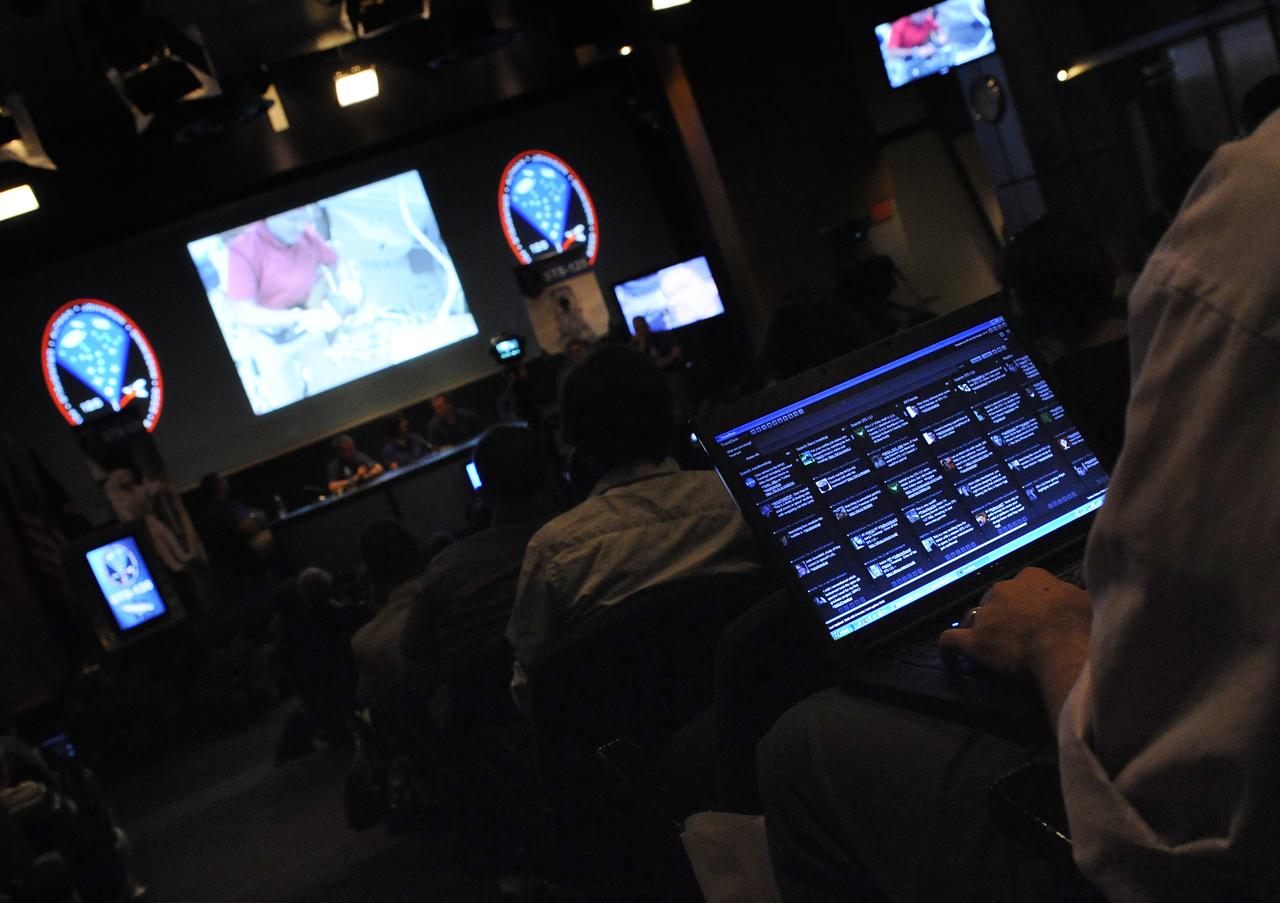
Guests use their laptop computers to "Tweet" and follow a NASA STS-125 crew presentation on Twitter at the NASA Tweetup event held at NASA Headquarters, July 21, 2009 in Washington. Nearly 200 of NASA’s Twitter followers are in attendance. Photo Credit: (Carla Cioffi)
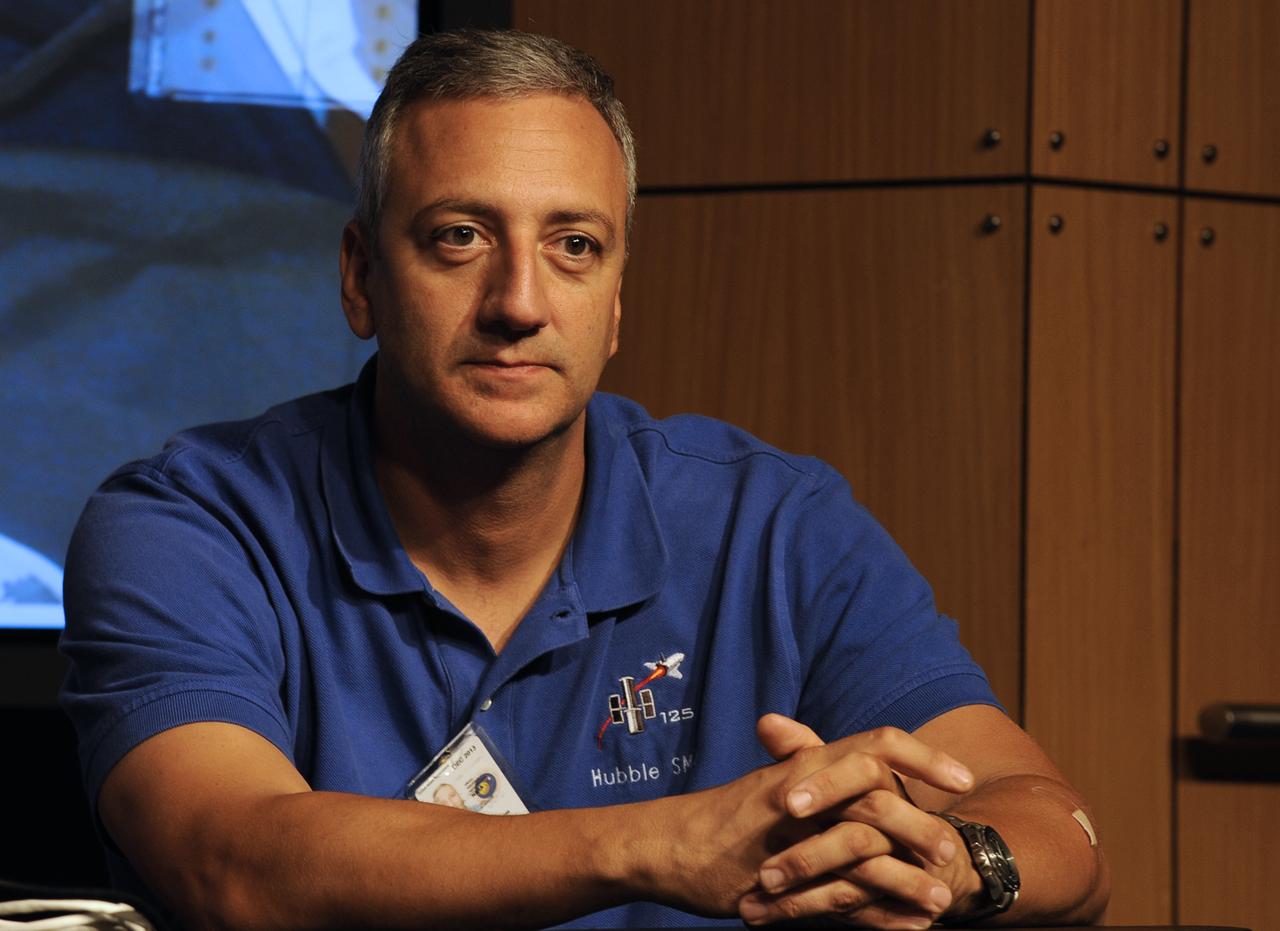
NASA Astronaut Mike Massimino, known as "Astro_Mike" on Twitter, prepares to give a presentation with fellow STS-125 shuttle mission crew members at the NASA Tweetup event held at NASA Headquarters, July 21, 2009 in Washington. Nearly 200 of NASA’s Twitter followers are in attendance. Photo Credit: (Carla Cioffi)
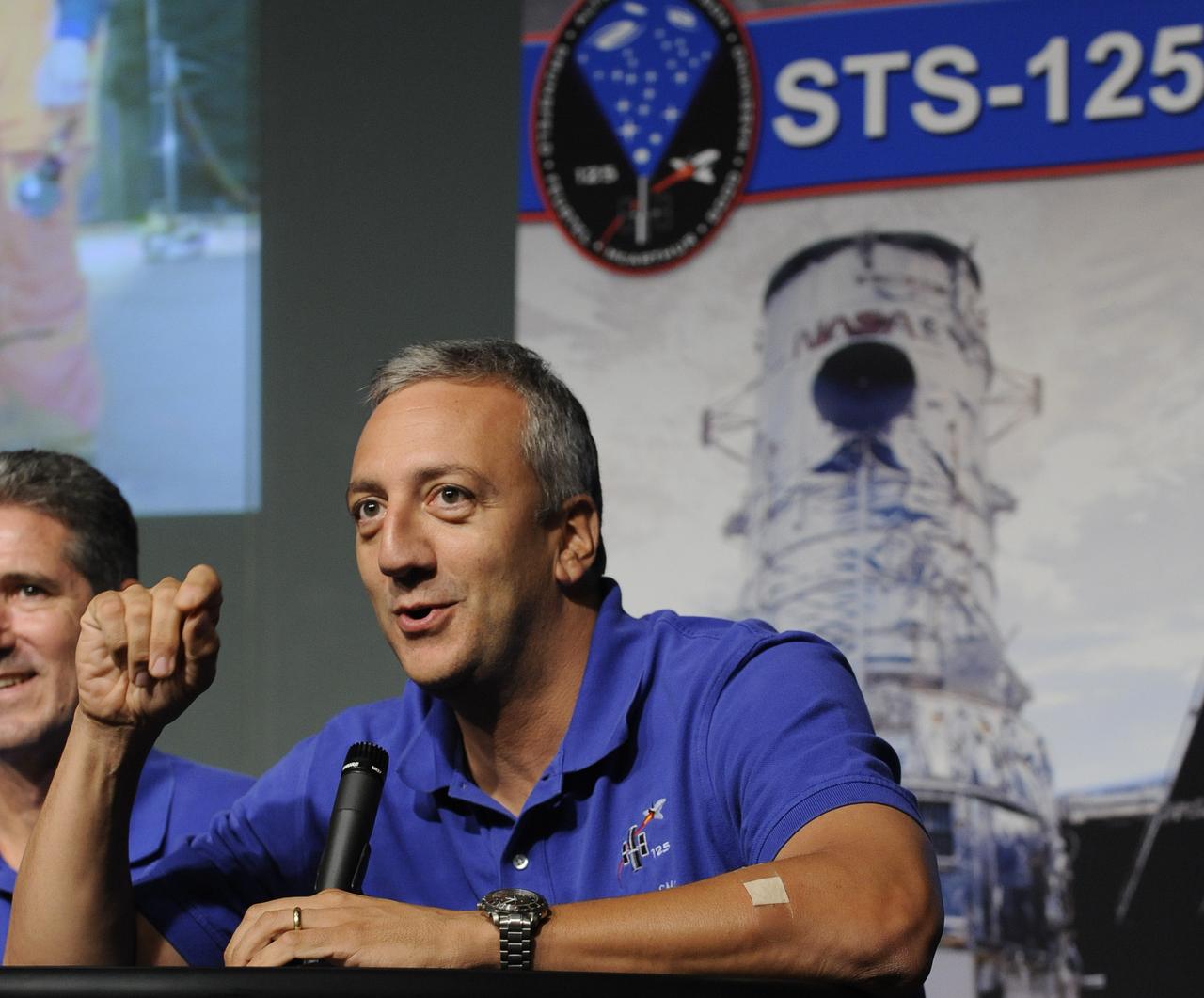
NASA Astronaut Mike Massimino, known as "Astro_Mike" on Twitter, answers a question during a presentation with fellow STS-125 shuttle mission crew members at the NASA Tweetup event held at NASA Headquarters, July 21, 2009 in Washington. Nearly 200 of NASA’s Twitter followers are in attendance. Photo Credit: (Carla Cioffi)
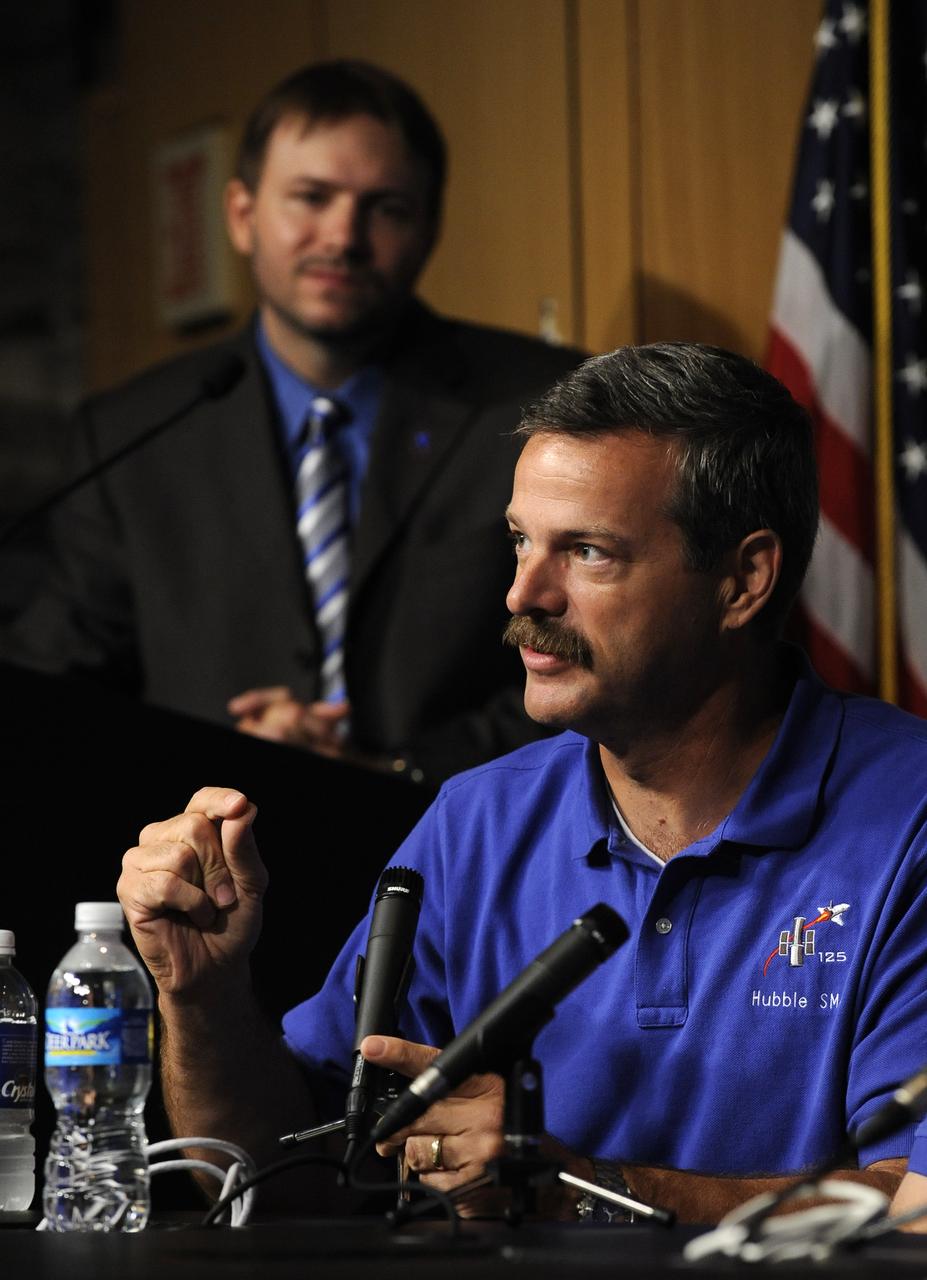
NASA Astronaut and STS-125 Mission Pilot Scott Altman answers questions at the NASA Tweetup event held at NASA Headquarters, July 21, 2009 in Washington. Nearly 200 of NASA’s Twitter followers are in attendance. Photo Credit: (Carla Cioffi)
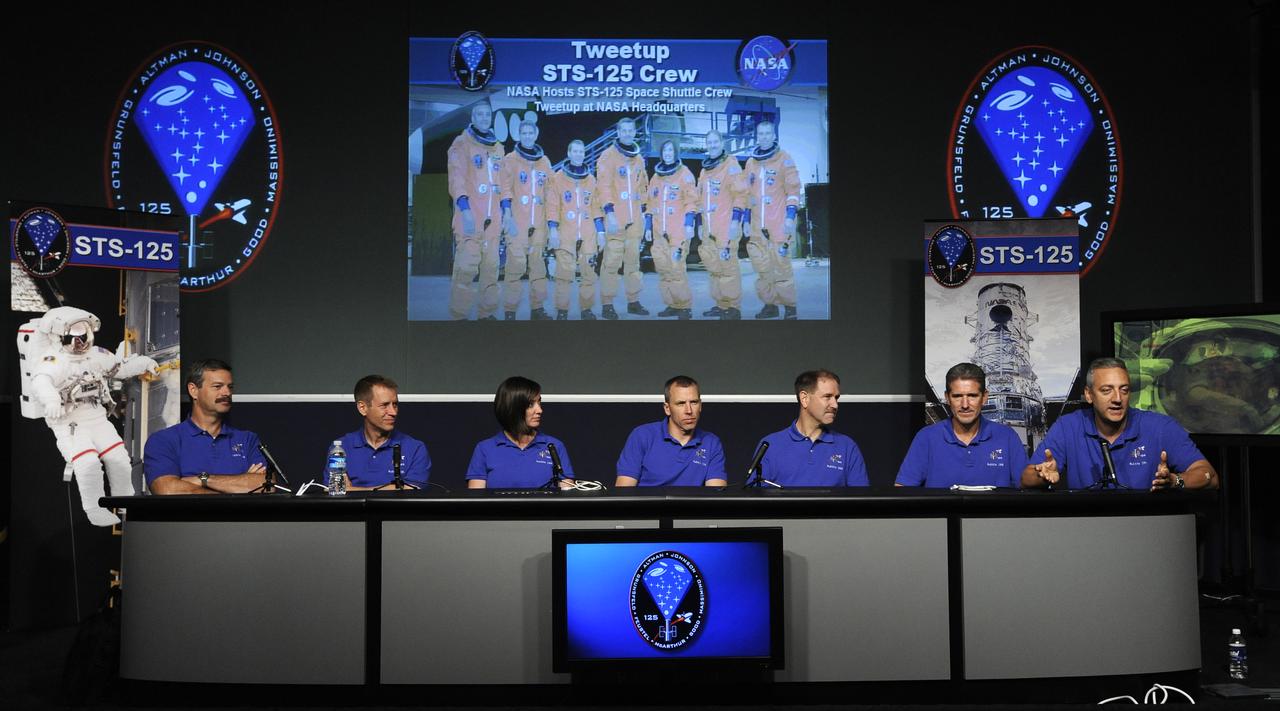
STS-125 shuttle mission crew members, from left, Scott Altman, Gregory Johnson, Megan McArthur, Andrew Feustel, John Grunsfeld, Michael Good and Michael Massimino, give a presentation at the NASA Tweetup event held at NASA Headquarters, July 21, 2009 in Washington. Nearly 200 of NASA's Twitter followers are in attendance, which featured a presentation and a question and answer session with the crew of the STS-125 shuttle mission to repair the Hubble Space Telescope. Photo Credit: (Carla Cioffi)
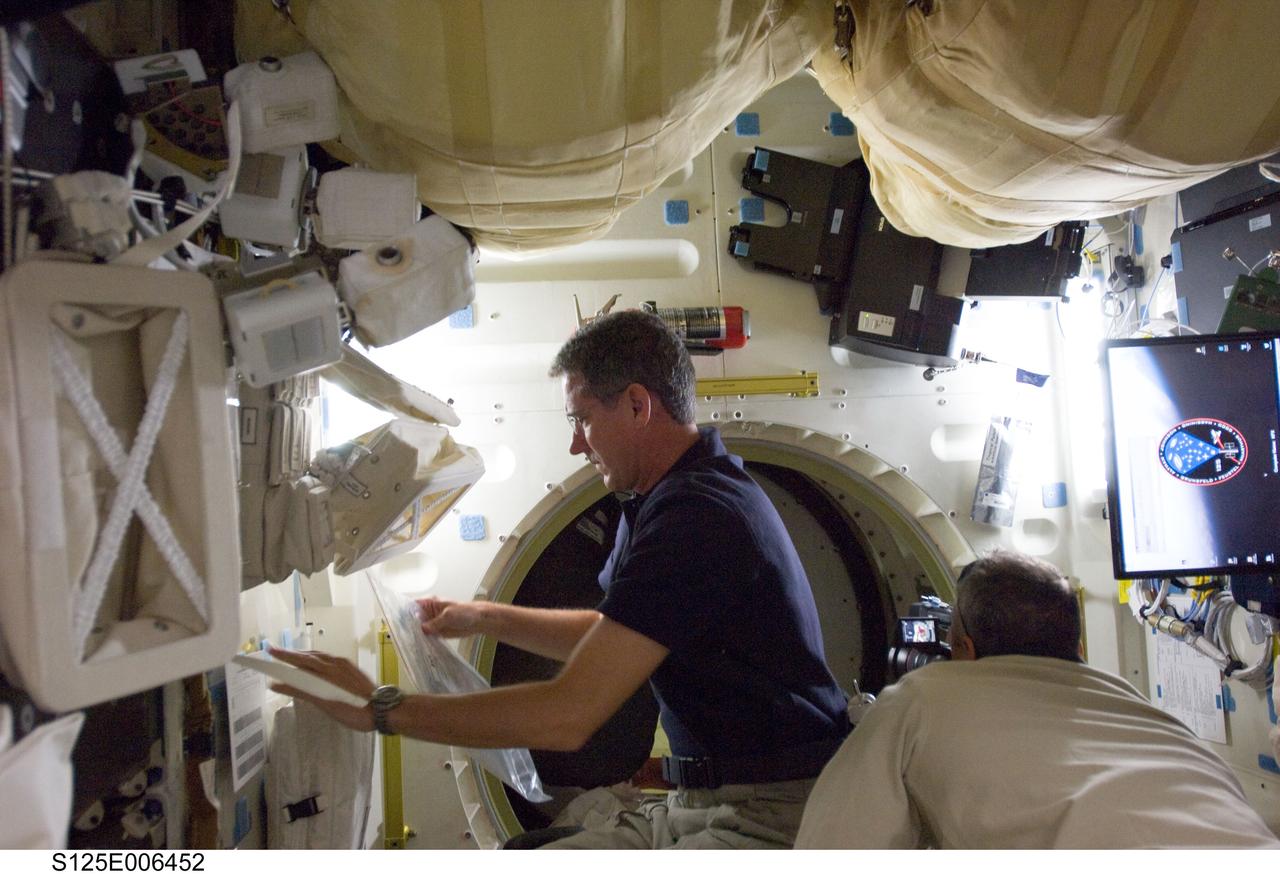
S125-E-006452 (12 May 2009) --- Astronaut Michael Good, STS-125 mission specialist, is busy on Atlantis? mid deck during his second day in space. Astronaut Mike Massimino, mission specialist, uses a camera to document Good's task. The next several days prove to be very busy for the entire crew, as five spacewalks, two of which will have Good leaving the shirt sleeved environment of the shuttle to perform work on the Hubble Space Telescope, are in the offing.
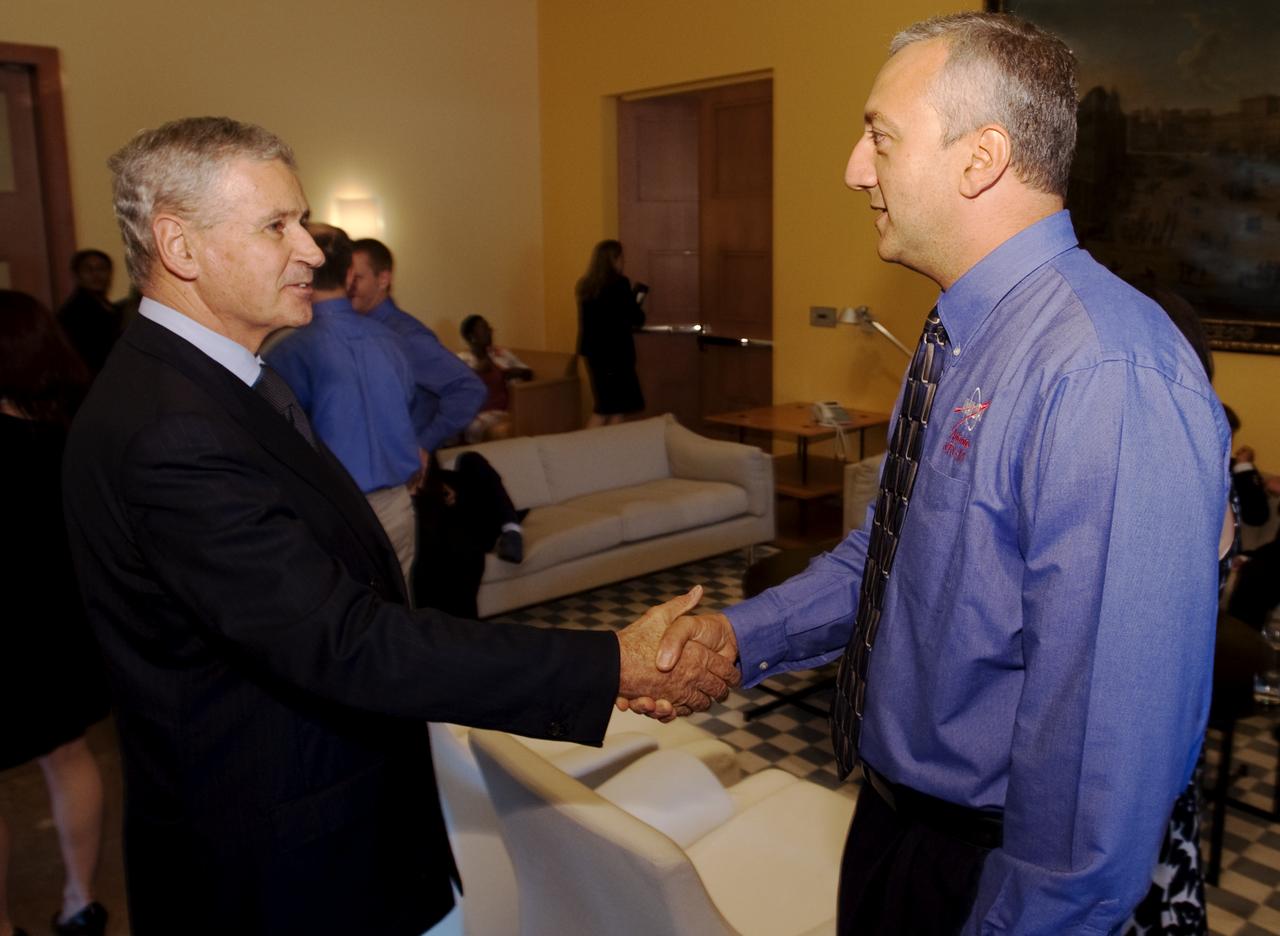
Giovanni Castellaneta, Ambassador of Italy, left, shakes hands with STS-125 Mission Specialist Mike Massimino during a visit by the crew of STS-125 to the Embassy of Italy in Washington, Thursday, July 23, 2009. Photo Credit: (NASA/Bill Ingalls)

STS-125 Mission Specialist Mike Massimino makes comments about the STS-125 mission to the Hubble Space Telescope during a visit by the crew to the Embassy of Italy in Washington, Thursday, July 23, 2009. Photo Credit: (NASA/Bill Ingalls)
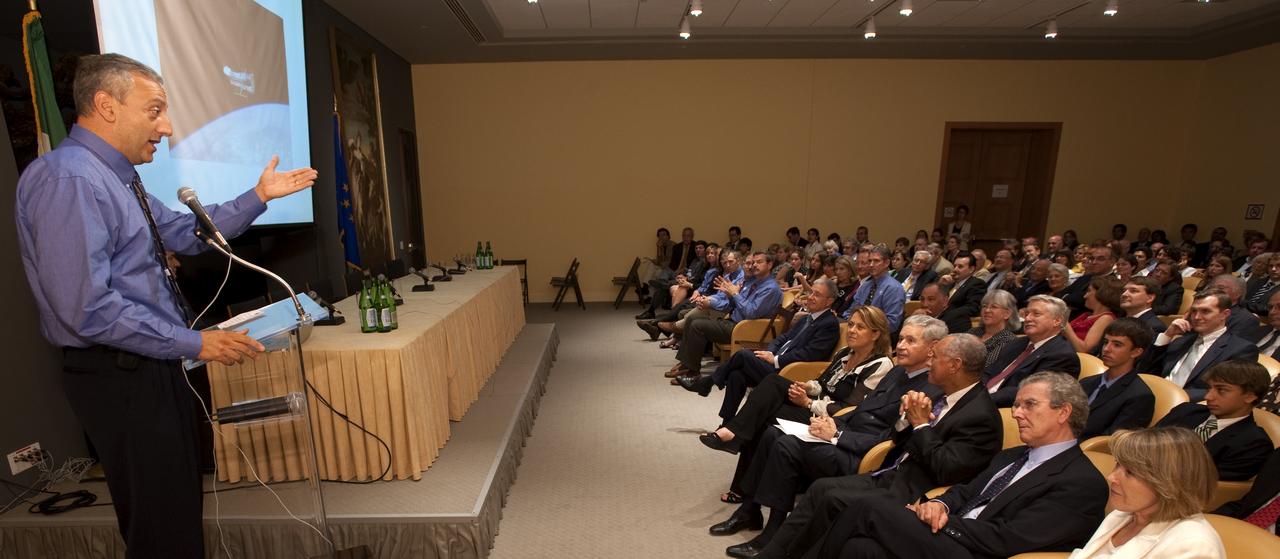
STS-125 Mission Specialist Mike Massimino, left, an American of Italian descent, makes comments about the STS-125 mission to the Hubble Space Telescope during a visit by the crew to the Embassy of Italy in Washington, Thursday, July 23, 2009. Photo Credit: (NASA/Bill Ingalls)
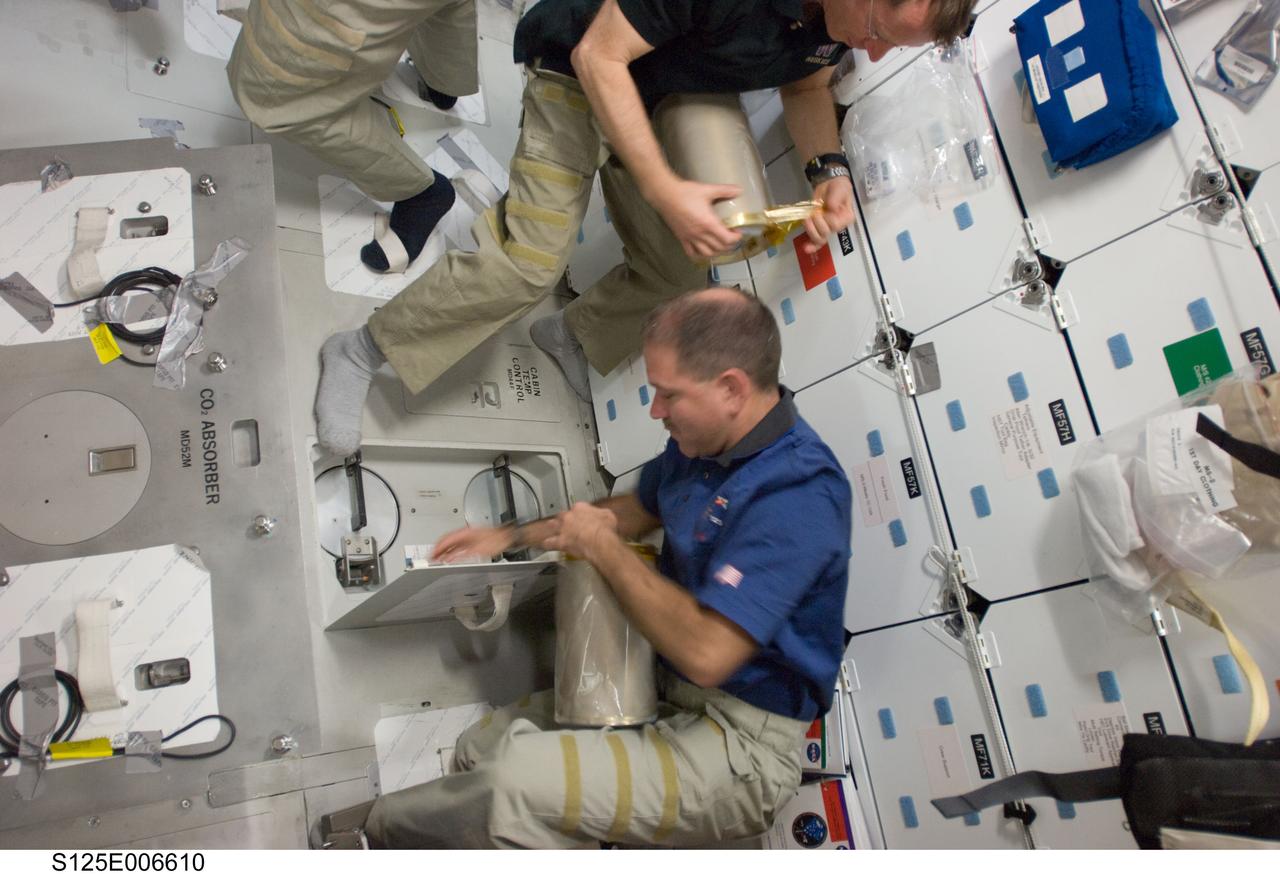
S125-E-006610 (13 May 2009) --- Astronauts John Grunsfeld (bottom), STS-125 mission specialist; and Gregory C. Johnson (partially out of frame), pilot, work with lithium hydroxide (LiOH) canisters from beneath Space Shuttle Atlantis' middeck during flight day three activities.
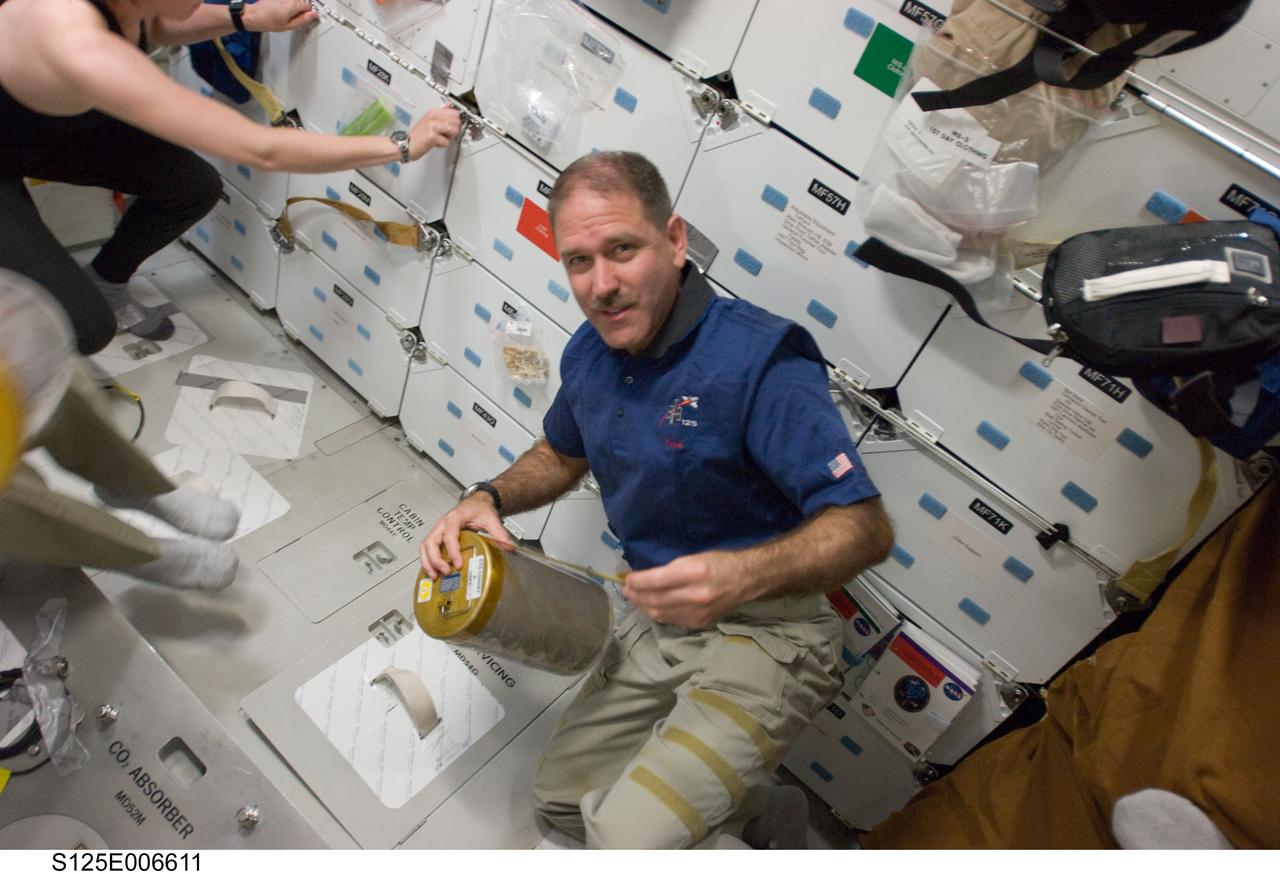
S125-E-006611 (13 May 2009) --- Astronaut John Grunsfeld, STS-125 mission specialist, works with lithium hydroxide (LiOH) canisters from beneath Space Shuttle Atlantis' middeck during flight day three activities.
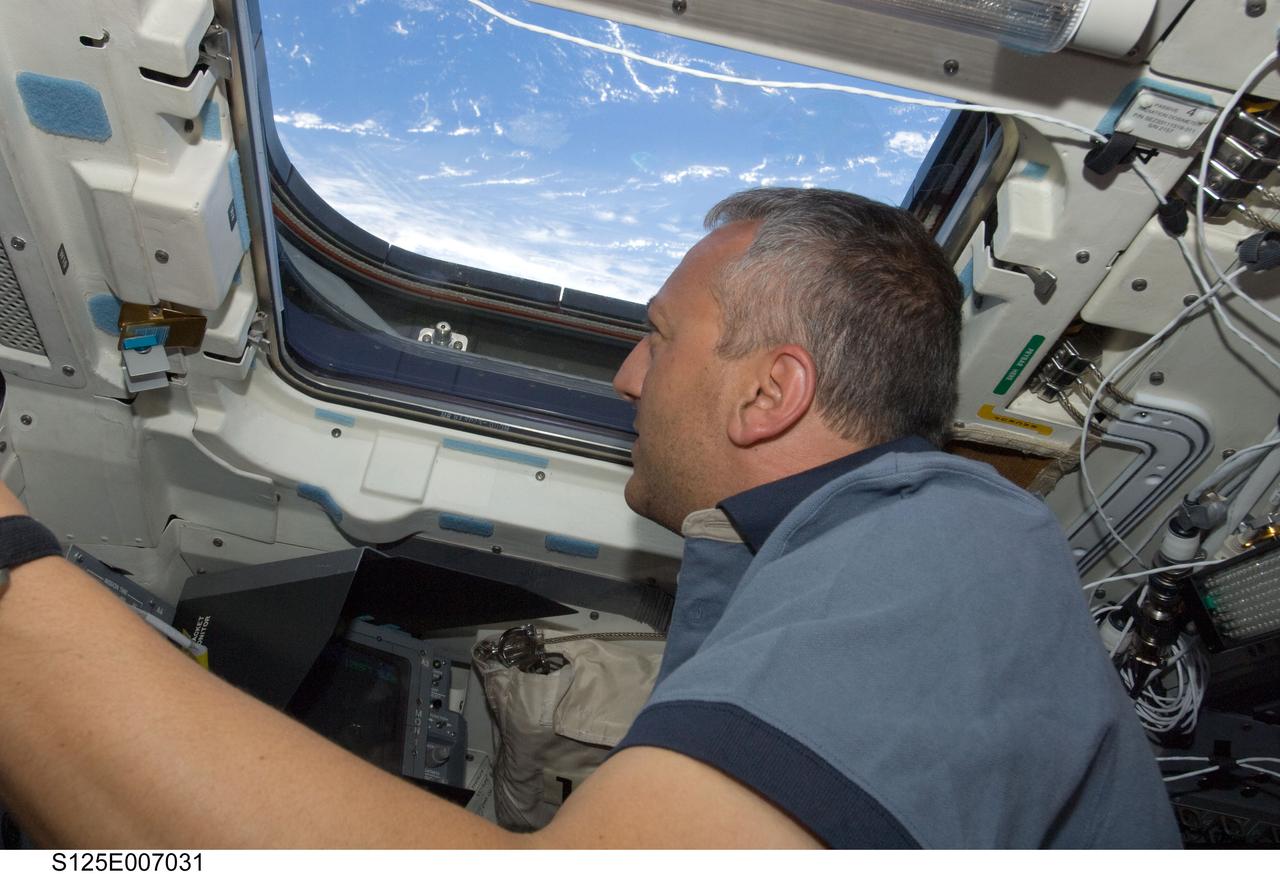
S125-E-007031 (13 May 2009) --- Astronaut Mike Massimino, STS-125 mission specialist, looks through an overhead window on the aft flight deck of Space Shuttle Atlantis during flight day three activities.
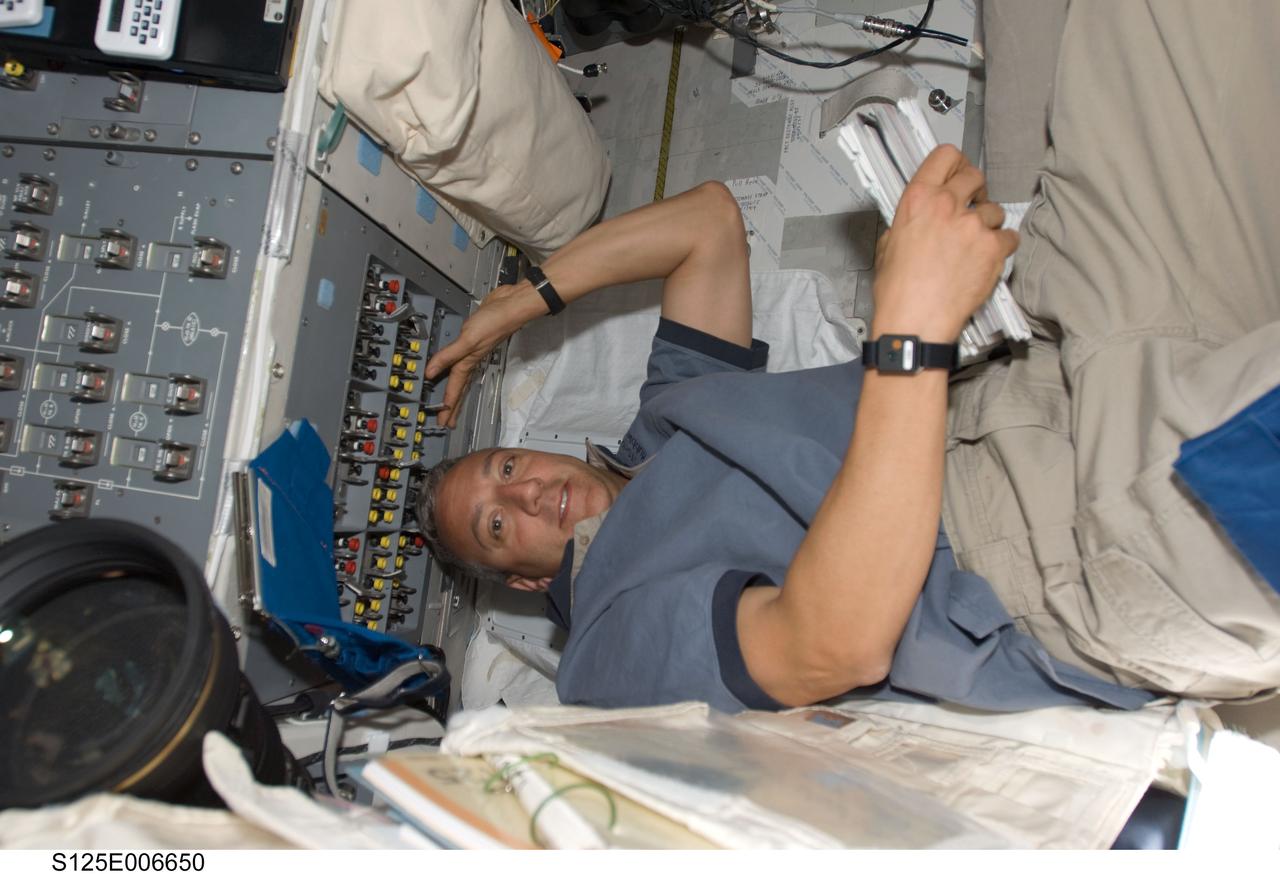
S125-E-006650 (13 May 2009) --- Astronaut Mike Massimino, STS-125 mission specialist, is pictured on the flight deck of Space Shuttle Atlantis during flight day three activities.
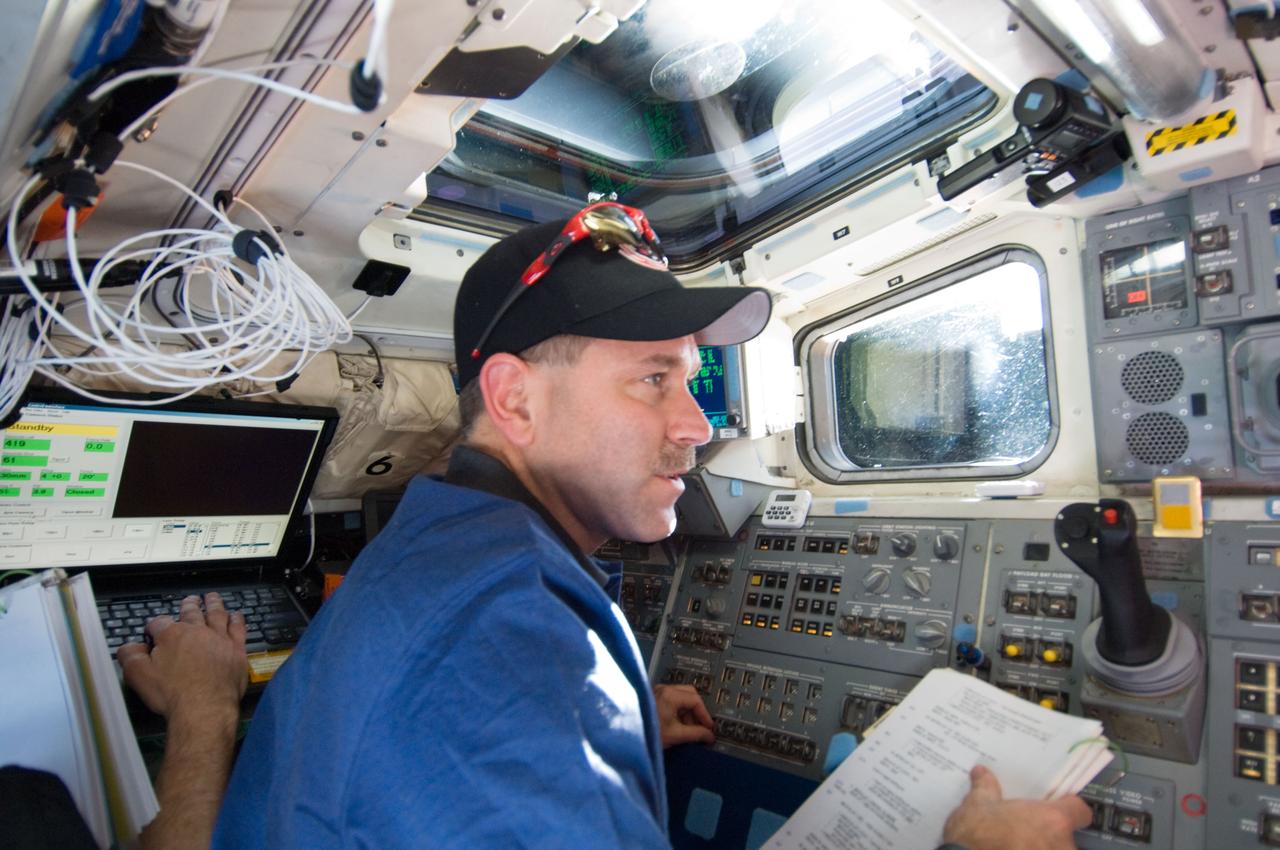
S125-E-007006 (13 May 2009) --- Astronaut John Grunsfeld, STS-125 mission specialist, works on the aft flight deck of Space Shuttle Atlantis during flight day three activities.
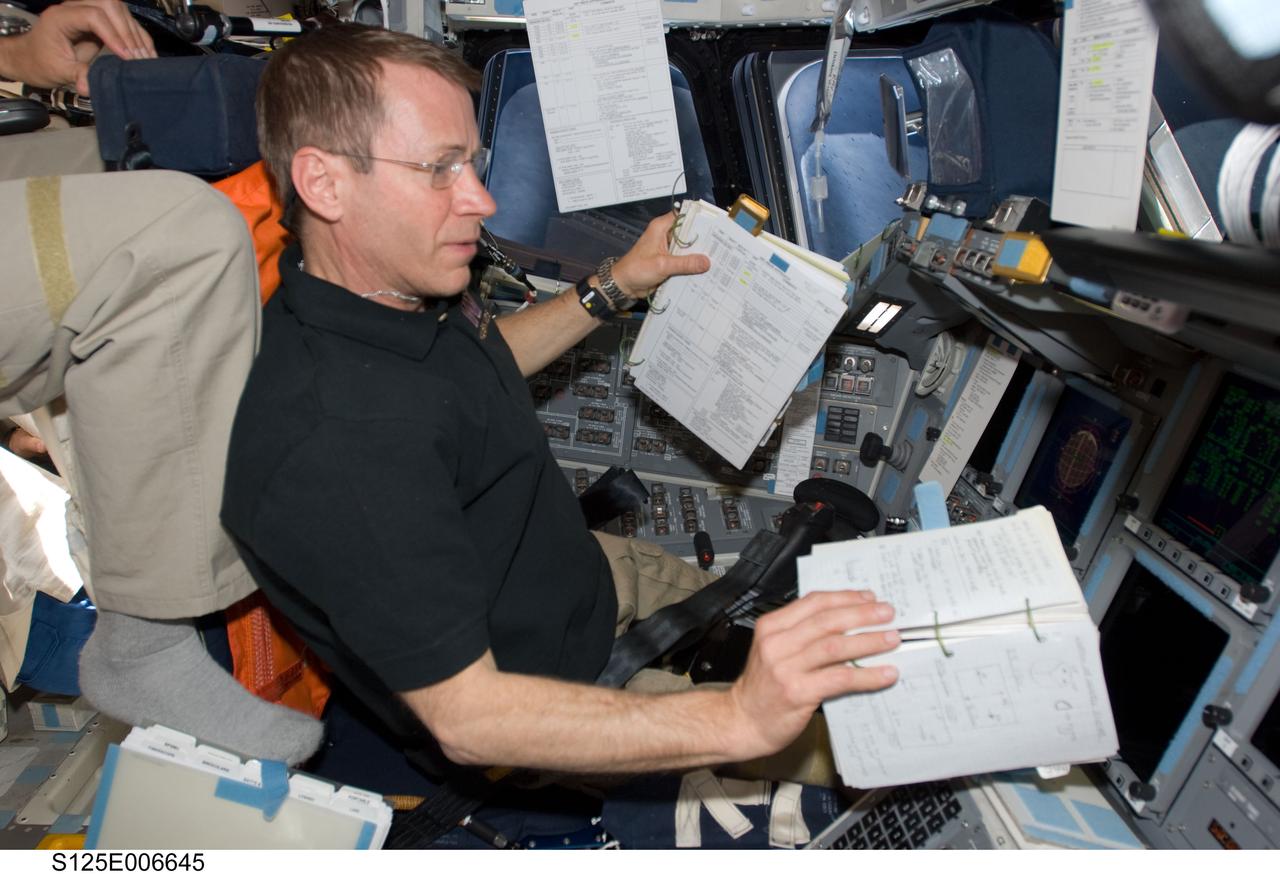
S125-E-006645 (13 May 2009) --- Astronaut Gregory C. Johnson, STS-125 pilot, occupies the commander?s station on the flight deck of Space Shuttle Atlantis during flight day three activities.
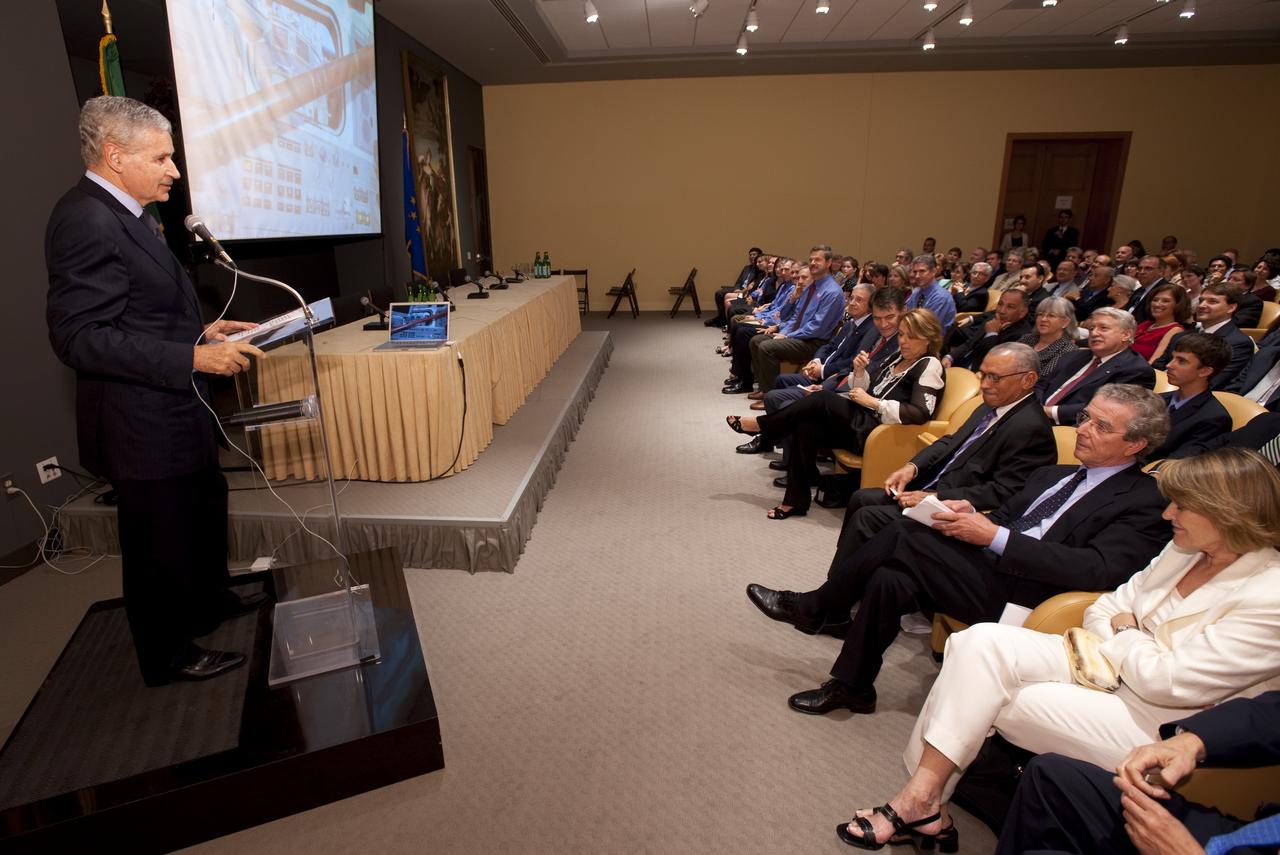
Giovanni Castellaneta, Ambassador of Italy, makes comments about the STS-125 mission to the Hubble Space Telescope during a visit by the crew to the Embassy of Italy in Washington, Thursday, July 23, 2009. Photo Credit: (NASA/Bill Ingalls)
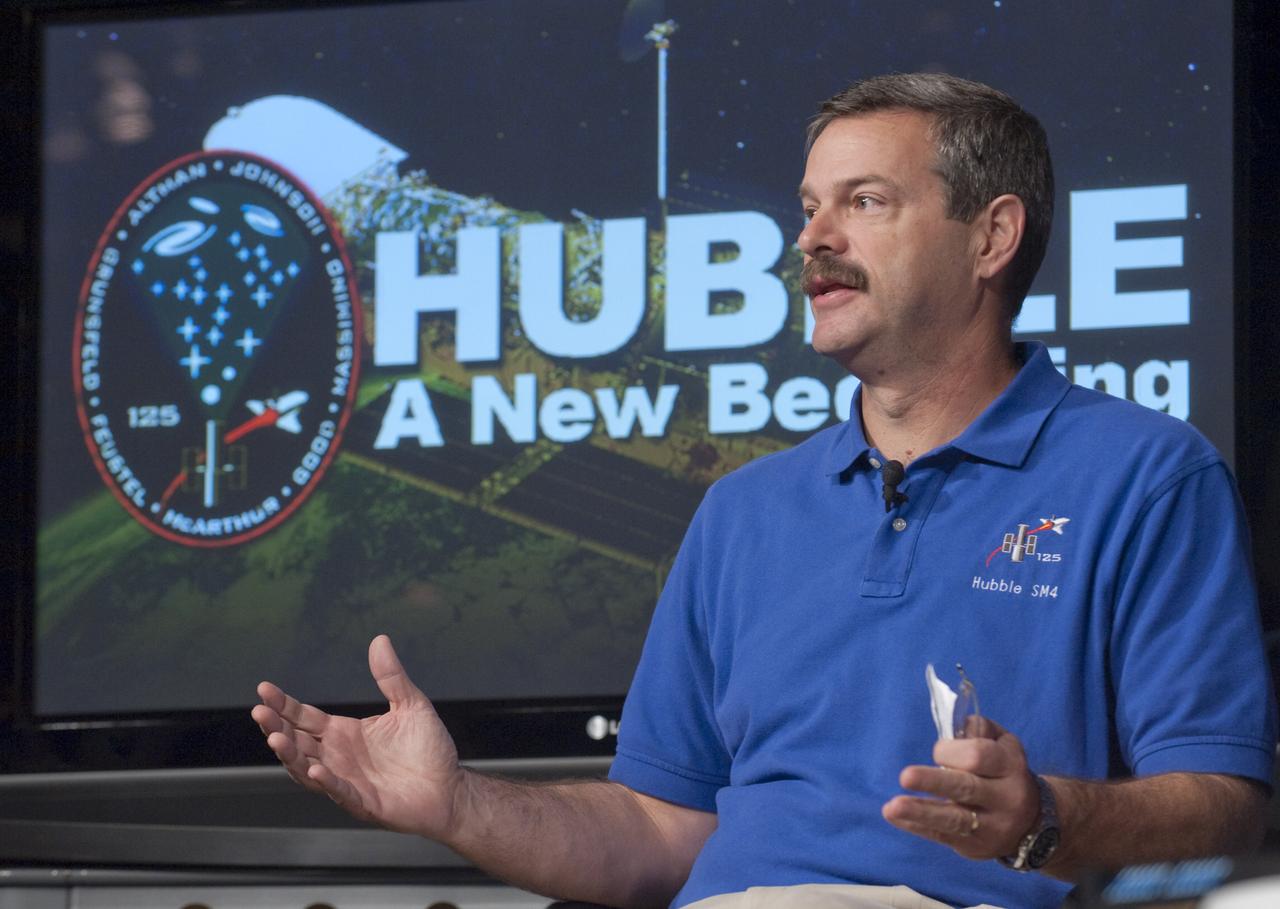
Scott Altman, who commanded the STS-125 mission to the Hubble Space Telescope, speaks during a press conference, Wednesday, Sept. 9, 2009, after astronomers declared the telescope a fully rejuvenated observatory with the release Wednesday of observations from four of its six operating science instruments at NASA Headquarters in Washington. Photo Credit: (NASA/Paul E. Alers)
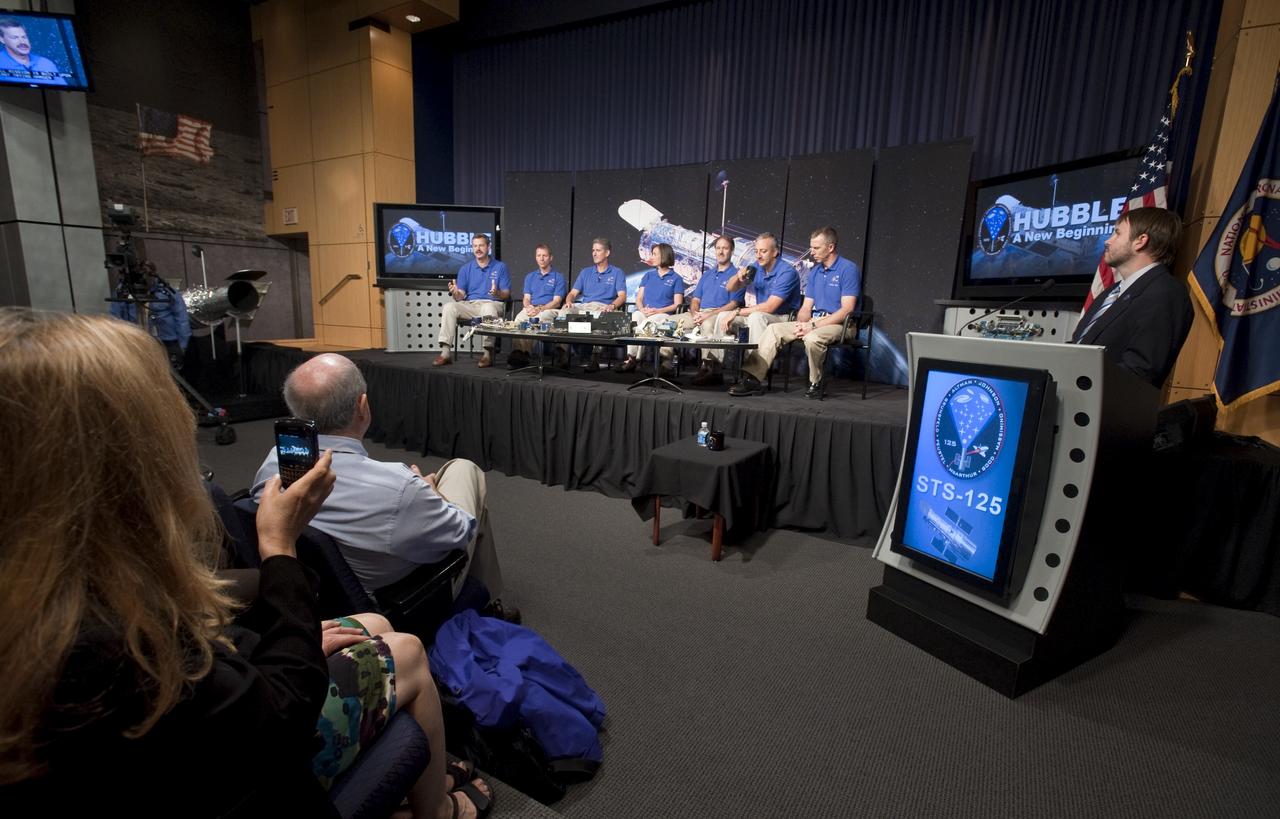
Scott Altman, who commanded the STS-125 mission to the Hubble Space Telescope, far left on stage, speaks during a press conference, Wednesday, Sept. 9, 2009, after astronomers declared the telescope a fully rejuvenated observatory with the release Wednesday of observations from four of its six operating science instruments at NASA Headquarters in Washington. Photo Credit: (NASA/Paul E. Alers)
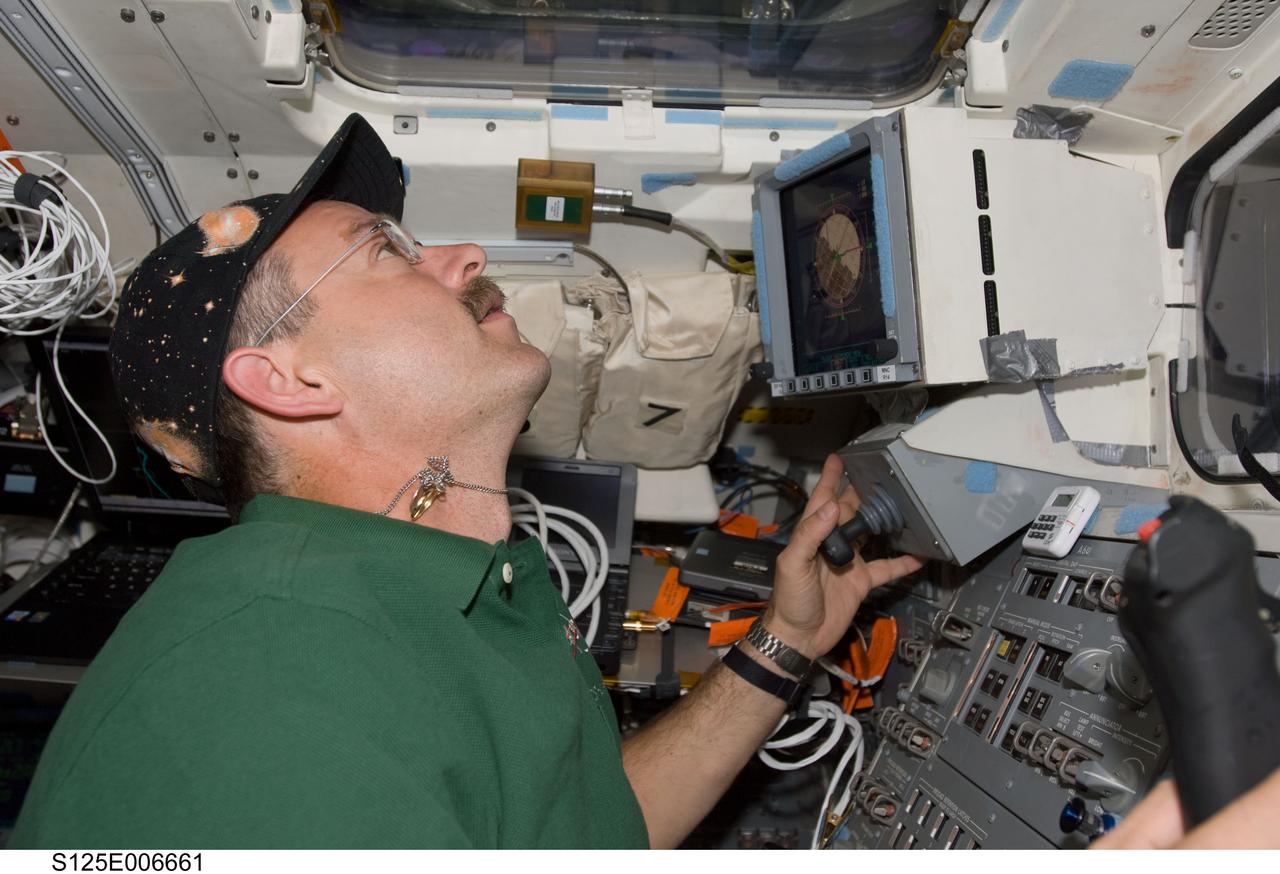
S125-E-006661 (13 May 2009) --- Astronaut Scott Altman, STS-125 commander, works the controls of the Space Shuttle Atlantis? remote manipulator system (RMS) robotic arm on the aft flight deck during the flight day three activities.
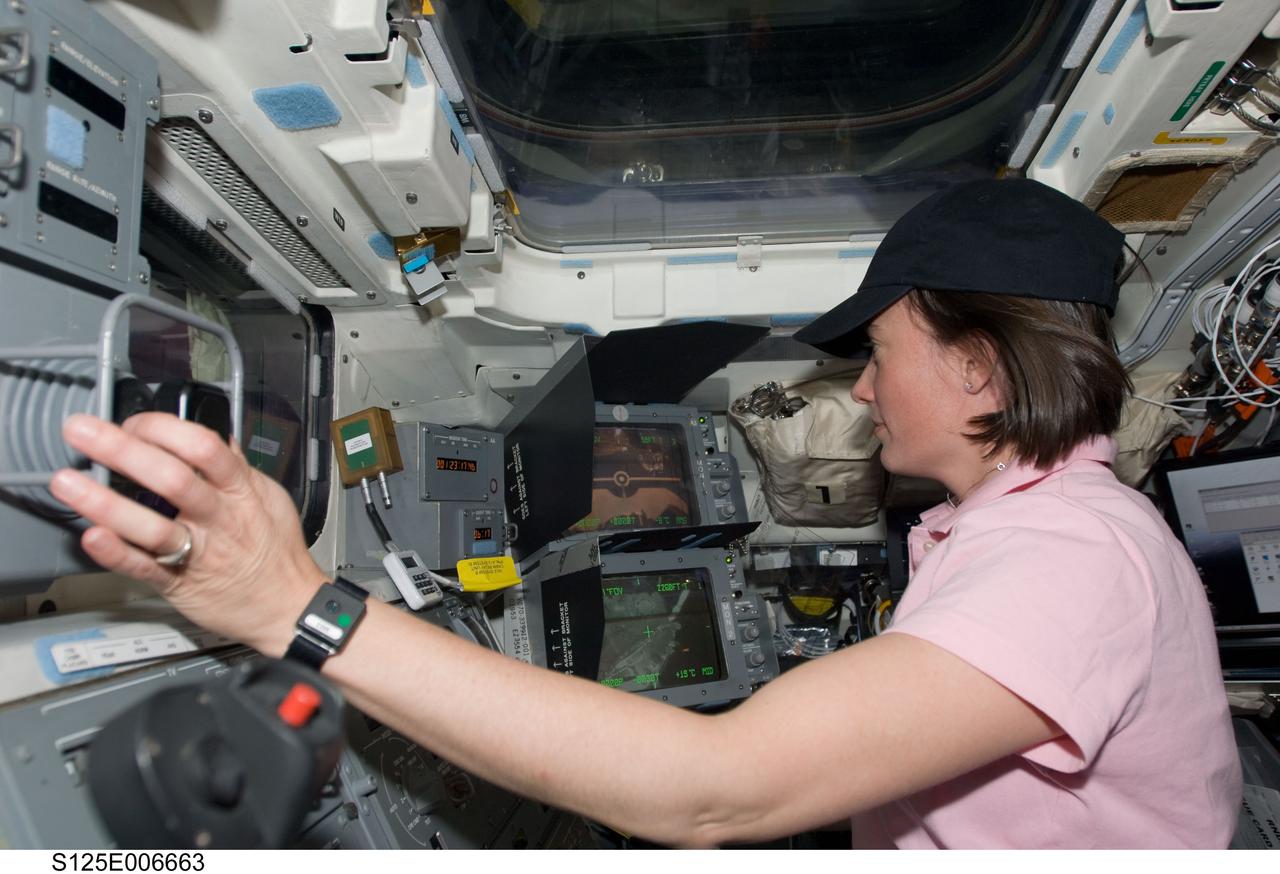
S125-E-006663 (13 May 2009) --- Astronaut Megan McArthur, STS-125 mission specialist, works the controls of Space Shuttle Atlantis? remote manipulator system (RMS) robotic arm on the aft flight deck during the flight day three activities.
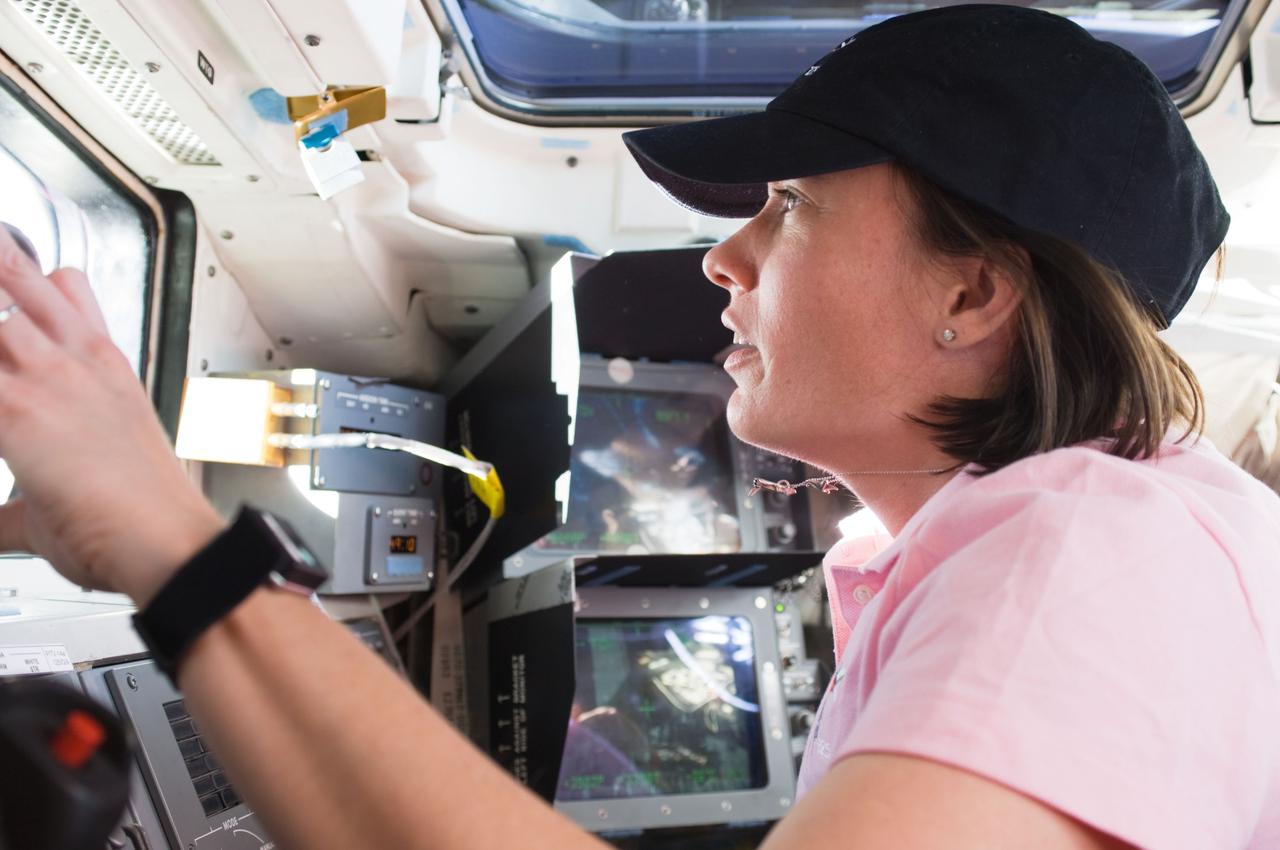
S125-E-007000 (13 May 2009) --- Astronaut Megan McArthur, STS-125 mission specialist, works the controls of Space Shuttle Atlantis? remote manipulator system (RMS) robotic arm on the aft flight deck during the flight day three activities.
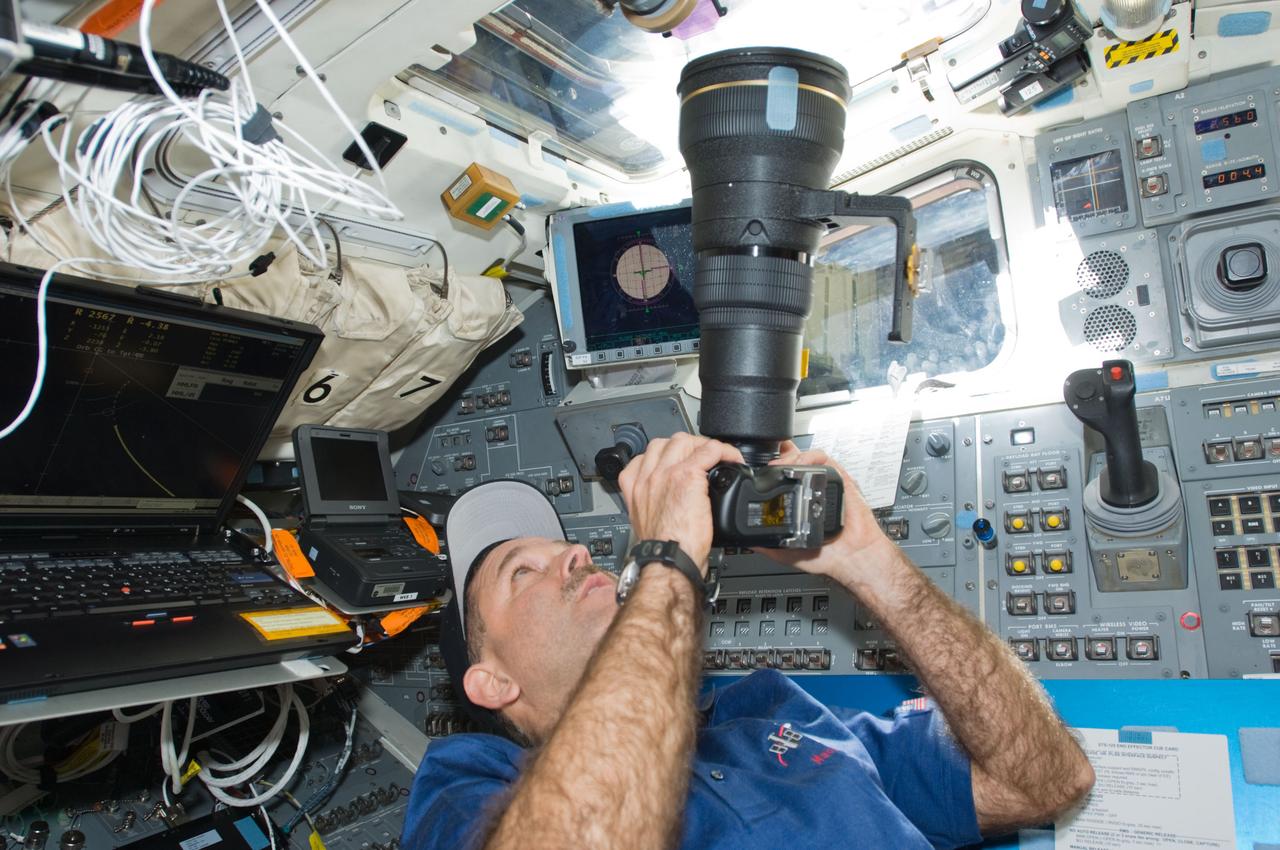
S125-E-006636 (13 May 2009) --- Astronaut John Grunsfeld, STS-125 mission specialist, uses a still camera at an overhead window on the aft flight deck of Space Shuttle Atlantis during flight day three activities.
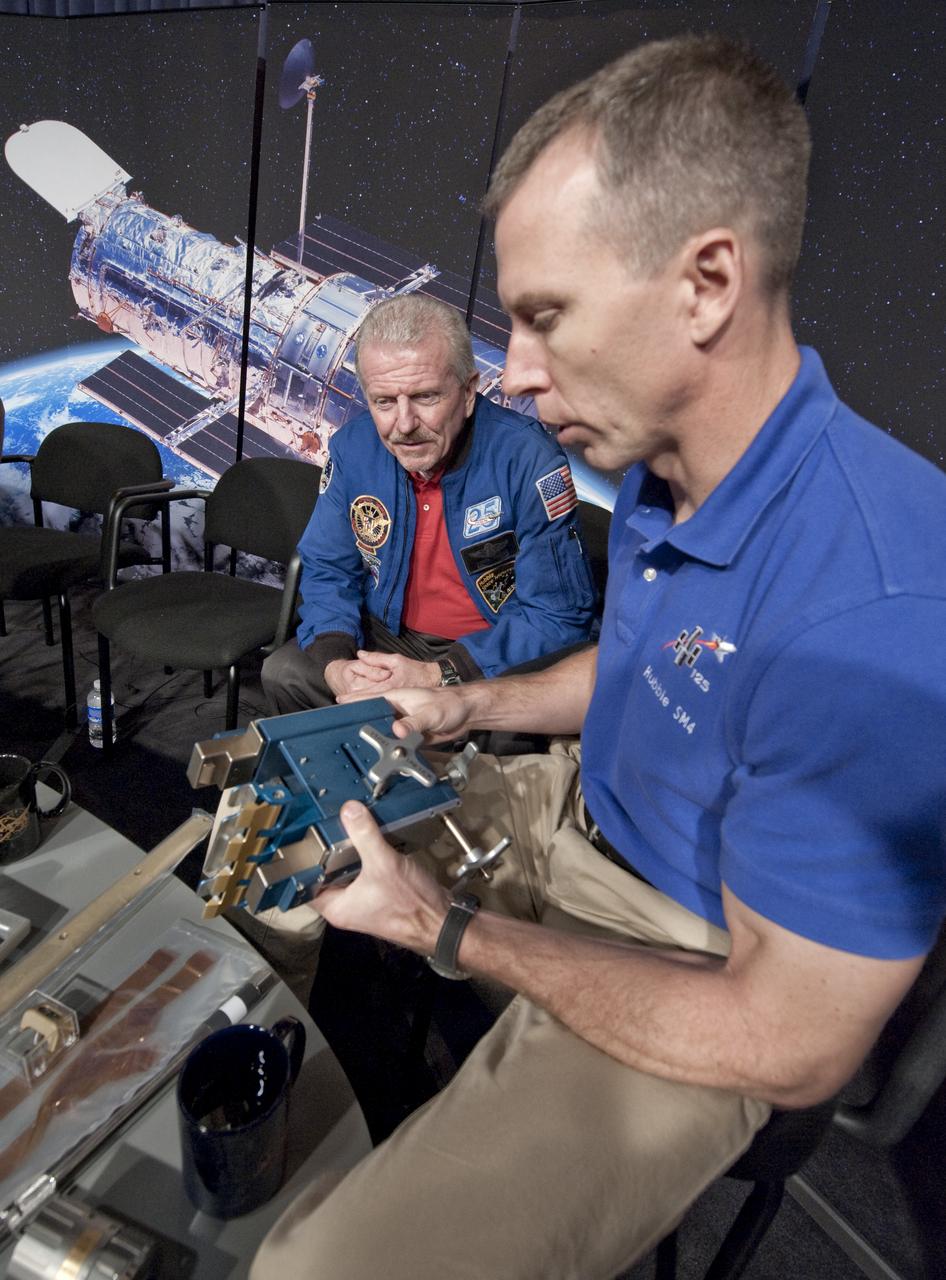
STS-125 Mission Specialist Andrew Feustel, right, shows a part from the Hubble Space Telescope to retired astronaut Loren Shriver, who flew on the Hubble deployment mission STS-31 in 1990, following a press conference, Wednesday, Sept. 9, 2009, after astronomers declared the telescope a fully rejuvenated observatory with the release Wednesday of observations from four of its six operating science instruments at NASA Headquarters in Washington. Photo Credit: (NASA/Paul E. Alers)

S125-E-005173 (12 May 2009) --- Among the first group of still images downlinked by the STS-125 crewmembers onboard the Space Shuttle Atlantis was this high oblique scene looking toward the Sinai Peninsula and the Mediterranean Sea. The Red Sea is just out of frame at bottom right. Saudi Arabia is in the right foreground and Egypt?s Nile River and its delta can be seen (lower left) toward the horizon. Jordan and a small portion of Israel can be seen near the top of the frame. The Gulf of Suez and the Gulf of Aqaba extend from the Red Sea toward the Mediterranean.
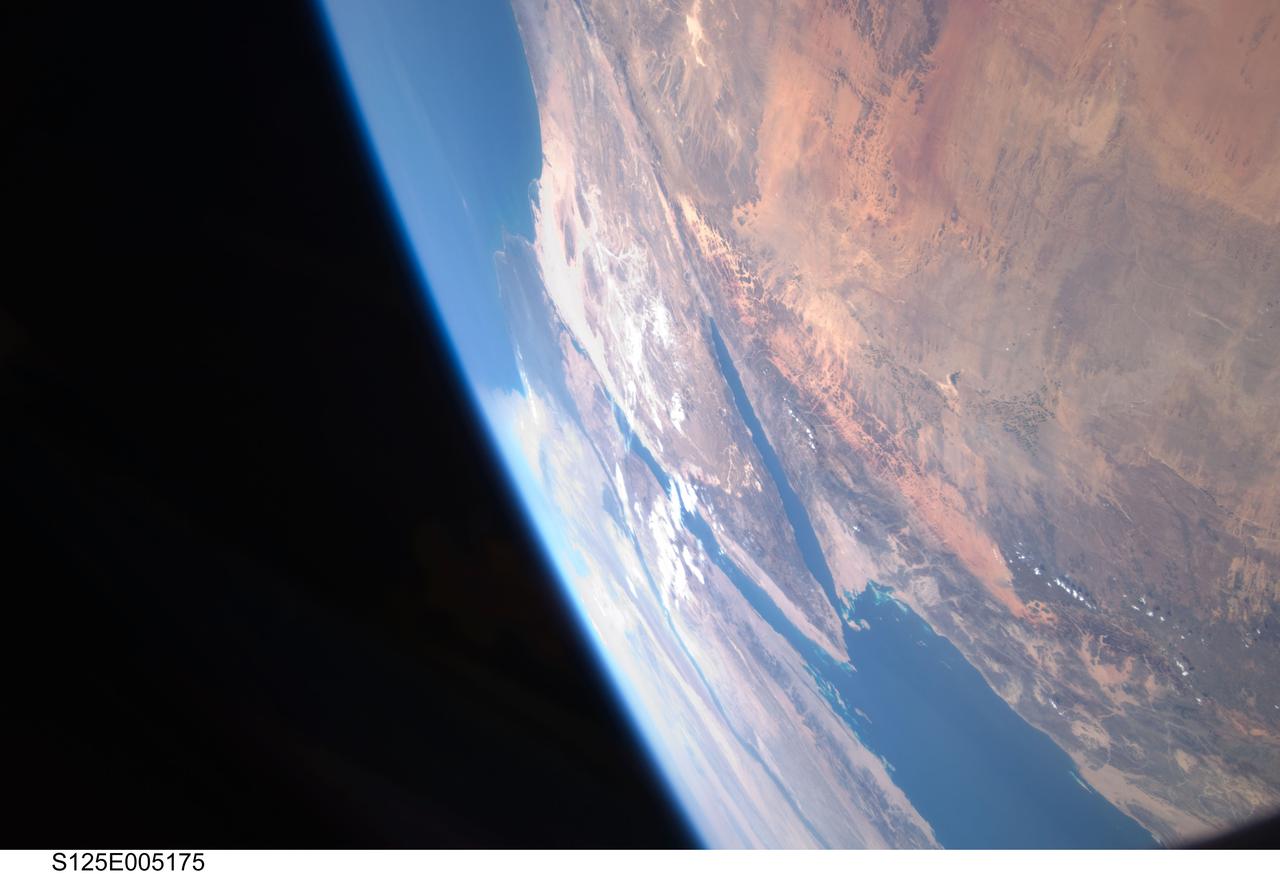
S125-E-005175 (12 May 2009) --- Among the first group of still images downlinked by the STS-125 crewmembers onboard the Space Shuttle Atlantis was this high oblique scene looking toward the Red Sea, Sinai Peninsula and the Mediterranean Sea. Saudi Arabia is in the foreground and Egypt?s Nile River and its delta can be seen (left) toward the horizon. Israel and Jordan can be seen near the top edge of the frame. The Gulf of Suez and the Gulf of Aqaba (near frame center) extend from the Red Sea toward the Mediterranean Sea.
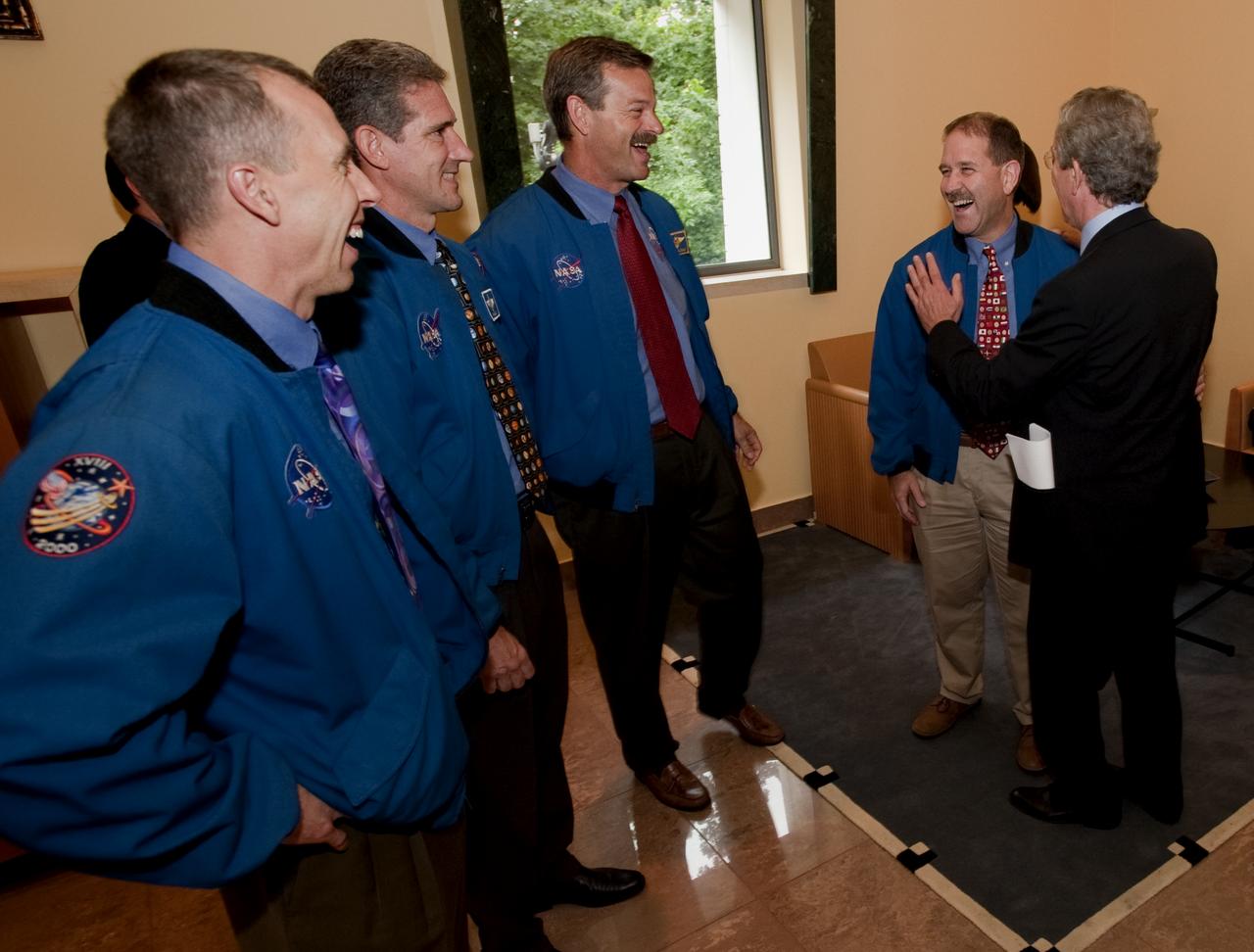
Members of the crew of STS-125, from left, Mission Specialists Andrew Feustel, Michael Good, Commander Scott Altman and Mission Specialist John Grunsfeld share a laugh with about the STS-125 mission to the Hubble Space Telescope during a visit by the crew to the Embassy of Italy in Washington, Thursday, July 23, 2009. Photo Credit: (NASA/Bill Ingalls)
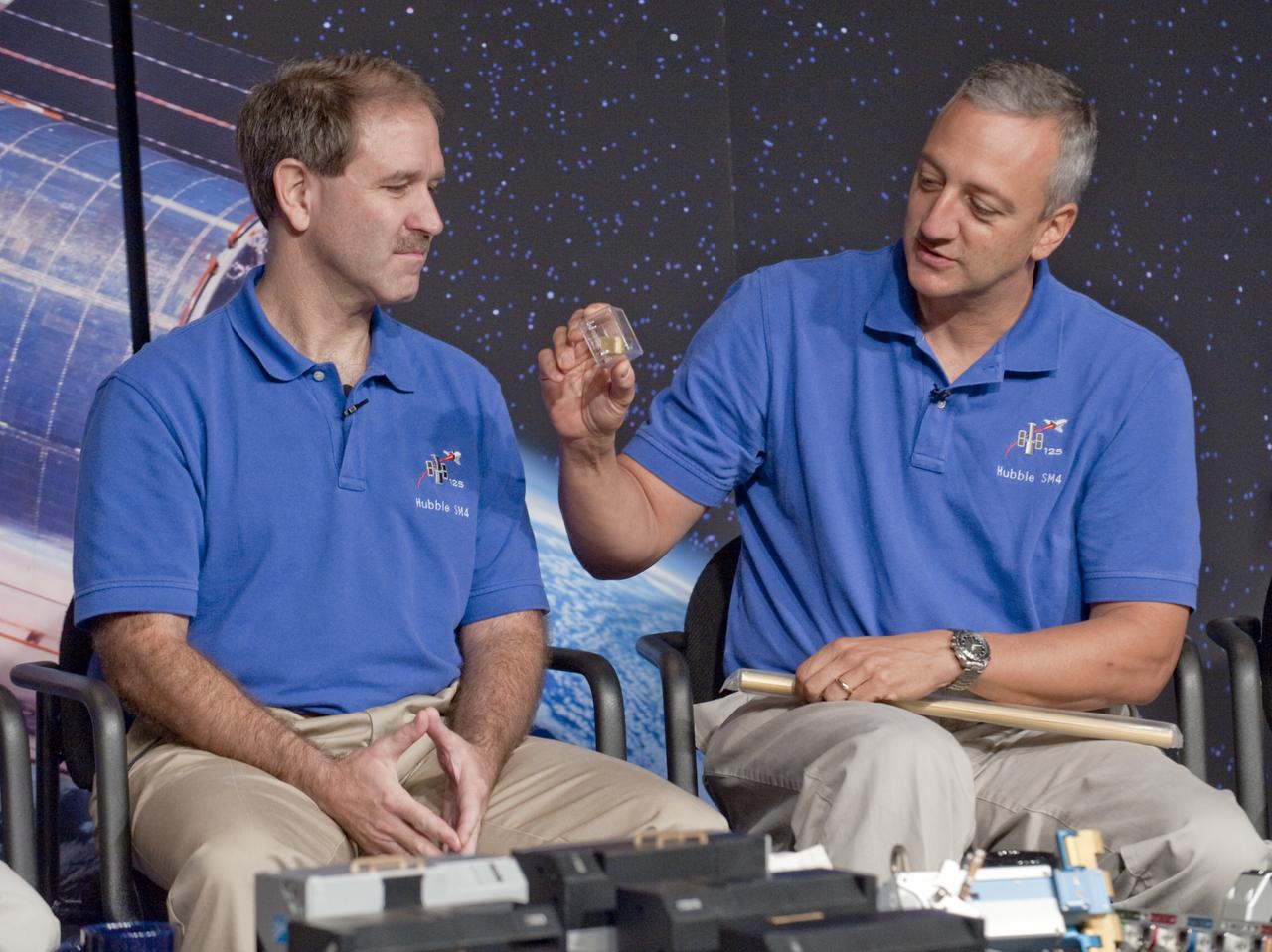
STS-125 crew member John Grunsfeld, left, looks on as crew member Michael Massimino holds up a part that was replaced on the Hubble Space Telescope, during a press conference, Wednesday, Sept. 9, 2009, after astronomers declared the telescope a fully rejuvenated observatory with the release Wednesday of observations from four of its six operating science instruments at NASA Headquarters in Washington. Photo Credit: (NASA/Paul E. Alers)
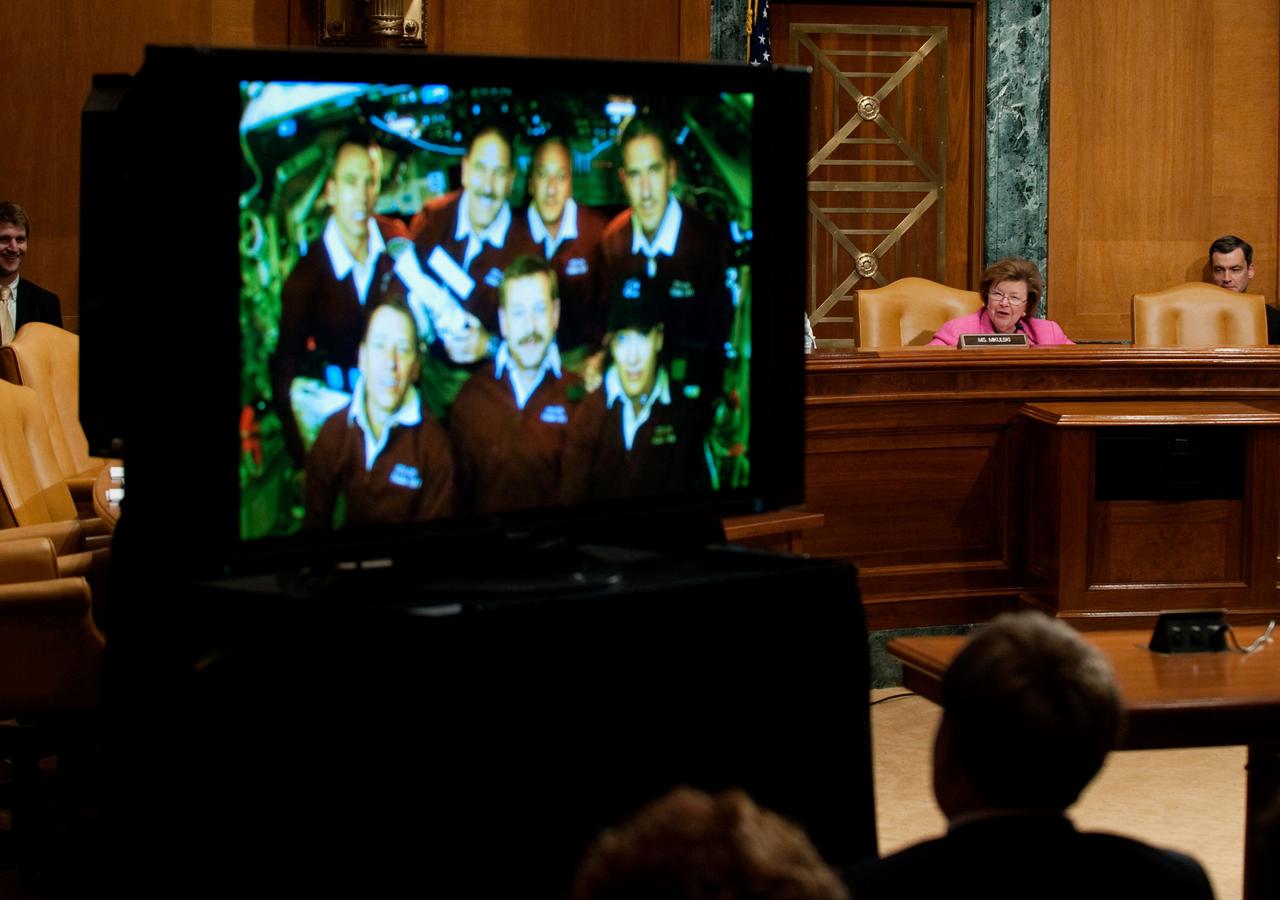
JSC2009-E-121339 (21 May 2009) --- The astronaut crewmembers of the STS-125 flight orbiting Earth aboard the Space Shuttle Atlantis are seen on a TV screen as they receive a phone call from U.S. Senator Barbara Mikulski (D-Md.) the day after the crew released the freshly serviced Hubble Space Telescope. Photo credit: NASA/Paul Alers
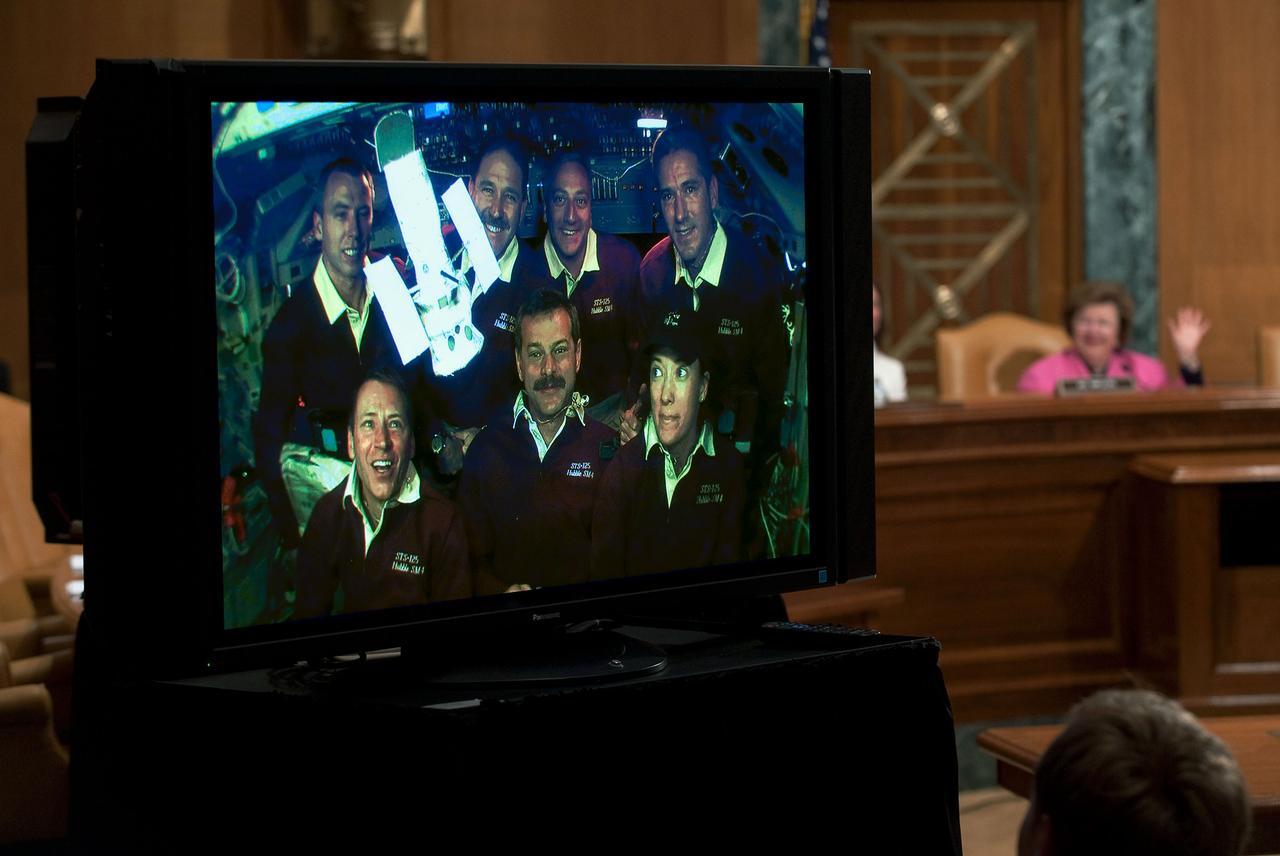
JSC2009-E-121340 (21 May 2009) --- The astronaut crewmembers of the STS-125 flight orbiting Earth aboard the Space Shuttle Atlantis are seen on a TV screen as they receive a phone call from U.S. Senator Barbara Mikulski (D-Md.) the day after the crew released the freshly serviced Hubble Space Telescope. Photo credit: NASA/Paul Alers
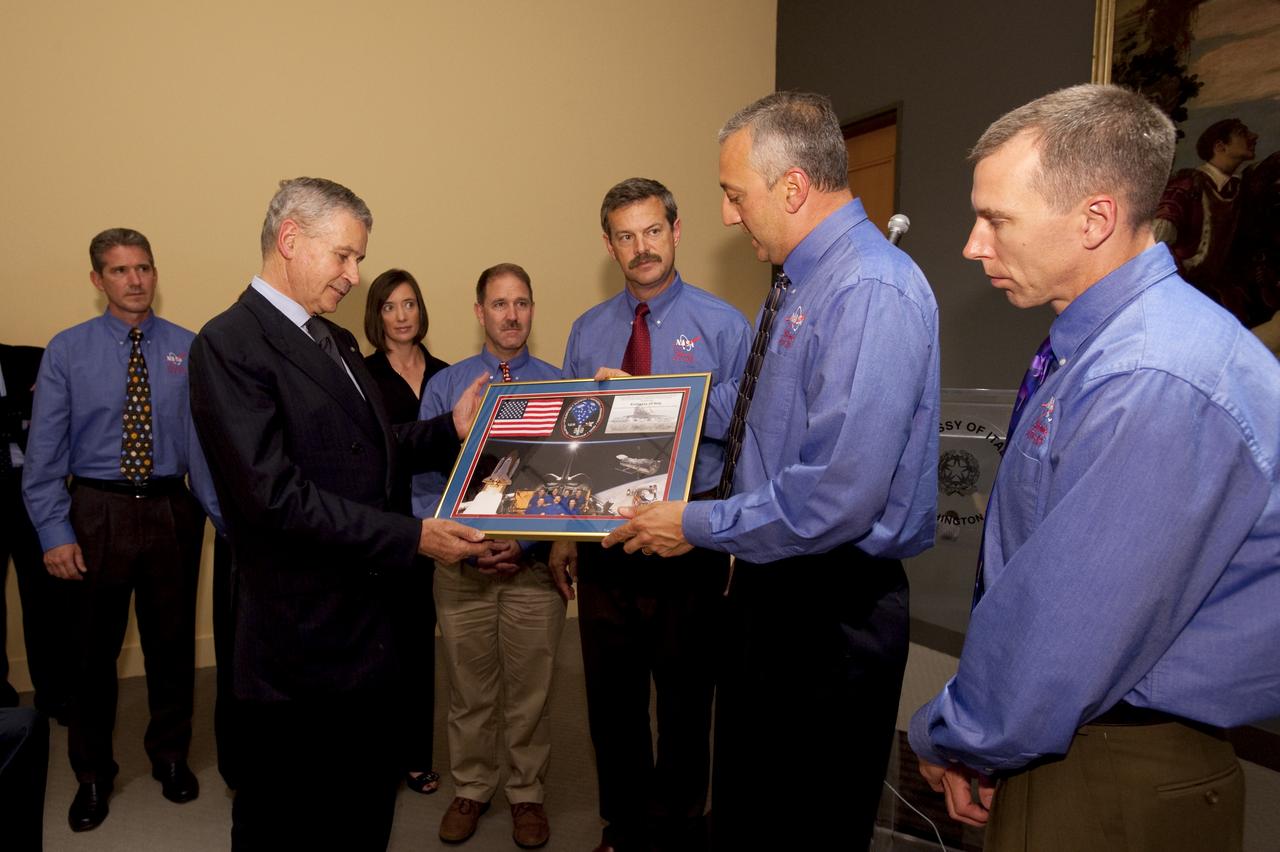
Italian Ambassador Giovanni Castellaneta, second from left, is presented with a montage by STS-125 Mission Specialist Mike Massimino, second from right, during a visit by the crew of STS-125 to the Embassy of Italy in Washington, Thursday, July 23, 2009. Other crew members, from left are Mission Specialists, Michael Good, Megan McArthur, John Grunsfeld, Commander Scott Altman and Andrew Feustel, far right. Photo Credit: (NASA/Bill Ingalls)
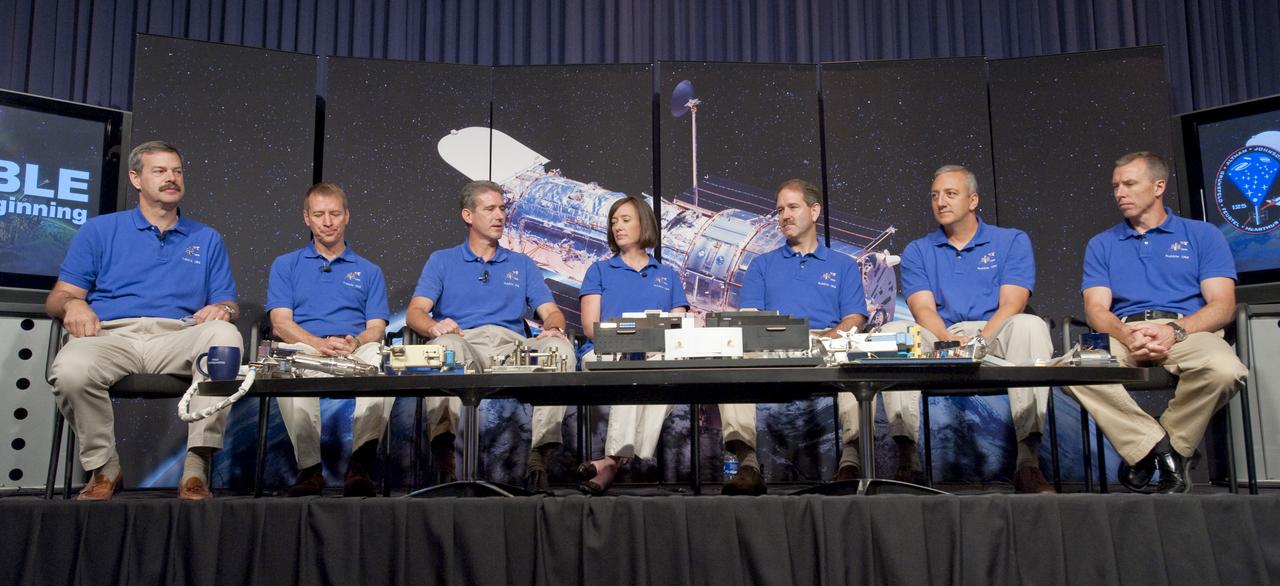
STS-125 crew members from left, Commander Scott Altman, Pilot Gregory Johnson, Mission Specialist Michael Good, Mission Specialist Megan McArthur, Mission Specialist John Grunsfeld, Mission Specialist Michael Massimino and Mission Specialist Andrew Feustel, are seen during a press conference, Wednesday, Sept. 9, 2009, after astronomers declared the NASA's Hubble Space Telescope a fully rejuvenated observatory with the release Wednesday of observations from four of its six operating science instruments at NASA Headquarters in Washington. Photo Credit: (NASA/Paul E. Alers)
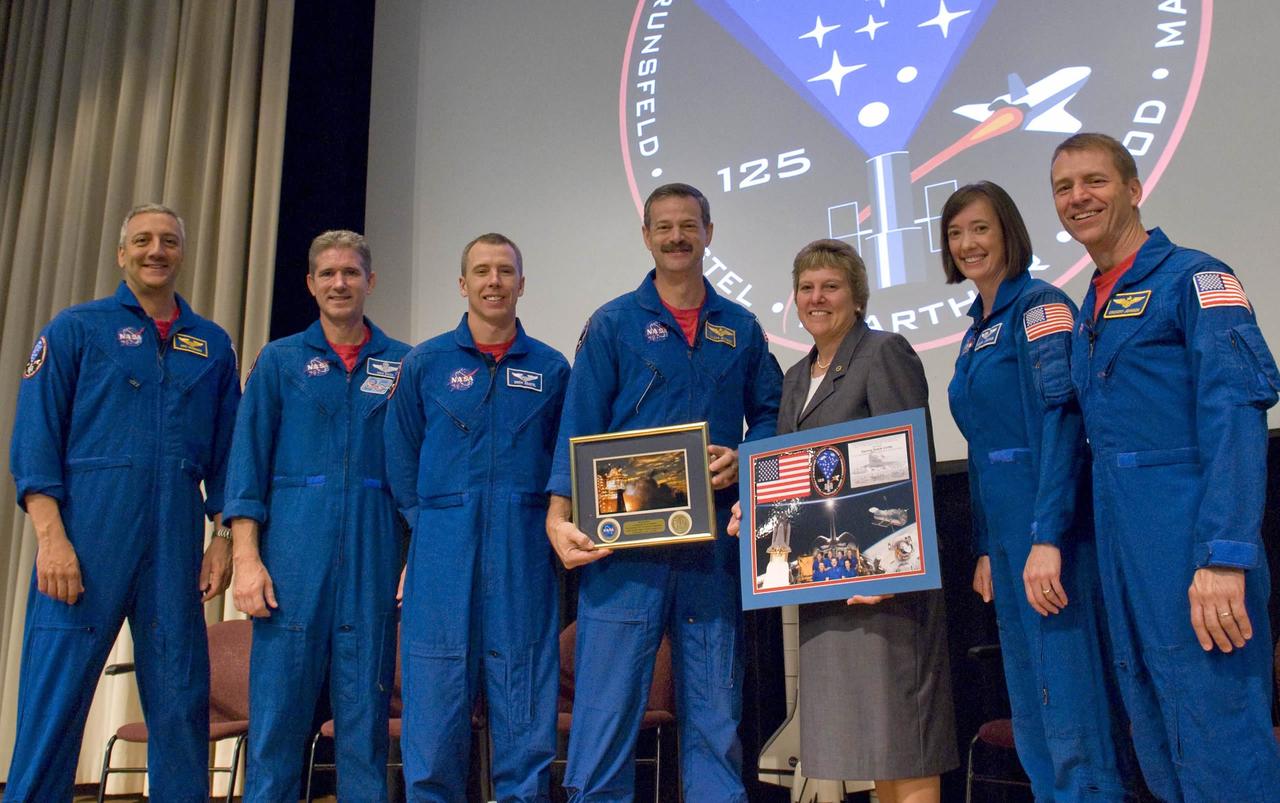
Astronauts from the STS-125 mission to repair the Hubble Space Telescope shared accounts of their mission today at StenniSphere. The crewmembers-Commander Scott Altman, Pilot Greg Johnson and Mission Specialists Megan McArthur, Michael Good, Drew Feustel and Mike Massimino-thanked Stennis employees for their contributions to the success of the mission and presented a plaque to Marina Benigno, director of center operations. Pictured are (l to r) Massimino, Good, Feustel, Altman, McArthur and Johnson.
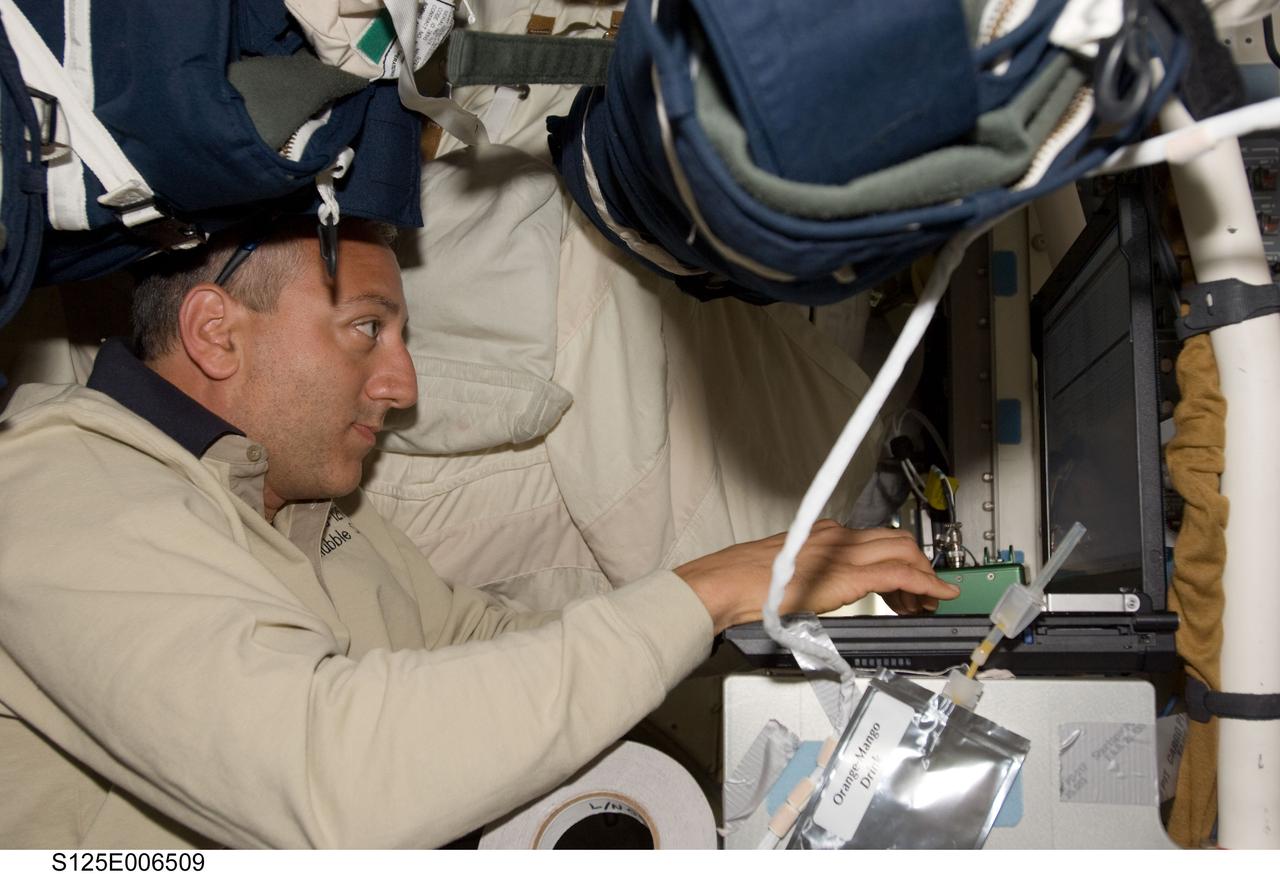
S125-E-006509 (12 May 2009) --- Astronaut Mike Massimino, STS-125 mission specialist, uses a computer on the middeck of the Earth-orbiting Space Shuttle Atlantis during flight day two activities.
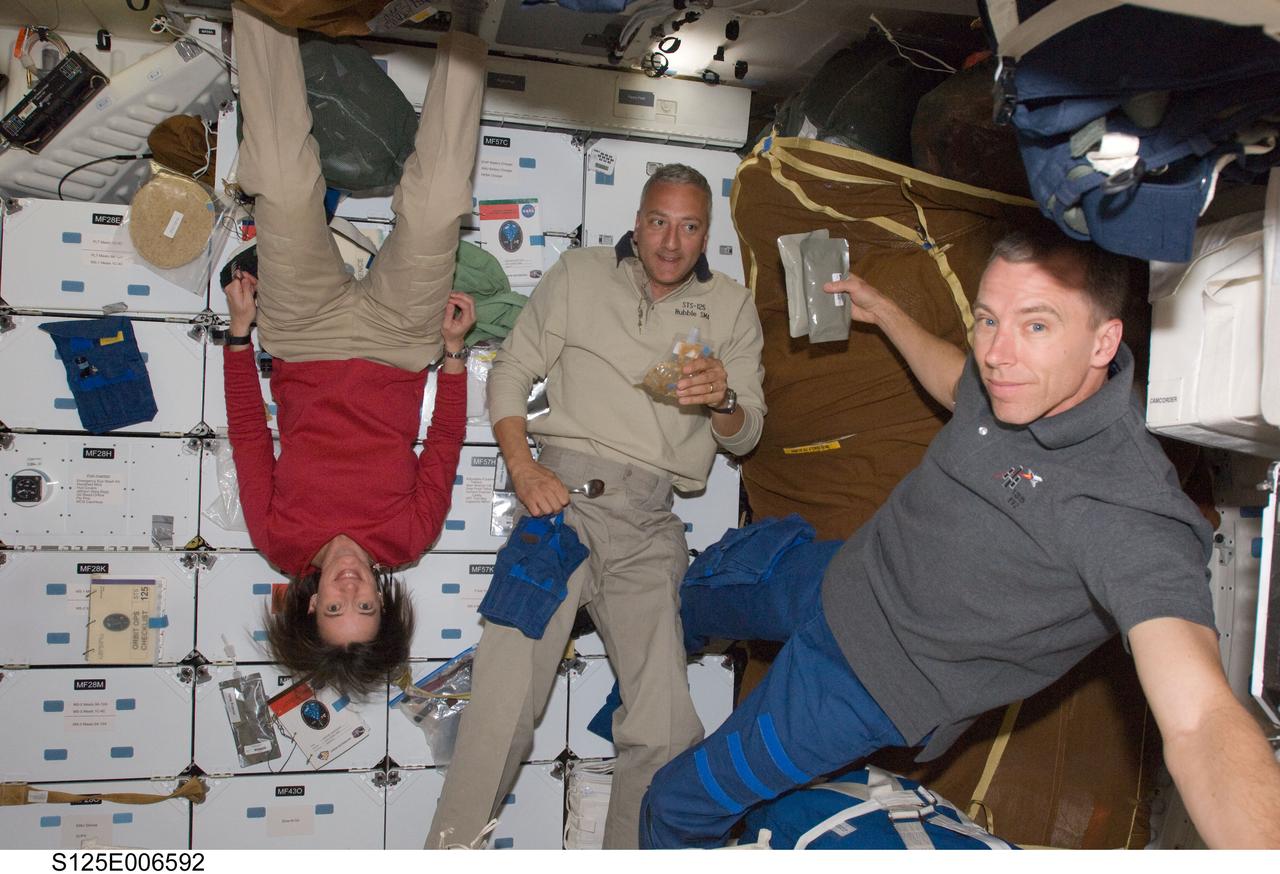
S125-E-006592 (12 May 2009) --- Astronauts Megan McArthur, Mike Massimino (center) and Andrew Feustel, all STS-125 mission specialists, prepare to eat a meal on the middeck of the Earth-orbiting Space Shuttle Atlantis.
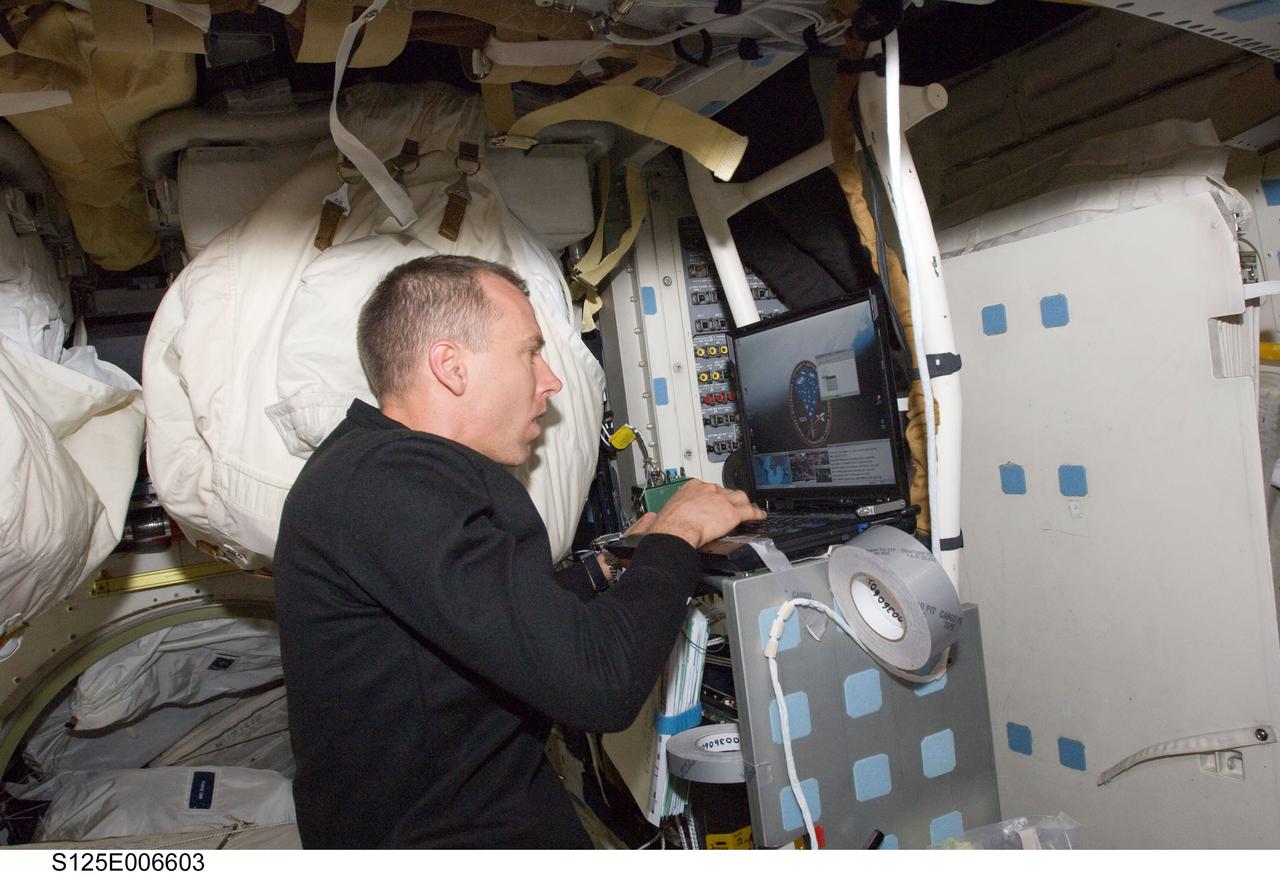
S125-E-006603 (13 May 2009) --- Astronaut Andrew Feustel, STS-125 mission specialist, uses a computer on the middeck of Space Shuttle Atlantis during flight day three activities.
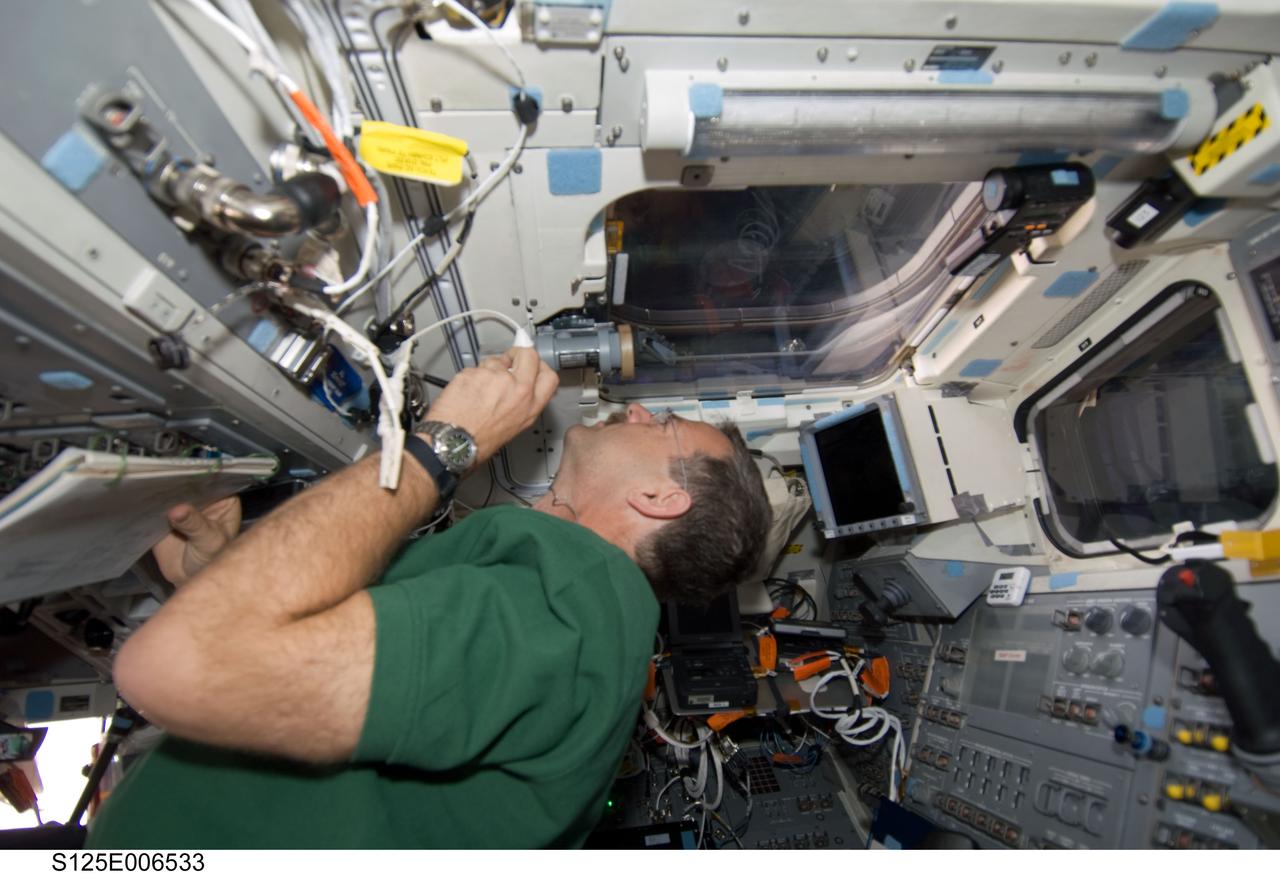
S125-E-006533 (13 May 2009) --- Astronaut Scott Altman, STS-125 commander, looks through an overhead window on the aft flight deck of Space Shuttle Atlantis during flight day three activities.
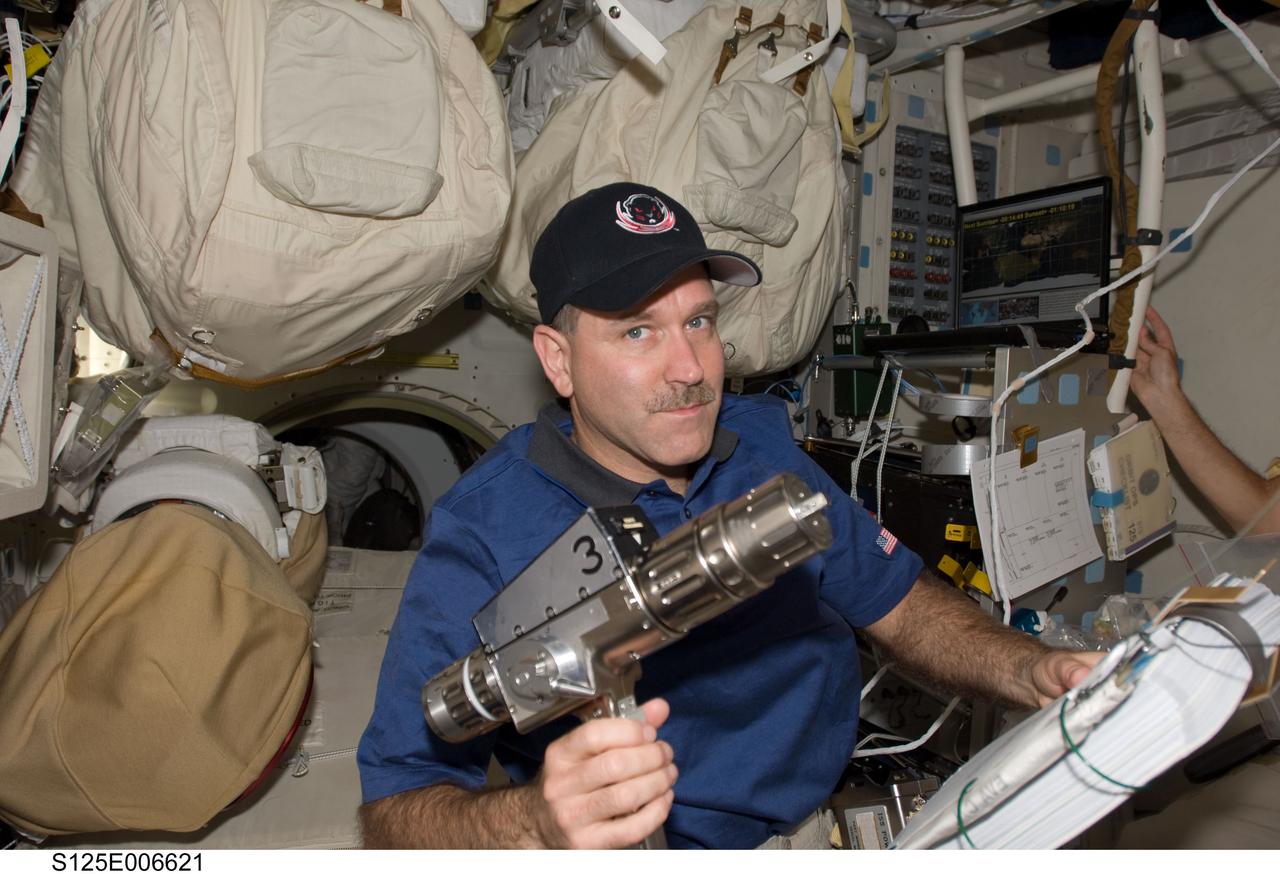
S125-E-006621 (13 May 2009) --- Astronaut John Grunsfeld, STS-125 mission specialist, works with a power tool on the middeck of Space Shuttle Atlantis as he prepares for upcoming spacewalks to repair the Hubble Space Telescope.
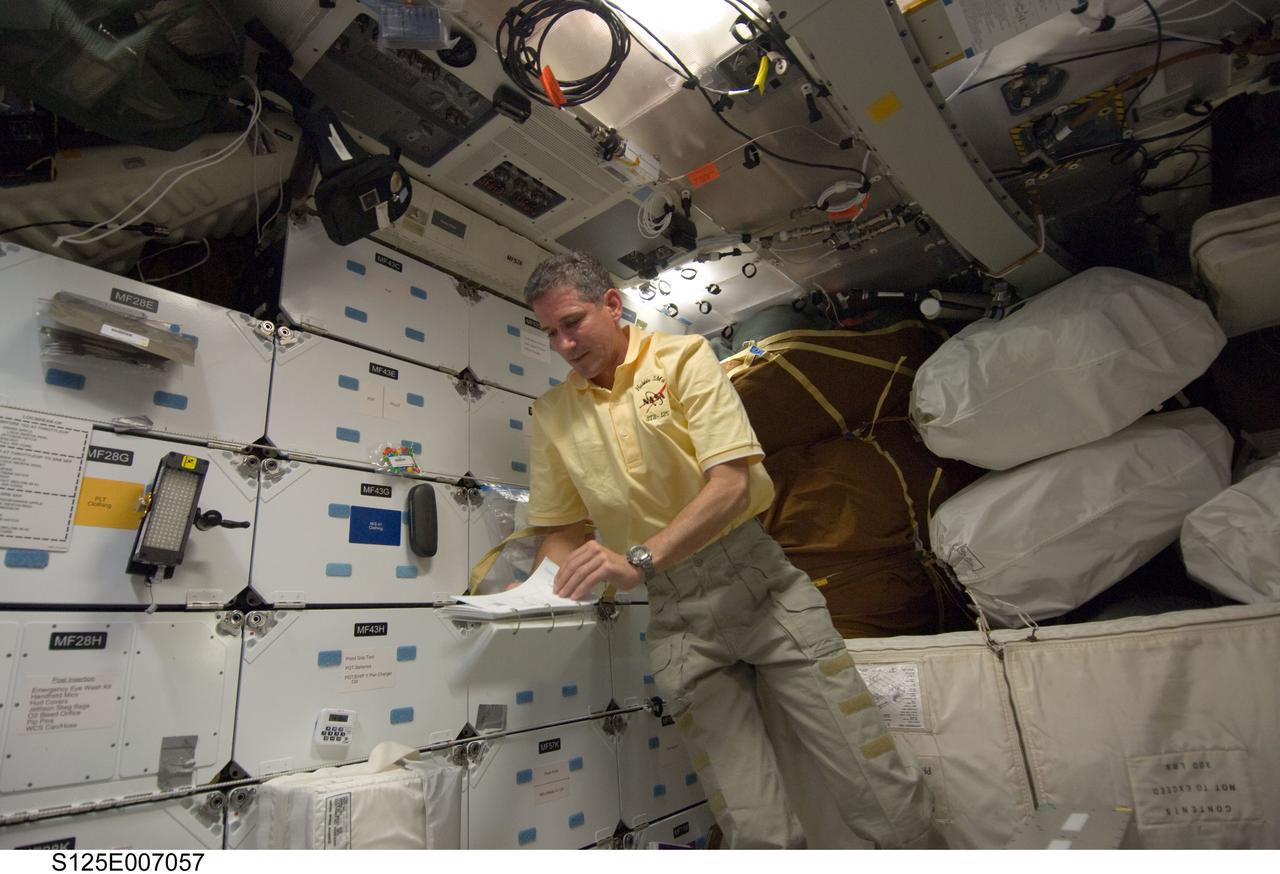
S125-E-007057 (13 May 2009) --- Astronaut Michael Good, STS-125 mission specialist, looks over checklists on the middeck of Space Shuttle Atlantis during flight day three activities.
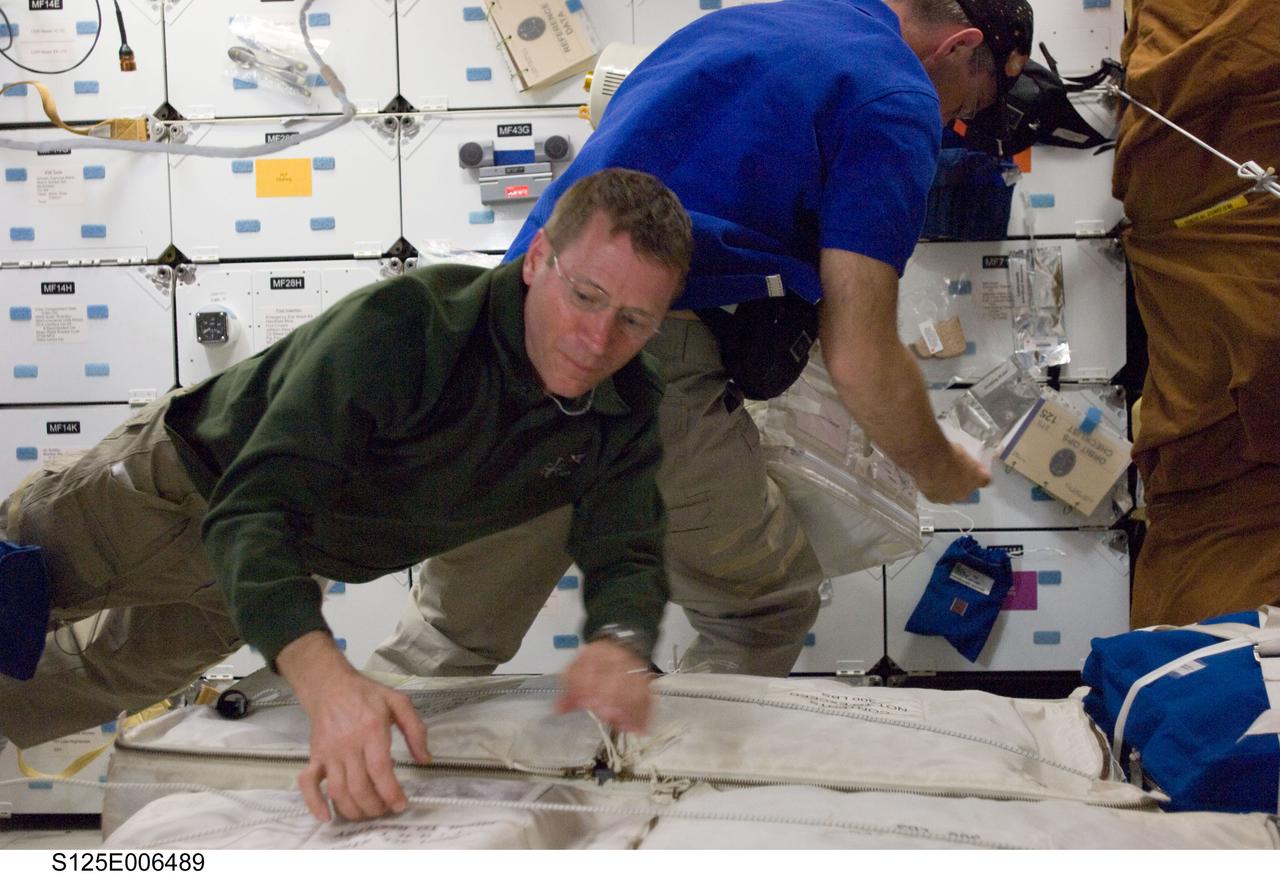
S125-E-006489 (12 May 2009) --- Astronaut Gregory C. Johnson, pilot, helps with unpacking chores on Atlantis? mid deck during the STS-125 flight?s second day in space.
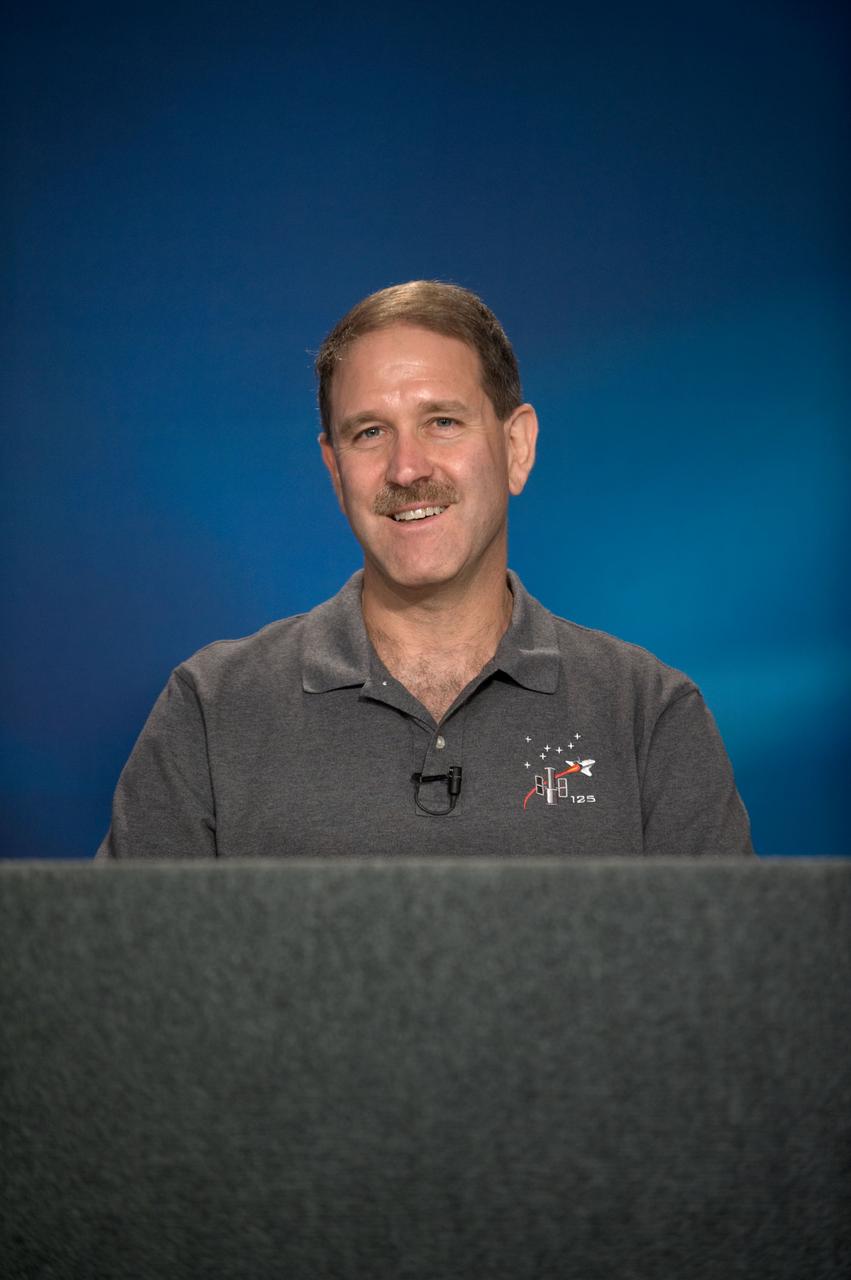
JSC2009-E-087200 (23 April 2009) --- Astronaut John Grunsfeld, STS-125 mission specialist, fields a question from a reporter during a STS-125 preflight press briefing at NASA's Johnson Space Center.

JSC2009-E-087199 (23 April 2009) --- Astronaut Michael Good, STS-125 mission specialist, responds to a question from a reporter during a STS-125 preflight press briefing at NASA's Johnson Space Center.
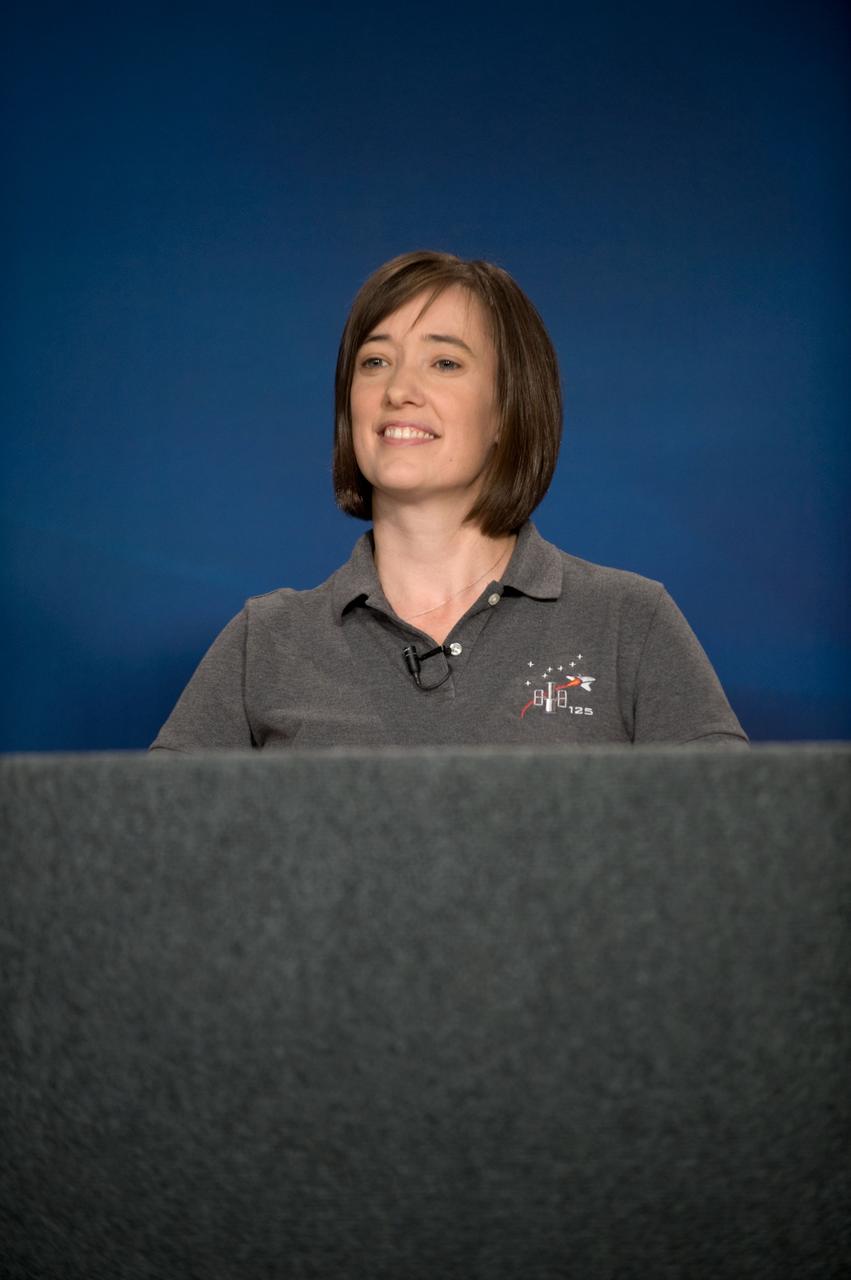
JSC2009-E-087197 (23 April 2009) --- Astronaut Megan McArthur, STS-125 mission specialist, fields a question from a reporter during a STS-125 preflight press briefing at NASA's Johnson Space Center.
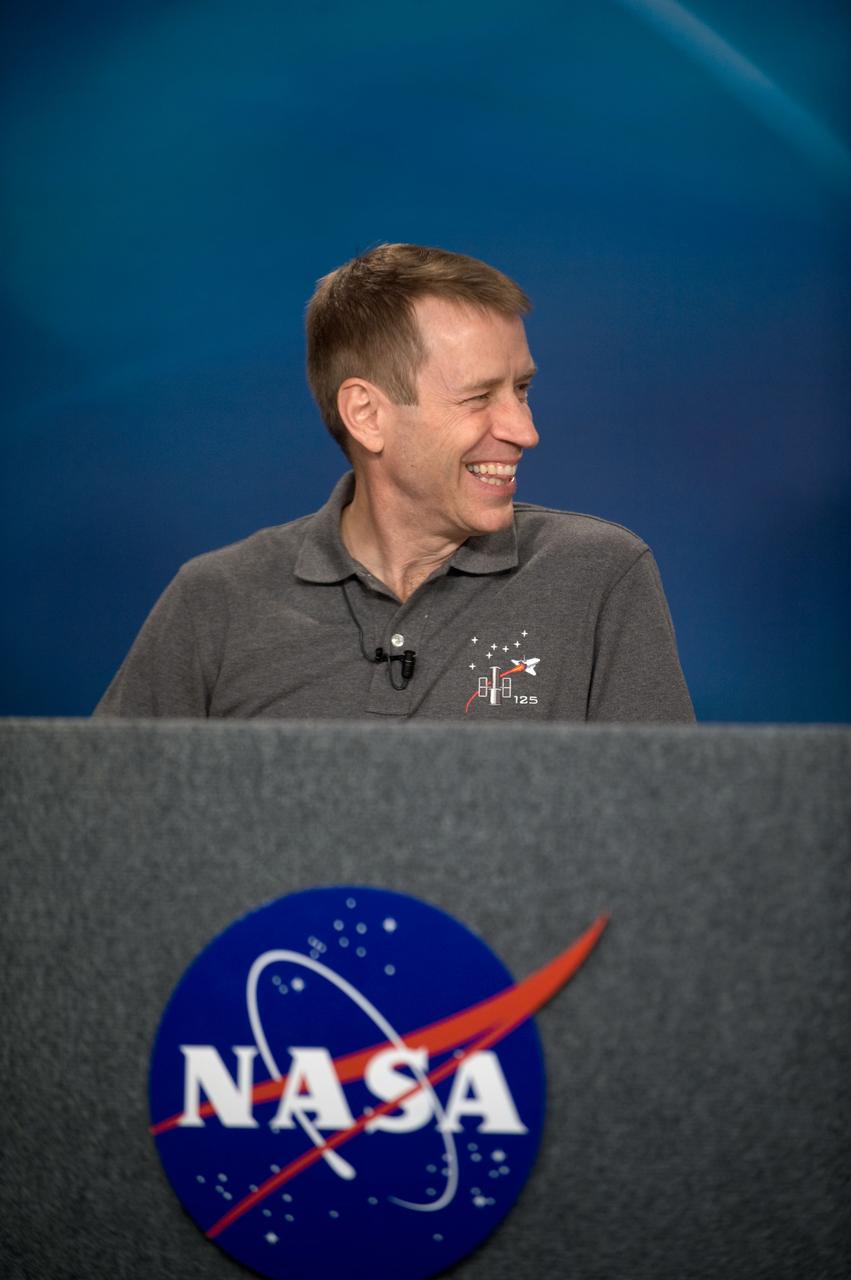
JSC2009-E-087196 (23 April 2009) --- Astronaut Gregory C. Johnson, STS-125 pilot, is pictured during a STS-125 preflight press briefing at NASA's Johnson Space Center.
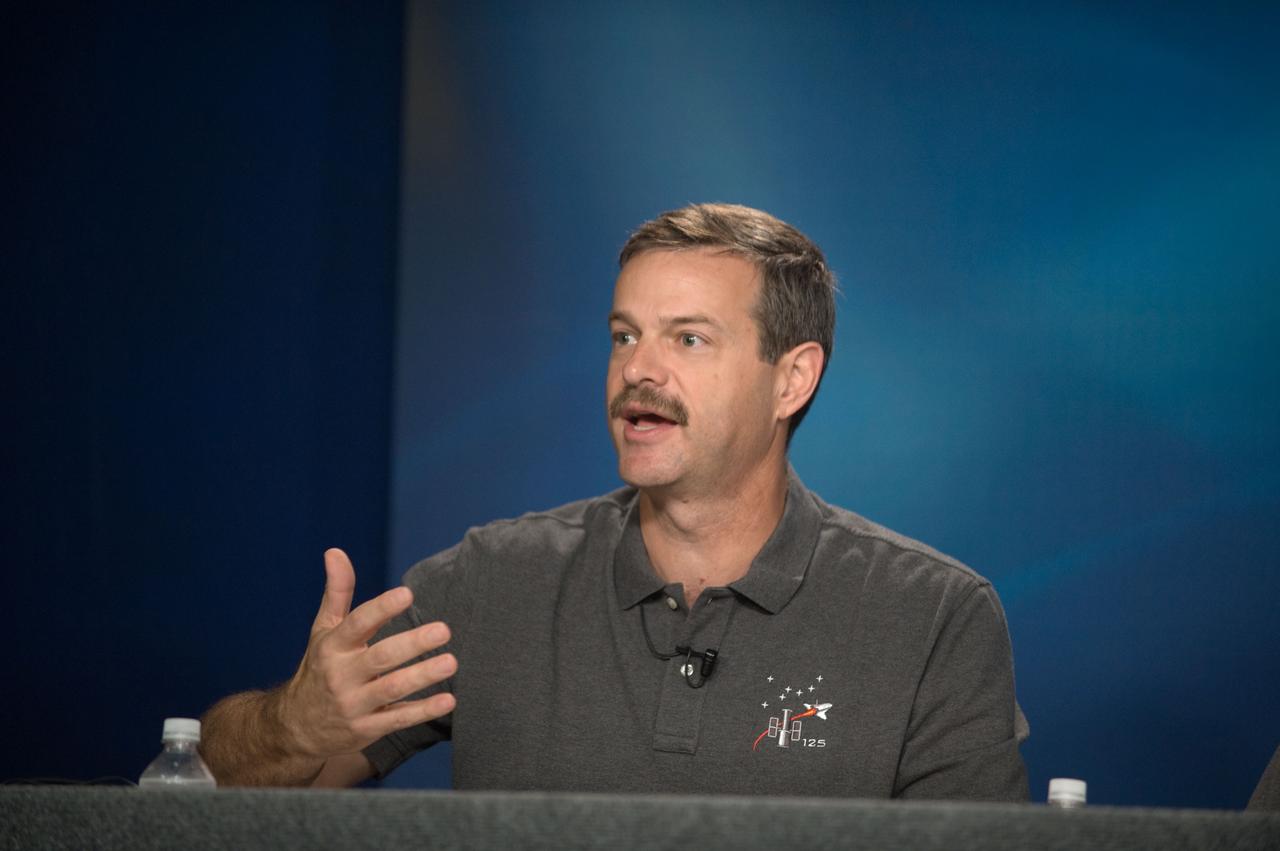
JSC2009-E-087202 (23 April 2009) --- Astronaut Scott Altman, STS-125 commander, responds to a question from a reporter during a STS-125 preflight press briefing at NASA's Johnson Space Center.
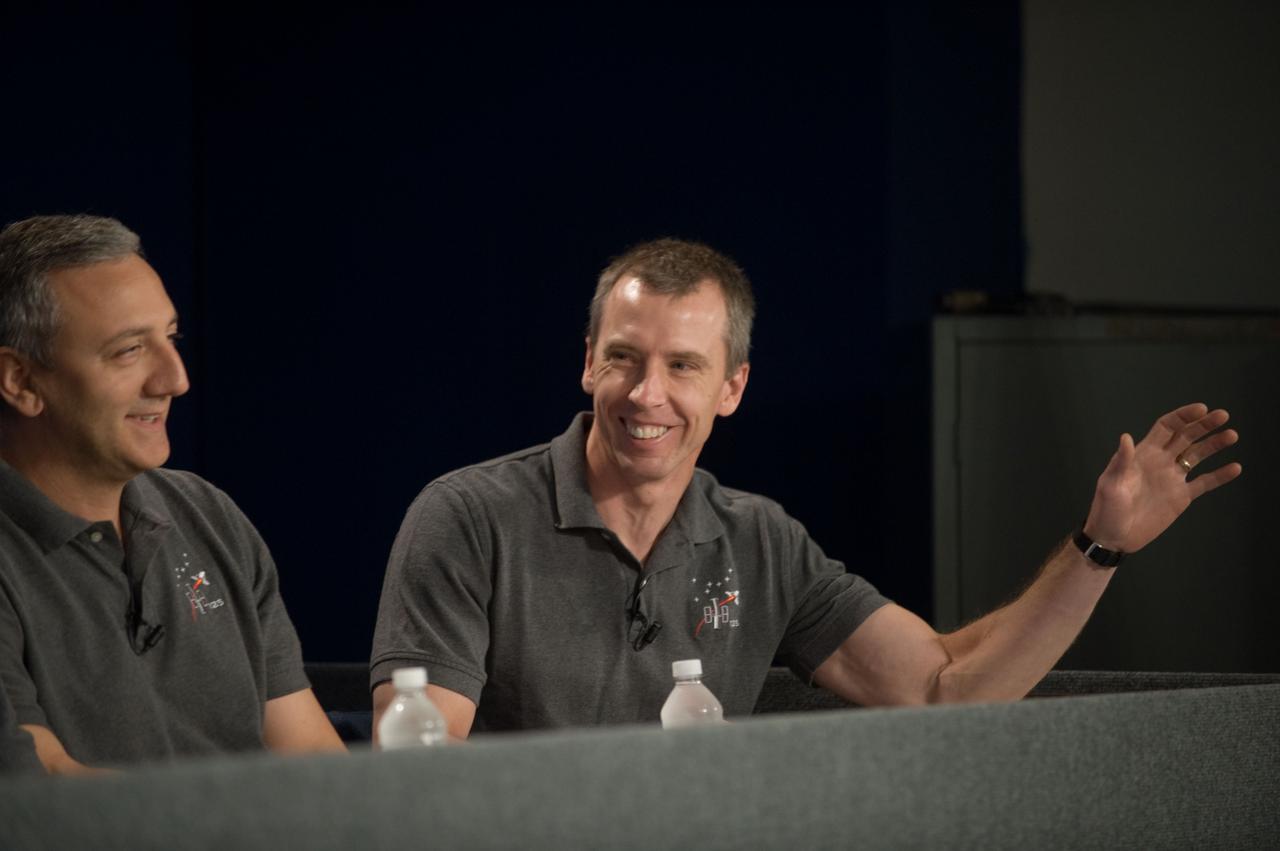
JSC2009-E-087212 (23 April 2009) --- Astronauts Mike Massimino (left) and Andrew Feustel, both STS-125 mission specialists, are pictured during a STS-125 preflight press briefing at NASA's Johnson Space Center.
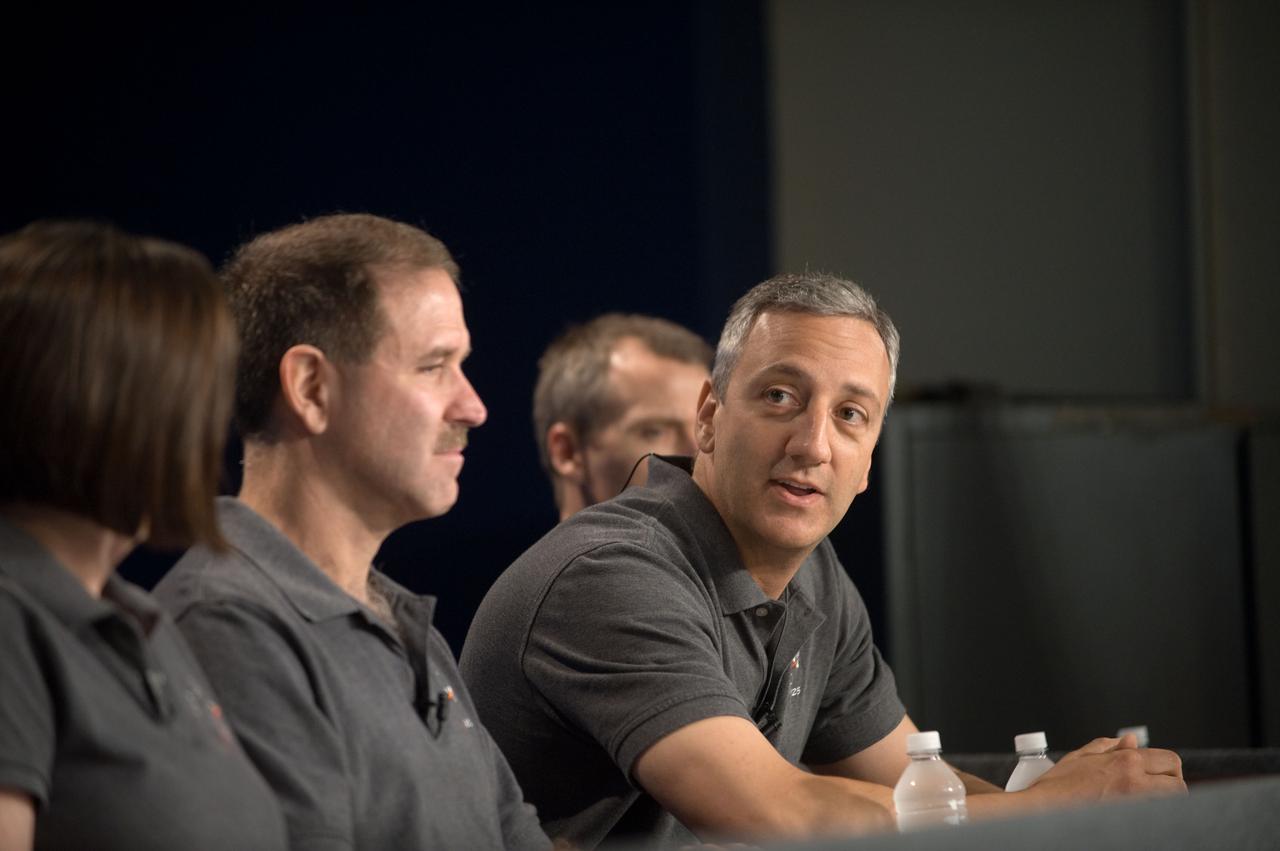
JSC2009-E-087203 (23 April 2009) --- Astronauts Megan McArthur, John Grunsfeld (second left), Mike Massimino and Andrew Feustel, all STS-125 mission specialists, are pictured during a STS-125 preflight press briefing at NASA's Johnson Space Center.
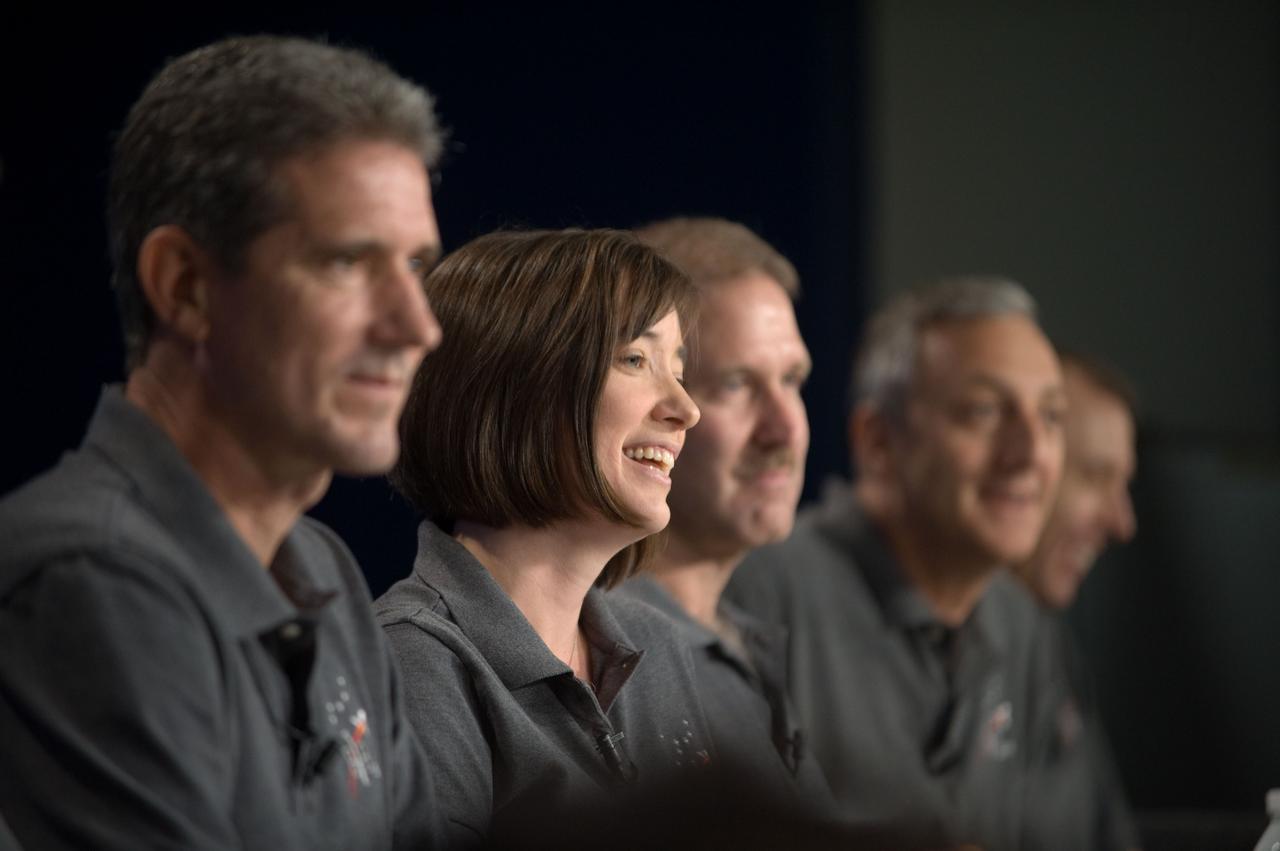
JSC2009-E-087208 (23 April 2009) --- Astronauts Michael Good (left), Megan McArthur, John Grunsfeld, Mike Massimino and Andrew Feustel, all STS-125 mission specialists, are pictured during a STS-125 preflight press briefing at NASA's Johnson Space Center.
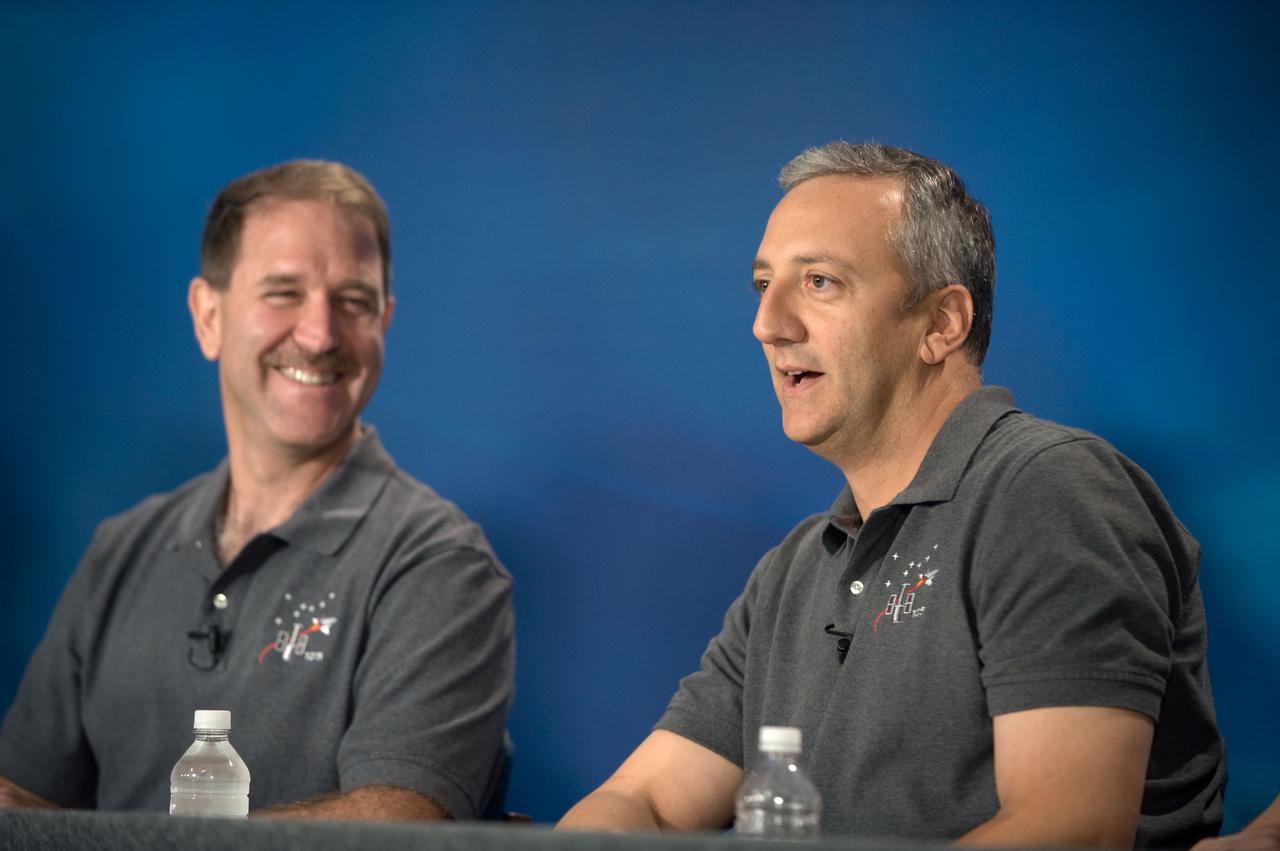
JSC2009-E-087220 (23 April 2009) --- Astronaut Mike Massimino (right), STS-125 mission specialist, responds to a question from a reporter during a STS-125 preflight press briefing at NASA's Johnson Space Center. Astronaut John Grunsfeld, mission specialist, is at left.
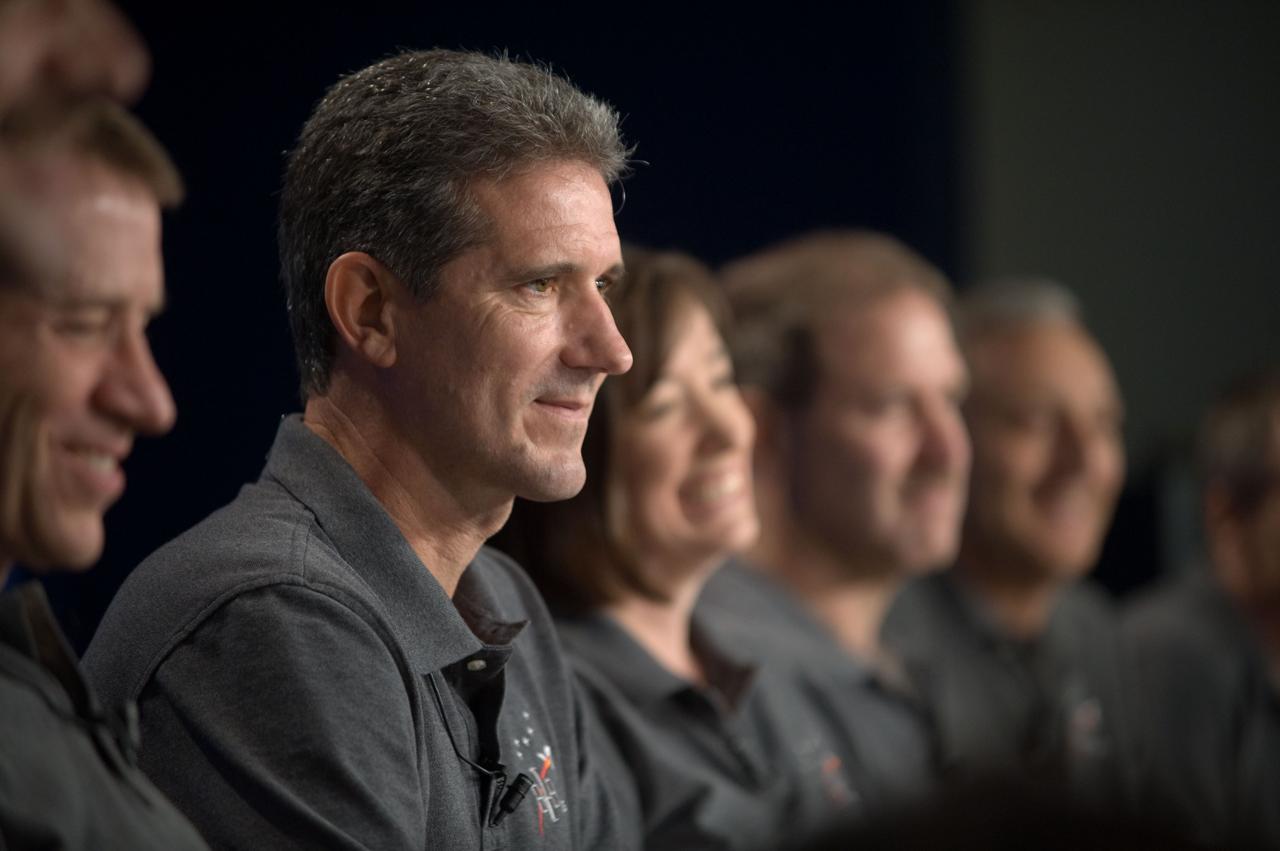
JSC2009-E-087209 (23 April 2009) --- Astronauts Gregory C. Johnson (partially out of frame at left), STS-125 pilot; Michael Good, Megan McArthur, John Grunsfeld and Mike Massimino, all mission specialists, are pictured during a STS-125 preflight press briefing at NASA's Johnson Space Center.
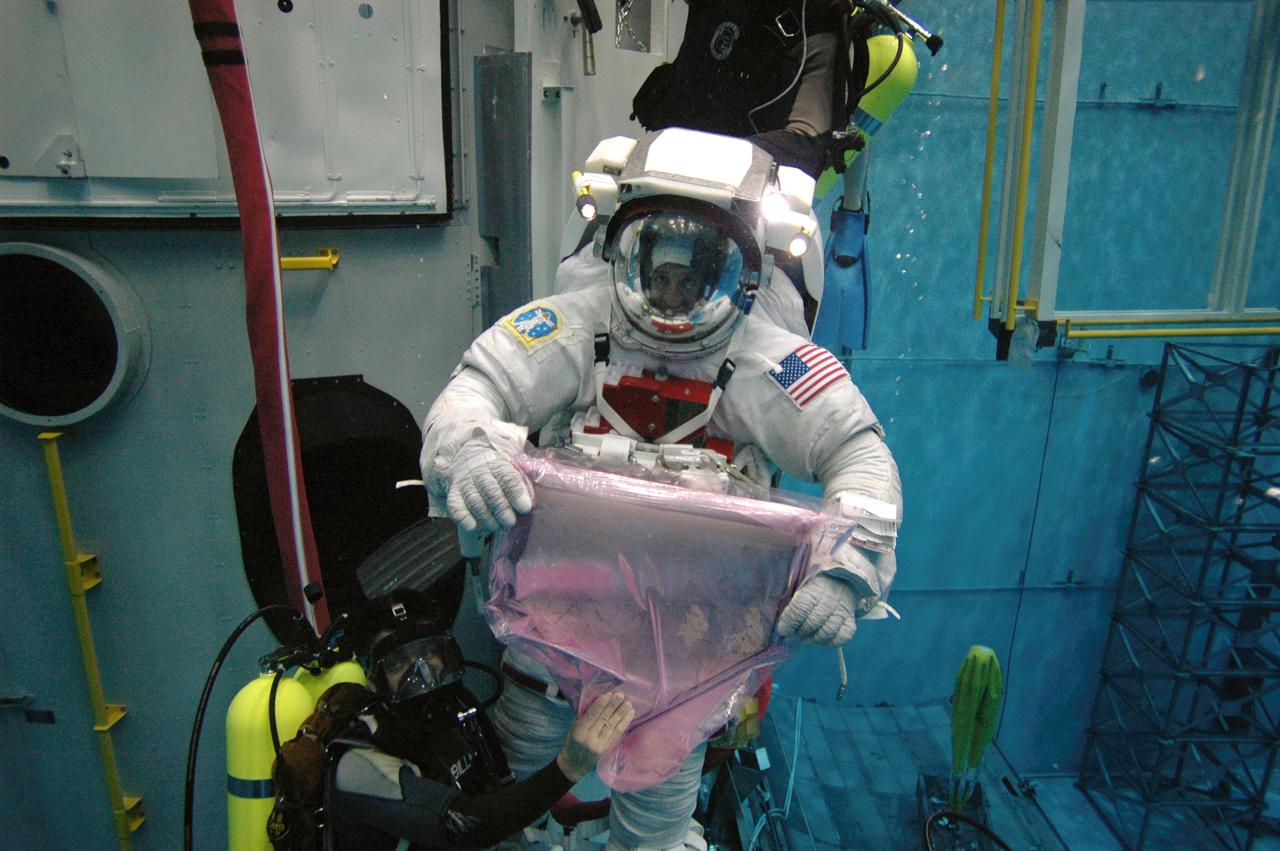
JSC2008-E-096966 (December 2007) --- Astronaut Mike Massimino, STS-125 mission specialist, with home plate from New York City's Shea Stadium during a break from training in the JSC Neutral Buoyancy Lab. The plate will fly with the STS-125 crew aboard the Space Shuttle Atlantis. (Photo Credit: NASA)

CAPE CANAVERAL, Fla. –– Space shuttle Atlantis on Launch Pad 39A is viewed across the lagoon at NASA's Kennedy Space Center in Florida. Atlantis is targeted to launch May 12 on the STS-125 mission to upgrade NASA's Hubble Space Telescope. Photo credit: NASA/Jack Pfaller
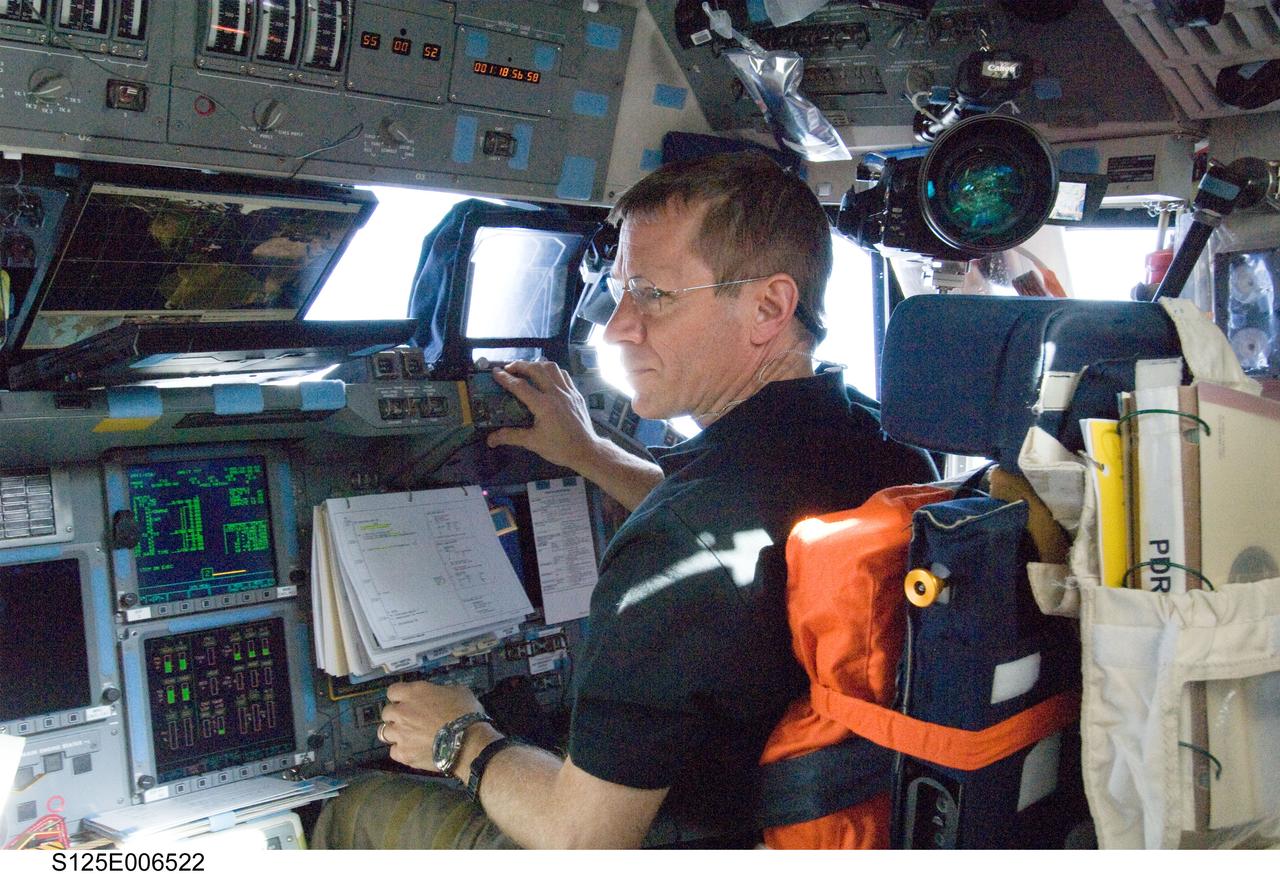
S125-E-006522 (13 May 2009) --- Astronaut Gregory C. Johnson, STS-125 pilot, occupies the pilot?s station on the flight deck of the Earth-orbiting Space Shuttle Atlantis during flight day three activities.
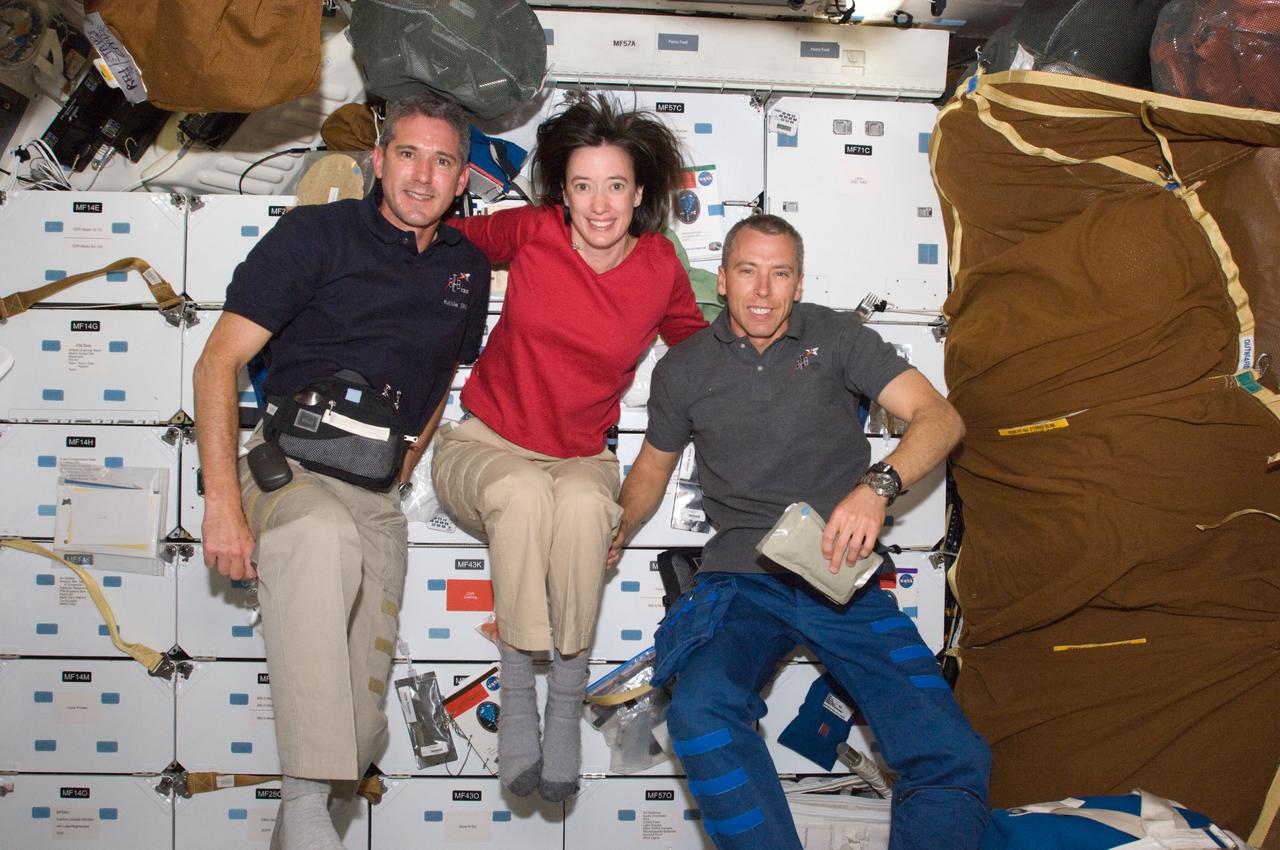
S125-E-006596 (12 May 2009) --- Astronauts Michael Good (left), Megan McArthur and Andrew Feustel, all STS-125 mission specialists, pose for a photo on the middeck of Space Shuttle Atlantis during flight day two activities.
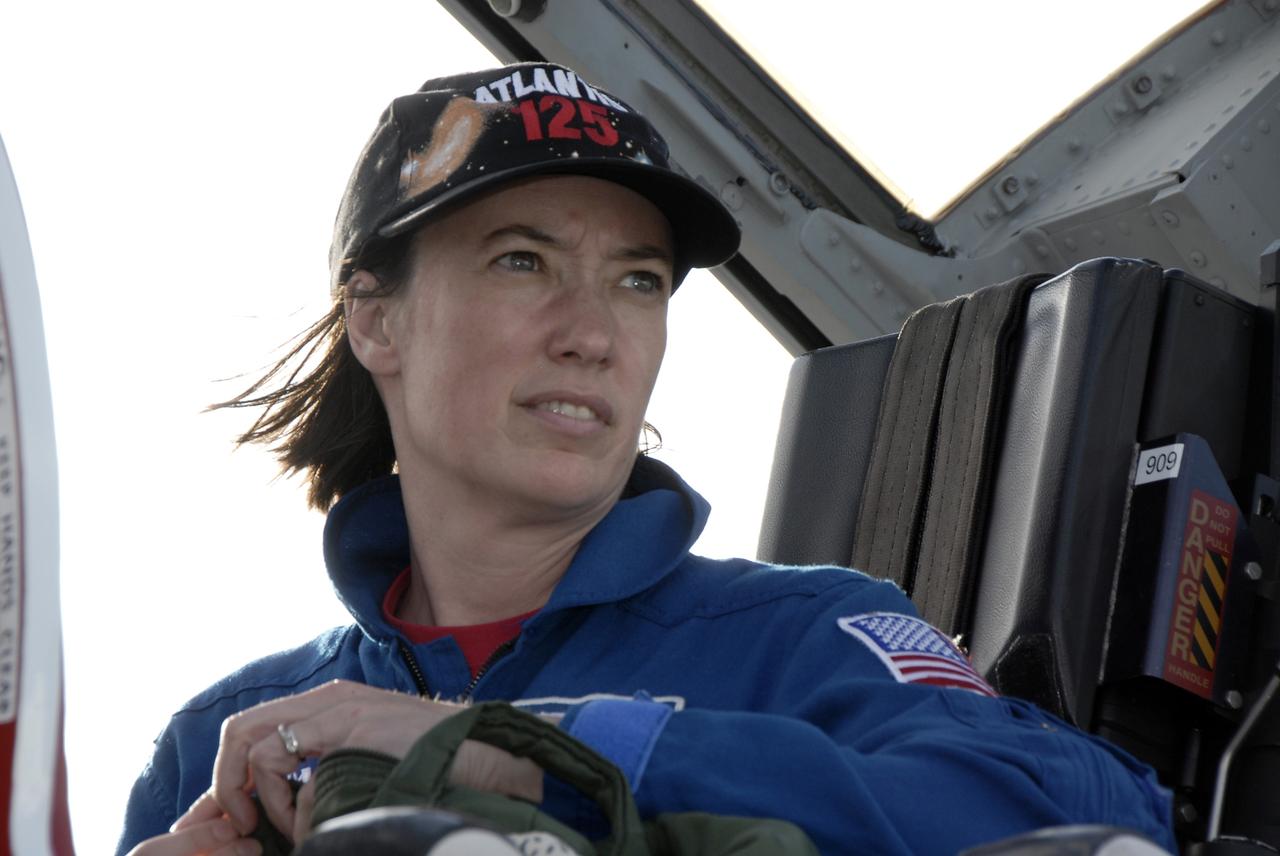
CAPE CANAVERAL, Fla. - STS-125 mission specialist Megan McArthur arrives at the Shuttle Landing Facility at NASA’s Kennedy Space Center in Florida in a T-38 jet for Terminal Countdown Demonstration Test, or TCDT, activities. During TCDT, space shuttle Atlantis’ STS-125 crew members will participate in a simulated launch countdown, practice emergency egress procedures at the launch pad and continue to familiarize themselves with the mission payload and hardware. STS-125 is the fifth and final shuttle Hubble Space Telescope servicing mission. Launch is targeted for Oct. 10. Photo credit: NASA/Kim Shiflett
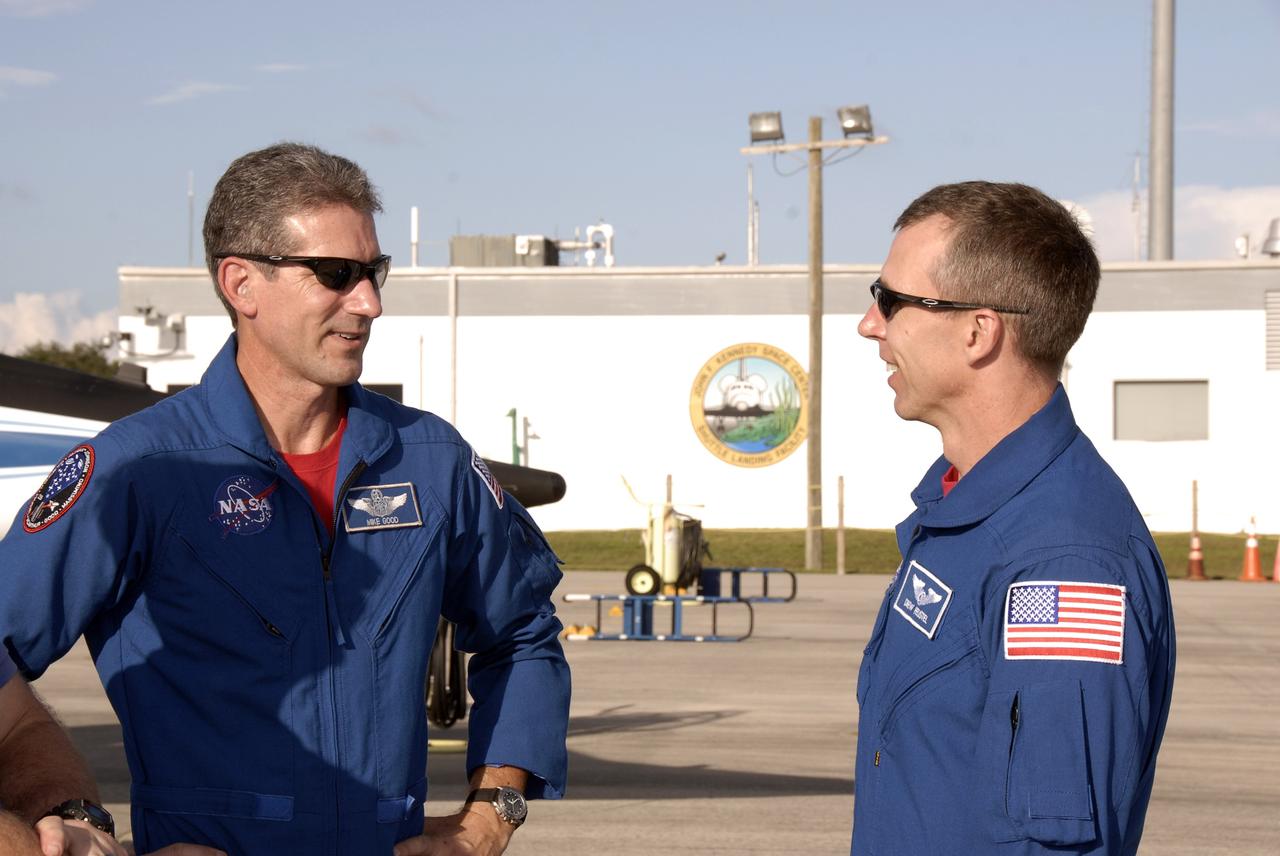
CAPE CANAVERAL, Fla. - STS-125 mission specialists Michael Good (left) and Andrew Feustel greet each other after arriving at the Shuttle Landing Facility at NASA’s Kennedy Space Center in Florida in T-38 jets. They and the other five crew members are at the center for Terminal Countdown Demonstration Test, or TCDT, activities. During TCDT, space shuttle Atlantis’ STS-125 crew members will participate in a simulated launch countdown, practice emergency egress procedures at the launch pad and continue to familiarize themselves with the mission payload and hardware. STS-125 is the fifth and final shuttle Hubble Space Telescope servicing mission. Launch is targeted for Oct. 10. Photo credit: NASA/Kim Shiflett
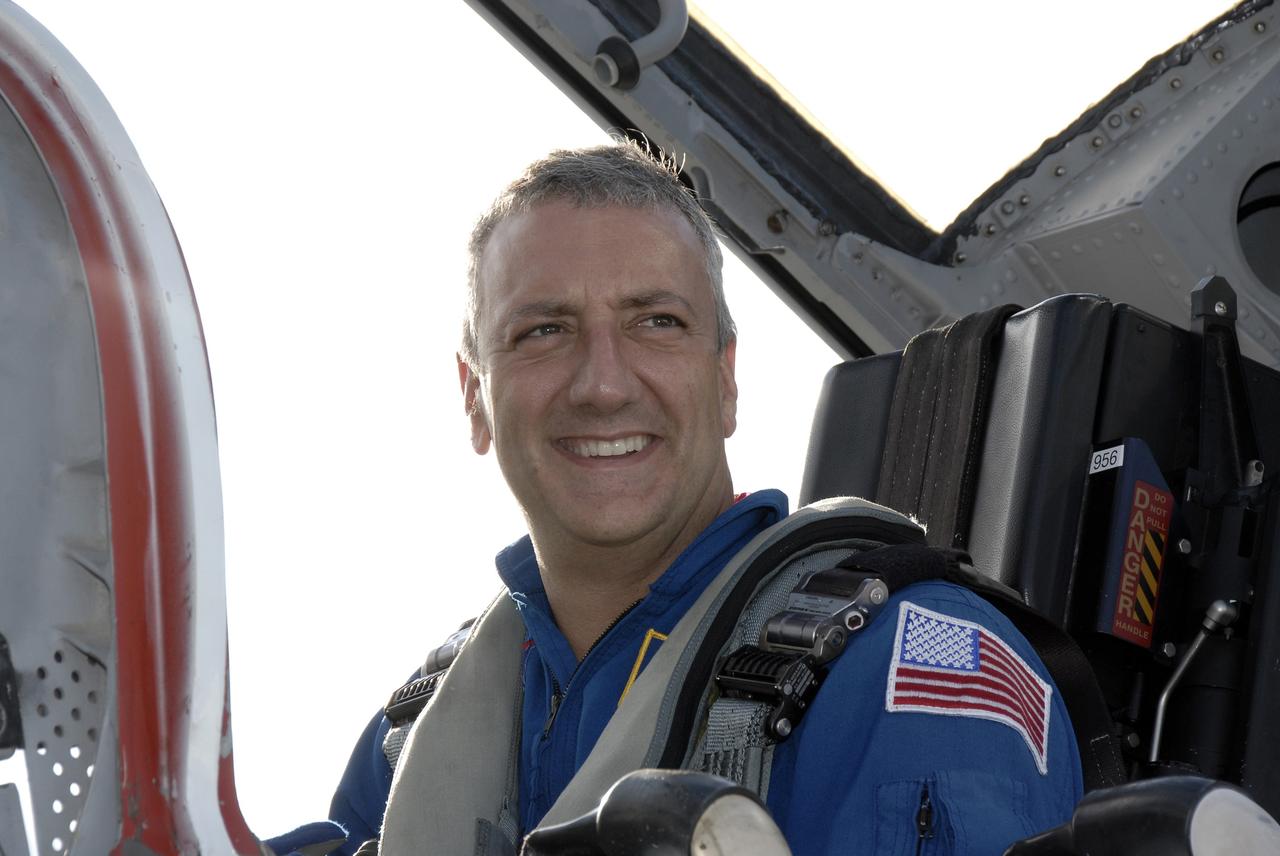
CAPE CANAVERAL, Fla. - STS-125 mission specialist Mike Massimino arrives at the Shuttle Landing Facility at NASA’s Kennedy Space Center in Florida in a T-38 jet for Terminal Countdown Demonstration Test, or TCDT, activities. During TCDT, space shuttle Atlantis’ STS-125 crew members will participate in a simulated launch countdown, practice emergency egress procedures at the launch pad and continue to familiarize themselves with the mission payload and hardware. STS-125 is the fifth and final shuttle Hubble Space Telescope servicing mission. Launch is targeted for Oct. 10. Photo credit: NASA/Kim Shiflett
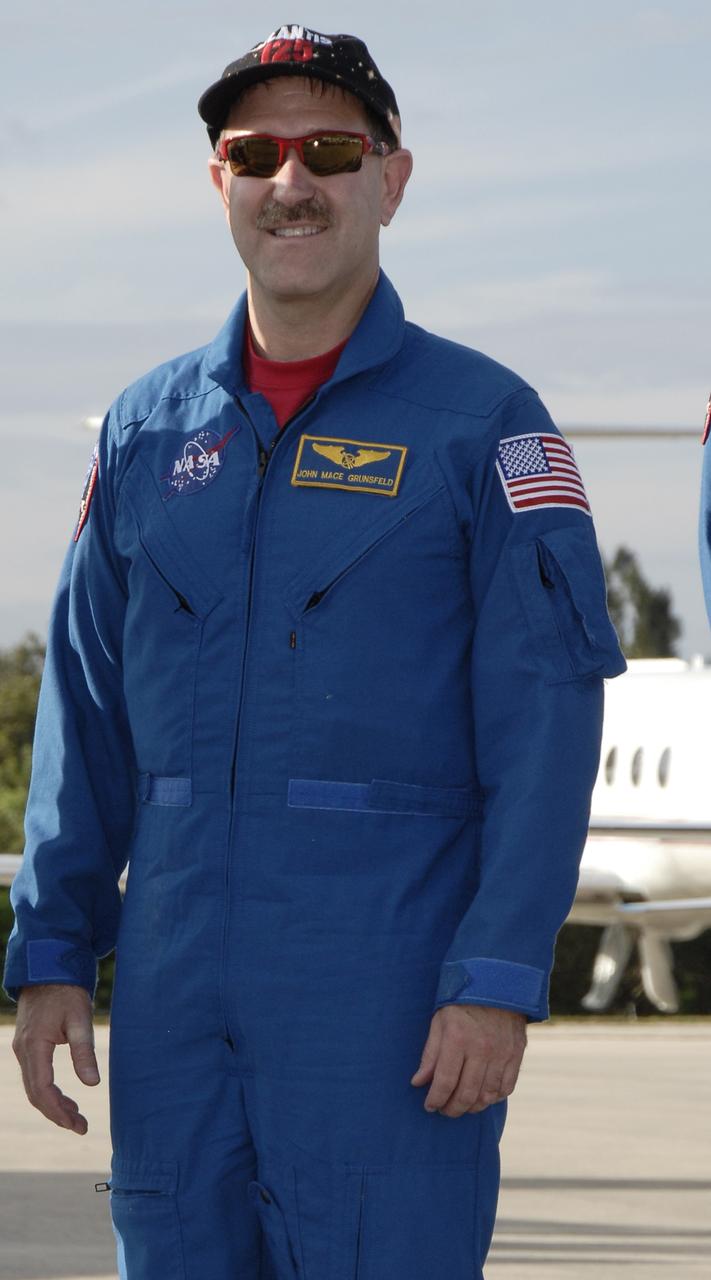
CAPE CANAVERAL, Fla. - STS-125 mission specialist John Grunsfeld prepares to speak to the media at the Shuttle Landing Facility at NASA’s Kennedy Space Center in Florida. Grunsfeld arrived in a T-38 jet for Terminal Countdown Demonstration Test, or TCDT, activities. During TCDT, space shuttle Atlantis’ STS-125 crew members will participate in a simulated launch countdown, practice emergency egress procedures at the launch pad and continue to familiarize themselves with the mission payload and hardware. STS-125 is the fifth and final shuttle Hubble Space Telescope servicing mission. Launch is targeted for Oct. 10. Photo credit: NASA/Kim Shiflett
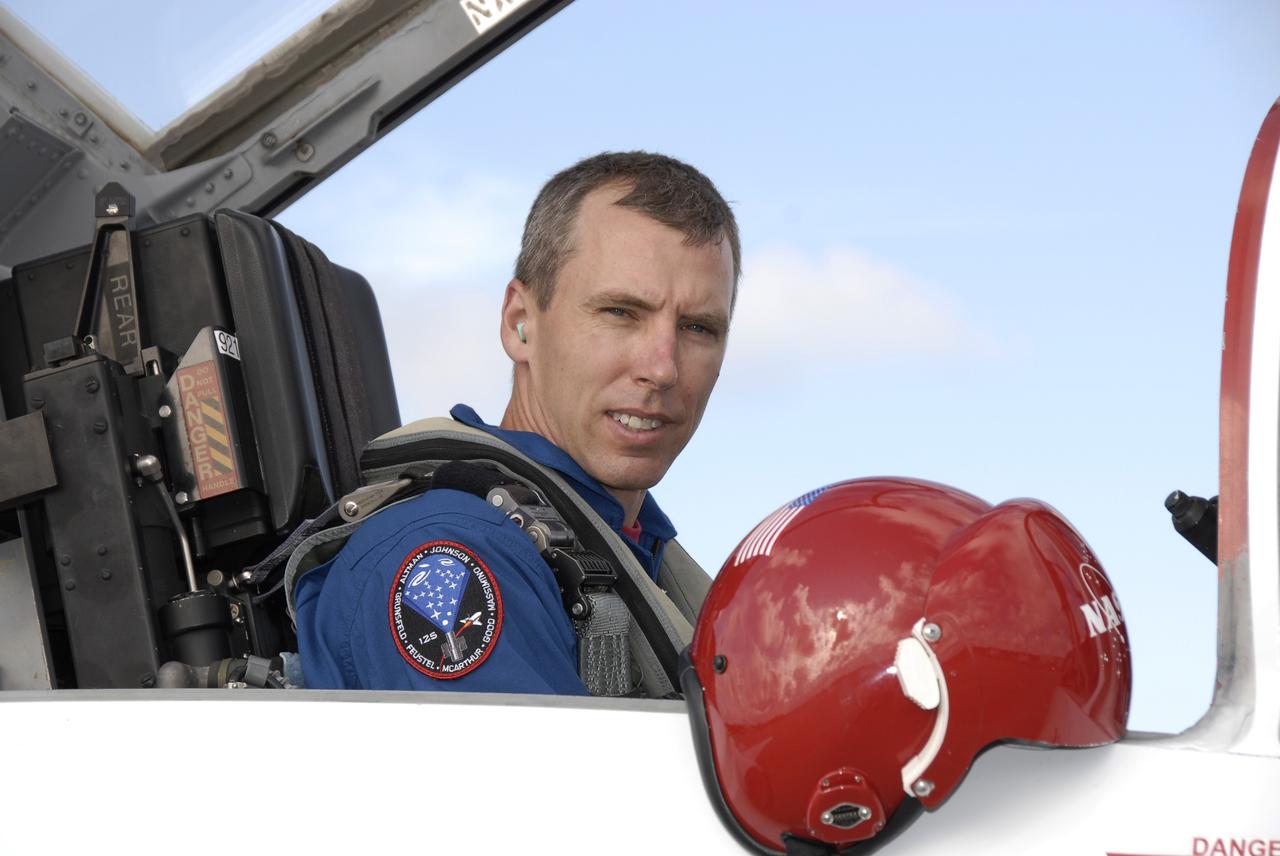
CAPE CANAVERAL, Fla. - STS-125 mission specialist Andrew Feustel arrives at the Shuttle Landing Facility at NASA’s Kennedy Space Center in Florida in a T-38 jet for Terminal Countdown Demonstration Test, or TCDT, activities. During TCDT, space shuttle Atlantis’ STS-125 crew members will participate in a simulated launch countdown, practice emergency egress procedures at the launch pad and continue to familiarize themselves with the mission payload and hardware. STS-125 is the fifth and final shuttle Hubble Space Telescope servicing mission. Launch is targeted for Oct. 10. Photo credit: NASA/Kim Shiflett
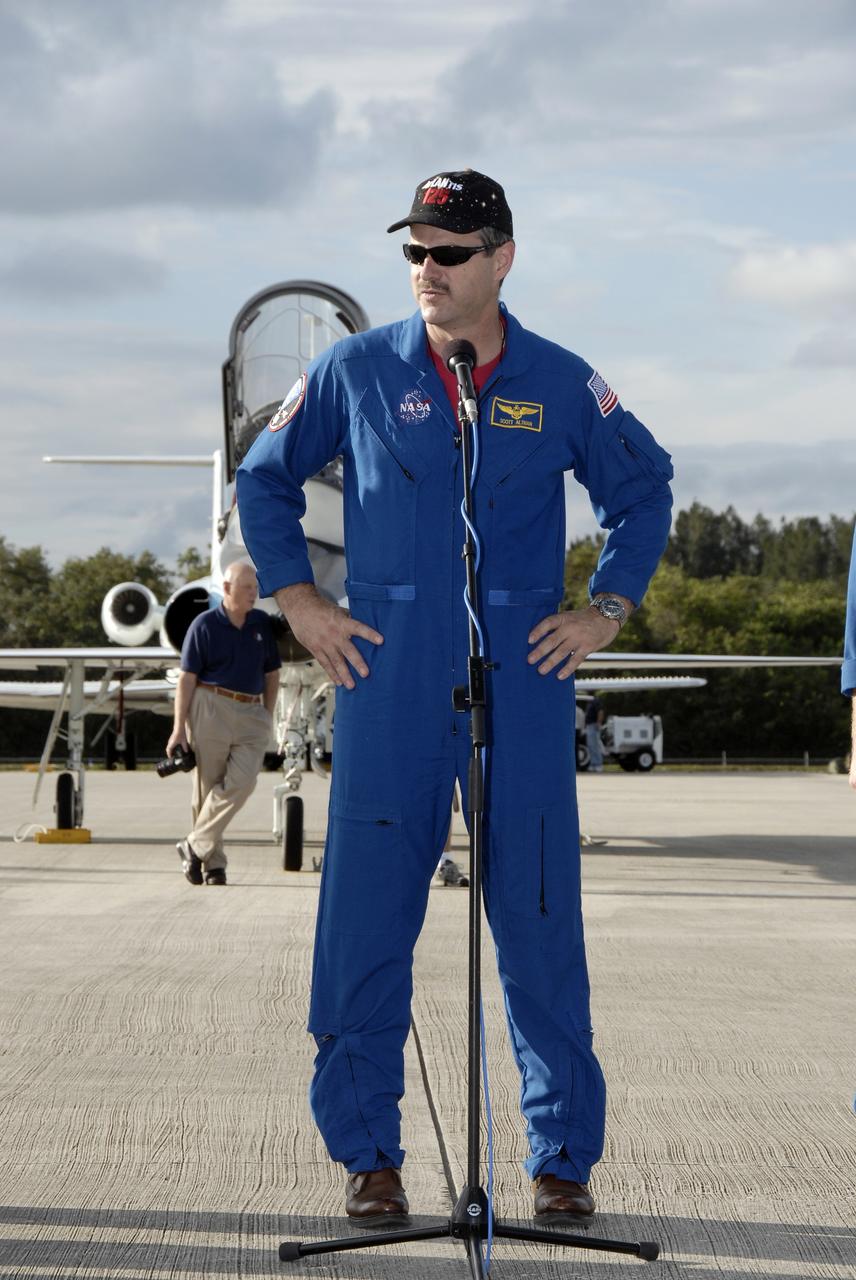
CAPE CANAVERAL, Fla. - STS-125 commander Scott Altman speaks to the media at the Shuttle Landing Facility at NASA’s Kennedy Space Center in Florida. Altman arrived in a T-38 jet for Terminal Countdown Demonstration Test, or TCDT, activities. During TCDT, space shuttle Atlantis’ STS-125 crew members will participate in a simulated launch countdown, practice emergency egress procedures at the launch pad and continue to familiarize themselves with the mission payload and hardware. STS-125 is the fifth and final shuttle Hubble Space Telescope servicing mission. Launch is targeted for Oct. 10. Photo credit: NASA/Kim Shiflett
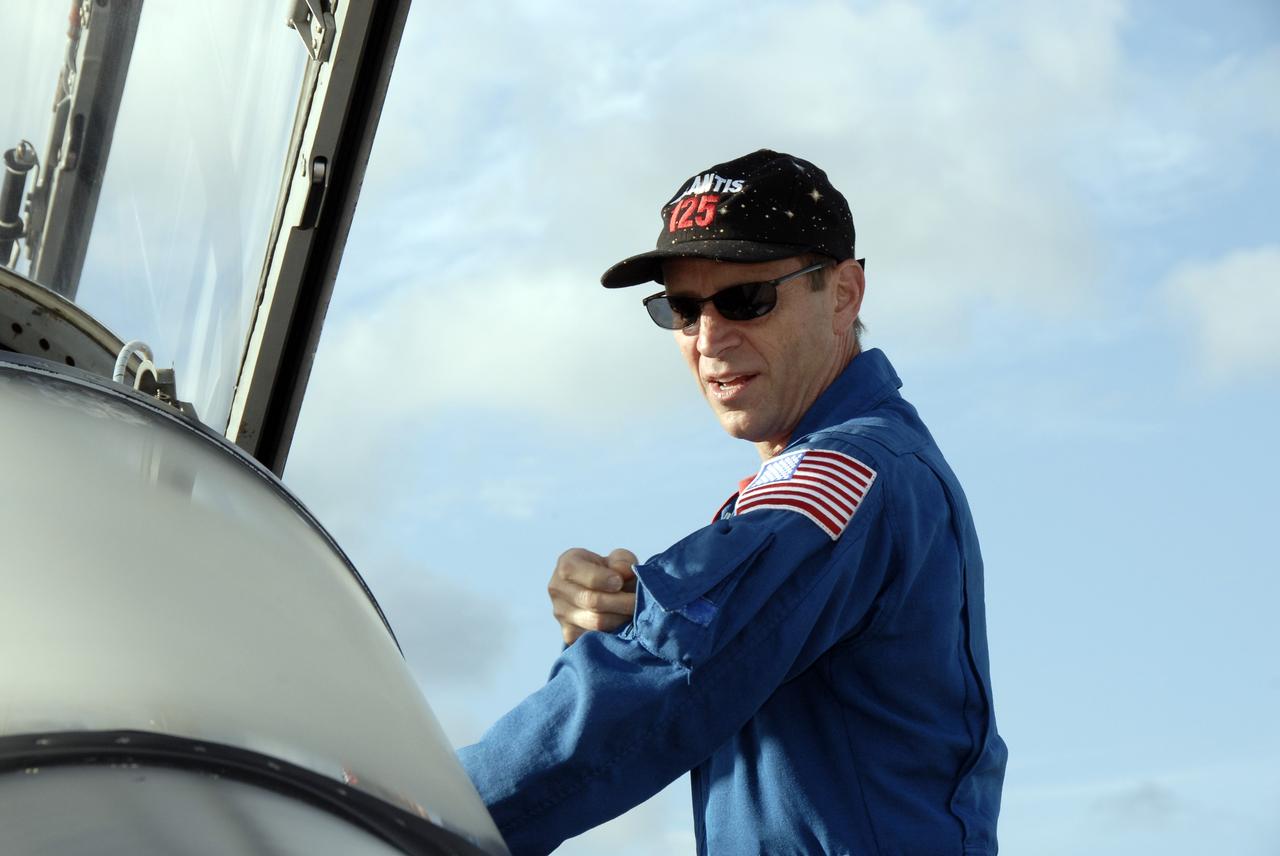
CAPE CANAVERAL, Fla. - STS-125 pilot Gregory C. Johnson arrives at the Shuttle Landing Facility at NASA’s Kennedy Space Center in Florida in a T-38 jet for Terminal Countdown Demonstration Test, or TCDT, activities. During TCDT, space shuttle Atlantis’ STS-125 crew members will participate in a simulated launch countdown, practice emergency egress procedures at the launch pad and continue to familiarize themselves with the mission payload and hardware. STS-125 is the fifth and final shuttle Hubble Space Telescope servicing mission. Launch is targeted for Oct. 10. Photo credit: NASA/Kim Shiflett
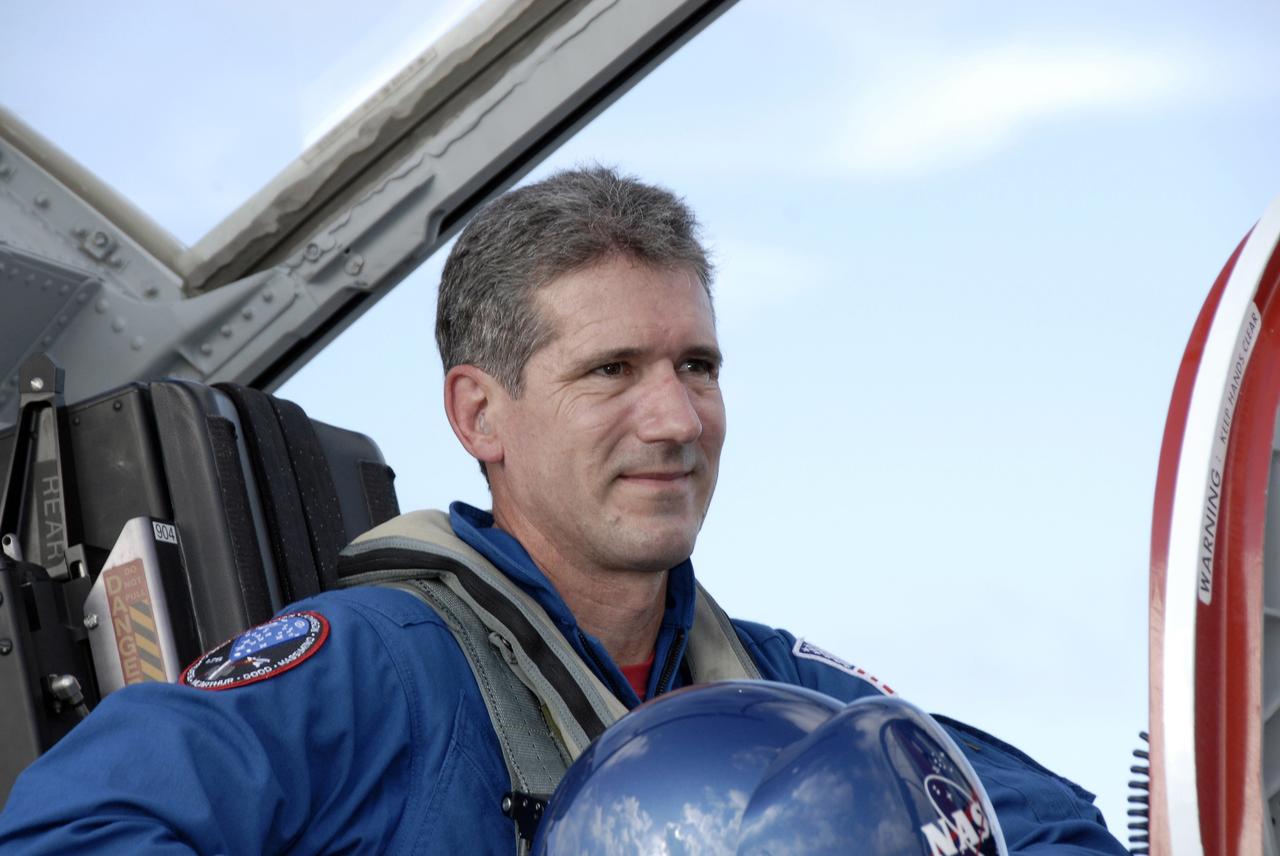
CAPE CANAVERAL, Fla. - STS-125 mission specialist Michael Good arrives at the Shuttle Landing Facility at NASA’s Kennedy Space Center in Florida in a T-38 jet for Terminal Countdown Demonstration Test, or TCDT, activities. During TCDT, space shuttle Atlantis’ STS-125 crew members will participate in a simulated launch countdown, practice emergency egress procedures at the launch pad and continue to familiarize themselves with the mission payload and hardware. STS-125 is the fifth and final shuttle Hubble Space Telescope servicing mission. Launch is targeted for Oct. 10. Photo credit: NASA/Kim Shiflett
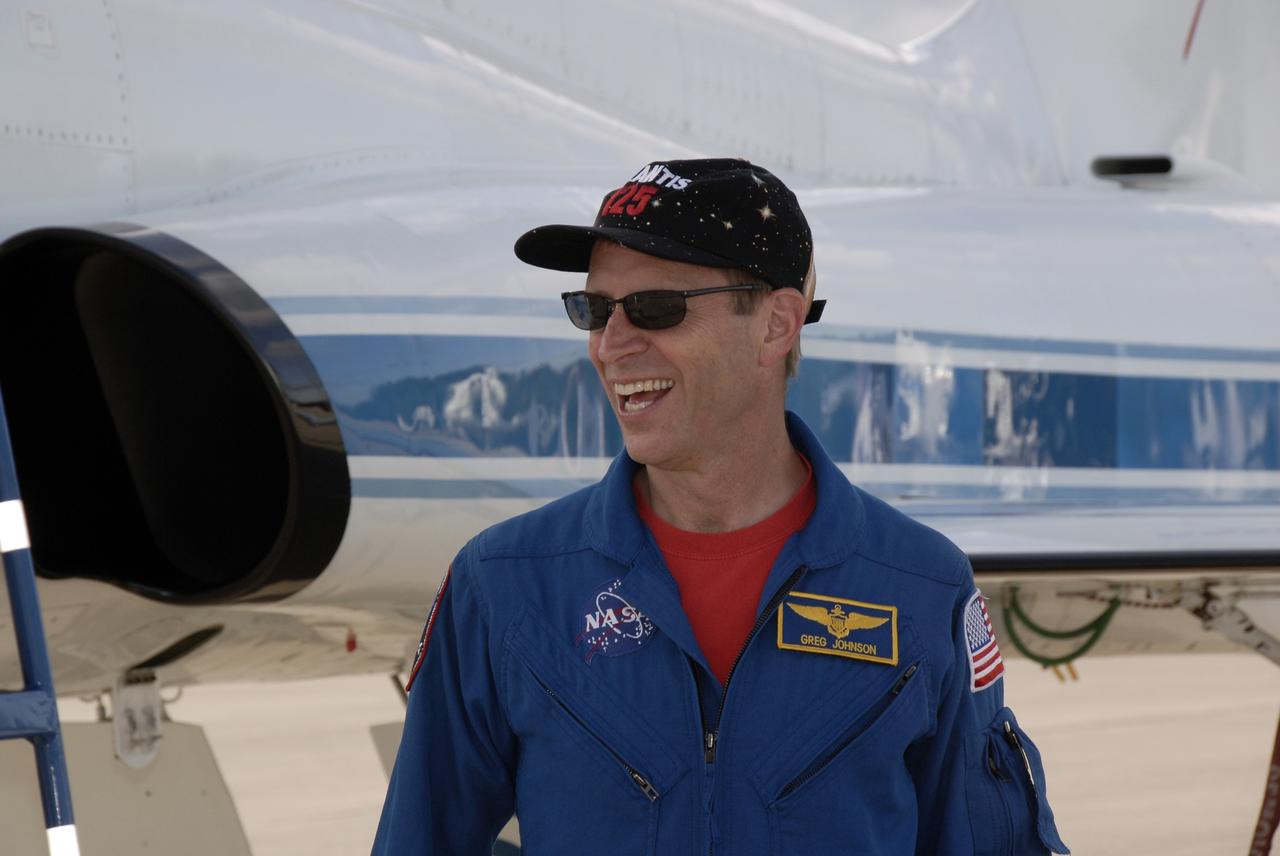
CAPE CANAVERAL, Fla. - STS-125 pilot Gregory C. Johnson arrives at the Shuttle Landing Facility at NASA’s Kennedy Space Center in Florida for Terminal Countdown Demonstration Test, or TCDT, activities. During TCDT, space shuttle Atlantis’ STS-125 crew members will participate in a simulated launch countdown, practice emergency egress procedures at the launch pad and continue to familiarize themselves with the mission payload and hardware. STS-125 is the fifth and final shuttle Hubble Space Telescope servicing mission. Launch is targeted for Oct. 10. Photo credit: NASA/Kim Shiflett
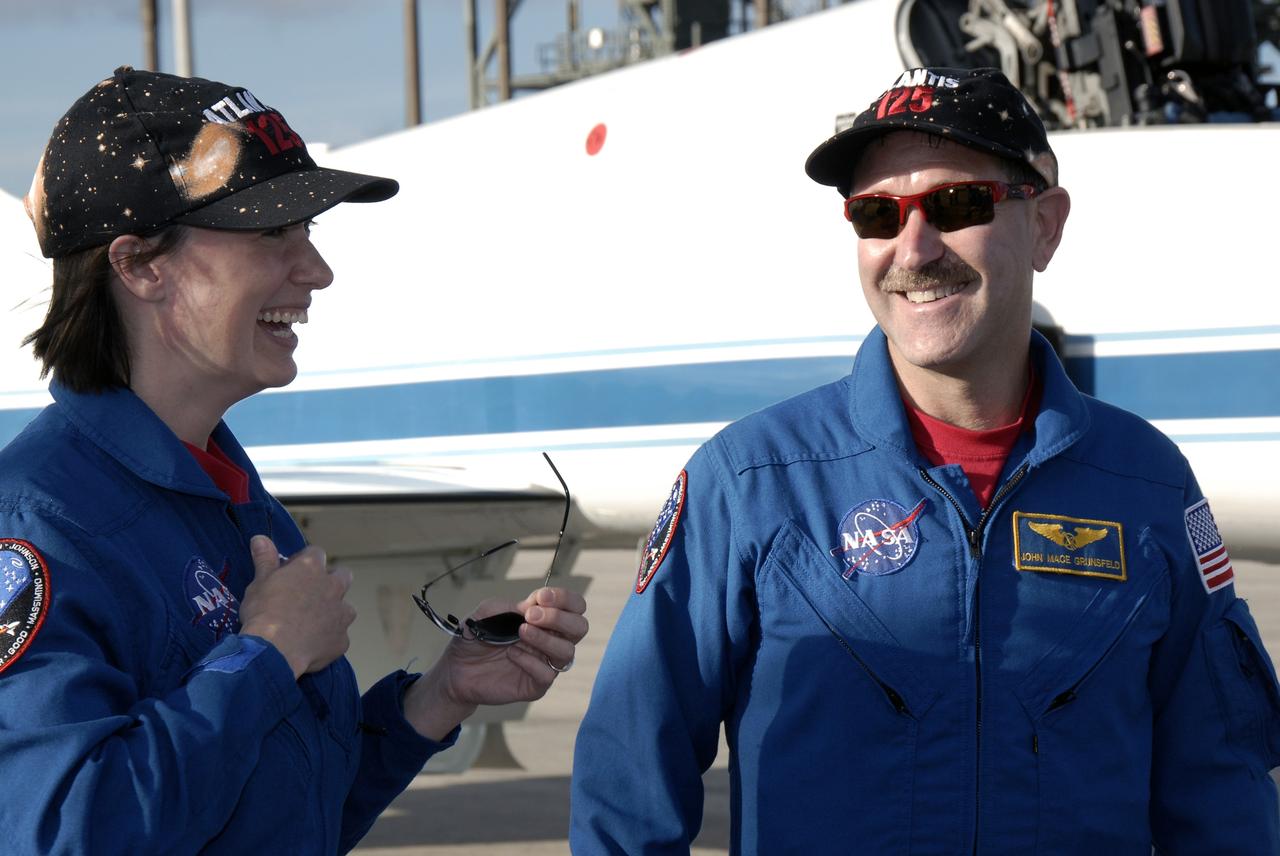
CAPE CANAVERAL, Fla. - STS-125 mission specialist John Grunsfeld arrives at the Shuttle Landing Facility at NASA’s Kennedy Space Center in Florida for Terminal Countdown Demonstration Test, or TCDT, activities. To his left is mission specialist Megan McArthur. During TCDT, space shuttle Atlantis’ STS-125 crew members will participate in a simulated launch countdown, practice emergency egress procedures at the launch pad and continue to familiarize themselves with the mission payload and hardware. STS-125 is the fifth and final shuttle Hubble Space Telescope servicing mission. Launch is targeted for Oct. 10. Photo credit: NASA/Kim Shiflett
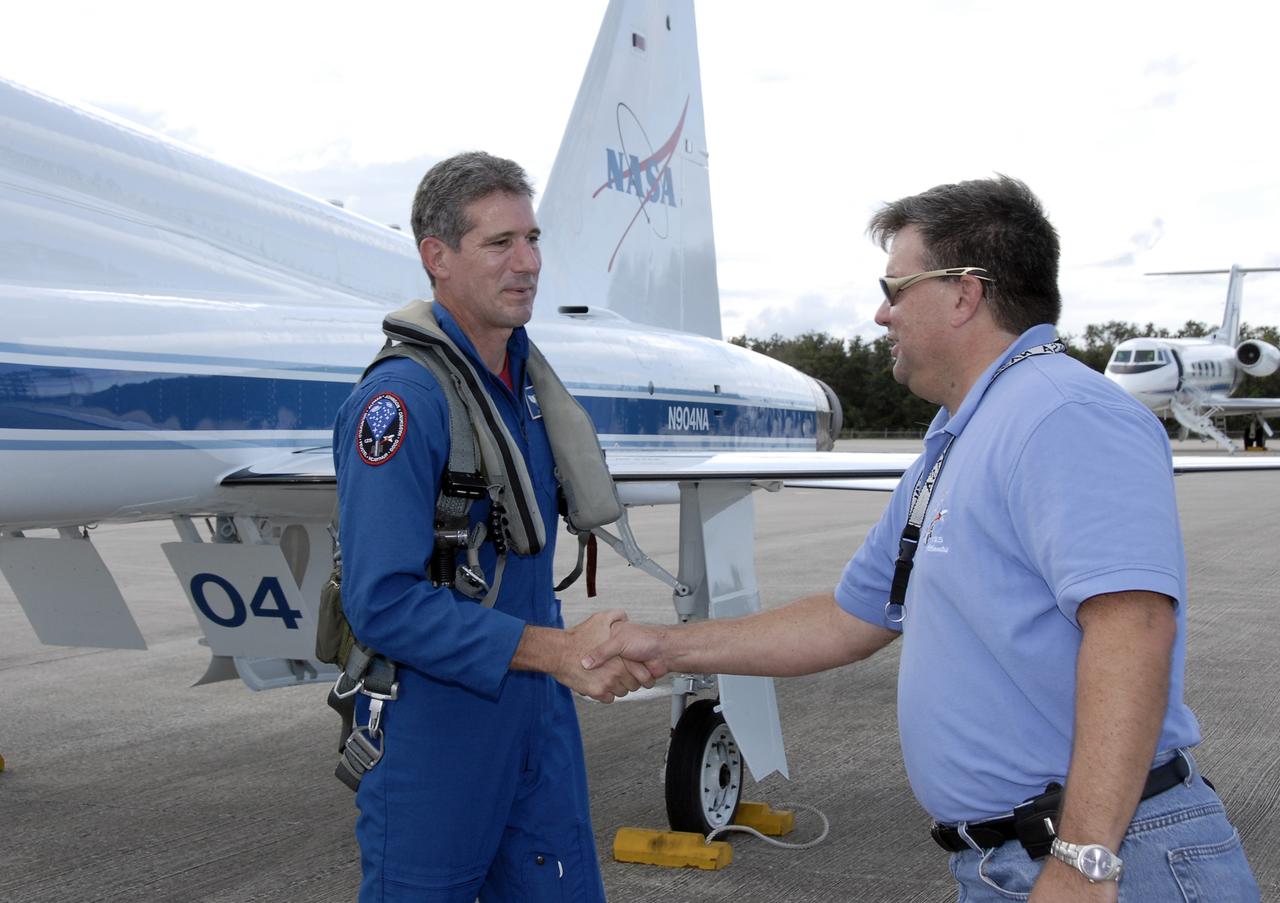
CAPE CANAVERAL, Fla. - STS-125 mission specialist Michael Good greets a worker at the Shuttle Landing Facility at NASA’s Kennedy Space Center in Florida after arriving in a T-38 jet for Terminal Countdown Demonstration Test, or TCDT, activities. During TCDT, space shuttle Atlantis’ STS-125 crew members will participate in a simulated launch countdown, practice emergency egress procedures at the launch pad and continue to familiarize themselves with the mission payload and hardware. STS-125 is the fifth and final shuttle Hubble Space Telescope servicing mission. Launch is targeted for Oct. 10. Photo credit: NASA/Kim Shiflett
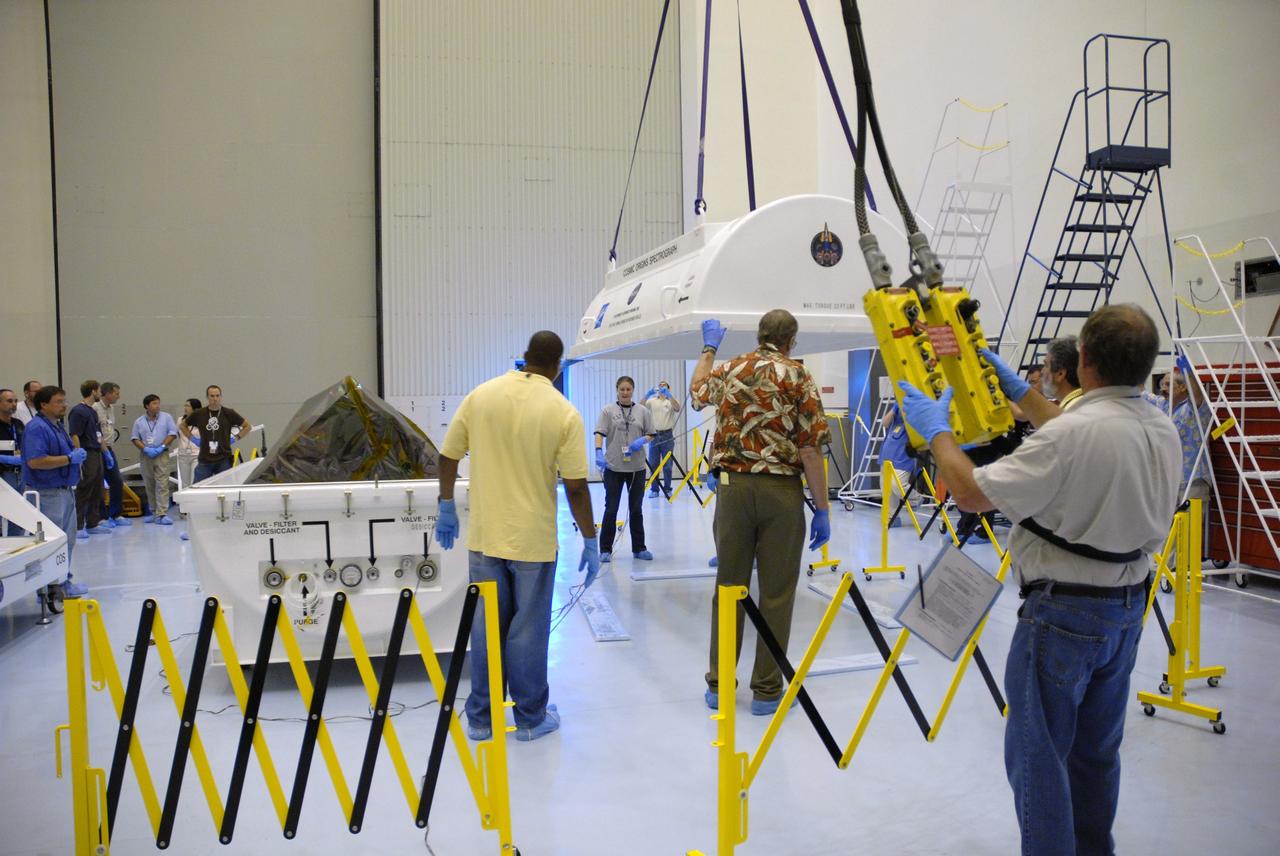
CAPE CANAVERAL, Fla. – In the airlock of the Payload Hazardous Servicing Facility at NASA's Kennedy Space Center, workers from NASA's Goddard Space Flight Center remove the top from the transportation canister in which the Cosmic Origins Spectrograph, or COS, arrived. The COS will be installed on the Hubble Space Telescope on space shuttle Atlantis' STS-125 mission. COS will be the most sensitive ultraviolet spectrograph ever flown on Hubble and will probe the "cosmic web" - the large-scale structure of the universe whose form is determined by the gravity of dark matter and is traced by galaxies and intergalactic gas. COS's far-ultraviolet channel has a sensitivity 30 times greater than that of previous spectroscopic instruments for the detection of extremely low light levels. Launch of STS-125 is targeted for Oct. 8. Photo credit: NASA/Jack Pfaller
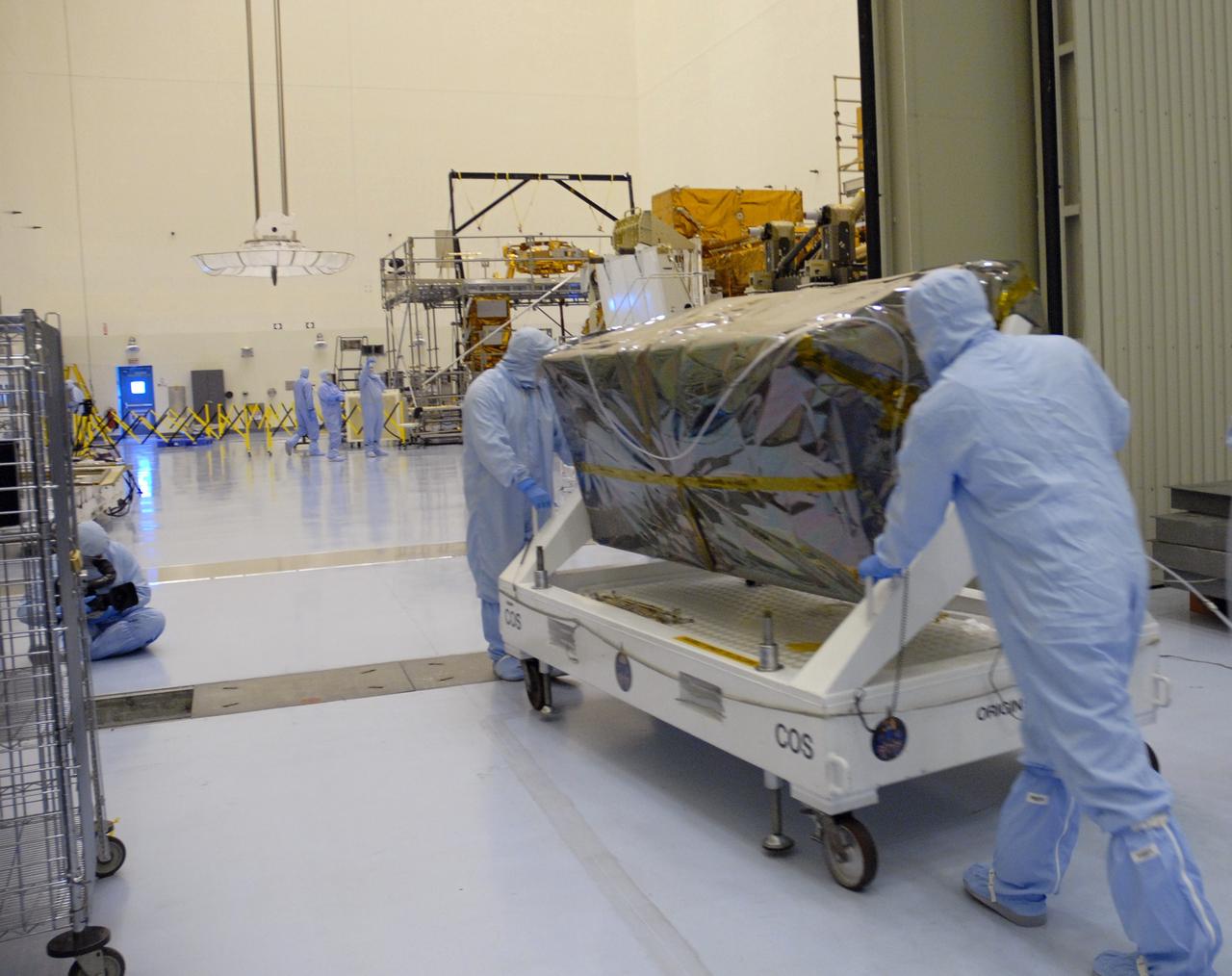
CAPE CANAVERAL, Fla. – At NASA's Kennedy Space Center, workers from NASA's Goddard Space Flight Center roll the Cosmic Origins Spectrograph, or COS, into the clean room of the Payload Hazardous Servicing Facility. The COS will be installed on the Hubble Space Telescope on space shuttle Atlantis' STS-125 mission. COS will be the most sensitive ultraviolet spectrograph ever flown on Hubble and will probe the "cosmic web" - the large-scale structure of the universe whose form is determined by the gravity of dark matter and is traced by galaxies and intergalactic gas. COS's far-ultraviolet channel has a sensitivity 30 times greater than that of previous spectroscopic instruments for the detection of extremely low light levels. Launch of STS-125 is targeted for Oct. 8. Photo credit: NASA/Jack Pfaller
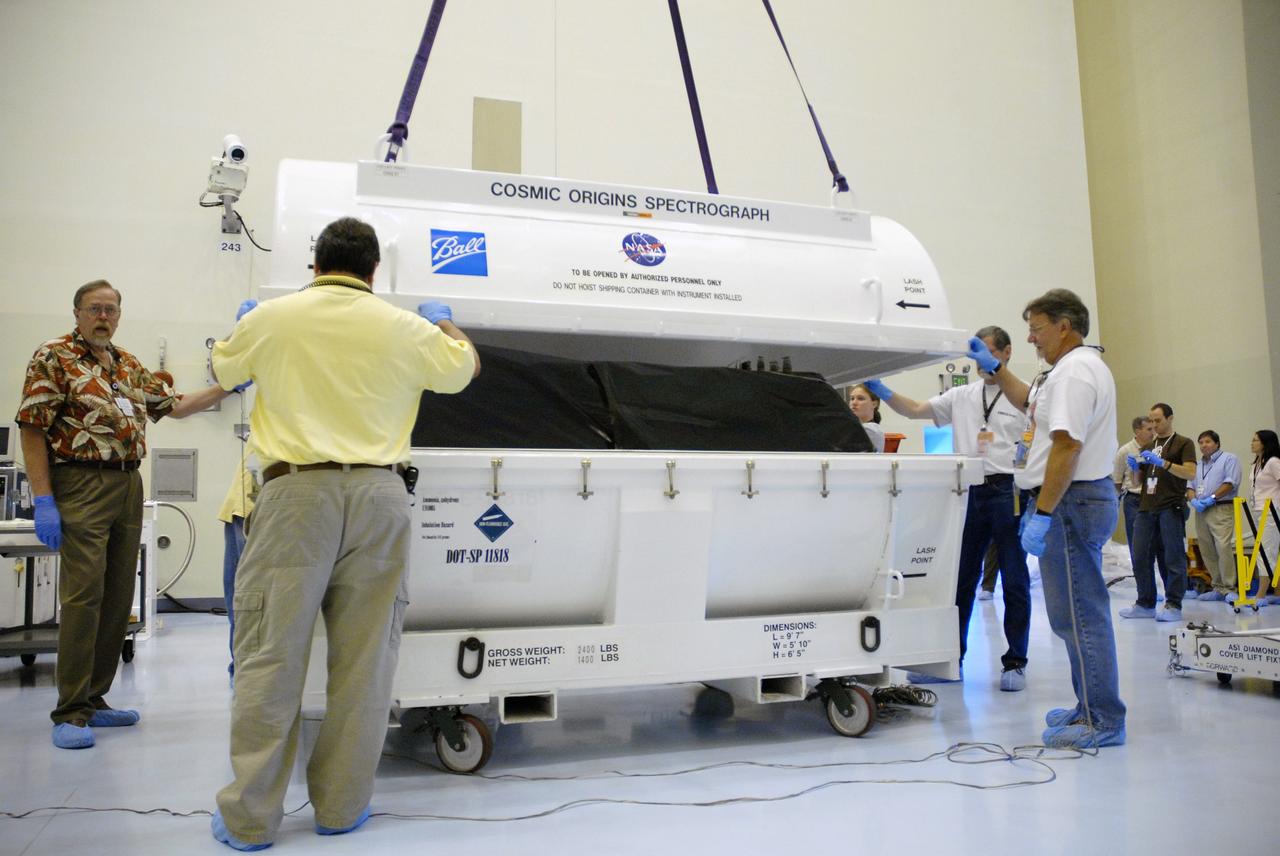
CAPE CANAVERAL, Fla. – In the airlock of the Payload Hazardous Servicing Facility at NASA's Kennedy Space Center, workers from NASA's Goddard Space Flight Center open the transportation canister in which the Cosmic Origins Spectrograph, or COS, is protected. The COS will be installed on the Hubble Space Telescope on space shuttle Atlantis' STS-125 mission. COS will be the most sensitive ultraviolet spectrograph ever flown on Hubble and will probe the "cosmic web" - the large-scale structure of the universe whose form is determined by the gravity of dark matter and is traced by galaxies and intergalactic gas. COS's far-ultraviolet channel has a sensitivity 30 times greater than that of previous spectroscopic instruments for the detection of extremely low light levels. Launch of STS-125 is targeted for Oct. 8. Photo credit: NASA/Jack Pfaller
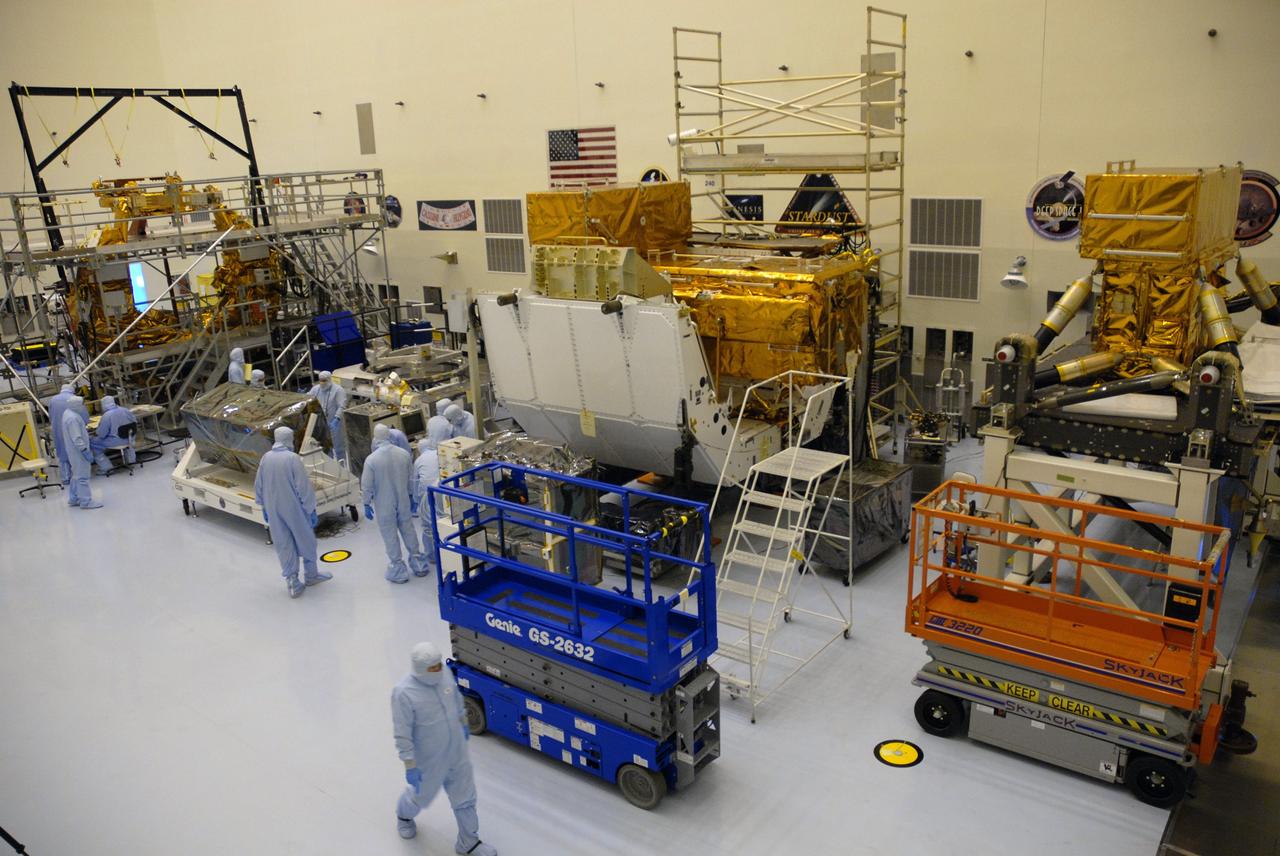
CAPE CANAVERAL, Fla. – At NASA's Kennedy Space Center, workers from NASA's Goddard Space Flight Center roll the Cosmic Origins Spectrograph, or COS, into position in the clean room of the Payload Hazardous Servicing Facility for instrument testing and integration with the Flight Support System carrier. The COS will be installed on the Hubble Space Telescope on space shuttle Atlantis' STS-125 mission. COS will be the most sensitive ultraviolet spectrograph ever flown on Hubble and will probe the "cosmic web" - the large-scale structure of the universe whose form is determined by the gravity of dark matter and is traced by galaxies and intergalactic gas. COS's far-ultraviolet channel has a sensitivity 30 times greater than that of previous spectroscopic instruments for the detection of extremely low light levels. Launch of STS-125 is targeted for Oct. 8. Photo credit: NASA/Jack Pfaller
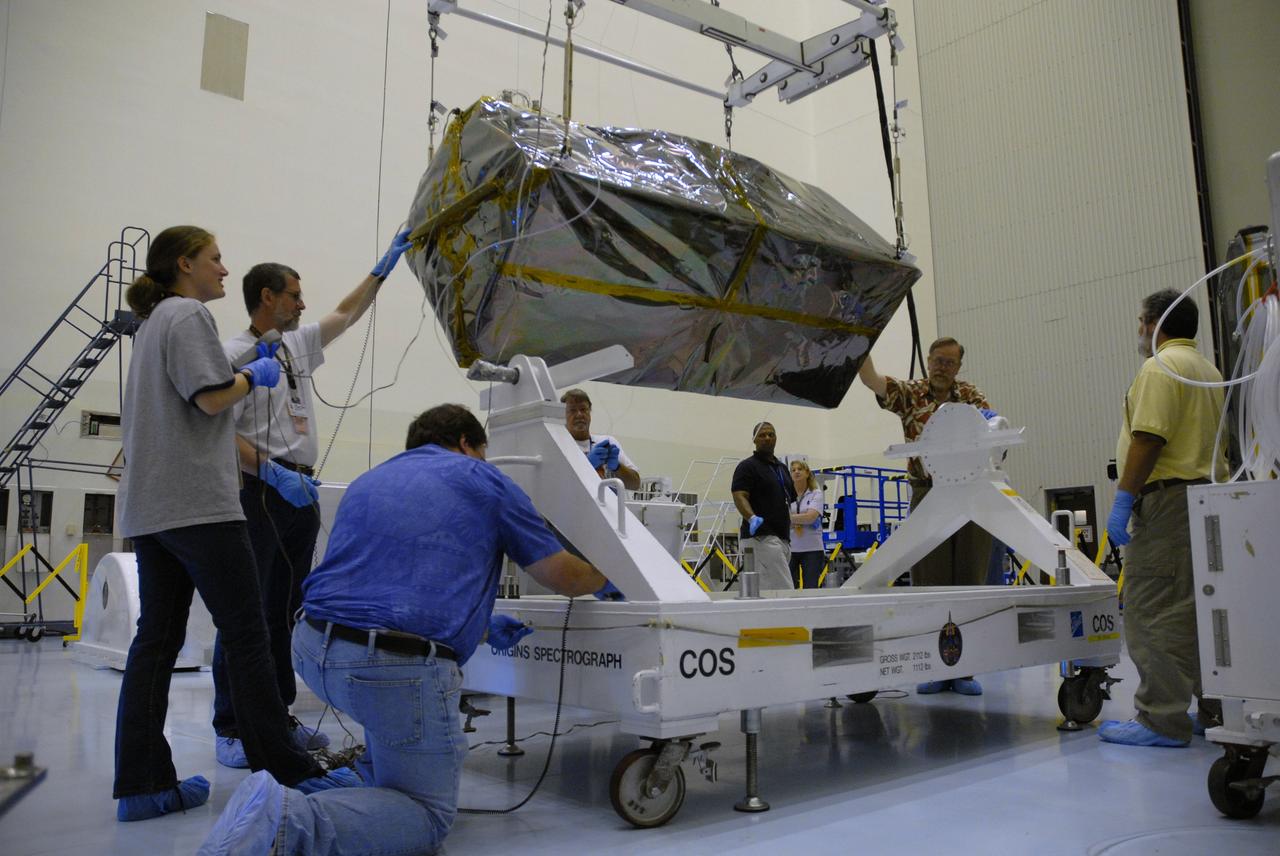
CAPE CANAVERAL, Fla. – In the airlock of the Payload Hazardous Servicing Facility at NASA's Kennedy Space Center, workers from NASA's Goddard Space Flight Center lift the Cosmic Origins Spectrograph, or COS, from its transportation canister onto a dolly for its move into the clean room. The COS will be installed on the Hubble Space Telescope on space shuttle Atlantis' STS-125 mission. COS will be the most sensitive ultraviolet spectrograph ever flown on Hubble and will probe the "cosmic web" - the large-scale structure of the universe whose form is determined by the gravity of dark matter and is traced by galaxies and intergalactic gas. COS's far-ultraviolet channel has a sensitivity 30 times greater than that of previous spectroscopic instruments for the detection of extremely low light levels. Launch of STS-125 is targeted for Oct. 8. Photo credit: NASA/Jack Pfaller
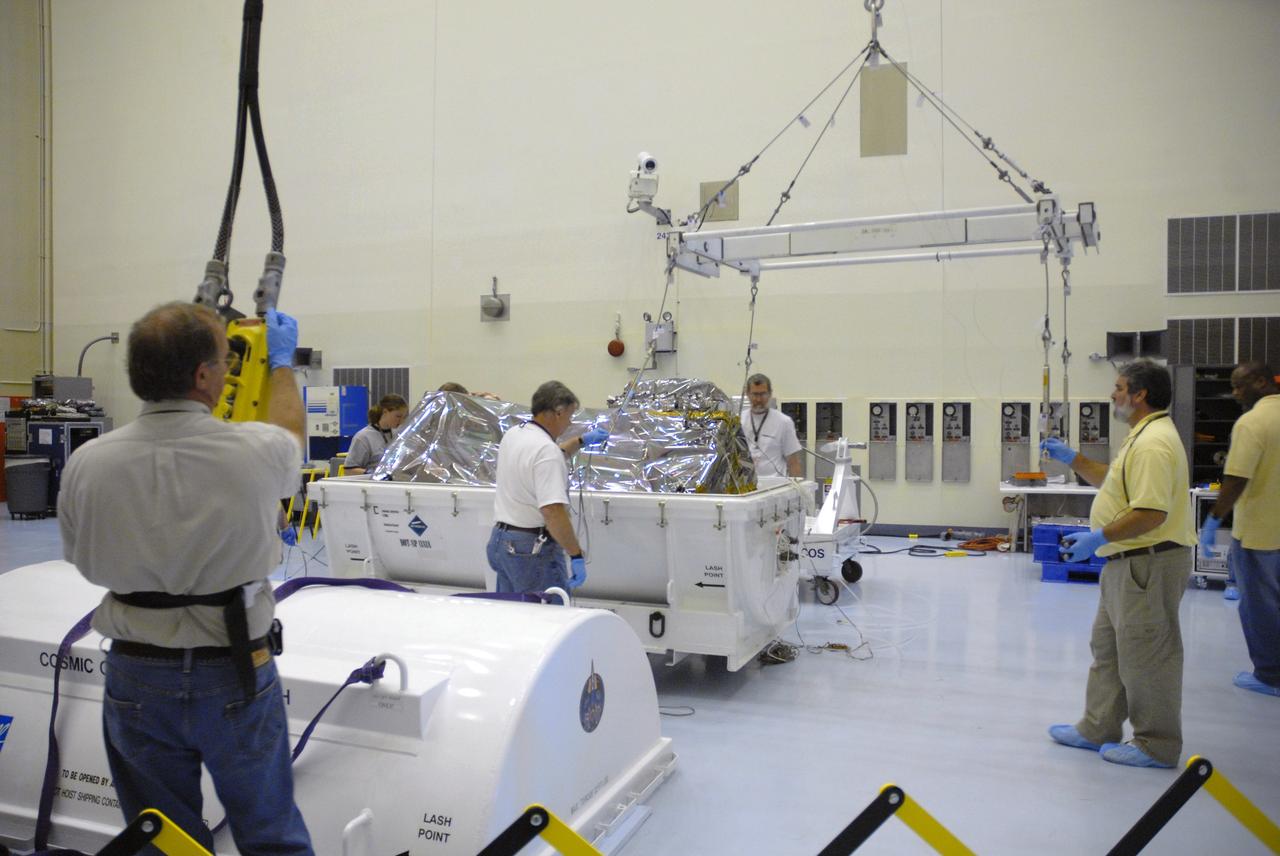
CAPE CANAVERAL, Fla. – In the airlock of the Payload Hazardous Servicing Facility at NASA's Kennedy Space Center, workers from NASA's Goddard Space Flight Center examine the Cosmic Origins Spectrograph, or COS, after the top from its transportation canister is removed. The COS will be installed on the Hubble Space Telescope on space shuttle Atlantis' STS-125 mission. COS will be the most sensitive ultraviolet spectrograph ever flown on Hubble and will probe the "cosmic web" - the large-scale structure of the universe whose form is determined by the gravity of dark matter and is traced by galaxies and intergalactic gas. COS's far-ultraviolet channel has a sensitivity 30 times greater than that of previous spectroscopic instruments for the detection of extremely low light levels. Launch of STS-125 is targeted for Oct. 8. Photo credit: NASA/Jack Pfaller
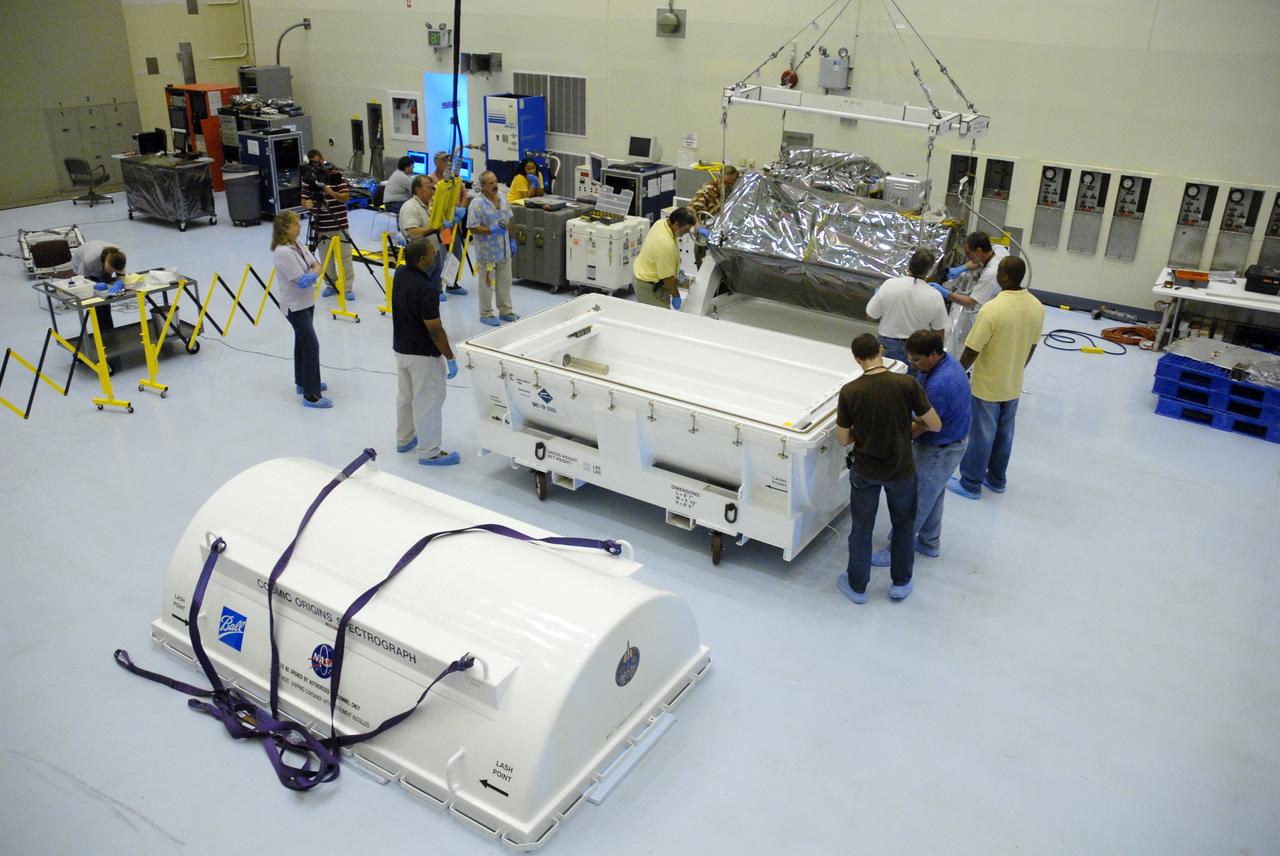
CAPE CANAVERAL, Fla. – In the airlock of the Payload Hazardous Servicing Facility at NASA's Kennedy Space Center, workers from NASA's Goddard Space Flight Center lower the Cosmic Origins Spectrograph, or COS, onto a dolly for its move into the clean room. The COS will be installed on the Hubble Space Telescope on space shuttle Atlantis' STS-125 mission. COS will be the most sensitive ultraviolet spectrograph ever flown on Hubble and will probe the "cosmic web" - the large-scale structure of the universe whose form is determined by the gravity of dark matter and is traced by galaxies and intergalactic gas. COS's far-ultraviolet channel has a sensitivity 30 times greater than that of previous spectroscopic instruments for the detection of extremely low light levels. Launch of STS-125 is targeted for Oct. 8. Photo credit: NASA/Jack Pfaller
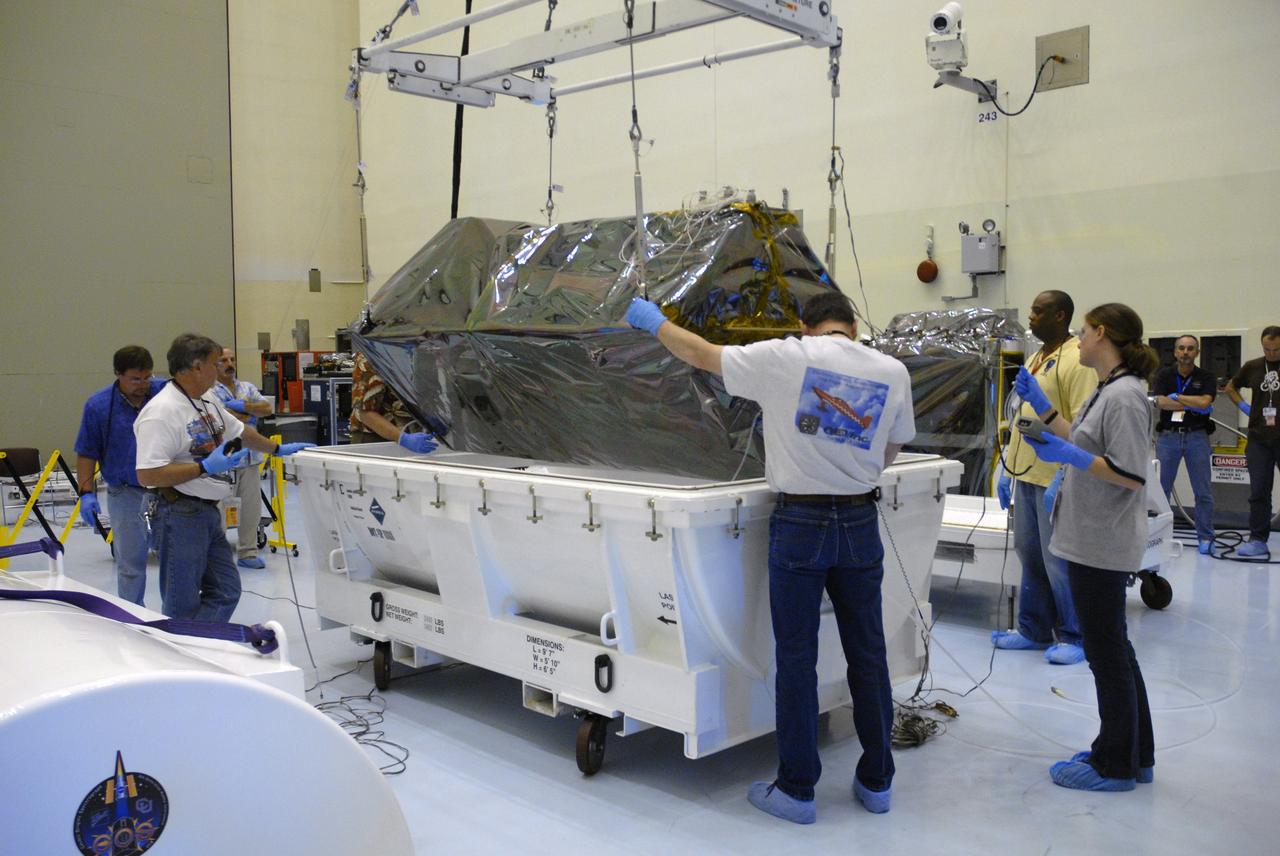
CAPE CANAVERAL, Fla. – In the airlock of the Payload Hazardous Servicing Facility at NASA's Kennedy Space Center, workers from NASA's Goddard Space Flight Center prepare to lift the Cosmic Origins Spectrograph, or COS, from its transportation canister. The COS will be installed on the Hubble Space Telescope on space shuttle Atlantis' STS-125 mission. COS will be the most sensitive ultraviolet spectrograph ever flown on Hubble and will probe the "cosmic web" - the large-scale structure of the universe whose form is determined by the gravity of dark matter and is traced by galaxies and intergalactic gas. COS's far-ultraviolet channel has a sensitivity 30 times greater than that of previous spectroscopic instruments for the detection of extremely low light levels. Launch of STS-125 is targeted for Oct. 8. Photo credit: NASA/Jack Pfaller
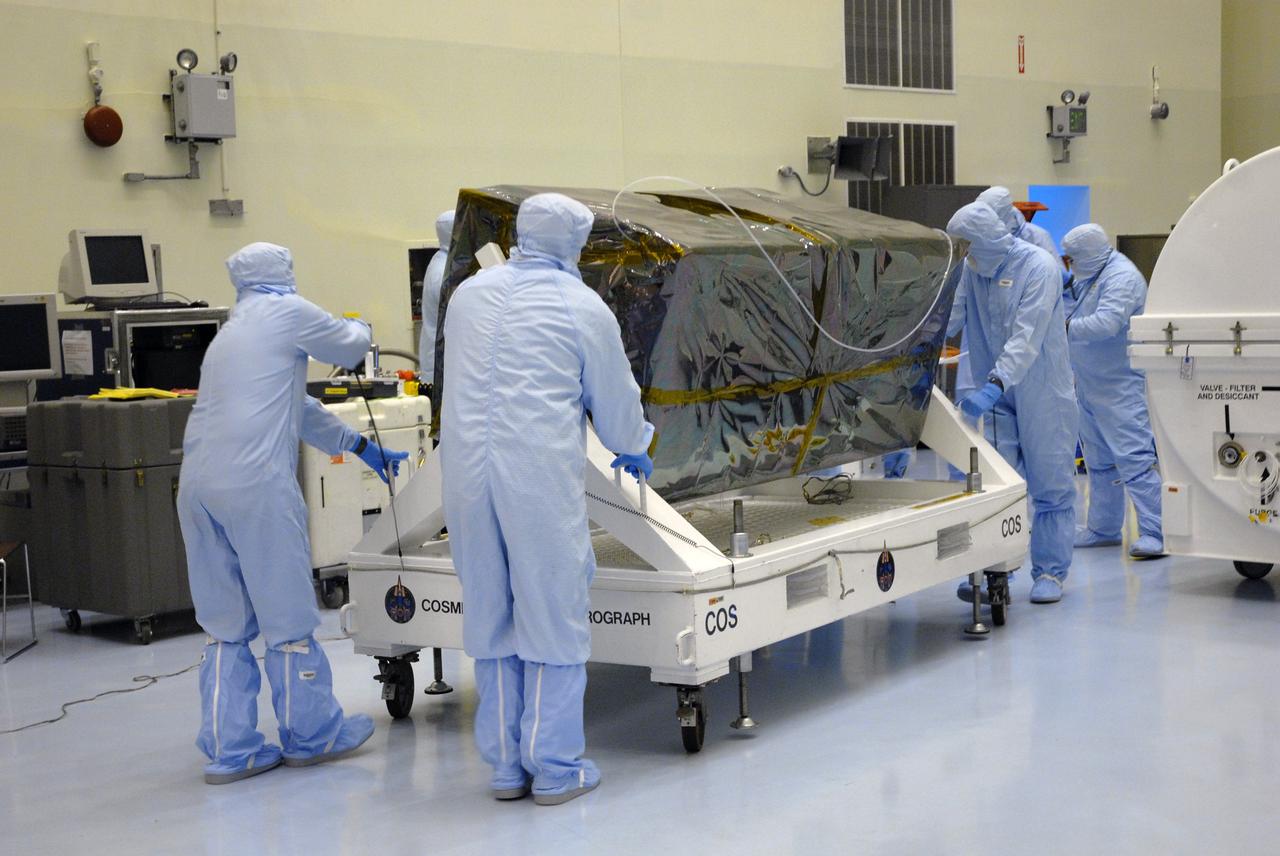
CAPE CANAVERAL, Fla. – At NASA's Kennedy Space Center, workers from NASA's Goddard Space Flight Center roll the Cosmic Origins Spectrograph, or COS, from the airlock, where it was removed from the shipping container, to the clean room of the Payload Hazardous Servicing Facility. The COS will be installed on the Hubble Space Telescope on space shuttle Atlantis' STS-125 mission. COS will be the most sensitive ultraviolet spectrograph ever flown on Hubble and will probe the "cosmic web" - the large-scale structure of the universe whose form is determined by the gravity of dark matter and is traced by galaxies and intergalactic gas. COS's far-ultraviolet channel has a sensitivity 30 times greater than that of previous spectroscopic instruments for the detection of extremely low light levels. Launch of STS-125 is targeted for Oct. 8. Photo credit: NASA/Jack Pfaller

CAPE CANAVERAL, Fla. – At NASA's Kennedy Space Center, workers from NASA's Goddard Space Flight Center roll the Cosmic Origins Spectrograph, or COS, into position in the clean room of the Payload Hazardous Servicing Facility for instrument testing. The COS will be installed on the Hubble Space Telescope on space shuttle Atlantis' STS-125 mission. COS will be the most sensitive ultraviolet spectrograph ever flown on Hubble and will probe the "cosmic web" - the large-scale structure of the universe whose form is determined by the gravity of dark matter and is traced by galaxies and intergalactic gas. COS's far-ultraviolet channel has a sensitivity 30 times greater than that of previous spectroscopic instruments for the detection of extremely low light levels. Launch of STS-125 is targeted for Oct. 8. Photo credit: NASA/Jack Pfaller
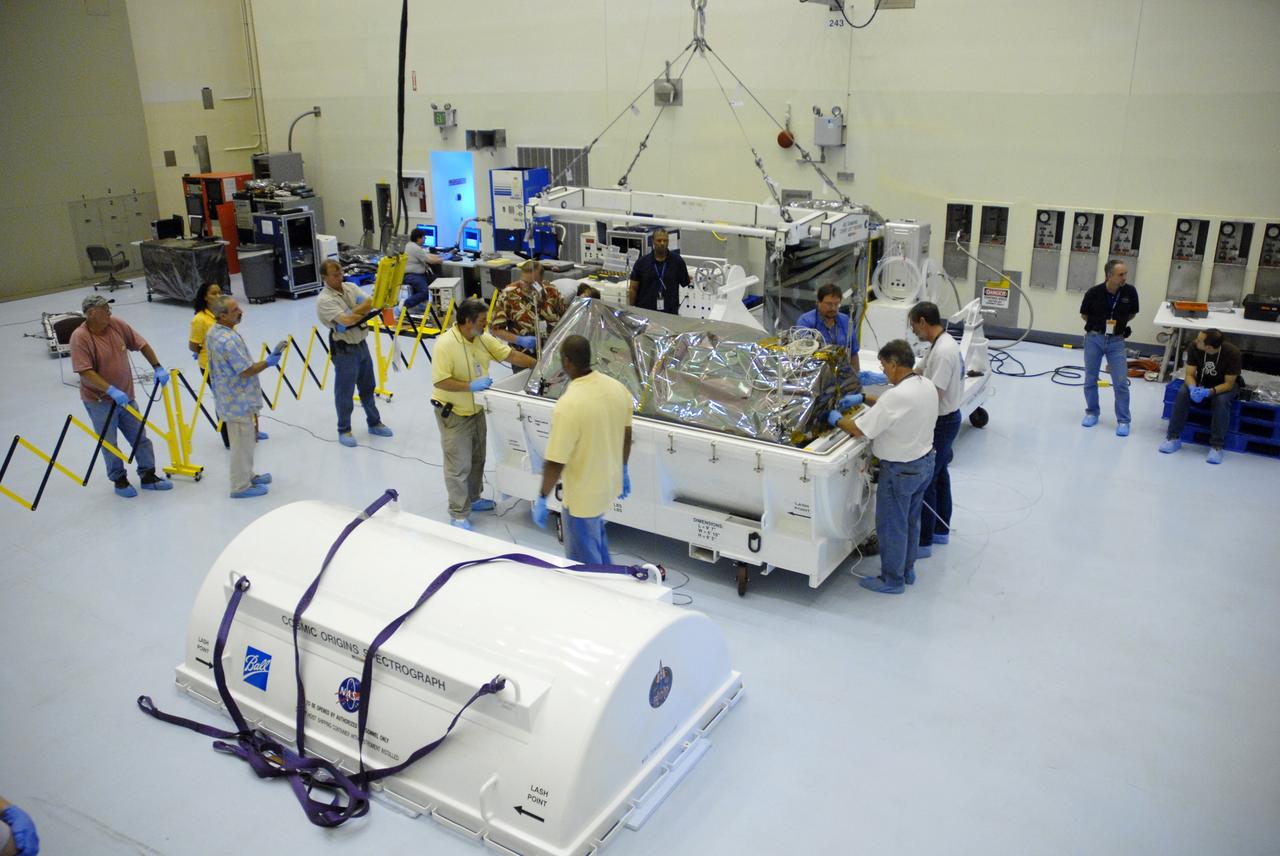
CAPE CANAVERAL, Fla. – In the airlock of the Payload Hazardous Servicing Facility at NASA's Kennedy Space Center, workers from NASA's Goddard Space Flight Center prepare to remove the Cosmic Origins Spectrograph, or COS, from its transportation canister. The COS will be installed on the Hubble Space Telescope on space shuttle Atlantis' STS-125 mission. COS will be the most sensitive ultraviolet spectrograph ever flown on Hubble and will probe the "cosmic web" - the large-scale structure of the universe whose form is determined by the gravity of dark matter and is traced by galaxies and intergalactic gas. COS's far-ultraviolet channel has a sensitivity 30 times greater than that of previous spectroscopic instruments for the detection of extremely low light levels. Launch of STS-125 is targeted for Oct. 8. Photo credit: NASA/Jack Pfaller
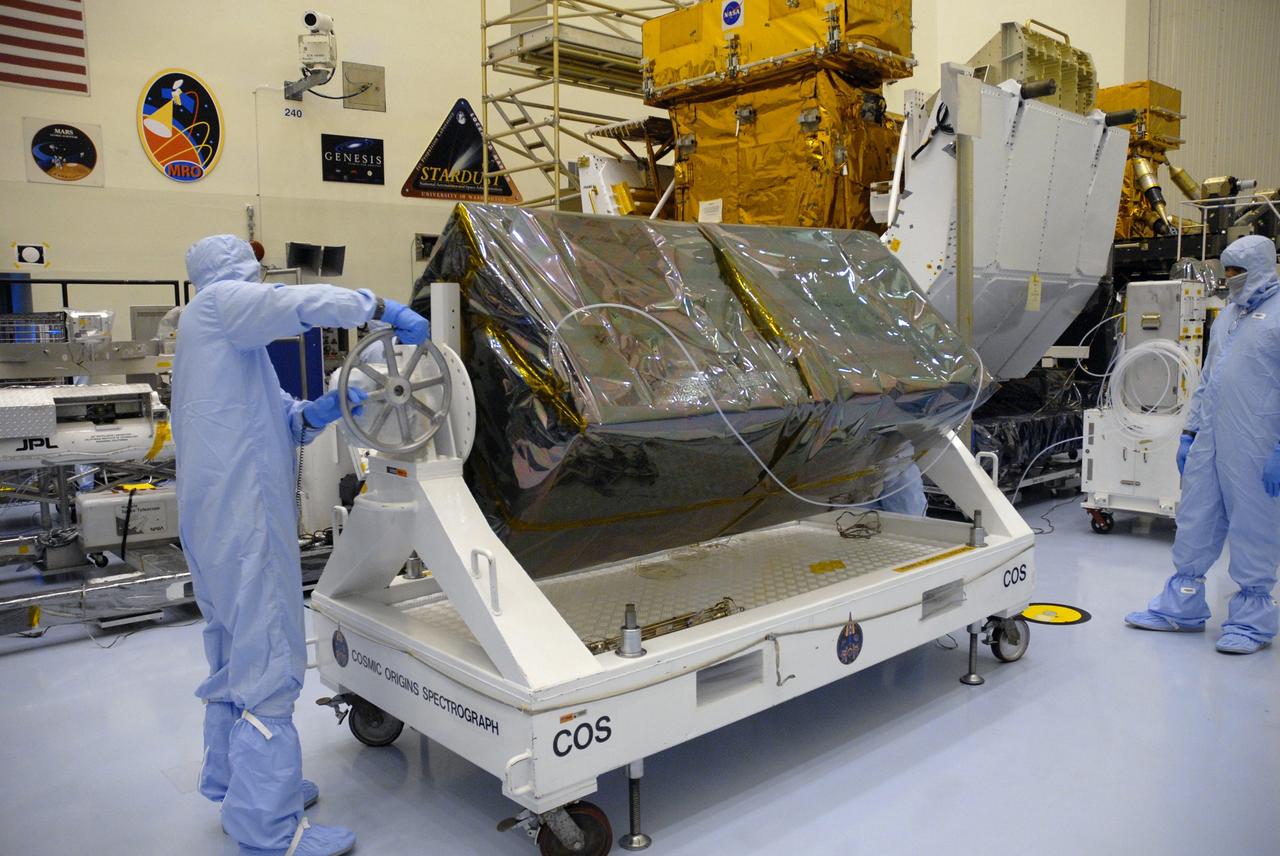
CAPE CANAVERAL, Fla. – At NASA's Kennedy Space Center, workers from NASA's Goddard Space Flight Center prepare the Cosmic Origins Spectrograph, or COS, for instrument testing and integration with the Flight Support System carrier in the clean room of the Payload Hazardous Servicing Facility. The COS will be installed on the Hubble Space Telescope on space shuttle Atlantis' STS-125 mission. COS will be the most sensitive ultraviolet spectrograph ever flown on Hubble and will probe the "cosmic web" - the large-scale structure of the universe whose form is determined by the gravity of dark matter and is traced by galaxies and intergalactic gas. COS's far-ultraviolet channel has a sensitivity 30 times greater than that of previous spectroscopic instruments for the detection of extremely low light levels. Launch of STS-125 is targeted for Oct. 8. Photo credit: NASA/Jack Pfaller
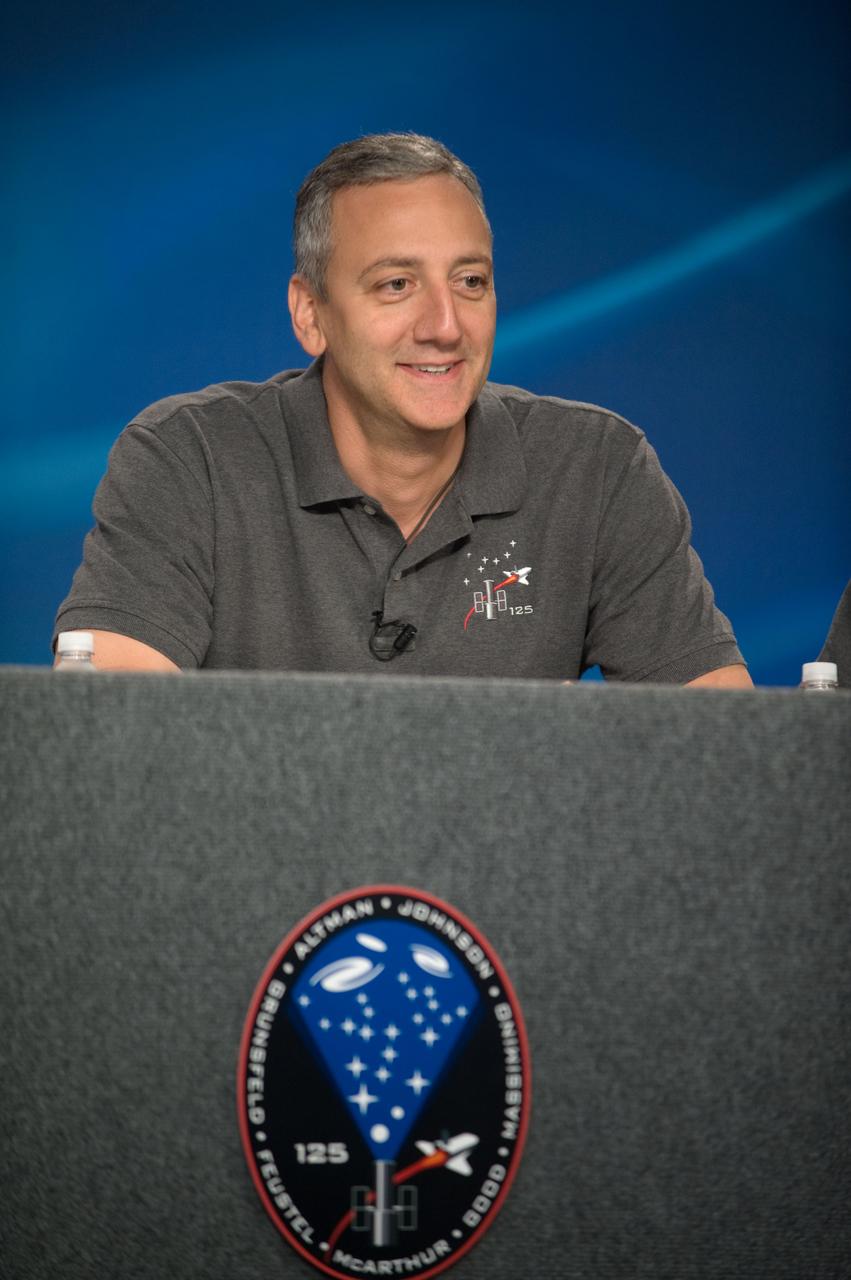
PHOTO DATE:04-23-09 LOCATION: PRESS BRIEFING ROOM SUBJECT: Photographic coverage of STS-125 Press Conference PHOTOGRAPHER: BILL STAFFORD X34753
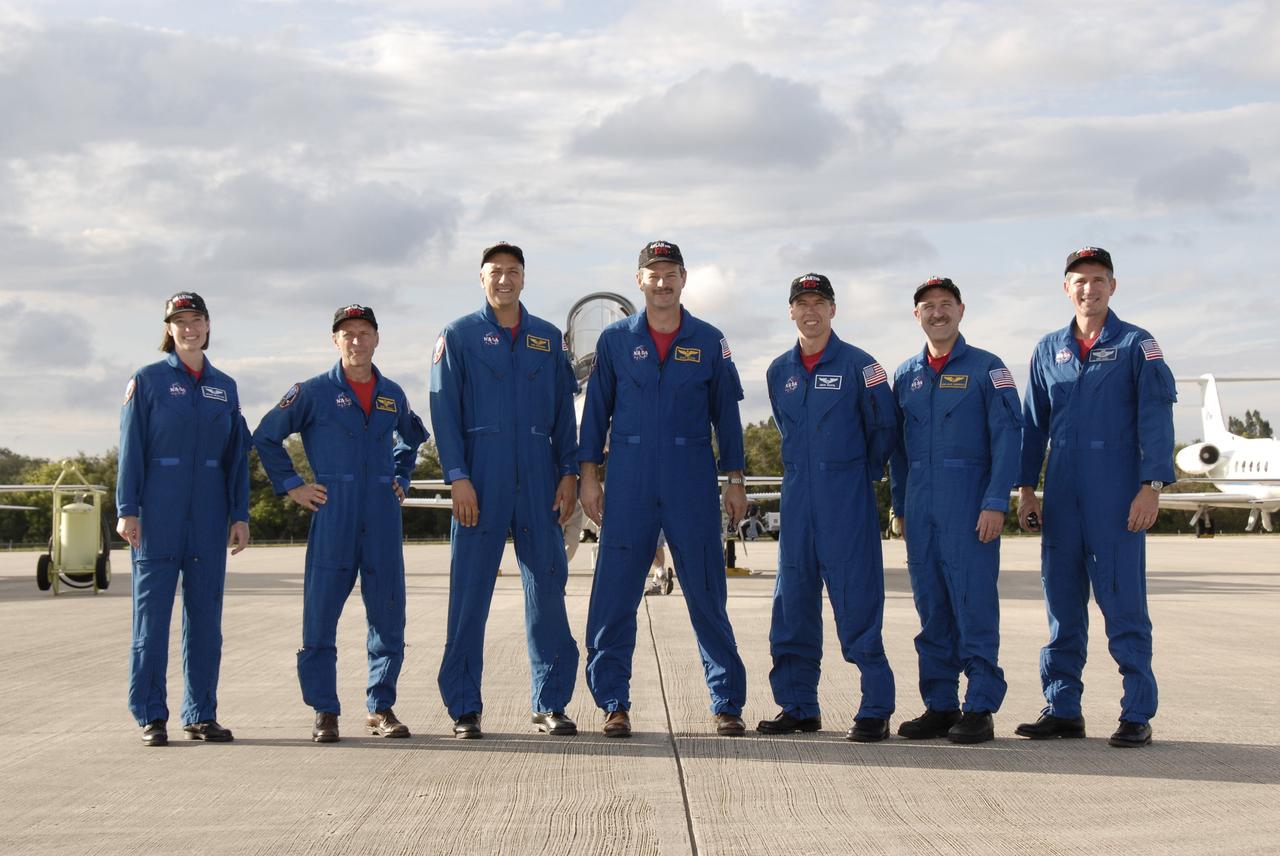
CAPE CANAVERAL, Fla. - The STS-125 crew members prepare to speak to the media at the Shuttle Landing Facility at NASA’s Kennedy Space Center in Florida after arriving in T-38 jets for Terminal Countdown Demonstration Test, or TCDT, activities. From left are, mission specialist Megan McArthur, pilot Gregory C. Johnson, mission specialist Mike Massimino, commander Scott Altman, and mission specialists Andrew Feustel, John Grunsfeld and Michael Good. During TCDT, space shuttle Atlantis’ STS-125 crew members will participate in a simulated launch countdown, practice emergency egress procedures at the launch pad and continue to familiarize themselves with the mission payload and hardware. STS-125 is the fifth and final shuttle Hubble Space Telescope servicing mission. Launch is targeted for Oct. 10. Photo credit: NASA/Kim Shiflett
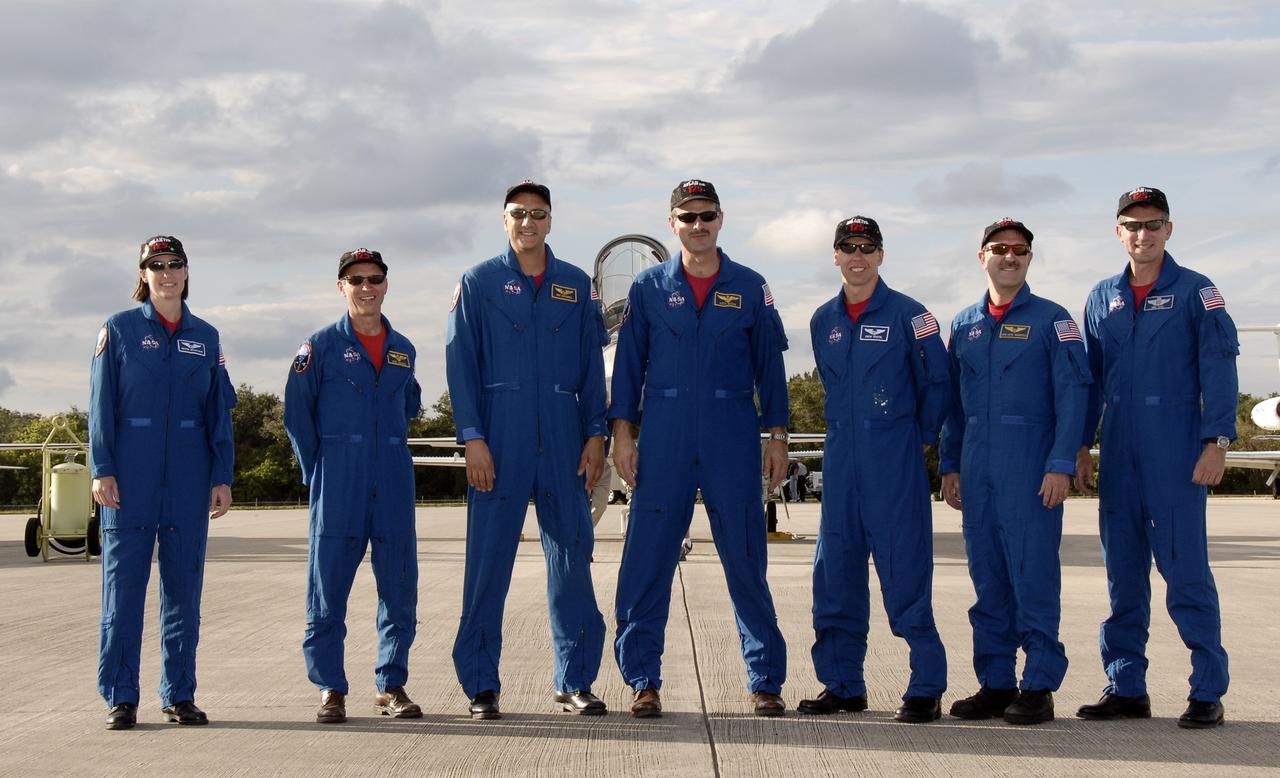
CAPE CANAVERAL, Fla. - The STS-125 crew members prepare to speak to the media at the Shuttle Landing Facility at NASA’s Kennedy Space Center in Florida after arriving in T-38 jets for Terminal Countdown Demonstration Test, or TCDT, activities. From left are, mission specialist Megan McArthur, pilot Gregory C. Johnson, mission specialist Mike Massimino, commander Scott Altman, and mission specialists Andrew Feustel, John Grunsfeld and Michael Good. During TCDT, space shuttle Atlantis’ STS-125 crew members will participate in a simulated launch countdown, practice emergency egress procedures at the launch pad and continue to familiarize themselves with the mission payload and hardware. STS-125 is the fifth and final shuttle Hubble Space Telescope servicing mission. Launch is targeted for Oct. 10. Photo credit: NASA/Kim Shiflett
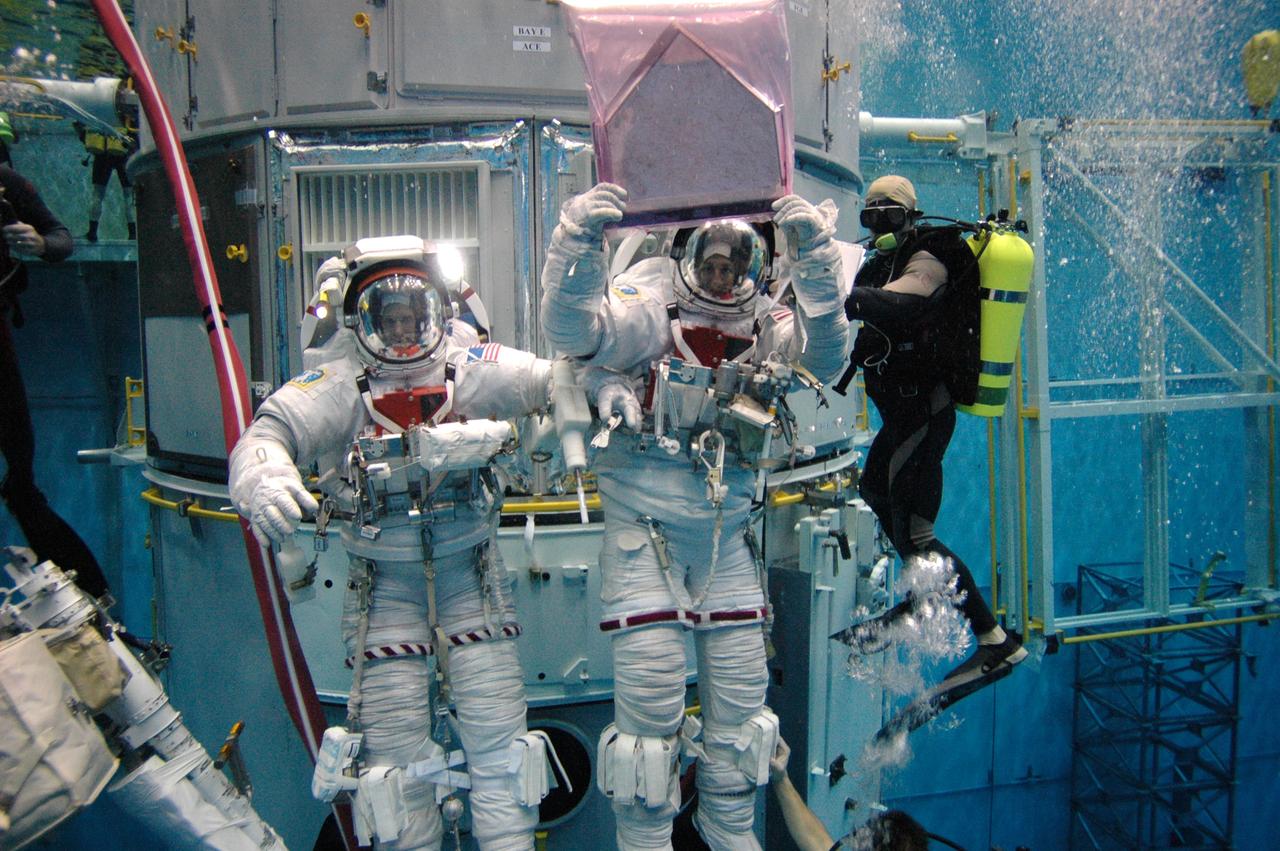
JSC2008-E-096965 (December 2007) --- Astronauts Mike Massimino (right) and Mike Good, STS-125 mission specialists, with home plate from New York City's Shea Stadium during a break from their training in the JSC Neutral Buoyancy Lab. The plate will fly with the STS-125 crew aboard the Space Shuttle Atlantis. (Photo Credit: NASA)
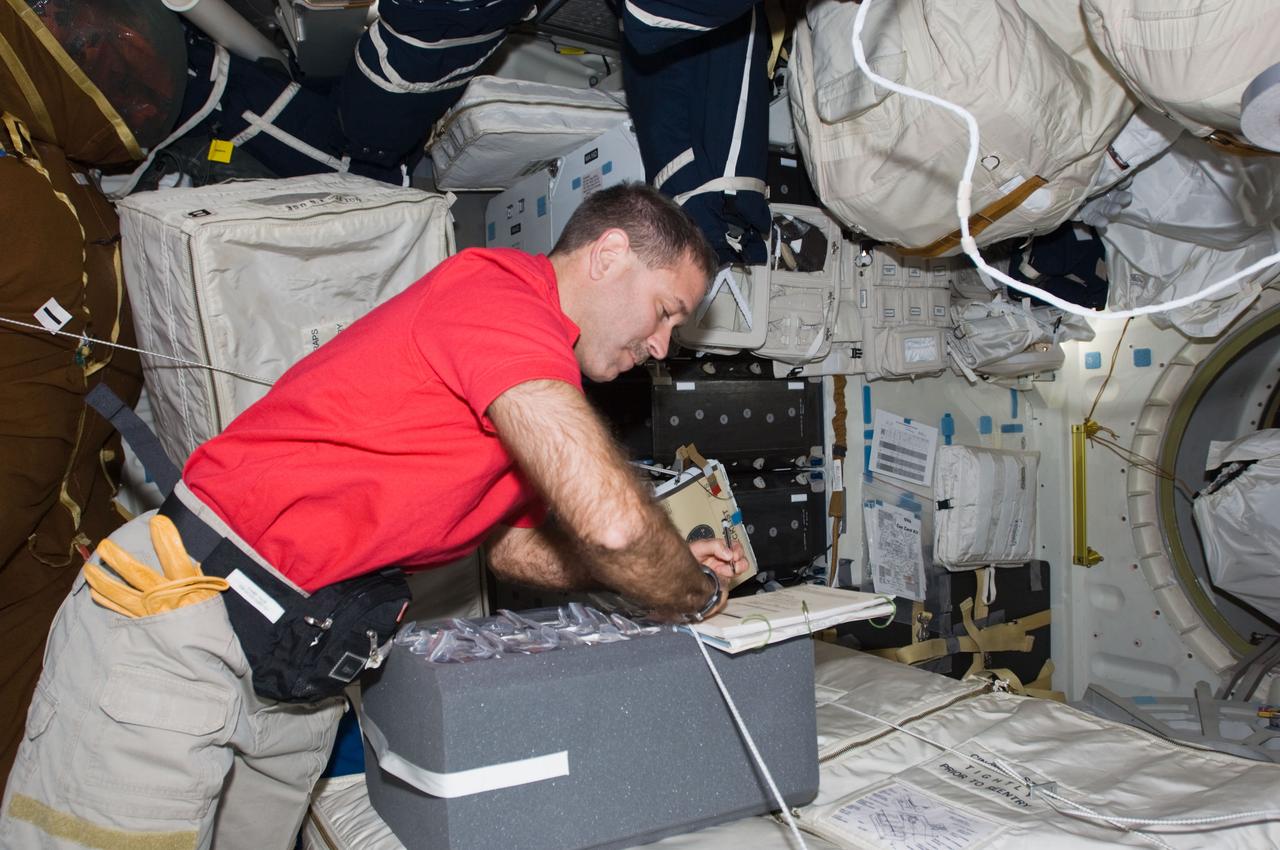
S125-E-006501 (12 May 2009) --- Astronaut John Grunsfeld, mission specialist, helps with unpacking chores on Atlantis? mid deck during the STS-125 flight?s second day in space. The next several days prove to be very busy for the entire crew, as five spacewalks, three of which will have the veteran Grunsfeld leaving the shirt sleeved environment of the shuttle, are in the offing.
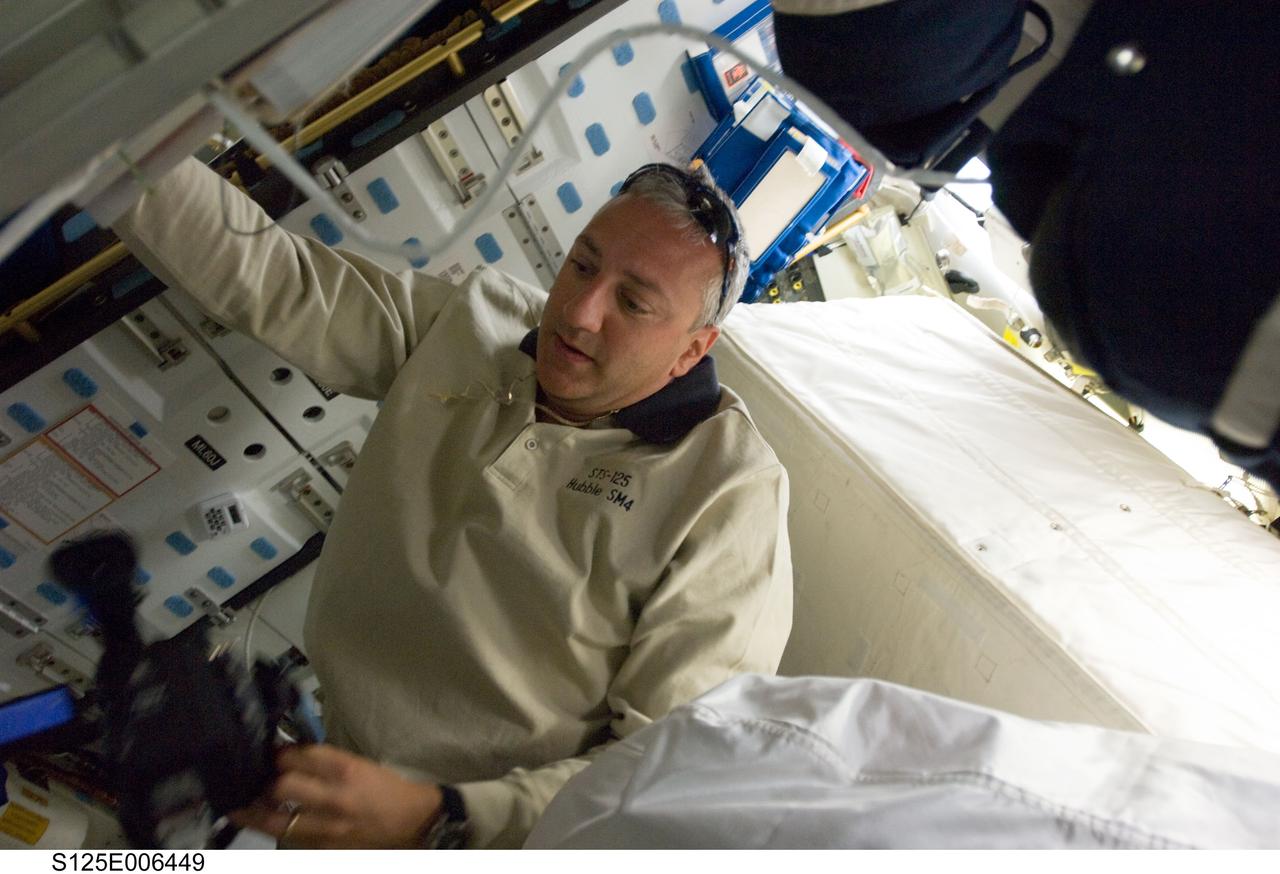
S125-E-006449 (12 May 2009) --- Astronaut Mike Massimino, mission specialist, holds a camera on Atlantis? mid deck during the STS-125 flight?s second day in space. The next several days prove to be very busy for the entire crew, as five spacewalks, two of which will have Massimino leaving the shirt sleeved environment of the shuttle to perform work on the Hubble Space Telescope, are in the offing.
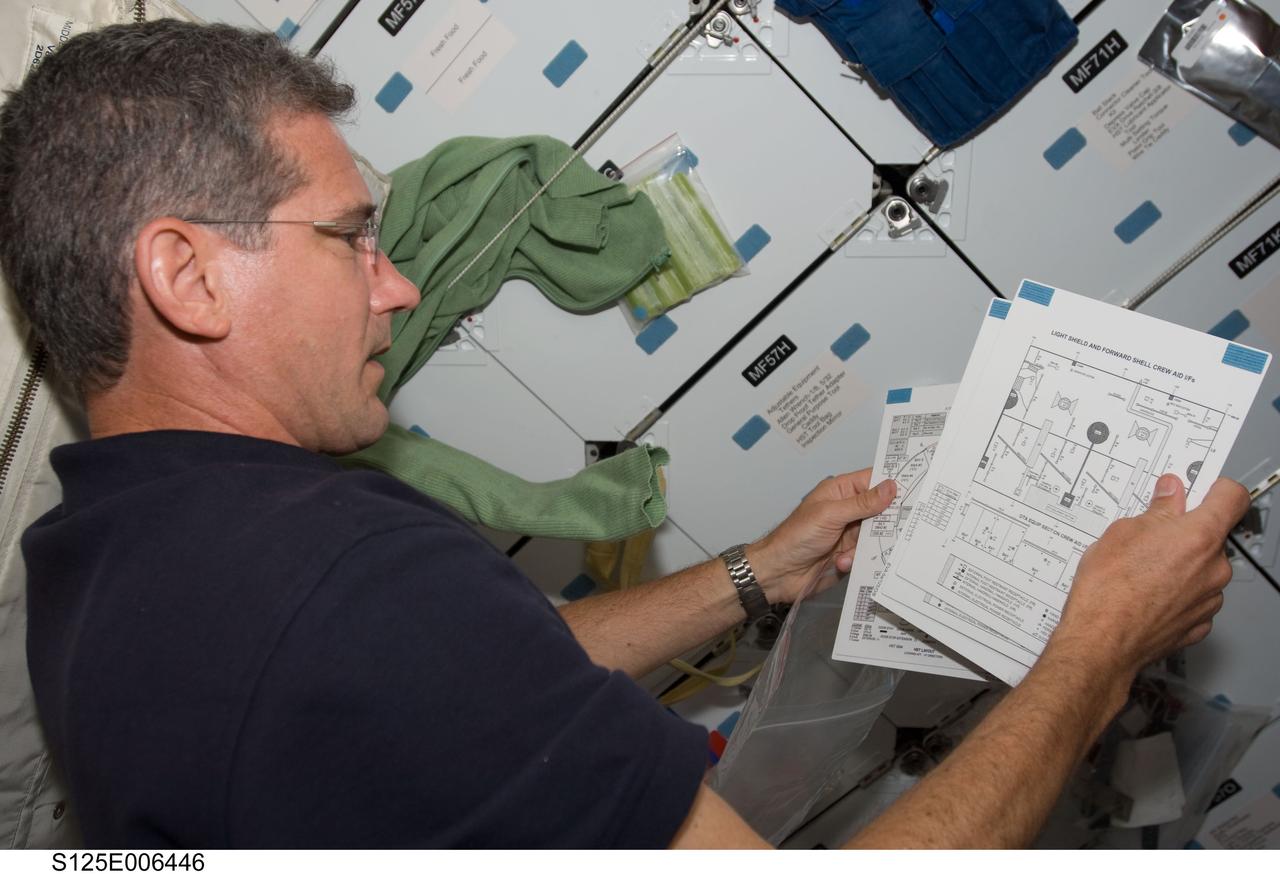
S125-E-006446 (12 May 2009) --- Astronaut Michael Good, STS-125 mission specialist, looks over charts on Atlantis? mid deck during his second day in space. The next several days prove to be very busy for the entire crew, as five spacewalks, two of which will have Good leaving the shirt sleeved environment of the shuttle to perform work on the Hubble Space Telescope, are in the offing.
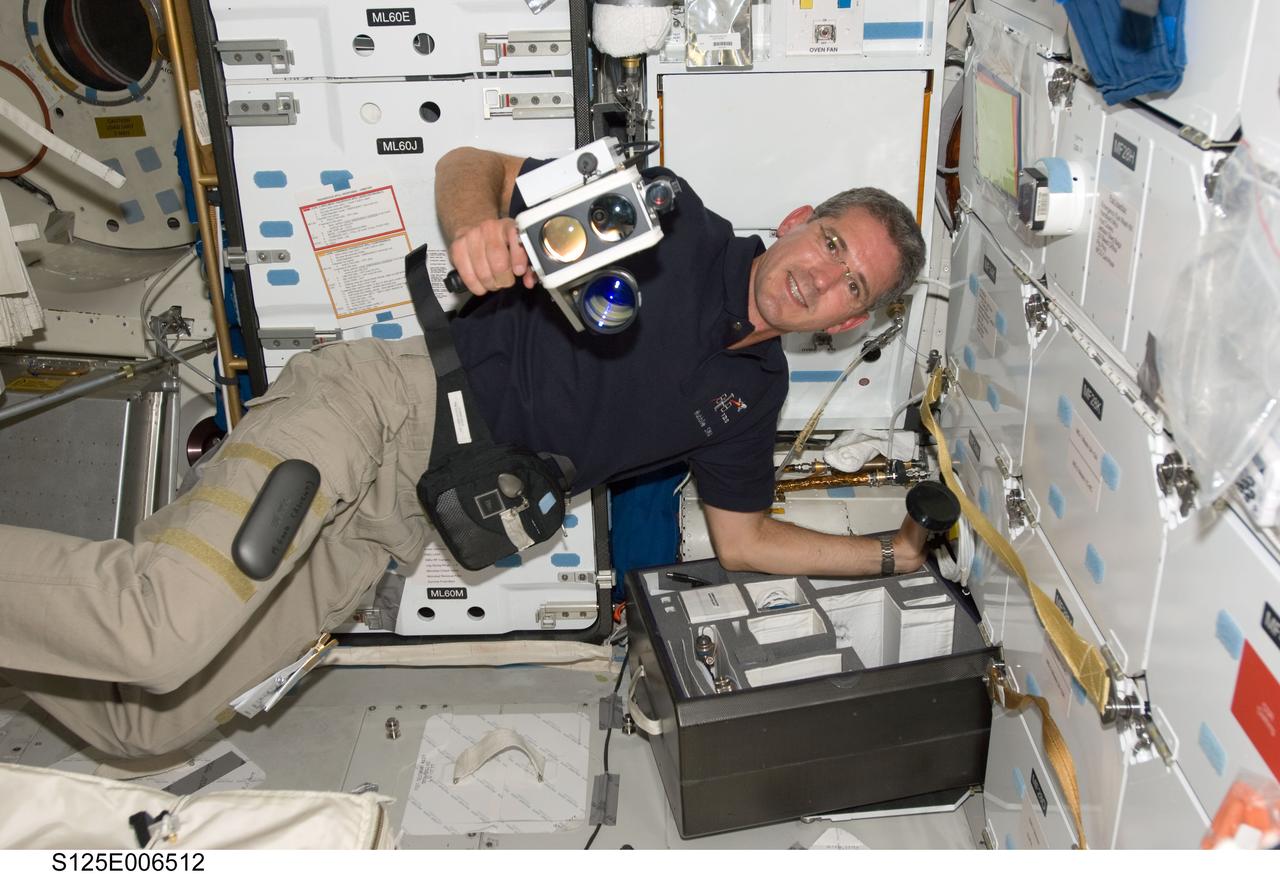
S125-E-006512 (12 May 2009) --- Astronaut Michael Good, STS-125 mission specialist, is busy unpacking equipment on Atlantis? mid deck during his second day in space. The next several days prove to be very busy for the entire crew, as five spacewalks, two of which will have Good leaving the shirt sleeved environment of the shuttle to perform work on the Hubble Space Telescope, are in the offing.
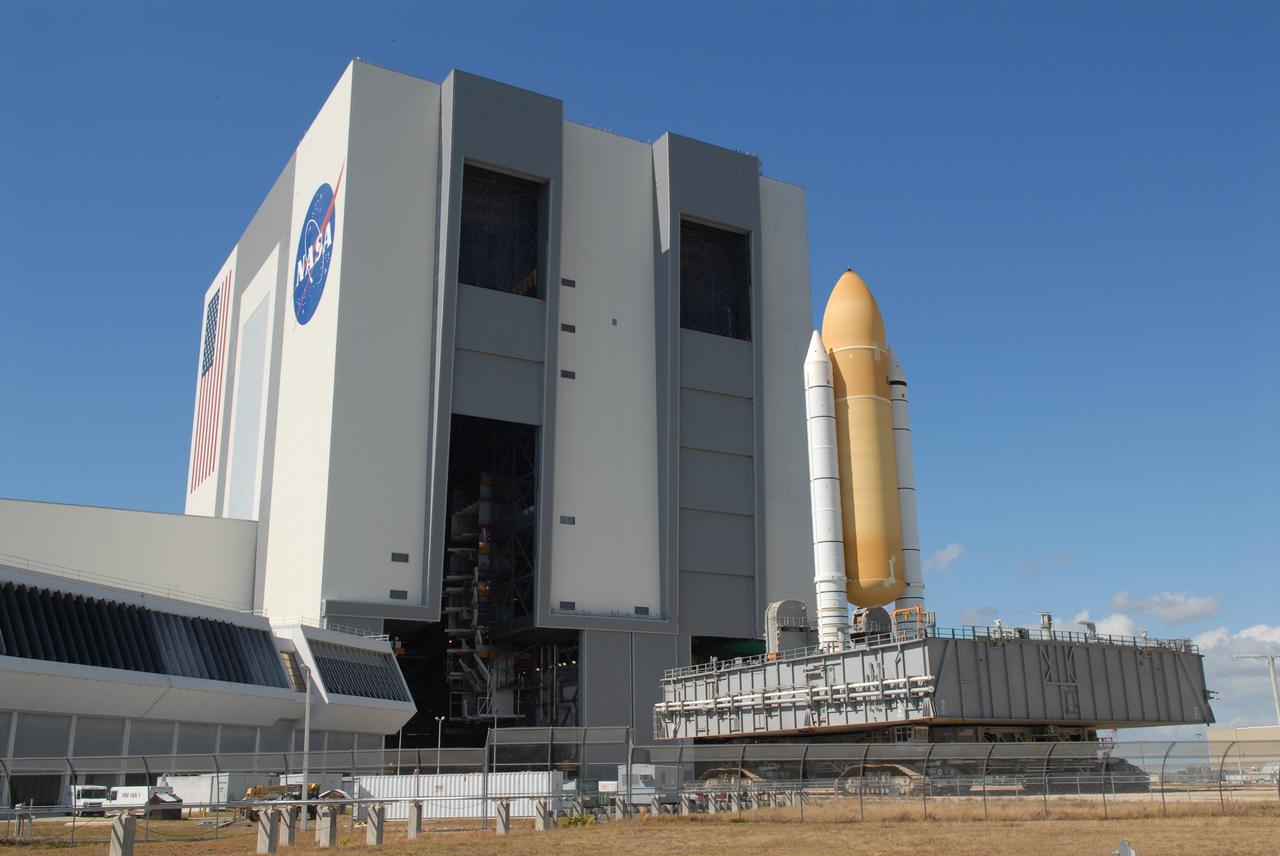
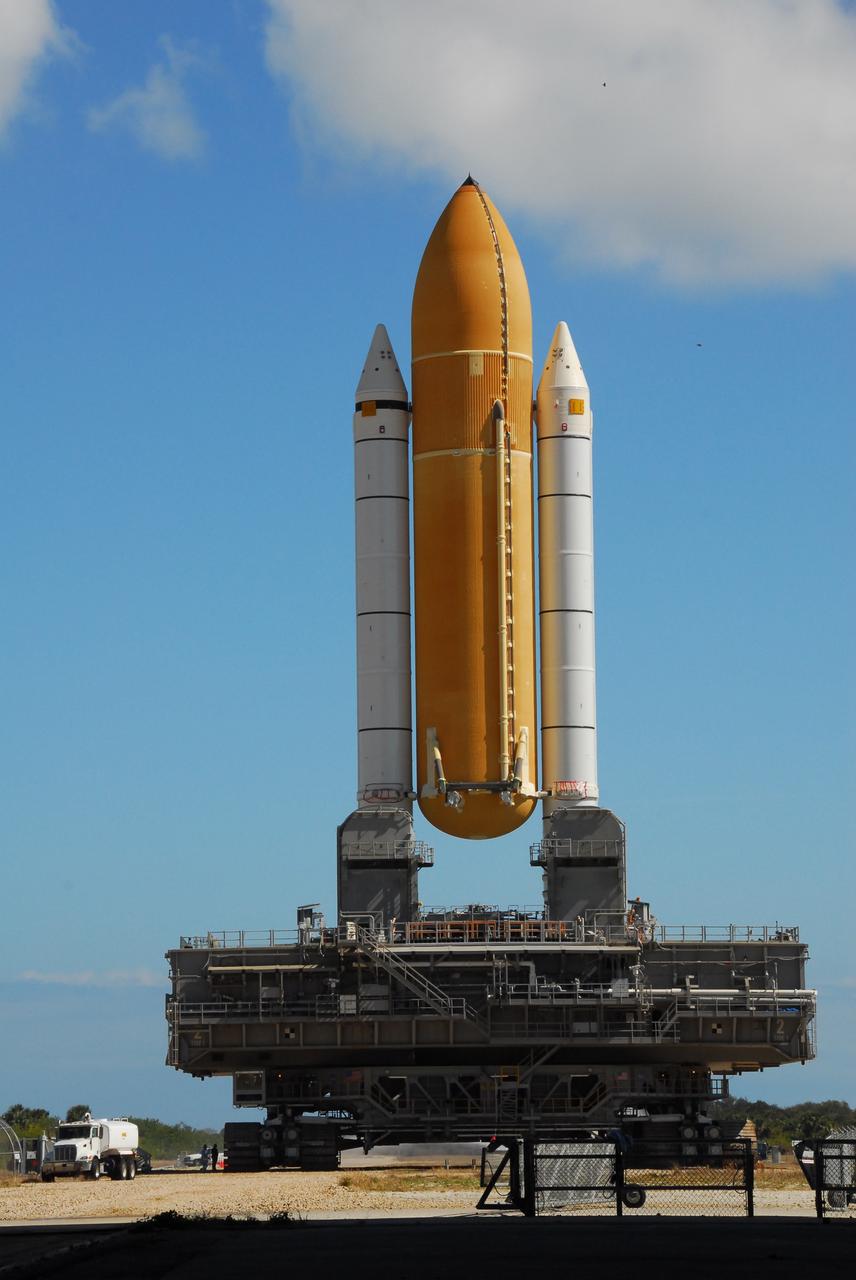
CAPE CANAVERAL, Fla. – Space shuttle Atlantis' external fuel tank-solid rocket booster stack, atop a mobile launcher platform, rolls away from the Vehicle Assembly Building at NASA's Kennedy Space Center. It is being moved from high bay 1 to high bay 3 to make room for the ET-SRB stack for space shuttle Endeavour. Atlantis is targeted for launch on the STS-125 mission on May 12 to service NASA's Hubble Space Telescope. Endeavour will fly on the STS-127 mission to the International Space Station and bring the final segments for Japan's Kibo laboratory. Photo credit: NASA/Dimitri Gerondidakis
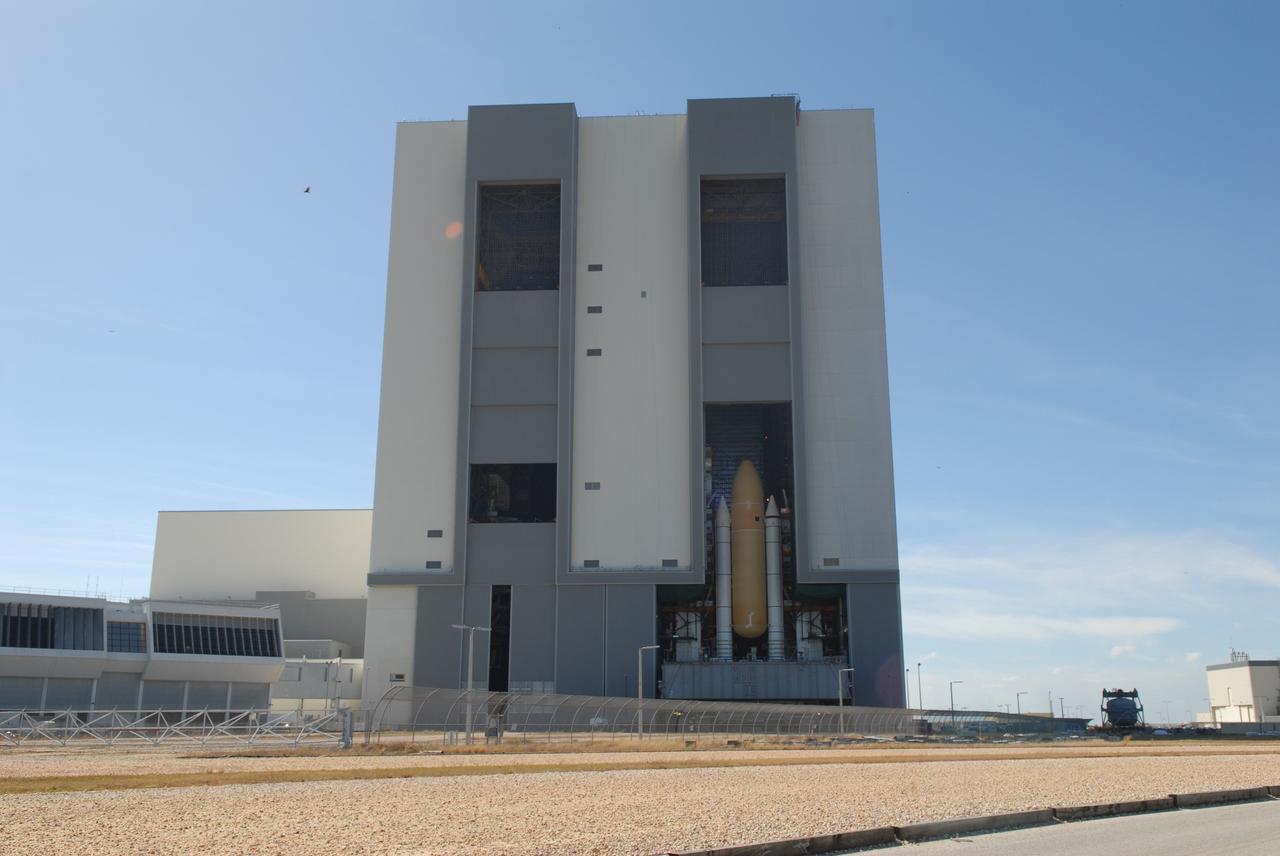
CAPE CANAVERAL, Fla. – Space shuttle Atlantis' external fuel tank-solid rocket booster stack, atop a mobile launcher platform, presents an unusual sight – without the shuttle – as it is transferred from high bay 1 to high bay 3 in the Vehicle Assembly Building at NASA's Kennedy Space Center. It is being moved to high bay 3 to make room for the ET-SRB stack for space shuttle Endeavour. Atlantis is targeted for launch on the STS-125 mission on May 12 to service NASA's Hubble Space Telescope. Endeavour will fly on the STS-127 mission to the International Space Station and bring the final segments for Japan's Kibo laboratory. Photo credit: NASA/Tim Jacobs
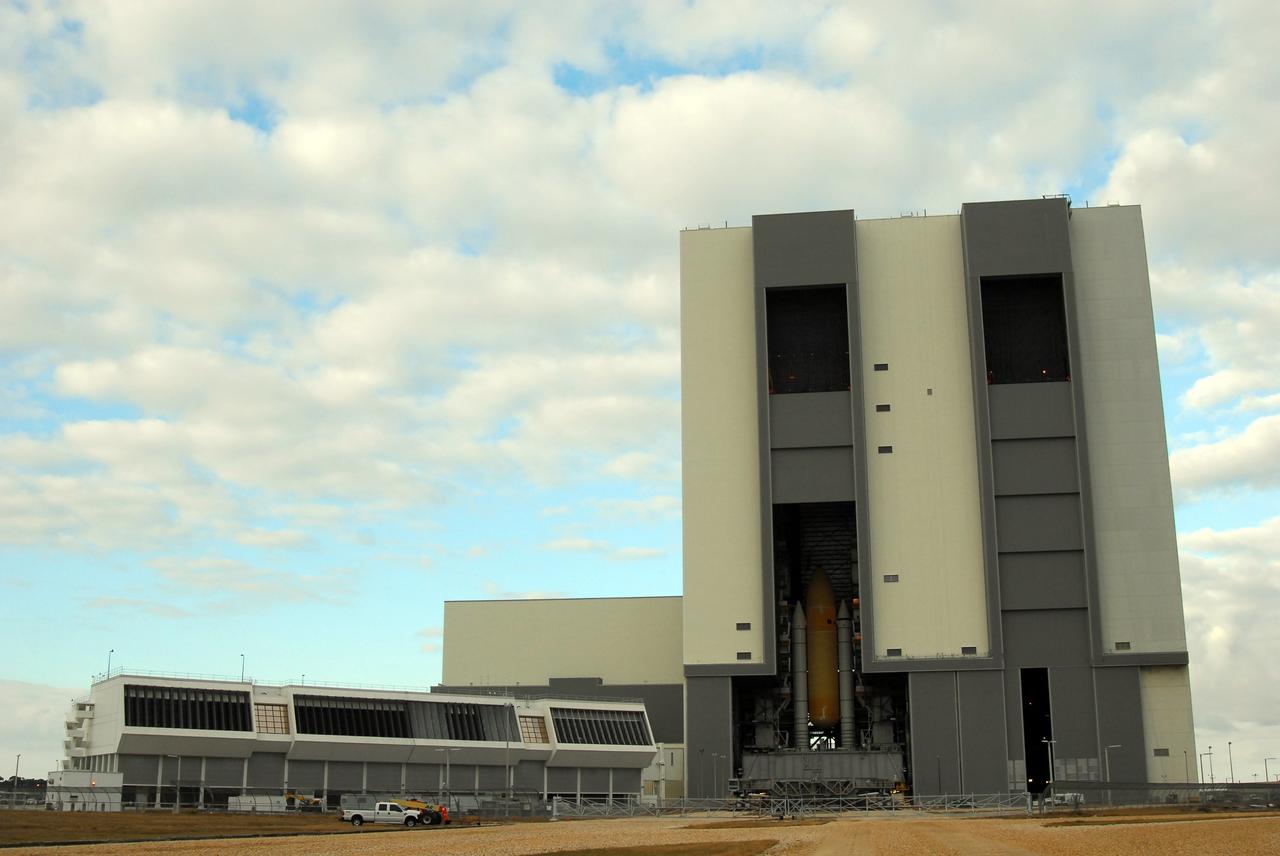
CAPE CANAVERAL, Fla. – Space shuttle Atlantis' external fuel tank-solid rocket booster stack, atop a mobile launcher platform, rolls through the doors of the Vehicle Assembly Building at NASA's Kennedy Space Center into high bay 3. The ET/SRB stack was moved from high bay 1 to make room for the ET-SRB stack for space shuttle Endeavour. Atlantis is targeted for launch on the STS-125 mission on May 12 to service NASA's Hubble Space Telescope. Endeavour will fly on the STS-127 mission to the International Space Station and bring the final segments for Japan's Kibo laboratory. Photo credit: NASA/Dimitri Gerondidakis
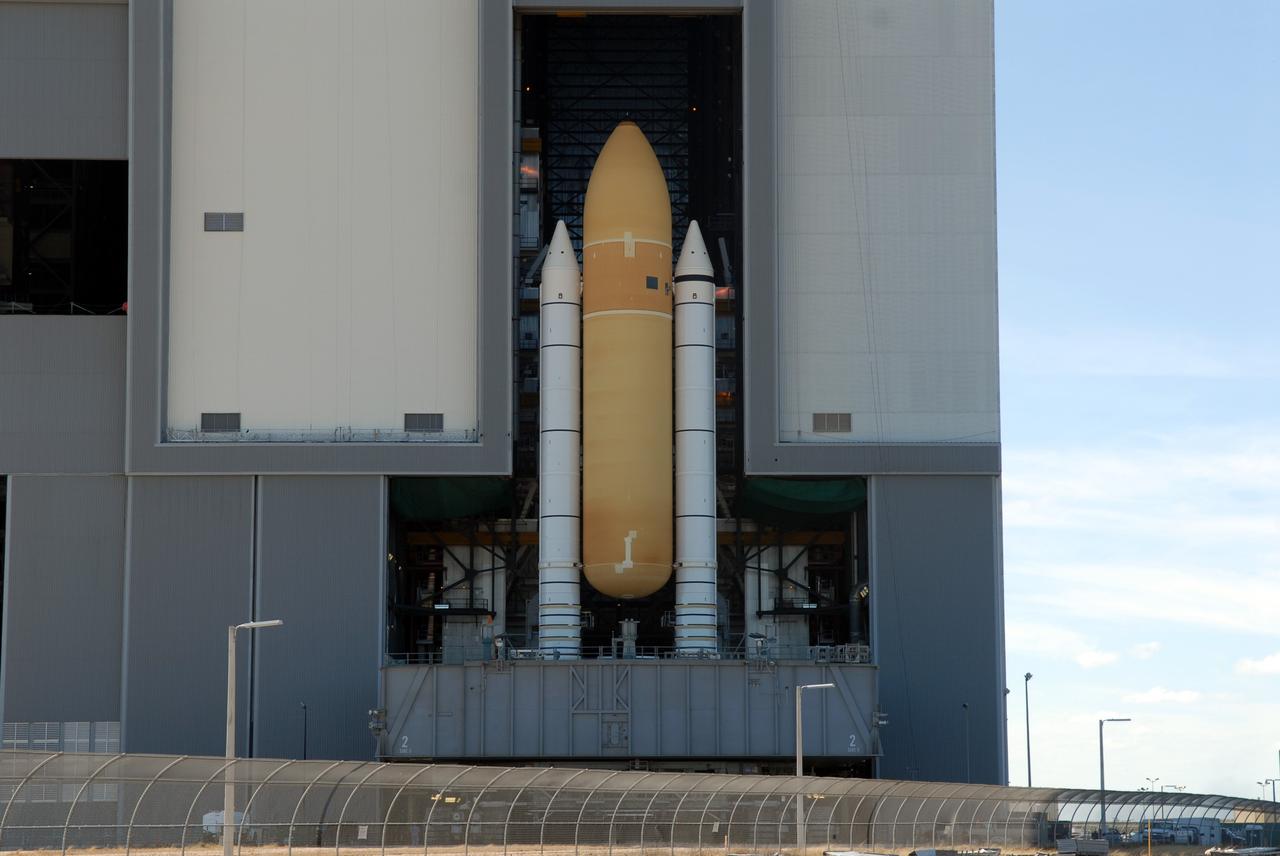
CAPE CANAVERAL, Fla. – The doors of the Vehicle Assembly Building at NASA's Kennedy Space Center open to reveal space shuttle Atlantis' external fuel tank-solid rocket booster stack in high bay 1. The stack on the mobile launcher platform will be moved to high bay 3 to make room for the ET-SRB stack for space shuttle Endeavour. Atlantis is targeted for launch on the STS-125 mission on May 12 to service NASA's Hubble Space Telescope. Endeavour will fly on the STS-127 mission to the International Space Station and bring the final segments for Japan's Kibo laboratory. Photo credit: NASA/Tim Jacobs
CAPE CANAVERAL, Fla. – After moving out of high bay 1 in the Vehicle Assembly Building at NASA's Kennedy Space Center, space shuttle Atlantis' external fuel tank-solid rocket booster stack, atop a mobile launcher platform, rolls into high bay 3. The move makes room in high bay 1 for the ET-SRB stack for space shuttle Endeavour. Atlantis is targeted for launch on the STS-125 mission on May 12 to service NASA's Hubble Space Telescope. Endeavour will fly on the STS-127 mission to the International Space Station and bring the final segments for Japan's Kibo laboratory. Photo credit: NASA/Dimitri Gerondidakis
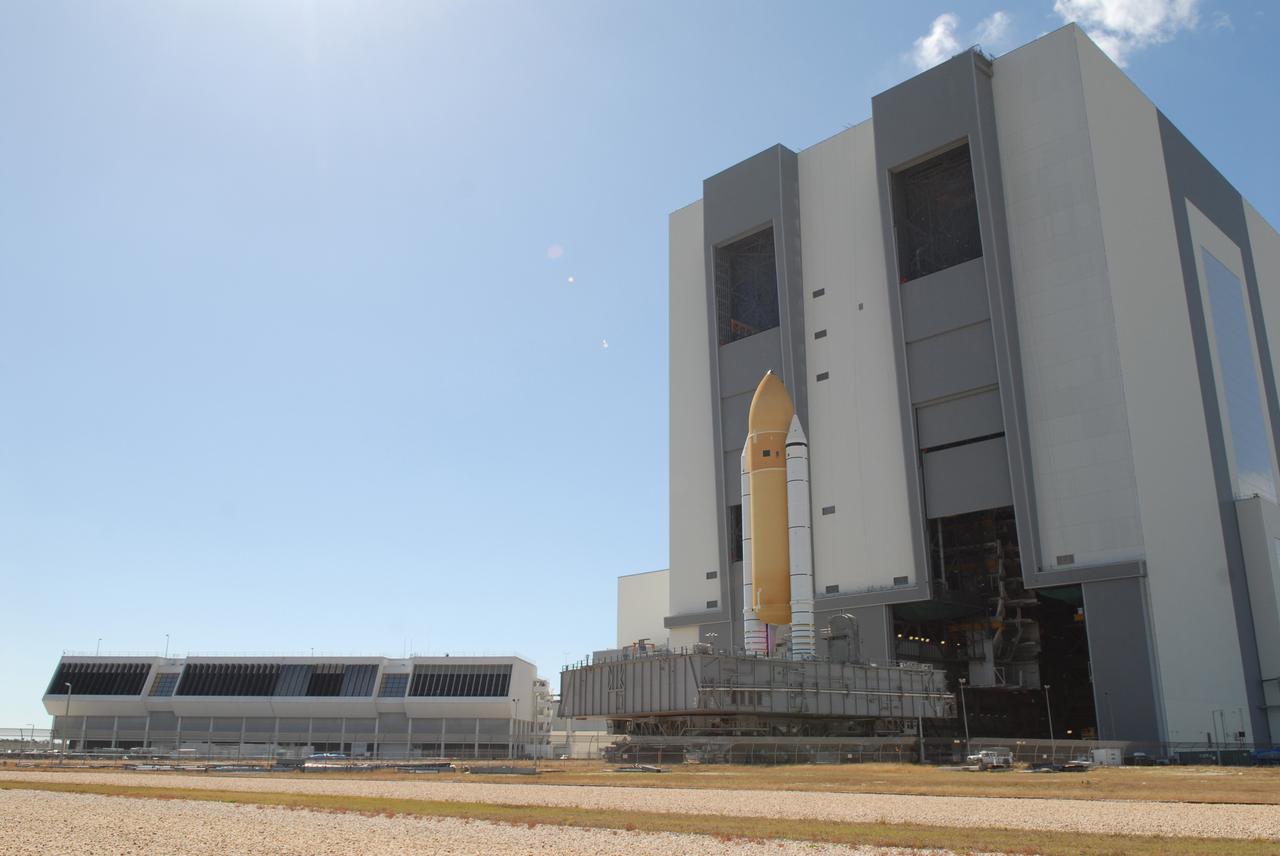
CAPE CANAVERAL, Fla. – After moving out of high bay 1 in the Vehicle Assembly Building at NASA's Kennedy Space Center, space shuttle Atlantis' external fuel tank-solid rocket booster stack, atop a mobile launcher platform, rolls toward high bay 3. The move makes room in high bay 1 for the ET-SRB stack for space shuttle Endeavour. Atlantis is targeted for launch on the STS-125 mission on May 12 to service NASA's Hubble Space Telescope. Endeavour will fly on the STS-127 mission to the International Space Station and bring the final segments for Japan's Kibo laboratory. Photo credit: NASA/Dimitri Gerondidakis
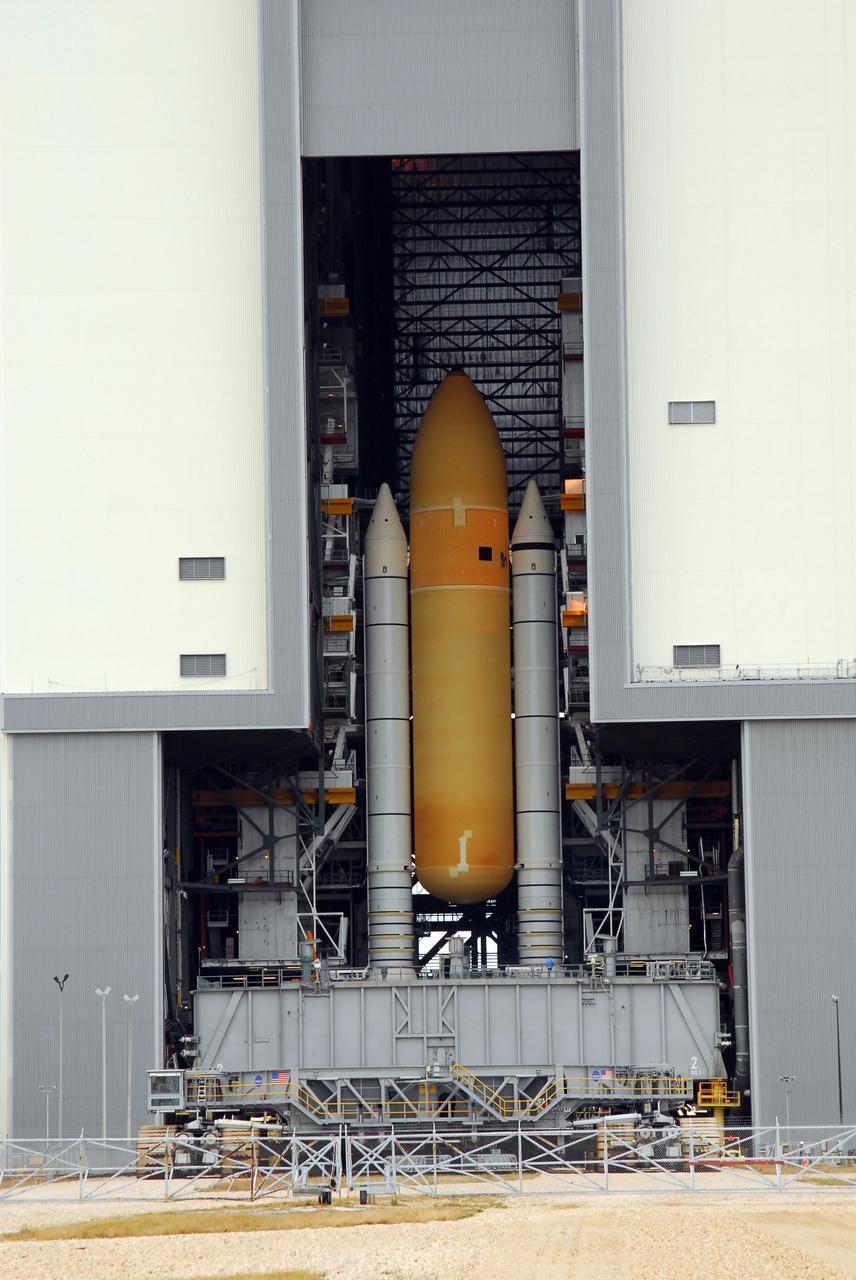
CAPE CANAVERAL, Fla. – The doors of the Vehicle Assembly Building at NASA's Kennedy Space Center open to reveal space shuttle Atlantis' external fuel tank-solid rocket booster stack in high bay 1. The stack on the mobile launcher platform will be moved to high bay 3 to make room for the ET-SRB stack for space shuttle Endeavour. Atlantis is targeted for launch on the STS-125 mission on May 12 to service NASA's Hubble Space Telescope. Endeavour will fly on the STS-127 mission to the International Space Station and bring the final segments for Japan's Kibo laboratory. Photo credit: NASA/Tim Jacobs
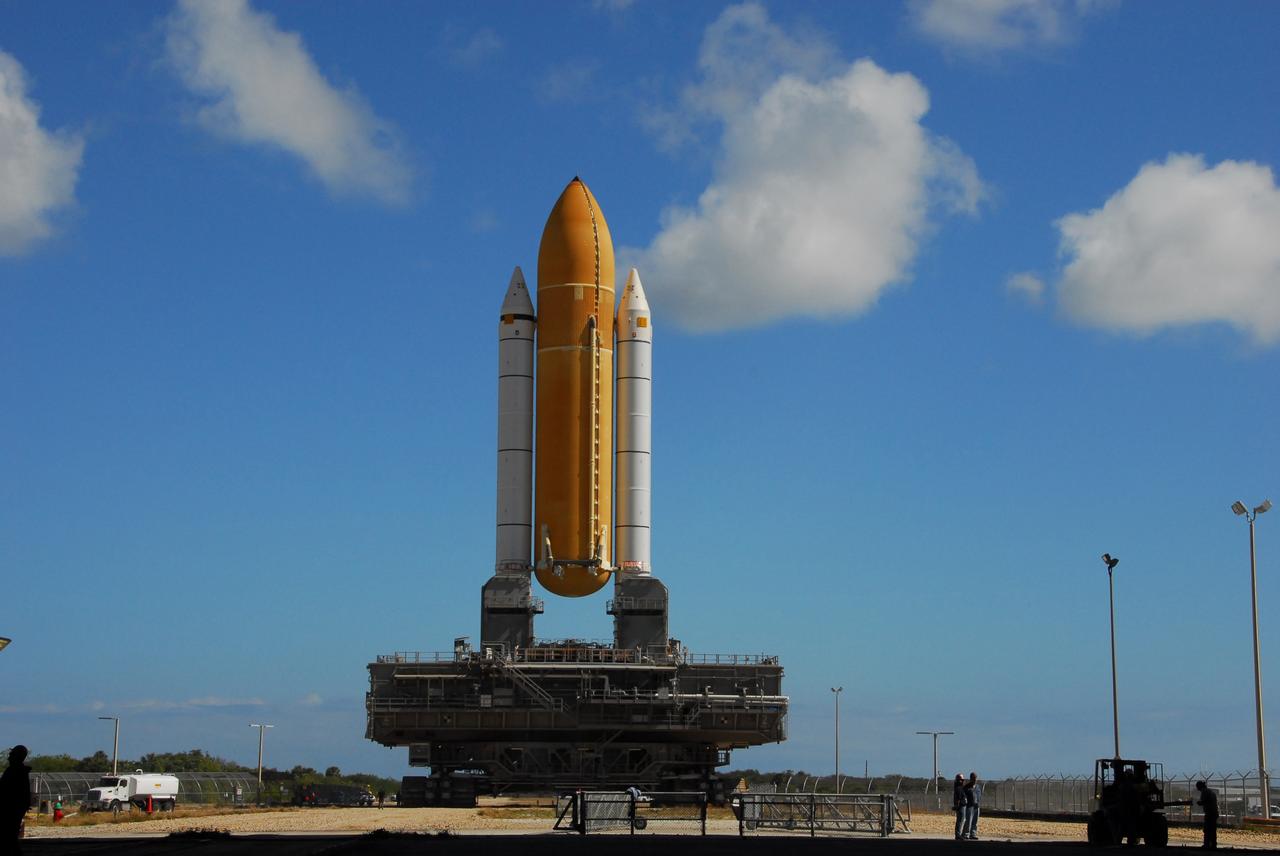
CAPE CANAVERAL, Fla. – Space shuttle Atlantis' external fuel tank-solid rocket booster stack, atop a mobile launcher platform, presents an unusual sight – without the shuttle – as it is transferred from high bay 1 to high bay 3 in the Vehicle Assembly Building at NASA's Kennedy Space Center. It is being moved to high bay 3 to make room for the ET-SRB stack for space shuttle Endeavour. Atlantis is targeted for launch on the STS-125 mission on May 12 to service NASA's Hubble Space Telescope. Endeavour will fly on the STS-127 mission to the International Space Station and bring the final segments for Japan's Kibo laboratory. Photo credit: NASA/Tim Jacobs
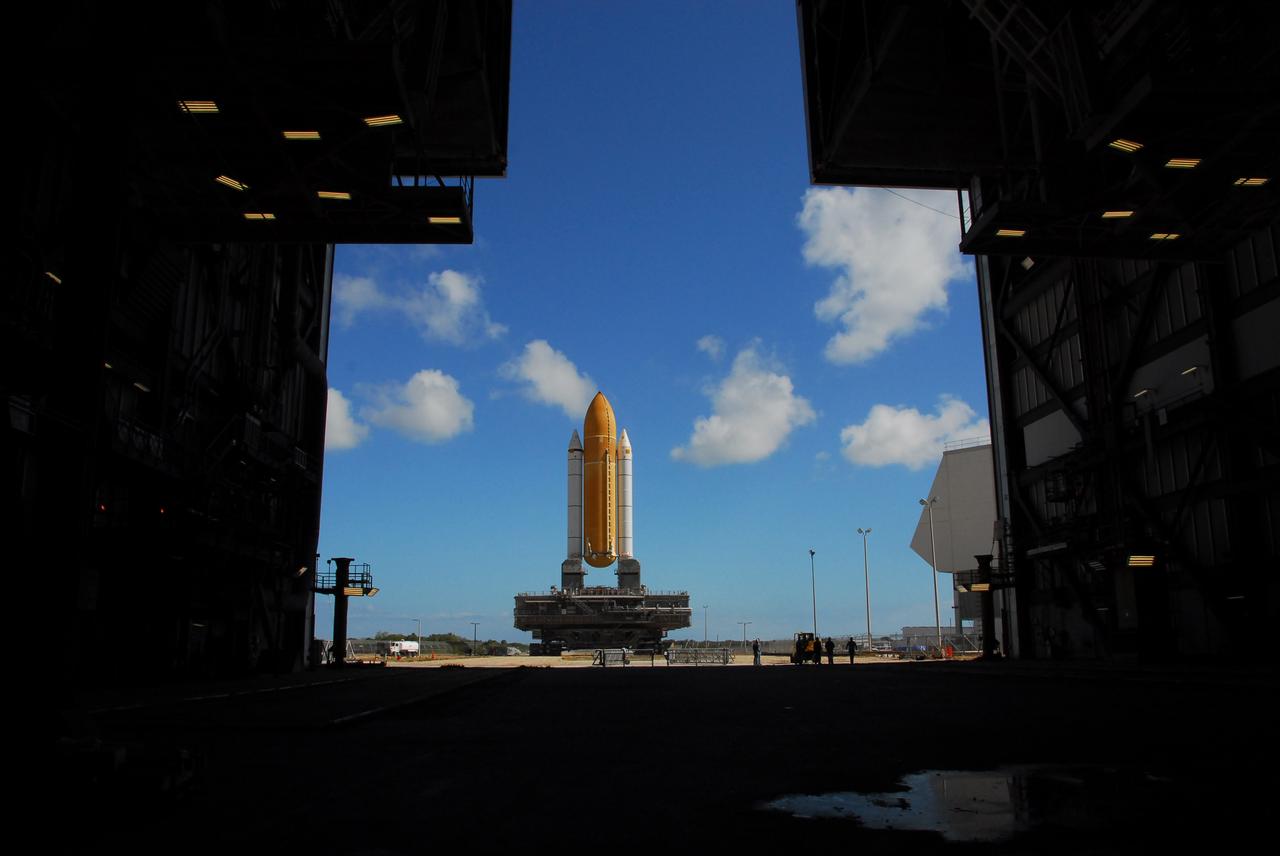
CAPE CANAVERAL, Fla. – Space shuttle Atlantis' external fuel tank-solid rocket booster stack, atop a mobile launcher platform, has been rolled out of high bay 1 in the Vehicle Assembly Building at NASA's Kennedy Space Center. It is being moved to high bay 3 to make room for the ET-SRB stack for space shuttle Endeavour. Atlantis is targeted for launch on the STS-125 mission on May 12 to service NASA's Hubble Space Telescope. Endeavour will fly on the STS-127 mission to the International Space Station and bring the final segments for Japan's Kibo laboratory. Photo credit: NASA/Tim Jacobs
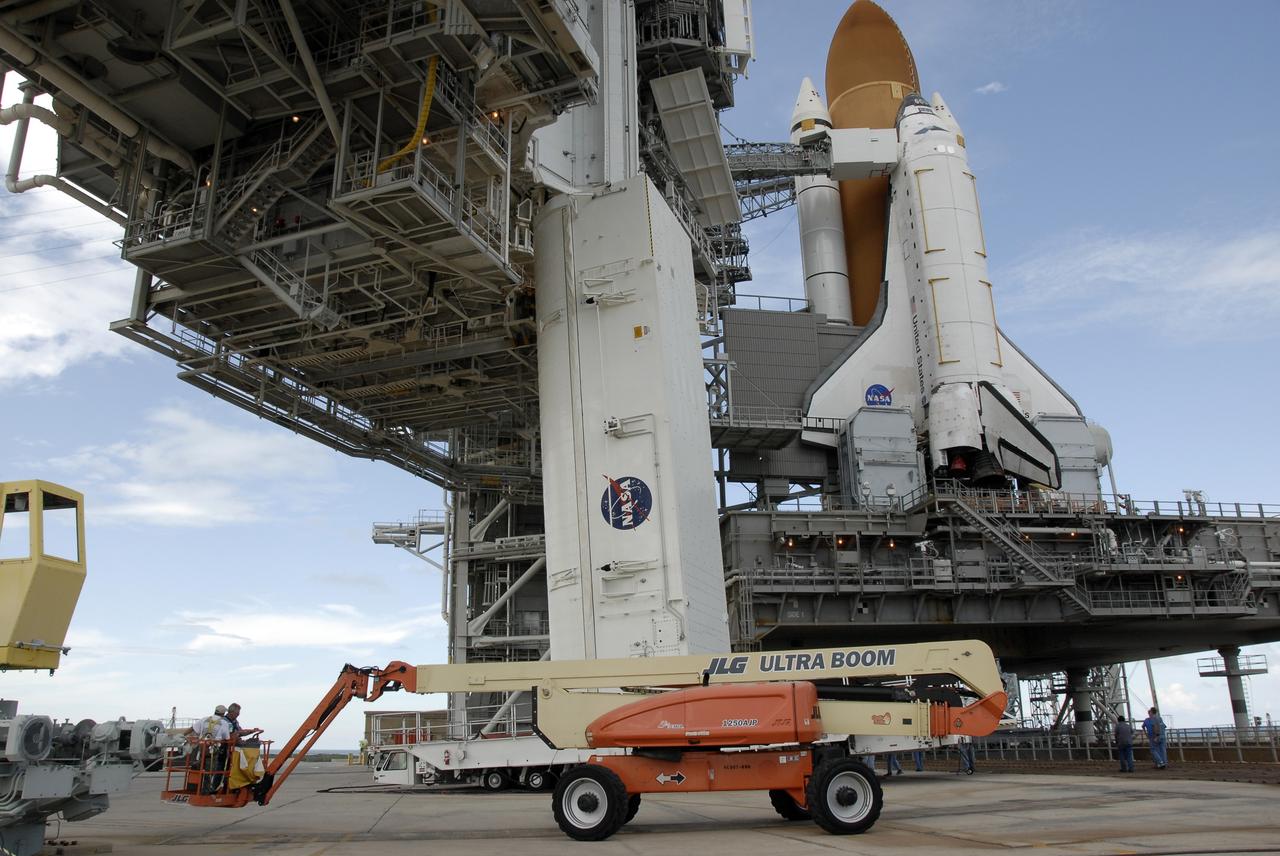
CAPE CANAVERAL, Fla. - At Launch Pad 39A at NASA’s Kennedy Space Center in Florida, technicians work to move the Hubble payload canister into the payload changeout room for space shuttle Atlantis’ STS-125 mission. The canister arrived at the pad on Saturday evening, however, early Sunday morning technicians were unable to place the canister into the pad’s payload changeout room. Teflon pads on “shoes” attached to the outside of the payload canister that help the canister move along guide rails didn’t fit properly. The shoes, one seen here, were removed and several options were considered, including slightly shaving down the pads so the shoes will fit onto the rails. STS-125 is the fifth and final shuttle Hubble Space Telescope servicing mission. Atlantis’ launch is targeted for Oct. 10. Photo credit: NASA/Kim Shiflett.
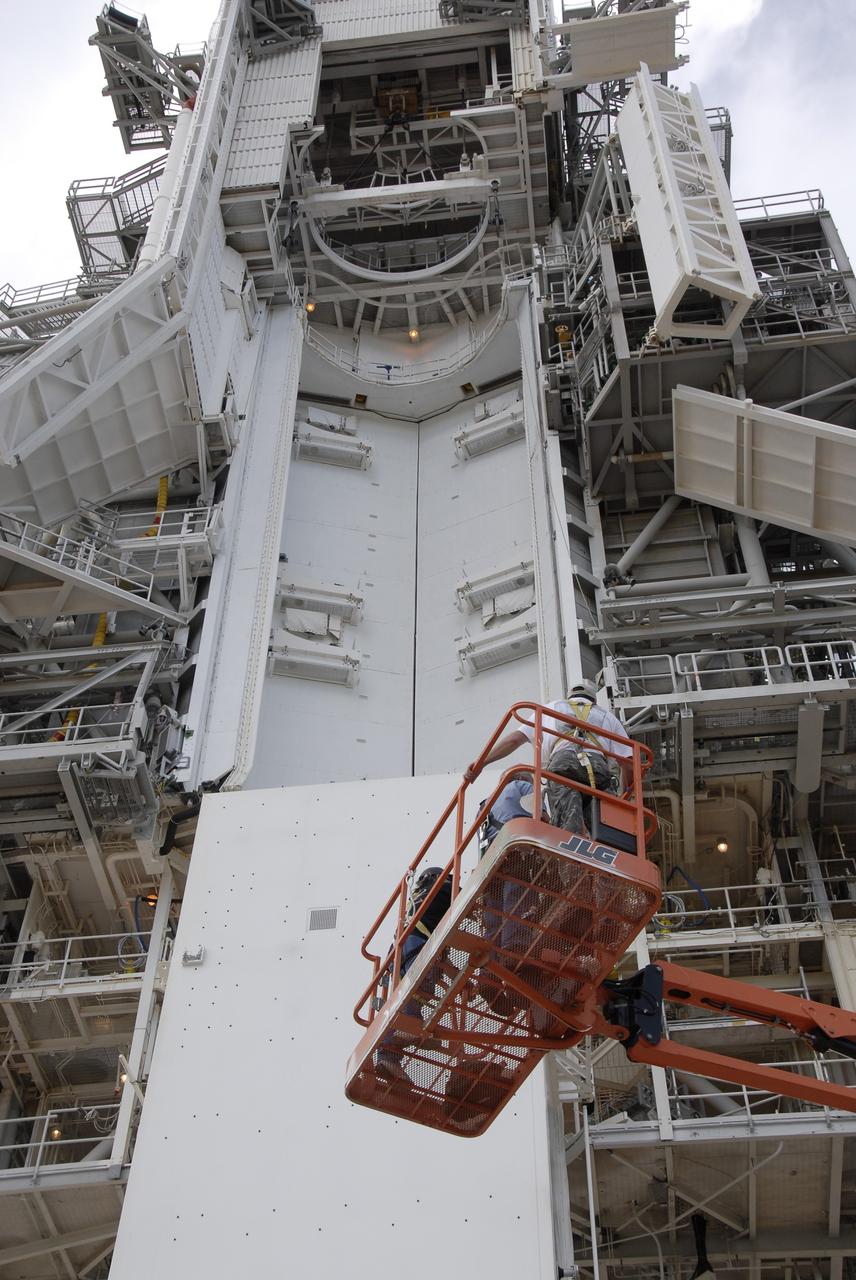
CAPE CANAVERAL, Fla. - At Launch Pad 39A at NASA’s Kennedy Space Center in Florida, technicians work to move the Hubble payload canister into the payload changeout room for space shuttle Atlantis’ STS-125 mission. The canister arrived at the pad on Saturday evening; however, early Sunday morning technicians were unable to place the canister into the pad’s payload changeout room. Teflon pads on “shoes” attached to the outside of the payload canister that help the canister move along the guide rails didn’t fit properly. The shoes were removed and several options were considered, including slightly shaving down the pads so the shoes will fit onto the rails. STS-125 is the fifth and final shuttle Hubble Space Telescope servicing mission. Atlantis’ launch is targeted for Oct. 10. Photo credit: NASA/Kim Shiflett.
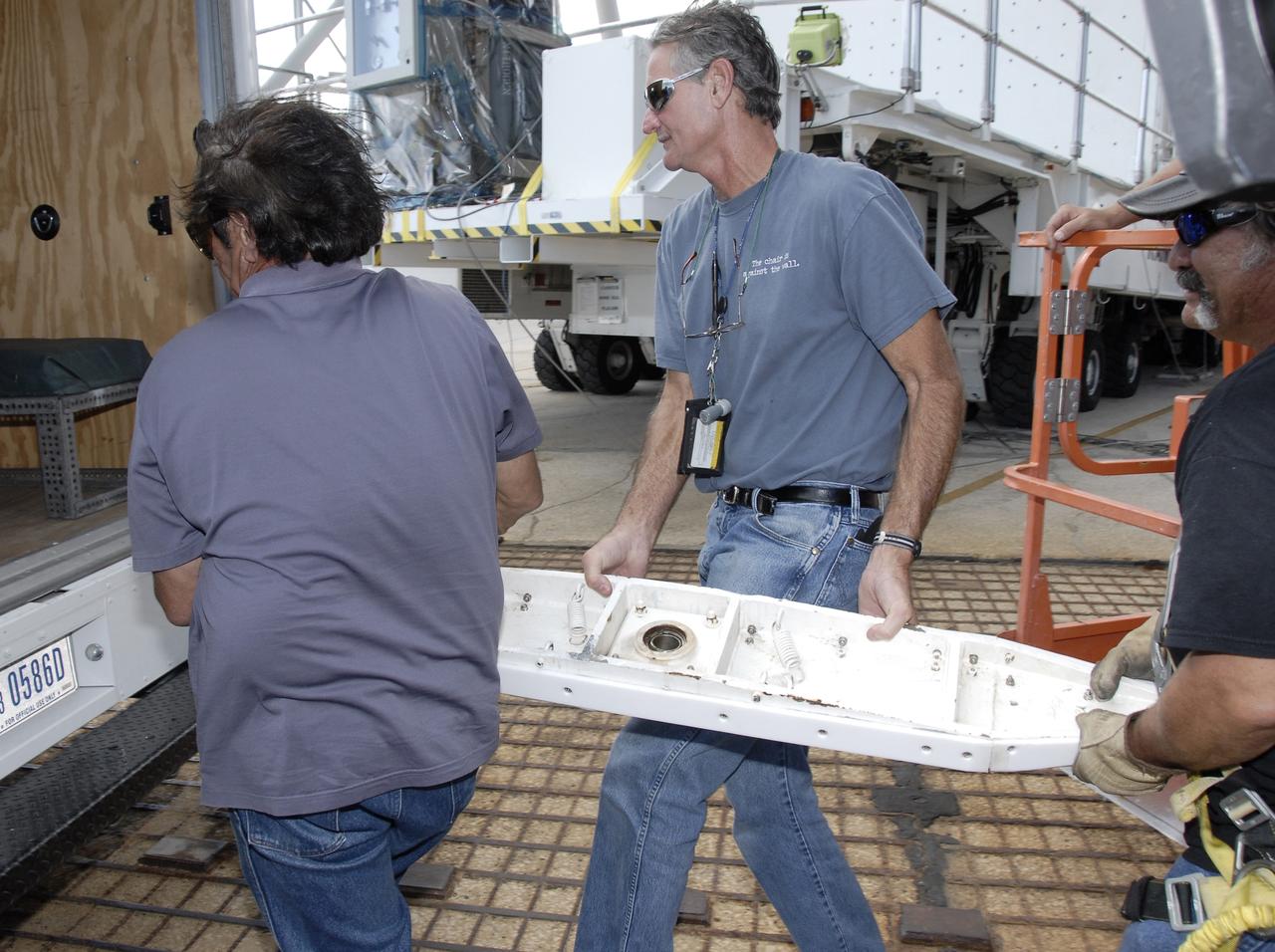
CAPE CANAVERAL, Fla. - Technicians carry a “shoe” that was removed from the Hubble payload canister at Launch Pad 39A at NASA’s Kennedy Space Center in Florida. The canister arrived at the pad on Saturday evening, however, early Sunday morning technicians were unable to place the canister into the pad’s payload changeout room for space shuttle Atlantis’ STS-125 mission. Teflon pads on “shoes” attached to the outside of the payload canister that help the canister move along the guide rails didn’t fit properly. The shoes were removed and several options were considered, including slightly shaving down the pads so the shoes will fit onto the rails. STS-125 is the fifth and final shuttle Hubble Space Telescope servicing mission. Atlantis’ launch is targeted for Oct. 10. Photo credit: NASA/Kim Shiflett.