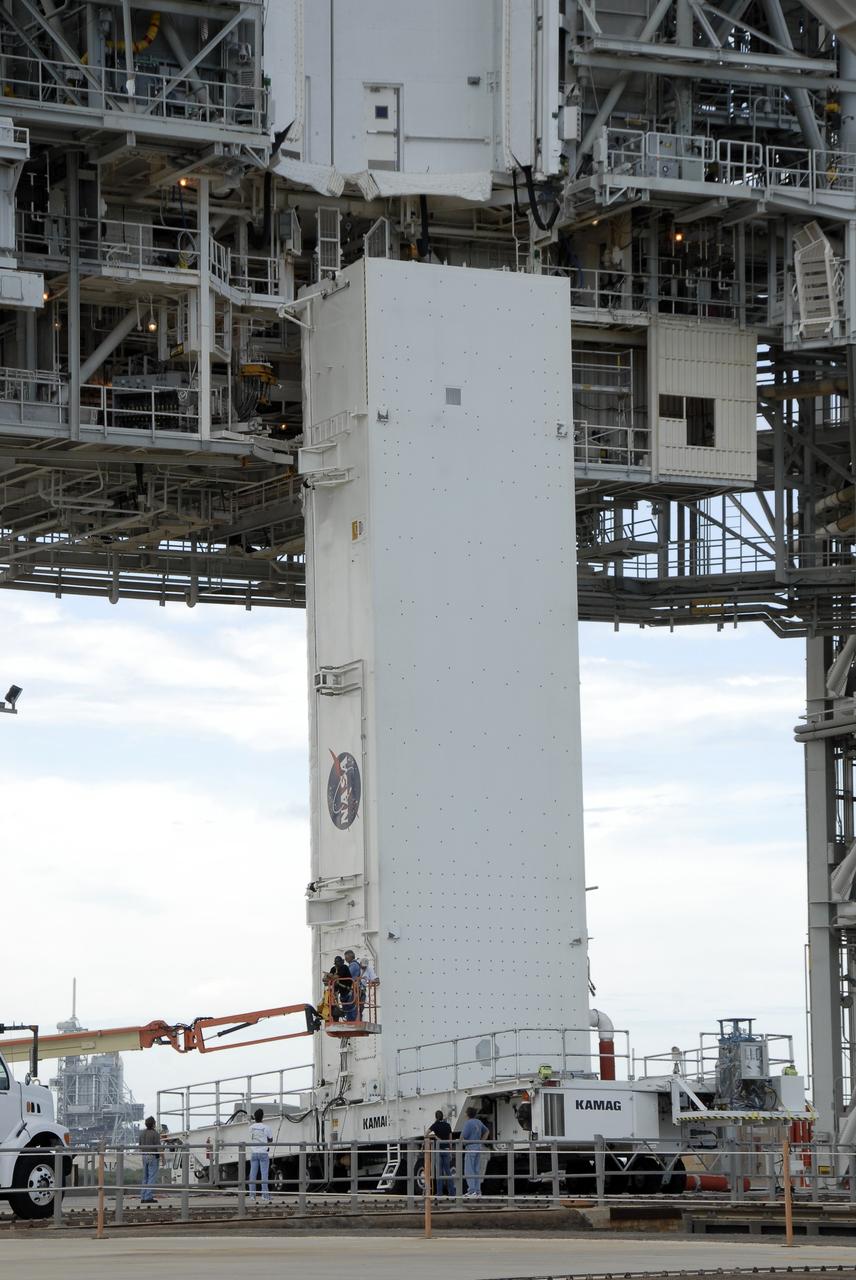
CAPE CANAVERAL, Fla. - At Launch Pad 39A at NASA’s Kennedy Space Center in Florida, technicians work to move the Hubble payload canister into the payload changeout room for space shuttle Atlantis’ STS-125 mission. The canister arrived at the pad on Saturday evening, however, early Sunday morning technicians were unable to place the canister into the pad’s payload changeout room. Teflon pads on “shoes” attached to the outside of the payload canister that help the canister move along guide rails didn’t fit properly. The shoes were removed and several options were considered, including slightly shaving down the pads so the shoes will fit onto the rails. STS-125 is the fifth and final shuttle Hubble Space Telescope servicing mission. Atlantis’ launch is targeted for Oct. 10. Photo credit: NASA/Kim Shiflett.
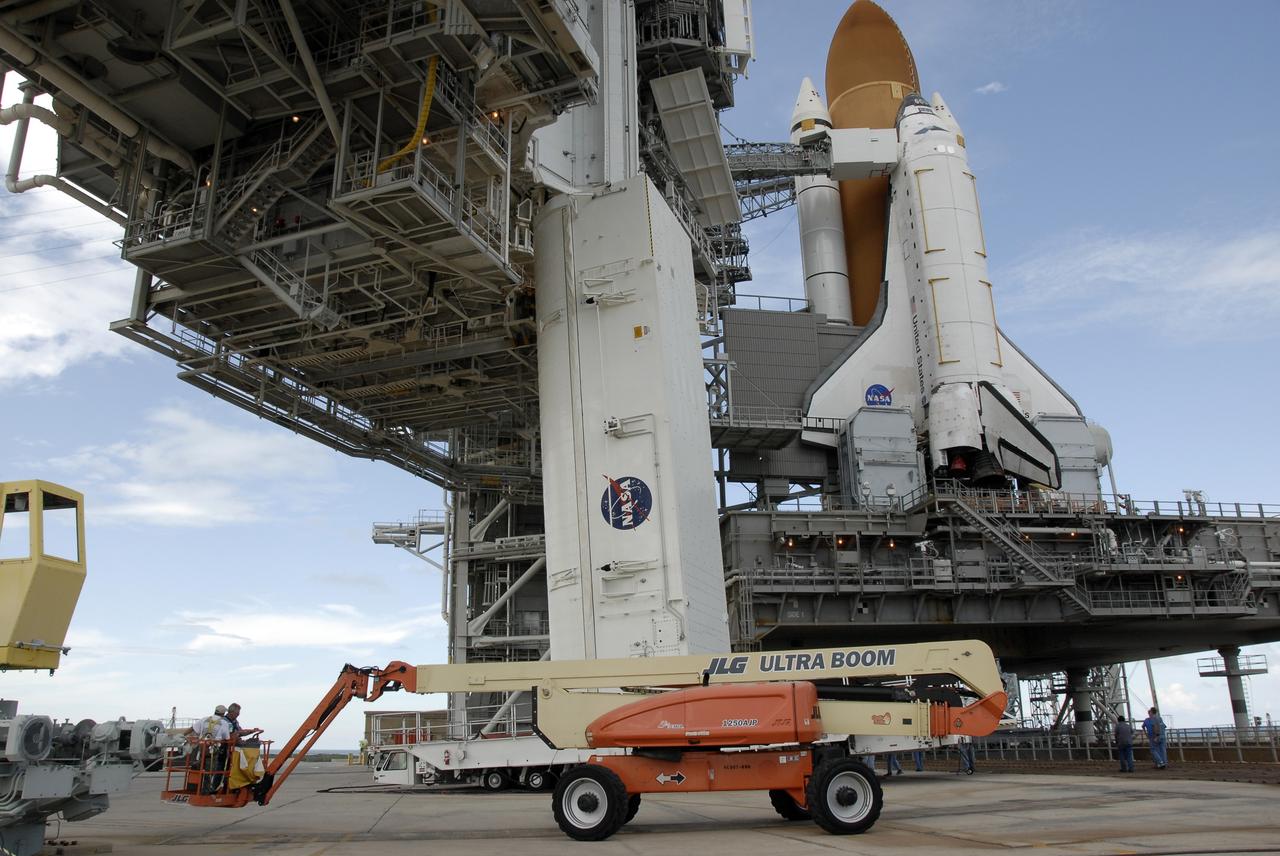
CAPE CANAVERAL, Fla. - At Launch Pad 39A at NASA’s Kennedy Space Center in Florida, technicians work to move the Hubble payload canister into the payload changeout room for space shuttle Atlantis’ STS-125 mission. The canister arrived at the pad on Saturday evening, however, early Sunday morning technicians were unable to place the canister into the pad’s payload changeout room. Teflon pads on “shoes” attached to the outside of the payload canister that help the canister move along guide rails didn’t fit properly. The shoes, one seen here, were removed and several options were considered, including slightly shaving down the pads so the shoes will fit onto the rails. STS-125 is the fifth and final shuttle Hubble Space Telescope servicing mission. Atlantis’ launch is targeted for Oct. 10. Photo credit: NASA/Kim Shiflett.
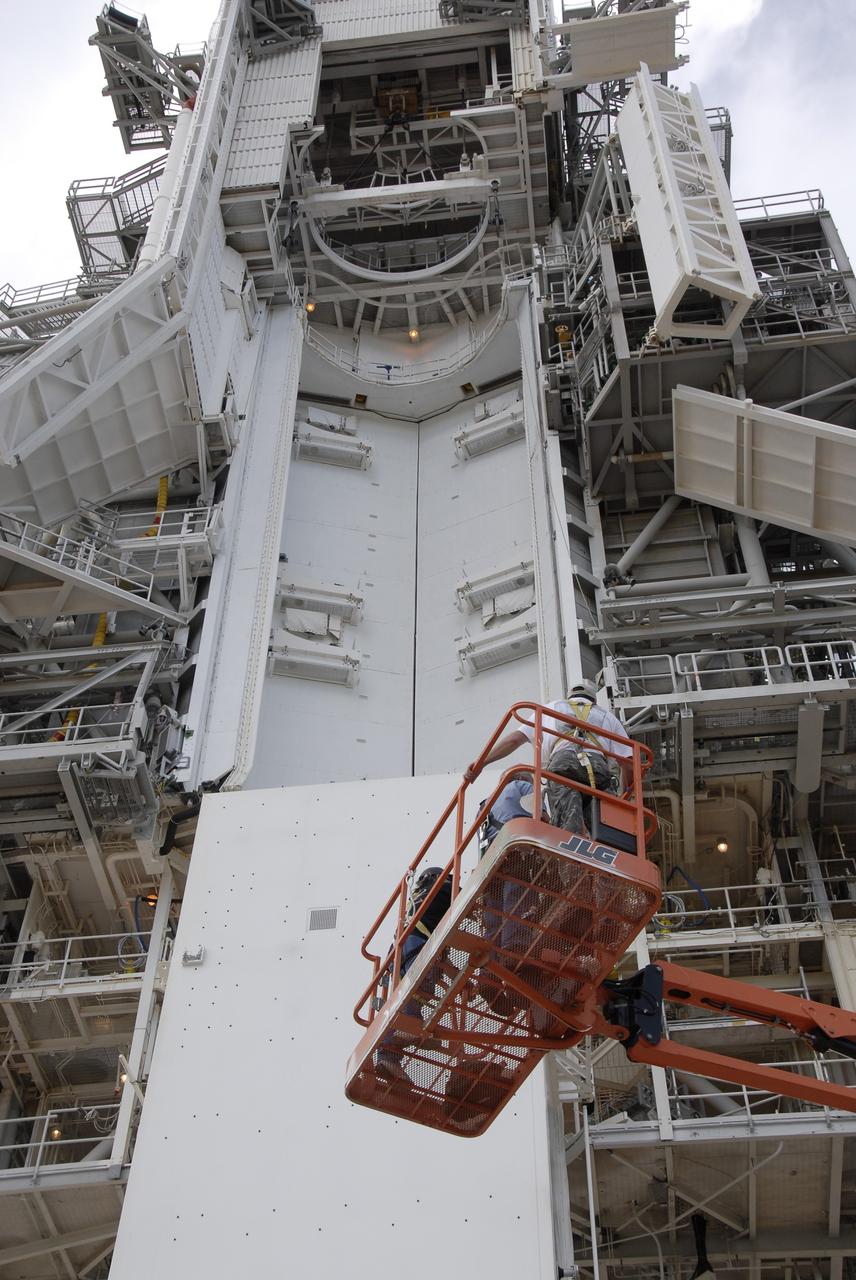
CAPE CANAVERAL, Fla. - At Launch Pad 39A at NASA’s Kennedy Space Center in Florida, technicians work to move the Hubble payload canister into the payload changeout room for space shuttle Atlantis’ STS-125 mission. The canister arrived at the pad on Saturday evening; however, early Sunday morning technicians were unable to place the canister into the pad’s payload changeout room. Teflon pads on “shoes” attached to the outside of the payload canister that help the canister move along the guide rails didn’t fit properly. The shoes were removed and several options were considered, including slightly shaving down the pads so the shoes will fit onto the rails. STS-125 is the fifth and final shuttle Hubble Space Telescope servicing mission. Atlantis’ launch is targeted for Oct. 10. Photo credit: NASA/Kim Shiflett.
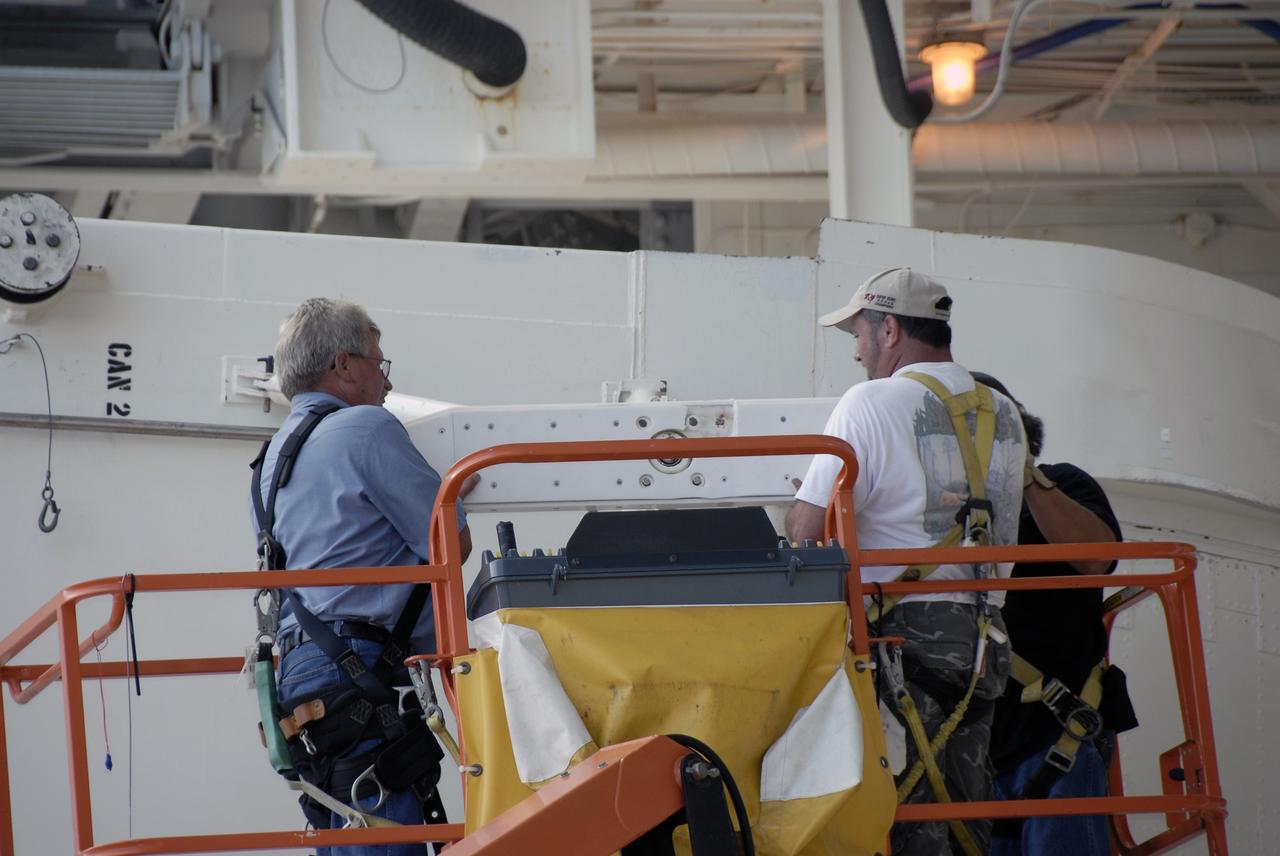
CAPE CANAVERAL, Fla. - At Launch Pad 39A at NASA’s Kennedy Space Center in Florida, technicians work to move the Hubble payload canister into the payload changeout room for space shuttle Atlantis’ STS-125 mission. The canister arrived at the pad on Saturday evening; however, early Sunday morning technicians were unable to place the canister into the pad’s payload changeout room. Teflon pads on “shoes” attached to the outside of the payload canister that help the canister move along the guide rails didn’t fit properly. The shoes were removed and several options were considered, including slightly shaving down the pads so the shoes will fit onto the rails. STS-125 is the fifth and final shuttle Hubble Space Telescope servicing mission. Atlantis’ launch is targeted for Oct. 10. Photo credit: NASA/Kim Shiflett.
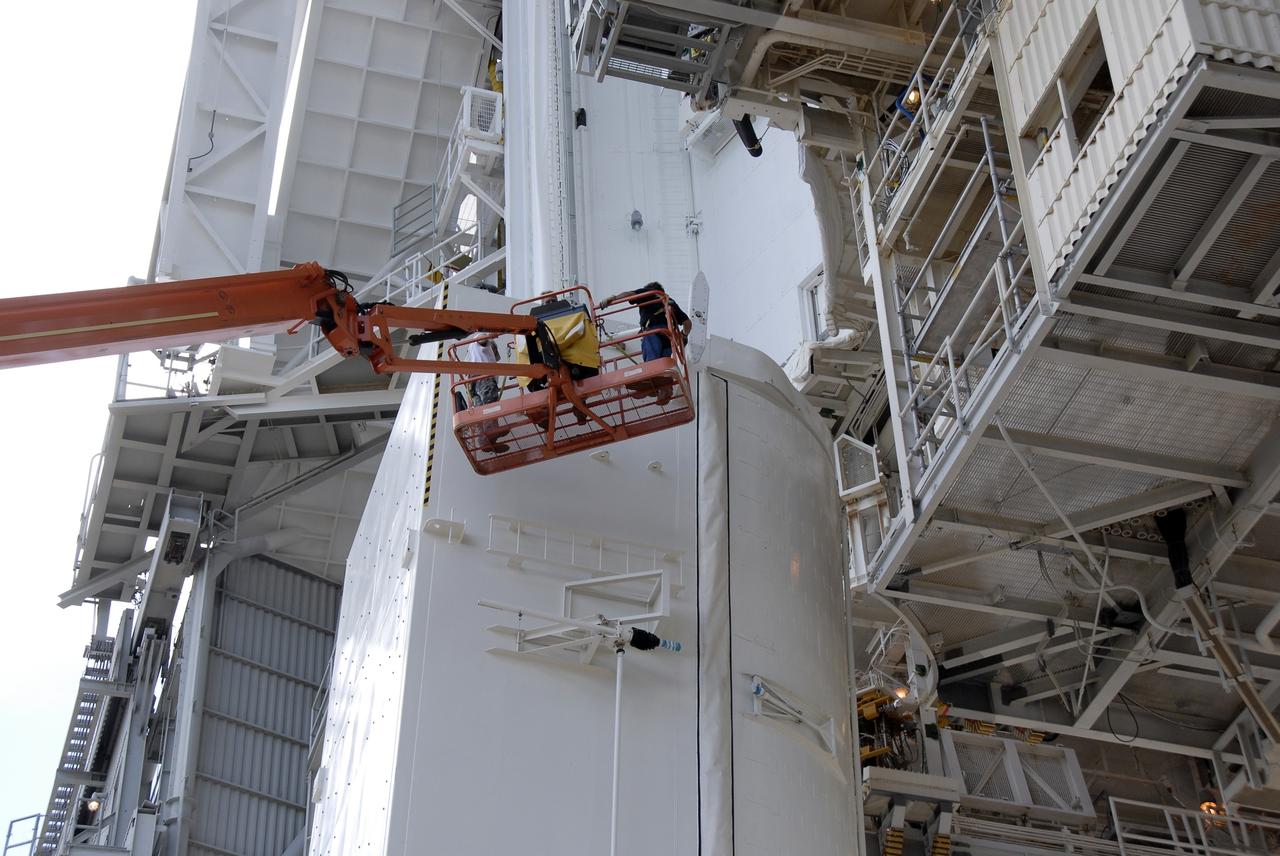
CAPE CANAVERAL, Fla. - At Launch Pad 39A at NASA’s Kennedy Space Center in Florida, technicians work to move the Hubble payload canister into the payload changeout room for space shuttle Atlantis’ STS-125 mission. The canister arrived at the pad on Saturday evening; however, early Sunday morning technicians were unable to place the canister into the pad’s payload changeout room. Teflon pads on “shoes” attached to the outside of the payload canister that help the canister move along the guide rails didn’t fit properly. The shoes were removed and several options were considered, including slightly shaving down the pads so the shoes will fit onto the rails. STS-125 is the fifth and final shuttle Hubble Space Telescope servicing mission. Atlantis’ launch is targeted for Oct. 10. Photo credit: NASA/Kim Shiflett.

CAPE CANAVERAL, Fla. - At Launch Pad 39A at NASA’s Kennedy Space Center in Florida, technicians work to move the Hubble payload canister into the payload changeout room for space shuttle Atlantis’ STS-125 mission. The canister arrived at the pad on Saturday evening, however, early Sunday morning technicians were unable to place the canister into the pad’s payload changeout room. Teflon pads on “shoes” attached to the outside of the payload canister that help the canister move along guide rails didn’t fit properly. The shoes were removed and several options were considered, including slightly shaving down the pads so the shoes will fit onto the rails. STS-125 is the fifth and final shuttle Hubble Space Telescope servicing mission. Atlantis’ launch is targeted for Oct. 10. Photo credit: NASA/Kim Shiflett.
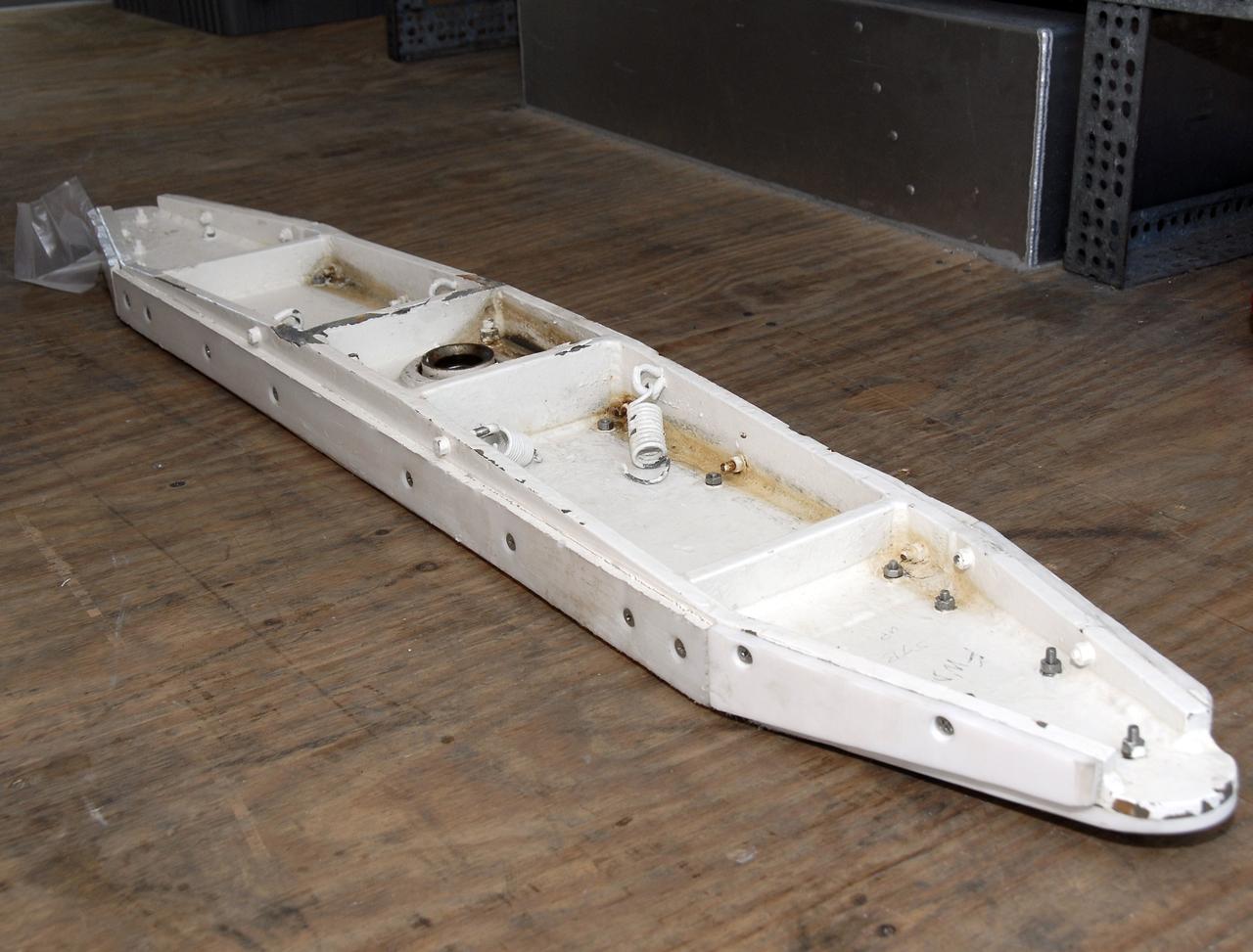
CAPE CANAVERAL, Fla. - Technicians removed a “shoe” on the Hubble payload canister at Launch pad 39A at NASA’s Kennedy Space Center in Florida. The canister arrived at the pad on Saturday evening; however, early Sunday morning technicians were unable to place the canister into the pad’s payload changeout room for space shuttle Atlantis’ STS-125 mission. Teflon pads on the “shoes” attached to the outside of the payload canister that help the canister move along the guide rails didn’t fit properly. The shoes were removed and several options were considered, including slightly shaving down the pads so the shoes will fit onto the rails. STS-125 is the fifth and final shuttle Hubble Space Telescope servicing mission. Atlantis’ launch is targeted for Oct. 10. Photo credit: NASA/Kim Shiflett.
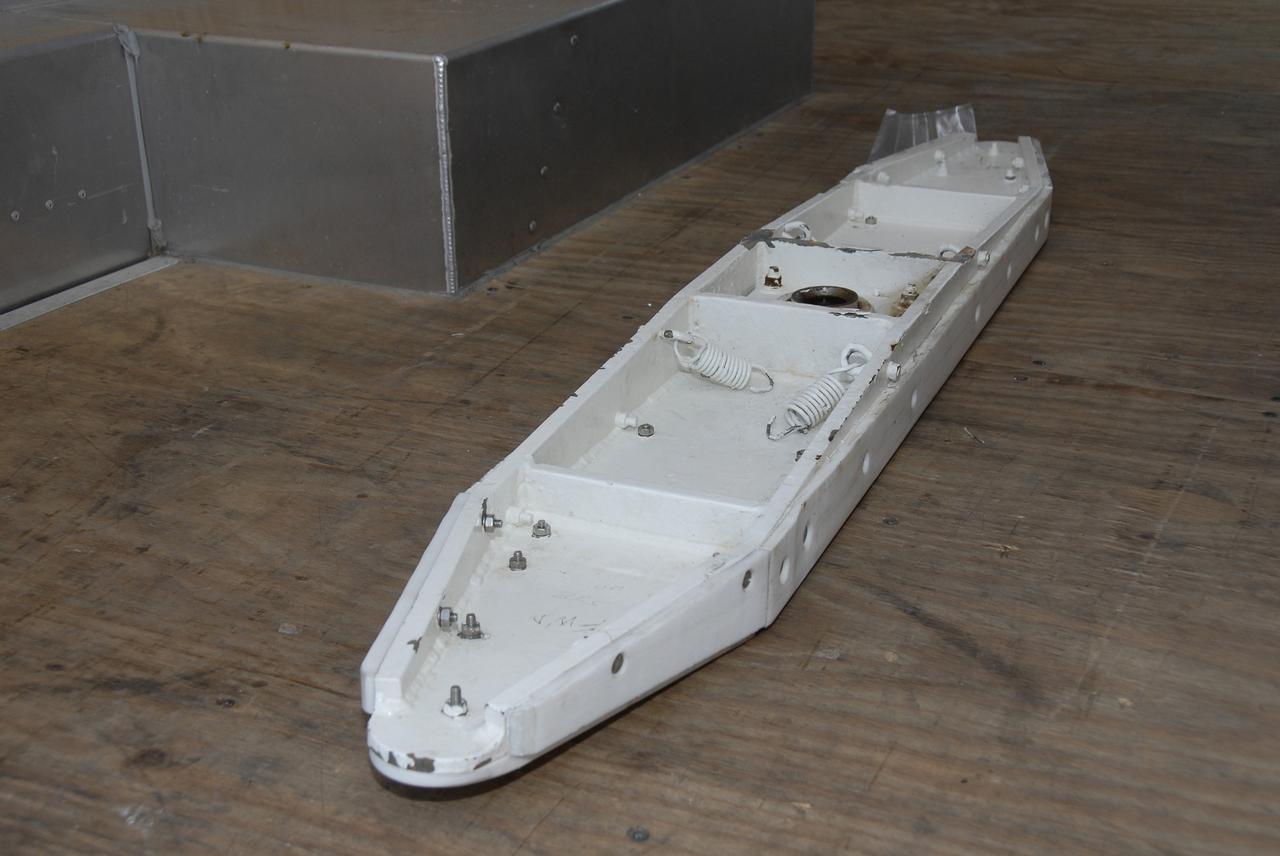
CAPE CANAVERAL, Fla. - Technicians removed a “shoe” on the Hubble payload canister at Launch pad 39A at NASA’s Kennedy Space Center in Florida. The canister arrived at the pad on Saturday evening; however, early Sunday morning technicians were unable to place the canister into the pad’s payload changeout room for space shuttle Atlantis’ STS-125 mission. Teflon pads on the “shoes” attached to the outside of the payload canister that help the canister move along the guide rails didn’t fit properly. The shoes were removed and several options were considered, including slightly shaving down the pads so the shoes will fit onto the rails. STS-125 is the fifth and final shuttle Hubble Space Telescope servicing mission. Atlantis’ launch is targeted for Oct. 10. Photo credit: NASA/Kim Shiflett.
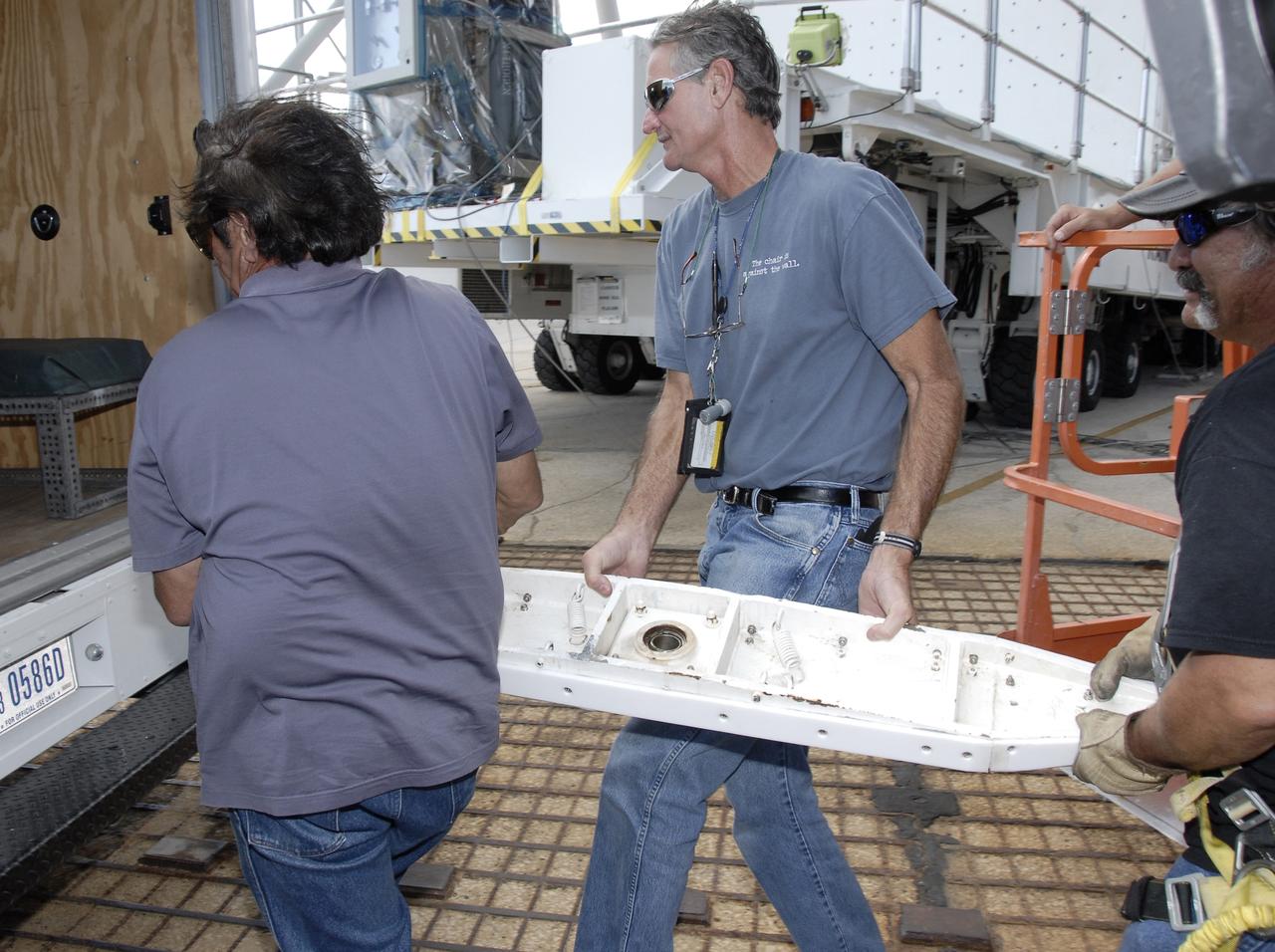
CAPE CANAVERAL, Fla. - Technicians carry a “shoe” that was removed from the Hubble payload canister at Launch Pad 39A at NASA’s Kennedy Space Center in Florida. The canister arrived at the pad on Saturday evening, however, early Sunday morning technicians were unable to place the canister into the pad’s payload changeout room for space shuttle Atlantis’ STS-125 mission. Teflon pads on “shoes” attached to the outside of the payload canister that help the canister move along the guide rails didn’t fit properly. The shoes were removed and several options were considered, including slightly shaving down the pads so the shoes will fit onto the rails. STS-125 is the fifth and final shuttle Hubble Space Telescope servicing mission. Atlantis’ launch is targeted for Oct. 10. Photo credit: NASA/Kim Shiflett.

CAPE CANAVERAL, Fla. - A close up view of one of the “shoes” removed from the Hubble payload canister at Launch Pad 39A at NASA’s Kennedy Space Center in Florida. The canister arrived at the pad on Saturday evening; however, early Sunday morning technicians were unable to place the canister into the pad’s payload changeout room for space shuttle Atlantis’ STS-125 mission. Teflon pads on “shoes” attached to the outside of the payload canister that help the canister move along the guide rails didn’t fit properly. The shoes were removed and several options were considered, including slightly shaving down the pads so the shoes will fit onto the rails. STS-125 is the fifth and final shuttle Hubble Space Telescope servicing mission. Atlantis’ launch is targeted for Oct. 10. Photo credit: NASA/Kim Shiflett.
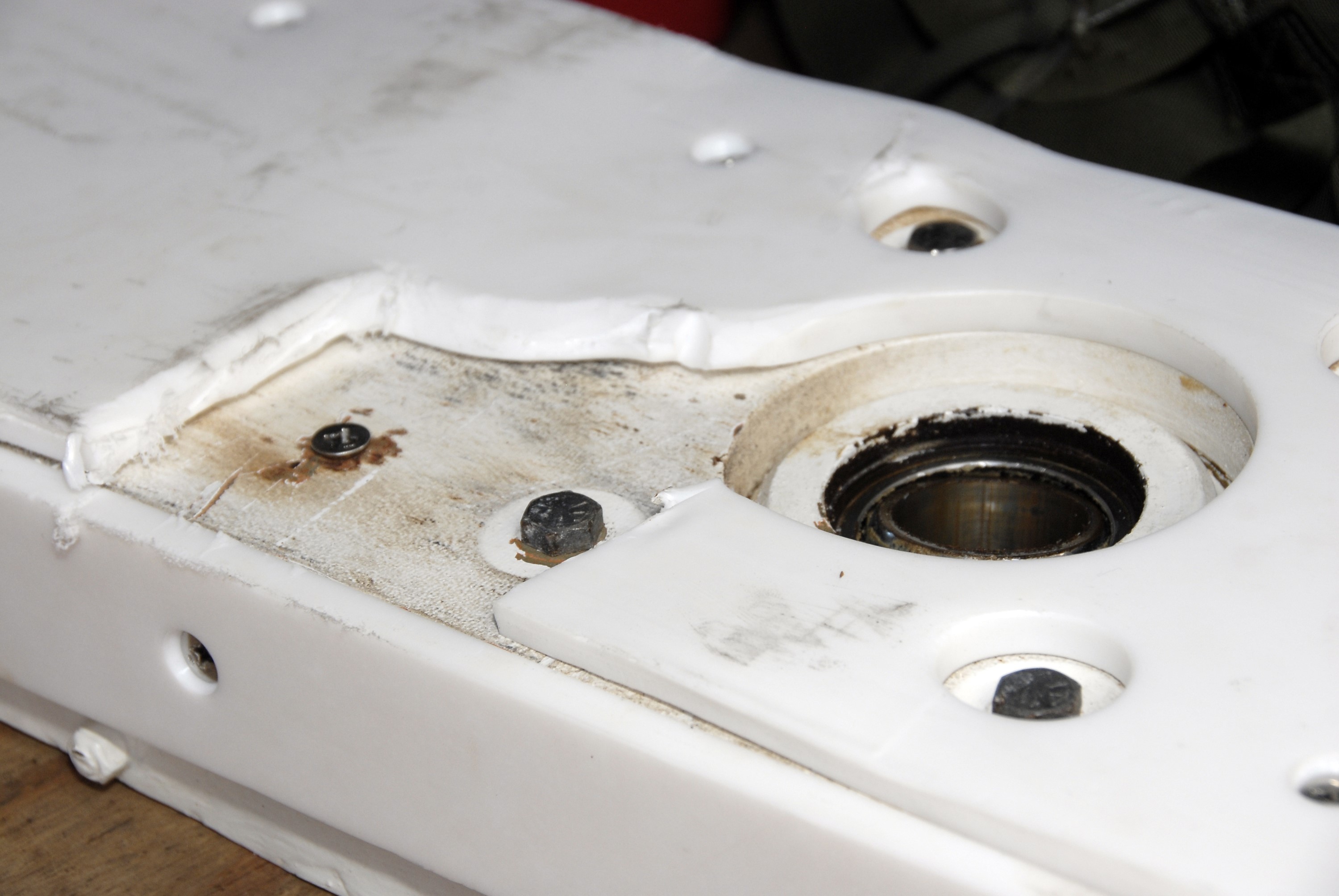
CAPE CANAVERAL, Fla. - A close up view of one of the “shoes” removed from the Hubble payload canister at Launch Pad 39A at NASA’s Kennedy Space Center in Florida. The canister arrived at the pad on Saturday evening; however, early Sunday morning technicians were unable to place the canister into the pad’s payload changeout room for space shuttle Atlantis’ STS-125 mission. Teflon pads on “shoes” attached to the outside of the payload canister that help the canister move along the guide rails didn’t fit properly. The shoes were removed and several options were considered, including slightly shaving down the pads so the shoes will fit onto the rails. STS-125 is the fifth and final shuttle Hubble Space Telescope servicing mission. Atlantis’ launch is targeted for Oct. 10. Photo credit: NASA/Kim Shiflett.
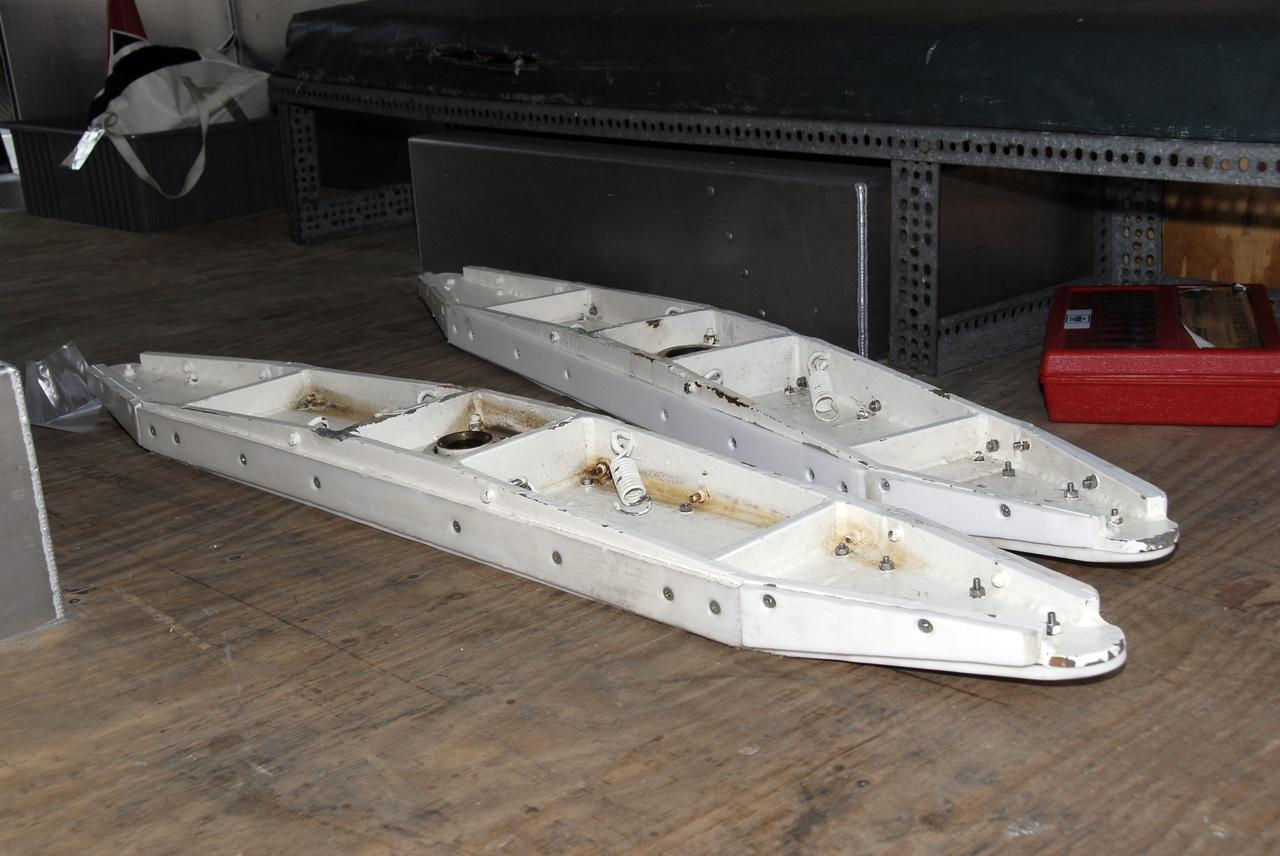
CAPE CANAVERAL, Fla. - Technicians removed two “shoes” from the Hubble payload canister at Launch Pad 39A at NASA’s Kennedy Space Center in Florida. The canister arrived at the pad on Saturday evening; however, early Sunday morning technicians were unable to place the canister into the pad’s payload changeout room for space shuttle Atlantis’ STS-125 mission. Teflon pads on “shoes” attached to the outside of the payload canister that help the canister move along the guide rails didn’t fit properly. The shoes were removed and several options were considered, including slightly shaving down the pads so the shoes will fit onto the rails. STS-125 is the fifth and final shuttle Hubble Space Telescope servicing mission. Atlantis’ launch is targeted for Oct. 10. Photo credit: NASA/Kim Shiflett.
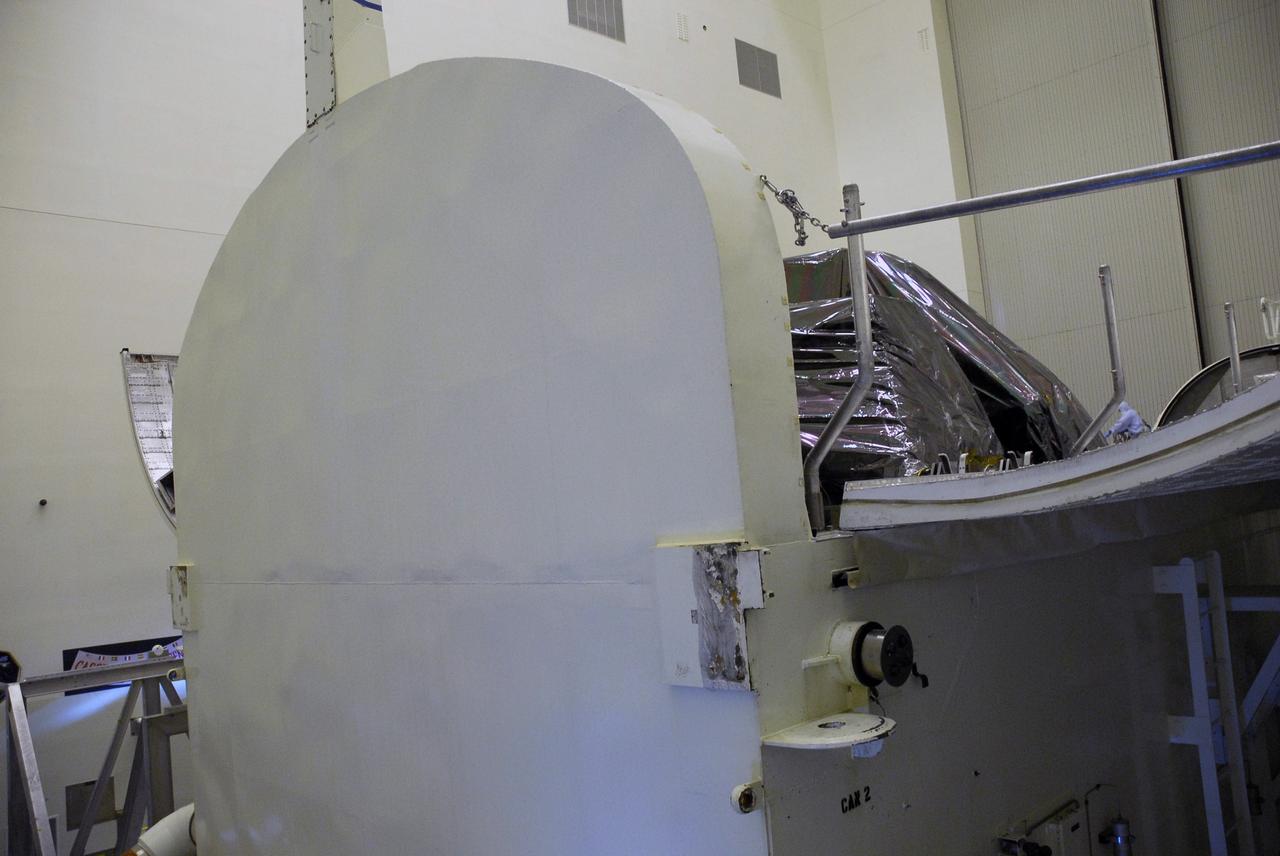
CAPE CANAVERAL, Fla. - In the Payload Hazardous Servicing Facility at NASA's Kennedy Space Center, the open doors of the payload canister reveal the first of the carriers associated with the STS-125 mission to service the Hubble Space Telescope that have been installed in it. Four carriers in all will be transferred to Launch Pad 39A. At the pad, all the carriers will be loaded into space shuttle Atlantis’ payload bay. Launch of Atlantis is targeted for Oct. 10. Photo credit: NASA/Jack Pfaller
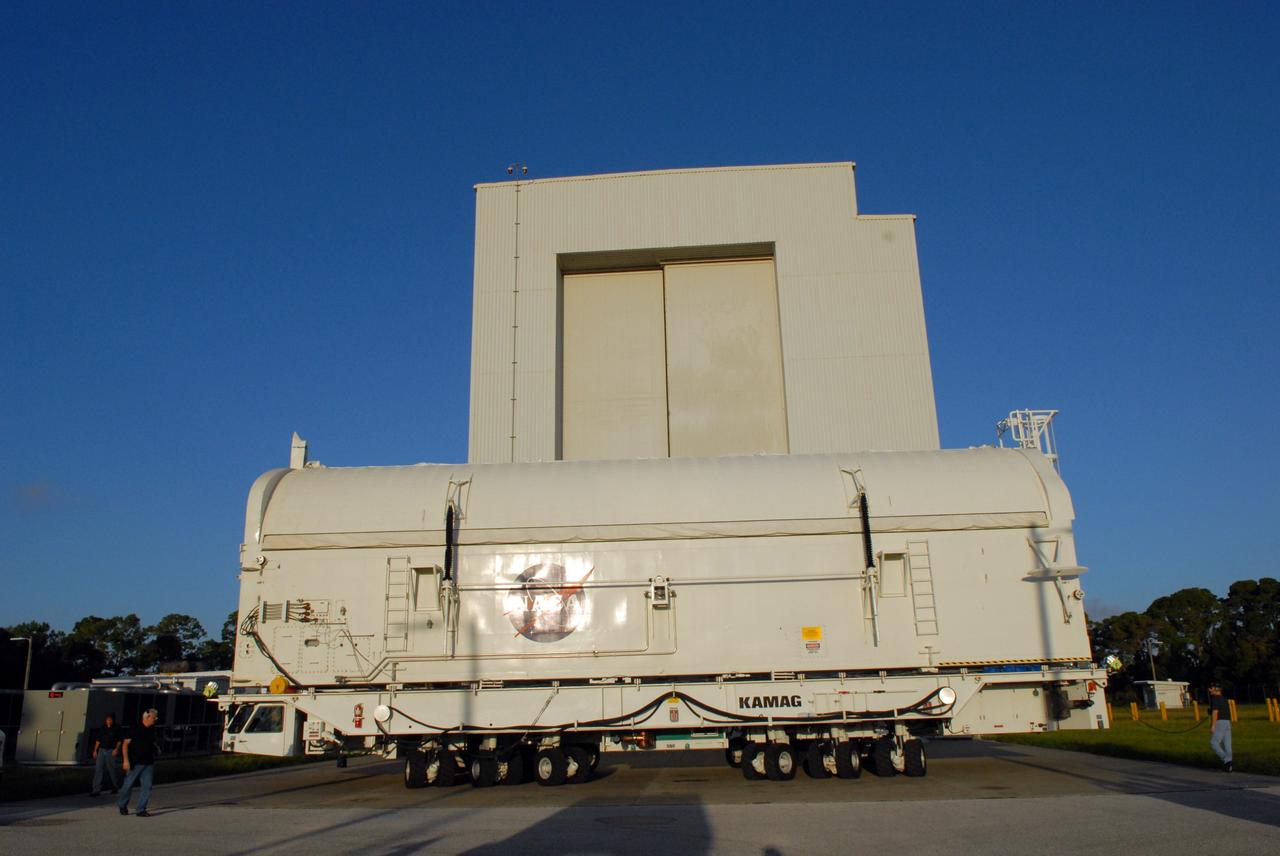
CAPE CANAVERAL, Fla. - The payload canister containing the equipment and hardware for space shuttle Atlantis’ STS-125 mission to the Hubble Space Telescope is moved from the Payload Hazardous Servicing Facility at NASA’s Kennedy Space Center in Florida, to the canister rotation facility. The canister will be transferred to Launch Pad 39A and the payload will be loaded into Atlantis’ payload bay. Launch of Atlantis is targeted for Oct 10. Photo credit: NASA/Jack Pfaller
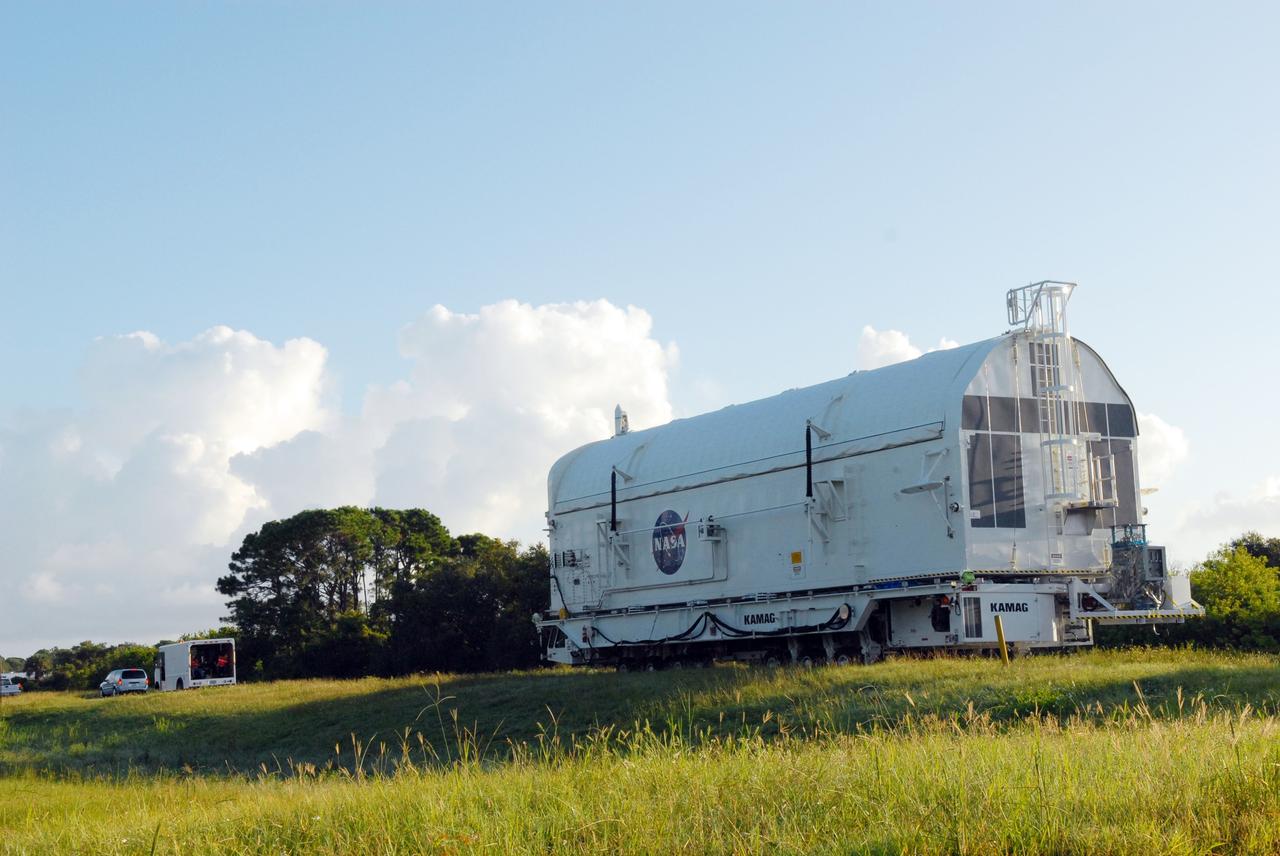
CAPE CANAVERAL, Fla. - The payload canister containing the equipment and hardware for space shuttle Atlantis’ STS-125 mission to the Hubble Space Telescope is moved from the Payload Hazardous Servicing Facility at NASA’s Kennedy Space Center in Florida, to the canister rotation facility. The canister will be transferred to Launch Pad 39A and the payload will be loaded into Atlantis’ payload bay. Launch of Atlantis is targeted for Oct 10. Photo credit: NASA/Jack Pfaller
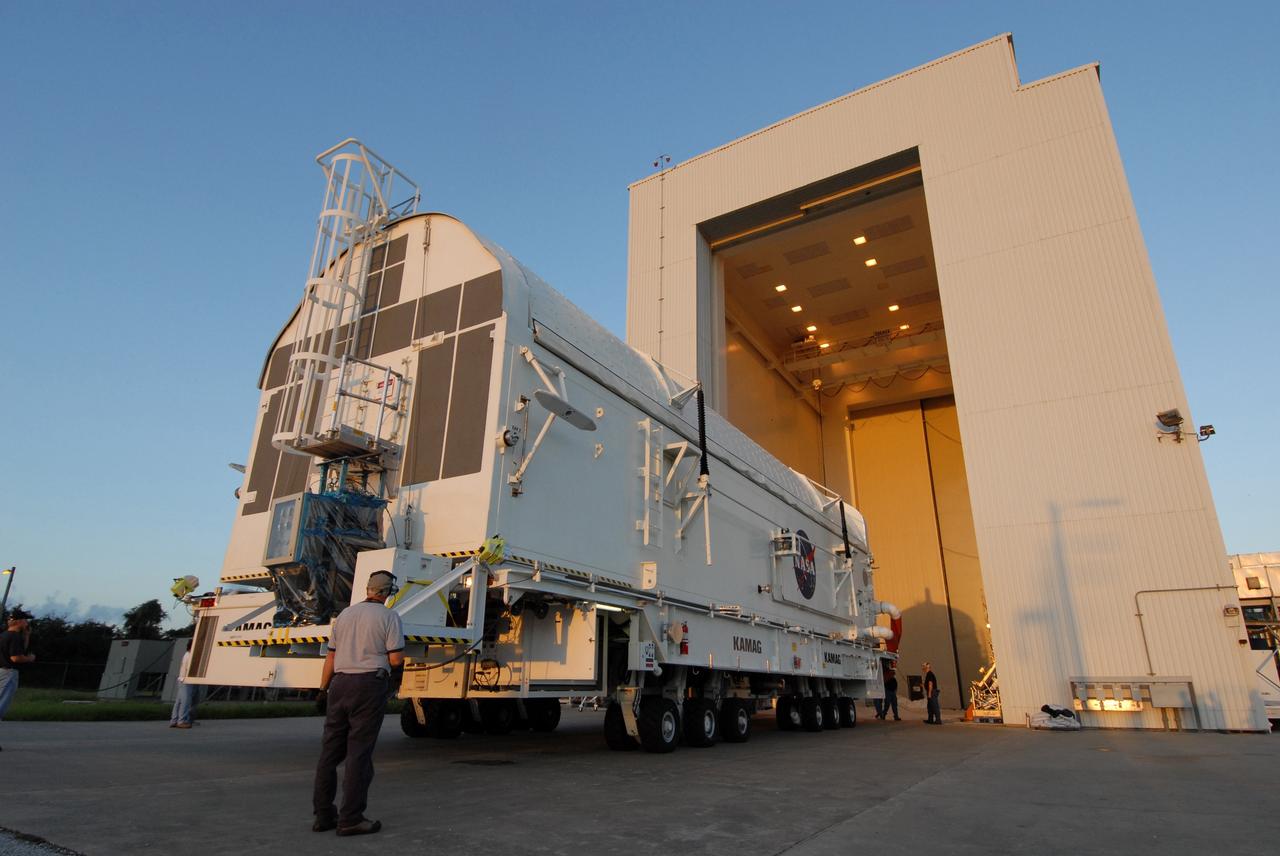
CAPE CANAVERAL, Fla. - The payload canister containing the equipment and hardware for space shuttle Atlantis’ STS-125 mission to the Hubble Space Telescope is moved from the Payload Hazardous Servicing Facility at NASA’s Kennedy Space Center in Florida, to the canister rotation facility. The canister will be transferred to Launch Pad 39A and the payload will be loaded into Atlantis’ payload bay. Launch of Atlantis is targeted for Oct 10. Photo credit: NASA/Jack Pfaller
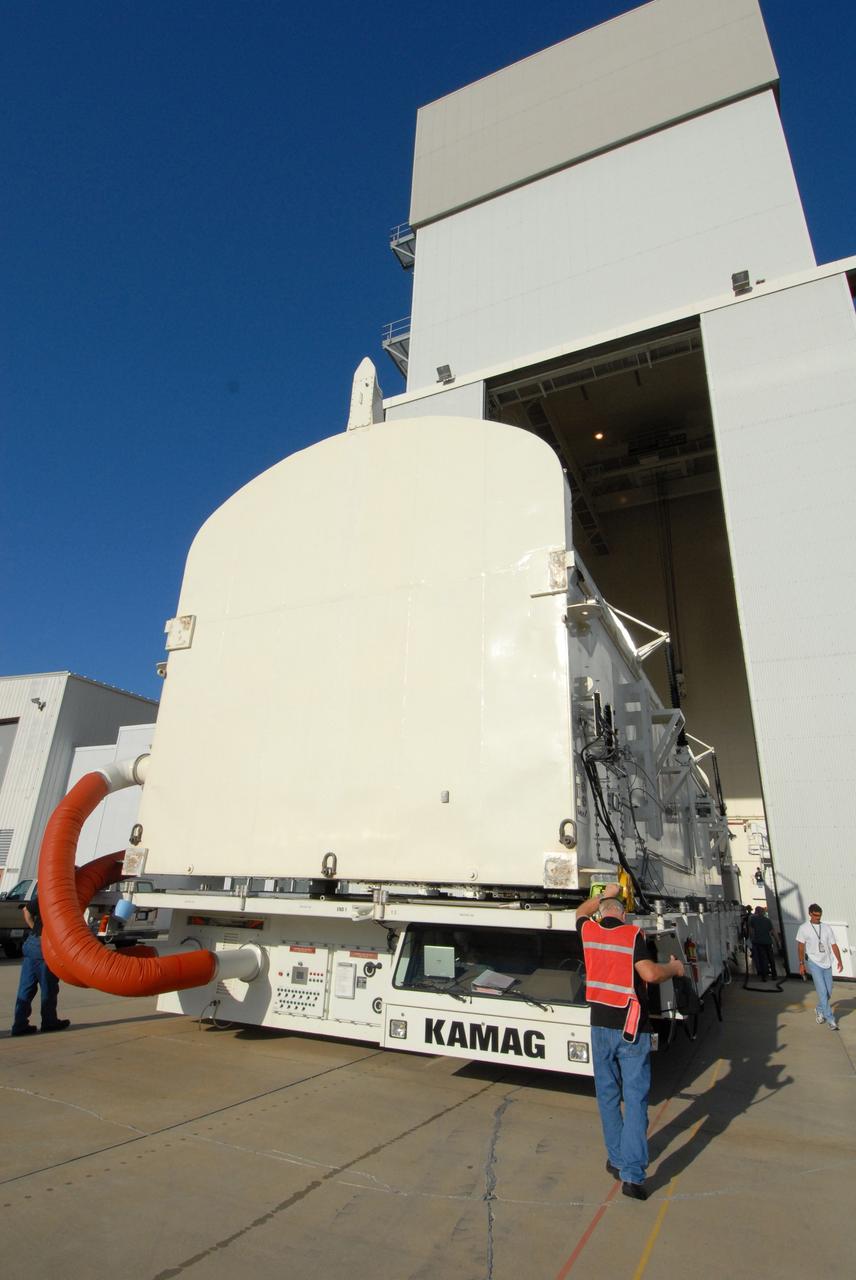
CAPE CANAVERAL, Fla. - The payload canister containing the equipment and hardware for space shuttle Atlantis’ STS-125 mission to the Hubble Space Telescope is moved from the Payload Hazardous Servicing Facility at NASA’s Kennedy Space Center in Florida, to the canister rotation facility. The canister will be transferred to Launch Pad 39A and the payload will be loaded into Atlantis’ payload bay. Launch of Atlantis is targeted for Oct 10. Photo credit: NASA/Jack Pfaller
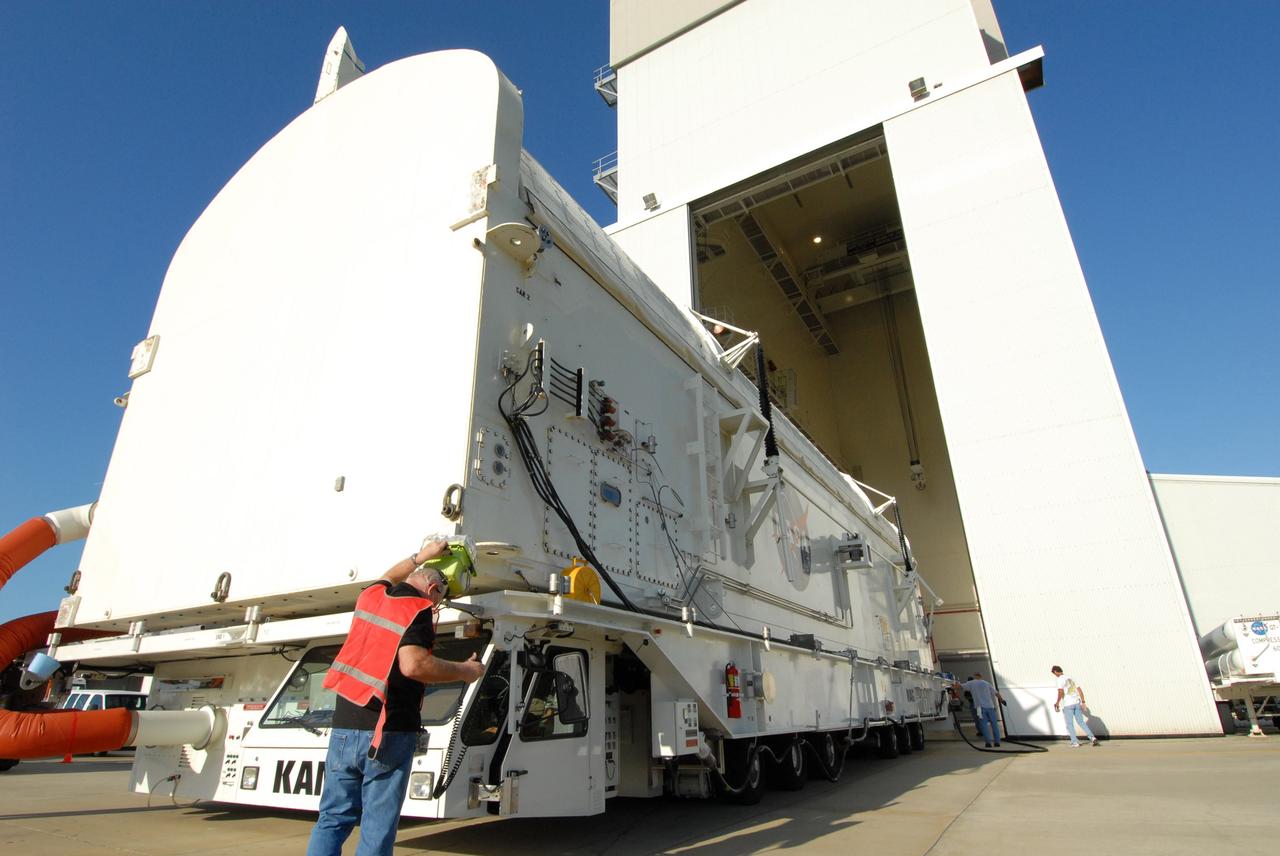
CAPE CANAVERAL, Fla. - The payload canister containing the equipment and hardware for space shuttle Atlantis’ STS-125 mission to the Hubble Space Telescope is moved from the Payload Hazardous Servicing Facility at NASA’s Kennedy Space Center in Florida, to the canister rotation facility. The canister will be transferred to Launch Pad 39A and the payload will be loaded into Atlantis’ payload bay. Launch of Atlantis is targeted for Oct 10. Photo credit: NASA/Jack Pfaller
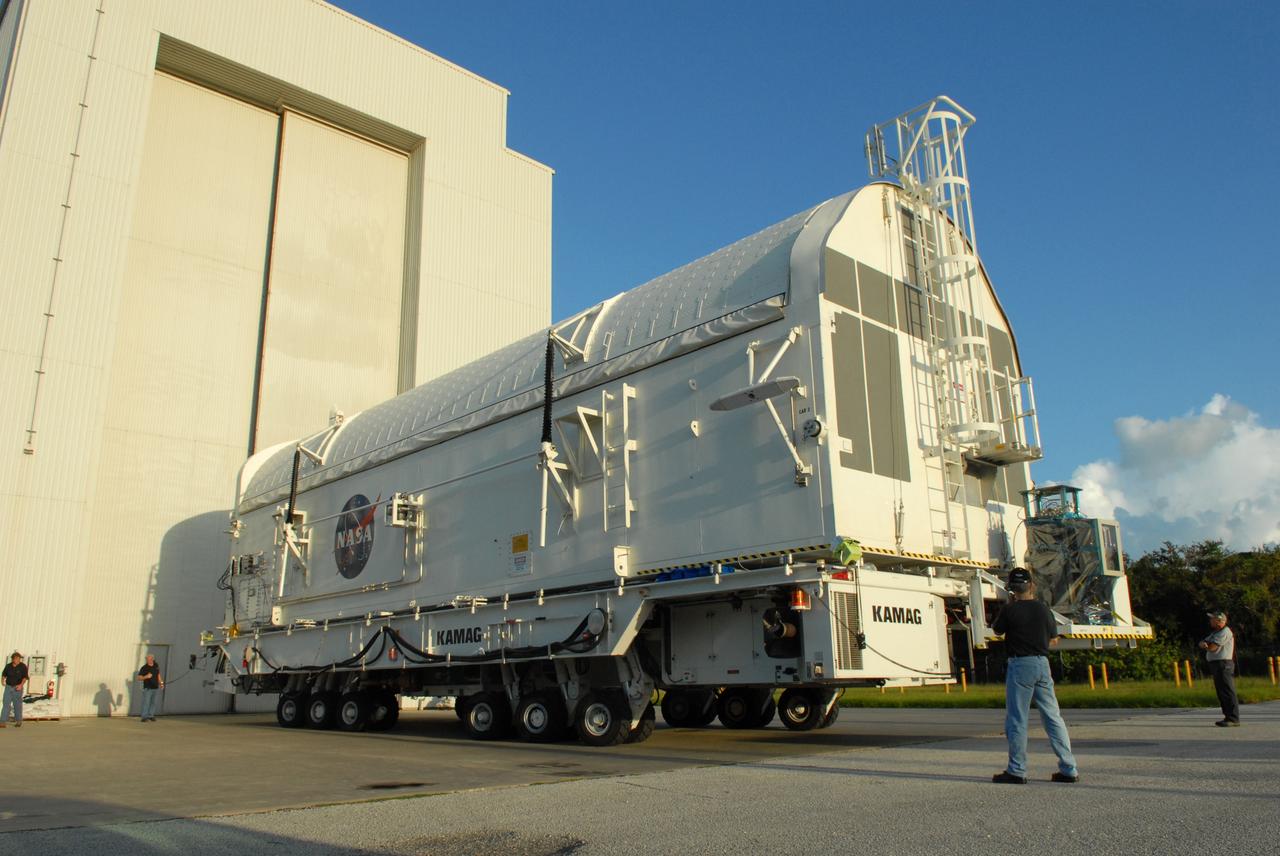
CAPE CANAVERAL, Fla. - The payload canister containing the equipment and hardware for space shuttle Atlantis’ STS-125 mission to the Hubble Space Telescope is moved from the Payload Hazardous Servicing Facility at NASA’s Kennedy Space Center in Florida, to the canister rotation facility. The canister will be transferred to Launch Pad 39A and the payload will be loaded into Atlantis’ payload bay. Launch of Atlantis is targeted for Oct 10. Photo credit: NASA/Jack Pfaller
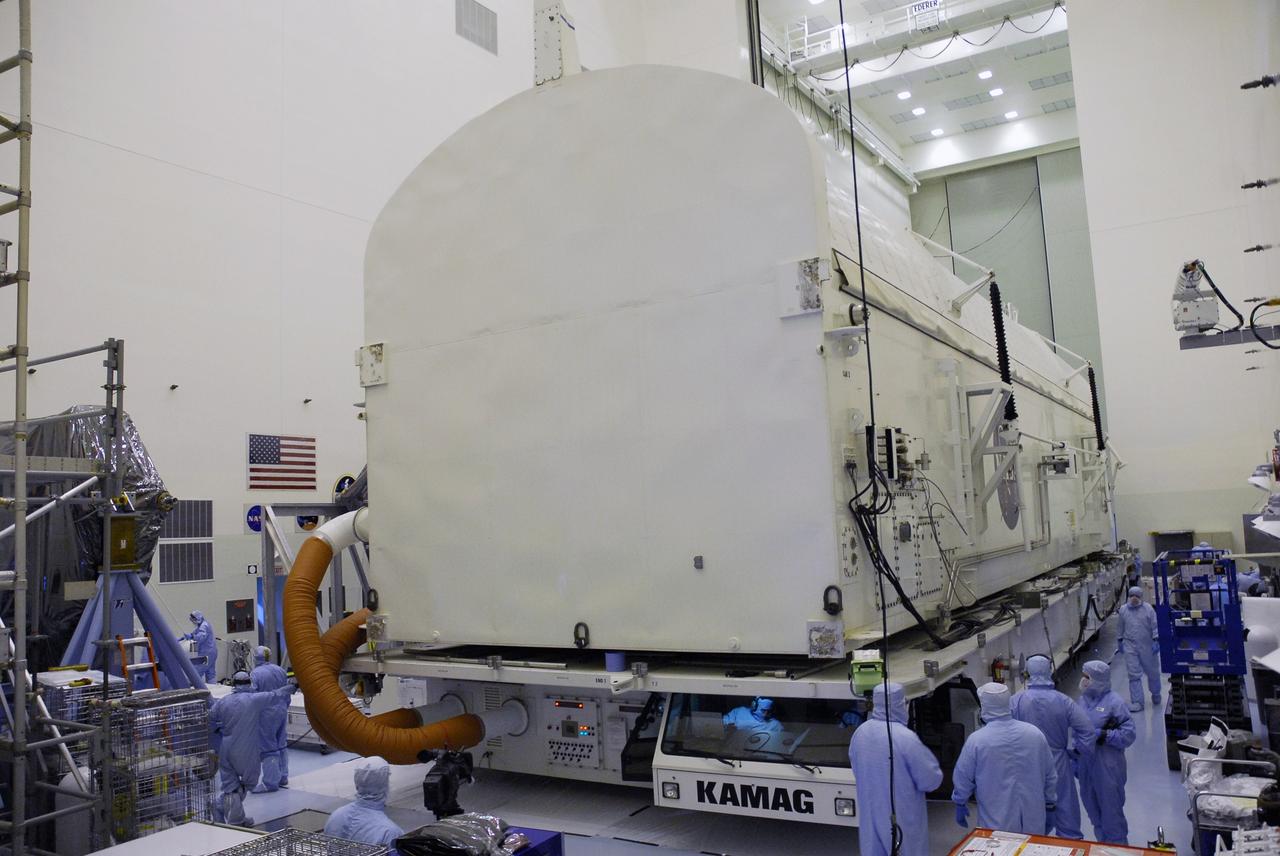
CAPE CANAVERAL, Fla. - The payload canister backs into the Payload Hazardous Servicing Facility at NASA’s Kennedy Space Center. The equipment and carriers associated with the STS-125 mission to service the Hubble Space Telescope will be installed in the canister for transfer to Launch Pad 39A. The canister contains an environmental control system, signified by the red umbilical lines at left. At the pad, the carriers will be loaded into space shuttle Atlantis’ payload bay. Launch of Atlantis is targeted for Oct. 10. Photo credit: NASA/Cory Huston
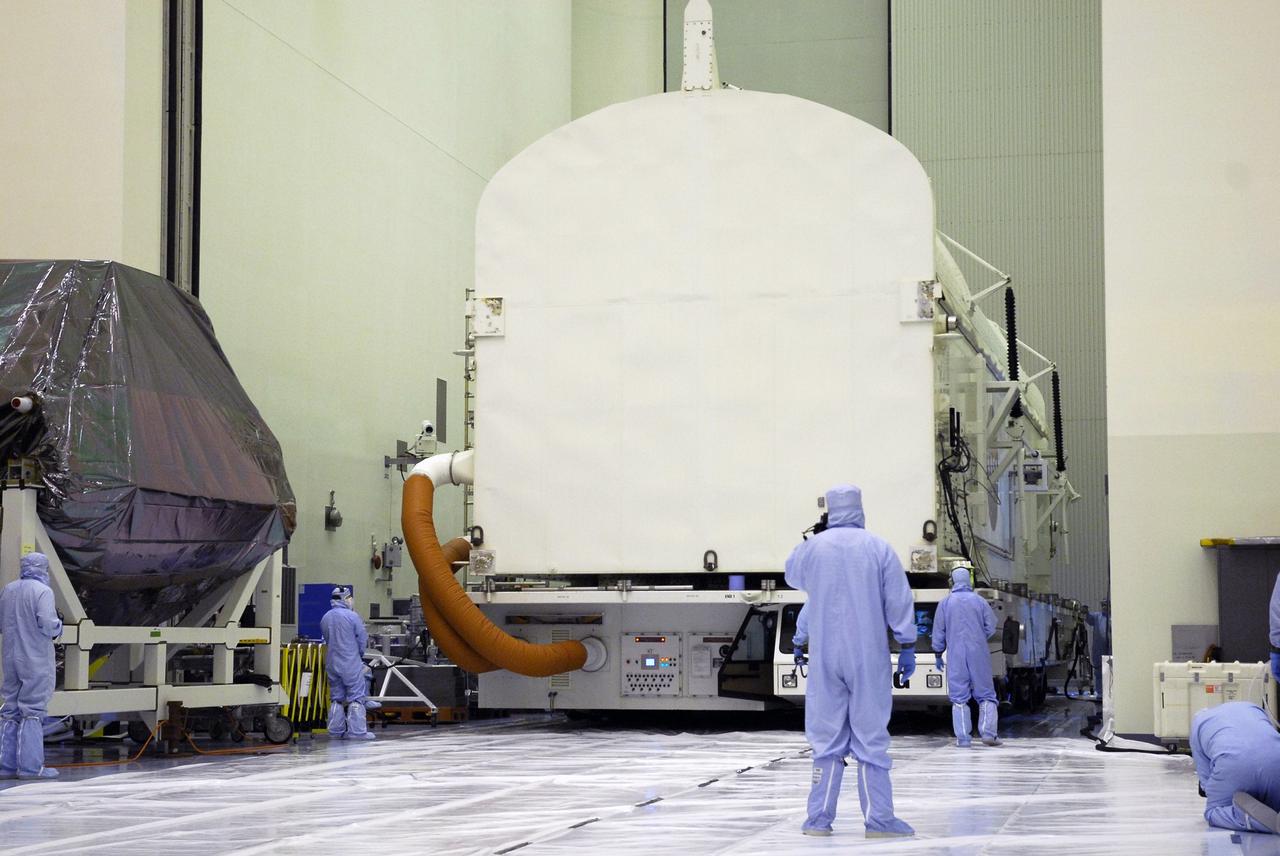
CAPE CANAVERAL, Fla. - The payload canister backs into the Payload Hazardous Servicing Facility at NASA’s Kennedy Space Center. The equipment and carriers associated with the STS-125 mission to service the Hubble Space Telescope will be installed in the canister for transfer to Launch Pad 39A. The canister contains an environmental con¬trol system, signified by the red umbilical lines at left. At the pad, the carriers will be loaded into space shuttle Atlantis’ payload bay. Launch of Atlantis is targeted for Oct. 10. Photo credit: NASA/Cory Huston
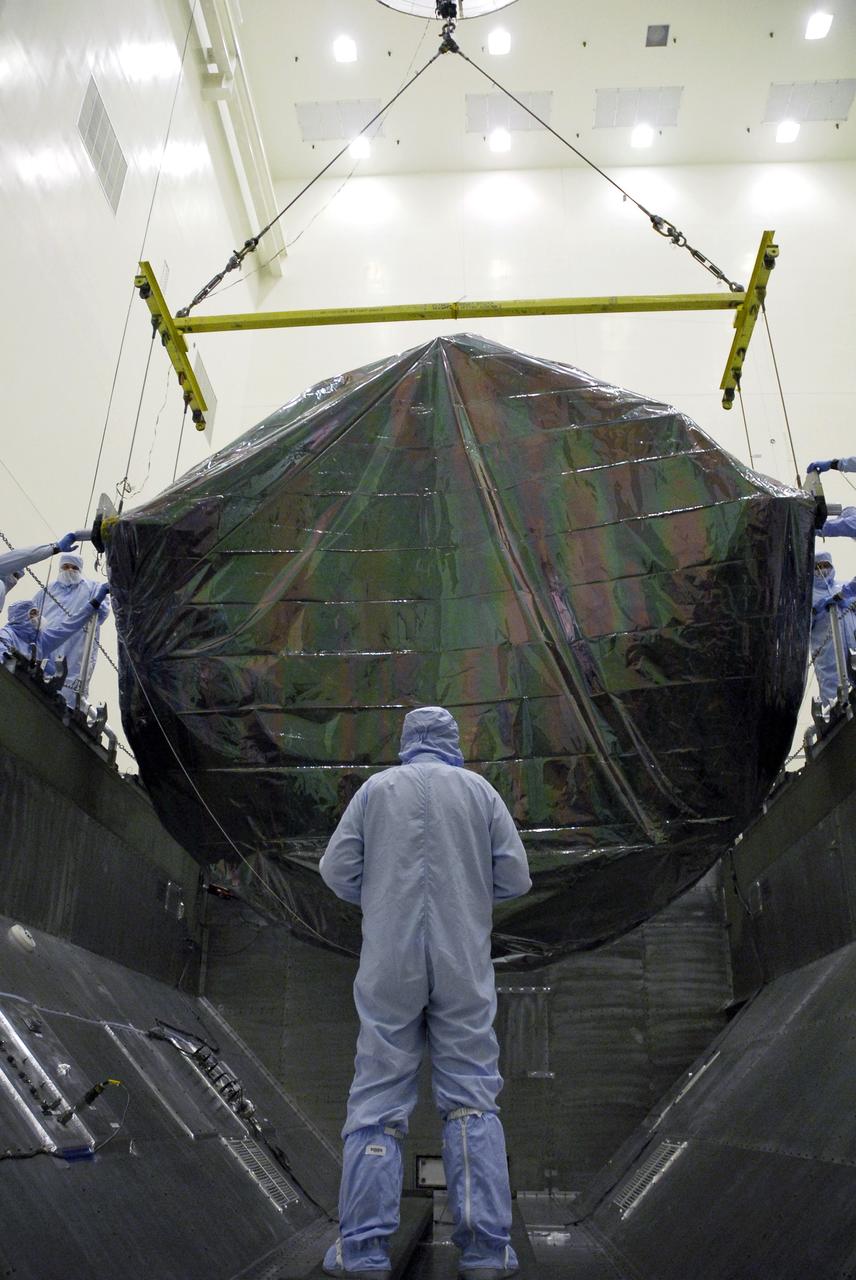
CAPE CANAVERAL, Fla. - In the Payload Hazardous Servicing Facility at NASA’s Kennedy Space Center, workers monitor the movement of the Flight Support System carrier with the Soft Capture Mechanism as it is lowered into the payload canister. The carrier is associated with the STS-125 mission to service the Hubble Space Telescope. The canister will transfer the carrier to Launch Pad 39A. The carrier is one of four associated with the STS-125 mission to service the Hubble Space Telescope. At the pad, all the carriers will be loaded into space shuttle Atlantis’ payload bay. Launch of Atlantis is targeted for Oct. 10. Photo credit: NASA/Cory Huston

CAPE CANAVERAL, Fla. - The payload canister moves back into the environmentally controlled high bay of the Payload Hazardous Servicing Facility at NASA's Kennedy Space Center. The canister was moved out of the high bay during contamination of the Super Lightweight Integration Carrier, one of four associated with the STS-125 mission to service the Hubble Space Telescope. The carriers are being installed in the payload canister for transfer to Launch Pad 39A. At the pad, all the carriers will be loaded into space shuttle Atlantis’ payload bay. Launch of Atlantis is targeted for Oct. 10. On the left next to the canister is the Multi-Use Logistic Equipment, or MULE, carrier, which will be transferred to the canister. Photo credit: NASA/Jack Pfaller
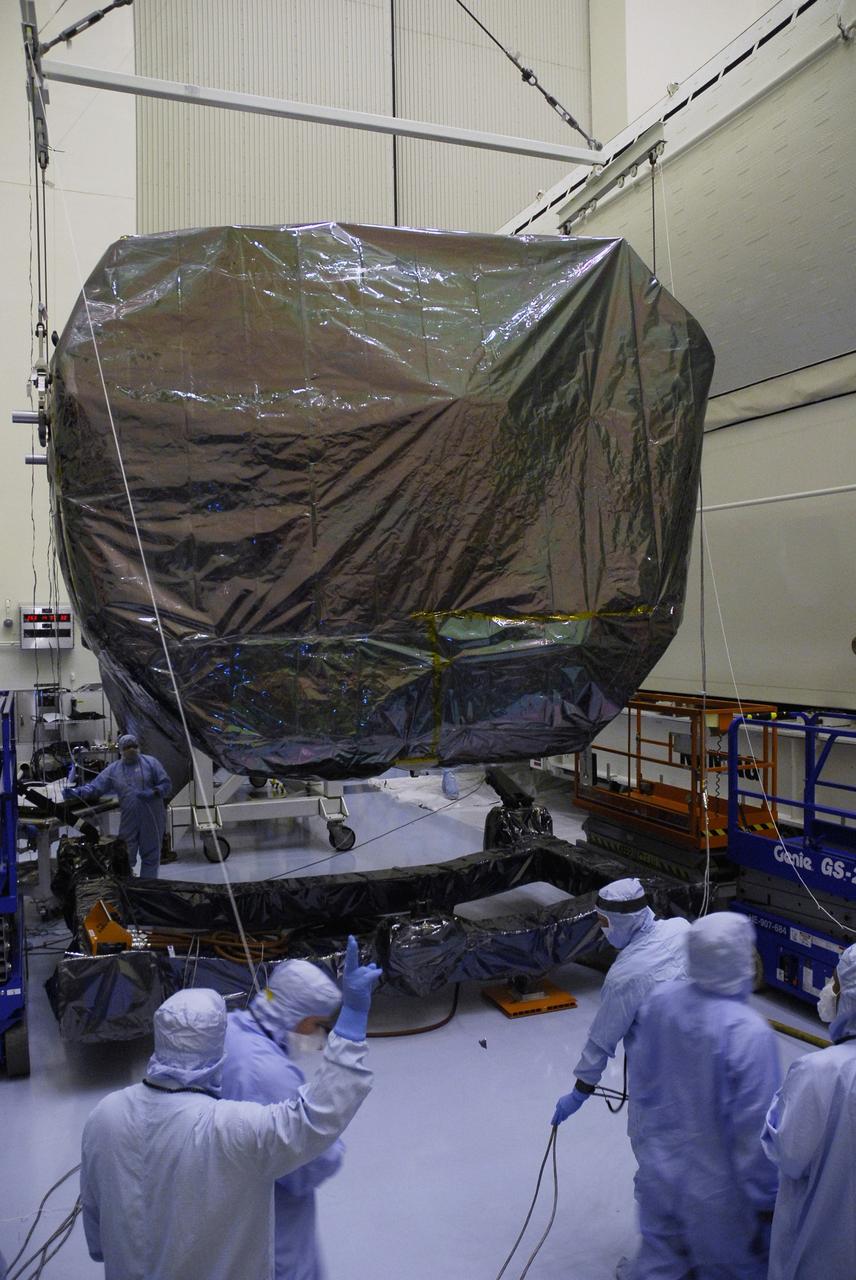
CAPE CANAVERAL, Fla. - In the Payload Hazardous Servicing Facility at NASA's Kennedy Space Center, workers are ready to lift the Orbital Replacement Unit Carrier, or ORUC, to the payload canister. The carrier is one of four associated with the STS-125 mission to service the Hubble Space Telescope. It will be installed in the payload canister for transfer to Launch Pad 39A. At the pad, all the carriers will be loaded into space shuttle Atlantis’ payload bay. Launch of Atlantis is targeted for Oct. 10. Photo credit: NASA/Jack Pfaller
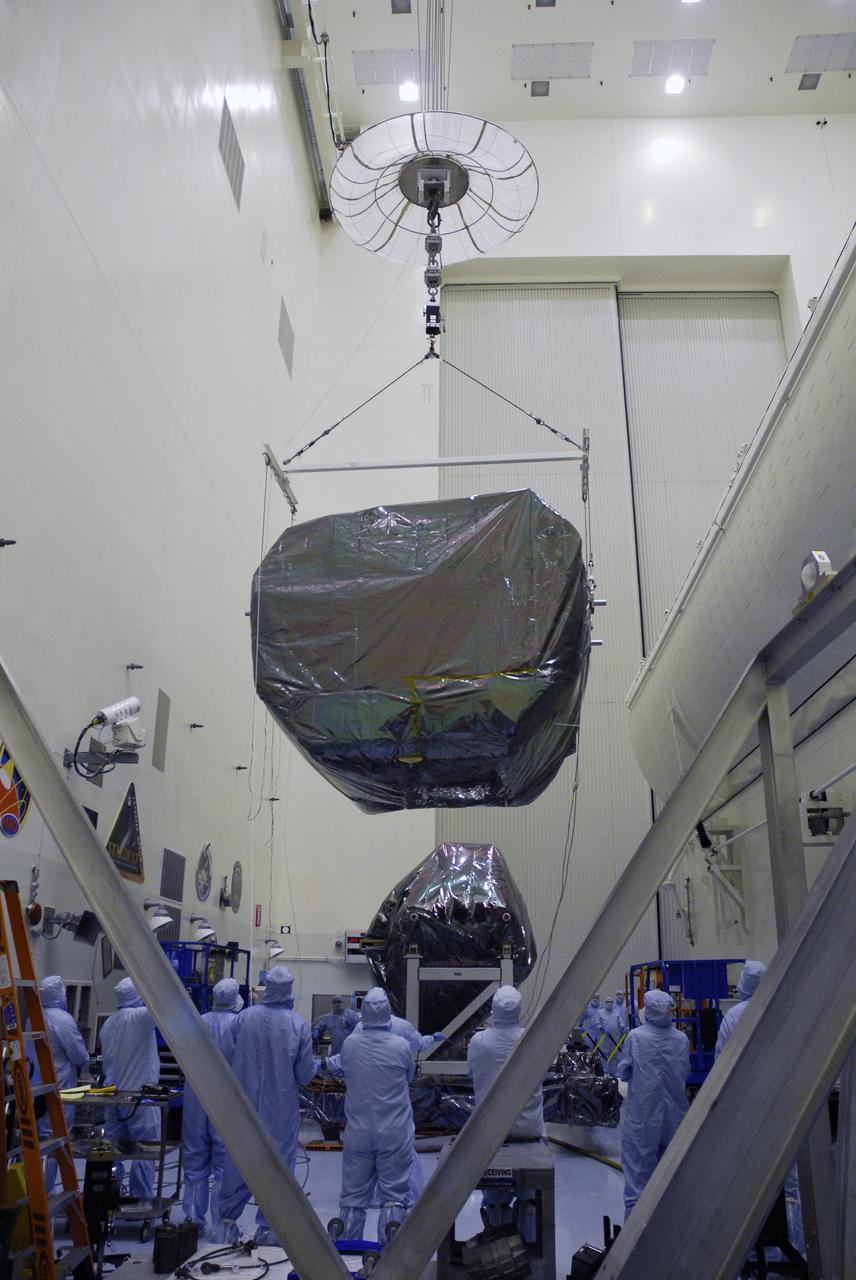
CAPE CANAVERAL, Fla. - In the Payload Hazardous Servicing Facility at NASA's Kennedy Space Center, an overhead crane lifts the Orbital Replacement Unit Carrier, or ORUC, to install it in the payload canister at right. The carrier is one of four associated with the STS-125 mission to service the Hubble Space Telescope. It will be installed in the payload canister for transfer to Launch Pad 39A. At the pad, all the carriers will be loaded into space shuttle Atlantis’ payload bay. Launch of Atlantis is targeted for Oct. 10. Photo credit: NASA/Jack Pfaller
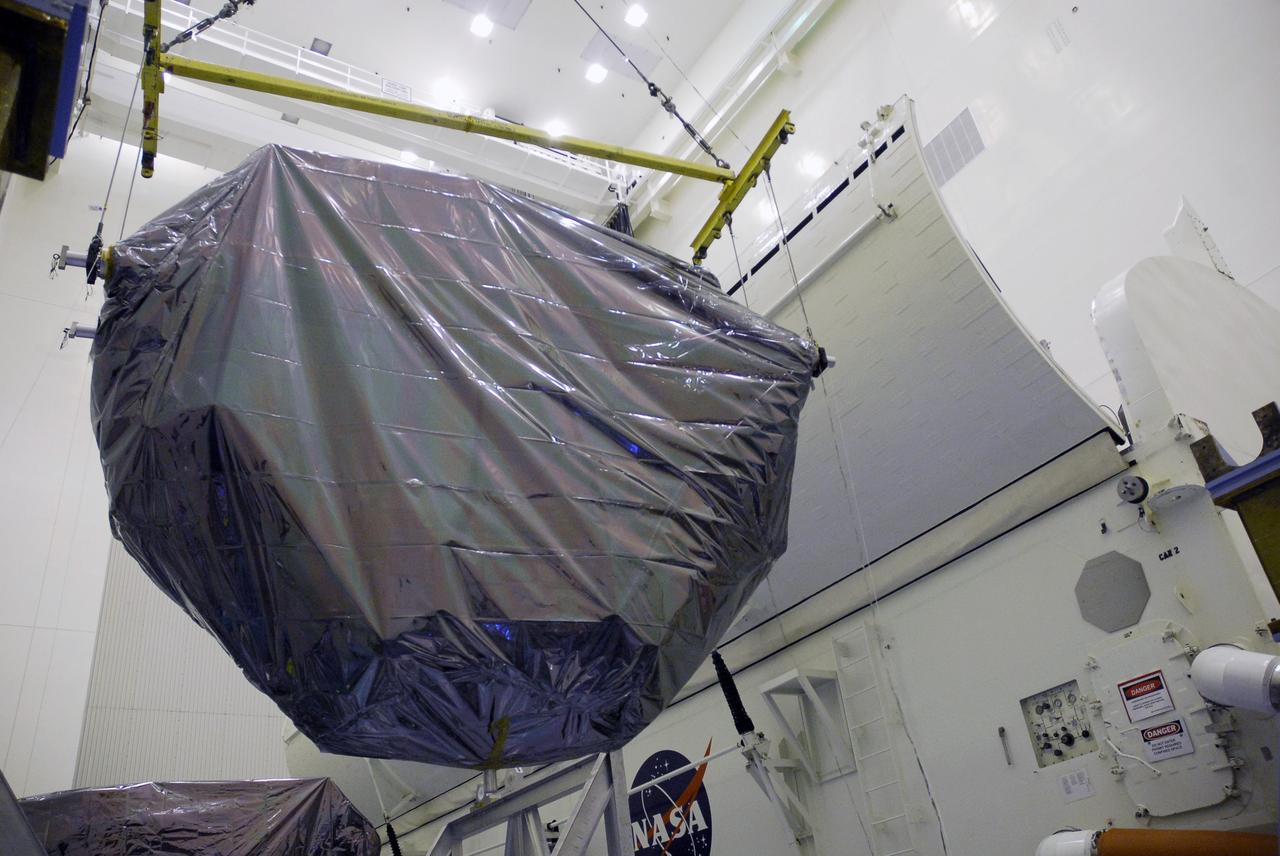
CAPE CANAVERAL, Fla. - In the Payload Hazardous Servicing Facility at NASA’s Kennedy Space Center, the Multi-Use Logistic Equipment, or MULE, carrier is moved toward the payload canister. The carrier is one of four associated with the STS-125 mission to service the Hubble Space Telescope. It will be installed in the payload canister for transfer to Launch Pad 39A. At the pad, all the carriers will be loaded into space shuttle Atlantis’ payload bay. Launch of Atlantis is targeted for Oct. 10. Photo credit: NASA/Jack Pfaller
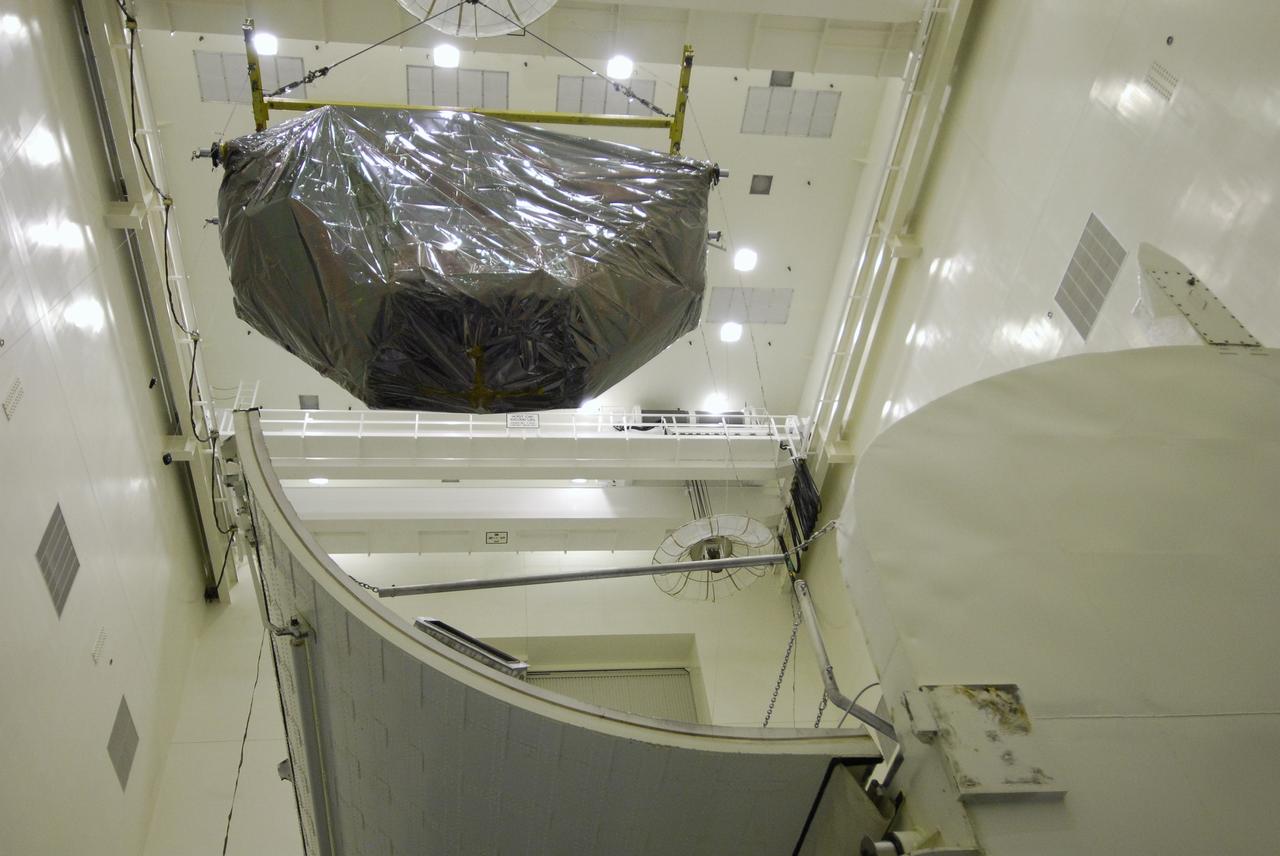
CAPE CANAVERAL, Fla. - In the Payload Hazardous Servicing Facility at NASA’s Kennedy Space Center, the Multi-Use Logistic Equipment, or MULE, carrier is moved toward the payload canister. The carrier is one of four associated with the STS-125 mission to service the Hubble Space Telescope. It will be installed in the payload canister for transfer to Launch Pad 39A. At the pad, all the carriers will be loaded into space shuttle Atlantis’ payload bay. Launch of Atlantis is targeted for Oct. 10. Photo credit: NASA/Jack Pfaller

CAPE CANAVERAL, Fla. - In the Payload Hazardous Servicing Facility at NASA's Kennedy Space Center, workers attach an overhead crane to the Orbital Replacement Unit Carrier, or ORUC. The crane will lift and move the ORUC to the payload canister. The carrier is one of four associated with the STS-125 mission to service the Hubble Space Telescope. It will be installed in the payload canister for transfer to Launch Pad 39A. At the pad, all the carriers will be loaded into space shuttle Atlantis’ payload bay. Launch of Atlantis is targeted for Oct. 10. Photo credit: NASA/Jack Pfaller
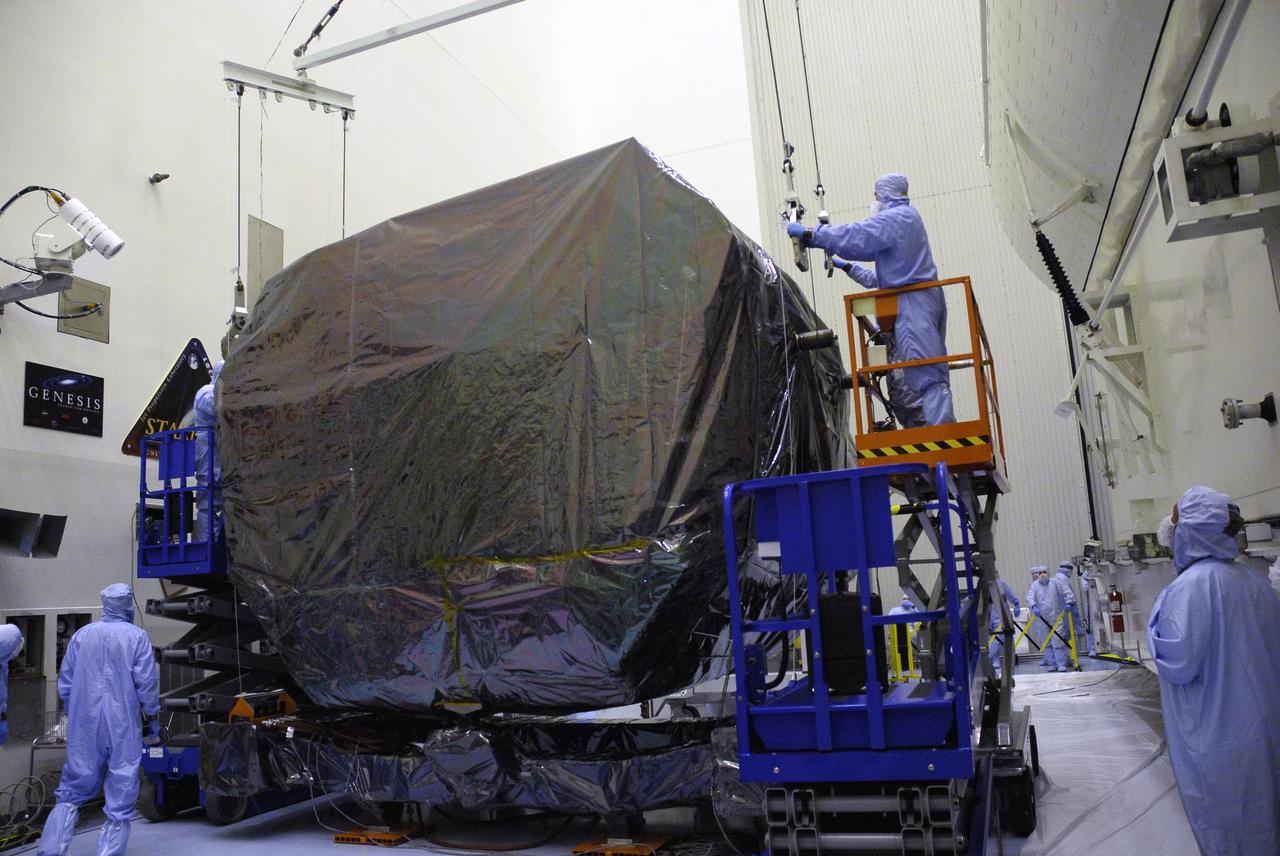
CAPE CANAVERAL, Fla. - In the Payload Hazardous Servicing Facility at NASA's Kennedy Space Center, workers attach an overhead crane to the Orbital Replacement Unit Carrier, or ORUC. The crane will lift and move the ORUC to the payload canister. The carrier is one of four associated with the STS-125 mission to service the Hubble Space Telescope. It will be installed in the payload canister for transfer to Launch Pad 39A. At the pad, all the carriers will be loaded into space shuttle Atlantis’ payload bay. Launch of Atlantis is targeted for Oct. 10. Photo credit: NASA/Jack Pfaller
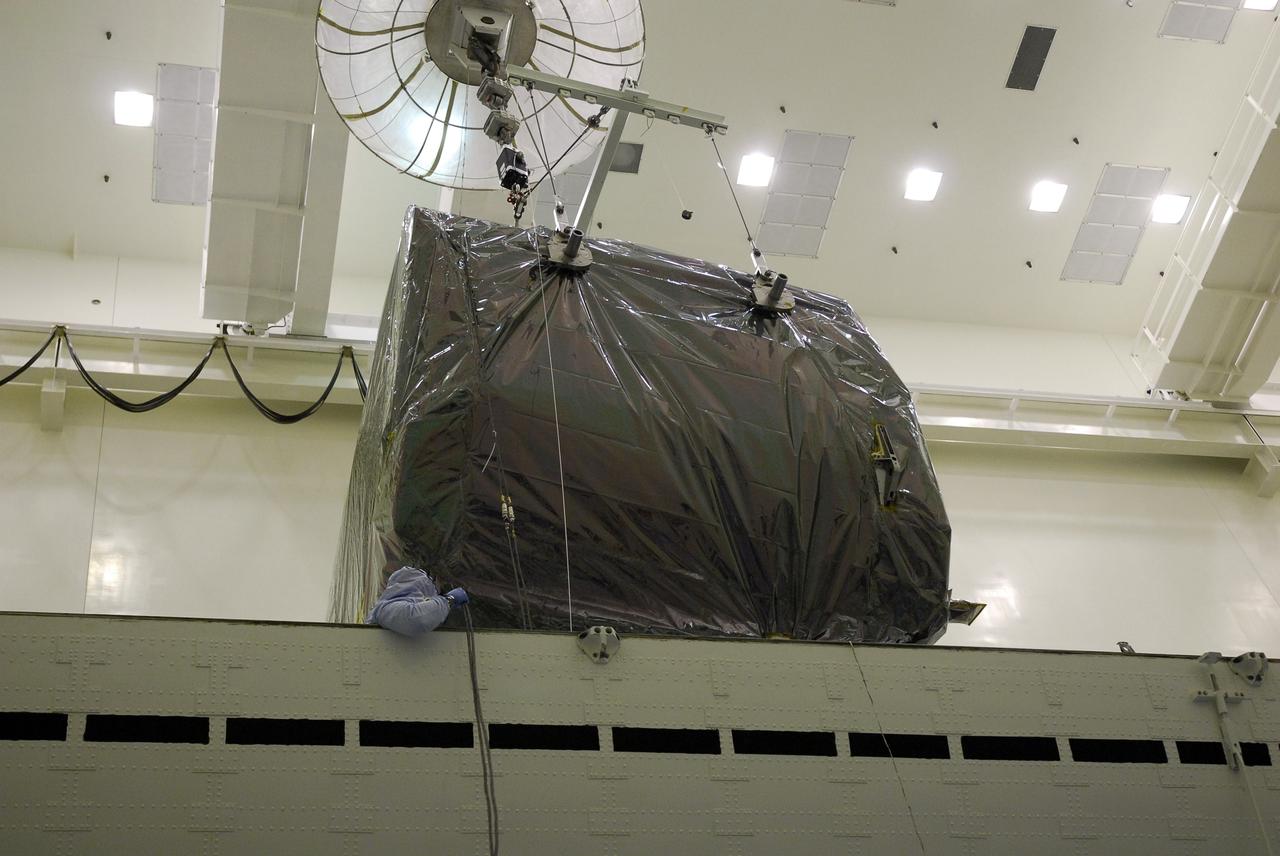
CAPE CANAVERAL, Fla. - In the Payload Hazardous Servicing Facility at NASA's Kennedy Space Center, an overhead crane moves the Orbital Replacement Unit Carrier, or ORUC, above the payload canister for installation. The carrier is one of four associated with the STS-125 mission to service the Hubble Space Telescope. It will be installed in the payload canister for transfer to Launch Pad 39A. At the pad, all the carriers will be loaded into space shuttle Atlantis’ payload bay. Launch of Atlantis is targeted for Oct. 10. Photo credit: NASA/Jack Pfaller
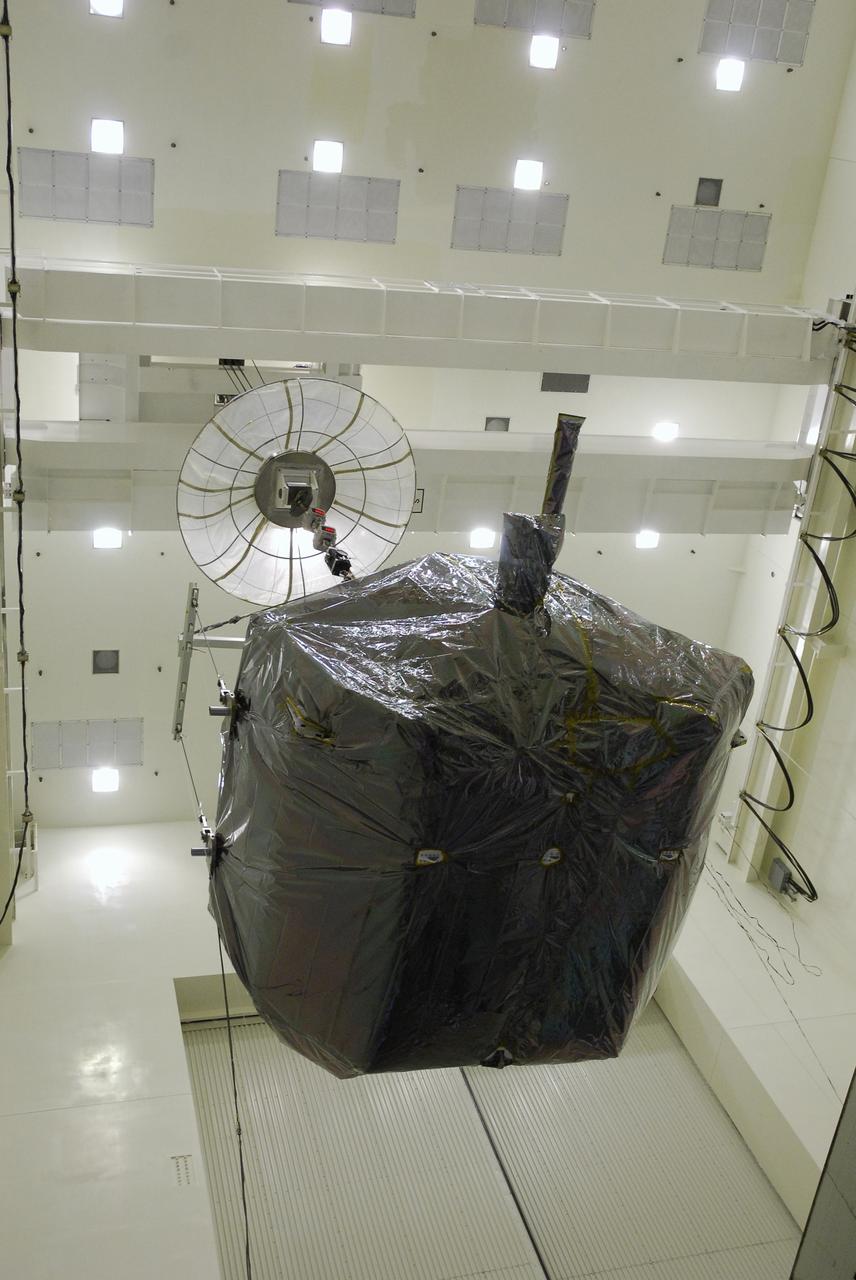
CAPE CANAVERAL, Fla. - In the Payload Hazardous Servicing Facility at NASA's Kennedy Space Center, an overhead crane lifts the Orbital Replacement Unit Carrier, or ORUC, and moves it across the floor to install it in the payload canister. The carrier is one of four associated with the STS-125 mission to service the Hubble Space Telescope. It will be installed in the payload canister for transfer to Launch Pad 39A. At the pad, all the carriers will be loaded into space shuttle Atlantis’ payload bay. Launch of Atlantis is targeted for Oct. 10. Photo credit: NASA/Jack Pfaller
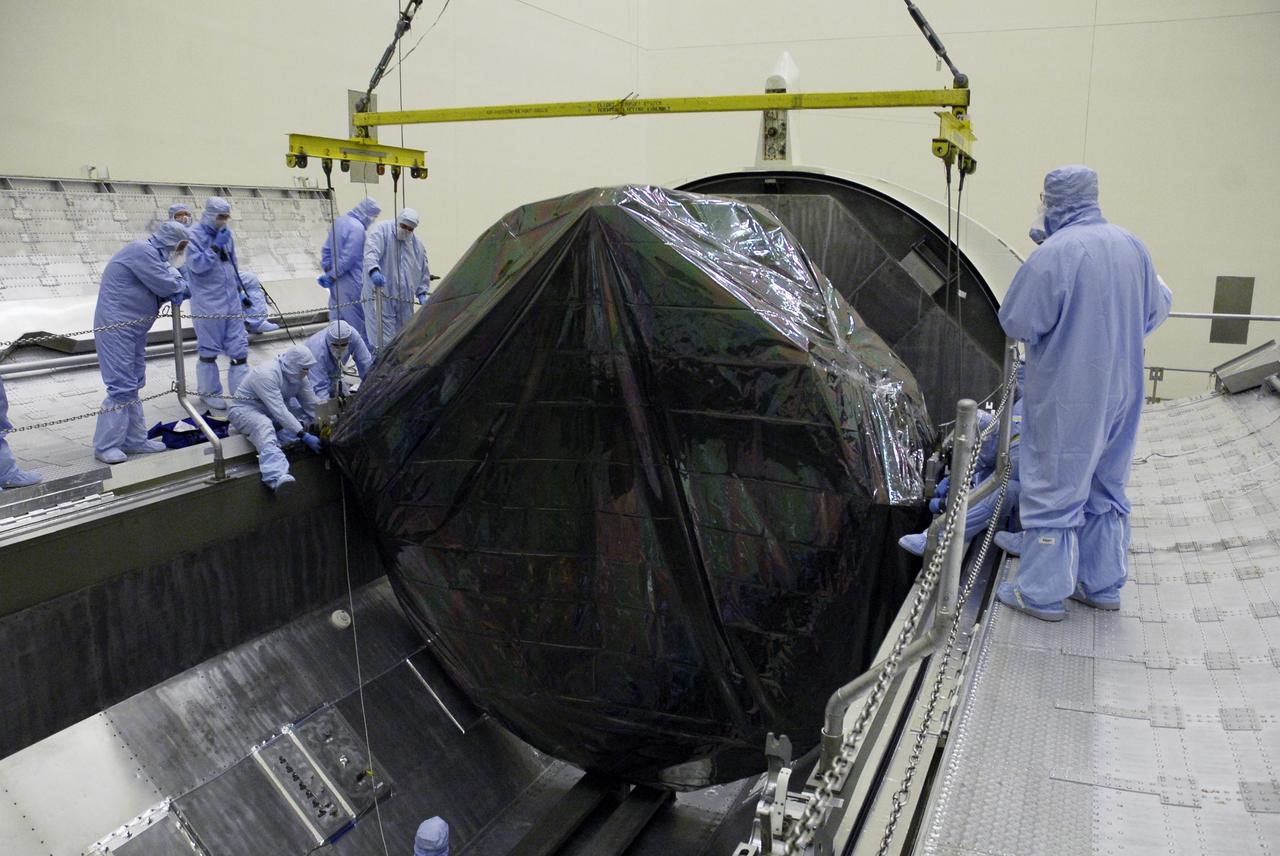
CAPE CANAVERAL, Fla. - In the Payload Hazardous Servicing Facility at NASA’s Kennedy Space Center, workers begin securing the Flight Support System carrier with the Soft Capture Mechanism in the payload canister. The canister will transfer the carrier to Launch Pad 39A. The carrier is one of four associated with the STS-125 mission to service the Hubble Space Telescope. At the pad, all the carriers will be loaded into space shuttle Atlantis’ payload bay. Launch of Atlantis is targeted for Oct. 10. Photo credit: NASA/Cory Huston
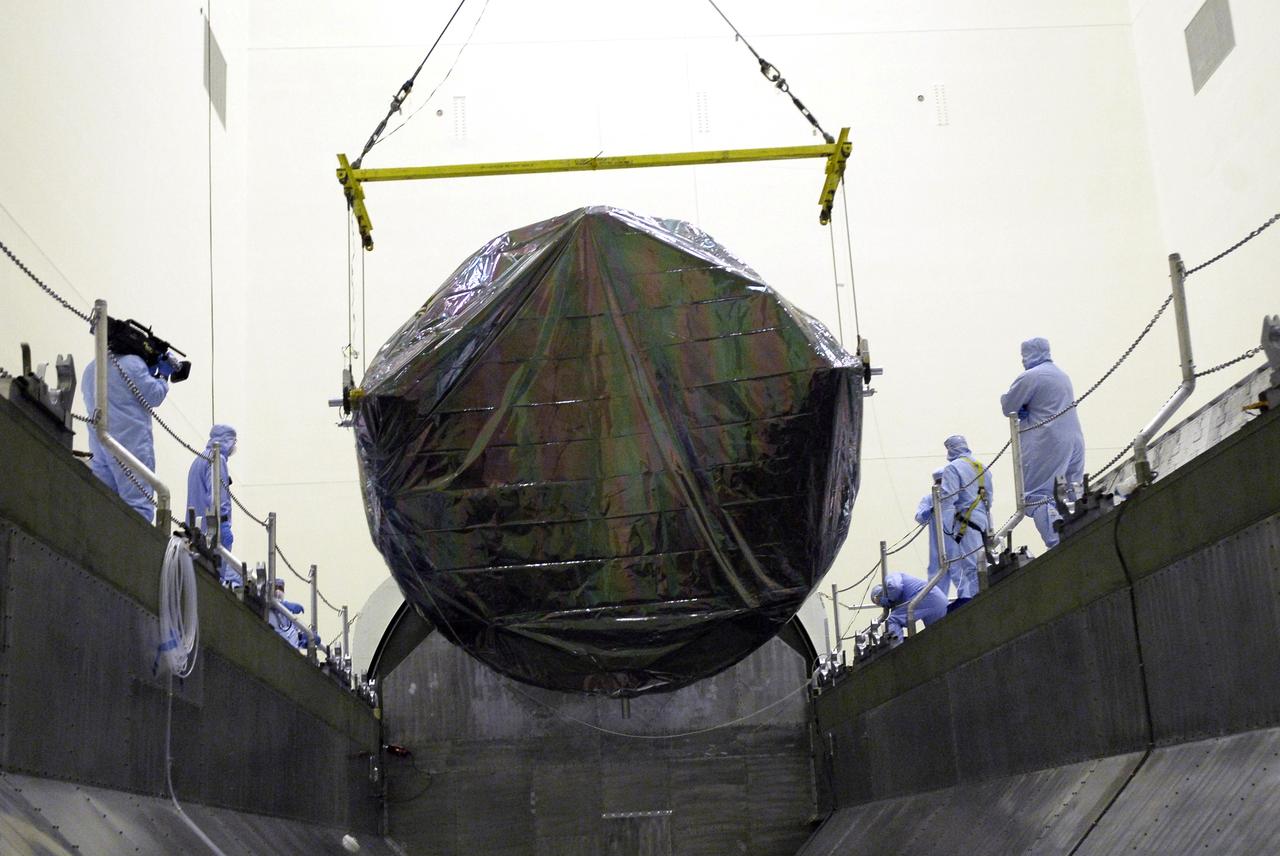
CAPE CANAVERAL, Fla. - In the Payload Hazardous Servicing Facility at NASA’s Kennedy Space Center, the overhead crane lowers the Flight Support System carrier with the Soft Capture Mechanism into the payload canister. The canister will transfer the carrier to Launch Pad 39A. The carrier is one of four associated with the STS-125 mission to service the Hubble Space Telescope. At the pad, all the carriers will be loaded into space shuttle Atlantis’ payload bay. Launch of Atlantis is targeted for Oct. 10. Photo credit: NASA/Cory Huston
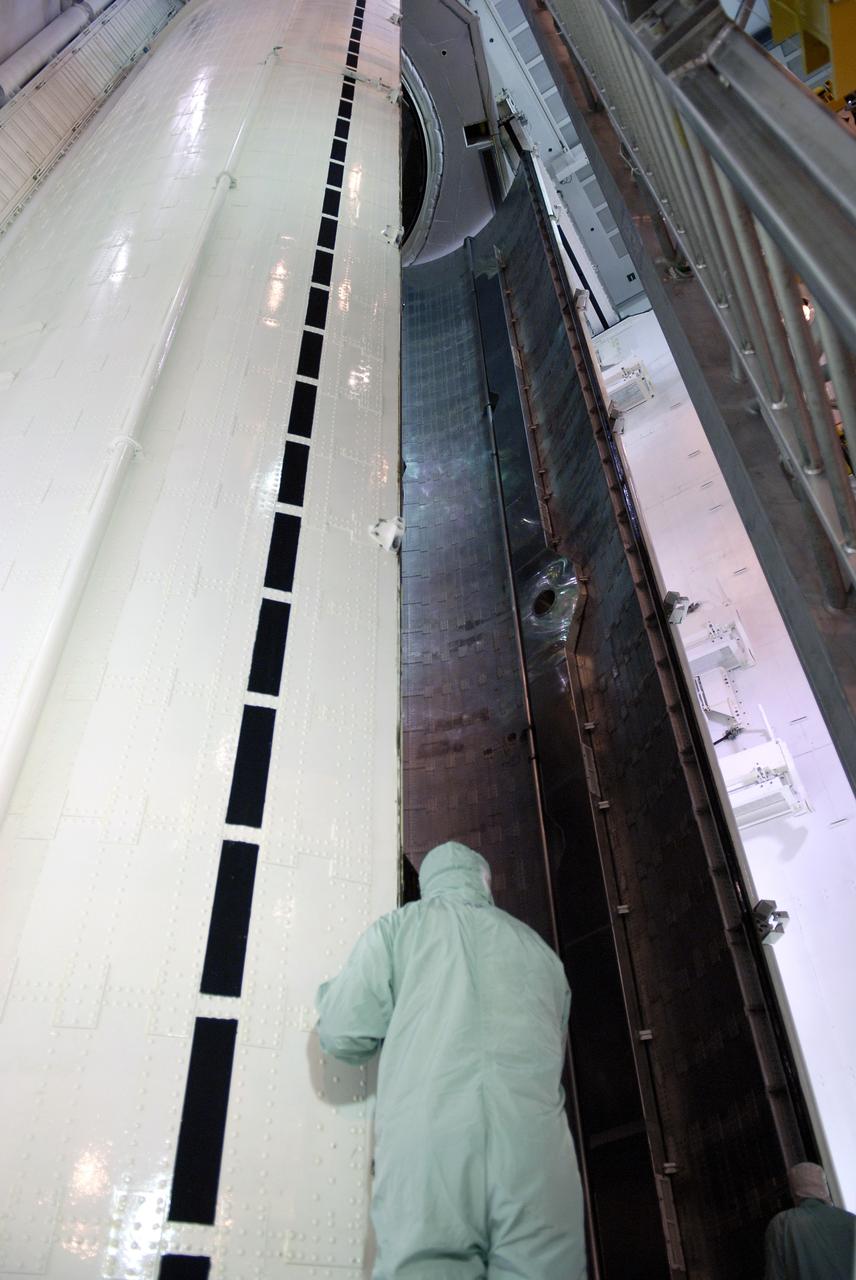
CAPE CANAVERAL, Fla. – On Launch Pad 39A on NASA's Kennedy Space Center in Florida, a worker oversees the closing of the doors on the payload canister. Space shuttle Atlantis’ HST payload for the STS-125 mission was moved from the shuttle into the canister. The payload comprises four carriers holding various equipment for the mission. The hardware will be transported back to Kennedy’s Payload Hazardous Servicing Facility where it will be stored until a new target launch date can be set for Atlantis’ STS-125 mission in 2009. Atlantis’ October target launch date was delayed after a device on board Hubble used in the storage and transmission of science data to Earth shut down on Sept. 27. Replacing the broken device will be added to Atlantis’ servicing mission to the telescope. Photo credit: NASA/Kim Shiflett
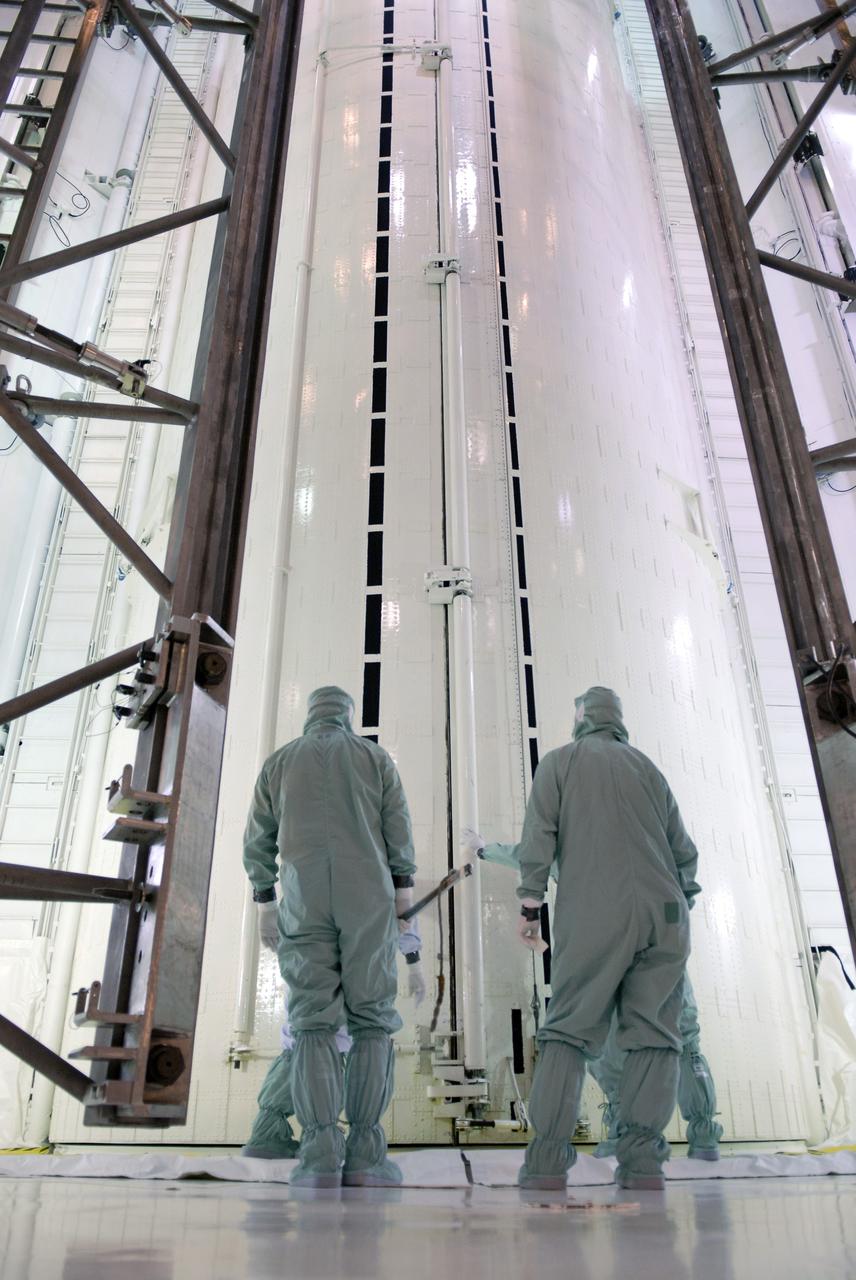
CAPE CANAVERAL, Fla. – On Launch Pad 39A on NASA's Kennedy Space Center in Florida, workers ensure the doors of the payload canister are closed. Space shuttle Atlantis’ HST payload for the STS-125 mission was moved from the shuttle into the canister. The payload comprises four carriers holding various equipment for the mission. The hardware will be transported back to Kennedy’s Payload Hazardous Servicing Facility where it will be stored until a new target launch date can be set for Atlantis’ STS-125 mission in 2009. Atlantis’ October target launch date was delayed after a device on board Hubble used in the storage and transmission of science data to Earth shut down on Sept. 27. Replacing the broken device will be added to Atlantis’ servicing mission to the telescope. Photo credit: NASA/Kim Shiflett
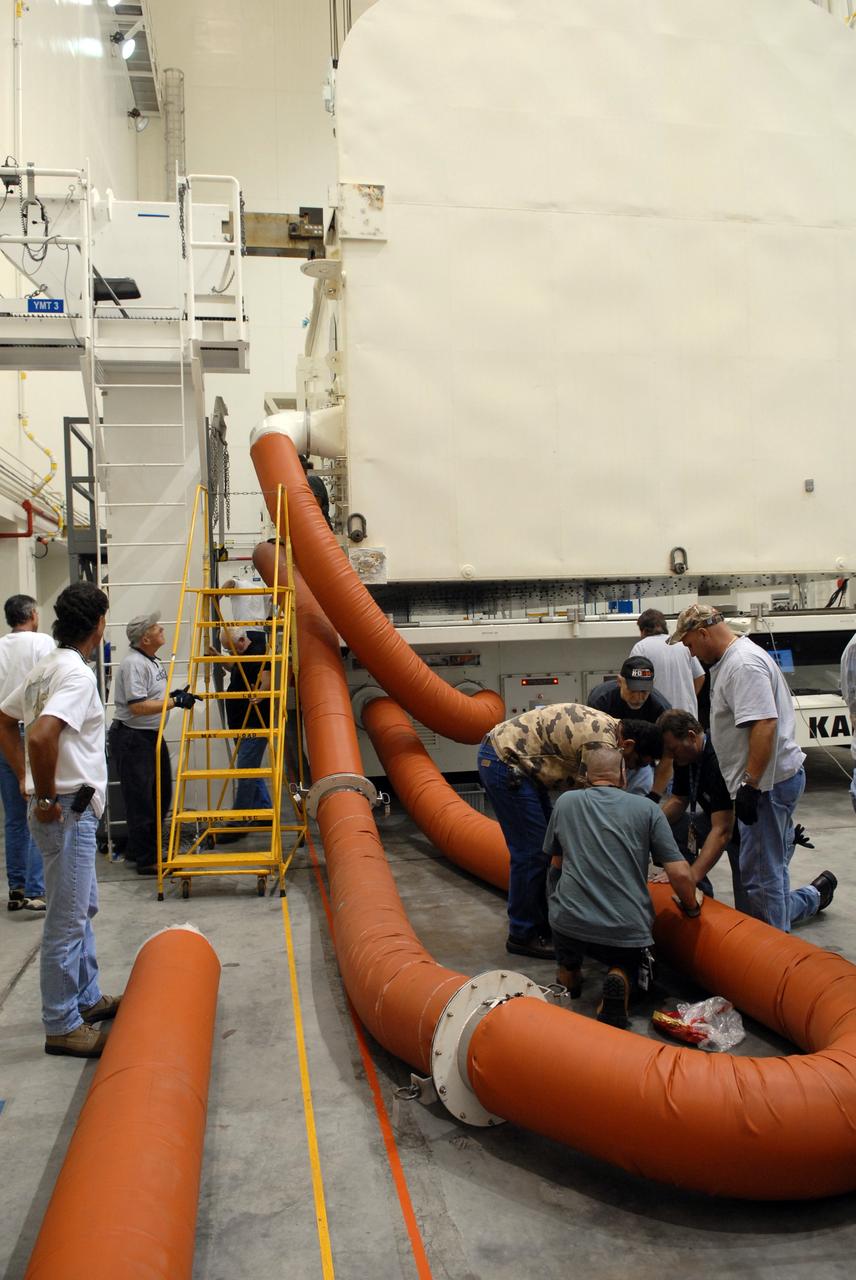
CAPE CANAVERAL, Fla. - At NASA's Kennedy Space Center, the payload canister is in the Canister Rotation Facility where it will be lifted to a vertical position. Workers check the umbilical lines that keep a controlled environment in the canister. The canister’s cargo consists of four carriers holding various equipment for the STS-125 mission aboard space shuttle Atlantis to service NASA’s Hubble Space Telescope. At the pad, the cargo will be moved into the Payload Changeout Room. The changeout room is the enclosed, environmentally controlled portion of the rotating service structure that supports cargo delivery to the pad and subsequent vertical installation into the shuttle’s payload bay. Launch of Atlantis is targeted for Oct. 10. Photo credit: NASA/Jack Pfaller
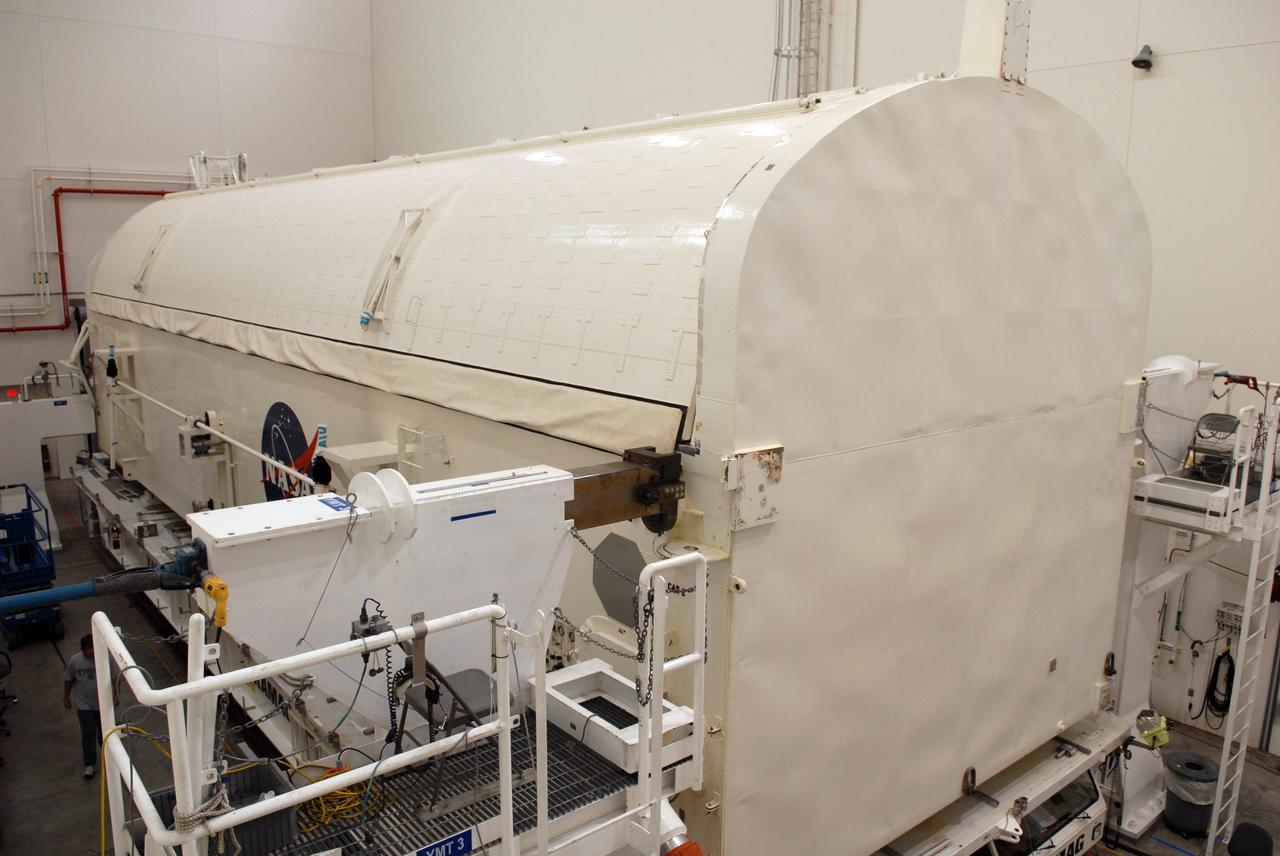
CAPE CANAVERAL, Fla. - At NASA's Kennedy Space Center, the payload canister is in the Canister Rotation Facility where it will be lifted to a vertical position. The canister transporter will then carry the canister and its cargo to Launch Pad 39A. The cargo consists of four carriers holding various equipment for the STS-125 mission aboard space shuttle Atlantis to service NASA’s Hubble Space Telescope. At the pad, the cargo will be moved into the Payload Changeout Room. The changeout room is the enclosed, environmentally controlled portion of the rotating service structure that supports cargo delivery to the pad and subsequent vertical installation into the shuttle’s payload bay. Launch of Atlantis is targeted for Oct. 10. Photo credit: NASA/Jack Pfaller
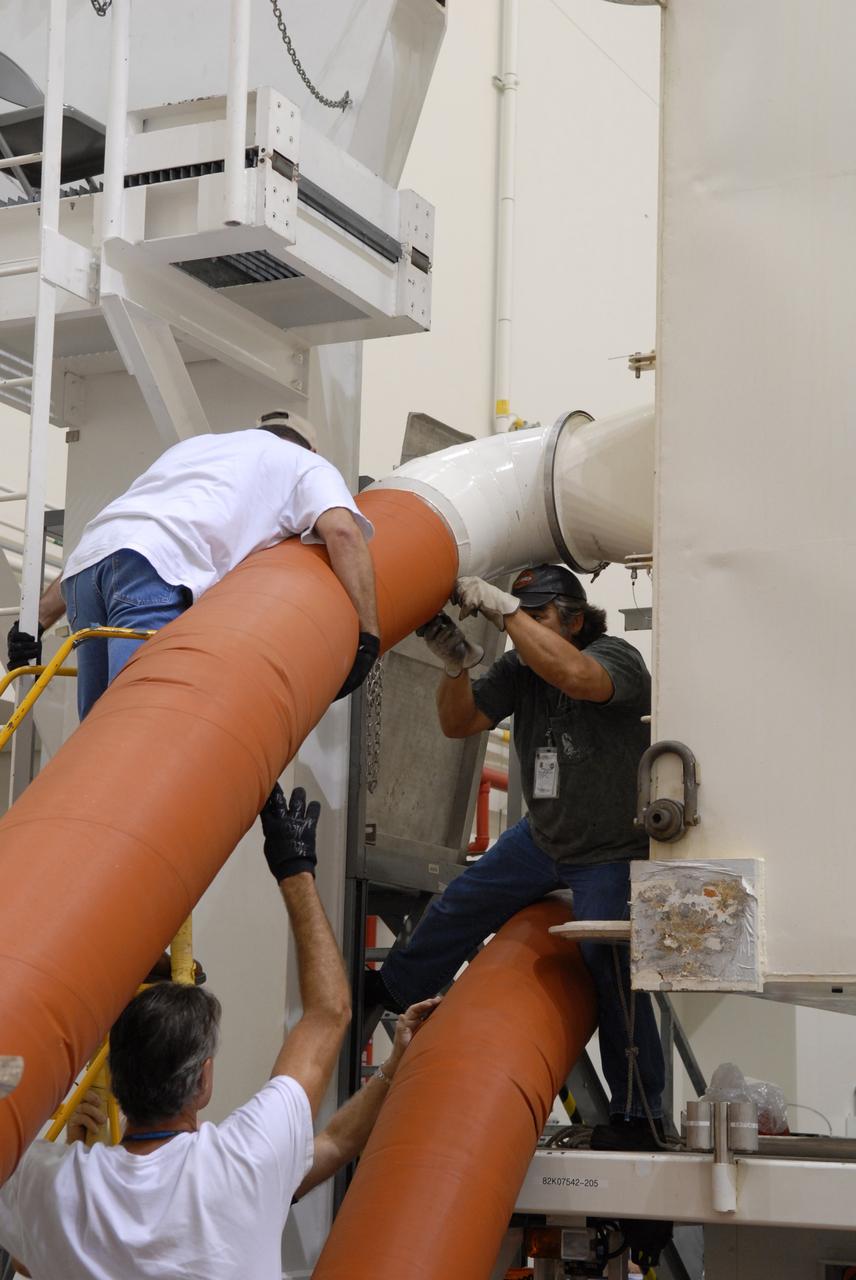
CAPE CANAVERAL, Fla. - In the Canister Rotation Facility at NASA's Kennedy Space Center, workers check the umbilical lines that keep a controlled environment in the payload canister. The canister will be lifted to a vertical position for the trip to Launch Pad 39A. The canister’s cargo consists of four carriers holding various equipment for the STS-125 mission aboard space shuttle Atlantis to service NASA’s Hubble Space Telescope. At the pad, the cargo will be moved into the Payload Changeout Room. The changeout room is the enclosed, environmentally controlled portion of the rotating service structure that supports cargo delivery to the pad and subsequent vertical installation into the shuttle’s payload bay. Launch of Atlantis is targeted for Oct. 10. Photo credit: NASA/Jack Pfaller
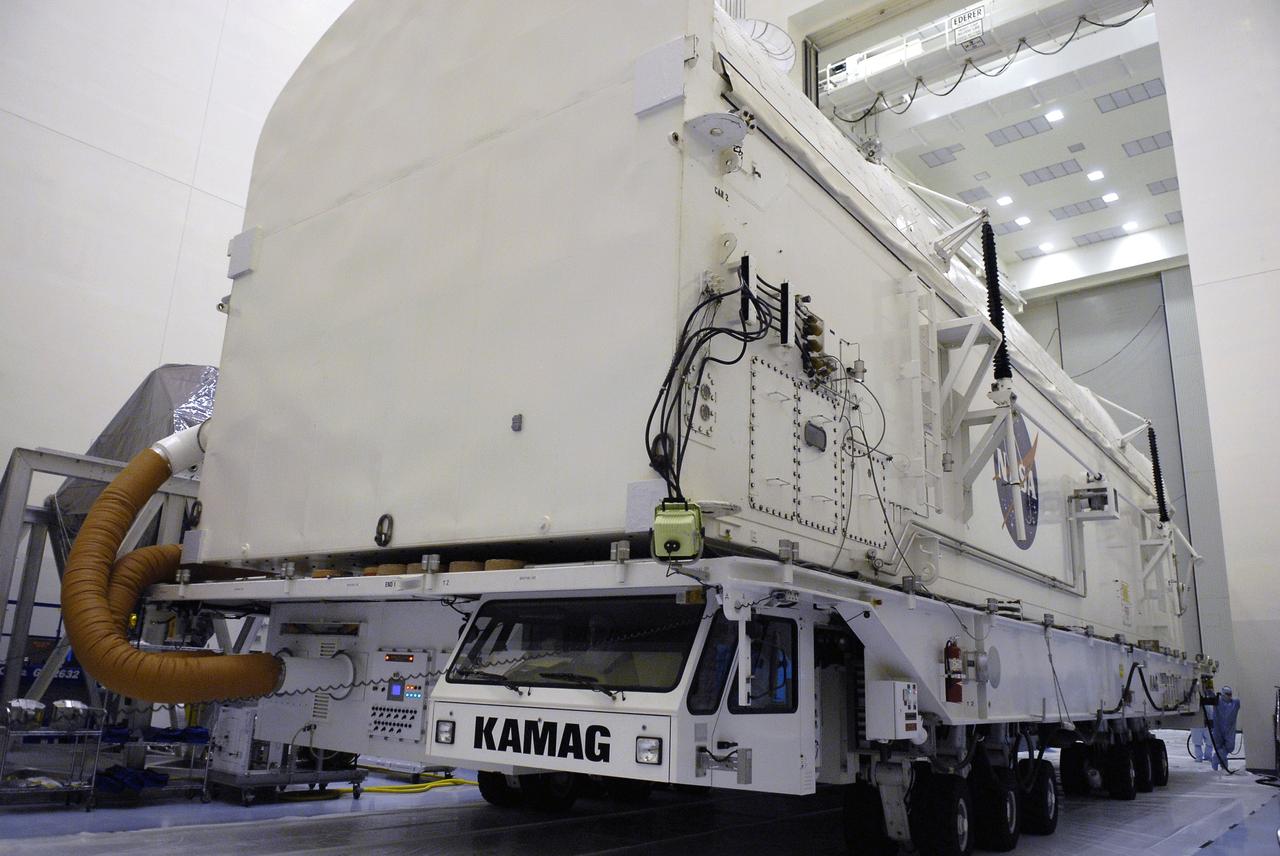
CAPE CANAVERAL, Fla. – At NASA's Kennedy Space Center in Florida, the payload canister rolls into the clean-room environment of the Payload Hazardous Servicing Facility for the loading of Hubble hardware and equipment. The canister will deliver its cargo to Launch Pad 39A where it will be transferred to space shuttle Atlantis. Atlantis is targeted to launch May 12 on the STS-125 mission to service the Hubble Space Telescope. Photo credit: NASA/Kim Shiflett
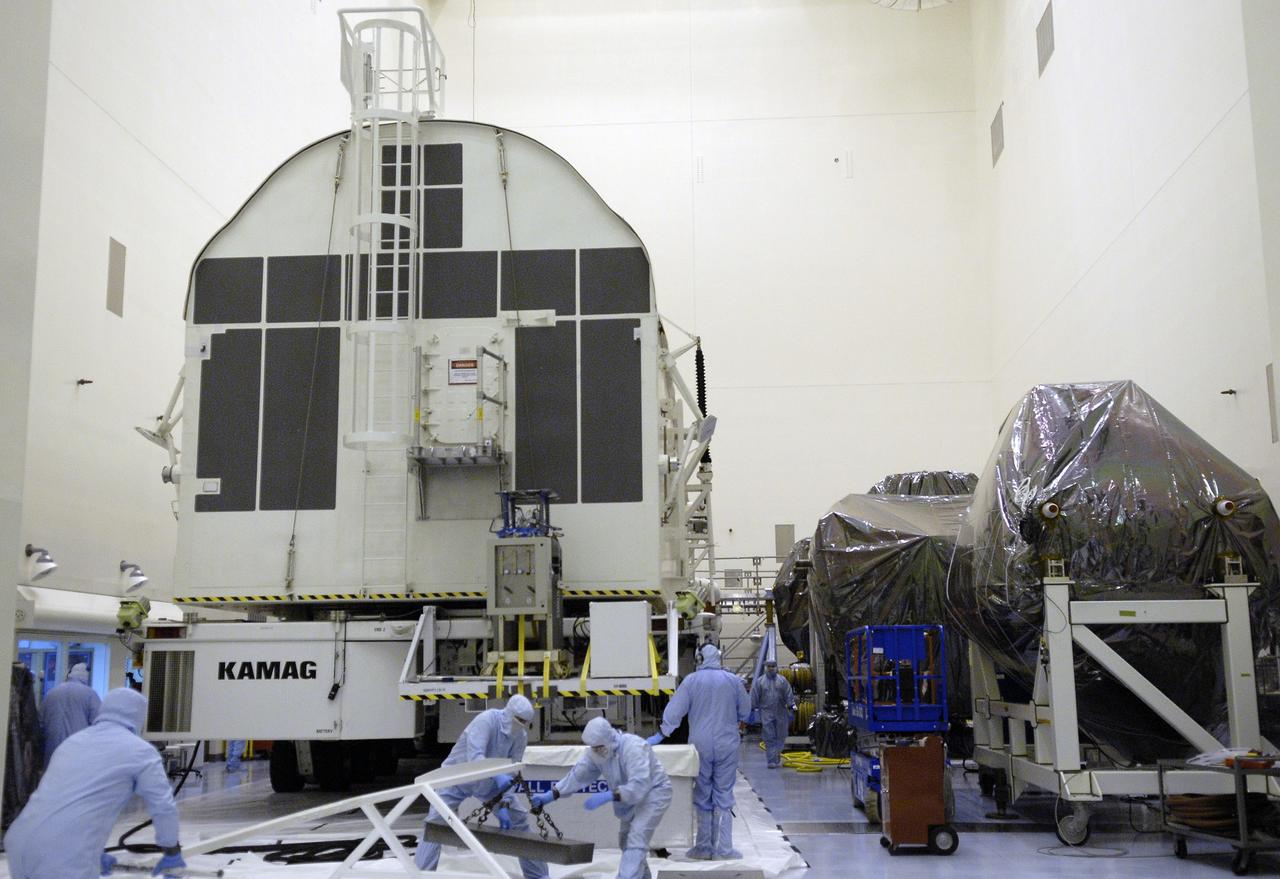
CAPE CANAVERAL, Fla. – At NASA's Kennedy Space Center in Florida, the payload canister has rolled into the clean-room environment of the Payload Hazardous Servicing Facility for the loading of Hubble hardware and equipment. The canister will deliver its cargo to Launch Pad 39A where it will be transferred to space shuttle Atlantis. Atlantis is targeted to launch May 12 on the STS-125 mission to service the Hubble Space Telescope. Photo credit: NASA/Kim Shiflett
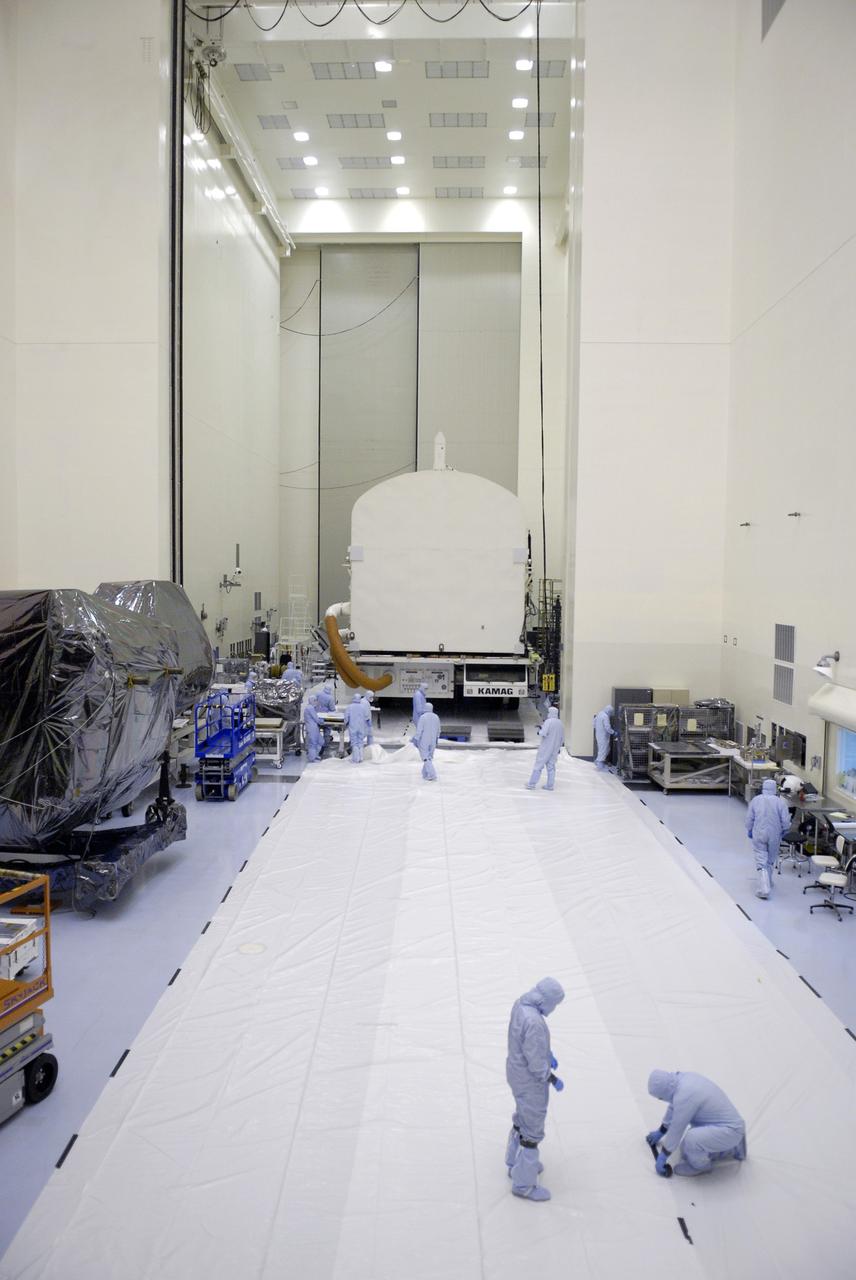
CAPE CANAVERAL, Fla. – At NASA's Kennedy Space Center in Florida, the payload canister is ready to roll into the clean-room environment of the Payload Hazardous Servicing Facility for the loading of Hubble hardware and equipment. The canister will deliver its cargo to Launch Pad 39A where it will be transferred to space shuttle Atlantis. Atlantis is targeted to launch May 12 on the STS-125 mission to service the Hubble Space Telescope. Photo credit: NASA/Kim Shiflett
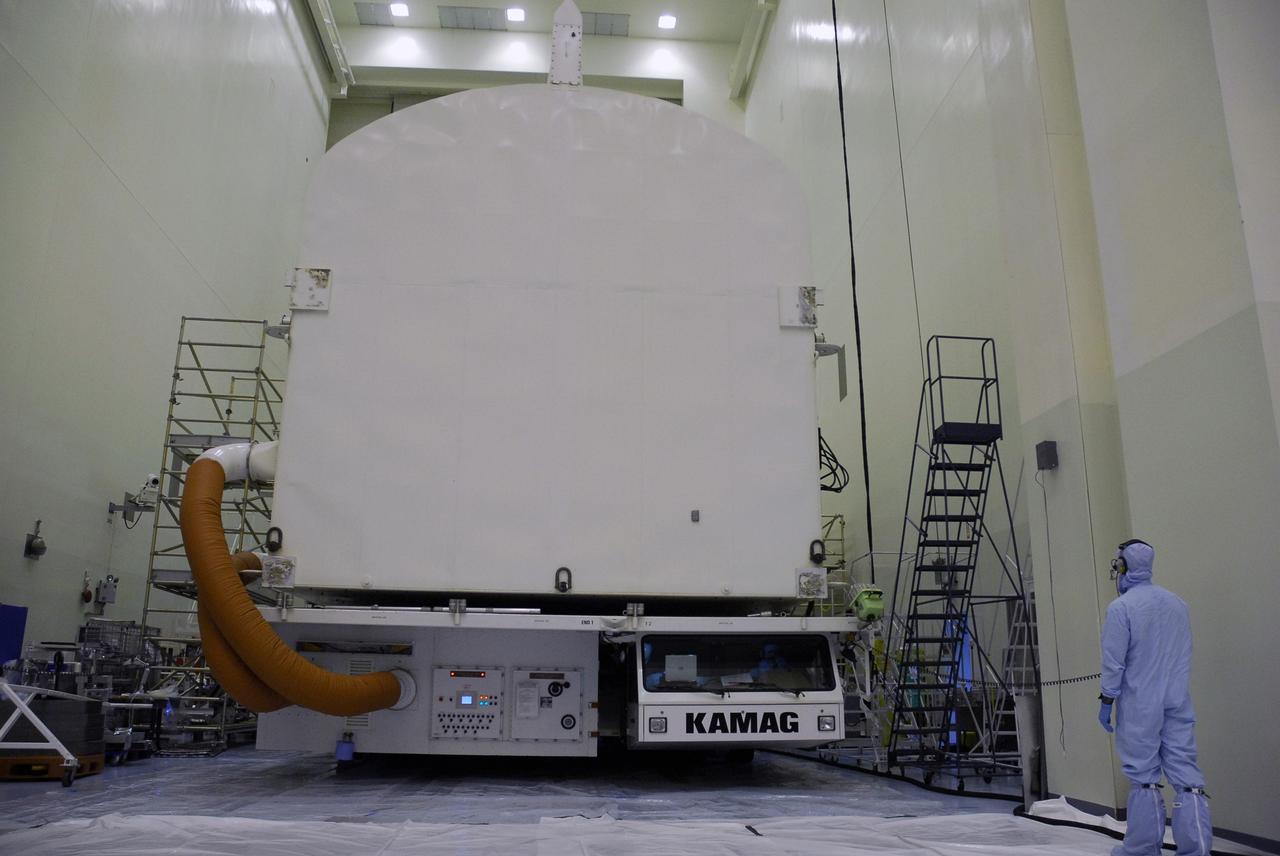
CAPE CANAVERAL, Fla. - The payload canister moves back into the environmentally controlled high bay of the Payload Hazardous Servicing Facility at NASA's Kennedy Space Center. The canister was moved out of the high bay during contamination of the Super Lightweight Integration Carrier, one of four associated with the STS-125 mission to service the Hubble Space Telescope. It will be installed in the payload canister for transfer to Launch Pad 39A. At the pad, all the carriers will be loaded into space shuttle Atlantis’ payload bay. Launch of Atlantis is targeted for Oct. 10. Photo credit: NASA/Jack Pfaller
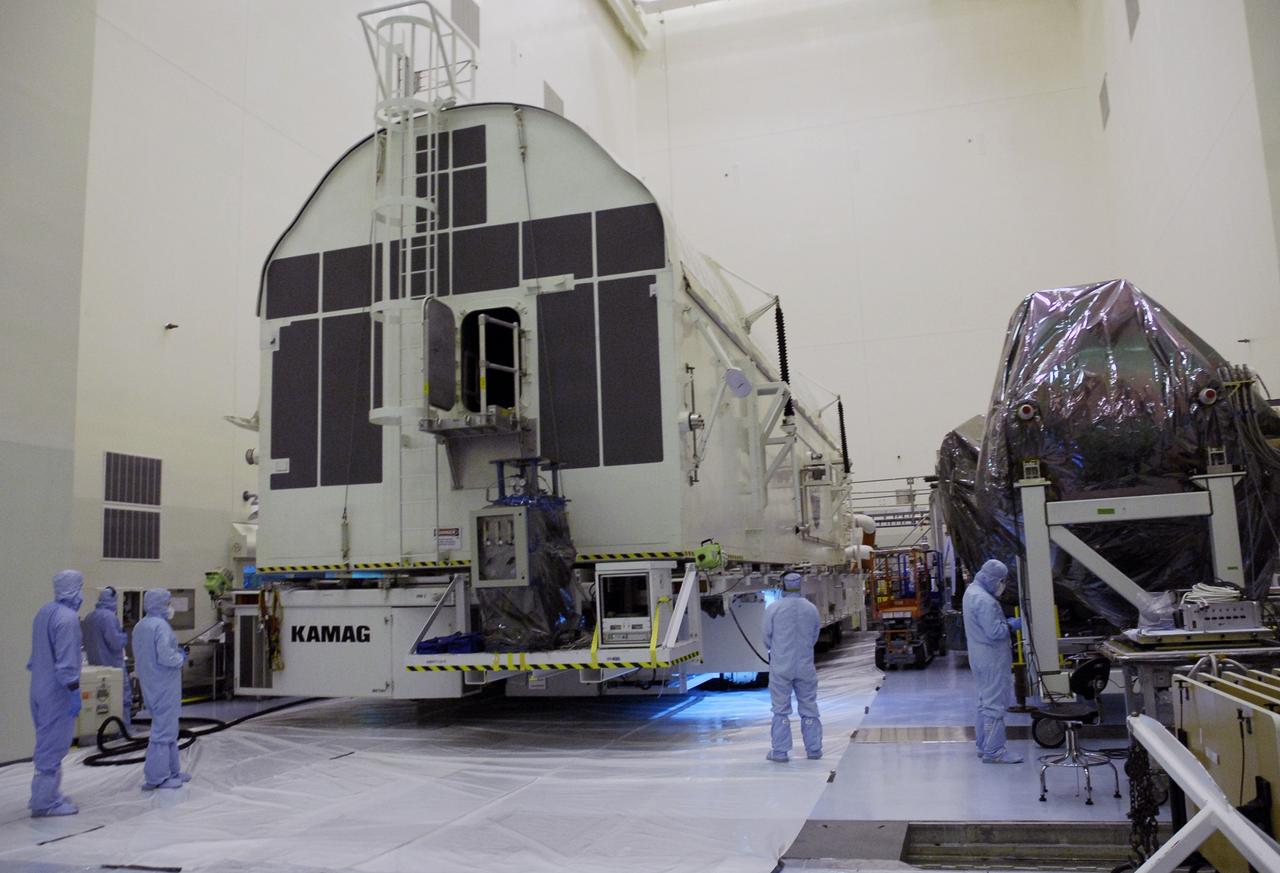
CAPE CANAVERAL, Fla. - The payload canister moves back into the environmentally controlled high bay of the Payload Hazardous Servicing Facility at NASA's Kennedy Space Center. The canister was moved out of the high bay during contamination of the Super Lightweight Integration Carrier, one of four associated with the STS-125 mission to service the Hubble Space Telescope. The carriers are being installed in the payload canister for transfer to Launch Pad 39A. At the pad, all the carriers will be loaded into space shuttle Atlantis’ payload bay. Launch of Atlantis is targeted for Oct. 10. Photo credit: NASA/Jack Pfaller
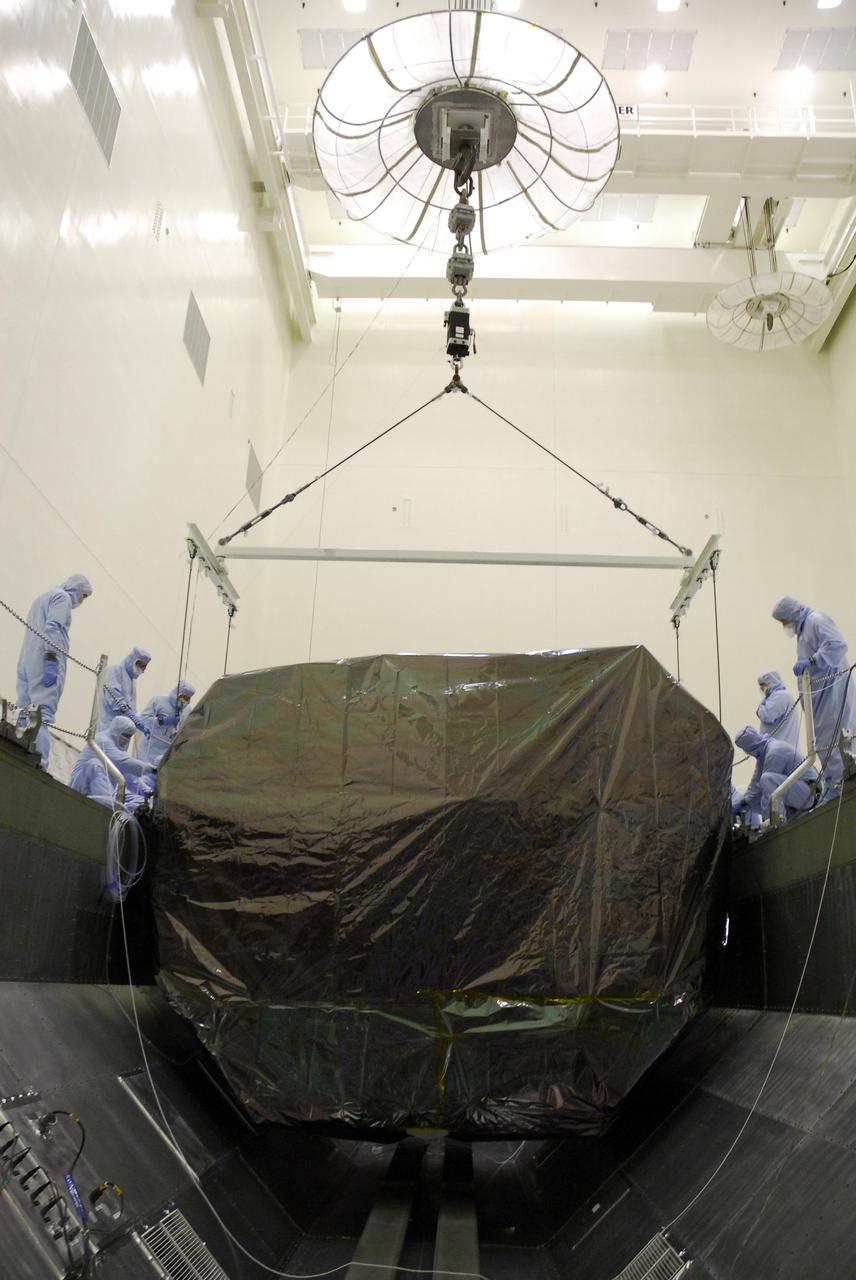
CAPE CANAVERAL, Fla. - In the Payload Hazardous Servicing Facility at NASA's Kennedy Space Center, an overhead crane lowers the Orbital Replacement Unit Carrier, or ORUC, into the payload canister. It is being placed next to the Flight Support System carrier already in the canister. The carrier is one of four associated with the STS-125 mission to service the Hubble Space Telescope. It will be installed in the payload canister for transfer to Launch Pad 39A. At the pad, all the carriers will be loaded into space shuttle Atlantis’ payload bay. Launch of Atlantis is targeted for Oct. 10. Photo credit: NASA/Jack Pfaller
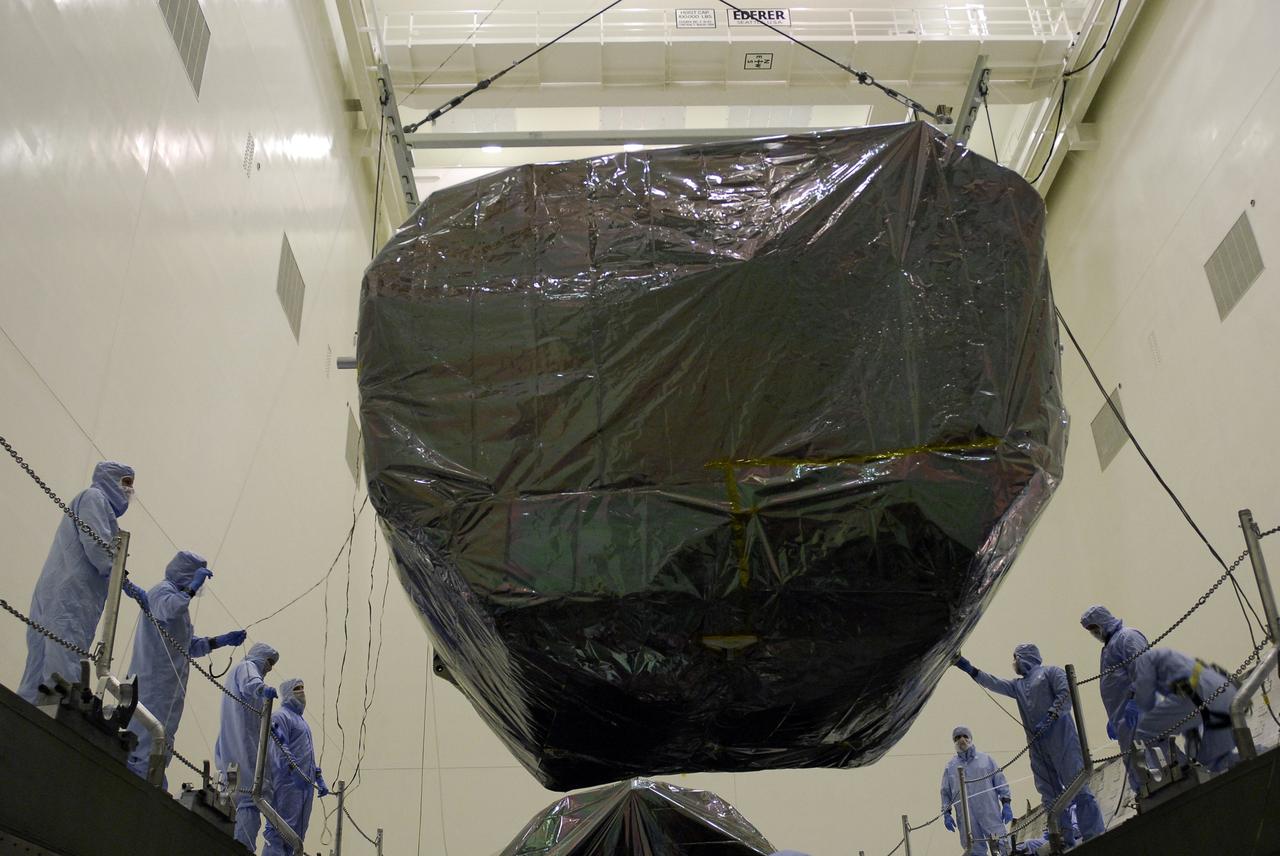
CAPE CANAVERAL, Fla. - In the Payload Hazardous Servicing Facility at NASA's Kennedy Space Center, an overhead crane lowers the Orbital Replacement Unit Carrier, or ORUC, into the payload canister. It will be placed next to the Flight Support System carrier already in the canister. The carrier is one of four associated with the STS-125 mission to service the Hubble Space Telescope. It will be installed in the payload canister for transfer to Launch Pad 39A. At the pad, all the carriers will be loaded into space shuttle Atlantis’ payload bay. Launch of Atlantis is targeted for Oct. 10. Photo credit: NASA/Jack Pfaller
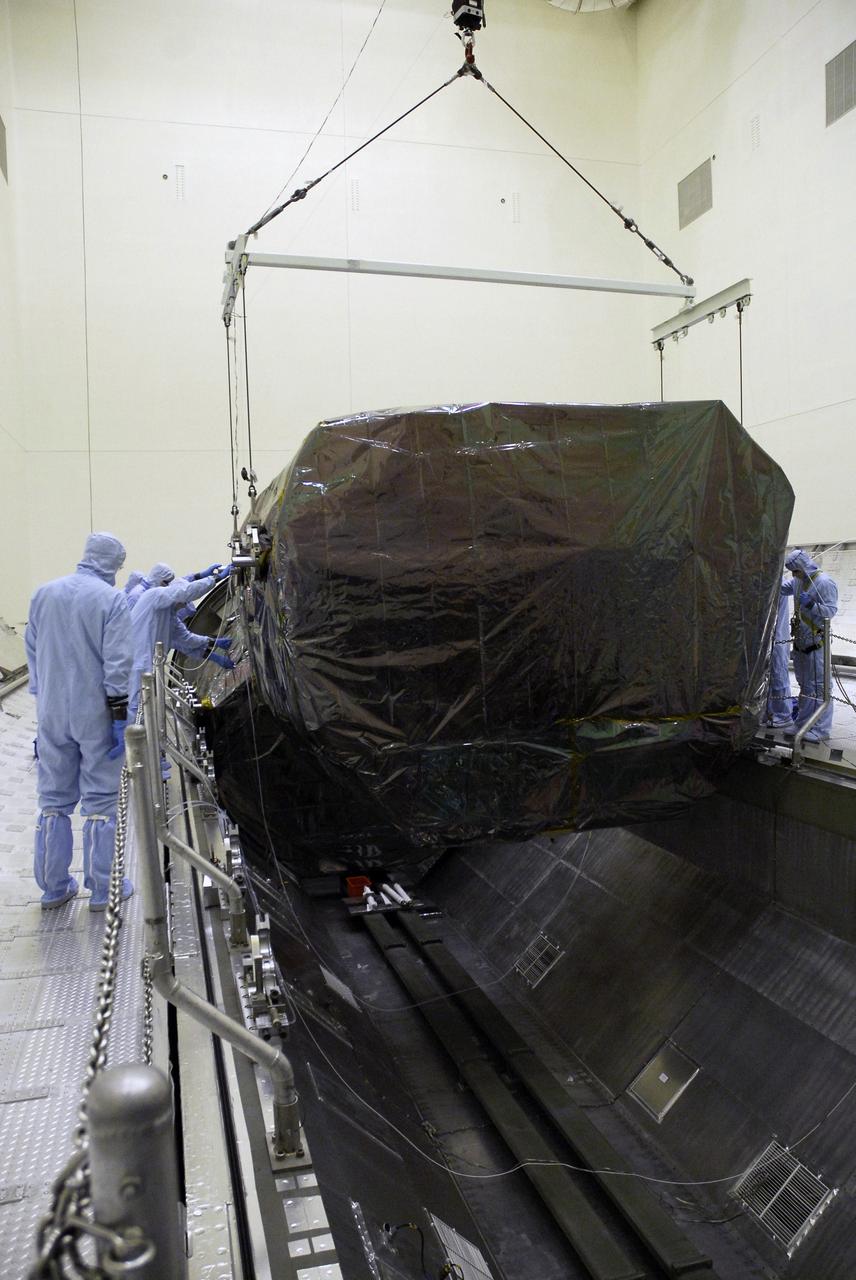
CAPE CANAVERAL, Fla. - In the Payload Hazardous Servicing Facility at NASA's Kennedy Space Center, an overhead crane lowers the Orbital Replacement Unit Carrier, or ORUC, into the payload canister. It is being placed next to the Flight Support System carrier already in the canister. The carrier is one of four associated with the STS-125 mission to service the Hubble Space Telescope. It will be installed in the payload canister for transfer to Launch Pad 39A. At the pad, all the carriers will be loaded into space shuttle Atlantis’ payload bay. Launch of Atlantis is targeted for Oct. 10. Photo credit: NASA/Jack Pfaller

CAPE CANAVERAL, Fla. - In the Payload Hazardous Servicing Facility at NASA’s Kennedy Space Center, the Multi-Use Logistic Equipment, or MULE, carrier is lowered into the payload canister. It is being placed next to the Flight Support System carrier already in the canister. The MULE is one of four associated with the STS-125 mission to service the Hubble Space Telescope. It will be installed in the payload canister for transfer to Launch Pad 39A. At the pad, all the carriers will be loaded into space shuttle Atlantis’ payload bay. Launch of Atlantis is targeted for Oct. 10. Photo credit: NASA/Jack Pfaller
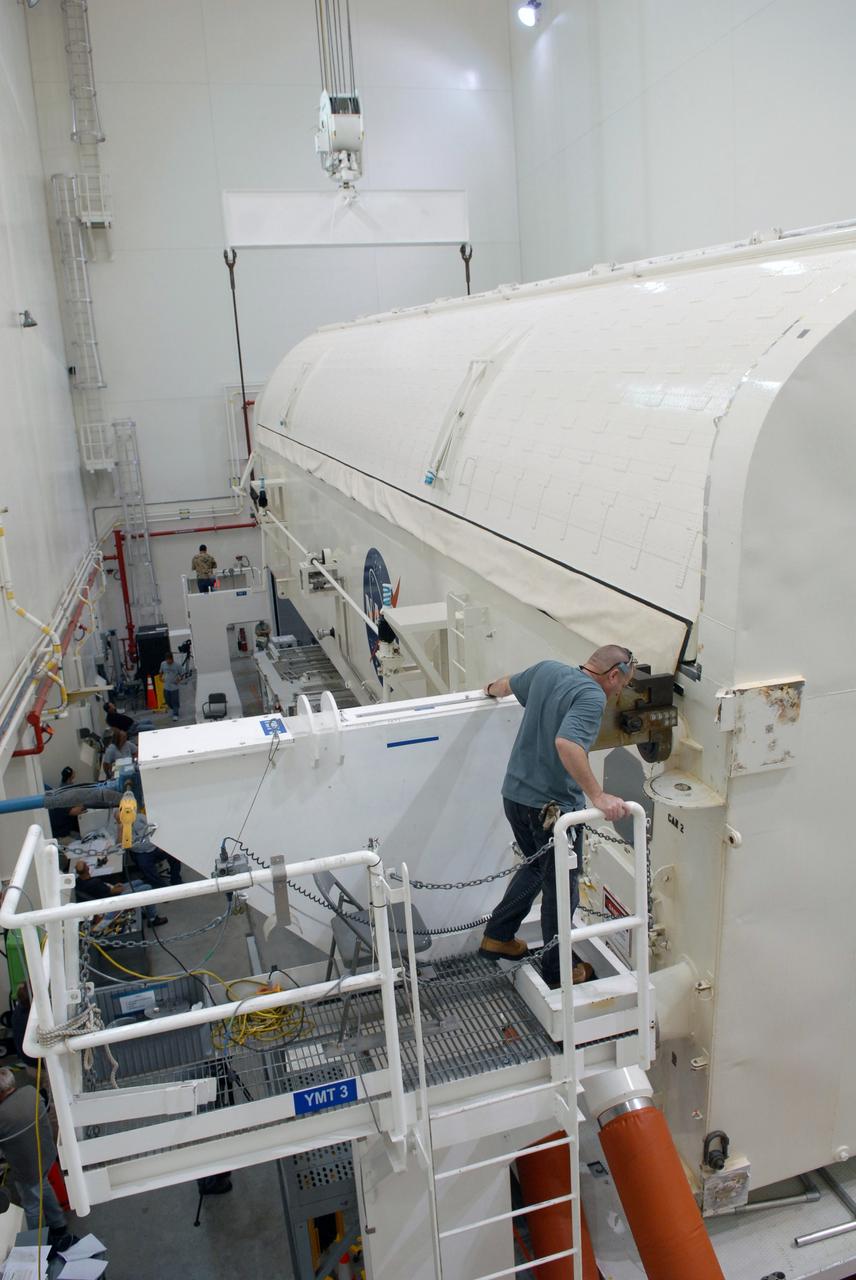
CAPE CANAVERAL, Fla. - In the Canister Rotation Facility at NASA's Kennedy Space Center, workers get ready to lift the payload canister to a vertical position for the trip to Launch Pad 39A. The canister’s cargo consists of four carriers holding various equipment for the STS-125 mission aboard space shuttle Atlantis to service NASA’s Hubble Space Telescope. At the pad, the cargo will be moved into the Payload Changeout Room. The changeout room is the enclosed, environmentally controlled portion of the rotating service structure that supports cargo delivery to the pad and subsequent vertical installation into the shuttle’s payload bay. Launch of Atlantis is targeted for Oct. 10. Photo credit: NASA/Jack Pfaller
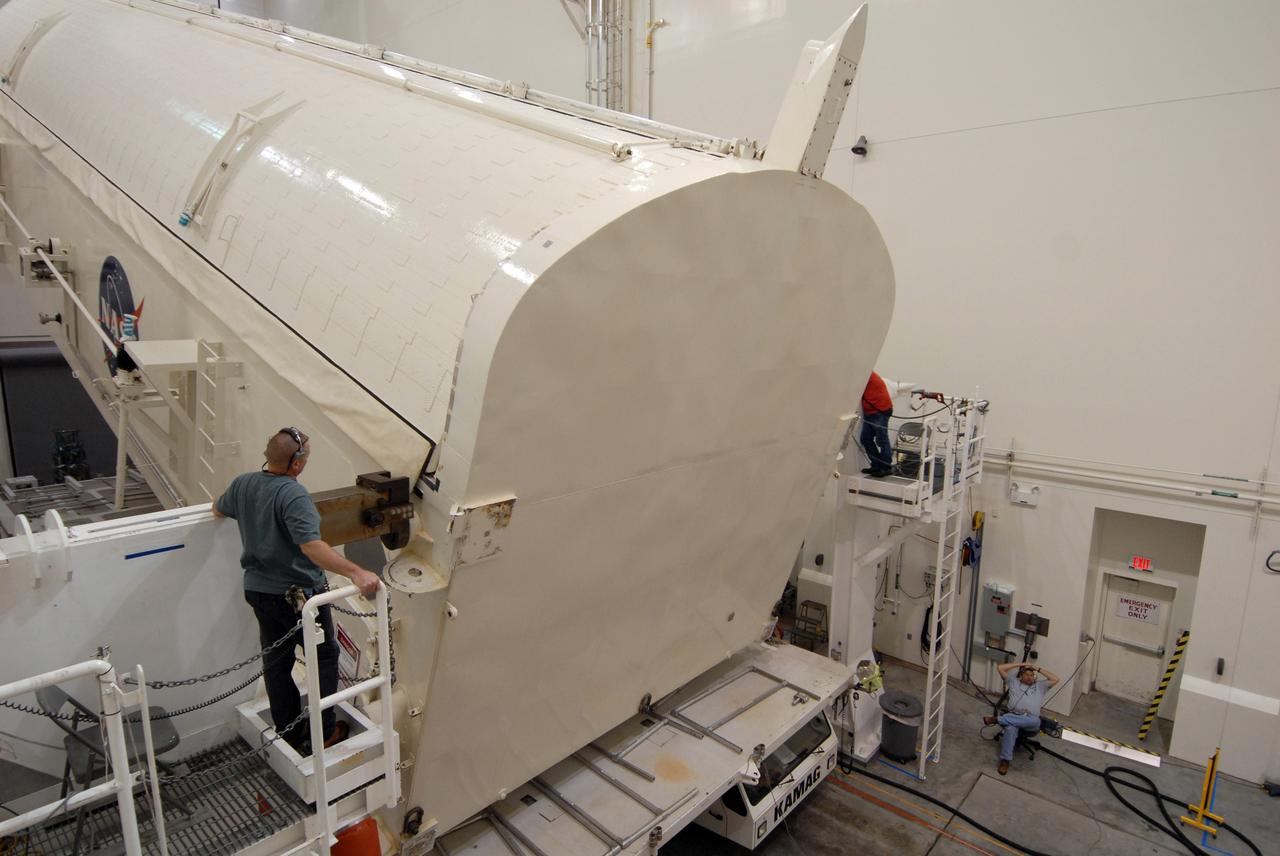
CAPE CANAVERAL, Fla. - In the Canister Rotation Facility at NASA's Kennedy Space Center, the payload canister is lifted toward a vertical position for the trip to Launch Pad 39A. The canister’s cargo consists of four carriers holding various equipment for the STS-125 mission aboard space shuttle Atlantis to service NASA’s Hubble Space Telescope. At the pad, the cargo will be moved into the Payload Changeout Room. The changeout room is the enclosed, environmentally controlled portion of the rotating service structure that supports cargo delivery to the pad and subsequent vertical installation into the shuttle’s payload bay. Launch of Atlantis is targeted for Oct. 10. Photo credit: NASA/Jack Pfaller
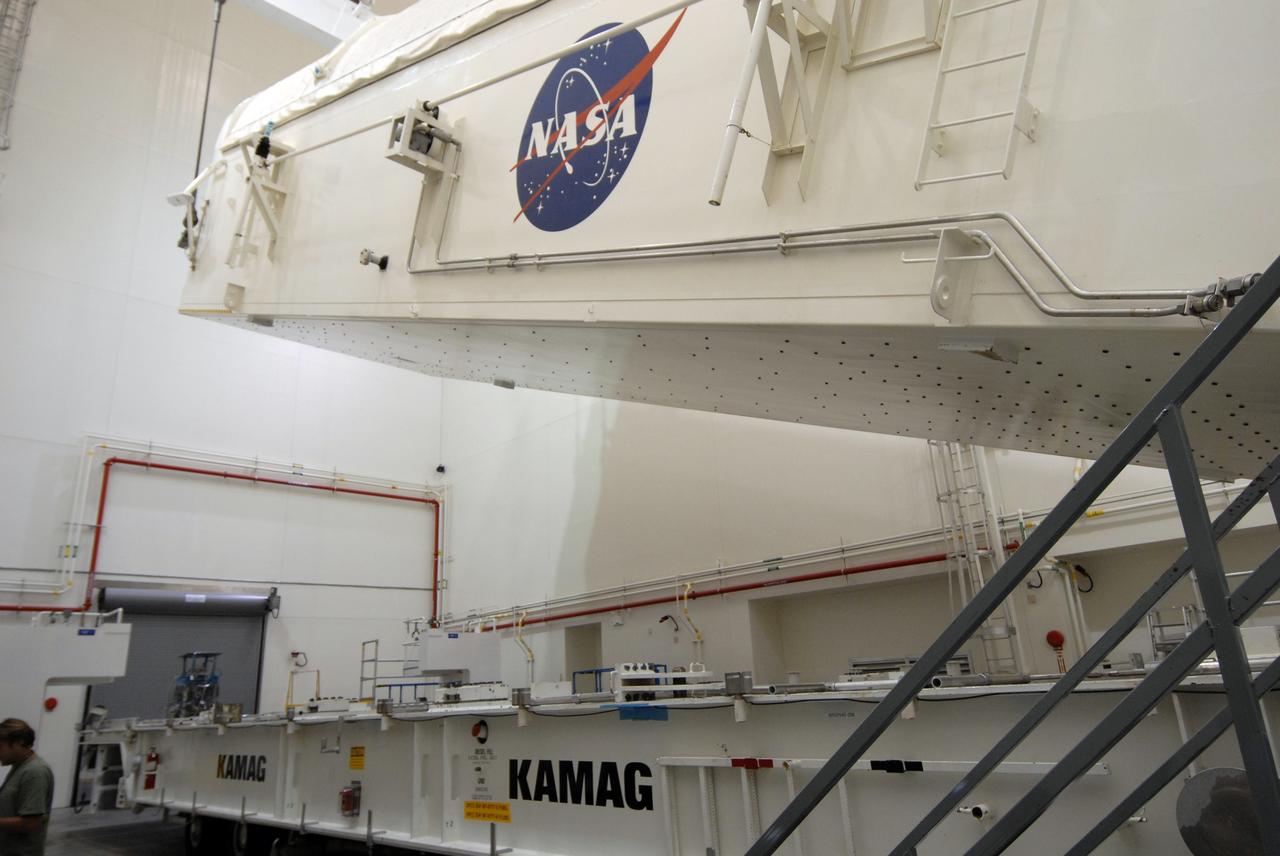
CAPE CANAVERAL, Fla. - In the Canister Rotation Facility at NASA's Kennedy Space Center, the payload canister is lifted toward a vertical position for the trip to Launch Pad 39A. The canister’s cargo consists of four carriers holding various equipment for the STS-125 mission aboard space shuttle Atlantis to service NASA’s Hubble Space Telescope. At the pad, the cargo will be moved into the Payload Changeout Room. The changeout room is the enclosed, environmentally controlled portion of the rotating service structure that supports cargo delivery to the pad and subsequent vertical installation into the shuttle’s payload bay. Launch of Atlantis is targeted for Oct. 10. Photo credit: NASA/Jack Pfaller
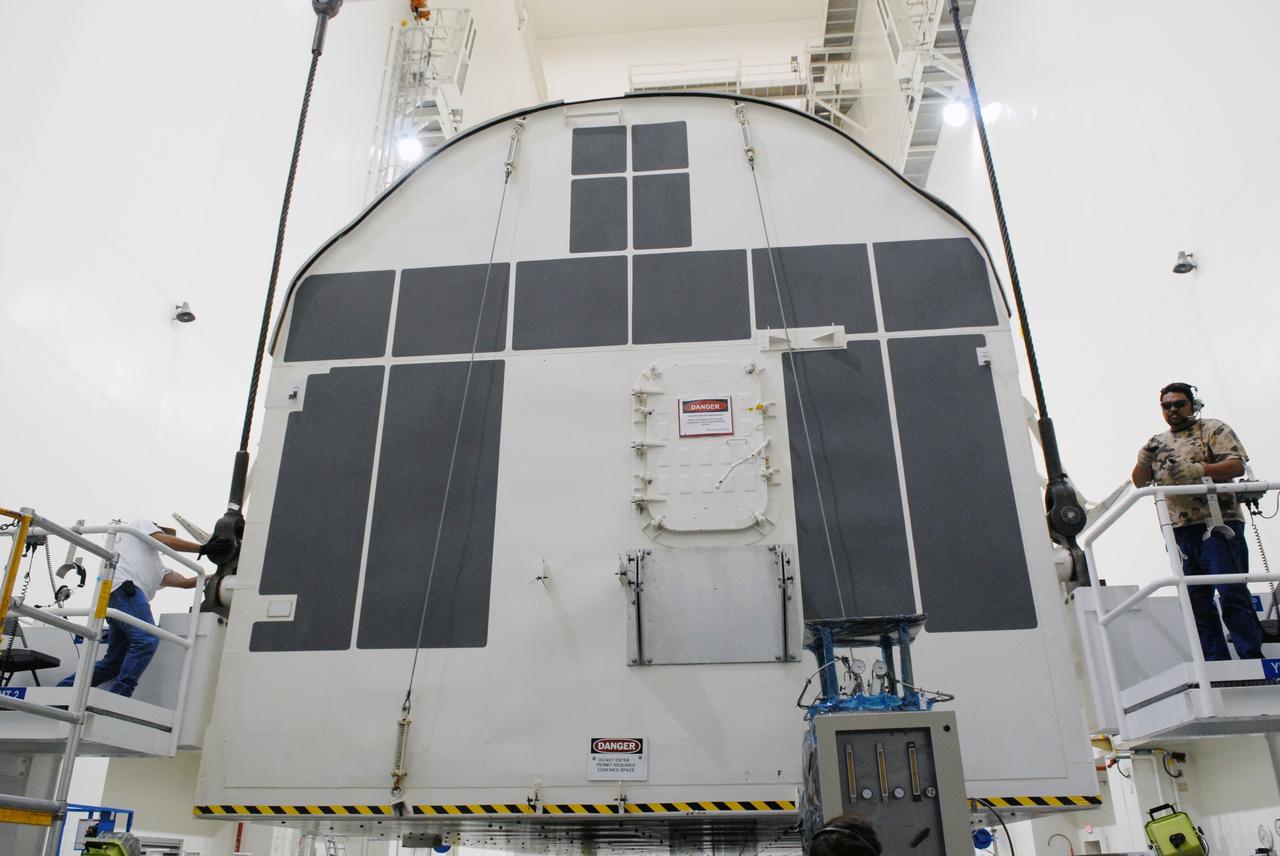
CAPE CANAVERAL, Fla. - In the Canister Rotation Facility at NASA's Kennedy Space Center, workers check cable fittings that will lift the payload canister to a vertical position for the trip to Launch Pad 39A. The canister’s cargo consists of four carriers holding various equipment for the STS-125 mission aboard space shuttle Atlantis to service NASA’s Hubble Space Telescope. At the pad, the cargo will be moved into the Payload Changeout Room. The changeout room is the enclosed, environmentally controlled portion of the rotating service structure that supports cargo delivery to the pad and subsequent vertical installation into the shuttle’s payload bay. Launch of Atlantis is targeted for Oct. 10. Photo credit: NASA/Jack Pfaller
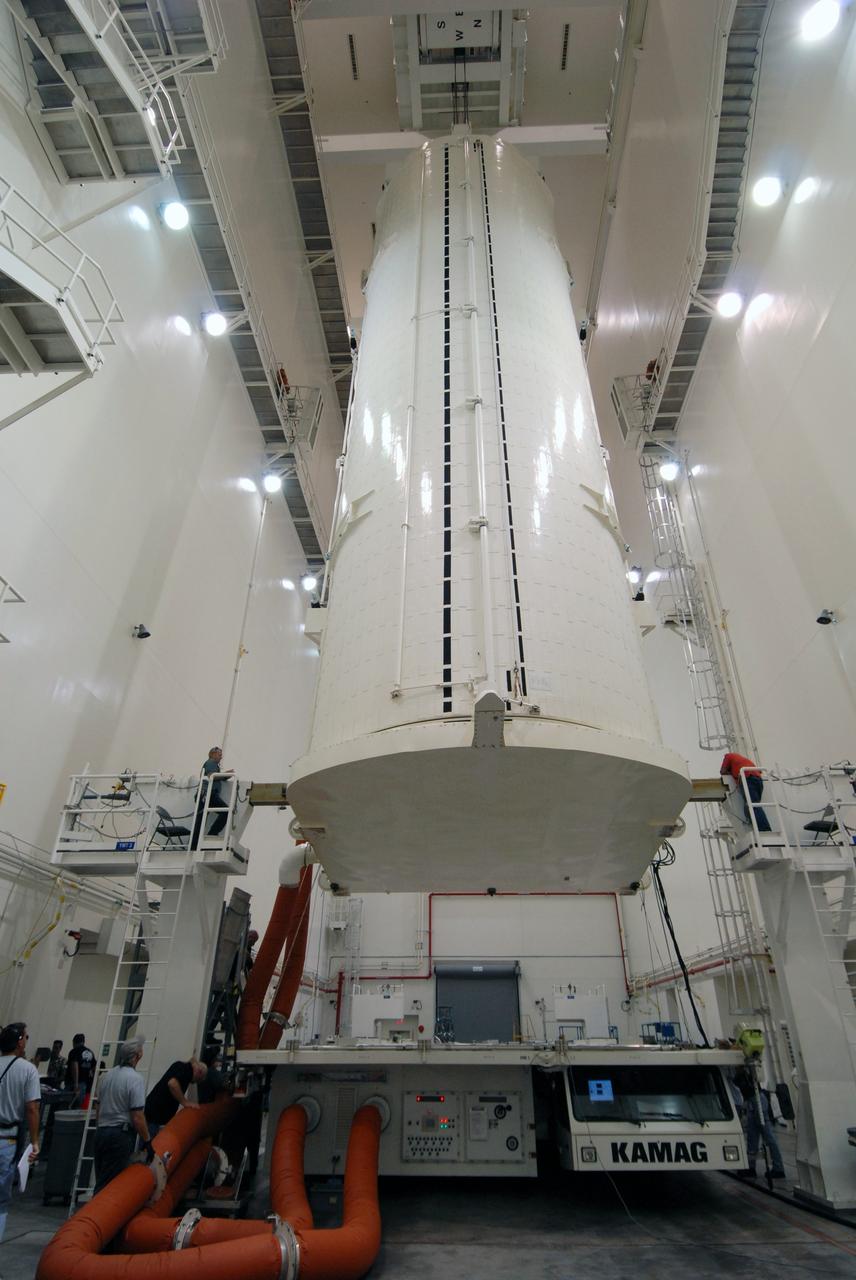
CAPE CANAVERAL, Fla. - In the Canister Rotation Facility at NASA's Kennedy Space Center, the payload canister is lifted to a vertical position for the trip to Launch Pad 39A. The canister’s cargo consists of four carriers holding various equipment for the STS-125 mission aboard space shuttle Atlantis to service NASA’s Hubble Space Telescope. At the pad, the cargo will be moved into the Payload Changeout Room. The changeout room is the enclosed, environmentally controlled portion of the rotating service structure that supports cargo delivery to the pad and subsequent vertical installation into the shuttle’s payload bay. Launch of Atlantis is targeted for Oct. 10. Photo credit: NASA/Jack Pfaller
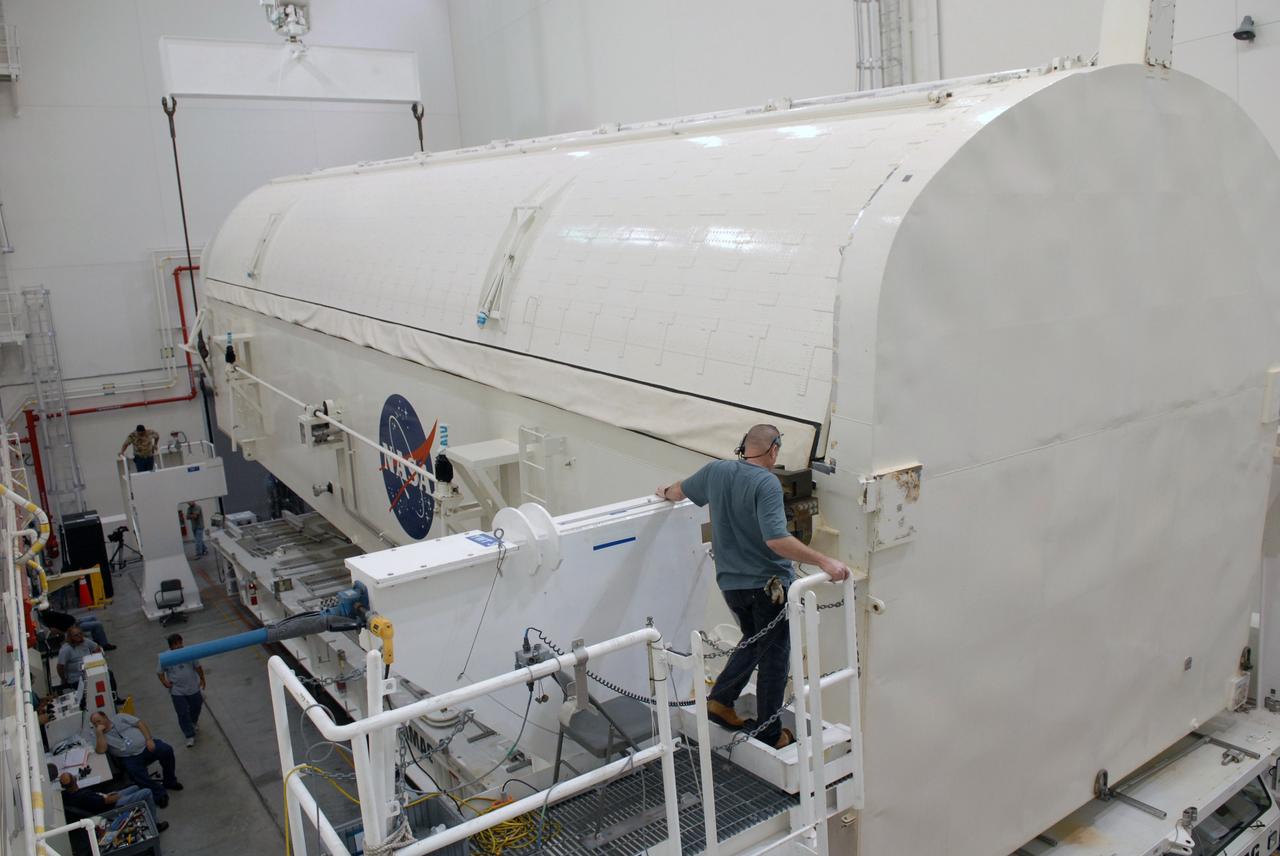
CAPE CANAVERAL, Fla. - In the Canister Rotation Facility at NASA's Kennedy Space Center, workers get ready to lift the payload canister to a vertical position for the trip to Launch Pad 39A. The canister’s cargo consists of four carriers holding various equipment for the STS-125 mission aboard space shuttle Atlantis to service NASA’s Hubble Space Telescope. At the pad, the cargo will be moved into the Payload Changeout Room. The changeout room is the enclosed, environmentally controlled portion of the rotating service structure that supports cargo delivery to the pad and subsequent vertical installation into the shuttle’s payload bay. Launch of Atlantis is targeted for Oct. 10. Photo credit: NASA/Jack Pfaller
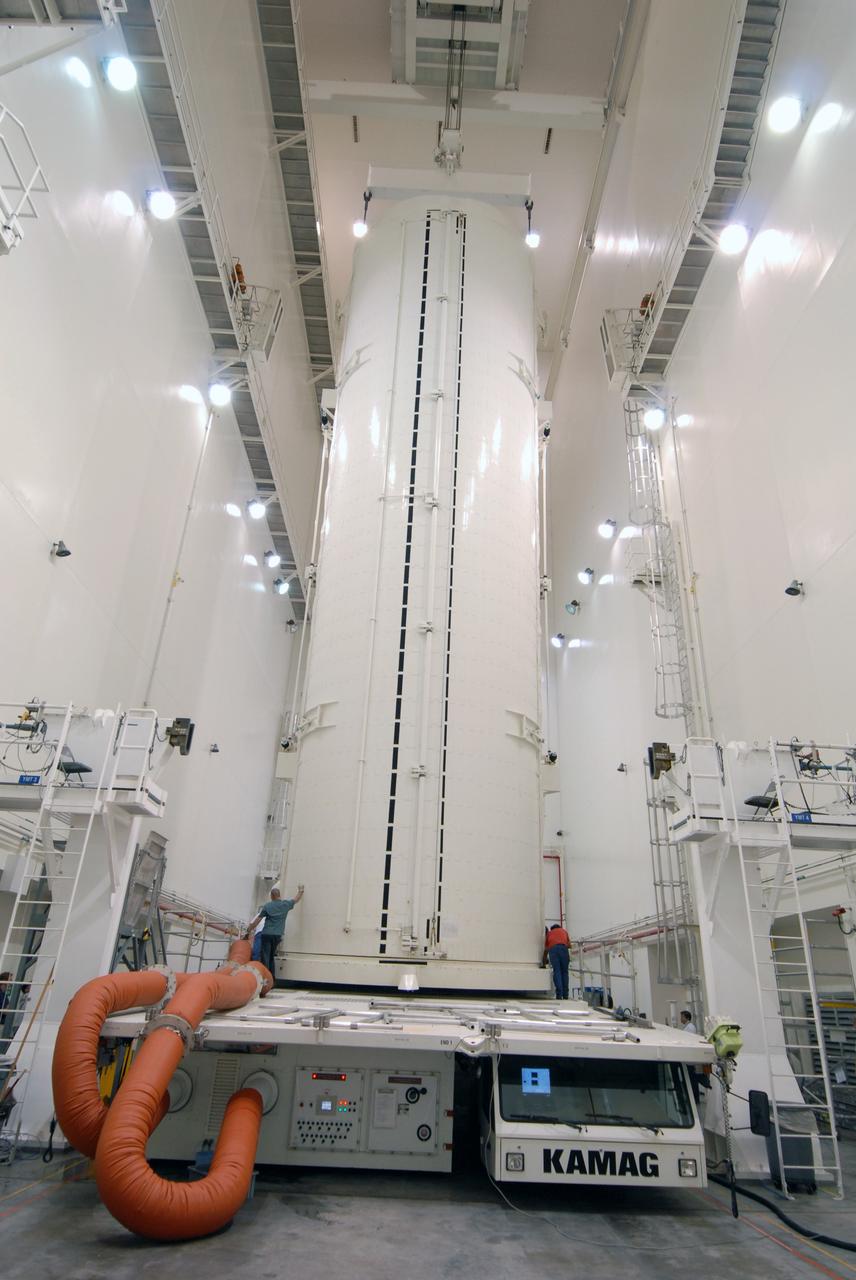
CAPE CANAVERAL, Fla. - In the Canister Rotation Facility at NASA's Kennedy Space Center, the payload canister is in a vertical position for the trip to Launch Pad 39A. The canister’s cargo consists of four carriers holding various equipment for the STS-125 mission aboard space shuttle Atlantis to service NASA’s Hubble Space Telescope. At the pad, the cargo will be moved into the Payload Changeout Room. The changeout room is the enclosed, environmentally controlled portion of the rotating service structure that supports cargo delivery to the pad and subsequent vertical installation into the shuttle’s payload bay. Launch of Atlantis is targeted for Oct. 10. Photo credit: NASA/Jack Pfaller
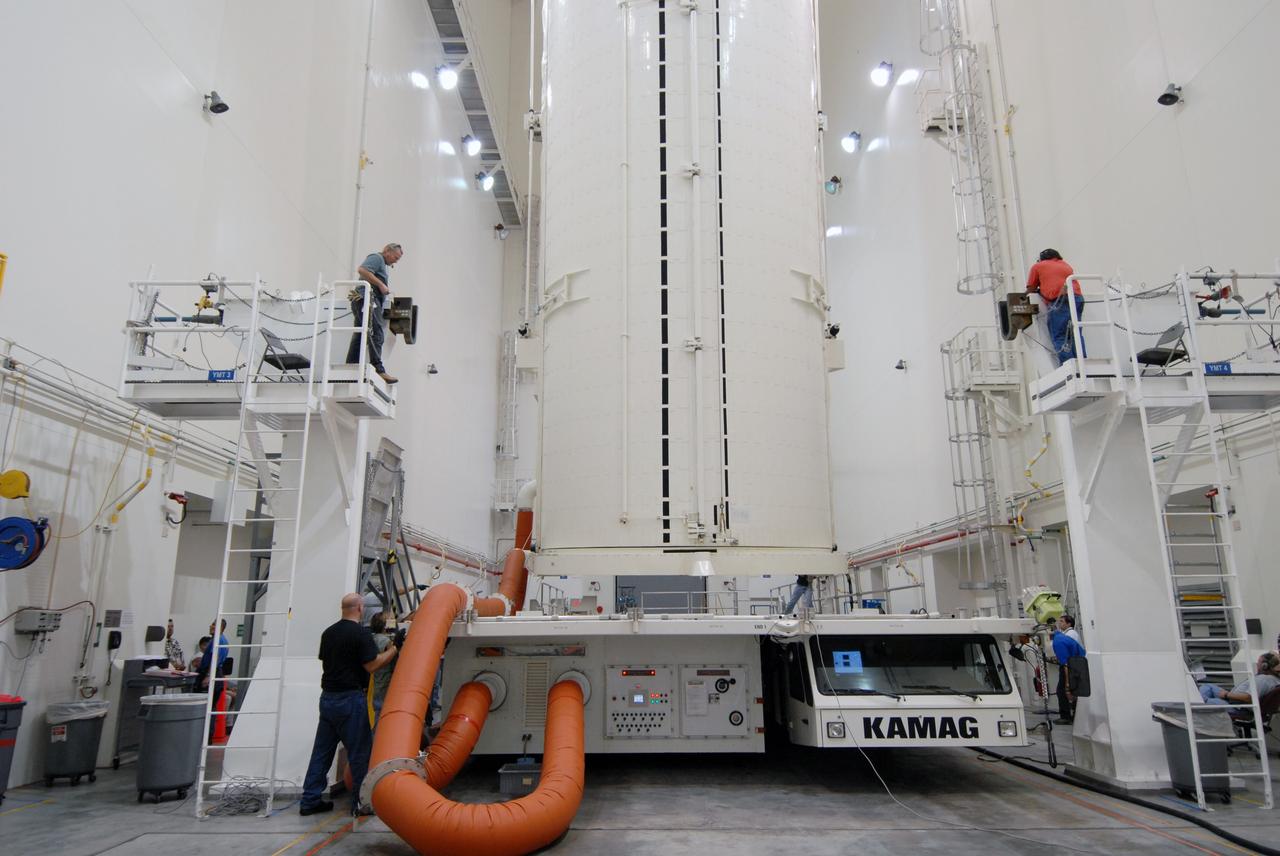
CAPE CANAVERAL, Fla. - In the Canister Rotation Facility at NASA's Kennedy Space Center, the payload canister is in a vertical position for the trip to Launch Pad 39A. The canister’s cargo consists of four carriers holding various equipment for the STS-125 mission aboard space shuttle Atlantis to service NASA’s Hubble Space Telescope. At the pad, the cargo will be moved into the Payload Changeout Room. The changeout room is the enclosed, environmentally controlled portion of the rotating service structure that supports cargo delivery to the pad and subsequent vertical installation into the shuttle’s payload bay. Launch of Atlantis is targeted for Oct. 10. Photo credit: NASA/Jack Pfaller
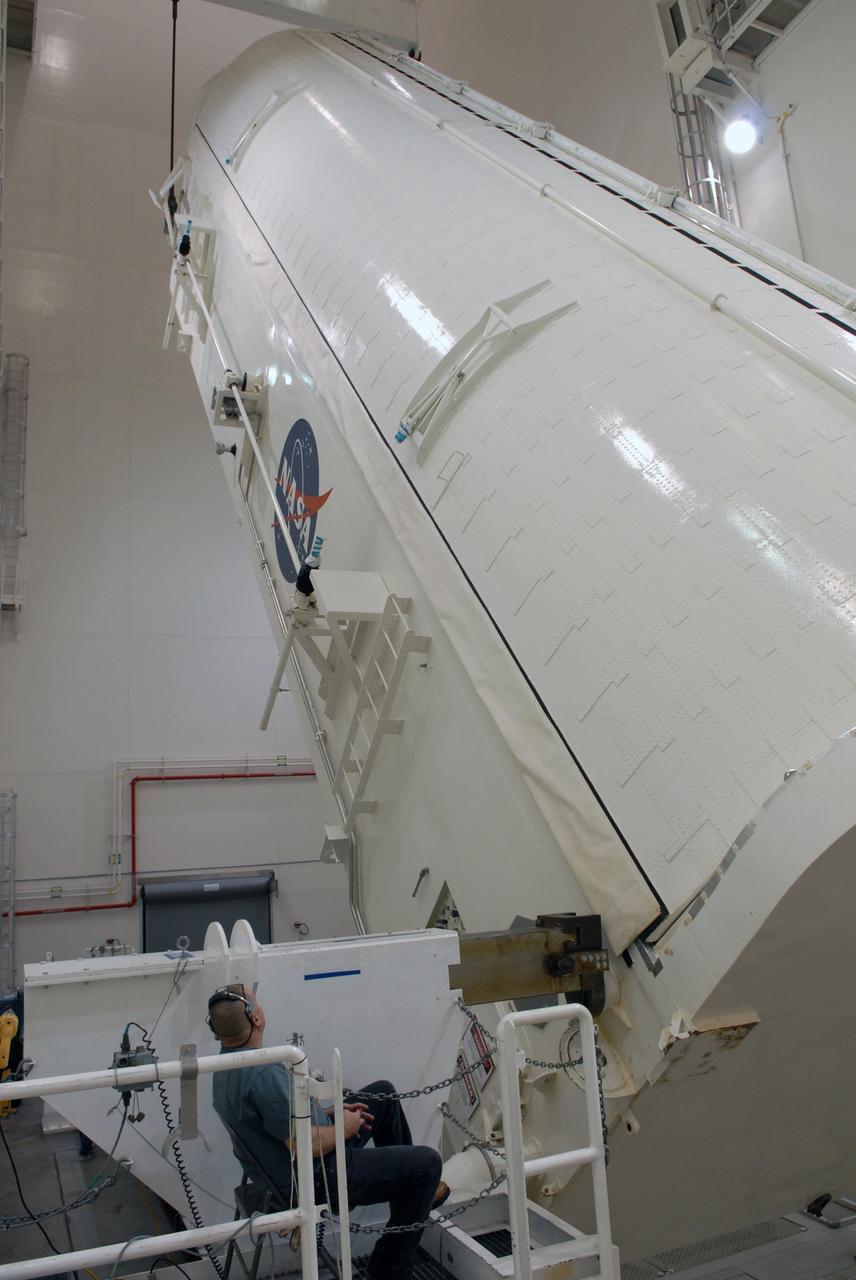
CAPE CANAVERAL, Fla. - In the Canister Rotation Facility at NASA's Kennedy Space Center, the payload canister is lifted toward a vertical position for the trip to Launch Pad 39A. The canister’s cargo consists of four carriers holding various equipment for the STS-125 mission aboard space shuttle Atlantis to service NASA’s Hubble Space Telescope. At the pad, the cargo will be moved into the Payload Changeout Room. The changeout room is the enclosed, environmentally controlled portion of the rotating service structure that supports cargo delivery to the pad and subsequent vertical installation into the shuttle’s payload bay. Launch of Atlantis is targeted for Oct. 10. Photo credit: NASA/Jack Pfaller

CAPE CANAVERAL, Fla. - On Launch Pad 39A at NASA's Kennedy Space Center, the payload canister is ready to be lifted to the payload changeout room above. The canister contains four carriers holding various equipment for the STS-125 mission aboard space shuttle Atlantis to service NASA’s Hubble Space Telescope. At right is Atlantis atop the mobile launcher platform. The changeout room is the enclosed, environmentally controlled portion of the rotating service structure that supports cargo delivery to the pad and subsequent vertical installation into the shuttle’s payload bay. Launch of Atlantis is targeted for Oct. 10. Photo credit: NASA/Jack Pfaller
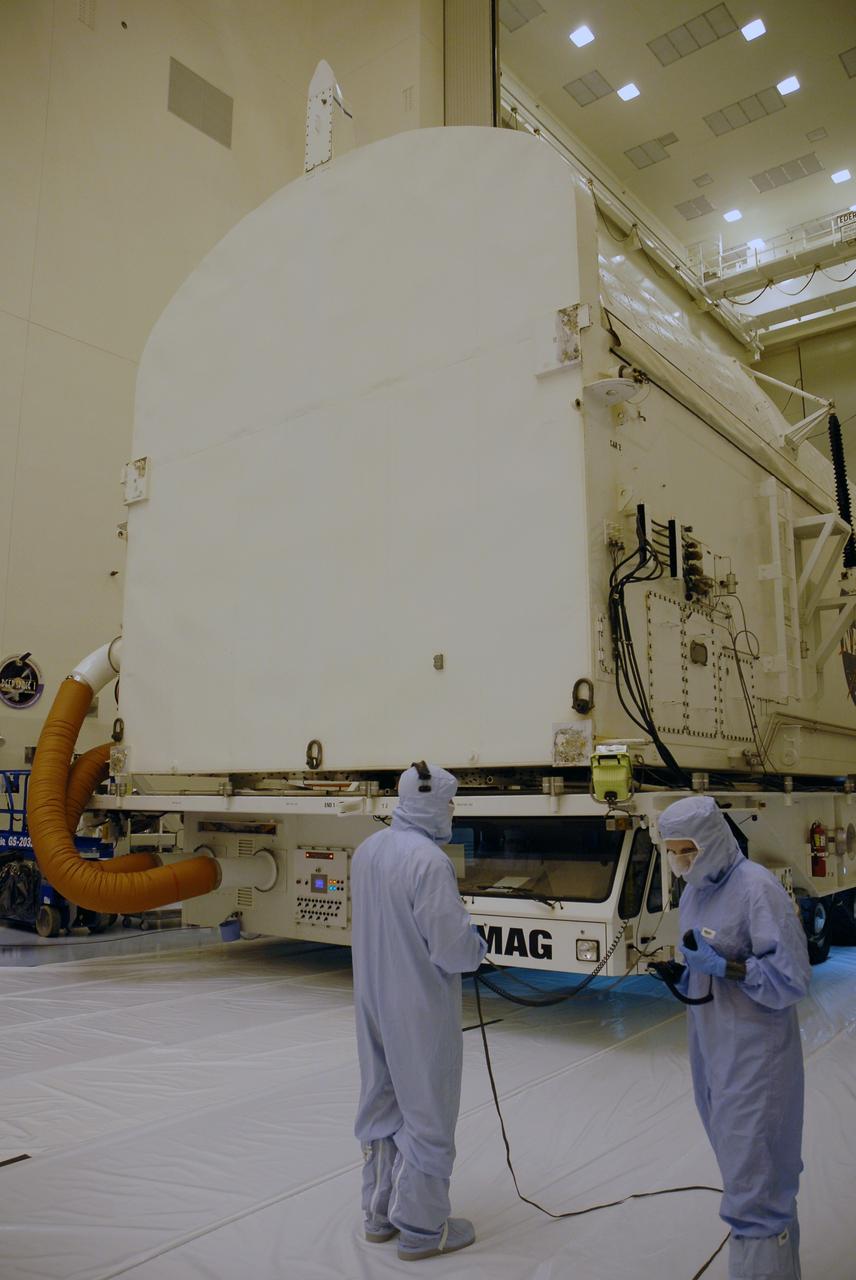
CAPE CANAVERAL, Fla. – At NASA's Kennedy Space Center in Florida, the payload canister with the Hubble Space Telescope equipment is in a clean room inside the Payload Hazardous Servicing Facility, or PHSF. The payload comprises four carriers holding various equipment for the mission. The canister maintains a controlled environment. In the PHSF, the carriers will be stored until a new target launch date can be set for Atlantis’ STS-125 mission in 2009. Atlantis’ October target launch date was delayed after a device on board Hubble used in the storage and transmission of science data to Earth shut down on Sept. 27. Replacing the broken device will be added to Atlantis’ servicing mission to the telescope. Photo credit: NASA/Troy Cryder
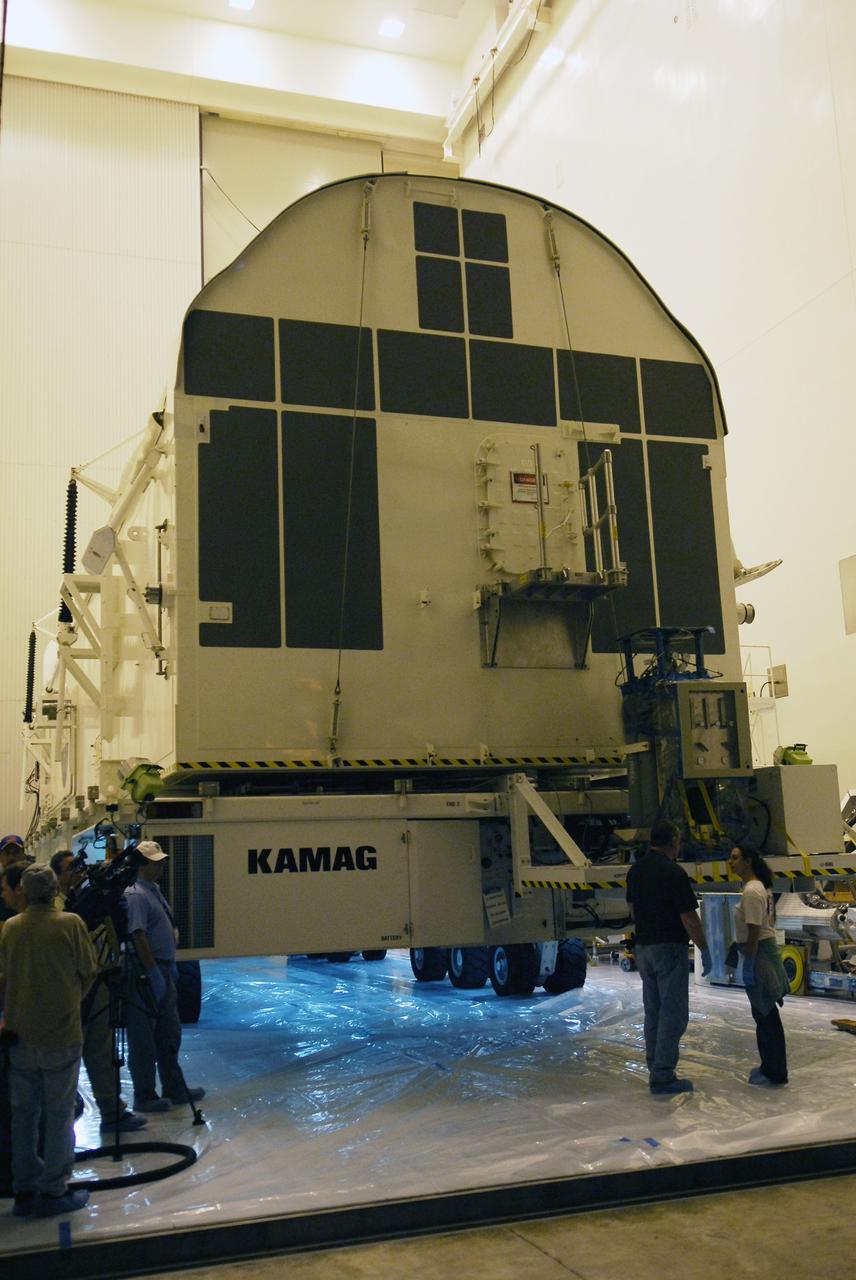
CAPE CANAVERAL, Fla. – At NASA's Kennedy Space Center in Florida, the payload canister with the Hubble Space Telescope equipment is inside the Payload Hazardous Servicing Facility, or PHSF. The payload comprises four carriers holding various equipment for the mission. The canister maintains a controlled environment. In the PHSF, the carriers will be stored until a new target launch date can be set for Atlantis’ STS-125 mission in 2009. Atlantis’ October target launch date was delayed after a device on board Hubble used in the storage and transmission of science data to Earth shut down on Sept. 27. Replacing the broken device will be added to Atlantis’ servicing mission to the telescope. Photo credit: NASA/Troy Cryder
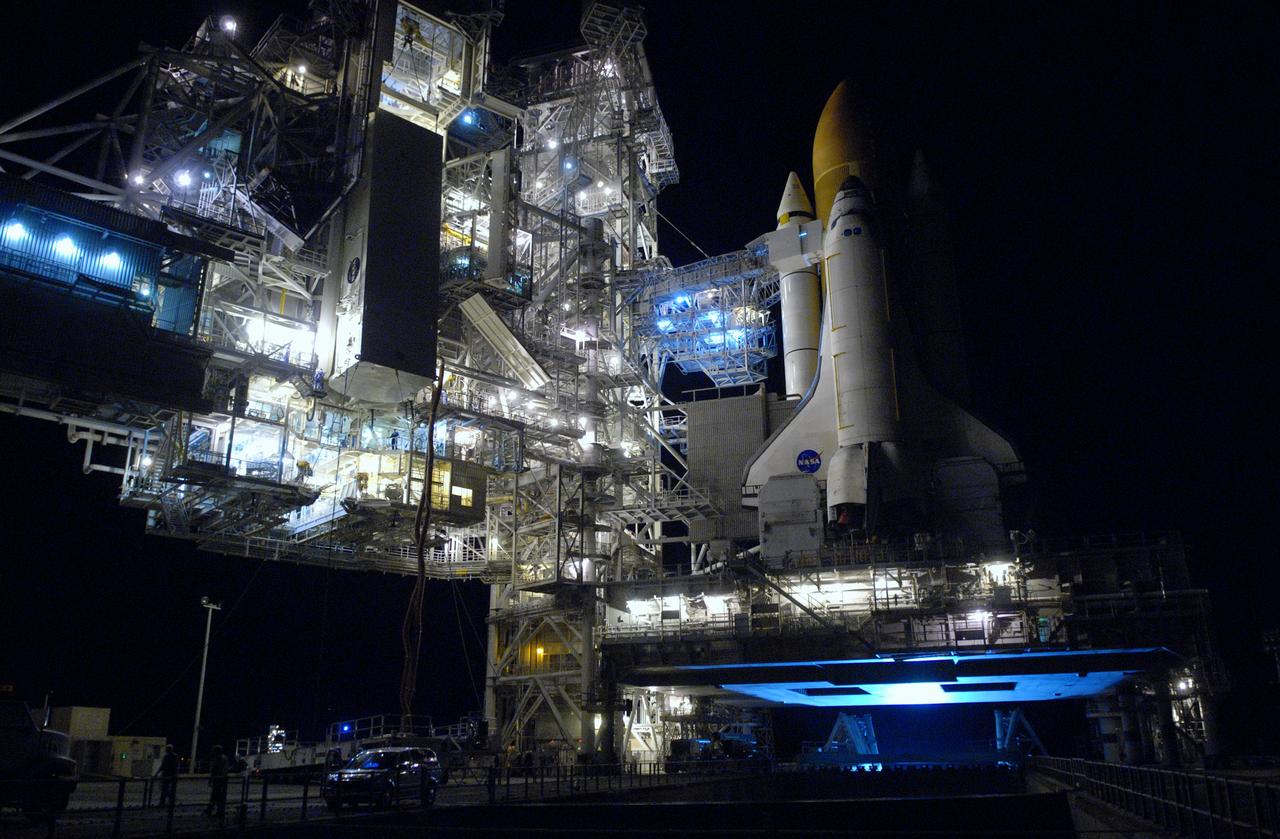
CAPE CANAVERAL, Fla. - On Launch Pad 39A at NASA's Kennedy Space Center, the payload canister is in place at the payload changeout room on the rotating service structure. The canister contains four carriers holding various equipment for the STS-125 mission aboard space shuttle Atlantis to service NASA’s Hubble Space Telescope. At right is Atlantis, atop the mobile launcher platform. The changeout room is the enclosed, environmentally controlled portion of the rotating service structure that supports cargo delivery to the pad and subsequent vertical installation into the shuttle’s payload bay. Launch of Atlantis is targeted for Oct. 10. Photo credit: NASA/Jack Pfaller
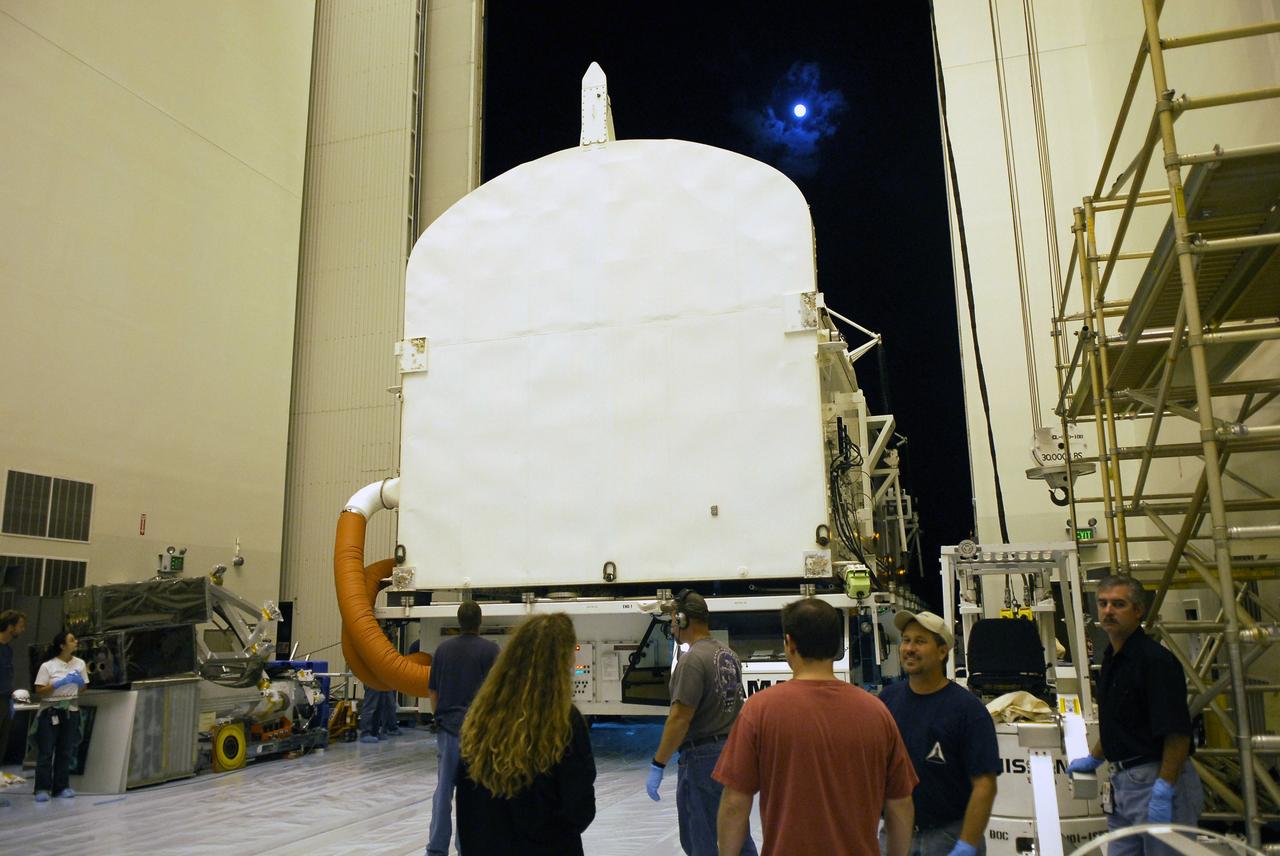
CAPE CANAVERAL, Fla. – At NASA's Kennedy Space Center in Florida, the payload canister with the Hubble Space Telescope equipment moves into the Payload Hazardous Servicing Facility, or PHSF. The payload comprises four carriers holding various equipment for the mission. The canister maintains a controlled environment. In the PHSF, the carriers will be stored until a new target launch date can be set for Atlantis’ STS-125 mission in 2009. Atlantis’ October target launch date was delayed after a device on board Hubble used in the storage and transmission of science data to Earth shut down on Sept. 27. Replacing the broken device will be added to Atlantis’ servicing mission to the telescope. Photo credit: NASA/Troy Cryder
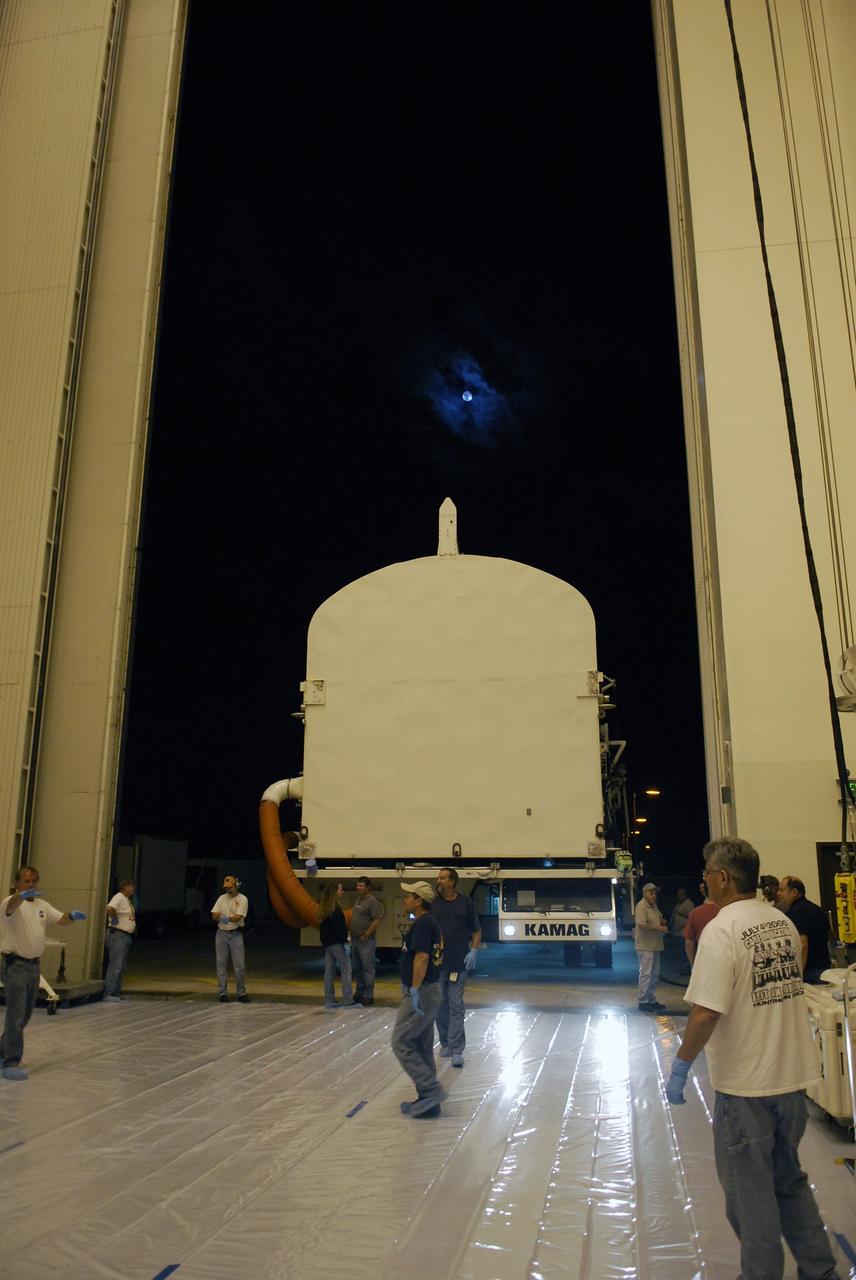
CAPE CANAVERAL, Fla. – At NASA's Kennedy Space Center in Florida, the payload canister with the Hubble Space Telescope equipment moves into the Payload Hazardous Servicing Facility, or PHSF. The payload comprises four carriers holding various equipment for the mission. The canister maintains a controlled environment. In the PHSF, the carriers will be stored until a new target launch date can be set for Atlantis’ STS-125 mission in 2009. Atlantis’ October target launch date was delayed after a device on board Hubble used in the storage and transmission of science data to Earth shut down on Sept. 27. Replacing the broken device will be added to Atlantis’ servicing mission to the telescope. Photo credit: NASA/Troy Cryder

CAPE CANAVERAL, Fla. – At NASA's Kennedy Space Center in Florida, the payload canister with the Hubble Space Telescope equipment moves inside the Payload Hazardous Servicing Facility, or PHSF. The payload comprises four carriers holding various equipment for the mission. The canister maintains a controlled environment. In the PHSF, the carriers will be stored until a new target launch date can be set for Atlantis’ STS-125 mission in 2009. Atlantis’ October target launch date was delayed after a device on board Hubble used in the storage and transmission of science data to Earth shut down on Sept. 27. Replacing the broken device will be added to Atlantis’ servicing mission to the telescope. Photo credit: NASA/Troy Cryder

CAPE CANAVERAL, Fla. – At NASA's Kennedy Space Center in Florida, the payload canister with the Hubble Space Telescope equipment is in a clean room inside the Payload Hazardous Servicing Facility, or PHSF. The payload comprises four carriers holding various equipment for the mission. The canister maintains a controlled environment. In the PHSF, the carriers will be stored until a new target launch date can be set for Atlantis’ STS-125 mission in 2009. Atlantis’ October target launch date was delayed after a device on board Hubble used in the storage and transmission of science data to Earth shut down on Sept. 27. Replacing the broken device will be added to Atlantis’ servicing mission to the telescope. Photo credit: NASA/Troy Cryder
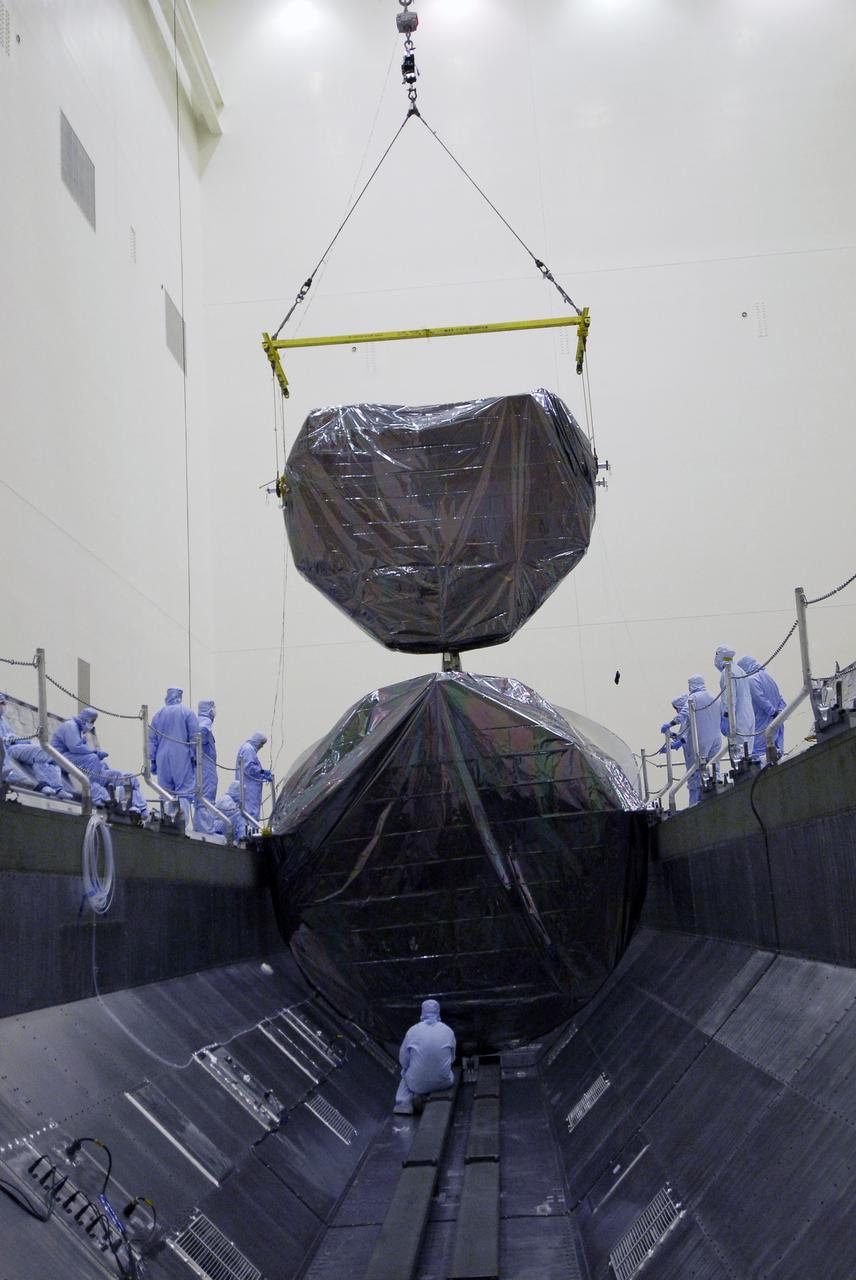
CAPE CANAVERAL, Fla. - In the Payload Hazardous Servicing Facility at NASA’s Kennedy Space Center, the Multi-Use Logistic Equipment, or MULE, carrier is lowered toward the payload canister. It will be placed next to the Flight Support System carrier already in place. The MULE is one of four associated with the STS-125 mission to service the Hubble Space Telescope. It will be installed in the payload canister for transfer to Launch Pad 39A. At the pad, all the carriers will be loaded into space shuttle Atlantis’ payload bay. Launch of Atlantis is targeted for Oct. 10. Photo credit: NASA/Jack Pfaller
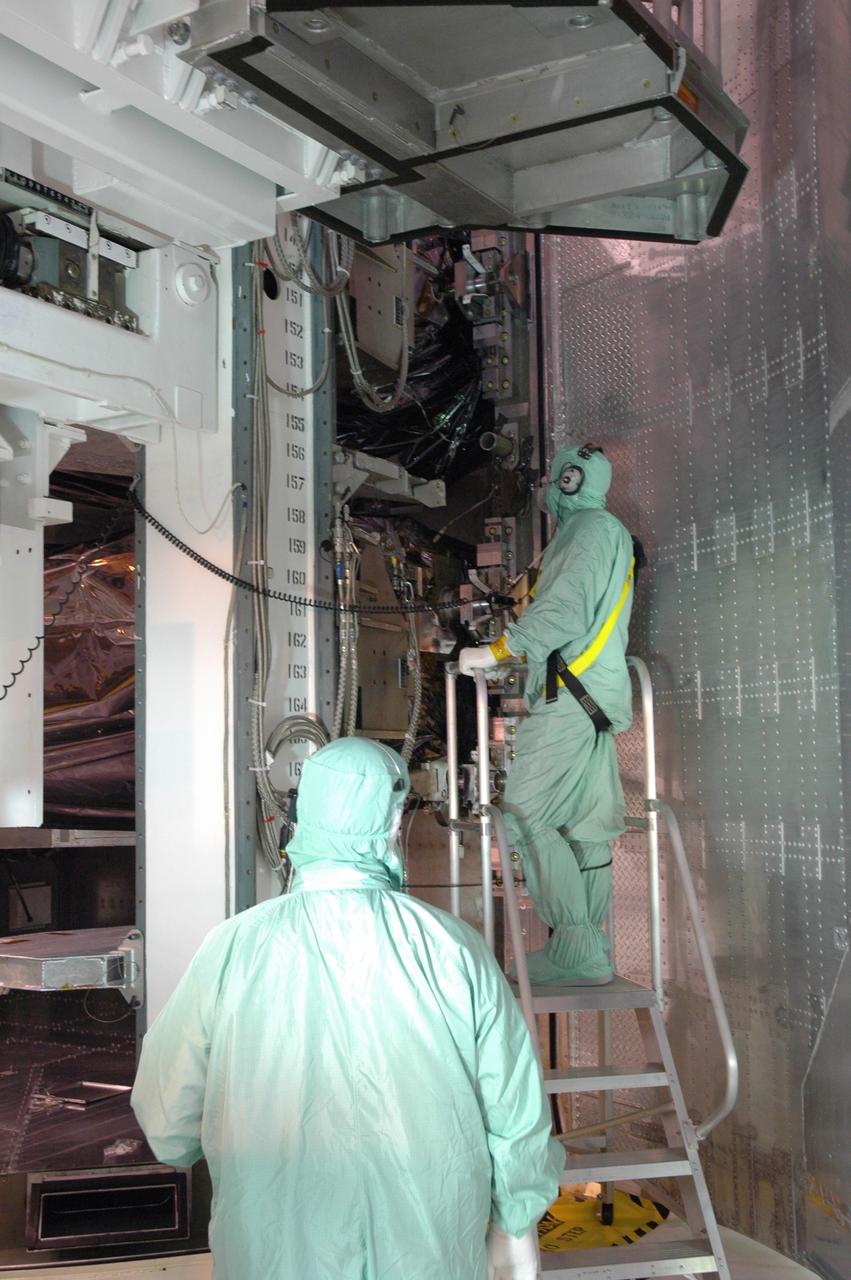
CAPE CANAVERAL, Fla. - In the payload changeout room, or PCR, on Launch Pad 39A at NASA's Kennedy Space Center in Florida, workers make small adjustments to the payload ground-handling mechanism, or PGHM, that will remove the cargo from the payload canister. The cargo comprises four carriers holding various equipment for the STS-125 mission aboard space shuttle Atlantis to service NASA’s Hubble Space Telescope. The PGHM removes payloads from a transportation canister and installs them into the shuttle. It is essentially NASA’s largest fork-lift. Atlantis is targeted to launch Oct. 10. Photo credit: NASA/Jim Grossmann
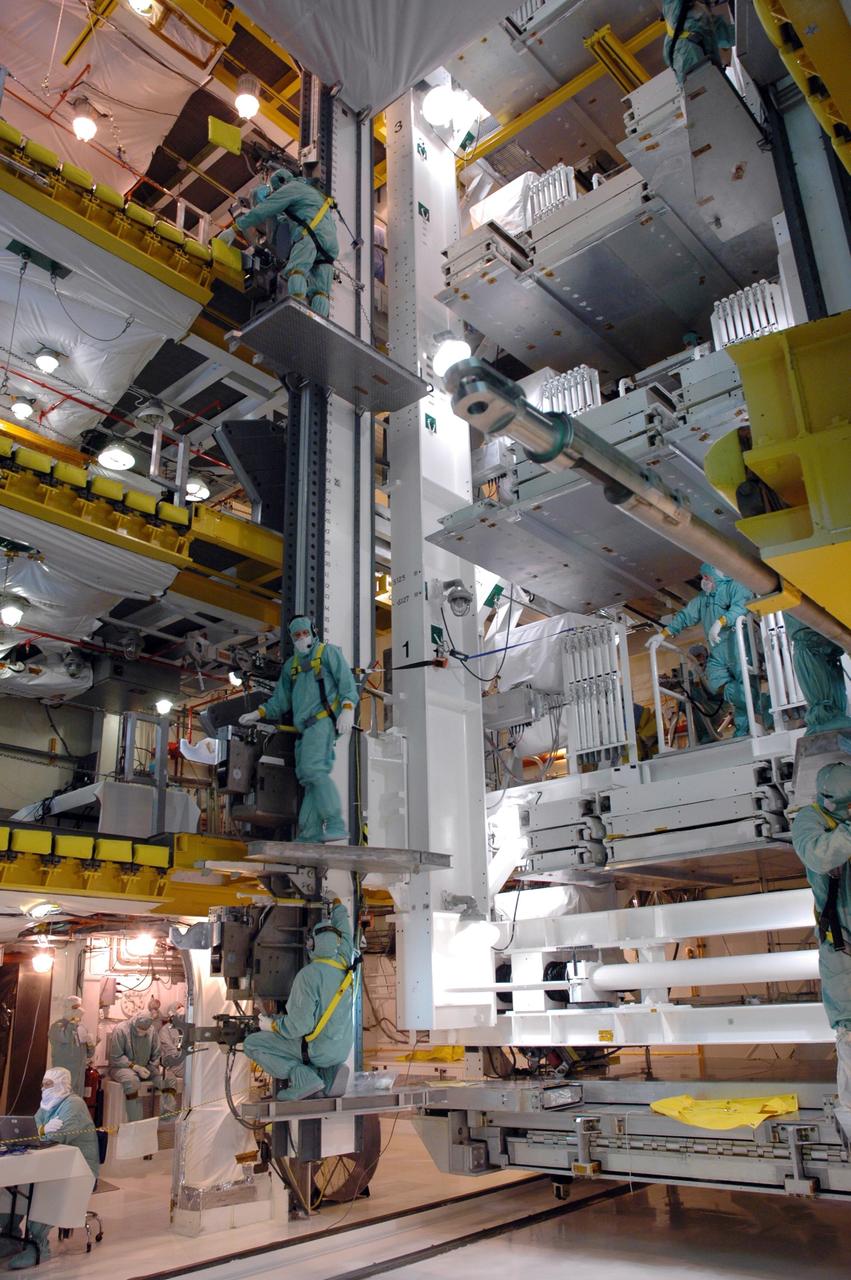
CAPE CANAVERAL, Fla. - In the payload changeout room, or PCR, on Launch Pad 39A at NASA's Kennedy Space Center in Florida, workers prepare the payload ground-handling mechanism, or PGHM, that will transfer the cargo in the payload canister. The cargo comprises four carriers holding various equipment for the STS-125 mission aboard space shuttle Atlantis to service NASA’s Hubble Space Telescope. The PGHM removes payloads from a transportation canister and installs them into the shuttle. It is essentially NASA’s largest fork-lift. Atlantis is targeted to launch Oct. 10. Photo credit: NASA/Jim Grossmann
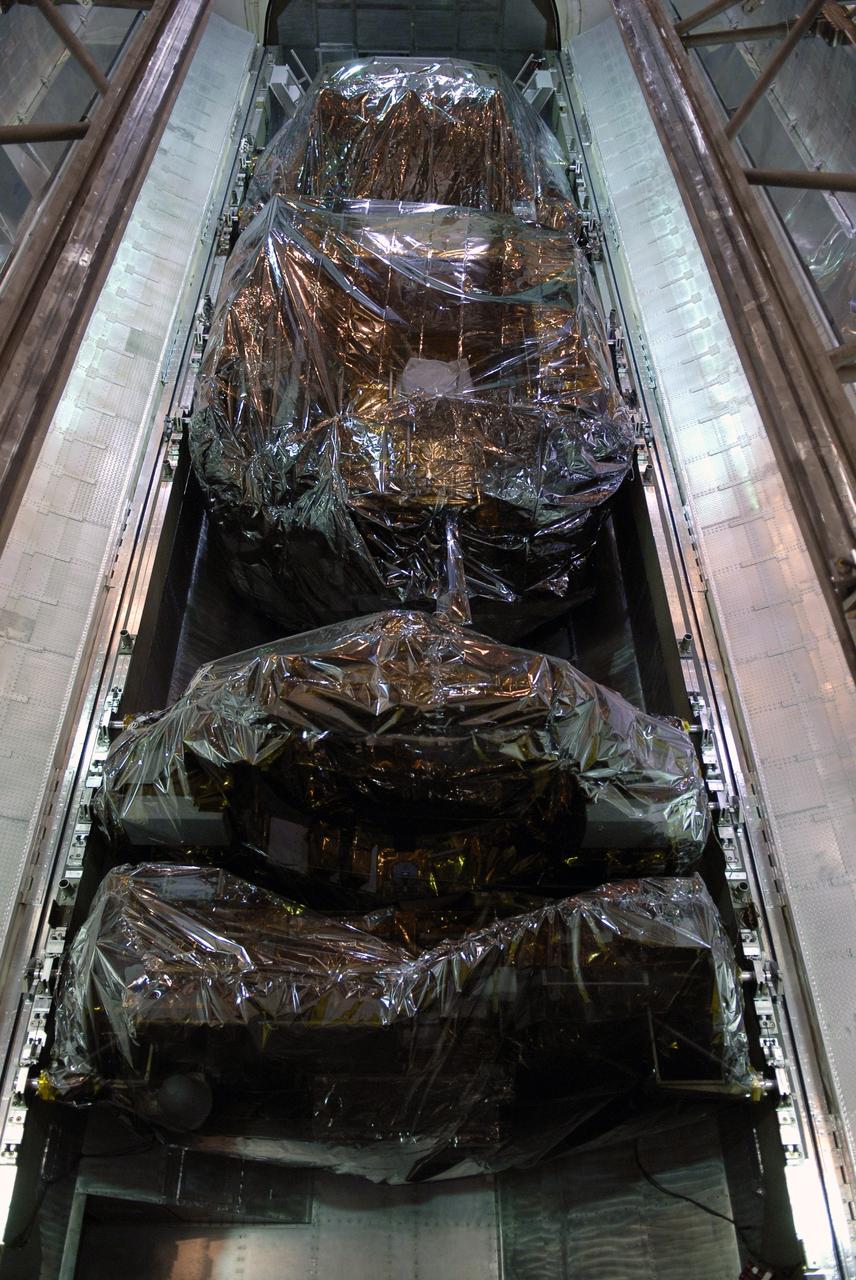
CAPE CANAVERAL, Fla. – On Launch Pad 39A on NASA's Kennedy Space Center in Florida, space shuttle Atlantis’ HST payload for the STS-125 mission has been moved into the payload canister via the payload ground handling mechanism. The payload comprises four carriers holding various equipment for the mission. The hardware will be transported back to Kennedy’s Payload Hazardous Servicing Facility where it will be stored until a new target launch date can be set for Atlantis’ STS-125 mission in 2009. Atlantis’ October target launch date was delayed after a device on board Hubble used in the storage and transmission of science data to Earth shut down on Sept. 27. Replacing the broken device will be added to Atlantis’ servicing mission to the telescope. Photo credit: NASA/Kim Shiflett

CAPE CANAVERAL, Fla. – On Launch Pad 39A on NASA's Kennedy Space Center in Florida, a worker supervises the movement of space shuttle Atlantis’ HST payload for the STS-125 mission that was installed into the payload canister via the payload ground handling mechanism. The payload comprises four carriers holding various equipment for the mission. The hardware will be transported back to Kennedy’s Payload Hazardous Servicing Facility where it will be stored until a new target launch date can be set for Atlantis’ STS-125 mission in 2009. Atlantis’ October target launch date was delayed after a device on board Hubble used in the storage and transmission of science data to Earth shut down on Sept. 27. Replacing the broken device will be added to Atlantis’ servicing mission to the telescope. Photo credit: NASA/Kim Shiflett
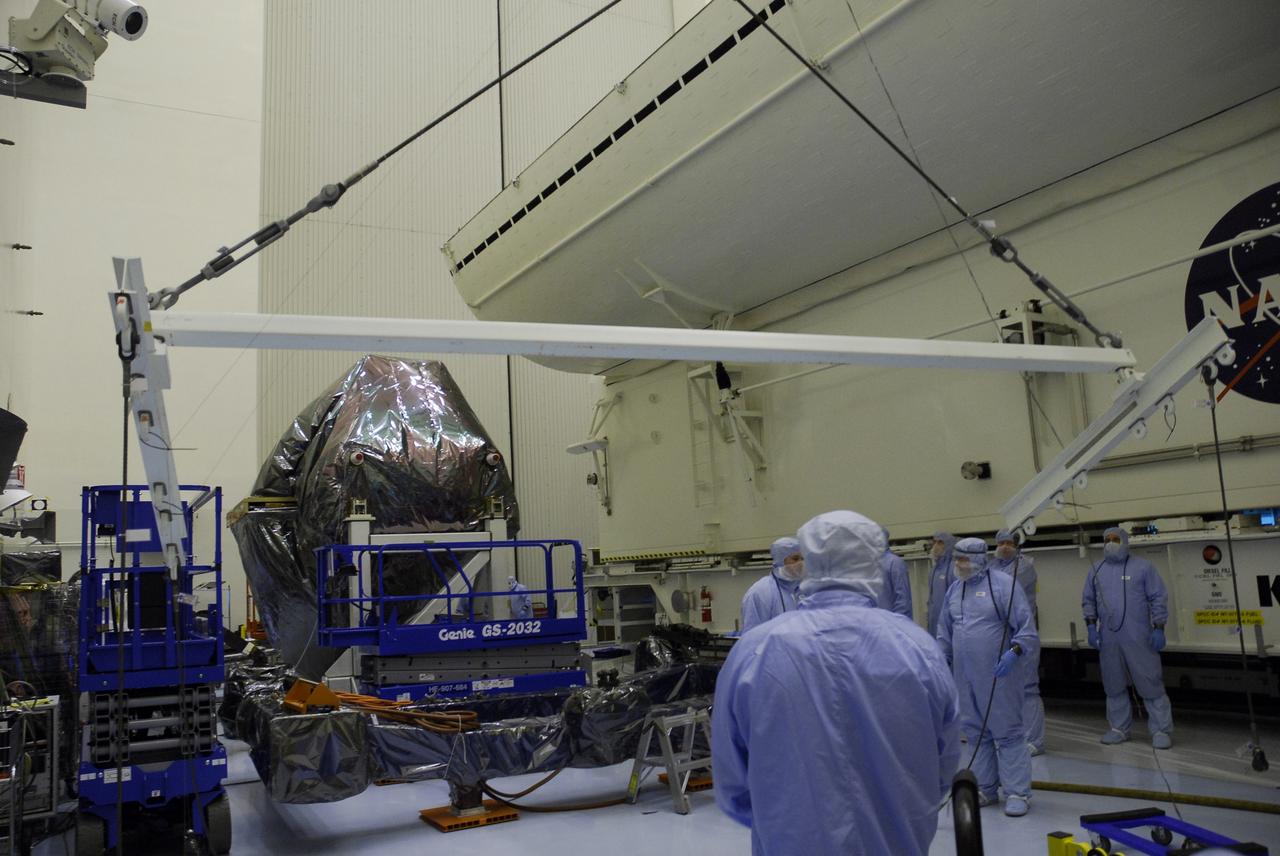
CAPE CANAVERAL, Fla. - In the Payload Hazardous Servicing Facility at NASA's Kennedy Space Center, an overhead crane is moved toward the Super Lightweight Interchangeable Carrier, or SLIC. The crane will move the SLIC to the payload canister for transfer to Launch Pad 39A. The SLIC is one of four carriers associated with the STS-125 mission to service the Hubble Space Telescope. At the pad, all the carriers will be loaded into space shuttle Atlantis’ payload bay. Launch of Atlantis is targeted for Oct. 10. Photo credit: NASA/Jack Pfaller
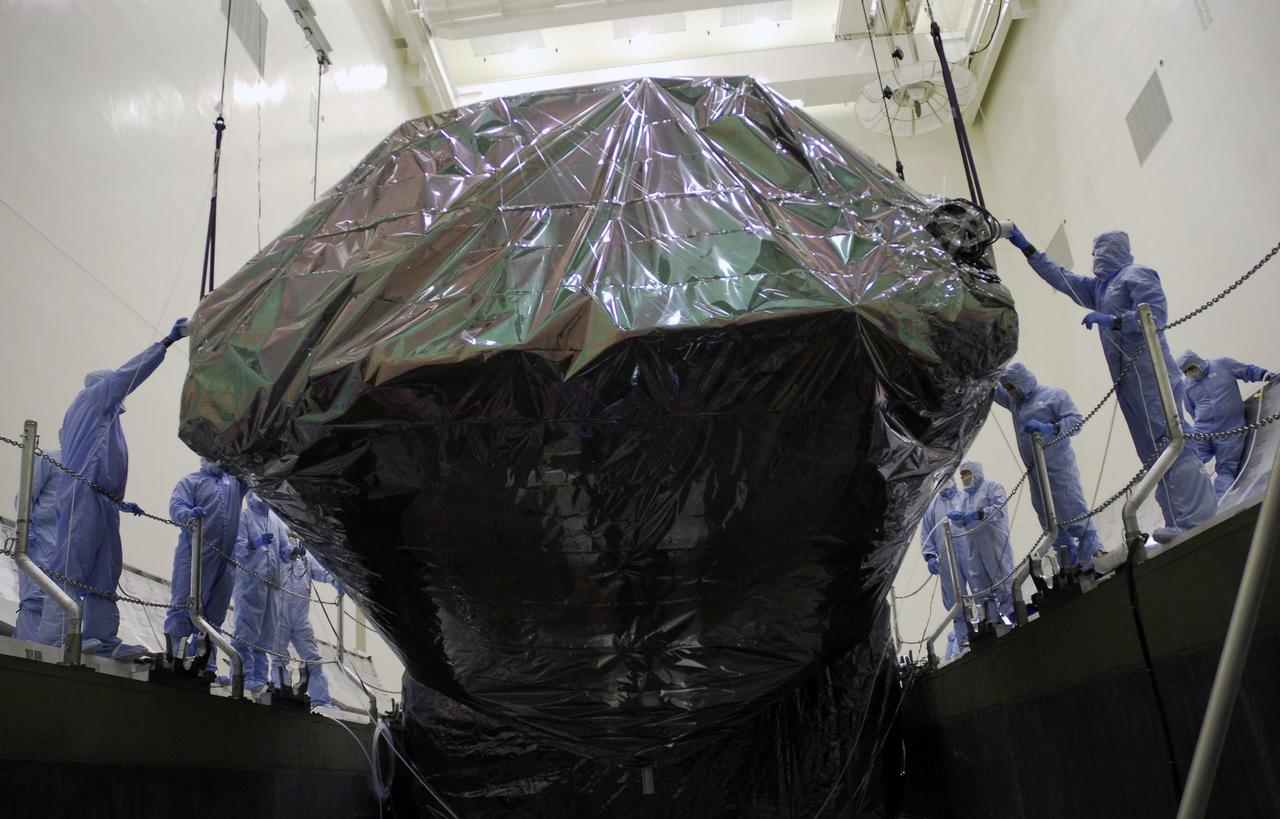
CAPE CANAVERAL, Fla. - In the Payload Hazardous Servicing Facility at NASA's Kennedy Space Center, an overhead crane lowers the Super Lightweight Interchangeable Carrier, or SLIC, into the payload canister. The SLIC, one of four carriers associated with the STS-125 mission to service the Hubble Space Telescope, will be moved to Launch Pad 39A. At the pad, all the carriers will be loaded into space shuttle Atlantis’ payload bay. Launch of Atlantis is targeted for Oct. 10. Photo credit: NASA/Jack Pfaller
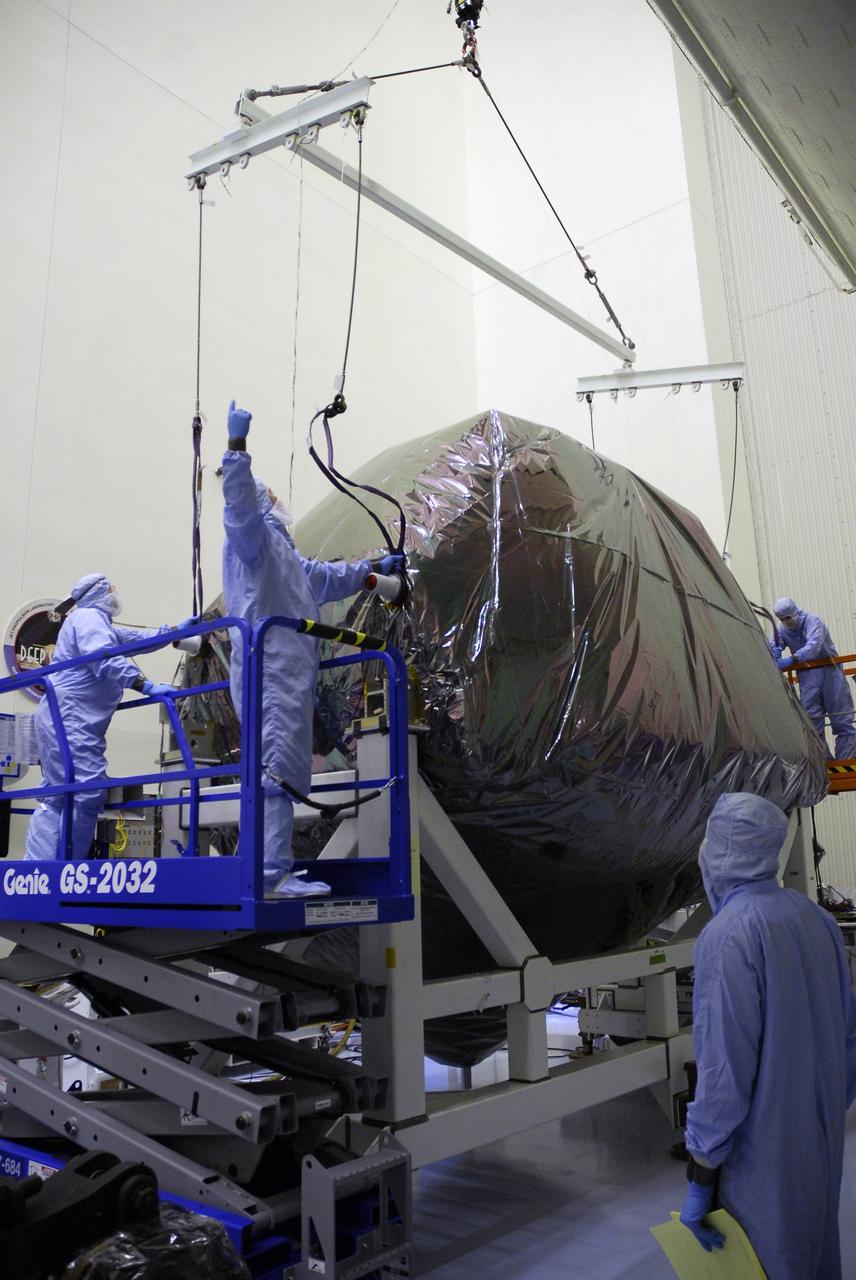
CAPE CANAVERAL, Fla. - In the Payload Hazardous Servicing Facility at NASA's Kennedy Space Center, an overhead crane is attached to the Super Lightweight Interchangeable Carrier, or SLIC. The crane will move the SLIC to the payload canister for transfer to Launch Pad 39A. The SLIC is one of four carriers associated with the STS-125 mission to service the Hubble Space Telescope. At the pad, all the carriers will be loaded into space shuttle Atlantis’ payload bay. Launch of Atlantis is targeted for Oct. 10. Photo credit: NASA/Jack Pfaller
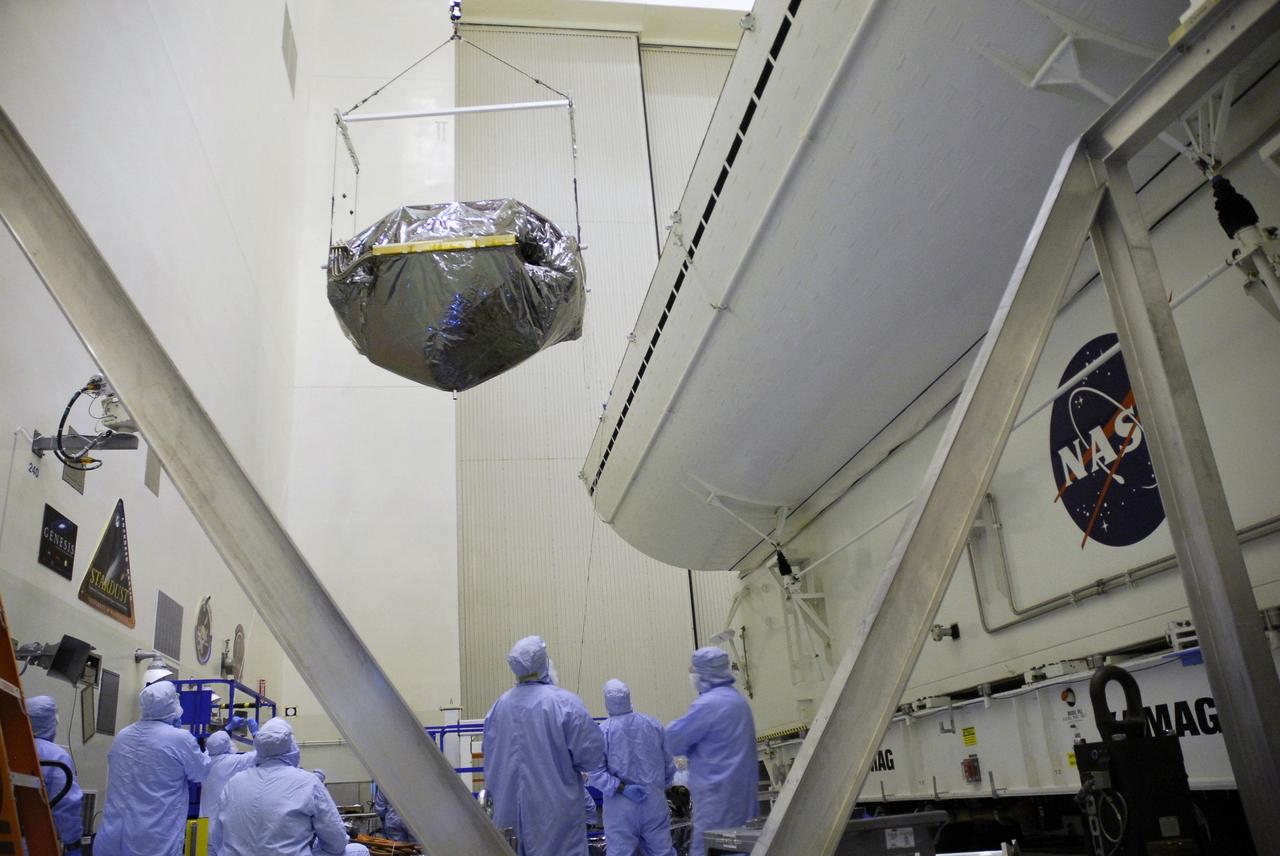
CAPE CANAVERAL, Fla. - In the Payload Hazardous Servicing Facility at NASA's Kennedy Space Center, an overhead crane suspends the Super Lightweight Interchangeable Carrier, or SLIC, as it transfers the carrier to the payload canister at right. The SLIC, one of four carriers associated with the STS-125 mission to service the Hubble Space Telescope, will be moved to Launch Pad 39A. At the pad, all the carriers will be loaded into space shuttle Atlantis’ payload bay. Launch of Atlantis is targeted for Oct. 10. Photo credit: NASA/Jack Pfaller
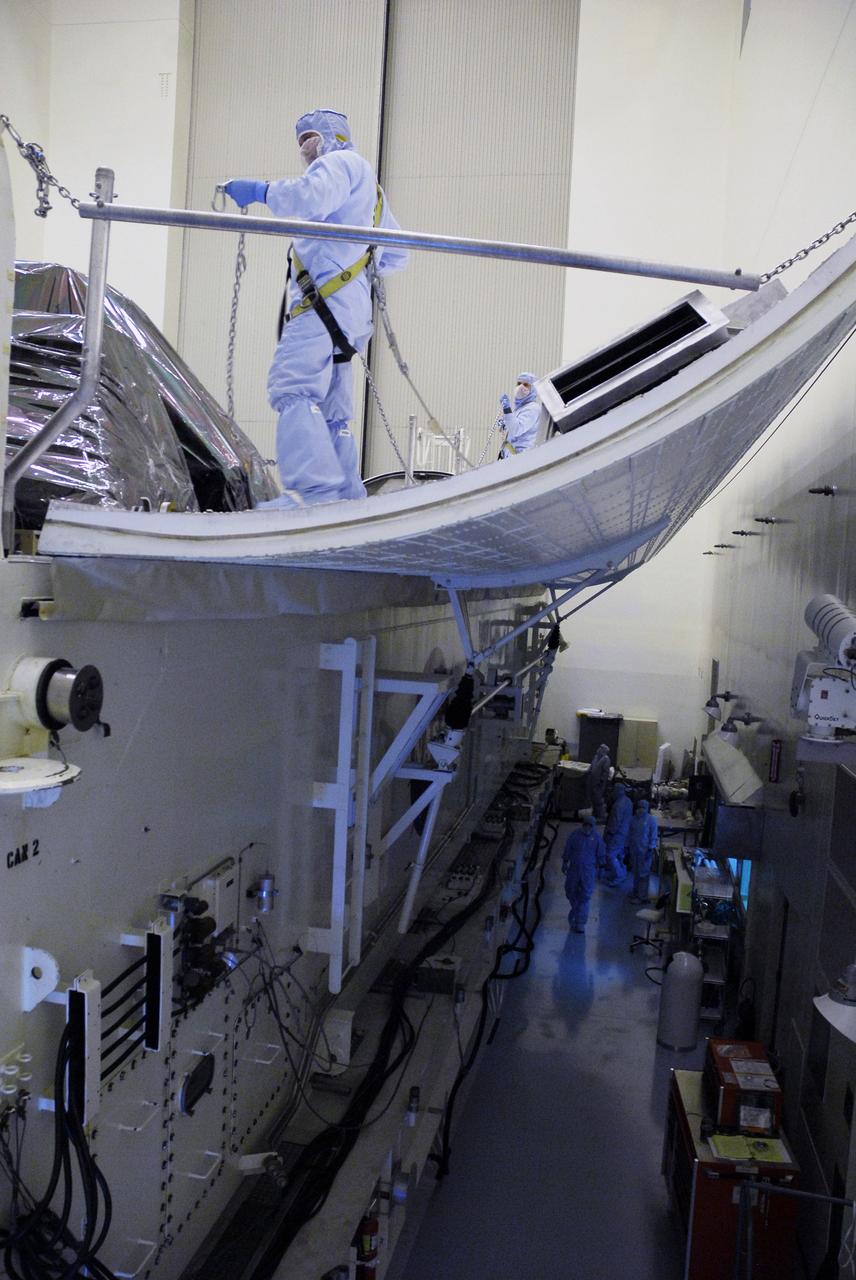
CAPE CANAVERAL, Fla. - In the Payload Hazardous Servicing Facility at NASA's Kennedy Space Center, the open doors of the payload canister reveal the first of the carriers associated with the STS-125 mission to service the Hubble Space Telescope that have been installed in it. Four carriers in all will be transferred to Launch Pad 39A. At the pad, all the carriers will be loaded into space shuttle Atlantis’ payload bay. Launch of Atlantis is targeted for Oct. 10. Photo credit: NASA/Jack Pfaller
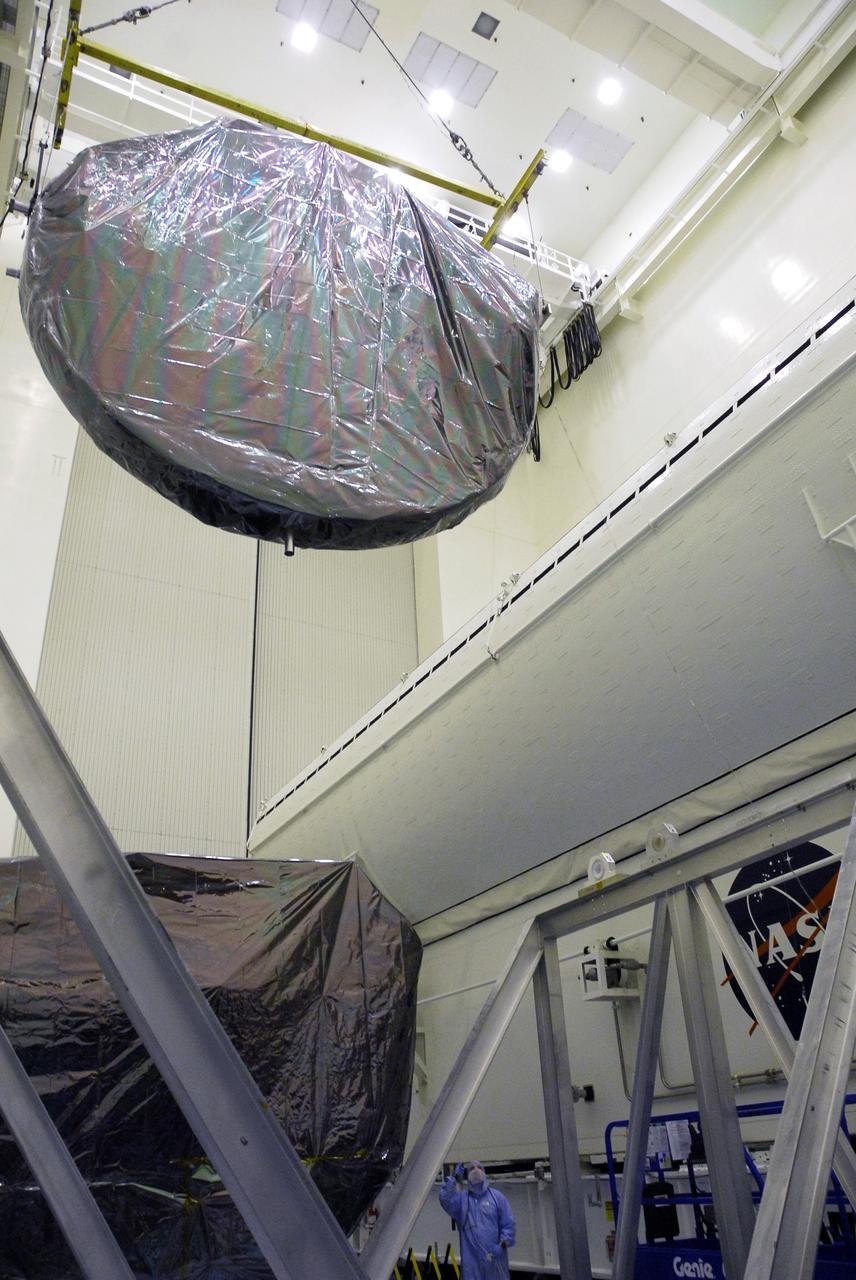
CAPE CANAVERAL, Fla. - In the Payload Hazardous Servicing Facility at NASA’s Kennedy Space Center, an overhead crane moves the Flight Support System carrier with the Soft Capture Mechanism toward the payload canister for transfer to Launch Pad 39A. The carrier is one of four associated with the STS-125 mission to service the Hubble Space Telescope. At the pad, all the carriers will be loaded into space shuttle Atlantis’ payload bay. Launch of Atlantis is targeted for Oct. 10. Photo credit: NASA/Cory Huston
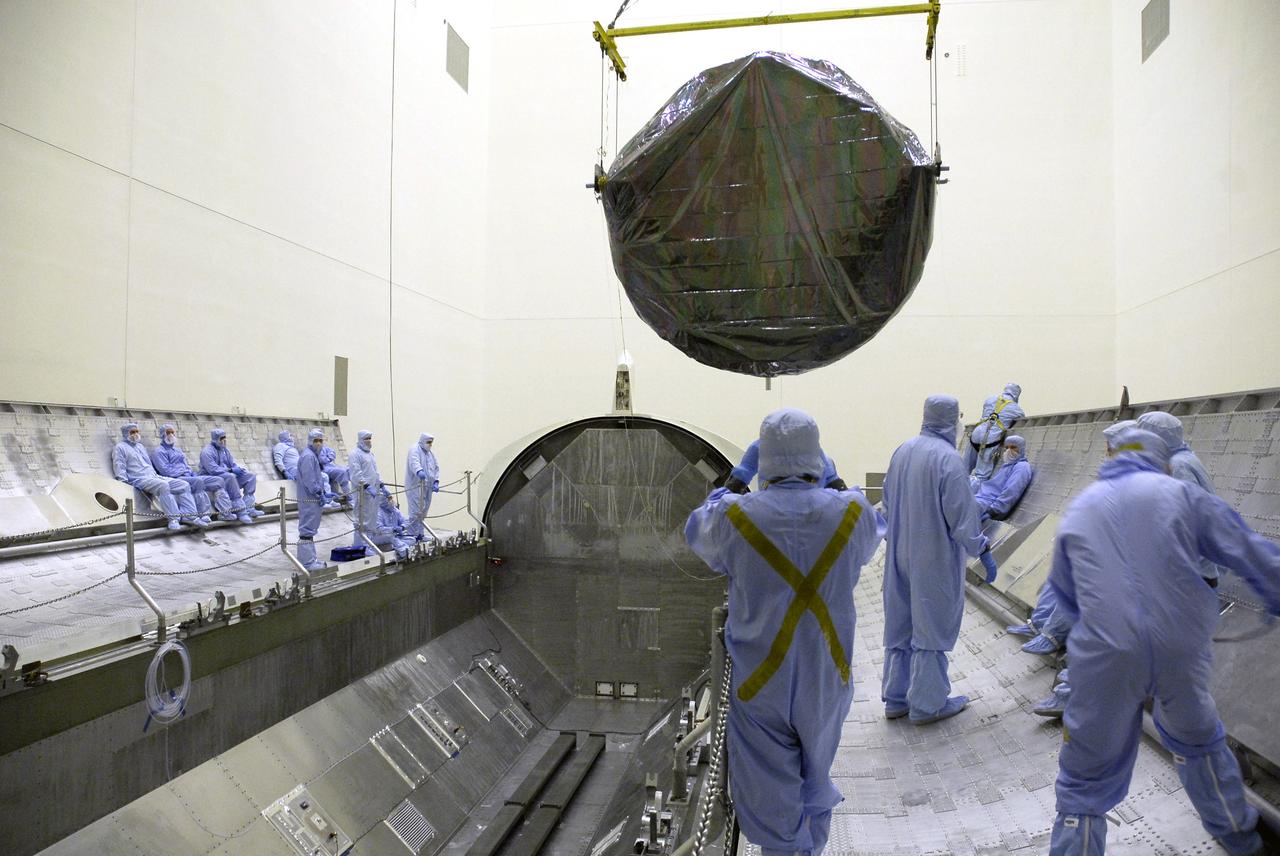
CAPE CANAVERAL, Fla. - In the Payload Hazardous Servicing Facility at NASA’s Kennedy Space Center, workers observe the movement of the crane holding the Flight Support System carrier with the Soft Capture Mechanism. It will be installed in the payload canister for transfer to Launch Pad 39A. The carrier is one of four associated with the STS-125 mission to service the Hubble Space Telescope. At the pad, all the carriers will be loaded into space shuttle Atlantis’ payload bay. Launch of Atlantis is targeted for Oct. 10. Photo credit: NASA/Cory Huston
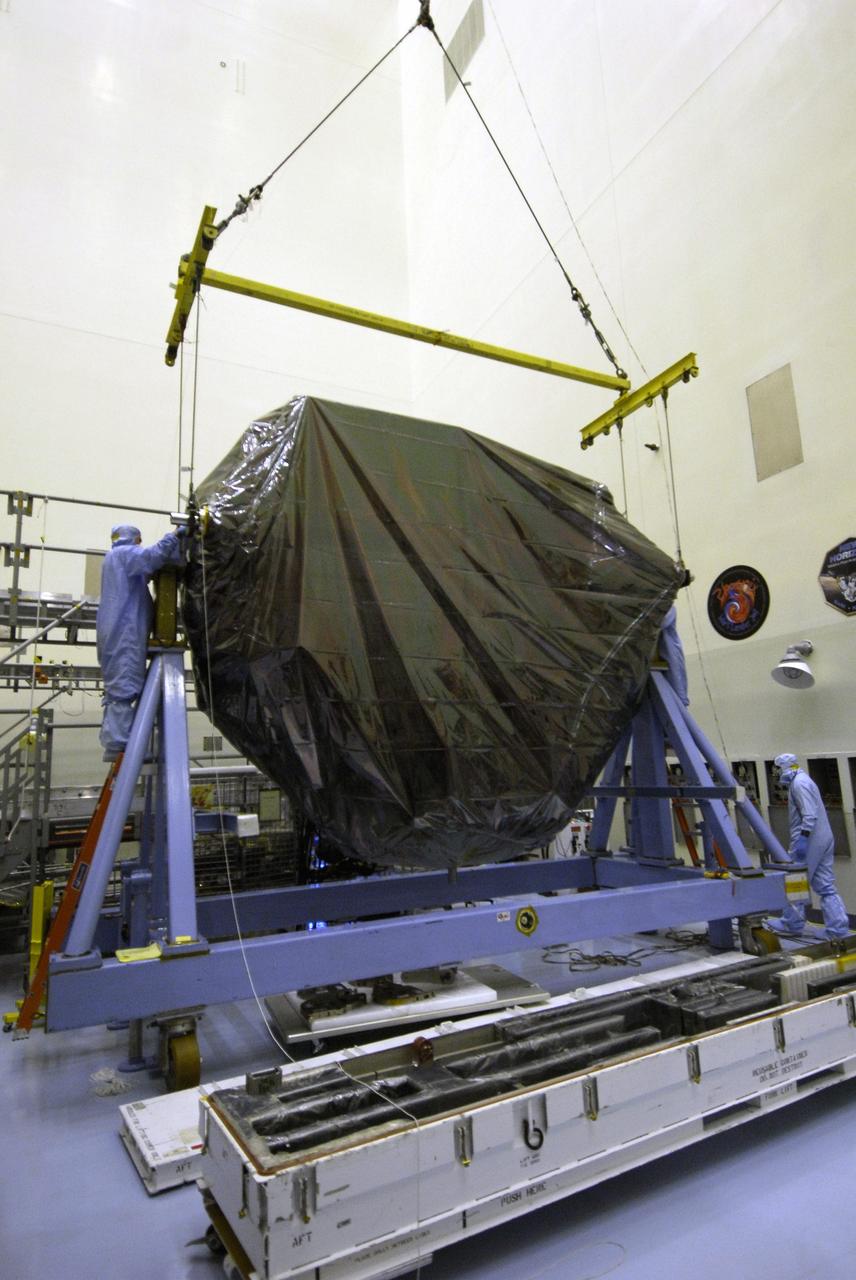
CAPE CANAVERAL, Fla. - In the Payload Hazardous Servicing Facility at NASA’s Kennedy Space Center, an overhead crane lifts the Multi-Use Logistic Equipment, or MULE, carrier. The carrier is one of four associated with the STS-125 mission to service the Hubble Space Telescope. It will be installed in the payload canister for transfer to Launch Pad 39A. At the pad, all the carriers will be loaded into space shuttle Atlantis’ payload bay. Launch of Atlantis is targeted for Oct. 10. Photo credit: NASA/Jack Pfaller
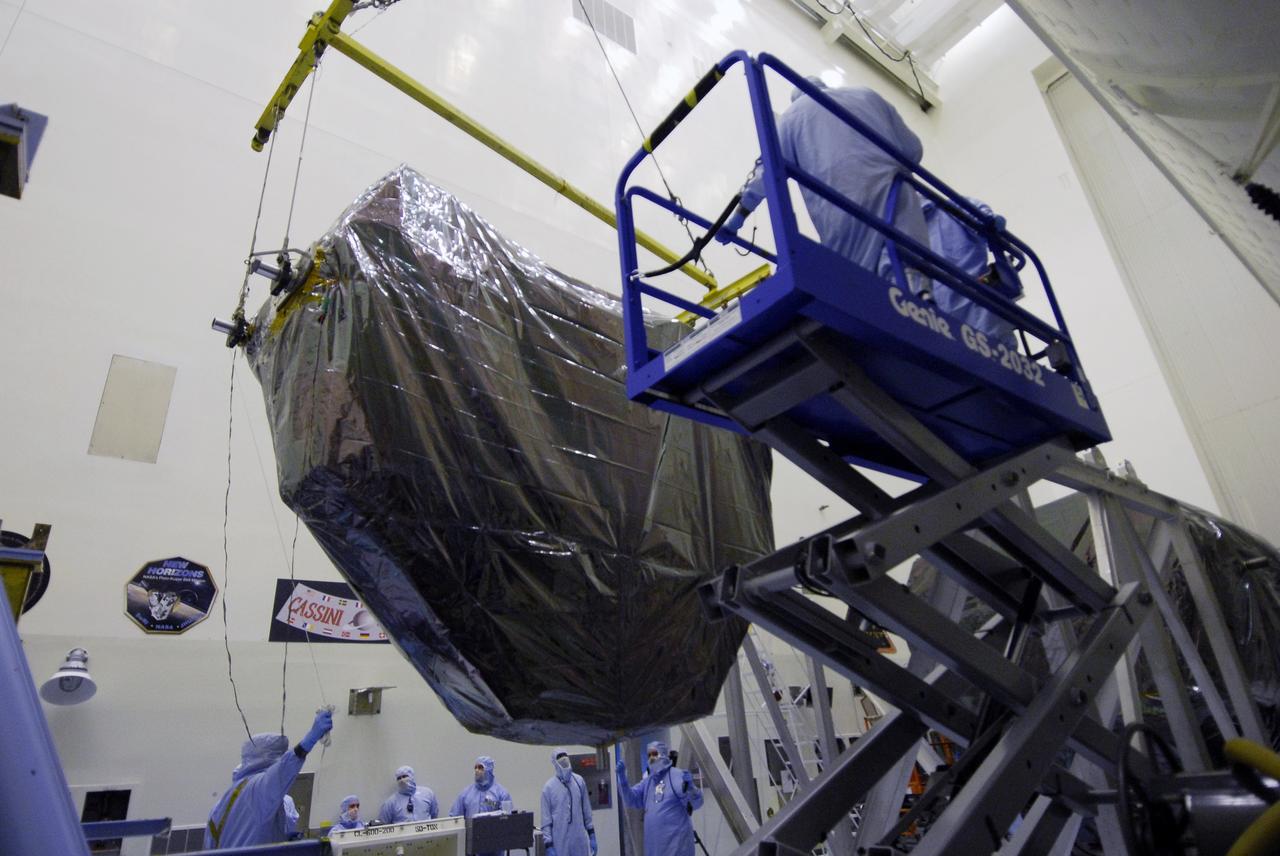
CAPE CANAVERAL, Fla. - In the Payload Hazardous Servicing Facility at NASA’s Kennedy Space Center, an overhead crane lifts the Multi-Use Logistic Equipment, or MULE, carrier. The carrier is one of four associated with the STS-125 mission to service the Hubble Space Telescope. It will be installed in the payload canister for transfer to Launch Pad 39A. At the pad, all the carriers will be loaded into space shuttle Atlantis’ payload bay. Launch of Atlantis is targeted for Oct. 10. Photo credit: NASA/Jack Pfaller
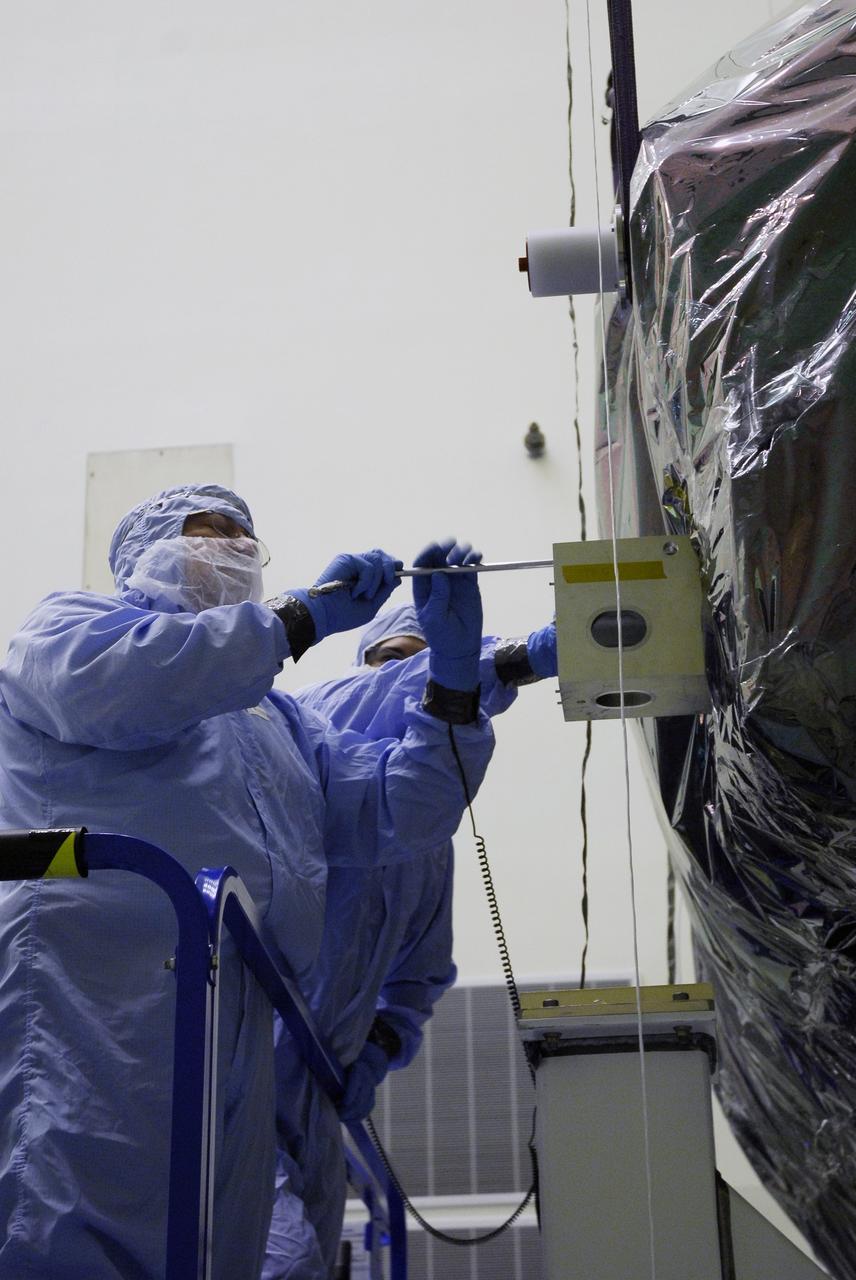
CAPE CANAVERAL, Fla. - In the Payload Hazardous Servicing Facility at NASA's Kennedy Space Center, a worker attaches an overhead crane to the Super Lightweight Interchangeable Carrier, or SLIC. The crane will move the SLIC to the payload canister for transfer to Launch Pad 39A. The SLIC is one of four carriers associated with the STS-125 mission to service the Hubble Space Telescope. At the pad, all the carriers will be loaded into space shuttle Atlantis’ payload bay. Launch of Atlantis is targeted for Oct. 10. Photo credit: NASA/Jack Pfaller

CAPE CANAVERAL, Fla. - In the Payload Hazardous Servicing Facility at NASA’s Kennedy Space Center, an overhead crane lifts the Flight Support System carrier with the Soft Capture Mechanism under protective cover. The carrier is one of four associated with the STS-125 mission to service the Hubble Space Telescope. It will be installed in the payload canister for transfer to Launch Pad 39A. At the pad, all the carriers will be loaded into space shuttle Atlantis’ payload bay. Launch of Atlantis is targeted for Oct. 10. Photo credit: NASA/Cory Huston
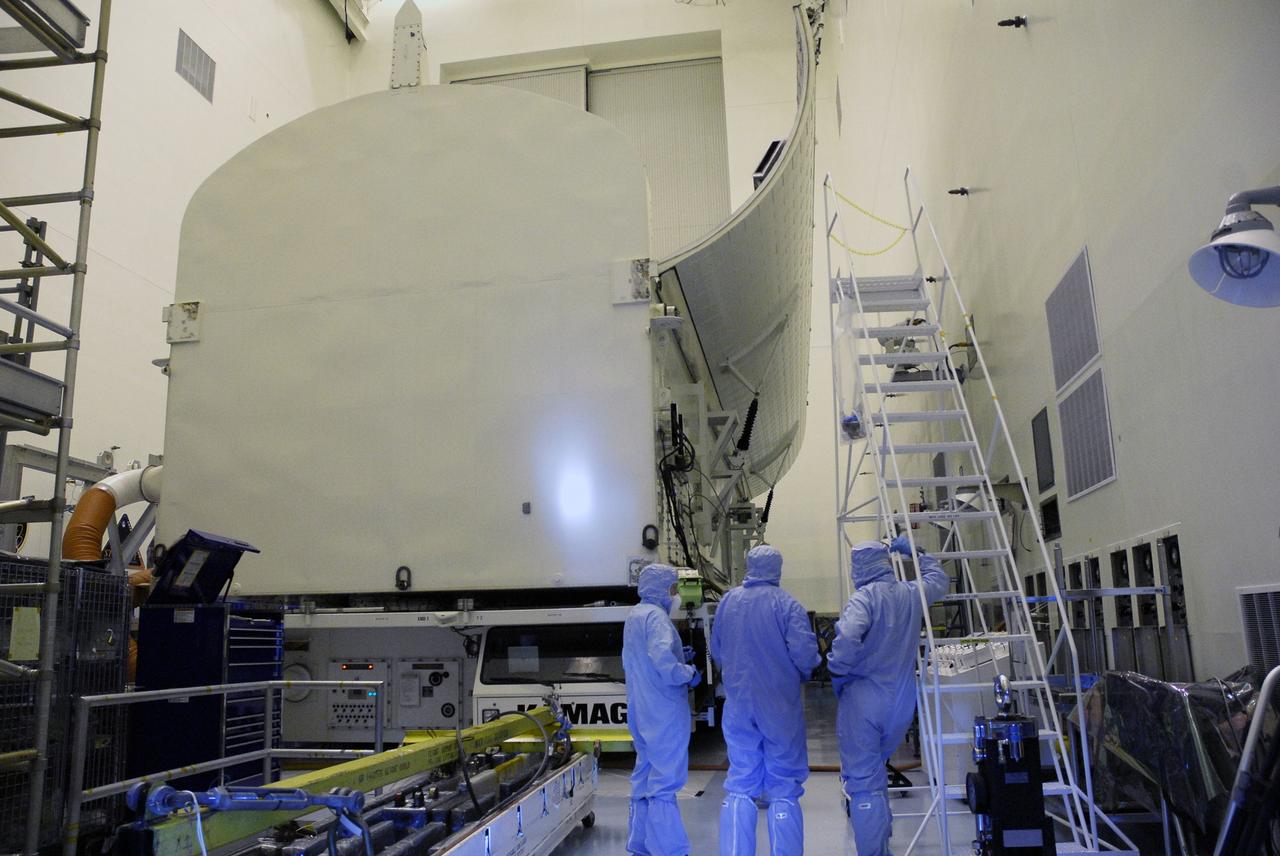
CAPE CANAVERAL, Fla. - In the Payload Hazardous Servicing Facility at NASA's Kennedy Space Center, the doors of the payload canister are opening to install the remaining carriers associated with the STS-125 mission to service the Hubble Space Telescope. Four carriers in all will be transferred to Launch Pad 39A. At the pad, all the carriers will be loaded into space shuttle Atlantis’ payload bay. Launch of Atlantis is targeted for Oct. 10. Photo credit: NASA/Jack Pfaller
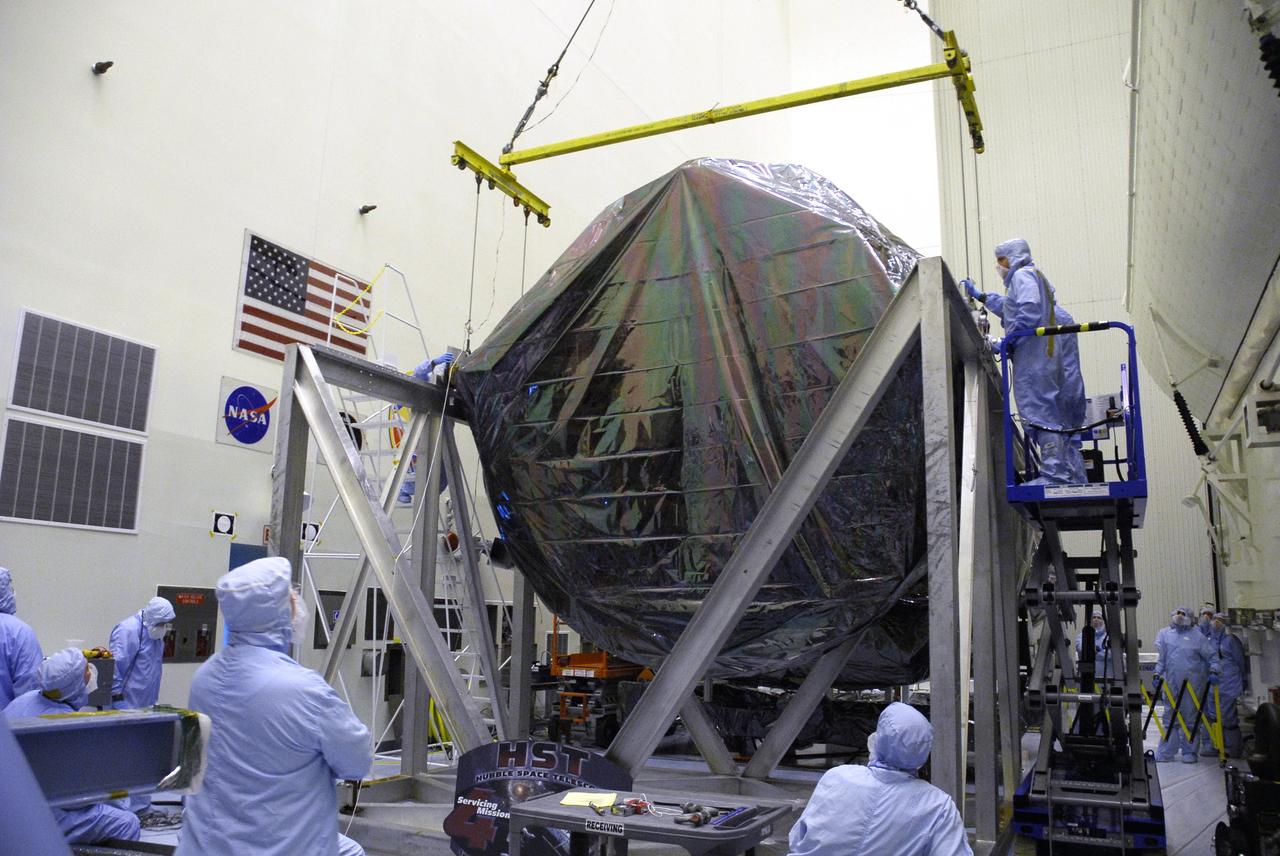
CAPE CANAVERAL, Fla. - In the Payload Hazardous Servicing Facility at NASA’s Kennedy Space Center, an overhead crane lifts the Flight Support System carrier with the Soft Capture Mechanism under protective cover. The carrier is one of four associated with the STS-125 mission to service the Hubble Space Telescope. It will be installed in the payload canister for transfer to Launch Pad 39A. At the pad, all the carriers will be loaded into space shuttle Atlantis’ payload bay. Launch of Atlantis is targeted for Oct. 10. Photo credit: NASA/Cory Huston
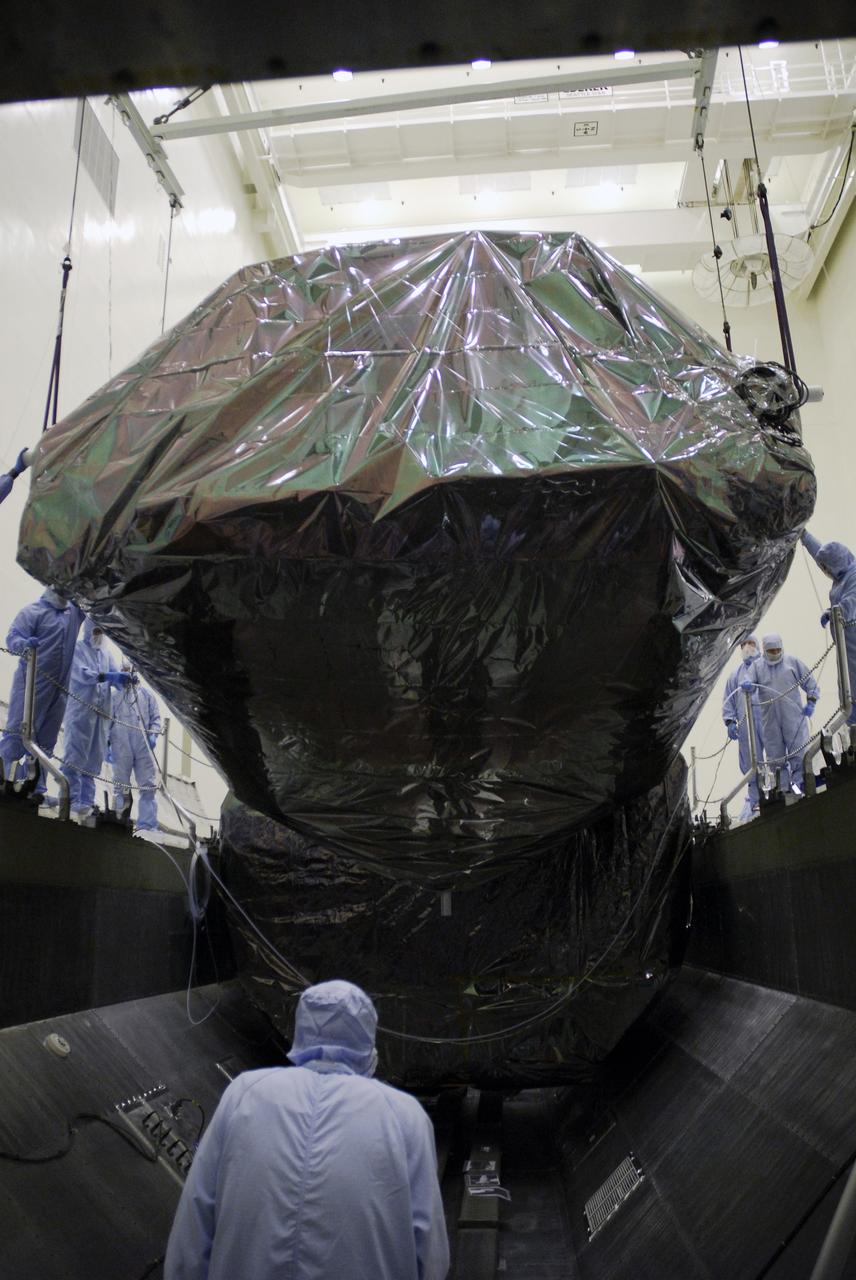
CAPE CANAVERAL, Fla. - In the Payload Hazardous Servicing Facility at NASA's Kennedy Space Center, an overhead crane lowers the Super Lightweight Interchangeable Carrier, or SLIC, into the payload canister. The SLIC, one of four carriers associated with the STS-125 mission to service the Hubble Space Telescope, will be moved to Launch Pad 39A. At the pad, all the carriers will be loaded into space shuttle Atlantis’ payload bay. Launch of Atlantis is targeted for Oct. 10. Photo credit: NASA/Jack Pfaller
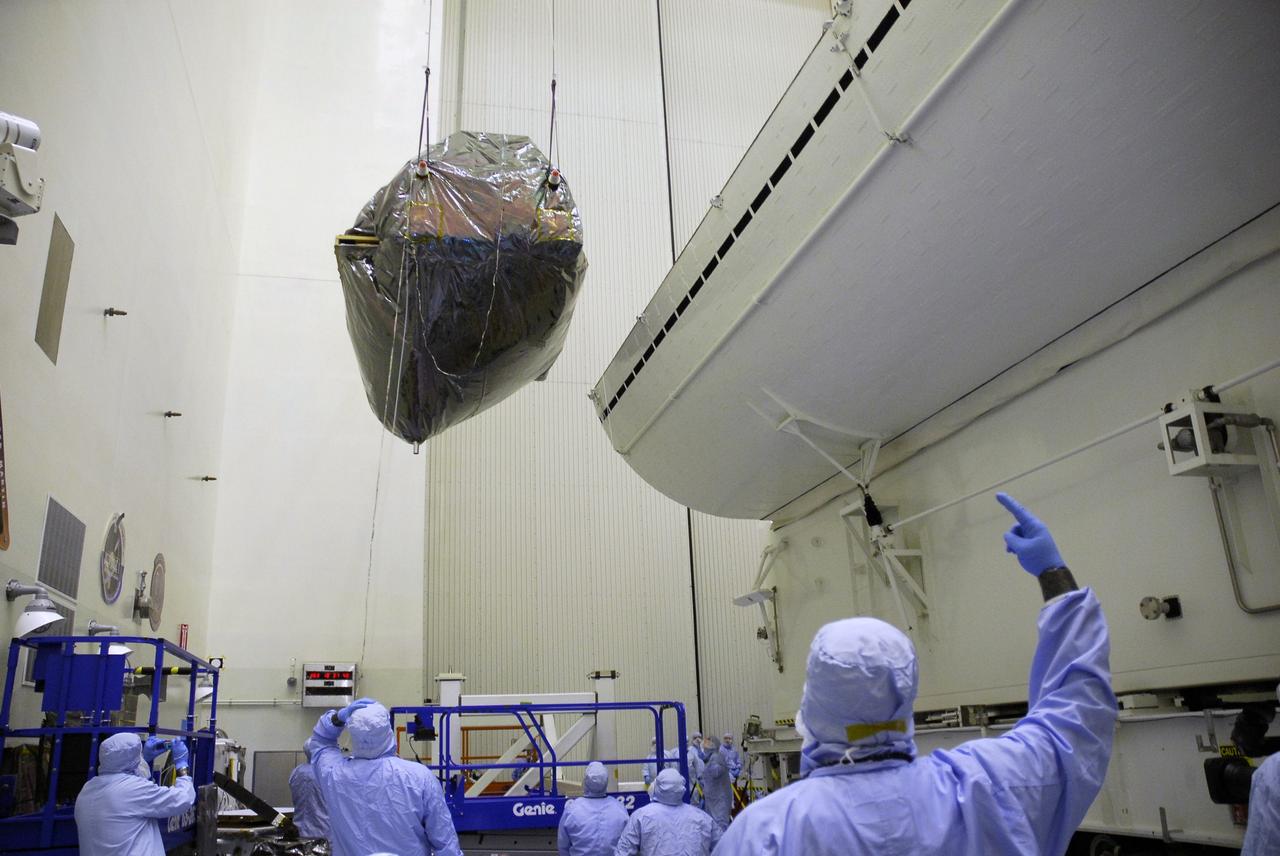
CAPE CANAVERAL, Fla. - In the Payload Hazardous Servicing Facility at NASA's Kennedy Space Center, an overhead crane suspends the Super Lightweight Interchangeable Carrier, or SLIC, as it transfers the carrier to the payload canister at right. The SLIC, one of four carriers associated with the STS-125 mission to service the Hubble Space Telescope, will be moved to Launch Pad 39A. At the pad, all the carriers will be loaded into space shuttle Atlantis’ payload bay. Launch of Atlantis is targeted for Oct. 10. Photo credit: NASA/Jack Pfaller

CAPE CANAVERAL, Fla. - In the Payload Hazardous Servicing Facility at NASA’s Kennedy Space Center, engineers control the movement of the overhead crane lifting the Flight Support System carrier with the Soft Capture Mechanism. It will be installed in the payload canister for transfer to Launch Pad 39A. The carrier is one of four associated with the STS-125 mission to service the Hubble Space Telescope. At the pad, all the carriers will be loaded into space shuttle Atlantis’ payload bay. Launch of Atlantis is targeted for Oct. 10. Photo credit: NASA/Cory Huston
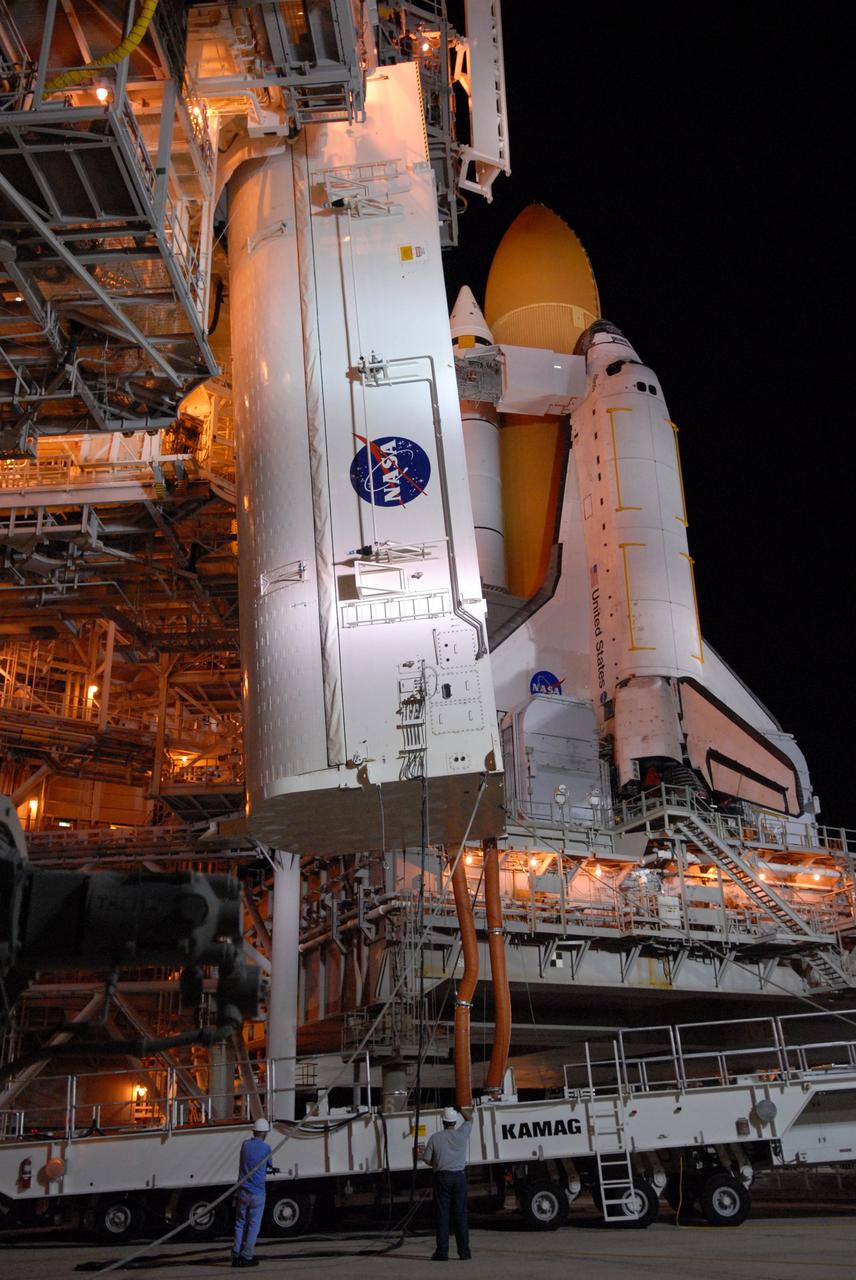
CAPE CANAVERAL, Fla. - On Launch Pad 39A at NASA's Kennedy Space Center, the payload canister is lifted toward the payload changeout room above. The canister contains four carriers holding various equipment for the STS-125 mission aboard space shuttle Atlantis to service NASA’s Hubble Space Telescope. The changeout room is the enclosed, environmentally controlled portion of the rotating service structure that supports cargo delivery to the pad and subsequent vertical installation into the shuttle’s payload bay. Launch of Atlantis is targeted for Oct. 10. Photo credit: NASA/Jack Pfaller
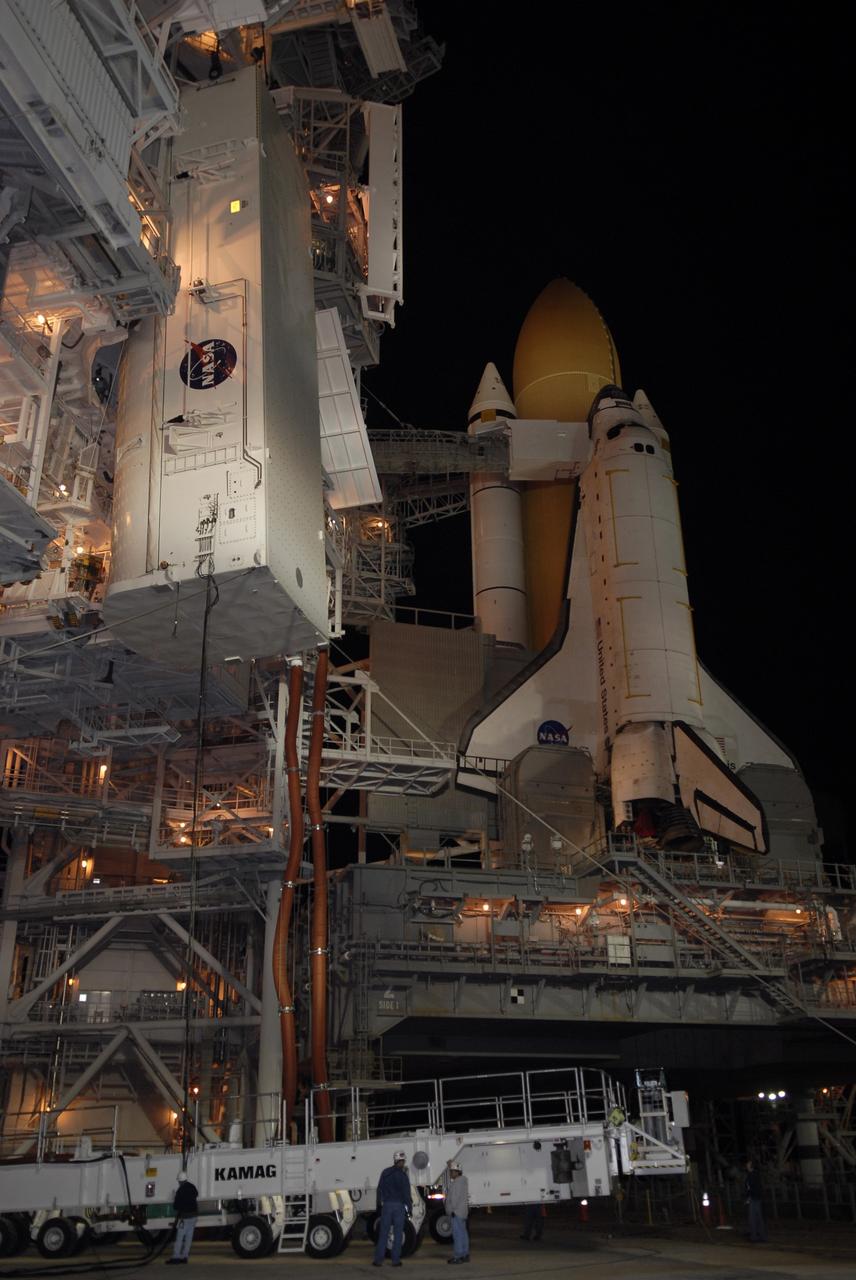
CAPE CANAVERAL, Fla. –– On Launch Pad 39A at NASA's Kennedy Space Center in Florida, the payload canister is lifted toward the payload changeout room, or PCR, on the rotating service structure. The canister's cargo of Hubble Space Telescope equipment will be deposited in the PCR and later transferred to the payload bay on space shuttle Atlantis, at right. Atlantis' 11-day STS-125 mission to service Hubble is targeted for launch May 12. The flight will include five spacewalks in which astronauts will refurbish and upgrade the telescope with state-of-the-art science instruments. As a result, Hubble's capabilities will be expanded and its operational lifespan extended through at least 2014. Photo credit: NASA/Kim Shiflett
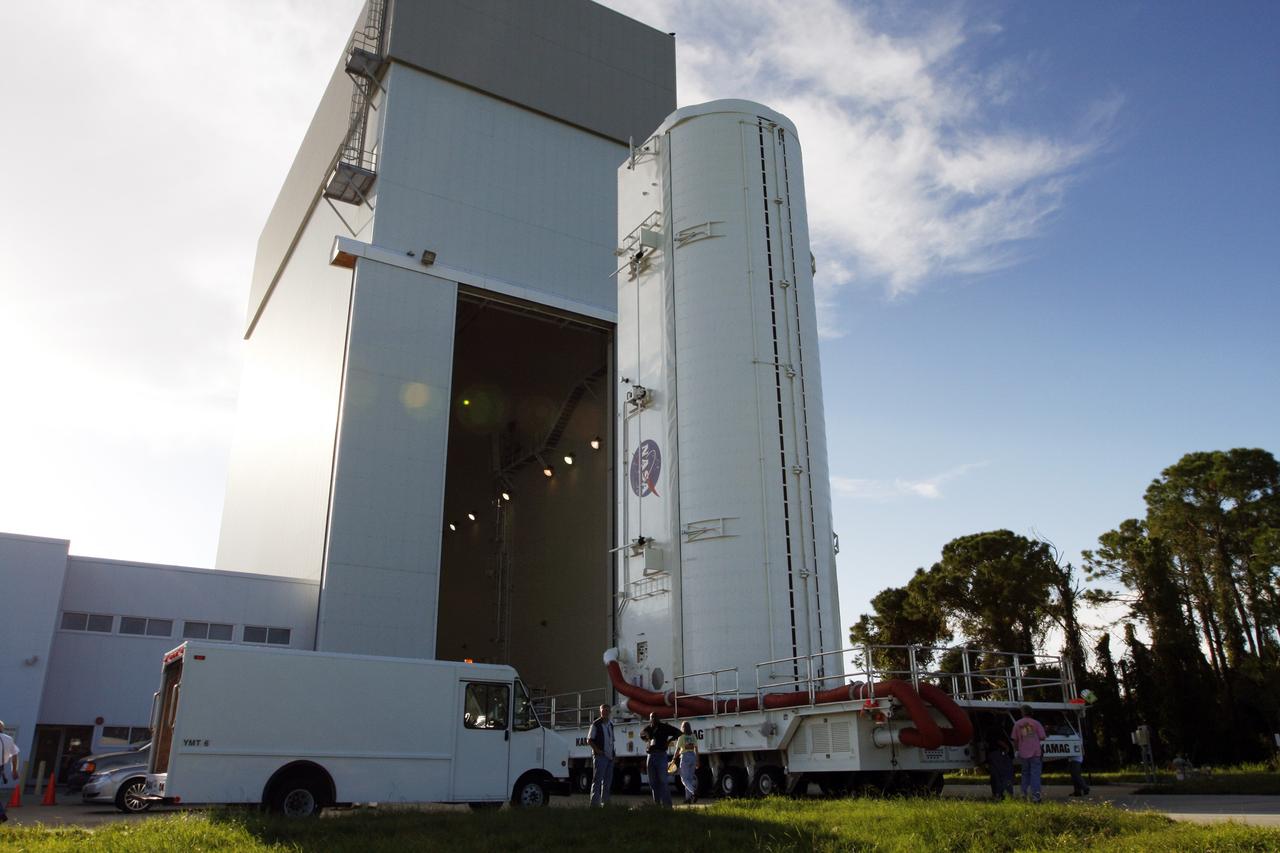
CAPE CANAVERAL, Fla. - The payload canister moves out of the Canister Rotation Facility at NASA's Kennedy Space Center in Florida heading for Launch Pad 39A. It carries a cargo of four carriers holding various equipment for the STS-125 mission aboard space shuttle Atlantis to service NASA’s Hubble Space Telescope. At the pad, the cargo will be moved into the Payload Changeout Room. The changeout room is the enclosed, environmentally controlled portion of the rotating service structure that supports cargo delivery to the pad and subsequent vertical installation into the shuttle’s payload bay. Launch of Atlantis is targeted for Oct. 10. Photo credit: NASA/Troy Cryder
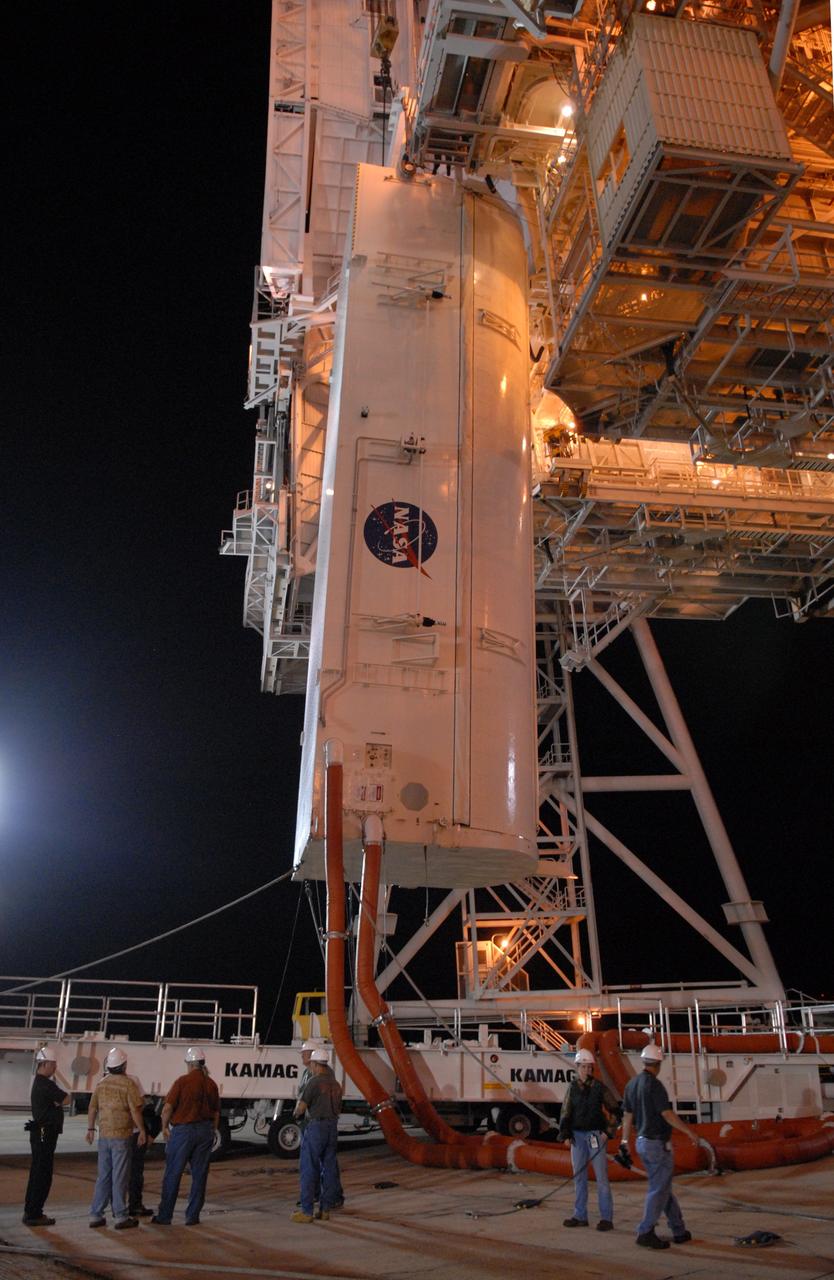
CAPE CANAVERAL, Fla. - On Launch Pad 39A at NASA's Kennedy Space Center, the payload canister is lifted toward the payload changeout room above. The canister contains four carriers holding various equipment for the STS-125 mission aboard space shuttle Atlantis to service NASA’s Hubble Space Telescope. The changeout room is the enclosed, environmentally controlled portion of the rotating service structure that supports cargo delivery to the pad and subsequent vertical installation into the shuttle’s payload bay. Launch of Atlantis is targeted for Oct. 10. Photo credit: NASA/Jack Pfaller
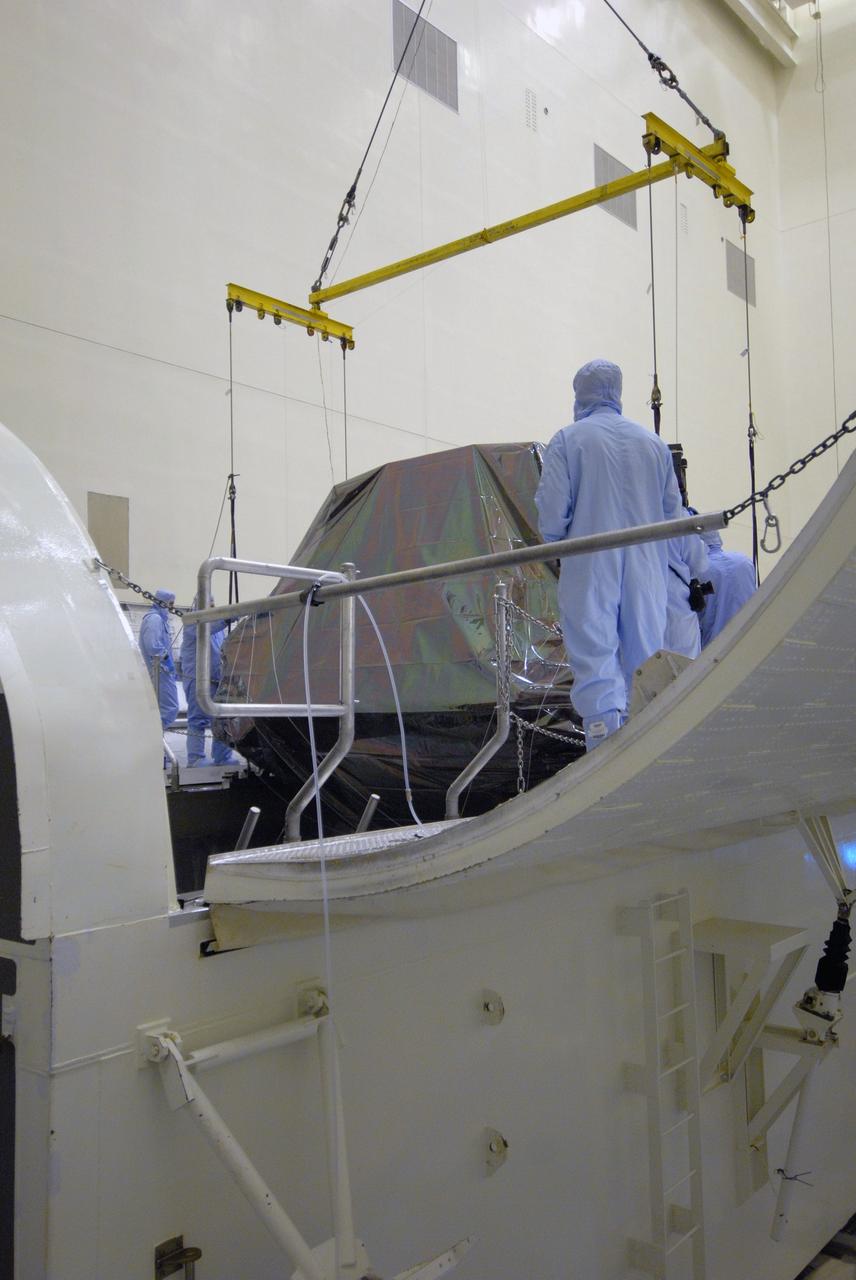
CAPE CANAVERAL, Fla. – In the Payload Hazardous Servicing Facility at NASA's Kennedy Space Center in Florida, an overhead crane lowers the Flight Support System, or FSS, carrier with the Soft Capture Mechanism into the payload canister. The canister will deliver the FSS and other carriers to Launch Pad 39A for installation in space shuttle Atlantis' payload bay. Atlantis' 11-day STS-125 mission to service NASA's Hubble Space Telescope is targeted for launch May 12. It will include five spacewalks in which astronauts will refurbish and upgrade the telescope with state-of-the-art science instruments. As a result, Hubble's capabilities will be expanded and its operational lifespan extended through at least 2014. Photo credit: NASA/Jack Pfaller
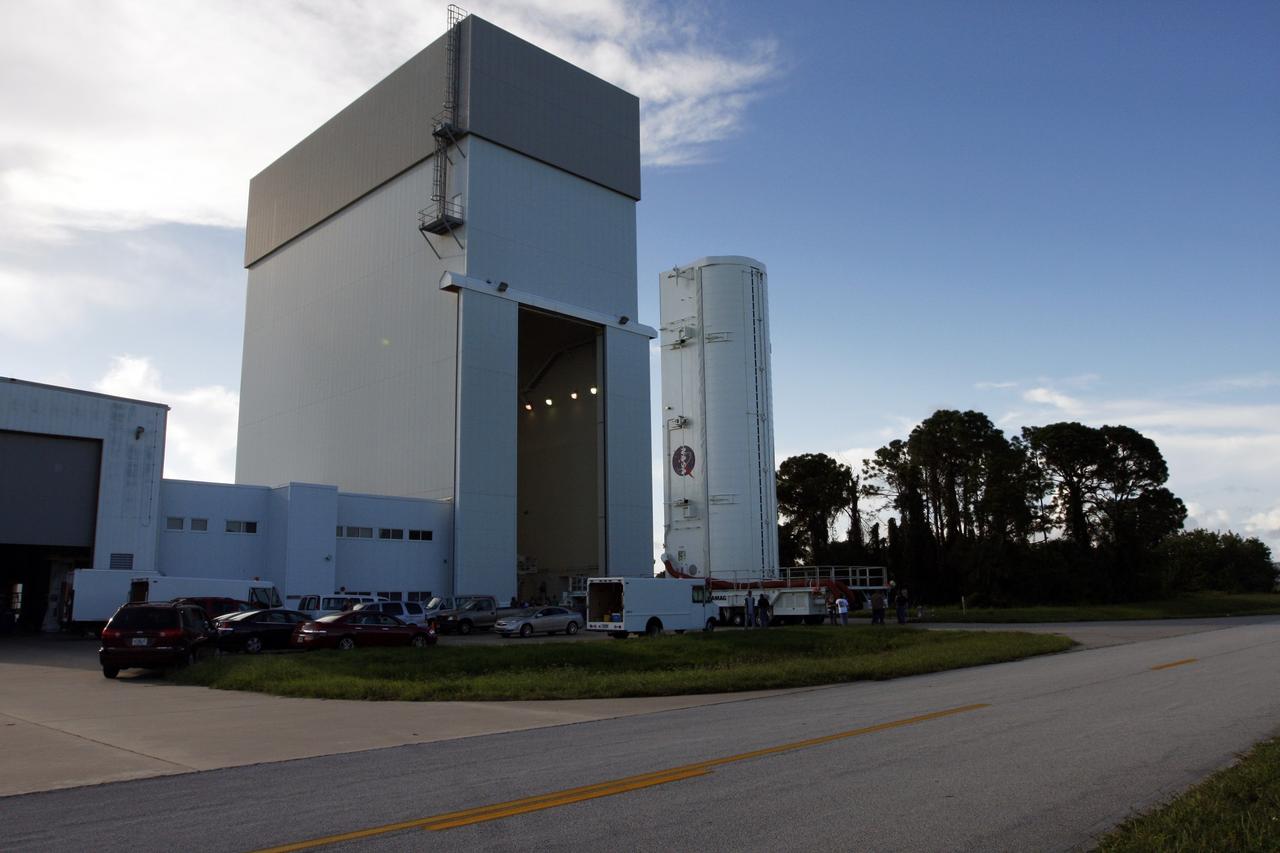
CAPE CANAVERAL, Fla. - The payload canister moves out of the Canister Rotation Facility at NASA's Kennedy Space Center in Florida heading for Launch Pad 39A. It carries a cargo of four carriers holding various equipment for the STS-125 mission aboard space shuttle Atlantis to service NASA’s Hubble Space Telescope. At the pad, the cargo will be moved into the Payload Changeout Room. The changeout room is the enclosed, environmentally controlled portion of the rotating service structure that supports cargo delivery to the pad and subsequent vertical installation into the shuttle’s payload bay. Launch of Atlantis is targeted for Oct. 10. Photo credit: NASA/Troy Cryder
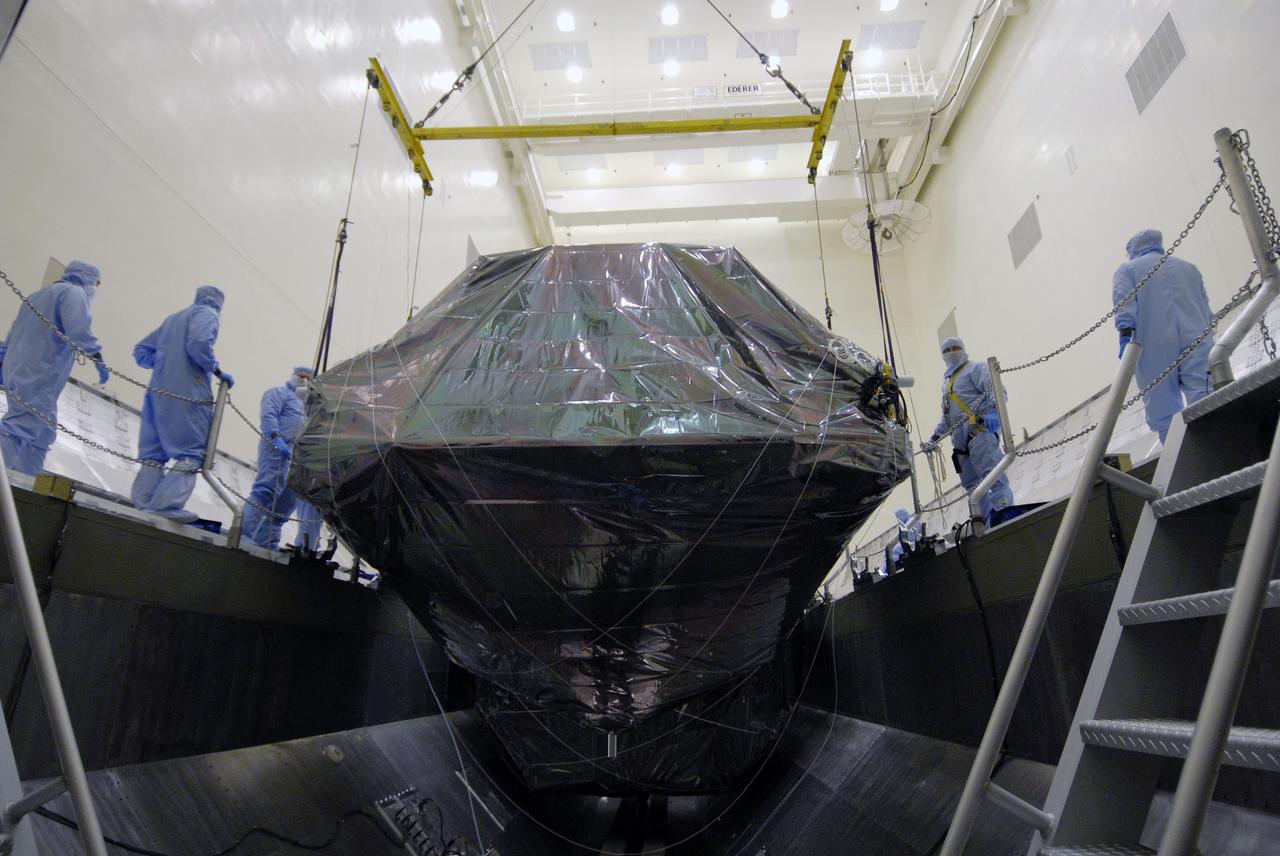
CAPE CANAVERAL, Fla. – In the Payload Hazardous Servicing Facility at NASA's Kennedy Space Center in Florida, an overhead crane lowers the Flight Support System, or FSS, carrier with the Soft Capture Mechanism into the payload canister. The canister will deliver the FSS and other carriers to Launch Pad 39A for installation in space shuttle Atlantis' payload bay. Atlantis' 11-day STS-125 mission to service NASA's Hubble Space Telescope is targeted for launch May 12. It will include five spacewalks in which astronauts will refurbish and upgrade the telescope with state-of-the-art science instruments. As a result, Hubble's capabilities will be expanded and its operational lifespan extended through at least 2014. Photo credit: NASA/Jack Pfaller
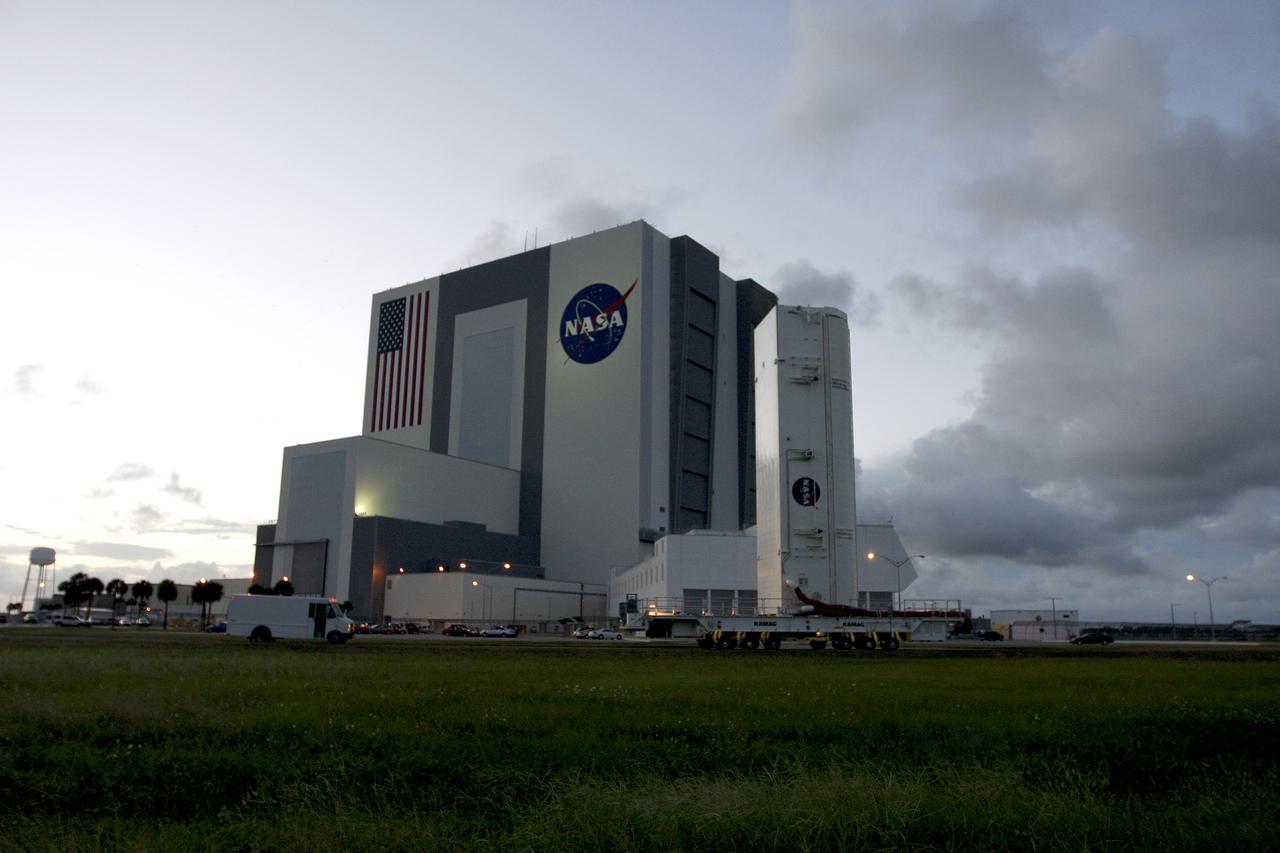
CAPE CANAVERAL, Fla. - On its way to Launch Pad 39A, the payload canister passes the Vehicle Assembly Building and Launch Control Center at NASA's Kennedy Space Center in Florida. The canister carries a cargo of four carriers holding various equipment for the STS-125 mission aboard space shuttle Atlantis to service NASA’s Hubble Space Telescope. At the pad, the cargo will be moved into the Payload Changeout Room. The changeout room is the enclosed, environmentally controlled portion of the rotating service structure that supports cargo delivery to the pad and subsequent vertical installation into the shuttle’s payload bay. Launch of Atlantis is targeted for Oct. 10. Photo credit: NASA/Troy Cryder
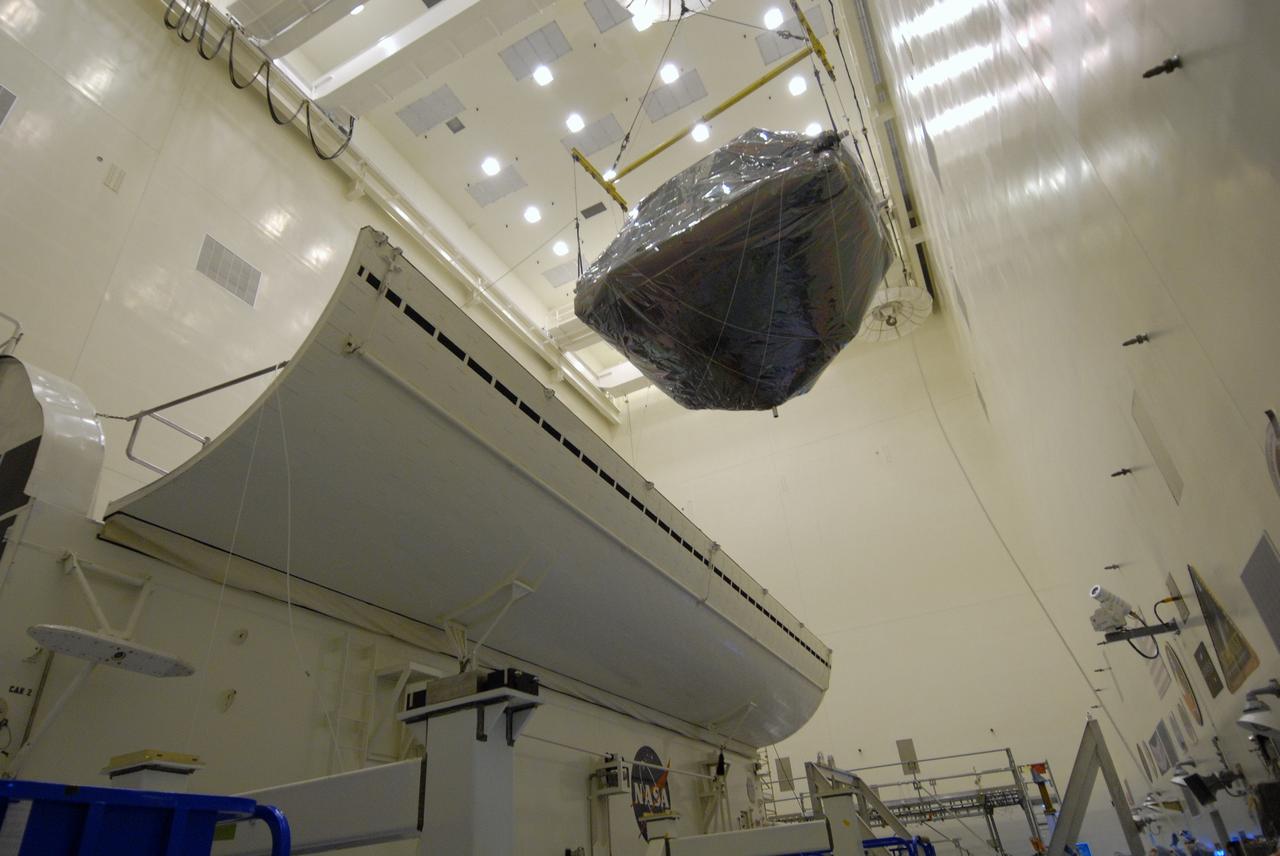
CAPE CANAVERAL, Fla. – In the Payload Hazardous Servicing Facility at NASA's Kennedy Space Center in Florida, an overhead crane moves the Flight Support System, or FSS, carrier with the Soft Capture Mechanism toward the payload canister. The canister will deliver the FSS and other carriers to Launch Pad 39A for installation in space shuttle Atlantis' payload bay. Atlantis' 11-day STS-125 mission to service NASA's Hubble Space Telescope is targeted for launch May 12. It will include five spacewalks in which astronauts will refurbish and upgrade the telescope with state-of-the-art science instruments. As a result, Hubble's capabilities will be expanded and its operational lifespan extended through at least 2014. Photo credit: NASA/Jack Pfaller
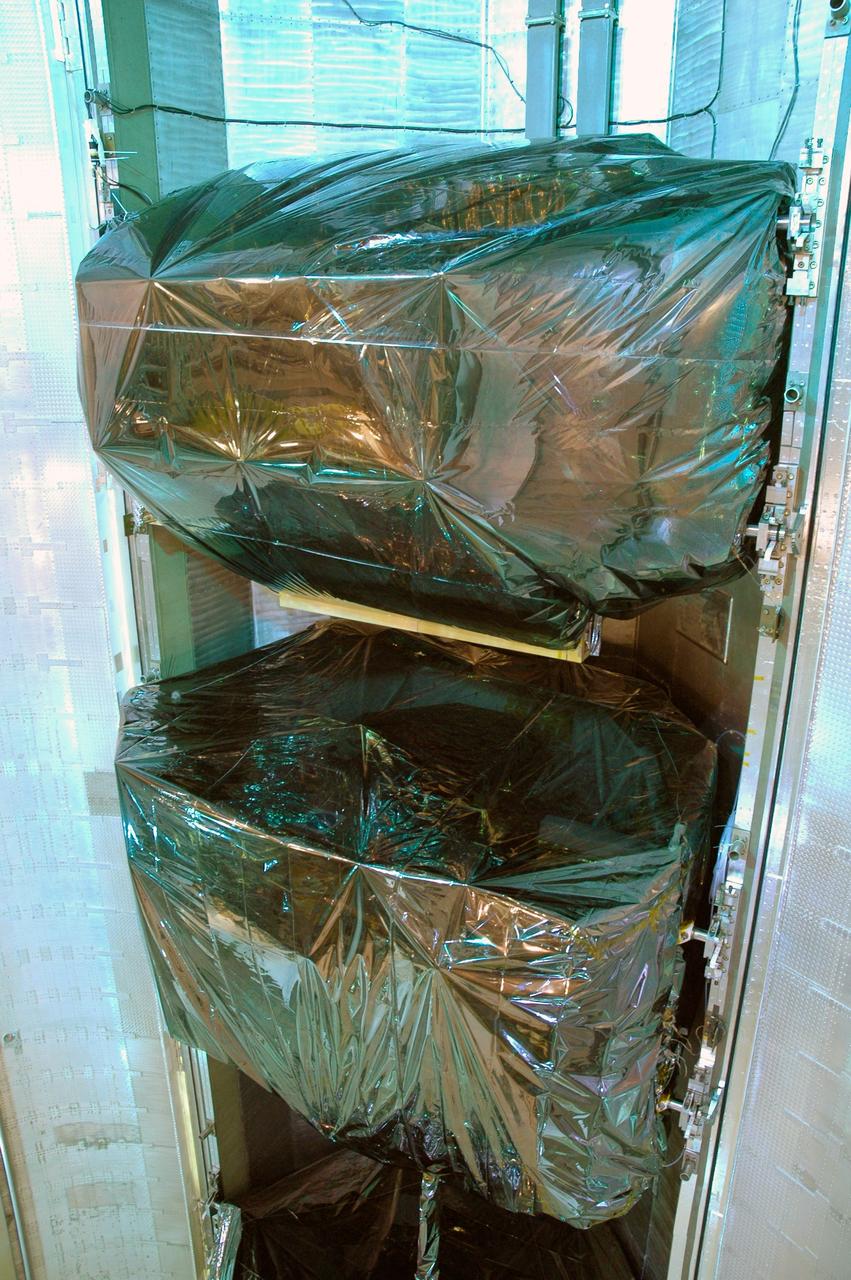
CAPE CANAVERAL, Fla. - In the payload changeout room, or PCR, on Launch Pad 39A at NASA's Kennedy Space Center in Florida, a closeup shows two of the four carriers inside the payload canister that will be transferred into the PCR. These carriers are the Multi-Use Logistic Equipment carrier (top) and the Flight Support System carrier. They hold various equipment for the STS-125 mission aboard space shuttle Atlantis to service NASA’s Hubble Space Telescope. The PGHM removes payloads from a transportation canister and installs them into the shuttle. It is essentially NASA’s largest fork-lift. Atlantis is targeted to launch Oct. 10. Photo credit: NASA/Jim Grossmann
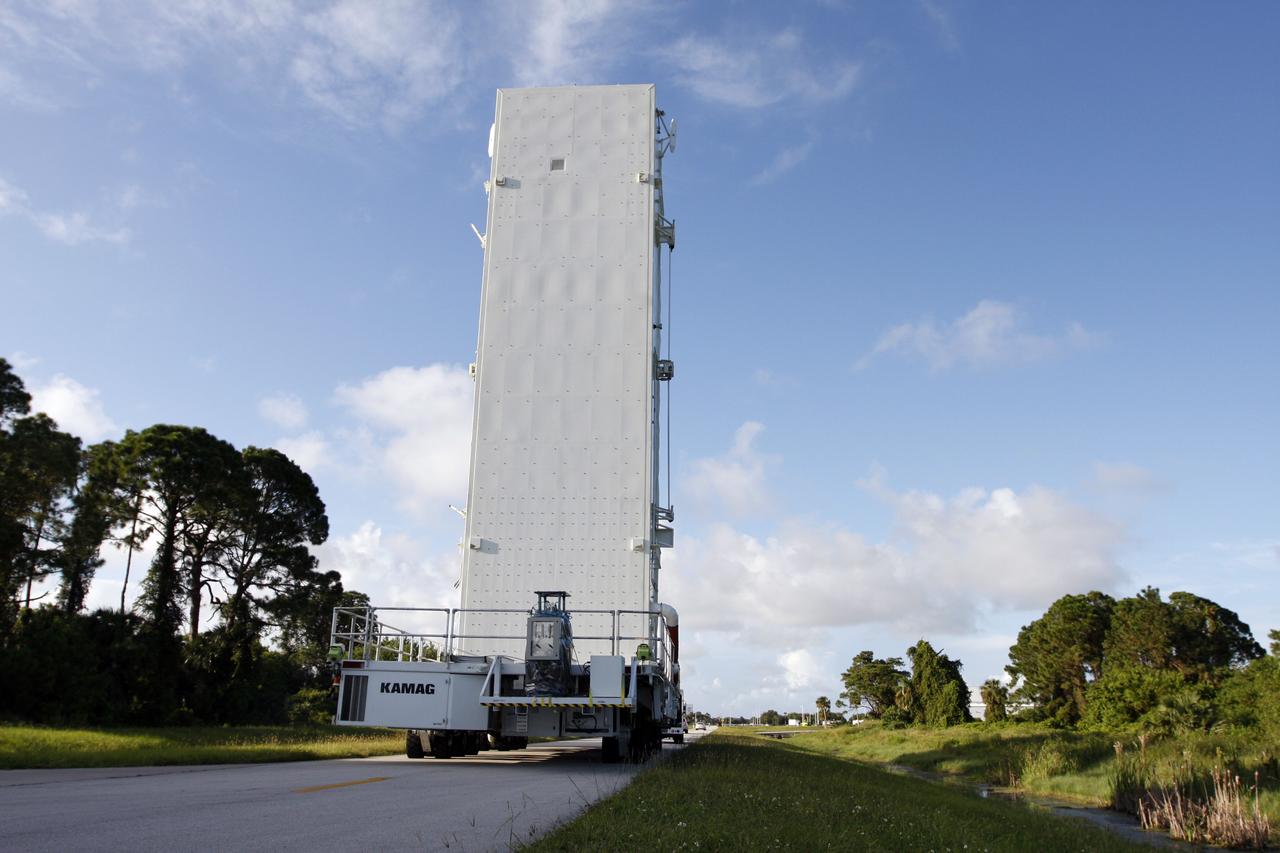
CAPE CANAVERAL, Fla. - The payload canister makes its way from the Canister Rotation Facility at NASA's Kennedy Space Center in Florida to Launch Pad 39A. It carries a cargo of four carriers holding various equipment for the STS-125 mission aboard space shuttle Atlantis to service NASA’s Hubble Space Telescope. At the pad, the cargo will be moved into the Payload Changeout Room. The changeout room is the enclosed, environmentally controlled portion of the rotating service structure that supports cargo delivery to the pad and subsequent vertical installation into the shuttle’s payload bay. Launch of Atlantis is targeted for Oct. 10. Photo credit: NASA/Troy Cryder
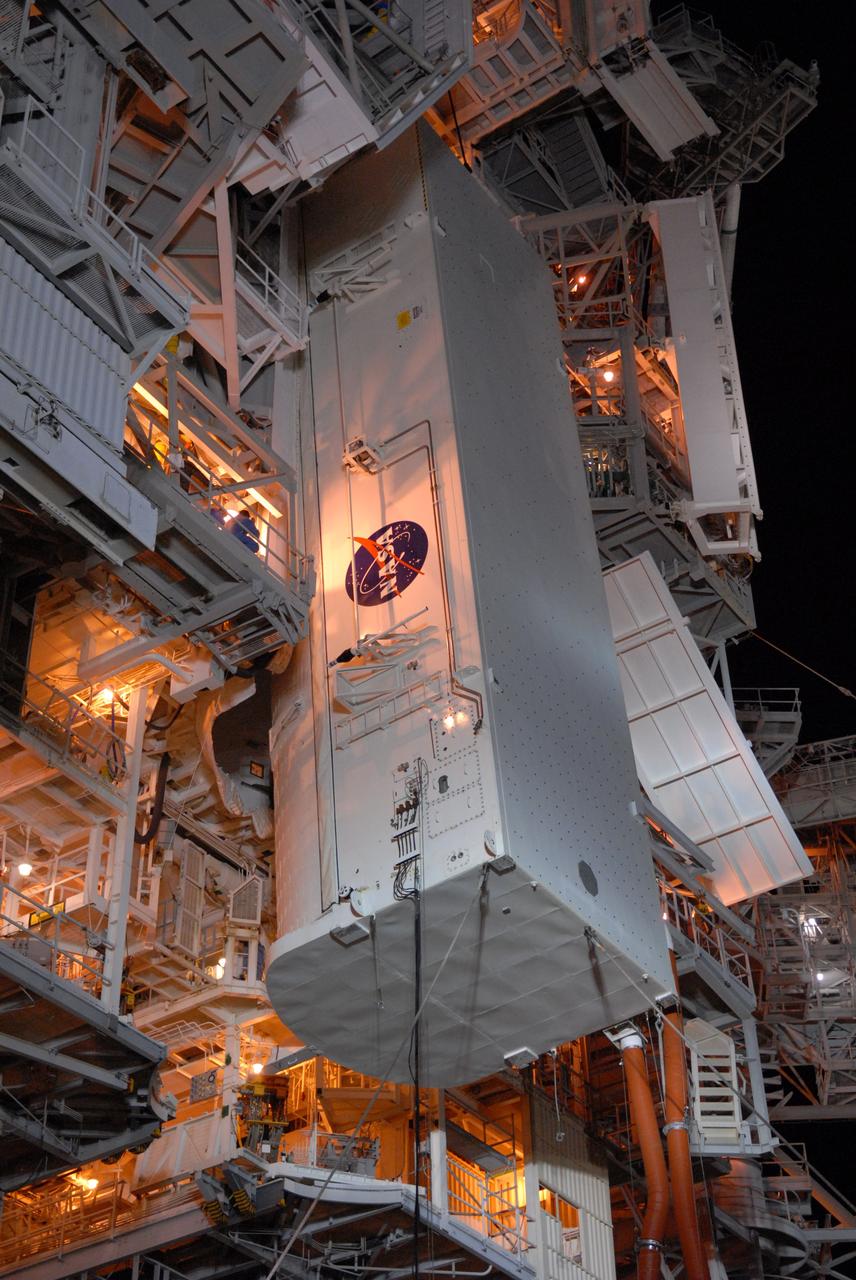
CAPE CANAVERAL, Fla. - On Launch Pad 39A at NASA's Kennedy Space Center, the payload canister is lifted to the payload changeout room above. The canister contains four carriers holding various equipment for the STS-125 mission aboard space shuttle Atlantis to service NASA’s Hubble Space Telescope. The changeout room is the enclosed, environmentally controlled portion of the rotating service structure that supports cargo delivery to the pad and subsequent vertical installation into the shuttle’s payload bay. Launch of Atlantis is targeted for Oct. 10. Photo credit: NASA/Jack Pfaller
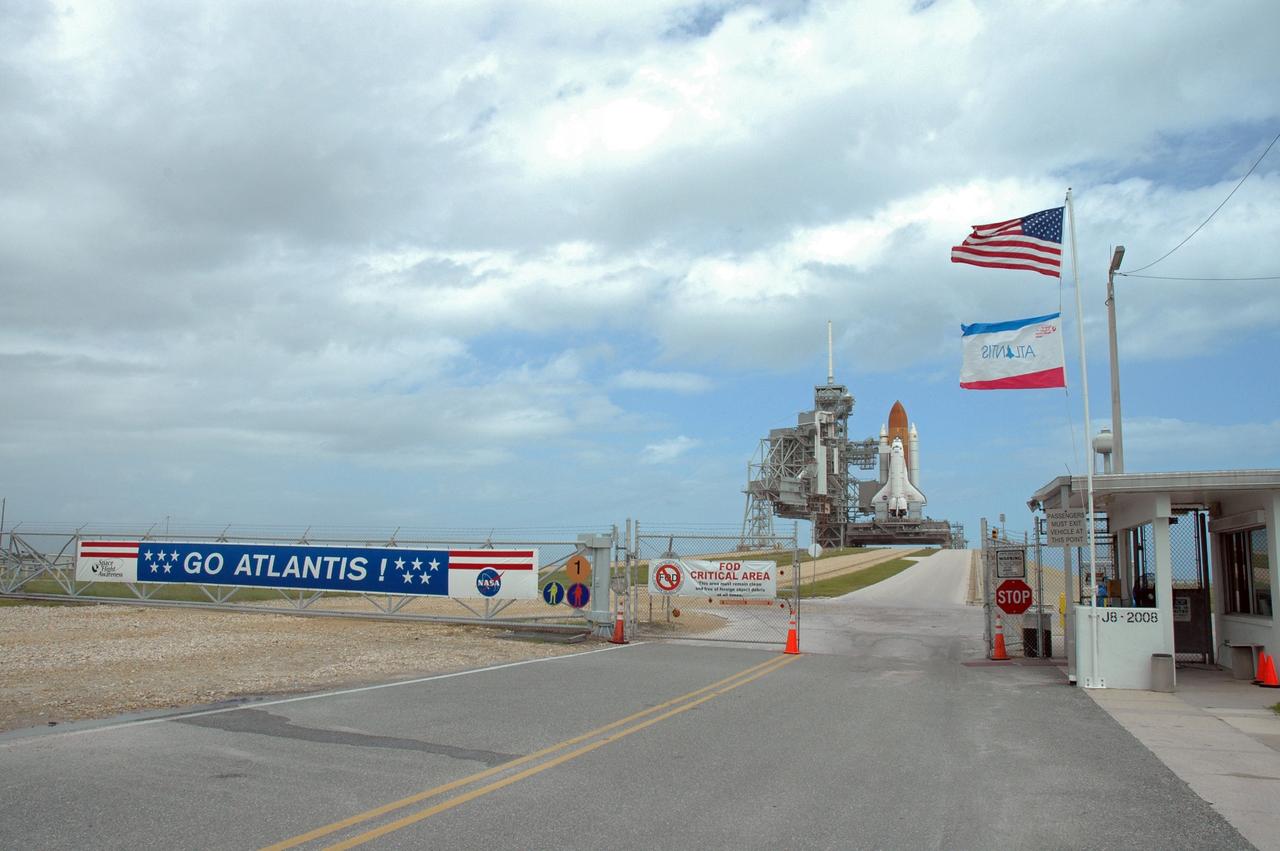
CAPE CANAVERAL, Fla. – On Launch Pad 39A at NASA's Kennedy Space Center in Florida, the rotating service structure is open, revealing space shuttle Atlantis on the pad for the STS-125 mission, the fifth and final shuttle servicing mission for NASA’s Hubble Space Telescope. On the RSS, the payload canister is in position at the payload changeout room to receive the Hubble hardware. High winds, however, have delayed the transfer. The payload comprises four carriers holding various equipment for the mission. The hardware will be transported back to Kennedy’s Payload Hazardous Servicing Facility where it will be stored until a new target launch date can be set for Atlantis’ STS-125 mission in 2009. Atlantis’ October target launch date was delayed after a device on board Hubble used in the storage and transmission of science data to Earth shut down on Sept. 27. Replacing the broken device will be added to Atlantis’ servicing mission to the telescope. Photo credit: NASA/Tim Jacobs
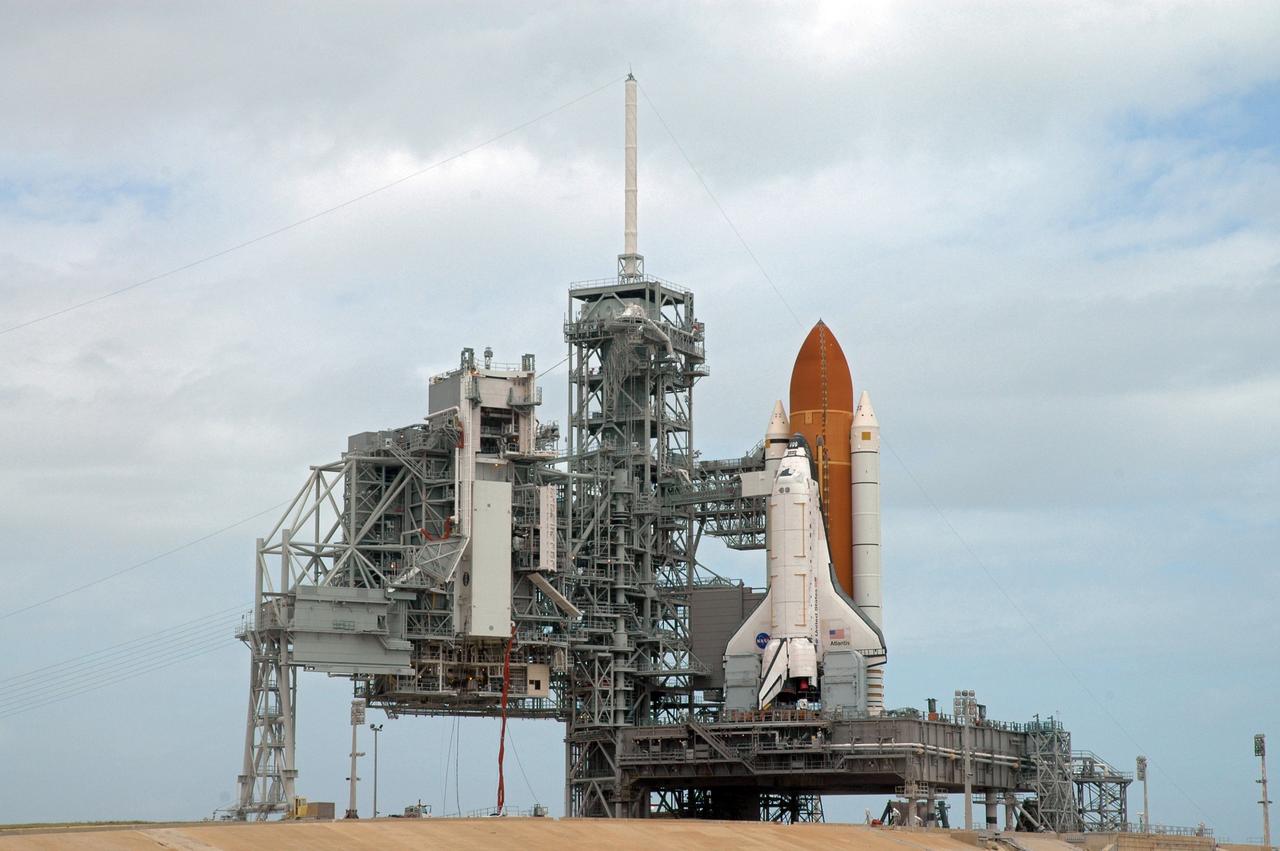
CAPE CANAVERAL, Fla. – On Launch Pad 39A at NASA's Kennedy Space Center in Florida, the rotating service structure is open, revealing space shuttle Atlantis on the pad for the STS-125 mission, the fifth and final shuttle servicing mission for NASA’s Hubble Space Telescope. On the RSS, the payload canister is in position at the payload changeout room to receive the Hubble hardware. The payload comprises four carriers holding various equipment for the mission. The hardware will be transported back to Kennedy’s Payload Hazardous Servicing Facility where it will be stored until a new target launch date can be set for Atlantis’ STS-125 mission in 2009. Atlantis’ October target launch date was delayed after a device on board Hubble used in the storage and transmission of science data to Earth shut down on Sept. 27. Replacing the broken device will be added to Atlantis’ servicing mission to the telescope. Photo credit: NASA/Tim Jacobs
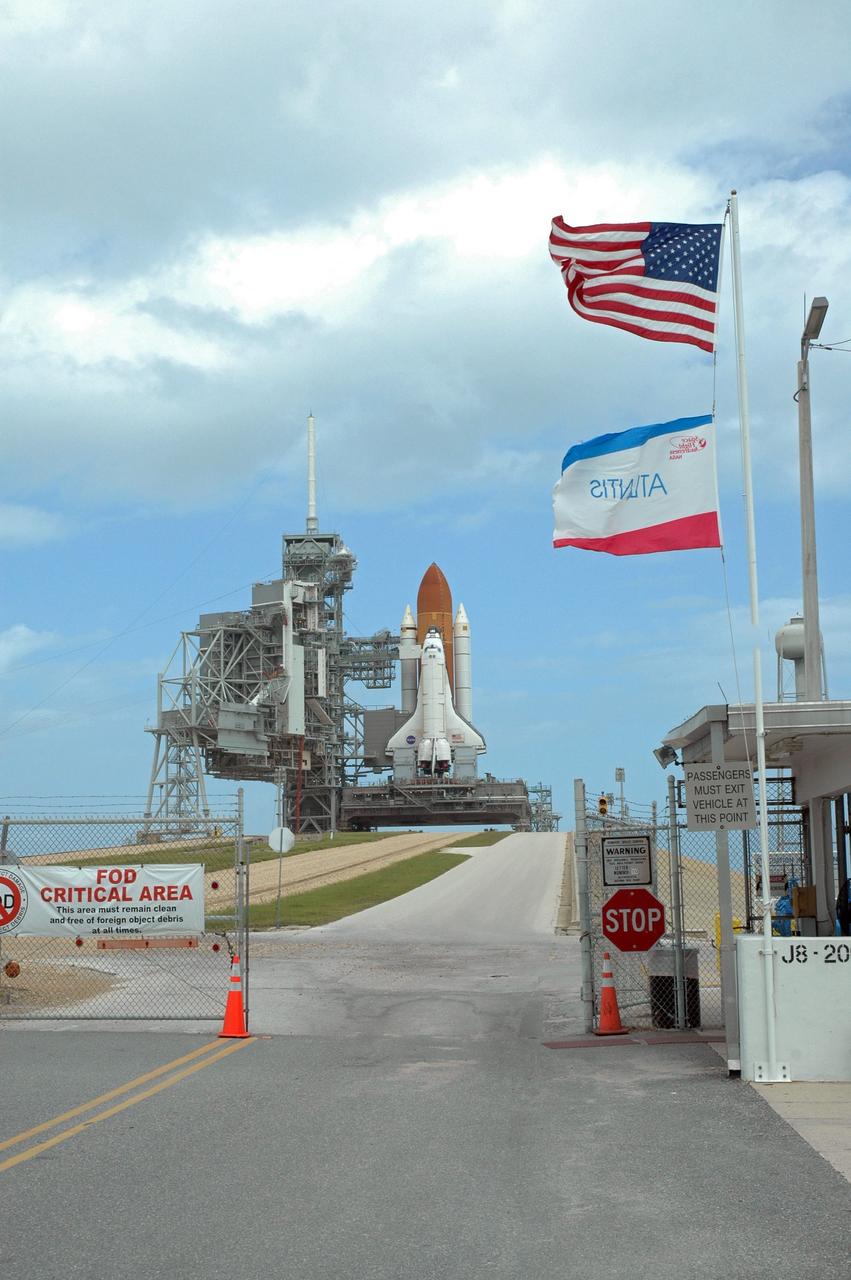
CAPE CANAVERAL, Fla. – On Launch Pad 39A at NASA's Kennedy Space Center in Florida, the rotating service structure is open, revealing space shuttle Atlantis on the pad for the STS-125 mission, the fifth and final shuttle servicing mission for NASA’s Hubble Space Telescope. On the RSS, the payload canister is in position at the payload changeout room to receive the Hubble hardware. High winds, however, have delayed the transfer. The payload comprises four carriers holding various equipment for the mission. The hardware will be transported back to Kennedy’s Payload Hazardous Servicing Facility where it will be stored until a new target launch date can be set for Atlantis’ STS-125 mission in 2009. Atlantis’ October target launch date was delayed after a device on board Hubble used in the storage and transmission of science data to Earth shut down on Sept. 27. Replacing the broken device will be added to Atlantis’ servicing mission to the telescope. Photo credit: NASA/Tim Jacobs