
PHOTO DATE: 05-13-09 LOCATION: Bldg. 30 south , WFCR & Backrooms SUBJECT: STS-125 Flight Controllers on Console During HST Grapple - Orbit 1 - Bldg. 30 south. Flight Director: Tony Ceccacci PHOTOGRAPHER: JAMES BLAIR
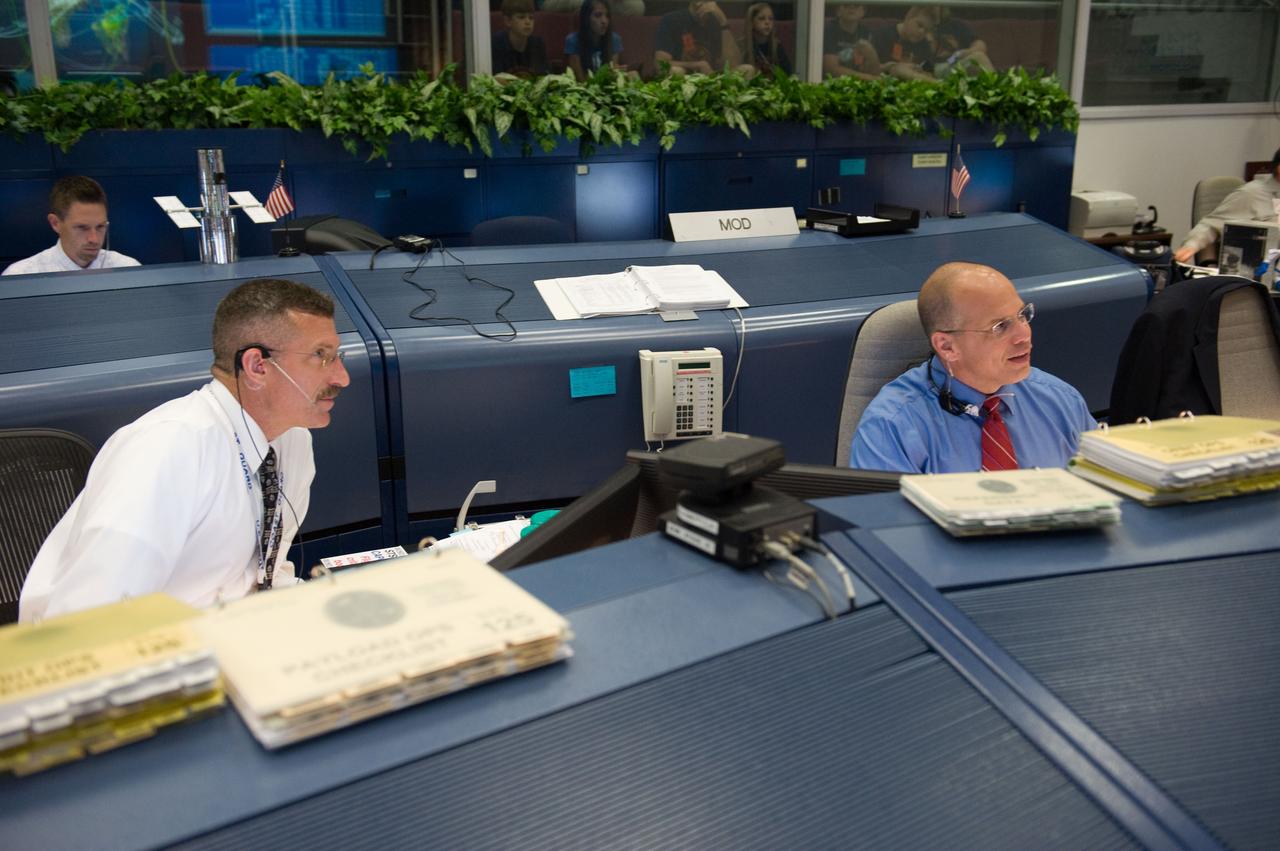
PHOTO DATE: 05-13-09 LOCATION: Bldg. 30 south , WFCR & Backrooms SUBJECT: STS-125 Flight Controllers on Console During HST Grapple - Orbit 1 - Bldg. 30 south. Flight Director: Tony Ceccacci PHOTOGRAPHER: JAMES BLAIR
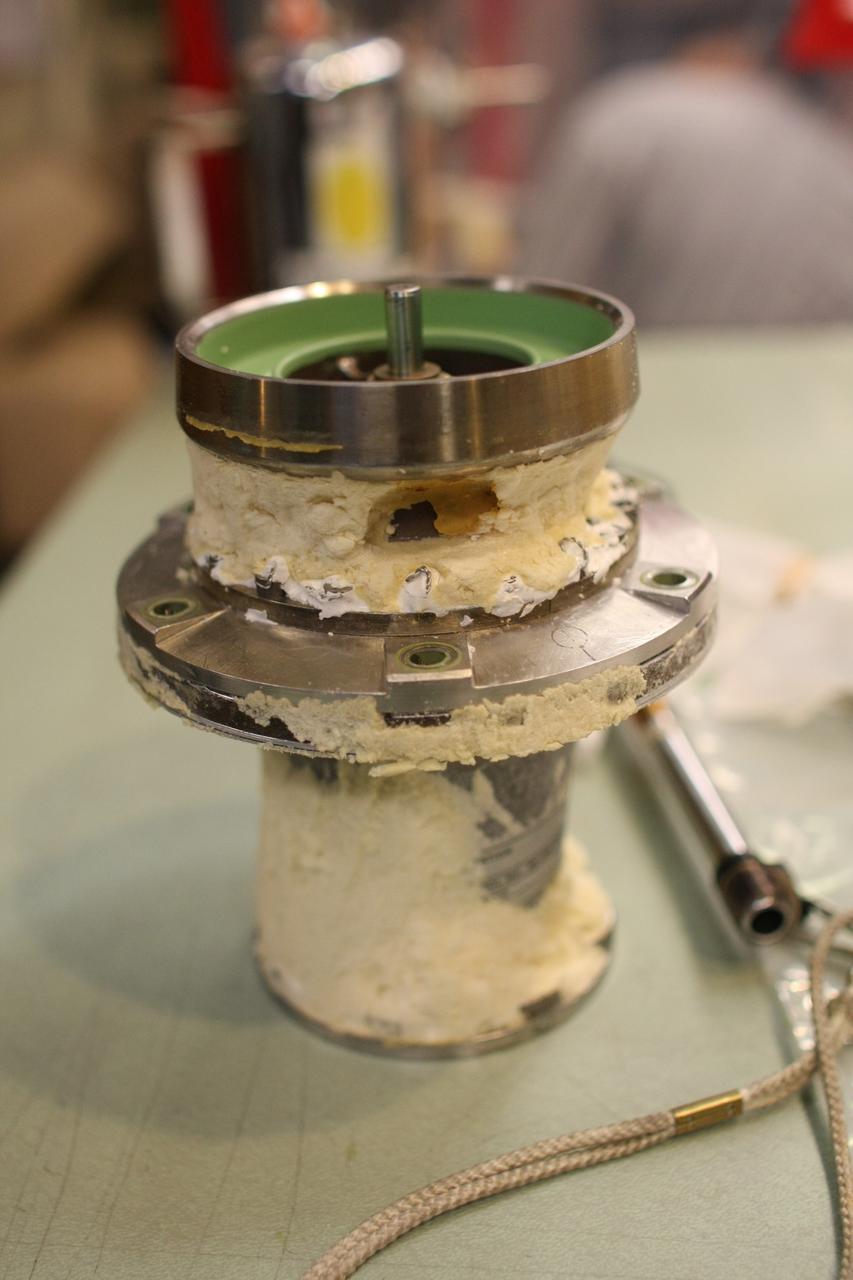
CAPE CANAVERAL, Fla. – A close up view of the valve removed from Atlantis’ external tank inside the Vehicle Assembly Building at NASA’s Kennedy Space Center. Technicians removed the valve after small dings were found on the sealing surface of the quick disconnect system that handles liquid-hydrogen fuel for the shuttle’s three main engines. The tank will be attached to the twin solid rocket boosters on Aug. 3 for the STS-125 mission, the fifth and final shuttle servicing mission to NASA’s Hubble Space Telescope. During the mission, the crew will install new instruments on the telescope, including the Cosmic Origins Spectrograph and the Wide Field Camera 3. A refurbished Fine Guidance Sensor will replace one unit of three now onboard. Mission specialists will also install new gyroscopes, batteries and thermal blankets on the telescope. Launch is targeted for Oct. 8. Photo credit: NASA/Dimitri Gerondidakis
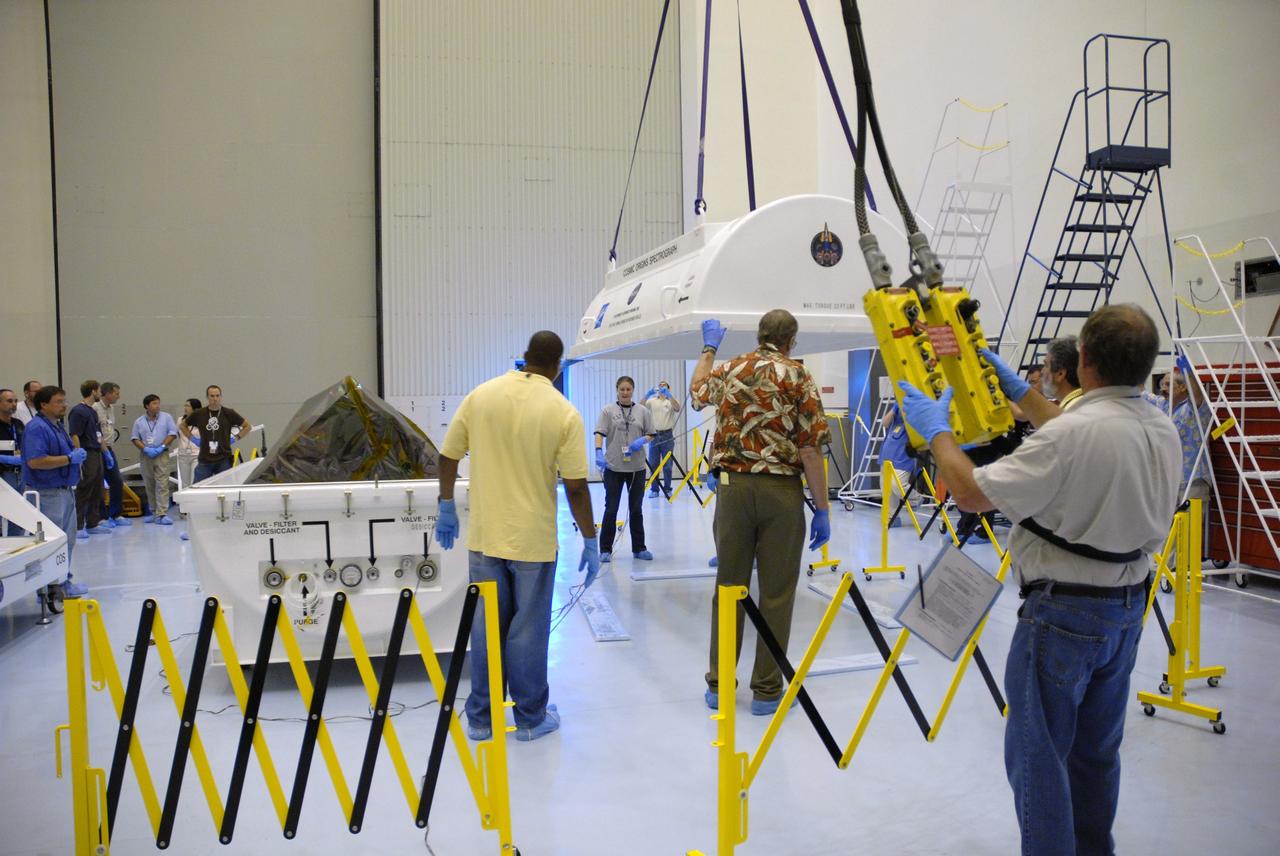
CAPE CANAVERAL, Fla. – In the airlock of the Payload Hazardous Servicing Facility at NASA's Kennedy Space Center, workers from NASA's Goddard Space Flight Center remove the top from the transportation canister in which the Cosmic Origins Spectrograph, or COS, arrived. The COS will be installed on the Hubble Space Telescope on space shuttle Atlantis' STS-125 mission. COS will be the most sensitive ultraviolet spectrograph ever flown on Hubble and will probe the "cosmic web" - the large-scale structure of the universe whose form is determined by the gravity of dark matter and is traced by galaxies and intergalactic gas. COS's far-ultraviolet channel has a sensitivity 30 times greater than that of previous spectroscopic instruments for the detection of extremely low light levels. Launch of STS-125 is targeted for Oct. 8. Photo credit: NASA/Jack Pfaller
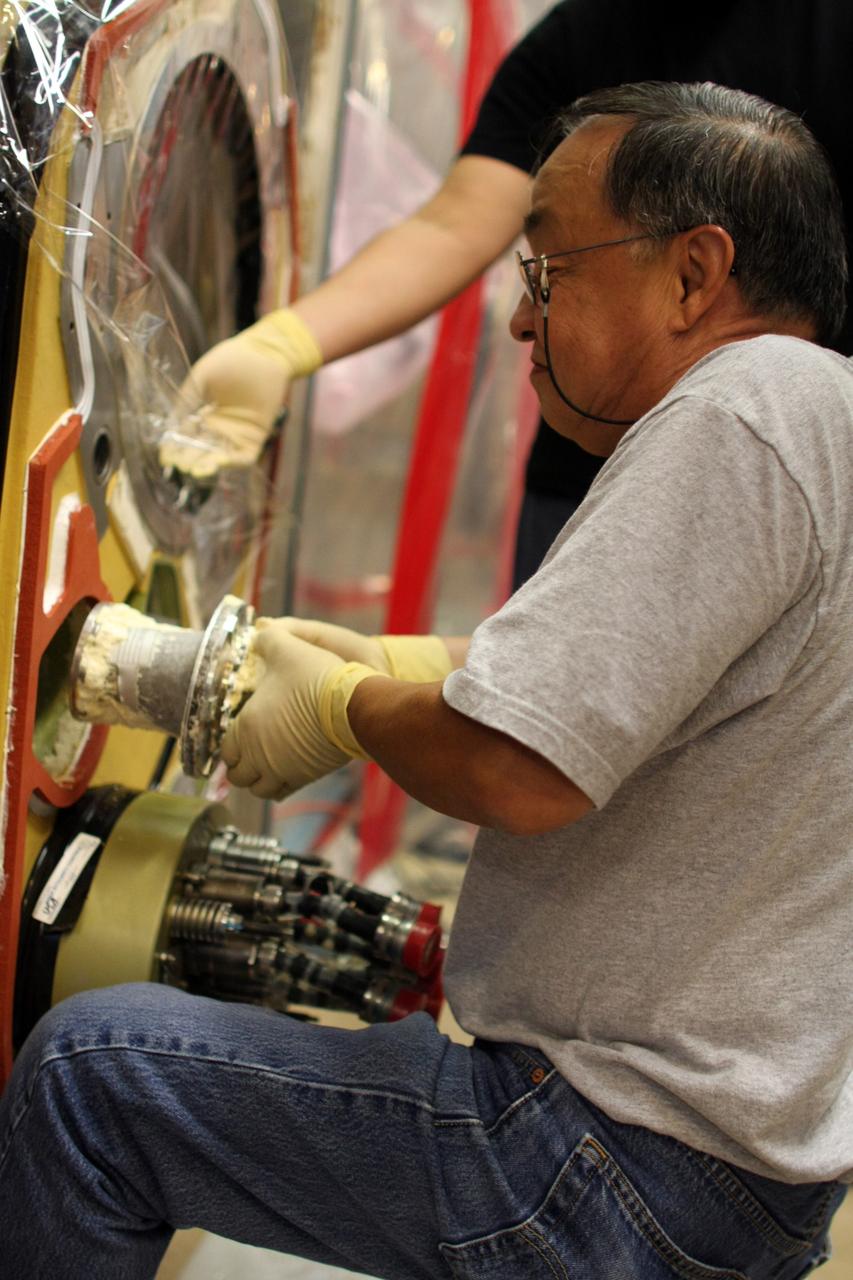
CAPE CANAVERAL, Fla. – Inside the Vehicle Assembly Building at NASA’s Kennedy Space Center, a technician removes a valve from Atlantis’ external tank after small dings were found on the sealing surface of the quick disconnect system that handles liquid-hydrogen fuel for the shuttle’s three main engines. The tank will be attached to the twin solid rocket boosters on Aug. 3 for the STS-125 mission, the fifth and final shuttle servicing mission to NASA’s Hubble Space Telescope. During the mission, the crew will install new instruments on the telescope, including the Cosmic Origins Spectrograph and the Wide Field Camera 3. A refurbished Fine Guidance Sensor will replace one unit of three now onboard. Mission specialists will also install new gyroscopes, batteries and thermal blankets on the telescope. Launch is targeted for Oct. 8. Photo credit: NASA/Dimitri Gerondidakis
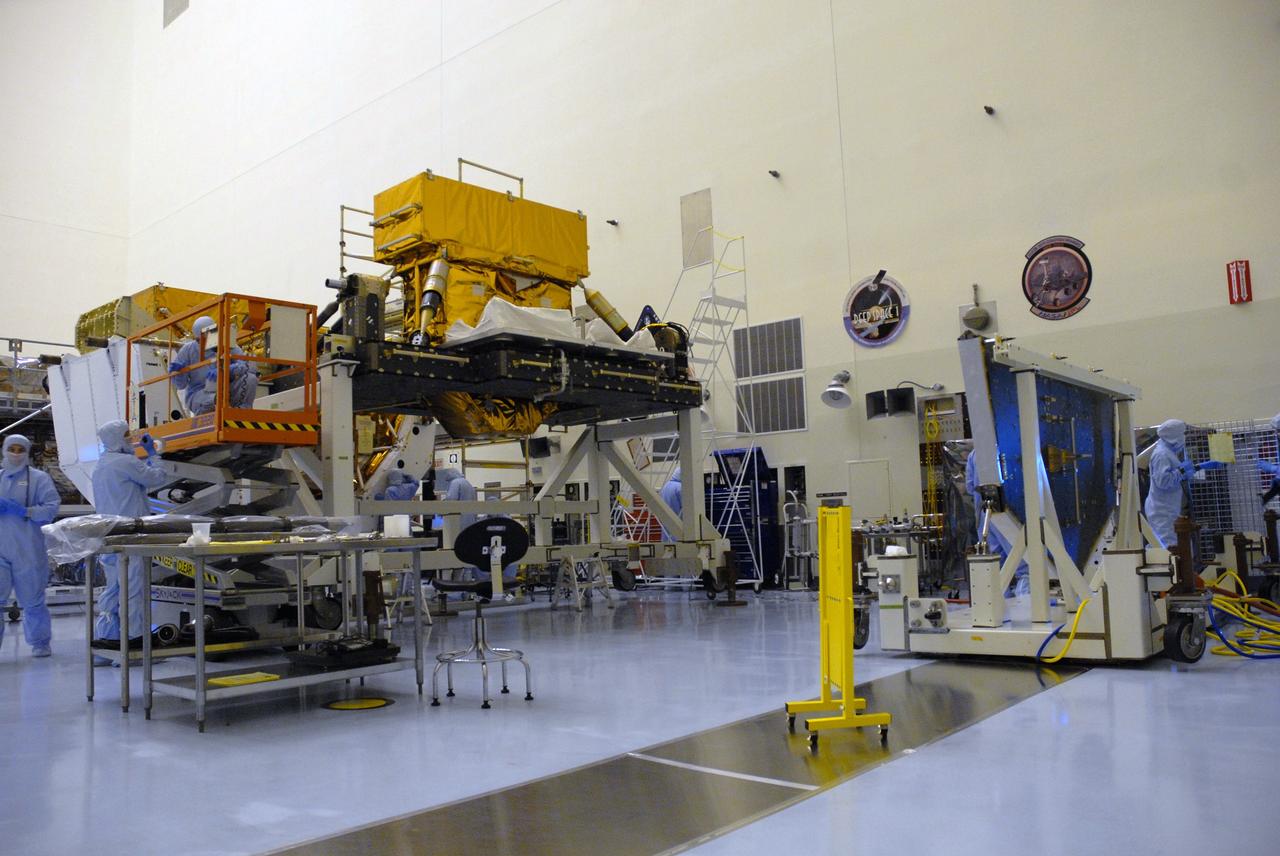
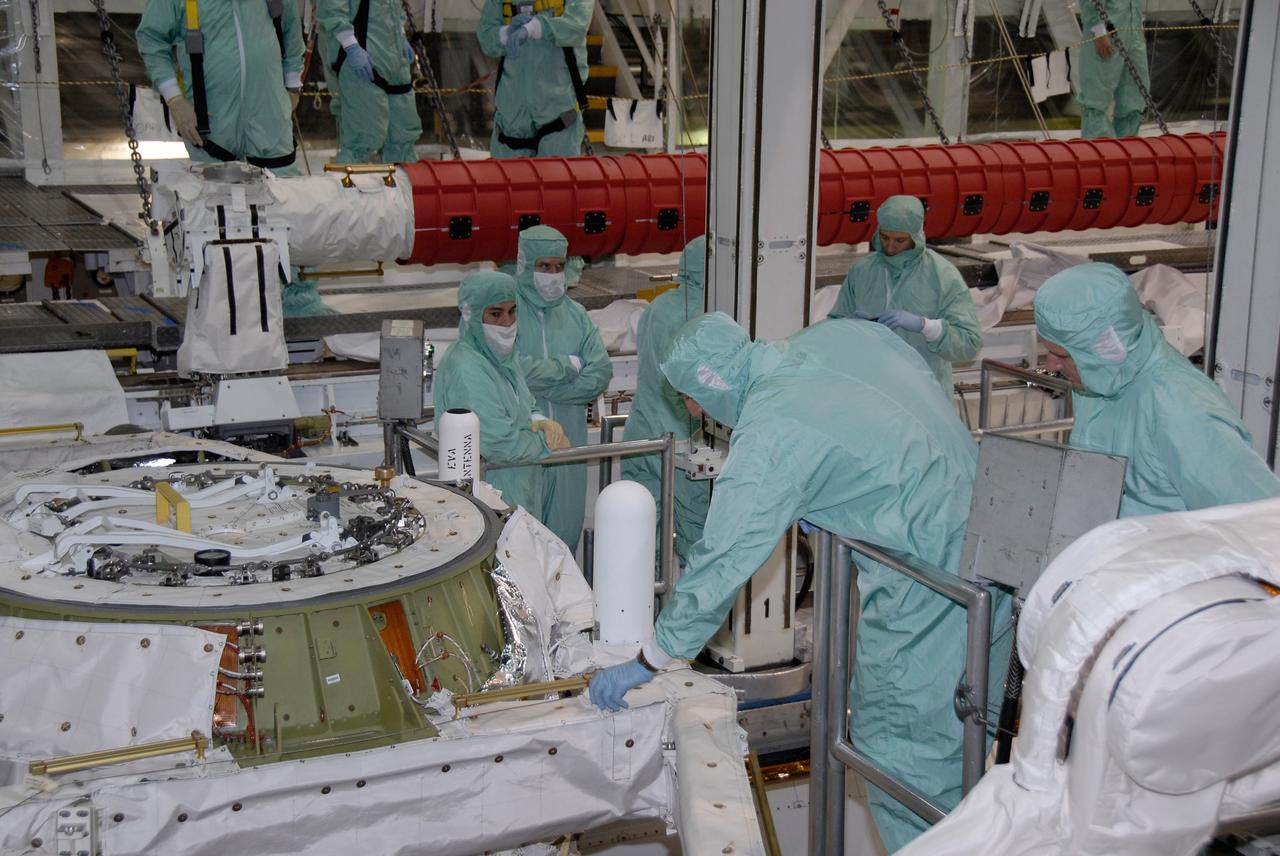
CAPE CANAVERAL, Fla. – In the high bay of the Payload Hazardous Servicing Facility at NASA's Kennedy Space Center, the Super Lightweight Interchangeable Carrier for the Hubble Space Telescope, elevated at left, is ready to be mated to the Hubble vertical platform, at right. The Super Lightweight Interchangeable Carrier, or SLIC, is one of four carriers supporting hardware for space shuttle Atlantis' STS-125 mission to service the telescope. SLIC is built with state-of-the-art, lightweight, composite materials - carbon fiber with a cyanate ester resin and a titanium metal matrix composite. These composites have greater strength-to-mass ratios than the metals typically used in spacecraft design. The Orbital Replacement Unit Carrier, or ORUC, and the Flight Support System, or FSS, have also arrived at Kennedy. The Multi-Use Lightweight Equipment carrier will be delivered in early August. The carriers will be prepared for the integration of telescope science instruments, both internal and external replacement components, as well as the flight support equipment to be used by the astronauts during the Hubble servicing mission, targeted for launch Oct. 8. Photo credit: NASA/Jack Pfaller
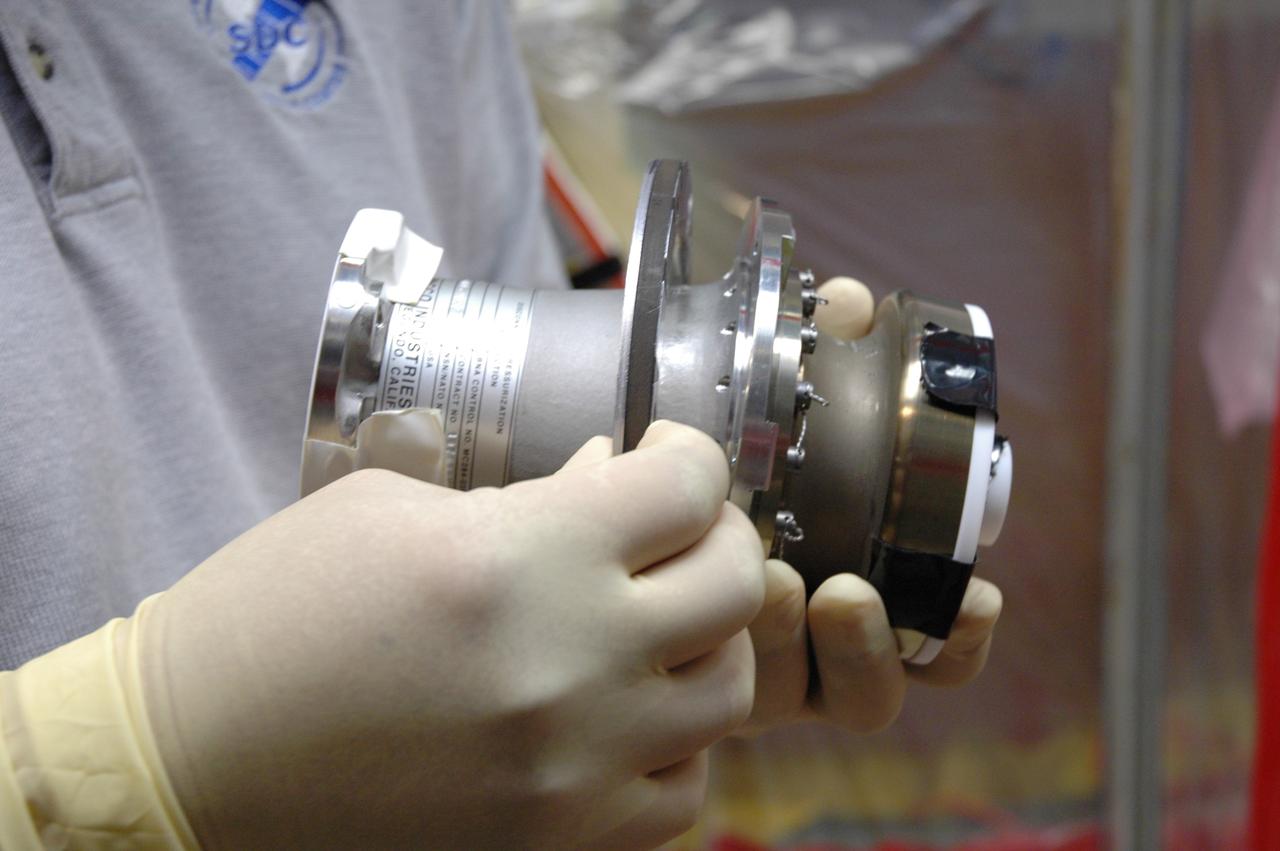
CAPE CANAVERAL, Fla. – Inside the Vehicle Assembly Building at NASA's Kennedy Space Center, a technician holds the replacement valve for Atlantis’ external tank. Technicians removed an old valve after small dings were found on the sealing surface of the quick disconnect system that handles liquid-hydrogen fuel for the shuttle’s three main engines. The tank will be attached to the twin solid rocket boosters on Aug. 3 for the STS-125 mission, the fifth and final shuttle servicing mission to NASA’s Hubble Space Telescope. During the mission, the crew will install new instruments on the telescope, including the Cosmic Origins Spectrograph and the Wide Field Camera 3. A refurbished Fine Guidance Sensor will replace one unit of three now onboard. Mission specialists will also install new gyroscopes, batteries and thermal blankets on the telescope. Launch is targeted for Oct. 8. Photo credit: NASA/Jim Grossmann
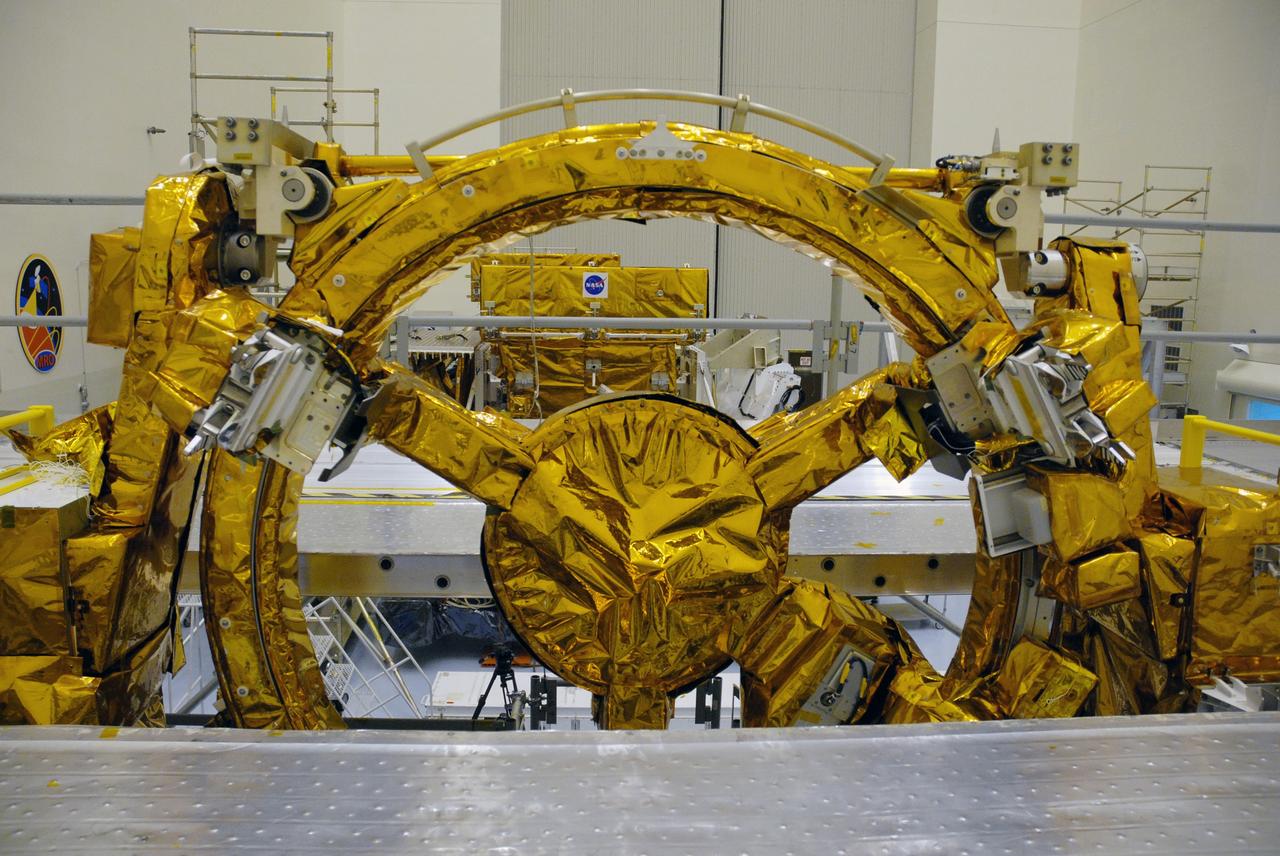
CAPE CANAVERAL, Fla. – In the high bay of the Payload Hazardous Servicing Facility at NASA's Kennedy Space Center, three of four carriers supporting the space shuttle Atlantis STS-125 Hubble Space Telescope servicing mission have been unwrapped for final launch processing. The Super Lightweight Interchangeable Carrier and the Orbital Replacement Unit Carrier can be seen through the distinctive soft capture mechanism, or SCM, of the Flight Support System. The SCM will be permanently attached to Hubble’s aft shroud by spacewalking astronauts and will provide a rendezvous and docking target that can be easily seen and recognized by a docking vehicle. The Multi-Use Lightweight Equipment carrier will be delivered in early August. The carriers will be prepared for the integration of telescope science instruments, both internal and external replacement components, as well as the flight support equipment to be used by the astronauts during the Hubble servicing mission, targeted for launch Oct. 8. Photo credit: NASA/Jack Pfaller

CAPE CANAVERAL, Fla. – A close up view of the valve removed from Atlantis’ external tank inside the Vehicle Assembly Building at NASA’s Kennedy Space Center. Technicians removed the valve after small dings were found on the sealing surface of the quick disconnect system that handles liquid-hydrogen fuel for the shuttle’s three main engines. The tank will be attached to the twin solid rocket boosters on Aug. 3 for the STS-125 mission, the fifth and final shuttle servicing mission to NASA’s Hubble Space Telescope. During the mission, the crew will install new instruments on the telescope, including the Cosmic Origins Spectrograph and the Wide Field Camera 3. A refurbished Fine Guidance Sensor will replace one unit of three now onboard. Mission specialists will also install new gyroscopes, batteries and thermal blankets on the telescope. Launch is targeted for Oct. 8. Photo credit: NASA/Dimitri Gerondidakis
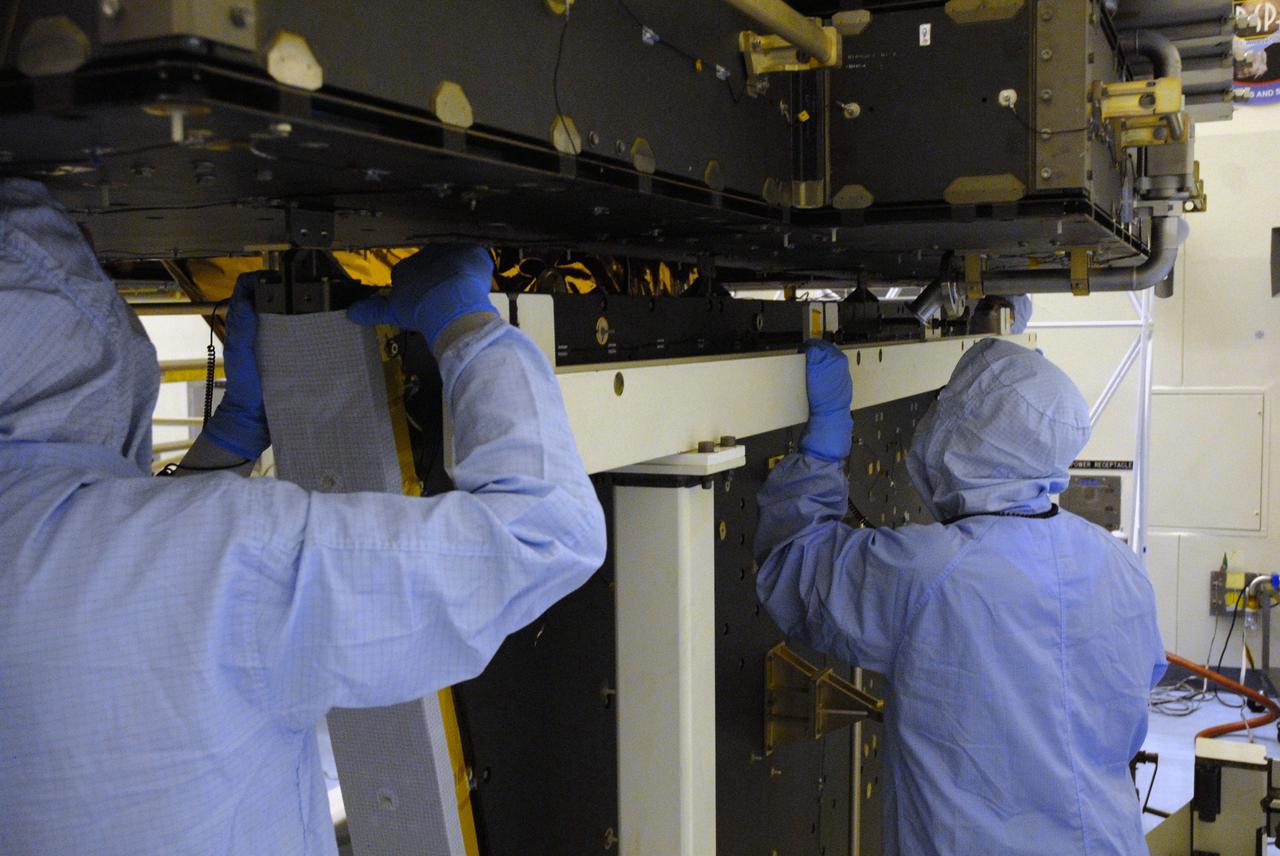
CAPE CANAVERAL, Fla. – In the high bay of the Payload Hazardous Servicing Facility at NASA's Kennedy Space Center, workers from NASA's Goddard Space Flight Center secure the Hubble vertical platform to the Super Lightweight Interchangeable Carrier for the Hubble Space Telescope. The Super Lightweight Interchangeable Carrier, or SLIC, is one of four carriers supporting hardware for space shuttle Atlantis' STS-125 mission to service the telescope. SLIC is built with state-of-the-art, lightweight, composite materials - carbon fiber with a cyanate ester resin and a titanium metal matrix composite. These composites have greater strength-to-mass ratios than the metals typically used in spacecraft design. The Orbital Replacement Unit Carrier, or ORUC, and the Flight Support System, or FSS, have also arrived at Kennedy. The Multi-Use Lightweight Equipment carrier will be delivered in early August. The carriers will be prepared for the integration of telescope science instruments, both internal and external replacement components, as well as the flight support equipment to be used by the astronauts during the Hubble servicing mission, targeted for launch Oct. 8. Photo credit: NASA/Jack Pfaller
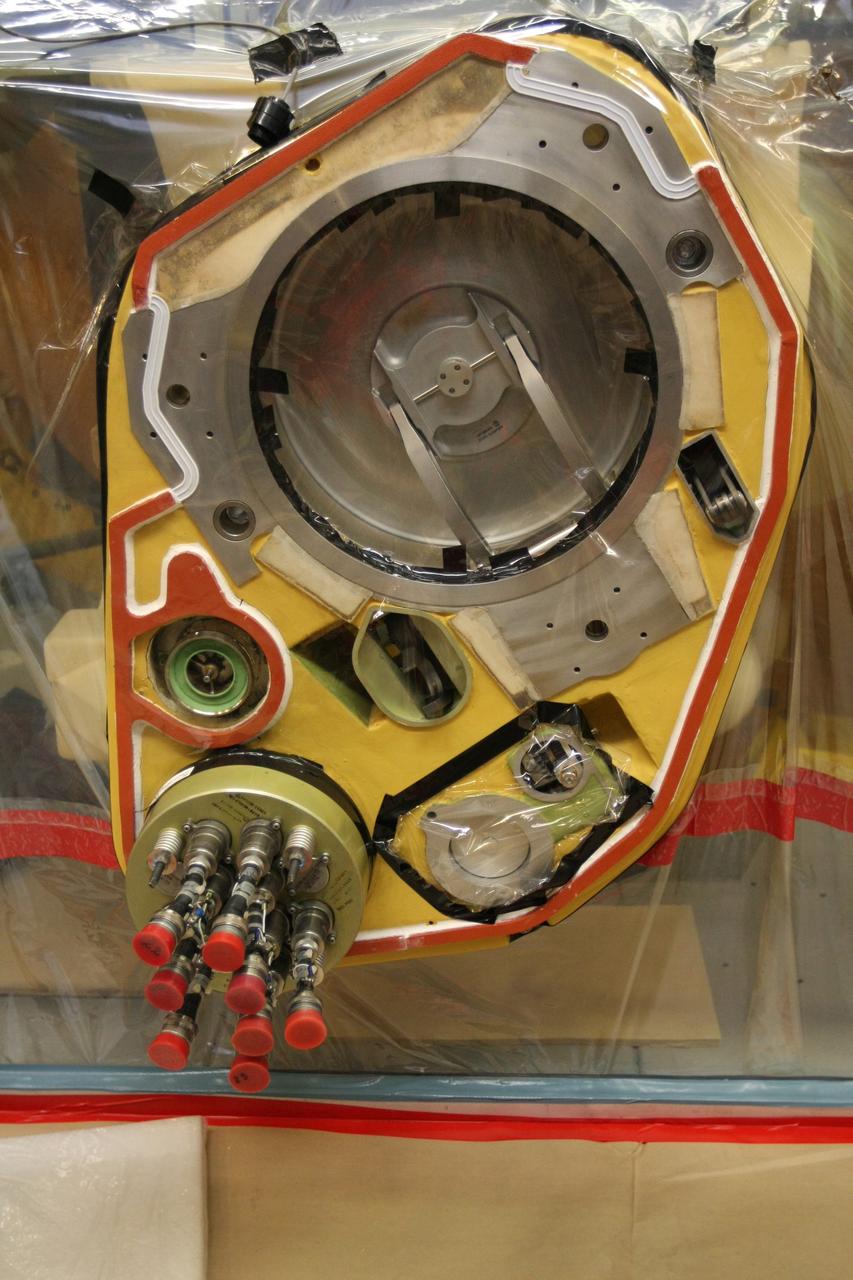
CAPE CANAVERAL, Fla. – Inside the Vehicle Assembly Building at NASA's Kennedy Space Center, a valve is removed from Atlantis’ external tank after small dings were found on the sealing surface of the quick disconnect system that handles liquid-hydrogen fuel for the shuttle’s three main engines. The tank will be attached to the twin solid rocket boosters on Aug. 3 for the STS-125 mission, the fifth and final shuttle servicing mission to NASA’s Hubble Space Telescope. During the mission, the crew will install new instruments on the telescope, including the Cosmic Origins Spectrograph and the Wide Field Camera 3. A refurbished Fine Guidance Sensor will replace one unit of three now onboard. Mission specialists will also install new gyroscopes, batteries and thermal blankets on the telescope. Launch is targeted for Oct. 8. Photo credit: NASA/Dimitri Gerondidakis

CAPE CANAVERAL, Fla. – In the high bay of the Payload Hazardous Servicing Facility at NASA's Kennedy Space Center, workers from NASA's Goddard Space Flight Center remove the protective wrapping from the Flight Support System for the Hubble Space Telescope. The Flight Support System, or FSS, is one of four carriers supporting hardware for space shuttle Atlantis' STS-125 mission to service the telescope. The Super Lightweight Interchangeable Carrier, or SLIC, and the Orbital Replacement Unit Carrier, or ORUC, have also arrived at Kennedy. The Multi-Use Lightweight Equipment carrier will be delivered in early August. The carriers will be prepared for the integration of telescope science instruments, both internal and external replacement components, as well as the flight support equipment to be used by the astronauts during the Hubble servicing mission, targeted for launch Oct. 8. Photo credit: NASA/Jack Pfaller
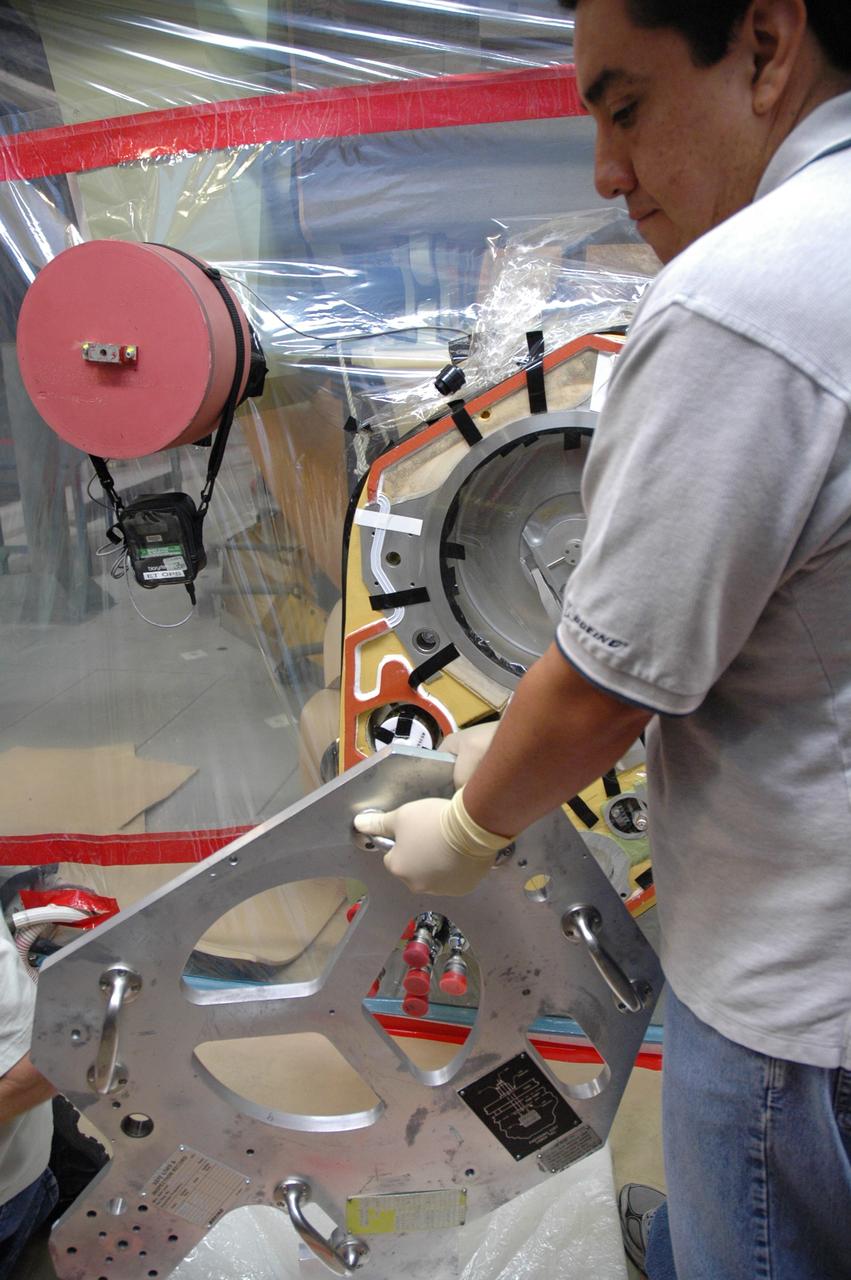
CAPE CANAVERAL, Fla. – Inside the Vehicle Assembly Building at NASA’s Kennedy Space Center, a technician prepares to install a plate cover over the quick disconnect system on Atlantis’ external tank. A valve was removed and replaced after small dings were found on the sealing surface of the quick disconnect system that handles liquid-hydrogen fuel for the shuttle’s three main engines. The tank will be attached to the twin solid rocket boosters on Aug. 3 for the STS-125 mission, the fifth and final shuttle servicing mission to NASA’s Hubble Space Telescope. During the mission, the crew will install new instruments on the telescope, including the Cosmic Origins Spectrograph and the Wide Field Camera 3. A refurbished Fine Guidance Sensor will replace one unit of three now onboard. Mission specialists will also install new gyroscopes, batteries and thermal blankets on the telescope. Launch is targeted for Oct. 8. Photo credit: NASA/Jim Grossmann
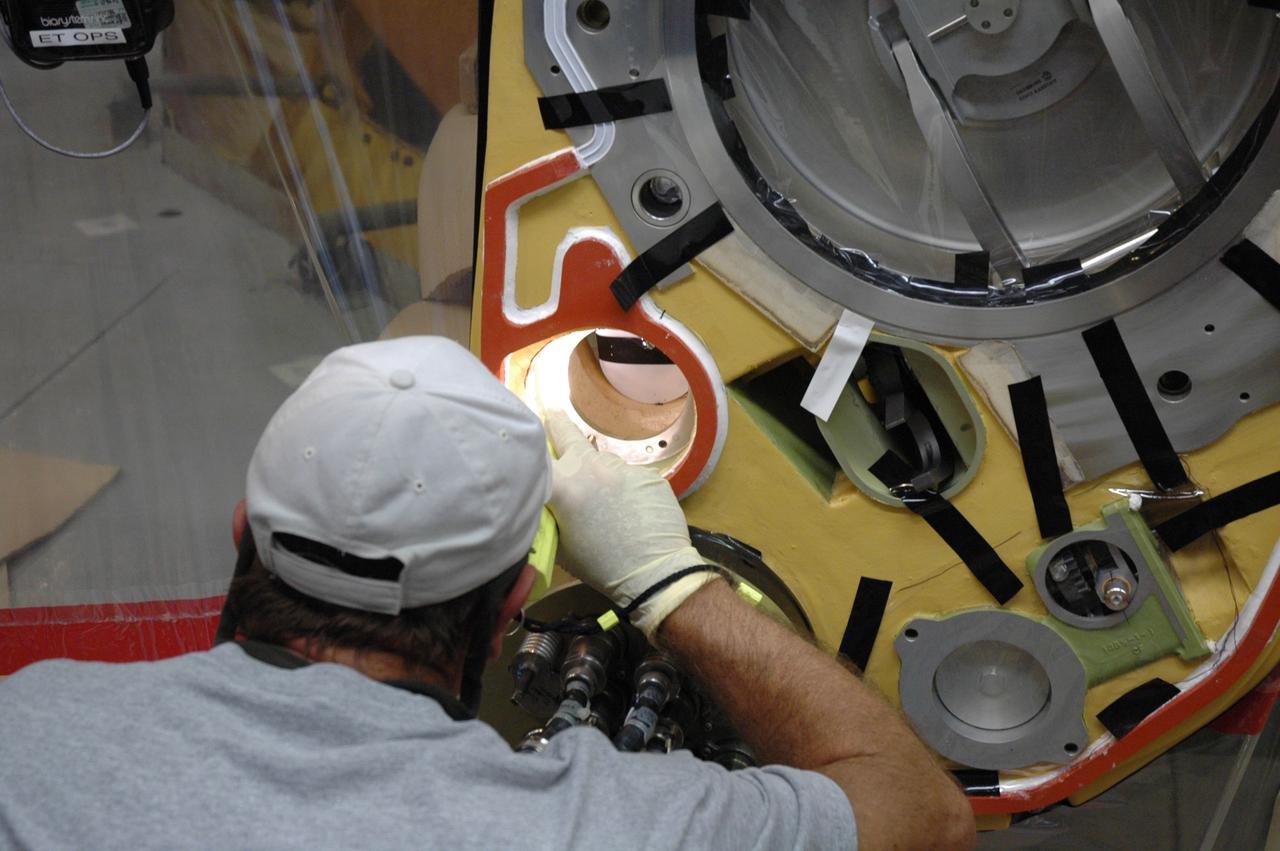
CAPE CANAVERAL, Fla. – Inside the Vehicle Assembly Building at NASA's Kennedy Space Center, a technician prepares to install a new valve on Atlantis’ external tank after small dings were found on the sealing surface of the quick disconnect system that handles liquid-hydrogen fuel for the shuttle’s three main engines. The tank will be attached to the twin solid rocket boosters on Aug. 3 for the STS-125 mission, the fifth and final shuttle servicing mission to NASA’s Hubble Space Telescope. During the mission, the crew will install new instruments on the telescope, including the Cosmic Origins Spectrograph and the Wide Field Camera 3. A refurbished Fine Guidance Sensor will replace one unit of three now onboard. Mission specialists will also install new gyroscopes, batteries and thermal blankets on the telescope. Launch is targeted for Oct. 8. Photo credit: NASA/Jim Grossmann
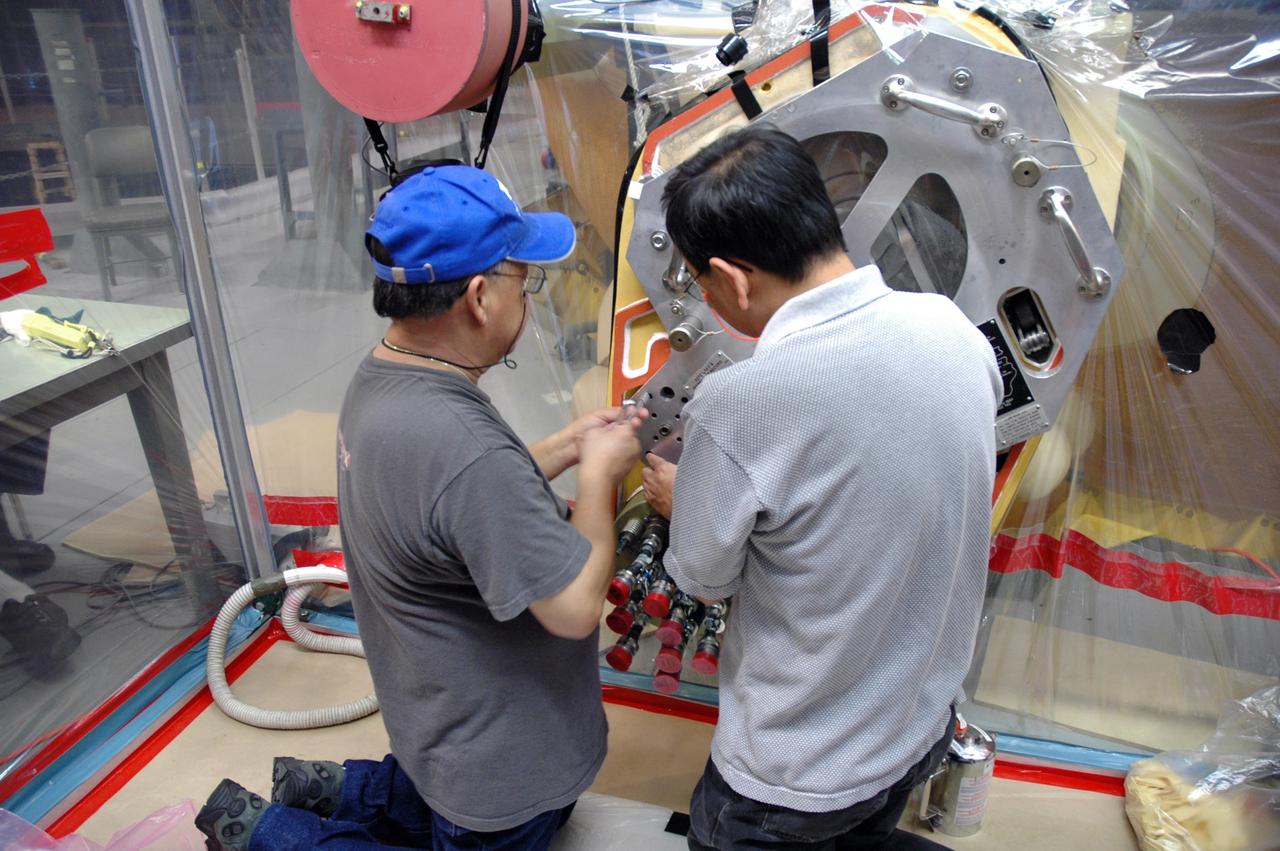
CAPE CANAVERAL, Fla. – Inside the Vehicle Assembly Building at NASA’s Kennedy Space Center, technicians install a plate cover over the quick disconnect system on Atlantis’ external tank. A valve was removed and replaced after small dings were found on the sealing surface of the quick disconnect system that handles liquid-hydrogen fuel for the shuttle’s three main engines. The tank will be attached to the twin solid rocket boosters on Aug. 3 for the STS-125 mission, the fifth and final shuttle servicing mission to NASA’s Hubble Space Telescope. During the mission, the crew will install new instruments on the telescope, including the Cosmic Origins Spectrograph and the Wide Field Camera 3. A refurbished Fine Guidance Sensor will replace one unit of three now onboard. Mission specialists will also install new gyroscopes, batteries and thermal blankets on the telescope. Launch is targeted for Oct. 8. Photo credit: NASA/Jim Grossmann
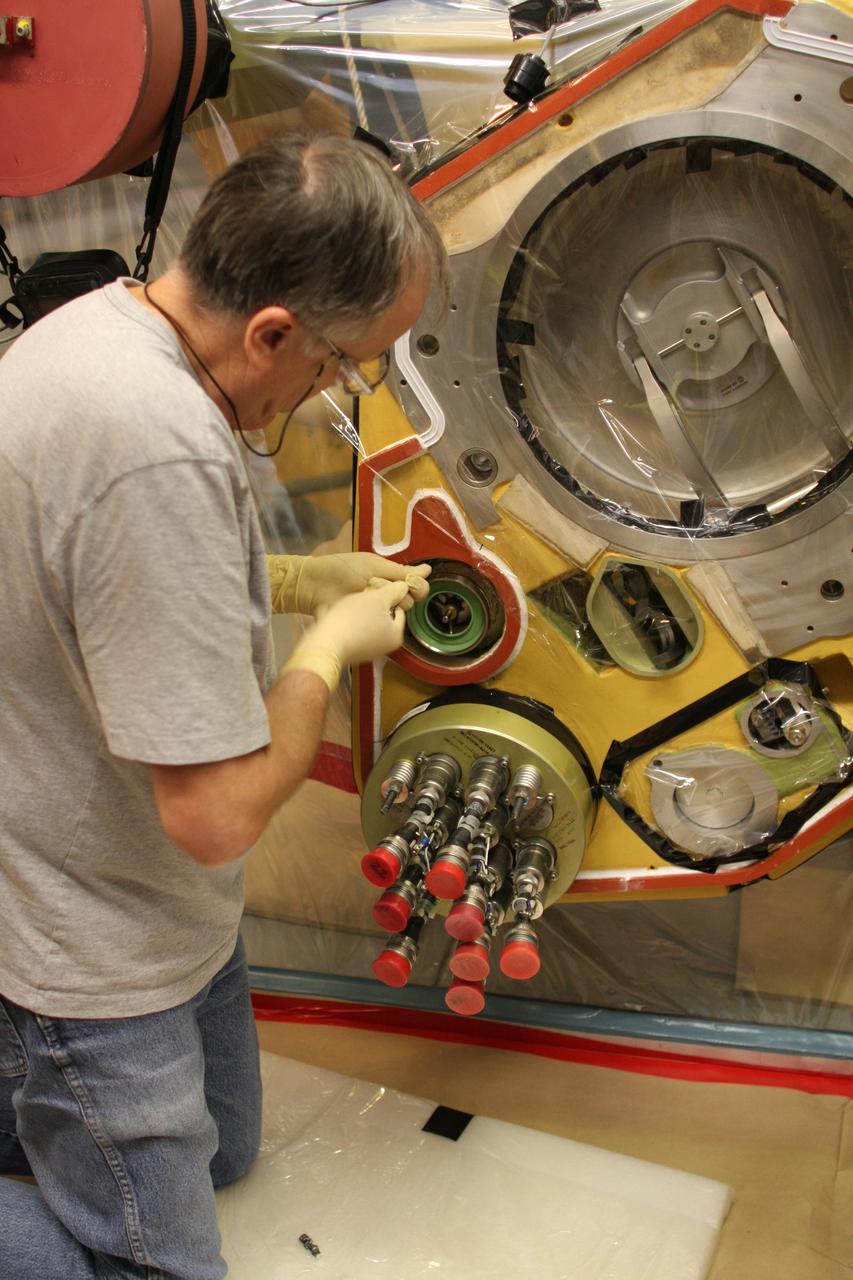
CAPE CANAVERAL, Fla. – Inside the Vehicle Assembly Building at NASA’s Kennedy Space Center, a technician removes a valve from Atlantis’ external tank after small dings were found on the sealing surface of the quick disconnect system that handles liquid-hydrogen fuel for the shuttle’s three main engines. The tank will be attached to the twin solid rocket boosters on Aug. 3 for the STS-125 mission, the fifth and final shuttle servicing mission to NASA’s Hubble Space Telescope. During the mission, the crew will install new instruments on the telescope, including the Cosmic Origins Spectrograph and the Wide Field Camera 3. A refurbished Fine Guidance Sensor will replace one unit of three now onboard. Mission specialists will also install new gyroscopes, batteries and thermal blankets on the telescope. Launch is targeted for Oct. 8. Photo credit: NASA/Dimitri Gerondidakis
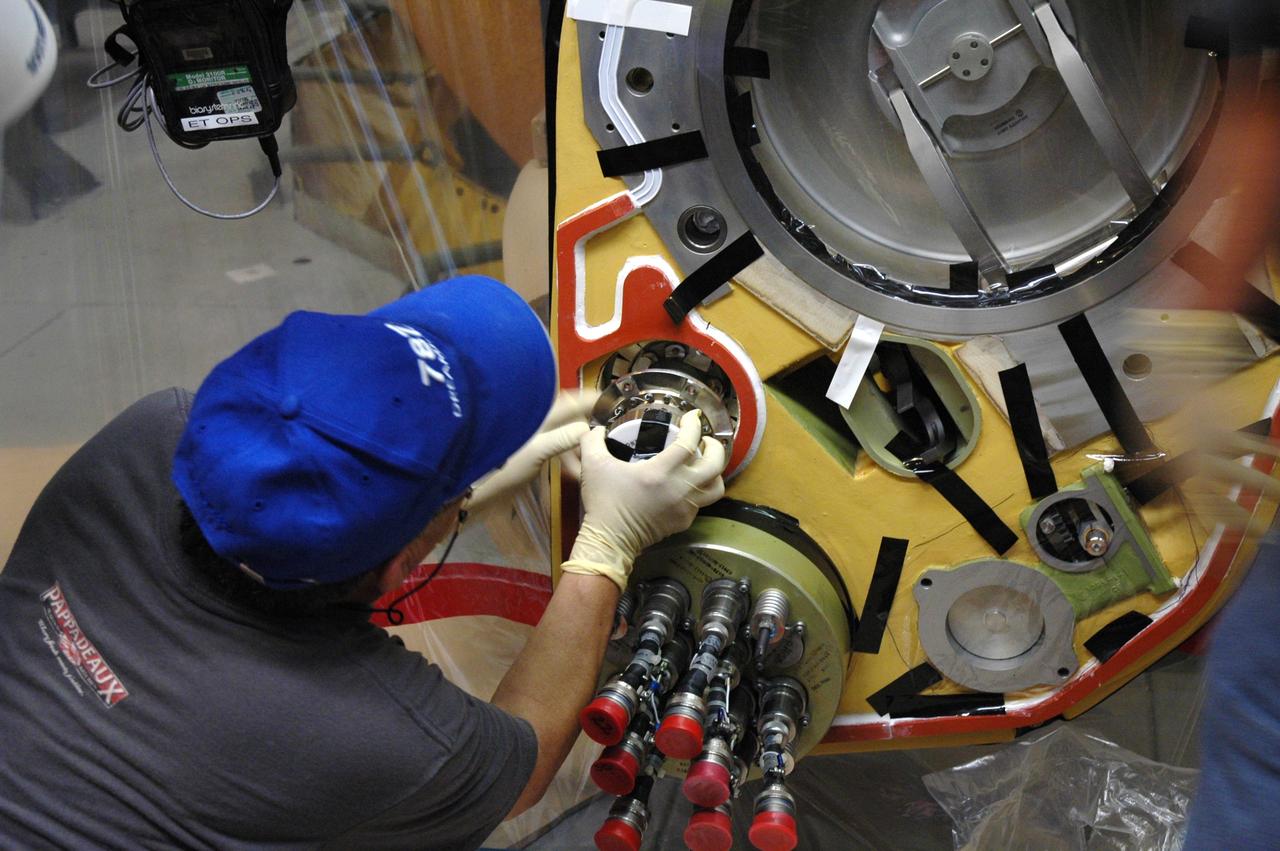
CAPE CANAVERAL, Fla. – Inside the Vehicle Assembly Building at NASA’s Kennedy Space Center, a technician installs a new valve on Atlantis’ external tank after small dings were found on the sealing surface of the quick disconnect system that handles liquid-hydrogen fuel for the shuttle’s three main engines. The tank will be attached to the twin solid rocket boosters on Aug. 3 for the STS-125 mission, the fifth and final shuttle servicing mission to NASA’s Hubble Space Telescope. During the mission, the crew will install new instruments on the telescope, including the Cosmic Origins Spectrograph and the Wide Field Camera 3. A refurbished Fine Guidance Sensor will replace one unit of three now onboard. Mission specialists will also install new gyroscopes, batteries and thermal blankets on the telescope. Launch is targeted for Oct. 8. Photo credit: NASA/Jim Grossmann
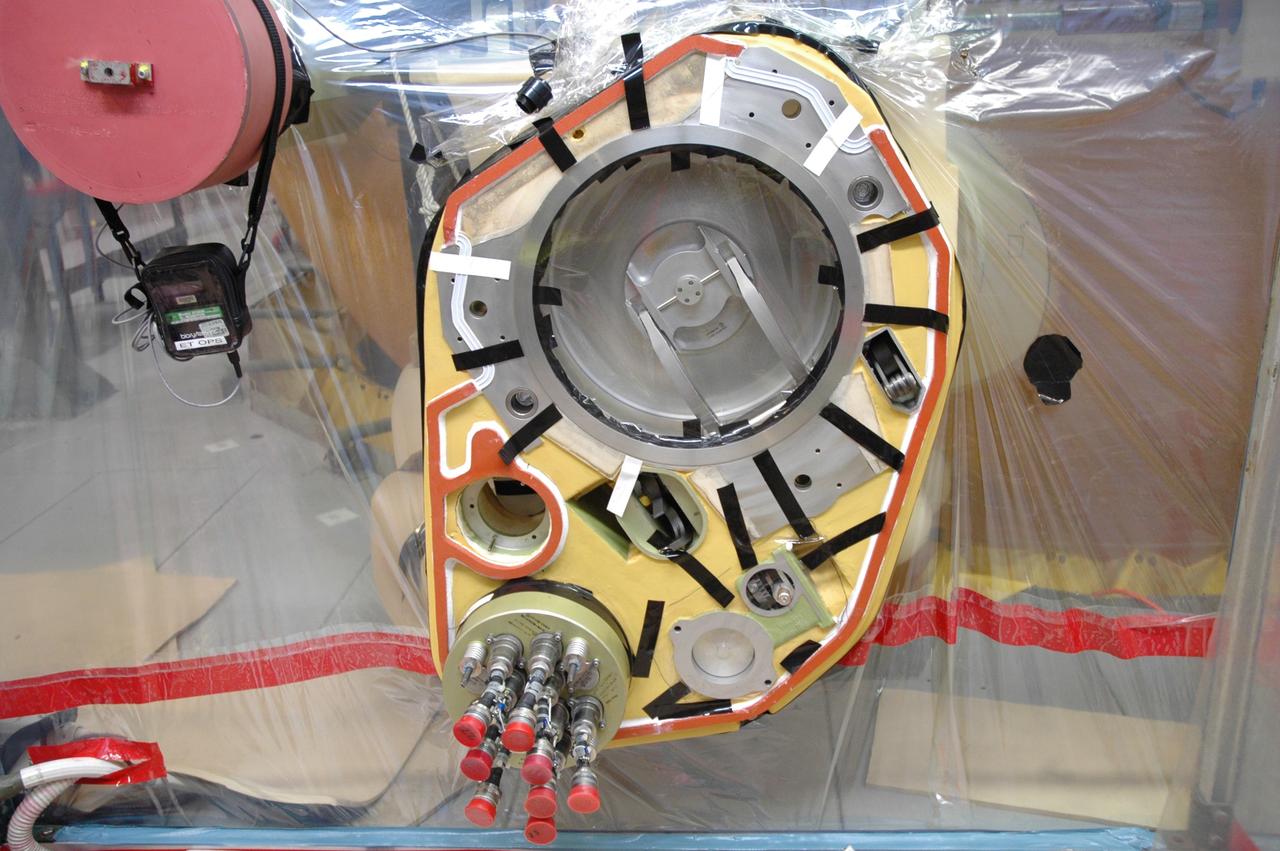
CAPE CANAVERAL, Fla. – Inside a test cell in the Vehicle Assembly Building at NASA's Kennedy Space Center, a portion of Atlantis’ external tank is sealed to prevent contamination so that technicians can replace a valve after small dings were found on the sealing surface of the quick disconnect system that handles liquid-hydrogen fuel for the shuttle’s three main engines. The tank will be attached to the twin solid rocket boosters on Aug. 3 for the STS-125 mission, the fifth and final shuttle servicing mission to NASA’s Hubble Space Telescope. During the mission, the crew will install new instruments on the telescope, including the Cosmic Origins Spectrograph and the Wide Field Camera 3. A refurbished Fine Guidance Sensor will replace one unit of three now onboard. Mission specialists will also install new gyroscopes, batteries and thermal blankets on the telescope. Launch is targeted for Oct. 8. Photo credit: NASA/Jim Grossmann
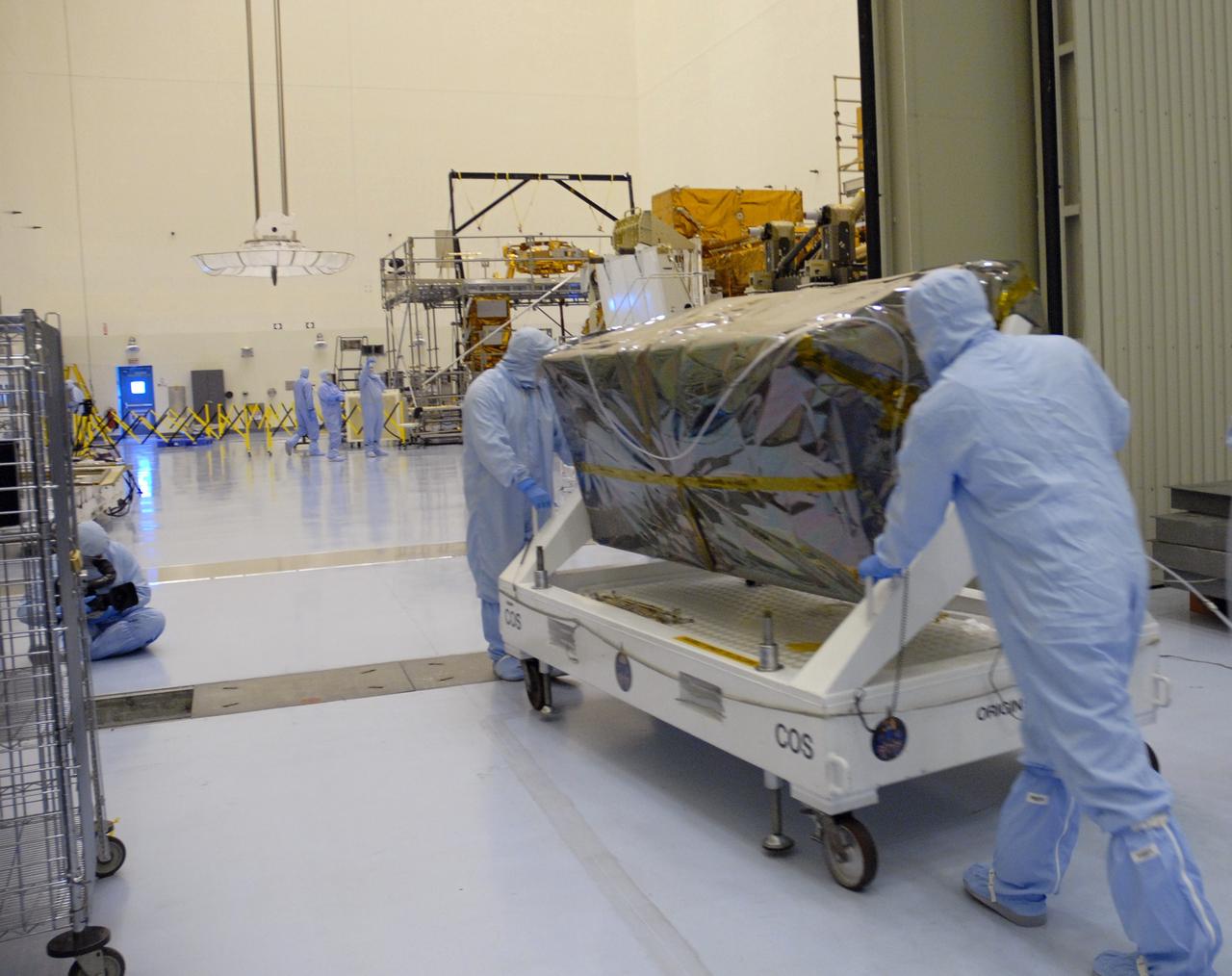
CAPE CANAVERAL, Fla. – At NASA's Kennedy Space Center, workers from NASA's Goddard Space Flight Center roll the Cosmic Origins Spectrograph, or COS, into the clean room of the Payload Hazardous Servicing Facility. The COS will be installed on the Hubble Space Telescope on space shuttle Atlantis' STS-125 mission. COS will be the most sensitive ultraviolet spectrograph ever flown on Hubble and will probe the "cosmic web" - the large-scale structure of the universe whose form is determined by the gravity of dark matter and is traced by galaxies and intergalactic gas. COS's far-ultraviolet channel has a sensitivity 30 times greater than that of previous spectroscopic instruments for the detection of extremely low light levels. Launch of STS-125 is targeted for Oct. 8. Photo credit: NASA/Jack Pfaller
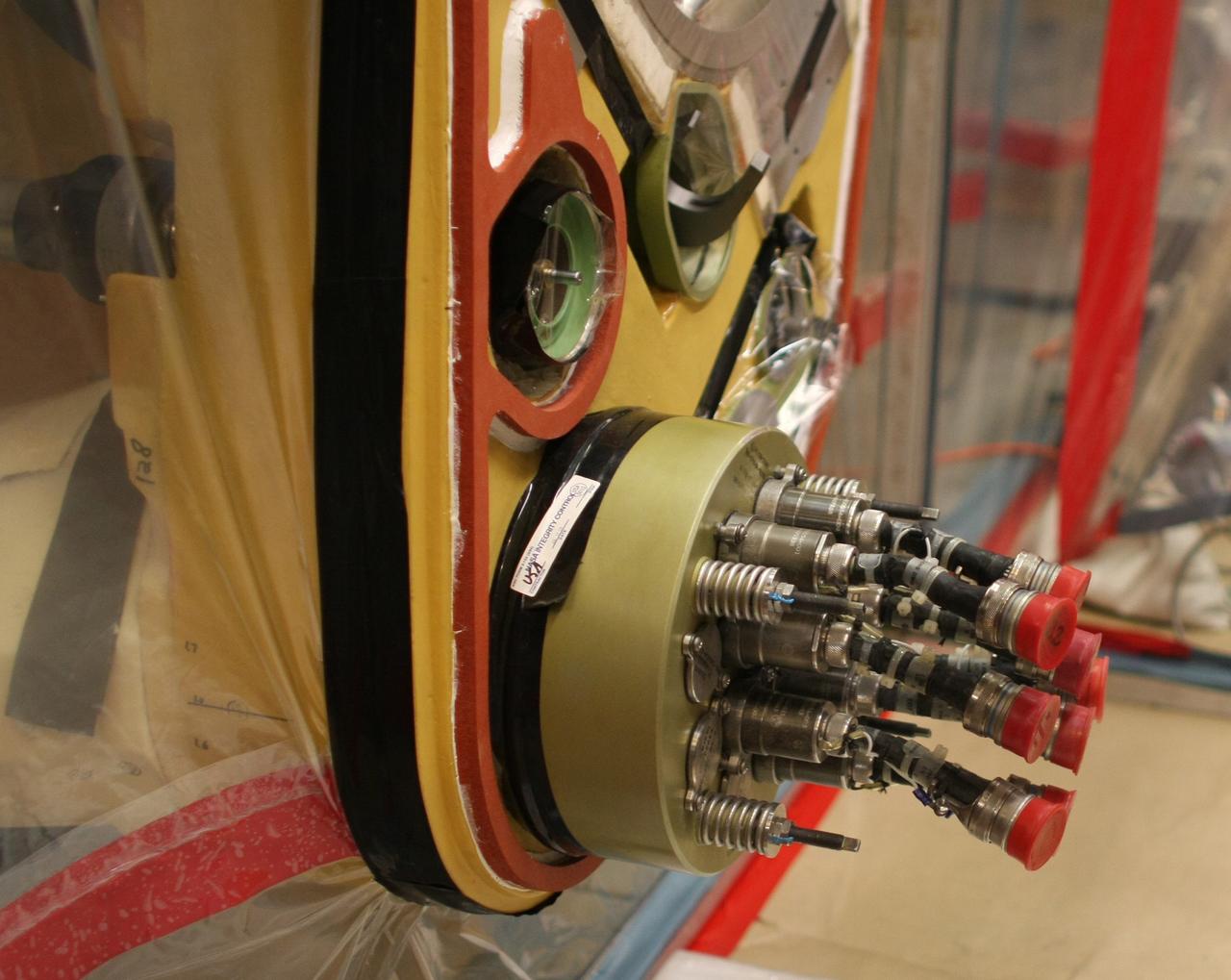
CAPE CANAVERAL, Fla. – Inside a test cell in the Vehicle Assembly Building at NASA's Kennedy Space Center, a portion of Atlantis’ external tank is sealed to prevent contamination so that technicians can remove a valve after small dings were found on the sealing surface of the quick disconnect system that handles liquid-hydrogen fuel for the shuttle’s three main engines. The tank will be attached to the twin solid rocket boosters on Aug. 3 for the STS-125 mission, the fifth and final shuttle servicing mission to NASA’s Hubble Space Telescope. During the mission, the crew will install new instruments on the telescope, including the Cosmic Origins Spectrograph and the Wide Field Camera 3. A refurbished Fine Guidance Sensor will replace one unit of three now onboard. Mission specialists will also install new gyroscopes, batteries and thermal blankets on the telescope. Launch is targeted for Oct. 8. Photo credit: NASA/Dimitri Gerondidakis
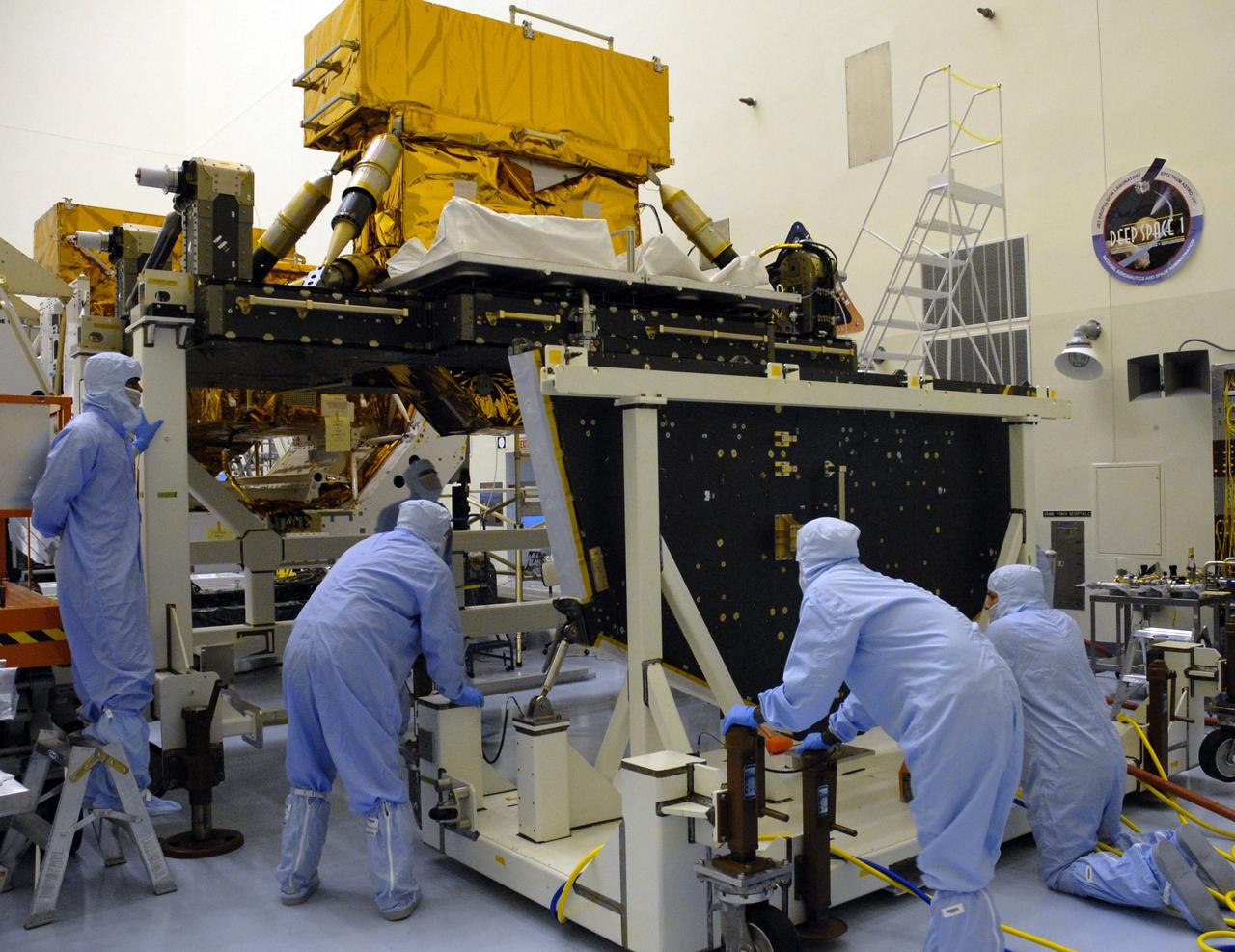
CAPE CANAVERAL, Fla. – In the high bay of the Payload Hazardous Servicing Facility at NASA's Kennedy Space Center, workers from NASA's Goddard Space Flight Center move the Hubble vertical platform toward the Super Lightweight Interchangeable Carrier for the Hubble Space Telescope, to which it will be mated. The Super Lightweight Interchangeable Carrier, or SLIC, is one of four carriers supporting hardware for space shuttle Atlantis' STS-125 mission to service the telescope. SLIC is built with state-of-the-art, lightweight, composite materials - carbon fiber with a cyanate ester resin and a titanium metal matrix composite. These composites have greater strength-to-mass ratios than the metals typically used in spacecraft design. The Orbital Replacement Unit Carrier, or ORUC, and the Flight Support System, or FSS, have also arrived at Kennedy. The Multi-Use Lightweight Equipment carrier will be delivered in early August. The carriers will be prepared for the integration of telescope science instruments, both internal and external replacement components, as well as the flight support equipment to be used by the astronauts during the Hubble servicing mission, targeted for launch Oct. 8. Photo credit: NASA/Jack Pfaller
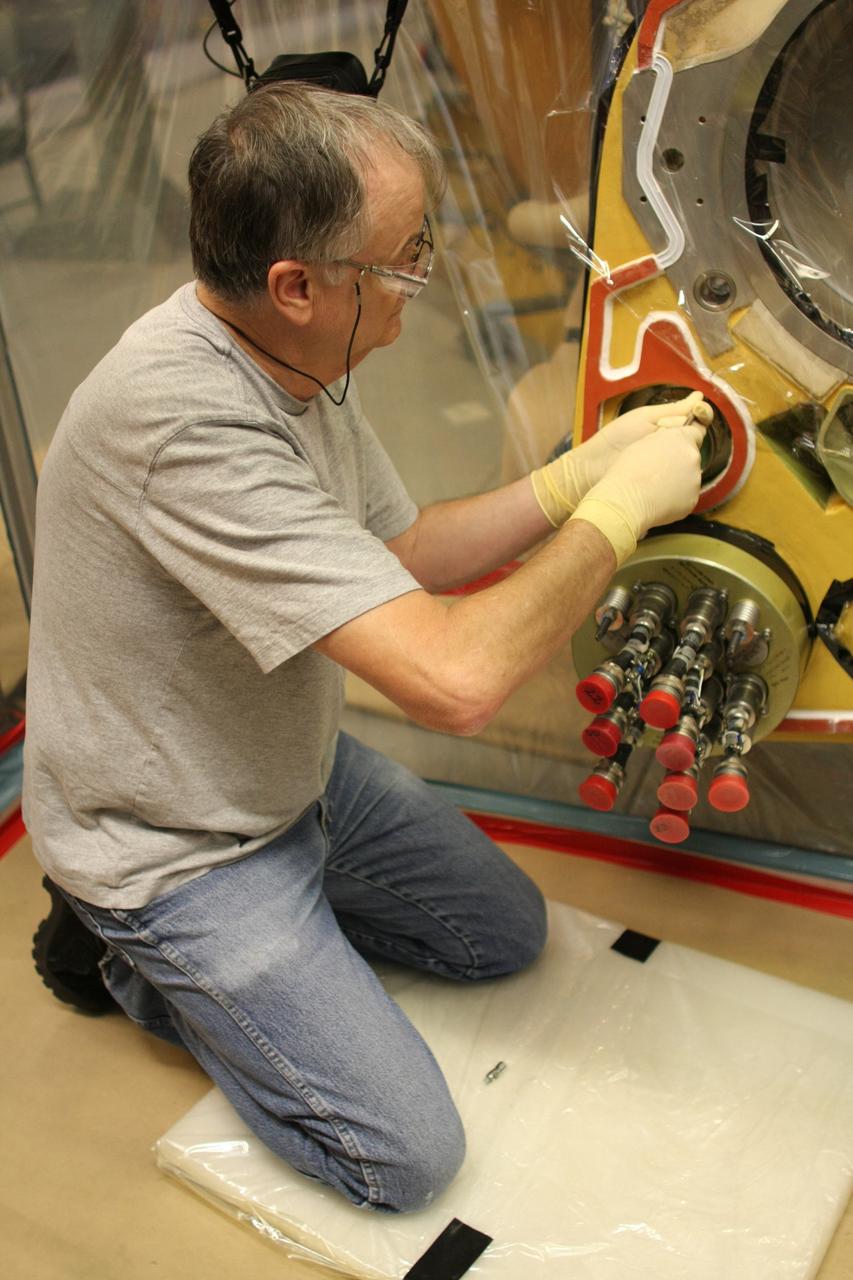
CAPE CANAVERAL, Fla. – Inside the Vehicle Assembly Building at NASA’s Kennedy Space Center, a technician removes a valve from Atlantis’ external tank after small dings were found on the sealing surface of the quick disconnect system that handles liquid-hydrogen fuel for the shuttle’s three main engines. The tank will be attached to the twin solid rocket boosters on Aug. 3 for the STS-125 mission, the fifth and final shuttle servicing mission to NASA’s Hubble Space Telescope. During the mission, the crew will install new instruments on the telescope, including the Cosmic Origins Spectrograph and the Wide Field Camera 3. A refurbished Fine Guidance Sensor will replace one unit of three now onboard. Mission specialists will also install new gyroscopes, batteries and thermal blankets on the telescope. Launch is targeted for Oct. 8. Photo credit: NASA/Dimitri Gerondidakis
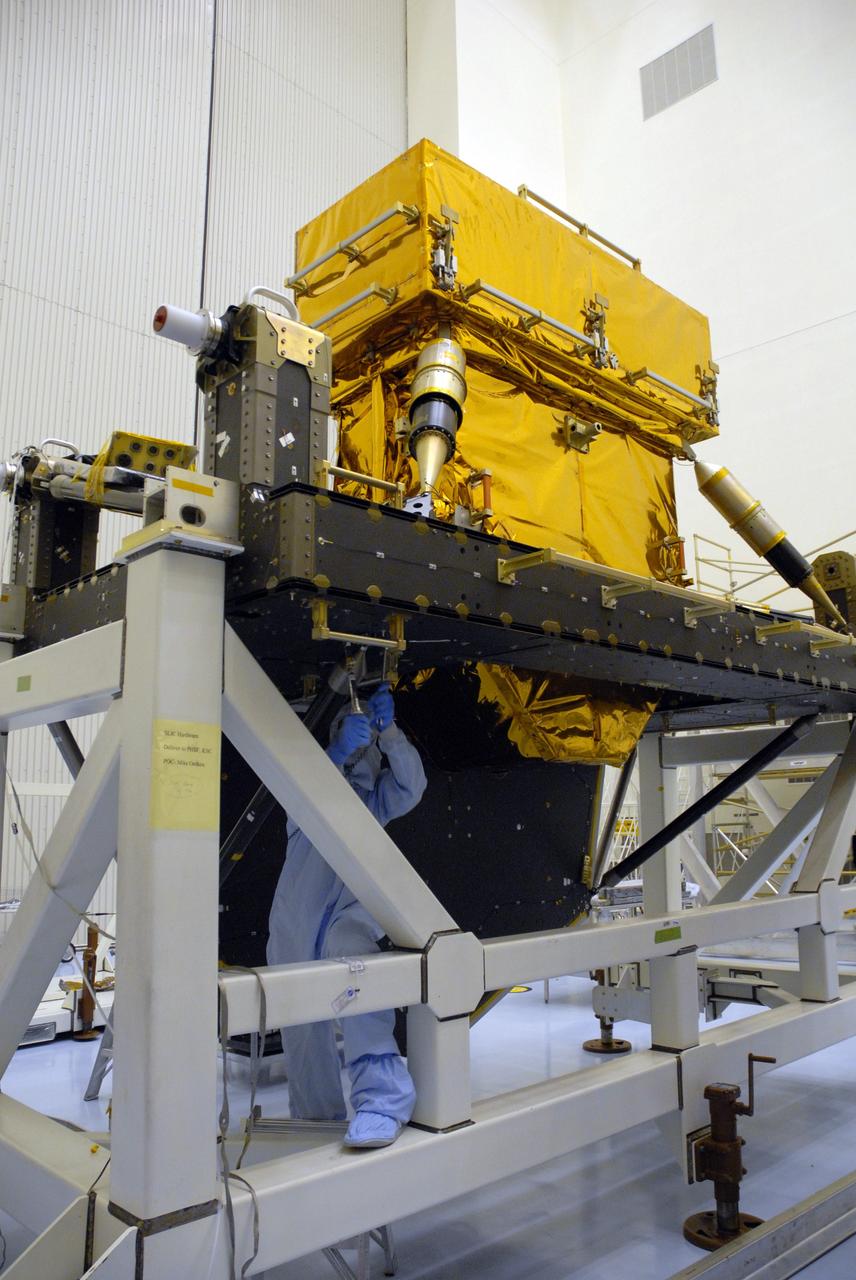
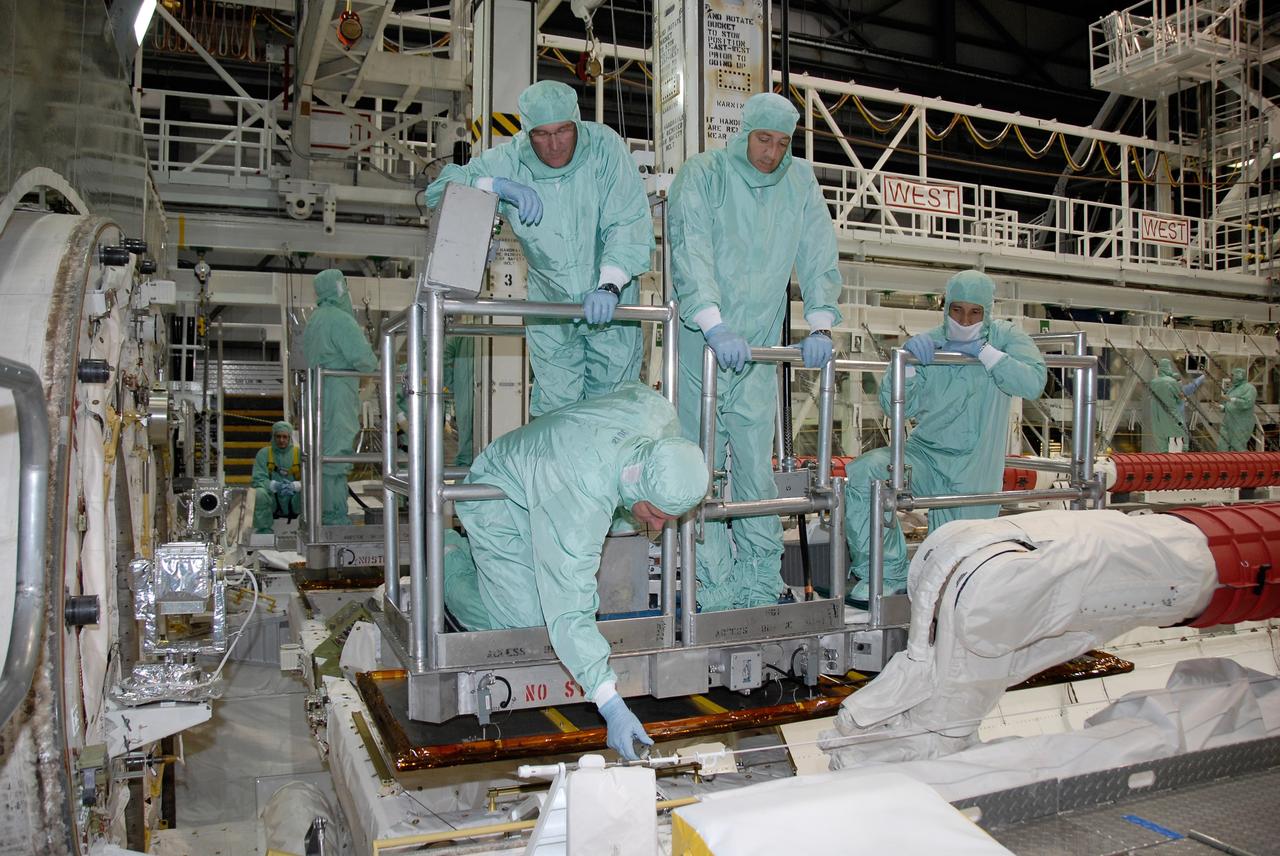
CAPE CANAVERAL, Fla. -- In the high bay of the Payload Hazardous Servicing Facility at NASA's Kennedy Space Center, a worker from NASA's Goddard Space Flight Center installs a pallet support strut on the Super Lightweight Interchangeable Carrier for the Hubble Space Telescope. The Super Lightweight Interchangeable Carrier, or SLIC, is one of four carriers supporting hardware for space shuttle Atlantis' STS-125 mission to service the telescope. SLIC is built with state-of-the-art, lightweight, composite materials - carbon fiber with a cyanate ester resin and a titanium metal matrix composite. These composites have greater strength-to-mass ratios than the metals typically used in spacecraft design. The Orbital Replacement Unit Carrier, or ORUC, and the Flight Support System, or FSS, have also arrived at Kennedy. The Multi-Use Lightweight Equipment carrier will be delivered in early August. The carriers will be prepared for the integration of telescope science instruments, both internal and external replacement components, as well as the flight support equipment to be used by the astronauts during the Hubble servicing mission, targeted for launch Oct. 8. Photo credit: NASA/Jack Pfaller
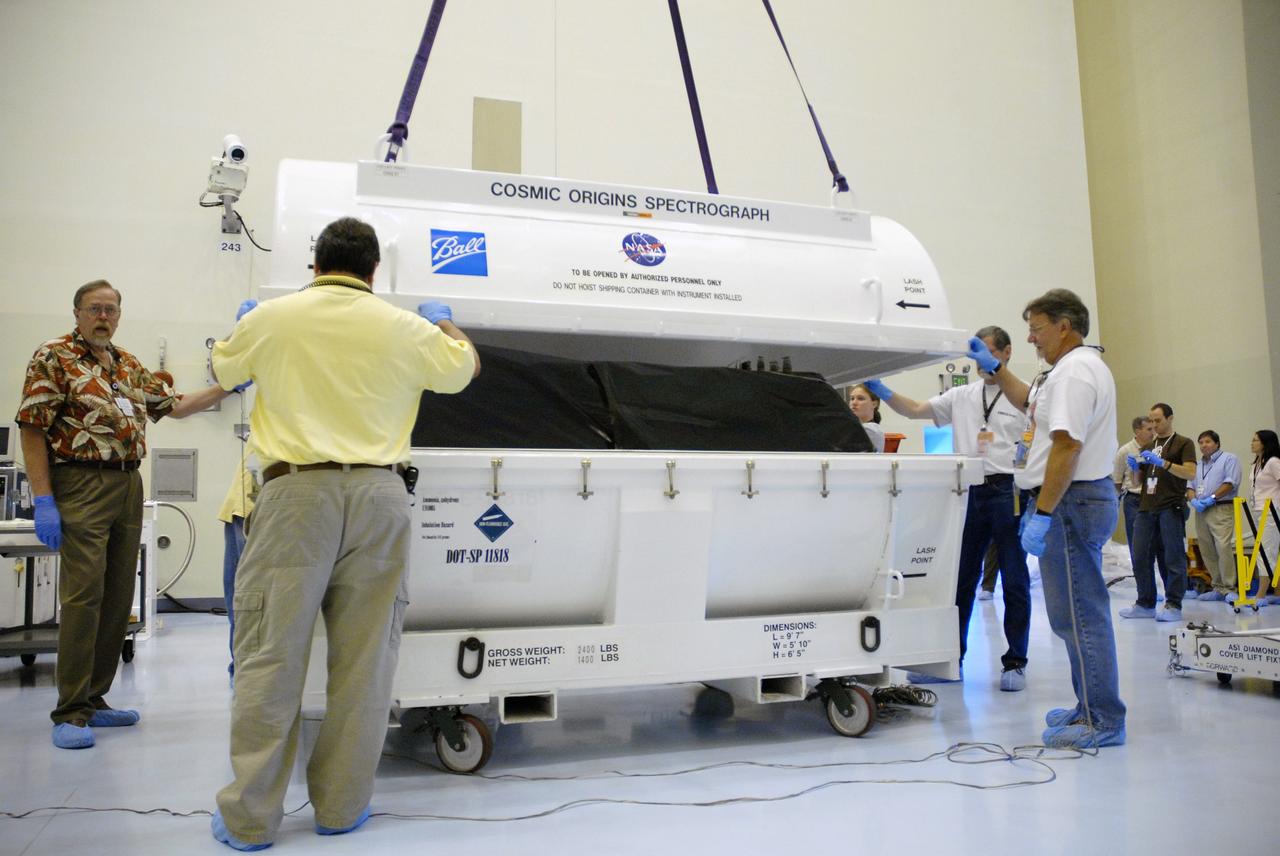
CAPE CANAVERAL, Fla. – In the airlock of the Payload Hazardous Servicing Facility at NASA's Kennedy Space Center, workers from NASA's Goddard Space Flight Center open the transportation canister in which the Cosmic Origins Spectrograph, or COS, is protected. The COS will be installed on the Hubble Space Telescope on space shuttle Atlantis' STS-125 mission. COS will be the most sensitive ultraviolet spectrograph ever flown on Hubble and will probe the "cosmic web" - the large-scale structure of the universe whose form is determined by the gravity of dark matter and is traced by galaxies and intergalactic gas. COS's far-ultraviolet channel has a sensitivity 30 times greater than that of previous spectroscopic instruments for the detection of extremely low light levels. Launch of STS-125 is targeted for Oct. 8. Photo credit: NASA/Jack Pfaller
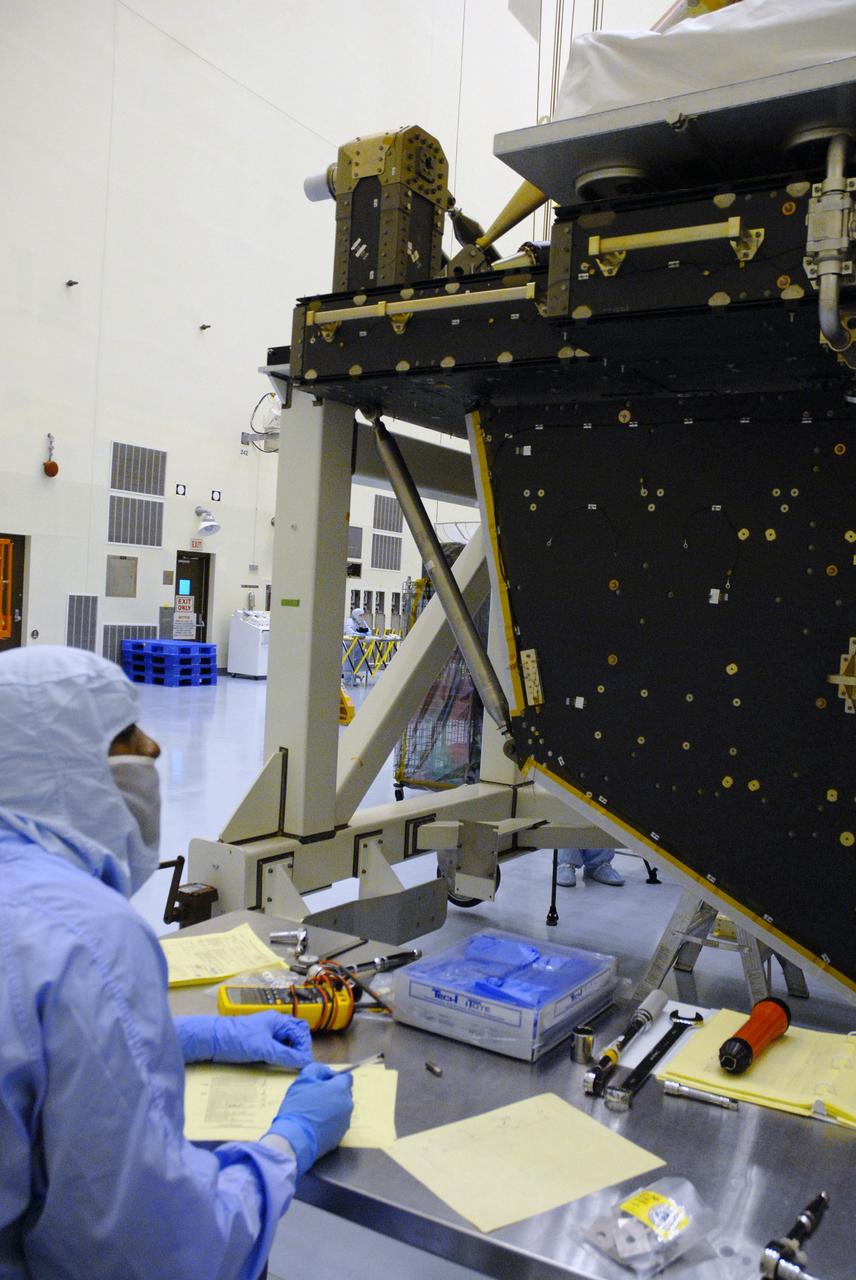
CAPE CANAVERAL, Fla. -- In the high bay of the Payload Hazardous Servicing Facility at NASA's Kennedy Space Center, a worker from NASA's Goddard Space Flight Center documents the installation of a pallet support strut on the Super Lightweight Interchangeable Carrier for the Hubble Space Telescope. The Super Lightweight Interchangeable Carrier, or SLIC, is one of four carriers supporting hardware for space shuttle Atlantis' STS-125 mission to service the telescope. SLIC is built with state-of-the-art, lightweight, composite materials - carbon fiber with a cyanate ester resin and a titanium metal matrix composite. These composites have greater strength-to-mass ratios than the metals typically used in spacecraft design. The Orbital Replacement Unit Carrier, or ORUC, and the Flight Support System, or FSS, have also arrived at Kennedy. The Multi-Use Lightweight Equipment carrier will be delivered in early August. The carriers will be prepared for the integration of telescope science instruments, both internal and external replacement components, as well as the flight support equipment to be used by the astronauts during the Hubble servicing mission, targeted for launch Oct. 8. Photo credit: NASA/Jack Pfaller
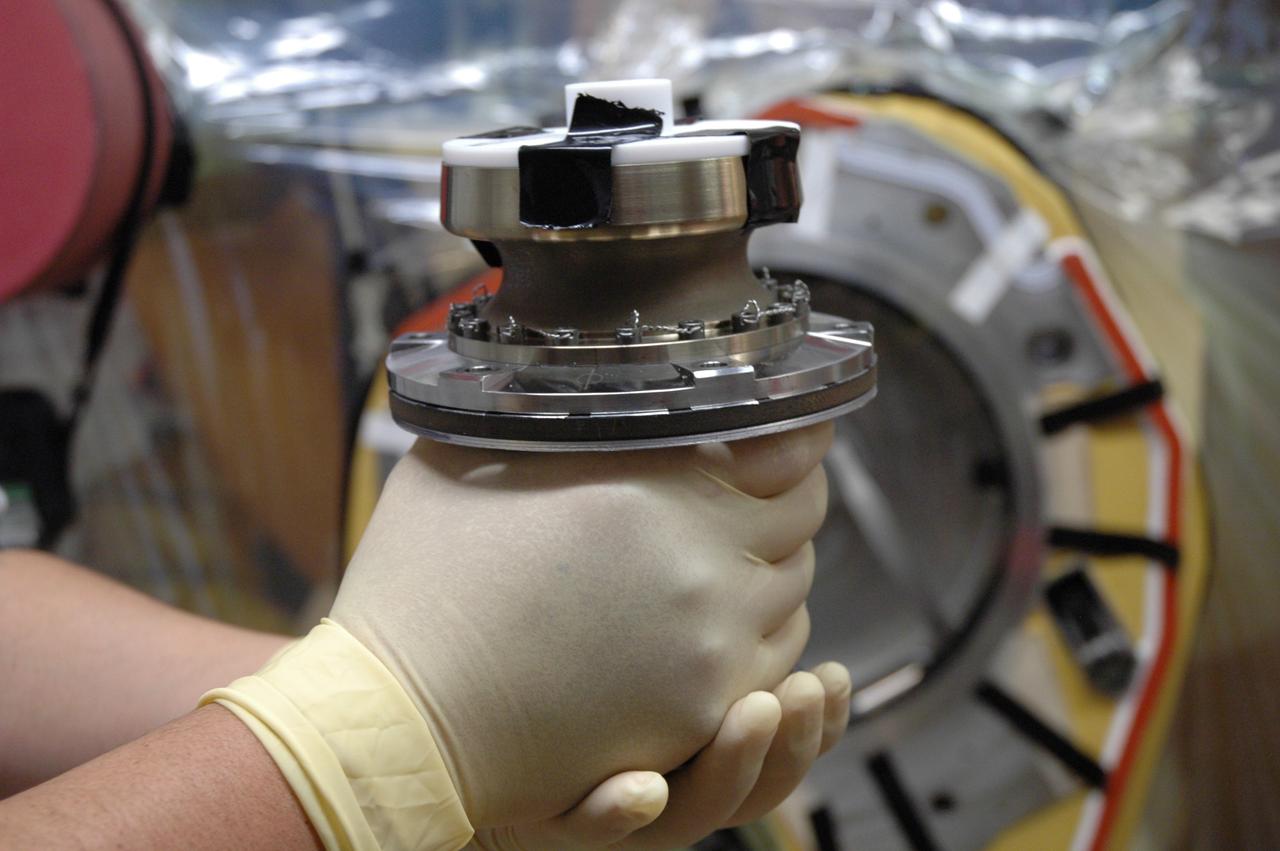
CAPE CANAVERAL, Fla. – Inside the Vehicle Assembly Building at NASA's Kennedy Space Center, a technician holds the replacement valve for Atlantis’ external tank. Technicians removed an old valve after small dings were found on the sealing surface of the quick disconnect system that handles liquid-hydrogen fuel for the shuttle’s three main engines. The tank will be attached to the twin solid rocket boosters on Aug. 3 for the STS-125 mission, the fifth and final shuttle servicing mission to NASA’s Hubble Space Telescope. During the mission, the crew will install new instruments on the telescope, including the Cosmic Origins Spectrograph and the Wide Field Camera 3. A refurbished Fine Guidance Sensor will replace one unit of three now onboard. Mission specialists will also install new gyroscopes, batteries and thermal blankets on the telescope. Launch is targeted for Oct. 8. Photo credit: NASA/Jim Grossmann
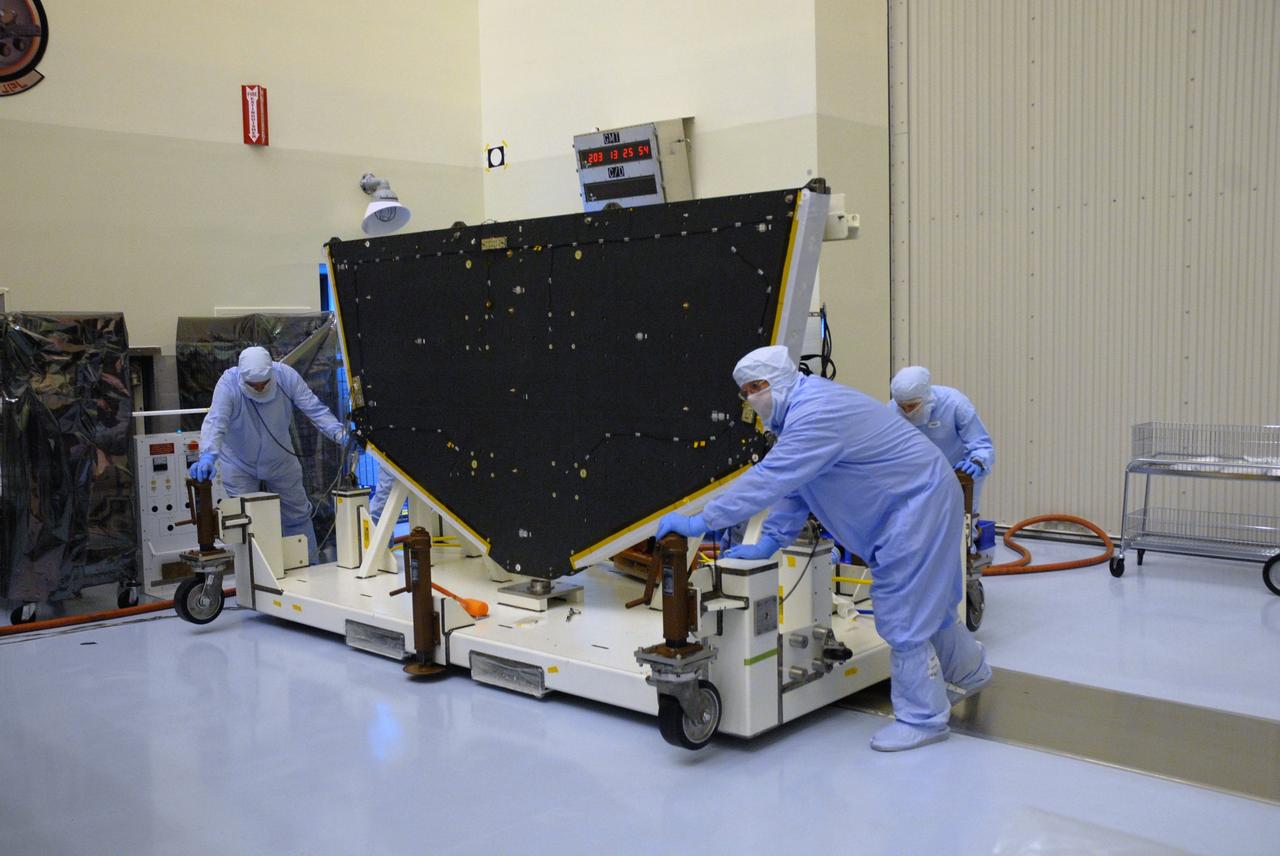
CAPE CANAVERAL, Fla. – In the high bay of the Payload Hazardous Servicing Facility at NASA's Kennedy Space Center, workers from NASA's Goddard Space Flight Center move the Hubble vertical platform toward the Super Lightweight Interchangeable Carrier for the Hubble Space Telescope, to which it will be mated. The Super Lightweight Interchangeable Carrier, or SLIC, is one of four carriers supporting hardware for space shuttle Atlantis' STS-125 mission to service the telescope. SLIC is built with state-of-the-art, lightweight, composite materials - carbon fiber with a cyanate ester resin and a titanium metal matrix composite. These composites have greater strength-to-mass ratios than the metals typically used in spacecraft design. The Orbital Replacement Unit Carrier, or ORUC, and the Flight Support System, or FSS, have also arrived at Kennedy. The Multi-Use Lightweight Equipment carrier will be delivered in early August. The carriers will be prepared for the integration of telescope science instruments, both internal and external replacement components, as well as the flight support equipment to be used by the astronauts during the Hubble servicing mission, targeted for launch Oct. 8. Photo credit: NASA/Jack Pfaller
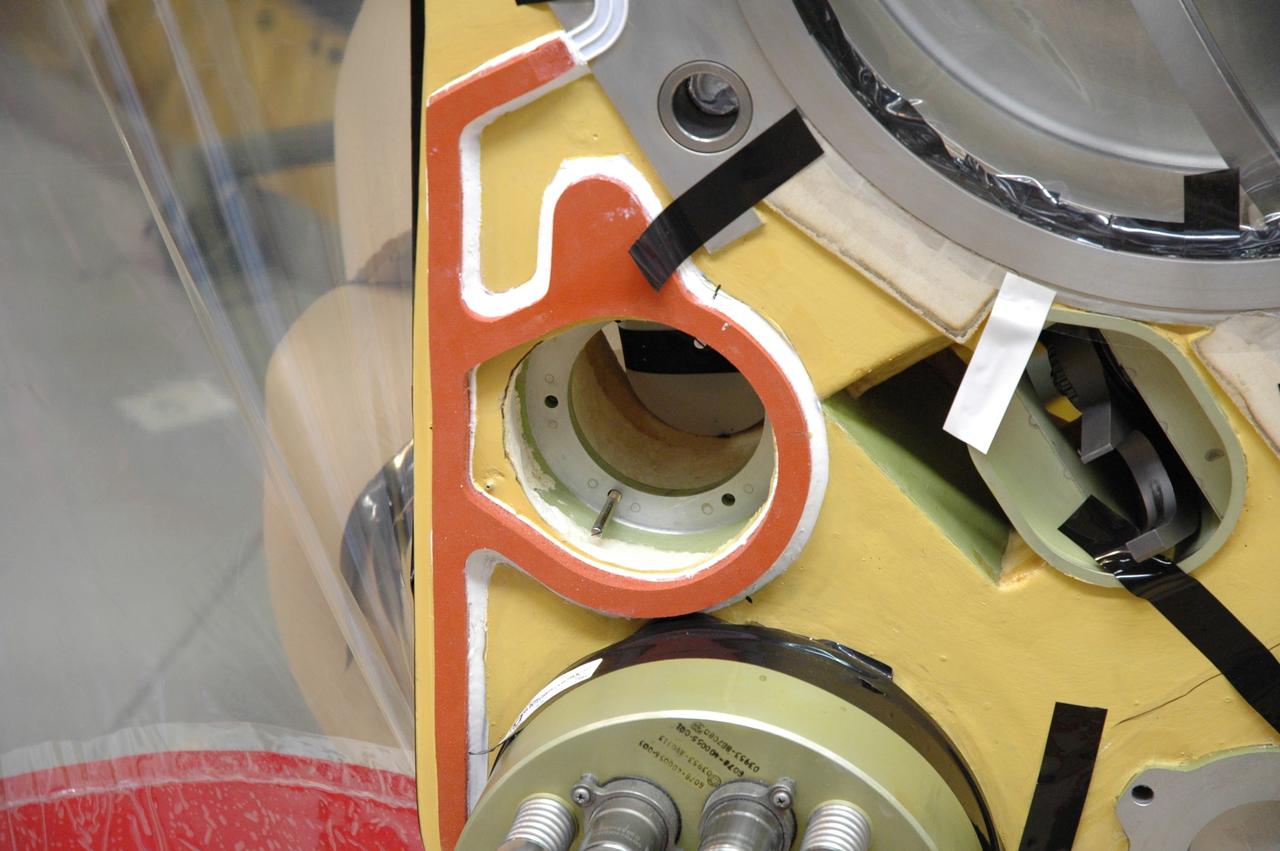
CAPE CANAVERAL, Fla. – A close up view of the quick disconnect system on Atlantis’ external tank inside a test cell in the Vehicle Assembly Building at NASA's Kennedy Space Center. Technicians prepared to replace a valve after small dings were found on the sealing surface of the quick disconnect system that handles liquid-hydrogen fuel for the shuttle’s three main engines. The tank will be attached to the twin solid rocket boosters on Aug. 3 for the STS-125 mission, the fifth and final shuttle servicing mission to NASA’s Hubble Space Telescope. During the mission, the crew will install new instruments on the telescope, including the Cosmic Origins Spectrograph and the Wide Field Camera 3. A refurbished Fine Guidance Sensor will replace one unit of three now onboard. Mission specialists will also install new gyroscopes, batteries and thermal blankets on the telescope. Launch is targeted for Oct. 8. Photo credit: NASA/Jim Grossmann
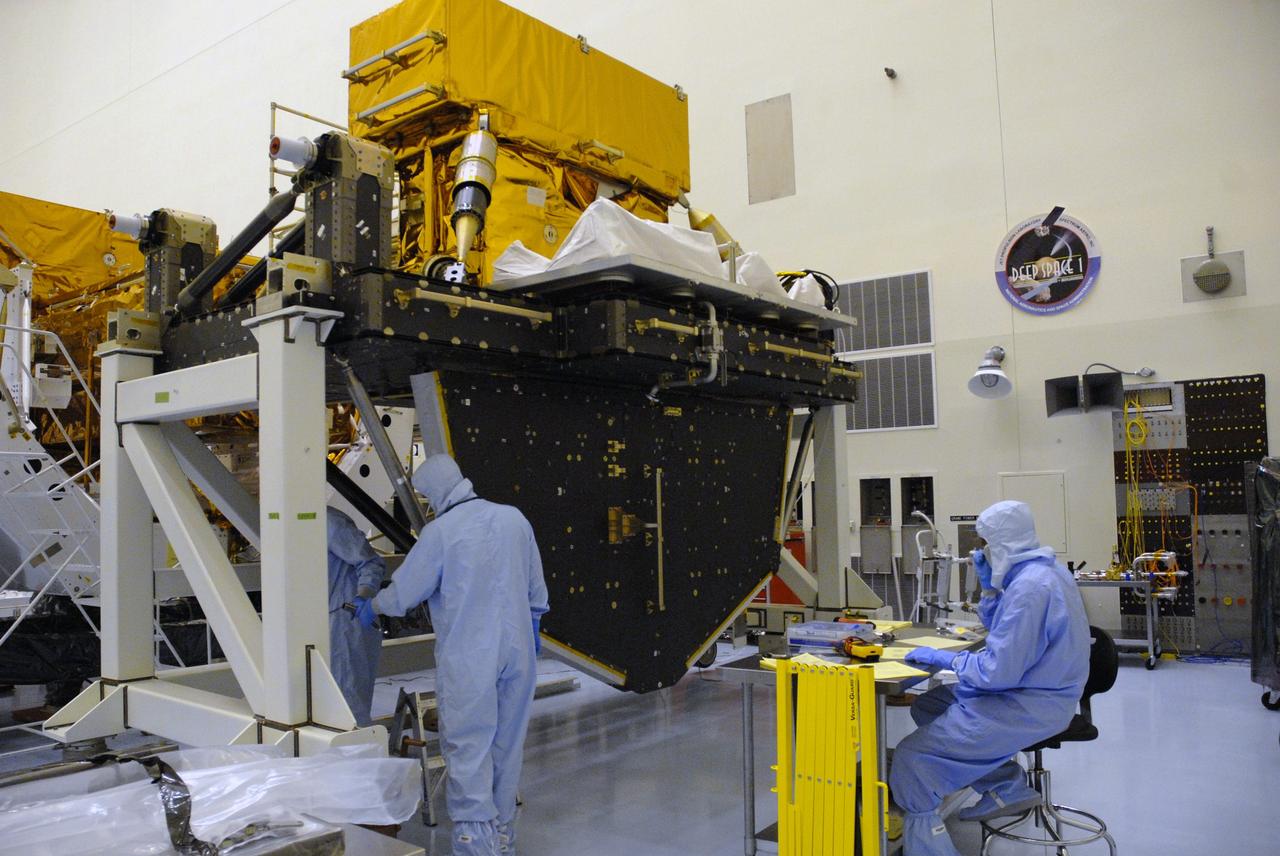
CAPE CANAVERAL, Fla. -- In the high bay of the Payload Hazardous Servicing Facility at NASA's Kennedy Space Center, workers from NASA's Goddard Space Flight Center install the pallet support struts on the Super Lightweight Interchangeable Carrier for the Hubble Space Telescope. The Super Lightweight Interchangeable Carrier, or SLIC, is one of four carriers supporting hardware for space shuttle Atlantis' STS-125 mission to service the telescope. SLIC is built with state-of-the-art, lightweight, composite materials - carbon fiber with a cyanate ester resin and a titanium metal matrix composite. These composites have greater strength-to-mass ratios than the metals typically used in spacecraft design. The Orbital Replacement Unit Carrier, or ORUC, and the Flight Support System, or FSS, have also arrived at Kennedy. The Multi-Use Lightweight Equipment carrier will be delivered in early August. The carriers will be prepared for the integration of telescope science instruments, both internal and external replacement components, as well as the flight support equipment to be used by the astronauts during the Hubble servicing mission, targeted for launch Oct. 8. Photo credit: NASA/Jack Pfaller
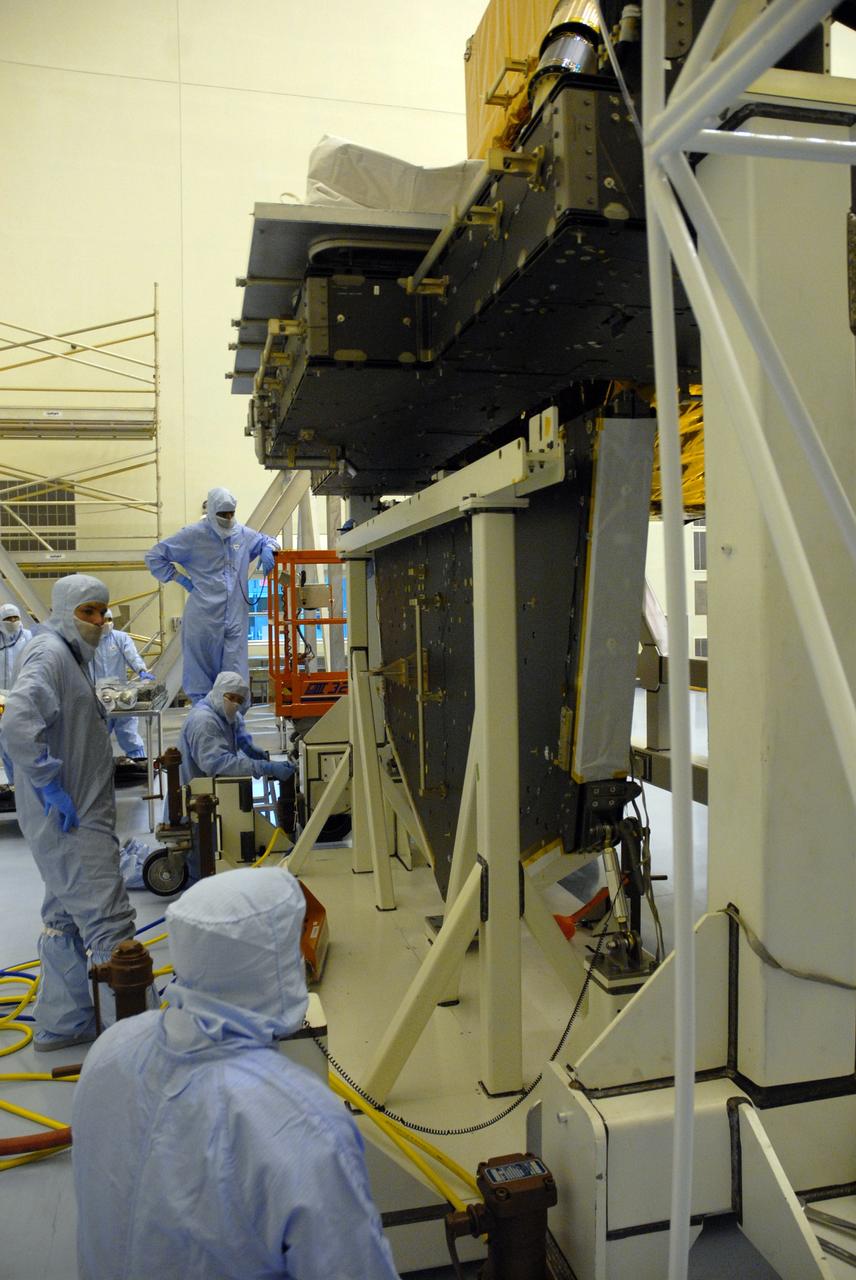
CAPE CANAVERAL, Fla. – CAPE CANAVERAL, Fla. – In the high bay of the Payload Hazardous Servicing Facility at NASA's Kennedy Space Center, workers from NASA's Goddard Space Flight Center mate the Hubble vertical platform to the Super Lightweight Interchangeable Carrier for the Hubble Space Telescope. The Super Lightweight Interchangeable Carrier, or SLIC, is one of four carriers supporting hardware for space shuttle Atlantis' STS-125 mission to service the telescope. SLIC is built with state-of-the-art, lightweight, composite materials - carbon fiber with a cyanate ester resin and a titanium metal matrix composite. These composites have greater strength-to-mass ratios than the metals typically used in spacecraft design. The Orbital Replacement Unit Carrier, or ORUC, and the Flight Support System, or FSS, have also arrived at Kennedy. The Multi-Use Lightweight Equipment carrier will be delivered in early August. The carriers will be prepared for the integration of telescope science instruments, both internal and external replacement components, as well as the flight support equipment to be used by the astronauts during the Hubble servicing mission, targeted for launch Oct. 8. Photo credit: NASA/Jack Pfaller

CAPE CANAVERAL, Fla. -- In the high bay of the Payload Hazardous Servicing Facility at NASA's Kennedy Space Center, a worker from NASA's Goddard Space Flight Center installs a pallet support strut on the Super Lightweight Interchangeable Carrier for the Hubble Space Telescope. The Super Lightweight Interchangeable Carrier, or SLIC, is one of four carriers supporting hardware for space shuttle Atlantis' STS-125 mission to service the telescope. SLIC is built with state-of-the-art, lightweight, composite materials - carbon fiber with a cyanate ester resin and a titanium metal matrix composite. These composites have greater strength-to-mass ratios than the metals typically used in spacecraft design. The Orbital Replacement Unit Carrier, or ORUC, and the Flight Support System, or FSS, have also arrived at Kennedy. The Multi-Use Lightweight Equipment carrier will be delivered in early August. The carriers will be prepared for the integration of telescope science instruments, both internal and external replacement components, as well as the flight support equipment to be used by the astronauts during the Hubble servicing mission, targeted for launch Oct. 8. Photo credit: NASA/Jack Pfaller
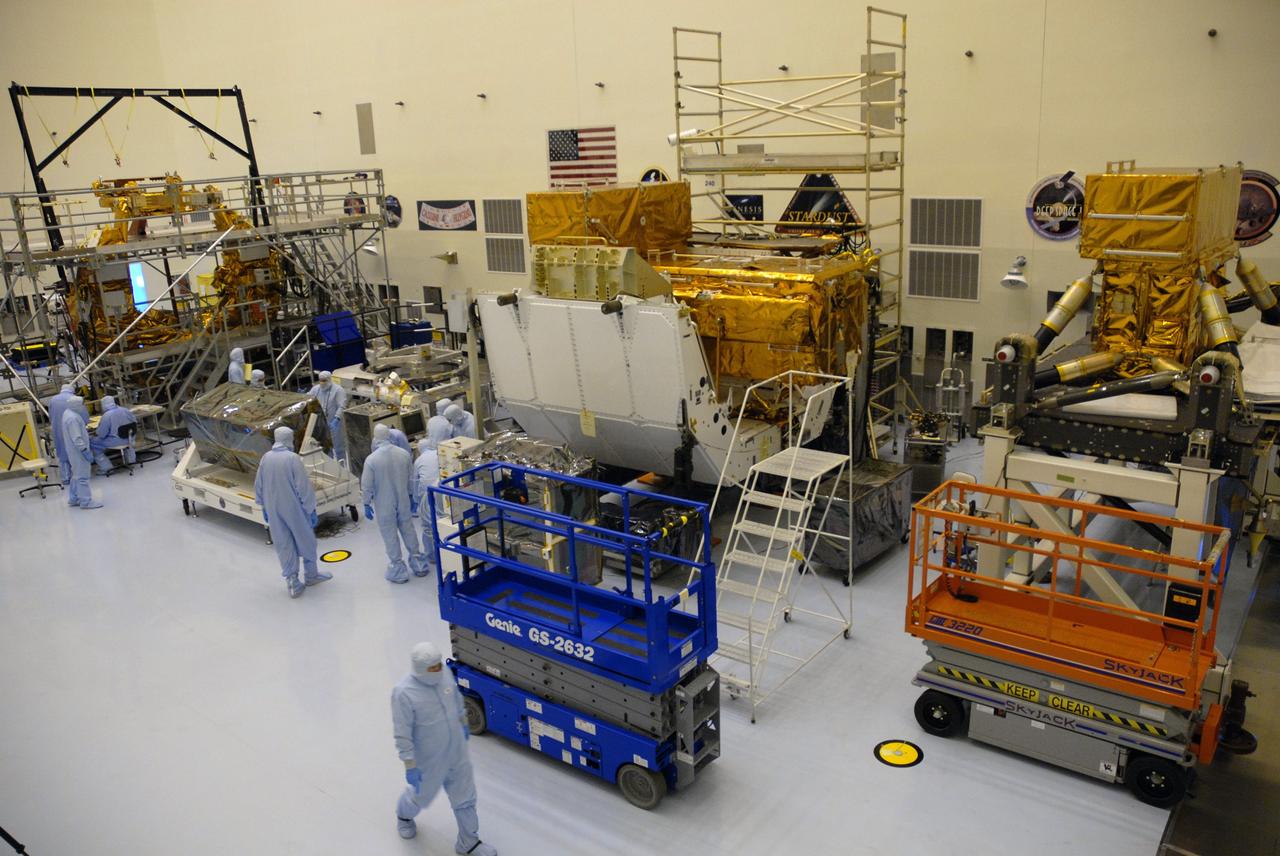
CAPE CANAVERAL, Fla. – At NASA's Kennedy Space Center, workers from NASA's Goddard Space Flight Center roll the Cosmic Origins Spectrograph, or COS, into position in the clean room of the Payload Hazardous Servicing Facility for instrument testing and integration with the Flight Support System carrier. The COS will be installed on the Hubble Space Telescope on space shuttle Atlantis' STS-125 mission. COS will be the most sensitive ultraviolet spectrograph ever flown on Hubble and will probe the "cosmic web" - the large-scale structure of the universe whose form is determined by the gravity of dark matter and is traced by galaxies and intergalactic gas. COS's far-ultraviolet channel has a sensitivity 30 times greater than that of previous spectroscopic instruments for the detection of extremely low light levels. Launch of STS-125 is targeted for Oct. 8. Photo credit: NASA/Jack Pfaller
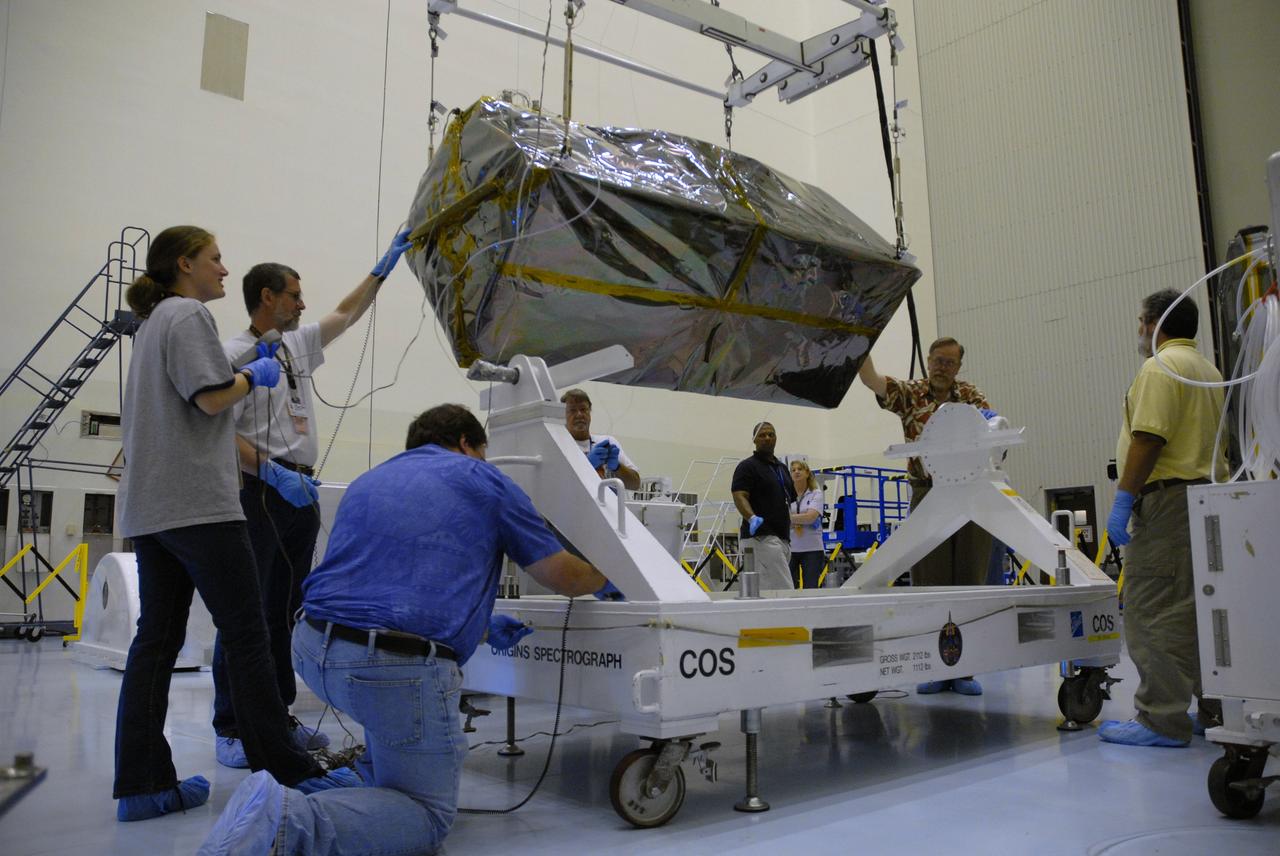
CAPE CANAVERAL, Fla. – In the airlock of the Payload Hazardous Servicing Facility at NASA's Kennedy Space Center, workers from NASA's Goddard Space Flight Center lift the Cosmic Origins Spectrograph, or COS, from its transportation canister onto a dolly for its move into the clean room. The COS will be installed on the Hubble Space Telescope on space shuttle Atlantis' STS-125 mission. COS will be the most sensitive ultraviolet spectrograph ever flown on Hubble and will probe the "cosmic web" - the large-scale structure of the universe whose form is determined by the gravity of dark matter and is traced by galaxies and intergalactic gas. COS's far-ultraviolet channel has a sensitivity 30 times greater than that of previous spectroscopic instruments for the detection of extremely low light levels. Launch of STS-125 is targeted for Oct. 8. Photo credit: NASA/Jack Pfaller
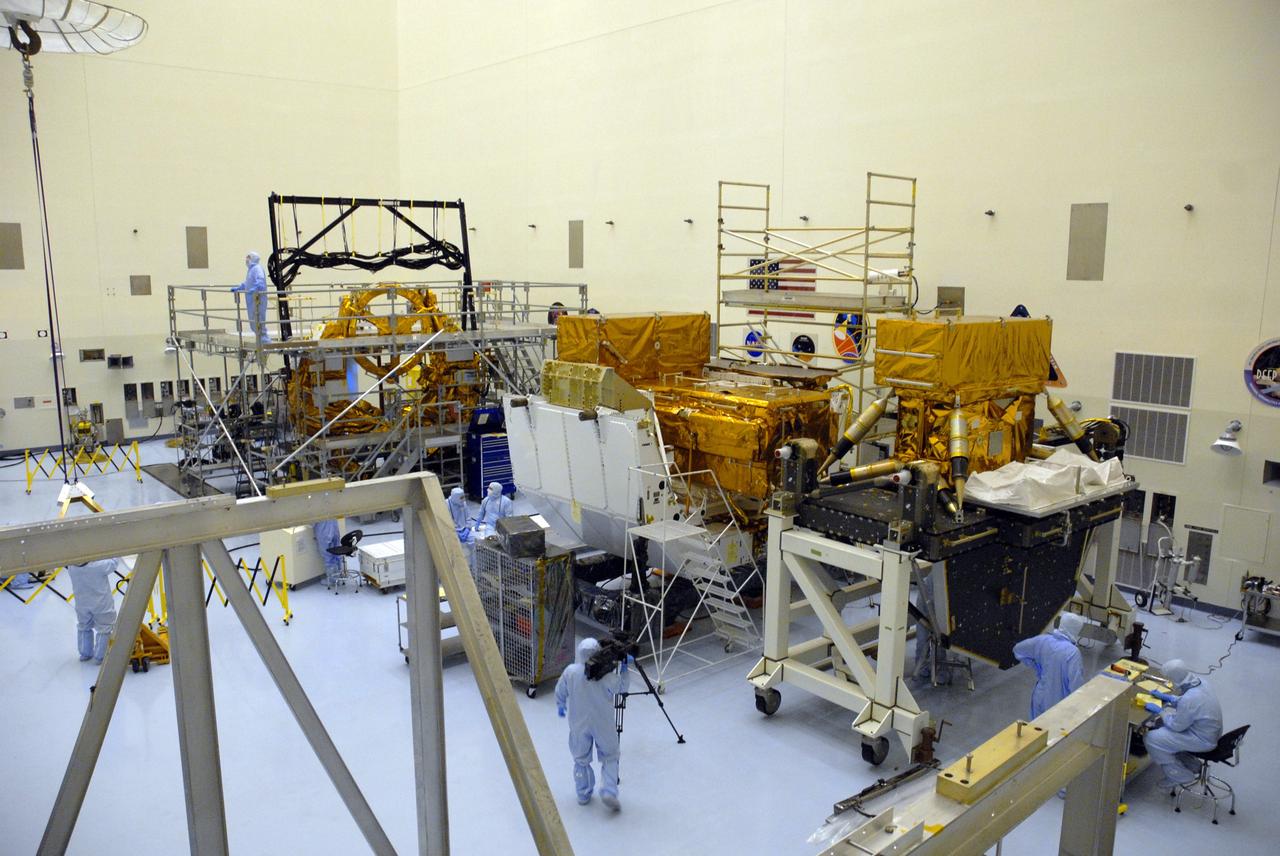
CAPE CANAVERAL, Fla. -- In the high bay of the Payload Hazardous Servicing Facility at NASA's Kennedy Space Center, this elevated view shows three carriers undergoing processing for space shuttle Atlantis' STS-125 mission to service the Hubble Space Telescope. From left are the Flight Support System or FSS, the Orbital Replacement Unit Carrier or ORUC, and the Super Lightweight Interchangeable Carrier or SLIC. The Multi-Use Lightweight Equipment carrier will be delivered in early August. The carriers will be prepared for the integration of telescope science instruments, both internal and external replacement components, as well as the flight support equipment to be used by the astronauts during the Hubble servicing mission, targeted for launch Oct. 8. Photo credit: NASA/Jack Pfaller
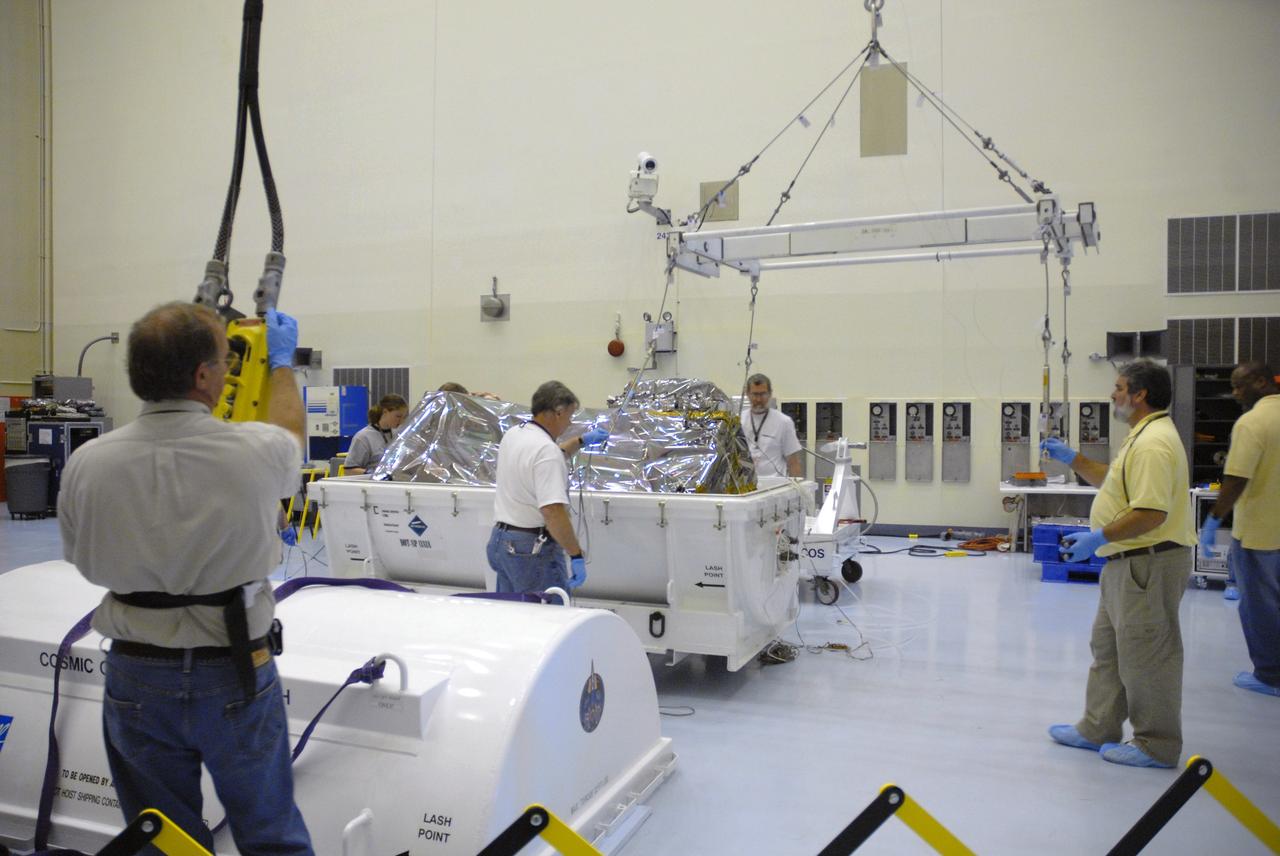
CAPE CANAVERAL, Fla. – In the airlock of the Payload Hazardous Servicing Facility at NASA's Kennedy Space Center, workers from NASA's Goddard Space Flight Center examine the Cosmic Origins Spectrograph, or COS, after the top from its transportation canister is removed. The COS will be installed on the Hubble Space Telescope on space shuttle Atlantis' STS-125 mission. COS will be the most sensitive ultraviolet spectrograph ever flown on Hubble and will probe the "cosmic web" - the large-scale structure of the universe whose form is determined by the gravity of dark matter and is traced by galaxies and intergalactic gas. COS's far-ultraviolet channel has a sensitivity 30 times greater than that of previous spectroscopic instruments for the detection of extremely low light levels. Launch of STS-125 is targeted for Oct. 8. Photo credit: NASA/Jack Pfaller
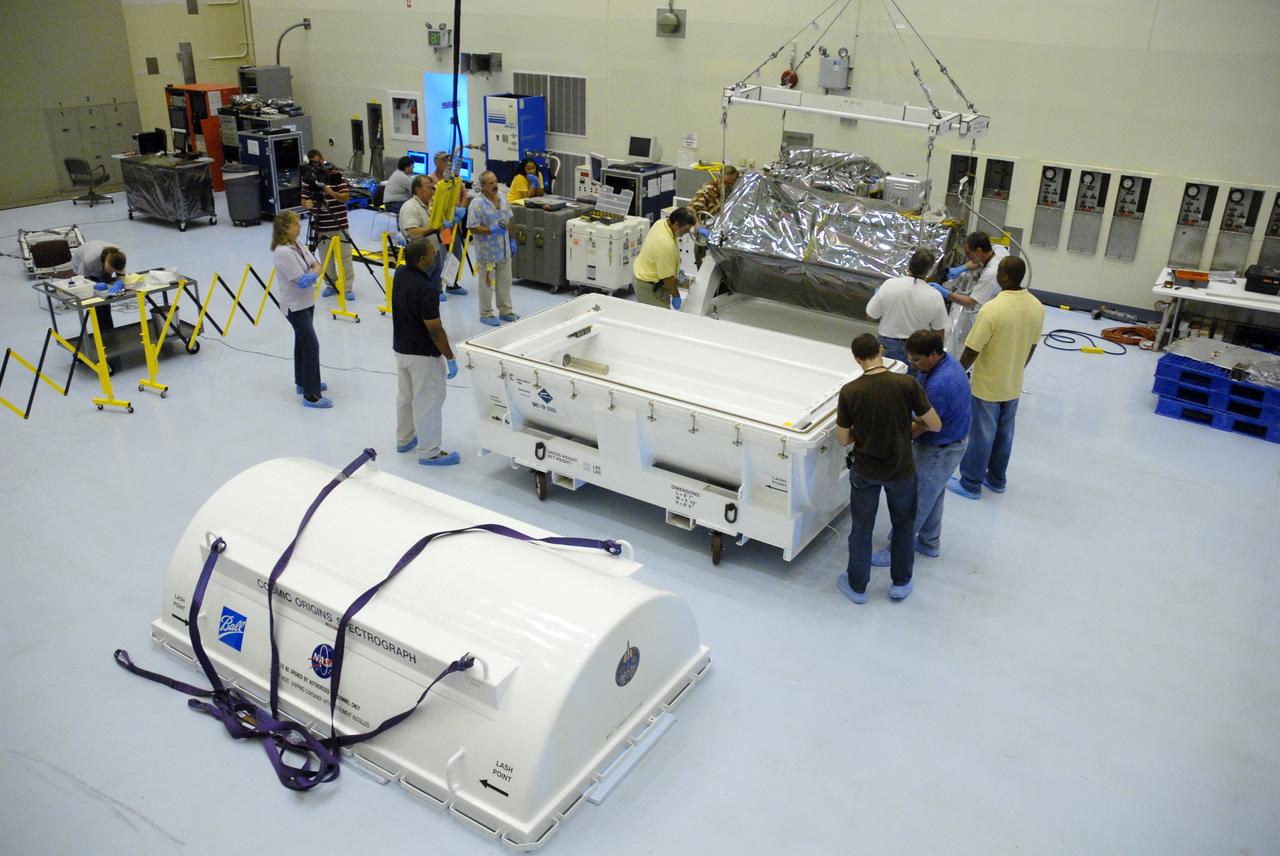
CAPE CANAVERAL, Fla. – In the airlock of the Payload Hazardous Servicing Facility at NASA's Kennedy Space Center, workers from NASA's Goddard Space Flight Center lower the Cosmic Origins Spectrograph, or COS, onto a dolly for its move into the clean room. The COS will be installed on the Hubble Space Telescope on space shuttle Atlantis' STS-125 mission. COS will be the most sensitive ultraviolet spectrograph ever flown on Hubble and will probe the "cosmic web" - the large-scale structure of the universe whose form is determined by the gravity of dark matter and is traced by galaxies and intergalactic gas. COS's far-ultraviolet channel has a sensitivity 30 times greater than that of previous spectroscopic instruments for the detection of extremely low light levels. Launch of STS-125 is targeted for Oct. 8. Photo credit: NASA/Jack Pfaller
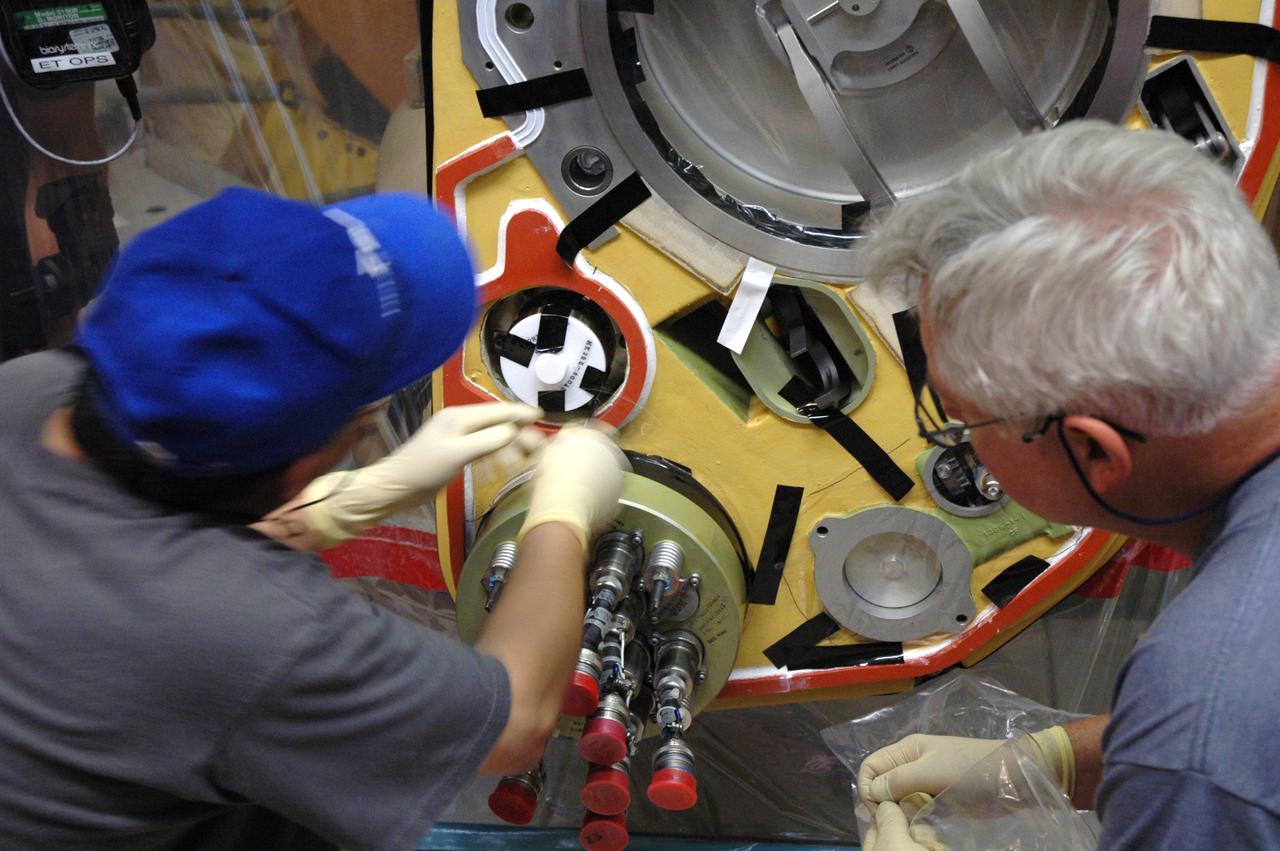
CAPE CANAVERAL, Fla. – Inside the Vehicle Assembly Building at NASA’s Kennedy Space Center, technicians install a new valve on Atlantis’ external tank after small dings were found on the sealing surface of the quick disconnect system that handles liquid-hydrogen fuel for the shuttle’s three main engines. The tank will be attached to the twin solid rocket boosters on Aug. 3 for the STS-125 mission, the fifth and final shuttle servicing mission to NASA’s Hubble Space Telescope. During the mission, the crew will install new instruments on the telescope, including the Cosmic Origins Spectrograph and the Wide Field Camera 3. A refurbished Fine Guidance Sensor will replace one unit of three now onboard. Mission specialists will also install new gyroscopes, batteries and thermal blankets on the telescope. Launch is targeted for Oct. 8. Photo credit: NASA/Jim Grossmann
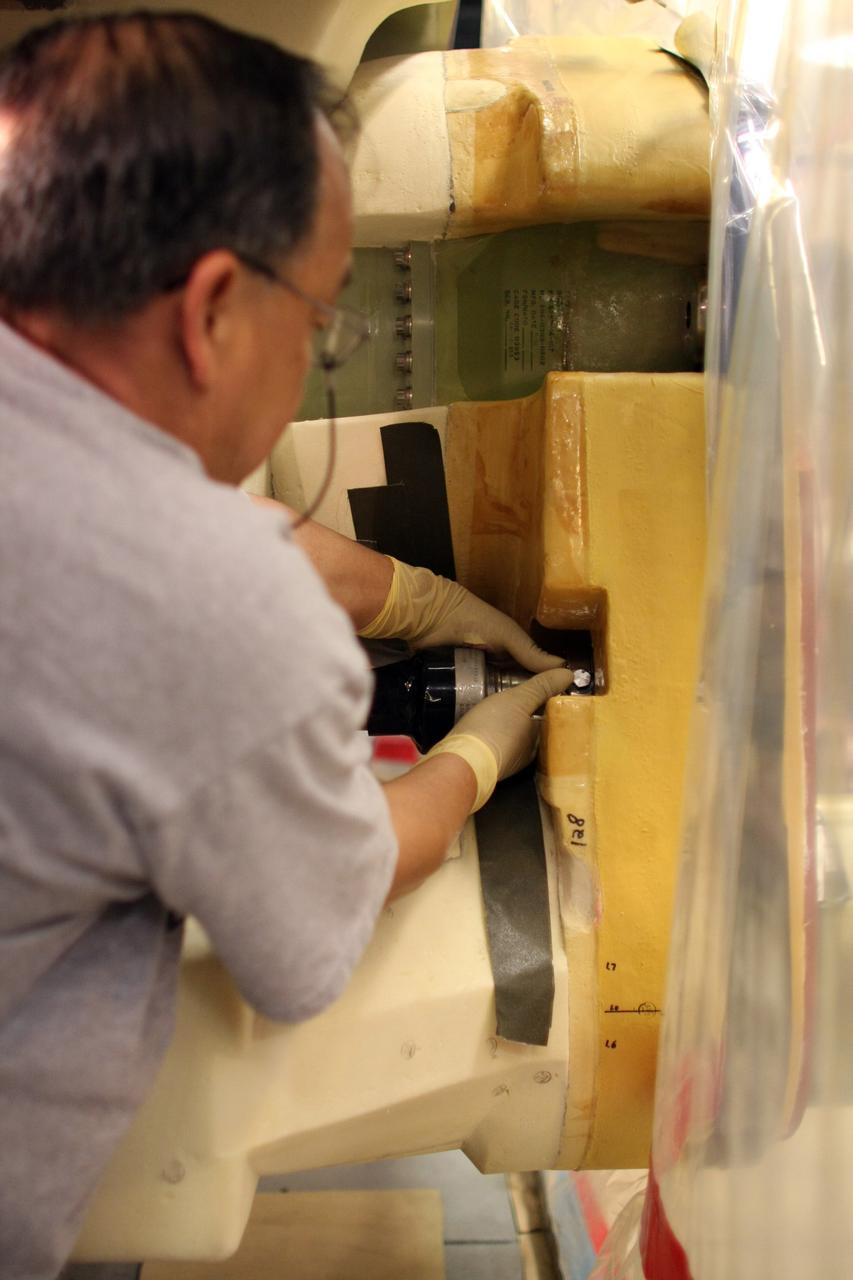
CAPE CANAVERAL, Fla. – Inside the Vehicle Assembly Building at NASA's Kennedy Space Center, a technician removes a valve on Atlantis’ external tank after small dings were found on the sealing surface of the quick disconnect system that handles liquid-hydrogen fuel for the shuttle’s three main engines. The tank will be attached to the twin solid rocket boosters on Aug. 3 for the STS-125 mission, the fifth and final shuttle servicing mission to NASA’s Hubble Space Telescope. During the mission, the crew will install new instruments on the telescope, including the Cosmic Origins Spectrograph and the Wide Field Camera 3. A refurbished Fine Guidance Sensor will replace one unit of three now onboard. Mission specialists will also install new gyroscopes, batteries and thermal blankets on the telescope. Launch is targeted for Oct. 8. Photo credit: NASA/Dimitri Gerondidakis
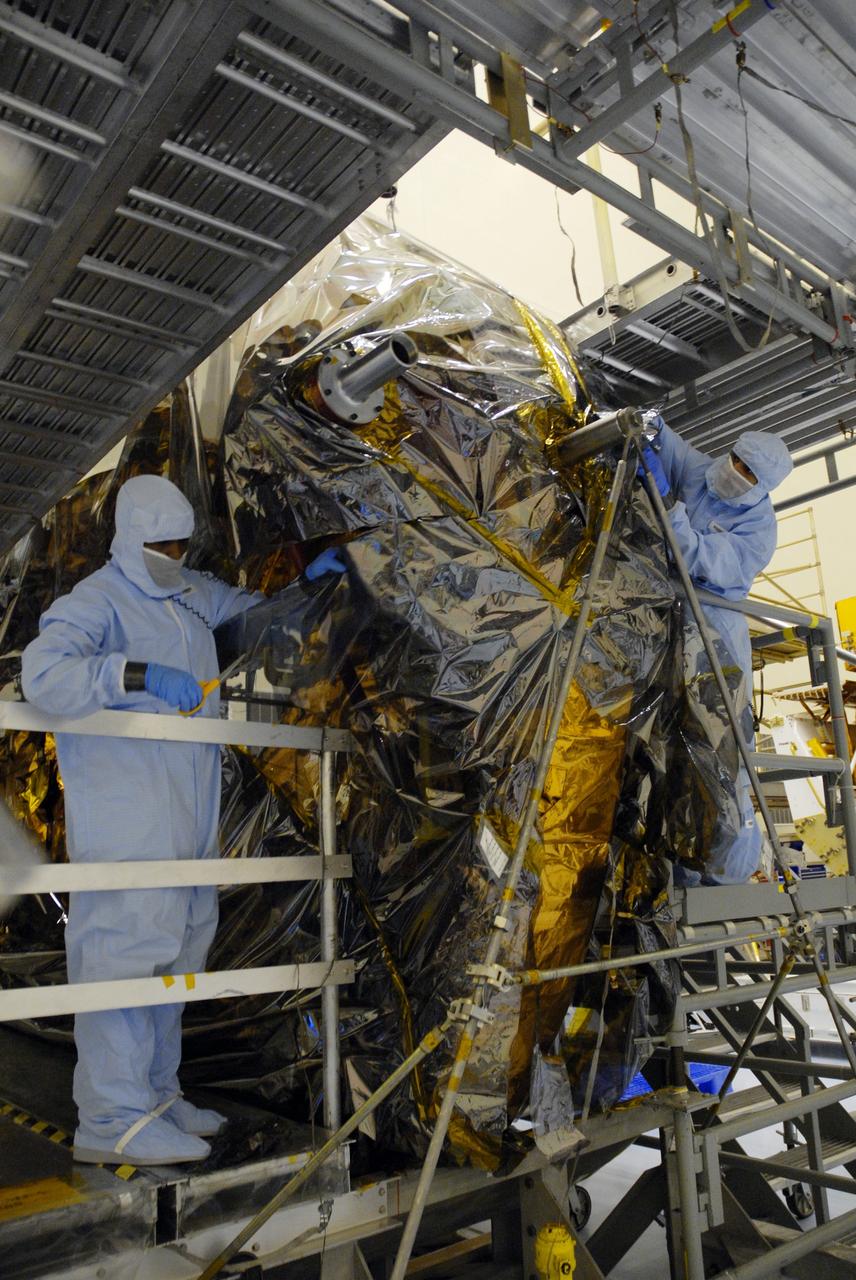
CAPE CANAVERAL, Fla. – In the high bay of the Payload Hazardous Servicing Facility at NASA's Kennedy Space Center, workers from NASA's Goddard Space Flight Center remove the protective wrapping from the Flight Support System for the Hubble Space Telescope. The Flight Support System, or FSS, is one of four carriers supporting hardware for space shuttle Atlantis' STS-125 mission to service the telescope. The Super Lightweight Interchangeable Carrier, or SLIC, and the Orbital Replacement Unit Carrier, or ORUC, have also arrived at Kennedy. The Multi-Use Lightweight Equipment carrier will be delivered in early August. The carriers will be prepared for the integration of telescope science instruments, both internal and external replacement components, as well as the flight support equipment to be used by the astronauts during the Hubble servicing mission, targeted for launch Oct. 8. Photo credit: NASA/Jack Pfaller
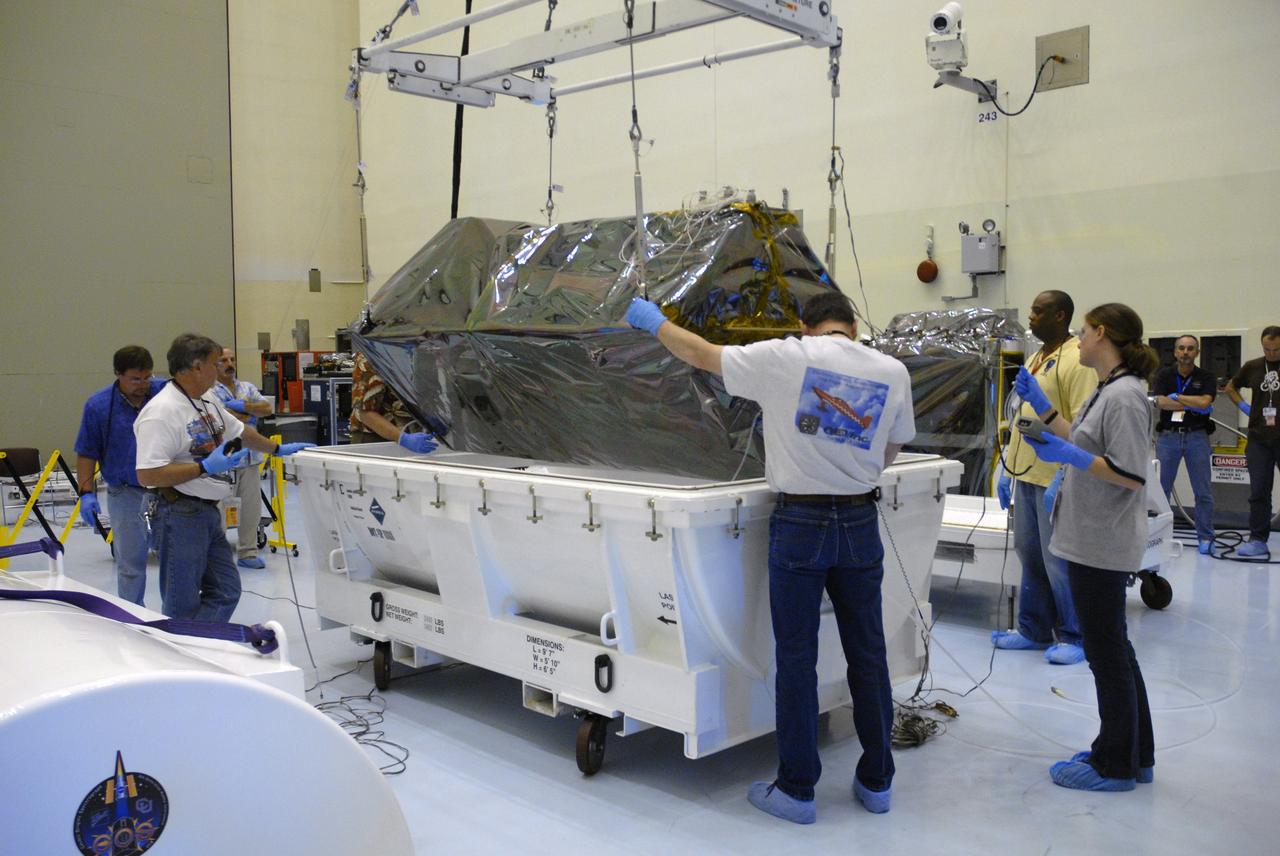
CAPE CANAVERAL, Fla. – In the airlock of the Payload Hazardous Servicing Facility at NASA's Kennedy Space Center, workers from NASA's Goddard Space Flight Center prepare to lift the Cosmic Origins Spectrograph, or COS, from its transportation canister. The COS will be installed on the Hubble Space Telescope on space shuttle Atlantis' STS-125 mission. COS will be the most sensitive ultraviolet spectrograph ever flown on Hubble and will probe the "cosmic web" - the large-scale structure of the universe whose form is determined by the gravity of dark matter and is traced by galaxies and intergalactic gas. COS's far-ultraviolet channel has a sensitivity 30 times greater than that of previous spectroscopic instruments for the detection of extremely low light levels. Launch of STS-125 is targeted for Oct. 8. Photo credit: NASA/Jack Pfaller
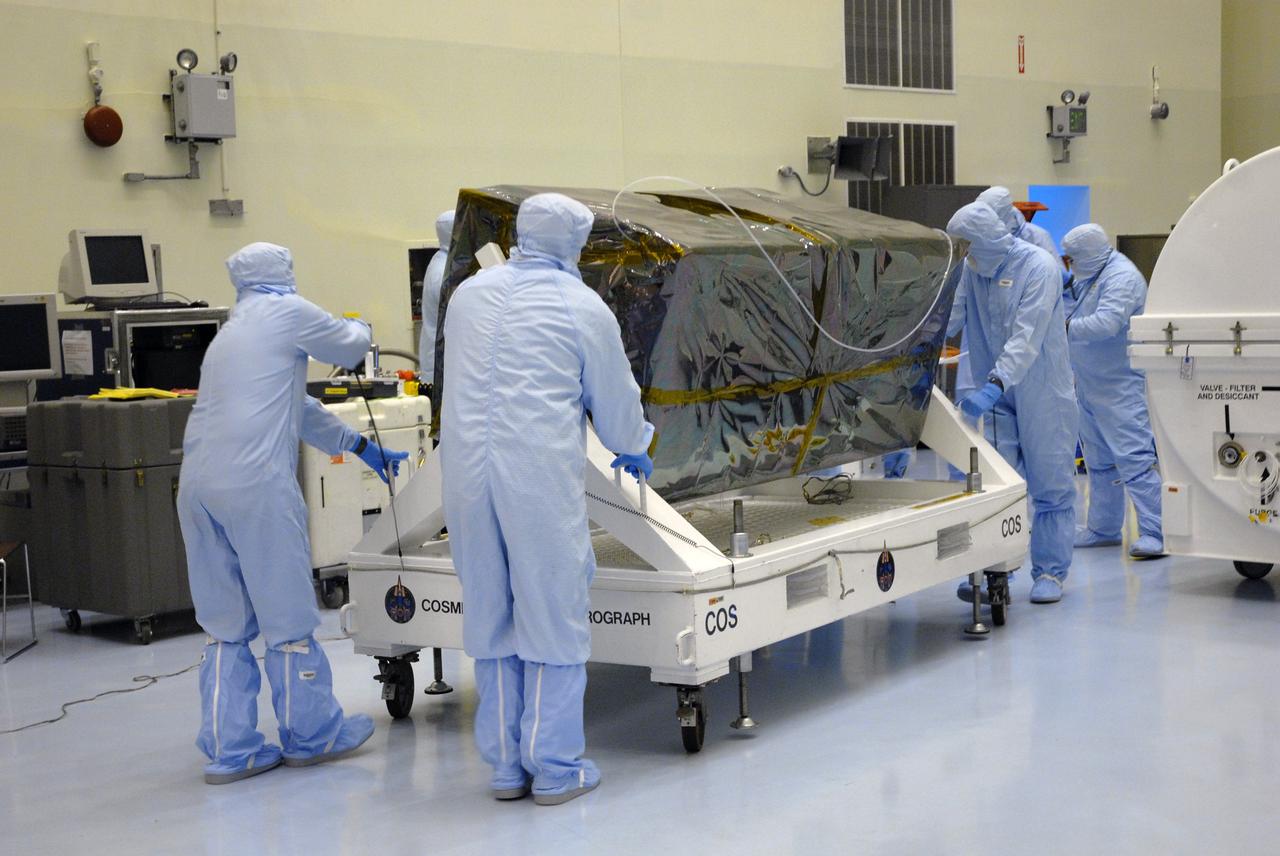
CAPE CANAVERAL, Fla. – At NASA's Kennedy Space Center, workers from NASA's Goddard Space Flight Center roll the Cosmic Origins Spectrograph, or COS, from the airlock, where it was removed from the shipping container, to the clean room of the Payload Hazardous Servicing Facility. The COS will be installed on the Hubble Space Telescope on space shuttle Atlantis' STS-125 mission. COS will be the most sensitive ultraviolet spectrograph ever flown on Hubble and will probe the "cosmic web" - the large-scale structure of the universe whose form is determined by the gravity of dark matter and is traced by galaxies and intergalactic gas. COS's far-ultraviolet channel has a sensitivity 30 times greater than that of previous spectroscopic instruments for the detection of extremely low light levels. Launch of STS-125 is targeted for Oct. 8. Photo credit: NASA/Jack Pfaller

CAPE CANAVERAL, Fla. – At NASA's Kennedy Space Center, workers from NASA's Goddard Space Flight Center roll the Cosmic Origins Spectrograph, or COS, into position in the clean room of the Payload Hazardous Servicing Facility for instrument testing. The COS will be installed on the Hubble Space Telescope on space shuttle Atlantis' STS-125 mission. COS will be the most sensitive ultraviolet spectrograph ever flown on Hubble and will probe the "cosmic web" - the large-scale structure of the universe whose form is determined by the gravity of dark matter and is traced by galaxies and intergalactic gas. COS's far-ultraviolet channel has a sensitivity 30 times greater than that of previous spectroscopic instruments for the detection of extremely low light levels. Launch of STS-125 is targeted for Oct. 8. Photo credit: NASA/Jack Pfaller
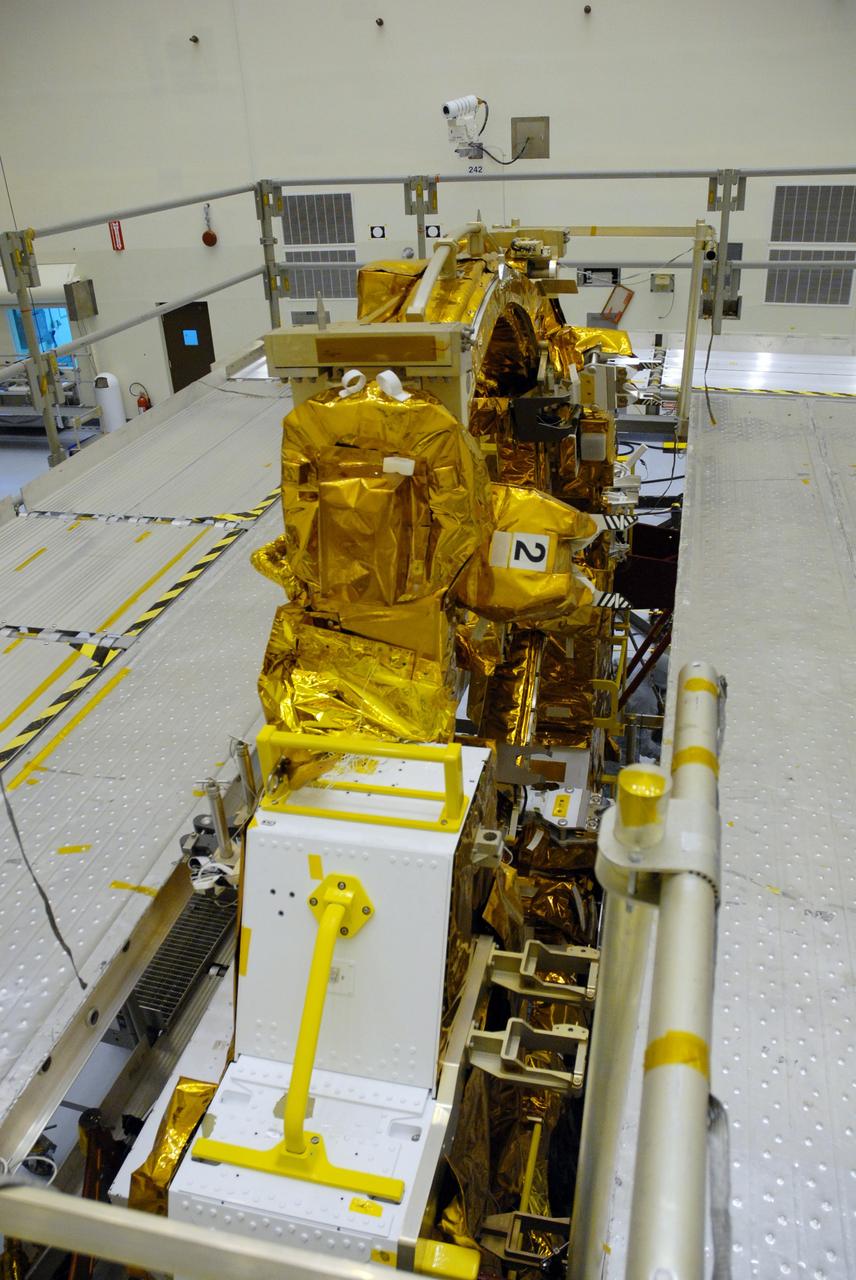
CAPE CANAVERAL, Fla. – In the high bay of the Payload Hazardous Servicing Facility at NASA's Kennedy Space Center, the protective wrapping has been removed from the Flight Support System for the Hubble Space Telescope revealing the soft capture mechanism , or SCM. The SCM will be permanently attached to Hubble’s aft shroud by spacewalking astronauts and will provide a rendezvous and docking target that can be easily seen and recognized by a docking vehicle. The Flight Support System, or FSS, is one of four carriers supporting hardware for space shuttle Atlantis' STS-125 mission to service the telescope. The Super Lightweight Interchangeable Carrier, or SLIC, and the Orbital Replacement Unit Carrier, or ORUC, have also arrived at Kennedy. The Multi-Use Lightweight Equipment carrier will be delivered in early August. The carriers will be prepared for the integration of telescope science instruments, both internal and external replacement components, as well as the flight support equipment to be used by the astronauts during the Hubble servicing mission, targeted for launch Oct. 8. Photo credit: NASA/Jack Pfaller
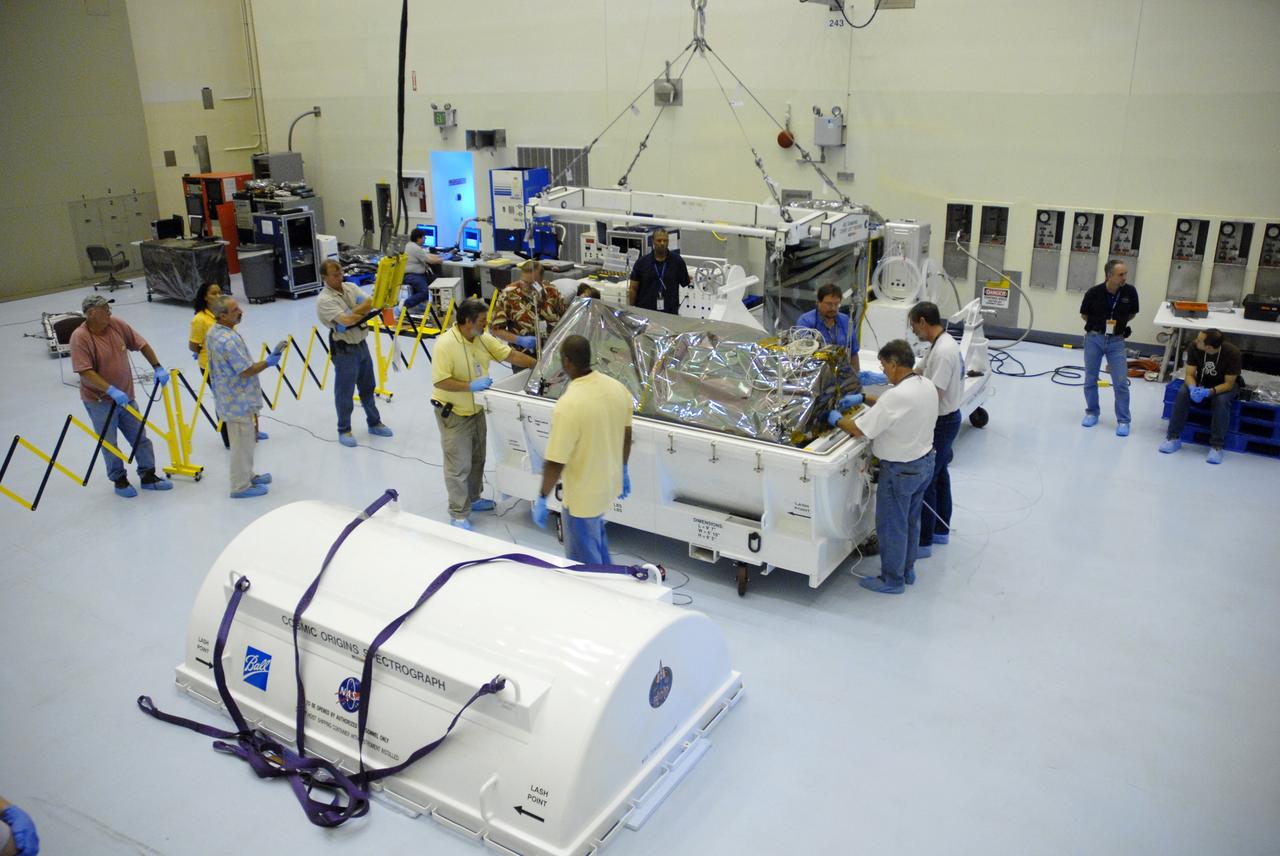
CAPE CANAVERAL, Fla. – In the airlock of the Payload Hazardous Servicing Facility at NASA's Kennedy Space Center, workers from NASA's Goddard Space Flight Center prepare to remove the Cosmic Origins Spectrograph, or COS, from its transportation canister. The COS will be installed on the Hubble Space Telescope on space shuttle Atlantis' STS-125 mission. COS will be the most sensitive ultraviolet spectrograph ever flown on Hubble and will probe the "cosmic web" - the large-scale structure of the universe whose form is determined by the gravity of dark matter and is traced by galaxies and intergalactic gas. COS's far-ultraviolet channel has a sensitivity 30 times greater than that of previous spectroscopic instruments for the detection of extremely low light levels. Launch of STS-125 is targeted for Oct. 8. Photo credit: NASA/Jack Pfaller
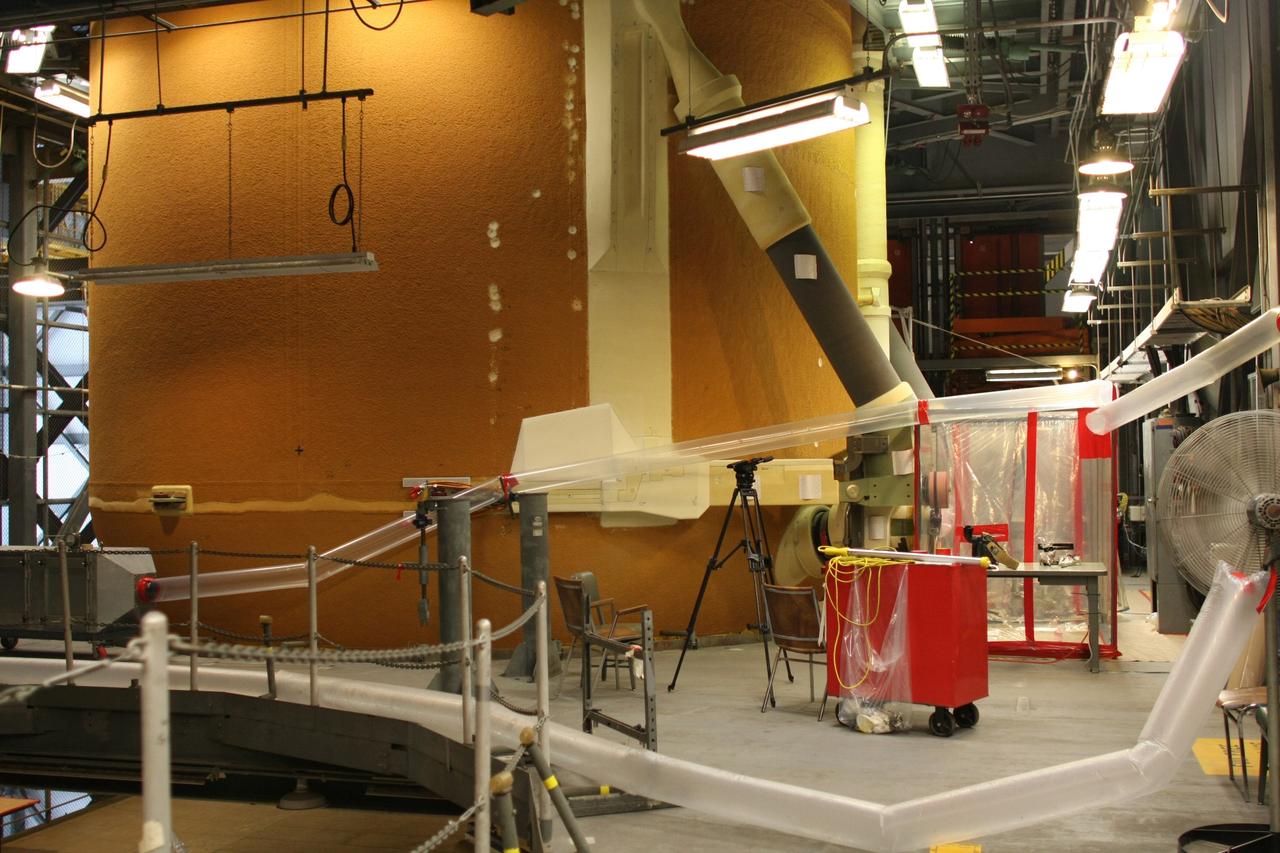
CAPE CANAVERAL, Fla. – Inside the Vehicle Assembly Building at NASA's Kennedy Space Center, a portion of Atlantis’ external tank is sealed to prevent contamination so that technicians can replace a valve on Atlantis’ external tank after small dings were found on the sealing surface of the quick disconnect system that handles liquid-hydrogen fuel for the shuttle’s three main engines. The tank will be attached to the twin solid rocket boosters on Aug. 3 for the STS-125 mission, the fifth and final shuttle servicing mission to NASA’s Hubble Space Telescope. During the mission, the crew will install new instruments on the telescope, including the Cosmic Origins Spectrograph and the Wide Field Camera 3. A refurbished Fine Guidance Sensor will replace one unit of three now onboard. Mission specialists will also install new gyroscopes, batteries and thermal blankets on the telescope. Launch is targeted for Oct. 8. Photo credit: NASA/Dimitri Gerondidakis
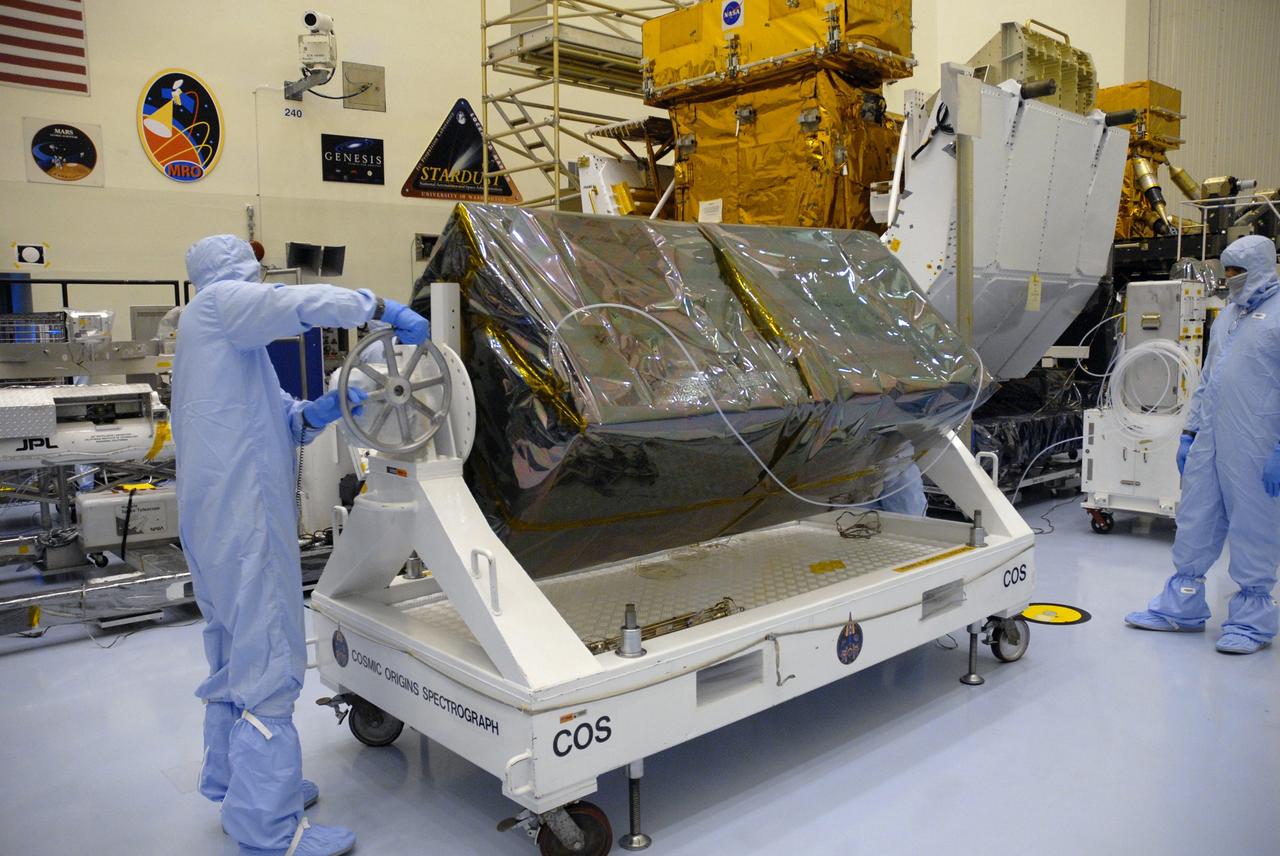
CAPE CANAVERAL, Fla. – At NASA's Kennedy Space Center, workers from NASA's Goddard Space Flight Center prepare the Cosmic Origins Spectrograph, or COS, for instrument testing and integration with the Flight Support System carrier in the clean room of the Payload Hazardous Servicing Facility. The COS will be installed on the Hubble Space Telescope on space shuttle Atlantis' STS-125 mission. COS will be the most sensitive ultraviolet spectrograph ever flown on Hubble and will probe the "cosmic web" - the large-scale structure of the universe whose form is determined by the gravity of dark matter and is traced by galaxies and intergalactic gas. COS's far-ultraviolet channel has a sensitivity 30 times greater than that of previous spectroscopic instruments for the detection of extremely low light levels. Launch of STS-125 is targeted for Oct. 8. Photo credit: NASA/Jack Pfaller
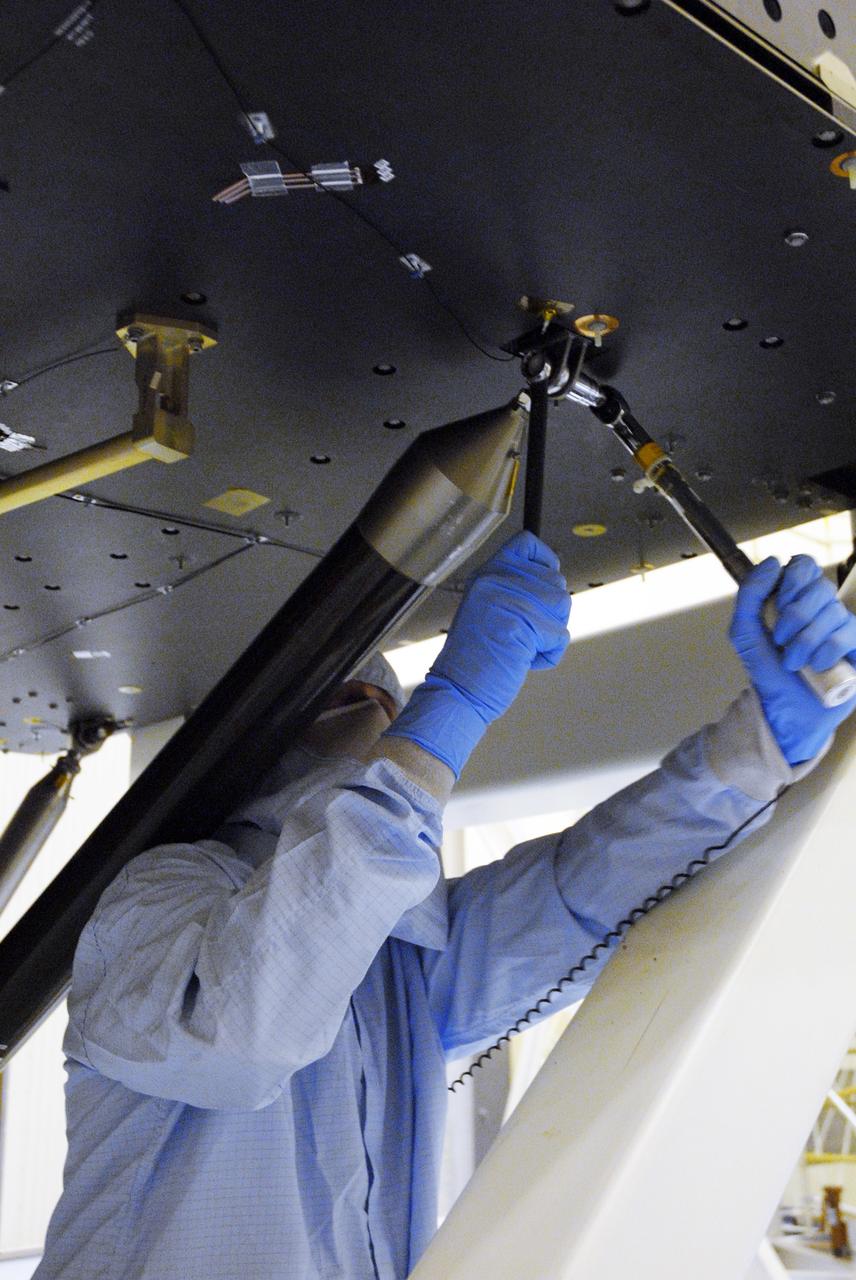
CAPE CANAVERAL, Fla. -- In the high bay of the Payload Hazardous Servicing Facility at NASA's Kennedy Space Center, a worker from NASA's Goddard Space Flight Center installs a pallet support strut on the Super Lightweight Interchangeable Carrier for the Hubble Space Telescope. The Super Lightweight Interchangeable Carrier, or SLIC, is one of four carriers supporting hardware for space shuttle Atlantis' STS-125 mission to service the telescope. SLIC is built with state-of-the-art, lightweight, composite materials - carbon fiber with a cyanate ester resin and a titanium metal matrix composite. These composites have greater strength-to-mass ratios than the metals typically used in spacecraft design. The Orbital Replacement Unit Carrier, or ORUC, and the Flight Support System, or FSS, have also arrived at Kennedy. The Multi-Use Lightweight Equipment carrier will be delivered in early August. The carriers will be prepared for the integration of telescope science instruments, both internal and external replacement components, as well as the flight support equipment to be used by the astronauts during the Hubble servicing mission, targeted for launch Oct. 8. Photo credit: NASA/Jack Pfaller
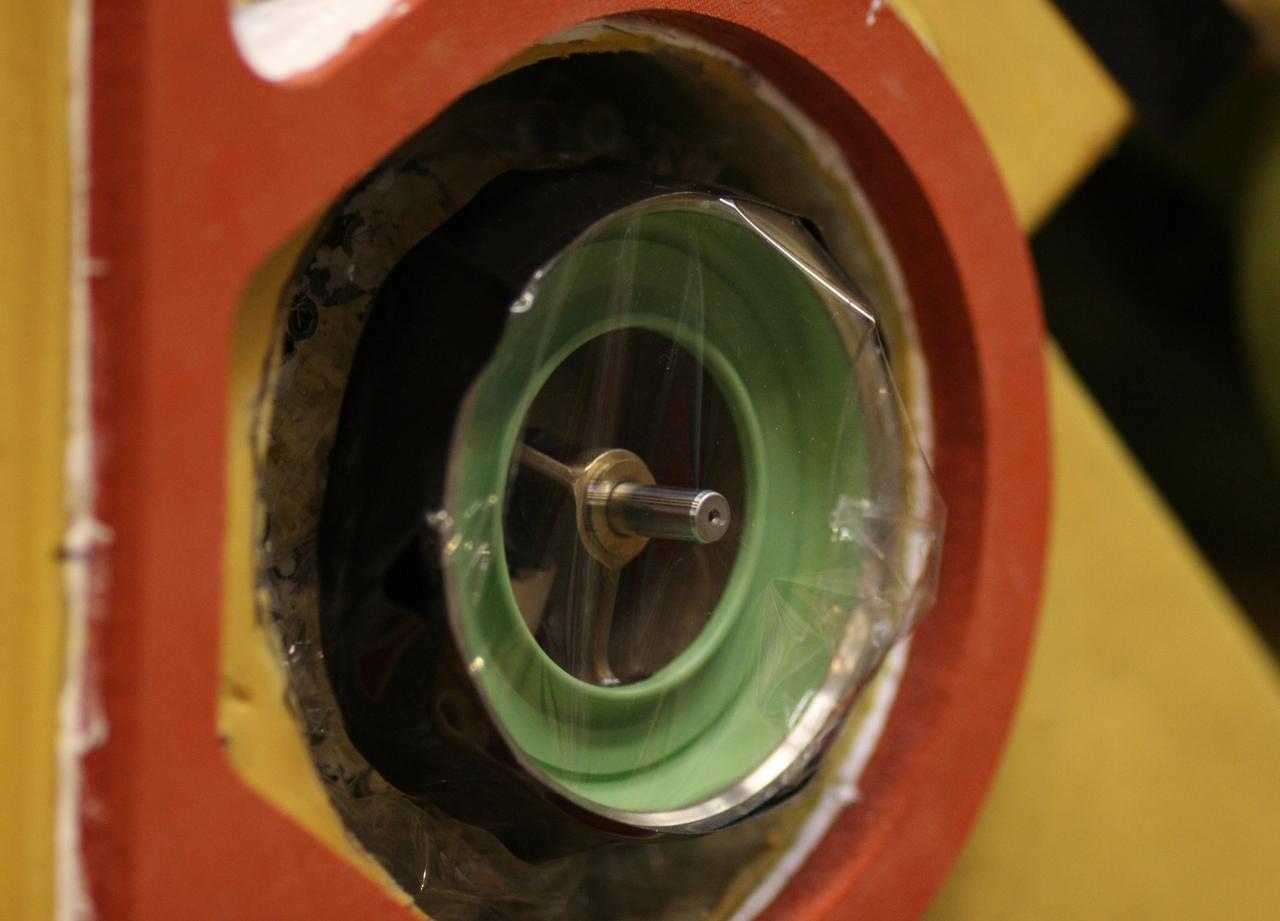
CAPE CANAVERAL, Fla. – A close up view of the quick disconnect system on Atlantis’ external tank inside a test cell in the Vehicle Assembly Building at NASA's Kennedy Space Center. Technicians prepared to replace a valve after small dings were found on the sealing surface of the quick disconnect system that handles liquid-hydrogen fuel for the shuttle’s three main engines. The tank will be attached to the twin solid rocket boosters on Aug. 3 for the STS-125 mission, the fifth and final shuttle servicing mission to NASA’s Hubble Space Telescope. During the mission, the crew will install new instruments on the telescope, including the Cosmic Origins Spectrograph and the Wide Field Camera 3. A refurbished Fine Guidance Sensor will replace one unit of three now onboard. Mission specialists will also install new gyroscopes, batteries and thermal blankets on the telescope. Launch is targeted for Oct. 8. Photo credit: NASA/Dimitri Gerondidakis
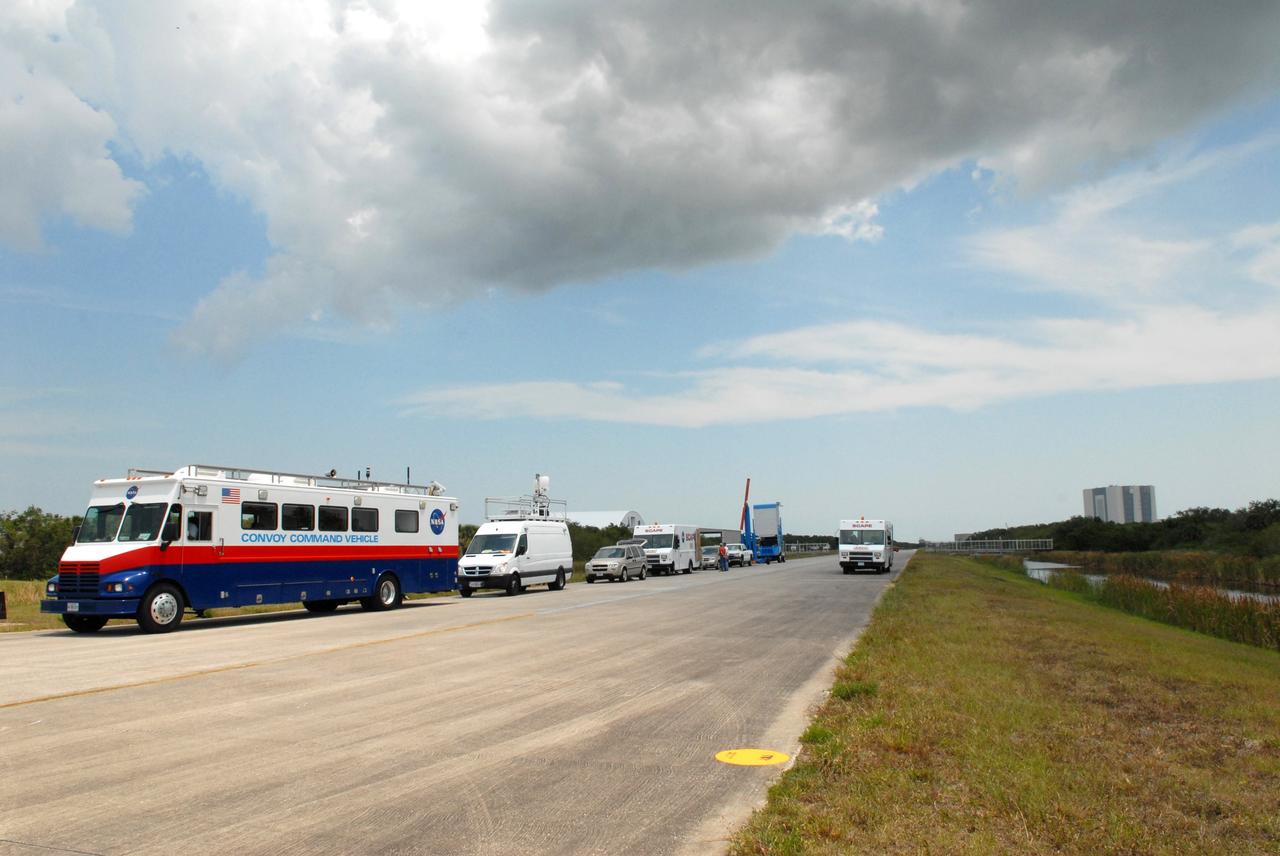
CAPE CANAVERAL, Fla. – The mini-convoy is lined up on the Shuttle Landing Facility runway at NASA's Kennedy Space Center in Florida awaiting space shuttle Atlantis' launch on the STS-125 mission to service NASA's Hubble Space Telescope. The convoy is prepared to act should the shuttle need to return to the launch site in the event of an emergency. At left is the Convoy Command Vehicle which is the command post for the convoy commander. Atlantis launched successfully on time at 2:01 p.m. EDT. Atlantis' 11-day flight will include five spacewalks to refurbish and upgrade the telescope with state-of-the-art science instruments that will expand Hubble's capabilities and extend its operational lifespan through at least 2014. The payload includes a Wide Field Camera 3, Fine Guidance Sensor and the Cosmic Origins Spectrograph. Photo credit: NASA/Jack Pfaller
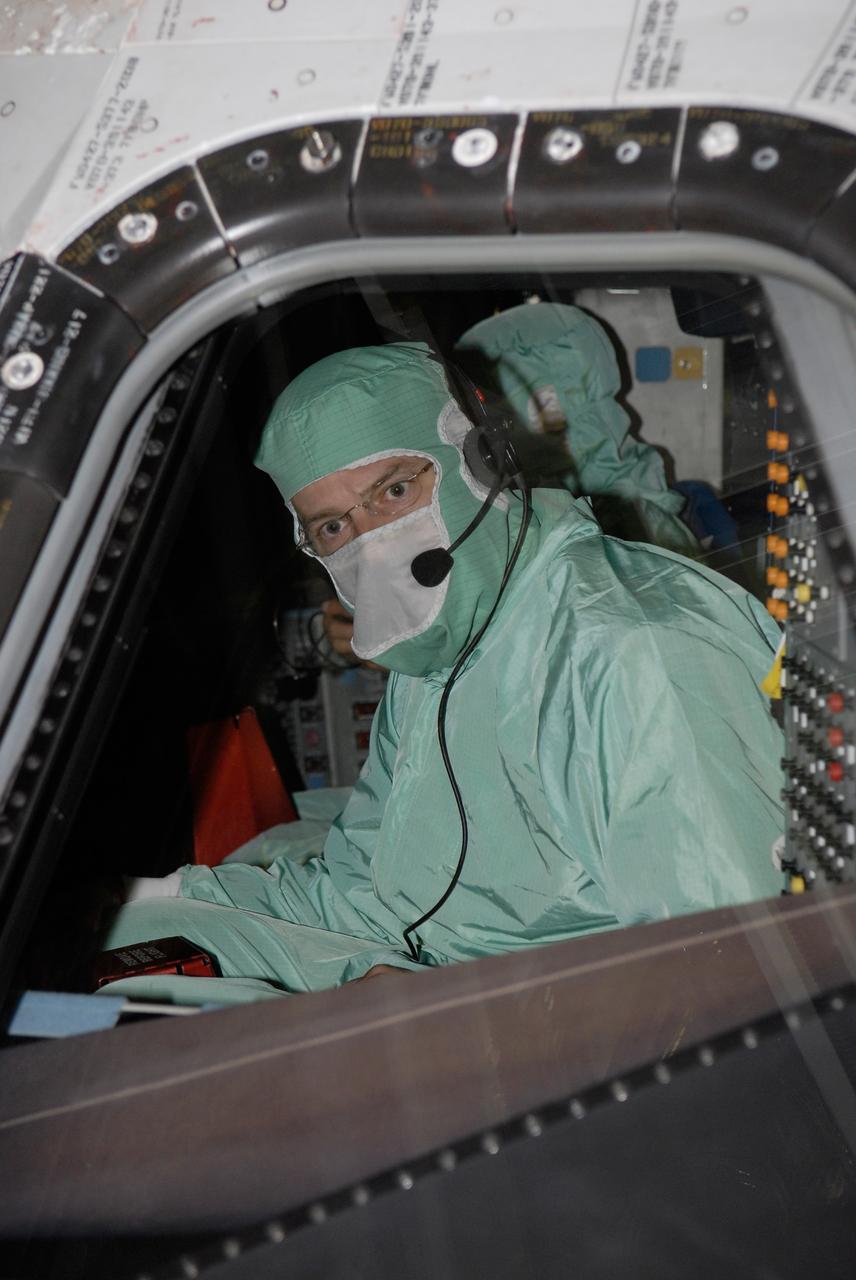
CAPE CANAVERAL, Fla. – In the Orbiter Processing Facility at NASA's Kennedy Space Center, STS-125 Commander Scott Altman examines the cockpit window on space shuttle Atlantis. The inspection is part of the crew equipment interface test, which provides hands-on experience with hardware and equipment for the mission. Atlantis is targeted to launch Oct. 8 on the STS-125 mission to service the Hubble Space Telescope. The mission crew will perform history-making, on-orbit “surgery” on two important science instruments aboard the telescope. After capturing the telescope, two teams of spacewalking astronauts will perform the repairs during five planned spacewalks. Photo credit: NASA/Kim Shiflett
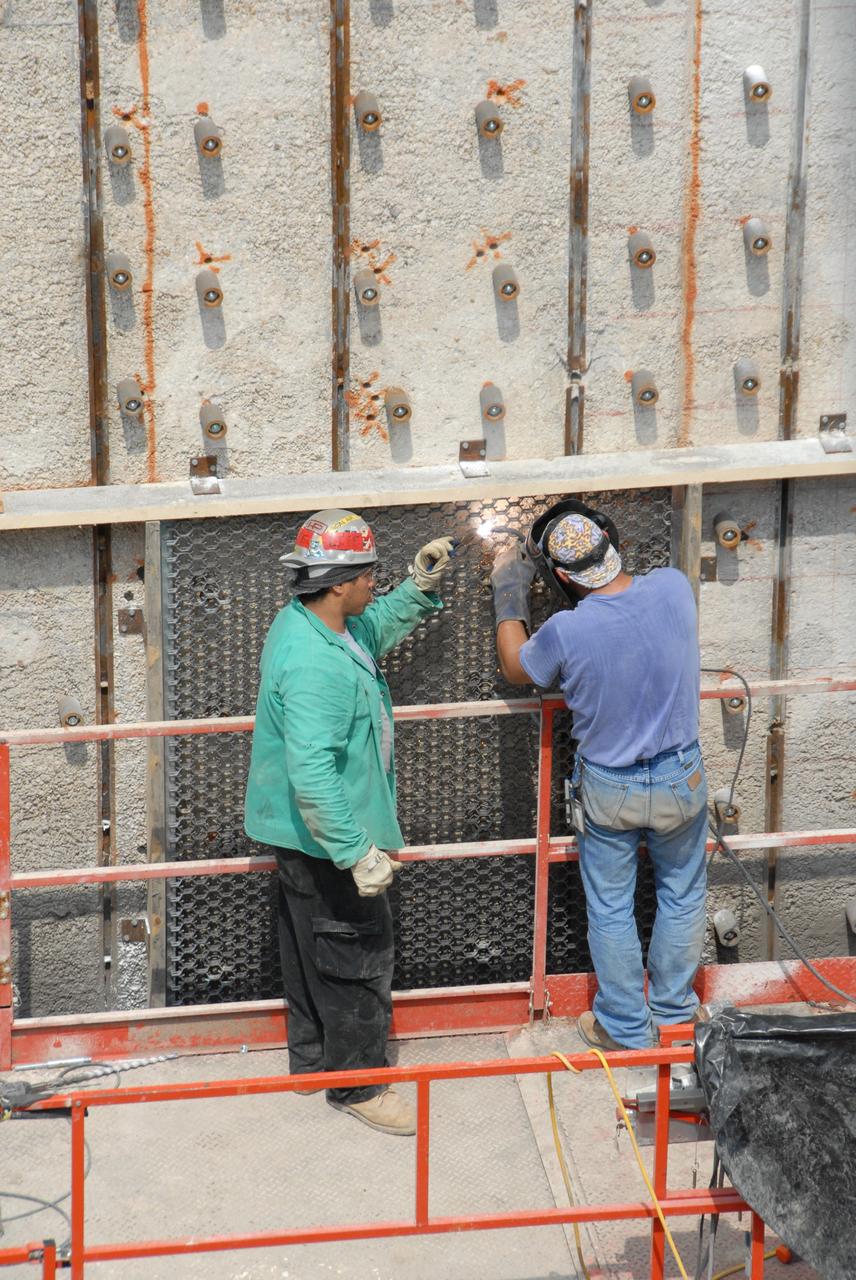
CAPE CANAVERAL, Fla. – Workers weld a steel grid structure to the wall of the flame trench on Launch Pad 39A at NASA's Kennedy Space Center. Damage to the trench occurred during the launch of Discovery on the STS-124 mission. A 75- by 20-foot section of the east wall was destroyed and debris scattered as far as the pad perimeter fence. Repairs are expected to be completed before the targeted Oct. 8 launch of Atlantis on the NASA Hubble Space Telescope servicing mission. Photo credit: NASA/Jack Pfaller
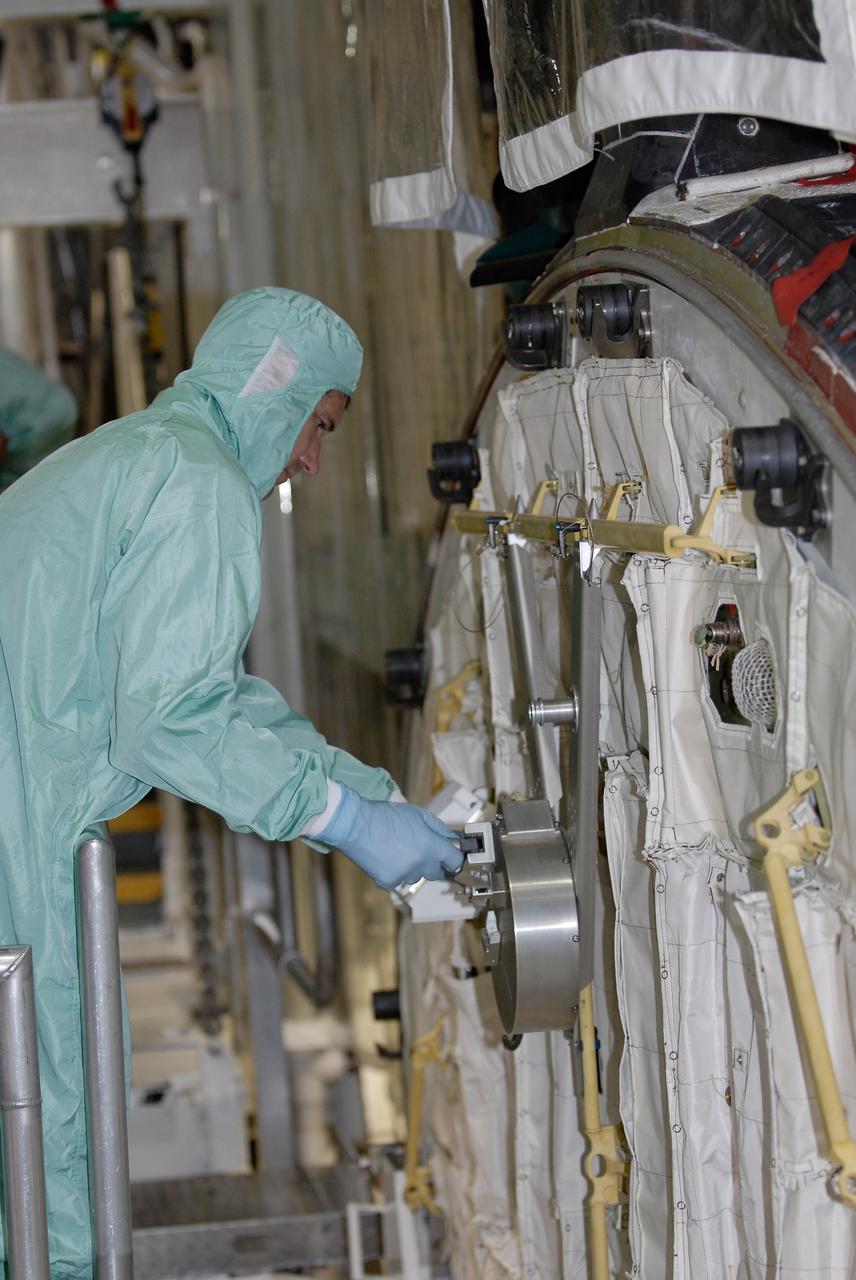
CAPE CANAVERAL, Fla. – In the Orbiter Processing Facility at NASA's Kennedy Space Center, STS-125 Mission Specialist Michael Good checks out part of the equipment in space shuttle Atlantis' payload bay. Equipment familiarization is part of the crew equipment interface test, which provides hands-on experience with hardware and equipment for the mission. Atlantis is targeted to launch Oct. 8 on the STS-125 mission to service the Hubble Space Telescope. The mission crew will perform history-making, on-orbit “surgery” on two important science instruments aboard the telescope. After capturing the telescope, two teams of spacewalking astronauts will perform the repairs during five planned spacewalks. Photo credit: NASA/Kim Shiflett
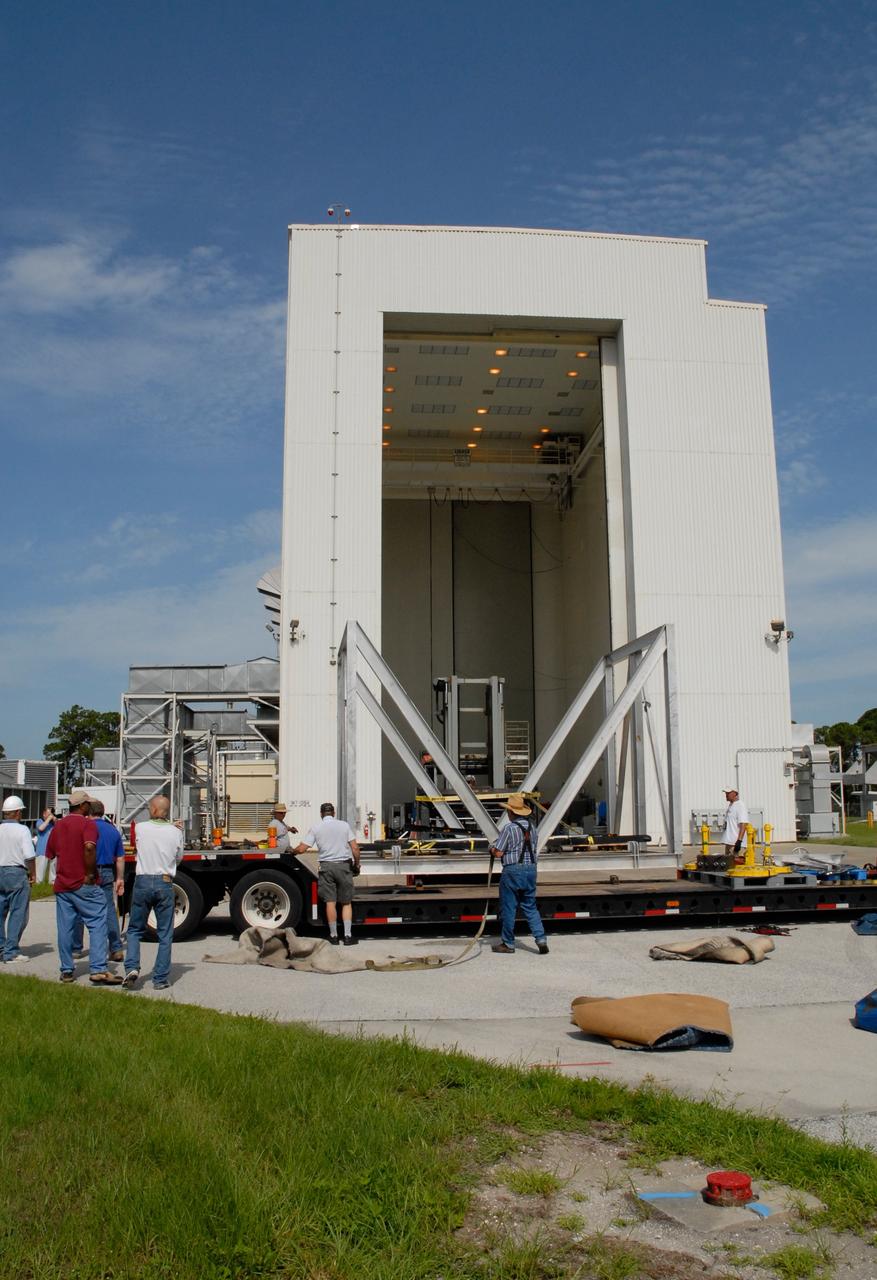
CAPE CANAVERAL, Fla. – The thermal vacuum fixture arrives at the Payload Hazardous Servicing Center at NASA's Kennedy Space Center. The fixture will be used to hold the carrier and flight support system for the STS-125 Hubble Space Telescope Servicing Mission 4. Space shuttle Atlantis is targeted to launch on the STS-125 mission Oct. 8. The mission crew will perform history-making, on-orbit “surgery” on two important science instruments aboard the telescope. After capturing the telescope, two teams of spacewalking astronauts will perform the repairs during five planned spacewalks. Photo credit: NASA/Jack Pfaller
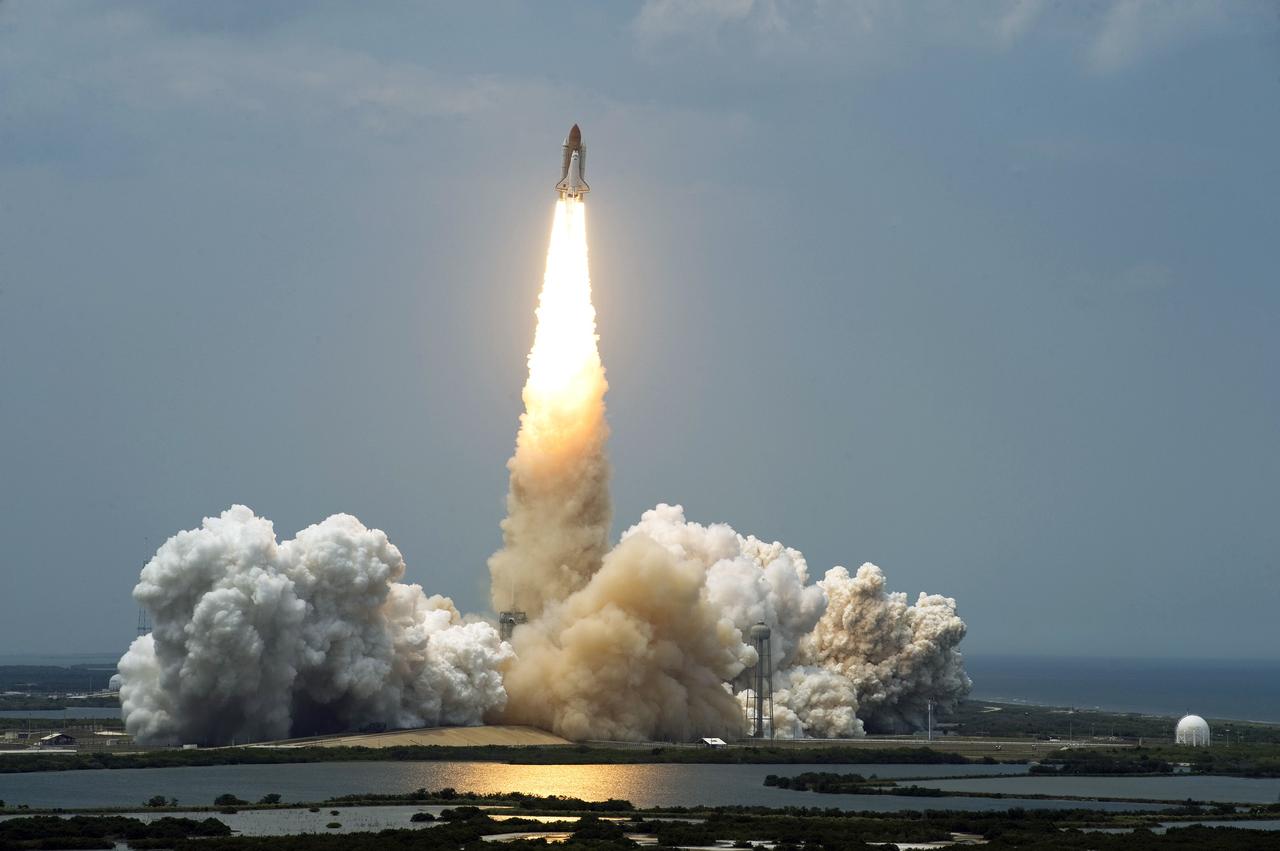
CAPE CANAVERAL, Fla. – From Launch Pad 39A at NASA's Kennedy Space Center in Florida, space shuttle Atlantis roars into the sky on a column of fire on the STS-125 mission to service NASA's Hubble Space Telescope. Liftoff was on time at 2:01 p.m. EDT. Atlantis' 11-day flight will include five spacewalks to refurbish and upgrade the telescope with state-of-the-art science instruments that will expand Hubble's capabilities and extend its operational lifespan through at least 2014. The payload includes a Wide Field Camera 3, Fine Guidance Sensor and the Cosmic Origins Spectrograph. Photo courtesy of Scott Andrews
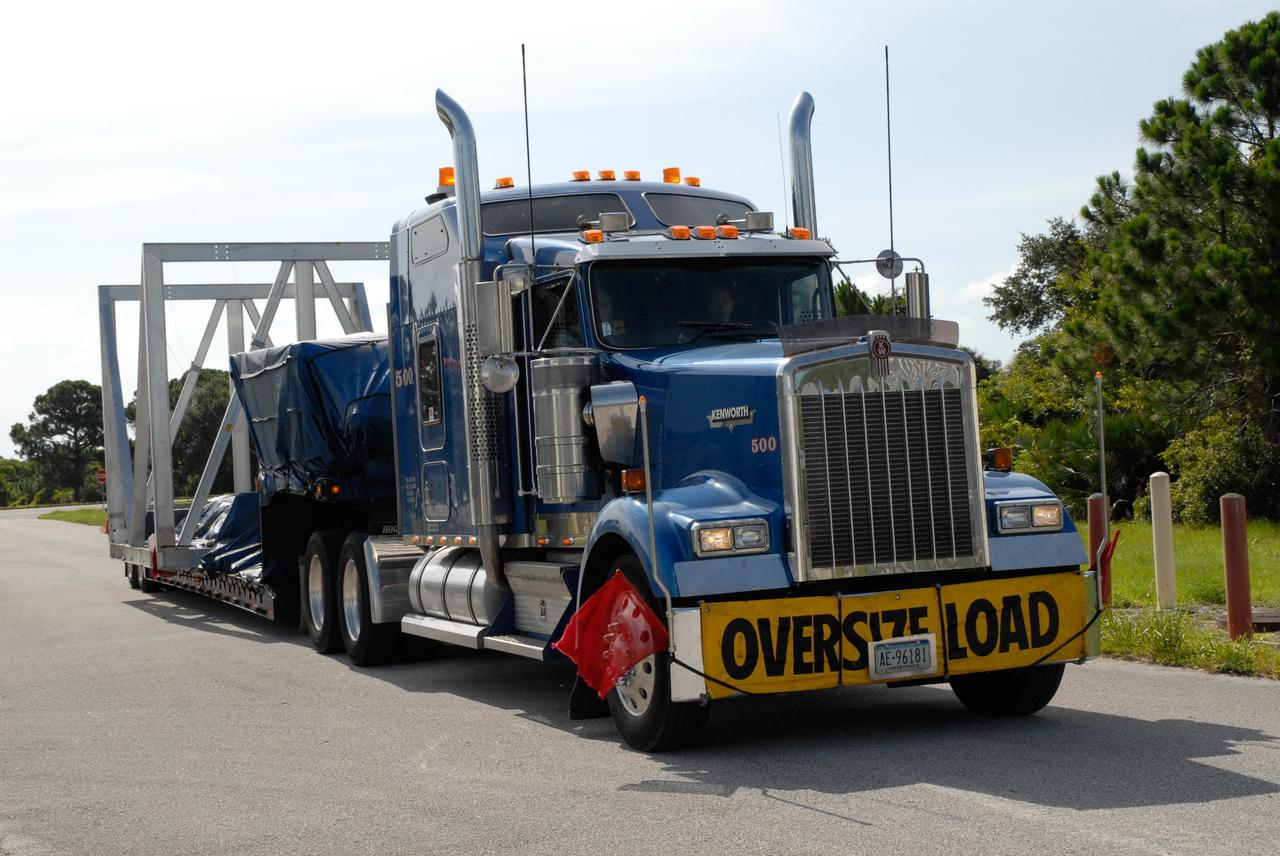
CAPE CANAVERAL, Fla. – The thermal vacuum fixture arrives at NASA's Kennedy Space Center. The fixture will be used to hold the carrier and flight support system for the STS-125 Hubble Space Telescope Servicing Mission 4. Space shuttle Atlantis is targeted to launch on the STS-125 mission Oct. 8. The mission crew will perform history-making, on-orbit “surgery” on two important science instruments aboard the telescope. After capturing the telescope, two teams of spacewalking astronauts will perform the repairs during five planned spacewalks. Photo credit: NASA/Jack Pfaller
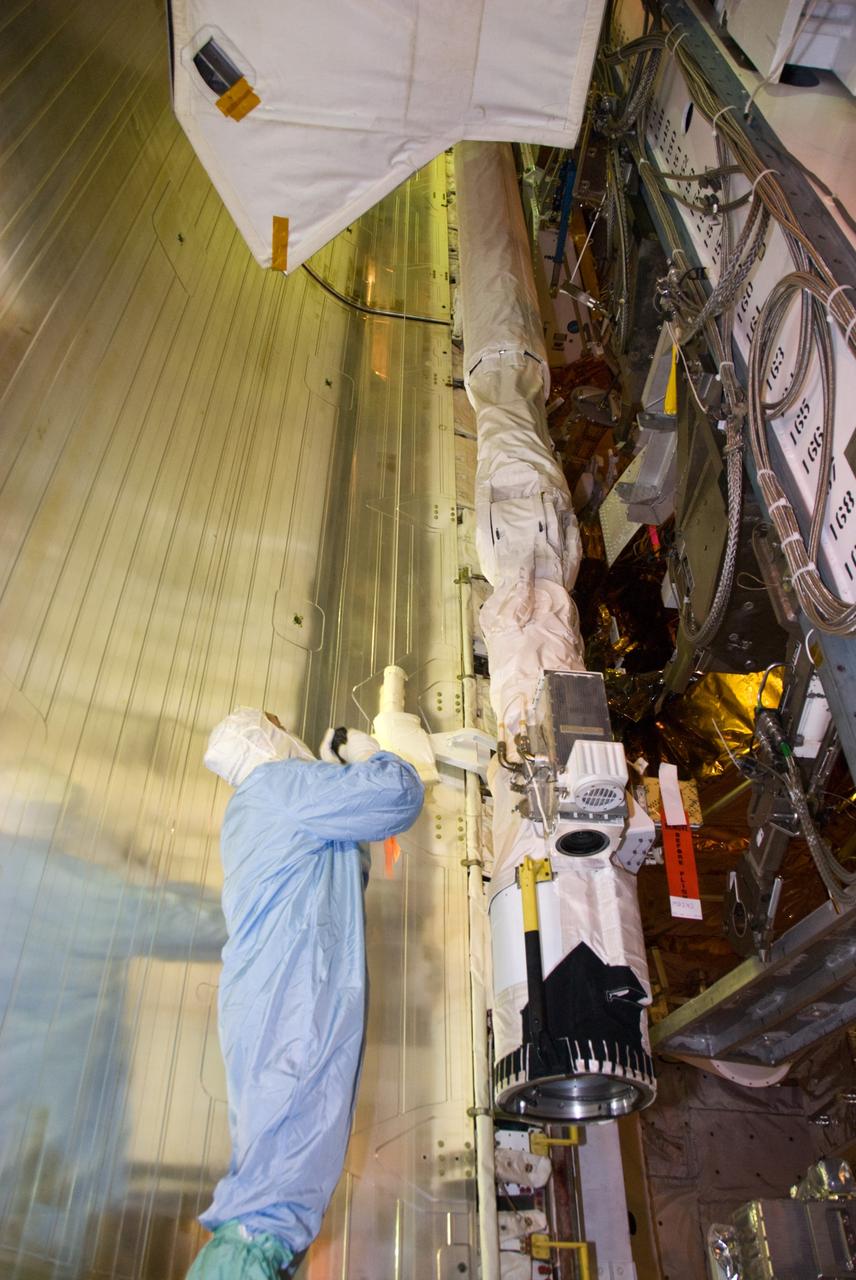
CAPE CANAVERAL, Fla. –– In space shuttle Atlantis' payload bay at NASA Kennedy Space Center's Launch Pad 39A, STS-125 crew members take a final close look at the hardware for the Hubble servicing mission before the targeted May 11 launch. Atlantis' 11-day mission will include five spacewalks to refurbish and upgrade the telescope with state-of-the-art science instruments. The payload bay holds four carriers of equipment that include the Wide Field Camera 3, Cosmic Origins Spectrograph, the Soft Capture Mechanism and replacement gyroscopes and batteries. As a result, Hubble's capabilities will be expanded and its operational lifespan extended through at least 2014. Photo credit: NASA/Kim Shiflett
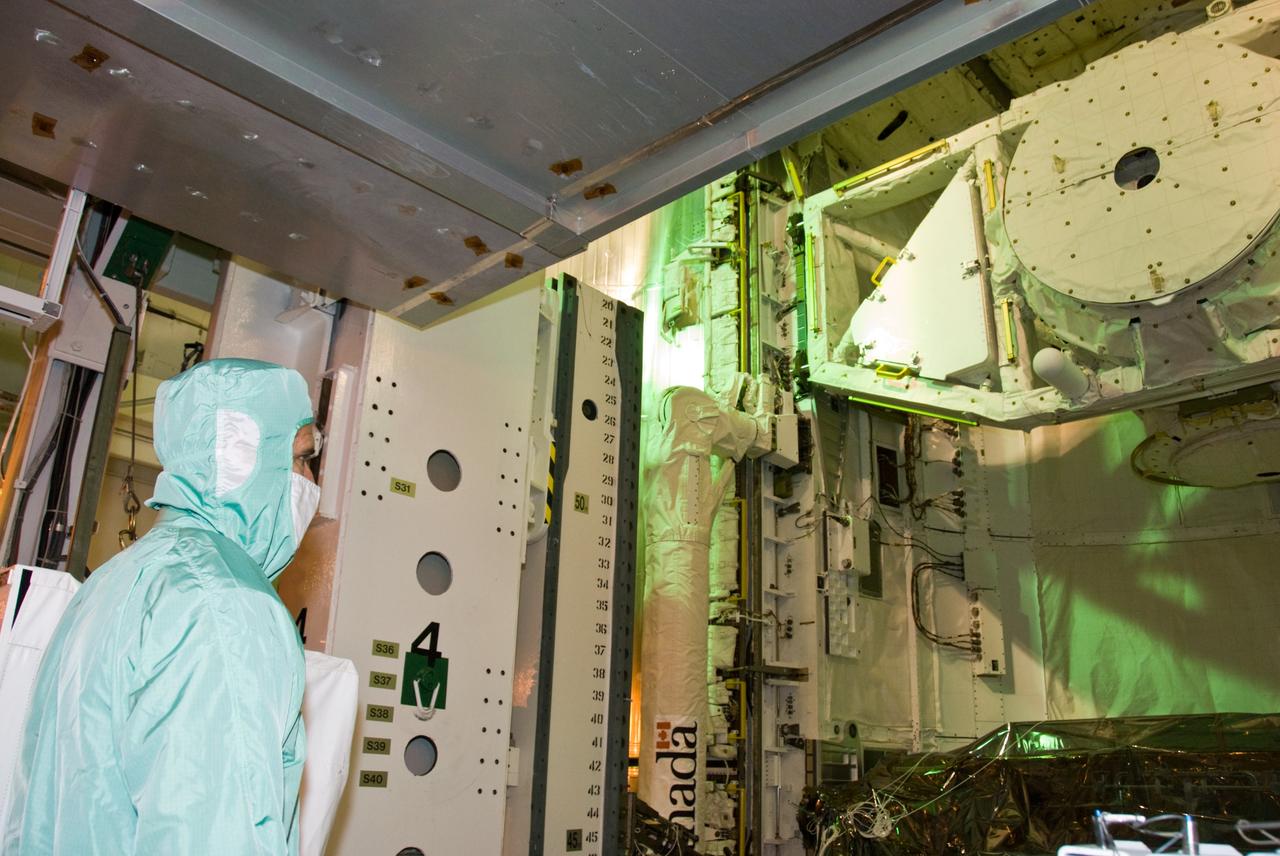
CAPE CANAVERAL, Fla. –– In space shuttle Atlantis' payload bay at NASA Kennedy Space Center's Launch Pad 39A, STS-125 Mission Specialist Michael Good takes a final close look at the hardware for the Hubble servicing mission before the targeted May 11 launch. Atlantis' 11-day mission will include five spacewalks to refurbish and upgrade the telescope with state-of-the-art science instruments. The payload bay holds four carriers of equipment that include the Wide Field Camera 3, Cosmic Origins Spectrograph, the Soft Capture Mechanism and replacement gyroscopes and batteries. As a result, Hubble's capabilities will be expanded and its operational lifespan extended through at least 2014. Photo credit: NASA/Kim Shiflett
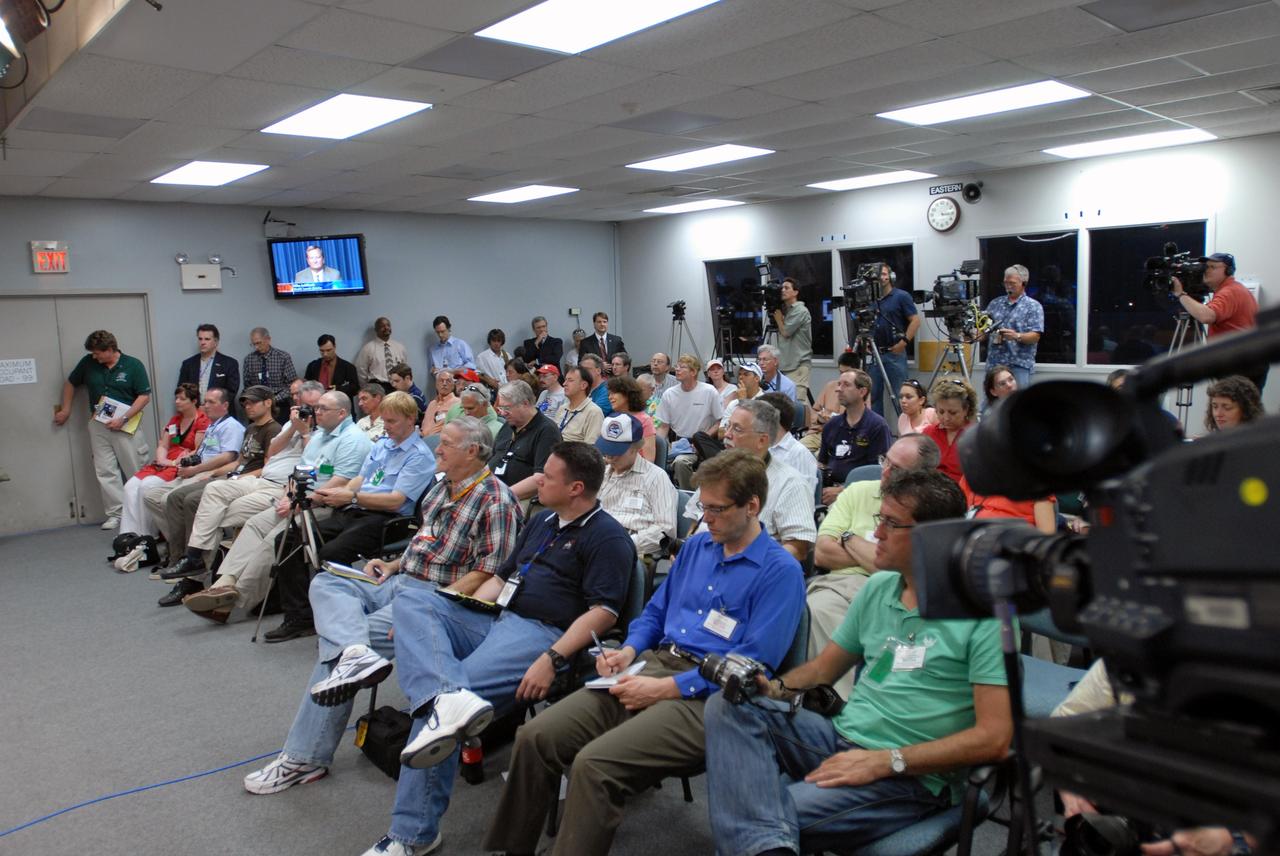
CAPE CANAVERAL, Fla. – The NASA News Auditorium is filled with media during the post-launch press conference at NASA's Kennedy Space Center in Florida. Featured on the dais were Associate Administrator for NASA's Space Operations Directorate William Gerstenmaier, Associate Administrator for NASA's Science Mission Directorate Ed Weiler, Launch Integration Manager Mike Moses and Shuttle Launch Director Mike Leinbach. The conference followed the successful launch of space shuttle Atlantis on the STS-125 mission to service NASA's Hubble Space Telescope. Atlantis' 11-day flight will include five spacewalks to refurbish and upgrade the telescope with state-of-the-art science instruments that will expand Hubble's capabilities and extend its operational lifespan through at least 2014. The payload includes a Wide Field Camera 3, Fine Guidance Sensor and the Cosmic Origins Spectrograph. Photo credit: NASA/Jim Grossmann

CAPE CANAVERAL, Fla. – Creating an image of a century plant in bloom, space shuttle Atlantis trails a column of fire and smoke as it races into space on the STS-125 mission to service NASA's Hubble Space Telescope. Liftoff from Launch Pad 39A at NASA's Kennedy Space Center in Florida was on time at 2:01 p.m. EDT. Atlantis' 11-day flight will include five spacewalks to refurbish and upgrade the telescope with state-of-the-art science instruments that will expand Hubble's capabilities and extend its operational lifespan through at least 2014. The payload includes a Wide Field Camera 3, Fine Guidance Sensor and the Cosmic Origins Spectrograph. Photo courtesy of Scott Andrews
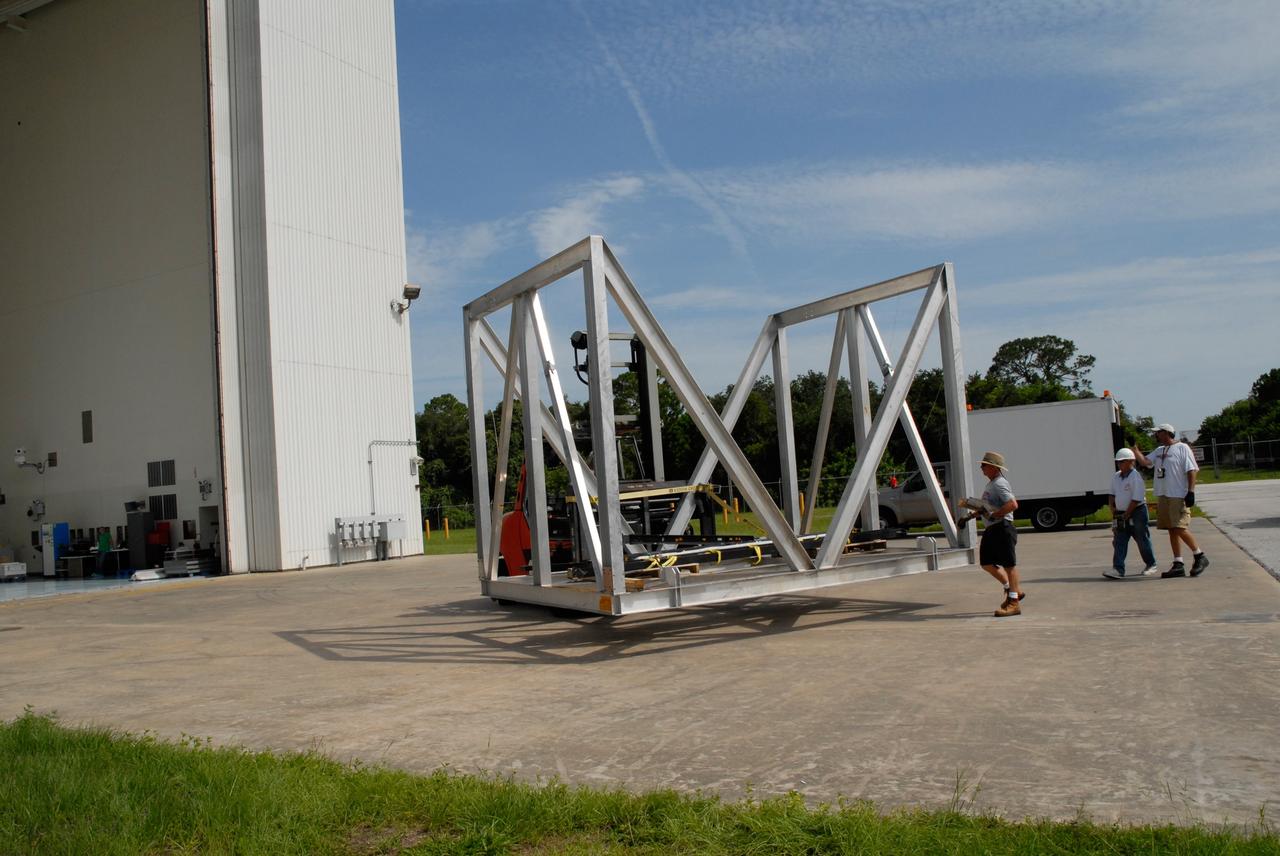
CAPE CANAVERAL, Fla. – The thermal vacuum fixture is transferred to a transporter in front of the Payload Hazardous Servicing Center at NASA's Kennedy Space Center. The fixture will be used to hold the carrier and flight support system for the STS-125 Hubble Space Telescope Servicing Mission 4. Space shuttle Atlantis is targeted to launch on the STS-125 mission Oct. 8. The mission crew will perform history-making, on-orbit “surgery” on two important science instruments aboard the telescope. After capturing the telescope, two teams of spacewalking astronauts will perform the repairs during five planned spacewalks. Photo credit: NASA/Jack Pfaller
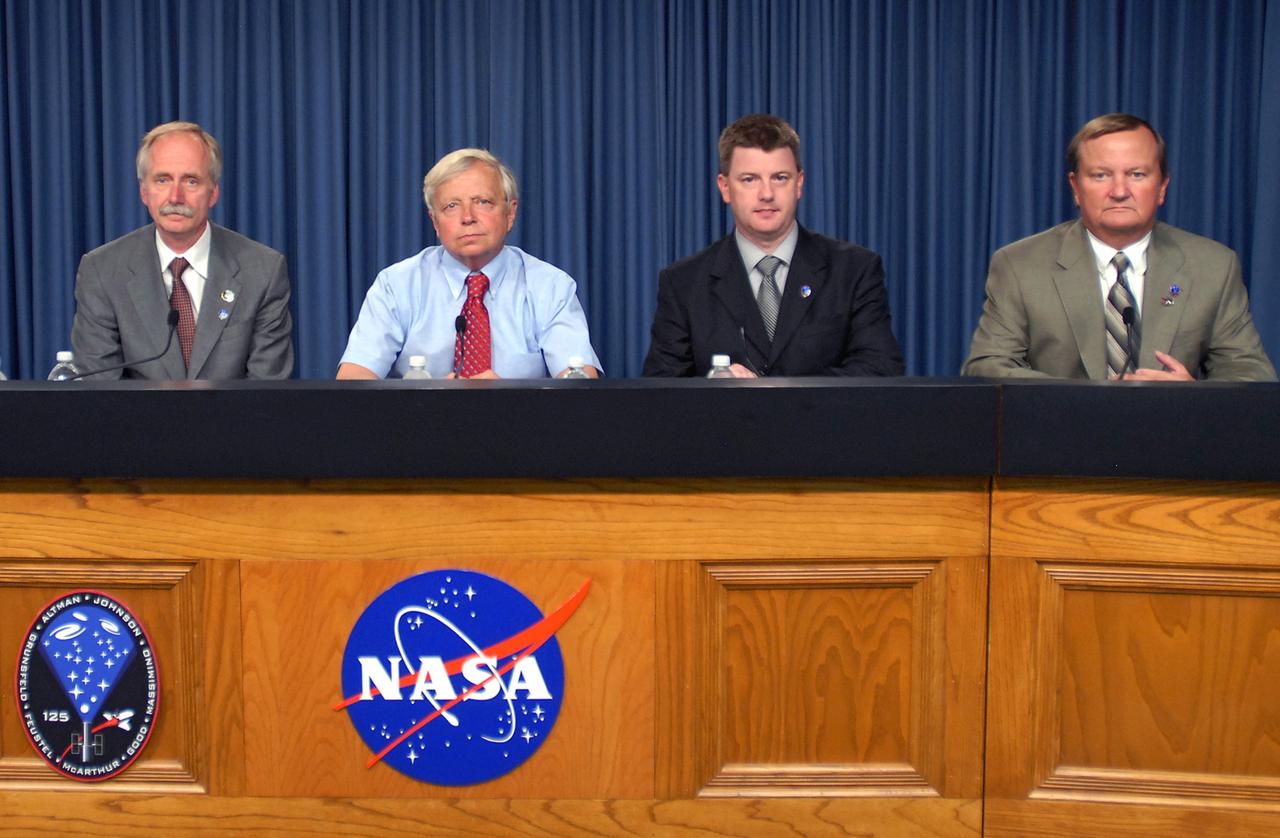
CAPE CANAVERAL, Fla. – At NASA's Kennedy Space Center in Florida, a press conference following the successful launch of space shuttle Atlantis on the STS-125 mission featured (from left) Associate Administrator for NASA's Space Operations Directorate William Gerstenmaier, Associate Administrator for NASA's Science Mission Directorate Ed Weiler, Launch Integration Manager Mike Moses and Shuttle Launch Director Mike Leinbach. Atlantis will rendezvous with NASA's Hubble Space Telescope. Liftoff was on time at 2:01 p.m. EDT. Atlantis' 11-day flight will include five spacewalks to refurbish and upgrade the telescope with state-of-the-art science instruments that will expand Hubble's capabilities and extend its operational lifespan through at least 2014. The payload includes a Wide Field Camera 3, Fine Guidance Sensor and the Cosmic Origins Spectrograph. Photo credit: NASA/Jim Grossmann
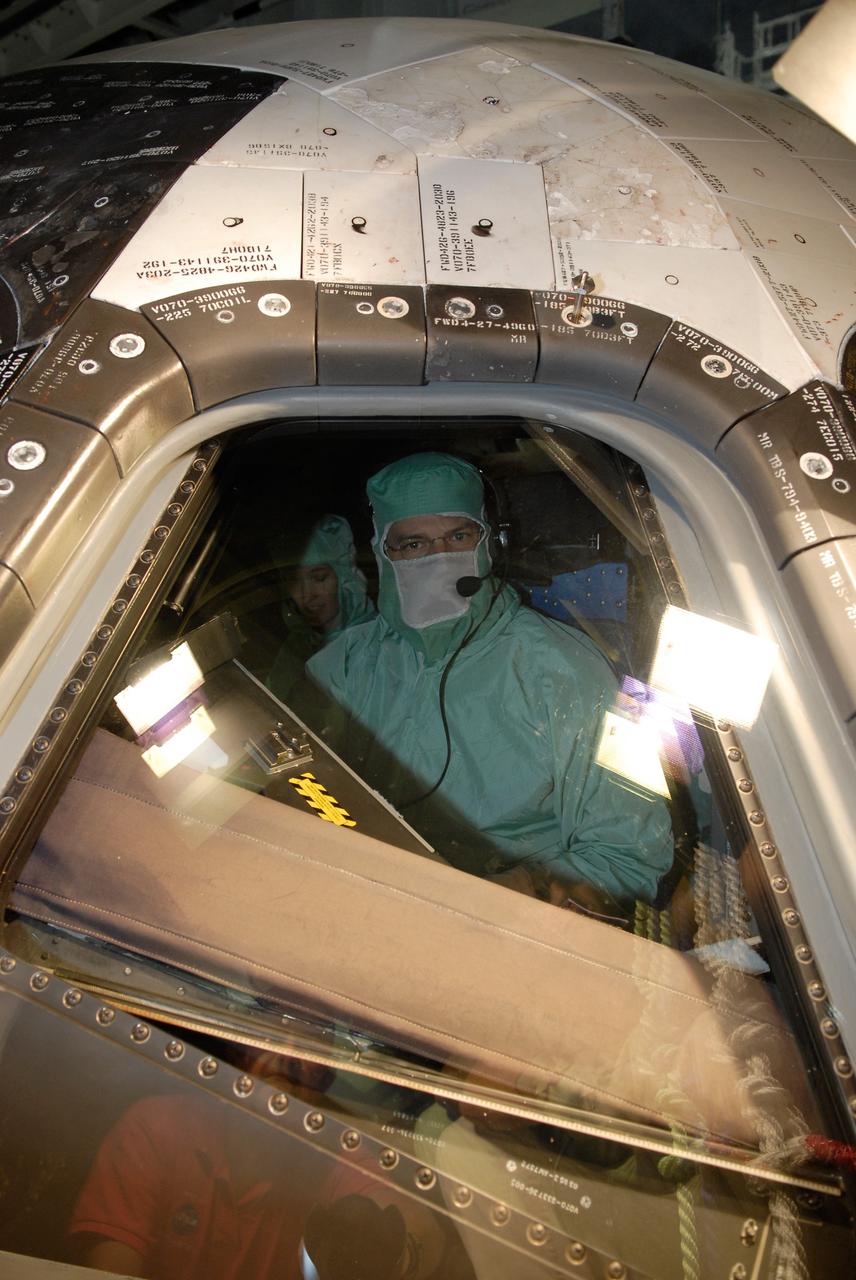
CAPE CANAVERAL, Fla. – In the Orbiter Processing Facility at NASA's Kennedy Space Center, STS-125 Commander Scott Altman examines the cockpit window on space shuttle Atlantis, checking for sharp edges. The inspection is part of the crew equipment interface test, which provides hands-on experience with hardware and equipment for the mission. Atlantis is targeted to launch Oct. 8 on the STS-125 mission to service the Hubble Space Telescope. The mission crew will perform history-making, on-orbit “surgery” on two important science instruments aboard the telescope. After capturing the telescope, two teams of spacewalking astronauts will perform the repairs during five planned spacewalks. Photo credit: NASA/Kim Shiflett
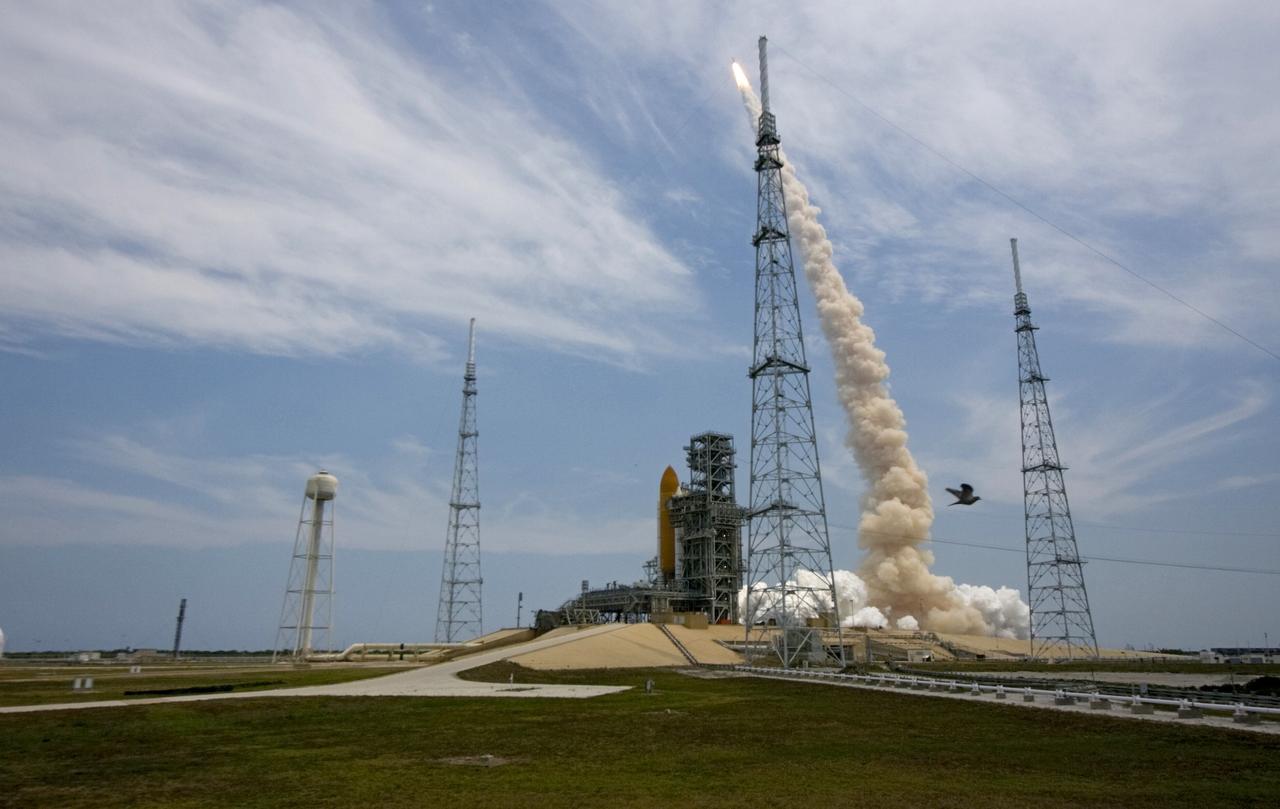
CAPE CANAVERAL, Fla. – The launch of space shuttle Atlantis from Launch Pad 39A at NASA's Kennedy Space Center in Florida is viewed from behind Launch Pad 39B. On pad 39B is space shuttle Endeavour, which can launch, if needed, for rescue of Atlantis’ crew during its STS-125 mission to service NASA’s Hubble Space Telescope. Liftoff of Atlantis was on time at 2:01 p.m. EDT. Atlantis' 11-day flight will include five spacewalks to refurbish and upgrade the telescope with state-of-the-art science instruments that will expand Hubble's capabilities and extend its operational lifespan through at least 2014. The payload includes a Wide Field Camera 3, Fine Guidance Sensor and the Cosmic Origins Spectrograph. Photo courtesy of Scott Andrews
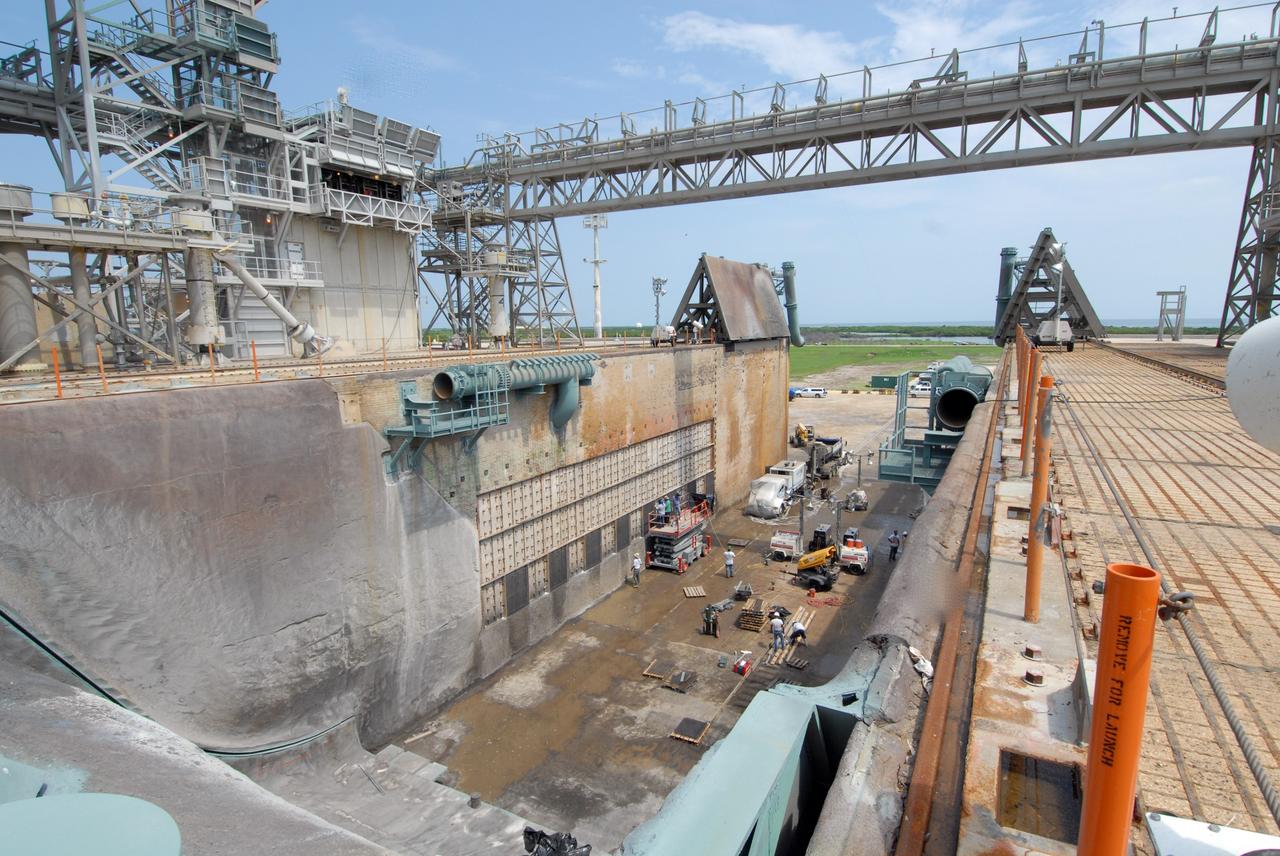
CAPE CANAVERAL, Fla. – This elevated view shows workers on a platform welding a steel grid structure to the wall of the flame trench on Launch Pad 39A at NASA's Kennedy Space Center. Damage to the trench occurred during the launch of Discovery on the STS-124 mission. A 75- by 20-foot section of the east wall was destroyed and debris scattered as far as the pad perimeter fence. Repairs are expected to be completed before the targeted Oct. 8 launch of Atlantis on the NASA Hubble Space Telescope servicing mission. Photo credit: NASA/Jack Pfaller

CAPE CANAVERAL, Fla. – In the Orbiter Processing Facility at NASA's Kennedy Space Center, STS-125 crew members are lowered into space shuttle Atlantis' payload bay for a close look at the hardware. Equipment familiarization is part of the crew equipment interface test, which provides hands-on experience with hardware and equipment for the mission. Crew members are Commander Scott Altman, Pilot Gregory C. Johnson, and Mission Specialists Michael Good, Megan McArthur, John Grunsfeld, Mike Massimino and Andrew Feustel. Atlantis is targeted to launch Oct. 8 on the STS-125 mission to service the Hubble Space Telescope. The mission crew will perform history-making, on-orbit “surgery” on two important science instruments aboard the telescope. After capturing the telescope, two teams of spacewalking astronauts will perform the repairs during five planned spacewalks. Photo credit: NASA/Kim Shiflett
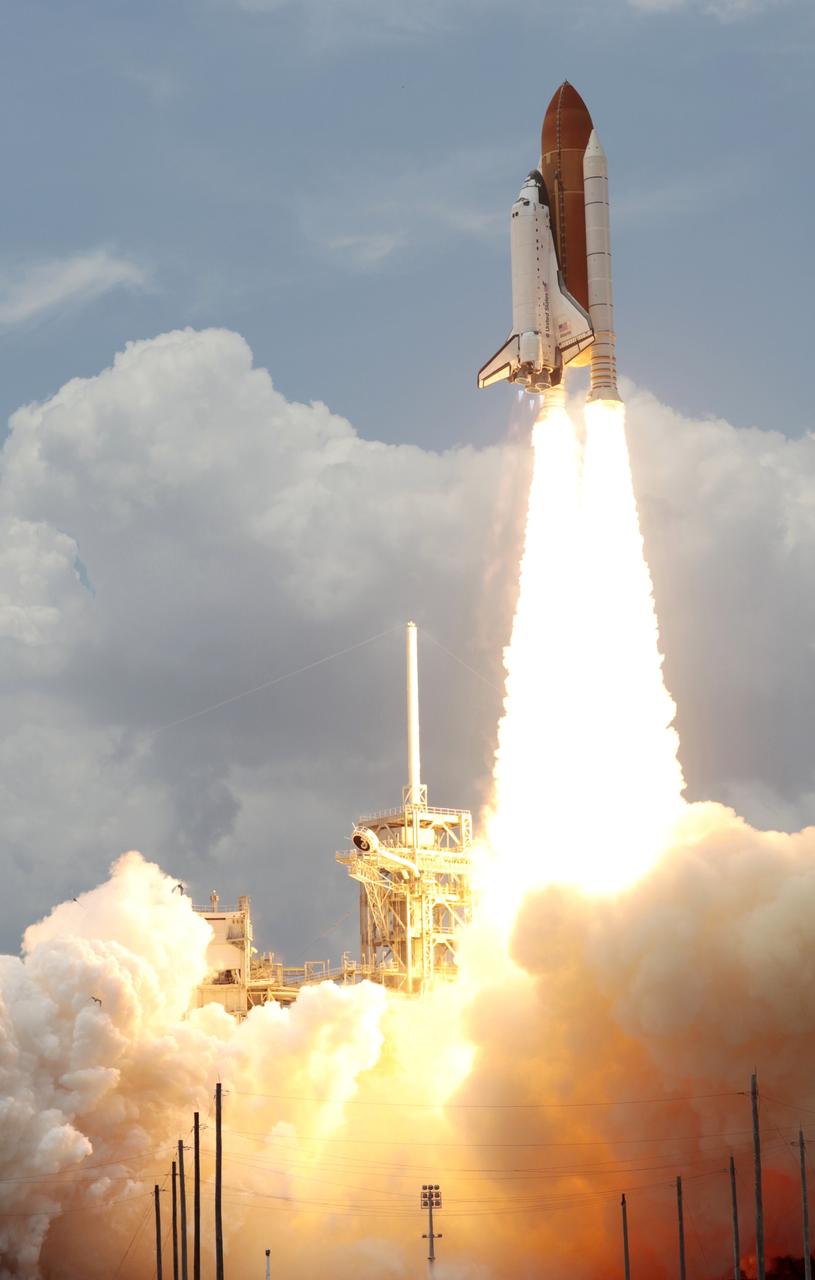
CAPE CANAVERAL, Fla. – From Launch Pad 39A at NASA's Kennedy Space Center in Florida, space shuttle Atlantis hurtles past the lightning mast into space on twin columns of fire on the STS-125 mission to service NASA's Hubble Space Telescope. Liftoff was on time at 2:01 p.m. EDT. Atlantis' 11-day flight will include five spacewalks to refurbish and upgrade the telescope with state-of-the-art science instruments that will expand Hubble's capabilities and extend its operational lifespan through at least 2014. The payload includes a Wide Field Camera 3, Fine Guidance Sensor and the Cosmic Origins Spectrograph. Photo courtesy of Scott Andrews
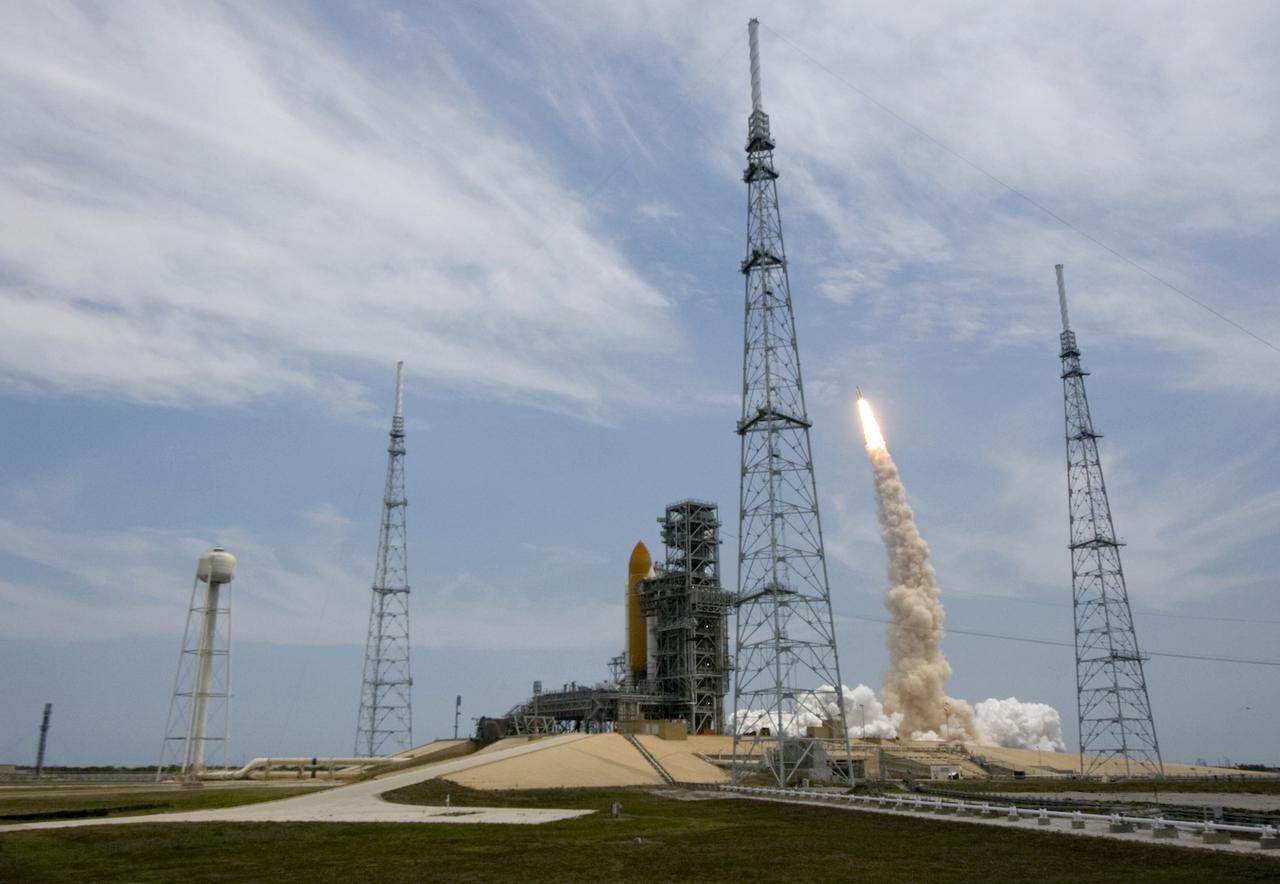
CAPE CANAVERAL, Fla. – The launch of space shuttle Atlantis from Launch Pad 39A at NASA's Kennedy Space Center in Florida is viewed from behind Launch Pad 39B. On pad 39B is space shuttle Endeavour, which can launch, if needed, for rescue of Atlantis’ crew during its STS-125 mission to service NASA’s Hubble Space Telescope. Liftoff of Atlantis was on time at 2:01 p.m. EDT. Atlantis' 11-day flight will include five spacewalks to refurbish and upgrade the telescope with state-of-the-art science instruments that will expand Hubble's capabilities and extend its operational lifespan through at least 2014. The payload includes a Wide Field Camera 3, Fine Guidance Sensor and the Cosmic Origins Spectrograph. Photo courtesy of Scott Andrews
CAPE CANAVERAL, Fla. – In the Orbiter Processing Facility at NASA's Kennedy Space Center, STS-125 crew members are lowered into space shuttle Atlantis' payload bay for a close look at the hardware. Equipment familiarization is part of the crew equipment interface test, which provides hands-on experience with hardware and equipment for the mission. Crew members are Commander Scott Altman, Pilot Gregory C. Johnson, and Mission Specialists Michael Good, Megan McArthur, John Grunsfeld, Mike Massimino (reaching toward the airlock) and Andrew Feustel. Atlantis is targeted to launch Oct. 8 on the STS-125 mission to service the Hubble Space Telescope. The mission crew will perform history-making, on-orbit “surgery” on two important science instruments aboard the telescope. After capturing the telescope, two teams of spacewalking astronauts will perform the repairs during five planned spacewalks. Photo credit: NASA/Kim Shiflett
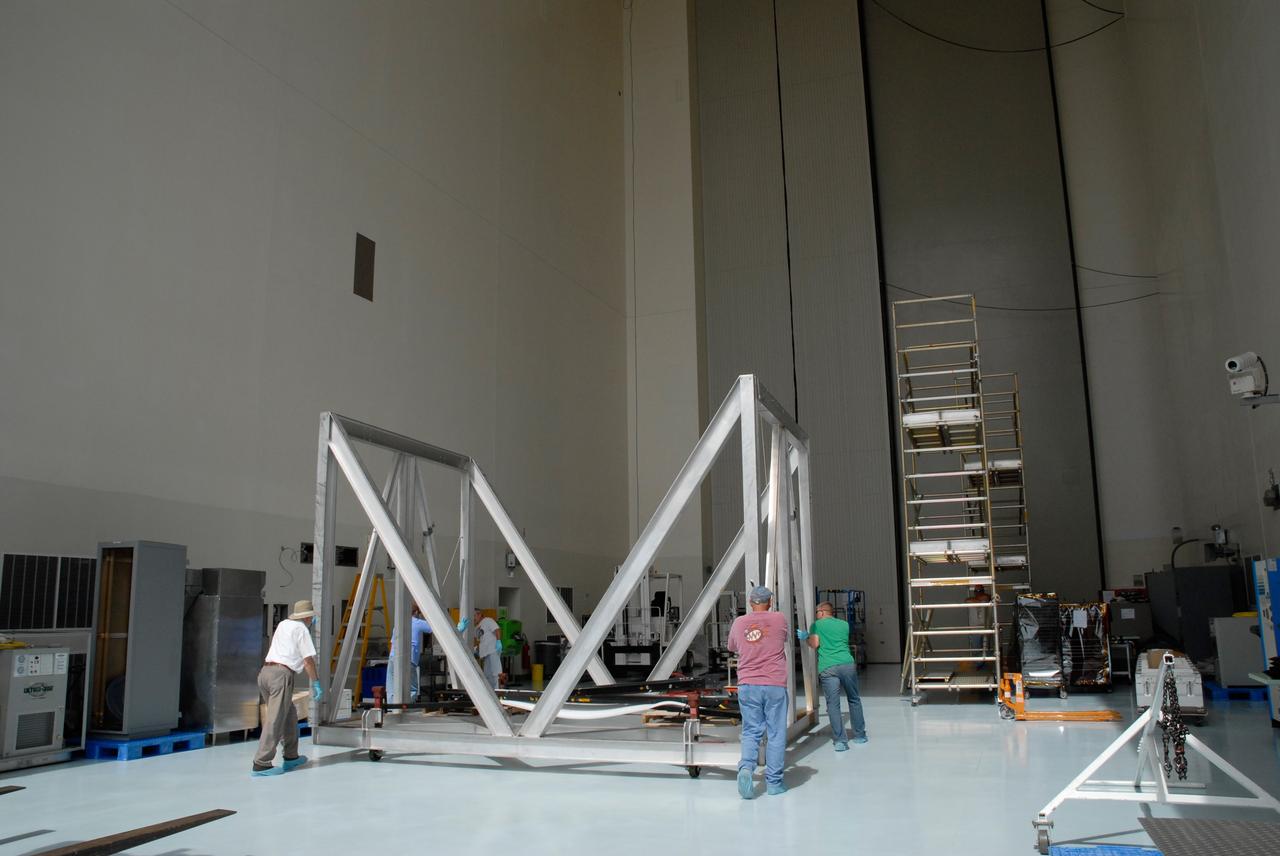
CAPE CANAVERAL, Fla. – At NASA's Kennedy Space Center, workers move the thermal vacuum fixture deeper into the Payload Hazardous Servicing Center. Space shuttle Atlantis is targeted to launch on the STS-125 mission Oct. 8. The mission crew will perform history-making, on-orbit “surgery” on two important science instruments aboard the telescope. After capturing the telescope, two teams of spacewalking astronauts will perform the repairs during five planned spacewalks. Photo credit: NASA/Jack Pfaller
CAPE CANAVERAL, Fla. – In the Orbiter Processing Facility at NASA's Kennedy Space Center, STS-125 crew members are lowered into space shuttle Atlantis' payload bay for a close look at the hardware. Equipment familiarization is part of the crew equipment interface test, which provides hands-on experience with hardware and equipment for the mission. Crew members are Commander Scott Altman, Pilot Gregory C. Johnson, and Mission Specialists Michael Good, Megan McArthur, John Grunsfeld, Mike Massimino and Andrew Feustel. Atlantis is targeted to launch Oct. 8 on the STS-125 mission to service the Hubble Space Telescope. The mission crew will perform history-making, on-orbit “surgery” on two important science instruments aboard the telescope. After capturing the telescope, two teams of spacewalking astronauts will perform the repairs during five planned spacewalks. Photo credit: NASA/Kim Shiflett
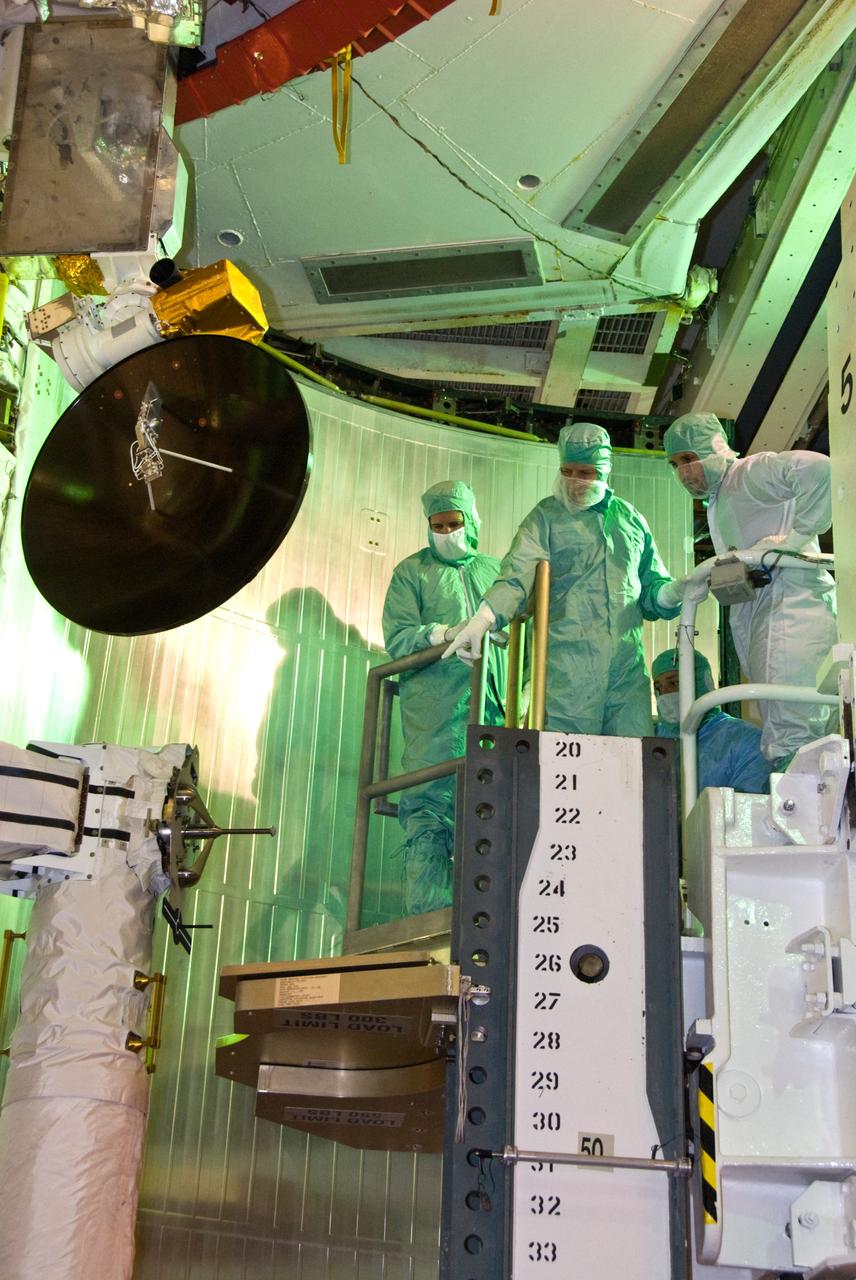
CAPE CANAVERAL, Fla. –– In space shuttle Atlantis' payload bay at NASA Kennedy Space Center's Launch Pad 39A, STS-125 crew members take a final close look at the hardware for the Hubble servicing mission before the targeted May 11 launch. From left are Mission Specialist John Grunsfeld, Pilot Gregory C. Johnson and (kneeling) Mission Specialist Mike Massimino. Atlantis' 11-day mission will include five spacewalks to refurbish and upgrade the telescope with state-of-the-art science instruments. The payload bay holds four carriers of equipment that include the Wide Field Camera 3, Cosmic Origins Spectrograph, the Soft Capture Mechanism and replacement gyroscopes and batteries. As a result, Hubble's capabilities will be expanded and its operational lifespan extended through at least 2014. Photo credit: NASA/Kim Shiflett

CAPE CANAVERAL, Fla. – In the Orbiter Processing Facility at NASA's Kennedy Space Center, STS-125 Mission Specialists Mike Massimino (center) and Michael Good (right) check out equipment in space shuttle Atlantis' payload bay. Equipment familiarization is part of the crew equipment interface test, which provides hands-on experience with hardware and equipment for the mission. Atlantis is targeted to launch Oct. 8 on the STS-125 mission to service the Hubble Space Telescope. The mission crew will perform history-making, on-orbit “surgery” on two important science instruments aboard the telescope. After capturing the telescope, two teams of spacewalking astronauts will perform the repairs during five planned spacewalks. Photo credit: NASA/Kim Shiflett
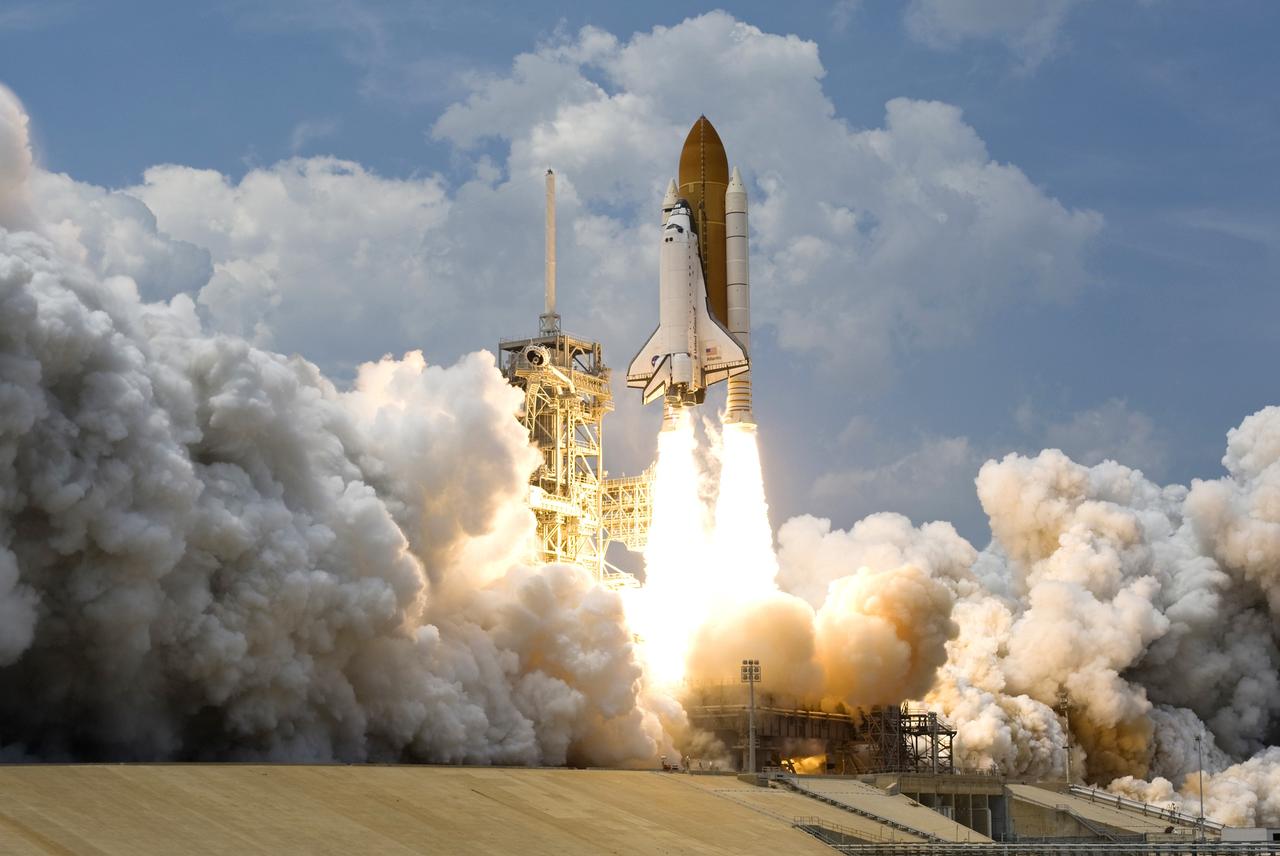
CAPE CANAVERAL, Fla. – Sandwiched by billowing clouds above and smoke and steam clouds below, space shuttle Atlantis hurtles past the lightning mast on top of the fixed service structure on Launch Pad 39A at NASA's Kennedy Space Center in Florida. Atlantis will rendezvous with NASA's Hubble Space Telescope on the STS-125 service mission. Liftoff was on-time at 2:01 p.m. EDT. Atlantis' 11-day flight will include five spacewalks to refurbish and upgrade the telescope with state-of-the-art science instruments that will expand Hubble's capabilities and extend its operational lifespan through at least 2014. The payload includes a Wide Field Camera 3, Fine Guidance Sensor and the Cosmic Origins Spectrograph. Photo courtesy of Scott Andrews
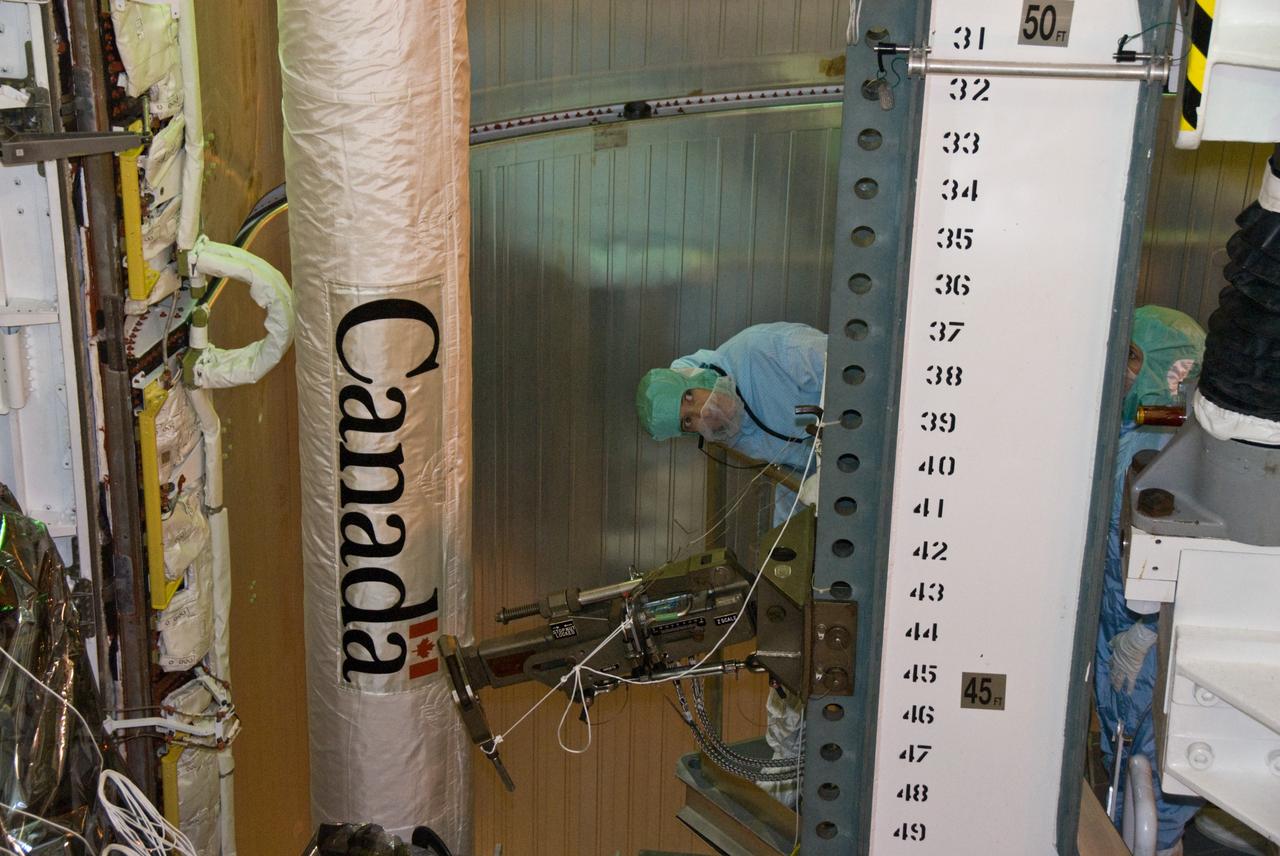
CAPE CANAVERAL, Fla. –– In space shuttle Atlantis' payload bay at NASA Kennedy Space Center's Launch Pad 39A, STS-125 Mission Specialist Megan McArthur takes a final close look at the hardware for the Hubble servicing mission before the targeted May 11 launch. Atlantis' 11-day mission will include five spacewalks to refurbish and upgrade the telescope with state-of-the-art science instruments. The payload bay holds four carriers of equipment that include the Wide Field Camera 3, Cosmic Origins Spectrograph, the Soft Capture Mechanism and replacement gyroscopes and batteries. As a result, Hubble's capabilities will be expanded and its operational lifespan extended through at least 2014. Photo credit: NASA/Kim Shiflett
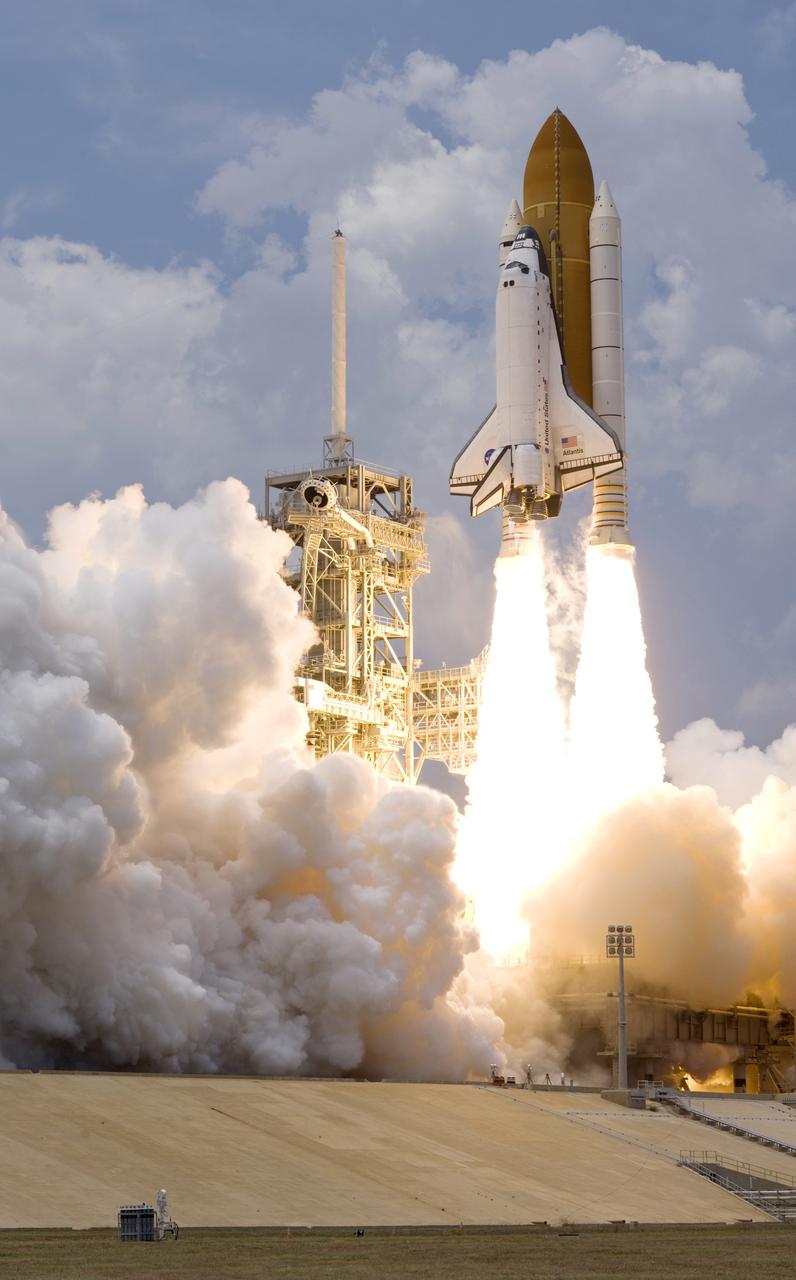
CAPE CANAVERAL, Fla. – On twin towers of flame, space shuttle Atlantis roars into space from Launch Pad 39A at NASA's Kennedy Space Center in Florida on the STS-125 mission to service NASA's Hubble Space Telescope. Liftoff was on time at 2:01 p.m. EDT. Atlantis' 11-day flight will include five spacewalks to refurbish and upgrade the telescope with state-of-the-art science instruments that will expand Hubble's capabilities and extend its operational lifespan through at least 2014. The payload includes a Wide Field Camera 3, Fine Guidance Sensor and the Cosmic Origins Spectrograph. Photo courtesy of Scott Andrews
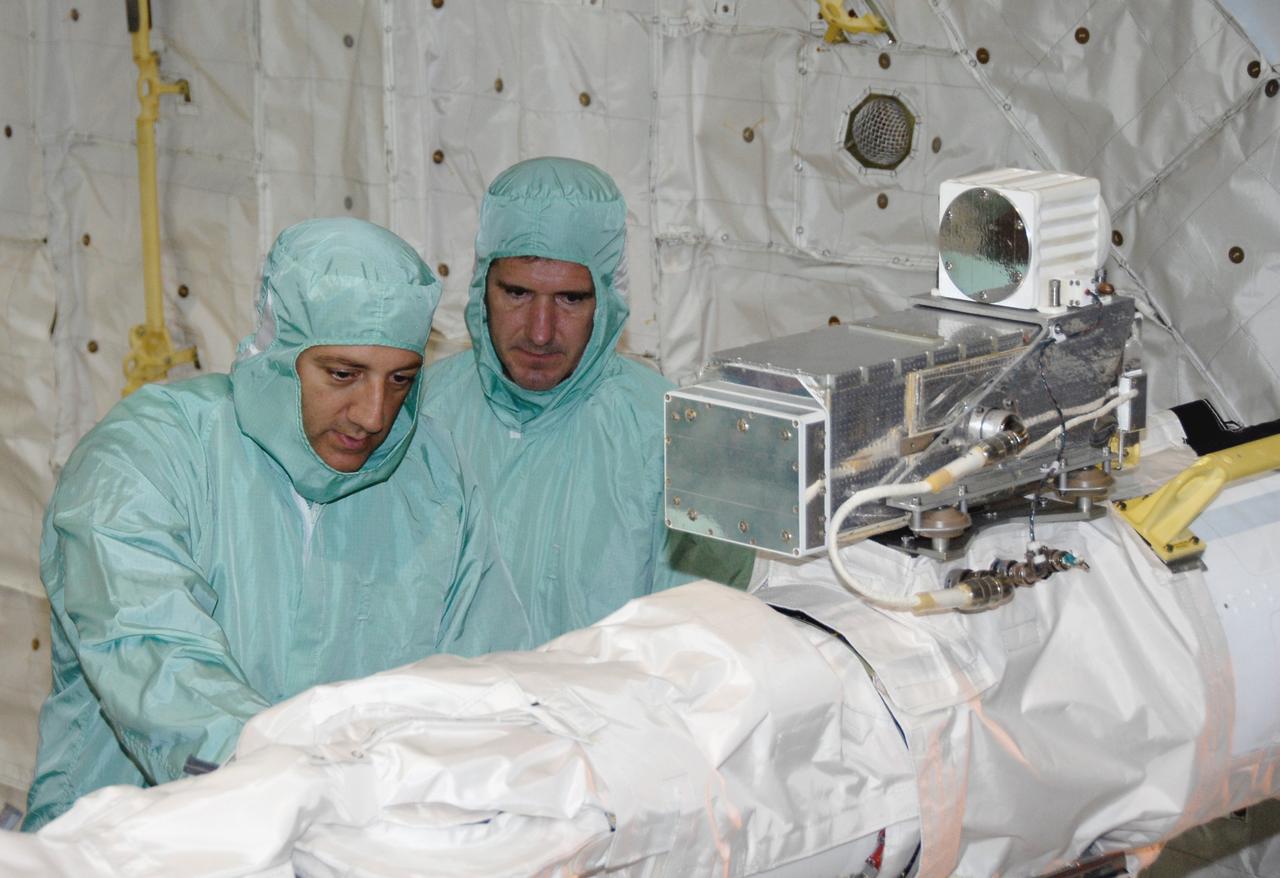
CAPE CANAVERAL, Fla. – In the Orbiter Processing Facility at NASA's Kennedy Space Center, STS-125 Mission Specialists Mike Massimino (left) and Michael Good (right) check out the orbiter boom sensor system and the attached camera in space shuttle Atlantis' payload bay. Equipment familiarization is part of the crew equipment interface test, which provides hands-on experience with hardware and equipment for the mission. Atlantis is targeted to launch Oct. 8 on the STS-125 mission to service the Hubble Space Telescope. The mission crew will perform history-making, on-orbit “surgery” on two important science instruments aboard the telescope. After capturing the telescope, two teams of spacewalking astronauts will perform the repairs during five planned spacewalks. Photo credit: NASA/Kim Shiflett
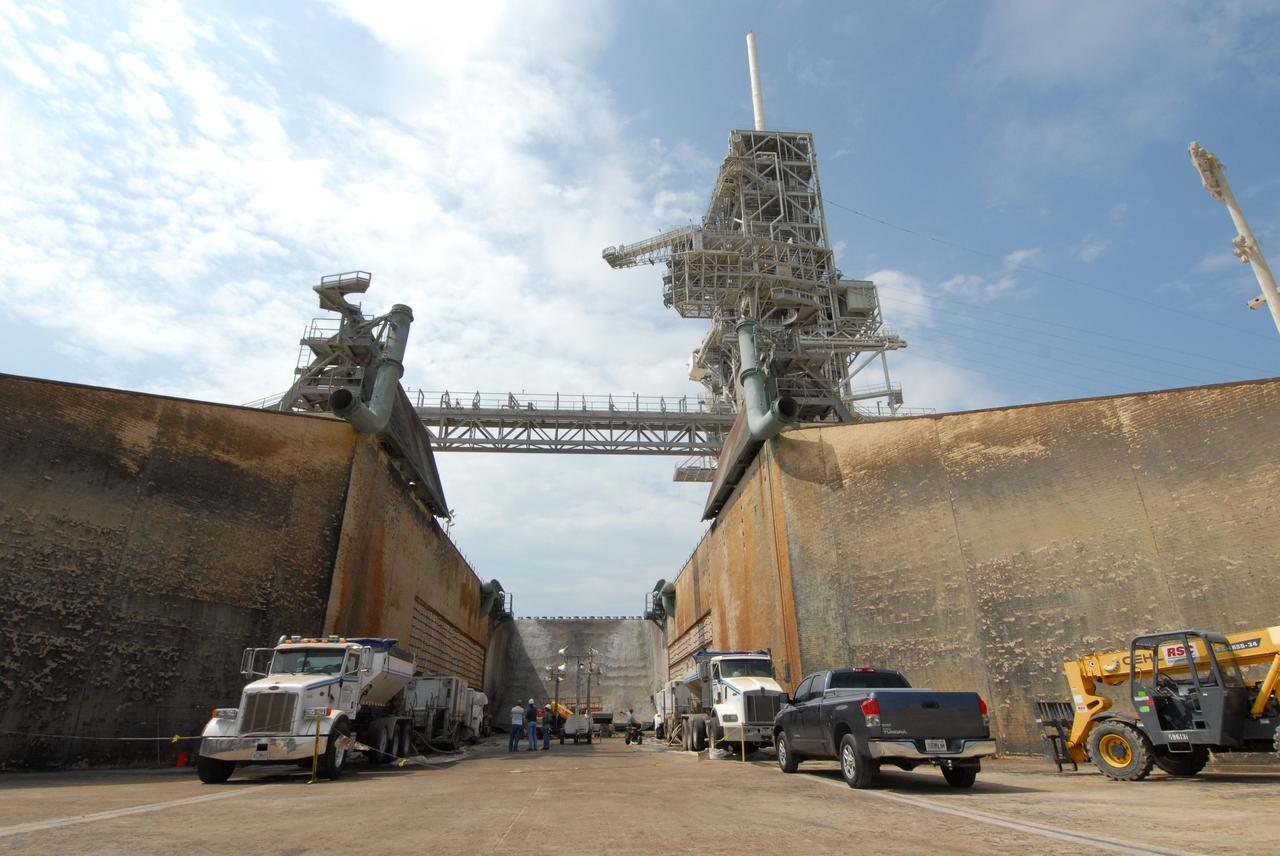
CAPE CANAVERAL, Fla. – Workers prepare to weld a steel grid structure to the wall of the flame trench on Launch Pad 39A at NASA's Kennedy Space Center. Damage to the trench occurred during the launch of Discovery on the STS-124 mission. A 75- by 20-foot section of the east wall was destroyed and debris scattered as far as the pad perimeter fence. Repairs are expected to be completed before the targeted Oct. 8 launch of Atlantis on the NASA Hubble Space Telescope servicing mission. Photo credit: NASA/Jack Pfaller
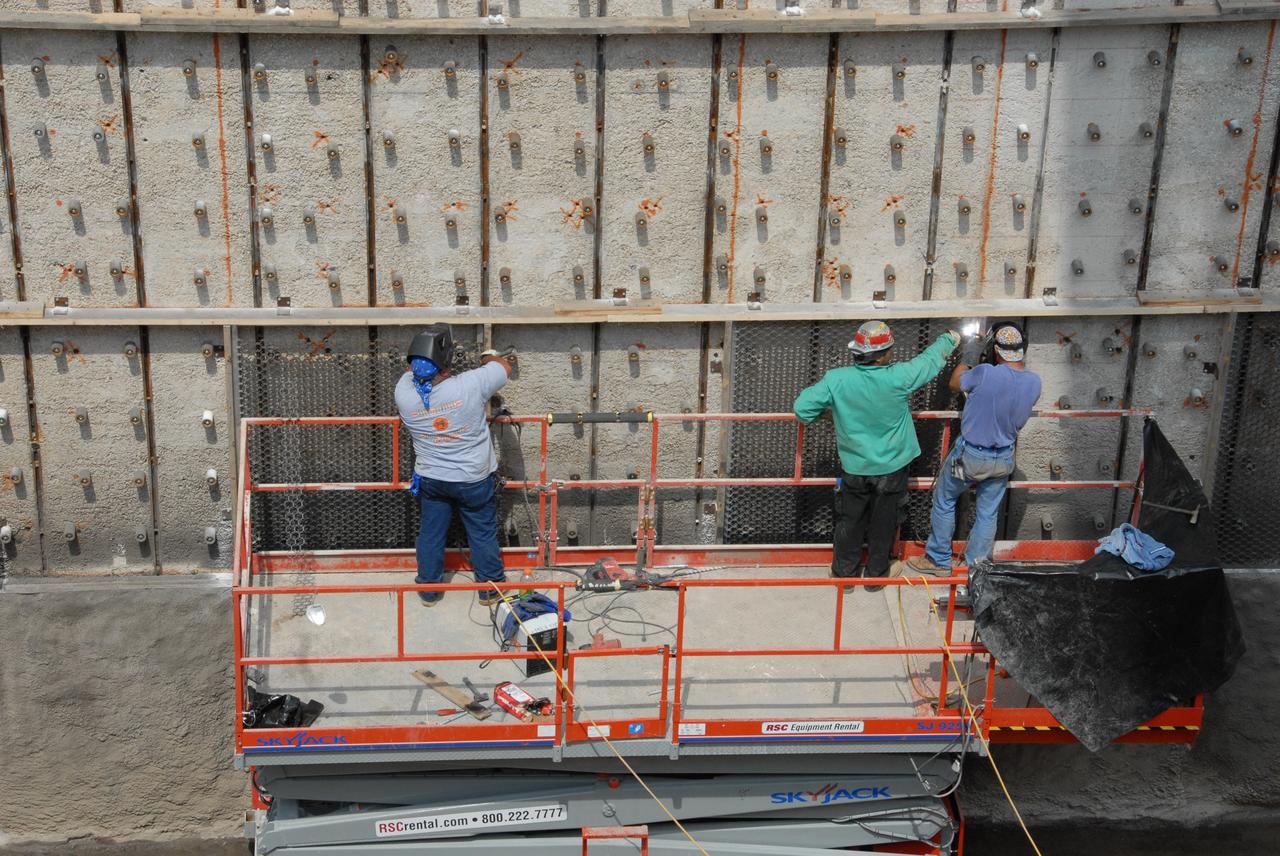
CAPE CANAVERAL, Fla. – Workers weld a steel grid structure to the wall of the flame trench on Launch Pad 39A at NASA's Kennedy Space Center. Damage to the trench occurred during the launch of Discovery on the STS-124 mission. A 75- by 20-foot section of the east wall was destroyed and debris scattered as far as the pad perimeter fence. Repairs are expected to be completed before the targeted Oct. 8 launch of Atlantis on the NASA Hubble Space Telescope servicing mission. Photo credit: NASA/Jack Pfaller
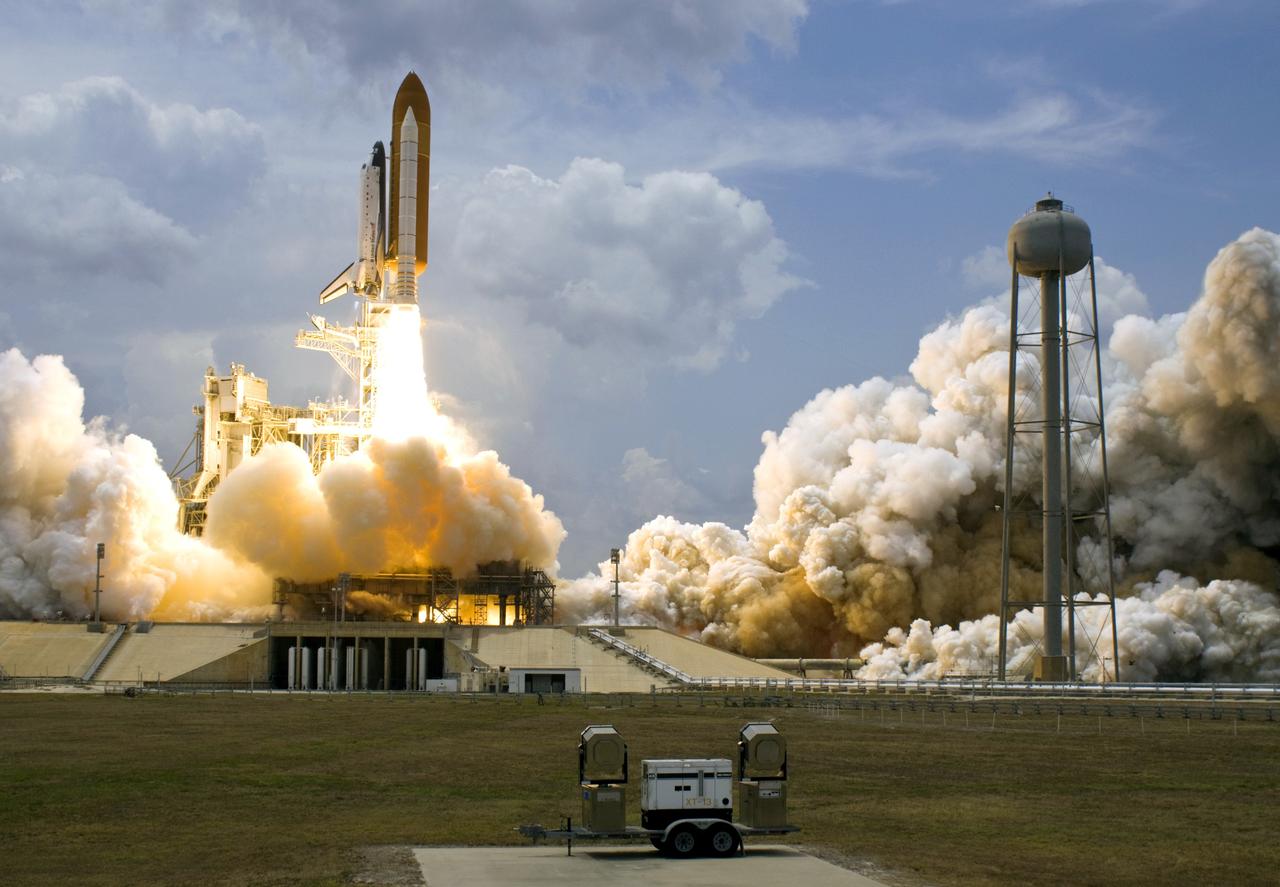
CAPE CANAVERAL, Fla. – Clouds of smoke and steam billow across Launch Pad 39A at NASA's Kennedy Space Center in Florida as space shuttle Atlantis roars into space on the STS-125 mission to service NASA's Hubble Space Telescope. Liftoff was on time at 2:01 p.m. EDT. Atlantis' 11-day flight will include five spacewalks to refurbish and upgrade the telescope with state-of-the-art science instruments that will expand Hubble's capabilities and extend its operational lifespan through at least 2014. The payload includes a Wide Field Camera 3, Fine Guidance Sensor and the Cosmic Origins Spectrograph. Photo courtesy of Scott Andrews
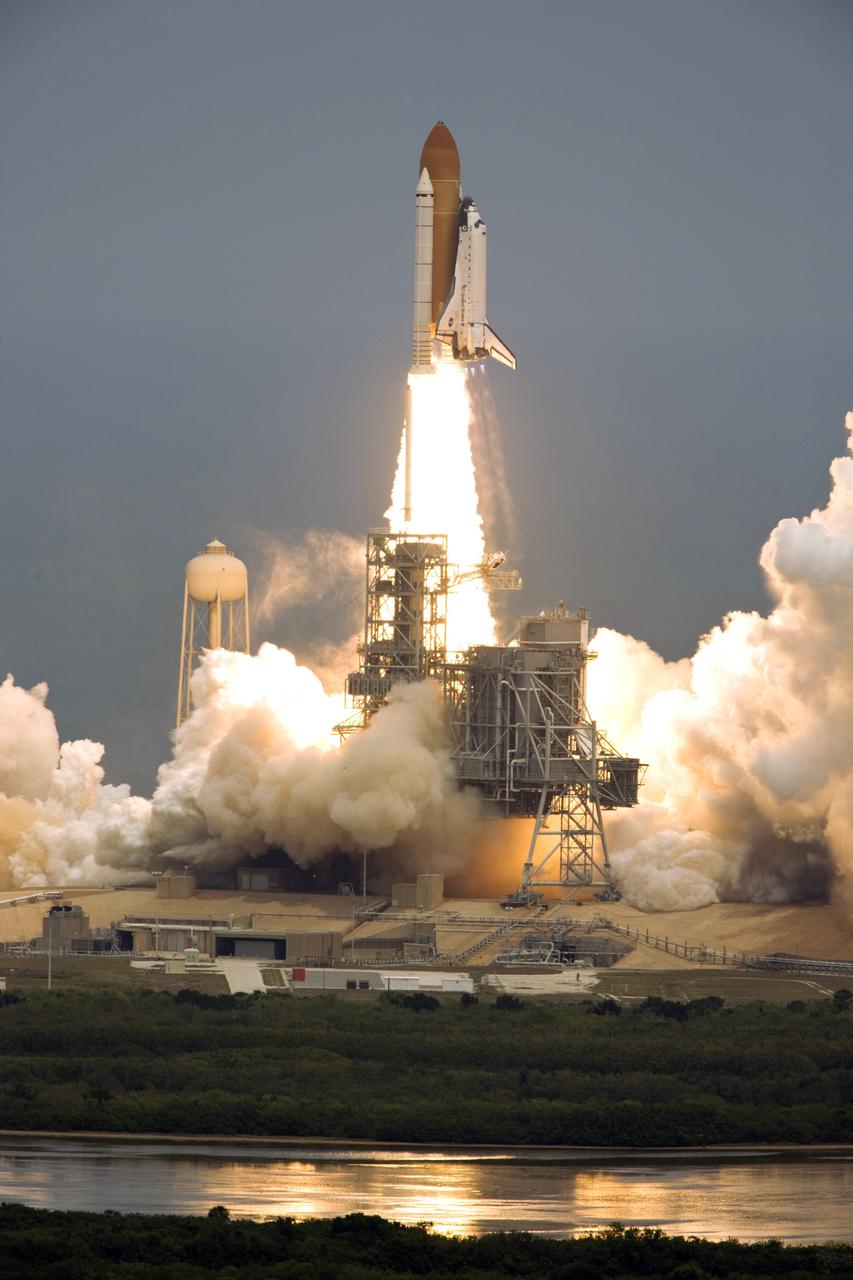
CAPE CANAVERAL, Fla. –Clouds of smoke and steam nearly obliterate Launch Pad 39A at NASA's Kennedy Space Center in Florida as space shuttle Atlantis roars into space on the STS-125 mission to service NASA's Hubble Space Telescope. Liftoff was on time at 2:01 p.m. EDT. Atlantis' 11-day flight will include five spacewalks to refurbish and upgrade the telescope with state-of-the-art science instruments that will expand Hubble's capabilities and extend its operational lifespan through at least 2014. The payload includes a Wide Field Camera 3, Fine Guidance Sensor and the Cosmic Origins Spectrograph. Photo courtesy of Scott Andrews
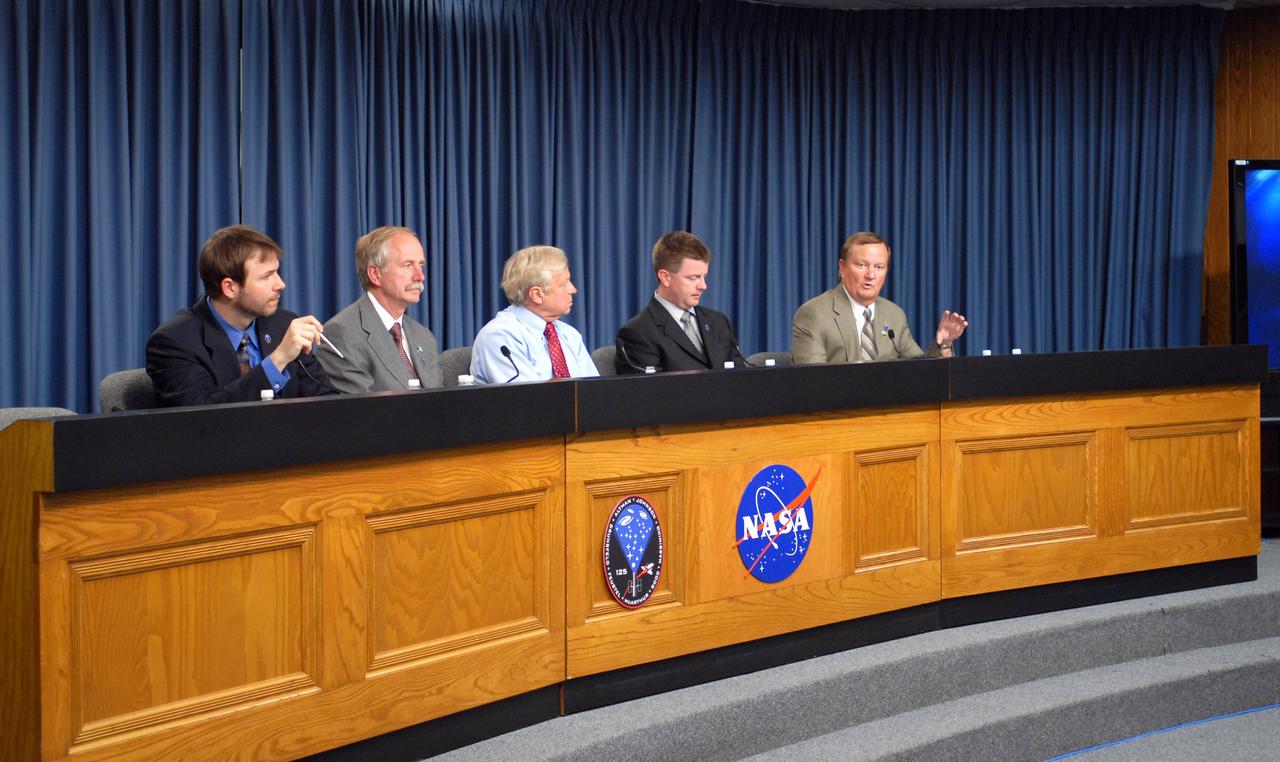
CAPE CANAVERAL, Fla. – During a press conference in the NASA News Auditorium at NASA's Kennedy Space Center in Florida, Shuttle Launch Director Mike Leinbach, right, answers a question from the media. Others from left are NASA Public Affairs Officer John Yembrick, who moderated, Associate Administrator for NASA's Space Operations Directorate William Gerstenmaier, Associate Administrator for NASA's Science Mission Directorate Ed Weiler and Launch Integration Manager Mike Moses. The conference followed the successful launch of space shuttle Atlantis on the STS-125 mission to service NASA's Hubble Space Telescope. Atlantis' 11-day flight will include five spacewalks to refurbish and upgrade the telescope with state-of-the-art science instruments that will expand Hubble's capabilities and extend its operational lifespan through at least 2014. The payload includes a Wide Field Camera 3, Fine Guidance Sensor and the Cosmic Origins Spectrograph. Photo credit: NASA/Jim Grossmann
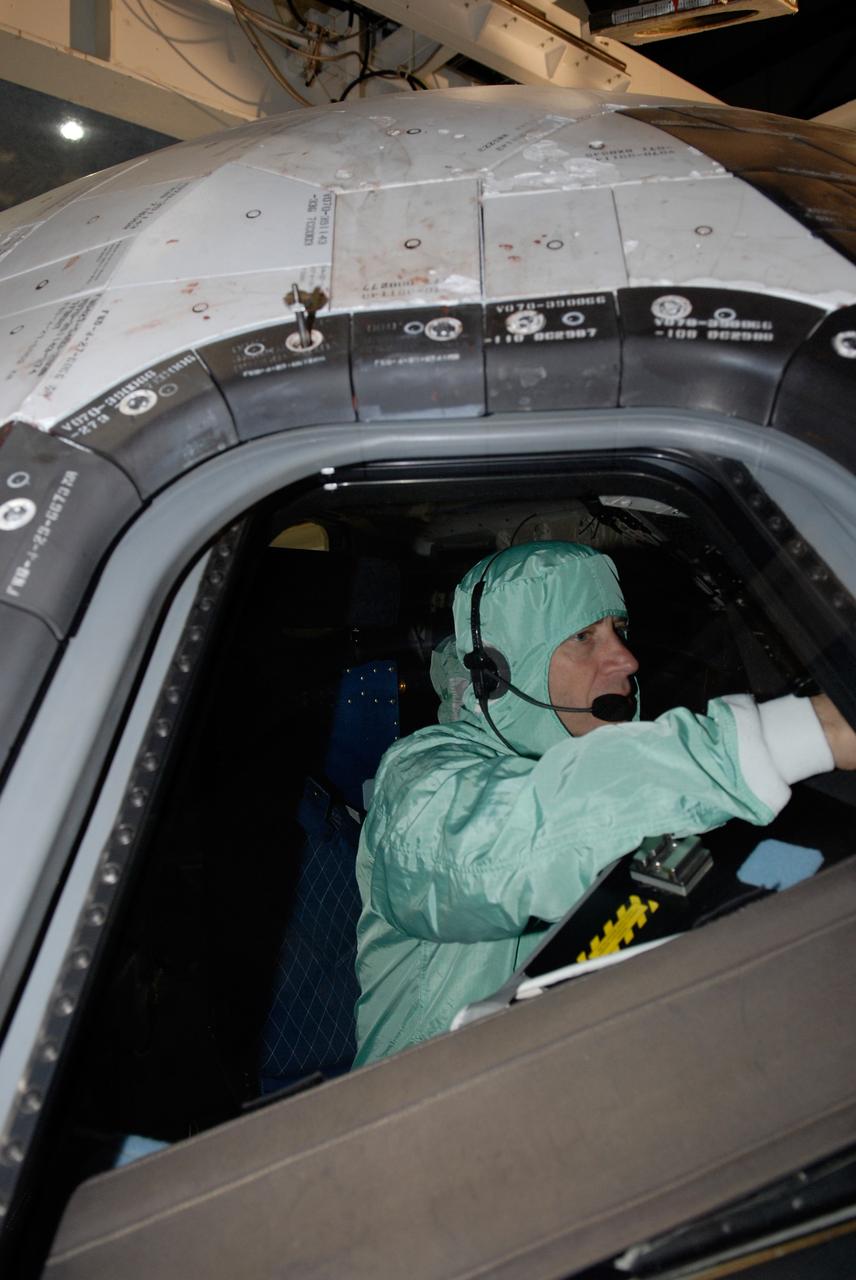
CAPE CANAVERAL, Fla. – In the Orbiter Processing Facility at NASA's Kennedy Space Center, STS-125 Pilot Gregory C. Johnson examines the cockpit window on space shuttle Atlantis, checking for sharp edges. The inspection is part of the crew equipment interface test, which provides hands-on experience with hardware and equipment for the mission. Atlantis is targeted to launch Oct. 8 on the STS-125 mission to service the Hubble Space Telescope. The mission crew will perform history-making, on-orbit “surgery” on two important science instruments aboard the telescope. After capturing the telescope, two teams of spacewalking astronauts will perform the repairs during five planned spacewalks. Photo credit: NASA/Kim Shiflett
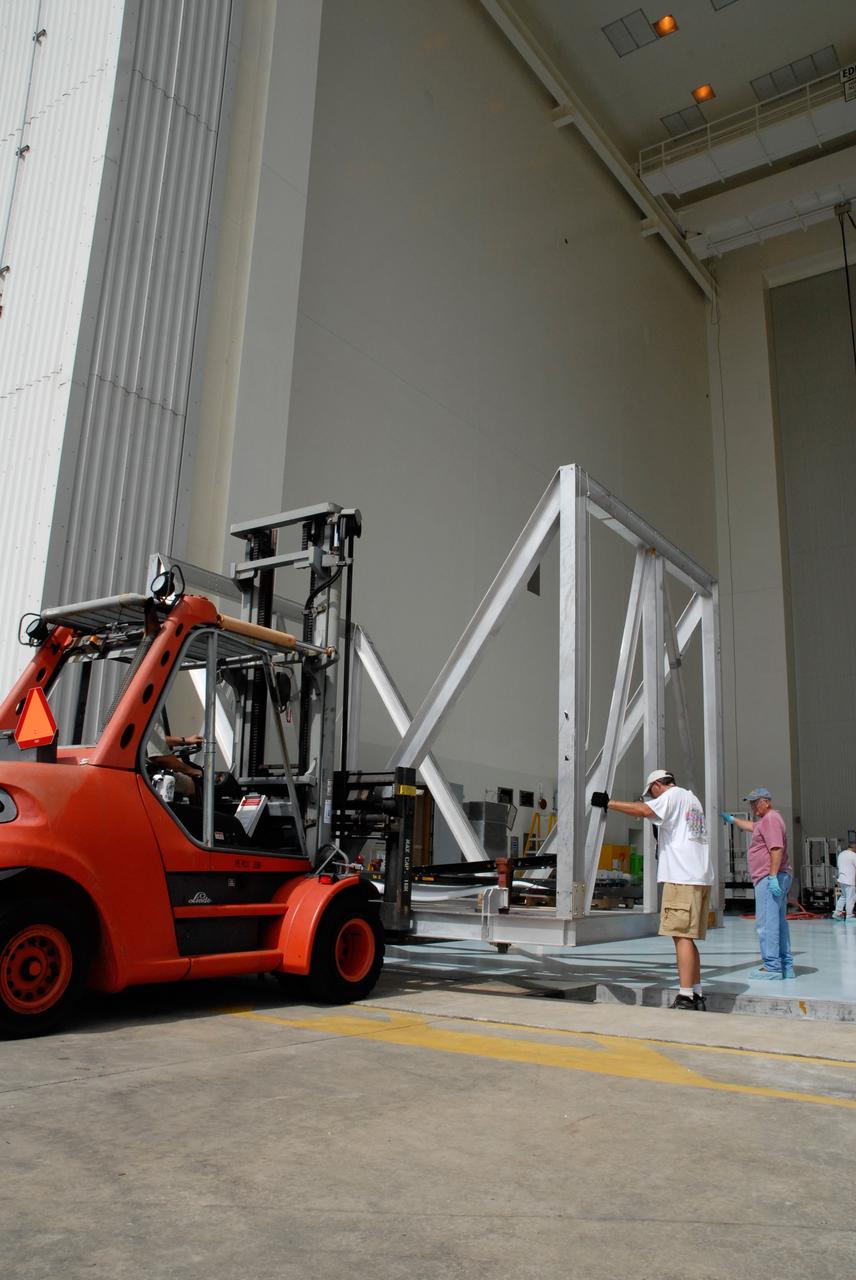
CAPE CANAVERAL, Fla. – At NASA's Kennedy Space Center, a transporter moves the thermal vacuum fixture into the Payload Hazardous Servicing Center. Space shuttle Atlantis is targeted to launch on the STS-125 mission Oct. 8. The mission crew will perform history-making, on-orbit “surgery” on two important science instruments aboard the telescope. After capturing the telescope, two teams of spacewalking astronauts will perform the repairs during five planned spacewalks. Photo credit: NASA/Jack Pfaller

CAPE CANAVERAL, Fla. – From Launch Pad 39A at NASA's Kennedy Space Center in Florida, space shuttle Atlantis hurtles into space on twin columns of fire on the STS-125 mission to service NASA's Hubble Space Telescope. Liftoff was on time at 2:01 p.m. EDT. Atlantis' 11-day flight will include five spacewalks to refurbish and upgrade the telescope with state-of-the-art science instruments that will expand Hubble's capabilities and extend its operational lifespan through at least 2014. The payload includes a Wide Field Camera 3, Fine Guidance Sensor and the Cosmic Origins Spectrograph. Photo courtesy of Scott Andrews
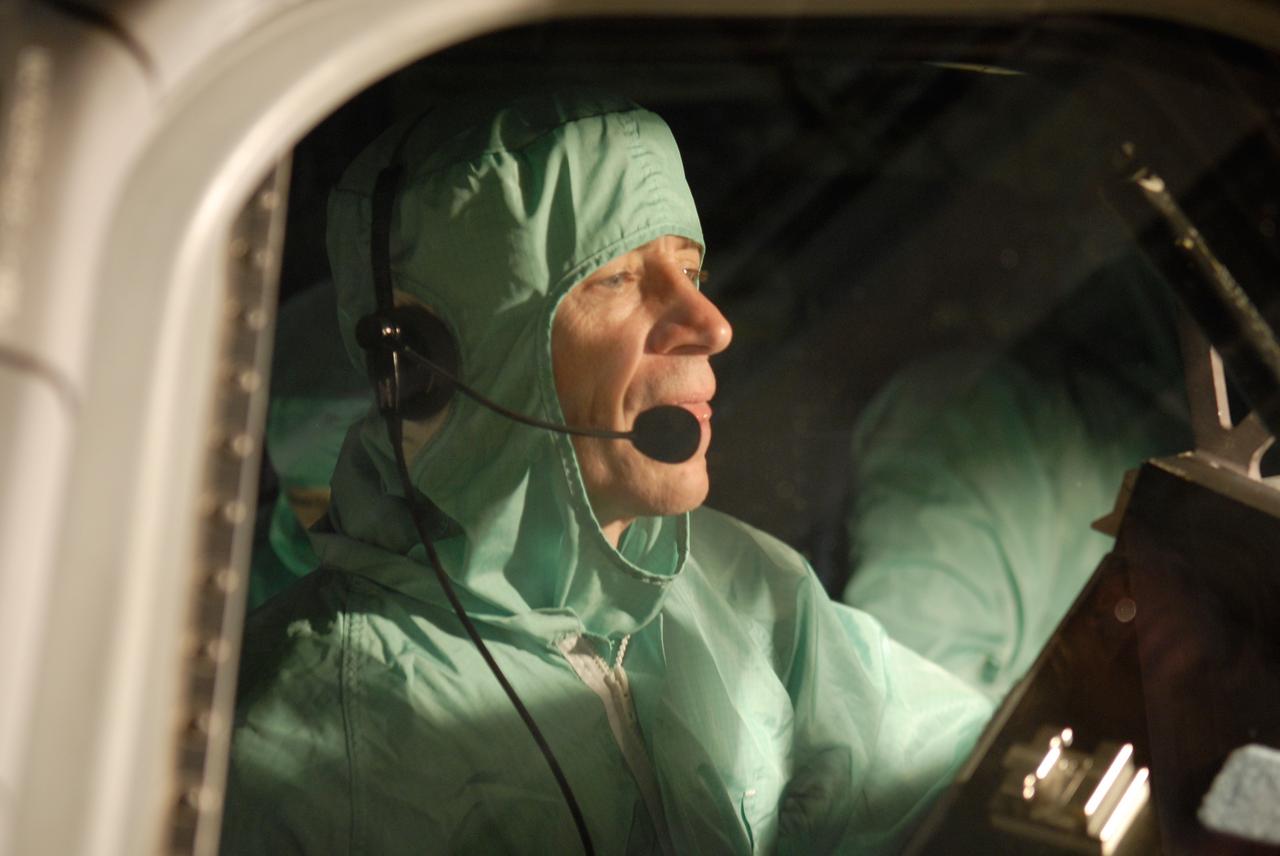
CAPE CANAVERAL, Fla. – In the Orbiter Processing Facility at NASA's Kennedy Space Center, STS-125 Pilot Gregory C. Johnson examines the cockpit window on space shuttle Atlantis, checking for sharp edges. The inspection is part of the crew equipment interface test, which provides hands-on experience with hardware and equipment for the mission. Atlantis is targeted to launch Oct. 8 on the STS-125 mission to service the Hubble Space Telescope. The mission crew will perform history-making, on-orbit “surgery” on two important science instruments aboard the telescope. After capturing the telescope, two teams of spacewalking astronauts will perform the repairs during five planned spacewalks. Photo credit: NASA/Kim Shiflett
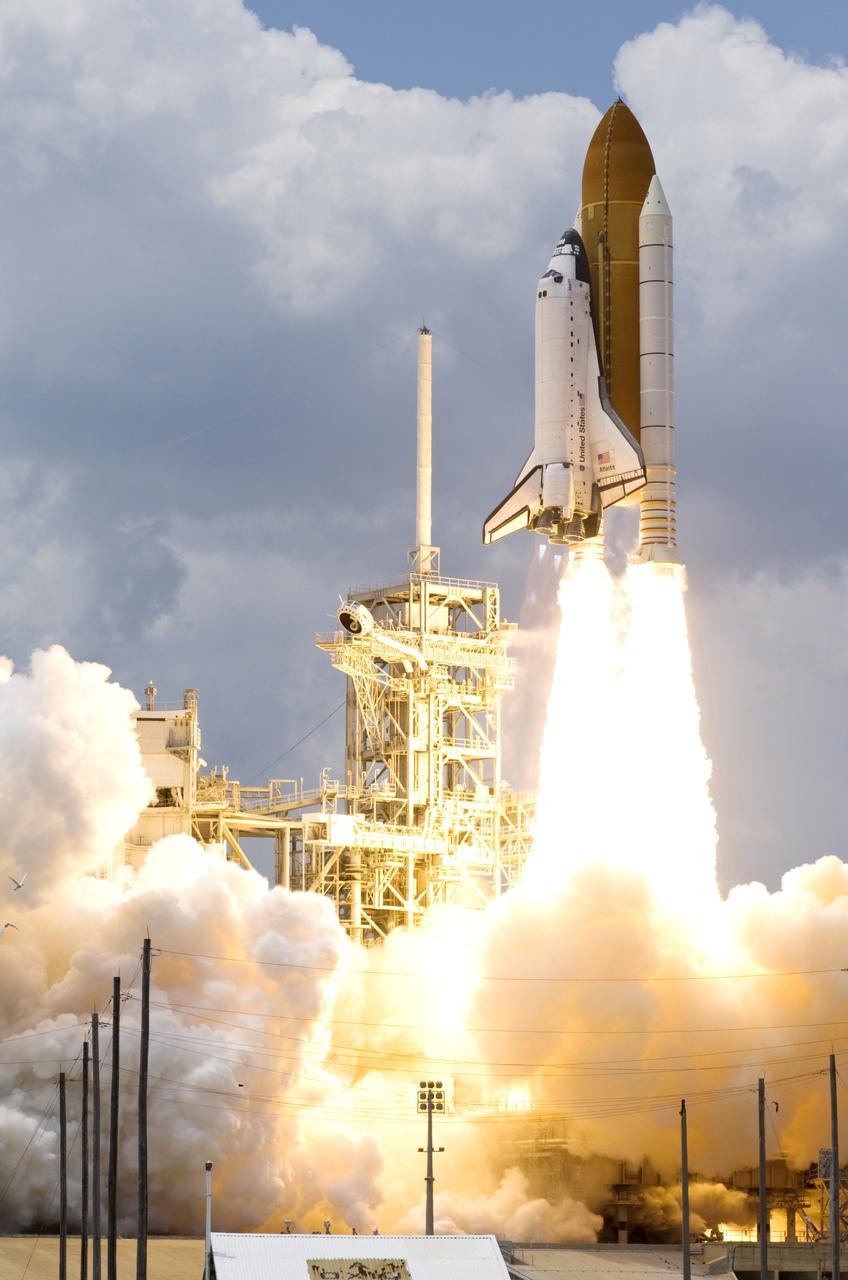
CAPE CANAVERAL, Fla. – Under a slow-building cloud bank, space shuttle Atlantis hurtles past the lightning mast on top of the fixed service structure on Launch Pad 39A at NASA's Kennedy Space Center in Florida. Atlantis will rendezvous with NASA's Hubble Space Telescope on the STS-125 service mission. Liftoff was on-time at 2:01 p.m. EDT. Atlantis' 11-day flight will include five spacewalks to refurbish and upgrade the telescope with state-of-the-art science instruments that will expand Hubble's capabilities and extend its operational lifespan through at least 2014. The payload includes a Wide Field Camera 3, Fine Guidance Sensor and the Cosmic Origins Spectrograph. Photo courtesy of Scott Andrews
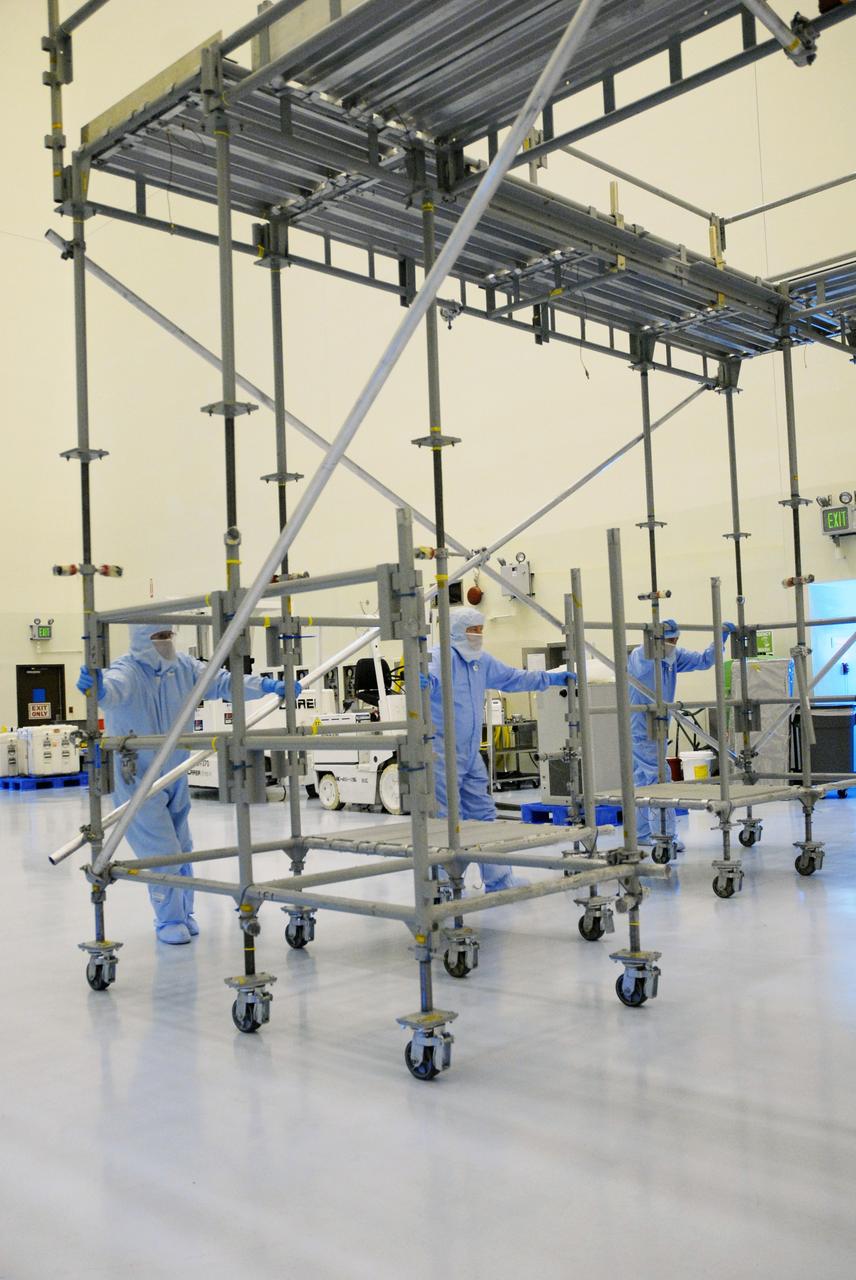
CAPE CANAVERAL, Fla. – In the Payload Hazardous Servicing Facility at NASA's Kennedy Space Center, workers move flight support system (FSS) access scaffolding that will be used to prepare the Hubble Space Telescope, or HST, carriers for the STS-125 servicing mission 4. The FSS will berth, secure and furnish power to Hubble and also contains the soft capture mechanism to be attached to the telescope. Upon completion of STS-125, the Hubble will provide even deeper and more detailed views of the Universe. The STS-125 mission will be the final space shuttle mission to the Hubble Space Telescope. Photo credit: NASA/Jack Pfaller

CAPE CANAVERAL, Fla. – In the Payload Hazardous Servicing Facility at NASA's Kennedy Space Center, equipment is stacked for the flight support system (FSS) access scaffolding that will be used to prepare the Hubble Space Telescope, or HST, carriers for the STS-125 servicing mission 4. The FSS will berth, secure and furnish power to Hubble and also contains the soft capture mechanism to be attached to the telescope. Upon completion of STS-125, the Hubble will provide even deeper and more detailed views of the Universe. The STS-125 mission will be the final space shuttle mission to the Hubble Space Telescope. Photo credit: NASA/Jack Pfaller
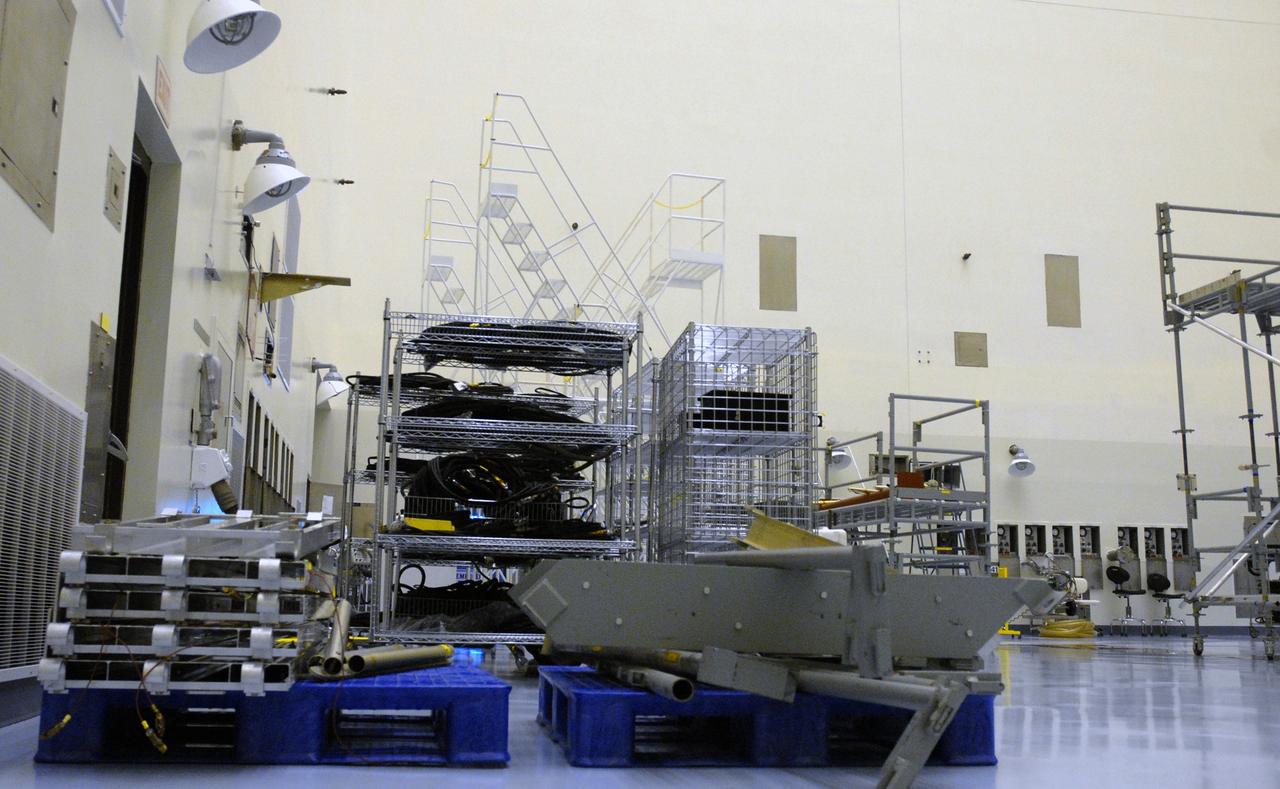
CAPE CANAVERAL, Fla. – In the Payload Hazardous Servicing Facility at NASA's Kennedy Space Center, equipment is stacked for the flight support system (FSS) access scaffolding that will be used to prepare the Hubble Space Telescope, or HST, carriers for the STS-125 servicing mission 4. The FSS will berth, secure and furnish power to Hubble and also contains the soft capture mechanism to be attached to the telescope. Upon completion of STS-125, the Hubble will provide even deeper and more detailed views of the Universe. The STS-125 mission will be the final space shuttle mission to the Hubble Space Telescope. Photo credit: NASA/Jack Pfaller
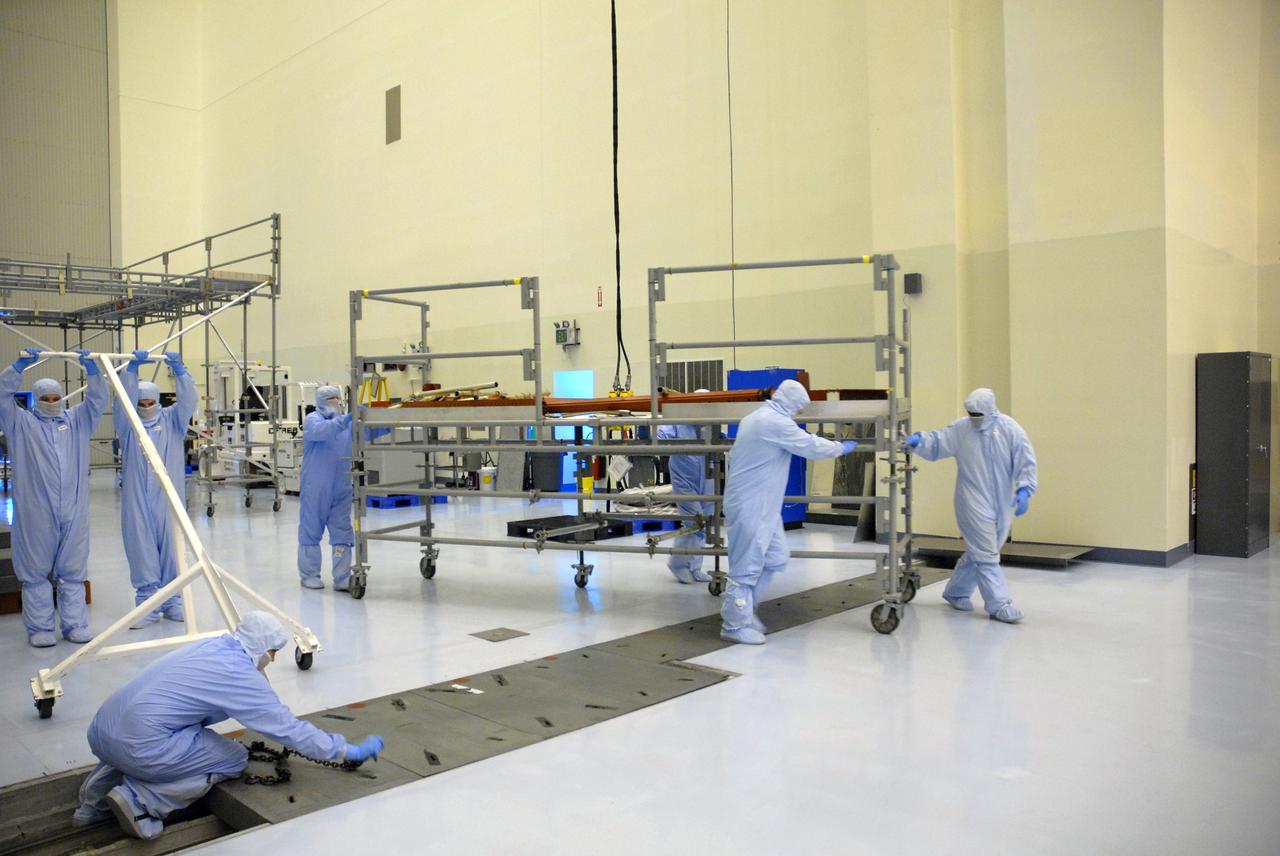
CAPE CANAVERAL, Fla. – In the Payload Hazardous Servicing Facility at NASA's Kennedy Space Center, workers move a piece of flight support system (FSS) access scaffolding. The scaffolding will be used to prepare the Hubble Space Telescope, or HST, carriers for the STS-125 servicing mission 4. The FSS will berth, secure and furnish power to Hubble and also contains the soft capture mechanism to be attached to the telescope. Upon completion of STS-125, the Hubble will provide even deeper and more detailed views of the Universe. The STS-125 mission will be the final space shuttle mission to the Hubble Space Telescope. Photo credit: NASA/Jack Pfaller
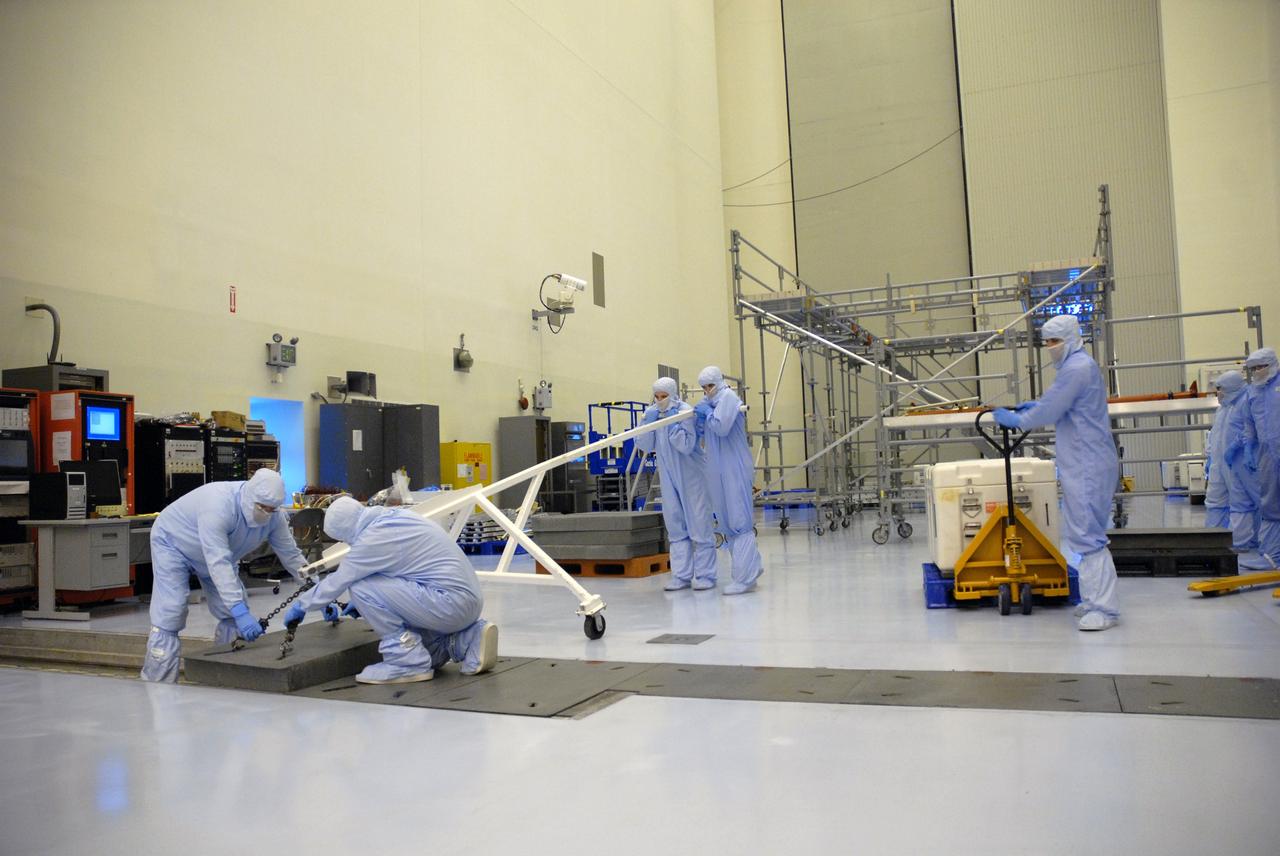
CAPE CANAVERAL, Fla. – In the Payload Hazardous Servicing Facility at NASA's Kennedy Space Center, workers prepare the floor in order to move flight support system (FSS) access scaffolding. The scaffolding will be used to prepare the Hubble Space Telescope, or HST, carriers for the STS-125 servicing mission 4. The FSS will berth, secure and furnish power to Hubble and also contains the soft capture mechanism to be attached to the telescope. Upon completion of STS-125, the Hubble will provide even deeper and more detailed views of the Universe. The STS-125 mission will be the final space shuttle mission to the Hubble Space Telescope. Photo credit: NASA/Jack Pfaller
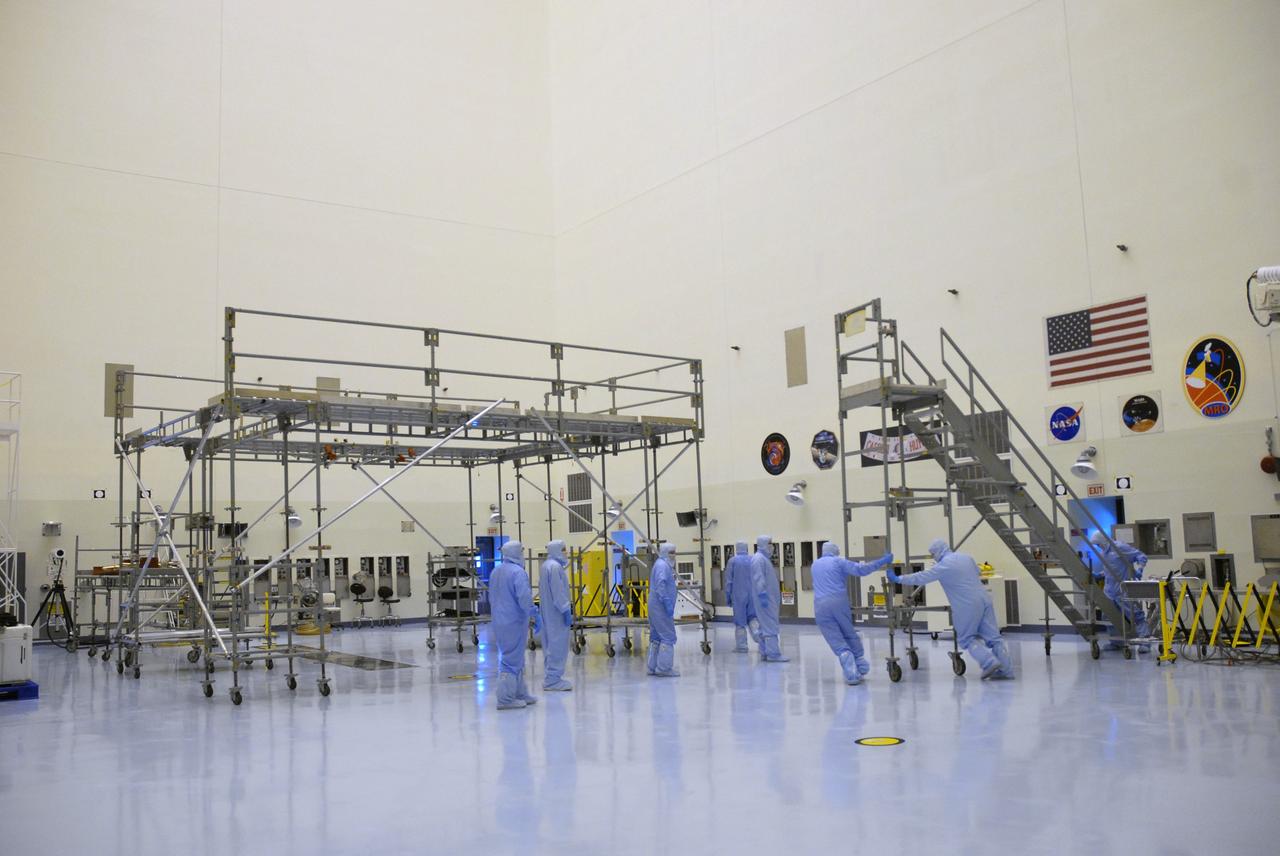
CAPE CANAVERAL, Fla. – In the Payload Hazardous Servicing Facility at NASA's Kennedy Space Center, workers move flight support system (FSS) access scaffolding that will be used to prepare the Hubble Space Telescope, or HST, carriers for the STS-125 servicing mission 4. The FSS will berth, secure and furnish power to Hubble and also contains the soft capture mechanism to be attached to the telescope. Upon completion of STS-125, the Hubble will provide even deeper and more detailed views of the Universe. The STS-125 mission will be the final space shuttle mission to the Hubble Space Telescope. Photo credit: NASA/Jack Pfaller
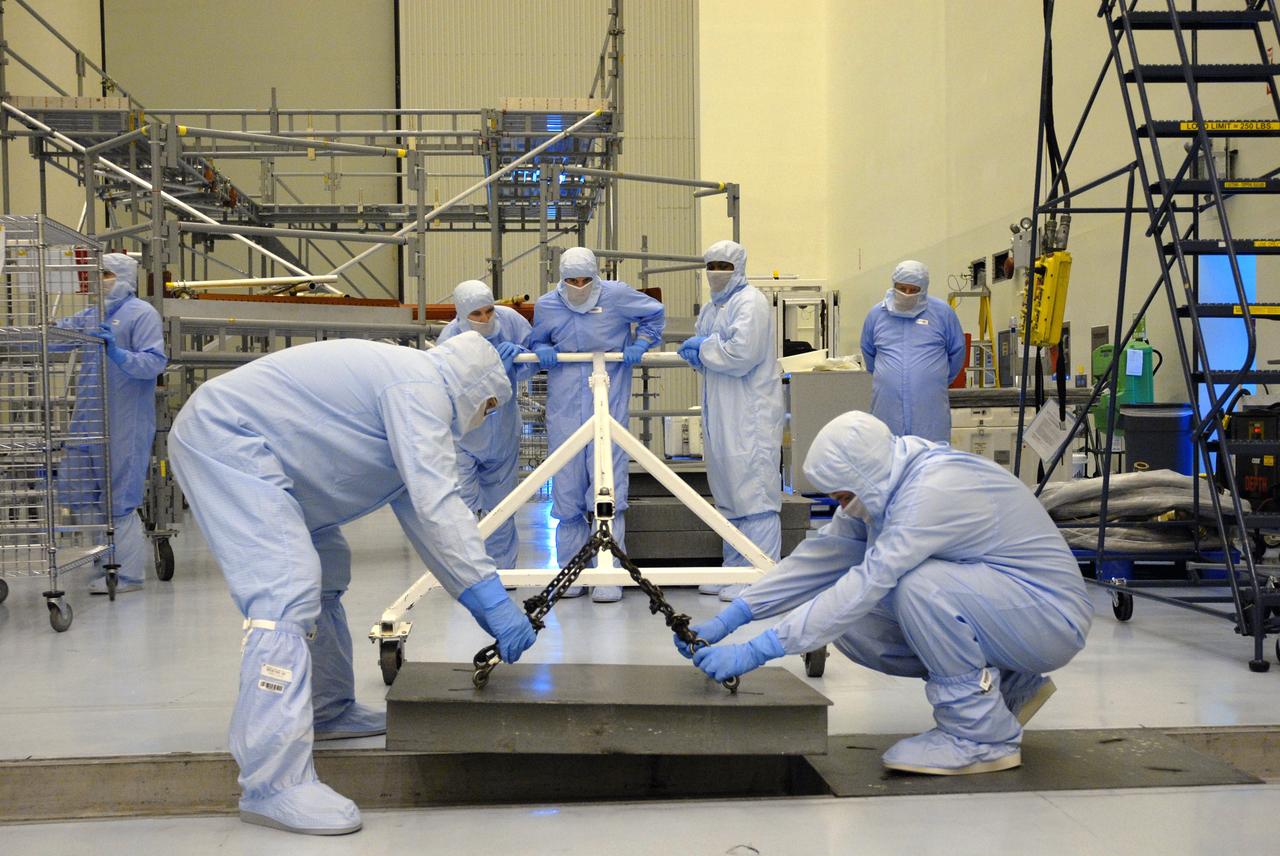
CAPE CANAVERAL, Fla. – In the Payload Hazardous Servicing Facility at NASA's Kennedy Space Center, workers prepare the floor in order to move flight support system (FSS) access scaffolding. The scaffolding will be used to prepare the Hubble Space Telescope, or HST, carriers for the STS-125 servicing mission 4. The FSS will berth, secure and furnish power to Hubble and also contains the soft capture mechanism to be attached to the telescope. Upon completion of STS-125, the Hubble will provide even deeper and more detailed views of the Universe. The STS-125 mission will be the final space shuttle mission to the Hubble Space Telescope. Photo credit: NASA/Jack Pfaller
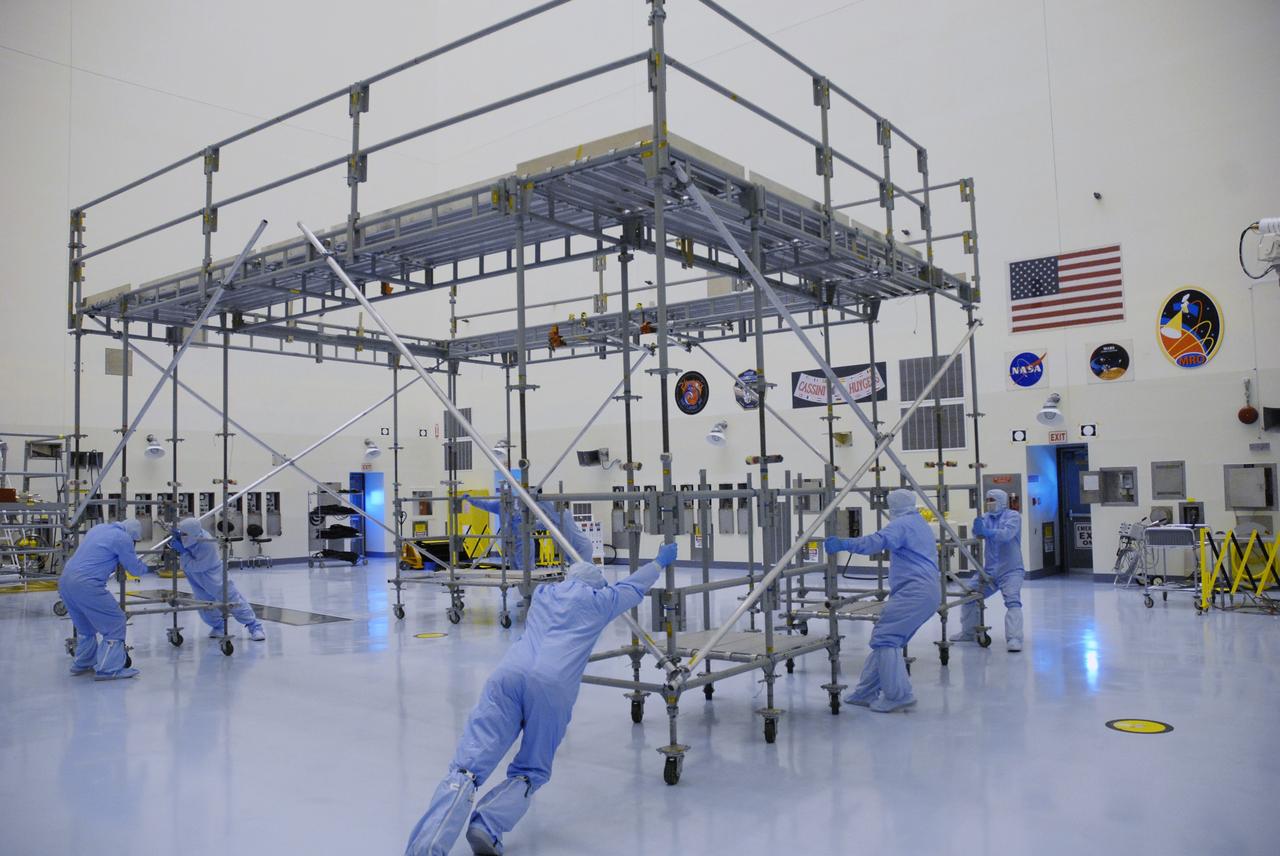
CAPE CANAVERAL, Fla. – In the Payload Hazardous Servicing Facility at NASA's Kennedy Space Center, workers move flight support system (FSS) access scaffolding that will be used to prepare the Hubble Space Telescope, or HST, carriers for the STS-125 servicing mission 4. The FSS will berth, secure and furnish power to Hubble and also contains the soft capture mechanism to be attached to the telescope. Upon completion of STS-125, the Hubble will provide even deeper and more detailed views of the Universe. The STS-125 mission will be the final space shuttle mission to the Hubble Space Telescope. Photo credit: NASA/Jack Pfaller
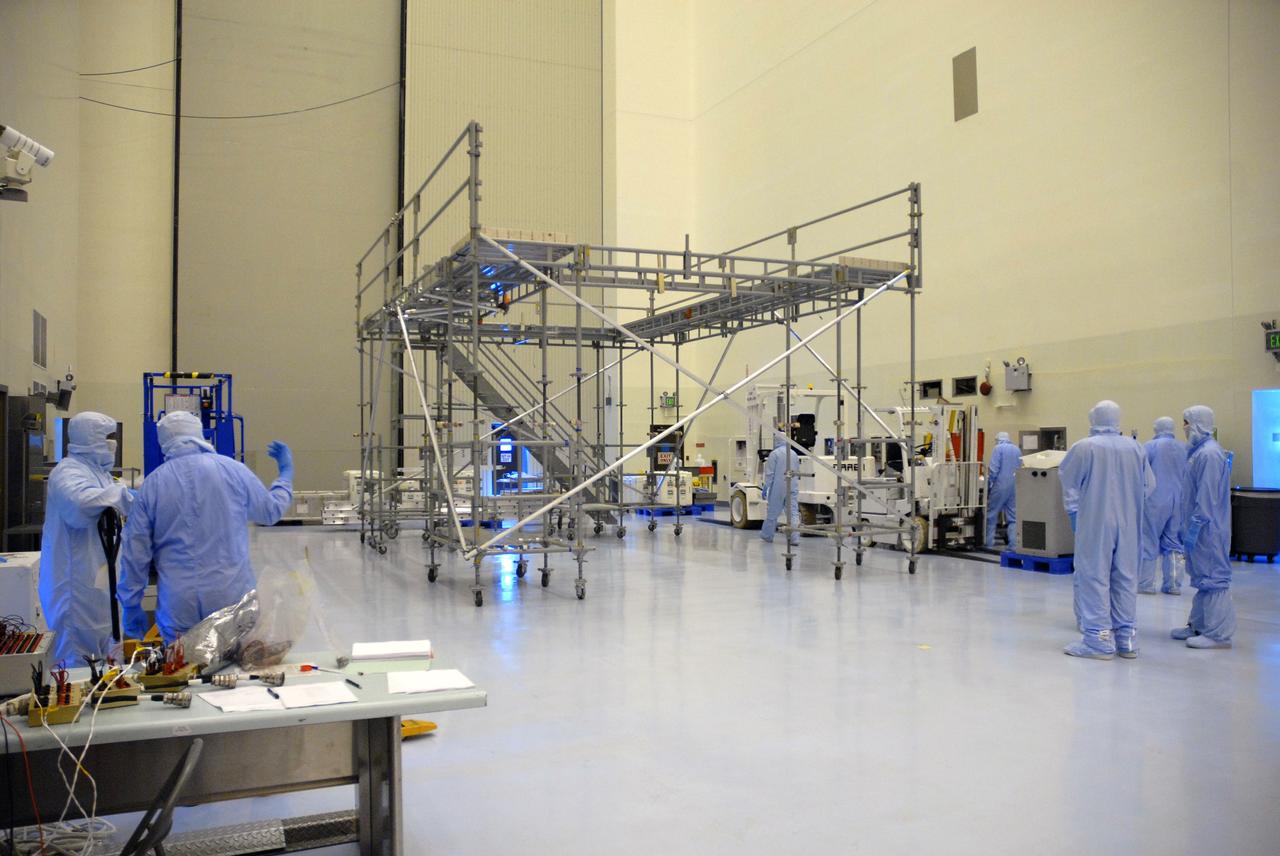
CAPE CANAVERAL, Fla. – In the Payload Hazardous Servicing Facility at NASA's Kennedy Space Center, workers are constructing flight support system (FSS) access scaffolding that will be used to prepare the Hubble Space Telescope, or HST, carriers for the STS-125 servicing mission 4. The FSS will berth, secure and furnish power to Hubble and also contains the soft capture mechanism to be attached to the telescope. Upon completion of STS-125, the Hubble will provide even deeper and more detailed views of the Universe. The STS-125 mission will be the final space shuttle mission to the Hubble Space Telescope. Photo credit: NASA/Jack Pfaller
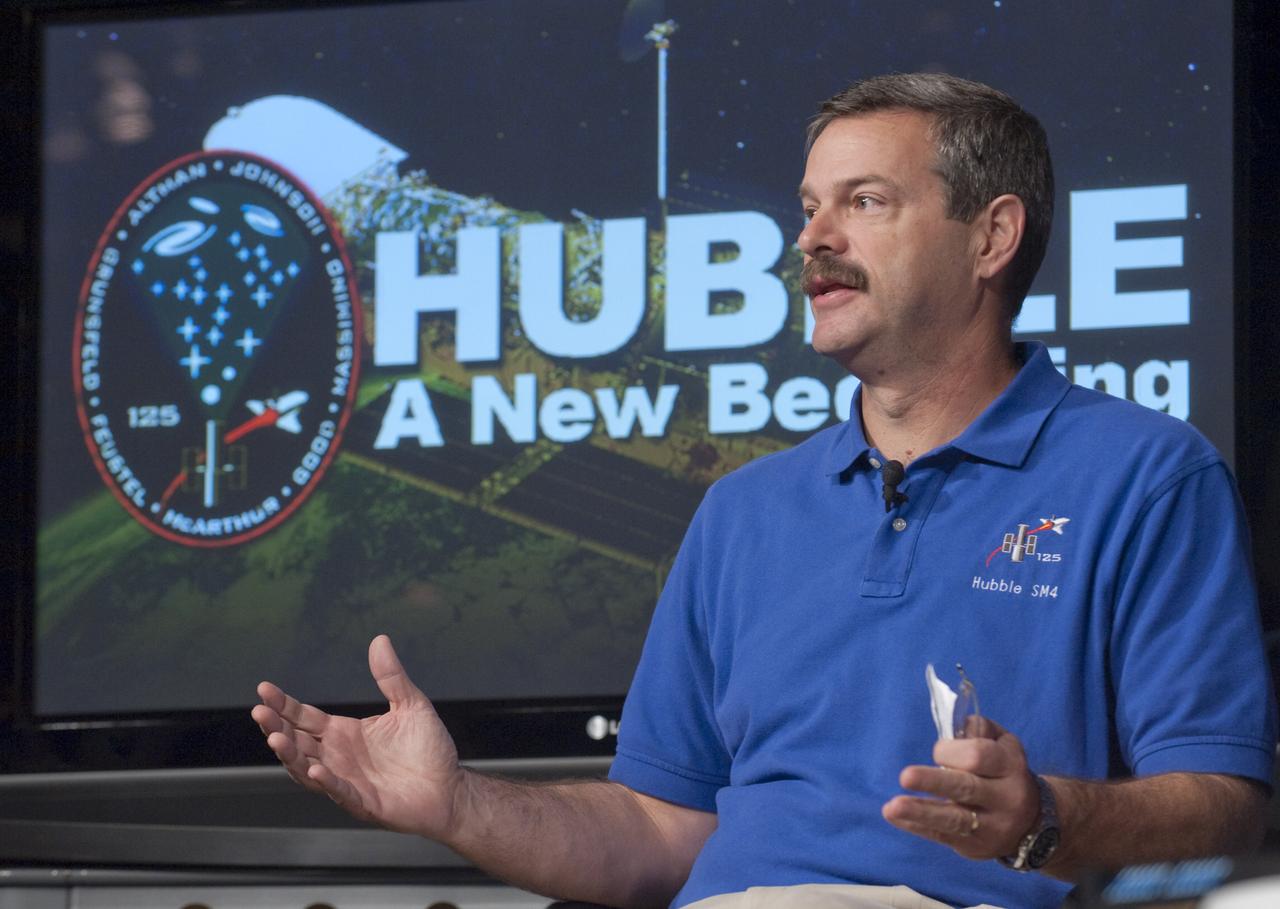
Scott Altman, who commanded the STS-125 mission to the Hubble Space Telescope, speaks during a press conference, Wednesday, Sept. 9, 2009, after astronomers declared the telescope a fully rejuvenated observatory with the release Wednesday of observations from four of its six operating science instruments at NASA Headquarters in Washington. Photo Credit: (NASA/Paul E. Alers)
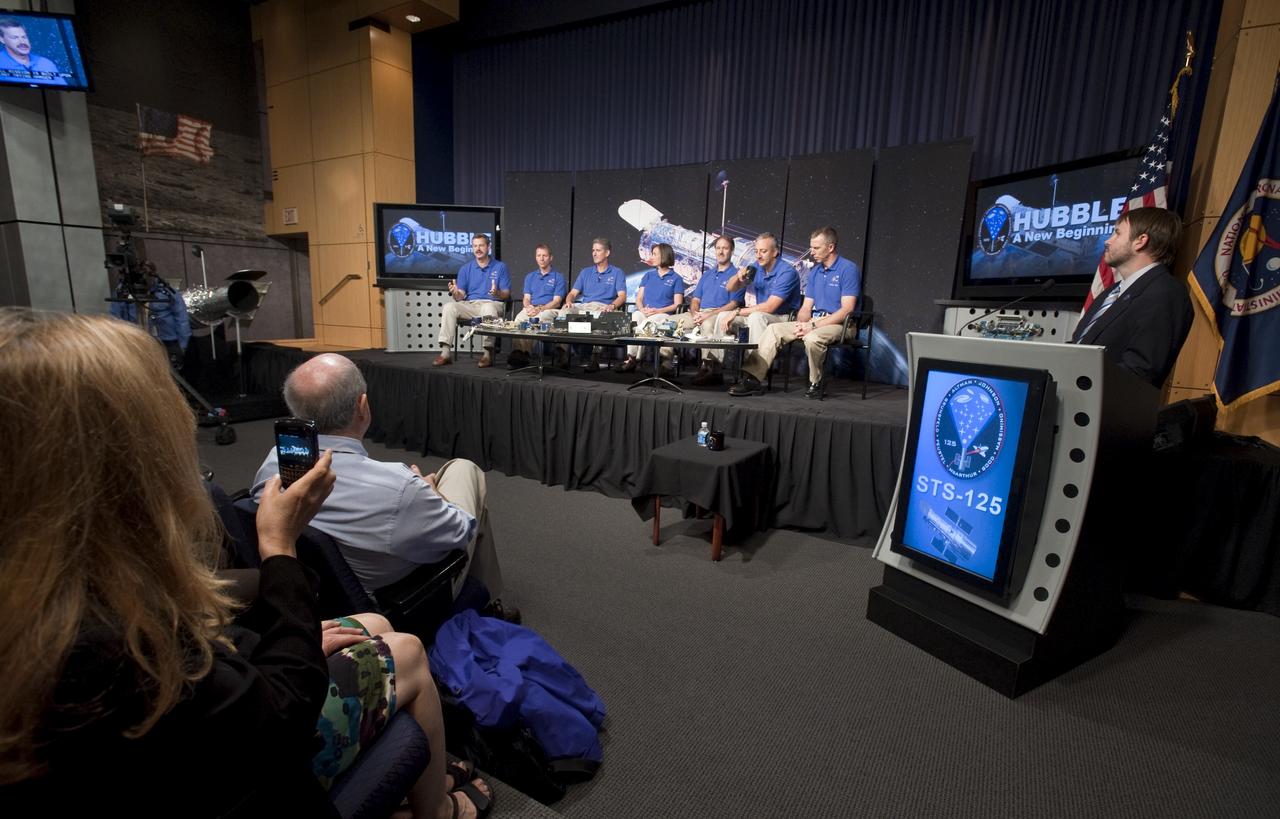
Scott Altman, who commanded the STS-125 mission to the Hubble Space Telescope, far left on stage, speaks during a press conference, Wednesday, Sept. 9, 2009, after astronomers declared the telescope a fully rejuvenated observatory with the release Wednesday of observations from four of its six operating science instruments at NASA Headquarters in Washington. Photo Credit: (NASA/Paul E. Alers)
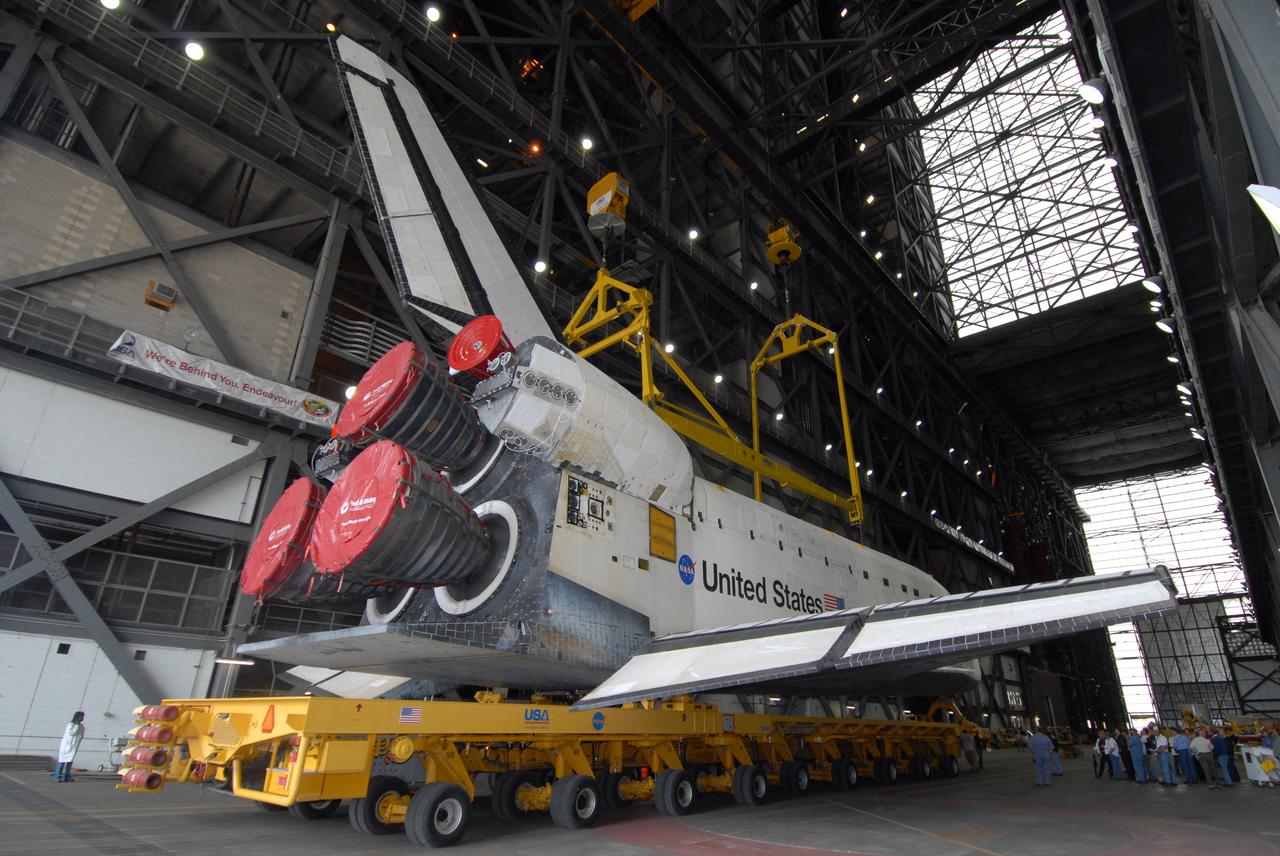
CAPE CANAVERAL, Fla. – Space shuttle Atlantis rolls into the transfer aisle of the Vehicle Assembly Building at NASA's Kennedy Space Center in Florida. First motion was at 11:30 a.m. EDT. From the transfer aisle, Atlantis will be lifted into High Bay 3 and mated to the solid rocket booster-external fuel tank already installed on the mobile launcher platform. Atlantis is targeted to launch May 12 for the STS-125 Hubble servicing mission. Photo credit: NASA/Jack Pfaller
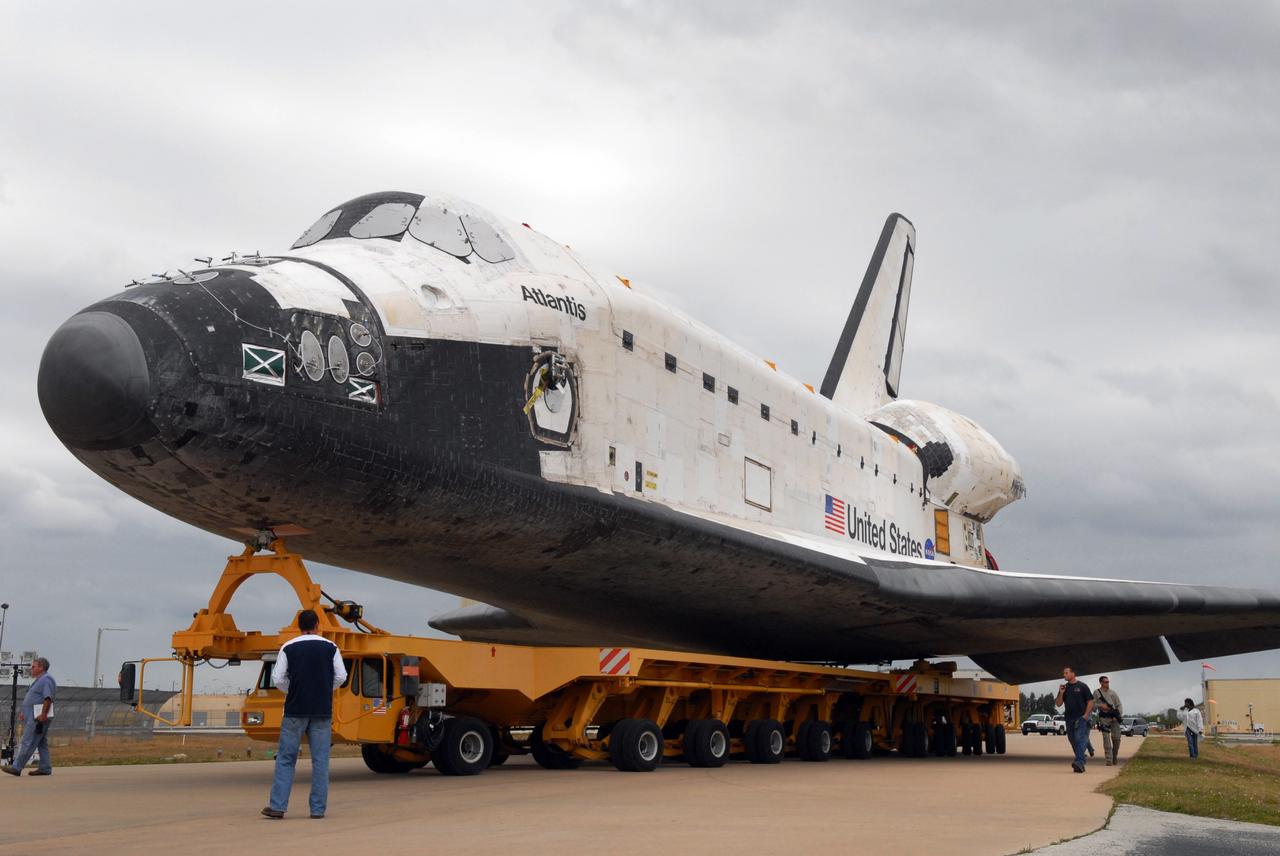
CAPE CANAVERAL, Fla. – On its transporter, space shuttle Atlantis rolls toward the Vehicle Assembly Building after leaving Orbiter Processing Facility 1 at NASA's Kennedy Space Center in Florida. First motion was at 11:30 a.m. EDT. In the VAB, Atlantis will be lifted into High Bay 3 and mated to the solid rocket booster-external fuel tank already installed on the mobile launcher platform.Atlantis is targeted to launch May 12 for the STS-125 Hubble servicing mission. Photo credit: NASA/Jack Pfaller
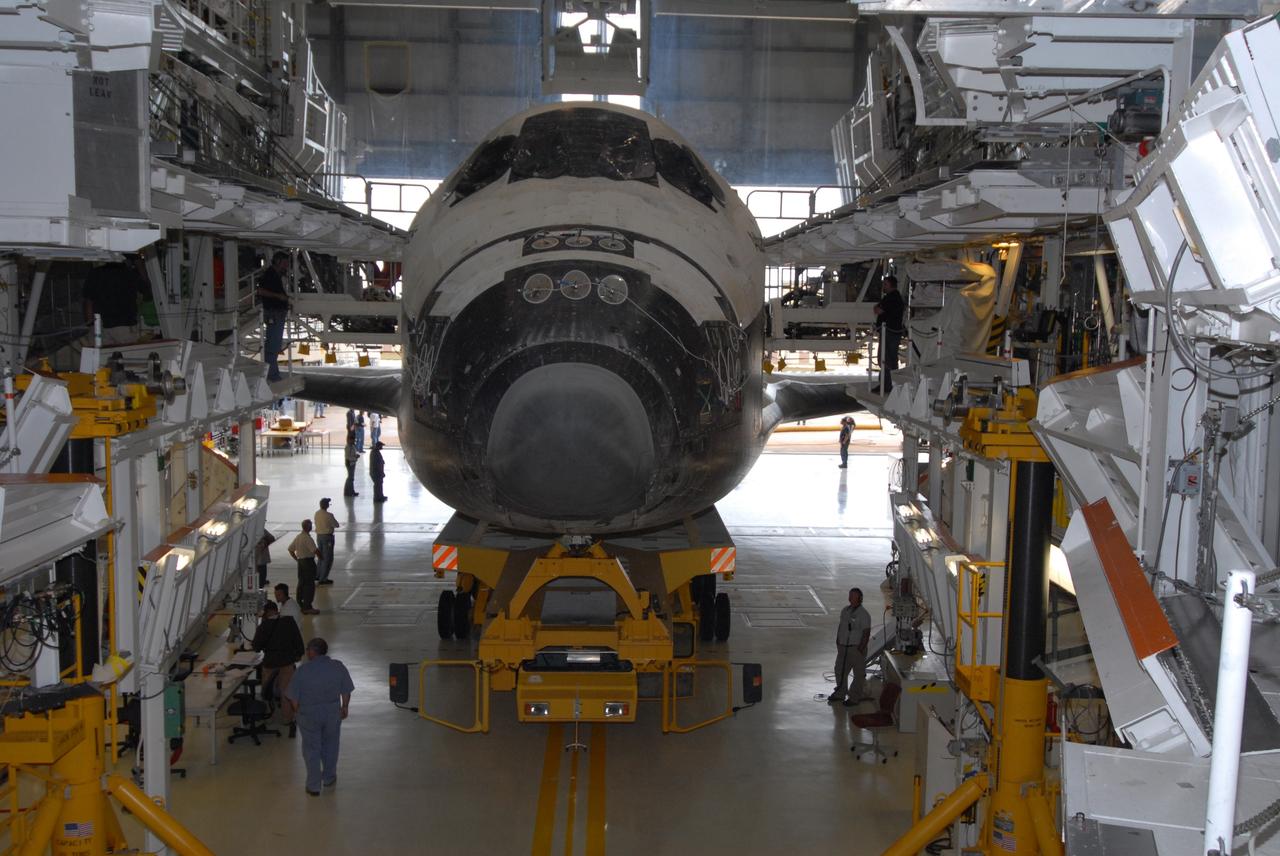
CAPE CANAVERAL, Fla. – Space shuttle Atlantis is ready to move out of Orbiter Processing Facility 1 at NASA's Kennedy Space Center in Florida and roll over to the Vehicle Assembly Building. In the VAB, Atlantis will be lifted into High Bay 3 and mated to the solid rocket booster-external fuel tank already installed on the mobile launcher platform. Atlantis is targeted to launch May 12 for the STS-125 Hubble servicing mission. Photo credit: NASA/Jack Pfaller