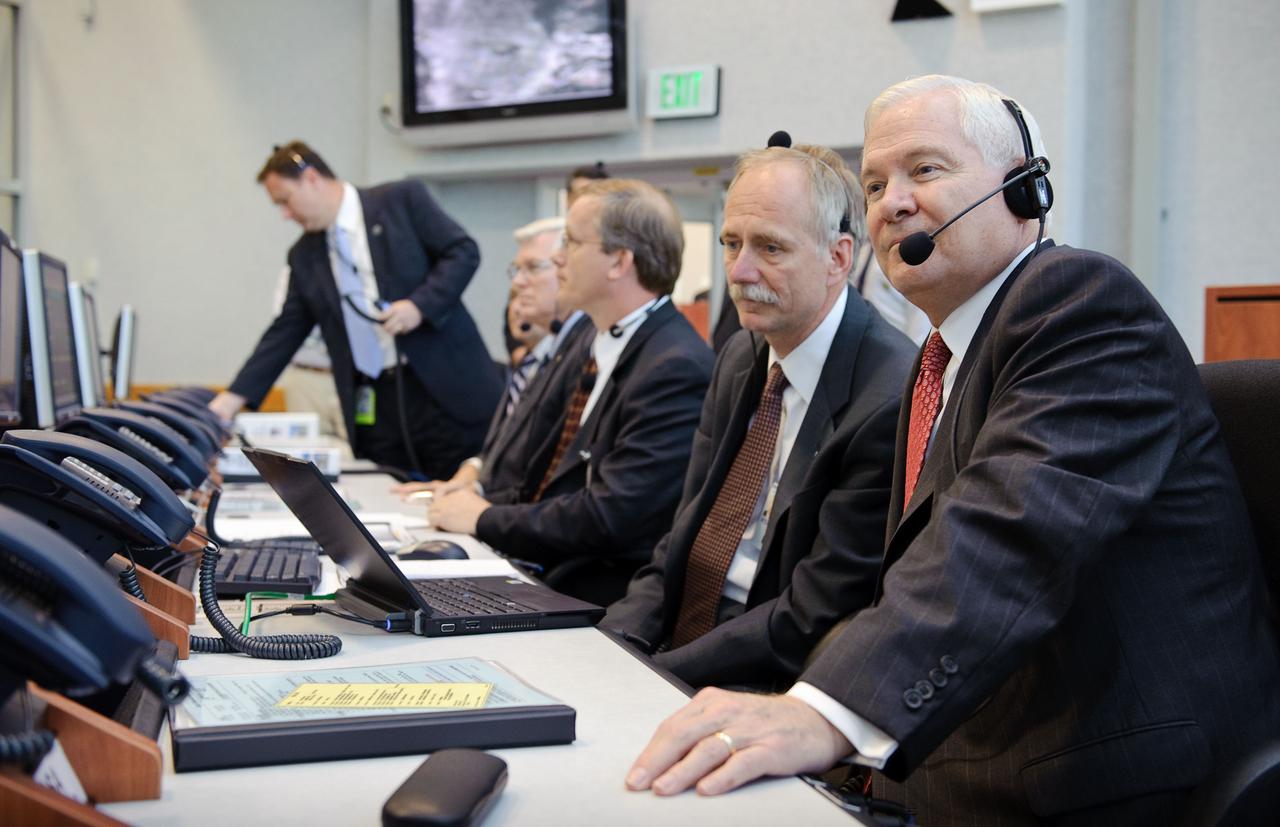
STS132-S-012 (14 May 2010) --- Secretary of Defense Dr. Robert M. Gates, right, NASA Associate Administrator for Space Operations William H. Gerstenmaier, center, and other NASA mission managers monitor the launch of the space shuttle Atlantis and the STS-132 mission from Firing Room Four of the NASA Kennedy Space Center Launch Control Center, Friday, May 14, 2010 in Cape Canaveral Florida. Space shuttle Atlantis is embarking on its final planned mission. During the 12-day flight, Atlantis and six astronauts will fly to the International Space Station, leaving behind a Russian Mini Research Module, a set of batteries for the station's truss and dish antenna, along with other replacement parts. Atlantis' 32nd flight is scheduled to last 12 days and include three spacewalks and extensive robotics work. Photo credit: NASA/Bill Ingalls
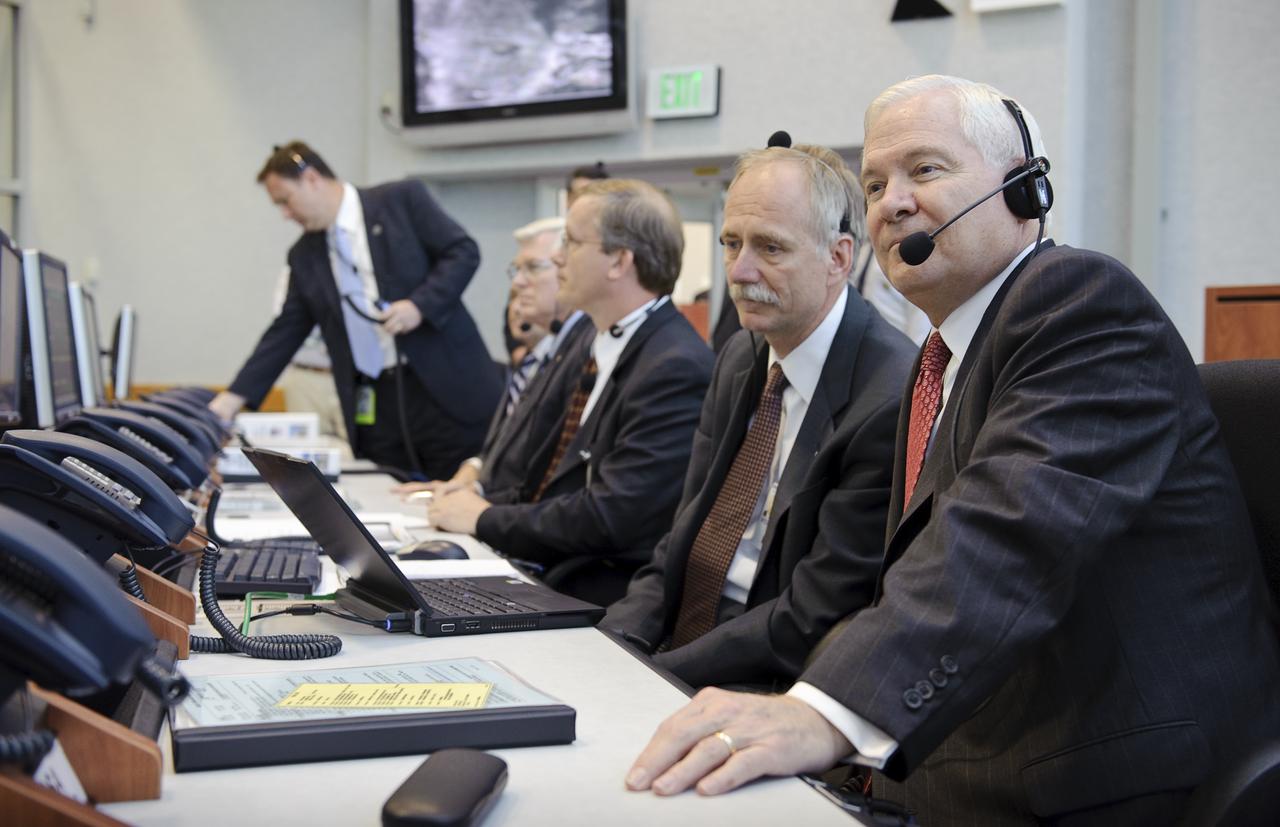
Secretary of Defense Dr. Robert M. Gates, right, NASA Associate Administrator for Space Operations William H. Gerstenmaier, center, and other NASA mission managers monitor the launch of the space shuttle Atlantis and the STS-132 mission from Firing Room Four of the NASA Kennedy Space Center Launch Control Center, Friday, May 14, 2010 in Cape Canaveral Florida. Space shuttle Atlantis is embarking on its final planned mission. During the 12-day flight, Atlantis and six astronauts will fly to the International Space Station, leaving behind a Russian Mini Research Module, a set of batteries for the station's truss and dish antenna, along with other replacement parts. Atlantis' 32nd flight is scheduled to last 12 days and include three spacewalks and extensive robotics work. Photo Credit: (NASA/Bill Ingalls)

Kendal Van Dyke, a database professional that is followed on Twitter @twitter.com/sqldba, takes part in the two-day STS-132 Launch Tweetup at Kennedy Space Center, Thursday, May 13, 2010, in Cape Canaveral, Fla. NASA Twitter followers in attendance will have the opportunity to take a tour of NASA's Kennedy Space Center, view the space shuttle launch and speak with shuttle technicians, engineers, astronauts and managers. Photo Credit: (NASA/Paul E. Alers)
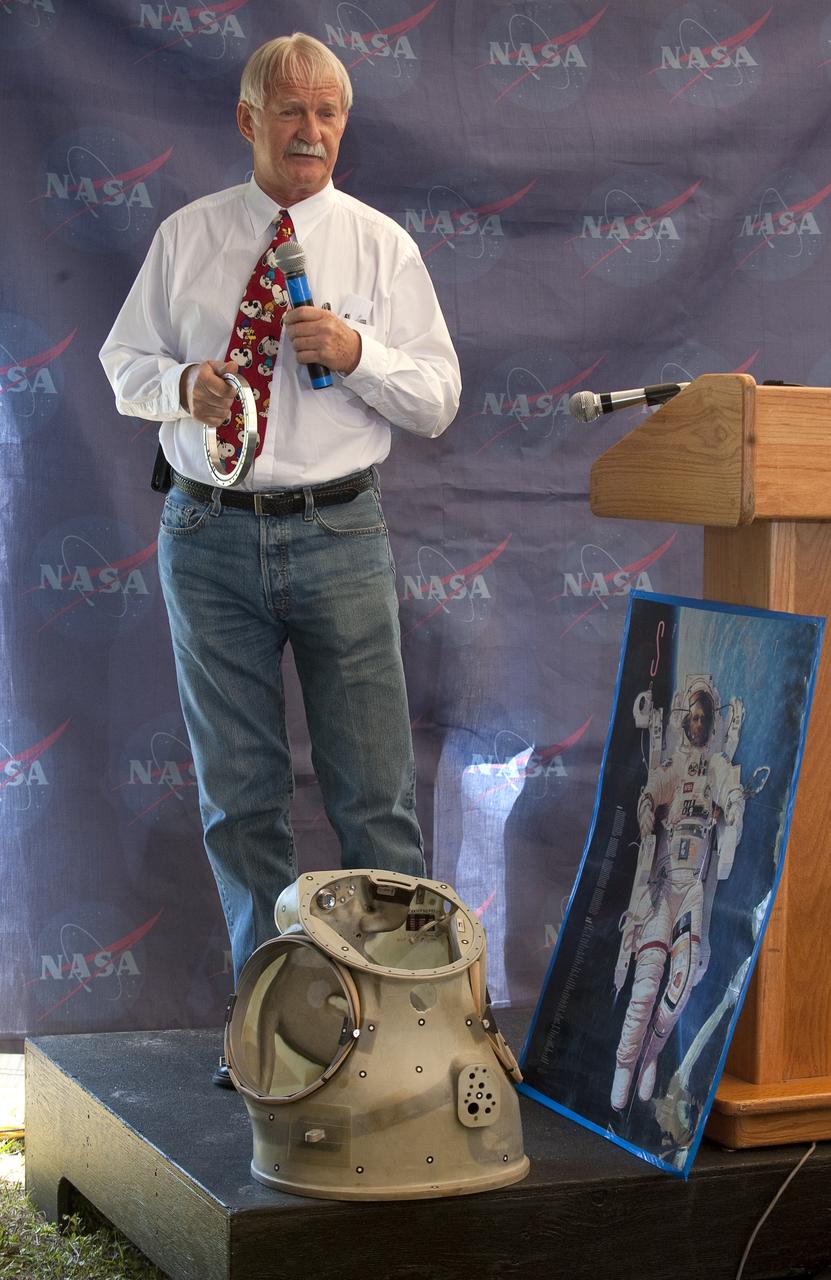
Ron Woods, an equipment specialist, who has been a space suit designer from Mercury to now speaks to participants at the two-day STS-132 Launch Tweetup at Kennedy Space Center, Thursday, May 13, 2010, in Cape Canaveral, Fla. NASA Twitter followers in attendance will have the opportunity to take a tour of NASA's Kennedy Space Center, view the space shuttle launch and speak with shuttle technicians, engineers, astronauts and managers. Photo Credit: (NASA/Paul E. Alers)
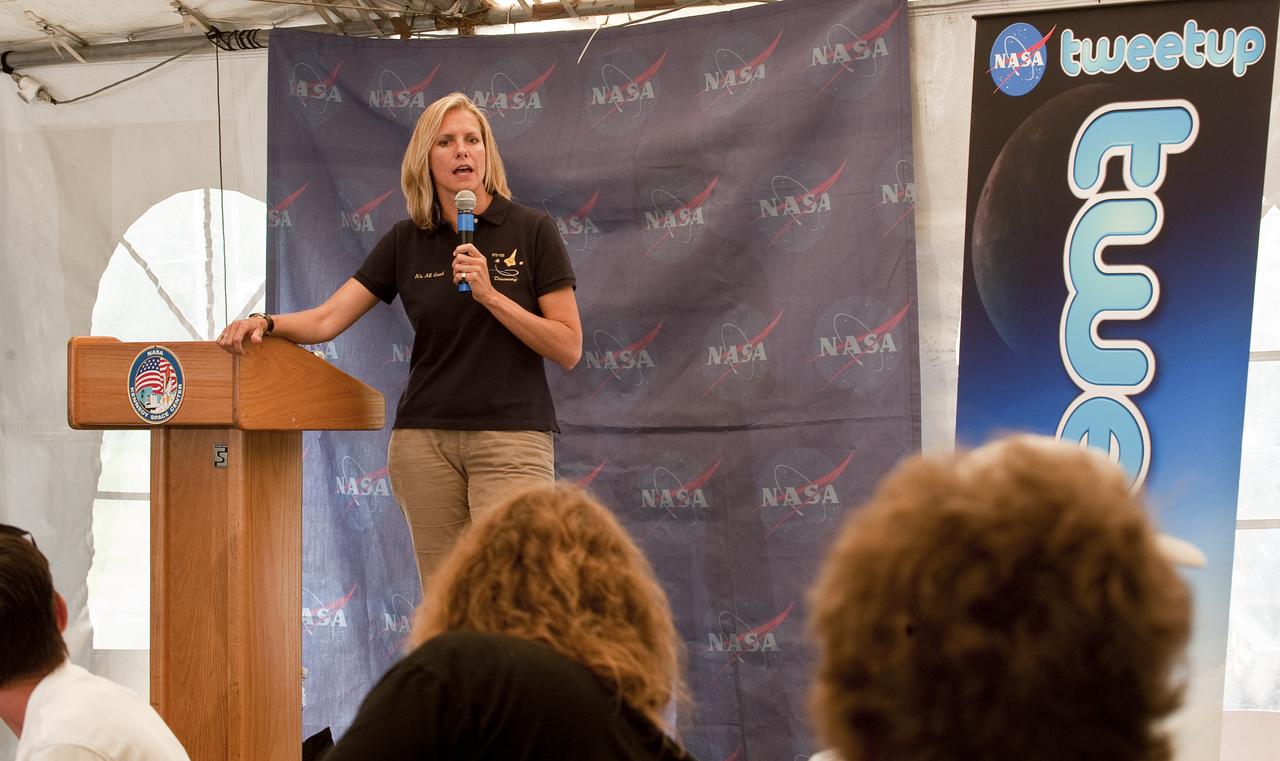
Stephanie Stilson, space shuttle discovery processing director, speaks to participants at the two-day STS-132 Launch Tweetup at Kennedy Space Center, Thursday, May 13, 2010, in Cape Canaveral, Fla. NASA Twitter followers in attendance will have the opportunity to take a tour of NASA's Kennedy Space Center, view the space shuttle launch and speak with shuttle technicians, engineers, astronauts and managers. Photo Credit: (NASA/Paul E. Alers)
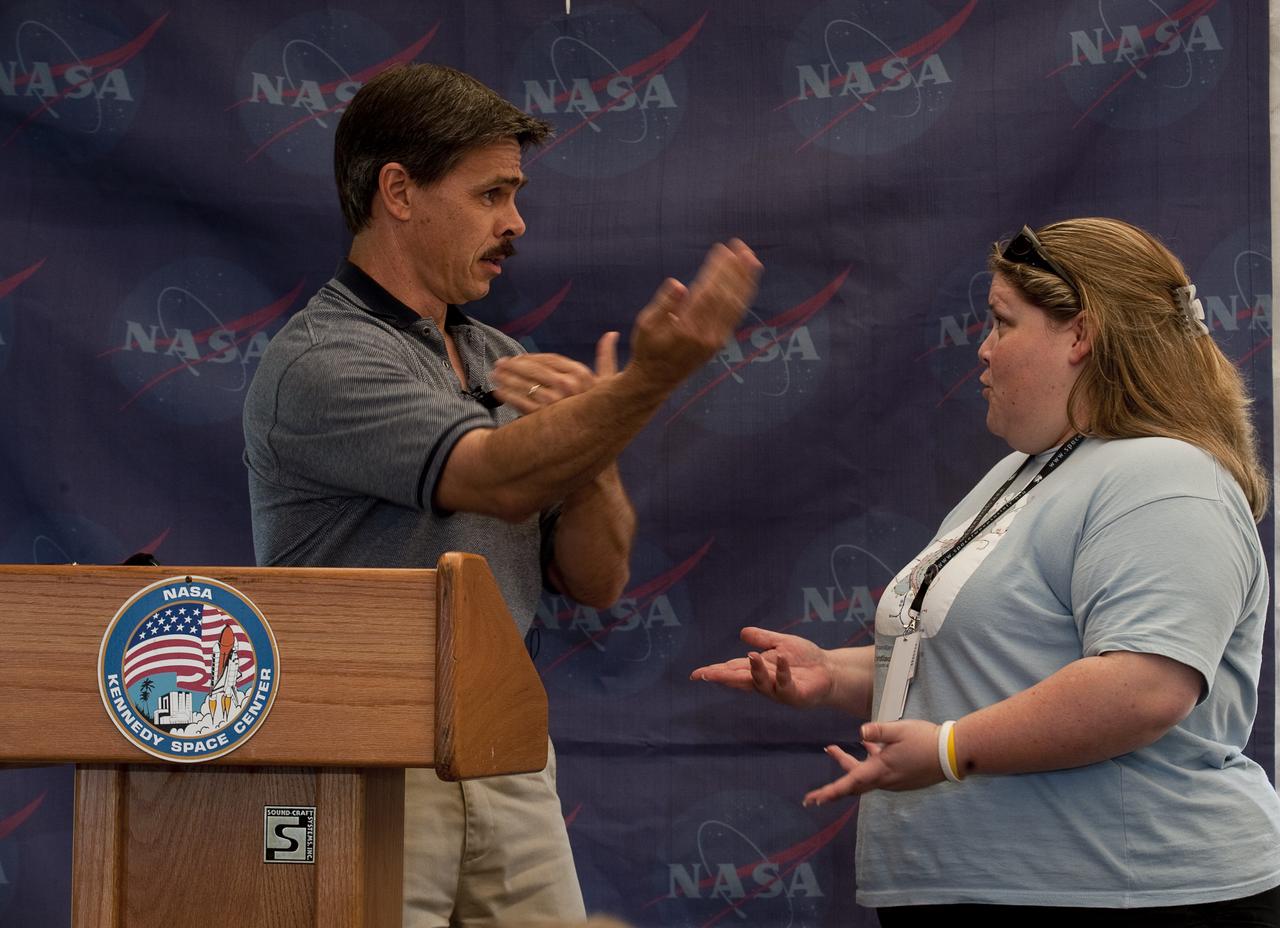
Jon Cowart @Rocky_Sci, orbiter engineering manager, Space Shuttle Program, interacts with Tweetup participant, Jen Vargas, @jenvargus, as he speaks to participants at the two-day STS-132 Launch Tweetup at Kennedy Space Center, Thursday, May 13, 2010, in Cape Canaveral, Fla. NASA Twitter followers in attendance will have the opportunity to take a tour of NASA's Kennedy Space Center, view the space shuttle launch and speak with shuttle technicians, engineers, astronauts and managers. Photo Credit: (NASA/Paul E. Alers)
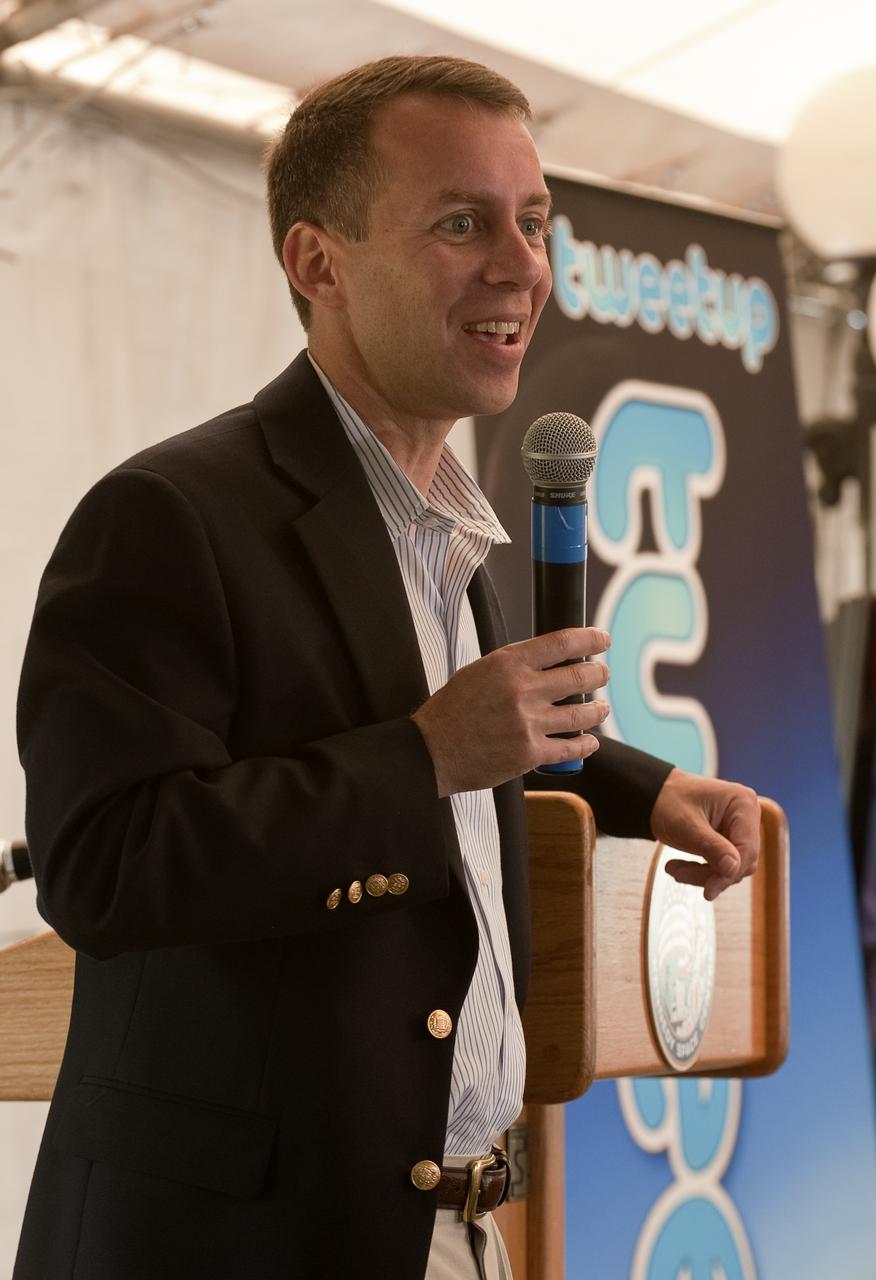
Robert D. Braun, NASA Chief Technologist at NASA Headquarters, speaks to participants at the two-day STS-132 Launch Tweetup at Kennedy Space Center, Thursday, May 13, 2010, in Cape Canaveral, Fla. NASA Twitter followers in attendance will have the opportunity to take a tour of NASA's Kennedy Space Center, view the space shuttle launch and speak with shuttle technicians, engineers, astronauts and managers. Photo Credit: (NASA/Paul E. Alers)
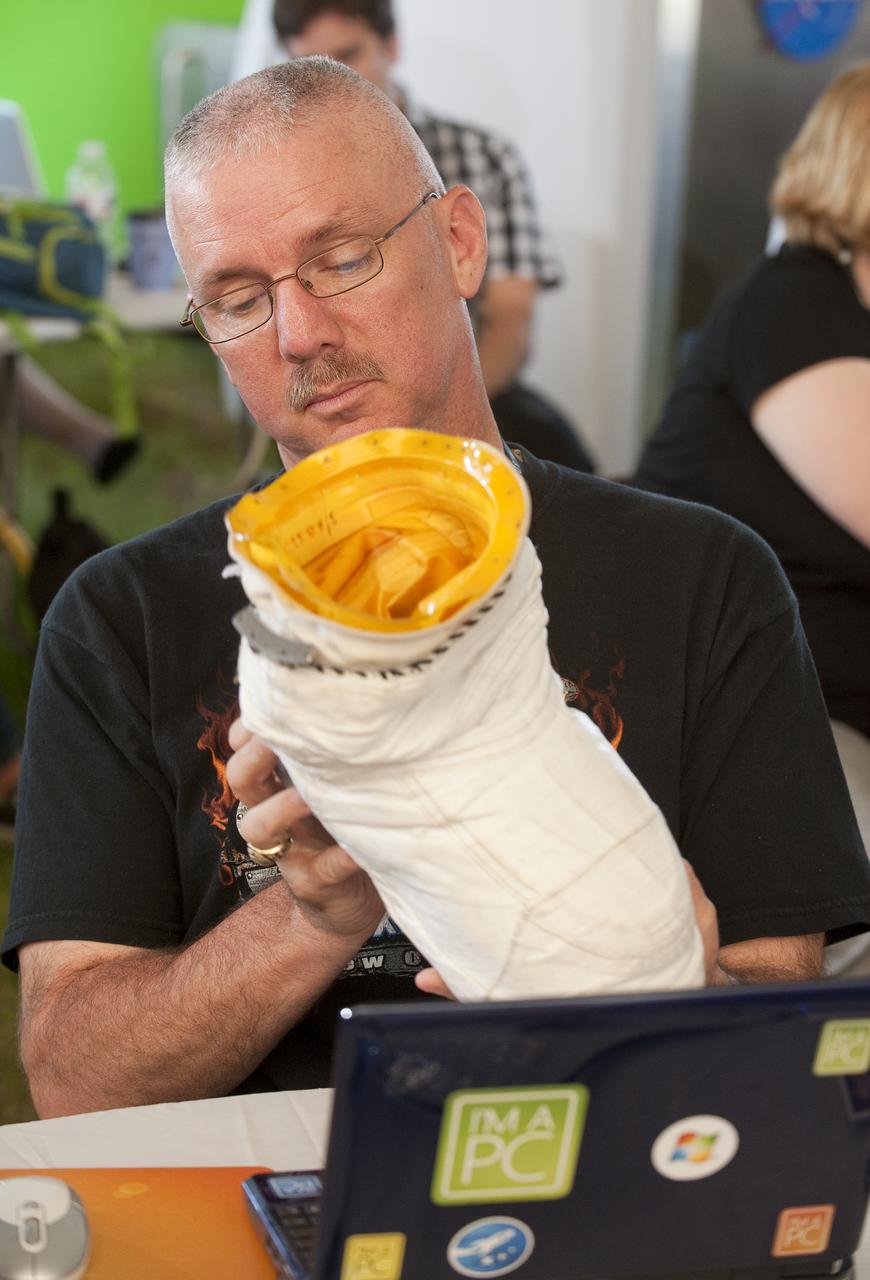
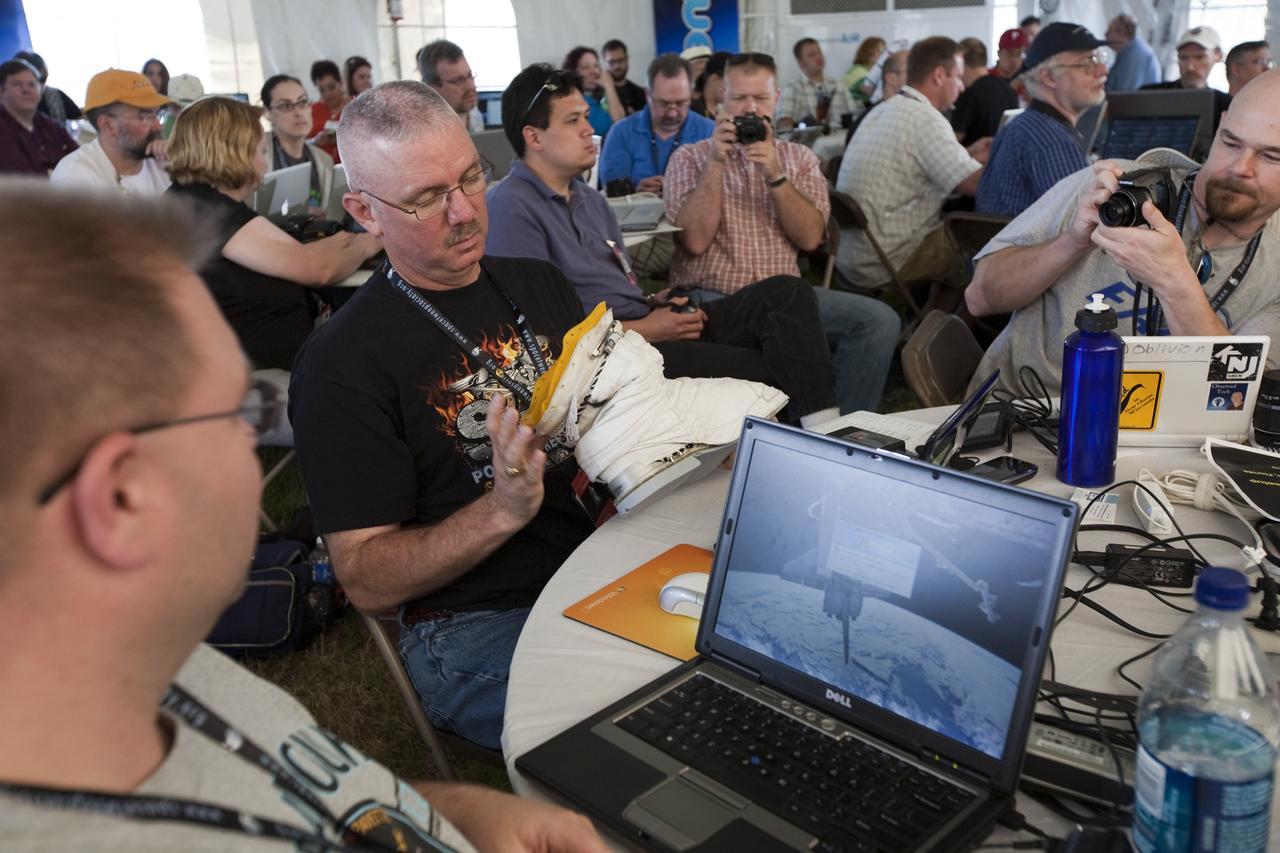
Richard Hay, @WinObs, looks at an astronaut boot, during the two-day STS-132 Launch Tweetup at Kennedy Space Center, Thursday, May 13, 2010, in Cape Canaveral, Fla. NASA Twitter followers in attendance will have the opportunity to take a tour of NASA's Kennedy Space Center, view the space shuttle launch and speak with shuttle technicians, engineers, astronauts and managers. Photo Credit: (NASA/Paul E. Alers)
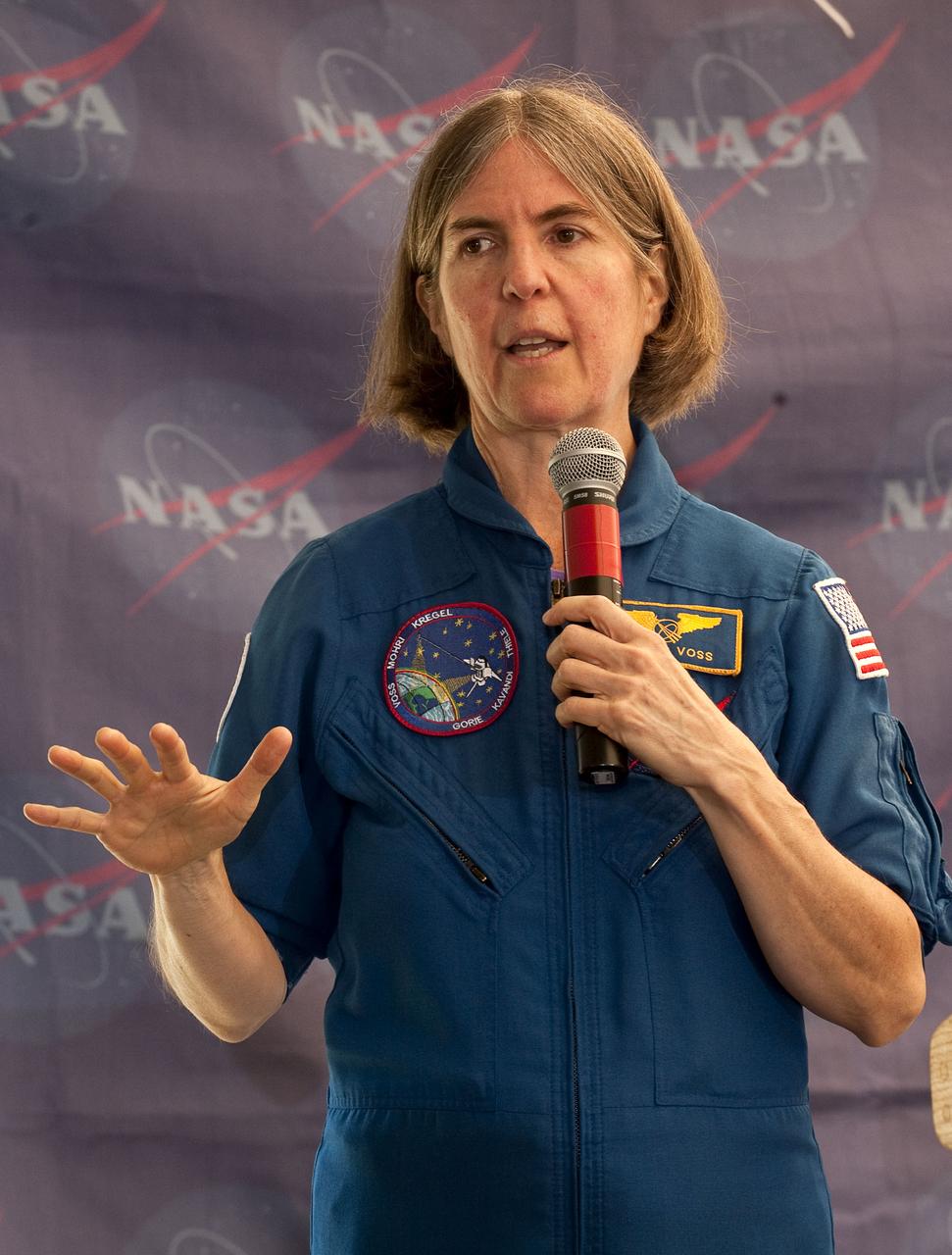
NASA Astronaut Janet Voss speaks to participants at the two-day STS-132 Launch Tweetup at Kennedy Space Center, Thursday, May 13, 2010, in Cape Canaveral, Fla. NASA Twitter followers in attendance will have the opportunity to take a tour of NASA's Kennedy Space Center, view the space shuttle launch and speak with shuttle technicians, engineers, astronauts and managers. Photo Credit: (NASA/Paul E. Alers)
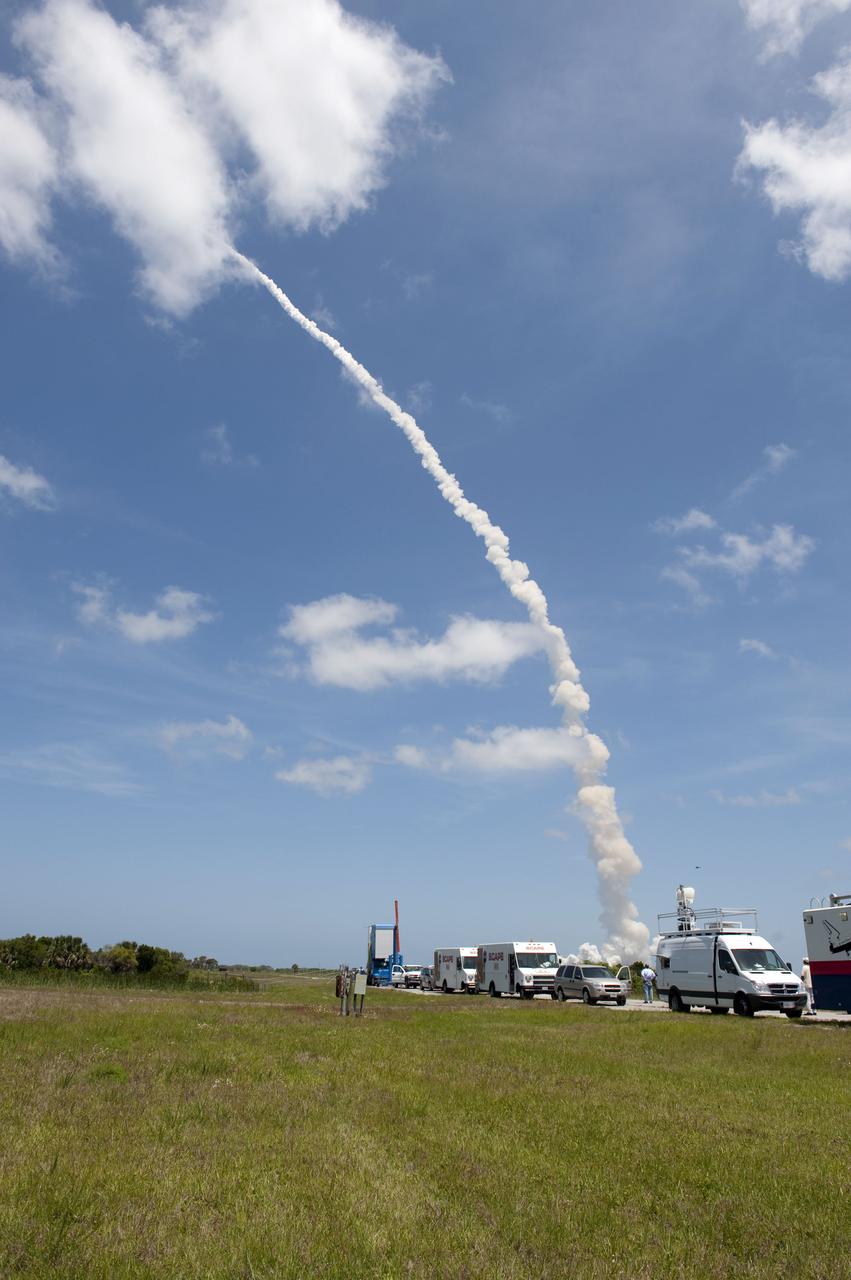
STS132-S-070 (14 May 2010) --- Convoy vehicles are standing by at the Shuttle Landing Facility at NASA's Kennedy Space Center in the event a Return-to-Launch-Site abort should be necessary following the launch of space shuttle Atlantis to the International Space Station. Liftoff from Launch Pad 39A occurred right on time at 2:20 p.m. EDT on May 14. Atlantis' primary payload for the STS-132 mission is the Russian-built Mini Research Module-1, which will provide additional storage space and a new docking port for Russian Soyuz and Progress spacecraft aboard the International Space Station. STS-132 is the 132nd shuttle flight, the 32nd for Atlantis and the 34th shuttle mission dedicated to station assembly and maintenance. For more information on the STS-132 mission objectives, payload and crew, visit www.nasa.gov/mission_pages/shuttle/shuttlemissions/sts132/index.html. Photo credit: NASA/Carl Winebarger
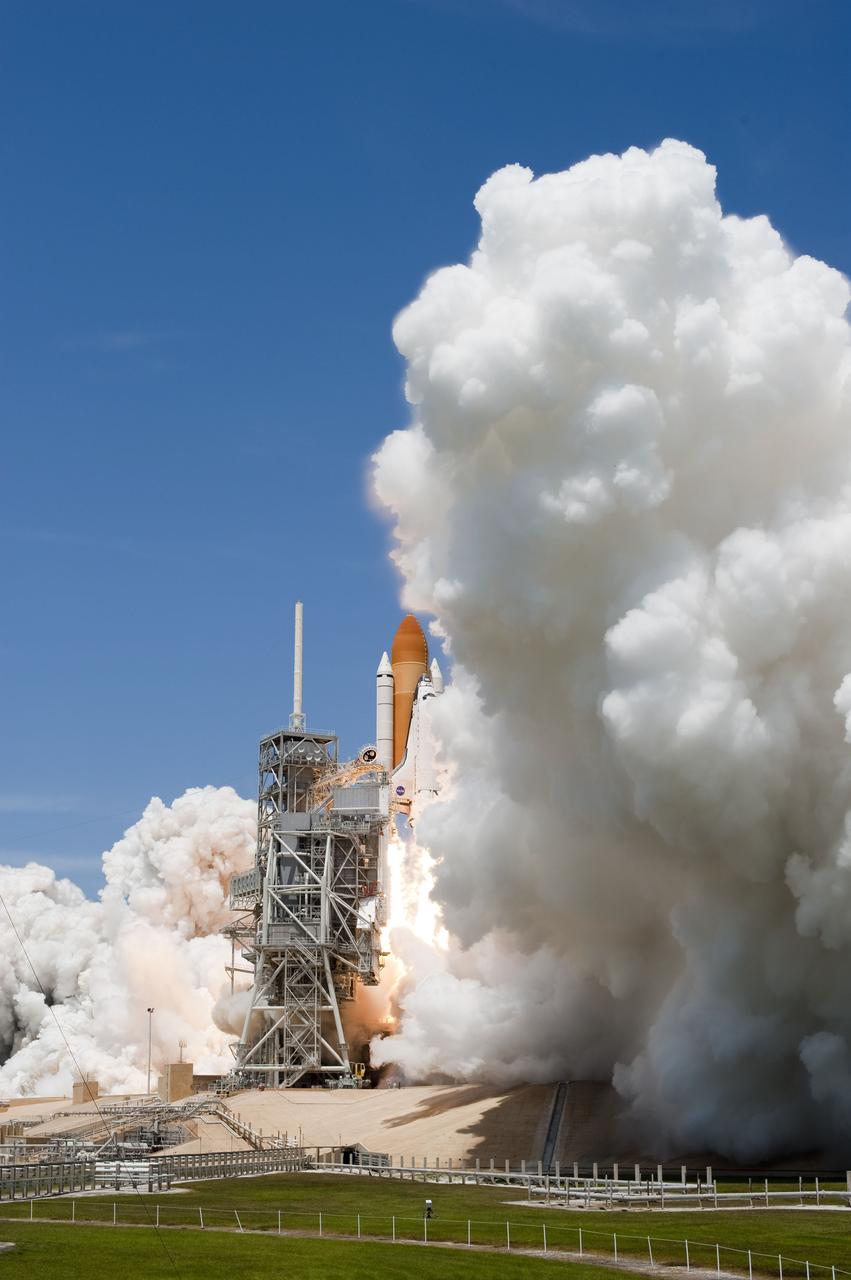
STS132-S-037 (14 May 2010) --- Space shuttle Atlantis and its six-member STS-132 crew head toward Earth orbit and rendezvous with the International Space Station. Liftoff was at 2:20 p.m. (EDT) on May 14, 2010, from launch pad 39A at NASA's Kennedy Space Center. Onboard are NASA astronauts Ken Ham, commander; Tony Antonelli, pilot; Garrett Reisman, Michael Good, Steve Bowen and Piers Sellers, all mission specialists. The crew will deliver the Russian-built Mini-Research Module 1 (MRM-1) to the International Space Station. Named Rassvet, Russian for "dawn," the module is the second in a series of new pressurized components for Russia and will be permanently attached to the Earth-facing port of the Zarya Functional Cargo Block (FGB). Rassvet will be used for cargo storage and will provide an additional docking port to the station. Also aboard Atlantis is an Integrated Cargo Carrier, or ICC, an unpressurized flat bed pallet and keel yoke assembly used to support the transfer of exterior cargo from the shuttle to the station. STS-132 is the 34th mission to the station and the last scheduled flight for Atlantis. For more information on the STS-132 mission objectives, payload and crew, visit www.nasa.gov/mission_pages/shuttle/shuttlemissions/sts132/index.html. Photo Credit: NASA/Tony Gray and Tom Farrar
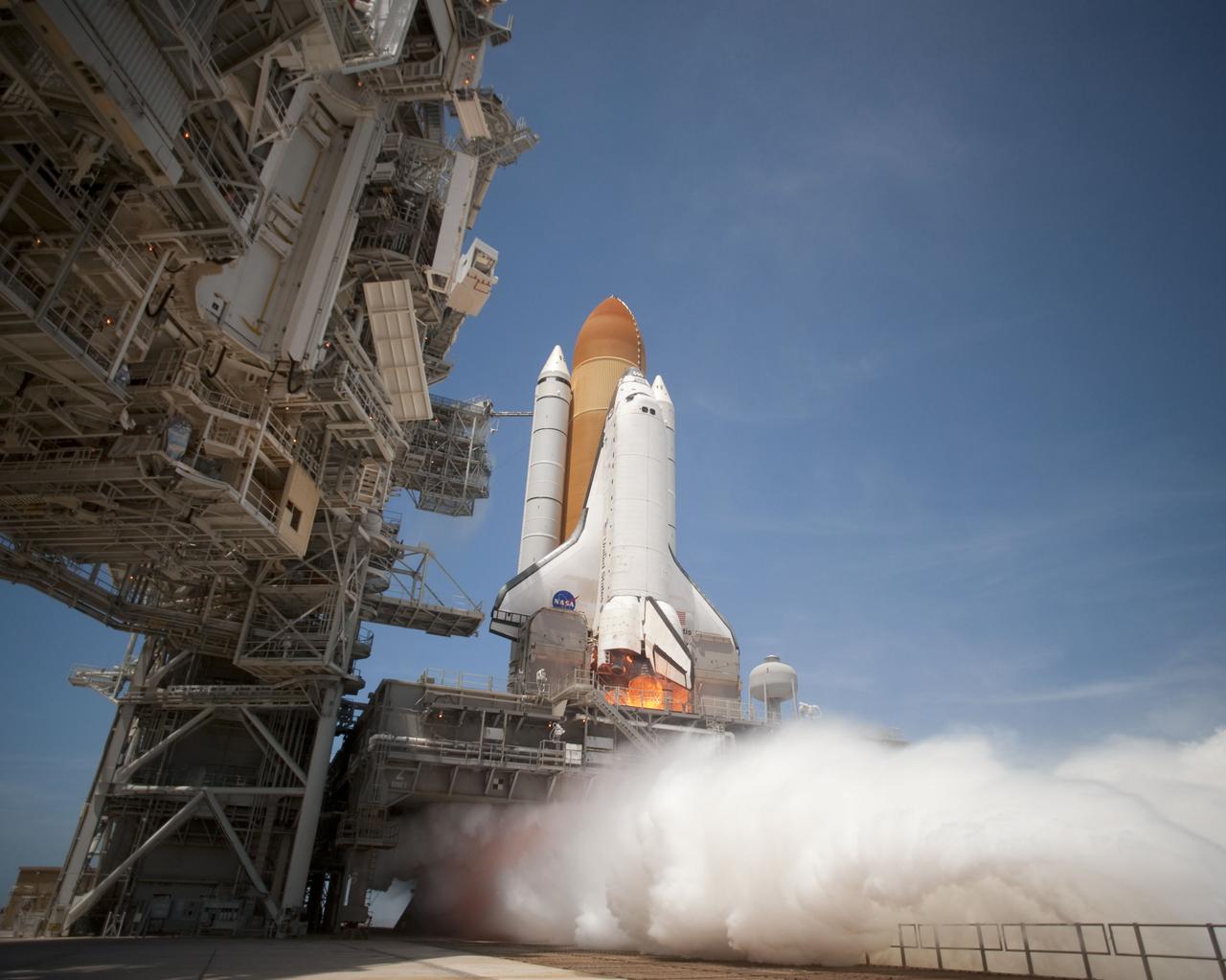
STS132-S-066 (14 May 2010) --- Space shuttle Atlantis and its six-member STS-132 crew head toward Earth orbit and rendezvous with the International Space Station. Liftoff was at 2:20 p.m. (EDT) on May 14, 2010, from launch pad 39A at NASA's Kennedy Space Center. Onboard are NASA astronauts Ken Ham, commander; Tony Antonelli, pilot; Garrett Reisman, Michael Good, Steve Bowen and Piers Sellers, all mission specialists. The crew will deliver the Russian-built Mini-Research Module 1 (MRM-1) to the International Space Station. Named Rassvet, Russian for "dawn," the module is the second in a series of new pressurized components for Russia and will be permanently attached to the Earth-facing port of the Zarya Functional Cargo Block (FGB). Rassvet will be used for cargo storage and will provide an additional docking port to the station. Also aboard Atlantis is an Integrated Cargo Carrier, or ICC, an unpressurized flat bed pallet and keel yoke assembly used to support the transfer of exterior cargo from the shuttle to the station. STS-132 is the 34th mission to the station and the last scheduled flight for Atlantis. For more information on the STS-132 mission objectives, payload and crew, visit www.nasa.gov/mission_pages/shuttle/shuttlemissions/sts132/index.html. Photo Credit: NASA/Tony Gray and Tom Farrar
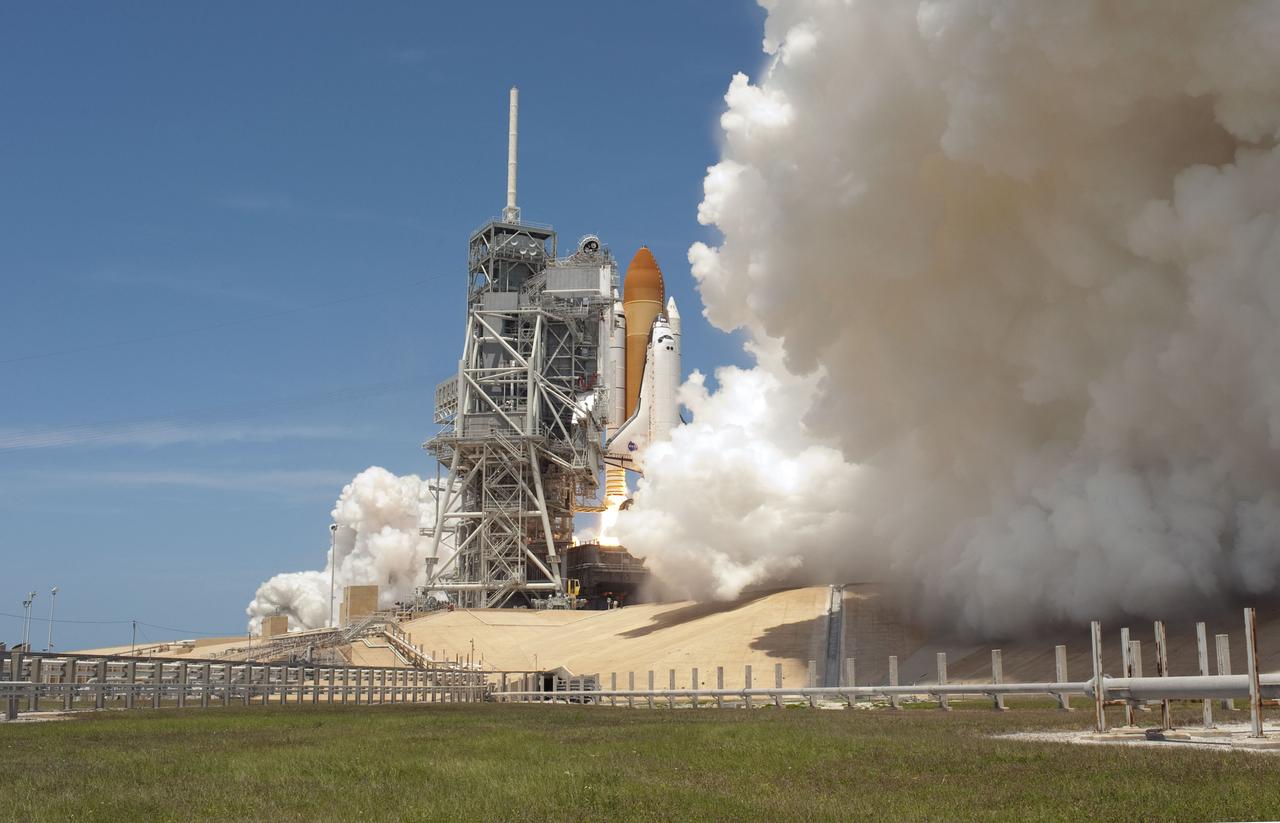
STS132-S-062 (14 May 2010) --- Space shuttle Atlantis and its six-member STS-132 crew head toward Earth orbit and rendezvous with the International Space Station. Liftoff was at 2:20 p.m. (EDT) on May 14, 2010, from launch pad 39A at NASA's Kennedy Space Center. Onboard are NASA astronauts Ken Ham, commander; Tony Antonelli, pilot; Garrett Reisman, Michael Good, Steve Bowen and Piers Sellers, all mission specialists. The crew will deliver the Russian-built Mini-Research Module 1 (MRM-1) to the International Space Station. Named Rassvet, Russian for "dawn," the module is the second in a series of new pressurized components for Russia and will be permanently attached to the Earth-facing port of the Zarya Functional Cargo Block (FGB). Rassvet will be used for cargo storage and will provide an additional docking port to the station. Also aboard Atlantis is an Integrated Cargo Carrier, or ICC, an unpressurized flat bed pallet and keel yoke assembly used to support the transfer of exterior cargo from the shuttle to the station. STS-132 is the 34th mission to the station and the last scheduled flight for Atlantis. For more information on the STS-132 mission objectives, payload and crew, visit www.nasa.gov/mission_pages/shuttle/shuttlemissions/sts132/index.html. Photo credit: NASA/Sandra Joseph and Kevin O'Connell
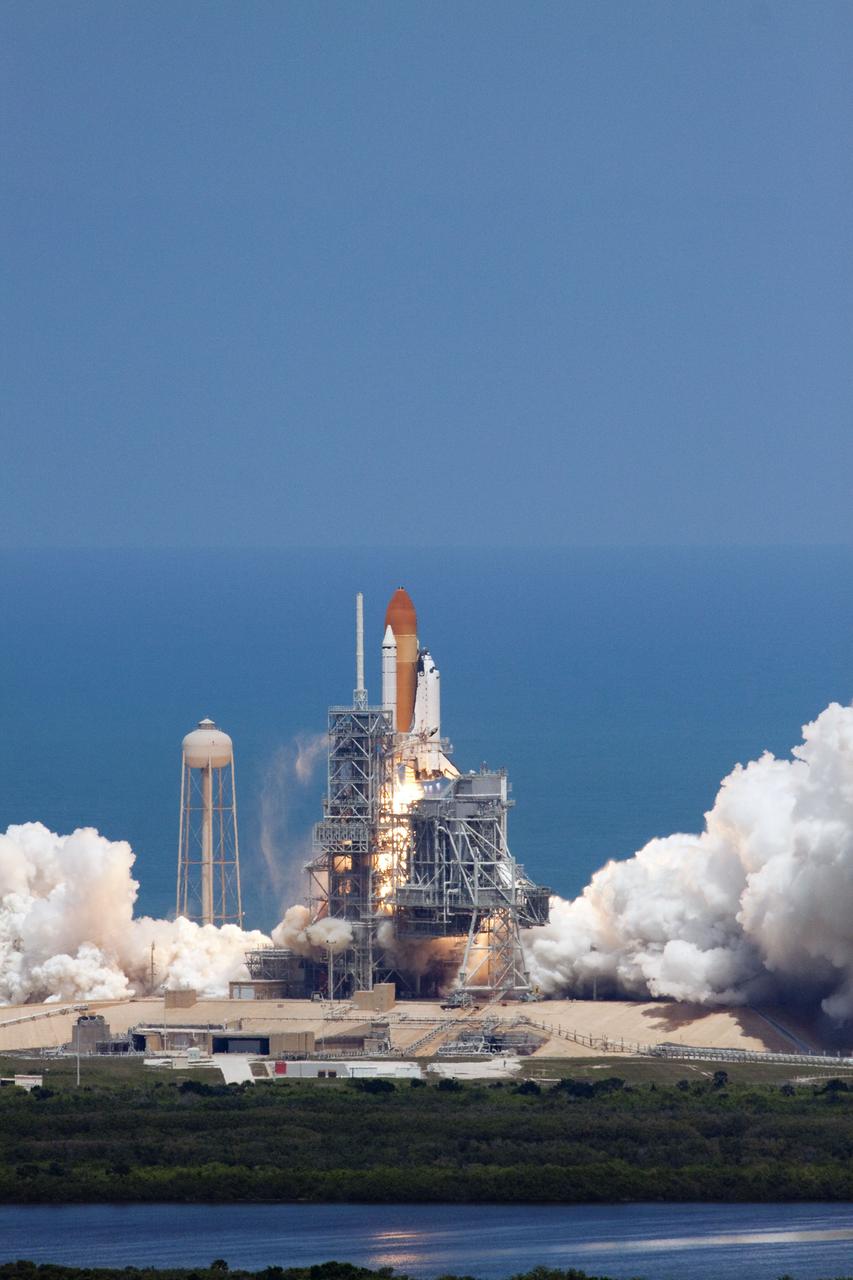
STS132-S-015 (14 May 2010) --- Space shuttle Atlantis and its six-member STS-132 crew head toward Earth orbit and rendezvous with the International Space Station. Liftoff was at 2:20 p.m. (EDT) on May 14, 2010, from launch pad 39A at NASA's Kennedy Space Center. Onboard are NASA astronauts Ken Ham, commander; Tony Antonelli, pilot; Garrett Reisman, Michael Good, Steve Bowen and Piers Sellers, all mission specialists. The crew will deliver the Russian-built Mini-Research Module 1 (MRM-1) to the International Space Station. Named Rassvet, Russian for "dawn," the module is the second in a series of new pressurized components for Russia and will be permanently attached to the Earth-facing port of the Zarya Functional Cargo Block (FGB). Rassvet will be used for cargo storage and will provide an additional docking port to the station. Also aboard Atlantis is an Integrated Cargo Carrier, or ICC, an unpressurized flat bed pallet and keel yoke assembly used to support the transfer of exterior cargo from the shuttle to the station. STS-132 is the 34th mission to the station and the last scheduled flight for Atlantis. For more information on the STS-132 mission objectives, payload and crew, visit www.nasa.gov/mission_pages/shuttle/shuttlemissions/sts132/index.html. Photo Credit: NASA/Jack Pfaller
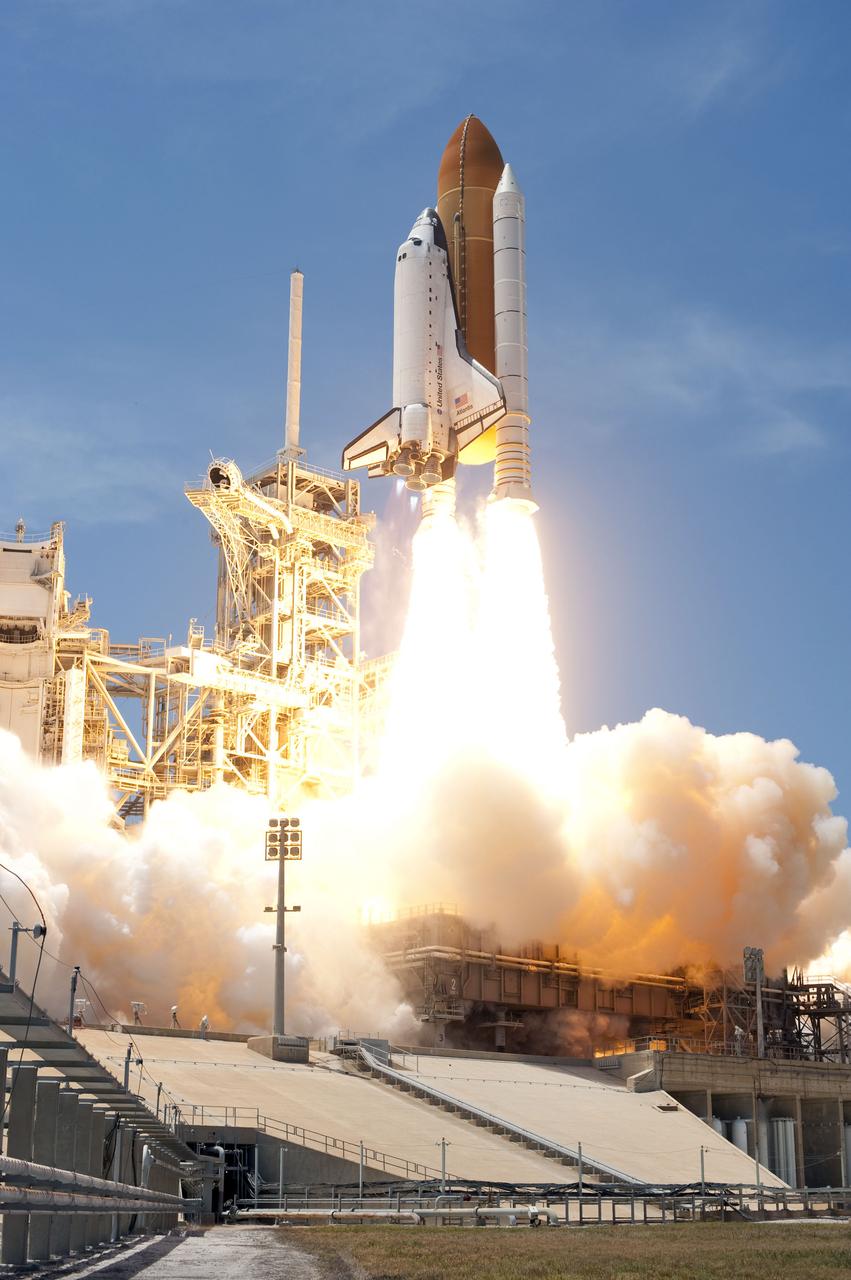
STS132-S-046 (14 May 2010) --- Space shuttle Atlantis and its six-member STS-132 crew head toward Earth orbit and rendezvous with the International Space Station. Liftoff was at 2:20 p.m. (EDT) on May 14, 2010, from launch pad 39A at NASA's Kennedy Space Center. Onboard are NASA astronauts Ken Ham, commander; Tony Antonelli, pilot; Garrett Reisman, Michael Good, Steve Bowen and Piers Sellers, all mission specialists. The crew will deliver the Russian-built Mini-Research Module 1 (MRM-1) to the International Space Station. Named Rassvet, Russian for "dawn," the module is the second in a series of new pressurized components for Russia and will be permanently attached to the Earth-facing port of the Zarya Functional Cargo Block (FGB). Rassvet will be used for cargo storage and will provide an additional docking port to the station. Also aboard Atlantis is an Integrated Cargo Carrier, or ICC, an unpressurized flat bed pallet and keel yoke assembly used to support the transfer of exterior cargo from the shuttle to the station. STS-132 is the 34th mission to the station and the last scheduled flight for Atlantis. For more information on the STS-132 mission objectives, payload and crew, visit www.nasa.gov/mission_pages/shuttle/shuttlemissions/sts132/index.html. Photo credit: NASA/Tony Gray and Tom Farrar
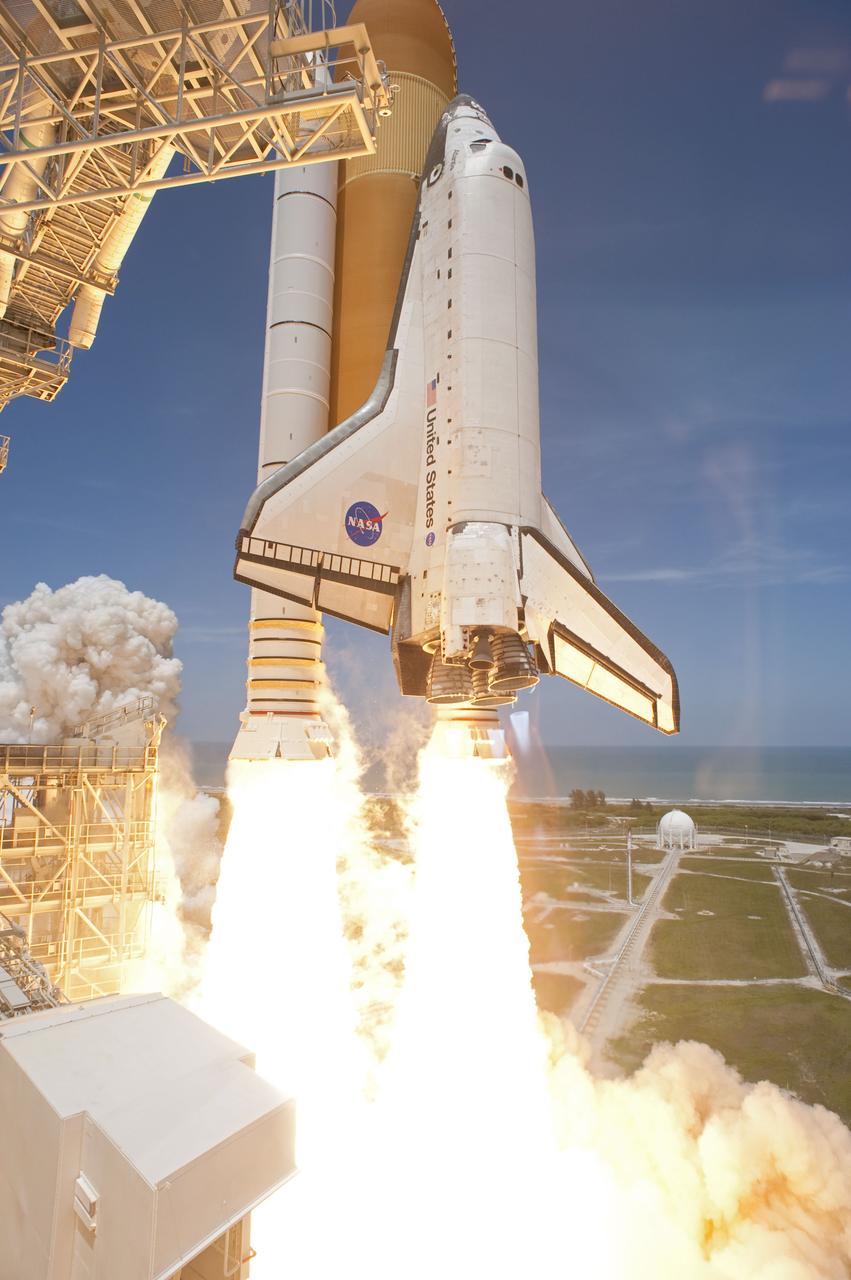
STS132-S-061 (14 May 2010) --- Space shuttle Atlantis and its six-member STS-132 crew head toward Earth orbit and rendezvous with the International Space Station. Liftoff was at 2:20 p.m. (EDT) on May 14, 2010, from launch pad 39A at NASA's Kennedy Space Center. Onboard are NASA astronauts Ken Ham, commander; Tony Antonelli, pilot; Garrett Reisman, Michael Good, Steve Bowen and Piers Sellers, all mission specialists. The crew will deliver the Russian-built Mini-Research Module 1 (MRM-1) to the International Space Station. Named Rassvet, Russian for "dawn," the module is the second in a series of new pressurized components for Russia and will be permanently attached to the Earth-facing port of the Zarya Functional Cargo Block (FGB). Rassvet will be used for cargo storage and will provide an additional docking port to the station. Also aboard Atlantis is an Integrated Cargo Carrier, or ICC, an unpressurized flat bed pallet and keel yoke assembly used to support the transfer of exterior cargo from the shuttle to the station. STS-132 is the 34th mission to the station and the last scheduled flight for Atlantis. For more information on the STS-132 mission objectives, payload and crew, visit www.nasa.gov/mission_pages/shuttle/shuttlemissions/sts132/index.html. Photo credit: NASA/Sandra Joseph and Kevin O'Connell
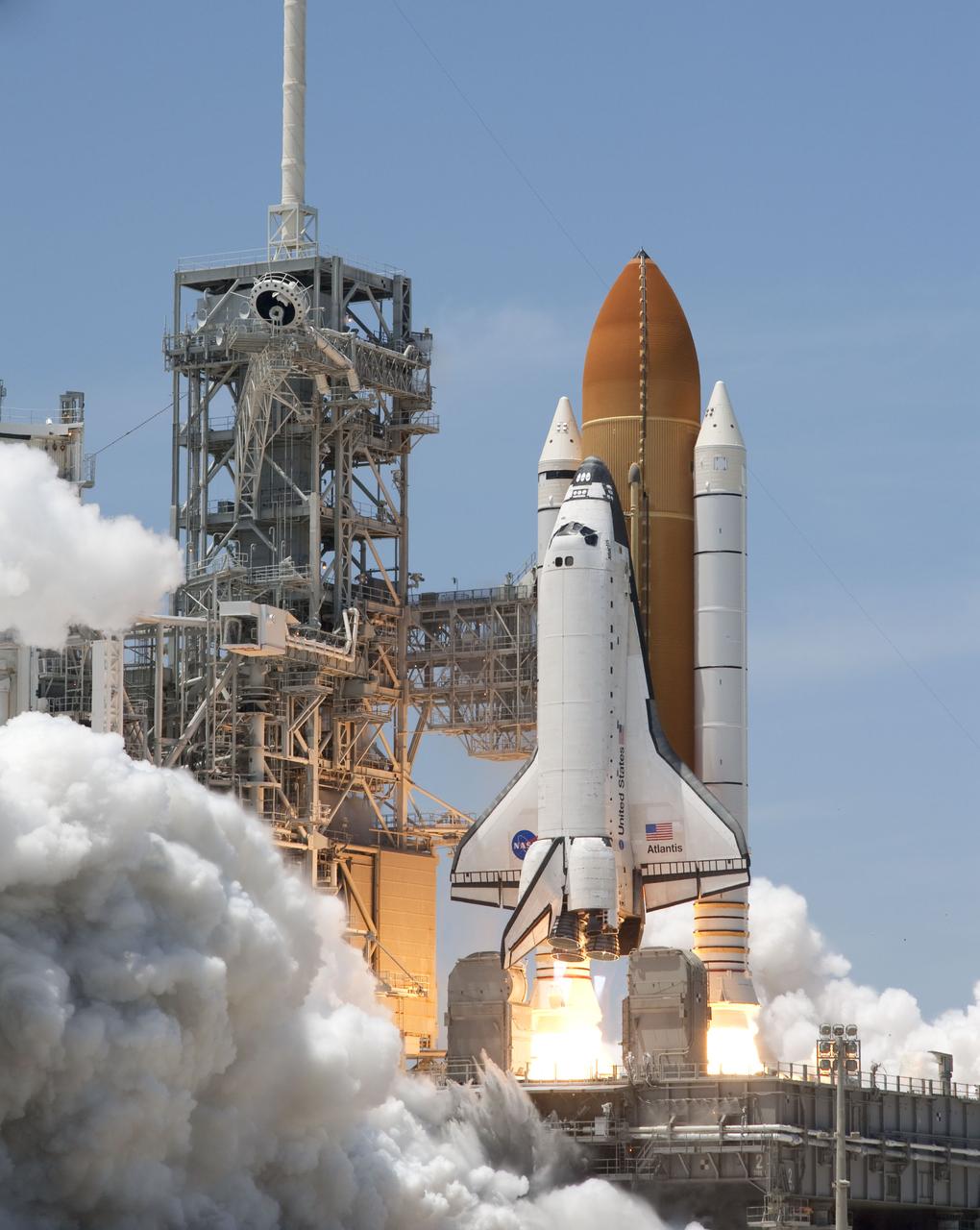
STS132-S-038 (14 May 2010) --- Space shuttle Atlantis and its six-member STS-132 crew head toward Earth orbit and rendezvous with the International Space Station. Liftoff was at 2:20 p.m. (EDT) on May 14, 2010, from launch pad 39A at NASA's Kennedy Space Center. Onboard are NASA astronauts Ken Ham, commander; Tony Antonelli, pilot; Garrett Reisman, Michael Good, Steve Bowen and Piers Sellers, all mission specialists. The crew will deliver the Russian-built Mini-Research Module 1 (MRM-1) to the International Space Station. Named Rassvet, Russian for "dawn," the module is the second in a series of new pressurized components for Russia and will be permanently attached to the Earth-facing port of the Zarya Functional Cargo Block (FGB). Rassvet will be used for cargo storage and will provide an additional docking port to the station. Also aboard Atlantis is an Integrated Cargo Carrier, or ICC, an unpressurized flat bed pallet and keel yoke assembly used to support the transfer of exterior cargo from the shuttle to the station. STS-132 is the 34th mission to the station and the last scheduled flight for Atlantis. For more information on the STS-132 mission objectives, payload and crew, visit www.nasa.gov/mission_pages/shuttle/shuttlemissions/sts132/index.html. Photo credit: NASA/Sandra Joseph and Kevin O'Connell
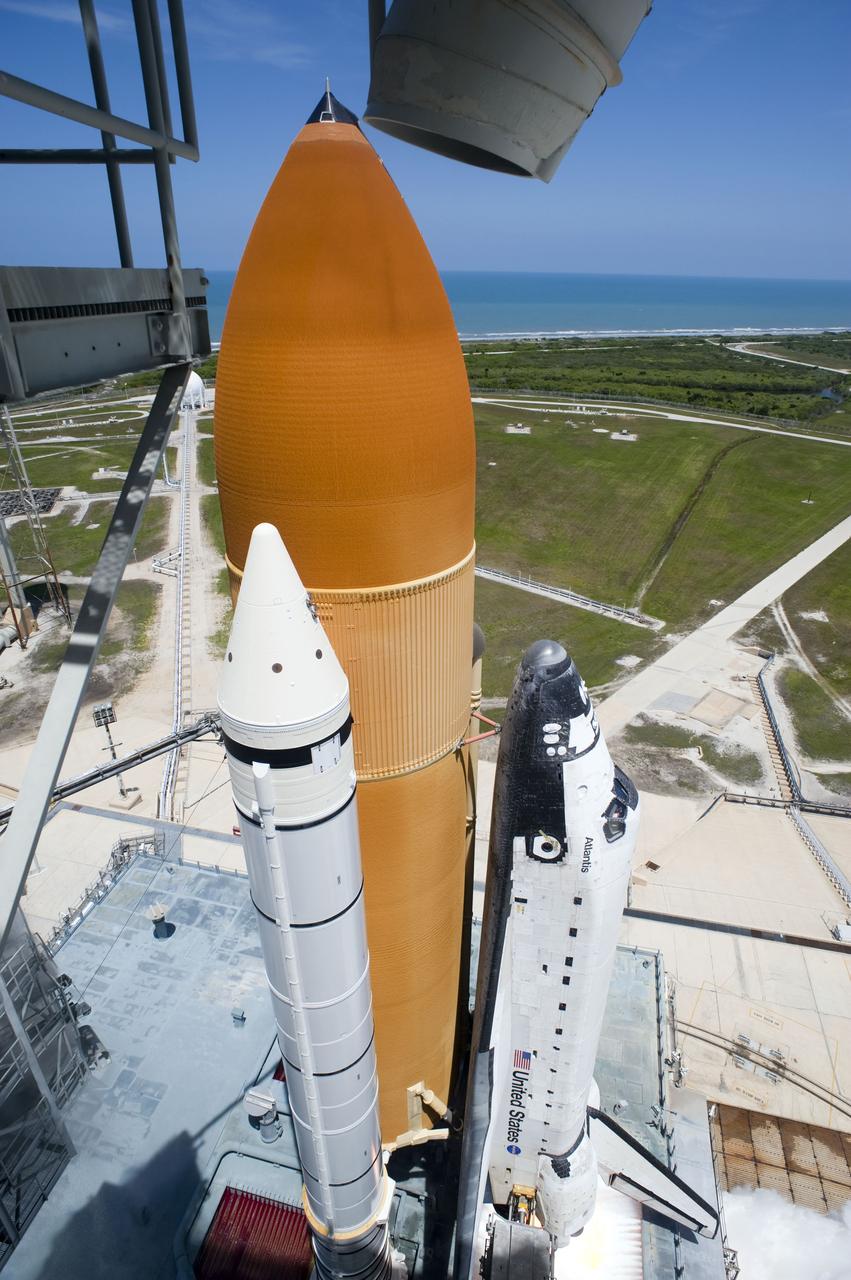
STS132-S-057 (14 May 2010) --- Space shuttle Atlantis and its six-member STS-132 crew head toward Earth orbit and rendezvous with the International Space Station. Liftoff was at 2:20 p.m. (EDT) on May 14, 2010, from launch pad 39A at NASA's Kennedy Space Center. Onboard are NASA astronauts Ken Ham, commander; Tony Antonelli, pilot; Garrett Reisman, Michael Good, Steve Bowen and Piers Sellers, all mission specialists. The crew will deliver the Russian-built Mini-Research Module 1 (MRM-1) to the International Space Station. Named Rassvet, Russian for "dawn," the module is the second in a series of new pressurized components for Russia and will be permanently attached to the Earth-facing port of the Zarya Functional Cargo Block (FGB). Rassvet will be used for cargo storage and will provide an additional docking port to the station. Also aboard Atlantis is an Integrated Cargo Carrier, or ICC, an unpressurized flat bed pallet and keel yoke assembly used to support the transfer of exterior cargo from the shuttle to the station. STS-132 is the 34th mission to the station and the last scheduled flight for Atlantis. For more information on the STS-132 mission objectives, payload and crew, visit www.nasa.gov/mission_pages/shuttle/shuttlemissions/sts132/index.html. Photo credit: NASA/Tony Gray and Tom Farrar
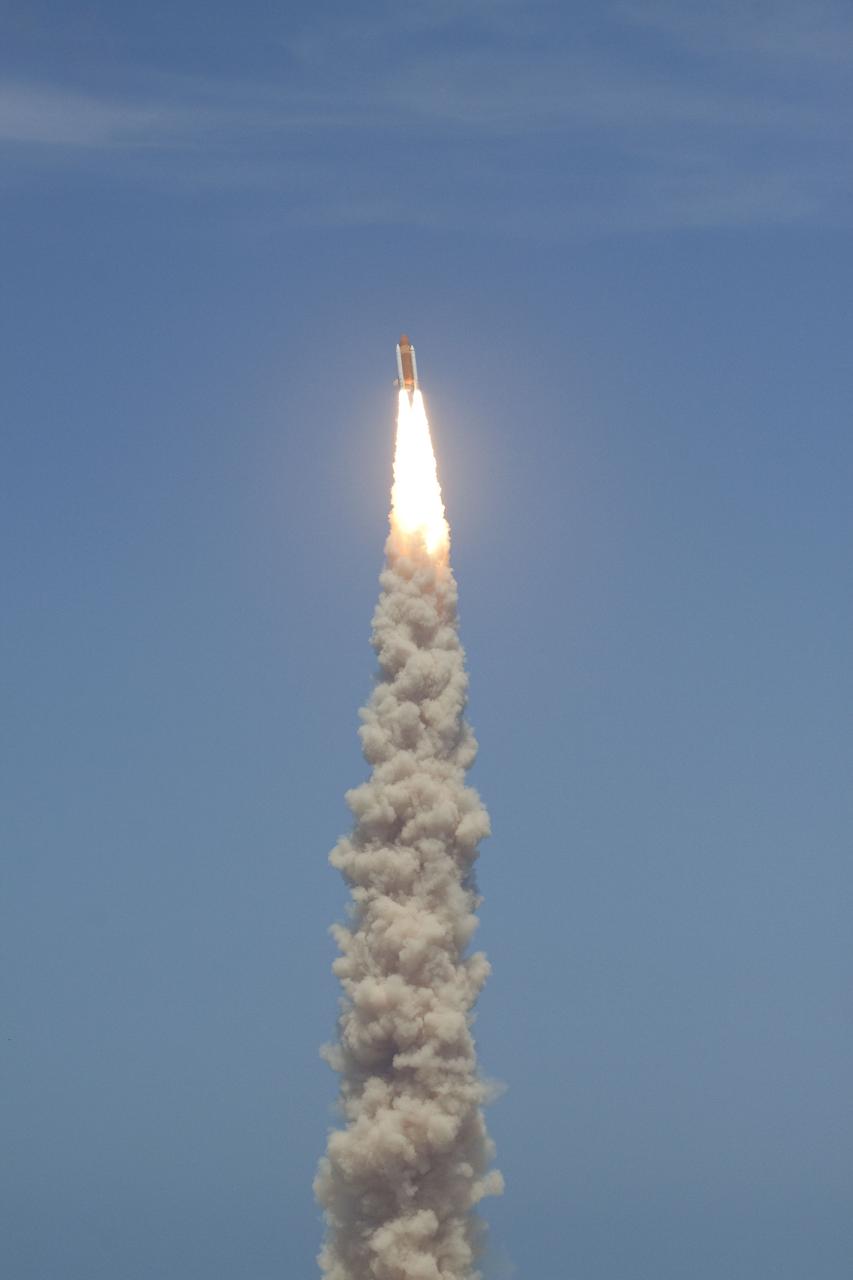
STS132-S-017 (14 May 2010) --- Space shuttle Atlantis and its six-member STS-132 crew head toward Earth orbit and rendezvous with the International Space Station. Liftoff was at 2:20 p.m. (EDT) on May 14, 2010, from launch pad 39A at NASA's Kennedy Space Center. Onboard are NASA astronauts Ken Ham, commander; Tony Antonelli, pilot; Garrett Reisman, Michael Good, Steve Bowen and Piers Sellers, all mission specialists. The crew will deliver the Russian-built Mini-Research Module 1 (MRM-1) to the International Space Station. Named Rassvet, Russian for "dawn," the module is the second in a series of new pressurized components for Russia and will be permanently attached to the Earth-facing port of the Zarya Functional Cargo Block (FGB). Rassvet will be used for cargo storage and will provide an additional docking port to the station. Also aboard Atlantis is an Integrated Cargo Carrier, or ICC, an unpressurized flat bed pallet and keel yoke assembly used to support the transfer of exterior cargo from the shuttle to the station. STS-132 is the 34th mission to the station and the last scheduled flight for Atlantis. For more information on the STS-132 mission objectives, payload and crew, visit www.nasa.gov/mission_pages/shuttle/shuttlemissions/sts132/index.html. Photo Credit: NASA/Jack Pfaller
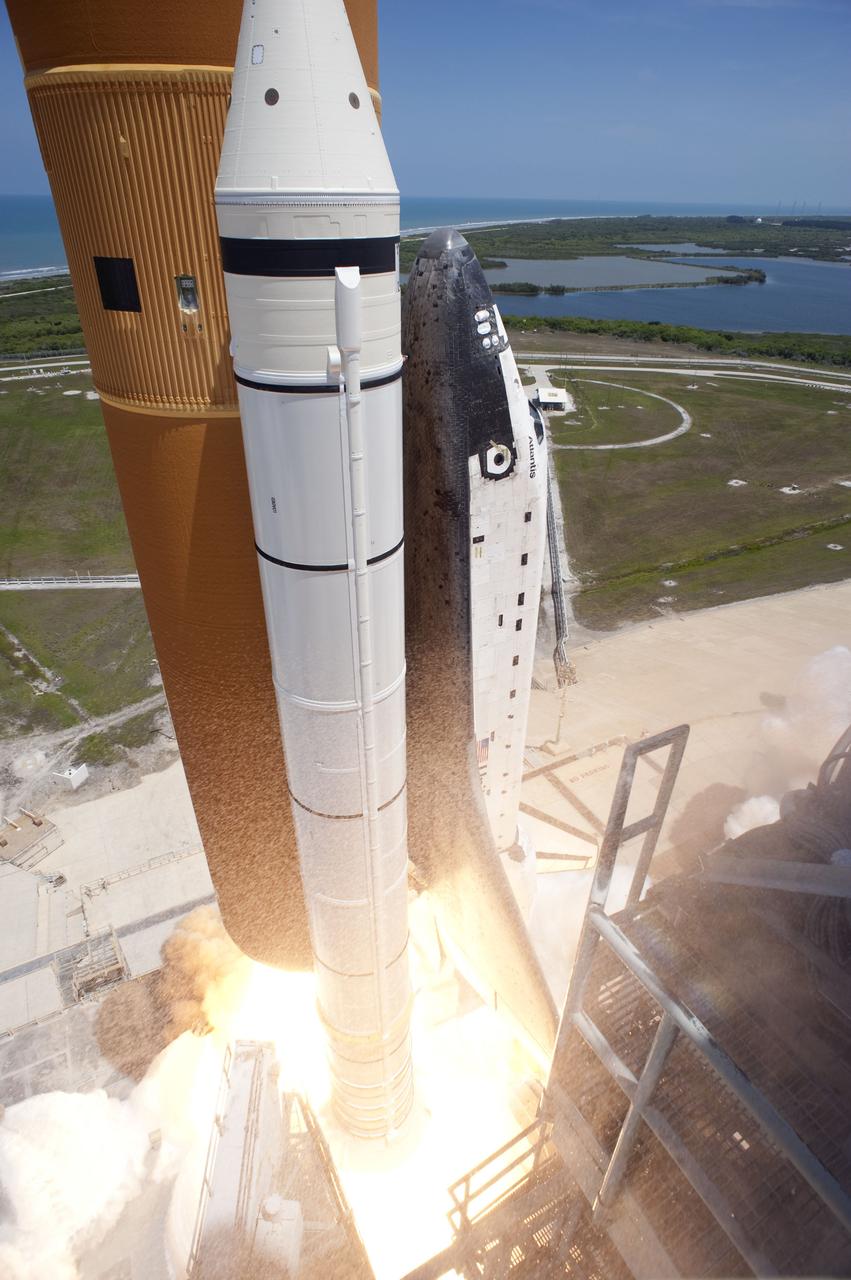
STS132-S-056 (14 May 2010) --- Space shuttle Atlantis and its six-member STS-132 crew head toward Earth orbit and rendezvous with the International Space Station. Liftoff was at 2:20 p.m. (EDT) on May 14, 2010, from launch pad 39A at NASA's Kennedy Space Center. Onboard are NASA astronauts Ken Ham, commander; Tony Antonelli, pilot; Garrett Reisman, Michael Good, Steve Bowen and Piers Sellers, all mission specialists. The crew will deliver the Russian-built Mini-Research Module 1 (MRM-1) to the International Space Station. Named Rassvet, Russian for "dawn," the module is the second in a series of new pressurized components for Russia and will be permanently attached to the Earth-facing port of the Zarya Functional Cargo Block (FGB). Rassvet will be used for cargo storage and will provide an additional docking port to the station. Also aboard Atlantis is an Integrated Cargo Carrier, or ICC, an unpressurized flat bed pallet and keel yoke assembly used to support the transfer of exterior cargo from the shuttle to the station. STS-132 is the 34th mission to the station and the last scheduled flight for Atlantis. For more information on the STS-132 mission objectives, payload and crew, visit www.nasa.gov/mission_pages/shuttle/shuttlemissions/sts132/index.html. Photo Credit: NASA/Tony Gray and Tom Farrar
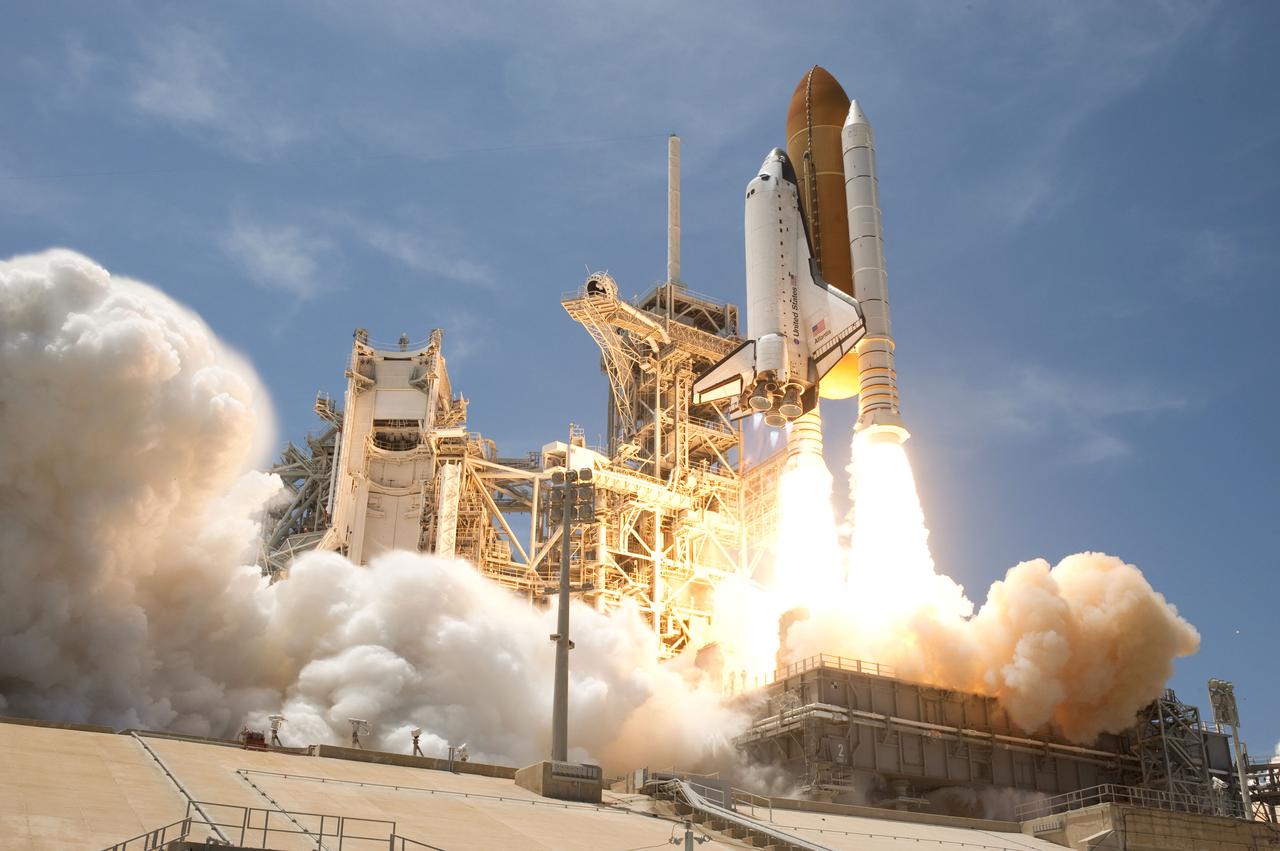
STS132-S-048 (14 May 2010) --- Space shuttle Atlantis and its six-member STS-132 crew head toward Earth orbit and rendezvous with the International Space Station. Liftoff was at 2:20 p.m. (EDT) on May 14, 2010, from launch pad 39A at NASA's Kennedy Space Center. Onboard are NASA astronauts Ken Ham, commander; Tony Antonelli, pilot; Garrett Reisman, Michael Good, Steve Bowen and Piers Sellers, all mission specialists. The crew will deliver the Russian-built Mini-Research Module 1 (MRM-1) to the International Space Station. Named Rassvet, Russian for "dawn," the module is the second in a series of new pressurized components for Russia and will be permanently attached to the Earth-facing port of the Zarya Functional Cargo Block (FGB). Rassvet will be used for cargo storage and will provide an additional docking port to the station. Also aboard Atlantis is an Integrated Cargo Carrier, or ICC, an unpressurized flat bed pallet and keel yoke assembly used to support the transfer of exterior cargo from the shuttle to the station. STS-132 is the 34th mission to the station and the last scheduled flight for Atlantis. For more information on the STS-132 mission objectives, payload and crew, visit www.nasa.gov/mission_pages/shuttle/shuttlemissions/sts132/index.html. Photo credit: NASA/Sandra Joseph and Kevin O'Connell
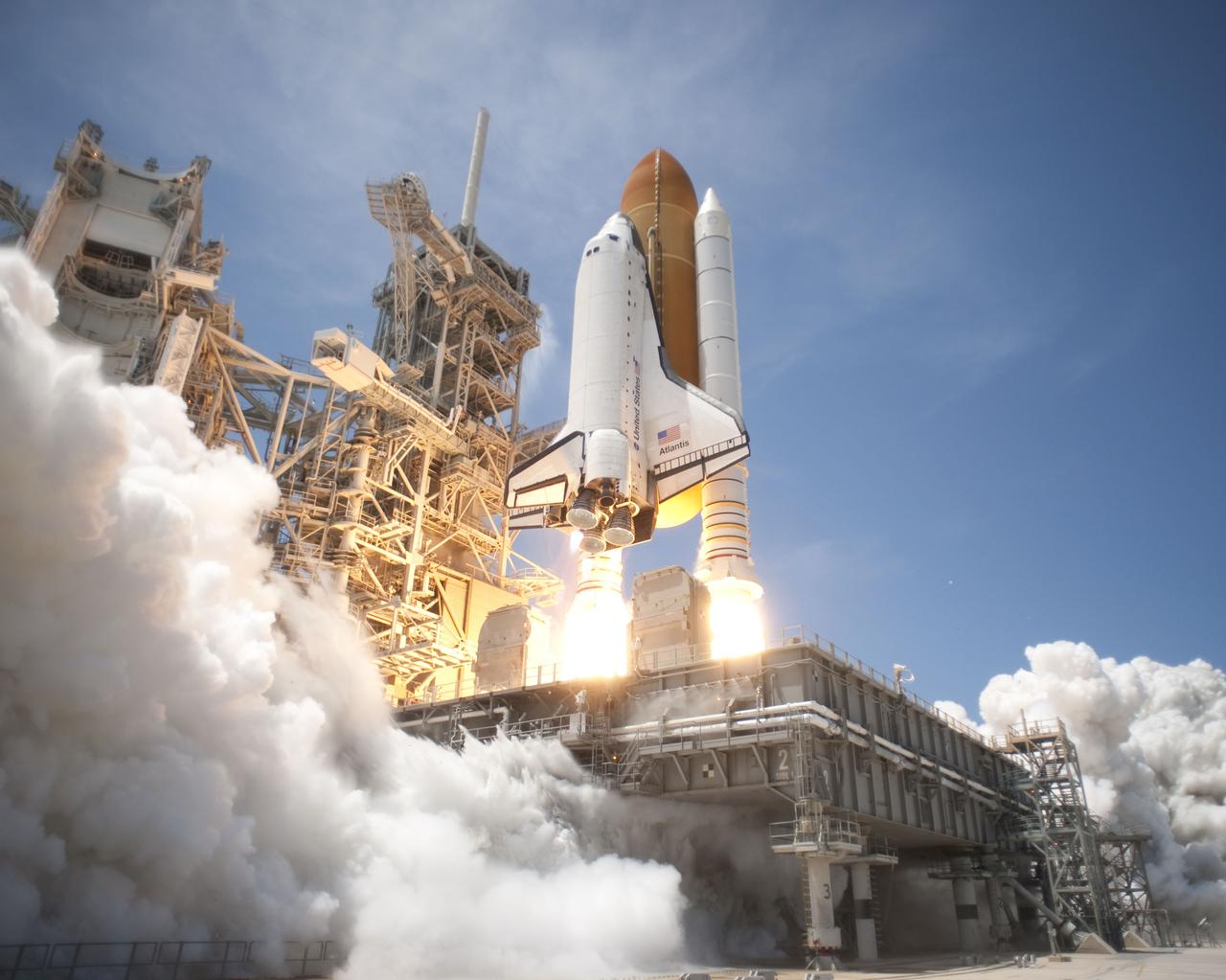
STS132-S-064 (14 May 2010) --- Space shuttle Atlantis and its six-member STS-132 crew head toward Earth orbit and rendezvous with the International Space Station. Liftoff was at 2:20 p.m. (EDT) on May 14, 2010, from launch pad 39A at NASA's Kennedy Space Center. Onboard are NASA astronauts Ken Ham, commander; Tony Antonelli, pilot; Garrett Reisman, Michael Good, Steve Bowen and Piers Sellers, all mission specialists. The crew will deliver the Russian-built Mini-Research Module 1 (MRM-1) to the International Space Station. Named Rassvet, Russian for "dawn," the module is the second in a series of new pressurized components for Russia and will be permanently attached to the Earth-facing port of the Zarya Functional Cargo Block (FGB). Rassvet will be used for cargo storage and will provide an additional docking port to the station. Also aboard Atlantis is an Integrated Cargo Carrier, or ICC, an unpressurized flat bed pallet and keel yoke assembly used to support the transfer of exterior cargo from the shuttle to the station. STS-132 is the 34th mission to the station and the last scheduled flight for Atlantis. For more information on the STS-132 mission objectives, payload and crew, visit www.nasa.gov/mission_pages/shuttle/shuttlemissions/sts132/index.html. Photo credit: NASA/Tony Gray and Tom Farrar
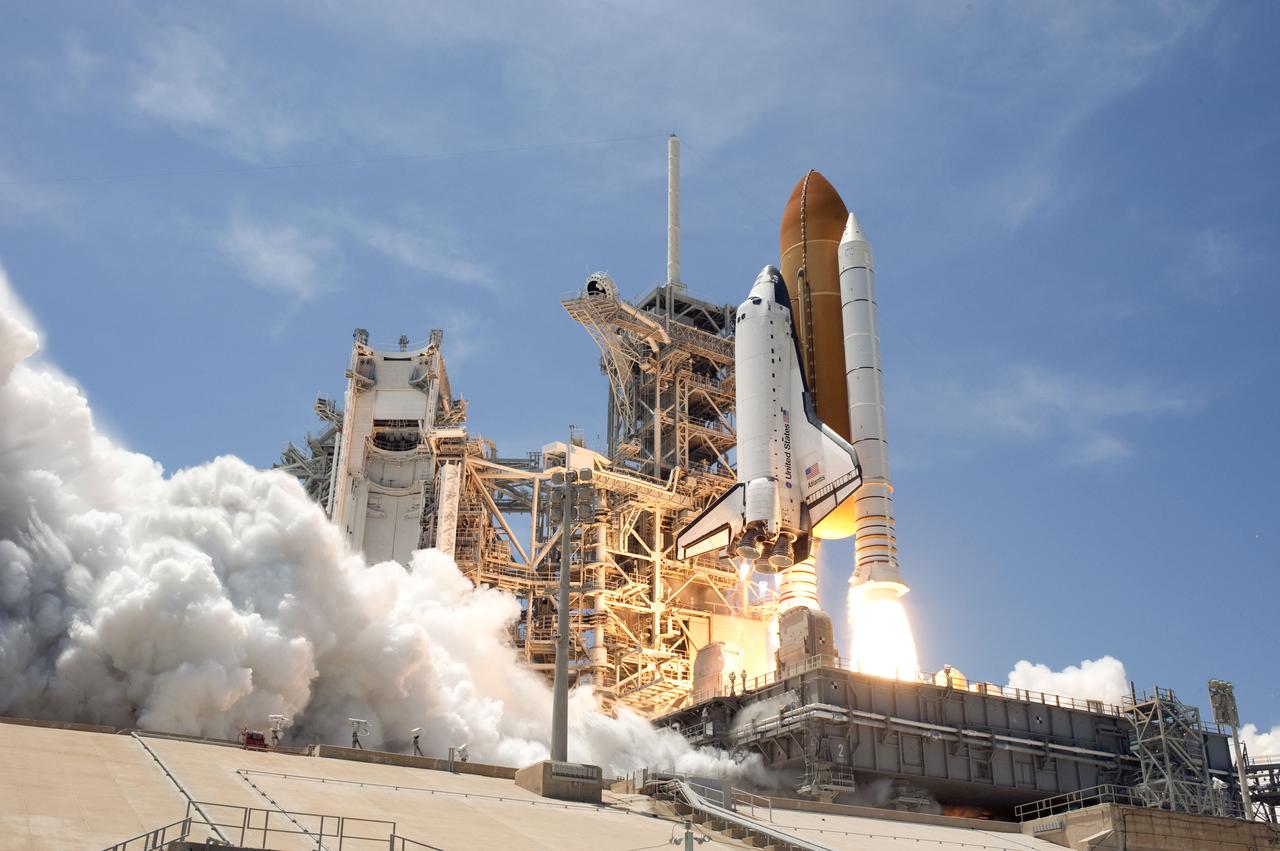
STS132-S-047 (14 May 2010) --- Space shuttle Atlantis and its six-member STS-132 crew head toward Earth orbit and rendezvous with the International Space Station. Liftoff was at 2:20 p.m. (EDT) on May 14, 2010, from launch pad 39A at NASA's Kennedy Space Center. Onboard are NASA astronauts Ken Ham, commander; Tony Antonelli, pilot; Garrett Reisman, Michael Good, Steve Bowen and Piers Sellers, all mission specialists. The crew will deliver the Russian-built Mini-Research Module 1 (MRM-1) to the International Space Station. Named Rassvet, Russian for "dawn," the module is the second in a series of new pressurized components for Russia and will be permanently attached to the Earth-facing port of the Zarya Functional Cargo Block (FGB). Rassvet will be used for cargo storage and will provide an additional docking port to the station. Also aboard Atlantis is an Integrated Cargo Carrier, or ICC, an unpressurized flat bed pallet and keel yoke assembly used to support the transfer of exterior cargo from the shuttle to the station. STS-132 is the 34th mission to the station and the last scheduled flight for Atlantis. For more information on the STS-132 mission objectives, payload and crew, visit www.nasa.gov/mission_pages/shuttle/shuttlemissions/sts132/index.html. Photo credit: NASA/Sandra Joseph and Kevin O'Connell
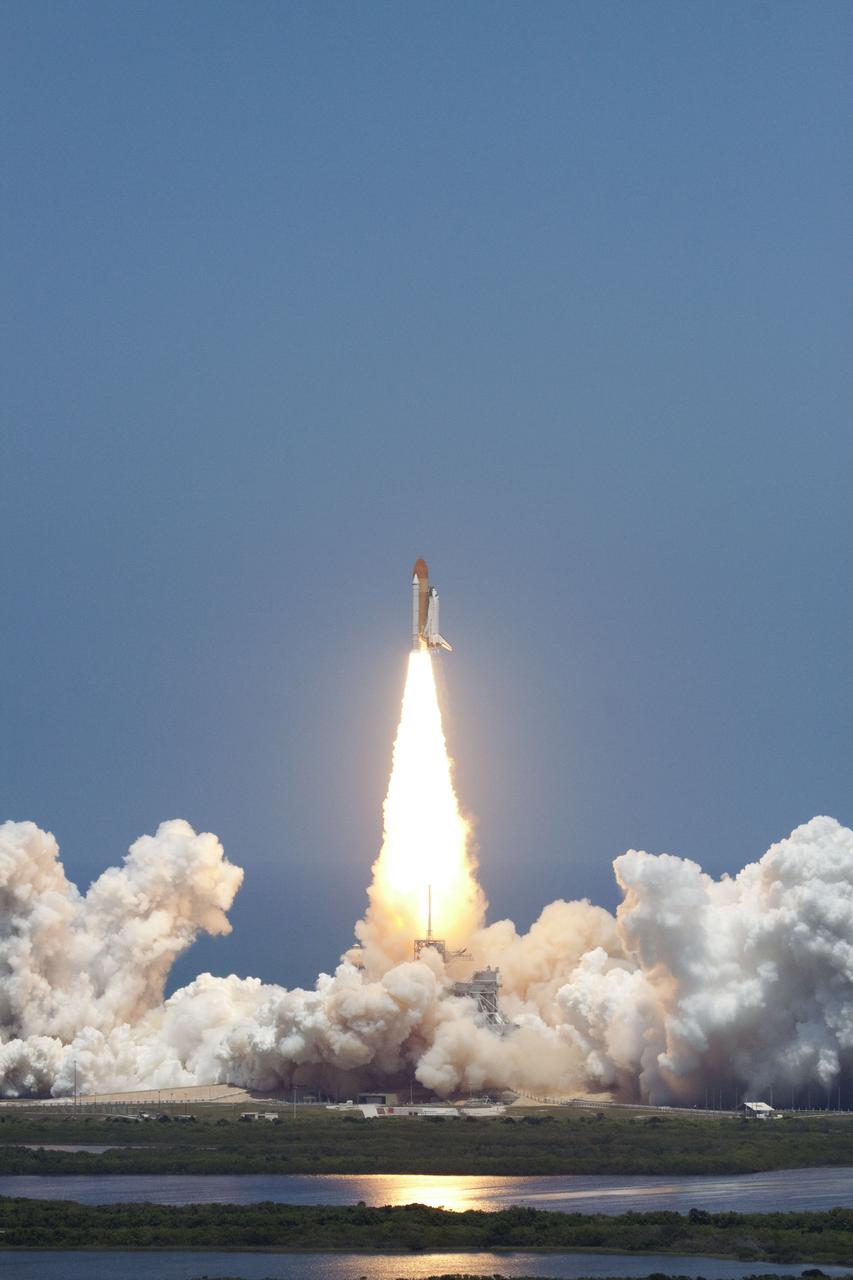
STS132-S-016 (14 May 2010) --- Space shuttle Atlantis and its six-member STS-132 crew head toward Earth orbit and rendezvous with the International Space Station. Liftoff was at 2:20 p.m. (EDT) on May 14, 2010, from launch pad 39A at NASA's Kennedy Space Center. Onboard are NASA astronauts Ken Ham, commander; Tony Antonelli, pilot; Garrett Reisman, Michael Good, Steve Bowen and Piers Sellers, all mission specialists. The crew will deliver the Russian-built Mini-Research Module 1 (MRM-1) to the International Space Station. Named Rassvet, Russian for "dawn," the module is the second in a series of new pressurized components for Russia and will be permanently attached to the Earth-facing port of the Zarya Functional Cargo Block (FGB). Rassvet will be used for cargo storage and will provide an additional docking port to the station. Also aboard Atlantis is an Integrated Cargo Carrier, or ICC, an unpressurized flat bed pallet and keel yoke assembly used to support the transfer of exterior cargo from the shuttle to the station. STS-132 is the 34th mission to the station and the last scheduled flight for Atlantis. For more information on the STS-132 mission objectives, payload and crew, visit www.nasa.gov/mission_pages/shuttle/shuttlemissions/sts132/index.html. Photo Credit: NASA/Jack Pfaller
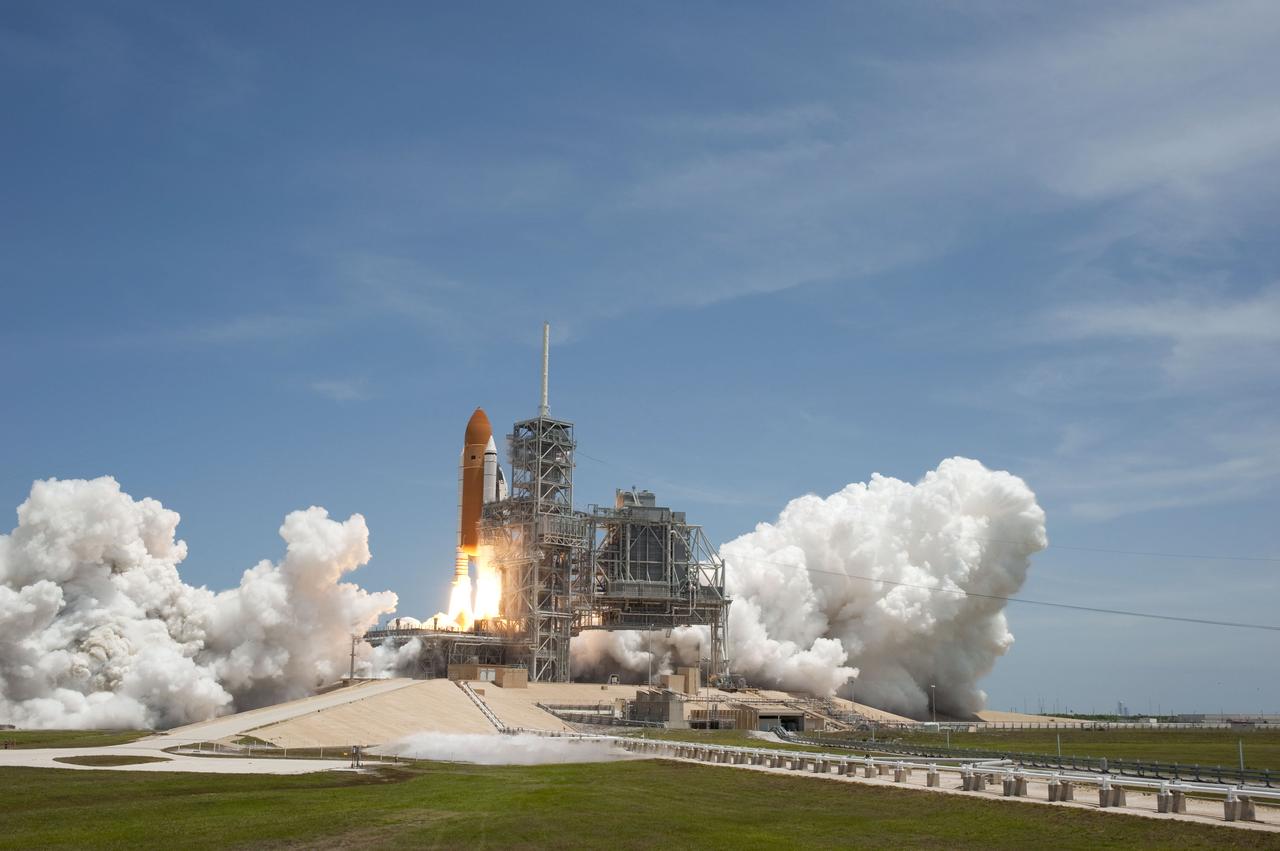
STS132-S-050 (14 May 2010) --- Space shuttle Atlantis and its six-member STS-132 crew head toward Earth orbit and rendezvous with the International Space Station. Liftoff was at 2:20 p.m. (EDT) on May 14, 2010, from launch pad 39A at NASA's Kennedy Space Center. Onboard are NASA astronauts Ken Ham, commander; Tony Antonelli, pilot; Garrett Reisman, Michael Good, Steve Bowen and Piers Sellers, all mission specialists. The crew will deliver the Russian-built Mini-Research Module 1 (MRM-1) to the International Space Station. Named Rassvet, Russian for "dawn," the module is the second in a series of new pressurized components for Russia and will be permanently attached to the Earth-facing port of the Zarya Functional Cargo Block (FGB). Rassvet will be used for cargo storage and will provide an additional docking port to the station. Also aboard Atlantis is an Integrated Cargo Carrier, or ICC, an unpressurized flat bed pallet and keel yoke assembly used to support the transfer of exterior cargo from the shuttle to the station. STS-132 is the 34th mission to the station and the last scheduled flight for Atlantis. For more information on the STS-132 mission objectives, payload and crew, visit www.nasa.gov/mission_pages/shuttle/shuttlemissions/sts132/index.html. Photo credit: NASA/Sandra Joseph and Kevin O'Connell
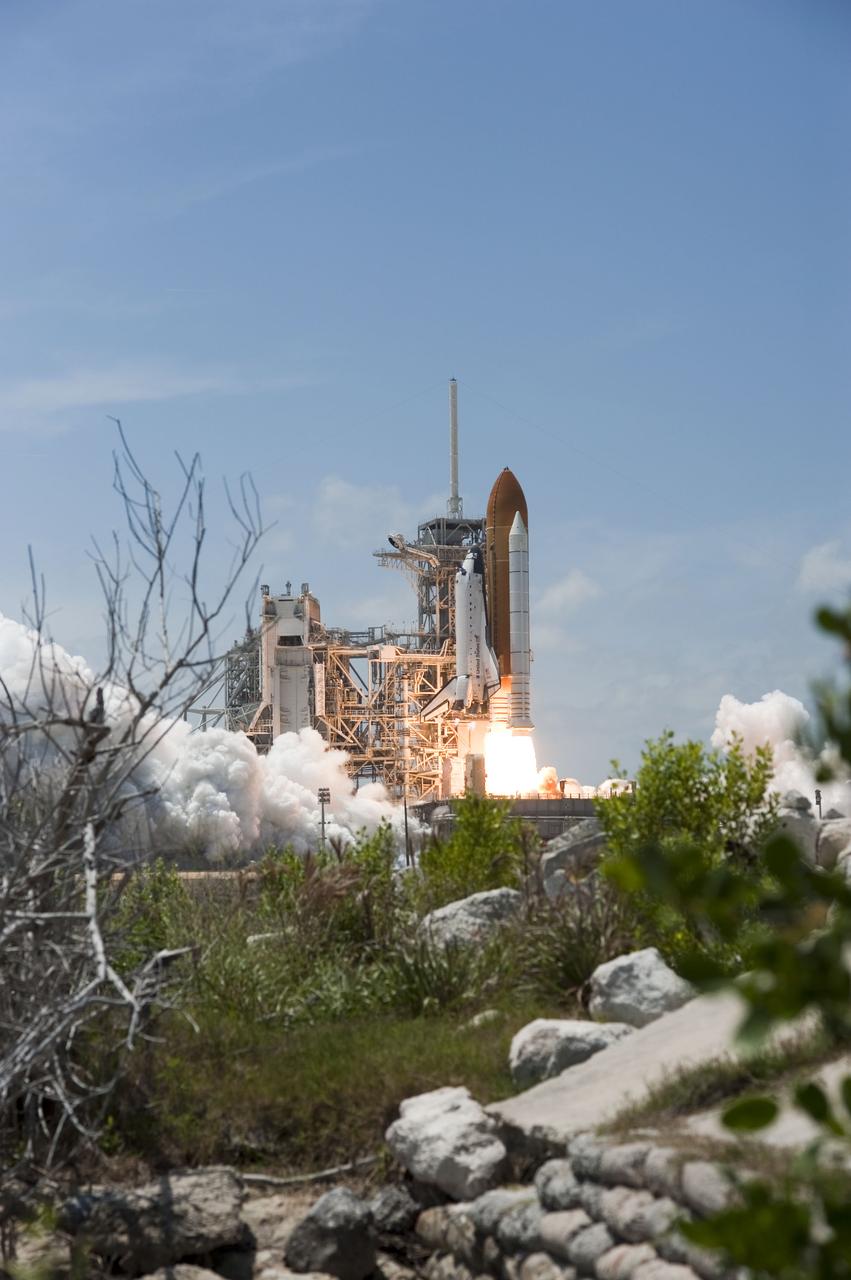
STS132-S-030 (14 May 2010) --- Space shuttle Atlantis and its six-member STS-132 crew head toward Earth orbit and rendezvous with the International Space Station. Liftoff was at 2:20 p.m. (EDT) on May 14, 2010, from launch pad 39A at NASA's Kennedy Space Center. Onboard are NASA astronauts Ken Ham, commander; Tony Antonelli, pilot; Garrett Reisman, Michael Good, Steve Bowen and Piers Sellers, all mission specialists. The crew will deliver the Russian-built Mini-Research Module 1 (MRM-1) to the International Space Station. Named Rassvet, Russian for "dawn," the module is the second in a series of new pressurized components for Russia and will be permanently attached to the Earth-facing port of the Zarya Functional Cargo Block (FGB). Rassvet will be used for cargo storage and will provide an additional docking port to the station. Also aboard Atlantis is an Integrated Cargo Carrier, or ICC, an unpressurized flat bed pallet and keel yoke assembly used to support the transfer of exterior cargo from the shuttle to the station. STS-132 is the 34th mission to the station and the last scheduled flight for Atlantis. For more information on the STS-132 mission objectives, payload and crew, visit www.nasa.gov/mission_pages/shuttle/shuttlemissions/sts132/index.html. Photo credit: NASA/Sandra Joseph and Kevin O'Connell
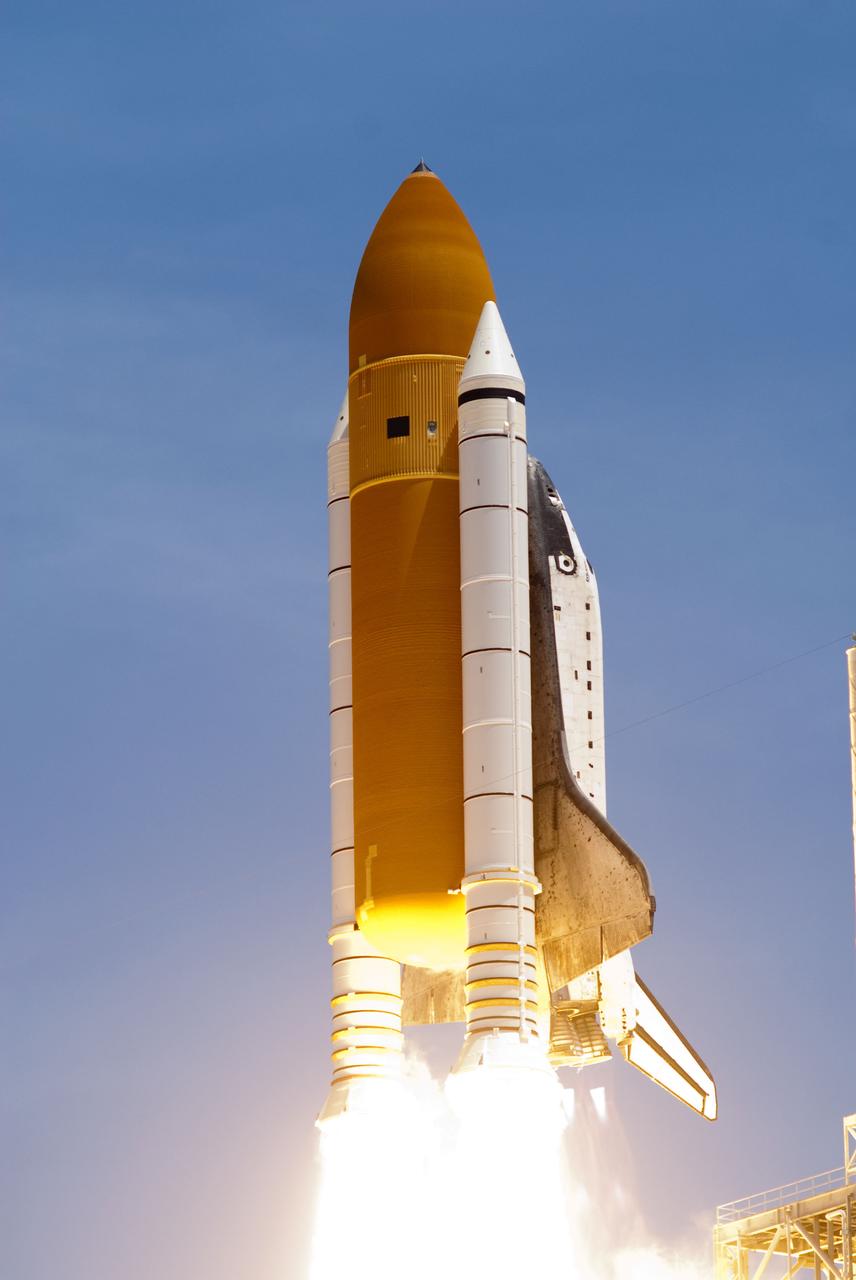
STS132-S-054 (14 May 2010) --- Space shuttle Atlantis and its six-member STS-132 crew head toward Earth orbit and rendezvous with the International Space Station. Liftoff was at 2:20 p.m. (EDT) on May 14, 2010, from launch pad 39A at NASA's Kennedy Space Center. Onboard are NASA astronauts Ken Ham, commander; Tony Antonelli, pilot; Garrett Reisman, Michael Good, Steve Bowen and Piers Sellers, all mission specialists. The crew will deliver the Russian-built Mini-Research Module 1 (MRM-1) to the International Space Station. Named Rassvet, Russian for "dawn," the module is the second in a series of new pressurized components for Russia and will be permanently attached to the Earth-facing port of the Zarya Functional Cargo Block (FGB). Rassvet will be used for cargo storage and will provide an additional docking port to the station. Also aboard Atlantis is an Integrated Cargo Carrier, or ICC, an unpressurized flat bed pallet and keel yoke assembly used to support the transfer of exterior cargo from the shuttle to the station. STS-132 is the 34th mission to the station and the last scheduled flight for Atlantis. For more information on the STS-132 mission objectives, payload and crew, visit www.nasa.gov/mission_pages/shuttle/shuttlemissions/sts132/index.html. Photo Credit: NASA/Rusty Backer and Michael Gayle

STS132-S-060 (14 May 2010) --- Space shuttle Atlantis and its six-member STS-132 crew head toward Earth orbit and rendezvous with the International Space Station. Liftoff was at 2:20 p.m. (EDT) on May 14, 2010, from launch pad 39A at NASA's Kennedy Space Center. Onboard are NASA astronauts Ken Ham, commander; Tony Antonelli, pilot; Garrett Reisman, Michael Good, Steve Bowen and Piers Sellers, all mission specialists. The crew will deliver the Russian-built Mini-Research Module 1 (MRM-1) to the International Space Station. Named Rassvet, Russian for "dawn," the module is the second in a series of new pressurized components for Russia and will be permanently attached to the Earth-facing port of the Zarya Functional Cargo Block (FGB). Rassvet will be used for cargo storage and will provide an additional docking port to the station. Also aboard Atlantis is an Integrated Cargo Carrier, or ICC, an unpressurized flat bed pallet and keel yoke assembly used to support the transfer of exterior cargo from the shuttle to the station. STS-132 is the 34th mission to the station and the last scheduled flight for Atlantis. For more information on the STS-132 mission objectives, payload and crew, visit www.nasa.gov/mission_pages/shuttle/shuttlemissions/sts132/index.html. Photo credit: NASA/Sandra Joseph and Kevin O'Connell
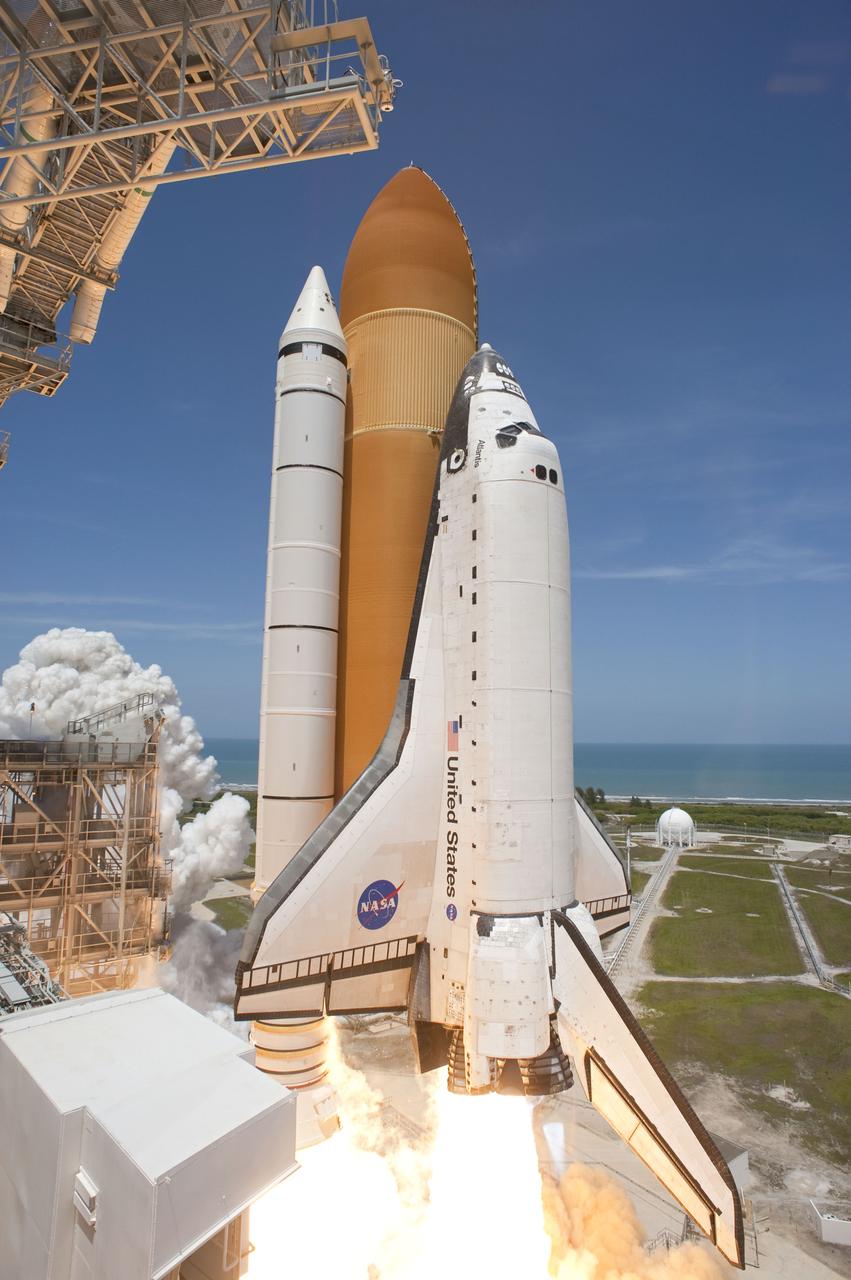
STS132-S-059 (14 May 2010) --- Space shuttle Atlantis and its six-member STS-132 crew head toward Earth orbit and rendezvous with the International Space Station. Liftoff was at 2:20 p.m. (EDT) on May 14, 2010, from launch pad 39A at NASA's Kennedy Space Center. Onboard are NASA astronauts Ken Ham, commander; Tony Antonelli, pilot; Garrett Reisman, Michael Good, Steve Bowen and Piers Sellers, all mission specialists. The crew will deliver the Russian-built Mini-Research Module 1 (MRM-1) to the International Space Station. Named Rassvet, Russian for "dawn," the module is the second in a series of new pressurized components for Russia and will be permanently attached to the Earth-facing port of the Zarya Functional Cargo Block (FGB). Rassvet will be used for cargo storage and will provide an additional docking port to the station. Also aboard Atlantis is an Integrated Cargo Carrier, or ICC, an unpressurized flat bed pallet and keel yoke assembly used to support the transfer of exterior cargo from the shuttle to the station. STS-132 is the 34th mission to the station and the last scheduled flight for Atlantis. For more information on the STS-132 mission objectives, payload and crew, visit www.nasa.gov/mission_pages/shuttle/shuttlemissions/sts132/index.html. Photo credit: NASA/Sandra Joseph and Kevin O'Connell
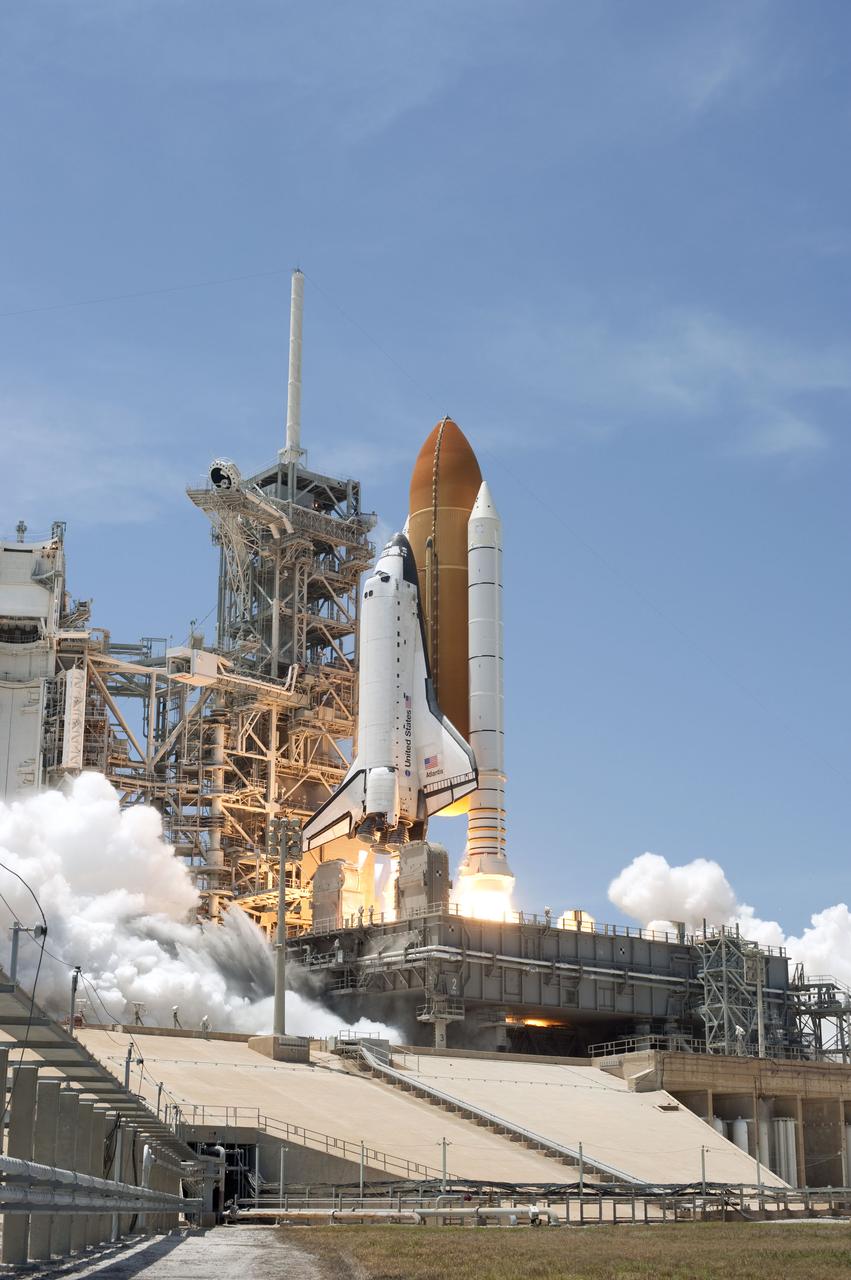
STS132-S-045 (14 May 2010) --- Space shuttle Atlantis and its six-member STS-132 crew head toward Earth orbit and rendezvous with the International Space Station. Liftoff was at 2:20 p.m. (EDT) on May 14, 2010, from launch pad 39A at NASA's Kennedy Space Center. Onboard are NASA astronauts Ken Ham, commander; Tony Antonelli, pilot; Garrett Reisman, Michael Good, Steve Bowen and Piers Sellers, all mission specialists. The crew will deliver the Russian-built Mini-Research Module 1 (MRM-1) to the International Space Station. Named Rassvet, Russian for "dawn," the module is the second in a series of new pressurized components for Russia and will be permanently attached to the Earth-facing port of the Zarya Functional Cargo Block (FGB). Rassvet will be used for cargo storage and will provide an additional docking port to the station. Also aboard Atlantis is an Integrated Cargo Carrier, or ICC, an unpressurized flat bed pallet and keel yoke assembly used to support the transfer of exterior cargo from the shuttle to the station. STS-132 is the 34th mission to the station and the last scheduled flight for Atlantis. For more information on the STS-132 mission objectives, payload and crew, visit www.nasa.gov/mission_pages/shuttle/shuttlemissions/sts132/index.html. Photo credit: NASA/Tony Gray and Tom Farrar
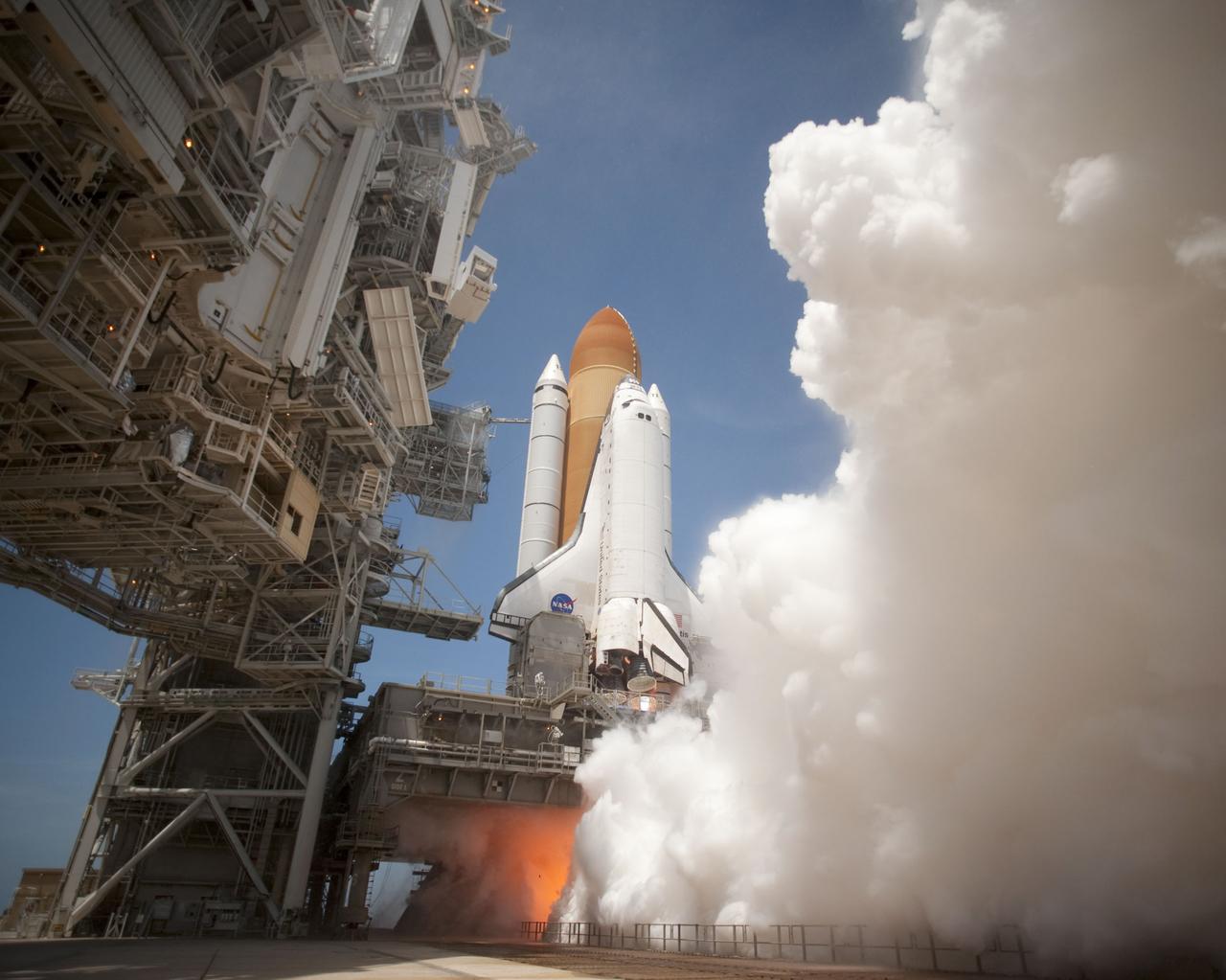
STS132-S-067 (14 May 2010) --- Space shuttle Atlantis and its six-member STS-132 crew head toward Earth orbit and rendezvous with the International Space Station. Liftoff was at 2:20 p.m. (EDT) on May 14, 2010, from launch pad 39A at NASA's Kennedy Space Center. Onboard are NASA astronauts Ken Ham, commander; Tony Antonelli, pilot; Garrett Reisman, Michael Good, Steve Bowen and Piers Sellers, all mission specialists. The crew will deliver the Russian-built Mini-Research Module 1 (MRM-1) to the International Space Station. Named Rassvet, Russian for "dawn," the module is the second in a series of new pressurized components for Russia and will be permanently attached to the Earth-facing port of the Zarya Functional Cargo Block (FGB). Rassvet will be used for cargo storage and will provide an additional docking port to the station. Also aboard Atlantis is an Integrated Cargo Carrier, or ICC, an unpressurized flat bed pallet and keel yoke assembly used to support the transfer of exterior cargo from the shuttle to the station. STS-132 is the 34th mission to the station and the last scheduled flight for Atlantis. For more information on the STS-132 mission objectives, payload and crew, visit www.nasa.gov/mission_pages/shuttle/shuttlemissions/sts132/index.html. Photo Credit: NASA/Tony Gray and Tom Farrar
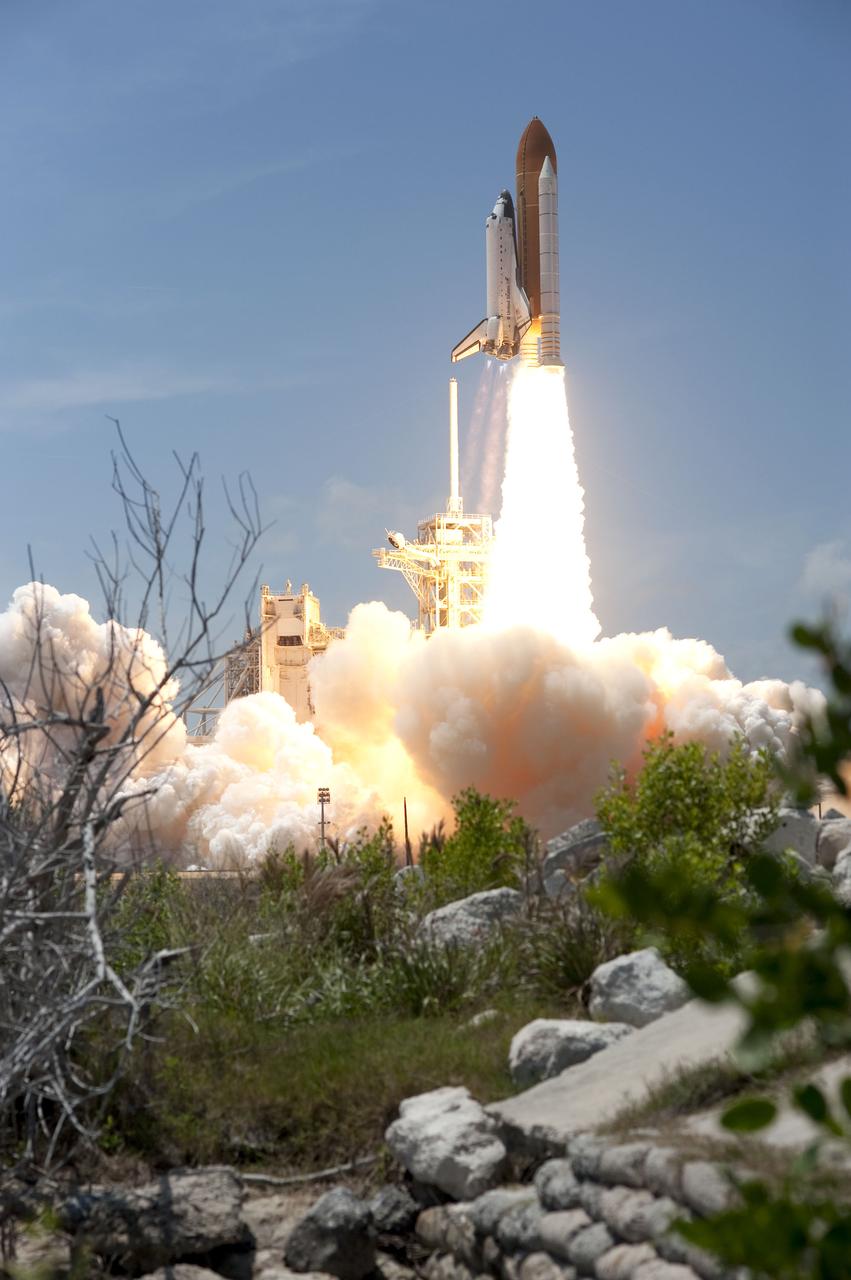
STS132-S-031 (14 May 2010) --- Space shuttle Atlantis and its six-member STS-132 crew head toward Earth orbit and rendezvous with the International Space Station. Liftoff was at 2:20 p.m. (EDT) on May 14, 2010, from launch pad 39A at NASA's Kennedy Space Center. Onboard are NASA astronauts Ken Ham, commander; Tony Antonelli, pilot; Garrett Reisman, Michael Good, Steve Bowen and Piers Sellers, all mission specialists. The crew will deliver the Russian-built Mini-Research Module 1 (MRM-1) to the International Space Station. Named Rassvet, Russian for "dawn," the module is the second in a series of new pressurized components for Russia and will be permanently attached to the Earth-facing port of the Zarya Functional Cargo Block (FGB). Rassvet will be used for cargo storage and will provide an additional docking port to the station. Also aboard Atlantis is an Integrated Cargo Carrier, or ICC, an unpressurized flat bed pallet and keel yoke assembly used to support the transfer of exterior cargo from the shuttle to the station. STS-132 is the 34th mission to the station and the last scheduled flight for Atlantis. For more information on the STS-132 mission objectives, payload and crew, visit www.nasa.gov/mission_pages/shuttle/shuttlemissions/sts132/index.html. Photo credit: NASA/Sandra Joseph and Kevin O'Connell
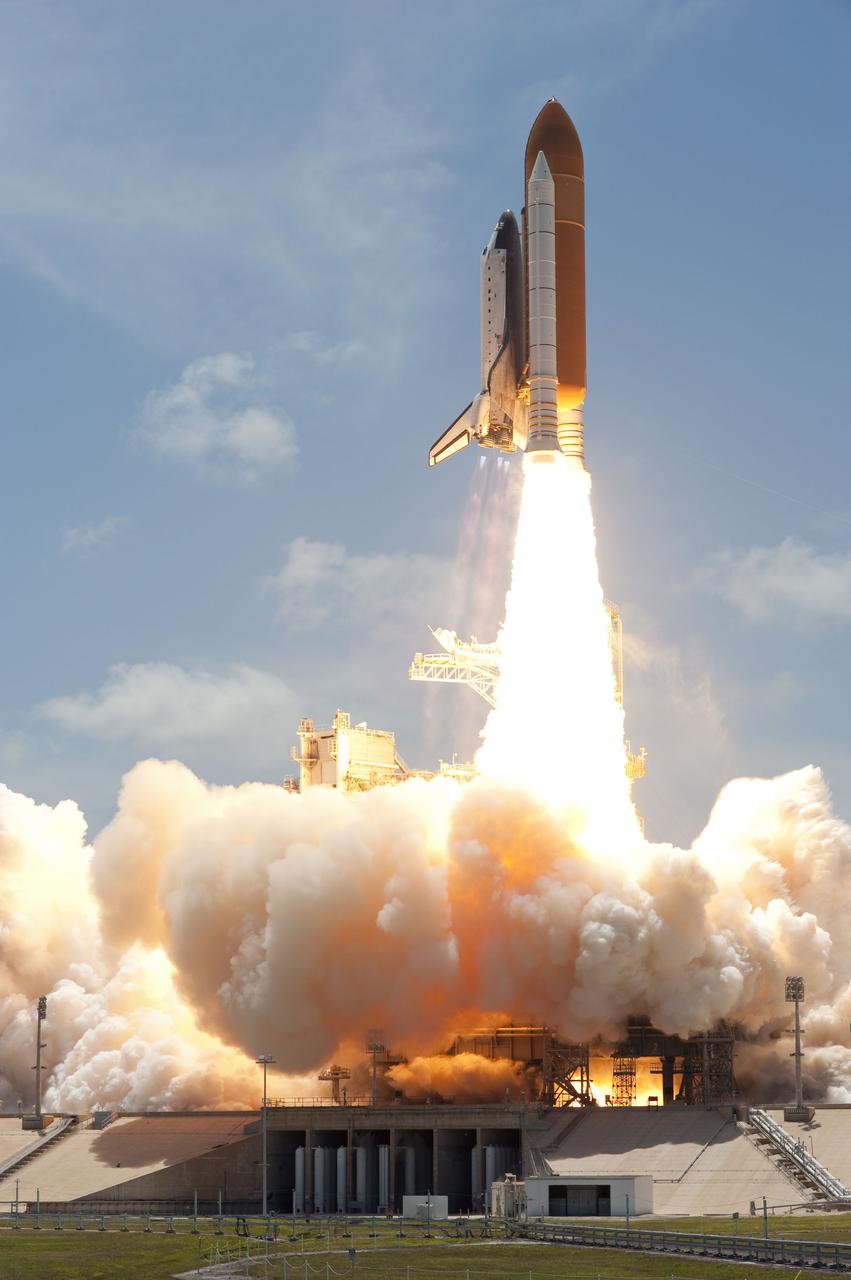
STS132-S-053 (14 May 2010) --- Space shuttle Atlantis and its six-member STS-132 crew head toward Earth orbit and rendezvous with the International Space Station. Liftoff was at 2:20 p.m. (EDT) on May 14, 2010, from launch pad 39A at NASA's Kennedy Space Center. Onboard are NASA astronauts Ken Ham, commander; Tony Antonelli, pilot; Garrett Reisman, Michael Good, Steve Bowen and Piers Sellers, all mission specialists. The crew will deliver the Russian-built Mini-Research Module 1 (MRM-1) to the International Space Station. Named Rassvet, Russian for "dawn," the module is the second in a series of new pressurized components for Russia and will be permanently attached to the Earth-facing port of the Zarya Functional Cargo Block (FGB). Rassvet will be used for cargo storage and will provide an additional docking port to the station. Also aboard Atlantis is an Integrated Cargo Carrier, or ICC, an unpressurized flat bed pallet and keel yoke assembly used to support the transfer of exterior cargo from the shuttle to the station. STS-132 is the 34th mission to the station and the last scheduled flight for Atlantis. For more information on the STS-132 mission objectives, payload and crew, visit www.nasa.gov/mission_pages/shuttle/shuttlemissions/sts132/index.html. Photo credit: NASA/Sandra Joseph and Kevin O'Connell
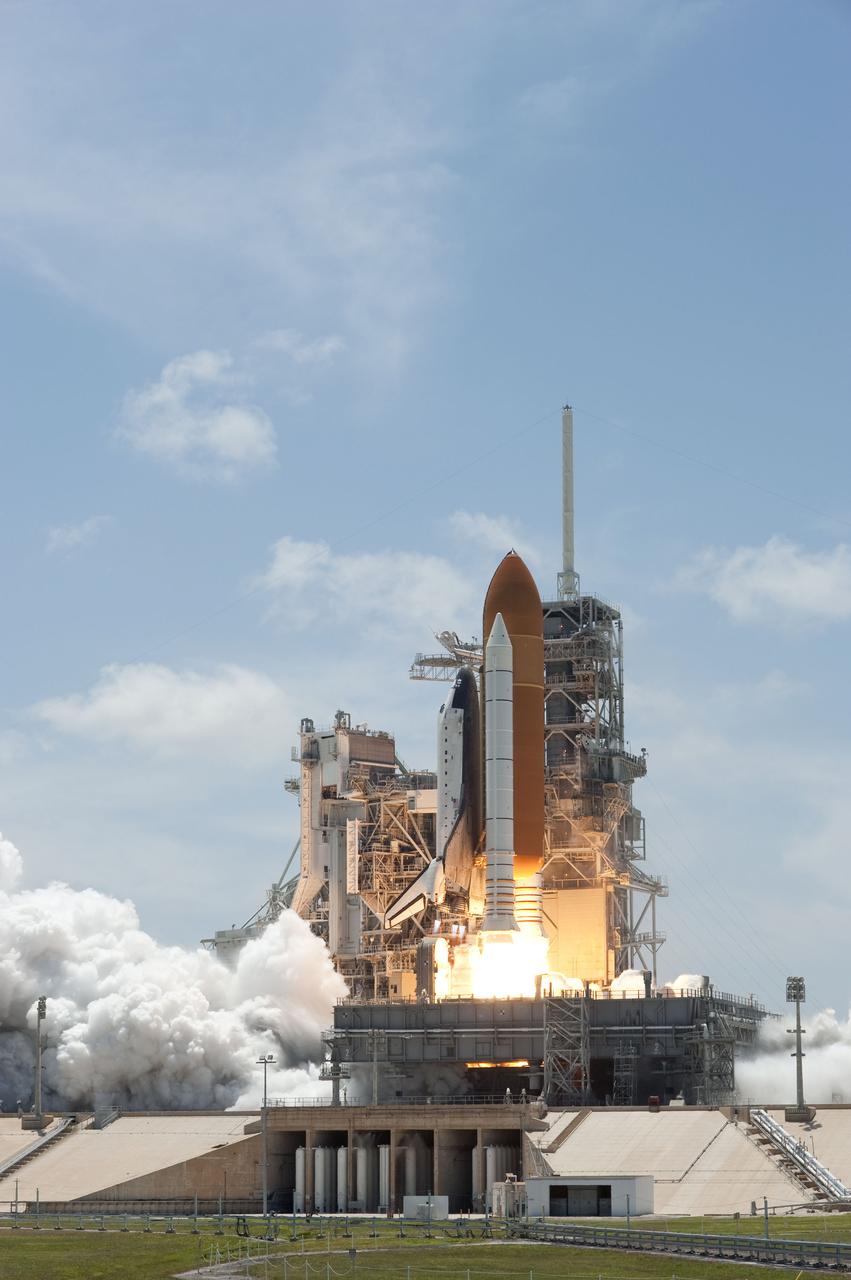
STS132-S-052 (14 May 2010) --- Space shuttle Atlantis and its six-member STS-132 crew head toward Earth orbit and rendezvous with the International Space Station. Liftoff was at 2:20 p.m. (EDT) on May 14, 2010, from launch pad 39A at NASA's Kennedy Space Center. Onboard are NASA astronauts Ken Ham, commander; Tony Antonelli, pilot; Garrett Reisman, Michael Good, Steve Bowen and Piers Sellers, all mission specialists. The crew will deliver the Russian-built Mini-Research Module 1 (MRM-1) to the International Space Station. Named Rassvet, Russian for "dawn," the module is the second in a series of new pressurized components for Russia and will be permanently attached to the Earth-facing port of the Zarya Functional Cargo Block (FGB). Rassvet will be used for cargo storage and will provide an additional docking port to the station. Also aboard Atlantis is an Integrated Cargo Carrier, or ICC, an unpressurized flat bed pallet and keel yoke assembly used to support the transfer of exterior cargo from the shuttle to the station. STS-132 is the 34th mission to the station and the last scheduled flight for Atlantis. For more information on the STS-132 mission objectives, payload and crew, visit www.nasa.gov/mission_pages/shuttle/shuttlemissions/sts132/index.html. Photo credit: NASA/Sandra Joseph and Kevin O'Connell
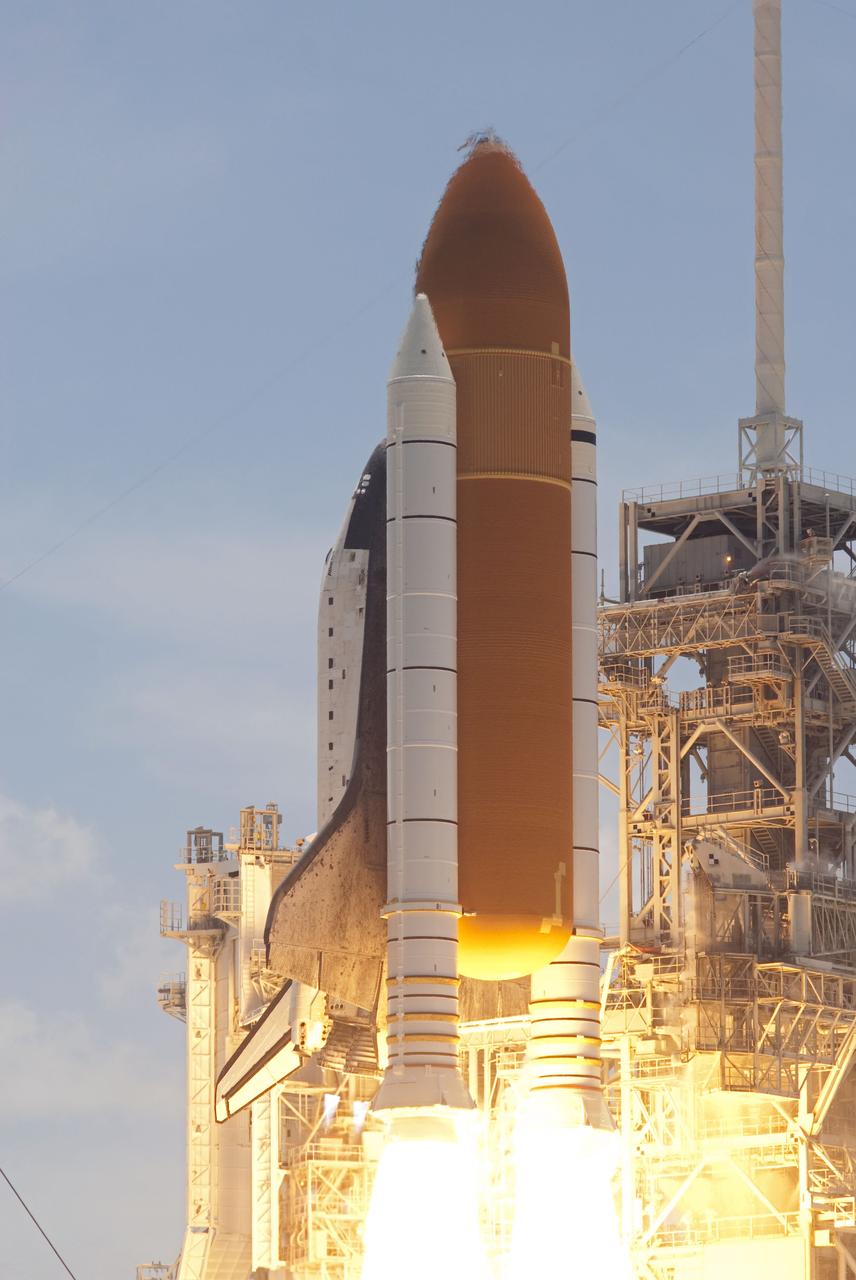
STS132-S-068 (14 May 2010) --- Space shuttle Atlantis and its six-member STS-132 crew head toward Earth orbit and rendezvous with the International Space Station. Liftoff was at 2:20 p.m. (EDT) on May 14, 2010, from launch pad 39A at NASA's Kennedy Space Center. Onboard are NASA astronauts Ken Ham, commander; Tony Antonelli, pilot; Garrett Reisman, Michael Good, Steve Bowen and Piers Sellers, all mission specialists. The crew will deliver the Russian-built Mini-Research Module 1 (MRM-1) to the International Space Station. Named Rassvet, Russian for "dawn," the module is the second in a series of new pressurized components for Russia and will be permanently attached to the Earth-facing port of the Zarya Functional Cargo Block (FGB). Rassvet will be used for cargo storage and will provide an additional docking port to the station. Also aboard Atlantis is an Integrated Cargo Carrier, or ICC, an unpressurized flat bed pallet and keel yoke assembly used to support the transfer of exterior cargo from the shuttle to the station. STS-132 is the 34th mission to the station and the last scheduled flight for Atlantis. For more information on the STS-132 mission objectives, payload and crew, visit www.nasa.gov/mission_pages/shuttle/shuttlemissions/sts132/index.html. Photo credit: NASA/Rusty Backer and Michael Gayle
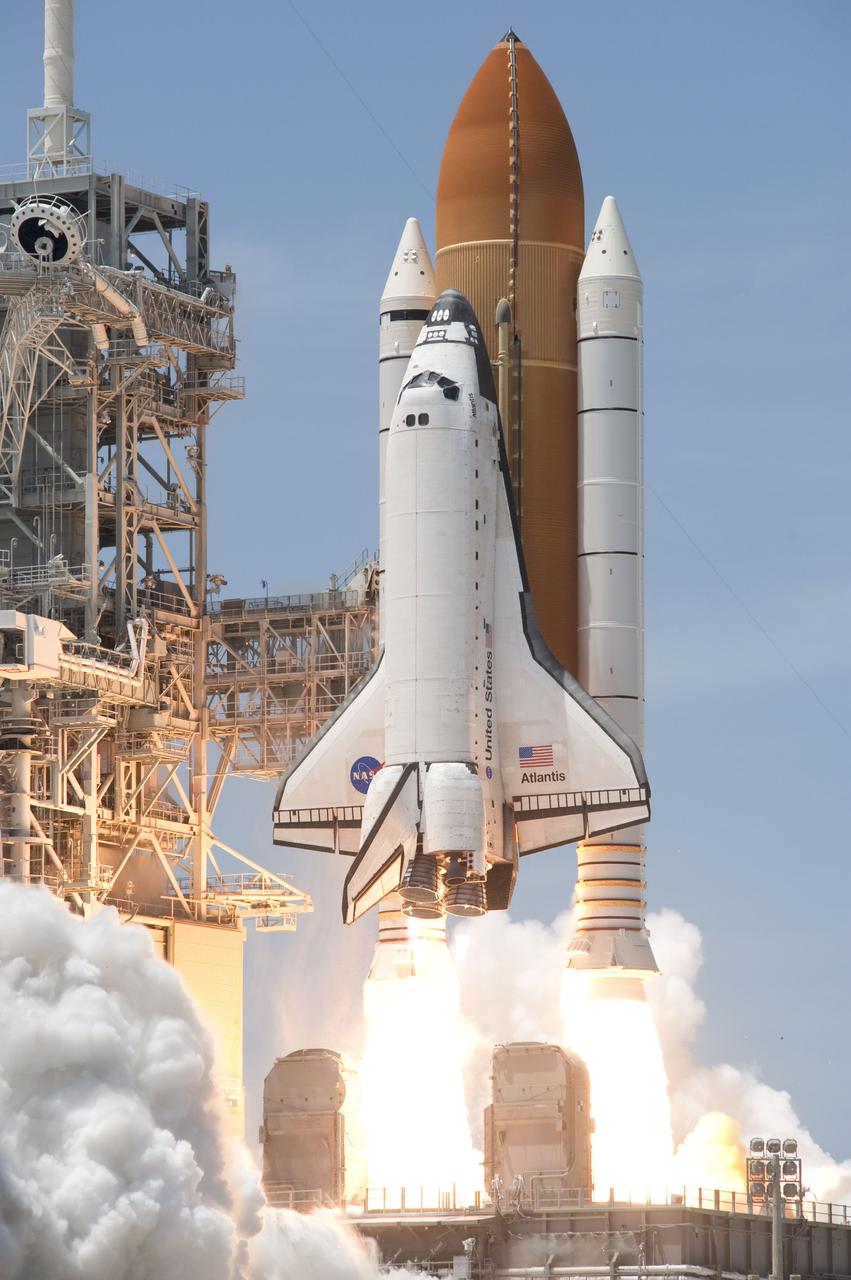
STS132-S-044 (14 May 2010) --- Space shuttle Atlantis and its six-member STS-132 crew head toward Earth orbit and rendezvous with the International Space Station. Liftoff was at 2:20 p.m. (EDT) on May 14, 2010, from launch pad 39A at NASA's Kennedy Space Center. Onboard are NASA astronauts Ken Ham, commander; Tony Antonelli, pilot; Garrett Reisman, Michael Good, Steve Bowen and Piers Sellers, all mission specialists. The crew will deliver the Russian-built Mini-Research Module 1 (MRM-1) to the International Space Station. Named Rassvet, Russian for "dawn," the module is the second in a series of new pressurized components for Russia and will be permanently attached to the Earth-facing port of the Zarya Functional Cargo Block (FGB). Rassvet will be used for cargo storage and will provide an additional docking port to the station. Also aboard Atlantis is an Integrated Cargo Carrier, or ICC, an unpressurized flat bed pallet and keel yoke assembly used to support the transfer of exterior cargo from the shuttle to the station. STS-132 is the 34th mission to the station and the last scheduled flight for Atlantis. For more information on the STS-132 mission objectives, payload and crew, visit www.nasa.gov/mission_pages/shuttle/shuttlemissions/sts132/index.html. Photo credit: NASA/Sandra Joseph and Kevin O'Connell
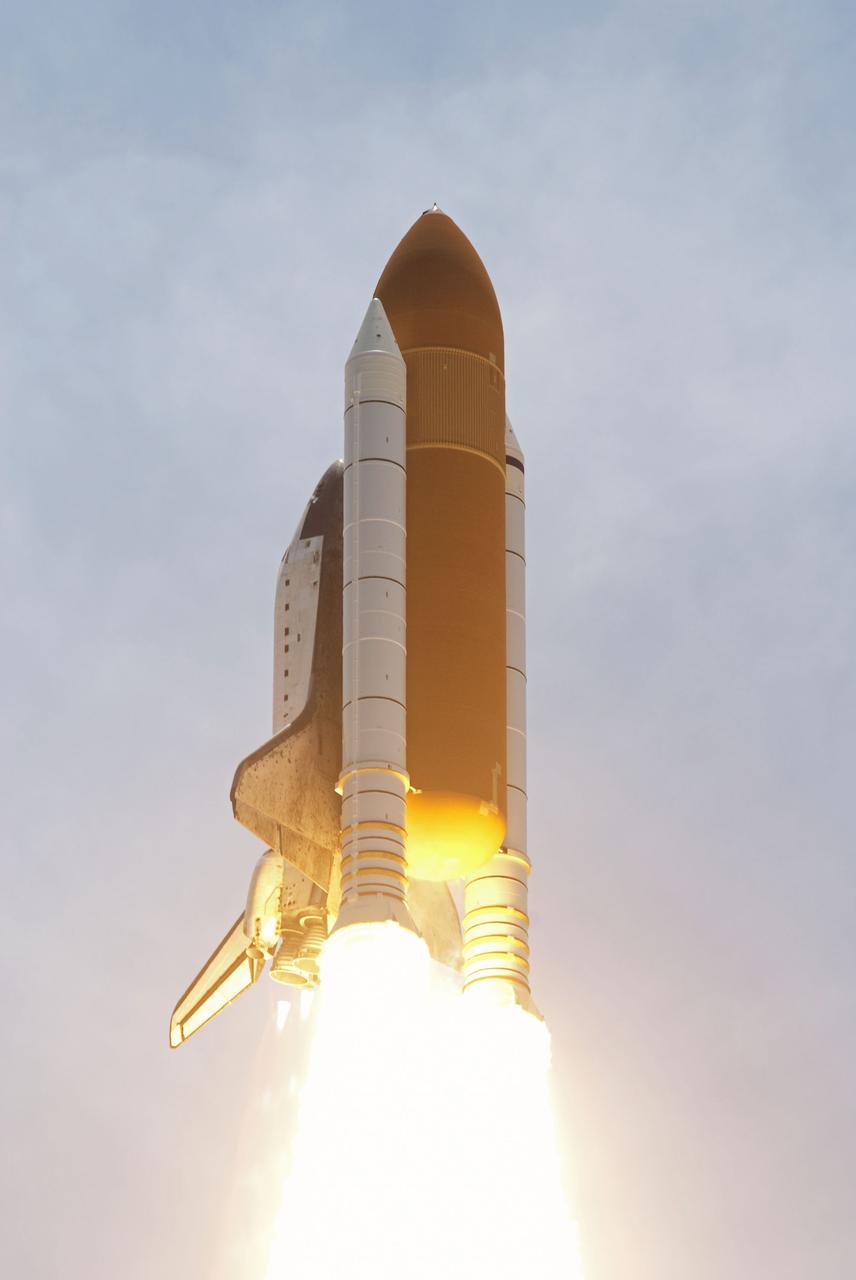
STS132-S-069 (14 May 2010) --- Space shuttle Atlantis and its six-member STS-132 crew head toward Earth orbit and rendezvous with the International Space Station. Liftoff was at 2:20 p.m. (EDT) on May 14, 2010, from launch pad 39A at NASA's Kennedy Space Center. Onboard are NASA astronauts Ken Ham, commander; Tony Antonelli, pilot; Garrett Reisman, Michael Good, Steve Bowen and Piers Sellers, all mission specialists. The crew will deliver the Russian-built Mini-Research Module 1 (MRM-1) to the International Space Station. Named Rassvet, Russian for "dawn," the module is the second in a series of new pressurized components for Russia and will be permanently attached to the Earth-facing port of the Zarya Functional Cargo Block (FGB). Rassvet will be used for cargo storage and will provide an additional docking port to the station. Also aboard Atlantis is an Integrated Cargo Carrier, or ICC, an unpressurized flat bed pallet and keel yoke assembly used to support the transfer of exterior cargo from the shuttle to the station. STS-132 is the 34th mission to the station and the last scheduled flight for Atlantis. For more information on the STS-132 mission objectives, payload and crew, visit www.nasa.gov/mission_pages/shuttle/shuttlemissions/sts132/index.html. Photo credit: NASA/Rusty Backer and Michael Gayle
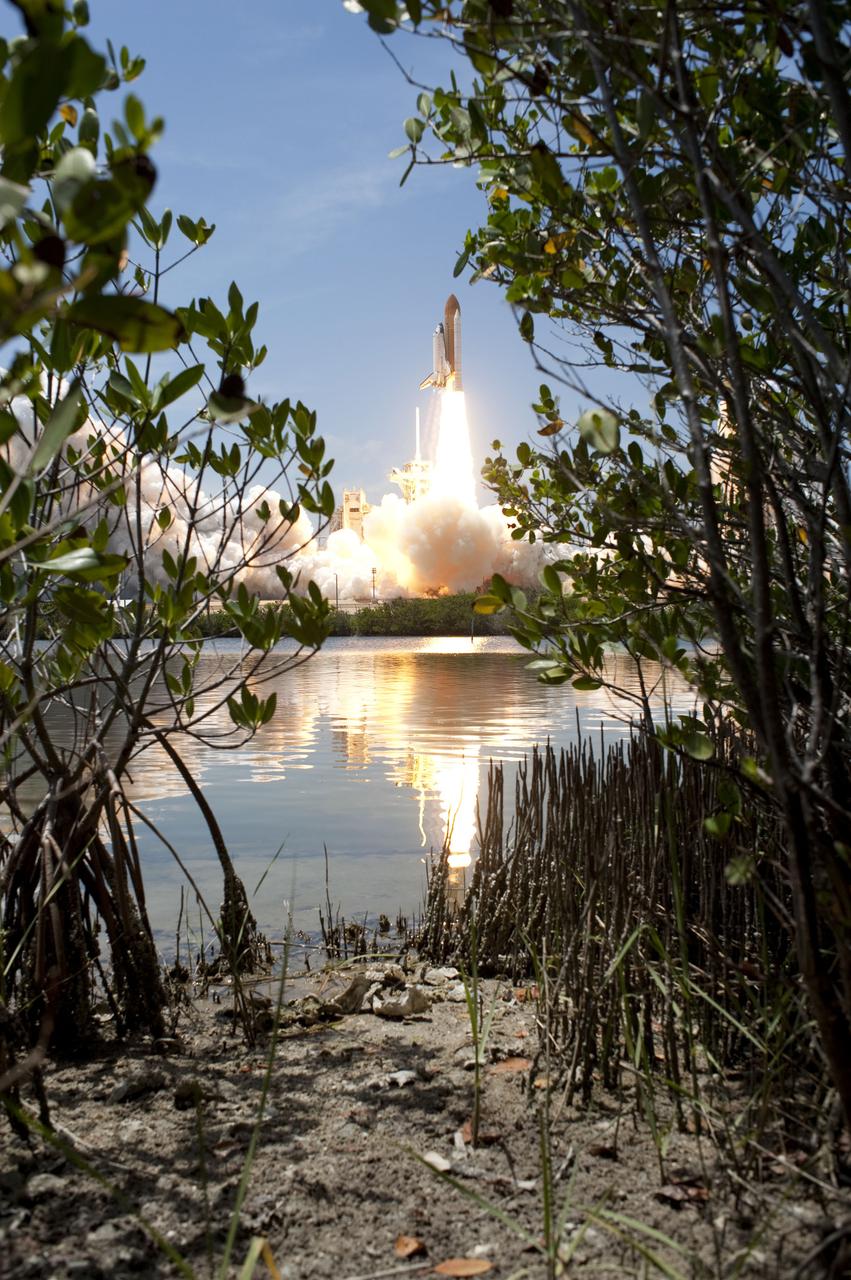
STS132-S-035 (14 May 2010) --- Space shuttle Atlantis and its six-member STS-132 crew head toward Earth orbit and rendezvous with the International Space Station. Liftoff was at 2:20 p.m. (EDT) on May 14, 2010, from launch pad 39A at NASA's Kennedy Space Center. Onboard are NASA astronauts Ken Ham, commander; Tony Antonelli, pilot; Garrett Reisman, Michael Good, Steve Bowen and Piers Sellers, all mission specialists. The crew will deliver the Russian-built Mini-Research Module 1 (MRM-1) to the International Space Station. Named Rassvet, Russian for "dawn," the module is the second in a series of new pressurized components for Russia and will be permanently attached to the Earth-facing port of the Zarya Functional Cargo Block (FGB). Rassvet will be used for cargo storage and will provide an additional docking port to the station. Also aboard Atlantis is an Integrated Cargo Carrier, or ICC, an unpressurized flat bed pallet and keel yoke assembly used to support the transfer of exterior cargo from the shuttle to the station. STS-132 is the 34th mission to the station and the last scheduled flight for Atlantis. For more information on the STS-132 mission objectives, payload and crew, visit www.nasa.gov/mission_pages/shuttle/shuttlemissions/sts132/index.html. Photo credit: NASA/Tony Gray and Tom Farrar

STS132-S-055 (14 May 2010) --- Space shuttle Atlantis and its six-member STS-132 crew head toward Earth orbit and rendezvous with the International Space Station. Liftoff was at 2:20 p.m. (EDT) on May 14, 2010, from launch pad 39A at NASA's Kennedy Space Center. Onboard are NASA astronauts Ken Ham, commander; Tony Antonelli, pilot; Garrett Reisman, Michael Good, Steve Bowen and Piers Sellers, all mission specialists. The crew will deliver the Russian-built Mini-Research Module 1 (MRM-1) to the International Space Station. Named Rassvet, Russian for "dawn," the module is the second in a series of new pressurized components for Russia and will be permanently attached to the Earth-facing port of the Zarya Functional Cargo Block (FGB). Rassvet will be used for cargo storage and will provide an additional docking port to the station. Also aboard Atlantis is an Integrated Cargo Carrier, or ICC, an unpressurized flat bed pallet and keel yoke assembly used to support the transfer of exterior cargo from the shuttle to the station. STS-132 is the 34th mission to the station and the last scheduled flight for Atlantis. For more information on the STS-132 mission objectives, payload and crew, visit www.nasa.gov/mission_pages/shuttle/shuttlemissions/sts132/index.html. Photo Credit: NASA/Tony Gray and Tom Farrar
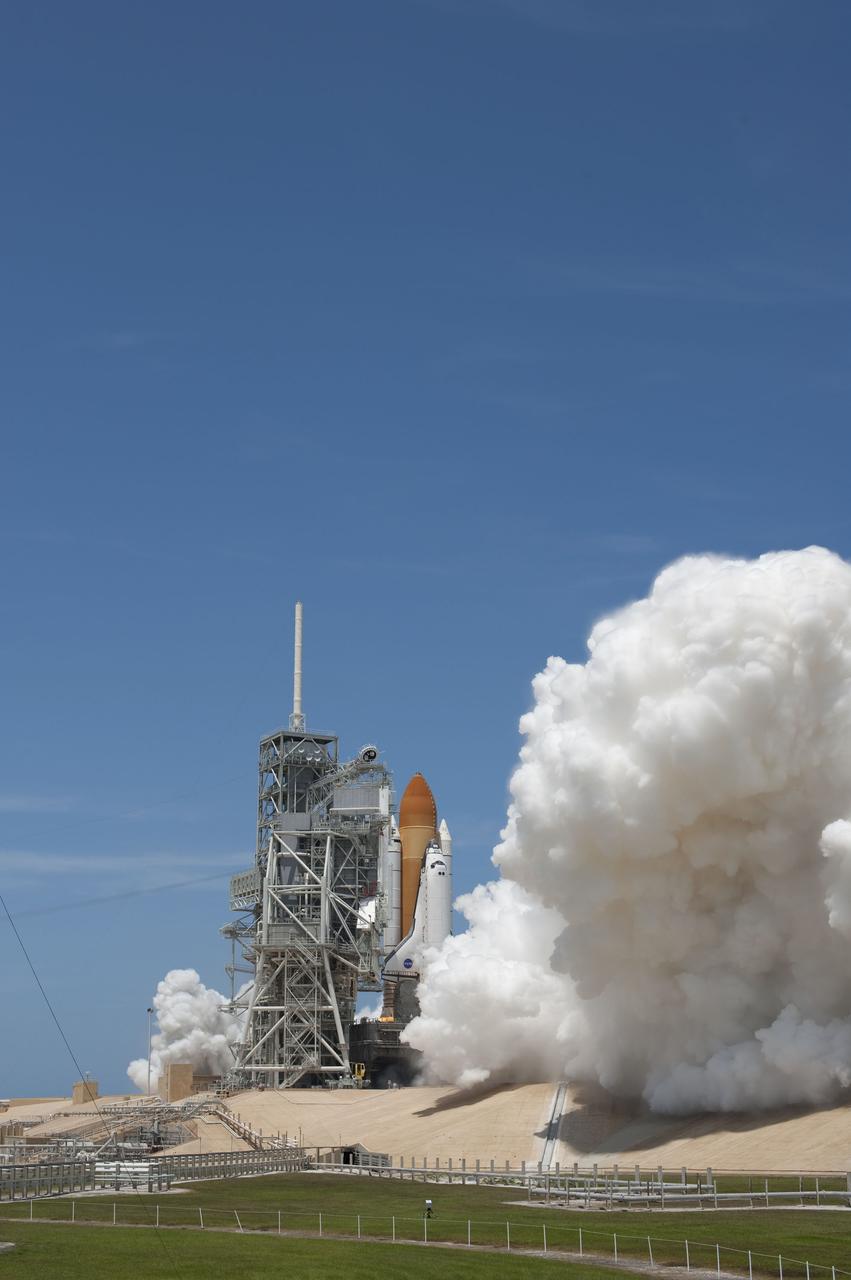
STS132-S-036 (14 May 2010) --- Space shuttle Atlantis and its six-member STS-132 crew head toward Earth orbit and rendezvous with the International Space Station. Liftoff was at 2:20 p.m. (EDT) on May 14, 2010, from launch pad 39A at NASA's Kennedy Space Center. Onboard are NASA astronauts Ken Ham, commander; Tony Antonelli, pilot; Garrett Reisman, Michael Good, Steve Bowen and Piers Sellers, all mission specialists. The crew will deliver the Russian-built Mini-Research Module 1 (MRM-1) to the International Space Station. Named Rassvet, Russian for "dawn," the module is the second in a series of new pressurized components for Russia and will be permanently attached to the Earth-facing port of the Zarya Functional Cargo Block (FGB). Rassvet will be used for cargo storage and will provide an additional docking port to the station. Also aboard Atlantis is an Integrated Cargo Carrier, or ICC, an unpressurized flat bed pallet and keel yoke assembly used to support the transfer of exterior cargo from the shuttle to the station. STS-132 is the 34th mission to the station and the last scheduled flight for Atlantis. For more information on the STS-132 mission objectives, payload and crew, visit www.nasa.gov/mission_pages/shuttle/shuttlemissions/sts132/index.html. Photo Credit: NASA/Tony Gray and Tom Farrar
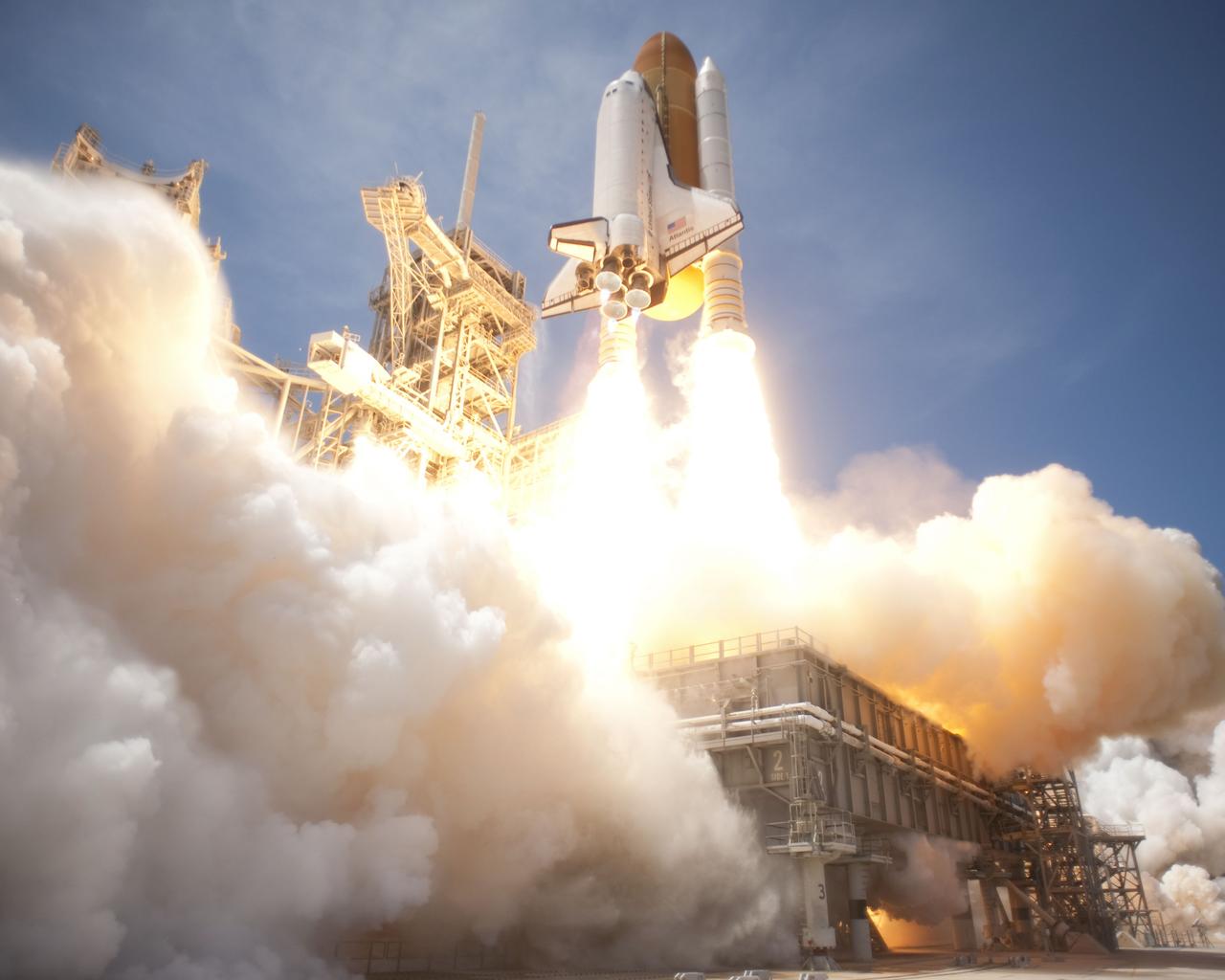
STS132-S-065 (14 May 2010) --- Space shuttle Atlantis and its six-member STS-132 crew head toward Earth orbit and rendezvous with the International Space Station. Liftoff was at 2:20 p.m. (EDT) on May 14, 2010, from launch pad 39A at NASA's Kennedy Space Center. Onboard are NASA astronauts Ken Ham, commander; Tony Antonelli, pilot; Garrett Reisman, Michael Good, Steve Bowen and Piers Sellers, all mission specialists. The crew will deliver the Russian-built Mini-Research Module 1 (MRM-1) to the International Space Station. Named Rassvet, Russian for "dawn," the module is the second in a series of new pressurized components for Russia and will be permanently attached to the Earth-facing port of the Zarya Functional Cargo Block (FGB). Rassvet will be used for cargo storage and will provide an additional docking port to the station. Also aboard Atlantis is an Integrated Cargo Carrier, or ICC, an unpressurized flat bed pallet and keel yoke assembly used to support the transfer of exterior cargo from the shuttle to the station. STS-132 is the 34th mission to the station and the last scheduled flight for Atlantis. For more information on the STS-132 mission objectives, payload and crew, visit www.nasa.gov/mission_pages/shuttle/shuttlemissions/sts132/index.html. Photo credit: NASA/Tony Gray and Tom Farrar
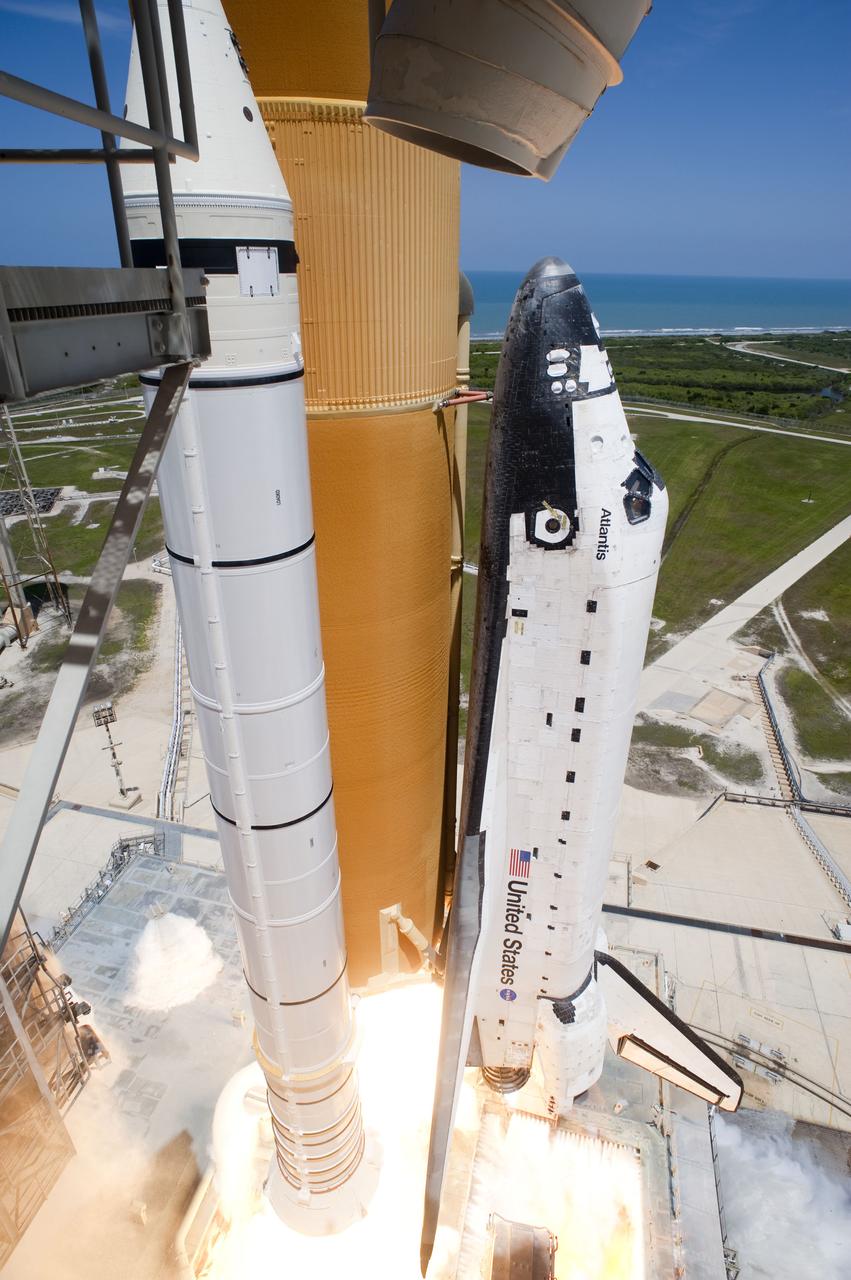
STS132-S-058 (14 May 2010) --- Space shuttle Atlantis and its six-member STS-132 crew head toward Earth orbit and rendezvous with the International Space Station. Liftoff was at 2:20 p.m. (EDT) on May 14, 2010, from launch pad 39A at NASA's Kennedy Space Center. Onboard are NASA astronauts Ken Ham, commander; Tony Antonelli, pilot; Garrett Reisman, Michael Good, Steve Bowen and Piers Sellers, all mission specialists. The crew will deliver the Russian-built Mini-Research Module 1 (MRM-1) to the International Space Station. Named Rassvet, Russian for "dawn," the module is the second in a series of new pressurized components for Russia and will be permanently attached to the Earth-facing port of the Zarya Functional Cargo Block (FGB). Rassvet will be used for cargo storage and will provide an additional docking port to the station. Also aboard Atlantis is an Integrated Cargo Carrier, or ICC, an unpressurized flat bed pallet and keel yoke assembly used to support the transfer of exterior cargo from the shuttle to the station. STS-132 is the 34th mission to the station and the last scheduled flight for Atlantis. For more information on the STS-132 mission objectives, payload and crew, visit www.nasa.gov/mission_pages/shuttle/shuttlemissions/sts132/index.html. Photo credit: NASA/Tony Gray and Tom Farrar
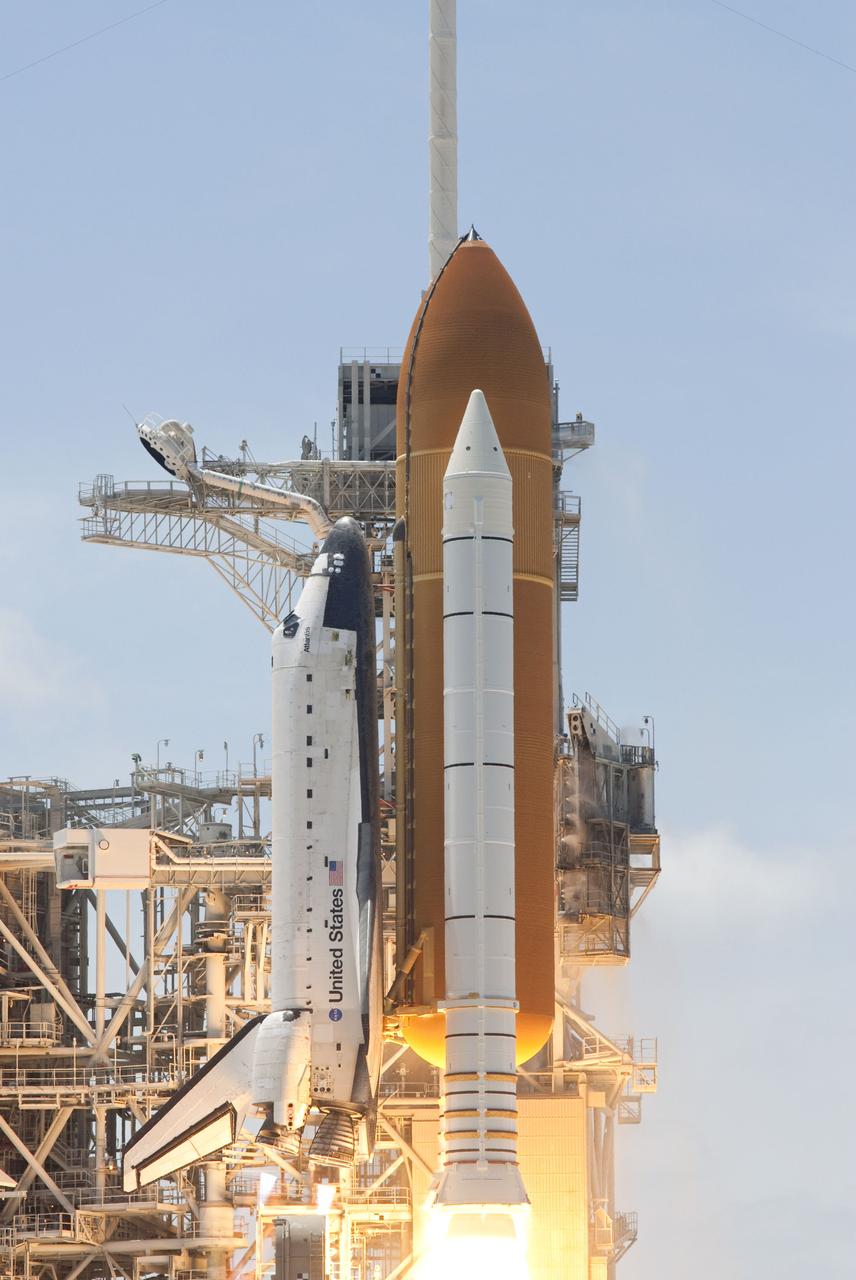
STS132-S-040 (14 May 2010) --- Space shuttle Atlantis and its six-member STS-132 crew head toward Earth orbit and rendezvous with the International Space Station. Liftoff was at 2:20 p.m. (EDT) on May 14, 2010, from launch pad 39A at NASA's Kennedy Space Center. Onboard are NASA astronauts Ken Ham, commander; Tony Antonelli, pilot; Garrett Reisman, Michael Good, Steve Bowen and Piers Sellers, all mission specialists. The crew will deliver the Russian-built Mini-Research Module 1 (MRM-1) to the International Space Station. Named Rassvet, Russian for "dawn," the module is the second in a series of new pressurized components for Russia and will be permanently attached to the Earth-facing port of the Zarya Functional Cargo Block (FGB). Rassvet will be used for cargo storage and will provide an additional docking port to the station. Also aboard Atlantis is an Integrated Cargo Carrier, or ICC, an unpressurized flat bed pallet and keel yoke assembly used to support the transfer of exterior cargo from the shuttle to the station. STS-132 is the 34th mission to the station and the last scheduled flight for Atlantis. For more information on the STS-132 mission objectives, payload and crew, visit www.nasa.gov/mission_pages/shuttle/shuttlemissions/sts132/index.html. Photo credit: NASA/Rusty Backer and Michael Gayle
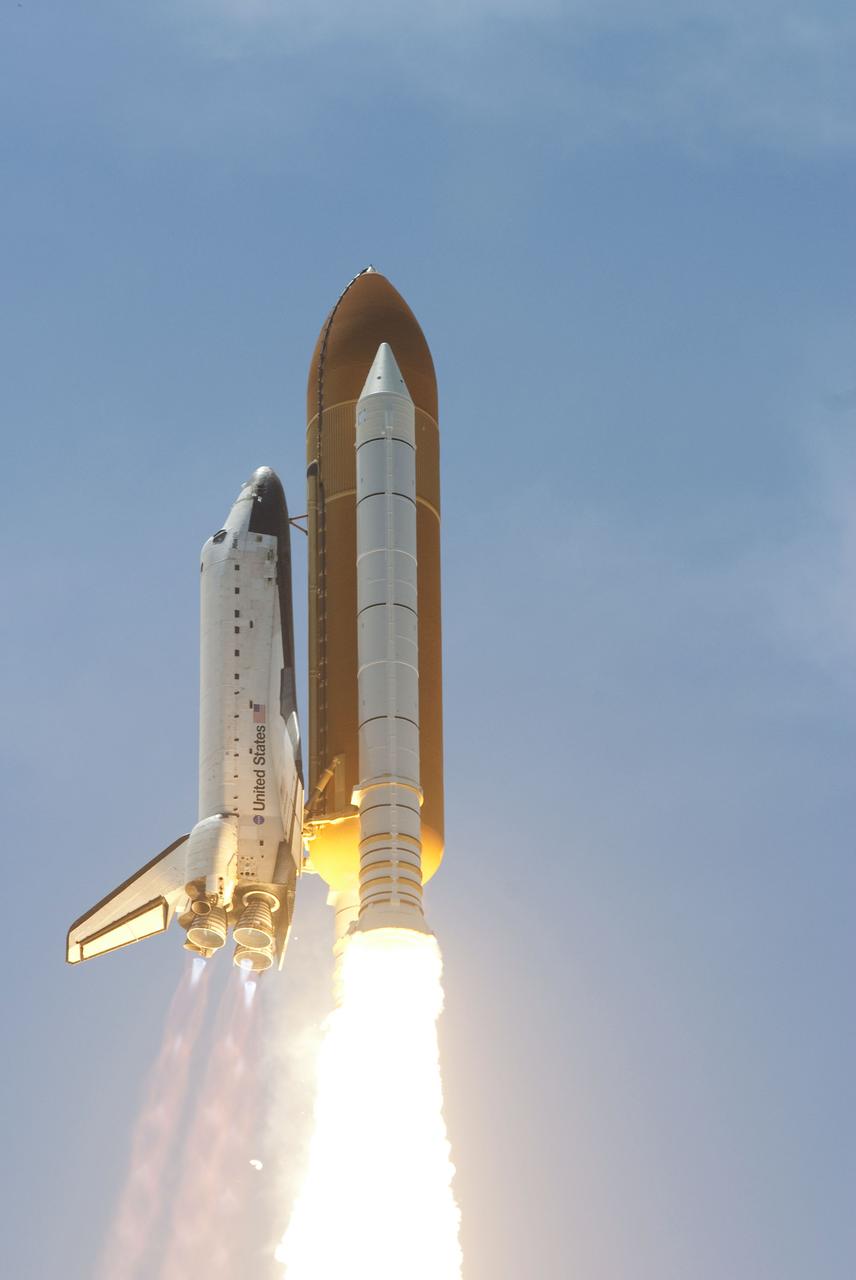
STS132-S-041 (14 May 2010) --- Space shuttle Atlantis and its six-member STS-132 crew head toward Earth orbit and rendezvous with the International Space Station. Liftoff was at 2:20 p.m. (EDT) on May 14, 2010, from launch pad 39A at NASA's Kennedy Space Center. Onboard are NASA astronauts Ken Ham, commander; Tony Antonelli, pilot; Garrett Reisman, Michael Good, Steve Bowen and Piers Sellers, all mission specialists. The crew will deliver the Russian-built Mini-Research Module 1 (MRM-1) to the International Space Station. Named Rassvet, Russian for "dawn," the module is the second in a series of new pressurized components for Russia and will be permanently attached to the Earth-facing port of the Zarya Functional Cargo Block (FGB). Rassvet will be used for cargo storage and will provide an additional docking port to the station. Also aboard Atlantis is an Integrated Cargo Carrier, or ICC, an unpressurized flat bed pallet and keel yoke assembly used to support the transfer of exterior cargo from the shuttle to the station. STS-132 is the 34th mission to the station and the last scheduled flight for Atlantis. For more information on the STS-132 mission objectives, payload and crew, visit www.nasa.gov/mission_pages/shuttle/shuttlemissions/sts132/index.html. Photo credit: NASA/Rusty Backer and Michael Gayle
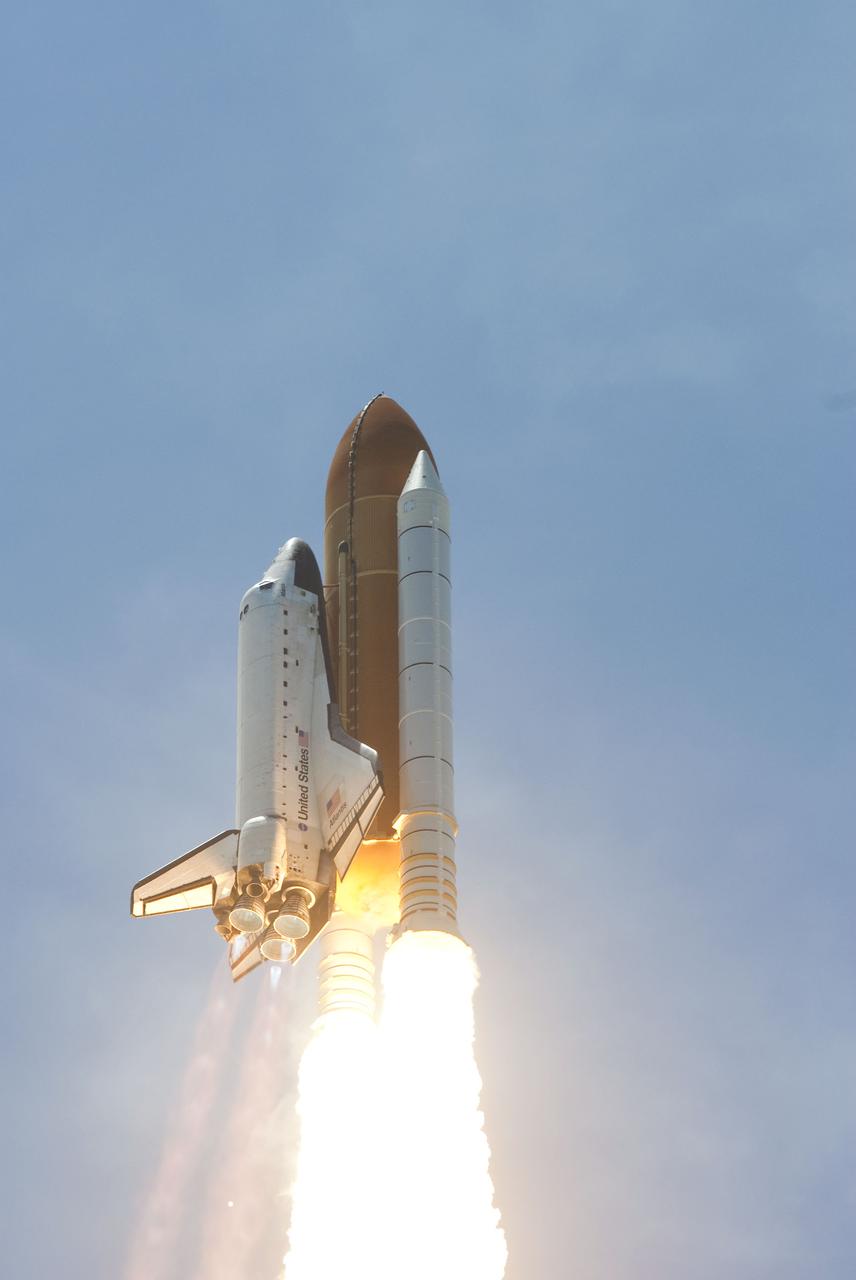
STS132-S-042 (14 May 2010) --- Space shuttle Atlantis and its six-member STS-132 crew head toward Earth orbit and rendezvous with the International Space Station. Liftoff was at 2:20 p.m. (EDT) on May 14, 2010, from launch pad 39A at NASA's Kennedy Space Center. Onboard are NASA astronauts Ken Ham, commander; Tony Antonelli, pilot; Garrett Reisman, Michael Good, Steve Bowen and Piers Sellers, all mission specialists. The crew will deliver the Russian-built Mini-Research Module 1 (MRM-1) to the International Space Station. Named Rassvet, Russian for "dawn," the module is the second in a series of new pressurized components for Russia and will be permanently attached to the Earth-facing port of the Zarya Functional Cargo Block (FGB). Rassvet will be used for cargo storage and will provide an additional docking port to the station. Also aboard Atlantis is an Integrated Cargo Carrier, or ICC, an unpressurized flat bed pallet and keel yoke assembly used to support the transfer of exterior cargo from the shuttle to the station. STS-132 is the 34th mission to the station and the last scheduled flight for Atlantis. For more information on the STS-132 mission objectives, payload and crew, visit www.nasa.gov/mission_pages/shuttle/shuttlemissions/sts132/index.html. Photo credit: NASA/Rusty Backer and Michael Gayle
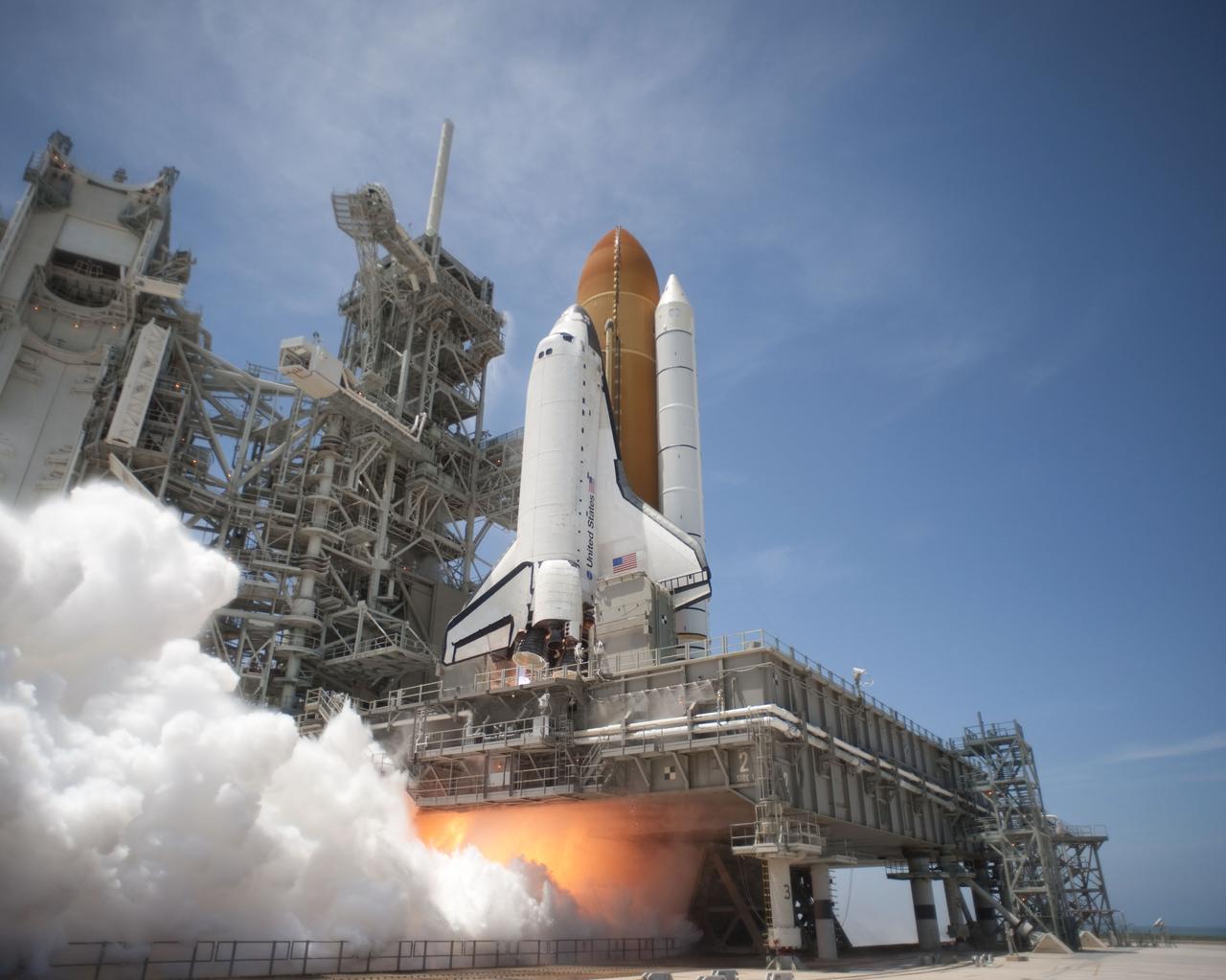
STS132-S-063 (14 May 2010) --- Space shuttle Atlantis and its six-member STS-132 crew head toward Earth orbit and rendezvous with the International Space Station. Liftoff was at 2:20 p.m. (EDT) on May 14, 2010, from launch pad 39A at NASA's Kennedy Space Center. Onboard are NASA astronauts Ken Ham, commander; Tony Antonelli, pilot; Garrett Reisman, Michael Good, Steve Bowen and Piers Sellers, all mission specialists. The crew will deliver the Russian-built Mini-Research Module 1 (MRM-1) to the International Space Station. Named Rassvet, Russian for "dawn," the module is the second in a series of new pressurized components for Russia and will be permanently attached to the Earth-facing port of the Zarya Functional Cargo Block (FGB). Rassvet will be used for cargo storage and will provide an additional docking port to the station. Also aboard Atlantis is an Integrated Cargo Carrier, or ICC, an unpressurized flat bed pallet and keel yoke assembly used to support the transfer of exterior cargo from the shuttle to the station. STS-132 is the 34th mission to the station and the last scheduled flight for Atlantis. For more information on the STS-132 mission objectives, payload and crew, visit www.nasa.gov/mission_pages/shuttle/shuttlemissions/sts132/index.html. Photo credit: NASA/Tony Gray and Tom Farrar
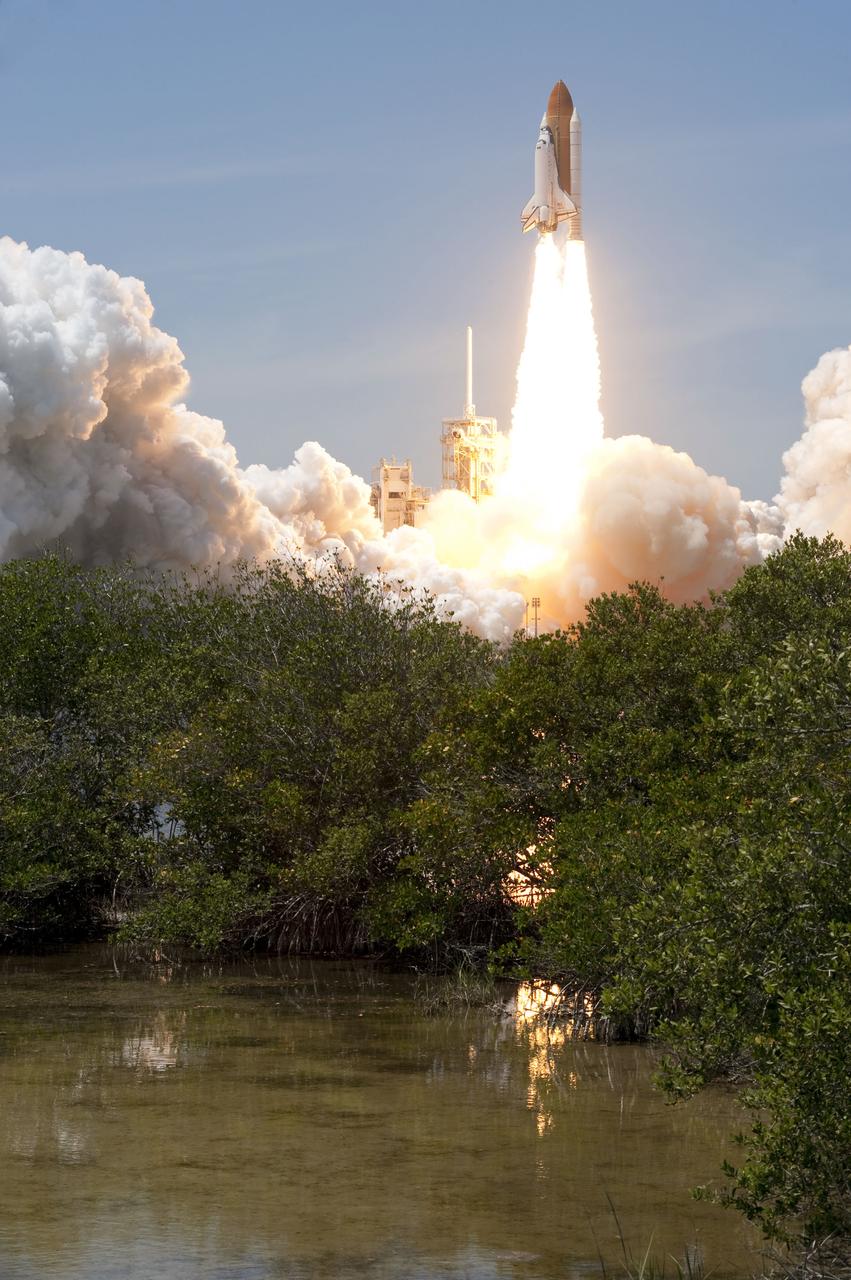
STS132-S-033 (14 May 2010) --- Space shuttle Atlantis and its six-member STS-132 crew head toward Earth orbit and rendezvous with the International Space Station. Liftoff was at 2:20 p.m. (EDT) on May 14, 2010, from launch pad 39A at NASA's Kennedy Space Center. Onboard are NASA astronauts Ken Ham, commander; Tony Antonelli, pilot; Garrett Reisman, Michael Good, Steve Bowen and Piers Sellers, all mission specialists. The crew will deliver the Russian-built Mini-Research Module 1 (MRM-1) to the International Space Station. Named Rassvet, Russian for "dawn," the module is the second in a series of new pressurized components for Russia and will be permanently attached to the Earth-facing port of the Zarya Functional Cargo Block (FGB). Rassvet will be used for cargo storage and will provide an additional docking port to the station. Also aboard Atlantis is an Integrated Cargo Carrier, or ICC, an unpressurized flat bed pallet and keel yoke assembly used to support the transfer of exterior cargo from the shuttle to the station. STS-132 is the 34th mission to the station and the last scheduled flight for Atlantis. For more information on the STS-132 mission objectives, payload and crew, visit www.nasa.gov/mission_pages/shuttle/shuttlemissions/sts132/index.html. Photo credit: NASA/Sandra Joseph and Kevin O'Connell..
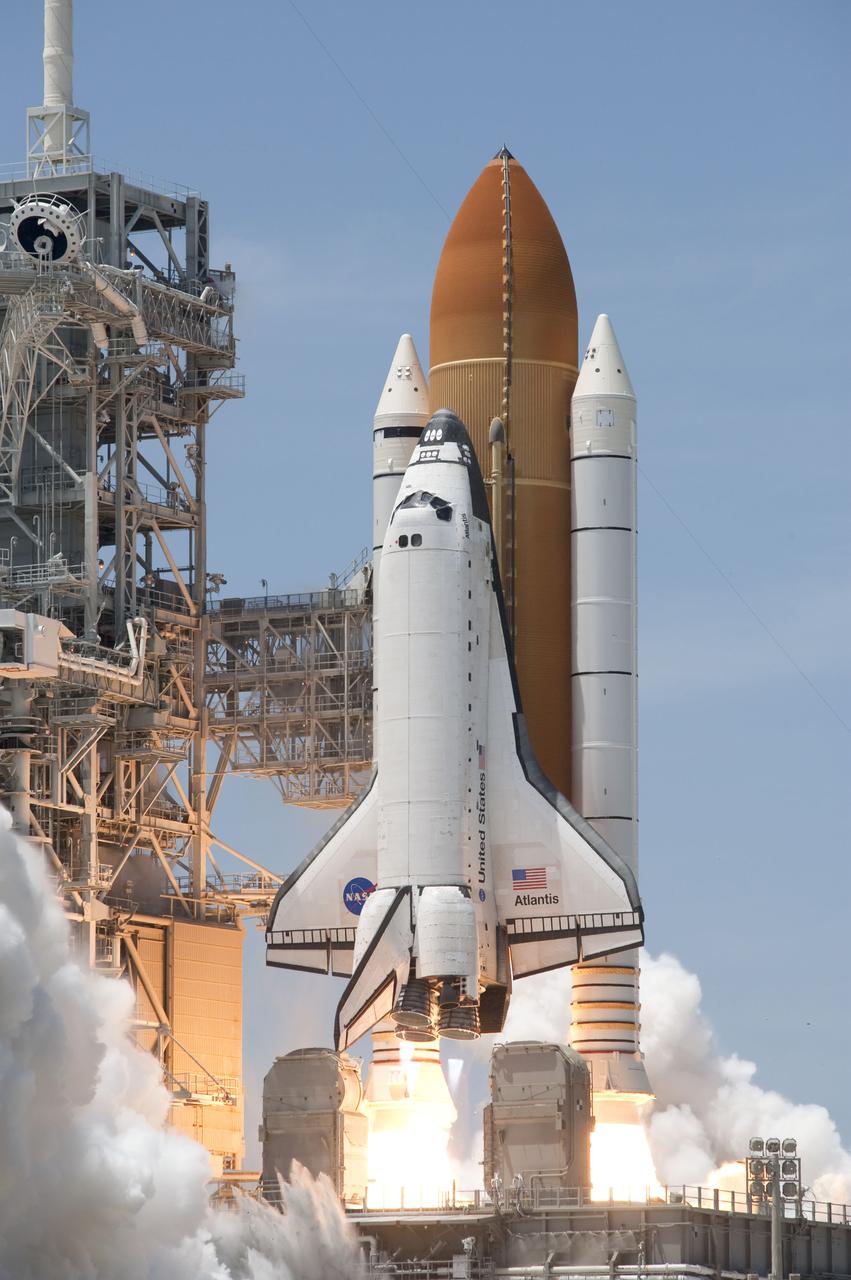
STS132-S-043 (14 May 2010) --- Space shuttle Atlantis and its six-member STS-132 crew head toward Earth orbit and rendezvous with the International Space Station. Liftoff was at 2:20 p.m. (EDT) on May 14, 2010, from launch pad 39A at NASA's Kennedy Space Center. Onboard are NASA astronauts Ken Ham, commander; Tony Antonelli, pilot; Garrett Reisman, Michael Good, Steve Bowen and Piers Sellers, all mission specialists. The crew will deliver the Russian-built Mini-Research Module 1 (MRM-1) to the International Space Station. Named Rassvet, Russian for "dawn," the module is the second in a series of new pressurized components for Russia and will be permanently attached to the Earth-facing port of the Zarya Functional Cargo Block (FGB). Rassvet will be used for cargo storage and will provide an additional docking port to the station. Also aboard Atlantis is an Integrated Cargo Carrier, or ICC, an unpressurized flat bed pallet and keel yoke assembly used to support the transfer of exterior cargo from the shuttle to the station. STS-132 is the 34th mission to the station and the last scheduled flight for Atlantis. For more information on the STS-132 mission objectives, payload and crew, visit www.nasa.gov/mission_pages/shuttle/shuttlemissions/sts132/index.html. Photo credit: NASA/Sandra Joseph and Kevin O'Connell
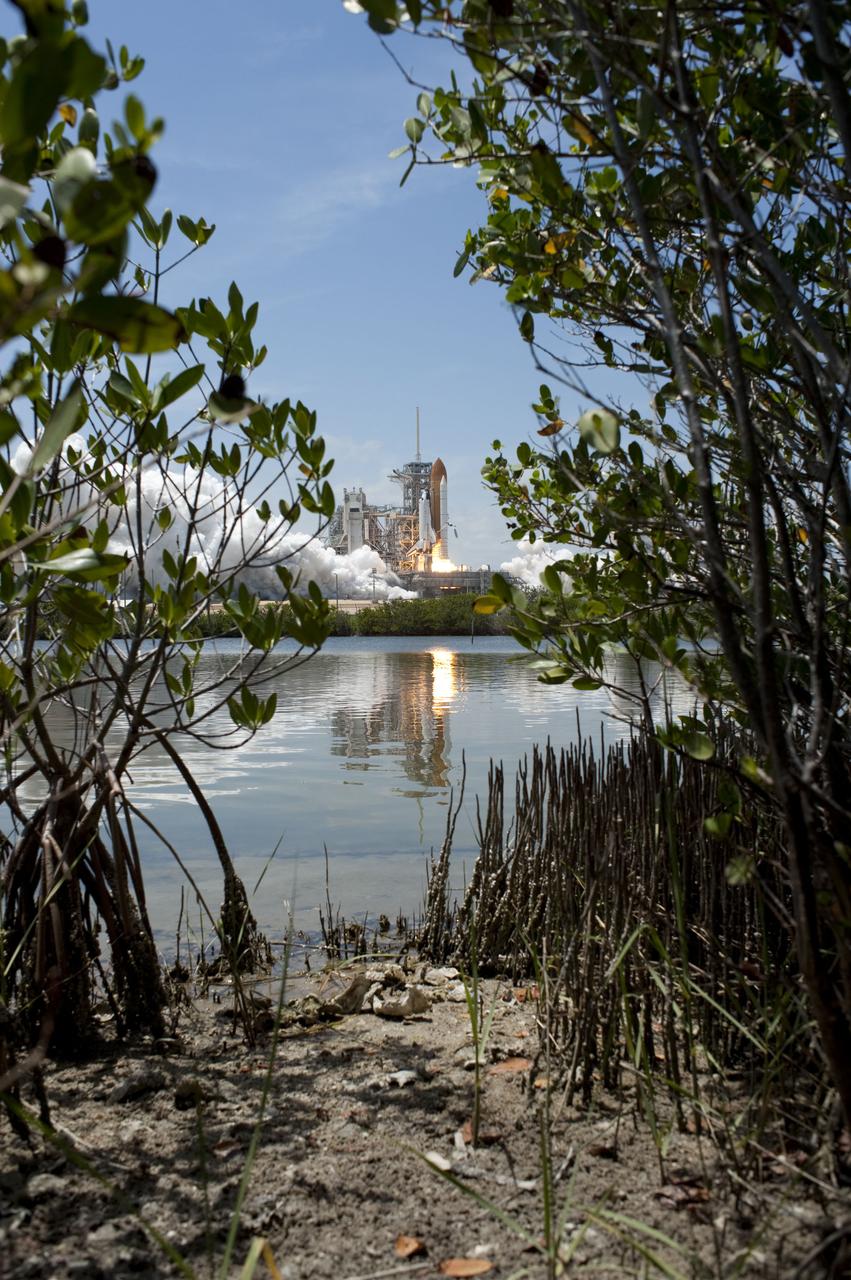
STS132-S-034 (14 May 2010) --- Space shuttle Atlantis and its six-member STS-132 crew head toward Earth orbit and rendezvous with the International Space Station. Liftoff was at 2:20 p.m. (EDT) on May 14, 2010, from launch pad 39A at NASA's Kennedy Space Center. Onboard are NASA astronauts Ken Ham, commander; Tony Antonelli, pilot; Garrett Reisman, Michael Good, Steve Bowen and Piers Sellers, all mission specialists. The crew will deliver the Russian-built Mini-Research Module 1 (MRM-1) to the International Space Station. Named Rassvet, Russian for "dawn," the module is the second in a series of new pressurized components for Russia and will be permanently attached to the Earth-facing port of the Zarya Functional Cargo Block (FGB). Rassvet will be used for cargo storage and will provide an additional docking port to the station. Also aboard Atlantis is an Integrated Cargo Carrier, or ICC, an unpressurized flat bed pallet and keel yoke assembly used to support the transfer of exterior cargo from the shuttle to the station. STS-132 is the 34th mission to the station and the last scheduled flight for Atlantis. For more information on the STS-132 mission objectives, payload and crew, visit www.nasa.gov/mission_pages/shuttle/shuttlemissions/sts132/index.html. Photo credit: NASA/Tony Gray and Tom Farrar
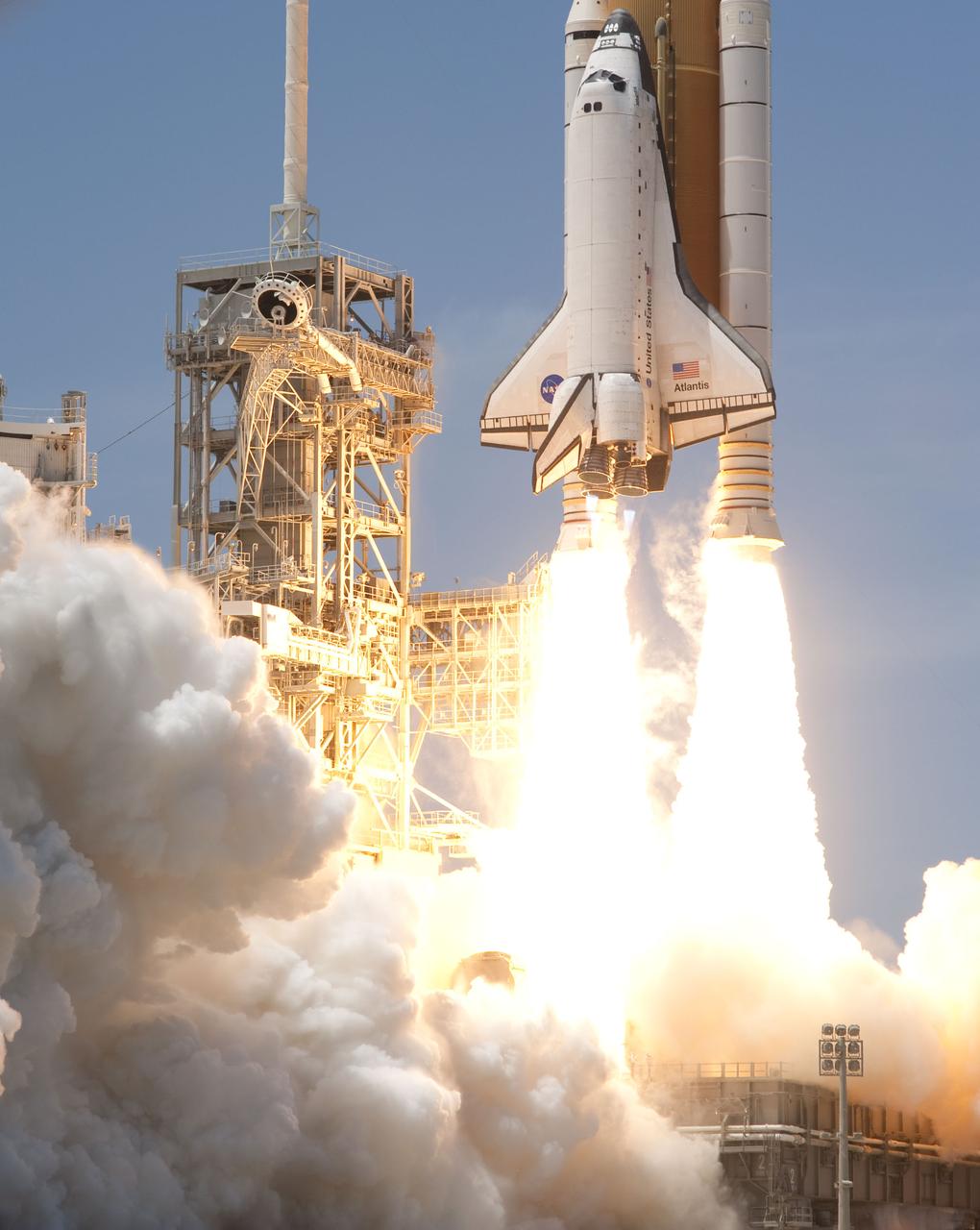
STS132-S-039 (14 May 2010) --- Space shuttle Atlantis and its six-member STS-132 crew head toward Earth orbit and rendezvous with the International Space Station. Liftoff was at 2:20 p.m. (EDT) on May 14, 2010, from launch pad 39A at NASA's Kennedy Space Center. Onboard are NASA astronauts Ken Ham, commander; Tony Antonelli, pilot; Garrett Reisman, Michael Good, Steve Bowen and Piers Sellers, all mission specialists. The crew will deliver the Russian-built Mini-Research Module 1 (MRM-1) to the International Space Station. Named Rassvet, Russian for "dawn," the module is the second in a series of new pressurized components for Russia and will be permanently attached to the Earth-facing port of the Zarya Functional Cargo Block (FGB). Rassvet will be used for cargo storage and will provide an additional docking port to the station. Also aboard Atlantis is an Integrated Cargo Carrier, or ICC, an unpressurized flat bed pallet and keel yoke assembly used to support the transfer of exterior cargo from the shuttle to the station. STS-132 is the 34th mission to the station and the last scheduled flight for Atlantis. For more information on the STS-132 mission objectives, payload and crew, visit www.nasa.gov/mission_pages/shuttle/shuttlemissions/sts132/index.html. Photo credit: NASA/Sandra Joseph and Kevin O'Connell
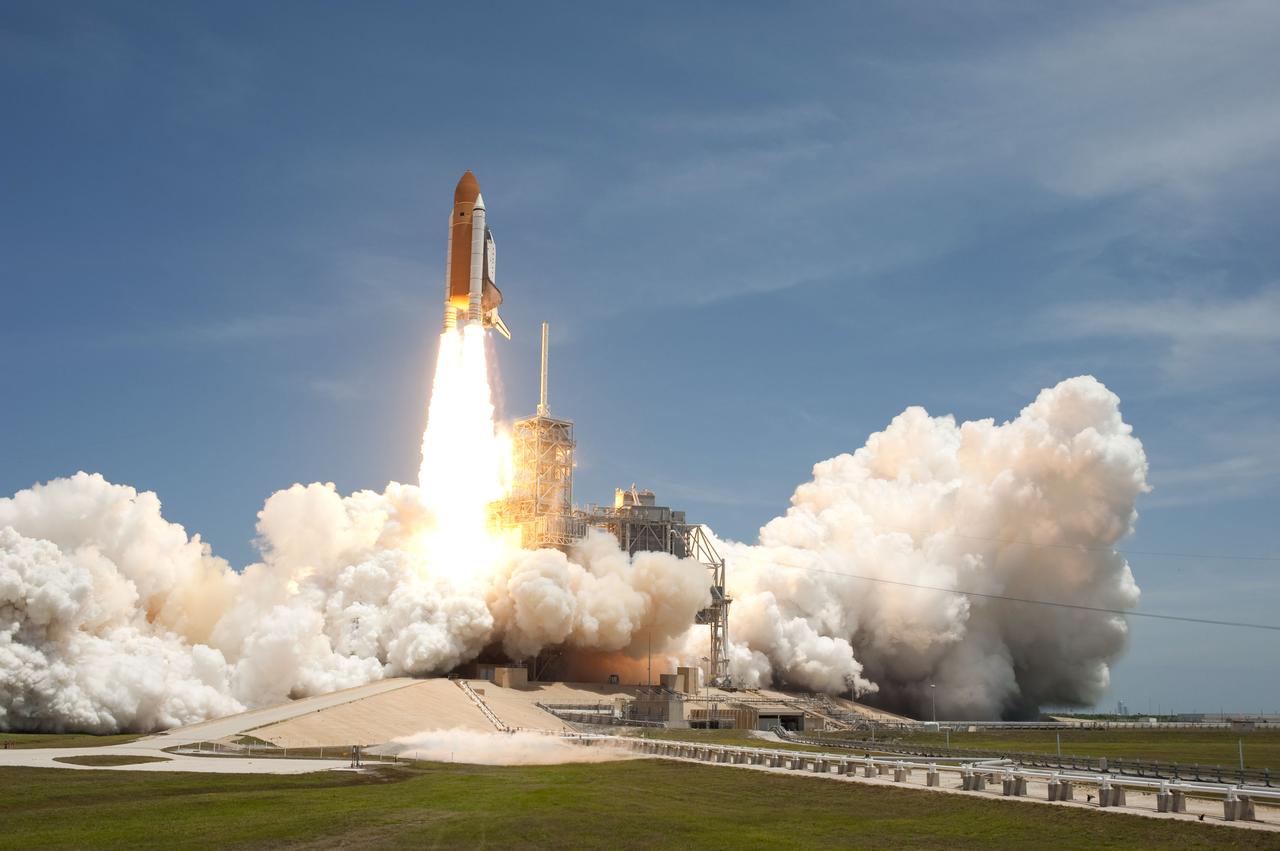
STS132-S-051 (14 May 2010) --- Space shuttle Atlantis and its six-member STS-132 crew head toward Earth orbit and rendezvous with the International Space Station. Liftoff was at 2:20 p.m. (EDT) on May 14, 2010, from launch pad 39A at NASA's Kennedy Space Center. Onboard are NASA astronauts Ken Ham, commander; Tony Antonelli, pilot; Garrett Reisman, Michael Good, Steve Bowen and Piers Sellers, all mission specialists. The crew will deliver the Russian-built Mini-Research Module 1 (MRM-1) to the International Space Station. Named Rassvet, Russian for "dawn," the module is the second in a series of new pressurized components for Russia and will be permanently attached to the Earth-facing port of the Zarya Functional Cargo Block (FGB). Rassvet will be used for cargo storage and will provide an additional docking port to the station. Also aboard Atlantis is an Integrated Cargo Carrier, or ICC, an unpressurized flat bed pallet and keel yoke assembly used to support the transfer of exterior cargo from the shuttle to the station. STS-132 is the 34th mission to the station and the last scheduled flight for Atlantis. For more information on the STS-132 mission objectives, payload and crew, visit www.nasa.gov/mission_pages/shuttle/shuttlemissions/sts132/index.html. Photo credit: NASA/Sandra Joseph and Kevin O'Connell

STS132-S-049 (14 May 2010) --- Space shuttle Atlantis and its six-member STS-132 crew head toward Earth orbit and rendezvous with the International Space Station. Liftoff was at 2:20 p.m. (EDT) on May 14, 2010, from launch pad 39A at NASA's Kennedy Space Center. Onboard are NASA astronauts Ken Ham, commander; Tony Antonelli, pilot; Garrett Reisman, Michael Good, Steve Bowen and Piers Sellers, all mission specialists. The crew will deliver the Russian-built Mini-Research Module 1 (MRM-1) to the International Space Station. Named Rassvet, Russian for "dawn," the module is the second in a series of new pressurized components for Russia and will be permanently attached to the Earth-facing port of the Zarya Functional Cargo Block (FGB). Rassvet will be used for cargo storage and will provide an additional docking port to the station. Also aboard Atlantis is an Integrated Cargo Carrier, or ICC, an unpressurized flat bed pallet and keel yoke assembly used to support the transfer of exterior cargo from the shuttle to the station. STS-132 is the 34th mission to the station and the last scheduled flight for Atlantis. For more information on the STS-132 mission objectives, payload and crew, visit www.nasa.gov/mission_pages/shuttle/shuttlemissions/sts132/index.html. Photo credit: NASA/Rusty Backer and Michael Gayle
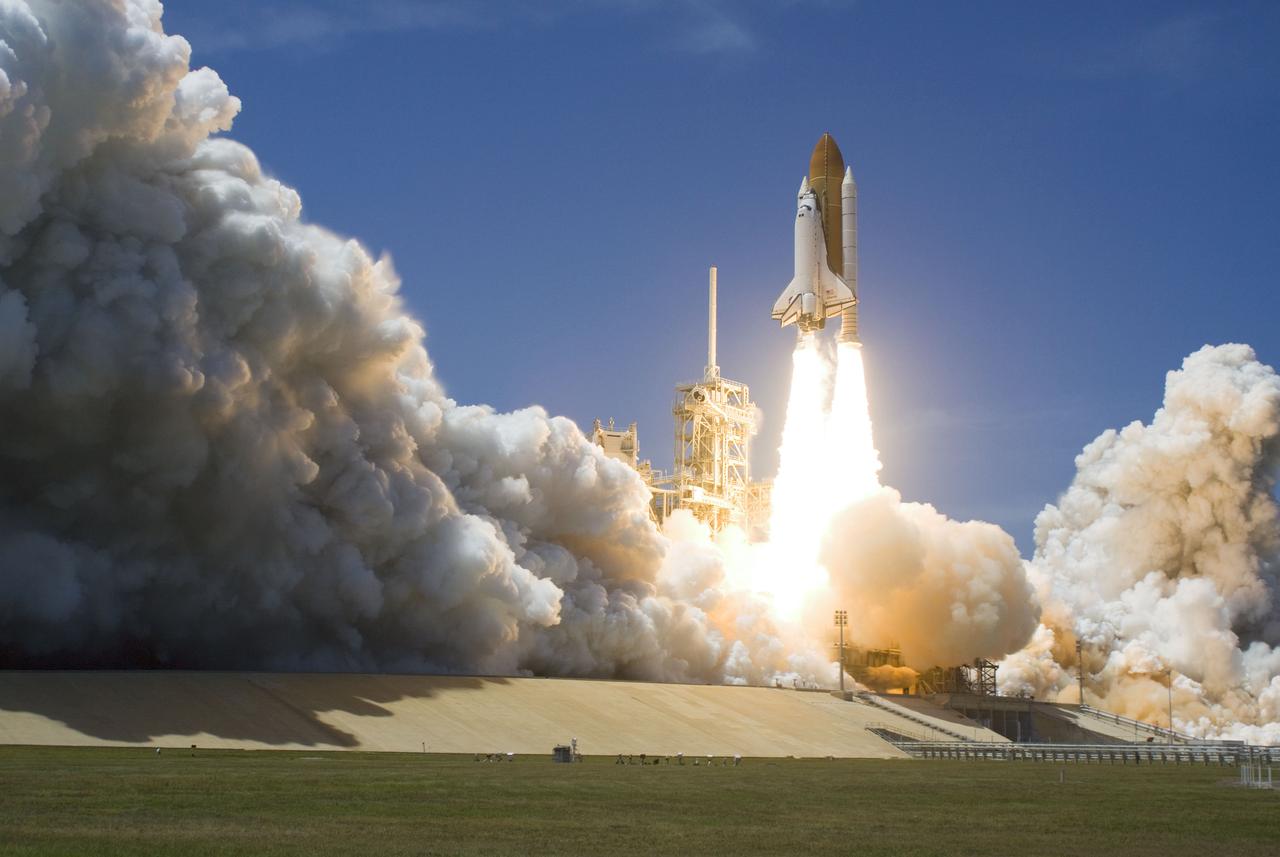
STS132-S-075 (14 May 2010) --- Space shuttle Atlantis and its six-member STS-132 crew head toward Earth orbit and rendezvous with the International Space Station. Liftoff was at 2:20 p.m. (EDT) on May 14, 2010, from launch pad 39A at NASA's Kennedy Space Center. Onboard are NASA astronauts Ken Ham, commander; Tony Antonelli, pilot; Garrett Reisman, Michael Good, Steve Bowen and Piers Sellers, all mission specialists. The crew will deliver the Russian-built Mini-Research Module 1 (MRM-1) to the International Space Station. Named Rassvet, Russian for "dawn," the module is the second in a series of new pressurized components for Russia and will be permanently attached to the Earth-facing port of the Zarya Functional Cargo Block (FGB). Rassvet will be used for cargo storage and will provide an additional docking port to the station. Also aboard Atlantis is an Integrated Cargo Carrier, or ICC, an unpressurized flat bed pallet and keel yoke assembly used to support the transfer of exterior cargo from the shuttle to the station. STS-132 is the 34th mission to the station and the last scheduled flight for Atlantis.
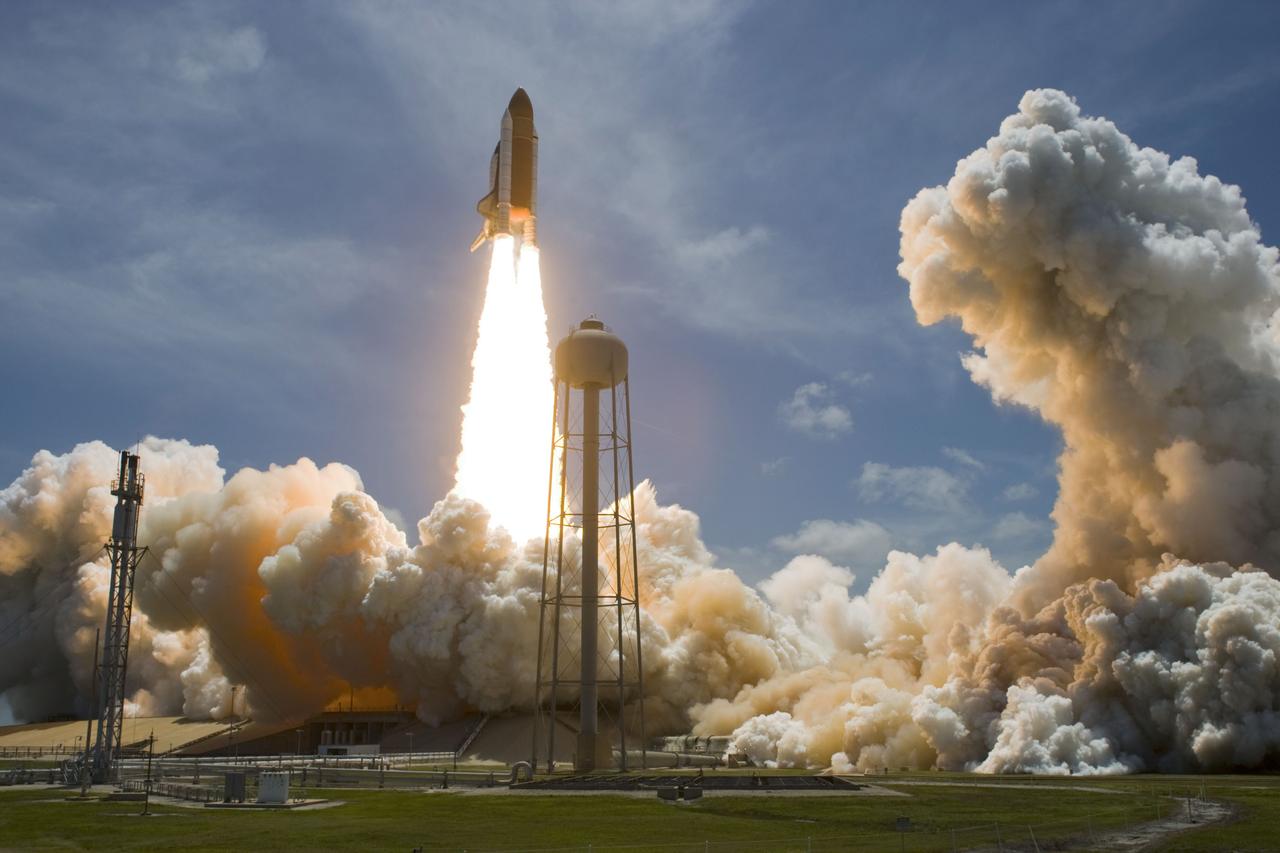
STS132-S-081 (14 May 2010) --- Space shuttle Atlantis and its six-member STS-132 crew head toward Earth orbit and rendezvous with the International Space Station. Liftoff was at 2:20 p.m. (EDT) on May 14, 2010, from launch pad 39A at NASA's Kennedy Space Center. Onboard are NASA astronauts Ken Ham, commander; Tony Antonelli, pilot; Garrett Reisman, Michael Good, Steve Bowen and Piers Sellers, all mission specialists. The crew will deliver the Russian-built Mini-Research Module 1 (MRM-1) to the International Space Station. Named Rassvet, Russian for "dawn," the module is the second in a series of new pressurized components for Russia and will be permanently attached to the Earth-facing port of the Zarya Functional Cargo Block (FGB). Rassvet will be used for cargo storage and will provide an additional docking port to the station. Also aboard Atlantis is an Integrated Cargo Carrier, or ICC, an unpressurized flat bed pallet and keel yoke assembly used to support the transfer of exterior cargo from the shuttle to the station. STS-132 is the 34th mission to the station and the last scheduled flight for Atlantis.
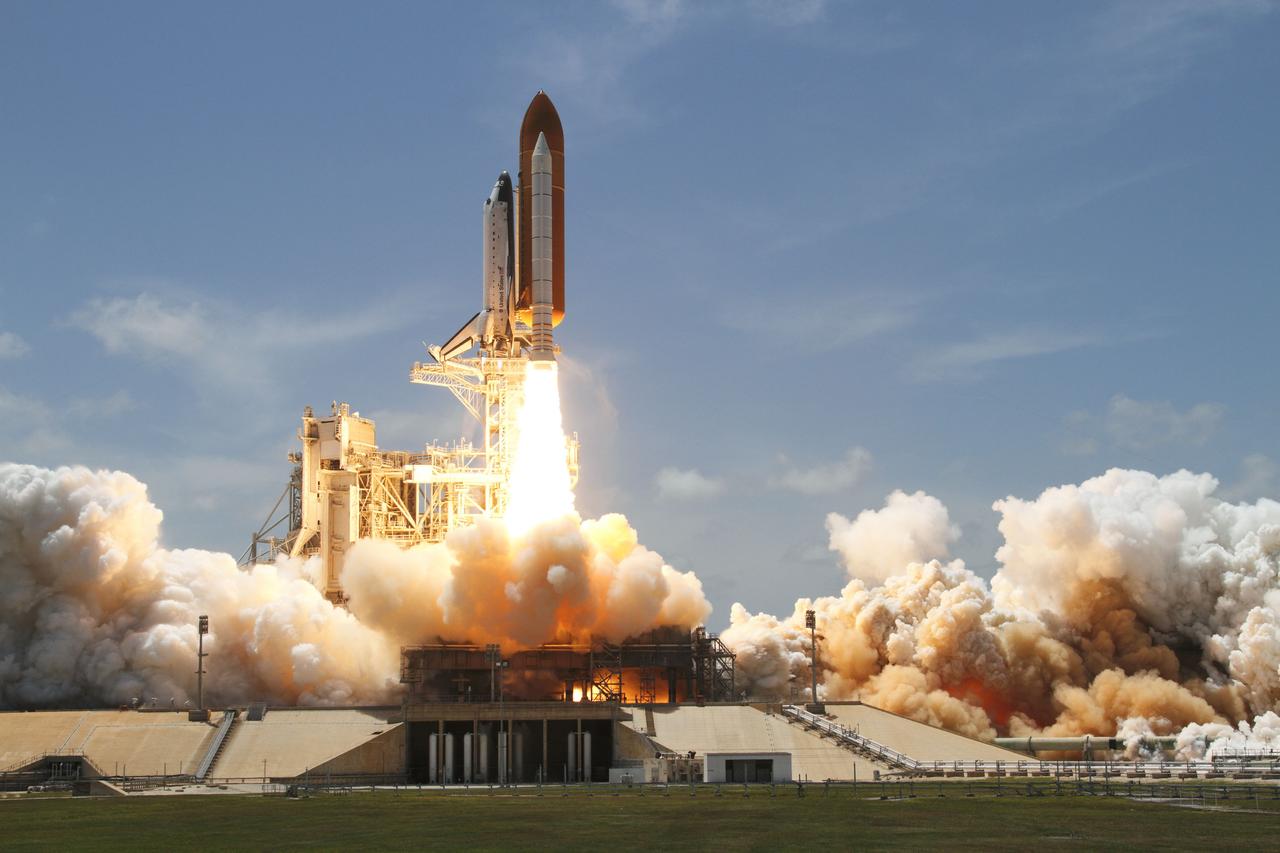
STS132-S-072 (14 May 2010) --- Space shuttle Atlantis and its six-member STS-132 crew head toward Earth orbit and rendezvous with the International Space Station. Liftoff was at 2:20 p.m. (EDT) on May 14, 2010, from launch pad 39A at NASA's Kennedy Space Center. Onboard are NASA astronauts Ken Ham, commander; Tony Antonelli, pilot; Garrett Reisman, Michael Good, Steve Bowen and Piers Sellers, all mission specialists. The crew will deliver the Russian-built Mini-Research Module 1 (MRM-1) to the International Space Station. Named Rassvet, Russian for "dawn," the module is the second in a series of new pressurized components for Russia and will be permanently attached to the Earth-facing port of the Zarya Functional Cargo Block (FGB). Rassvet will be used for cargo storage and will provide an additional docking port to the station. Also aboard Atlantis is an Integrated Cargo Carrier, or ICC, an unpressurized flat bed pallet and keel yoke assembly used to support the transfer of exterior cargo from the shuttle to the station. STS-132 is the 34th mission to the station and the last scheduled flight for Atlantis.
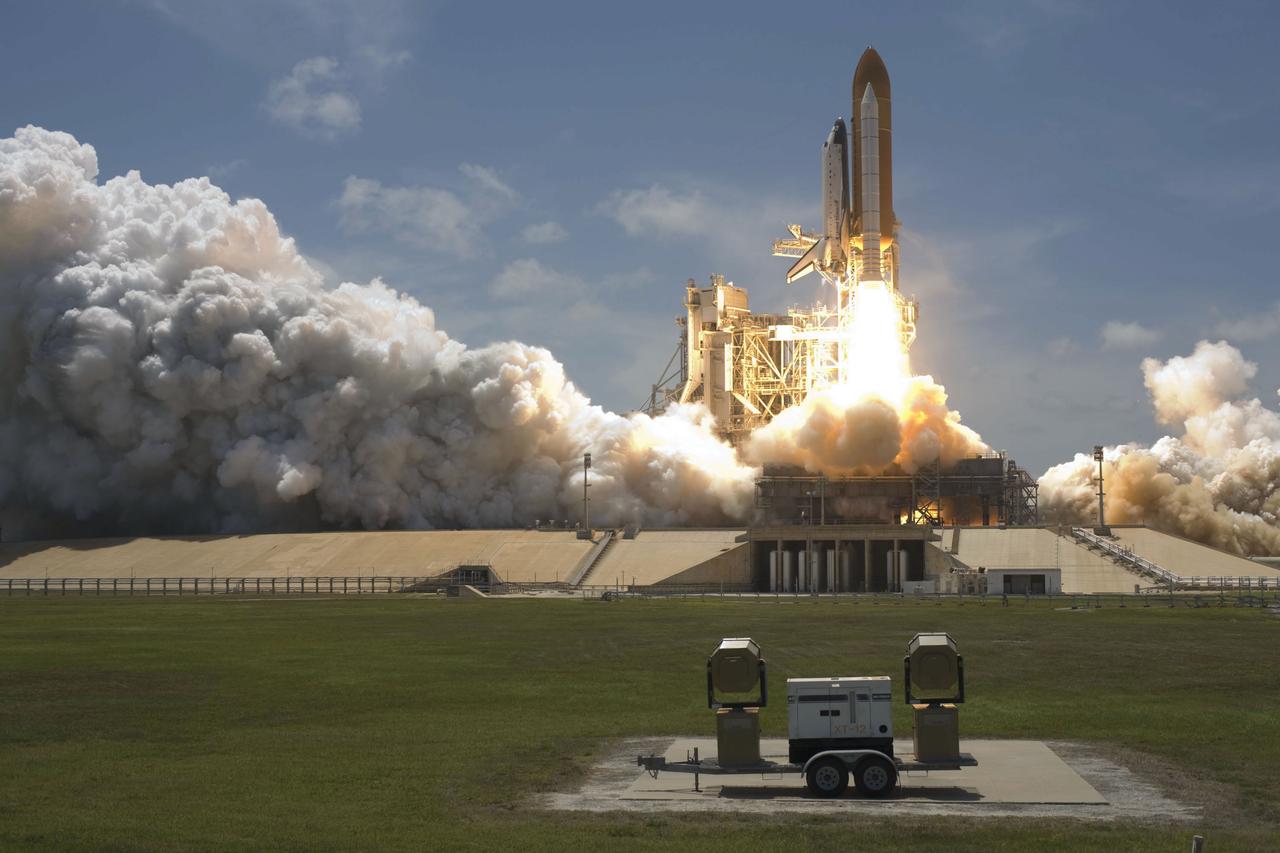
STS132-S-079 (14 May 2010) --- Space shuttle Atlantis and its six-member STS-132 crew head toward Earth orbit and rendezvous with the International Space Station. Liftoff was at 2:20 p.m. (EDT) on May 14, 2010, from launch pad 39A at NASA's Kennedy Space Center. Onboard are NASA astronauts Ken Ham, commander; Tony Antonelli, pilot; Garrett Reisman, Michael Good, Steve Bowen and Piers Sellers, all mission specialists. The crew will deliver the Russian-built Mini-Research Module 1 (MRM-1) to the International Space Station. Named Rassvet, Russian for "dawn," the module is the second in a series of new pressurized components for Russia and will be permanently attached to the Earth-facing port of the Zarya Functional Cargo Block (FGB). Rassvet will be used for cargo storage and will provide an additional docking port to the station. Also aboard Atlantis is an Integrated Cargo Carrier, or ICC, an unpressurized flat bed pallet and keel yoke assembly used to support the transfer of exterior cargo from the shuttle to the station. STS-132 is the 34th mission to the station and the last scheduled flight for Atlantis.
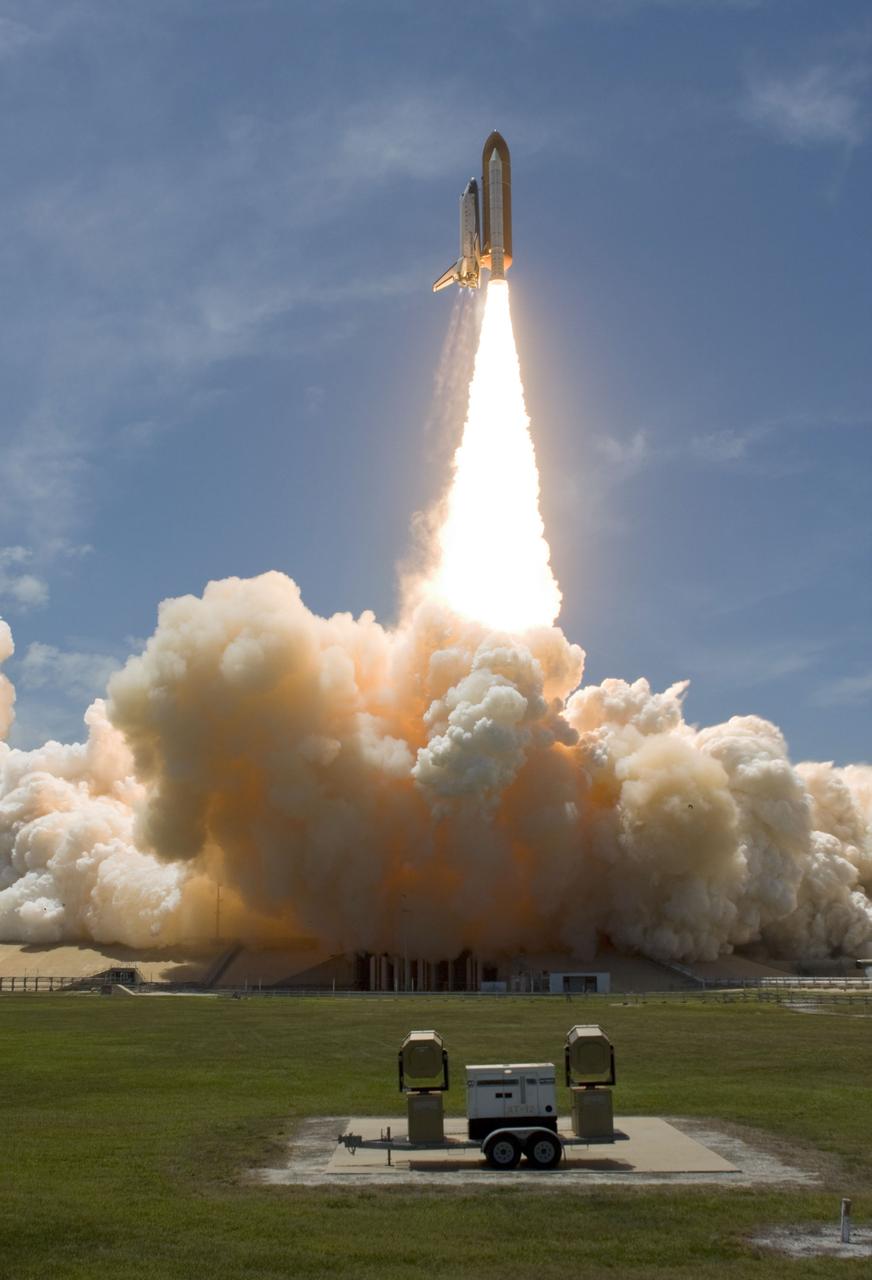
STS132-S-078 (14 May 2010) --- Space shuttle Atlantis and its six-member STS-132 crew head toward Earth orbit and rendezvous with the International Space Station. Liftoff was at 2:20 p.m. (EDT) on May 14, 2010, from launch pad 39A at NASA's Kennedy Space Center. Onboard are NASA astronauts Ken Ham, commander; Tony Antonelli, pilot; Garrett Reisman, Michael Good, Steve Bowen and Piers Sellers, all mission specialists. The crew will deliver the Russian-built Mini-Research Module 1 (MRM-1) to the International Space Station. Named Rassvet, Russian for "dawn," the module is the second in a series of new pressurized components for Russia and will be permanently attached to the Earth-facing port of the Zarya Functional Cargo Block (FGB). Rassvet will be used for cargo storage and will provide an additional docking port to the station. Also aboard Atlantis is an Integrated Cargo Carrier, or ICC, an unpressurized flat bed pallet and keel yoke assembly used to support the transfer of exterior cargo from the shuttle to the station. STS-132 is the 34th mission to the station and the last scheduled flight for Atlantis.
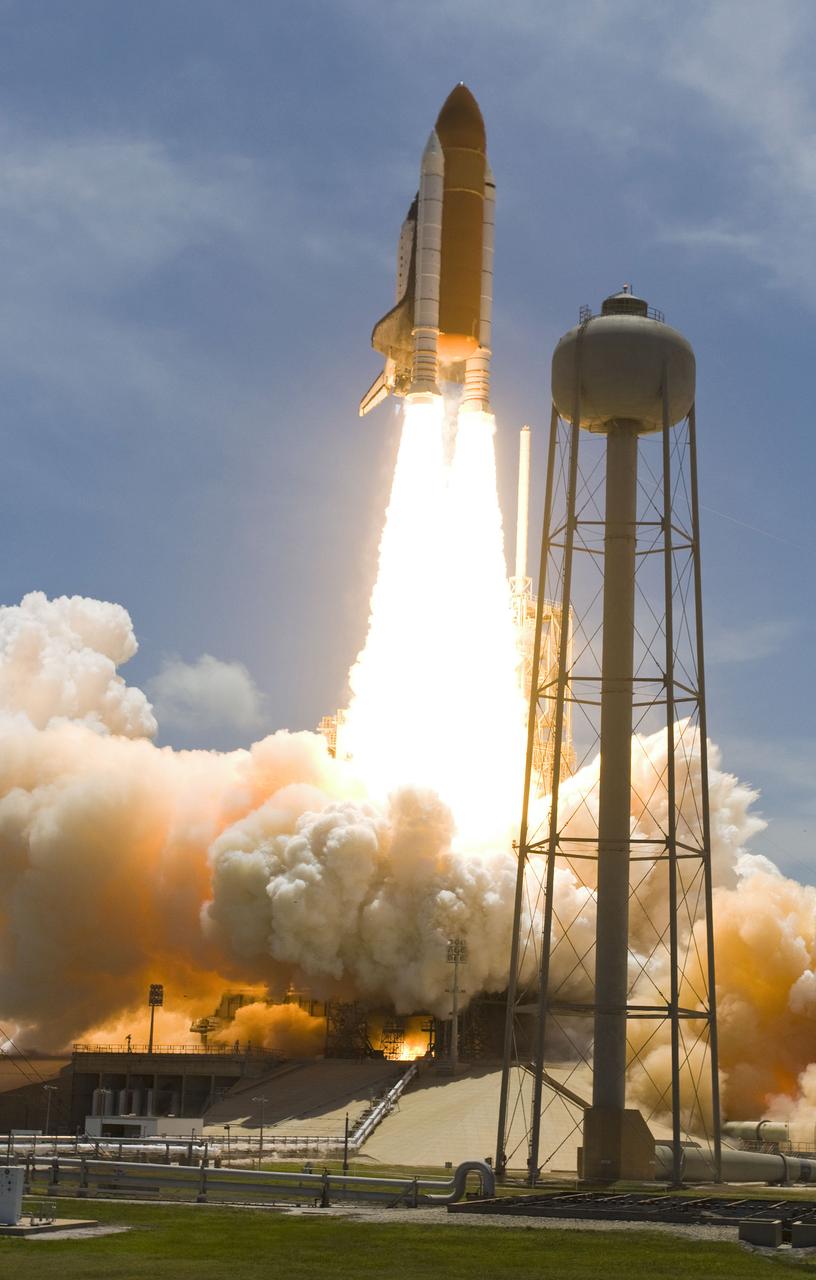
STS132-S-076 (14 May 2010) --- Space shuttle Atlantis and its six-member STS-132 crew head toward Earth orbit and rendezvous with the International Space Station. Liftoff was at 2:20 p.m. (EDT) on May 14, 2010, from launch pad 39A at NASA's Kennedy Space Center. Onboard are NASA astronauts Ken Ham, commander; Tony Antonelli, pilot; Garrett Reisman, Michael Good, Steve Bowen and Piers Sellers, all mission specialists. The crew will deliver the Russian-built Mini-Research Module 1 (MRM-1) to the International Space Station. Named Rassvet, Russian for "dawn," the module is the second in a series of new pressurized components for Russia and will be permanently attached to the Earth-facing port of the Zarya Functional Cargo Block (FGB). Rassvet will be used for cargo storage and will provide an additional docking port to the station. Also aboard Atlantis is an Integrated Cargo Carrier, or ICC, an unpressurized flat bed pallet and keel yoke assembly used to support the transfer of exterior cargo from the shuttle to the station. STS-132 is the 34th mission to the station and the last scheduled flight for Atlantis.
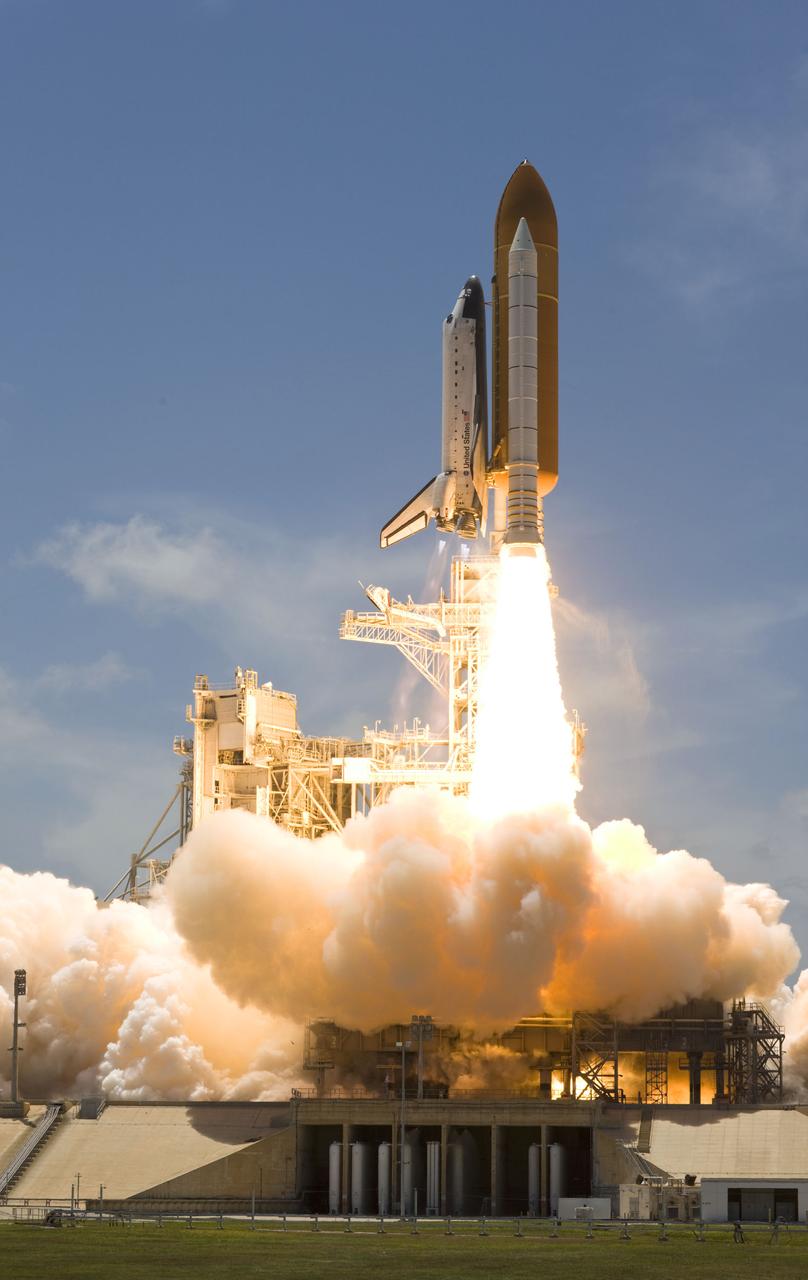
STS132-S-073 (14 May 2010) --- Space shuttle Atlantis and its six-member STS-132 crew head toward Earth orbit and rendezvous with the International Space Station. Liftoff was at 2:20 p.m. (EDT) on May 14, 2010, from launch pad 39A at NASA's Kennedy Space Center. Onboard are NASA astronauts Ken Ham, commander; Tony Antonelli, pilot; Garrett Reisman, Michael Good, Steve Bowen and Piers Sellers, all mission specialists. The crew will deliver the Russian-built Mini-Research Module 1 (MRM-1) to the International Space Station. Named Rassvet, Russian for "dawn," the module is the second in a series of new pressurized components for Russia and will be permanently attached to the Earth-facing port of the Zarya Functional Cargo Block (FGB). Rassvet will be used for cargo storage and will provide an additional docking port to the station. Also aboard Atlantis is an Integrated Cargo Carrier, or ICC, an unpressurized flat bed pallet and keel yoke assembly used to support the transfer of exterior cargo from the shuttle to the station. STS-132 is the 34th mission to the station and the last scheduled flight for Atlantis.
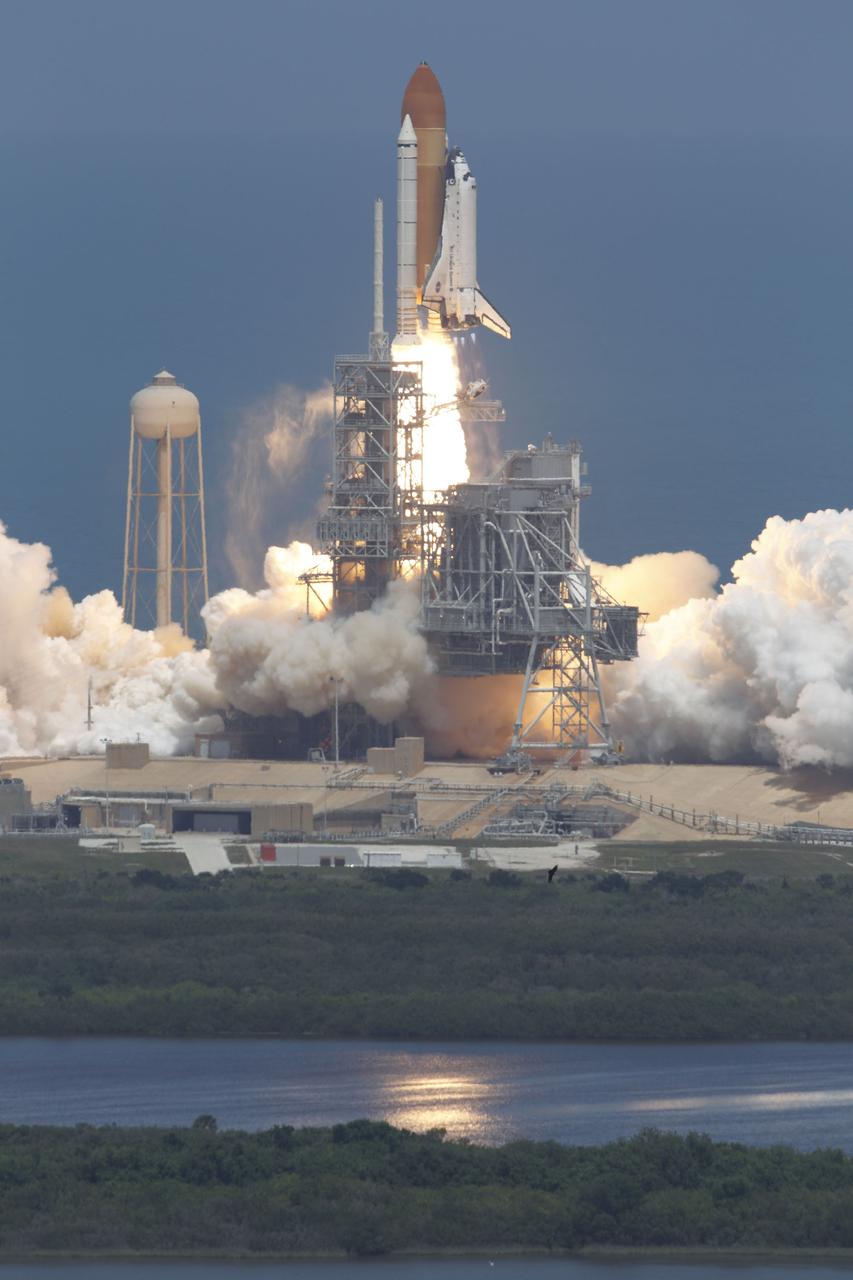
STS132-S-080 (14 May 2010) --- Space shuttle Atlantis and its six-member STS-132 crew head toward Earth orbit and rendezvous with the International Space Station. Liftoff was at 2:20 p.m. (EDT) on May 14, 2010, from launch pad 39A at NASA's Kennedy Space Center. Onboard are NASA astronauts Ken Ham, commander; Tony Antonelli, pilot; Garrett Reisman, Michael Good, Steve Bowen and Piers Sellers, all mission specialists. The crew will deliver the Russian-built Mini-Research Module 1 (MRM-1) to the International Space Station. Named Rassvet, Russian for "dawn," the module is the second in a series of new pressurized components for Russia and will be permanently attached to the Earth-facing port of the Zarya Functional Cargo Block (FGB). Rassvet will be used for cargo storage and will provide an additional docking port to the station. Also aboard Atlantis is an Integrated Cargo Carrier, or ICC, an unpressurized flat bed pallet and keel yoke assembly used to support the transfer of exterior cargo from the shuttle to the station. STS-132 is the 34th mission to the station and the last scheduled flight for Atlantis.
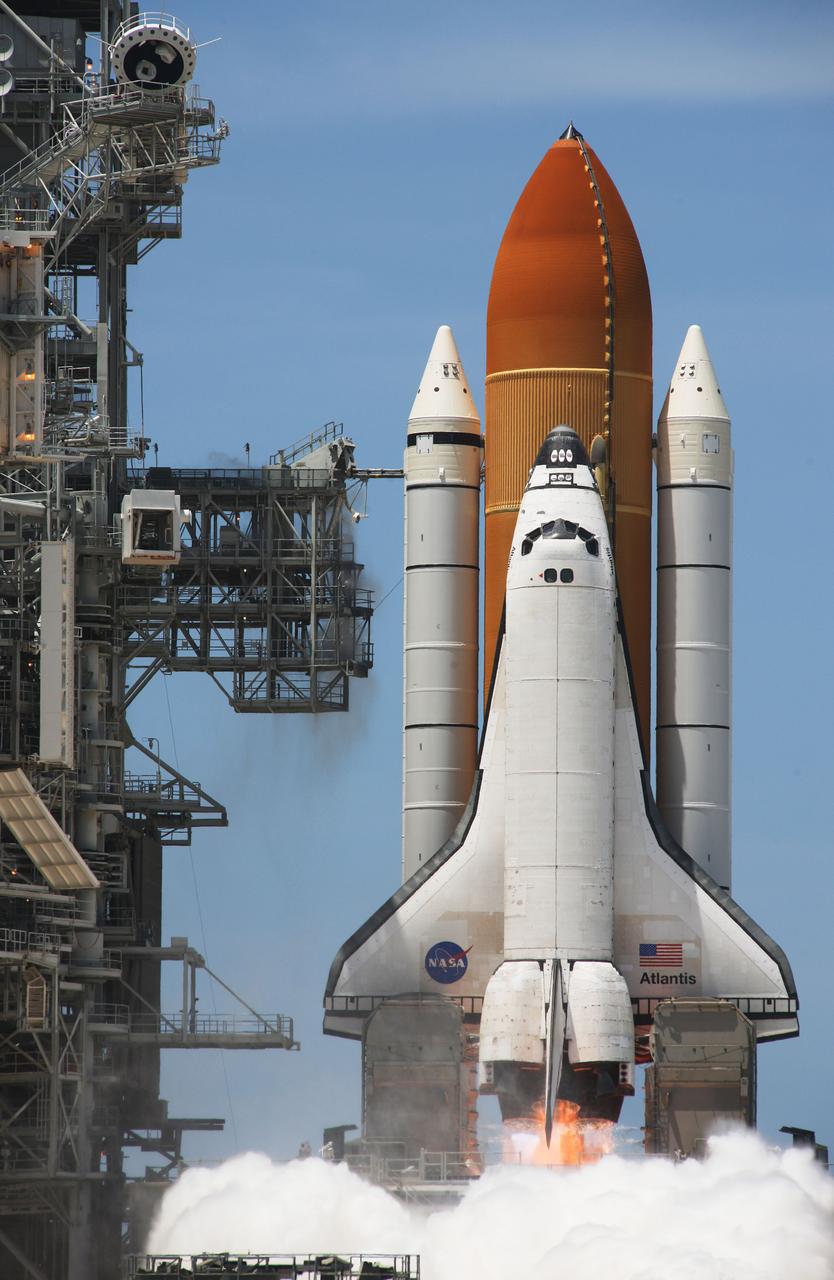
STS132-S-071 (14 May 2010) --- Space shuttle Atlantis and its six-member STS-132 crew head toward Earth orbit and rendezvous with the International Space Station. Liftoff was at 2:20 p.m. (EDT) on May 14, 2010, from launch pad 39A at NASA's Kennedy Space Center. Onboard are NASA astronauts Ken Ham, commander; Tony Antonelli, pilot; Garrett Reisman, Michael Good, Steve Bowen and Piers Sellers, all mission specialists. The crew will deliver the Russian-built Mini-Research Module 1 (MRM-1) to the International Space Station. Named Rassvet, Russian for "dawn," the module is the second in a series of new pressurized components for Russia and will be permanently attached to the Earth-facing port of the Zarya Functional Cargo Block (FGB). Rassvet will be used for cargo storage and will provide an additional docking port to the station. Also aboard Atlantis is an Integrated Cargo Carrier, or ICC, an unpressurized flat bed pallet and keel yoke assembly used to support the transfer of exterior cargo from the shuttle to the station. STS-132 is the 34th mission to the station and the last scheduled flight for Atlantis.
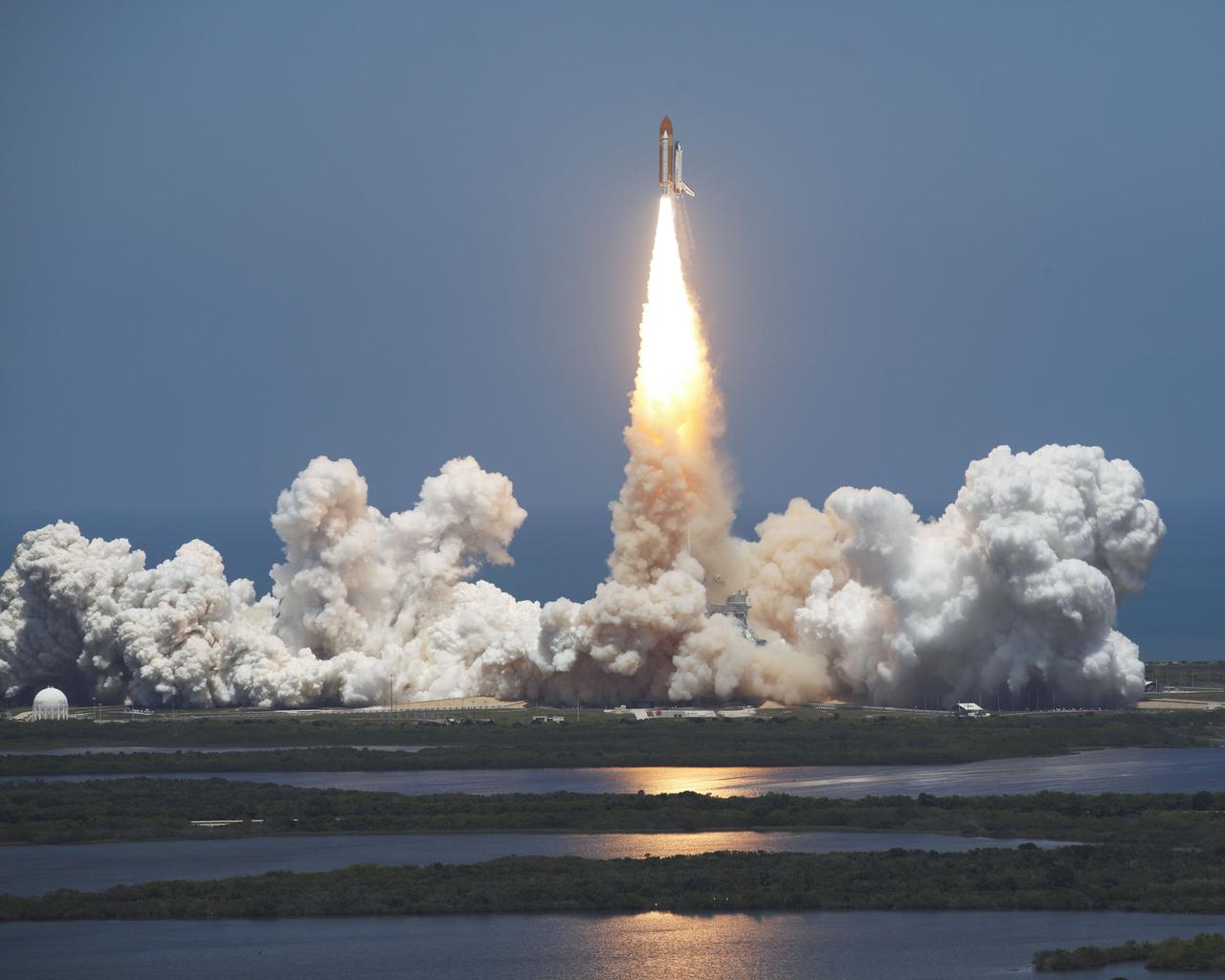
STS132-S-077 (14 May 2010) --- Space shuttle Atlantis and its six-member STS-132 crew head toward Earth orbit and rendezvous with the International Space Station. Liftoff was at 2:20 p.m. (EDT) on May 14, 2010, from launch pad 39A at NASA's Kennedy Space Center. Onboard are NASA astronauts Ken Ham, commander; Tony Antonelli, pilot; Garrett Reisman, Michael Good, Steve Bowen and Piers Sellers, all mission specialists. The crew will deliver the Russian-built Mini-Research Module 1 (MRM-1) to the International Space Station. Named Rassvet, Russian for "dawn," the module is the second in a series of new pressurized components for Russia and will be permanently attached to the Earth-facing port of the Zarya Functional Cargo Block (FGB). Rassvet will be used for cargo storage and will provide an additional docking port to the station. Also aboard Atlantis is an Integrated Cargo Carrier, or ICC, an unpressurized flat bed pallet and keel yoke assembly used to support the transfer of exterior cargo from the shuttle to the station. STS-132 is the 34th mission to the station and the last scheduled flight for Atlantis.
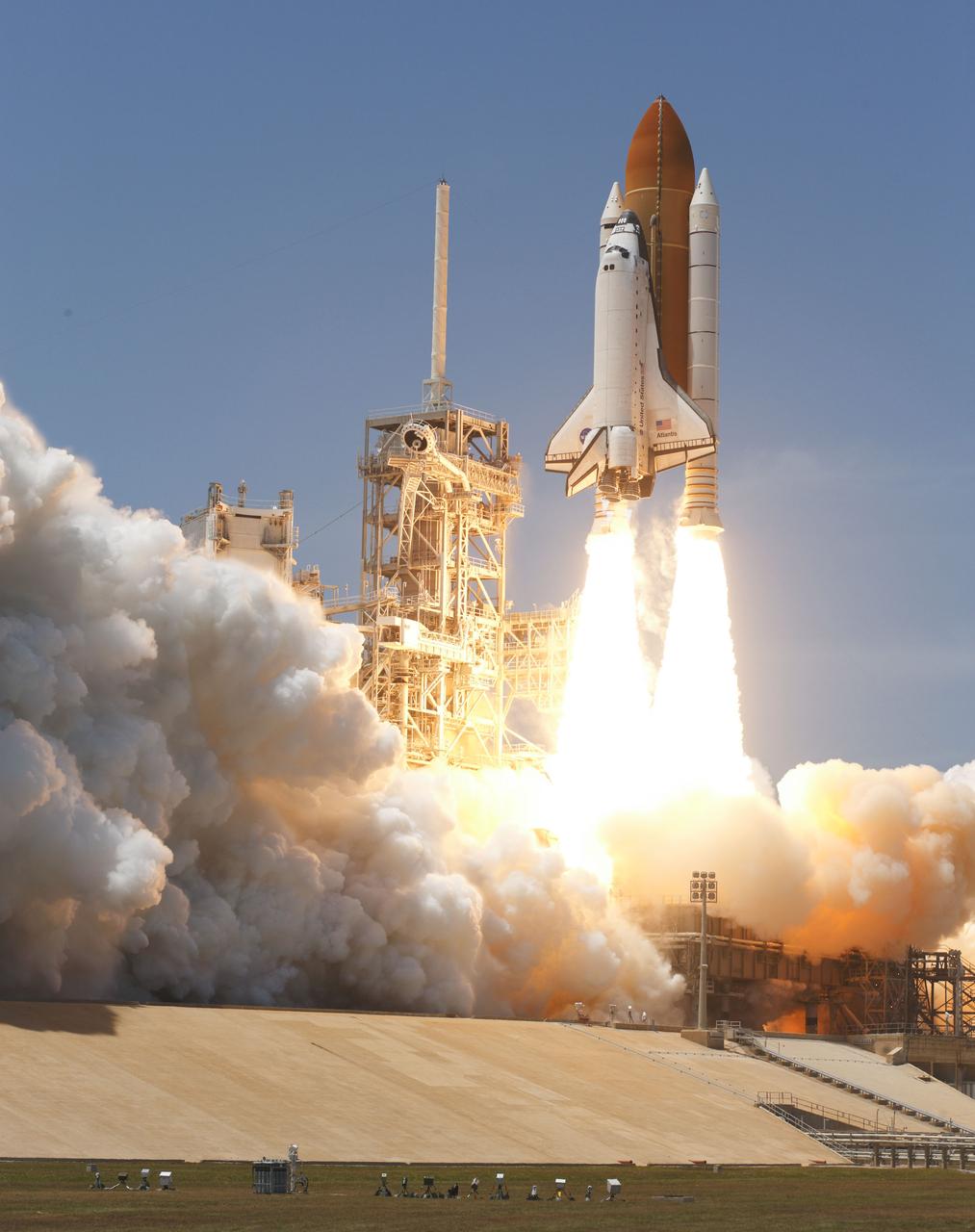
STS132-S-074 (14 May 2010) --- Space shuttle Atlantis and its six-member STS-132 crew head toward Earth orbit and rendezvous with the International Space Station. Liftoff was at 2:20 p.m. (EDT) on May 14, 2010, from launch pad 39A at NASA's Kennedy Space Center. Onboard are NASA astronauts Ken Ham, commander; Tony Antonelli, pilot; Garrett Reisman, Michael Good, Steve Bowen and Piers Sellers, all mission specialists. The crew will deliver the Russian-built Mini-Research Module 1 (MRM-1) to the International Space Station. Named Rassvet, Russian for "dawn," the module is the second in a series of new pressurized components for Russia and will be permanently attached to the Earth-facing port of the Zarya Functional Cargo Block (FGB). Rassvet will be used for cargo storage and will provide an additional docking port to the station. Also aboard Atlantis is an Integrated Cargo Carrier, or ICC, an unpressurized flat bed pallet and keel yoke assembly used to support the transfer of exterior cargo from the shuttle to the station. STS-132 is the 34th mission to the station and the last scheduled flight for Atlantis.
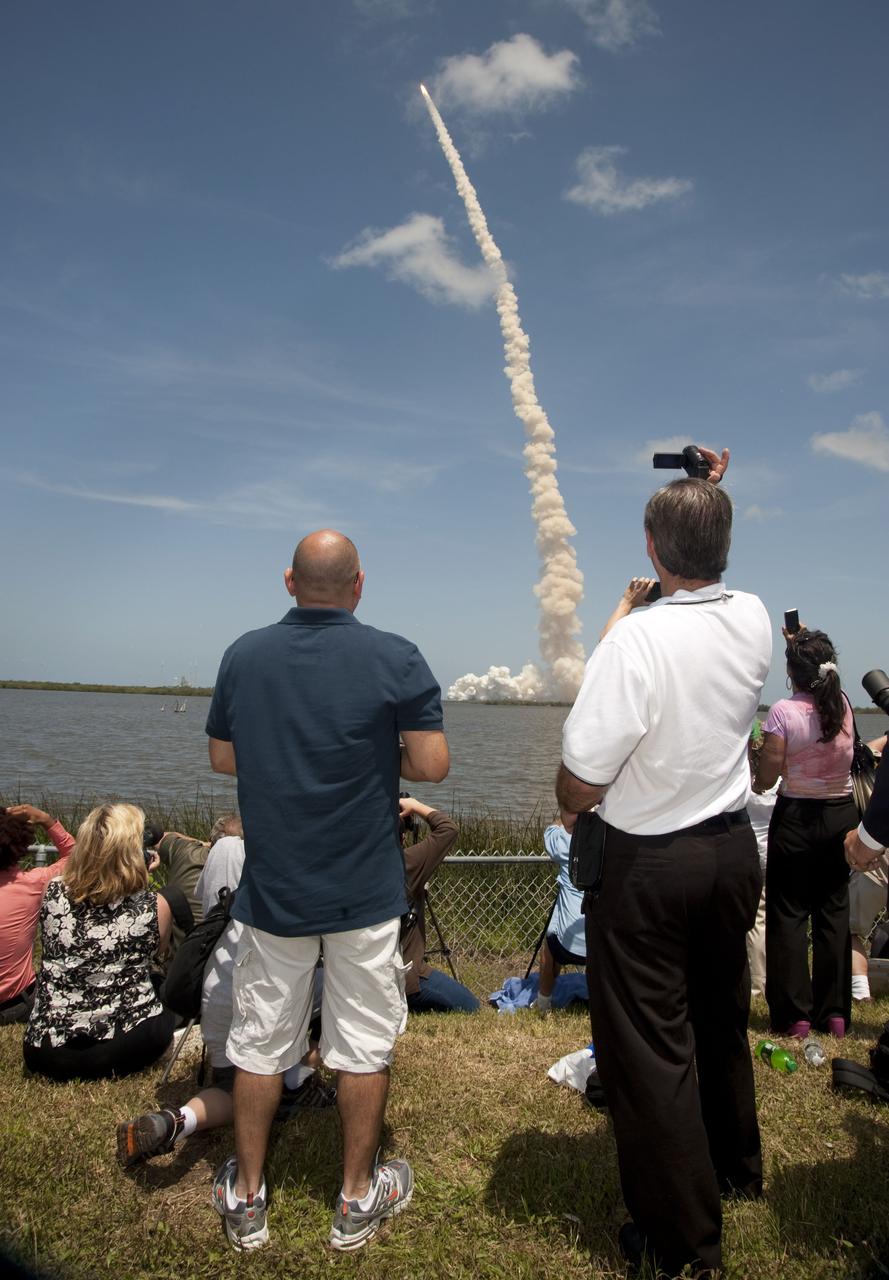
STS132-S-013 (14 May 2010) --- As visitors watch, the space shuttle Atlantis and its six-member STS-132 crew head toward Earth orbit and rendezvous with the International Space Station. Liftoff was at 2:20 p.m. (EDT) on May 14, 2010, from launch pad 39A at NASA's Kennedy Space Center. Onboard are NASA astronauts Ken Ham, commander; Tony Antonelli, pilot; Garrett Reisman, Michael Good, Steve Bowen and Piers Sellers, all mission specialists. The crew will deliver the Russian-built Mini-Research Module 1 (MRM-1) to the International Space Station. Named Rassvet, Russian for "dawn," the module is the second in a series of new pressurized components for Russia and will be permanently attached to the Earth-facing port of the Zarya Functional Cargo Block (FGB). Rassvet will be used for cargo storage and will provide an additional docking port to the station. Also aboard Atlantis is an Integrated Cargo Carrier, or ICC, an unpressurized flat bed pallet and keel yoke assembly used to support the transfer of exterior cargo from the shuttle to the station. STS-132 is the 34th mission to the station and the last scheduled flight for Atlantis. For more information on the STS-132 mission objectives, payload and crew, visit www.nasa.gov/mission_pages/shuttle/shuttlemissions/sts132/index.html. Photo Credit: NASA/Ben Cooper
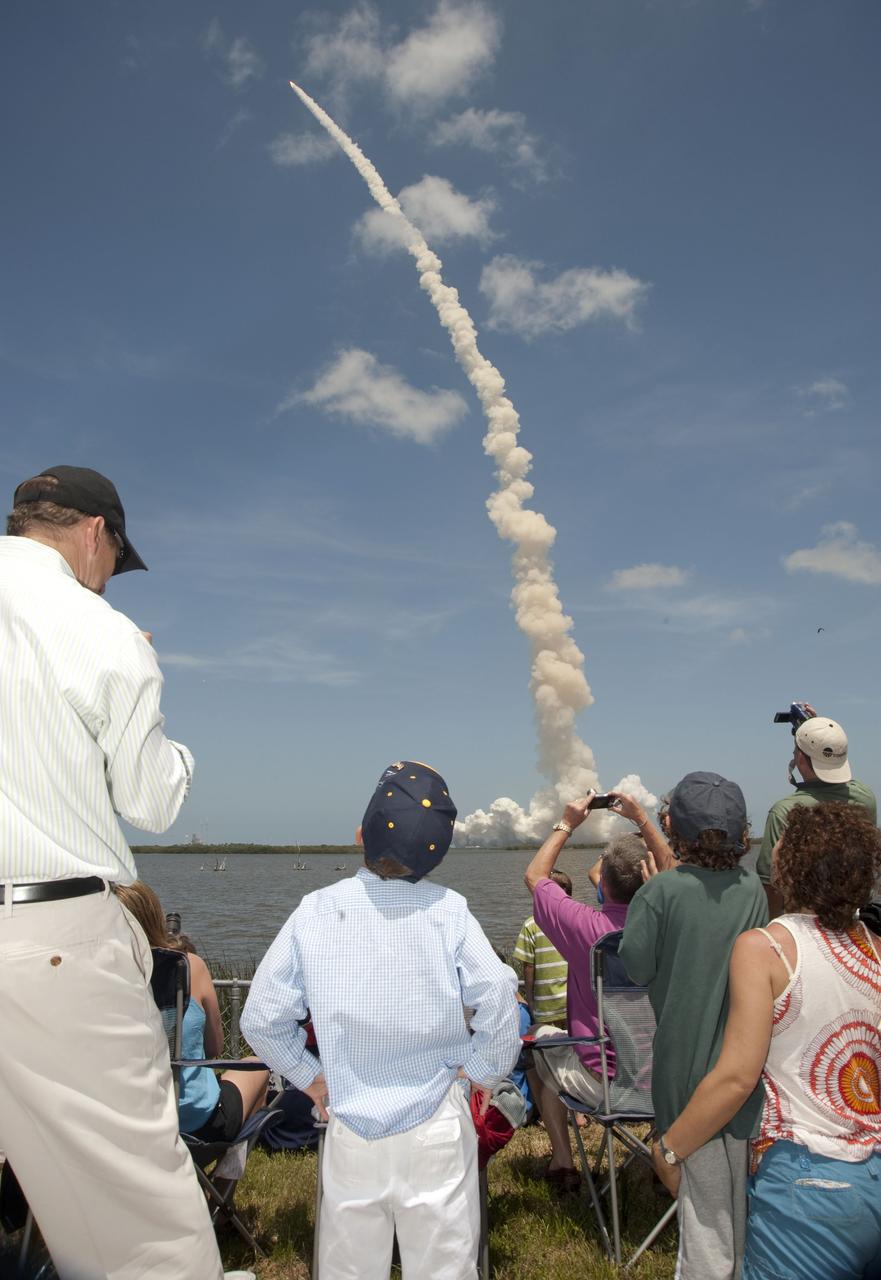
STS132-S-014 (14 May 2010) --- With visitors looking on, the space shuttle Atlantis and its six-member STS-132 crew head toward Earth orbit and rendezvous with the International Space Station. Liftoff was at 2:20 p.m. (EDT) on May 14, 2010, from launch pad 39A at NASA's Kennedy Space Center. Onboard are NASA astronauts Ken Ham, commander; Tony Antonelli, pilot; Garrett Reisman, Michael Good, Steve Bowen and Piers Sellers, all mission specialists. The crew will deliver the Russian-built Mini-Research Module 1 (MRM-1) to the International Space Station. Named Rassvet, Russian for "dawn," the module is the second in a series of new pressurized components for Russia and will be permanently attached to the Earth-facing port of the Zarya Functional Cargo Block (FGB). Rassvet will be used for cargo storage and will provide an additional docking port to the station. Also aboard Atlantis is an Integrated Cargo Carrier, or ICC, an unpressurized flat bed pallet and keel yoke assembly used to support the transfer of exterior cargo from the shuttle to the station. STS-132 is the 34th mission to the station and the last scheduled flight for Atlantis. For more information on the STS-132 mission objectives, payload and crew, visit www.nasa.gov/mission_pages/shuttle/shuttlemissions/sts132/index.html. Photo Credit: NASA/Ben Cooper
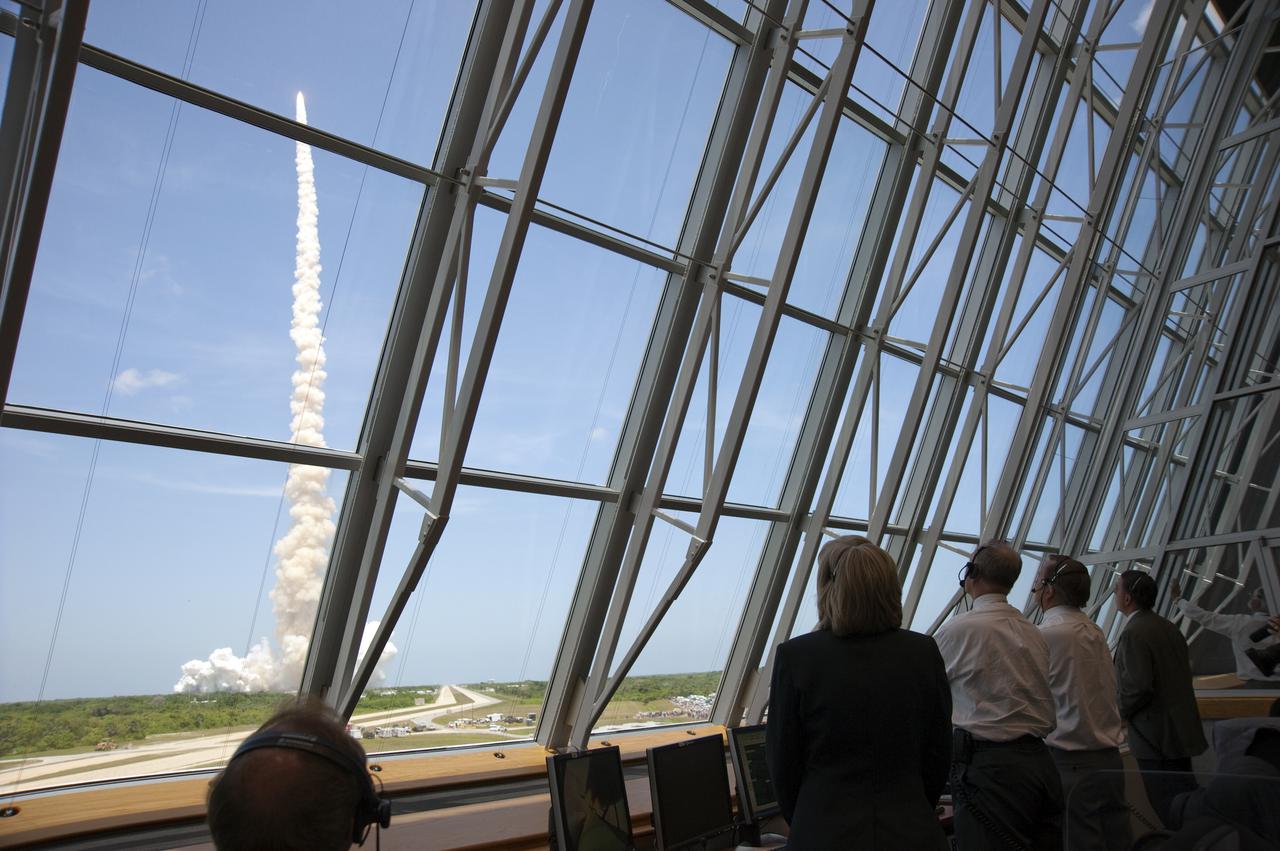
CAPE CANAVERAL, Fla. -- The launch of space shuttle Atlantis on its STS-132 mission to the International Space Station is seen through the windows of Firing Room 4 of the Launch Control Center at NASA's Kennedy Space Center in Florida. Launch was on time at 2:20 p.m. EDT. STS-132 is the 132nd shuttle flight, the 32nd for Atlantis and the 34th shuttle mission dedicated to station assembly and maintenance. For more information on the STS-132 mission objectives, payload and crew, visit www.nasa.gov_mission_pages_shuttle_shuttlemissions_sts132_index.html. Photo credit: NASA_Kim Shiflett
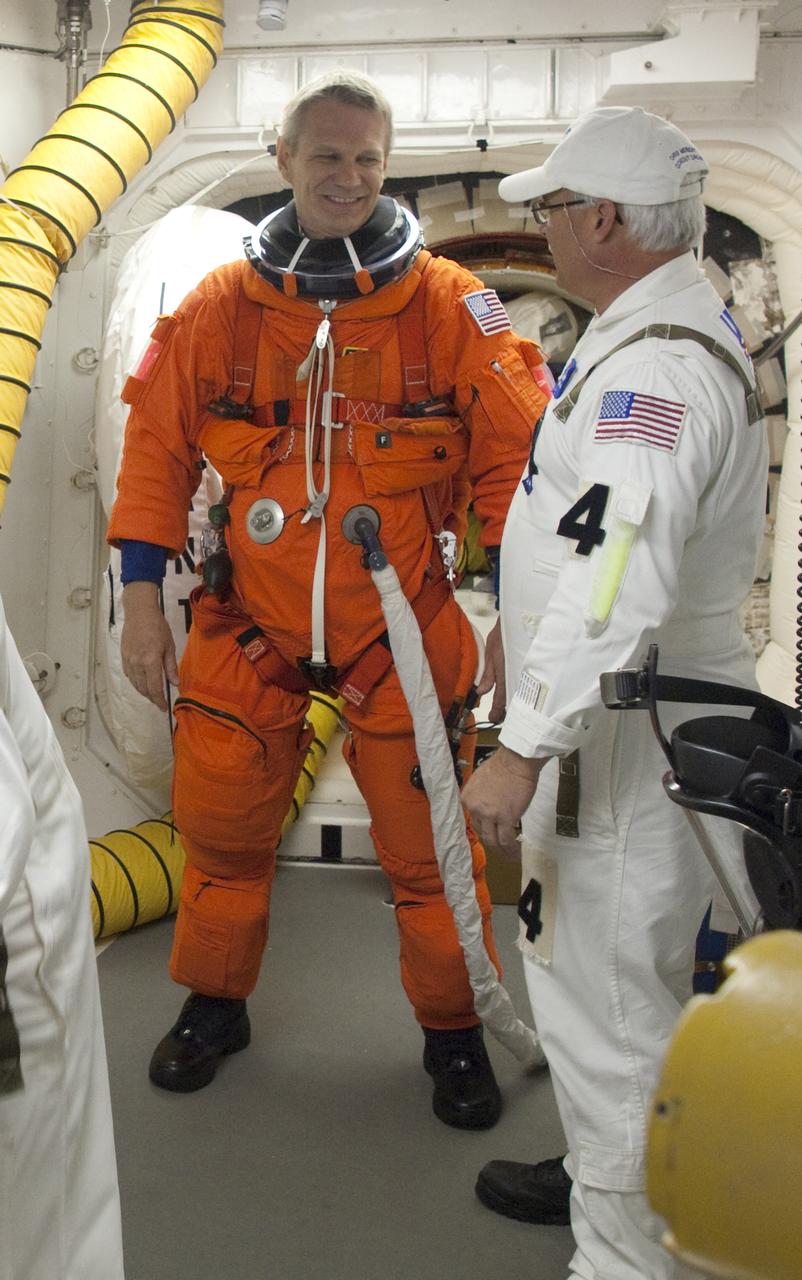
STS-132 LAUNCH L-0 WHITEROOM ACTIVITIES
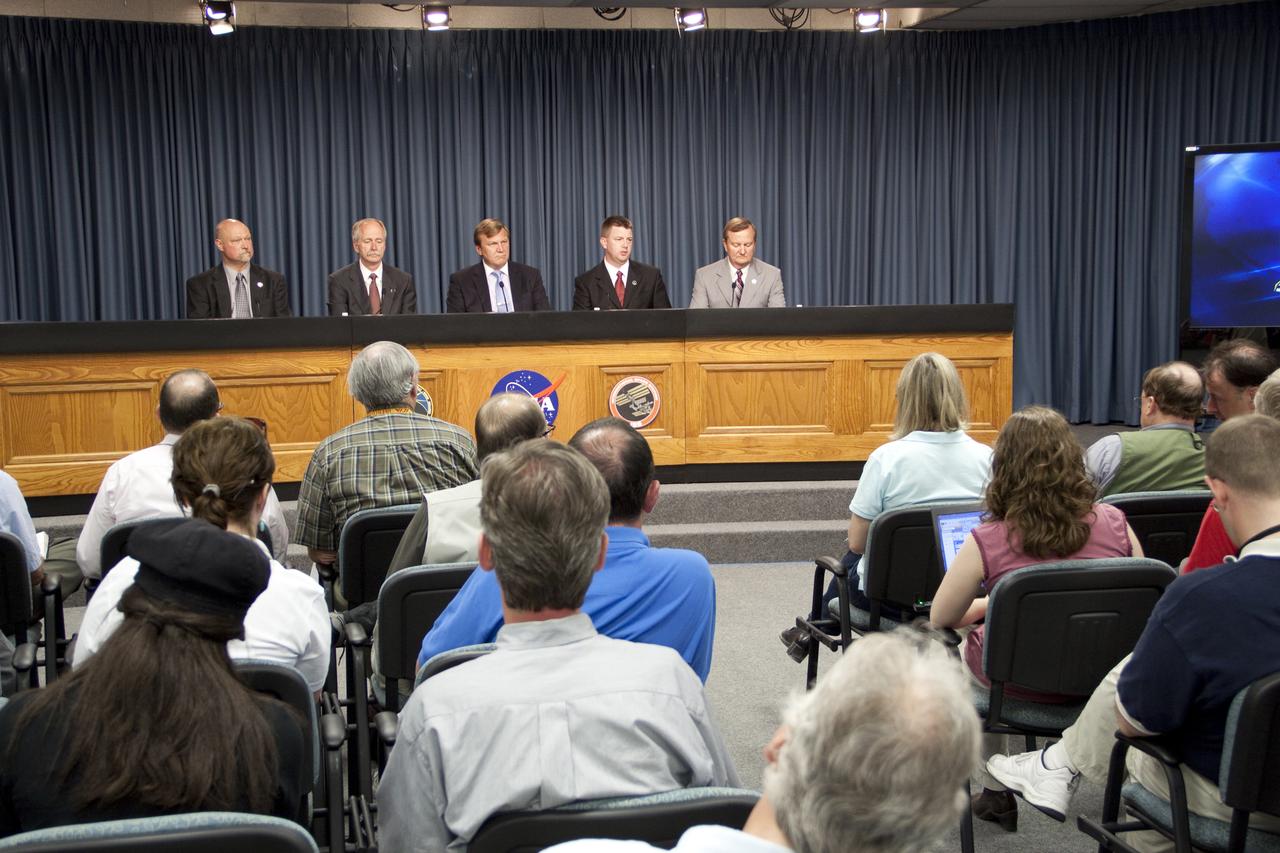
STS-132 POST LAUNCH PRESS CONFERENCE
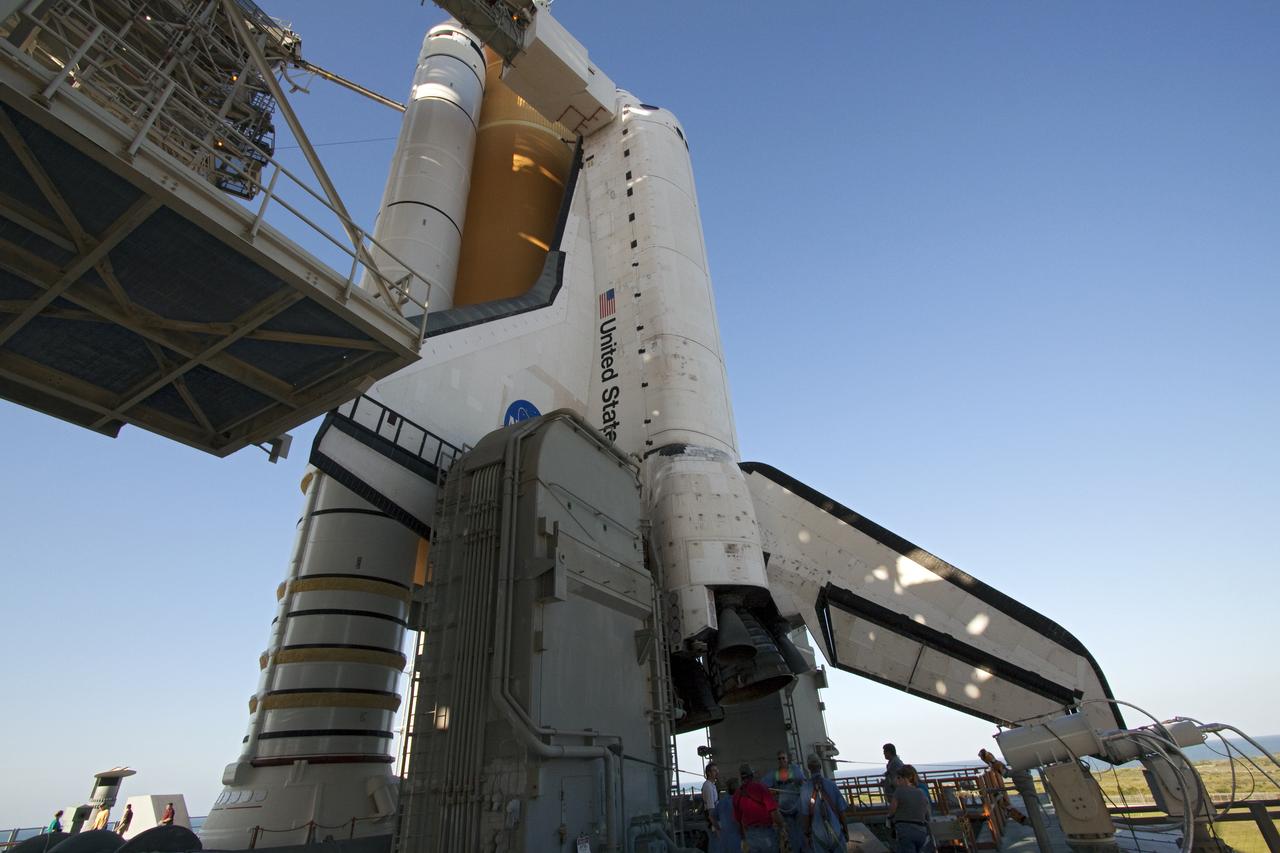
STS-132 LAUNCH L-1 RSS ROLLBACK
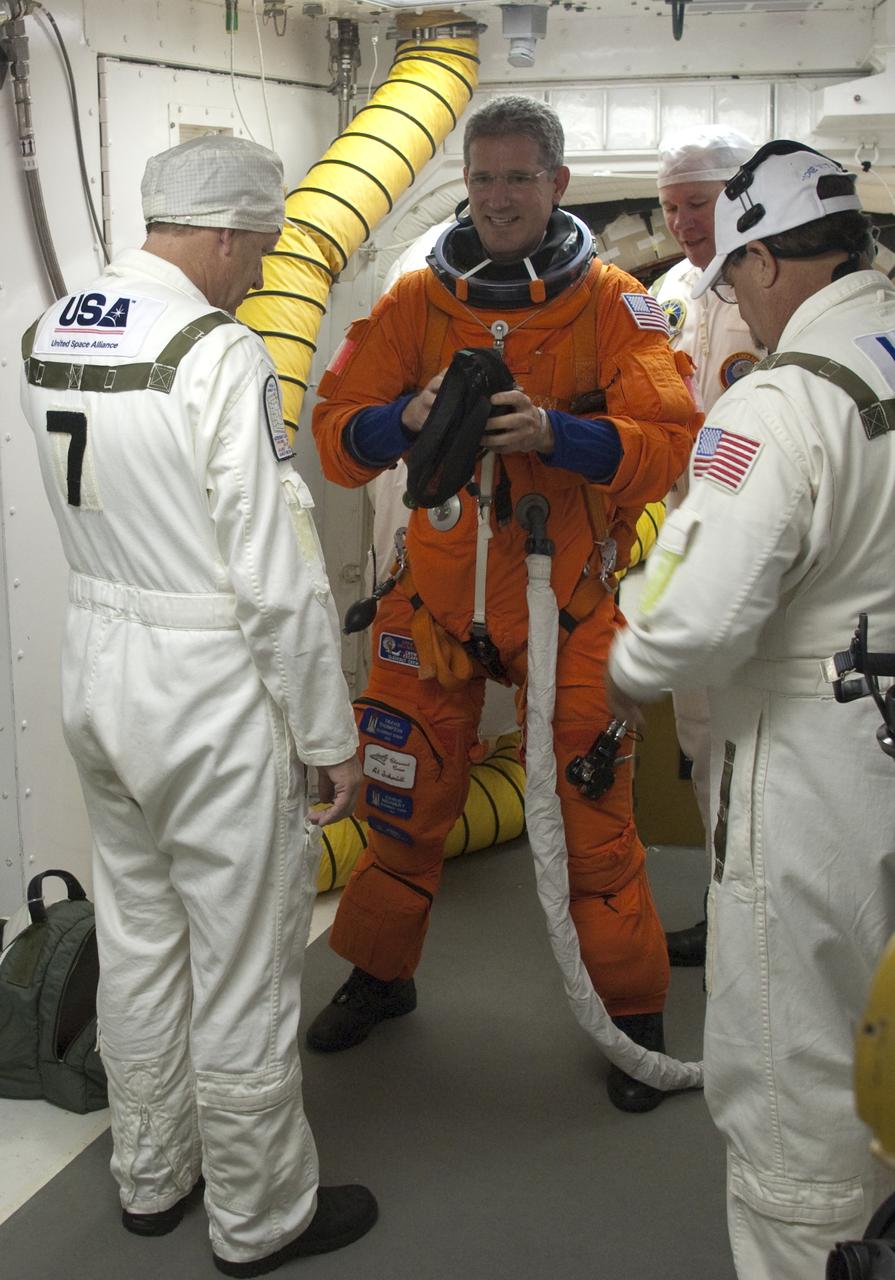
STS-132 LAUNCH L-0 WHITEROOM ACTIVITIES
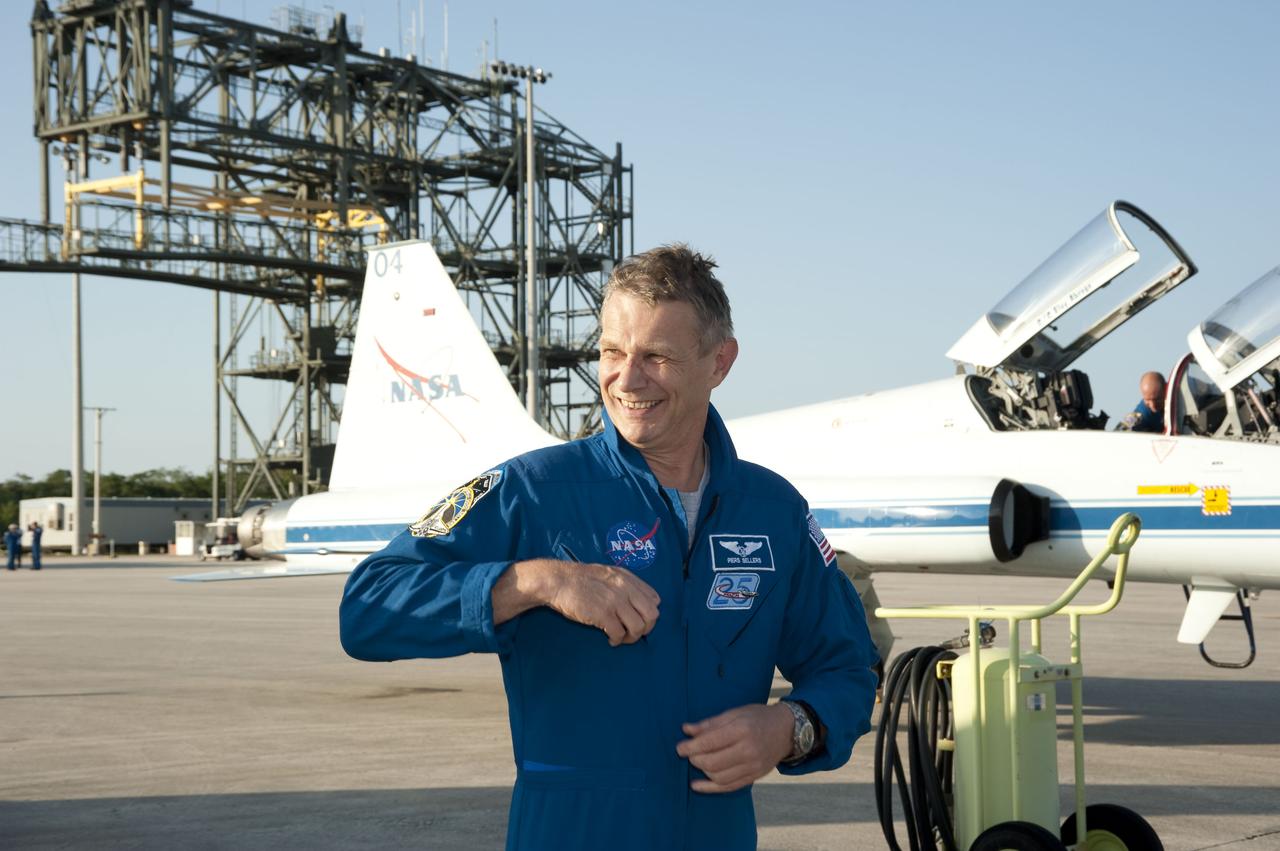
STS-132 LAUNCH L-4 CREW ARRIVAL
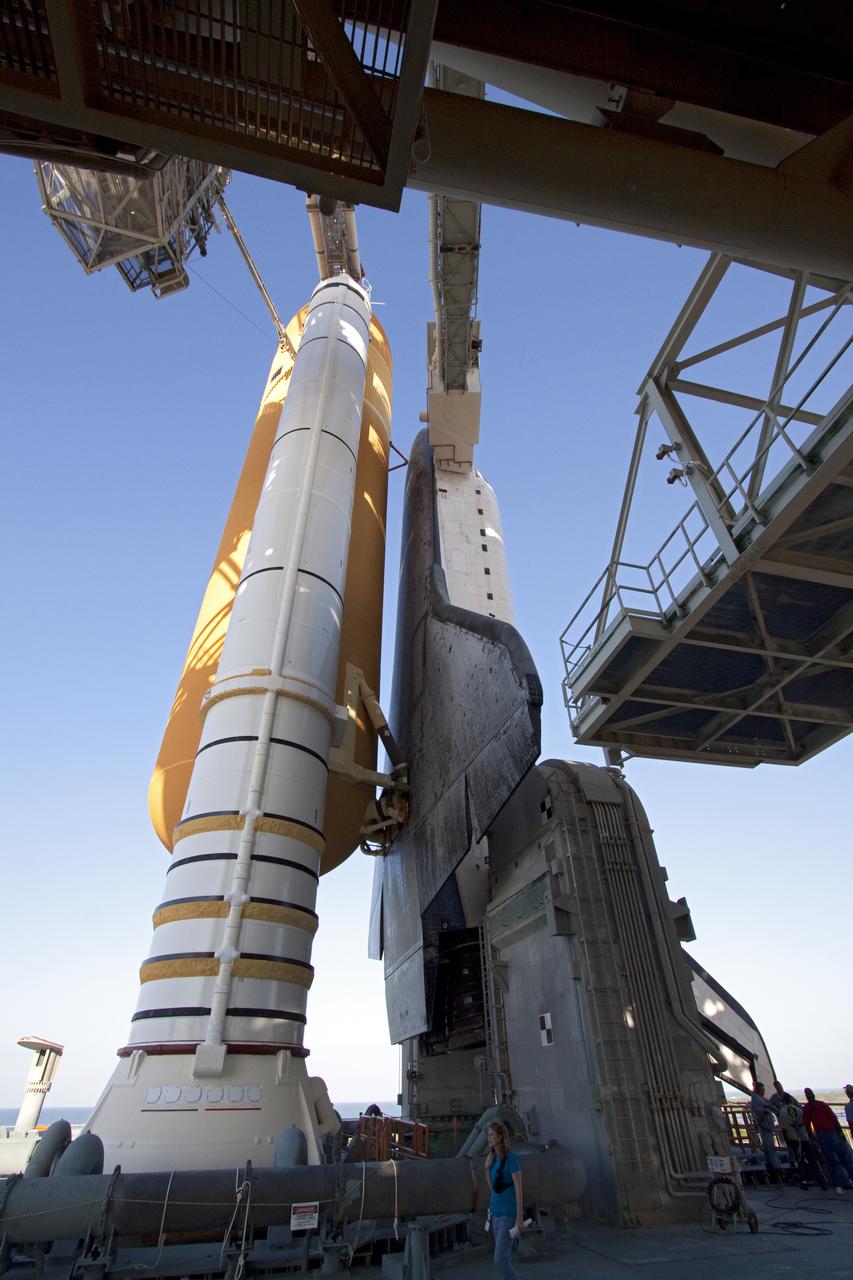
STS-132 LAUNCH L-1 RSS ROLLBACK
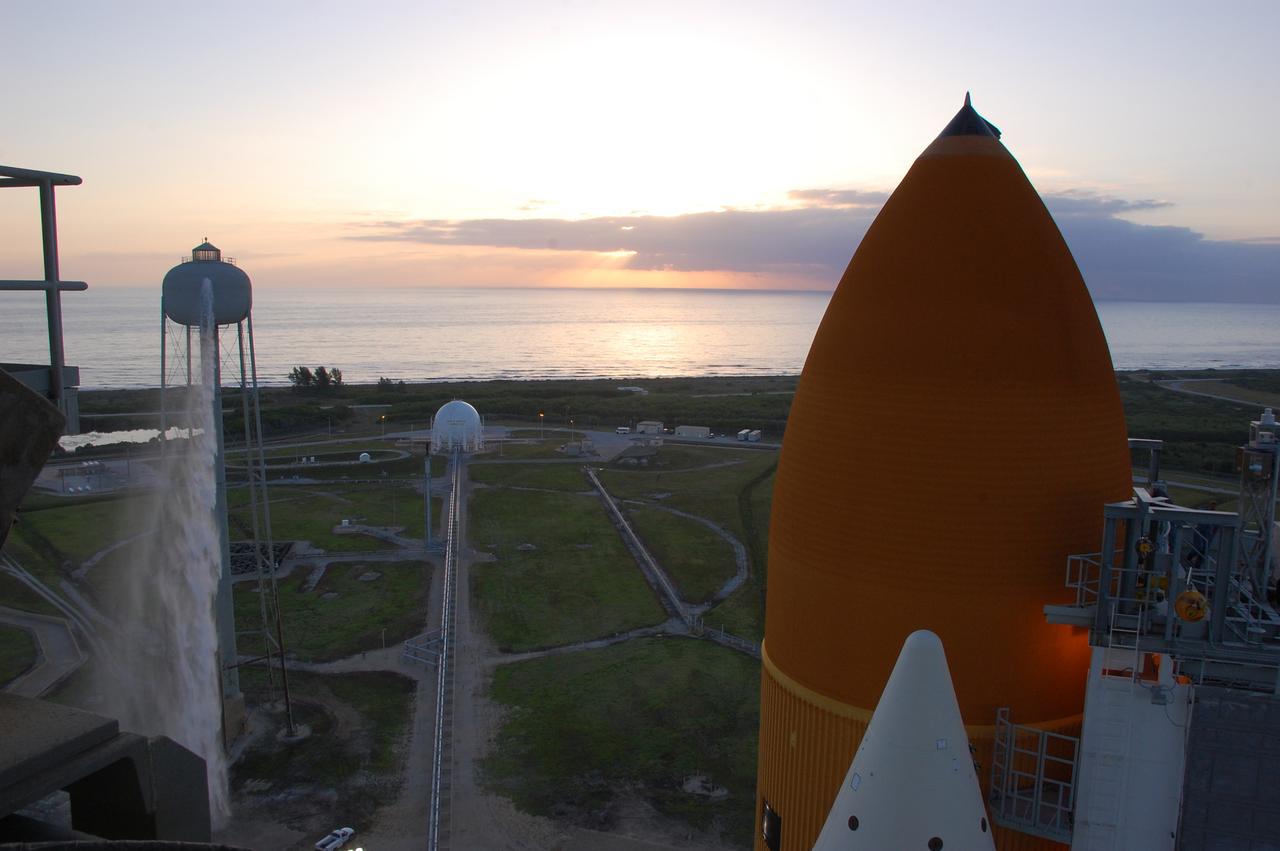
STS-132 LAUNCH L-1 PAD ACTIVITIES
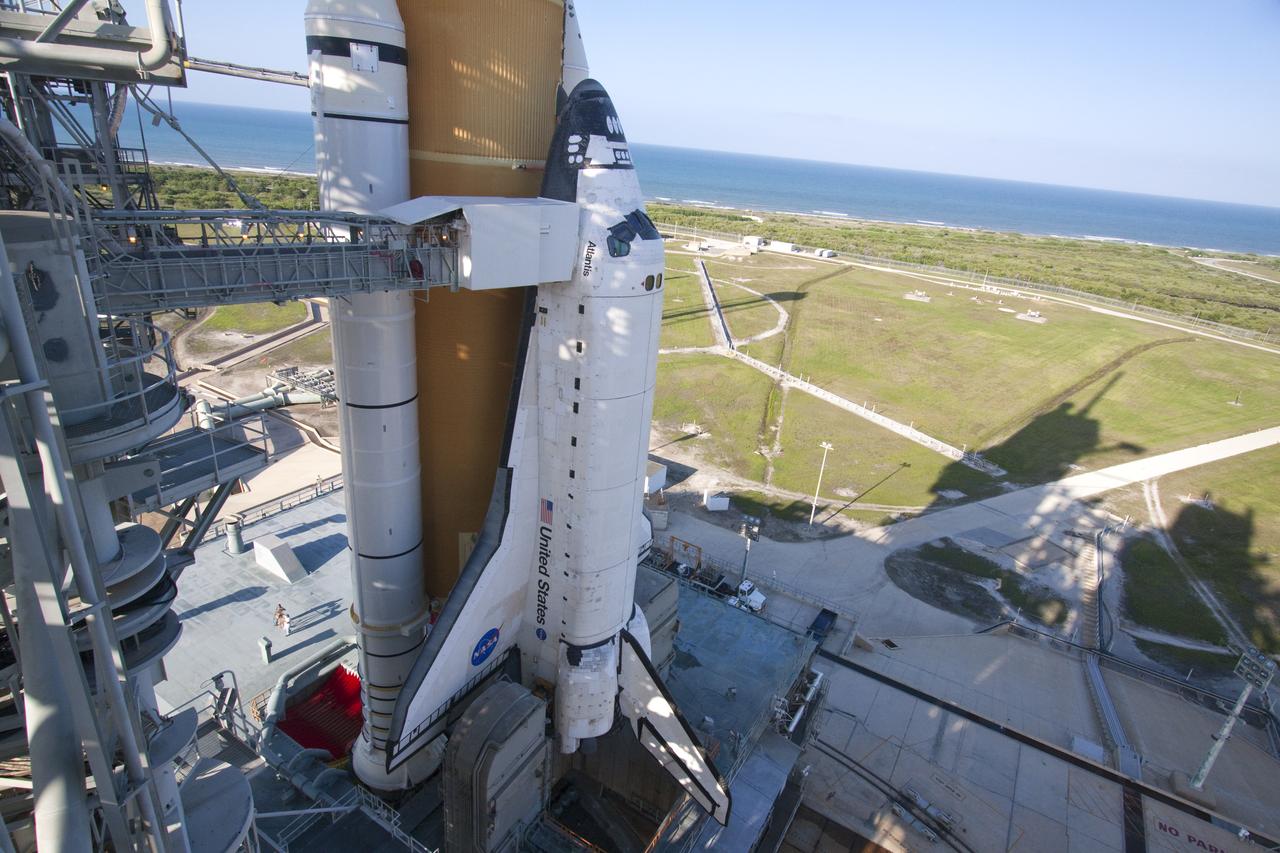
STS-132 LAUNCH L-1 RSS ROLLBACK
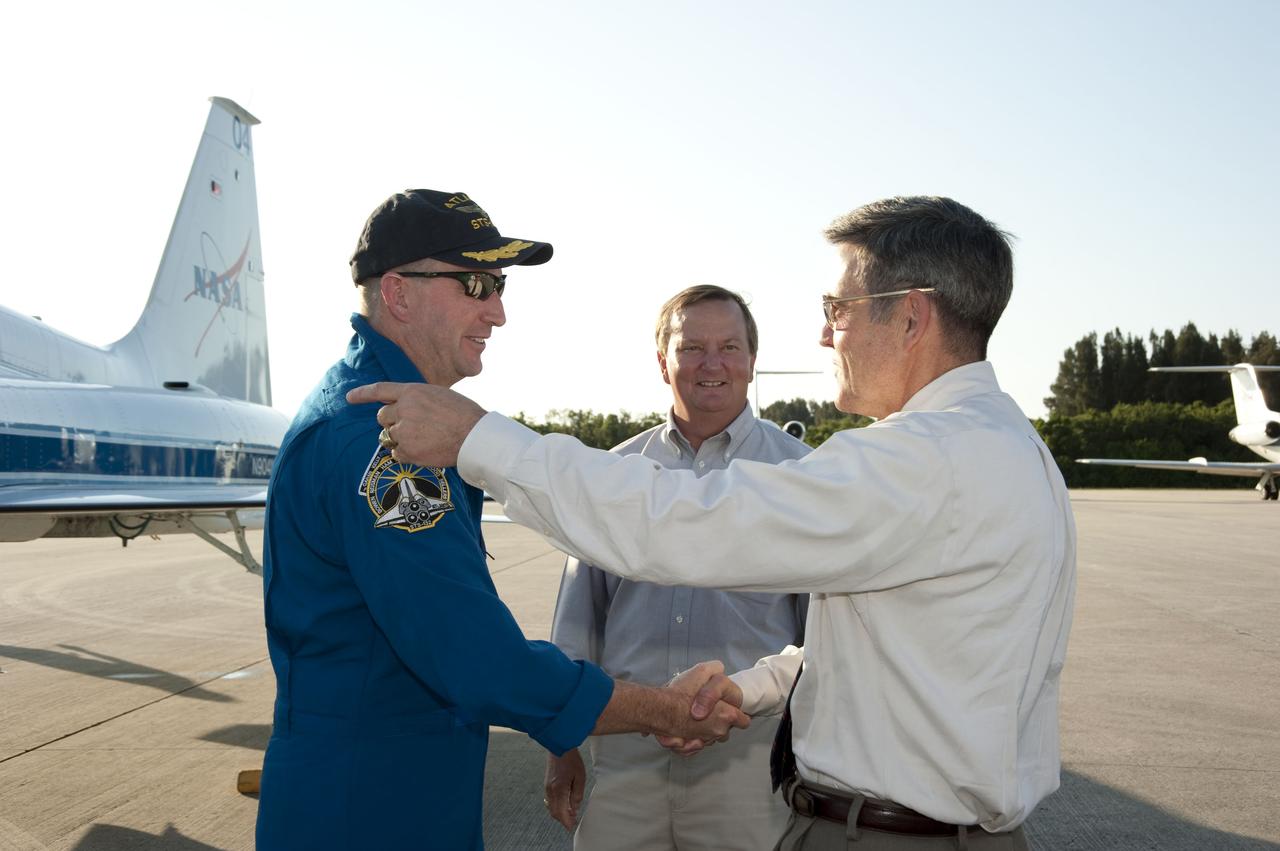
STS-132 LAUNCH L-4 CREW ARRIVAL
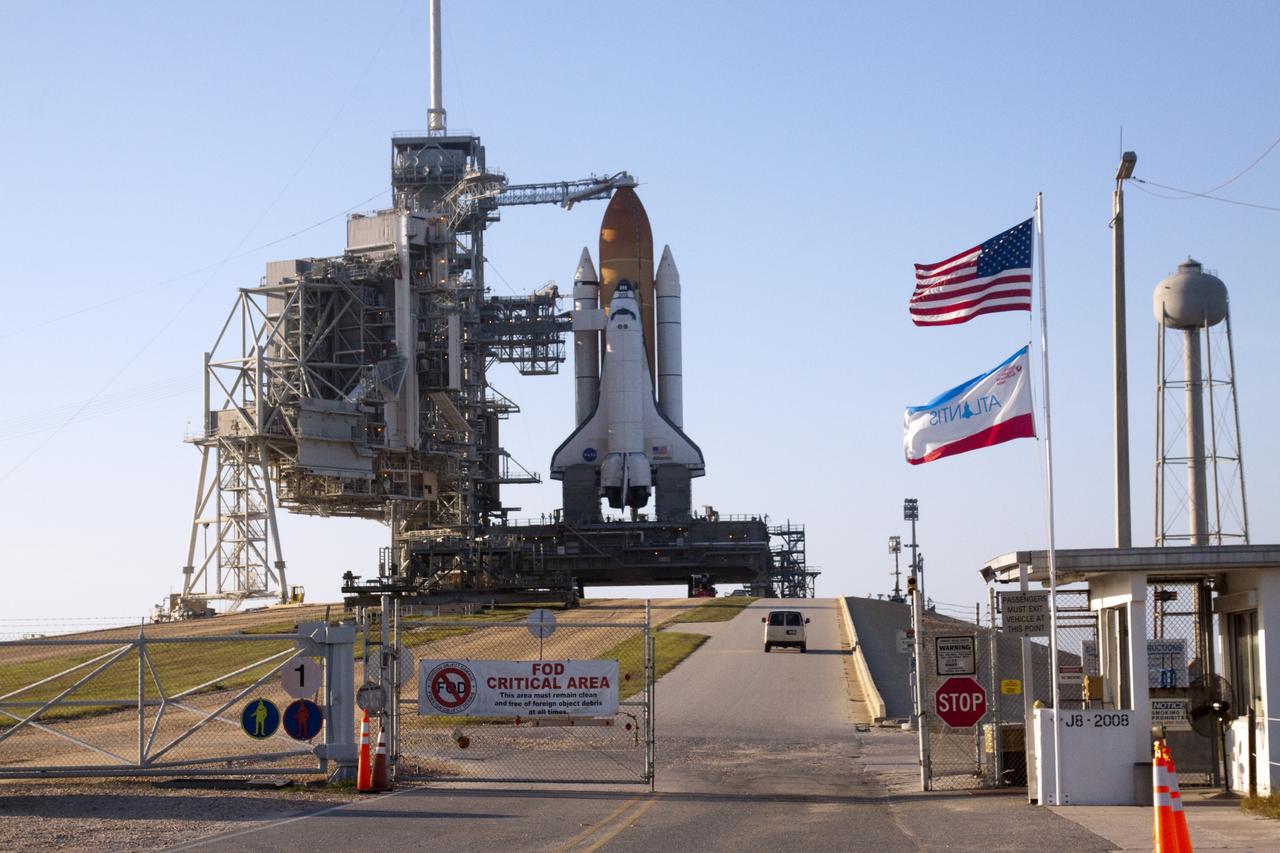
STS-132 LAUNCH L-1 RSS ROLLBACK
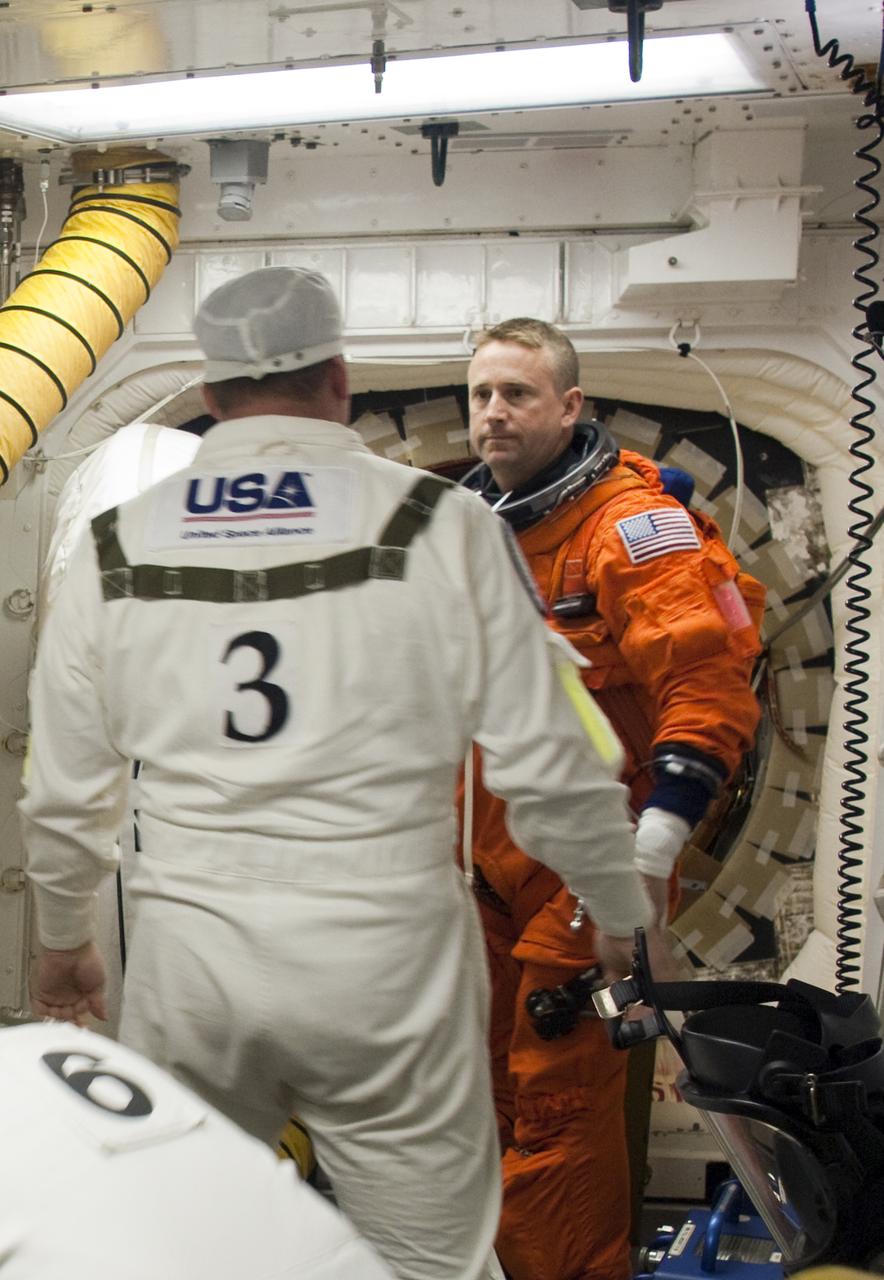
STS-132 LAUNCH L-0 WHITEROOM ACTIVITIES
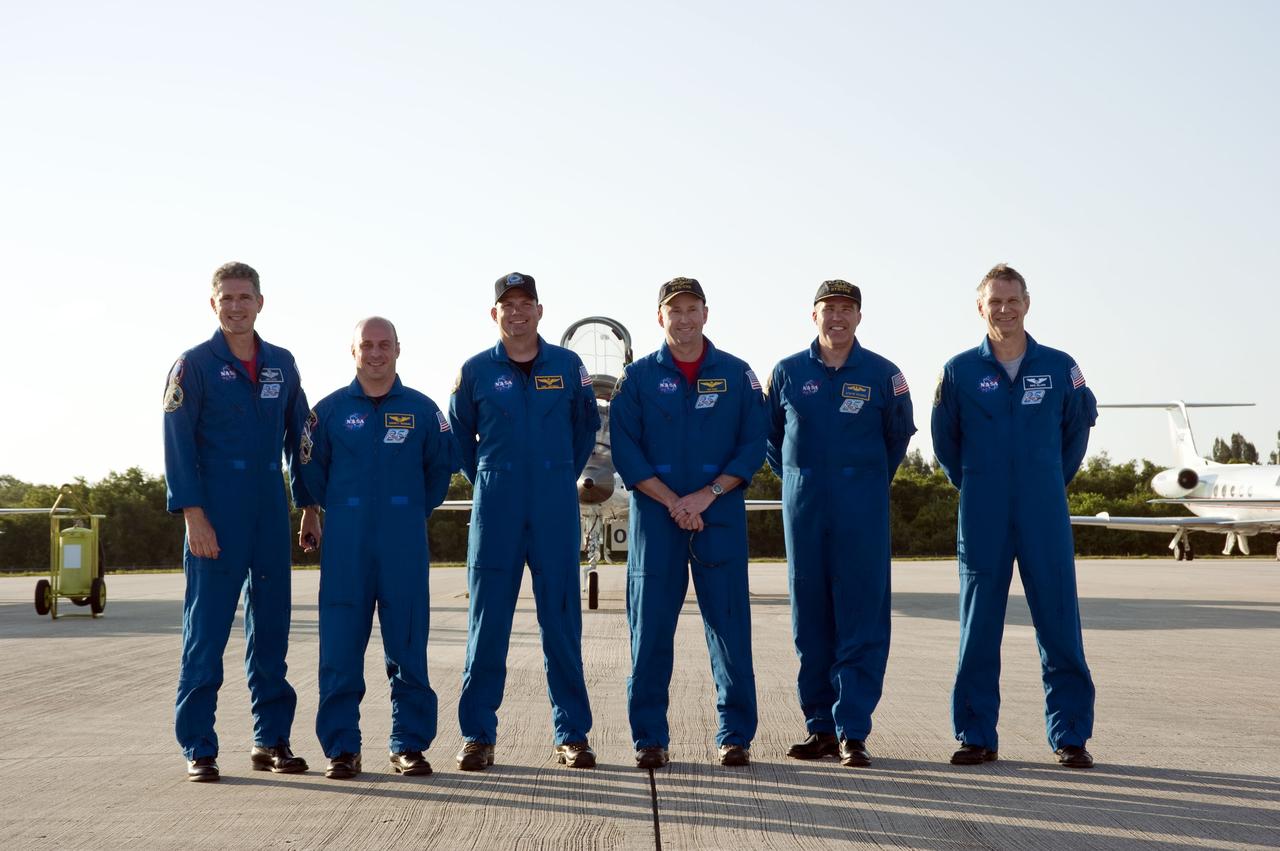
STS-132 LAUNCH L-4 CREW ARRIVAL
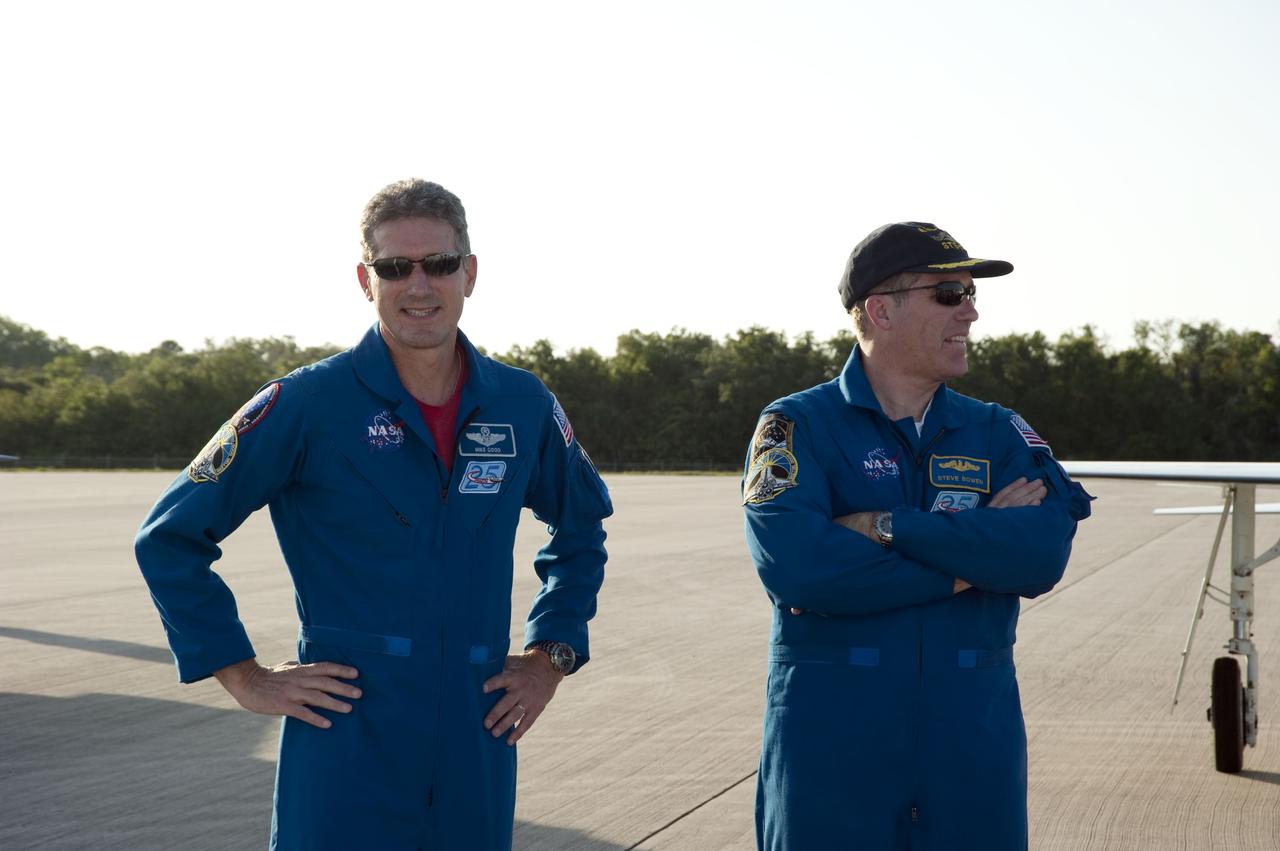
STS-132 LAUNCH L-4 CREW ARRIVAL
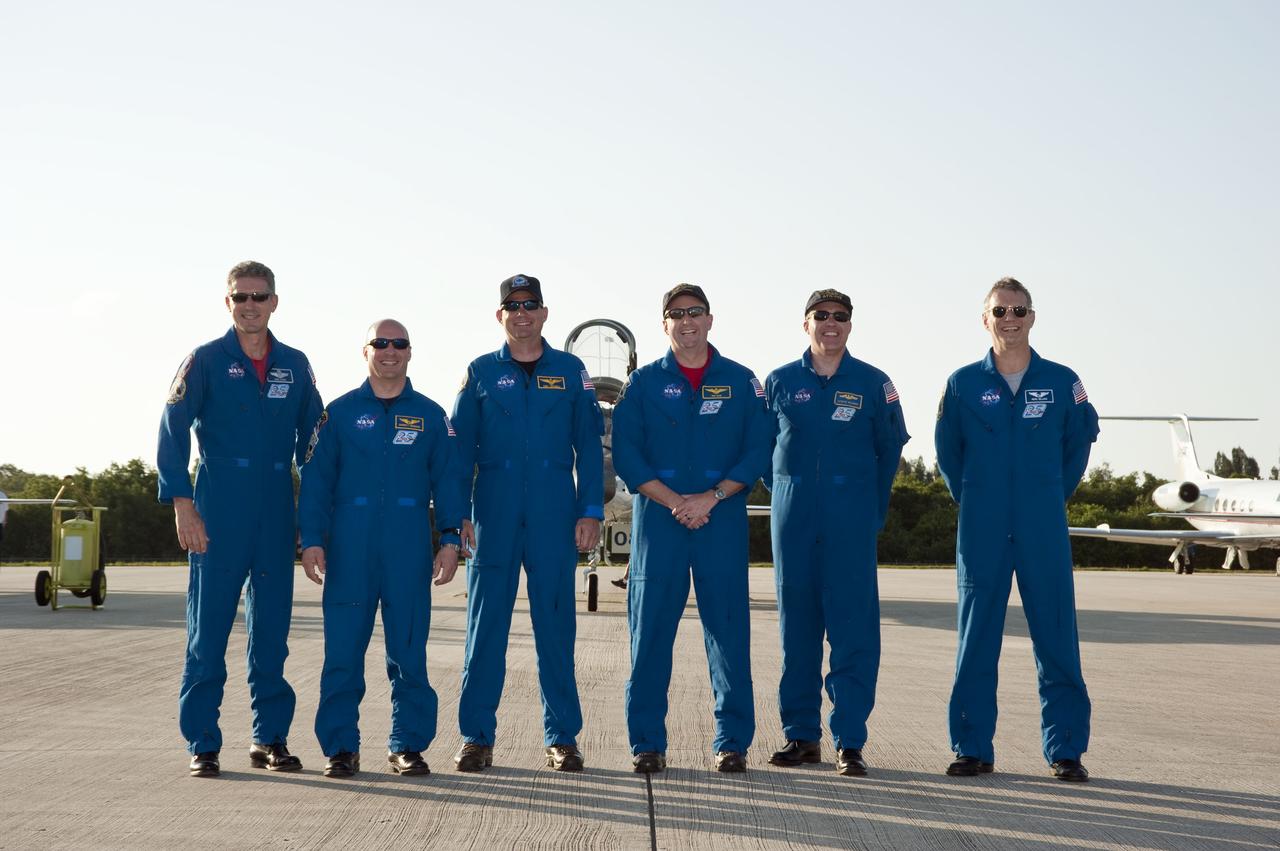
STS-132 LAUNCH L-4 CREW ARRIVAL
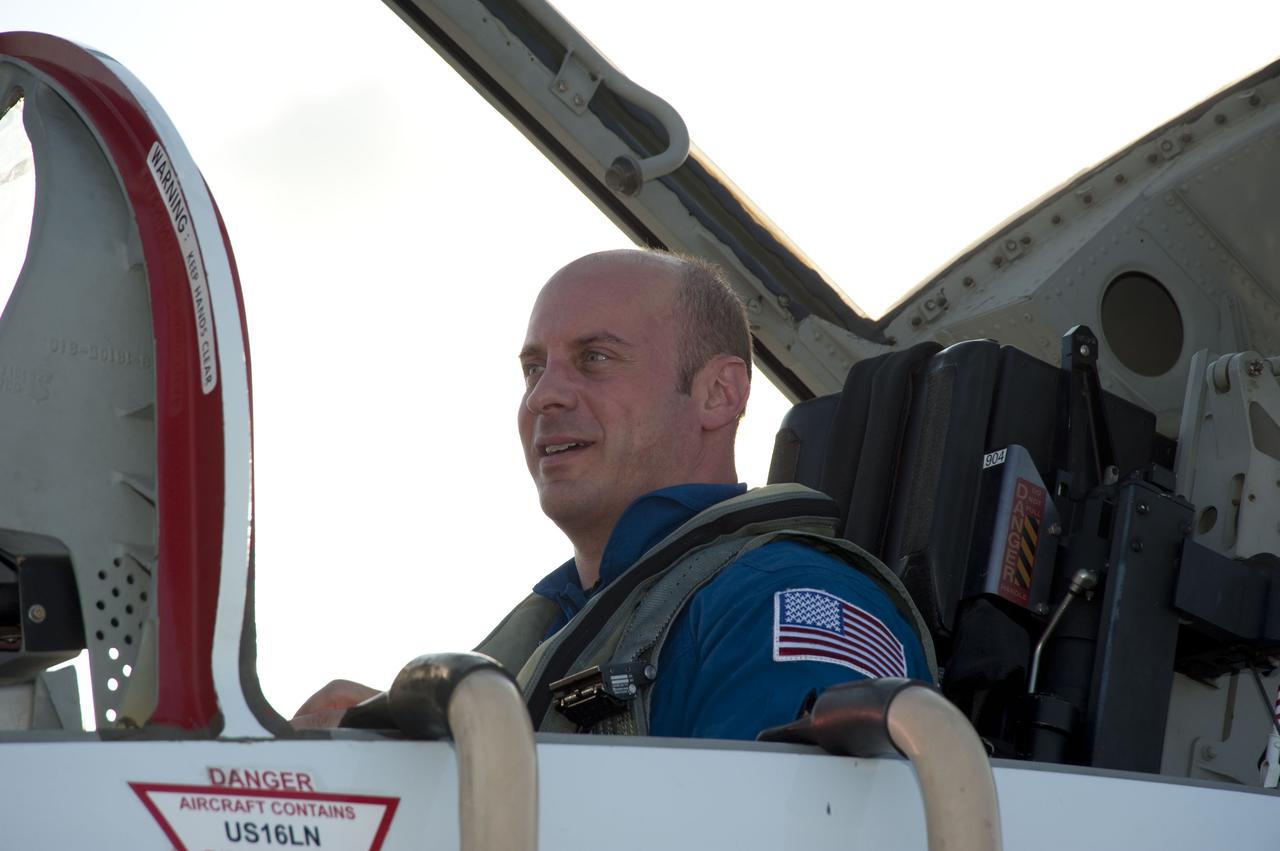
STS-132 LAUNCH L-4 CREW ARRIVAL

STS-132 LAUNCH L-4 CREW ARRIVAL
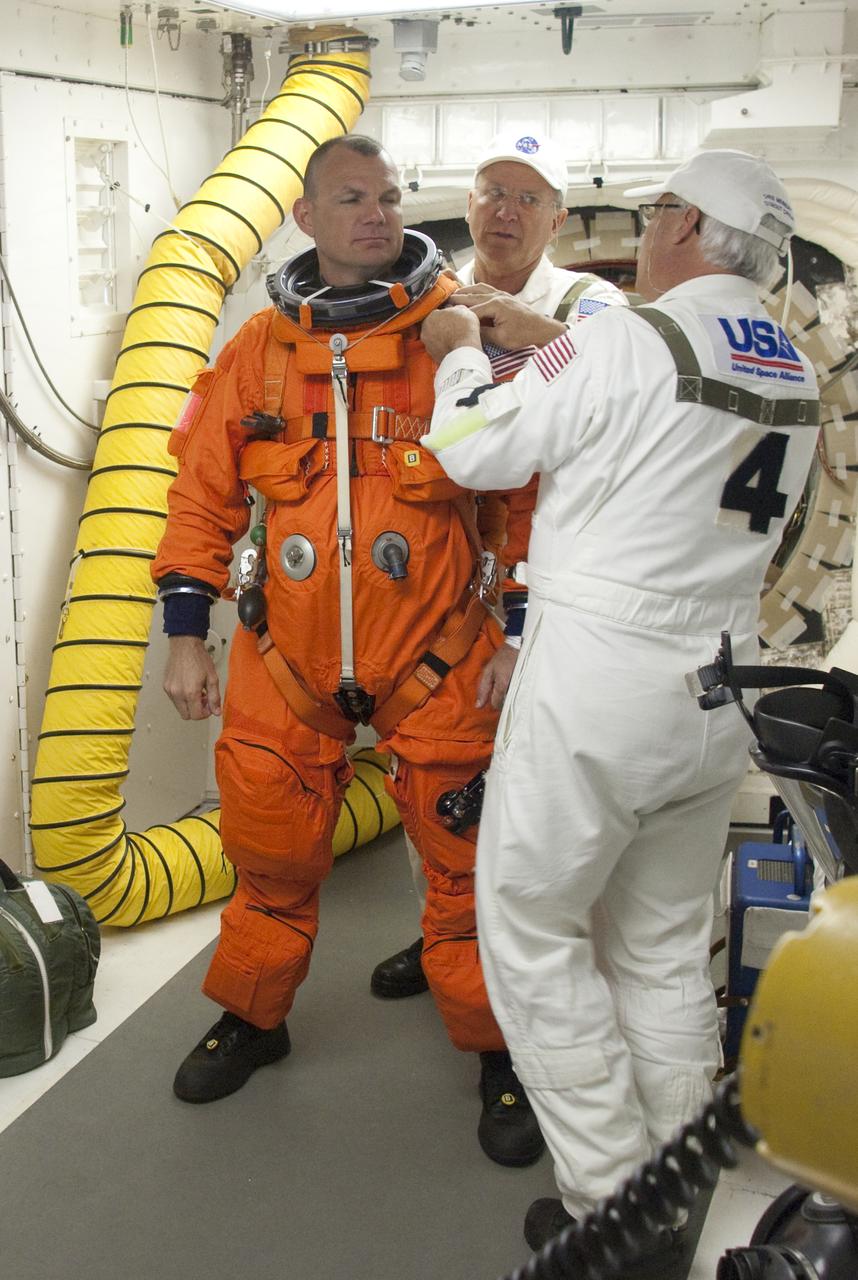
STS-132 LAUNCH L-0 WHITEROOM ACTIVITIES
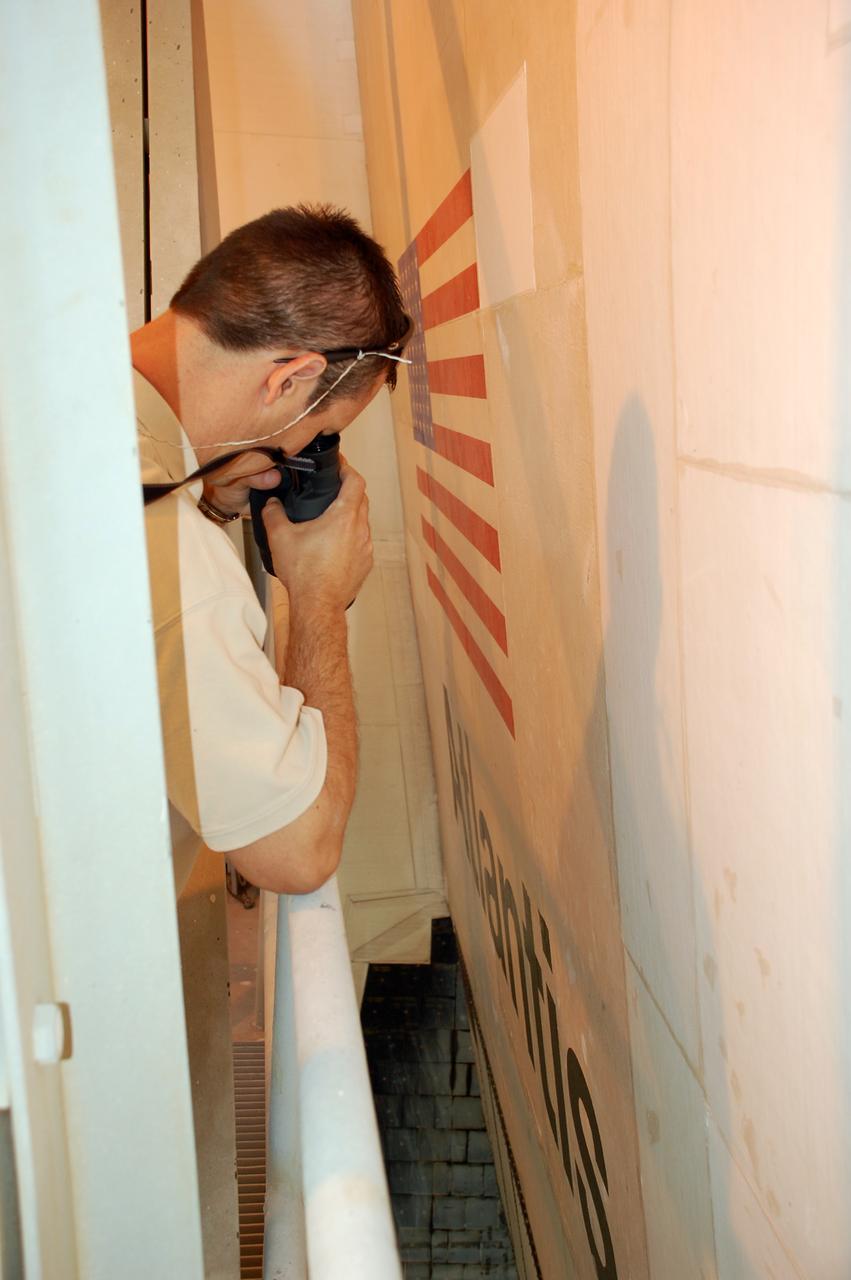
STS-132 LAUNCH L-1 PAD ACTIVITIES
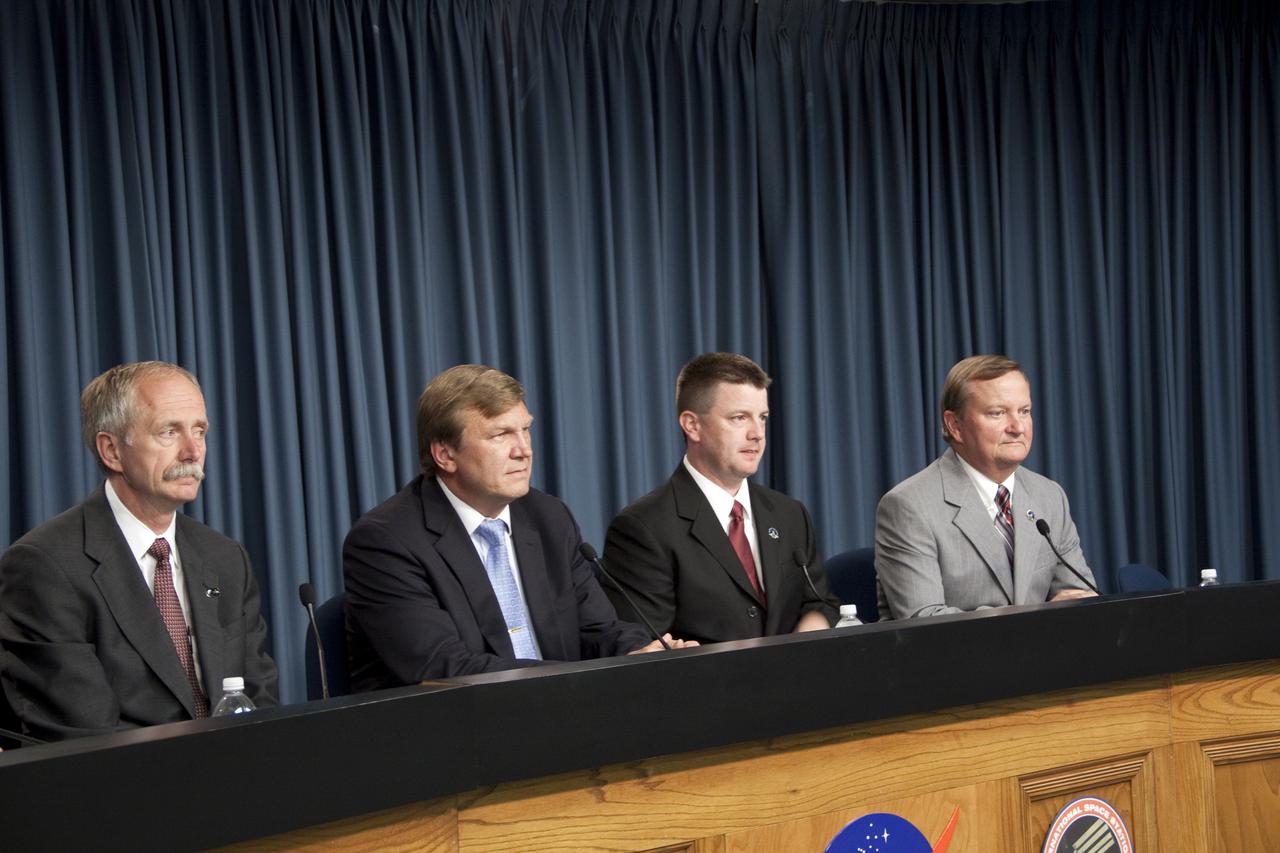
STS-132 POST LAUNCH PRESS CONFERENCE
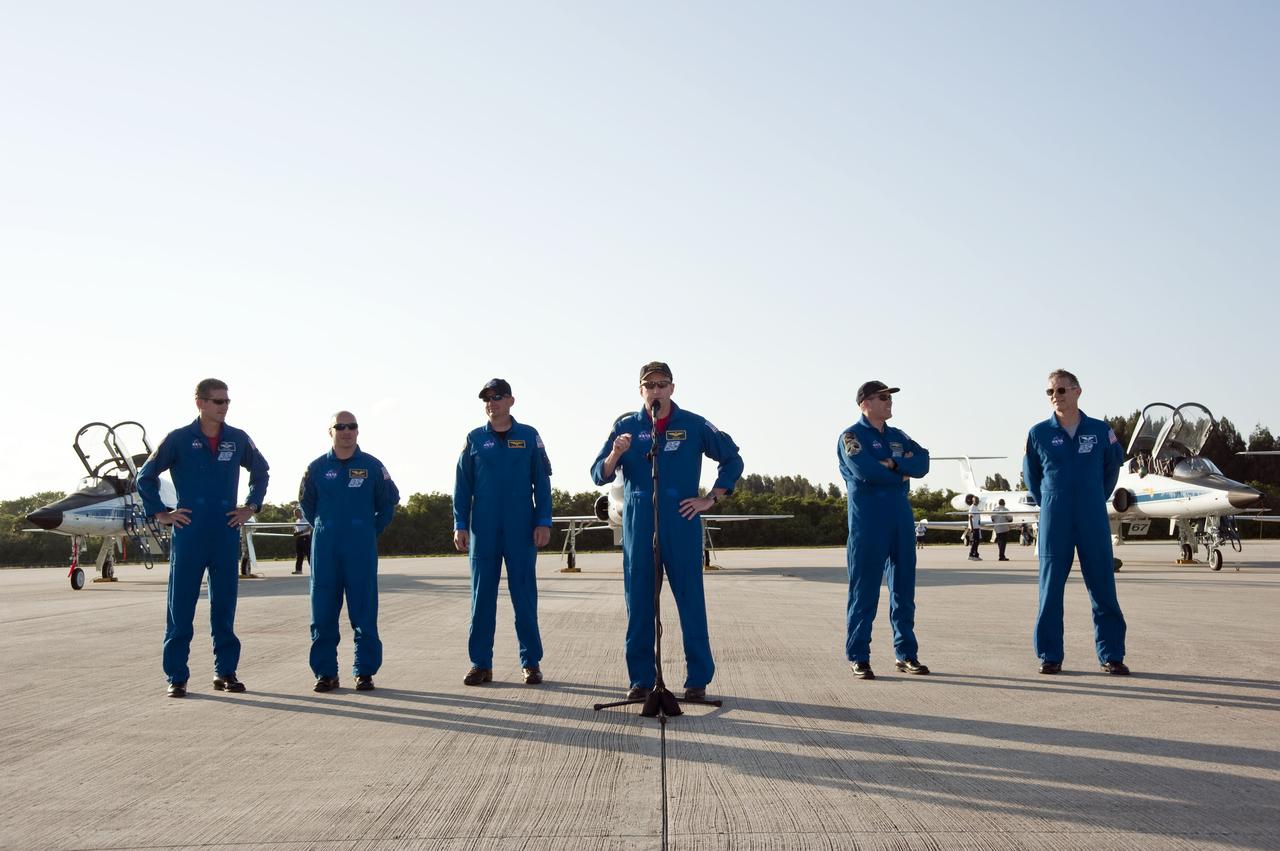
STS-132 LAUNCH L-4 CREW ARRIVAL
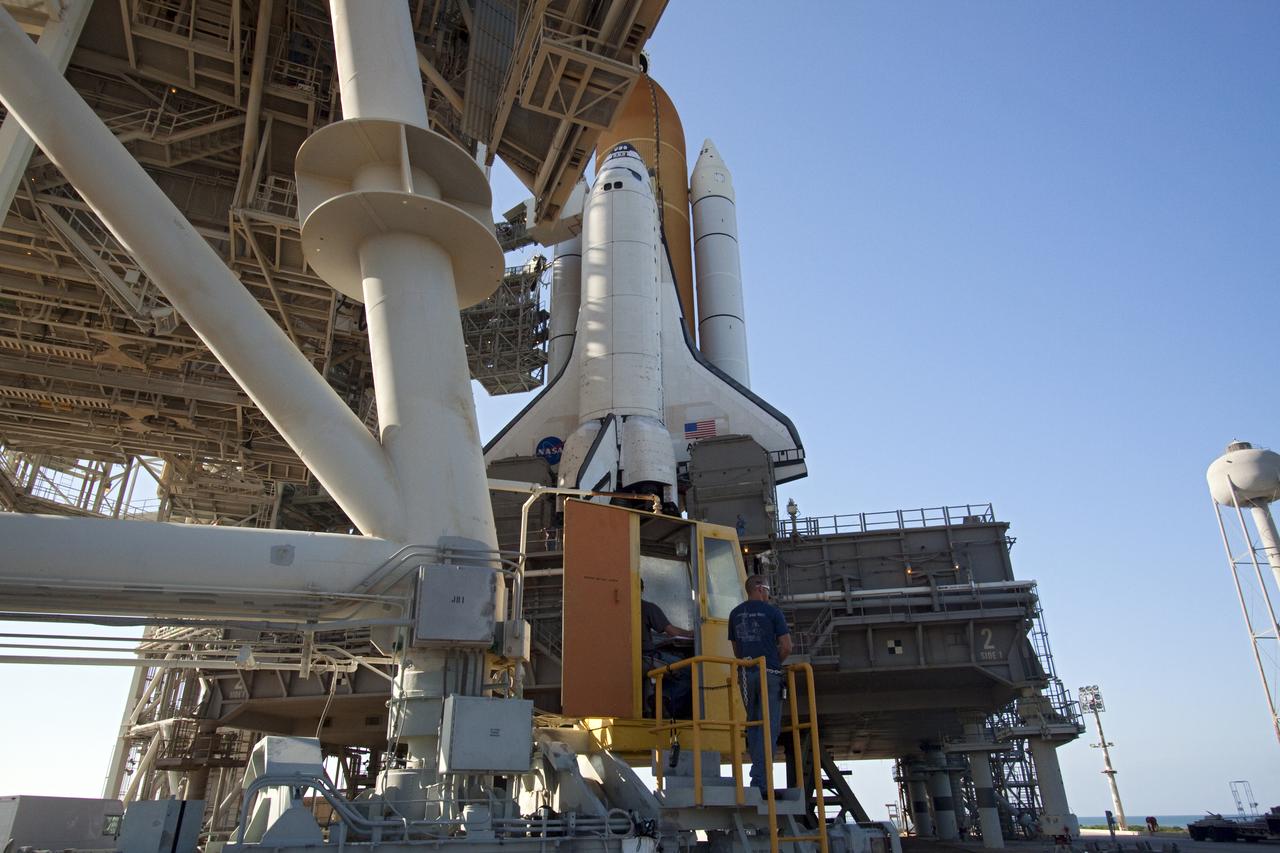
STS-132 LAUNCH L-1 RSS ROLLBACK
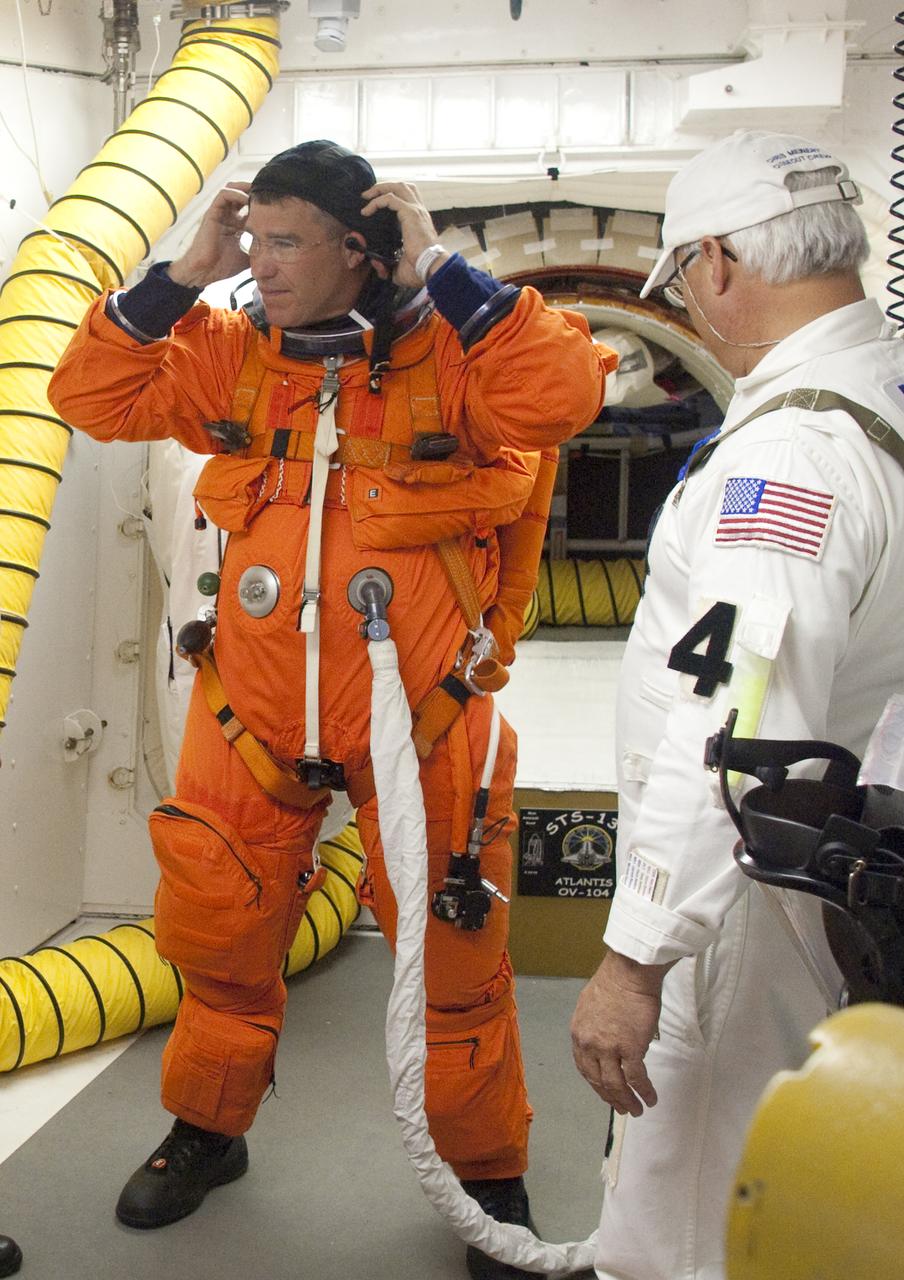
STS-132 LAUNCH L-0 WHITEROOM ACTIVITIES
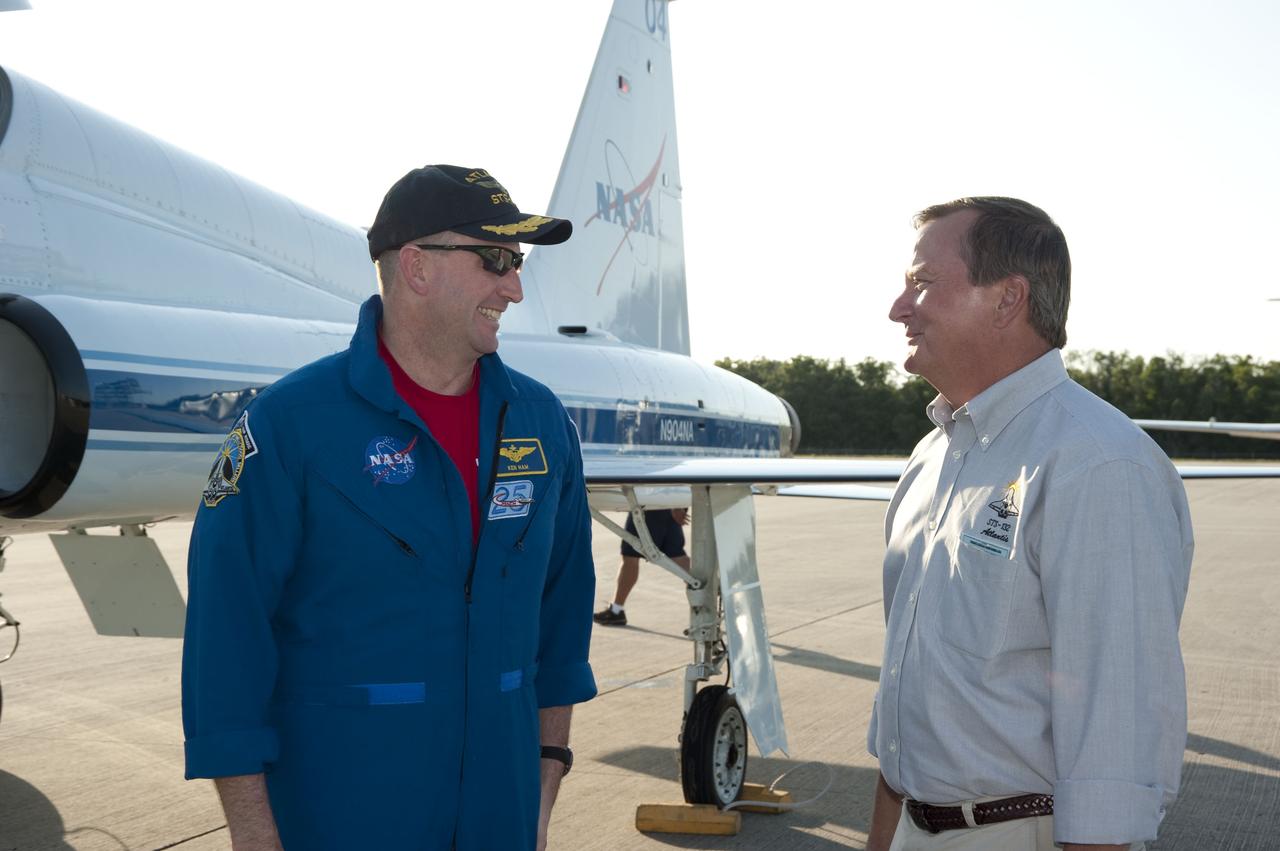
STS-132 LAUNCH L-4 CREW ARRIVAL
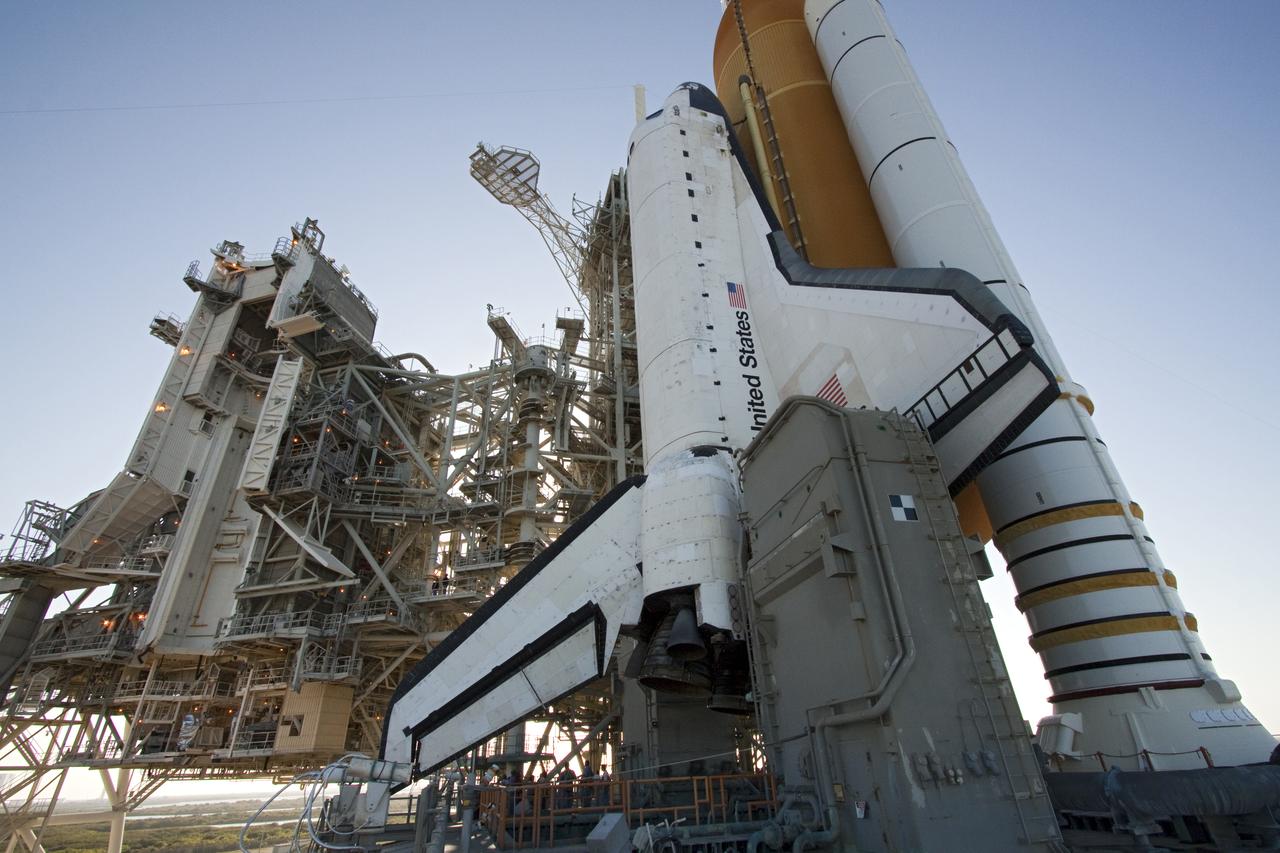
STS-132 LAUNCH L-1 RSS ROLLBACK
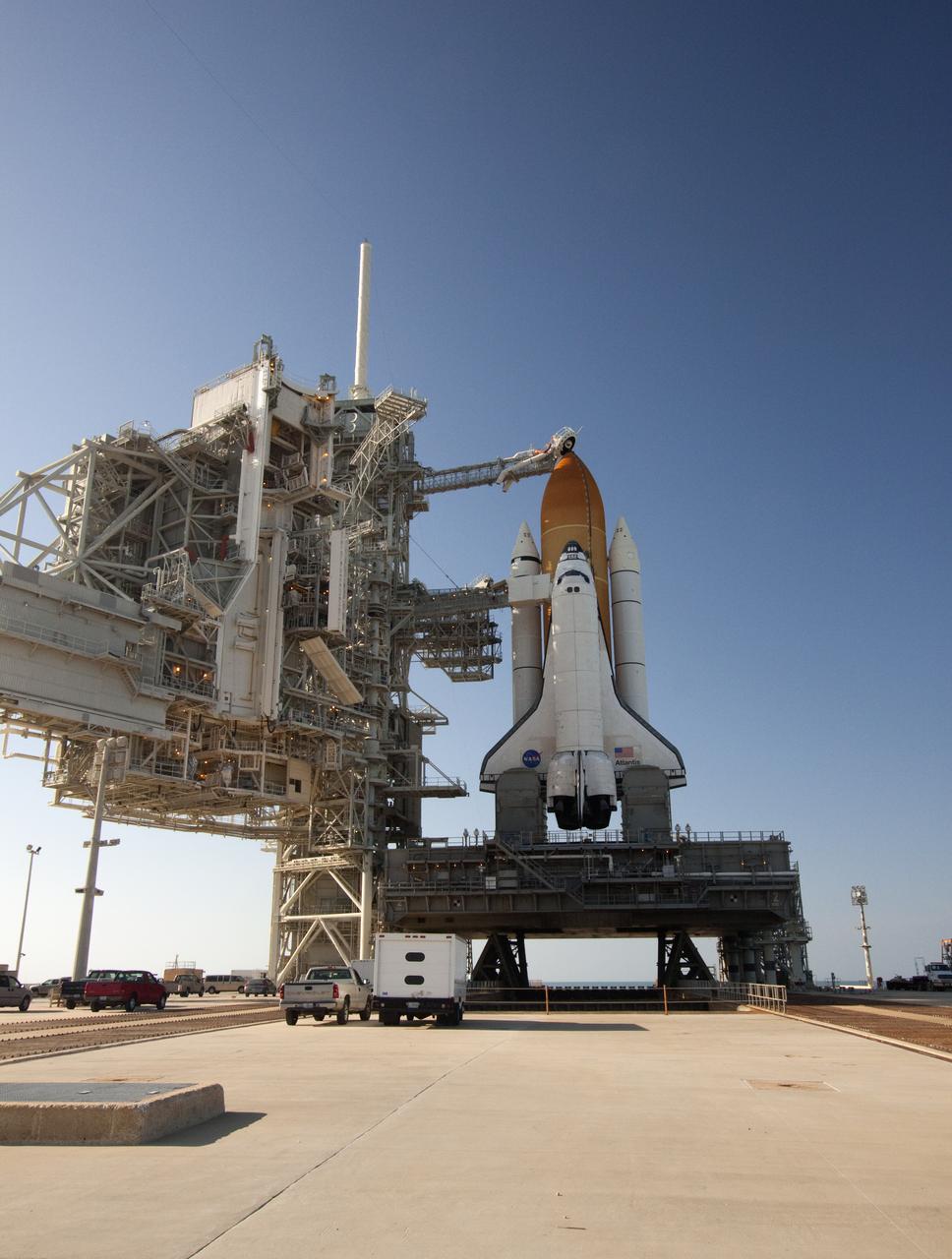
STS-132 LAUNCH L-1 RSS ROLLBACK
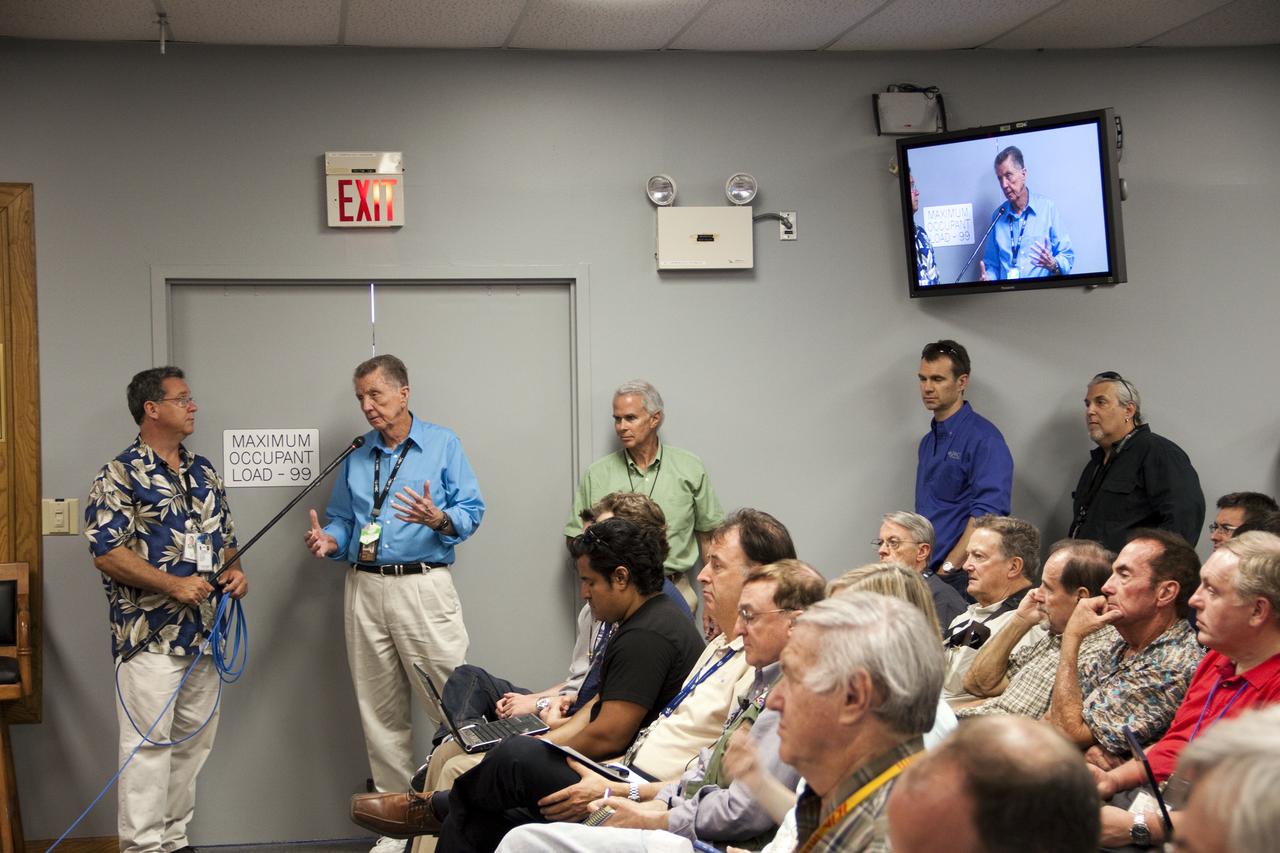
STS-132 POST LAUNCH PRESS CONFERENCE
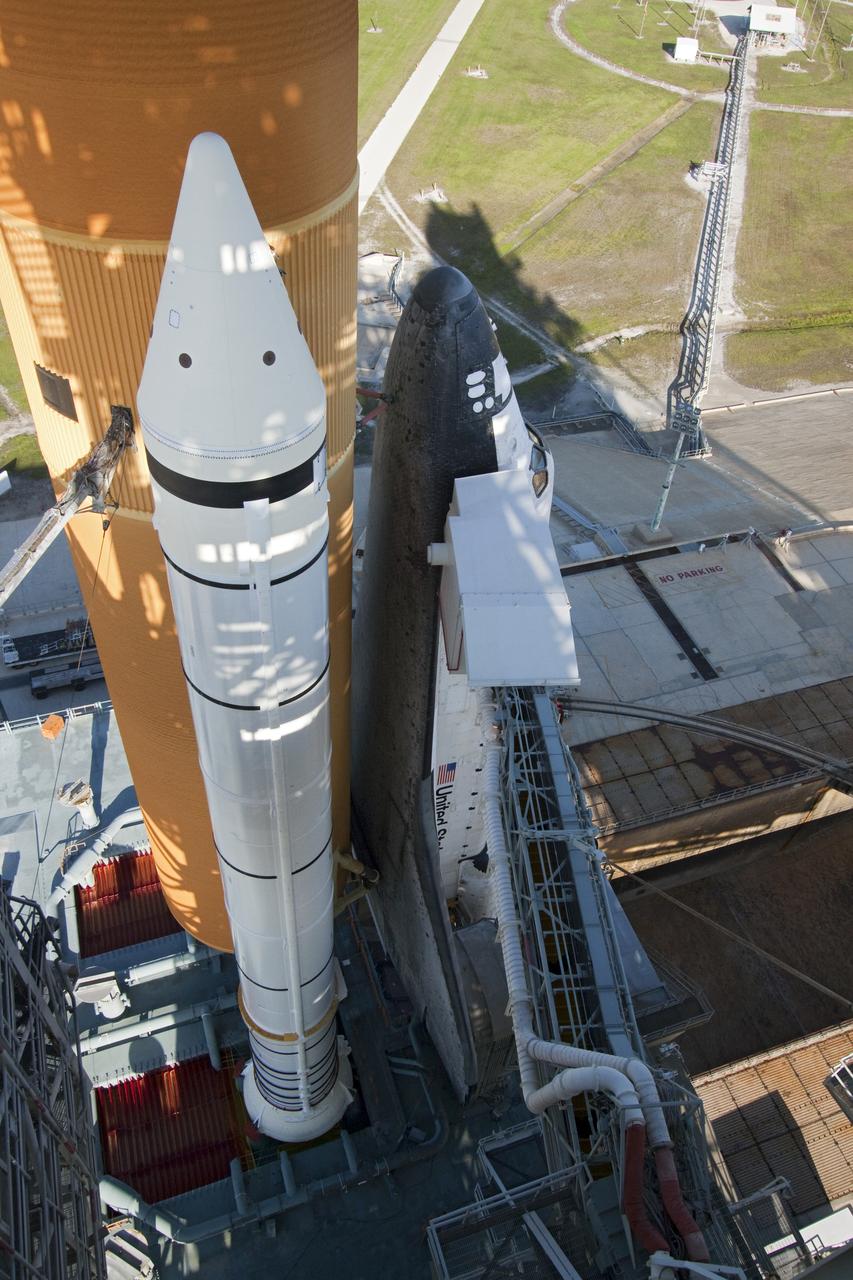
STS-132 LAUNCH L-1 RSS ROLLBACK
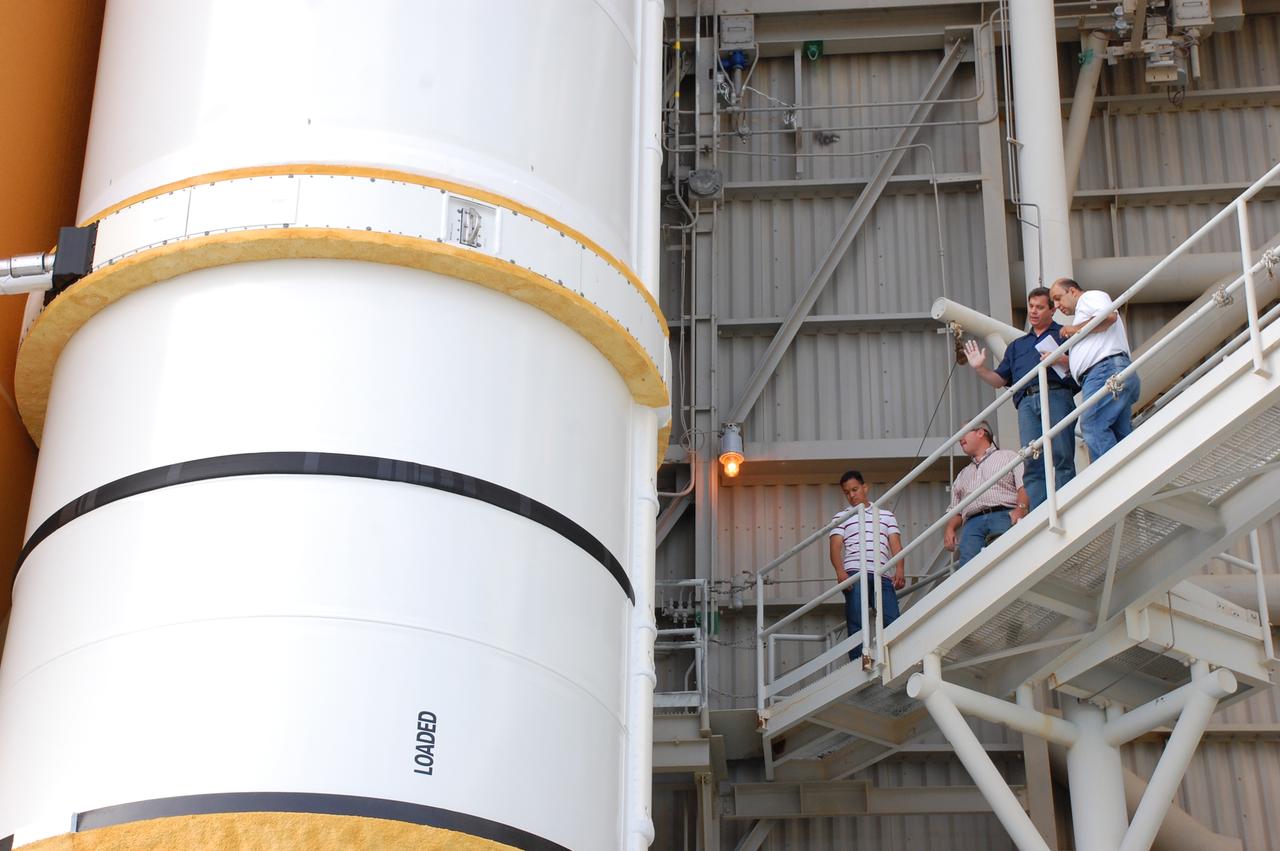
STS-132 LAUNCH L-1 PAD ACTIVITIES
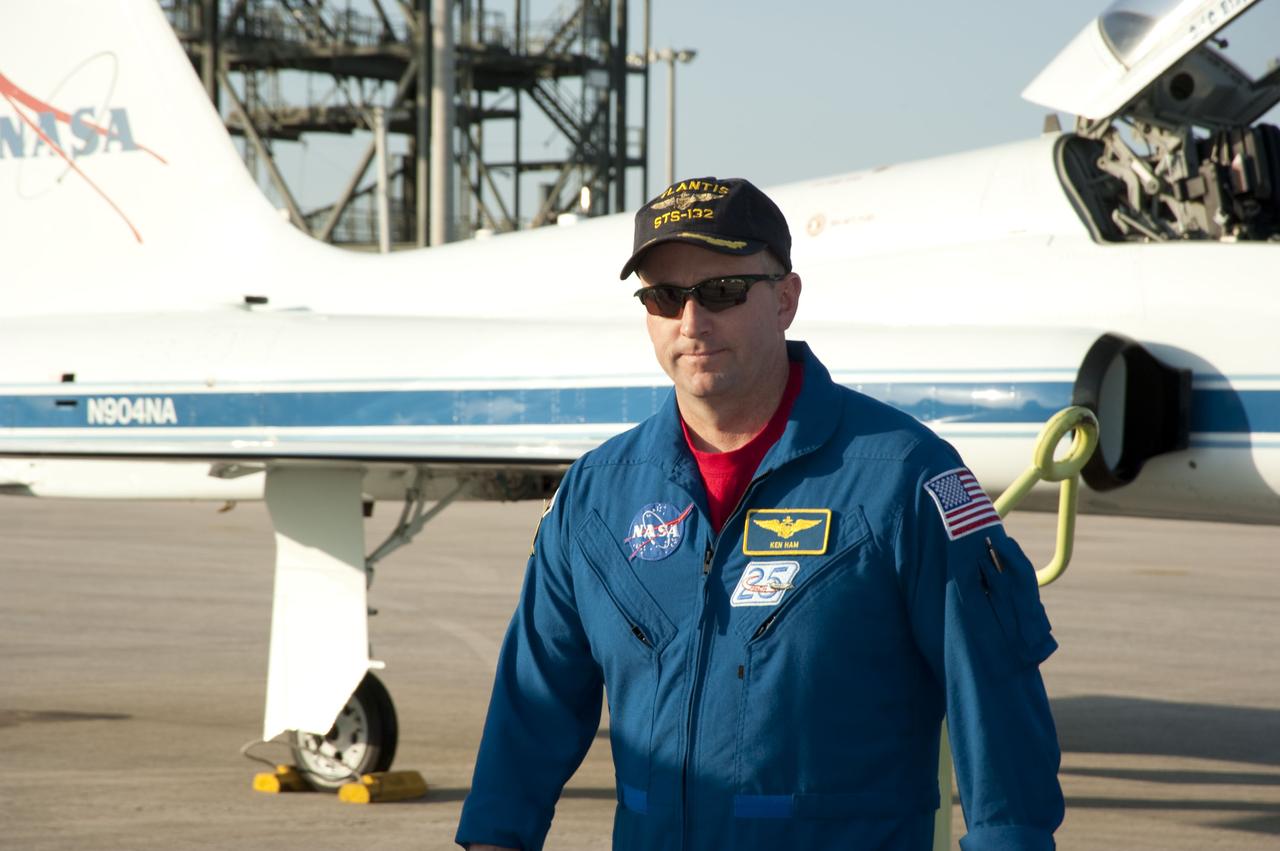
STS-132 LAUNCH L-4 CREW ARRIVAL
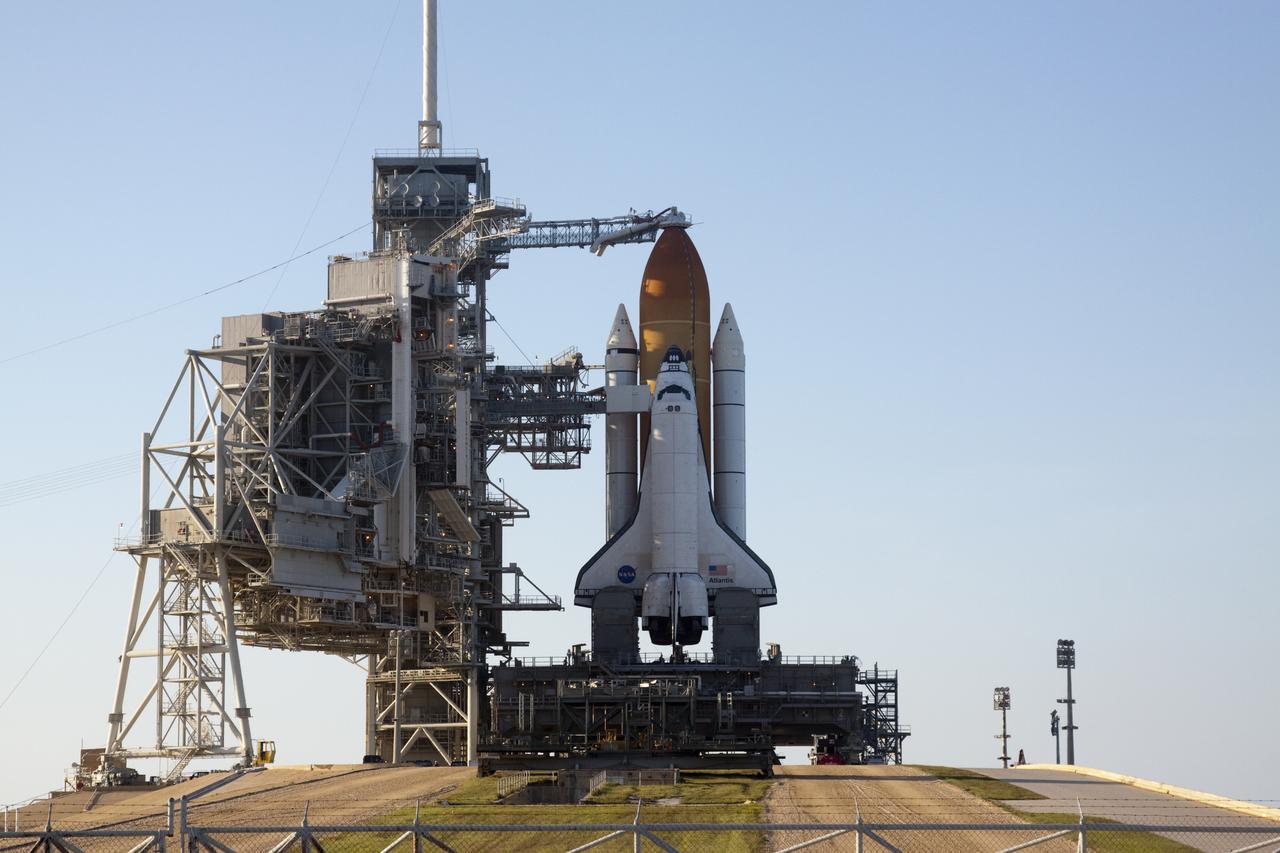
STS-132 LAUNCH L-1 RSS ROLLBACK
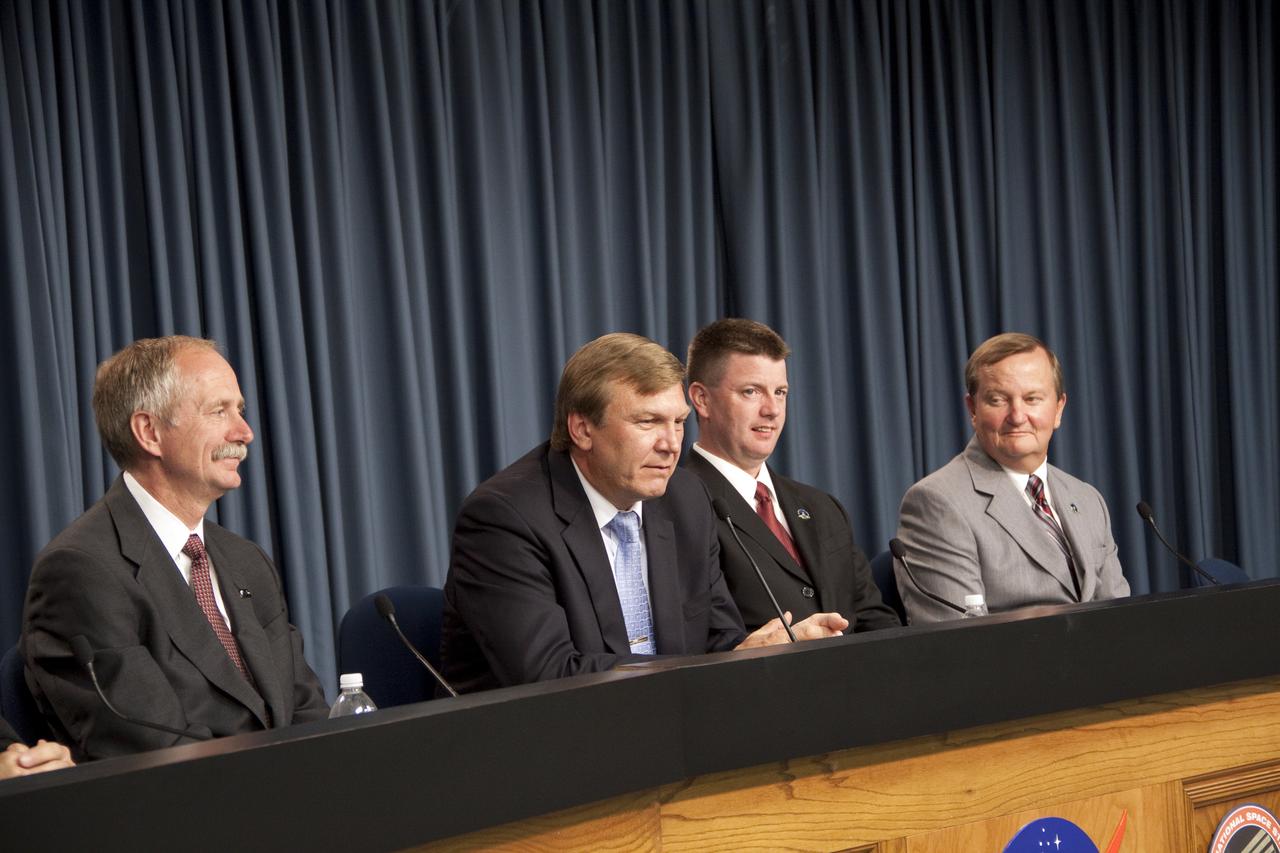
STS-132 POST LAUNCH PRESS CONFERENCE
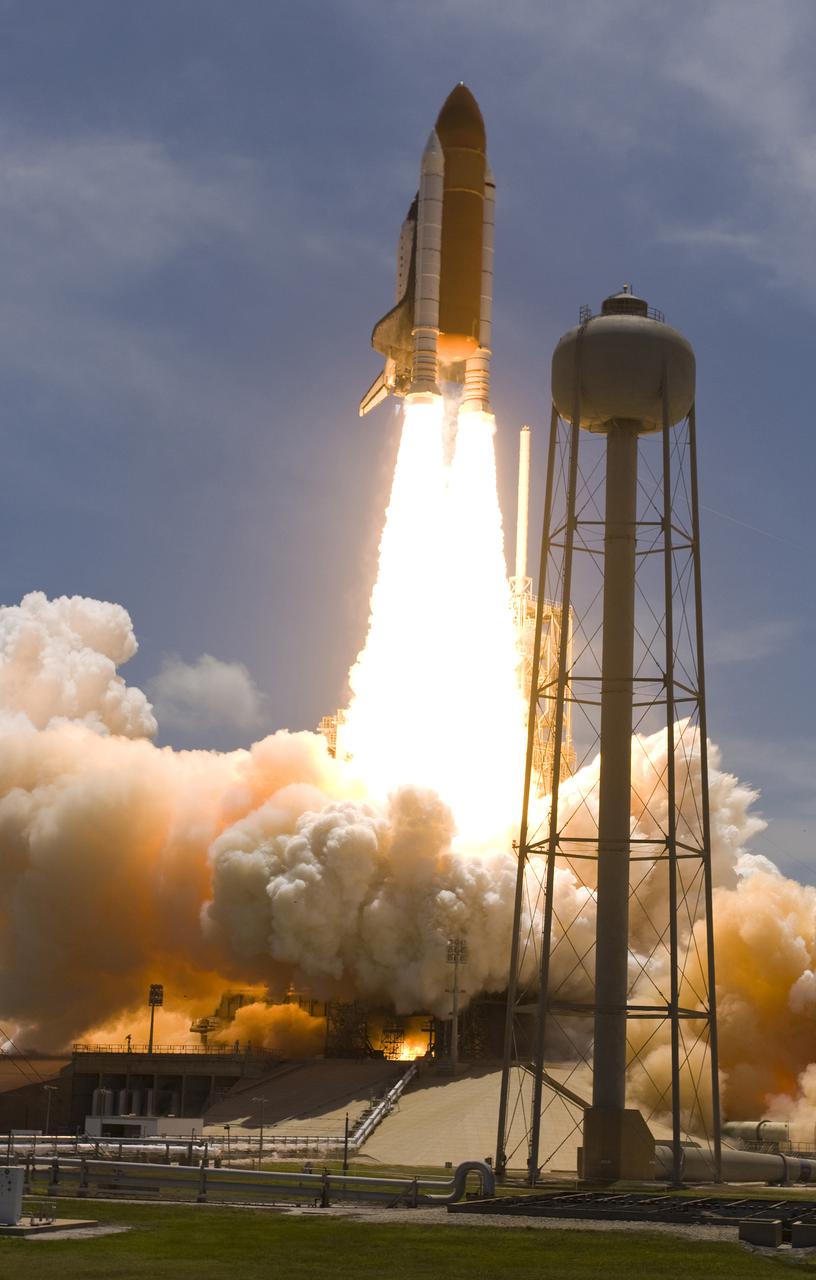
CAPE CANAVERAL, Fla. - Space shuttle Atlantis' twin solid rocket boosters propel the spacecraft off NASA Kennedy Space Center's Launch Pad 39A and into orbit. Atlantis' STS-132 mission to the International Space Station launched on time at 2:20 p.m. EDT on May 14. STS-132 is the 132nd shuttle flight, the 32nd for Atlantis and the 34th shuttle mission dedicated to station assembly and maintenance. For more information on the STS-132 mission objectives, payload and crew, visit www.nasa.gov_mission_pages_shuttle_shuttlemissions_sts132_index.html. Photo courtesy of Scott Andrews
STS-132 LAUNCH L-1 MEDIA TWEETUP OPENING CEREMONY
STS-132 LAUNCH L-0 BREAKFAST PHOTO OP