
CAPE CANAVERAL, Fla. - In the White Room at Launch Pad 39A at NASA's Kennedy Space Center in Florida, United Space Alliance spacesuit technicians help STS-133 Mission Specialist Nicole Stott put on the parachute for her launch-and-entry suit before she enters space shuttle Discovery through the crew hatch in the background. Stott spent 91 days aboard the International Space Station in 2009 as a crew member of Expeditions 20 and 21. Scheduled to lift off Feb. 24 at 4:50 p.m. EST, Discovery and its crew will deliver the Permanent Multipurpose Module, packed with supplies and critical spare parts, as well as Robonaut 2, the dexterous humanoid astronaut helper, to the International Space Station. Discovery, which will fly its 39th mission, is scheduled to be retired following STS-133. This will be the 133rd Space Shuttle Program mission and the 35th shuttle voyage to the space station. For more information on the STS-133 mission, visit www.nasa.gov/mission_pages/shuttle/shuttlemissions/sts133/. Photo credit: NASA/Sandra Joseph and Kevin O'Connell

CAPE CANAVERAL, Fla. -- At NASA's Kennedy Space Center in Florida, space shuttle Discovery's STS-133 Pilot Eric Boe chats with NASA Administrator Charlie Bolden on the Shuttle Landing Facility runway after arriving aboard a T-38 jet. In the days leading up to their launch to the International Space Station, Boe and his crew members will check the fit of their launch-and-entry suits, review launch-day procedures, receive weather briefings and remain medically quarantined to prevent sickness. This will be the second launch attempt for Discovery's crew, following a scrub in November 2010 due to a hydrogen gas leak at the ground umbilical carrier plate (GUCP) as well as modifications to the external fuel tank's intertank support beams, called stringers. Scheduled to lift off Feb. 24 at 4:50 p.m. EST, Discovery and its crew will deliver the Permanent Multipurpose Module, packed with supplies and critical spare parts, as well as Robonaut 2, the dexterous humanoid astronaut helper, to the orbiting outpost. For more information on the STS-133 mission, visit www.nasa.gov/mission_pages/shuttle/shuttlemissions/sts133/. Photo credit: NASA/Kim Shiflett

CAPE CANAVERAL, Fla. -- At NASA's Kennedy Space Center in Florida, Associate Administrator for Space Operations Bill Gerstenmaier, left, Space Shuttle Program Launch Integration Manager Mike Moses and Shuttle Launch Director Mike Leinbach talk to media following a Flight Readiness Review that gave a unanimous "go" to launch space shuttle Discovery on the STS-133 mission to the International Space Station. This will be the second launch attempt for Discovery, following a scrub in November 2010 due to a hydrogen gas leak at the ground umbilical carrier plate (GUCP) as well as modifications to the external fuel tank's intertank support beams, called stringers. Scheduled to lift off Feb. 24 at 4:50 p.m. EST, Discovery and its six-member crew will deliver the Permanent Multipurpose Module, packed with supplies and critical spare parts, as well as Robonaut 2, the dexterous humanoid astronaut helper, to the orbiting outpost. For more information on the STS-133 mission, visit www.nasa.gov/mission_pages/shuttle/shuttlemissions/sts133/. Photo credit: NASA/Kim Shiflett
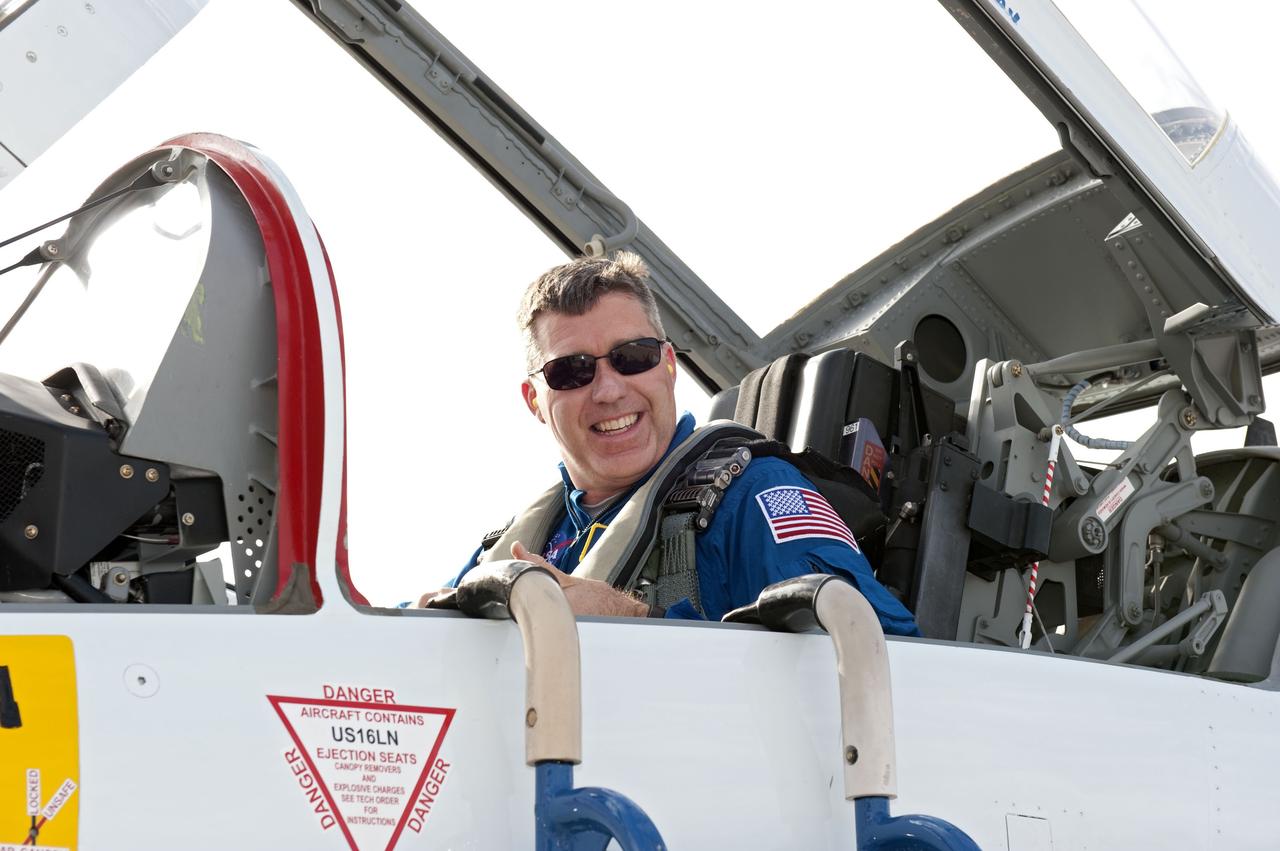
CAPE CANAVERAL, Fla. -- At NASA's Kennedy Space Center in Florida, space shuttle Discovery's STS-133 Mission Specialist Steve Bowen arrives on the Shuttle Landing Facility runway aboard a T-38 jet. In the days leading up to their launch to the International Space Station, Bowen and his crew members will check the fit of their launch-and-entry suits, review launch-day procedures, receive weather briefings and remain medically quarantined to prevent sickness. Bowen replaces astronaut Tim Kopra, who was injured in a bicycle accident in January 2011. This will be the second launch attempt for Discovery's crew, following a scrub in November 2010 due to a hydrogen gas leak at the ground umbilical carrier plate (GUCP) as well as modifications to the external fuel tank's intertank support beams, called stringers. Scheduled to lift off Feb. 24 at 4:50 p.m. EST, Discovery and its crew will deliver the Permanent Multipurpose Module, packed with supplies and critical spare parts, as well as Robonaut 2, the dexterous humanoid astronaut helper, to the orbiting outpost. For more information on the STS-133 mission, visit www.nasa.gov/mission_pages/shuttle/shuttlemissions/sts133/. Photo credit: NASA/Kim Shiflett
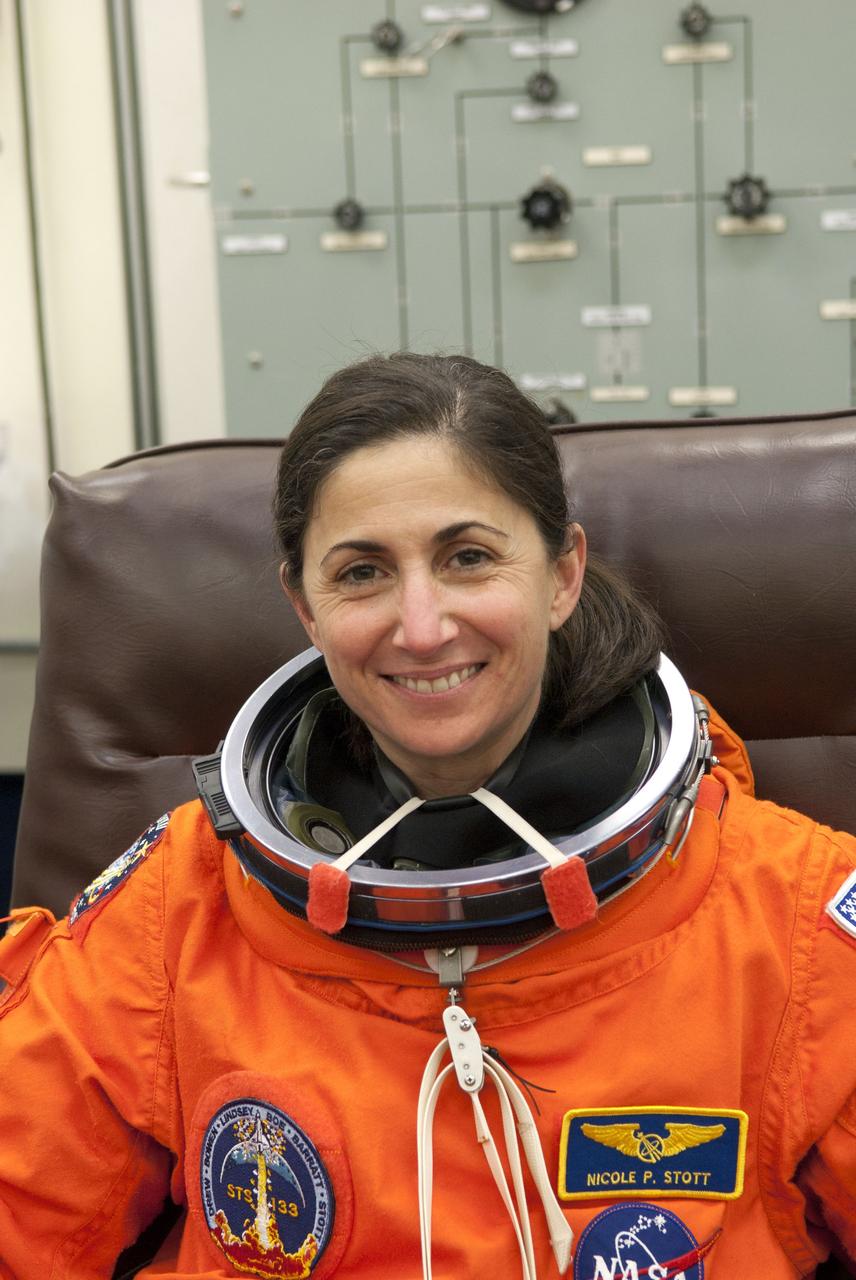
CAPE CANAVERAL, Fla. - In the Operations and Checkout Building (O&C) at NASA's Kennedy Space Center in Florida, the astronauts of space shuttle Discovery's STS-133 crew put on their launch-and-entry suits and check the fit of their helmets and gloves before heading to the Astrovan for the ride to Launch Pad 39A. Mission Specialist Nicole Stott, seen here, spent 91 days aboard the International Space Station in 2009 as a crew member of Expeditions 20 and 21. Scheduled to lift off Feb. 24 at 4:50 p.m. EST, Discovery and its crew will deliver the Permanent Multipurpose Module, packed with supplies and critical spare parts, as well as Robonaut 2, the dexterous humanoid astronaut helper, to the International Space Station. Discovery, which will fly its 39th mission, is scheduled to be retired following STS-133. This will be the 133rd Space Shuttle Program mission and the 35th shuttle voyage to the space station. For more information on the STS-133 mission, visit www.nasa.gov/mission_pages/shuttle/shuttlemissions/sts133/. Photo credit: NASA/Jim Grossmann

CAPE CANAVERAL, Fla. -- At NASA's Kennedy Space Center in Florida, space shuttle Discovery's STS-133 pose for a photo on the Shuttle Landing Facility runway after arriving in T-38 jets. From left, are Mission Specialists Nicole Stott, Michael Barratt, Steve Bowen and Alvin Drew, Pilot Eric Boe, and Commander Steve Lindsey. In the days leading up to their launch to the International Space Station, the crew members will check the fit of their launch-and-entry suits, review launch-day procedures, receive weather briefings and remain medically quarantined to prevent sickness. This will be the second launch attempt for Discovery's crew, following a scrub in November 2010 due to a hydrogen gas leak at the ground umbilical carrier plate (GUCP) as well as modifications to the external fuel tank's intertank support beams, called stringers. Scheduled to lift off Feb. 24 at 4:50 p.m. EST, Discovery and its crew will deliver the Permanent Multipurpose Module, packed with supplies and critical spare parts, as well as Robonaut 2, the dexterous humanoid astronaut helper, to the orbiting outpost. For more information on the STS-133 mission, visit www.nasa.gov/mission_pages/shuttle/shuttlemissions/sts133/. Photo credit: NASA/Kim Shiflett
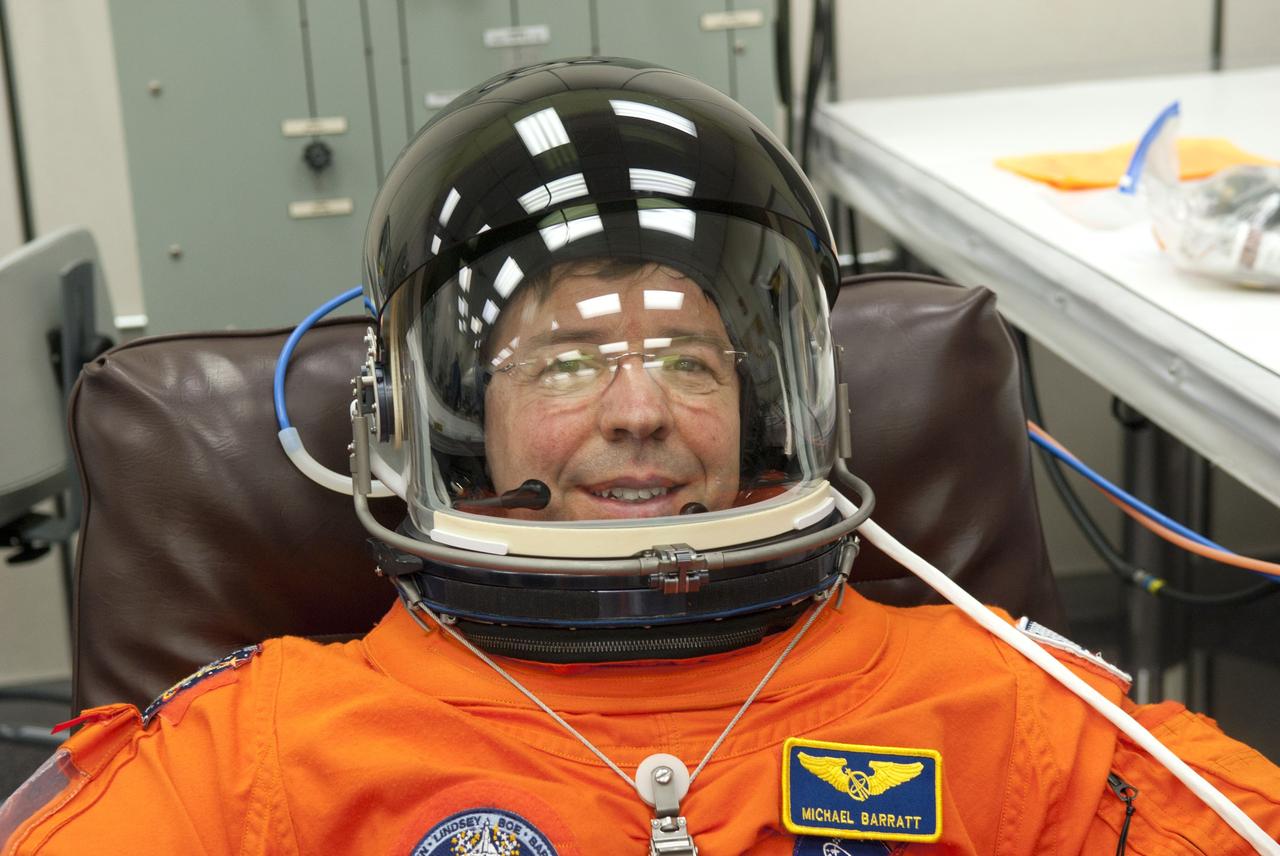
CAPE CANAVERAL, Fla. - In the Operations and Checkout Building (O&C) at NASA's Kennedy Space Center in Florida, the astronauts of space shuttle Discovery's STS-133 crew put on their launch-and-entry suits and check the fit of their helmets and gloves before heading to the Astrovan for the ride to Launch Pad 39A. Mission Specialist Michael Barratt, seen here, is making his first flight aboard a space shuttle. Barratt has called the space station home before, though, after spending 199 days as a crew member of Expeditions 19 and 20 in 2009. Scheduled to lift off Feb. 24 at 4:50 p.m. EST, Discovery and its crew will deliver the Permanent Multipurpose Module, packed with supplies and critical spare parts, as well as Robonaut 2, the dexterous humanoid astronaut helper, to the International Space Station. Discovery, which will fly its 39th mission, is scheduled to be retired following STS-133. This will be the 133rd Space Shuttle Program mission and the 35th shuttle voyage to the space station. For more information on the STS-133 mission, visit www.nasa.gov/mission_pages/shuttle/shuttlemissions/sts133/. Photo credit: NASA/Jim Grossmann
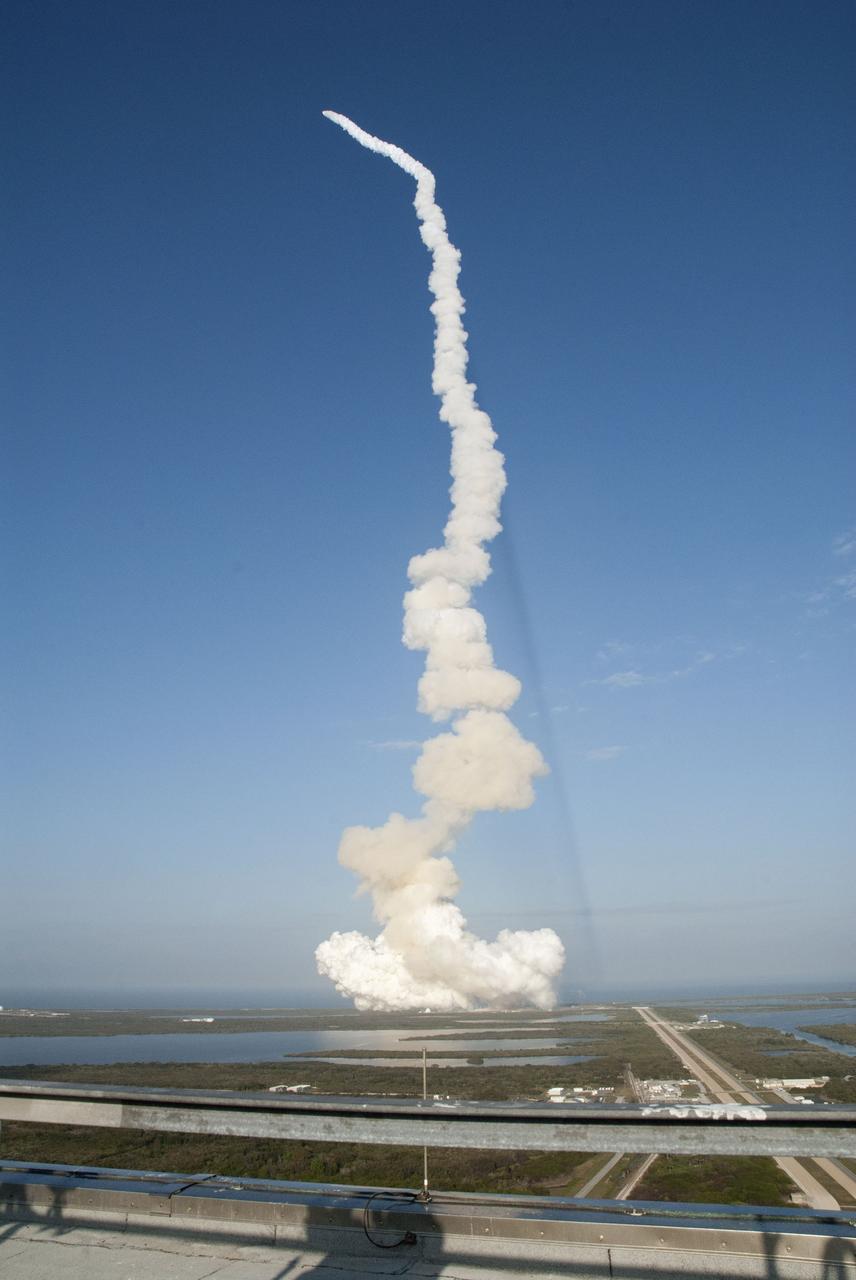
CAPE CANAVERAL, Fla. -- Taken from the roof of the Vehicle Assembly Building at NASA's Kennedy Space Center in Florida, space shuttle Discovery lifts off Launch Pad 39A atop twin columns of fire, creating rolling clouds of smoke and steam in its track. Launch of the STS-133 mission was at 4:53 p.m. EST on Feb. 24. Discovery and its six-member crew are on a mission to deliver the Permanent Multipurpose Module, packed with supplies and critical spare parts, as well as Robonaut 2, the dexterous humanoid astronaut helper, to the International Space Station. Discovery is making its 39th mission and is scheduled to be retired following STS-133. This is the 133rd Space Shuttle Program mission, the 35th shuttle voyage to the space station and Discovery's final mission. For more information on the STS-133 mission, visit www.nasa.gov/mission_pages/shuttle/shuttlemissions/sts133/. Photo credit: NASA/Jeff Marino
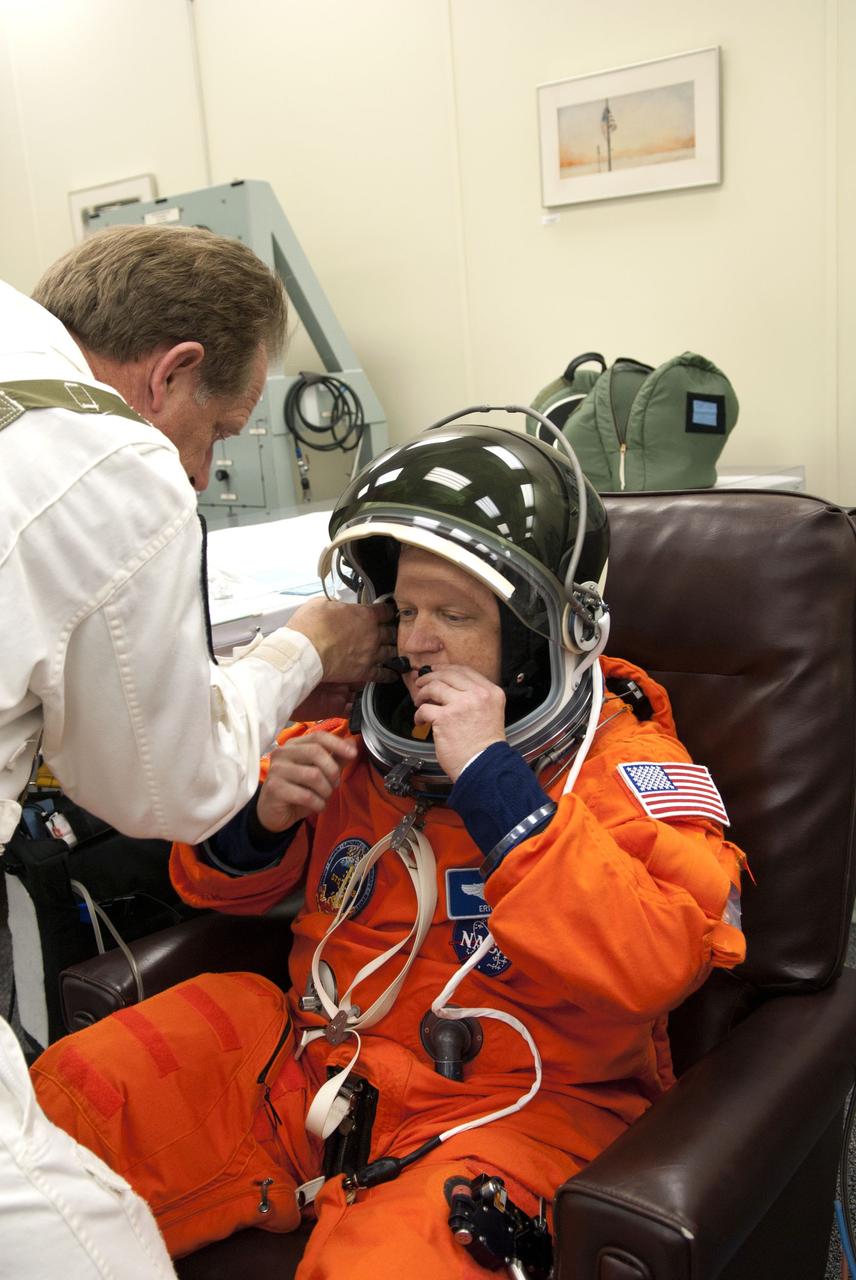
CAPE CANAVERAL, Fla. - In the Operations and Checkout Building (O&C) at NASA's Kennedy Space Center in Florida, the astronauts of space shuttle Discovery's STS-133 crew put on their launch-and-entry suits and check the fit of their helmets and gloves before heading to the Astrovan for the ride to Launch Pad 39A. Pilot Eric Boe, seen here, last piloted space shuttle Endeavour during its STS-126 mission back in 2008. Scheduled to lift off Feb. 24 at 4:50 p.m. EST, Discovery and its crew will deliver the Permanent Multipurpose Module, packed with supplies and critical spare parts, as well as Robonaut 2, the dexterous humanoid astronaut helper, to the International Space Station. Discovery, which will fly its 39th mission, is scheduled to be retired following STS-133. This will be the 133rd Space Shuttle Program mission and the 35th shuttle voyage to the space station. For more information on the STS-133 mission, visit www.nasa.gov/mission_pages/shuttle/shuttlemissions/sts133/. Photo credit: NASA/Jim Grossmann
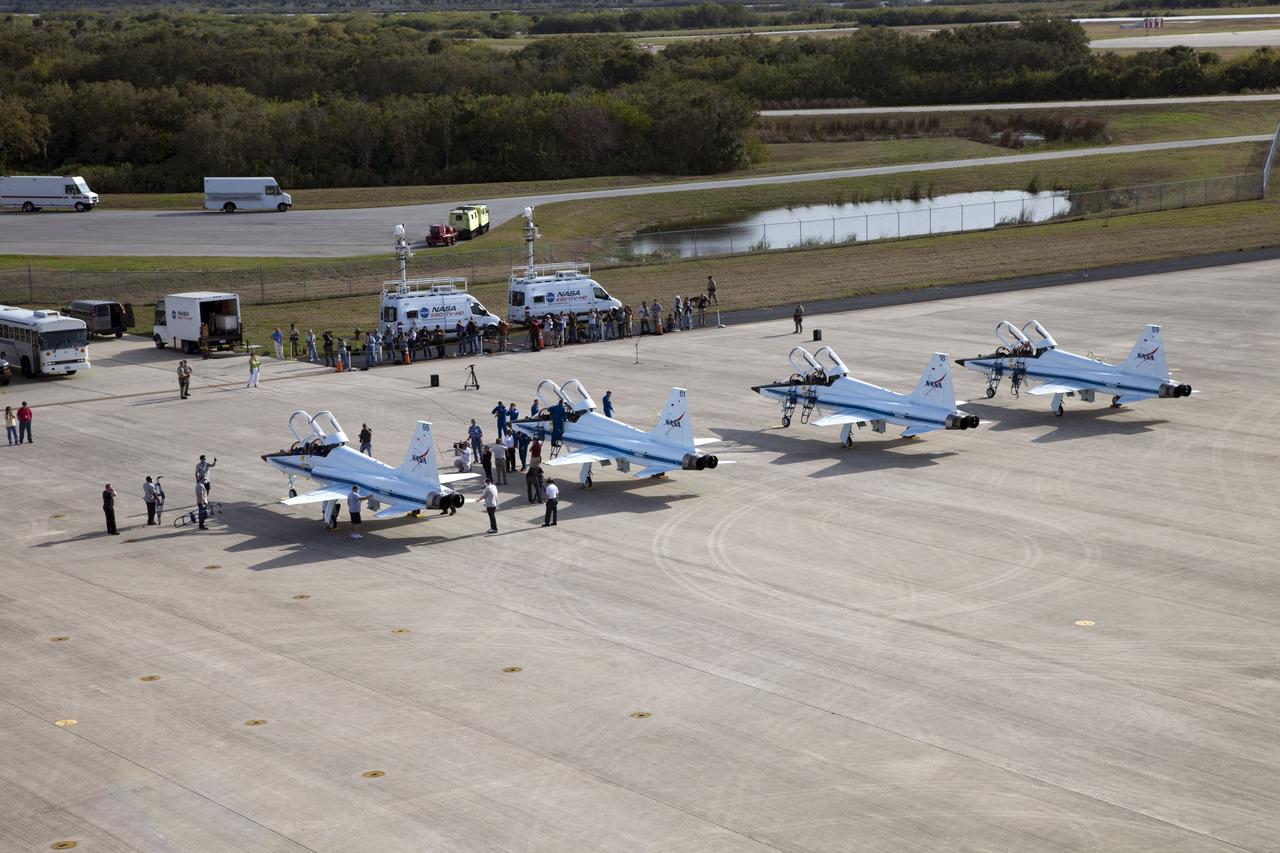
CAPE CANAVERAL, Fla. -- Space shuttle Discovery's STS-133 crew arrived on the Shuttle Landing Facility runway at NASA's Kennedy Space Center in Florida aboard four T-38 jets. In the days leading up to their launch to the International Space Station, the crew members will check the fit of their launch-and-entry suits, review launch-day procedures, receive weather briefings and remain medically quarantined to prevent sickness. This will be the second launch attempt for Discovery's crew, following a scrub in November 2010 due to a hydrogen gas leak at the ground umbilical carrier plate (GUCP) as well as modifications to the external fuel tank's intertank support beams, called stringers. Scheduled to lift off Feb. 24 at 4:50 p.m. EST, Discovery and its crew will deliver the Permanent Multipurpose Module, packed with supplies and critical spare parts, as well as Robonaut 2, the dexterous humanoid astronaut helper, to the orbiting outpost. For more information on the STS-133 mission, visit www.nasa.gov/mission_pages/shuttle/shuttlemissions/sts133/. Photo credit: NASAFrank Michaux

CAPE CANAVERAL, Fla. -- Rising on twin columns of fire and creating rolling clouds of smoke and steam, space shuttle Discovery lifts off Launch Pad 39A at NASA's Kennedy Space Center in Florida on a picturesque, warm, late February afternoon. Launch of the STS-133 mission was at 4:53 p.m. EST on Feb. 24. Discovery and its six-member crew are on a mission to deliver the Permanent Multipurpose Module, packed with supplies and critical spare parts, as well as Robonaut 2, the dexterous humanoid astronaut helper, to the International Space Station. Discovery is making its 39th mission and is scheduled to be retired following STS-133. This is the 133rd Space Shuttle Program mission and the 35th shuttle voyage to the space station. For more information on the STS-133 mission, visit www.nasa.gov/mission_pages/shuttle/shuttlemissions/sts133/. Photo credit: NASA/Todd S. Prough
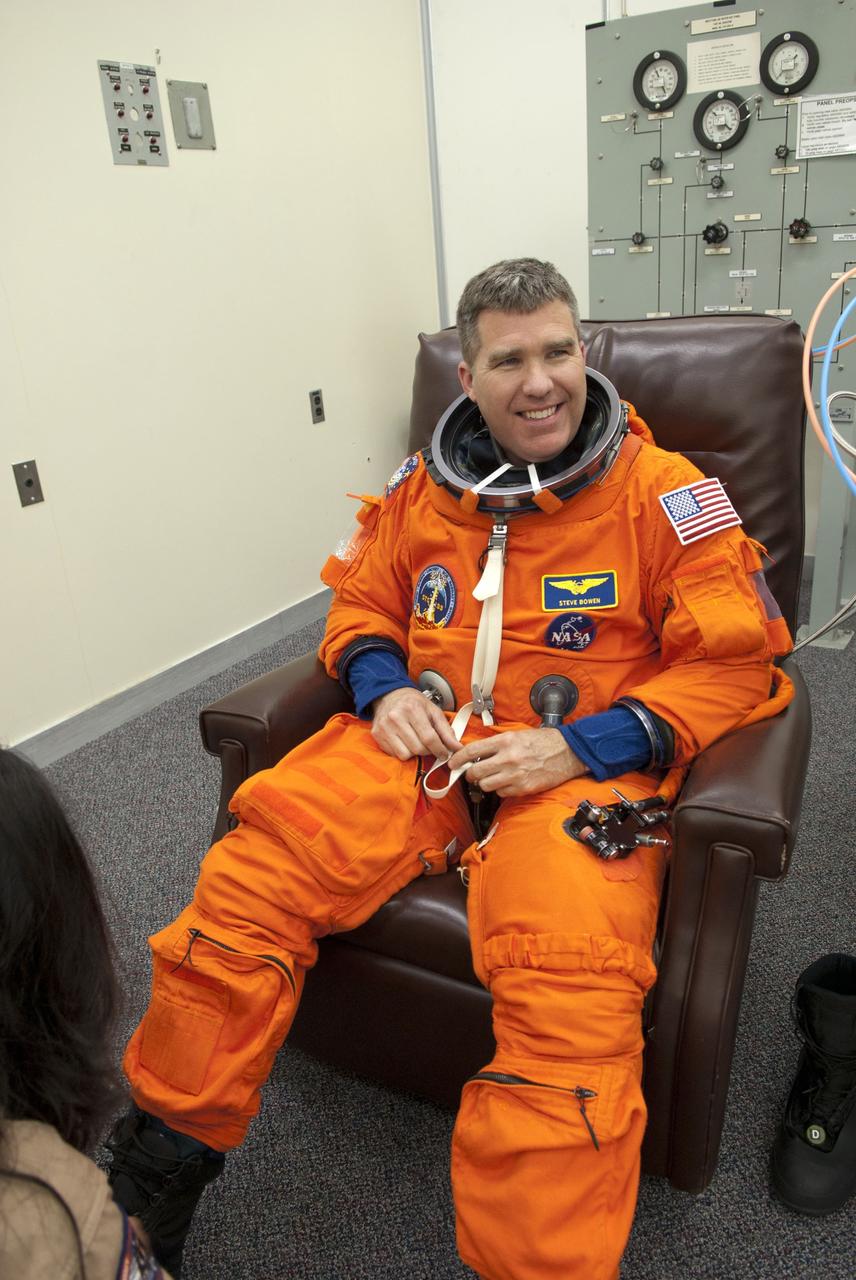
CAPE CANAVERAL, Fla. - In the Operations and Checkout Building (O&C) at NASA's Kennedy Space Center in Florida, the astronauts of space shuttle Discovery's STS-133 crew put on their launch-and-entry suits and check the fit of their helmets and gloves before heading to the Astrovan for the ride to Launch Pad 39A. Mission Specialist Steve Bowen, seen here, is making his third spaceflight. The last time he suited up for flight was in May 2010 for the STS-132 mission. Bowen replaces astronaut Tim Kopra as Mission Specialist 2, because Kopra was injured in a recent bicycle accident that prevented him from lifting off during this launch window. Scheduled to lift off Feb. 24 at 4:50 p.m. EST, Discovery and its crew will deliver the Permanent Multipurpose Module, packed with supplies and critical spare parts, as well as Robonaut 2, the dexterous humanoid astronaut helper, to the International Space Station. Discovery, which will fly its 39th mission, is scheduled to be retired following STS-133. This will be the 133rd Space Shuttle Program mission and the 35th shuttle voyage to the space station. For more information on the STS-133 mission, visit www.nasa.gov/mission_pages/shuttle/shuttlemissions/sts133/. Photo credit: NASA/Jim Grossmann
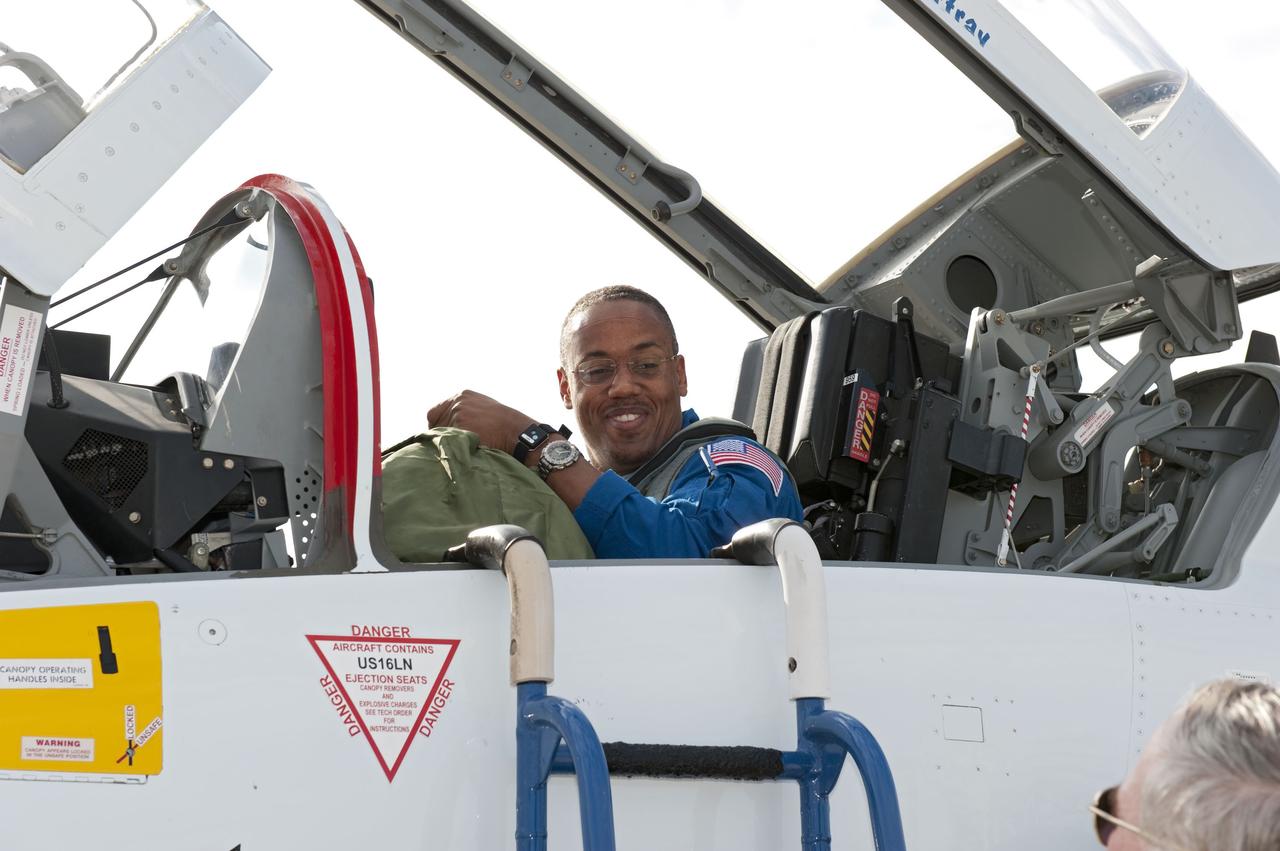
CAPE CANAVERAL, Fla. -- At NASA's Kennedy Space Center in Florida, space shuttle Discovery's STS-133 Mission Specialist Alvin Drew arrives on the Shuttle Landing Facility runway aboard a T-38 jet. In the days leading up to their launch to the International Space Station, Drew and his crew members will check the fit of their launch-and-entry suits, review launch-day procedures, receive weather briefings and remain medically quarantined to prevent sickness. This will be the second launch attempt for Discovery's crew, following a scrub in November 2010 due to a hydrogen gas leak at the ground umbilical carrier plate (GUCP) as well as modifications to the external fuel tank's intertank support beams, called stringers. Scheduled to lift off Feb. 24 at 4:50 p.m. EST, Discovery and its crew will deliver the Permanent Multipurpose Module, packed with supplies and critical spare parts, as well as Robonaut 2, the dexterous humanoid astronaut helper, to the orbiting outpost. For more information on the STS-133 mission, visit www.nasa.gov/mission_pages/shuttle/shuttlemissions/sts133/. Photo credit: NASA/Kim Shiflett
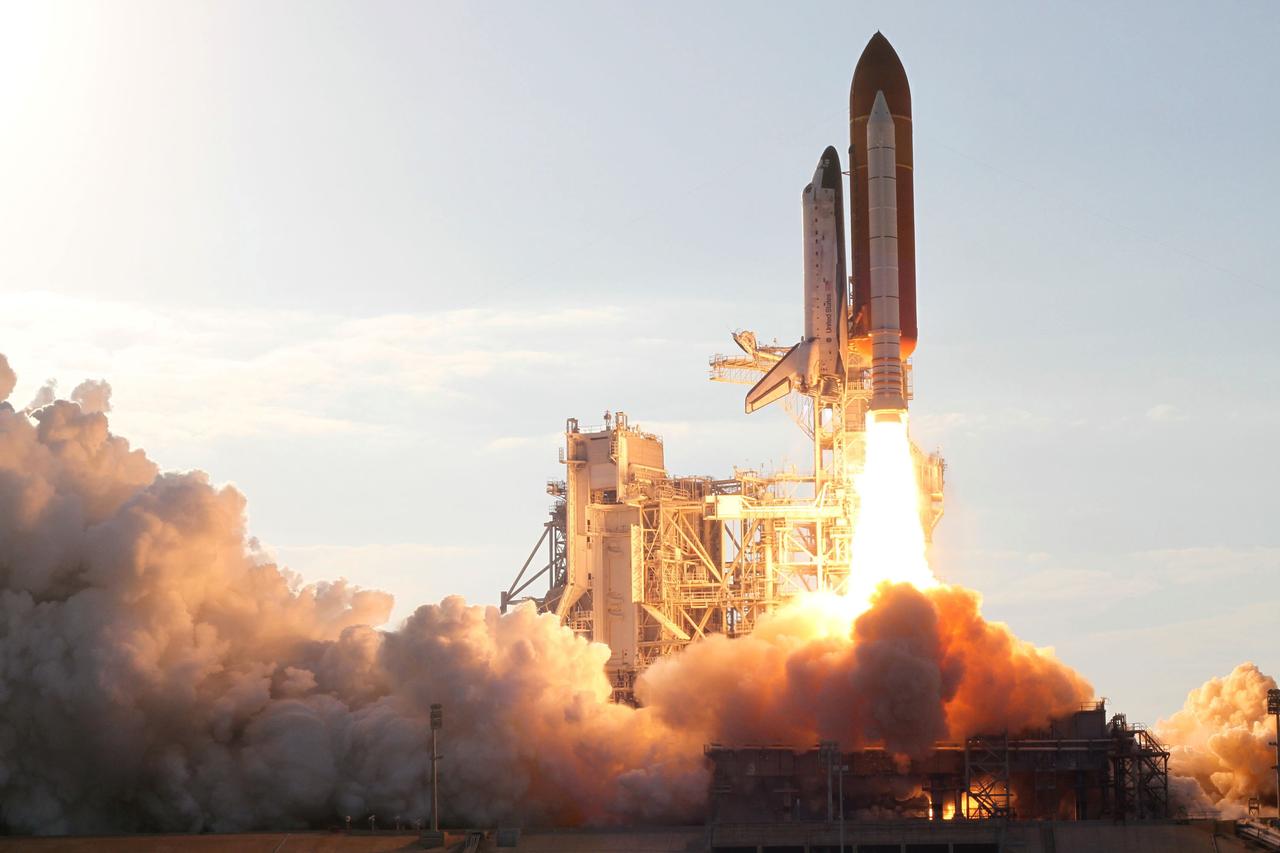
CAPE CANAVERAL, Fla. -- Rising on twin columns of fire and creating rolling clouds of smoke and steam, space shuttle Discovery lifts off Launch Pad 39A at NASA's Kennedy Space Center in Florida on a picturesque, warm, late February afternoon. Launch of the STS-133 mission was at 4:53 p.m. EST on Feb. 24. Discovery and its six-member crew are on a mission to deliver the Permanent Multipurpose Module, packed with supplies and critical spare parts, as well as Robonaut 2, the dexterous humanoid astronaut helper, to the International Space Station. Discovery is making its 39th mission and is scheduled to be retired following STS-133. This is the 133rd Space Shuttle Program mission and the 35th shuttle voyage to the space station. For more information on the STS-133 mission, visit www.nasa.gov/mission_pages/shuttle/shuttlemissions/sts133/. Photo credit: NASA

CAPE CANAVERAL, Fla. -- At NASA's Kennedy Space Center in Florida, space shuttle Discovery's STS-133 Pilot Eric Boe talks with Kennedy Center Director Bob Cabana on the Shuttle Landing Facility runway after arriving aboard a T-38 jet. In the days leading up to their launch to the International Space Station, Boe and his crew members will check the fit of their launch-and-entry suits, review launch-day procedures, receive weather briefings and remain medically quarantined to prevent sickness. This will be the second launch attempt for Discovery's crew, following a scrub in November 2010 due to a hydrogen gas leak at the ground umbilical carrier plate (GUCP) as well as modifications to the external fuel tank's intertank support beams, called stringers. Scheduled to lift off Feb. 24 at 4:50 p.m. EST, Discovery and its crew will deliver the Permanent Multipurpose Module, packed with supplies and critical spare parts, as well as Robonaut 2, the dexterous humanoid astronaut helper, to the orbiting outpost. For more information on the STS-133 mission, visit www.nasa.gov/mission_pages/shuttle/shuttlemissions/sts133/. Photo credit: NASA/Kim Shiflett
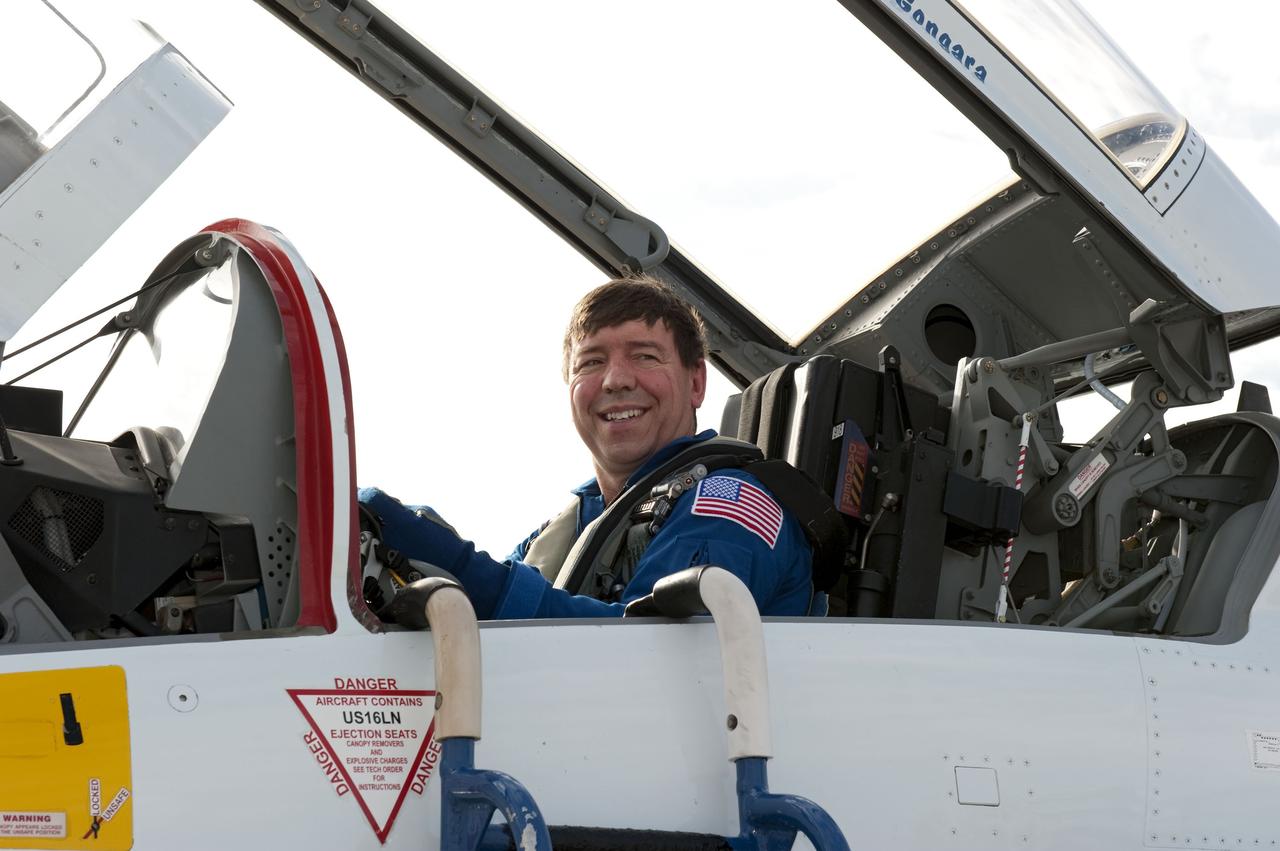
CAPE CANAVERAL, Fla. -- At NASA's Kennedy Space Center in Florida, space shuttle Discovery's STS-133 Mission Specialist Michael Barratt arrives on the Shuttle Landing Facility runway aboard a T-38 jet. In the days leading up to their launch to the International Space Station, Barratt and his crew members will check the fit of their launch-and-entry suits, review launch-day procedures, receive weather briefings and remain medically quarantined to prevent sickness. This will be the second launch attempt for Discovery's crew, following a scrub in November 2010 due to a hydrogen gas leak at the ground umbilical carrier plate (GUCP) as well as modifications to the external fuel tank's intertank support beams, called stringers. Scheduled to lift off Feb. 24 at 4:50 p.m. EST, Discovery and its crew will deliver the Permanent Multipurpose Module, packed with supplies and critical spare parts, as well as Robonaut 2, the dexterous humanoid astronaut helper, to the orbiting outpost. For more information on the STS-133 mission, visit www.nasa.gov/mission_pages/shuttle/shuttlemissions/sts133/. Photo credit: NASA/Kim Shiflett
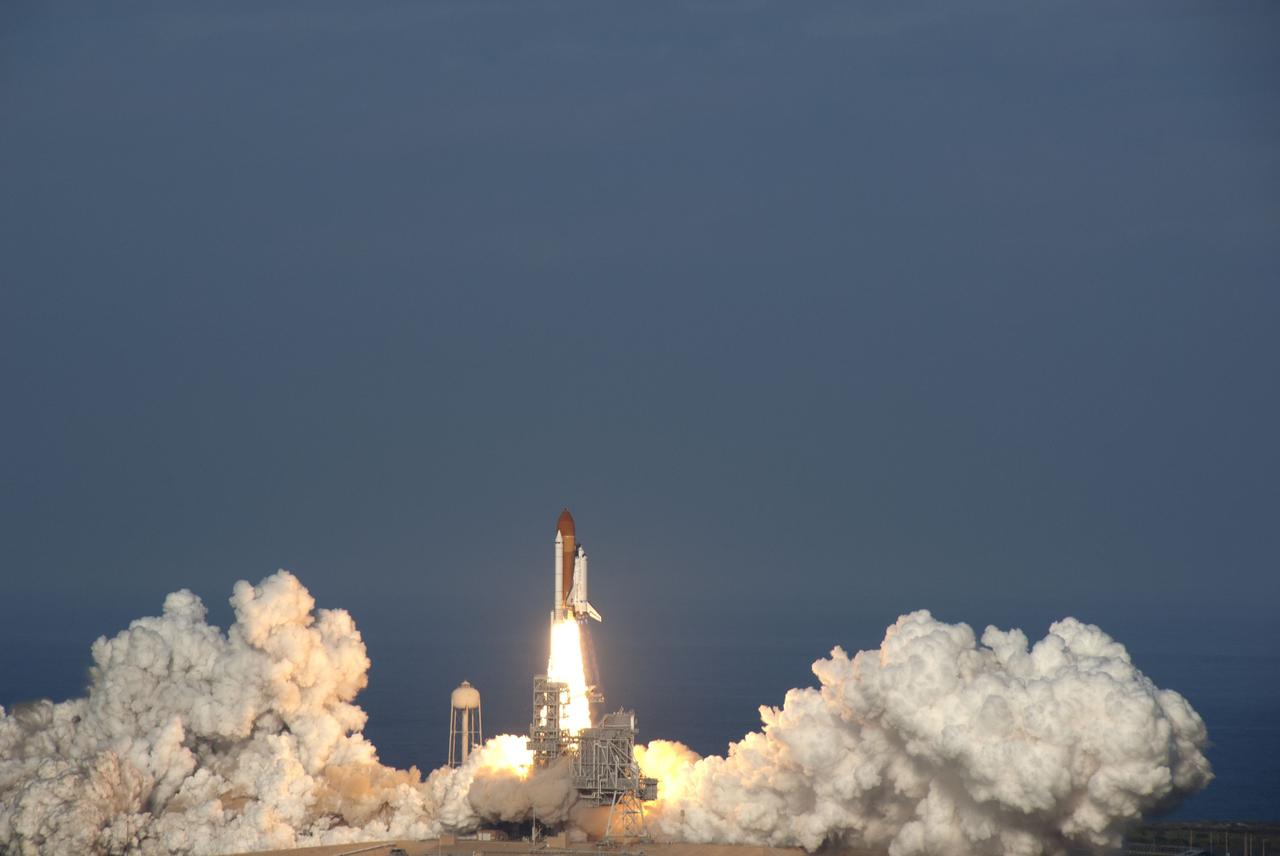
CAPE CANAVERAL, Fla. -- Rising on twin columns of fire and creating rolling clouds of smoke and steam, space shuttle Discovery lifts off Launch Pad 39A at NASA's Kennedy Space Center in Florida on a picturesque, warm, late February afternoon. Launch of the STS-133 mission was at 4:53 p.m. EST on Feb. 24. Discovery and its six-member crew are on a mission to deliver the Permanent Multipurpose Module, packed with supplies and critical spare parts, as well as Robonaut 2, the dexterous humanoid astronaut helper, to the International Space Station. Discovery is making its 39th mission and is scheduled to be retired following STS-133. This is the 133rd Space Shuttle Program mission and the 35th shuttle voyage to the space station. For more information on the STS-133 mission, visit www.nasa.gov/mission_pages/shuttle/shuttlemissions/sts133/. Photo credit: NASA/Todd S. Prough
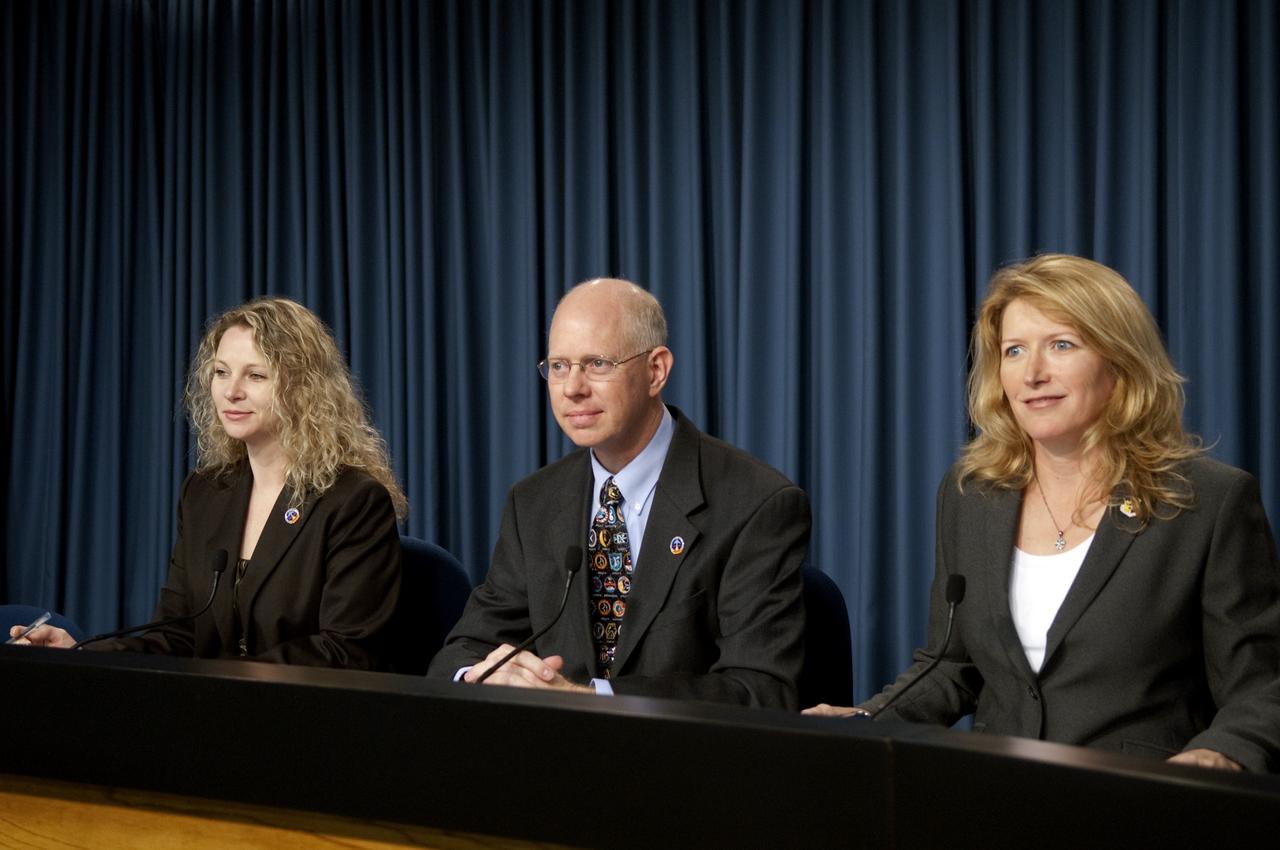
CAPE CANAVERAL, Fla. -- NASA Public Affairs Officer Candrea Thomas, NASA Test Director Steve Payne and Shuttle Launch Weather Officer Kathy Winters talk to media about the progression of the countdown to launch space shuttle Discovery on the STS-133 mission to the International Space Station and the launch-day weather forecast. Scheduled to lift off Feb. 24 at 4:50 p.m. EST, Discovery and its six-member crew will deliver the Permanent Multipurpose Module, packed with supplies and critical spare parts, as well as Robonaut 2, the dexterous humanoid astronaut helper, to the orbiting outpost. For more information on the STS-133 mission, visit www.nasa.gov/mission_pages/shuttle/shuttlemissions/sts133/. Photo credit: NASA/Jim Grossmann
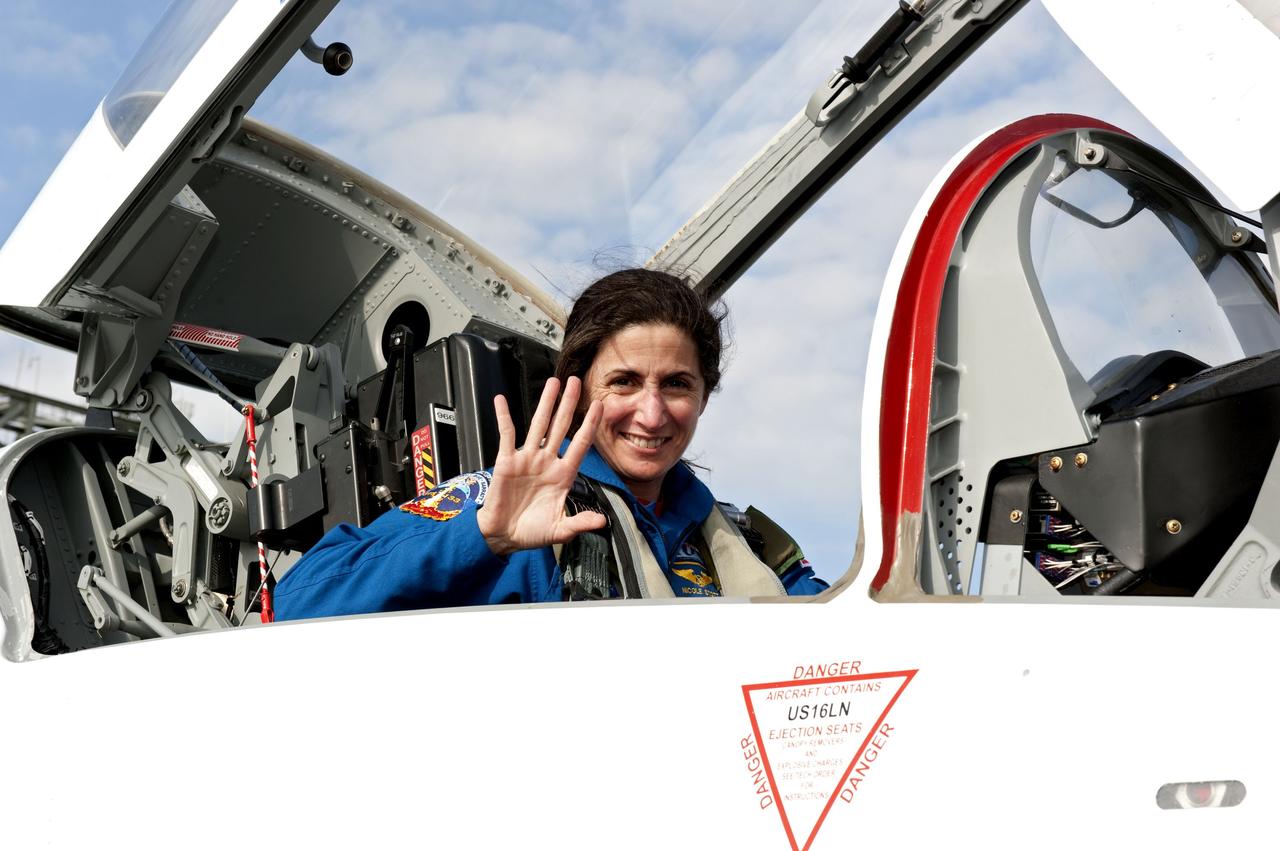
CAPE CANAVERAL, Fla. -- At NASA's Kennedy Space Center in Florida, space shuttle Discovery's STS-133 Mission Specialist Nicole Stott arrives on the Shuttle Landing Facility runway aboard a T-38 jet. In the days leading up to their launch to the International Space Station, Stott and her crew members will check the fit of their launch-and-entry suits, review launch-day procedures, receive weather briefings and remain medically quarantined to prevent sickness. This will be the second launch attempt for Discovery's crew, following a scrub in November 2010 due to a hydrogen gas leak at the ground umbilical carrier plate (GUCP) as well as modifications to the external fuel tank's intertank support beams, called stringers. Scheduled to lift off Feb. 24 at 4:50 p.m. EST, Discovery and its crew will deliver the Permanent Multipurpose Module, packed with supplies and critical spare parts, as well as Robonaut 2, the dexterous humanoid astronaut helper, to the orbiting outpost. For more information on the STS-133 mission, visit www.nasa.gov/mission_pages/shuttle/shuttlemissions/sts133/. Photo credit: NASA/Kim Shiflett
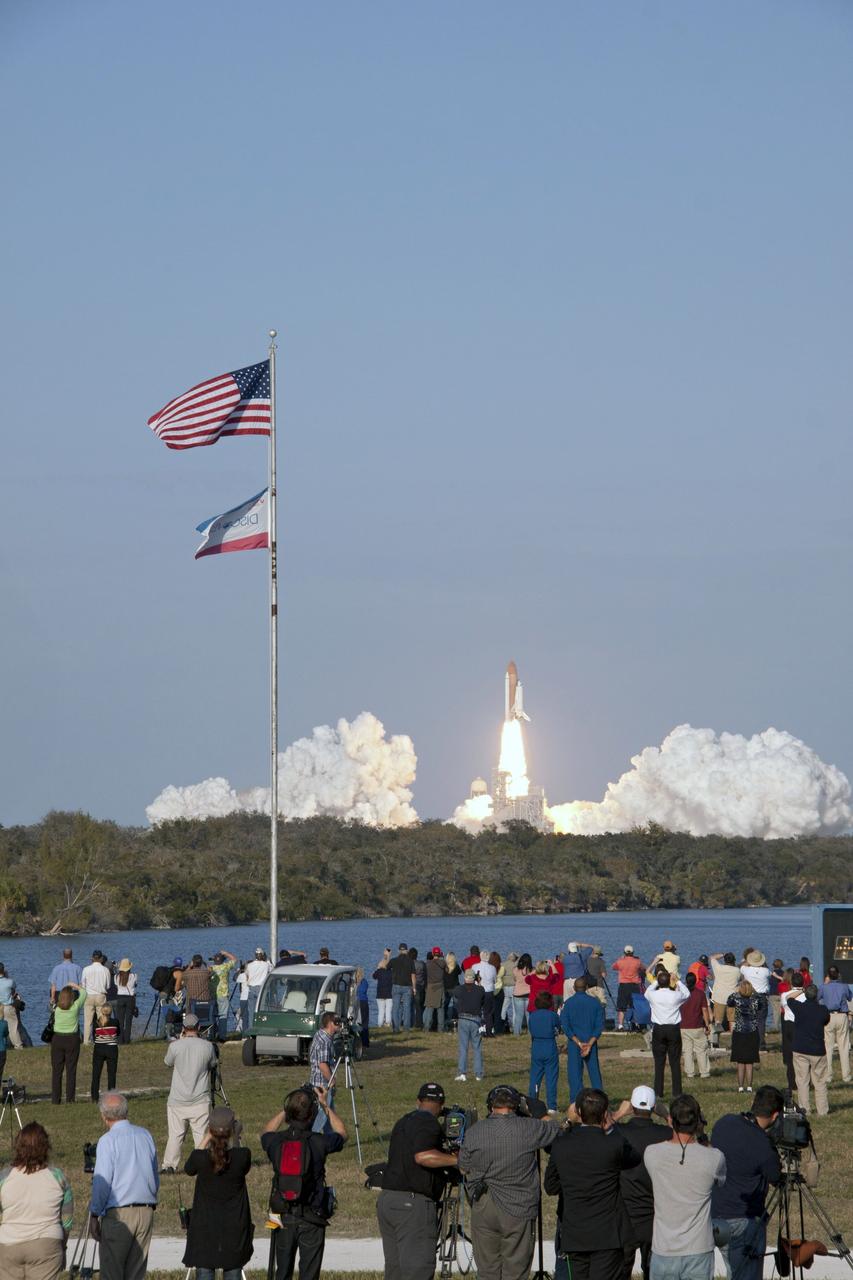
CAPE CANAVERAL, Fla. - Space shuttle Discovery's liftoff from Launch Pad 39A at NASA's Kennedy Space Center in Florida on a picturesque, warm, late February afternoon is witnessed by news media representatives near the countdown clock at the Press Site. Launch of the STS-133 mission was at 4:53 p.m. EST on Feb. 24. Discovery and its six-member crew are on a mission to deliver the Permanent Multipurpose Module, packed with supplies and critical spare parts, as well as Robonaut 2, the dexterous humanoid astronaut helper, to the International Space Station. Discovery is making its 39th mission and is scheduled to be retired following STS-133. This is the 133rd Space Shuttle Program mission and the 35th shuttle voyage to the space station. For more information on the STS-133 mission, visit www.nasa.gov/mission_pages/shuttle/shuttlemissions/sts133/. Photo credit: NASA/Troy Cryder
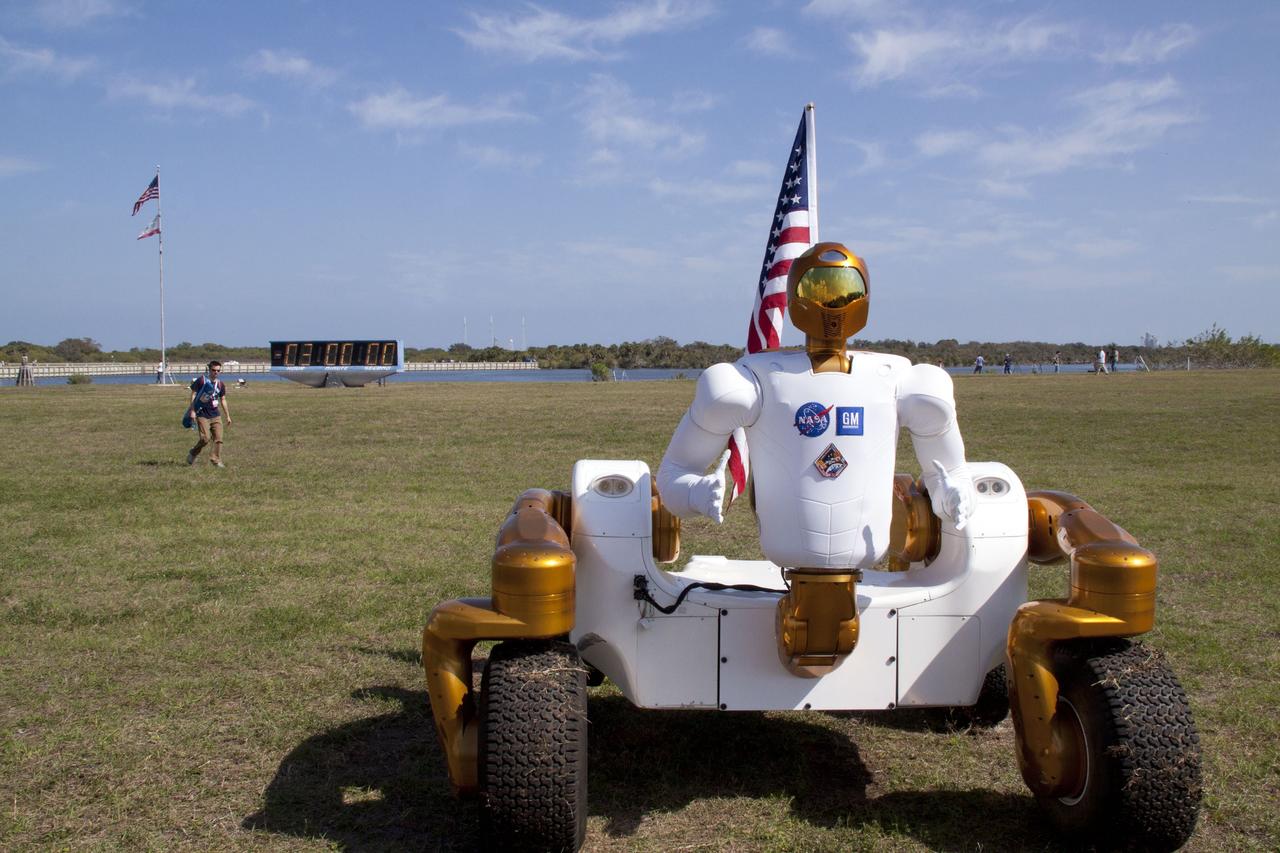
CAPE CANAVERAL, Fla. -- At NASA's Kennedy Space Center in Florida, a working model of the dexterous humanoid astronaut helper, Robonaut 2, is available for media to check out before space shuttle Discovery's final flight on the STS-133 mission. Discovery and its six-member STS-133 crew will deliver the Permanent Multipurpose Module, packed with supplies and critical spare parts, as well as Robonaut 2 to the International Space Station. For more information on the STS-133 mission, visit www.nasa.gov/mission_pages/shuttle/shuttlemissions/sts133/. Photo Credit: NASA/Jack Pfaller
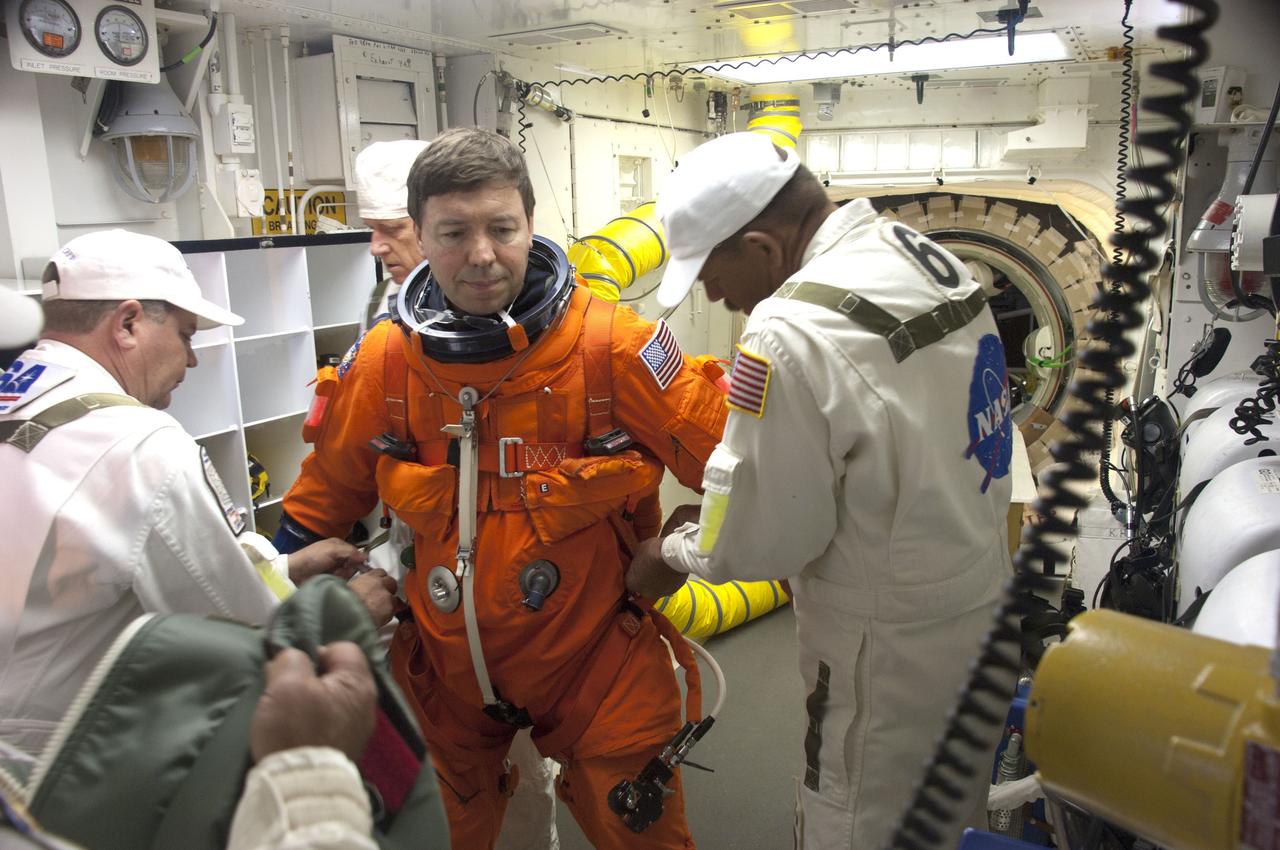
CAPE CANAVERAL, Fla. - In the White Room at Launch Pad 39A at NASA's Kennedy Space Center in Florida, United Space Alliance spacesuit technicians help STS-133 Mission Specialist Michael Barratt put on the parachute for his launch-and-entry suit before he enters space shuttle Discovery through the crew hatch in the background. Michael Barratt is making his first flight aboard a space shuttle. Barratt has called the space station home before, though, after spending 199 days as a crew member of Expeditions 19 and 20 in 2009. Scheduled to lift off Feb. 24 at 4:50 p.m. EST, Discovery and its crew will deliver the Permanent Multipurpose Module, packed with supplies and critical spare parts, as well as Robonaut 2, the dexterous humanoid astronaut helper, to the International Space Station. Discovery, which will fly its 39th mission, is scheduled to be retired following STS-133. This will be the 133rd Space Shuttle Program mission and the 35th shuttle voyage to the space station. For more information on the STS-133 mission, visit www.nasa.gov/mission_pages/shuttle/shuttlemissions/sts133/. Photo credit: NASA/Sandra Joseph and Kevin O'Connell
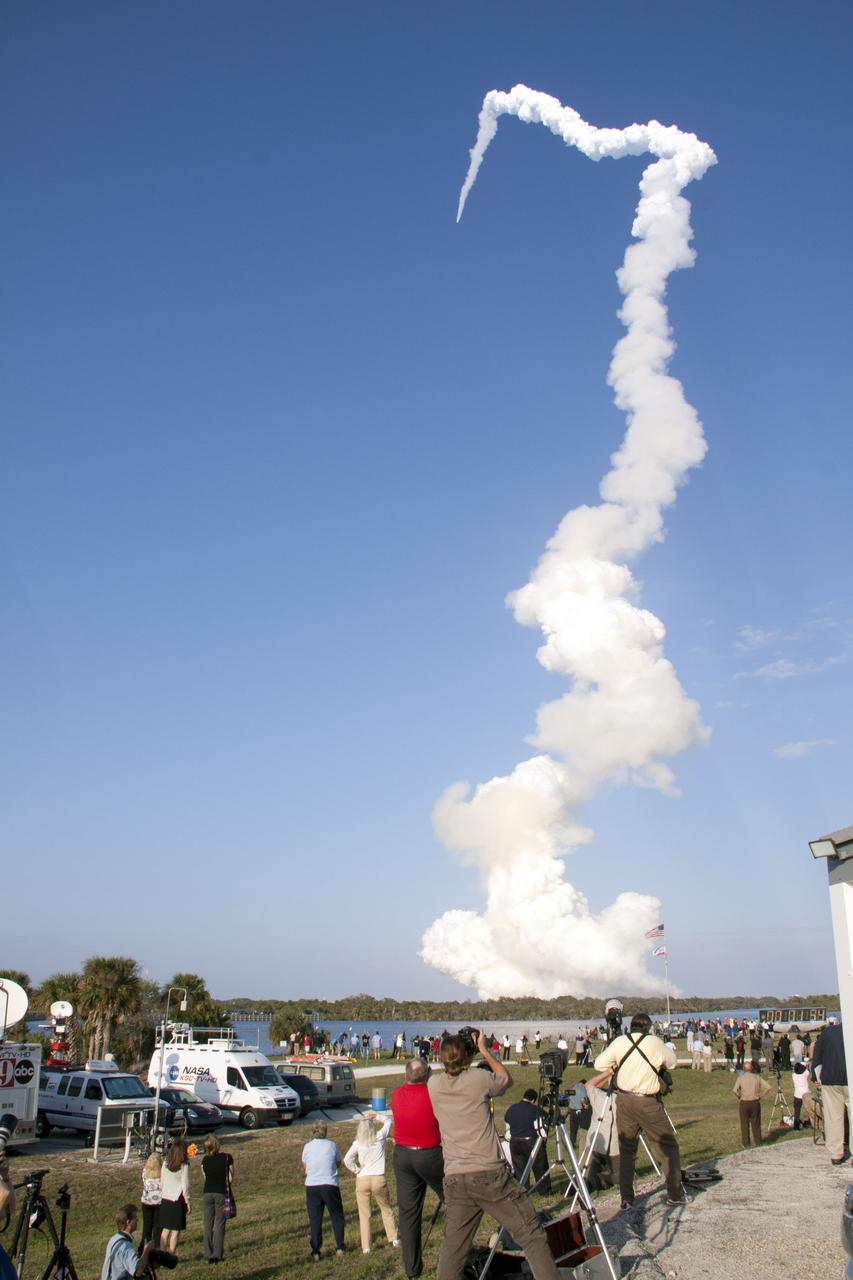
CAPE CANAVERAL, Fla. - Space shuttle Discovery's liftoff from Launch Pad 39A at NASA's Kennedy Space Center in Florida on a picturesque, warm, late February afternoon is witnessed by news media representatives near the countdown clock at the Press Site. Launch of the STS-133 mission was at 4:53 p.m. EST on Feb. 24. Discovery and its six-member crew are on a mission to deliver the Permanent Multipurpose Module, packed with supplies and critical spare parts, as well as Robonaut 2, the dexterous humanoid astronaut helper, to the International Space Station. Discovery is making its 39th mission and is scheduled to be retired following STS-133. This is the 133rd Space Shuttle Program mission and the 35th shuttle voyage to the space station. For more information on the STS-133 mission, visit www.nasa.gov/mission_pages/shuttle/shuttlemissions/sts133/. Photo credit: NASA/Troy Cryder
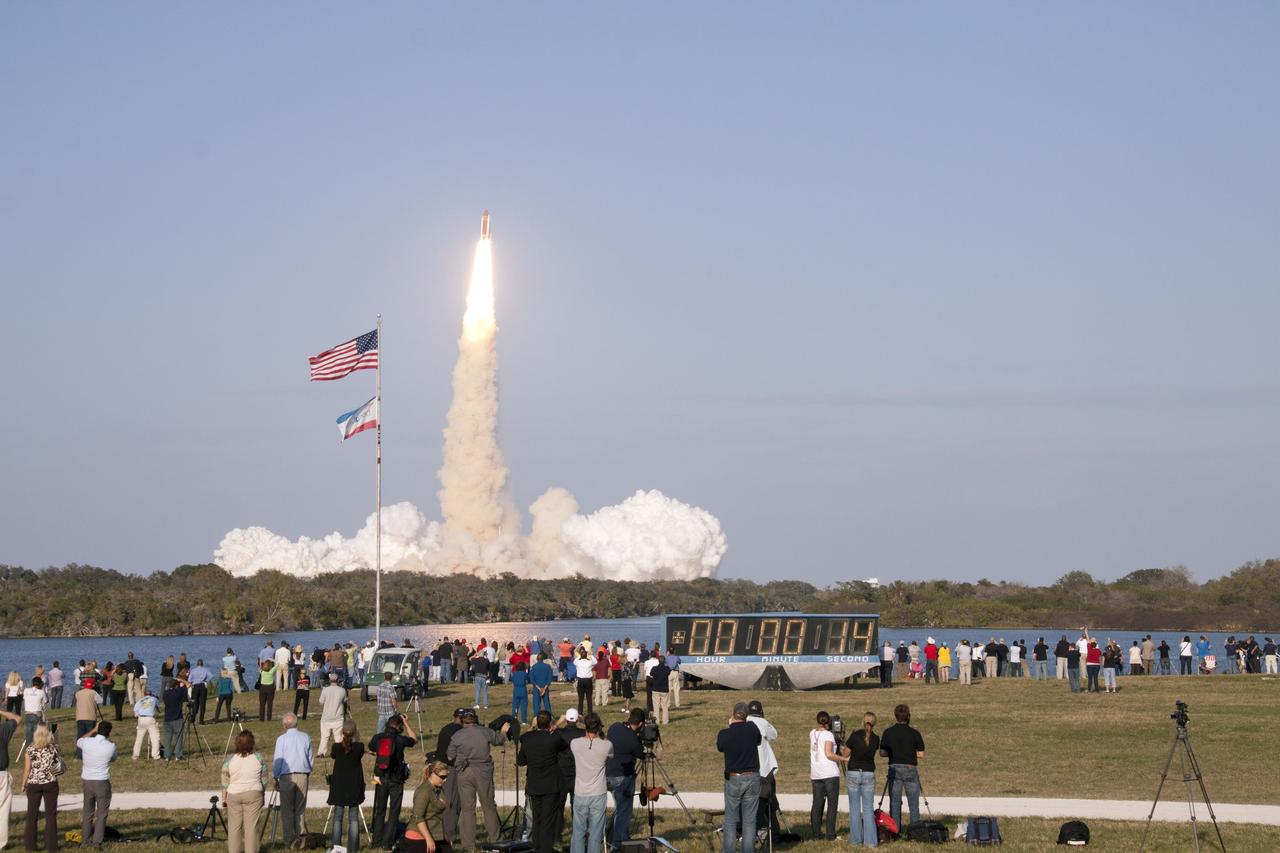
CAPE CANAVERAL, Fla. - Space shuttle Discovery's liftoff from Launch Pad 39A at NASA's Kennedy Space Center in Florida on a picturesque, warm, late February afternoon is witnessed by news media representatives near the countdown clock at the Press Site. Launch of the STS-133 mission was at 4:53 p.m. EST on Feb. 24. Discovery and its six-member crew are on a mission to deliver the Permanent Multipurpose Module, packed with supplies and critical spare parts, as well as Robonaut 2, the dexterous humanoid astronaut helper, to the International Space Station. Discovery is making its 39th mission and is scheduled to be retired following STS-133. This is the 133rd Space Shuttle Program mission and the 35th shuttle voyage to the space station. For more information on the STS-133 mission, visit www.nasa.gov/mission_pages/shuttle/shuttlemissions/sts133/. Photo credit: NASA/Troy Cryder
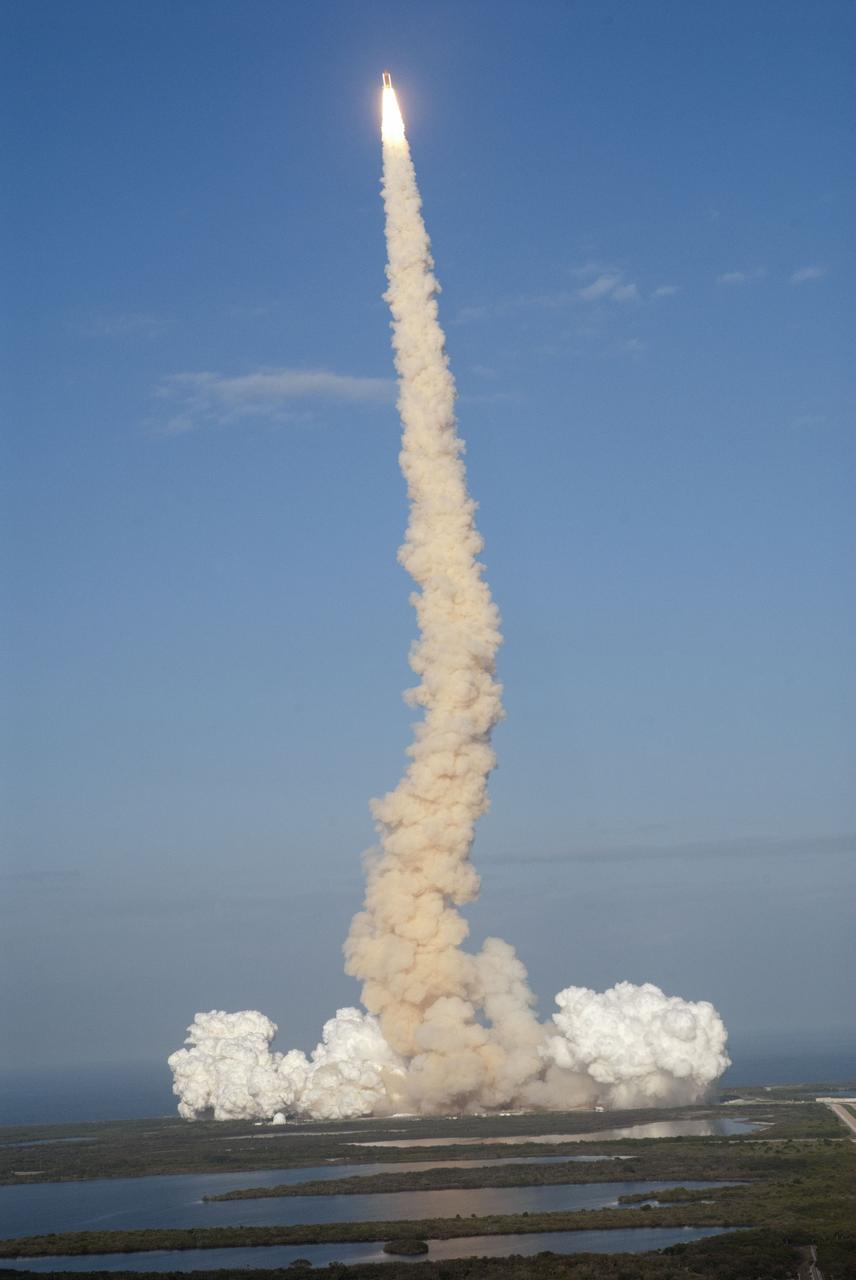
CAPE CANAVERAL, Fla. -- Taken from the roof of the Vehicle Assembly Building at NASA's Kennedy Space Center in Florida, space shuttle Discovery lifts off Launch Pad 39A atop twin columns of fire, creating rolling clouds of smoke and steam in its track. Launch of the STS-133 mission was at 4:53 p.m. EST on Feb. 24. Discovery and its six-member crew are on a mission to deliver the Permanent Multipurpose Module, packed with supplies and critical spare parts, as well as Robonaut 2, the dexterous humanoid astronaut helper, to the International Space Station. Discovery is making its 39th mission and is scheduled to be retired following STS-133. This is the 133rd Space Shuttle Program mission, the 35th shuttle voyage to the space station and Discovery's final mission. For more information on the STS-133 mission, visit www.nasa.gov/mission_pages/shuttle/shuttlemissions/sts133/. Photo credit: NASA/Jeff Marino

CAPE CANAVERAL, Fla. -- Rising on twin columns of fire and creating rolling clouds of smoke and steam, space shuttle Discovery lifts off Launch Pad 39A at NASA's Kennedy Space Center in Florida on a picturesque, warm, late February afternoon. Launch of the STS-133 mission was at 4:53 p.m. EST on Feb. 24. Discovery and its six-member crew are on a mission to deliver the Permanent Multipurpose Module, packed with supplies and critical spare parts, as well as Robonaut 2, the dexterous humanoid astronaut helper, to the International Space Station. Discovery is making its 39th mission and is scheduled to be retired following STS-133. This is the 133rd Space Shuttle Program mission and the 35th shuttle voyage to the space station. For more information on the STS-133 mission, visit www.nasa.gov/mission_pages/shuttle/shuttlemissions/sts133/. Photo credit: NASA
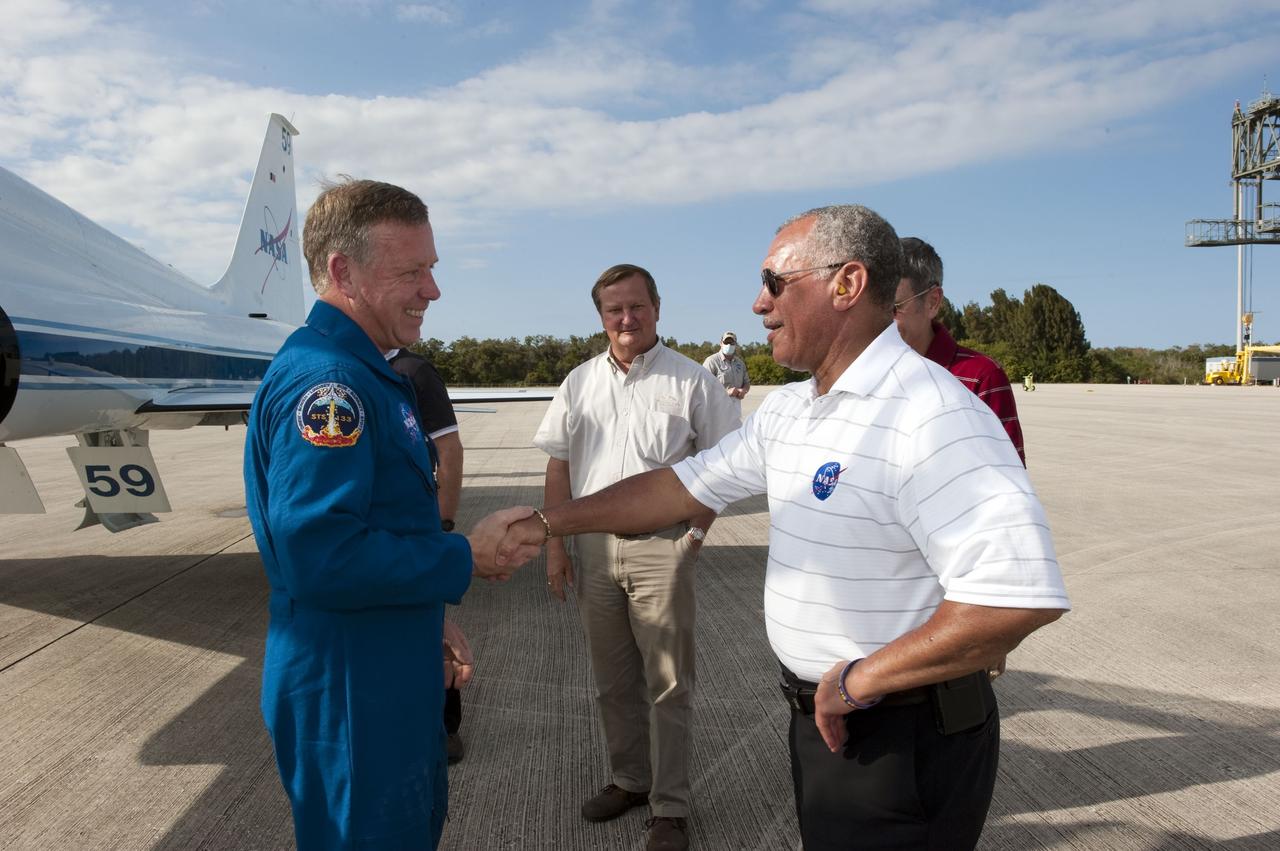
CAPE CANAVERAL, Fla. -- At NASA's Kennedy Space Center in Florida, space shuttle Discovery's STS-133 Commander Steve Lindsey greets NASA Administrator Charlie Bolden on the Shuttle Landing Facility runway after arriving aboard a T-38 jet. Also on hand to greet the crew were Jerry Ross, chief of the Vehicle Integration Test Office, Mike Leinbach, shuttle launch director, center, and Kennedy Center Director Bob Cabana. In the days leading up to their launch to the International Space Station, Lindsey and his crew members will check the fit of their launch-and-entry suits, review launch-day procedures, receive weather briefings and remain medically quarantined to prevent sickness. This will be the second launch attempt for Discovery's crew, following a scrub in November 2010 due to a hydrogen gas leak at the ground umbilical carrier plate (GUCP) as well as modifications to the external fuel tank's intertank support beams, called stringers. Scheduled to lift off Feb. 24 at 4:50 p.m. EST, Discovery and its crew will deliver the Permanent Multipurpose Module, packed with supplies and critical spare parts, as well as Robonaut 2, the dexterous humanoid astronaut helper, to the orbiting outpost. For more information on the STS-133 mission, visit www.nasa.gov/mission_pages/shuttle/shuttlemissions/sts133/. Photo credit: NASA/Kim Shiflett
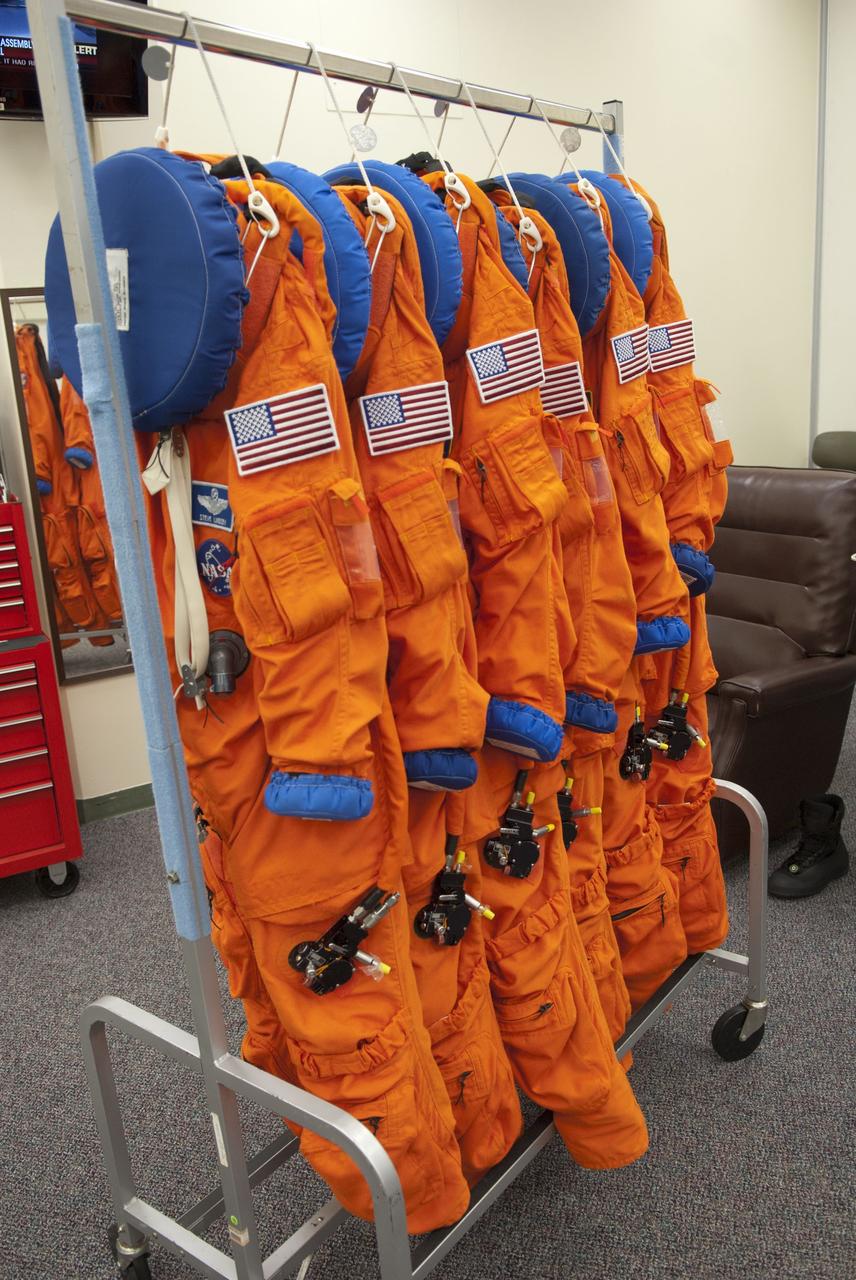
CAPE CANAVERAL, Fla. -- Inside the Operations and Checkout Building (O&C) at NASA's Kennedy Space Center in Florida, six bright-orange, launch-and-entry suits are ready to be worn by the STS-133 astronauts during their climb into orbit aboard space shuttle Discovery. Scheduled to lift off Feb. 24 at 4:50 p.m. EST, Discovery and its crew will deliver the Permanent Multipurpose Module, packed with supplies and critical spare parts, as well as Robonaut 2, the dexterous humanoid astronaut helper, to the International Space Station. Discovery, which will fly its 39th mission, is scheduled to be retired following STS-133. This will be the 133rd Space Shuttle Program mission and the 35th shuttle voyage to the space station. For more information on the STS-133 mission, visit www.nasa.gov/mission_pages/shuttle/shuttlemissions/sts133/. Photo credit: NASA/Jim Grossmann
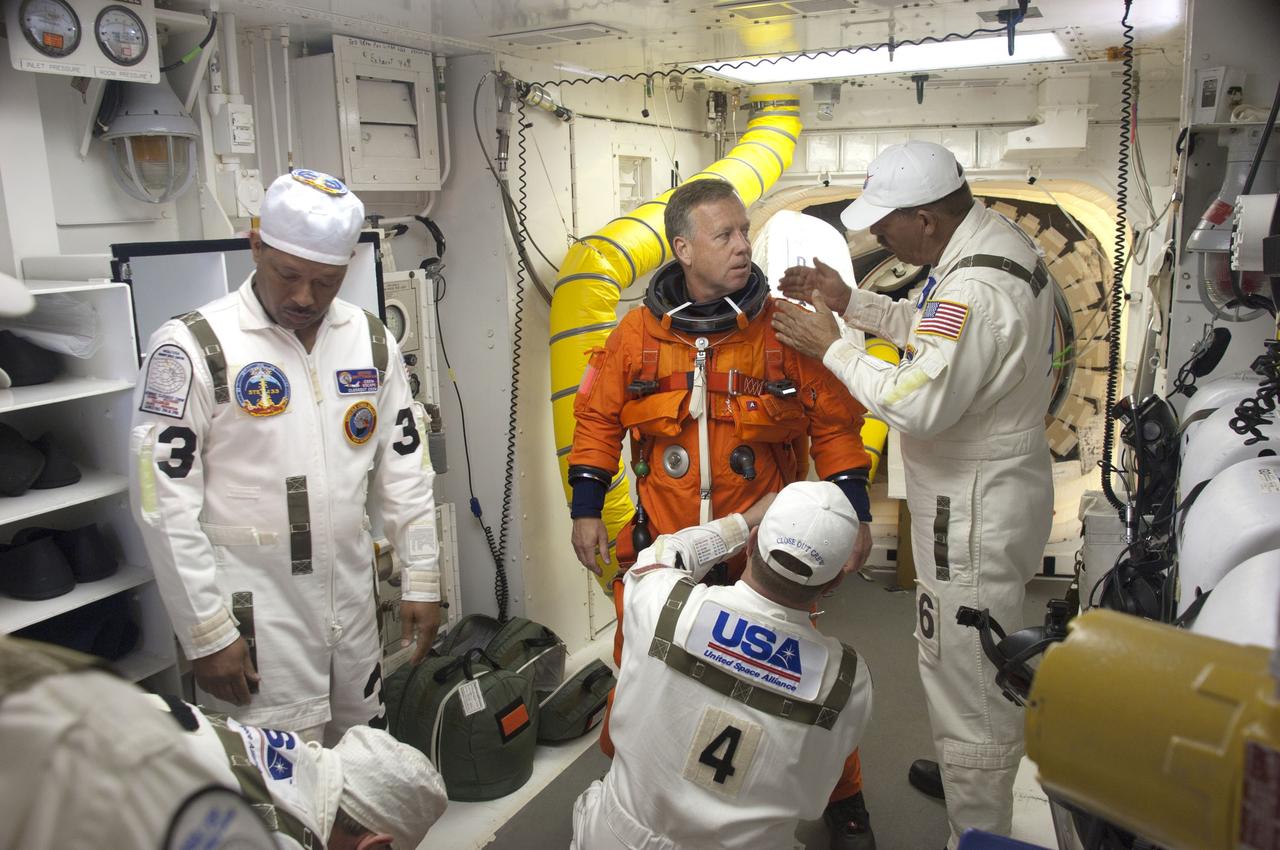
CAPE CANAVERAL, Fla. - In the White Room at Launch Pad 39A at NASA's Kennedy Space Center in Florida, United Space Alliance spacesuit technicians help STS-133 Commander Steve Lindsey put on the parachute for his launch-and-entry suit before he enters space shuttle Discovery through the crew hatch in the background. Lindsey will be making his fifth spaceflight and third aboard Discovery. Since his most recent mission -- STS-121 in 2006 -- Lindsey served as chief of the Astronaut Office at NASA's Johnson Space Center in Houston. Scheduled to lift off Feb. 24 at 4:50 p.m. EST, Discovery and its crew will deliver the Permanent Multipurpose Module, packed with supplies and critical spare parts, as well as Robonaut 2, the dexterous humanoid astronaut helper, to the International Space Station. Discovery, which will fly its 39th mission, is scheduled to be retired following STS-133. This will be the 133rd Space Shuttle Program mission and the 35th shuttle voyage to the space station. For more information on the STS-133 mission, visit www.nasa.gov/mission_pages/shuttle/shuttlemissions/sts133/. Photo credit: NASA/Sandra Joseph and Kevin O'Connell
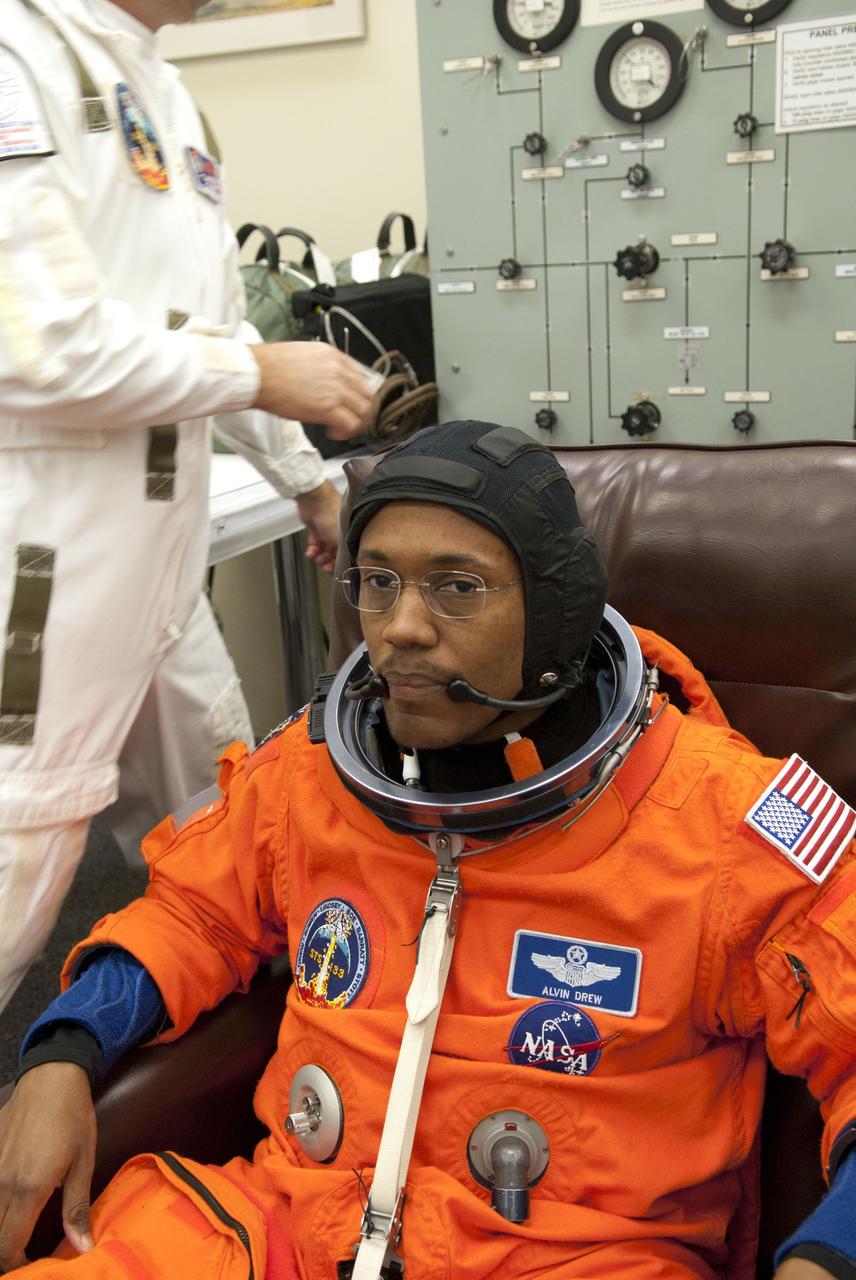
CAPE CANAVERAL, Fla. - In the Operations and Checkout Building (O&C) at NASA's Kennedy Space Center in Florida, the astronauts of space shuttle Discovery's STS-133 crew put on their launch-and-entry suits and check the fit of their helmets and gloves before heading to the Astrovan for the ride to Launch Pad 39A. Mission Specialist Alvin Drew, seen here, last flew aboard space shuttle Endeavour on the STS-118 mission in 2007. Scheduled to lift off Feb. 24 at 4:50 p.m. EST, Discovery and its crew will deliver the Permanent Multipurpose Module, packed with supplies and critical spare parts, as well as Robonaut 2, the dexterous humanoid astronaut helper, to the International Space Station. Discovery, which will fly its 39th mission, is scheduled to be retired following STS-133. This will be the 133rd Space Shuttle Program mission and the 35th shuttle voyage to the space station. For more information on the STS-133 mission, visit www.nasa.gov/mission_pages/shuttle/shuttlemissions/sts133/. Photo credit: NASA/Jim Grossmann

CAPE CANAVERAL, Fla. -- News media representatives gather near the Press Site at NASA's Kennedy Space Center in Florida to capture and share with the world the final launch of space shuttle Discovery from Launch Pad 39A. Discovery and its six-member STS-133 crew will deliver the Permanent Multipurpose Module, packed with supplies and critical spare parts, as well as Robonaut 2 to the International Space Station. For more information on the STS-133 mission, visit www.nasa.gov/mission_pages/shuttle/shuttlemissions/sts133/. Photo Credit: NASA/Jack Pfaller

CAPE CANAVERAL, Fla. - In the Operations and Checkout Building (O&C) at NASA's Kennedy Space Center in Florida, the astronauts of space shuttle Discovery's STS-133 crew put on their launch-and-entry suits and check the fit of their helmets and gloves before heading to the Astrovan for the ride to Launch Pad 39A. Mission Specialist Steve Bowen, seen here, is making his third spaceflight. The last time he suited up for flight was in May 2010 for the STS-132 mission. Bowen replaces astronaut Tim Kopra as Mission Specialist 2, because Kopra was injured in a recent bicycle accident that prevented him from lifting off during this launch window. Scheduled to lift off Feb. 24 at 4:50 p.m. EST, Discovery and its crew will deliver the Permanent Multipurpose Module, packed with supplies and critical spare parts, as well as Robonaut 2, the dexterous humanoid astronaut helper, to the International Space Station. Discovery, which will fly its 39th mission, is scheduled to be retired following STS-133. This will be the 133rd Space Shuttle Program mission and the 35th shuttle voyage to the space station. For more information on the STS-133 mission, visit www.nasa.gov/mission_pages/shuttle/shuttlemissions/sts133/. Photo credit: NASA/Jim Grossmann
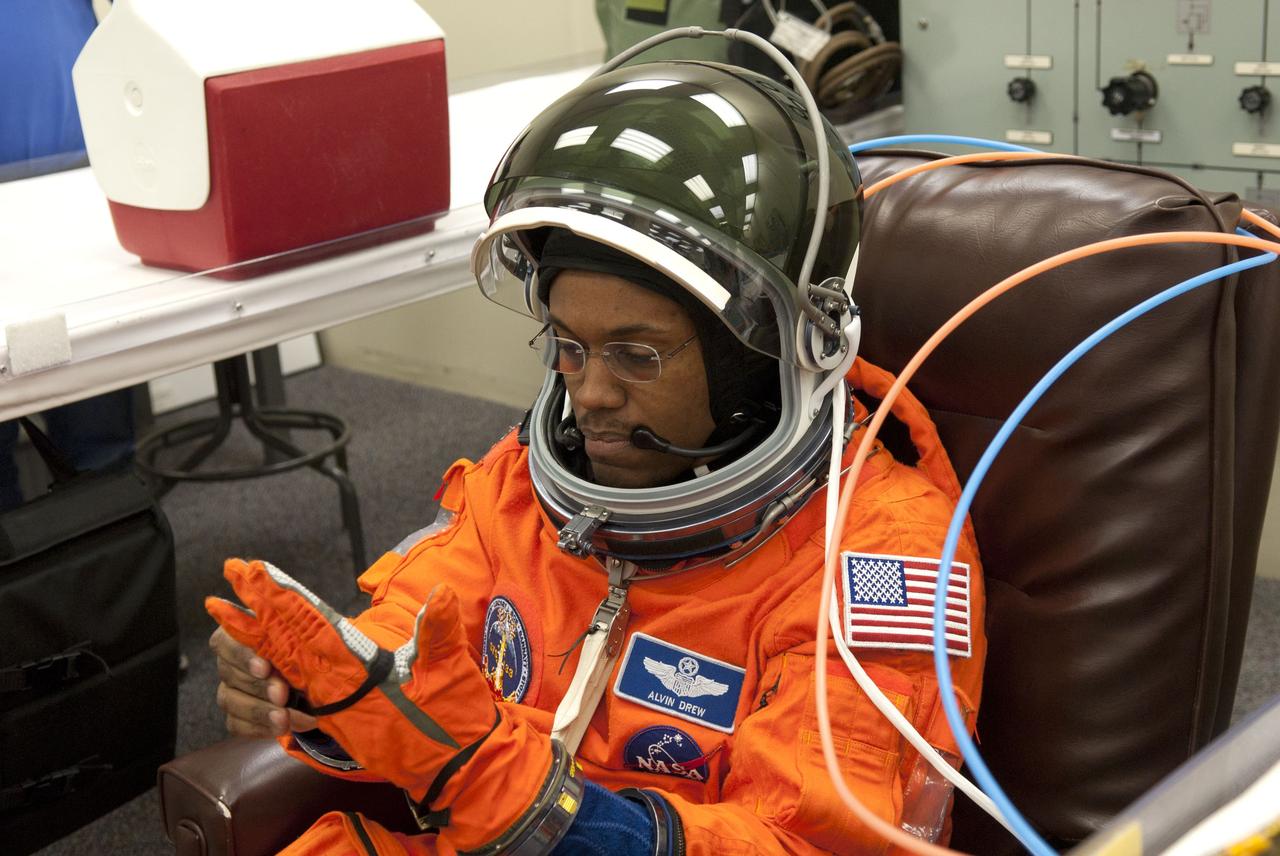
CAPE CANAVERAL, Fla. - In the Operations and Checkout Building (O&C) at NASA's Kennedy Space Center in Florida, the astronauts of space shuttle Discovery's STS-133 crew put on their launch-and-entry suits and check the fit of their helmets and gloves before heading to the Astrovan for the ride to Launch Pad 39A. Mission Specialist Michael Barratt, seen here, is making his first flight aboard a space shuttle. Barratt has called the space station home before, though, after spending 199 days as a crew member of Expeditions 19 and 20 in 2009. Scheduled to lift off Feb. 24 at 4:50 p.m. EST, Discovery and its crew will deliver the Permanent Multipurpose Module, packed with supplies and critical spare parts, as well as Robonaut 2, the dexterous humanoid astronaut helper, to the International Space Station. Discovery, which will fly its 39th mission, is scheduled to be retired following STS-133. This will be the 133rd Space Shuttle Program mission and the 35th shuttle voyage to the space station. For more information on the STS-133 mission, visit www.nasa.gov/mission_pages/shuttle/shuttlemissions/sts133/. Photo credit: NASA/Jim Grossmann

CAPE CANAVERAL, Fla. - In the White Room at Launch Pad 39A at NASA's Kennedy Space Center in Florida, United Space Alliance spacesuit technicians help STS-133 Mission Specialist Alvin Drew put on the parachute for his launch-and-entry suit before he enters space shuttle Discovery through the crew hatch in the background. Drew last flew aboard space shuttle Endeavour on the STS-118 mission in 2007. Behind Drew is Mission Specialist Nicole Stott. Scheduled to lift off Feb. 24 at 4:50 p.m. EST, Discovery and its crew will deliver the Permanent Multipurpose Module, packed with supplies and critical spare parts, as well as Robonaut 2, the dexterous humanoid astronaut helper, to the International Space Station. Discovery, which will fly its 39th mission, is scheduled to be retired following STS-133. This will be the 133rd Space Shuttle Program mission and the 35th shuttle voyage to the space station. For more information on the STS-133 mission, visit www.nasa.gov/mission_pages/shuttle/shuttlemissions/sts133/. Photo credit: NASA/Sandra Joseph and Kevin O'Connell
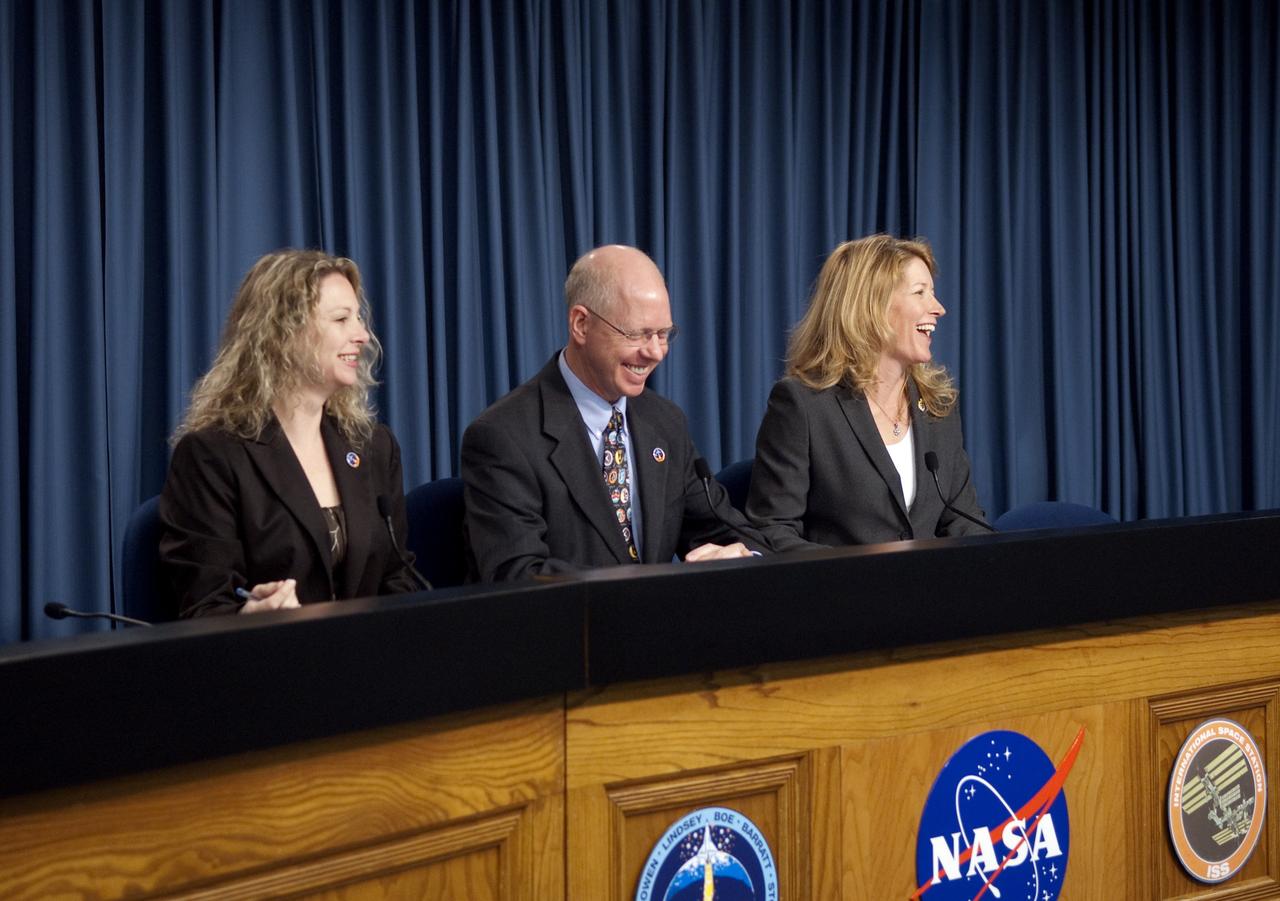
CAPE CANAVERAL, Fla. -- NASA Public Affairs Officer Candrea Thomas, NASA Test Director Steve Payne and Shuttle Launch Weather Officer Kathy Winters talk to media about the progression of the countdown to launch space shuttle Discovery on the STS-133 mission to the International Space Station and the launch-day weather forecast. Scheduled to lift off Feb. 24 at 4:50 p.m. EST, Discovery and its six-member crew will deliver the Permanent Multipurpose Module, packed with supplies and critical spare parts, as well as Robonaut 2, the dexterous humanoid astronaut helper, to the orbiting outpost. For more information on the STS-133 mission, visit www.nasa.gov/mission_pages/shuttle/shuttlemissions/sts133/. Photo credit: NASA/Jim Grossmann

CAPE CANAVERAL, Fla. -- At NASA's Kennedy Space Center in Florida, space shuttle Discovery's STS-133 astronauts prepare to give statements to the media on the Shuttle Landing Facility runway after arriving in T-38 jets. From left, are Mission Specialists Michael Barratt, Alvin Drew and Steve Bowen, Commander Steve Lindsey, Pilot Eric Boe, and Mission Specialist Nicole Stott. In the days leading up to their launch to the International Space Station, the crew members will check the fit of their launch-and-entry suits, review launch-day procedures, receive weather briefings and remain medically quarantined to prevent sickness. This will be the second launch attempt for Discovery's crew, following a scrub in November 2010 due to a hydrogen gas leak at the ground umbilical carrier plate (GUCP) as well as modifications to the external fuel tank's intertank support beams, called stringers. Scheduled to lift off Feb. 24 at 4:50 p.m. EST, Discovery and its crew will deliver the Permanent Multipurpose Module, packed with supplies and critical spare parts, as well as Robonaut 2, the dexterous humanoid astronaut helper, to the orbiting outpost. For more information on the STS-133 mission, visit www.nasa.gov/mission_pages/shuttle/shuttlemissions/sts133/. Photo credit: NASA/Kim Shiflett
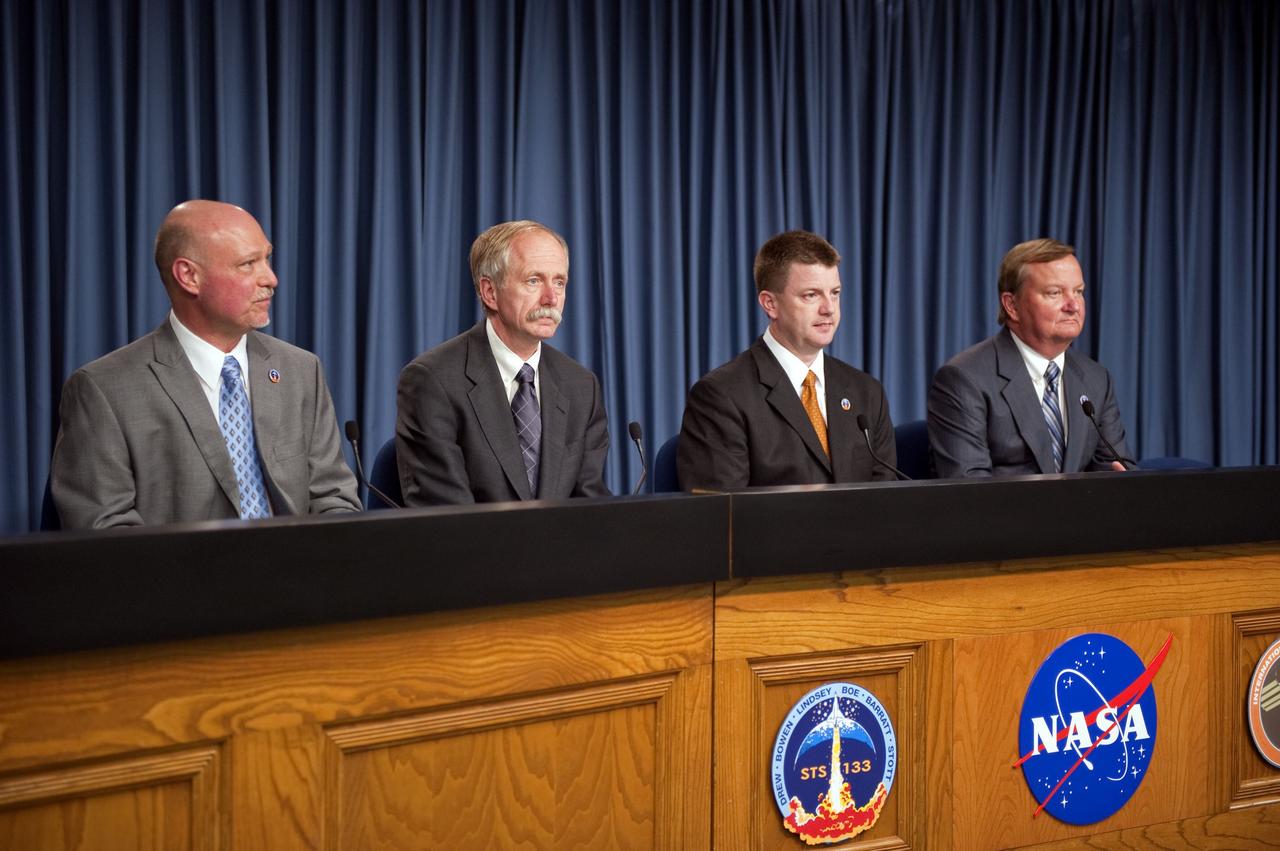
CAPE CANAVERAL, Fla. -- At NASA's Kennedy Space Center in Florida, NASA Public Affairs Officer Michael Curie, left, Associate Administrator for Space Operations Bill Gerstenmaier, Space Shuttle Program Launch Integration Manager Mike Moses and Shuttle Launch Director Mike Leinbach talk to media following a Flight Readiness Review that gave a unanimous "go" to launch space shuttle Discovery on the STS-133 mission to the International Space Station. This will be the second launch attempt for Discovery, following a scrub in November 2010 due to a hydrogen gas leak at the ground umbilical carrier plate (GUCP) as well as modifications to the external fuel tank's intertank support beams, called stringers. Scheduled to lift off Feb. 24 at 4:50 p.m. EST, Discovery and its six-member crew will deliver the Permanent Multipurpose Module, packed with supplies and critical spare parts, as well as Robonaut 2, the dexterous humanoid astronaut helper, to the orbiting outpost. For more information on the STS-133 mission, visit www.nasa.gov/mission_pages/shuttle/shuttlemissions/sts133/. Photo credit: NASA/Kim Shiflett
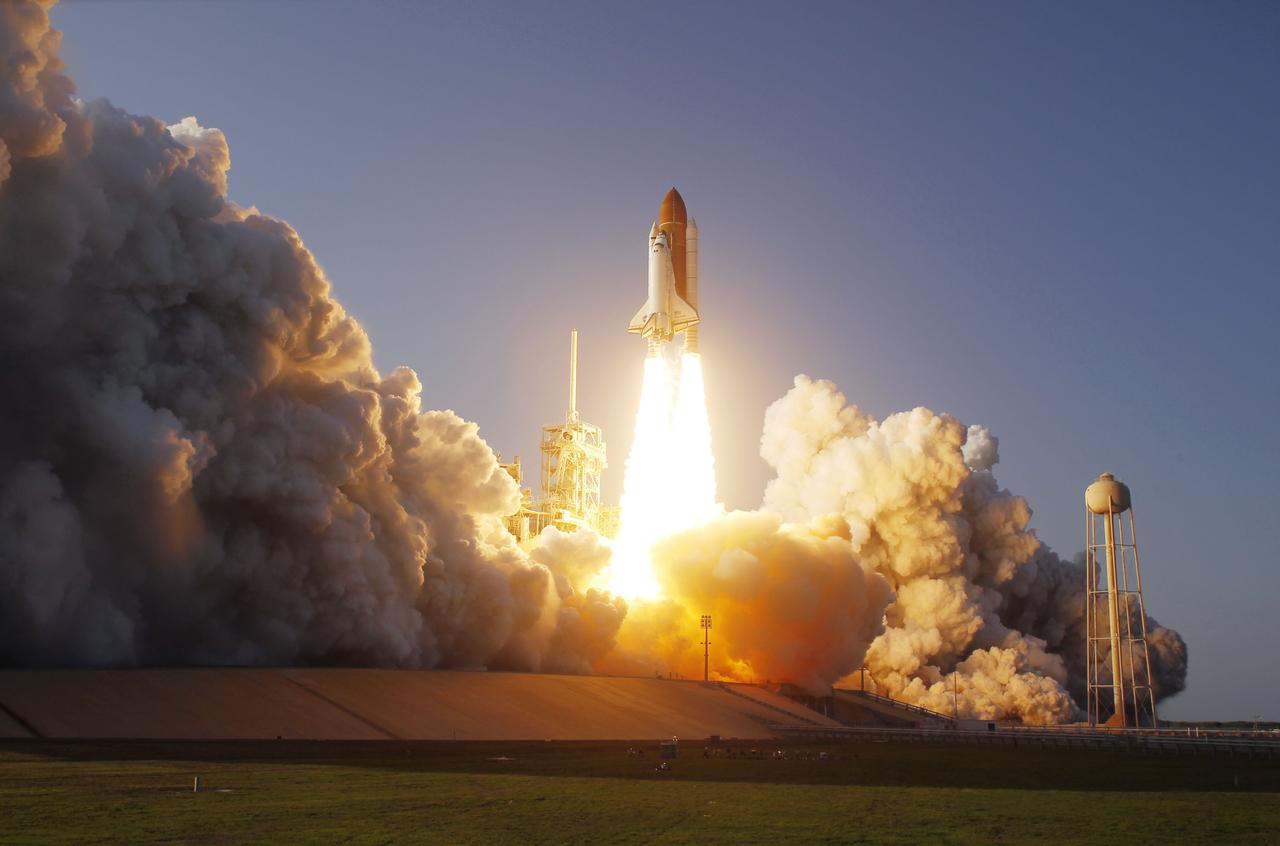
CAPE CANAVERAL, Fla. -- Rising on twin columns of fire and creating rolling clouds of smoke and steam, space shuttle Discovery lifts off Launch Pad 39A at NASA's Kennedy Space Center in Florida on a picturesque, warm, late February afternoon. Launch of the STS-133 mission was at 4:53 p.m. EST on Feb. 24. Discovery and its six-member crew are on a mission to deliver the Permanent Multipurpose Module, packed with supplies and critical spare parts, as well as Robonaut 2, the dexterous humanoid astronaut helper, to the International Space Station. Discovery is making its 39th mission and is scheduled to be retired following STS-133. This is the 133rd Space Shuttle Program mission and the 35th shuttle voyage to the space station. For more information on the STS-133 mission, visit www.nasa.gov/mission_pages/shuttle/shuttlemissions/sts133/. Photo credit: NASA
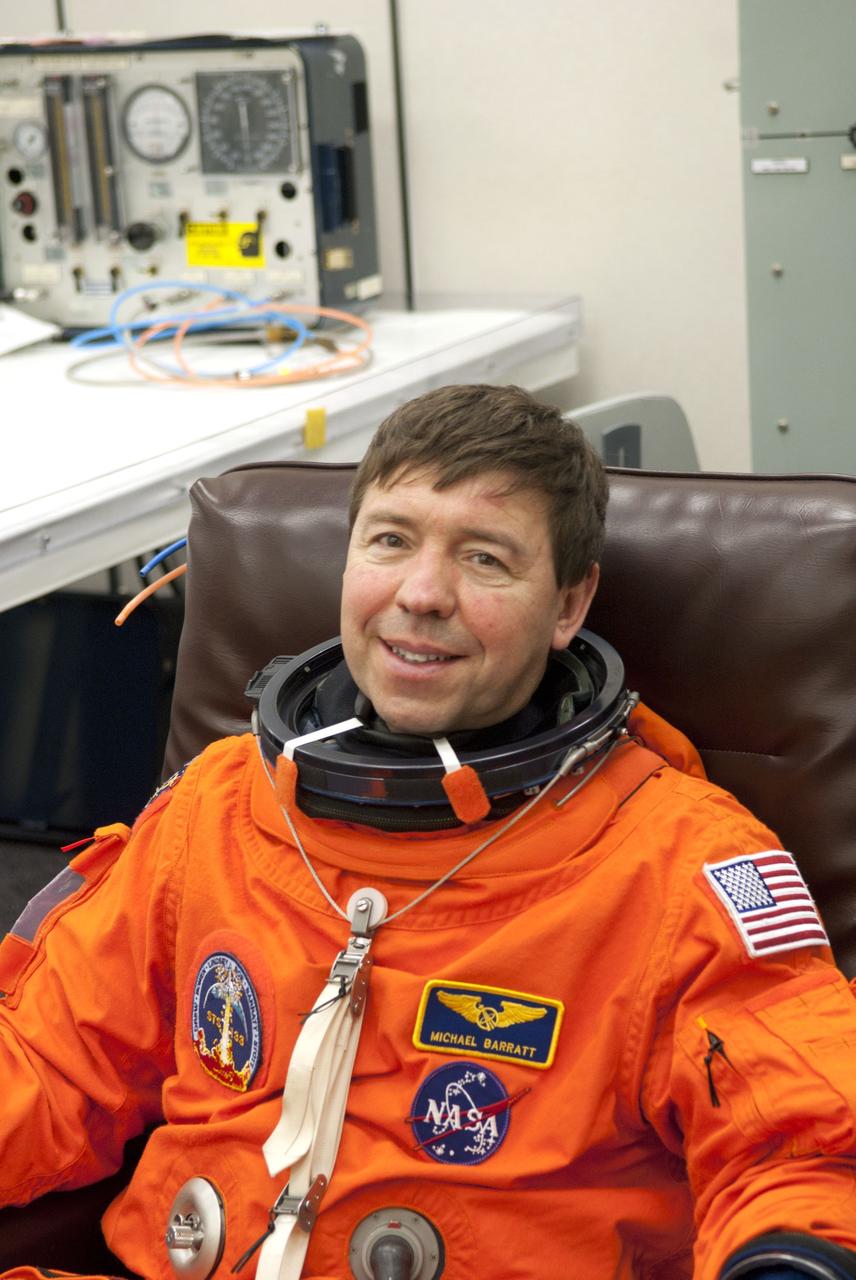
CAPE CANAVERAL, Fla. - In the Operations and Checkout Building (O&C) at NASA's Kennedy Space Center in Florida, the astronauts of space shuttle Discovery's STS-133 crew put on their launch-and-entry suits and check the fit of their helmets and gloves before heading to the Astrovan for the ride to Launch Pad 39A. Mission Specialist Michael Barratt, seen here, is making his first flight aboard a space shuttle. Barratt has called the space station home before, though, after spending 199 days as a crew member of Expeditions 19 and 20 in 2009. Scheduled to lift off Feb. 24 at 4:50 p.m. EST, Discovery and its crew will deliver the Permanent Multipurpose Module, packed with supplies and critical spare parts, as well as Robonaut 2, the dexterous humanoid astronaut helper, to the International Space Station. Discovery, which will fly its 39th mission, is scheduled to be retired following STS-133. This will be the 133rd Space Shuttle Program mission and the 35th shuttle voyage to the space station. For more information on the STS-133 mission, visit www.nasa.gov/mission_pages/shuttle/shuttlemissions/sts133/. Photo credit: NASA/Jim Grossmann
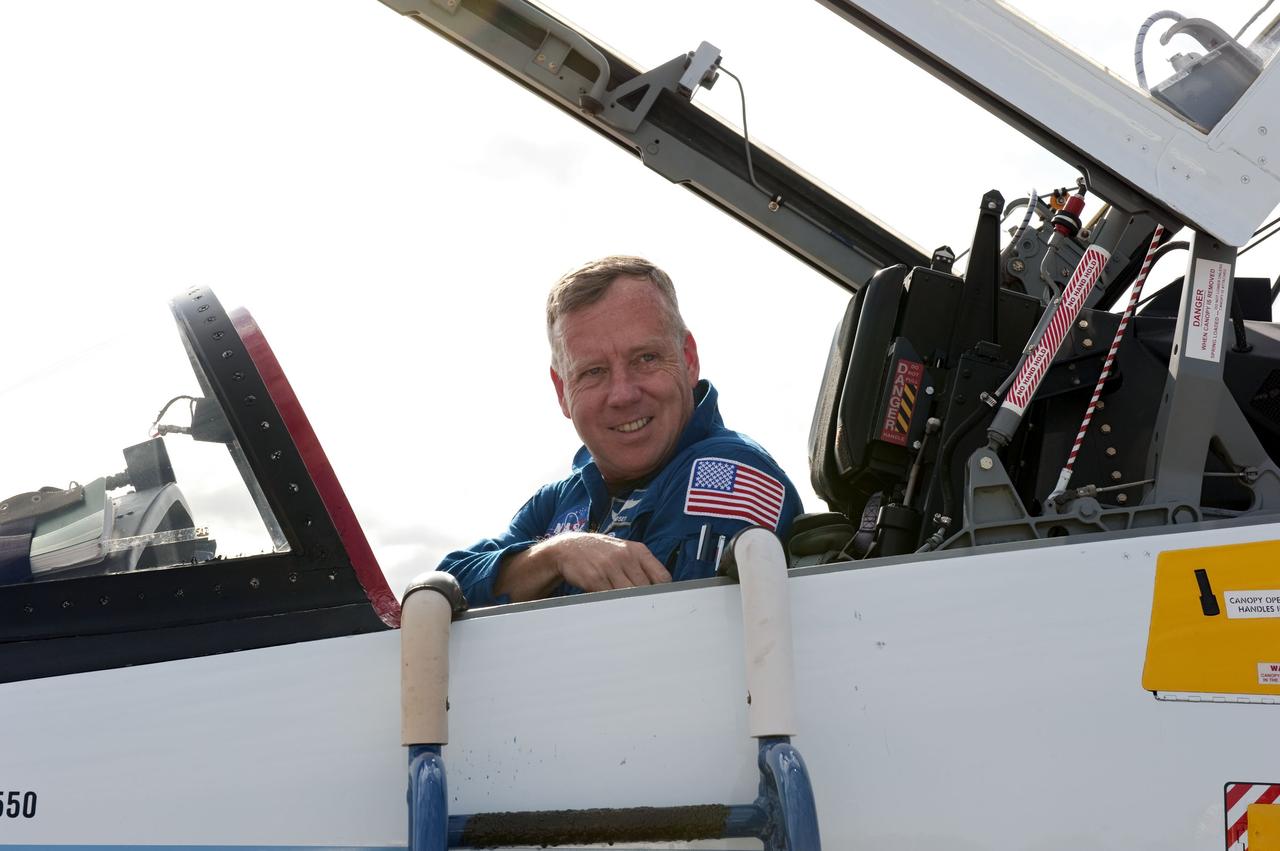
CAPE CANAVERAL, Fla. -- At NASA's Kennedy Space Center in Florida, space shuttle Discovery's STS-133 Commander Steve Lindsey arrives on the Shuttle Landing Facility runway aboard a T-38 jet. In the days leading up to their launch to the International Space Station, Lindsey and his crew members will check the fit of their launch-and-entry suits, review launch-day procedures, receive weather briefings and remain medically quarantined to prevent sickness. This will be the second launch attempt for Discovery's crew, following a scrub in November 2010 due to a hydrogen gas leak at the ground umbilical carrier plate (GUCP) as well as modifications to the external fuel tank's intertank support beams, called stringers. Scheduled to lift off Feb. 24 at 4:50 p.m. EST, Discovery and its crew will deliver the Permanent Multipurpose Module, packed with supplies and critical spare parts, as well as Robonaut 2, the dexterous humanoid astronaut helper, to the orbiting outpost. For more information on the STS-133 mission, visit www.nasa.gov/mission_pages/shuttle/shuttlemissions/sts133/. Photo credit: NASA/Kim Shiflett
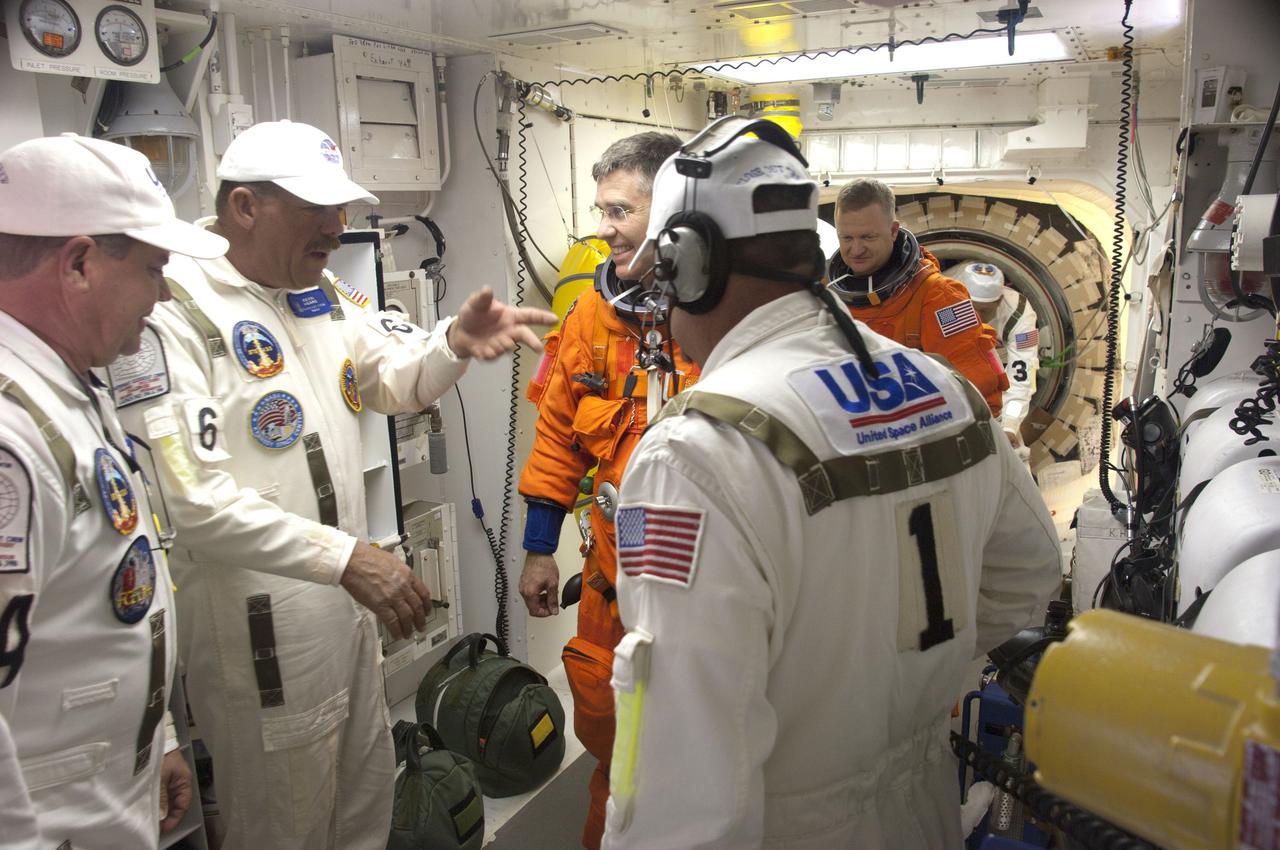
CAPE CANAVERAL, Fla. - In the White Room at Launch Pad 39A at NASA's Kennedy Space Center in Florida, United Space Alliance spacesuit technicians help STS-133 Mission Specialist Steve Bowen put on the parachute for his launch-and-entry suit before he enters space shuttle Discovery through the crew hatch in the background. Bowen, who is making his third spaceflight last flew in May 2010 on the STS-132 mission. Bowen replaces astronaut Tim Kopra as Mission Specialist 2, because Kopra was injured in a recent bicycle accident that prevented him from lifting off during this launch window. Behind Bowen is STS-133 Pilot Eric Boe. Scheduled to lift off Feb. 24 at 4:50 p.m. EST, Discovery and its crew will deliver the Permanent Multipurpose Module, packed with supplies and critical spare parts, as well as Robonaut 2, the dexterous humanoid astronaut helper, to the International Space Station. Discovery, which will fly its 39th mission, is scheduled to be retired following STS-133. This will be the 133rd Space Shuttle Program mission and the 35th shuttle voyage to the space station. For more information on the STS-133 mission, visit www.nasa.gov/mission_pages/shuttle/shuttlemissions/sts133/. Photo credit: NASA/Sandra Joseph and Kevin O'Connell
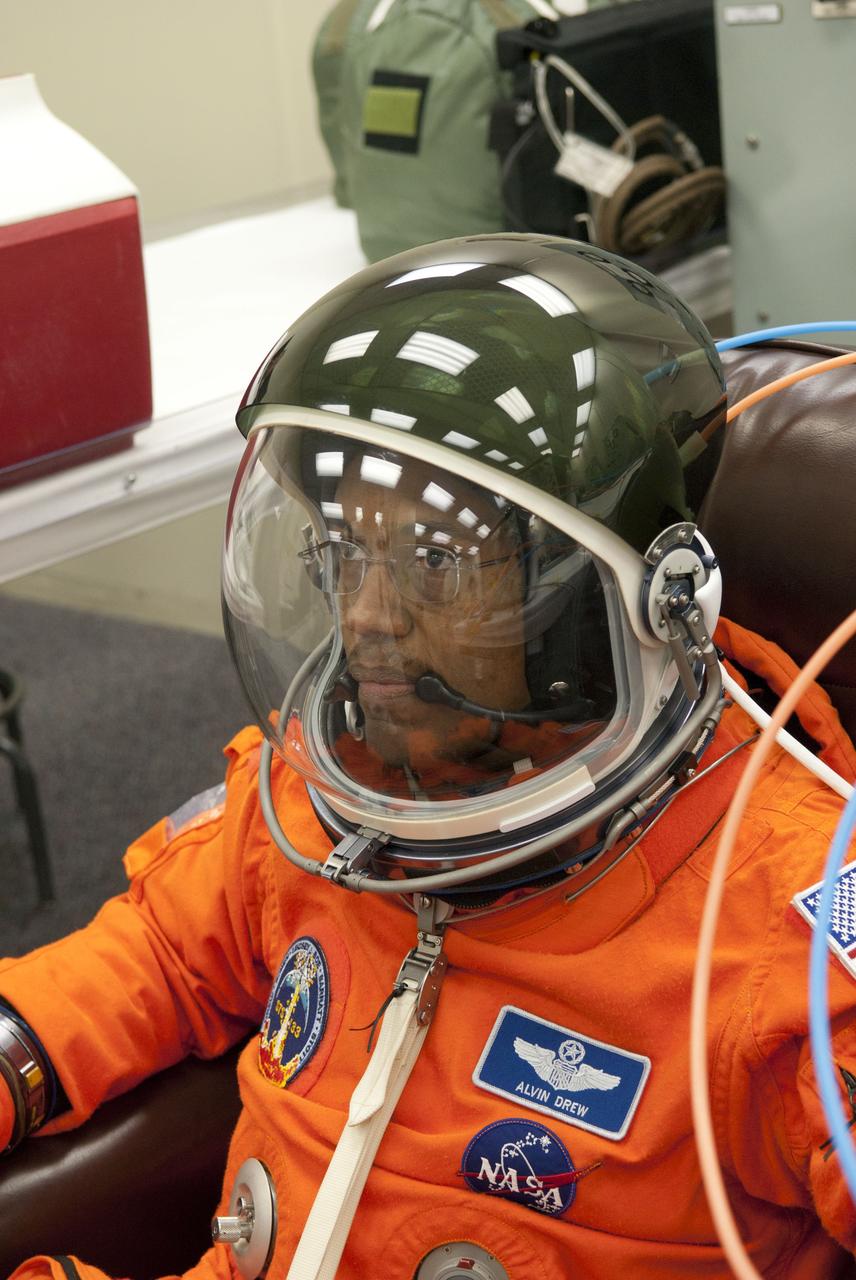
CAPE CANAVERAL, Fla. - In the Operations and Checkout Building (O&C) at NASA's Kennedy Space Center in Florida, the astronauts of space shuttle Discovery's STS-133 crew put on their launch-and-entry suits and check the fit of their helmets and gloves before heading to the Astrovan for the ride to Launch Pad 39A. Mission Specialist Alvin Drew, seen here, last flew aboard space shuttle Endeavour on the STS-118 mission in 2007. Scheduled to lift off Feb. 24 at 4:50 p.m. EST, Discovery and its crew will deliver the Permanent Multipurpose Module, packed with supplies and critical spare parts, as well as Robonaut 2, the dexterous humanoid astronaut helper, to the International Space Station. Discovery, which will fly its 39th mission, is scheduled to be retired following STS-133. This will be the 133rd Space Shuttle Program mission and the 35th shuttle voyage to the space station. For more information on the STS-133 mission, visit www.nasa.gov/mission_pages/shuttle/shuttlemissions/sts133/. Photo credit: NASA/Jim Grossmann
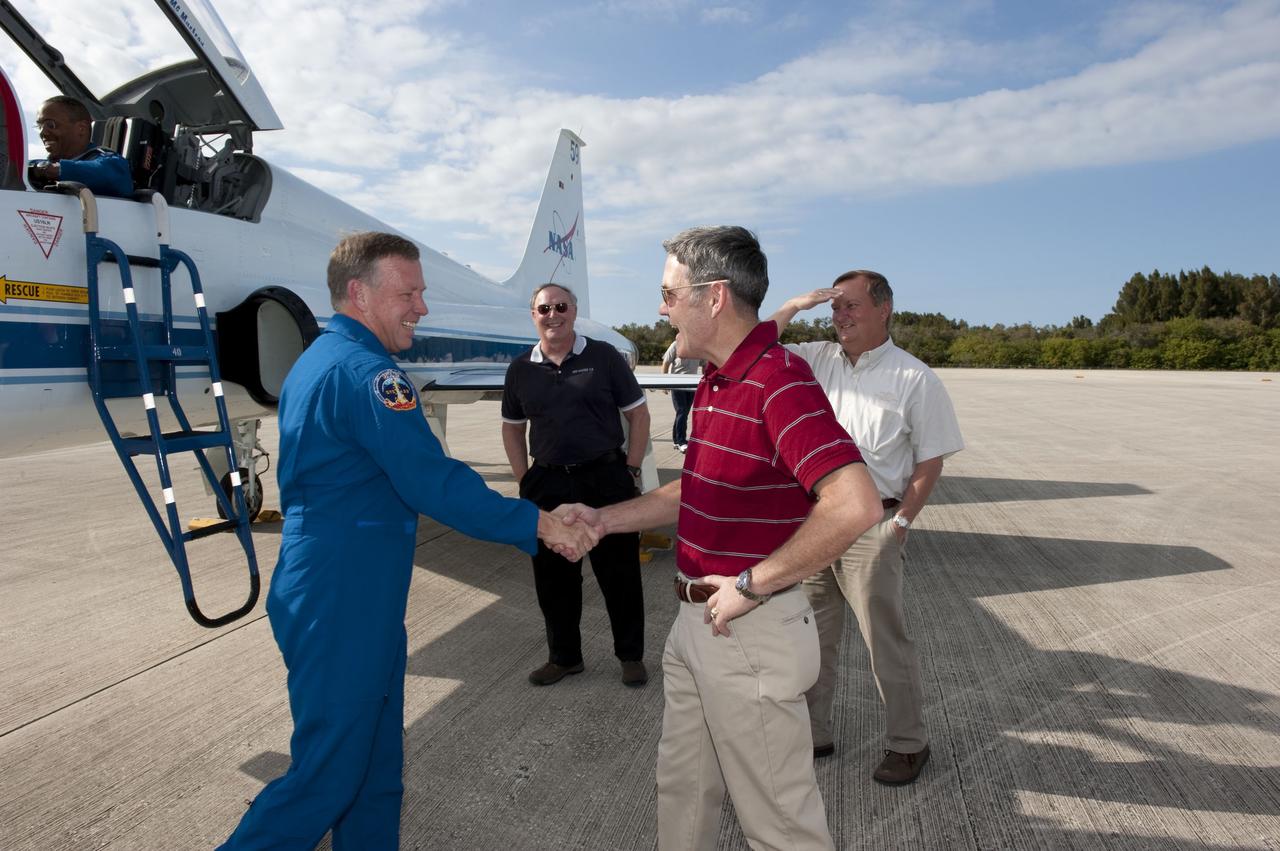
CAPE CANAVERAL, Fla. -- At NASA's Kennedy Space Center in Florida, space shuttle Discovery's STS-133 Commander Steve Lindsey greets Kennedy Center Director Bob Cabana on the Shuttle Landing Facility runway after arriving aboard a T-38 jet. Also on hand to greet the crew were Jerry Ross, chief of the Vehicle Integration Test Office, left, and Mike Leinbach, shuttle launch director. In the days leading up to their launch to the International Space Station, Lindsey and his crew members will check the fit of their launch-and-entry suits, review launch-day procedures, receive weather briefings and remain medically quarantined to prevent sickness. This will be the second launch attempt for Discovery's crew, following a scrub in November 2010 due to a hydrogen gas leak at the ground umbilical carrier plate (GUCP) as well as modifications to the external fuel tank's intertank support beams, called stringers. Scheduled to lift off Feb. 24 at 4:50 p.m. EST, Discovery and its crew will deliver the Permanent Multipurpose Module, packed with supplies and critical spare parts, as well as Robonaut 2, the dexterous humanoid astronaut helper, to the orbiting outpost. For more information on the STS-133 mission, visit www.nasa.gov/mission_pages/shuttle/shuttlemissions/sts133/. Photo credit: NASA/Kim Shiflett
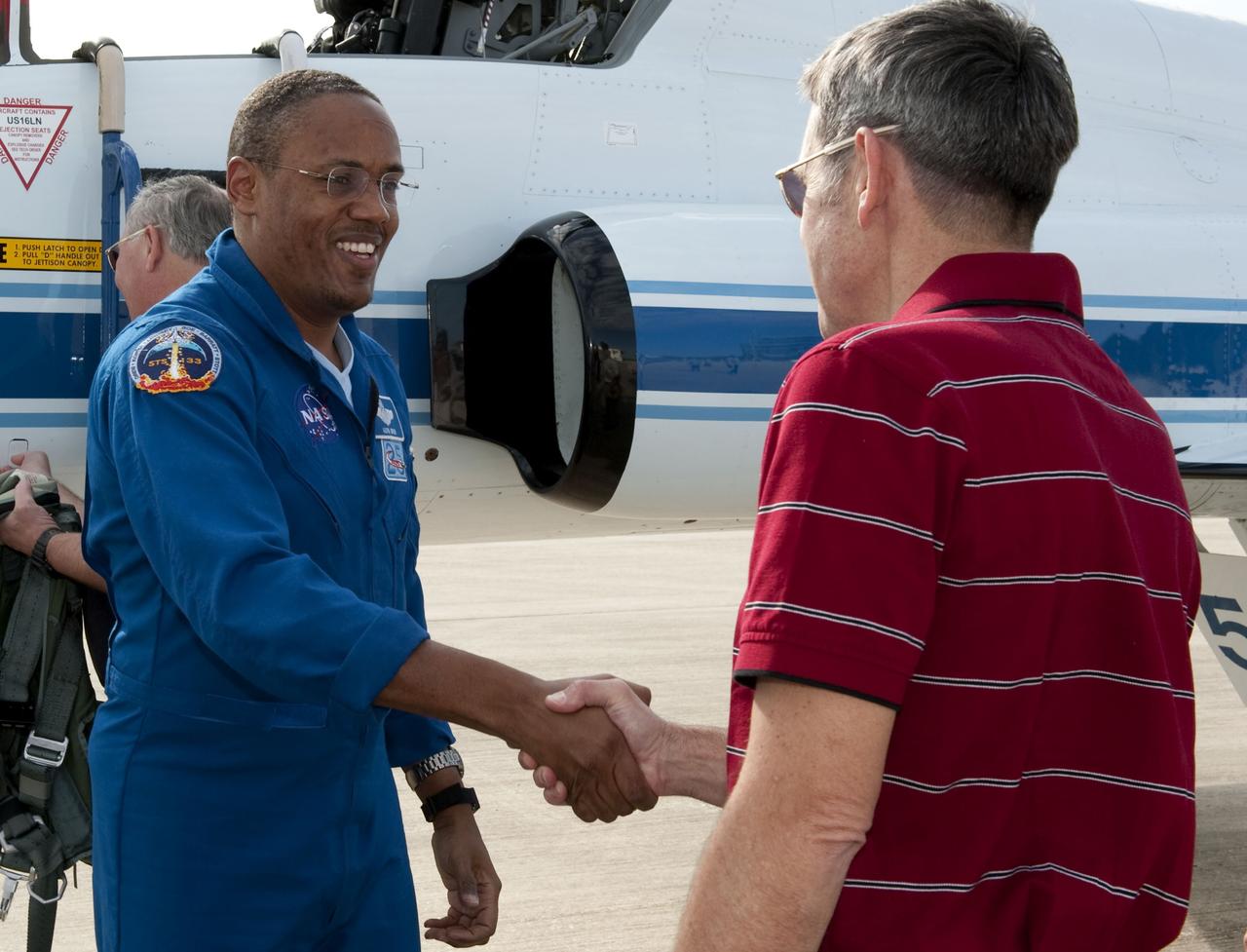
CAPE CANAVERAL, Fla. -- At NASA's Kennedy Space Center in Florida, space shuttle Discovery's STS-133 Mission Specialist Alvin Drew greets Kennedy Center Director Bob Cabana on the Shuttle Landing Facility runway after arriving aboard a T-38 jet. In the days leading up to their launch to the International Space Station, Drew and his crew members will check the fit of their launch-and-entry suits, review launch-day procedures, receive weather briefings and remain medically quarantined to prevent sickness. This will be the second launch attempt for Discovery's crew, following a scrub in November 2010 due to a hydrogen gas leak at the ground umbilical carrier plate (GUCP) as well as modifications to the external fuel tank's intertank support beams, called stringers. Scheduled to lift off Feb. 24 at 4:50 p.m. EST, Discovery and its crew will deliver the Permanent Multipurpose Module, packed with supplies and critical spare parts, as well as Robonaut 2, the dexterous humanoid astronaut helper, to the orbiting outpost. For more information on the STS-133 mission, visit www.nasa.gov/mission_pages/shuttle/shuttlemissions/sts133/. Photo credit: NASA/Kim Shiflett
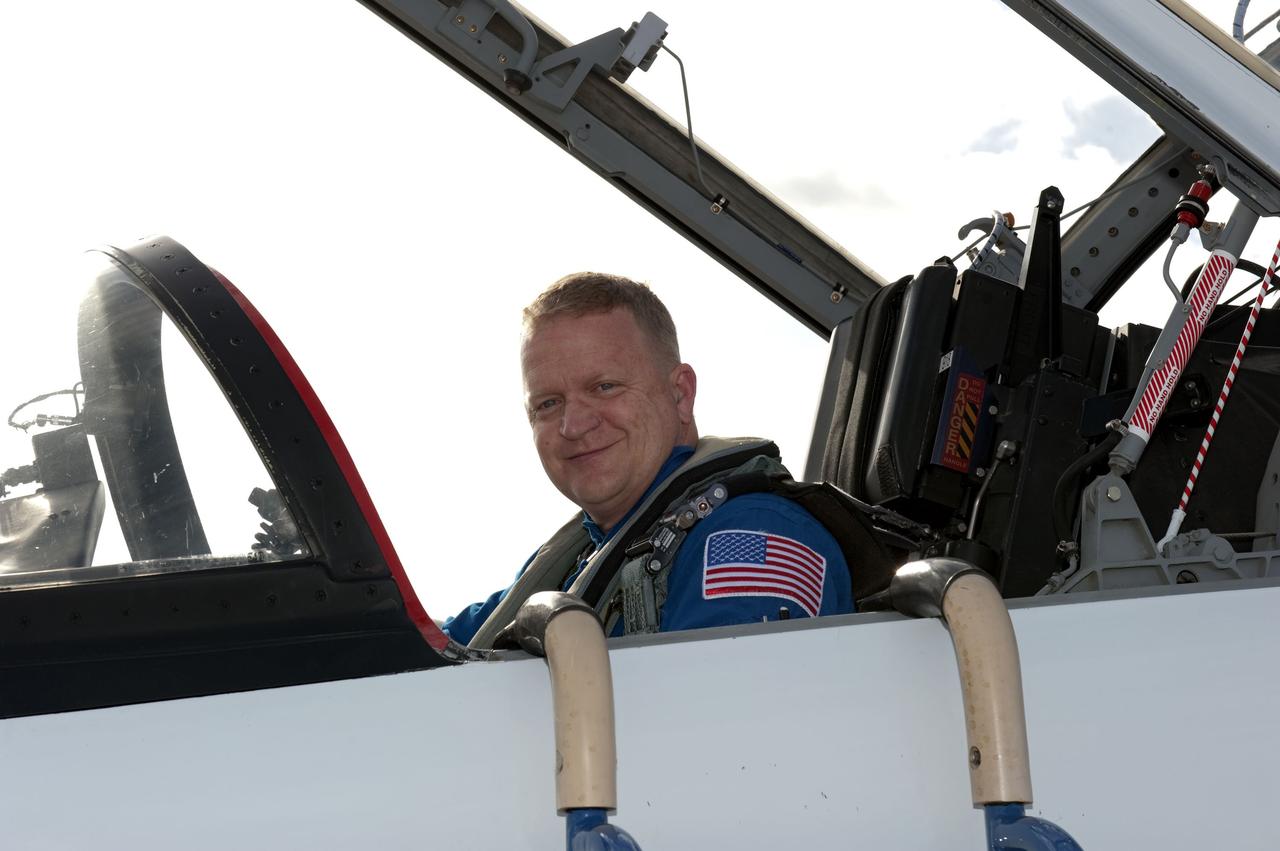
CAPE CANAVERAL, Fla. -- At NASA's Kennedy Space Center in Florida, space shuttle Discovery's STS-133 Pilot Eric Boe arrives on the Shuttle Landing Facility runway aboard a T-38 jet. In the days leading up to their launch to the International Space Station, Boe and his crew members will check the fit of their launch-and-entry suits, review launch-day procedures, receive weather briefings and remain medically quarantined to prevent sickness. This will be the second launch attempt for Discovery's crew, following a scrub in November 2010 due to a hydrogen gas leak at the ground umbilical carrier plate (GUCP) as well as modifications to the external fuel tank's intertank support beams, called stringers. Scheduled to lift off Feb. 24 at 4:50 p.m. EST, Discovery and its crew will deliver the Permanent Multipurpose Module, packed with supplies and critical spare parts, as well as Robonaut 2, the dexterous humanoid astronaut helper, to the orbiting outpost. For more information on the STS-133 mission, visit www.nasa.gov/mission_pages/shuttle/shuttlemissions/sts133/. Photo credit: NASA/Kim Shiflett

CAPE CANAVERAL, Fla. -- At NASA's Kennedy Space Center in Florida, space shuttle Discovery's STS-133 Mission Specialist Michael Barratt greets NASA Administrator Charlie Bolden, left, and Kennedy Center Director Bob Cabana on the Shuttle Landing Facility runway after arriving aboard a T-38 jet. In the days leading up to their launch to the International Space Station, Barratt and his crew members will check the fit of their launch-and-entry suits, review launch-day procedures, receive weather briefings and remain medically quarantined to prevent sickness. This will be the second launch attempt for Discovery's crew, following a scrub in November 2010 due to a hydrogen gas leak at the ground umbilical carrier plate (GUCP) as well as modifications to the external fuel tank's intertank support beams, called stringers. Scheduled to lift off Feb. 24 at 4:50 p.m. EST, Discovery and its crew will deliver the Permanent Multipurpose Module, packed with supplies and critical spare parts, as well as Robonaut 2, the dexterous humanoid astronaut helper, to the orbiting outpost. For more information on the STS-133 mission, visit www.nasa.gov/mission_pages/shuttle/shuttlemissions/sts133/. Photo credit: NASA/Kim Shiflett

CAPE CANAVERAL, Fla. - In the Operations and Checkout Building (O&C) at NASA's Kennedy Space Center in Florida, the astronauts of space shuttle Discovery's STS-133 crew put on their launch-and-entry suits and check the fit of their helmets and gloves before heading to the Astrovan for the ride to Launch Pad 39A. Commander Steve Lindsey, seen here, will be making his fifth spaceflight and third aboard Discovery. Since his most recent mission -- STS-121 in 2006 -- Lindsey served as chief of the Astronaut Office at NASA's Johnson Space Center in Houston. Scheduled to lift off Feb. 24 at 4:50 p.m. EST, Discovery and its crew will deliver the Permanent Multipurpose Module, packed with supplies and critical spare parts, as well as Robonaut 2, the dexterous humanoid astronaut helper, to the International Space Station. Discovery, which will fly its 39th mission, is scheduled to be retired following STS-133. This will be the 133rd Space Shuttle Program mission and the 35th shuttle voyage to the space station. For more information on the STS-133 mission, visit www.nasa.gov/mission_pages/shuttle/shuttlemissions/sts133/. Photo credit: NASA/Jim Grossmann
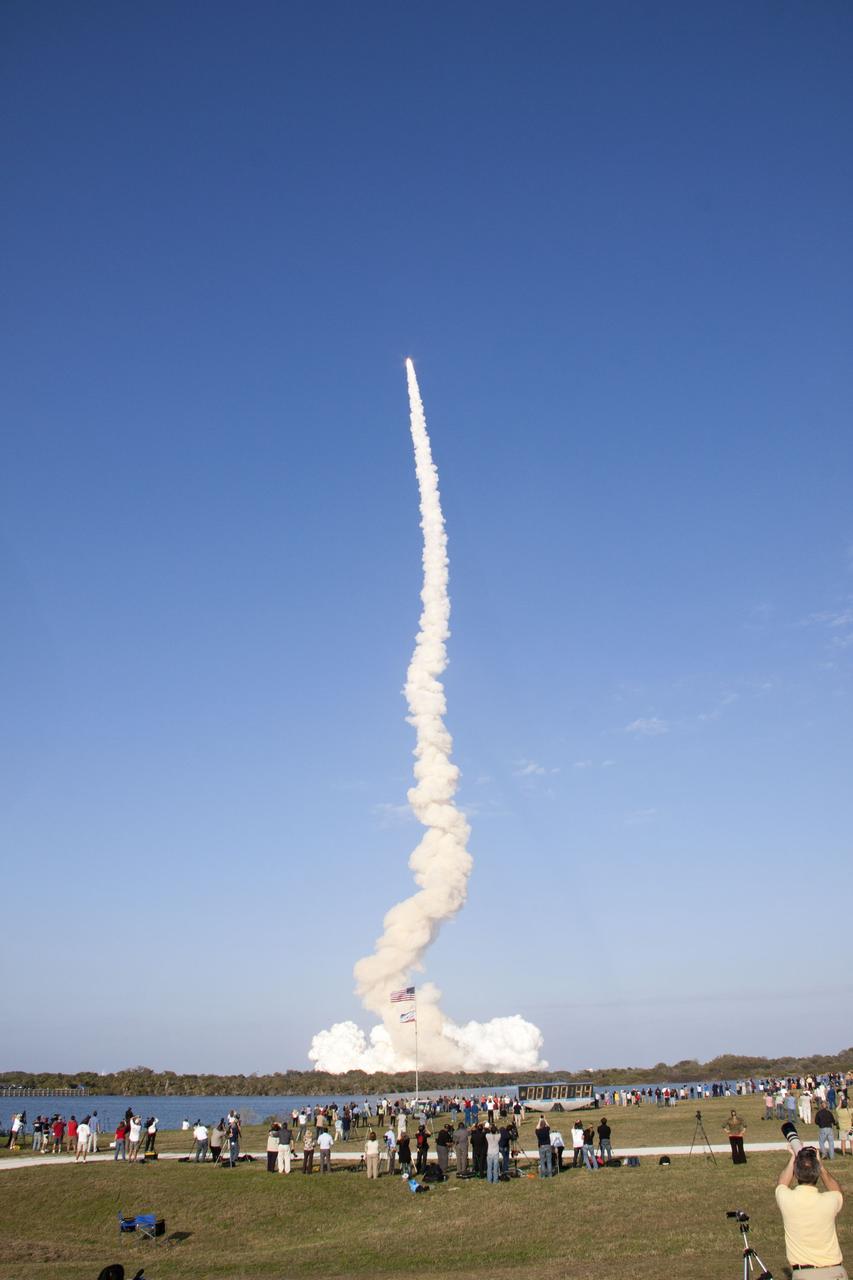
CAPE CANAVERAL, Fla. - Space shuttle Discovery's liftoff from Launch Pad 39A at NASA's Kennedy Space Center in Florida on a picturesque, warm, late February afternoon is witnessed by news media representatives near the countdown clock at the Press Site. Launch of the STS-133 mission was at 4:53 p.m. EST on Feb. 24. Discovery and its six-member crew are on a mission to deliver the Permanent Multipurpose Module, packed with supplies and critical spare parts, as well as Robonaut 2, the dexterous humanoid astronaut helper, to the International Space Station. Discovery is making its 39th mission and is scheduled to be retired following STS-133. This is the 133rd Space Shuttle Program mission and the 35th shuttle voyage to the space station. For more information on the STS-133 mission, visit www.nasa.gov/mission_pages/shuttle/shuttlemissions/sts133/. Photo credit: NASA/Troy Cryder

CAPE CANAVERAL, Fla. - In the Operations and Checkout Building (O&C) at NASA's Kennedy Space Center in Florida, the astronauts of space shuttle Discovery's STS-133 crew put on their launch-and-entry suits and check the fit of their helmets and gloves before heading to the Astrovan for the ride to Launch Pad 39A. Mission Specialist Nicole Stott, seen here, spent 91 days aboard the International Space Station in 2009 as a crew member of Expeditions 20 and 21. Scheduled to lift off Feb. 24 at 4:50 p.m. EST, Discovery and its crew will deliver the Permanent Multipurpose Module, packed with supplies and critical spare parts, as well as Robonaut 2, the dexterous humanoid astronaut helper, to the International Space Station. Discovery, which will fly its 39th mission, is scheduled to be retired following STS-133. This will be the 133rd Space Shuttle Program mission and the 35th shuttle voyage to the space station. For more information on the STS-133 mission, visit www.nasa.gov/mission_pages/shuttle/shuttlemissions/sts133/. Photo credit: NASA/Jim Grossmann
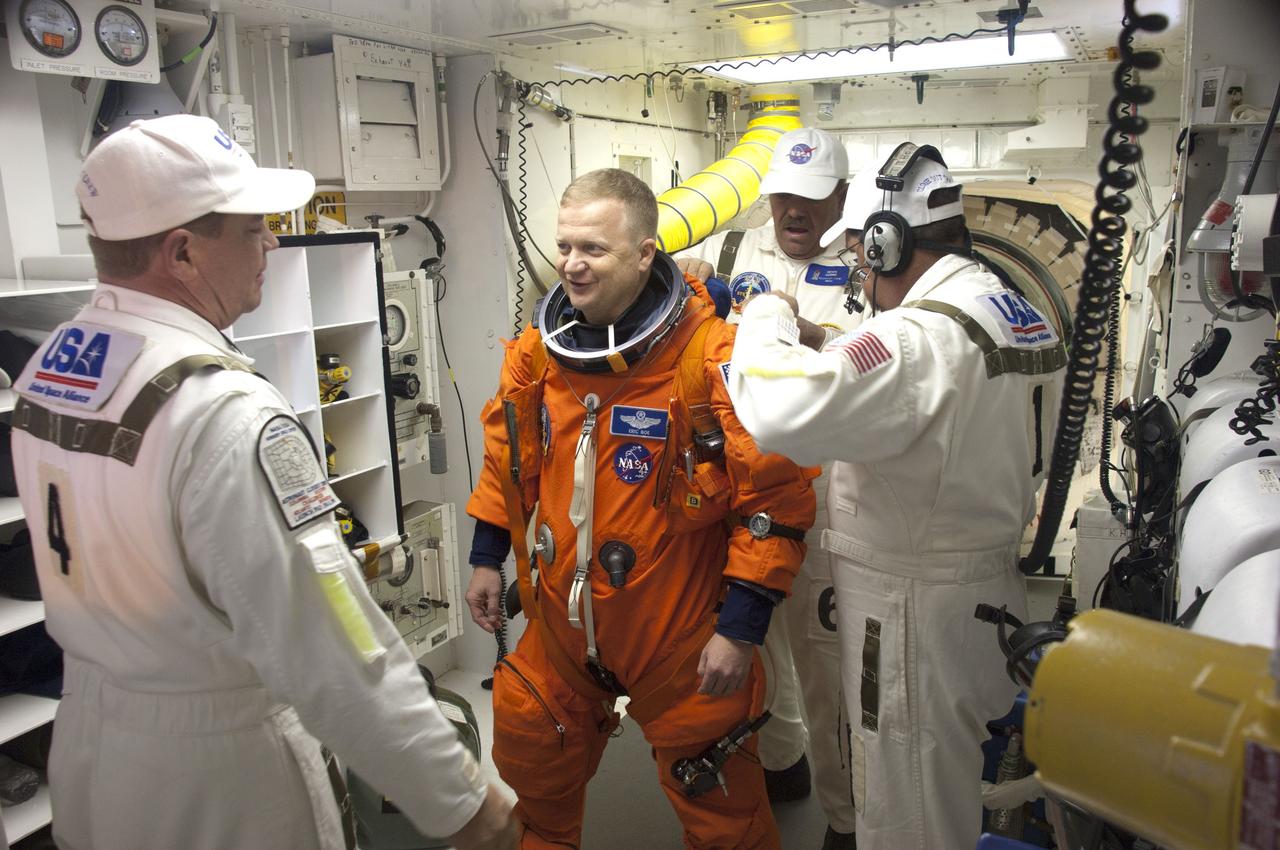
CAPE CANAVERAL, Fla. - In the White Room at Launch Pad 39A at NASA's Kennedy Space Center in Florida, United Space Alliance spacesuit technicians help STS-133 Pilot Eric Boe put on the parachute for his launch-and-entry suit before he enters space shuttle Discovery through the crew hatch in the background. Boe last piloted space shuttle Endeavour during its STS-126 mission back in 2008. Scheduled to lift off Feb. 24 at 4:50 p.m. EST, Discovery and its crew will deliver the Permanent Multipurpose Module, packed with supplies and critical spare parts, as well as Robonaut 2, the dexterous humanoid astronaut helper, to the International Space Station. Discovery, which will fly its 39th mission, is scheduled to be retired following STS-133. This will be the 133rd Space Shuttle Program mission and the 35th shuttle voyage to the space station. For more information on the STS-133 mission, visit www.nasa.gov/mission_pages/shuttle/shuttlemissions/sts133/. Photo credit: NASA/Sandra Joseph and Kevin O'Connell

CAPE CANAVERAL, Fla. -- At NASA's Kennedy Space Center in Florida, space shuttle Discovery's STS-133 Commander Steve Lindsey talks with NASA Administrator Charlie Bolden and Kennedy Center Director Bob Cabana on the Shuttle Landing Facility runway after arriving aboard a T-38 jet. In the days leading up to their launch to the International Space Station, Lindsey and his crew members will check the fit of their launch-and-entry suits, review launch-day procedures, receive weather briefings and remain medically quarantined to prevent sickness. This will be the second launch attempt for Discovery's crew, following a scrub in November 2010 due to a hydrogen gas leak at the ground umbilical carrier plate (GUCP) as well as modifications to the external fuel tank's intertank support beams, called stringers. Scheduled to lift off Feb. 24 at 4:50 p.m. EST, Discovery and its crew will deliver the Permanent Multipurpose Module, packed with supplies and critical spare parts, as well as Robonaut 2, the dexterous humanoid astronaut helper, to the orbiting outpost. For more information on the STS-133 mission, visit www.nasa.gov/mission_pages/shuttle/shuttlemissions/sts133/. Photo credit: NASA/Kim Shiflett
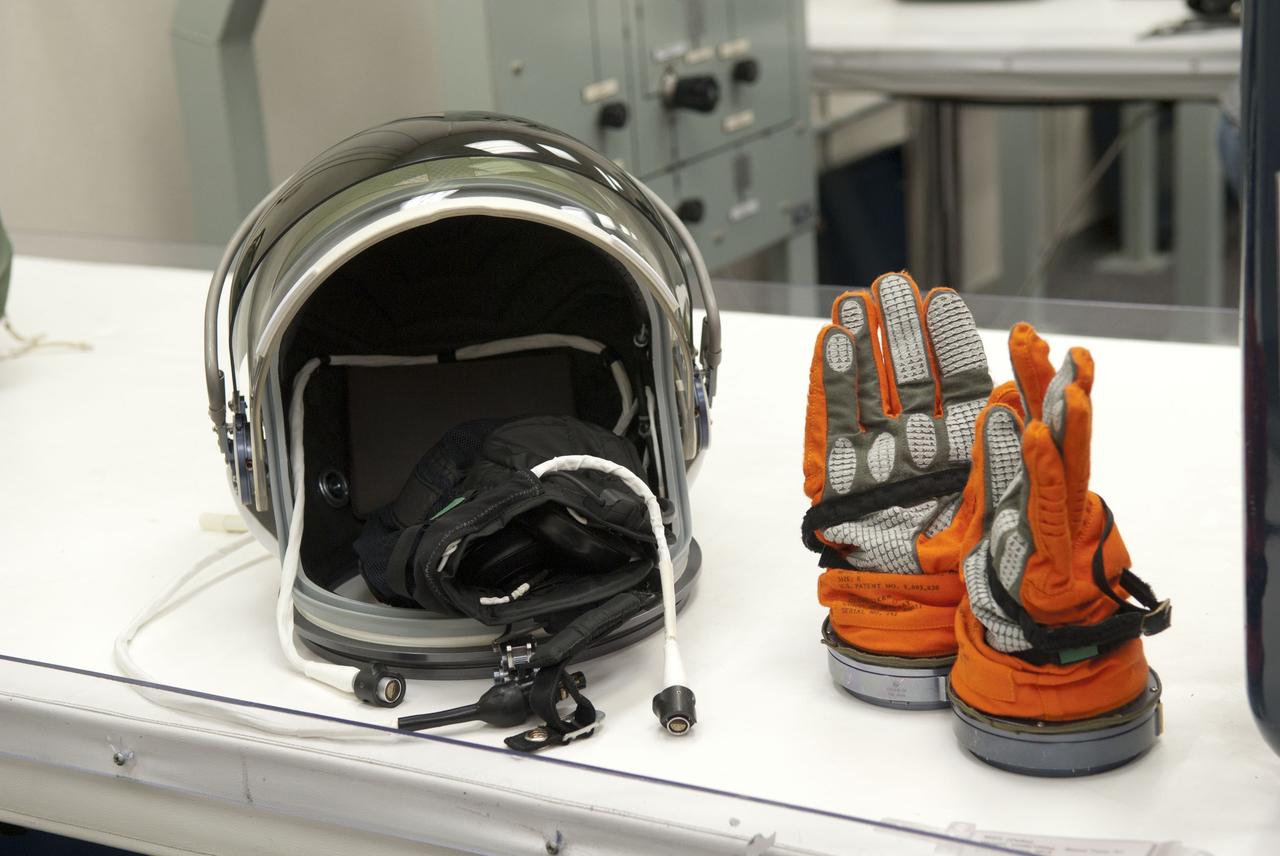
CAPE CANAVERAL, Fla. -- Inside the Operations and Checkout Building (O&C) at NASA's Kennedy Space Center in Florida, a helmet and gloves are ready to be worn by a member of the STS-133 crew during the climb into orbit aboard space shuttle Discovery. Scheduled to lift off Feb. 24 at 4:50 p.m. EST, Discovery and its crew will deliver the Permanent Multipurpose Module, packed with supplies and critical spare parts, as well as Robonaut 2, the dexterous humanoid astronaut helper, to the International Space Station. Discovery, which will fly its 39th mission, is scheduled to be retired following STS-133. This will be the 133rd Space Shuttle Program mission and the 35th shuttle voyage to the space station. For more information on the STS-133 mission, visit www.nasa.gov/mission_pages/shuttle/shuttlemissions/sts133/. Photo credit: NASA/Jim Grossmann
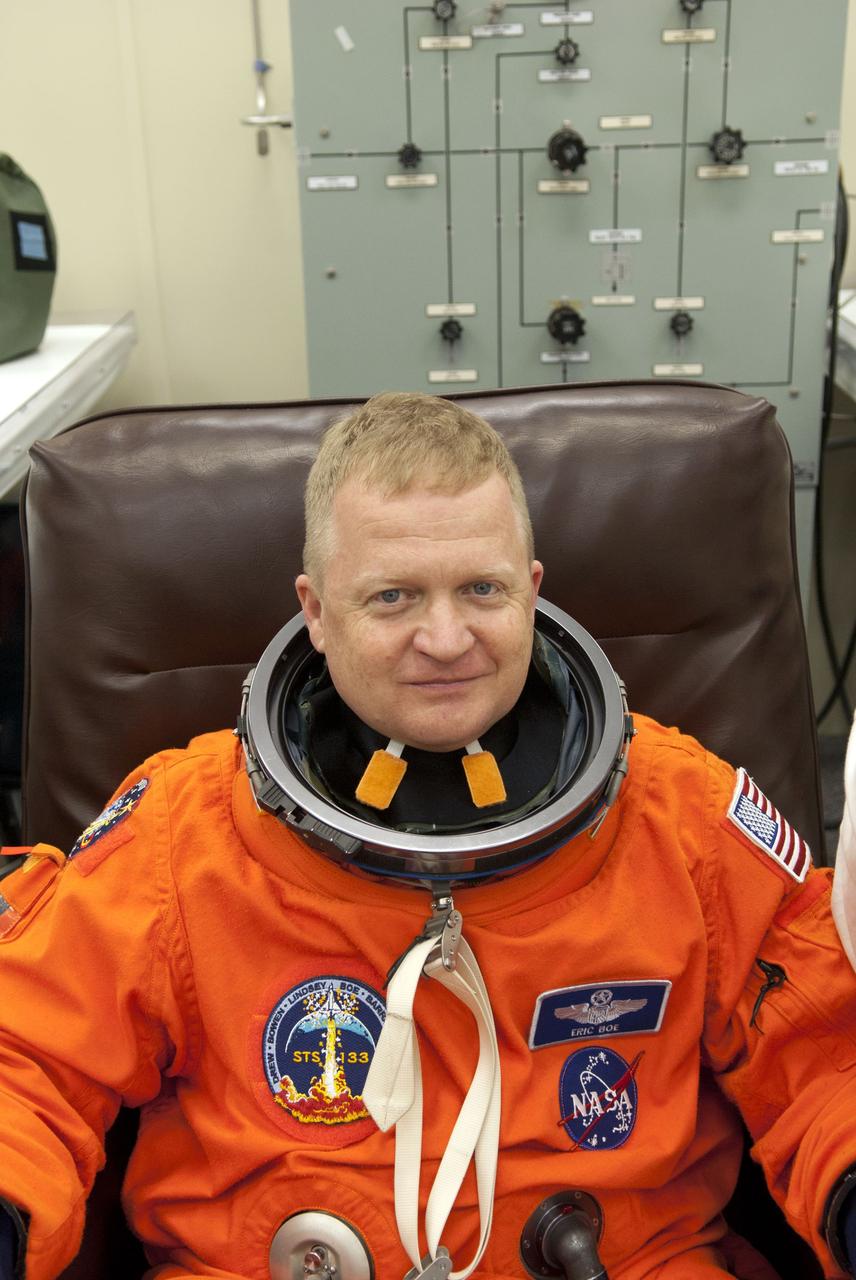
CAPE CANAVERAL, Fla. - In the Operations and Checkout Building (O&C) at NASA's Kennedy Space Center in Florida, the astronauts of space shuttle Discovery's STS-133 crew put on their launch-and-entry suits and check the fit of their helmets and gloves before heading to the Astrovan for the ride to Launch Pad 39A. Pilot Eric Boe, seen here, last piloted space shuttle Endeavour during its STS-126 mission back in 2008. Scheduled to lift off Feb. 24 at 4:50 p.m. EST, Discovery and its crew will deliver the Permanent Multipurpose Module, packed with supplies and critical spare parts, as well as Robonaut 2, the dexterous humanoid astronaut helper, to the International Space Station. Discovery, which will fly its 39th mission, is scheduled to be retired following STS-133. This will be the 133rd Space Shuttle Program mission and the 35th shuttle voyage to the space station. For more information on the STS-133 mission, visit www.nasa.gov/mission_pages/shuttle/shuttlemissions/sts133/. Photo credit: NASA/Jim Grossmann
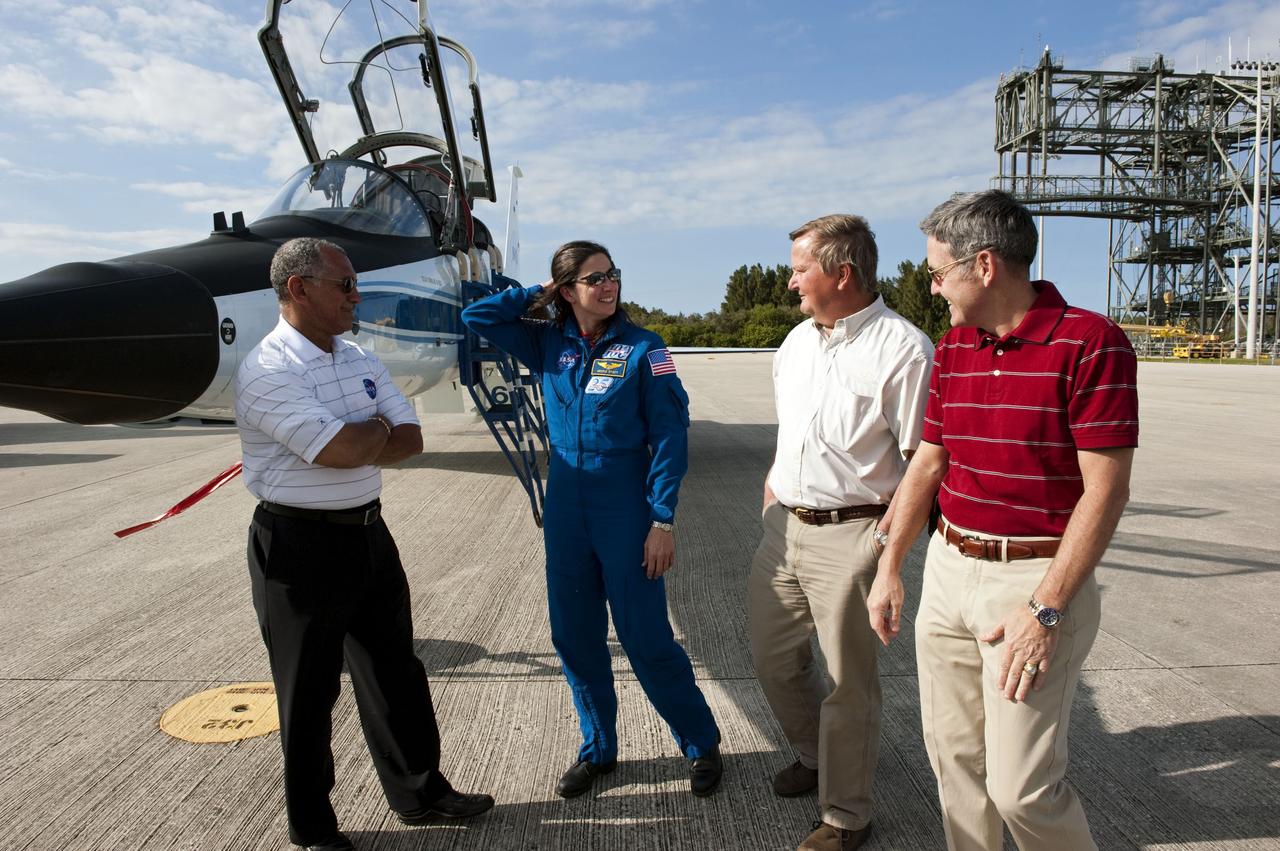
CAPE CANAVERAL, Fla. -- At NASA's Kennedy Space Center in Florida, NASA Administrator Charlie Bolden, left, space shuttle Discovery's STS-133 Mission Specialist Nicole Stott, Shuttle Launch Director Mike Leinbach and Kennedy Center Director Bob Cabana chat on the Shuttle Landing Facility runway. In the days leading up to their launch to the International Space Station, Stott and her crew members will check the fit of their launch-and-entry suits, review launch-day procedures, receive weather briefings and remain medically quarantined to prevent sickness. This will be the second launch attempt for Discovery's crew, following a scrub in November 2010 due to a hydrogen gas leak at the ground umbilical carrier plate (GUCP) as well as modifications to the external fuel tank's intertank support beams, called stringers. Scheduled to lift off Feb. 24 at 4:50 p.m. EST, Discovery and its crew will deliver the Permanent Multipurpose Module, packed with supplies and critical spare parts, as well as Robonaut 2, the dexterous humanoid astronaut helper, to the orbiting outpost. For more information on the STS-133 mission, visit www.nasa.gov/mission_pages/shuttle/shuttlemissions/sts133/. Photo credit: NASA/Kim Shiflett
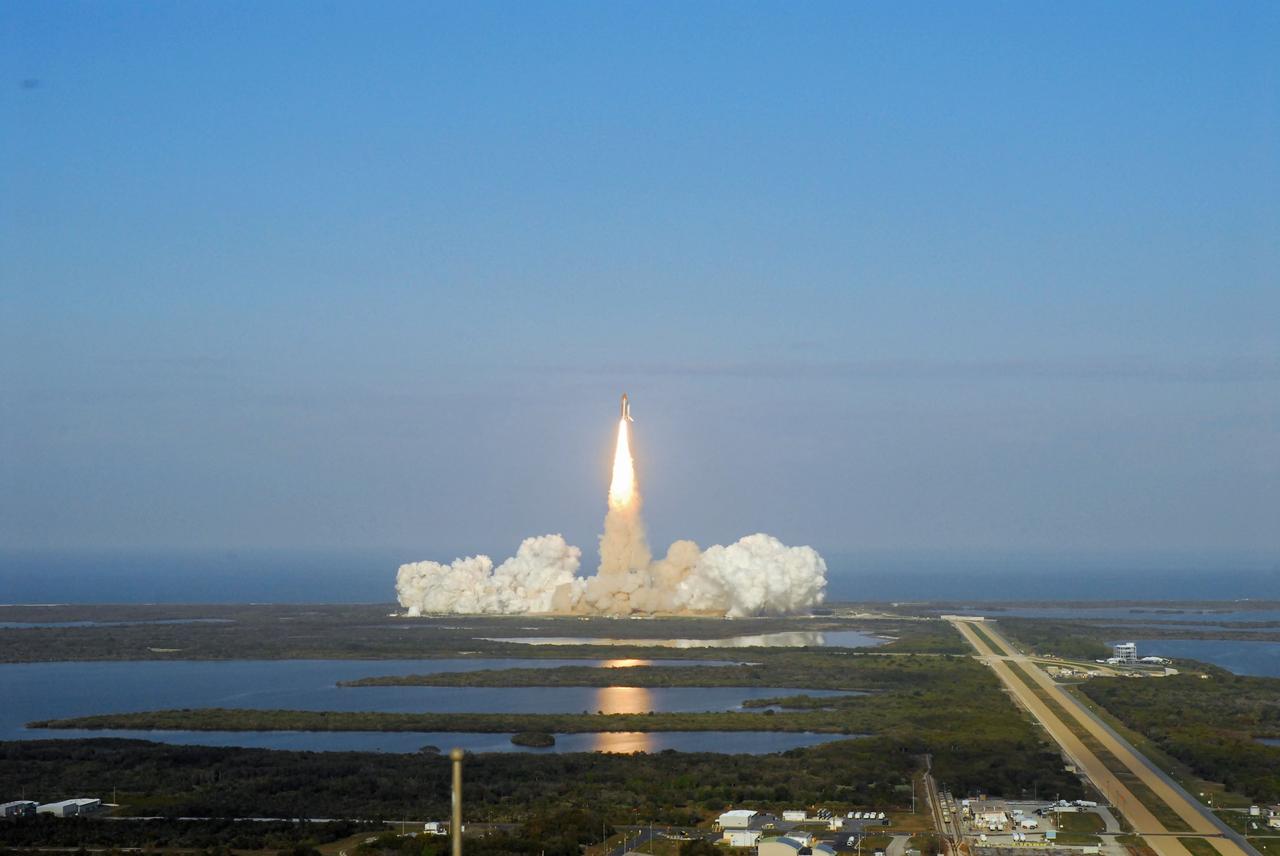
CAPE CANAVERAL, Fla. -- Taken from the roof of the Vehicle Assembly Building at NASA's Kennedy Space Center in Florida, space shuttle Discovery lifts off Launch Pad 39A atop twin columns of fire, creating rolling clouds of smoke and steam in its track. Launch of the STS-133 mission was at 4:53 p.m. EST on Feb. 24. Discovery and its six-member crew are on a mission to deliver the Permanent Multipurpose Module, packed with supplies and critical spare parts, as well as Robonaut 2, the dexterous humanoid astronaut helper, to the International Space Station. Discovery is making its 39th mission and is scheduled to be retired following STS-133. This is the 133rd Space Shuttle Program mission, the 35th shuttle voyage to the space station and Discovery's final mission. For more information on the STS-133 mission, visit www.nasa.gov/mission_pages/shuttle/shuttlemissions/sts133/. Photo credit: NASA/Jeff Marino
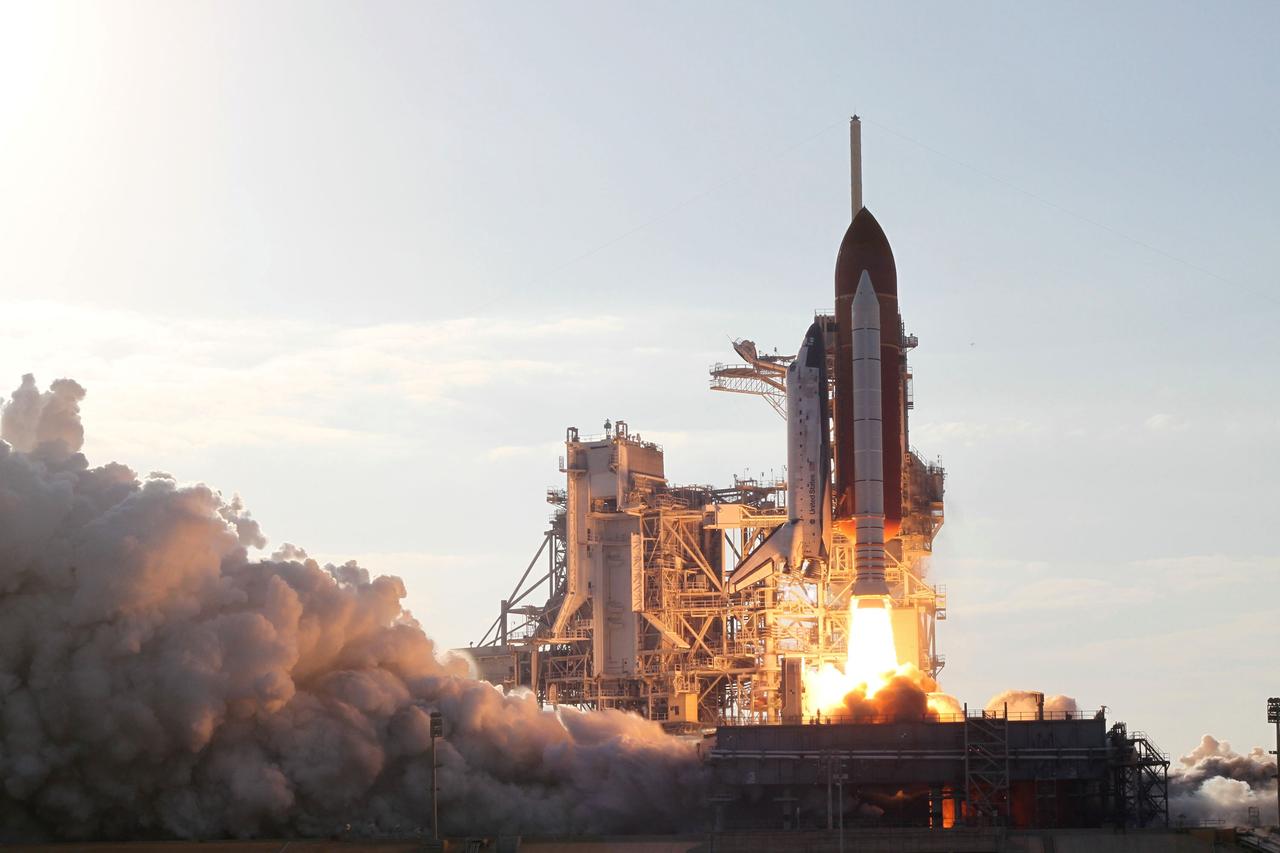
CAPE CANAVERAL, Fla. -- Rising on twin columns of fire and creating rolling clouds of smoke and steam, space shuttle Discovery lifts off Launch Pad 39A at NASA's Kennedy Space Center in Florida on a picturesque, warm, late February afternoon. Launch of the STS-133 mission was at 4:53 p.m. EST on Feb. 24. Discovery and its six-member crew are on a mission to deliver the Permanent Multipurpose Module, packed with supplies and critical spare parts, as well as Robonaut 2, the dexterous humanoid astronaut helper, to the International Space Station. Discovery is making its 39th mission and is scheduled to be retired following STS-133. This is the 133rd Space Shuttle Program mission and the 35th shuttle voyage to the space station. For more information on the STS-133 mission, visit www.nasa.gov/mission_pages/shuttle/shuttlemissions/sts133/. Photo credit: NASA
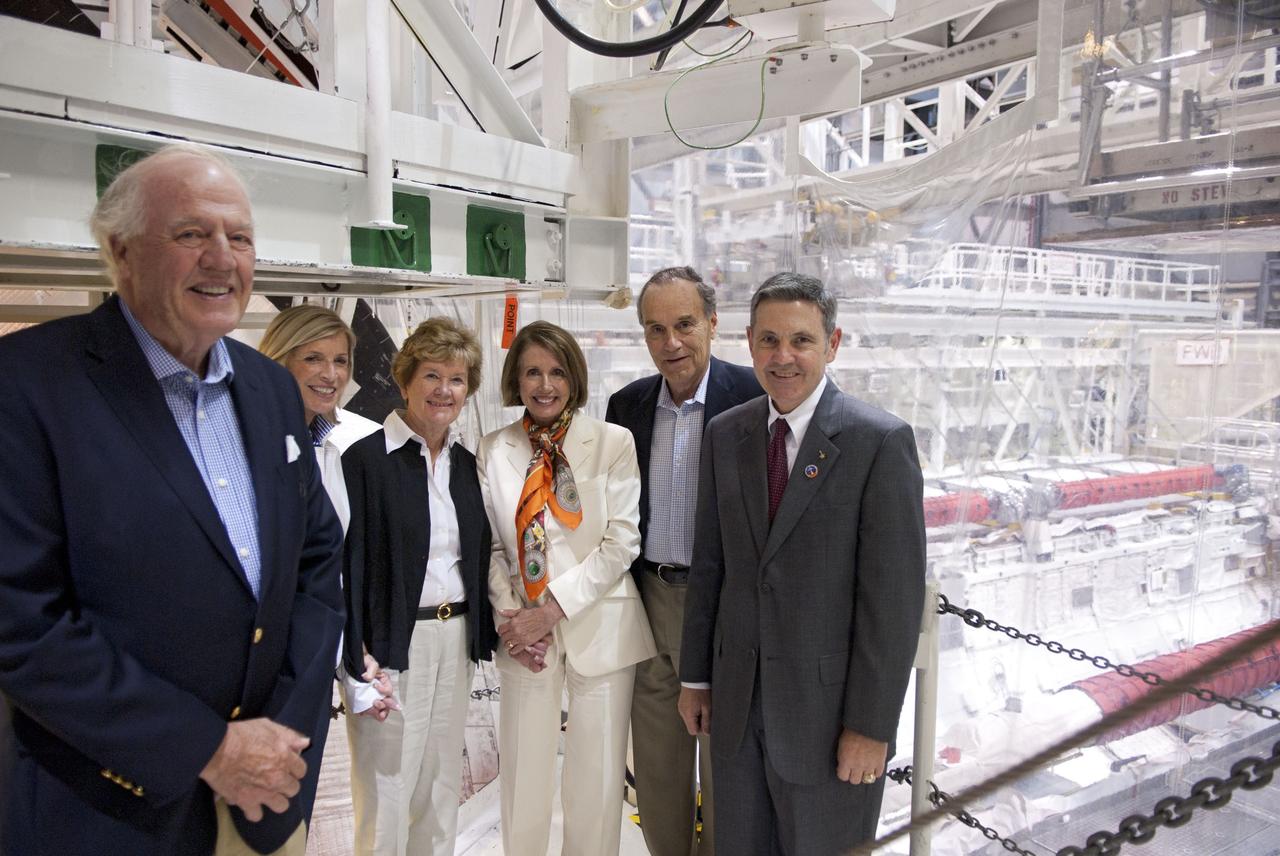
CAPE CANAVERAL, Fla. -- CAPE CANAVERAL, Fla. -- House Of Representatives Democratic Leader Nancy Pelosi, from California's 8th District, fourth from left, and other VIPs pose for a photo with NASA Kennedy Space Center Director Robert Cabana. They are at Florida's space center to witness space shuttle Discovery make history as it lifts off on its final scheduled mission from Launch Pad 39A. While at the center, they attended a presentation in the Operations Support Building II and toured Orbiter Processing Facilities 1 and 2 where shuttles Atlantis and Endeavour are being prepared for their final missions respectively. Discovery and its six-member STS-133 crew will deliver the Permanent Multipurpose Module, packed with supplies and critical spare parts, as well as Robonaut 2, the dexterous humanoid astronaut helper, to the International Space Station. Discovery will make its 39th mission and is scheduled to be retired following STS-133. This will be the 133rd Space Shuttle Program mission and the 35th shuttle voyage to the space station. For more information on the STS-133 mission, visit www.nasa.gov/mission_pages/shuttle/shuttlemissions/sts133/. Photo credit: NASA/Jim Grossmann
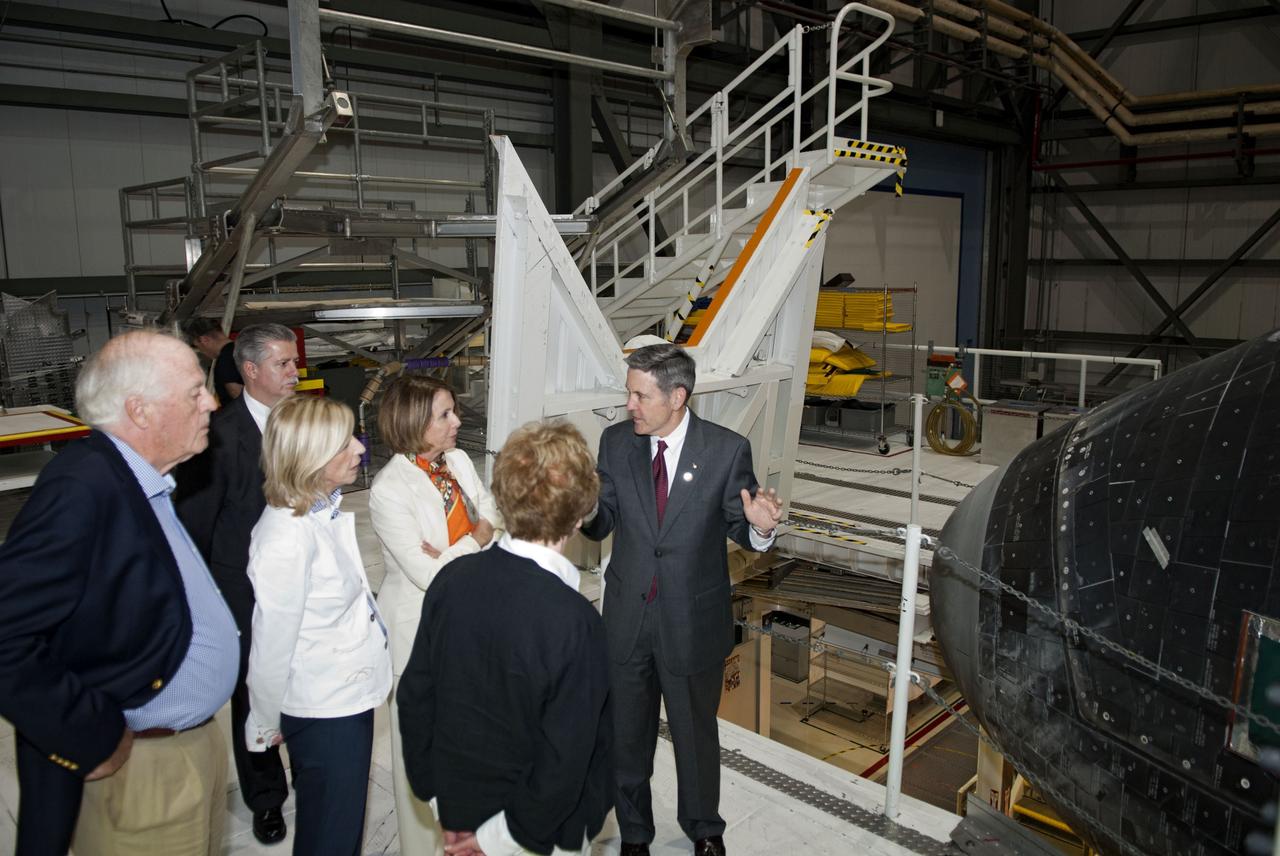
CAPE CANAVERAL, Fla. -- CAPE CANAVERAL, Fla. -- NASA Kennedy Space Center Director Robert Cabana, right, explains the operations taking place at Florida's space center to House Of Representatives Democratic Leader Nancy Pelosi, from California's 8th District, fourth from left, and other VIPs. They are at Florida's space center to witness space shuttle Discovery make history as it lifts off on its final scheduled mission from Launch Pad 39A. While at the center, they attended a presentation in the Operations Support Building II and toured Orbiter Processing Facilities 1 and 2 where shuttles Atlantis and Endeavour are being prepared for their final missions respectively. Discovery and its six-member STS-133 crew will deliver the Permanent Multipurpose Module, packed with supplies and critical spare parts, as well as Robonaut 2, the dexterous humanoid astronaut helper, to the International Space Station. Discovery will make its 39th mission and is scheduled to be retired following STS-133. This will be the 133rd Space Shuttle Program mission and the 35th shuttle voyage to the space station. For more information on the STS-133 mission, visit www.nasa.gov/mission_pages/shuttle/shuttlemissions/sts133/. Photo credit: NASA/Jim Grossmann
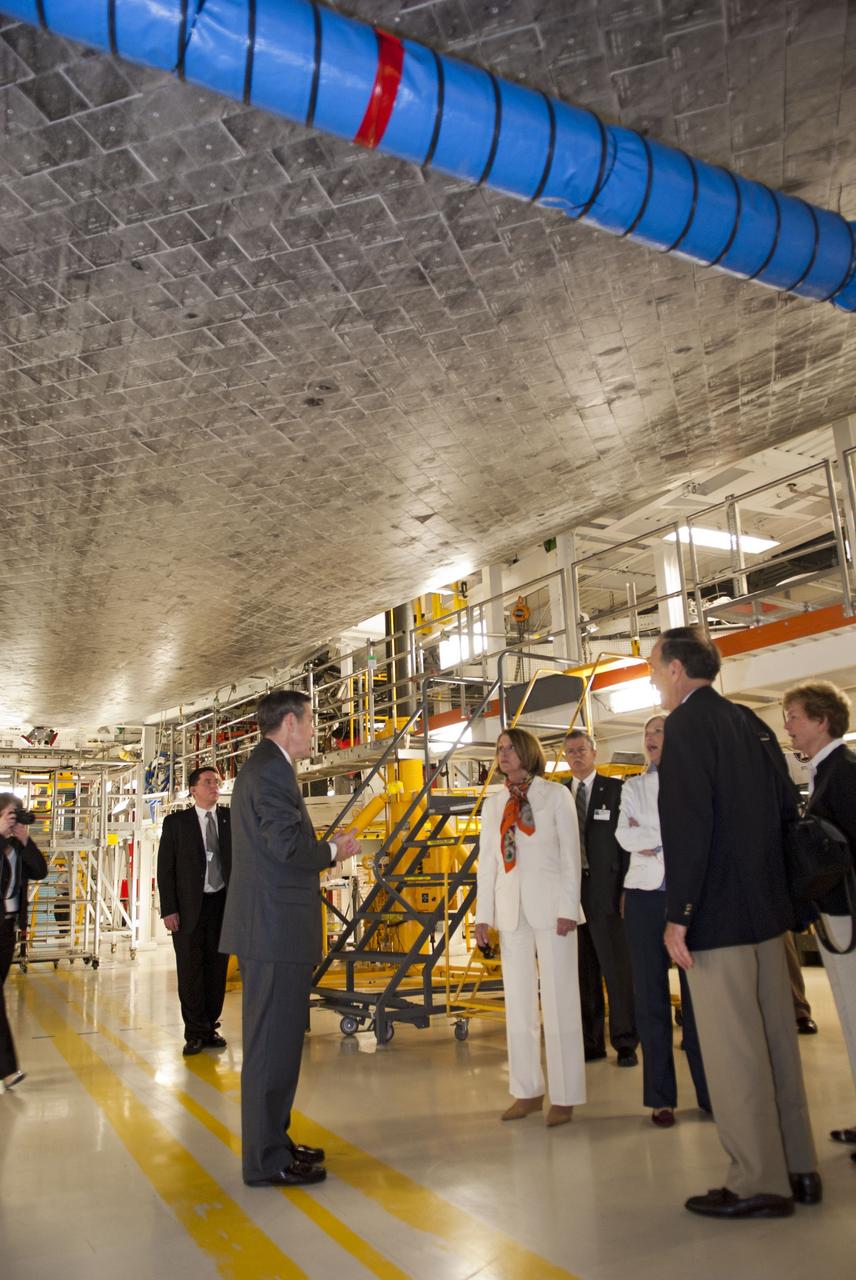
CAPE CANAVERAL, Fla. -- House Of Representatives Democratic Leader Nancy Pelosi, from California's 8th District, and other VIPs are at NASA's Kennedy Space Center in Florida to witness space shuttle Discovery make history as it lifts off on its final scheduled mission from Launch Pad 39A. While at the space center, they attended a presentation in the Operations Support Building II and toured Orbiter Processing Facilities 1 and 2 where shuttles Atlantis and Endeavour are being prepared for their final missions respectively. Discovery and its six-member STS-133 crew will deliver the Permanent Multipurpose Module, packed with supplies and critical spare parts, as well as Robonaut 2, the dexterous humanoid astronaut helper, to the International Space Station. Discovery will make its 39th mission and is scheduled to be retired following STS-133. This will be the 133rd Space Shuttle Program mission and the 35th shuttle voyage to the space station. For more information on the STS-133 mission, visit www.nasa.gov/mission_pages/shuttle/shuttlemissions/sts133/. Photo credit: NASA/Jim Grossmann
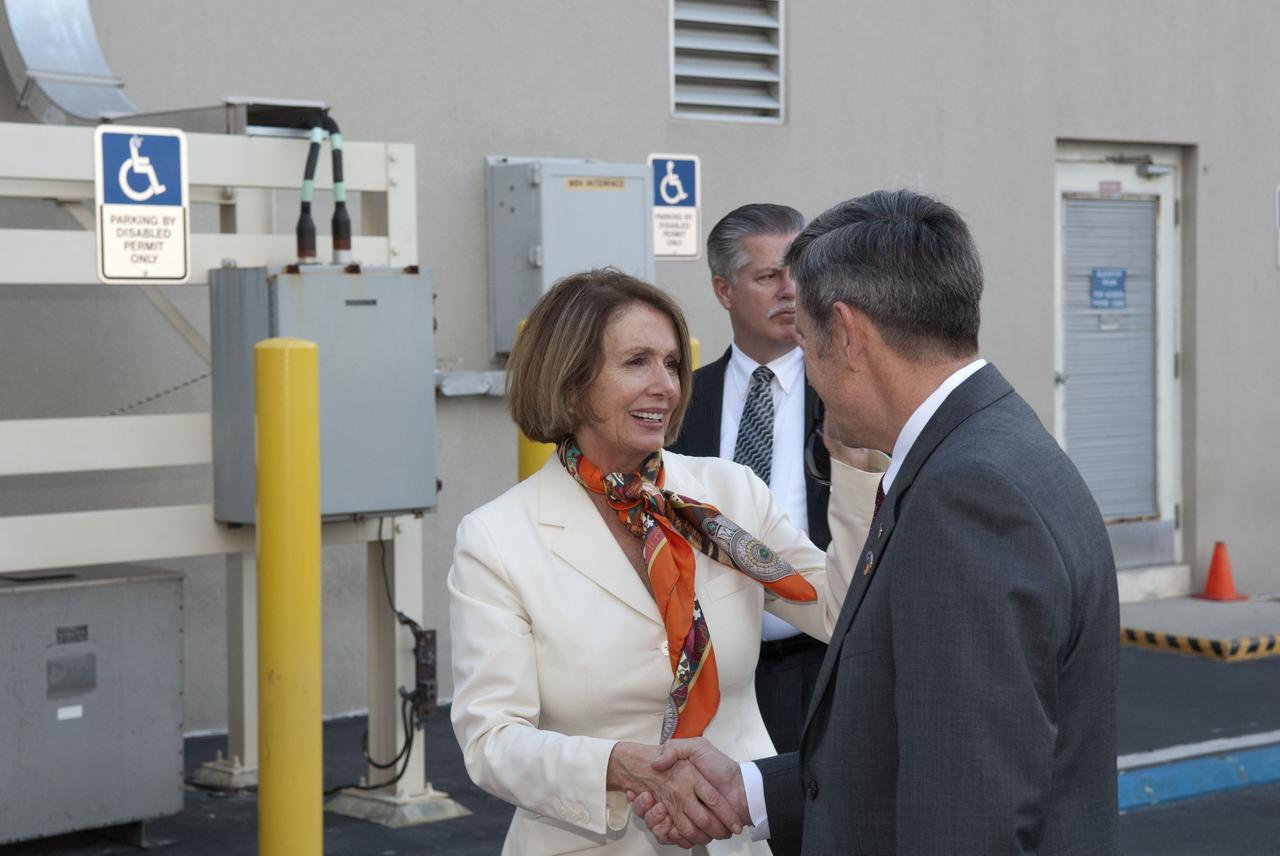
CAPE CANAVERAL, Fla. -- House Of Representatives Democratic Leader Nancy Pelosi, from California's 8th District, is greeted by NASA Kennedy Space Center Director Robert Cabana. Pelosi is at Florida's space center to witness space shuttle Discovery make history as it lifts off on its final scheduled mission from Launch Pad 39A. While at the center, Pelosi attended a presentation in the Operations Support Building II and toured Orbiter Processing Facilities 1 and 2 where shuttles Atlantis and Endeavour are being prepared for their final missions respectively. Discovery and its six-member STS-133 crew will deliver the Permanent Multipurpose Module, packed with supplies and critical spare parts, as well as Robonaut 2, the dexterous humanoid astronaut helper, to the International Space Station. Discovery will make its 39th mission and is scheduled to be retired following STS-133. This will be the 133rd Space Shuttle Program mission and the 35th shuttle voyage to the space station. For more information on the STS-133 mission, visit www.nasa.gov/mission_pages/shuttle/shuttlemissions/sts133/. Photo credit: NASA/Jim Grossmann
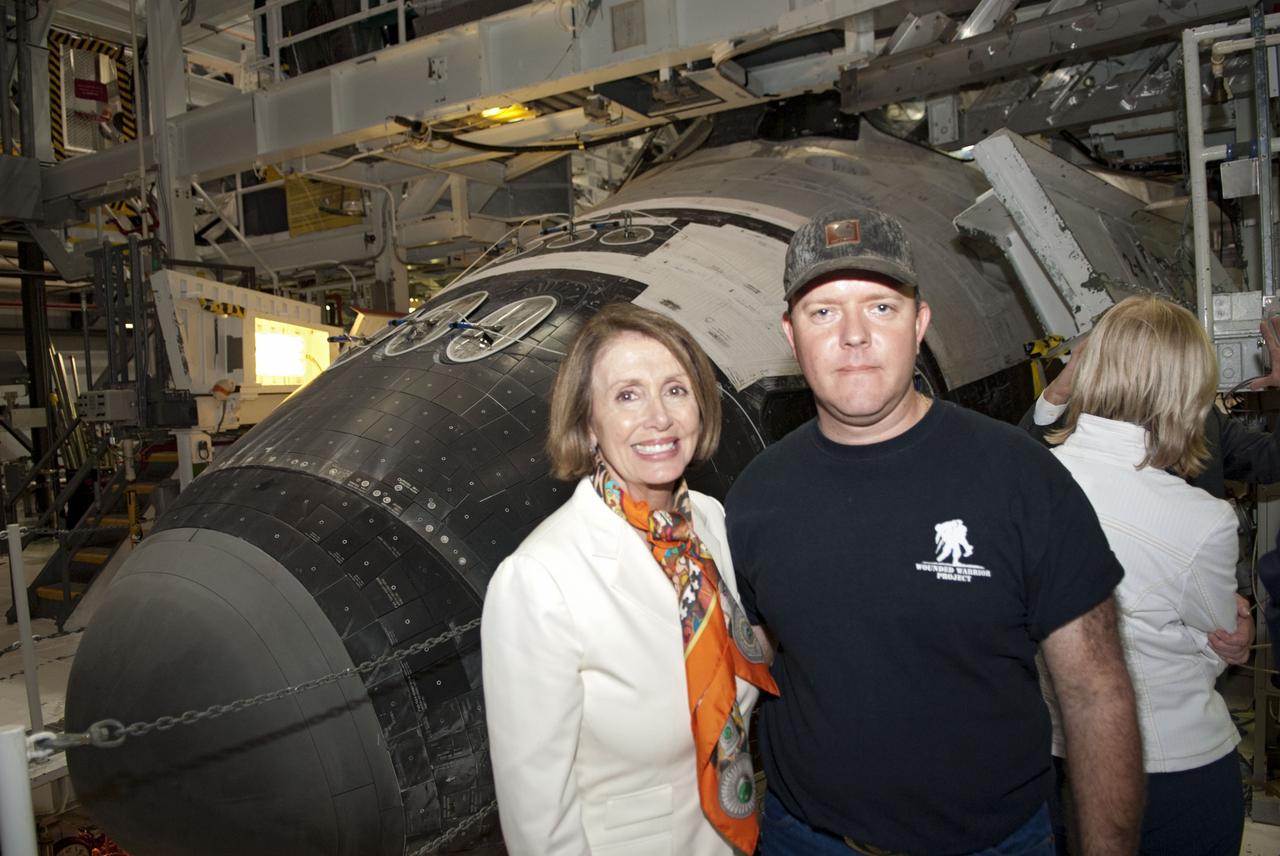
CAPE CANAVERAL, Fla. -- House Of Representatives Democratic Leader Nancy Pelosi, from California's 8th District, left, and United Space Alliance worker Brian Elleman pose for a photo at NASA's Kennedy Space Center in Florida. Pelosi is at the space center to witness space shuttle Discovery make history as it lifts off on its final scheduled mission from Launch Pad 39A. While at the center, Pelosi attended a presentation in the Operations Support Building II and toured Orbiter Processing Facilities 1 and 2 where shuttles Atlantis and Endeavour are being prepared for their final missions respectively. Discovery and its six-member STS-133 crew will deliver the Permanent Multipurpose Module, packed with supplies and critical spare parts, as well as Robonaut 2, the dexterous humanoid astronaut helper, to the International Space Station. Discovery will make its 39th mission and is scheduled to be retired following STS-133. This will be the 133rd Space Shuttle Program mission and the 35th shuttle voyage to the space station. For more information on the STS-133 mission, visit www.nasa.gov/mission_pages/shuttle/shuttlemissions/sts133/. Photo credit: NASA/Jim Grossmann