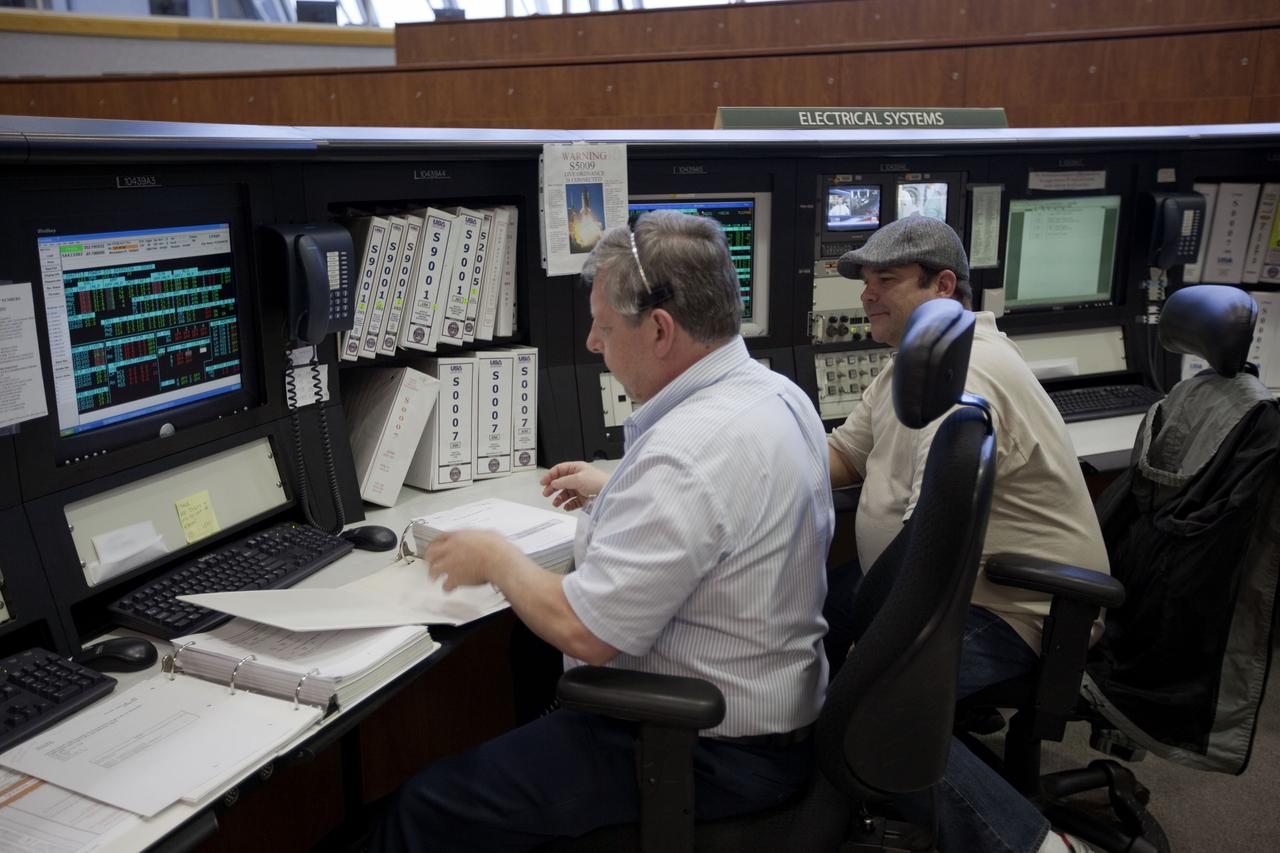
CAPE CANAVERAL, Fla. -- In Firing Room-4 in the Launch Control Center at NASA's Kennedy Space Center in Florida, launch controllers took their posts at about 2:30 p.m. EST for space shuttle Discovery's STS-133 mission to the International Space Station. The countdown clock began ticking backward from the T-43 hour mark at 3 p.m. Scheduled to lift off Feb. 24 at 4:50 p.m. EST, Discovery and its six-member crew will deliver the Permanent Multipurpose Module, packed with supplies and critical spare parts, as well as Robonaut 2, the dexterous humanoid astronaut helper, to the orbiting outpost. For more information on the STS-133 mission, visit www.nasa.gov/mission_pages/shuttle/shuttlemissions/sts133/. Photo credit: NASA/Frank Michaux
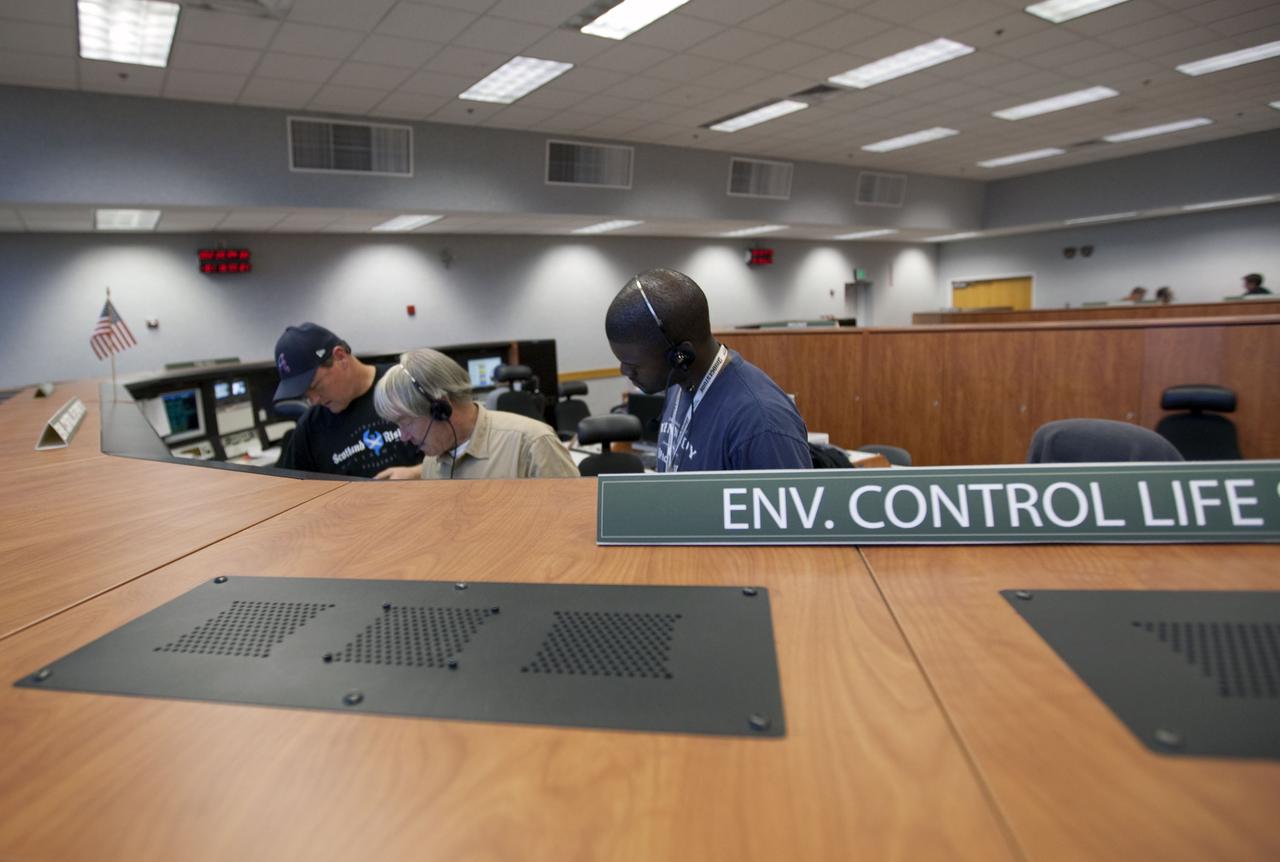
CAPE CANAVERAL, Fla. -- In Firing Room-4 in the Launch Control Center at NASA's Kennedy Space Center in Florida, launch controllers took their posts at about 2:30 p.m. EST for space shuttle Discovery's STS-133 mission to the International Space Station. The countdown clock began ticking backward from the T-43 hour mark at 3 p.m. Scheduled to lift off Feb. 24 at 4:50 p.m. EST, Discovery and its six-member crew will deliver the Permanent Multipurpose Module, packed with supplies and critical spare parts, as well as Robonaut 2, the dexterous humanoid astronaut helper, to the orbiting outpost. For more information on the STS-133 mission, visit www.nasa.gov/mission_pages/shuttle/shuttlemissions/sts133/. Photo credit: NASA/Frank Michaux
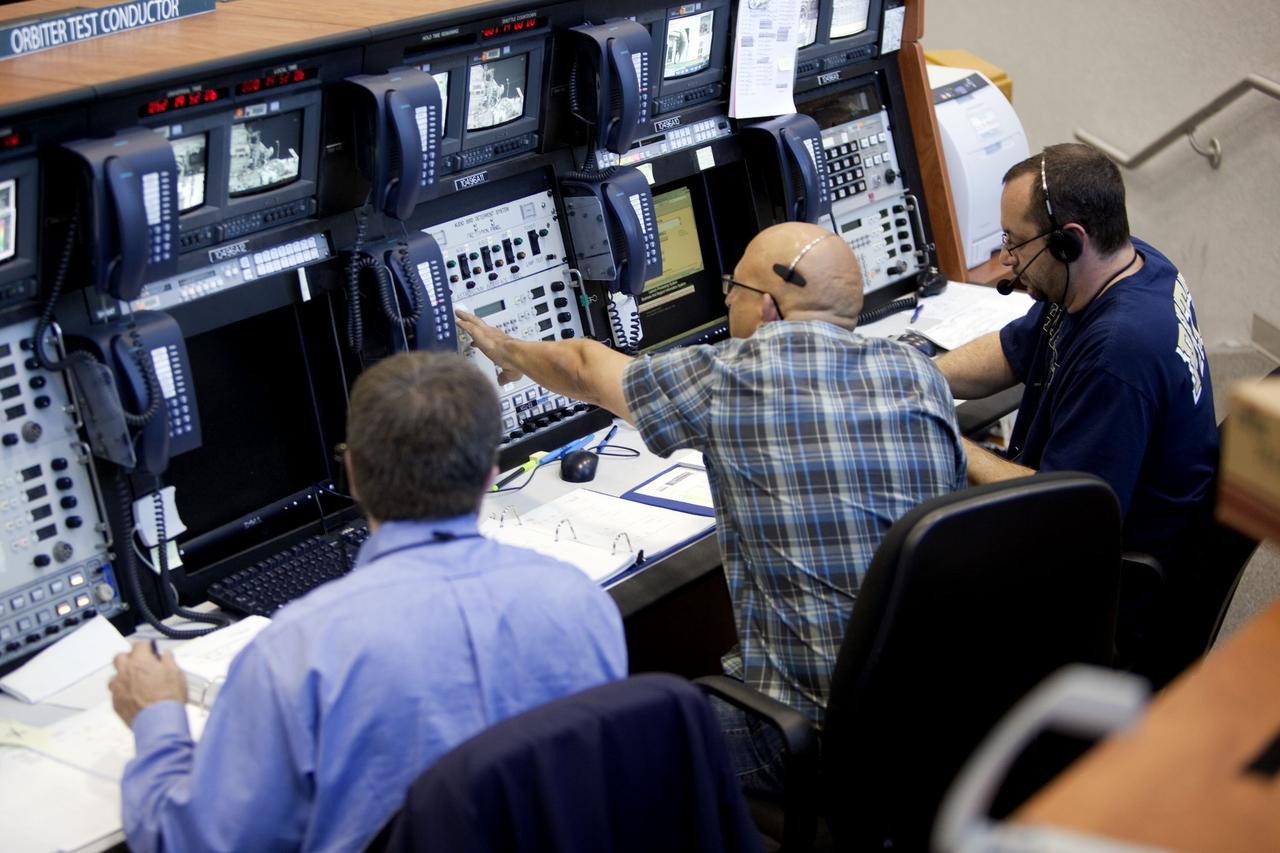
CAPE CANAVERAL, Fla. -- In Firing Room-4 in the Launch Control Center at NASA's Kennedy Space Center in Florida, launch controllers took their posts at about 2:30 p.m. EST for space shuttle Discovery's STS-133 mission to the International Space Station. The countdown clock began ticking backward from the T-43 hour mark at 3 p.m. Scheduled to lift off Feb. 24 at 4:50 p.m. EST, Discovery and its six-member crew will deliver the Permanent Multipurpose Module, packed with supplies and critical spare parts, as well as Robonaut 2, the dexterous humanoid astronaut helper, to the orbiting outpost. For more information on the STS-133 mission, visit www.nasa.gov/mission_pages/shuttle/shuttlemissions/sts133/. Photo credit: NASA/Frank Michaux
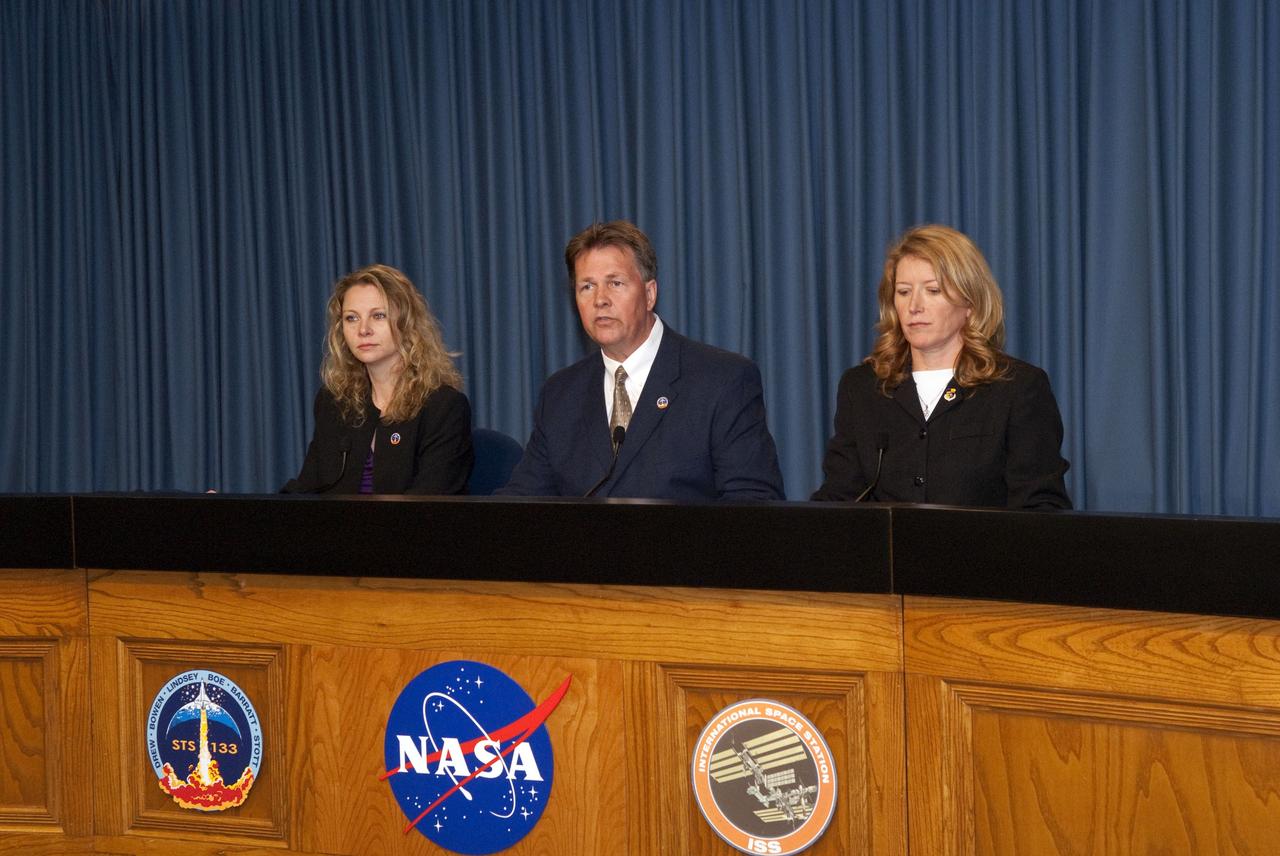
CAPE CANAVERAL, Fla. -- NASA Public Affairs Officer Candrea Thomas, NASA Test Director Jeff Spaulding and Shuttle Launch Weather Officer Kathy Winters talk to media about picking up the countdown to launch space shuttle Discovery on the STS-133 mission to the International Space Station and the launch-day weather forecast. Scheduled to lift off Feb. 24 at 4:50 p.m. EST, Discovery and its six-member crew will deliver the Permanent Multipurpose Module, packed with supplies and critical spare parts, as well as Robonaut 2, the dexterous humanoid astronaut helper, to the orbiting outpost. For more information on the STS-133 mission, visit www.nasa.gov/mission_pages/shuttle/shuttlemissions/sts133/. Photo credit: NASA/Jim Grossmann

CAPE CANAVERAL, Fla. -- At NASA's Kennedy Space Center in Florida, STS-133 Payload Manager Scott Higginbotham talks to media about the supplies and experiments flying aboard space shuttle Discovery's upcoming mission to the International Space Station during a Countdown Status Briefing. Scheduled to lift off Nov. 3 at 3:52 p.m. EDT, Discovery and crew will deliver the Permanent Multipurpose Module, packed with supplies and critical spare parts, as well as Robonaut 2, the dexterous humanoid astronaut helper, to the orbiting outpost. For more information on the STS-133 mission, visit www.nasa.gov/mission_pages/shuttle/shuttlemissions/sts133/. Photo credit: NASA/Jack Pfaller
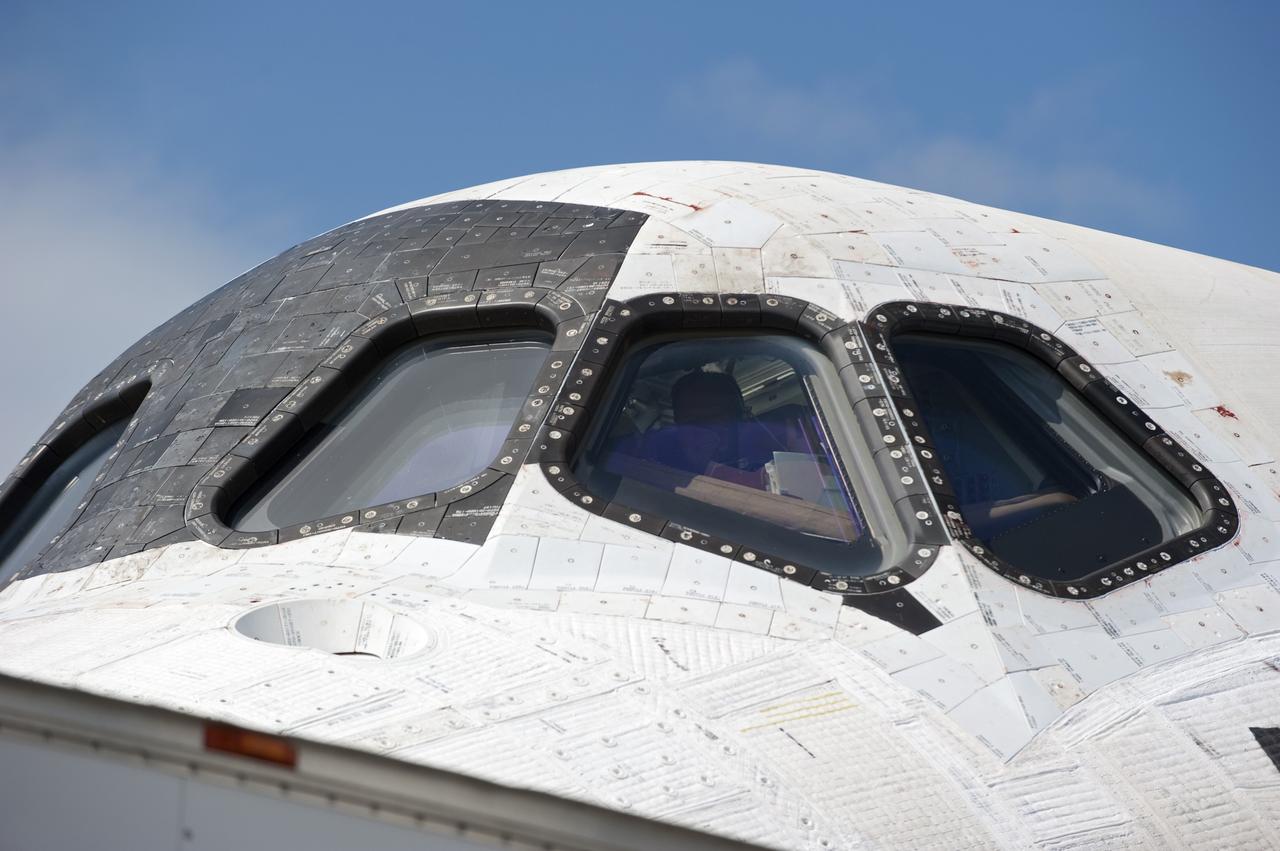
CAPE CANAVERAL, Fla. -- Inside space shuttle Discovery, the STS-133 crew members are preparing to exit the spacecraft that brought them home safely to NASA's Kennedy Space Center in Florida. Commander Steve Lindsey, Pilot Eric Boe, and Mission Specialists Alvin Drew, Steve Bowen, Michael Barratt and Nicole Stott will undergo brief medical checks in the crew transport vehicle before they walk around Discovery on the Shuttle Landing Facility's Runway 15. Discovery's final return from space completed a 13-day, 5.3-million-mile mission. Discovery and its six-member crew delivered the Permanent Multipurpose Module, packed with supplies and critical spare parts, as well as Robonaut 2, the dexterous humanoid astronaut helper, to the orbiting outpost. STS-133 was Discovery's 39th and final mission. This was the 133rd Space Shuttle Program mission and the 35th shuttle voyage to the space station. Photo credit: NASA/Kim Shiflett
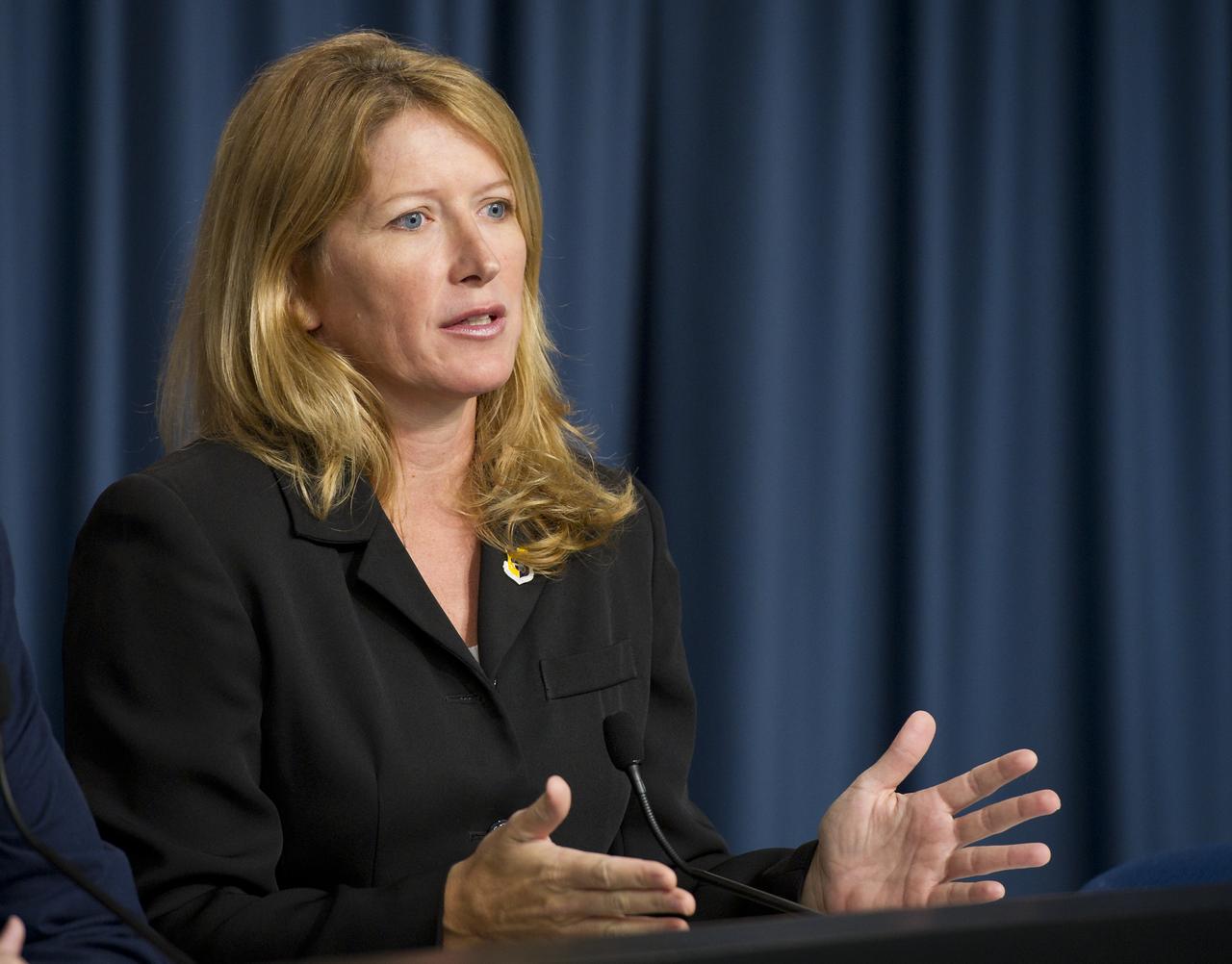
NASA Shuttle Weather Officer Kathy Winters participates in the space shuttle Discovery launch status briefing on Friday, Oct. 29, 2010 at the NASA Kennedy Space Center in Cape Canaveral, Fla. Discovery and it's STS-133 mission crew of six are currently targeted to launch at 4:17p.m. EDT on Tuesday, Nov. 2, 2010. Photo Credit: (NASA/Bill Ingalls)
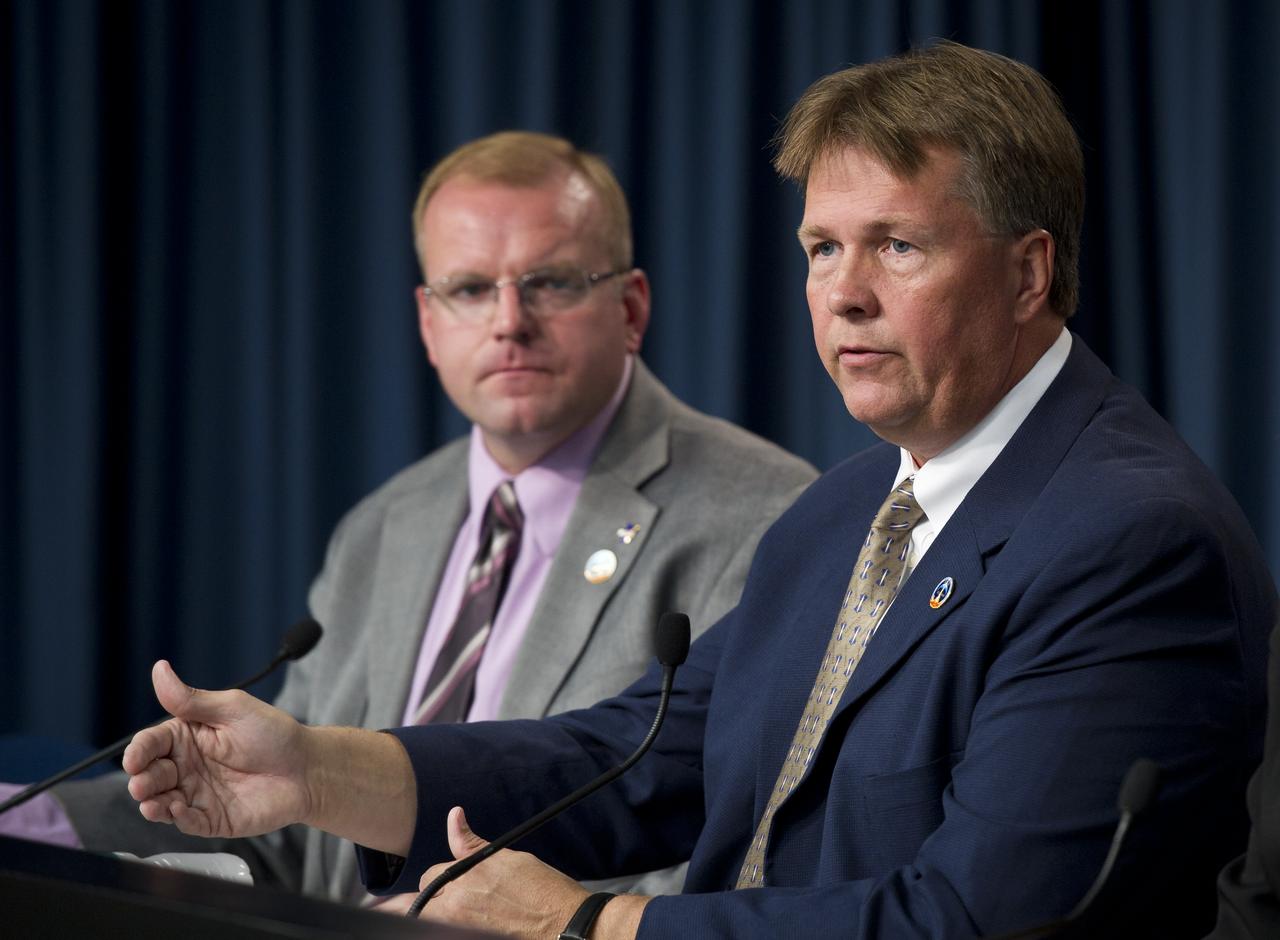
NASA Spokesperson Allard Beutel, left, and NASA Test Director Jeff Spaulding, participate in the space shuttle Discovery launch status briefing on Friday, Oct. 29, 2010 at the NASA Kennedy Space Center in Cape Canaveral, Fla. Discovery and it's STS-133 mission crew of six are currently targeted to launch at 4:17p.m. EDT on Tuesday, Nov. 2, 2010. Photo Credit: (NASA/Bill Ingalls)
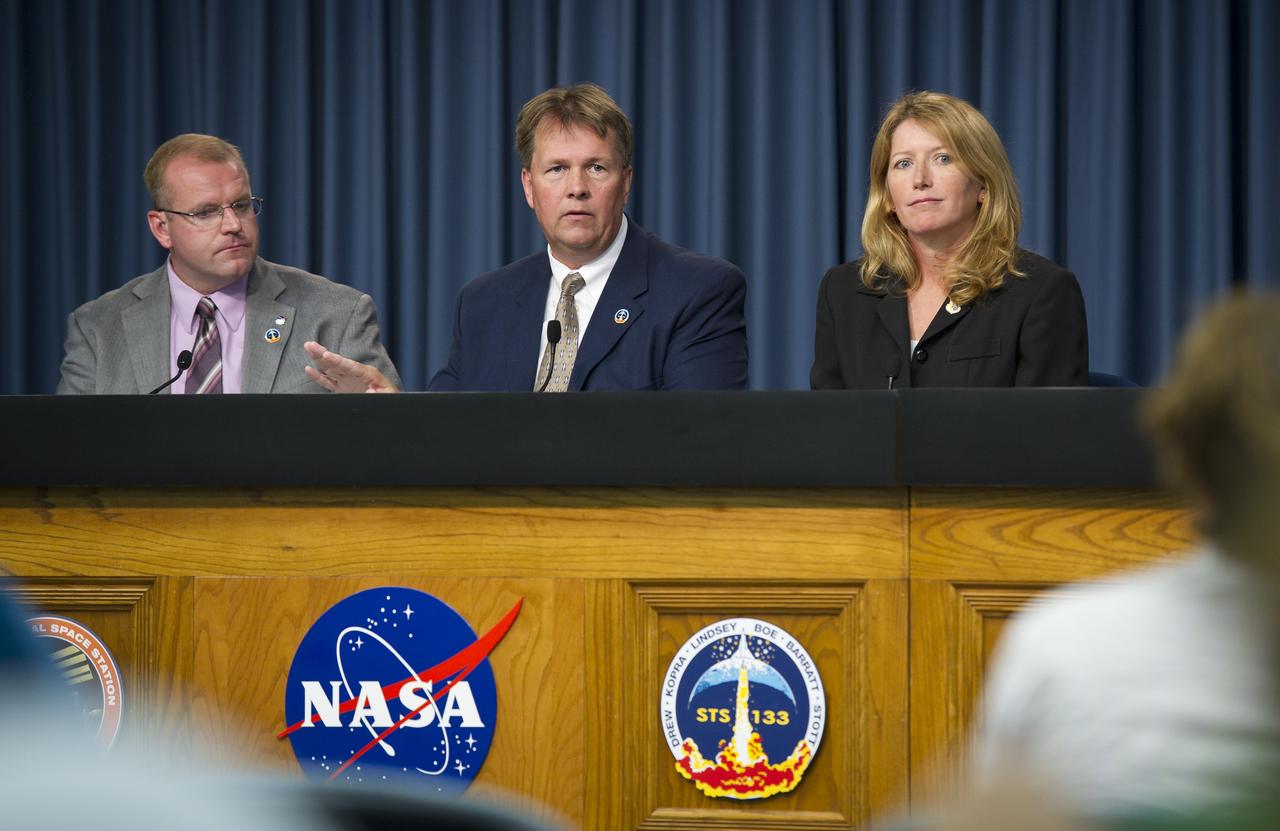
NASA Spokesperson Allard Beutel, left, NASA Test Director Jeff Spaulding and Shuttle Weather Officer Kathy Winters, right, participate in the space shuttle Discovery launch status briefing on Friday, Oct. 29, 2010 at the NASA Kennedy Space Center in Cape Canaveral, Fla. Discovery and it's STS-133 mission crew of six are currently targeted to launch at 4:17p.m. EDT on Tuesday, Nov. 2, 2010. Photo Credit: (NASA/Bill Ingalls)
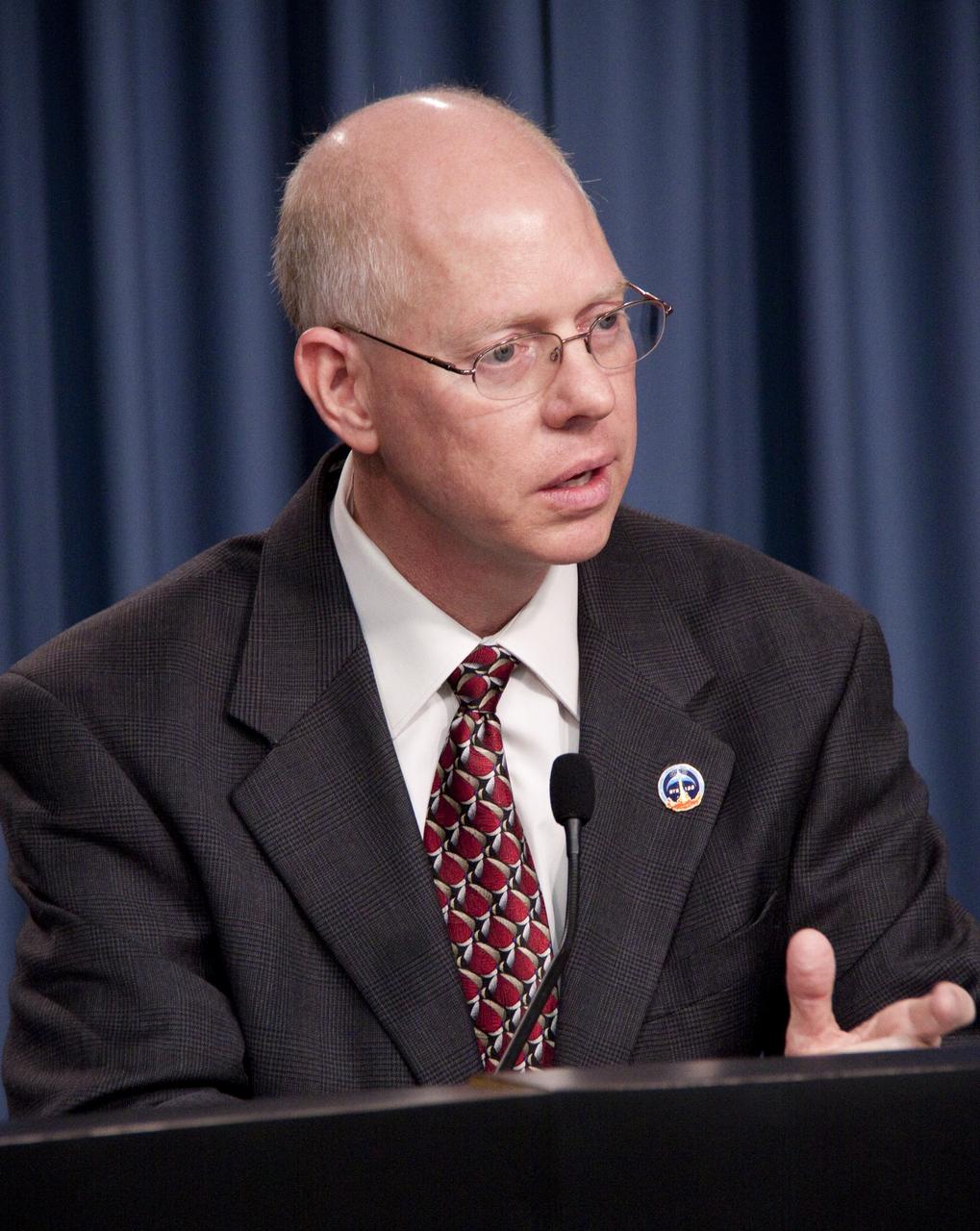
CAPE CANAVERAL, Fla. -- At NASA's Kennedy Space Center in Florida, NASA Test Director Steve Payne talks to media about final operations taking place for space shuttle Discovery's upcoming launch to the International Space Station during a Countdown Status Briefing. The STS-133 mission is Discovery's final planned spaceflight and Payne says there is excitement in the air at Kennedy Scheduled to lift off Nov. 3 at 3:52 p.m. EDT, Discovery and crew will deliver the Permanent Multipurpose Module, packed with supplies and critical spare parts, as well as Robonaut 2, the dexterous humanoid astronaut helper, to the orbiting outpost. For more information on the STS-133 mission, visit www.nasa.gov/mission_pages/shuttle/shuttlemissions/sts133/. Photo credit: NASA/Jack Pfaller
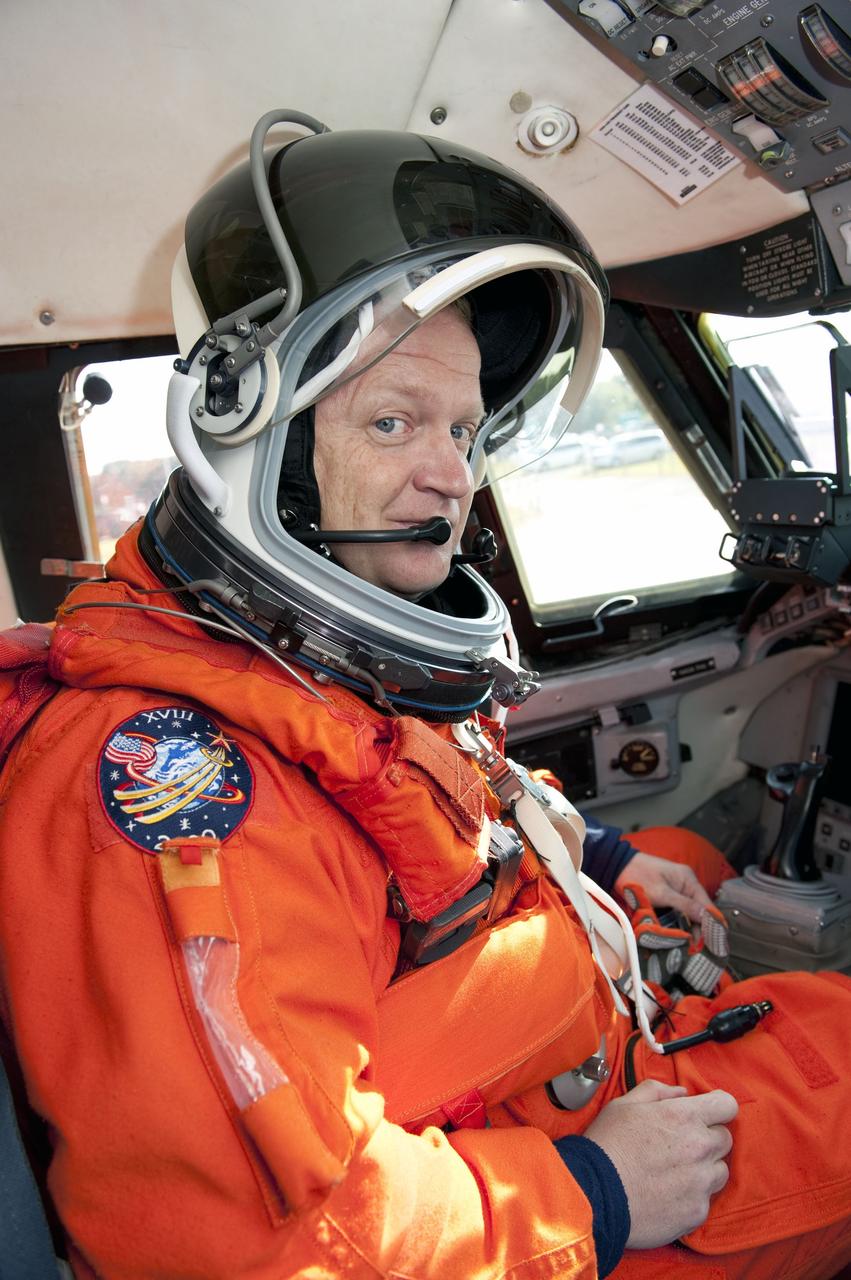
CANAVERAL, Fla. -- At NASA's Kennedy Space Center in Florida, STS-133 Pilot Eric Boe returns from flying touch-and-go landings in a Shuttle Training Aircraft (STA) over the Shuttle Landing Facility runway. The Gulfstream II business jet is modified to mimic the shuttle's handling during the final phase of landing. Space shuttle Discovery's crew members are at Kennedy for their upcoming launch to the International Space Station. In the days leading up to lift off, they will check the fit of their spacesuits, review launch-day procedures, receive weather briefings and remain medically quarantined to prevent sickness. STS-133 will deliver the Permanent Multipurpose Module, packed with supplies and critical spare parts, as well as Robonaut 2, the dexterous humanoid astronaut helper, to the orbiting outpost. For more information on the STS-133 mission, visit www.nasa.gov/mission_pages/shuttle/shuttlemissions/sts133/. Photo credit: NASA/Kim Shiflett
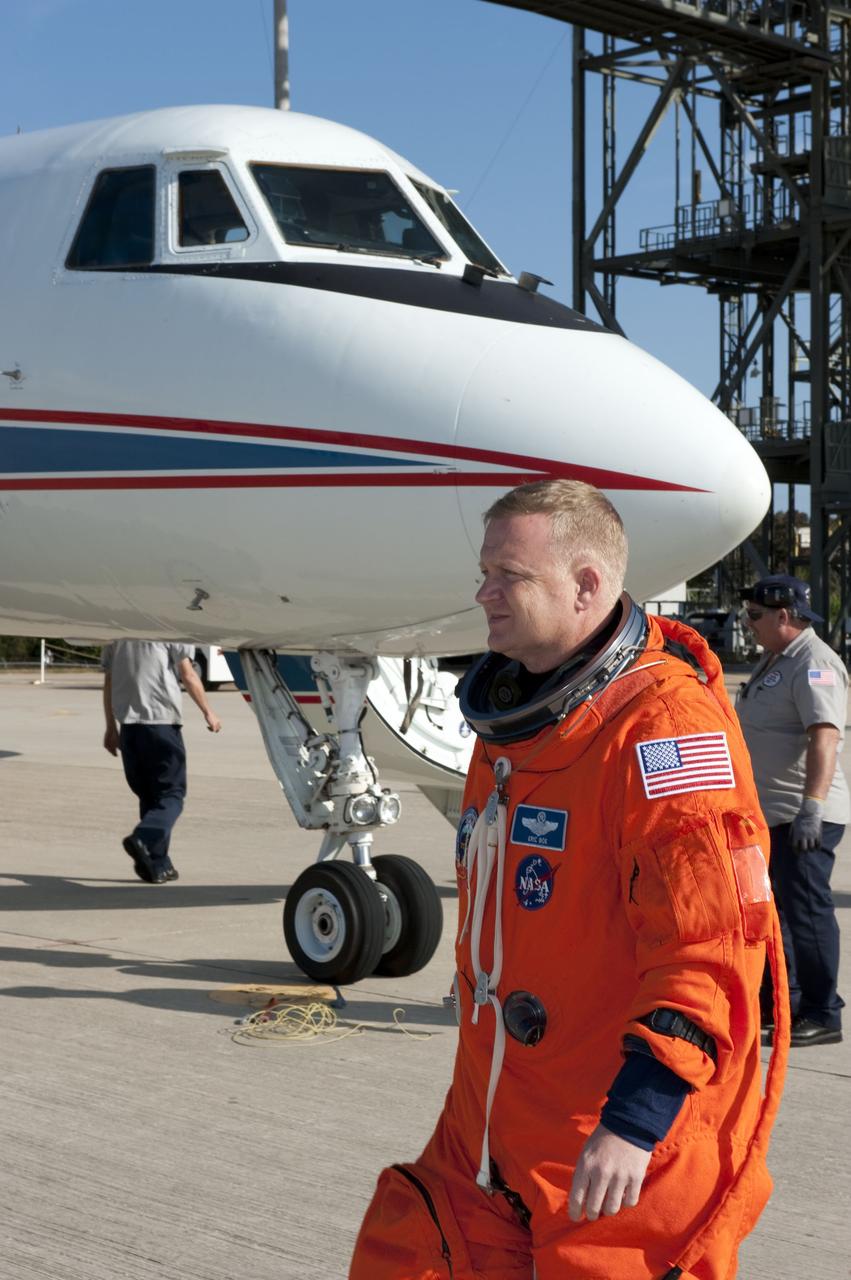
CANAVERAL, Fla. -- At NASA's Kennedy Space Center in Florida, STS-133 Pilot Eric Boe returns from flying touch-and-go landings in a Shuttle Training Aircraft (STA) over the Shuttle Landing Facility runway. The Gulfstream II business jet is modified to mimic the shuttle's handling during the final phase of landing. Space shuttle Discovery's crew members are at Kennedy for their upcoming launch to the International Space Station. In the days leading up to lift off, they will check the fit of their spacesuits, review launch-day procedures, receive weather briefings and remain medically quarantined to prevent sickness. STS-133 will deliver the Permanent Multipurpose Module, packed with supplies and critical spare parts, as well as Robonaut 2, the dexterous humanoid astronaut helper, to the orbiting outpost. For more information on the STS-133 mission, visit www.nasa.gov/mission_pages/shuttle/shuttlemissions/sts133/. Photo credit: NASA/Kim Shiflett
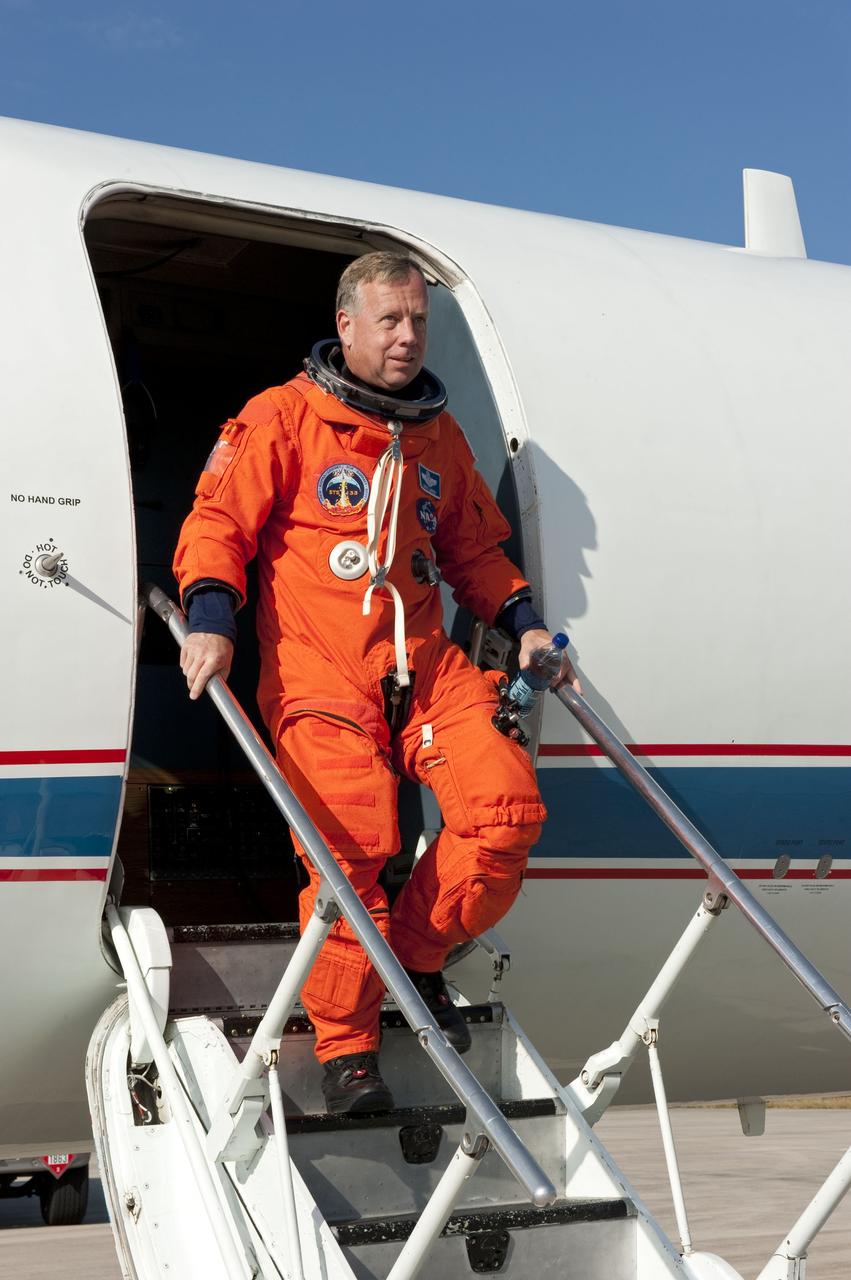
CANAVERAL, Fla. -- At NASA's Kennedy Space Center in Florida, STS-133 Commander Steve Lindsey returns from flying touch-and-go landings in a Shuttle Training Aircraft (STA) over the Shuttle Landing Facility runway. The Gulfstream II business jet is modified to mimic the shuttle's handling during the final phase of landing. Space shuttle Discovery's crew members are at Kennedy for their upcoming launch to the International Space Station. In the days leading up to lift off, they will check the fit of their spacesuits, review launch-day procedures, receive weather briefings and remain medically quarantined to prevent sickness. STS-133 will deliver the Permanent Multipurpose Module, packed with supplies and critical spare parts, as well as Robonaut 2, the dexterous humanoid astronaut helper, to the orbiting outpost. For more information on the STS-133 mission, visit www.nasa.gov/mission_pages/shuttle/shuttlemissions/sts133/. Photo credit: NASA/Kim Shiflett
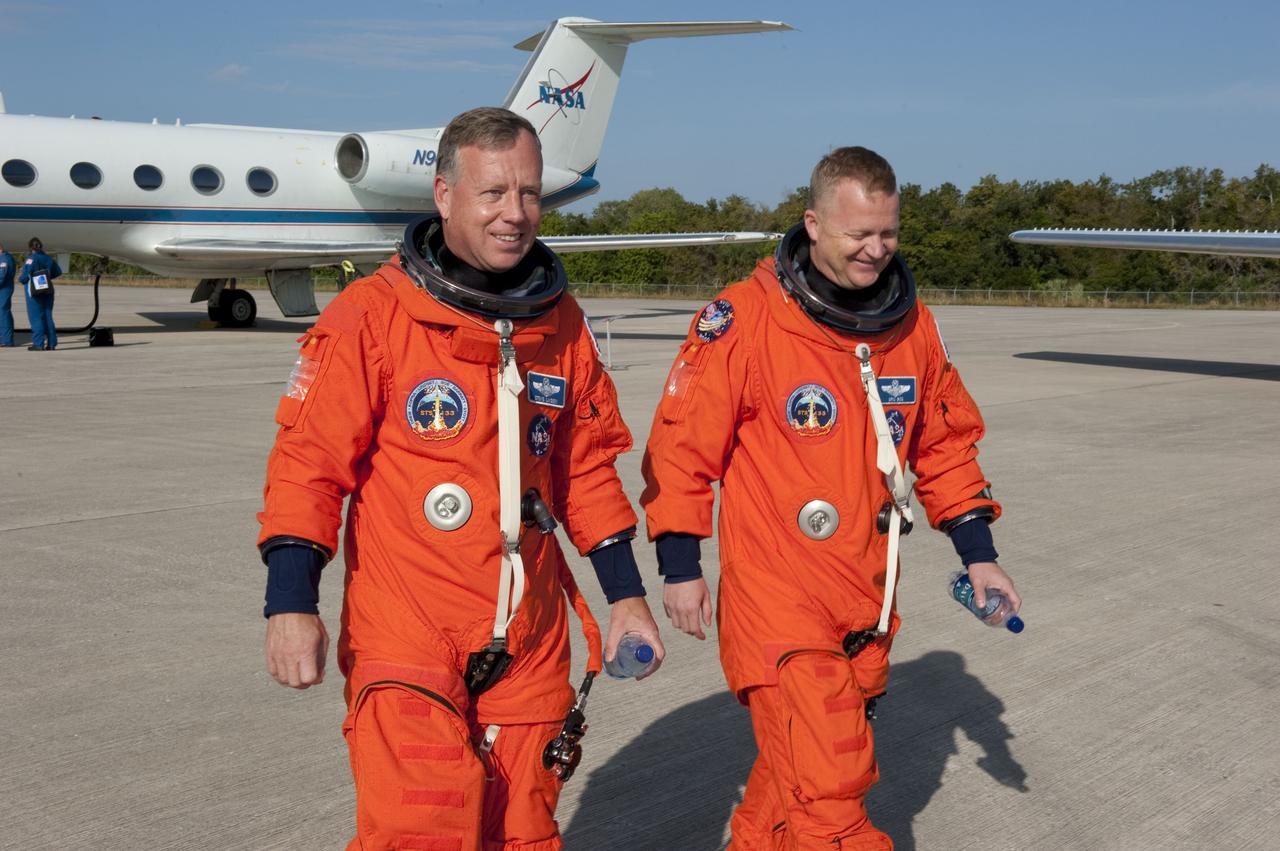
CANAVERAL, Fla. -- At NASA's Kennedy Space Center in Florida, STS-133 Commander Steve Lindsey, left, and Pilot Eric Boe return from flying touch-and-go landings in two Shuttle Training Aircraft (STA) over the Shuttle Landing Facility runway. The Gulfstream II business jets are modified to mimic the shuttle's handling during the final phase of landing. Space shuttle Discovery's crew members are at Kennedy for their upcoming launch to the International Space Station. In the days leading up to lift off, they will check the fit of their spacesuits, review launch-day procedures, receive weather briefings and remain medically quarantined to prevent sickness. STS-133 will deliver the Permanent Multipurpose Module, packed with supplies and critical spare parts, as well as Robonaut 2, the dexterous humanoid astronaut helper, to the orbiting outpost. For more information on the STS-133 mission, visit www.nasa.gov/mission_pages/shuttle/shuttlemissions/sts133/. Photo credit: NASA/Kim Shiflett
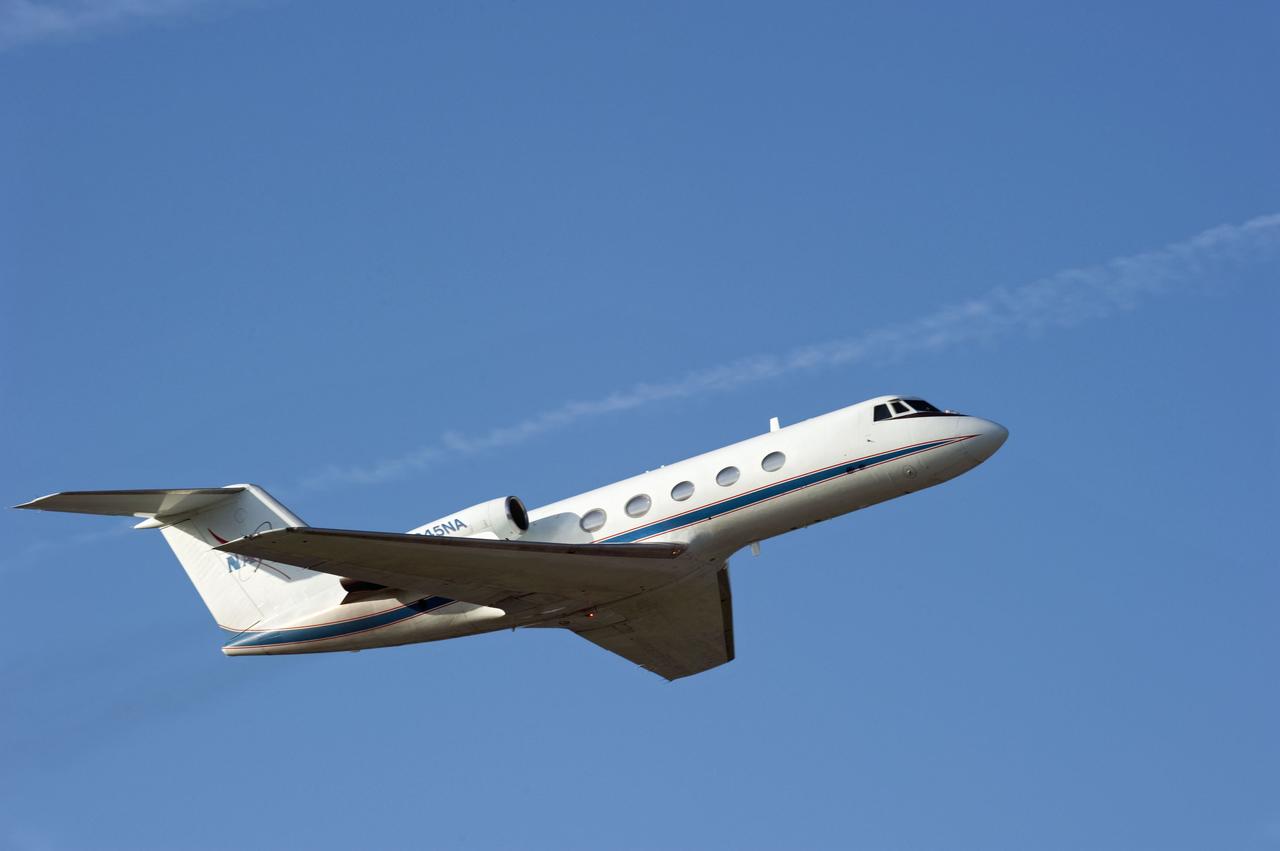
CANAVERAL, Fla. -- At NASA's Kennedy Space Center in Florida, STS-133 Commander Steve Lindsey guides the Shuttle Training Aircraft (STA) in touch-and-go landings over the Shuttle Landing Facility runway. The Gulfstream II business jet is modified to mimic the shuttle's handling during the final phase of landing. Space shuttle Discovery's crew members are at Kennedy for their upcoming launch to the International Space Station. In the days leading up to lift off, they will check the fit of their spacesuits, review launch-day procedures, receive weather briefings and remain medically quarantined to prevent sickness. STS-133 will deliver the Permanent Multipurpose Module, packed with supplies and critical spare parts, as well as Robonaut 2, the dexterous humanoid astronaut helper, to the orbiting outpost. For more information on the STS-133 mission, visit www.nasa.gov/mission_pages/shuttle/shuttlemissions/sts133/. Photo credit: NASA/Kim Shiflett
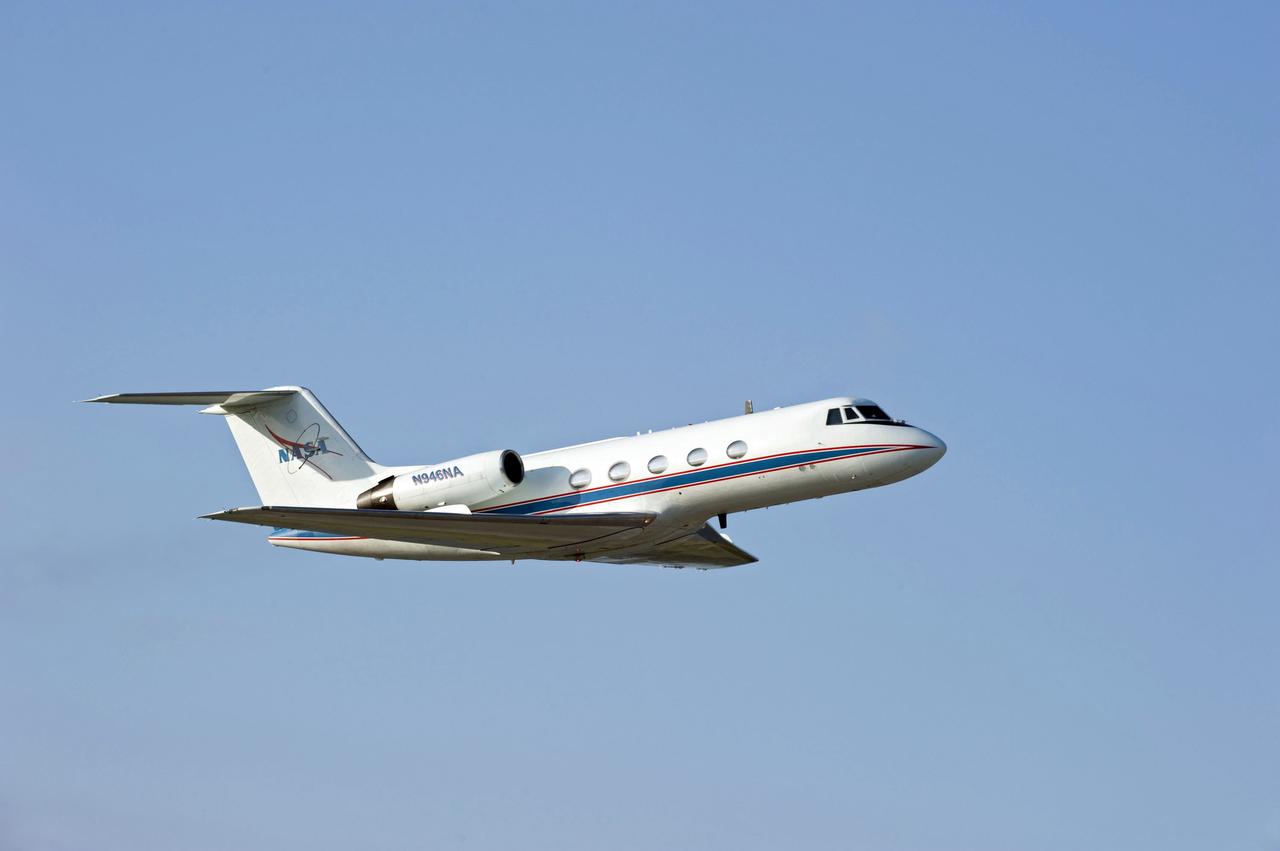
CANAVERAL, Fla. -- At NASA's Kennedy Space Center in Florida, STS-133 Pilot Eric Boe guides the Shuttle Training Aircraft (STA) in touch-and-go landings over the Shuttle Landing Facility runway. The Gulfstream II business jet is modified to mimic the shuttle's handling during the final phase of landing. Space shuttle Discovery's crew members are at Kennedy for their upcoming launch to the International Space Station. In the days leading up to lift off, they will check the fit of their spacesuits, review launch-day procedures, receive weather briefings and remain medically quarantined to prevent sickness. STS-133 will deliver the Permanent Multipurpose Module, packed with supplies and critical spare parts, as well as Robonaut 2, the dexterous humanoid astronaut helper, to the orbiting outpost. For more information on the STS-133 mission, visit www.nasa.gov/mission_pages/shuttle/shuttlemissions/sts133/. Photo credit: NASA/Kim Shiflett
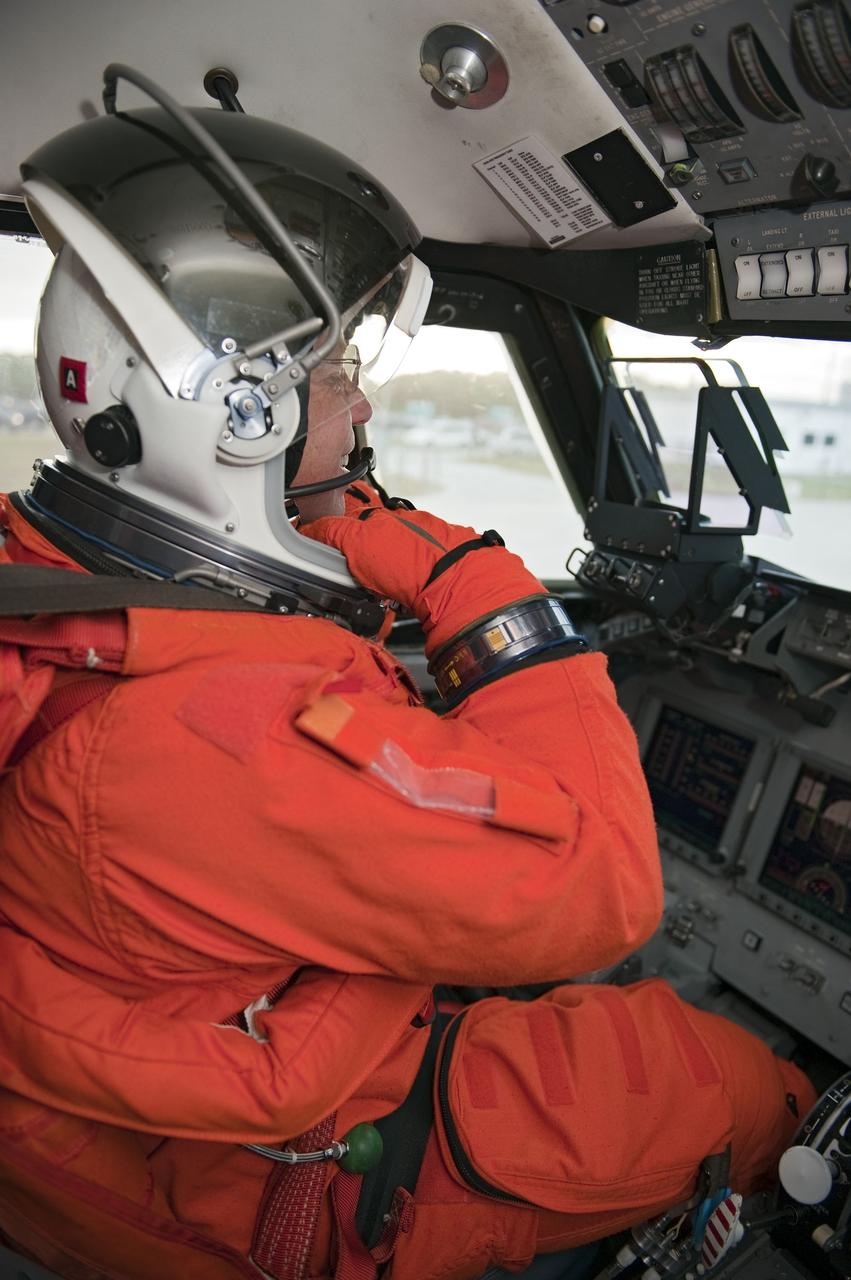
CANAVERAL, Fla. -- At NASA's Kennedy Space Center in Florida, STS-133 Commander Steve Lindsey prepares to fly touch-and-go landings in a Shuttle Training Aircraft (STA) over the Shuttle Landing Facility runway. The Gulfstream II business jet is modified to mimic the shuttle's handling during the final phase of landing. Space shuttle Discovery's crew members are at Kennedy for their upcoming launch to the International Space Station. In the days leading up to lift off, they will check the fit of their spacesuits, review launch-day procedures, receive weather briefings and remain medically quarantined to prevent sickness. STS-133 will deliver the Permanent Multipurpose Module, packed with supplies and critical spare parts, as well as Robonaut 2, the dexterous humanoid astronaut helper, to the orbiting outpost. For more information on the STS-133 mission, visit www.nasa.gov/mission_pages/shuttle/shuttlemissions/sts133/. Photo credit: NASA/Kim Shiflett
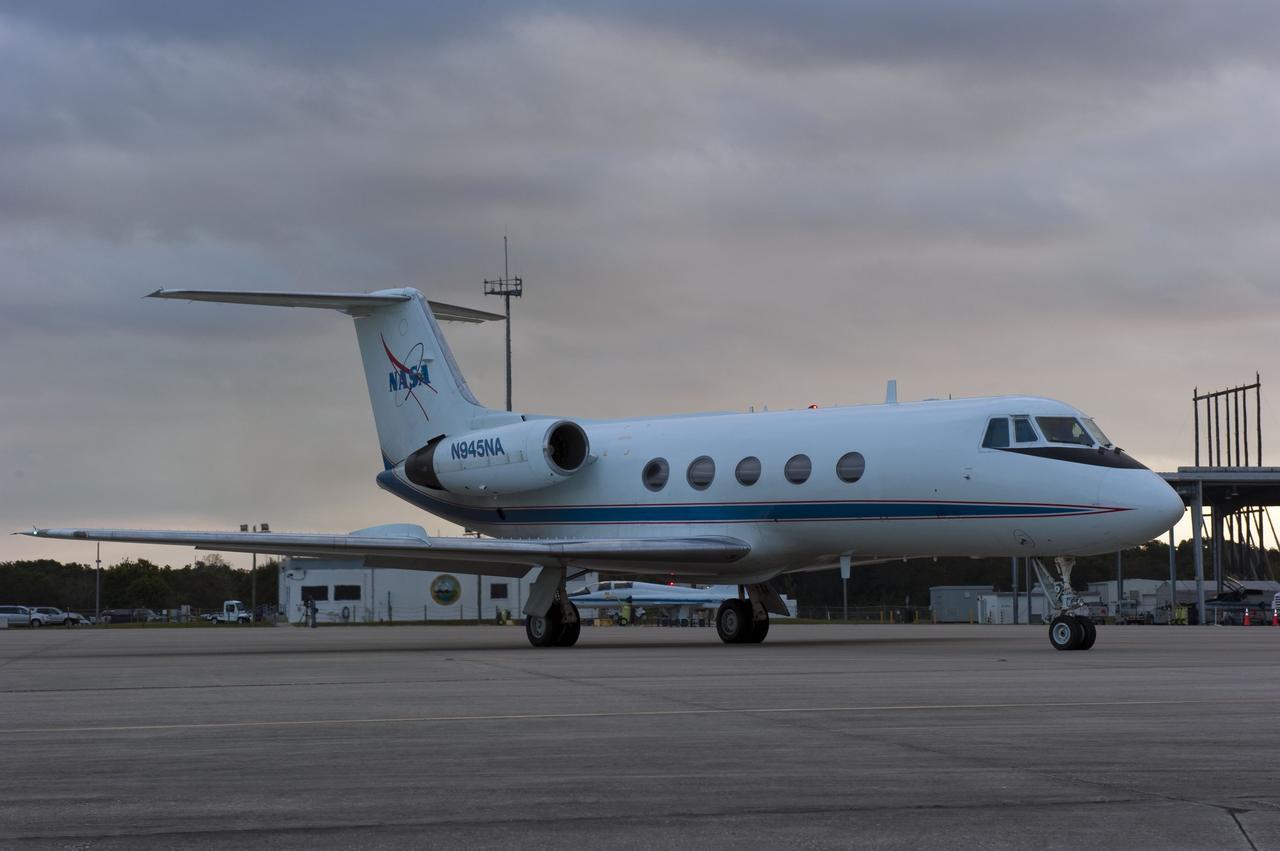
CANAVERAL, Fla. -- At NASA's Kennedy Space Center in Florida, STS-133 Commander Steve Lindsey is ready to take off from the Shuttle Landing Facility runway to fly touch-and-go landings in a Shuttle Training Aircraft (STA). The Gulfstream II business jet is modified to mimic the shuttle's handling during the final phase of landing. Space shuttle Discovery's crew members are at Kennedy for their upcoming launch to the International Space Station. In the days leading up to lift off, they will check the fit of their spacesuits, review launch-day procedures, receive weather briefings and remain medically quarantined to prevent sickness. STS-133 will deliver the Permanent Multipurpose Module, packed with supplies and critical spare parts, as well as Robonaut 2, the dexterous humanoid astronaut helper, to the orbiting outpost. For more information on the STS-133 mission, visit www.nasa.gov/mission_pages/shuttle/shuttlemissions/sts133/. Photo credit: NASA/Kim Shiflett
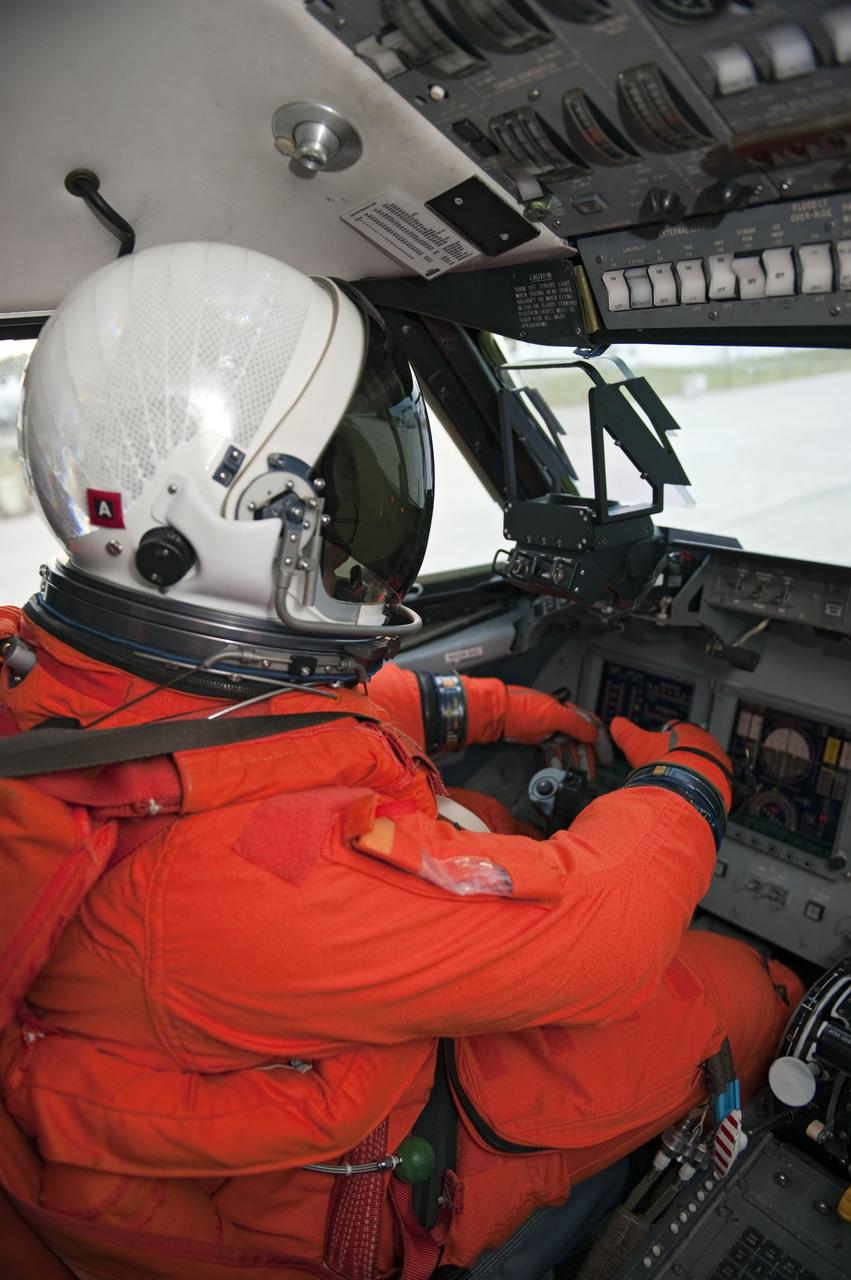
CANAVERAL, Fla. -- At NASA's Kennedy Space Center in Florida, STS-133 Commander Steve Lindsey is ready to fly touch-and-go landings in a Shuttle Training Aircraft (STA) over the Shuttle Landing Facility runway. The Gulfstream II business jet is modified to mimic the shuttle's handling during the final phase of landing. Space shuttle Discovery's crew members are at Kennedy for their upcoming launch to the International Space Station. In the days leading up to lift off, they will check the fit of their spacesuits, review launch-day procedures, receive weather briefings and remain medically quarantined to prevent sickness. STS-133 will deliver the Permanent Multipurpose Module, packed with supplies and critical spare parts, as well as Robonaut 2, the dexterous humanoid astronaut helper, to the orbiting outpost. For more information on the STS-133 mission, visit www.nasa.gov/mission_pages/shuttle/shuttlemissions/sts133/. Photo credit: NASA/Kim Shiflett
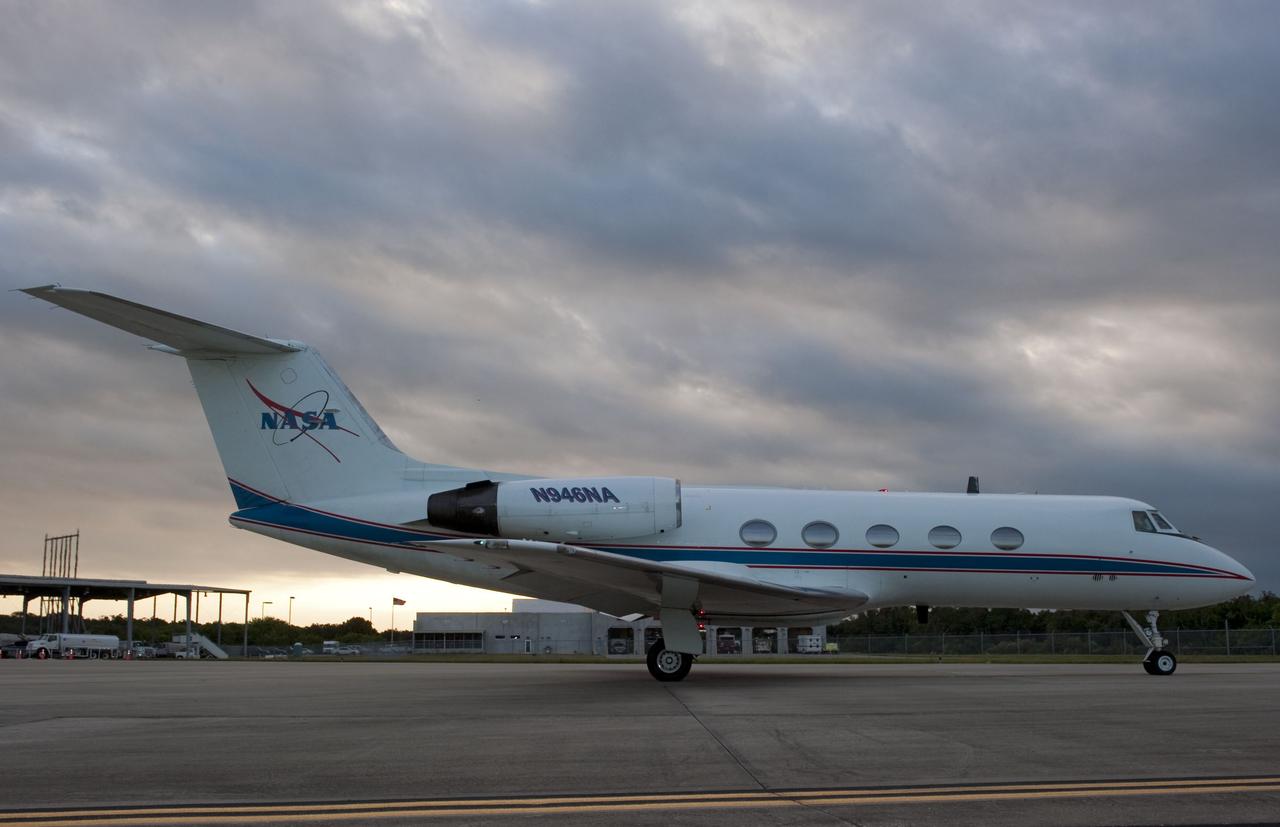
CANAVERAL, Fla. -- At NASA's Kennedy Space Center in Florida, STS-133 Pilot Eric Boe is ready to take off from the Shuttle Landing Facility runway to fly touch-and-go landings in a Shuttle Training Aircraft (STA). The Gulfstream II business jet is modified to mimic the shuttle's handling during the final phase of landing. Space shuttle Discovery's crew members are at Kennedy for their upcoming launch to the International Space Station. In the days leading up to lift off, they will check the fit of their spacesuits, review launch-day procedures, receive weather briefings and remain medically quarantined to prevent sickness. STS-133 will deliver the Permanent Multipurpose Module, packed with supplies and critical spare parts, as well as Robonaut 2, the dexterous humanoid astronaut helper, to the orbiting outpost. For more information on the STS-133 mission, visit www.nasa.gov/mission_pages/shuttle/shuttlemissions/sts133/. Photo credit: NASA/Kim Shiflett
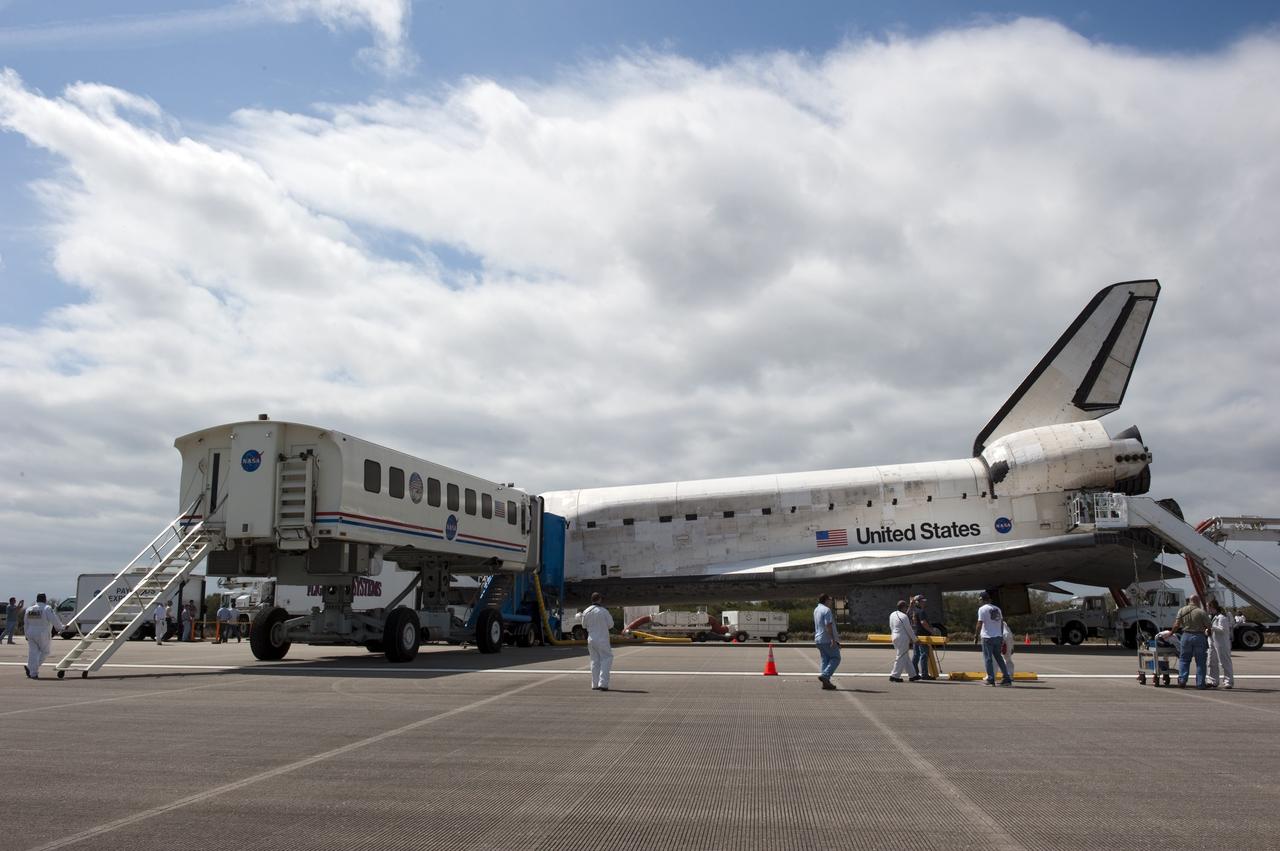
CAPE CANAVERAL, Fla. -- The crew transport vehicle pulls up to space shuttle Discovery on the Shuttle Landing Facility's Runway 15 at NASA's Kennedy Space Center in Florida. STS-133 Commander Steve Lindsey, Pilot Eric Boe, and Mission Specialists Alvin Drew, Steve Bowen, Michael Barratt and Nicole Stott will undergo brief medical checks in the crew transport vehicle before they walk around the spacecraft that brought them safely home. Discovery's final return from space completed the 13-day, 5.3-million-mile STS-133 mission. Main gear touchdown was at 11:57:17 a.m., followed by nose gear touchdown at 11:57:28, and wheelstop at 11:58:14 a.m. Discovery and its six-member crew delivered the Permanent Multipurpose Module, packed with supplies and critical spare parts, as well as Robonaut 2, the dexterous humanoid astronaut helper, to the orbiting outpost. STS-133 was Discovery's 39th and final mission. This was the 133rd Space Shuttle Program mission and the 35th shuttle voyage to the space station. Photo credit: NASA/Kim Shiflett
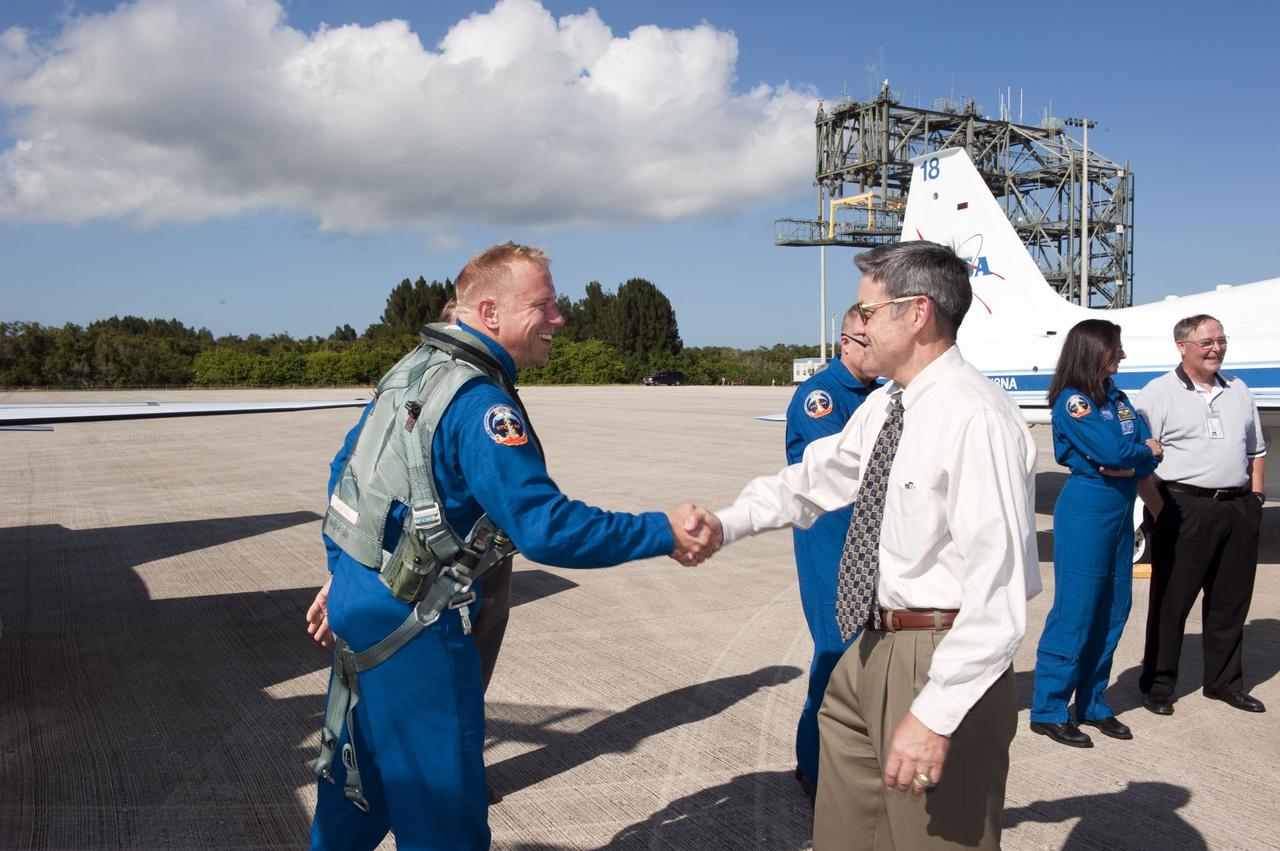
CAPE CANAVERAL, Fla. -- At NASA's Kennedy Space Center in Florida, space shuttle Discovery's STS-133 Mission Specialist Tim Kopra, left, shakes hands with Kennedy's Center Director Bob Cabana on the Shuttle Landing Facility runway after arriving in a T-38 training jet. In the days leading up to their launch to the International Space Station, Kopra and his crew members will check the fit of their launch-and-entry suits, review launch-day procedures, receive weather briefings and remain medically quarantined to prevent sickness. Scheduled to lift off Nov. 1 at 4:40 p.m., Discovery and crew will deliver the Permanent Multipurpose Module, packed with supplies and critical spare parts, as well as Robonaut 2, the dexterous humanoid astronaut helper, to the orbiting outpost. For more information on the STS-133 mission, visit www.nasa.gov/mission_pages/shuttle/shuttlemissions/sts133/. Photo credit: NASA/Kim Shiflett
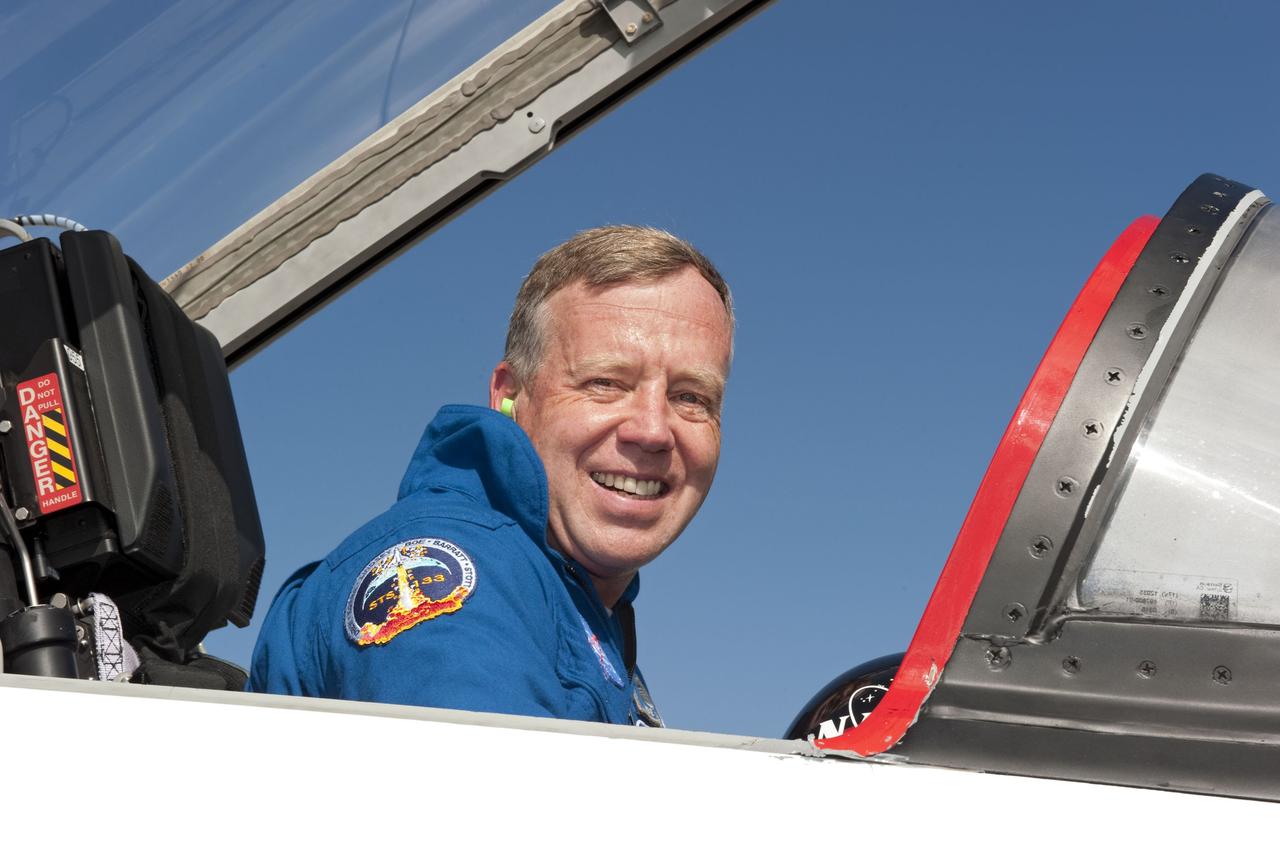
CAPE CANAVERAL, Fla. -- At NASA's Kennedy Space Center in Florida, space shuttle Discovery's STS-133 Commander Steve Lindsey arrives on the Shuttle Landing Facility runway aboard a T-38 training jet. In the days leading up to their launch to the International Space Station, Lindsey and his crew members will check the fit of their launch-and-entry suits, review launch-day procedures, receive weather briefings and remain medically quarantined to prevent sickness. Scheduled to lift off Nov. 1 at 4:40 p.m., Discovery and crew will deliver the Permanent Multipurpose Module, packed with supplies and critical spare parts, as well as Robonaut 2, the dexterous humanoid astronaut helper, to the orbiting outpost. For more information on the STS-133 mission, visit www.nasa.gov/mission_pages/shuttle/shuttlemissions/sts133/. Photo credit: NASA/Kim Shiflett
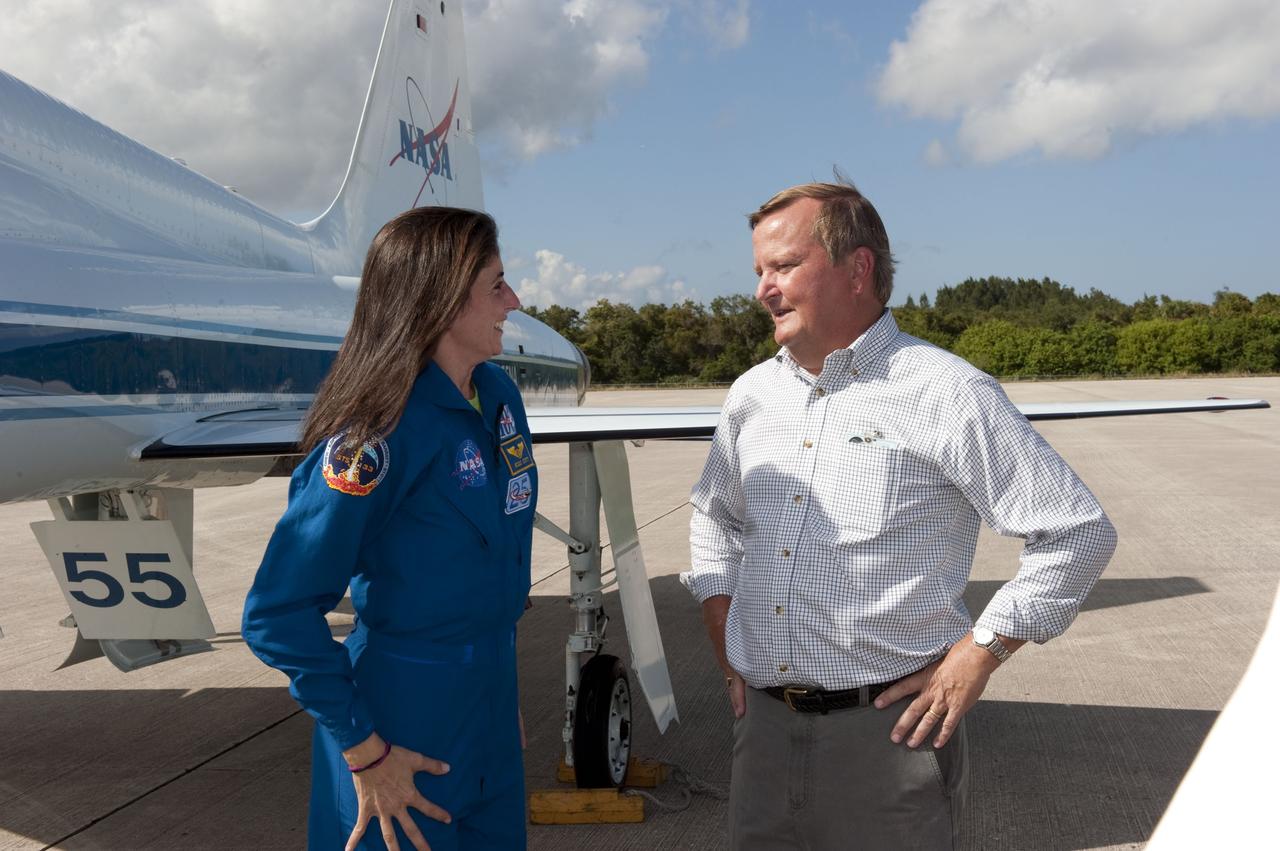
CAPE CANAVERAL, Fla. -- At NASA's Kennedy Space Center in Florida, space shuttle Discovery's STS-133 Mission Specialist Nicole Stott, left, is greeted by Shuttle Launch Director Mike Leinbach on the Shuttle Landing Facility runway after arriving in a T-38 training jet. In the days leading up to their launch to the International Space Station, Stott and her crew members will check the fit of their launch-and-entry suits, review launch-day procedures, receive weather briefings and remain medically quarantined to prevent sickness. Scheduled to lift off Nov. 1 at 4:40 p.m., Discovery and crew will deliver the Permanent Multipurpose Module, packed with supplies and critical spare parts, as well as Robonaut 2, the dexterous humanoid astronaut helper, to the orbiting outpost. For more information on the STS-133 mission, visit www.nasa.gov/mission_pages/shuttle/shuttlemissions/sts133/. Photo credit: NASA/Jack Pfaller
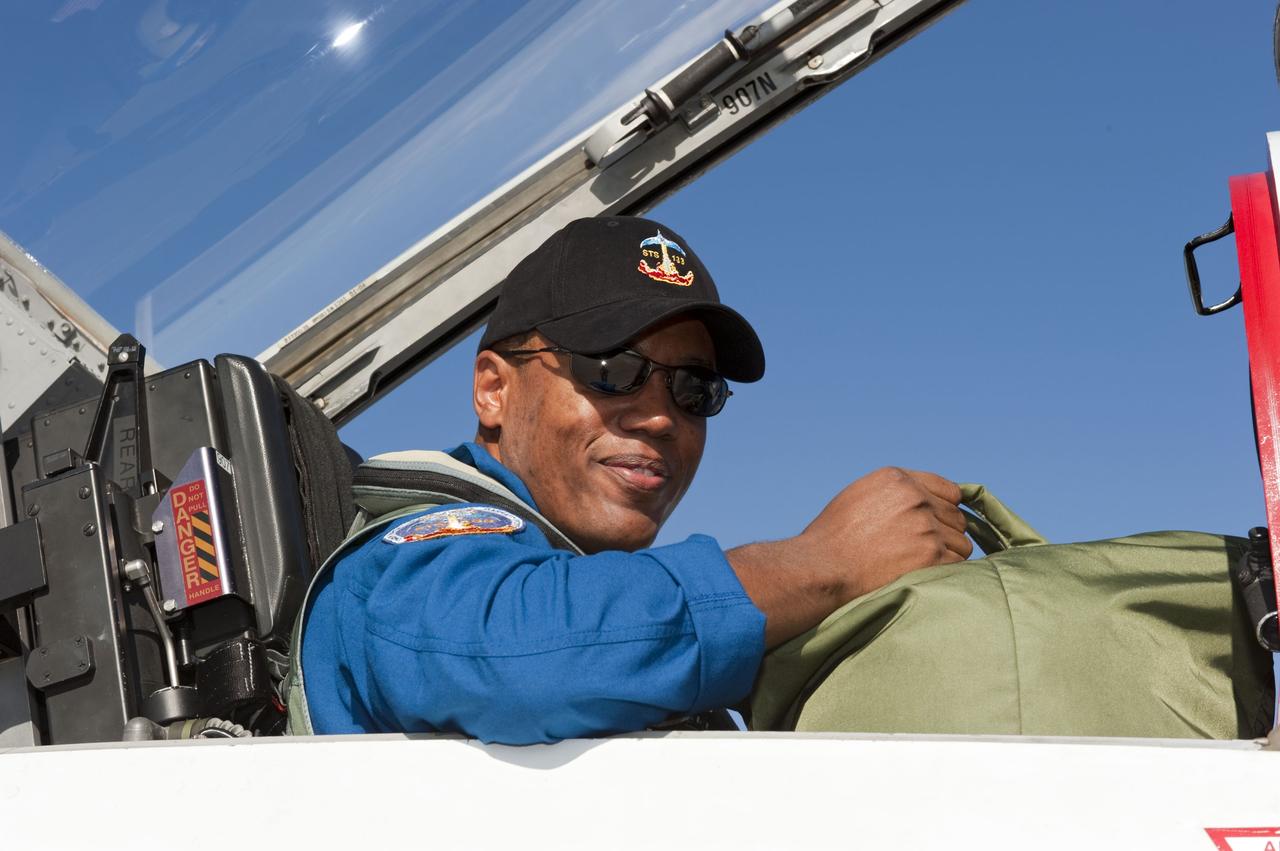
CAPE CANAVERAL, Fla. -- At NASA's Kennedy Space Center in Florida, space shuttle Discovery's STS-133 Mission Specialist Alvin Drew arrives on the Shuttle Landing Facility runway aboard a T-38 training jet. In the days leading up to their launch to the International Space Station, Drew and his crew members will check the fit of their launch-and-entry suits, review launch-day procedures, receive weather briefings and remain medically quarantined to prevent sickness. Scheduled to lift off Nov. 1 at 4:40 p.m., Discovery and crew will deliver the Permanent Multipurpose Module, packed with supplies and critical spare parts, as well as Robonaut 2, the dexterous humanoid astronaut helper, to the orbiting outpost. For more information on the STS-133 mission, visit www.nasa.gov/mission_pages/shuttle/shuttlemissions/sts133/. Photo credit: NASA/Kim Shiflett
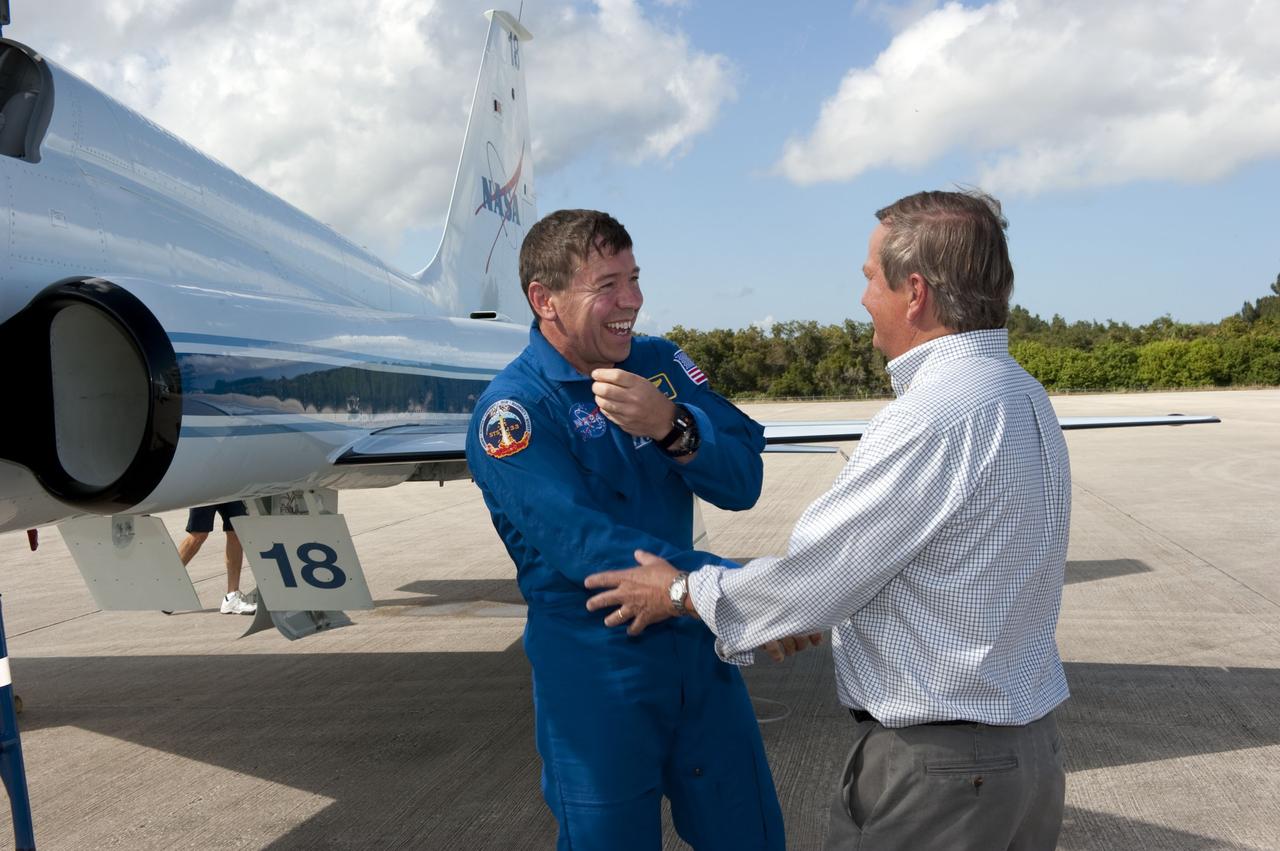
CAPE CANAVERAL, Fla. -- At NASA's Kennedy Space Center in Florida, space shuttle Discovery's STS-133 Mission Specialist Michael Barratt, left, is greeted by Shuttle Launch Director Mike Leinbach on the Shuttle Landing Facility runway after arriving in a T-38 training jet. In the days leading up to their launch to the International Space Station, Barratt and his crew members will check the fit of their launch-and-entry suits, review launch-day procedures, receive weather briefings and remain medically quarantined to prevent sickness. Scheduled to lift off Nov. 1 at 4:40 p.m., Discovery and crew will deliver the Permanent Multipurpose Module, packed with supplies and critical spare parts, as well as Robonaut 2, the dexterous humanoid astronaut helper, to the orbiting outpost. For more information on the STS-133 mission, visit www.nasa.gov/mission_pages/shuttle/shuttlemissions/sts133/. Photo credit: NASA/Kim Shiflett
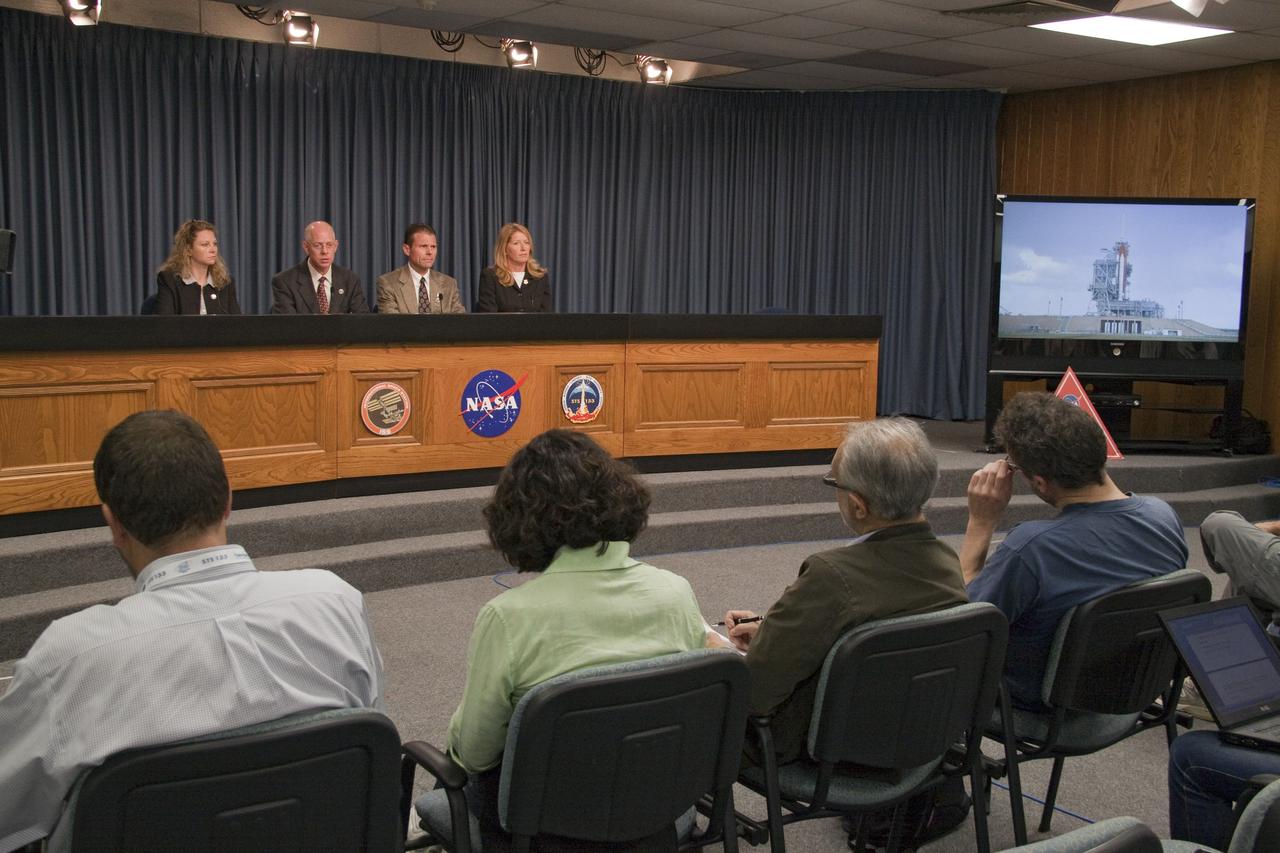
CAPE CANAVERAL, Fla. -- At NASA's Kennedy Space Center in Florida, NASA Public Affairs Officer Candrea Thomas, left, NASA Test Director Steve Payne, STS-133 Payload Manager Scott Higginbotham and Shuttle Weather Officer Kathy Winters participate in a Countdown Status Briefing a day before space shuttle Discovery is scheduled to launch to the International Space Station. Scheduled to lift off Nov. 3 at 3:52 p.m. EDT, Discovery and crew will deliver the Permanent Multipurpose Module, packed with supplies and critical spare parts, as well as Robonaut 2, the dexterous humanoid astronaut helper, to the orbiting outpost. For more information on the STS-133 mission, visit www.nasa.gov/mission_pages/shuttle/shuttlemissions/sts133/. Photo credit: NASA/Jack Pfaller
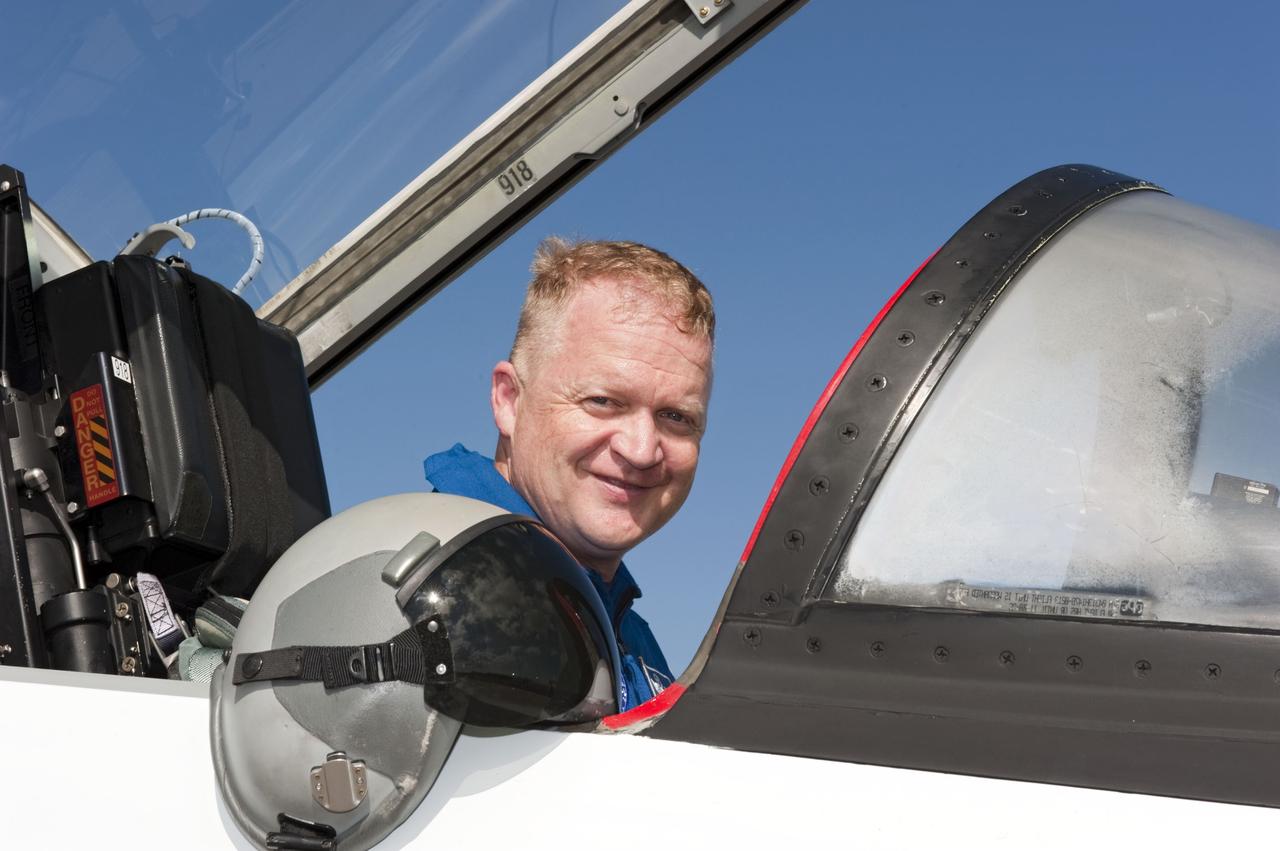
CAPE CANAVERAL, Fla. -- At NASA's Kennedy Space Center in Florida, space shuttle Discovery's STS-133 Pilot Eric Boe arrives on the Shuttle Landing Facility runway aboard a T-38 training jet. In the days leading up to their launch to the International Space Station, Boe and his crew members will check the fit of their launch-and-entry suits, review launch-day procedures, receive weather briefings and remain medically quarantined to prevent sickness. Scheduled to lift off Nov. 1 at 4:40 p.m., Discovery and crew will deliver the Permanent Multipurpose Module, packed with supplies and critical spare parts, as well as Robonaut 2, the dexterous humanoid astronaut helper, to the orbiting outpost. For more information on the STS-133 mission, visit www.nasa.gov/mission_pages/shuttle/shuttlemissions/sts133/. Photo credit: NASA/Kim Shiflett
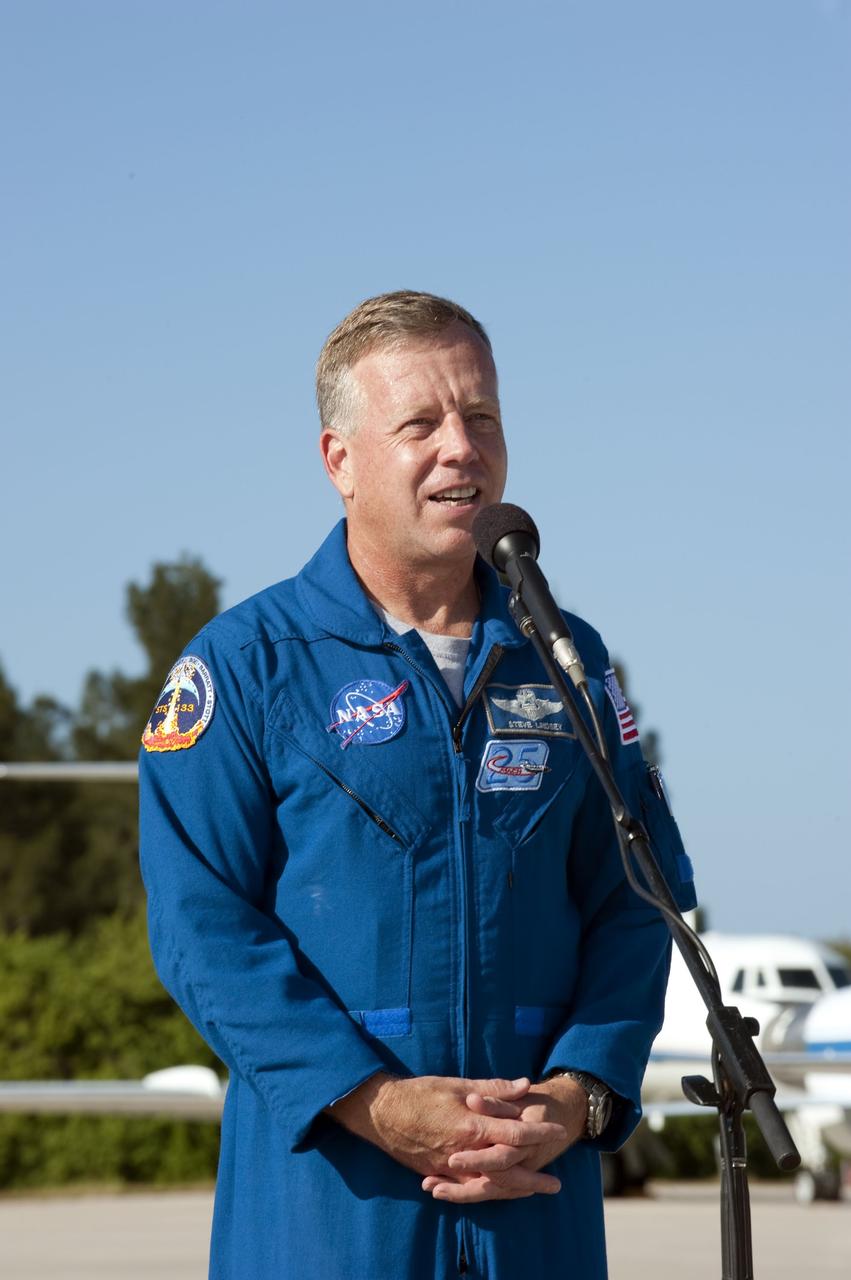
CAPE CANAVERAL, Fla. -- At NASA's Kennedy Space Center in Florida, space shuttle Discovery's STS-133 Commander Steve Lindsey speaks to media on the Shuttle Landing Facility runway after arriving aboard a T-38 training jet. In the days leading up to their launch to the International Space Station, Lindsey and his crew members will check the fit of their launch-and-entry suits, review launch-day procedures, receive weather briefings and remain medically quarantined to prevent sickness. Scheduled to lift off Nov. 1 at 4:40 p.m., Discovery and crew will deliver the Permanent Multipurpose Module, packed with supplies and critical spare parts, as well as Robonaut 2, the dexterous humanoid astronaut helper, to the orbiting outpost. For more information on the STS-133 mission, visit www.nasa.gov/mission_pages/shuttle/shuttlemissions/sts133/. Photo credit: NASA/Kim Shiflett
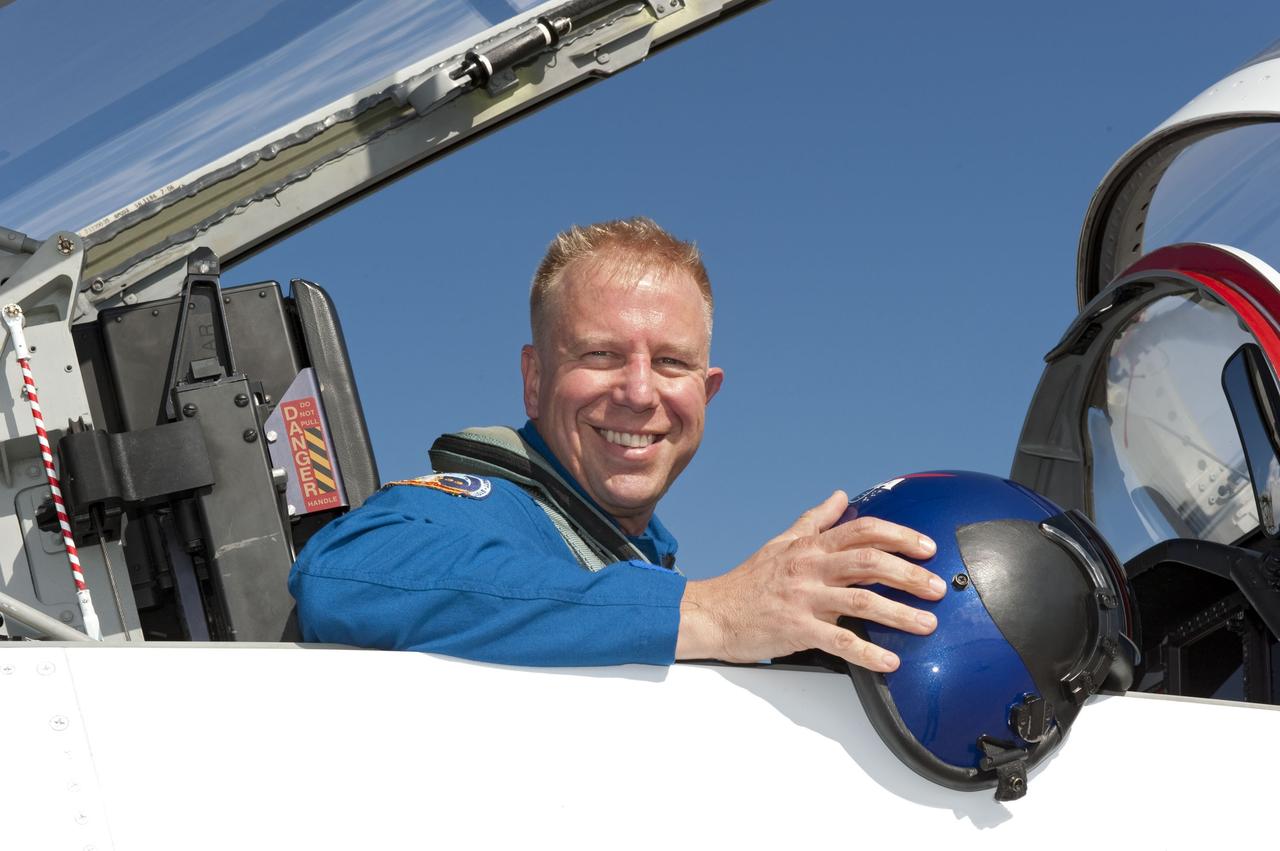
CAPE CANAVERAL, Fla. -- At NASA's Kennedy Space Center in Florida, space shuttle Discovery's STS-133 Mission Specialist Tim Kopra arrives on the Shuttle Landing Facility runway aboard a T-38 training jet. In the days leading up to their launch to the International Space Station, Kopra and his crew members will check the fit of their launch-and-entry suits, review launch-day procedures, receive weather briefings and remain medically quarantined to prevent sickness. Scheduled to lift off Nov. 1 at 4:40 p.m., Discovery and crew will deliver the Permanent Multipurpose Module, packed with supplies and critical spare parts, as well as Robonaut 2, the dexterous humanoid astronaut helper, to the orbiting outpost. For more information on the STS-133 mission, visit www.nasa.gov/mission_pages/shuttle/shuttlemissions/sts133/. Photo credit: NASA/Kim Shiflett
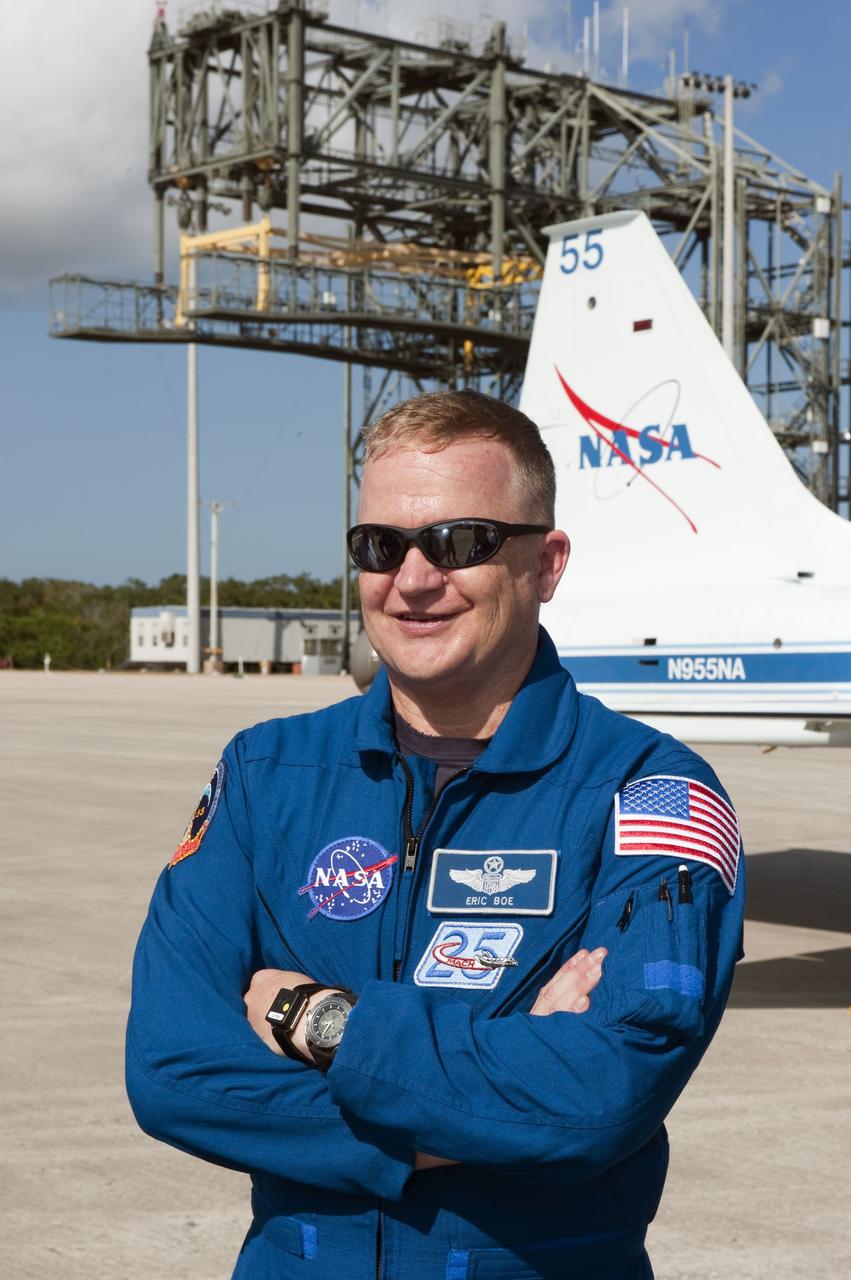
CAPE CANAVERAL, Fla. -- At NASA's Kennedy Space Center in Florida, space shuttle Discovery's STS-133 Pilot Eric Boe stands in front of a T-38 training jet that he flew from Houston to the Shuttle Landing Facility. In the days leading up to their launch to the International Space Station, Boe and his crew members will check the fit of their launch-and-entry suits, review launch-day procedures, receive weather briefings and remain medically quarantined to prevent sickness. Scheduled to lift off Nov. 1 at 4:40 p.m., Discovery and crew will deliver the Permanent Multipurpose Module, packed with supplies and critical spare parts, as well as Robonaut 2, the dexterous humanoid astronaut helper, to the orbiting outpost. For more information on the STS-133 mission, visit www.nasa.gov/mission_pages/shuttle/shuttlemissions/sts133/. Photo credit: NASA/Kim Shiflett
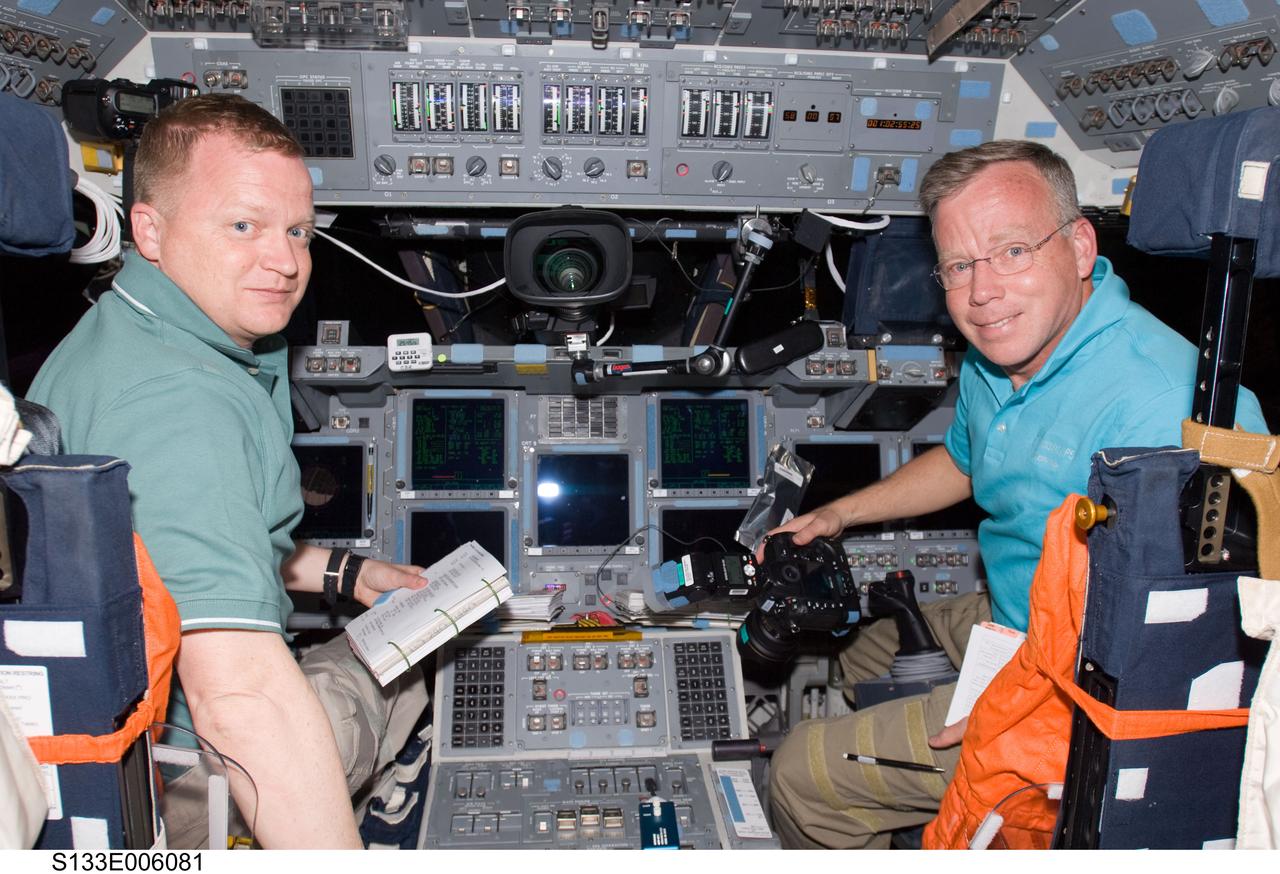
S133-E-006081 (25 Feb. 2011) --- On space shuttle Discovery’s forward flight deck, astronauts Steve Lindsey (right), STS-133 commander, and Eric Boe, pilot, switch seats for a brief procedure as the crew heads toward a weekend docking with the International Space Station. Earlier the crew conducted thorough inspections of the shuttle’s thermal tile system using the Remote Manipulator System/Orbiter Boom Sensor System (RMS/OBSS) and special cameras. Photo credit: NASA or National Aeronautics and Space Administration

CAPE CANAVERAL, Fla. - NASA managers participate in a post-landing media briefing at NASA's Kennedy Space Center in Florida following the completion of the STS-133 mission. From left are Allard Beutel, NASA Public Affairs; Bill Gerstenmaier, associate administrator for Space Operations; Mike Moses, space shuttle launch integration manager; and Mike Leinbach, shuttle launch director. Space shuttle Discovery's final return from space on Runway 15 at Kennedy's Shuttle Landing Facility completed the 13-day, 5.3-million-mile STS-133 mission. Main gear touchdown was at 11:57:17 a.m., followed by nose gear touchdown at 11:57:28, and wheelstop at 11:58:14 a.m. On board are Commander Steve Lindsey, Pilot Eric Boe, and Mission Specialists Nicole Stott, Michael Barratt, Alvin Drew and Steve Bowen. Discovery and its six-member crew delivered the Permanent Multipurpose Module, packed with supplies and critical spare parts, as well as Robonaut 2, the dexterous humanoid astronaut helper, to the orbiting outpost. STS-133 was Discovery's 39th and final mission. This was the 133rd Space Shuttle Program mission and the 35th shuttle voyage to the space station. Photo credit: NASA/Jack Pfaller
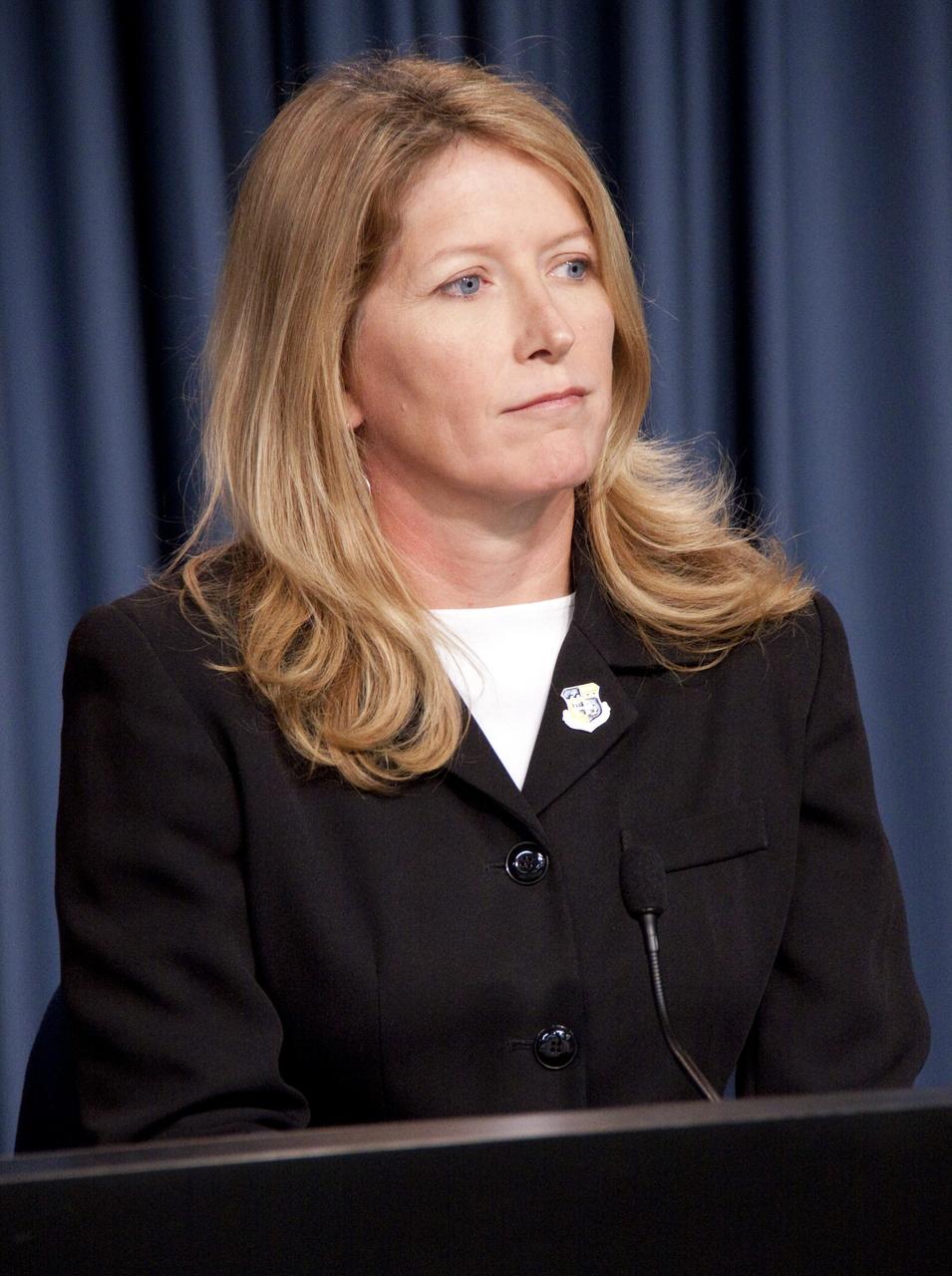
CAPE CANAVERAL, Fla. -- At NASA's Kennedy Space Center in Florida, Shuttle Weather Officer Kathy Winters talks to media about the weather forecast for space shuttle Discovery's upcoming launch to the International Space Station during a Countdown Status Briefing. Scheduled to lift off Nov. 3 at 3:52 p.m. EDT, Discovery and crew will deliver the Permanent Multipurpose Module, packed with supplies and critical spare parts, as well as Robonaut 2, the dexterous humanoid astronaut helper, to the orbiting outpost. For more information on the STS-133 mission, visit www.nasa.gov/mission_pages/shuttle/shuttlemissions/sts133/. Photo credit: NASA/Jack Pfaller
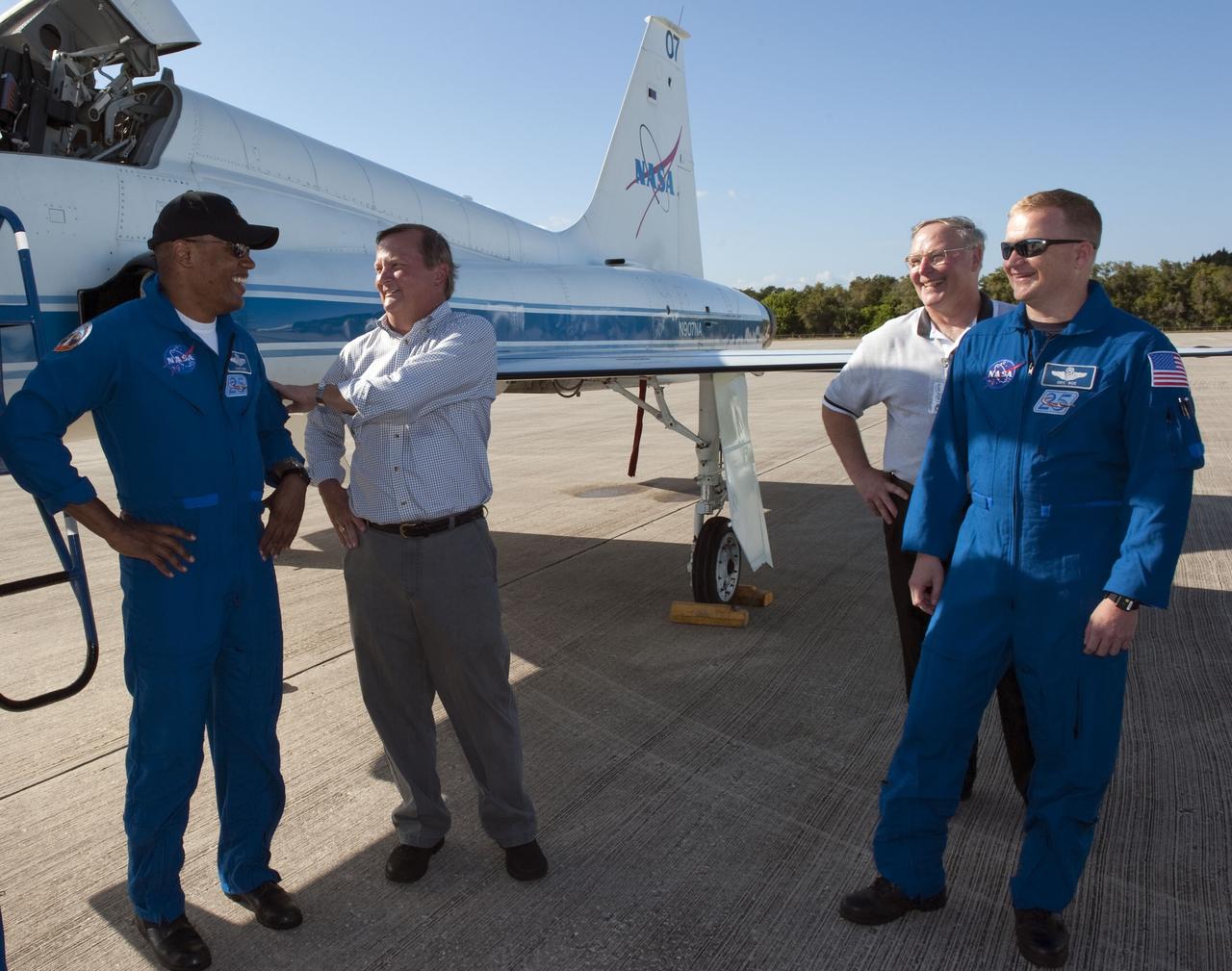
CAPE CANAVERAL, Fla. -- At NASA's Kennedy Space Center in Florida, space shuttle Discovery's STS-133 Mission Specialist Alvin Drew, left, jokes around with Shuttle Launch Director Mike Leinbach on the Shuttle Landing Facility runway after arriving in a T-38 training jet. Looking on are Chief of the Vehicle Integration Test Office at Johnson Space Center Jerry Ross and STS-133 Pilot Eric Boe. In the days leading up to their launch to the International Space Station, Drew and his crew members will check the fit of their launch-and-entry suits, review launch-day procedures, receive weather briefings and remain medically quarantined to prevent sickness. Scheduled to lift off Nov. 1 at 4:40 p.m., Discovery and crew will deliver the Permanent Multipurpose Module, packed with supplies and critical spare parts, as well as Robonaut 2, the dexterous humanoid astronaut helper, to the orbiting outpost. For more information on the STS-133 mission, visit www.nasa.gov/mission_pages/shuttle/shuttlemissions/sts133/. Photo credit: NASA/Kim Shiflett
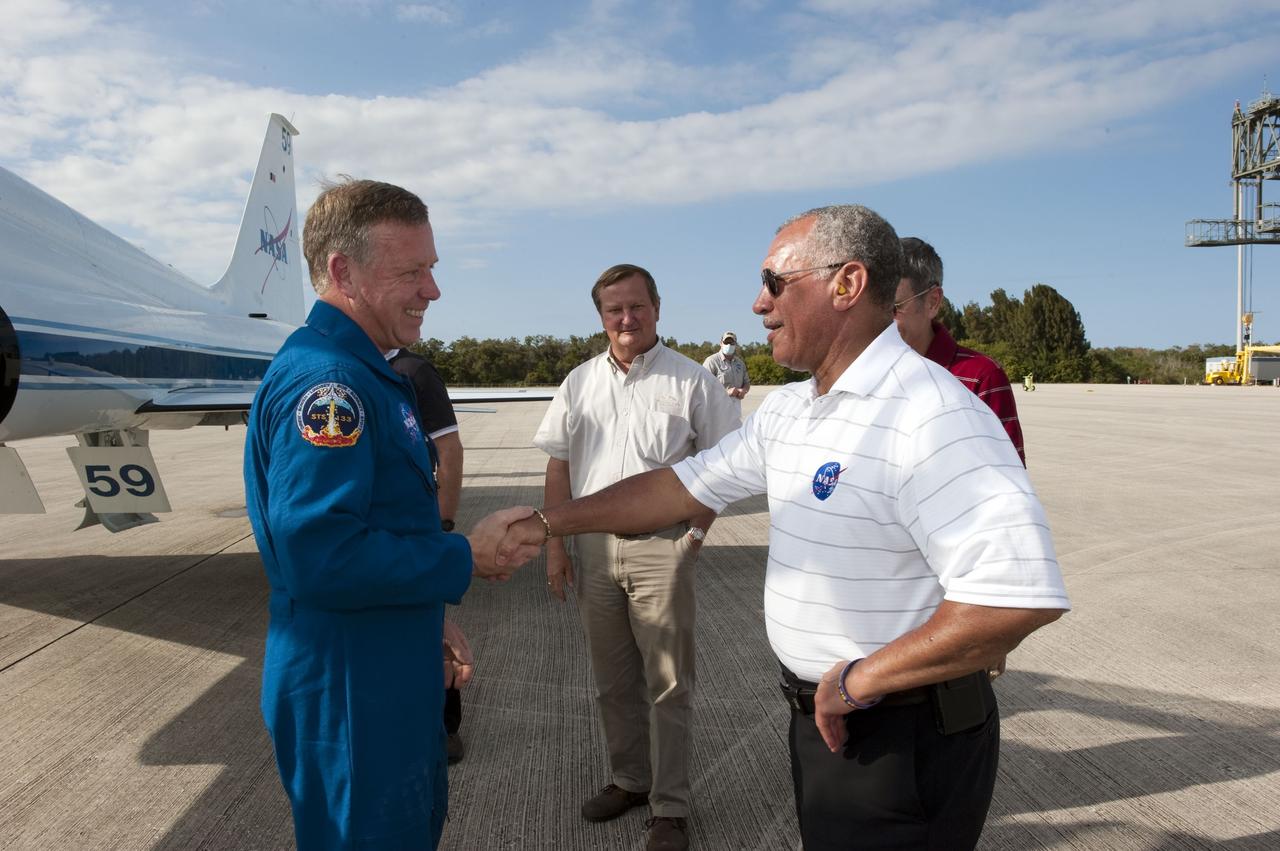
CAPE CANAVERAL, Fla. -- At NASA's Kennedy Space Center in Florida, space shuttle Discovery's STS-133 Commander Steve Lindsey greets NASA Administrator Charlie Bolden on the Shuttle Landing Facility runway after arriving aboard a T-38 jet. Also on hand to greet the crew were Jerry Ross, chief of the Vehicle Integration Test Office, Mike Leinbach, shuttle launch director, center, and Kennedy Center Director Bob Cabana. In the days leading up to their launch to the International Space Station, Lindsey and his crew members will check the fit of their launch-and-entry suits, review launch-day procedures, receive weather briefings and remain medically quarantined to prevent sickness. This will be the second launch attempt for Discovery's crew, following a scrub in November 2010 due to a hydrogen gas leak at the ground umbilical carrier plate (GUCP) as well as modifications to the external fuel tank's intertank support beams, called stringers. Scheduled to lift off Feb. 24 at 4:50 p.m. EST, Discovery and its crew will deliver the Permanent Multipurpose Module, packed with supplies and critical spare parts, as well as Robonaut 2, the dexterous humanoid astronaut helper, to the orbiting outpost. For more information on the STS-133 mission, visit www.nasa.gov/mission_pages/shuttle/shuttlemissions/sts133/. Photo credit: NASA/Kim Shiflett

CAPE CANAVERAL, Fla. -- At NASA's Kennedy Space Center in Florida, space shuttle Discovery's STS-133 Pilot Eric Boe chats with NASA Administrator Charlie Bolden on the Shuttle Landing Facility runway after arriving aboard a T-38 jet. In the days leading up to their launch to the International Space Station, Boe and his crew members will check the fit of their launch-and-entry suits, review launch-day procedures, receive weather briefings and remain medically quarantined to prevent sickness. This will be the second launch attempt for Discovery's crew, following a scrub in November 2010 due to a hydrogen gas leak at the ground umbilical carrier plate (GUCP) as well as modifications to the external fuel tank's intertank support beams, called stringers. Scheduled to lift off Feb. 24 at 4:50 p.m. EST, Discovery and its crew will deliver the Permanent Multipurpose Module, packed with supplies and critical spare parts, as well as Robonaut 2, the dexterous humanoid astronaut helper, to the orbiting outpost. For more information on the STS-133 mission, visit www.nasa.gov/mission_pages/shuttle/shuttlemissions/sts133/. Photo credit: NASA/Kim Shiflett

CAPE CANAVERAL, Fla. -- At NASA's Kennedy Space Center in Florida, space shuttle Discovery's STS-133 pose for a photo on the Shuttle Landing Facility runway after arriving in T-38 jets. From left, are Mission Specialists Nicole Stott, Michael Barratt, Steve Bowen and Alvin Drew, Pilot Eric Boe, and Commander Steve Lindsey. In the days leading up to their launch to the International Space Station, the crew members will check the fit of their launch-and-entry suits, review launch-day procedures, receive weather briefings and remain medically quarantined to prevent sickness. This will be the second launch attempt for Discovery's crew, following a scrub in November 2010 due to a hydrogen gas leak at the ground umbilical carrier plate (GUCP) as well as modifications to the external fuel tank's intertank support beams, called stringers. Scheduled to lift off Feb. 24 at 4:50 p.m. EST, Discovery and its crew will deliver the Permanent Multipurpose Module, packed with supplies and critical spare parts, as well as Robonaut 2, the dexterous humanoid astronaut helper, to the orbiting outpost. For more information on the STS-133 mission, visit www.nasa.gov/mission_pages/shuttle/shuttlemissions/sts133/. Photo credit: NASA/Kim Shiflett
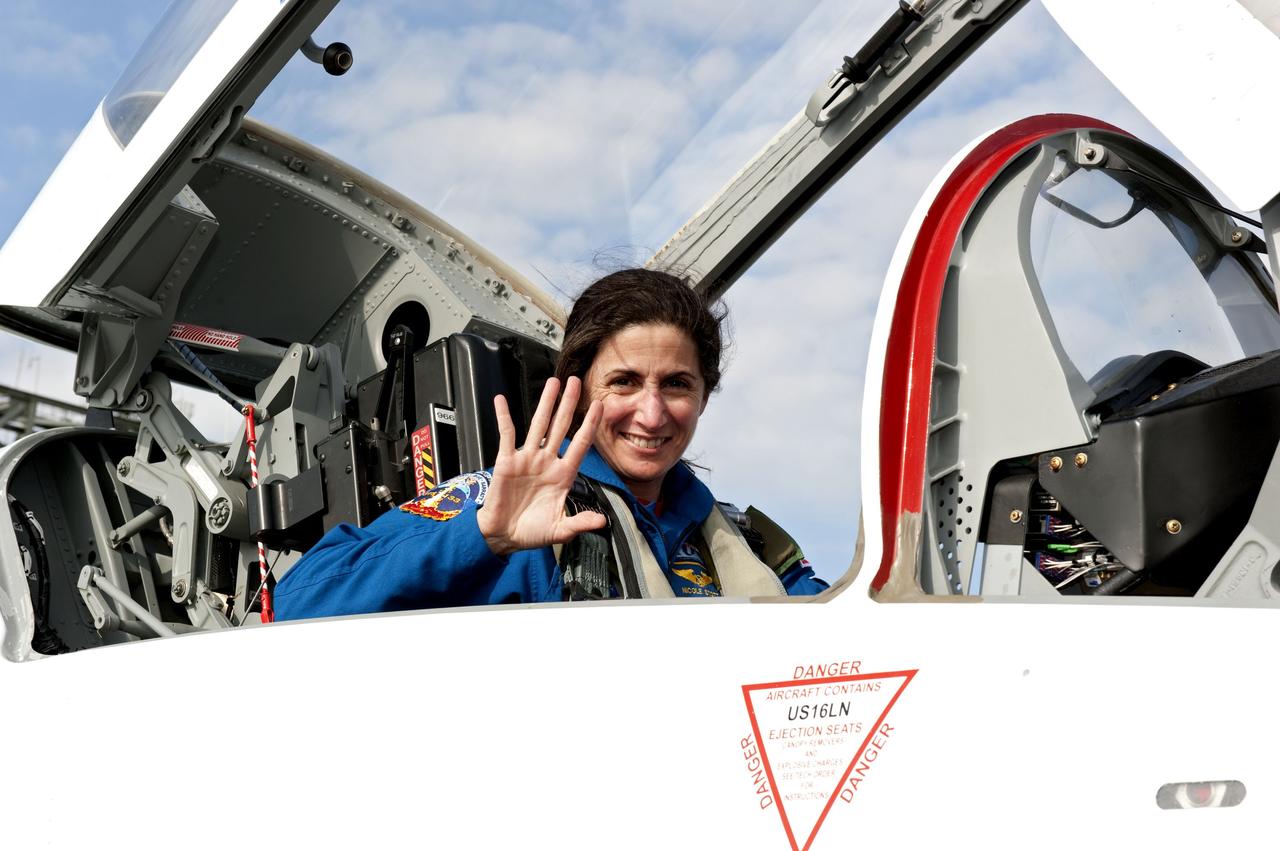
CAPE CANAVERAL, Fla. -- At NASA's Kennedy Space Center in Florida, space shuttle Discovery's STS-133 Mission Specialist Nicole Stott arrives on the Shuttle Landing Facility runway aboard a T-38 jet. In the days leading up to their launch to the International Space Station, Stott and her crew members will check the fit of their launch-and-entry suits, review launch-day procedures, receive weather briefings and remain medically quarantined to prevent sickness. This will be the second launch attempt for Discovery's crew, following a scrub in November 2010 due to a hydrogen gas leak at the ground umbilical carrier plate (GUCP) as well as modifications to the external fuel tank's intertank support beams, called stringers. Scheduled to lift off Feb. 24 at 4:50 p.m. EST, Discovery and its crew will deliver the Permanent Multipurpose Module, packed with supplies and critical spare parts, as well as Robonaut 2, the dexterous humanoid astronaut helper, to the orbiting outpost. For more information on the STS-133 mission, visit www.nasa.gov/mission_pages/shuttle/shuttlemissions/sts133/. Photo credit: NASA/Kim Shiflett
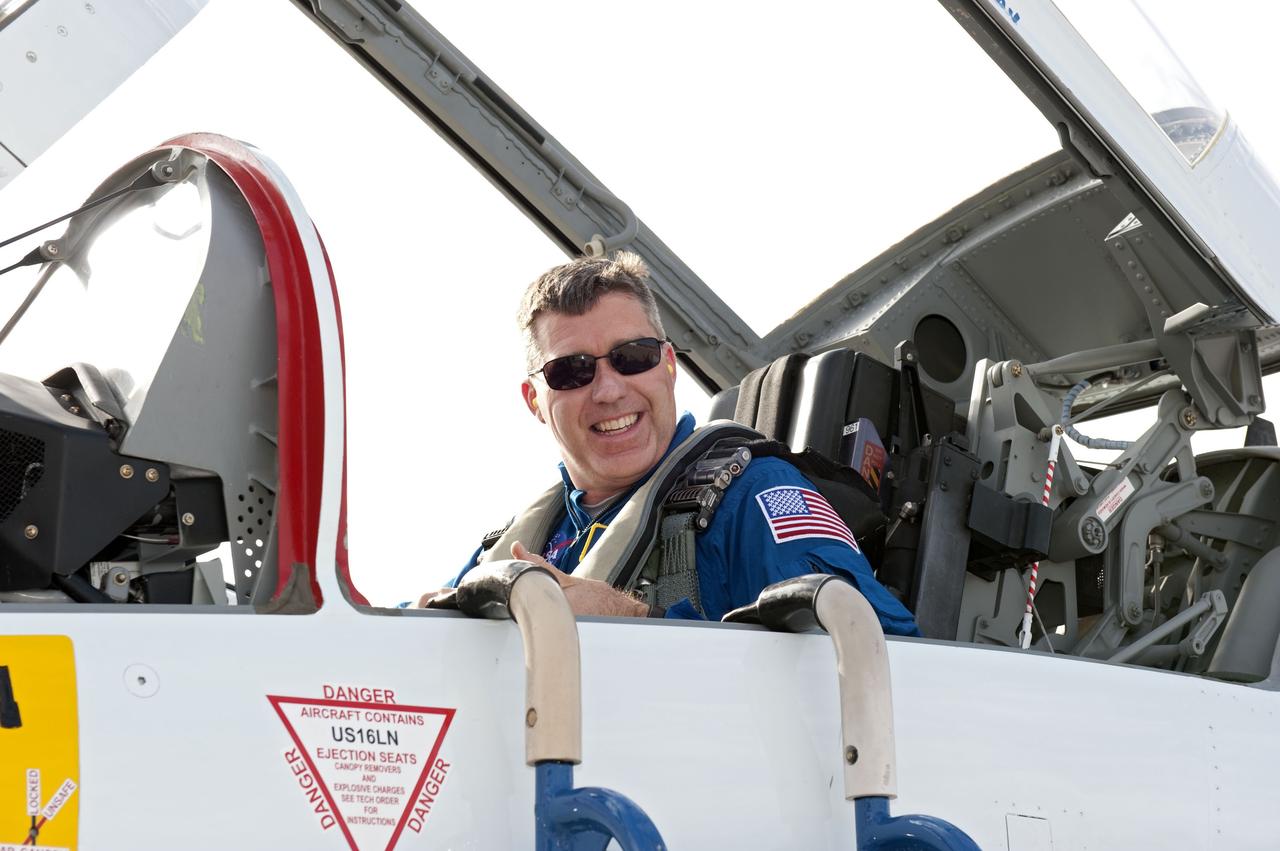
CAPE CANAVERAL, Fla. -- At NASA's Kennedy Space Center in Florida, space shuttle Discovery's STS-133 Mission Specialist Steve Bowen arrives on the Shuttle Landing Facility runway aboard a T-38 jet. In the days leading up to their launch to the International Space Station, Bowen and his crew members will check the fit of their launch-and-entry suits, review launch-day procedures, receive weather briefings and remain medically quarantined to prevent sickness. Bowen replaces astronaut Tim Kopra, who was injured in a bicycle accident in January 2011. This will be the second launch attempt for Discovery's crew, following a scrub in November 2010 due to a hydrogen gas leak at the ground umbilical carrier plate (GUCP) as well as modifications to the external fuel tank's intertank support beams, called stringers. Scheduled to lift off Feb. 24 at 4:50 p.m. EST, Discovery and its crew will deliver the Permanent Multipurpose Module, packed with supplies and critical spare parts, as well as Robonaut 2, the dexterous humanoid astronaut helper, to the orbiting outpost. For more information on the STS-133 mission, visit www.nasa.gov/mission_pages/shuttle/shuttlemissions/sts133/. Photo credit: NASA/Kim Shiflett

CAPE CANAVERAL, Fla. -- At NASA's Kennedy Space Center in Florida, space shuttle Discovery's STS-133 Pilot Eric Boe talks with Kennedy Center Director Bob Cabana on the Shuttle Landing Facility runway after arriving aboard a T-38 jet. In the days leading up to their launch to the International Space Station, Boe and his crew members will check the fit of their launch-and-entry suits, review launch-day procedures, receive weather briefings and remain medically quarantined to prevent sickness. This will be the second launch attempt for Discovery's crew, following a scrub in November 2010 due to a hydrogen gas leak at the ground umbilical carrier plate (GUCP) as well as modifications to the external fuel tank's intertank support beams, called stringers. Scheduled to lift off Feb. 24 at 4:50 p.m. EST, Discovery and its crew will deliver the Permanent Multipurpose Module, packed with supplies and critical spare parts, as well as Robonaut 2, the dexterous humanoid astronaut helper, to the orbiting outpost. For more information on the STS-133 mission, visit www.nasa.gov/mission_pages/shuttle/shuttlemissions/sts133/. Photo credit: NASA/Kim Shiflett
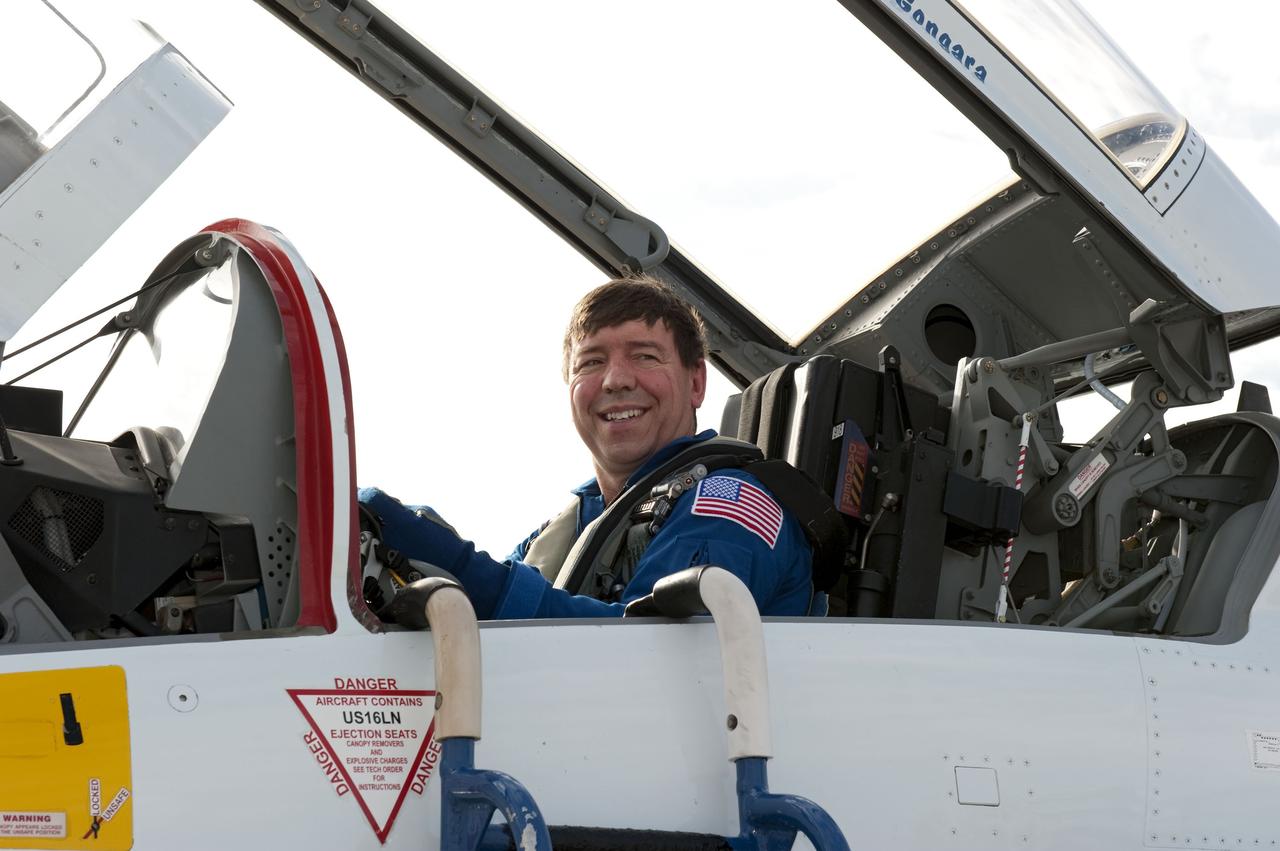
CAPE CANAVERAL, Fla. -- At NASA's Kennedy Space Center in Florida, space shuttle Discovery's STS-133 Mission Specialist Michael Barratt arrives on the Shuttle Landing Facility runway aboard a T-38 jet. In the days leading up to their launch to the International Space Station, Barratt and his crew members will check the fit of their launch-and-entry suits, review launch-day procedures, receive weather briefings and remain medically quarantined to prevent sickness. This will be the second launch attempt for Discovery's crew, following a scrub in November 2010 due to a hydrogen gas leak at the ground umbilical carrier plate (GUCP) as well as modifications to the external fuel tank's intertank support beams, called stringers. Scheduled to lift off Feb. 24 at 4:50 p.m. EST, Discovery and its crew will deliver the Permanent Multipurpose Module, packed with supplies and critical spare parts, as well as Robonaut 2, the dexterous humanoid astronaut helper, to the orbiting outpost. For more information on the STS-133 mission, visit www.nasa.gov/mission_pages/shuttle/shuttlemissions/sts133/. Photo credit: NASA/Kim Shiflett
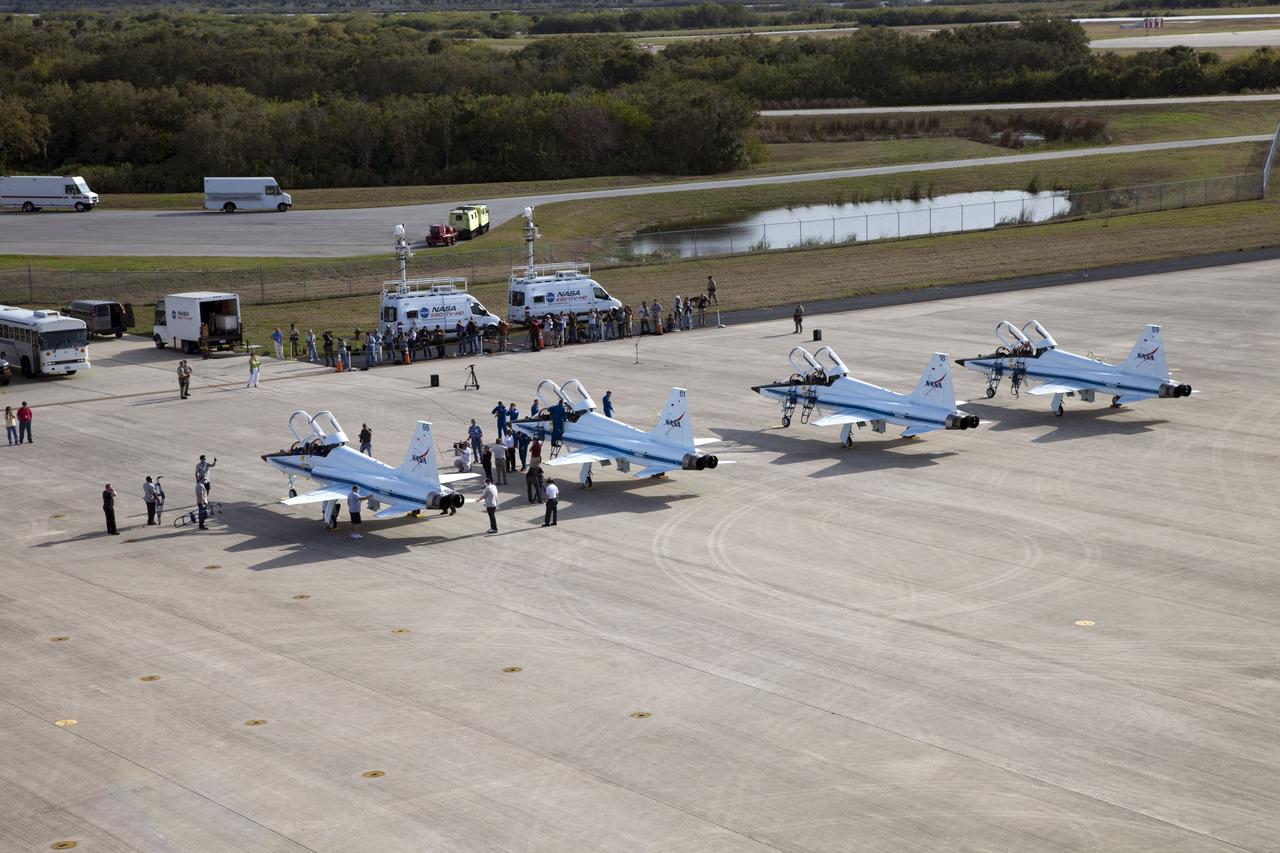
CAPE CANAVERAL, Fla. -- Space shuttle Discovery's STS-133 crew arrived on the Shuttle Landing Facility runway at NASA's Kennedy Space Center in Florida aboard four T-38 jets. In the days leading up to their launch to the International Space Station, the crew members will check the fit of their launch-and-entry suits, review launch-day procedures, receive weather briefings and remain medically quarantined to prevent sickness. This will be the second launch attempt for Discovery's crew, following a scrub in November 2010 due to a hydrogen gas leak at the ground umbilical carrier plate (GUCP) as well as modifications to the external fuel tank's intertank support beams, called stringers. Scheduled to lift off Feb. 24 at 4:50 p.m. EST, Discovery and its crew will deliver the Permanent Multipurpose Module, packed with supplies and critical spare parts, as well as Robonaut 2, the dexterous humanoid astronaut helper, to the orbiting outpost. For more information on the STS-133 mission, visit www.nasa.gov/mission_pages/shuttle/shuttlemissions/sts133/. Photo credit: NASAFrank Michaux
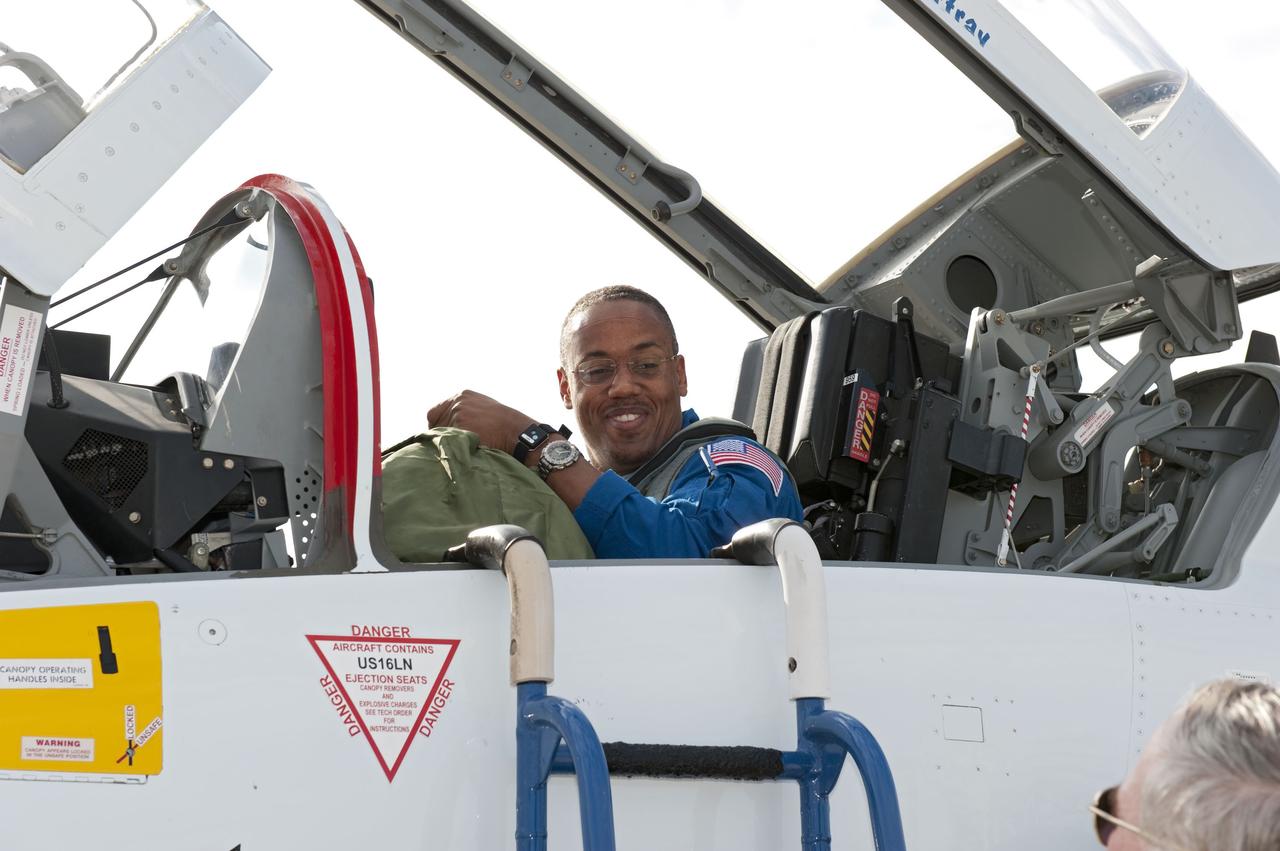
CAPE CANAVERAL, Fla. -- At NASA's Kennedy Space Center in Florida, space shuttle Discovery's STS-133 Mission Specialist Alvin Drew arrives on the Shuttle Landing Facility runway aboard a T-38 jet. In the days leading up to their launch to the International Space Station, Drew and his crew members will check the fit of their launch-and-entry suits, review launch-day procedures, receive weather briefings and remain medically quarantined to prevent sickness. This will be the second launch attempt for Discovery's crew, following a scrub in November 2010 due to a hydrogen gas leak at the ground umbilical carrier plate (GUCP) as well as modifications to the external fuel tank's intertank support beams, called stringers. Scheduled to lift off Feb. 24 at 4:50 p.m. EST, Discovery and its crew will deliver the Permanent Multipurpose Module, packed with supplies and critical spare parts, as well as Robonaut 2, the dexterous humanoid astronaut helper, to the orbiting outpost. For more information on the STS-133 mission, visit www.nasa.gov/mission_pages/shuttle/shuttlemissions/sts133/. Photo credit: NASA/Kim Shiflett
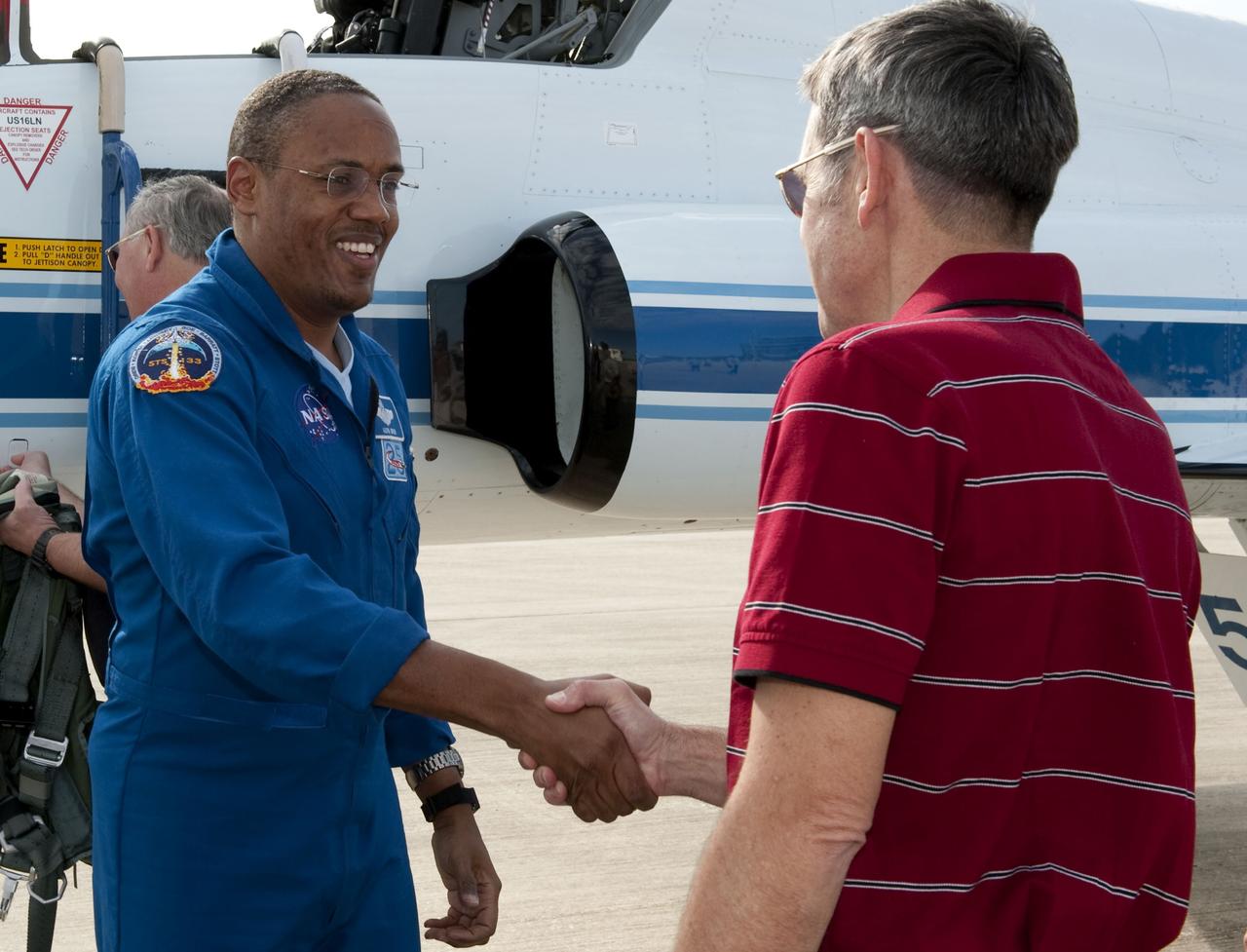
CAPE CANAVERAL, Fla. -- At NASA's Kennedy Space Center in Florida, space shuttle Discovery's STS-133 Mission Specialist Alvin Drew greets Kennedy Center Director Bob Cabana on the Shuttle Landing Facility runway after arriving aboard a T-38 jet. In the days leading up to their launch to the International Space Station, Drew and his crew members will check the fit of their launch-and-entry suits, review launch-day procedures, receive weather briefings and remain medically quarantined to prevent sickness. This will be the second launch attempt for Discovery's crew, following a scrub in November 2010 due to a hydrogen gas leak at the ground umbilical carrier plate (GUCP) as well as modifications to the external fuel tank's intertank support beams, called stringers. Scheduled to lift off Feb. 24 at 4:50 p.m. EST, Discovery and its crew will deliver the Permanent Multipurpose Module, packed with supplies and critical spare parts, as well as Robonaut 2, the dexterous humanoid astronaut helper, to the orbiting outpost. For more information on the STS-133 mission, visit www.nasa.gov/mission_pages/shuttle/shuttlemissions/sts133/. Photo credit: NASA/Kim Shiflett
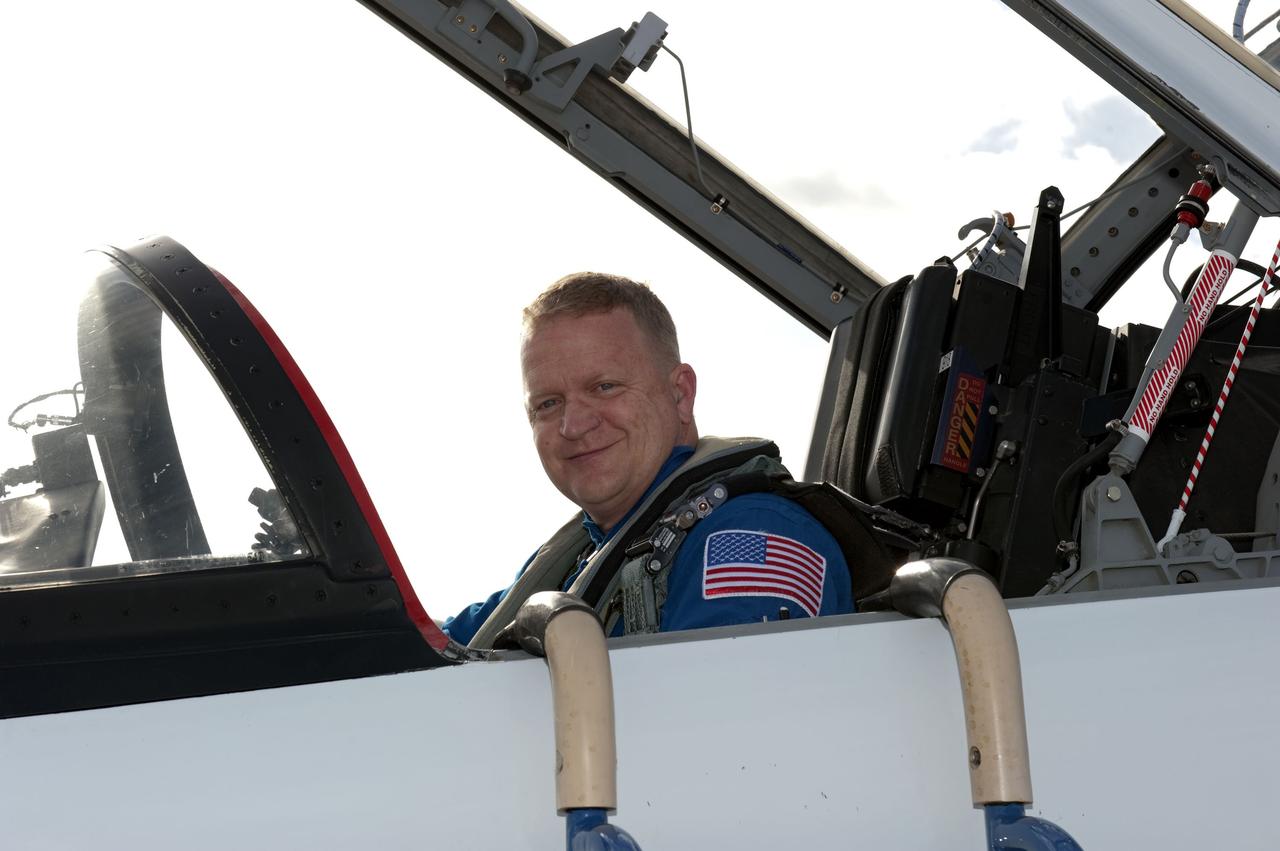
CAPE CANAVERAL, Fla. -- At NASA's Kennedy Space Center in Florida, space shuttle Discovery's STS-133 Pilot Eric Boe arrives on the Shuttle Landing Facility runway aboard a T-38 jet. In the days leading up to their launch to the International Space Station, Boe and his crew members will check the fit of their launch-and-entry suits, review launch-day procedures, receive weather briefings and remain medically quarantined to prevent sickness. This will be the second launch attempt for Discovery's crew, following a scrub in November 2010 due to a hydrogen gas leak at the ground umbilical carrier plate (GUCP) as well as modifications to the external fuel tank's intertank support beams, called stringers. Scheduled to lift off Feb. 24 at 4:50 p.m. EST, Discovery and its crew will deliver the Permanent Multipurpose Module, packed with supplies and critical spare parts, as well as Robonaut 2, the dexterous humanoid astronaut helper, to the orbiting outpost. For more information on the STS-133 mission, visit www.nasa.gov/mission_pages/shuttle/shuttlemissions/sts133/. Photo credit: NASA/Kim Shiflett
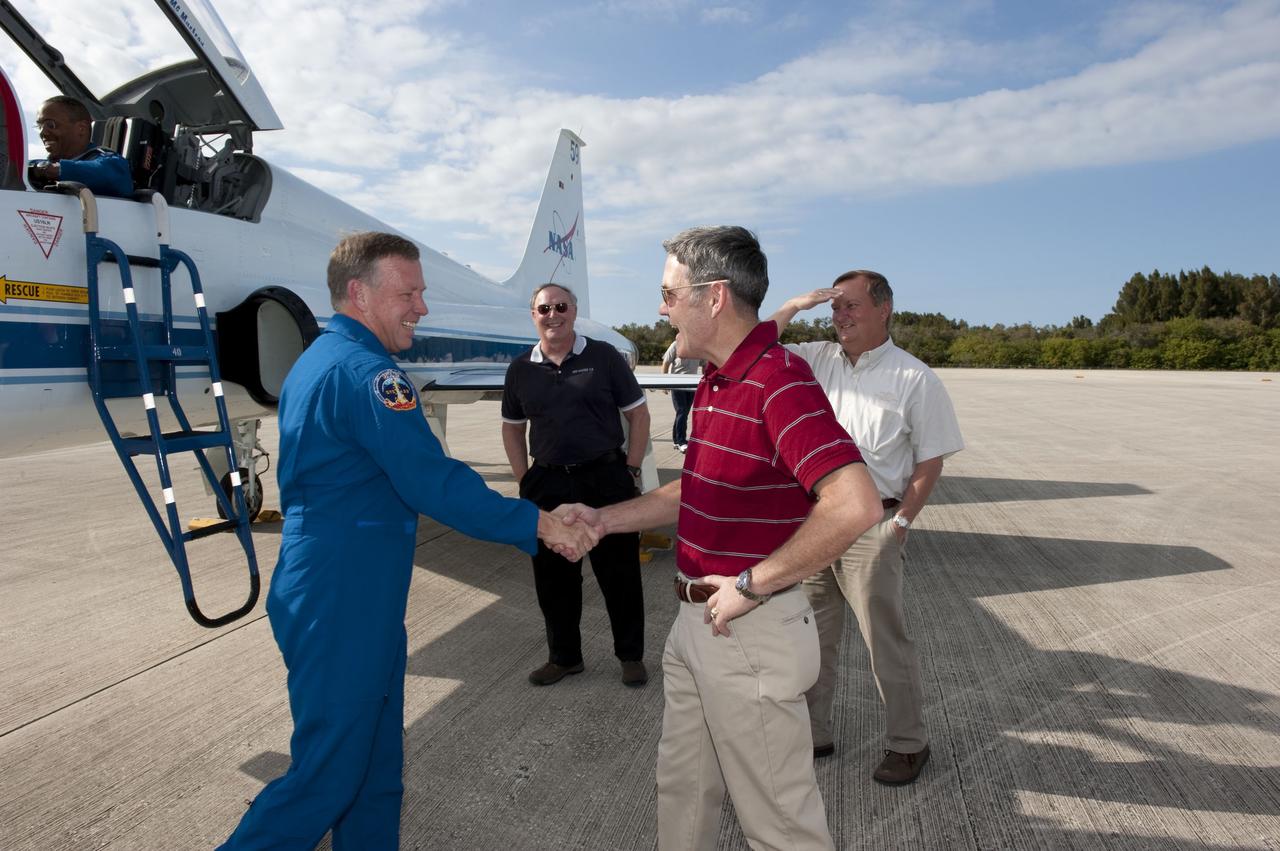
CAPE CANAVERAL, Fla. -- At NASA's Kennedy Space Center in Florida, space shuttle Discovery's STS-133 Commander Steve Lindsey greets Kennedy Center Director Bob Cabana on the Shuttle Landing Facility runway after arriving aboard a T-38 jet. Also on hand to greet the crew were Jerry Ross, chief of the Vehicle Integration Test Office, left, and Mike Leinbach, shuttle launch director. In the days leading up to their launch to the International Space Station, Lindsey and his crew members will check the fit of their launch-and-entry suits, review launch-day procedures, receive weather briefings and remain medically quarantined to prevent sickness. This will be the second launch attempt for Discovery's crew, following a scrub in November 2010 due to a hydrogen gas leak at the ground umbilical carrier plate (GUCP) as well as modifications to the external fuel tank's intertank support beams, called stringers. Scheduled to lift off Feb. 24 at 4:50 p.m. EST, Discovery and its crew will deliver the Permanent Multipurpose Module, packed with supplies and critical spare parts, as well as Robonaut 2, the dexterous humanoid astronaut helper, to the orbiting outpost. For more information on the STS-133 mission, visit www.nasa.gov/mission_pages/shuttle/shuttlemissions/sts133/. Photo credit: NASA/Kim Shiflett
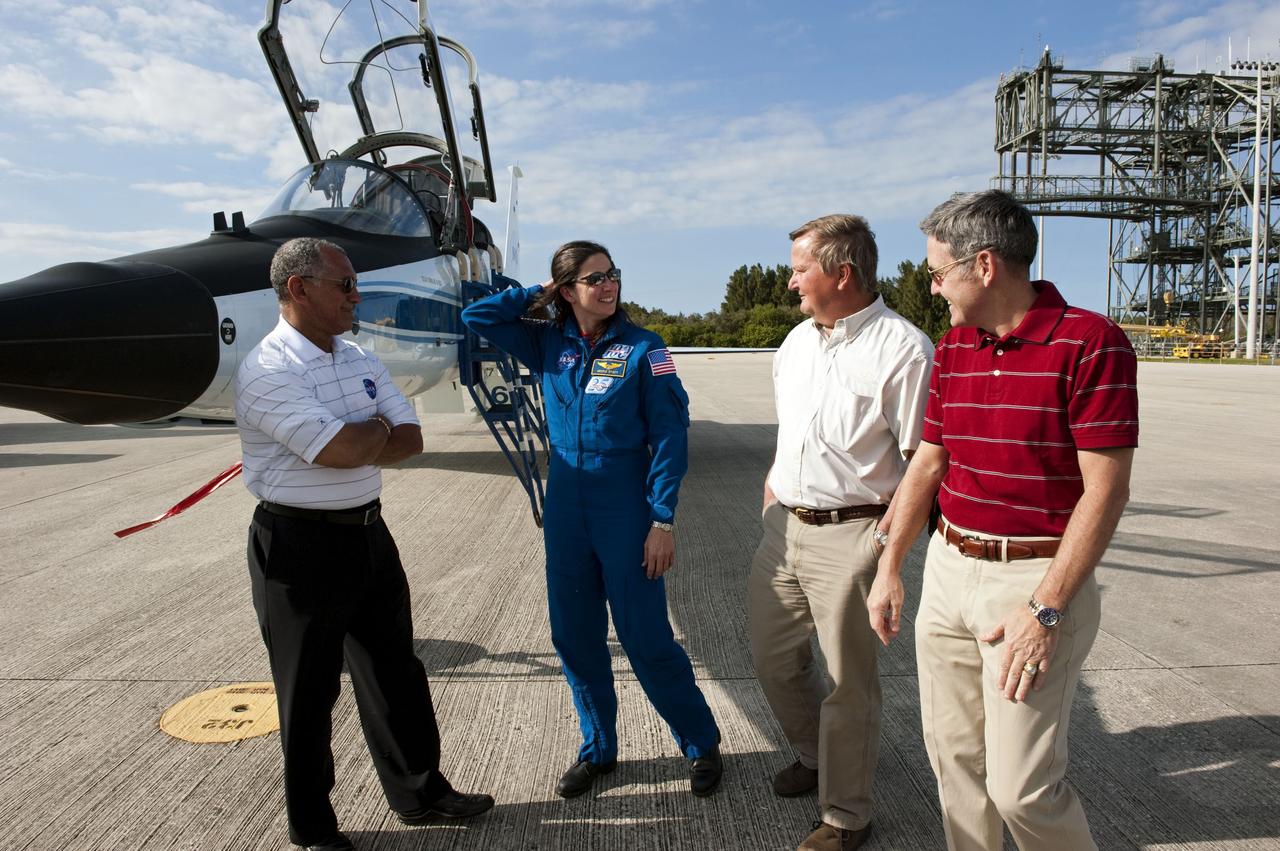
CAPE CANAVERAL, Fla. -- At NASA's Kennedy Space Center in Florida, NASA Administrator Charlie Bolden, left, space shuttle Discovery's STS-133 Mission Specialist Nicole Stott, Shuttle Launch Director Mike Leinbach and Kennedy Center Director Bob Cabana chat on the Shuttle Landing Facility runway. In the days leading up to their launch to the International Space Station, Stott and her crew members will check the fit of their launch-and-entry suits, review launch-day procedures, receive weather briefings and remain medically quarantined to prevent sickness. This will be the second launch attempt for Discovery's crew, following a scrub in November 2010 due to a hydrogen gas leak at the ground umbilical carrier plate (GUCP) as well as modifications to the external fuel tank's intertank support beams, called stringers. Scheduled to lift off Feb. 24 at 4:50 p.m. EST, Discovery and its crew will deliver the Permanent Multipurpose Module, packed with supplies and critical spare parts, as well as Robonaut 2, the dexterous humanoid astronaut helper, to the orbiting outpost. For more information on the STS-133 mission, visit www.nasa.gov/mission_pages/shuttle/shuttlemissions/sts133/. Photo credit: NASA/Kim Shiflett

CAPE CANAVERAL, Fla. -- At NASA's Kennedy Space Center in Florida, space shuttle Discovery's STS-133 Commander Steve Lindsey talks with NASA Administrator Charlie Bolden and Kennedy Center Director Bob Cabana on the Shuttle Landing Facility runway after arriving aboard a T-38 jet. In the days leading up to their launch to the International Space Station, Lindsey and his crew members will check the fit of their launch-and-entry suits, review launch-day procedures, receive weather briefings and remain medically quarantined to prevent sickness. This will be the second launch attempt for Discovery's crew, following a scrub in November 2010 due to a hydrogen gas leak at the ground umbilical carrier plate (GUCP) as well as modifications to the external fuel tank's intertank support beams, called stringers. Scheduled to lift off Feb. 24 at 4:50 p.m. EST, Discovery and its crew will deliver the Permanent Multipurpose Module, packed with supplies and critical spare parts, as well as Robonaut 2, the dexterous humanoid astronaut helper, to the orbiting outpost. For more information on the STS-133 mission, visit www.nasa.gov/mission_pages/shuttle/shuttlemissions/sts133/. Photo credit: NASA/Kim Shiflett

CAPE CANAVERAL, Fla. -- At NASA's Kennedy Space Center in Florida, space shuttle Discovery's STS-133 Mission Specialist Michael Barratt greets NASA Administrator Charlie Bolden, left, and Kennedy Center Director Bob Cabana on the Shuttle Landing Facility runway after arriving aboard a T-38 jet. In the days leading up to their launch to the International Space Station, Barratt and his crew members will check the fit of their launch-and-entry suits, review launch-day procedures, receive weather briefings and remain medically quarantined to prevent sickness. This will be the second launch attempt for Discovery's crew, following a scrub in November 2010 due to a hydrogen gas leak at the ground umbilical carrier plate (GUCP) as well as modifications to the external fuel tank's intertank support beams, called stringers. Scheduled to lift off Feb. 24 at 4:50 p.m. EST, Discovery and its crew will deliver the Permanent Multipurpose Module, packed with supplies and critical spare parts, as well as Robonaut 2, the dexterous humanoid astronaut helper, to the orbiting outpost. For more information on the STS-133 mission, visit www.nasa.gov/mission_pages/shuttle/shuttlemissions/sts133/. Photo credit: NASA/Kim Shiflett

CAPE CANAVERAL, Fla. -- At NASA's Kennedy Space Center in Florida, space shuttle Discovery's STS-133 astronauts prepare to give statements to the media on the Shuttle Landing Facility runway after arriving in T-38 jets. From left, are Mission Specialists Michael Barratt, Alvin Drew and Steve Bowen, Commander Steve Lindsey, Pilot Eric Boe, and Mission Specialist Nicole Stott. In the days leading up to their launch to the International Space Station, the crew members will check the fit of their launch-and-entry suits, review launch-day procedures, receive weather briefings and remain medically quarantined to prevent sickness. This will be the second launch attempt for Discovery's crew, following a scrub in November 2010 due to a hydrogen gas leak at the ground umbilical carrier plate (GUCP) as well as modifications to the external fuel tank's intertank support beams, called stringers. Scheduled to lift off Feb. 24 at 4:50 p.m. EST, Discovery and its crew will deliver the Permanent Multipurpose Module, packed with supplies and critical spare parts, as well as Robonaut 2, the dexterous humanoid astronaut helper, to the orbiting outpost. For more information on the STS-133 mission, visit www.nasa.gov/mission_pages/shuttle/shuttlemissions/sts133/. Photo credit: NASA/Kim Shiflett
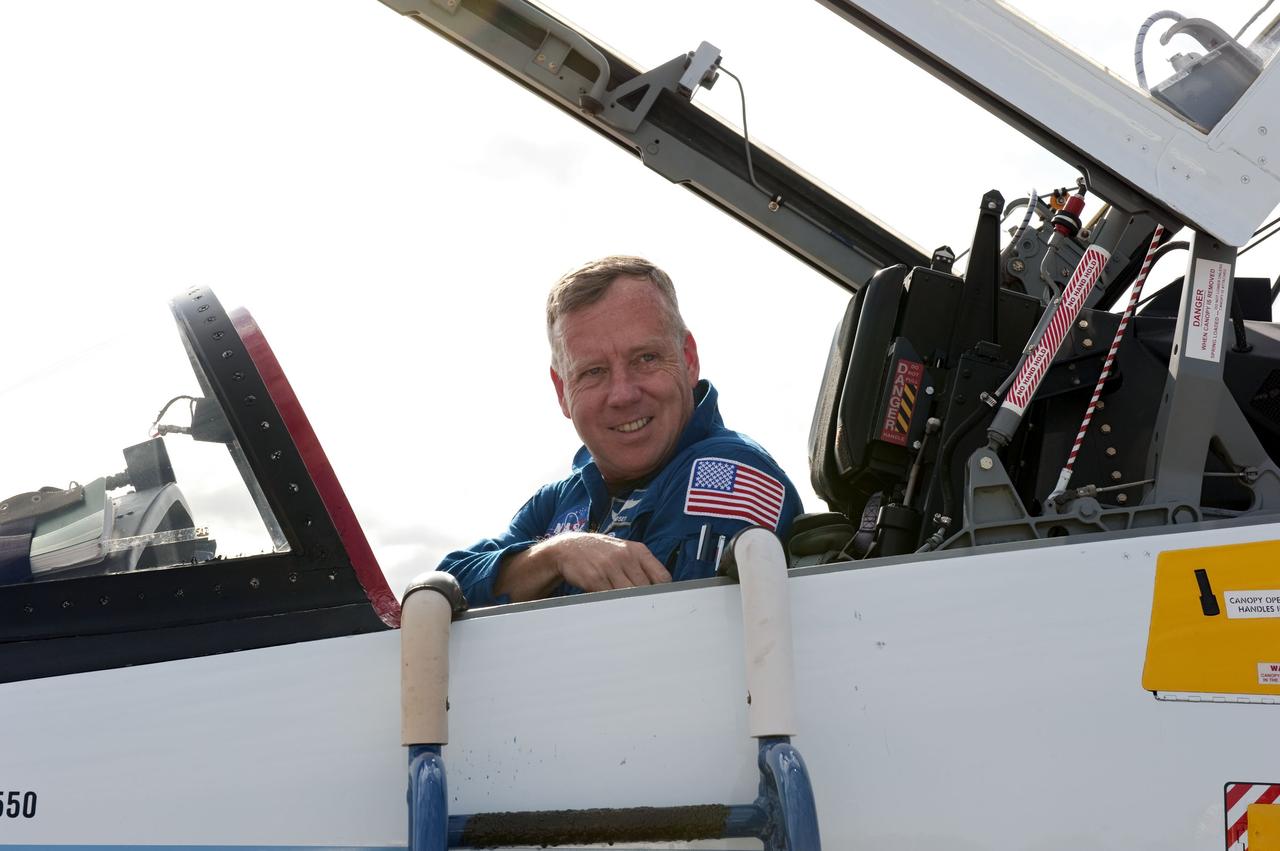
CAPE CANAVERAL, Fla. -- At NASA's Kennedy Space Center in Florida, space shuttle Discovery's STS-133 Commander Steve Lindsey arrives on the Shuttle Landing Facility runway aboard a T-38 jet. In the days leading up to their launch to the International Space Station, Lindsey and his crew members will check the fit of their launch-and-entry suits, review launch-day procedures, receive weather briefings and remain medically quarantined to prevent sickness. This will be the second launch attempt for Discovery's crew, following a scrub in November 2010 due to a hydrogen gas leak at the ground umbilical carrier plate (GUCP) as well as modifications to the external fuel tank's intertank support beams, called stringers. Scheduled to lift off Feb. 24 at 4:50 p.m. EST, Discovery and its crew will deliver the Permanent Multipurpose Module, packed with supplies and critical spare parts, as well as Robonaut 2, the dexterous humanoid astronaut helper, to the orbiting outpost. For more information on the STS-133 mission, visit www.nasa.gov/mission_pages/shuttle/shuttlemissions/sts133/. Photo credit: NASA/Kim Shiflett
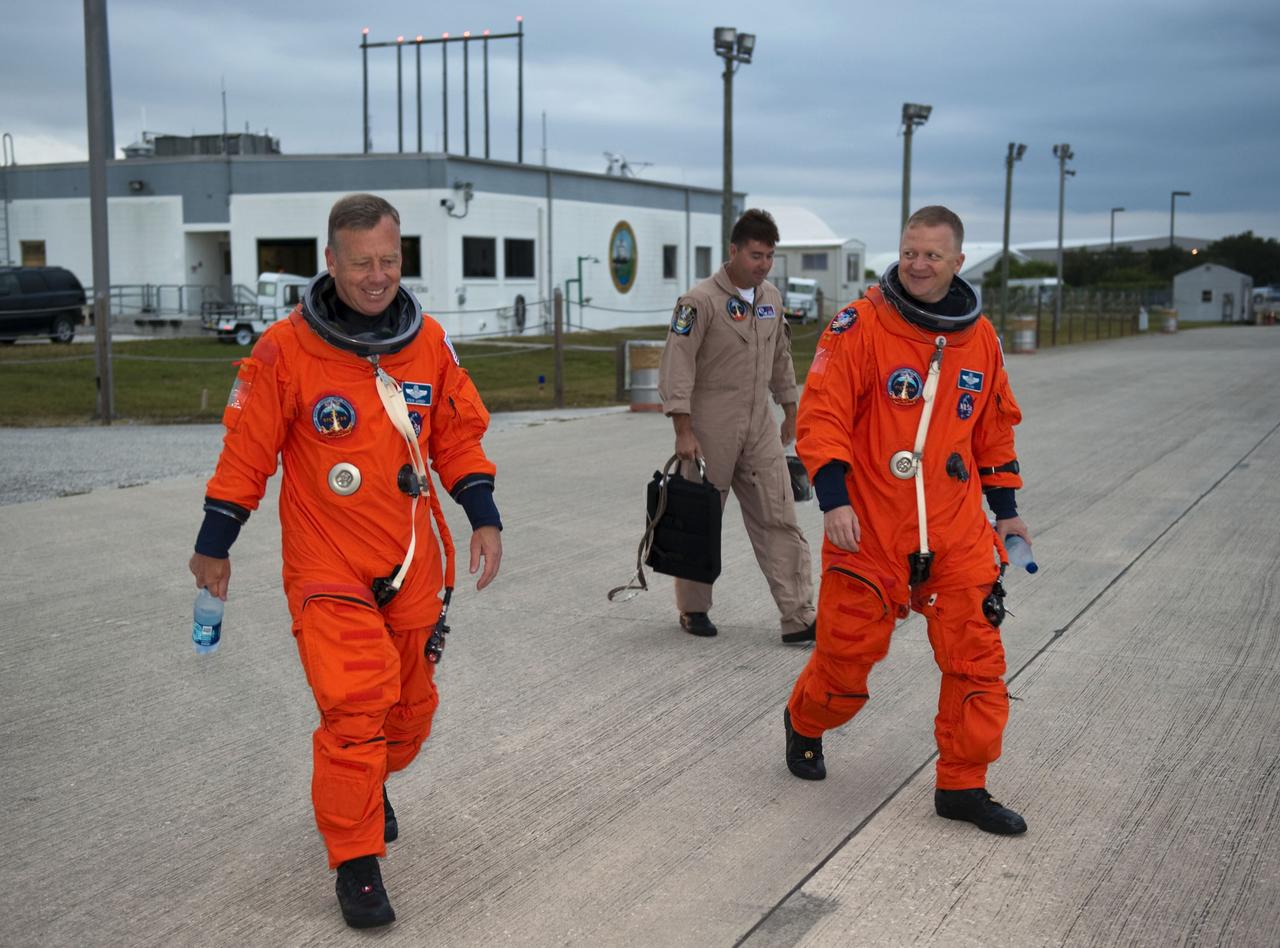
CANAVERAL, Fla. -- At NASA's Kennedy Space Center in Florida, STS-133 Commander Steve Lindsey, left, and Pilot Eric Boe walk toward two Shuttle Training Aircraft (STA) on the Shuttle Landing Facility runway. Dressed in their bright-orange, launch-and-entry suits, the pair will fly touch-and-go landings in Gulfstream II business jets that are modified to mimic the shuttle's handling during the final phase of landing. Space shuttle Discovery's crew members are at Kennedy for their upcoming launch to the International Space Station. In the days leading up to lift off, they will check the fit of their spacesuits, review launch-day procedures, receive weather briefings and remain medically quarantined to prevent sickness. STS-133 will deliver the Permanent Multipurpose Module, packed with supplies and critical spare parts, as well as Robonaut 2, the dexterous humanoid astronaut helper, to the orbiting outpost. For more information on the STS-133 mission, visit www.nasa.gov/mission_pages/shuttle/shuttlemissions/sts133/. Photo credit: NASA/Kim Shiflett
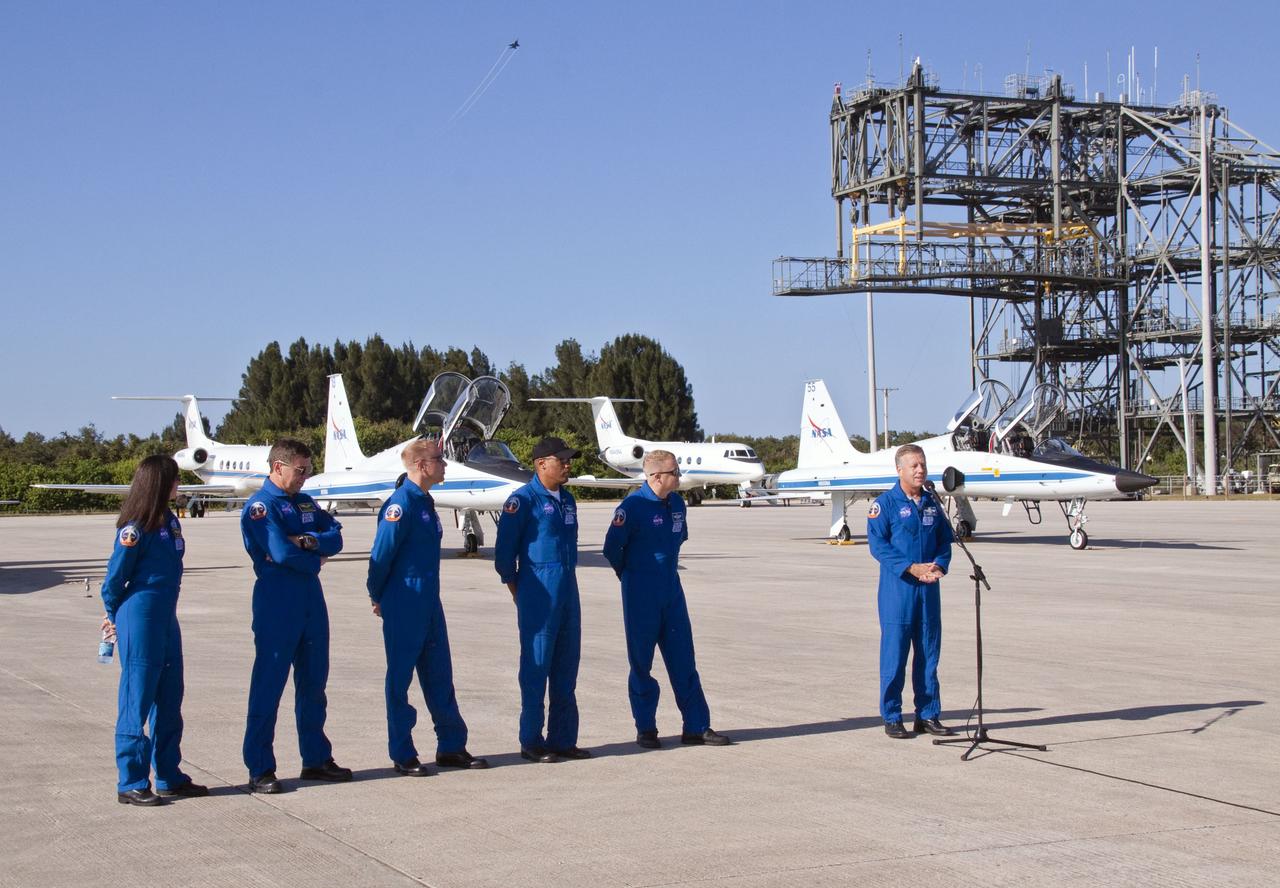
CAPE CANAVERAL, Fla. -- At NASA's Kennedy Space Center in Florida, space shuttle Discovery's STS-133 crew addresses the media on the Shuttle Landing Facility runway after arriving aboard T-38 training jets. From left are Mission Specialists Nicole Stott, Michael Barratt, Tim Kopra and Alvin Drew, Pilot Eric Boe, and Commander Steve Lindsey. Flying high above the crew is an F-15, participating in an Air Force Week celebration at the center's Visitor Complex. In the days leading up to their launch to the International Space Station, the crew members will check the fit of their launch-and-entry suits, review launch-day procedures, receive weather briefings and remain medically quarantined to prevent sickness. Scheduled to lift off Nov. 1 at 4:40 p.m., Discovery and crew will deliver the Permanent Multipurpose Module, packed with supplies and critical spare parts, as well as Robonaut 2, the dexterous humanoid astronaut helper, to the orbiting outpost. For more information on the STS-133 mission, visit www.nasa.gov/mission_pages/shuttle/shuttlemissions/sts133/. Photo credit: NASA/Jack Pfaller
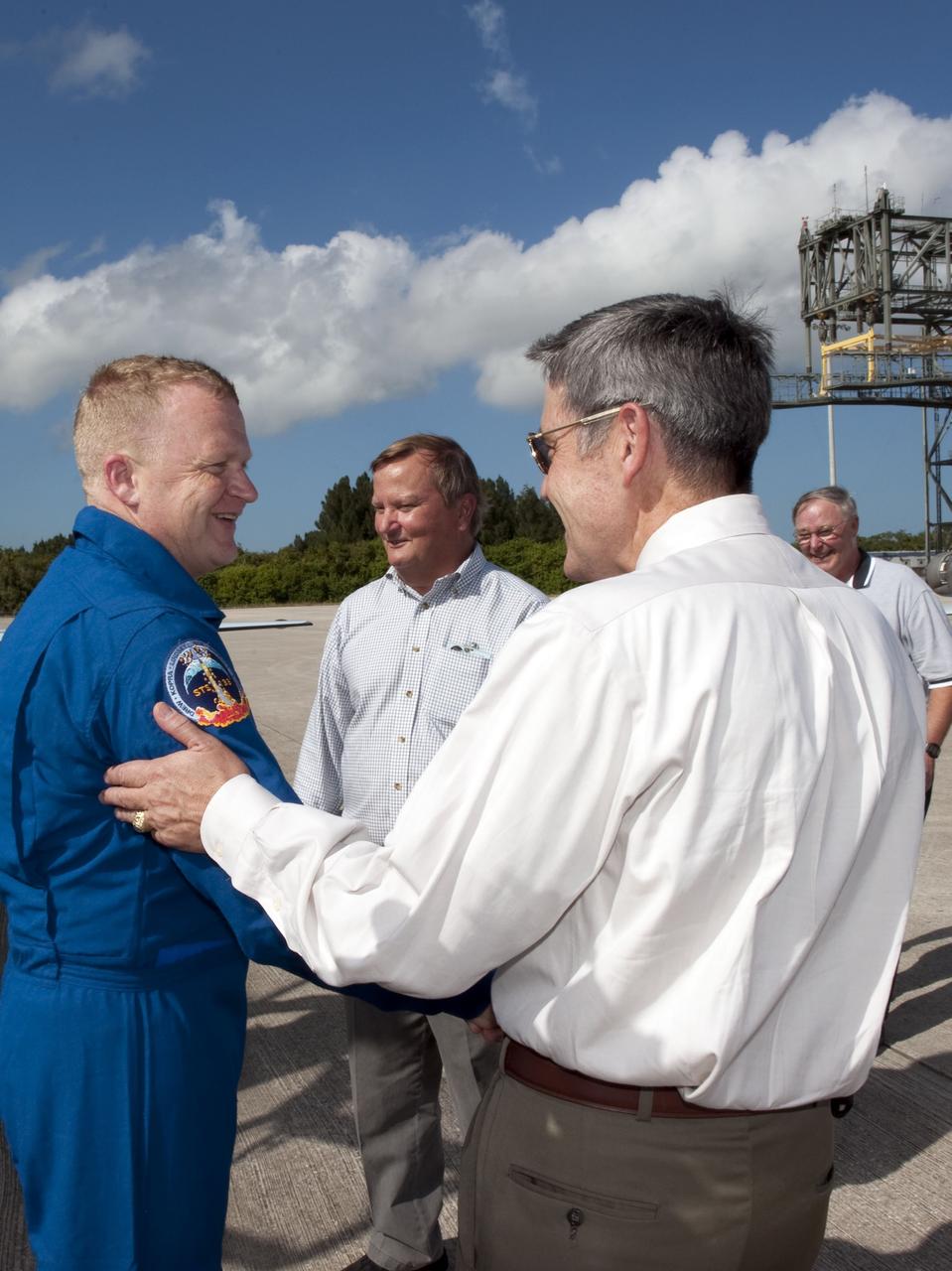
CAPE CANAVERAL, Fla. -- At NASA's Kennedy Space Center in Florida, space shuttle Discovery's STS-133 Pilot Eric Boe, left, is greeted by Shuttle Launch Director Mike Leinbach, Kennedy's Center Director Bob Cabana and Chief of the Vehicle Integration Test Office at Johnson Space Center Jerry Ross on the Shuttle Landing Facility runway after arriving in a T-38 training jet. In the days leading up to their launch to the International Space Station, Boe and his crew members will check the fit of their launch-and-entry suits, review launch-day procedures, receive weather briefings and remain medically quarantined to prevent sickness. Scheduled to lift off Nov. 1 at 4:40 p.m., Discovery and crew will deliver the Permanent Multipurpose Module, packed with supplies and critical spare parts, as well as Robonaut 2, the dexterous humanoid astronaut helper, to the orbiting outpost. For more information on the STS-133 mission, visit www.nasa.gov/mission_pages/shuttle/shuttlemissions/sts133/. Photo credit: NASA/Kim Shiflett
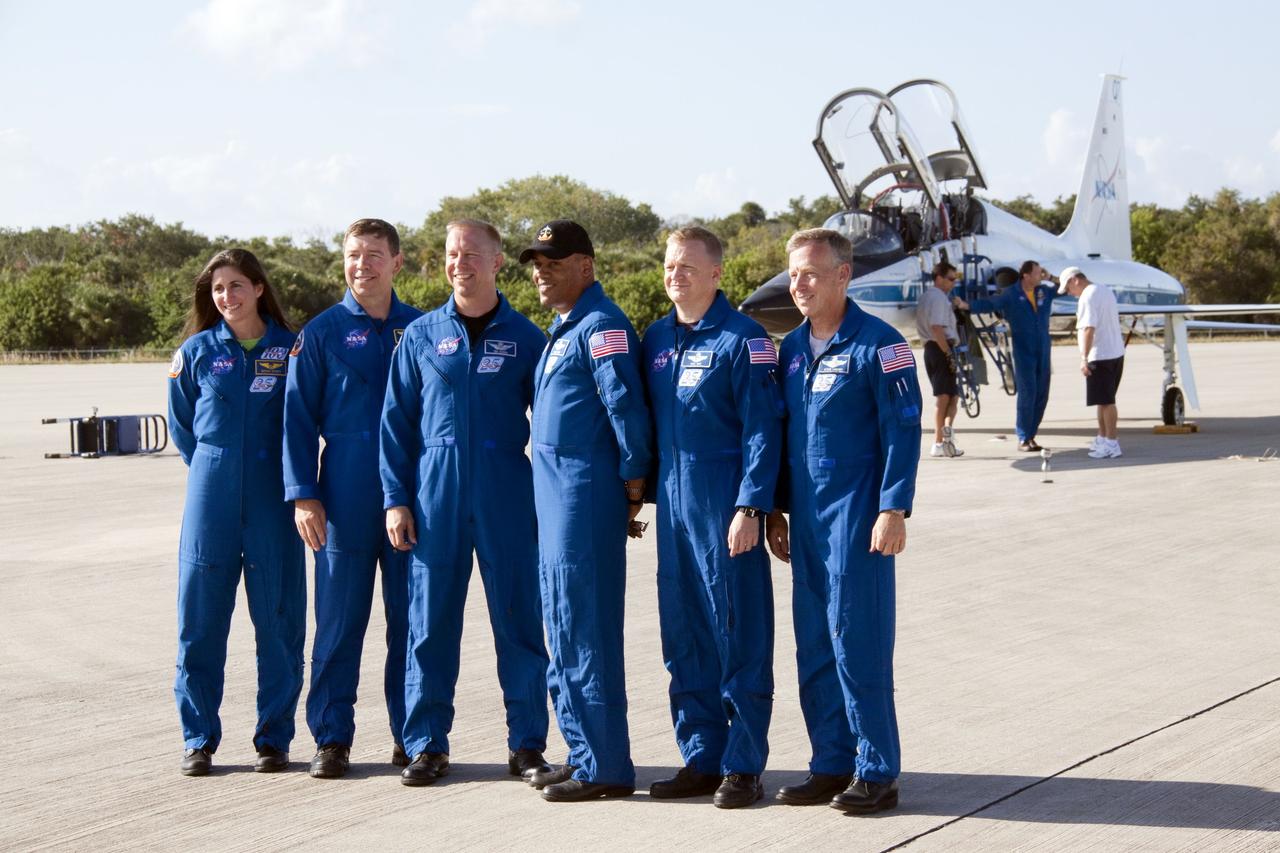
CAPE CANAVERAL, Fla. -- At NASA's Kennedy Space Center in Florida, space shuttle Discovery's STS-133 crew poses for a group photo on the Shuttle Landing Facility runway after arriving aboard T-38 training jets. From left are Mission Specialists Nicole Stott, Michael Barratt, Tim Kopra and Alvin Drew, Pilot Eric Boe, and Commander Steve Lindsey. In the days leading up to their launch to the International Space Station, the crew members will check the fit of their launch-and-entry suits, review launch-day procedures, receive weather briefings and remain medically quarantined to prevent sickness. Scheduled to lift off Nov. 1 at 4:40 p.m., Discovery and crew will deliver the Permanent Multipurpose Module, packed with supplies and critical spare parts, as well as Robonaut 2, the dexterous humanoid astronaut helper, to the orbiting outpost. For more information on the STS-133 mission, visit www.nasa.gov/mission_pages/shuttle/shuttlemissions/sts133/. Photo credit: NASA/Jack Pfaller
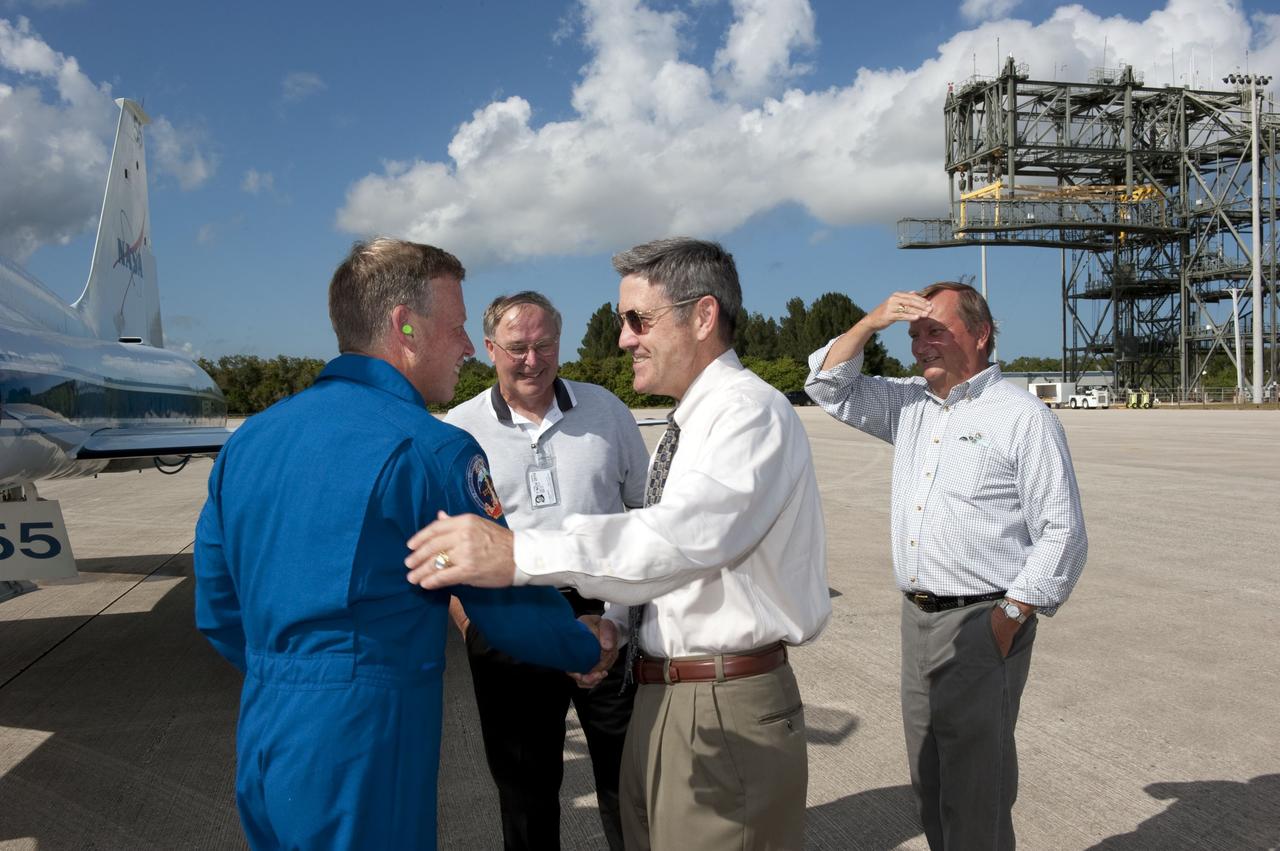
CAPE CANAVERAL, Fla. -- At NASA's Kennedy Space Center in Florida, space shuttle Discovery's STS-133 Commander Steve Lindsey, left, is greeted by Chief of the Vehicle Integration Test Office at Johnson Space Center Jerry Ross, Kennedy's Center Director Bob Cabana and Shuttle Launch Director Mike Leinbach on the Shuttle Landing Facility runway after arriving in a T-38 training jet. In the days leading up to their launch to the International Space Station, Lindsey and his crew members will check the fit of their launch-and-entry suits, review launch-day procedures, receive weather briefings and remain medically quarantined to prevent sickness. Scheduled to lift off Nov. 1 at 4:40 p.m., Discovery and crew will deliver the Permanent Multipurpose Module, packed with supplies and critical spare parts, as well as Robonaut 2, the dexterous humanoid astronaut helper, to the orbiting outpost. For more information on the STS-133 mission, visit www.nasa.gov/mission_pages/shuttle/shuttlemissions/sts133/. Photo credit: NASA/Kim Shiflett