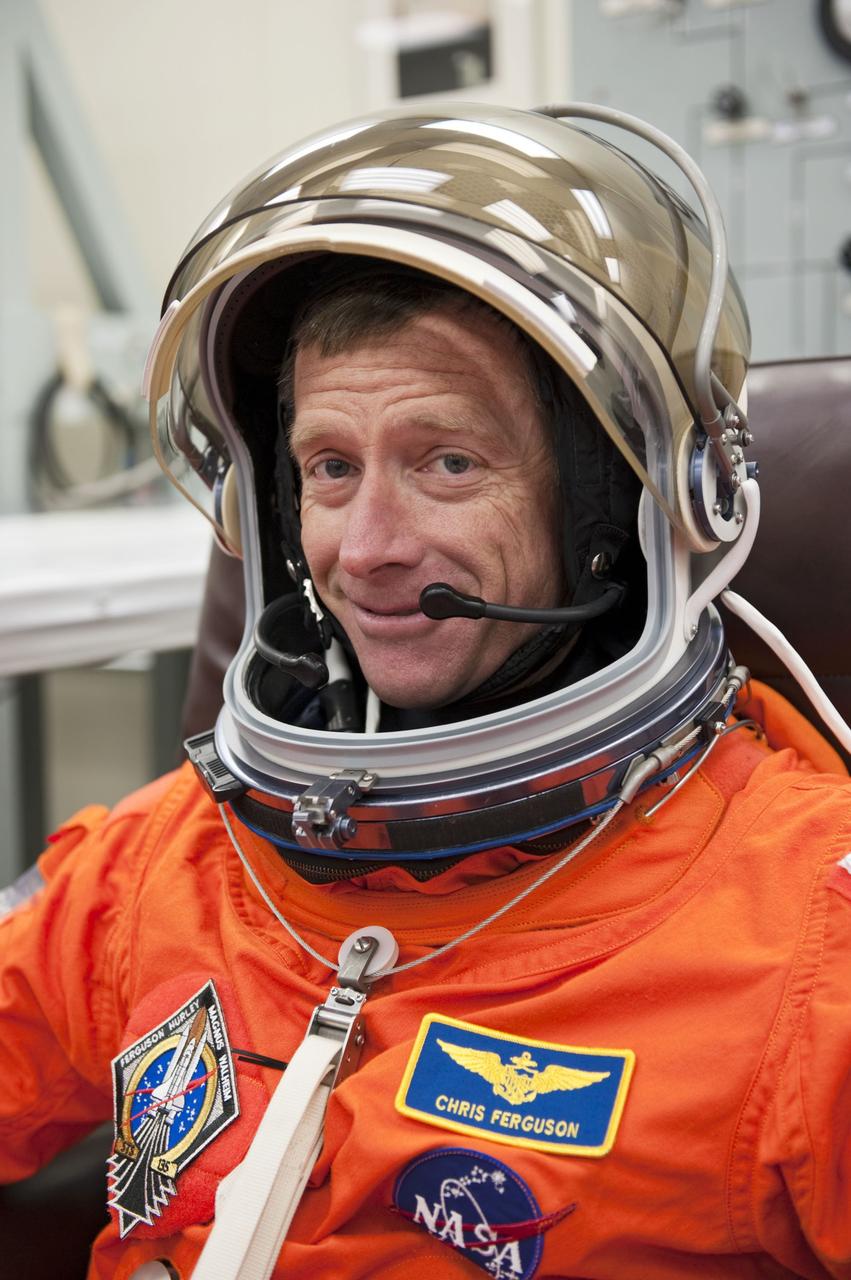
CAPE CANAVERAL, Fla. -- In the Operations and Checkout Building at NASA's Kennedy Space Center in Florida, STS-135 Commander Chris Ferguson checks the fit of his launch-and-entry suit and helmet during a simulated launch countdown. As part of the Terminal Countdown Demonstration Test (TCDT), the crew members are taken to Kennedy's Launch Pad 39A and strapped into space shuttle Atlantis to practice the steps that will be taken on launch day. Atlantis and its crew are targeted to lift off July 8, taking with them the Raffaello multi-purpose logistics module packed with supplies and spare parts to the International Space Station. The STS-135 mission also will fly a system to investigate the potential for robotically refueling existing satellites and return a failed ammonia pump module to help NASA better understand the failure mechanism and improve pump designs for future systems. STS-135 will be the 33rd flight of Atlantis, the 37th shuttle mission to the space station, and the 135th and final mission of NASA's Space Shuttle Program. For more information visit, www.nasa.gov/mission_pages/shuttle/shuttlemissions/sts135/index.html. Photo credit: NASA/Kim Shiflett
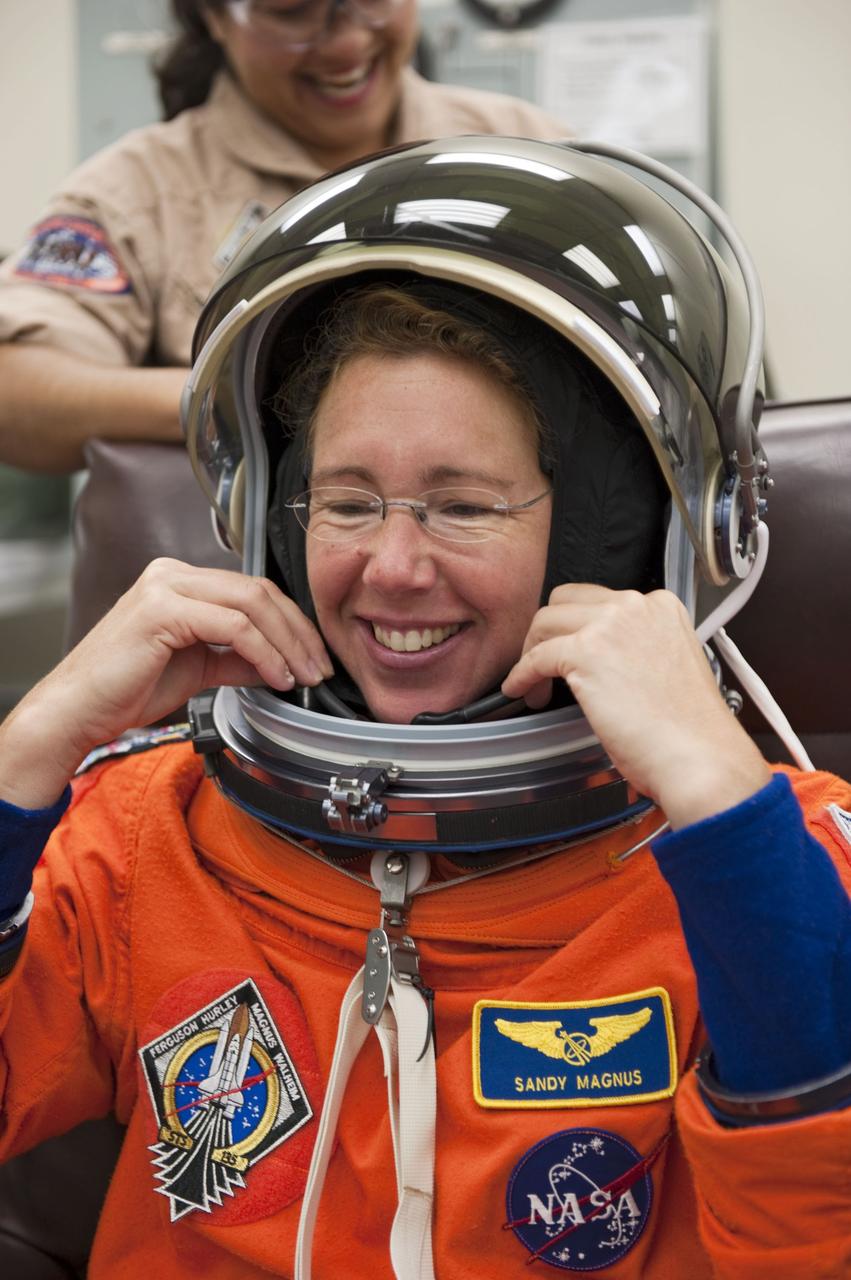
CAPE CANAVERAL, Fla. -- In the Operations and Checkout Building at NASA's Kennedy Space Center in Florida, STS-135 Mission Specialist Sandy Magnus checks the fit of her launch-and-entry suit and helmet during a simulated launch countdown. As part of the Terminal Countdown Demonstration Test (TCDT), the crew members are taken to Kennedy's Launch Pad 39A and strapped into space shuttle Atlantis to practice the steps that will be taken on launch day. Atlantis and its crew are targeted to lift off July 8, taking with them the Raffaello multi-purpose logistics module packed with supplies and spare parts to the International Space Station. The STS-135 mission also will fly a system to investigate the potential for robotically refueling existing satellites and return a failed ammonia pump module to help NASA better understand the failure mechanism and improve pump designs for future systems. STS-135 will be the 33rd flight of Atlantis, the 37th shuttle mission to the space station, and the 135th and final mission of NASA's Space Shuttle Program. For more information visit, www.nasa.gov/mission_pages/shuttle/shuttlemissions/sts135/index.html. Photo credit: NASA/Kim Shiflett
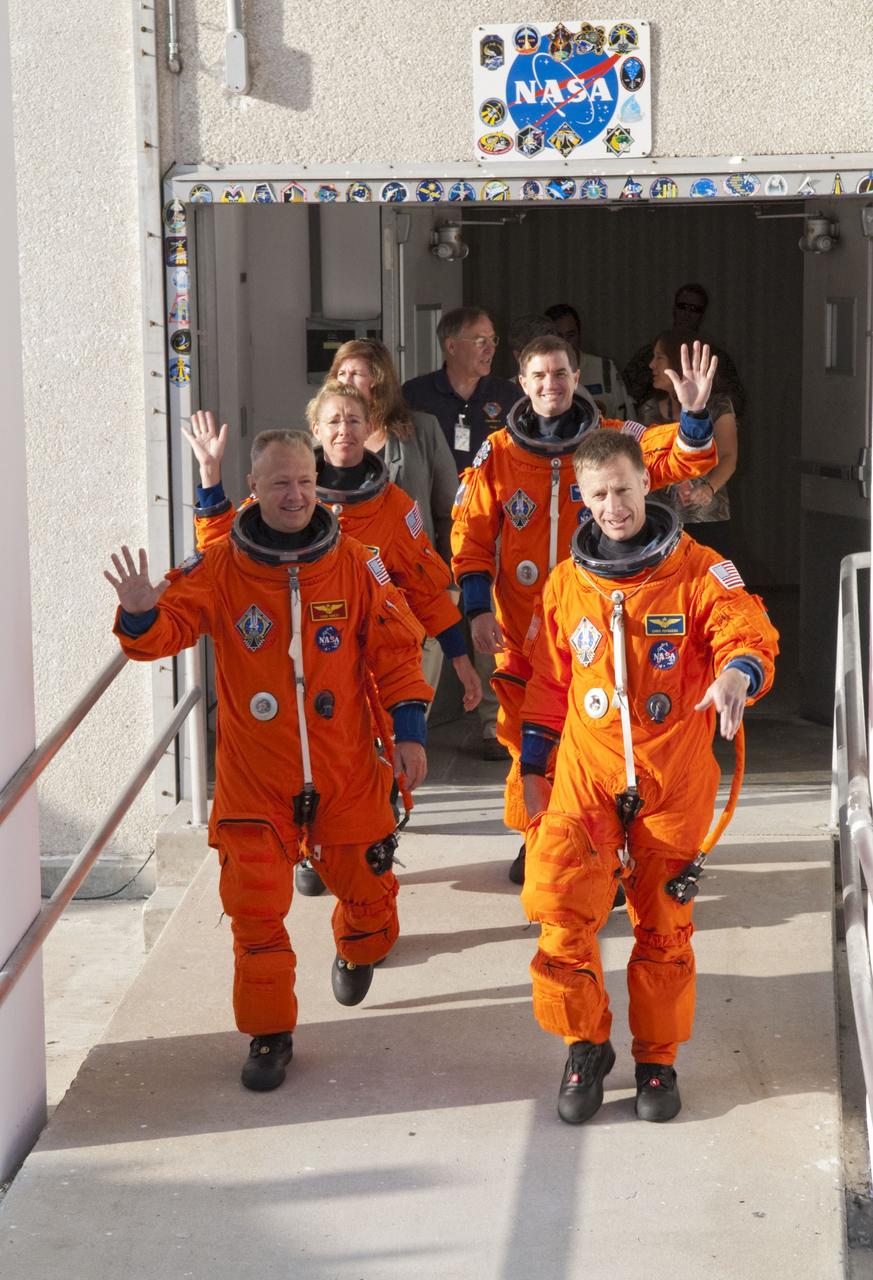
CAPE CANAVERAL, Fla. -- During a simulated launch countdown, the STS-135 crew walks out of the Operations and Checkout Building to the waiting Astrovan at NASA's Kennedy Space Center in Florida. As part of the Terminal Countdown Demonstration Test (TCDT), the crew members are driven to Kennedy's Launch Pad 39A and then are strapped into space shuttle Atlantis to practice the steps that will be taken on launch day. On the front row are STS-135 Pilot Doug Hurley (left) and Commander Chris Ferguson; second row; are Mission Specialists Sandy Magnus and Rex Walheim. Atlantis and its crew are targeted to lift off July 8, taking with them the Raffaello multi-purpose logistics module packed with supplies and spare parts to the International Space Station. The STS-135 mission also will fly a system to investigate the potential for robotically refueling existing satellites and return a failed ammonia pump module to help NASA better understand the failure mechanism and improve pump designs for future systems. STS-135 will be the 33rd flight of Atlantis, the 37th shuttle mission to the space station, and the 135th and final mission of NASA's Space Shuttle Program. For more information visit, www.nasa.gov/mission_pages/shuttle/shuttlemissions/sts135/index.html. Photo credit: NASA/Kim Shiflett

CAPE CANAVERAL, Fla. -- During a simulated launch countdown the STS-135 crew pauses for a photo before climbing aboard the waiting Astrovan at NASA's Kennedy Space Center in Florida. As part of the Terminal Countdown Demonstration Test (TCDT), the crew members are driven to Kennedy's Launch Pad 39A and then strapped into space shuttle Atlantis to practice the steps that will be taken on launch day. From left are Mission Specialists Rex Walheim and Sandy Magnus, Pilot Doug Hurley and Commander Chris Ferguson. Atlantis and its crew are targeted to lift off July 8, taking with them the Raffaello multi-purpose logistics module packed with supplies and spare parts to the International Space Station. The STS-135 mission also will fly a system to investigate the potential for robotically refueling existing satellites and return a failed ammonia pump module to help NASA better understand the failure mechanism and improve pump designs for future systems. STS-135 will be the 33rd flight of Atlantis, the 37th shuttle mission to the space station, and the 135th and final mission of NASA's Space Shuttle Program. For more information visit, www.nasa.gov/mission_pages/shuttle/shuttlemissions/sts135/index.html. Photo credit: NASA/Kim Shiflett
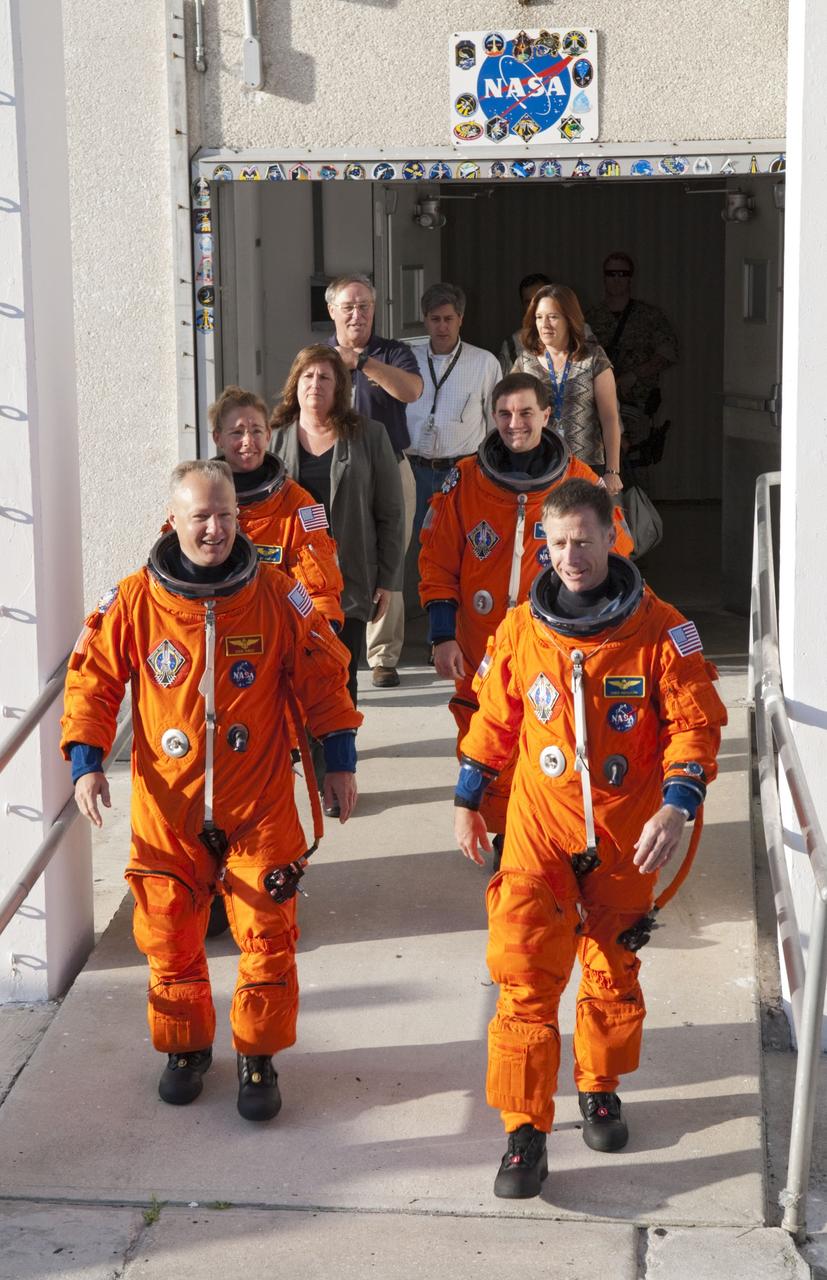
CAPE CANAVERAL, Fla. -- During a simulated launch countdown, the STS-135 crew walks out of the Operations and Checkout Building to the waiting Astrovan at NASA's Kennedy Space Center in Florida. As part of the Terminal Countdown Demonstration Test (TCDT), the crew members are driven to Kennedy's Launch Pad 39A and then are strapped into space shuttle Atlantis to practice the steps that will be taken on launch day. On the front row are STS-135 Pilot Doug Hurley (left) and Commander Chris Ferguson; second row; are Mission Specialists Sandy Magnus and Rex Walheim. Atlantis and its crew are targeted to lift off July 8, taking with them the Raffaello multi-purpose logistics module packed with supplies and spare parts to the International Space Station. The STS-135 mission also will fly a system to investigate the potential for robotically refueling existing satellites and return a failed ammonia pump module to help NASA better understand the failure mechanism and improve pump designs for future systems. STS-135 will be the 33rd flight of Atlantis, the 37th shuttle mission to the space station, and the 135th and final mission of NASA's Space Shuttle Program. For more information visit, www.nasa.gov/mission_pages/shuttle/shuttlemissions/sts135/index.html. Photo credit: NASA/Kim Shiflett

CAPE CANAVERAL, Fla. -- In the Operations and Checkout Building at NASA's Kennedy Space Center in Florida, STS-135 Mission Specialist Rex Walheim checks the fit of his launch-and-entry suit, helmet and gloves during a simulated launch countdown. As part of the Terminal Countdown Demonstration Test (TCDT), the crew members are taken to Kennedy's Launch Pad 39A and strapped into space shuttle Atlantis to practice the steps that will be taken on launch day. Atlantis and its crew are targeted to lift off July 8, taking with them the Raffaello multi-purpose logistics module packed with supplies and spare parts to the International Space Station. The STS-135 mission also will fly a system to investigate the potential for robotically refueling existing satellites and return a failed ammonia pump module to help NASA better understand the failure mechanism and improve pump designs for future systems. STS-135 will be the 33rd flight of Atlantis, the 37th shuttle mission to the space station, and the 135th and final mission of NASA's Space Shuttle Program. For more information visit, www.nasa.gov/mission_pages/shuttle/shuttlemissions/sts135/index.html. Photo credit: NASA/Kim Shiflett
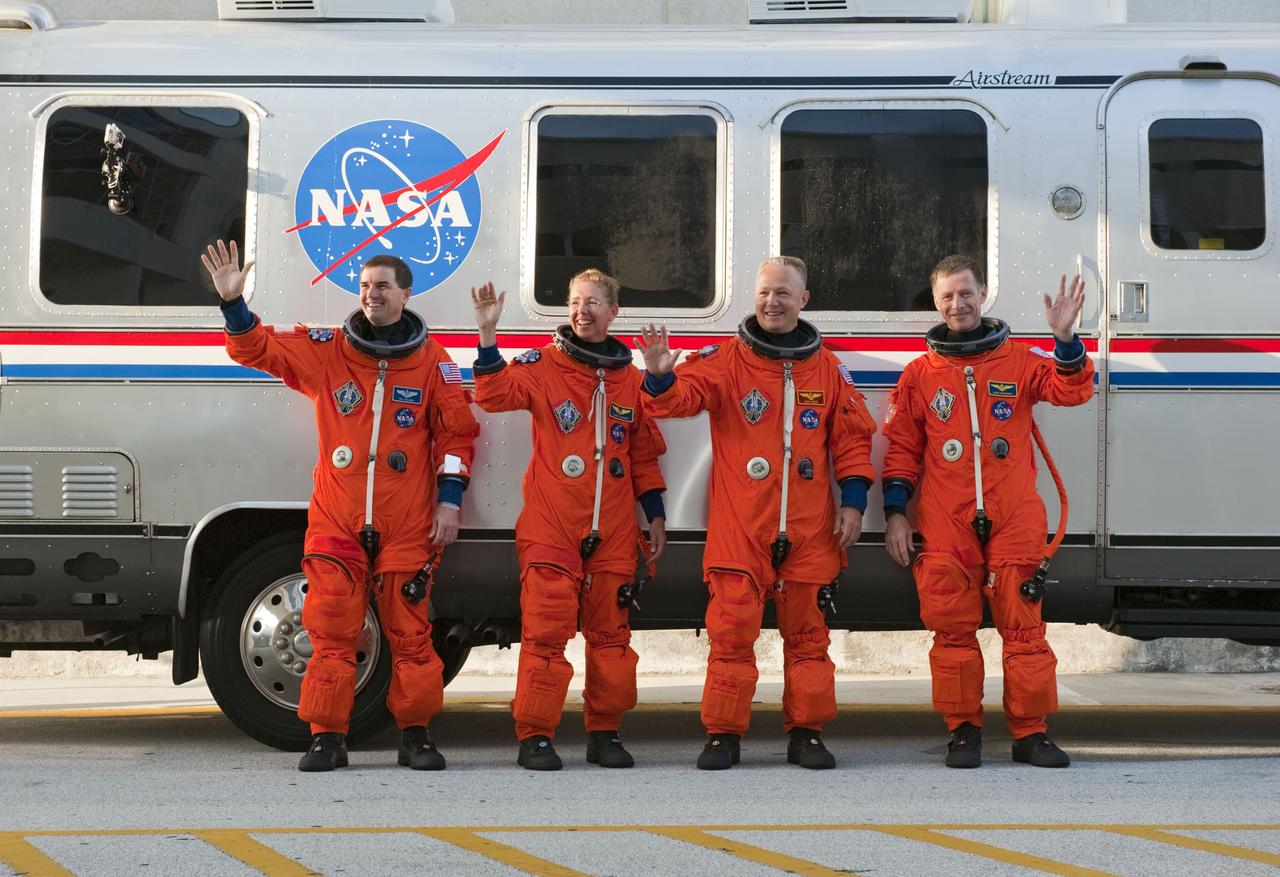
CAPE CANAVERAL, Fla. -- During a simulated launch countdown the STS-135 crew pauses for a photo and waves to Kennedy workers and media before climbing aboard the waiting Astrovan at NASA's Kennedy Space Center in Florida. As part of the Terminal Countdown Demonstration Test (TCDT), the crew members are driven to Kennedy's Launch Pad 39A and then strapped into space shuttle Atlantis to practice the steps that will be taken on launch day. From left are Mission Specialists Rex Walheim and Sandy Magnus, Pilot Doug Hurley and Commander Chris Ferguson. Atlantis and its crew are targeted to lift off July 8, taking with them the Raffaello multi-purpose logistics module packed with supplies and spare parts to the International Space Station. The STS-135 mission also will fly a system to investigate the potential for robotically refueling existing satellites and return a failed ammonia pump module to help NASA better understand the failure mechanism and improve pump designs for future systems. STS-135 will be the 33rd flight of Atlantis, the 37th shuttle mission to the space station, and the 135th and final mission of NASA's Space Shuttle Program. For more information visit, www.nasa.gov/mission_pages/shuttle/shuttlemissions/sts135/index.html. Photo credit: NASA/Kim Shiflett
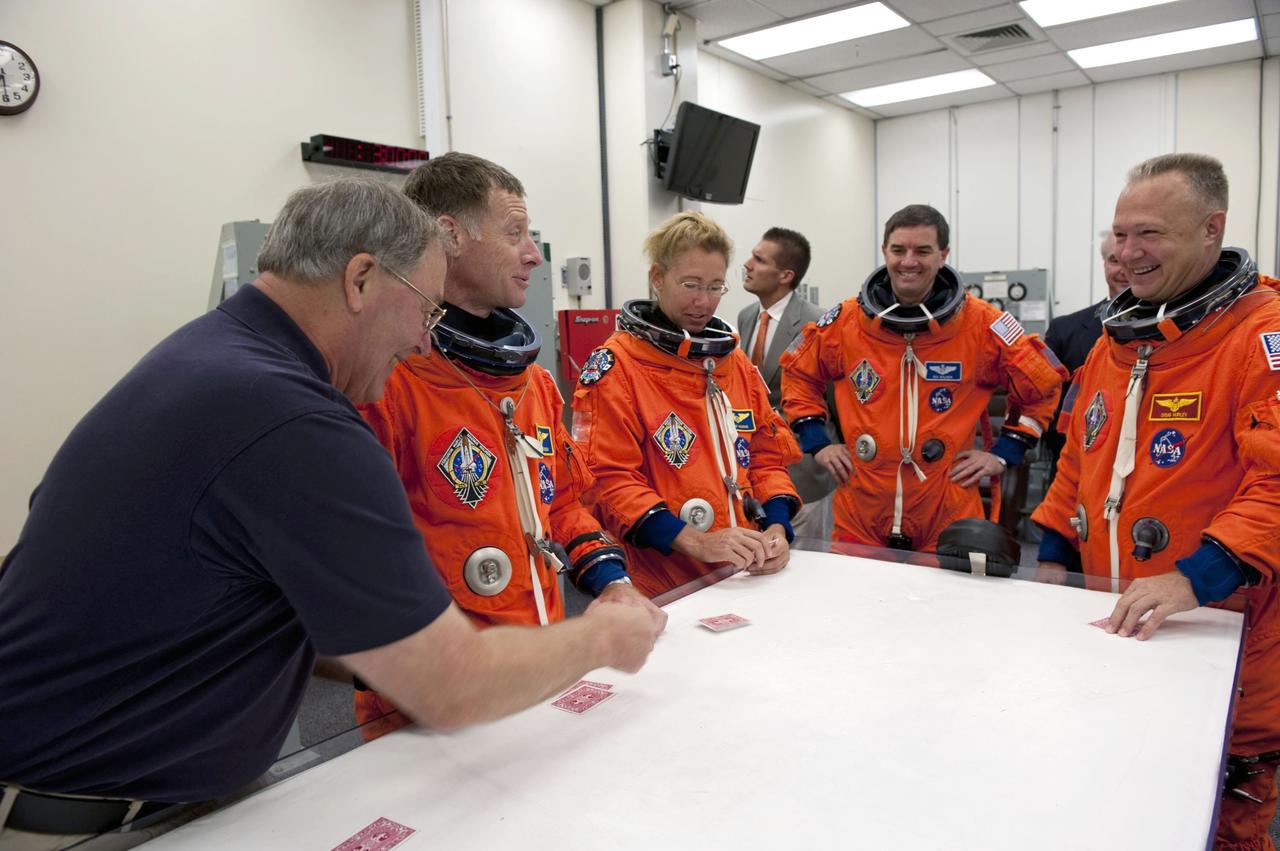
CAPE CANAVERAL, Fla. -- In the Operations and Checkout Building at NASA's Kennedy Space Center in Florida, the STS-135 crew members enjoy a light moment during a simulated launch countdown. From left are Jerry Ross, chief of the Vehicle Integration Test Office and former NASA astronaut, Commander Chris Ferguson, Mission Specialists Sandy Magnus and Rex Walheim, and Pilot Doug Hurley. As part of the Terminal Countdown Demonstration Test (TCDT), the crew members are taken to Kennedy's Launch Pad 39A and strapped into space shuttle Atlantis to practice the steps that will be taken on launch day. Atlantis and its crew are targeted to lift off July 8, taking with them the Raffaello multi-purpose logistics module packed with supplies and spare parts to the International Space Station. The STS-135 mission also will fly a system to investigate the potential for robotically refueling existing satellites and return a failed ammonia pump module to help NASA better understand the failure mechanism and improve pump designs for future systems. STS-135 will be the 33rd flight of Atlantis, the 37th shuttle mission to the space station, and the 135th and final mission of NASA's Space Shuttle Program. For more information visit, www.nasa.gov/mission_pages/shuttle/shuttlemissions/sts135/index.html. Photo credit: NASA/Kim Shiflett
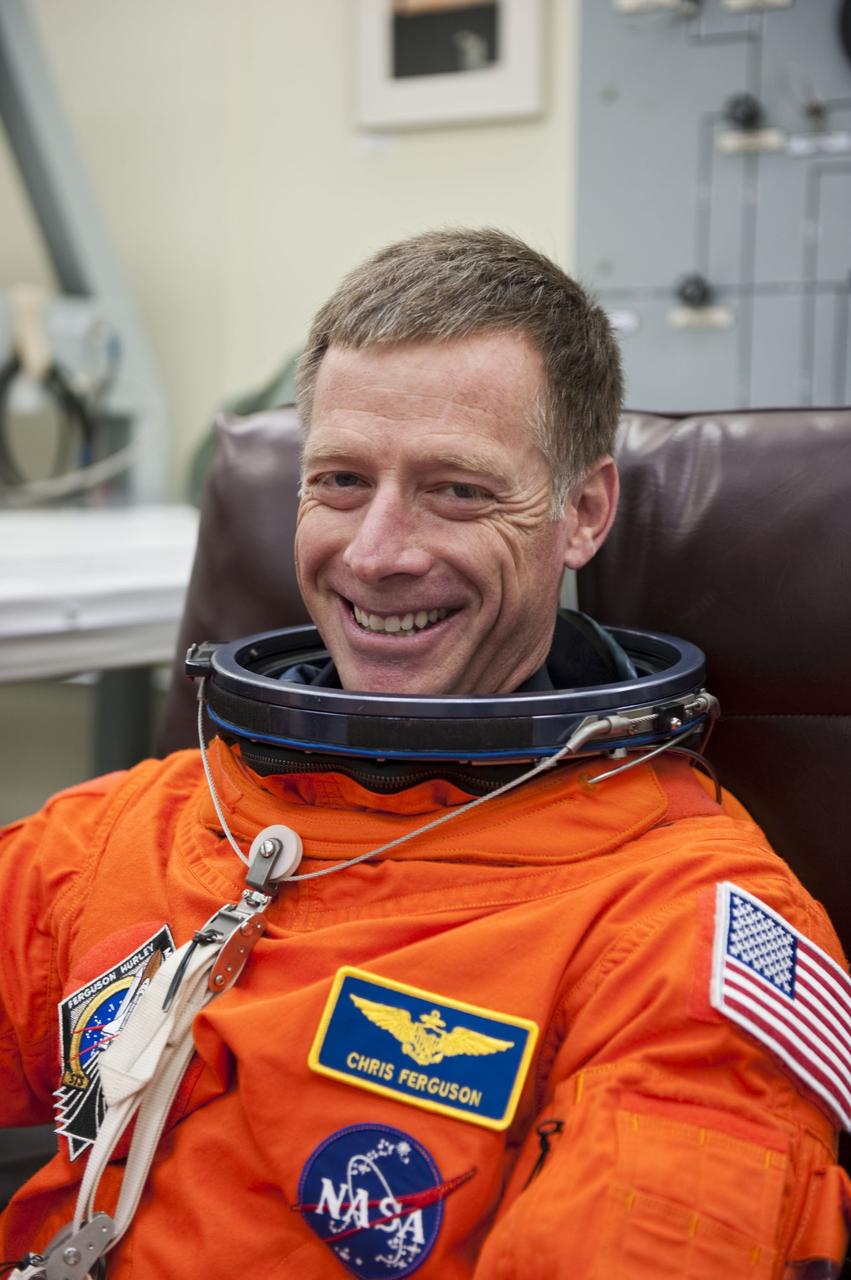
CAPE CANAVERAL, Fla. -- In the Operations and Checkout Building at NASA's Kennedy Space Center in Florida, STS-135 Commander Chris Ferguson checks the fit of his launch-and-entry suit during a simulated launch countdown. As part of the Terminal Countdown Demonstration Test (TCDT), the crew members are taken to Kennedy's Launch Pad 39A and strapped into space shuttle Atlantis to practice the steps that will be taken on launch day. Atlantis and its crew are targeted to lift off July 8, taking with them the Raffaello multi-purpose logistics module packed with supplies and spare parts to the International Space Station. The STS-135 mission also will fly a system to investigate the potential for robotically refueling existing satellites and return a failed ammonia pump module to help NASA better understand the failure mechanism and improve pump designs for future systems. STS-135 will be the 33rd flight of Atlantis, the 37th shuttle mission to the space station, and the 135th and final mission of NASA's Space Shuttle Program. For more information visit, www.nasa.gov/mission_pages/shuttle/shuttlemissions/sts135/index.html. Photo credit: NASA/Kim Shiflett
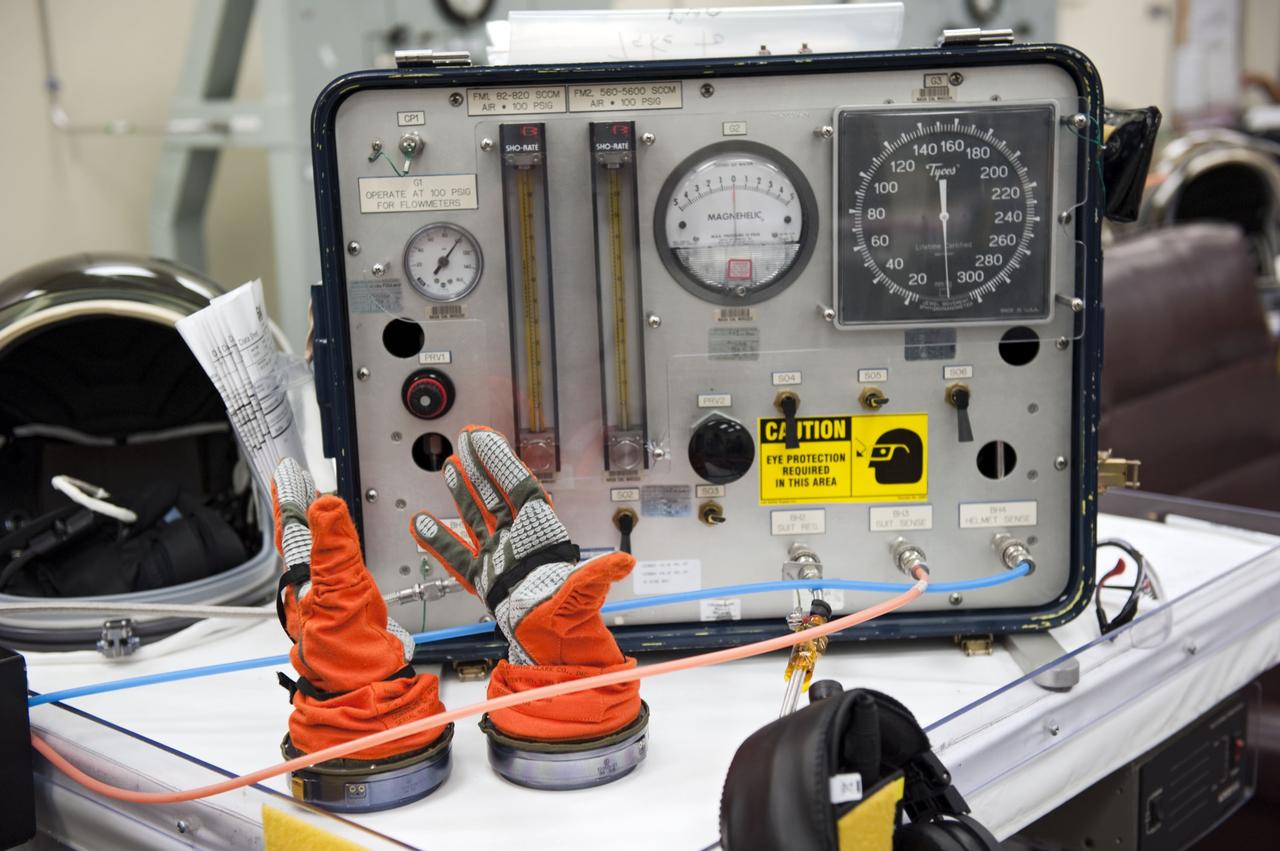
CAPE CANAVERAL, Fla. -- In the Operations and Checkout Building at NASA's Kennedy Space Center in Florida, the astronauts of space shuttle Atlantis' STS-135 crew put on their launch-and-entry suits and check the fit of their helmets and gloves. Seen here is a unit that checks air pressure flowing through the suits to ensure there are no leaks. As part of the Terminal Countdown Demonstration Test (TCDT), the crew members are taken to Kennedy's Launch Pad 39A and strapped into space shuttle Atlantis to practice the steps that will be taken on launch day. Atlantis and its crew are targeted to lift off July 8, taking with them the Raffaello multi-purpose logistics module packed with supplies and spare parts to the International Space Station. The STS-135 mission also will fly a system to investigate the potential for robotically refueling existing satellites and return a failed ammonia pump module to help NASA better understand the failure mechanism and improve pump designs for future systems. STS-135 will be the 33rd flight of Atlantis, the 37th shuttle mission to the space station, and the 135th and final mission of NASA's Space Shuttle Program. For more information visit, www.nasa.gov/mission_pages/shuttle/shuttlemissions/sts135/index.html. Photo credit: NASA/Kim Shiflett
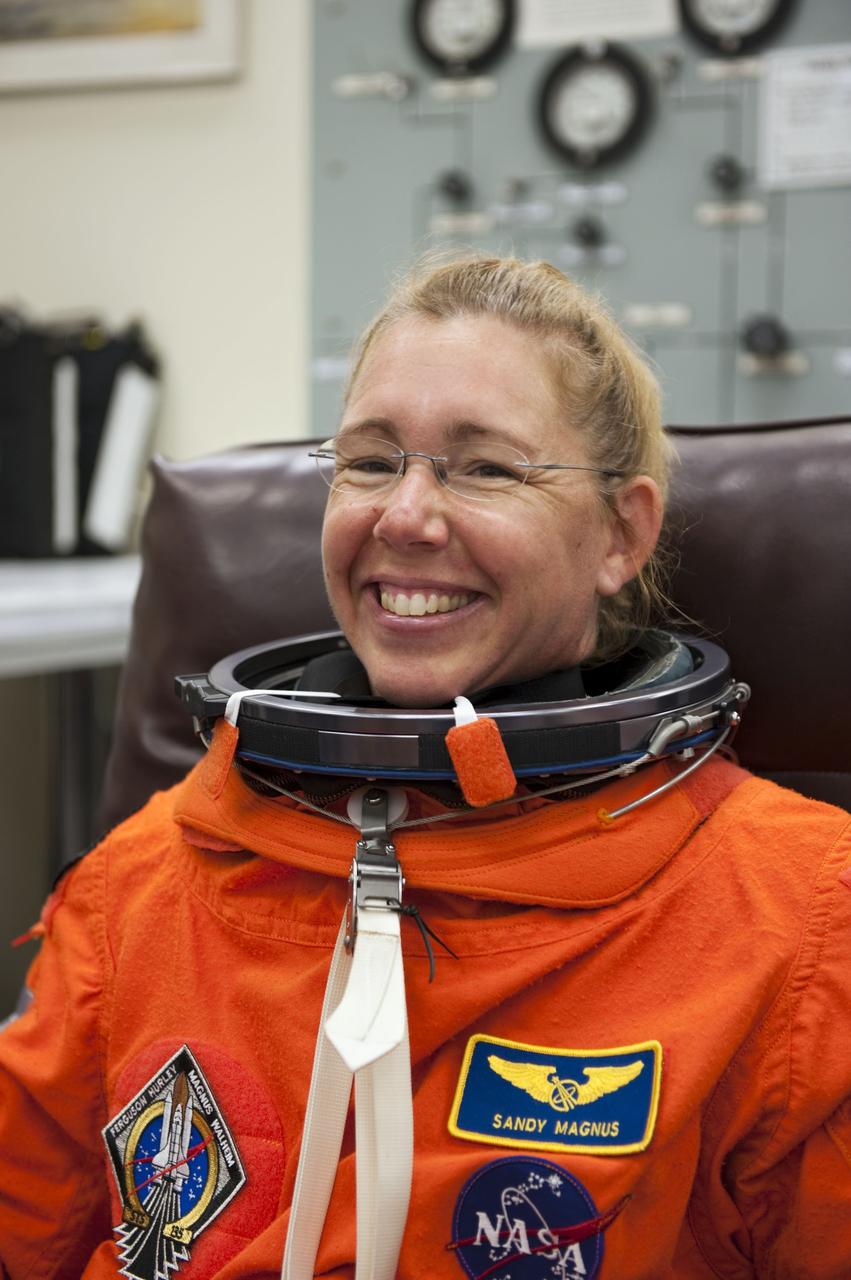
CAPE CANAVERAL, Fla. -- In the Operations and Checkout Building at NASA's Kennedy Space Center in Florida, STS-135 Mission Specialist Sandy Magnus checks the fit of her launch-and-entry suit during a simulated launch countdown. As part of the Terminal Countdown Demonstration Test (TCDT), the crew members are taken to Kennedy's Launch Pad 39A and strapped into space shuttle Atlantis to practice the steps that will be taken on launch day. Atlantis and its crew are targeted to lift off July 8, taking with them the Raffaello multi-purpose logistics module packed with supplies and spare parts to the International Space Station. The STS-135 mission also will fly a system to investigate the potential for robotically refueling existing satellites and return a failed ammonia pump module to help NASA better understand the failure mechanism and improve pump designs for future systems. STS-135 will be the 33rd flight of Atlantis, the 37th shuttle mission to the space station, and the 135th and final mission of NASA's Space Shuttle Program. For more information visit, www.nasa.gov/mission_pages/shuttle/shuttlemissions/sts135/index.html. Photo credit: NASA/Kim Shiflett

CAPE CANAVERAL, Fla. -- In the Operations and Checkout Building at NASA's Kennedy Space Center in Florida, STS-135 Pilot Doug Hurley checks the fit of his launch-and-entry suit and helmet during a simulated launch countdown. As part of the Terminal Countdown Demonstration Test (TCDT), the crew members are taken to Kennedy's Launch Pad 39A and strapped into space shuttle Atlantis to practice the steps that will be taken on launch day. Atlantis and its crew are targeted to lift off July 8, taking with them the Raffaello multi-purpose logistics module packed with supplies and spare parts to the International Space Station. The STS-135 mission also will fly a system to investigate the potential for robotically refueling existing satellites and return a failed ammonia pump module to help NASA better understand the failure mechanism and improve pump designs for future systems. STS-135 will be the 33rd flight of Atlantis, the 37th shuttle mission to the space station, and the 135th and final mission of NASA's Space Shuttle Program. For more information visit, www.nasa.gov/mission_pages/shuttle/shuttlemissions/sts135/index.html. Photo credit: NASA/Kim Shiflett
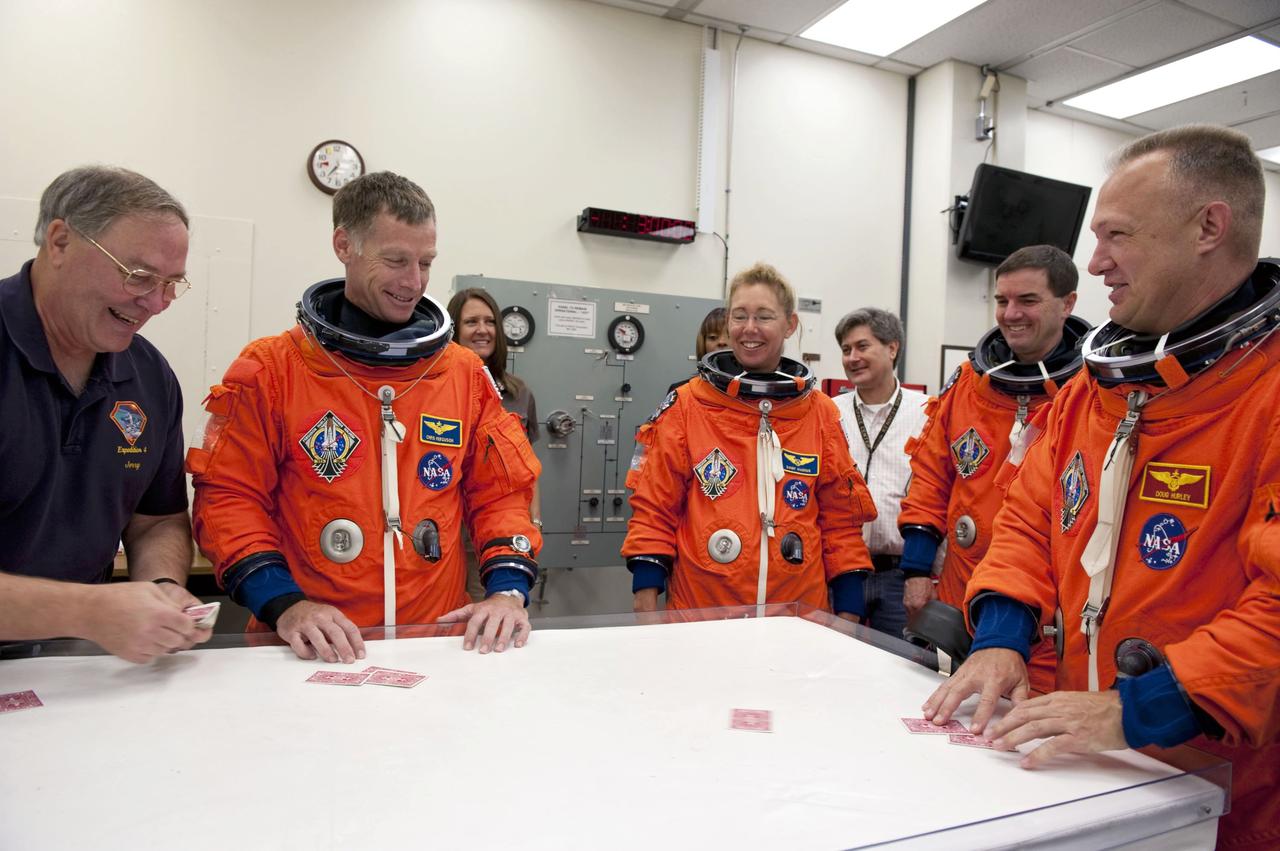
CAPE CANAVERAL, Fla. -- In the Operations and Checkout Building at NASA's Kennedy Space Center in Florida, the STS-135 crew members enjoy a light moment during a simulated launch countdown. From left are Jerry Ross, chief of the Vehicle Integration Test Office and former NASA astronaut, Commander Chris Ferguson, Mission Specialists Sandy Magnus and Rex Walheim, and Pilot Doug Hurley. As part of the Terminal Countdown Demonstration Test (TCDT), the crew members are taken to Kennedy's Launch Pad 39A and strapped into space shuttle Atlantis to practice the steps that will be taken on launch day. Atlantis and its crew are targeted to lift off July 8, taking with them the Raffaello multi-purpose logistics module packed with supplies and spare parts to the International Space Station. The STS-135 mission also will fly a system to investigate the potential for robotically refueling existing satellites and return a failed ammonia pump module to help NASA better understand the failure mechanism and improve pump designs for future systems. STS-135 will be the 33rd flight of Atlantis, the 37th shuttle mission to the space station, and the 135th and final mission of NASA's Space Shuttle Program. For more information visit, www.nasa.gov/mission_pages/shuttle/shuttlemissions/sts135/index.html. Photo credit: NASA/Kim Shiflett

CAPE CANAVERAL, Fla. -- During a simulated launch countdown, the STS-135 crew walks out of the Operations and Checkout Building to the waiting Astrovan at NASA's Kennedy Space Center in Florida. As part of the Terminal Countdown Demonstration Test (TCDT), the crew members are driven to Kennedy's Launch Pad 39A and then strapped into space shuttle Atlantis to practice the steps that will be taken on launch day. From left are Mission Specialists Rex Walheim and Sandy Magnus, Pilot Doug Hurley and Commander Chris Ferguson. Atlantis and its crew are targeted to lift off July 8, taking with them the Raffaello multi-purpose logistics module packed with supplies and spare parts to the International Space Station. The STS-135 mission also will fly a system to investigate the potential for robotically refueling existing satellites and return a failed ammonia pump module to help NASA better understand the failure mechanism and improve pump designs for future systems. STS-135 will be the 33rd flight of Atlantis, the 37th shuttle mission to the space station, and the 135th and final mission of NASA's Space Shuttle Program. For more information visit, www.nasa.gov/mission_pages/shuttle/shuttlemissions/sts135/index.html. Photo credit: NASA/Kim Shiflett

CAPE CANAVERAL, Fla. -- In the Operations and Checkout Building at NASA's Kennedy Space Center in Florida, STS-135 Mission Specialist Rex Walheim checks the fit of his launch-and-entry suit before during a simulated launch countdown. As part of the Terminal Countdown Demonstration Test (TCDT), the crew members are taken to Kennedy's Launch Pad 39A and strapped into space shuttle Atlantis to practice the steps that will be taken on launch day. Atlantis and its crew are targeted to lift off July 8, taking with them the Raffaello multi-purpose logistics module packed with supplies and spare parts to the International Space Station. The STS-135 mission also will fly a system to investigate the potential for robotically refueling existing satellites and return a failed ammonia pump module to help NASA better understand the failure mechanism and improve pump designs for future systems. STS-135 will be the 33rd flight of Atlantis, the 37th shuttle mission to the space station, and the 135th and final mission of NASA's Space Shuttle Program. For more information visit, www.nasa.gov/mission_pages/shuttle/shuttlemissions/sts135/index.html. Photo credit: NASA/Kim Shiflett
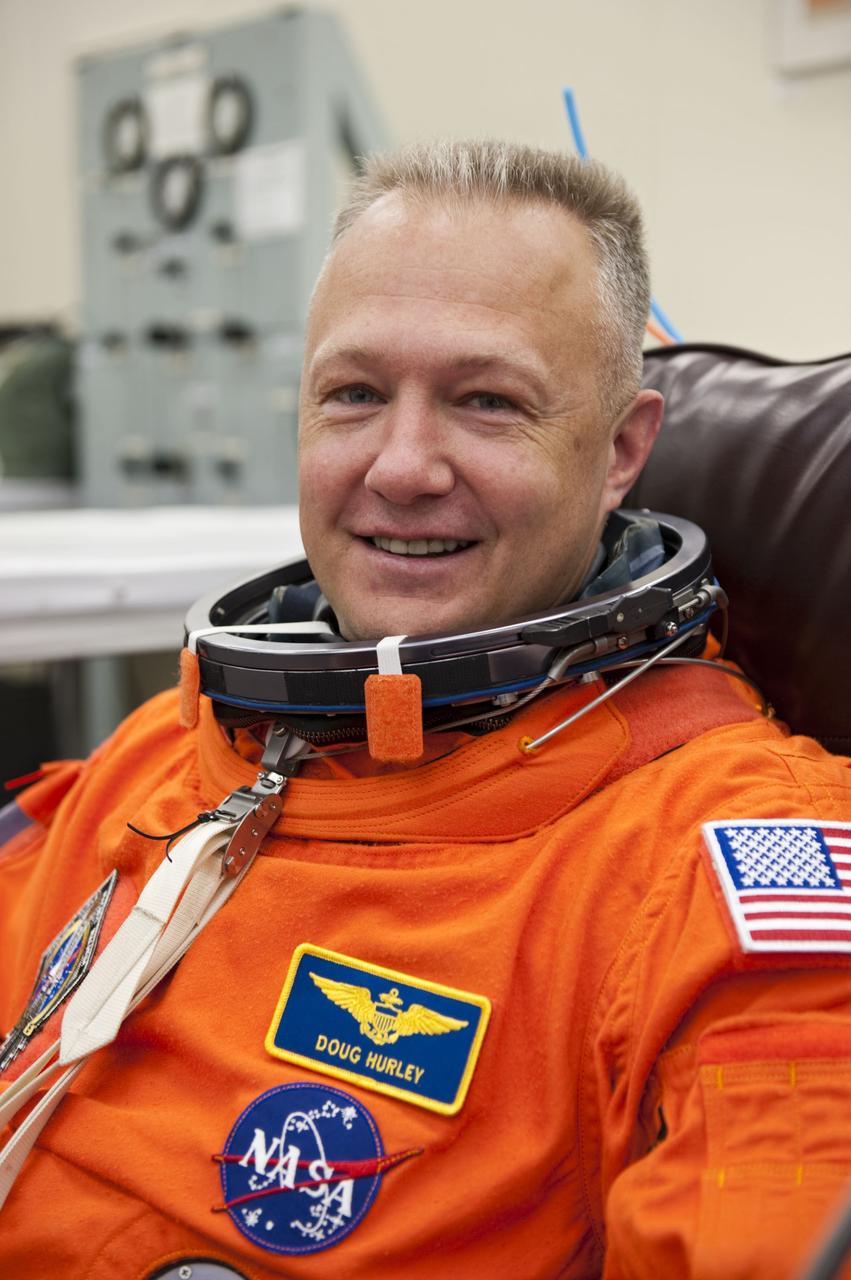
CAPE CANAVERAL, Fla. -- In the Operations and Checkout Building at NASA's Kennedy Space Center in Florida, STS-135 Pilot Doug Hurley checks the fit of his launch-and-entry suit during a simulated launch countdown. As part of the Terminal Countdown Demonstration Test (TCDT), the crew members are taken to Kennedy's Launch Pad 39A and strapped into space shuttle Atlantis to practice the steps that will be taken on launch day. Atlantis and its crew are targeted to lift off July 8, taking with them the Raffaello multi-purpose logistics module packed with supplies and spare parts to the International Space Station. The STS-135 mission also will fly a system to investigate the potential for robotically refueling existing satellites and return a failed ammonia pump module to help NASA better understand the failure mechanism and improve pump designs for future systems. STS-135 will be the 33rd flight of Atlantis, the 37th shuttle mission to the space station, and the 135th and final mission of NASA's Space Shuttle Program. For more information visit, www.nasa.gov/mission_pages/shuttle/shuttlemissions/sts135/index.html. Photo credit: NASA/Kim Shiflett