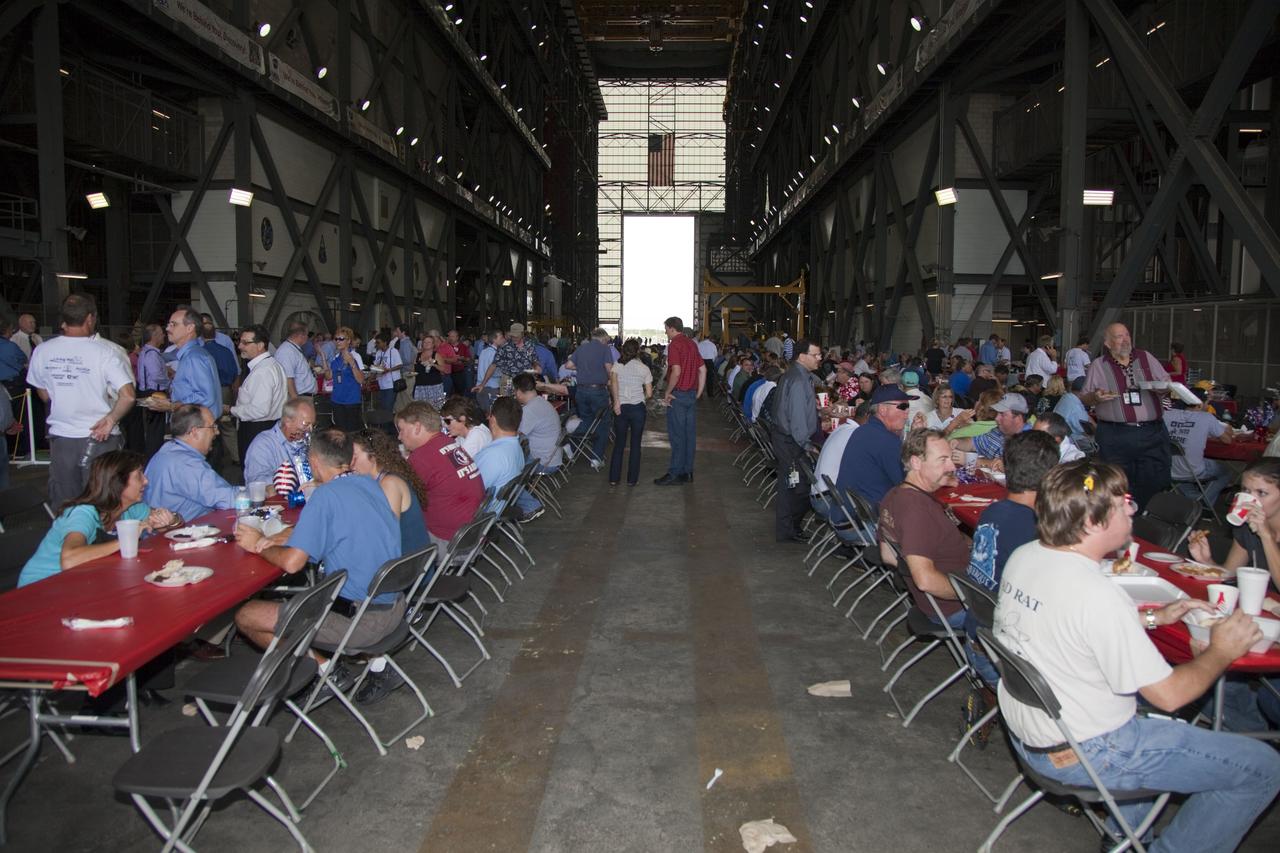
CAPE CANAVERAL, Fla. -- Hundreds of space shuttle workers enjoy a meal at tables set up in the transfer aisle of NASA Kennedy Space Center's Vehicle Assembly Building. The occasion celebrated the successful launch of shuttle Atlantis on the STS-135 mission, the final flight of the agency's Space Shuttle Program. Atlantis, with its crew of Commander Chris Ferguson, Pilot Doug Hurley, Mission Specialists Sandy Magnus and Rex Walheim, lifted off at 11:29 a.m. EDT on July 8, 2011 to deliver the Raffaello multi-purpose logistics module packed with supplies and spare parts for the International Space Station. For more information, visit www.nasa.gov/mission_pages/shuttle/shuttlemissions/sts135/index.html. Photo credit: NASA/Frankie Martin
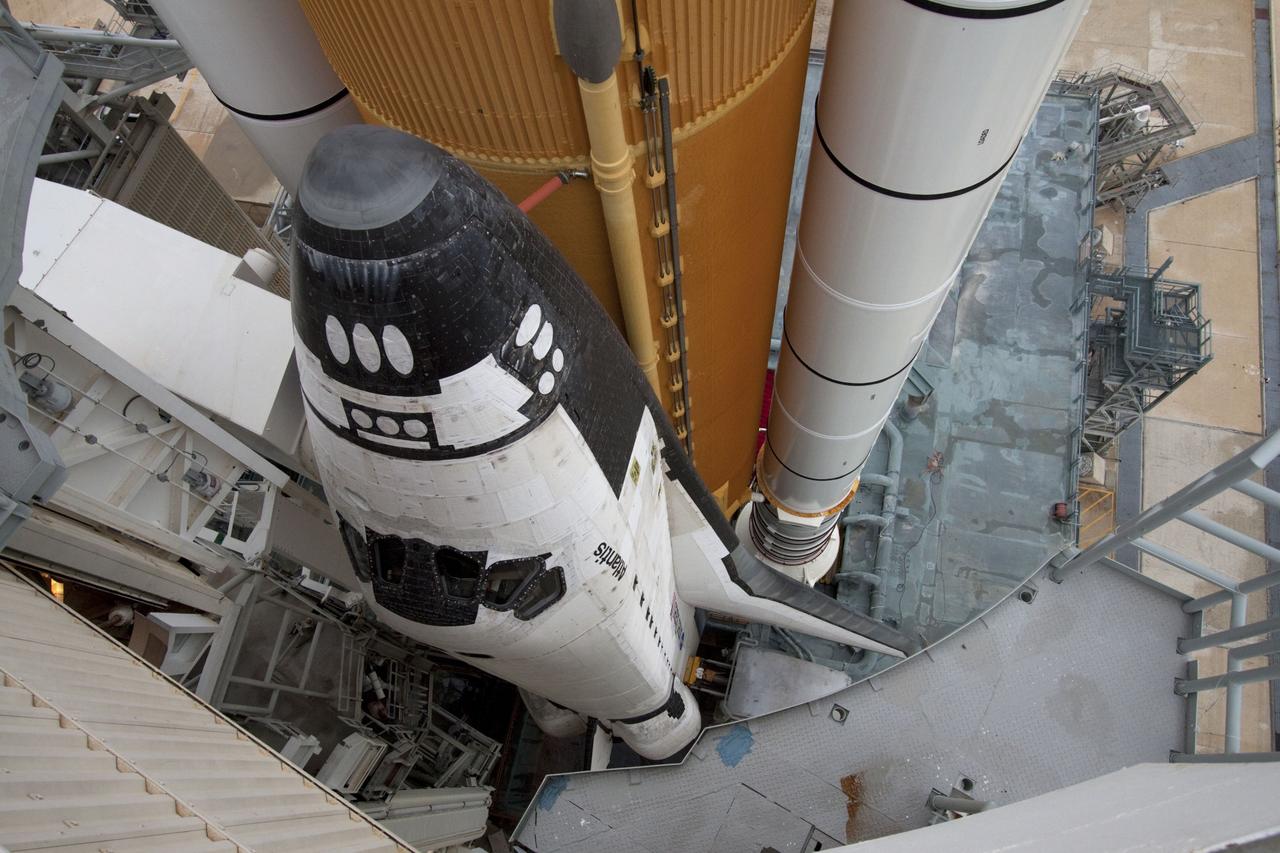
CAPE CANAVERAL, Fla. – Space shuttle Atlantis is revealed on Launch Pad 39A at NASA's Kennedy Space Center in Florida following the move of the rotating service structure (RSS). The structure provides weather protection and access to the shuttle while it awaits liftoff on the pad. RSS "rollback" marks a major milestone in Atlantis' STS-135 mission countdown. Atlantis and its crew of four; Commander Chris Ferguson, Pilot Doug Hurley and Mission Specialists Sandy Magnus and Rex Walheim, are scheduled to lift off at 11:26 a.m. EDT on July 8 to deliver the Raffaello multi-purpose logistics module packed with supplies and spare parts to the International Space Station. Atlantis also will fly the Robotic Refueling Mission experiment that will investigate the potential for robotically refueling existing satellites in orbit. In addition, Atlantis will return with a failed ammonia pump module to help NASA better understand the failure mechanism and improve pump designs for future systems. STS-135 will be the 33rd flight of Atlantis, the 37th shuttle mission to the space station, and the 135th and final mission of NASA's Space Shuttle Program. For more information visit, www.nasa.gov/mission_pages/shuttle/shuttlemissions/sts135/index.html. Photo credit: NASA/Ken Thornsley
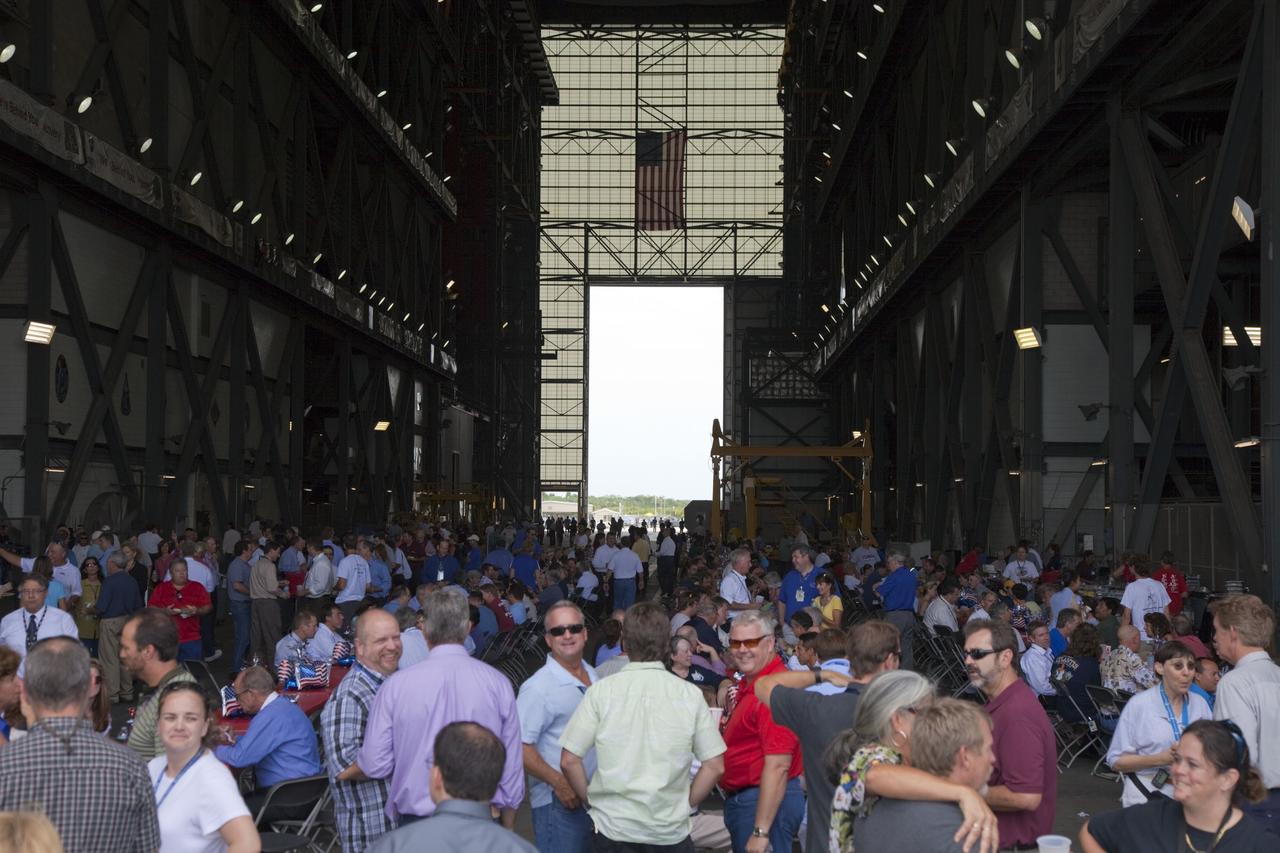
CAPE CANAVERAL, Fla. -- Space shuttle workers fill the transfer aisle of the massive Vehicle Assembly Building at NASA's Kennedy Space Center in Florida to celebrate the successful liftoff of shuttle Atlantis on the STS-135 mission, the final flight of the agency's Space Shuttle Program. Atlantis, with its crew of Commander Chris Ferguson, Pilot Doug Hurley, Mission Specialists Sandy Magnus and Rex Walheim, lifted off at 11:29 a.m. EDT on July 8, 2011 to deliver the Raffaello multi-purpose logistics module packed with supplies and spare parts for the International Space Station. For more information, visit www.nasa.gov/mission_pages/shuttle/shuttlemissions/sts135/index.html. Photo credit: NASA/Frankie Martin
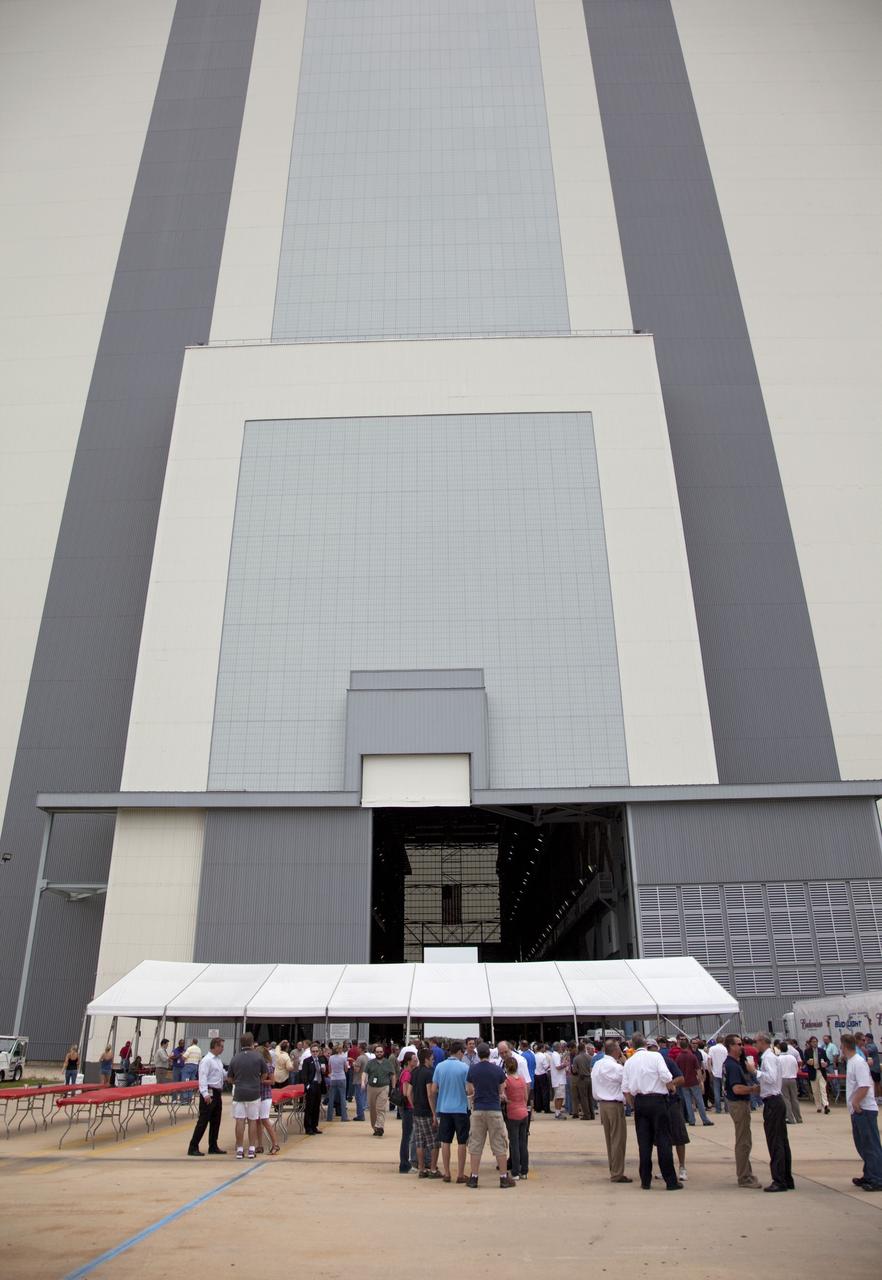
CAPE CANAVERAL, Fla. -- After the successful liftoff of space shuttle Atlantis on the STS-135 mission, hundreds of shuttle workers gather for a party at a tent beside the looming, 525-foot-tall Vehicle Assembly Building at NASA's Kennedy Space Center in Florida. STS-135 is the final flight of the agency's Space Shuttle Program. Atlantis, with its crew of Commander Chris Ferguson, Pilot Doug Hurley, Mission Specialists Sandy Magnus and Rex Walheim, lifted off at 11:29 a.m. EDT on July 8, 2011 to deliver the Raffaello multi-purpose logistics module packed with supplies and spare parts for the International Space Station. For more information, visit www.nasa.gov/mission_pages/shuttle/shuttlemissions/sts135/index.html. Photo credit: NASA/Frankie Martin
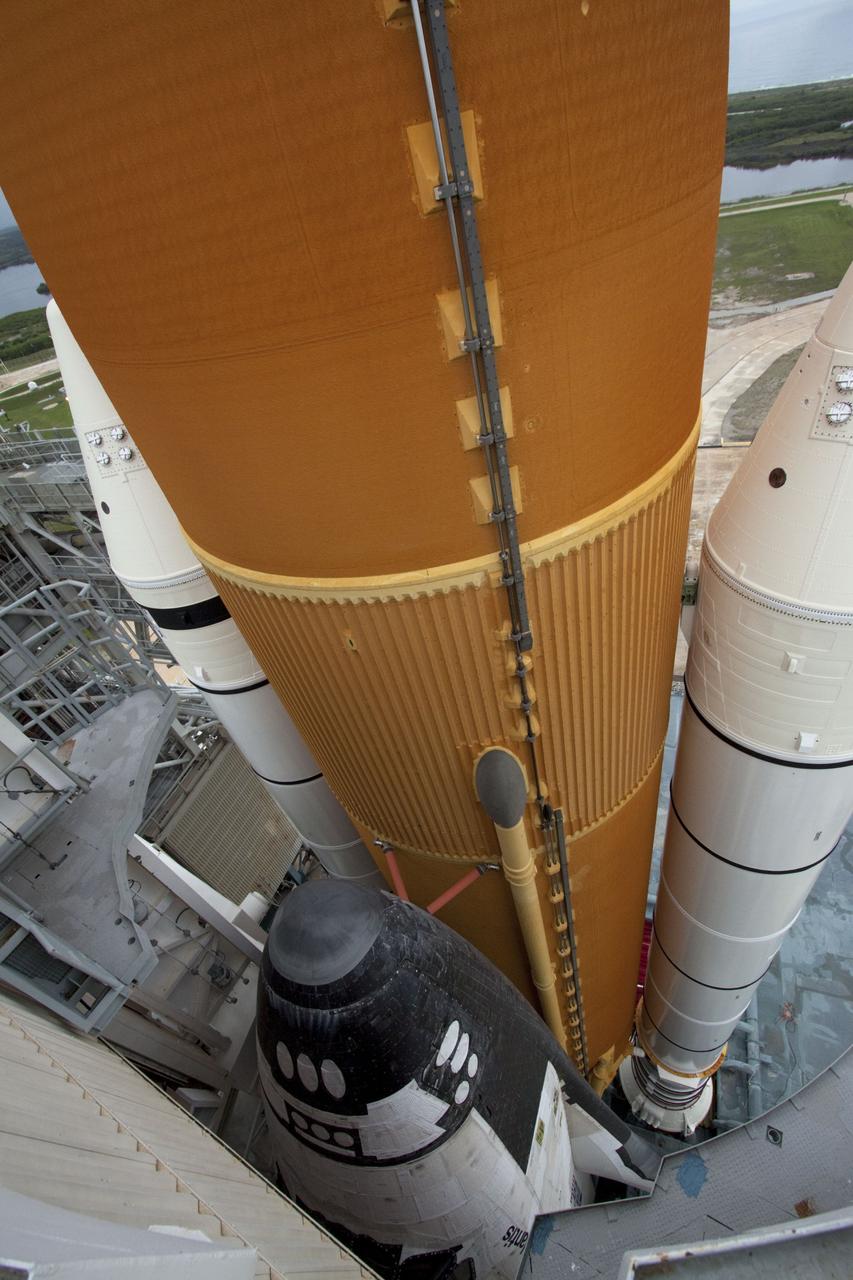
CAPE CANAVERAL, Fla.-- Space shuttle Atlantis is revealed on Launch Pad 39A at NASA's Kennedy Space Center in Florida following the move of the rotating service structure (RSS). The structure provides weather protection and access to the shuttle while it awaits liftoff on the pad. RSS "rollback" marks a major milestone in Atlantis' STS-135 mission countdown. Atlantis and its crew of four; Commander Chris Ferguson, Pilot Doug Hurley and Mission Specialists Sandy Magnus and Rex Walheim, are scheduled to lift off at 11:26 a.m. EDT on July 8 to deliver the Raffaello multi-purpose logistics module packed with supplies and spare parts to the International Space Station. Atlantis also will fly the Robotic Refueling Mission experiment that will investigate the potential for robotically refueling existing satellites in orbit. In addition, Atlantis will return with a failed ammonia pump module to help NASA better understand the failure mechanism and improve pump designs for future systems. STS-135 will be the 33rd flight of Atlantis, the 37th shuttle mission to the space station, and the 135th and final mission of NASA's Space Shuttle Program. For more information visit, www.nasa.gov/mission_pages/shuttle/shuttlemissions/sts135/index.html. Photo credit: NASA/Ken Thornsley
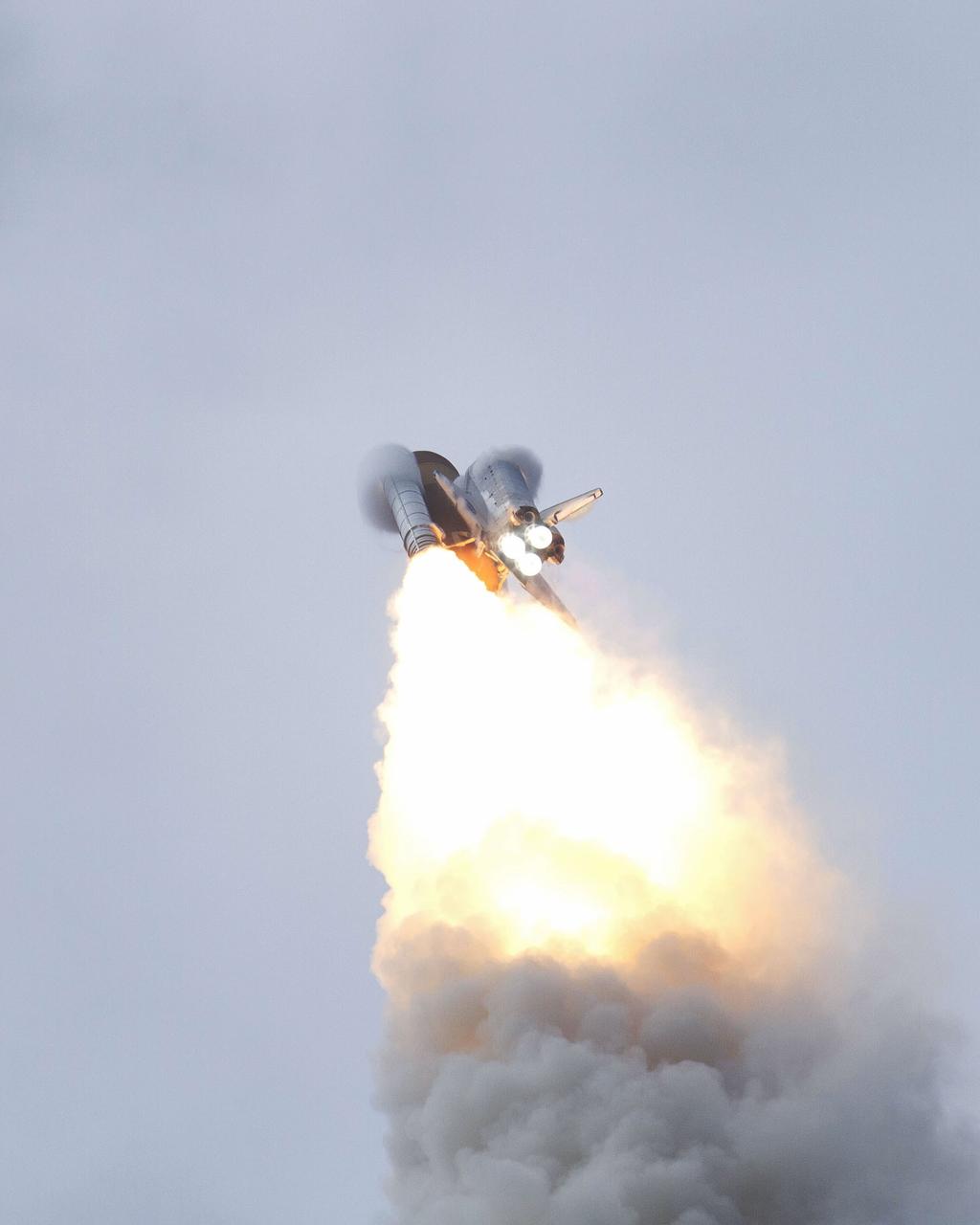
CAPE CANAVERAL, Fla. – A condensation collar is visible around space shuttle Atlantis' solid rocket boosters and forward fuselage as the vehicle makes its last climb toward orbit on the STS-135 mission to the International Space Station. Atlantis, with its crew of Commander Chris Ferguson, Pilot Doug Hurley, Mission Specialists Sandy Magnus and Rex Walheim, lifted off at 11:29 a.m. EDT on July 8, 2011 to deliver the Raffaello multi-purpose logistics module packed with supplies and spare parts for the station. Atlantis also will fly the Robotic Refueling Mission experiment that will investigate the potential for robotically refueling existing satellites in orbit. In addition, Atlantis will return with a failed ammonia pump module to help NASA better understand the failure mechanism and improve pump designs for future systems. STS-135 is the 33rd flight of Atlantis, the 37th shuttle mission to the space station, and the 135th and final mission of NASA's Space Shuttle Program. For more information, visit www.nasa.gov/mission_pages/shuttle/shuttlemissions/sts135/index.html. Photo credit: NASA/Kenny Allen and George Roberts

CAPE CANAVERAL, Fla. – Space shuttle Atlantis is revealed on Launch Pad 39A at NASA's Kennedy Space Center in Florida following the move of the rotating service structure (RSS). The structure provides weather protection and access to the shuttle while it awaits liftoff on the pad. RSS "rollback" marks a major milestone in Atlantis' STS-135 mission countdown. Atlantis and its crew of four; Commander Chris Ferguson, Pilot Doug Hurley and Mission Specialists Sandy Magnus and Rex Walheim, are scheduled to lift off at 11:26 a.m. EDT on July 8 to deliver the Raffaello multi-purpose logistics module packed with supplies and spare parts to the International Space Station. Atlantis also will fly the Robotic Refueling Mission experiment that will investigate the potential for robotically refueling existing satellites in orbit. In addition, Atlantis will return with a failed ammonia pump module to help NASA better understand the failure mechanism and improve pump designs for future systems. STS-135 will be the 33rd flight of Atlantis, the 37th shuttle mission to the space station, and the 135th and final mission of NASA's Space Shuttle Program. For more information visit, www.nasa.gov/mission_pages/shuttle/shuttlemissions/sts135/index.html. Photo credit: NASA/Ken Thornsley
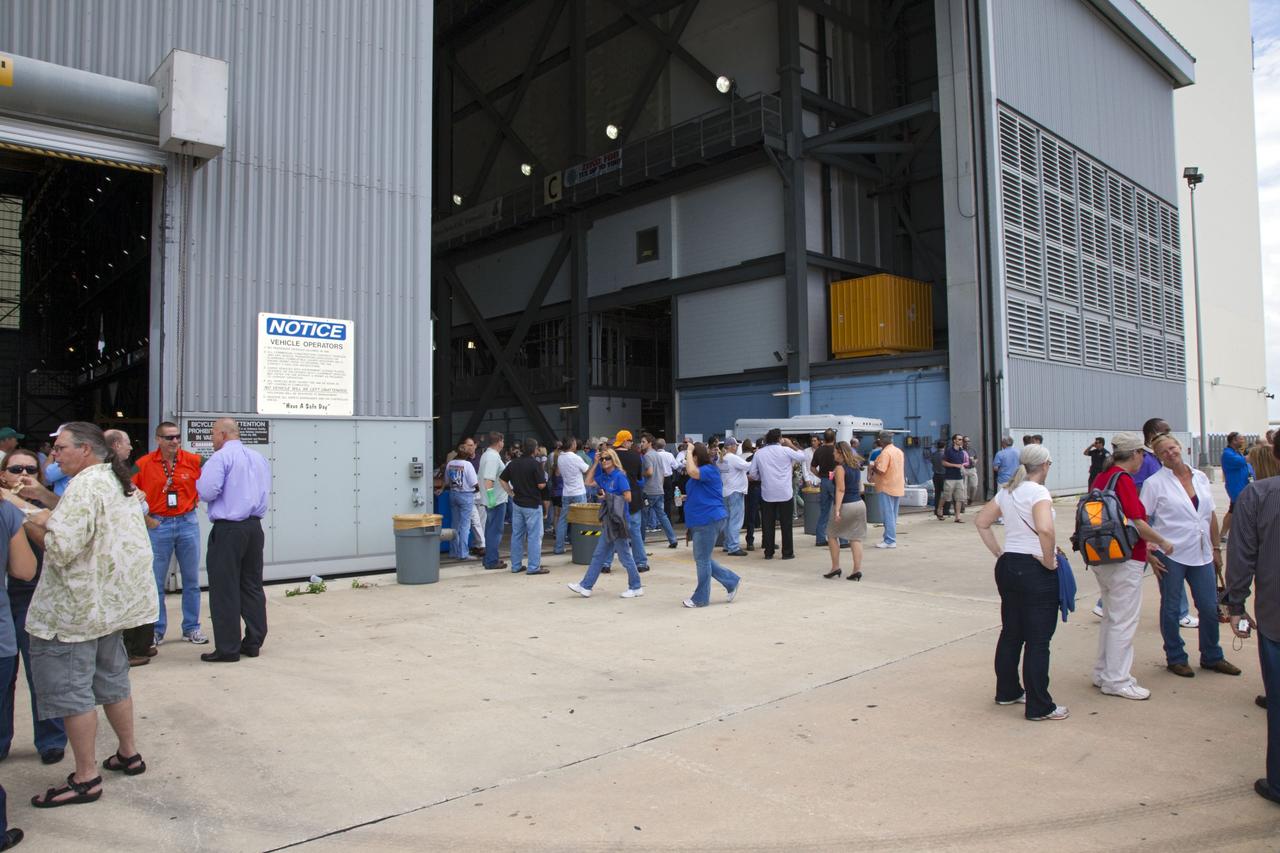
CAPE CANAVERAL, Fla. -- Hundreds of space shuttle workers gather for a party at NASA Kennedy Space Center's Vehicle Assembly Building following the successful liftoff of space shuttle Atlantis on the STS-135 mission, the final flight of the agency's Space Shuttle Program. Atlantis, with its crew of Commander Chris Ferguson, Pilot Doug Hurley, Mission Specialists Sandy Magnus and Rex Walheim, lifted off at 11:29 a.m. EDT on July 8, 2011 to deliver the Raffaello multi-purpose logistics module packed with supplies and spare parts for the International Space Station. For more information, visit www.nasa.gov/mission_pages/shuttle/shuttlemissions/sts135/index.html. Photo credit: NASA/Frankie Martin
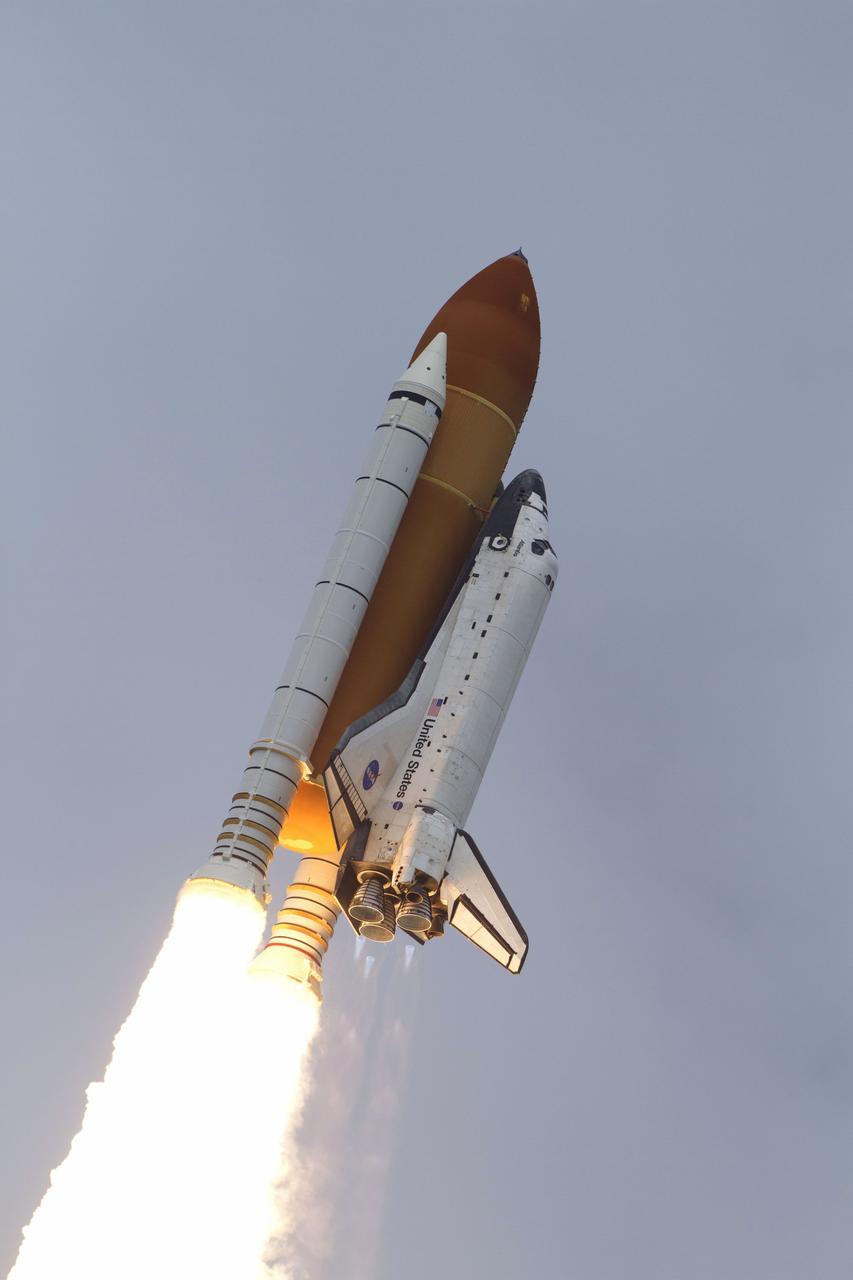
CAPE CANAVERAL, Fla. – Space shuttle Atlantis rolls into a head-down, wings-level orientation on its way toward space after a successful launch from Launch Pad 39A at NASA's Kennedy Space Center in Florida. Atlantis, with its crew of Commander Chris Ferguson, Pilot Doug Hurley, Mission Specialists Sandy Magnus and Rex Walheim, lifted off at 11:29 a.m. EDT on July 8, 2011 to deliver the Raffaello multi-purpose logistics module packed with supplies and spare parts for the station. Atlantis also will fly the Robotic Refueling Mission experiment that will investigate the potential for robotically refueling existing satellites in orbit. In addition, Atlantis will return with a failed ammonia pump module to help NASA better understand the failure mechanism and improve pump designs for future systems. STS-135 is the 33rd flight of Atlantis, the 37th shuttle mission to the space station, and the 135th and final mission of NASA's Space Shuttle Program. For more information, visit www.nasa.gov/mission_pages/shuttle/shuttlemissions/sts135/index.html. Photo credit: NASA/Kenny Allen and George Roberts
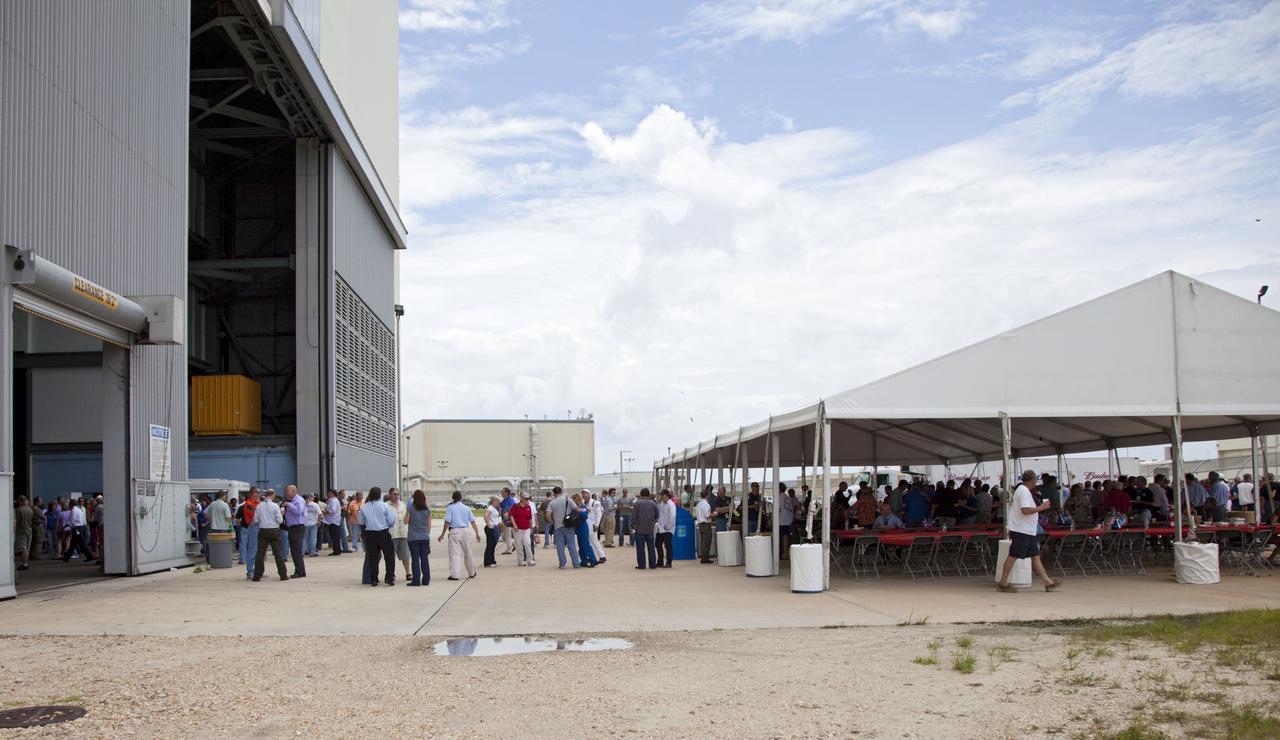
CAPE CANAVERAL, Fla. -- At NASA's Kennedy Space Center in Florida, hundreds of space shuttle workers congregate beneath a tent or inside the transfer aisle at the Vehicle Assembly Building, sharing a party following the successful liftoff of space shuttle Atlantis on the STS-135 mission, the final flight of the agency's Space Shuttle Program. Atlantis, with its crew of Commander Chris Ferguson, Pilot Doug Hurley, Mission Specialists Sandy Magnus and Rex Walheim, lifted off at 11:29 a.m. EDT on July 8, 2011 to deliver the Raffaello multi-purpose logistics module packed with supplies and spare parts for the International Space Station. For more information, visit www.nasa.gov/mission_pages/shuttle/shuttlemissions/sts135/index.html. Photo credit: NASA/Frankie Martin
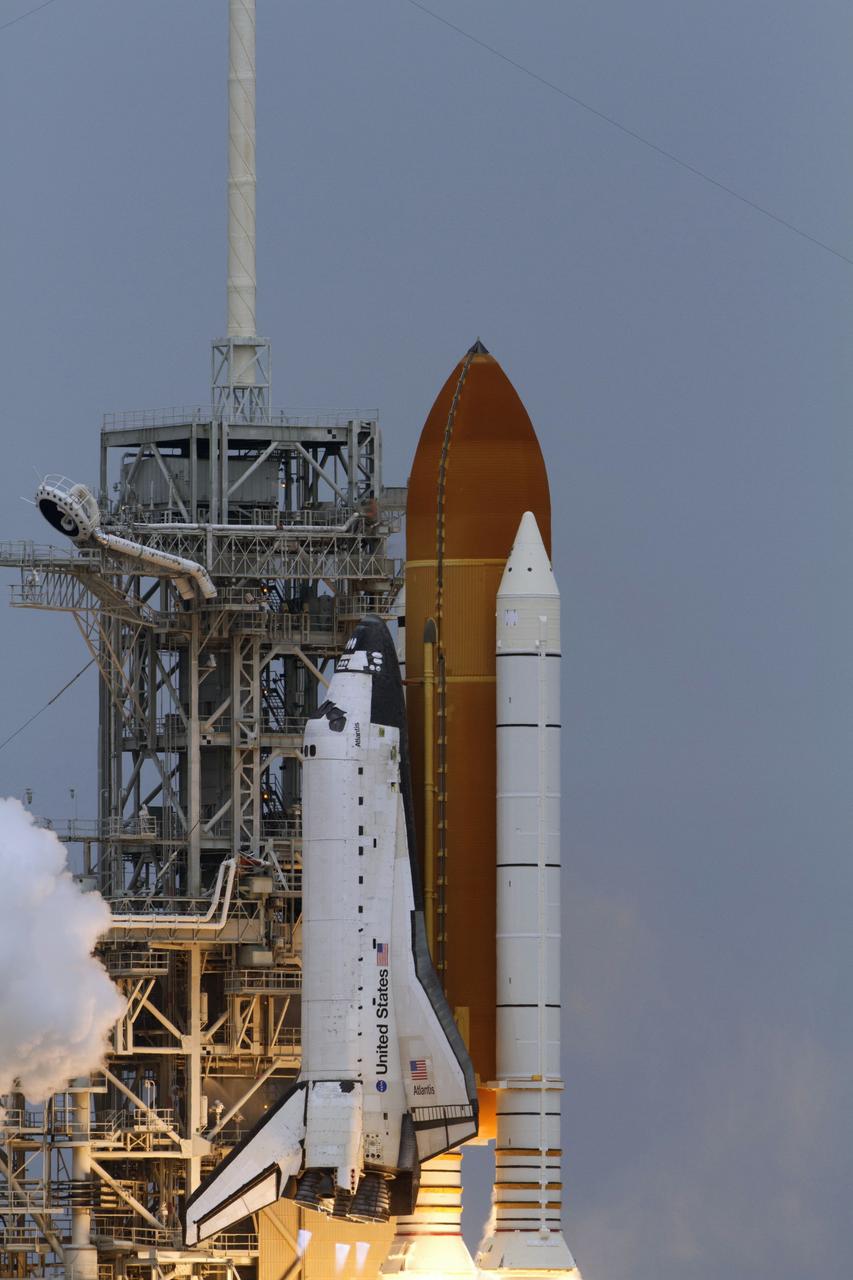
CAPE CANAVERAL, Fla. – At NASA's Kennedy Space Center in Florida, space shuttle Atlantis rises from Launch Pad 39A as it lifts off on its STS-135 mission to the International Space Station. Atlantis, with its crew of Commander Chris Ferguson, Pilot Doug Hurley, Mission Specialists Sandy Magnus and Rex Walheim, lifted off at 11:29 a.m. EDT on July 8, 2011 to deliver the Raffaello multi-purpose logistics module packed with supplies and spare parts for the station. Atlantis also will fly the Robotic Refueling Mission experiment that will investigate the potential for robotically refueling existing satellites in orbit. In addition, Atlantis will return with a failed ammonia pump module to help NASA better understand the failure mechanism and improve pump designs for future systems. STS-135 is the 33rd flight of Atlantis, the 37th shuttle mission to the space station, and the 135th and final mission of NASA's Space Shuttle Program. For more information, visit www.nasa.gov/mission_pages/shuttle/shuttlemissions/sts135/index.html. Photo credit: NASA/Kenny Allen and George Roberts
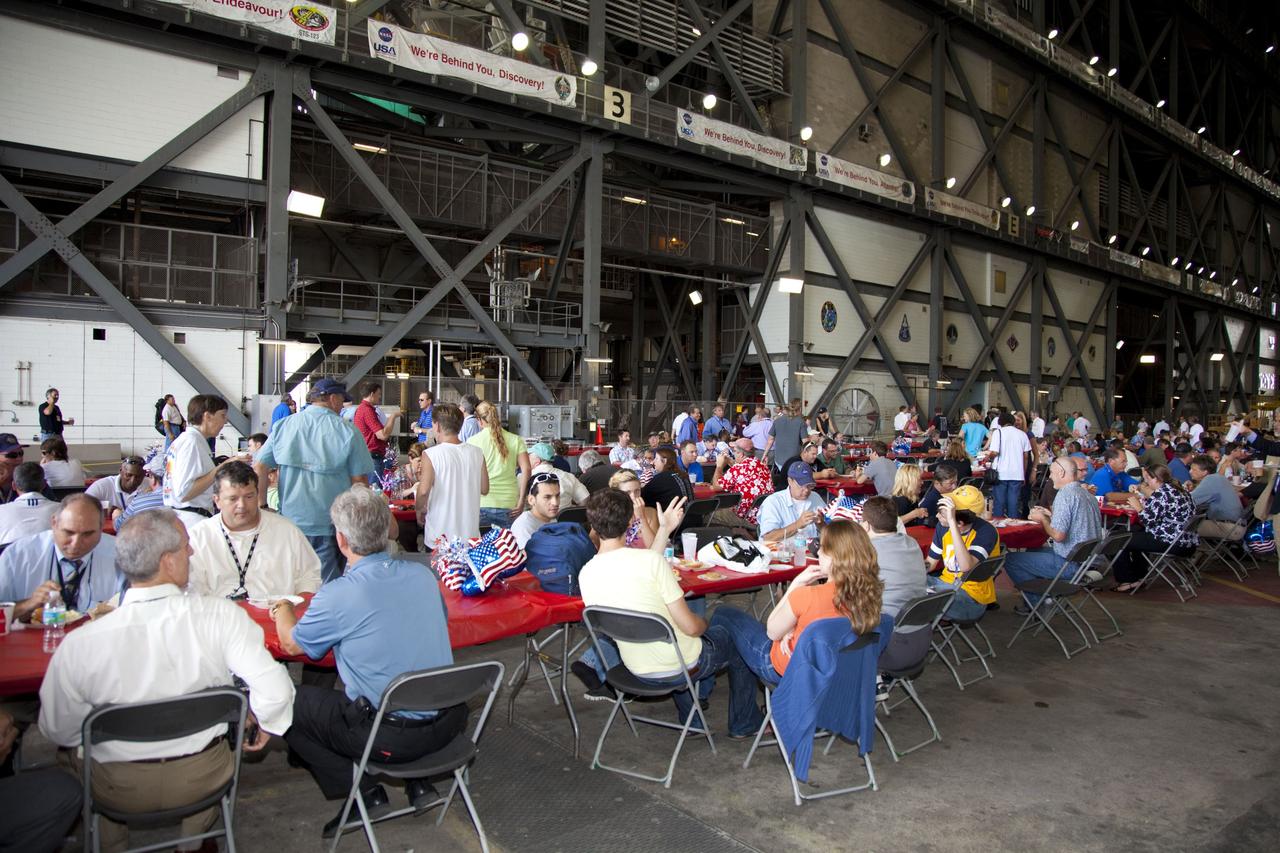
CAPE CANAVERAL, Fla. -- Inside the transfer aisle of NASA Kennedy Space Center's Vehicle Assembly Building, space shuttle workers relax and enjoy a meal at a party following the successful liftoff of shuttle Atlantis on the STS-135 mission, the final flight of the agency's Space Shuttle Program. Atlantis, with its crew of Commander Chris Ferguson, Pilot Doug Hurley, Mission Specialists Sandy Magnus and Rex Walheim, lifted off at 11:29 a.m. EDT on July 8, 2011 to deliver the Raffaello multi-purpose logistics module packed with supplies and spare parts for the International Space Station. For more information, visit www.nasa.gov/mission_pages/shuttle/shuttlemissions/sts135/index.html. Photo credit: NASA/Frankie Martin
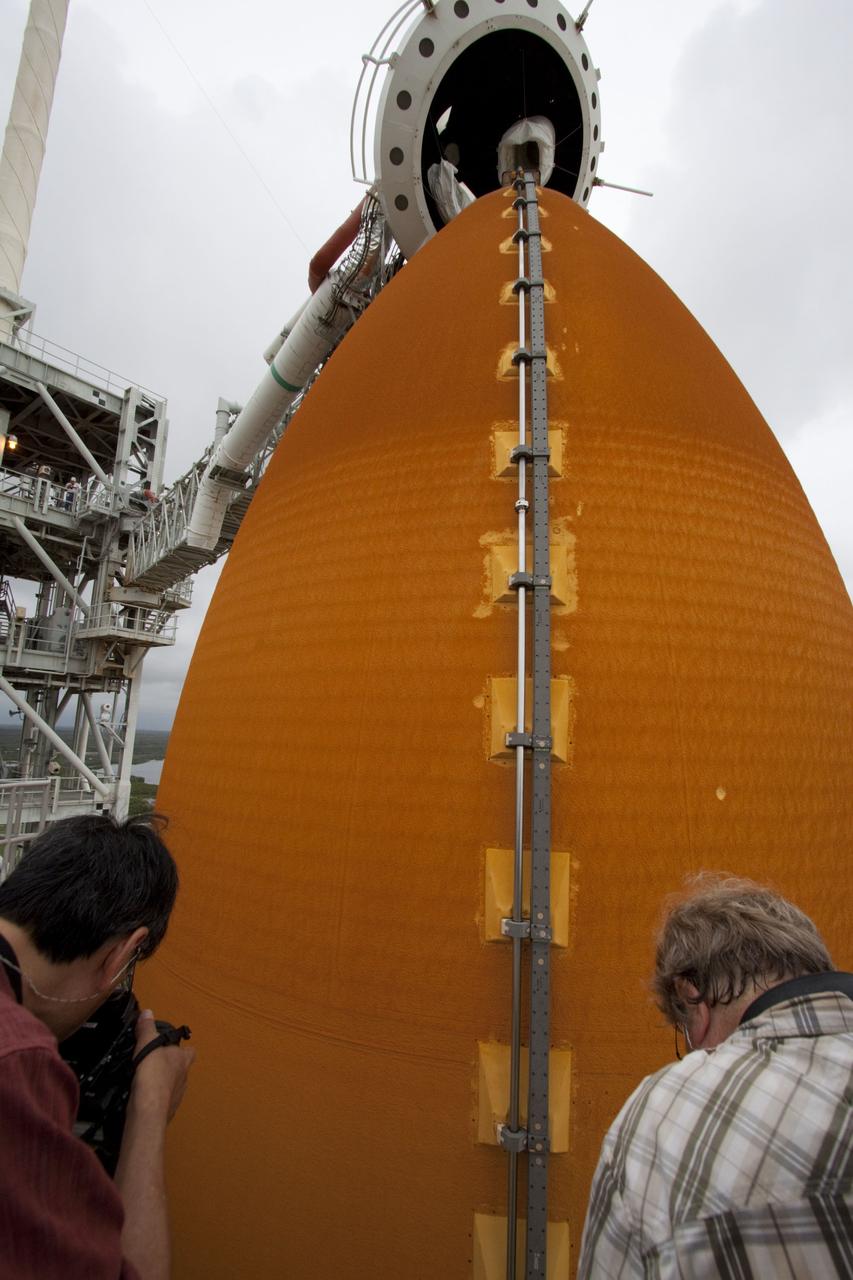
CAPE CANAVERAL, Fla. – Photographers Stan Hernda of AFP News, left, and Scott Andrews of Canon record space shuttle Atlantis as it is revealed on Launch Pad 39A at NASA's Kennedy Space Center in Florida following the move of the rotating service structure (RSS). The structure provides weather protection and access to the shuttle while it awaits liftoff on the pad. RSS "rollback" marks a major milestone in Atlantis' STS-135 mission countdown. Atlantis and its crew of four; Commander Chris Ferguson, Pilot Doug Hurley and Mission Specialists Sandy Magnus and Rex Walheim, are scheduled to lift off at 11:26 a.m. EDT on July 8 to deliver the Raffaello multi-purpose logistics module packed with supplies and spare parts to the International Space Station. Atlantis also will fly the Robotic Refueling Mission experiment that will investigate the potential for robotically refueling existing satellites in orbit. In addition, Atlantis will return with a failed ammonia pump module to help NASA better understand the failure mechanism and improve pump designs for future systems. STS-135 will be the 33rd flight of Atlantis, the 37th shuttle mission to the space station, and the 135th and final mission of NASA's Space Shuttle Program. For more information visit, www.nasa.gov/mission_pages/shuttle/shuttlemissions/sts135/index.html. Photo credit: NASA/Ken Thornsley
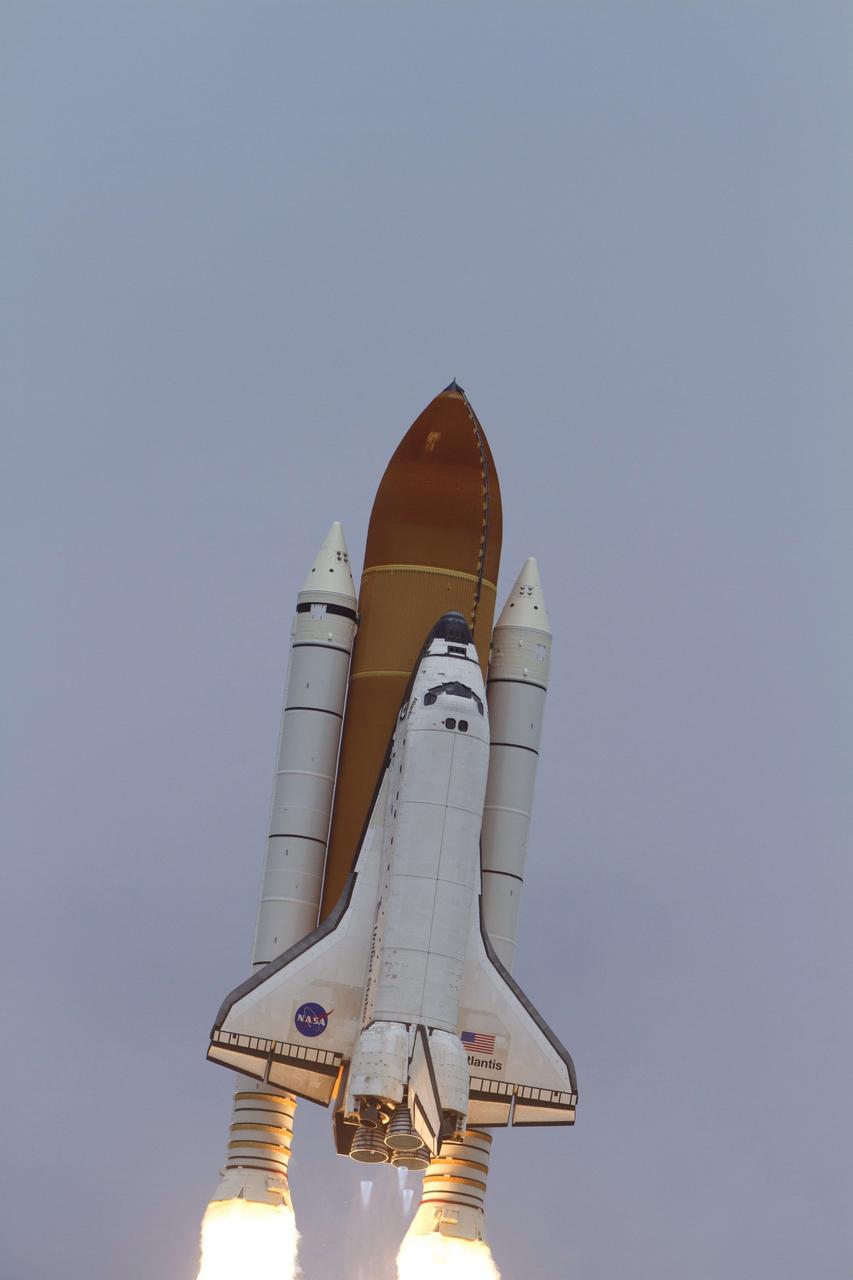
CAPE CANAVERAL, Fla. – Space shuttle Atlantis makes its last reach for the sky, rising above Launch Pad 39A at NASA's Kennedy Space Center in Florida to begin the STS-135 mission to the International Space Station. Atlantis, with its crew of Commander Chris Ferguson, Pilot Doug Hurley, Mission Specialists Sandy Magnus and Rex Walheim, lifted off at 11:29 a.m. EDT on July 8, 2011 to deliver the Raffaello multi-purpose logistics module packed with supplies and spare parts for the station. Atlantis also will fly the Robotic Refueling Mission experiment that will investigate the potential for robotically refueling existing satellites in orbit. In addition, Atlantis will return with a failed ammonia pump module to help NASA better understand the failure mechanism and improve pump designs for future systems. STS-135 is the 33rd flight of Atlantis, the 37th shuttle mission to the space station, and the 135th and final mission of NASA's Space Shuttle Program. For more information, visit www.nasa.gov/mission_pages/shuttle/shuttlemissions/sts135/index.html. Photo credit: NASA/Kenny Allen and George Roberts
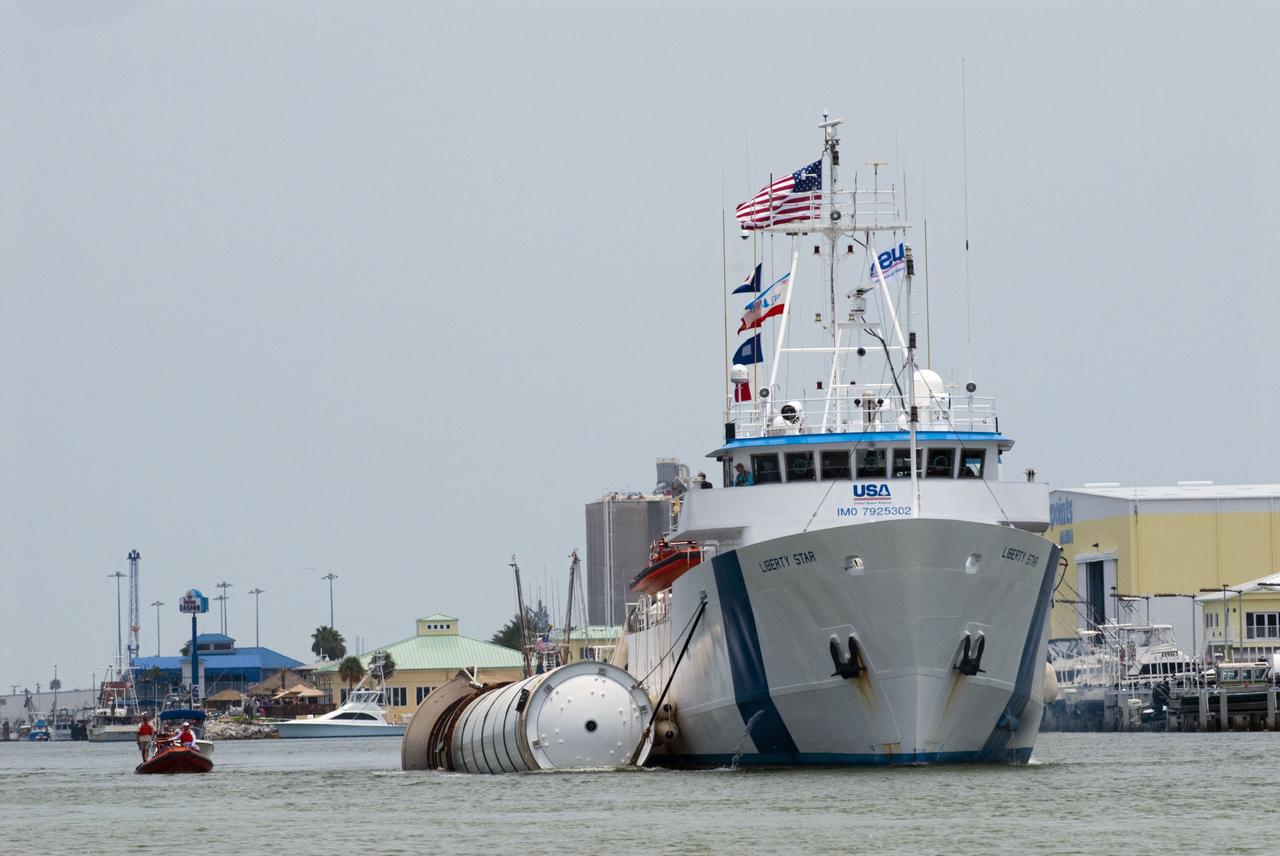
CAPE CANAVERAL, Fla. -- Liberty Star, one of NASA's solid rocket booster retrieval ships, tows the right spent booster from space shuttle Atlantis' final launch, as it is taken to Port Canaveral in Florida. The shuttle's two solid rocket booster casings and associated flight hardware are recovered in the Atlantic Ocean after every launch by Freedom Star and Liberty Star. The boosters impact the Atlantic about seven minutes after liftoff and the retrieval ships are stationed about 10 miles from the impact area at the time of splashdown. After the spent segments are processed, they will be transported to Utah, where they will be deserviced and stored, if needed. Atlantis began its final flight at 11:29 a.m. EDT on July 8 to deliver the Raffaello multi-purpose logistics module packed with supplies and spare parts for the International Space Station. Atlantis also delivers the Robotic Refueling Mission experiment that will investigate the potential for robotically refueling existing satellites in orbit to the station. In addition, Atlantis will return with a failed ammonia pump module to help NASA better understand the failure mechanism and improve pump designs for future systems. STS-135 is the 33rd flight of Atlantis, the 37th shuttle mission to the space station, and the 135th and final mission of NASA's Space Shuttle Program. For more information, visit www.nasa.gov/mission_pages/shuttle/shuttlemissions/sts135/index.html. Photo credit: NASA/Kim Shiflett
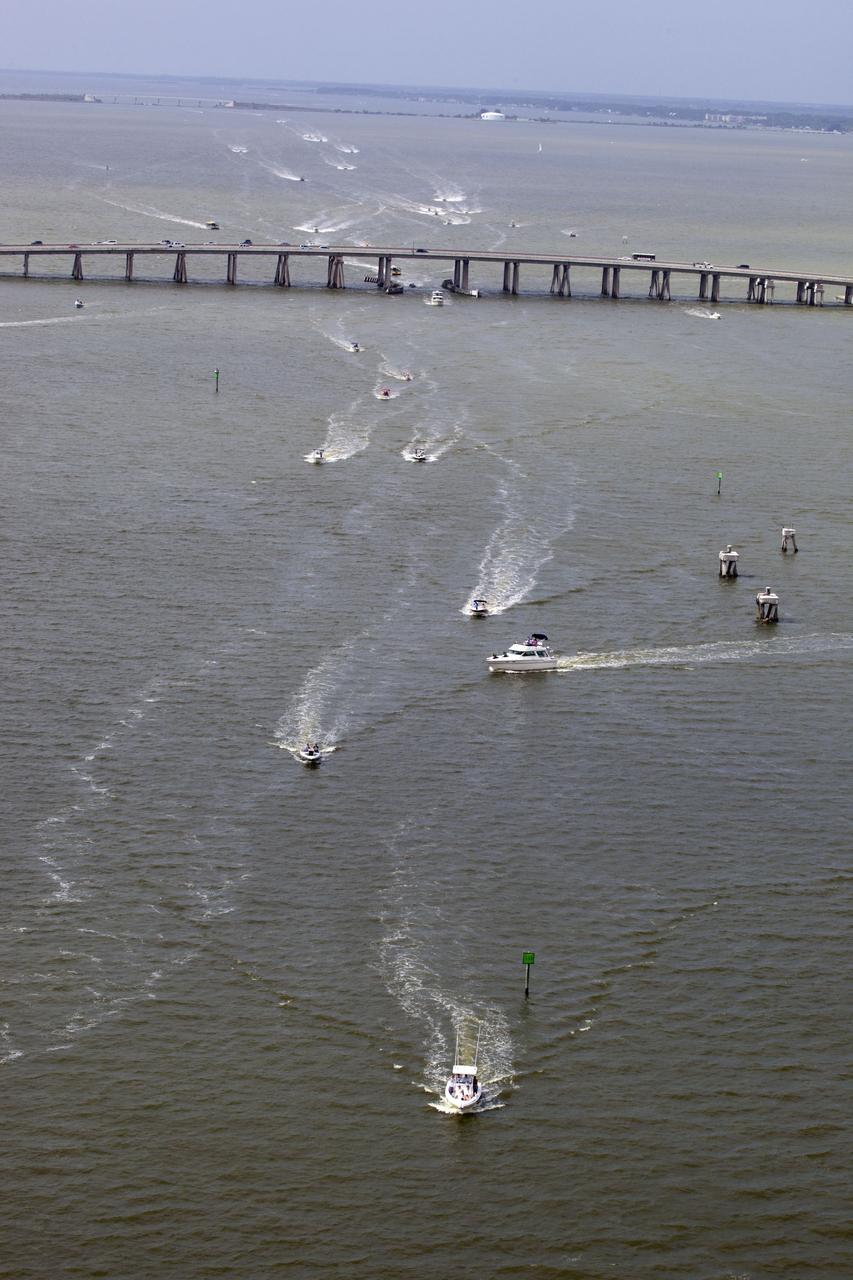
CAPE CANAVERAL, Fla. -- After 30 years and 135 missions, residents and visitors to Florida's Space Coast traverse the waters near Port Canaveral to see the rocket's red glare of NASA's Space Shuttle Program soar for the last time. Space shuttle Atlantis is scheduled to liftoff at 11:26 a.m. EDT from Launch Pad 39A at NASA's Kennedy Space Center in Florida. On board will be four experienced astronauts -- STS-135 Commander Chris Ferguson, Pilot Doug Hurley, and Mission Specialists Sandy Magnus and Rex Walheim. STS-135 will deliver the Raffaello multi-purpose logistics module packed with supplies and spare parts for the International Space Station. Atlantis also will fly the Robotic Refueling Mission experiment that will investigate the potential for robotically refueling existing satellites in orbit. In addition, Atlantis will return with a failed ammonia pump module to help NASA better understand the failure mechanism and improve pump designs for future systems. STS-135 will be the 33rd flight of Atlantis, the 37th shuttle mission to the space station, and the 135th and final mission of NASA's Space Shuttle Program. For more information visit, www.nasa.gov/mission_pages/shuttle/shuttlemissions/sts135/index.html. Photo credit: NASA/Frank Michaux

CAPE CANAVERAL, Fla. -- After 30 years and 135 missions, invited guests congregate along the NASA Causeway to see the rocket's red glare of NASA's Space Shuttle Program soar for the last time. Space shuttle Atlantis is scheduled to liftoff at 11:26 a.m. EDT from Launch Pad 39A at NASA's Kennedy Space Center in Florida. On board will be four experienced astronauts -- STS-135 Commander Chris Ferguson, Pilot Doug Hurley, and Mission Specialists Sandy Magnus and Rex Walheim. STS-135 will deliver the Raffaello multi-purpose logistics module packed with supplies and spare parts for the International Space Station. Atlantis also will fly the Robotic Refueling Mission experiment that will investigate the potential for robotically refueling existing satellites in orbit. In addition, Atlantis will return with a failed ammonia pump module to help NASA better understand the failure mechanism and improve pump designs for future systems. STS-135 will be the 33rd flight of Atlantis, the 37th shuttle mission to the space station, and the 135th and final mission of NASA's Space Shuttle Program. For more information visit, www.nasa.gov/mission_pages/shuttle/shuttlemissions/sts135/index.html. Photo credit: NASA/Frank Michaux
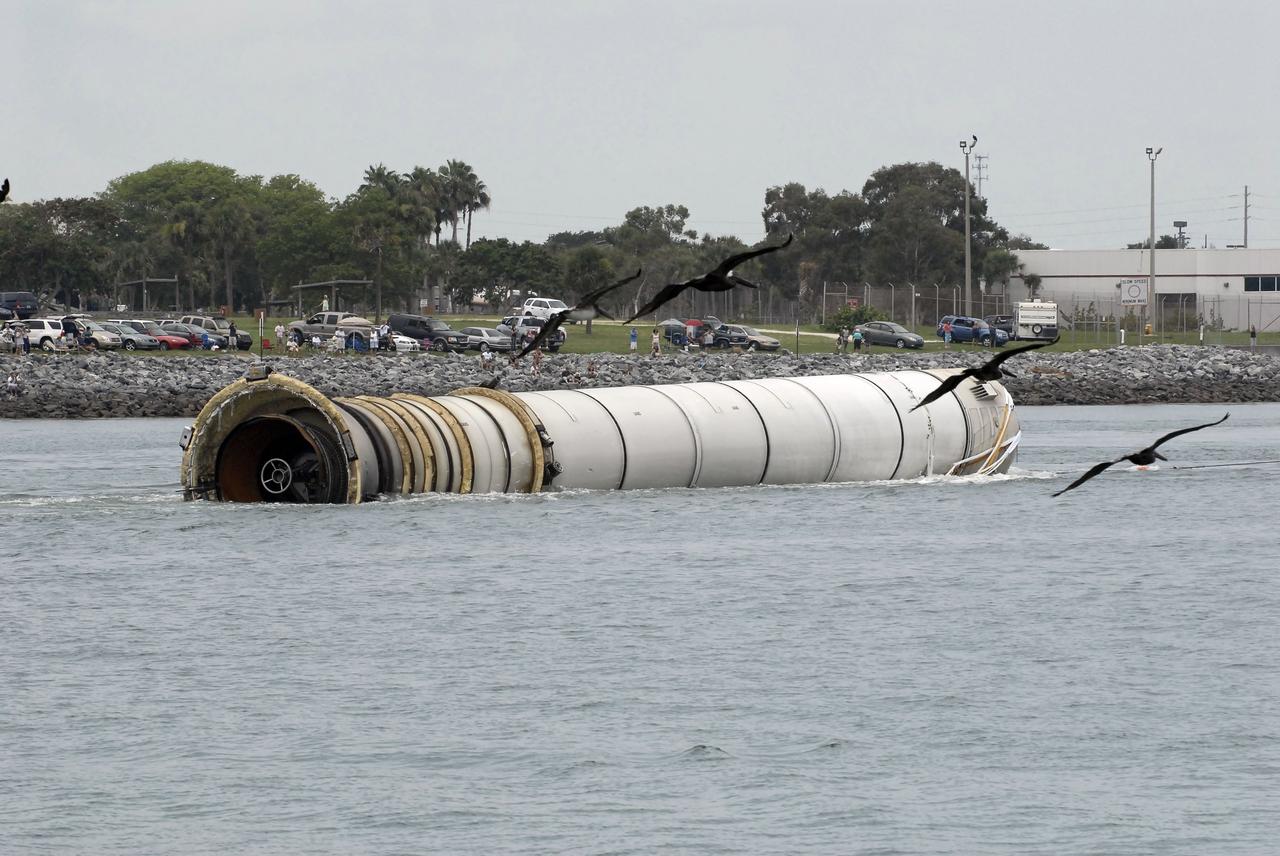
CAPE CANAVERAL, Fla. – The right spent booster from space shuttle Atlantis' final launch is towed by the Liberty Star, one of NASA's solid rocket booster retrieval ships to Port Canaveral in Florida. The shuttle's two solid rocket booster casings and associated flight hardware are recovered in the Atlantic Ocean after every launch by Freedom Star and Liberty Star. The boosters impact the Atlantic about seven minutes after liftoff and the retrieval ships are stationed about 10 miles from the impact area at the time of splashdown. After the spent segments are processed, they will be transported to Utah, where they will be deserviced and stored, if needed. Atlantis began its final flight at 11:29 a.m. EDT on July 8 to deliver the Raffaello multi-purpose logistics module packed with supplies and spare parts for the International Space Station. Atlantis also delivers the Robotic Refueling Mission experiment that will investigate the potential for robotically refueling existing satellites in orbit to the station. In addition, Atlantis will return with a failed ammonia pump module to help NASA better understand the failure mechanism and improve pump designs for future systems. STS-135 is the 33rd flight of Atlantis, the 37th shuttle mission to the space station, and the 135th and final mission of NASA's Space Shuttle Program. For more information, visit www.nasa.gov/mission_pages/shuttle/shuttlemissions/sts135/index.html. Photo credit: NASA/Kim Shiflett
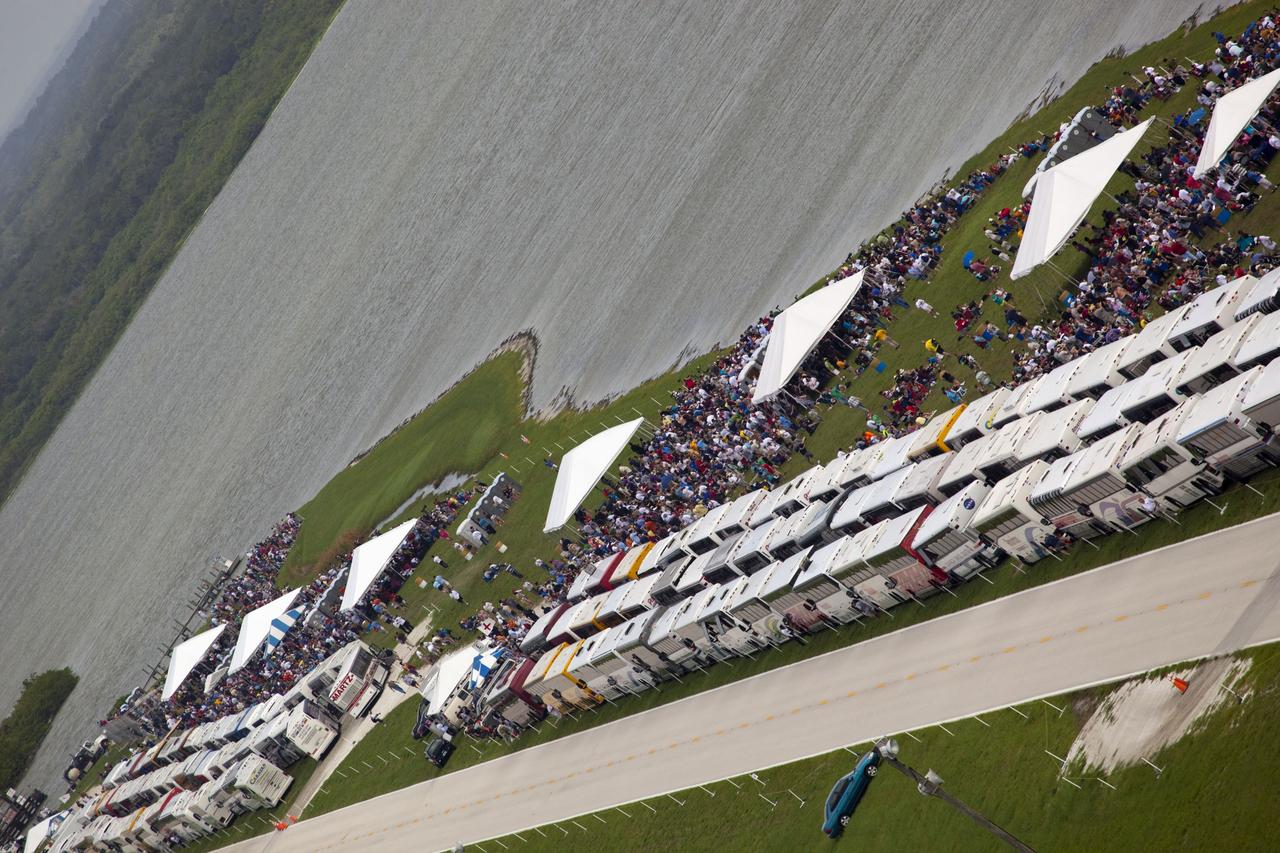
CAPE CANAVERAL, Fla. -- After 30 years and 135 missions, invited guests congregate along the NASA Causeway to see the rocket's red glare of NASA's Space Shuttle Program soar for the last time. Space shuttle Atlantis is scheduled to liftoff at 11:26 a.m. EDT from Launch Pad 39A at NASA's Kennedy Space Center in Florida. On board will be four experienced astronauts -- STS-135 Commander Chris Ferguson, Pilot Doug Hurley, and Mission Specialists Sandy Magnus and Rex Walheim. STS-135 will deliver the Raffaello multi-purpose logistics module packed with supplies and spare parts for the International Space Station. Atlantis also will fly the Robotic Refueling Mission experiment that will investigate the potential for robotically refueling existing satellites in orbit. In addition, Atlantis will return with a failed ammonia pump module to help NASA better understand the failure mechanism and improve pump designs for future systems. STS-135 will be the 33rd flight of Atlantis, the 37th shuttle mission to the space station, and the 135th and final mission of NASA's Space Shuttle Program. For more information visit, www.nasa.gov/mission_pages/shuttle/shuttlemissions/sts135/index.html. Photo credit: NASA/Frank Michaux
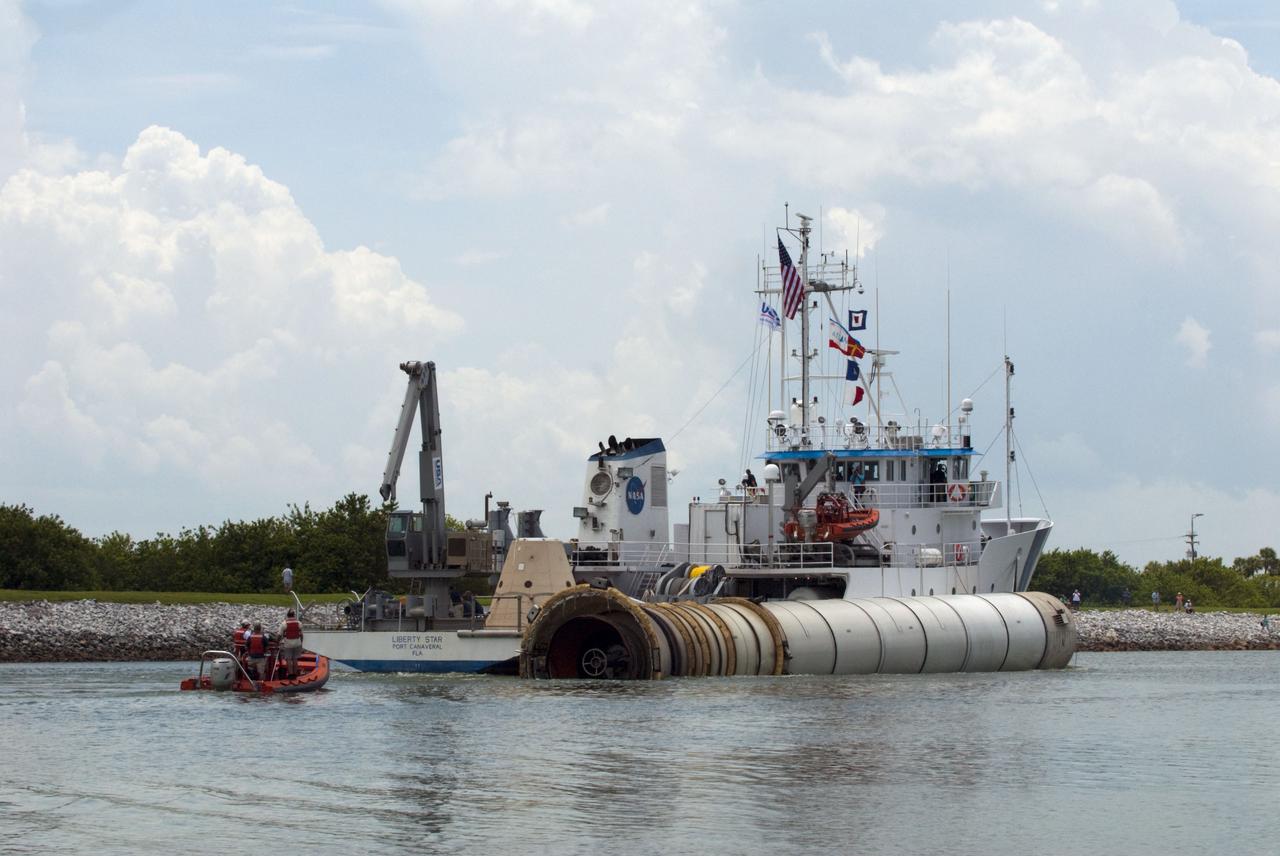
CAPE CANAVERAL, Fla. -- Liberty Star, one of NASA's solid rocket booster retrieval ships, tows the right spent booster from space shuttle Atlantis' final launch, as it is taken to Port Canaveral in Florida. The shuttle's two solid rocket booster casings and associated flight hardware are recovered in the Atlantic Ocean after every launch by Freedom Star and Liberty Star. The boosters impact the Atlantic about seven minutes after liftoff and the retrieval ships are stationed about 10 miles from the impact area at the time of splashdown. After the spent segments are processed, they will be transported to Utah, where they will be deserviced and stored, if needed. Atlantis began its final flight at 11:29 a.m. EDT on July 8 to deliver the Raffaello multi-purpose logistics module packed with supplies and spare parts for the International Space Station. Atlantis also delivers the Robotic Refueling Mission experiment that will investigate the potential for robotically refueling existing satellites in orbit to the station. In addition, Atlantis will return with a failed ammonia pump module to help NASA better understand the failure mechanism and improve pump designs for future systems. STS-135 is the 33rd flight of Atlantis, the 37th shuttle mission to the space station, and the 135th and final mission of NASA's Space Shuttle Program. For more information, visit www.nasa.gov/mission_pages/shuttle/shuttlemissions/sts135/index.html. Photo credit: NASA/Kim Shiflett
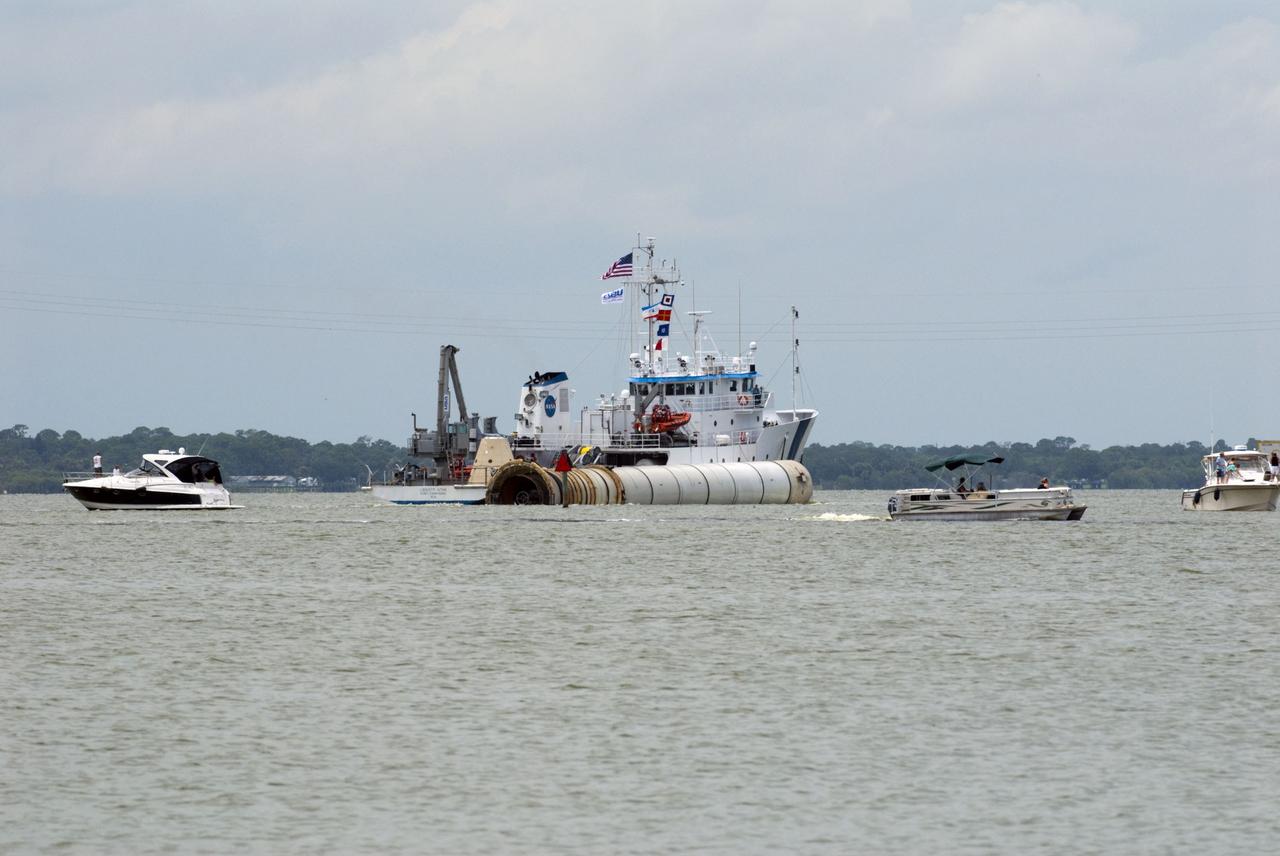
CAPE CANAVERAL, Fla. -- Liberty Star, one of NASA's solid rocket booster retrieval ships, tows the right spent booster from space shuttle Atlantis' final launch, as it is taken to Port Canaveral in Florida. The shuttle's two solid rocket booster casings and associated flight hardware are recovered in the Atlantic Ocean after every launch by Freedom Star and Liberty Star. The boosters impact the Atlantic about seven minutes after liftoff and the retrieval ships are stationed about 10 miles from the impact area at the time of splashdown. After the spent segments are processed, they will be transported to Utah, where they will be deserviced and stored, if needed. Atlantis began its final flight at 11:29 a.m. EDT on July 8 to deliver the Raffaello multi-purpose logistics module packed with supplies and spare parts for the International Space Station. Atlantis also delivers the Robotic Refueling Mission experiment that will investigate the potential for robotically refueling existing satellites in orbit to the station. In addition, Atlantis will return with a failed ammonia pump module to help NASA better understand the failure mechanism and improve pump designs for future systems. STS-135 is the 33rd flight of Atlantis, the 37th shuttle mission to the space station, and the 135th and final mission of NASA's Space Shuttle Program. For more information, visit www.nasa.gov/mission_pages/shuttle/shuttlemissions/sts135/index.html. Photo credit: NASA/Kim Shiflett
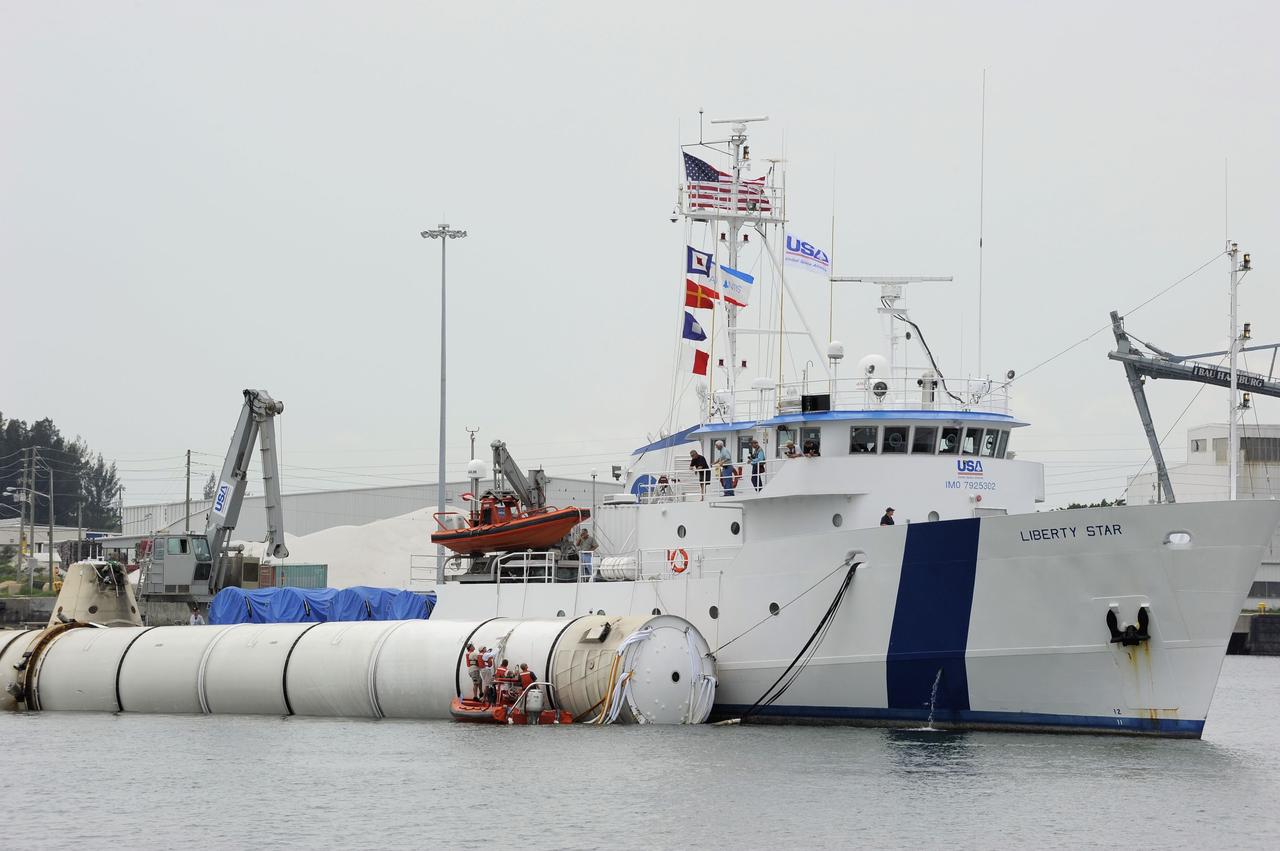
CAPE CANAVERAL, Fla. -- Liberty Star, one of NASA's solid rocket booster retrieval ships, maneuvers the right spent booster from space shuttle Atlantis' final launch, as it is taken to Port Canaveral in Florida. The shuttle's two solid rocket booster casings and associated flight hardware are recovered in the Atlantic Ocean after every launch by Freedom Star and Liberty Star. The boosters impact the Atlantic about seven minutes after liftoff and the retrieval ships are stationed about 10 miles from the impact area at the time of splashdown. After the spent segments are processed, they will be transported to Utah, where they will be deserviced and stored, if needed. Atlantis began its final flight at 11:29 a.m. EDT on July 8 to deliver the Raffaello multi-purpose logistics module packed with supplies and spare parts for the International Space Station. Atlantis also delivers the Robotic Refueling Mission experiment that will investigate the potential for robotically refueling existing satellites in orbit to the station. In addition, Atlantis will return with a failed ammonia pump module to help NASA better understand the failure mechanism and improve pump designs for future systems. STS-135 is the 33rd flight of Atlantis, the 37th shuttle mission to the space station, and the 135th and final mission of NASA's Space Shuttle Program. For more information, visit www.nasa.gov/mission_pages/shuttle/shuttlemissions/sts135/index.html. Photo credit: NASA/Kim Shiflett
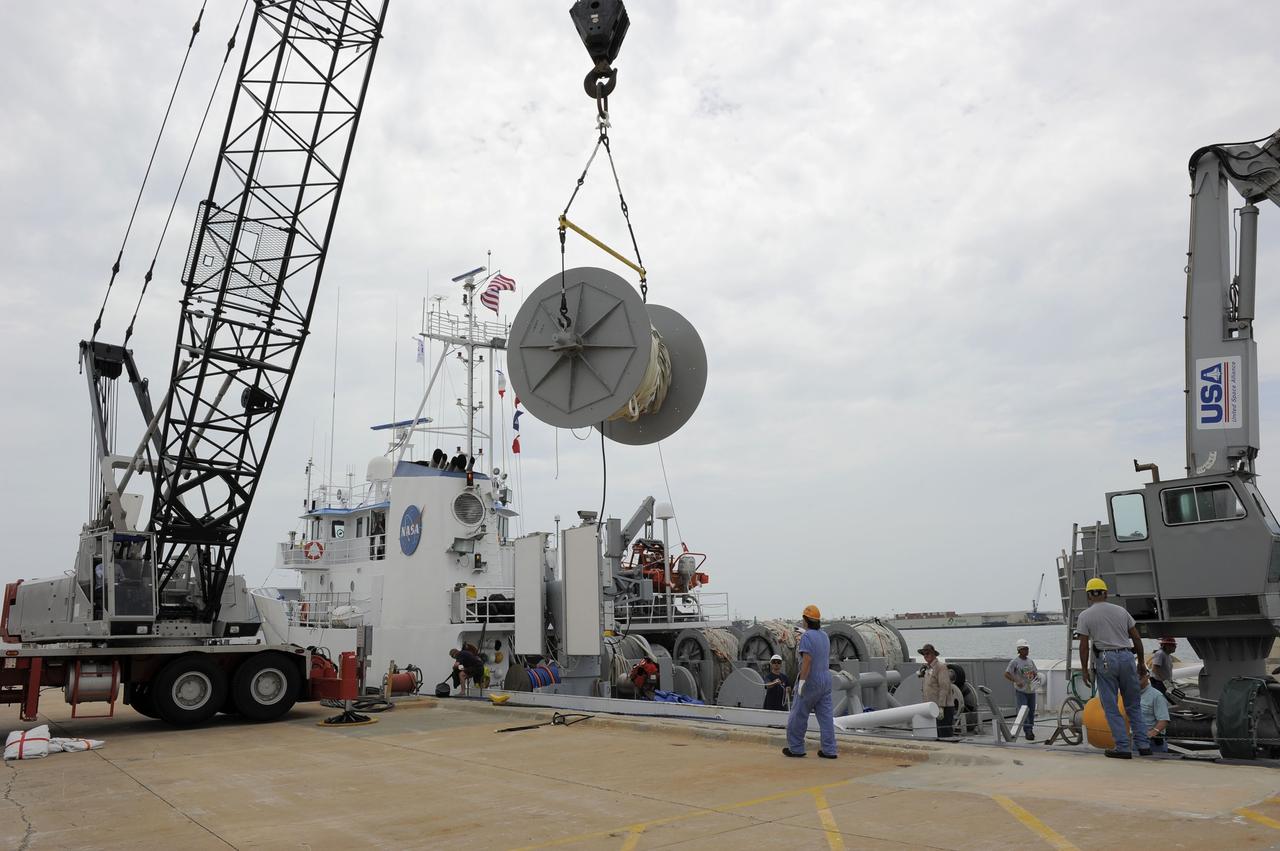
CAPE CANAVERAL, Fla. – A crane working from the dock at Hangar AF at Cape Canaveral Air Force Station in Florida removes one of the spools holding the parachutes and lines from the right spent boosters from space shuttle Atlantis' final launch. The parachutes and booster were gathered by the crews from the Liberty Star, one of NASA's solid rocket booster retrieval ships. The shuttle's two solid rocket booster casings and associated flight hardware are recovered in the Atlantic Ocean after every launch by Freedom Star and Liberty Star. The boosters impact the Atlantic about seven minutes after liftoff and the retrieval ships are stationed about 10 miles from the impact area at the time of splashdown. After the spent segments are processed, they will be transported to Utah, where they will be deserviced and stored, if needed. Atlantis began its final flight at 11:29 a.m. EDT on July 8 to deliver the Raffaello multi-purpose logistics module packed with supplies and spare parts for the International Space Station. Atlantis also delivers the Robotic Refueling Mission experiment that will investigate the potential for robotically refueling existing satellites in orbit to the station. In addition, Atlantis will return with a failed ammonia pump module to help NASA better understand the failure mechanism and improve pump designs for future systems. STS-135 is the 33rd flight of Atlantis, the 37th shuttle mission to the space station, and the 135th and final mission of NASA's Space Shuttle Program. For more information, visit www.nasa.gov/mission_pages/shuttle/shuttlemissions/sts135/index.html. Photo credit: NASA/Kim Shiflett

CAPE CANAVERAL, Fla. -- After 30 years and 135 missions, residents and visitors to Florida's Space Coast crowd the new A. Max Brewer Bridge in Titusville to see the rocket's red glare of NASA's Space Shuttle Program soar for the last time. Space shuttle Atlantis is scheduled to liftoff at 11:26 a.m. EDT from Launch Pad 39A at NASA's Kennedy Space Center in Florida. On board will be four experienced astronauts -- STS-135 Commander Chris Ferguson, Pilot Doug Hurley, and Mission Specialists Sandy Magnus and Rex Walheim. STS-135 will deliver the Raffaello multi-purpose logistics module packed with supplies and spare parts for the International Space Station. Atlantis also will fly the Robotic Refueling Mission experiment that will investigate the potential for robotically refueling existing satellites in orbit. In addition, Atlantis will return with a failed ammonia pump module to help NASA better understand the failure mechanism and improve pump designs for future systems. STS-135 will be the 33rd flight of Atlantis, the 37th shuttle mission to the space station, and the 135th and final mission of NASA's Space Shuttle Program. For more information visit, www.nasa.gov/mission_pages/shuttle/shuttlemissions/sts135/index.html. Photo credit: NASA/Frank Michaux
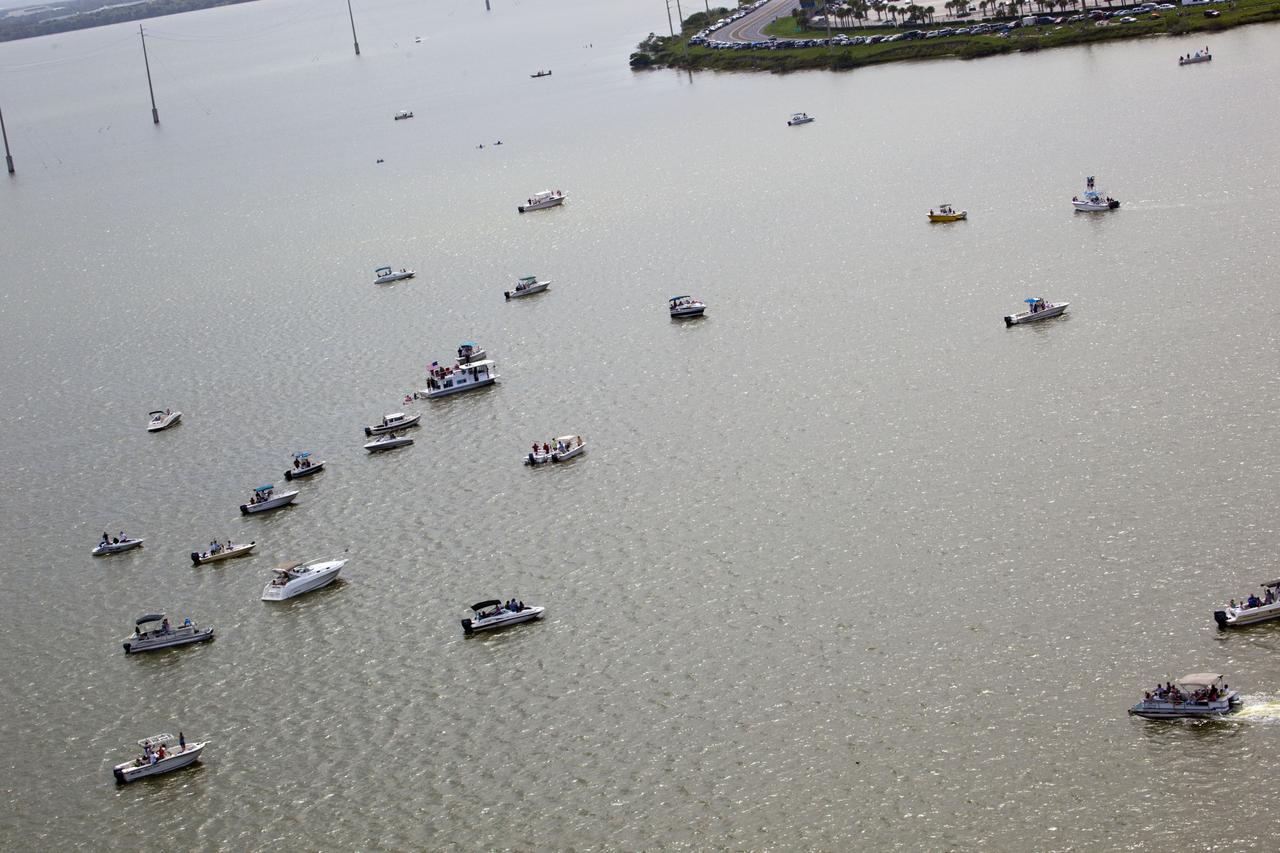
CAPE CANAVERAL, Fla. -- After 30 years and 135 missions, residents and visitors to Florida's Space Coast traverse the waters near Port Canaveral to see the rocket's red glare of NASA's Space Shuttle Program soar for the last time. Space shuttle Atlantis is scheduled to liftoff at 11:26 a.m. EDT from Launch Pad 39A at NASA's Kennedy Space Center in Florida. On board will be four experienced astronauts -- STS-135 Commander Chris Ferguson, Pilot Doug Hurley, and Mission Specialists Sandy Magnus and Rex Walheim. STS-135 will deliver the Raffaello multi-purpose logistics module packed with supplies and spare parts for the International Space Station. Atlantis also will fly the Robotic Refueling Mission experiment that will investigate the potential for robotically refueling existing satellites in orbit. In addition, Atlantis will return with a failed ammonia pump module to help NASA better understand the failure mechanism and improve pump designs for future systems. STS-135 will be the 33rd flight of Atlantis, the 37th shuttle mission to the space station, and the 135th and final mission of NASA's Space Shuttle Program. For more information visit, www.nasa.gov/mission_pages/shuttle/shuttlemissions/sts135/index.html. Photo credit: NASA/Frank Michaux
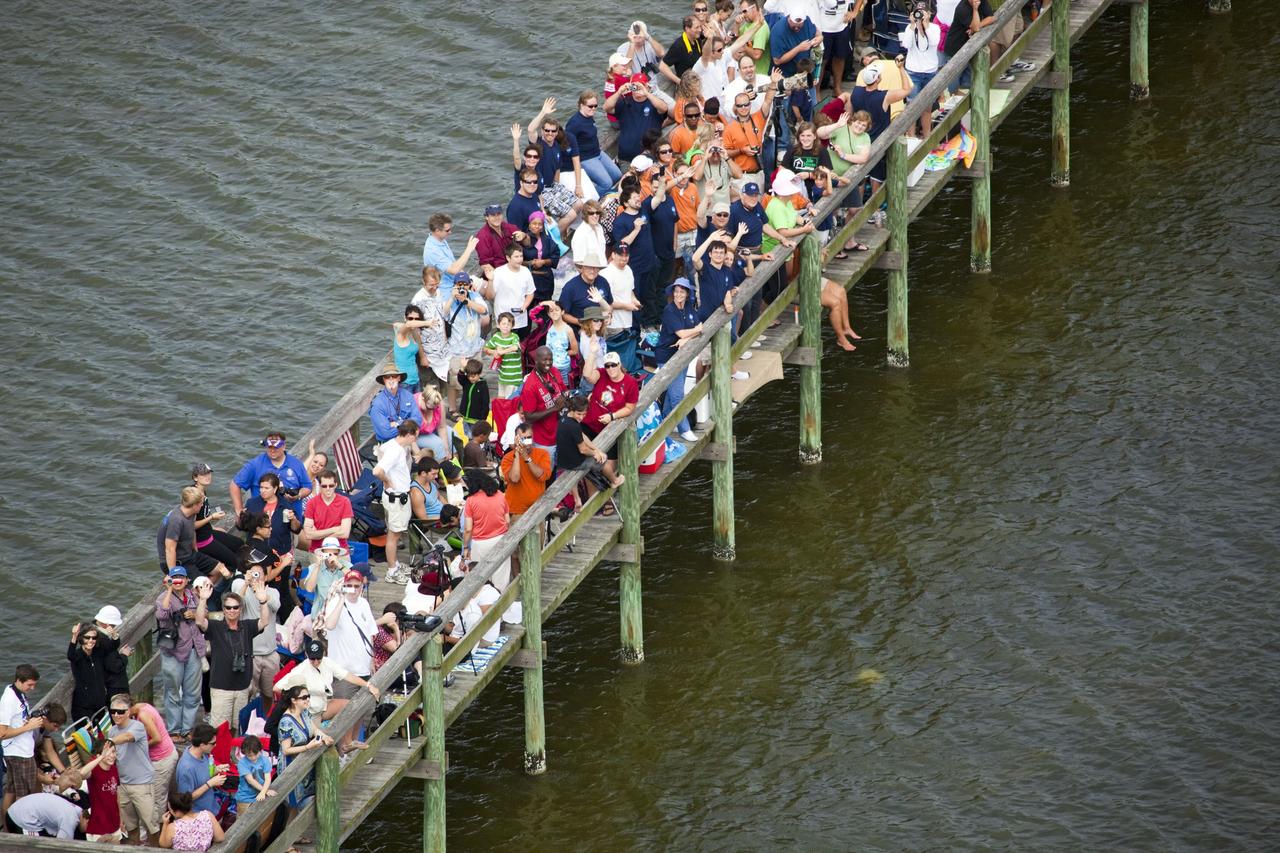
CAPE CANAVERAL, Fla. -- After 30 years and 135 missions, residents and visitors to Florida's Space Coast flock to viewing sites on the waters of Brevard County to see the rocket's red glare of NASA's Space Shuttle Program soar for the last time. Space shuttle Atlantis is scheduled to liftoff at 11:26 a.m. EDT from Launch Pad 39A at NASA's Kennedy Space Center in Florida. On board will be four experienced astronauts -- STS-135 Commander Chris Ferguson, Pilot Doug Hurley, and Mission Specialists Sandy Magnus and Rex Walheim. STS-135 will deliver the Raffaello multi-purpose logistics module packed with supplies and spare parts for the International Space Station. Atlantis also will fly the Robotic Refueling Mission experiment that will investigate the potential for robotically refueling existing satellites in orbit. In addition, Atlantis will return with a failed ammonia pump module to help NASA better understand the failure mechanism and improve pump designs for future systems. STS-135 will be the 33rd flight of Atlantis, the 37th shuttle mission to the space station, and the 135th and final mission of NASA's Space Shuttle Program. For more information visit, www.nasa.gov/mission_pages/shuttle/shuttlemissions/sts135/index.html. Photo credit: NASA/Frank Michaux
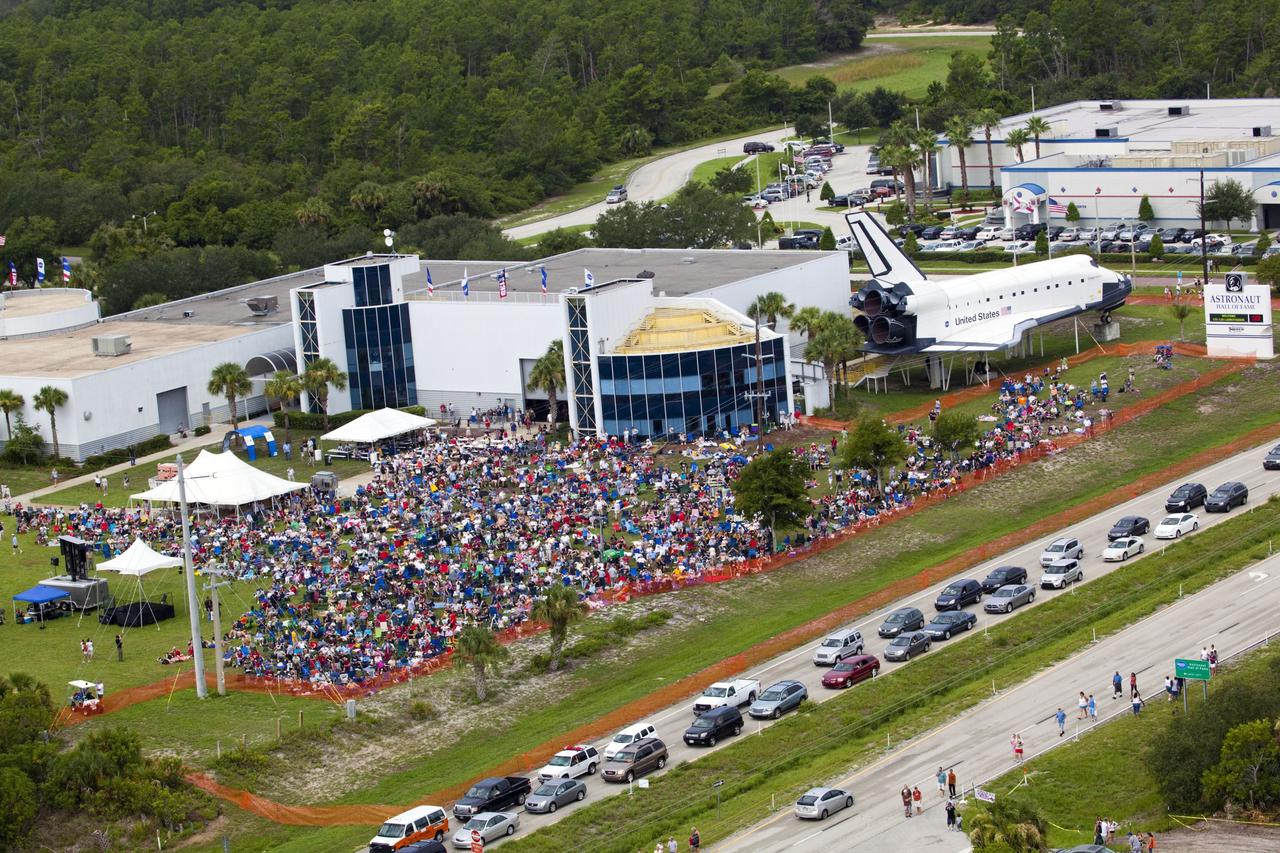
CAPE CANAVERAL, Fla. -- After 30 years and 135 missions, residents and visitors to Florida's Space Coast flock to the Astronaut Hall of Fame in Titusville to see the rocket's red glare of NASA's Space Shuttle Program soar for the last time. Space shuttle Atlantis is scheduled to liftoff at 11:26 a.m. EDT from Launch Pad 39A at NASA's Kennedy Space Center in Florida. On board will be four experienced astronauts -- STS-135 Commander Chris Ferguson, Pilot Doug Hurley, and Mission Specialists Sandy Magnus and Rex Walheim. STS-135 will deliver the Raffaello multi-purpose logistics module packed with supplies and spare parts for the International Space Station. Atlantis also will fly the Robotic Refueling Mission experiment that will investigate the potential for robotically refueling existing satellites in orbit. In addition, Atlantis will return with a failed ammonia pump module to help NASA better understand the failure mechanism and improve pump designs for future systems. STS-135 will be the 33rd flight of Atlantis, the 37th shuttle mission to the space station, and the 135th and final mission of NASA's Space Shuttle Program. For more information visit, www.nasa.gov/mission_pages/shuttle/shuttlemissions/sts135/index.html. Photo credit: NASA/Frank Michaux
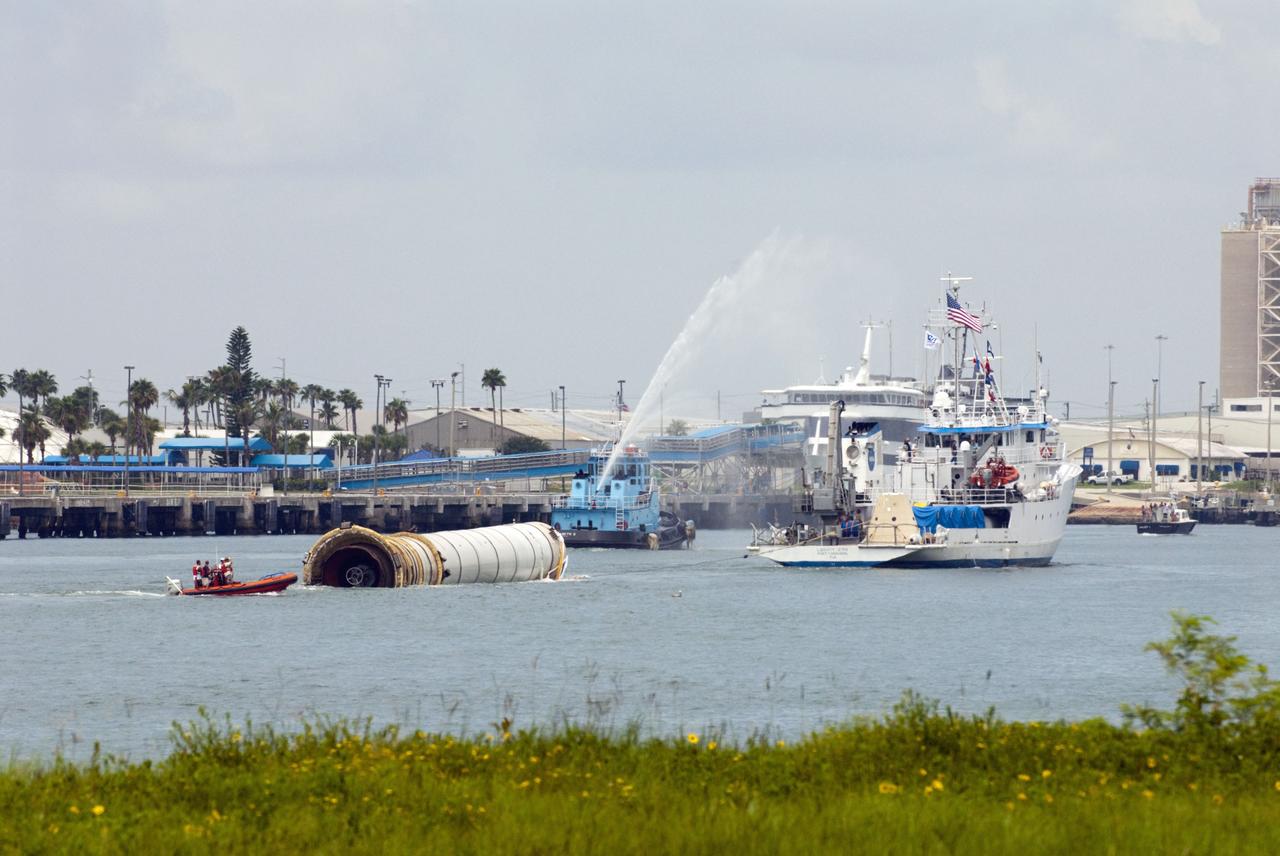
CAPE CANAVERAL, Fla. – A water-spraying tugboat escorts the Liberty Star as it tows the right spent booster from space shuttle Atlantis' final to Port Canaveral in Florida. The Liberty Star is one of NASA's solid rocket booster retrieval ships. The shuttle's two solid rocket booster casings and associated flight hardware are recovered in the Atlantic Ocean after every launch by Freedom Star and Liberty Star. The boosters impact the Atlantic about seven minutes after liftoff and the retrieval ships are stationed about 10 miles from the impact area at the time of splashdown. After the spent segments are processed, they will be transported to Utah, where they will be deserviced and stored, if needed. Atlantis began its final flight at 11:29 a.m. EDT on July 8 to deliver the Raffaello multi-purpose logistics module packed with supplies and spare parts for the International Space Station. Atlantis also delivers the Robotic Refueling Mission experiment that will investigate the potential for robotically refueling existing satellites in orbit to the station. In addition, Atlantis will return with a failed ammonia pump module to help NASA better understand the failure mechanism and improve pump designs for future systems. STS-135 is the 33rd flight of Atlantis, the 37th shuttle mission to the space station, and the 135th and final mission of NASA's Space Shuttle Program. For more information, visit www.nasa.gov/mission_pages/shuttle/shuttlemissions/sts135/index.html. Photo credit: NASA/Kim Shiflett
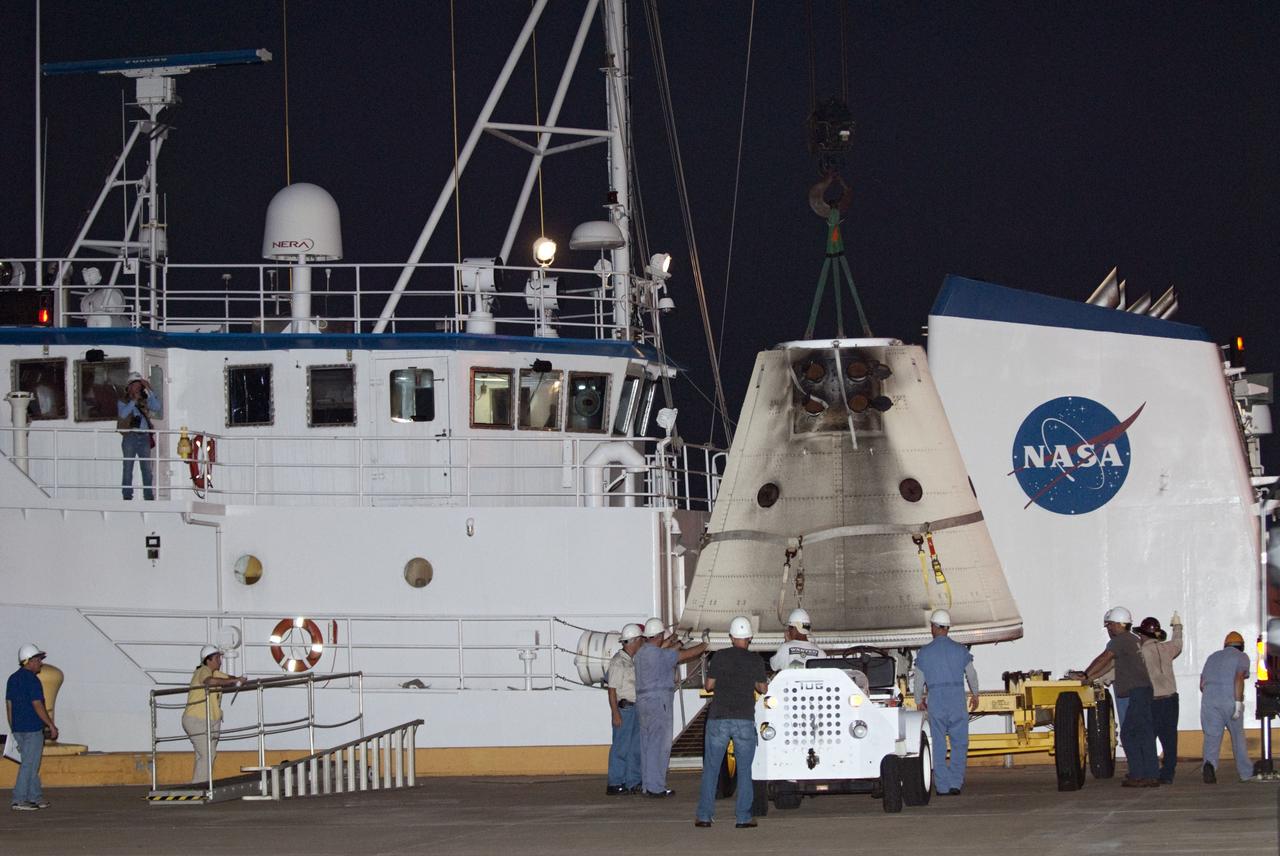
CAPE CANAVERAL, Fla. – At Hangar AF at Cape Canaveral Air Force Station in Florida, a booster retrieval ship delivers a frustum from one of space shuttle Atlantis' spent solid rocket boosters, beginning the safing process. The shuttle's two solid rocket booster casings and associated flight hardware are recovered in the Atlantic Ocean after every launch by the booster retrieval ships Freedom Star and Liberty Star. The boosters impact the Atlantic about seven minutes after liftoff and the ships are stationed about 10 miles from the impact area at the time of splashdown. After the spent segments are processed, they will be transported to Utah, where they will be deserviced and stored, if needed. Atlantis began its final flight at 11:29 a.m. EDT on July 8 to deliver the Raffaello multi-purpose logistics module packed with supplies and spare parts for the International Space Station. STS-135 is the 33rd flight of Atlantis, the 37th shuttle mission to the space station, and the 135th and final mission of NASA's Space Shuttle Program. For more information, visit www.nasa.gov/mission_pages/shuttle/shuttlemissions/sts135/index.html. Photo credit: NASA/Kim Shiflett
CAPE CANAVERAL, Fla. -- After 30 years and 135 missions, employees and invited guests crowd the Launch Complex 39 area of NASA's Kennedy Space Center in Florida to see the rocket's red glare of NASA's Space Shuttle Program soar for the last time. Space shuttle Atlantis is scheduled to liftoff at 11:26 a.m. EDT from Launch Pad 39A. On board will be four experienced astronauts -- STS-135 Commander Chris Ferguson, Pilot Doug Hurley, and Mission Specialists Sandy Magnus and Rex Walheim. STS-135 will deliver the Raffaello multi-purpose logistics module packed with supplies and spare parts for the International Space Station. Atlantis also will fly the Robotic Refueling Mission experiment that will investigate the potential for robotically refueling existing satellites in orbit. In addition, Atlantis will return with a failed ammonia pump module to help NASA better understand the failure mechanism and improve pump designs for future systems. STS-135 will be the 33rd flight of Atlantis, the 37th shuttle mission to the space station, and the 135th and final mission of NASA's Space Shuttle Program. For more information visit, www.nasa.gov/mission_pages/shuttle/shuttlemissions/sts135/index.html. Photo credit: NASA/Frank Michaux

CAPE CANAVERAL, Fla. -- After 30 years and 135 missions, invited guests congregate along the NASA Causeway to see the rocket's red glare of NASA's Space Shuttle Program soar for the last time. Space shuttle Atlantis is scheduled to liftoff at 11:26 a.m. EDT from Launch Pad 39A at NASA's Kennedy Space Center in Florida. On board will be four experienced astronauts -- STS-135 Commander Chris Ferguson, Pilot Doug Hurley, and Mission Specialists Sandy Magnus and Rex Walheim. STS-135 will deliver the Raffaello multi-purpose logistics module packed with supplies and spare parts for the International Space Station. Atlantis also will fly the Robotic Refueling Mission experiment that will investigate the potential for robotically refueling existing satellites in orbit. In addition, Atlantis will return with a failed ammonia pump module to help NASA better understand the failure mechanism and improve pump designs for future systems. STS-135 will be the 33rd flight of Atlantis, the 37th shuttle mission to the space station, and the 135th and final mission of NASA's Space Shuttle Program. For more information visit, www.nasa.gov/mission_pages/shuttle/shuttlemissions/sts135/index.html. Photo credit: NASA/Frank Michaux
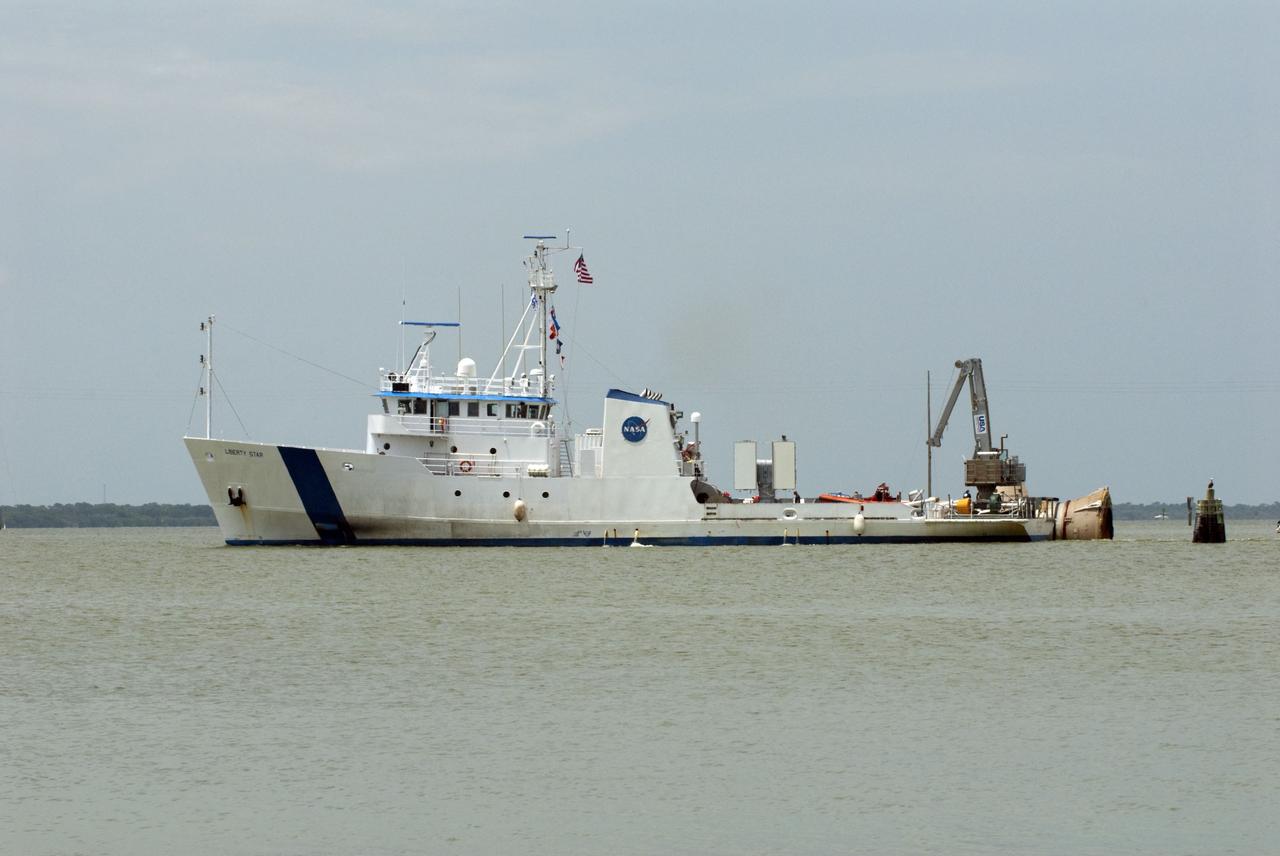
CAPE CANAVERAL, Fla. -- Liberty Star, one of NASA's solid rocket booster retrieval ships, tows the right spent booster from space shuttle Atlantis' final launch, as it is taken to Port Canaveral in Florida. The shuttle's two solid rocket booster casings and associated flight hardware are recovered in the Atlantic Ocean after every launch by Freedom Star and Liberty Star. The boosters impact the Atlantic about seven minutes after liftoff and the retrieval ships are stationed about 10 miles from the impact area at the time of splashdown. After the spent segments are processed, they will be transported to Utah, where they will be deserviced and stored, if needed. Atlantis began its final flight at 11:29 a.m. EDT on July 8 to deliver the Raffaello multi-purpose logistics module packed with supplies and spare parts for the International Space Station. Atlantis also delivers the Robotic Refueling Mission experiment that will investigate the potential for robotically refueling existing satellites in orbit to the station. In addition, Atlantis will return with a failed ammonia pump module to help NASA better understand the failure mechanism and improve pump designs for future systems. STS-135 is the 33rd flight of Atlantis, the 37th shuttle mission to the space station, and the 135th and final mission of NASA's Space Shuttle Program. For more information, visit www.nasa.gov/mission_pages/shuttle/shuttlemissions/sts135/index.html. Photo credit: NASA/Kim Shiflett
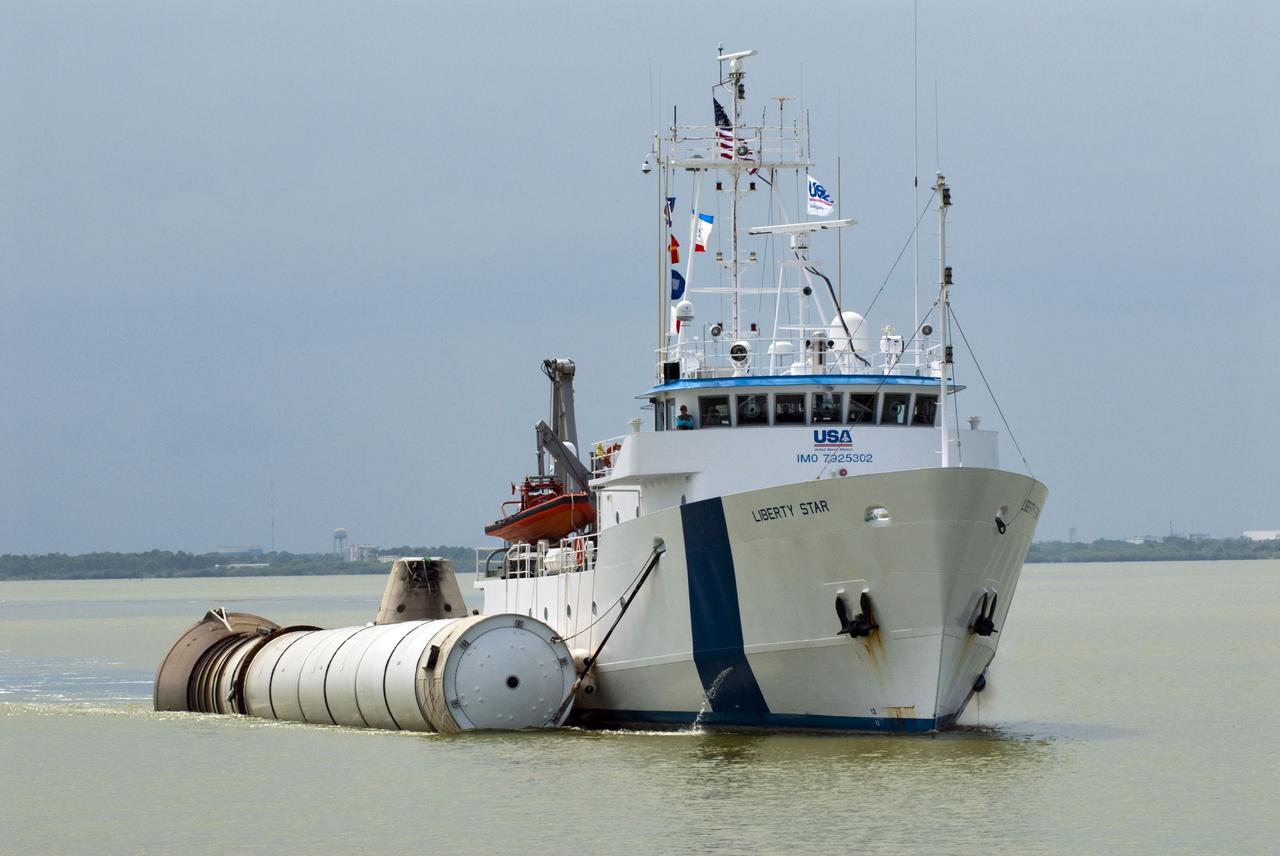
CAPE CANAVERAL, Fla. -- Liberty Star, one of NASA's solid rocket booster retrieval ships, tows the right spent booster from space shuttle Atlantis' final launch, as it is taken to Port Canaveral in Florida. The shuttle's two solid rocket booster casings and associated flight hardware are recovered in the Atlantic Ocean after every launch by Freedom Star and Liberty Star. The boosters impact the Atlantic about seven minutes after liftoff and the retrieval ships are stationed about 10 miles from the impact area at the time of splashdown. After the spent segments are processed, they will be transported to Utah, where they will be deserviced and stored, if needed. Atlantis began its final flight at 11:29 a.m. EDT on July 8 to deliver the Raffaello multi-purpose logistics module packed with supplies and spare parts for the International Space Station. Atlantis also delivers the Robotic Refueling Mission experiment that will investigate the potential for robotically refueling existing satellites in orbit to the station. In addition, Atlantis will return with a failed ammonia pump module to help NASA better understand the failure mechanism and improve pump designs for future systems. STS-135 is the 33rd flight of Atlantis, the 37th shuttle mission to the space station, and the 135th and final mission of NASA's Space Shuttle Program. For more information, visit www.nasa.gov/mission_pages/shuttle/shuttlemissions/sts135/index.html. Photo credit: NASA/Kim Shiflett
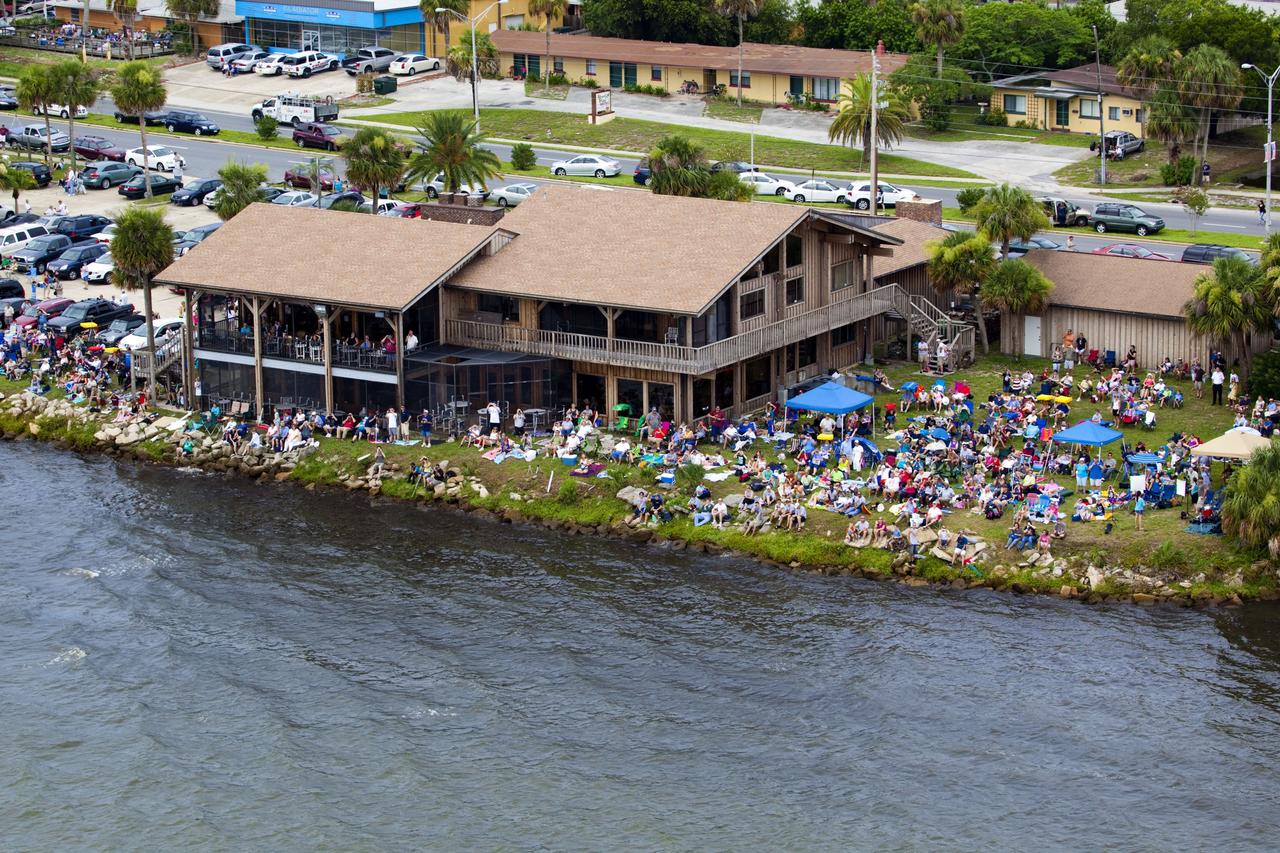
CAPE CANAVERAL, Fla. -- After 30 years and 135 missions, residents and visitors to Florida's Space Coast flock to a viewing site along U.S. 1 in Titusville to see the rocket's red glare of NASA's Space Shuttle Program soar for the last time. Space shuttle Atlantis is scheduled to liftoff at 11:26 a.m. EDT from Launch Pad 39A at NASA's Kennedy Space Center in Florida. On board will be four experienced astronauts -- STS-135 Commander Chris Ferguson, Pilot Doug Hurley, and Mission Specialists Sandy Magnus and Rex Walheim. STS-135 will deliver the Raffaello multi-purpose logistics module packed with supplies and spare parts for the International Space Station. Atlantis also will fly the Robotic Refueling Mission experiment that will investigate the potential for robotically refueling existing satellites in orbit. In addition, Atlantis will return with a failed ammonia pump module to help NASA better understand the failure mechanism and improve pump designs for future systems. STS-135 will be the 33rd flight of Atlantis, the 37th shuttle mission to the space station, and the 135th and final mission of NASA's Space Shuttle Program. For more information visit, www.nasa.gov/mission_pages/shuttle/shuttlemissions/sts135/index.html. Photo credit: NASA/Frank Michaux
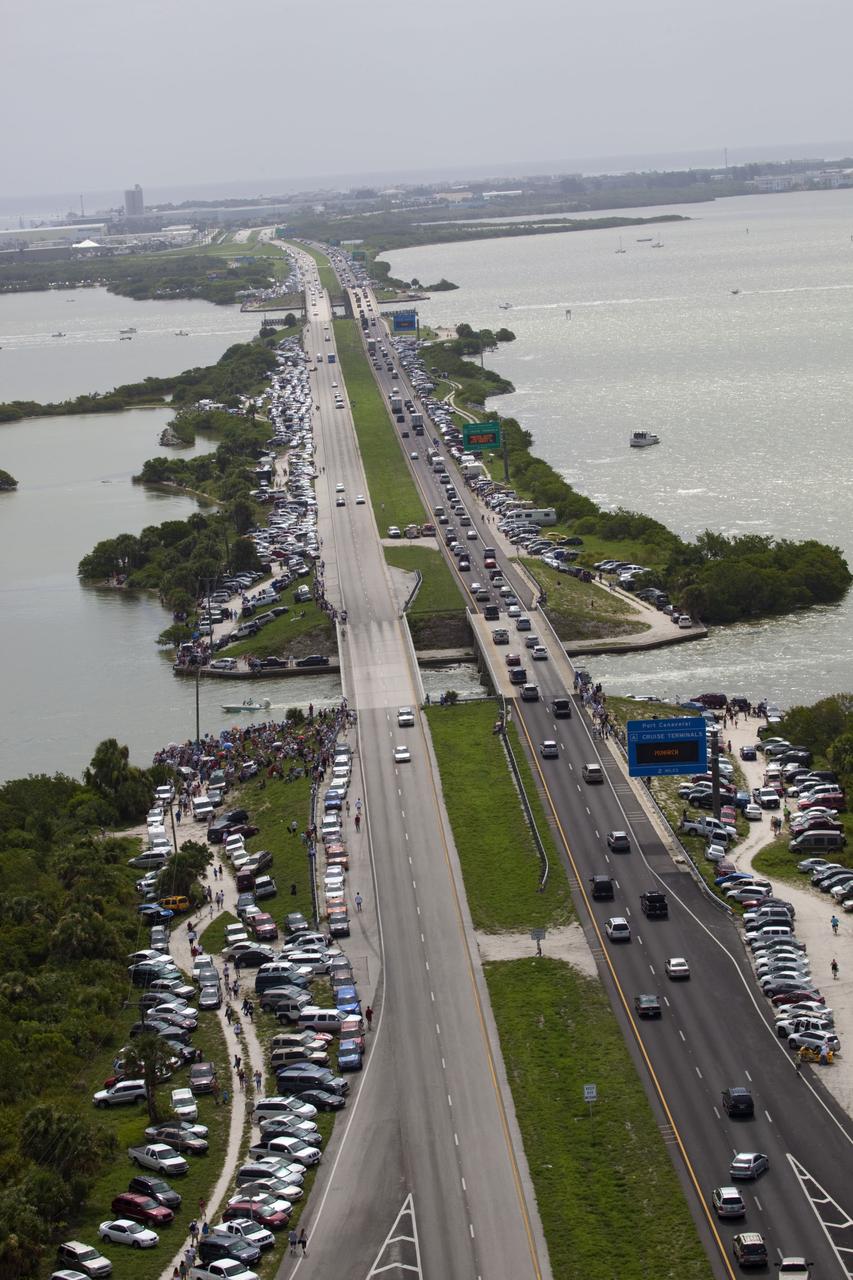
CAPE CANAVERAL, Fla. -- After 30 years and 135 missions, residents and visitors to Florida's Space Coast flock to viewing sites near Port Canaveral to see the rocket's red glare of NASA's Space Shuttle Program soar for the last time. Space shuttle Atlantis is scheduled to liftoff at 11:26 a.m. EDT from Launch Pad 39A at NASA's Kennedy Space Center in Florida. On board will be four experienced astronauts -- STS-135 Commander Chris Ferguson, Pilot Doug Hurley, and Mission Specialists Sandy Magnus and Rex Walheim. STS-135 will deliver the Raffaello multi-purpose logistics module packed with supplies and spare parts for the International Space Station. Atlantis also will fly the Robotic Refueling Mission experiment that will investigate the potential for robotically refueling existing satellites in orbit. In addition, Atlantis will return with a failed ammonia pump module to help NASA better understand the failure mechanism and improve pump designs for future systems. STS-135 will be the 33rd flight of Atlantis, the 37th shuttle mission to the space station, and the 135th and final mission of NASA's Space Shuttle Program. For more information visit, www.nasa.gov/mission_pages/shuttle/shuttlemissions/sts135/index.html. Photo credit: NASA/Frank Michaux
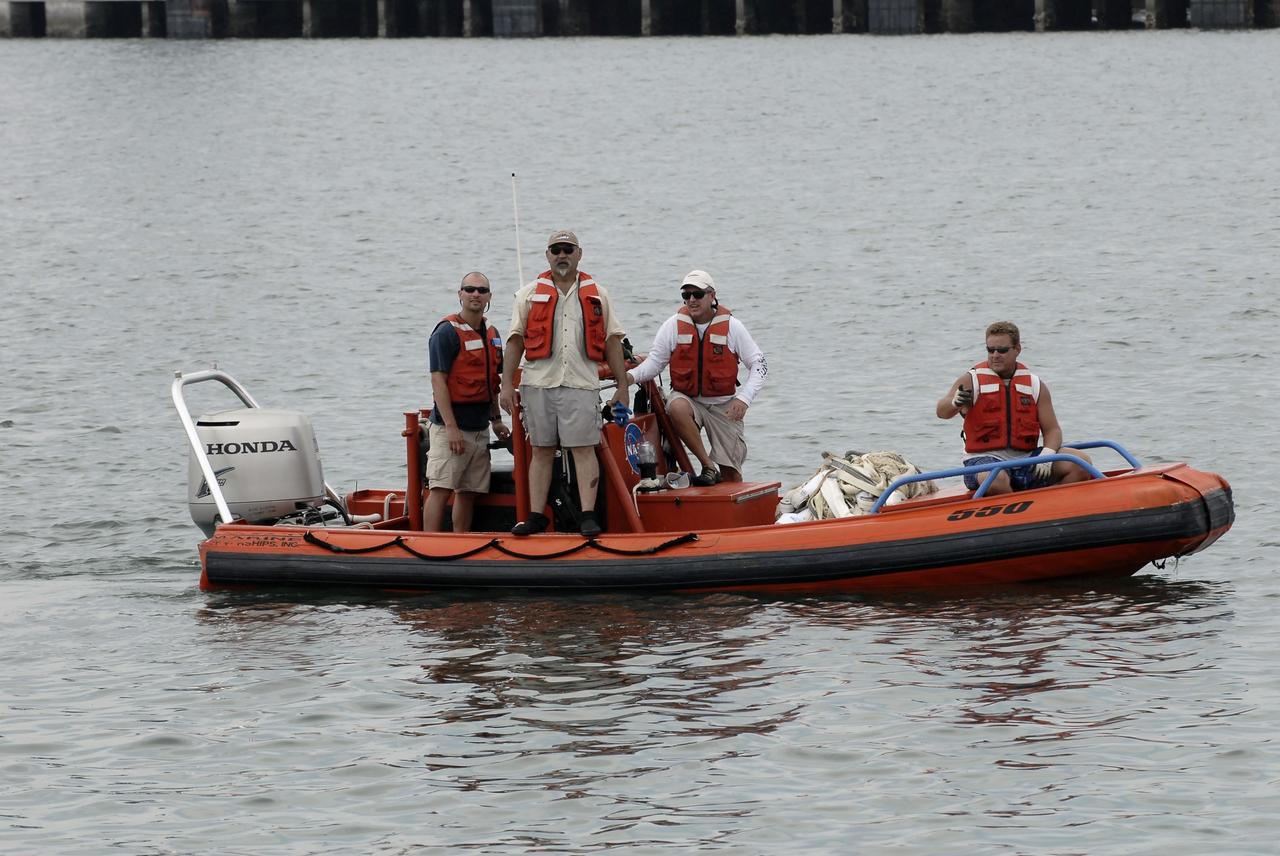
CAPE CANAVERAL, Fla. – A team oversees the return of the right spent booster from space shuttle Atlantis' final to Port Canaveral in Florida. The boat and team are from the Liberty Star, one of NASA's solid rocket booster retrieval ships. The shuttle's two solid rocket booster casings and associated flight hardware are recovered in the Atlantic Ocean after every launch by Freedom Star and Liberty Star. The boosters impact the Atlantic about seven minutes after liftoff and the retrieval ships are stationed about 10 miles from the impact area at the time of splashdown. After the spent segments are processed, they will be transported to Utah, where they will be deserviced and stored, if needed. Atlantis began its final flight at 11:29 a.m. EDT on July 8 to deliver the Raffaello multi-purpose logistics module packed with supplies and spare parts for the International Space Station. Atlantis also delivers the Robotic Refueling Mission experiment that will investigate the potential for robotically refueling existing satellites in orbit to the station. In addition, Atlantis will return with a failed ammonia pump module to help NASA better understand the failure mechanism and improve pump designs for future systems. STS-135 is the 33rd flight of Atlantis, the 37th shuttle mission to the space station, and the 135th and final mission of NASA's Space Shuttle Program. For more information, visit www.nasa.gov/mission_pages/shuttle/shuttlemissions/sts135/index.html. Photo credit: NASA/Kim Shiflett
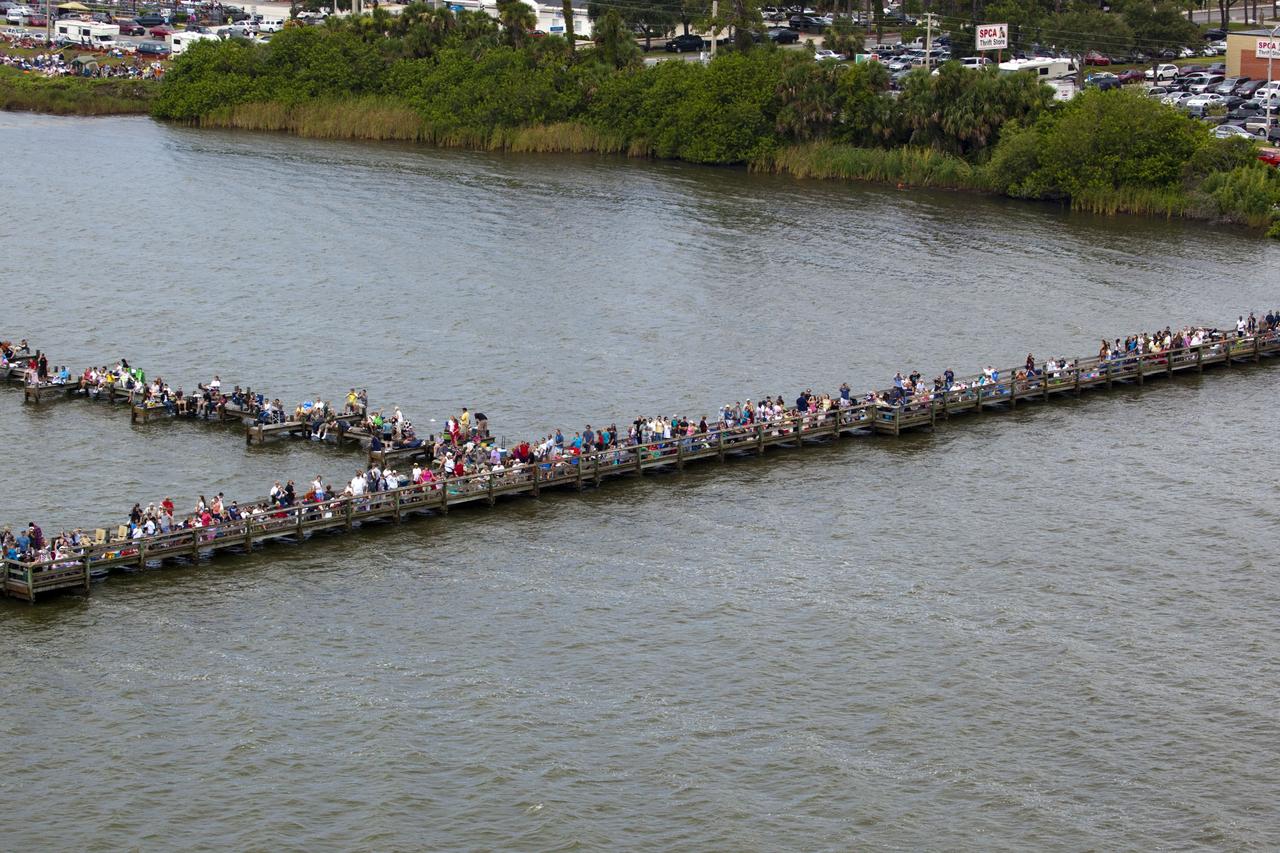
CAPE CANAVERAL, Fla. -- After 30 years and 135 missions, residents and visitors to Florida's Space Coast flock to a viewing site along U.S. 1 in Titusville to see the rocket's red glare of NASA's Space Shuttle Program soar for the last time. Space shuttle Atlantis is scheduled to liftoff at 11:26 a.m. EDT from Launch Pad 39A at NASA's Kennedy Space Center in Florida. On board will be four experienced astronauts -- STS-135 Commander Chris Ferguson, Pilot Doug Hurley, and Mission Specialists Sandy Magnus and Rex Walheim. STS-135 will deliver the Raffaello multi-purpose logistics module packed with supplies and spare parts for the International Space Station. Atlantis also will fly the Robotic Refueling Mission experiment that will investigate the potential for robotically refueling existing satellites in orbit. In addition, Atlantis will return with a failed ammonia pump module to help NASA better understand the failure mechanism and improve pump designs for future systems. STS-135 will be the 33rd flight of Atlantis, the 37th shuttle mission to the space station, and the 135th and final mission of NASA's Space Shuttle Program. For more information visit, www.nasa.gov/mission_pages/shuttle/shuttlemissions/sts135/index.html. Photo credit: NASA/Frank Michaux
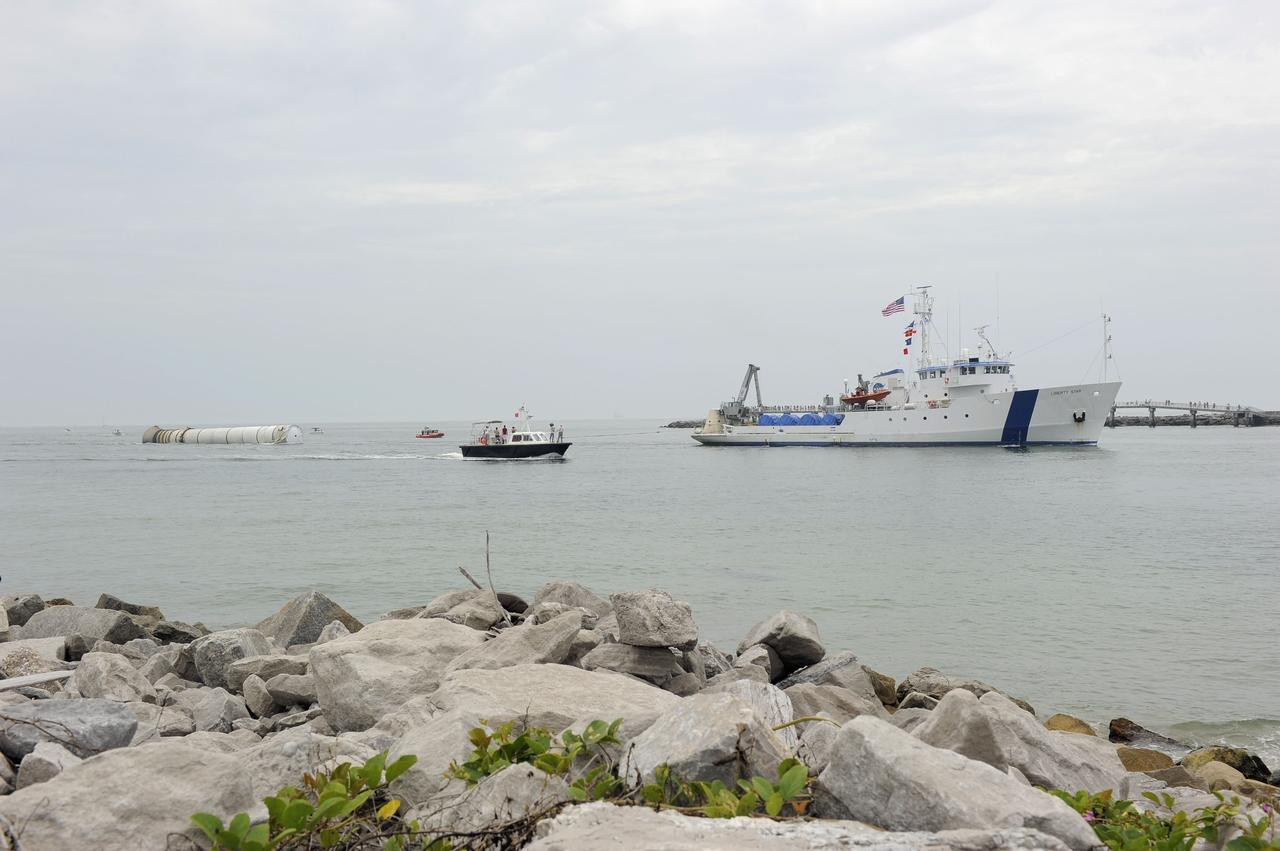
CAPE CANAVERAL, Fla. -- Liberty Star, one of NASA's solid rocket booster retrieval ships, tows the right spent booster from space shuttle Atlantis' final launch, to Port Canaveral in Florida. The shuttle's two solid rocket booster casings and associated flight hardware are recovered in the Atlantic Ocean after every launch by Freedom Star and Liberty Star. The boosters impact the Atlantic about seven minutes after liftoff and the retrieval ships are stationed about 10 miles from the impact area at the time of splashdown. After the spent segments are processed, they will be transported to Utah, where they will be deserviced and stored, if needed. Atlantis began its final flight at 11:29 a.m. EDT on July 8 to deliver the Raffaello multi-purpose logistics module packed with supplies and spare parts for the International Space Station. Atlantis also delivers the Robotic Refueling Mission experiment that will investigate the potential for robotically refueling existing satellites in orbit to the station. In addition, Atlantis will return with a failed ammonia pump module to help NASA better understand the failure mechanism and improve pump designs for future systems. STS-135 is the 33rd flight of Atlantis, the 37th shuttle mission to the space station, and the 135th and final mission of NASA's Space Shuttle Program. For more information, visit www.nasa.gov/mission_pages/shuttle/shuttlemissions/sts135/index.html. Photo credit: NASA/Kim Shiflett

CAPE CANAVERAL, Fla. -- After 30 years and 135 missions, residents and visitors to Florida's Space Coast flock to viewing sites near Port Canaveral to see the rocket's red glare of NASA's Space Shuttle Program soar for the last time. Space shuttle Atlantis is scheduled to liftoff at 11:26 a.m. EDT from Launch Pad 39A at NASA's Kennedy Space Center in Florida. On board will be four experienced astronauts -- STS-135 Commander Chris Ferguson, Pilot Doug Hurley, and Mission Specialists Sandy Magnus and Rex Walheim. STS-135 will deliver the Raffaello multi-purpose logistics module packed with supplies and spare parts for the International Space Station. Atlantis also will fly the Robotic Refueling Mission experiment that will investigate the potential for robotically refueling existing satellites in orbit. In addition, Atlantis will return with a failed ammonia pump module to help NASA better understand the failure mechanism and improve pump designs for future systems. STS-135 will be the 33rd flight of Atlantis, the 37th shuttle mission to the space station, and the 135th and final mission of NASA's Space Shuttle Program. For more information visit, www.nasa.gov/mission_pages/shuttle/shuttlemissions/sts135/index.html. Photo credit: NASA/Frank Michaux

CAPE CANAVERAL, Fla. -- After 30 years and 135 missions, residents and visitors to Florida's Space Coast flock to S.R. 528 near Port Canaveral to see the rocket's red glare of NASA's Space Shuttle Program soar for the last time. Space shuttle Atlantis is scheduled to liftoff at 11:26 a.m. EDT from Launch Pad 39A at NASA's Kennedy Space Center in Florida. On board will be four experienced astronauts -- STS-135 Commander Chris Ferguson, Pilot Doug Hurley, and Mission Specialists Sandy Magnus and Rex Walheim. STS-135 will deliver the Raffaello multi-purpose logistics module packed with supplies and spare parts for the International Space Station. Atlantis also will fly the Robotic Refueling Mission experiment that will investigate the potential for robotically refueling existing satellites in orbit. In addition, Atlantis will return with a failed ammonia pump module to help NASA better understand the failure mechanism and improve pump designs for future systems. STS-135 will be the 33rd flight of Atlantis, the 37th shuttle mission to the space station, and the 135th and final mission of NASA's Space Shuttle Program. For more information visit, www.nasa.gov/mission_pages/shuttle/shuttlemissions/sts135/index.html. Photo credit: NASA/Frank Michaux
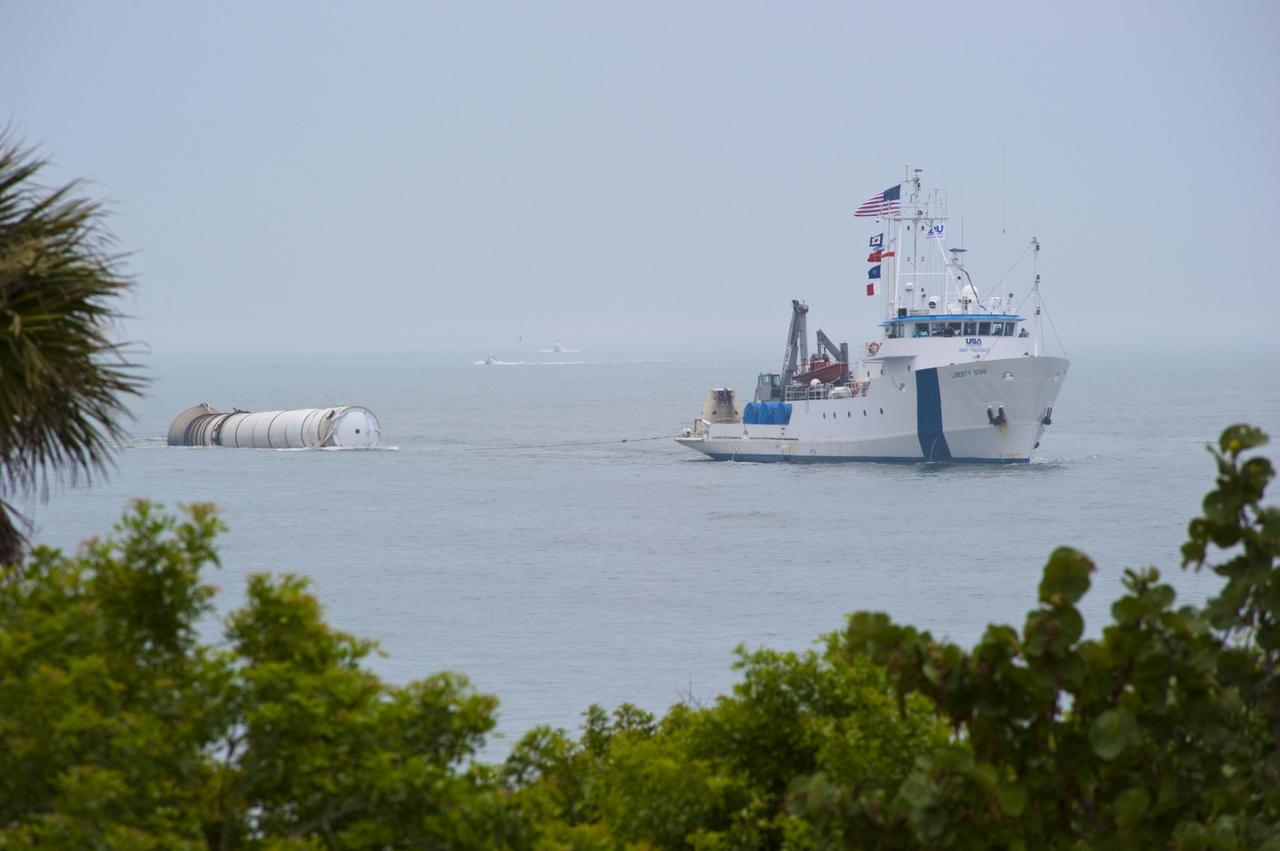
CAPE CANAVERAL, Fla. -- Liberty Star, one of NASA's solid rocket booster retrieval ships, tows the right spent booster from space shuttle Atlantis' final launch, to Port Canaveral in Florida. The shuttle's two solid rocket booster casings and associated flight hardware are recovered in the Atlantic Ocean after every launch by Freedom Star and Liberty Star. The boosters impact the Atlantic about seven minutes after liftoff and the retrieval ships are stationed about 10 miles from the impact area at the time of splashdown. After the spent segments are processed, they will be transported to Utah, where they will be deserviced and stored, if needed. Atlantis began its final flight at 11:29 a.m. EDT on July 8 to deliver the Raffaello multi-purpose logistics module packed with supplies and spare parts for the International Space Station. Atlantis also delivers the Robotic Refueling Mission experiment that will investigate the potential for robotically refueling existing satellites in orbit to the station. In addition, Atlantis will return with a failed ammonia pump module to help NASA better understand the failure mechanism and improve pump designs for future systems. STS-135 is the 33rd flight of Atlantis, the 37th shuttle mission to the space station, and the 135th and final mission of NASA's Space Shuttle Program. For more information, visit www.nasa.gov/mission_pages/shuttle/shuttlemissions/sts135/index.html. Photo credit: NASA/Kim Shiflett
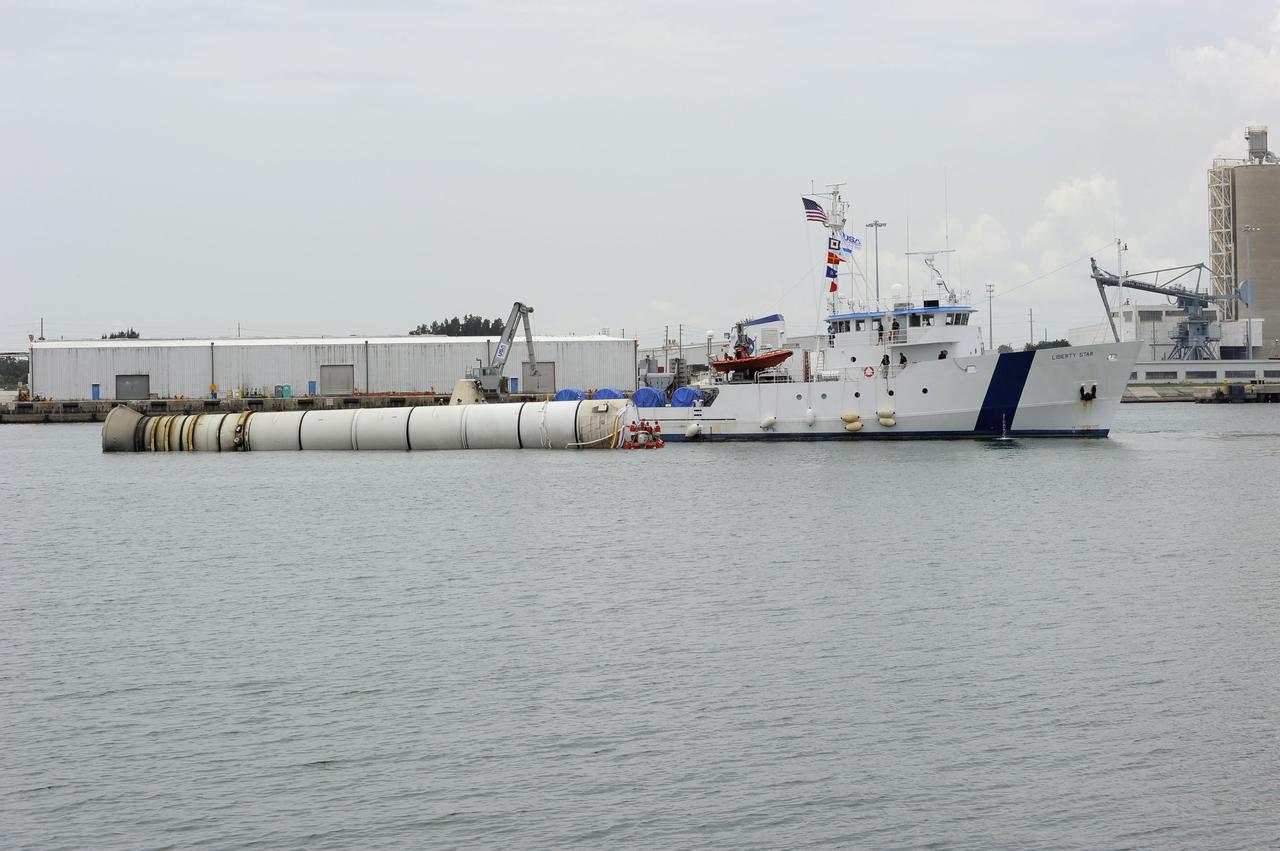
CAPE CANAVERAL, Fla. - Liberty Star, one of NASA's solid rocket booster retrieval ships, maneuvers the right spent booster from space shuttle Atlantis' final launch, as it is taken to Port Canaveral in Florida. The shuttle's two solid rocket booster casings and associated flight hardware are recovered in the Atlantic Ocean after every launch by Freedom Star and Liberty Star. The boosters impact the Atlantic about seven minutes after liftoff and the retrieval ships are stationed about 10 miles from the impact area at the time of splashdown. After the spent segments are processed, they will be transported to Utah, where they will be deserviced and stored, if needed. Atlantis began its final flight at 11:29 a.m. EDT on July 8 to deliver the Raffaello multi-purpose logistics module packed with supplies and spare parts for the International Space Station. Atlantis also delivers the Robotic Refueling Mission experiment that will investigate the potential for robotically refueling existing satellites in orbit to the station. In addition, Atlantis will return with a failed ammonia pump module to help NASA better understand the failure mechanism and improve pump designs for future systems. STS-135 is the 33rd flight of Atlantis, the 37th shuttle mission to the space station, and the 135th and final mission of NASA's Space Shuttle Program. For more information, visit www.nasa.gov/mission_pages/shuttle/shuttlemissions/sts135/index.html. Photo credit: NASA/Kim Shiflett
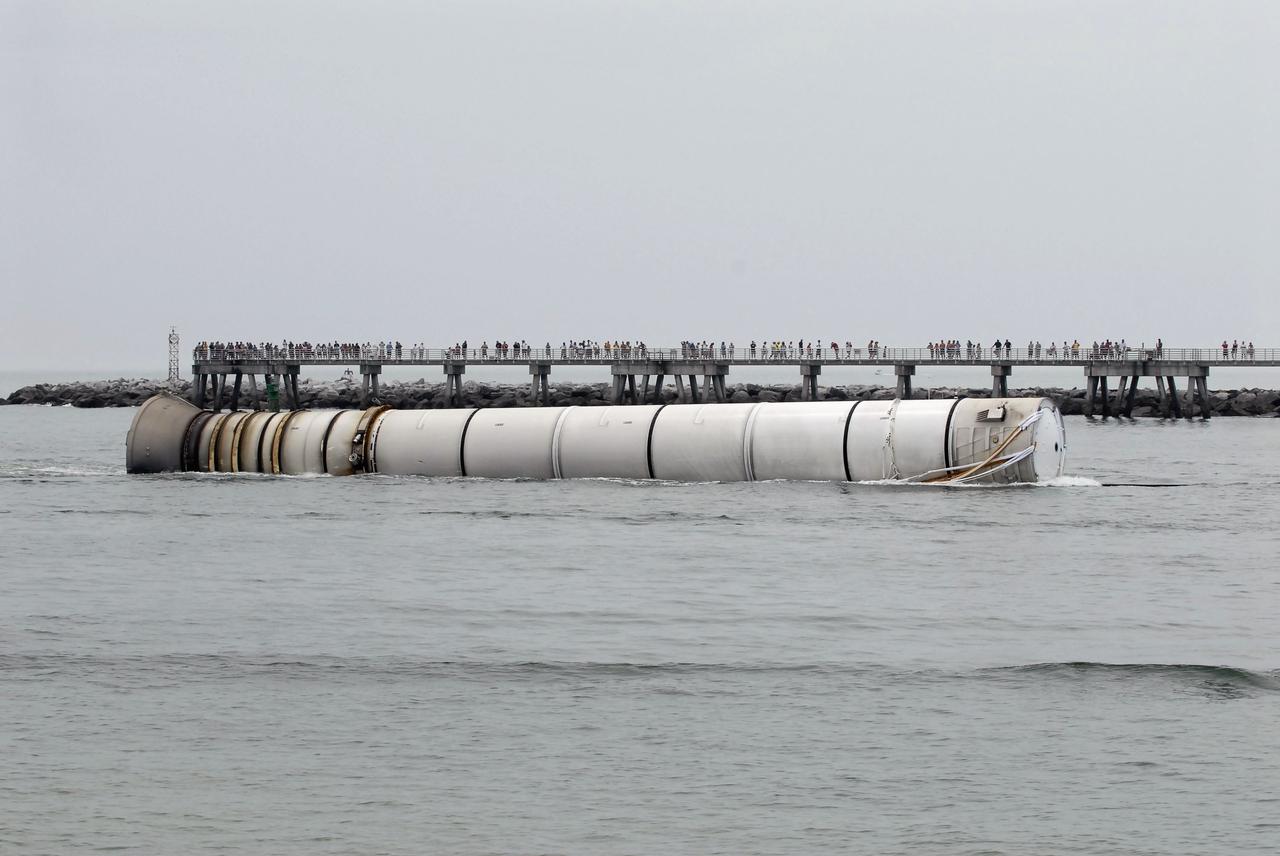
CAPE CANAVERAL, Fla. – The right spent booster from space shuttle Atlantis' final launch is towed by the Liberty Star, one of NASA's solid rocket booster retrieval ships to Port Canaveral in Florida. The shuttle's two solid rocket booster casings and associated flight hardware are recovered in the Atlantic Ocean after every launch by Freedom Star and Liberty Star. The boosters impact the Atlantic about seven minutes after liftoff and the retrieval ships are stationed about 10 miles from the impact area at the time of splashdown. After the spent segments are processed, they will be transported to Utah, where they will be deserviced and stored, if needed. Atlantis began its final flight at 11:29 a.m. EDT on July 8 to deliver the Raffaello multi-purpose logistics module packed with supplies and spare parts for the International Space Station. Atlantis also delivers the Robotic Refueling Mission experiment that will investigate the potential for robotically refueling existing satellites in orbit to the station. In addition, Atlantis will return with a failed ammonia pump module to help NASA better understand the failure mechanism and improve pump designs for future systems. STS-135 is the 33rd flight of Atlantis, the 37th shuttle mission to the space station, and the 135th and final mission of NASA's Space Shuttle Program. For more information, visit www.nasa.gov/mission_pages/shuttle/shuttlemissions/sts135/index.html. Photo credit: NASA/Kim Shiflett

CAPE CANAVERAL, Fla. -- After 30 years and 135 missions, residents and visitors to Florida's Space Coast see this rocket's red glare for the last time as space shuttle Atlantis soars toward space after lifting off Launch Pad 39A at NASA's Kennedy Space Center in Florida at 11:29 a.m. EDT on July 8. On board are four experienced astronauts -- STS-135 Commander Chris Ferguson, Pilot Doug Hurley, and Mission Specialists Sandy Magnus and Rex Walheim. STS-135 will deliver the Raffaello multi-purpose logistics module packed with supplies and spare parts for the International Space Station. Atlantis also is flying the Robotic Refueling Mission experiment that will investigate the potential for robotically refueling existing satellites in orbit. In addition, Atlantis will return with a failed ammonia pump module to help NASA better understand the failure mechanism and improve pump designs for future systems. STS-135 is the 33rd flight of Atlantis, the 37th shuttle mission to the space station, and the 135th and final mission of NASA's Space Shuttle Program. For more information visit, www.nasa.gov/mission_pages/shuttle/shuttlemissions/sts135/index.html. Photo credit: NASA/Frank Michaux
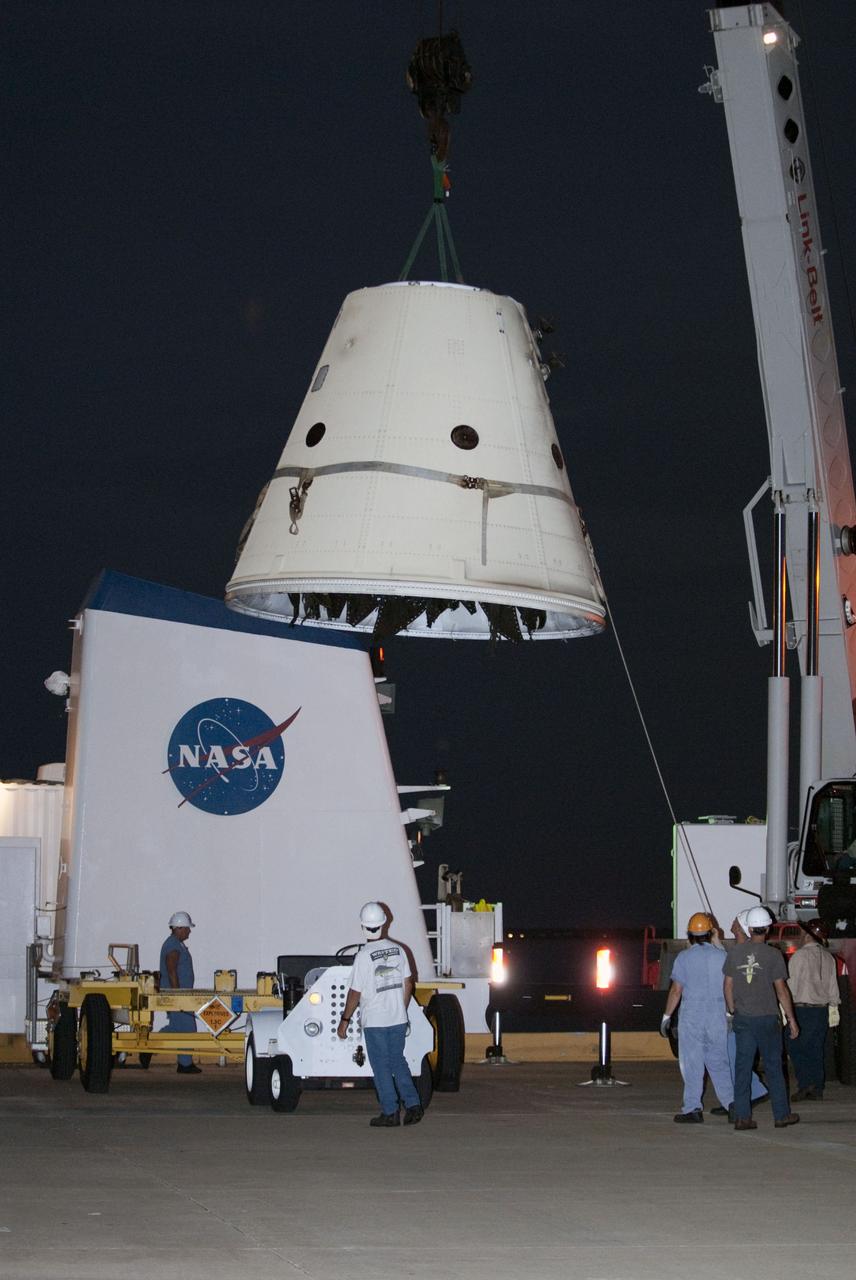
CAPE CANAVERAL, Fla. – A frustum from one of space shuttle Atlantis' two spent solid rocket boosters is lowered toward the dock at Hangar AF at Cape Canaveral Air Force Station in Florida to begin the safing process. The shuttle's two solid rocket booster casings and associated flight hardware are recovered in the Atlantic Ocean after every launch by the booster retrieval ships Freedom Star and Liberty Star. The boosters impact the Atlantic about seven minutes after liftoff and the ships are stationed about 10 miles from the impact area at the time of splashdown. After the spent segments are processed, they will be transported to Utah, where they will be deserviced and stored, if needed. Atlantis began its final flight at 11:29 a.m. EDT on July 8 to deliver the Raffaello multi-purpose logistics module packed with supplies and spare parts for the International Space Station. STS-135 is the 33rd flight of Atlantis, the 37th shuttle mission to the space station, and the 135th and final mission of NASA's Space Shuttle Program. For more information, visit www.nasa.gov/mission_pages/shuttle/shuttlemissions/sts135/index.html. Photo credit: NASA/Kim Shiflett

CAPE CANAVERAL, Fla. -- After 30 years and 135 missions, residents and visitors to Florida's Space Coast flock to a viewing site along U.S. 1 in Titusville to see the rocket's red glare of NASA's Space Shuttle Program soar for the last time. Space shuttle Atlantis is scheduled to liftoff at 11:26 a.m. EDT from Launch Pad 39A at NASA's Kennedy Space Center in Florida. On board will be four experienced astronauts -- STS-135 Commander Chris Ferguson, Pilot Doug Hurley, and Mission Specialists Sandy Magnus and Rex Walheim. STS-135 will deliver the Raffaello multi-purpose logistics module packed with supplies and spare parts for the International Space Station. Atlantis also will fly the Robotic Refueling Mission experiment that will investigate the potential for robotically refueling existing satellites in orbit. In addition, Atlantis will return with a failed ammonia pump module to help NASA better understand the failure mechanism and improve pump designs for future systems. STS-135 will be the 33rd flight of Atlantis, the 37th shuttle mission to the space station, and the 135th and final mission of NASA's Space Shuttle Program. For more information visit, www.nasa.gov/mission_pages/shuttle/shuttlemissions/sts135/index.html. Photo credit: NASA/Frank Michaux
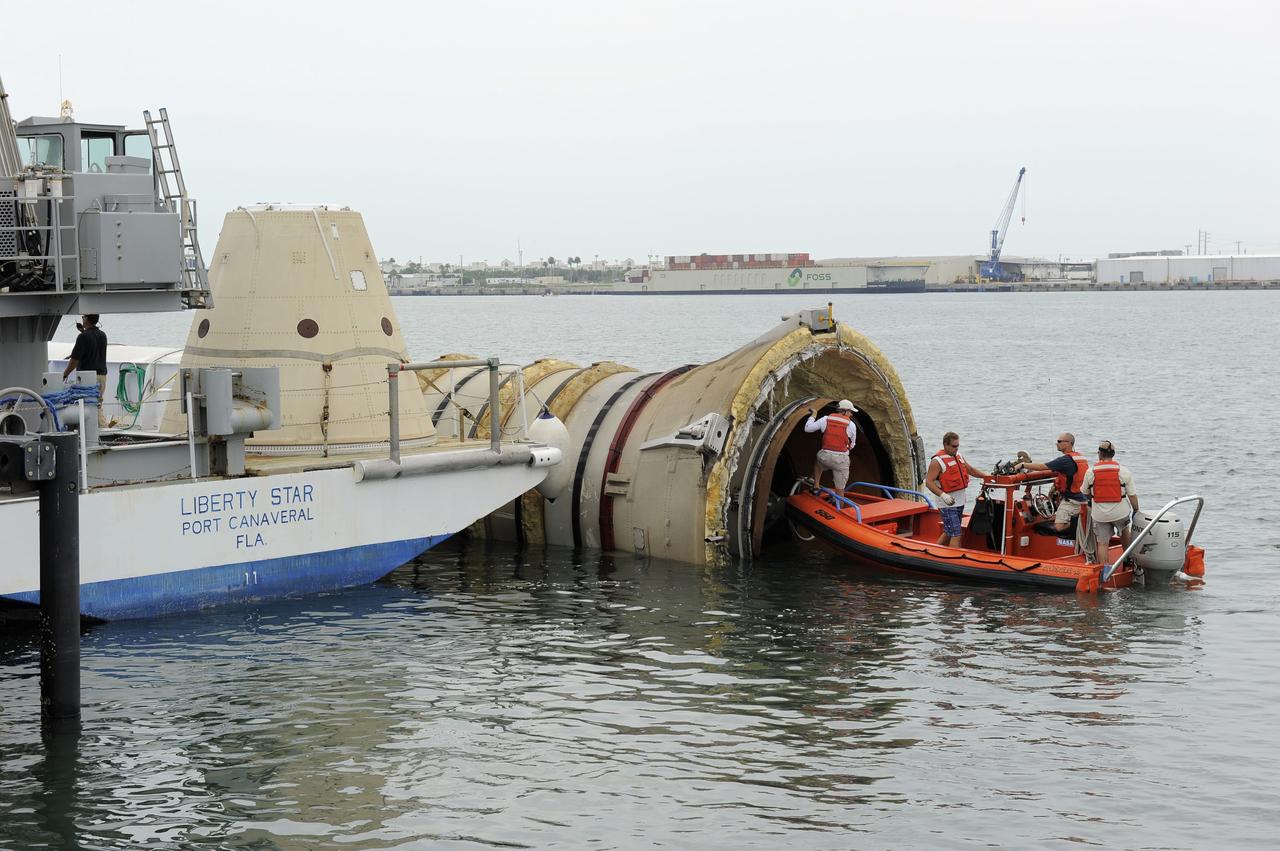
CAPE CANAVERAL, Fla. – Crews from the Liberty Star, one of NASA's solid rocket booster retrieval ships, inspect the end of the right spent booster from space shuttle Atlantis' final launch, as it is taken to a berth at Port Canaveral in Florida. The shuttle's two solid rocket booster casings and associated flight hardware are recovered in the Atlantic Ocean after every launch by Freedom Star and Liberty Star. The boosters impact the Atlantic about seven minutes after liftoff and the retrieval ships are stationed about 10 miles from the impact area at the time of splashdown. After the spent segments are processed, they will be transported to Utah, where they will be deserviced and stored, if needed. Atlantis began its final flight at 11:29 a.m. EDT on July 8 to deliver the Raffaello multi-purpose logistics module packed with supplies and spare parts for the International Space Station. Atlantis also delivers the Robotic Refueling Mission experiment that will investigate the potential for robotically refueling existing satellites in orbit to the station. In addition, Atlantis will return with a failed ammonia pump module to help NASA better understand the failure mechanism and improve pump designs for future systems. STS-135 is the 33rd flight of Atlantis, the 37th shuttle mission to the space station, and the 135th and final mission of NASA's Space Shuttle Program. For more information, visit www.nasa.gov/mission_pages/shuttle/shuttlemissions/sts135/index.html. Photo credit: NASA/Kim Shiflett
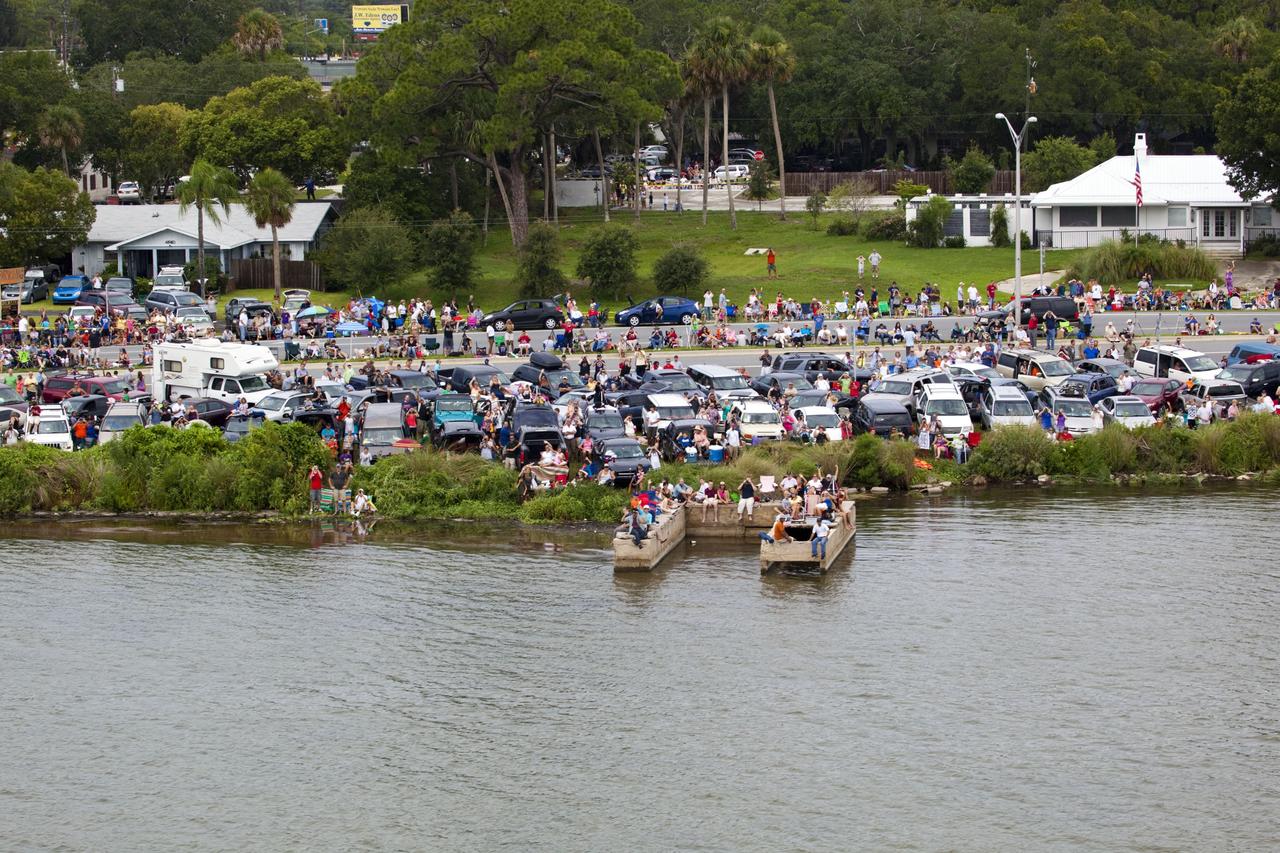
CAPE CANAVERAL, Fla. -- After 30 years and 135 missions, residents and visitors to Florida's Space Coast flock to a viewing site along U.S. 1 in Titusville to see the rocket's red glare of NASA's Space Shuttle Program soar for the last time. Space shuttle Atlantis is scheduled to liftoff at 11:26 a.m. EDT from Launch Pad 39A at NASA's Kennedy Space Center in Florida. On board will be four experienced astronauts -- STS-135 Commander Chris Ferguson, Pilot Doug Hurley, and Mission Specialists Sandy Magnus and Rex Walheim. STS-135 will deliver the Raffaello multi-purpose logistics module packed with supplies and spare parts for the International Space Station. Atlantis also will fly the Robotic Refueling Mission experiment that will investigate the potential for robotically refueling existing satellites in orbit. In addition, Atlantis will return with a failed ammonia pump module to help NASA better understand the failure mechanism and improve pump designs for future systems. STS-135 will be the 33rd flight of Atlantis, the 37th shuttle mission to the space station, and the 135th and final mission of NASA's Space Shuttle Program. For more information visit, www.nasa.gov/mission_pages/shuttle/shuttlemissions/sts135/index.html. Photo credit: NASA/Frank Michaux
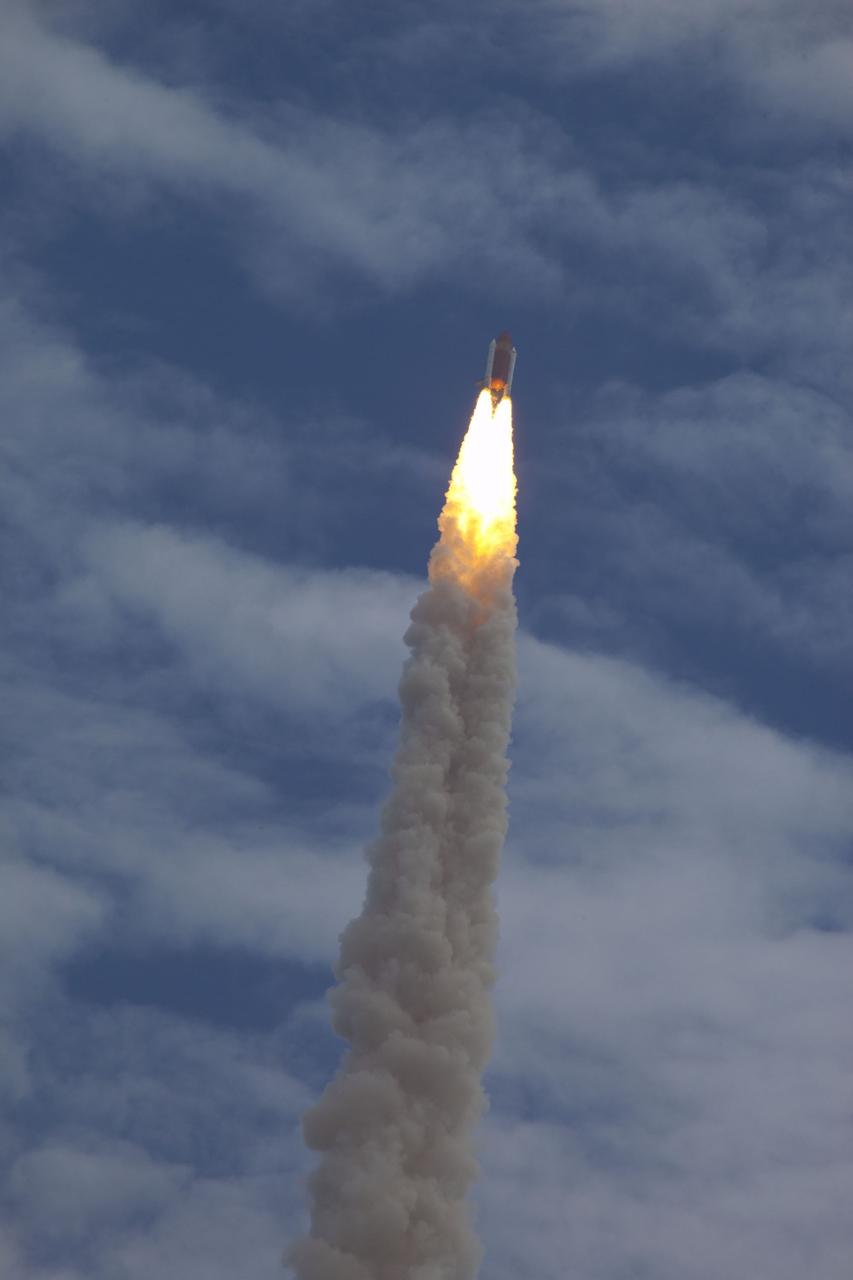
CAPE CANAVERAL, Fla. -- After 30 years and 135 missions, residents and visitors to Florida's Space Coast see this rocket's red glare for the last time as space shuttle Atlantis soars toward space after lifting off Launch Pad 39A at NASA's Kennedy Space Center in Florida at 11:29 a.m. EDT on July 8. On board are four experienced astronauts -- STS-135 Commander Chris Ferguson, Pilot Doug Hurley, and Mission Specialists Sandy Magnus and Rex Walheim. STS-135 will deliver the Raffaello multi-purpose logistics module packed with supplies and spare parts for the International Space Station. Atlantis also is flying the Robotic Refueling Mission experiment that will investigate the potential for robotically refueling existing satellites in orbit. In addition, Atlantis will return with a failed ammonia pump module to help NASA better understand the failure mechanism and improve pump designs for future systems. STS-135 is the 33rd flight of Atlantis, the 37th shuttle mission to the space station, and the 135th and final mission of NASA's Space Shuttle Program. For more information visit, www.nasa.gov/mission_pages/shuttle/shuttlemissions/sts135/index.html. Photo credit: NASA/Frank Michaux
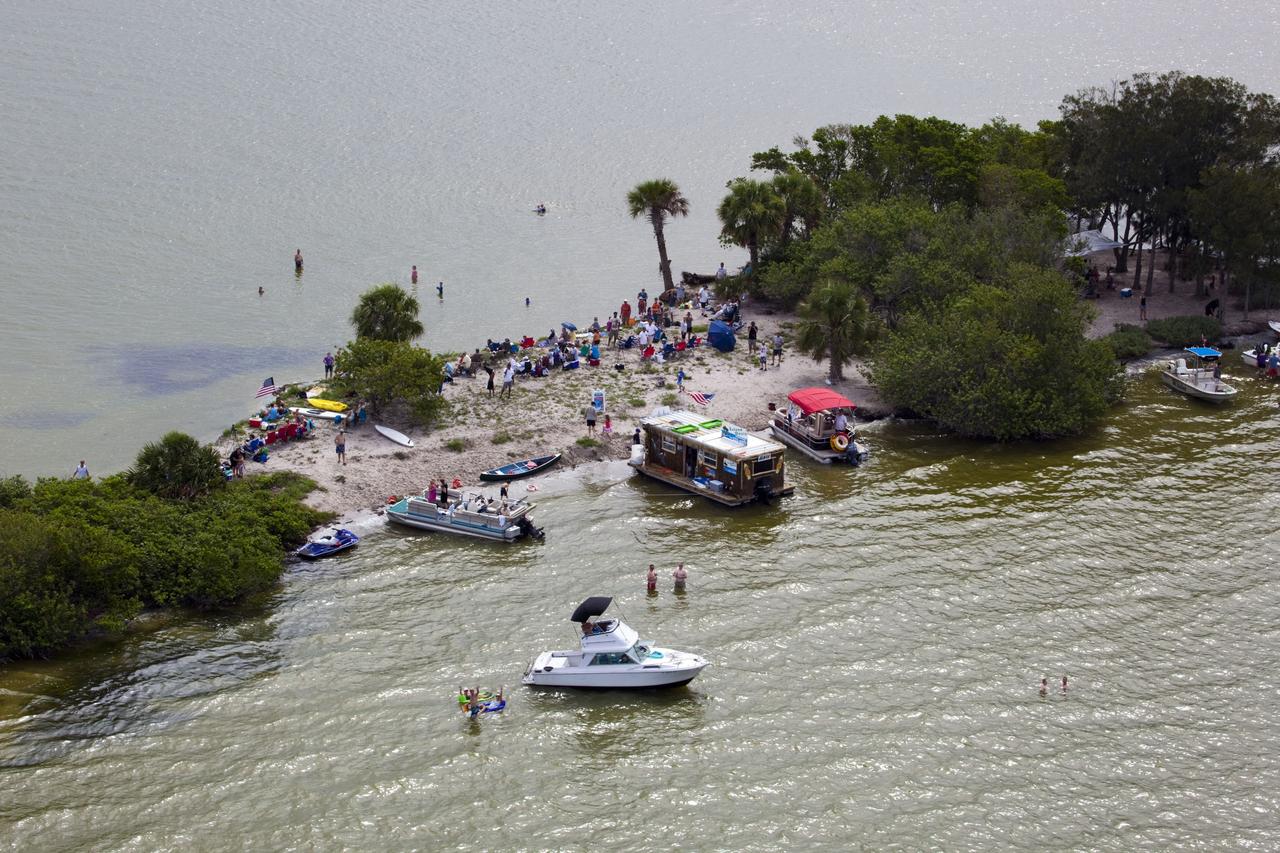
CAPE CANAVERAL, Fla. -- After 30 years and 135 missions, residents and visitors to Florida's Space Coast flock to viewing sites near Port Canaveral to see the rocket's red glare of NASA's Space Shuttle Program soar for the last time. Space shuttle Atlantis is scheduled to liftoff at 11:26 a.m. EDT from Launch Pad 39A at NASA's Kennedy Space Center in Florida. On board will be four experienced astronauts -- STS-135 Commander Chris Ferguson, Pilot Doug Hurley, and Mission Specialists Sandy Magnus and Rex Walheim. STS-135 will deliver the Raffaello multi-purpose logistics module packed with supplies and spare parts for the International Space Station. Atlantis also will fly the Robotic Refueling Mission experiment that will investigate the potential for robotically refueling existing satellites in orbit. In addition, Atlantis will return with a failed ammonia pump module to help NASA better understand the failure mechanism and improve pump designs for future systems. STS-135 will be the 33rd flight of Atlantis, the 37th shuttle mission to the space station, and the 135th and final mission of NASA's Space Shuttle Program. For more information visit, www.nasa.gov/mission_pages/shuttle/shuttlemissions/sts135/index.html. Photo credit: NASA/Frank Michaux
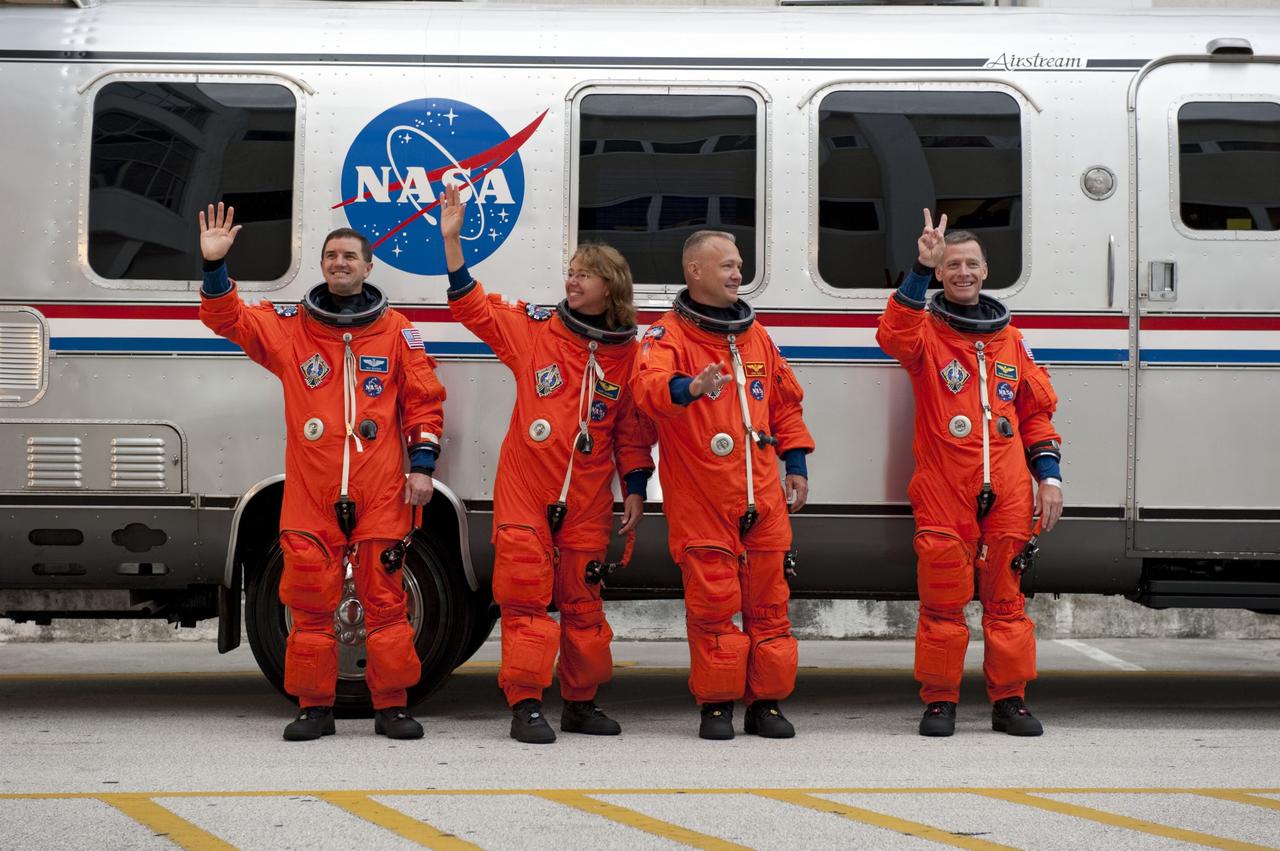
CAPE CANAVERAL, Fla. -- Dressed in their bright-orange launch-and-entry suits, the final four astronauts to launch aboard a space shuttle wave to media and employees cheering them on in front of the Astronaut Crew Quarters in the Operations and Checkout Building at NASA's Kennedy Space Center in Florida. From left, are STS-135 Mission Specialists Rex Walheim and Sandy Magnus, Pilot Doug Hurley, and Commander Chris Ferguson. The silver Astrovan will take the astronauts to Launch Pad 39A, where they will board space shuttle Atlantis for a scheduled liftoff at 11:26 a.m. EDT on July 8 for their mission to the International Space Station. STS-135 will deliver the Raffaello multi-purpose logistics module packed with supplies and spare parts for the orbiting outpost. Atlantis also will fly the Robotic Refueling Mission experiment that will investigate the potential for robotically refueling existing satellites in orbit. In addition, Atlantis will return with a failed ammonia pump module to help NASA better understand the failure mechanism and improve pump designs for future systems. STS-135 will be the 33rd flight of Atlantis, the 37th shuttle mission to the space station, and the 135th and final mission of NASA's Space Shuttle Program. For more information, visit www.nasa.gov/mission_pages/shuttle/shuttlemissions/sts135/index.html. Photo credit: NASA/Kim Shiflett
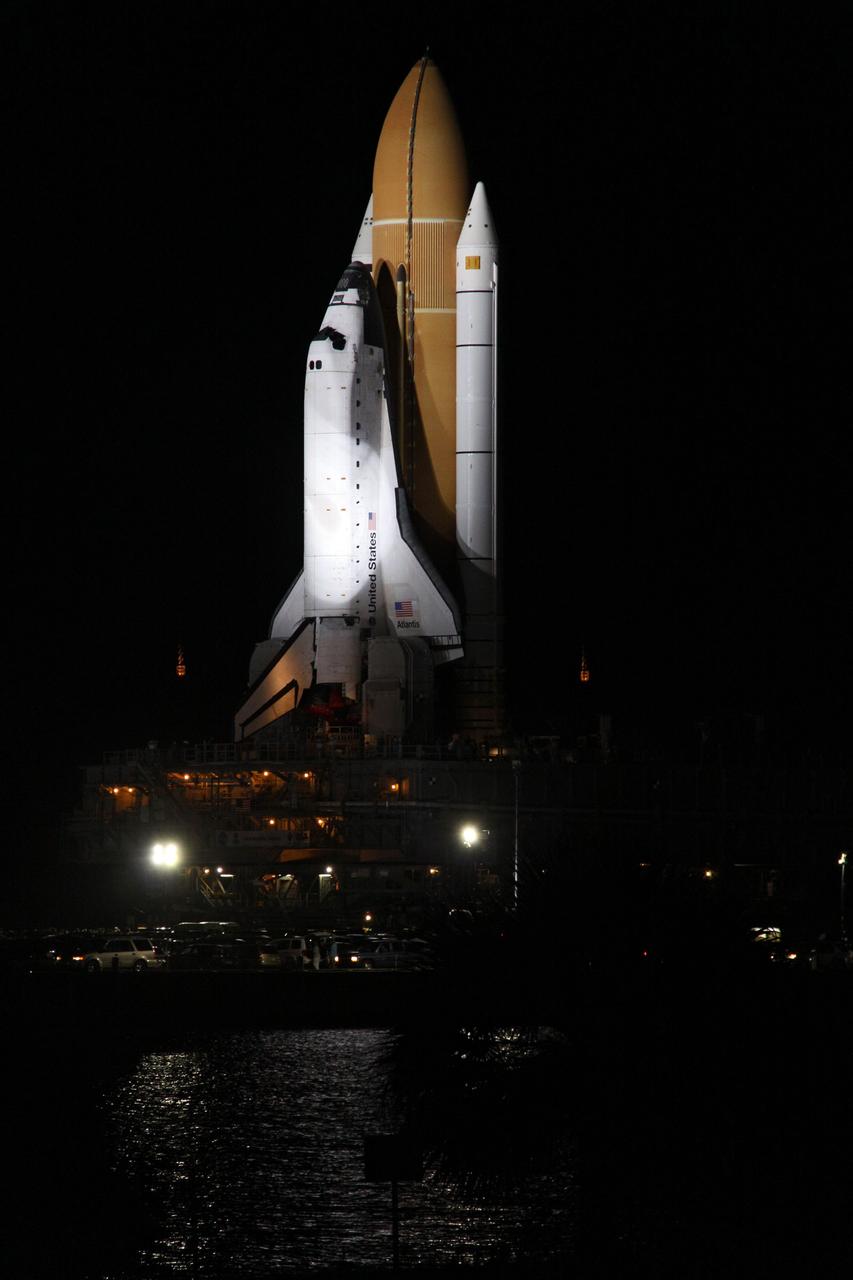
CAPE CANAVERAL, Fla. -- Bathed in xenon lights, space shuttle Atlantis passes the Turn Basin as it makes its final journey from the Vehicle Assembly Building to Launch Pad 39A at NASA's Kennedy Space Center in Florida. First motion was at 8:42 p.m. EDT. It will take the crawler-transporter about six hours to carry the shuttle, attached to its external fuel tank and solid rocket boosters, to the seaside launch pad. The milestone move paves the way for the launch of the STS-135 mission to the International Space Station, targeted for July 8. STS-135 will be the 33rd flight of Atlantis, the 37th shuttle mission to the space station, and the 135th and final mission of NASA's Space Shuttle Program. For more information visit, www.nasa.gov/mission_pages/shuttle/shuttlemissions/sts135/index.html. Photo credit: NASA/Troy Cryder
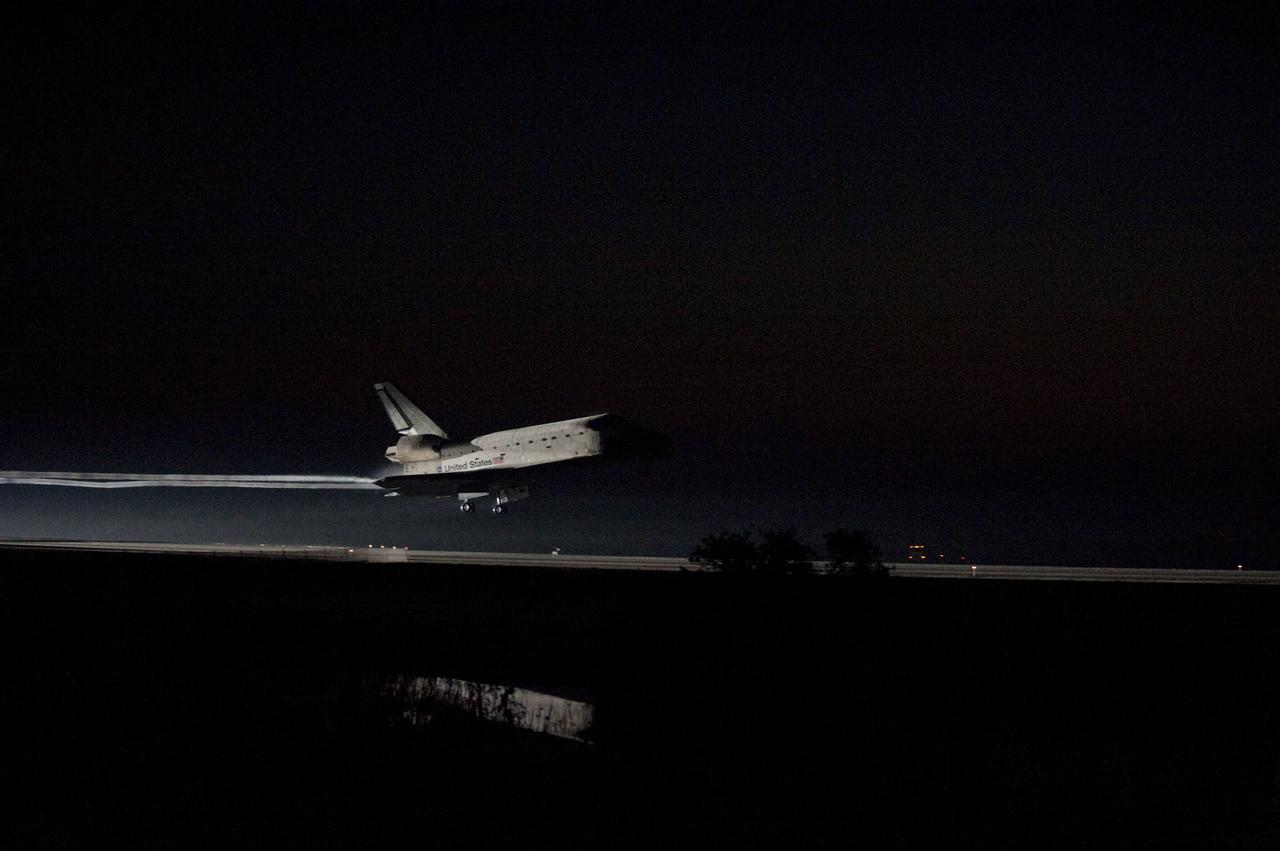
CAPE CANAVERAL, Fla. -- Xenons light the way home as space shuttle Atlantis' iconic white frame appears over the Shuttle Landing Facility's Runway 15 at NASA's Kennedy Space Center in Florida for the last time. Securing the space shuttle fleet's place in history, Atlantis marked the 26th nighttime landing of NASA's Space Shuttle Program and the 78th landing at Kennedy. Main gear touchdown was at 5:57:00 a.m. EDT, followed by nose gear touchdown at 5:57:20 a.m., and wheelstop at 5:57:54 a.m. On board are STS-135 Commander Chris Ferguson, Pilot Doug Hurley, and Mission Specialists Sandra Magnus and Rex Walheim. On the 37th shuttle mission to the International Space Station, STS-135 delivered more than 9,400 pounds of spare parts, equipment and supplies in the Raffaello multi-purpose logistics module that will sustain station operations for the next year. STS-135 was the 33rd and final flight for Atlantis, which has spent 307 days in space, orbited Earth 4,848 times and traveled 125,935,769 miles. For more information visit, www.nasa.gov/mission_pages/shuttle/shuttlemissions/sts135/index.html. Photo credit: NASA/Sandra Joseph
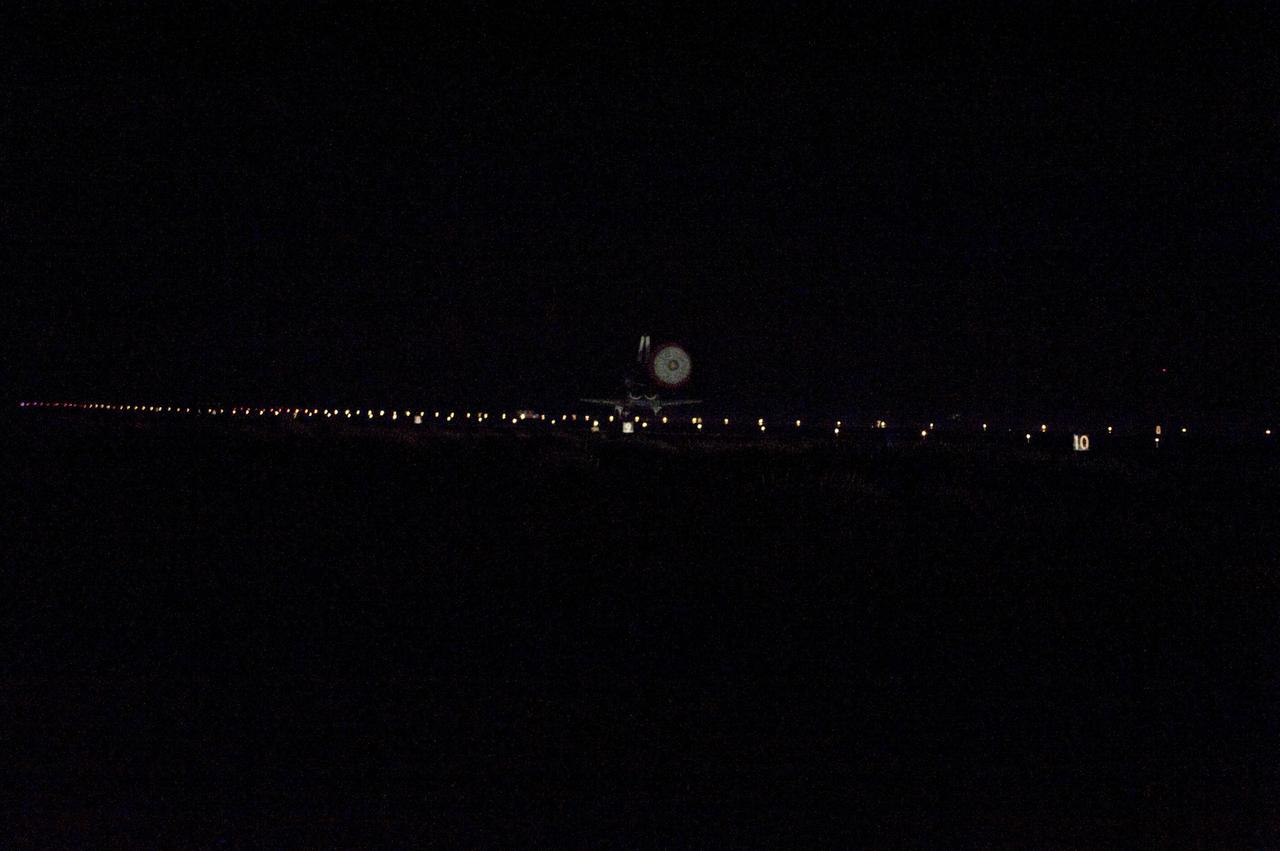
CAPE CANAVERAL, Fla. -- Space shuttle Atlantis' drag chute is illuminated as the spacecraft glides to a stop on Runway 15 at NASA's Kennedy Space Center in Florida for the last time. Securing the space shuttle fleet's place in history, Atlantis marked the 26th nighttime landing of NASA's Space Shuttle Program and the 78th landing at Kennedy. Main gear touchdown was at 5:57:00 a.m. EDT, followed by nose gear touchdown at 5:57:20 a.m., and wheelstop at 5:57:54 a.m. On board are STS-135 Commander Chris Ferguson, Pilot Doug Hurley, and Mission Specialists Sandra Magnus and Rex Walheim. CAPE CANAVERAL, Fla. -- Xenons cast a halo of light on space shuttle Atlantis as the spacecraft approaches Runway 15 at NASA's Kennedy Space Center in Florida for the last time. Securing the space shuttle fleet's place in history, Atlantis marked the 26th nighttime landing of NASA's Space Shuttle Program and the 78th landing at Kennedy. Main gear touchdown was at 5:57:00 a.m. EDT, followed by nose gear touchdown at 5:57:20 a.m., and wheelstop at 5:57:54 a.m. On board are STS-135 Commander Chris Ferguson, Pilot Doug Hurley, and Mission Specialists Sandra Magnus and Rex Walheim. On the 37th shuttle mission to the International Space Station, STS-135 delivered more than 9,400 pounds of spare parts, equipment and supplies in the Raffaello multi-purpose logistics module that will sustain station operations for the next year. STS-135 was the 33rd and final flight for Atlantis, which has spent 307 days in space, orbited Earth 4,848 times and traveled 125,935,769 miles. For more information visit, www.nasa.gov/mission_pages/shuttle/shuttlemissions/sts135/index.html. Photo credit: NASA/Carl Winebarger

CAPE CANAVERAL, Fla. -- In the Space Station Processing Facility at NASA's Kennedy Space Center in Florida, technicians install a system that will investigate the potential for robotically refueling existing spacecraft in orbit in the Lightweight Multi-Purpose Experiment Support Structure Carrier (LMC). Called the Robotic Refueling Mission (RRM), the system is being processed to fly aboard space shuttle Atlantis in the LMC on the STS-135 mission to the International Space Station. Also going up will be the Raffaello multipurpose logistics module packed with supplies, logistics and spare parts. The mission also will return a failed ammonia pump module to help NASA better understand the failure mechanism and improve pump designs for future systems. STS-135, targeted to launch June 28, will be the 33rd flight of Atlantis, the 37th shuttle mission to the space station, and the 135th and final mission of NASA's Space Shuttle Program. For more information visit, www.nasa.gov/mission_pages/shuttle/shuttlemissions/sts135/index.html. Photo credit: NASA/Ben Smegelsky
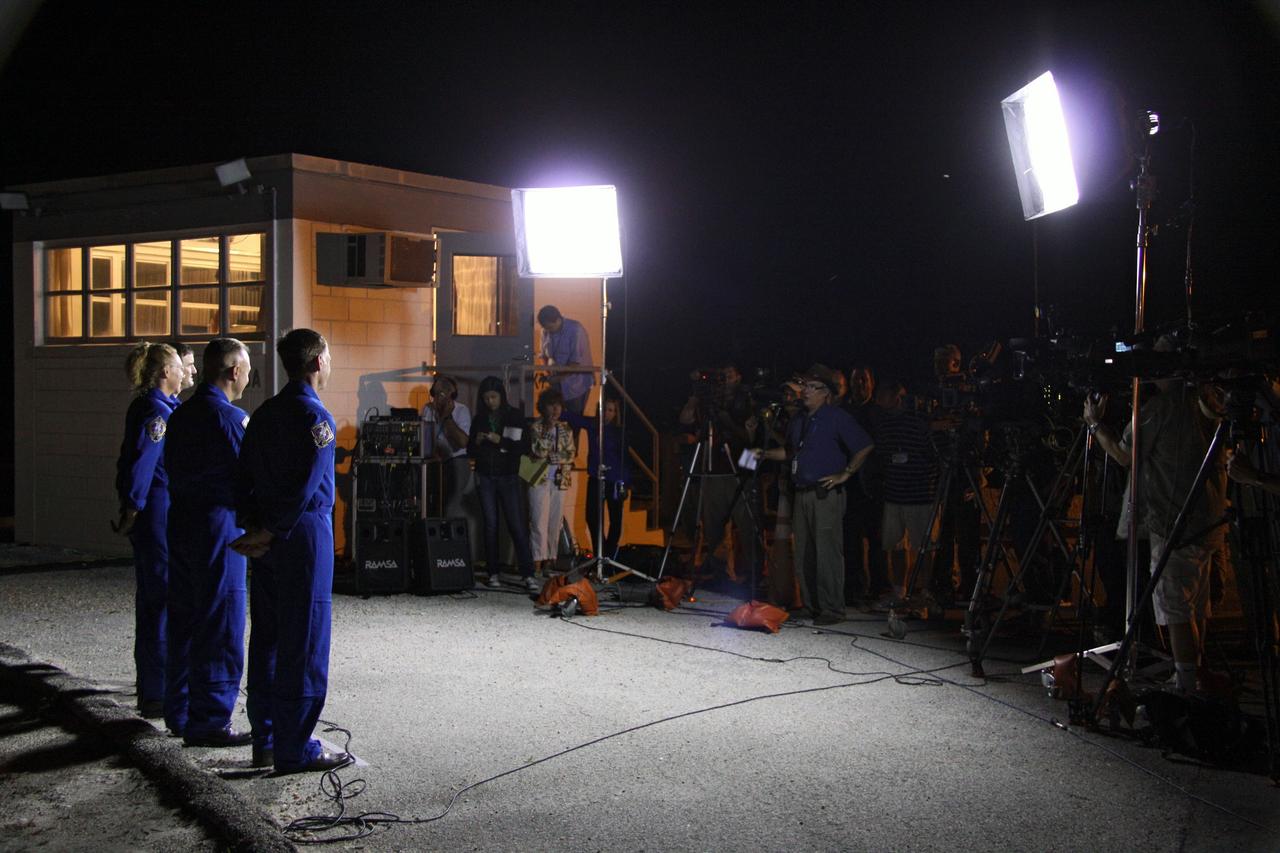
CAPE CANAVERAL, Fla. -- The STS-135 crew members talk to media as their vehicle, space shuttle Atlantis, makes its final journey from the Vehicle Assembly Building to Launch Pad 39A at NASA's Kennedy Space Center in Florida. First motion was at 8:42 p.m. EDT. It will take the crawler-transporter about six hours to carry the shuttle, attached to its external fuel tank and solid rocket boosters, to the seaside launch pad. The milestone move paves the way for the launch of the STS-135 mission to the International Space Station, targeted for July 8. STS-135 will be the 33rd flight of Atlantis, the 37th shuttle mission to the space station, and the 135th and final mission of NASA's Space Shuttle Program. For more information visit, www.nasa.gov/mission_pages/shuttle/shuttlemissions/sts135/index.html. Photo credit: NASA/Troy Cryder
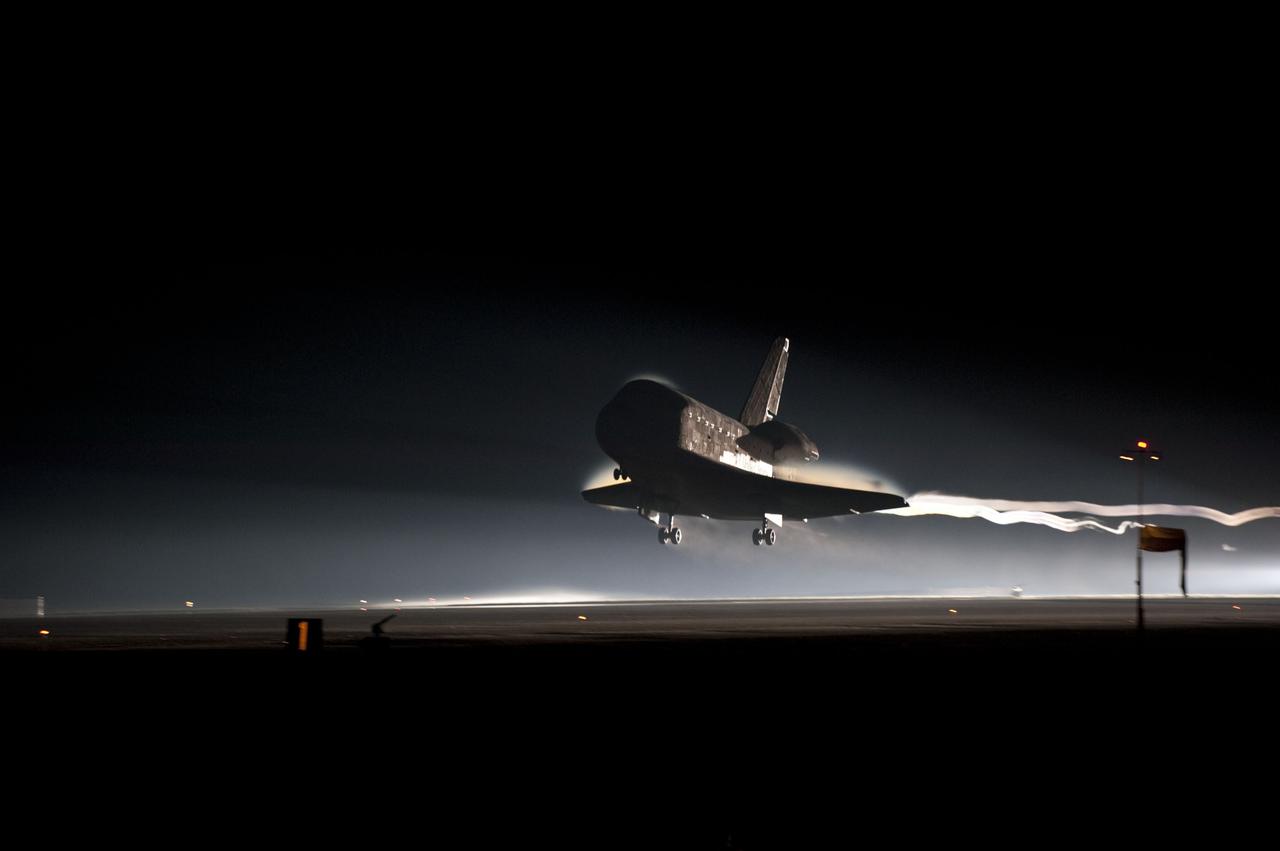
CAPE CANAVERAL, Fla. -- Ribbons of steam and smoke trail space shuttle Atlantis as it nears touch down on the Shuttle Landing Facility's Runway 15 at NASA's Kennedy Space Center in Florida for the final time. Securing the space shuttle fleet's place in history, Atlantis marked the 26th nighttime landing of NASA's Space Shuttle Program and the 78th landing at Kennedy. Main gear touchdown was at 5:57:00 a.m. EDT, followed by nose gear touchdown at 5:57:20 a.m., and wheelstop at 5:57:54 a.m. On board are STS-135 Commander Chris Ferguson, Pilot Doug Hurley, and Mission Specialists Sandra Magnus and Rex Walheim. On the 37th shuttle mission to the International Space Station, STS-135 delivered more than 9,400 pounds of spare parts, equipment and supplies in the Raffaello multi-purpose logistics module that will sustain station operations for the next year. STS-135 was the 33rd and final flight for Atlantis, which has spent 307 days in space, orbited Earth 4,848 times and traveled 125,935,769 miles. For more information visit, www.nasa.gov/mission_pages/shuttle/shuttlemissions/sts135/index.html. Photo credit: NASA/Kim Shiflett
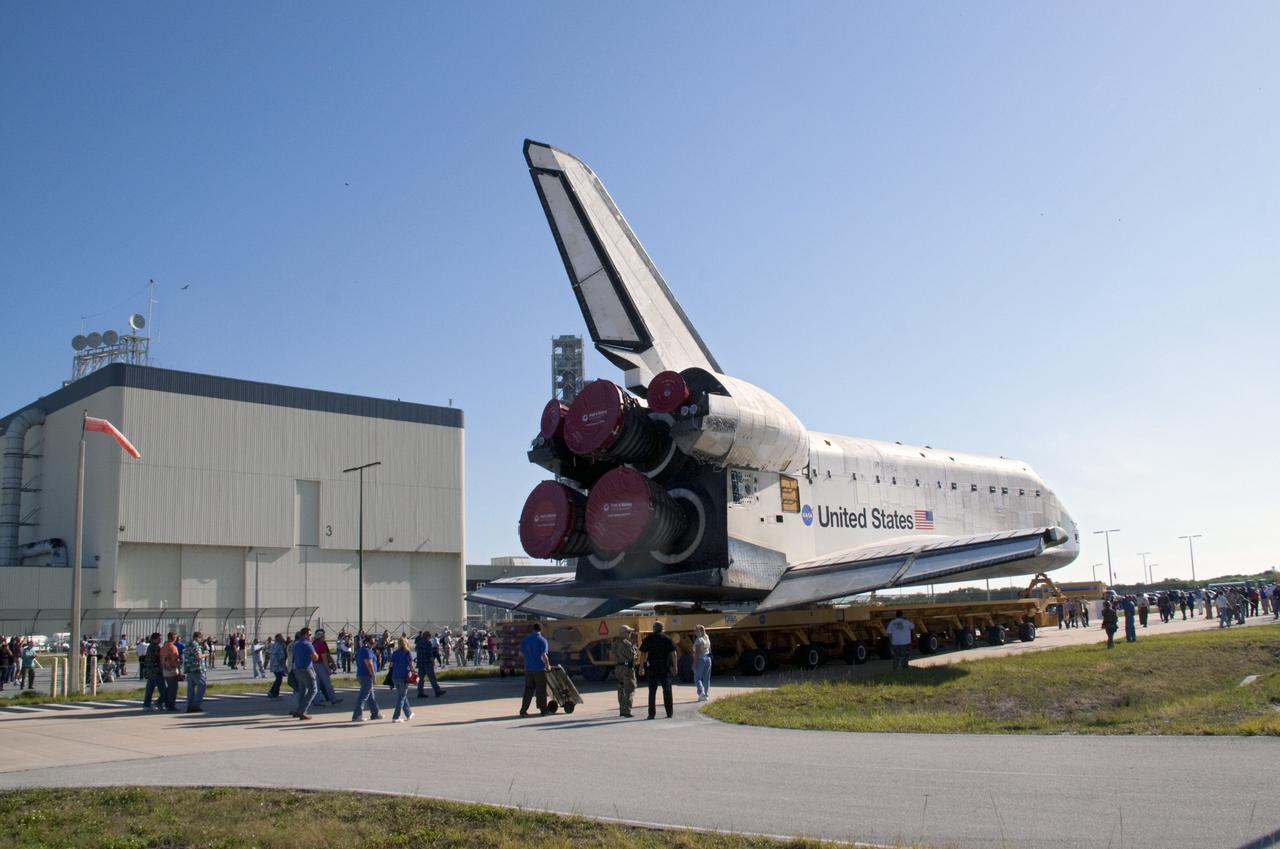
CAPE CANAVERAL, Fla. -- Shuttle Atlantis makes its final planned move from Orbiter Processing Facility-1 to the Vehicle Assembly Building at NASA's Kennedy Space Center in Florida. The move called "rollover" is a major milestone in processing for the STS-135 mission to the International Space Station. Inside the VAB, the shuttle will be attached to its external fuel tank and solid rocket boosters. Commander Chris Ferguson, Pilot Doug Hurley and Mission Specialists Sandra Magnus and Rex Walheim are targeted to launch in early July, taking with them the Raffaello multipurpose logistics module packed with supplies, logistics and spare parts. The STS-135 mission also will fly a system to investigate the potential for robotically refueling existing spacecraft and return a failed ammonia pump module to help NASA better understand the failure mechanism and improve pump designs for future systems. STS-135 will be the 33rd flight of Atlantis, the 37th shuttle mission to the space station, and the 135th and final mission of NASA's Space Shuttle Program. For more information visit, www.nasa.gov/mission_pages/shuttle/shuttlemissions/sts135/index.html. Photo credit: NASA/Jack Pfaller
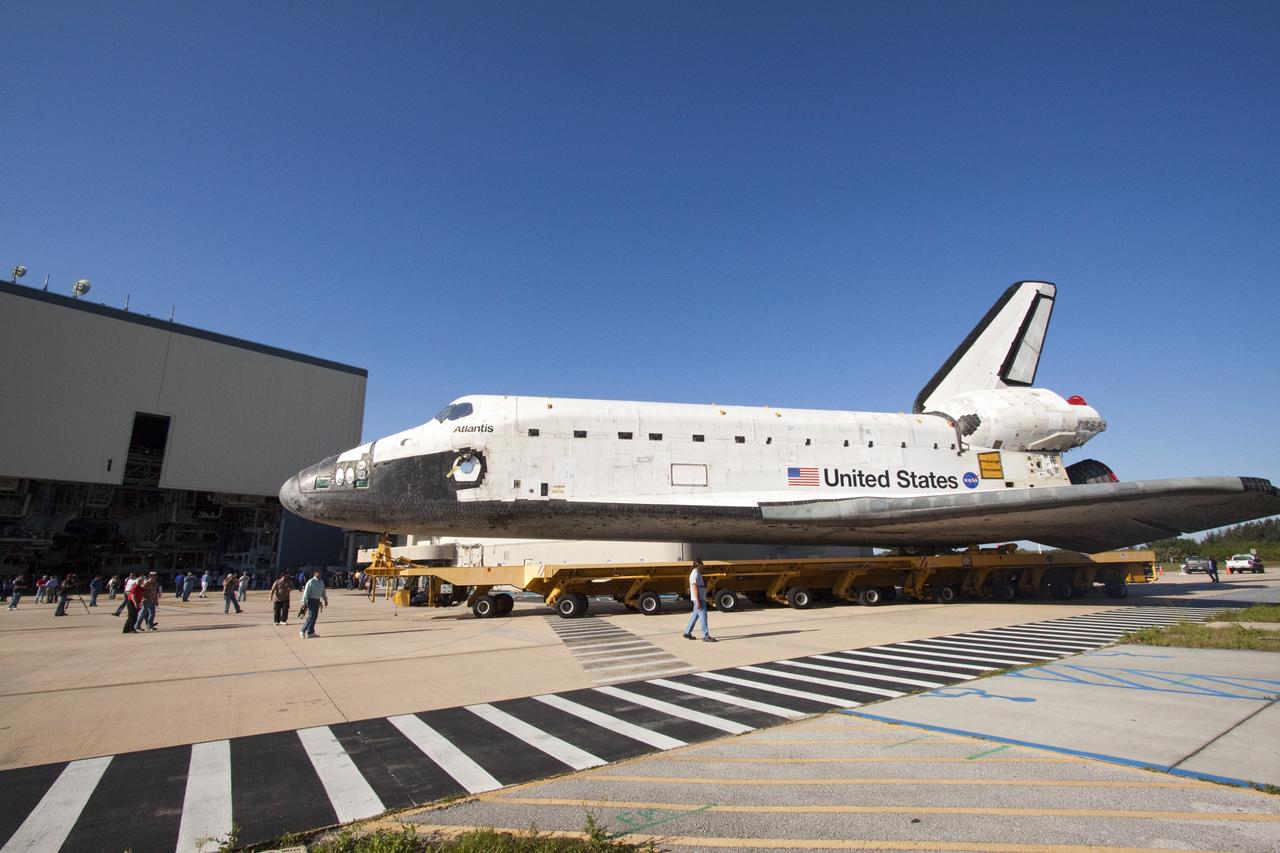
CAPE CANAVERAL, Fla. -- Shuttle Atlantis makes its final planned move from Orbiter Processing Facility-1 to the Vehicle Assembly Building at NASA's Kennedy Space Center in Florida. The move called "rollover" is a major milestone in processing for the STS-135 mission to the International Space Station. Inside the VAB, the shuttle will be attached to its external fuel tank and solid rocket boosters. Commander Chris Ferguson, Pilot Doug Hurley and Mission Specialists Sandra Magnus and Rex Walheim are targeted to launch in early July, taking with them the Raffaello multipurpose logistics module packed with supplies, logistics and spare parts. The STS-135 mission also will fly a system to investigate the potential for robotically refueling existing spacecraft and return a failed ammonia pump module to help NASA better understand the failure mechanism and improve pump designs for future systems. STS-135 will be the 33rd flight of Atlantis, the 37th shuttle mission to the space station, and the 135th and final mission of NASA's Space Shuttle Program. For more information visit, www.nasa.gov/mission_pages/shuttle/shuttlemissions/sts135/index.html. Photo credit: NASA/Jack Pfaller
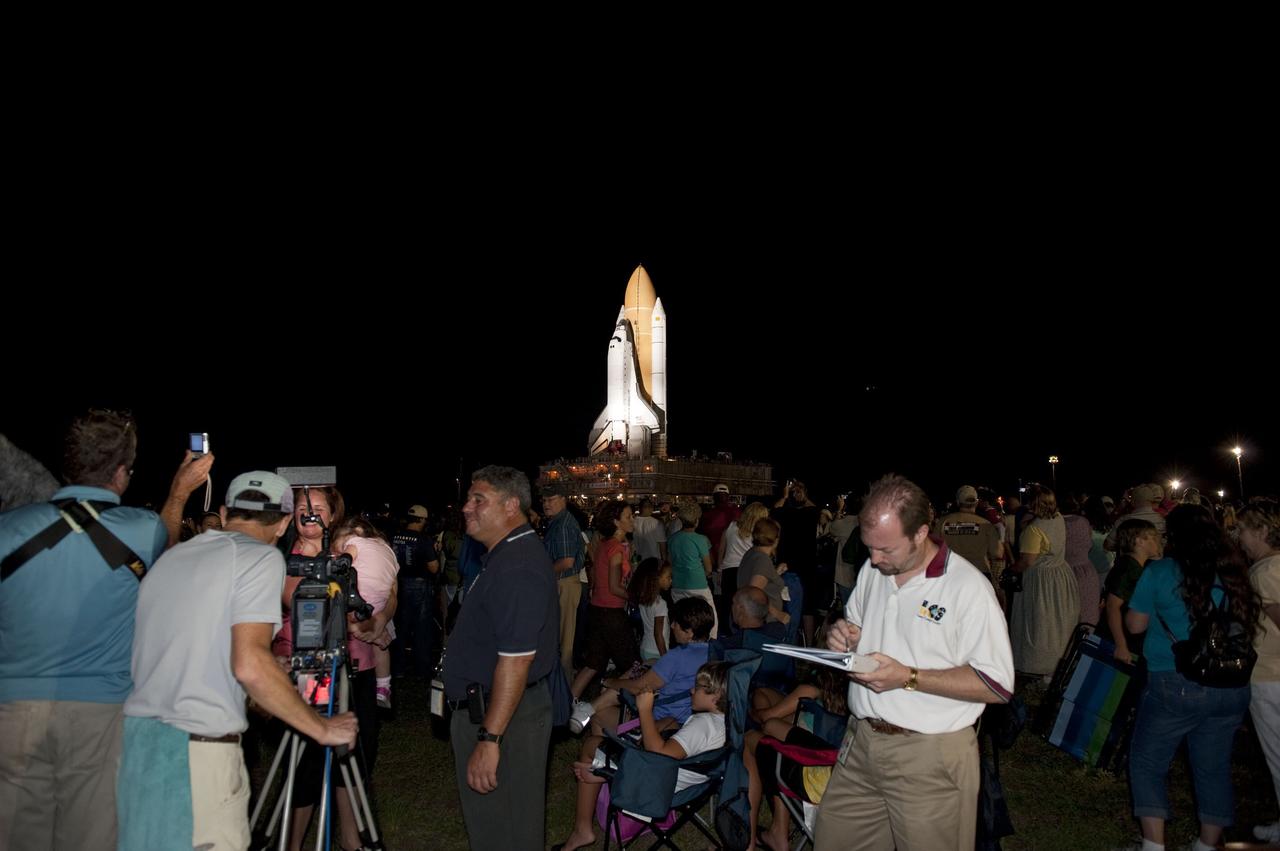
CAPE CANAVERAL, Fla. -- Thousands of spectators came out to watch space shuttle Atlantis' historic final journey from the Vehicle Assembly Building to Launch Pad 39A at NASA's Kennedy Space Center in Florida. First motion was at 8:42 p.m. EDT. It will take the crawler-transporter about six hours to carry the shuttle, attached to its external fuel tank and solid rocket boosters, to the seaside launch pad. The milestone move paves the way for the launch of the STS-135 mission to the International Space Station, targeted for July 8. STS-135 will be the 33rd flight of Atlantis, the 37th shuttle mission to the space station, and the 135th and final mission of NASA's Space Shuttle Program. For more information visit, www.nasa.gov/mission_pages/shuttle/shuttlemissions/sts135/index.html. Photo credit: NASA/Kim Shiflett
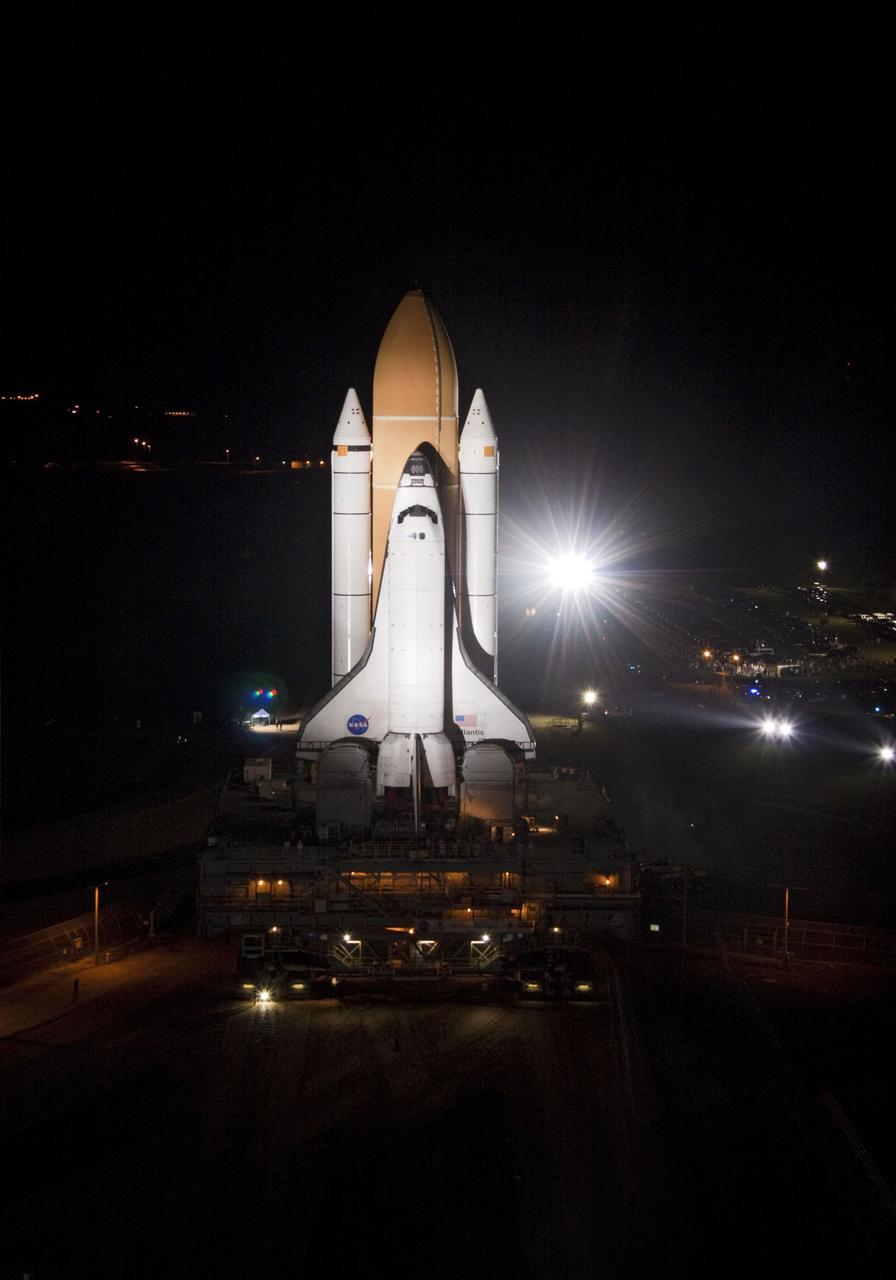
CAPE CANAVERAL, Fla. -- Bright xenon lights usher space shuttle Atlantis down a 3.4-mile stretch of river rocks as the vehicle embarks on its historic final journey from the Vehicle Assembly Building to Launch Pad 39A at NASA's Kennedy Space Center in Florida. "Rollout," as it's called, began at 8:42 p.m. EDT. It will take the crawler-transporter about six hours to carry Atlantis, attached to its external fuel tank and solid rocket boosters atop a mobile launcher platform, to the seaside launch pad. The milestone move paves the way for the launch of the STS-135 mission to the International Space Station, targeted for July 8. STS-135 will be the 33rd flight of Atlantis, the 37th shuttle mission to the space station, and the 135th and final mission of NASA's Space Shuttle Program. For more information visit, www.nasa.gov/mission_pages/shuttle/shuttlemissions/sts135/index.html. Photo credit: NASA/Jack Pfaller
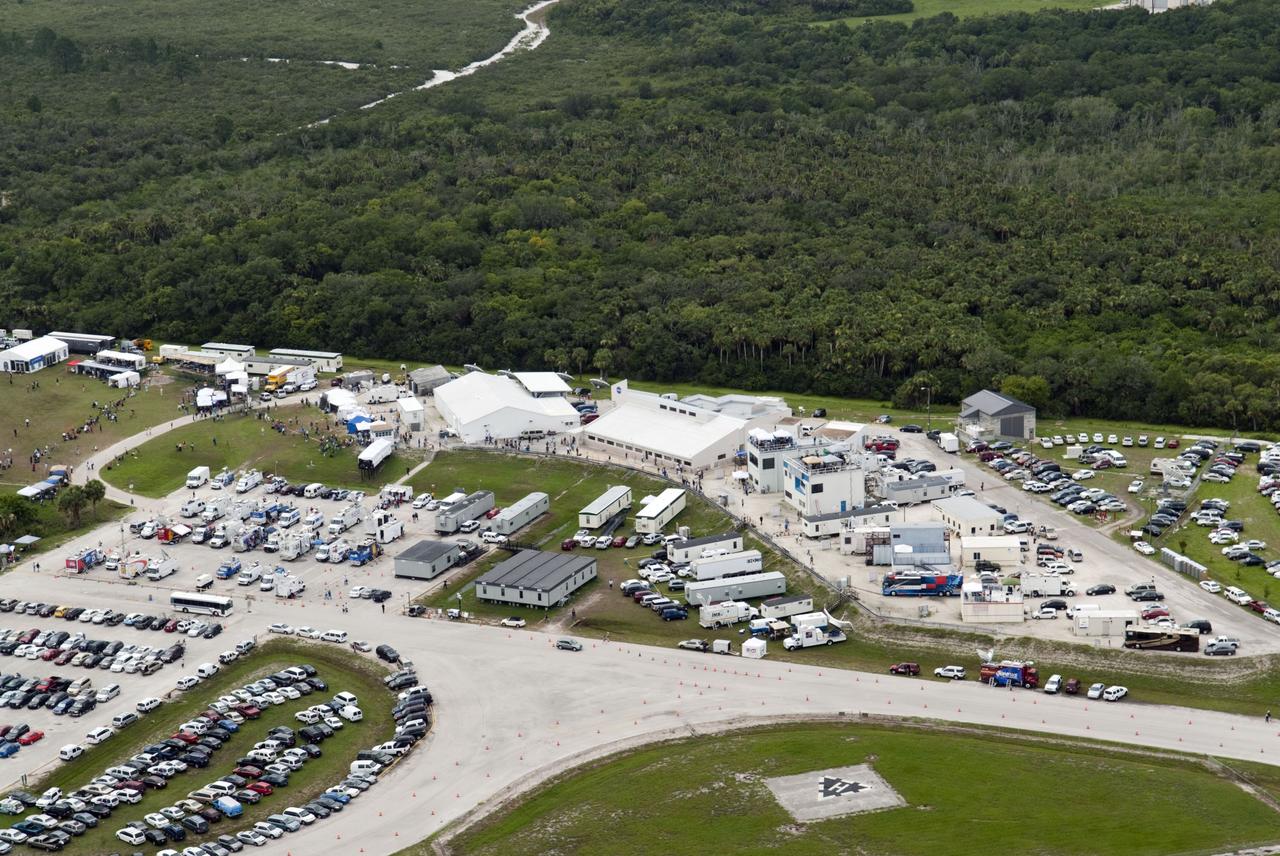
CAPE CANAVERAL, Fla. -- Taken from the Vehicle Assembly Building roof at NASA's Kennedy Space Center in Florida, this image shows the Press Site complex with a myriad of vehicles, satellite trucks and trailers belonging to invited guests and media for the launch of space shuttle Atlantis. Atlantis began its final flight, the STS-135 mission to the International Space Station, at 11:29 a.m. EDT on July 8. STS-135 will deliver the Raffaello multi-purpose logistics module packed with supplies and spare parts for the International Space Station. Atlantis also will fly the Robotic Refueling Mission experiment that will investigate the potential for robotically refueling existing satellites in orbit. In addition, Atlantis will return with a failed ammonia pump module to help NASA better understand the failure mechanism and improve pump designs for future systems. STS-135 will be the 33rd flight of Atlantis, the 37th shuttle mission to the space station, and the 135th and final mission of NASA's Space Shuttle Program. For more information, visit www.nasa.gov/mission_pages/shuttle/shuttlemissions/sts135/index.html. Photo credit: NASA/Jeffrey Marino
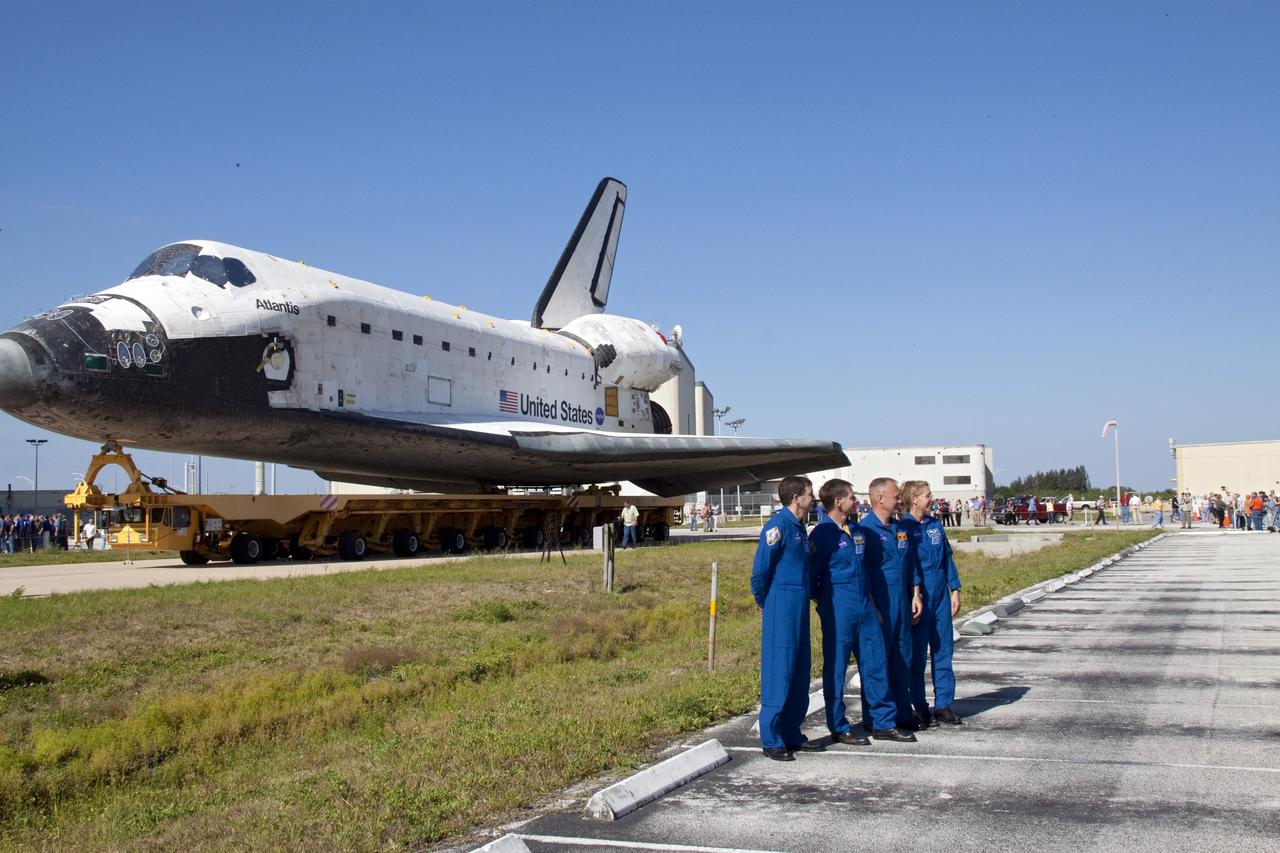
CAPE CANAVERAL, Fla. -- The STS-135 crew members pose for a photo in front of shuttle Atlantis, which is making its final planned trek from Orbiter Processing Facility-1 to the Vehicle Assembly Building. From left, are Mission Specialist Rex Walheim, Commander Chris Ferguson, Pilot Doug Hurley and Mission Specialist Sandra Magnus. The move called "rollover" is a major milestone in processing for the STS-135 mission, which will deliver the Raffaello multipurpose logistics module packed with supplies, logistics and spare parts to the International Space Station. Targeted to launch in early July, STS-135 also will fly a system to investigate the potential for robotically refueling existing spacecraft and return a failed ammonia pump module to help NASA better understand the failure mechanism and improve pump designs for future systems. Inside the VAB, the shuttle will be attached to its external fuel tank and solid rocket boosters. STS-135 will be the 33rd flight of Atlantis, the 37th shuttle mission to the space station, and the 135th and final mission of NASA's Space Shuttle Program. For more information visit, www.nasa.gov/mission_pages/shuttle/shuttlemissions/sts135/index.html. Photo credit: NASA/Jack Pfaller
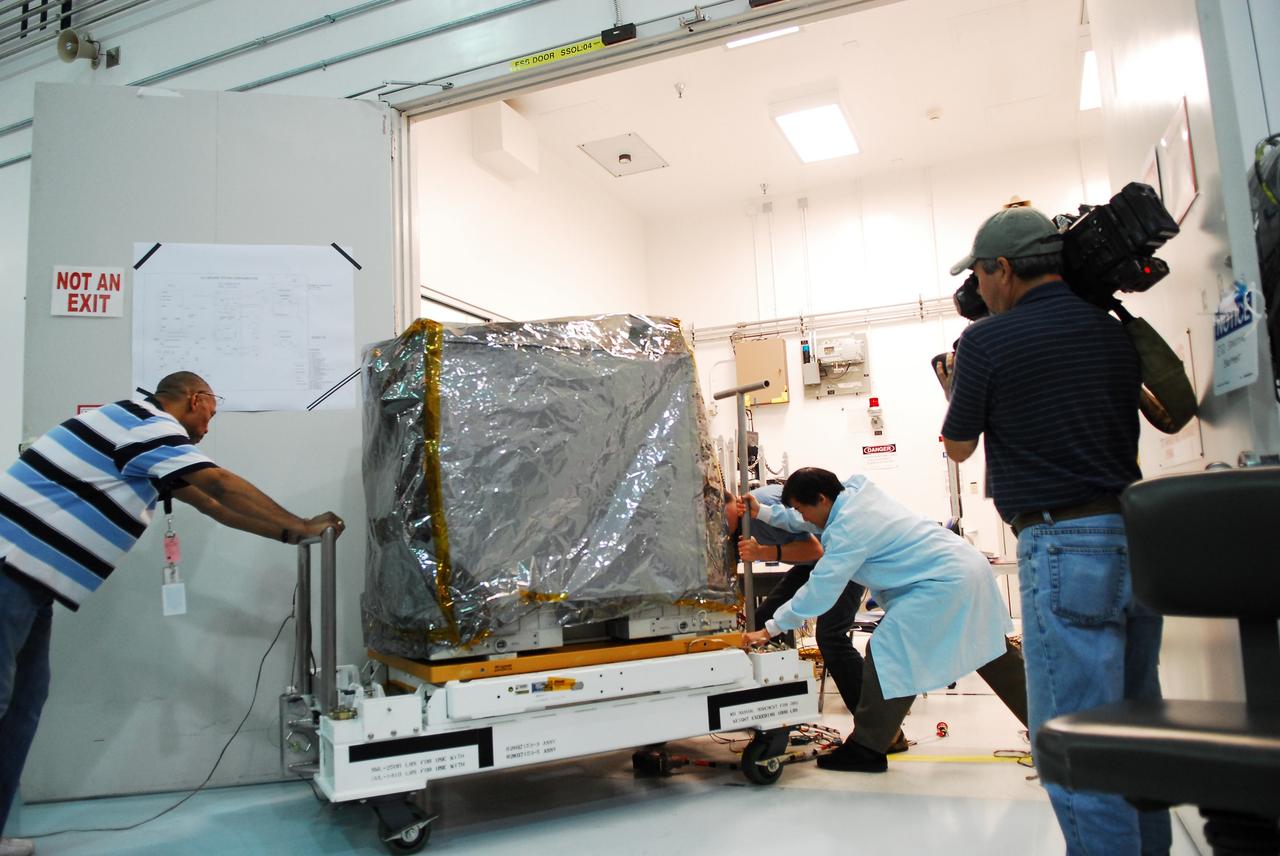
CAPE CANAVERAL, Fla. -- Technicians transport a system that will investigate the potential for robotically refueling existing spacecraft in orbit to a low bay test cell in the Space Station Processing Facility at NASA's Kennedy Space Center in Florida. Called the Robotic Refueling Mission RRM, the system will be processed to fly aboard space shuttle Atlantis on the STS-135 mission to the International Space Station. Atlantis and its STS-135 crew are scheduled to carry the Raffaello multipurpose logistics module packed with supplies, logistics and spare parts to the space station. The mission also will return a failed ammonia pump module to help NASA better understand the failure mechanism and improve pump designs for future systems. STS-135, targeted to launch June 28, will be the 33rd flight of Atlantis, the 37th shuttle mission to the space station, and the 135th and final mission of NASA's Space Shuttle Program. For more information visit, www.nasa.gov/mission_pages/shuttle/shuttlemissions/sts135/index.html. Photo credit: NASA/Jim Grossmann
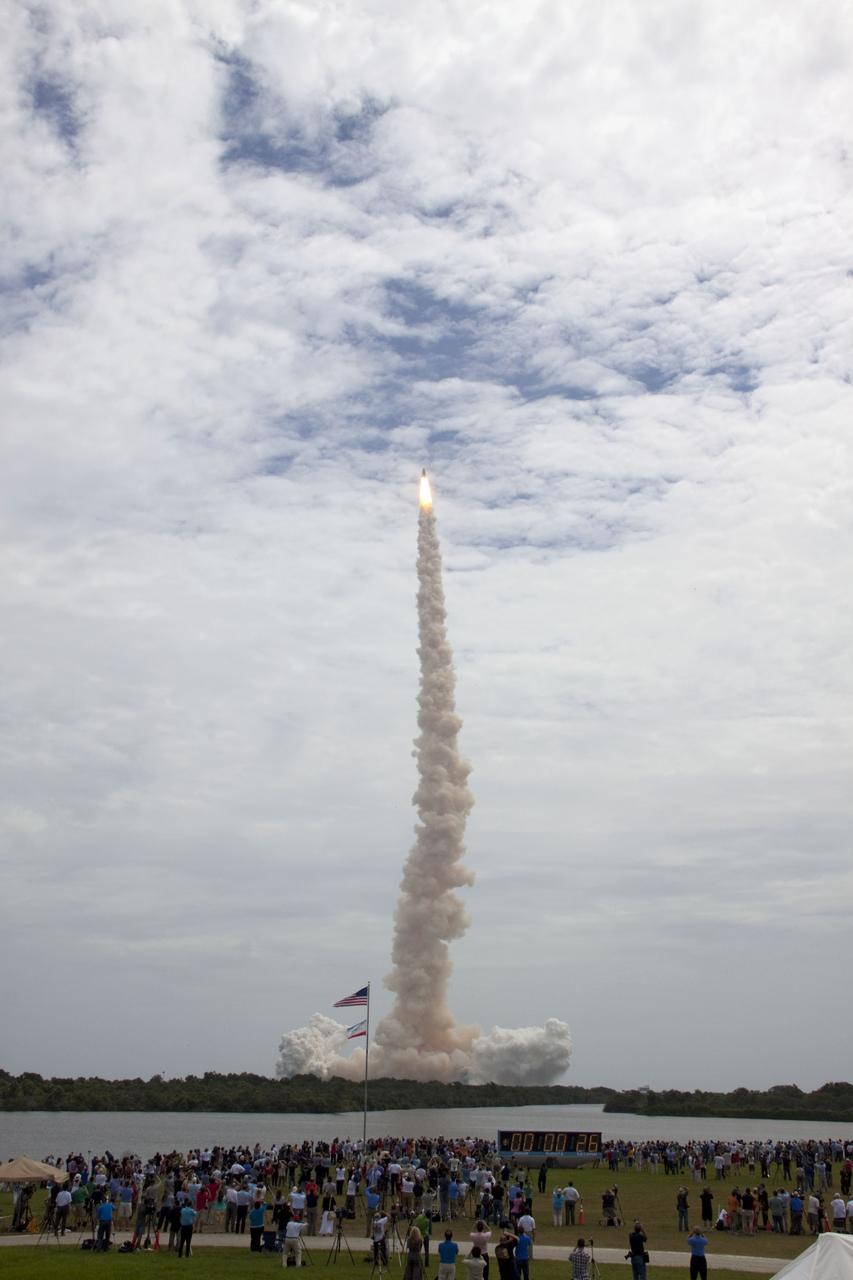
CAPE CANAVERAL, Fla. -- Members of the media and employees gather near the countdown clock to see space shuttle Atlantis soar toward space after lifting off Launch Pad 39A at NASA's Kennedy Space Center in Florida at 11:29 a.m. EDT on July 8. On board are four experienced astronauts -- STS-135 Commander Chris Ferguson, Pilot Doug Hurley, and Mission Specialists Sandy Magnus and Rex Walheim. STS-135 will deliver the Raffaello multi-purpose logistics module packed with supplies and spare parts for the International Space Station. Atlantis also will fly the Robotic Refueling Mission experiment that will investigate the potential for robotically refueling existing satellites in orbit. In addition, Atlantis will return with a failed ammonia pump module to help NASA better understand the failure mechanism and improve pump designs for future systems. STS-135 will be the 33rd flight of Atlantis, the 37th shuttle mission to the space station, and the 135th and final mission of NASA's Space Shuttle Program. For more information, visit www.nasa.gov/mission_pages/shuttle/shuttlemissions/sts135/index.html. Photo credit: NASA/Jim Grossmann
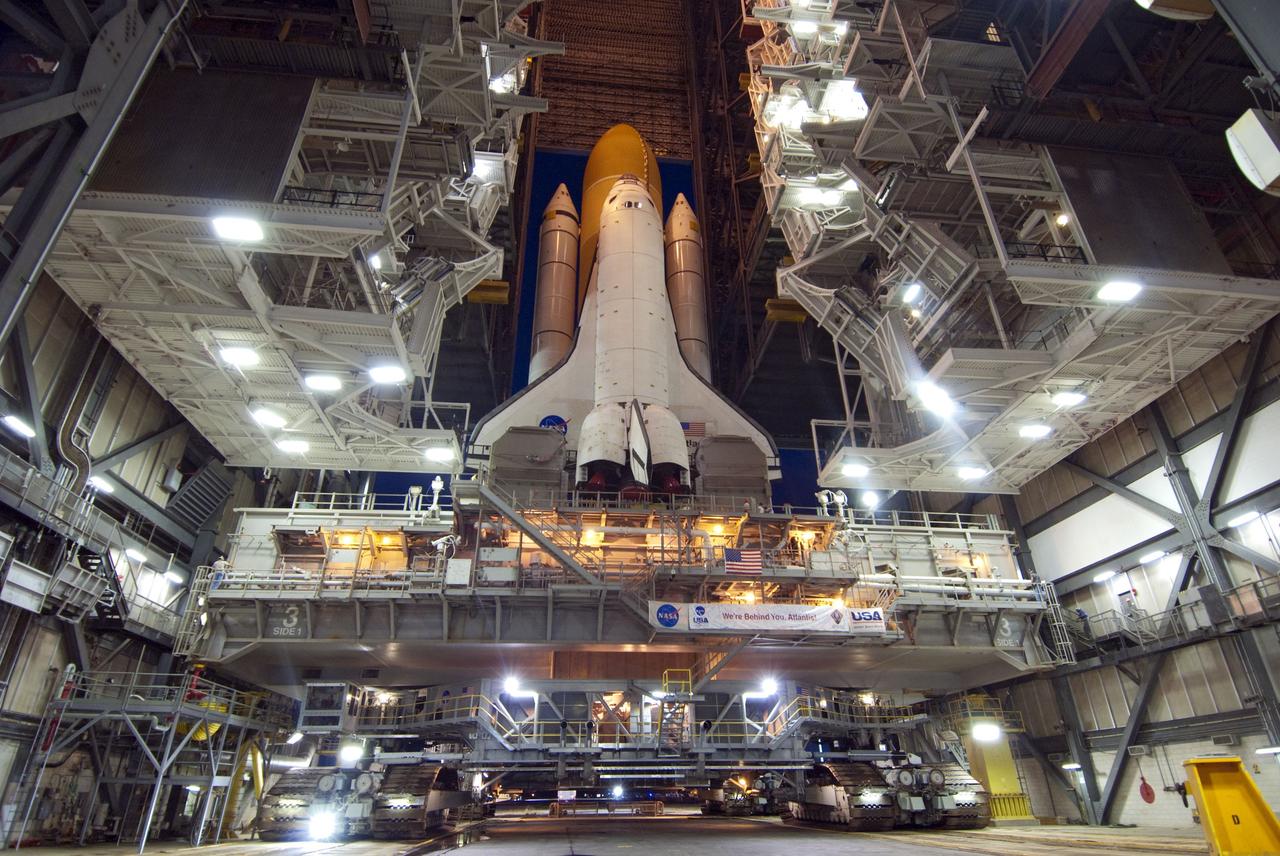
CAPE CANAVERAL, Fla. -- Space shuttle Atlantis, attached to its external fuel tank and solid rocket boosters atop a mobile launcher platform, slowly inches out of the Vehicle Assembly Building for the final time. "Rollout," as it's called, to Launch Pad 39A at NASA's Kennedy Space Center in Florida began at 8:42 p.m. EDT. It will take the crawler-transporter about six hours to carry the shuttle stack to its seaside launch pad. The milestone move paves the way for the launch of the STS-135 mission to the International Space Station, targeted for July 8. STS-135 will be the 33rd flight of Atlantis, the 37th shuttle mission to the space station, and the 135th and final mission of NASA's Space Shuttle Program. For more information visit, www.nasa.gov/mission_pages/shuttle/shuttlemissions/sts135/index.html. Photo credit: NASA/Jim Grossmann
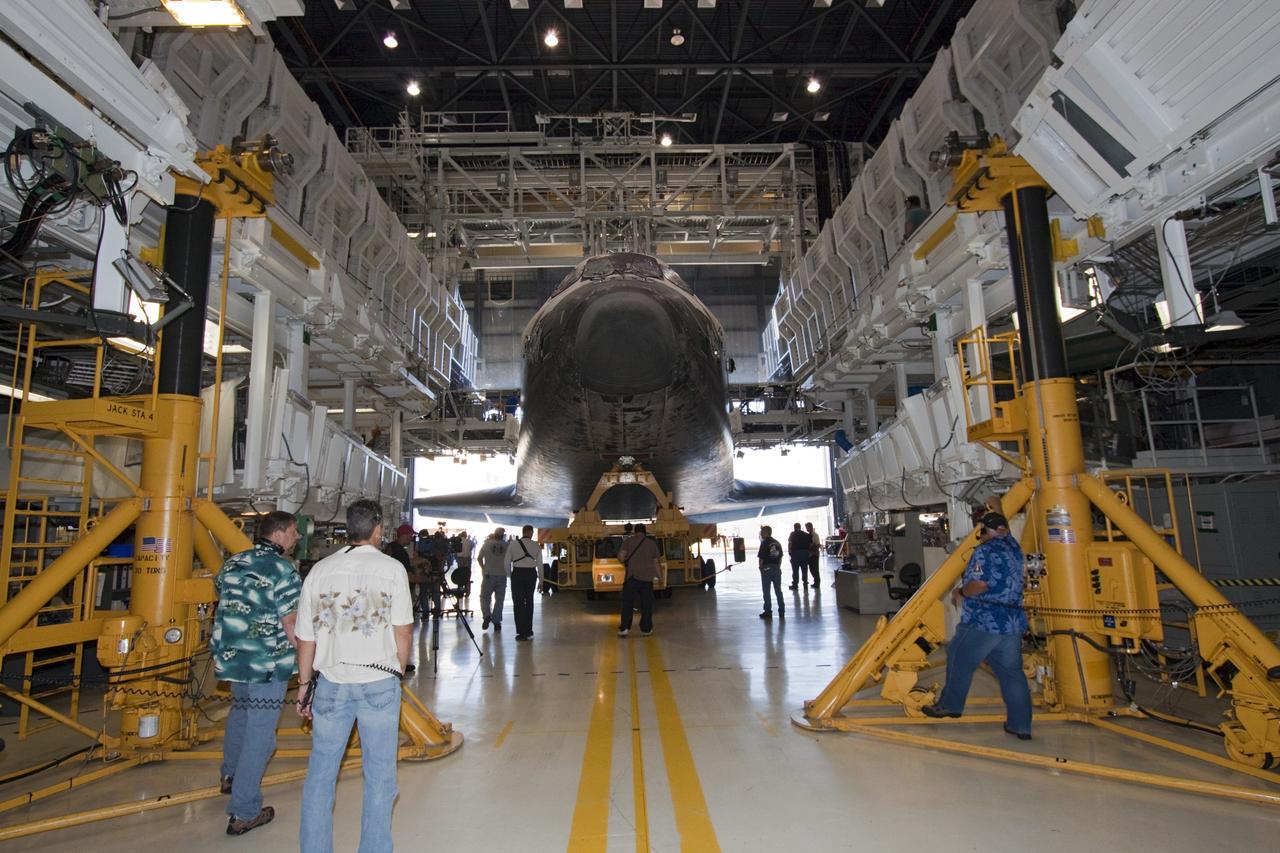
CAPE CANAVERAL, Fla. -- Technicians prepare shuttle Atlantis for its final planned move from Orbiter Processing Facility-1 to the Vehicle Assembly Building at NASA's Kennedy Space Center in Florida. The move called "rollover" is a major milestone in processing for the STS-135 mission to the International Space Station. Inside the VAB, the shuttle will be attached to its external fuel tank and solid rocket boosters. Commander Chris Ferguson, Pilot Doug Hurley and Mission Specialists Sandra Magnus and Rex Walheim are targeted to launch in early July, taking with them the Raffaello multipurpose logistics module packed with supplies, logistics and spare parts. The STS-135 mission also will fly a system to investigate the potential for robotically refueling existing spacecraft and return a failed ammonia pump module to help NASA better understand the failure mechanism and improve pump designs for future systems. STS-135 will be the 33rd flight of Atlantis, the 37th shuttle mission to the space station, and the 135th and final mission of NASA's Space Shuttle Program. For more information visit, www.nasa.gov/mission_pages/shuttle/shuttlemissions/sts135/index.html. Photo credit: NASA/Jack Pfaller
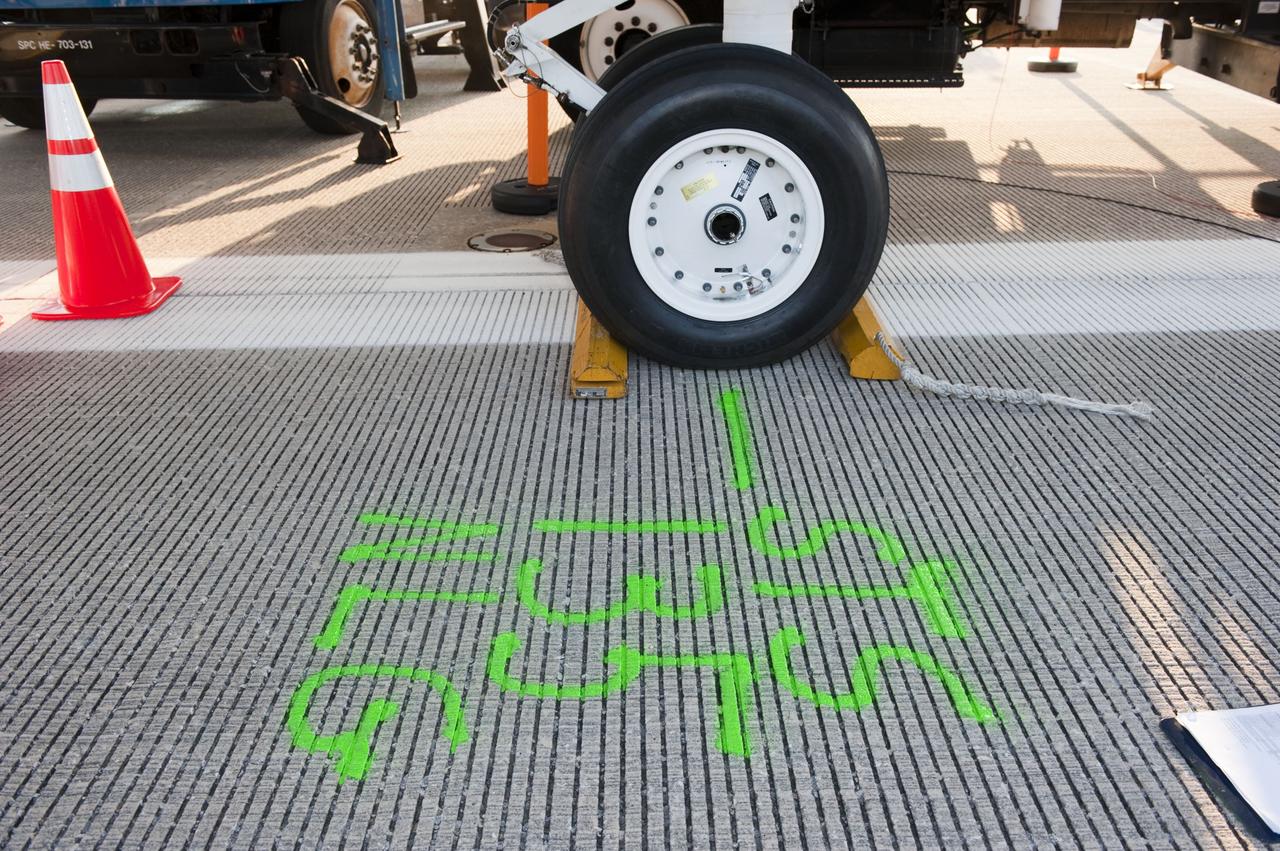
CAPE CANAVERAL, Fla. -- Workers measured and marked in bright green the letters "NLG" at the spot where space shuttle Atlantis' nose landing gear came to a stop after the vehicle's final return from space. Securing the space shuttle fleet's place in history on the STS-135 mission, Atlantis safely and successfully rounded out NASA's Space Shuttle Program on the Shuttle Landing Facility's Runway 15 at Kennedy Space Center in Florida. Main gear touchdown was at 5:57:00 a.m. EDT, followed by nose gear touchdown at 5:57:20 a.m., and wheelstop at 5:57:54 a.m. On the 37th shuttle mission to the International Space Station, STS-135 delivered more than 9,400 pounds of spare parts, equipment and supplies in the Raffaello multi-purpose logistics module that will sustain station operations for the next year. STS-135 was the 33rd and final flight for Atlantis, which has spent 307 days in space, orbited Earth 4,848 times and traveled 125,935,769 miles. For more information visit, www.nasa.gov/mission_pages/shuttle/shuttlemissions/sts135/index.html. Photo credit: NASA/Kim Shiflett
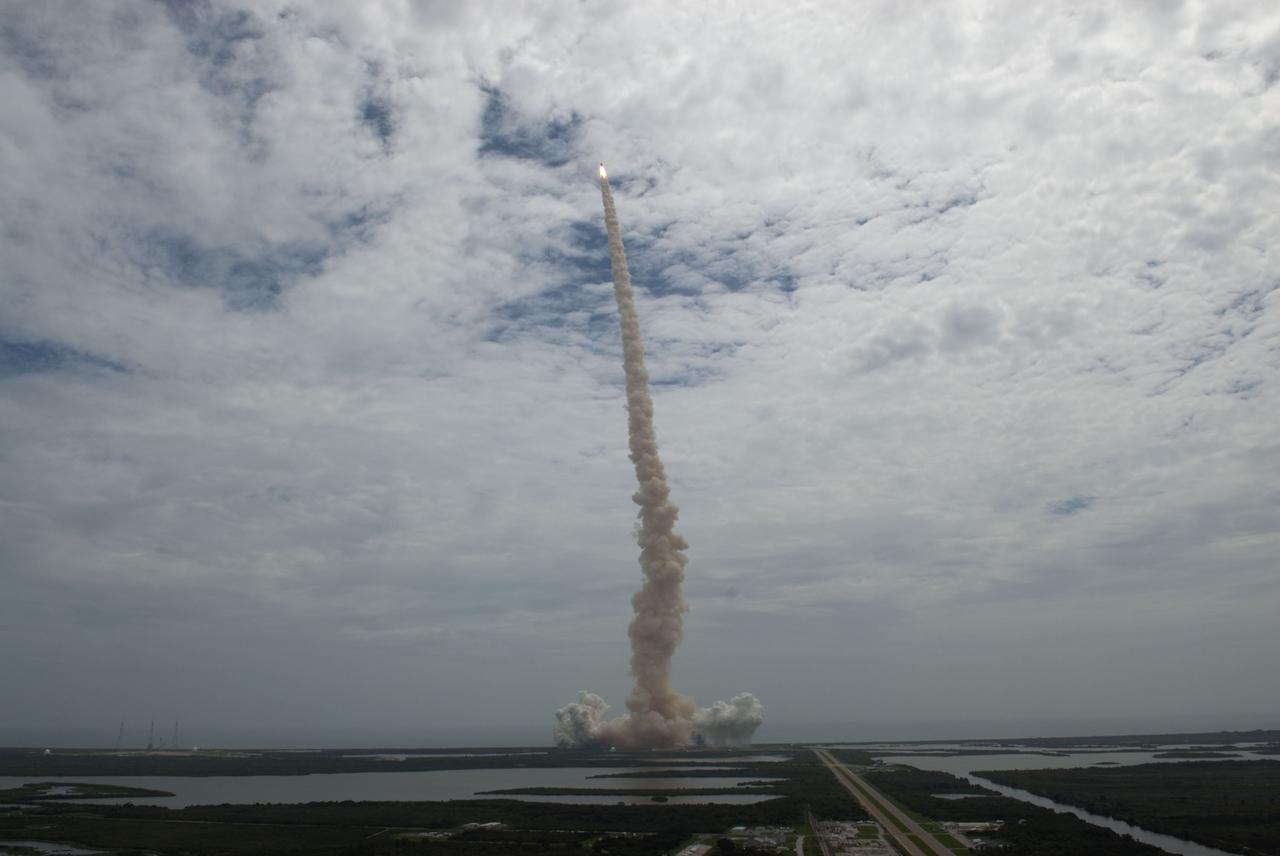
CAPE CANAVERAL, Fla. -- Seen from the roof of the Vehicle Assembly Building, space shuttle Atlantis thunders off Launch Pad 39A at NASA's Kennedy Space Center in Florida. Atlantis began its final flight, the STS-135 mission to the International Space Station, at 11:29 a.m. EDT on July 8. STS-135 will deliver the Raffaello multi-purpose logistics module packed with supplies and spare parts for the International Space Station. Atlantis also will fly the Robotic Refueling Mission experiment that will investigate the potential for robotically refueling existing satellites in orbit. In addition, Atlantis will return with a failed ammonia pump module to help NASA better understand the failure mechanism and improve pump designs for future systems. STS-135 will be the 33rd flight of Atlantis, the 37th shuttle mission to the space station, and the 135th and final mission of NASA's Space Shuttle Program. For more information, visit www.nasa.gov/mission_pages/shuttle/shuttlemissions/sts135/index.html. Photo credit: NASA/Jeffrey Marino

CAPE CANAVERAL, Fla. -- STS-135 Mission Specialist Sandy Magnus dons her launch-and-entry suit in the Operations and Checkout Building at NASA's Kennedy Space Center in Florida. Magnus is one of the final four astronauts to launch aboard a space shuttle. She has launched aboard a shuttle twice and most recently spent time aboard the International Space Station as an Expedition 18 crew member from November 2008 to March 2009. STS-135 is scheduled to lift off aboard space shuttle Atlantis at 11:26 a.m. EDT on July 8 for a mission to the International Space Station. STS-135 will deliver the Raffaello multi-purpose logistics module packed with supplies and spare parts for the orbiting outpost. Atlantis also will fly the Robotic Refueling Mission experiment that will investigate the potential for robotically refueling existing satellites in orbit. In addition, Atlantis will return with a failed ammonia pump module to help NASA better understand the failure mechanism and improve pump designs for future systems. STS-135 will be the 33rd flight of Atlantis, the 37th shuttle mission to the space station, and the 135th and final mission of NASA's Space Shuttle Program. For more information visit, www.nasa.gov/mission_pages/shuttle/shuttlemissions/sts135/index.html. Photo credit: NASA/Kim Shiflett
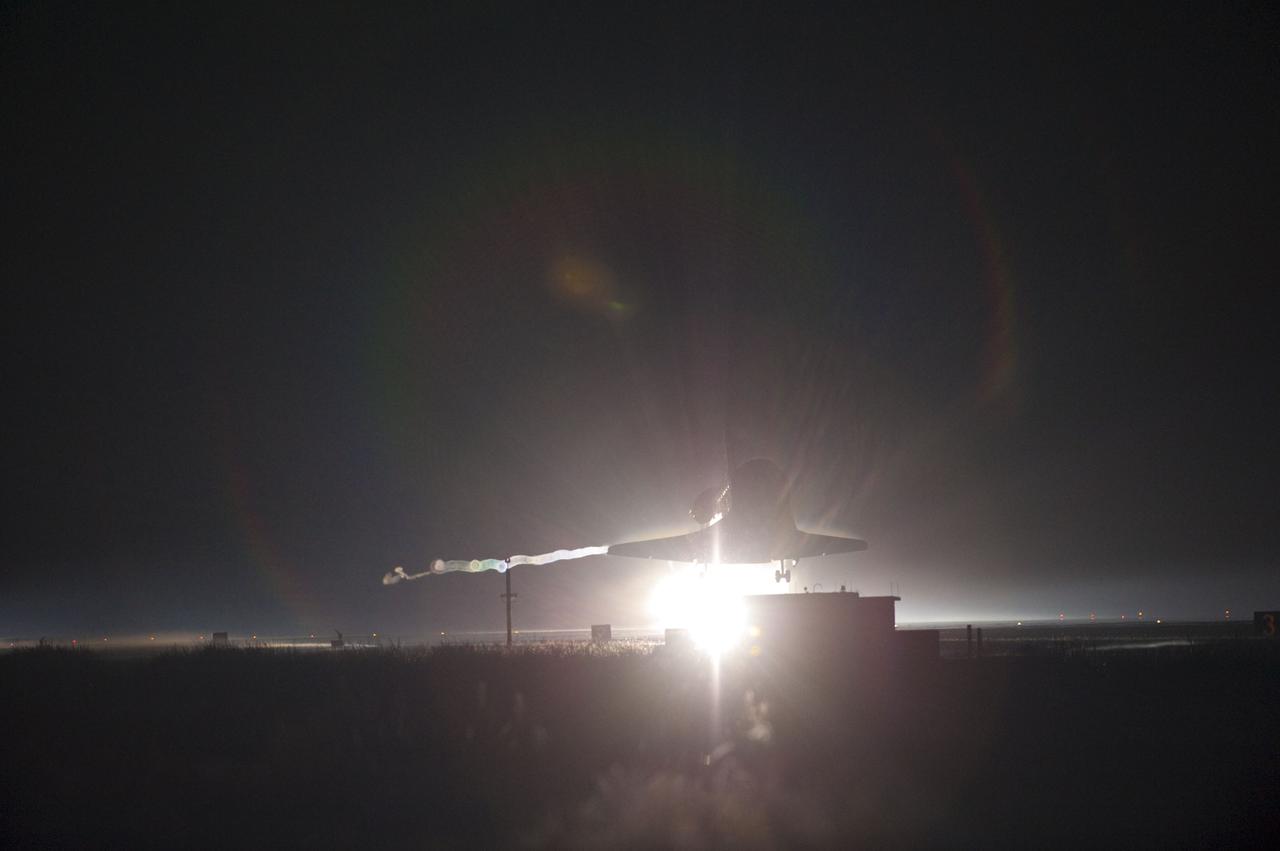
CAPE CANAVERAL, Fla. -- Xenons cast a halo of light on space shuttle Atlantis as the spacecraft approaches Runway 15 at NASA's Kennedy Space Center in Florida for the last time. Securing the space shuttle fleet's place in history, Atlantis marked the 26th nighttime landing of NASA's Space Shuttle Program and the 78th landing at Kennedy. Main gear touchdown was at 5:57:00 a.m. EDT, followed by nose gear touchdown at 5:57:20 a.m., and wheelstop at 5:57:54 a.m. On board are STS-135 Commander Chris Ferguson, Pilot Doug Hurley, and Mission Specialists Sandra Magnus and Rex Walheim. On the 37th shuttle mission to the International Space Station, STS-135 delivered more than 9,400 pounds of spare parts, equipment and supplies in the Raffaello multi-purpose logistics module that will sustain station operations for the next year. STS-135 was the 33rd and final flight for Atlantis, which has spent 307 days in space, orbited Earth 4,848 times and traveled 125,935,769 miles. For more information visit, www.nasa.gov/mission_pages/shuttle/shuttlemissions/sts135/index.html. Photo credit: NASA/Kevin O'Connell
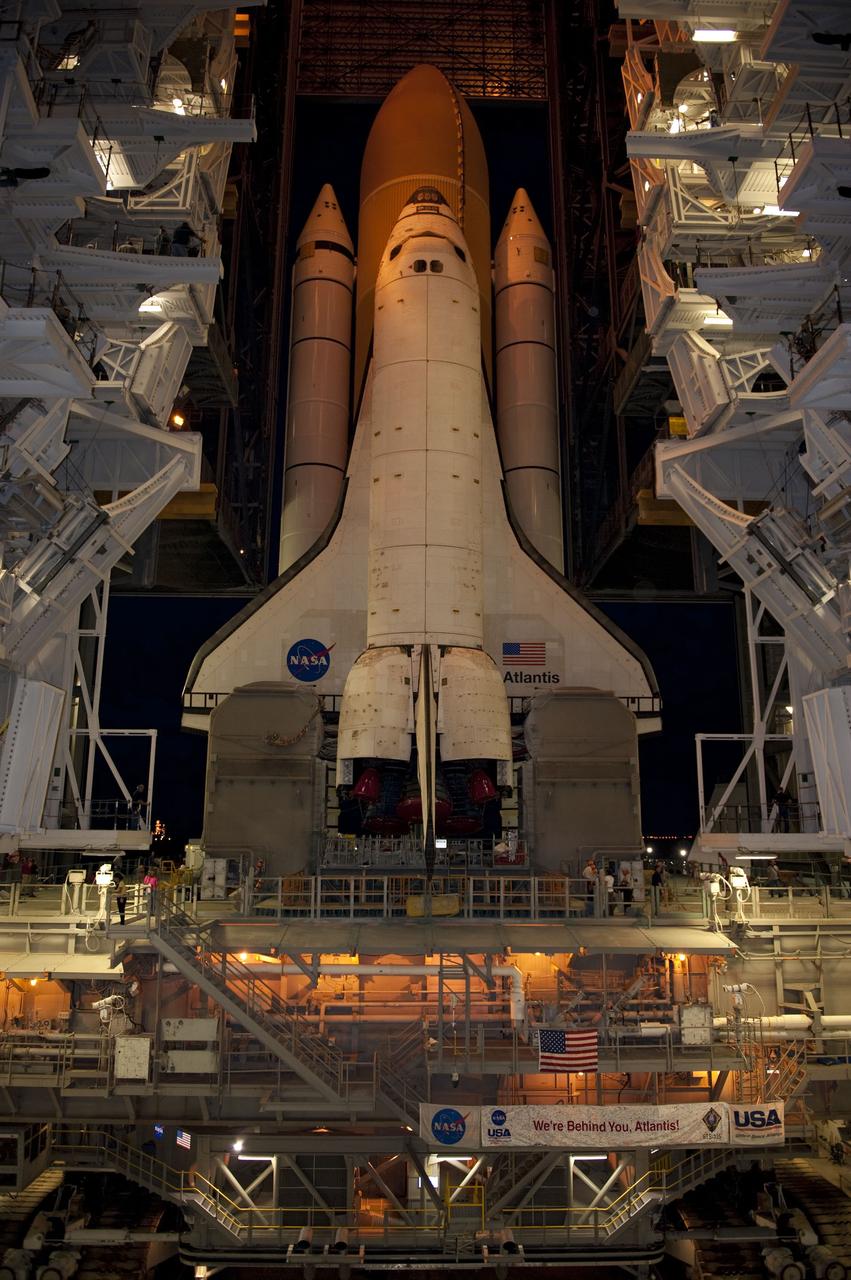
CAPE CANAVERAL, Fla. -- Space shuttle Atlantis, attached to its external fuel tank and solid rocket boosters atop a mobile launcher platform, slowly inches out of the Vehicle Assembly Building for the final time. "Rollout," as it's called, to Launch Pad 39A at NASA's Kennedy Space Center in Florida began at 8:42 p.m. EDT. It will take the crawler-transporter about six hours to carry the shuttle stack to its seaside launch pad. The milestone move paves the way for the launch of the STS-135 mission to the International Space Station, targeted for July 8. STS-135 will be the 33rd flight of Atlantis, the 37th shuttle mission to the space station, and the 135th and final mission of NASA's Space Shuttle Program. For more information visit, www.nasa.gov/mission_pages/shuttle/shuttlemissions/sts135/index.html. Photo credit: NASA/Kim Shiflett
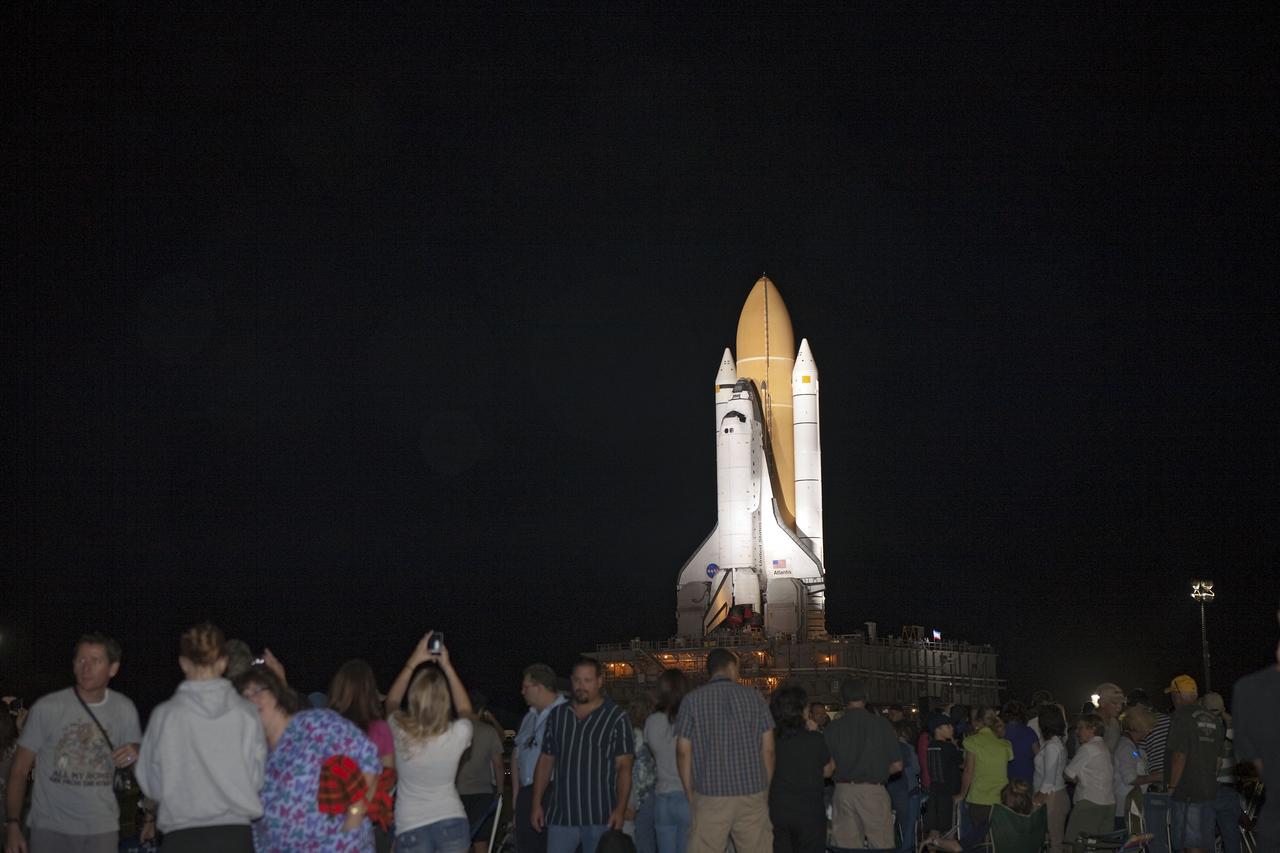
CAPE CANAVERAL, Fla. -- Thousands of spectators gather to watch space shuttle Atlantis' historic final journey from the Vehicle Assembly Building to Launch Pad 39A at NASA's Kennedy Space Center in Florida. First motion was at 8:42 p.m. EDT. It will take the crawler-transporter about six hours to carry the shuttle, attached to its external fuel tank and solid rocket boosters, to the seaside launch pad. The milestone move paves the way for the launch of the STS-135 mission to the International Space Station, targeted for July 8. STS-135 will be the 33rd flight of Atlantis, the 37th shuttle mission to the space station, and the 135th and final mission of NASA's Space Shuttle Program. For more information visit, www.nasa.gov/mission_pages/shuttle/shuttlemissions/sts135/index.html. Photo credit: NASA/Gianni Woods
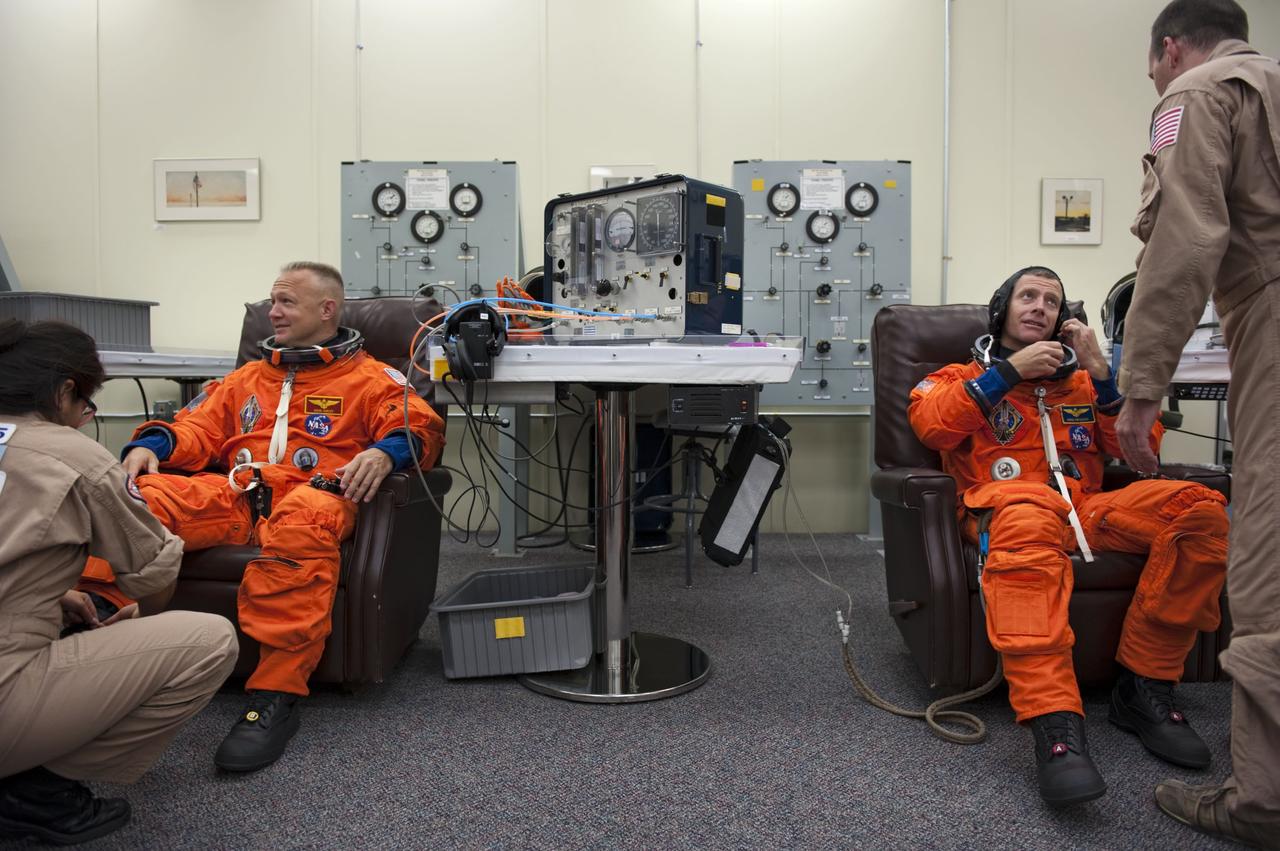
CAPE CANAVERAL, Fla. -- STS-135 Pilot Doug Hurley, left, and Commander Chris Ferguson put on the finishing touches of their launch-and-entry suits with the help of United Space Alliance suit technicians in the Operations and Checkout Building at NASA's Kennedy Space Center in Florida. Hurley and Ferguson are two of the final four astronauts to launch aboard a space shuttle. STS-135 is scheduled to lift off aboard space shuttle Atlantis at 11:26 a.m. EDT on July 8 for a mission to the International Space Station. STS-135 will deliver the Raffaello multi-purpose logistics module packed with supplies and spare parts for the orbiting outpost. Atlantis also will fly the Robotic Refueling Mission experiment that will investigate the potential for robotically refueling existing satellites in orbit. In addition, Atlantis will return with a failed ammonia pump module to help NASA better understand the failure mechanism and improve pump designs for future systems. STS-135 will be the 33rd flight of Atlantis, the 37th shuttle mission to the space station, and the 135th and final mission of NASA's Space Shuttle Program. For more information visit, www.nasa.gov/mission_pages/shuttle/shuttlemissions/sts135/index.html. Photo credit: NASA/Kim Shiflett
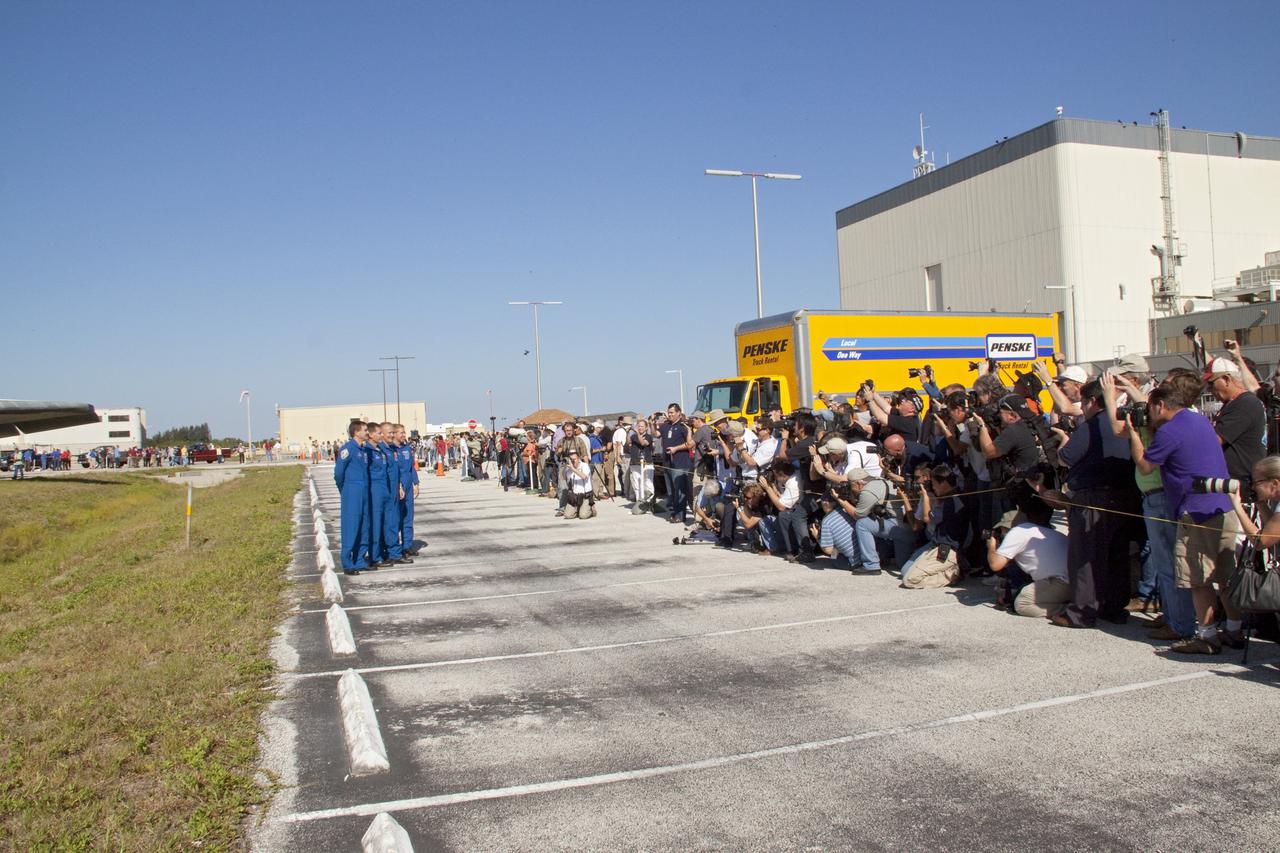
CAPE CANAVERAL, Fla. -- Members of the media and NASA Kennedy Space Center workers snap photos of the STS-135 crew members who are at the center to watch shuttle Atlantis make its final planned move from Orbiter Processing Facility-1 to the Vehicle Assembly Building. From left, are Mission Specialist Rex Walheim, Commander Chris Ferguson, Pilot Doug Hurley and Mission Specialist Sandra Magnus. The move called "rollover" is a major milestone in processing for the STS-135 mission, which will deliver the Raffaello multipurpose logistics module packed with supplies, logistics and spare parts to the International Space Station. Targeted to launch in early July, STS-135 also will fly a system to investigate the potential for robotically refueling existing spacecraft and return a failed ammonia pump module to help NASA better understand the failure mechanism and improve pump designs for future systems. Inside the VAB, the shuttle will be attached to its external fuel tank and solid rocket boosters. STS-135 will be the 33rd flight of Atlantis, the 37th shuttle mission to the space station, and the 135th and final mission of NASA's Space Shuttle Program. For more information visit, www.nasa.gov/mission_pages/shuttle/shuttlemissions/sts135/index.html. Photo credit: NASA/Jack Pfaller
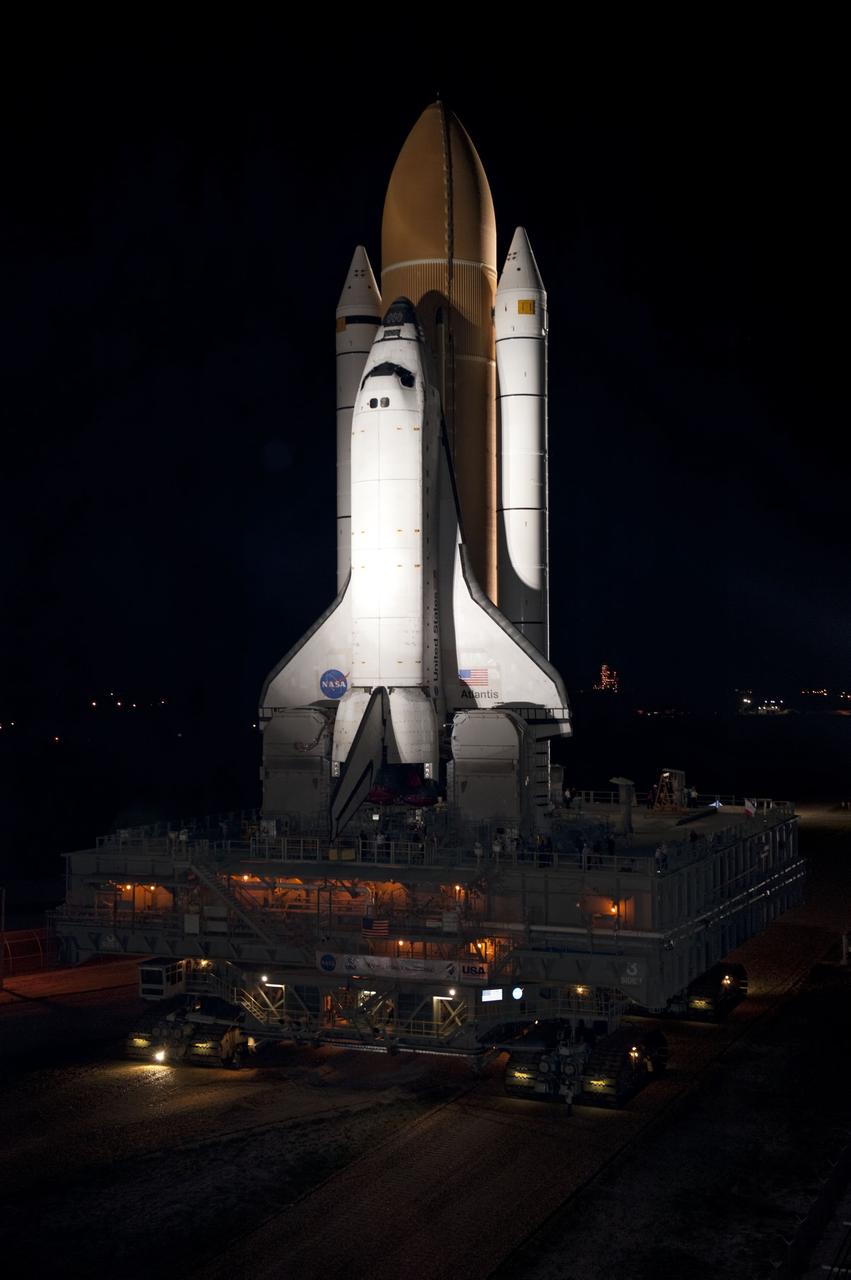
CAPE CANAVERAL, Fla. -- Bathed in xenon lights, space shuttle Atlantis embarks on its final journey from the Vehicle Assembly Building to Launch Pad 39A at NASA's Kennedy Space Center in Florida. First motion was at 8:42 p.m. EDT. It will take the crawler-transporter about six hours to carry the shuttle, attached to its external fuel tank and solid rocket boosters, to the seaside launch pad. The milestone move paves the way for the launch of the STS-135 mission to the International Space Station, targeted for July 8. STS-135 will be the 33rd flight of Atlantis, the 37th shuttle mission to the space station, and the 135th and final mission of NASA's Space Shuttle Program. For more information visit, www.nasa.gov/mission_pages/shuttle/shuttlemissions/sts135/index.html. Photo credit: NASA/Kim Shiflett
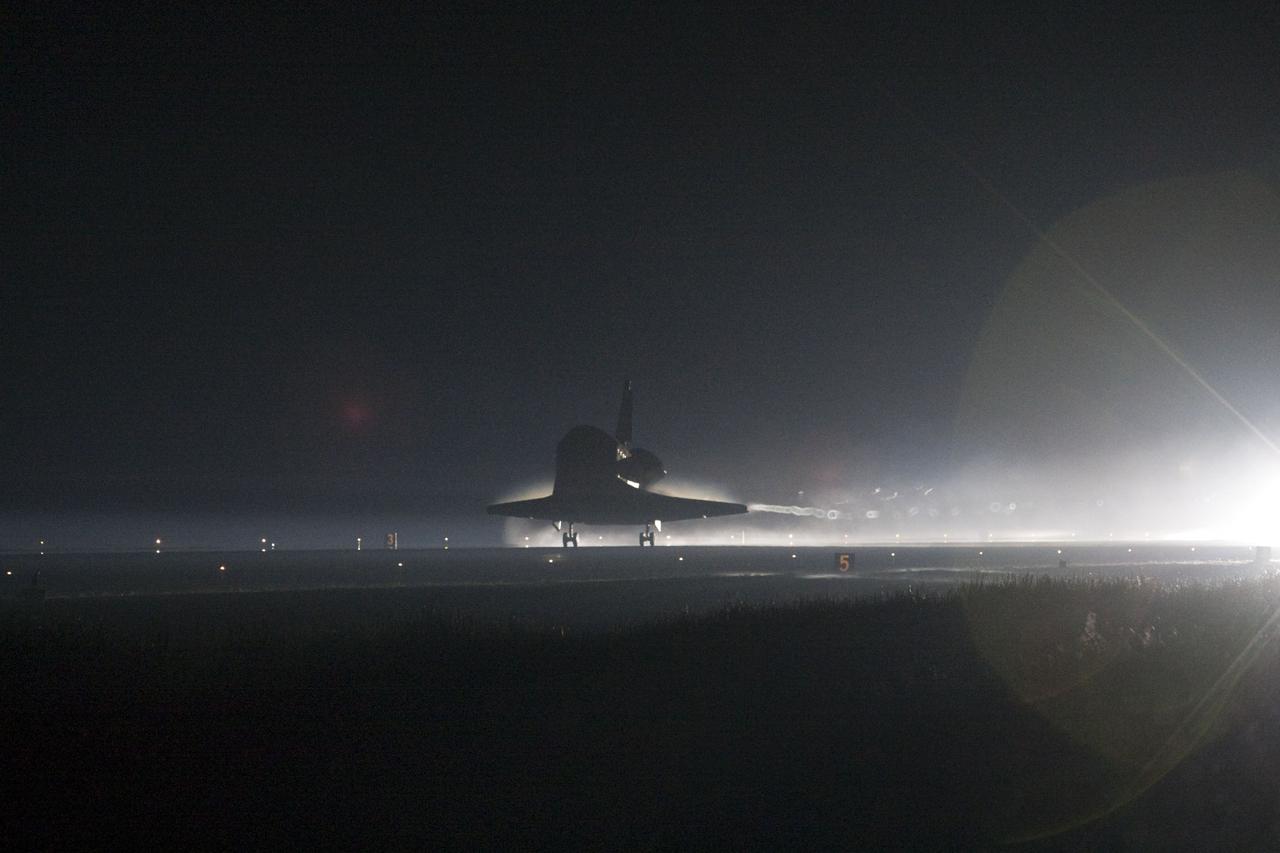
CAPE CANAVERAL, Fla. -- Space shuttle Atlantis returns to Earth for the last time on Runway 15 at NASA's Kennedy Space Center in Florida just before sunrise. Atlantis touched down on Runway 15 at 5:57 a.m., bringing an end to the STS-135 mission and NASA's Space Shuttle Program. On the 37th shuttle mission to the International Space Station, STS-135 delivered more than 9,400 pounds of spare parts, equipment and supplies in the Raffaello multi-purpose logistics module that will sustain station operations for the next year. STS-135 was the 33rd and final flight for Atlantis, which has spent 307 days in space, orbited Earth 4,848 times and traveled 125,935,769 miles. For more information visit, www.nasa.gov/mission_pages/shuttle/shuttlemissions/sts135/index.html. Photo credit: NASA/Tony Gray
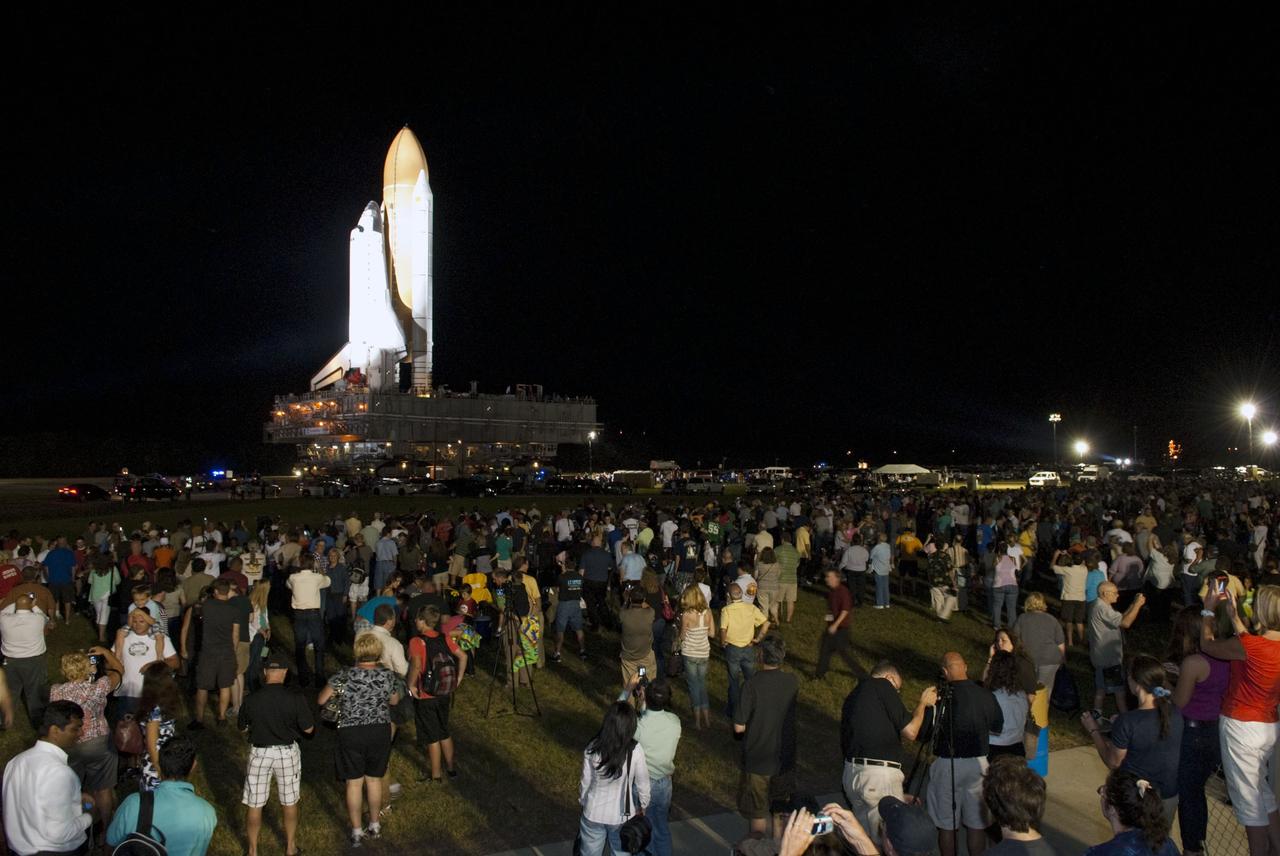
CAPE CANAVERAL, Fla. -- Thousands of spectators came out to watch space shuttle Atlantis' historic final journey from the Vehicle Assembly Building to Launch Pad 39A at NASA's Kennedy Space Center in Florida. First motion was at 8:42 p.m. EDT. It will take the crawler-transporter about six hours to carry the shuttle, attached to its external fuel tank and solid rocket boosters, to the seaside launch pad. The milestone move paves the way for the launch of the STS-135 mission to the International Space Station, targeted for July 8. STS-135 will be the 33rd flight of Atlantis, the 37th shuttle mission to the space station, and the 135th and final mission of NASA's Space Shuttle Program. For more information visit, www.nasa.gov/mission_pages/shuttle/shuttlemissions/sts135/index.html. Photo credit: NASA/Jim Grossmann
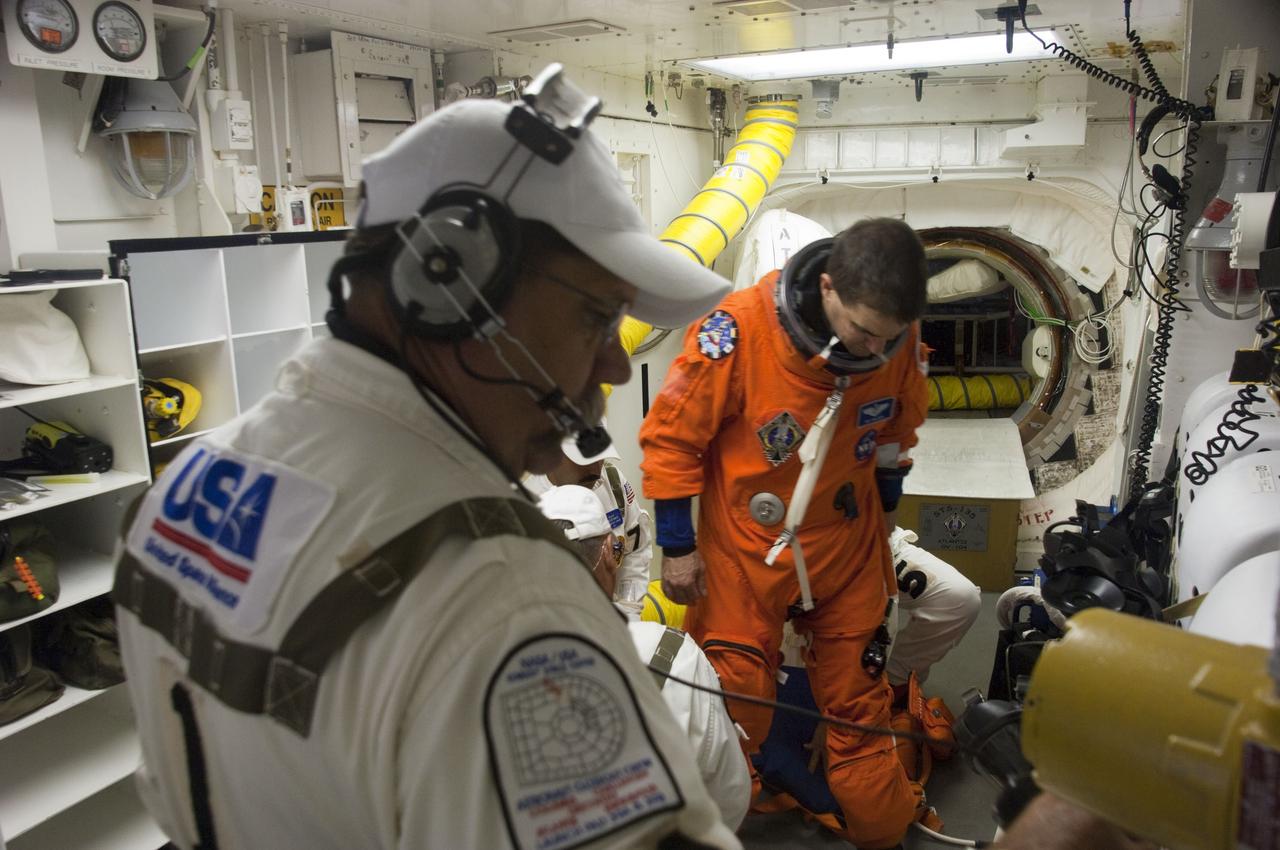
CAPE CANAVERAL, Fla. -- The final astronaut to board a space shuttle for flight, STS-135 Mission Specialist Rex Walheim, is assisted by the Closeout Crew in the White Room of Launch Pad 39A at NASA's Kennedy Space Center in Florida. All three of Walheim's missions -- STS-110, STS-122 and now STS-135 -- will have been aboard space shuttle Atlantis. Four STS-135 crew members are scheduled to lift off at 11:26 a.m. EDT on July 8 for a mission to the International Space Station. STS-135 will deliver the Raffaello multi-purpose logistics module packed with supplies and spare parts for the International Space Station. Atlantis also will fly the Robotic Refueling Mission experiment that will investigate the potential for robotically refueling existing satellites in orbit. In addition, Atlantis will return with a failed ammonia pump module to help NASA better understand the failure mechanism and improve pump designs for future systems. STS-135 will be the 33rd flight of Atlantis, the 37th shuttle mission to the space station, and the 135th and final mission of NASA's Space Shuttle Program. For more information, visit www.nasa.gov/mission_pages/shuttle/shuttlemissions/sts135/index.html. Photo credit: NASA/Sandra Joseph and Kevin O'Connell
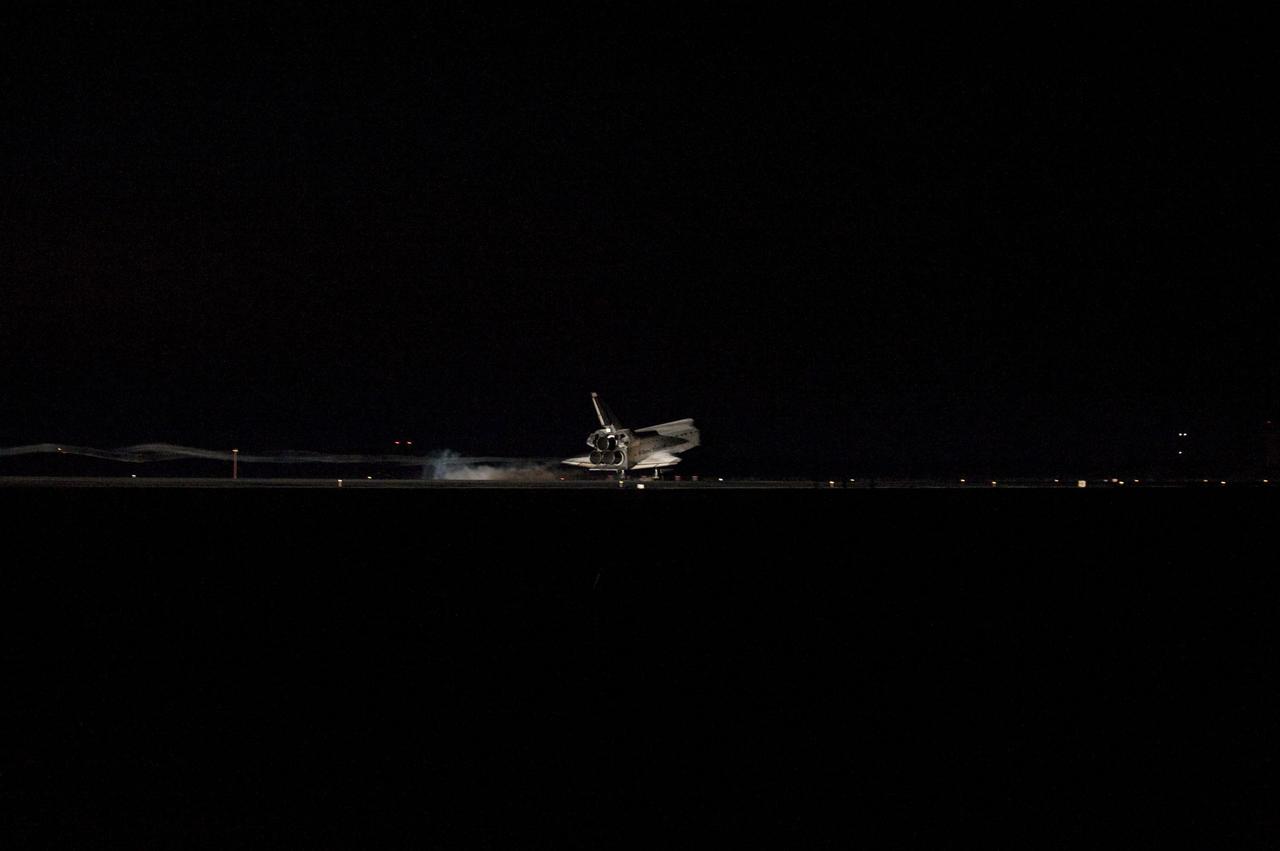
CAPE CANAVERAL, Fla. -- Space shuttle Atlantis' bright-white, iconic frame illuminates the darkness as it touches down on the Shuttle Landing Facility's Runway 15 at NASA's Kennedy Space Center in Florida for the final time. Securing the space shuttle fleet's place in history, Atlantis marked the 26th nighttime landing of NASA's Space Shuttle Program and the 78th landing at Kennedy. Main gear touchdown was at 5:57:00 a.m. EDT, followed by nose gear touchdown at 5:57:20 a.m., and wheelstop at 5:57:54 a.m. On board are STS-135 Commander Chris Ferguson, Pilot Doug Hurley, and Mission Specialists Sandra Magnus and Rex Walheim. On the 37th shuttle mission to the International Space Station, STS-135 delivered more than 9,400 pounds of spare parts, equipment and supplies in the Raffaello multi-purpose logistics module that will sustain station operations for the next year. STS-135 was the 33rd and final flight for Atlantis, which has spent 307 days in space, orbited Earth 4,848 times and traveled 125,935,769 miles. For more information visit, www.nasa.gov/mission_pages/shuttle/shuttlemissions/sts135/index.html. Photo credit: NASA/Sandra Joseph
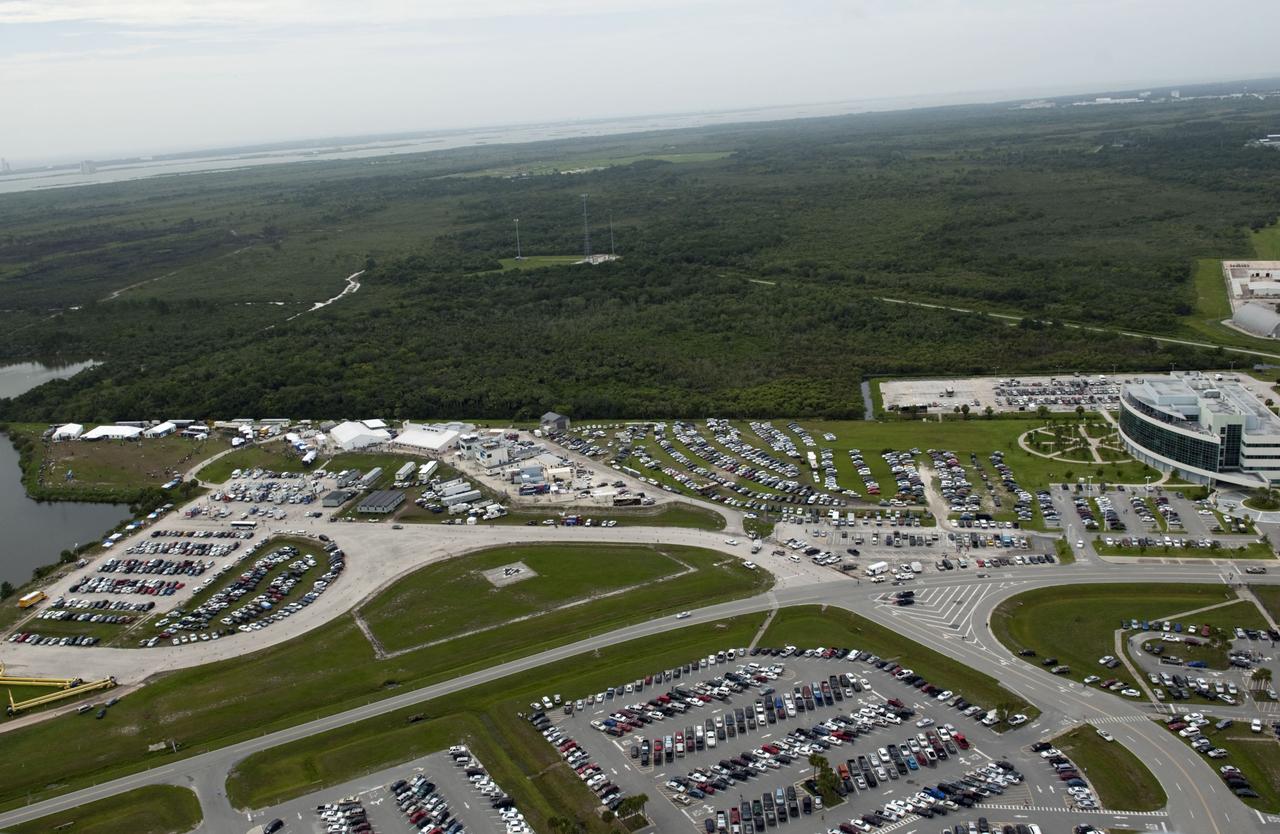
CAPE CANAVERAL, Fla. -- Taken from the Vehicle Assembly Building roof at NASA's Kennedy Space Center in Florida, this image shows the Press Site complex with a myriad of vehicles, satellite trucks and trailers belonging to invited guests and media for the launch of space shuttle Atlantis. Atlantis began its final flight, the STS-135 mission, to the International Space Station at 11:29 a.m. EDT on July 8. STS-135 will deliver the Raffaello multi-purpose logistics module packed with supplies and spare parts for the International Space Station. Atlantis also will fly the Robotic Refueling Mission experiment that will investigate the potential for robotically refueling existing satellites in orbit. In addition, Atlantis will return with a failed ammonia pump module to help NASA better understand the failure mechanism and improve pump designs for future systems. STS-135 will be the 33rd flight of Atlantis, the 37th shuttle mission to the space station, and the 135th and final mission of NASA's Space Shuttle Program. For more information, visit www.nasa.gov/mission_pages/shuttle/shuttlemissions/sts135/index.html. Photo credit: NASA/Jeffrey Marino
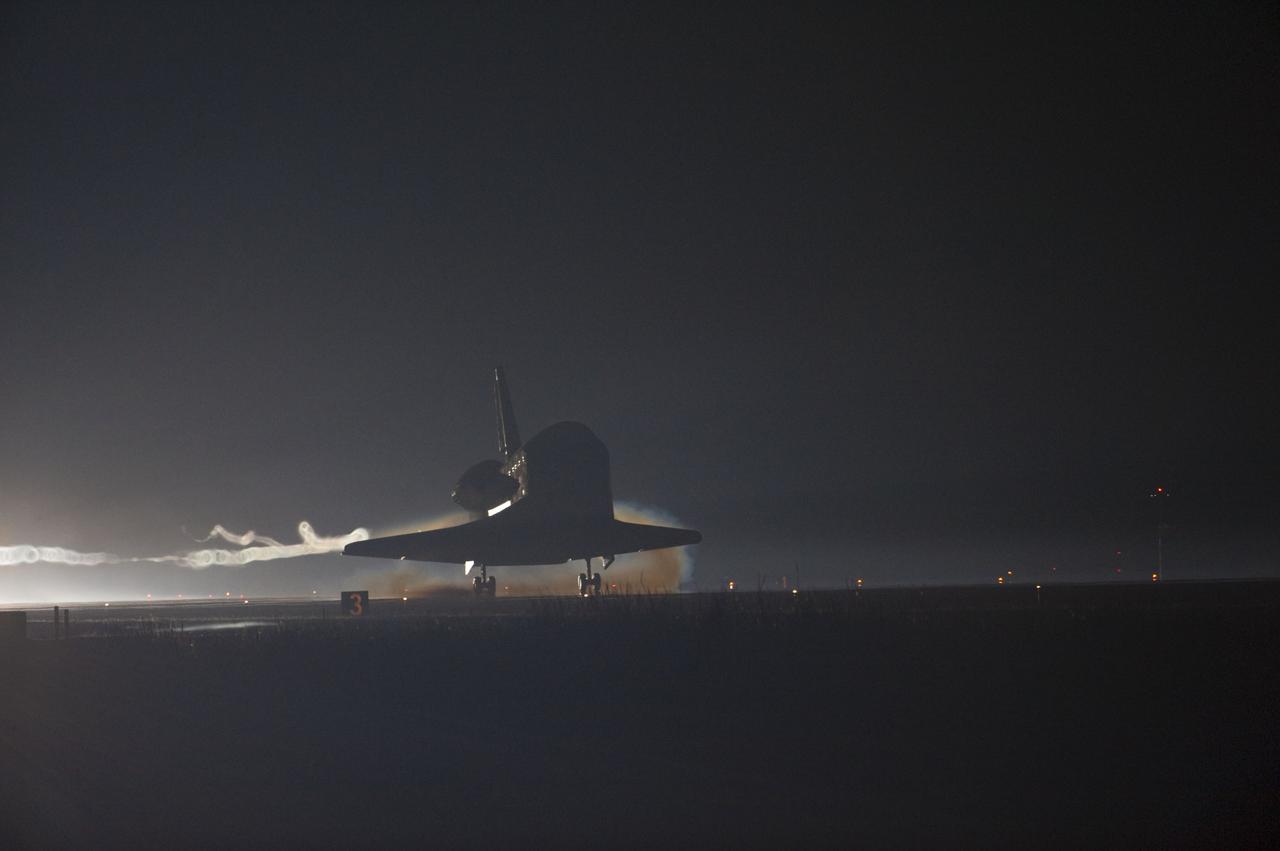
CAPE CANAVERAL, Fla. -- Ribbons of steam and smoke trail space shuttle Atlantis as it touches down on the Shuttle Landing Facility's Runway 15 at NASA's Kennedy Space Center in Florida for the final time. Securing the space shuttle fleet's place in history, Atlantis marked the 26th nighttime landing of NASA's Space Shuttle Program and the 78th landing at Kennedy. Main gear touchdown was at 5:57:00 a.m. EDT, followed by nose gear touchdown at 5:57:20 a.m., and wheelstop at 5:57:54 a.m. On board are STS-135 Commander Chris Ferguson, Pilot Doug Hurley, and Mission Specialists Sandra Magnus and Rex Walheim. On the 37th shuttle mission to the International Space Station, STS-135 delivered more than 9,400 pounds of spare parts, equipment and supplies in the Raffaello multi-purpose logistics module that will sustain station operations for the next year. STS-135 was the 33rd and final flight for Atlantis, which has spent 307 days in space, orbited Earth 4,848 times and traveled 125,935,769 miles. For more information visit, www.nasa.gov/mission_pages/shuttle/shuttlemissions/sts135/index.html. Photo credit: NASA/Kevin O'Connell
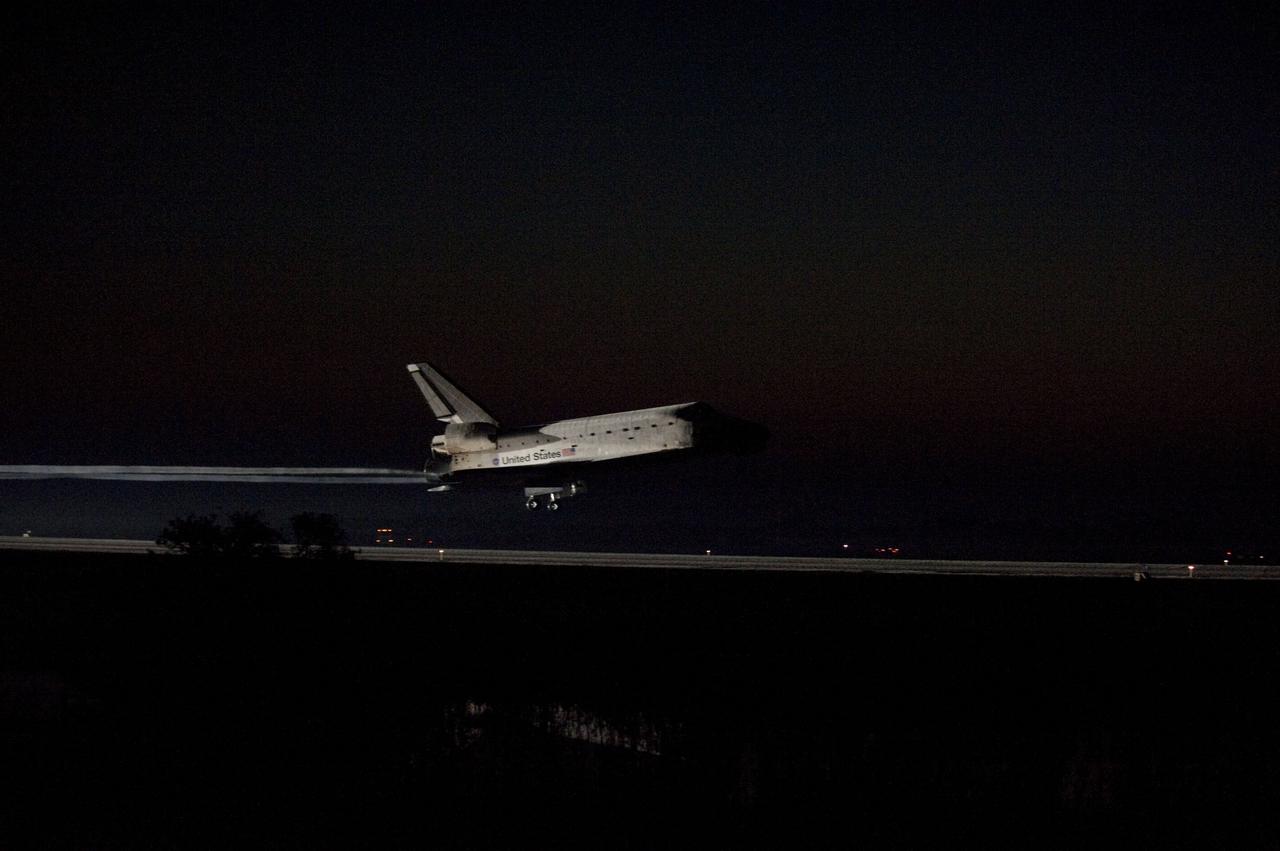
CAPE CANAVERAL, Fla. -- Space shuttle Atlantis' bright-white, iconic frame illuminates the darkness as it touches down on the Shuttle Landing Facility's Runway 15 at NASA's Kennedy Space Center in Florida for the final time. Securing the space shuttle fleet's place in history, Atlantis marked the 26th nighttime landing of NASA's Space Shuttle Program and the 78th landing at Kennedy. Main gear touchdown was at 5:57:00 a.m. EDT, followed by nose gear touchdown at 5:57:20 a.m., and wheelstop at 5:57:54 a.m. On board are STS-135 Commander Chris Ferguson, Pilot Doug Hurley, and Mission Specialists Sandra Magnus and Rex Walheim. On the 37th shuttle mission to the International Space Station, STS-135 delivered more than 9,400 pounds of spare parts, equipment and supplies in the Raffaello multi-purpose logistics module that will sustain station operations for the next year. STS-135 was the 33rd and final flight for Atlantis, which has spent 307 days in space, orbited Earth 4,848 times and traveled 125,935,769 miles. For more information visit, www.nasa.gov/mission_pages/shuttle/shuttlemissions/sts135/index.html. Photo credit: NASA/Sandra Joseph
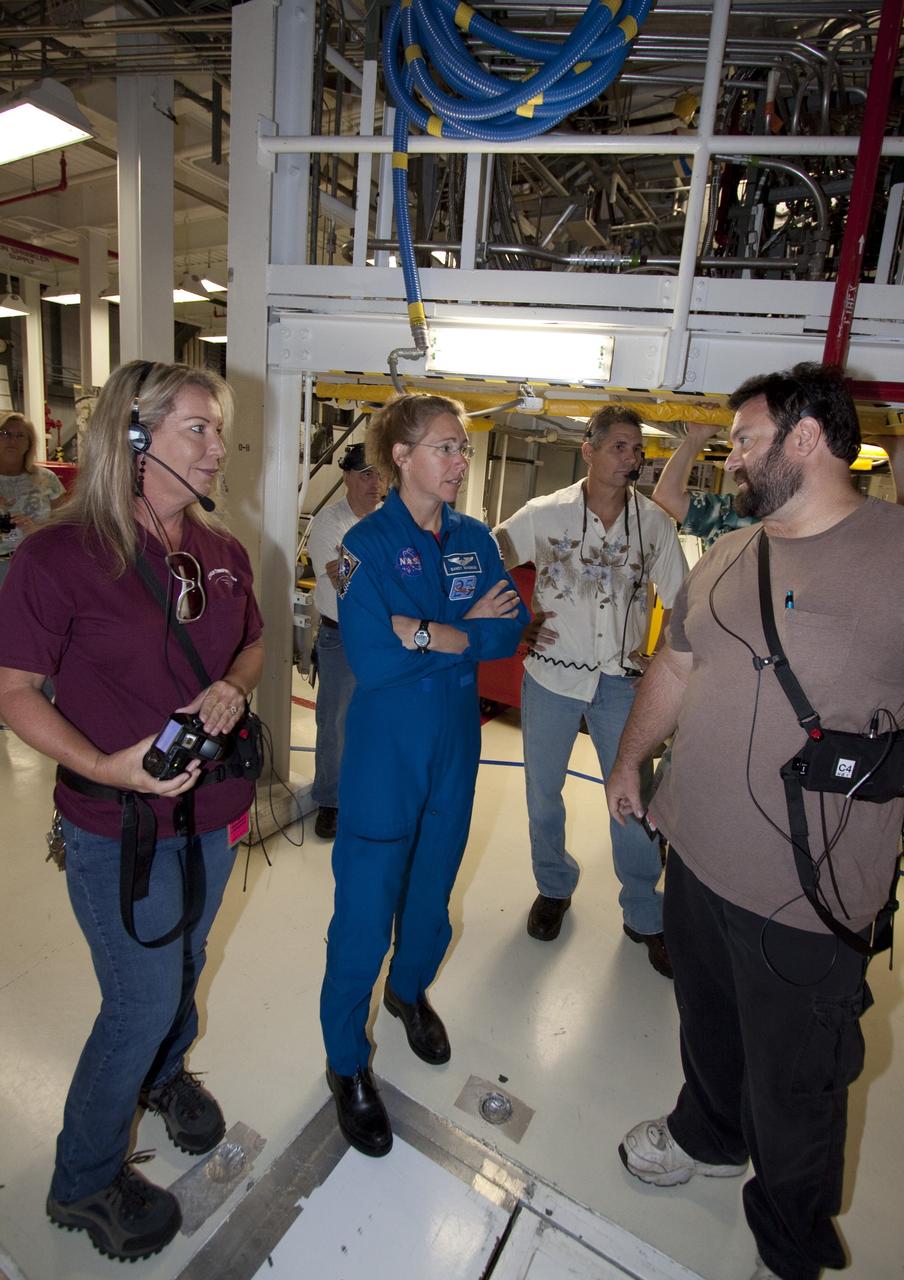
CAPE CANAVERAL, Fla. -- STS-135 Mission Specialist Sandra Magnus talks with technicians in Orbiter Processing Facility-1 prior shuttle Atlantis' final planned move to the Vehicle Assembly Building at NASA's Kennedy Space Center in Florida. The move called "rollover" is a major milestone in processing for the STS-135 mission to the International Space Station. Inside the VAB, the shuttle will be attached to its external fuel tank and solid rocket boosters. Magnus, along with Commander Chris Ferguson, Pilot Doug Hurley and Mission Specialist Rex Walheim are targeted to launch in early July, taking with them the Raffaello multipurpose logistics module packed with supplies, logistics and spare parts. The STS-135 mission also will fly a system to investigate the potential for robotically refueling existing spacecraft and return a failed ammonia pump module to help NASA better understand the failure mechanism and improve pump designs for future systems. STS-135 will be the 33rd flight of Atlantis, the 37th shuttle mission to the space station, and the 135th and final mission of NASA's Space Shuttle Program. For more information visit, www.nasa.gov/mission_pages/shuttle/shuttlemissions/sts135/index.html. Photo credit: NASA/Jack Pfaller
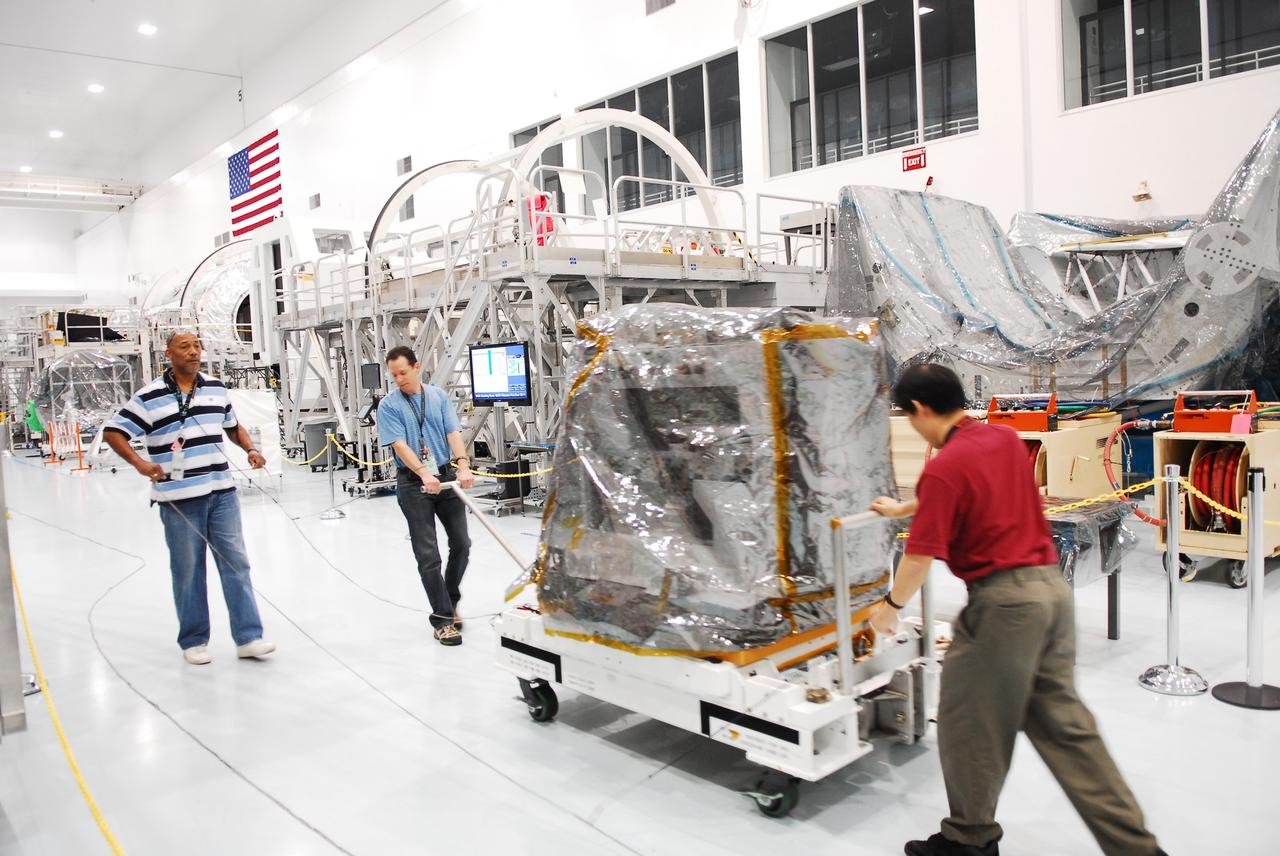
CAPE CANAVERAL, Fla. -- Technicians transport a system that will investigate the potential for robotically refueling existing spacecraft in orbit to a low bay test cell in the Space Station Processing Facility at NASA's Kennedy Space Center in Florida. Called the Robotic Refueling Mission RRM, the system will be processed to fly aboard space shuttle Atlantis on the STS-135 mission to the International Space Station. Atlantis and its STS-135 crew are scheduled to carry the Raffaello multipurpose logistics module packed with supplies, logistics and spare parts to the space station. The mission also will return a failed ammonia pump module to help NASA better understand the failure mechanism and improve pump designs for future systems. STS-135, targeted to launch June 28, will be the 33rd flight of Atlantis, the 37th shuttle mission to the space station, and the 135th and final mission of NASA's Space Shuttle Program. For more information visit, www.nasa.gov/mission_pages/shuttle/shuttlemissions/sts135/index.html. Photo credit: NASA/Jim Grossmann
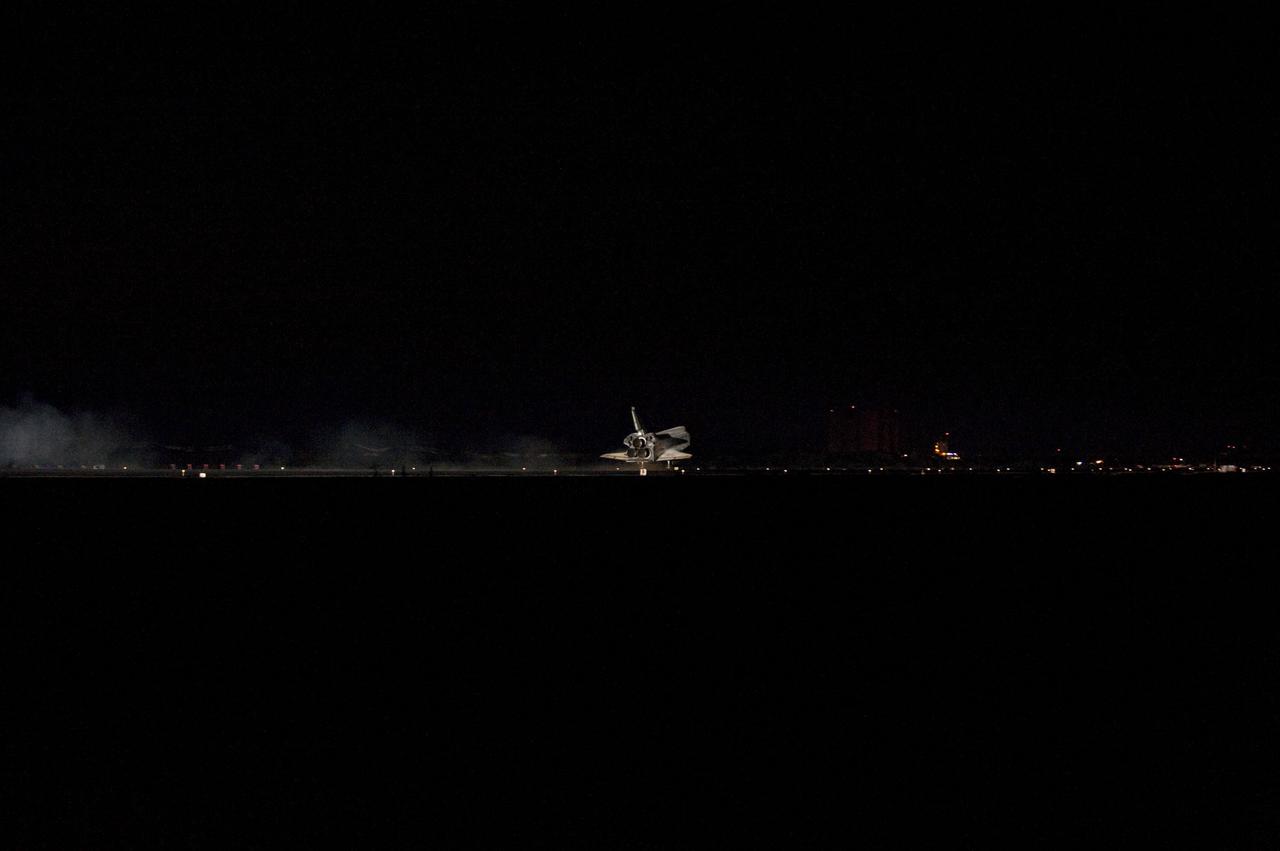
CAPE CANAVERAL, Fla. -- Space shuttle Atlantis' bright-white, iconic frame illuminates the darkness as it touches down on the Shuttle Landing Facility's Runway 15 at NASA's Kennedy Space Center in Florida for the final time. Securing the space shuttle fleet's place in history, Atlantis marked the 26th nighttime landing of NASA's Space Shuttle Program and the 78th landing at Kennedy. Main gear touchdown was at 5:57:00 a.m. EDT, followed by nose gear touchdown at 5:57:20 a.m., and wheelstop at 5:57:54 a.m. On board are STS-135 Commander Chris Ferguson, Pilot Doug Hurley, and Mission Specialists Sandra Magnus and Rex Walheim. On the 37th shuttle mission to the International Space Station, STS-135 delivered more than 9,400 pounds of spare parts, equipment and supplies in the Raffaello multi-purpose logistics module that will sustain station operations for the next year. STS-135 was the 33rd and final flight for Atlantis, which has spent 307 days in space, orbited Earth 4,848 times and traveled 125,935,769 miles. For more information visit, www.nasa.gov/mission_pages/shuttle/shuttlemissions/sts135/index.html. Photo credit: NASA/Sandra Joseph

CAPE CANAVERAL, Fla. -- Ribbons of steam and smoke trail space shuttle Atlantis as it nears touch down on the Shuttle Landing Facility's Runway 15 at NASA's Kennedy Space Center in Florida for the final time. Securing the space shuttle fleet's place in history, Atlantis marked the 26th nighttime landing of NASA's Space Shuttle Program and the 78th landing at Kennedy. Main gear touchdown was at 5:57:00 a.m. EDT, followed by nose gear touchdown at 5:57:20 a.m., and wheelstop at 5:57:54 a.m. On board are STS-135 Commander Chris Ferguson, Pilot Doug Hurley, and Mission Specialists Sandra Magnus and Rex Walheim. On the 37th shuttle mission to the International Space Station, STS-135 delivered more than 9,400 pounds of spare parts, equipment and supplies in the Raffaello multi-purpose logistics module that will sustain station operations for the next year. STS-135 was the 33rd and final flight for Atlantis, which has spent 307 days in space, orbited Earth 4,848 times and traveled 125,935,769 miles. For more information visit, www.nasa.gov/mission_pages/shuttle/shuttlemissions/sts135/index.html. Photo credit: NASA/Kim Shiflett
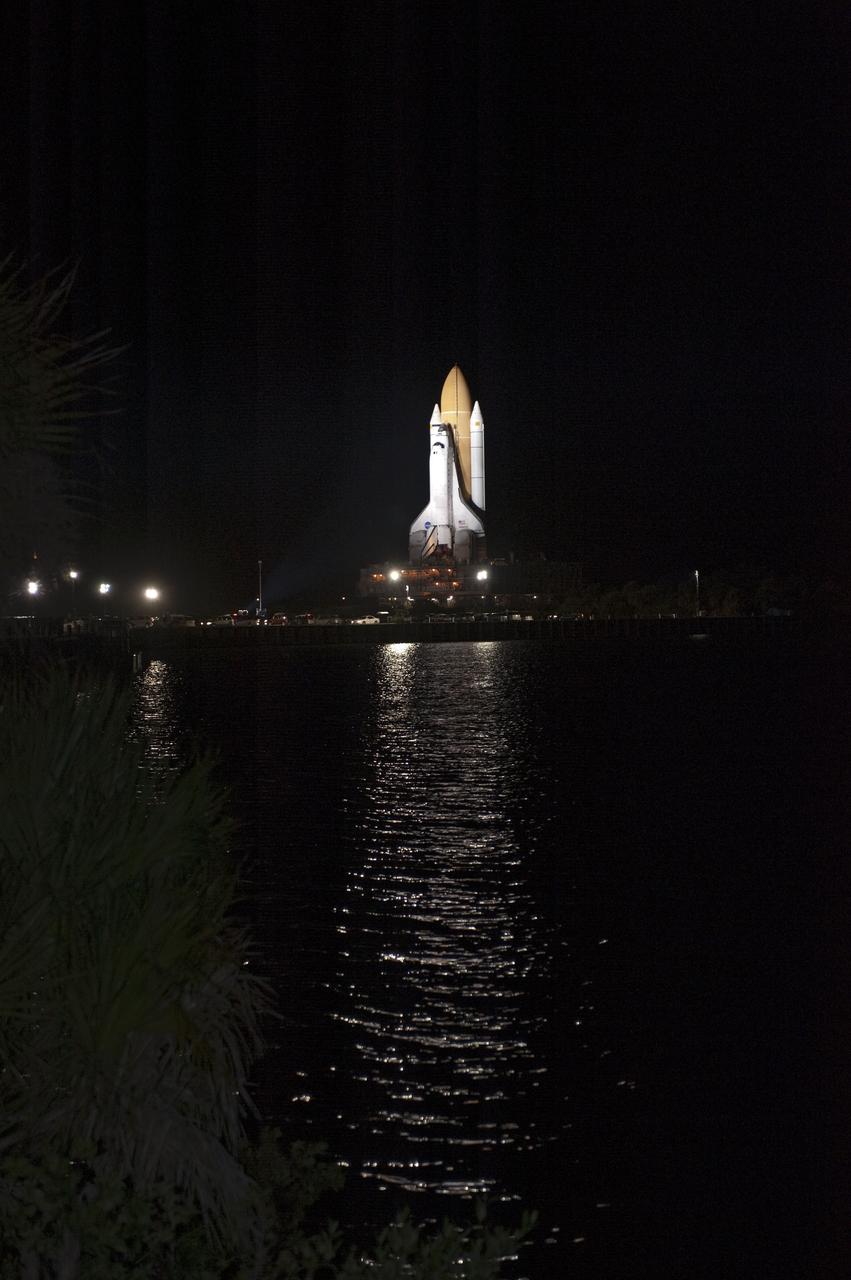
CAPE CANAVERAL, Fla. -- Bathed in xenon lights, space shuttle Atlantis passes the Turn Basin as it makes its final journey from the Vehicle Assembly Building to Launch Pad 39A at NASA's Kennedy Space Center in Florida. First motion was at 8:42 p.m. EDT. It will take the crawler-transporter about six hours to carry the shuttle, attached to its external fuel tank and solid rocket boosters, to the seaside launch pad. The milestone move paves the way for the launch of the STS-135 mission to the International Space Station, targeted for July 8. STS-135 will be the 33rd flight of Atlantis, the 37th shuttle mission to the space station, and the 135th and final mission of NASA's Space Shuttle Program. For more information visit, www.nasa.gov/mission_pages/shuttle/shuttlemissions/sts135/index.html. Photo credit: NASA/Kim Shiflett
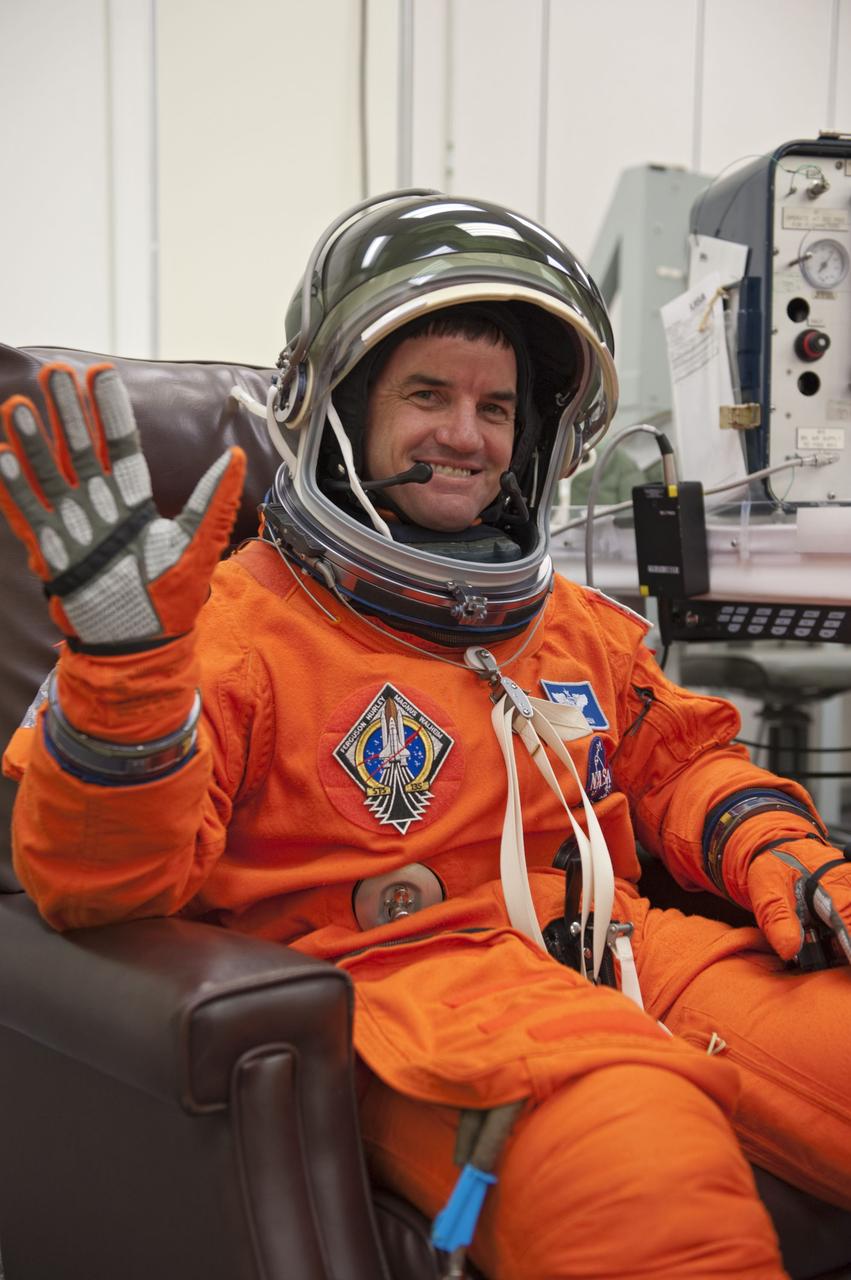
CAPE CANAVERAL, Fla. -- STS-135 Mission Specialist Rex Walheim waves as he dons his launch-and-entry suit and helmet in the Operations and Checkout Building at NASA's Kennedy Space Center in Florida. Walheim is one of the final four astronauts to launch aboard a space shuttle. All three of Walheim's missions -- STS-110, STS-122 and now STS-135 -- will have been aboard space shuttle Atlantis. STS-135 is scheduled to lift off aboard Atlantis at 11:26 a.m. EDT on July 8 for a mission to the International Space Station. STS-135 will deliver the Raffaello multi-purpose logistics module packed with supplies and spare parts for the orbiting outpost. Atlantis also will fly the Robotic Refueling Mission experiment that will investigate the potential for robotically refueling existing satellites in orbit. In addition, Atlantis will return with a failed ammonia pump module to help NASA better understand the failure mechanism and improve pump designs for future systems. STS-135 will be the 33rd flight of Atlantis, the 37th shuttle mission to the space station, and the 135th and final mission of NASA's Space Shuttle Program. For more information visit, www.nasa.gov/mission_pages/shuttle/shuttlemissions/sts135/index.html. Photo credit: NASA/Kim Shiflett
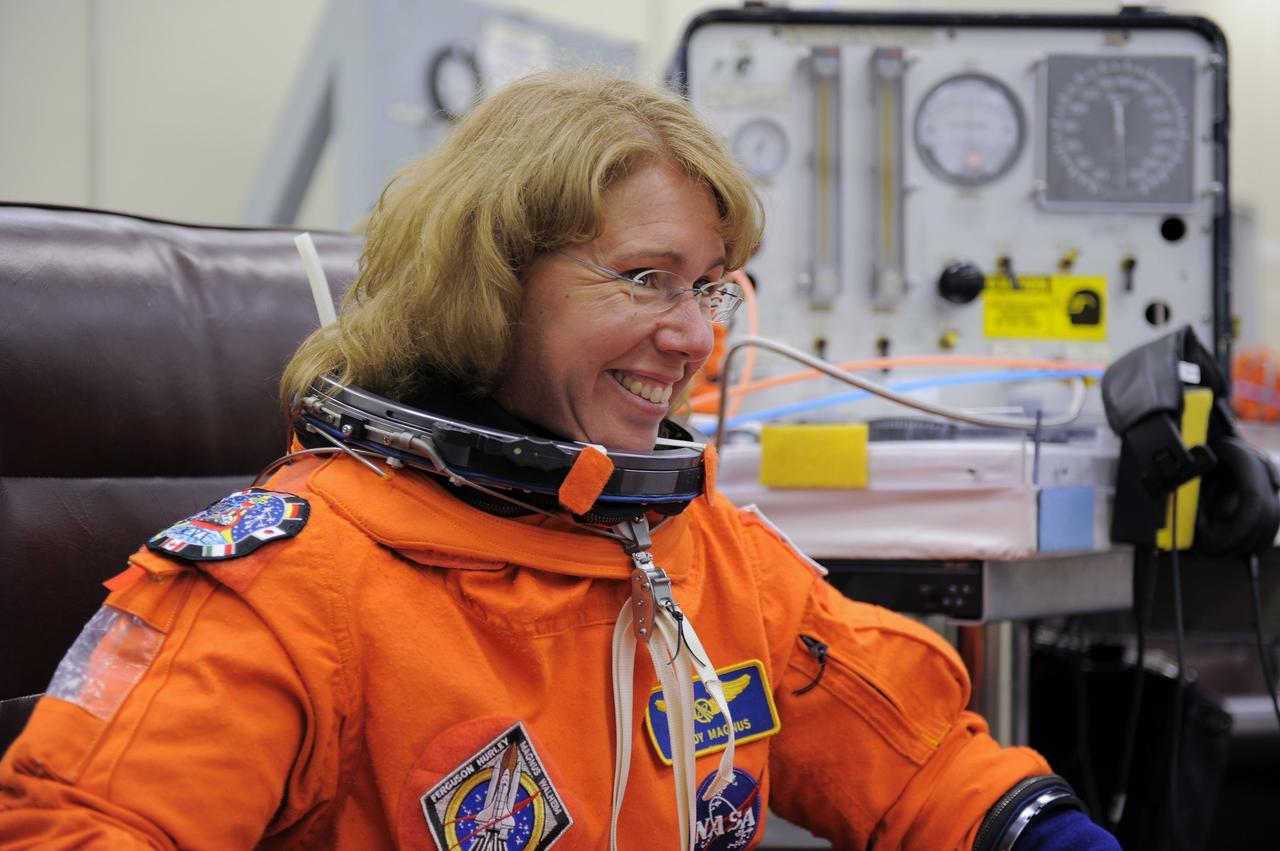
CAPE CANAVERAL, Fla. -- STS-135 Mission Specialist Sandy Magnus dons her launch-and-entry suit in the Operations and Checkout Building at NASA's Kennedy Space Center in Florida. Magnus is one of the final four astronauts to launch aboard a space shuttle. She has launched aboard a shuttle twice and most recently spent time aboard the International Space Station as an Expedition 18 crew member from November 2008 to March 2009. STS-135 is scheduled to lift off aboard space shuttle Atlantis at 11:26 a.m. EDT on July 8 for a mission to the International Space Station. STS-135 will deliver the Raffaello multi-purpose logistics module packed with supplies and spare parts for the orbiting outpost. Atlantis also will fly the Robotic Refueling Mission experiment that will investigate the potential for robotically refueling existing satellites in orbit. In addition, Atlantis will return with a failed ammonia pump module to help NASA better understand the failure mechanism and improve pump designs for future systems. STS-135 will be the 33rd flight of Atlantis, the 37th shuttle mission to the space station, and the 135th and final mission of NASA's Space Shuttle Program. For more information visit, www.nasa.gov/mission_pages/shuttle/shuttlemissions/sts135/index.html. Photo credit: NASA/Kim Shiflett
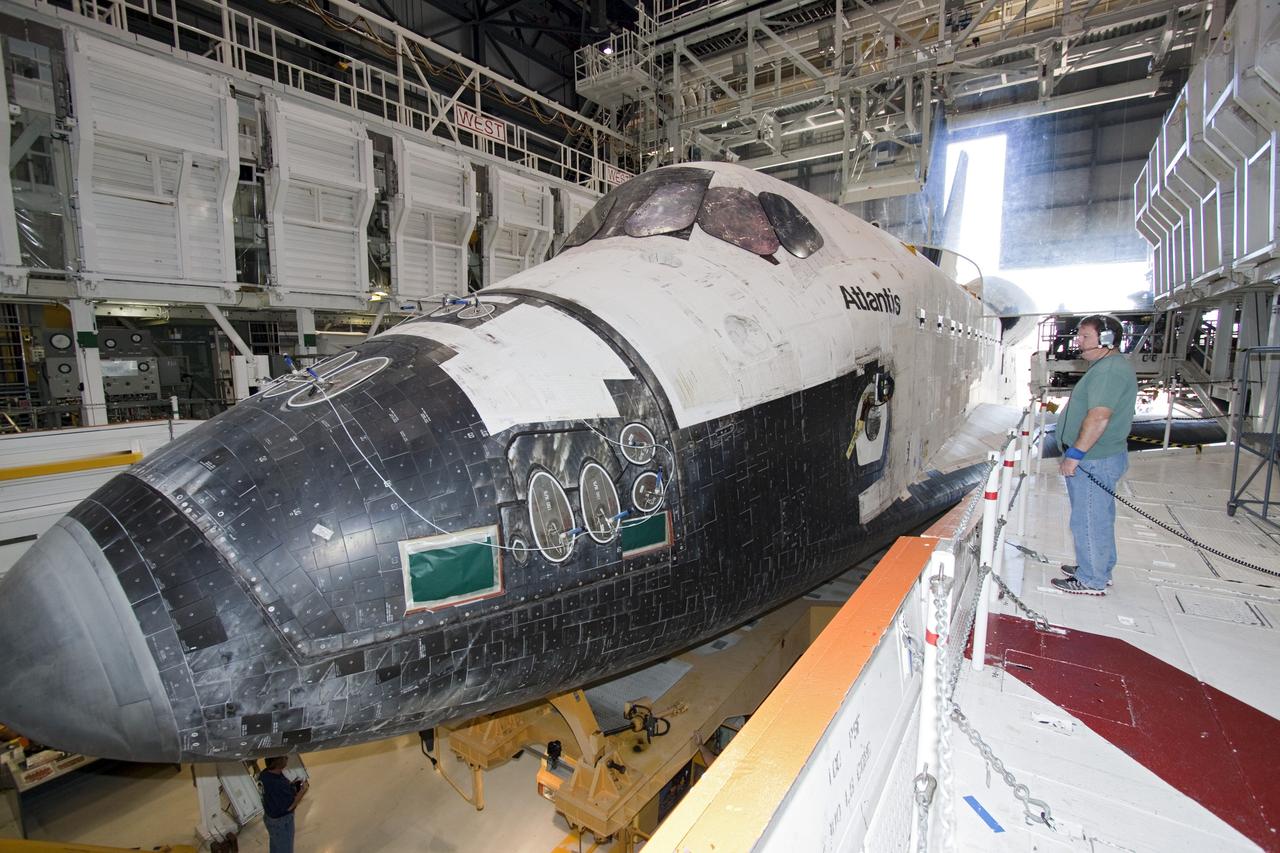
CAPE CANAVERAL, Fla. -- Technicians prepare shuttle Atlantis for its final planned move from Orbiter Processing Facility-1 to the Vehicle Assembly Building at NASA's Kennedy Space Center in Florida. The move called "rollover" is a major milestone in processing for the STS-135 mission to the International Space Station. Inside the VAB, the shuttle will be attached to its external fuel tank and solid rocket boosters. Commander Chris Ferguson, Pilot Doug Hurley and Mission Specialists Sandra Magnus and Rex Walheim are targeted to launch in early July, taking with them the Raffaello multipurpose logistics module packed with supplies, logistics and spare parts. The STS-135 mission also will fly a system to investigate the potential for robotically refueling existing spacecraft and return a failed ammonia pump module to help NASA better understand the failure mechanism and improve pump designs for future systems. STS-135 will be the 33rd flight of Atlantis, the 37th shuttle mission to the space station, and the 135th and final mission of NASA's Space Shuttle Program. For more information visit, www.nasa.gov/mission_pages/shuttle/shuttlemissions/sts135/index.html. Photo credit: NASA/Jack Pfaller
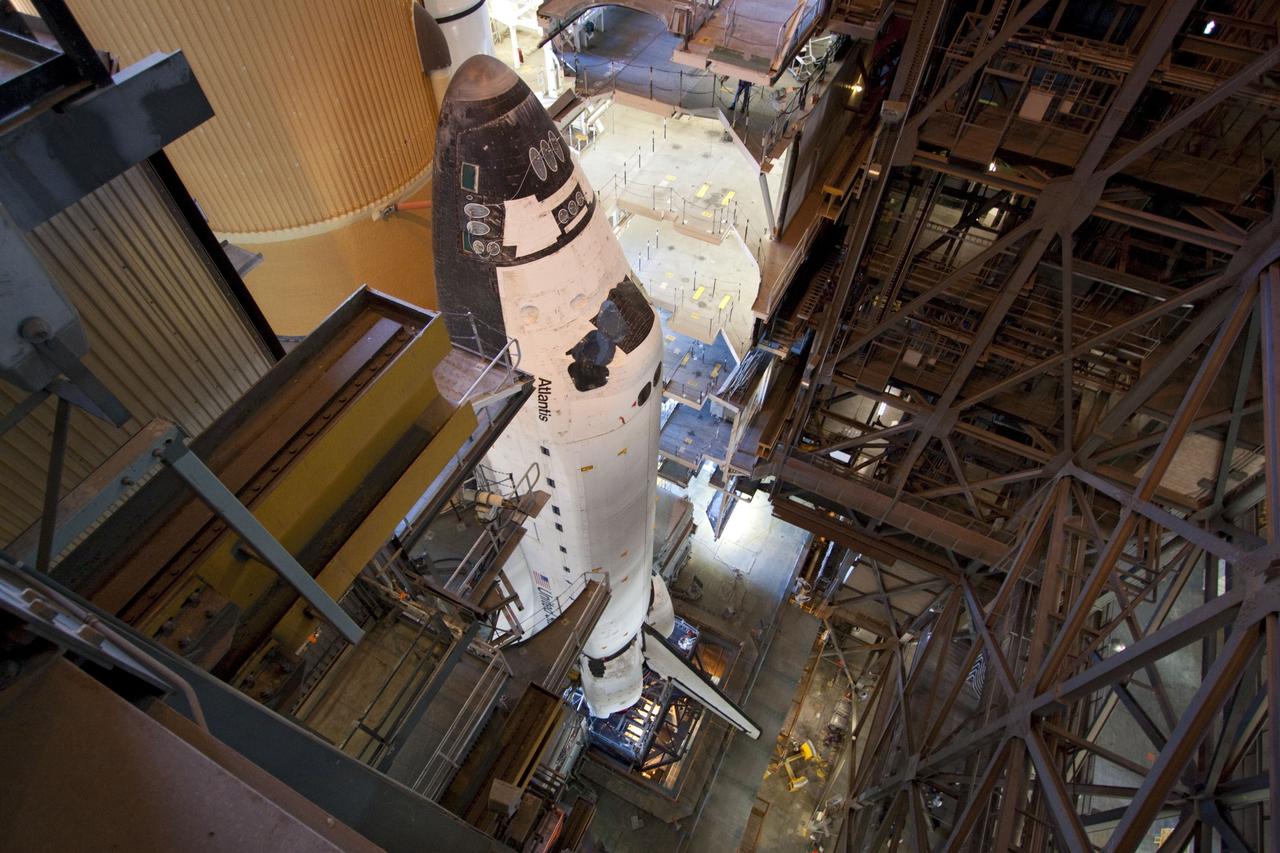
CAPE CANAVERAL, Fla. -- Space shuttle Atlantis, attached to its external fuel tank and solid rocket boosters atop a mobile launcher platform, awaits its final journey from the Vehicle Assembly Building to Launch Pad 39A at NASA's Kennedy Space Center in Florida. "Rollout," as it's called, began at 8:42 p.m. EDT. It will take the crawler-transporter about six hours to carry the shuttle stack to its seaside launch pad. The milestone move paves the way for the launch of the STS-135 mission to the International Space Station, targeted for July 8. STS-135 will be the 33rd flight of Atlantis, the 37th shuttle mission to the space station, and the 135th and final mission of NASA's Space Shuttle Program. For more information visit, www.nasa.gov/mission_pages/shuttle/shuttlemissions/sts135/index.html. Photo credit: NASA/Jack Pfaller
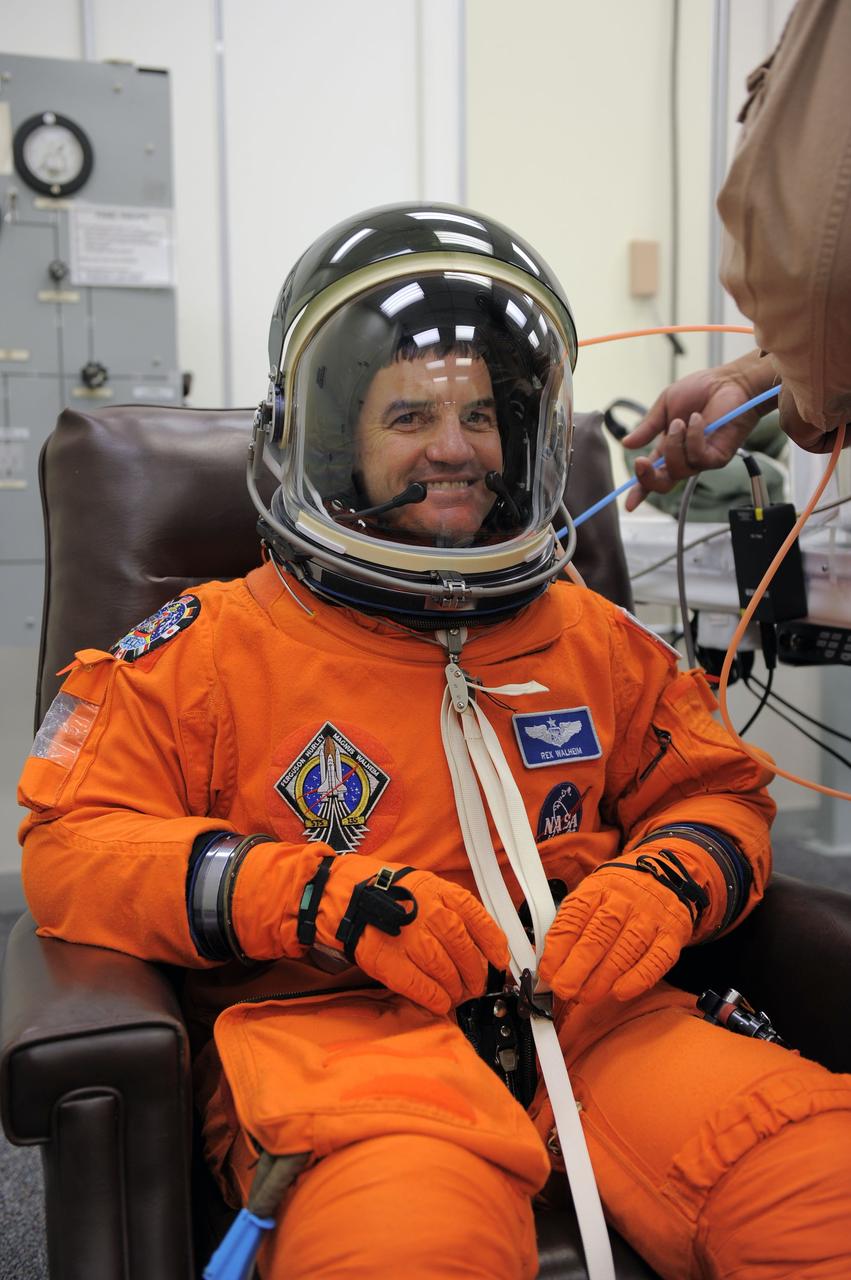
CAPE CANAVERAL, Fla. -- STS-135 Mission Specialist Rex Walheim dons his launch-and-entry suit and helmet in the Operations and Checkout Building at NASA's Kennedy Space Center in Florida. Walheim is one of the final four astronauts to launch aboard a space shuttle. All three of Walheim's missions -- STS-110, STS-122 and now STS-135 -- will have been aboard space shuttle Atlantis. STS-135 is scheduled to lift off aboard Atlantis at 11:26 a.m. EDT on July 8 for a mission to the International Space Station. STS-135 will deliver the Raffaello multi-purpose logistics module packed with supplies and spare parts for the orbiting outpost. Atlantis also will fly the Robotic Refueling Mission experiment that will investigate the potential for robotically refueling existing satellites in orbit. In addition, Atlantis will return with a failed ammonia pump module to help NASA better understand the failure mechanism and improve pump designs for future systems. STS-135 will be the 33rd flight of Atlantis, the 37th shuttle mission to the space station, and the 135th and final mission of NASA's Space Shuttle Program. For more information visit, www.nasa.gov/mission_pages/shuttle/shuttlemissions/sts135/index.html. Photo credit: NASA/Kim Shiflett
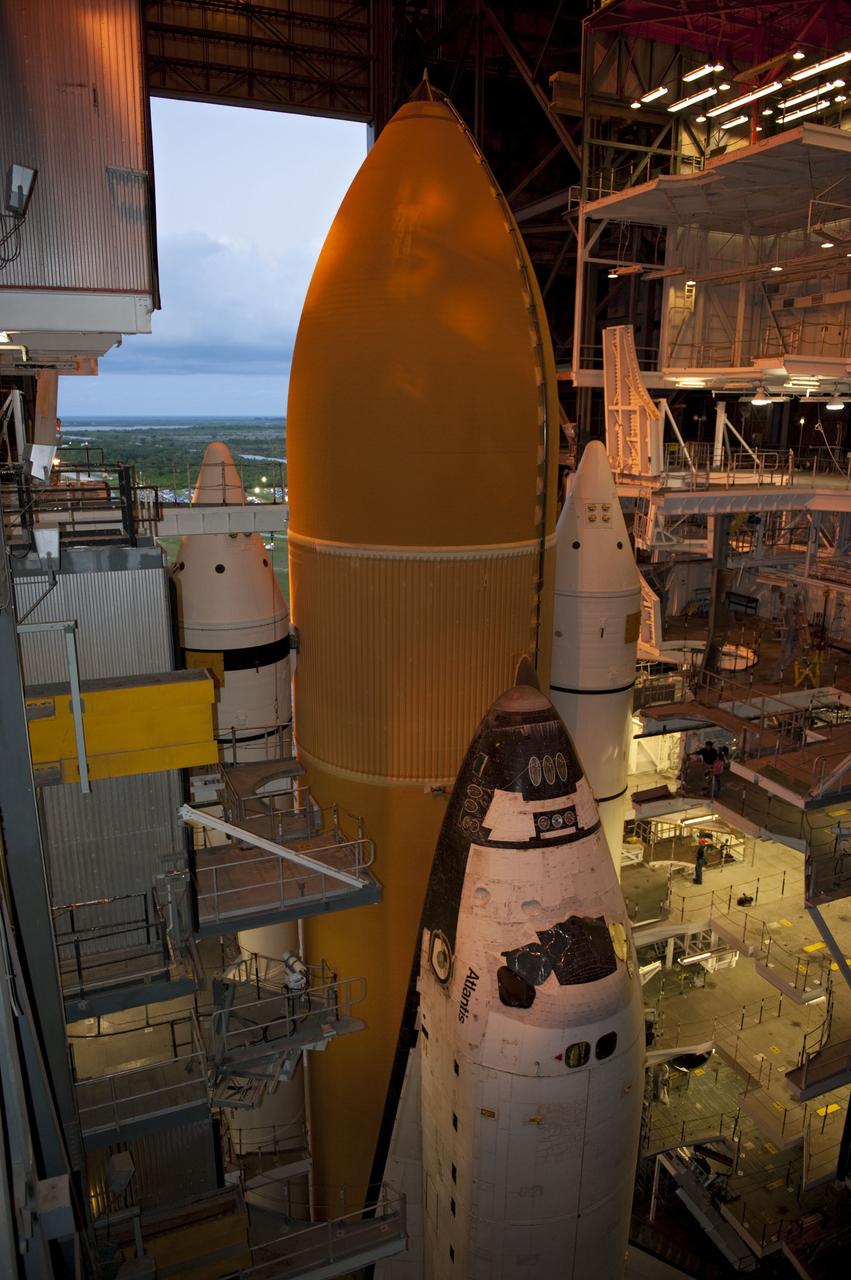
CAPE CANAVERAL, Fla. -- Space shuttle Atlantis, attached to its external fuel tank and solid rocket boosters atop a mobile launcher platform, awaits its final journey from the Vehicle Assembly Building to Launch Pad 39A at NASA's Kennedy Space Center in Florida. "Rollout," as it's called, began at 8:42 p.m. EDT. It will take the crawler-transporter about six hours to carry the shuttle stack to its seaside launch pad. The milestone move paves the way for the launch of the STS-135 mission to the International Space Station, targeted for July 8. STS-135 will be the 33rd flight of Atlantis, the 37th shuttle mission to the space station, and the 135th and final mission of NASA's Space Shuttle Program. For more information visit, www.nasa.gov/mission_pages/shuttle/shuttlemissions/sts135/index.html. Photo credit: NASA/Kim Shiflett
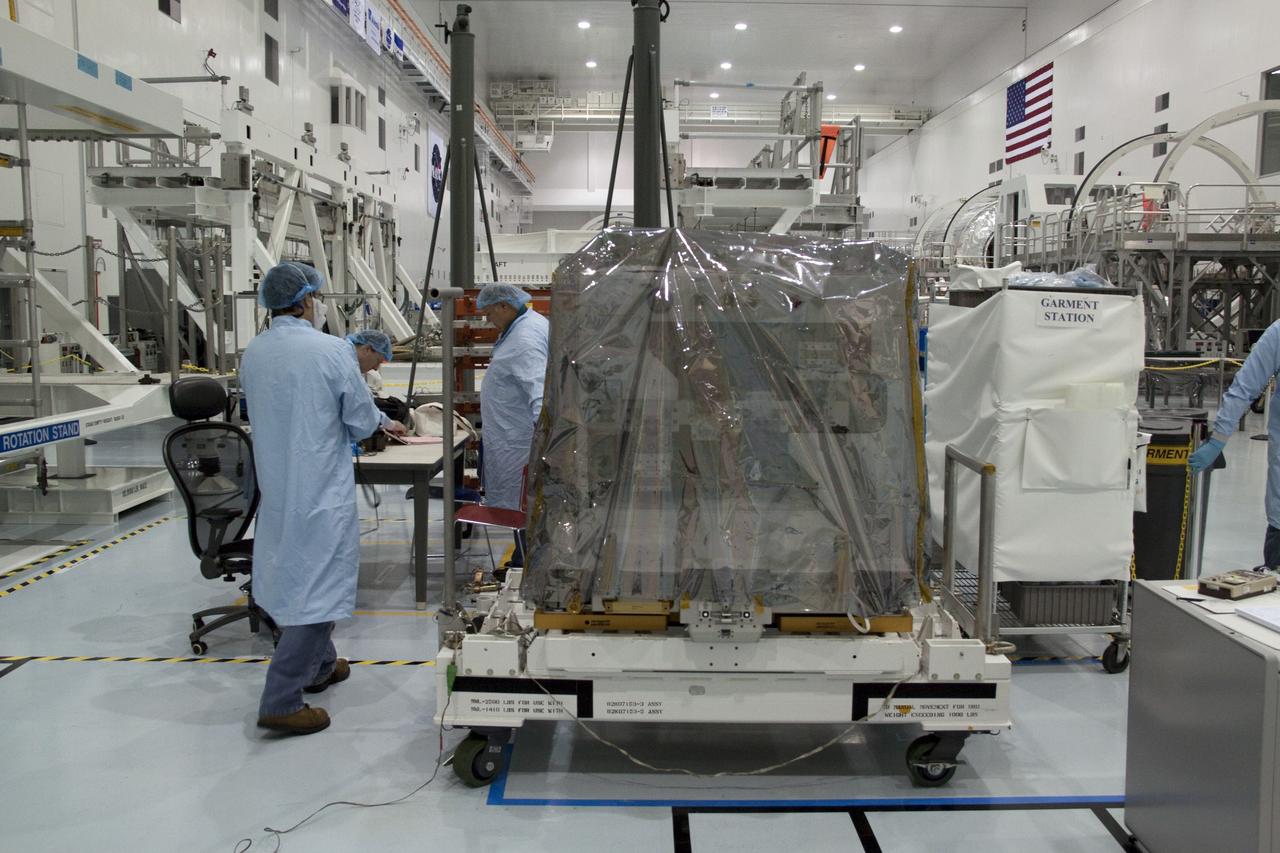
CAPE CANAVERAL, Fla. -- Technicians move a system that will investigate the potential for robotically refueling existing spacecraft in orbit from a processing lab to a high bay in the Space Station Processing Facility at NASA's Kennedy Space Center in Florida. The move prepares the system for its lift into the Lightweight Multi-Purpose Experiment Support Structure Carrier (LMC), which will carry it into orbit. Called the Robotic Refueling Mission (RRM), the system will be processed to fly aboard space shuttle Atlantis on the STS-135 mission to the International Space Station. Also going up will be the Raffaello multipurpose logistics module packed with supplies, logistics and spare parts. The mission also will return a failed ammonia pump module to help NASA better understand the failure mechanism and improve pump designs for future systems. STS-135, targeted to launch June 28, will be the 33rd flight of Atlantis, the 37th shuttle mission to the space station, and the 135th and final mission of NASA's Space Shuttle Program. For more information visit, www.nasa.gov/mission_pages/shuttle/shuttlemissions/sts135/index.html. Photo credit: NASA/Jack Pfaller
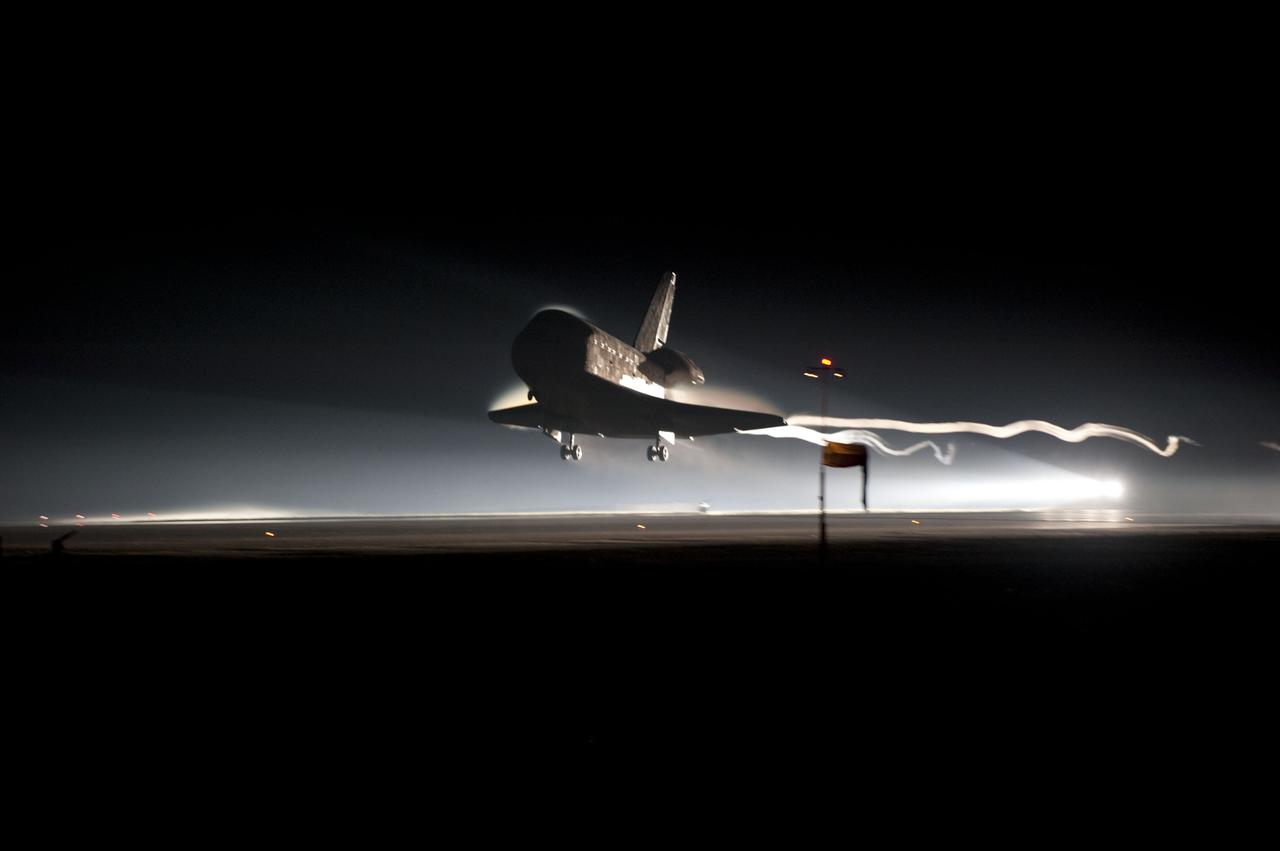
CAPE CANAVERAL, Fla. -- Ribbons of steam and smoke trail space shuttle Atlantis as it nears touch down on the Shuttle Landing Facility's Runway 15 at NASA's Kennedy Space Center in Florida for the final time. Securing the space shuttle fleet's place in history, Atlantis marked the 26th nighttime landing of NASA's Space Shuttle Program and the 78th landing at Kennedy. Main gear touchdown was at 5:57:00 a.m. EDT, followed by nose gear touchdown at 5:57:20 a.m., and wheelstop at 5:57:54 a.m. On board are STS-135 Commander Chris Ferguson, Pilot Doug Hurley, and Mission Specialists Sandra Magnus and Rex Walheim. On the 37th shuttle mission to the International Space Station, STS-135 delivered more than 9,400 pounds of spare parts, equipment and supplies in the Raffaello multi-purpose logistics module that will sustain station operations for the next year. STS-135 was the 33rd and final flight for Atlantis, which has spent 307 days in space, orbited Earth 4,848 times and traveled 125,935,769 miles. For more information visit, www.nasa.gov/mission_pages/shuttle/shuttlemissions/sts135/index.html. Photo credit: NASA/Kim Shiflett
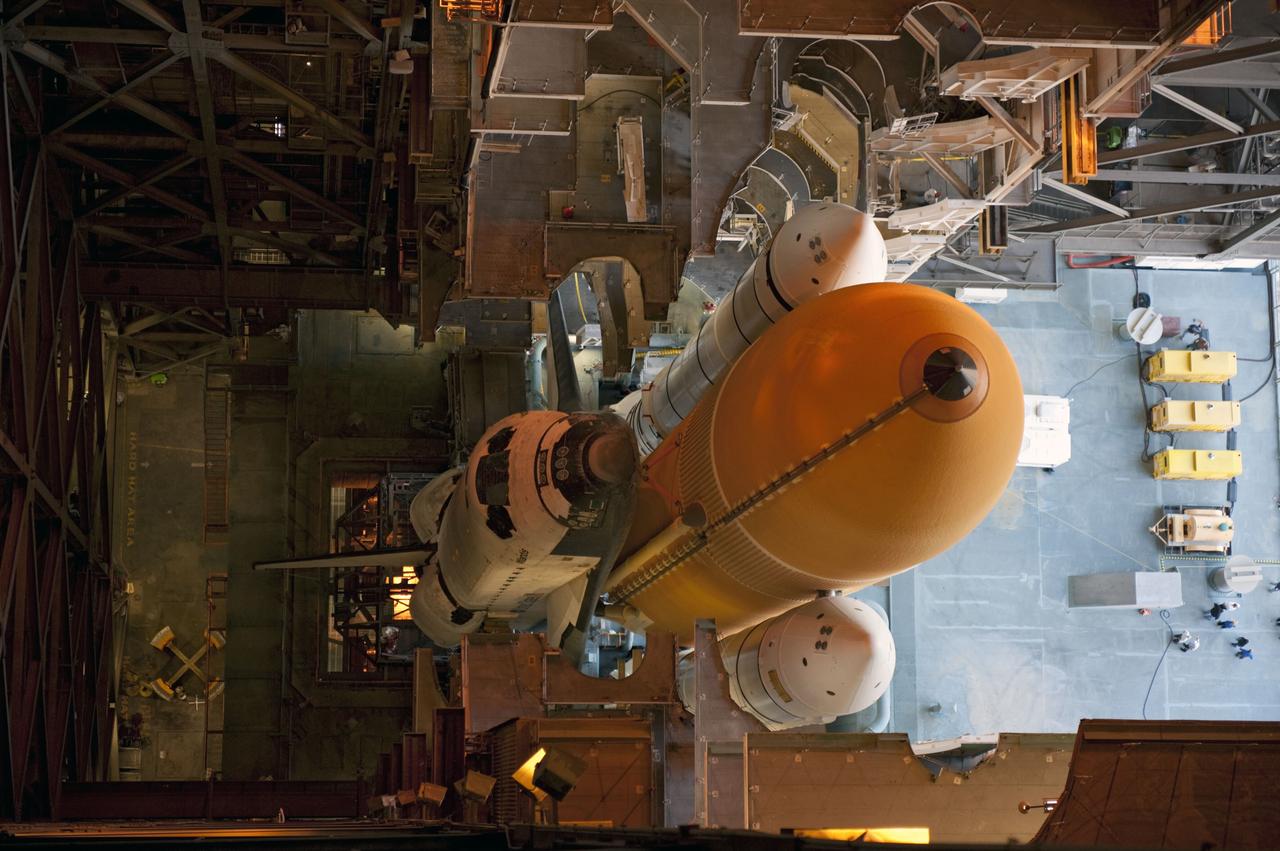
CAPE CANAVERAL, Fla. -- Space shuttle Atlantis, attached to its external fuel tank and solid rocket boosters atop a mobile launcher platform, awaits its final journey from the Vehicle Assembly Building to Launch Pad 39A at NASA's Kennedy Space Center in Florida. "Rollout," as it's called, began at 8:42 p.m. EDT. It will take the crawler-transporter about six hours to carry the shuttle stack to its seaside launch pad. The milestone move paves the way for the launch of the STS-135 mission to the International Space Station, targeted for July 8. STS-135 will be the 33rd flight of Atlantis, the 37th shuttle mission to the space station, and the 135th and final mission of NASA's Space Shuttle Program. For more information visit, www.nasa.gov/mission_pages/shuttle/shuttlemissions/sts135/index.html. Photo credit: NASA/Kim Shiflett
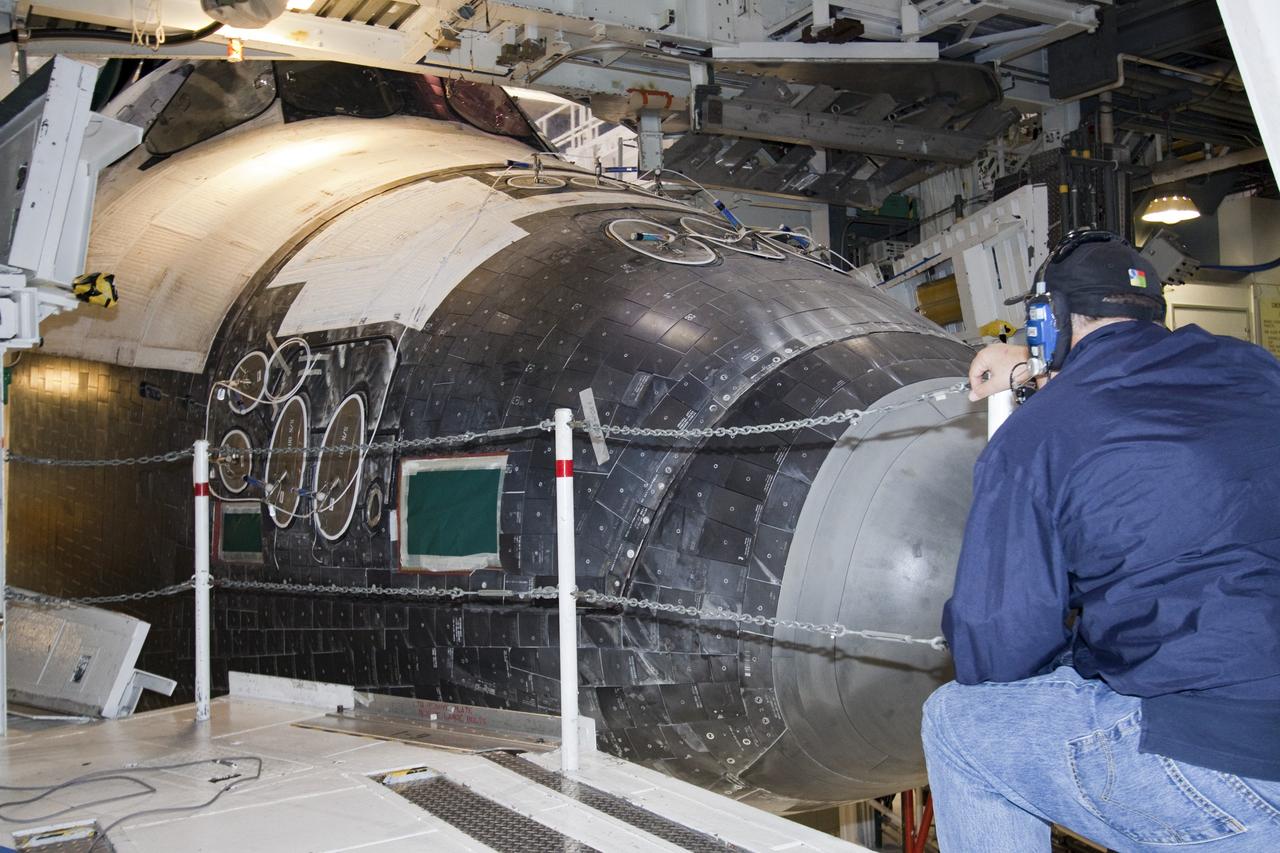
CAPE CANAVERAL, Fla. -- Technicians prepare shuttle Atlantis for its final planned move from Orbiter Processing Facility-1 to the Vehicle Assembly Building at NASA's Kennedy Space Center in Florida. The move called "rollover" is a major milestone in processing for the STS-135 mission to the International Space Station. Inside the VAB, the shuttle will be attached to its external fuel tank and solid rocket boosters. Commander Chris Ferguson, Pilot Doug Hurley and Mission Specialists Sandra Magnus and Rex Walheim are targeted to launch in early July, taking with them the Raffaello multipurpose logistics module packed with supplies, logistics and spare parts. The STS-135 mission also will fly a system to investigate the potential for robotically refueling existing spacecraft and return a failed ammonia pump module to help NASA better understand the failure mechanism and improve pump designs for future systems. STS-135 will be the 33rd flight of Atlantis, the 37th shuttle mission to the space station, and the 135th and final mission of NASA's Space Shuttle Program. For more information visit, www.nasa.gov/mission_pages/shuttle/shuttlemissions/sts135/index.html. Photo credit: NASA/Jack Pfaller
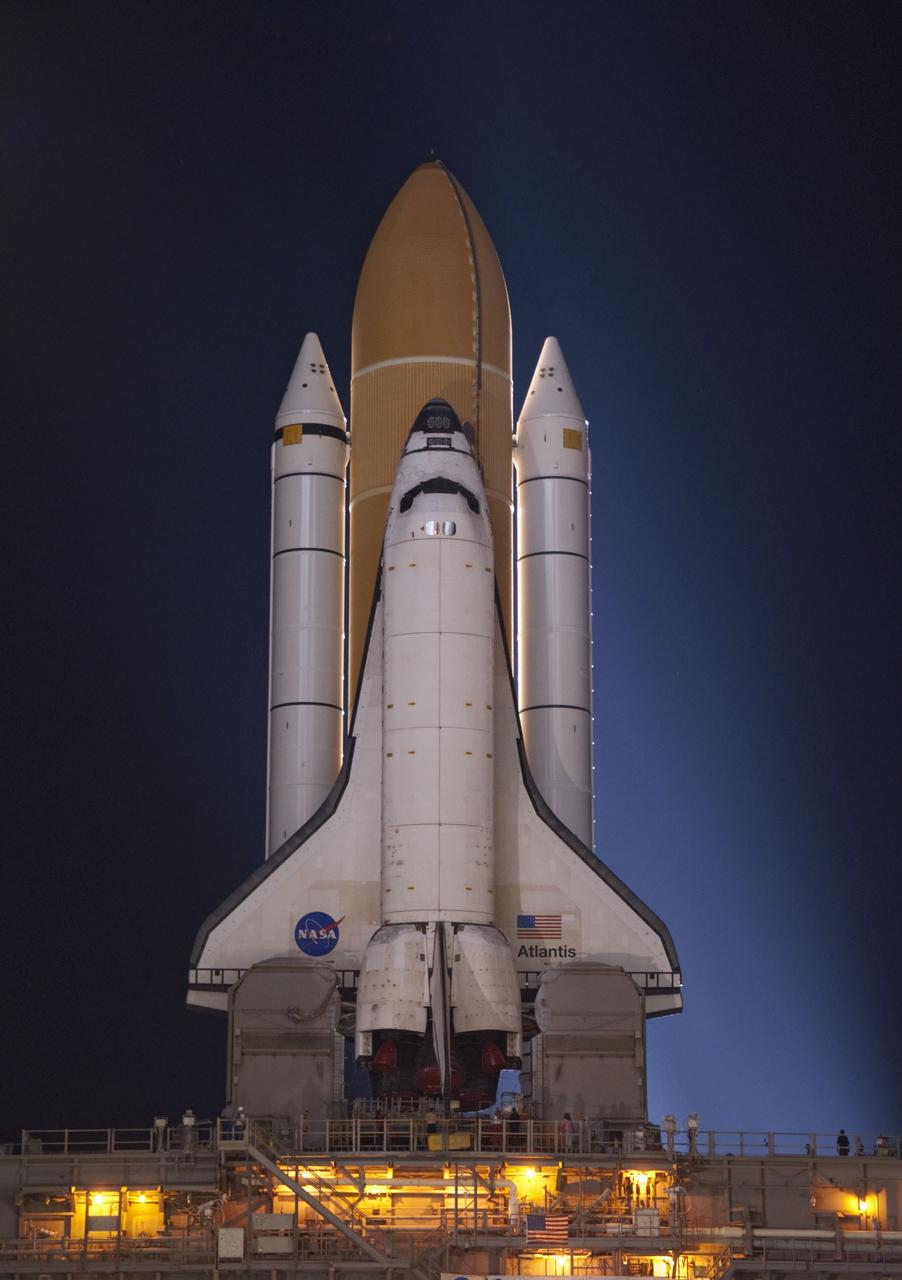
CAPE CANAVERAL, Fla. -- Bathed in xenon lights, space shuttle Atlantis embarks on its final journey from the Vehicle Assembly Building to Launch Pad 39A at NASA's Kennedy Space Center in Florida. First motion was at 8:42 p.m. EDT. It will take the crawler-transporter about six hours to carry the shuttle, attached to its external fuel tank and solid rocket boosters, to the seaside launch pad. The milestone move paves the way for the launch of the STS-135 mission to the International Space Station, targeted for July 8. STS-135 will be the 33rd flight of Atlantis, the 37th shuttle mission to the space station, and the 135th and final mission of NASA's Space Shuttle Program. For more information visit, www.nasa.gov/mission_pages/shuttle/shuttlemissions/sts135/index.html. Photo credit: NASA/Jim Grossmann
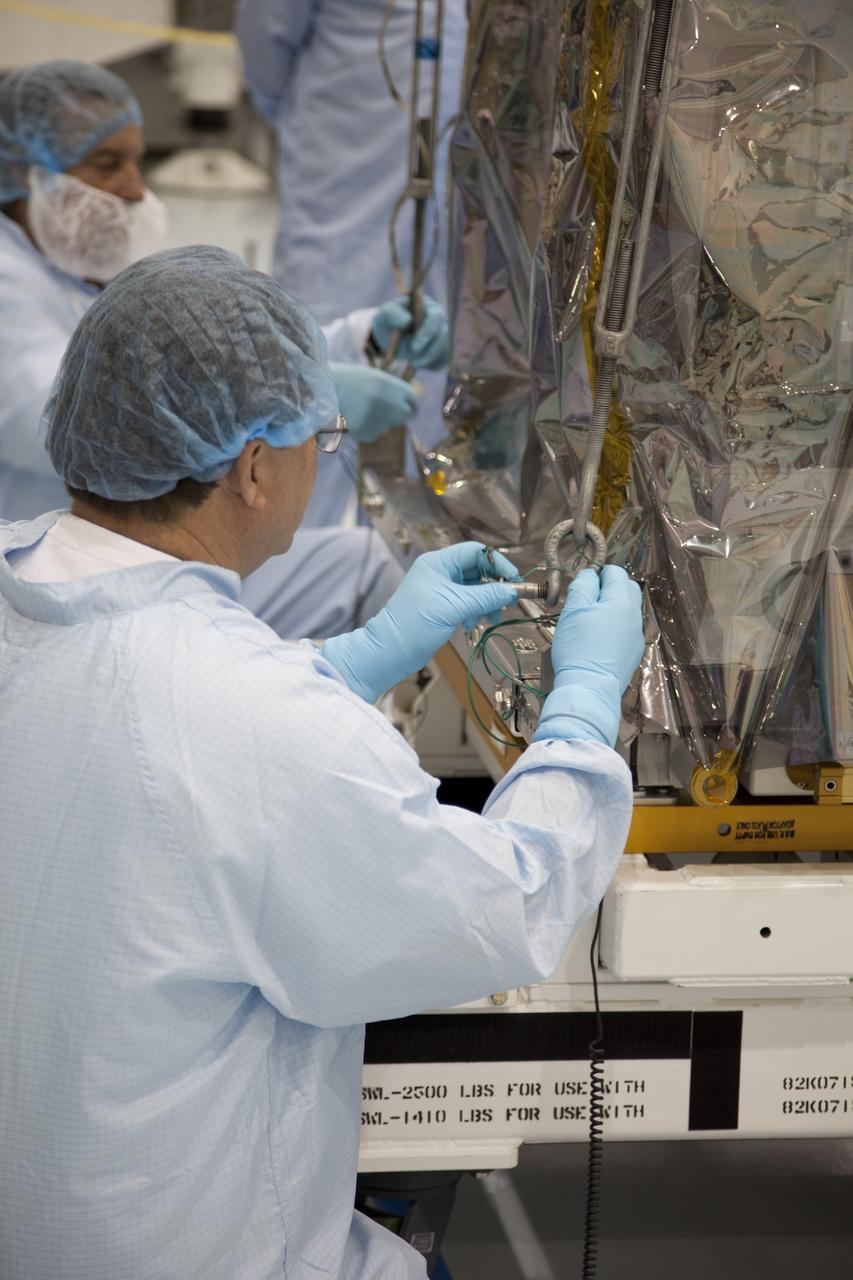
CAPE CANAVERAL, Fla. -- In the Space Station Processing Facility at NASA's Kennedy Space Center in Florida, technicians prepare to move a system that will investigate the potential for robotically refueling existing spacecraft in orbit into the Lightweight Multi-Purpose Experiment Support Structure Carrier (LMC). Called the Robotic Refueling Mission (RRM), the system is being processed to fly aboard space shuttle Atlantis in the LMC on the STS-135 mission to the International Space Station. Also going up will be the Raffaello multipurpose logistics module packed with supplies, logistics and spare parts. The mission also will return a failed ammonia pump module to help NASA better understand the failure mechanism and improve pump designs for future systems. STS-135, targeted to launch June 28, will be the 33rd flight of Atlantis, the 37th shuttle mission to the space station, and the 135th and final mission of NASA's Space Shuttle Program. For more information visit, www.nasa.gov/mission_pages/shuttle/shuttlemissions/sts135/index.html. Photo credit: NASA/Ben Smegelsky