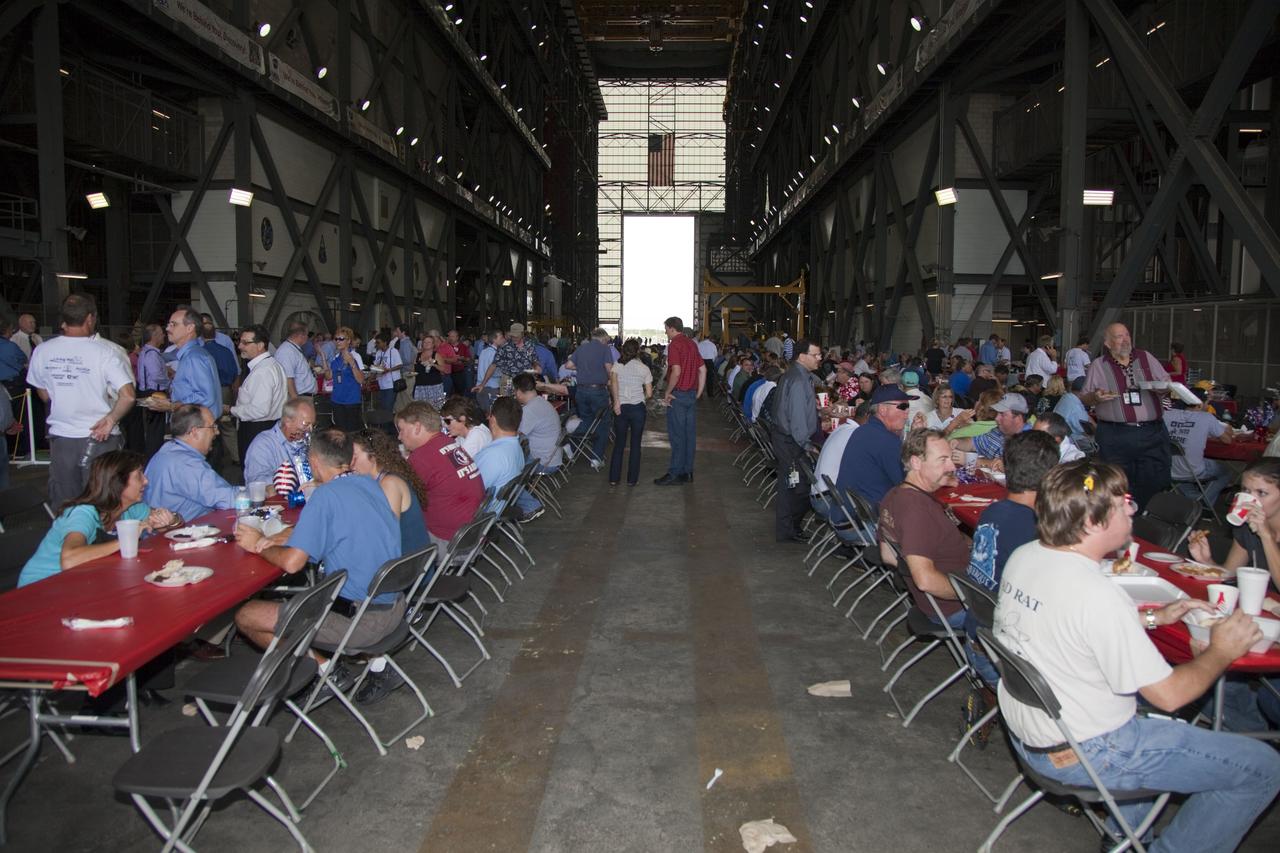
CAPE CANAVERAL, Fla. -- Hundreds of space shuttle workers enjoy a meal at tables set up in the transfer aisle of NASA Kennedy Space Center's Vehicle Assembly Building. The occasion celebrated the successful launch of shuttle Atlantis on the STS-135 mission, the final flight of the agency's Space Shuttle Program. Atlantis, with its crew of Commander Chris Ferguson, Pilot Doug Hurley, Mission Specialists Sandy Magnus and Rex Walheim, lifted off at 11:29 a.m. EDT on July 8, 2011 to deliver the Raffaello multi-purpose logistics module packed with supplies and spare parts for the International Space Station. For more information, visit www.nasa.gov/mission_pages/shuttle/shuttlemissions/sts135/index.html. Photo credit: NASA/Frankie Martin
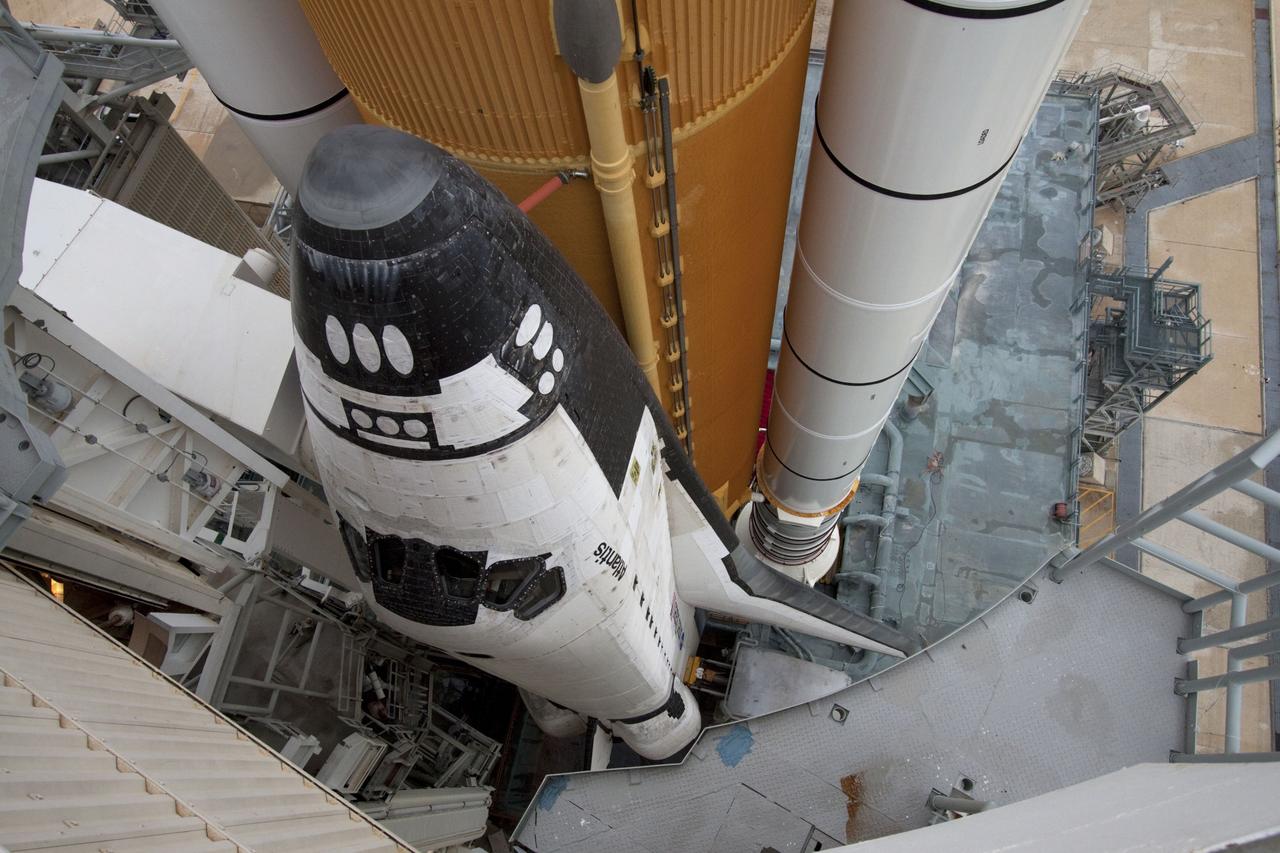
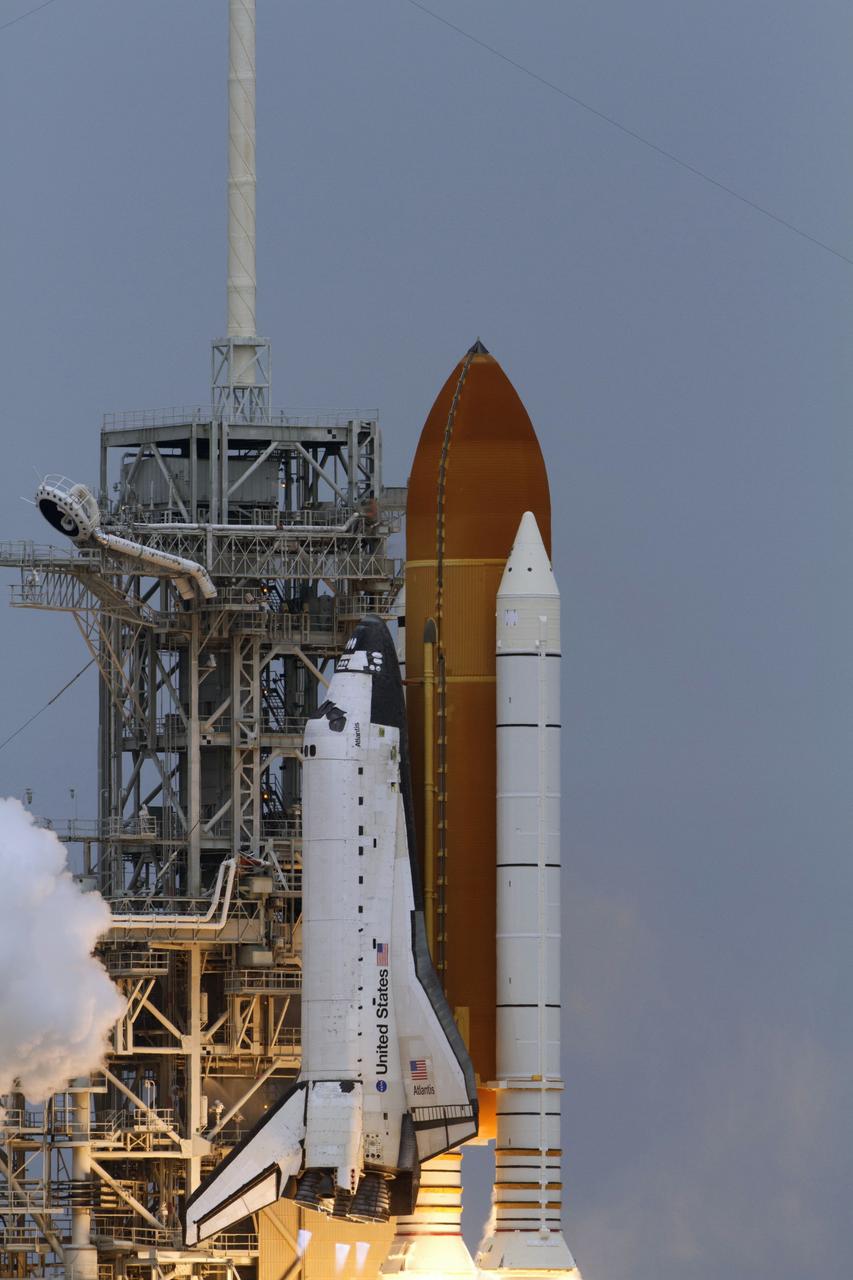
CAPE CANAVERAL, Fla. – Space shuttle Atlantis is revealed on Launch Pad 39A at NASA's Kennedy Space Center in Florida following the move of the rotating service structure (RSS). The structure provides weather protection and access to the shuttle while it awaits liftoff on the pad. RSS "rollback" marks a major milestone in Atlantis' STS-135 mission countdown. Atlantis and its crew of four; Commander Chris Ferguson, Pilot Doug Hurley and Mission Specialists Sandy Magnus and Rex Walheim, are scheduled to lift off at 11:26 a.m. EDT on July 8 to deliver the Raffaello multi-purpose logistics module packed with supplies and spare parts to the International Space Station. Atlantis also will fly the Robotic Refueling Mission experiment that will investigate the potential for robotically refueling existing satellites in orbit. In addition, Atlantis will return with a failed ammonia pump module to help NASA better understand the failure mechanism and improve pump designs for future systems. STS-135 will be the 33rd flight of Atlantis, the 37th shuttle mission to the space station, and the 135th and final mission of NASA's Space Shuttle Program. For more information visit, www.nasa.gov/mission_pages/shuttle/shuttlemissions/sts135/index.html. Photo credit: NASA/Ken Thornsley
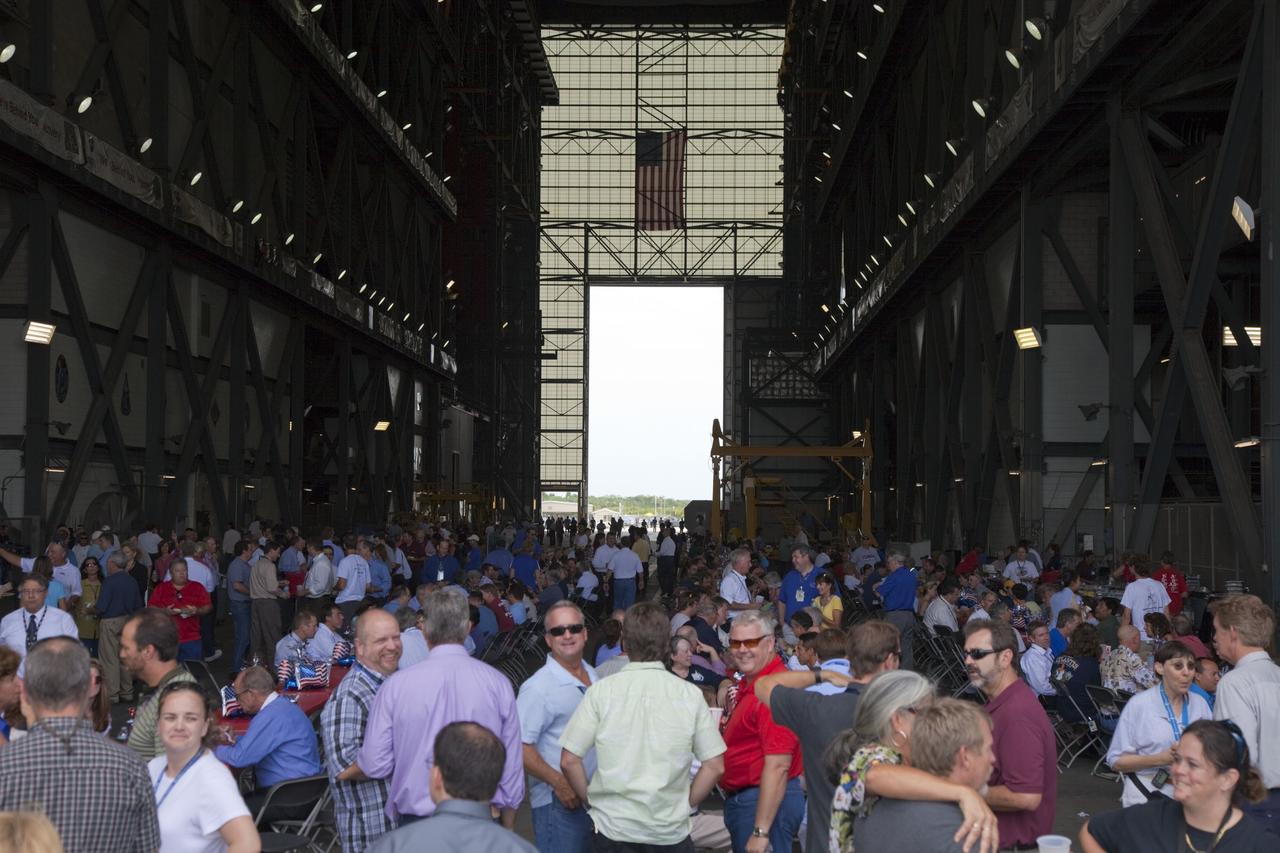
CAPE CANAVERAL, Fla. -- Space shuttle workers fill the transfer aisle of the massive Vehicle Assembly Building at NASA's Kennedy Space Center in Florida to celebrate the successful liftoff of shuttle Atlantis on the STS-135 mission, the final flight of the agency's Space Shuttle Program. Atlantis, with its crew of Commander Chris Ferguson, Pilot Doug Hurley, Mission Specialists Sandy Magnus and Rex Walheim, lifted off at 11:29 a.m. EDT on July 8, 2011 to deliver the Raffaello multi-purpose logistics module packed with supplies and spare parts for the International Space Station. For more information, visit www.nasa.gov/mission_pages/shuttle/shuttlemissions/sts135/index.html. Photo credit: NASA/Frankie Martin
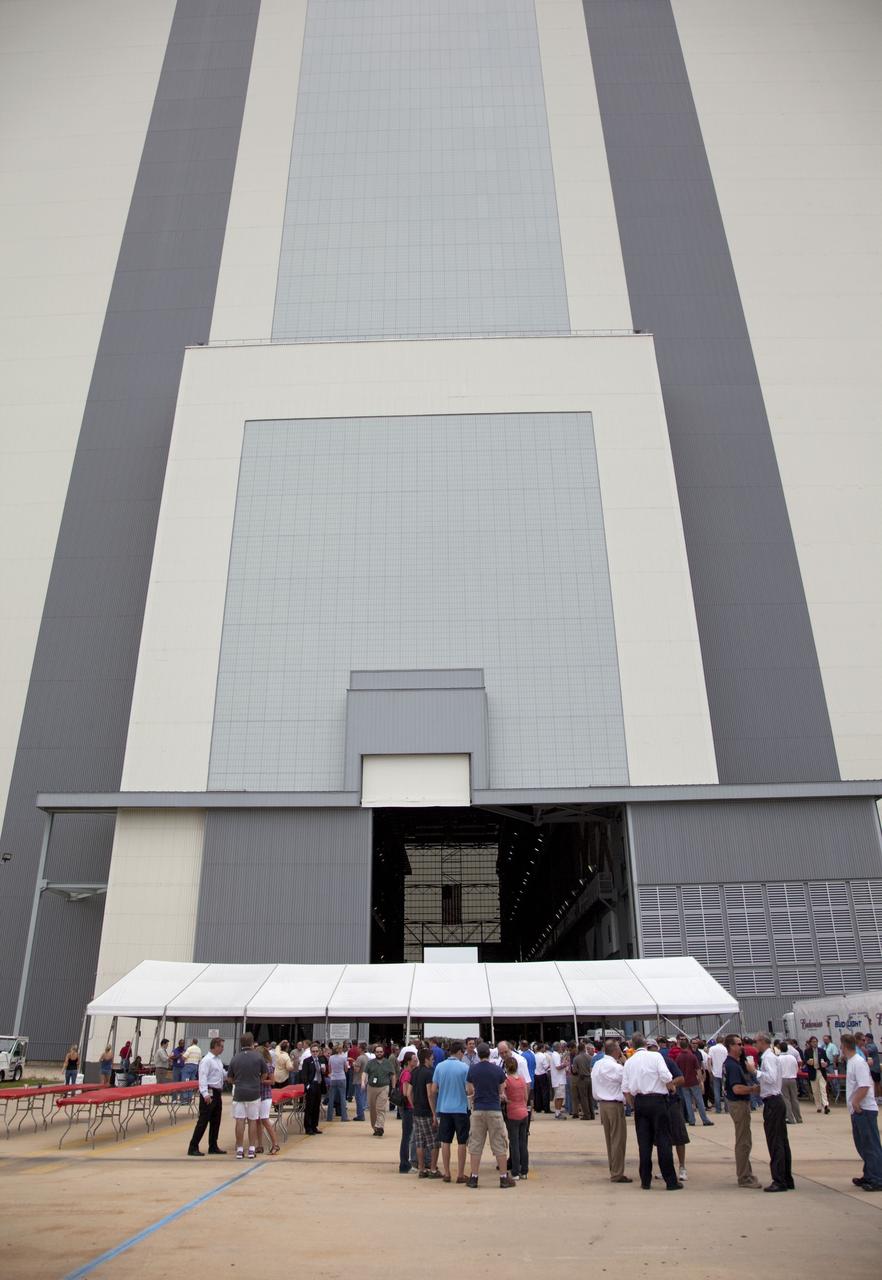
CAPE CANAVERAL, Fla. -- After the successful liftoff of space shuttle Atlantis on the STS-135 mission, hundreds of shuttle workers gather for a party at a tent beside the looming, 525-foot-tall Vehicle Assembly Building at NASA's Kennedy Space Center in Florida. STS-135 is the final flight of the agency's Space Shuttle Program. Atlantis, with its crew of Commander Chris Ferguson, Pilot Doug Hurley, Mission Specialists Sandy Magnus and Rex Walheim, lifted off at 11:29 a.m. EDT on July 8, 2011 to deliver the Raffaello multi-purpose logistics module packed with supplies and spare parts for the International Space Station. For more information, visit www.nasa.gov/mission_pages/shuttle/shuttlemissions/sts135/index.html. Photo credit: NASA/Frankie Martin
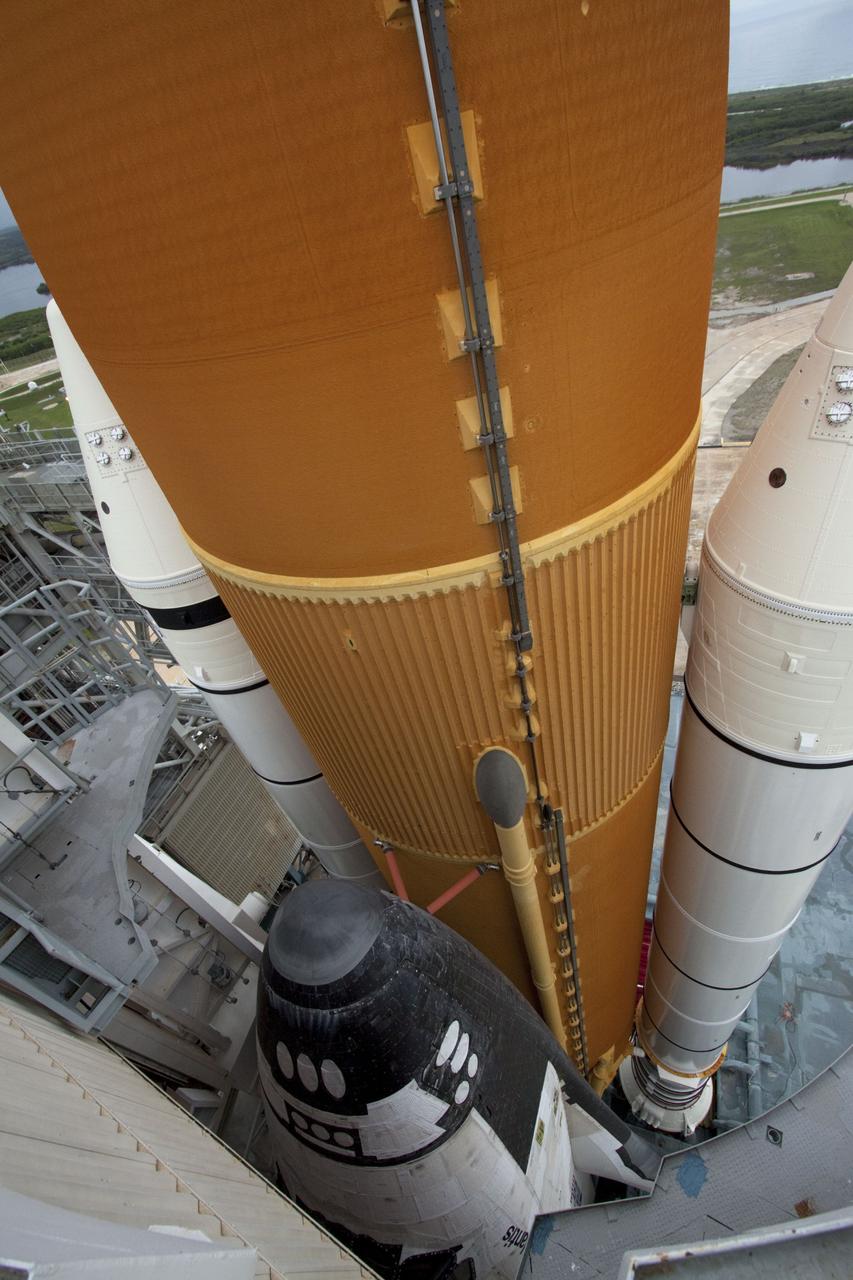
CAPE CANAVERAL, Fla.-- Space shuttle Atlantis is revealed on Launch Pad 39A at NASA's Kennedy Space Center in Florida following the move of the rotating service structure (RSS). The structure provides weather protection and access to the shuttle while it awaits liftoff on the pad. RSS "rollback" marks a major milestone in Atlantis' STS-135 mission countdown. Atlantis and its crew of four; Commander Chris Ferguson, Pilot Doug Hurley and Mission Specialists Sandy Magnus and Rex Walheim, are scheduled to lift off at 11:26 a.m. EDT on July 8 to deliver the Raffaello multi-purpose logistics module packed with supplies and spare parts to the International Space Station. Atlantis also will fly the Robotic Refueling Mission experiment that will investigate the potential for robotically refueling existing satellites in orbit. In addition, Atlantis will return with a failed ammonia pump module to help NASA better understand the failure mechanism and improve pump designs for future systems. STS-135 will be the 33rd flight of Atlantis, the 37th shuttle mission to the space station, and the 135th and final mission of NASA's Space Shuttle Program. For more information visit, www.nasa.gov/mission_pages/shuttle/shuttlemissions/sts135/index.html. Photo credit: NASA/Ken Thornsley
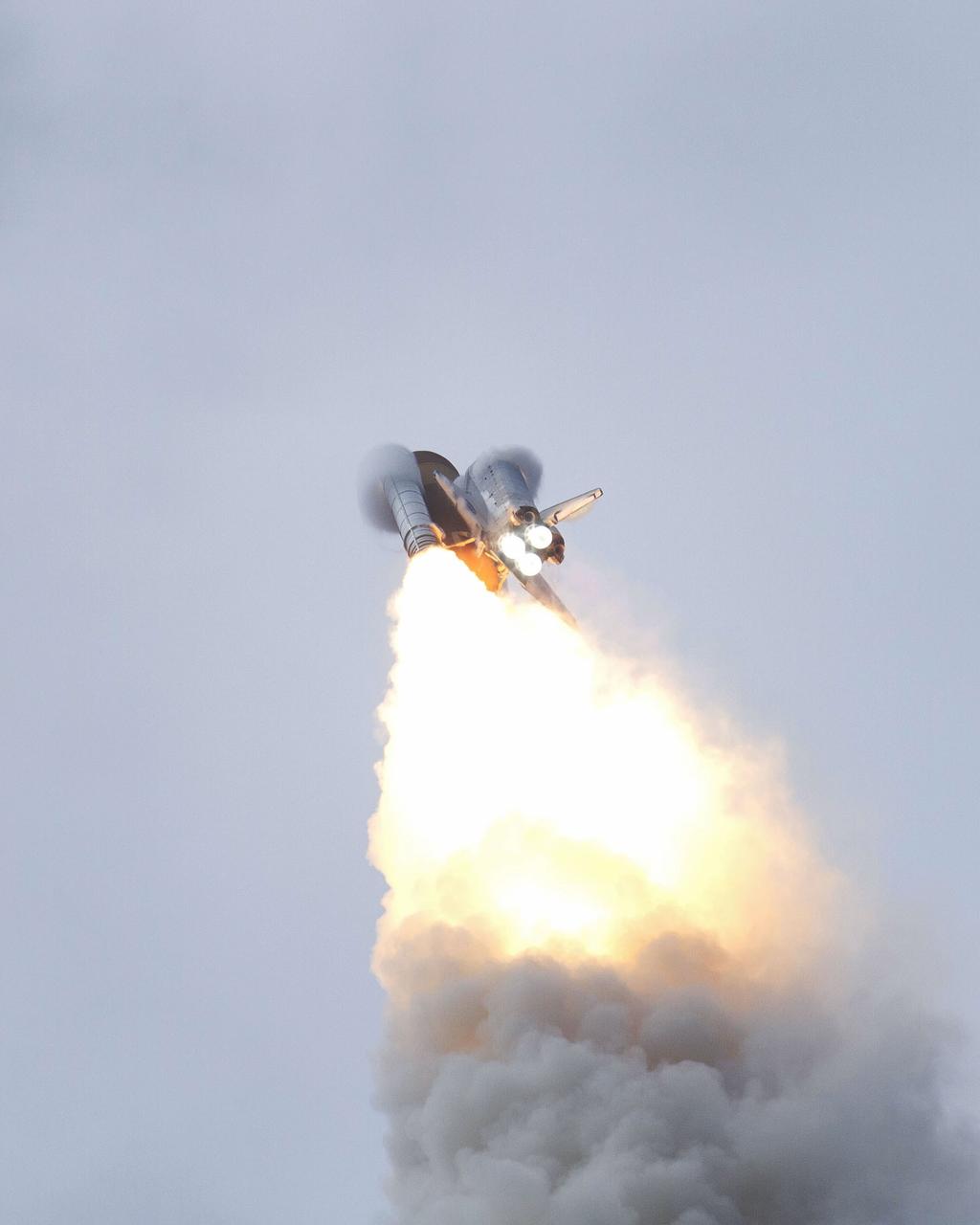
CAPE CANAVERAL, Fla. – A condensation collar is visible around space shuttle Atlantis' solid rocket boosters and forward fuselage as the vehicle makes its last climb toward orbit on the STS-135 mission to the International Space Station. Atlantis, with its crew of Commander Chris Ferguson, Pilot Doug Hurley, Mission Specialists Sandy Magnus and Rex Walheim, lifted off at 11:29 a.m. EDT on July 8, 2011 to deliver the Raffaello multi-purpose logistics module packed with supplies and spare parts for the station. Atlantis also will fly the Robotic Refueling Mission experiment that will investigate the potential for robotically refueling existing satellites in orbit. In addition, Atlantis will return with a failed ammonia pump module to help NASA better understand the failure mechanism and improve pump designs for future systems. STS-135 is the 33rd flight of Atlantis, the 37th shuttle mission to the space station, and the 135th and final mission of NASA's Space Shuttle Program. For more information, visit www.nasa.gov/mission_pages/shuttle/shuttlemissions/sts135/index.html. Photo credit: NASA/Kenny Allen and George Roberts
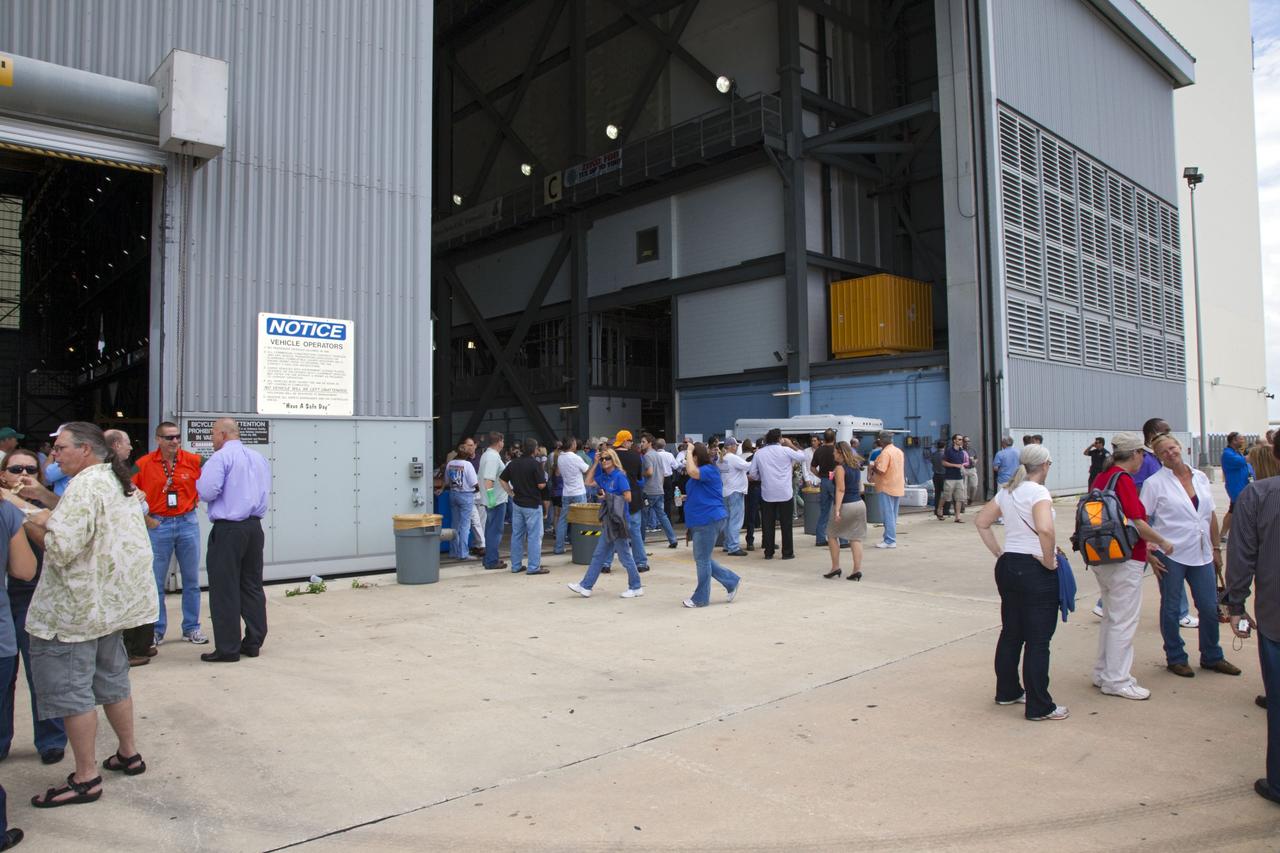
CAPE CANAVERAL, Fla. -- Hundreds of space shuttle workers gather for a party at NASA Kennedy Space Center's Vehicle Assembly Building following the successful liftoff of space shuttle Atlantis on the STS-135 mission, the final flight of the agency's Space Shuttle Program. Atlantis, with its crew of Commander Chris Ferguson, Pilot Doug Hurley, Mission Specialists Sandy Magnus and Rex Walheim, lifted off at 11:29 a.m. EDT on July 8, 2011 to deliver the Raffaello multi-purpose logistics module packed with supplies and spare parts for the International Space Station. For more information, visit www.nasa.gov/mission_pages/shuttle/shuttlemissions/sts135/index.html. Photo credit: NASA/Frankie Martin
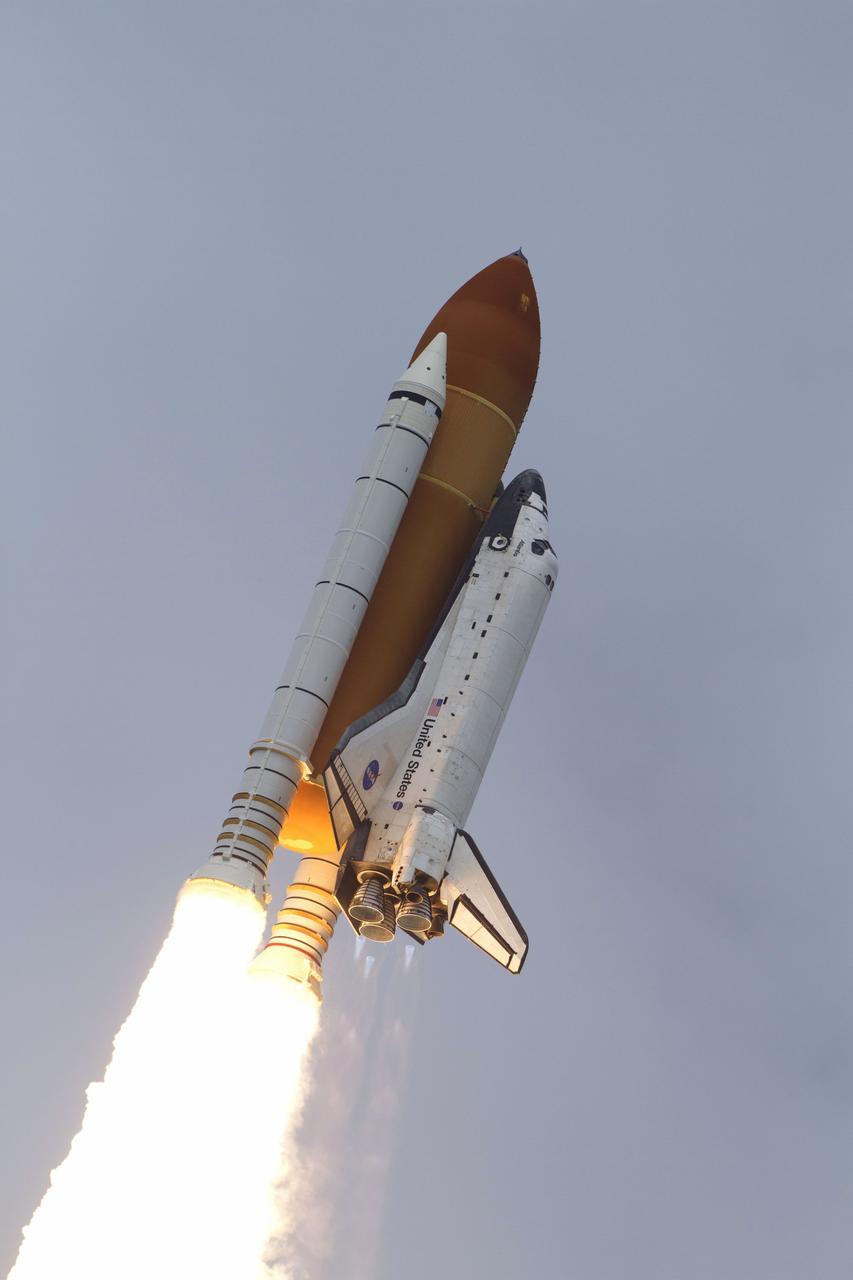
CAPE CANAVERAL, Fla. – Space shuttle Atlantis rolls into a head-down, wings-level orientation on its way toward space after a successful launch from Launch Pad 39A at NASA's Kennedy Space Center in Florida. Atlantis, with its crew of Commander Chris Ferguson, Pilot Doug Hurley, Mission Specialists Sandy Magnus and Rex Walheim, lifted off at 11:29 a.m. EDT on July 8, 2011 to deliver the Raffaello multi-purpose logistics module packed with supplies and spare parts for the station. Atlantis also will fly the Robotic Refueling Mission experiment that will investigate the potential for robotically refueling existing satellites in orbit. In addition, Atlantis will return with a failed ammonia pump module to help NASA better understand the failure mechanism and improve pump designs for future systems. STS-135 is the 33rd flight of Atlantis, the 37th shuttle mission to the space station, and the 135th and final mission of NASA's Space Shuttle Program. For more information, visit www.nasa.gov/mission_pages/shuttle/shuttlemissions/sts135/index.html. Photo credit: NASA/Kenny Allen and George Roberts
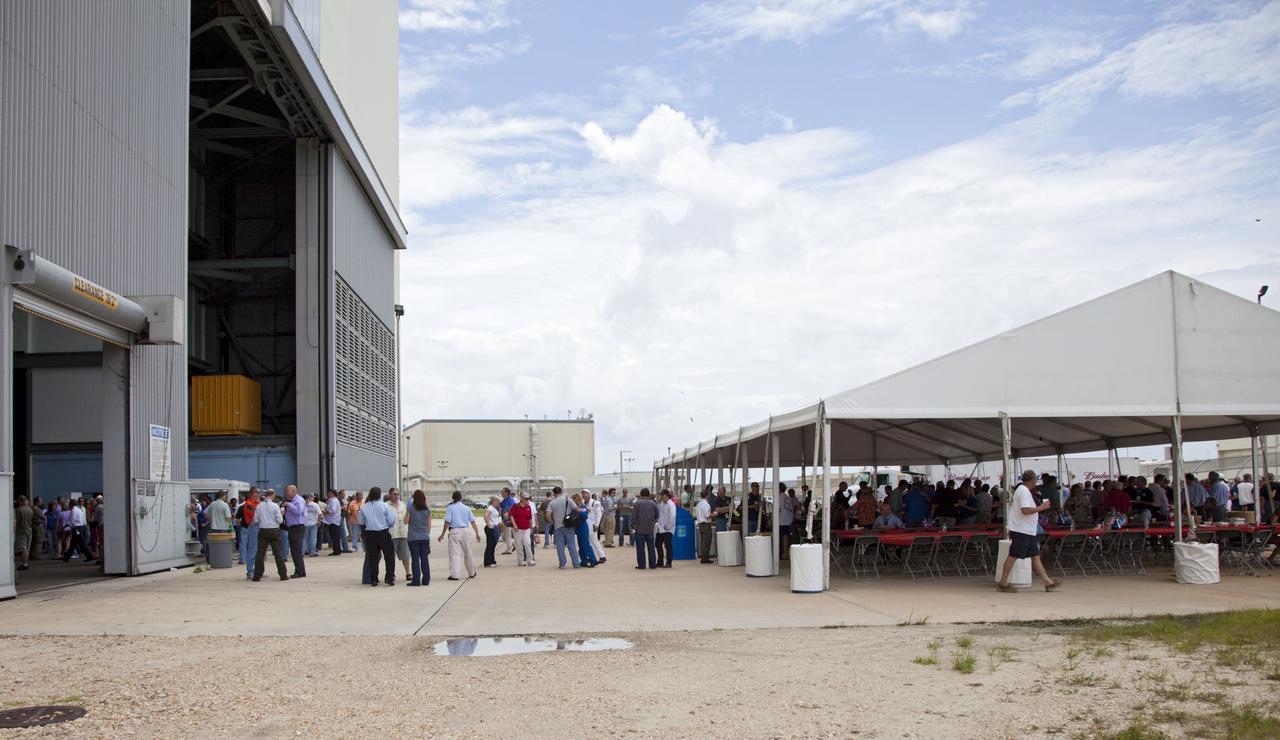
CAPE CANAVERAL, Fla. -- At NASA's Kennedy Space Center in Florida, hundreds of space shuttle workers congregate beneath a tent or inside the transfer aisle at the Vehicle Assembly Building, sharing a party following the successful liftoff of space shuttle Atlantis on the STS-135 mission, the final flight of the agency's Space Shuttle Program. Atlantis, with its crew of Commander Chris Ferguson, Pilot Doug Hurley, Mission Specialists Sandy Magnus and Rex Walheim, lifted off at 11:29 a.m. EDT on July 8, 2011 to deliver the Raffaello multi-purpose logistics module packed with supplies and spare parts for the International Space Station. For more information, visit www.nasa.gov/mission_pages/shuttle/shuttlemissions/sts135/index.html. Photo credit: NASA/Frankie Martin
CAPE CANAVERAL, Fla. – At NASA's Kennedy Space Center in Florida, space shuttle Atlantis rises from Launch Pad 39A as it lifts off on its STS-135 mission to the International Space Station. Atlantis, with its crew of Commander Chris Ferguson, Pilot Doug Hurley, Mission Specialists Sandy Magnus and Rex Walheim, lifted off at 11:29 a.m. EDT on July 8, 2011 to deliver the Raffaello multi-purpose logistics module packed with supplies and spare parts for the station. Atlantis also will fly the Robotic Refueling Mission experiment that will investigate the potential for robotically refueling existing satellites in orbit. In addition, Atlantis will return with a failed ammonia pump module to help NASA better understand the failure mechanism and improve pump designs for future systems. STS-135 is the 33rd flight of Atlantis, the 37th shuttle mission to the space station, and the 135th and final mission of NASA's Space Shuttle Program. For more information, visit www.nasa.gov/mission_pages/shuttle/shuttlemissions/sts135/index.html. Photo credit: NASA/Kenny Allen and George Roberts
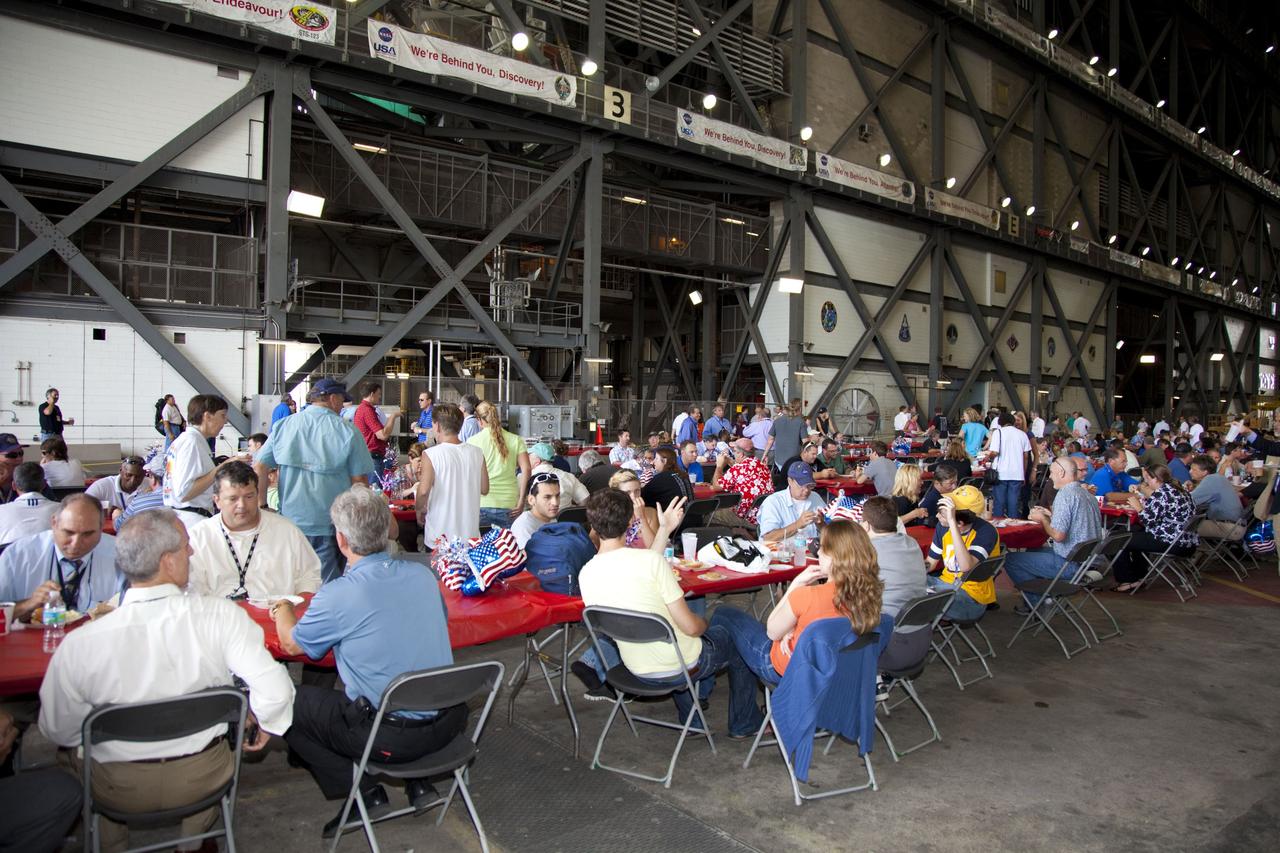
CAPE CANAVERAL, Fla. -- Inside the transfer aisle of NASA Kennedy Space Center's Vehicle Assembly Building, space shuttle workers relax and enjoy a meal at a party following the successful liftoff of shuttle Atlantis on the STS-135 mission, the final flight of the agency's Space Shuttle Program. Atlantis, with its crew of Commander Chris Ferguson, Pilot Doug Hurley, Mission Specialists Sandy Magnus and Rex Walheim, lifted off at 11:29 a.m. EDT on July 8, 2011 to deliver the Raffaello multi-purpose logistics module packed with supplies and spare parts for the International Space Station. For more information, visit www.nasa.gov/mission_pages/shuttle/shuttlemissions/sts135/index.html. Photo credit: NASA/Frankie Martin
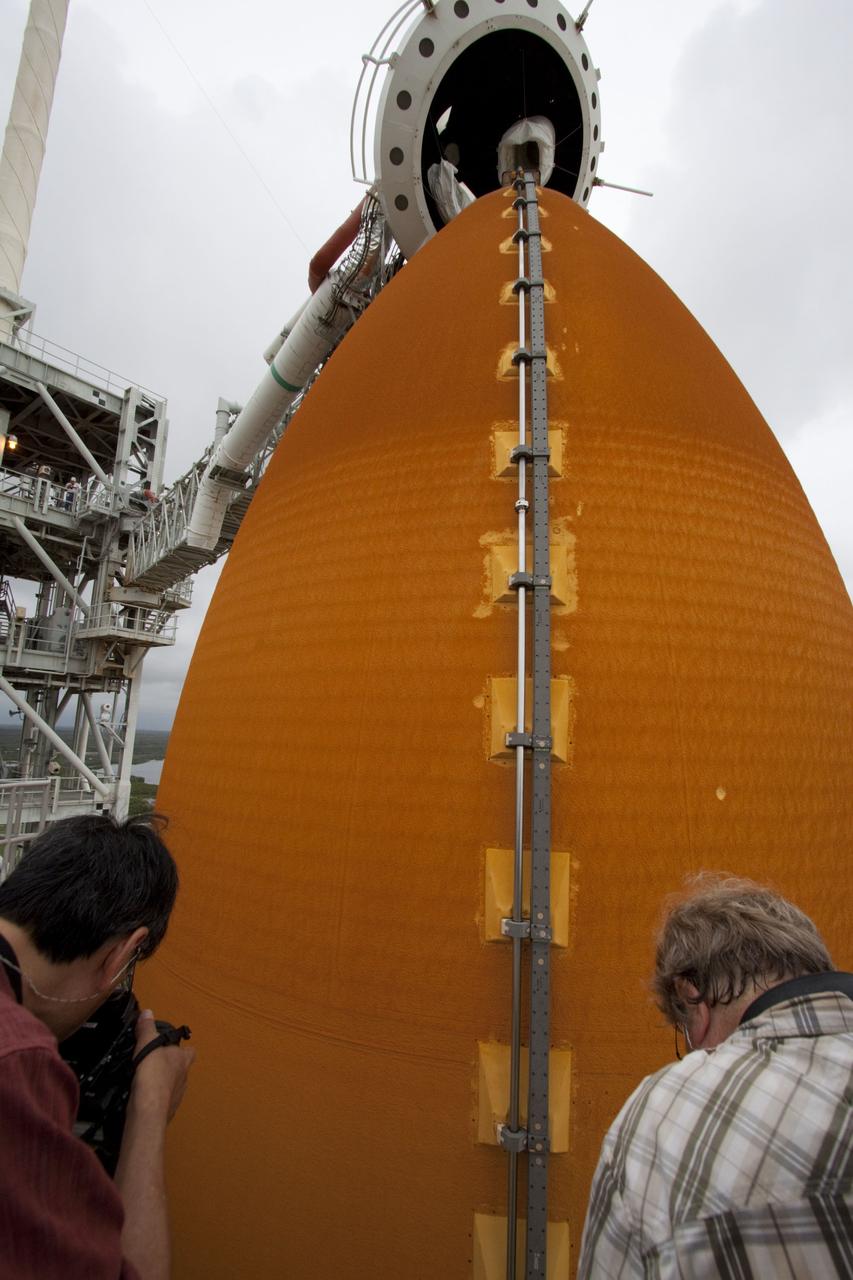
CAPE CANAVERAL, Fla. – Photographers Stan Hernda of AFP News, left, and Scott Andrews of Canon record space shuttle Atlantis as it is revealed on Launch Pad 39A at NASA's Kennedy Space Center in Florida following the move of the rotating service structure (RSS). The structure provides weather protection and access to the shuttle while it awaits liftoff on the pad. RSS "rollback" marks a major milestone in Atlantis' STS-135 mission countdown. Atlantis and its crew of four; Commander Chris Ferguson, Pilot Doug Hurley and Mission Specialists Sandy Magnus and Rex Walheim, are scheduled to lift off at 11:26 a.m. EDT on July 8 to deliver the Raffaello multi-purpose logistics module packed with supplies and spare parts to the International Space Station. Atlantis also will fly the Robotic Refueling Mission experiment that will investigate the potential for robotically refueling existing satellites in orbit. In addition, Atlantis will return with a failed ammonia pump module to help NASA better understand the failure mechanism and improve pump designs for future systems. STS-135 will be the 33rd flight of Atlantis, the 37th shuttle mission to the space station, and the 135th and final mission of NASA's Space Shuttle Program. For more information visit, www.nasa.gov/mission_pages/shuttle/shuttlemissions/sts135/index.html. Photo credit: NASA/Ken Thornsley
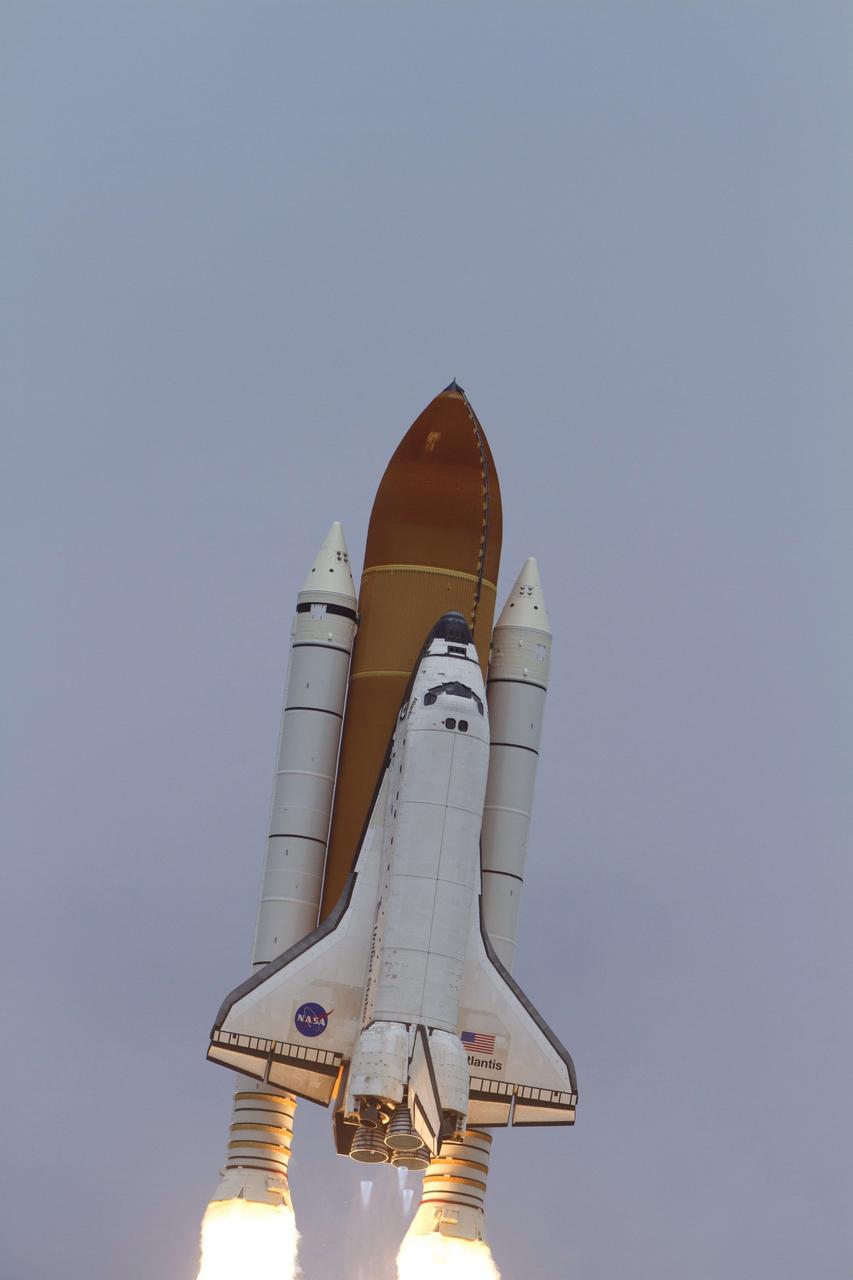
CAPE CANAVERAL, Fla. – Space shuttle Atlantis makes its last reach for the sky, rising above Launch Pad 39A at NASA's Kennedy Space Center in Florida to begin the STS-135 mission to the International Space Station. Atlantis, with its crew of Commander Chris Ferguson, Pilot Doug Hurley, Mission Specialists Sandy Magnus and Rex Walheim, lifted off at 11:29 a.m. EDT on July 8, 2011 to deliver the Raffaello multi-purpose logistics module packed with supplies and spare parts for the station. Atlantis also will fly the Robotic Refueling Mission experiment that will investigate the potential for robotically refueling existing satellites in orbit. In addition, Atlantis will return with a failed ammonia pump module to help NASA better understand the failure mechanism and improve pump designs for future systems. STS-135 is the 33rd flight of Atlantis, the 37th shuttle mission to the space station, and the 135th and final mission of NASA's Space Shuttle Program. For more information, visit www.nasa.gov/mission_pages/shuttle/shuttlemissions/sts135/index.html. Photo credit: NASA/Kenny Allen and George Roberts
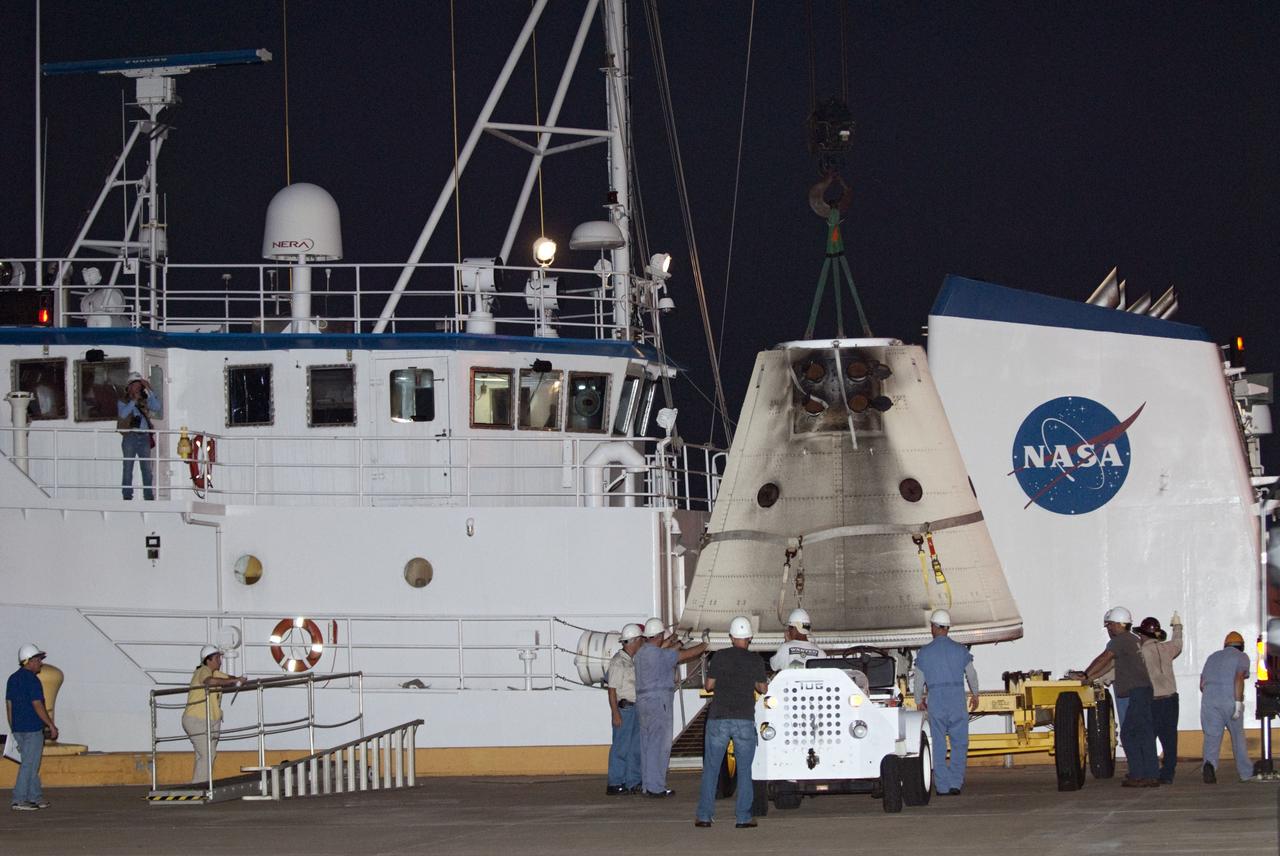
CAPE CANAVERAL, Fla. – At Hangar AF at Cape Canaveral Air Force Station in Florida, a booster retrieval ship delivers a frustum from one of space shuttle Atlantis' spent solid rocket boosters, beginning the safing process. The shuttle's two solid rocket booster casings and associated flight hardware are recovered in the Atlantic Ocean after every launch by the booster retrieval ships Freedom Star and Liberty Star. The boosters impact the Atlantic about seven minutes after liftoff and the ships are stationed about 10 miles from the impact area at the time of splashdown. After the spent segments are processed, they will be transported to Utah, where they will be deserviced and stored, if needed. Atlantis began its final flight at 11:29 a.m. EDT on July 8 to deliver the Raffaello multi-purpose logistics module packed with supplies and spare parts for the International Space Station. STS-135 is the 33rd flight of Atlantis, the 37th shuttle mission to the space station, and the 135th and final mission of NASA's Space Shuttle Program. For more information, visit www.nasa.gov/mission_pages/shuttle/shuttlemissions/sts135/index.html. Photo credit: NASA/Kim Shiflett
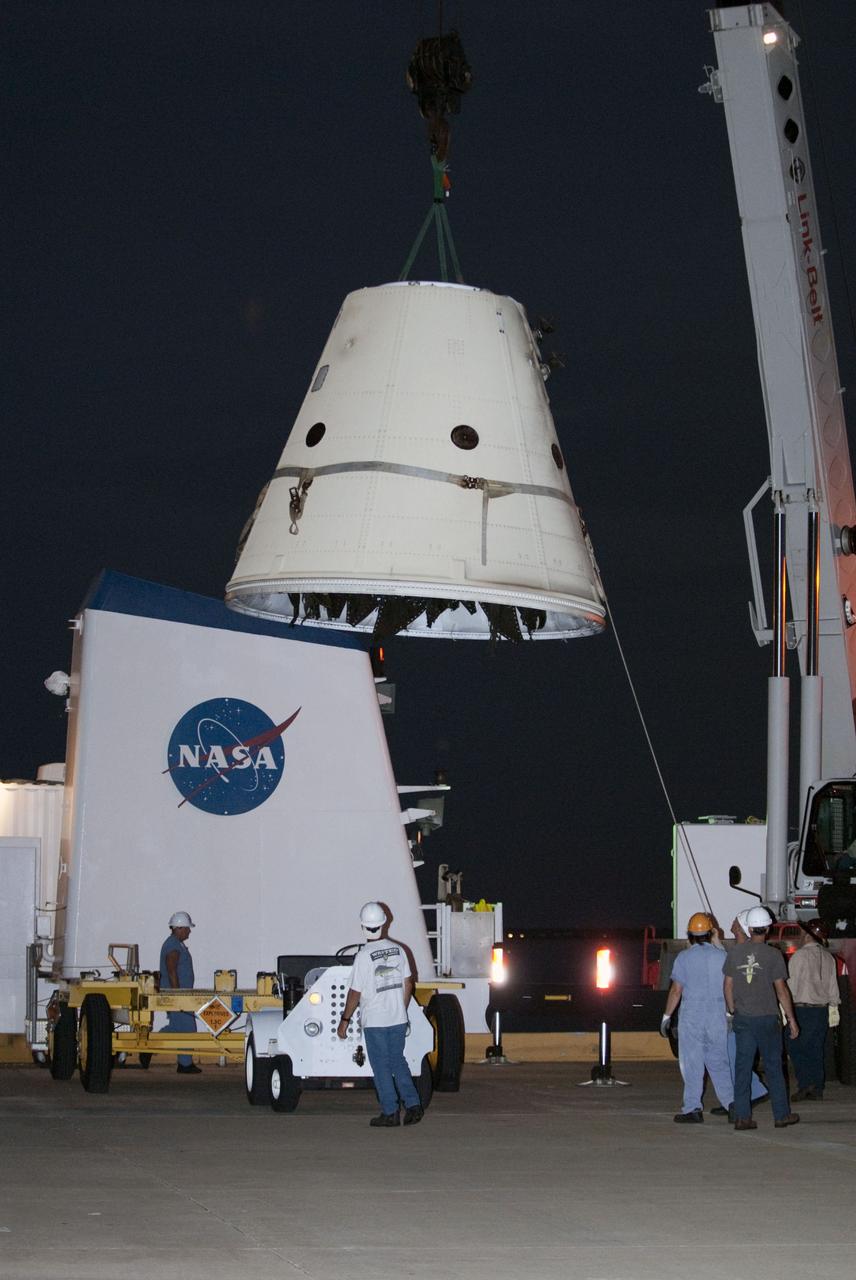
CAPE CANAVERAL, Fla. – A frustum from one of space shuttle Atlantis' two spent solid rocket boosters is lowered toward the dock at Hangar AF at Cape Canaveral Air Force Station in Florida to begin the safing process. The shuttle's two solid rocket booster casings and associated flight hardware are recovered in the Atlantic Ocean after every launch by the booster retrieval ships Freedom Star and Liberty Star. The boosters impact the Atlantic about seven minutes after liftoff and the ships are stationed about 10 miles from the impact area at the time of splashdown. After the spent segments are processed, they will be transported to Utah, where they will be deserviced and stored, if needed. Atlantis began its final flight at 11:29 a.m. EDT on July 8 to deliver the Raffaello multi-purpose logistics module packed with supplies and spare parts for the International Space Station. STS-135 is the 33rd flight of Atlantis, the 37th shuttle mission to the space station, and the 135th and final mission of NASA's Space Shuttle Program. For more information, visit www.nasa.gov/mission_pages/shuttle/shuttlemissions/sts135/index.html. Photo credit: NASA/Kim Shiflett