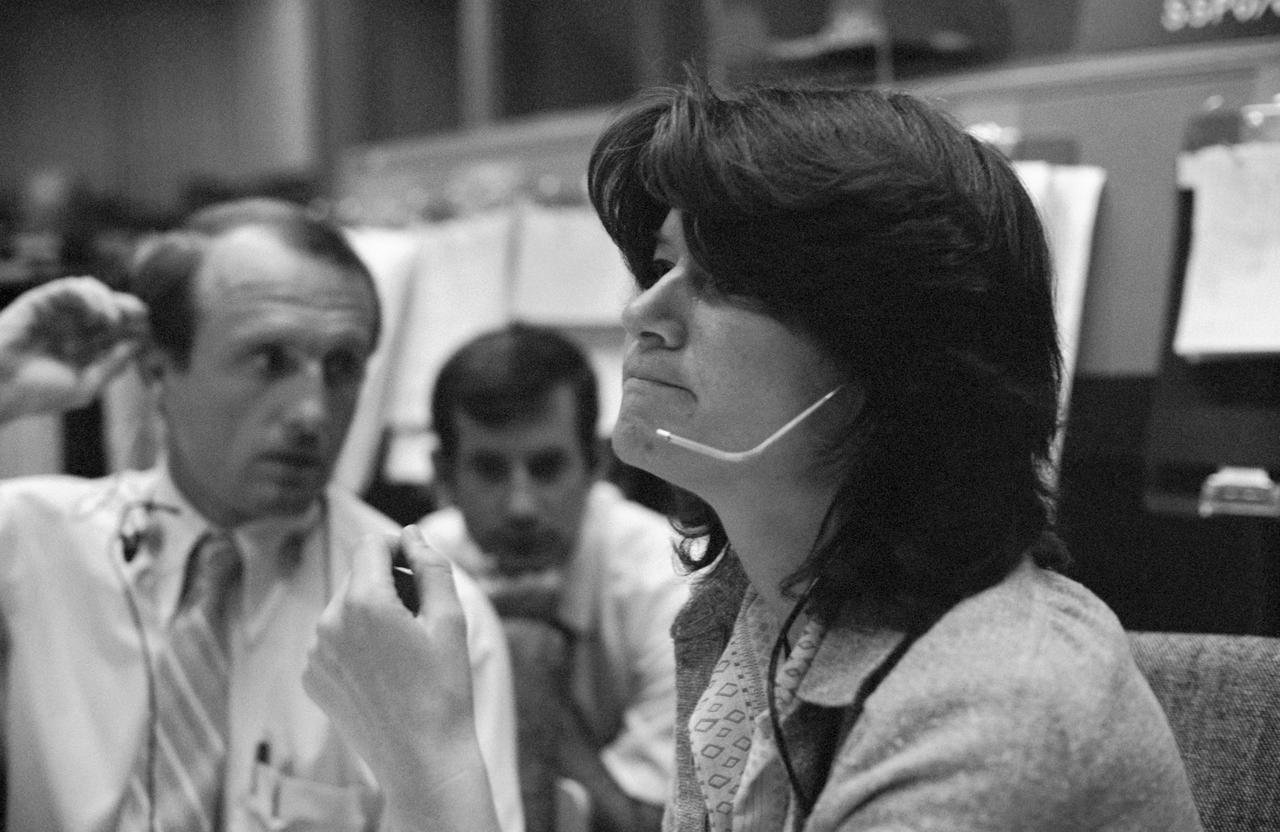
Astronaut Sally Ride at the CapCom console during the STS-2 simulation. She appears to be speaking to the crew using a headset.
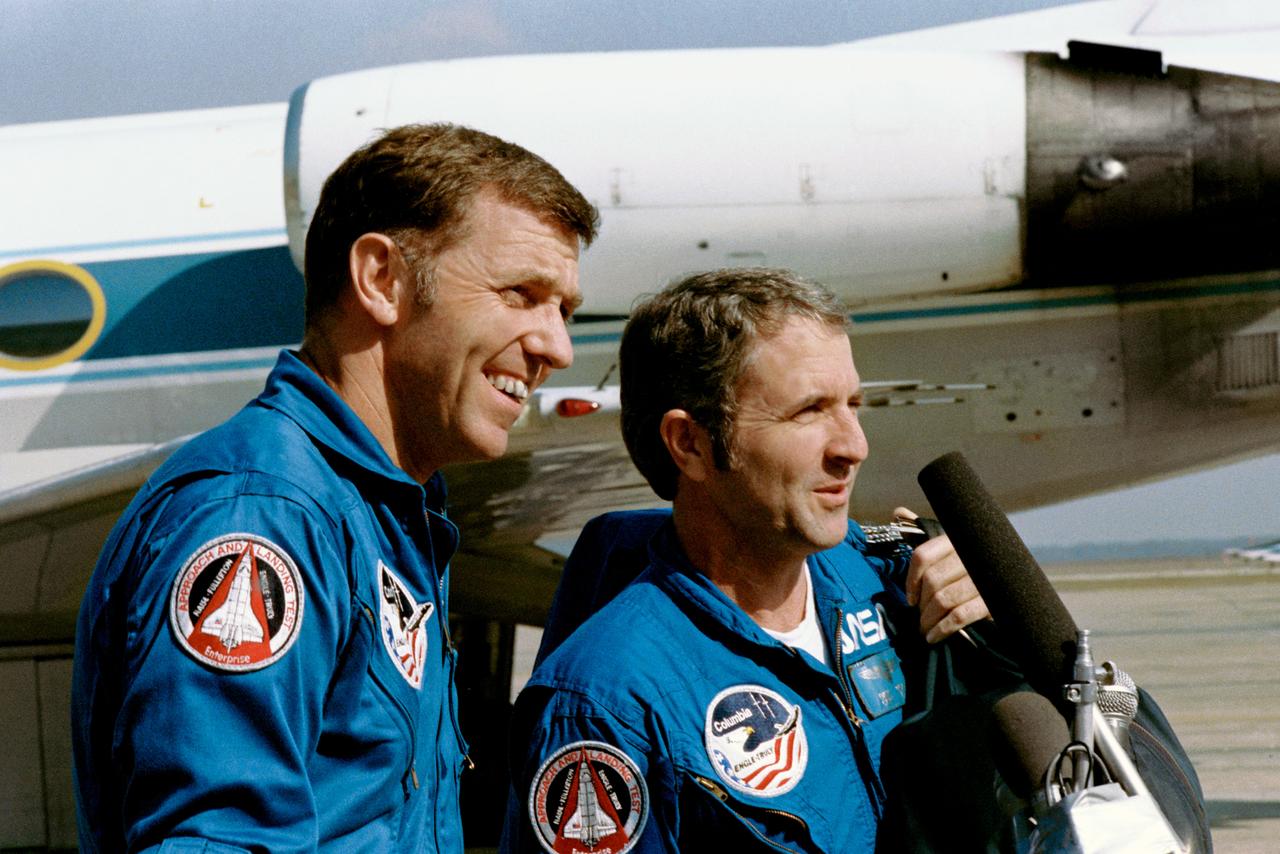
S81-39413 (5 Nov. 1981) --- Astronauts Joe H. Engle, left, and Richard H. Truly greet newsmen upon their return to Ellington Air Force Base near NASA's Johnson Space Center (JSC), from Kennedy Space Center (KSC) after learning their flight (STS-2) has been postponed a week. The launch of NASA?s second space shuttle mission, in the Columbia, has been rescheduled for Nov. 12, 1981. Photo credit: NASA
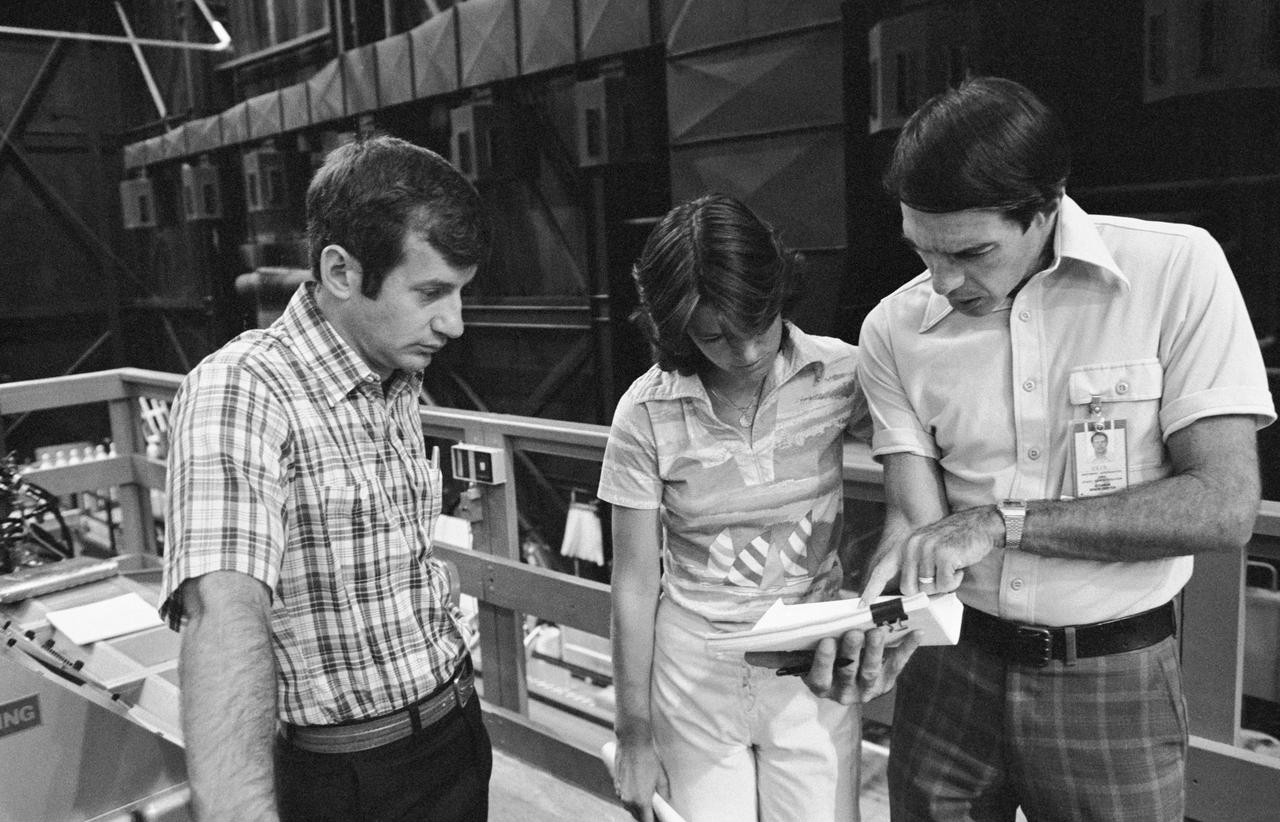
Astronauts Sally Ride and Terry Hart prepare for remote manipulator system (RMS) training for STS-2 in bldg 9A. Views include Ride, Hart and Robert R. Kain of the Flight Activites Branch reviewing procedures for RMS training (34262); Ride and Hart stand beside the RMS control center looking down at the payload bay mock-up (34263).

Astronaut Joe H. Engle, STS-2 commander, practices donning and doffing his extravehicular mobility unit (EMU) in the weightless environment afforded aboard a KC-135 "zero-gravity" aircraft.
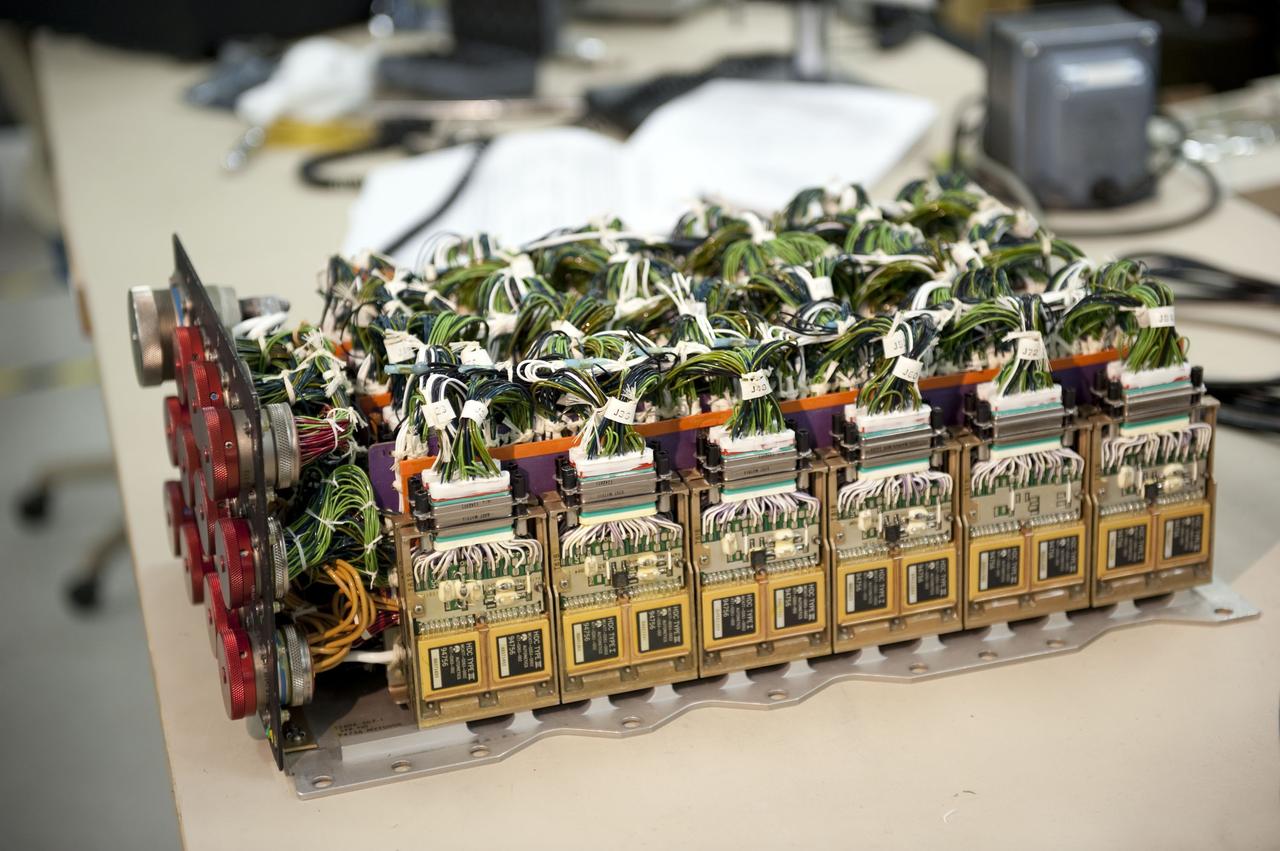
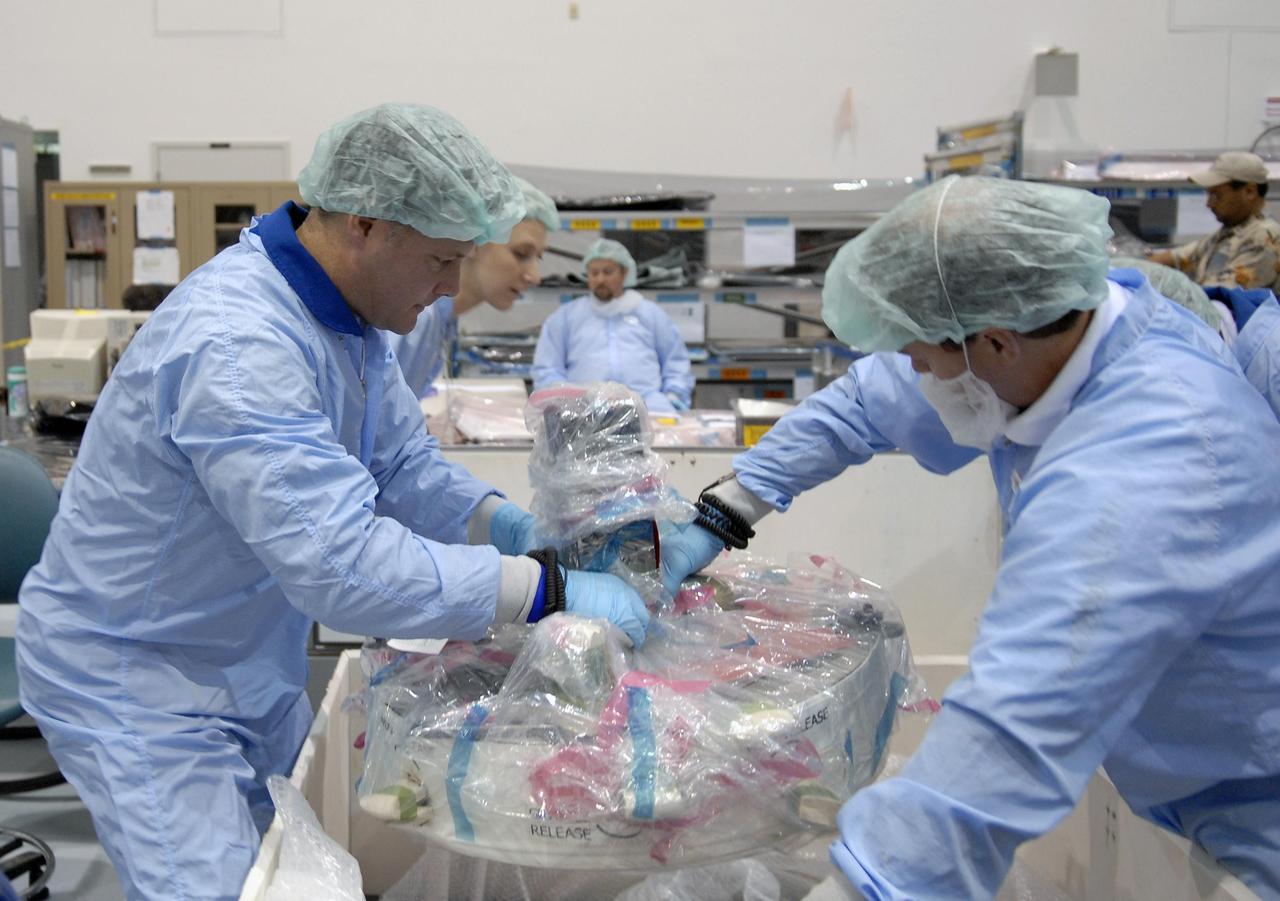
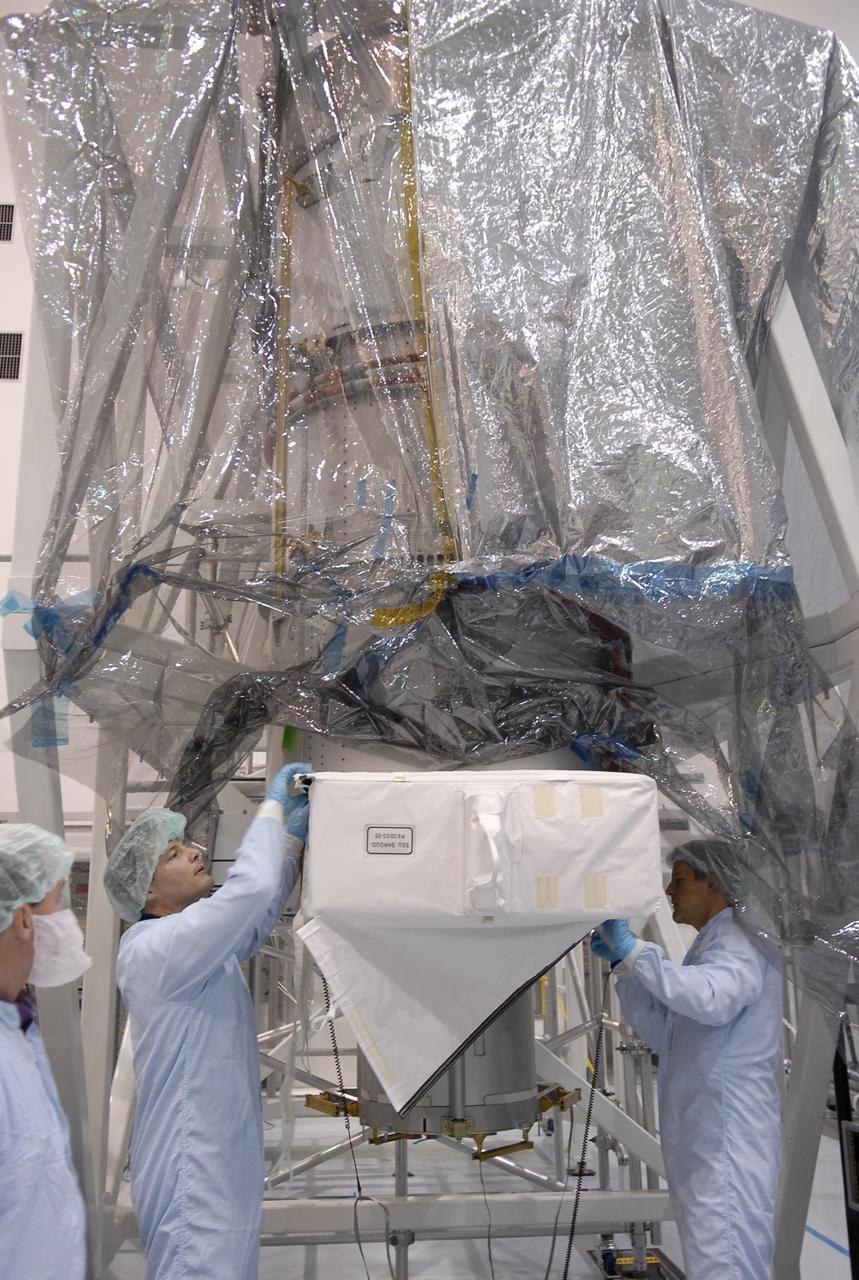
CAPE CANAVERAL, Fla. -- At the NASA Shuttle Logistics Depot in Cape Canaveral, Florida, the Load Control Assembly-2 (LCA-2) is uncovered for testing. Located in space shuttle Endeavour's aft avionics bay 5, the LCA-2, which distributes power to nine shuttle systems, is believed to have caused fuel line heaters for Endeavour's auxiliary power unit-1 (APU-1) to fail April 29 during the first launch attempt for the STS-134 mission. The LCA-2 will be replaced and systems will be retested before the launch is rescheduled. STS-134 will deliver the Express Logistics Carrier-3, Alpha Magnetic Spectrometer-2 (AMS), a high-pressure gas tank and additional spare parts for the Dextre robotic helper to the International Space Station. The mission also will be the final spaceflight for Endeavour. For more information, visit www.nasa.gov/mission_pages/shuttle/shuttlemissions/sts134/index.html. Photo credit: NASA/Kim Shiflett

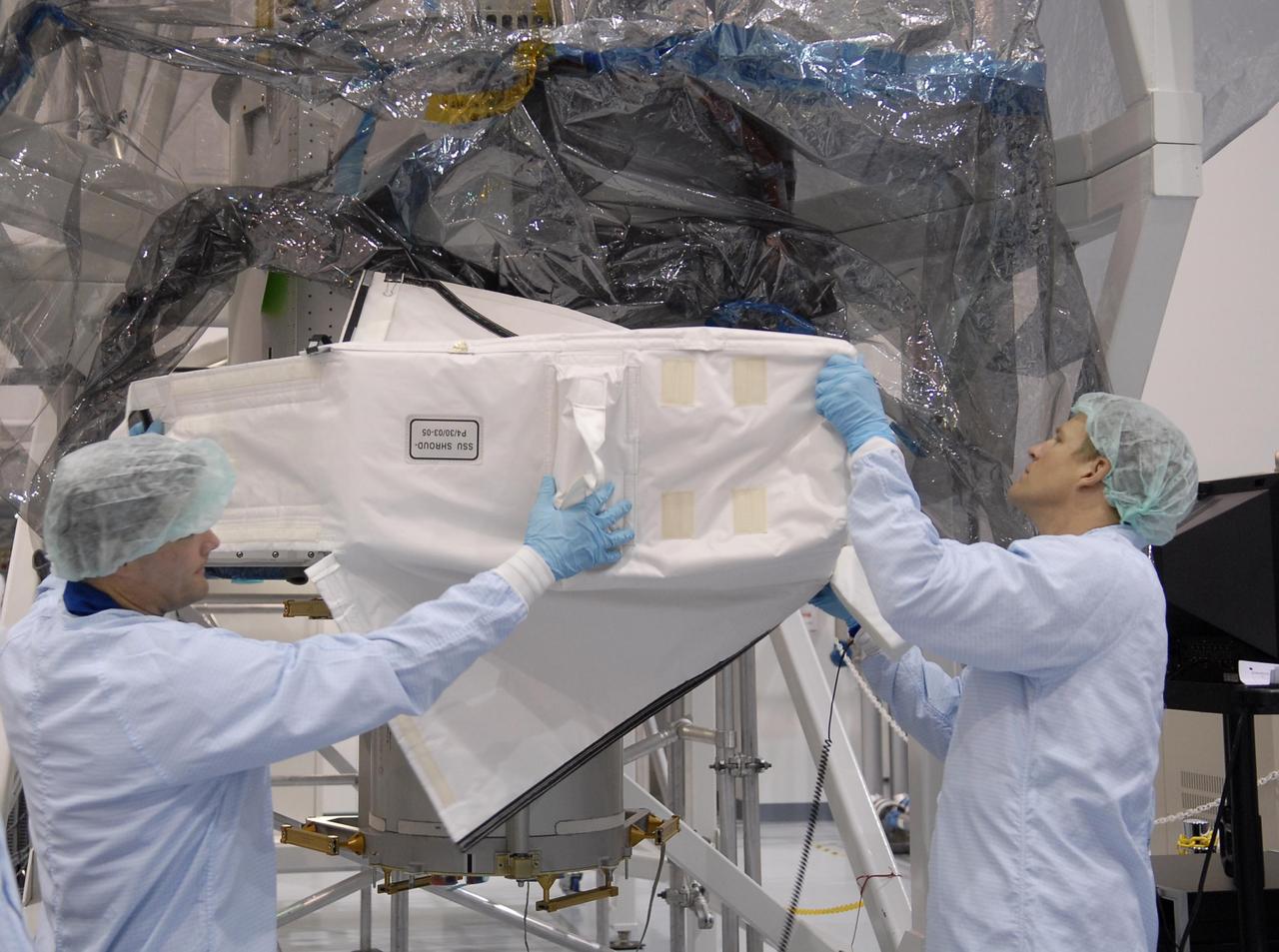
CAPE CANAVERAL, Fla. -- At the NASA Shuttle Logistics Depot in Cape Canaveral, Florida, technicians remove the cover on the Load Control Assembly-2 (LCA-2) to begin the testing process. Located in space shuttle Endeavour's aft avionics bay 5, the LCA-2, which distributes power to nine shuttle systems, is believed to have caused fuel line heaters for Endeavour's auxiliary power unit-1 (APU-1) to fail April 29 during the first launch attempt for the STS-134 mission. The LCA-2 will be replaced and systems will be retested before the launch is rescheduled. STS-134 will deliver the Express Logistics Carrier-3, Alpha Magnetic Spectrometer-2 (AMS), a high-pressure gas tank and additional spare parts for the Dextre robotic helper to the International Space Station. The mission also will be the final spaceflight for Endeavour. For more information, visit www.nasa.gov/mission_pages/shuttle/shuttlemissions/sts134/index.html. Photo credit: NASA/Kim Shiflett
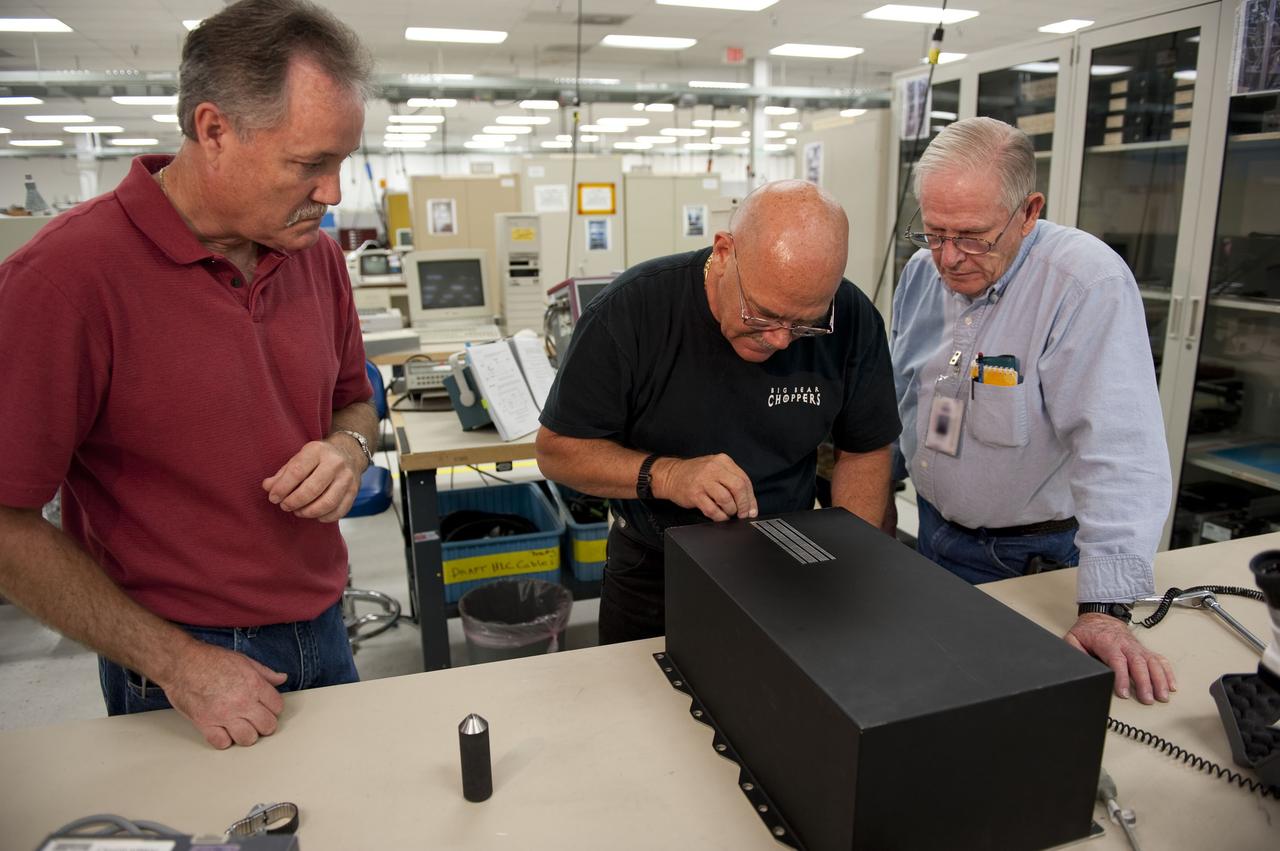
CAPE CANAVERAL, Fla. -- At the NASA Shuttle Logistics Depot in Cape Canaveral, Florida, technicians remove the cover on the Load Control Assembly-2 (LCA-2) to begin the testing process. Located in space shuttle Endeavour's aft avionics bay 5, the LCA-2, which distributes power to nine shuttle systems, is believed to have caused fuel line heaters for Endeavour's auxiliary power unit-1 (APU-1) to fail April 29 during the first launch attempt for the STS-134 mission. The LCA-2 will be replaced and systems will be retested before the launch is rescheduled. STS-134 will deliver the Express Logistics Carrier-3, Alpha Magnetic Spectrometer-2 (AMS), a high-pressure gas tank and additional spare parts for the Dextre robotic helper to the International Space Station. The mission also will be the final spaceflight for Endeavour. For more information, visit www.nasa.gov/mission_pages/shuttle/shuttlemissions/sts134/index.html. Photo credit: NASA/Kim Shiflett
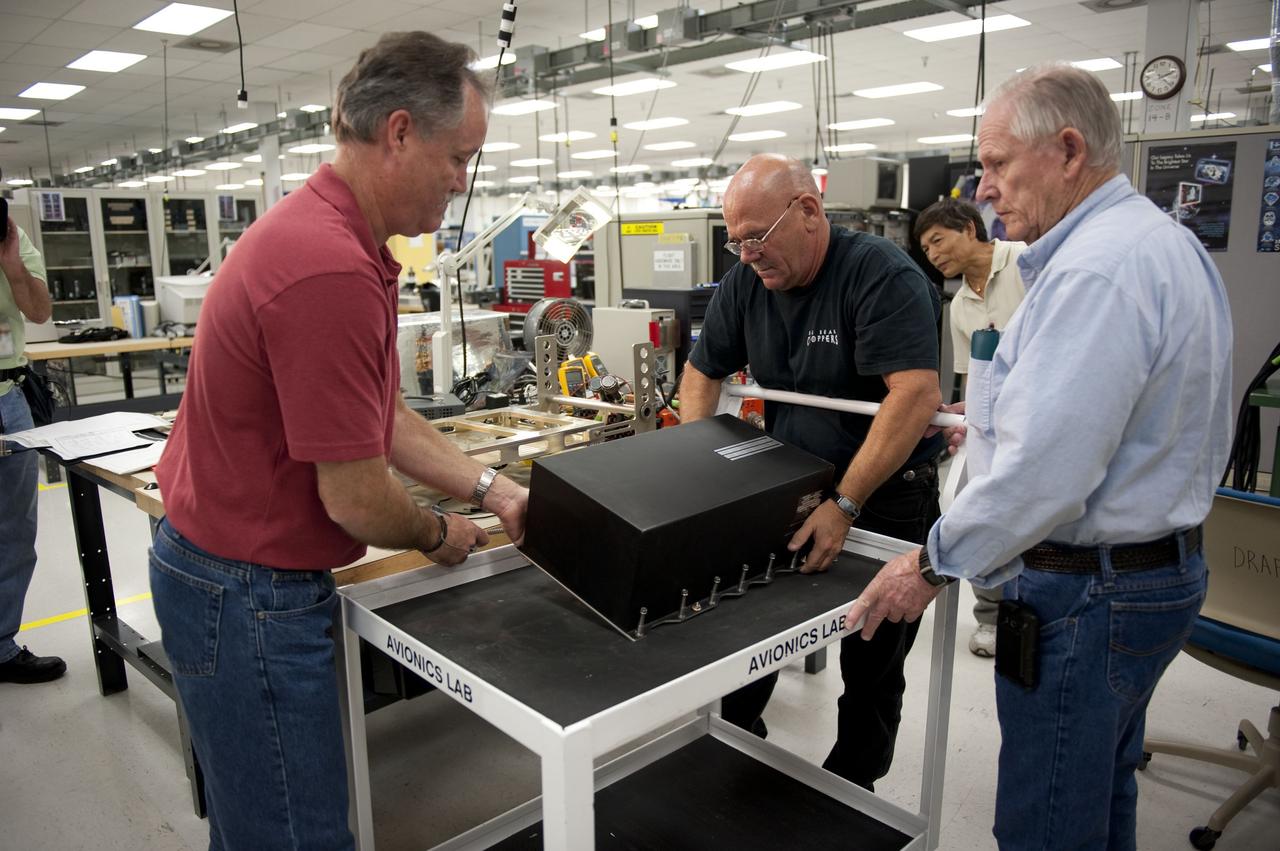
CAPE CANAVERAL, Fla. -- At the NASA Shuttle Logistics Depot in Cape Canaveral, Florida, technicians carefully remove the Load Control Assembly-2 (LCA-2) from a cart for testing. Located in space shuttle Endeavour's aft avionics bay 5, the LCA-2, which distributes power to nine shuttle systems, is believed to have caused fuel line heaters for Endeavour's auxiliary power unit-1 (APU-1) to fail April 29 during the first launch attempt for the STS-134 mission. The LCA-2 will be replaced and systems will be retested before the launch is rescheduled. STS-134 will deliver the Express Logistics Carrier-3, Alpha Magnetic Spectrometer-2 (AMS), a high-pressure gas tank and additional spare parts for the Dextre robotic helper to the International Space Station. The mission also will be the final spaceflight for Endeavour. For more information, visit www.nasa.gov/mission_pages/shuttle/shuttlemissions/sts134/index.html. Photo credit: NASA/Kim Shiflett

CAPE CANAVERAL, Fla. -- At the NASA Shuttle Logistics Depot in Cape Canaveral, Florida, the Load Control Assembly-2 (LCA-2) is uncovered for testing. Located in space shuttle Endeavour's aft avionics bay 5, the LCA-2, which distributes power to nine shuttle systems, is believed to have caused fuel line heaters for Endeavour's auxiliary power unit-1 (APU-1) to fail April 29 during the first launch attempt for the STS-134 mission. The LCA-2 will be replaced and systems will be retested before the launch is rescheduled. STS-134 will deliver the Express Logistics Carrier-3, Alpha Magnetic Spectrometer-2 (AMS), a high-pressure gas tank and additional spare parts for the Dextre robotic helper to the International Space Station. The mission also will be the final spaceflight for Endeavour. For more information, visit www.nasa.gov/mission_pages/shuttle/shuttlemissions/sts134/index.html. Photo credit: NASA/Kim Shiflett
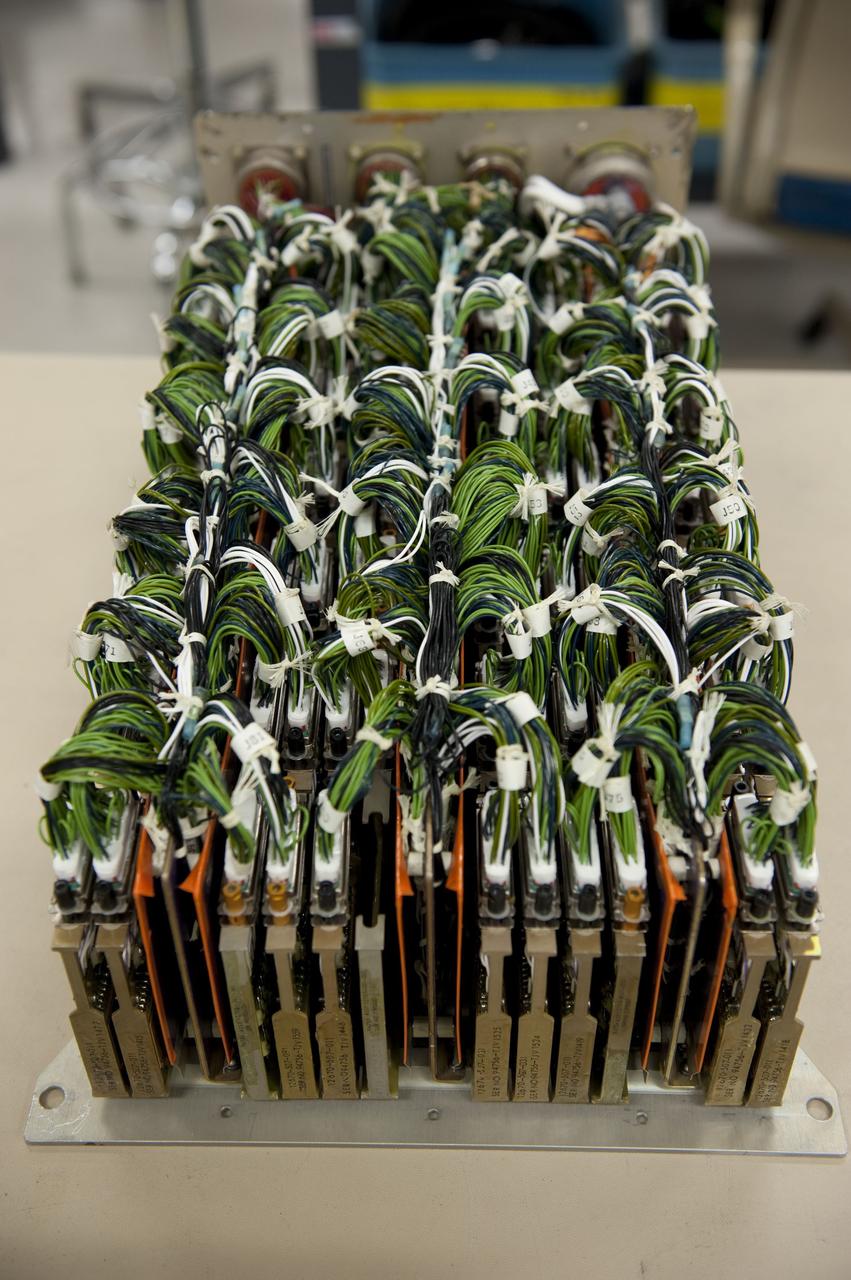
CAPE CANAVERAL, Fla. -- At the NASA Shuttle Logistics Depot in Cape Canaveral, Florida, the Load Control Assembly-2 (LCA-2) is uncovered for testing. Located in space shuttle Endeavour's aft avionics bay 5, the LCA-2, which distributes power to nine shuttle systems, is believed to have caused fuel line heaters for Endeavour's auxiliary power unit-1 (APU-1) to fail April 29 during the first launch attempt for the STS-134 mission. The LCA-2 will be replaced and systems will be retested before the launch is rescheduled. STS-134 will deliver the Express Logistics Carrier-3, Alpha Magnetic Spectrometer-2 (AMS), a high-pressure gas tank and additional spare parts for the Dextre robotic helper to the International Space Station. The mission also will be the final spaceflight for Endeavour. For more information, visit www.nasa.gov/mission_pages/shuttle/shuttlemissions/sts134/index.html. Photo credit: NASA/Kim Shiflett
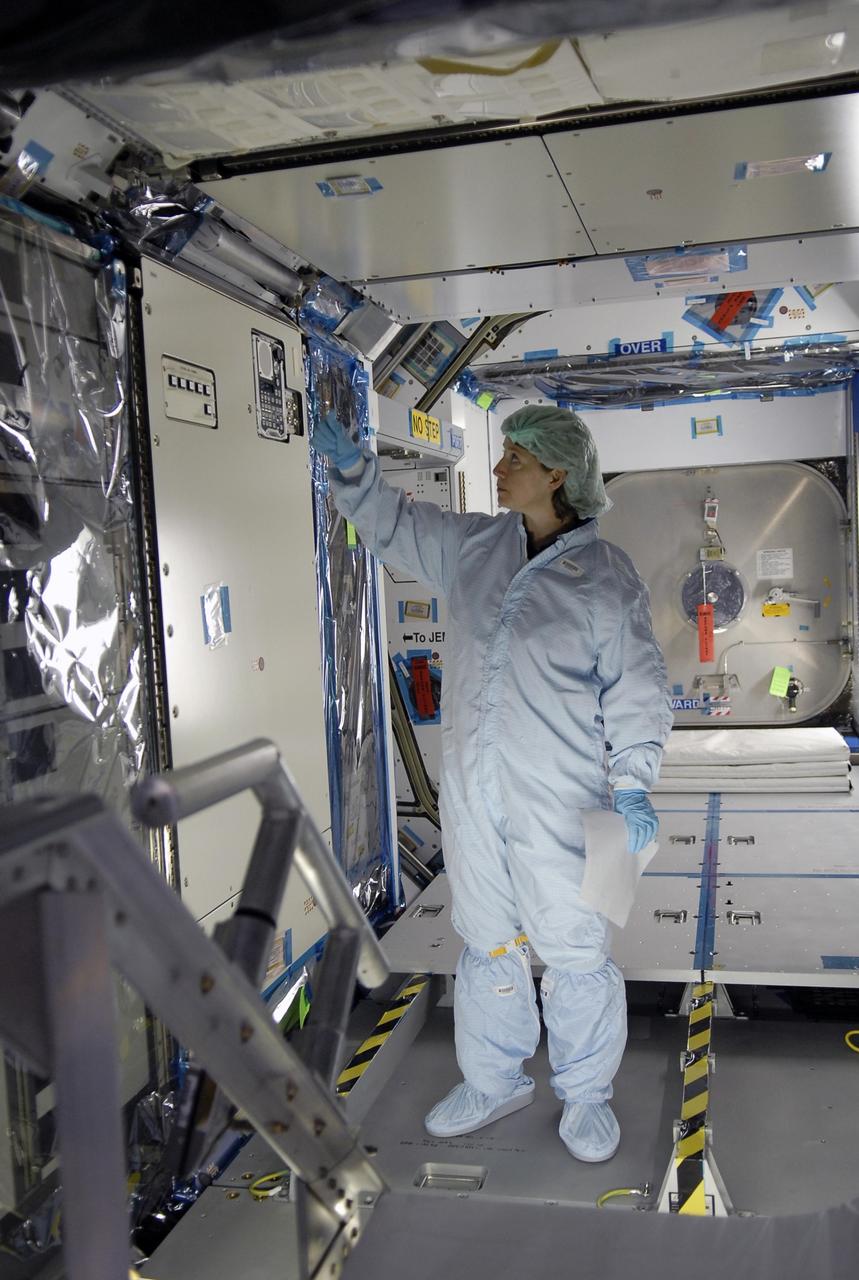
KENNEDY SPACE CENTER, FLA. -- Mission STS-120 Commander Pam Melroy familiarizes herself with the Node 2 Harmony module inside the Space Station Processing Facility during a visit to Kennedy Space Center. Other STS-120 crew members include Pilot George Zamka and Mission Specialists Scott Parazynski, Douglas Wheelock, Stephanie Wilson, Paolo Nespoli (with the European Space Agency), Daniel Tani and Clayton Anderson. Mission STS-120 will deliver the Node 2 "Harmony" connecting module to the station. During the mission, Tani and Anderson will transfer to the station and remain as flight engineers for Expedition 15. The mission is tentatively scheduled for August of this year. Photo credit: NASA/Kim Shiflett
KENNEDY SPACE CENTER, FLA. -- STS-120 Mission Specialist Doug Wheelock (left) gets hands-on experience with equipment earmarked for the mission. The primary payload for mission STS-120 is the U.S. Node 2, another element to be added to the International Space Station. Node 2 will provide a passageway between three station science experiment facilities: the U.S. Destiny Laboratory, the Kibo Japanese Experiment Module, and the European Columbus Laboratory. STS-120 is targeted for launch on Sept. 7 with a crew of six, including Commander Pam Melroy, Pilot George Zamka, and Mission Specialist Mike Foreman. Photo credit: NASA/Kim Shiflett
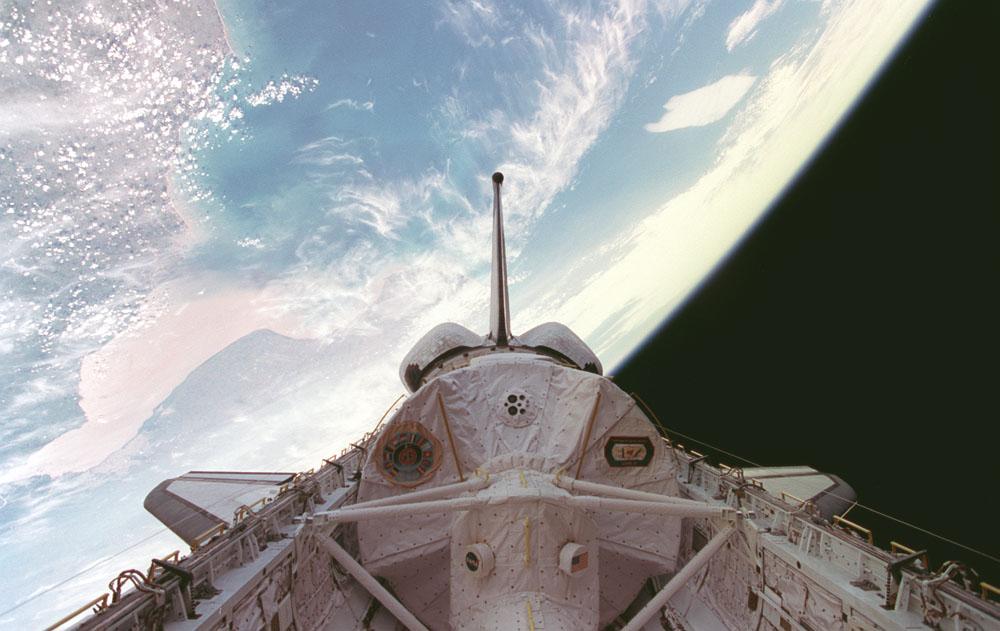
Onboard photo of space shuttle Columbia (STS-73) cargo bay payload - the United States Microgravity Laboratory-2 (USML-2) with an earthview.
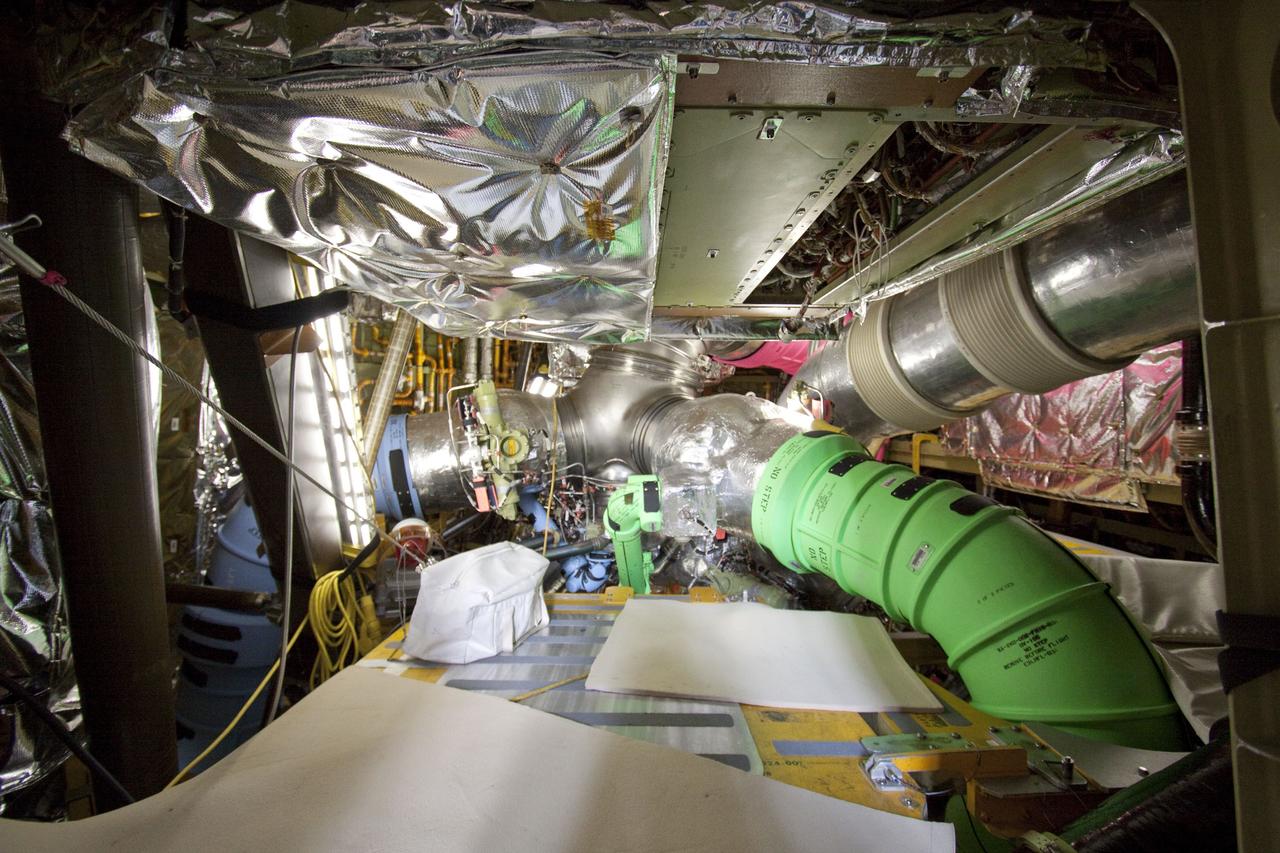
CAPE CANAVERAL, Fla. -- At NASA Kennedy Space Center's Launch Pad 39A, the Load Control Assembly-2 (LCA-2) has been replaced inside of space shuttle Endeavour. Located in Endeavour's aft avionics bay 5, the LCA-2, which distributes power to nine shuttle systems, is believed to have caused fuel line heaters for Endeavour's auxiliary power unit-1 (APU-1) to fail April 29 during the first launch attempt for the STS-134 mission and has been replaced. Systems will be retested before the launch is rescheduled. STS-134 will deliver the Express Logistics Carrier-3, Alpha Magnetic Spectrometer-2 (AMS), a high-pressure gas tank and additional spare parts for the Dextre robotic helper to the International Space Station. The mission also will be the final spaceflight for Endeavour. For more information, visit www.nasa.gov/mission_pages/shuttle/shuttlemissions/sts134/index.html. Photo credit: NASA/Troy Cryder
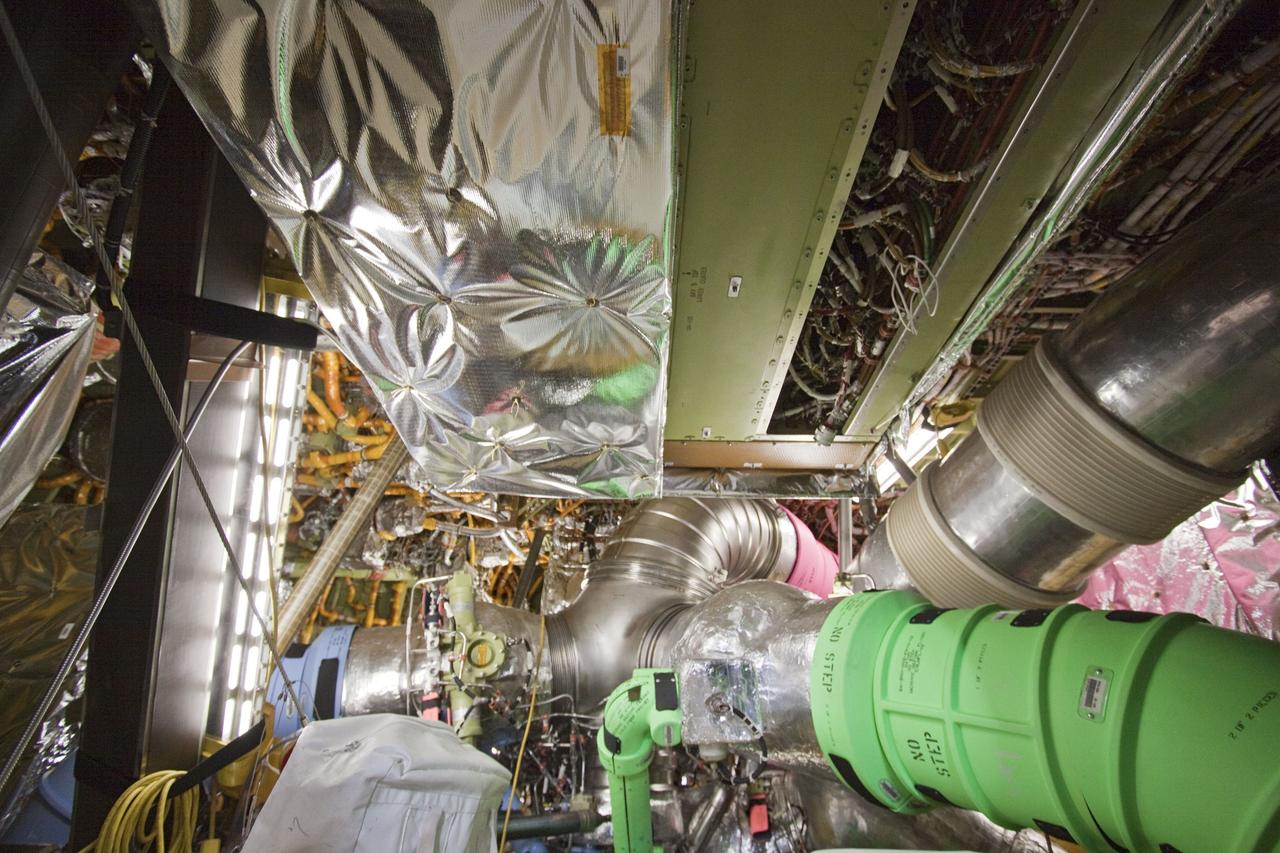
CAPE CANAVERAL, Fla. -- At NASA Kennedy Space Center's Launch Pad 39A, the Load Control Assembly-2 (LCA-2) has been replaced inside of space shuttle Endeavour. Located in Endeavour's aft avionics bay 5, the LCA-2, which distributes power to nine shuttle systems, is believed to have caused fuel line heaters for Endeavour's auxiliary power unit-1 (APU-1) to fail April 29 during the first launch attempt for the STS-134 mission and has been replaced. Systems will be retested before the launch is rescheduled. STS-134 will deliver the Express Logistics Carrier-3, Alpha Magnetic Spectrometer-2 (AMS), a high-pressure gas tank and additional spare parts for the Dextre robotic helper to the International Space Station. The mission also will be the final spaceflight for Endeavour. For more information, visit www.nasa.gov/mission_pages/shuttle/shuttlemissions/sts134/index.html. Photo credit: NASA/Troy Cryder
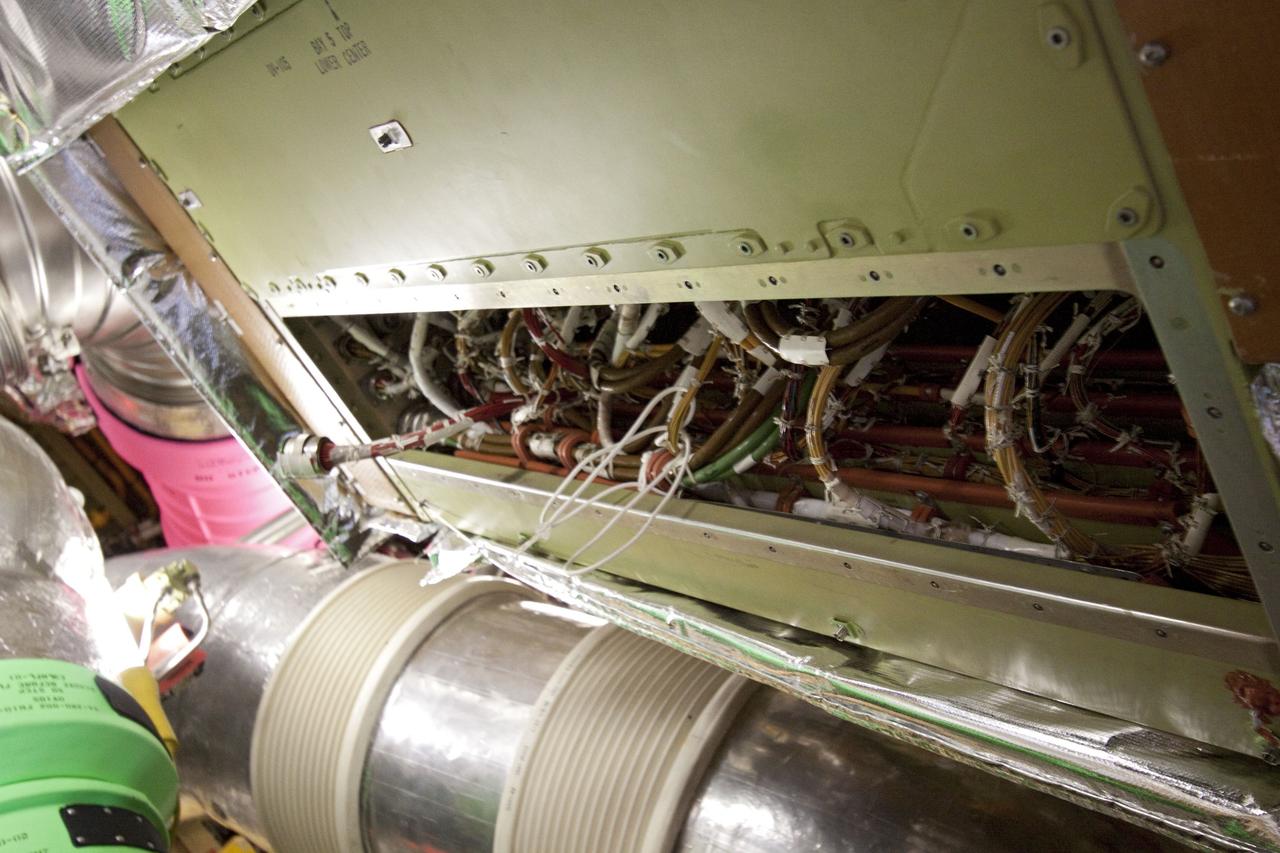
CAPE CANAVERAL, Fla. -- At NASA Kennedy Space Center's Launch Pad 39A, the Load Control Assembly-2 (LCA-2) has been replaced inside of space shuttle Endeavour. Located in Endeavour's aft avionics bay 5, the LCA-2, which distributes power to nine shuttle systems, is believed to have caused fuel line heaters for Endeavour's auxiliary power unit-1 (APU-1) to fail April 29 during the first launch attempt for the STS-134 mission and has been replaced. Systems will be retested before the launch is rescheduled. STS-134 will deliver the Express Logistics Carrier-3, Alpha Magnetic Spectrometer-2 (AMS), a high-pressure gas tank and additional spare parts for the Dextre robotic helper to the International Space Station. The mission also will be the final spaceflight for Endeavour. For more information, visit www.nasa.gov/mission_pages/shuttle/shuttlemissions/sts134/index.html. Photo credit: NASA/Troy Cryder

Aerial, ground level and night views of STS-2 Rollout to and on Pad 39A, 08/31/1981. KSC, FL
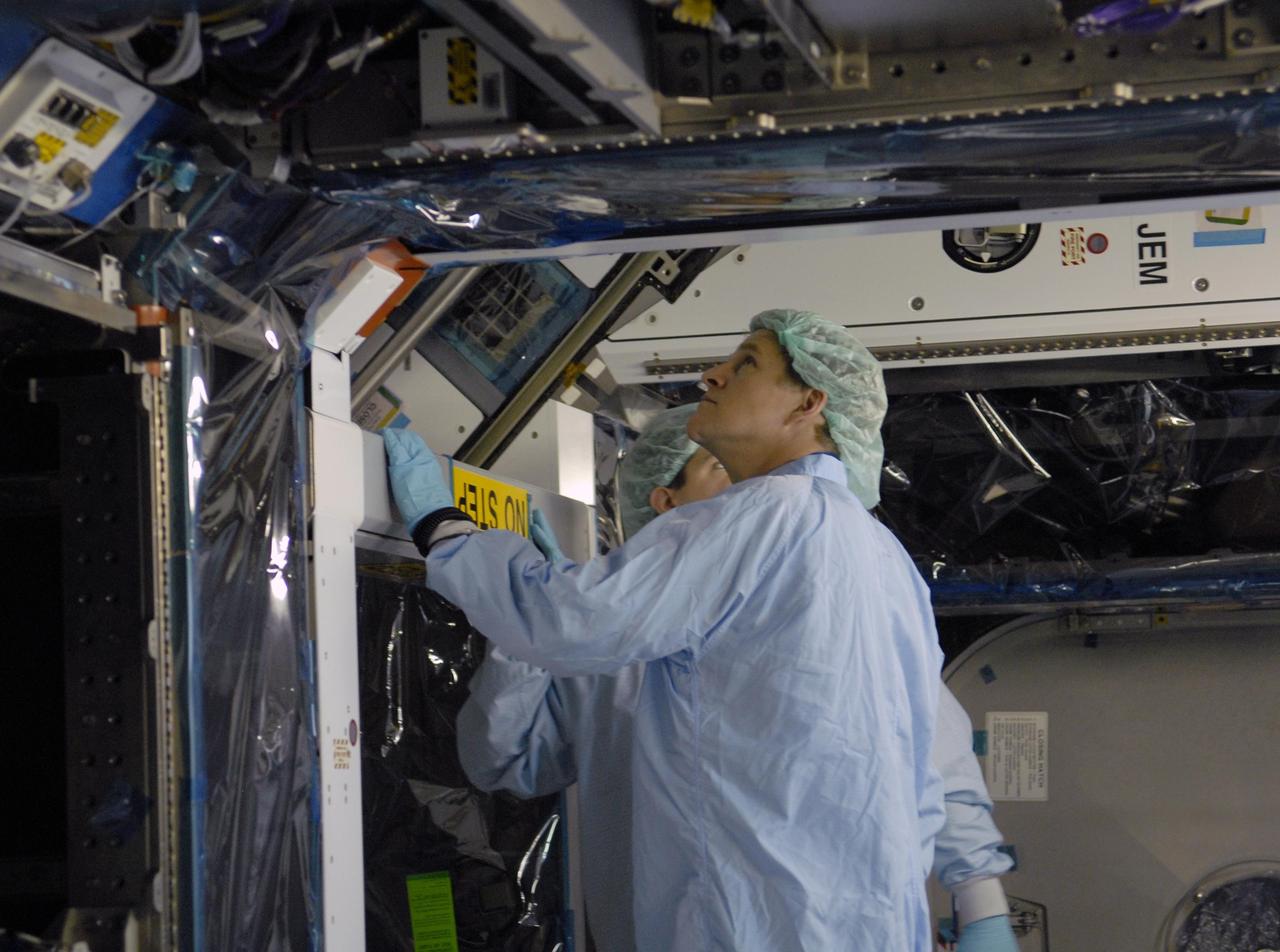
KENNEDY SPACE CENTER, FLA. -- STS-120 Mission Specialist Scott Parazynski takes a look underneath the primary payload for the mission: the U.S. Node 2, another element to be added to the International Space Station. Node 2 will provide a passageway between three station science experiment facilities: the U.S. Destiny Laboratory, the Kibo Japanese Experiment Module, and the European Columbus Laboratory. STS-120 is targeted for launch on Sept. 7 with a crew of six, including Commander Pam Melroy, Pilot George Zamka, and Mission Specialist Mike Foreman. Photo credit: NASA/Kim Shiflett
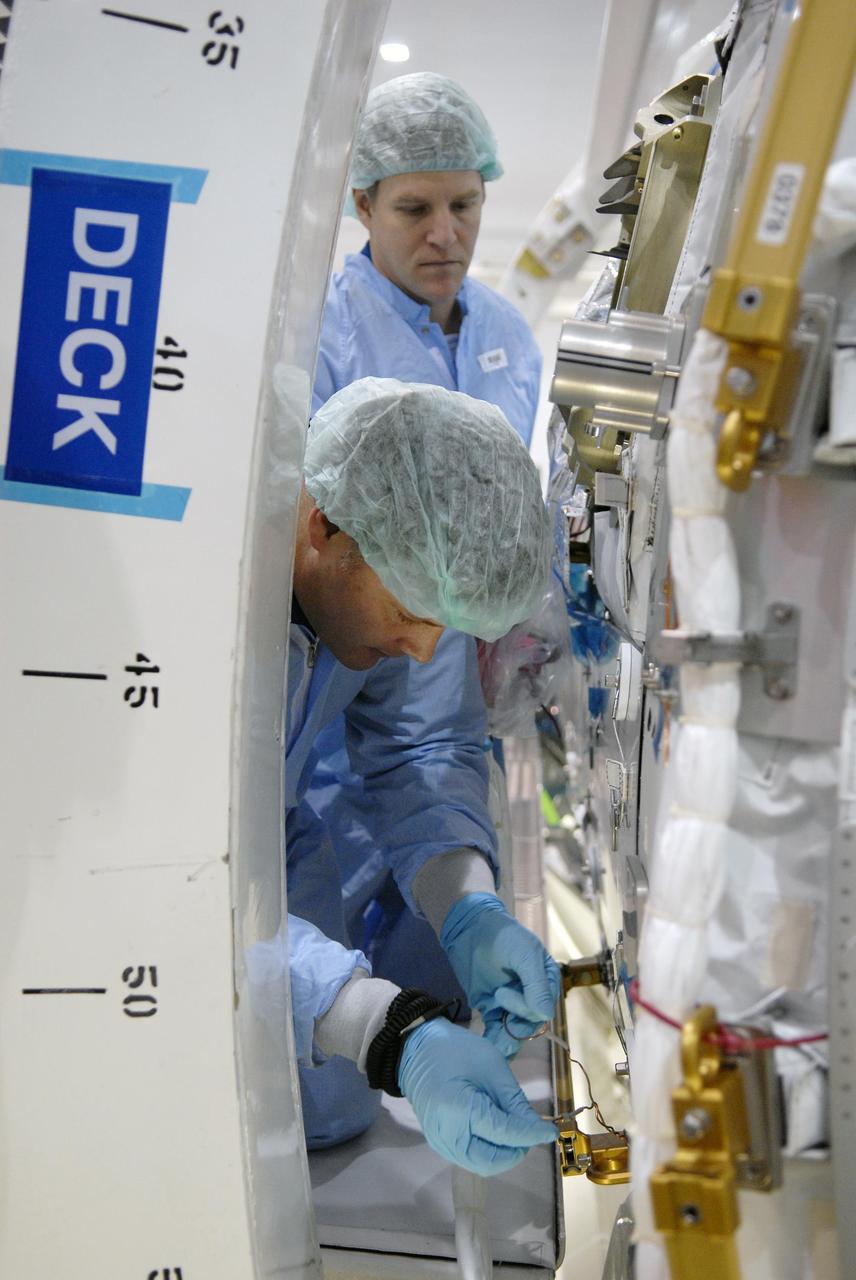
KENNEDY SPACE CENTER, FLA. -- STS-120 Mission Specialist Scott Parazynski (background) watches Mission Specialist Doug Wheelock work with a wire on the primary payload for the mission: the U.S. Node 2, another element to be added to the International Space Station. Parazynski, Wheelock and other crew members are familiarizing themselves with the payload. Node 2 will provide a passageway between three station science experiment facilities: the U.S. Destiny Laboratory, the Kibo Japanese Experiment Module, and the European Columbus Laboratory. STS-120 is targeted for launch on Sept. 7 with a crew of six, including Commander Pam Melroy, Pilot George Zamka, and Mission Specialist Mike Foreman. Photo credit: NASA/Kim Shiflett

CAPE CANAVERAL, Fla. -- At NASA's Kennedy Space Center in Florida, technicians prepare a working model of the dexterous humanoid astronaut helper, Robonaut 2, for the media to check out before space shuttle Discovery's final flight on the STS-133 mission. Discovery and its six-member crew will deliver the Permanent Multipurpose Module, packed with supplies and critical spare parts, as well as Robonaut 2 to the International Space Station. For more information on the STS-133 mission, visit www.nasa.gov/mission_pages/shuttle/shuttlemissions/sts133/. Photo Credit: NASA/Troy Cryder
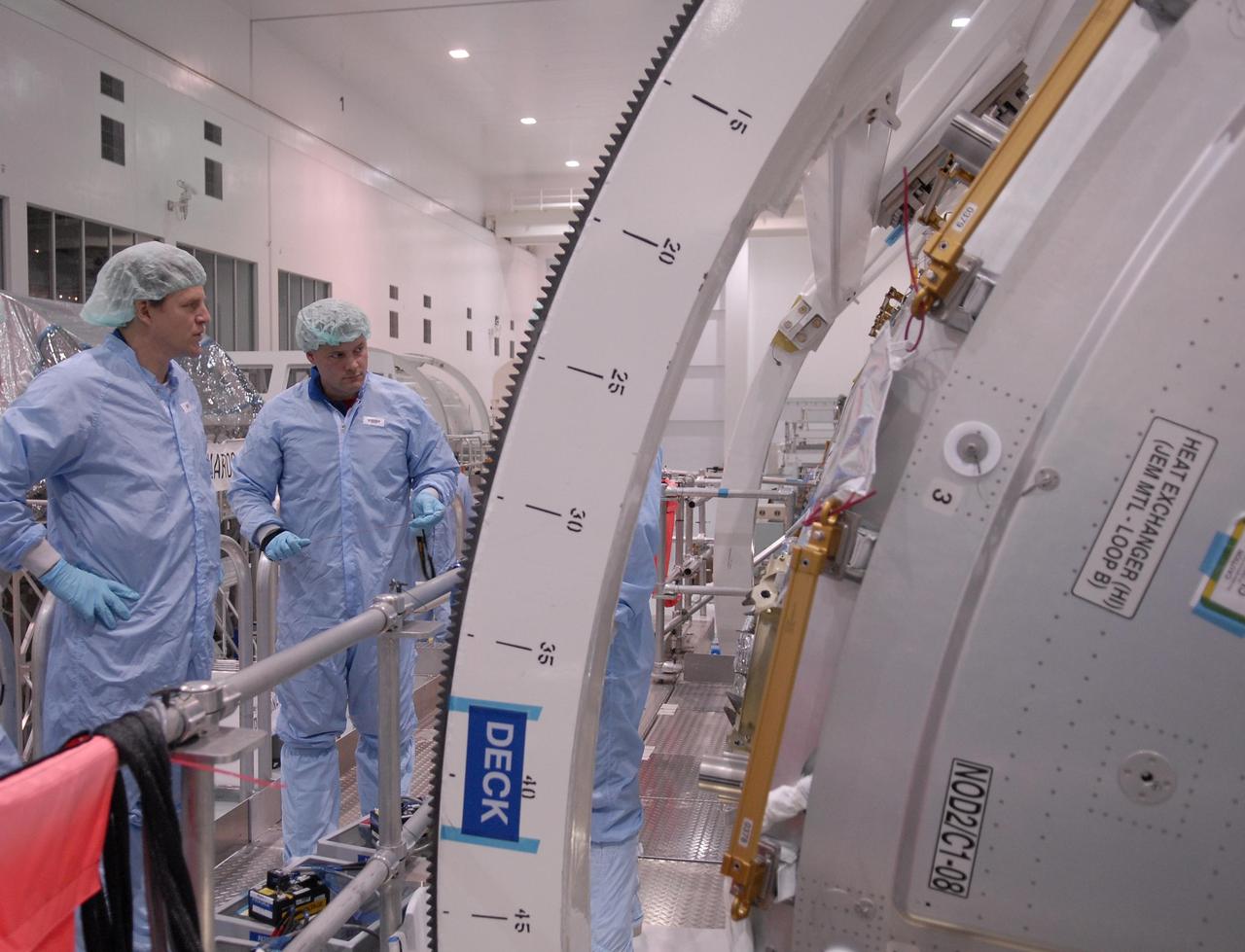
KENNEDY SPACE CENTER, FLA. -- STS-120 Mission Specialists Scott Parazynski (left) and Doug Wheelock check out the primary payload for the mission: the U.S. Node 2, another element to be added to the International Space Station. They are familiarizing themselves with the payload. Node 2 will provide a passageway between three station science experiment facilities: the U.S. Destiny Laboratory, the Kibo Japanese Experiment Module, and the European Columbus Laboratory. STS-120 is targeted for launch on Sept. 7 with a crew of six, including Commander Pam Melroy, Pilot George Zamka, and Mission Specialist Mike Foreman. Photo credit: NASA/Kim Shiflett
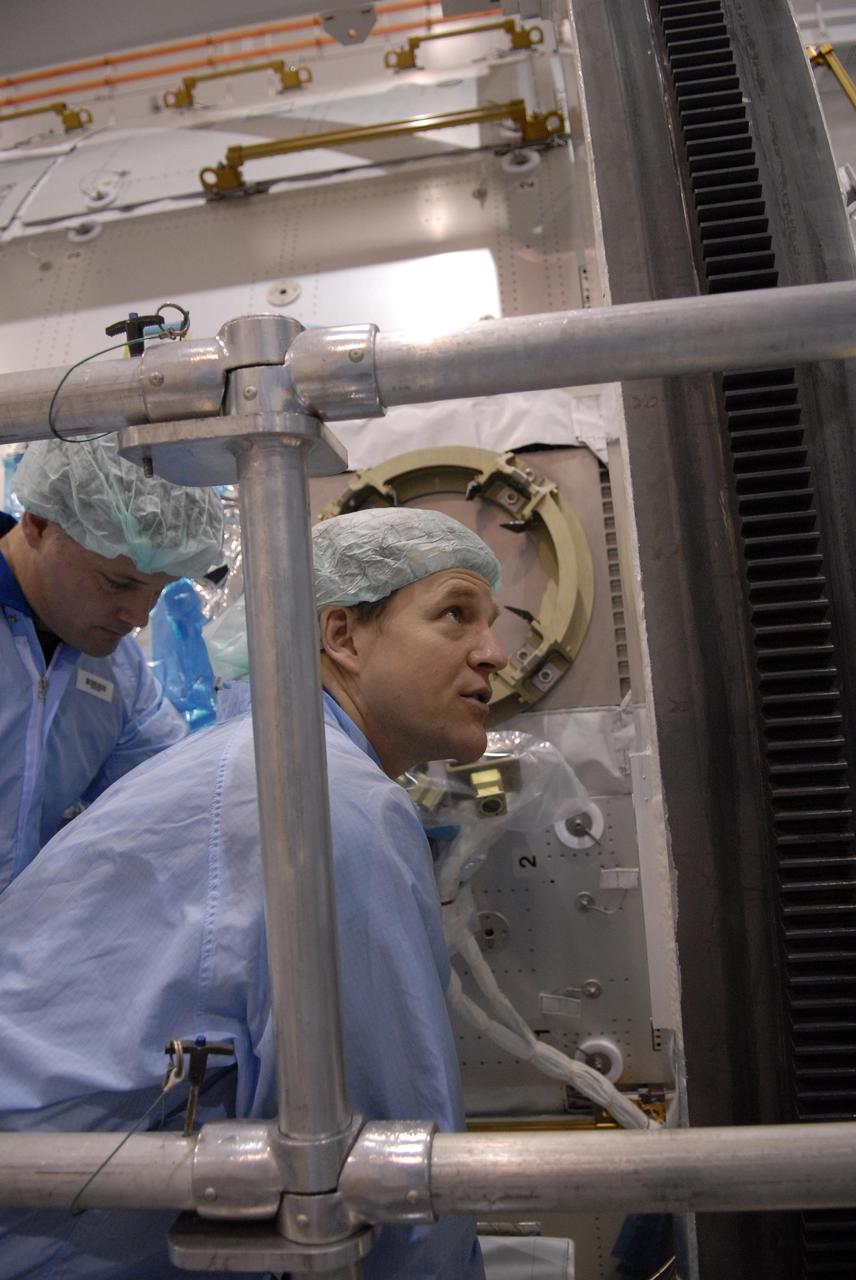
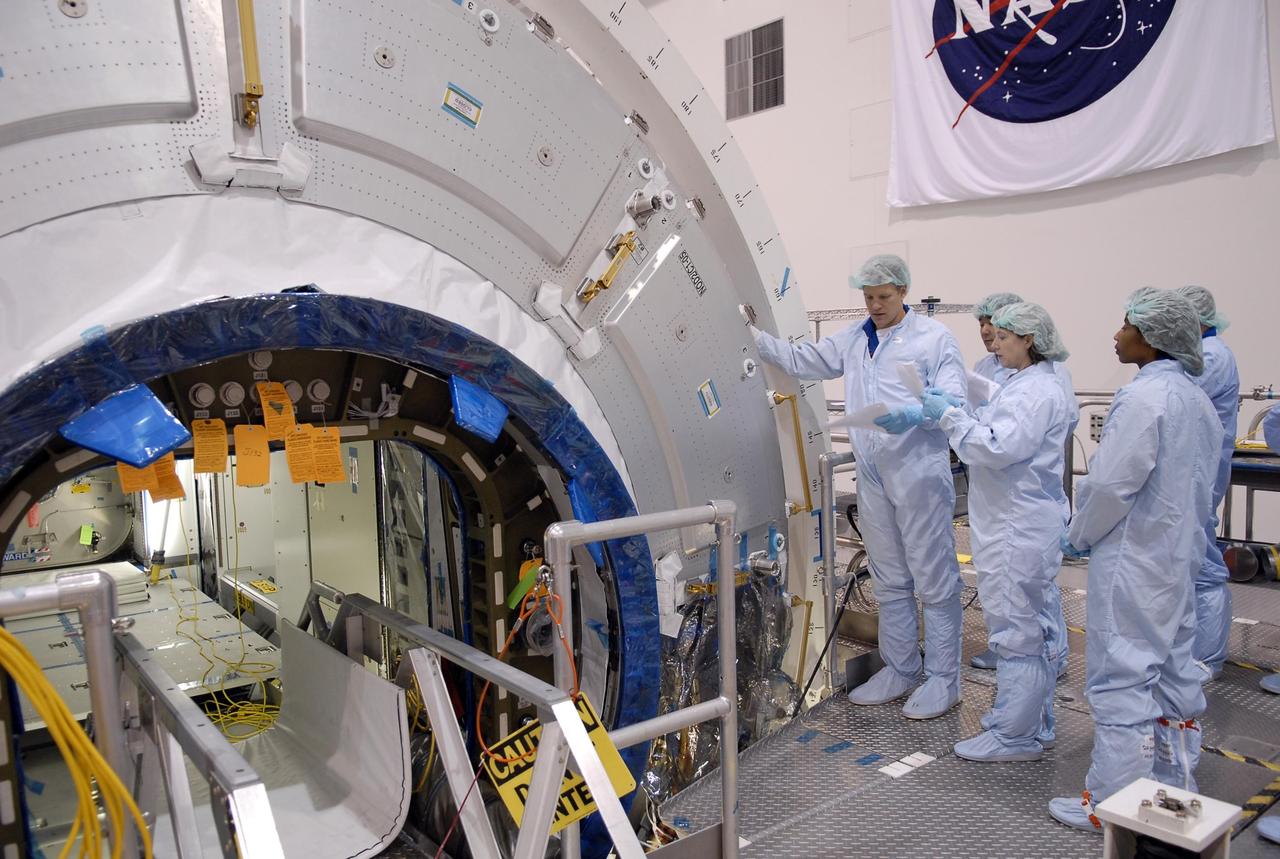
KENNEDY SPACE CENTER, FLA. -- In the Space Station Processing Facility at NASA's Kennedy Space Center, STS-120 Mission Specialist Scott Parazynski checks out the primary payload for the mission: the U.S. Node 2, another element to be added to the International Space Station. Parazynski and other crew members are familiarizing themselves with the payload. Node 2 will provide a passageway between three station science experiment facilities: the U.S. Destiny Laboratory, the Kibo Japanese Experiment Module, and the European Columbus Laboratory. STS-120 is targeted for launch on Sept. 7 with a crew of six, including Commander Pam Melroy, Pilot George Zamka, and Mission Specialist Mike Foreman. Photo credit: NASA/Kim Shiflett
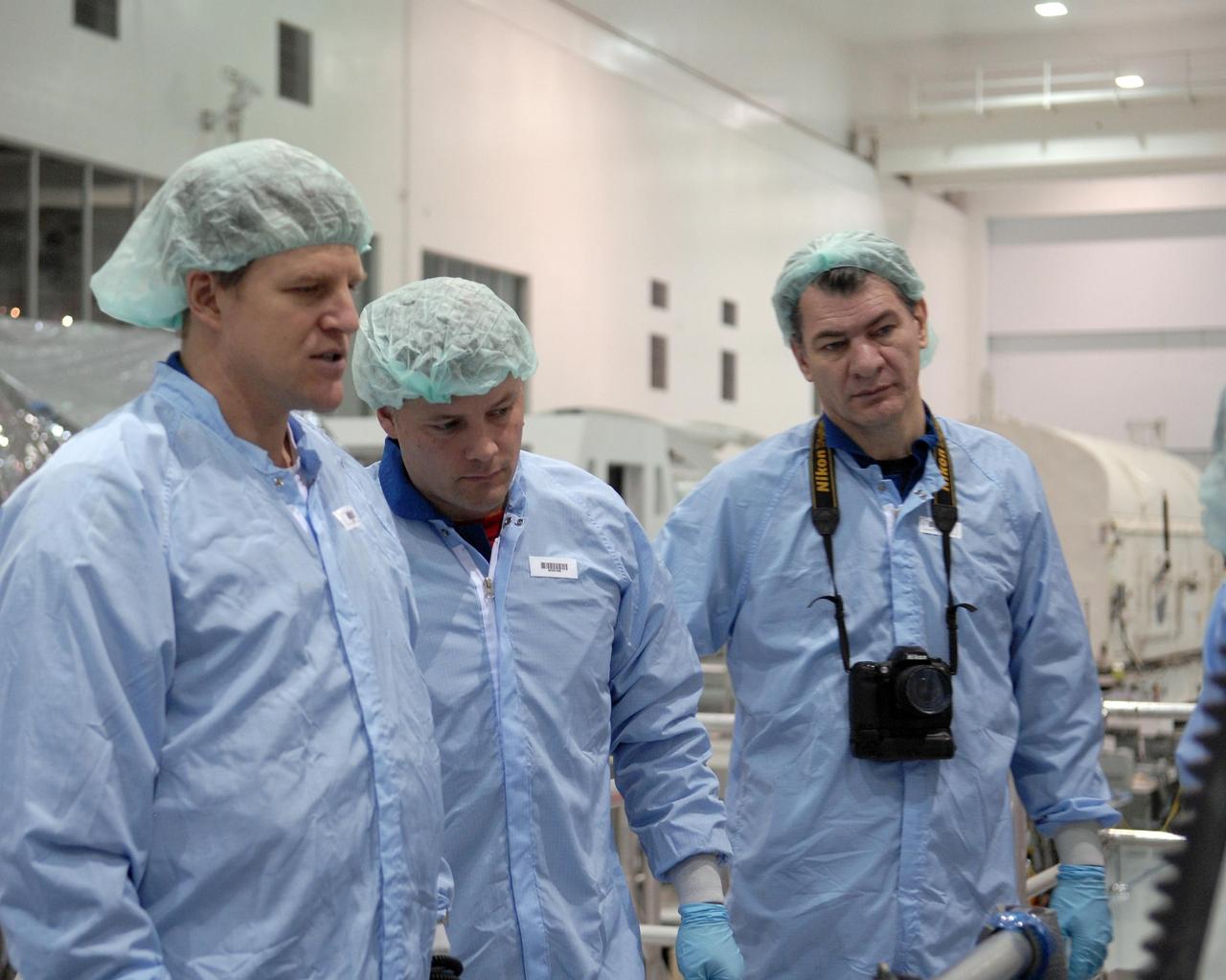
KENNEDY SPACE CENTER, FLA. -- STS-120 Mission Specialists Scott Parazynski (left), Doug Wheelock (center) and Paolo Nespoli (right) check out the primary payload for the mission: the U.S. Node 2, another element to be added to the International Space Station. Nespoli represents the European Space Agency. Node 2 will provide a passageway between three station science experiment facilities: the U.S. Destiny Laboratory, the Kibo Japanese Experiment Module, and the European Columbus Laboratory. STS-120 is targeted for launch on Sept. 7 with a crew of six, including Commander Pam Melroy, Pilot George Zamka, and Mission Specialist Mike Foreman. Photo credit: NASA/Kim Shiflett
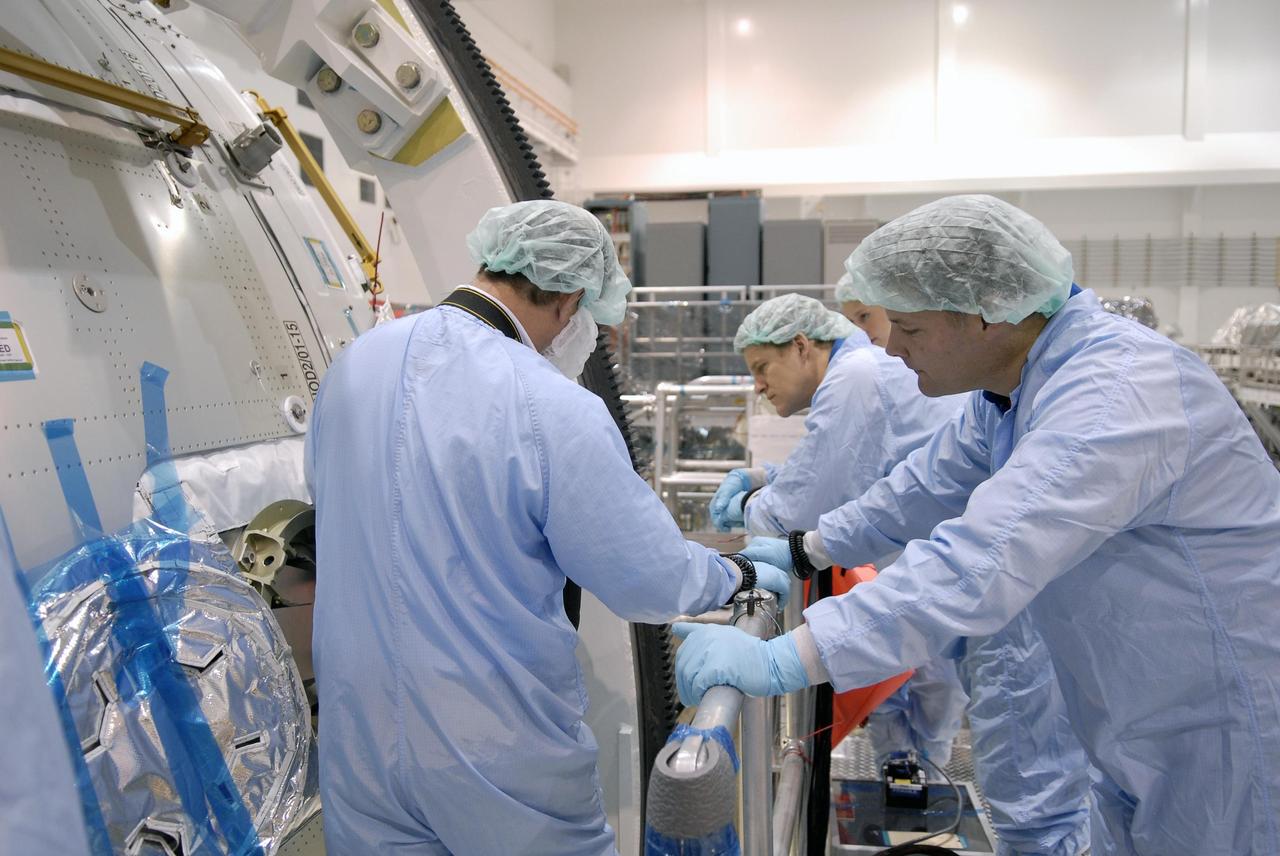
KENNEDY SPACE CENTER, FLA. -- At right are STS-120 Mission Specialists Scott Parazynski (background) and Doug Wheelock (foreground), looking over the primary payload for the mission: the U.S. Node 2, another element to be added to the International Space Station. Node 2 will provide a passageway between three station science experiment facilities: the U.S. Destiny Laboratory, the Kibo Japanese Experiment Module, and the European Columbus Laboratory. STS-120 is targeted for launch on Sept. 7 with a crew of six, including Commander Pam Melroy, Pilot George Zamka, and Mission Specialist Mike Foreman. Photo credit: NASA/Kim Shiflett
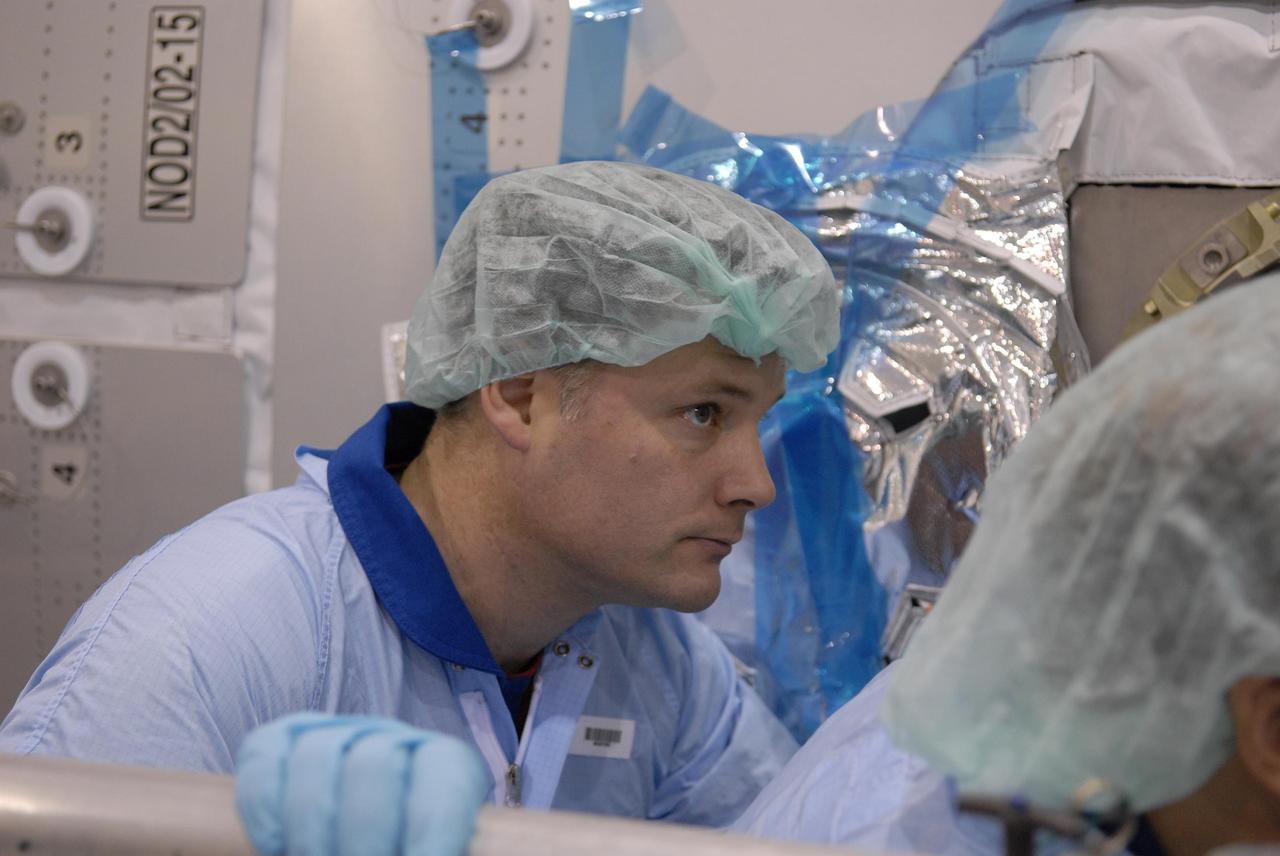
KENNEDY SPACE CENTER, FLA. -- STS-120 Mission Specialist Doug Wheelock checks out the primary payload for the mission: the U.S. Node 2, another element to be added to the International Space Station. Wheelock and other crew members are familiarizing themselves with the payload. Node 2 will provide a passageway between three station science experiment facilities: the U.S. Destiny Laboratory, the Kibo Japanese Experiment Module, and the European Columbus Laboratory. STS-120 is targeted for launch on Sept. 7 with a crew of six, including Commander Pam Melroy, Pilot George Zamka, and Mission Specialist Mike Foreman. Photo credit: NASA/Kim Shiflett
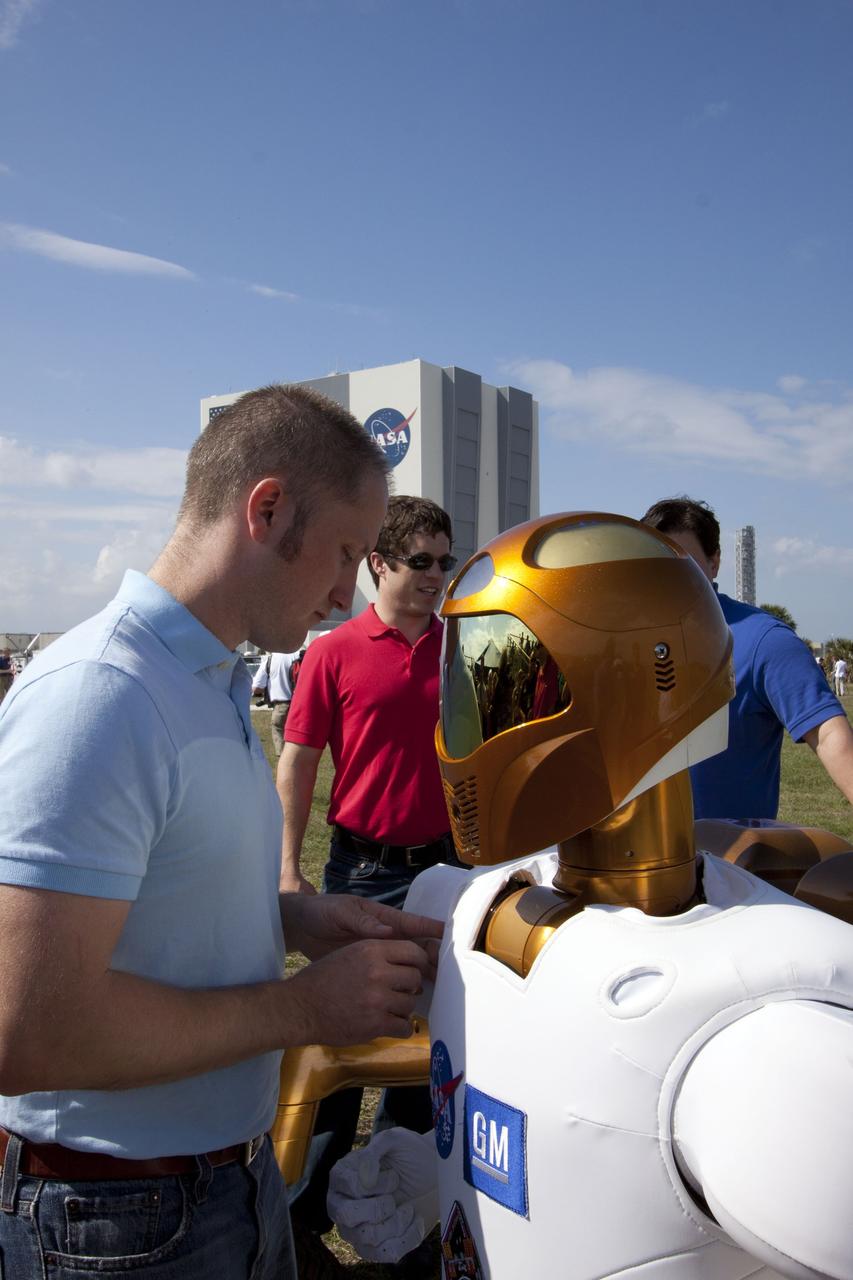
CAPE CANAVERAL, Fla. -- At NASA's Kennedy Space Center in Florida, technicians prepare a working model of the dexterous humanoid astronaut helper, Robonaut 2, for the media to check out before space shuttle Discovery's final flight on the STS-133 mission. Discovery and its six-member crew will deliver the Permanent Multipurpose Module, packed with supplies and critical spare parts, as well as Robonaut 2 to the International Space Station. For more information on the STS-133 mission, visit www.nasa.gov/mission_pages/shuttle/shuttlemissions/sts133/. Photo Credit: NASA/Troy Cryder
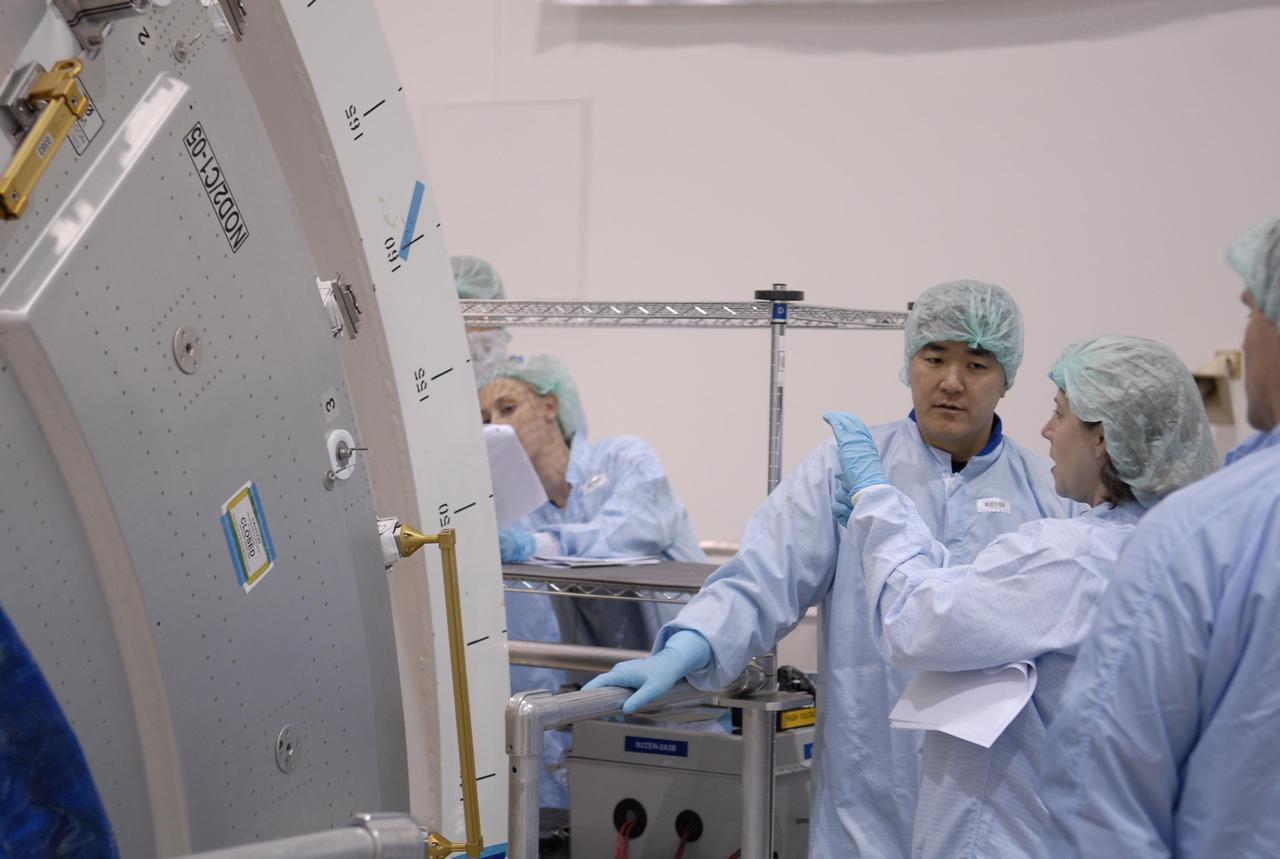
KENNEDY SPACE CENTER, FLA. -- Mission STS-120 Mission Specialist Daniel Tani and Commander Pam Melroy familiarize themselves with the Node 2 Harmony module inside the Space Station Processing Facility during a visit to Kennedy Space Center. Other crew members include Pilot George Zamka and Mission Specialists Scott Parazynski, Douglas Wheelock, Stephanie Wilson, Paolo Nespoli (with the European Space Agency) and Clayton Anderson. Mission STS-120 will deliver the Node 2 "Harmony" connecting module to the station. During the mission, Tani and Anderson will transfer to the station and remain as flight engineers for Expedition 15. The mission is tentatively scheduled for August of this year. Photo credit: NASA/Kim Shiflett
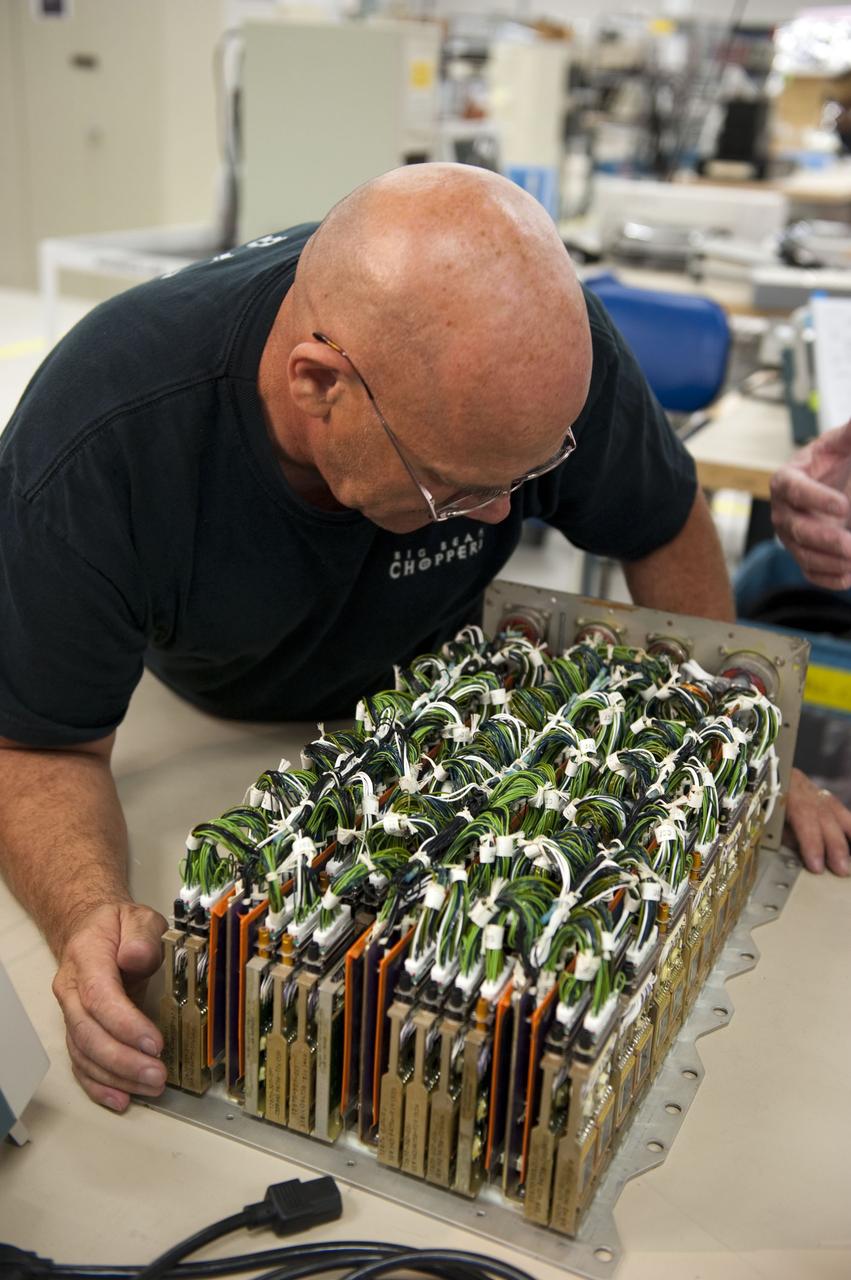
CAPE CANAVERAL, Fla. -- At the NASA Shuttle Logistics Depot in Cape Canaveral, Florida, technicians begin the testing process on the Load Control Assembly-2 (LCA-2) after the cover has been removed. Located in space shuttle Endeavour's aft avionics bay 5, the LCA-2, which distributes power to nine shuttle systems, is believed to have caused fuel line heaters for Endeavour's auxiliary power unit-1 (APU-1) to fail April 29 during the first launch attempt for the STS-134 mission. The LCA-2 will be replaced and systems will be retested before the launch is rescheduled. STS-134 will deliver the Express Logistics Carrier-3, Alpha Magnetic Spectrometer-2 (AMS), a high-pressure gas tank and additional spare parts for the Dextre robotic helper to the International Space Station. The mission also will be the final spaceflight for Endeavour. For more information, visit www.nasa.gov/mission_pages/shuttle/shuttlemissions/sts134/index.html. Photo credit: NASA/Kim Shiflett
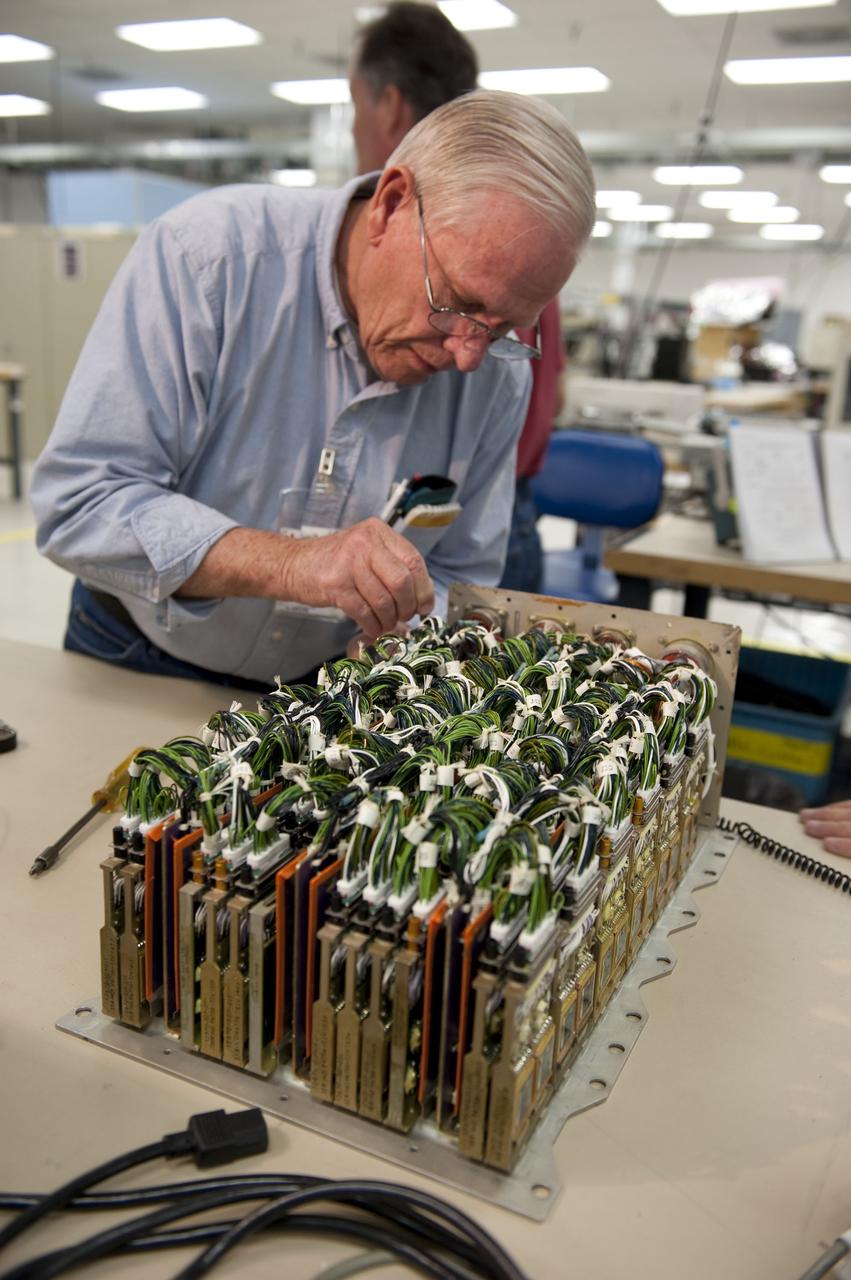
CAPE CANAVERAL, Fla. -- At the NASA Shuttle Logistics Depot in Cape Canaveral, Florida, technicians begin the testing process on the Load Control Assembly-2 (LCA-2) after the cover has been removed. Located in space shuttle Endeavour's aft avionics bay 5, the LCA-2, which distributes power to nine shuttle systems, is believed to have caused fuel line heaters for Endeavour's auxiliary power unit-1 (APU-1) to fail April 29 during the first launch attempt for the STS-134 mission. The LCA-2 will be replaced and systems will be retested before the launch is rescheduled. STS-134 will deliver the Express Logistics Carrier-3, Alpha Magnetic Spectrometer-2 (AMS), a high-pressure gas tank and additional spare parts for the Dextre robotic helper to the International Space Station. The mission also will be the final spaceflight for Endeavour. For more information, visit www.nasa.gov/mission_pages/shuttle/shuttlemissions/sts134/index.html. Photo credit: NASA/Kim Shiflett
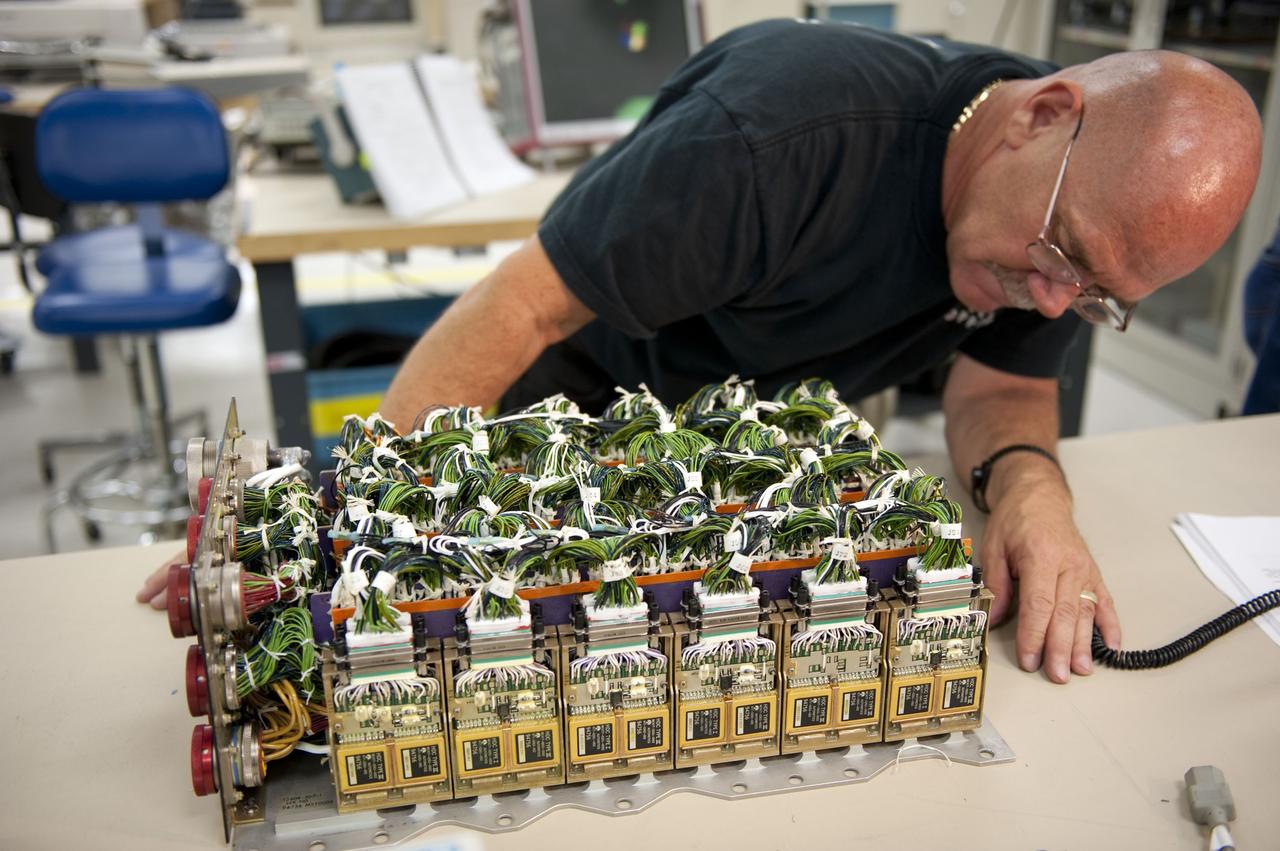
CAPE CANAVERAL, Fla. -- At the NASA Shuttle Logistics Depot in Cape Canaveral, Florida, technicians begin the testing process on the Load Control Assembly-2 (LCA-2) after the cover has been removed. Located in space shuttle Endeavour's aft avionics bay 5, the LCA-2, which distributes power to nine shuttle systems, is believed to have caused fuel line heaters for Endeavour's auxiliary power unit-1 (APU-1) to fail April 29 during the first launch attempt for the STS-134 mission. The LCA-2 will be replaced and systems will be retested before the launch is rescheduled. STS-134 will deliver the Express Logistics Carrier-3, Alpha Magnetic Spectrometer-2 (AMS), a high-pressure gas tank and additional spare parts for the Dextre robotic helper to the International Space Station. The mission also will be the final spaceflight for Endeavour. For more information, visit www.nasa.gov/mission_pages/shuttle/shuttlemissions/sts134/index.html. Photo credit: NASA/Kim Shiflett
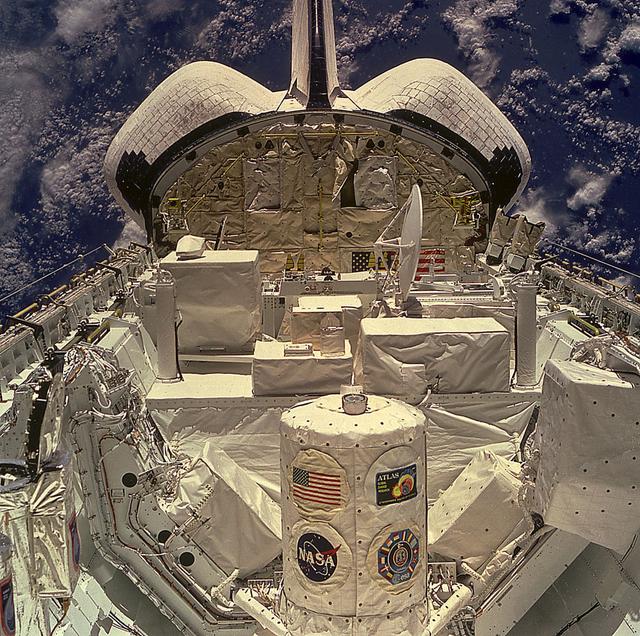
Space Shuttle Discovery (STS-56) onboard photo of the Atmospheric Laboratory for Applications and Science (ATLAS-2) payload on the pallet in the cargo bay of the orbiter.
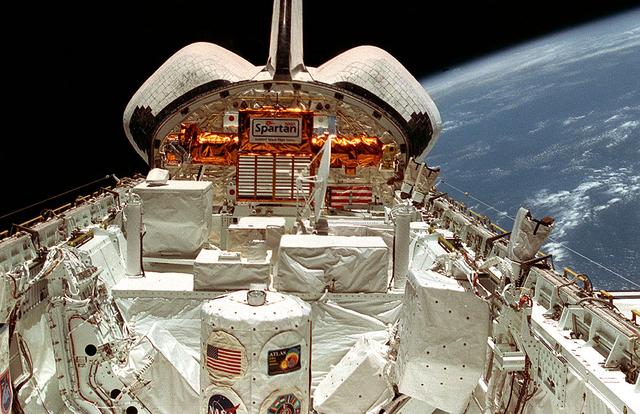
Space Shuttle Discovery (STS-56) onboard photo of the Atmospheric Laboratory for Applications and Science (ATLAS-2) payload on the pallet in the cargo bay of the orbiter.
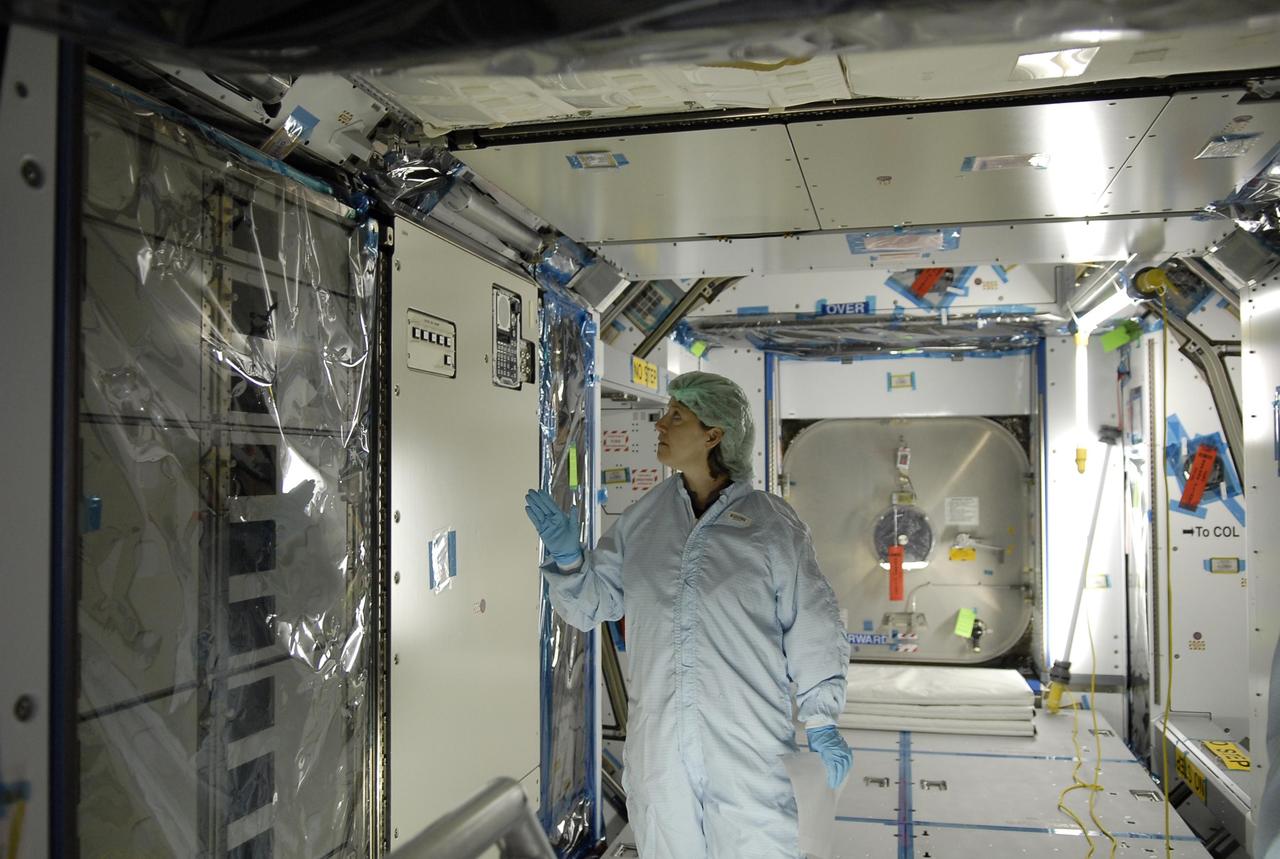
KENNEDY SPACE CENTER, FLA. -- Inside the Space Station Processing Facility, mission STS-120 Commander Pam Melroy stands inside the Node 2 Harmony module to familiarize herself with equipment during a visit to Kennedy Space Center. Other STS-120 crew members include Pilot George Zamka and Mission Specialists Scott Parazynski, Douglas Wheelock, Stephanie Wilson, Paolo Nespoli (with the European Space Agency), Daniel Tani and Clayton Anderson. Mission STS-120 will deliver the Node 2 "Harmony" connecting module to the station. During the mission, Tani and Anderson will transfer to the station and remain as flight engineers for Expedition 15. The mission is tentatively scheduled for August of this year. Photo credit: NASA/Kim Shiflett
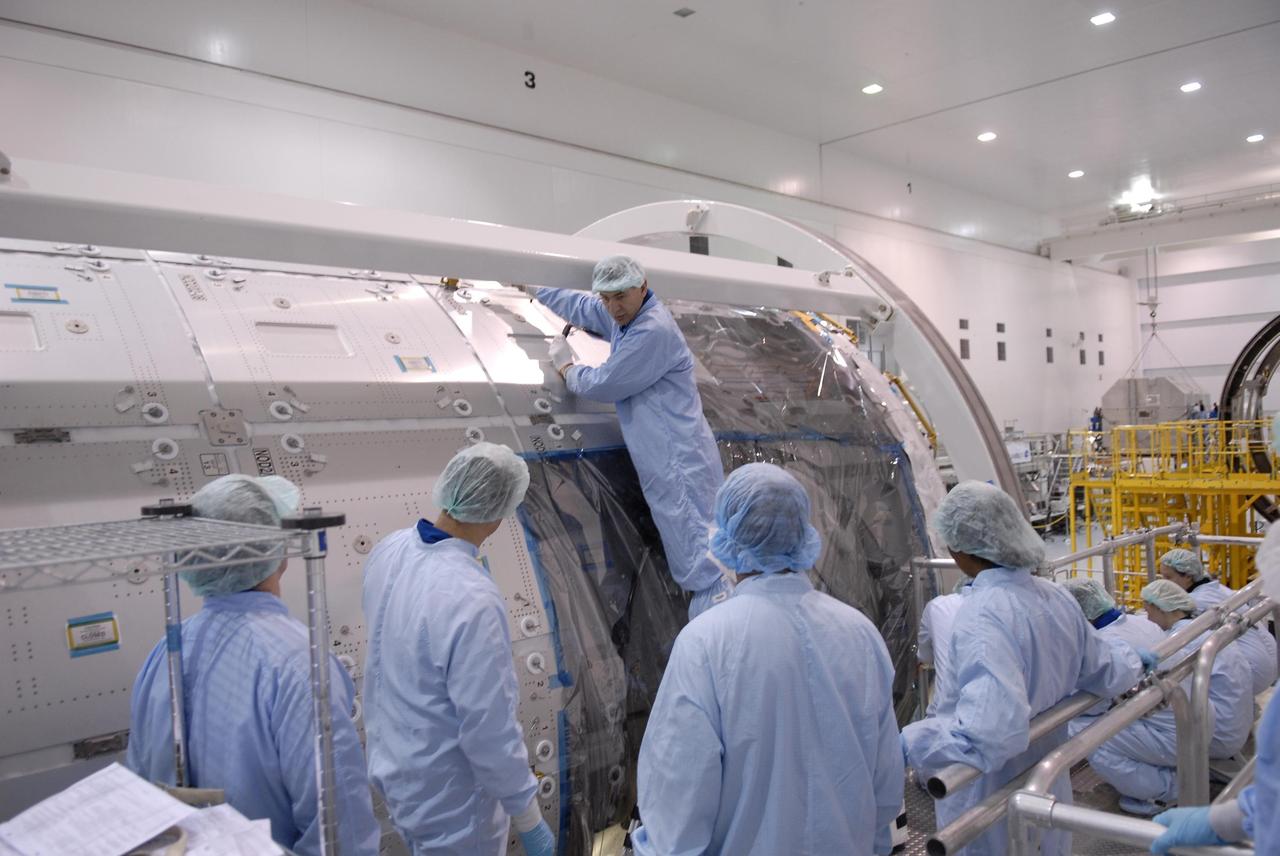
KENNEDY SPACE CENTER, FLA. -- Mission STS-120 crew members familiarize themselves with equipment and payloads inside the Space Station Processing Facility during a visit to Kennedy Space Center. Standing in front of the Node 2 Harmony module is Paolo Nespoli, who is with the European Space Agency. Other STS-120 crew members include Commander Pam Melroy, Pilot George Zamka and Mission Specialists Scott Parazynski, Douglas Wheelock, Stephanie Wilson, Daniel Tani and Clayton Anderson. Mission STS-120 will deliver the Node 2 "Harmony" connecting module to the station. During the mission, Tani and Anderson will transfer to the station and remain as flight engineers for Expedition 15. The mission is tentatively scheduled for August of this year. Photo credit: NASA/Kim Shiflett
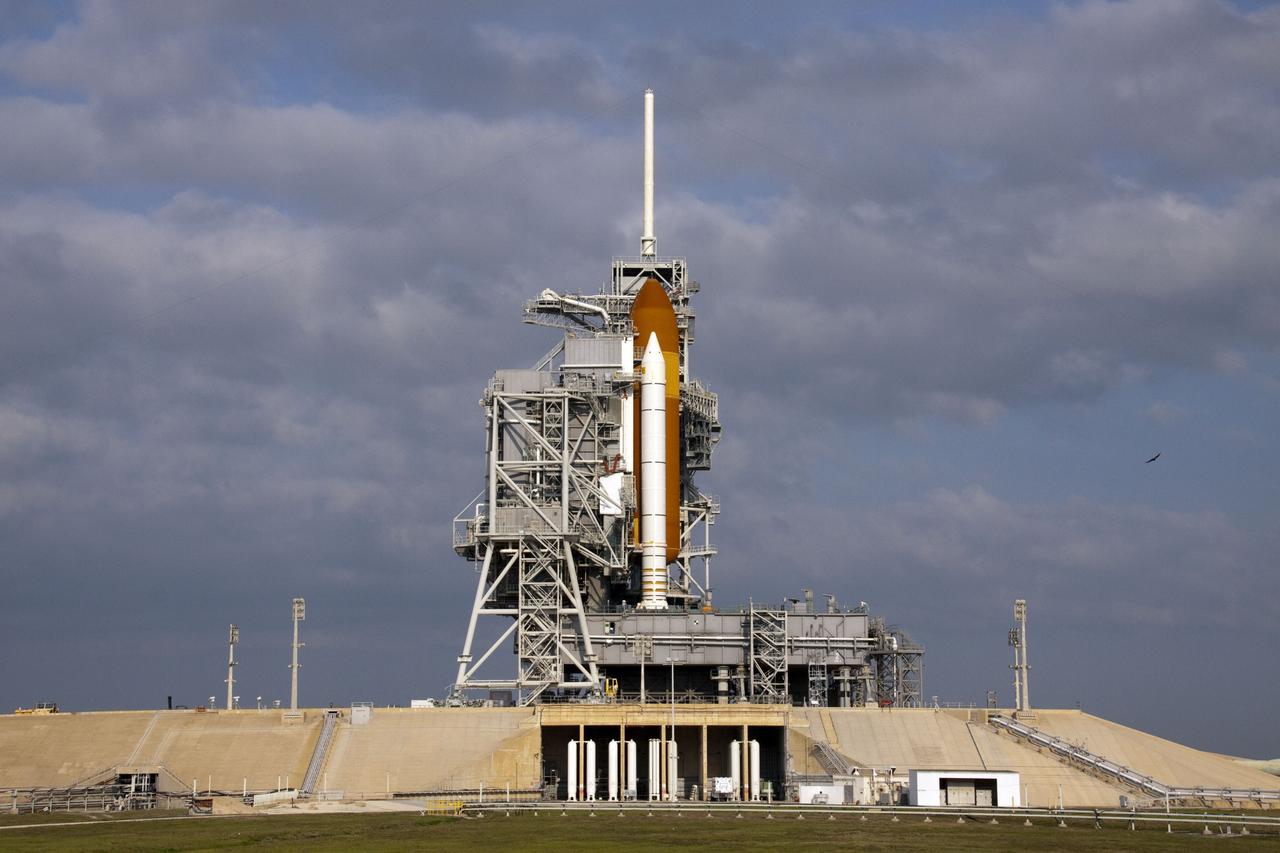
CAPE CANAVERAL, Fla. -- At NASA Kennedy Space Center's Launch Pad 39A, space shuttle Endeavour sits poised for launch after technicians replaced the Load Control Assembly-2 (LCA-2) in its aft section. Located in Endeavour's aft avionics bay 5, the LCA-2, which distributes power to nine shuttle systems, is believed to have caused fuel line heaters for Endeavour's auxiliary power unit-1 (APU-1) to fail April 29 during the first launch attempt for the STS-134 mission and has been replaced. Systems will be retested before the launch is rescheduled. STS-134 will deliver the Express Logistics Carrier-3, Alpha Magnetic Spectrometer-2 (AMS), a high-pressure gas tank and additional spare parts for the Dextre robotic helper to the International Space Station. The mission also will be the final spaceflight for Endeavour. For more information, visit www.nasa.gov/mission_pages/shuttle/shuttlemissions/sts134/index.html. Photo credit: NASA/Troy Cryder
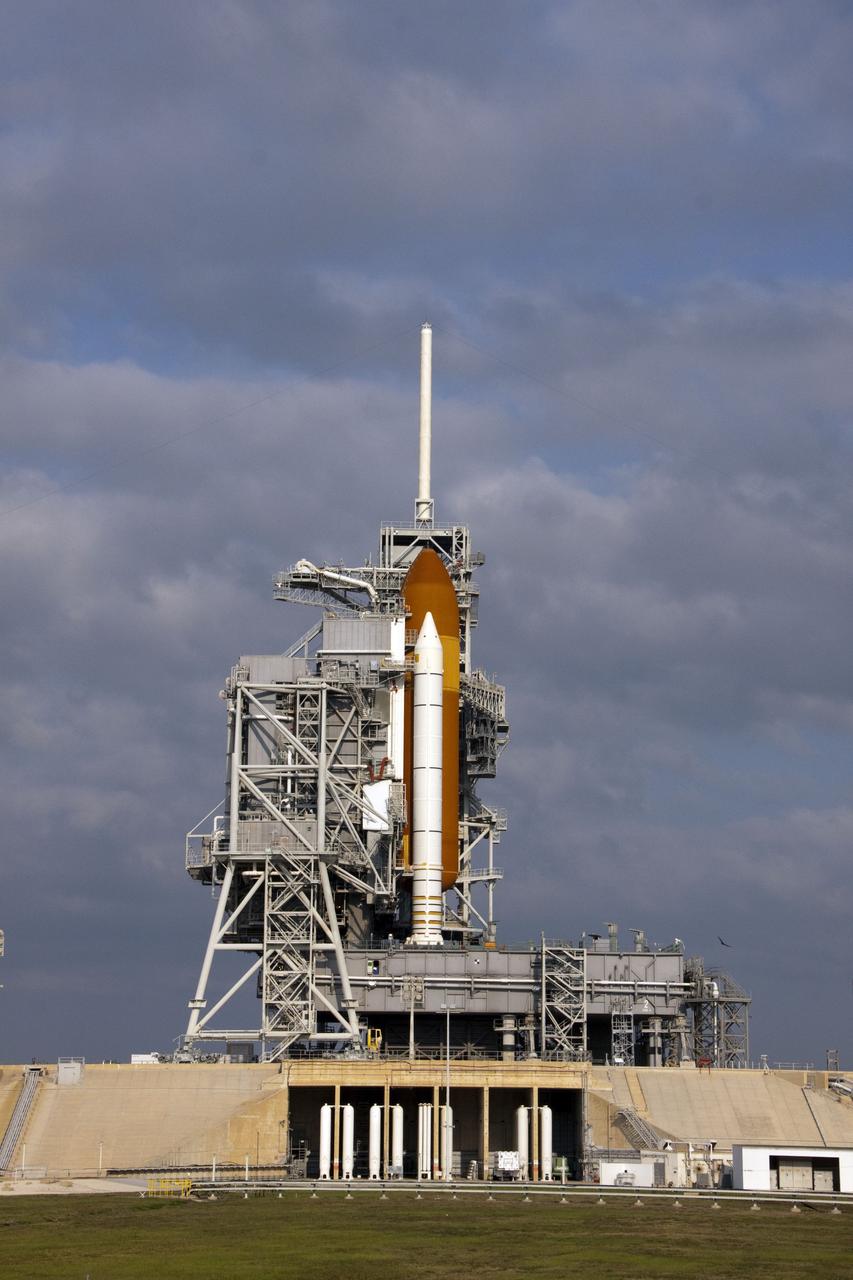
CAPE CANAVERAL, Fla. -- At NASA Kennedy Space Center's Launch Pad 39A, space shuttle Endeavour sits poised for launch after technicians replaced the Load Control Assembly-2 (LCA-2) in its aft section. Located in Endeavour's aft avionics bay 5, the LCA-2, which distributes power to nine shuttle systems, is believed to have caused fuel line heaters for Endeavour's auxiliary power unit-1 (APU-1) to fail April 29 during the first launch attempt for the STS-134 mission and has been replaced. Systems will be retested before the launch is rescheduled. STS-134 will deliver the Express Logistics Carrier-3, Alpha Magnetic Spectrometer-2 (AMS), a high-pressure gas tank and additional spare parts for the Dextre robotic helper to the International Space Station. The mission also will be the final spaceflight for Endeavour. For more information, visit www.nasa.gov/mission_pages/shuttle/shuttlemissions/sts134/index.html. Photo credit: NASA/Troy Cryder
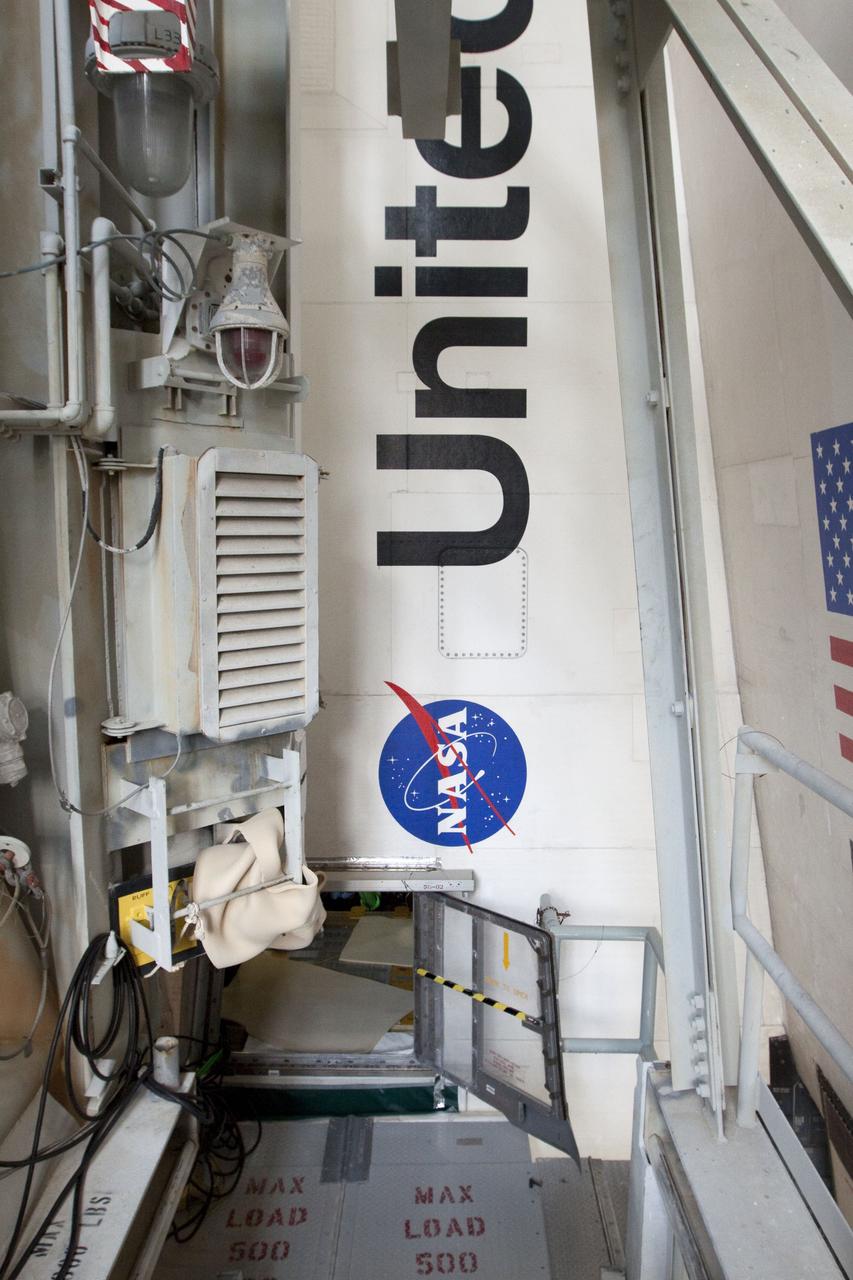
CAPE CANAVERAL, Fla. -- At NASA Kennedy Space Center's Launch Pad 39A, the access door is open on space shuttle Endeavour for technicians to enter the aft area where the Load Control Assembly-2 (LCA-2) is located. Located in Endeavour's aft avionics bay 5, the LCA-2, which distributes power to nine shuttle systems, is believed to have caused fuel line heaters for Endeavour's auxiliary power unit-1 (APU-1) to fail April 29 during the first launch attempt for the STS-134 mission and has been replaced. Systems will be retested before the launch is rescheduled. STS-134 will deliver the Express Logistics Carrier-3, Alpha Magnetic Spectrometer-2 (AMS), a high-pressure gas tank and additional spare parts for the Dextre robotic helper to the International Space Station. The mission also will be the final spaceflight for Endeavour. For more information, visit www.nasa.gov/mission_pages/shuttle/shuttlemissions/sts134/index.html. Photo credit: NASA/Troy Cryder
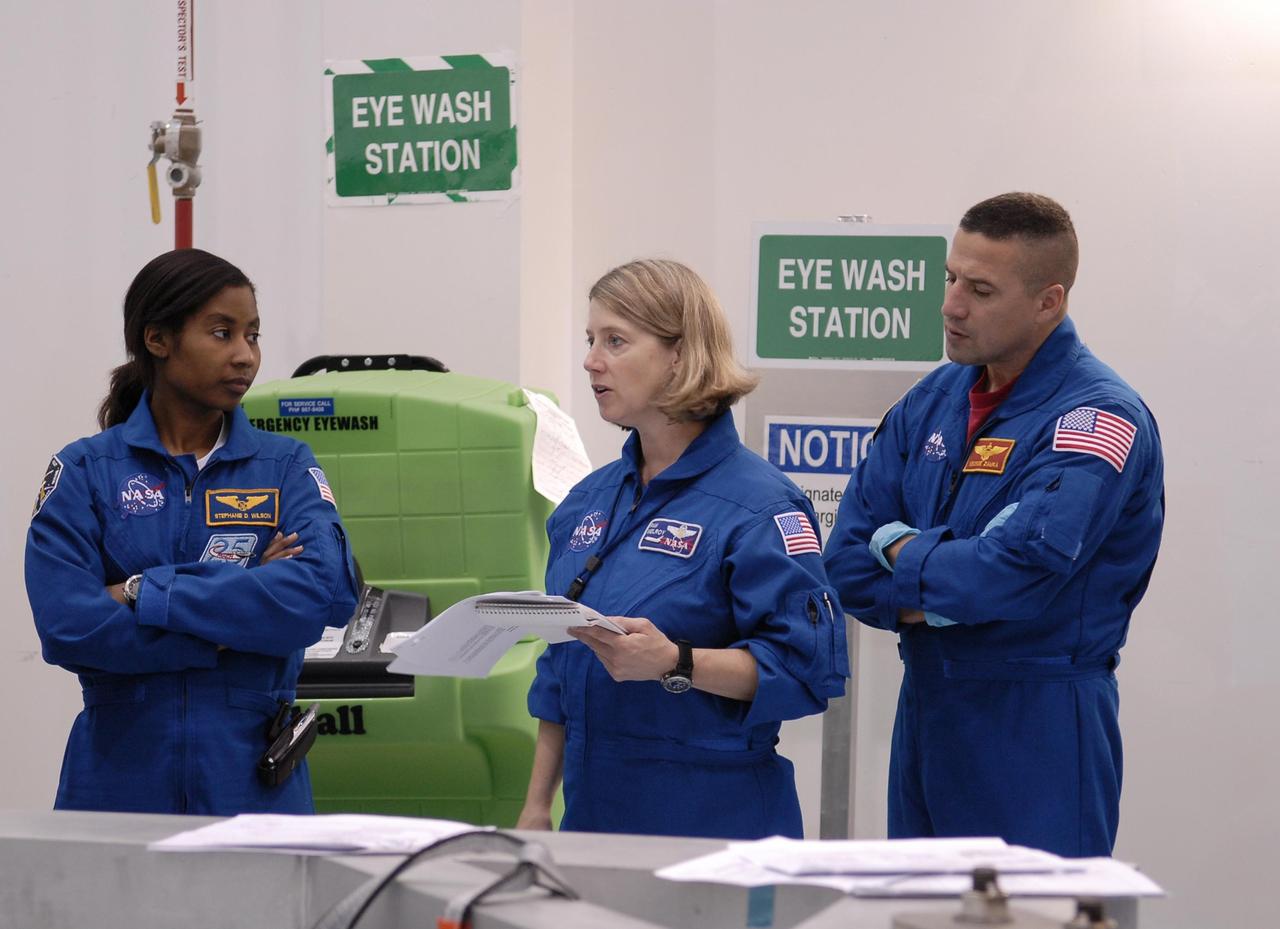
KENNEDY SPACE CENTER, FLA. -- During a familiarization visit to the Space Station Processing Facility, mission STS-120 Mission Specialist Stephanie Wilson, Commander Pam Melroy and Pilot George Zamka review safety procedures. Other STS-120 crew members include Mission Specialists Scott Parazynski, Douglas Wheelock, Daniel Tani, Paolo Nespoli (with the European Space Agency) and Clayton Anderson. Mission STS-120 will deliver the Node 2 "Harmony" connecting module to the station. During the mission, Tani and Anderson will transfer to the station and remain as flight engineers for Expedition 15. The mission is tentatively scheduled for August of this year. Photo credit: NASA/Kim Shiflett
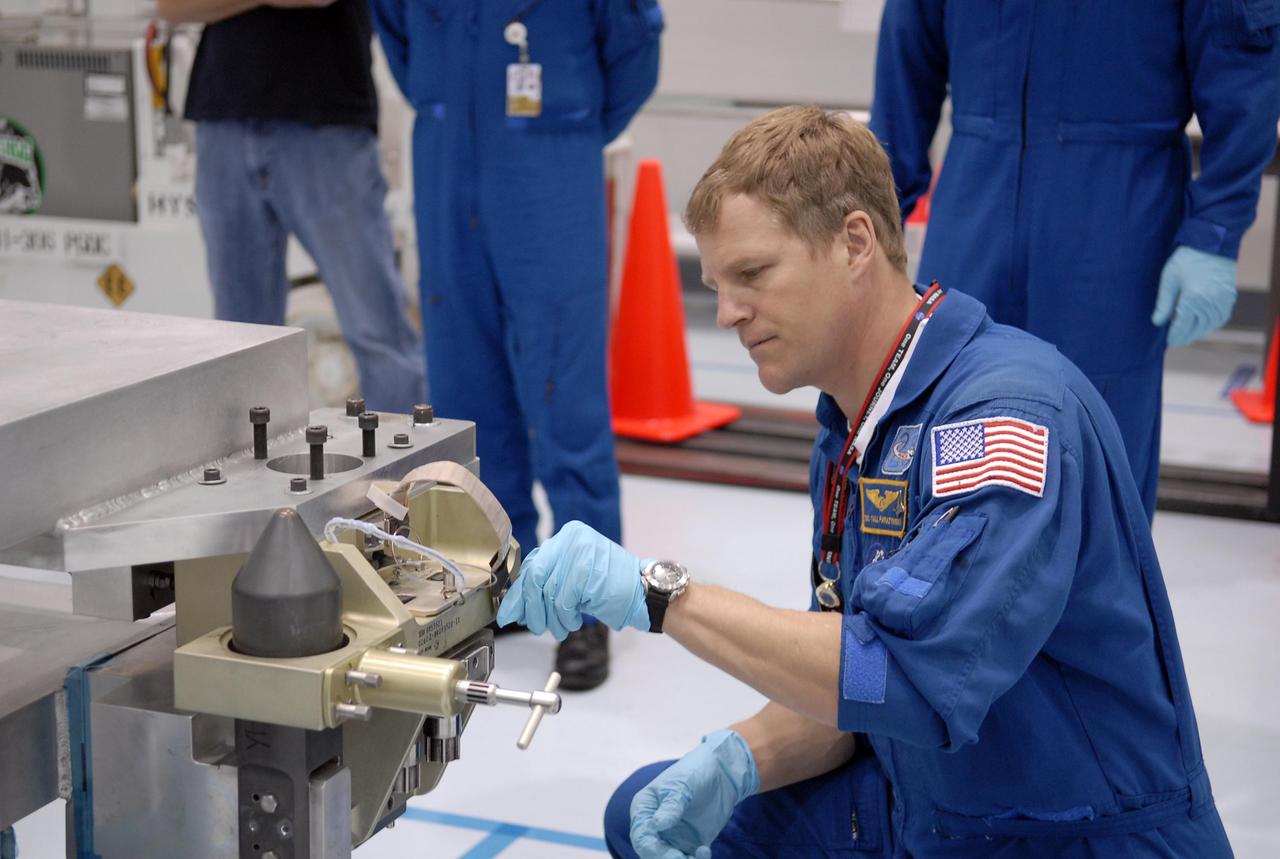
KENNEDY SPACE CENTER, FLA. -- Mission STS-120 Mission Specialist Scott Parazynski familiarizes himself with equipment inside the Space Station Processing Facility during a visit to Kennedy Space Center. Other STS-120 crew members include Commander Pam Melroy, Pilot George Zamka, and Mission Specialists Douglas Wheelock, Stephanie Wilson, Daniel Tani, Paolo Nespoli (with the European Space Agency) and Clayton Anderson. Mission STS-120 will deliver the Node 2 "Harmony" connecting module to the station. During the mission, Tani and Anderson will transfer to the station and remain as flight engineers for Expedition 15. The mission is tentatively scheduled for August of this year. Photo credit: NASA/Kim Shiflett
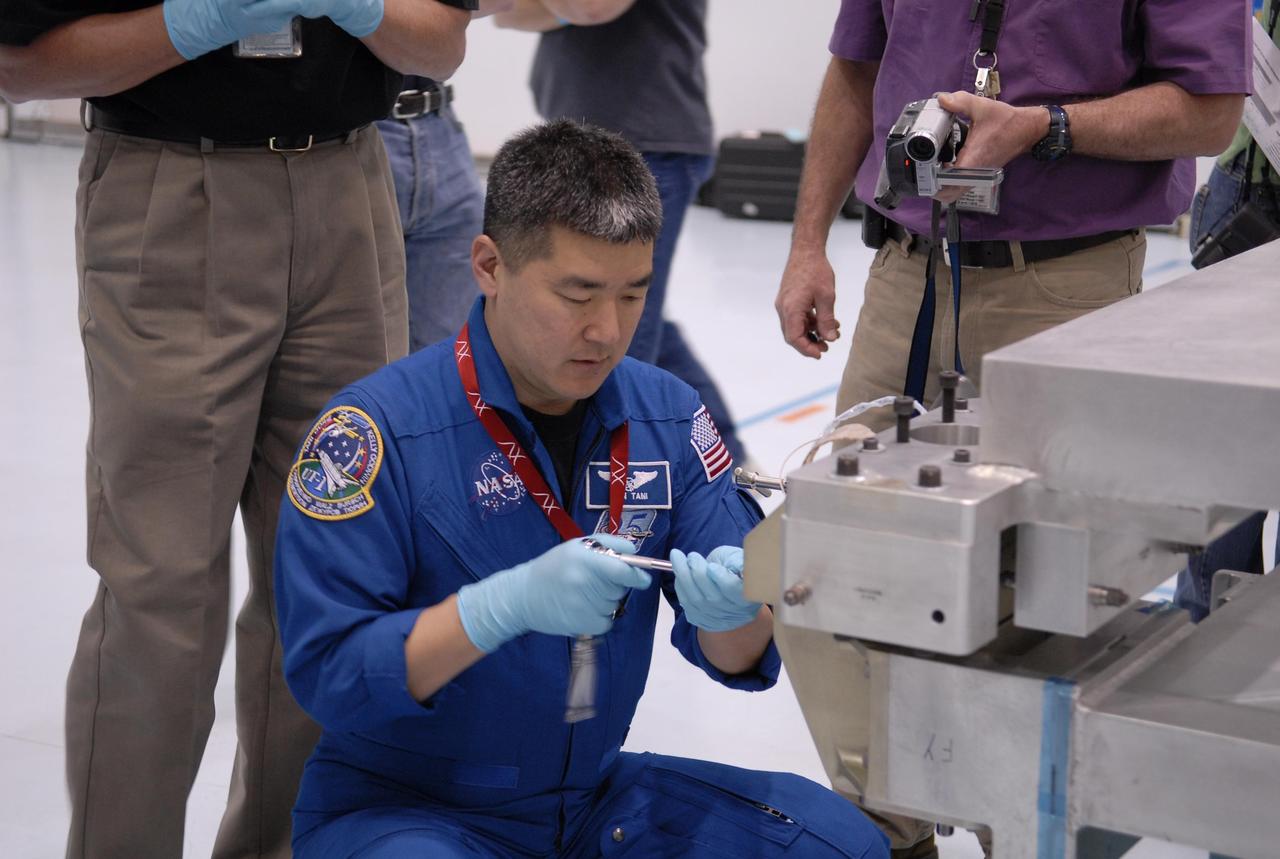
KENNEDY SPACE CENTER, FLA. -- Mission STS-120 Mission Specialist Daniel Tani familiarizes himself with equipment inside the Space Station Processing Facility during a visit to Kennedy Space Center. Other STS-120 crew members include Commander Pam Melroy, Pilot George Zamka, and Mission Specialists Scott Parazynski, Douglas Wheelock, Stephanie Wilson, Paolo Nespoli (with the European Space Agency) and Clayton Anderson. Mission STS-120 will deliver the Node 2 "Harmony" connecting module to the station. During the mission, Tani and Anderson will transfer to the station and remain as flight engineers for Expedition 15. The mission is tentatively scheduled for August of this year. Photo credit: NASA/Kim Shiflett
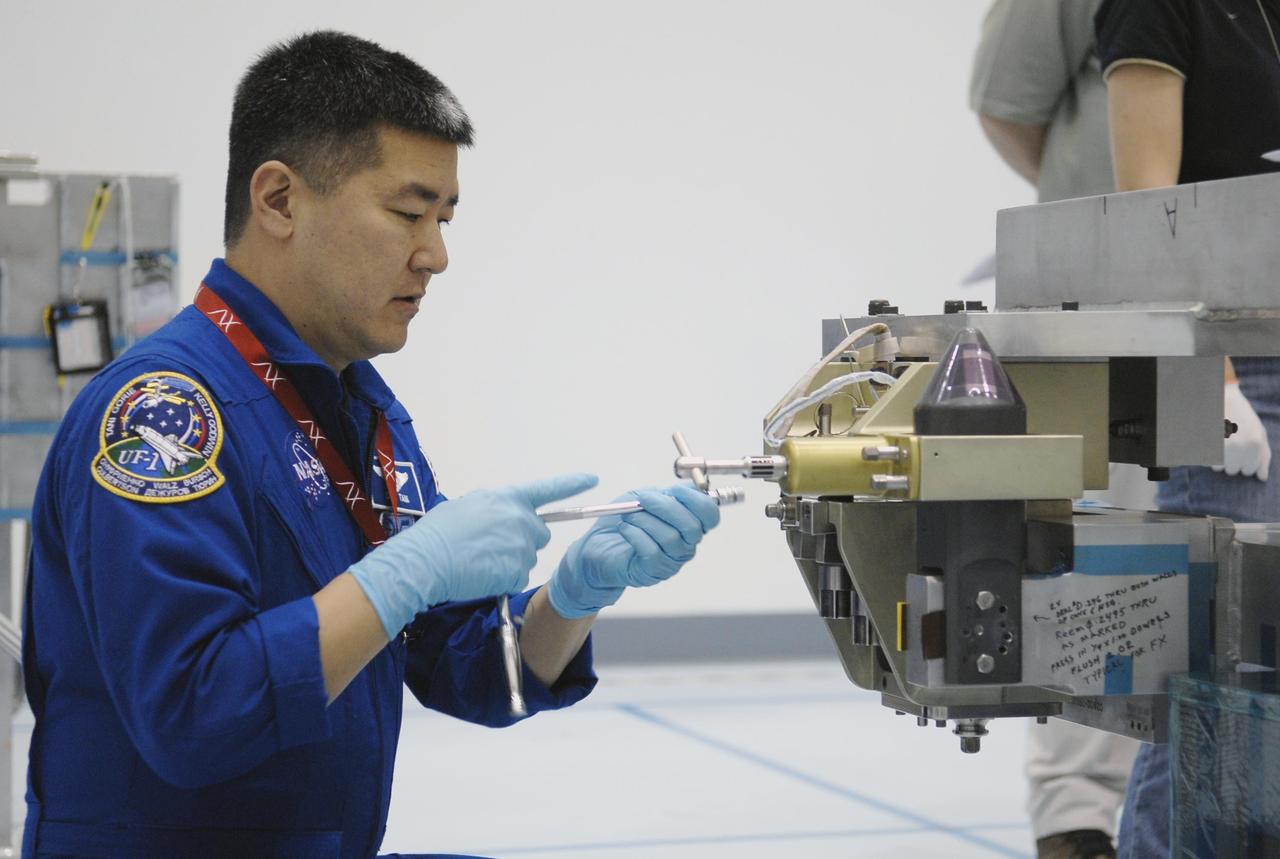
KENNEDY SPACE CENTER, FLA. -- Mission STS-120 Mission Specialist Daniel Tani familiarizes himself with equipment inside the Space Station Processing Facility during a visit to Kennedy Space Center. Other STS-120 crew members include Commander Pam Melroy, Pilot George Zamka, and Mission Specialists Scott Parazynski, Douglas Wheelock, Stephanie Wilson, Paolo Nespoli (with the European Space Agency) and Clayton Anderson. Mission STS-120 will deliver the Node 2 "Harmony" connecting module to the station. During the mission, Tani and Anderson will transfer to the station and remain as flight engineers for Expedition 15. The mission is tentatively scheduled for August of this year. Photo credit: NASA/Kim Shiflett
KENNEDY SPACE CENTER, FLA. -- Inside the Space Station Processing Facility, mission STS-120 crew members familiarize themselves with the Node 2 Harmony module during a visit to Kennedy Space Center. From left are Mission Specialist Scott Parazynski, Commander Pam Melroy and Mission Specialist Stephanie Wilson. Other crew members include Pilot George Zamka and Mission Specialists Douglas Wheelock, Paoli Nespoli (with the European Space Agency), Daniel Tani and Clayton Anderson. Mission STS-120 will deliver the Node 2 "Harmony" connecting module to the station. During the mission, Tani and Anderson will transfer to the station and remain as flight engineers for Expedition 15. The mission is tentatively scheduled for August of this year. Photo credit: NASA/Kim Shiflett
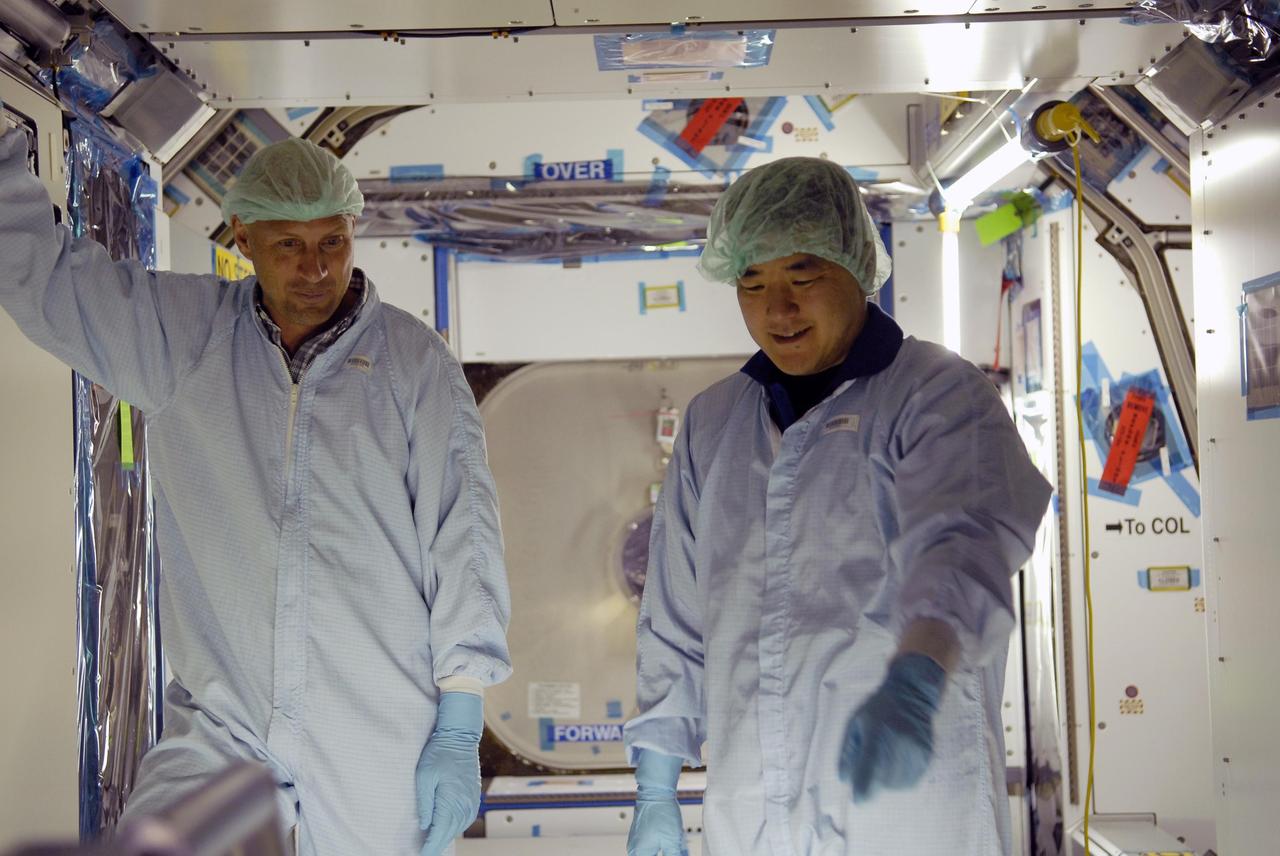
KENNEDY SPACE CENTER, FLA. -- Mission STS-120 Mission Specialists Clayton Anderson (left) and Daniel Tani familiarize themselves with the Node 2 Harmony module inside the Space Station Processing Facility during a visit to Kennedy Space Center. Other crew members include Commander Pam Melroy, Pilot George Zamka, and Mission Specialists Scott Parazynski, Douglas Wheelock, Stephanie Wilson and Paolo Nespoli (with the European Space Agency). Mission STS-120 will deliver the Node 2 "Harmony" connecting module to the station. During the mission, Tani and Anderson will transfer to the station and remain as flight engineers for Expedition 15. The mission is tentatively scheduled for August of this year. Photo credit: NASA/Kim Shiflett
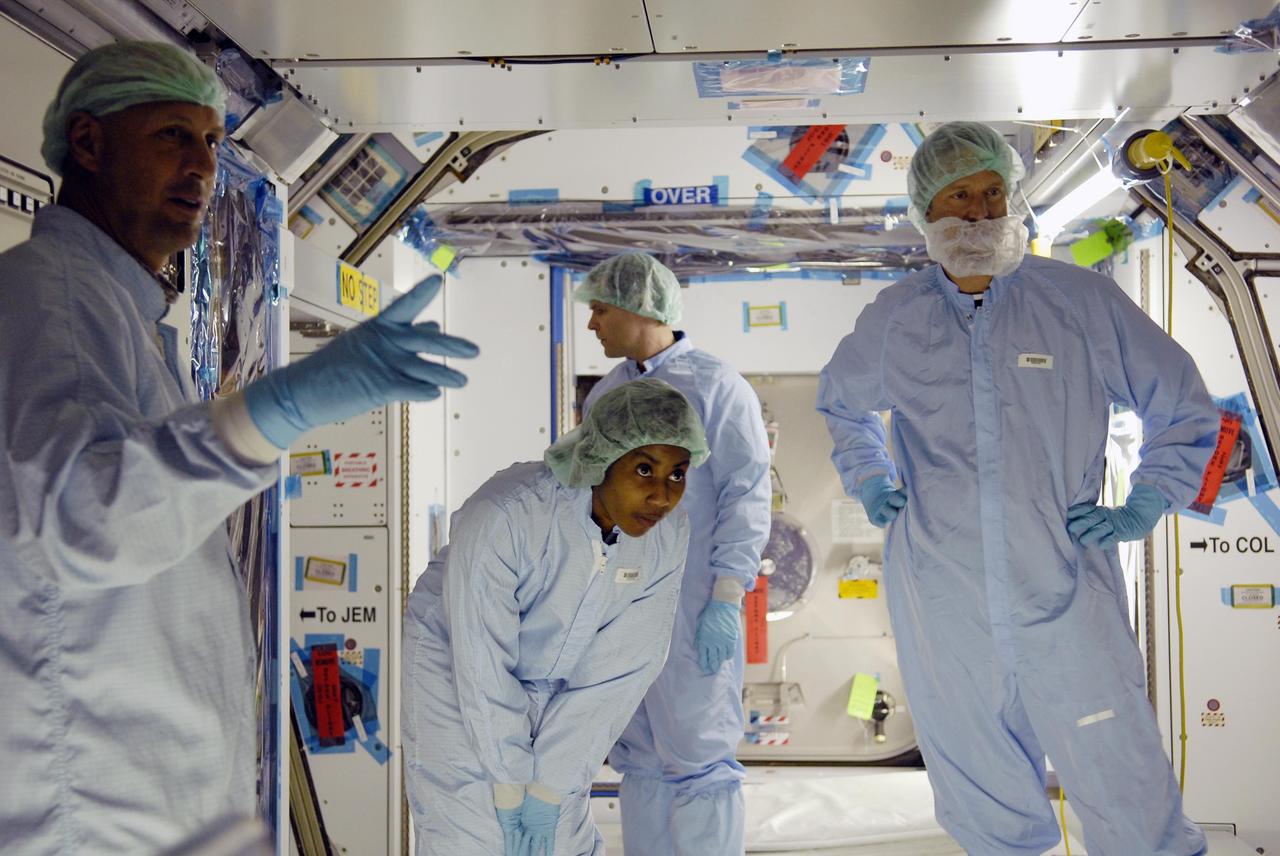
KENNEDY SPACE CENTER, FLA. -- Mission STS-120 crew members familiarize themselves with equipment and payloads inside the Space Station Processing Facility during a visit to Kennedy Space Center. Standing inside the Node 2 Harmony module are (from left) Mission Specialists Clayton Anderson and Stephanie Wilson. Other crew members include Commander Pam Melroy, Pilot George Zamka and Mission Specialists Scott Parazynski, Douglas Wheelock, Daniel Tani, Paolo Nespoli (with the European Space Agency) and Clayton Anderson. Mission STS-120 will deliver the Node 2 "Harmony" connecting module to the station. During the mission, Tani and Anderson will transfer to the station and remain as flight engineers for Expedition 15. The mission is tentatively scheduled for August of this year. Photo credit: NASA/Kim Shiflett
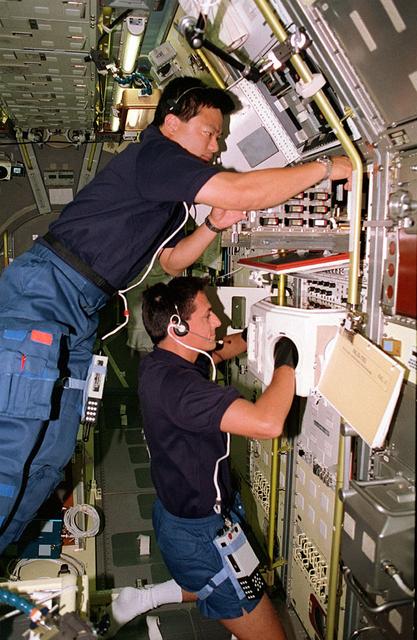
Onboard Space Shuttle Columbia (STS-65) Mission Specialist Leroy Chiao (top) and Mission Specialist Donald A. Thomas are seen at work in the International Microgravity Laboratory 2 (IML-2) spacelab science module. The two crewmembers are conducting experiments at the IML-2 Rack 5 Biorack (BR). Chiao places a sample in the BR incubator as Thomas handles another sample inside the BR glovebox. The glovebox is used to prepare samples for BR and slow rotating centrifuge microscope (NIZEMI) experiments.
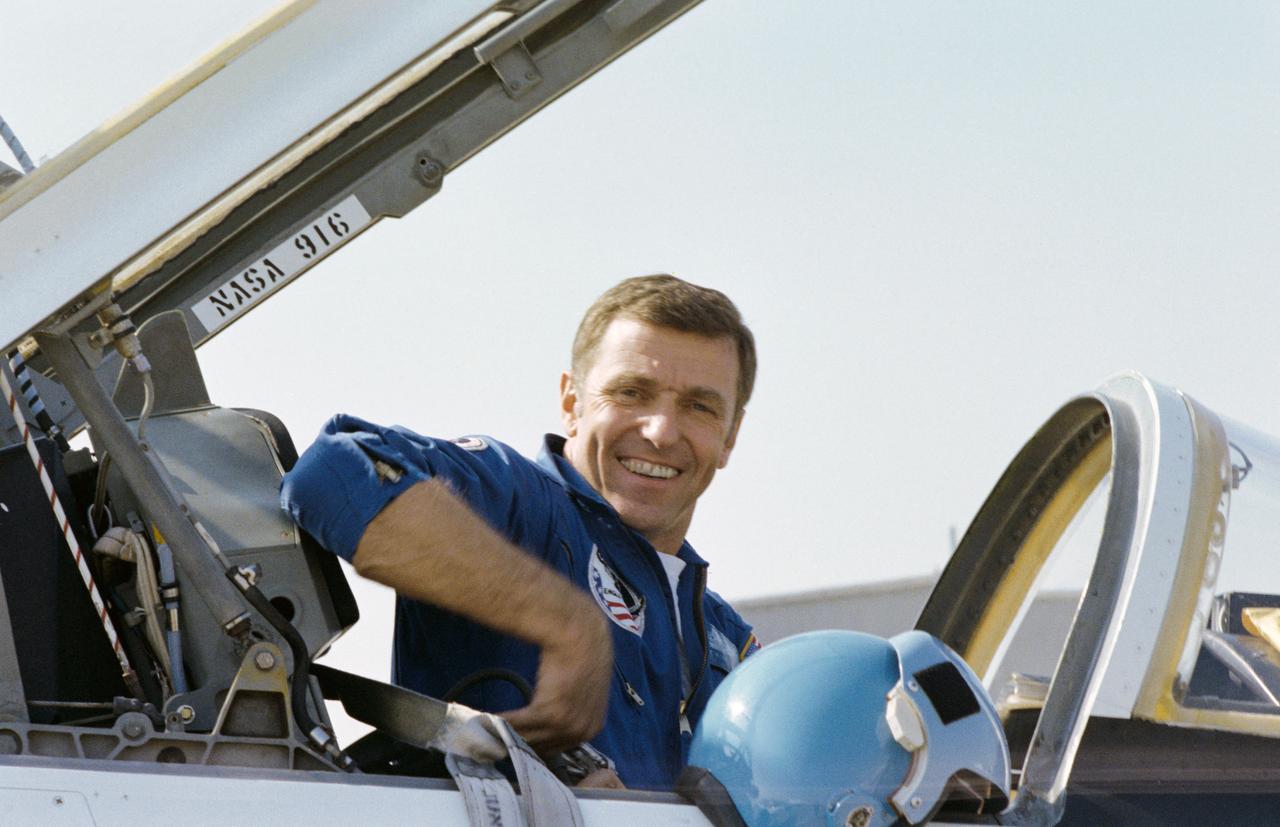
Views of STS-2 Crewmen Truly and Engle in T-38's for departure for KSC and the STS-2 Mission. 1. AIRCRAFT - T-38 EAFB, HOUSTON, TX
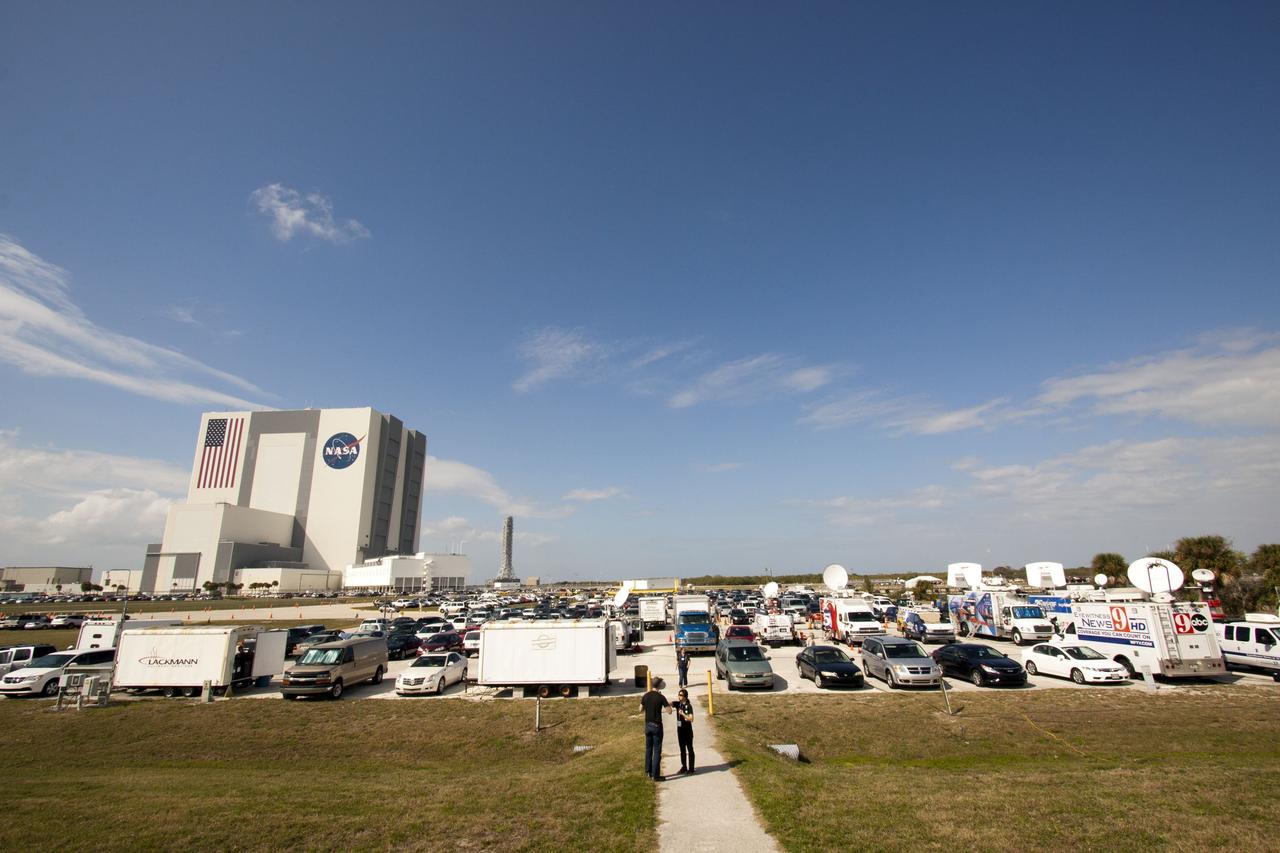
CAPE CANAVERAL, Fla. -- The enormous Vehicle Assembly Building is seen prominently in the background at NASA's Kennedy Space Center in Florida, overlooking the parking spaces below the Press Site filled with news satellite trucks and media vehicles, there to cover the final launch of space shuttle Discovery on the STS-133 mission. Discovery and its six-member crew will deliver the Permanent Multipurpose Module, packed with supplies and critical spare parts, as well as Robonaut 2 to the International Space Station. For more information on the STS-133 mission, visit www.nasa.gov/mission_pages/shuttle/shuttlemissions/sts133/. Photo Credit: NASA/Troy Cryder
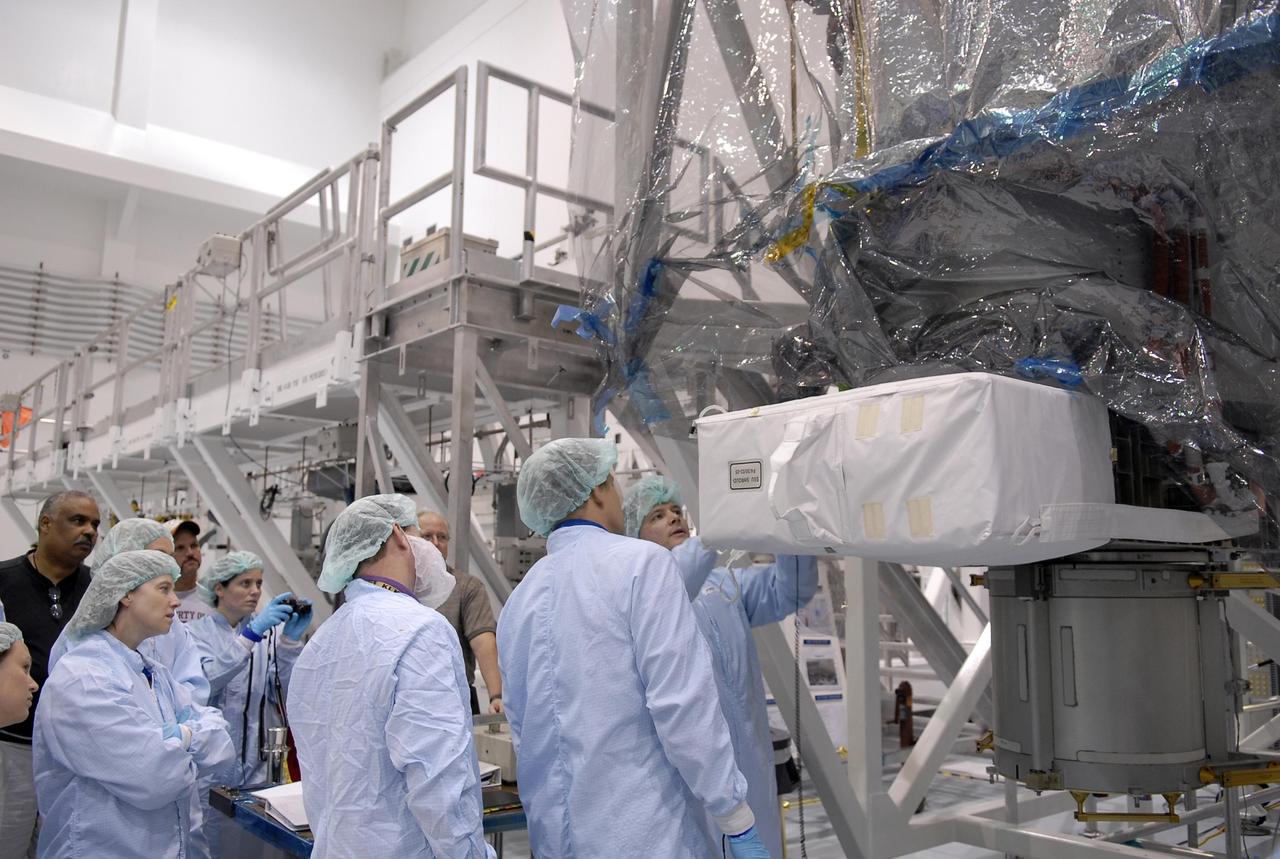
KENNEDY SPACE CENTER, FLA. -- Inside the Space Station Processing Facility, mission STS-120 crew members familiarize themselves with equipment during a visit to Kennedy Space Center. Crew members are Commander Pam Melroy, Pilot George Zamka and Mission Specialists Scott Parazynski, Douglas Wheelock, Stephanie Wilson, Paolo Nespoli (with the European Space Agency), Daniel Tani and Clayton Anderson. Mission STS-120 will deliver the Node 2 "Harmony" connecting module to the station. During the mission, Tani and Anderson will transfer to the station and remain as flight engineers for Expedition 15. The mission is tentatively scheduled for August of this year. Photo credit: NASA/Kim Shiflett
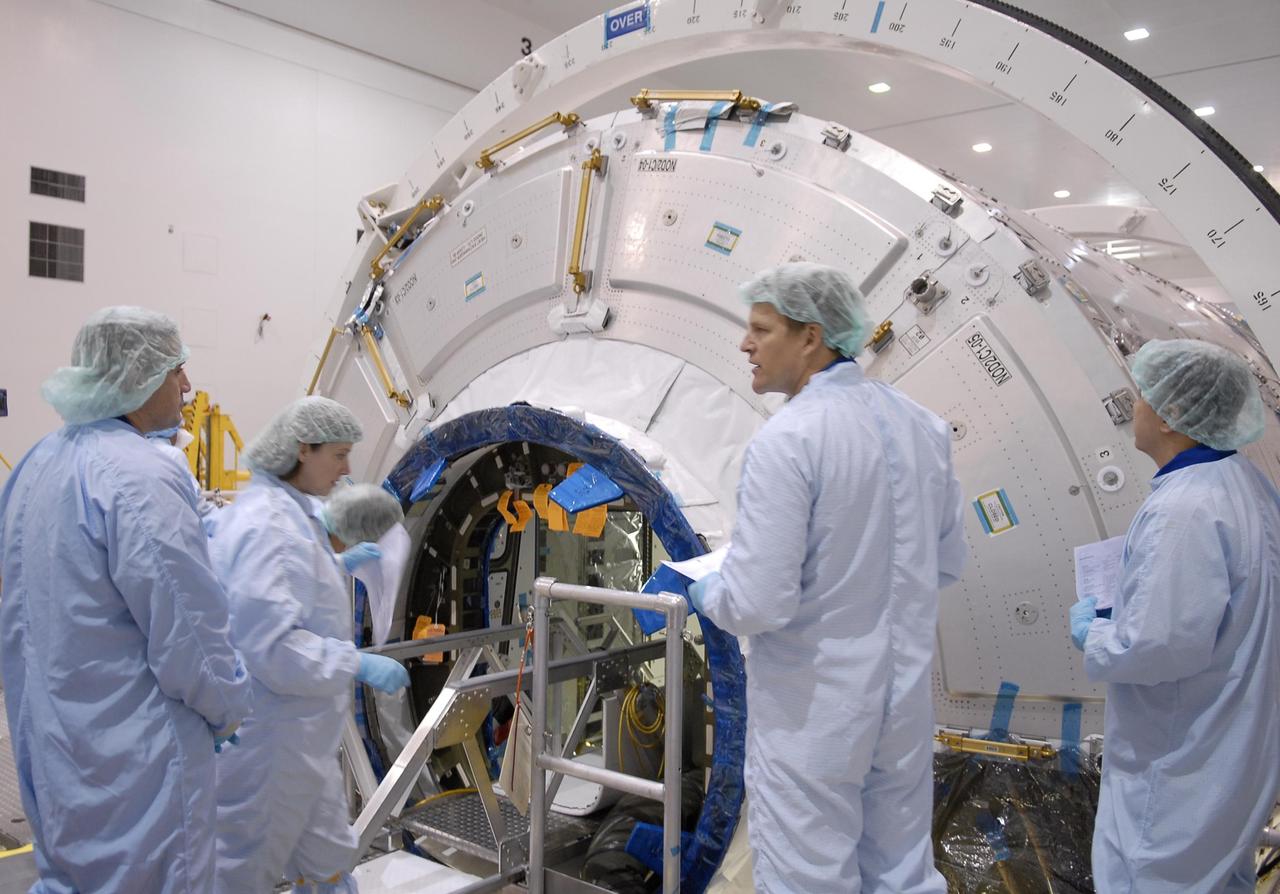
KENNEDY SPACE CENTER, FLA. -- Inside the Space Station Processing Facility, mission STS-120 crew members familiarize themselves with equipment during a visit to Kennedy Space Center. Crew members are Commander Pam Melroy, Pilot George Zamka and Mission Specialists Scott Parazynski, Douglas Wheelock, Stephanie Wilson, Paolo Nespoli (with the European Space Agency), Daniel Tani and Clayton Anderson. Mission STS-120 will deliver the Node 2 "Harmony" connecting module to the station. During the mission, Tani and Anderson will transfer to the station and remain as flight engineers for Expedition 15. The mission is tentatively scheduled for August of this year. Photo credit: NASA/Kim Shiflett
KENNEDY SPACE CENTER, FLA. -- Mission STS-120 Mission Specialists Douglas Wheelock (left) and Scott Parazynski familiarize themselves with equipment inside the Space Station Processing Facility during a visit to Kennedy Space Center. Other crew members include Commander Pam Melroy, Pilot George Zamka and Mission Specialists Stephanie Wilson, Paolo Nespoli (with the European Space Agency), Daniel Tani and Clayton Anderson. Mission STS-120 will deliver the Node 2 "Harmony" connecting module to the station. During the mission, Tani and Anderson will transfer to the station and remain as flight engineers for Expedition 15. The mission is tentatively scheduled for August of this year. Photo credit: NASA/Kim Shiflett
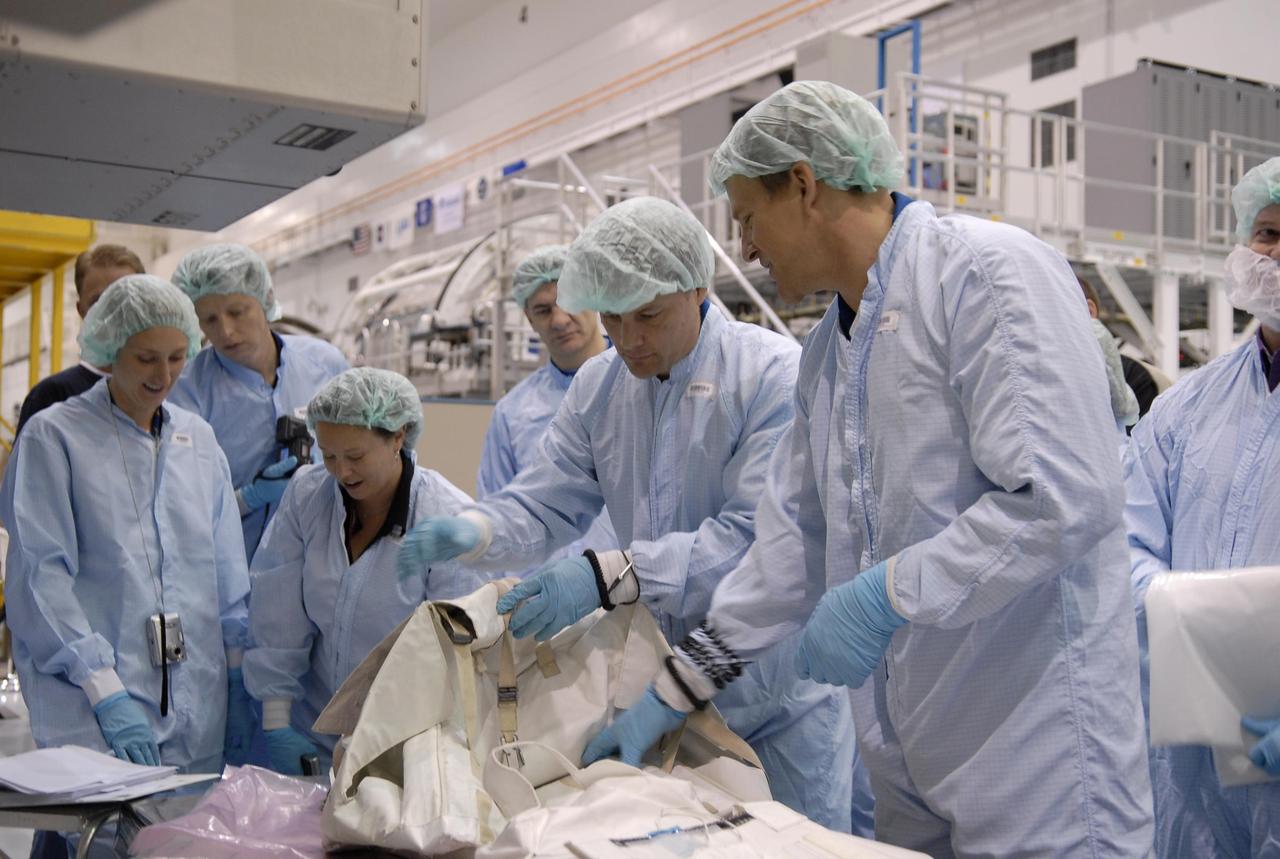
KENNEDY SPACE CENTER, FLA. -- Inside the Space Station Processing Facility, mission STS-120 crew members familiarize themselves with equipment. Beginning third from left are Commander Pam Melroy, Mission Specialists Paolo Nespoli (with the European Space Agency), Douglas Wheelock and Scott Parazynski. Other crew members include Pilot George Zamka and Mission Specialists Stephanie Wilson, Daniel Tani and Clayton Anderson. Mission STS-120 will deliver the Node 2 "Harmony" connecting module to the station. During the mission, Tani and Anderson will transfer to the station and remain as flight engineers for Expedition 15. The mission is tentatively scheduled for August of this year. Photo credit: NASA/Kim Shiflett
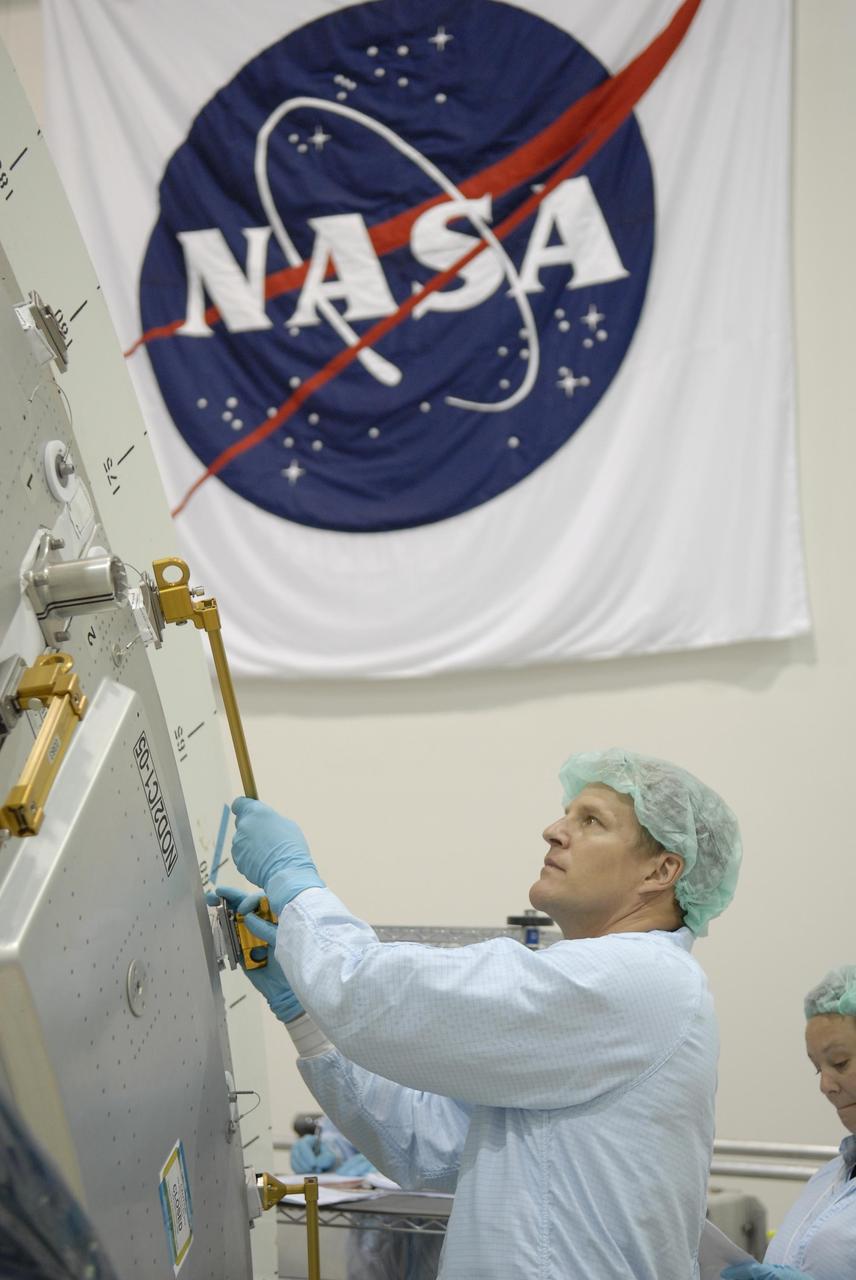
KENNEDY SPACE CENTER, FLA. -- With the NASA logo serving as a backdrop, STS-120 Mission Specialist Scott Parazynski familiarizes himself with equipment inside the Space Station Processing Facility during a visit to Kennedy Space Center. Other crew members include Commander Pam Melroy, Pilot George Zamka, and Mission Specialists Douglas Wheelock, Stephanie Wilson, Daniel Tani, Paolo Nespoli (with the European Space Agency) and Clayton Anderson. Mission STS-120 will deliver the Node 2 "Harmony" connecting module to the station. During the mission, Tani and Anderson will transfer to the station and remain as flight engineers for Expedition 15. The mission is tentatively scheduled for August of this year. Photo credit: NASA/Kim Shiflett
KENNEDY SPACE CENTER, FLA. -- Mission STS-120 Mission Specialists Douglas Wheelock (left) and Scott Parazynski familiarize themselves with equipment inside the Space Station Processing Facility during a visit to Kennedy Space Center. Other crew members include Commander Pam Melroy, Pilot George Zamka and Mission Specialists Stephanie Wilson, Paolo Nespoli (with the European Space Agency), Daniel Tani and Clayton Anderson. Mission STS-120 will deliver the Node 2 "Harmony" connecting module to the station. During the mission, Tani and Anderson will transfer to the station and remain as flight engineers for Expedition 15. The mission is tentatively scheduled for August of this year. Photo credit: NASA/Kim Shiflett
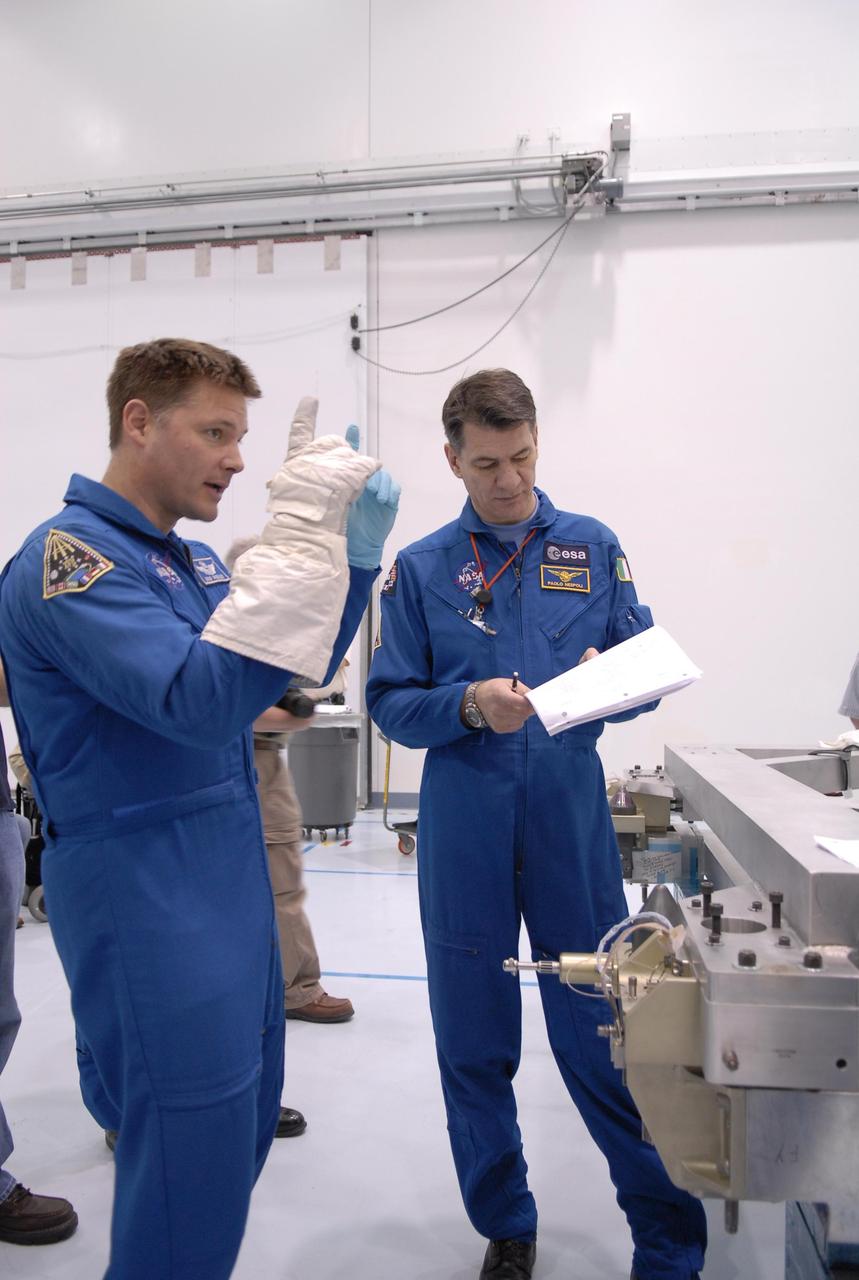
KENNEDY SPACE CENTER, FLA. -- Mission STS-120 Mission Specialists Douglas Wheelock and Paolo Nespoli (with the European Space Agency) familiarize themselves with equipment inside the Space Station Processing Facility during a visit to Kennedy Space Center. Other crew members include Commander Pam Melroy, Pilot George Zamka and Mission Specialists Scott Parazynski, Stephanie Wilson, Daniel Tani and Clayton Anderson. Mission STS-120 will deliver the Node 2 "Harmony" connecting module to the station. During the mission, Tani and Anderson will transfer to the station and remain as flight engineers for Expedition 15. The mission is tentatively scheduled for August of this year. Photo credit: NASA/Kim Shiflett
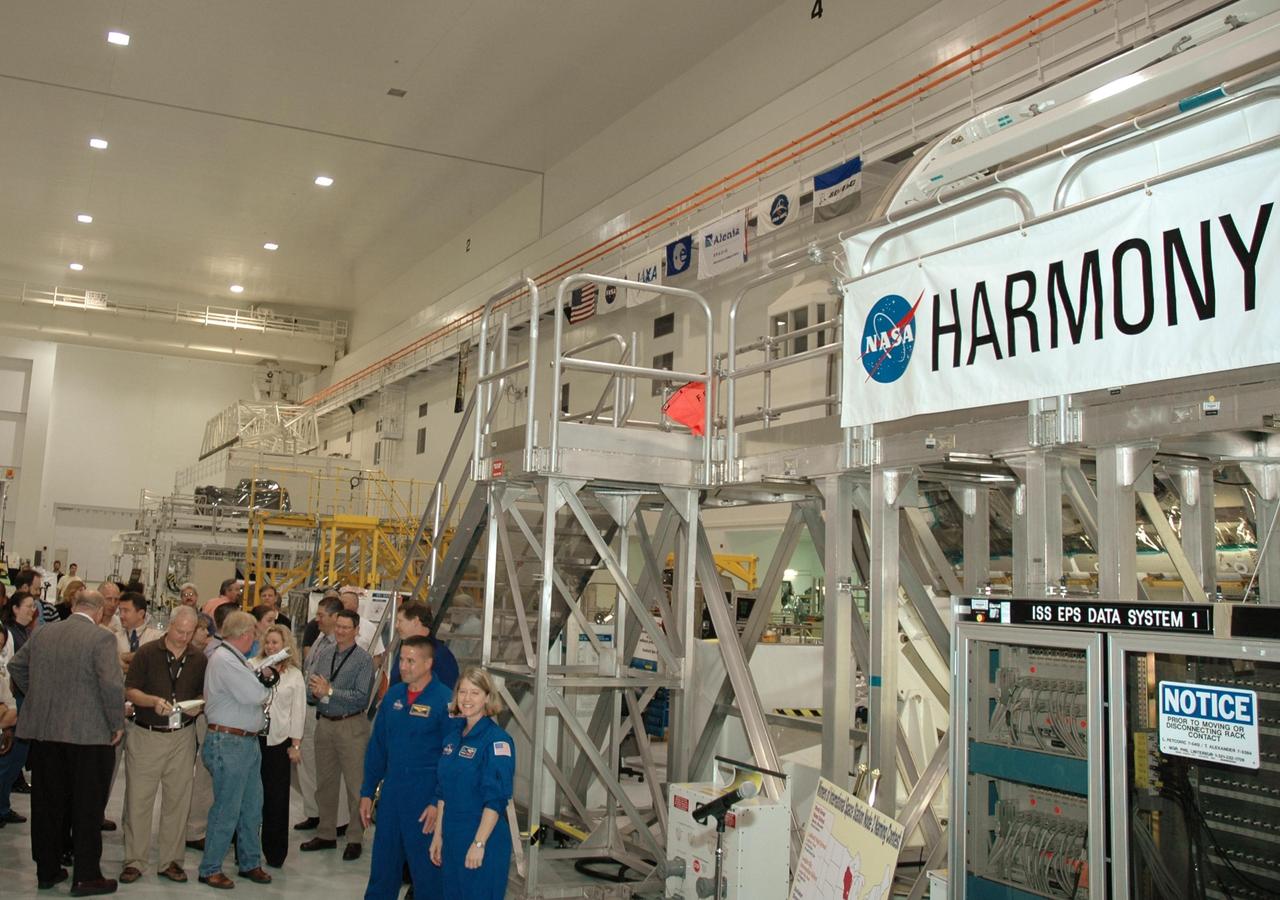
KENNEDY SPACE CENTER, FLA. -- In the Space Station Processing Facility, Mission STS-120 Pilot George Zamka (left) and Commander Pam Melroy stand in front of the Node 2 module with it's new name, Harmony, unveiled. The name, Harmony, was chosen from an academic competition involving thousands of students in kindergarten through high school. The Node 2 Challenge required students to learn about the International Space Station, build a scale model of the module, and write an essay explaining their proposed name. This will be the first U.S. piece of the space station named by someone other than a NASA official. Node 2 is a pressurized module that will act as a connecting port and passageway to additional international science labs and supply spacecraft. It also will be a work platform for the station's robotic arm. The module is scheduled to fly on mission STS-120 aboard Space Shuttle Atlantis targeted for later this year. Photo credit: NASA/Jim Grossmann
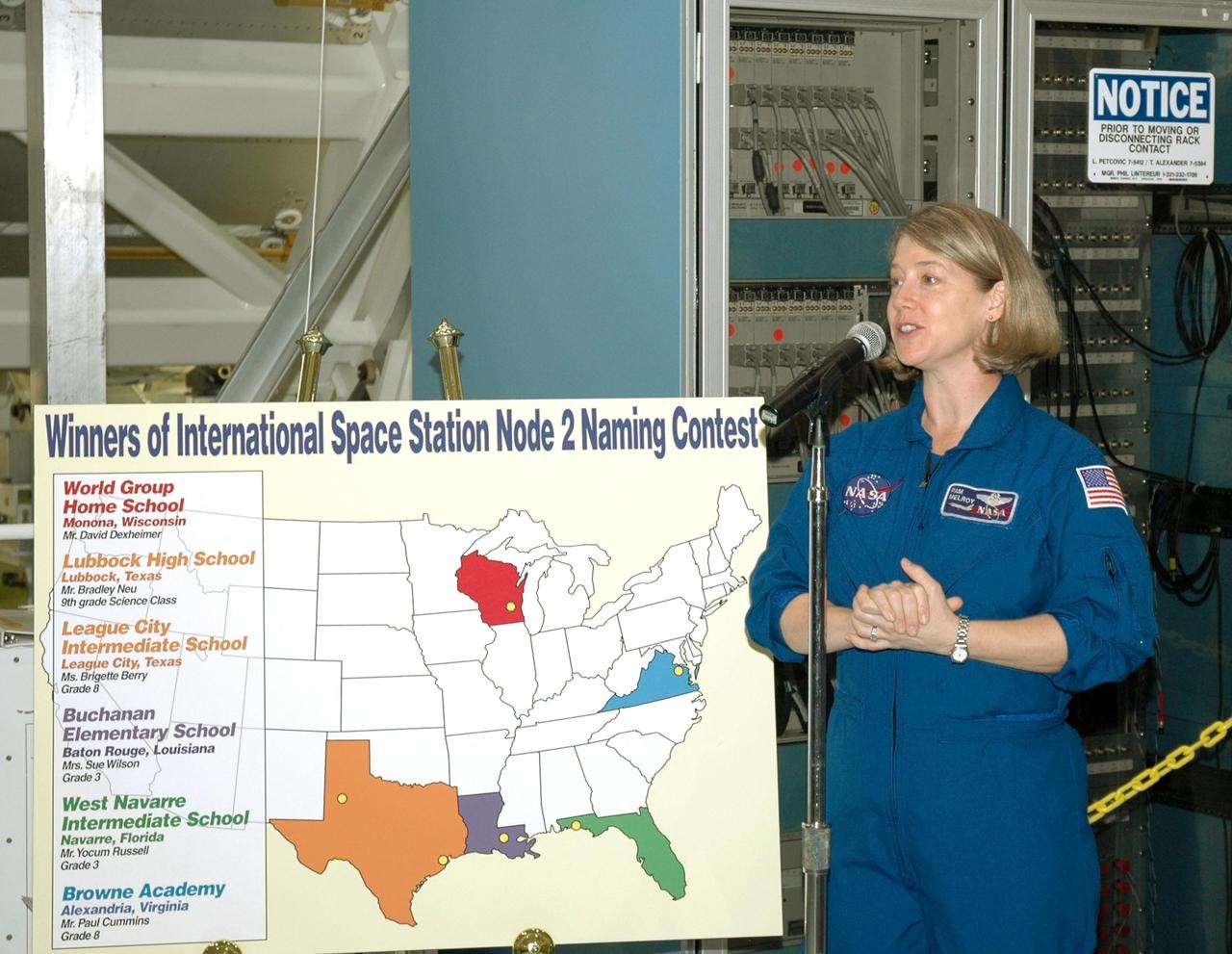
KENNEDY SPACE CENTER, FLA. -- In the Space Station Processing Facility, Mission STS-120 Commander Pam Melroy speaks to members of the press and guests during a ceremony to unveil the new name of NASA's Node 2 module, Harmony. The name, Harmony, was chosen from an academic competition involving thousands of students in kindergarten through high school. The Node 2 Challenge required students to learn about the International Space Station, build a scale model of the module, and write an essay explaining their proposed name. This will be the first U.S. piece of the space station named by someone other than a NASA official. Node 2 is a pressurized module that will act as a connecting port and passageway to additional international science labs and supply spacecraft. It also will be a work platform for the station's robotic arm. The module is scheduled to fly on mission STS-120 aboard Space Shuttle Atlantis targeted for later this year. Photo credit: NASA/Jim Grossmann
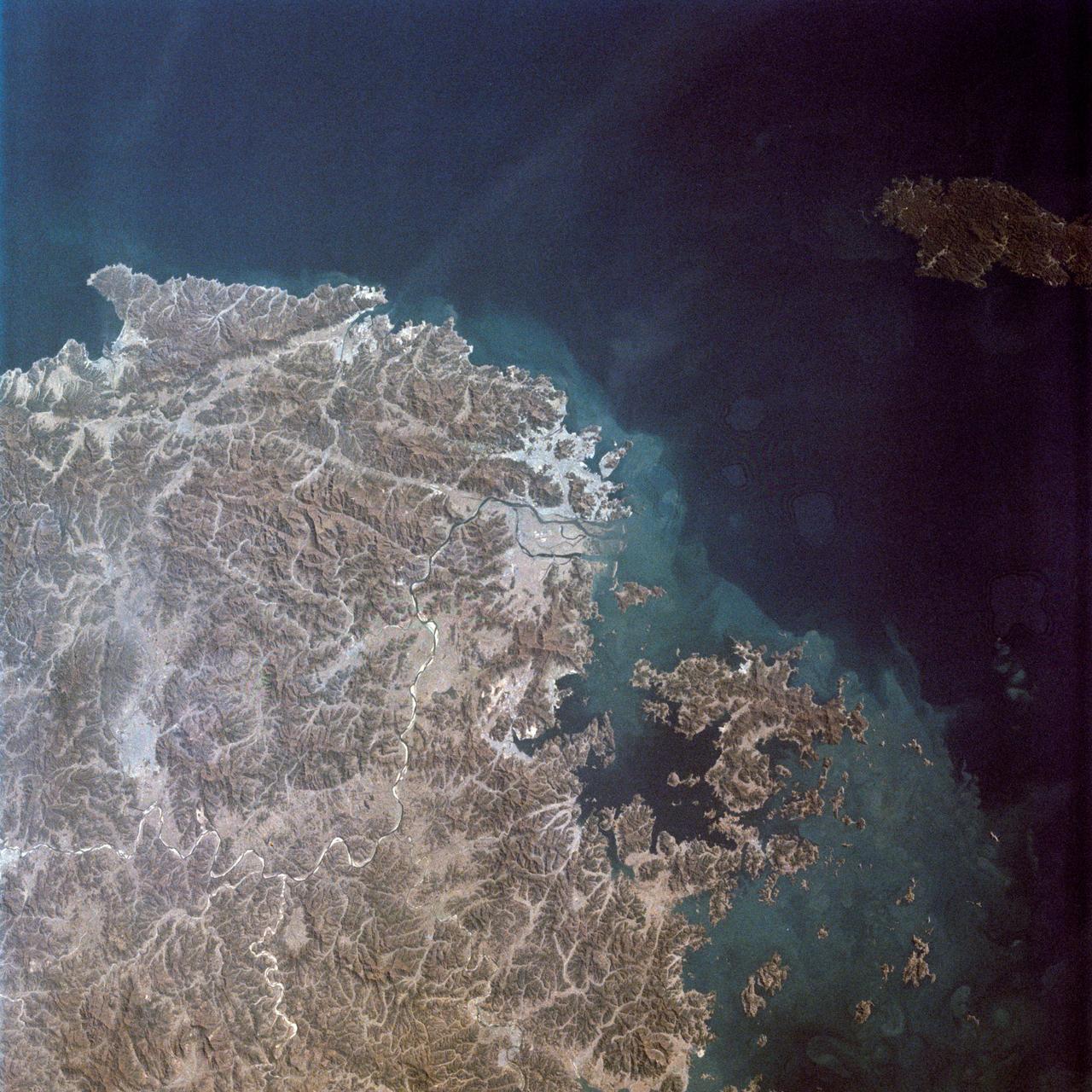
Onboard views by the STS-2 Crew of the Payload Bay with Office of Space and Terrestrial Applications (OSTA)-1 Payload, the Remote Manipulator System (RMS) and Earth views of: Korea, China and Columbia. Also available in 4x5 BW 1. REAGAN, RONALD PRESIDENT - MOCR (STS-2) JSC, HOUSTON, TX Also available in 4x5 BW, 35 CN, 35 BW
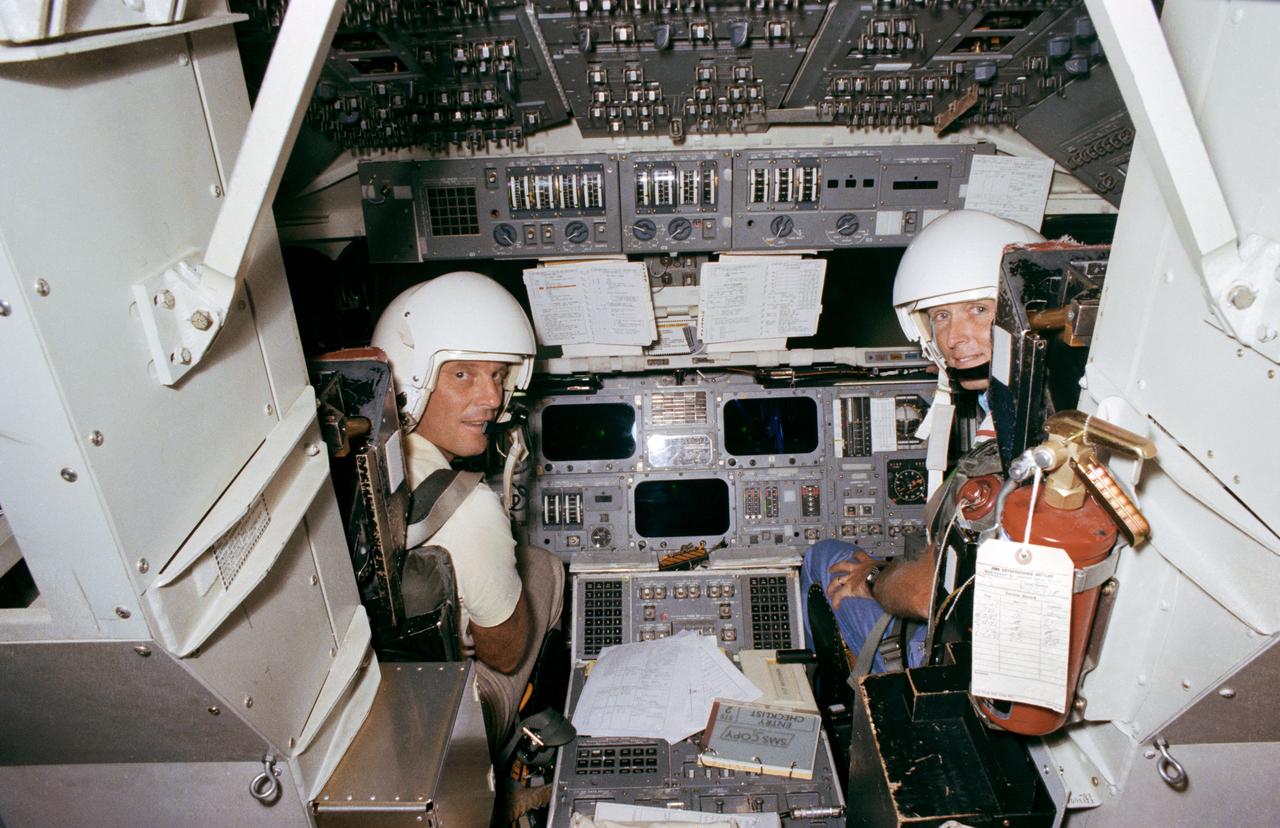
S81-36714 (14 Nov. 1981) --- These two veteran astronauts were named today as the official prime crew members of STS-3 in the space shuttle Columbia. Commander for NASA?s third space shuttle orbital flight test is astronaut Jack R. Lousma, left, seated in a Shuttle Mission Simulator (SMS) at NASA's Johnson Space Center (JSC). Astronaut C. Gordon Fullerton, right, will serve as pilot. Lousma was pilot on the second of three NASA crews to visit the Earth orbiting Skylab space station in 1973. Fullerton, though never having been in space, is a veteran of three free flights of the shuttle during approach and landing tests (ALT) with space shuttle Enterprise in 1977. Photo credit: NASA
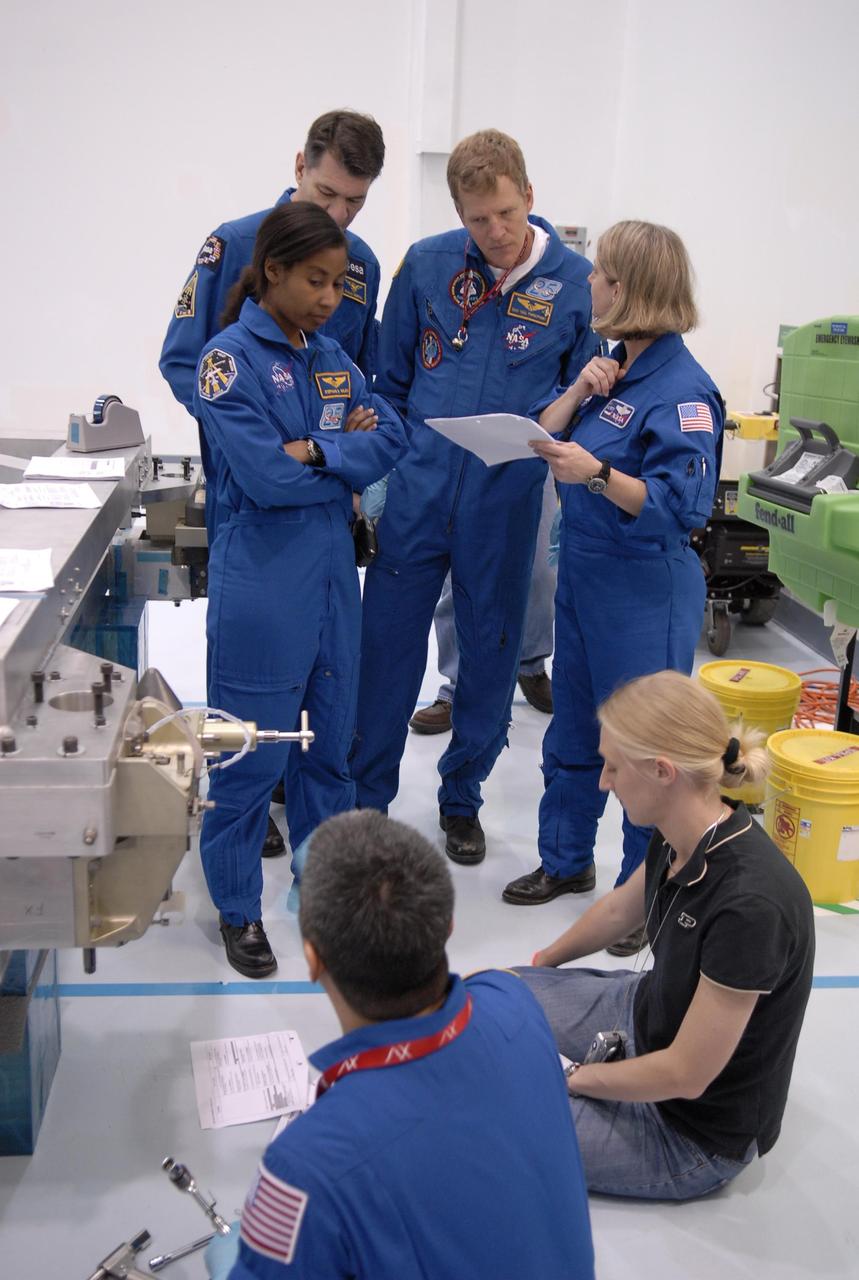
KENNEDY SPACE CENTER, FLA. -- Mission STS-120 crew members familiarize themselves with equipment inside the Space Station Processing Facility during a visit to Kennedy Space Center. Standing from left, are Mission Specialists Stephanie Wilson, Paolo Nespoli (with the European Space Agency), Scott Parazynski and Commander Pam Melroy. In the foreground at left is Mission Specialist Daniel Tani. Other crew members include Pilot George Zamka and Mission Specialists Douglas Wheelock and Clayton Anderson. Mission STS-120 will deliver the Node 2 "Harmony" connecting module to the station. During the mission, Tani and Anderson will transfer to the station and remain as flight engineers for Expedition 15. The mission is tentatively scheduled for August of this year. Photo credit: NASA/Kim Shiflett
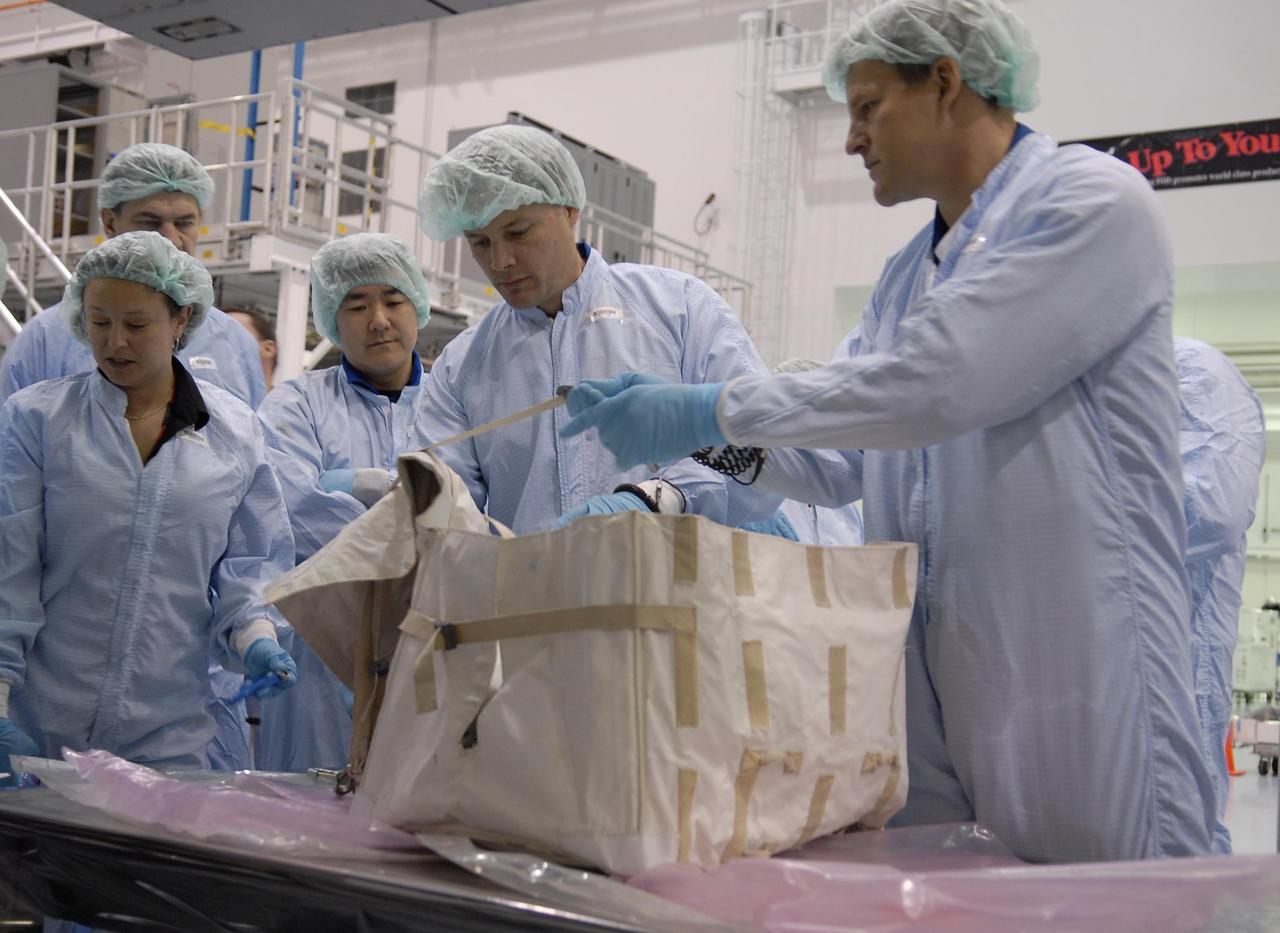
KENNEDY SPACE CENTER, FLA. -- Mission STS-120 crew members familiarize themselves with equipment inside the Space Station Processing Facility during a visit to Kennedy Space Center. From the left are Commander Pam Melroy and Mission Specialists Paolo Nespoli (with the European Space Agency), Daniel Tani, Douglas Wheelock and Scott Parazynski. Other crew members include Pilot George Zamka and Mission Specialists Stephanie Wilson and Clayton Anderson. Mission STS-120 will deliver the Node 2 "Harmony" connecting module to the station. During the mission, Tani and Anderson will transfer to the station and remain as flight engineers for Expedition 15. The mission is tentatively scheduled for August of this year. Photo credit: NASA/Kim Shiflett
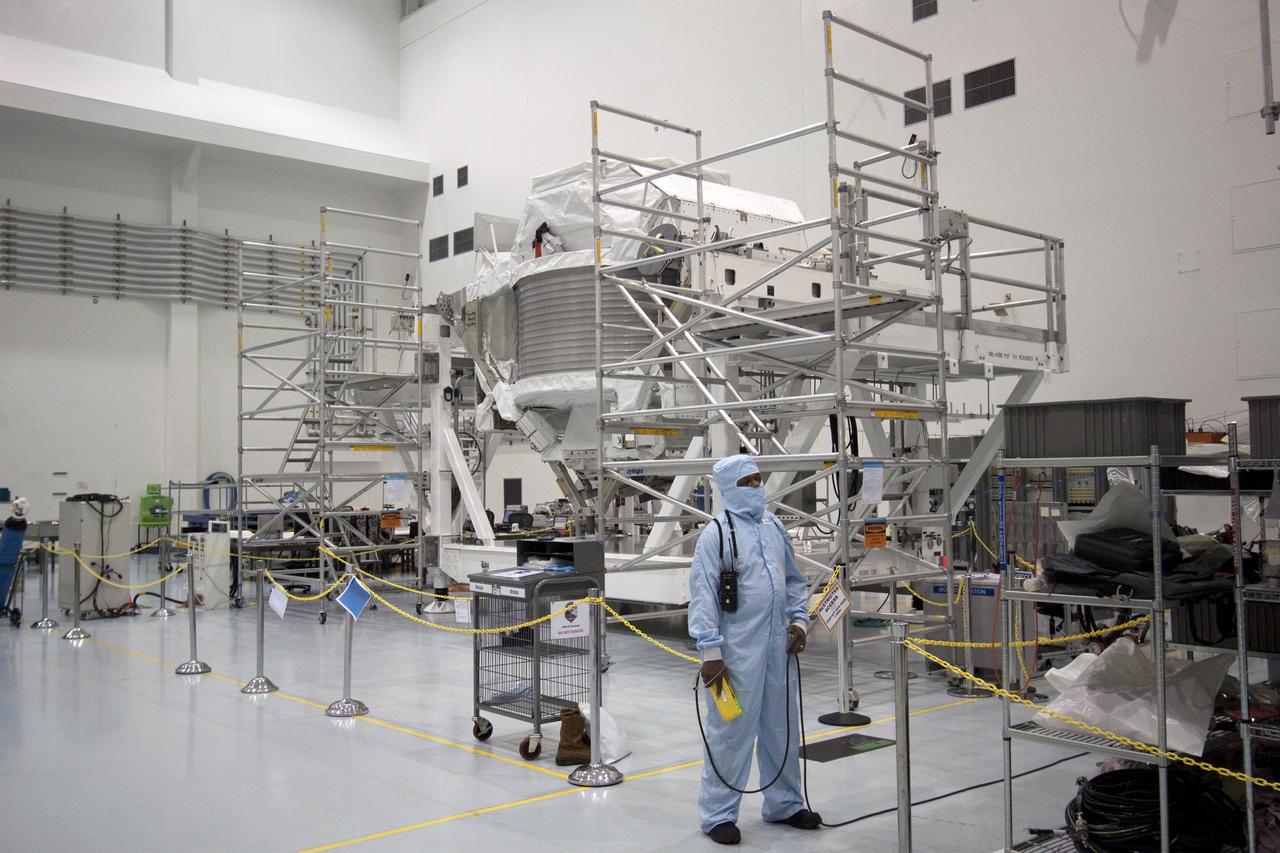
CAPE CANAVERAL, Fla. -- In the Space Station Processing Facility at NASA's Kennedy Space Center in Florida, the Alpha Magnetic Spectrometer-2 (AMS) sits in its cargo element work stand, where technicians will continue to process the experiment for launch. AMS is designed to operate as an external experiment on the International Space Station. It will use the unique environment of space to study the universe and its origin by searching for dark matter. AMS will fly to the station aboard space shuttle Endeavour's STS-134 mission targeted to launch Feb. 27, 2011. Photo credit: NASA/Jack Pfaller
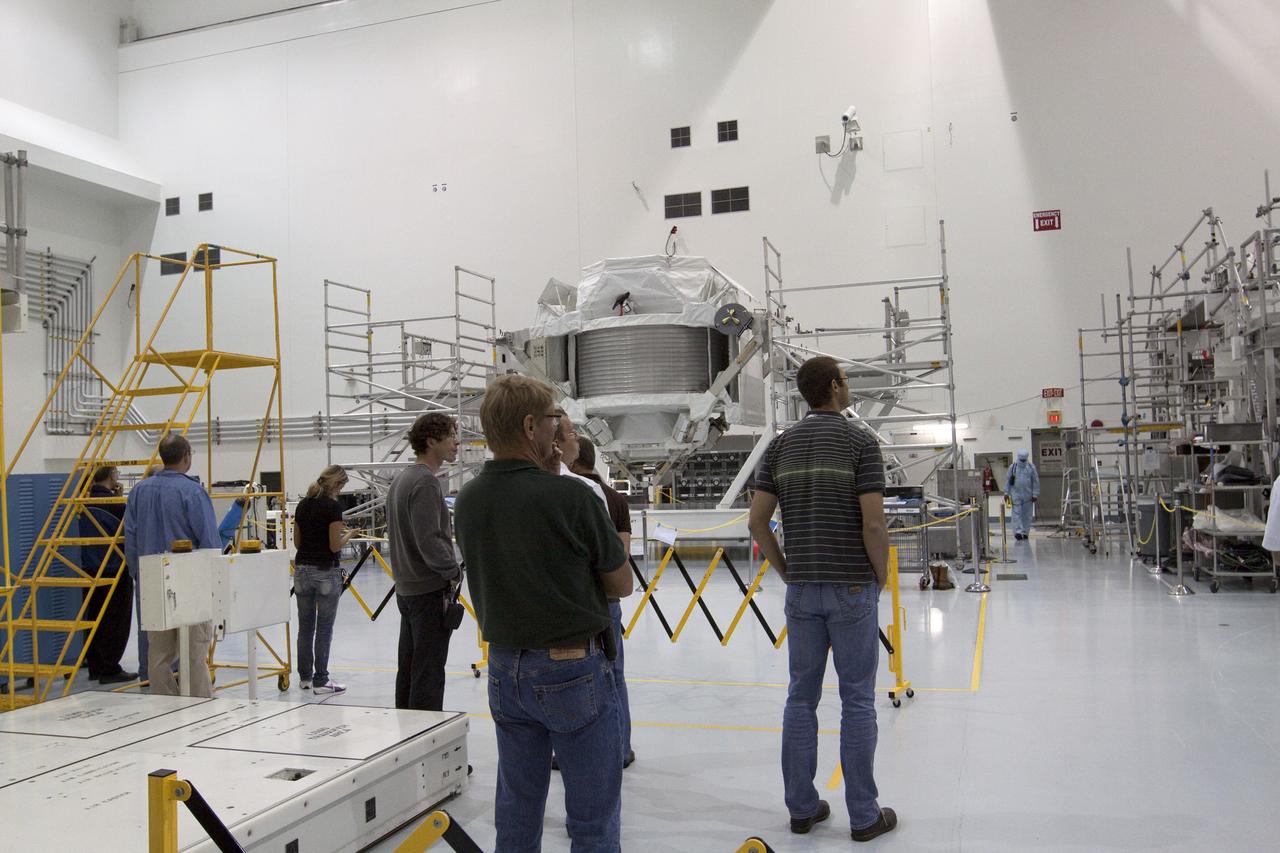
CAPE CANAVERAL, Fla. -- In the Space Station Processing Facility at NASA's Kennedy Space Center in Florida, the Alpha Magnetic Spectrometer-2 (AMS) sits in its cargo element work stand, where technicians will continue to process the experiment for launch. AMS is designed to operate as an external experiment on the International Space Station. It will use the unique environment of space to study the universe and its origin by searching for dark matter. AMS will fly to the station aboard space shuttle Endeavour's STS-134 mission targeted to launch Feb. 27, 2011. Photo credit: NASA/Jack Pfaller
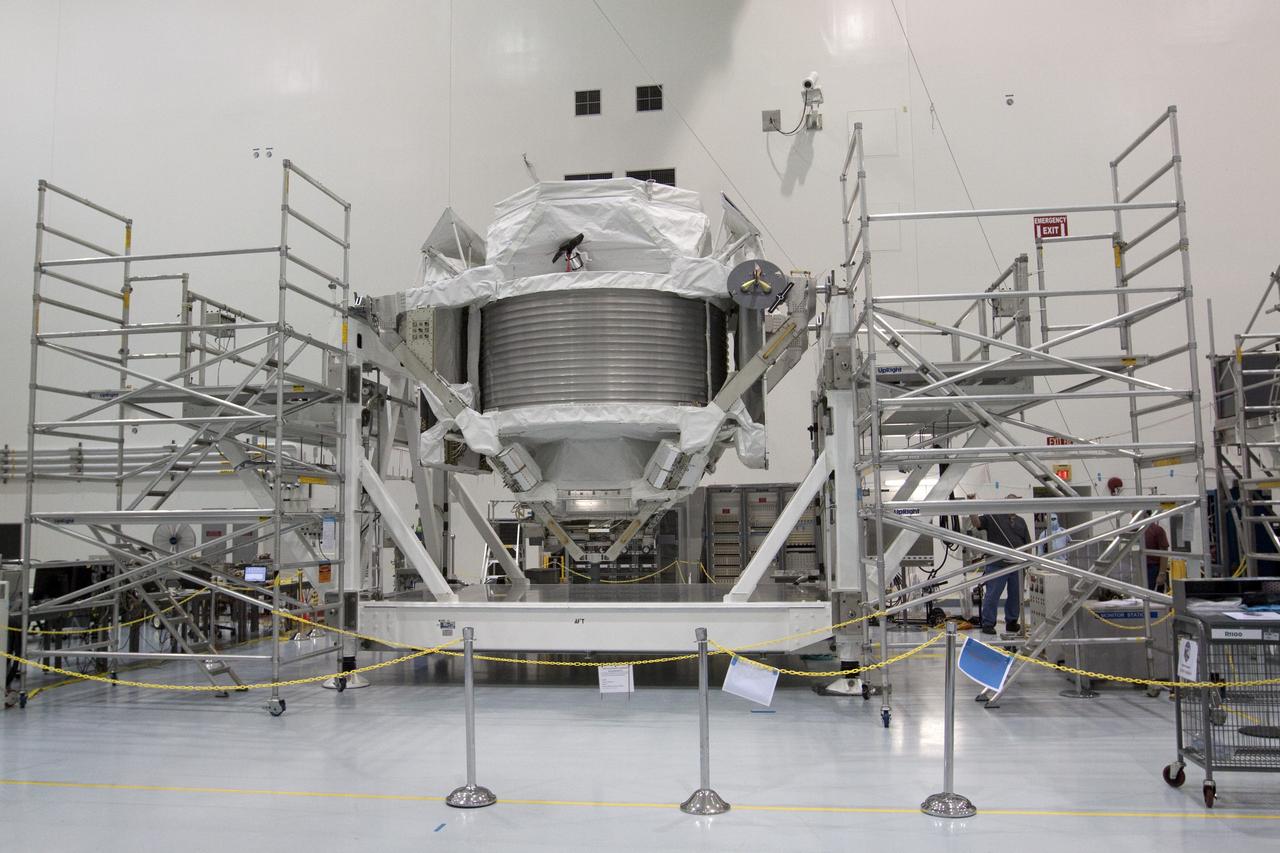
CAPE CANAVERAL, Fla. -- In the Space Station Processing Facility at NASA's Kennedy Space Center in Florida, the Alpha Magnetic Spectrometer-2 (AMS) sits in its cargo element work stand, where more processing will take place. AMS is designed to operate as an external experiment on the International Space Station. It will use the unique environment of space to study the universe and its origin by searching for dark matter. AMS will fly to the station aboard space shuttle Endeavour's STS-134 mission targeted to launch Feb. 27, 2011. Photo credit: NASA/Jack Pfaller
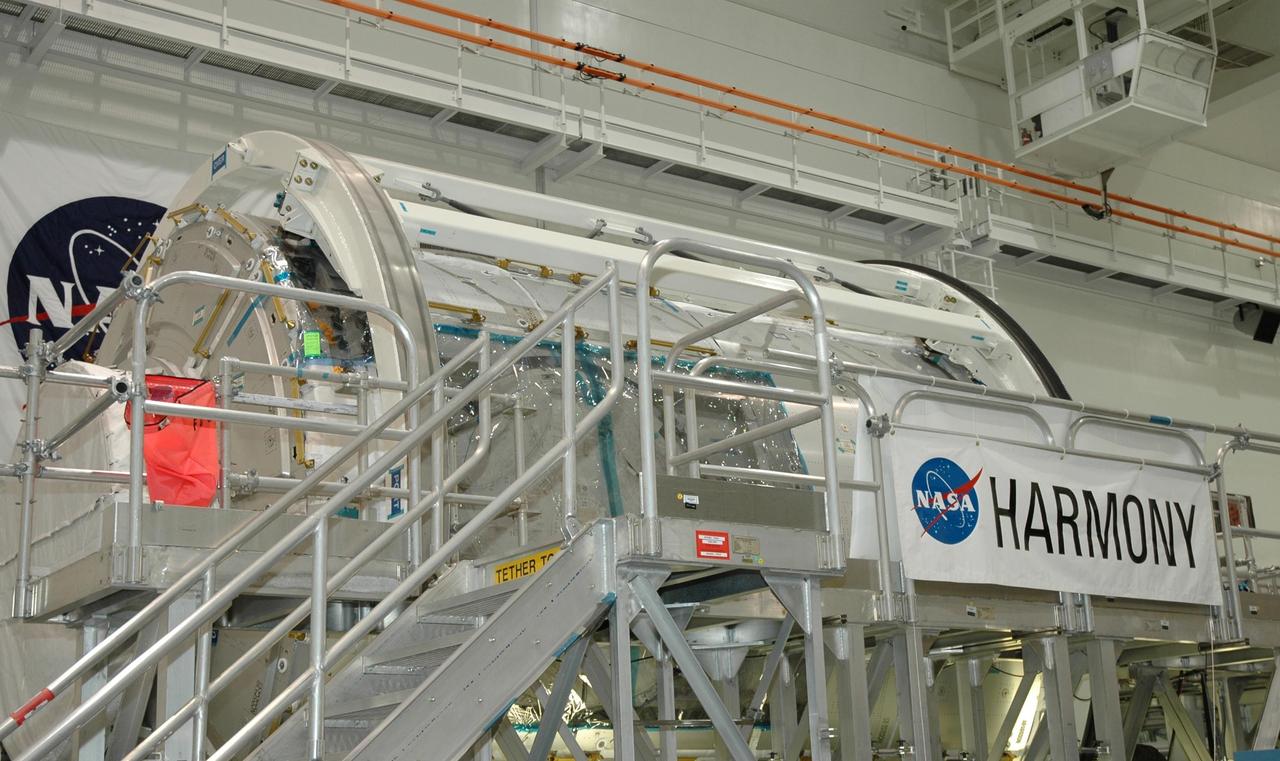
KENNEDY SPACE CENTER, FLA. -- NASA Node 2 module sits inside the Space Station Processing Facility highbay with its new name, Harmony, revealed. The name, Harmony, was chosen from an academic competition involving thousands of students in kindergarten through high school. The Node 2 Challenge required students to learn about the International Space Station, build a scale model of the module, and write an essay explaining their proposed name. This will be the first U.S. piece of the space station named by someone other than a NASA official. Node 2 is a pressurized module that will act as a connecting port and passageway to additional international science labs and supply spacecraft. It also will be a work platform for the station's robotic arm. The module is scheduled to fly on mission STS-120 aboard Space Shuttle Atlantis targeted for later this year. Photo credit: NASA/Jim Grossmann
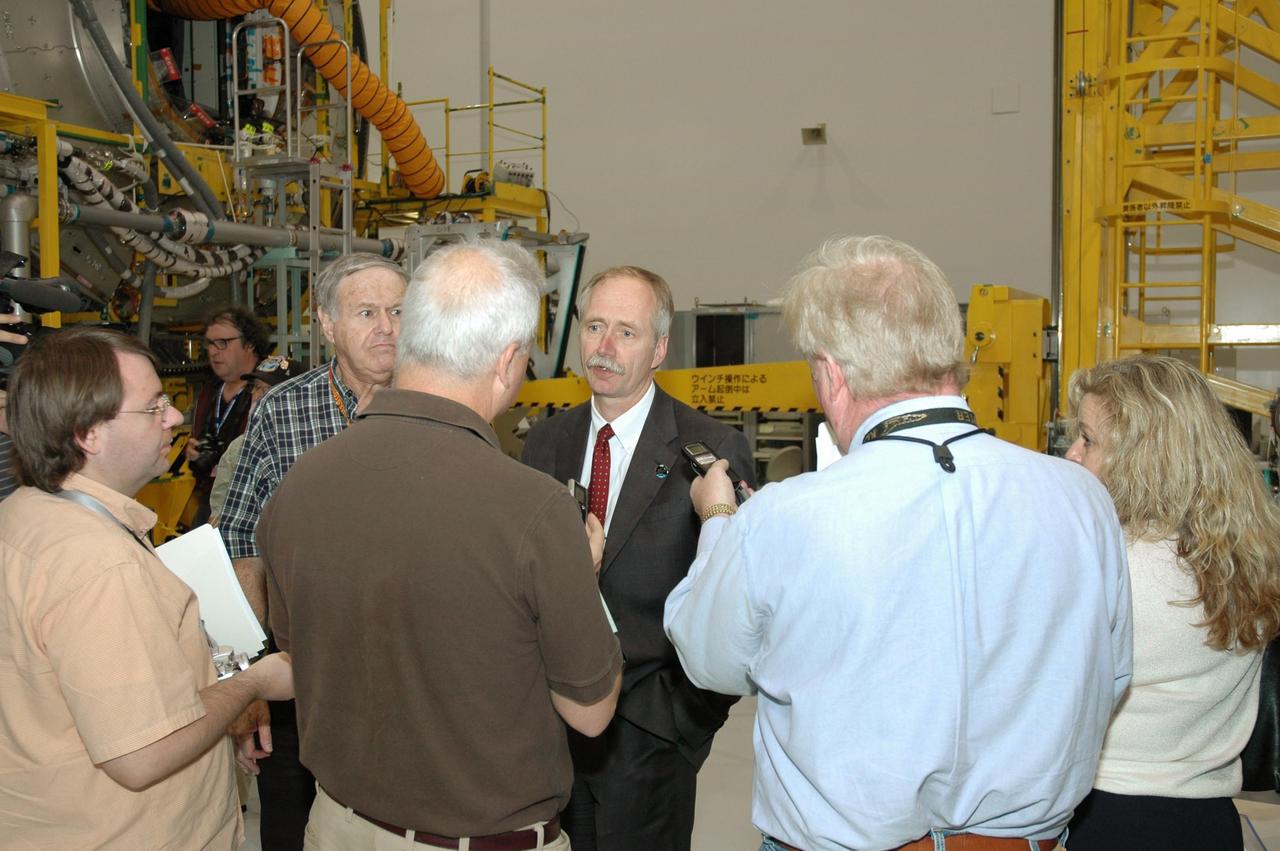
KENNEDY SPACE CENTER, FLA. -- Inside the Space Station Processing Facility, William Gerstenmaier, NASA's associate administrator for Space Operations, talks to members of the media during a ceremony to unveil the Node 2 module's new name, Harmony. The name, Harmony, was chosen from an academic competition involving thousands of students in kindergarten through high school. The Node 2 Challenge required students to learn about the International Space Station, build a scale model of the module, and write an essay explaining their proposed name. This will be the first U.S. piece of the space station named by someone other than a NASA official. Node 2 is a pressurized module that will act as a connecting port and passageway to additional international science labs and supply spacecraft. It also will be a work platform for the station's robotic arm. The module is scheduled to fly on mission STS-120 aboard Space Shuttle Atlantis targeted for later this year. Photo credit: NASA/Jim Grossmann
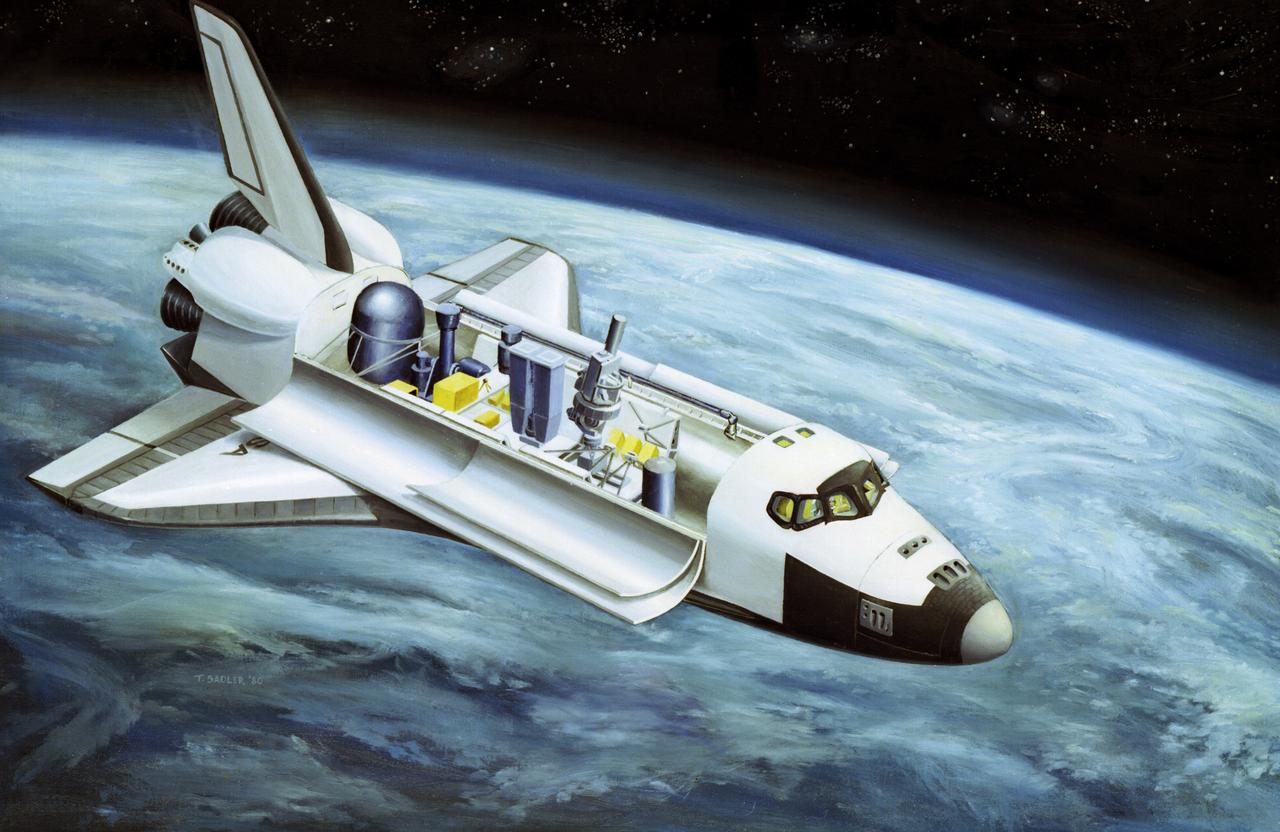
This illustration depicts the configuration of the Spacelab-2 in the cargo bay of the orbiter. Spacelab was a versatile laboratory carried in the Space Shuttle's cargo bay for scientific research flights. Each Spacelab mission had a unique design appropriate to the mission's goals. A number of Spacelab configurations could be assembled from pressurized habitation modules and exposed platforms called pallets. Spacelab-2 was the first pallet-only mission. One of the goals of the mission was to verify that the pallets' configuration was satisfactory for observations and research. Except for two biological experiments and an experiment that used ground-based instruments, the Spacelab-2 scientific instruments needed direct exposure to space. On the first pallet, three solar instruments and one atmospheric instrument were mounted on the Instrument Pointing System, which was being tested on its first flight. The second Spacelab pallet held a large double x-ray telescope and three plasma physics detectors. The last pallet supported an infrared telescope, a superfluid helium technology experiment, and a small plasma diagnostics satellite. The Spacelab-2 mission was designed to capitalize on the Shuttle-Spacelab capabilities, to launch and retrieve satellites, and to point several instruments independently with accuracy and stability. Spacelab-2 (STS-51F, 19th Shuttle mission) was launched aboard Space Shuttle Orbiter Challenger on July 29, 1985. The Marshall Space Flight Center had overall management responsibilities of the Spacelab missions.
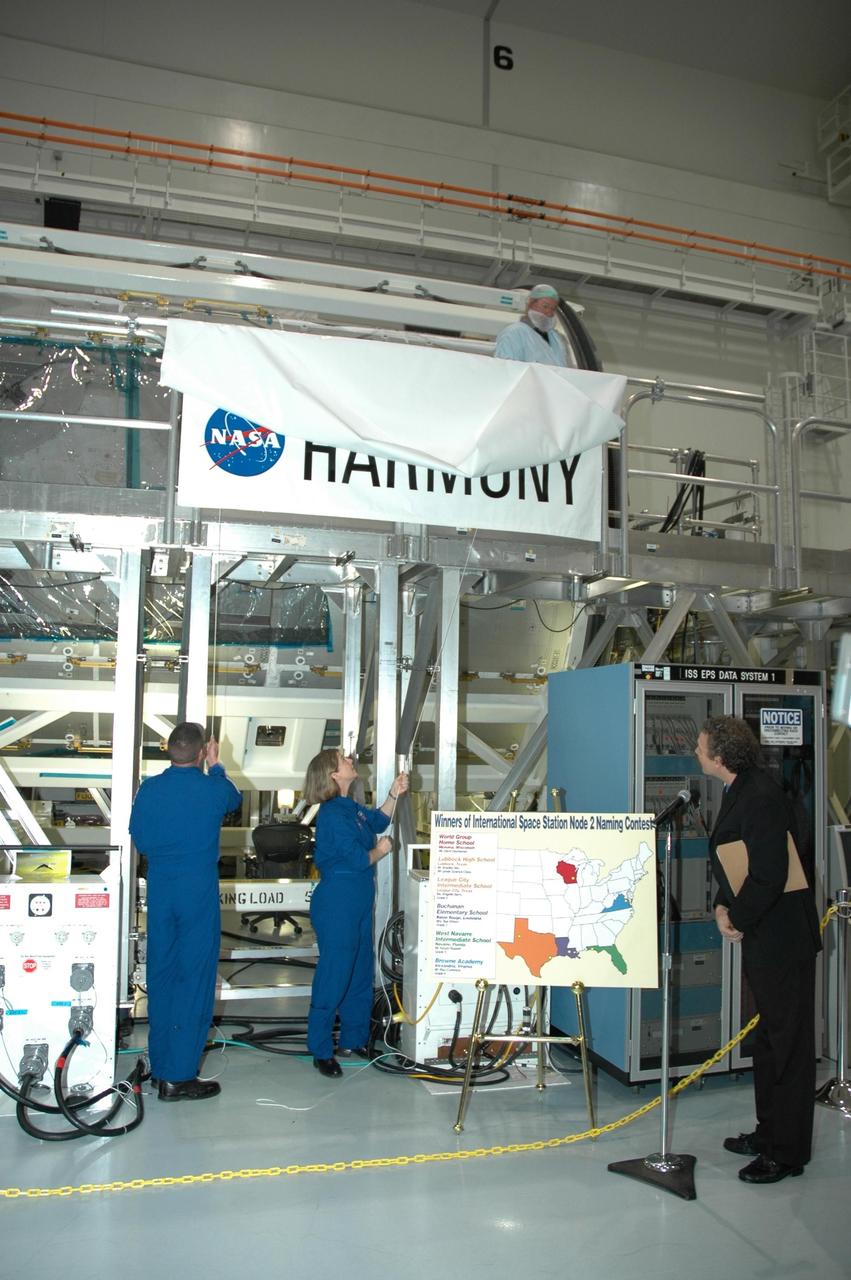
KENNEDY SPACE CENTER, FLA. -- In the Space Station Processing Facility, Mission STS-120 Pilot George Zamka (left) and Commander Pam Melroy begin to unveil the Node 2 module's new name, Harmony, as Russ Romanella, director of International Space Station and Spacecraft Processing presides over the ceremony. The name, Harmony, was chosen from an academic competition involving thousands of students in kindergarten through high school. The Node 2 Challenge required students to learn about the International Space Station, build a scale model of the module, and write an essay explaining their proposed name. This will be the first U.S. piece of the space station named by someone other than a NASA official. Node 2 is a pressurized module that will act as a connecting port and passageway to additional international science labs and supply spacecraft. It also will be a work platform for the station's robotic arm. The module is scheduled to fly on mission STS-120 aboard Space Shuttle Atlantis targeted for later this year. Photo credit: NASA/Jim Grossmann
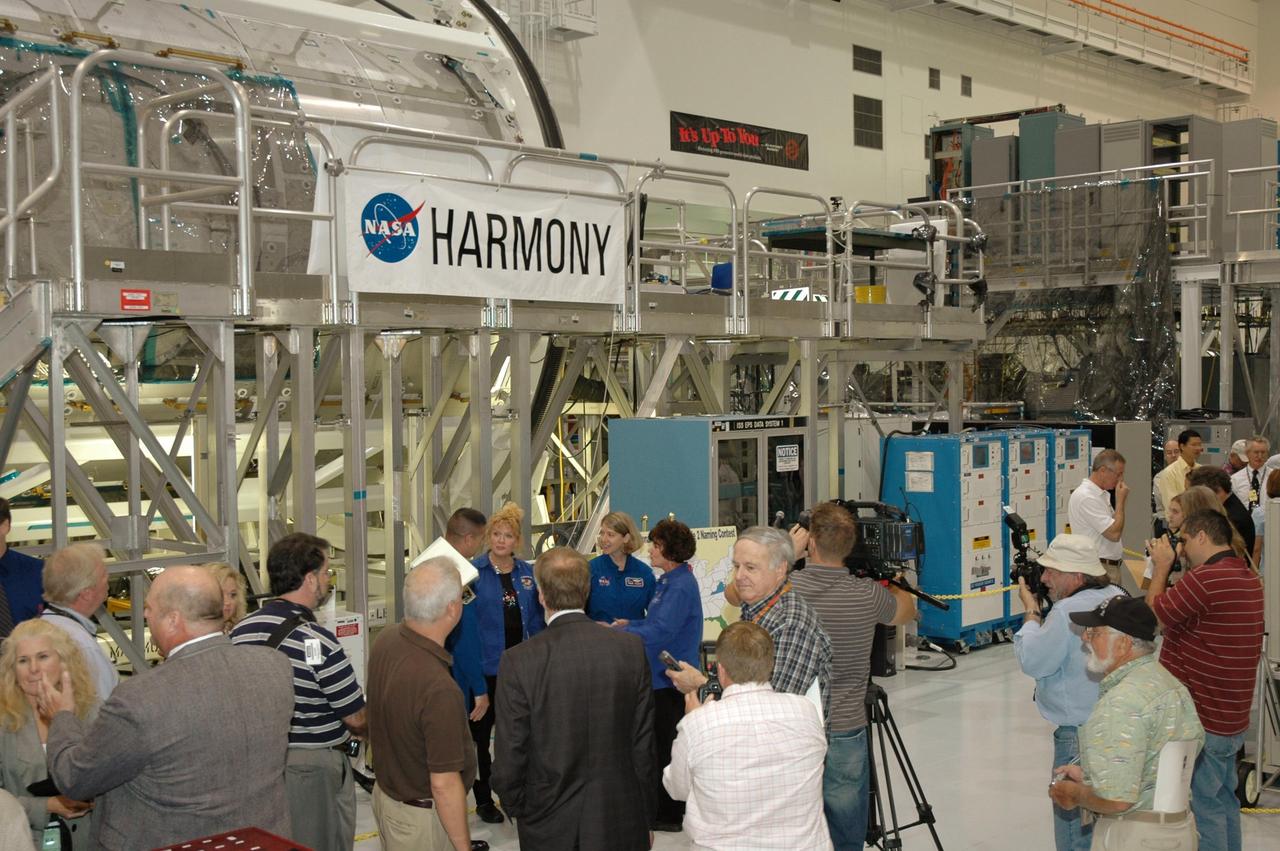
KENNEDY SPACE CENTER, FLA. -- In the Space Station Processing Facility, Mission STS-120 Pilot George Zamka (left, partially hidden) and Commander Pam Melroy (second from right in group), talk with members of the media and guests after a ceremony to unveil NASA's Node 2 module's new name, Harmony. The name, Harmony, was chosen from an academic competition involving thousands of students in kindergarten through high school. The Node 2 Challenge required students to learn about the International Space Station, build a scale model of the module, and write an essay explaining their proposed name. This will be the first U.S. piece of the space station named by someone other than a NASA official. Node 2 is a pressurized module that will act as a connecting port and passageway to additional international science labs and supply spacecraft. It also will be a work platform for the station's robotic arm. The module is scheduled to fly on mission STS-120 aboard Space Shuttle Atlantis targeted for later this year. Photo credit: NASA/Jim Grossmann
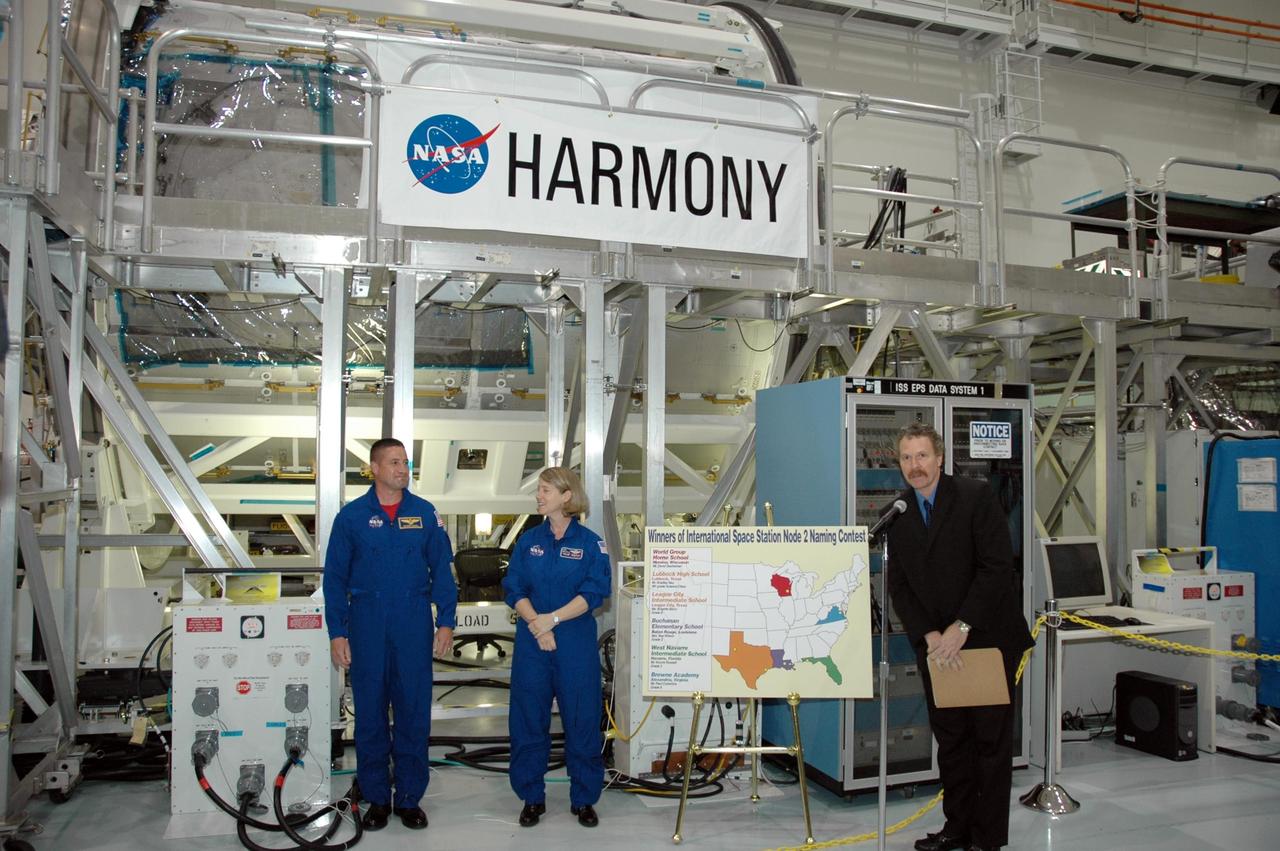
KENNEDY SPACE CENTER, FLA. -- In the Space Station Processing Facility, Mission STS-120 Pilot George Zamka (left) and Commander Pam Melroy stand in front of the Node 2 module with it's new name, Harmony, unveiled, as Russ Romanella, director of International Space Station and Spacecraft Processing presides over the ceremony. The name, Harmony, was chosen from an academic competition involving thousands of students in kindergarten through high school. The Node 2 Challenge required students to learn about the International Space Station, build a scale model of the module, and write an essay explaining their proposed name. This will be the first U.S. piece of the space station named by someone other than a NASA official. Node 2 is a pressurized module that will act as a connecting port and passageway to additional international science labs and supply spacecraft. It also will be a work platform for the station's robotic arm. The module is scheduled to fly on mission STS-120 aboard Space Shuttle Atlantis targeted for later this year. Photo credit: NASA/Jim Grossmann
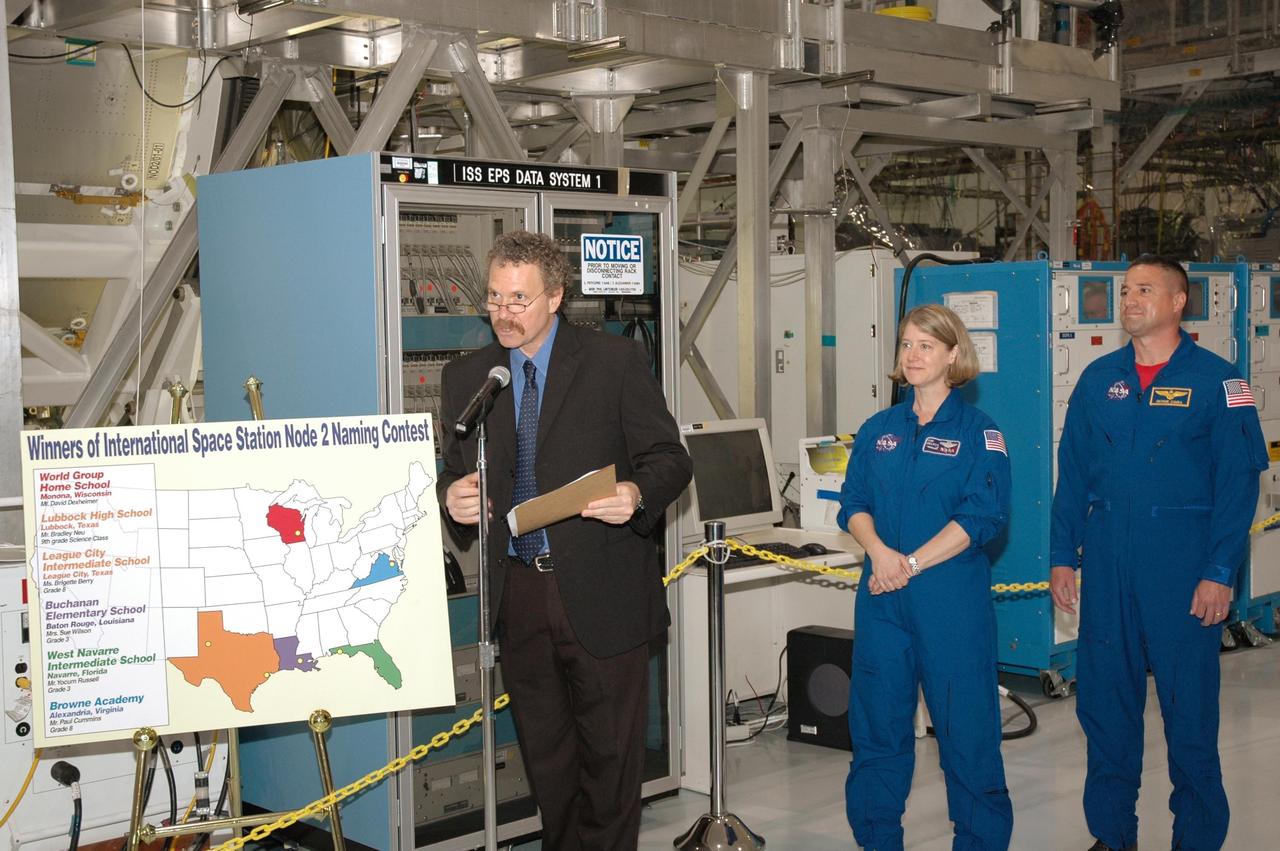
KENNEDY SPACE CENTER, FLA. -- In the Space Station Processing Facility, Russ Romanella (left), director of International Space Station and Spacecraft Processing, presides over a ceremony to unveil the new name of NASA's Node 2 module, Harmony. With him are Mission STS-120 Commander Pam Melroy and Pilot George Zamka. The name, Harmony, was chosen from an academic competition involving thousands of students in kindergarten through high school. The Node 2 Challenge required students to learn about the International Space Station, build a scale model of the module, and write an essay explaining their proposed name. This will be the first U.S. piece of the space station named by someone other than a NASA official. Node 2 is a pressurized module that will act as a connecting port and passageway to additional international science labs and supply spacecraft. It also will be a work platform for the station's robotic arm. The module is scheduled to fly on mission STS-120 aboard Space Shuttle Atlantis targeted for later this year. Photo credit: NASA/Jim Grossmann
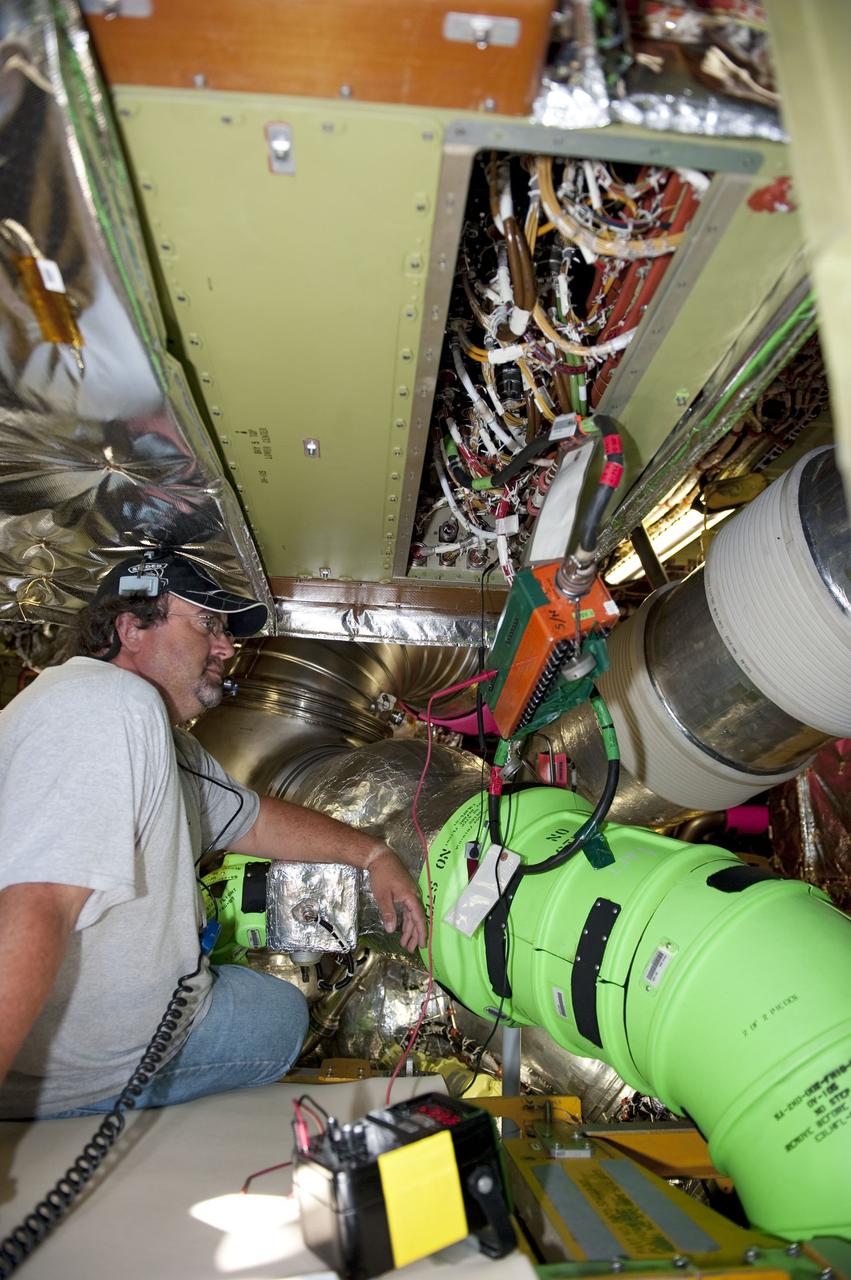
CAPE CANAVERAL, Fla. -- At NASA Kennedy Space Center's Launch Pad 39A, technicians inside space shuttle Endeavour's aft section test the Load Control Assembly-2 (LCA-2). Located in the orbiter's aft avionics bay 5, the LCA-2 assembly, which feeds power to the fuel line heaters, is believed to have caused the heaters for Endeavour's auxiliary power unit-1 (APU-1) to fail April 29 during the first launch attempt for the STS-134 mission. STS-134 will deliver the Express Logistics Carrier-3, Alpha Magnetic Spectrometer-2 (AMS), a high-pressure gas tank and additional spare parts for the Dextre robotic helper to the International Space Station. The mission also will be the final spaceflight for Endeavour. For more information, visit www.nasa.gov/mission_pages/shuttle/shuttlemissions/sts134/index.html. Photo credit: NASA/Kim Shiflett.

CAPE CANAVERAL, Fla. -- At NASA Kennedy Space Center's Launch Pad 39A, a worker inside space shuttle Endeavour's aft section removes a cover to provide access for the removal and replacement of the Load Control Assembly-2 (LCA-2). Located in the orbiter's aft avionics bay 5, the LCA-2 assembly, which feeds power to the fuel line heaters, is believed to have caused the heaters for Endeavour's auxiliary power unit-1 (APU-1) to fail April 29 during the first launch attempt for the STS-134 mission. STS-134 will deliver the Express Logistics Carrier-3, Alpha Magnetic Spectrometer-2 (AMS), a high-pressure gas tank and additional spare parts for the Dextre robotic helper to the International Space Station. The mission also will be the final spaceflight for Endeavour. For more information, visit www.nasa.gov/mission_pages/shuttle/shuttlemissions/sts134/index.html. Photo credit: NASA/Kim Shiflett.
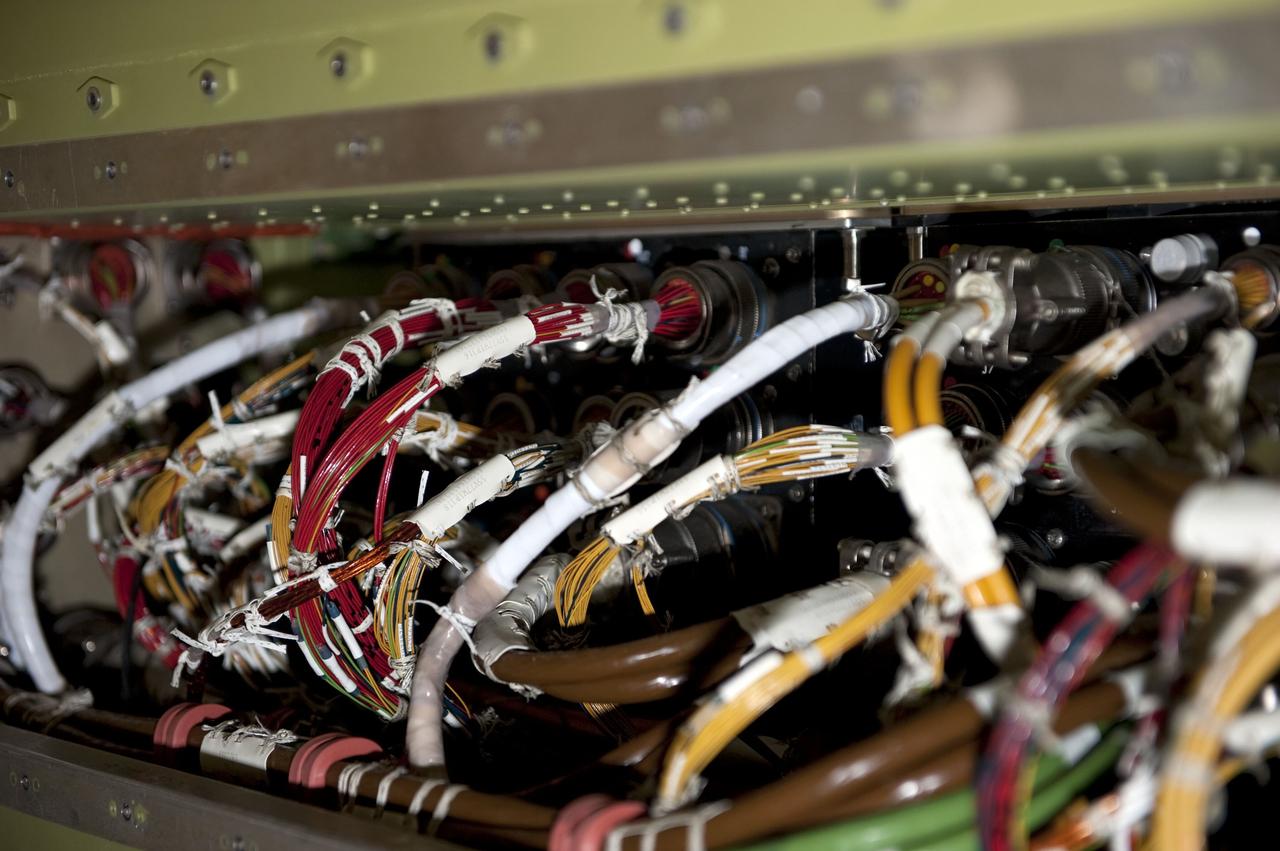
CAPE CANAVERAL, Fla. -- At NASA Kennedy Space Center's Launch Pad 39A, a worker inside space shuttle Endeavour's aft section removed a cover to provide access for the removal and replacement of the Load Control Assembly-2 (LCA-2). Located in the orbiter's aft avionics bay 5, the LCA-2 assembly, which feeds power to the fuel line heaters, is believed to have caused the heaters for Endeavour's auxiliary power unit-1 (APU-1) to fail April 29 during the first launch attempt for the STS-134 mission. STS-134 will deliver the Express Logistics Carrier-3, Alpha Magnetic Spectrometer-2 (AMS), a high-pressure gas tank and additional spare parts for the Dextre robotic helper to the International Space Station. The mission also will be the final spaceflight for Endeavour. For more information, visit www.nasa.gov/mission_pages/shuttle/shuttlemissions/sts134/index.html. Photo credit: NASA/Kim Shiflett.
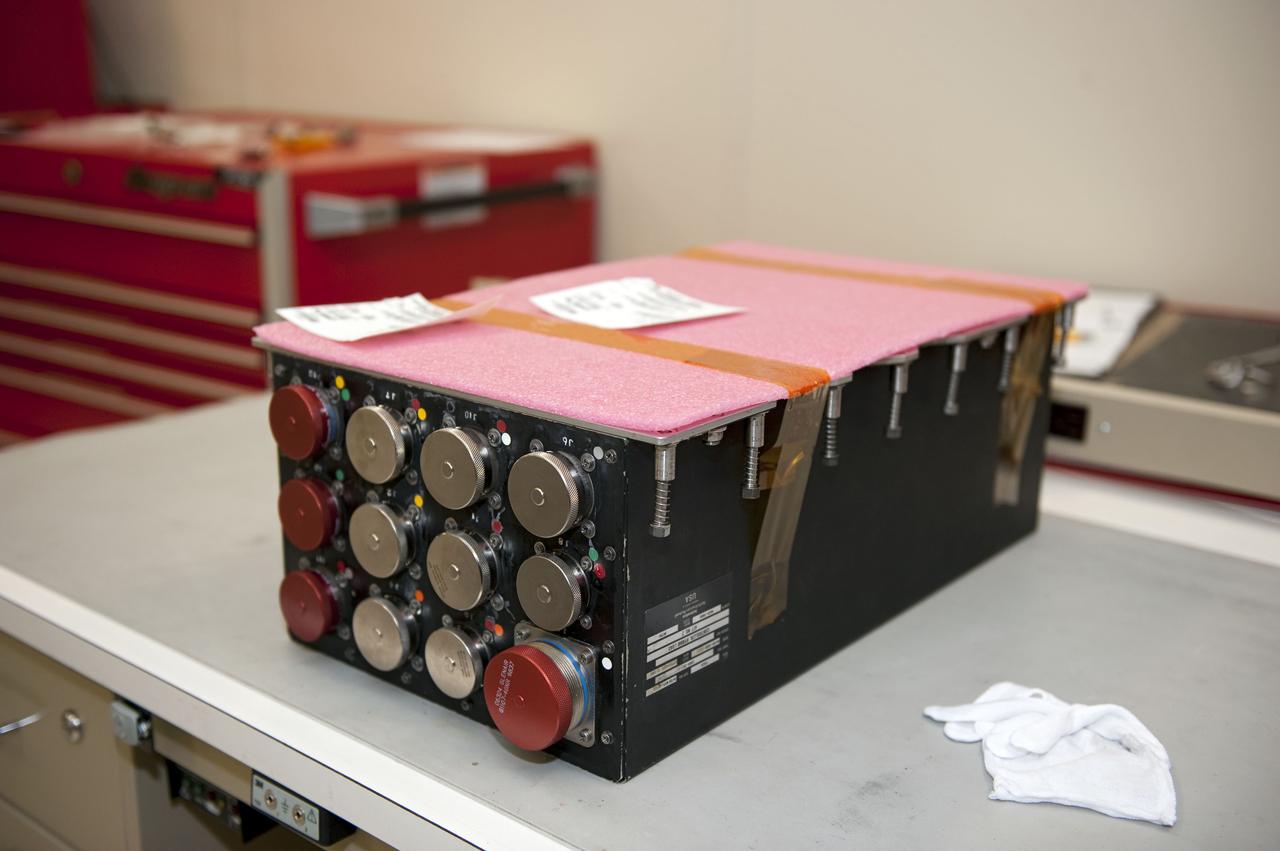
CAPE CANAVERAL, Fla. -- At NASA Kennedy Space Center's Launch Pad 39A work station, a replacement Load Control Assembly-2 (LCA-2) is being prepared for installation into Endeavour's aft section. Located in the orbiter's aft avionics bay 5, the LCA-2 assembly, which feeds power to the fuel line heaters, is believed to have caused the heaters for Endeavour's auxiliary power unit-1 (APU-1) to fail April 29 during the first launch attempt for the STS-134 mission. STS-134 will deliver the Express Logistics Carrier-3, Alpha Magnetic Spectrometer-2 (AMS), a high-pressure gas tank and additional spare parts for the Dextre robotic helper to the International Space Station. The mission also will be the final spaceflight for Endeavour. For more information, visit www.nasa.gov/mission_pages/shuttle/shuttlemissions/sts134/index.html. Photo credit: NASA/Kim Shiflett.
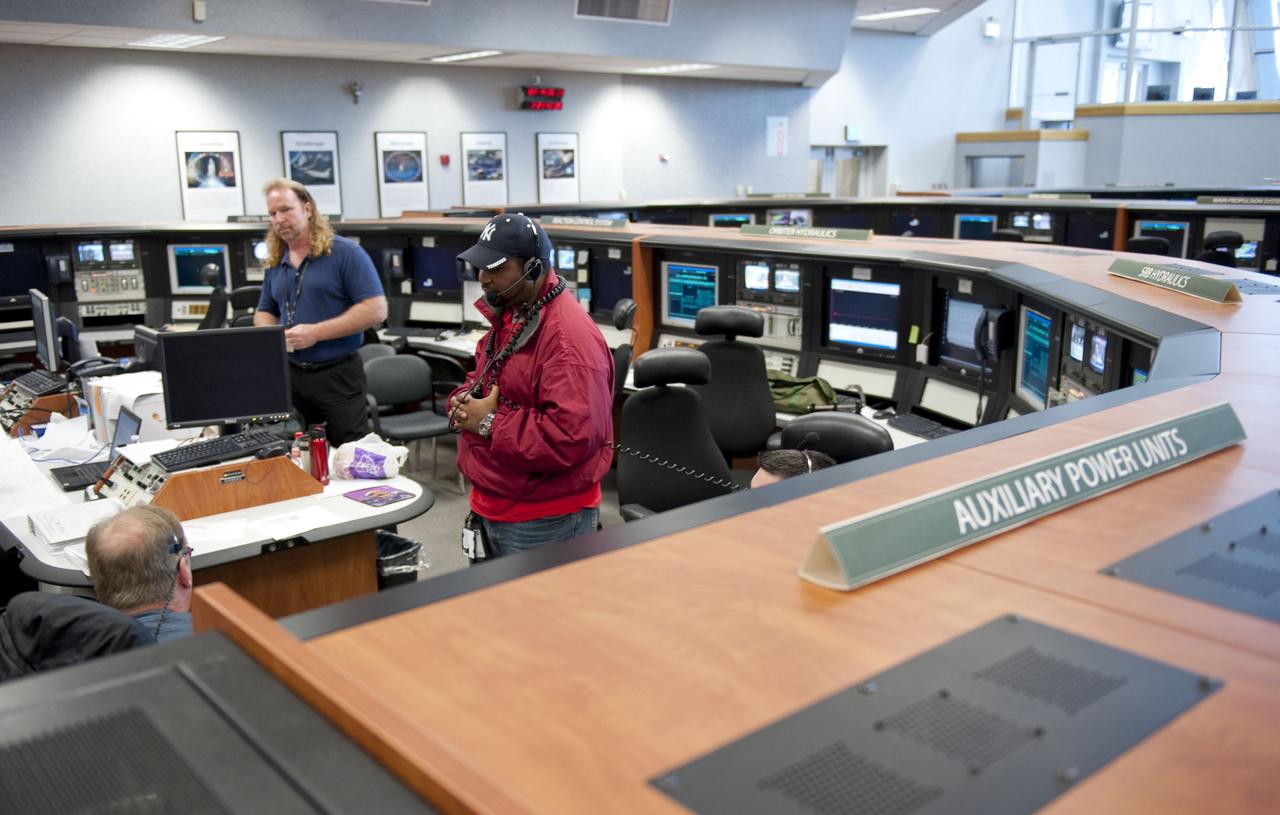
CAPE CANAVERAL, Fla. -- At NASA Kennedy Space Center's Launch Control Center, teams monitor the testing of the Load Control Assembly-2 (LCA-2) located in space shuttle Endeavour's aft section. Located in the orbiter's aft avionics bay 5, the LCA-2 assembly, which feeds power to the fuel line heaters, is believed to have caused the heaters for Endeavour's auxiliary power unit-1 (APU-1) to fail April 29 during the first launch attempt for the STS-134 mission. STS-134 will deliver the Express Logistics Carrier-3, Alpha Magnetic Spectrometer-2 (AMS), a high-pressure gas tank and additional spare parts for the Dextre robotic helper to the International Space Station. The mission also will be the final spaceflight for Endeavour. For more information, visit www.nasa.gov/mission_pages/shuttle/shuttlemissions/sts134/index.html. Photo credit: NASA/Kim Shiflett.
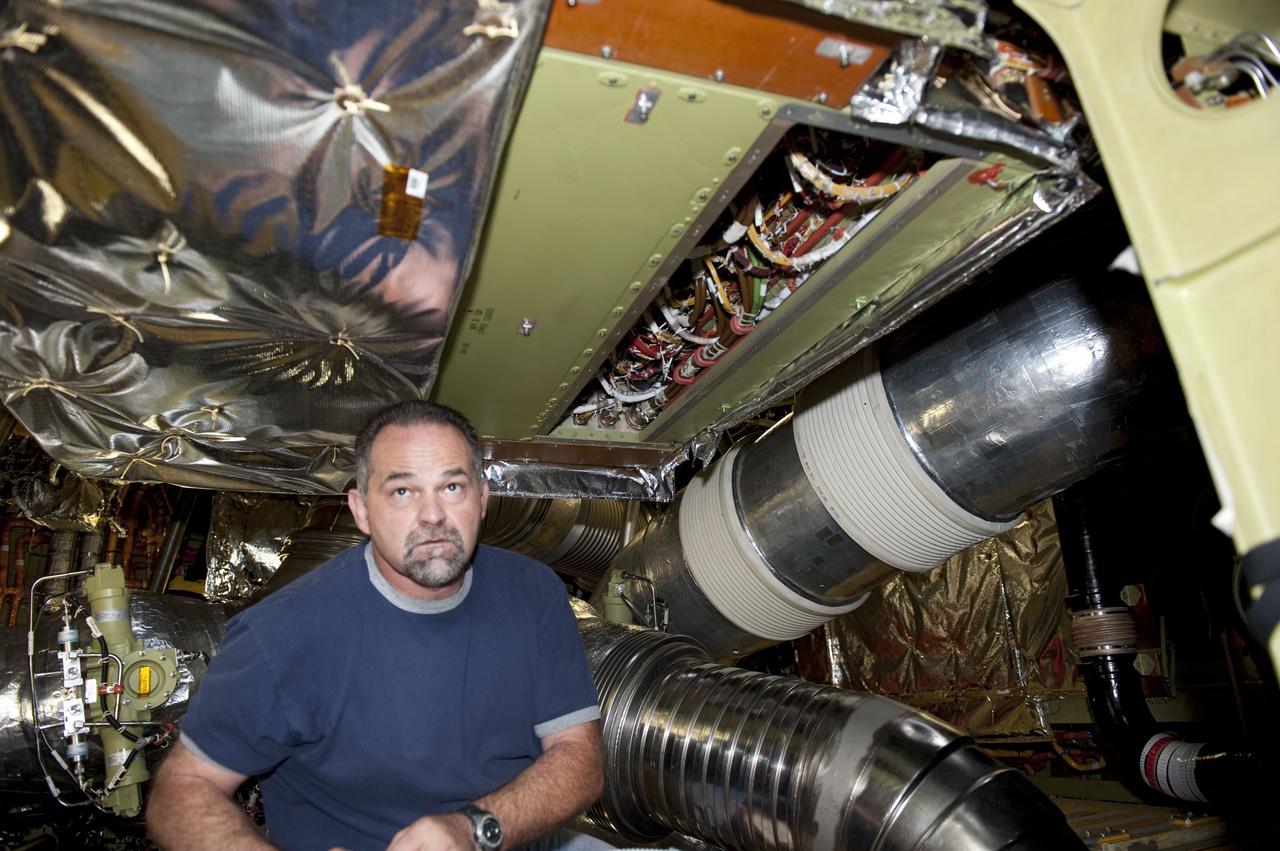
CAPE CANAVERAL, Fla. -- At NASA Kennedy Space Center's Launch Pad 39A, a worker inside space shuttle Endeavour's aft section removes a cover to provide access for the removal and replacement of the Load Control Assembly-2 (LCA-2). Located in the orbiter's aft avionics bay 5, the LCA-2 assembly, which feeds power to the fuel line heaters, is believed to have caused the heaters for Endeavour's auxiliary power unit-1 (APU-1) to fail April 29 during the first launch attempt for the STS-134 mission. STS-134 will deliver the Express Logistics Carrier-3, Alpha Magnetic Spectrometer-2 (AMS), a high-pressure gas tank and additional spare parts for the Dextre robotic helper to the International Space Station. The mission also will be the final spaceflight for Endeavour. For more information, visit www.nasa.gov/mission_pages/shuttle/shuttlemissions/sts134/index.html. Photo credit: NASA/Kim Shiflett.
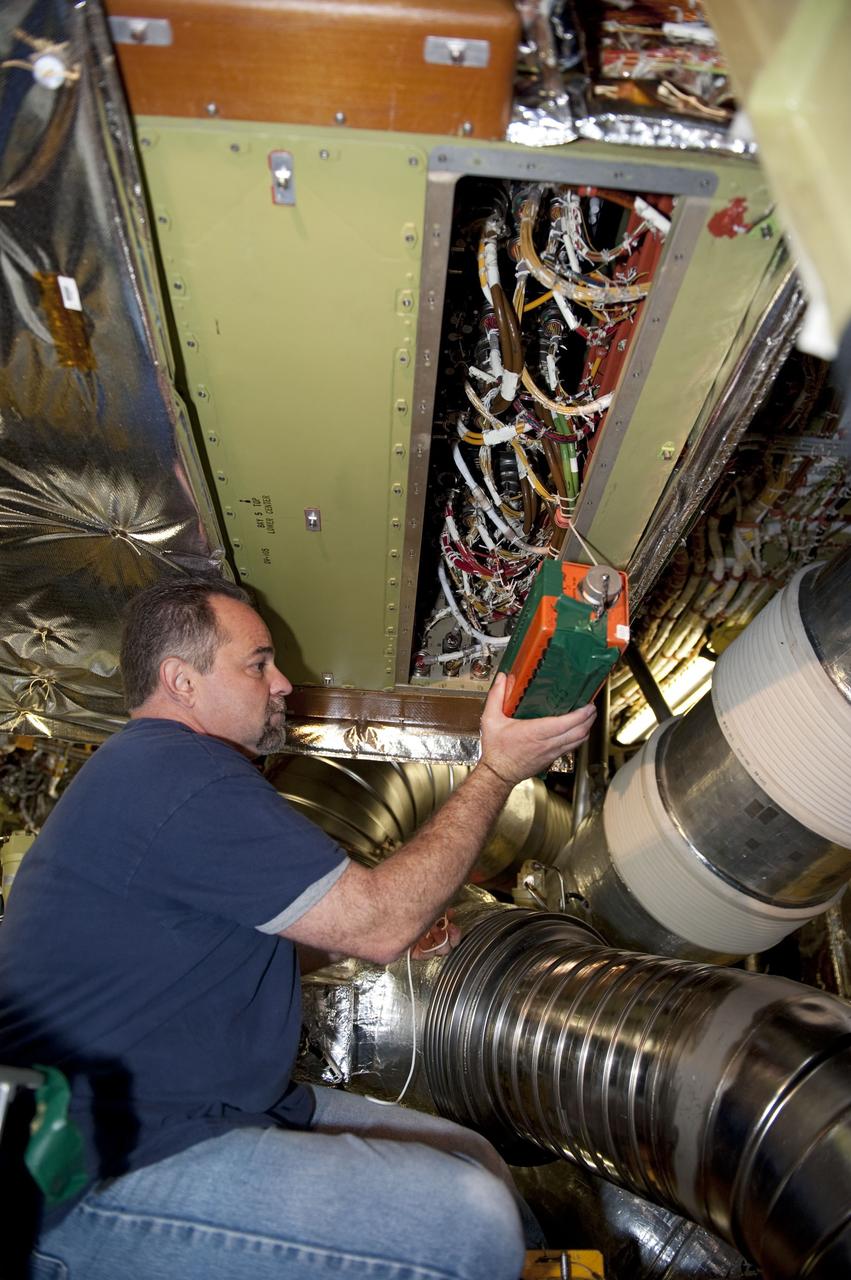
CAPE CANAVERAL, Fla. -- At NASA Kennedy Space Center's Launch Pad 39A, a worker inside space shuttle Endeavour's aft section is testing the Load Control Assembly-2 (LCA-2) for replacement. Located in the orbiter's aft avionics bay 5, the LCA-2 assembly, which feeds power to the fuel line heaters, is believed to have caused the heaters for Endeavour's auxiliary power unit-1 (APU-1) to fail April 29 during the first launch attempt for the STS-134 mission. STS-134 will deliver the Express Logistics Carrier-3, Alpha Magnetic Spectrometer-2 (AMS), a high-pressure gas tank and additional spare parts for the Dextre robotic helper to the International Space Station. The mission also will be the final spaceflight for Endeavour. For more information, visit www.nasa.gov/mission_pages/shuttle/shuttlemissions/sts134/index.html. Photo credit: NASA/Kim Shiflett.
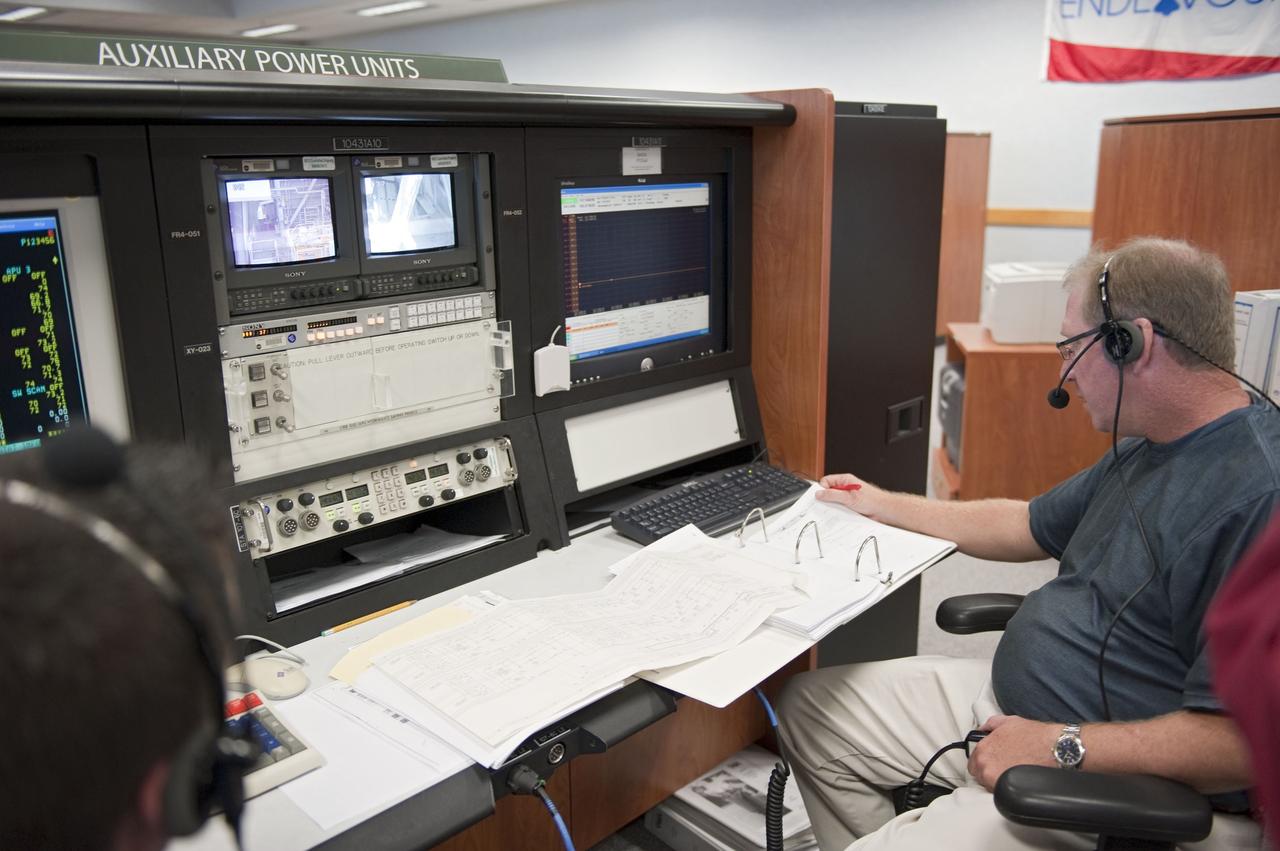
CAPE CANAVERAL, Fla. -- At NASA Kennedy Space Center's Launch Control Center, teams monitor the testing of the Load Control Assembly-2 (LCA-2) located in space shuttle Endeavour's aft section. Located in the orbiter's aft avionics bay 5, the LCA-2 assembly, which feeds power to the fuel line heaters, is believed to have caused the heaters for Endeavour's auxiliary power unit-1 (APU-1) to fail April 29 during the first launch attempt for the STS-134 mission. STS-134 will deliver the Express Logistics Carrier-3, Alpha Magnetic Spectrometer-2 (AMS), a high-pressure gas tank and additional spare parts for the Dextre robotic helper to the International Space Station. The mission also will be the final spaceflight for Endeavour. For more information, visit www.nasa.gov/mission_pages/shuttle/shuttlemissions/sts134/index.html. Photo credit: NASA/Kim Shiflett.
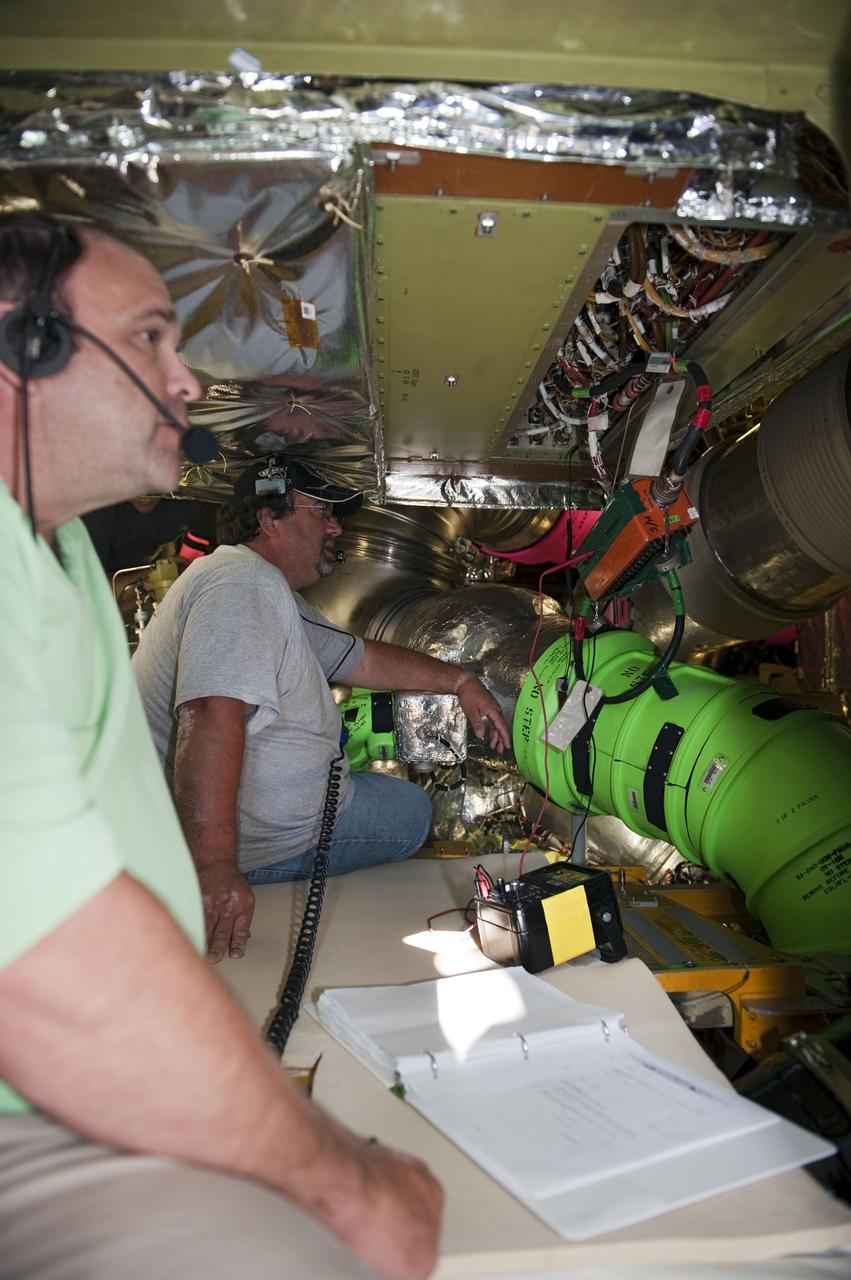
CAPE CANAVERAL, Fla. -- At NASA Kennedy Space Center's Launch Pad 39A, technicians inside space shuttle Endeavour's aft section test the Load Control Assembly-2 (LCA-2). Located in the orbiter's aft avionics bay 5, the LCA-2 assembly, which feeds power to the fuel line heaters, is believed to have caused the heaters for Endeavour's auxiliary power unit-1 (APU-1) to fail April 29 during the first launch attempt for the STS-134 mission. STS-134 will deliver the Express Logistics Carrier-3, Alpha Magnetic Spectrometer-2 (AMS), a high-pressure gas tank and additional spare parts for the Dextre robotic helper to the International Space Station. The mission also will be the final spaceflight for Endeavour. For more information, visit www.nasa.gov/mission_pages/shuttle/shuttlemissions/sts134/index.html. Photo credit: NASA/Kim Shiflett.
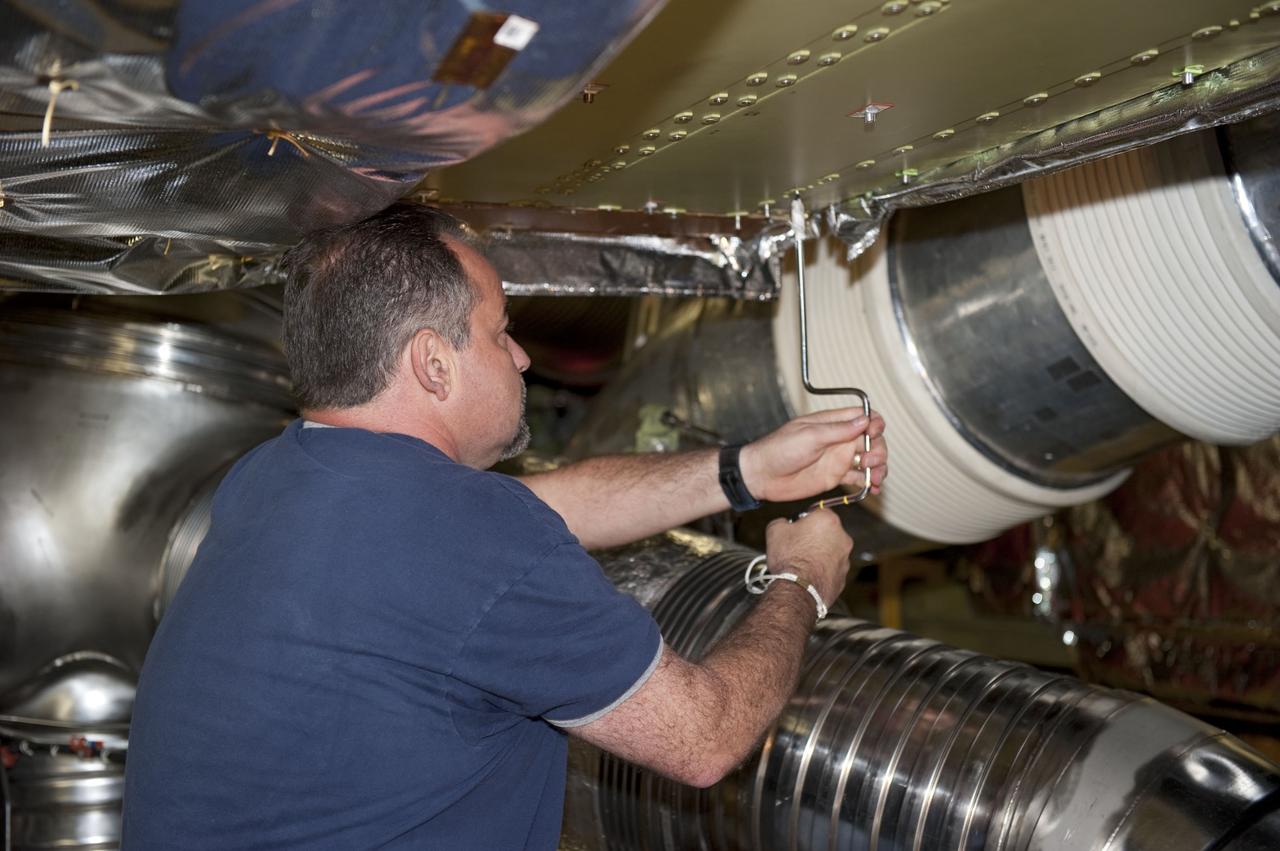
CAPE CANAVERAL, Fla. -- At NASA Kennedy Space Center's Launch Pad 39A, a worker inside space shuttle Endeavour's aft section removes a cover to provide access for the removal and replacement of the Load Control Assembly-2 (LCA-2). Located in the orbiter's aft avionics bay 5, the LCA-2 assembly, which feeds power to the fuel line heaters, is believed to have caused the heaters for Endeavour's auxiliary power unit-1 (APU-1) to fail April 29 during the first launch attempt for the STS-134 mission. STS-134 will deliver the Express Logistics Carrier-3, Alpha Magnetic Spectrometer-2 (AMS), a high-pressure gas tank and additional spare parts for the Dextre robotic helper to the International Space Station. The mission also will be the final spaceflight for Endeavour. For more information, visit www.nasa.gov/mission_pages/shuttle/shuttlemissions/sts134/index.html. Photo credit: NASA/Kim Shiflett.
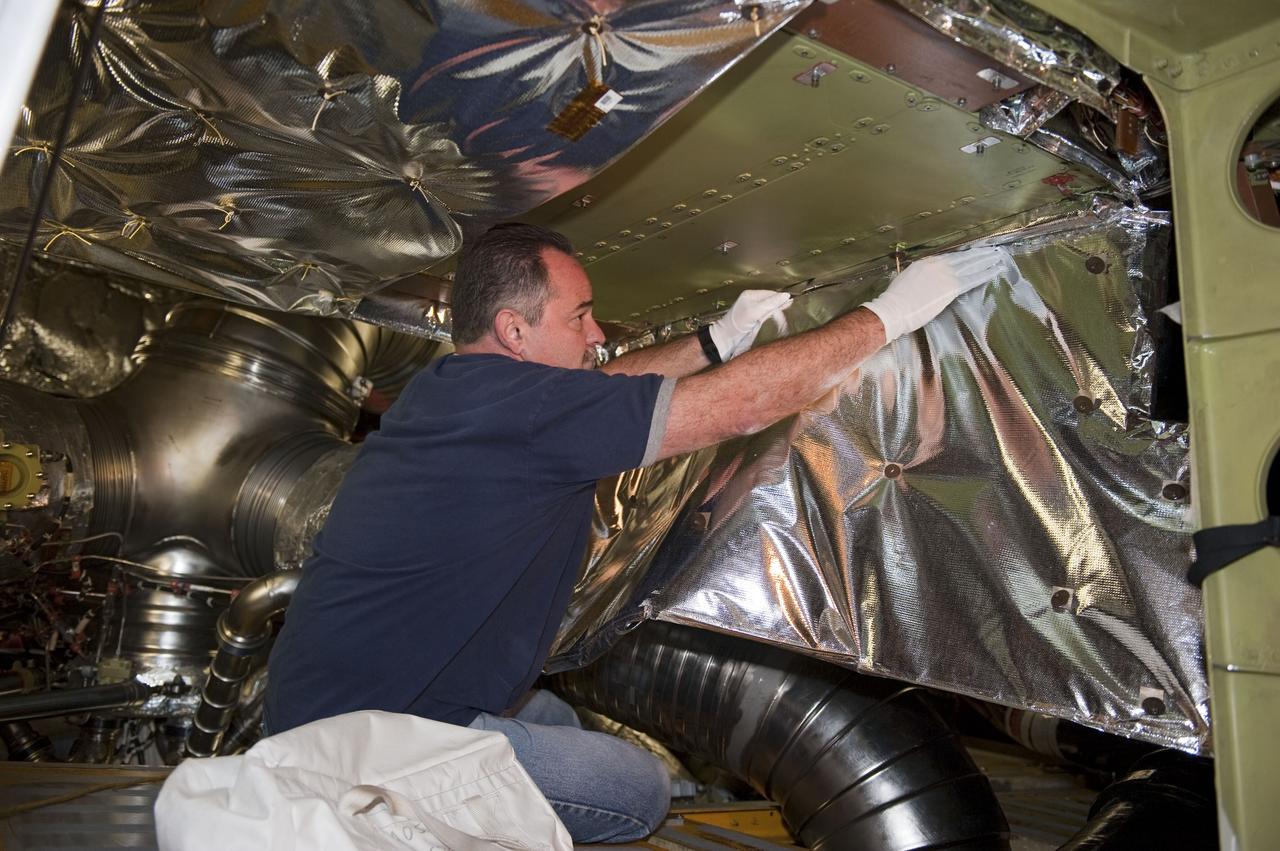
CAPE CANAVERAL, Fla. -- At NASA Kennedy Space Center's Launch Pad 39A, a worker inside space shuttle Endeavour's aft section removes an insulating blanket and cover to provide access for the removal and replacement of the Load Control Assembly-2 (LCA-2). Located in the orbiter's aft avionics bay 5, the LCA-2 assembly, which feeds power to the fuel line heaters, is believed to have caused the heaters for Endeavour's auxiliary power unit-1 (APU-1) to fail April 29 during the first launch attempt for the STS-134 mission. STS-134 will deliver the Express Logistics Carrier-3, Alpha Magnetic Spectrometer-2 (AMS), a high-pressure gas tank and additional spare parts for the Dextre robotic helper to the International Space Station. The mission also will be the final spaceflight for Endeavour. For more information, visit www.nasa.gov/mission_pages/shuttle/shuttlemissions/sts134/index.html. Photo credit: NASA/Kim Shiflett.
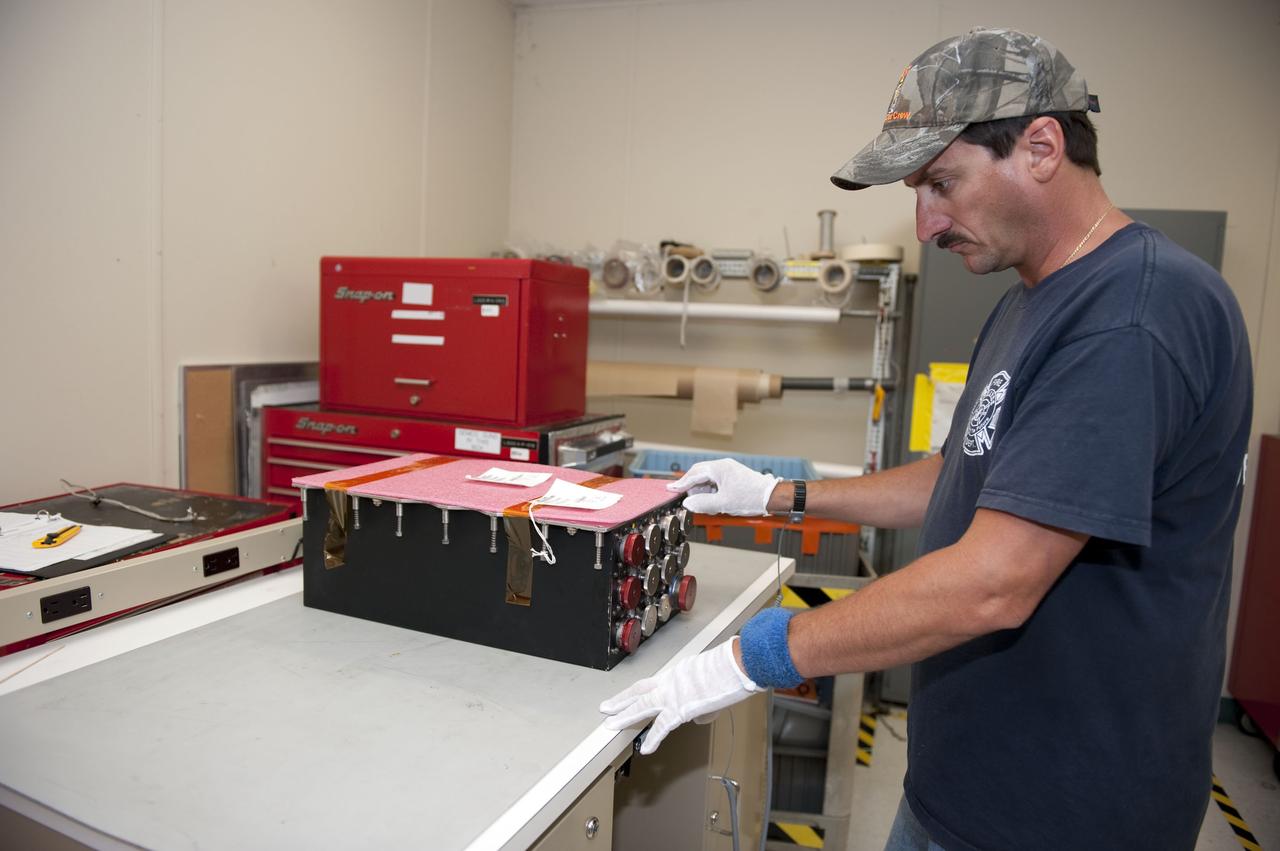
CAPE CANAVERAL, Fla. -- At NASA Kennedy Space Center's Launch Pad 39A work station, a worker inspects the replacement Load Control Assembly-2 (LCA-2) which is being prepared for installation into Endeavour's aft section. Located in the orbiter's aft avionics bay 5, the LCA-2 assembly, which feeds power to the fuel line heaters, is believed to have caused the heaters for Endeavour's auxiliary power unit-1 (APU-1) to fail April 29 during the first launch attempt for the STS-134 mission. STS-134 will deliver the Express Logistics Carrier-3, Alpha Magnetic Spectrometer-2 (AMS), a high-pressure gas tank and additional spare parts for the Dextre robotic helper to the International Space Station. The mission also will be the final spaceflight for Endeavour. For more information, visit www.nasa.gov/mission_pages/shuttle/shuttlemissions/sts134/index.html. Photo credit: NASA/Kim Shiflett.
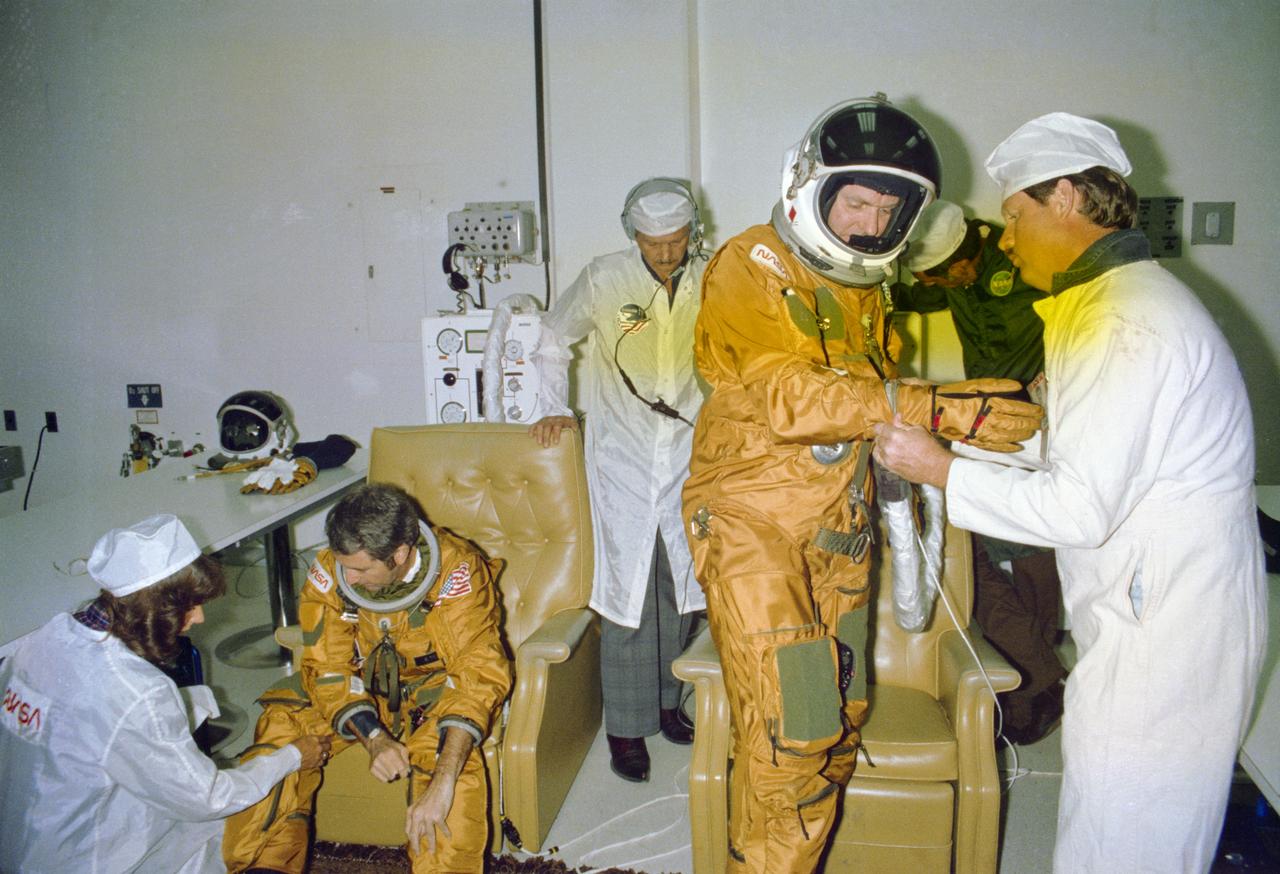
S81-38547 (10 Sept. 1981) --- Astronauts Joe H. Engle, right, and Richard H. Truly, prime crew members for STS-2, complete their suiting up chores prior to a countdown demonstration test (CDDT). They are in the operations and checkout building at the Kennedy Space Center. The two have a launch scheduled for late autumn of this year. Photo credit: NASA

S81-34641 (May 1981) --- Astronauts Joe H. Engle, left, and Richard H. Truly are the commander and pilot, respectively, for the NASA STS-2 flight of the space shuttle Columbia, scheduled for Sept. 30, 1981 launch. Photo credit: NASA

S81-39570 (12-14 Nov 1981) --- Astronaut Joe H. Engle, STS-2 commander, enjoys a rare in-space exercise session on a device called a treadmill, which is specially designed for astronauts in zero gravity. He is in the mid-deck are of the Space Shuttle Columbia flying 160 miles (226 kilometers) above the Earth. The STS-2 mission of Astronauts Engle and Richard H. Truly, pilot, lasted a total of two days, six hours, 13 minutes and 10 seconds. Truly took the picture with a 35mm camera.
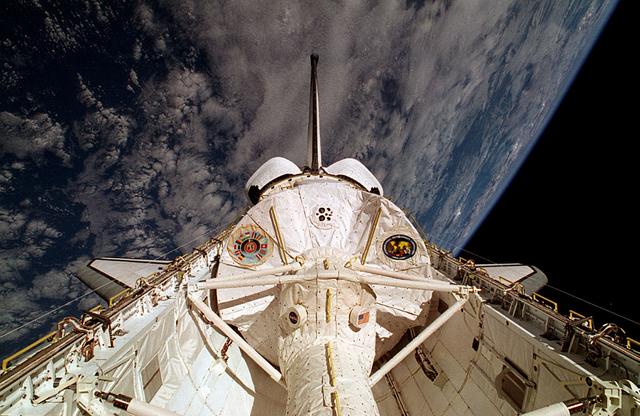
This is a Space Shuttle Columbia (STS-65) onboard photo of the second International Microgravity Laboratory (IML-2) in the cargo bay with Earth in the background. Mission objectives of IML-2 were to conduct science and technology investigations that required the low-gravity environment of space, with emphasis on experiments that studied the effects of microgravity on materials processes and living organisms. Materials science and life sciences are two of the most exciting areas of microgravity research because discoveries in these fields could greatly enhance the quality of life on Earth. If the structure of certain proteins can be determined by examining high-quality protein crystals grown in microgravity, advances can be made to improve the treatment of many human diseases. Electronic materials research in space may help us refine processes and make better products, such as computers, lasers, and other high-tech devices. The 14-nation European Space Agency (ESA), the Canadian Space Agency (SCA), the French National Center for Space Studies (CNES), the German Space Agency and the German Aerospace Research Establishment (DARA/DLR), and the National Space Development Agency of Japan (NASDA) participated in developing hardware and experiments for the IML missions. The missions were managed by NASA's Marshall Space Flight Center. The Orbiter Columbia was launched from the Kennedy Space Center on July 8, 1994 for the IML-2 mission.
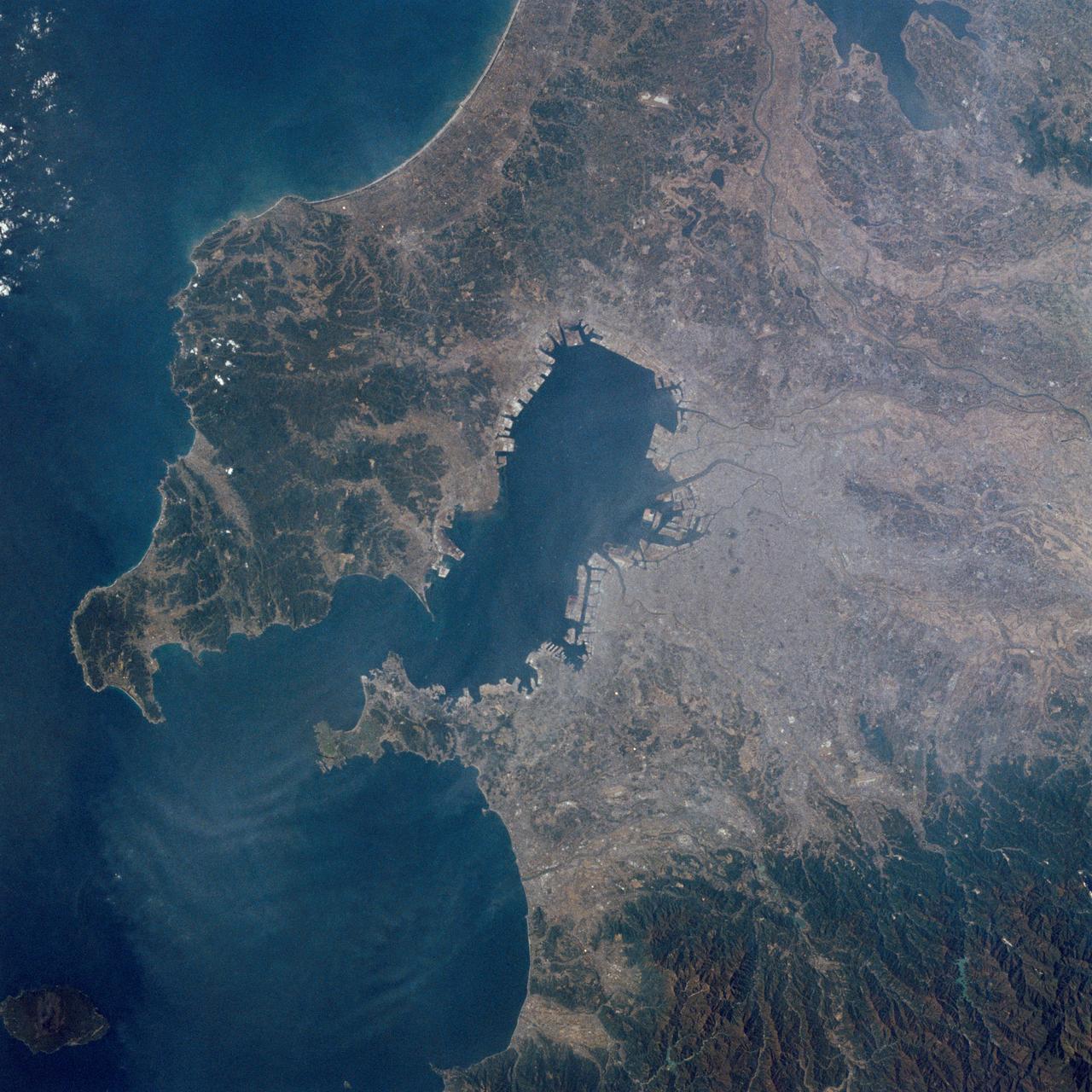
STS002-09-392 (12-14 Nov. 1981) --- Image of Tokyo Bay, Japan taken during the STS-2 mission from the space shuttle Columbia. Photo credit: NASA
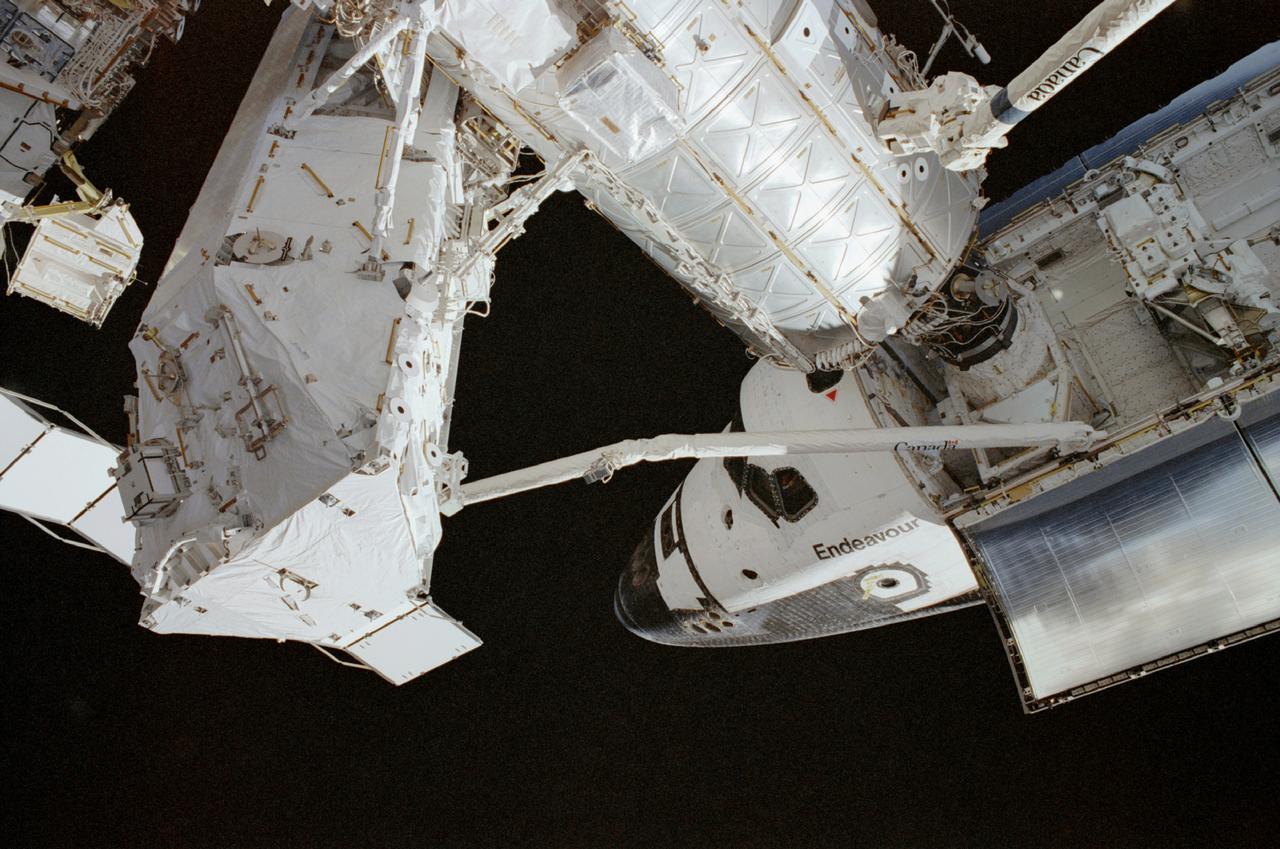
The STS-111 mission, the 14th Shuttle mission to visit the International Space Station (ISS), was launched on June 5, 2002 aboard the Space Shuttle Orbiter Endeavour. On board were the STS-111 and Expedition Five crew members. Astronauts Kerneth D. Cockrell, commander; Paul S. Lockhart, pilot, and mission specialists Franklin R. Chang-Diaz and Philippe Perrin were the STS-111 crew members. Expedition Five crew members included Cosmonaut Valeri G. Korzun, commander, Astronaut Peggy A. Whitson and Cosmonaut Sergei Y. Treschev, flight engineers. Three space walks enabled the STS-111 crew to accomplish mission objectives: The delivery and installation of the Mobile Remote Servicer Base System (MBS), an important part of the Station's Mobile Servicing System that allows the robotic arm to travel the length of the Station, which is necessary for future construction tasks; the replacement of a wrist roll joint on the Station's robotic arm; and the task of unloading supplies and science experiments from the Leonardo multipurpose Logistics Module, which made its third trip to the orbital outpost. In this photograph, the Space Shuttle Endeavour, back dropped by the blackness of space, is docked to the pressurized Mating Adapter (PMA-2) at the forward end of the Destiny Laboratory on the ISS. Endeavour's robotic arm is in full view as it is stretched out with the S0 (S-zero) Truss at its end.
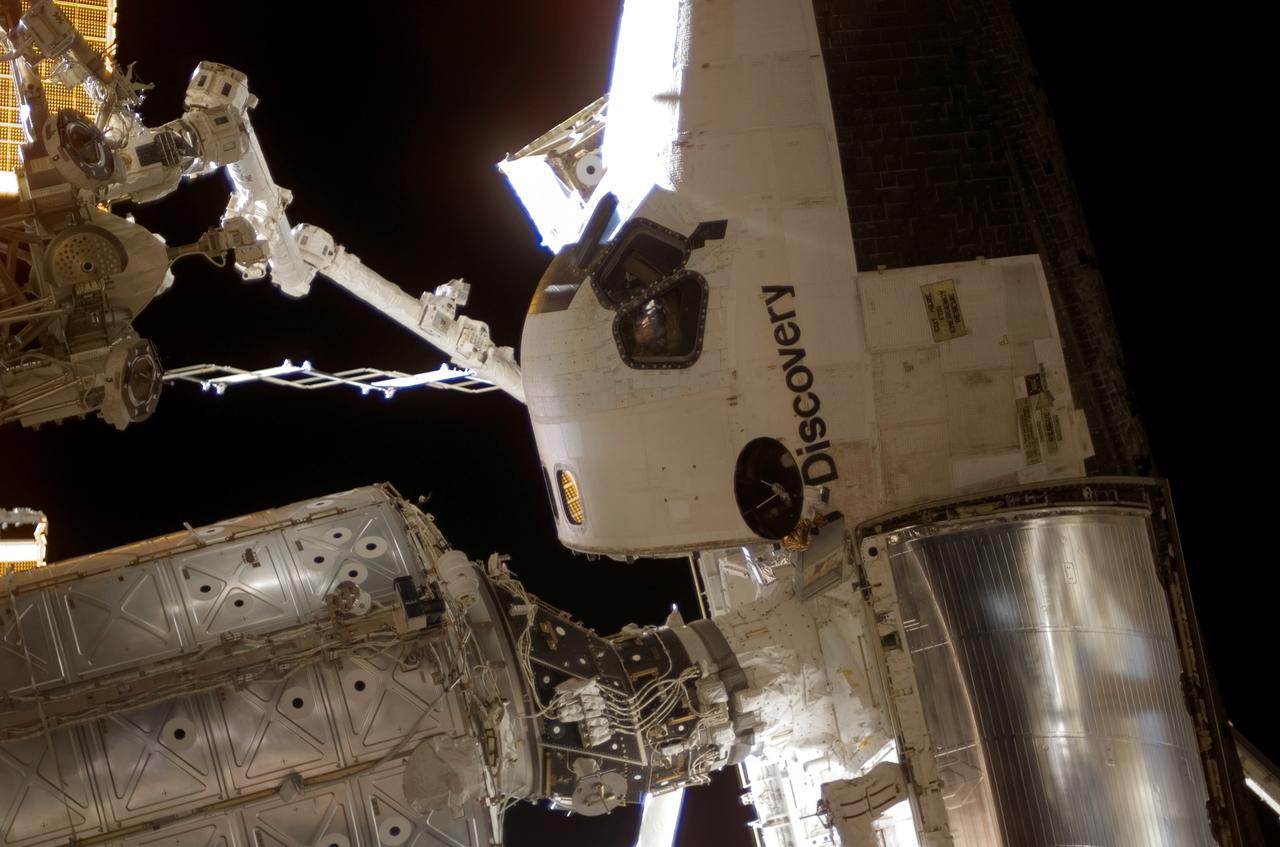
Space Shuttle Discovery, docked to the Pressurized Mating Adapter (PMA-2) on the International Space Station (ISS), is featured in this image photographed by a space walker during the second session of extravehicular activity (EVA) for the STS-120 mission on October 28, 2007.
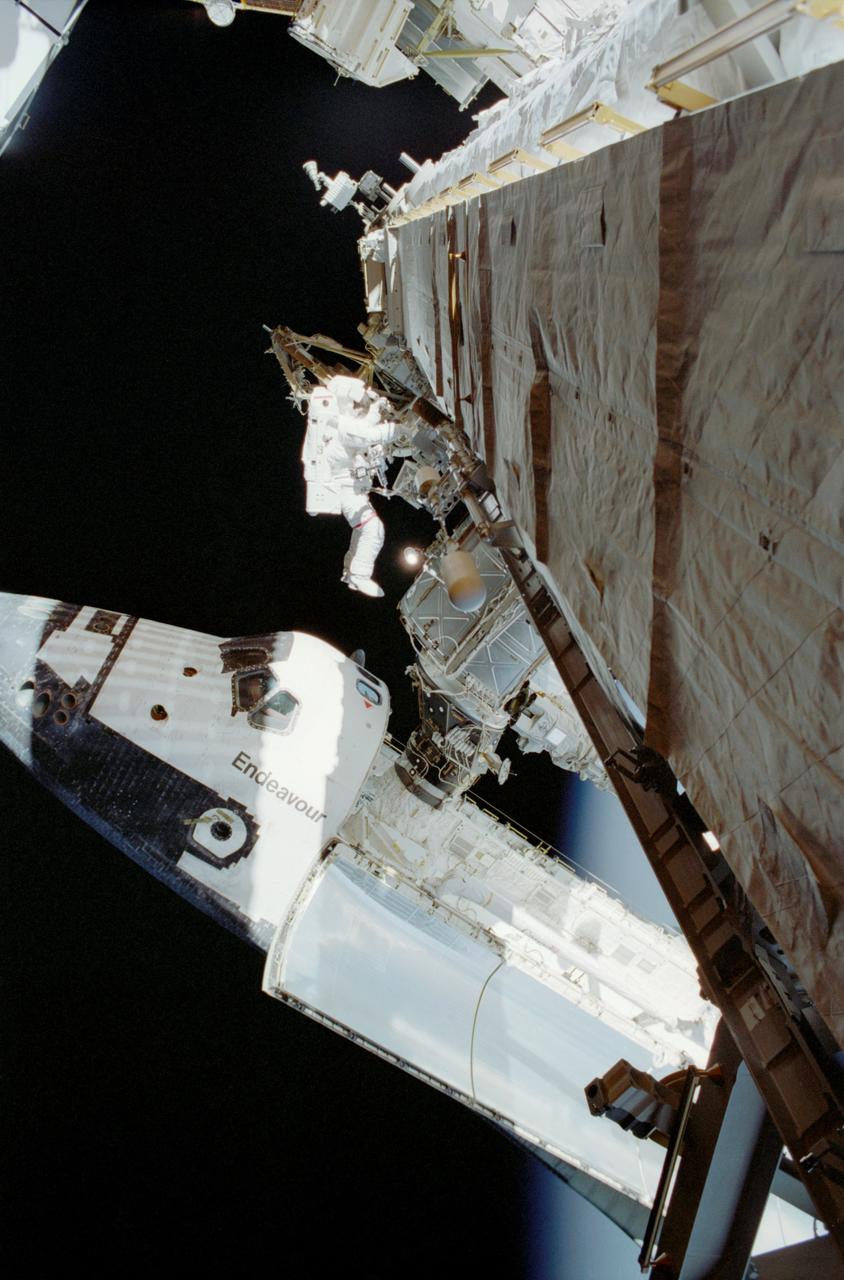
STS113-308-002 (28 November 2002) --- Astronaut Michael E. Lopez-Alegria, STS-113 mission specialist, participates in the mission’s second scheduled spacewalk to perform work on the International Space Station (ISS). The Space Shuttle Endeavour, docked to the Pressurized Mating Adapter 2 (PMA-2), is visible below Lopez-Alegria.
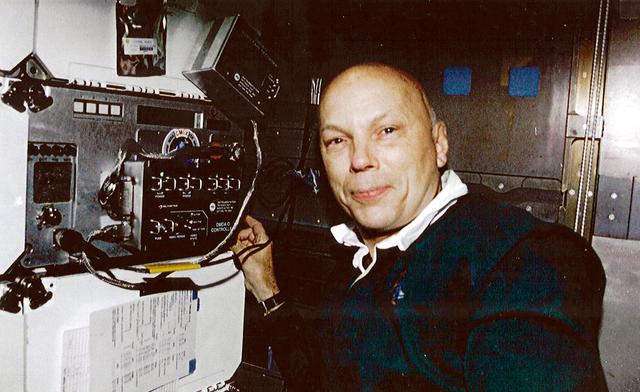
Experiments to seek solutions for a range of biomedical issues are at the heart of several investigations that will be hosted by the Commercial Instrumentation Technology Associates (ITA), Inc. The biomedical experiments CIBX-2 payload is unique, encompassing more than 20 separate experiments including cancer research, commercial experiments, and student hands-on experiments from 10 schools as part of ITA's ongoing University Among the stars program. Here, Astronaut Story Musgrave activates the CMIX-5 (Commercial MDA ITA experiment) payload in the Space Shuttle mid deck during the STS-80 mission in 1996 which is similar to CIBX-2. The experiments are sponsored by NASA's Space Product Development Program (SPD).
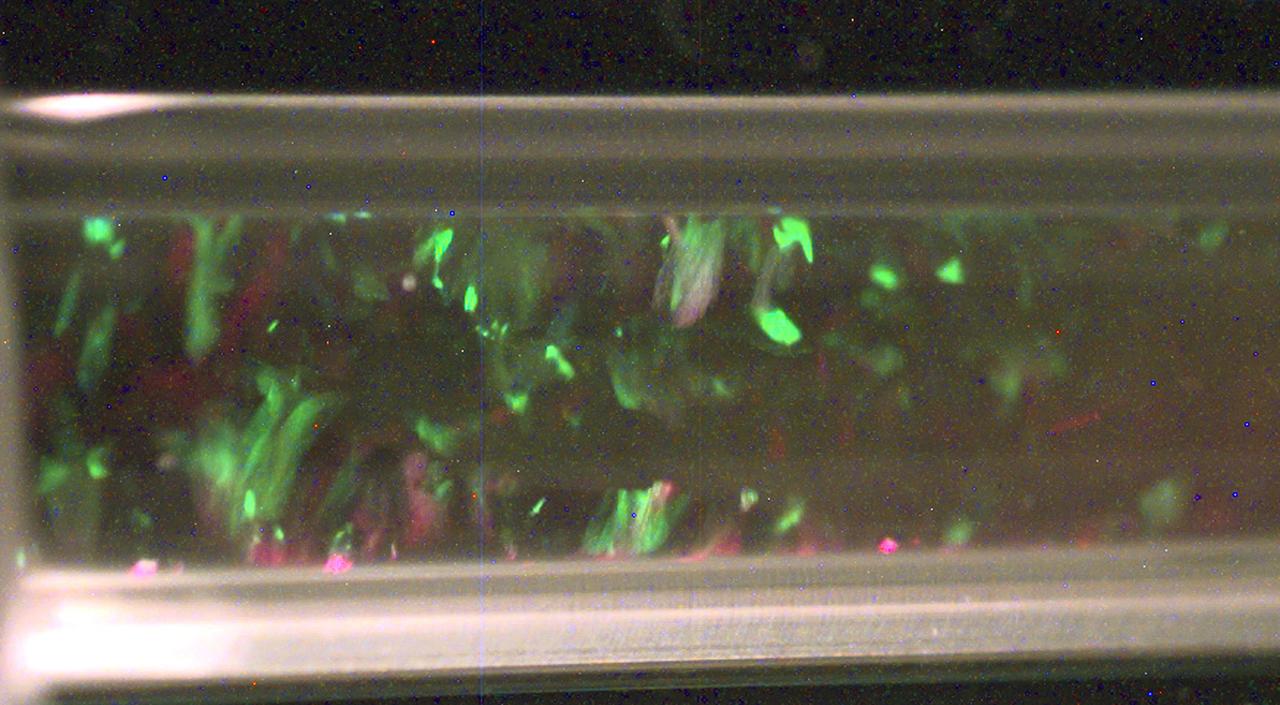
This is an image of a colloidal crystal from the CDOT-2 investigation flown on STS-95. There are so many colloidal particles in this sample that it behaves like a glass. In the laboratory on Earth, the sample remained in an amorphous state, showing no sign of crystal growth. In microgravity the sample crystallized in 3 days, as did the other glassy colloidal samples examined in the CDOT-2 experiment. During the investigation, crystallization occurred in samples that had a volume fraction (number of particles per total volume) larger than the formerly reported glass transition of 0.58. This has great implications for theories of the structural glass transition. These crystals were strong enough to survive space shuttle re-entry and landing.
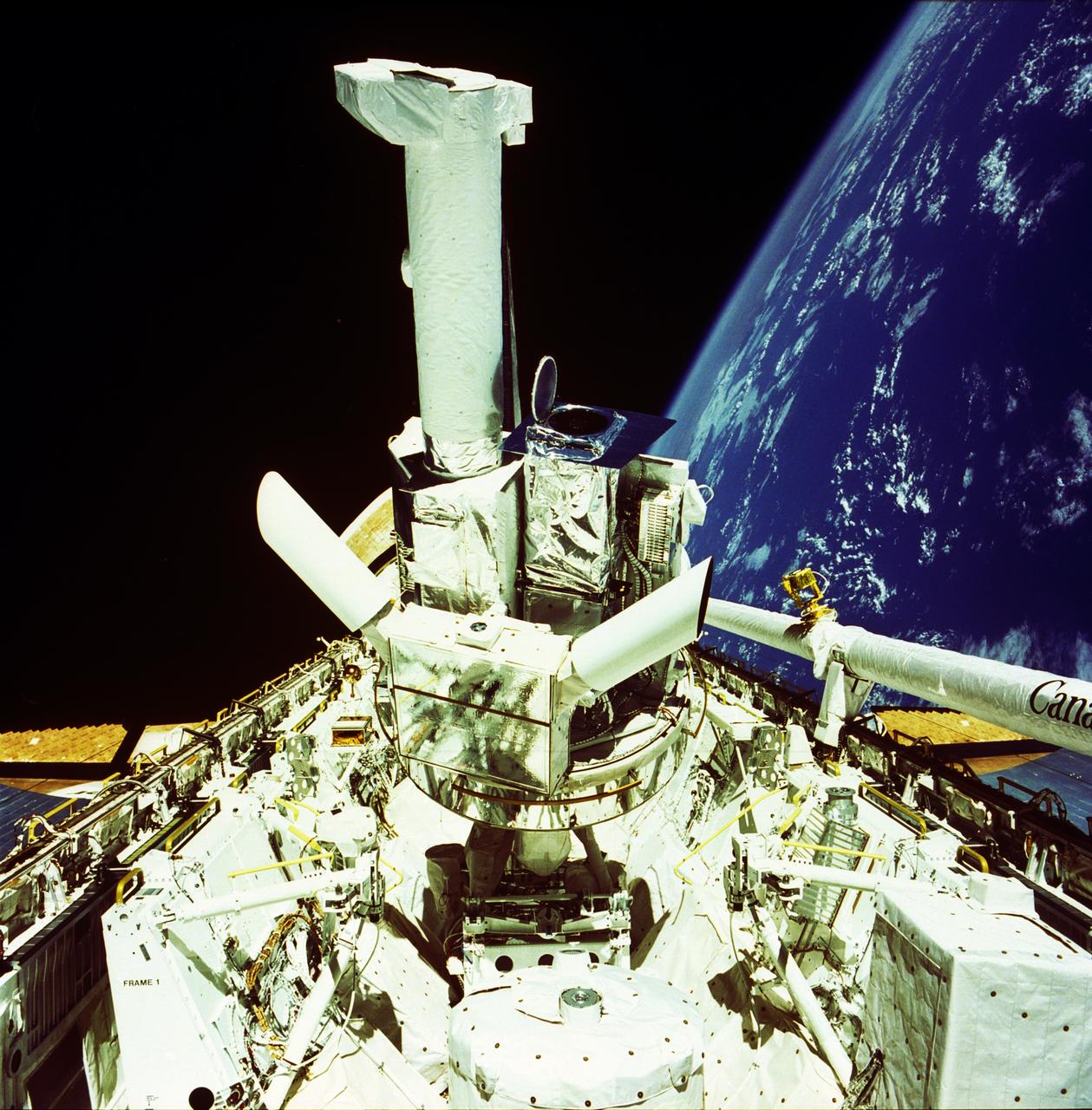
This photograph shows the Instrument Pointing System (IPS) for Spacelab-2 being deployed in the cargo bay of the Space Shuttle Orbiter Challenger. The European Space Agency (ESA) developed this irnovative pointing system for the Spacelab program. Previously, instruments were pointed toward particular celestial objects or areas by maneuvering the Shuttle to an appropriate attitude. The IPS could aim instruments more accurately than the Shuttle and kept them fixed on a target as the Shuttle moved. On the first pallet, three solar instruments and one atmospheric instrument were mounted on the IPS. Spacelab-2 was the first pallet-only mission. One of the goals of the mission was to verify that the pallets' configuration was satisfactory for observations and research. Except for two biological experiments and an experiment that uses ground-based instruments, the Spacelab-2 scientific instruments needed direct exposure to space. The Spacelab-2 mission was designed to capitalize on the Shuttle-Spacelab capabilities to carry very large instruments, launch and retrieve satellites, and point several instruments independently with accuracy and stability. Spacelab-2 (STS-51F, 19th Shuttle mission) was launched on July 29, 1985 aboard the Space Shuttle Orbiter Challenger. The Marshall Space Flight Center had overall management responsibilities of the Spacelab missions.
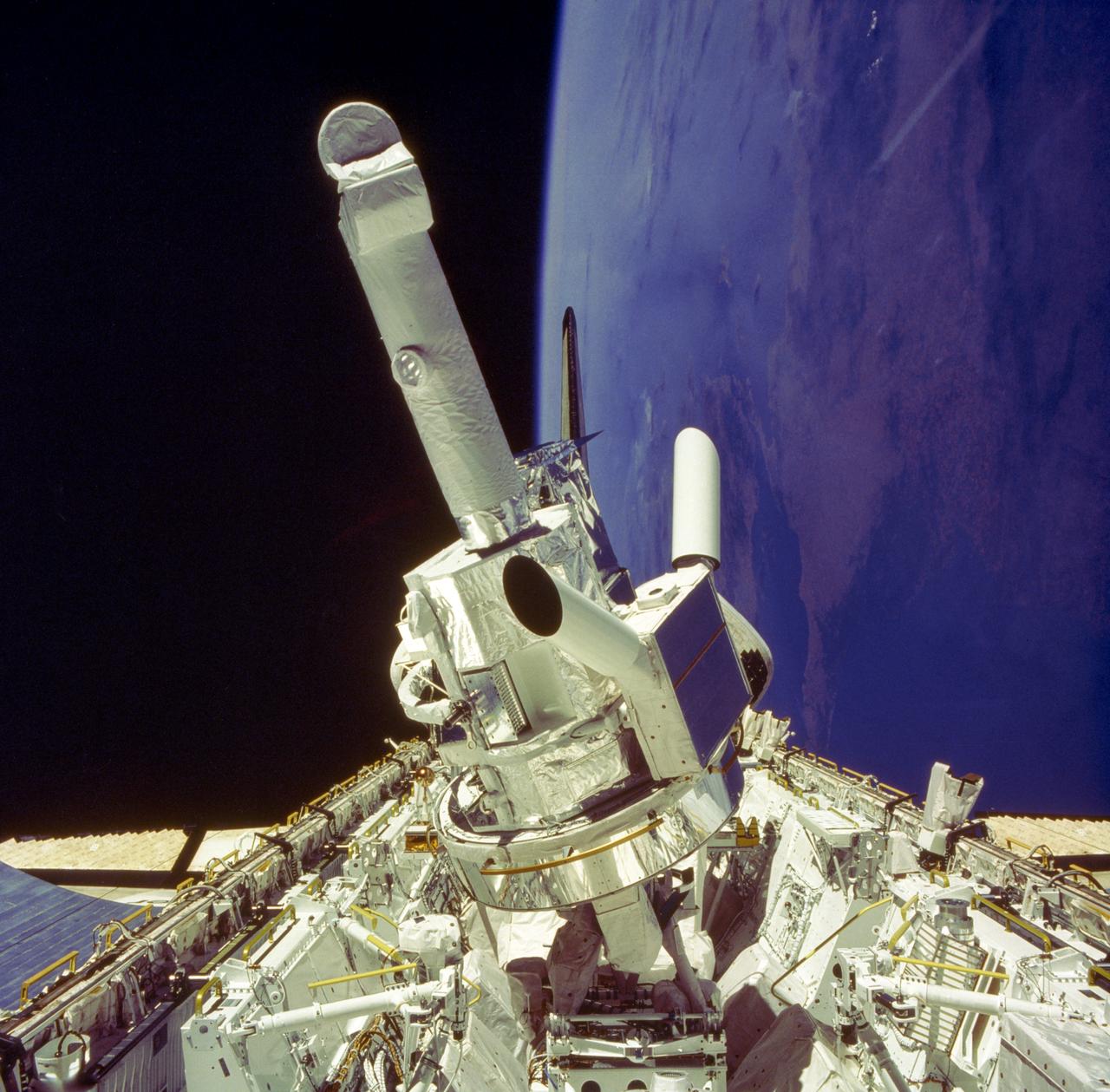
This photograph shows the Instrument Pointing System (IPS) for Spacelab-2 being deployed in the cargo bay of the Space Shuttle Orbiter Challenger. The European Space Agency (ESA) developed this irnovative pointing system for the Spacelab program. Previously, instruments were pointed toward particular celestial objects or areas by maneuvering the Shuttle to an appropriate attitude. The IPS could aim instruments more accurately than the Shuttle and kept them fixed on a target as the Shuttle moved. On the first pallet, three solar instruments and one atmospheric instrument were mounted on the IPS. Spacelab-2 was the first pallet-only mission. One of the goals of the mission was to verify that the pallets' configuration was satisfactory for observations and research. Except for two biological experiments and an experiment that used ground-based instruments, the Spacelab-2 scientific instruments needed direct exposure to space. The Spacelab-2 mission was designed to capitalize on the Shuttle-Spacelab capabilities to carry very large instruments, launch and retrieve satellites, and point several instruments independently with accuracy and stability. Spacelab-2 (STS-51F, 19th Shuttle mission) was launched on July 29, 1985 aboard the Space Shuttle Orbiter Challenger. The Marshall Space Flight Center had overall management responsibilities of the Spacelab missions.
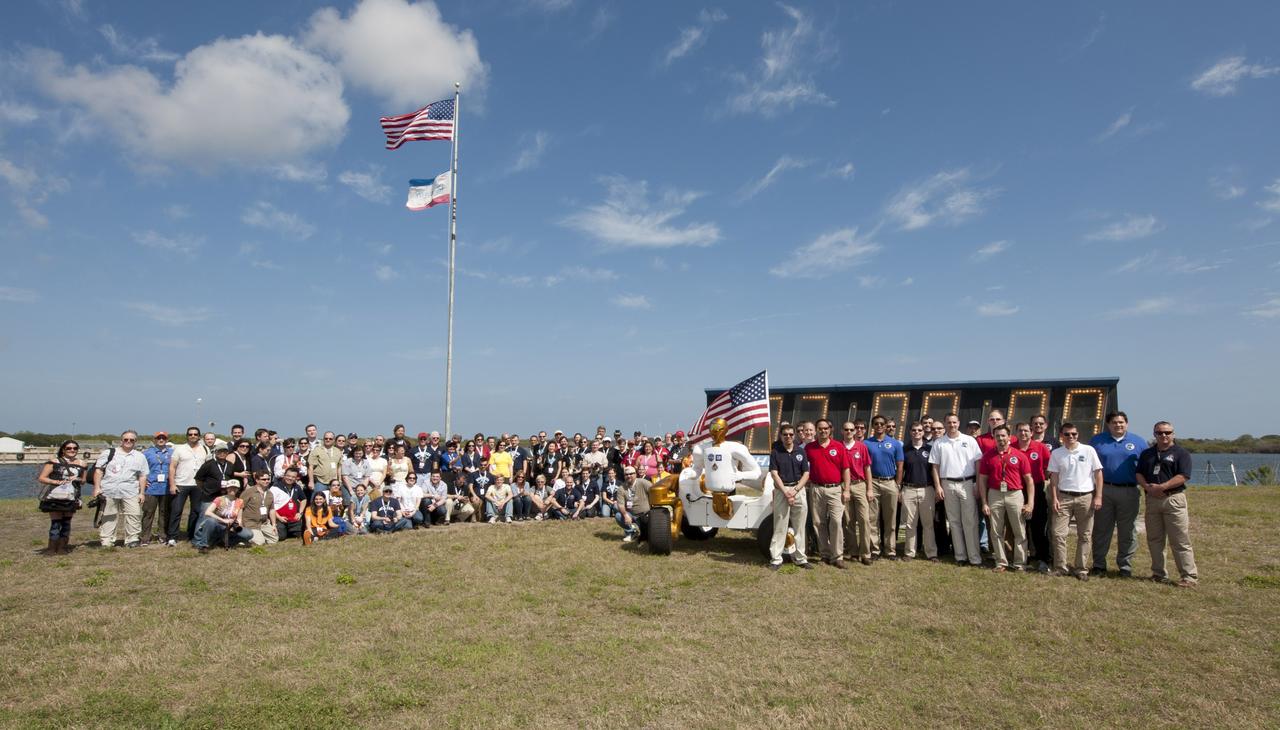
NASA Tweetup participants along with NASA engineers and Robonaut 2 stand at the launch clock, Thursday, Feb. 24, 2011, prior to the launch of the space shuttle Discovery (STS-133) at Kennedy Space Center in Cape Canaveral, Fla. During the 11-day mission, Discovery will deliver the Italian-built Permanent Multipurpose Module (PMM) and Express Logistics Carrier 4 (ELC4) along with another Robonaut 2, which will become the first humanoid robot in space. Discovery, on its 39th and final flight, is NASA's most flown shuttle. Photo Credit: (NASA/Paul E. Alers)

S81-39549 (12 Nov. 1981) --- Framed here by Florida vegetation, the 37-meter-tall (122 feet) NASA space shuttle Columbia lifts off from Launch Pad 39A at NASA-Kennedy Space Center (KSC). Astronauts Joe H. Engle and Richard H. Truly begin the second space shuttle (STS-2) flight with at least two new items of cargo aboard. One is a collection of experiments developed by the Office of Space and Terrestrial Applications (OSTA) and another is a robot arm with in-space/in-cabin controls known as the remote manipulator system (RMS). Liftoff took place just a few seconds past 10:10 a.m. EST on Nov. 12, 1981. Photo credit: NASA
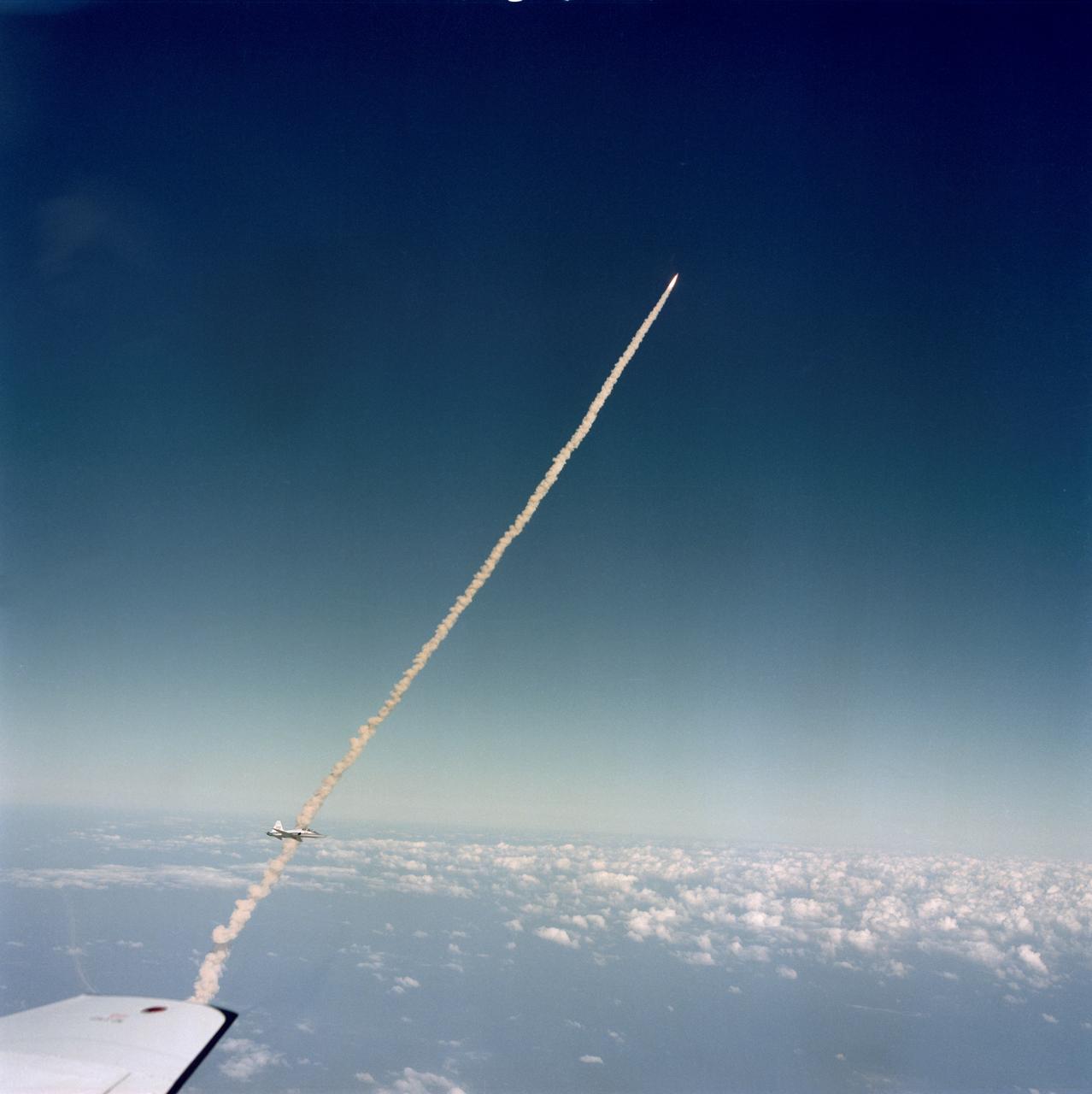
S81-39527 (12 Nov. 1981) --- This photograph of the STS-2 crew and the space shuttle Columbia soaring toward Earth orbit was captured with a hand-held 70mm camera (using an 80mm lens) operated from the rear station of a T-38 jet aircraft. Mission specialist-astronaut Kathryn D. Sullivan took the picture, and part of the wing tip of her aircraft can be seen in lower left corner. Astronaut John W. Young piloting NASA?s shuttle training aircraft (STA) was taking pictures from a higher angle. A close look can delineate his craft above the orbiter and supportive elements, almost perpendicular to them from this point of view. Another T-38 jet, with a TV camera operator as back-seat passenger, can be seen at lower left corner near the smoke trails from the shuttle. Photo credit: NASA
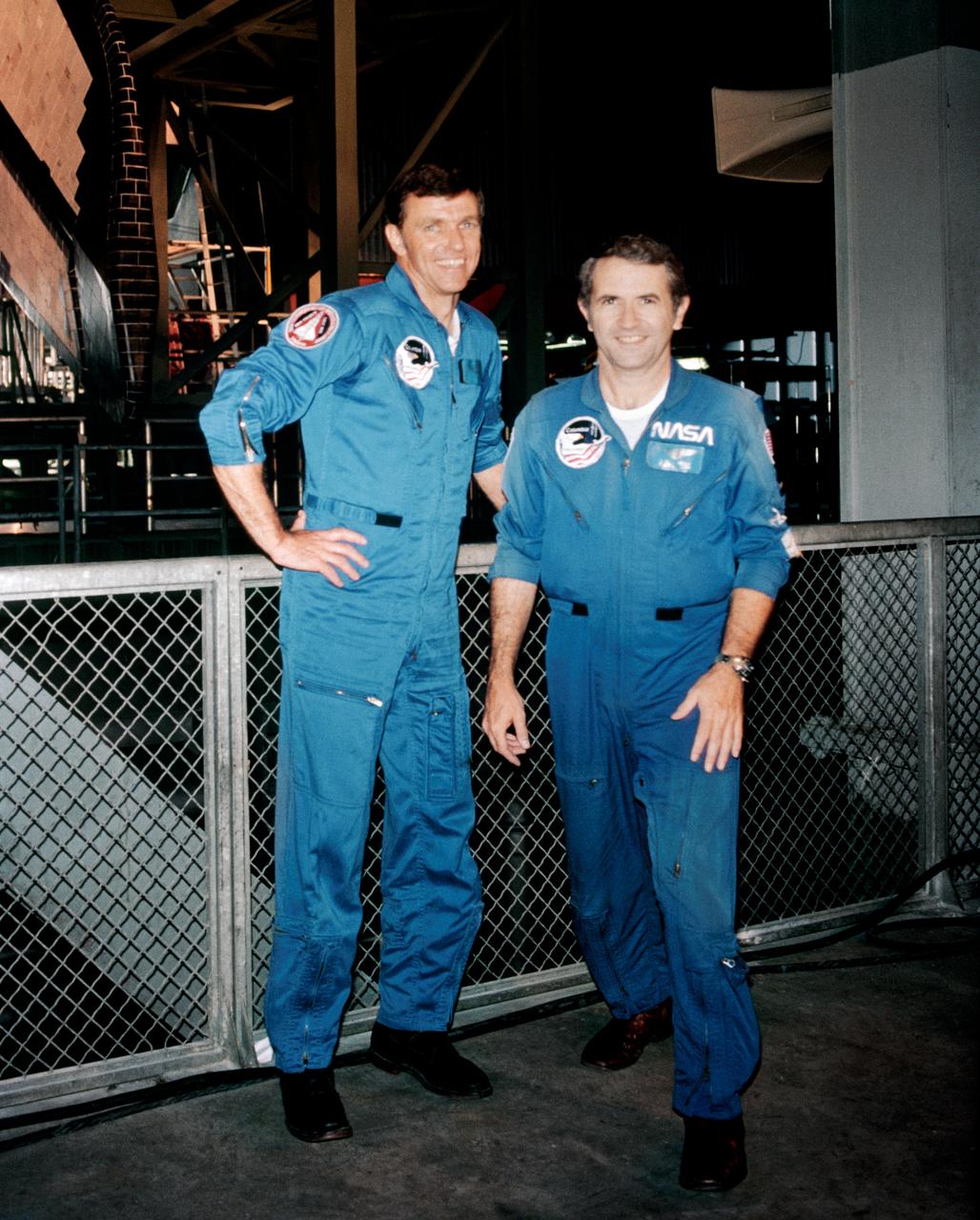
S81-36331 (24 Aug. 1981) --- Astronauts Joe H. Engle, left, and Richard H. Truly pause before participating in the integrated test of the assembled space shuttle components scheduled for launch no earlier than Sept. 30, 1981. Moments later, Engle, STS-2 crew commander, and Truly, pilot, entered the cabin of the orbiter Columbia for a mission simulation. The shuttle integrated tests (SIT) are designed to check out every connection and signal path in the STS-2 vehicle composed of the orbiter, two solid rocket boosters (SRB) and an external fuel tank (ET) for Columbia?s main engines. Completion of the tests will clear the way for preparations for rollout to Pad A at Launch Complex 39, scheduled for the latter part of August or early September. Photo credit: NASA
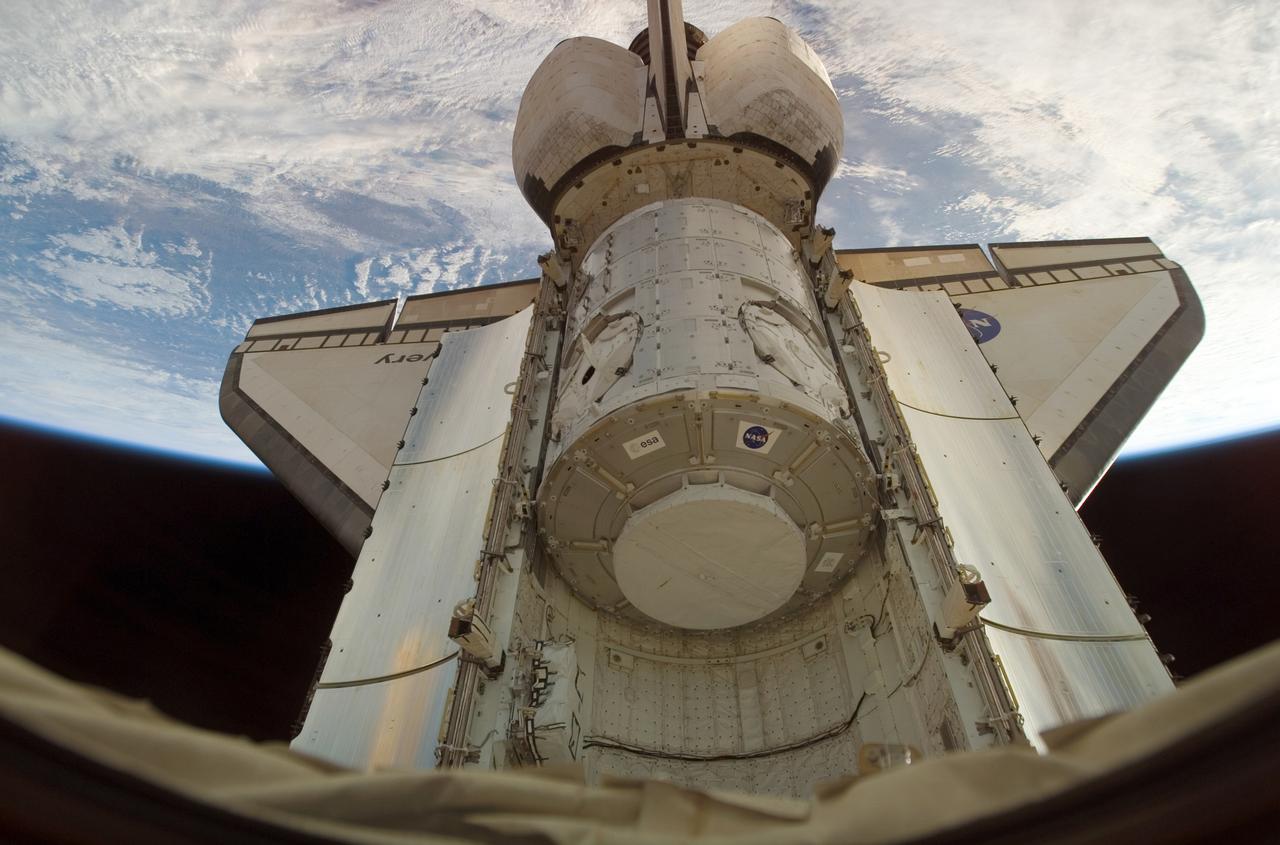
Back dropped by Earth's horizon and the blackness of space, the Italian-built U.S. Node 2, Harmony, is featured in Space Shuttle Discovery's cargo bay during the STS-120 mission. This image was photographed by an Expedition 16 crew member on the International Space Station (ISS) while Discovery was docked with the station. The aluminum node is 7.2 meters (23.6 feet) long and 4.4 meters (14.5 feet) in diameter. Its pressurized volume is 75.5 cubic meters (2666 cubic feet), and its launch weight is approximately 14,288 kilograms (31,500 pounds). The installation of Harmony increases the living and working space inside the station to approximately 500 cubic meters (18,000 cubic feet). It also allows the addition of international laboratories from Europe and Japan to the station.
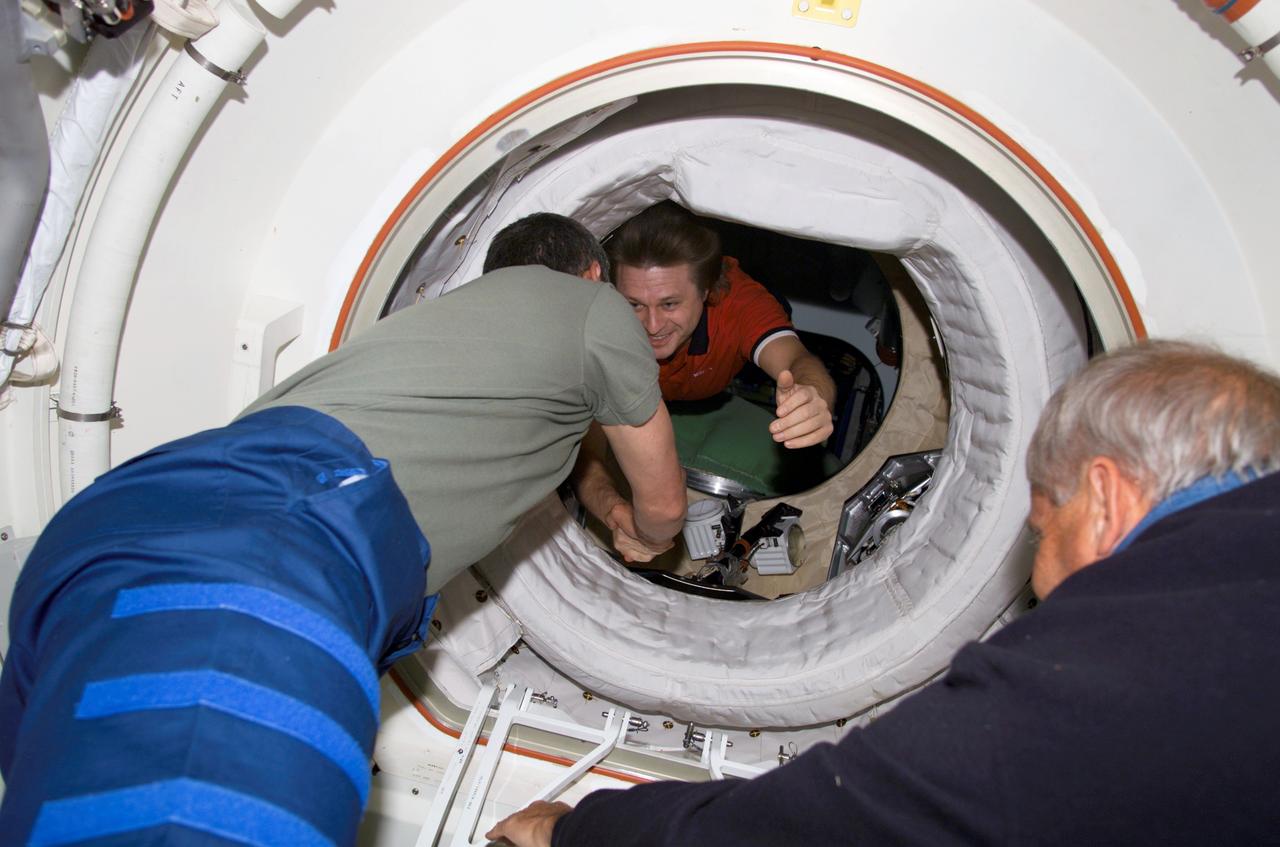
STS111-E-5095 (7 June 2002) --- Cosmonaut Yury I. Onufrienko, Expedition Four mission commander, greets cosmonaut Valery G. Korzun (back to camera), Expedition Five mission commander, when the hatch to the Pressurized Mating Adapter 2 (PMA-2) on the International Space Station (ISS) was opened for the STS-111 ingress. Astronaut Kenneth D. Cockrell, STS-111 mission commander, is partially visible on the right of Korzun. Onufrienko and Korzun represent Rosaviakosmos.