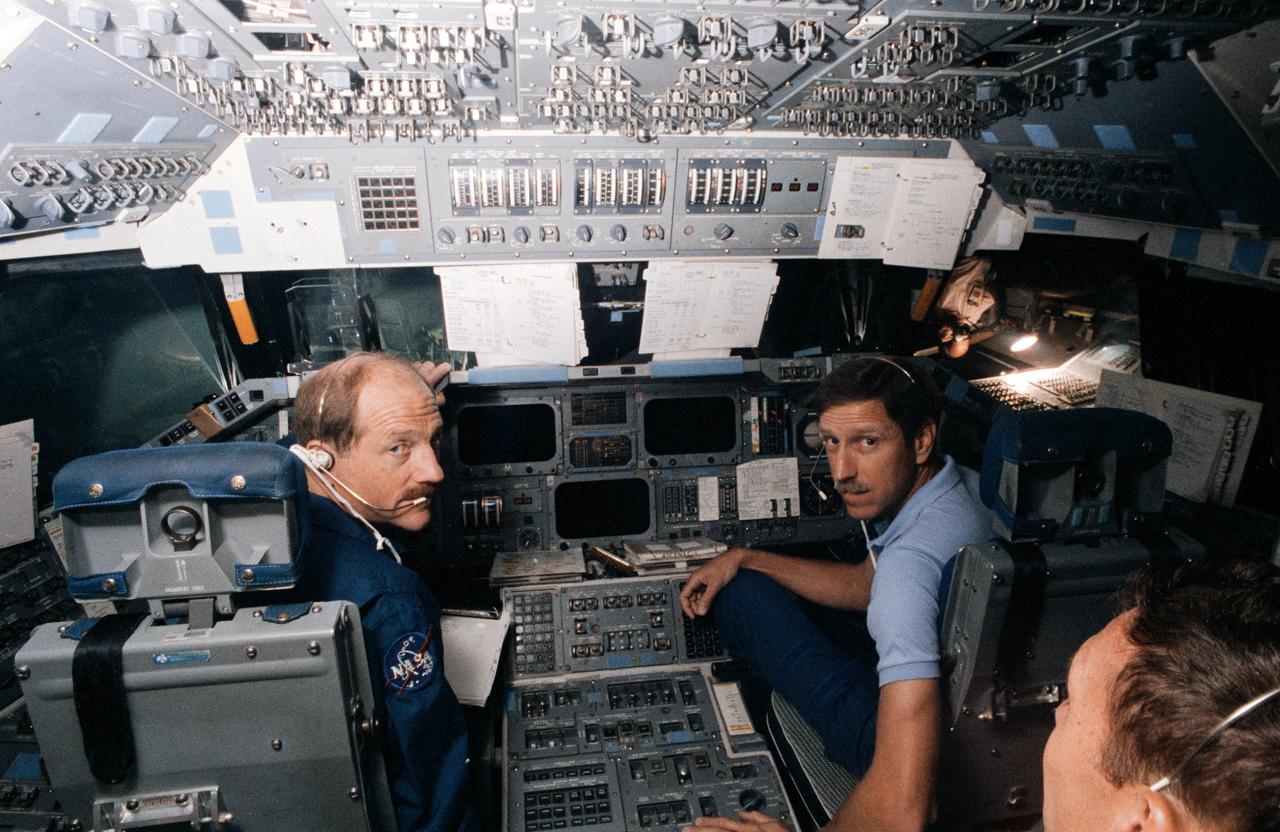
S87-46304 (20 Oct 1987) --- Astronauts Frederick H. (Rick) Hauck, left, STS-26 commander, and Richard O. Covey, pilot, man their respective stations in the Shuttle mission simulator (fixed base) at the Johnson Space Center. A simulation for their anticipated June 1988 flight aboard the space shuttle Discovery began Oct. 20. Astronaut David C. Hilmers, one of three mission specialists for the flight, is partially visible in the foreground.
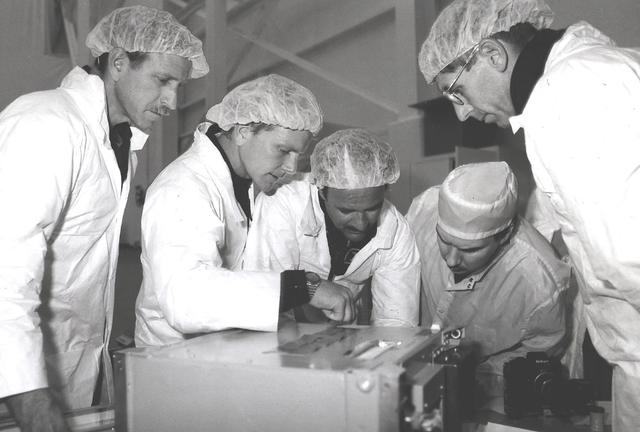
Space Shuttle Discovery (STS-26) astronauts George Nelson, John Lounge, and Richard Covey are pictured training on protein crystal growth (PCG) experiment in Marshall's Building 4708's clean room.
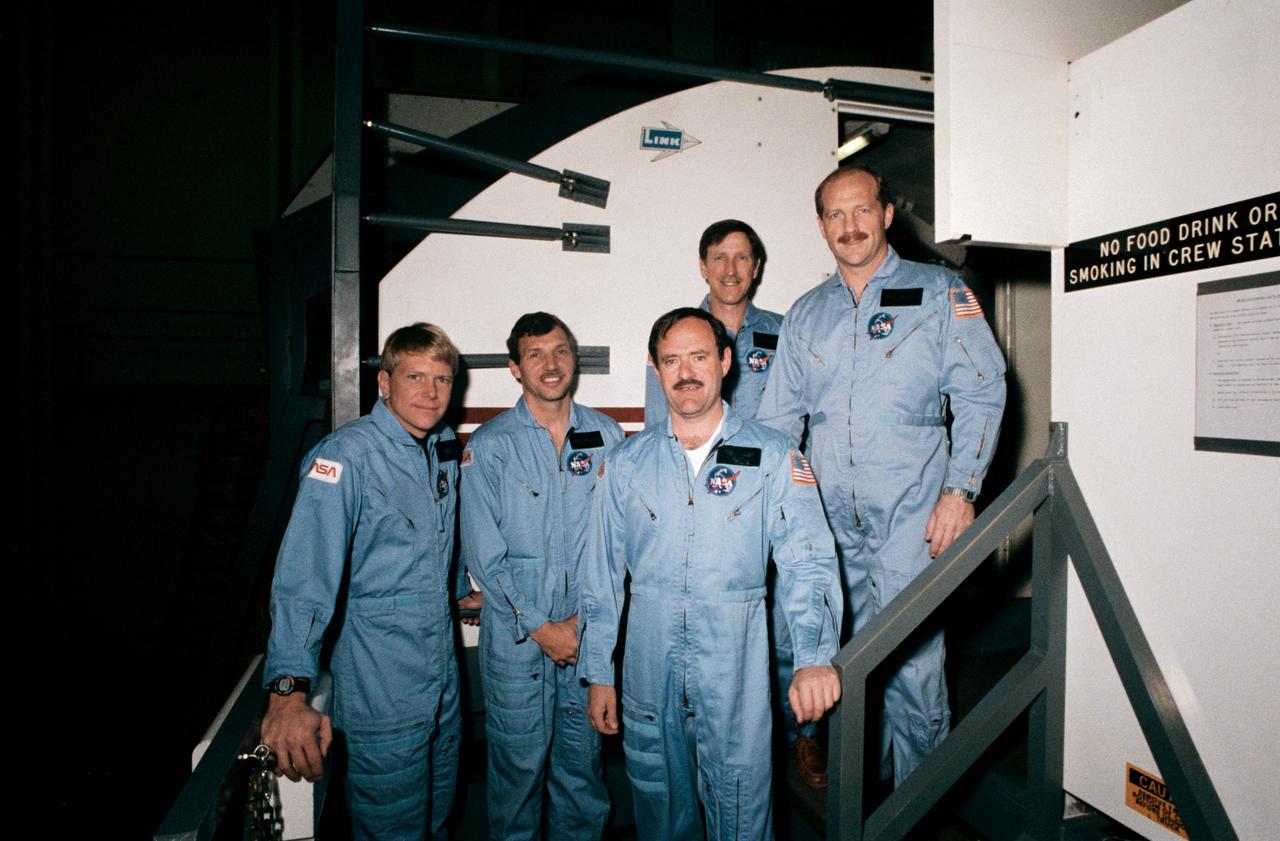
S87-26822 (11 Feb. 1987) --- The Return to Flight crew, STS-26 pose for a photo prior to a training session in a simulator in the Jake Garn Mission Simulation and Training Facility at the Johnson Space Center. Photo credit: NASA
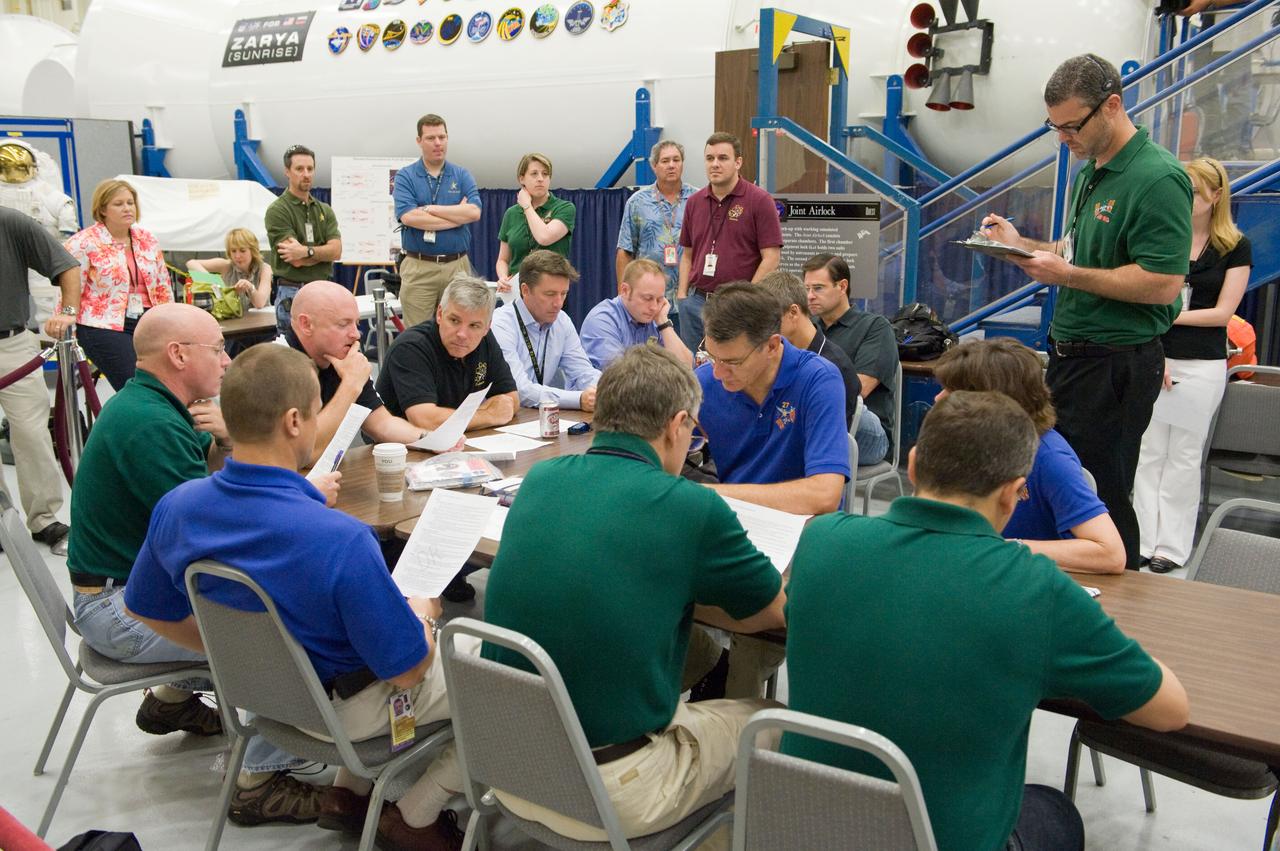
JSC2010-E-132403 (16 July 2010) --- Expedition 25/26, Expedition 26/27 and STS-134 crew members are pictured during a joint emergency scenarios training session in the Space Vehicle Mock-up Facility at NASA's Johnson Space Center. Photo credit: NASA or National Aeronautics and Space Administration
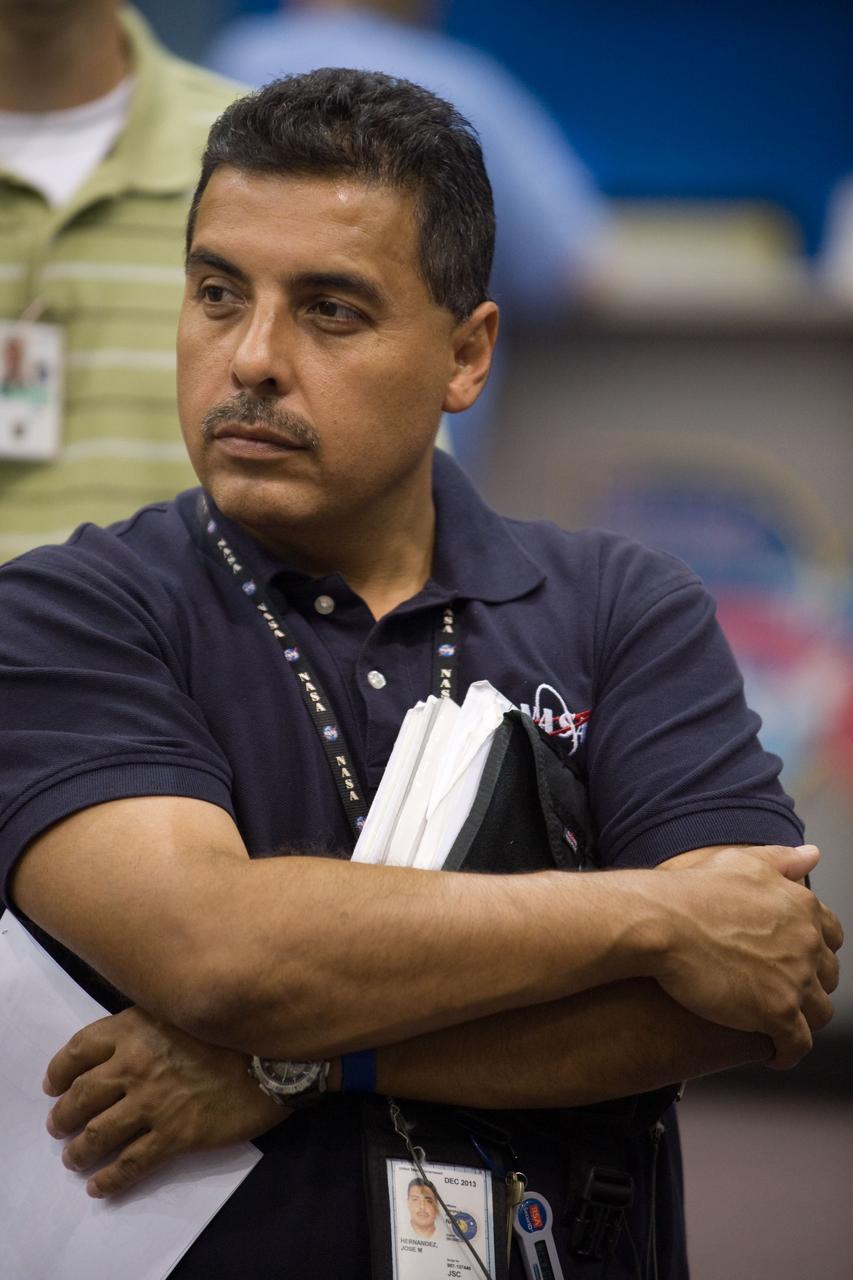
PHOTO DATE: 06-26-09 LOCATION: Bldg 9NW, FFT SUBJECT: STS-128 crew during space station ingress/egress timeline training with instructors Bob Behrendsen and Glenn Johnson PHOTOGRAPHER: James Blair
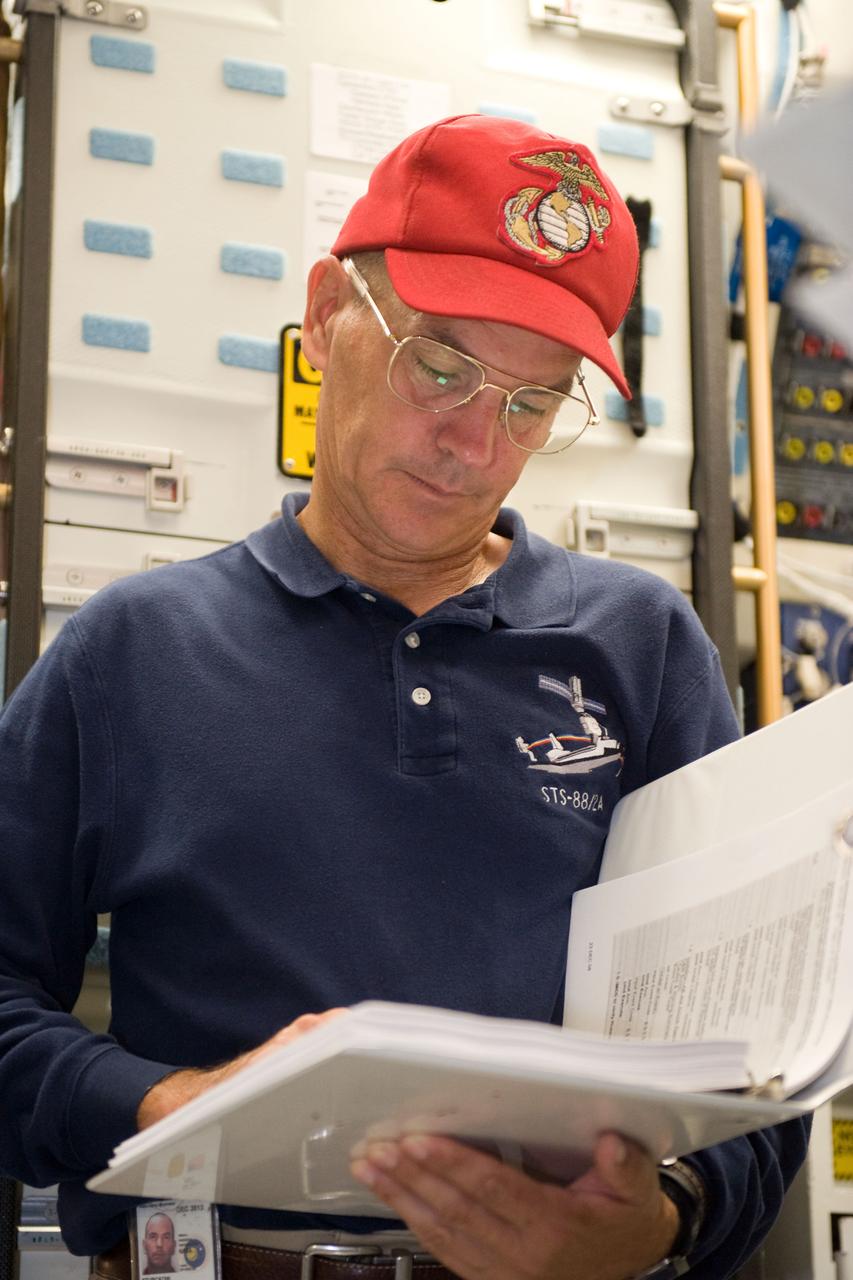
PHOTO DATE: 06-26-09 LOCATION: Bldg 9NW, FFT SUBJECT: STS-128 crew during space station ingress/egress timeline training with instructors Bob Behrendsen and Glenn Johnson PHOTOGRAPHER: James Blair
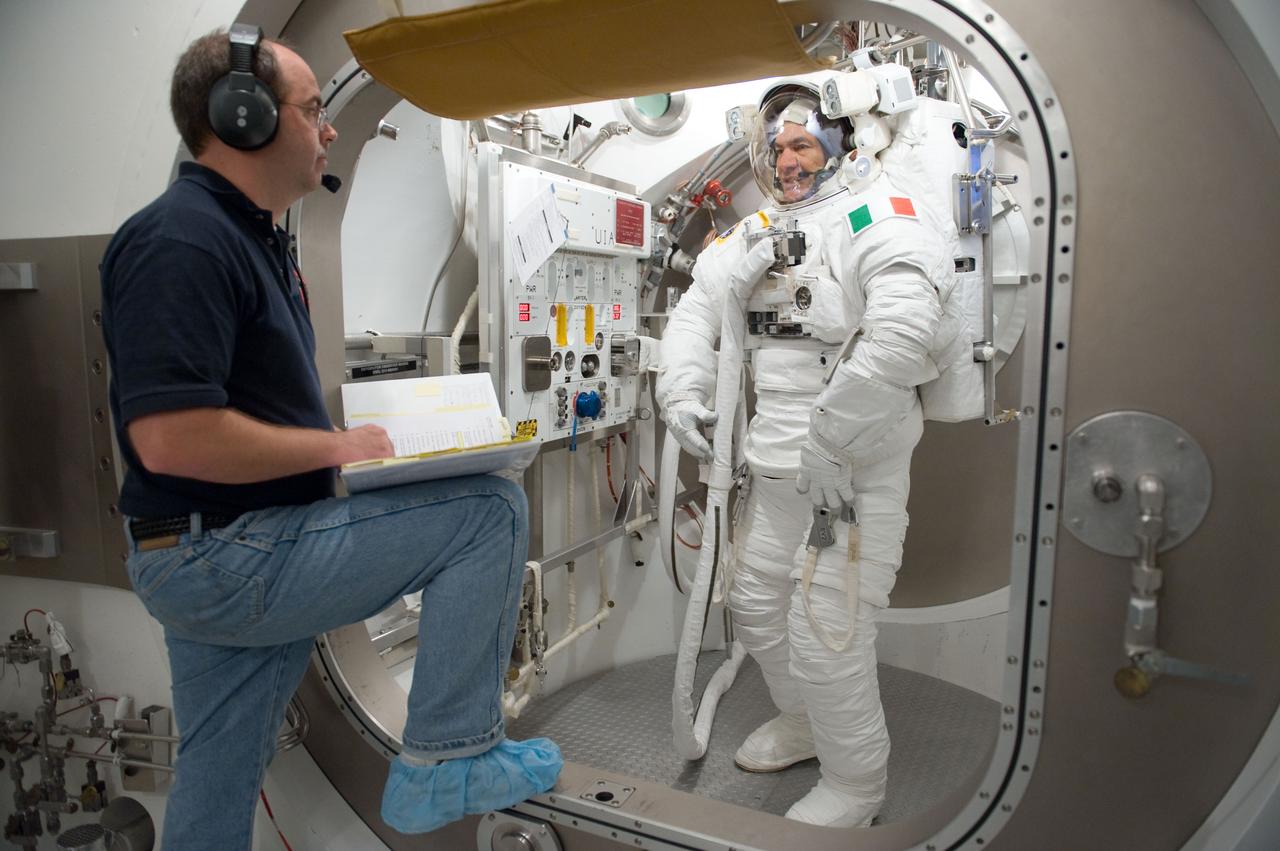
PHOTO DATE: 4/5/10, Time: 1000 LOCATION: Bldg 7/SSATA Chamber SUBJECT: STB-ST-903 - INC 26 SSATA Crew Training: Paolo Nespoli Photographer: James Blair
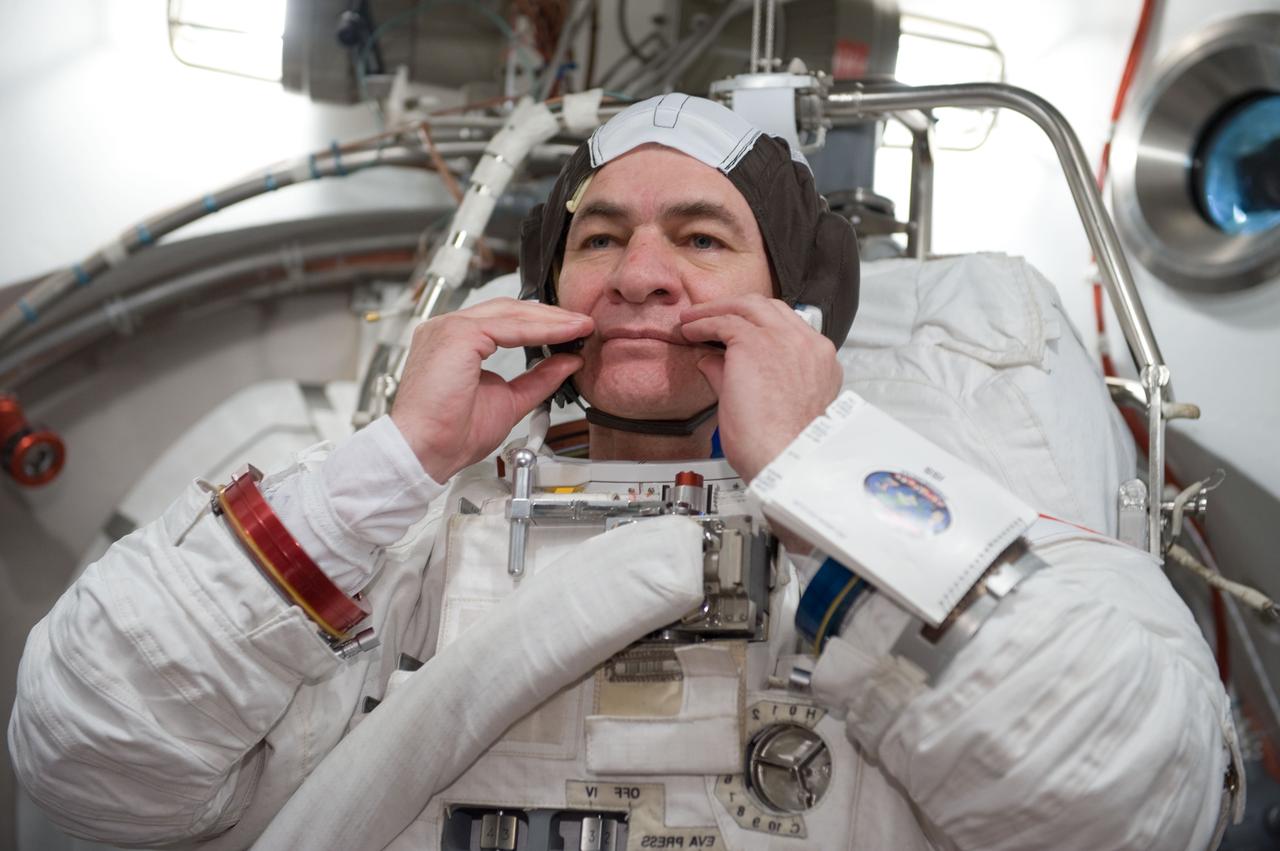
PHOTO DATE: 4/5/10, Time: 1000 LOCATION: Bldg 7/SSATA Chamber SUBJECT: STB-ST-903 - INC 26 SSATA Crew Training: Paolo Nespoli Photographer: James Blair
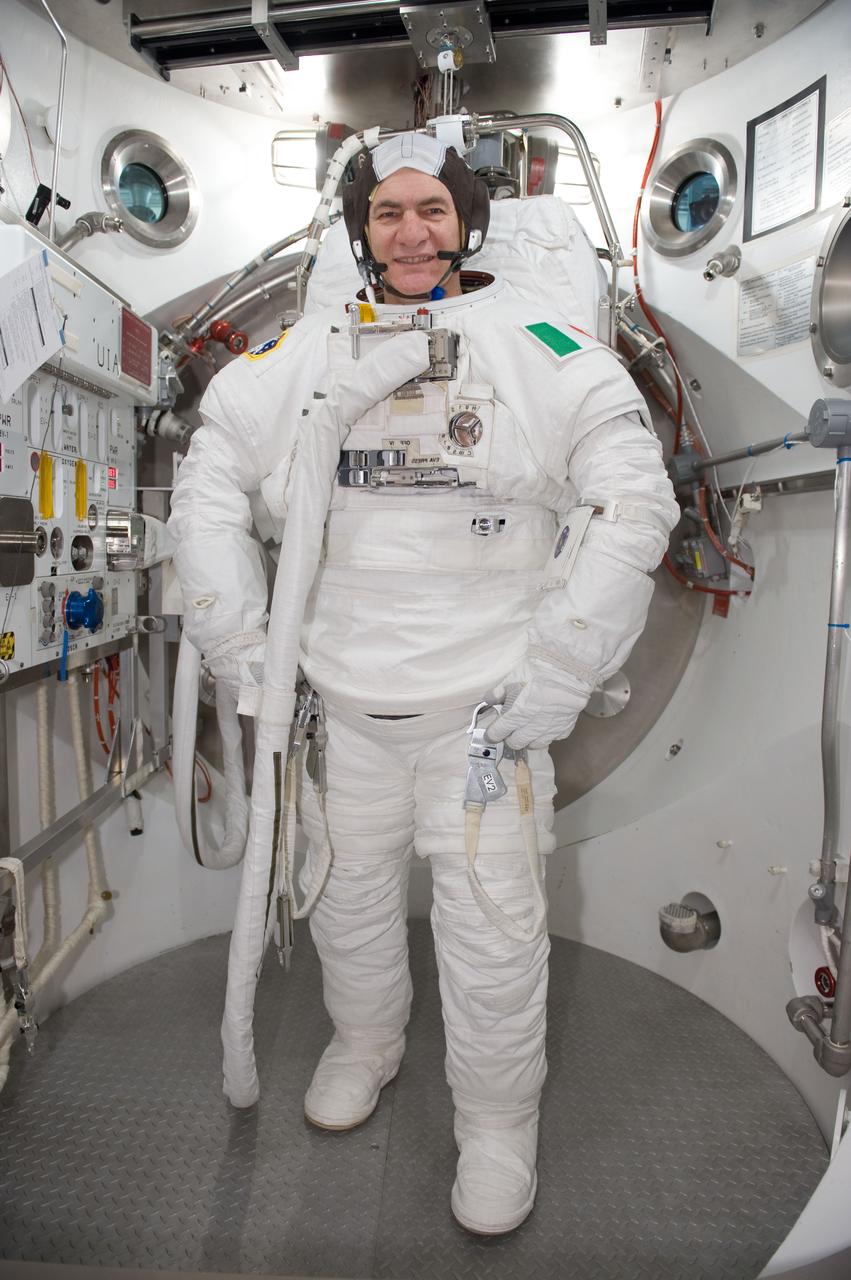
PHOTO DATE: 4/5/10, Time: 1000 LOCATION: Bldg 7/SSATA Chamber SUBJECT: STB-ST-903 - INC 26 SSATA Crew Training: Paolo Nespoli Photographer: James Blair
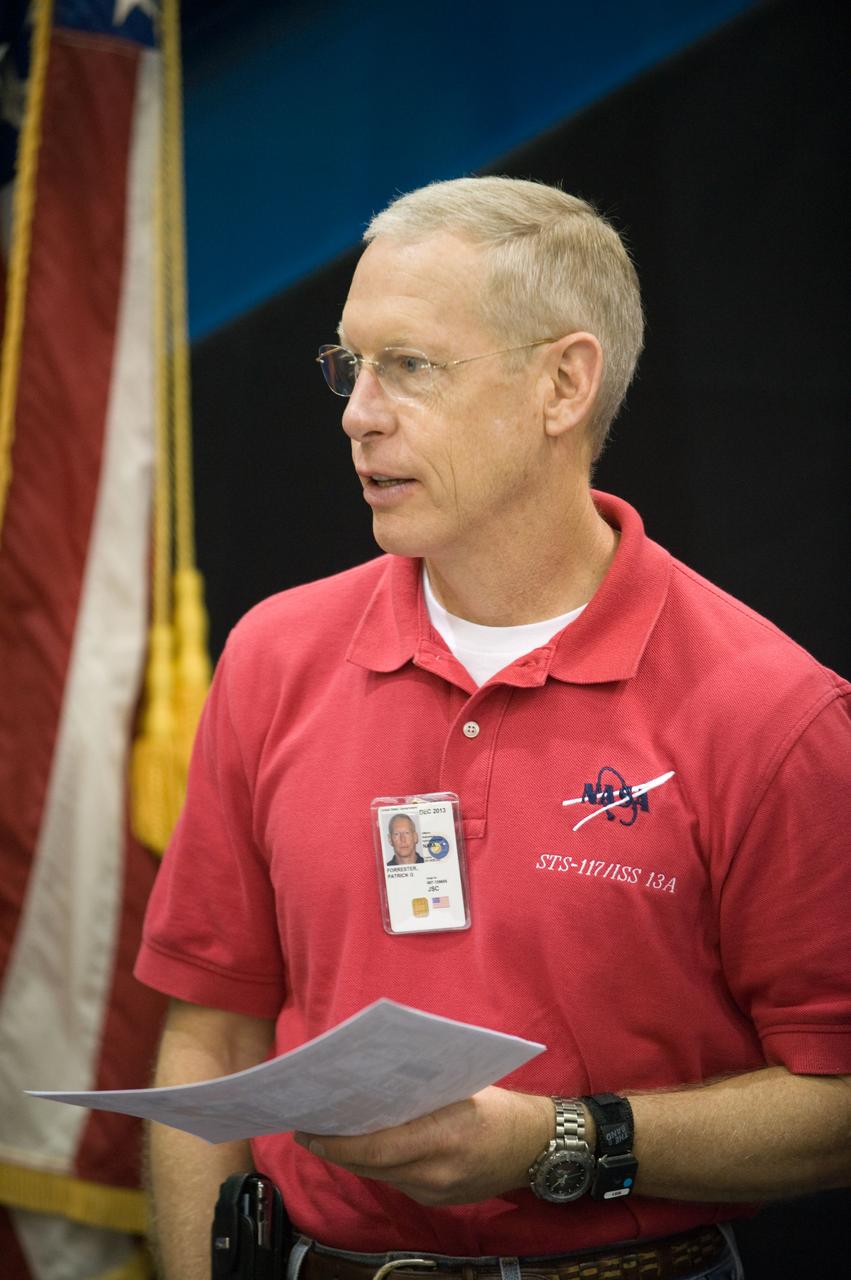
PHOTO DATE: 06-26-09 LOCATION: Bldg 9NW, FFT SUBJECT: STS-128 crew during space station ingress/egress timeline training with instructors Bob Behrendsen and Glenn Johnson PHOTOGRAPHER: James Blair
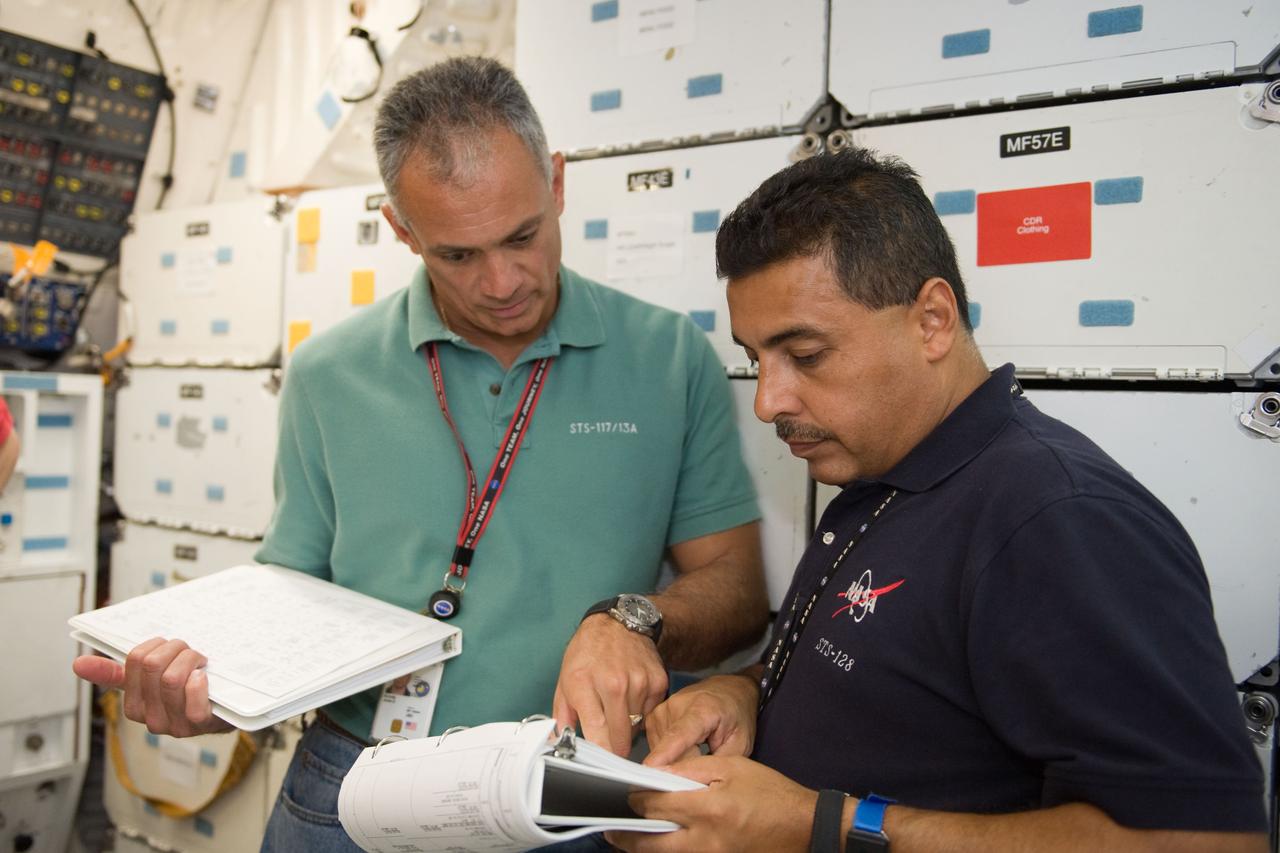
PHOTO DATE: 06-26-09 LOCATION: Bldg 9NW, FFT SUBJECT: STS-128 crew during space station ingress/egress timeline training with instructors Bob Behrendsen and Glenn Johnson PHOTOGRAPHER: James Blair
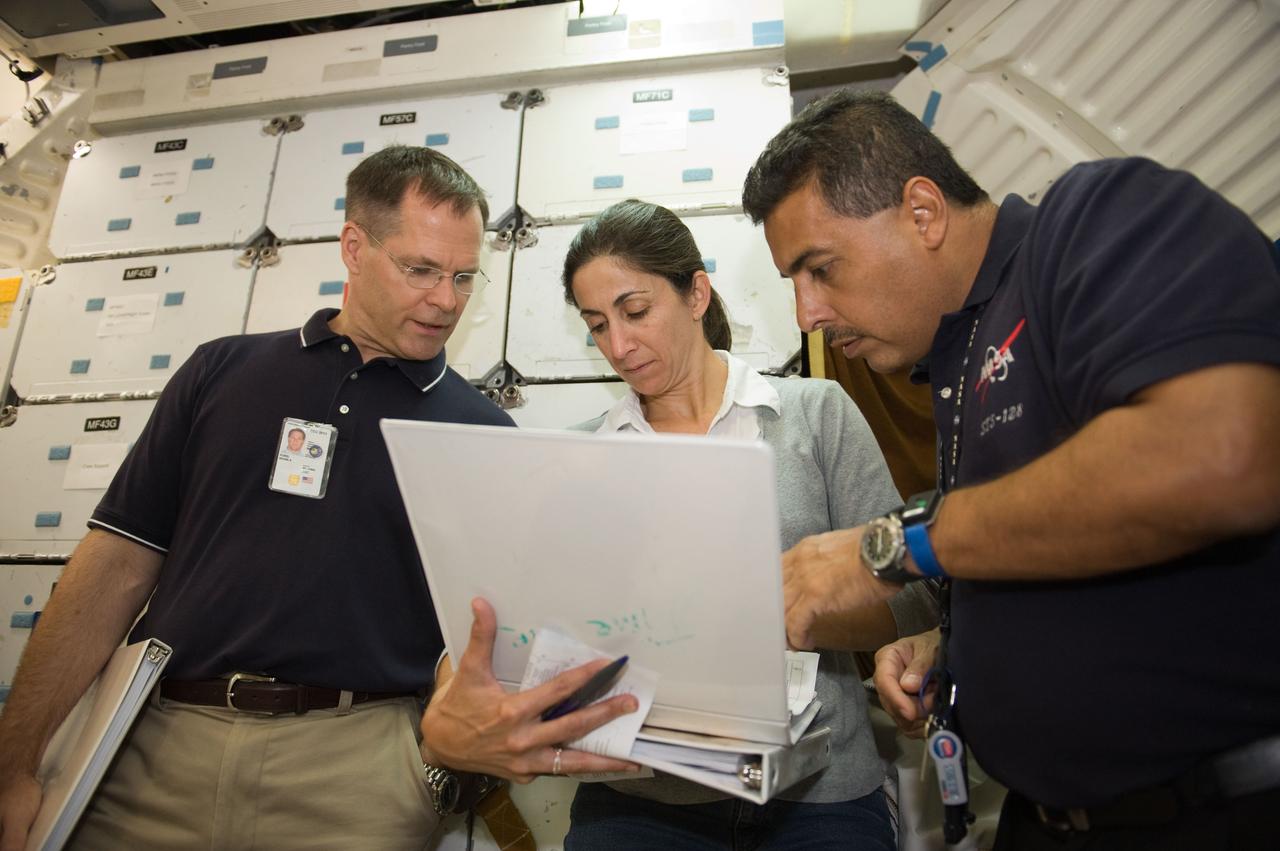
PHOTO DATE: 06-26-09 LOCATION: Bldg 9NW, FFT SUBJECT: STS-128 crew during space station ingress/egress timeline training with instructors Bob Behrendsen and Glenn Johnson PHOTOGRAPHER: James Blair

PHOTO DATE: 06-26-09 LOCATION: Bldg 9NW, FFT SUBJECT: STS-128 crew during space station ingress/egress timeline training with instructors Bob Behrendsen and Glenn Johnson PHOTOGRAPHER: James Blair
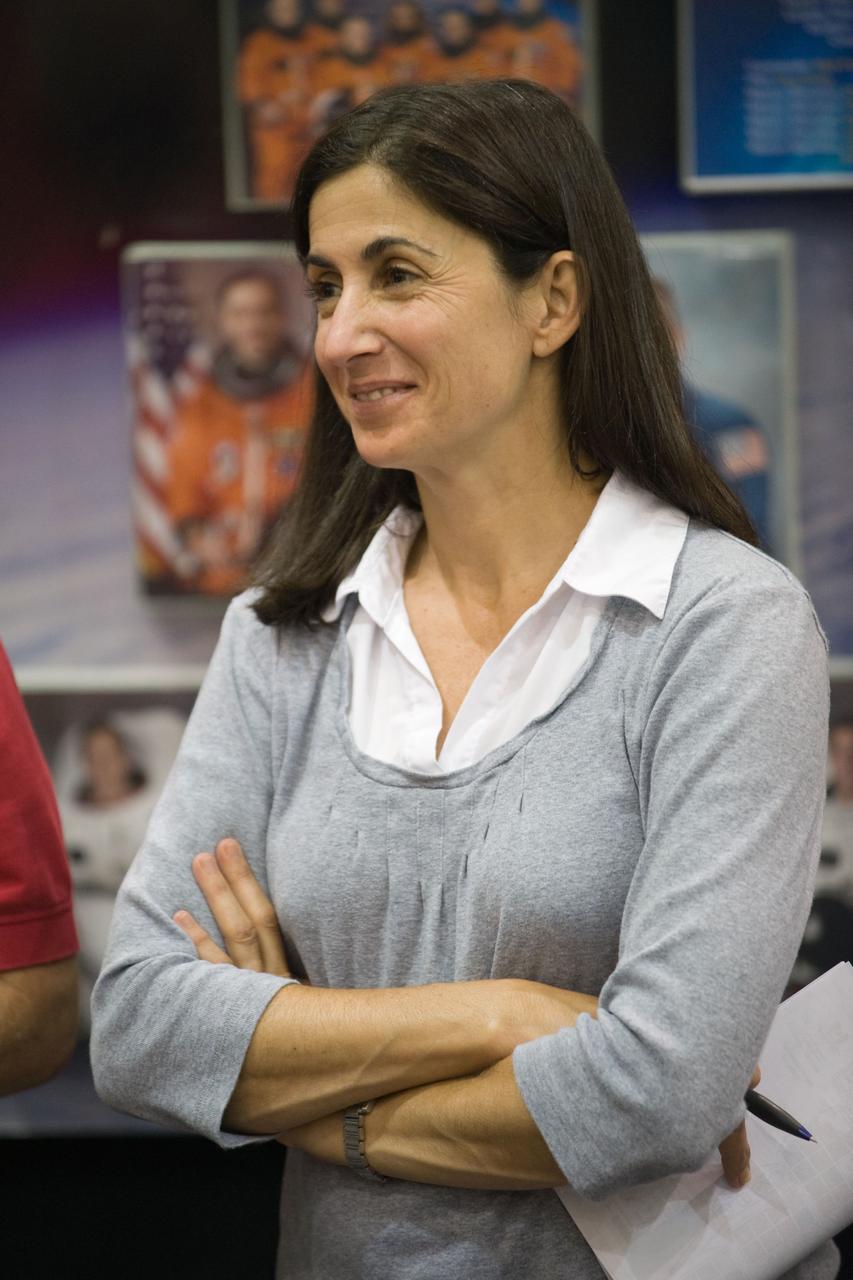
PHOTO DATE: 06-26-09 LOCATION: Bldg 9NW, FFT SUBJECT: STS-128 crew during space station ingress/egress timeline training with instructors Bob Behrendsen and Glenn Johnson PHOTOGRAPHER: James Blair
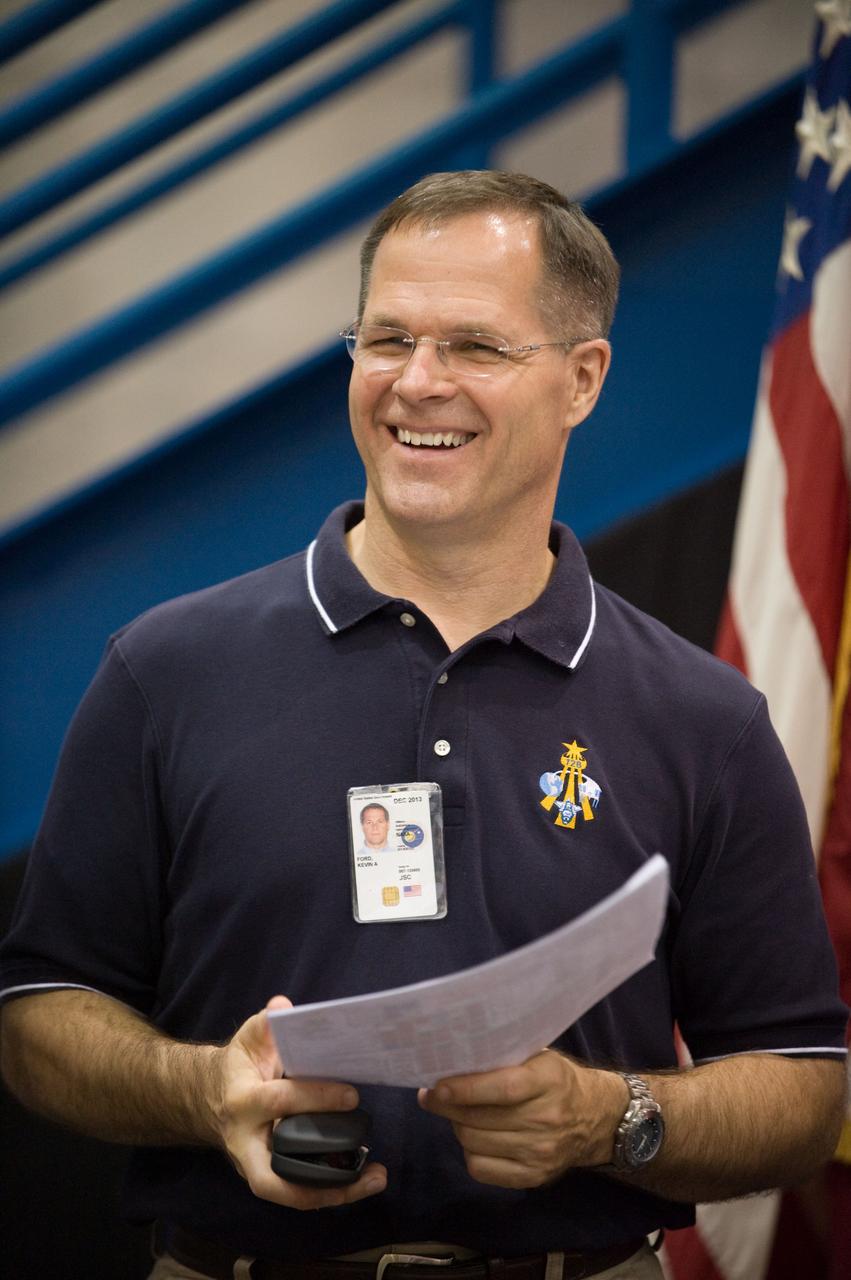
PHOTO DATE: 06-26-09 LOCATION: Bldg 9NW, FFT SUBJECT: STS-128 crew during space station ingress/egress timeline training with instructors Bob Behrendsen and Glenn Johnson PHOTOGRAPHER: James Blair
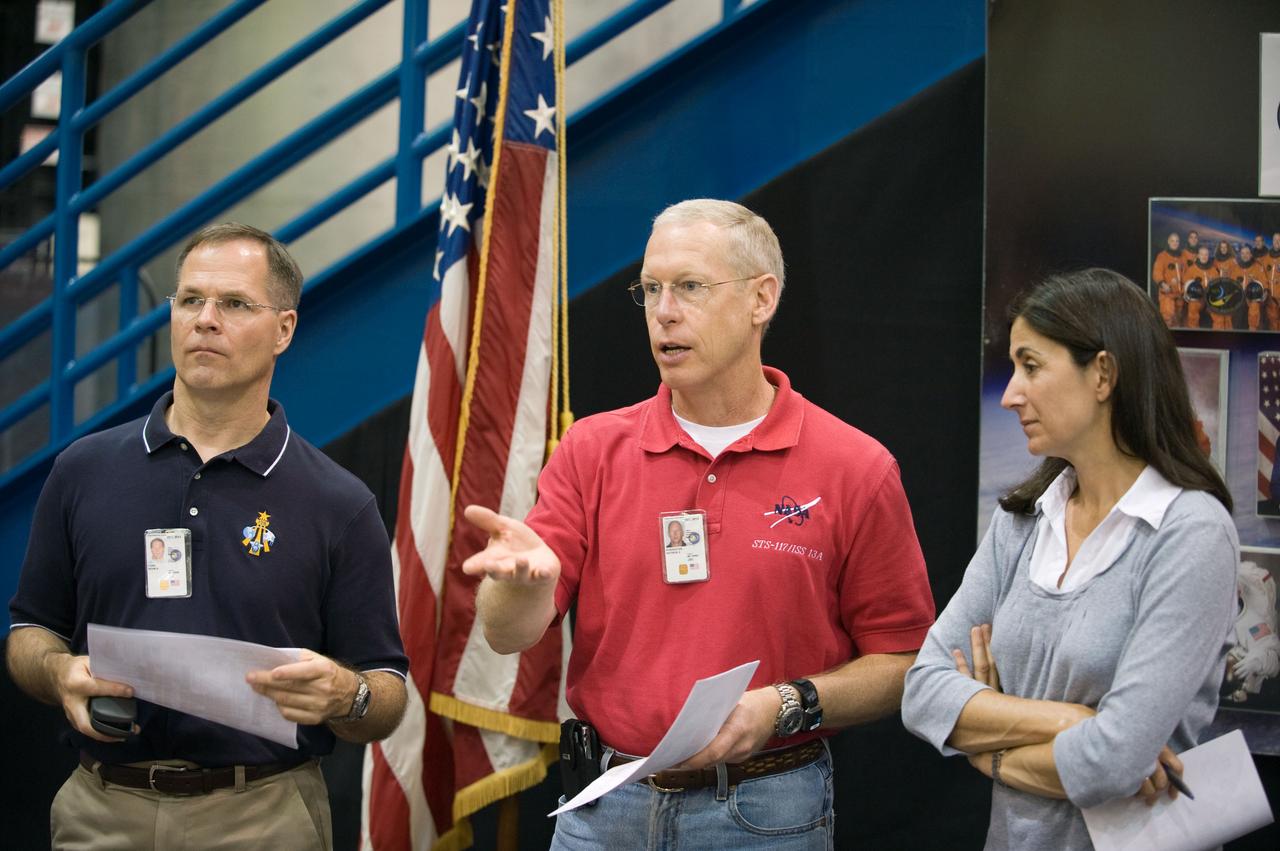
PHOTO DATE: 06-26-09 LOCATION: Bldg 9NW, FFT SUBJECT: STS-128 crew during space station ingress/egress timeline training with instructors Bob Behrendsen and Glenn Johnson PHOTOGRAPHER: James Blair
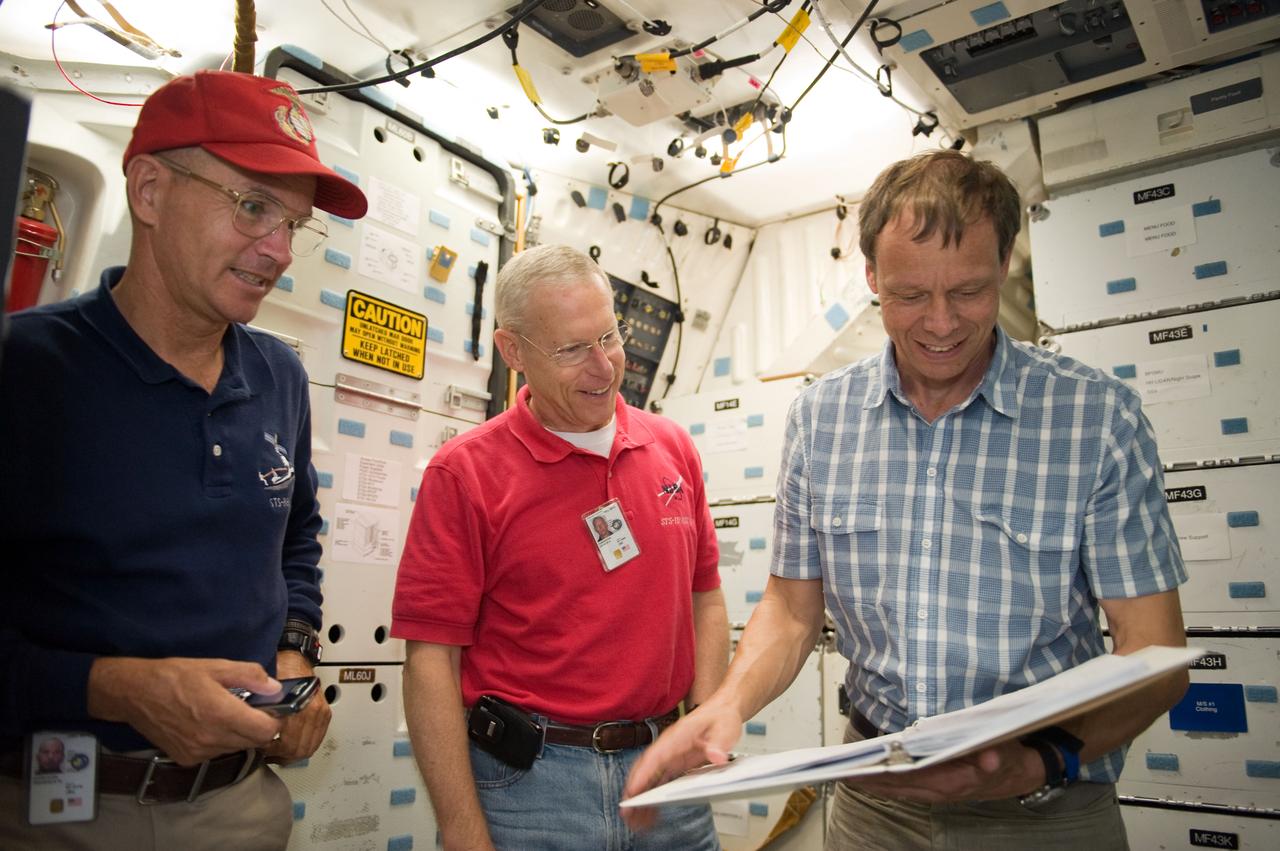
PHOTO DATE: 06-26-09 LOCATION: Bldg 9NW, FFT SUBJECT: STS-128 crew during space station ingress/egress timeline training with instructors Bob Behrendsen and Glenn Johnson PHOTOGRAPHER: James Blair
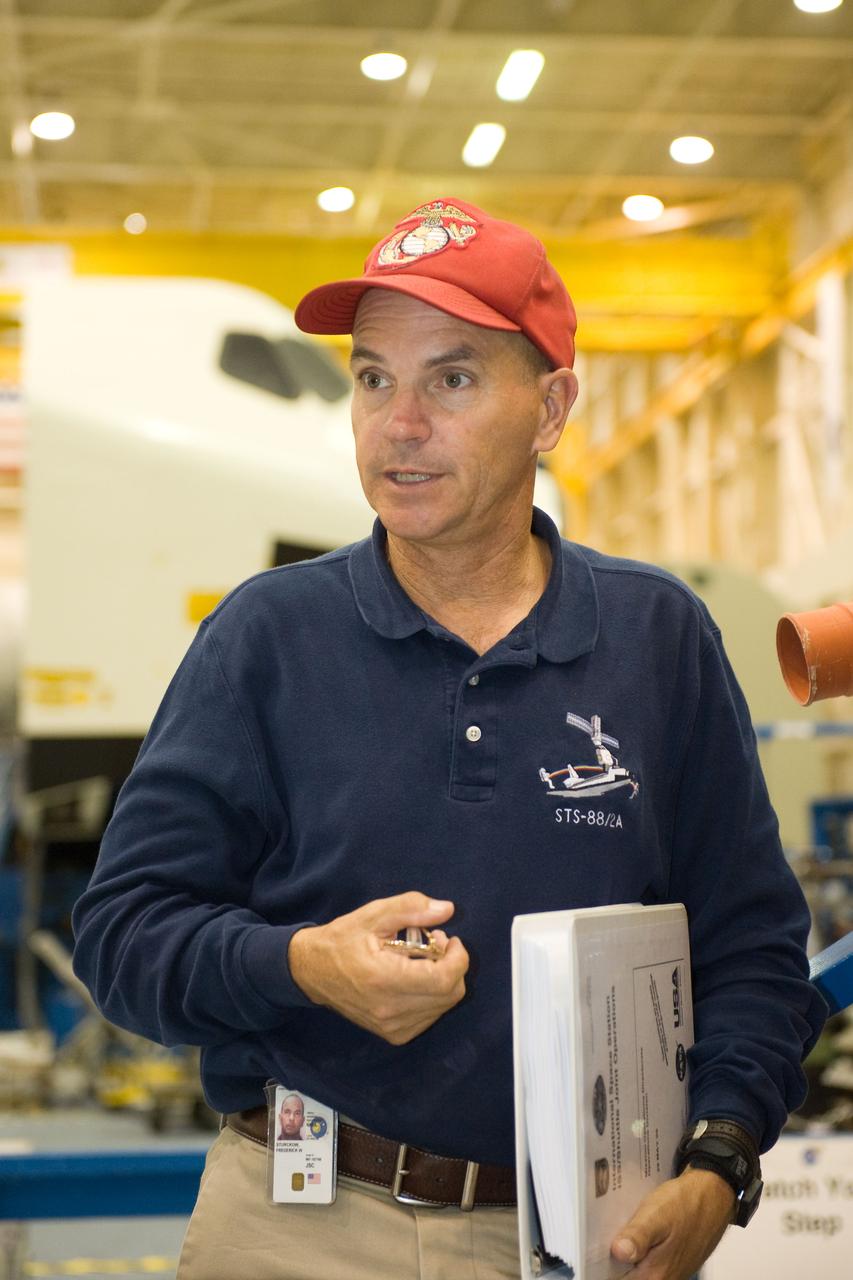
PHOTO DATE: 06-26-09 LOCATION: Bldg 9NW, FFT SUBJECT: STS-128 crew during space station ingress/egress timeline training with instructors Bob Behrendsen and Glenn Johnson PHOTOGRAPHER: James Blair
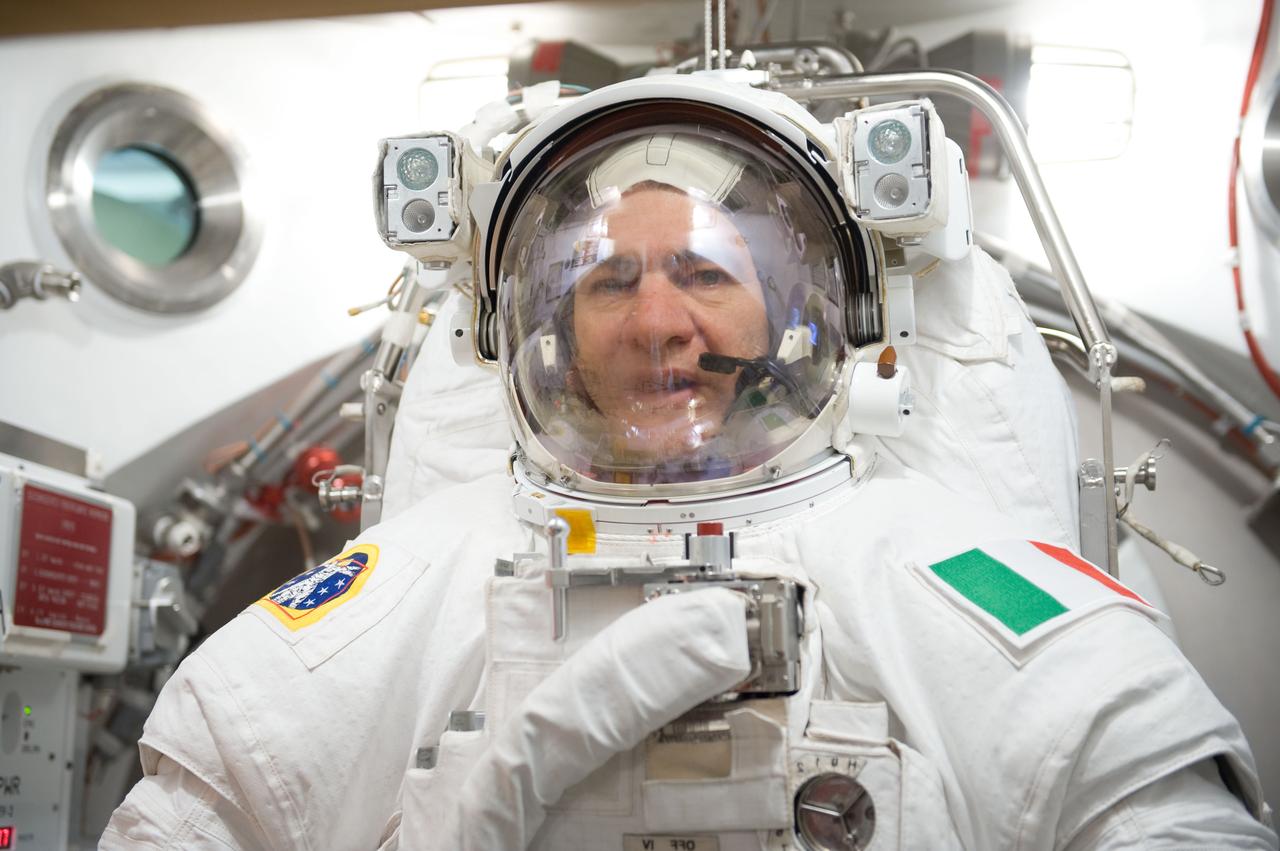
PHOTO DATE: 4/5/10, Time: 1000 LOCATION: Bldg 7/SSATA Chamber SUBJECT: STB-ST-903 - INC 26 SSATA Crew Training: Paolo Nespoli Photographer: James Blair

JSC2010-E-043946 (26 March 2010) --- NASA astronaut Nicole Stott, STS-133 mission specialist, attired in a training version of her shuttle launch and entry suit, participates in a training session on the middeck of the crew compartment trainer (CCT-2) in the Space Vehicle Mockup Facility at NASA's Johnson Space Center.
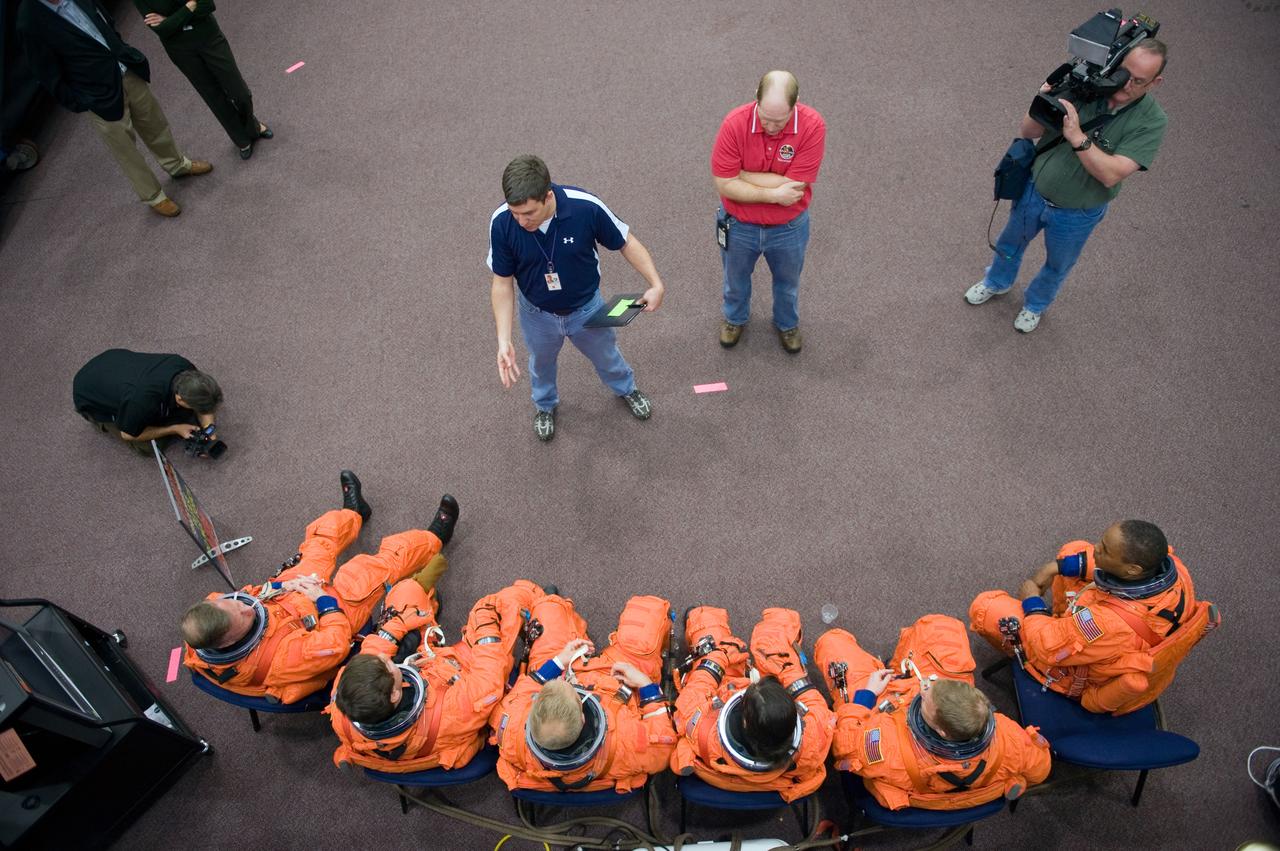
JSC2010-E-043956 (26 March 2010) --- Crew instructors brief the STS-133 crew members prior to the start of a training session in the crew compartment trainer (CCT-2) in the Space Vehicle Mockup Facility at NASA's Johnson Space Center. Pictured from the left (bottom) are NASA astronauts Steve Lindsey, commander; Michael Barratt, Tim Kopra, Nicole Stott, all mission specialists; Eric Boe, pilot; and Alvin Drew, mission specialist. The crew members are wearing training versions of their shuttle launch and entry suits.
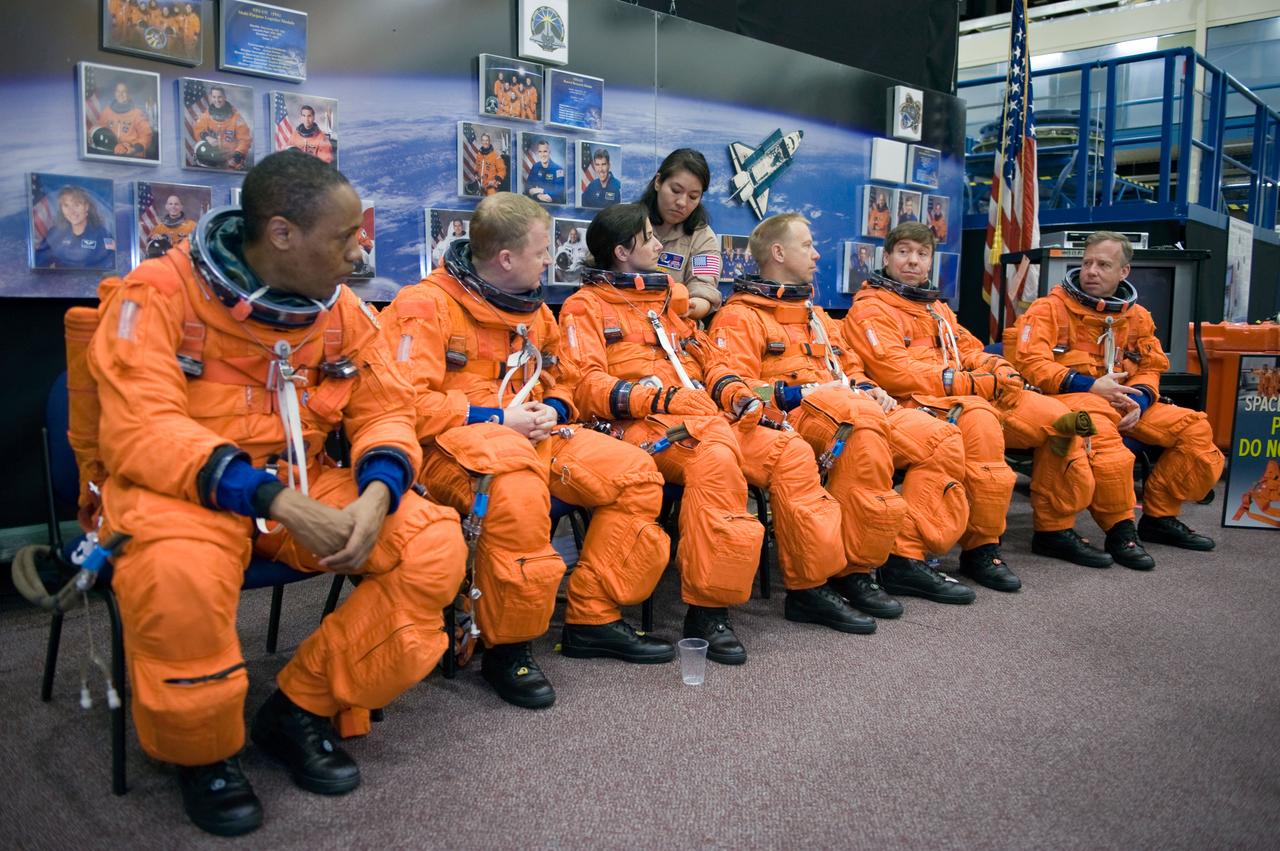
JSC2010-E-043954 (26 March 2010) --- Attired in training versions of their shuttle launch and entry suits, STS-133 crew members await the start of a training session in the crew compartment trainer (CCT-2) in the Space Vehicle Mockup Facility at NASA's Johnson Space Center. Pictured from the right are NASA astronauts Steve Lindsey, commander; Michael Barratt, Tim Kopra, Nicole Stott, all mission specialists; Eric Boe, pilot; and Alvin Drew, mission specialist.
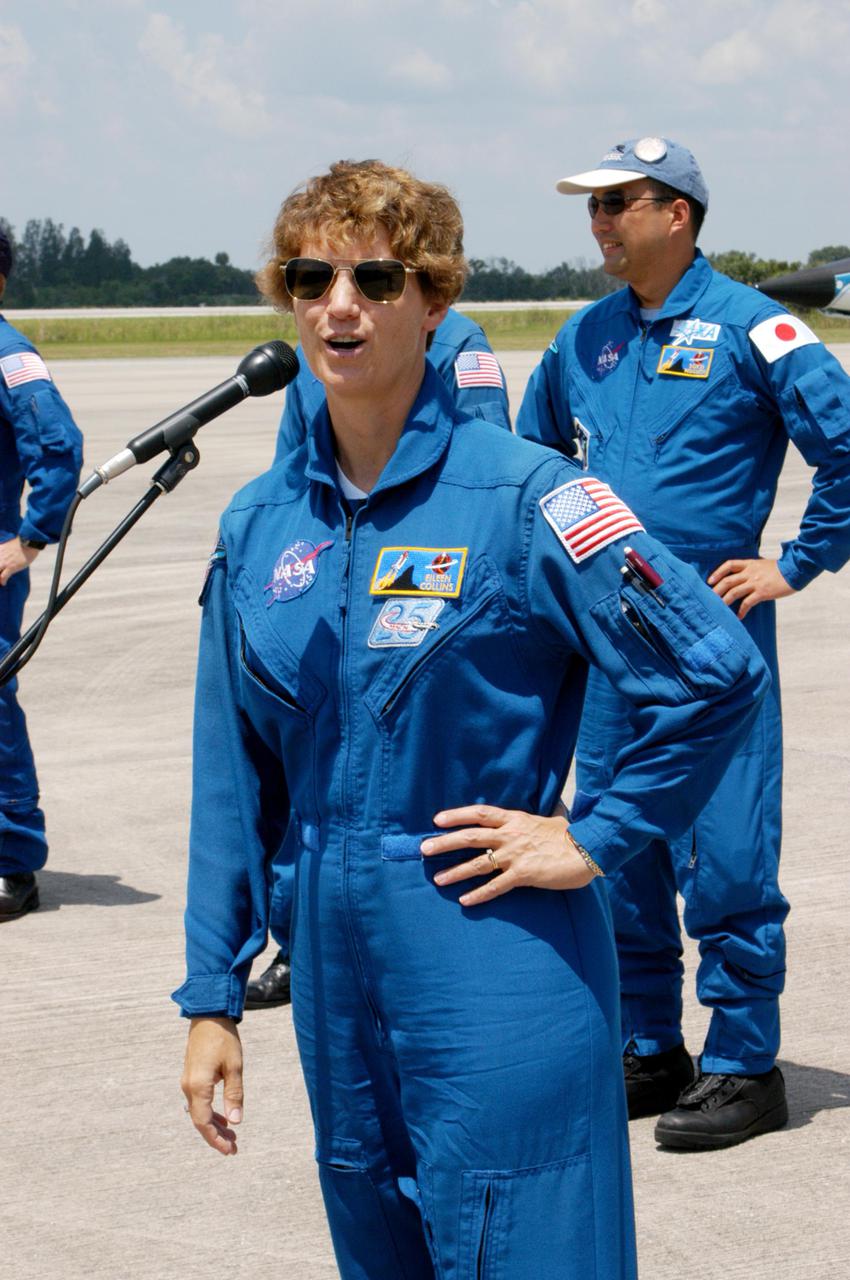
KENNEDY SPACE CENTER, FLA. - The Return to Flight STS-114 crew has returned to KSC to get ready for a second launch attempt aboard Space Shuttle Discovery. Mission Commander Eileen Collins is talking to the media who wait nearby. She states that since the scrub on July 13, the crew has focused on the on-orbit part of the mission and training for night landings using the Shuttle Training Aircraft. She praised the engineers and technicians who have been troubleshooting the elusive sensor problem and thanked them. STS-114 is scheduled to launch July 26 at 10:39 a.m. EDT from Launch Pad 39B.
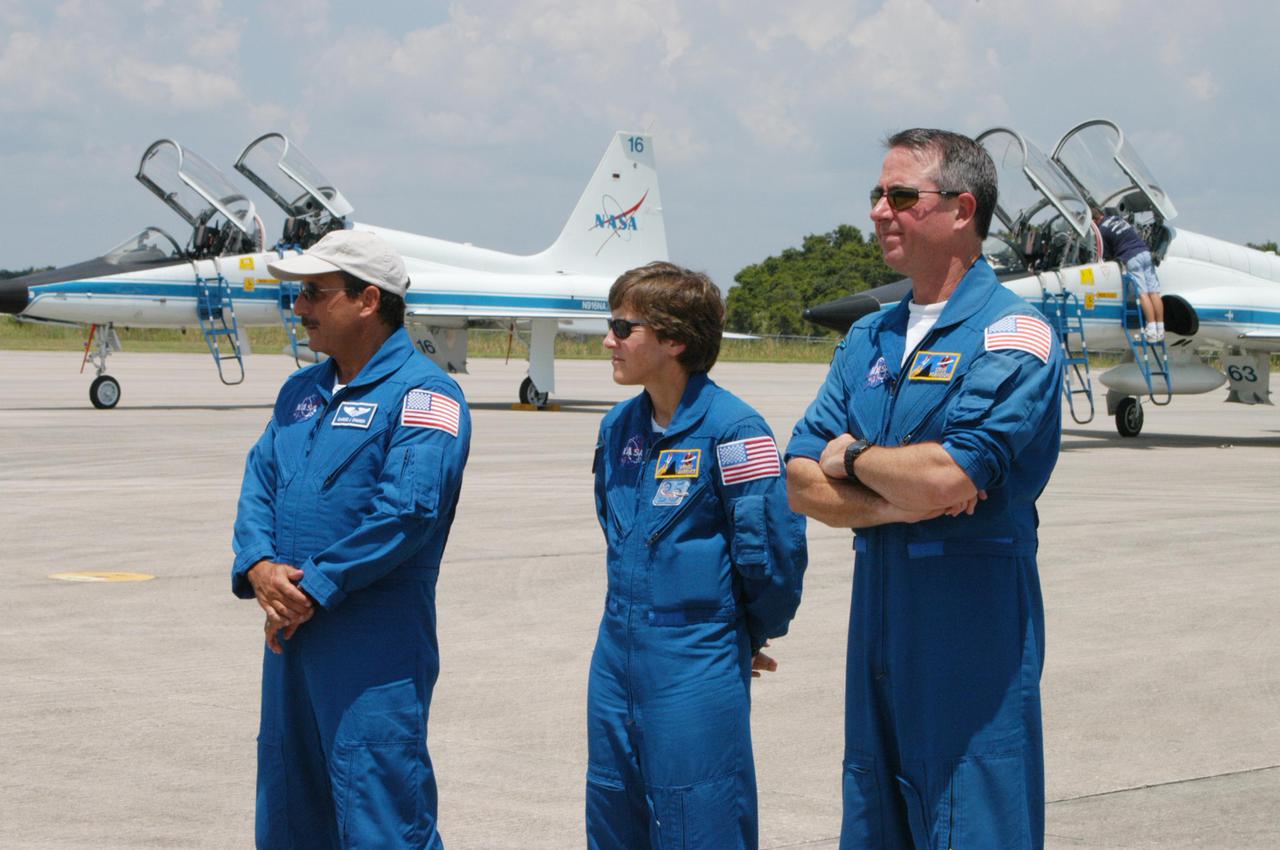
KENNEDY SPACE CENTER, FLA. - On NASA Kennedy Space Center’s Shuttle Landing Facility, the Return to Flight STS-114 crew waits while Mission Commander Eileen Collins talks to the media. Seen in the photo are (from left) Mission Specialists Charles Camarda, Wendy Lawrence and Stephen Robinson. Collins states that since the scrub on July 13, the crew has focused on the on-orbit part of the mission and training for night landings using the Shuttle Training Aircraft. She praised the engineers and technicians who have been troubleshooting the elusive sensor problem and thanked them. STS-114 is scheduled to launch July 26 at 10:39 a.m. EDT from Launch Pad 39B.
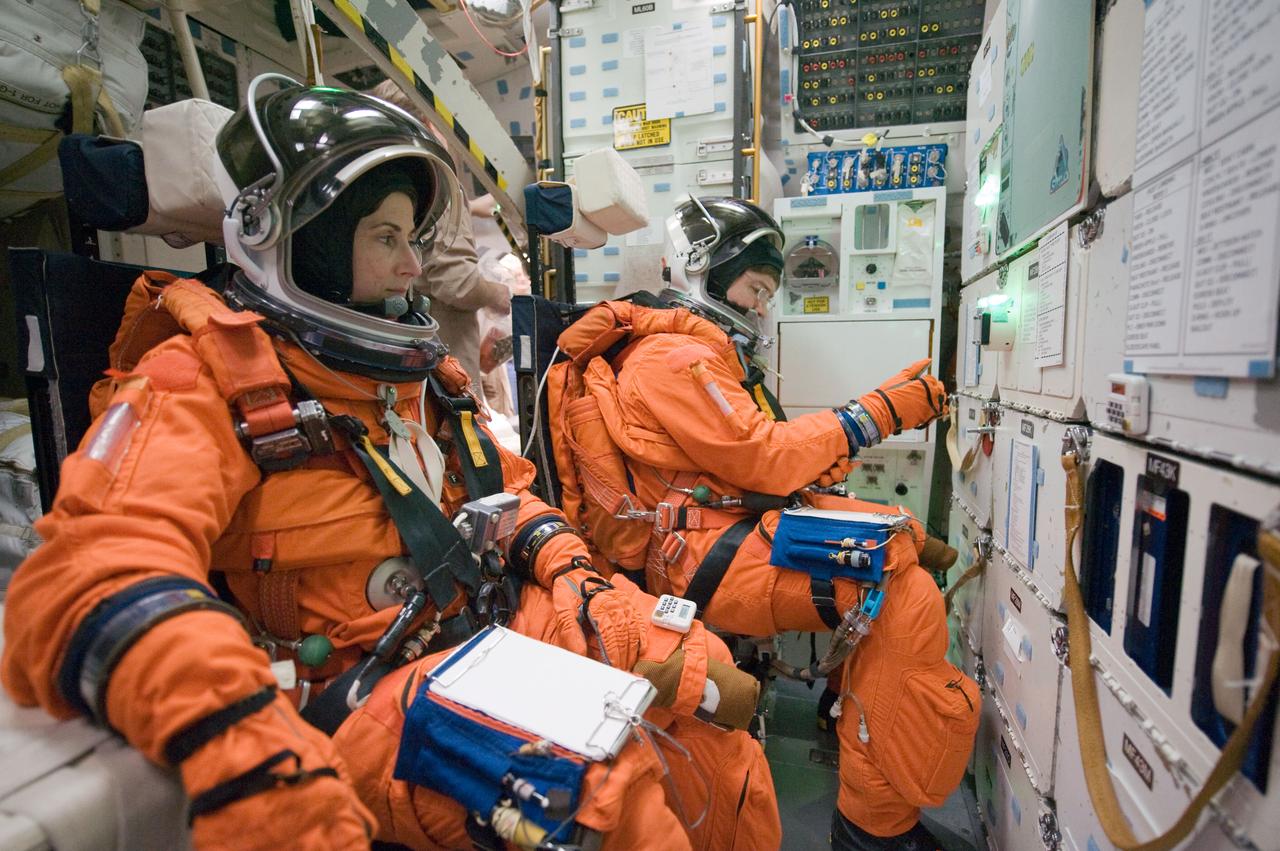
JSC2010-E-043948 (26 March 2010) --- NASA astronauts Nicole Stott and Michael Barratt, both STS-133 mission specialists, attired in training versions of their shuttle launch and entry suits, participate in a training session on the middeck of the crew compartment trainer (CCT-2) in the Space Vehicle Mockup Facility at NASA's Johnson Space Center.
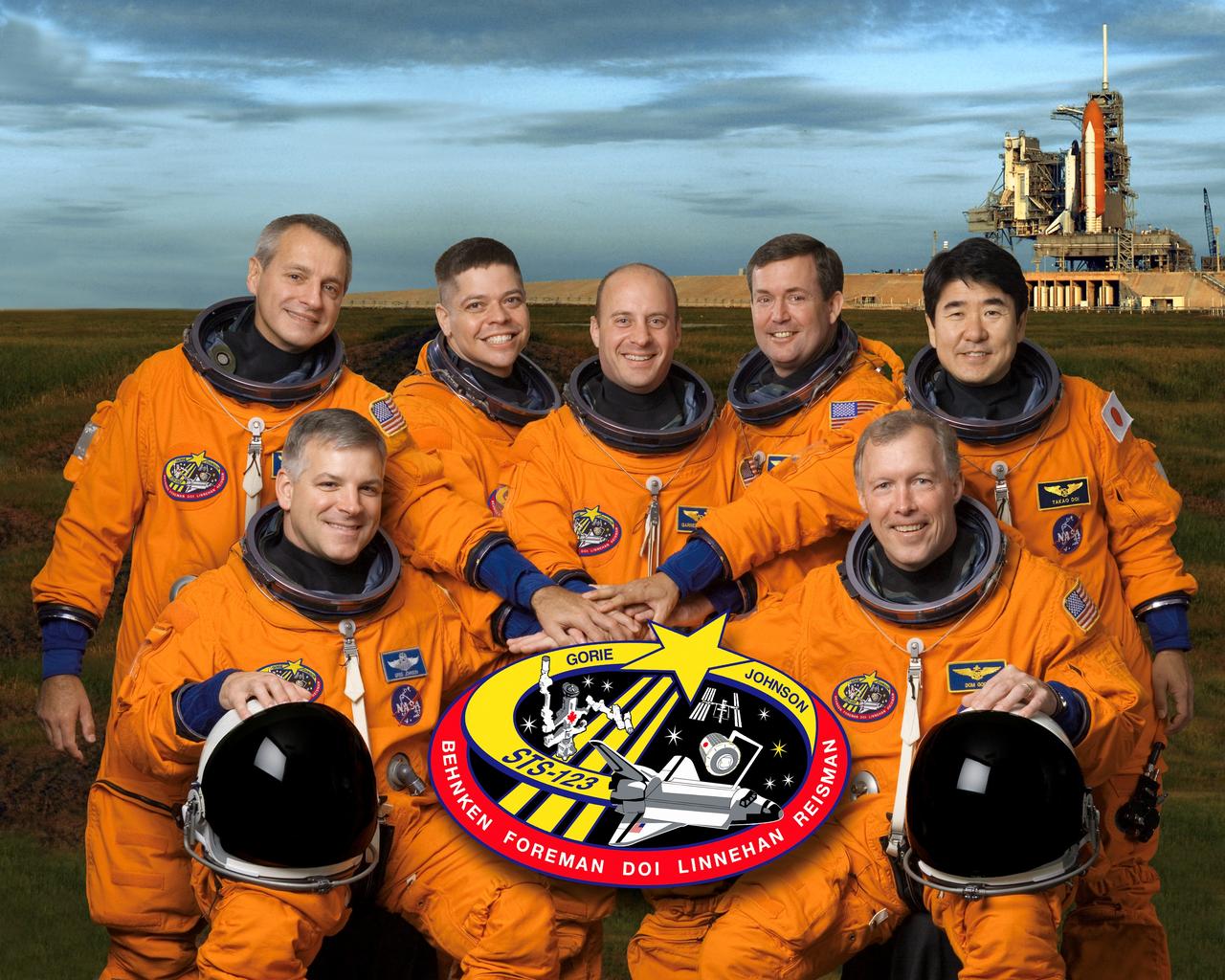
STS123-S-002 (26 July 2007) --- These seven astronauts take a break from training to pose for the STS-123 crew portrait. From the right (front row) are astronauts Dominic L. Gorie, commander; and Gregory H. Johnson, pilot. From the left (back row) are astronauts Richard M. Linnehan, Robert L. Behnken, Garrett E. Reisman, Michael J. Foreman and Japan Aerospace Exploration Agency's (JAXA) Takao Doi, all mission specialists. Reisman is scheduled to join Expedition 16 as flight engineer after launching to the International Space Station on mission STS-123. The crewmembers are attired in training versions of their shuttle launch and entry suits.
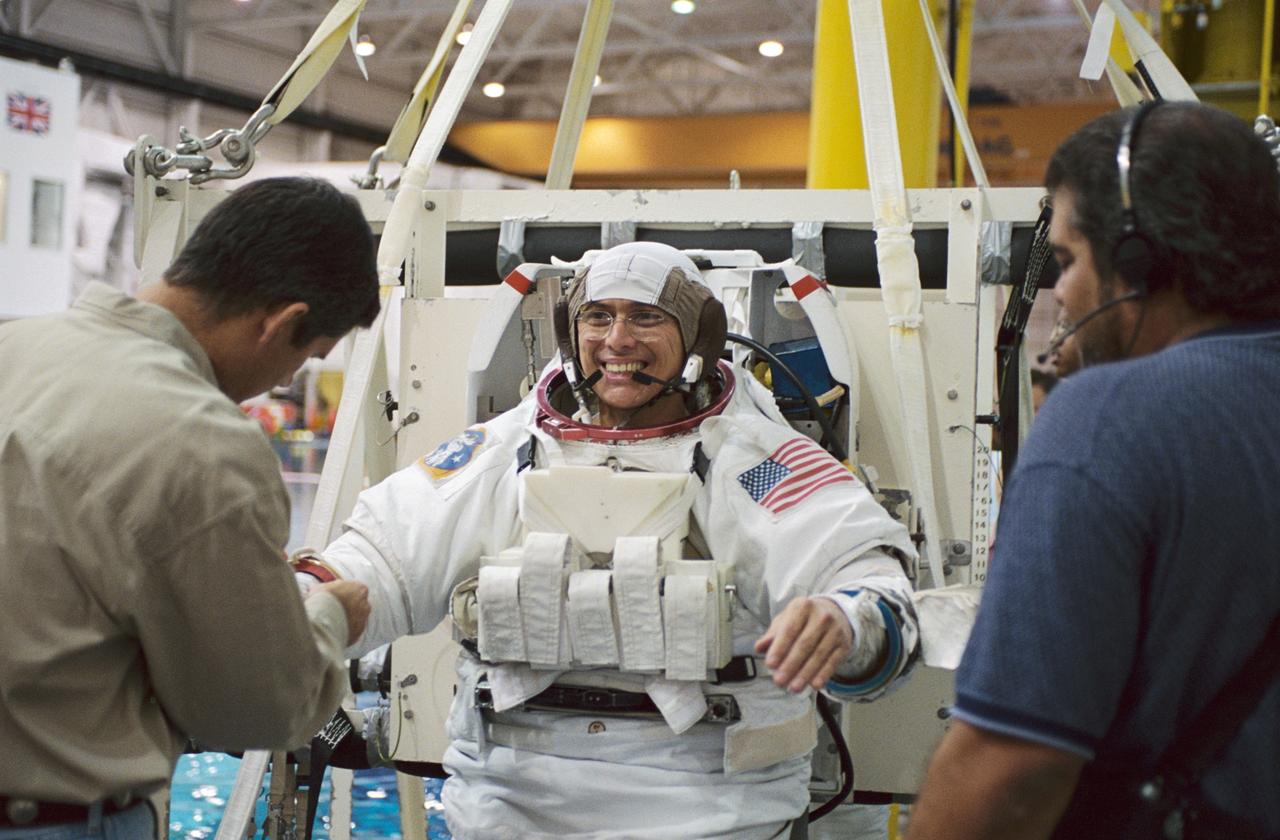
JSC2001-02945 (26 November 2001) --- Astronaut Franklin R. Chang-Diaz, STS-111 mission specialist, is photographed as the final touches are made on the training version of the Extravehicular Mobility Unit (EMU) space suit prior to being submerged in the waters of the Neutral Buoyancy Laboratory (NBL) near the Johnson Space Center (JSC). Fellow crewmember Paul S. Lockhart (left), pilot, and crew trainer Joe Cambiaso assist Chang-Diaz. STS-111 will be the 14th shuttle mission to visit the International Space Station (ISS).
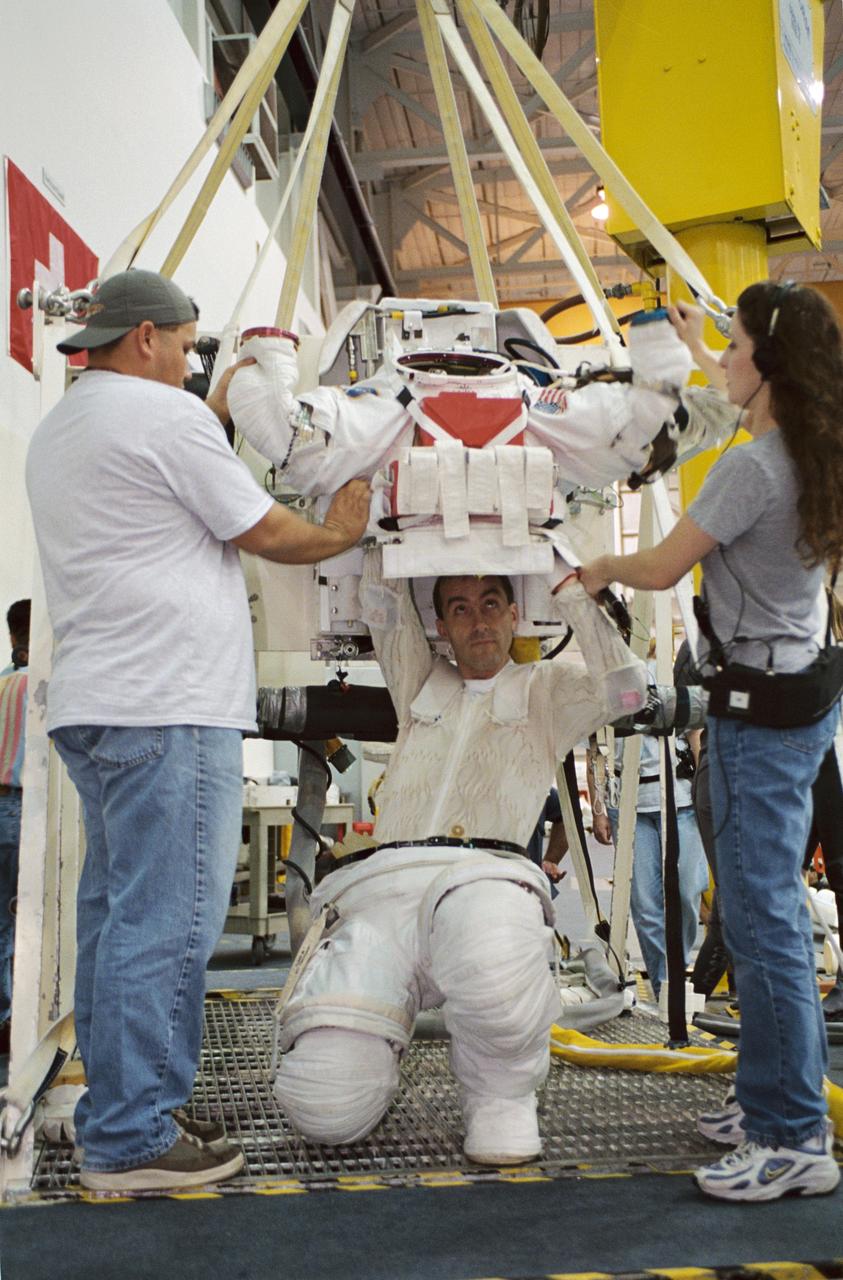
JSC2001-02941 (26 November 2001) --- Astronaut Philippe Perrin, STS-111 mission specialist, dons a training version of the Extravehicular Mobility Unit (EMU) space suit prior to being submerged in the waters of the Neutral Buoyancy Laboratory (NBL) near the Johnson Space Center (JSC). Perrin, representing CNES, the French Space Agency, is assisted by crew trainers Don Post, Jr., and Nichole Starke. STS-111 will be the 14th shuttle mission to visit the International Space Station (ISS).

KENNEDY SPACE CENTER, FLA. - The Return to Flight STS-114 crew arrives at NASA Kennedy Space Center in T-38 training jets to get ready for a second launch attempt aboard Space Shuttle Discovery. Seen in the photo is Mission Specialist Charles Camarda. Mission Commander Eileen Collins later told the media who waited nearby that since the scrub on July 13, the crew has focused on the on-orbit part of the mission and training for night landings using the Shuttle Training Aircraft. She praised the engineers and technicians who have been troubleshooting the elusive sensor problem and thanked them. STS-114 is scheduled to launch July 26 at 10:39 a.m. EDT from Launch Pad 39B.
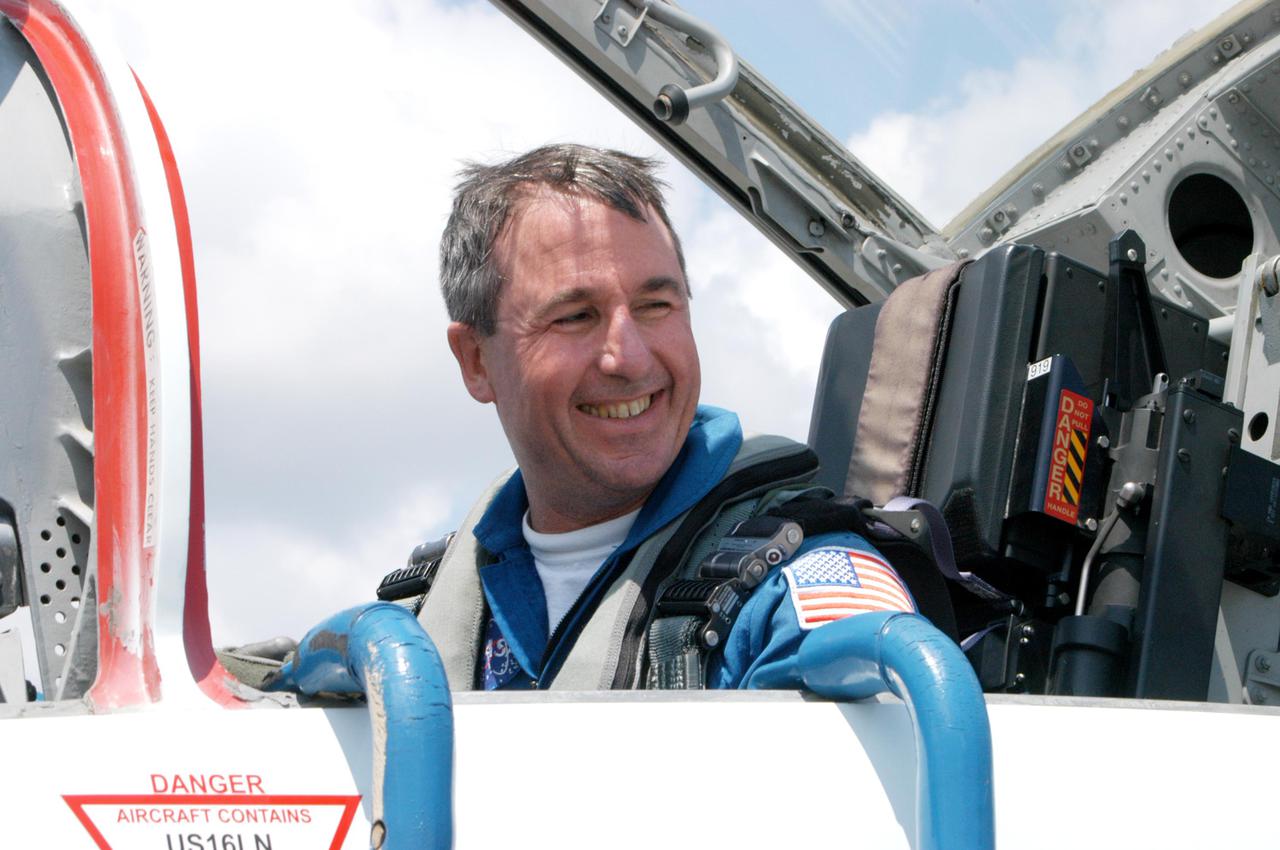
KENNEDY SPACE CENTER, FLA. - The Return to Flight STS-114 crew arrives at NASA Kennedy Space Center in T-38 training jets to get ready for a second launch attempt aboard Space Shuttle Discovery. Seen in the photo is Mission Specialist Stephen Robinson, still in the T-38 jet. Mission Commander Eileen Collins later told the media who waited nearby that since the scrub on July 13, the crew has focused on the on-orbit part of the mission and training for night landings using the Shuttle Training Aircraft. She praised the engineers and technicians who have been troubleshooting the elusive sensor problem and thanked them. STS-114 is scheduled to launch July 26 at 10:39 a.m. EDT from Launch Pad 39B.
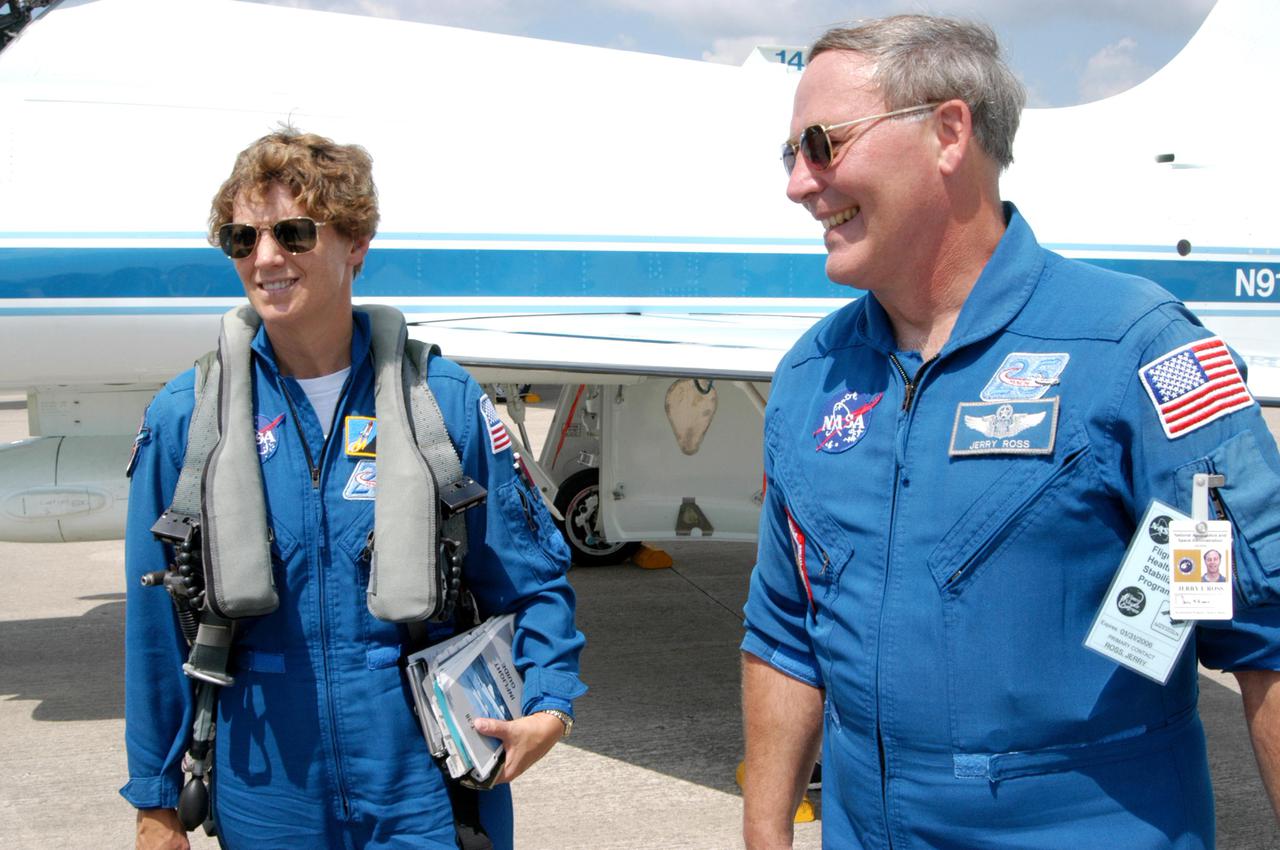
KENNEDY SPACE CENTER, FLA. - The Return to Flight STS-114 crew arrives at NASA Kennedy Space Center in T-38 training jets to get ready for a second launch attempt aboard Space Shuttle Discovery. Seen in the photo are Mission Commander Eileen Collins and astronaut Jerry Ross, who serves as chief of the Vehicle Integration Test Office at Johnson Space Center in Houston. Collins later told the media who waited nearby that since the scrub on July 13, the crew has focused on the on-orbit part of the mission and training for night landings using the Shuttle Training Aircraft. She praised the engineers and technicians who have been troubleshooting the elusive sensor problem and thanked them. STS-114 is scheduled to launch July 26 at 10:39 a.m. EDT from Launch Pad 39B.
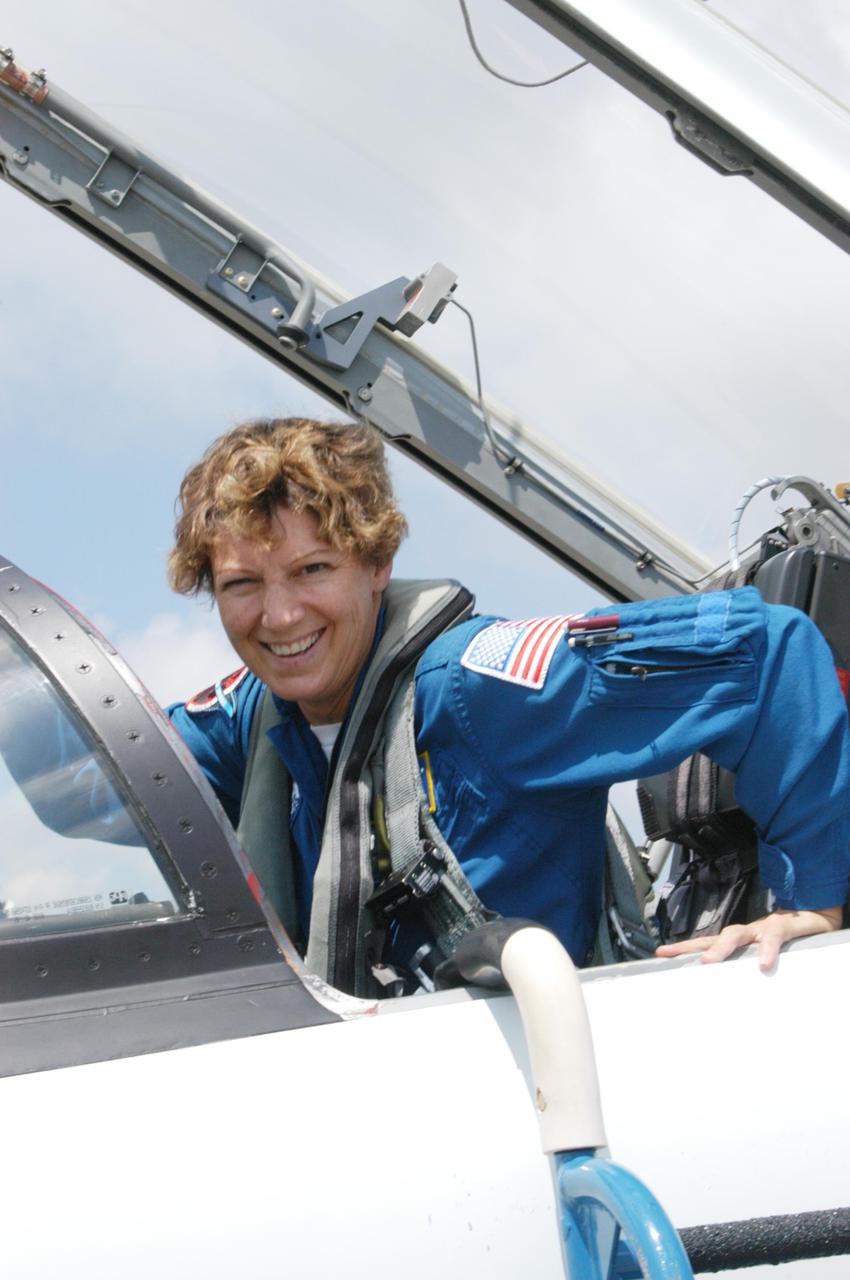
KENNEDY SPACE CENTER, FLA. - The Return to Flight STS-114 crew arrives at NASA Kennedy Space Center in T-38 training jets to get ready for a second launch attempt aboard Space Shuttle Discovery. Mission Commander Eileen Collins, climbing out of her jet, later told the media who waited nearby that since the scrub on July 13, the crew has focused on the on-orbit part of the mission and training for night landings using the Shuttle Training Aircraft. She praised the engineers and technicians who have been troubleshooting the elusive sensor problem and thanked them. STS-114 is scheduled to launch July 26 at 10:39 a.m. EDT from Launch Pad 39B.
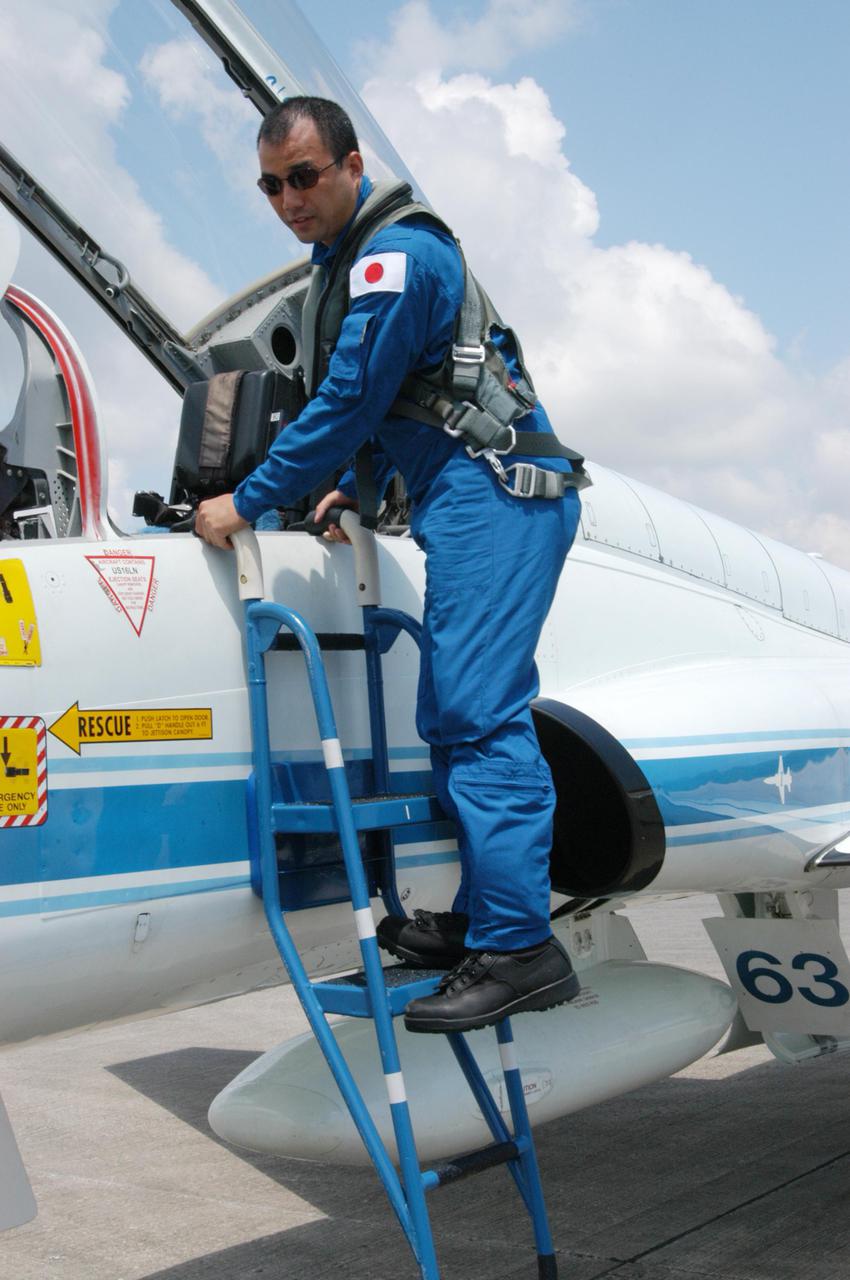
KENNEDY SPACE CENTER, FLA. - The Return to Flight STS-114 crew arrives at NASA Kennedy Space Center in T-38 training jets to get ready for a second launch attempt aboard Space Shuttle Discovery. Seen in the photo climbing out of the T-38 is Mission Specialist Soichi Noguchi, who represents the Japan Aerospace Exploration Agency (JAXA). Mission Commander Eileen Collins later told the media who waited nearby that since the scrub on July 13, the crew has focused on the on-orbit part of the mission and training for night landings using the Shuttle Training Aircraft. She praised the engineers and technicians who have been troubleshooting the elusive sensor problem and thanked them. STS-114 is scheduled to launch July 26 at 10:39 a.m. EDT from Launch Pad 39B.
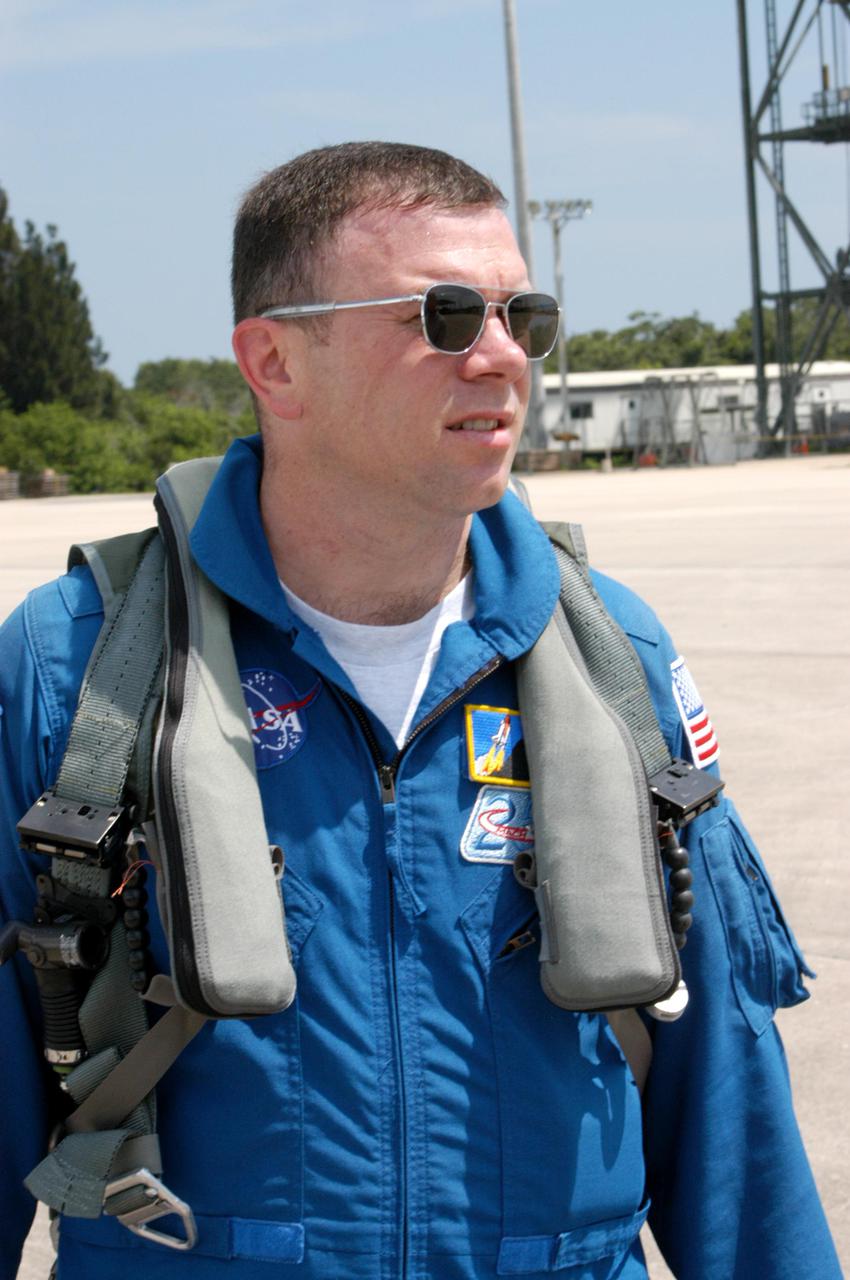
KENNEDY SPACE CENTER, FLA. - The Return to Flight STS-114 crew arrives at NASA Kennedy Space Center in T-38 training jets to get ready for a second launch attempt aboard Space Shuttle Discovery. Seen in the photo is Pilot James Kelly. Mission Commander Eileen Collins later told the media who waited nearby that since the scrub on July 13, the crew has focused on the on-orbit part of the mission and training for night landings using the Shuttle Training Aircraft. She praised the engineers and technicians who have been troubleshooting the elusive sensor problem and thanked them. STS-114 is scheduled to launch July 26 at 10:39 a.m. EDT from Launch Pad 39B.
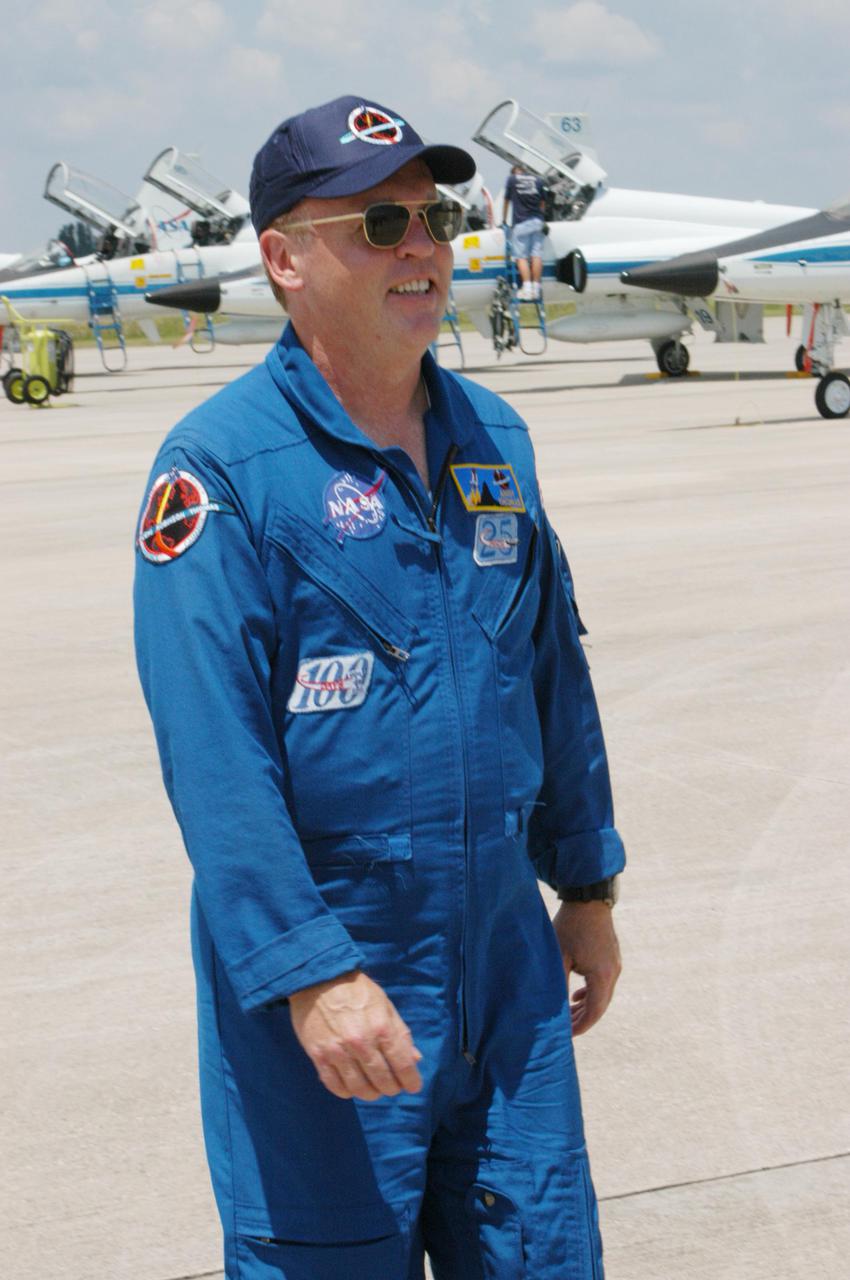
KENNEDY SPACE CENTER, FLA. - The Return to Flight STS-114 crew arrives at NASA Kennedy Space Center in T-38 training jets to get ready for a second launch attempt aboard Space Shuttle Discovery. Seen in the photo is Mission Specialist Andrew Thomas. Mission Commander Eileen Collins talked to the media waiting nearby stating that since the scrub on July 13, the crew has focused on the on-orbit part of the mission and training for night landings using the Shuttle Training Aircraft. She praised the engineers and technicians who have been troubleshooting the elusive sensor problem and thanked them. STS-114 is scheduled to launch July 26 at 10:39 a.m. EDT from Launch Pad 39B.
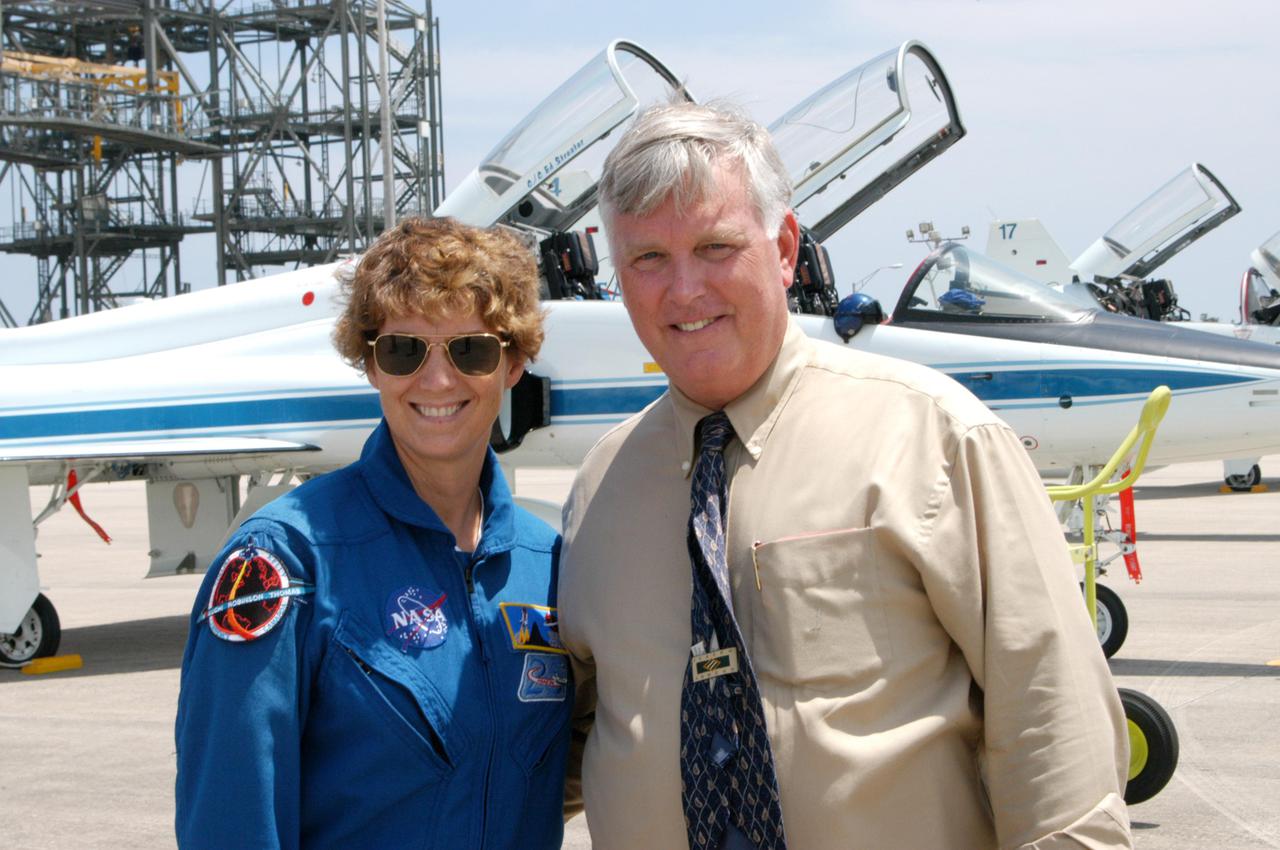
KENNEDY SPACE CENTER, FLA. - Center Director Jim Kennedy (right) greets STS-114 Mission Commander Eileen Collins after her arrival at NASA Kennedy Space Center aboard a T-38 jet aircraft. The Return to Flight STS-114 crew has returned to KSC to get ready for a second launch attempt aboard Space Shuttle Discovery. Collins later told the media who waited nearby that since the scrub on July 13, the crew has focused on the on-orbit part of the mission and training for night landings using the Shuttle Training Aircraft. She praised the engineers and technicians who have been troubleshooting the elusive sensor problem and thanked them. STS-114 is scheduled to launch July 26 at 10:39 a.m. EDT from Launch Pad 39B.
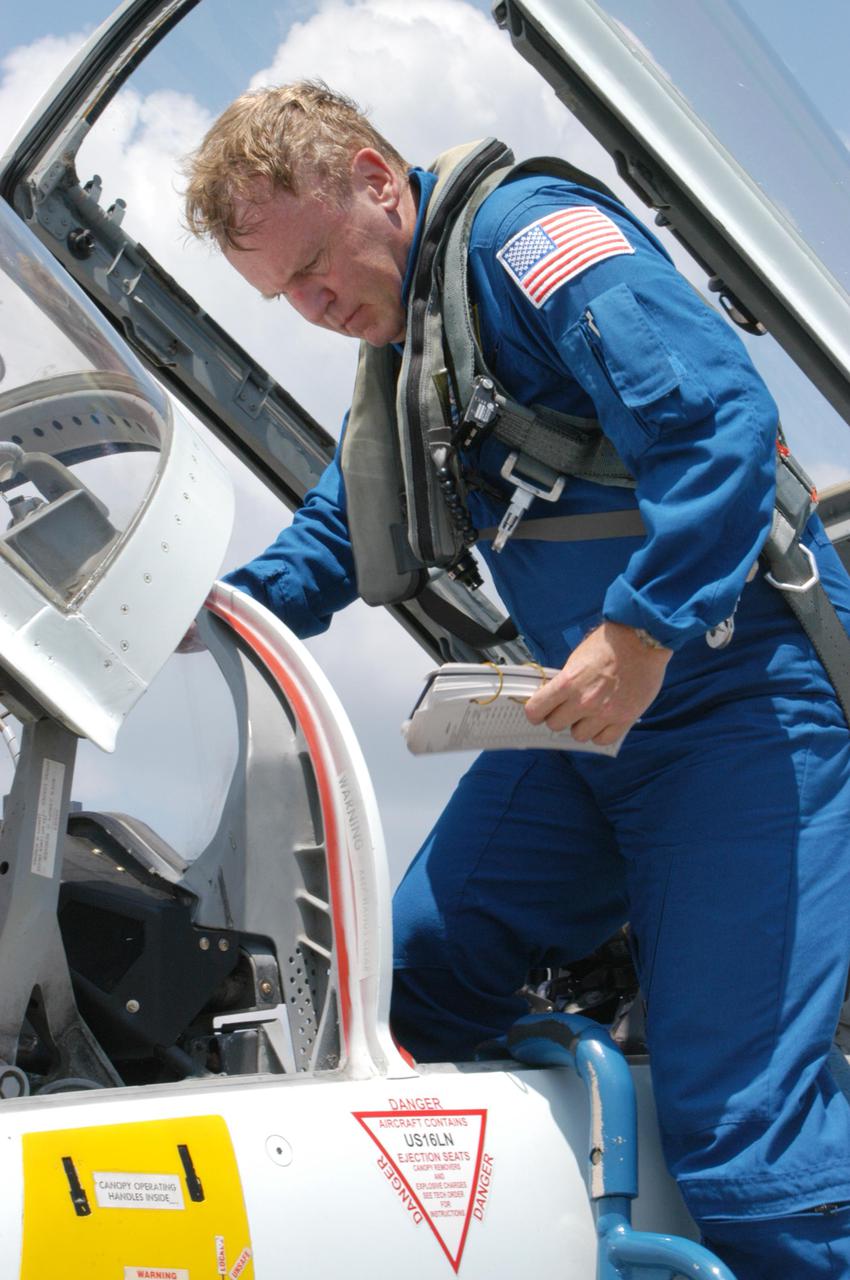
KENNEDY SPACE CENTER, FLA. - STS-114 Mission Specialist Andrew Thomas climbs out of the T-38 jet aircraft on NASA Kennedy Space Center’s Shuttle Landing Facility. The Return to Flight STS-114 crew has returned to KSC to get ready for a second launch attempt aboard Space Shuttle Discovery. Mission Commander Eileen Collins later told the media who waited nearby that since the scrub on July 13, the crew has focused on the on-orbit part of the mission and training for night landings using the Shuttle Training Aircraft. She praised the engineers and technicians who have been troubleshooting the elusive sensor problem and thanked them. STS-114 is scheduled to launch July 26 at 10:39 a.m. EDT from Launch Pad 39B.
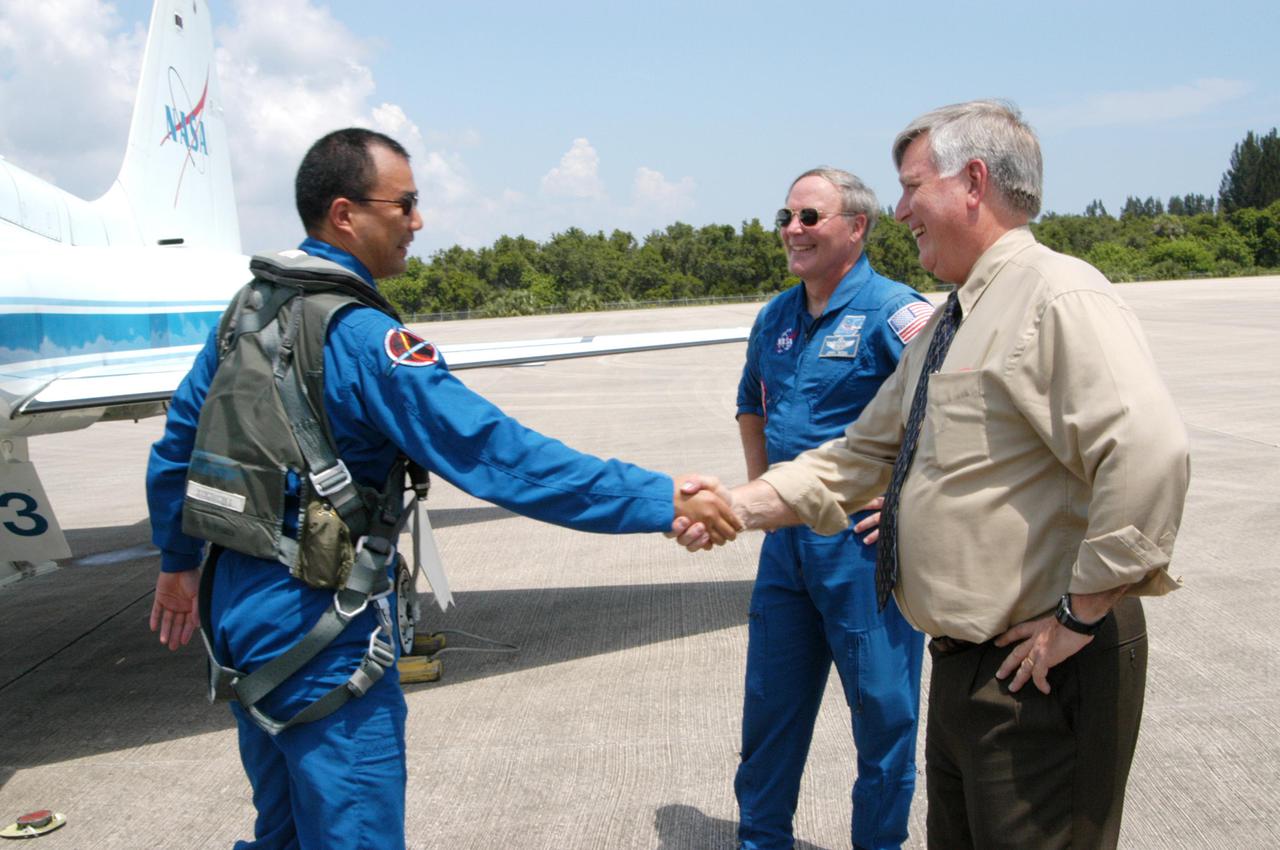
KENNEDY SPACE CENTER, FLA. - Center Director Jim Kennedy (right) greets STS-114 Mission Specialist Soichi Noguchi after his landing at NASA Kennedy Space Center. The Return to Flight STS-114 crew has returned to KSC to get ready for a second launch attempt aboard Space Shuttle Discovery. Behind Noguchi and Kennedy is astronaut Jerry Ross, who serves as chief of the Vehicle Integration Test Office at Johnson Space Center in Houston. Mission Commander Eileen Collins later told the media who waited nearby that since the scrub on July 13, the crew has focused on the on-orbit part of the mission and training for night landings using the Shuttle Training Aircraft. She praised the engineers and technicians who have been troubleshooting the elusive sensor problem and thanked them. STS-114 is scheduled to launch July 26 at 10:39 a.m. EDT from Launch Pad 39B.
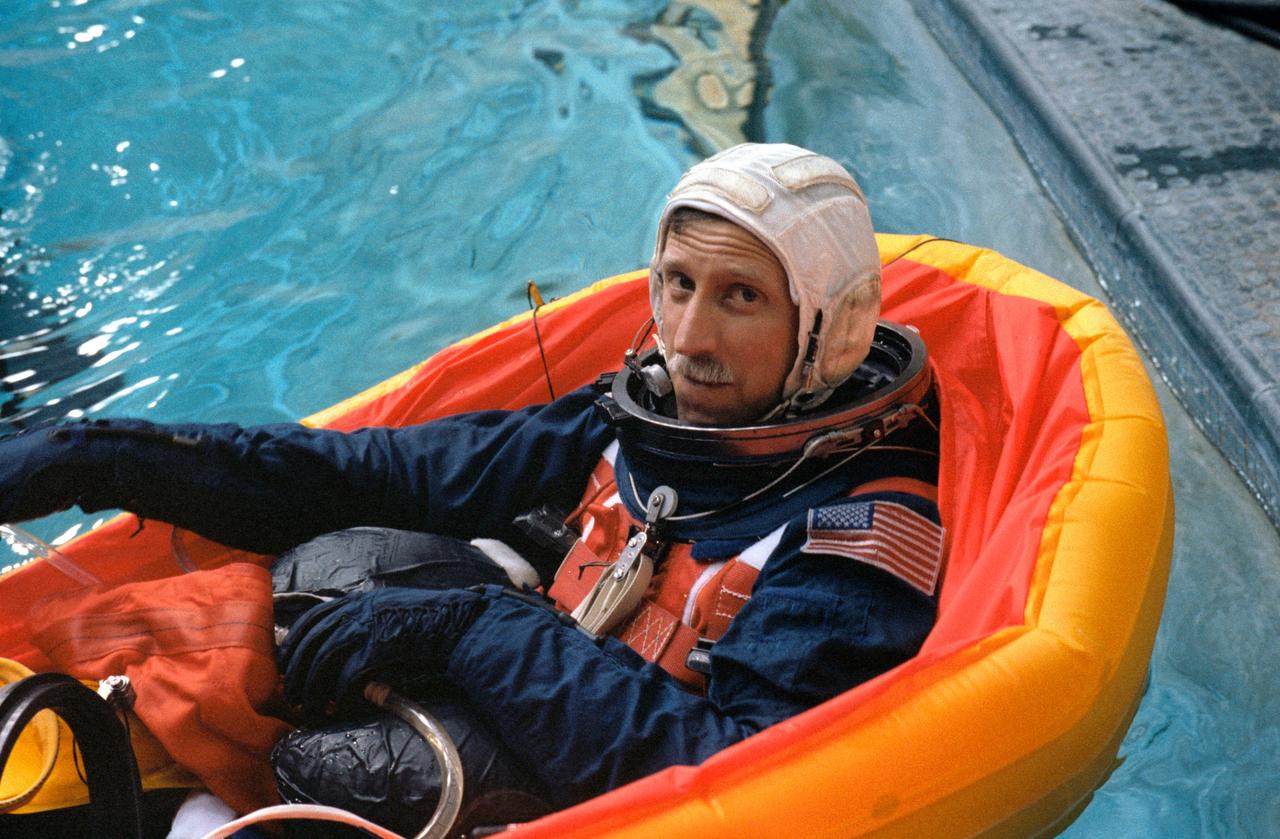
S88-42425 (20 July 1988) --- STS-26 Discovery, Orbiter Vehicle (OV) 103, Pilot Richard O. Covey, wearing the newly designed launch and entry suit (LES), floats in single-occupant life raft in JSC Weightless Environment Training Facility (WETF) Bldg 29 pool. The simulation of the escape and rescue operations utilized the crew escape system (CES) pole method of egress from the Space Shuttle.
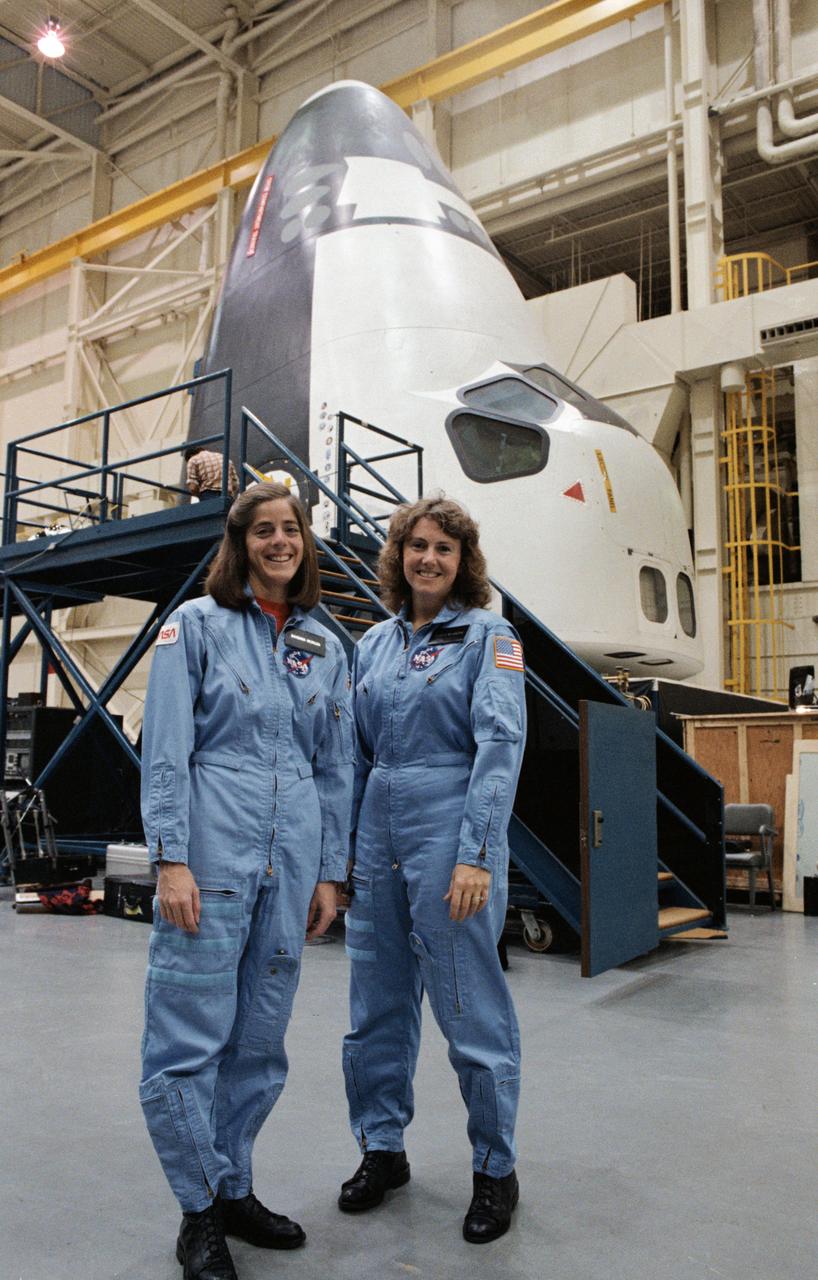
S85-46693 (26 Dec. 1985) --- Sharon Christa McAuliffe (right), the Teacher-in-Space payload specialist assigned to the STS-51L mission, and her backup, Barbara R. Morgan pose for photos after training in the shuttle mock-up and integration laboratory at JSC. The shuttle crew compartment, in a launch mode, can be seen in the background. Photo credit: NASA
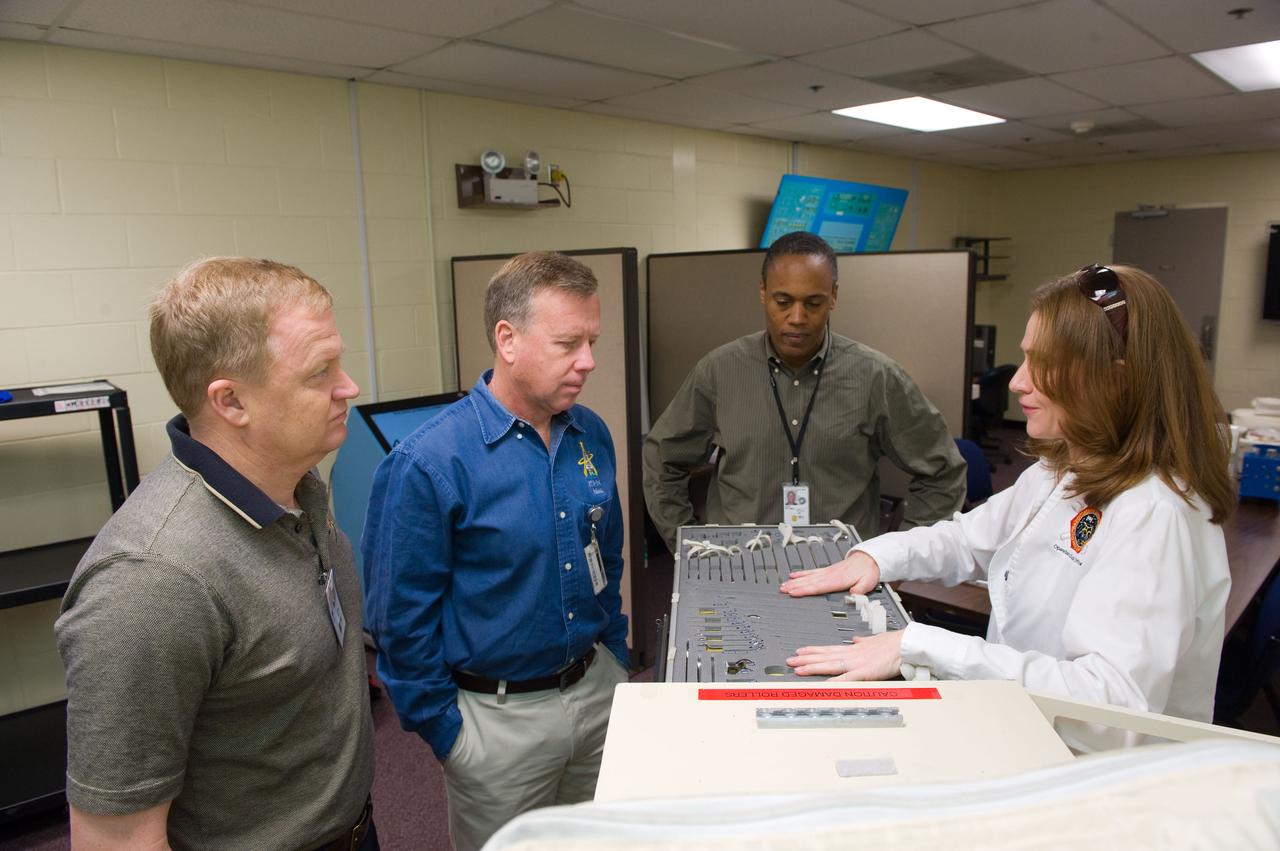
JSC2010-E-014262 (26 Jan. 2010) --- NASA astronauts Eric Boe (left), STS-133 pilot; Steve Lindsey, commander; and Alvin Drew, mission specialist, participate in an ISS tools and repair kits training session in the Space Vehicle Mock-up Facility at NASA's Johnson Space Center. Instructor Ivy Apostolakopoulos assisted the crew members.
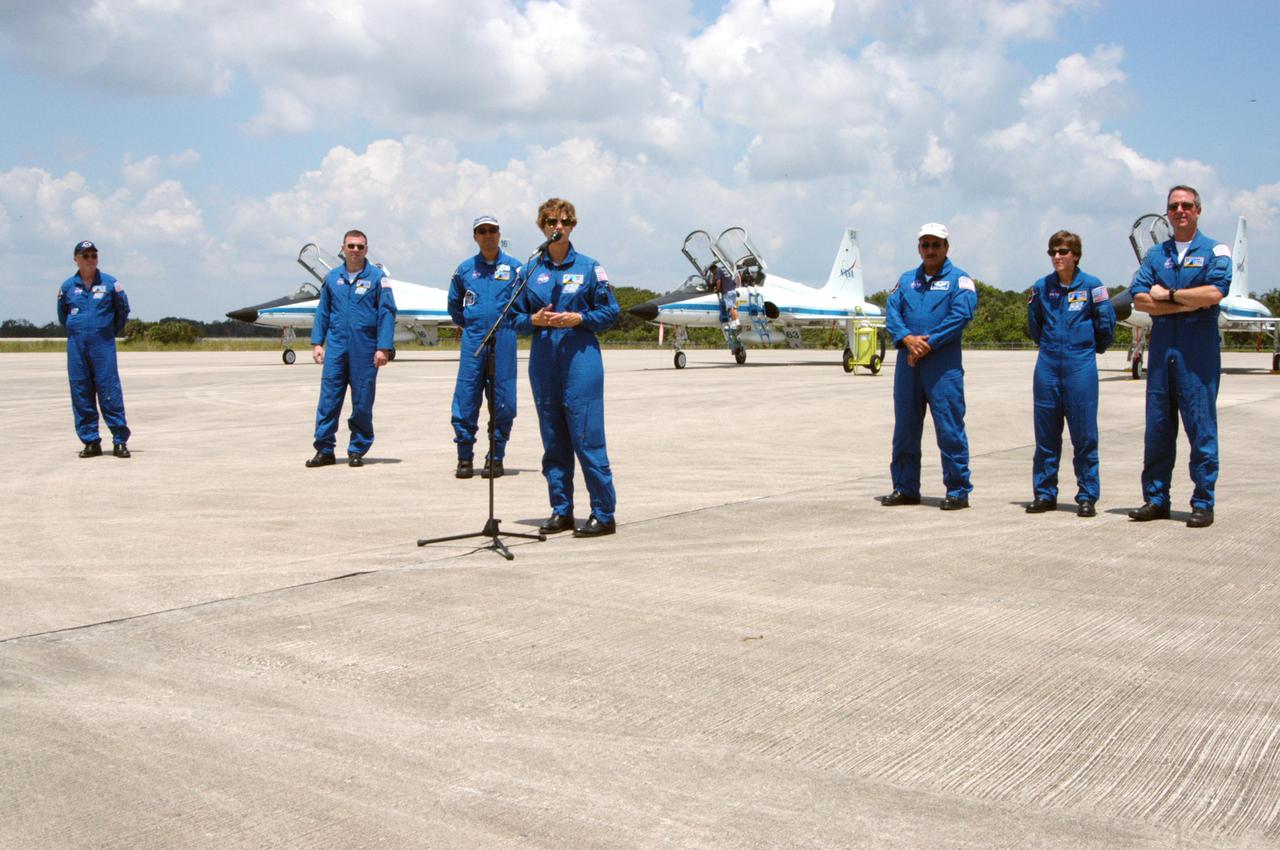
KENNEDY SPACE CENTER, FLA. - On NASA Kennedy Space Center’s Shuttle Landing Facility, the Return to Flight STS-114 crew waits while Mission Commander Eileen Collins talks to the media. Seen in the photo are (from left) Mission Specialist Andrew Thomas, Pilot James Kelly, Mission Specialist Soichi Noguchi, Collins, and Mission Specialists Charles Camarda, Wendy Lawrence and Stephen Robinson. Collins states that since the scrub on July 13, the crew has focused on the on-orbit part of the mission and training for night landings using the Shuttle Training Aircraft. She praised the engineers and technicians who have been troubleshooting the elusive sensor problem and thanked them. STS-114 is scheduled to launch July 26 at 10:39 a.m. EDT from Launch Pad 39B.
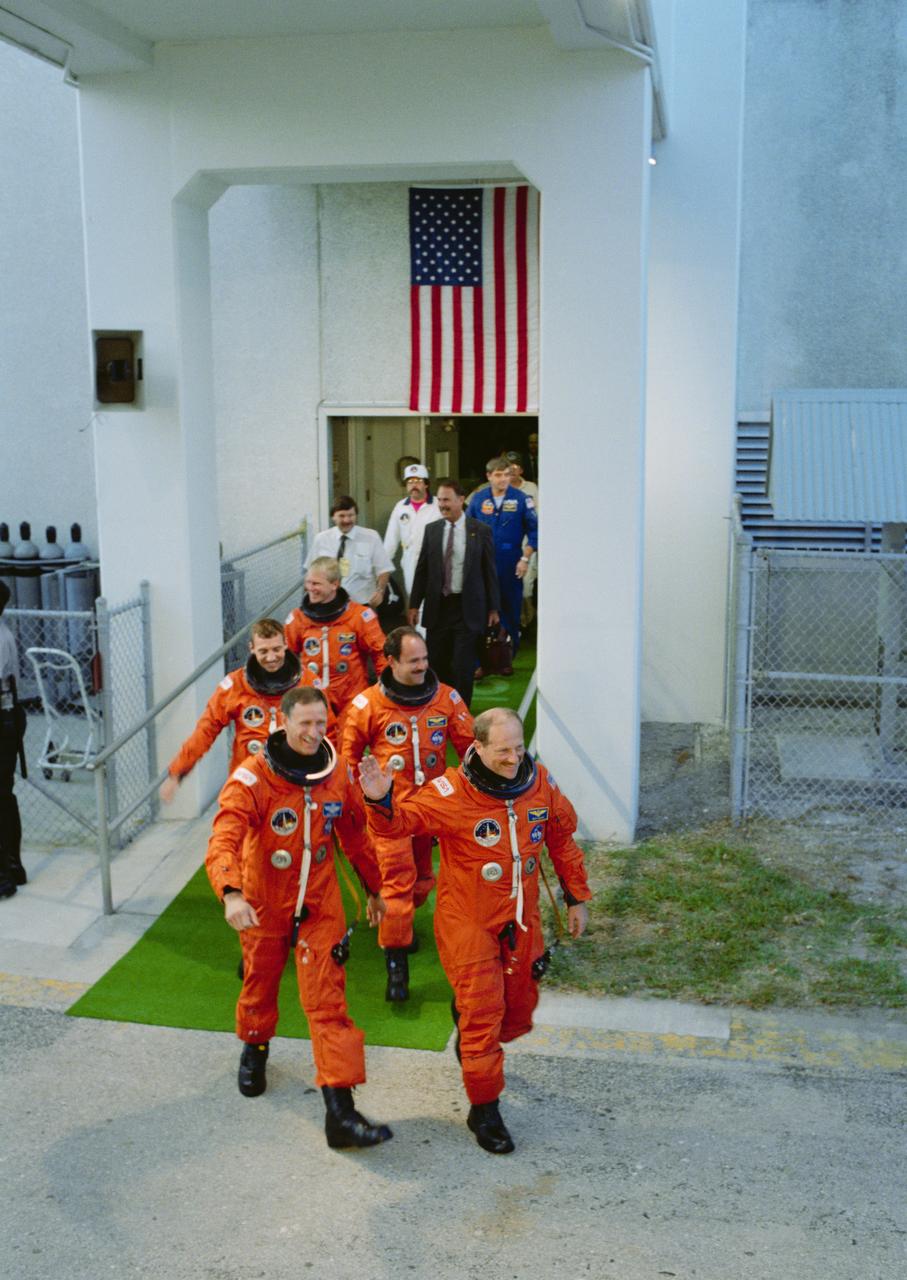
STS-26 crewmembers, suited in launch and entry suits (LESs), leave the Kennedy Space Center (KSC) Operations and Checkout (O&C) Building on their way to the launch complex (LC) pad 39B where they will board Discovery, Orbiter Vehicle (OV) 103. Commander Frederick H. Hauck, waving to spectators, is followed by Pilot Richard O. Covey, Mission Specialist (MS) John M. Lounge, MS David C. Hilmers, and MS George D. Nelson. Others accompanying the crew are JSC Flight Crew Operations Directorate (FCOD) Director Donald R. Puddy, Astronaut Office Chief Daniel C. Brandenstein, and a Crew Training Officer Richard W. Nygren.
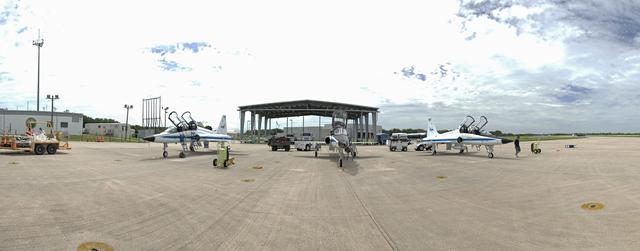
CAPE CANAVERAL, Fla. -- At NASA's Kennedy Space Center in Florida, three of NASA's T-38 training jets sit on the parking apron of the Shuttle Landing Facility. The STS-134 crew members flew the jets to Kennedy to watch the Alpha Magnetic Spectrometer (AMS) arrive aboard an Air Force C-5M aircraft from Europe. The state-of-the-art particle physics detector will operate as an external module on the International Space Station to study the universe and its origin by searching for dark matter. AMS will fly to the station aboard space shuttle Endeavour's STS-134 mission targeted to launch Feb. 26, 2011. Photo credit: NASA/Frankie Martin
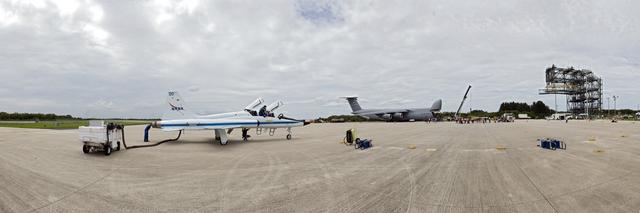
CAPE CANAVERAL, Fla. -- At NASA's Kennedy Space Center in Florida, media and workers watch as the Alpha Magnetic Spectrometer (AMS) is offloaded from an Air Force C-5M aircraft on the Shuttle Landing Facility runway. One of NASA's T-38 training jets, flown by a member of the STS-134 crew, is in the foreground. The state-of-the-art particle physics detector arrived from Europe and will operate as an external module on the International Space Station to study the universe and its origin by searching for dark matter. AMS will fly to the station aboard space shuttle Endeavour's STS-134 mission targeted to launch Feb. 26, 2011. Photo credit: NASA/Frankie Martin
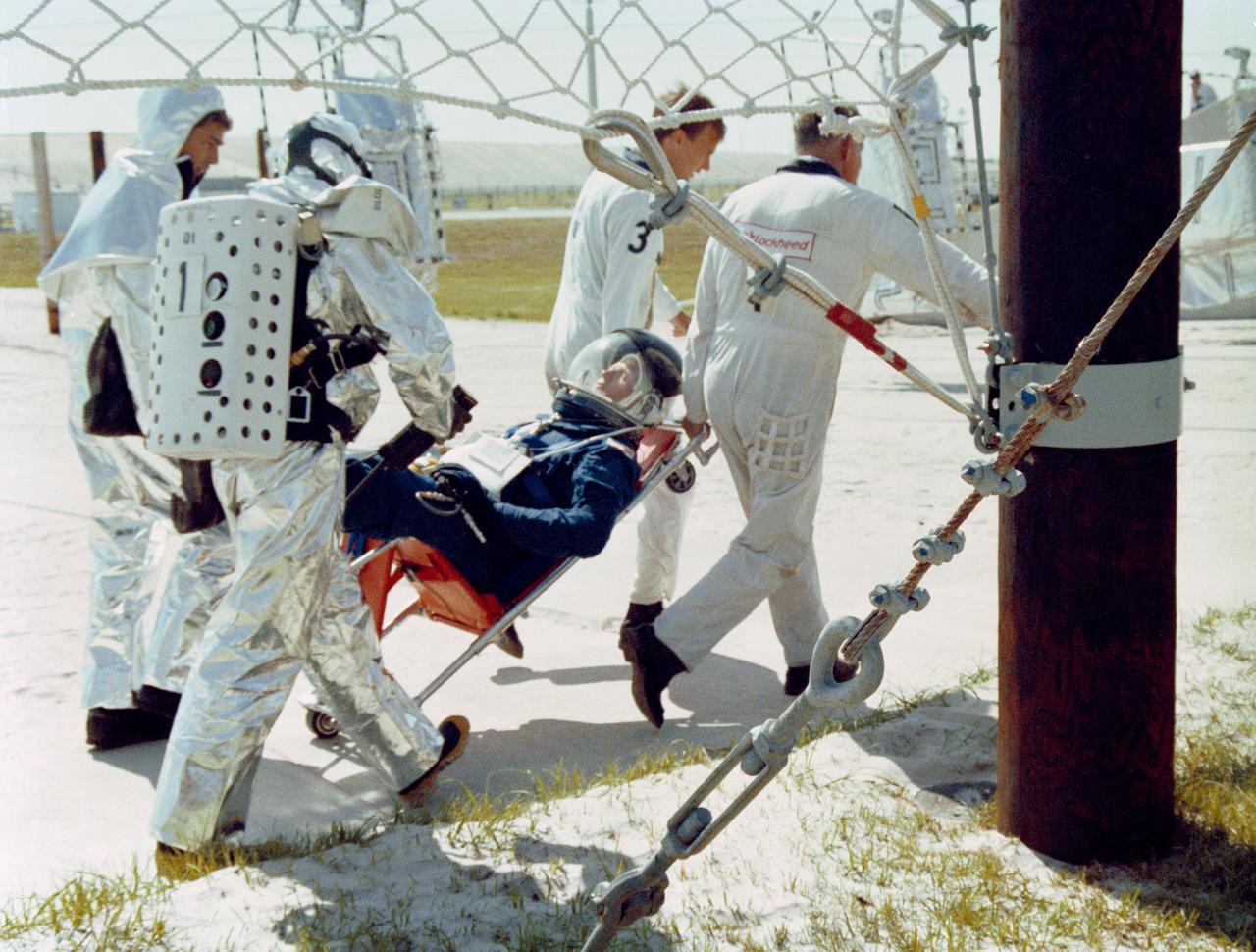
S88-40898 (4 May 1988) --- Astronauts, members of the orbiter close-out crew and fire and rescue personnel participate in a simulated emergency egress exercise near the slide wire termination point bunker at Launch Pad 39B. The simulated exercise was performed to familiarize personnel with evacuation routes as well as emergency equipment and procedures. Reasons for conducting the emergency exercises include the need to validate recent post-Challenger upgrades to the launch pad's emergency escape system and the new procedures developed in preparation for STS-26. (NOTE: The astronaut pictured and many of the others who participated in the exercises are not members of STS-26 prime crew).
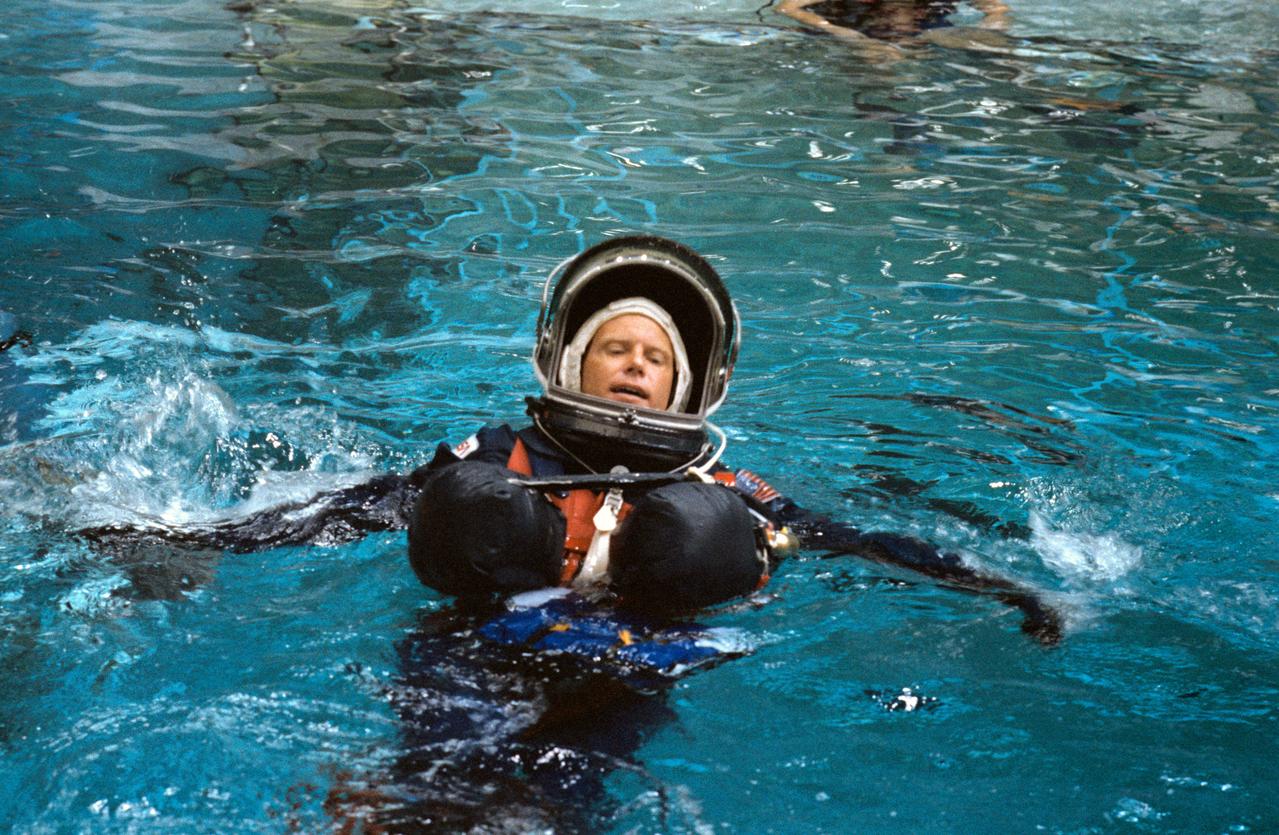
S88-42409 (20 July 1988) --- STS-26 Discovery, Orbiter Vehicle (OV) 103, Mission Specialist (MS) George D. Nelson participates in crew escape system (CES) testing in JSC Weightless Environment Training Facility (WETF) Bldg 29. Nelson, wearing the newly designed (navy blue) launch and entry suit (LES), floats in WETF pool with the aid of an underarm flotation device (modern version of Mas West floats). He awaits the assistance of SCUBA-equipped divers during a simulation of escape and rescue operations utilizing a new CES pole for emergency exit from the Space Shuttle.
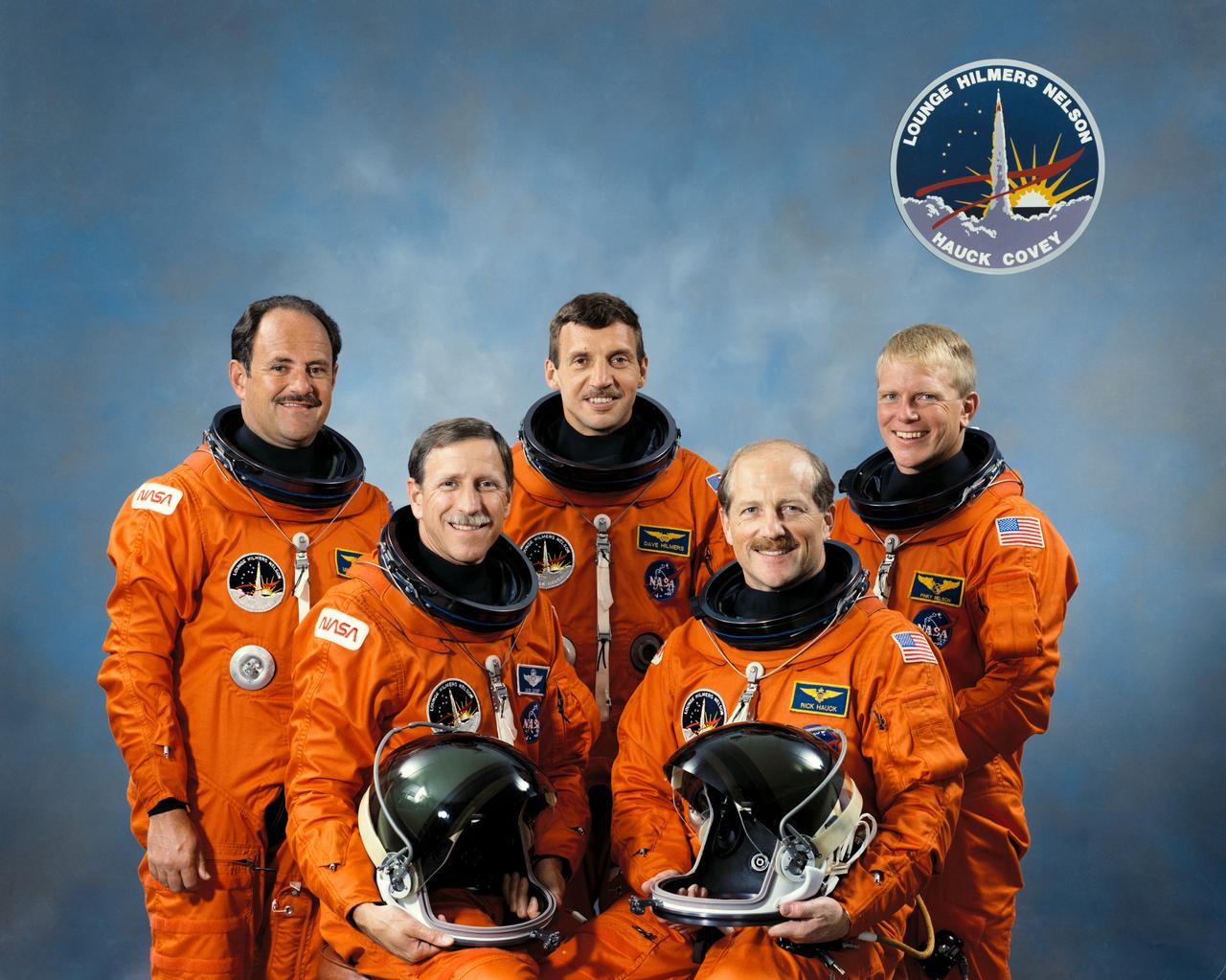
S88-47522 (10 Sept 1988) --- These five veteran astronauts have been training for over a year to serve as NASA's crew aboard the Space Shuttle Discovery for STS-26. On the front row are Astronauts Frederick H. (Rick) Hauck (right), commander; and Richard O. Covey, pilot. On the back row are Astronauts John M. (Mike) Lounge, David C. Hilmers and George D. Nelson -- all mission specialists. The crewmembers are wearing the orange partial pressure garments that they will be wearing on the launch and entry phases of the flight, scheduled for launch later this month.
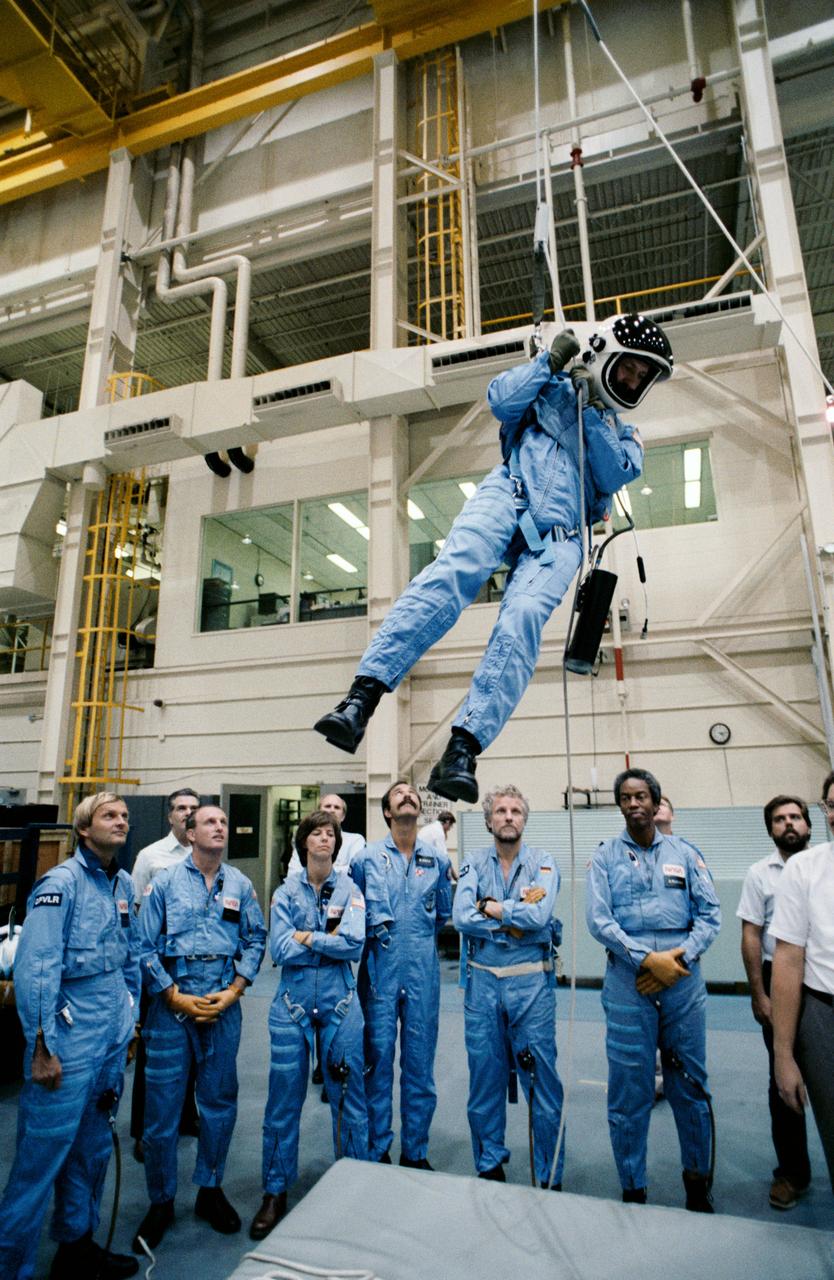
S85-41246 (26 Sept 1985) --- The STS 61-A/Spacelab D-1 crewmembers are seen in this training scene in the Johnson Space Center's Space Shuttle mockup and integration laboratory. Descending from a simulated Shuttle orbiter in distress, using a Sky-Genie device, is Astronaut Henry W. Hartsfield, Jr. mission commander. Watching in blue flight garments are other members of the crew. They are, left to right, Ernst Messerschmid, German payload specialist (PS1); James F. Buchli, NASA mission specialist (MS2); Bonnie J. Dunbar, NASA mission specialist (MS1); Wubbo J. Ockels, Dutch PS3. Not pictured is Steven R. Nagel, pilot. Photo was taken by Otis Imboden.
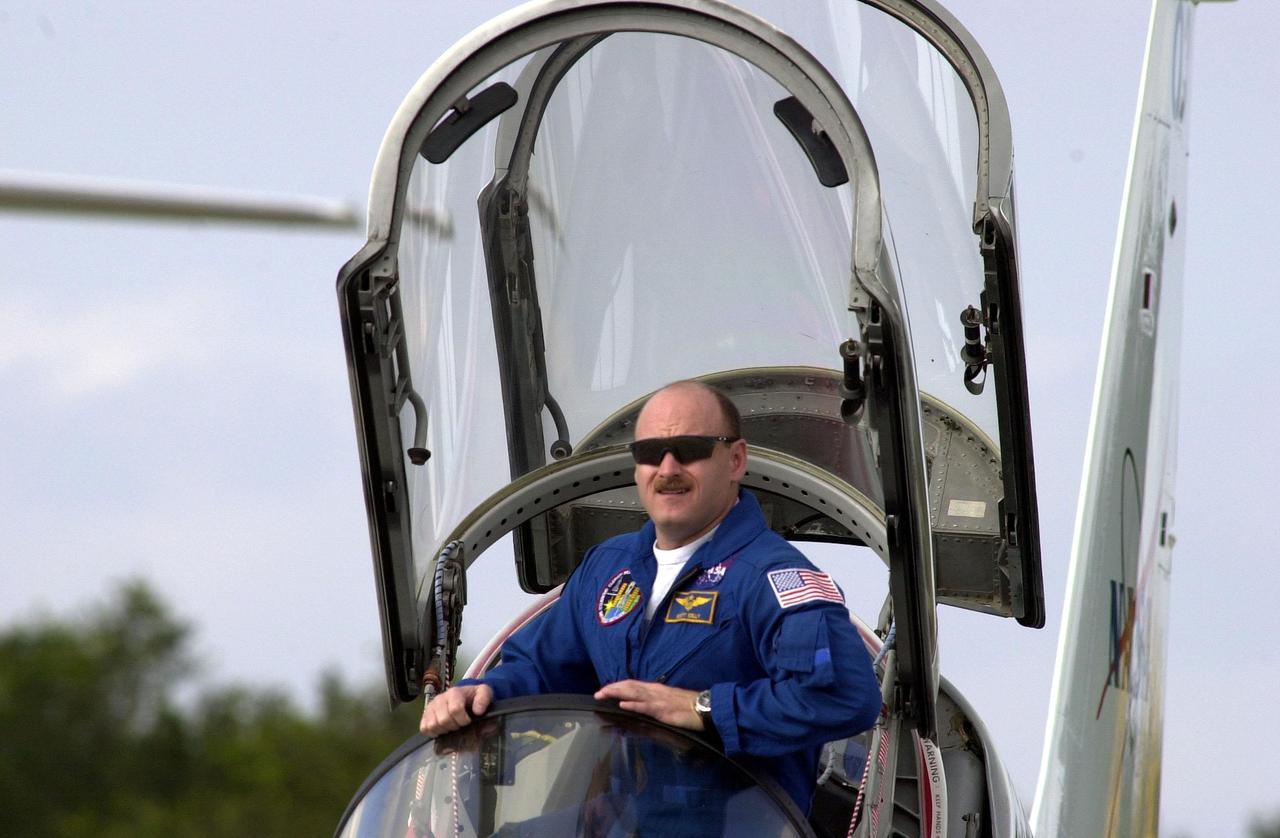
STS-103 Pilot Scott J. Kelly settles into the cockpit of a T-38 training jet for practice flights. He joins other crew members Commander Curtis L. Brown Jr. and Mission Specialists Steven L. Smith, C. Michael Foale (Ph.D.), John M. Grunsfeld (Ph.D.), Claude Nicollier of Switzerland and Jean-François Clervoy of France, for pre-launch preparations on mission STS-103 aboard Space Shuttle Discovery. Nicollier and Clervoy are with the European Space Agency. The mission, to service the Hubble Space Telescope, is scheduled for launch Dec. 16 at 9:18 p.m. EST from Launch Pad 39B. The mission is expected to last about 9 days and 21 hours. Discovery is expected to land at KSC Sunday, Dec. 26, at 6:56 p.m. EST
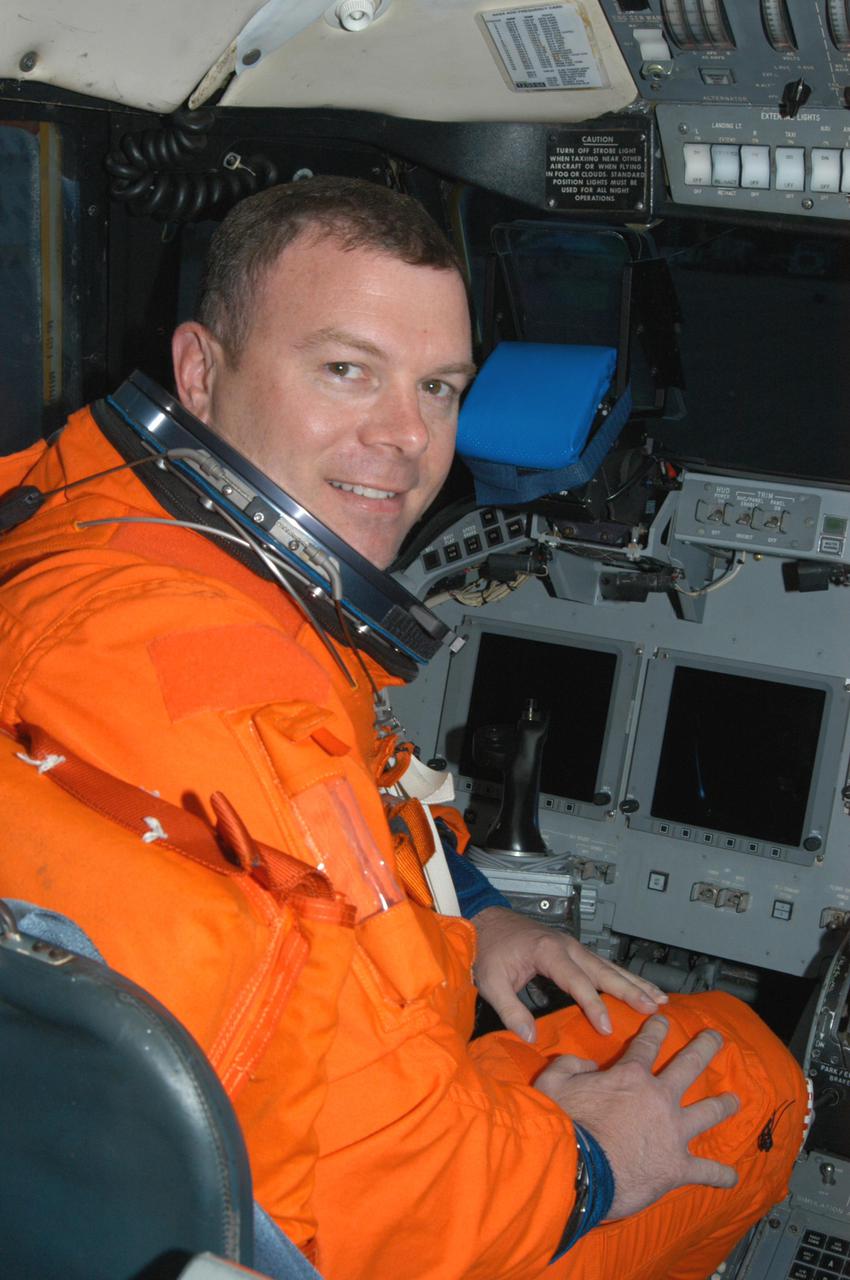
KENNEDY SPACE CENTER, FLA. - At the Shuttle Landing Facility on NASA Kennedy Space Center, STS-114 Pilot James Kelly sits in the cockpit of the Shuttle Training Aircraft (STA) after landing. He and Mission Commander Eileen Collins have been practicing night landings in preparation for the mission. The STA is a modified Grumman American Aviation-built Gulf Stream II executive jet that was modified to simulate an orbiter’s cockpit, motion and visual cues, and handling qualities. In flight, the STA duplicates the orbiter’s atmospheric descent trajectory from approximately 35,000 feet altitude to landing on a runway. Because the orbiter is unpowered during re-entry and landing, its high-speed glide must be perfectly executed the first time. Return to Flight Mission STS-114 is scheduled to launch aboard Space Shuttle Discovery with a crew of seven at 10:39 a.m. EDT on July 26. Landing is expected on Aug. 7.
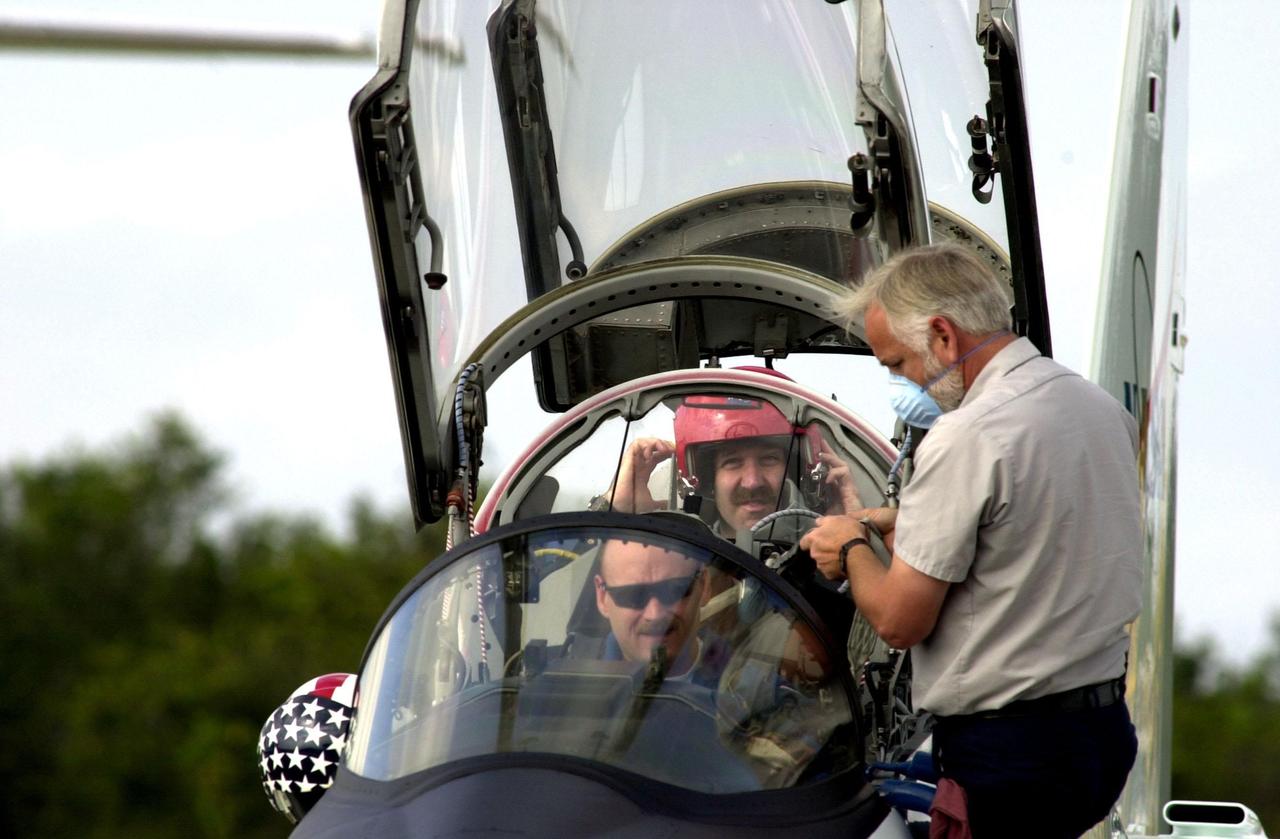
A worker at the Shuttle Landing Facility checks over STS-103 Pilot Scott J. Kelly (front) and Mission Specialist John M. Grunsfeld (Ph.D.) (behind) before they take off for practice flights in the T-38 training jet. They and other crew members Commander Curtis L. Brown Jr. and Mission Specialists Steven L. Smith, C. Michael Foale (Ph.D.), Claude Nicollier of Switzerland and Jean-François Clervoy of France are preparing for their mission on Space Shuttle Discovery. STS-103 is scheduled for launch Dec. 16 at 9:18 p.m. EST from Launch Pad 39B. The mission is expected to last about 9 days and 21 hours. Discovery is expected to land at KSC Sunday, Dec. 26, at 6:56 p.m. EST
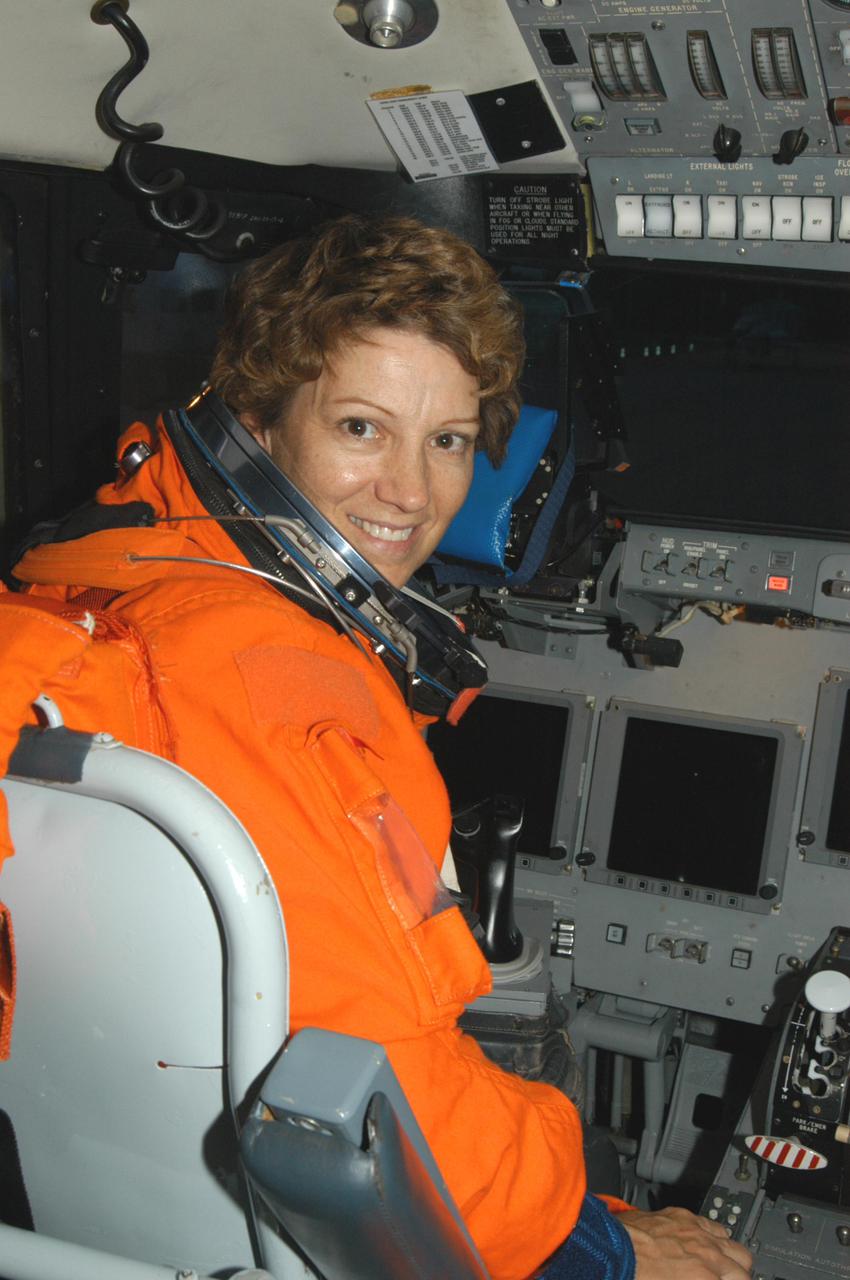
KENNEDY SPACE CENTER, FLA. - At the Shuttle Landing Facility on NASA Kennedy Space Center, STS-114 Mission Commander Eileen Collins sits in the cockpit of the Shuttle Training Aircraft (STA) after landing. She and Pilot James Kelly have been practicing night landings in preparation for the mission. The STA is a modified Grumman American Aviation-built Gulf Stream II executive jet that was modified to simulate an orbiter’s cockpit, motion and visual cues, and handling qualities. In flight, the STA duplicates the orbiter’s atmospheric descent trajectory from approximately 35,000 feet altitude to landing on a runway. Because the orbiter is unpowered during re-entry and landing, its high-speed glide must be perfectly executed the first time. Return to Flight Mission STS-114 is scheduled to launch aboard Space Shuttle Discovery with a crew of seven at 10:39 a.m. EDT on July 26. Landing is expected on Aug. 7.
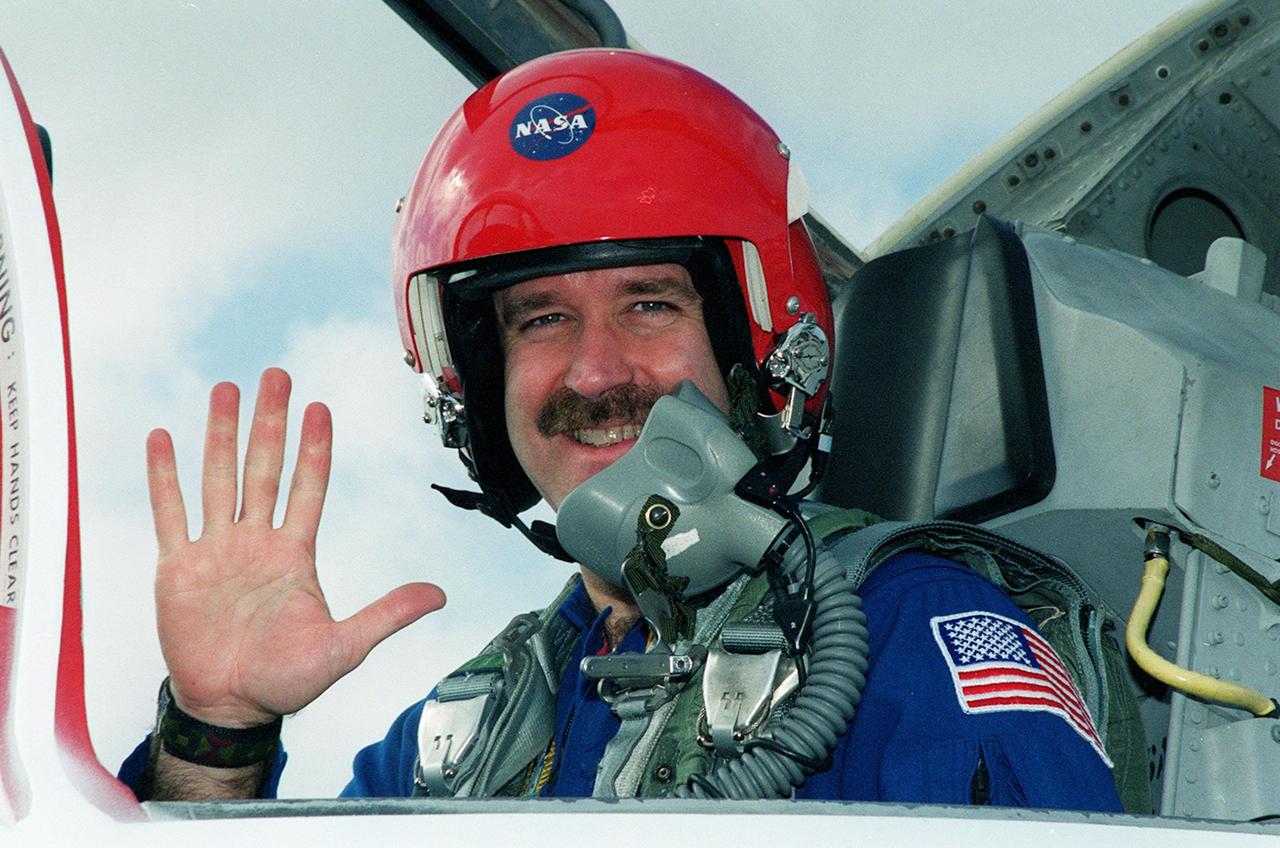
STS-103 Mission Specialist John M. Grunsfeld (Ph.D.) waves from the rear seat of a T-38 training jet before beginning practice flights. He joins other crew members Commander Curtis L. Brown Jr., Pilot Scott J. Kelly and Mission Specialists Steven L. Smith, C. Michael Foale (Ph.D.), Claude Nicollier of Switzerland and Jean-François Clervoy of France, for pre-launch preparations on mission STS-103 aboard Space Shuttle Discovery. Nicollier and Clervoy are with the European Space Agency. The mission, to service the Hubble Space Telescope, is scheduled for launch Dec. 16 at 9:18 p.m. EST from Launch Pad 39B. The mission is expected to last about 9 days and 21 hours. Discovery is expected to land at KSC Sunday, Dec. 26, at 6:56 p.m. EST
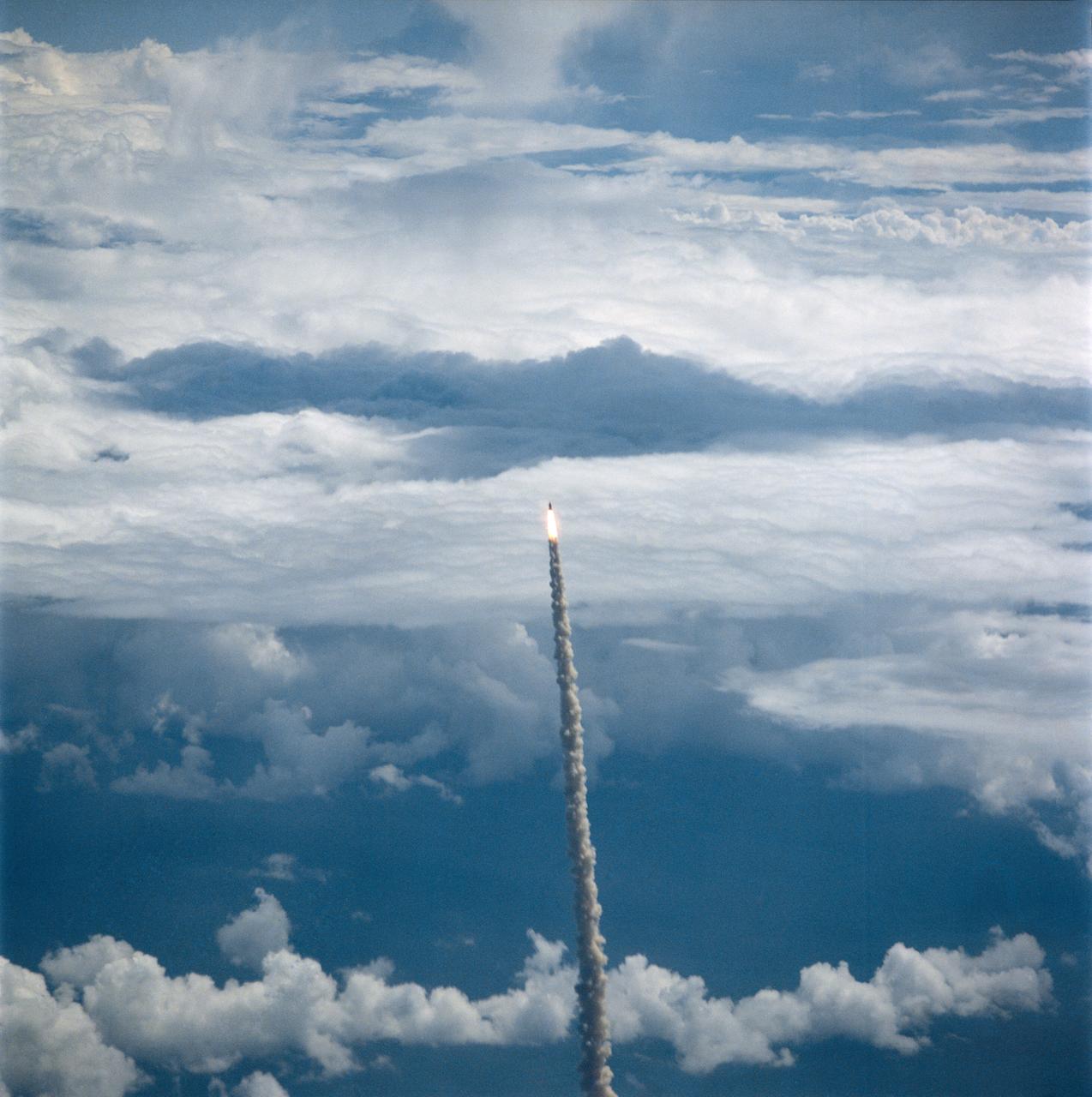
S26-S-026 (29 Sept. 1988) --- The STS-26 launch was captured on film from the NASA Shuttle Training Aircraft, piloted by astronaut Daniel C. Brandenstein, chief of JSC's Astronaut Office. Discovery?s mission was the first flight to be flown after the Challenger accident. The flight crew included astronauts Rick Hauck, commander; Dick Covey, pilot; and three mission specialists, Dave Hilmers, Mike Lounge, and George (Pinky) Nelson. During the four-day mission, the crew deployed the Tracking and Data Relay Satellite (TDRS-C) and operated eleven mid-deck experiments. Discovery completed 64 orbits of the earth before landing at Edwards Air Force Base, California, on October 3, 1988. Photo credit: NASA or National Aeronautics and Space Administration
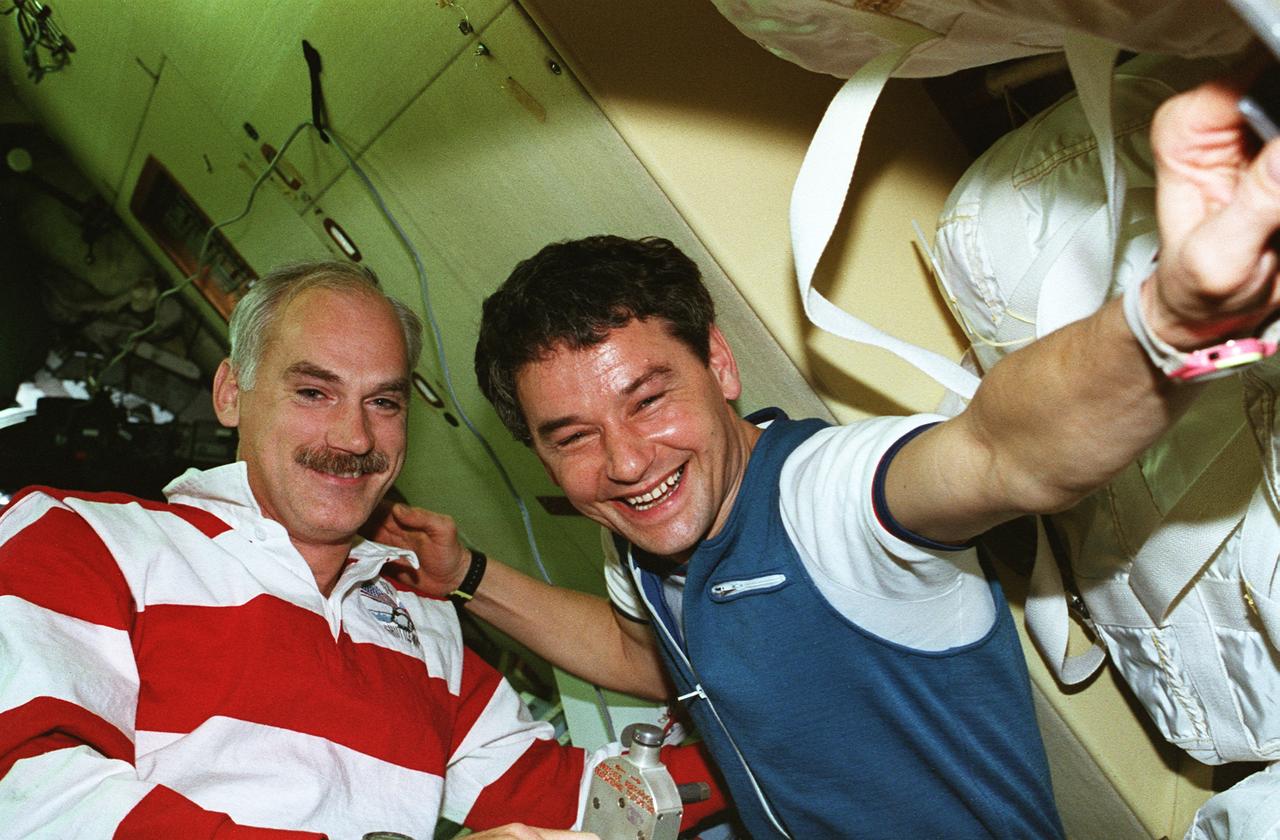
STS079-347-033 (16-26 Sept. 1996) --- Valeri G. Korzun and William F. Readdy, commanders, for Mir-22 and STS-79, respectively, reunite in the Docking Module (DM). The two have shared training experience in both Russia and the United States. This photograph is one of fifteen 35mm frames (along with four 70mm frames) of still photography documenting the activities of NASA's STS-79 mission, which began with a September 16, 1996, liftoff from Launch Pad 39A the Kennedy Space Center (KSC) and ended with a landing at KSC on September 26, 1996. Onboard for the launch were astronauts Readdy; Terrence W. Wilcutt, pilot; John E. Blaha, Jerome (Jay) Apt, Thomas D. Akers and Carl E. Walz, all mission specialists. On flight day 4, the crew docked with Russia's Mir Space Station. Shannon W. Lucid, who had spent six months aboard Mir, switched cosmonaut guest researcher roles with Blaha. The latter joined fellow Mir-22 crewmembers Korzun, and Aleksandr Y. Kaleri, flight engineer.
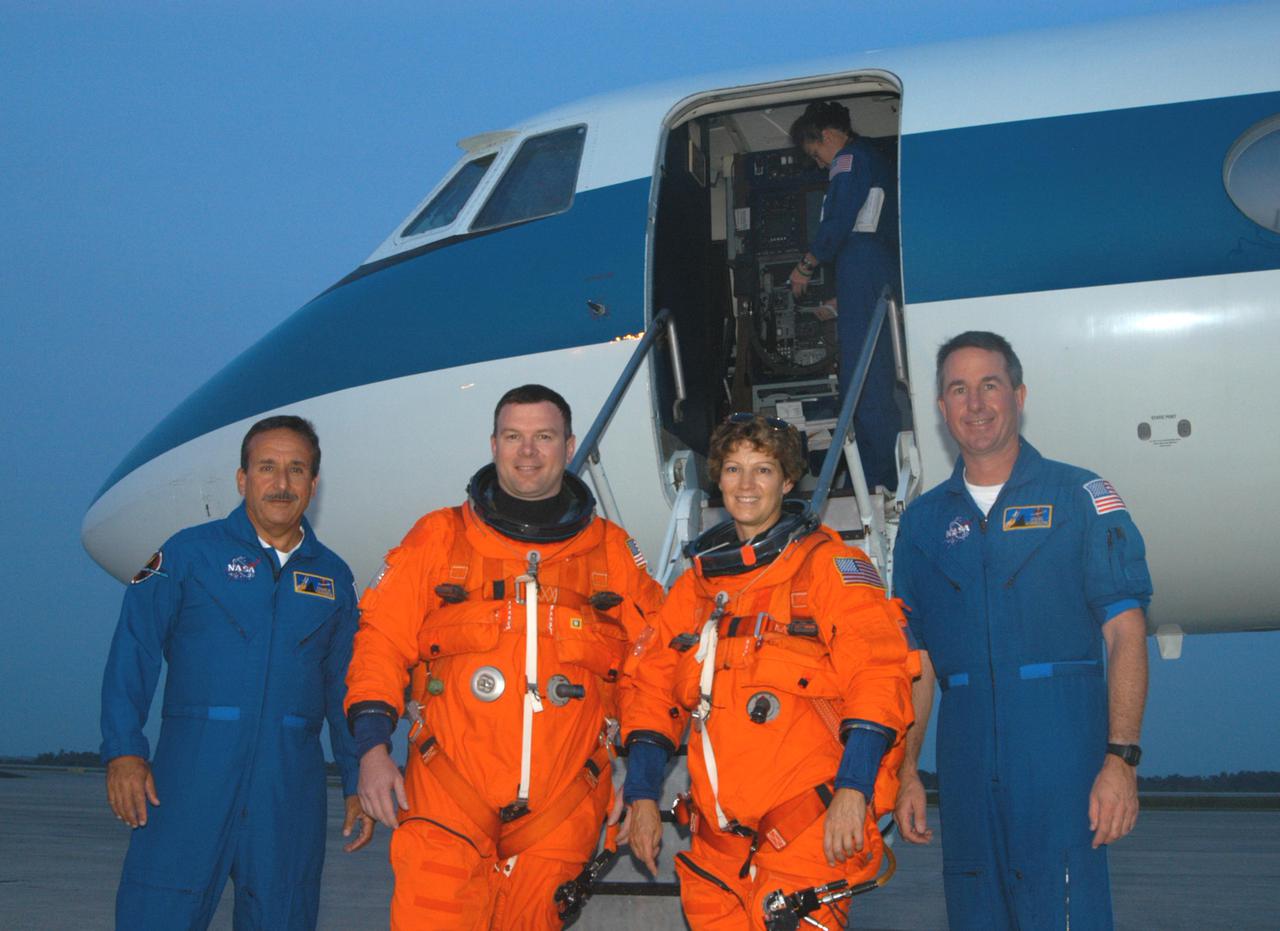
KENNEDY SPACE CENTER, FLA. - At the Shuttle Landing Facility on NASA Kennedy Space Center, STS-114 Pilot James Kelly (center left) and Mission Commander Eileen Collins (center right) pause for a photo after exiting the Shuttle Training Aircraft (STA) behind them. With them are fellow crew members Mission Specialist Charles Camarda (far left) and Mission Specialist Stephen Robinson (far right). Collins and Kelly have been practicing night landings in the STA in preparation for the mission. The STA is a modified Grumman American Aviation-built Gulf Stream II executive jet that was modified to simulate an orbiter’s cockpit, motion and visual cues, and handling qualities. In flight, the STA duplicates the orbiter’s atmospheric descent trajectory from approximately 35,000 feet altitude to landing on a runway. Because the orbiter is unpowered during re-entry and landing, its high-speed glide must be perfectly executed the first time. Return to Flight Mission STS-114 is scheduled to launch aboard Space Shuttle Discovery with a crew of seven at 10:39 a.m. EDT on July 26. Landing is expected on Aug. 7.
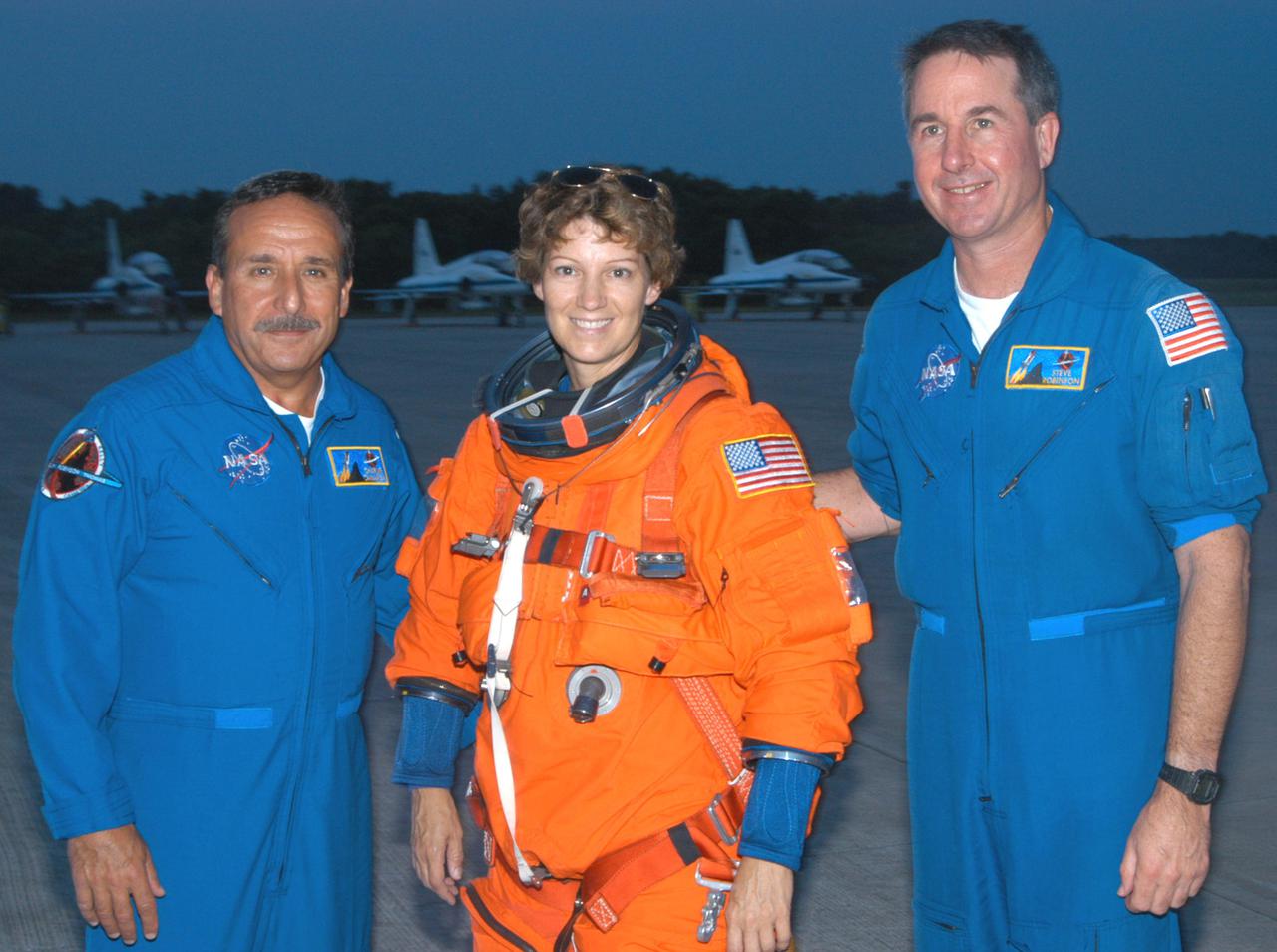
KENNEDY SPACE CENTER, FLA. - At the Shuttle Landing Facility on NASA Kennedy Space Center, STS-114 Mission Commander Eileen Collins pauses for a photo with fellow crew members. At left is Mission Specialist Charles Camarda; at right is Mission Specialist Stephen Robinson. Collins and Pilot James Kelly have been practicing night landings in the Shuttle Training Aircraft (STA) in preparation for the mission. The STA is a modified Grumman American Aviation-built Gulf Stream II executive jet that was modified to simulate an orbiter’s cockpit, motion and visual cues, and handling qualities. In flight, the STA duplicates the orbiter’s atmospheric descent trajectory from approximately 35,000 feet altitude to landing on a runway. Because the orbiter is unpowered during re-entry and landing, its high-speed glide must be perfectly executed the first time. Return to Flight Mission STS-114 is scheduled to launch aboard Space Shuttle Discovery with a crew of seven at 10:39 a.m. EDT on July 26. Landing is expected on Aug. 7.
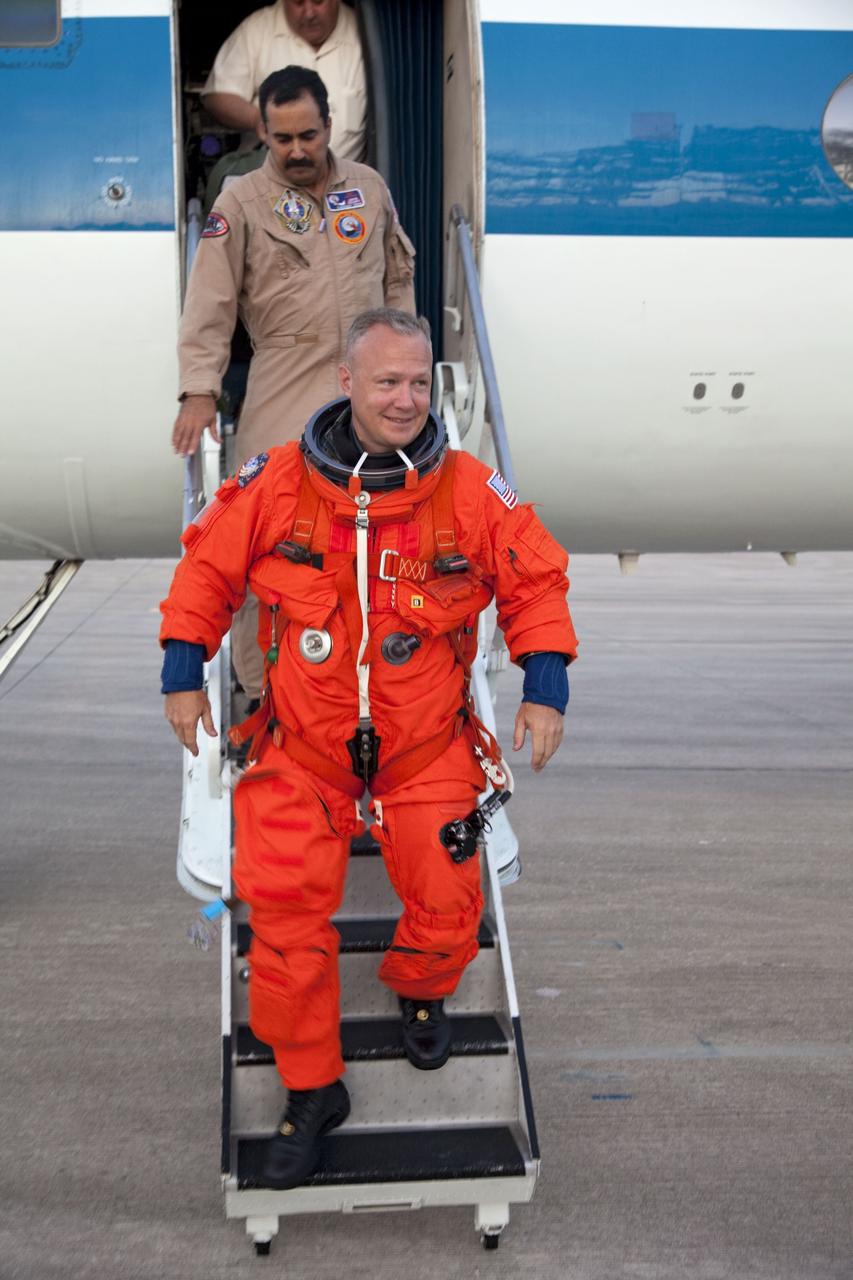
CAPE CANAVERAL, Fla. -- STS-135 Pilot Doug Hurley has completed touch-and-go landings and disembarks from a Shuttle Training Aircraft (STA) on the Shuttle Landing Facility at NASA's Kennedy Space Center in Florida. An STA is a Gulfstream II jet that is modified to mimic the shuttle's handling during the final phase of landing. Ferguson and Hurley practice landings as part of standard procedure before space shuttle Atlantis' launch to the International Space Station. Atlantis and its crew are scheduled to lift off at 11:26 a.m. EDT on July 8 to deliver the Raffaello multi-purpose logistics module packed with supplies and spare parts to the station. The STS-135 mission also will fly a system to investigate the potential for robotically refueling existing satellites and return a failed ammonia pump module to help NASA better understand the failure mechanism and improve pump designs for future systems. STS-135 will be the 33rd flight of Atlantis, the 37th shuttle mission to the space station, and the 135th and final mission of NASA's Space Shuttle Program. For more information visit, www.nasa.gov/mission_pages/shuttle/shuttlemissions/sts135/index.html. Photo credit: NASA/Cory Huston
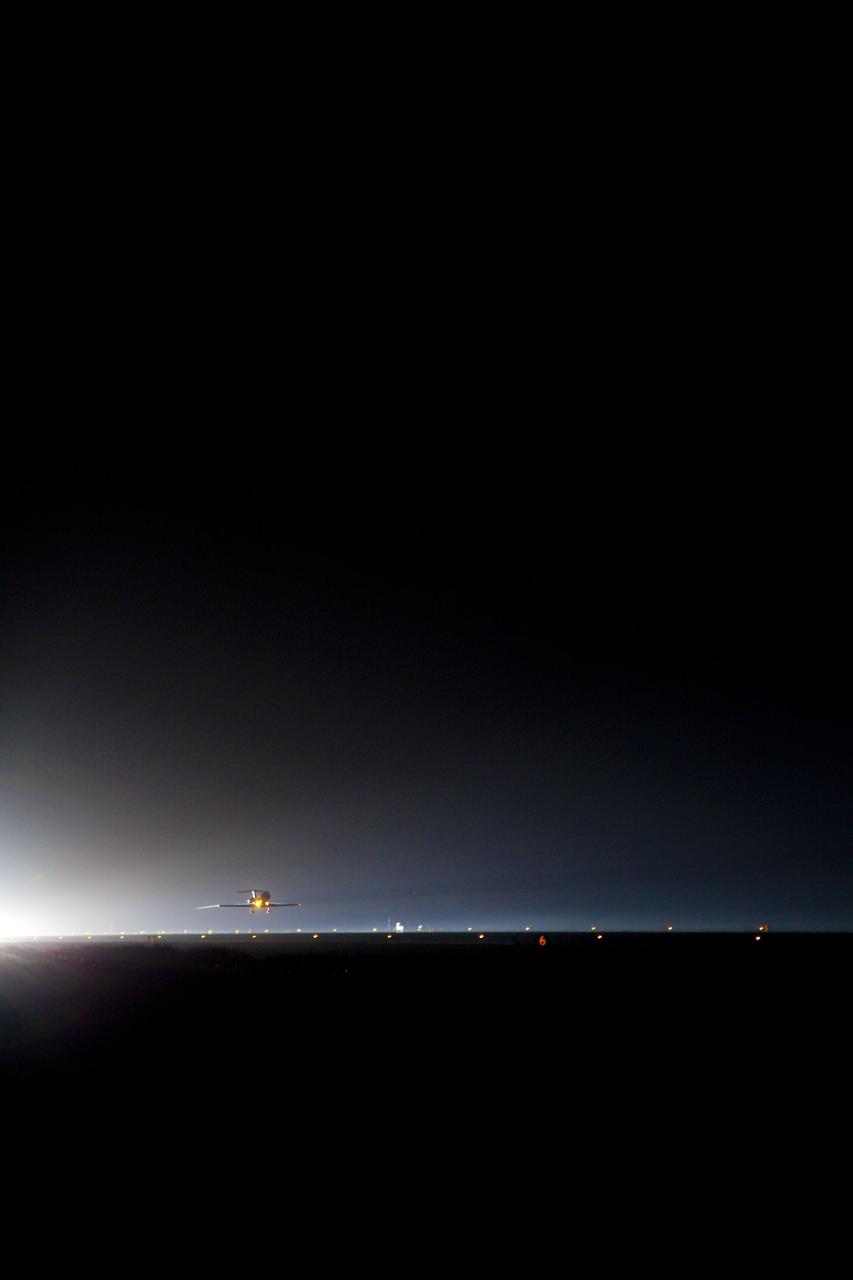
CAPE CANAVERAL, Fla. -- STS-135 Commander Chris Ferguson and Pilot Doug Hurley perform touch-and-go landings aboard a Shuttle Training Aircraft (STA) at the Shuttle Landing Facility at NASA's Kennedy Space Center in Florida. An STA is a Gulfstream II jet that is modified to mimic the shuttle's handling during the final phase of landing. Ferguson and Hurley practice landings as part of standard procedure before space shuttle Atlantis' launch to the International Space Station. Atlantis and its crew are scheduled to lift off at 11:26 a.m. EDT on July 8 to deliver the Raffaello multi-purpose logistics module packed with supplies and spare parts to the station. The STS-135 mission also will fly a system to investigate the potential for robotically refueling existing satellites and return a failed ammonia pump module to help NASA better understand the failure mechanism and improve pump designs for future systems. STS-135 will be the 33rd flight of Atlantis, the 37th shuttle mission to the space station, and the 135th and final mission of NASA's Space Shuttle Program. For more information visit, www.nasa.gov/mission_pages/shuttle/shuttlemissions/sts135/index.html. Photo credit: NASA/Cory Huston
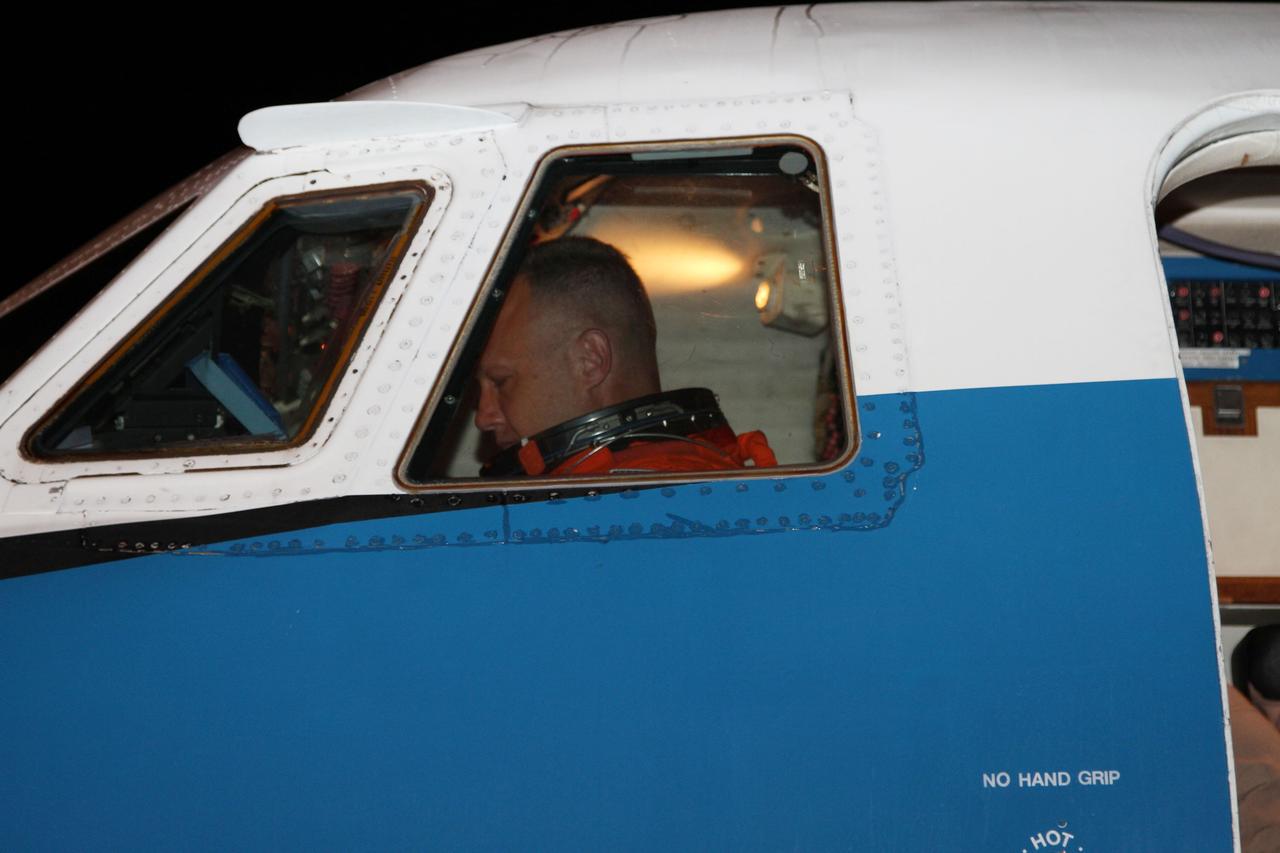
CAPE CANAVERAL, Fla. -- STS-135 Pilot Doug Hurley prepares to practice touch-and-go landings in a Shuttle Training Aircraft (STA) at the Shuttle Landing Facility at NASA's Kennedy Space Center in Florida. An STA is a Gulfstream II jet that is modified to mimic the shuttle's handling during the final phase of landing. Ferguson and Hurley will practice landings as part of standard procedure before space shuttle Atlantis' launch to the International Space Station. Atlantis and its crew are scheduled to lift off at 11:26 a.m. EDT on July 8 to deliver the Raffaello multi-purpose logistics module packed with supplies and spare parts to the station. The STS-135 mission also will fly a system to investigate the potential for robotically refueling existing satellites and return a failed ammonia pump module to help NASA better understand the failure mechanism and improve pump designs for future systems. STS-135 will be the 33rd flight of Atlantis, the 37th shuttle mission to the space station, and the 135th and final mission of NASA's Space Shuttle Program. For more information visit, www.nasa.gov/mission_pages/shuttle/shuttlemissions/sts135/index.html. Photo credit: NASA/Cory Huston
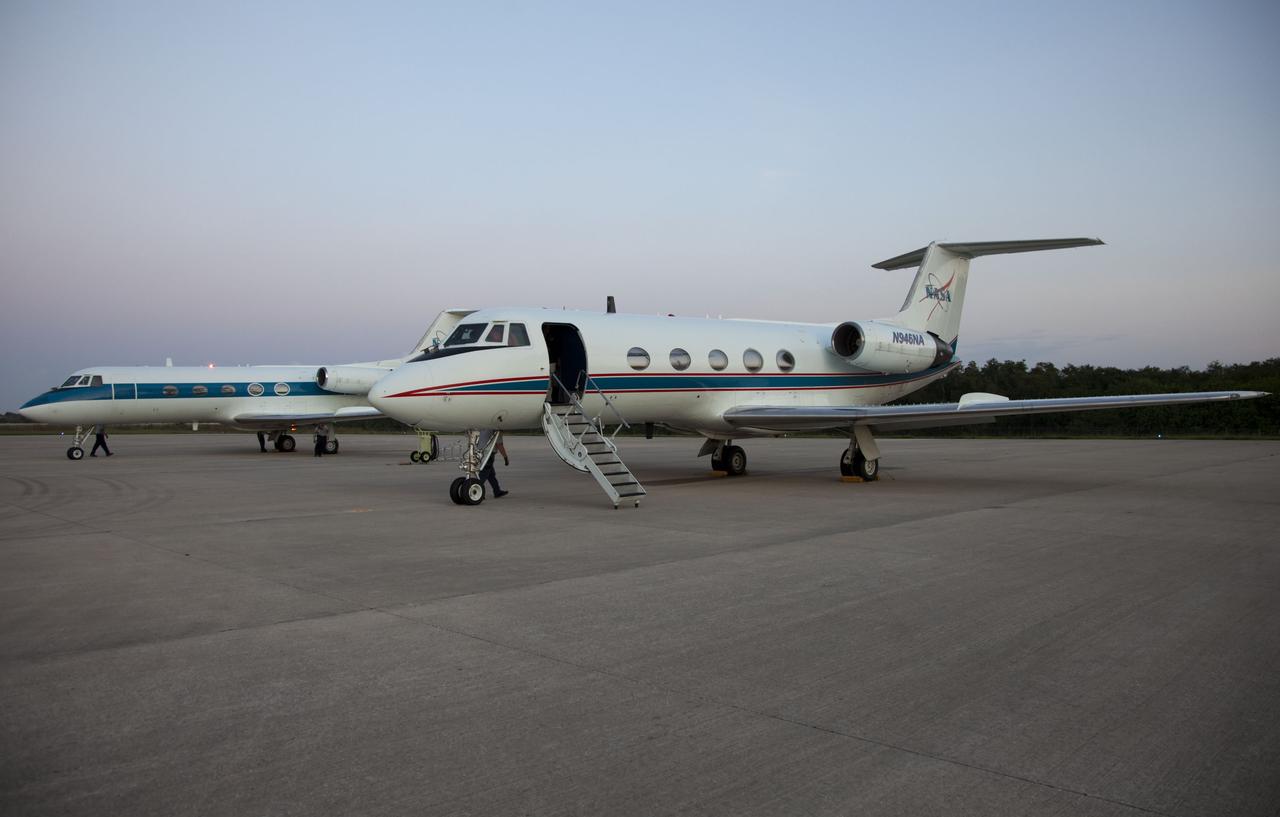
CAPE CANAVERAL, Fla. -- STS-135 Commander Chris Ferguson and Pilot Doug Hurley return after performing touch-and-go landings aboard a Shuttle Training Aircraft (STA) on the Shuttle Landing Facility runway at NASA's Kennedy Space Center in Florida. An STA is a Gulfstream II jet that is modified to mimic the shuttle's handling during the final phase of landing. Ferguson and Hurley practice landings as part of standard procedure before space shuttle Atlantis' launch to the International Space Station. Atlantis and its crew are scheduled to lift off at 11:26 a.m. EDT on July 8 to deliver the Raffaello multi-purpose logistics module packed with supplies and spare parts to the station. The STS-135 mission also will fly a system to investigate the potential for robotically refueling existing satellites and return a failed ammonia pump module to help NASA better understand the failure mechanism and improve pump designs for future systems. STS-135 will be the 33rd flight of Atlantis, the 37th shuttle mission to the space station, and the 135th and final mission of NASA's Space Shuttle Program. For more information visit, www.nasa.gov/mission_pages/shuttle/shuttlemissions/sts135/index.html. Photo credit: NASA/Cory Huston

CAPE CANAVERAL, Fla. -- STS-135 Commander Chris Ferguson and Pilot Doug Hurley perform touch-and-go landings aboard a Shuttle Training Aircraft (STA) at the Shuttle Landing Facility at NASA's Kennedy Space Center in Florida. An STA is a Gulfstream II jet that is modified to mimic the shuttle's handling during the final phase of landing. Ferguson and Hurley practice landings as part of standard procedure before space shuttle Atlantis' launch to the International Space Station. Atlantis and its crew are scheduled to lift off at 11:26 a.m. EDT on July 8 to deliver the Raffaello multi-purpose logistics module packed with supplies and spare parts to the station. The STS-135 mission also will fly a system to investigate the potential for robotically refueling existing satellites and return a failed ammonia pump module to help NASA better understand the failure mechanism and improve pump designs for future systems. STS-135 will be the 33rd flight of Atlantis, the 37th shuttle mission to the space station, and the 135th and final mission of NASA's Space Shuttle Program. For more information visit, www.nasa.gov/mission_pages/shuttle/shuttlemissions/sts135/index.html. Photo credit: NASA/Cory Huston
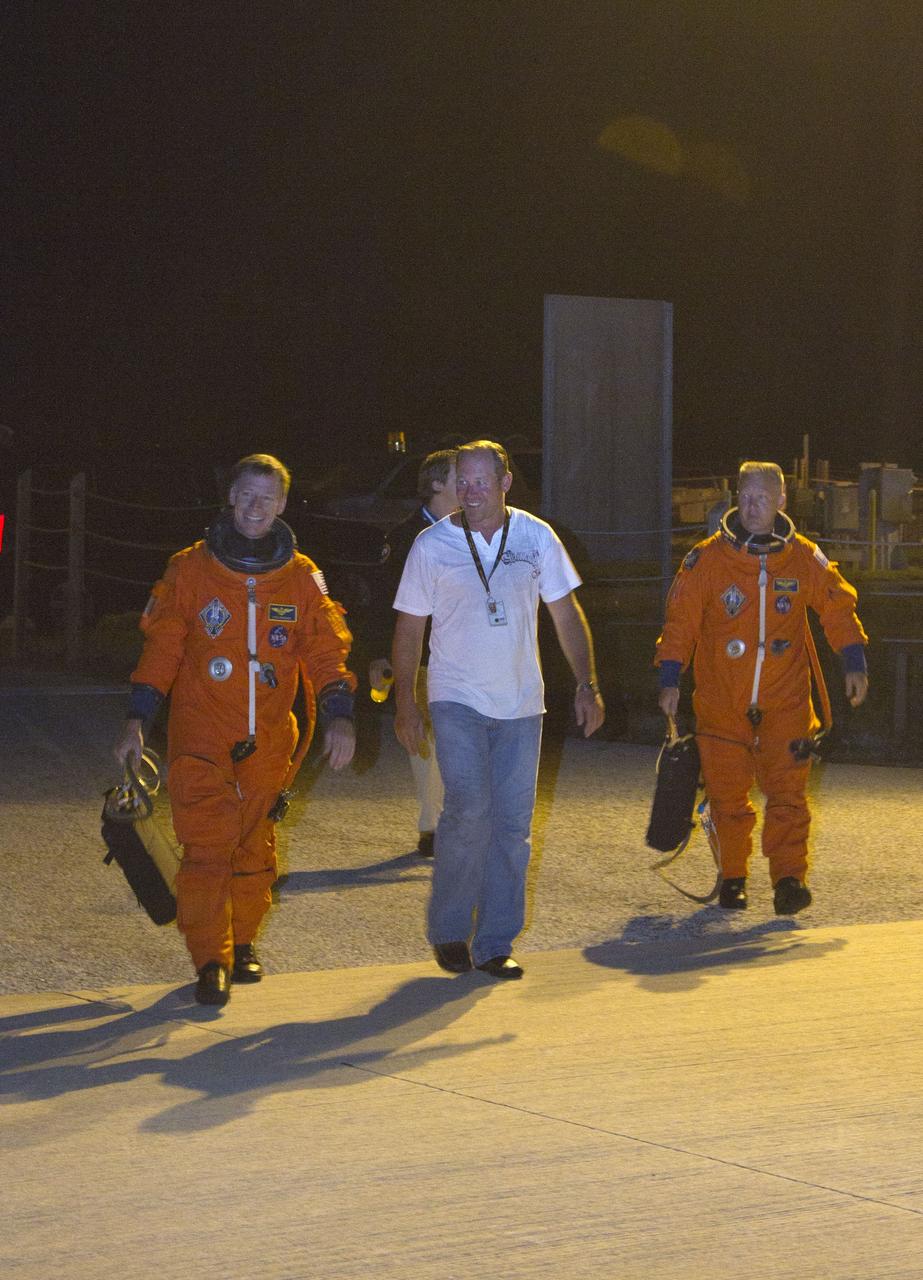
CAPE CANAVERAL, Fla. -- At NASA's Kennedy Space Center in Florida, STS-135 Commander Chris Ferguson (left) and Pilot Doug Hurley walk onto Kennedy's Shuttle Landing Facility to practice touch-and-go landings in a Shuttle Training Aircraft (STA). An STA is a Gulfstream II jet that is modified to mimic the shuttle's handling during the final phase of landing. Ferguson and Hurley will practice landings as part of standard procedure before space shuttle Atlantis' launch to the International Space Station. Atlantis and its crew are scheduled to lift off at 11:26 a.m. EDT on July 8 to deliver the Raffaello multi-purpose logistics module packed with supplies and spare parts to the station. The STS-135 mission also will fly a system to investigate the potential for robotically refueling existing satellites and return a failed ammonia pump module to help NASA better understand the failure mechanism and improve pump designs for future systems. STS-135 will be the 33rd flight of Atlantis, the 37th shuttle mission to the space station, and the 135th and final mission of NASA's Space Shuttle Program. For more information visit, www.nasa.gov/mission_pages/shuttle/shuttlemissions/sts135/index.html. Photo credit: NASA/Cory Huston
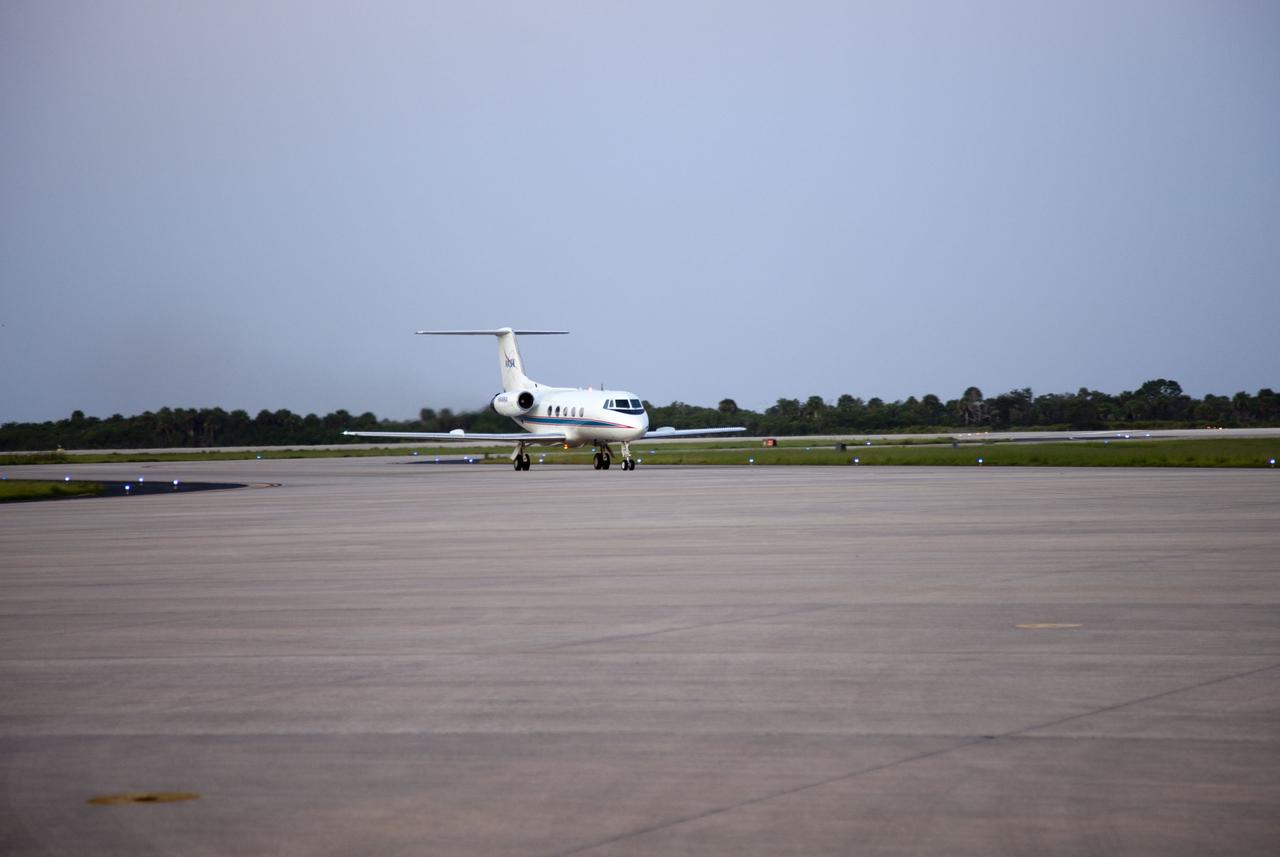
CAPE CANAVERAL, Fla. -- STS-135 Commander Chris Ferguson and Pilot Doug Hurley return after performing touch-and-go landings aboard a Shuttle Training Aircraft (STA) on the Shuttle Landing Facility runway at NASA's Kennedy Space Center in Florida. An STA is a Gulfstream II jet that is modified to mimic the shuttle's handling during the final phase of landing. Ferguson and Hurley practice landings as part of standard procedure before space shuttle Atlantis' launch to the International Space Station. Atlantis and its crew are scheduled to lift off at 11:26 a.m. EDT on July 8 to deliver the Raffaello multi-purpose logistics module packed with supplies and spare parts to the station. The STS-135 mission also will fly a system to investigate the potential for robotically refueling existing satellites and return a failed ammonia pump module to help NASA better understand the failure mechanism and improve pump designs for future systems. STS-135 will be the 33rd flight of Atlantis, the 37th shuttle mission to the space station, and the 135th and final mission of NASA's Space Shuttle Program. For more information visit, www.nasa.gov/mission_pages/shuttle/shuttlemissions/sts135/index.html. Photo credit: NASA/Cory Huston
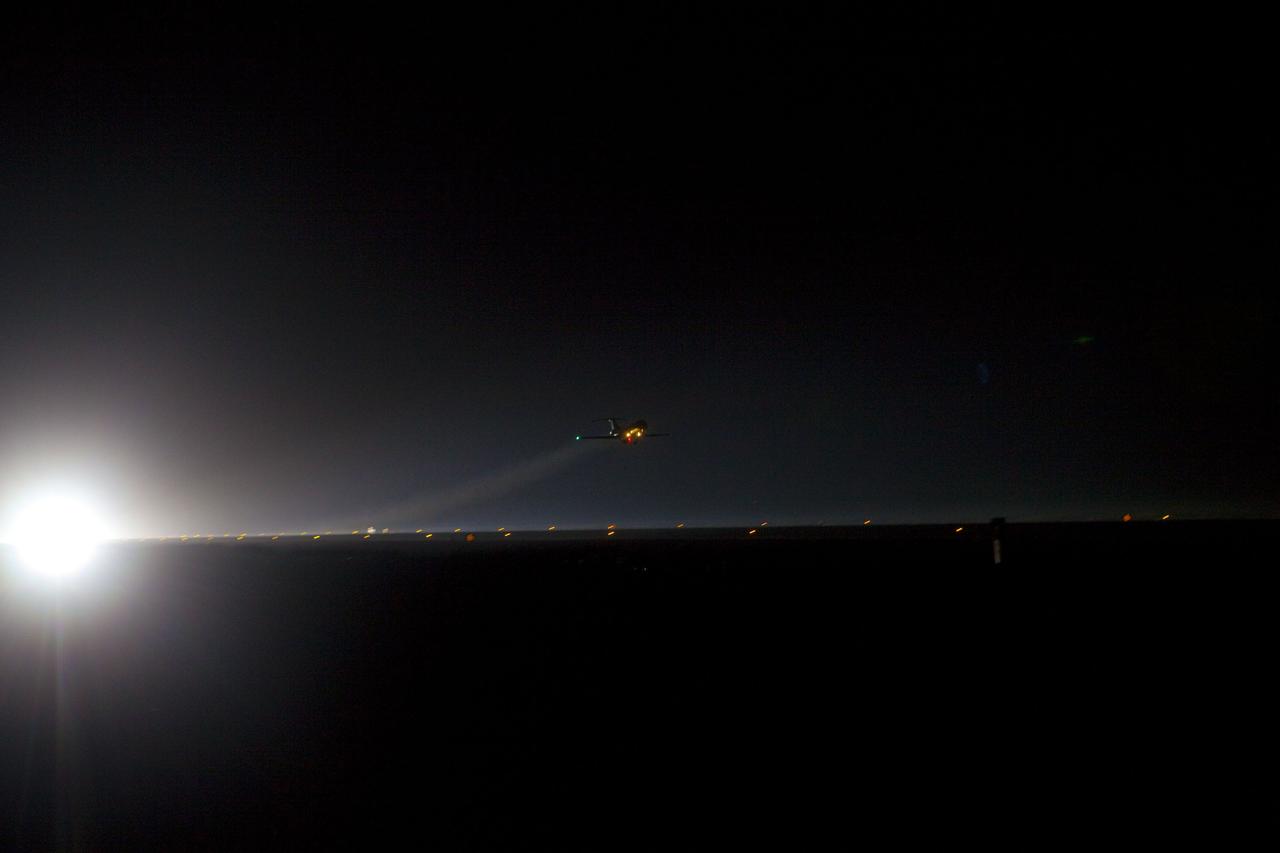
CAPE CANAVERAL, Fla. -- STS-135 Commander Chris Ferguson and Pilot Doug Hurley perform touch-and-go landings aboard a Shuttle Training Aircraft (STA) at the Shuttle Landing Facility at NASA's Kennedy Space Center in Florida. An STA is a Gulfstream II jet that is modified to mimic the shuttle's handling during the final phase of landing. Ferguson and Hurley practice landings as part of standard procedure before space shuttle Atlantis' launch to the International Space Station. Atlantis and its crew are scheduled to lift off at 11:26 a.m. EDT on July 8 to deliver the Raffaello multi-purpose logistics module packed with supplies and spare parts to the station. The STS-135 mission also will fly a system to investigate the potential for robotically refueling existing satellites and return a failed ammonia pump module to help NASA better understand the failure mechanism and improve pump designs for future systems. STS-135 will be the 33rd flight of Atlantis, the 37th shuttle mission to the space station, and the 135th and final mission of NASA's Space Shuttle Program. For more information visit, www.nasa.gov/mission_pages/shuttle/shuttlemissions/sts135/index.html. Photo credit: NASA/Cory Huston
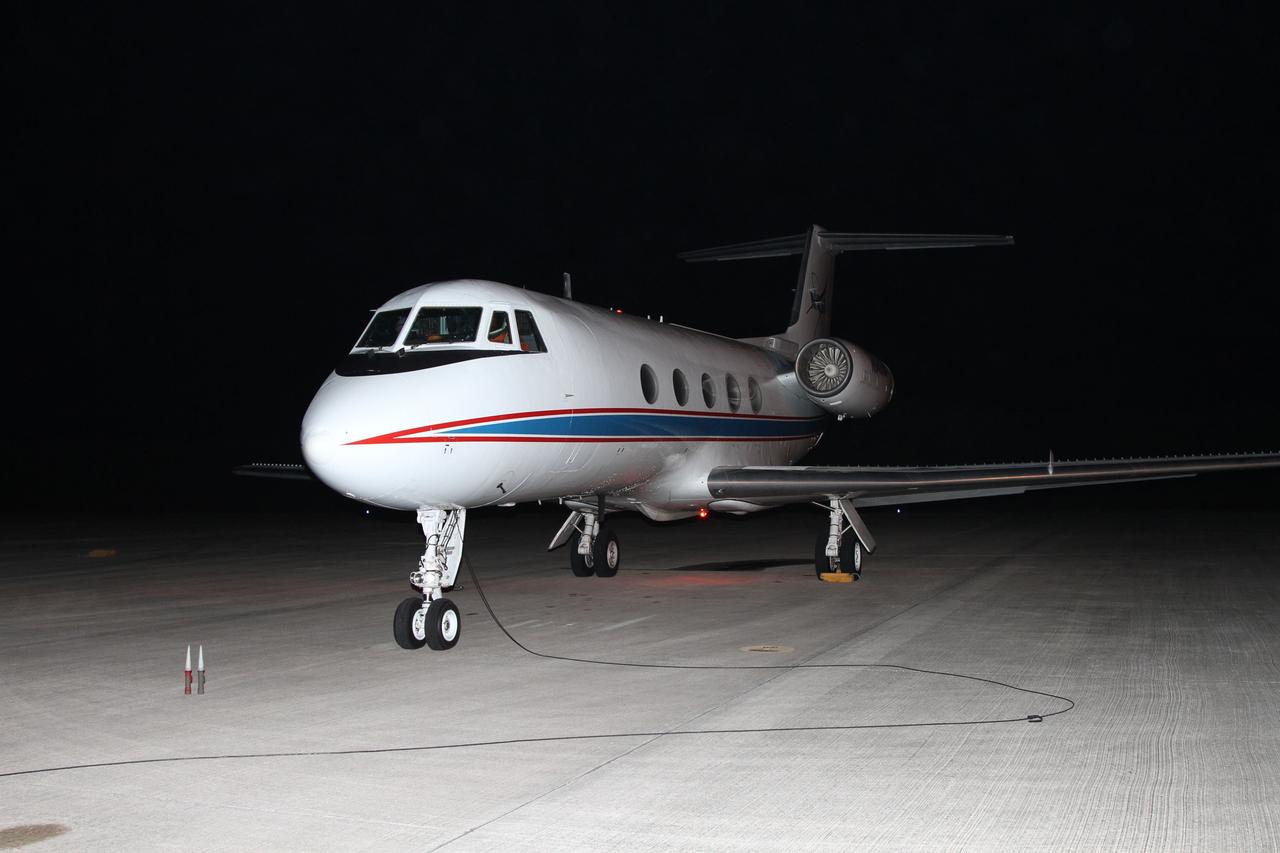
CAPE CANAVERAL, Fla. -- At NASA's Kennedy Space Center in Florida, STS-135 Commander Chris Ferguson and Pilot Doug Hurley prepare for takeoff from Kennedy's Shuttle Landing Facility to practice touch-and-go landings in a Shuttle Training Aircraft (STA). An STA is a Gulfstream II jet that is modified to mimic the shuttle's handling during the final phase of landing. Ferguson and Hurley will practice landings as part of standard procedure before space shuttle Atlantis' launch to the International Space Station. Atlantis and its crew are scheduled to lift off at 11:26 a.m. EDT on July 8 to deliver the Raffaello multi-purpose logistics module packed with supplies and spare parts to the station. The STS-135 mission also will fly a system to investigate the potential for robotically refueling existing satellites and return a failed ammonia pump module to help NASA better understand the failure mechanism and improve pump designs for future systems. STS-135 will be the 33rd flight of Atlantis, the 37th shuttle mission to the space station, and the 135th and final mission of NASA's Space Shuttle Program. For more information visit, www.nasa.gov/mission_pages/shuttle/shuttlemissions/sts135/index.html. Photo credit: NASA/Cory Huston
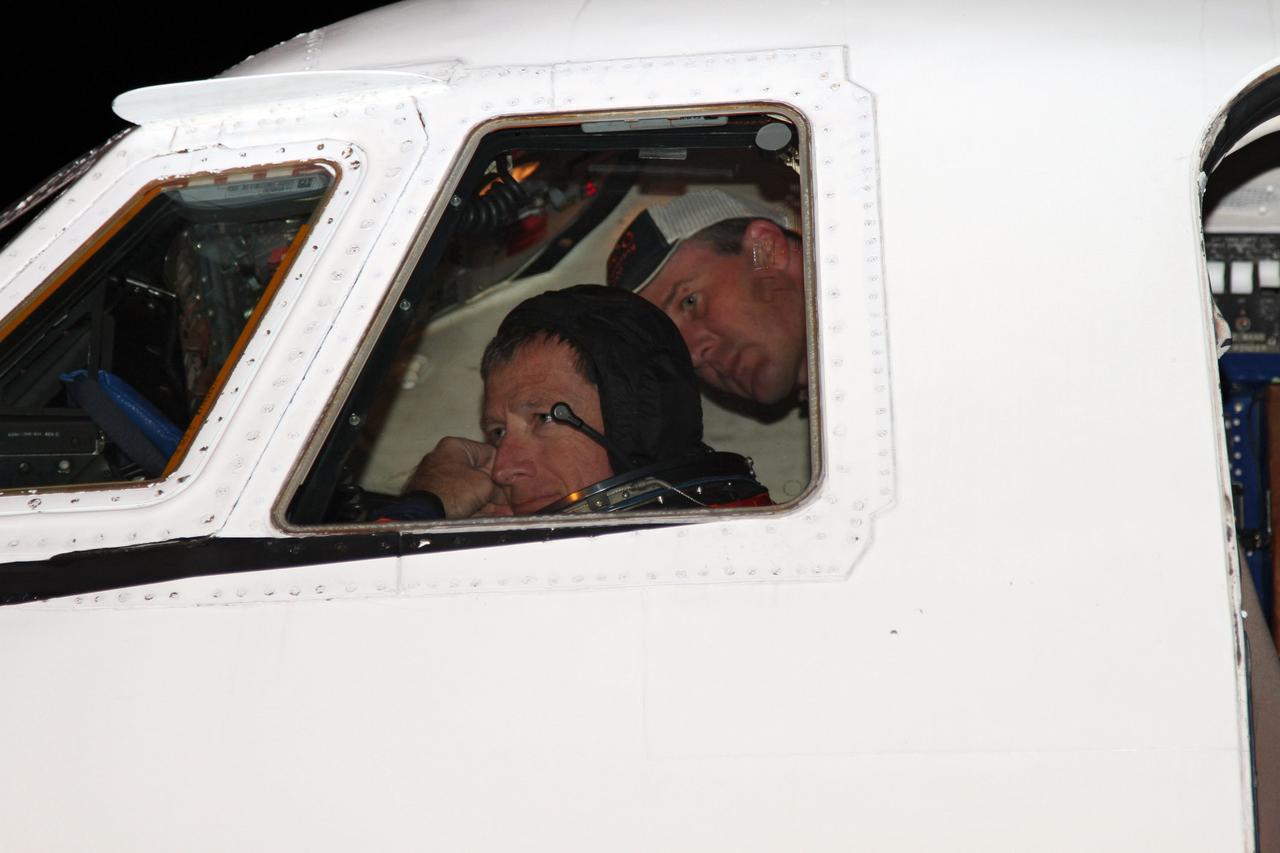
CAPE CANAVERAL, Fla. -- STS-135 Commander Chris Ferguson prepares to practice touch-and-go landings in a Shuttle Training Aircraft (STA) at the Shuttle Landing Facility at NASA's Kennedy Space Center in Florida. An STA is a Gulfstream II jet that is modified to mimic the shuttle's handling during the final phase of landing. Ferguson and Hurley will practice landings as part of standard procedure before space shuttle Atlantis' launch to the International Space Station. Atlantis and its crew are scheduled to lift off at 11:26 a.m. EDT on July 8 to deliver the Raffaello multi-purpose logistics module packed with supplies and spare parts to the station. The STS-135 mission also will fly a system to investigate the potential for robotically refueling existing satellites and return a failed ammonia pump module to help NASA better understand the failure mechanism and improve pump designs for future systems. STS-135 will be the 33rd flight of Atlantis, the 37th shuttle mission to the space station, and the 135th and final mission of NASA's Space Shuttle Program. For more information visit, www.nasa.gov/mission_pages/shuttle/shuttlemissions/sts135/index.html. Photo credit: NASA/Cory Huston
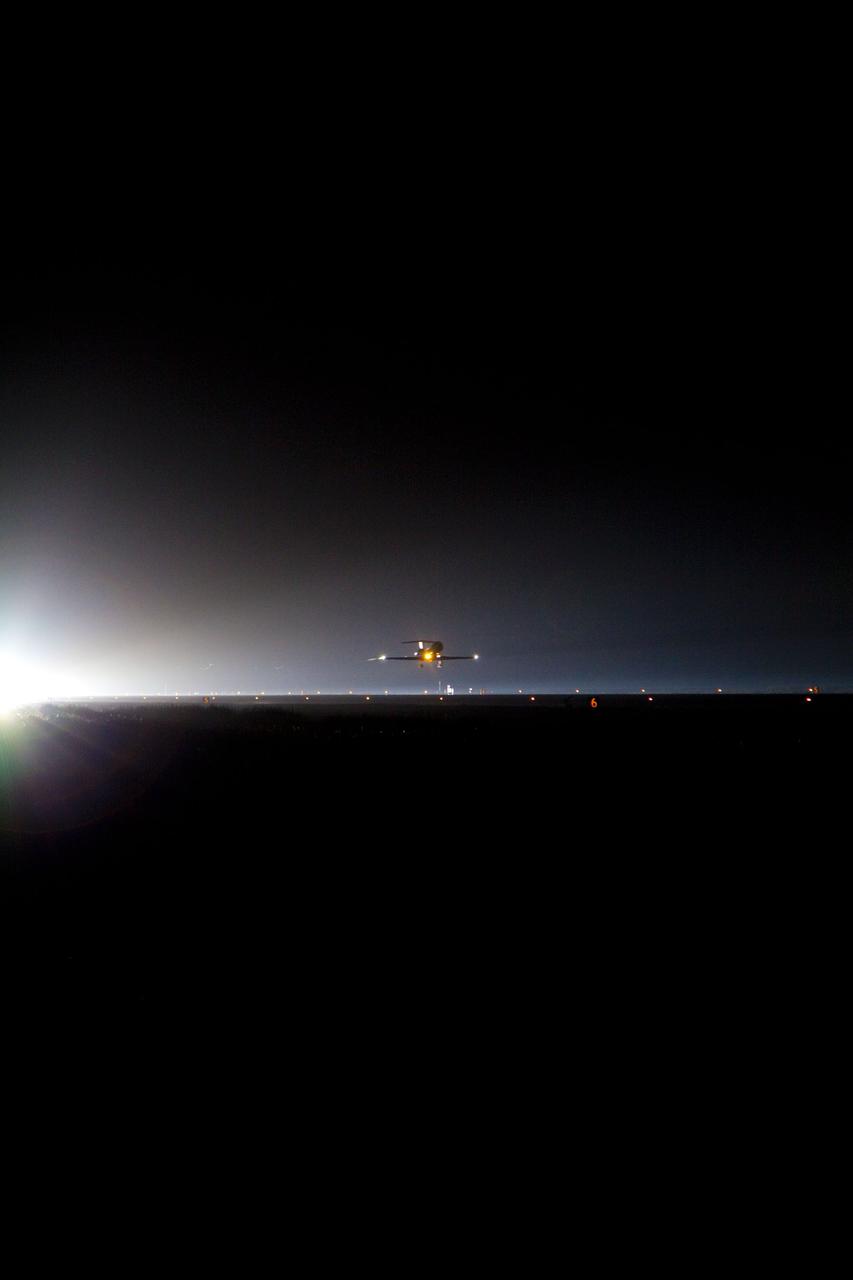
CAPE CANAVERAL, Fla. -- STS-135 Commander Chris Ferguson and Pilot Doug Hurley perform touch-and-go landings aboard a Shuttle Training Aircraft (STA) at the Shuttle Landing Facility at NASA's Kennedy Space Center in Florida. An STA is a Gulfstream II jet that is modified to mimic the shuttle's handling during the final phase of landing. Ferguson and Hurley practice landings as part of standard procedure before space shuttle Atlantis' launch to the International Space Station. Atlantis and its crew are scheduled to lift off at 11:26 a.m. EDT on July 8 to deliver the Raffaello multi-purpose logistics module packed with supplies and spare parts to the station. The STS-135 mission also will fly a system to investigate the potential for robotically refueling existing satellites and return a failed ammonia pump module to help NASA better understand the failure mechanism and improve pump designs for future systems. STS-135 will be the 33rd flight of Atlantis, the 37th shuttle mission to the space station, and the 135th and final mission of NASA's Space Shuttle Program. For more information visit, www.nasa.gov/mission_pages/shuttle/shuttlemissions/sts135/index.html. Photo credit: NASA/Cory Huston
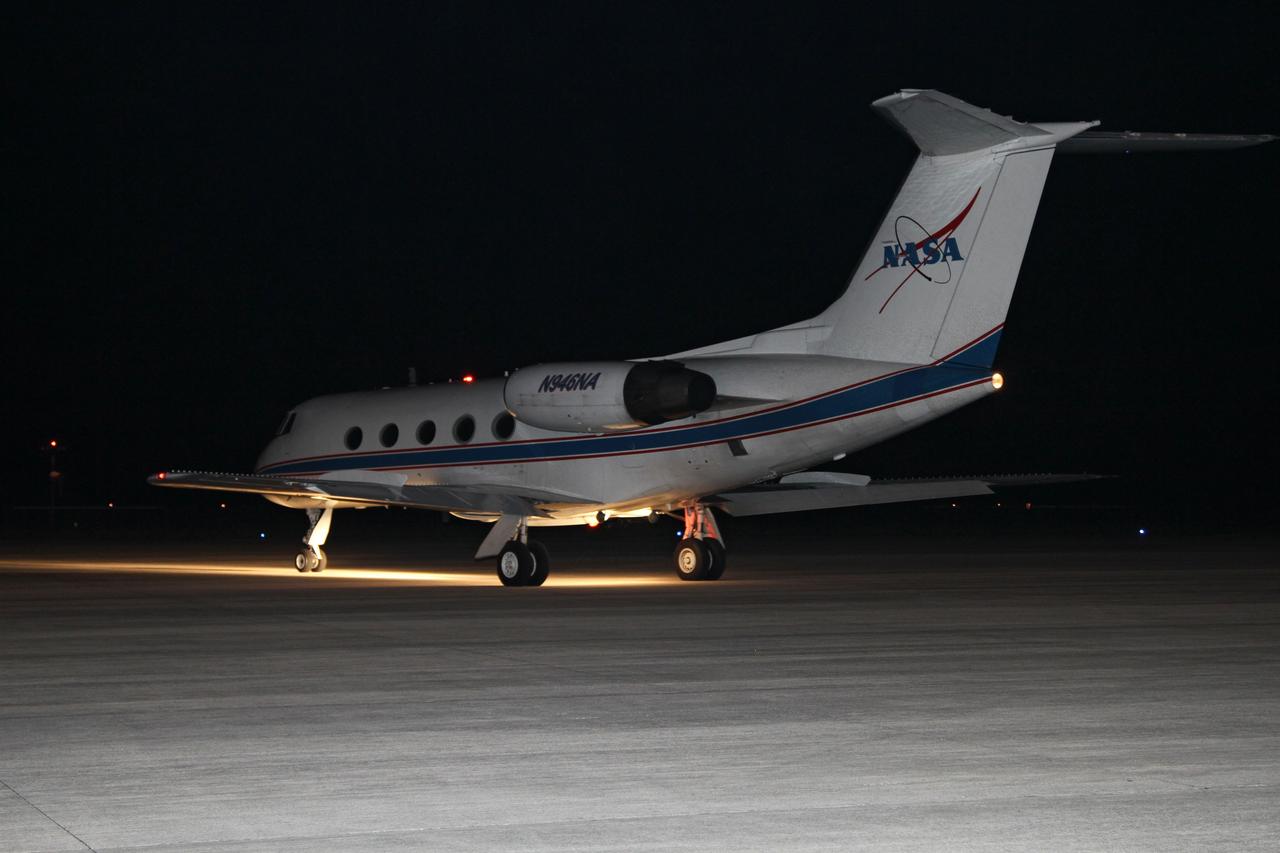
CAPE CANAVERAL, Fla. -- At NASA's Kennedy Space Center in Florida, STS-135 Commander Chris Ferguson and Pilot Doug Hurley prepare for takeoff from Kennedy's Shuttle Landing Facility to practice touch-and-go landings in a Shuttle Training Aircraft (STA). An STA is a Gulfstream II jet that is modified to mimic the shuttle's handling during the final phase of landing. Ferguson and Hurley will practice landings as part of standard procedure before space shuttle Atlantis' launch to the International Space Station. Atlantis and its crew are scheduled to lift off at 11:26 a.m. EDT on July 8 to deliver the Raffaello multi-purpose logistics module packed with supplies and spare parts to the station. The STS-135 mission also will fly a system to investigate the potential for robotically refueling existing satellites and return a failed ammonia pump module to help NASA better understand the failure mechanism and improve pump designs for future systems. STS-135 will be the 33rd flight of Atlantis, the 37th shuttle mission to the space station, and the 135th and final mission of NASA's Space Shuttle Program. For more information visit, www.nasa.gov/mission_pages/shuttle/shuttlemissions/sts135/index.html. Photo credit: NASA/Cory Huston
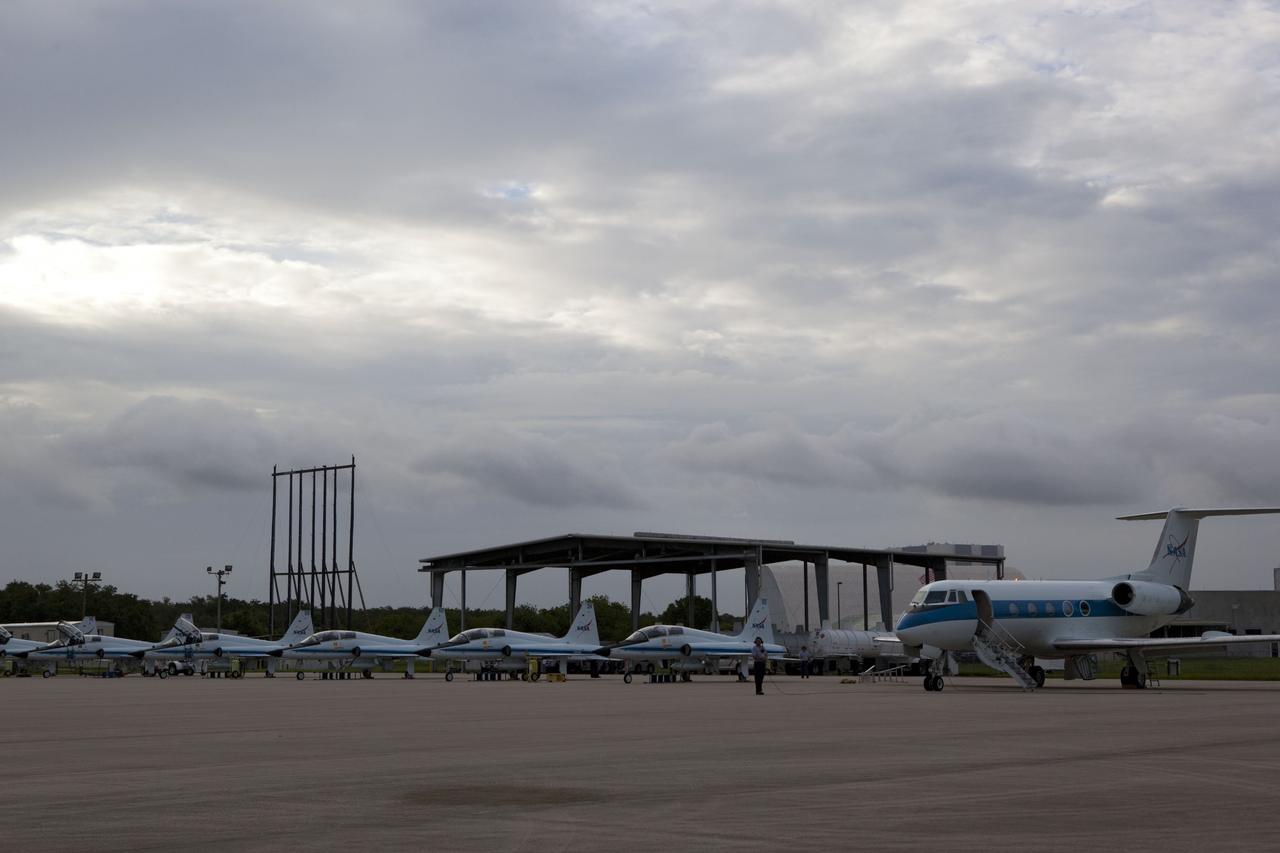
CAPE CANAVERAL, Fla. -- T-38 jets and a Shuttle Training Aircraft (STA) sit parked on the tarmac at NASA Kennedy Space Center's Shuttle Landing Facility. An STA is a Gulfstream II jet that is modified to mimic the shuttle's handling during the final phase of landing. STS-135 Commander Chris Ferguson and Pilot Doug Hurley practiced landings as part of standard procedure before space shuttle Atlantis' launch to the International Space Station. Atlantis and its crew of four -- Commander Chris Ferguson, Pilot Doug Hurley and Mission Specialists Sandy Magnus and Rex Walheim -- are scheduled to lift off at 11:26 a.m. EDT on July 8 to deliver the Raffaello multi-purpose logistics module packed with supplies and spare parts to the International Space Station. Atlantis also will fly the Robotic Refueling Mission experiment that will investigate the potential for robotically refueling existing satellites in orbit. In addition, Atlantis will return with a failed ammonia pump module to help NASA better understand the failure mechanism and improve pump designs for future systems. STS-135 will be the 33rd flight of Atlantis, the 37th shuttle mission to the space station, and the 135th and final mission of NASA's Space Shuttle Program. For more information, visit www.nasa.gov/mission_pages/shuttle/shuttlemissions/sts135/index.html. Photo credit: NASA/Frank Michaux
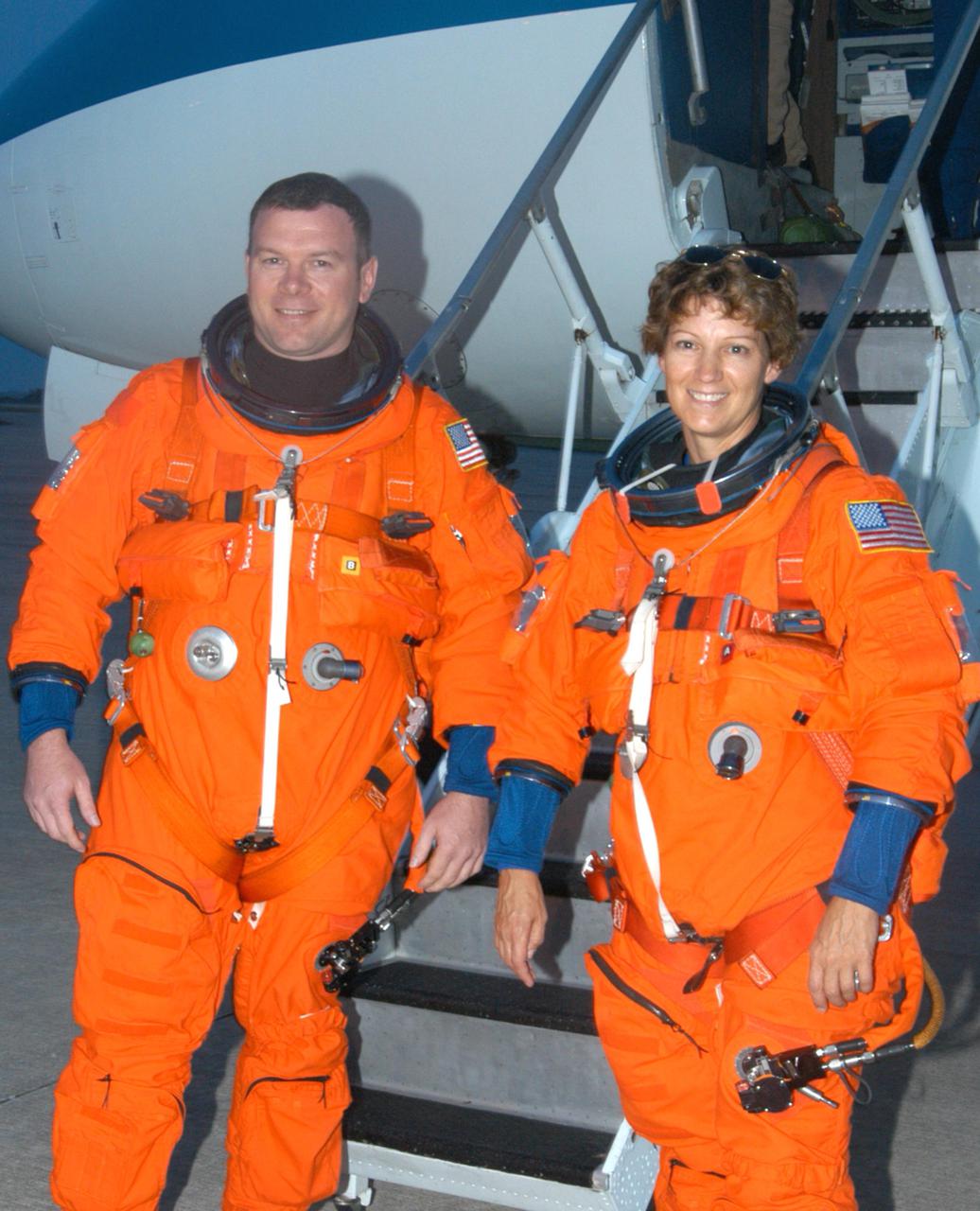
KENNEDY SPACE CENTER, FLA. - At the Shuttle Landing Facility on NASA Kennedy Space Center, STS-114 Pilot James Kelly (left) and Mission Commander Eileen Collins pause for a photo after exiting the Shuttle Training Aircraft (STA) behind them. Collins and Kelly have been practicing night landings in the STA in preparation for the mission. The STA is a modified Grumman American Aviation-built Gulf Stream II executive jet that was modified to simulate an orbiter’s cockpit, motion and visual cues, and handling qualities. In flight, the STA duplicates the orbiter’s atmospheric descent trajectory from approximately 35,000 feet altitude to landing on a runway. Because the orbiter is unpowered during re-entry and landing, its high-speed glide must be perfectly executed the first time. Return to Flight Mission STS-114 is scheduled to launch aboard Space Shuttle Discovery with a crew of seven at 10:39 a.m. EDT on July 26. Landing is expected on Aug. 7.