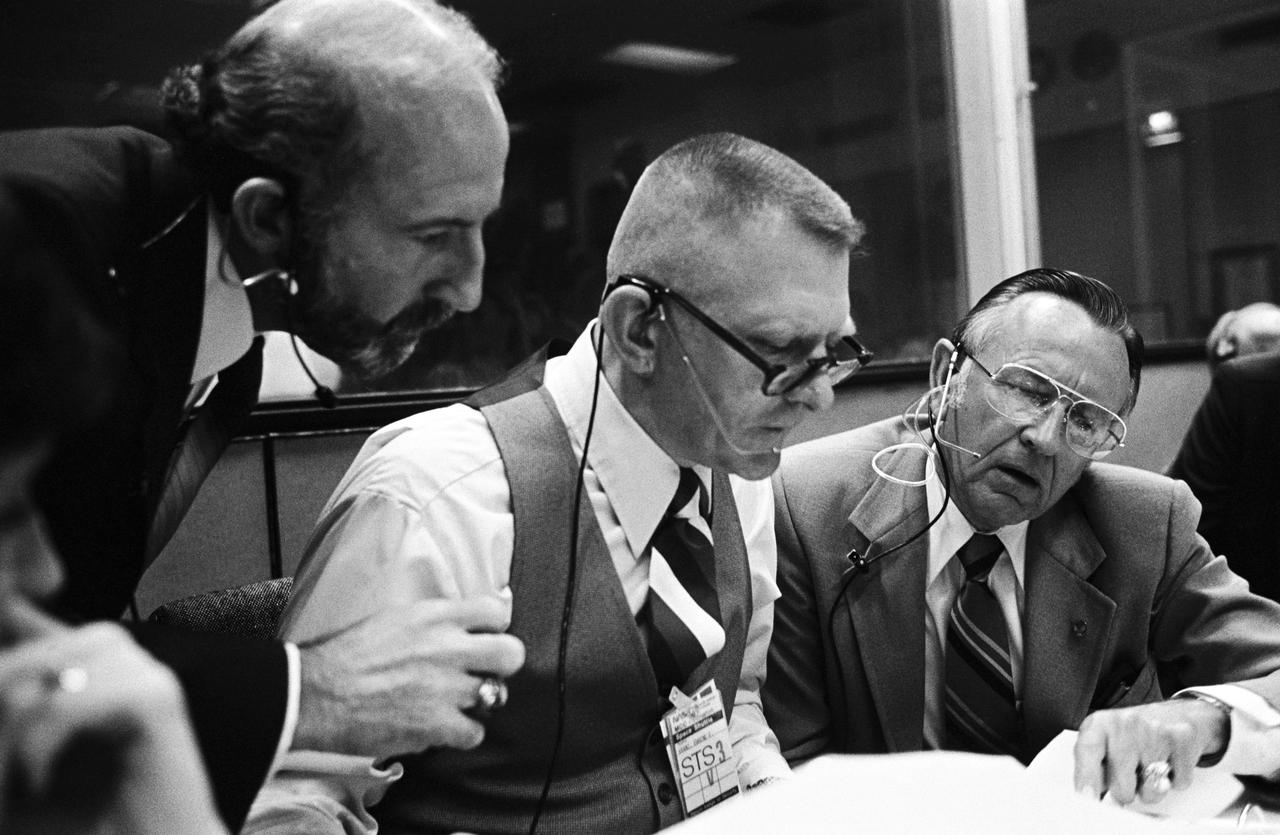
MOCR during Flight Day 1 of the STS-3 Mission. View: Thomas L. Moser, of the Structures and Mechanics Division, briefing Flight Director Eugene Kranz, Flight Operations, and Dr. Kraft, JSC Director. JSC, HOUSTON, TX
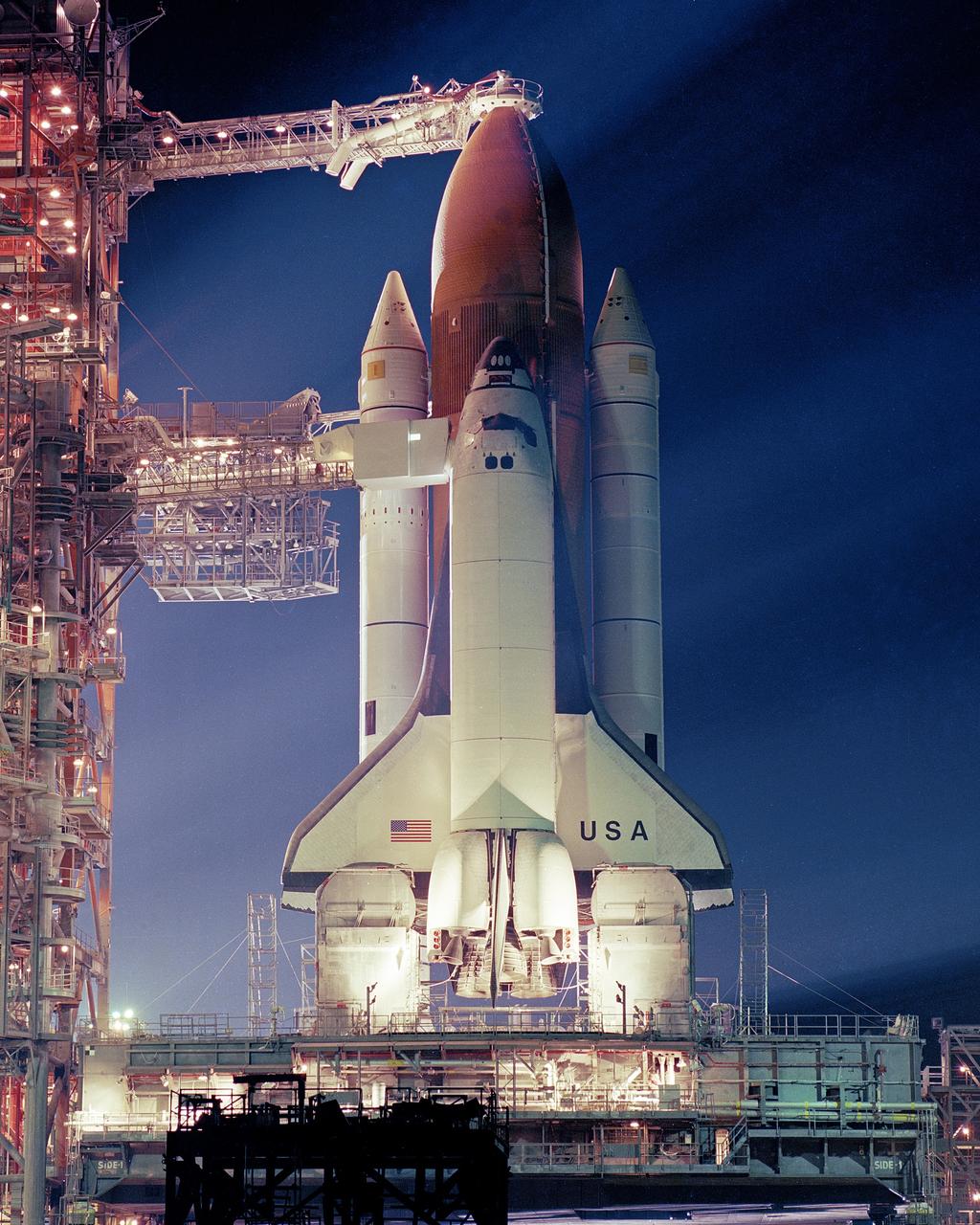
CAPE CANAVERAL, Fla. - STS-3 on Launch Pad 39A with searchlights during loading tests. Photo credit: NASA
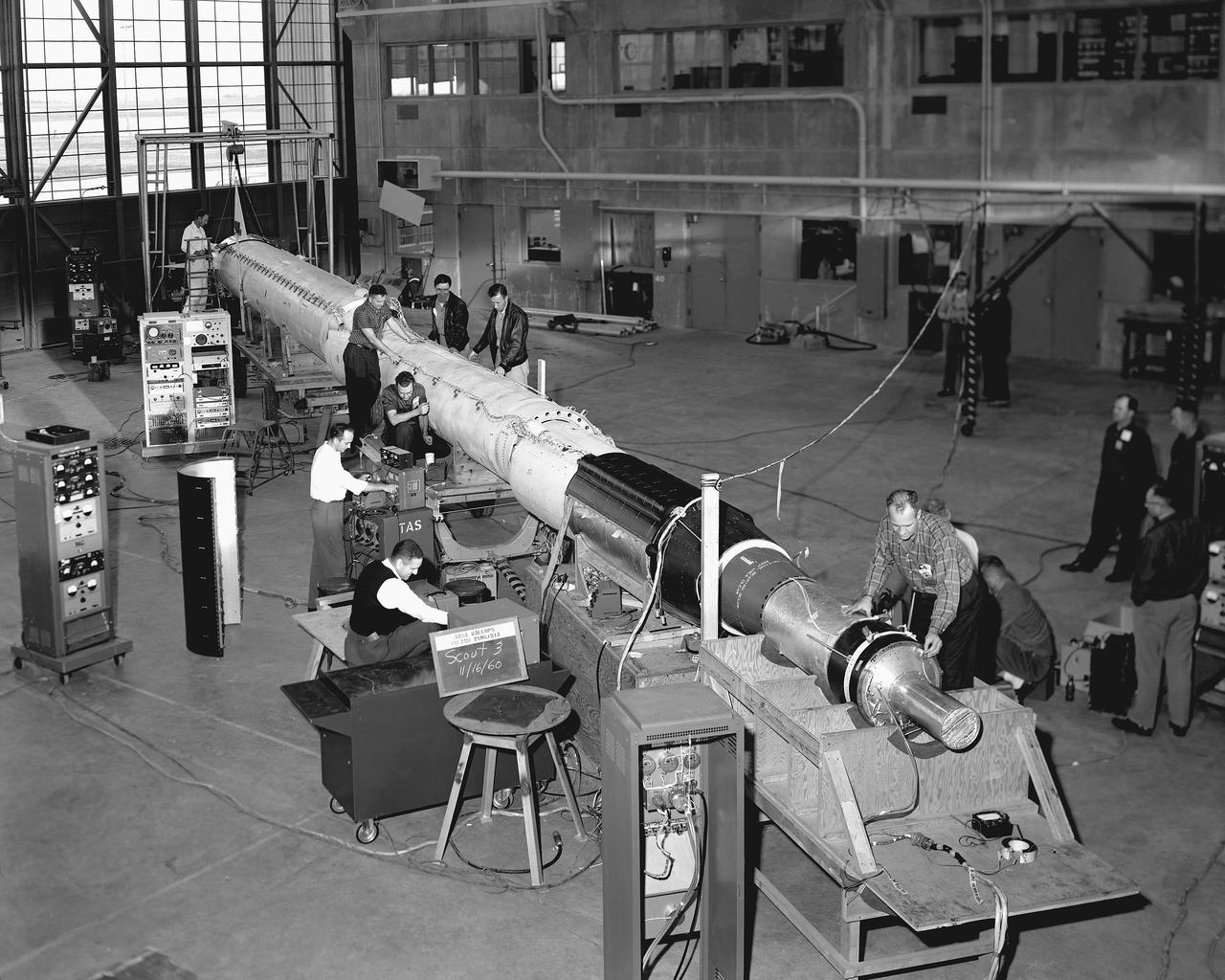
Employees of Vought Astronautic, Scout's prime contractor, work with NASA technicians to prepare ST-3 for launch. Unfortunately, this rocket would fail because of the second-stage misfire.
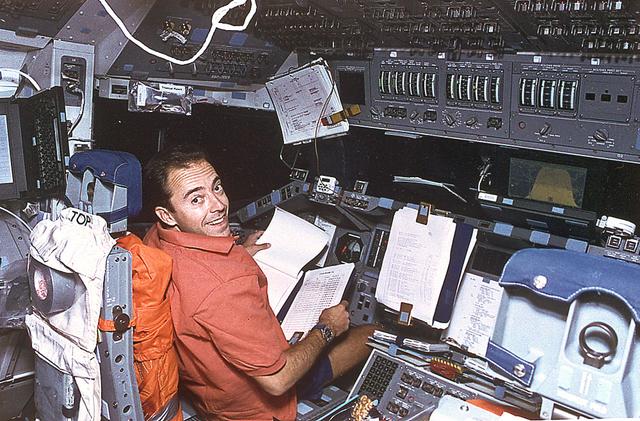
This is an onboard photo of space shuttle Atlantis (STS-66) crew member, French scientist Jean-Francois Clervoy working on the Atmospheric Laboratory for Applied Sciences (ATLAS-3) project. The ATLAS-3 measures the variances of the sun's solar radiation and the variability in the solar spectrum.
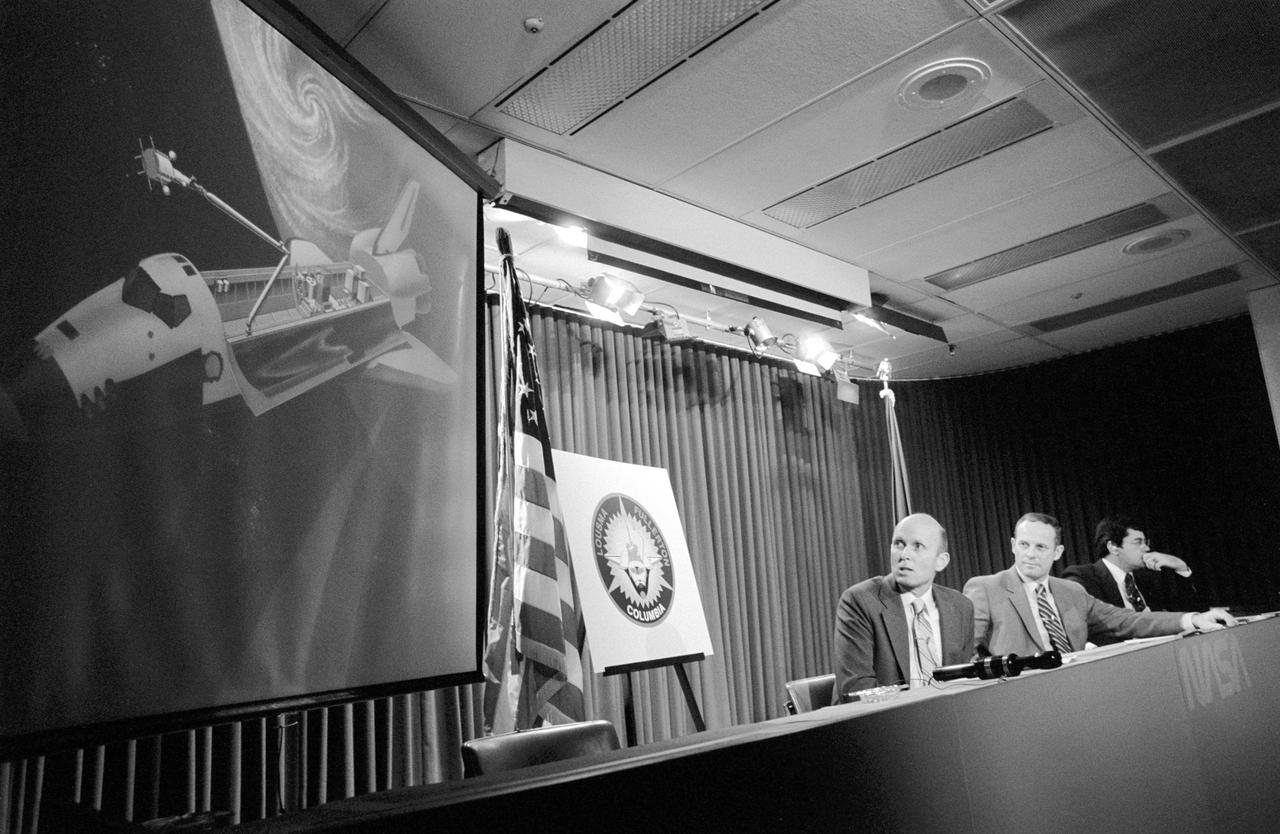
S82-25903 (21 Jan. 1982) --- Astronaut Jack R. Lousma, center, and C. Gordon Fullerton, left, respond to a visual depicting the Columbia and its remote manipulator system in space during a pre-STS-3 press conference in JSC?s pubic affairs building. Dr. John Lawrence, public information specialist who introduced the crew to news media representatives, is at far right. Photo credit: NASA
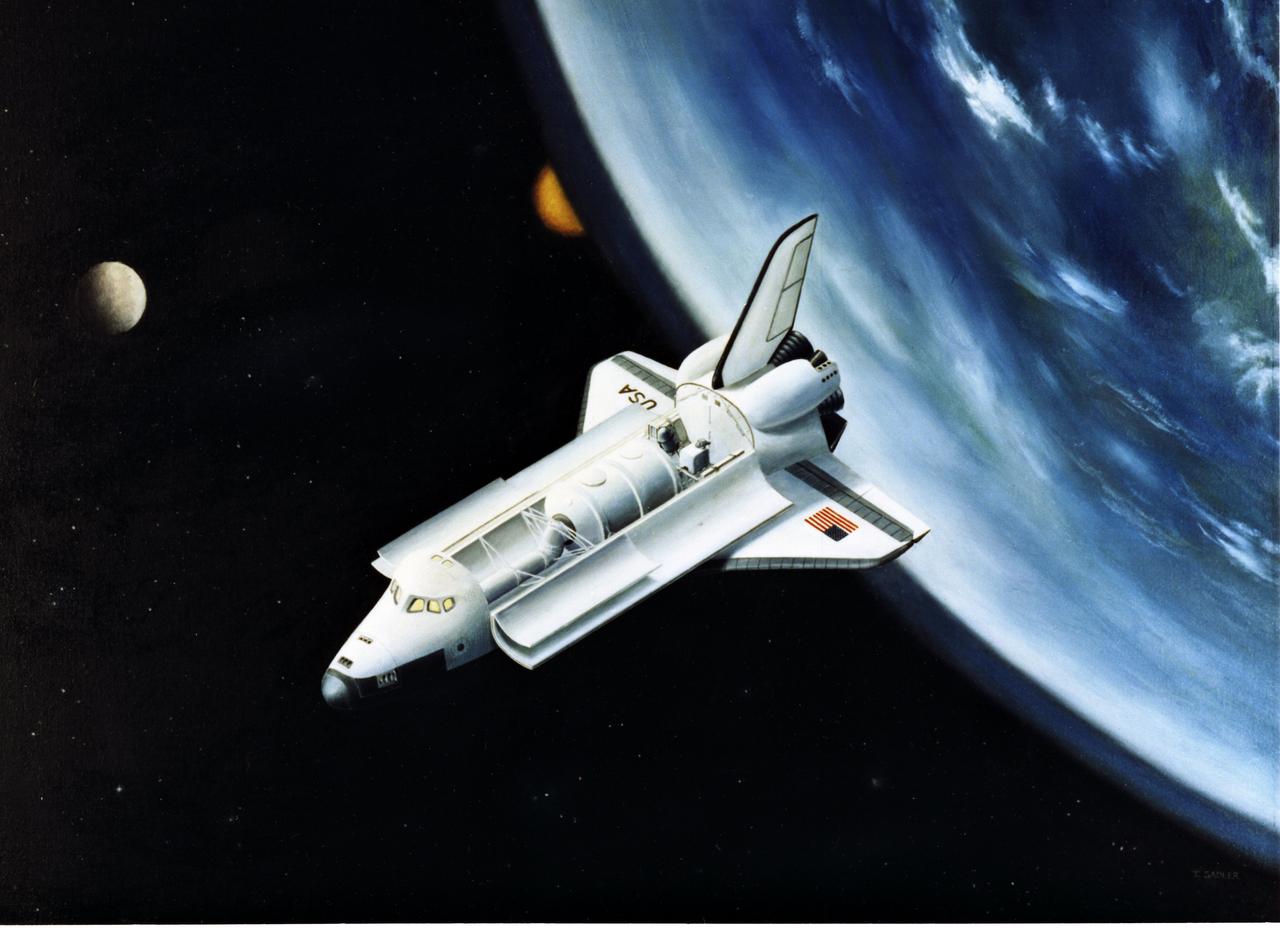
The primary purpose of the Spacelab-3 mission was to conduct materials science experiments in a stable low-gravity environment. In addition, the crew did research in life sciences, fluid mechanics, atmospheric science, and astronomy. Spacelab-3 was equipped with several new mini-labs, special facilities that would be used repeatedly on future flights. Two elaborate crystal growth furnaces, a life support and housing facility for small animals, and two types of apparatus for the study of fluids were evaluated on their inaugural flight. The instruments requiring direct exposure to space were mounted outside in the open payload bay of the Shuttle. Spacelab represented the merger of science and marned spaceflight. It opened remarkable opportunities to push the frontiers of knowledge beyond the limits of research on Earth. Scientists in space performed experiments in close collaboration with their colleagues on the ground. On the Spacelab-3 mission, managed by the Marshall Space Flight Center, this versatile laboratory entered routine operation service for the next two decades. Spacelab-3 (STS-51B mission) was launched aboard Space Shuttle Orbiter Challenger on April 29, 1985.
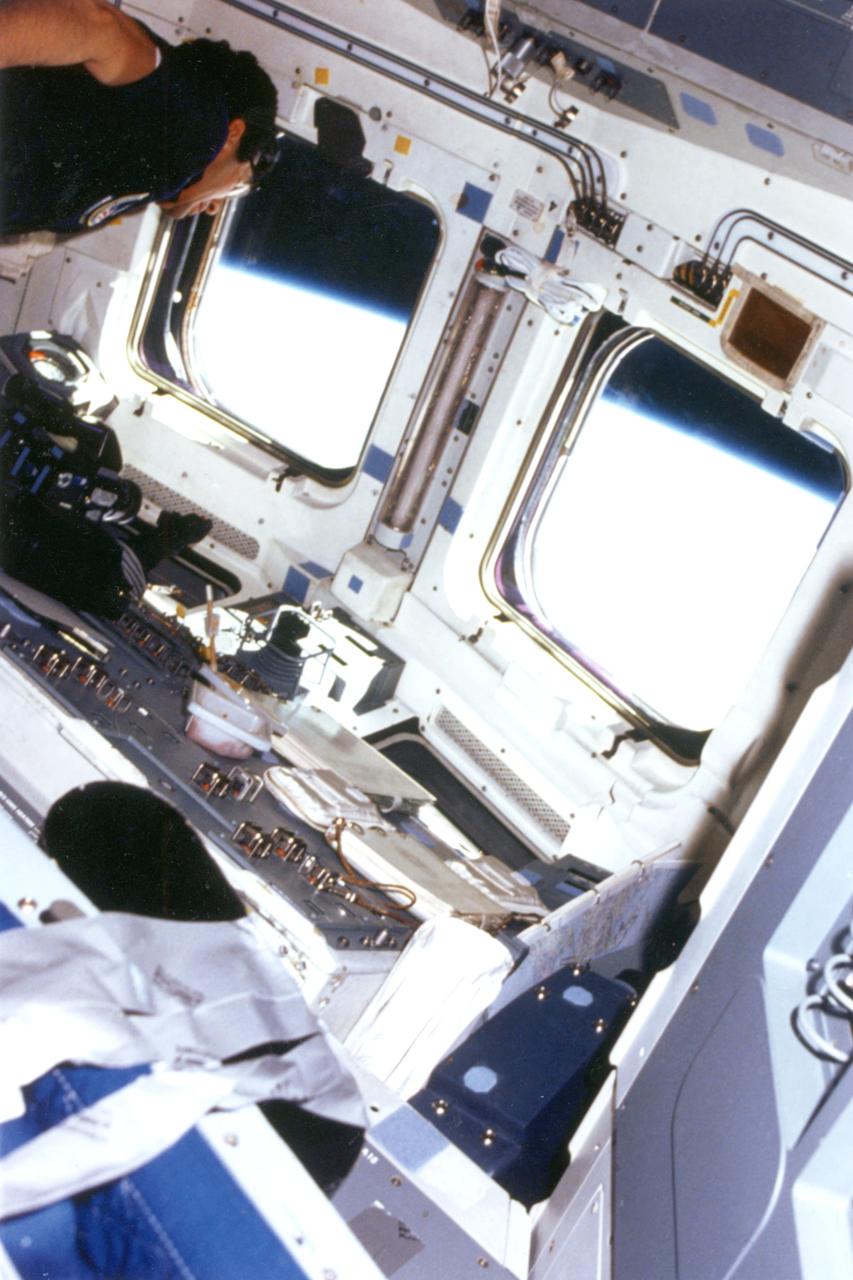
STS-51B, Spacelab-3, Payload Specialist Lodewijk van den Berg on flight deck with earth view out window.
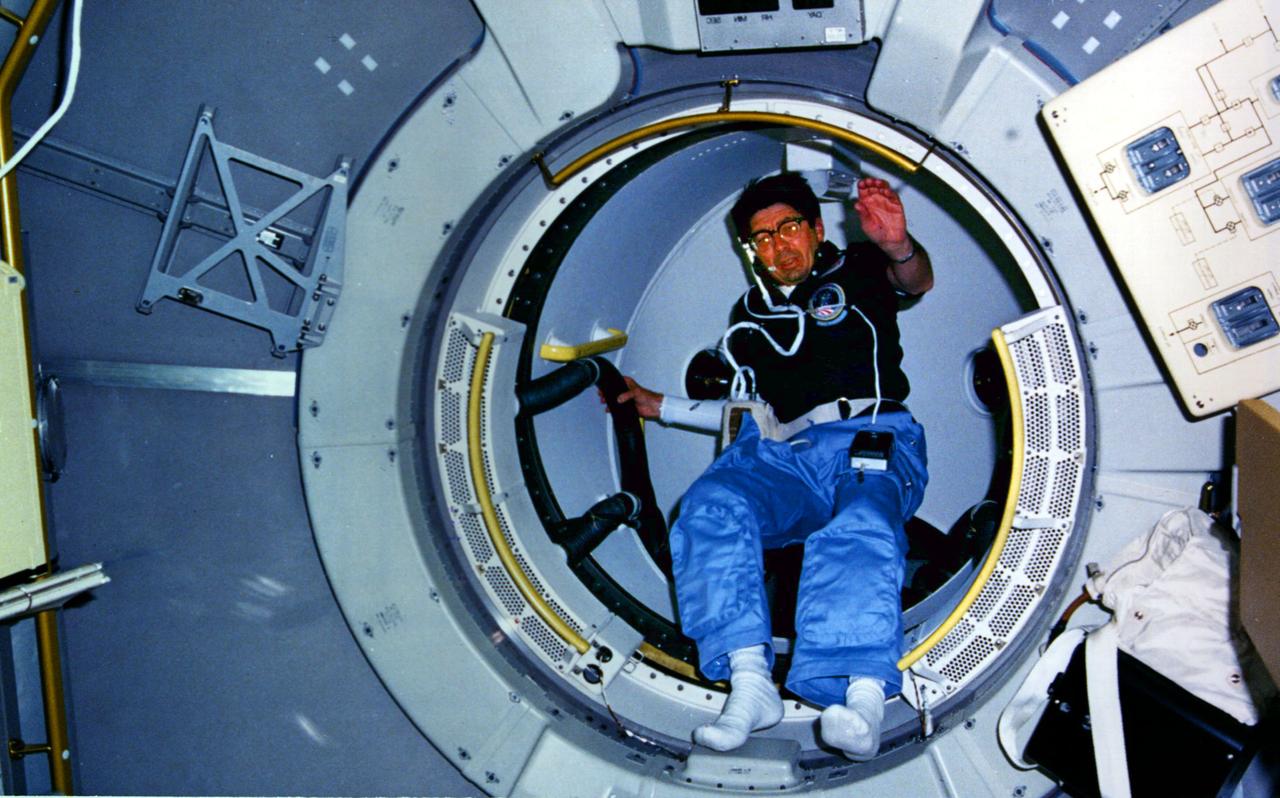
STS-51B, Spacelab 3, Lodewijk van den Berg coming through the turnel.
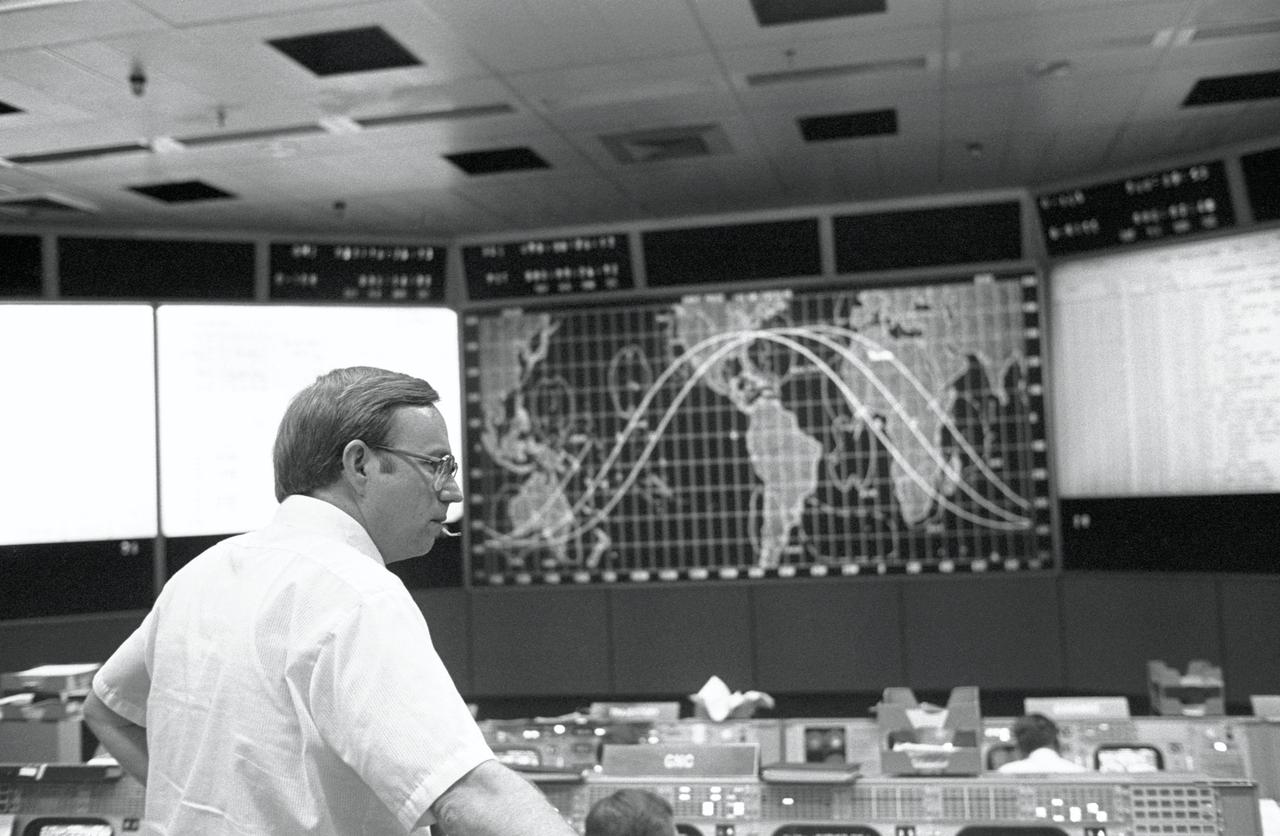
Mission Operations Control Room (MOCR) during Day-1 of the STS-3 Mission. 1. HOLLOWAY, TOMMY W. - MCC 2. MCC - STS-3 3. STS-3 - INFLIGHT JSC, HOUSTON, TX
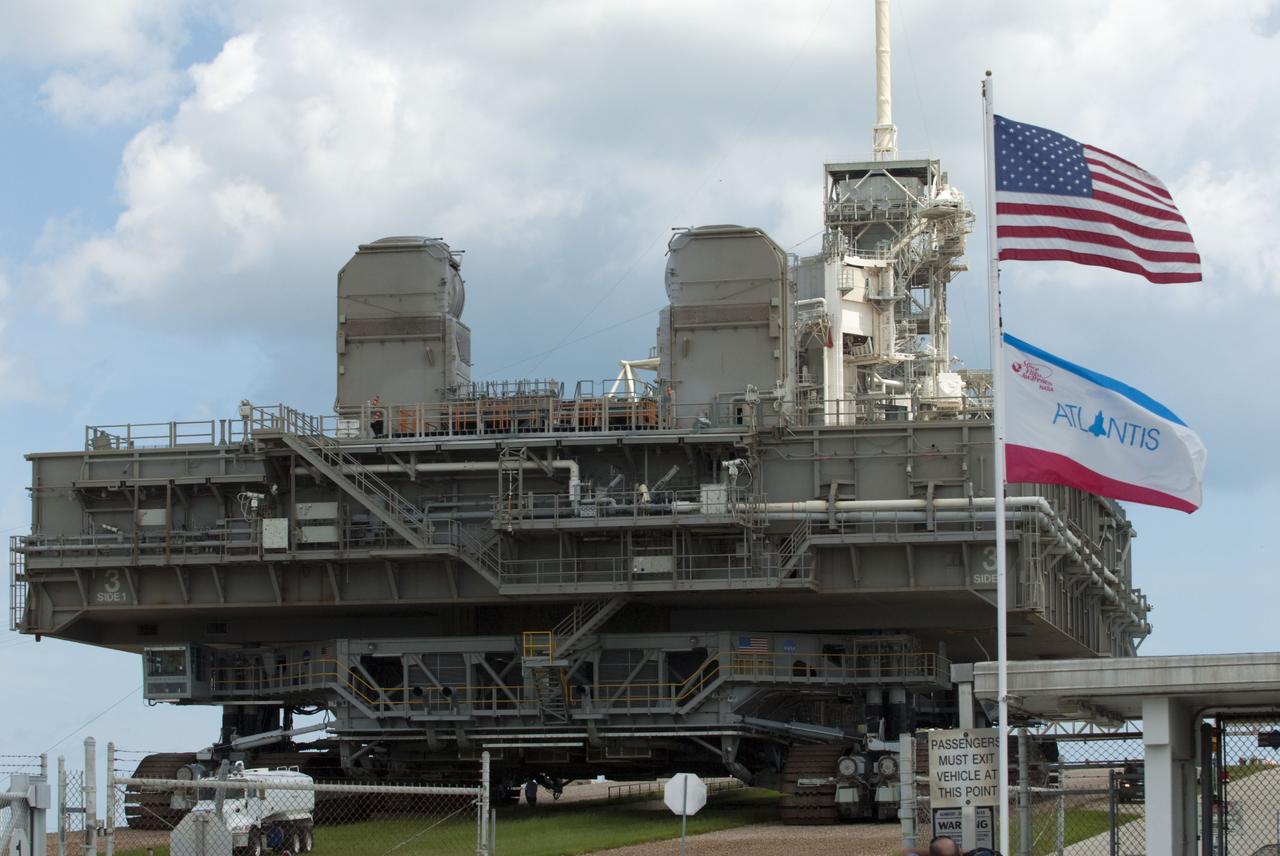
CAPE CANAVERAL, Fla. -- At NASA's Kennedy Space Center in Florida, Mobile Launcher Platform-3 (MLP), which supported space shuttle Atlantis for its final flight to the International Space Station on the STS-135 mission, is taking its last journey from Launch Pad 39A to the Vehicle Assembly Building (VAB). A massive crawler-transporter positioned under the MLP -- the last mobile launcher platform to launch a shuttle, begins the trek back to the VAB. For more than 40 years, the MLPs have traveled between the massive VAB to both launch pads at Launch Complex 39, and then returned to the VAB for future use. MLP-3 was first used to launch Columbia on the STS-32 mission on Jan. 9, 1990. Photo credit: NASA/Kim Shiflett
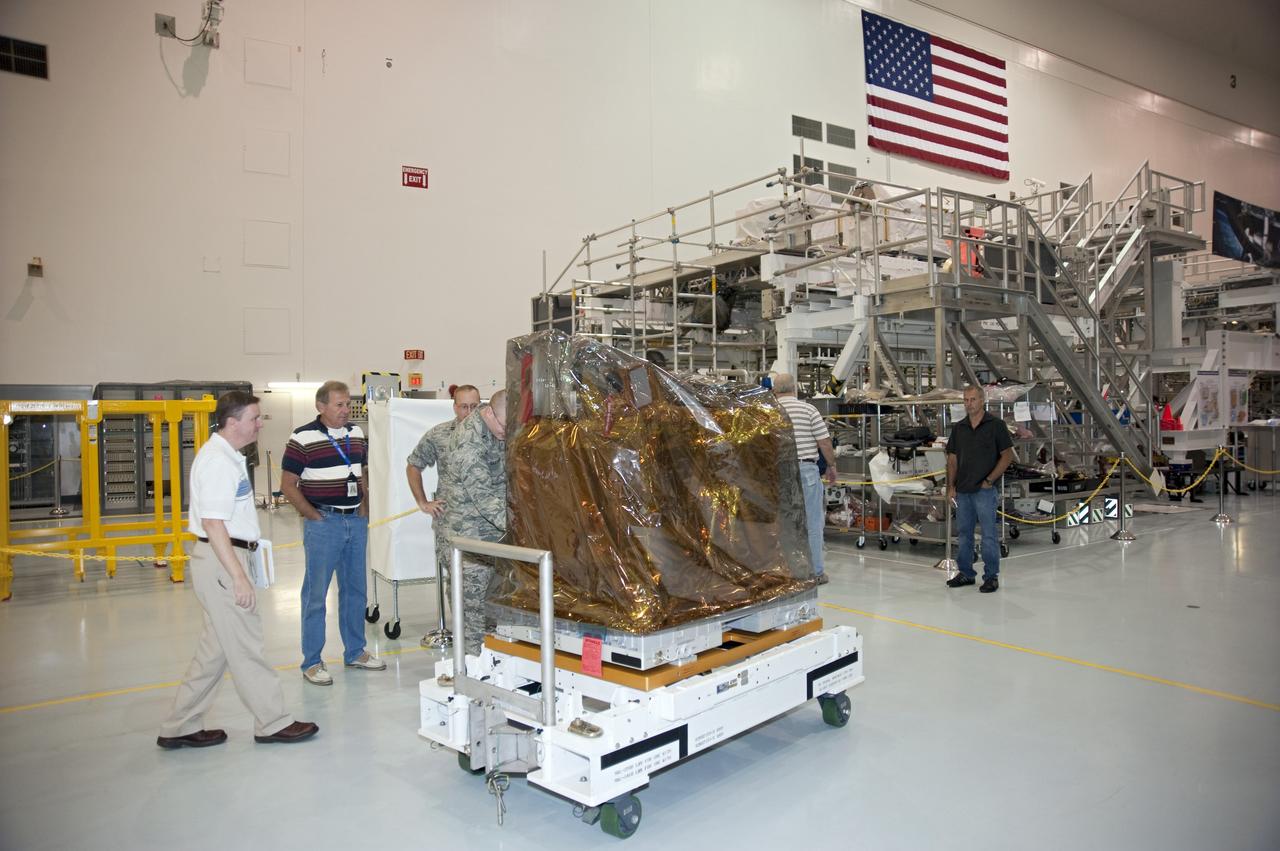
CAPE CANAVERAL, Fla. -- In the Space Station Processing Facility at NASA Kennedy Space Center in Florida, the Space Test Program-Houston-3, or STP-H3, payload is being prepared for installation onto the Express Logistics Carrier-3, or ELC-3. STP-H3 is a compliment of four individual Department of Defense experiments that will test concepts in low earth orbit for long duration flights. As the final planned mission of the Space Shuttle Program, shuttle Endeavour and its STS-134 crew will deliver the Alpha Magnetic Spectrometer, the ELC-3 as well as critical spare components to the International Space Station. Endeavour is targeted for launch Feb. 26, 2011. For more information visit, http://www.nasa.gov/mission_pages/shuttle/shuttlemissions/sts134/index.html. Photo credit: NASA/Kim Shiflett
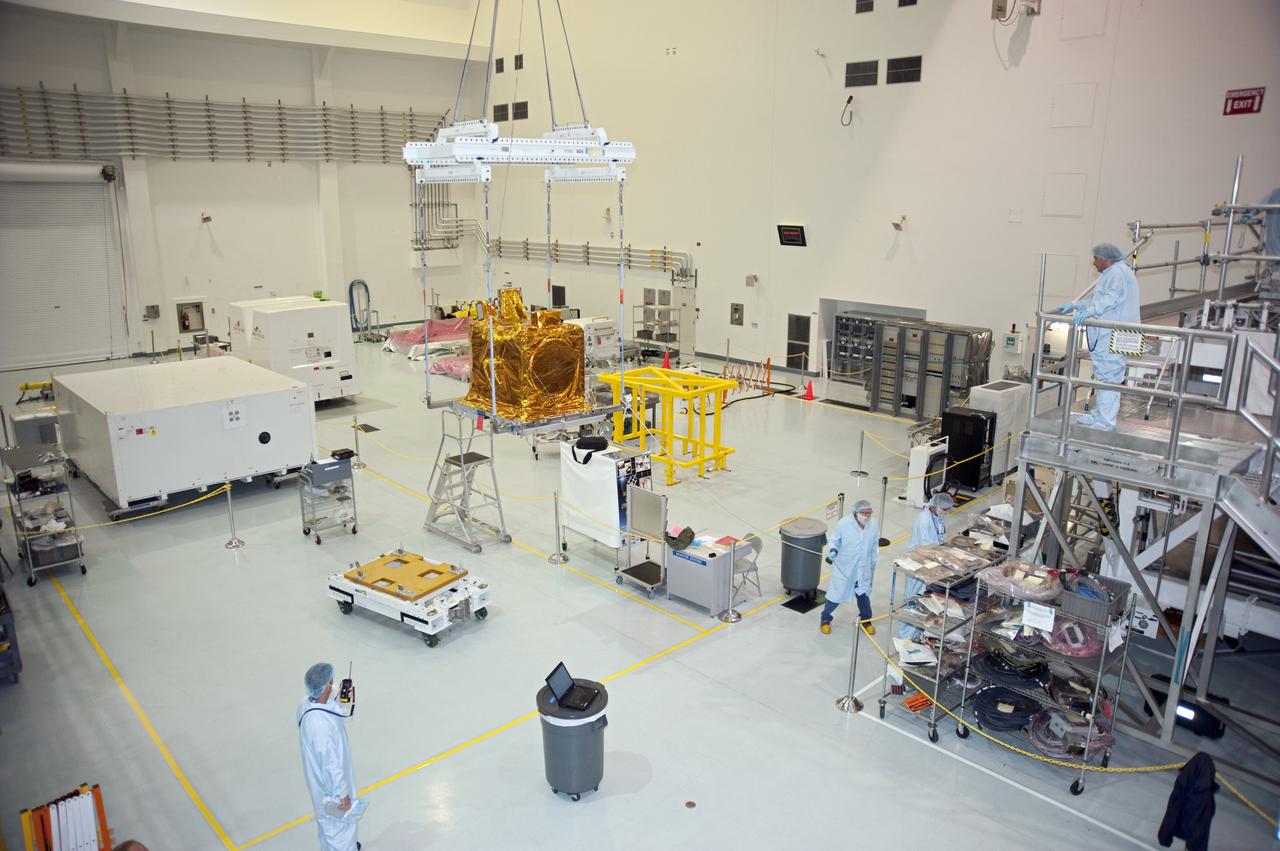
CAPE CANAVERAL, Fla. -- In the Space Station Processing Facility at NASA Kennedy Space Center in Florida, the lift ground support equipment transports the Space Test Program-Houston-3, or STP-H3, payload toward the Express Logistics Carrier-3, or ELC-3. STP-H3 is a compliment of four individual Department of Defense experiments that will test concepts in low earth orbit for long duration flights. As the final planned mission of the Space Shuttle Program, shuttle Endeavour and its STS-134 crew will deliver the Alpha Magnetic Spectrometer, the ELC-3 as well as critical spare components to the International Space Station. Endeavour is targeted for launch Feb. 26, 2011. For more information visit, http://www.nasa.gov/mission_pages/shuttle/shuttlemissions/sts134/index.html. Photo credit: NASA/Kim Shiflett
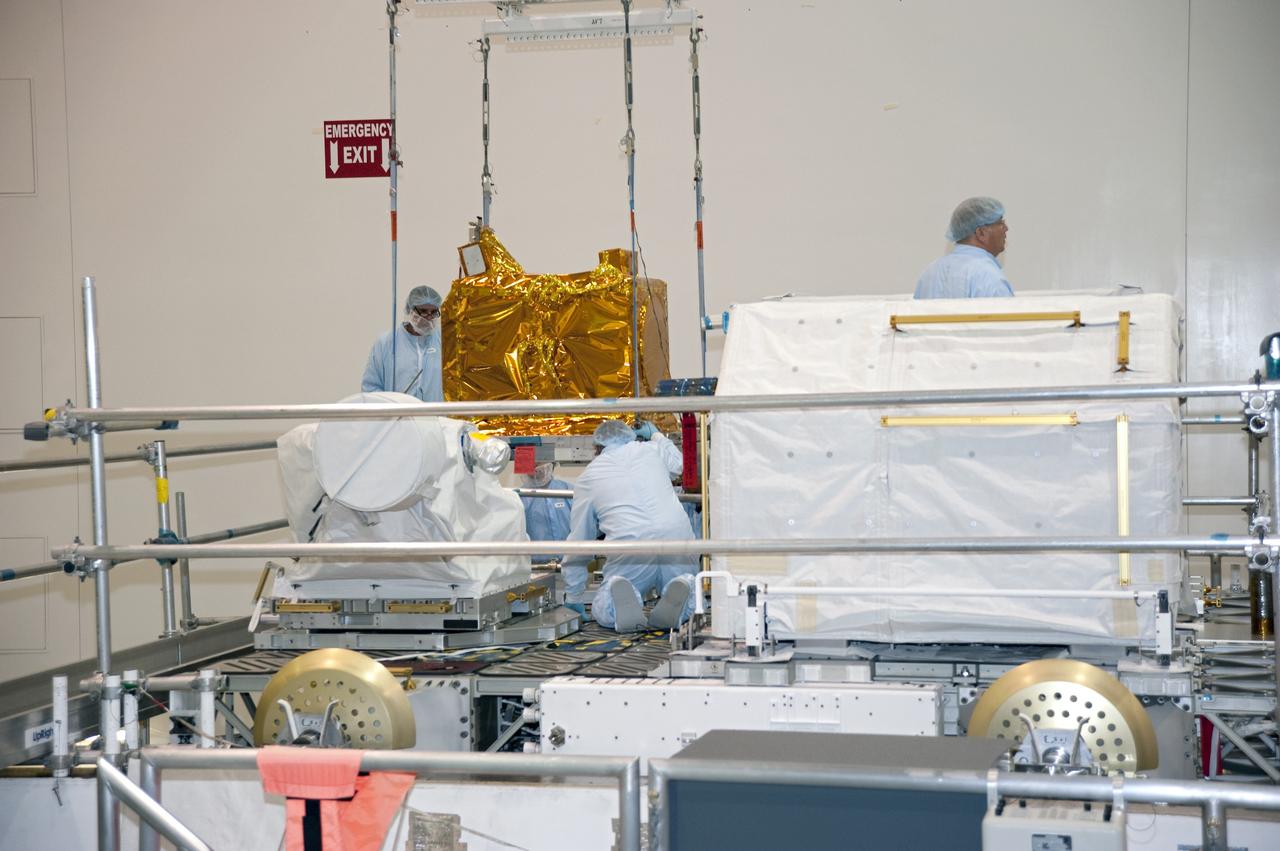
CAPE CANAVERAL, Fla. -- In the Space Station Processing Facility at NASA Kennedy Space Center in Florida, the Space Test Program-Houston-3, or STP-H3, payload is lowered onto the Express Logistics Carrier-3, or ELC-3. STP-H3 is a compliment of four individual Department of Defense experiments that will test concepts in low earth orbit for long duration flights. As the final planned mission of the Space Shuttle Program, shuttle Endeavour and its STS-134 crew will deliver the Alpha Magnetic Spectrometer, the ELC-3 as well as critical spare components to the International Space Station. Endeavour is targeted for launch Feb. 26, 2011. For more information visit, http://www.nasa.gov/mission_pages/shuttle/shuttlemissions/sts134/index.html. Photo credit: NASA/Kim Shiflett
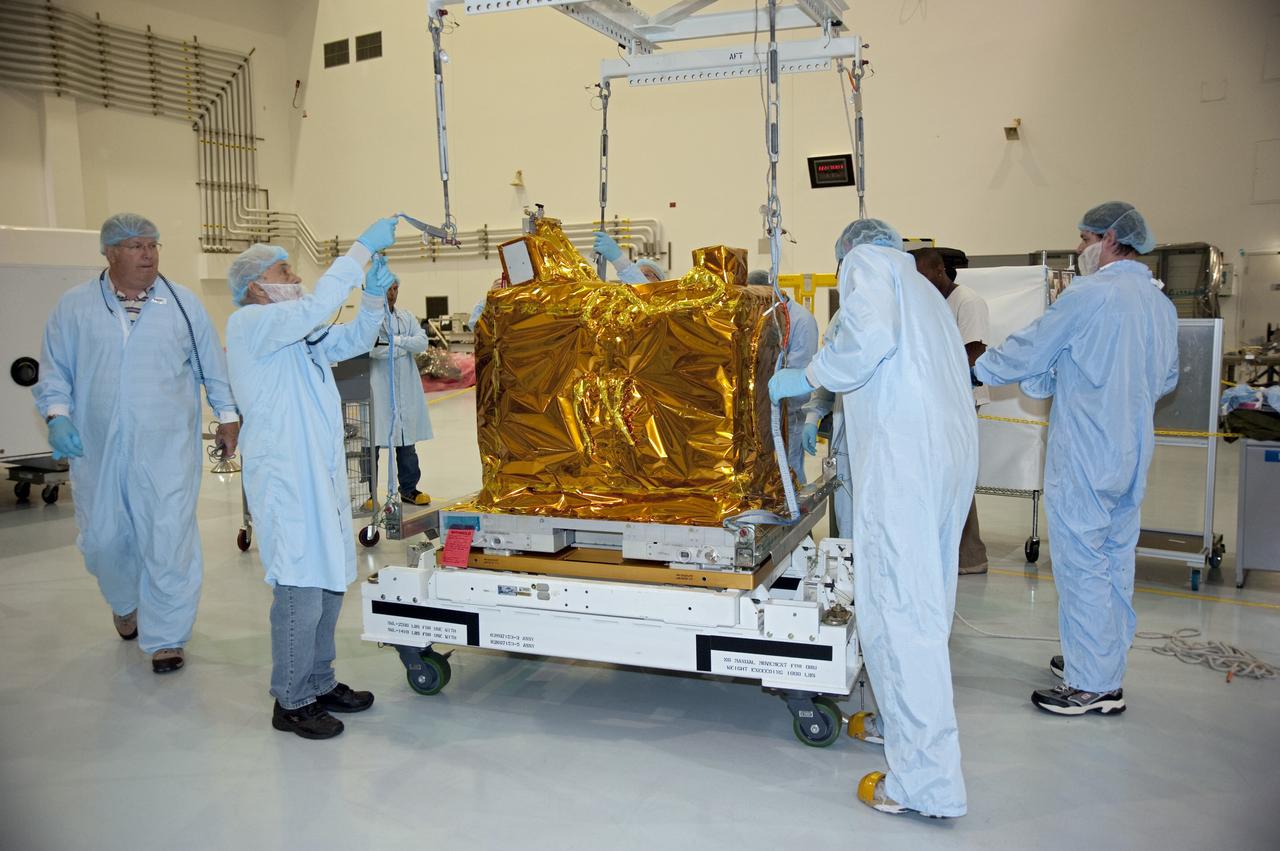
CAPE CANAVERAL, Fla. -- In the Space Station Processing Facility at NASA Kennedy Space Center in Florida, the lift ground support equipment is lowered into place around the Space Test Program-Houston-3, or STP-H3, payload for installation onto the Express Logistics Carrier-3, or ELC-3. STP-H3 is a compliment of four individual Department of Defense experiments that will test concepts in low earth orbit for long duration flights. As the final planned mission of the Space Shuttle Program, shuttle Endeavour and its STS-134 crew will deliver the Alpha Magnetic Spectrometer, the ELC-3 as well as critical spare components to the International Space Station. Endeavour is targeted for launch Feb. 26, 2011. For more information visit, http://www.nasa.gov/mission_pages/shuttle/shuttlemissions/sts134/index.html. Photo credit: NASA/Kim Shiflett
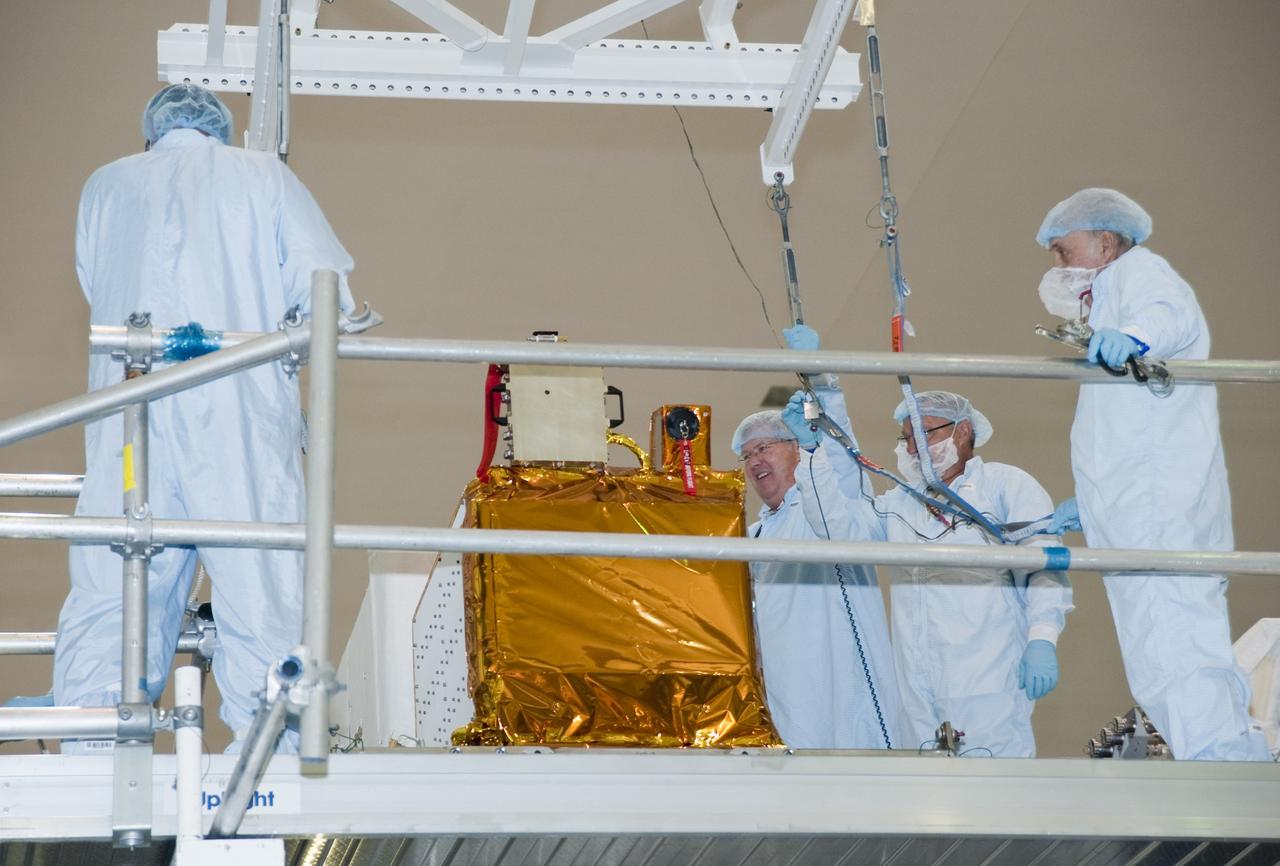
CAPE CANAVERAL, Fla. -- In the Space Station Processing Facility at NASA Kennedy Space Center in Florida, the Space Test Program-Houston-3, or STP-H3, is installed onto the Express Logistics Carrier-3, or ELC-3, after the lifting ground support equipment is removed. STP-H3 is a compliment of four individual Department of Defense experiments that will test concepts in low earth orbit for long duration flights. As the final planned mission of the Space Shuttle Program, shuttle Endeavour and its STS-134 crew will deliver the Alpha Magnetic Spectrometer, the ELC-3 as well as critical spare components to the International Space Station. Endeavour is targeted for launch Feb. 26, 2011. For more information visit, http://www.nasa.gov/mission_pages/shuttle/shuttlemissions/sts134/index.html. Photo credit: NASA/Kim Shiflett
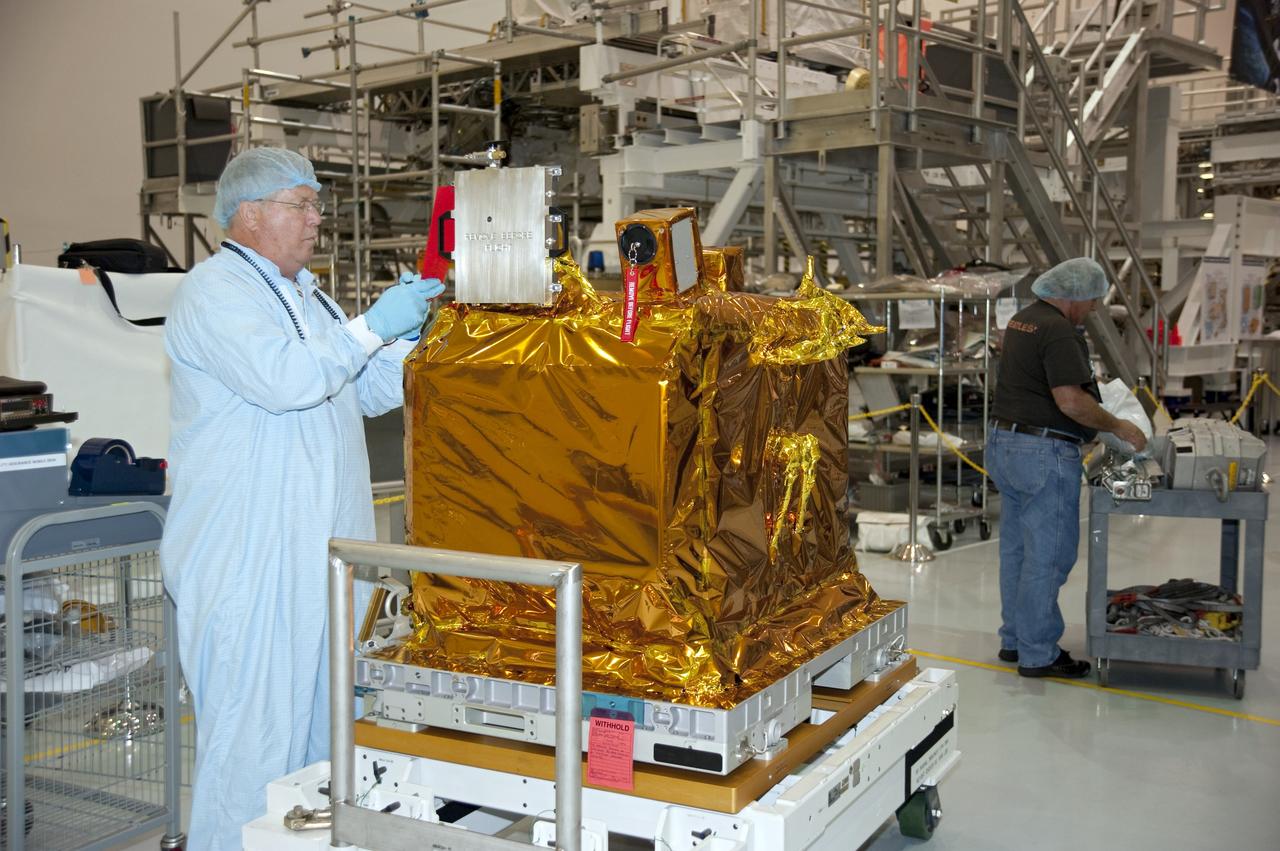
CAPE CANAVERAL, Fla. -- In the Space Station Processing Facility at NASA Kennedy Space Center in Florida, a technician finalizes quality assurance paperwork before the Space Test Program-Houston-3, or STP-H3, payload is installed onto the Express Logistics Carrier-3, or ELC-3. STP-H3 is a compliment of four individual Department of Defense experiments that will test concepts in low earth orbit for long duration flights. As the final planned mission of the Space Shuttle Program, shuttle Endeavour and its STS-134 crew will deliver the Alpha Magnetic Spectrometer, the ELC-3 as well as critical spare components to the International Space Station. Endeavour is targeted for launch Feb. 26, 2011. For more information visit, http://www.nasa.gov/mission_pages/shuttle/shuttlemissions/sts134/index.html. Photo credit: NASA/Kim Shiflett
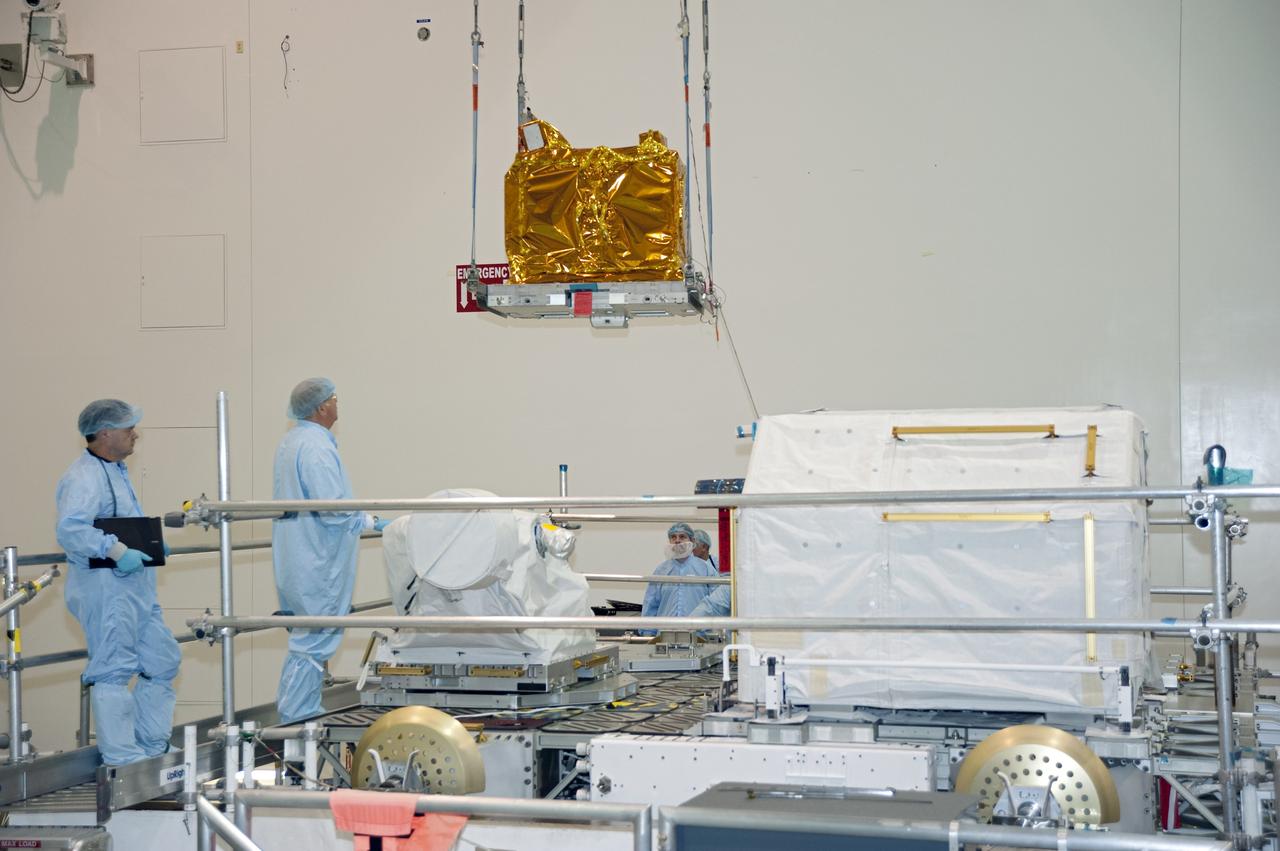
CAPE CANAVERAL, Fla. -- In the Space Station Processing Facility at NASA Kennedy Space Center in Florida, the lift ground support equipment positions the Space Test Program-Houston-3, or STP-H3, payload over the Express Logistics Carrier-3 or ELC-3 for installation. STP-H3 is a compliment of four individual Department of Defense experiments that will test concepts in low earth orbit for long duration flights. As the final planned mission of the Space Shuttle Program, shuttle Endeavour and its STS-134 crew will deliver the Alpha Magnetic Spectrometer, the ELC-3 as well as critical spare components to the International Space Station. Endeavour is targeted for launch Feb. 26, 2011. For more information visit, http://www.nasa.gov/mission_pages/shuttle/shuttlemissions/sts134/index.html. Photo credit: NASA/Kim Shiflett
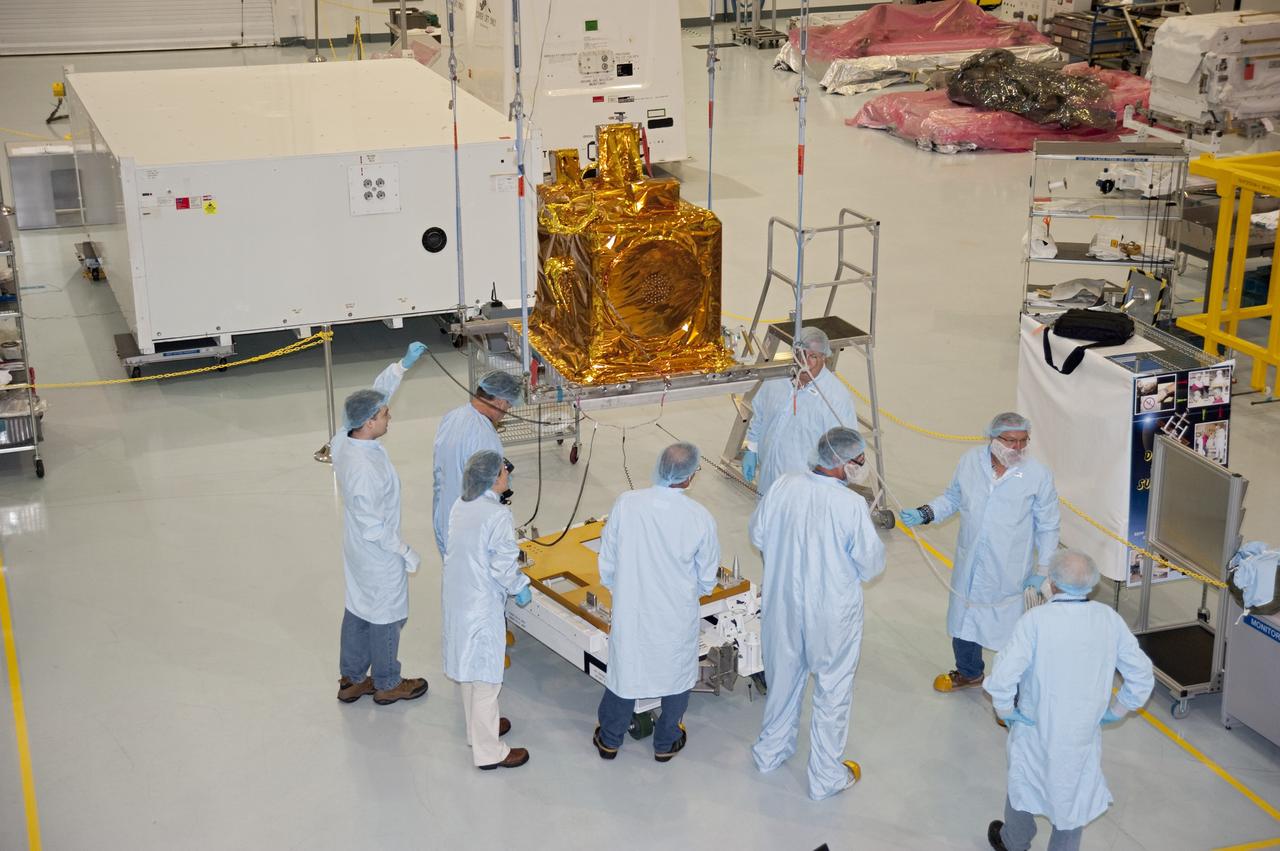
CAPE CANAVERAL, Fla. -- As the lift of the Space Test Program-Houston-3, or STP-H3, payload begins in the Space Station Processing Facility at NASA Kennedy Space Center in Florida, workers inspect the bottom surface of the platform for sharp edges and cleanliness, prior to installation onto the Express Logistics Carrier-3, or ELC-3. STP-H3 is a compliment of four individual Department of Defense experiments that will test concepts in low earth orbit for long duration flights. As the final planned mission of the Space Shuttle Program, shuttle Endeavour and its STS-134 crew will deliver the Alpha Magnetic Spectrometer, the ELC-3 as well as critical spare components to the International Space Station. Endeavour is targeted for launch Feb. 26, 2011. For more information visit, http://www.nasa.gov/mission_pages/shuttle/shuttlemissions/sts134/index.html. Photo credit: NASA/Kim Shiflett
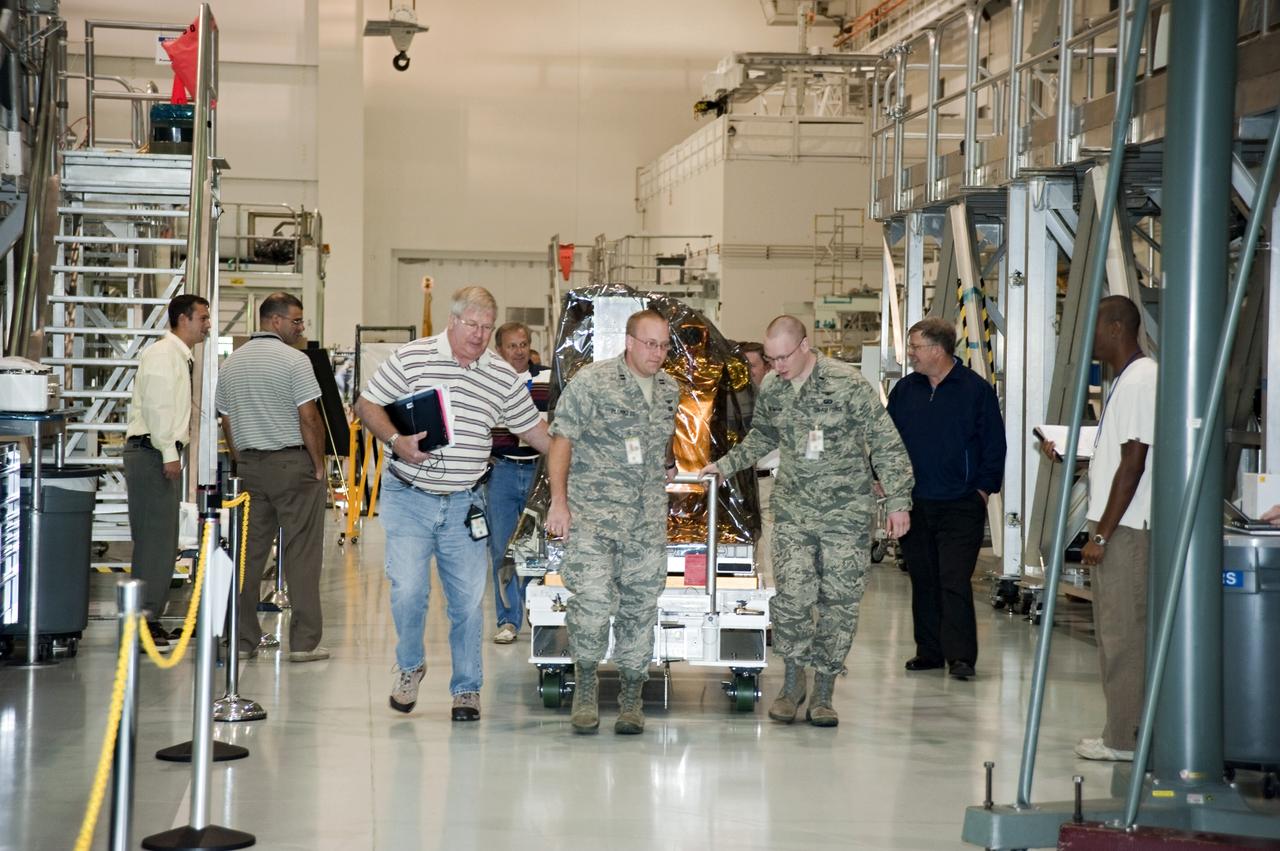
CAPE CANAVERAL, Fla. -- In the Space Station Processing Facility at NASA Kennedy Space Center in Florida, the Space Test Program-Houston-3, or STP-H3, payload is being transported for installation onto the Express Logistics Carrier-3, or ELC-3. STP-H3 is a compliment of four individual Department of Defense experiments that will test concepts in low earth orbit for long duration flights. As the final planned mission of the Space Shuttle Program, shuttle Endeavour and its STS-134 crew will deliver the Alpha Magnetic Spectrometer, the ELC-3 as well as critical spare components to the International Space Station. Endeavour is targeted for launch Feb. 26, 2011. For more information visit, http://www.nasa.gov/mission_pages/shuttle/shuttlemissions/sts134/index.html. Photo credit: NASA/Kim Shiflett
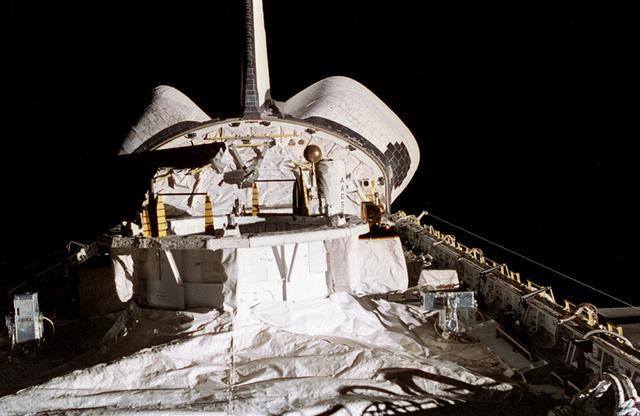
Onboard photo of space shuttle Columbia's (STS-75) open cargo bay carrying the United States Microgravity Payload-3 (USMP-3) at night.
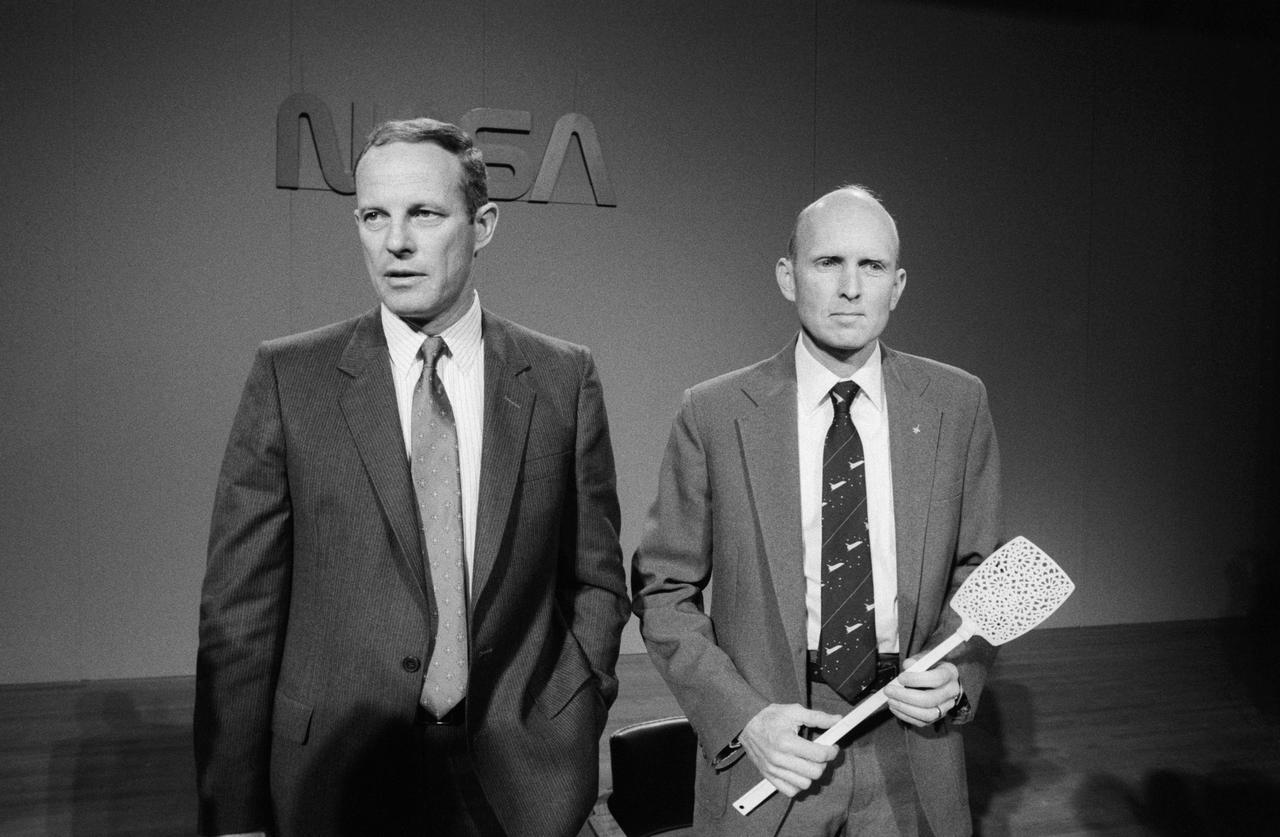
S82-27684 (26 Feb. 1982) --- Astronauts Jack R. Lousma, left, commander, and C. Gordon Fullerton, pilot, enjoy a light moment following their final STS-3 press conference before the scheduled launch of the space shuttle Columbia. Fullerton holds a fly swatter in his hand. During the conference, the crew had joked about insects onboard the craft and suggested the swatter as a means to control the ?critters.? A student experiment entitled ?Insects in Fight Motion Study? will fly with the crew on NASA?s third orbital flight test (STS-3). Photo credit: NASA
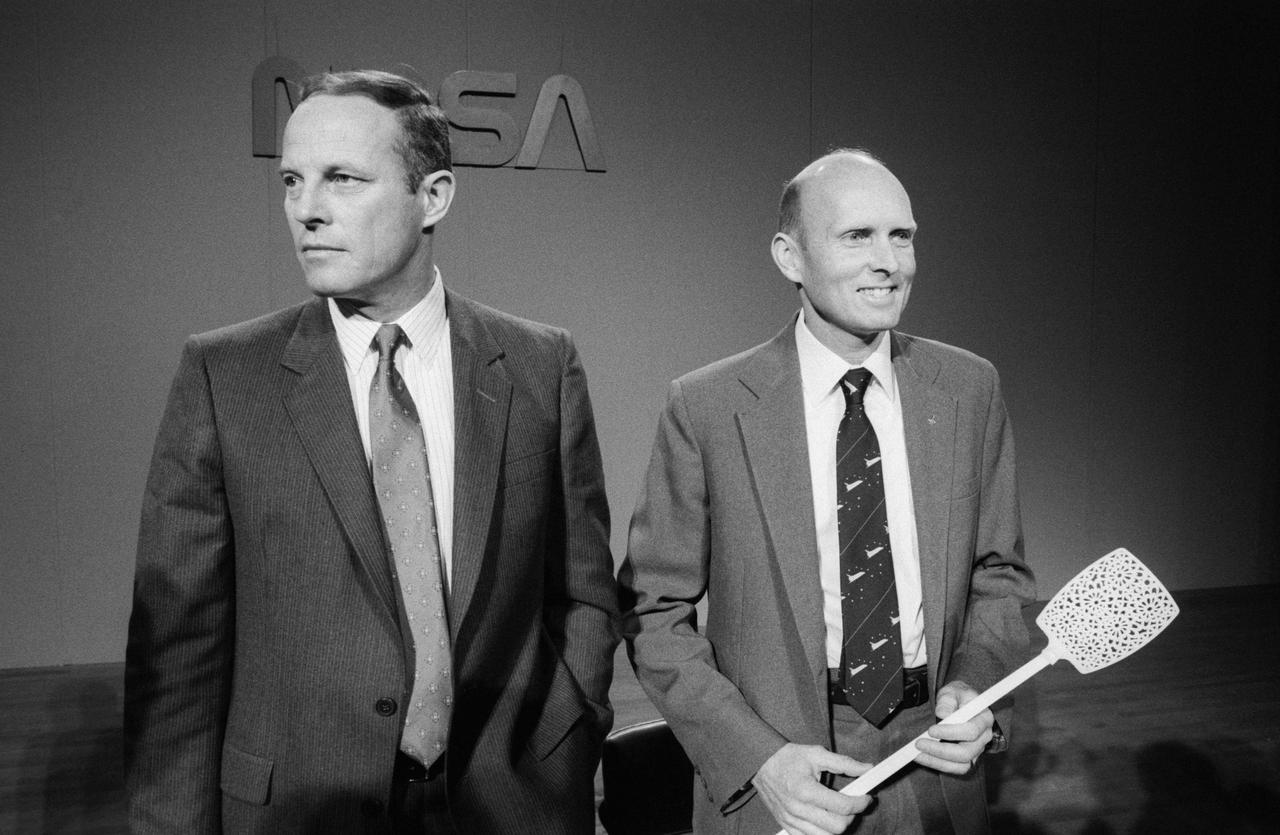
S82-27685 (26 Feb. 1982) --- Astronauts Jack R. Lousma, commander, and C. Gordon Fullerton, pilot, enjoy a light moment following their final STS-3 press conference before the scheduled launch of the space shuttle Columbia. Fullerton holds a fly swatter in his hand. During the conference, the crew had joked about insects onboard the craft and suggested the swatter as a means to control the ?critters.? A student experiment entitled ?Insects in Flight Motion Study? will fly with the crew on NASA?s third orbital fight test (STS-3). Photo credit: NASA
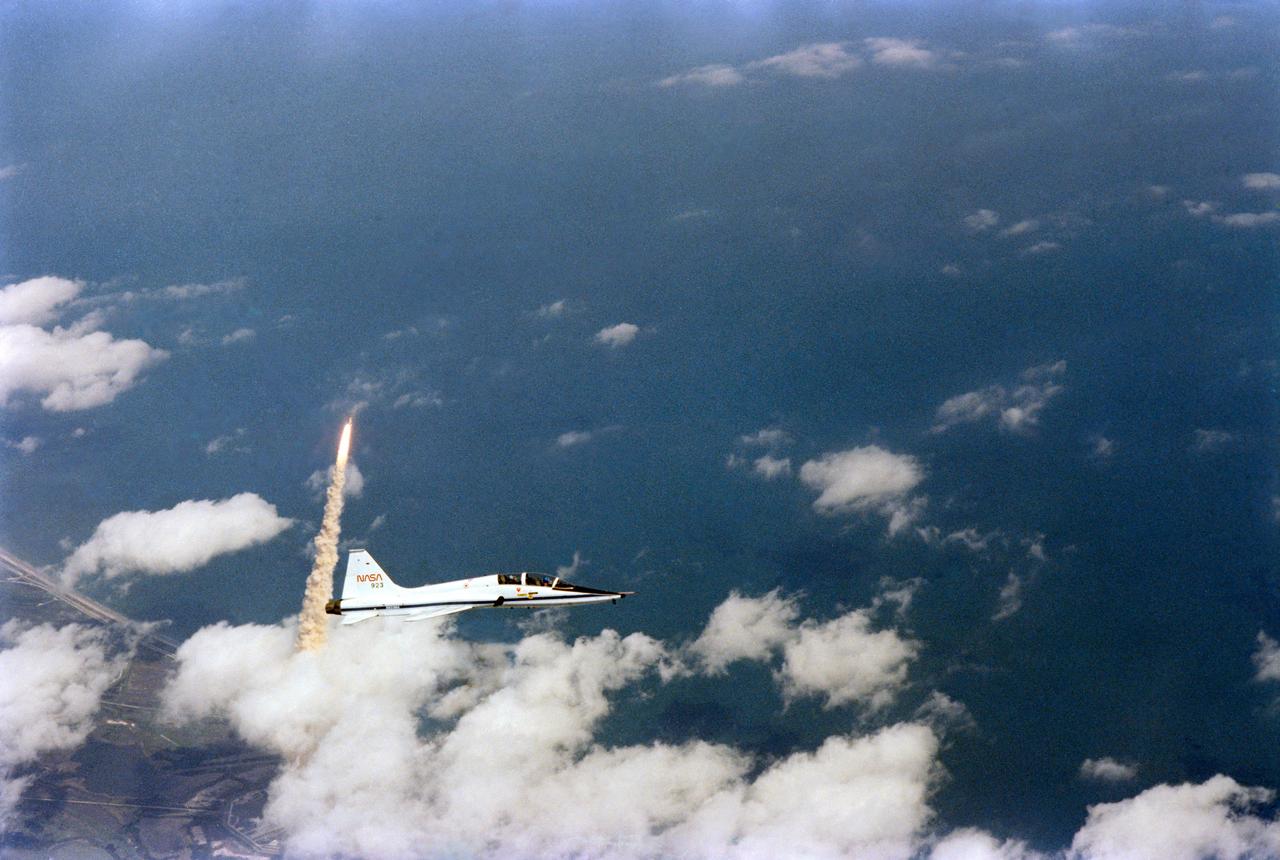
Air-to-air views of STS-3 Launch from T-38 Chase Aircraft. KSC, FL
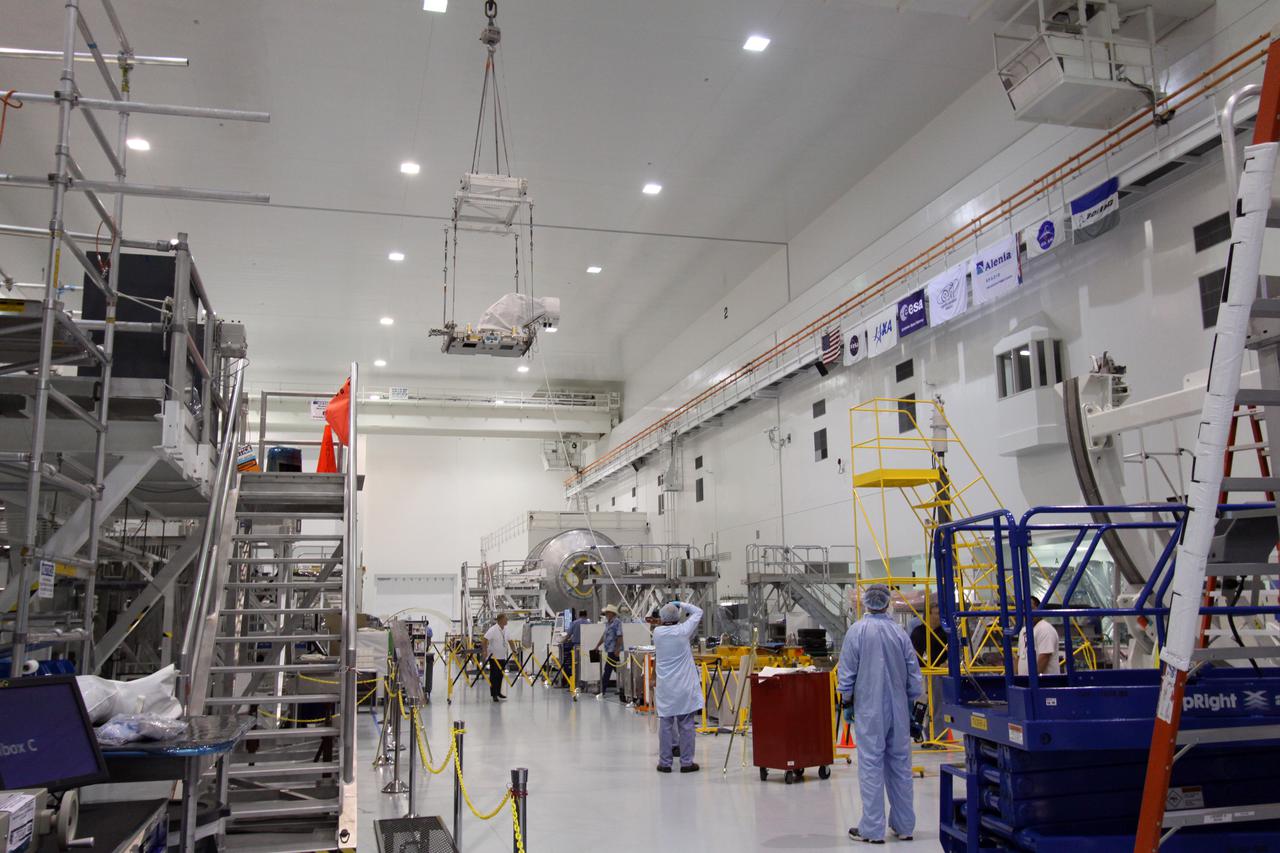
CAPE CANAVERAL, Fla. -- At NASA's Kennedy Space Center in Florida, technicians begin to lift the new S-band antenna support assembly for installation on ExPRESS Logistics Carrier-3 in the Space Station Processing Facility. The assembly will be used aboard the International Space Station to transmit and receive audio communications, and is being installed for the STS-134 mission. Space shuttle Endeavour will take up other spare parts, including a high-pressure gas tank, micrometeoroid debris shields and replacement parts for Dextre, the robotic arm on the station. STS-134, the last planned shuttle mission, is targeted to launch in the fall of 2010. For information on the upcoming mission and crew, visit www.nasa.gov_mission_pages_shuttle_shuttlemissions_sts134_index.html. NASA_Jack Pfaller
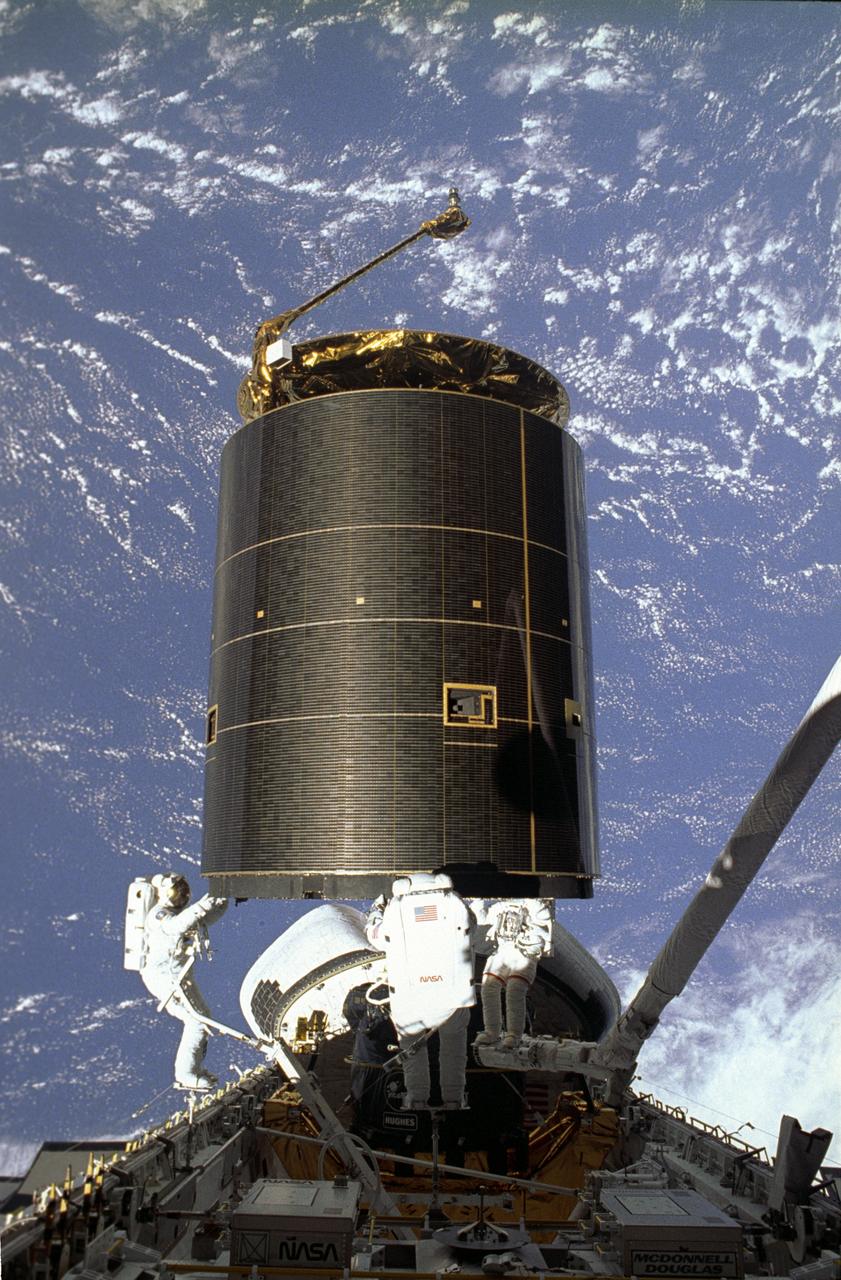
STS-49, the first flight of the Space Shuttle Orbiter Endeavour, lifted off from launch pad 39B on May 7, 1992 at 6:40 pm CDT. The STS-49 mission was the first U.S. orbital flight to feature 4 extravehicular activities (EVAs), and the first flight to involve 3 crew members working simultaneously outside of the spacecraft. The primary objective was the capture and redeployment of the INTELSAT VI (F-3), a communication satellite for the International Telecommunication Satellite organization, which was stranded in an unusable orbit since its launch aboard the Titan rocket in March 1990. In this onboard photo, astronauts Hieb, Akers, and Thuot have handholds on the satellite.
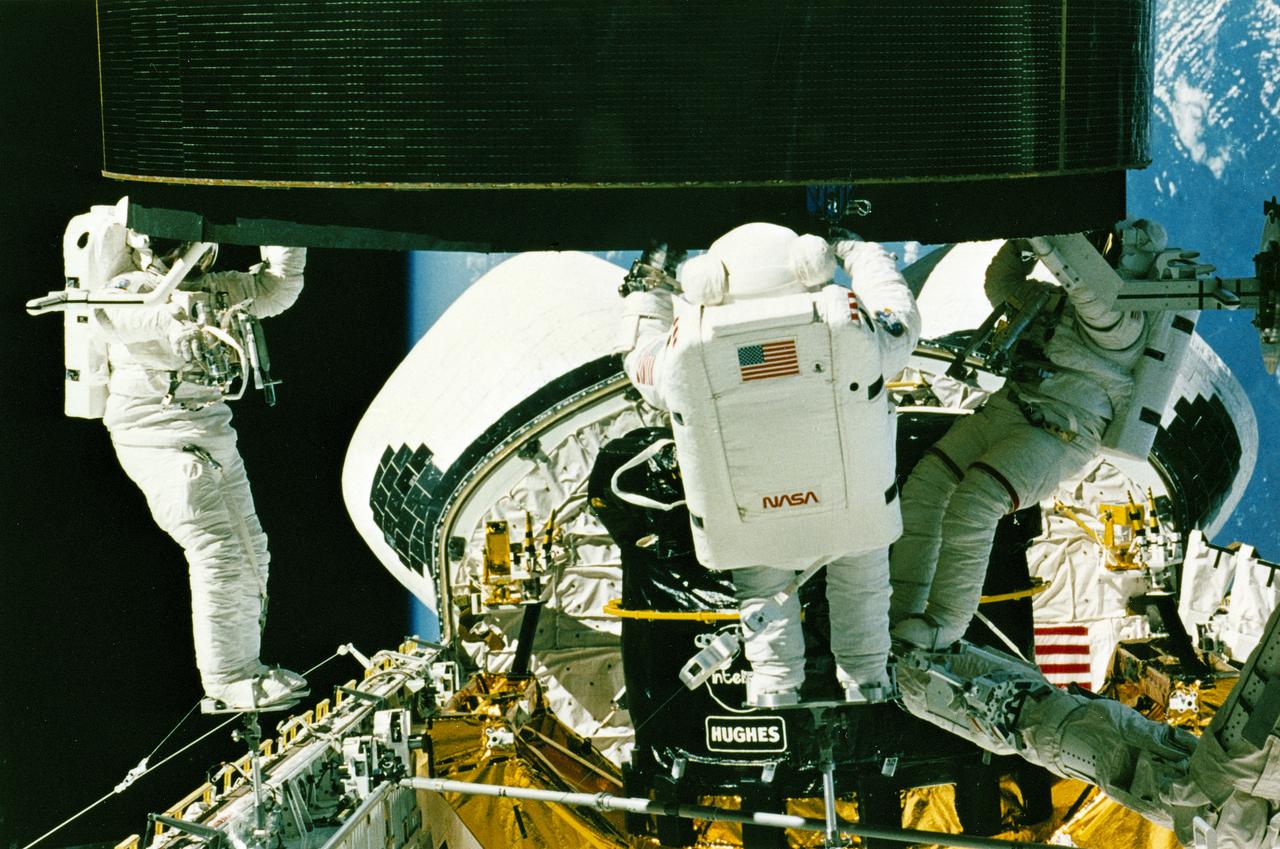
STS-49, the first flight of the Space Shuttle Orbiter Endeavour, lifted off from launch pad 39B on May 7, 1992 at 6:40 pm CDT. The STS-49 mission was the first U.S. orbital flight to feature 4 extravehicular activities (EVAs), and the first flight to involve 3 crew members working simultaneously outside of the spacecraft. The primary objective was the capture and redeployment of the INTELSAT VI (F-3), a communication satellite for the International Telecommunication Satellite organization, which was stranded in an unusable orbit since its launch aboard the Titan rocket in March 1990. In this onboard photo, astronauts Hieb, Akers, and Thuot have handholds on the satellite.
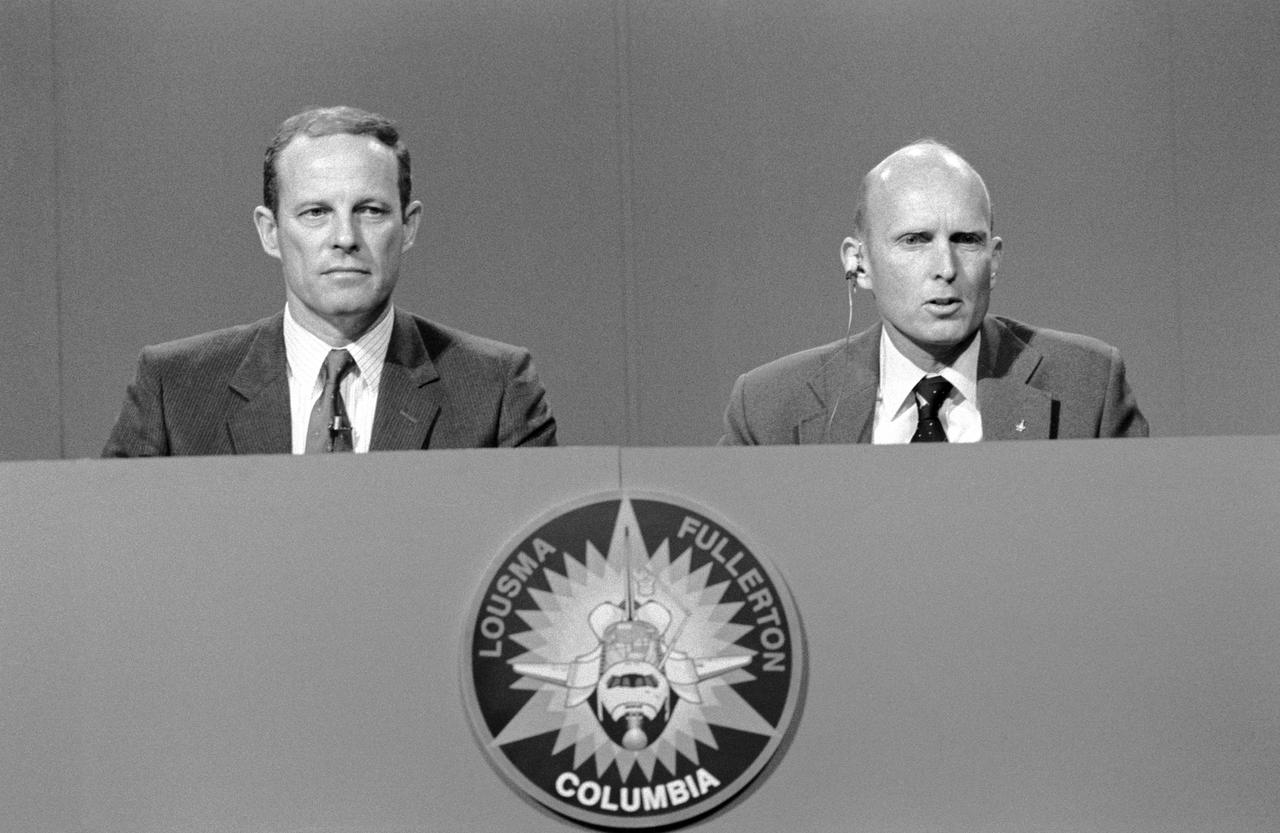
S82-27686 (26 Feb. 1982) --- Astronauts Jack R. Lousma, left, commander, and C. Gordon Fullerton, pilot, answer questions from the press corps during their final pre-STS-3 press conference on Feb. 26, 1982. The two will man the space shuttle Columbia when it launches on March 22, 1982, from the Kennedy Space Center's Launch Pad 39A. Photo credit: NASA
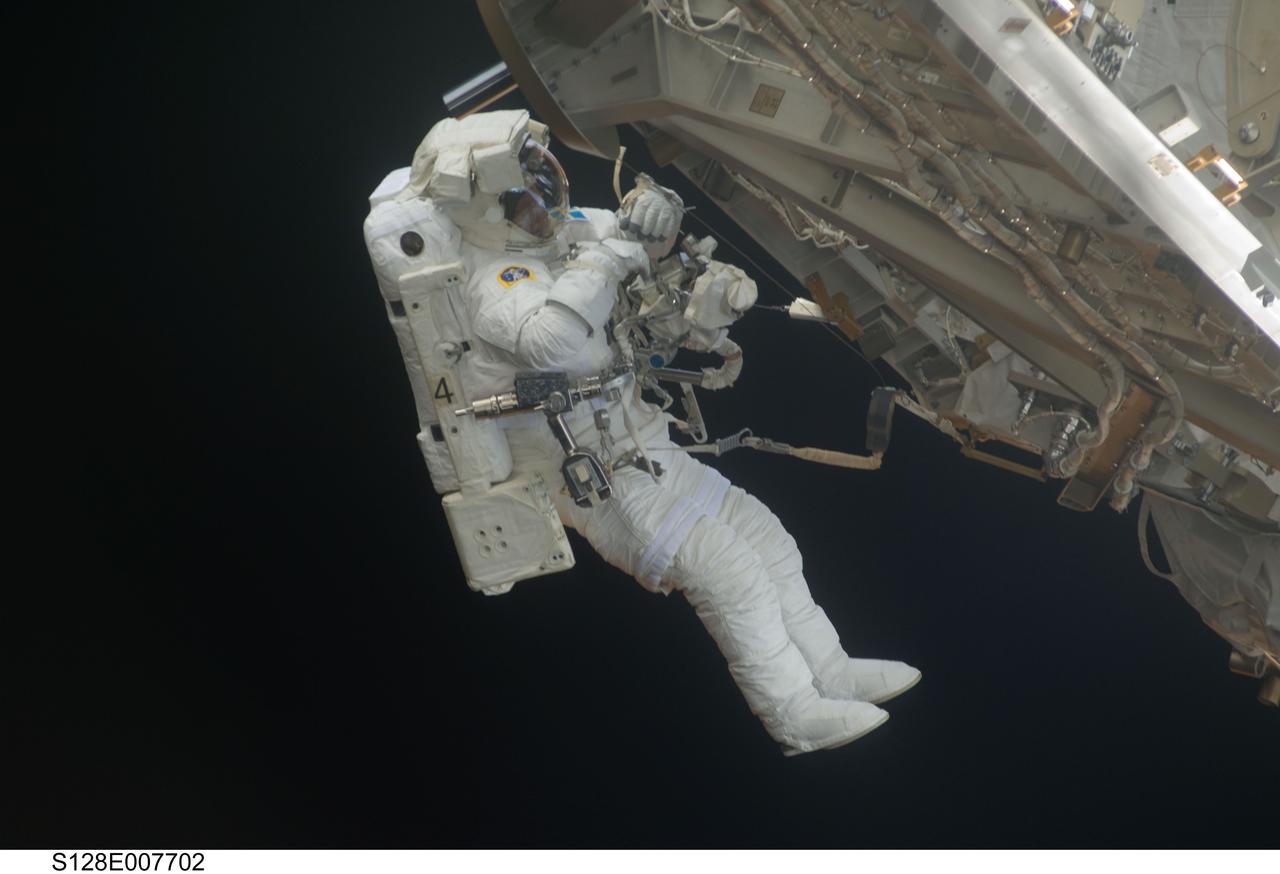
S128-E-007702 (5 Sept. 2009) --- European Space Agency astronaut Christer Fuglesang, STS-128 mission specialist, participates in the mission's third and final session of extravehicular activity (EVA) as construction and maintenance continue on the International Space Station. During the seven-hour, one-minute spacewalk, Fuglesang and NASA astronaut John “Danny” Olivas (out of frame), mission specialist, deployed the Payload Attachment System (PAS), replaced the Rate Gyro Assembly #2, installed two GPS antennae and did some work to prepare for the installation of Node 3 next year. During connection of one of two sets of avionics cables for Node 3, one of the connectors could not be mated. This cable and connector were wrapped in a protective sleeve and safed. All other cables were mated successfully.
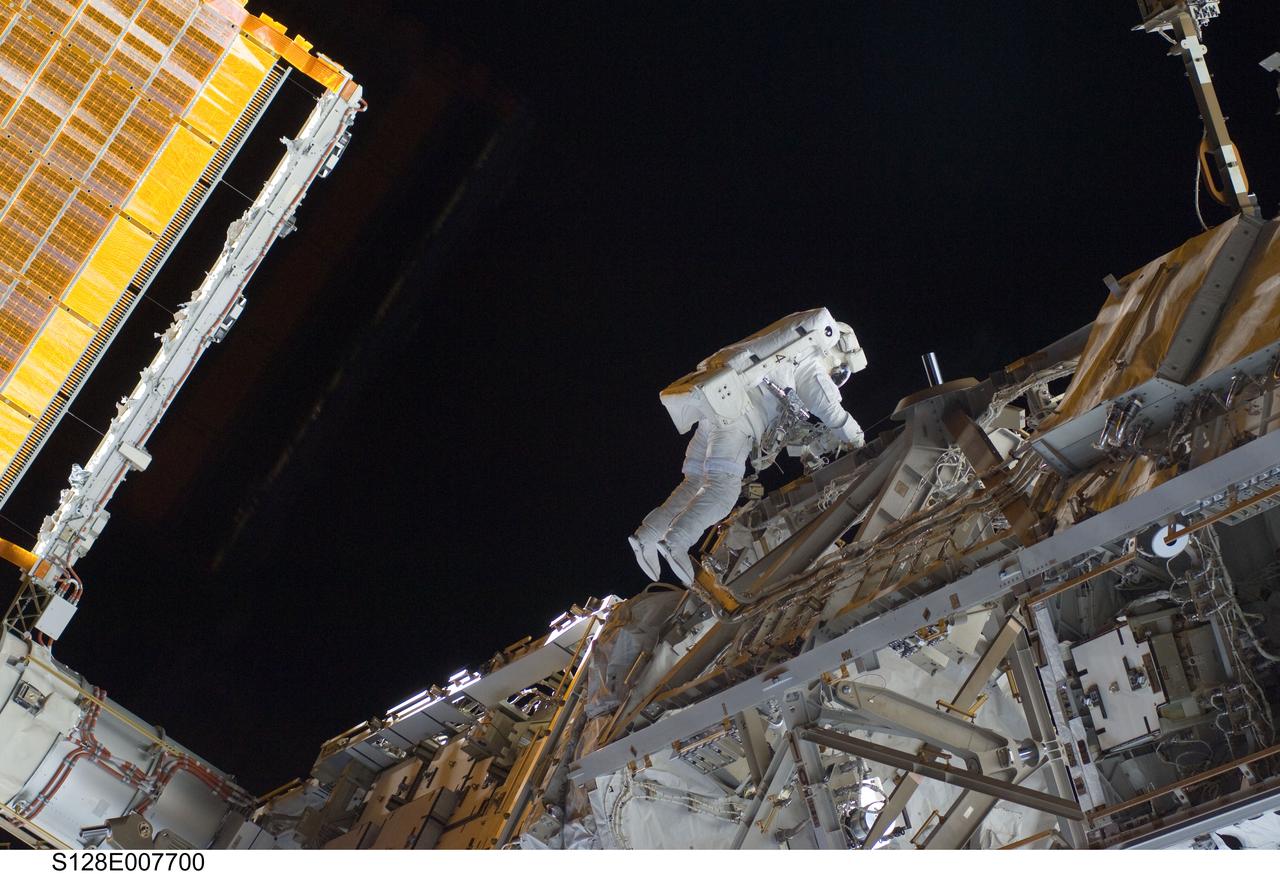
S128-E-007700 (5 Sept. 2009) --- European Space Agency astronaut Christer Fuglesang, STS-128 mission specialist, participates in the mission's third and final session of extravehicular activity (EVA) as construction and maintenance continue on the International Space Station. During the seven-hour, one-minute spacewalk, Fuglesang and NASA astronaut John “Danny” Olivas (out of frame), mission specialist, deployed the Payload Attachment System (PAS), replaced the Rate Gyro Assembly #2, installed two GPS antennae and did some work to prepare for the installation of Node 3 next year. During connection of one of two sets of avionics cables for Node 3, one of the connectors could not be mated. This cable and connector were wrapped in a protective sleeve and safed. All other cables were mated successfully.
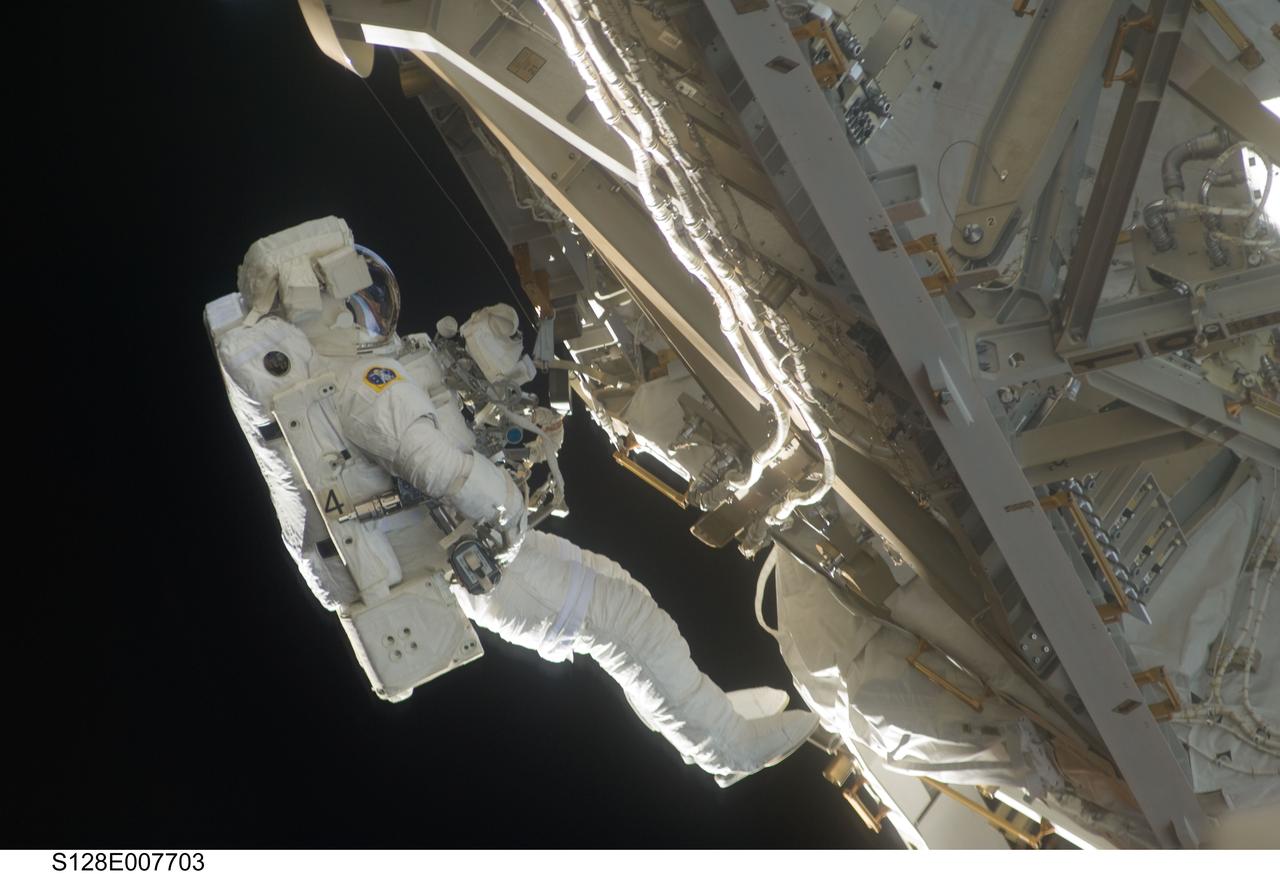
S128-E-007703 (5 Sept. 2009) --- European Space Agency astronaut Christer Fuglesang, STS-128 mission specialist, participates in the mission's third and final session of extravehicular activity (EVA) as construction and maintenance continue on the International Space Station. During the seven-hour, one-minute spacewalk, Fuglesang and NASA astronaut John “Danny” Olivas (out of frame), mission specialist, deployed the Payload Attachment System (PAS), replaced the Rate Gyro Assembly #2, installed two GPS antennae and did some work to prepare for the installation of Node 3 next year. During connection of one of two sets of avionics cables for Node 3, one of the connectors could not be mated. This cable and connector were wrapped in a protective sleeve and safed. All other cables were mated successfully.
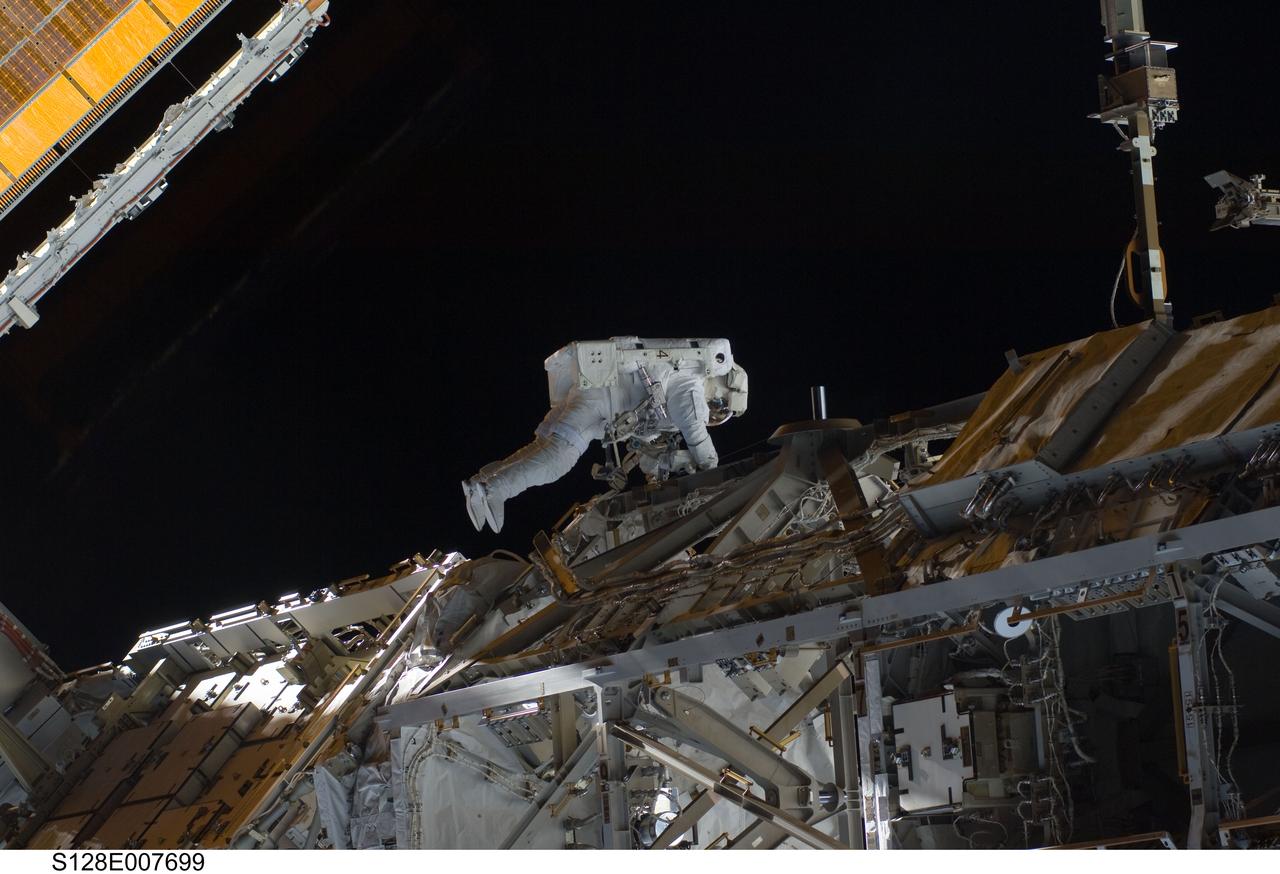
S128-E-007699 (5 Sept. 2009) --- European Space Agency astronaut Christer Fuglesang, STS-128 mission specialist, participates in the mission's third and final session of extravehicular activity (EVA) as construction and maintenance continue on the International Space Station. During the seven-hour, one-minute spacewalk, Fuglesang and NASA astronaut John “Danny” Olivas (out of frame), mission specialist, deployed the Payload Attachment System (PAS), replaced the Rate Gyro Assembly #2, installed two GPS antennae and did some work to prepare for the installation of Node 3 next year. During connection of one of two sets of avionics cables for Node 3, one of the connectors could not be mated. This cable and connector were wrapped in a protective sleeve and safed. All other cables were mated successfully.
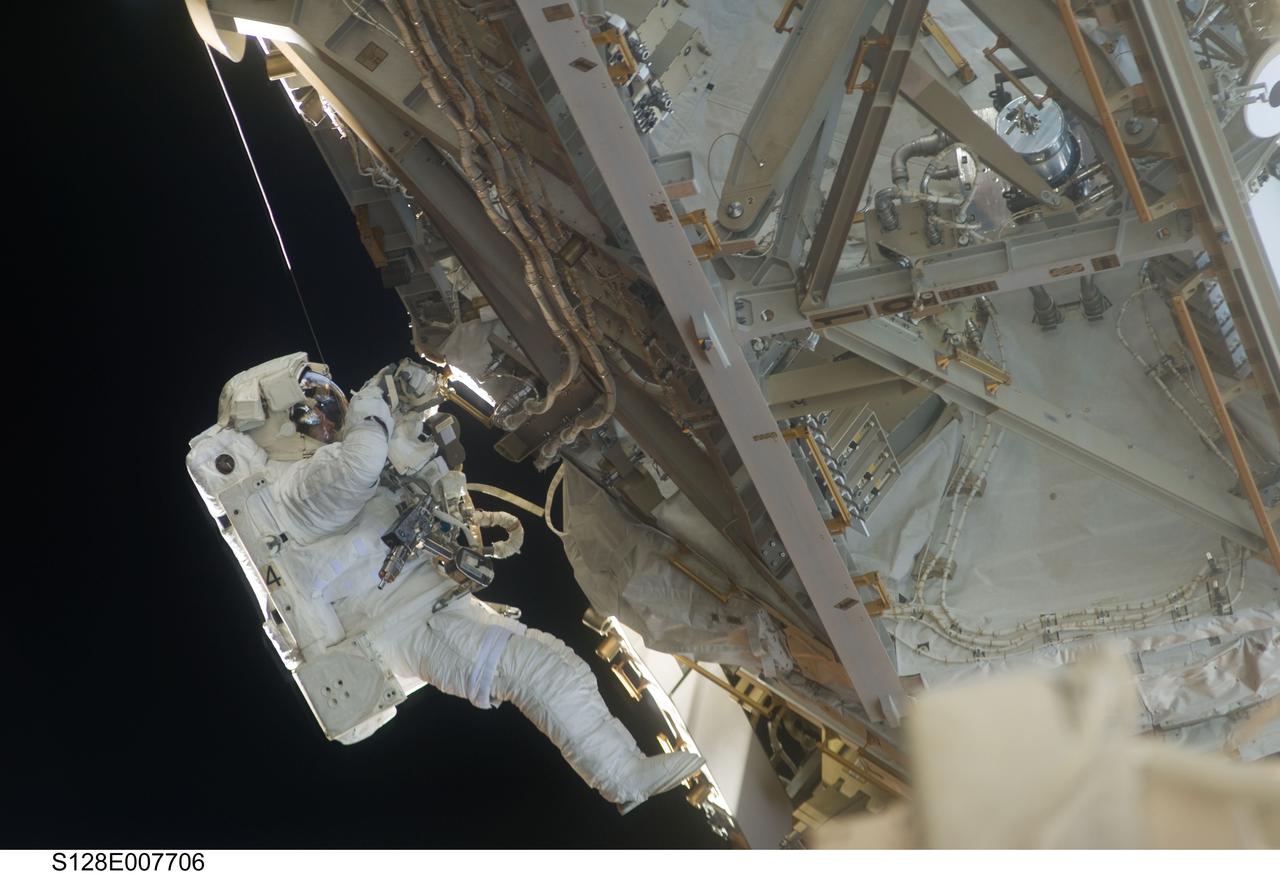
S128-E-007706 (5 Sept. 2009) --- European Space Agency astronaut Christer Fuglesang, STS-128 mission specialist, participates in the mission's third and final session of extravehicular activity (EVA) as construction and maintenance continue on the International Space Station. During the seven-hour, one-minute spacewalk, Fuglesang and NASA astronaut John “Danny” Olivas (out of frame), mission specialist, deployed the Payload Attachment System (PAS), replaced the Rate Gyro Assembly #2, installed two GPS antennae and did some work to prepare for the installation of Node 3 next year. During connection of one of two sets of avionics cables for Node 3, one of the connectors could not be mated. This cable and connector were wrapped in a protective sleeve and safed. All other cables were mated successfully.
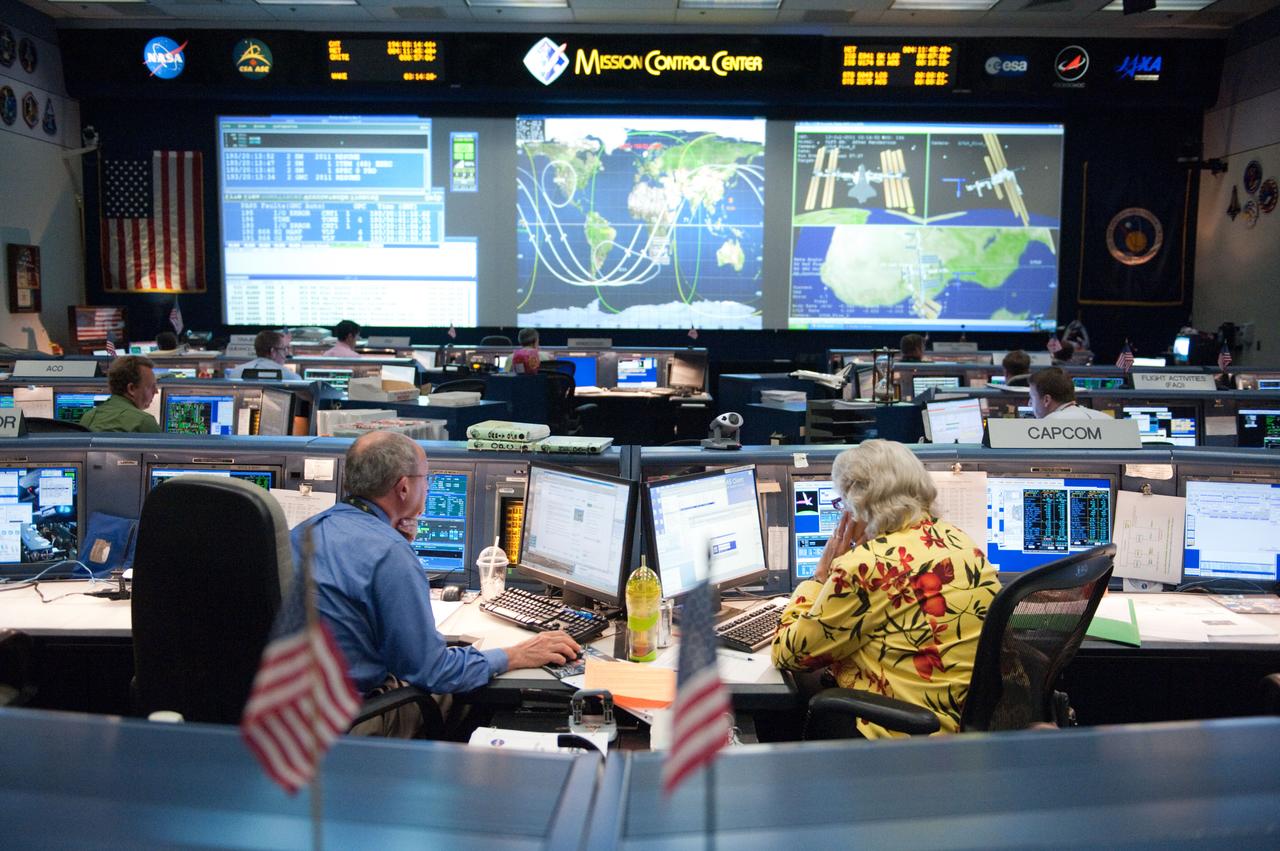
PHOTO DATE: 12 July 2011 LOCATION: Bldg. 30 - WFCR SUBJECT: STS-135 Orbit 3 Flight Controllers in WFCR. PHOTOGRAPHER: Mark Sowa
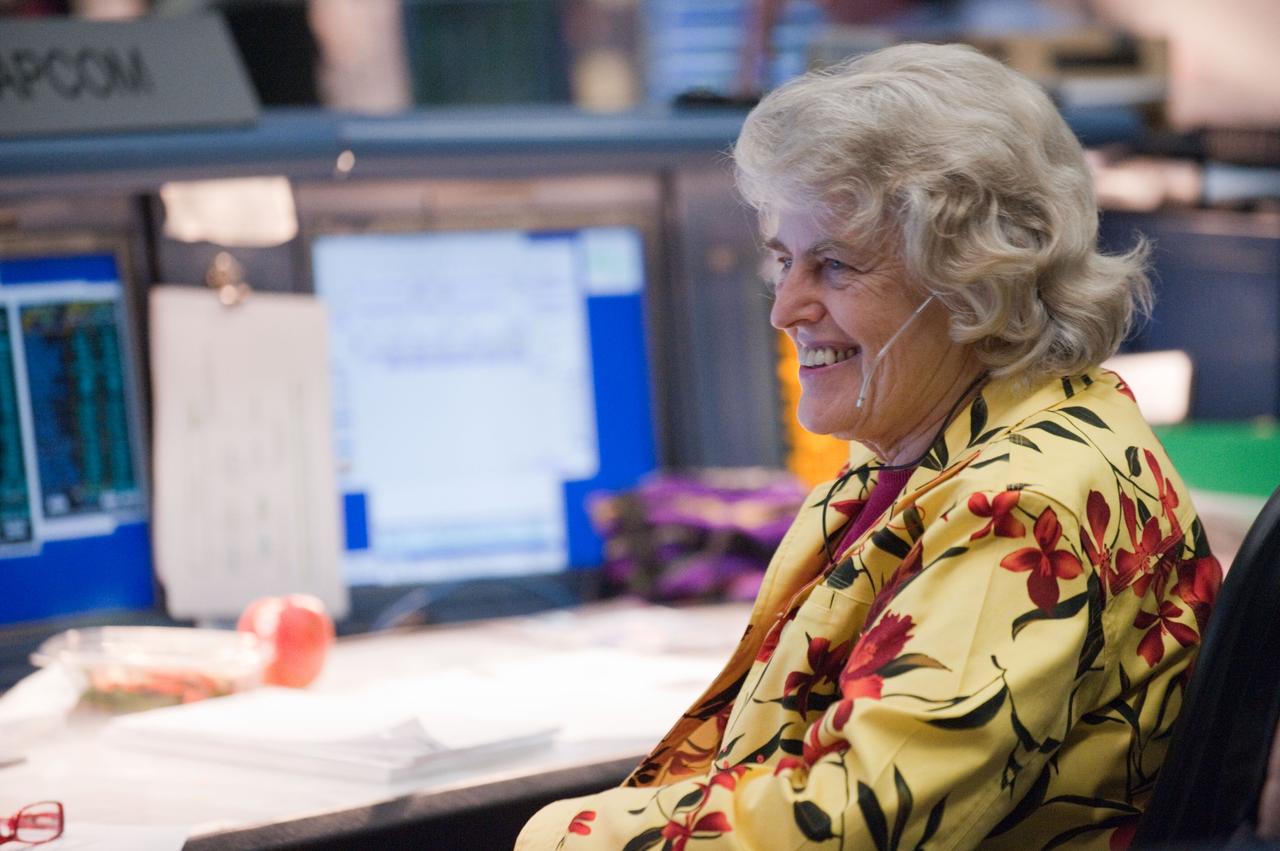
PHOTO DATE: 12 July 2011 LOCATION: Bldg. 30 - WFCR SUBJECT: STS-135 Orbit 3 Flight Controllers in WFCR. PHOTOGRAPHER: Mark Sowa
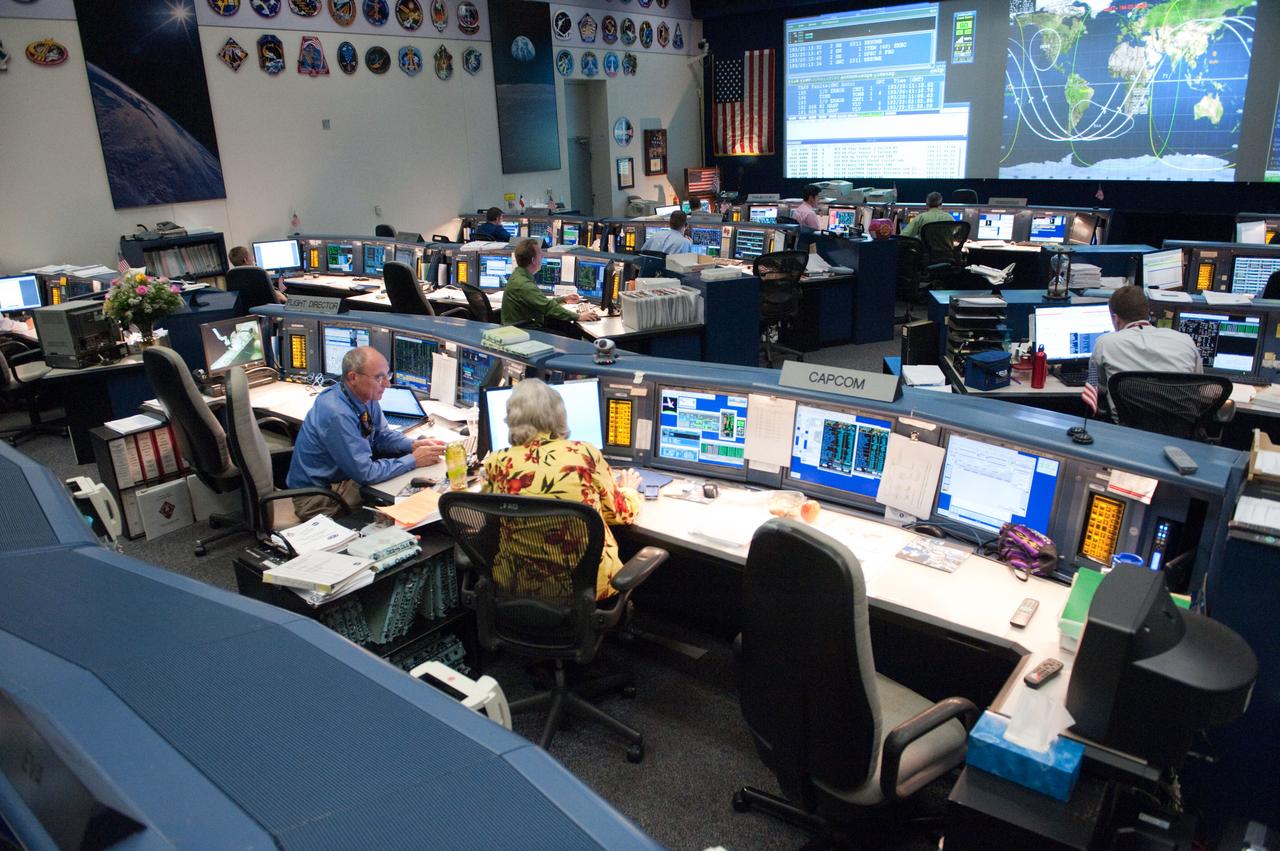
PHOTO DATE: 12 July 2011 LOCATION: Bldg. 30 - WFCR SUBJECT: STS-135 Orbit 3 Flight Controllers in WFCR. PHOTOGRAPHER: Mark Sowa
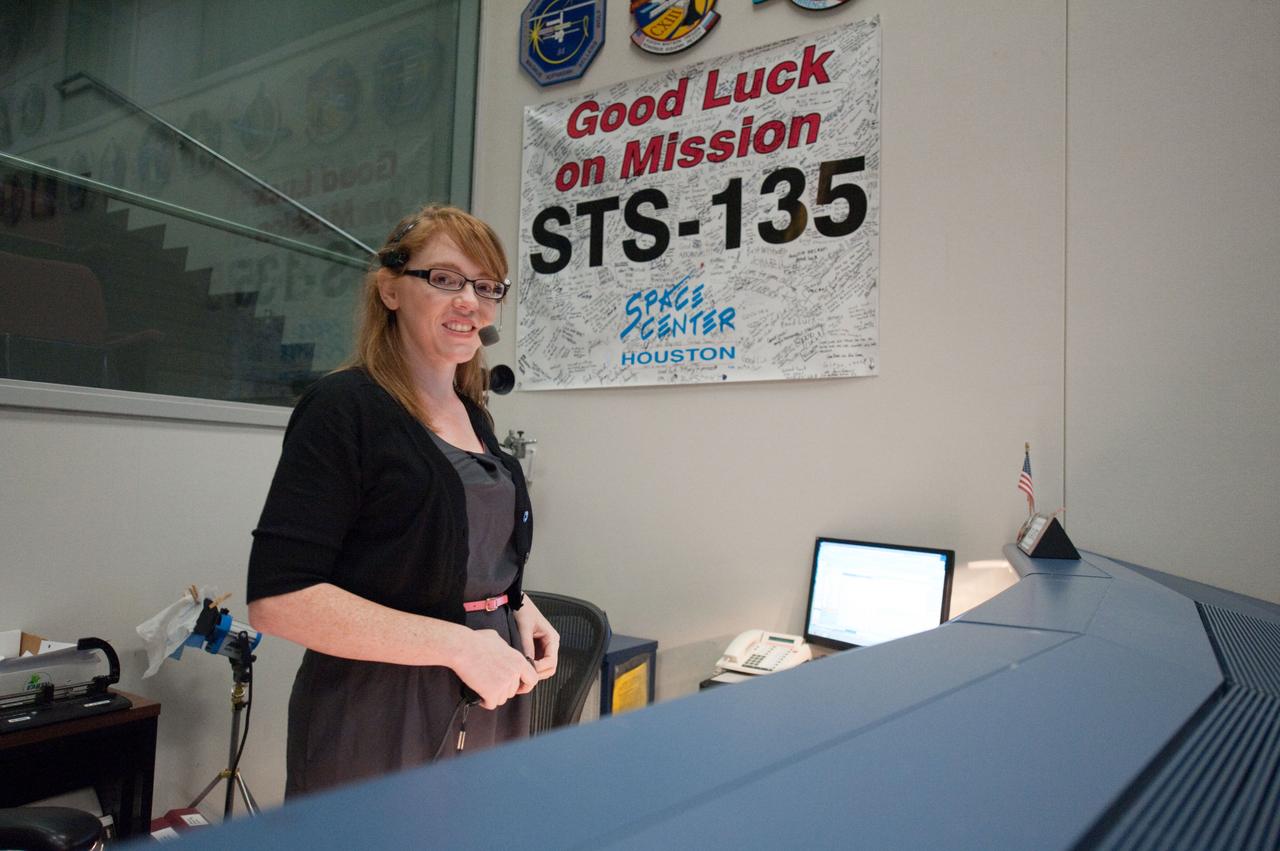
PHOTO DATE: 12 July 2011 LOCATION: Bldg. 30 - WFCR SUBJECT: STS-135 Orbit 3 Flight Controllers in WFCR. PHOTOGRAPHER: Mark Sowa
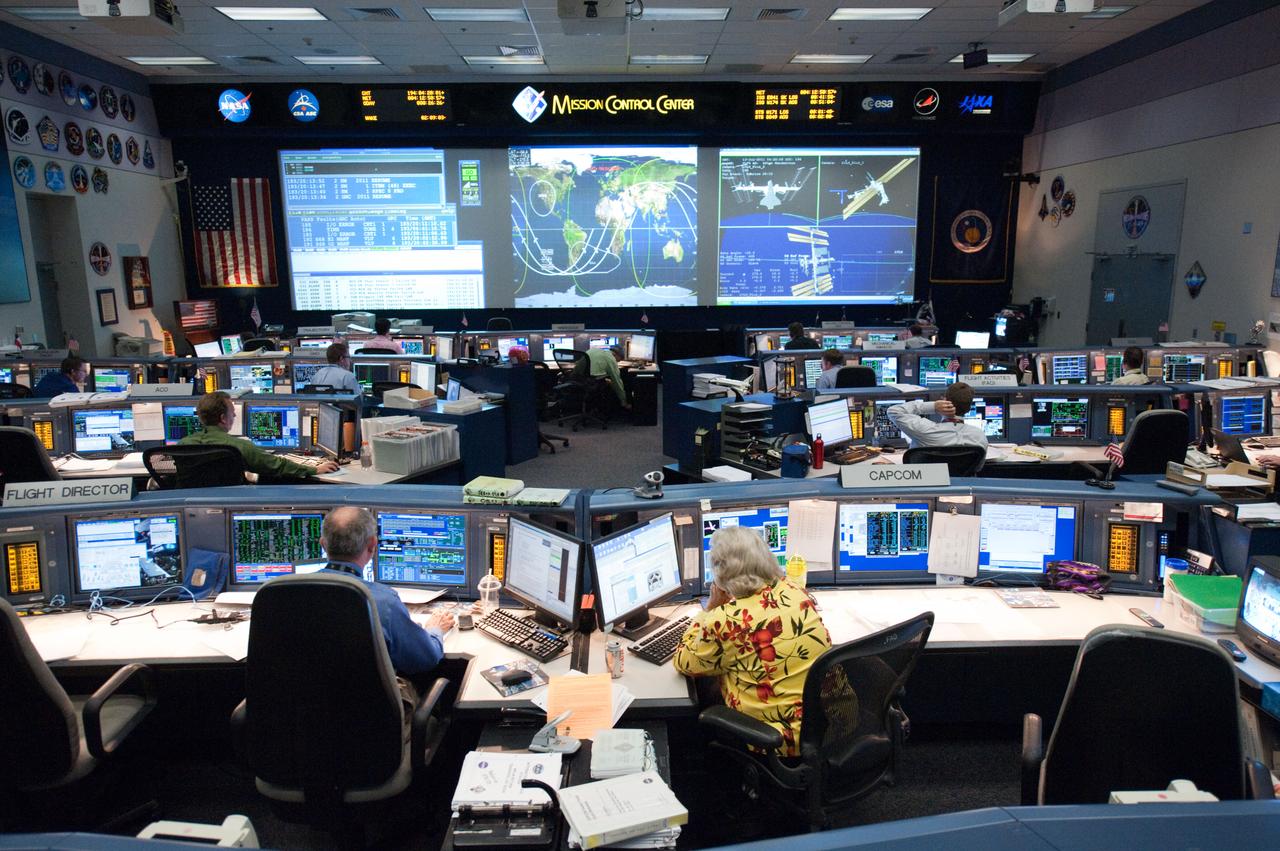
PHOTO DATE: 12 July 2011 LOCATION: Bldg. 30 - WFCR SUBJECT: STS-135 Orbit 3 Flight Controllers in WFCR. PHOTOGRAPHER: Mark Sowa
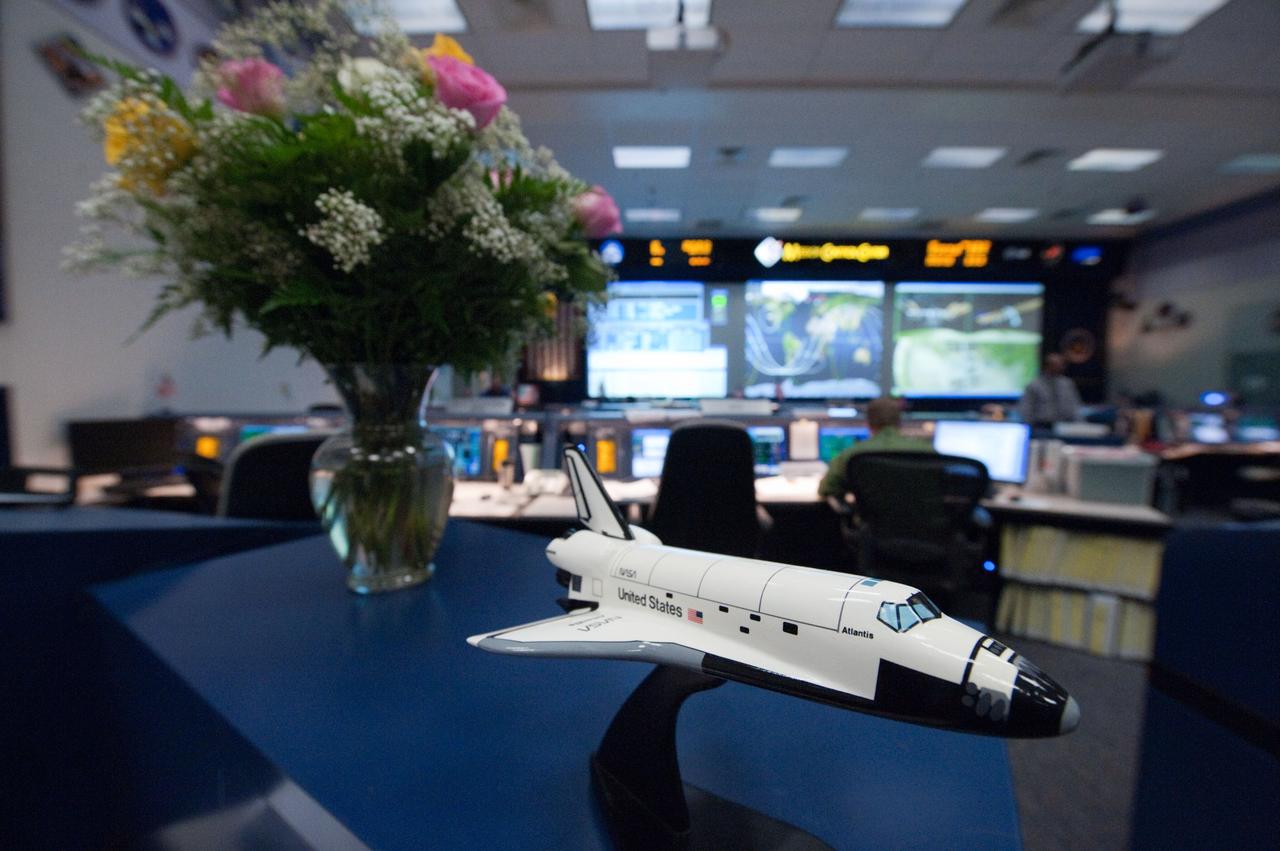
PHOTO DATE: 12 July 2011 LOCATION: Bldg. 30 - WFCR SUBJECT: STS-135 Orbit 3 Flight Controllers in WFCR. PHOTOGRAPHER: Mark Sowa
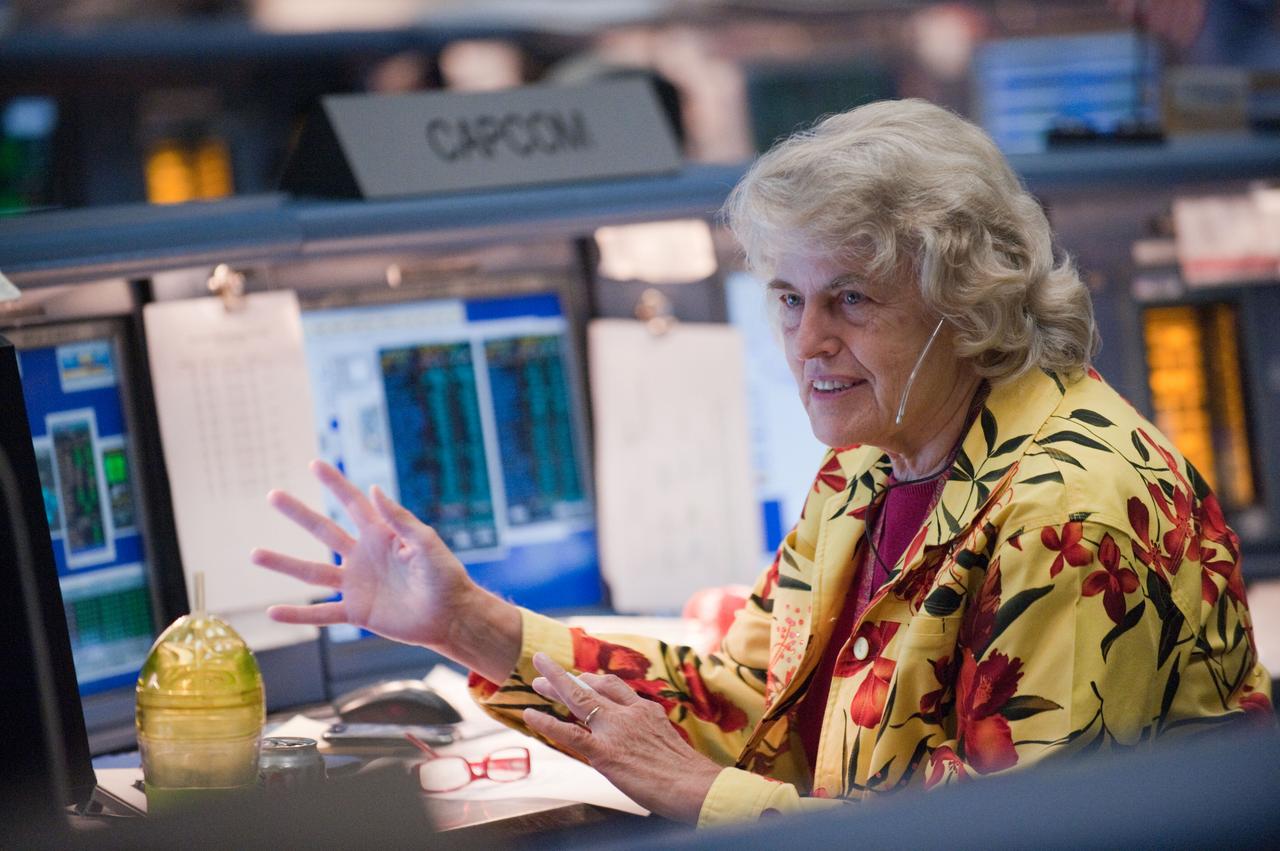
PHOTO DATE: 12 July 2011 LOCATION: Bldg. 30 - WFCR SUBJECT: STS-135 Orbit 3 Flight Controllers in WFCR. PHOTOGRAPHER: Mark Sowa
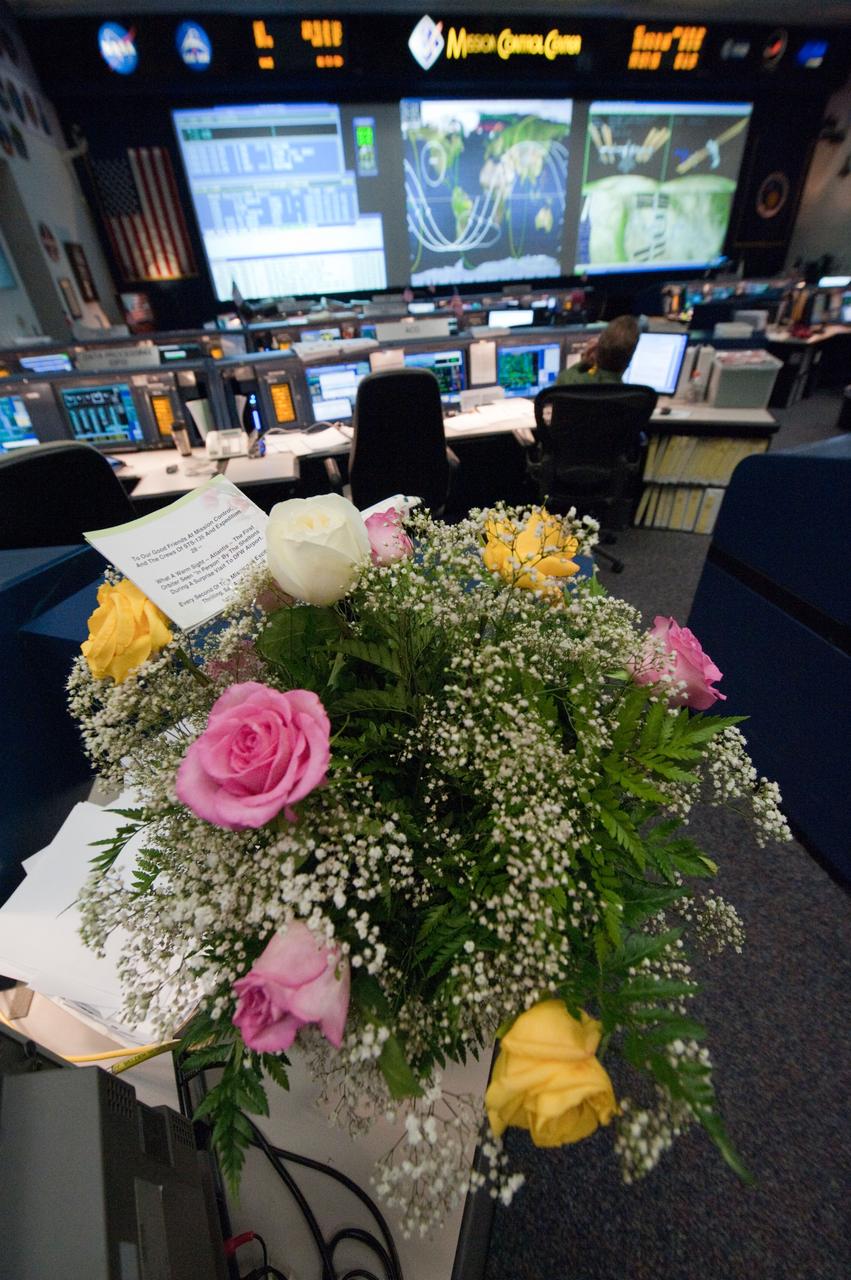
PHOTO DATE: 12 July 2011 LOCATION: Bldg. 30 - WFCR SUBJECT: STS-135 Orbit 3 Flight Controllers in WFCR. PHOTOGRAPHER: Mark Sowa
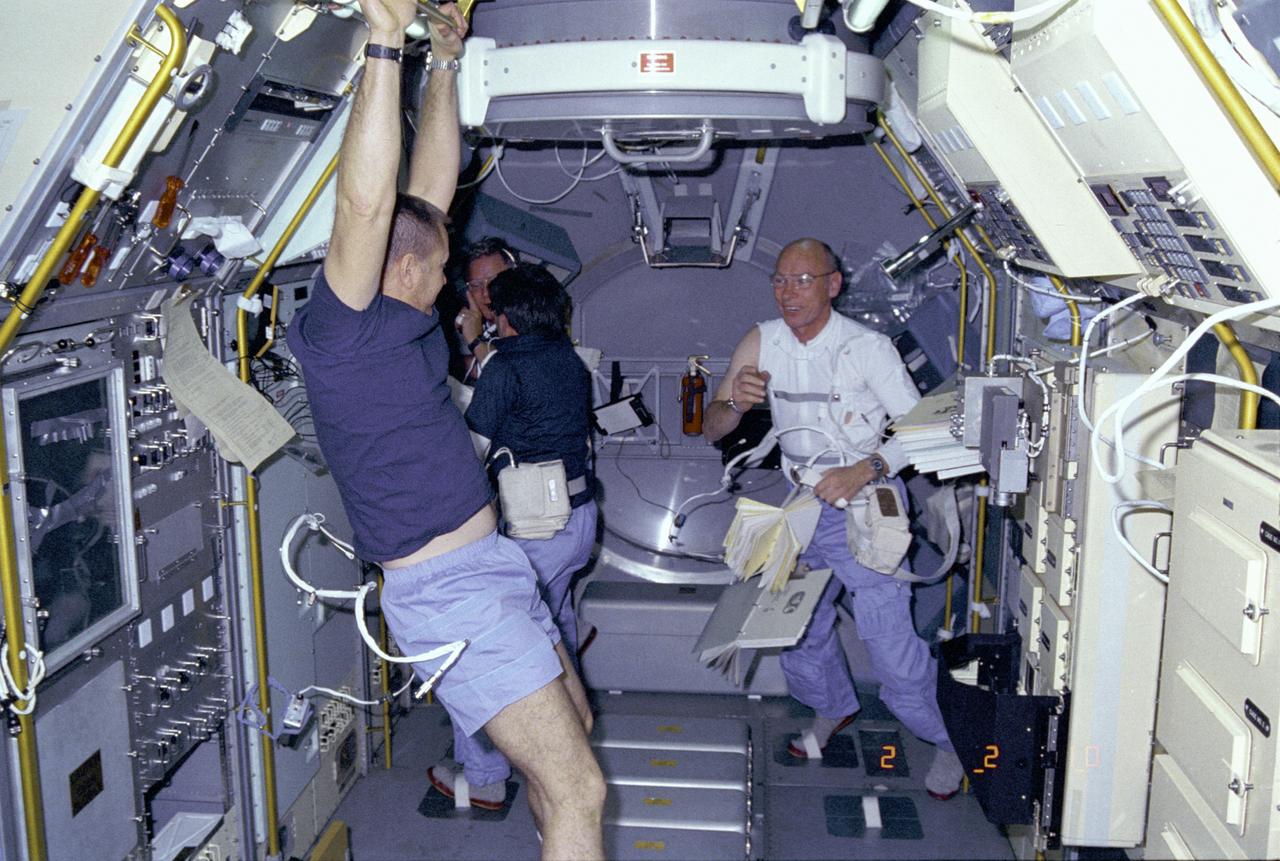
Activities inside the laboratory module during the Spacelab-3 mission are shown in this photograph. Left to right are astronauts Robert Overmyer, Commander of the mission; Don Lind, Mission Specialist; Lodewijk van den Berg, Payload Specialist; and William Thornton, Mission Specialist. The primary purpose of the Spacelab-3 mission was to conduct materials science experiments in a stable low-gravity environment. In addition, the crew did research in life sciences, fluid mechanics, atmospheric science, and astronomy. Spacelab-3 was equipped with several new minilabs, special facilities that would be used repeatedly on future flights. Two elaborate crystal growth furnaces, a life support and housing facility for small animals, and two types of apparatus for the study of fluids were evaluated on their inaugural flight. Spacelab-3 (STS-51B) was launched aboard the Space Shuttle Challenger on April 29, 1985. The Marshall Space Flight Center had managing responsibilities of the mission.
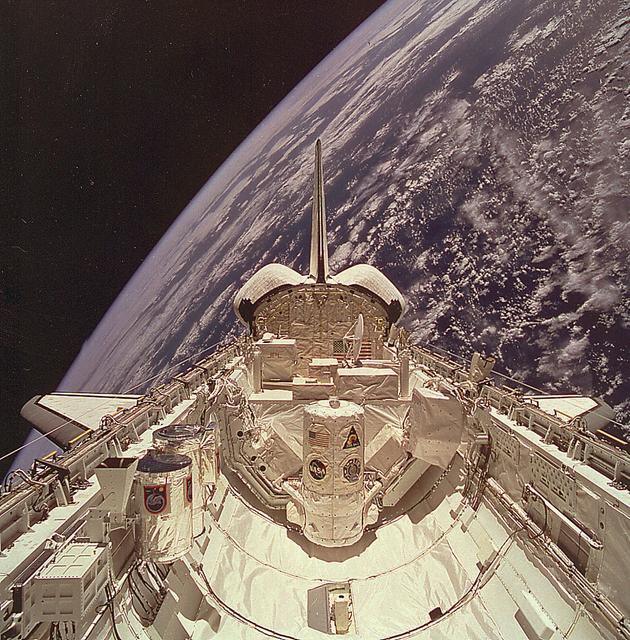
This is an STS-66 mission onboard photo of the Space Shuttle Orbiter Atlantis showing the payload of the third Atmospheric Laboratory for Applications and Science (ATLAS-3) mission. During the ATLAS missions, international teams of scientists representing many disciplines combined their expertise to seek answers to complex questions about the atmospheric and solar conditions that sustain life on Earth. The ATLAS program specifically investigated how Earth's middle and upper atmospheres and climate are affected by by the sun and by products of industrial and agricultural activities on Earth. Thirteen ATLAS instruments supported experiments in atmospheric sciences, solar physics, space plasma physics, and astronomy. The instruments were mounted on two Spacelab pallets in the Space Shuttle payload bay. The ATLAS-3 mission continued a variety of atmospheric and solar studies to improve understanding of the Earth's atmosphere and its energy input from the sun. A key scientific objective was to refine existing data on variations in the fragile ozone layer of the atmosphere. The Orbiter Atlantis was launched on November 3, 1994 for the ATLAS-3 mission (STS-66).
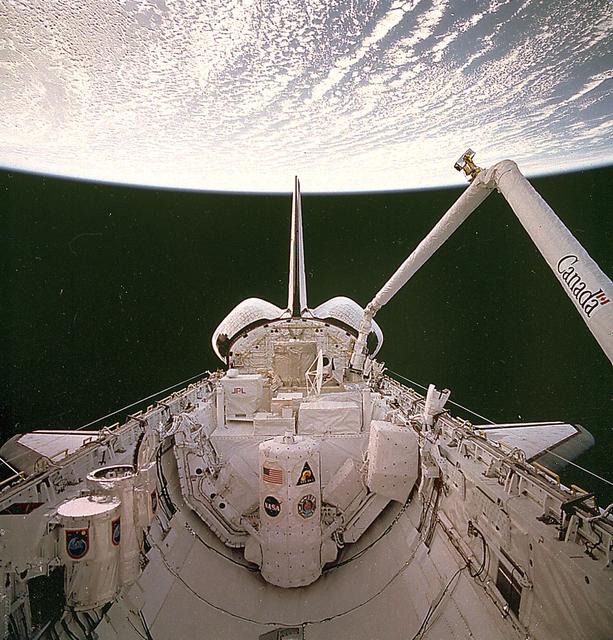
This is an STS-66 mission onboard photo showing the Remote Manipulator System (RMS) moving toward one of the solar science instruments for the third Atmospheric Laboratory for Applications and Science (ATLAS-3) mission in the cargo bay of the Orbiter Atlantis. During the ATLAS missions, international teams of scientists representing many disciplines combined their expertise to seek answers to complex questions about the atmospheric and solar conditions that sustain life on Earth. The ATLAS program specifically investigated how Earth's middle and upper atmospheres and climate are affected by by the sun and by products of industrial and agricultural activities on Earth. Thirteen ATLAS instruments supported experiments in atmospheric sciences, solar physics, space plasma physics, and astronomy. The instruments were mounted on two Spacelab pallets in the Space Shuttle payload bay. The ATLAS-3 mission continued a variety of atmospheric and solar studies, to improve understanding of the Earth's atmosphere and its energy input from the sun. A key scientific objective was to refine existing data on variations in the fragile ozone layer of the atmosphere. The Shuttle Orbiter Atlantis was launched on November 3, 1994 for the ATLAS-3 mission (STS-66). The ATLAS program was managed by the Marshall Space Flight Center.
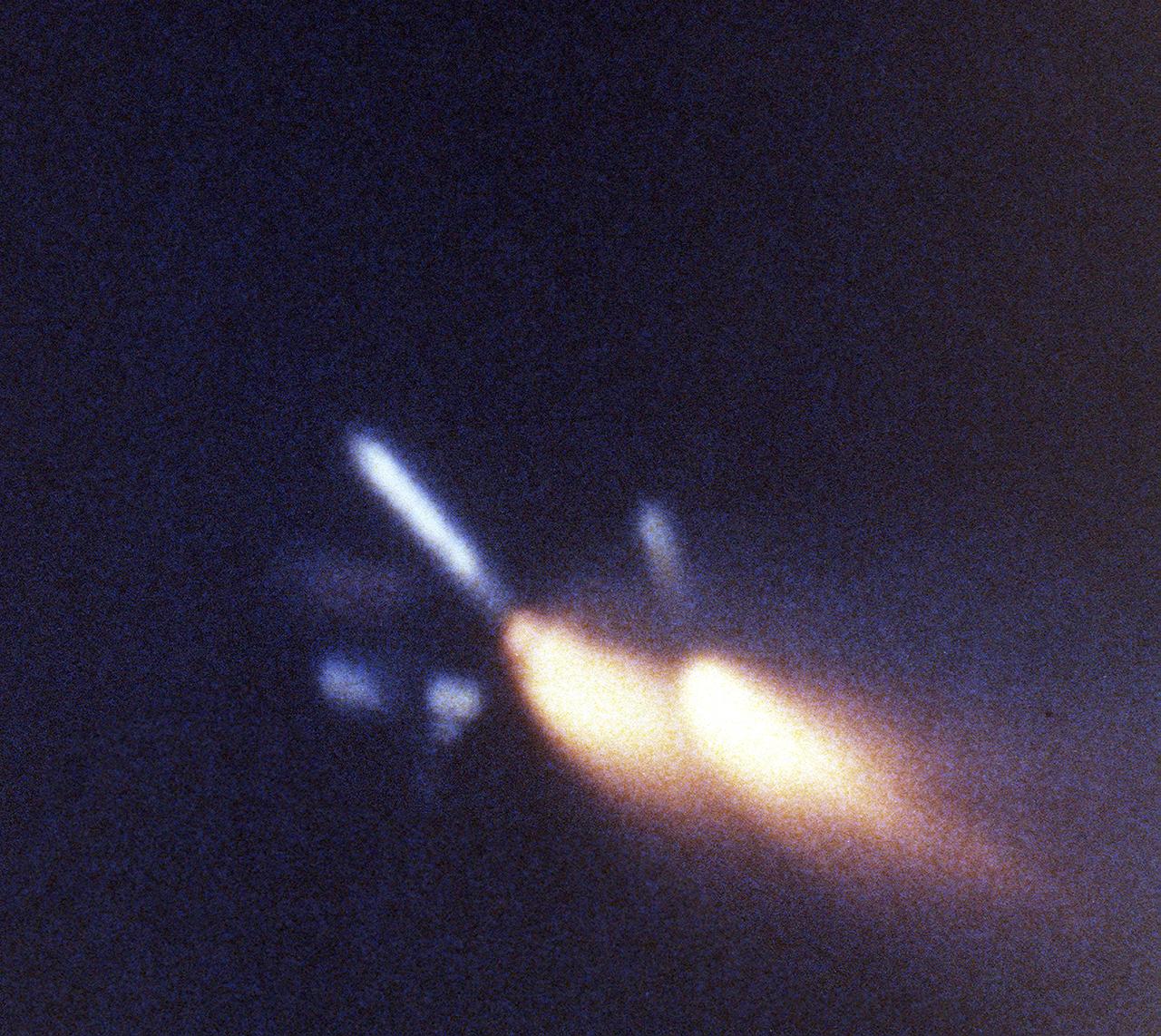
This view, taken by a motion picture tracking camera for the STS-3 mission, shows both left and right solid rocket boosters (SRB's) at the moment of separation from the external tank (ET). After impact to the ocean, they were retrieved and refurbished for reuse. The Shuttle's SRB's and solid rocket motors (SRM's) are the largest ever built and the first designed for refurbishment and reuse. Standing nearly 150-feet high, the twin boosters provide the majority of thrust for the first two minutes of flight, about 5.8 million pounds. That is equivalent to 44 million horsepower, or the combined power of 400,000 subcompact cars.
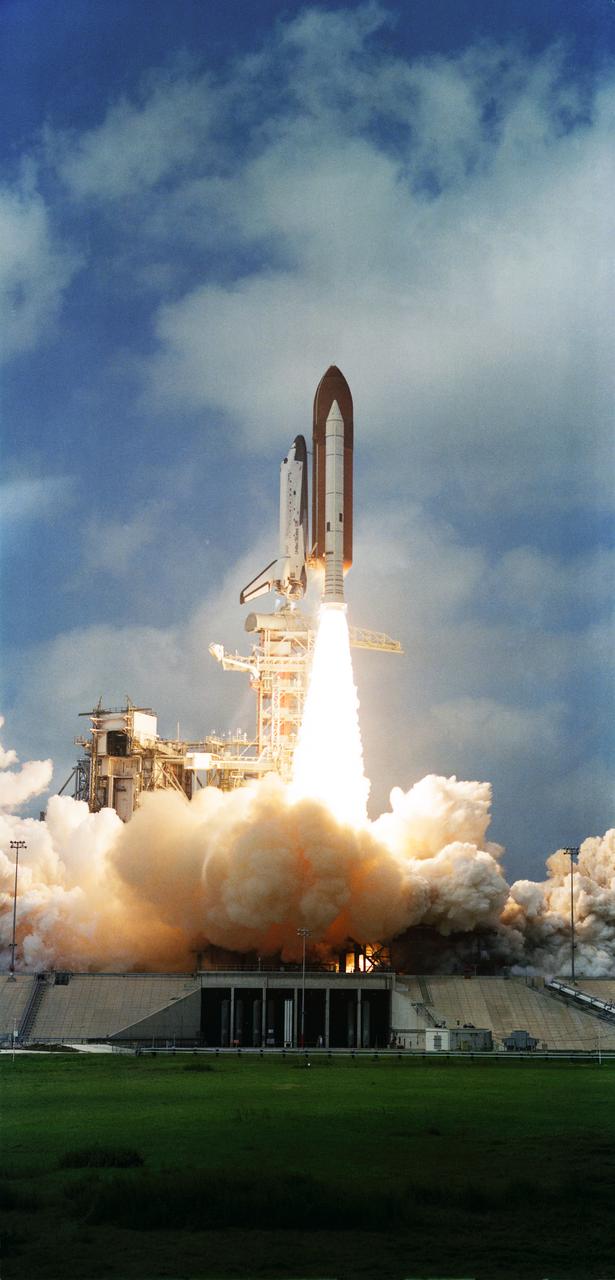
S82-28746 (22 March 1982) --- The space shuttle Columbia, with its third crew aboard, two solid rocket boosters (SRB) and external fuel tank (ET) are photographed as they clear the launch pad at Kennedy Space Center?s Launch Complex 39. Astronauts Jack R. Lousma, STS-3 commander, and C. Gordon Fullerton, pilot, were in Earth orbit some ten minutes later looking ahead to seven days of work in space. The external tank is unpainted for the first time, appearing a dark orange in the color photos and dark gray in black and white. Photo credit: NASA
![View of the STS-41G OSTA-3 (Space Radiation Laboratory [SRL]) Payload in its workstand. 1. SHUTTLE - PAYLOADS (OSTA-3)](https://images-assets.nasa.gov/image/s84-36853/s84-36853~medium.jpg)
View of the STS-41G OSTA-3 (Space Radiation Laboratory [SRL]) Payload in its workstand. 1. SHUTTLE - PAYLOADS (OSTA-3)
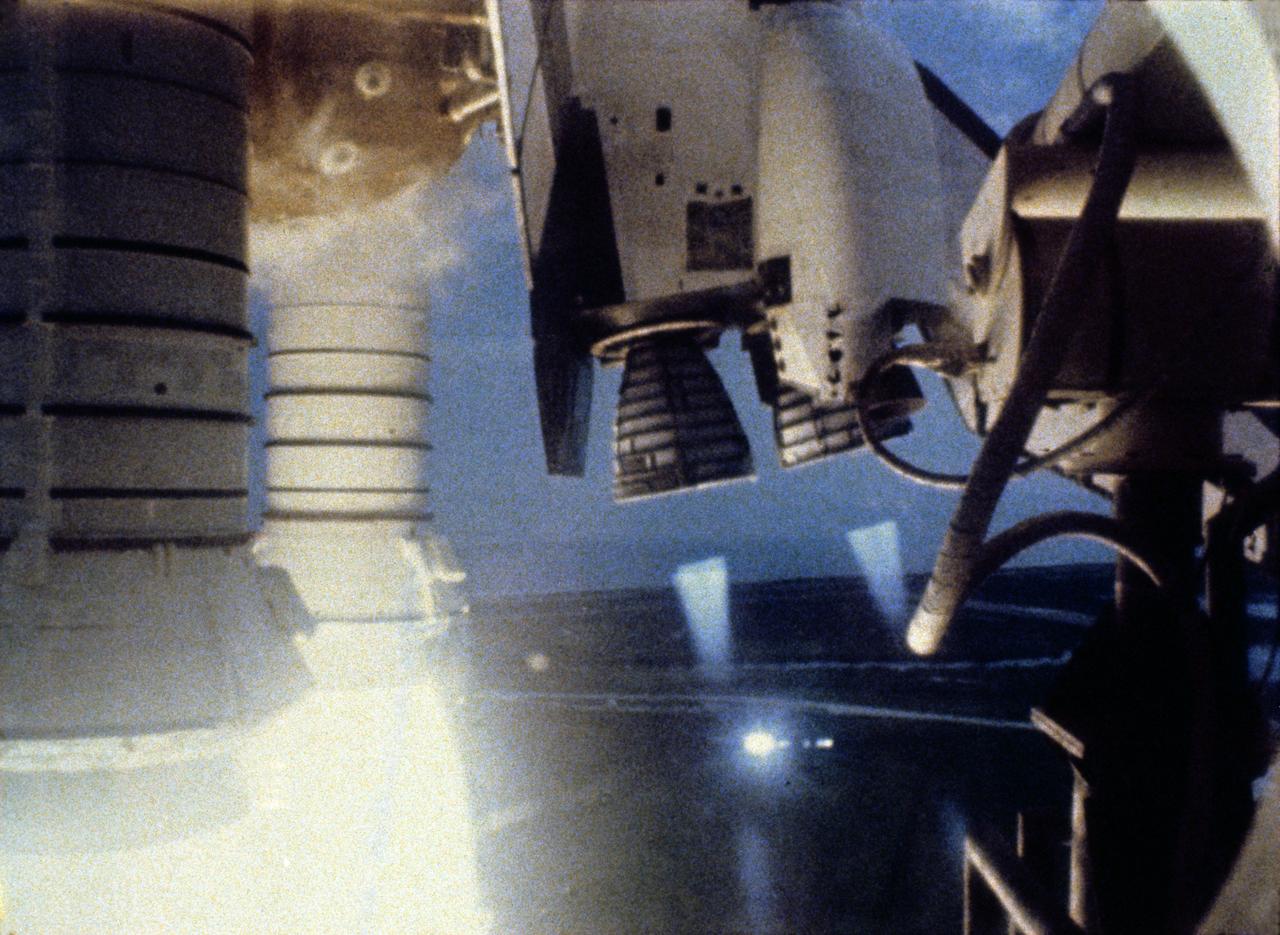
S82-28757 (22 March 1982) --- This close-up view featuring the space shuttle Columbia?s main engines and solid rocket boosters (SRB) was captured on video during the launch sequence for the STS-3 mission from NASA's Kennedy Space Center (KSC). Onboard were astronauts Jack R. Lousma, commander; and C. Gordon Fullerton, pilot. Photo credit: NASA
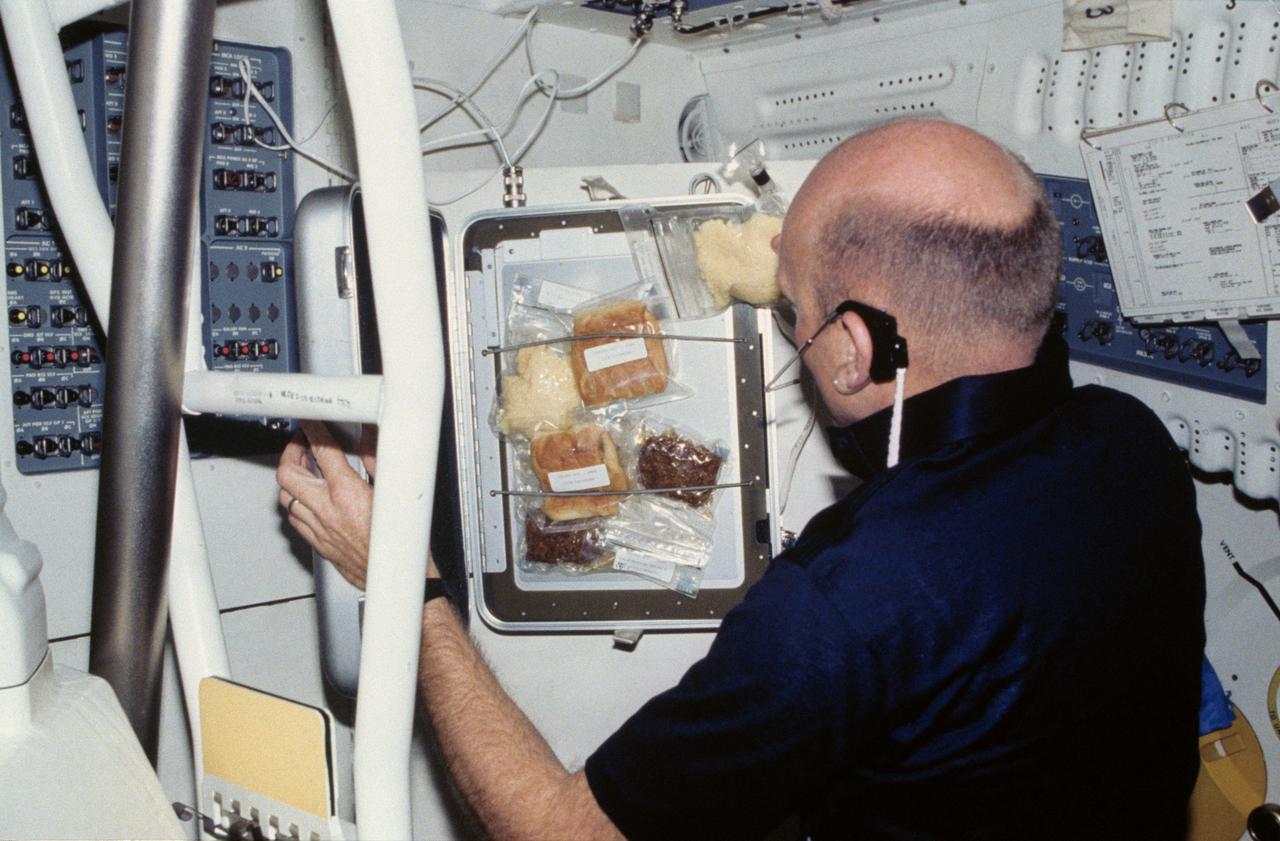
S82-28923 (March 1982) --- Astronaut C. Gordon Fullerton, STS-3 pilot, uses both hands to retrieve part of a meal from an orbital flight test food warmer in the middeck area of the Earth-orbiting space shuttle Columbia. The food warmer is a versatile briefcase-like device developed by life sciences personnel at the Johnson Space Center (JSC). Astronaut Jack R. Lousma, STS-3 commander, took this photograph with a 35mm camera. Photo credit: NASA
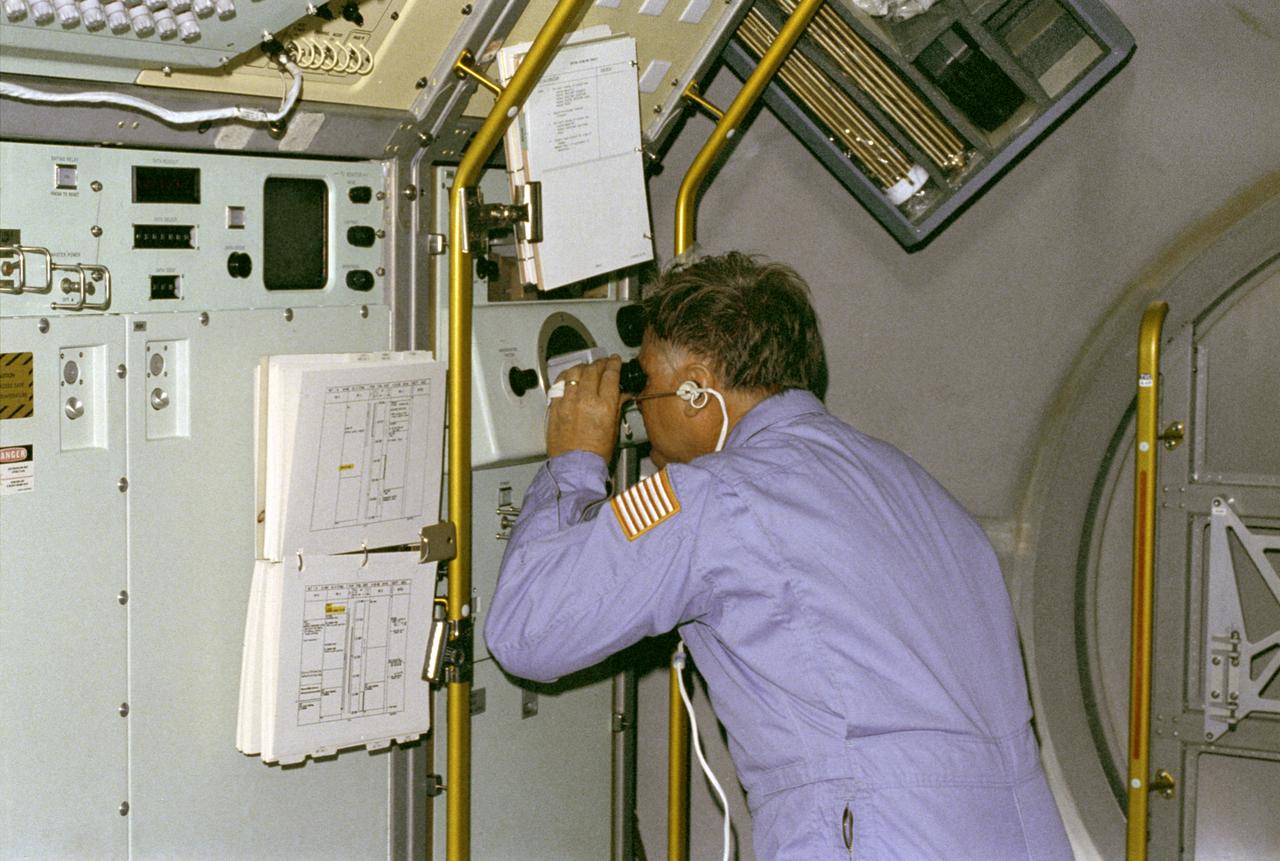
The primary purpose of the Spacelab-3 mission was to conduct materials science experiments in a stable low-gravity environment. In addition, the crew performed research in life sciences, fluid mechanics, atmospheric science, and astronomy. Spacelab-3 was equipped with several new minilabs, special facilities that would be used repeatedly on future flights. Two elaborate crystal growth furnaces, a life support and housing facility for small animals, and two types of apparatus for the study of fluids were evaluated on their inaugural flight. In this photograph, astronaut Don Lind observes the mercuric iodide growth experiment through a microscope at the vapor crystal growth furnace. The goals of this investigation were to grow near-perfect single crystals of mercuric iodide and to gain improved understanding of crystal growth by a vapor process. Mercuric iodide crystals have practical use as sensitive x-ray and gamma-ray detectors, and in portable detector devices for nuclear power plant monitoring, natural resource prospecting, biomedical applications in diagnosis and therapy, and in astronomical instruments. Managed by the Marshall Space Flight Center, Spacelab-3 (STS-51B) was launched aboard the Space Shuttle Orbiter Challenger on April 29, 1985.
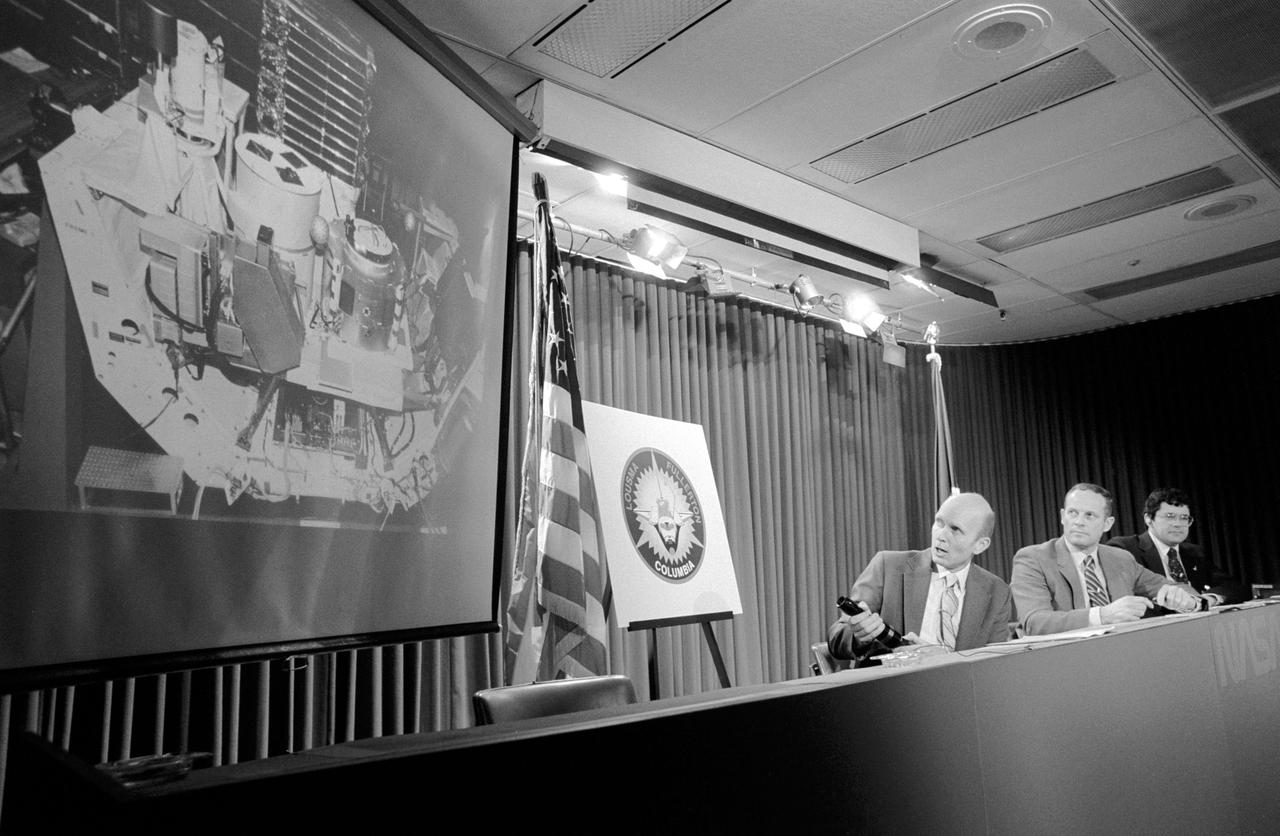
S82-25905 (21 Jan. 1982) --- Astronaut C. Gordon Fullerton uses an electronic pointer to localize an area on a projected visual of the OSS payload package to be carried in the cargo bay of the Columbia on STS-3. Fullerton is pilot for the flight and Jack R. Lousma, center, is mission commander. The two were holding one of a series of pre-STS-3 press briefings. They were introduced by Dr. John Lawrence, far right, a public information specialist for JSC?s Office of Public Affairs. Photo credit: NASA
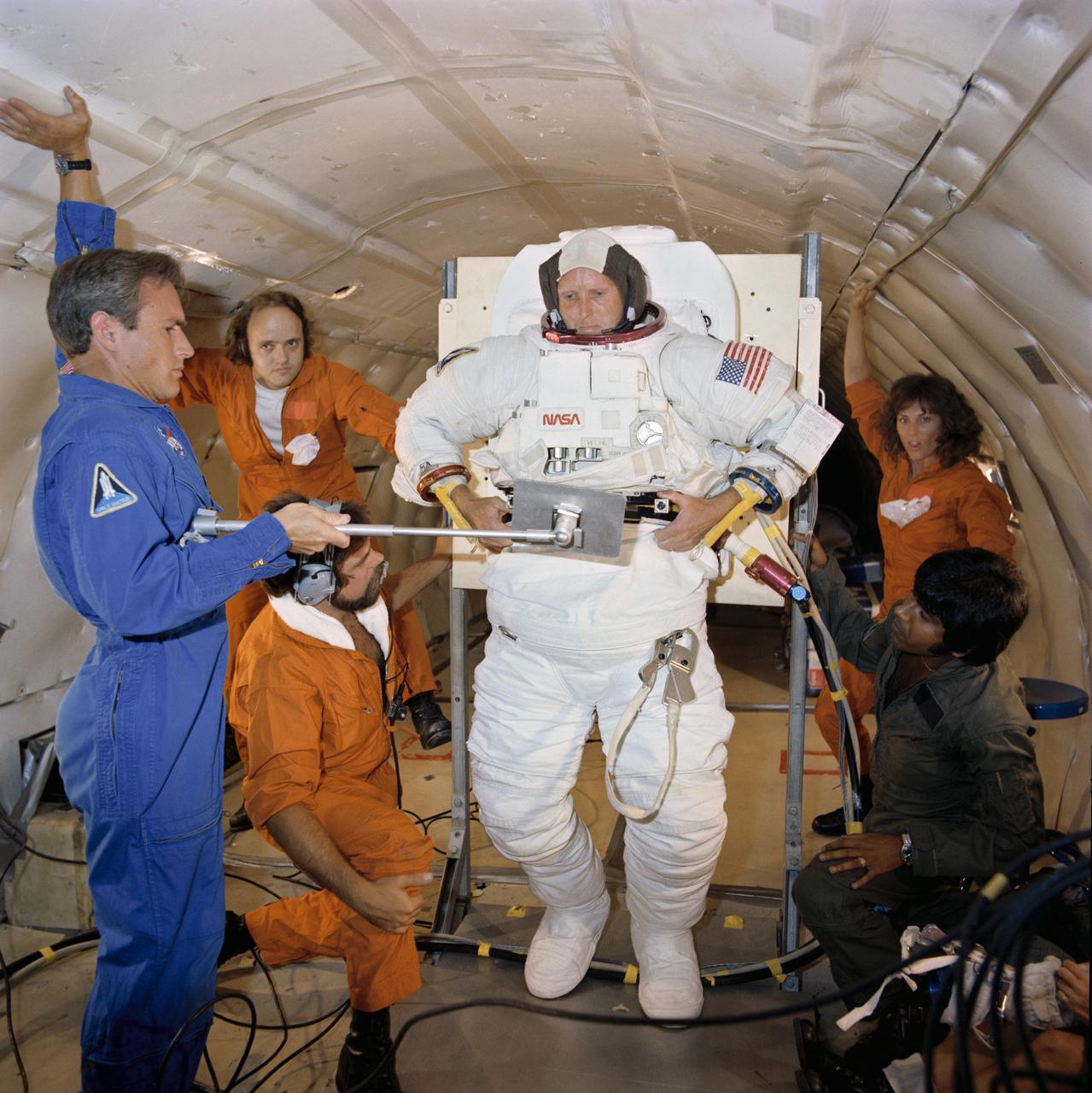
S81-34432 (July 1981) --- Astronaut C. Gordon Fullerton, STS-3 pilot, takes part in a suit donning and doffing exercise aboard a KC-135 "zero-gravity" aircraft. Mission specialist/astronaut William F. Fisher holds a mirror to assist Fullerton with hose and cable linkups to his suit. A special parabolic pattern flown by the KC-135 provides short durations of weightlessness. Fullerton's suit is an Extravehicular Mobility Unit (EMU), used by astronauts when leaving the shirt-sleeve environment of their shuttle orbiter to go outside and perform tasks in the vacuum of space. There are no such EVA plans on STS-3, but the crewmen are trained in this area in the event of a contingency. Photo credit: NASA
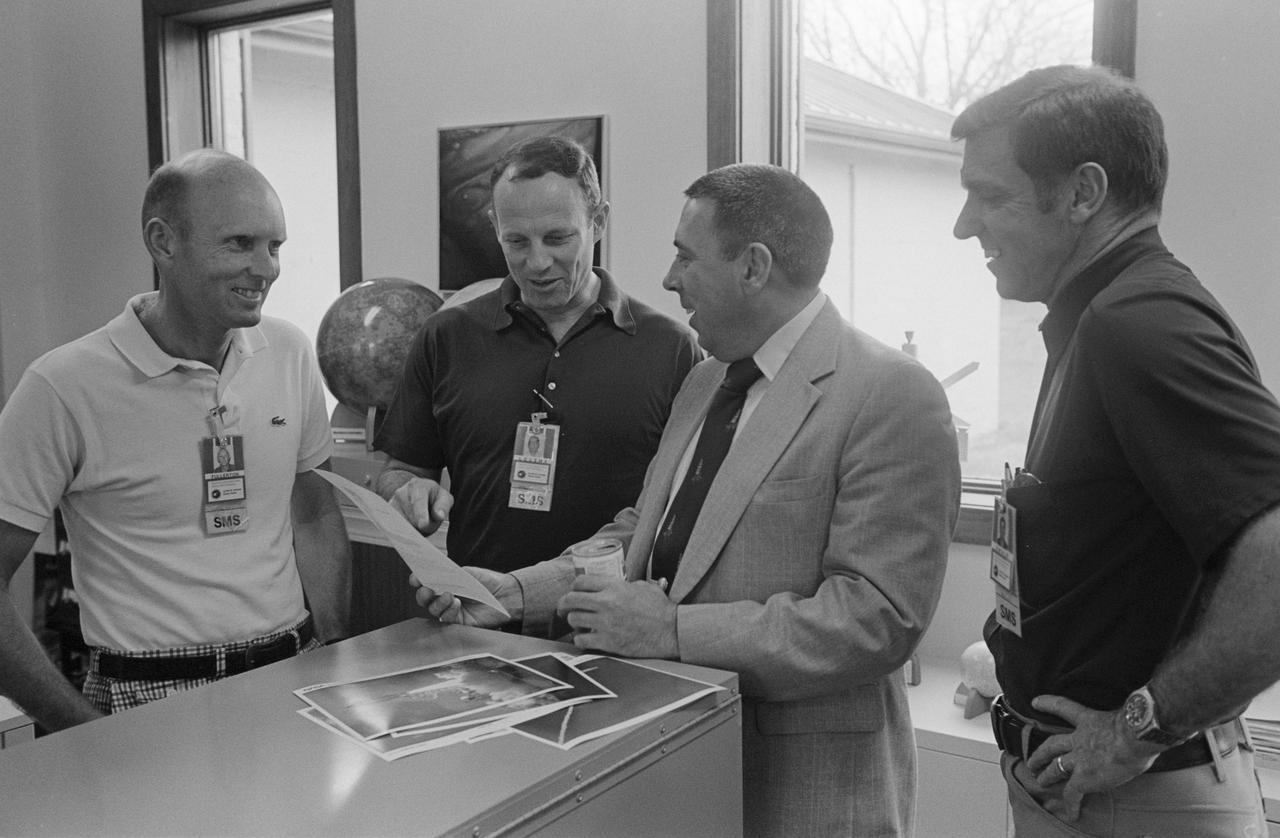
S82-28950 (1 April 1982) --- During a break from a debriefing session, the STS-3 crew members look over some of the photography of their launch from the Kennedy Space Center along with other participants of the meeting. Astronaut Jack R. Lousma is second from left; astronaut C. Gordon Fullerton is at left. They are commander and pilot, respectively, of STS-3. George W. S. Abbey, director of flight operations at JSC, is second from right, and astronaut Joe H. Engle, STS-2 commander, is at right. Photo credit: NASA
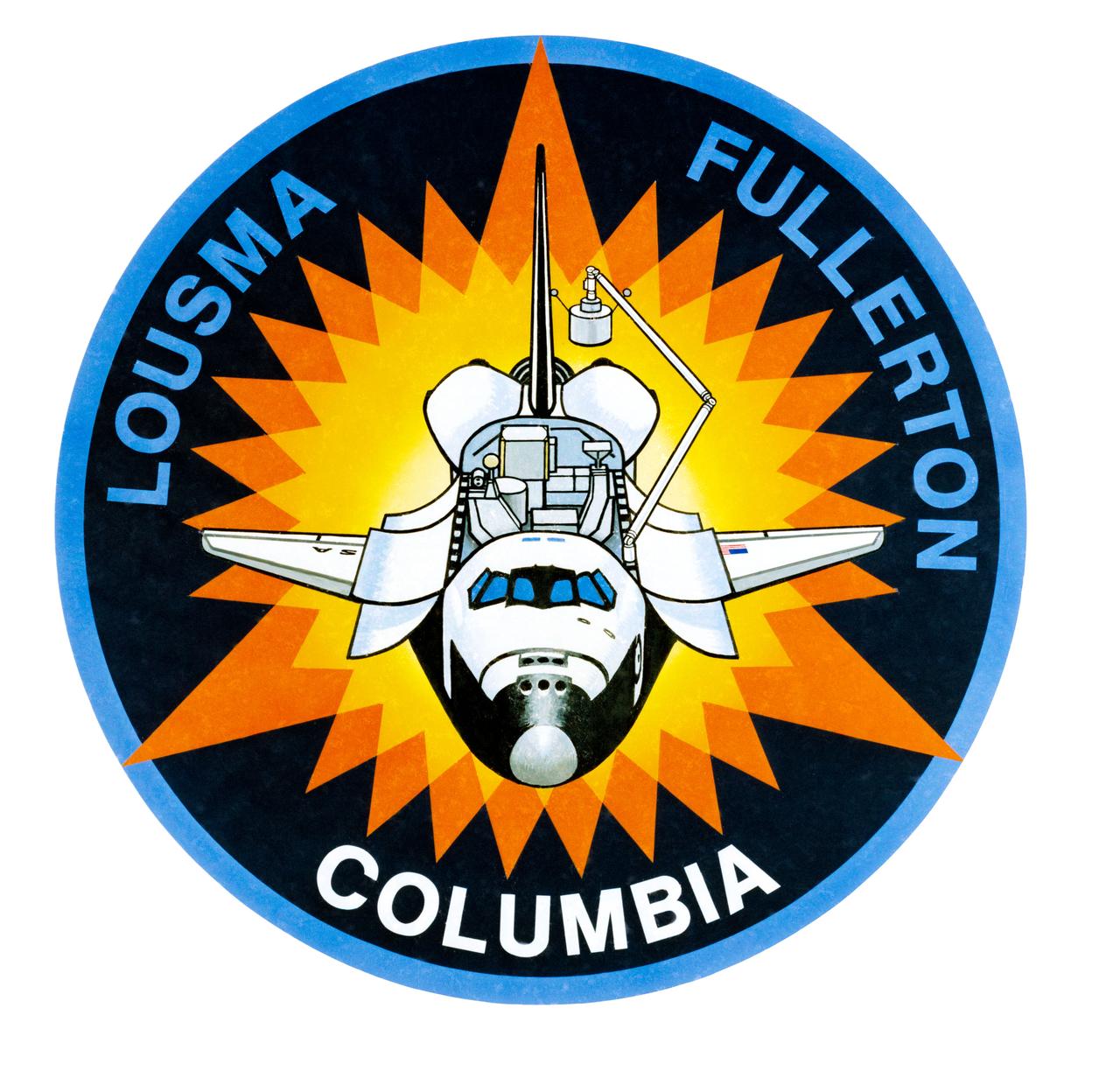
S82-26315 (4 Feb. 1982) --- This is the insignia for NASA's third flight (STS-3) of the Space Transportation System's (STS) Columbia, depicted in the middle of the blue sphere against the background of the sun. The Columbia's tail, nose, and top will each be pointed at the sun for long periods to test its thermal response to extremes of temperatures. The three prominent rays represent the third STS flight. The surnames of astronauts Jack R. Lousma, commander, and C. Gordon Fullerton, pilot, flank the vehicle, and the name Columbia appears at the bottom. The spacecraft's payload bay doors are open, and the Remote Manipulator System (RMS) arm with an experimental payload is extended as it will be on several occasions during the actual flight, scheduled for spring of this year. The artwork was accomplished by space artist Robert C. McCall of Paradise Valley, Arizona. The NASA insignia design for space shuttle flights is reserved for use by the astronauts and for other official use as the NASA Administrator may authorize. Public availability has been approved only in the forms of illustrations by the various news media. When and if there is any change in this policy, which is not anticipated, the change will be publicly announced. Photo credit: NASA
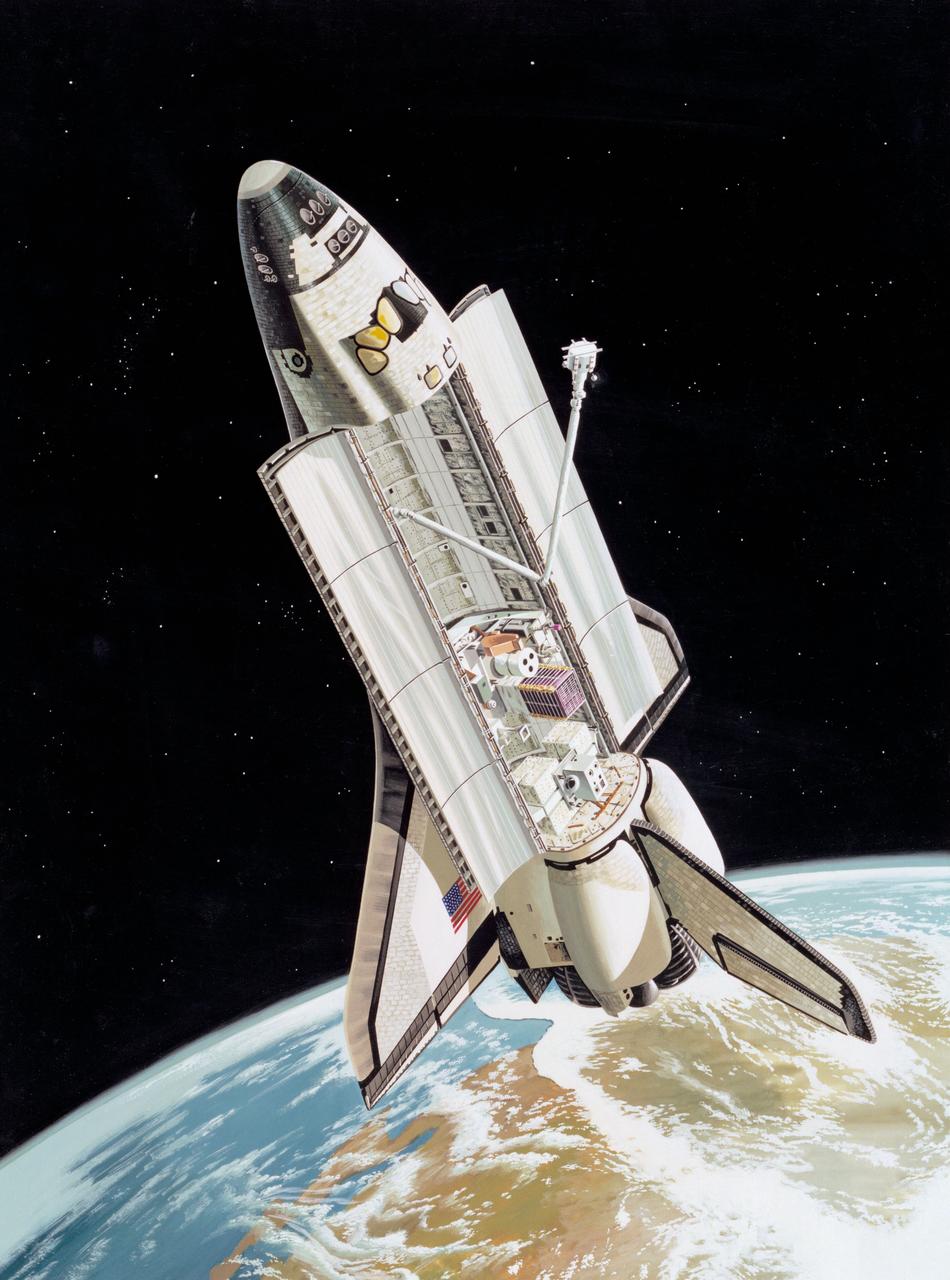
Art Concept of the PDP being held aloft by the Remote Manipulator System (RMS) during the STS-3 Mission from GSFC. 1. ART CONCEPTS - PDP (STS-3) 2. SHUTTLE - EXPERIMENTS (PDP) GSFC, MD
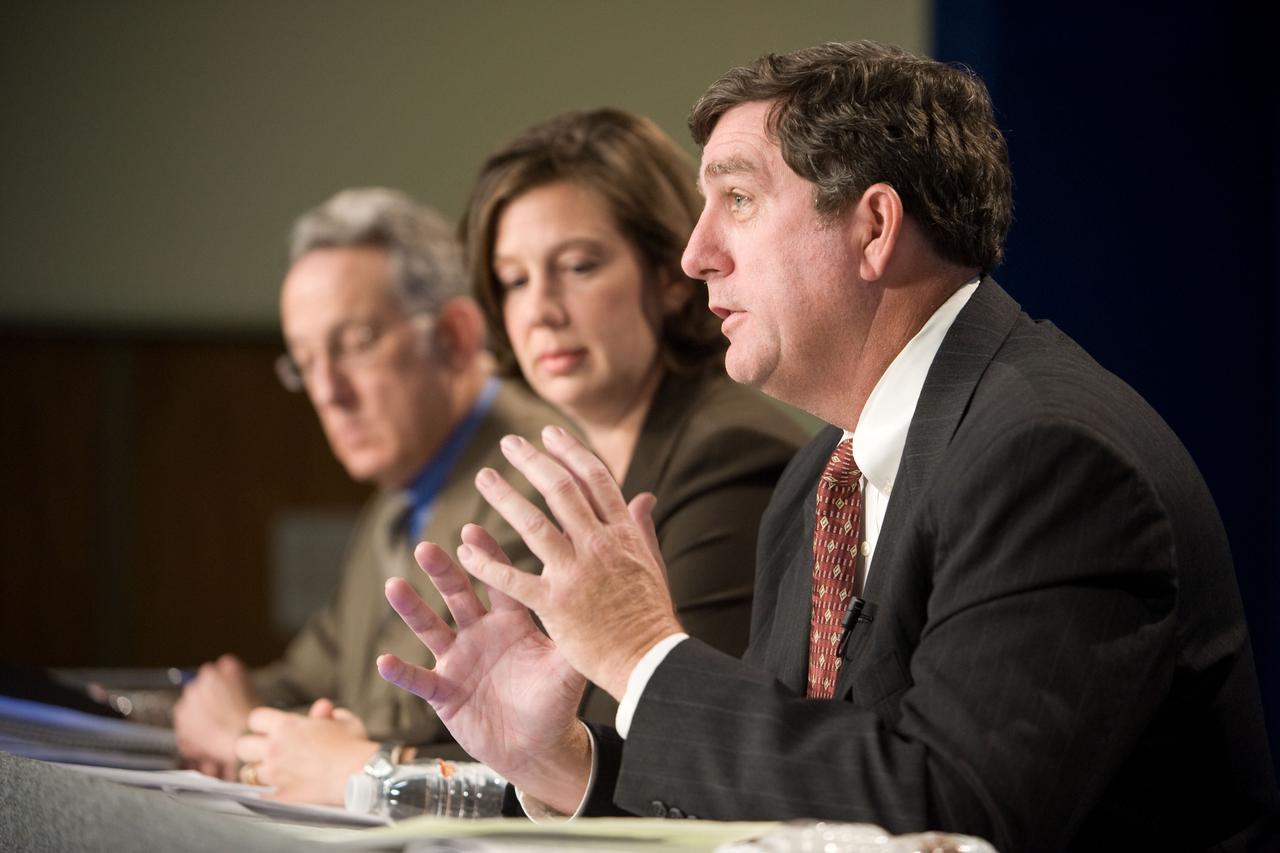
PHOTO DATE: 11-17-08 LOCATION: Bldg 2N, 212 SUBJECT: Photographic support for Media Services: Photograph STS-126 Flight Day 3 Mission Status Briefing. PHOTOGRAPHER: JAMES BLAIR
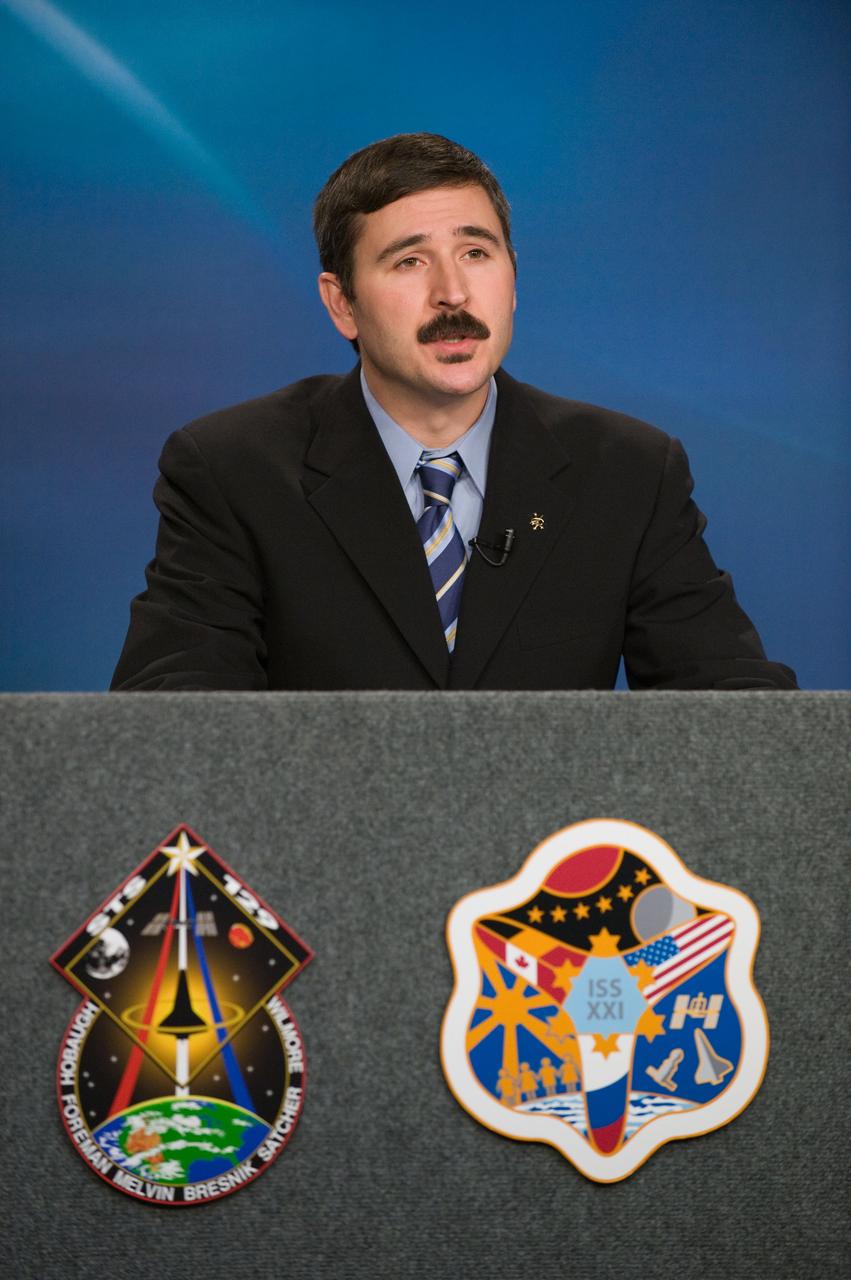
PHOTO DATE: 11-18-09 LOCATION: Bldg. 2S - Rm 122 Press Conference SUBJECT: STS-129 Flight Day 3 Mission Status Briefing with Michael Sarafin PHOTOGRAPHER: Lauren Harnett
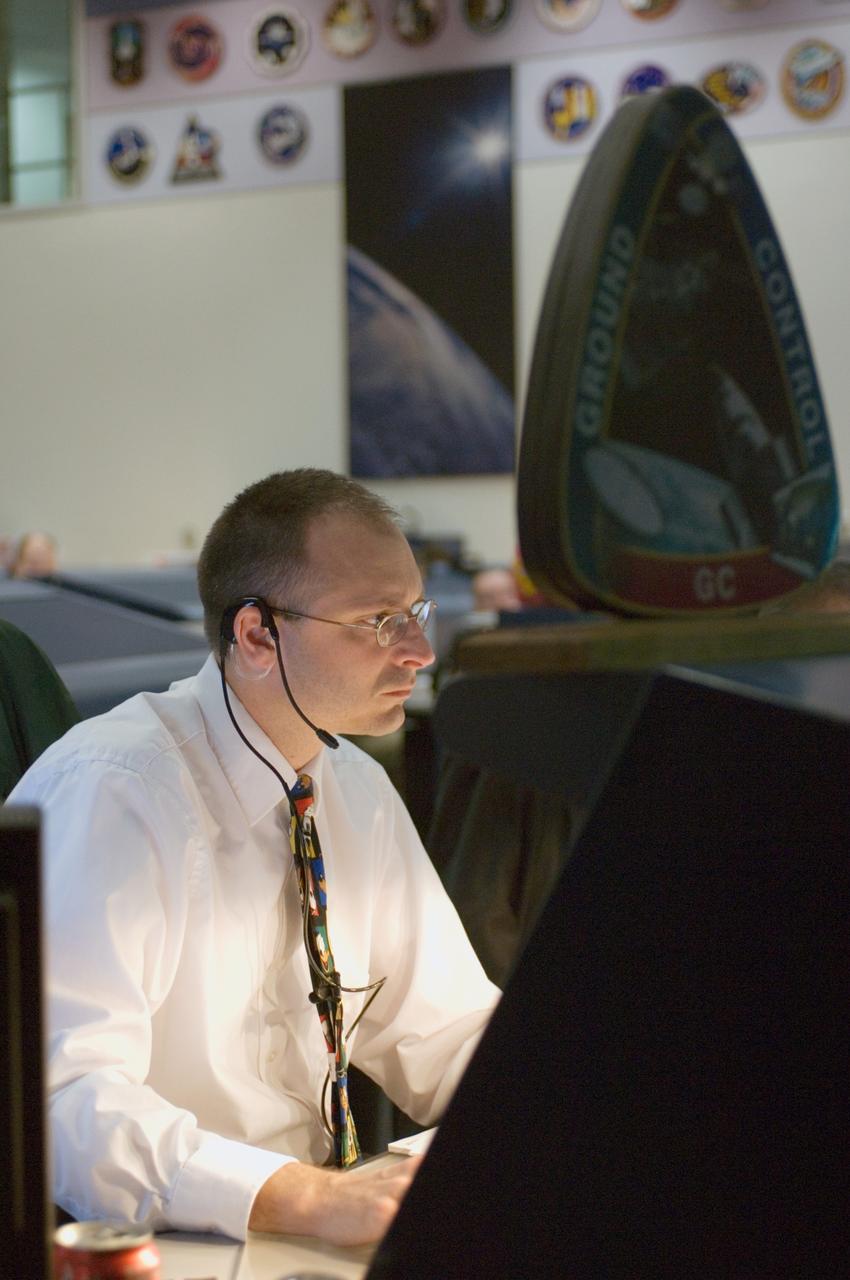
JSC2006-E-53585 (11 Dec. 2006) --- Aaron Frith, ground controller (GC) works the Orbit 3 shift in the Shuttle Flight Control Room for the STS-116 mission.
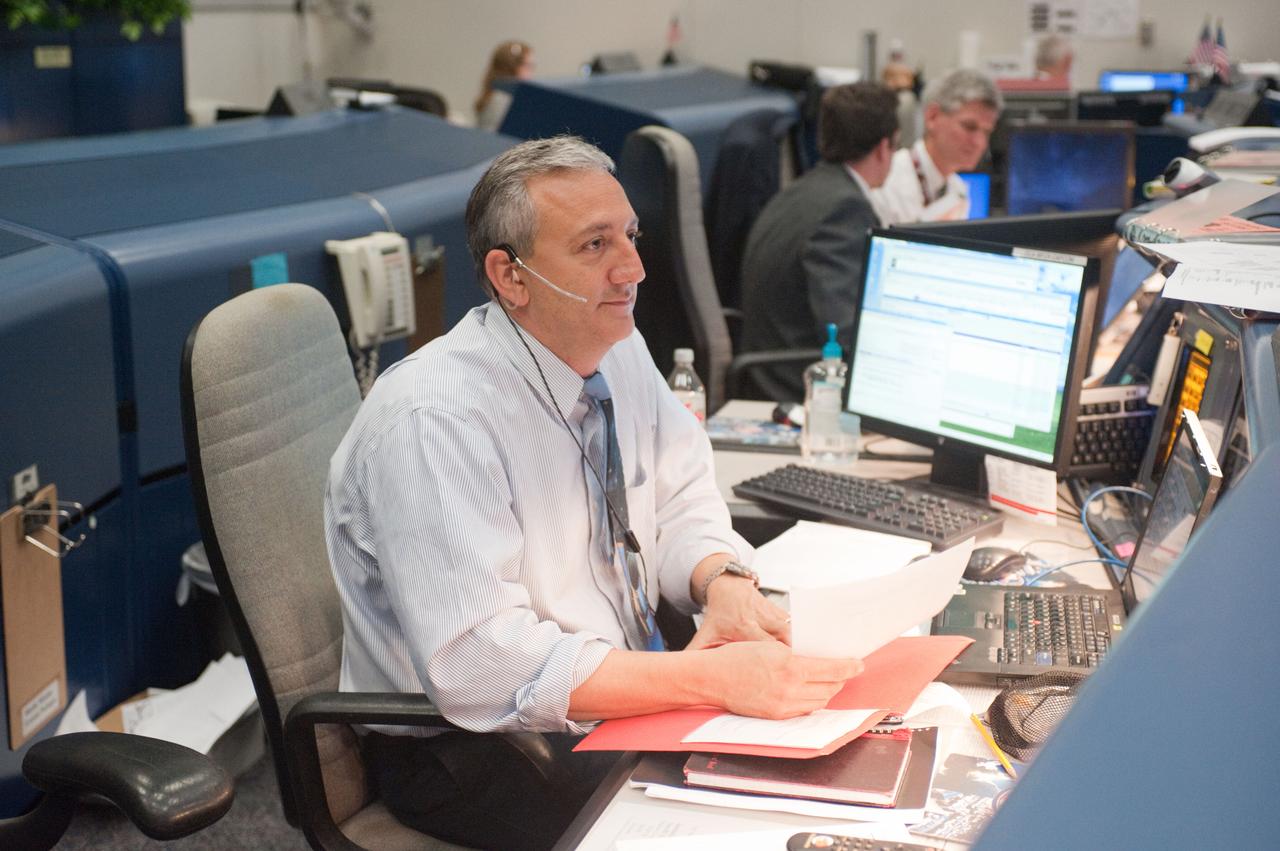
PHOTO DATE: 02/25/11 LOCATION: Bldg. 30 south -WFCR SUBJECT: STS-133/ULF5 Flight Controllers on Console - Orbit Shift 3/1 - Mike Marsh Award PHOTOGRAPHER: GEESEMAN
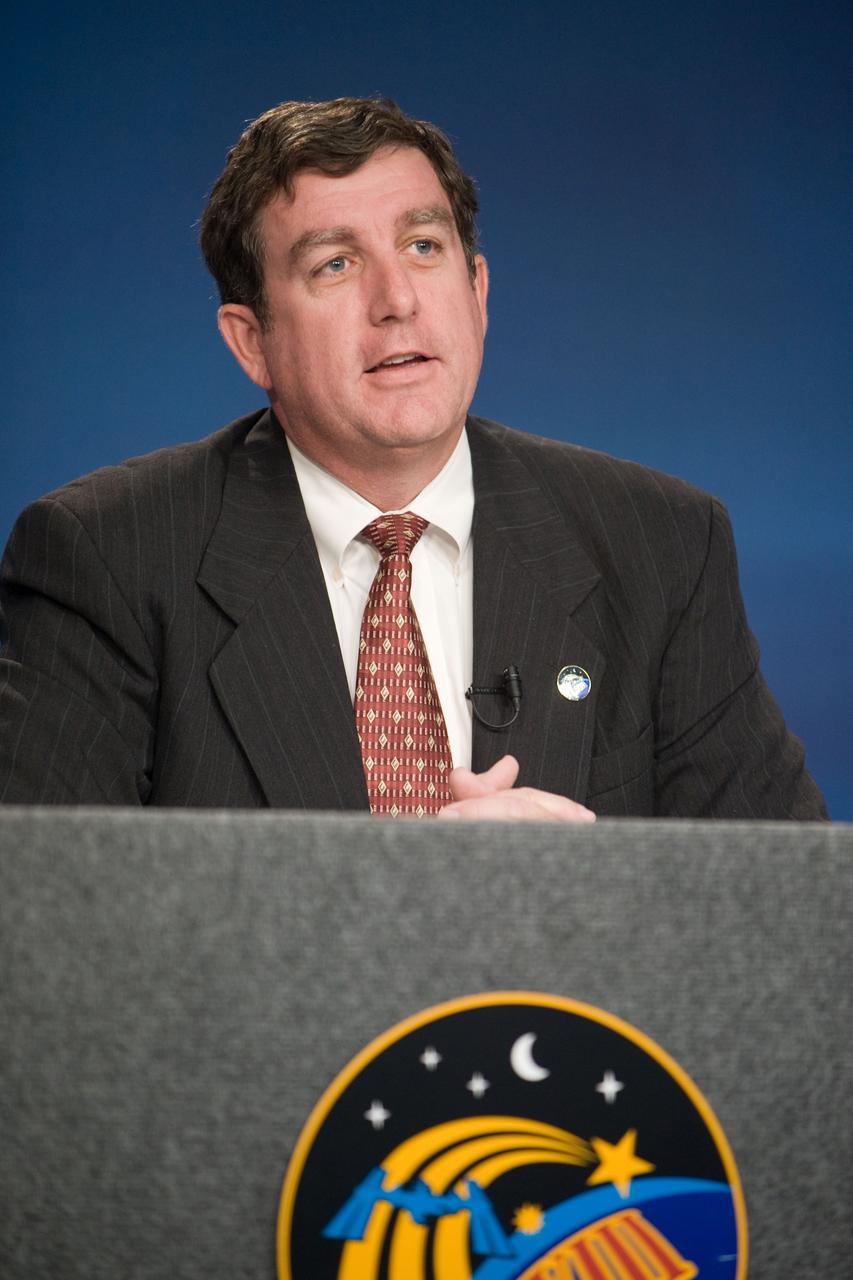
PHOTO DATE: 11-17-08 LOCATION: Bldg 2N, 212 SUBJECT: Photographic support for Media Services: Photograph STS-126 Flight Day 3 Mission Status Briefing. PHOTOGRAPHER: JAMES BLAIR
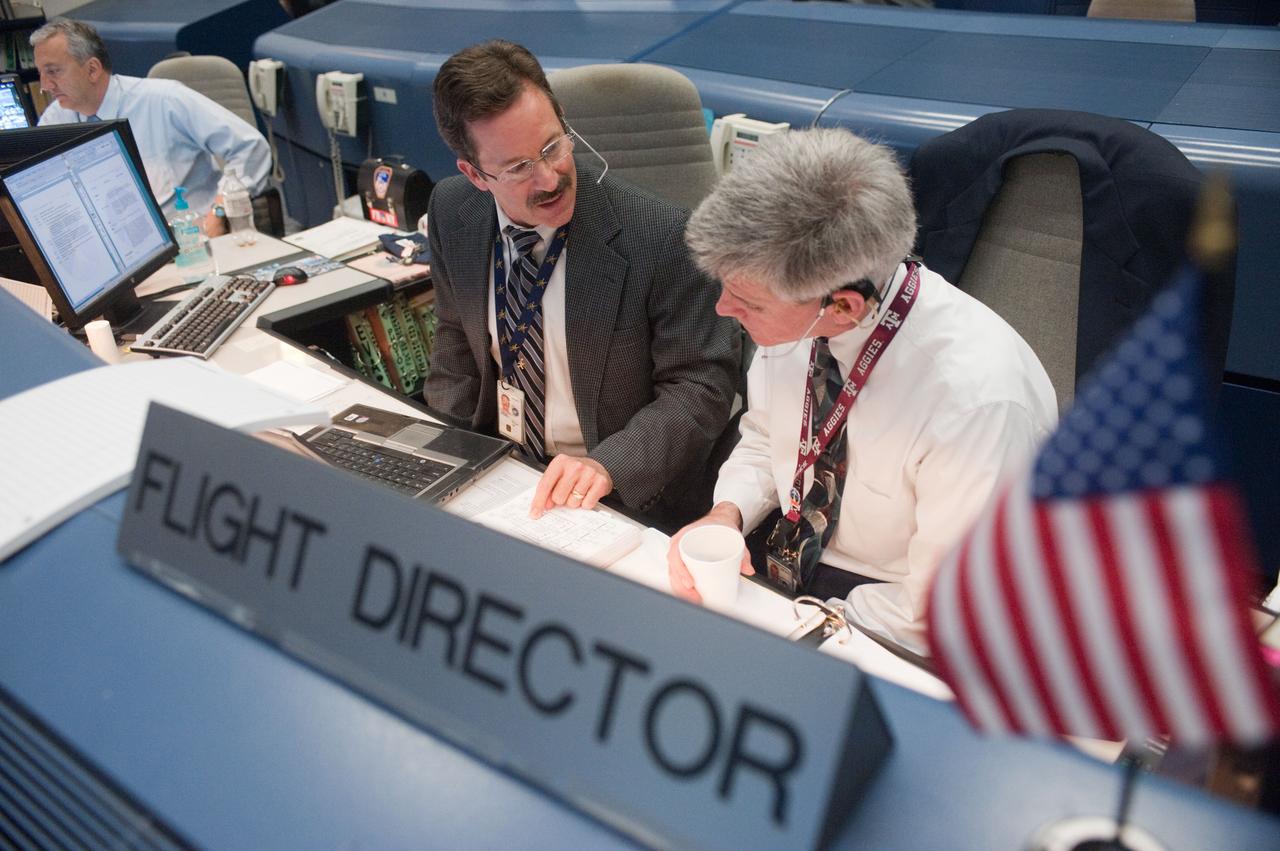
PHOTO DATE: 02/25/11 LOCATION: Bldg. 30 south -WFCR SUBJECT: STS-133/ULF5 Flight Controllers on Console - Orbit Shift 3/1 - Mike Marsh Award PHOTOGRAPHER: GEESEMAN
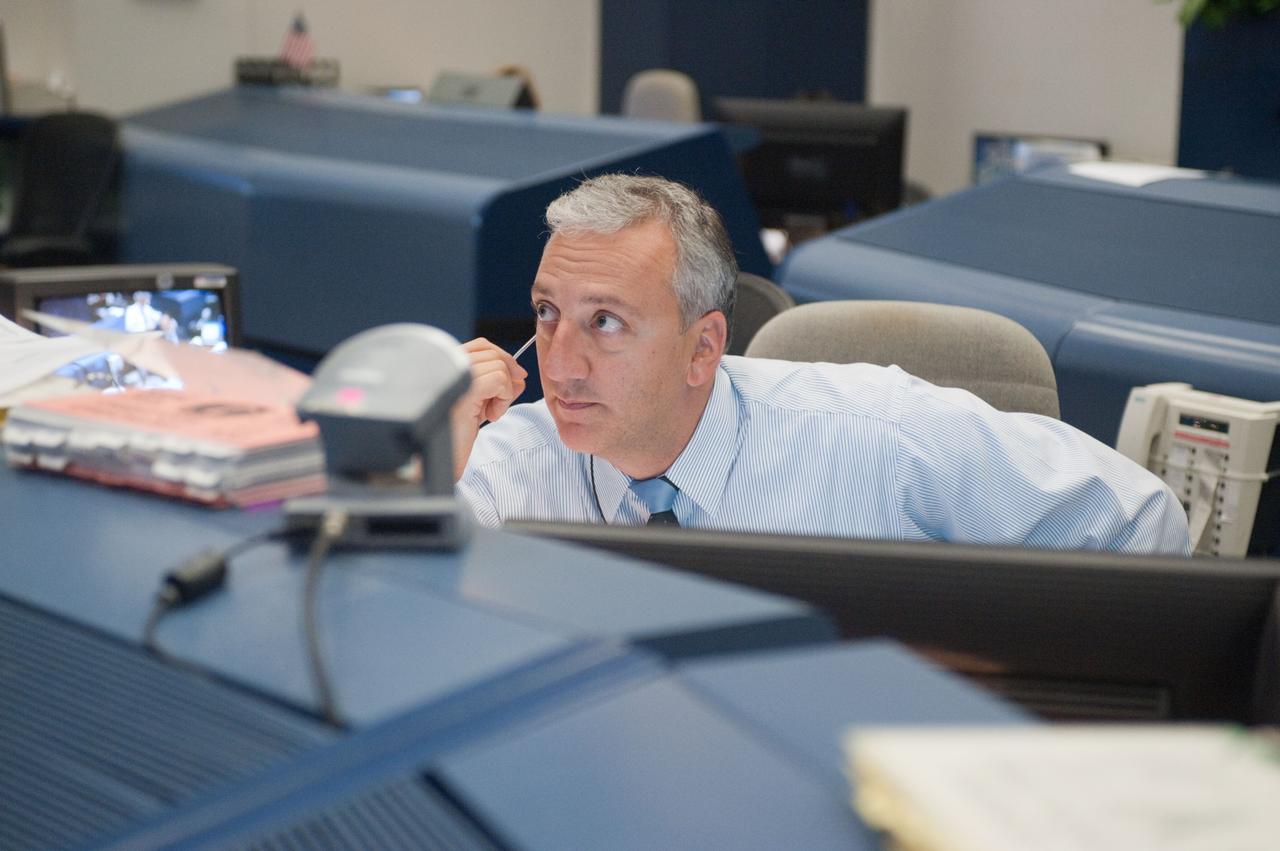
PHOTO DATE: 02/25/11 LOCATION: Bldg. 30 south -WFCR SUBJECT: STS-133/ULF5 Flight Controllers on Console - Orbit Shift 3/1 - Mike Marsh Award PHOTOGRAPHER: GEESEMAN
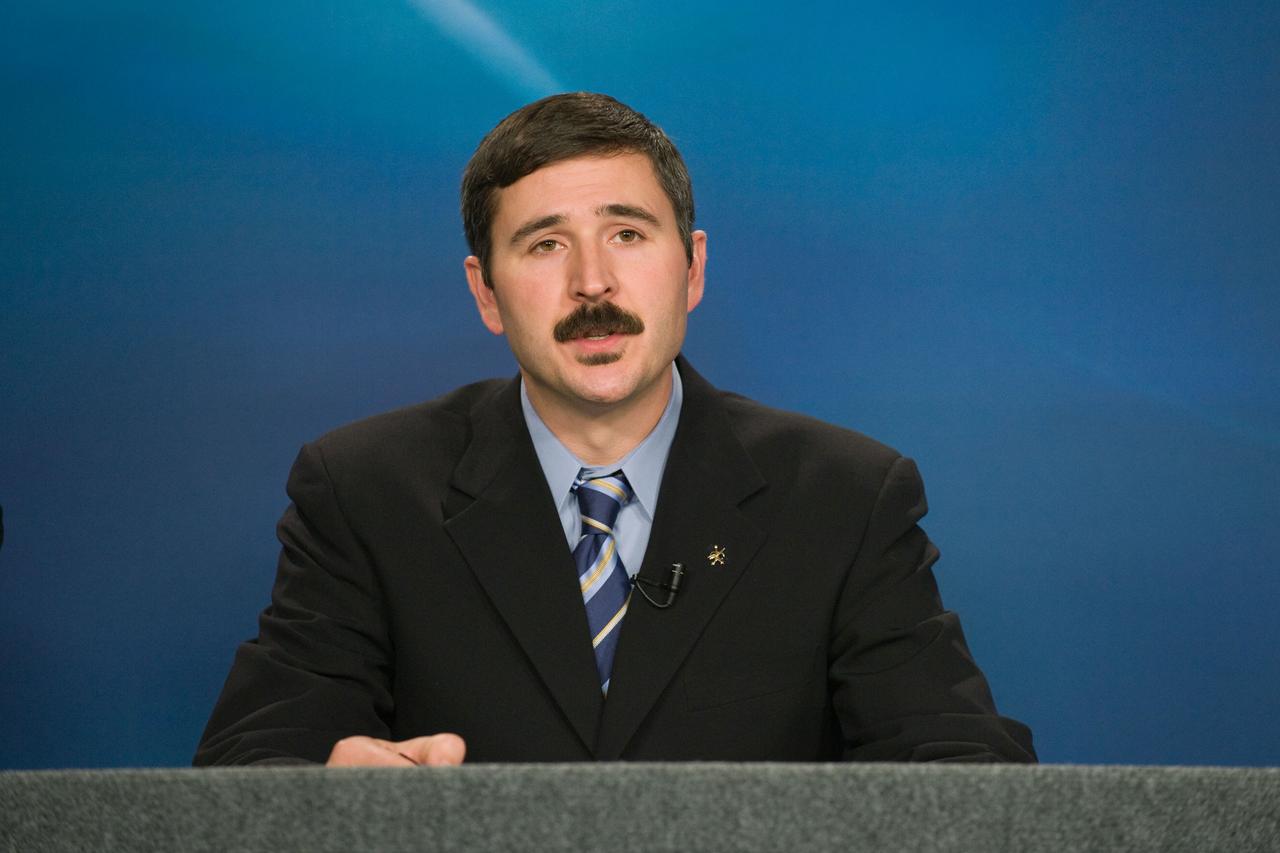
PHOTO DATE: 11-18-09 LOCATION: Bldg. 2S - Rm 122 Press Conference SUBJECT: STS-129 Flight Day 3 Mission Status Briefing with Michael Sarafin PHOTOGRAPHER: Lauren Harnett
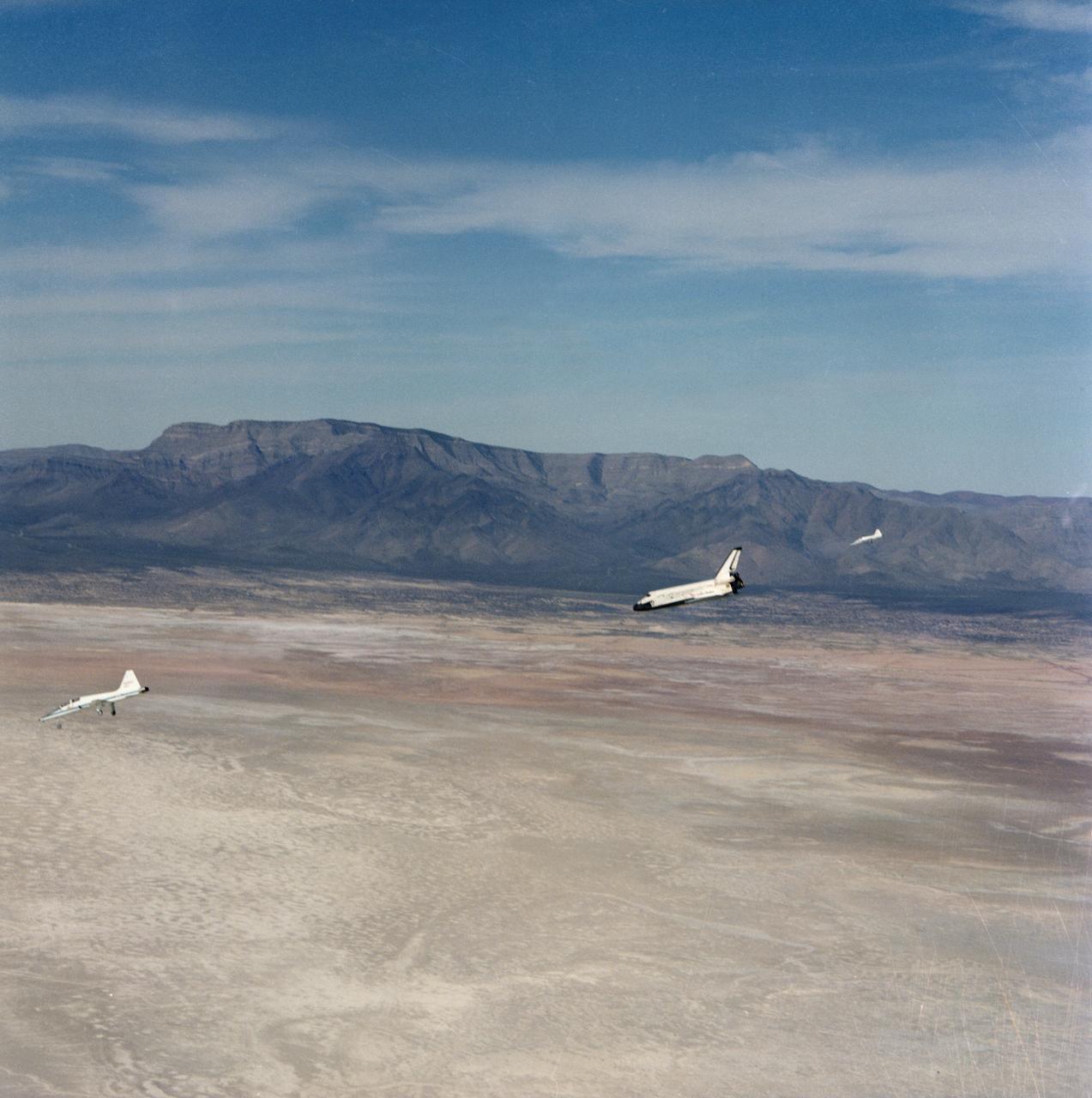
S82-28840 (30 March 1982) --- T-38 chase planes remain relatively close to the NASA reusable space shuttle Columbia (STS-3) as it heads for a completion of an eight-day mission on the White Sands Missile Range's Northrup strip. Astronauts Jack R. Lousma and C. Gordon Fullerton were aboard the craft. This view was photographed from another T-38. Photo credit: NASA
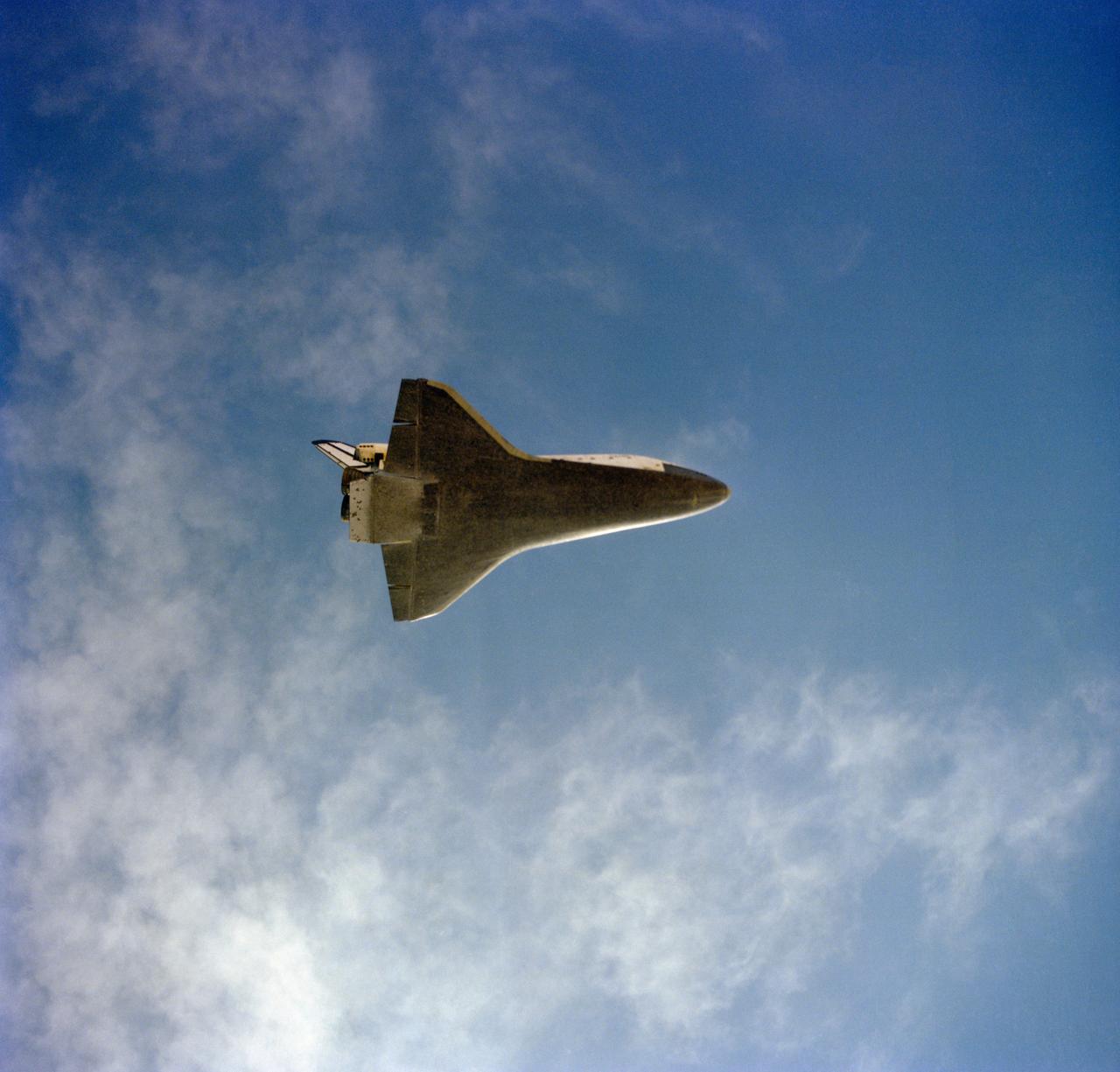
S82-28835 (30 March 1982) --- This unique view of the underside of the space shuttle orbiter Columbia was taken with a handheld camera aboard a T-38 chase plane over the White Sands Missile Range in New Mexico. Bad weather here yesterday vanished and the STS-3 crew of astronaut Jack R. Lousma and C. Gordon Fullerton greeted a pleasant climate along with a large crowd of spectators upon their landing. The successful landing was the first attempted in the actual orbiter on New Mexico soil. Photo credit: NASA
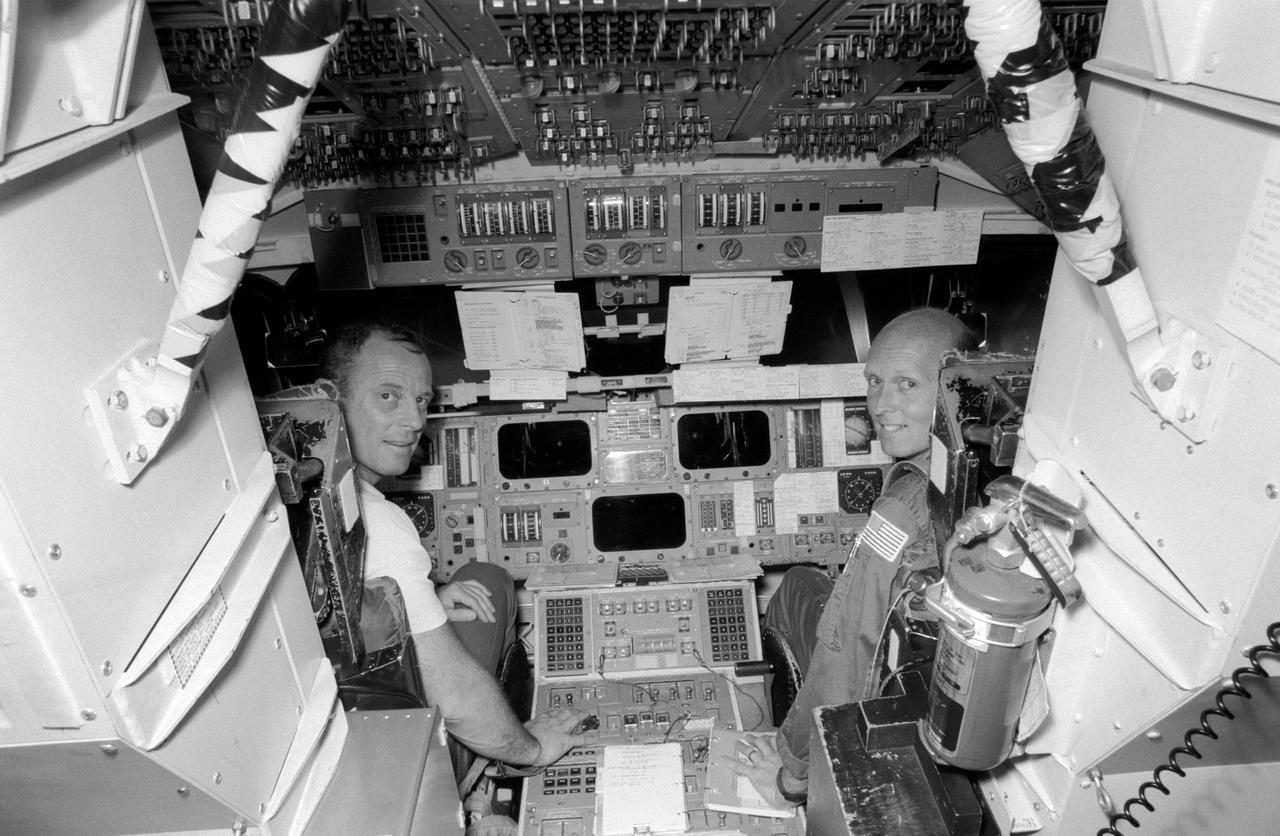
S82-28534 (16 March 1982) --- Astronauts Jack R. Lousma, left, and C. Gordon Fullerton are at the commander and pilot?s station, respectively, in the shuttle mission simulator at the LBJ Space Centers mission simulation and training facility. They have less than a week of training left in preparation for NASA?s third space transportation system (STS-3) flight. Scheduled to launch on March 22, STS-3 in expected to give space shuttle Columbia its longest stay (seven days) thus far. Photo credit: NASA
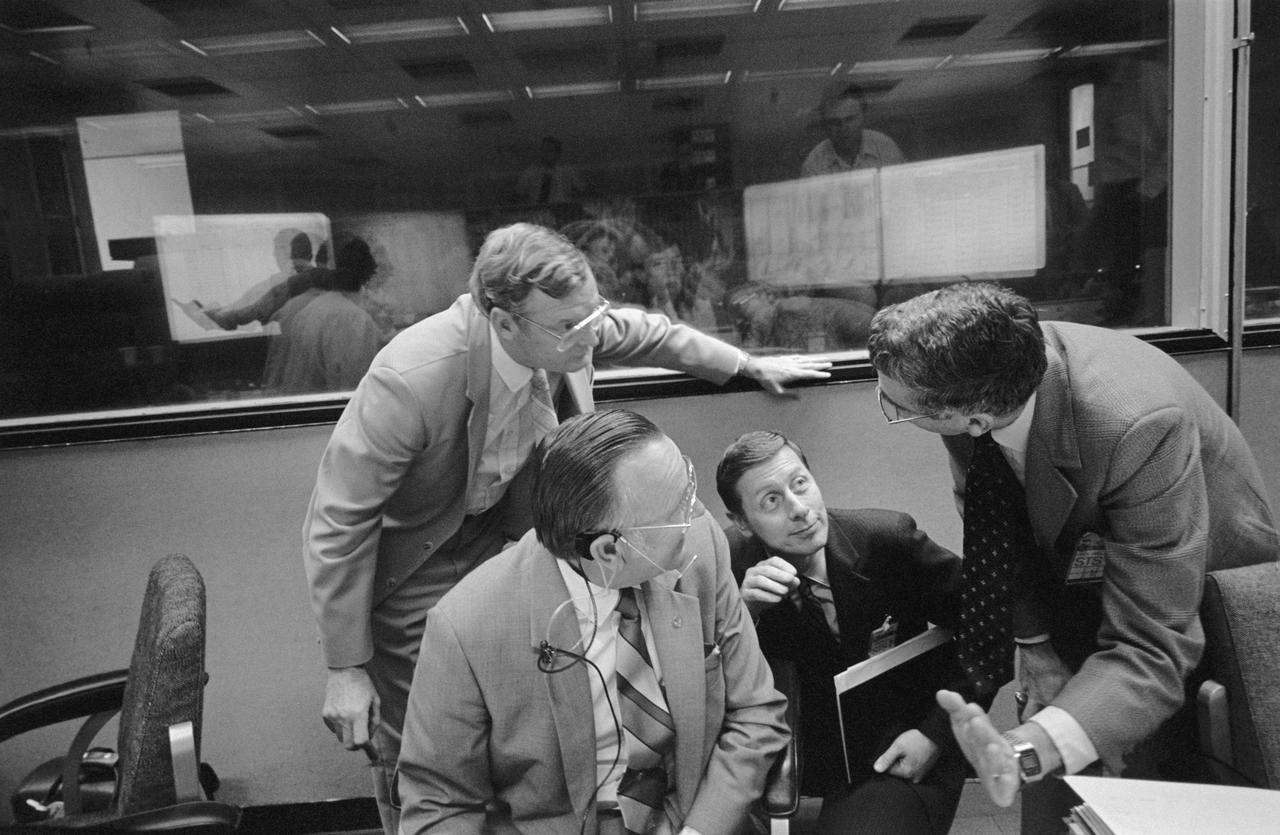
Mission Control Activities during the STS-3 Mission, Day-4 with: Maj. Gen. James A. Abrahamson, Associate Administrator of the Space Transportation System (STS), NASA Hdqs., conversing with Dr. Kraft; Glynn S. Lunney, Manager, Space Shuttle Program Office, JSC, Aaron Cohen, Manager, Space Shuttle Orbiter Project Office; and, J. E. Conner, Ford Aerospace Engineer at the Instrumentation and Communications Officer (INCO) Console position. 1. Glynn S. Lunney 2. Major General James A. Abrahamson 3. Aaron Cohen 4. J. E. Conner 5. Dr. Christopher Kraft JSC, Houston, TX
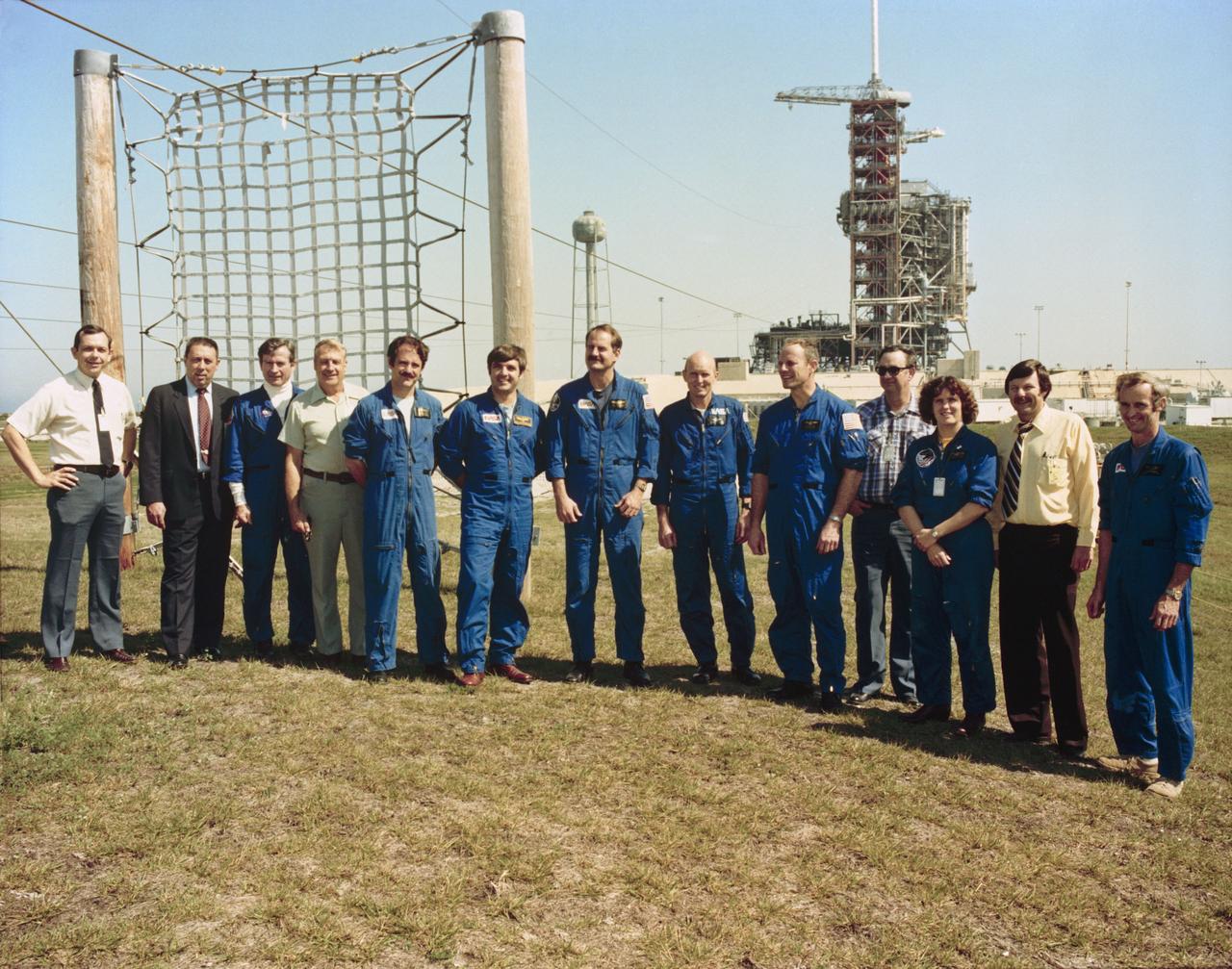
S82-28457 (19 Feb. 1982) --- Member of the JSC astronaut corps., STS-3 vehicle integration test (VIT) team and other personnel pose for a photograph at the completion of a countdown demonstration test (CDDT) and safety briefings at Launch Pad 39A, Kennedy Space Center (KSC). Participants are, from the left, Wilbur J. Etbauer, engineer with the VIT team; George W. S. Abbey, director of flight operations at JSC; astronaut John W. Young, chief of the astronaut office at JSC; Jack Fleming of Rockwell International; mission specialist-astronaut John M. Lounge; astronaut Daniel C. Brandenstein; mission specialist-astronaut James D. Van Hoften; astronauts C. Gordon Fullerton and Jack Lousma, prime crew for STS-3; Olan J. Bertrand, VIT team member; mission specialist-astronaut Kathryn D. Sullivan; Richard W. Nygren, head of the VIT team; and astronaut Donald E. Williams. The space shuttle Columbia is obscured by its service structure on Launch Pad 39A in the background. Part of slide-wire type emergency escape system is visible in the picture. Photo credit: NASA
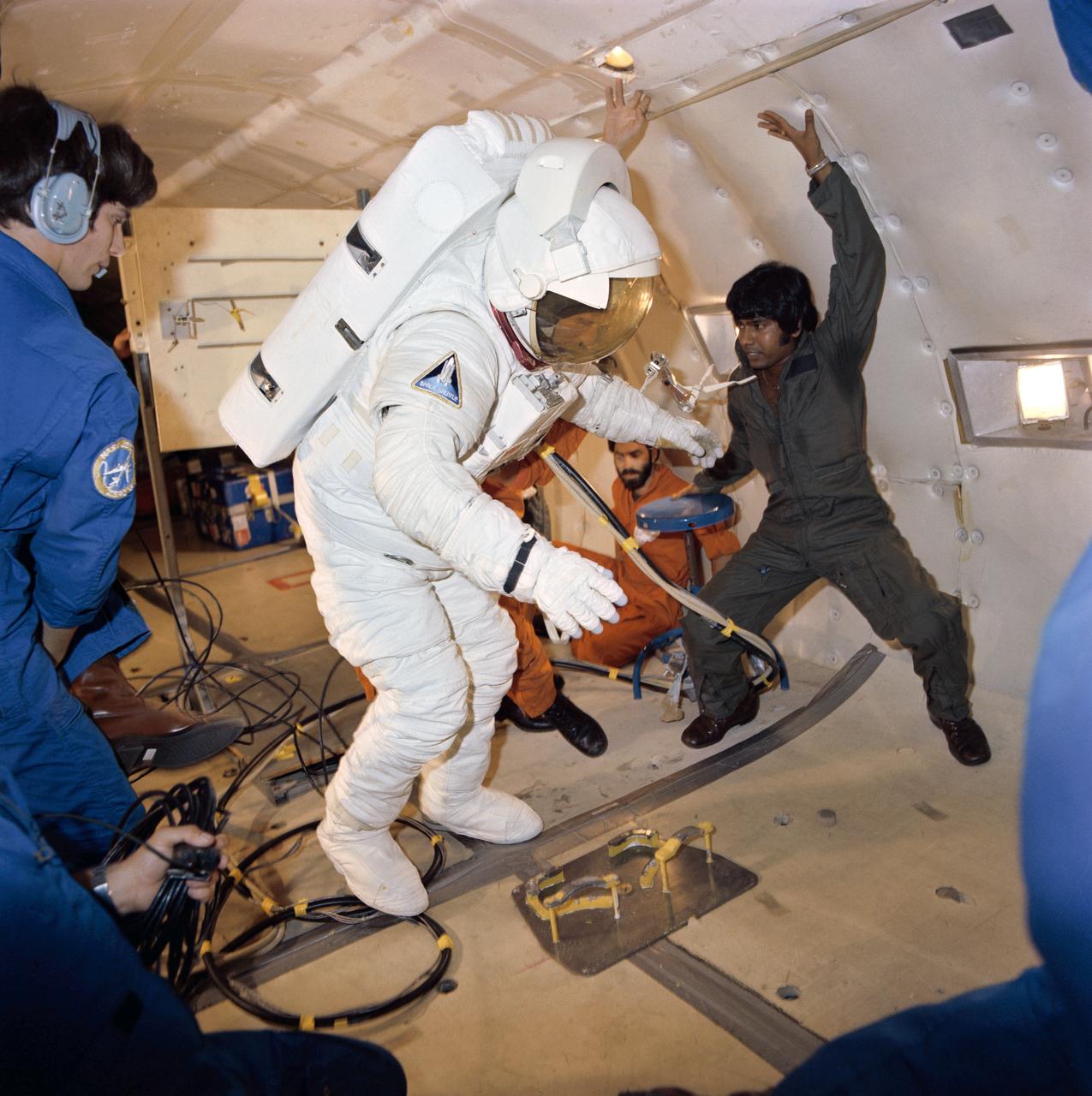
S81-34448 (July 1981) --- Astronaut C. Gordon Fullerton, STS-3 pilot, fully suited, gets a preview of what it might be like in space during a flight aboard NASA's KC-135 "zero-gravity" aircraft. A special parabolic pattern flown the aircraft provides short periods of weightlessness. Fullerton's suit is an Extravehicular Mobility Unit (EMU), used by astronauts when leaving the shirt-sleeve environment of their shuttle orbiter to go outside perform tasks in space. There are no such EVA plans on STS-3, but crew members are trained in this area in the event of the necessity to perform chores in space that for some reason or other can't be done remotely. The astronaut has just donned his suit during a parabola and now takes the opportunity to float around in the absence of gravity. Photo credit: NASA
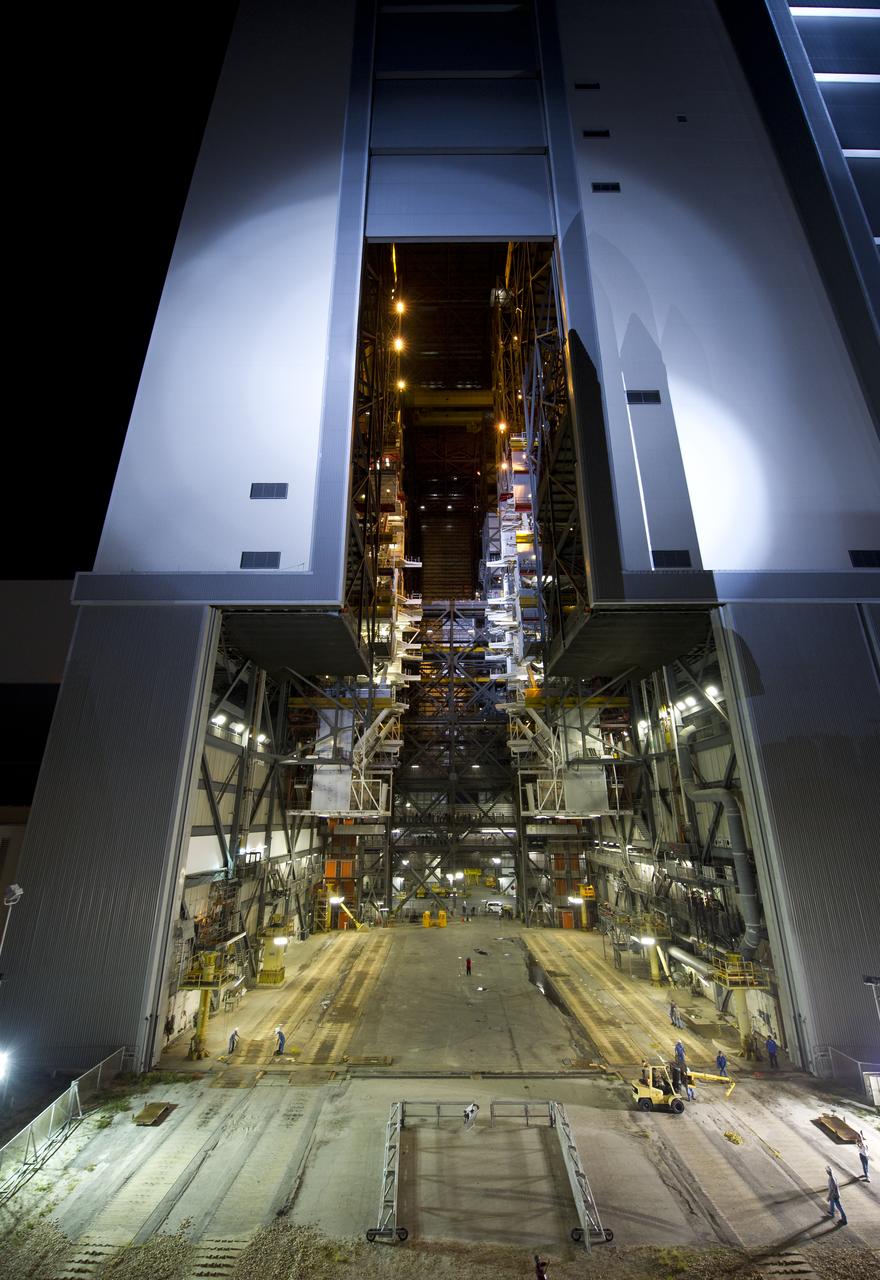
An empty High Bay 3 of the Vehicle Assembly Building is seen shortly after space shuttle Atlantis (STS-135) began its journey from the Vehicle Assembly Building to Launch Pad 39a for its final flight, Tuesday evening, May 31, 2011, at Kennedy Space Center in Cape Canaveral, Fla. The 3.4-mile trek, known as "rollout," will take about seven hours to complete. Atlantis will carry the Raffaello multipurpose logistics module to deliver supplies, logistics and spare parts to the International Space Station. The launch of STS-135 is targeted for July 8. Photo Credit: (NASA/Bill Ingalls)
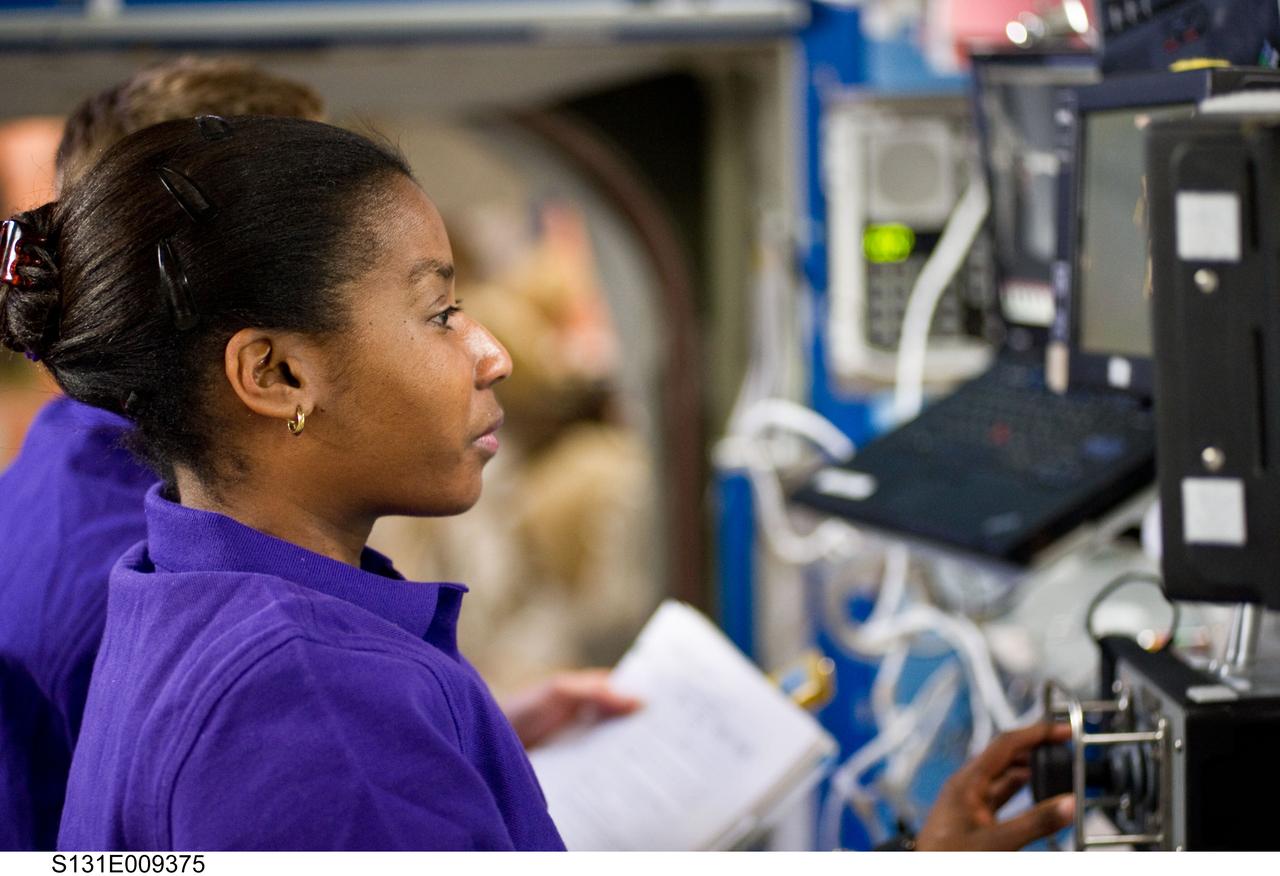
View of Stephanie Wilson as she works at the Robotics Workstation (RWS) in US Laboratory Destiny as she conducts a Space Station Remote Manipulator System (SSRMS) Ammonia Tank Assembly (ATA) retrieval in support of STS-131 EVA 3.

PHOTO DATE: 7-10-2011 LOCATION: Bldg. 2N - Press Briefing Room SUBJECT: STS-135 Flight Day 3 Mission Status Briefing with Kwatsi Alibaruho. WORK ORDER: 00000-DCB_STS135_Day 3_Status Briefing_7-10-11 PHOTOGRAPHER: Devin Boldt
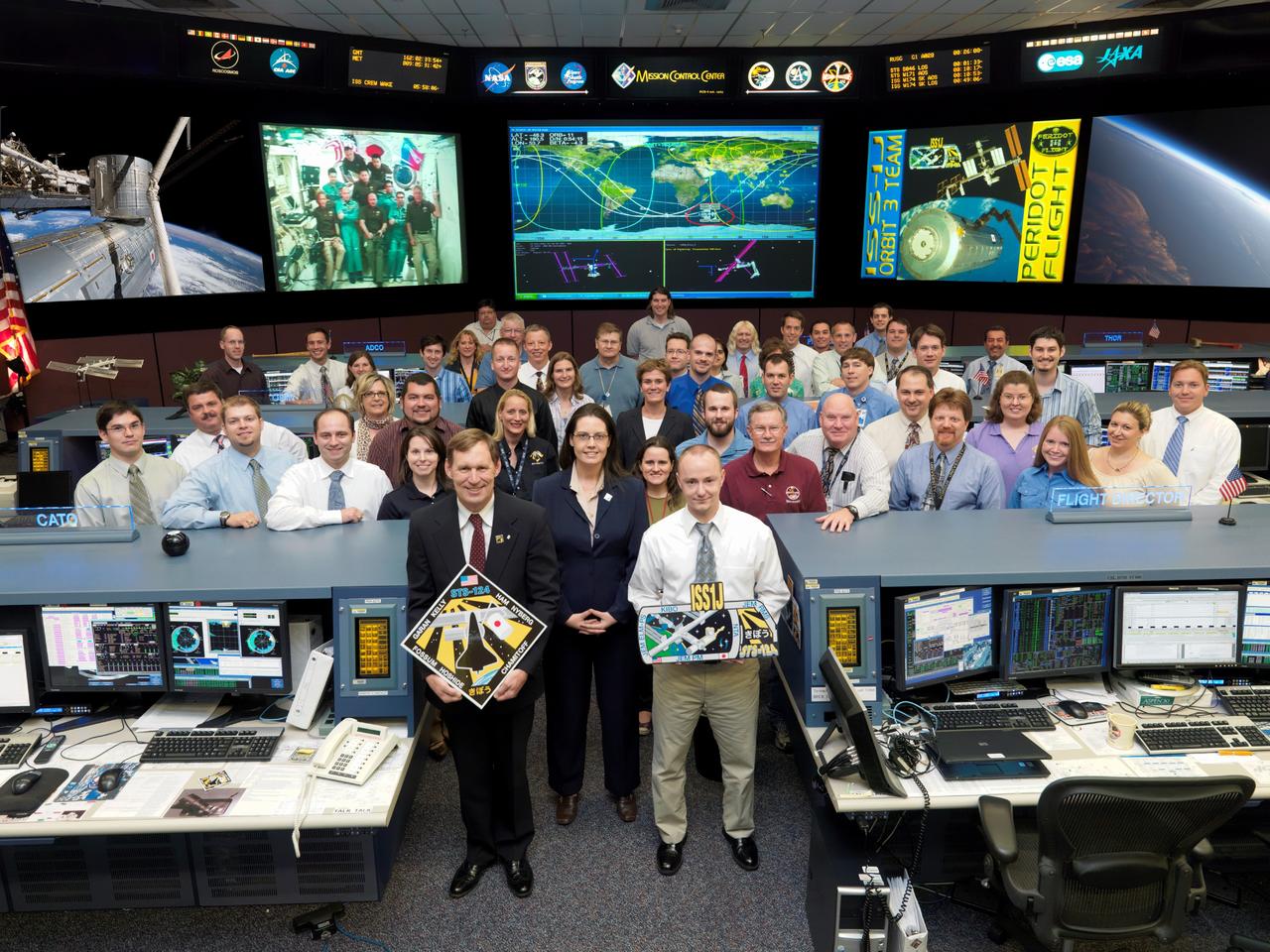
JSC2008-E-045777 (9 June 2008) --- The members of the STS-124/1J ISS Orbit 3 flight control team pose for a group portrait in the space station flight control room in the Mission Control Center at NASA's Johnson Space Center. Flight director Emily Nelson stands in the center foreground.
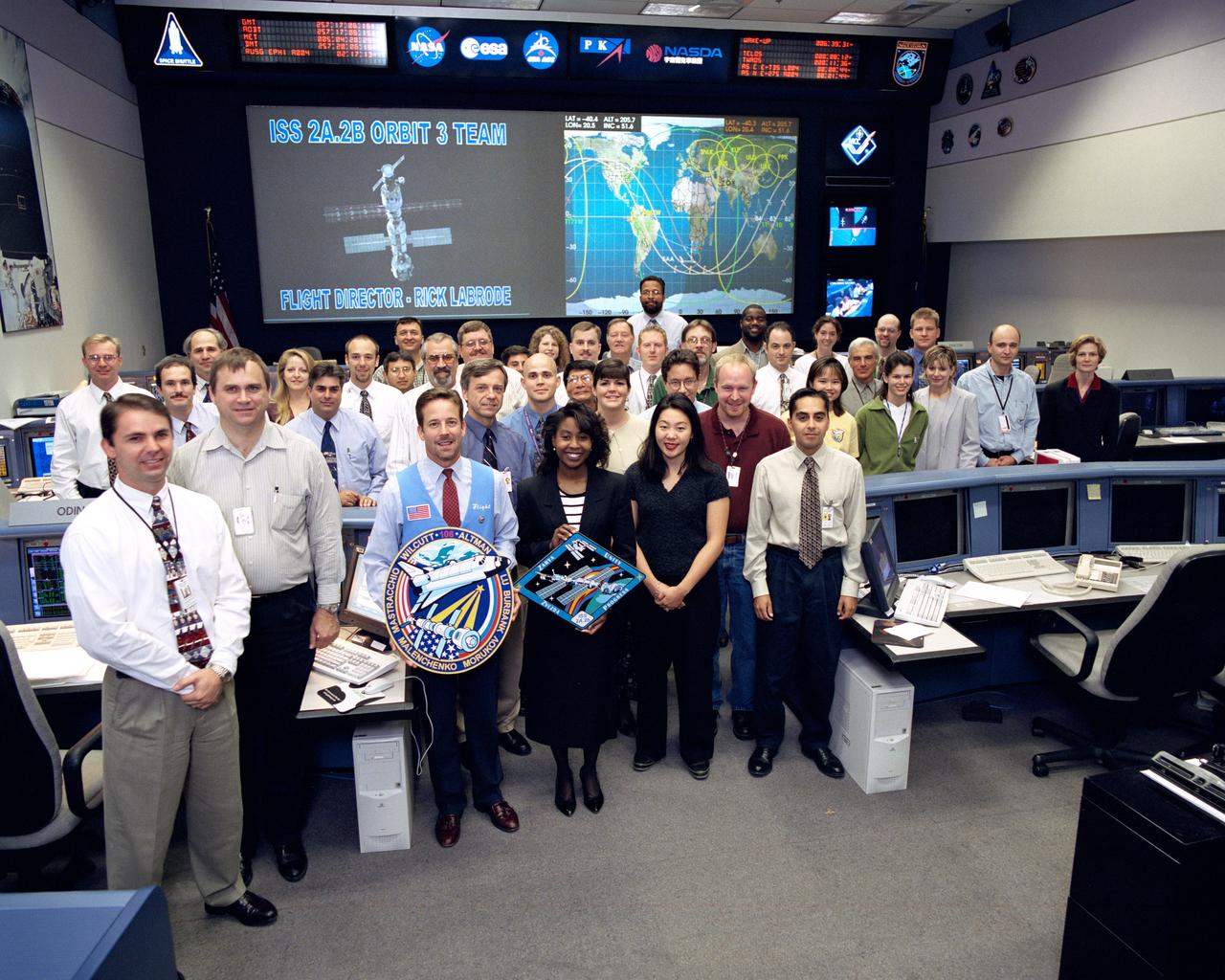
JSC2000-06245 (September 2000) --- The ISS orbit 3 team of flight controllers are pictured with flight director Rick LaBrode in the ISS flight control room during STS-106. Astronaut Stephanie Wilson, spacecraft communicator (CAPCOM), is at front center.
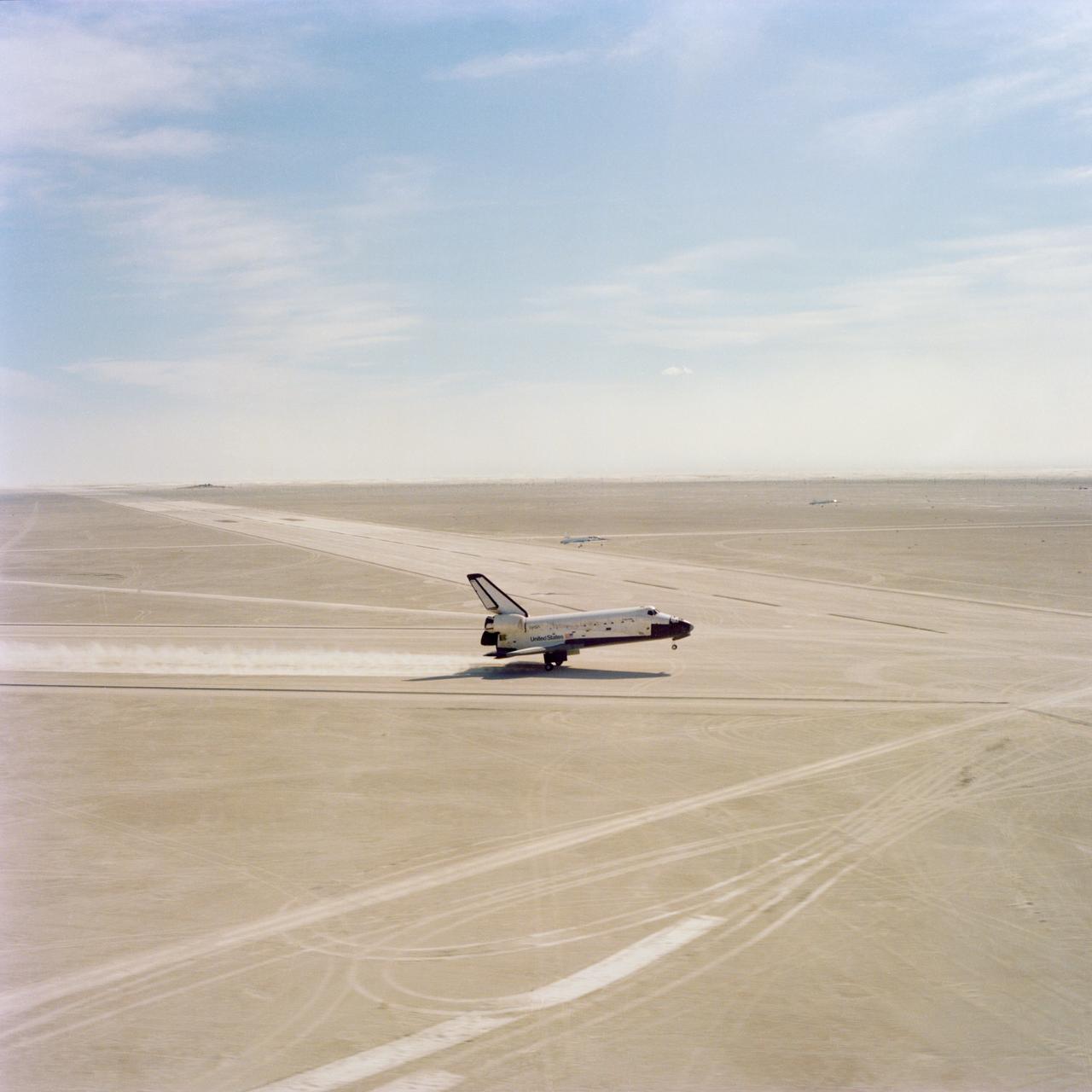
S82-28838 (30 March 1982) --- The space shuttle Columbia (STS-3) touches down on the Northrup Strip at White Sands Missile Range, New Mexico, marking the first time in its three-flight history that it has touched New Mexico soil. T-38 chase plane passenger, Mission Specialist-Astronaut Ronald E. McNair, who also shot some launch photography this flight, recorded a number of frames on 70mm film. Touchdown was shortly after 9 a.m. Mountain Standard Time, March 30, 1982. Photo credit: NASA
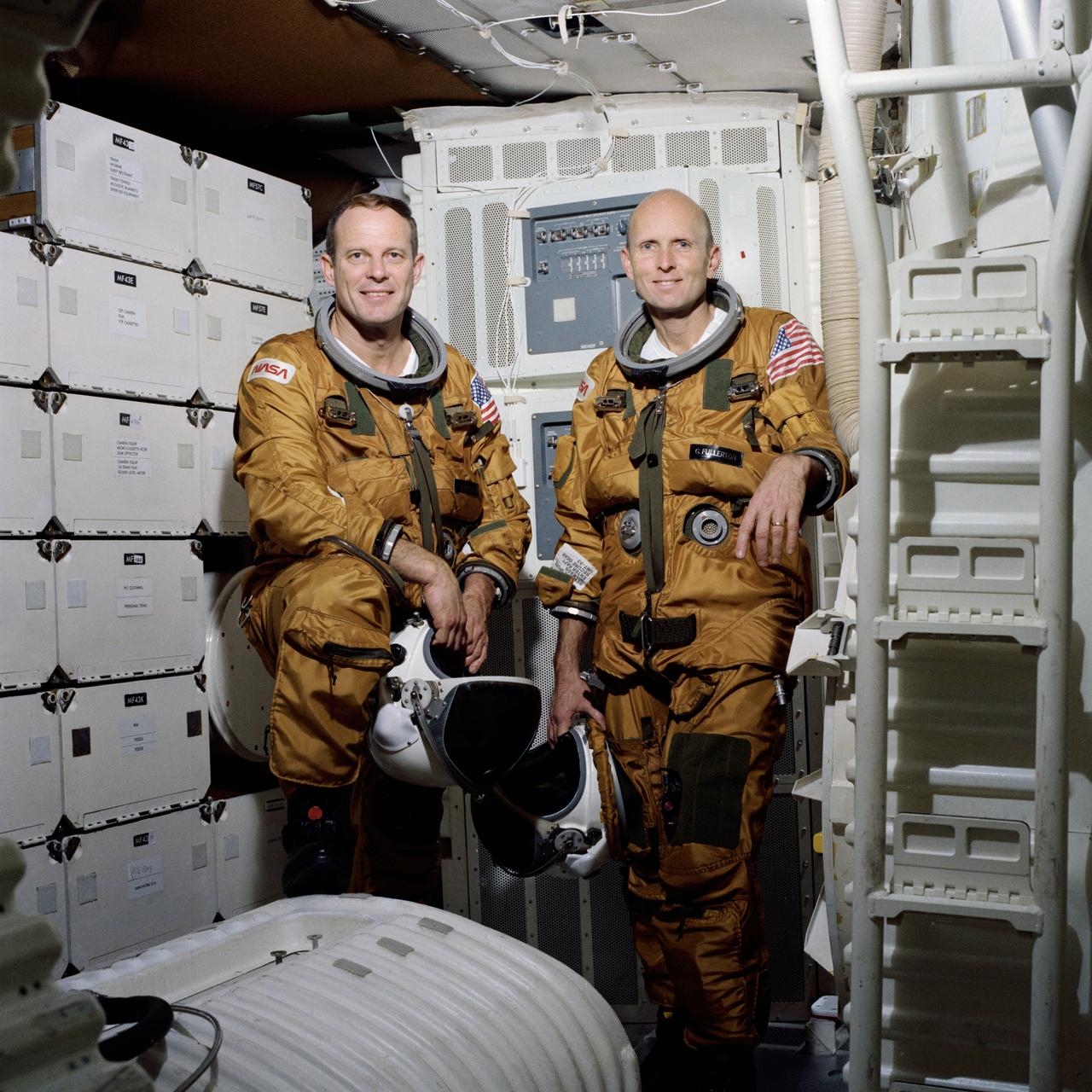
S82-25504 (20 Jan. 1982) --- These two veteran astronauts were named as prime crew members for STS-3 in the space shuttle Columbia. Wearing modified USAF-type altitude pressure garments in their Earth-bound shuttle trainer are astronauts Jack R. Lousma (left), commander, and C. Gordon Fullerton, pilot. Lousma was pilot on the second of three NASA astronaut crews to visit the Earth-orbiting Skylab space station in 1973. Fullerton was pilot for three free flights in the space shuttle Enterprise during approach and landing tests (ALT) in 1977. Photo credit: NASA
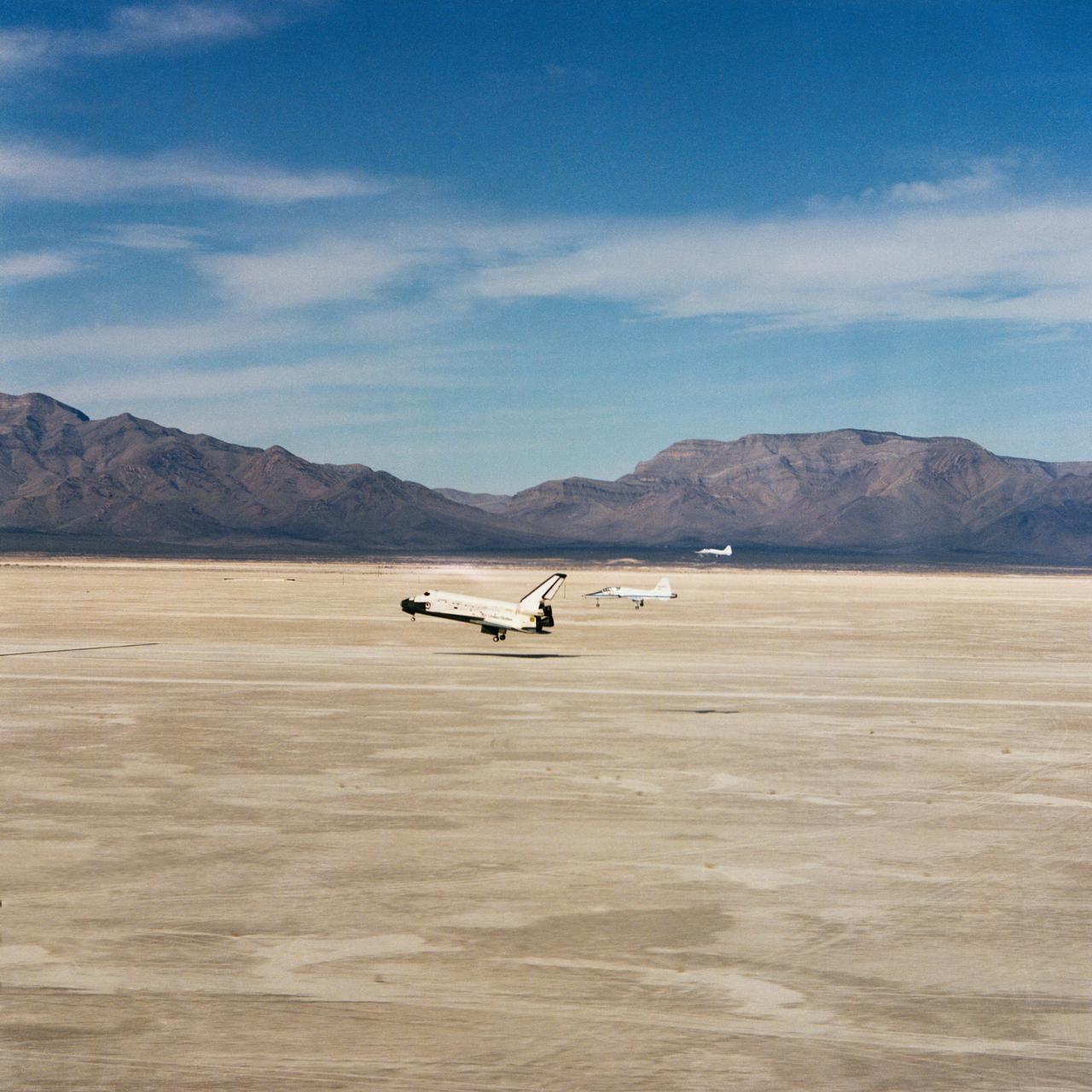
S82-28839 (30 March 1982) --- Seconds from touchdown, the space shuttle Columbia (STS-3), with astronauts Jack R. Lousma and C. Gordon Fullerton aboard, comes into view of a large crowd on hand to greet it at the Northrup strip on White Sands Missile Range in New Mexico. The successful eight-day mission was the first to end on New Mexico soil. Two T-38 chase planes can be seen in the photograph, while a third (out of view) was carrying the photographer that took this frame with a hand-held camera. Photo credit: NASA
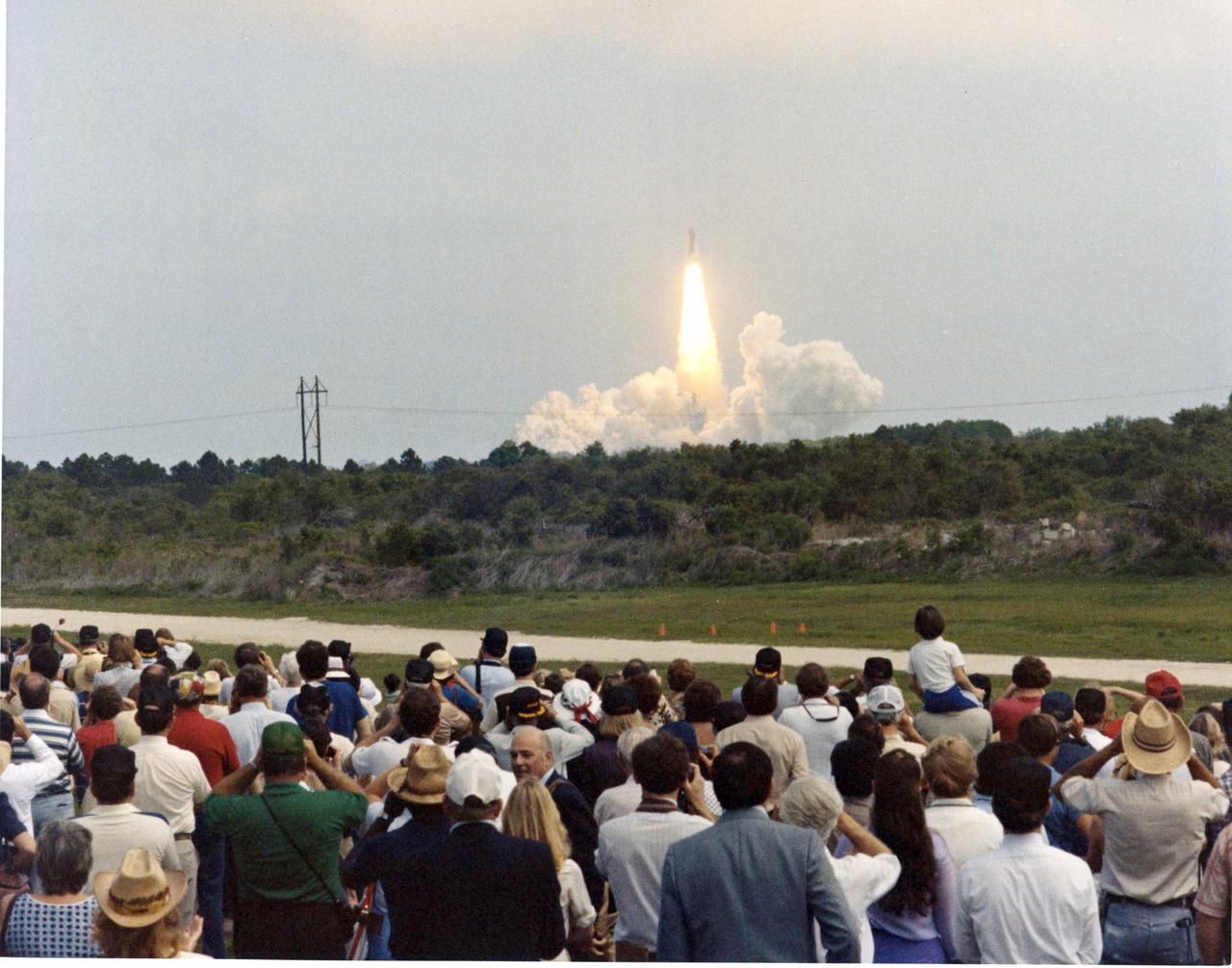
Columbia is cheered on its way by distinguished guests viewing the launch from the Schwartz Road VIP site, located about five miles from the launch pad. About 4,500 invited visitors at the site watched the 11 a.m. liftoff of Columbia on its third orbital flight.
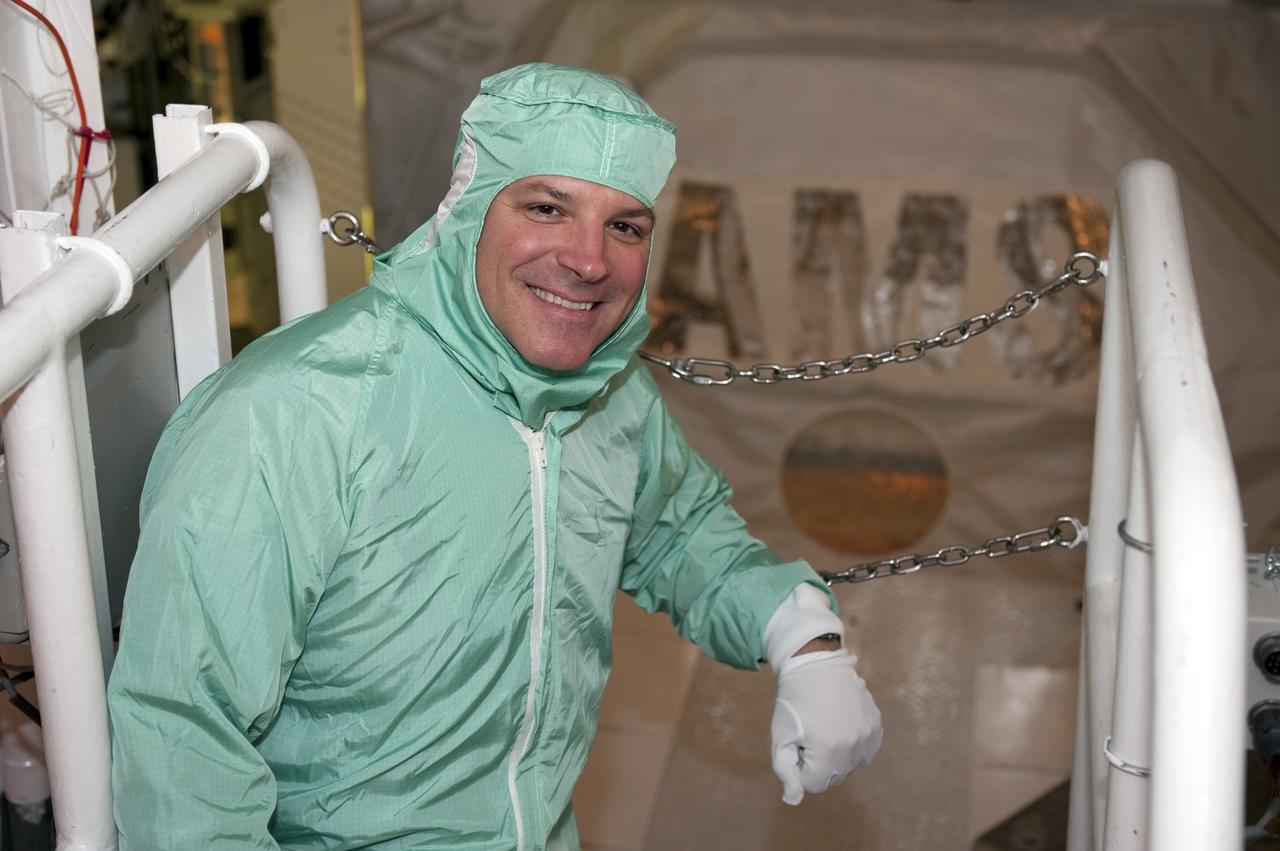
CAPE CANAVERAL, Fla. -- STS-134 Pilot Greg H. Johnson performs a walkdown of space shuttle Endeavour's payload bay. The Express Logistics Carrier-3 packed with spare parts and the Alpha Magnetic Spectrometer-2 (AMS) are inside the bay for the STS-134 mission to the International Space Station. Endeavour's six crew members are at Kennedy for the launch countdown dress rehearsal called the Terminal Countdown Demonstration Test (TCDT) and related training. Endeavour is targeted to launch April 19 at 7:48 p.m. EDT on its final spaceflight mission. For more information visit, www.nasa.gov/mission_pages/shuttle/shuttlemissions/sts134/index.html. Photo credit: NASA/Kim Shiflett
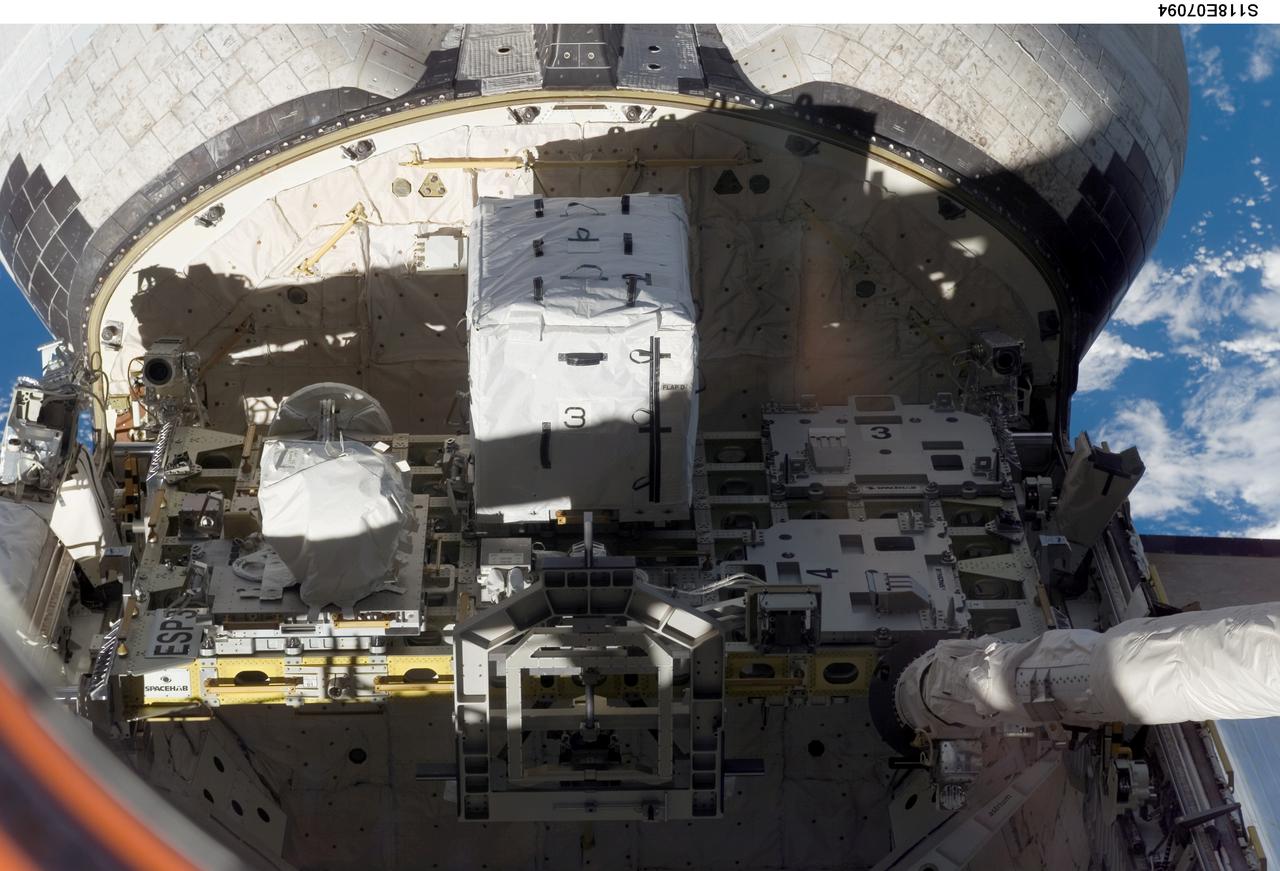
S118-E-07094 (14 Aug. 2007) --- An external stowage platform (ESP-3) is photographed in the payload bay of Space Shuttle Endeavour while docked with the International Space Station. Astronauts Tracy Caldwell and Barbara R. Morgan, both STS-118 mission specialists, were inside at Endeavour's controls as the shuttle's robotic arm (lower right) lifted the storage platform from the cargo bay to hand it over to the station's robotic arm, also known as Canadarm2. Astronauts Charlie Hobaugh, pilot, and Clay Anderson, Expedition 15 flight engineer, then used Canadarm2 to attach the 13-by-7-foot platform to the station's Port 3 truss.
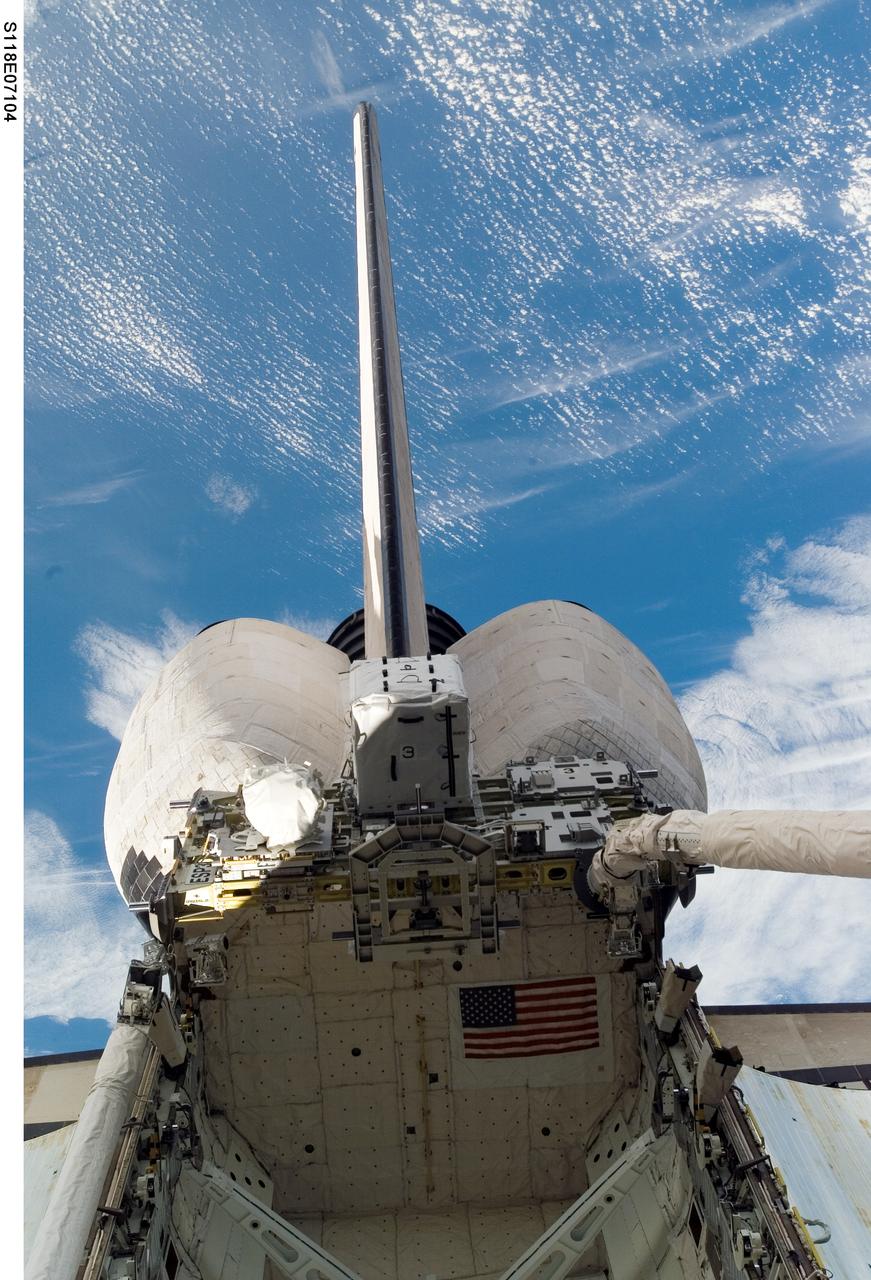
S118-E-07104 (14 Aug. 2007) --- An external stowage platform (ESP-3) is photographed in the payload bay of Space Shuttle Endeavour while docked with the International Space Station. Astronauts Tracy Caldwell and Barbara R. Morgan, both STS-118 mission specialists, were inside at Endeavour's controls as the shuttle's robotic arm (lower right) lifted the storage platform from the cargo bay to hand it over to the station's robotic arm, also known as Canadarm2. Astronauts Charlie Hobaugh, pilot, and Clay Anderson, Expedition 15 flight engineer, then used Canadarm2 to attach the 13-by-7-foot platform to the station's Port 3 truss.
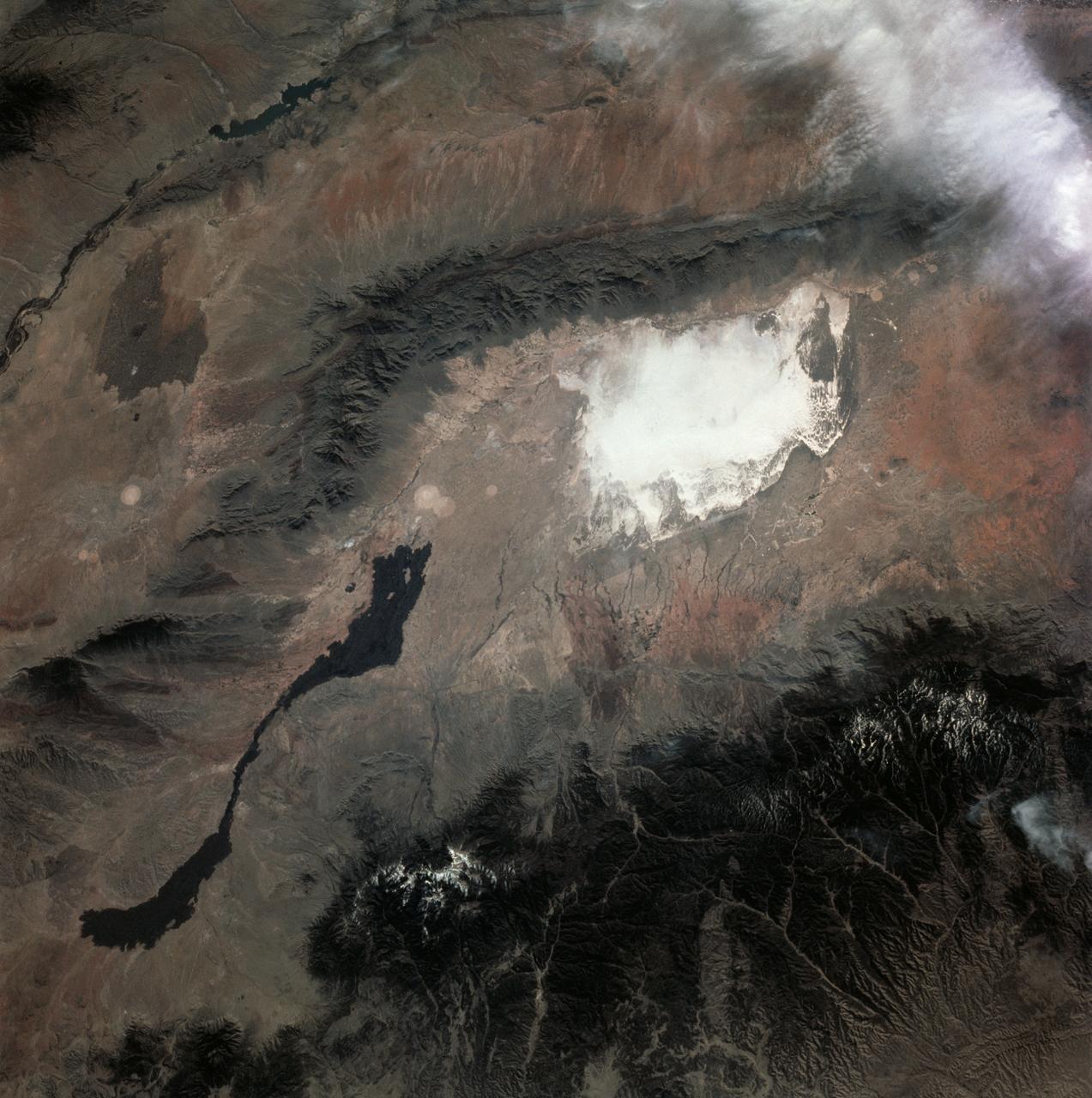
STS003-10-613 (22-30 March 1982) --- A truly remarkable view of White Sands and the nearby Carrizozo Lava Beds in southeast NM (33.5N, 106.5W). White Sands, site of the WW II atomic bomb development and testing facility and later post war nuclear weapons testing that can still be seen in the cleared circular patterns on the ground. Space shuttle Columbia (STS-3), this mission, landed at the White Sands alternate landing site because of bad weather at Edwards AFB, CA. Photo credit: NASA
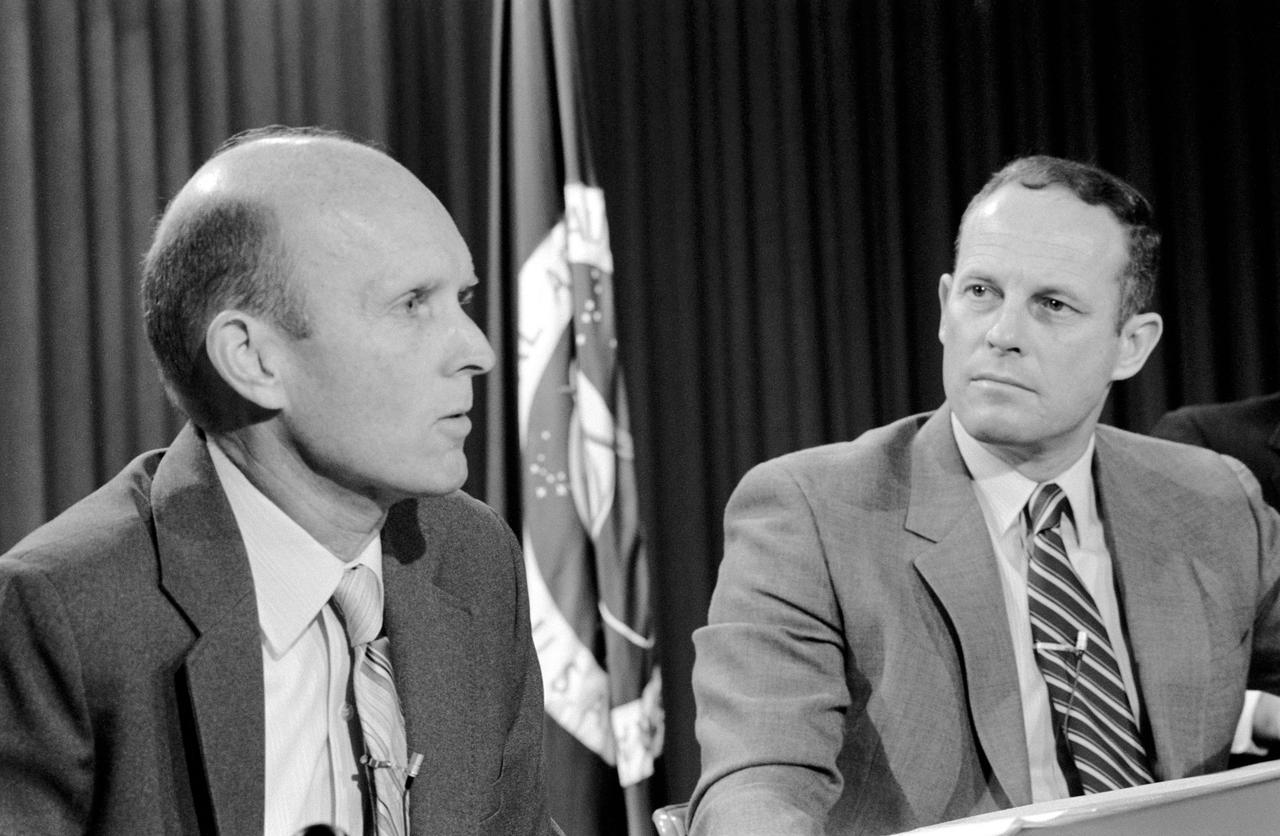
S82-25900 (21 Jan. 1982) --- Astronaut Jack R. Lousma, right, and C. Gordon Fullerton greet the press during a pre-STS-3 press conference in JSC?s Public Affairs Building. Lousma, commander and Fullerton, pilot, are scheduled to man the Columbia when it is launched in early spring from Kennedy Space Center launch pad 39A. Photo credit: NASA
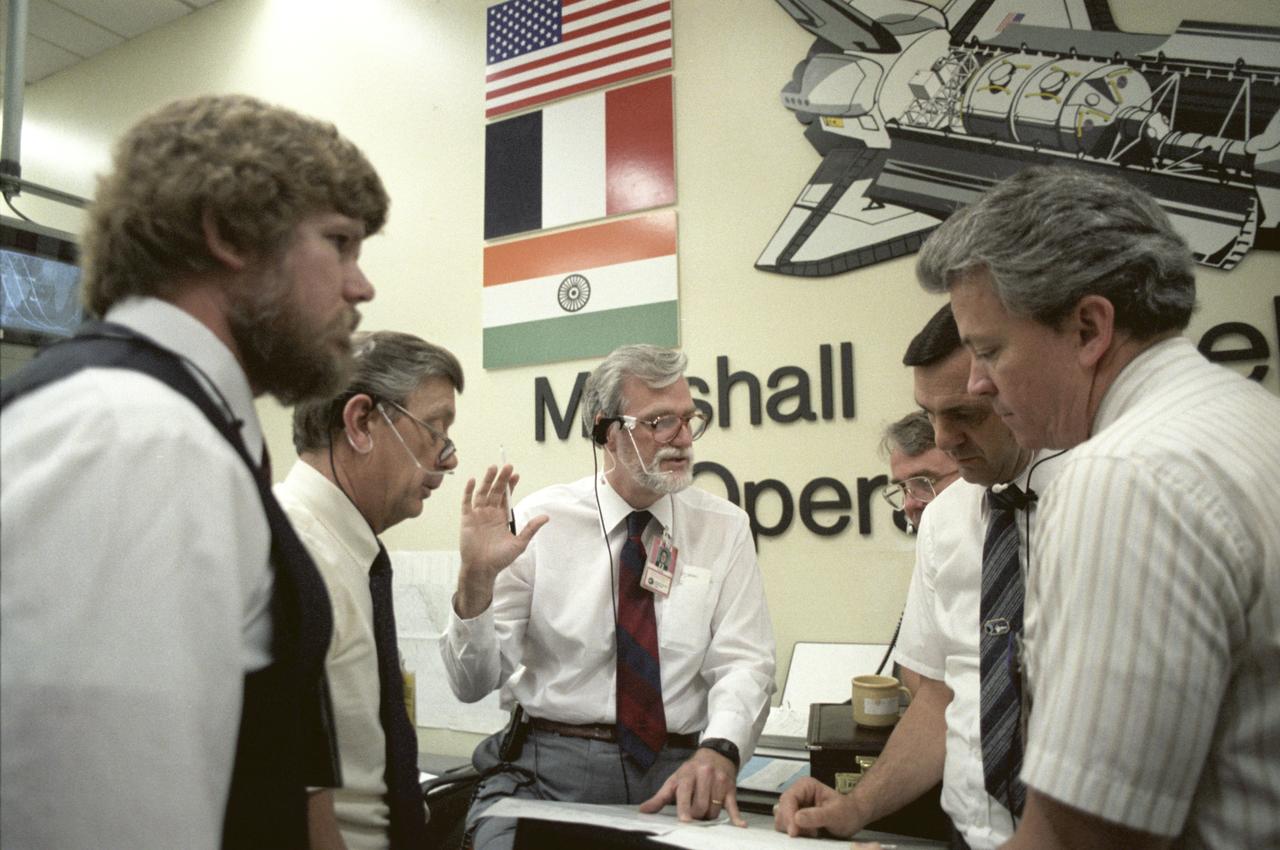
Spacelab-3 launched aboard STS-51B, with the major science objective being to perform engineering tests on two new facilities: the rodent animal holding facility and the primate animal holding facility. In addition, scientists observed the animals to obtain first hand knowledge of the effects of launch and reentry stresses and behavior. The need for suitable animal housing to support research in space led to the development of the Research Animal Holding Facility at the Ames Research Center. Scientists often study animals to find clues to human physiology and behavior. Rats, insects, and microorganisms had already been studied aboard the Shuttle on previous missions. On Spacelab-3, scientists had a chance to observe a large number of animals living in space in a specially designed and independently controlled housing facility. Marshall Space Flight Center (MSFC) had management responsibility for the Spacelab 3 mission. This photograph depicts activities during the mission at the Huntsville Operations Support Center (HOSC) Spacelab Payload Operations Control Center (SL POCC) at MSFC.
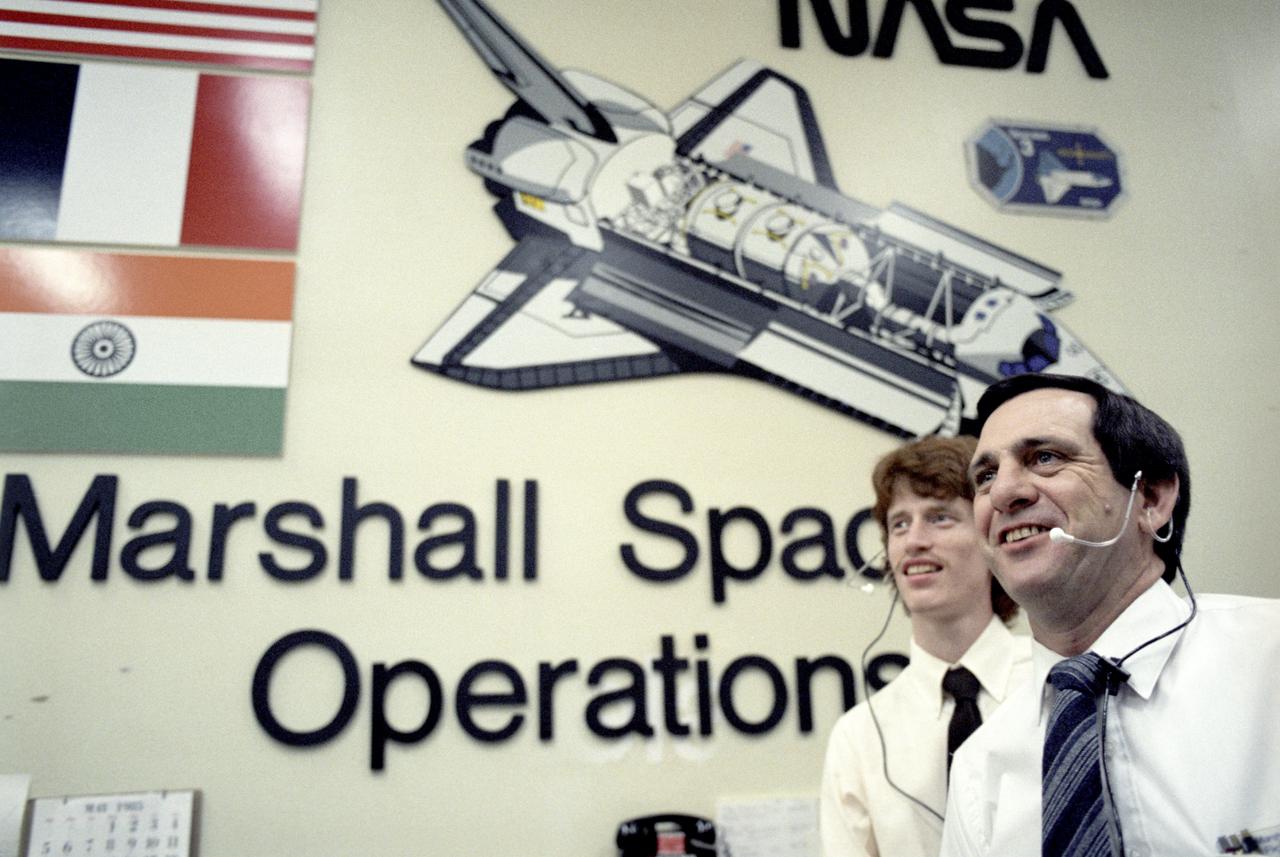
Spacelab-3 launched aboard STS-51B, with the major science objective being to perform engineering tests on two new facilities: the rodent animal holding facility and the primate animal holding facility. In addition, scientists observed the animals to obtain first hand knowledge of the effects of launch and reentry stresses and behavior. The need for suitable animal housing to support research in space led to the development of the Research Animal Holding Facility at the Ames Research Center. Scientists often study animals to find clues to human physiology and behavior. Rats, insects, and microorganisms had already been studied aboard the Shuttle on previous missions. On Spacelab-3, scientists had a chance to observe a large number of animals living in space in a specially designed and independently controlled housing facility. Marshall Space Flight Center (MSFC) had management responsibility for the Spacelab-3 mission. This photograph depicts activities during the mission at the Huntsville Operations Support Center (HOSC) Spacelab Payload Operations Control Center (SL POCC) at MSFC.
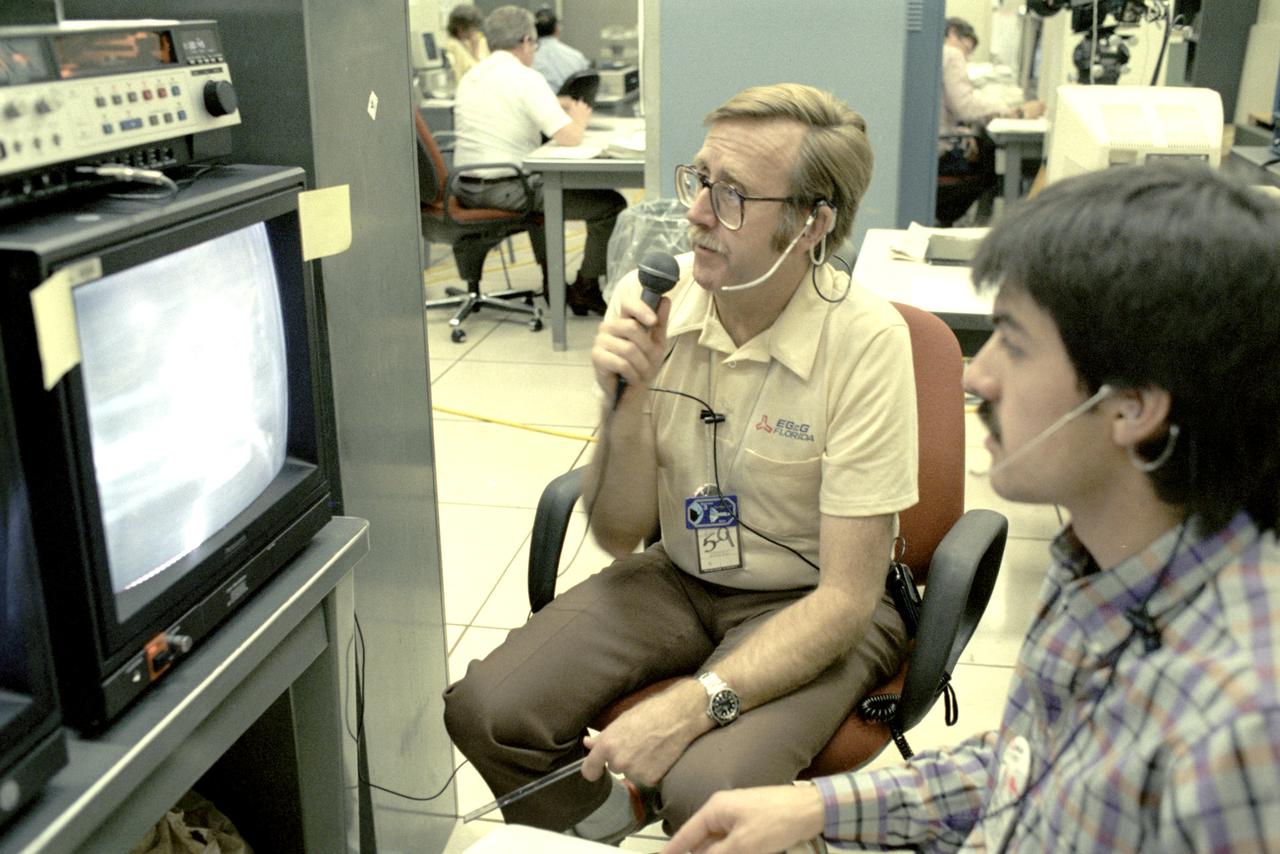
Spacelab-3 launched aboard STS-51B, with the major science objective being to perform engineering tests on two new facilities: the rodent animal holding facility and the primate animal holding facility. In addition, scientists observed the animals to obtain first hand knowledge of the effects of launch and reentry stresses and behavior. The need for suitable animal housing to support research in space led to the development of the Research Animal Holding Facility at the Ames Research Center. Scientists often study animals to find clues to human physiology and behavior. Rats, insects, and microorganisms had already been studied aboard the Shuttle on previous missions. On Spacelab-3, scientists had a chance to observe a large number of animals living in space in a specially designed and independently controlled housing facility. Marshall Space Flight Center (MSFC) had management responsibility for the Spacelab-3 mission. This photograph depicts activities during the mission at the Huntsville Operations Support Center (HOSC) Spacelab Payload Operations Control Center (SL POCC) at MSFC.
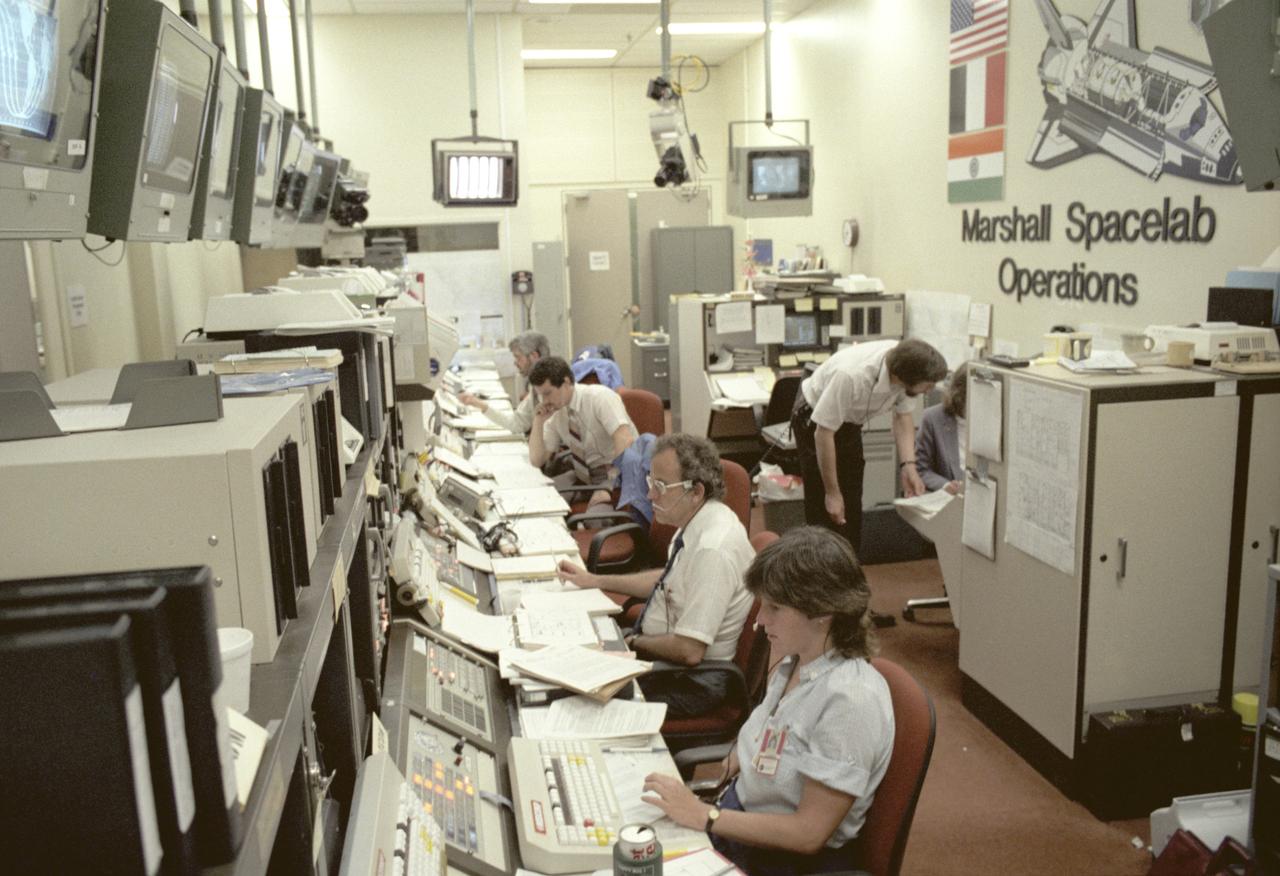
Spacelab-3 launched aboard STS-51B, with the major science objective being to perform engineering tests on two new facilities: the rodent animal holding facility and the primate animal holding facility. In addition, scientists observed the animals to obtain first hand knowledge of the effects of launch and reentry stresses and behavior. The need for suitable animal housing to support research in space led to the development of the Research Animal Holding Facility at the Ames Research Center. Scientists often study animals to find clues to human physiology and behavior. Rats, insects, and microorganisms had already been studied aboard the Shuttle on previous missions. On Spacelab-3, scientists had a chance to observe a large number of animals living in space in a specially designed and independently controlled housing facility. Marshall Space Flight Center (MSFC) had management responsibility for the Spacelab-3 mission. This photograph depicts activities during the mission at the Huntsville Operations Support Center (HOSC) Spacelab Payload Operations Control Center (SL POCC) at MSFC.
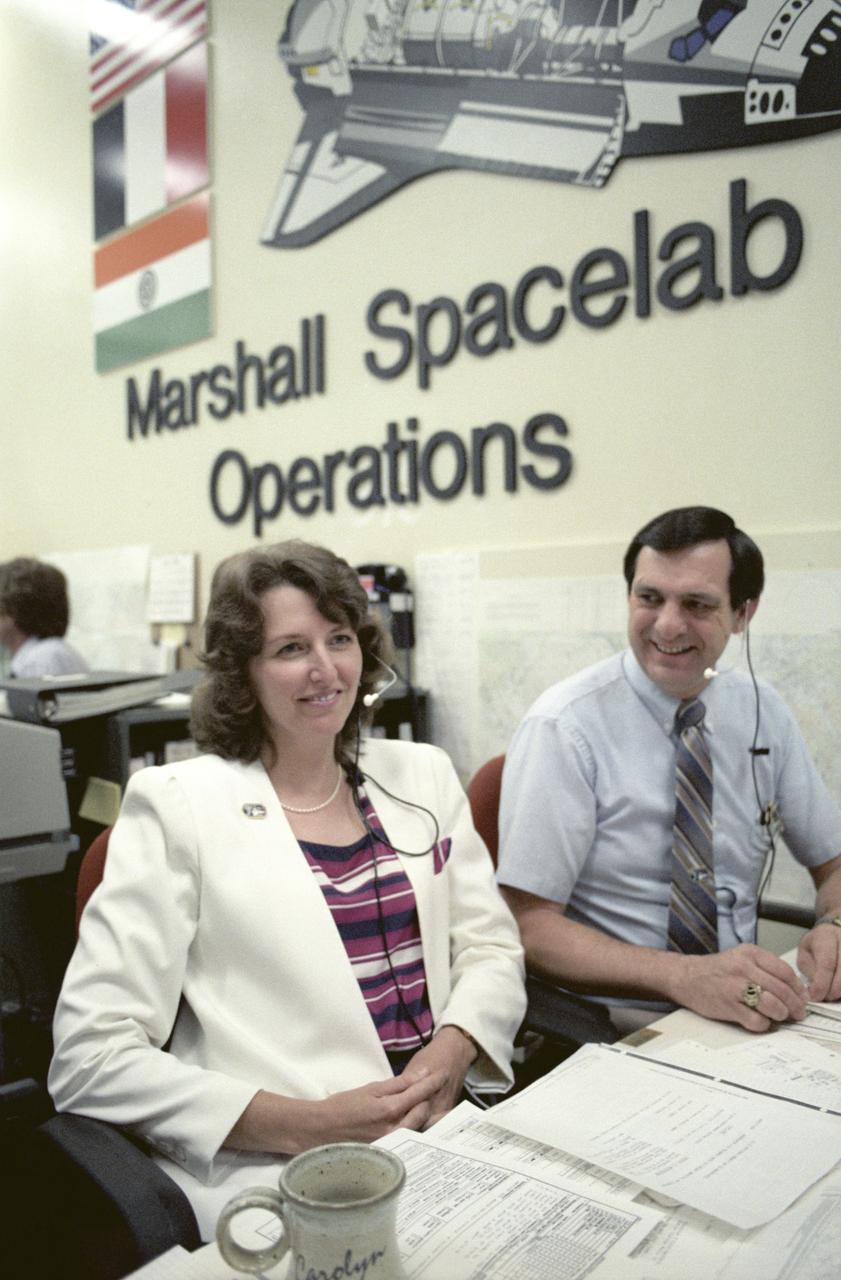
Spacelab-3 launched aboard STS-51B, with the major science objective being to perform engineering tests on two new facilities: the rodent animal holding facility and the primate animal holding facility. In addition, scientists observed the animals to obtain first hand knowledge of the effects of launch and reentry stresses and behavior. The need for suitable animal housing to support research in space led to the development of the Research Animal Holding Facility at the Ames Research Center. Scientists often study animals to find clues to human physiology and behavior. Rats, insects, and microorganisms had already been studied aboard the Shuttle on previous missions. On Spacelab-3, scientists had a chance to observe a large number of animals living in space in a specially designed and independently controlled housing facility. Marshall Space Flight Center (MSFC) had management responsibility for the Spacelab-3 mission. This photograph depicts activities during the mission at the Huntsville Operations Support Center (HOSC) Spacelab Payload Operations Control Center (SL POCC) at MSFC.

Spacelab-3 launched aboard STS-51B, with the major science objective being to perform engineering tests on two new facilities: the rodent animal holding facility and the primate animal holding facility. In addition, scientists observed the animals to obtain first hand knowledge of the effects of launch and reentry stresses and behavior. The need for suitable animal housing to support research in space led to the development of the Research Animal Holding Facility at the Ames Research Center. Scientists often study animals to find clues to human physiology and behavior. Rats, insects, and microorganisms had already been studied aboard the Shuttle on previous missions. On Spacelab-3, scientists had a chance to observe a large number of animals living in space in a specially designed and independently controlled housing facility. Marshall Space Flight Center (MSFC) had management responsibility for the Spacelab 3 mission. This photograph depicts activities during the mission at the Huntsville Operations Support Center (HOSC) Spacelab Payload Operations Control Center (SL POCC) at MSFC.
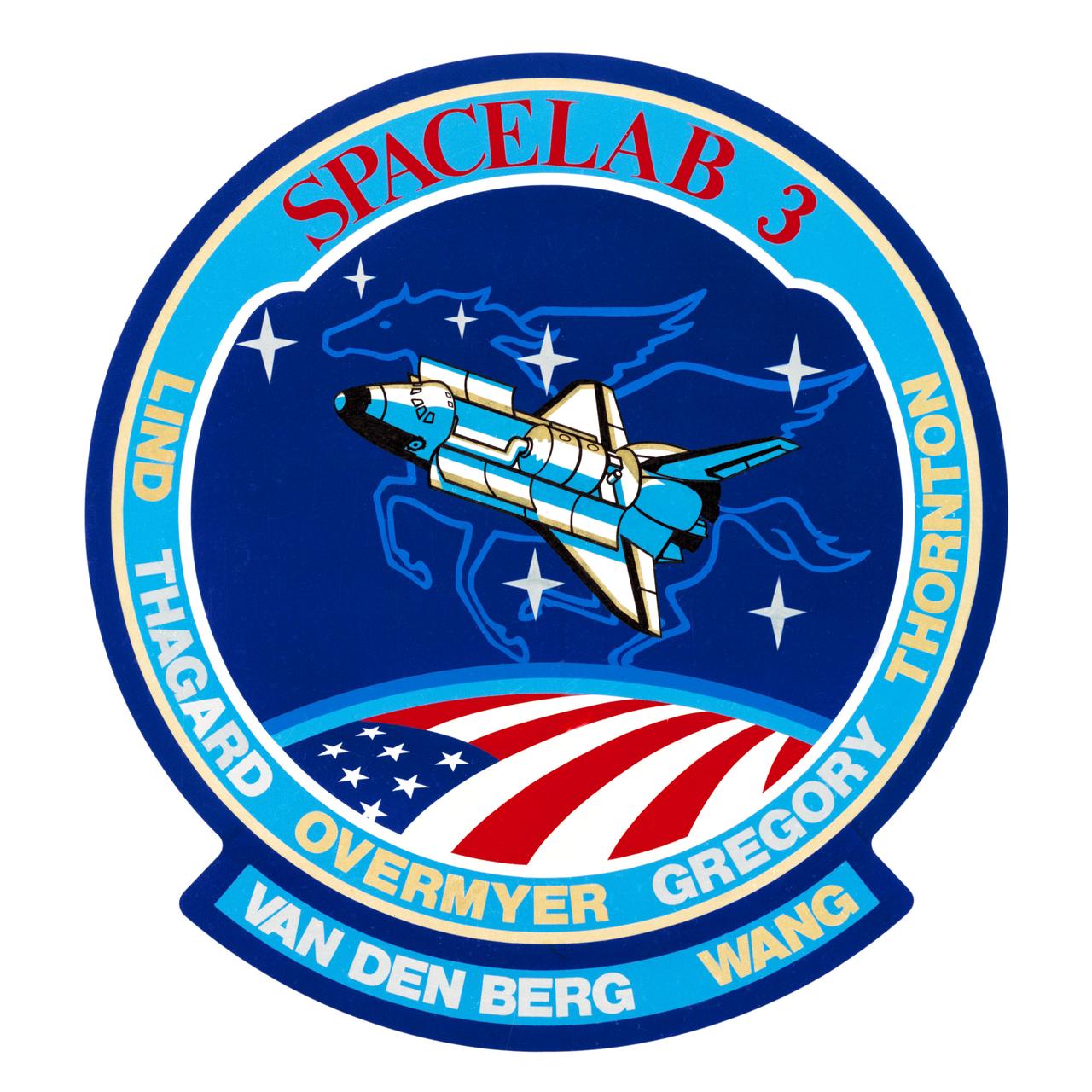
S84-44372 (December 1984) --- The space shuttle Discovery and its science module payload are featured in the insignia for the STS-51B/Spacelab 3 mission. The seven stars of the constellation Pegasus surround the orbiting spaceship above the flag draped Earth. Surnames of the seven crew members encircle the scene. Crew members are astronauts Robert F. Overmyer, Frederick D. Gregory, Don L. Lind, Norman E. Thagard and William E. Thornton; and payload specialists Lodewijk van den Berg and Taylor G. Wang. The artwork was done by Carol Ann Lind. The NASA insignia design for space shuttle flights is reserved for use by the astronauts and for other official use as the NASA Administrator may authorize. Public availability has been approved only in the forms of illustrations by the various news media. When and if there is any change in this policy, which is not anticipated, the change will be publicly announced. Photo credit: NASA
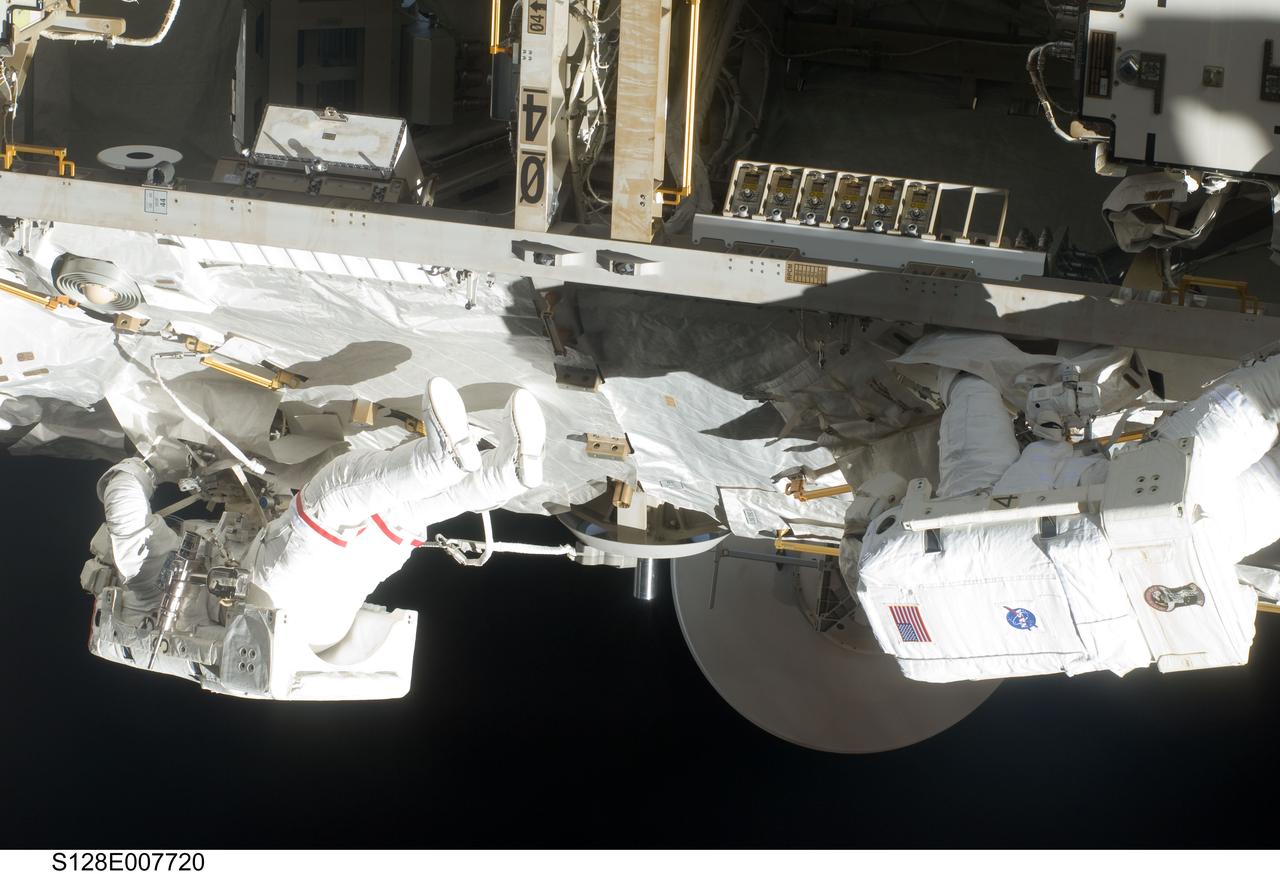
S128-E-007720 (5 Sept. 2009) --- NASA astronaut John “Danny” Olivas (left) and European Space Agency astronaut Christer Fuglesang, both STS-128 mission specialists, participate in the mission's third and final session of extravehicular activity (EVA) as construction and maintenance continue on the International Space Station. During the seven-hour, one-minute spacewalk, Olivas and Fuglesang deployed the Payload Attachment System (PAS), replaced the Rate Gyro Assembly #2, installed two GPS antennae and did some work to prepare for the installation of Node 3 next year. During connection of one of two sets of avionics cables for Node 3, one of the connectors could not be mated. This cable and connector were wrapped in a protective sleeve and safed. All other cables were mated successfully.
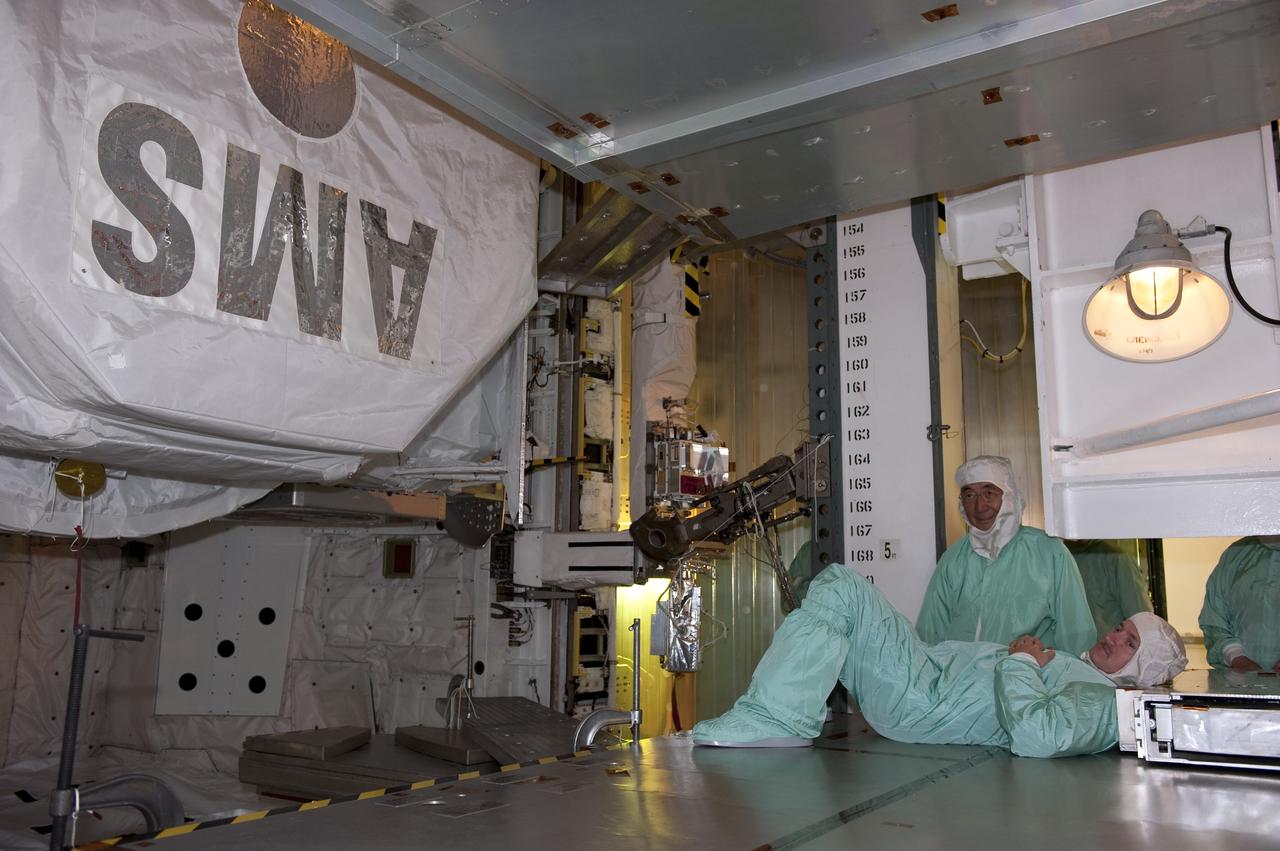
CAPE CANAVERAL, Fla. -- STS-134 Commander Mark Kelly, lying down, and Professor Sam Ting, Alpha Magnetic Spectrometer-2 (AMS) principal investigator at the Massachusetts Institute of Technology, perform a walkdown of space shuttle Endeavour's payload bay. The Express Logistics Carrier-3 packed with spare parts and the (AMS) are inside the bay for the STS-134 mission to the International Space Station. Endeavour's six crew members are at Kennedy for the launch countdown dress rehearsal called the Terminal Countdown Demonstration Test (TCDT) and related training. Endeavour is targeted to launch April 19 at 7:48 p.m. EDT on its final spaceflight mission. For more information visit, www.nasa.gov/mission_pages/shuttle/shuttlemissions/sts134/index.html. Photo credit: NASA/Kim Shiflett
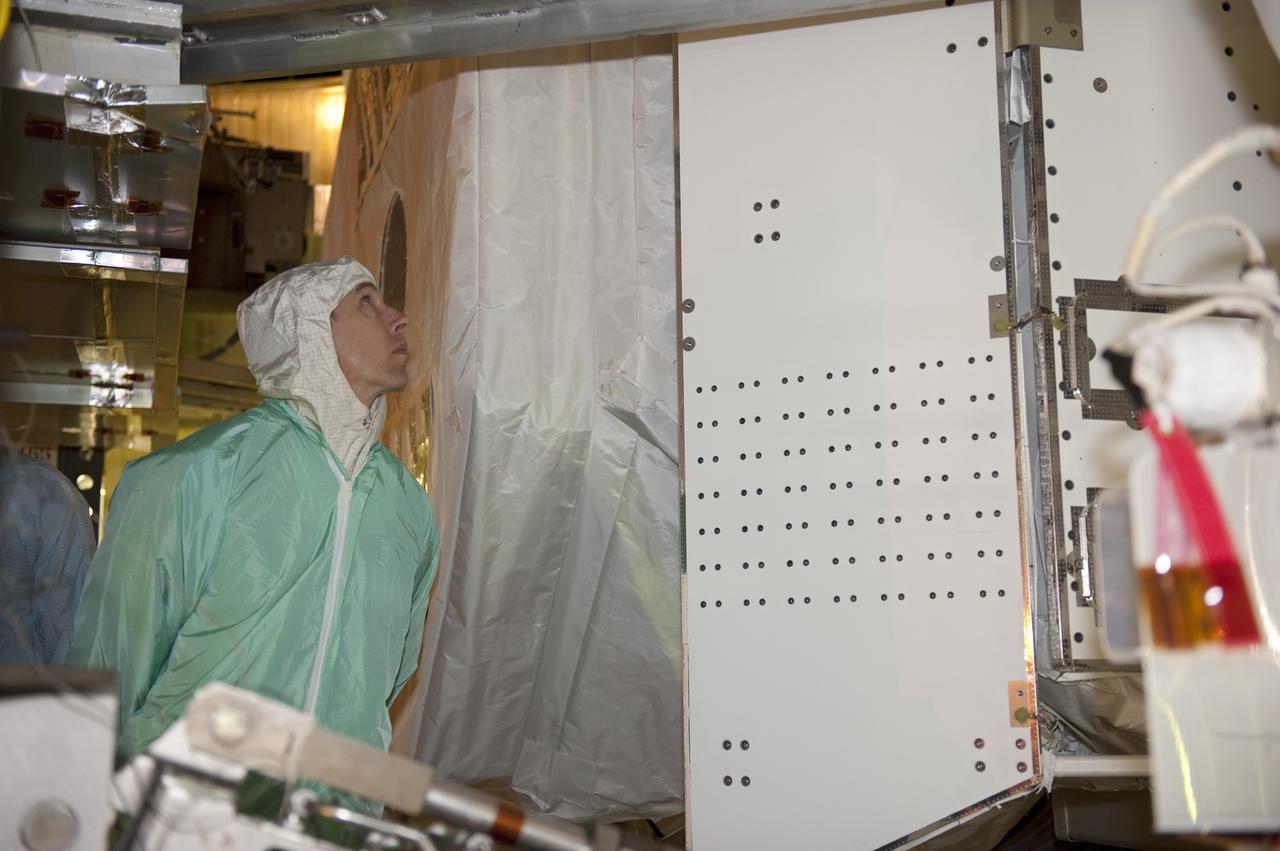
CAPE CANAVERAL, Fla. -- STS-134 Mission Specialist Andrew Feustel performs a walkdown of space shuttle Endeavour's payload bay. The Express Logistics Carrier-3 packed with spare parts and the Alpha Magnetic Spectrometer-2 (AMS) are inside the bay for the STS-134 mission to the International Space Station. Feustel and fellow Mission Specialists Greg Chamitoff and Michael Fincke are the designated spacewalkers for the mission. Endeavour's six crew members are at Kennedy for the launch countdown dress rehearsal called the Terminal Countdown Demonstration Test (TCDT) and related training. Endeavour is targeted to launch April 19 at 7:48 p.m. EDT on its final spaceflight mission. For more information visit, www.nasa.gov/mission_pages/shuttle/shuttlemissions/sts134/index.html. Photo credit: NASA/Kim Shiflett
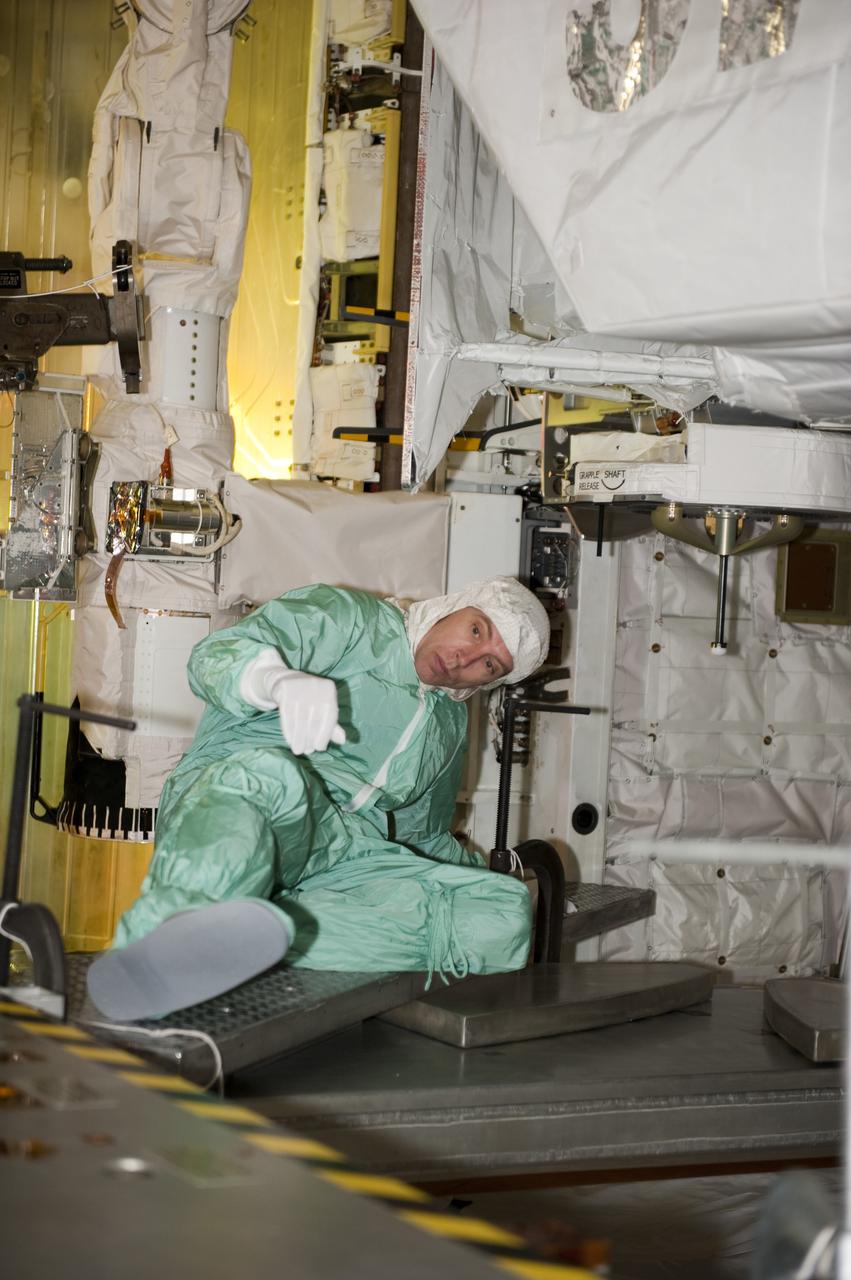
CAPE CANAVERAL, Fla. -- STS-134 Mission Specialist Andrew Feustel performs a walkdown of space shuttle Endeavour's payload bay. The Express Logistics Carrier-3 packed with spare parts and the Alpha Magnetic Spectrometer-2 (AMS) are inside the bay for the STS-134 mission to the International Space Station. Feustel and fellow Mission Specialists Greg Chamitoff and Michael Fincke are the designated spacewalkers for the mission. Endeavour's six crew members are at Kennedy for the launch countdown dress rehearsal called the Terminal Countdown Demonstration Test (TCDT) and related training. Endeavour is targeted to launch April 19 at 7:48 p.m. EDT on its final spaceflight mission. For more information visit, www.nasa.gov/mission_pages/shuttle/shuttlemissions/sts134/index.html. Photo credit: NASA/Kim Shiflett
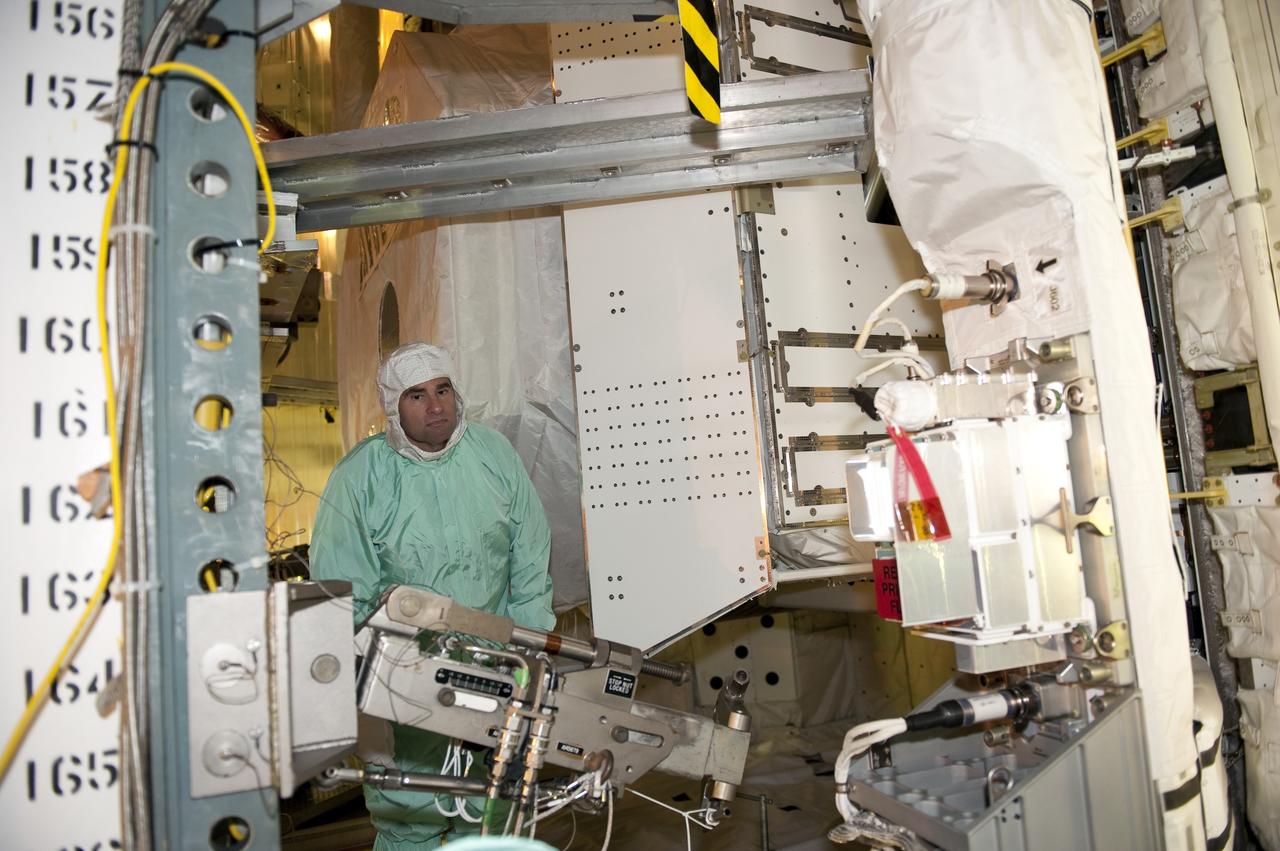
CAPE CANAVERAL, Fla. -- STS-134 Mission Specialist Greg Chamitoff performs a walkdown of space shuttle Endeavour's payload bay. The Express Logistics Carrier-3 packed with spare parts and the Alpha Magnetic Spectrometer-2 (AMS) are inside the bay for the STS-134 mission to the International Space Station. Chamitoff and fellow Mission Specialists Andrew Feustel and Michael Fincke are the designated spacewalkers for the mission. Endeavour's six crew members are at Kennedy for the launch countdown dress rehearsal called the Terminal Countdown Demonstration Test (TCDT) and related training. Endeavour is targeted to launch April 19 at 7:48 p.m. EDT on its final spaceflight mission. For more information visit, www.nasa.gov/mission_pages/shuttle/shuttlemissions/sts134/index.html. Photo credit: NASA/Kim Shiflett
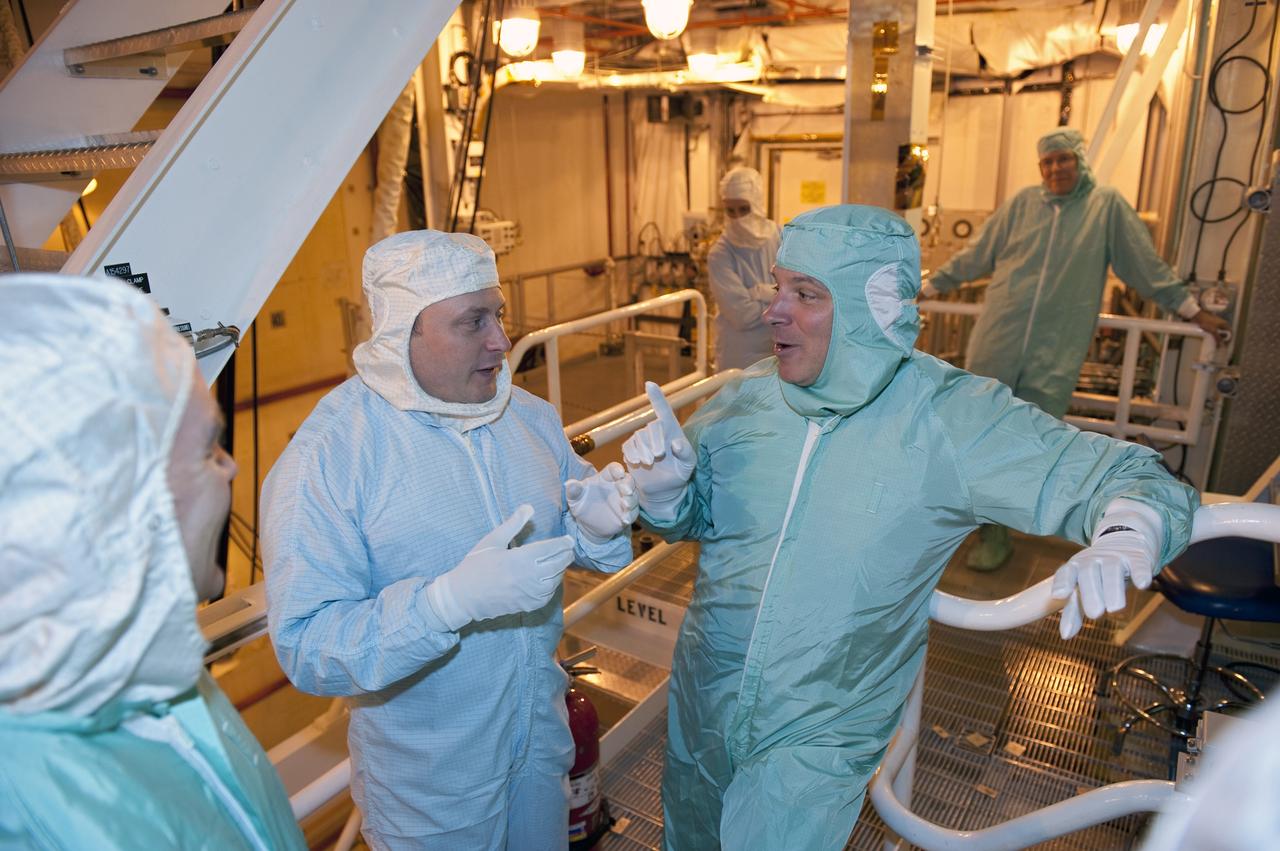
CAPE CANAVERAL, Fla. -- STS-134 Mission Specialist Michael Fincke, right, and Pilot Greg H. Johnson, center, perform a walkdown of space shuttle Endeavour's payload bay with shuttle technicians. The Express Logistics Carrier-3 packed with spare parts and the Alpha Magnetic Spectrometer-2 (AMS) are inside the bay for the STS-134 mission to the International Space Station. Endeavour's six crew members are at Kennedy for the launch countdown dress rehearsal called the Terminal Countdown Demonstration Test (TCDT) and related training. Endeavour is targeted to launch April 19 at 7:48 p.m. EDT on its final spaceflight mission. For more information visit, www.nasa.gov/mission_pages/shuttle/shuttlemissions/sts134/index.html. Photo credit: NASA/Kim Shiflett
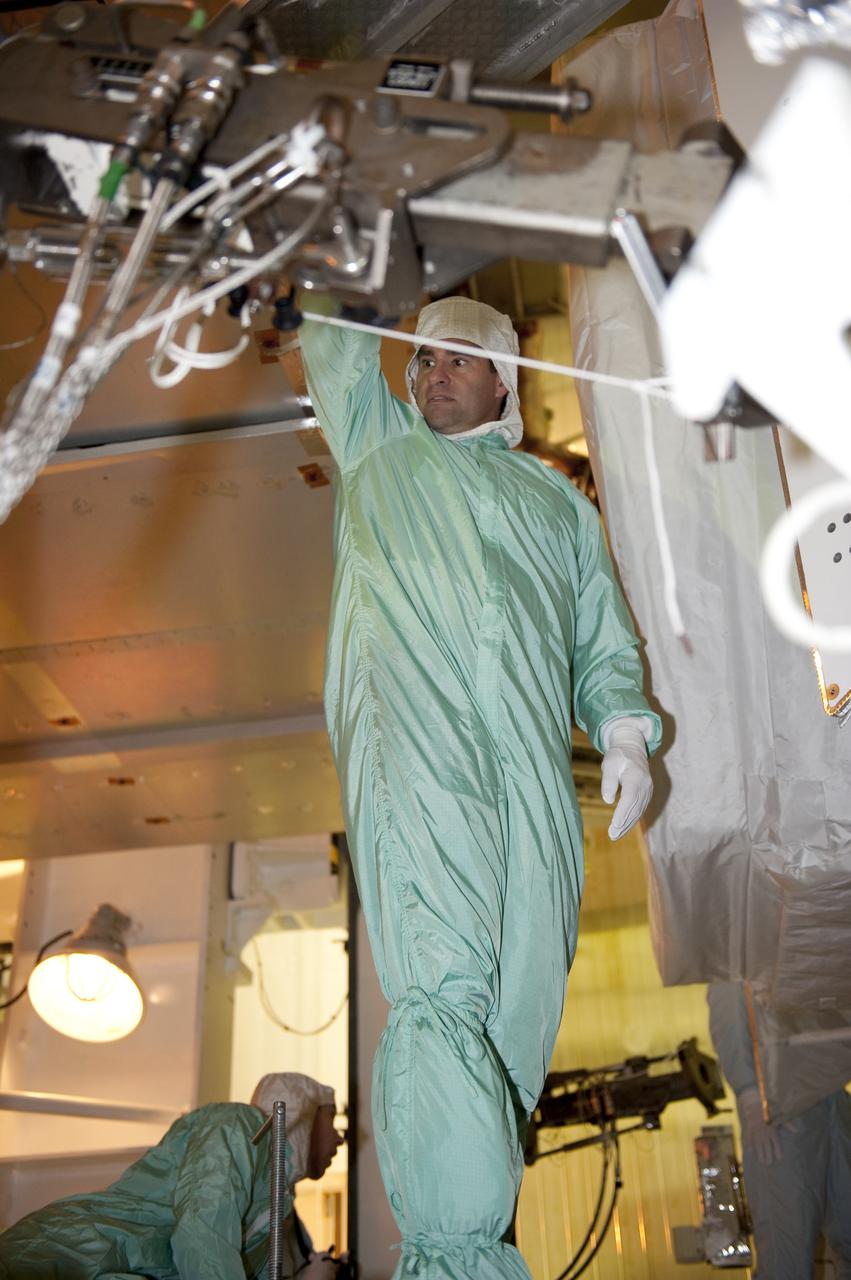
CAPE CANAVERAL, Fla. -- STS-134 Mission Specialists Greg Chamitoff, standing, and Andrew Feustel perform a walkdown of space shuttle Endeavour's payload bay. The Express Logistics Carrier-3 packed with spare parts and the Alpha Magnetic Spectrometer-2 (AMS) are inside the bay for the STS-134 mission to the International Space Station. Chamitoff, Feustel and fellow Mission Specialist Michael Fincke are the designated spacewalkers for the mission. Endeavour's six crew members are at Kennedy for the launch countdown dress rehearsal called the Terminal Countdown Demonstration Test (TCDT) and related training. Endeavour is targeted to launch April 19 at 7:48 p.m. EDT on its final spaceflight mission. For more information visit, www.nasa.gov/mission_pages/shuttle/shuttlemissions/sts134/index.html. Photo credit: NASA/Kim Shiflett
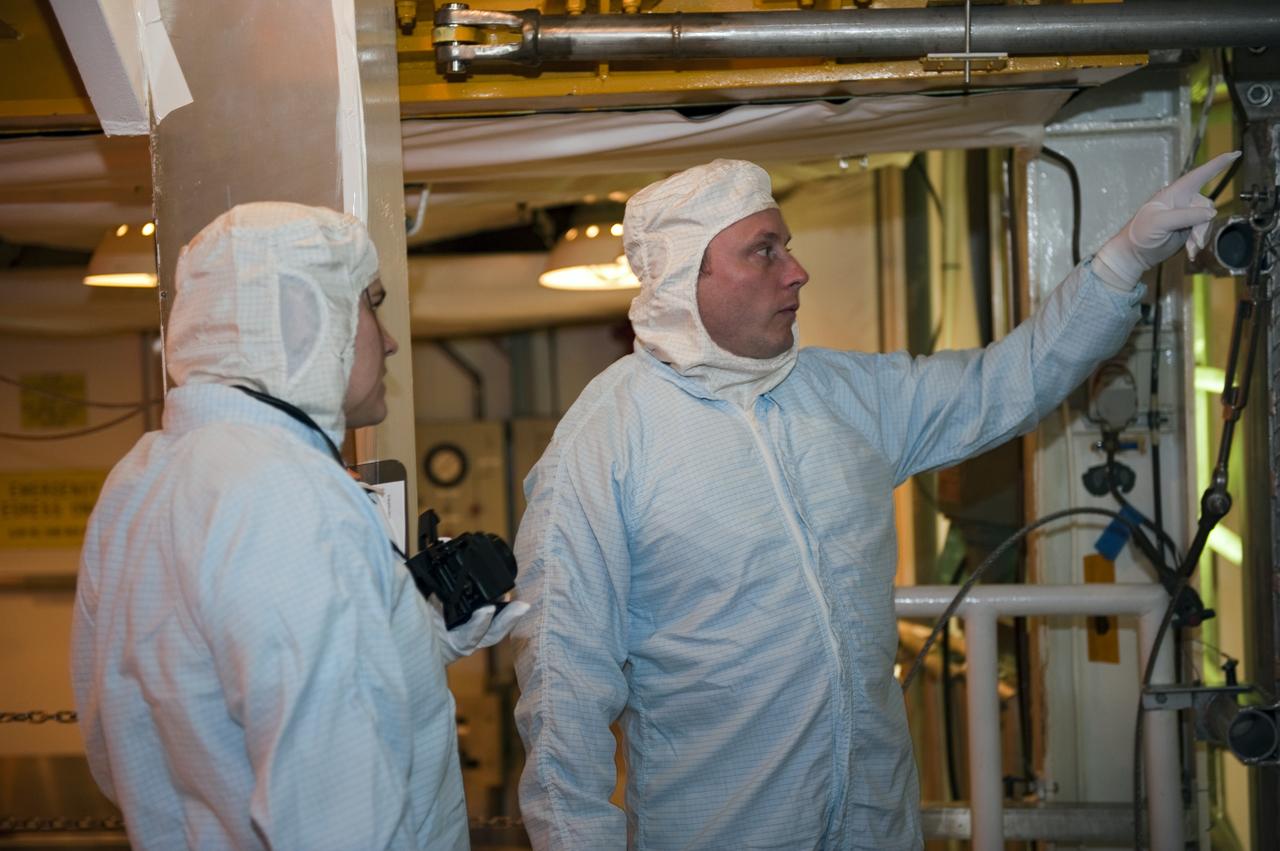
CAPE CANAVERAL, Fla. -- STS-134 Mission Specialist Michael Fincke, right, performs a walkdown of space shuttle Endeavour's payload bay with a shuttle technician. The Express Logistics Carrier-3 packed with spare parts and the Alpha Magnetic Spectrometer-2 (AMS) are inside the bay for the STS-134 mission to the International Space Station. Fincke and fellow Mission Specialists Greg Chamitoff and Andrew Feustel are the designated spacewalkers for the mission. Endeavour's six crew members are at Kennedy for the launch countdown dress rehearsal called the Terminal Countdown Demonstration Test (TCDT) and related training. Endeavour is targeted to launch April 19 at 7:48 p.m. EDT on its final spaceflight mission. For more information visit, www.nasa.gov/mission_pages/shuttle/shuttlemissions/sts134/index.html. Photo credit: NASA/Kim Shiflett
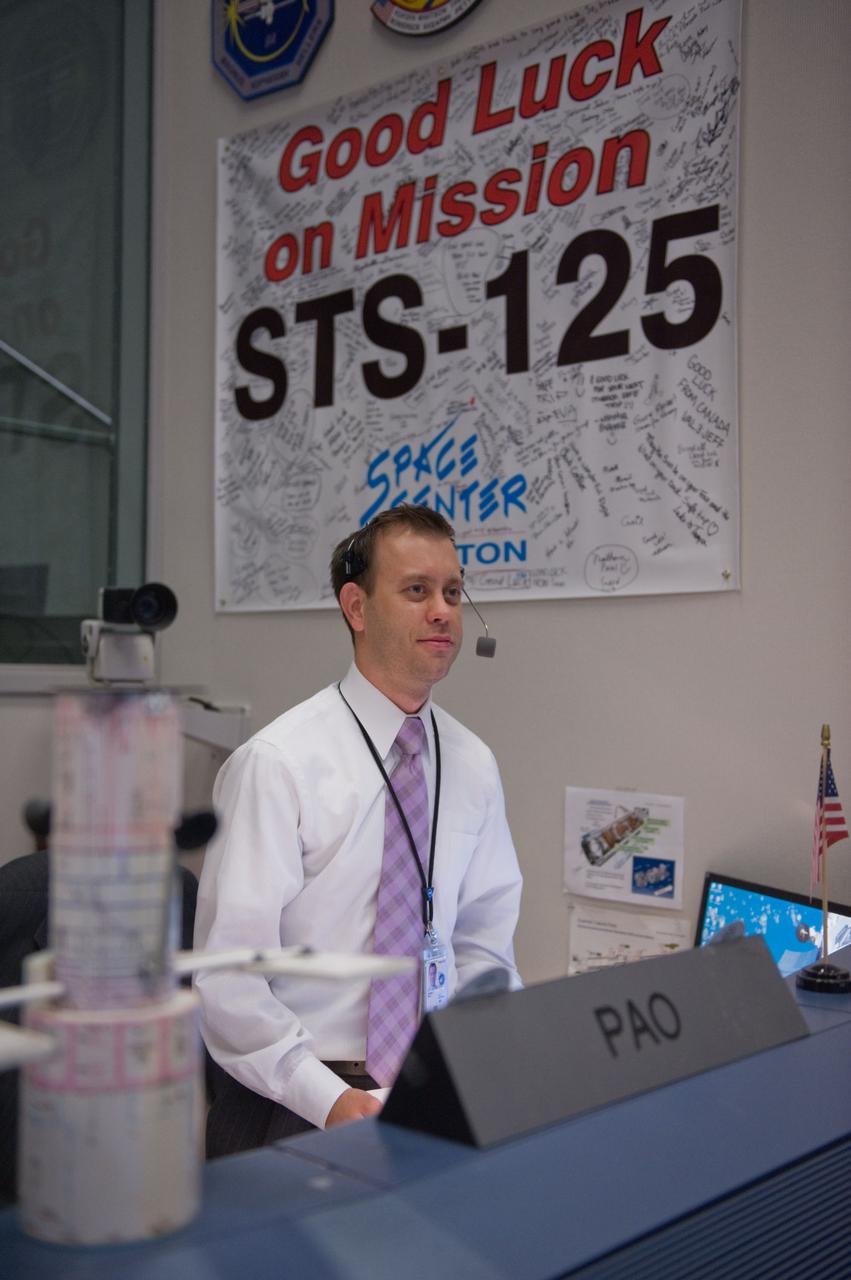
STS-125 Orbit 3/Planning flight controllers with Flight Director Paul Dye. Photo Date: May 14, 2009. Location: Bldg. 30 south, WFCR & Back Rooms. Photographer: Robert Markowitz.
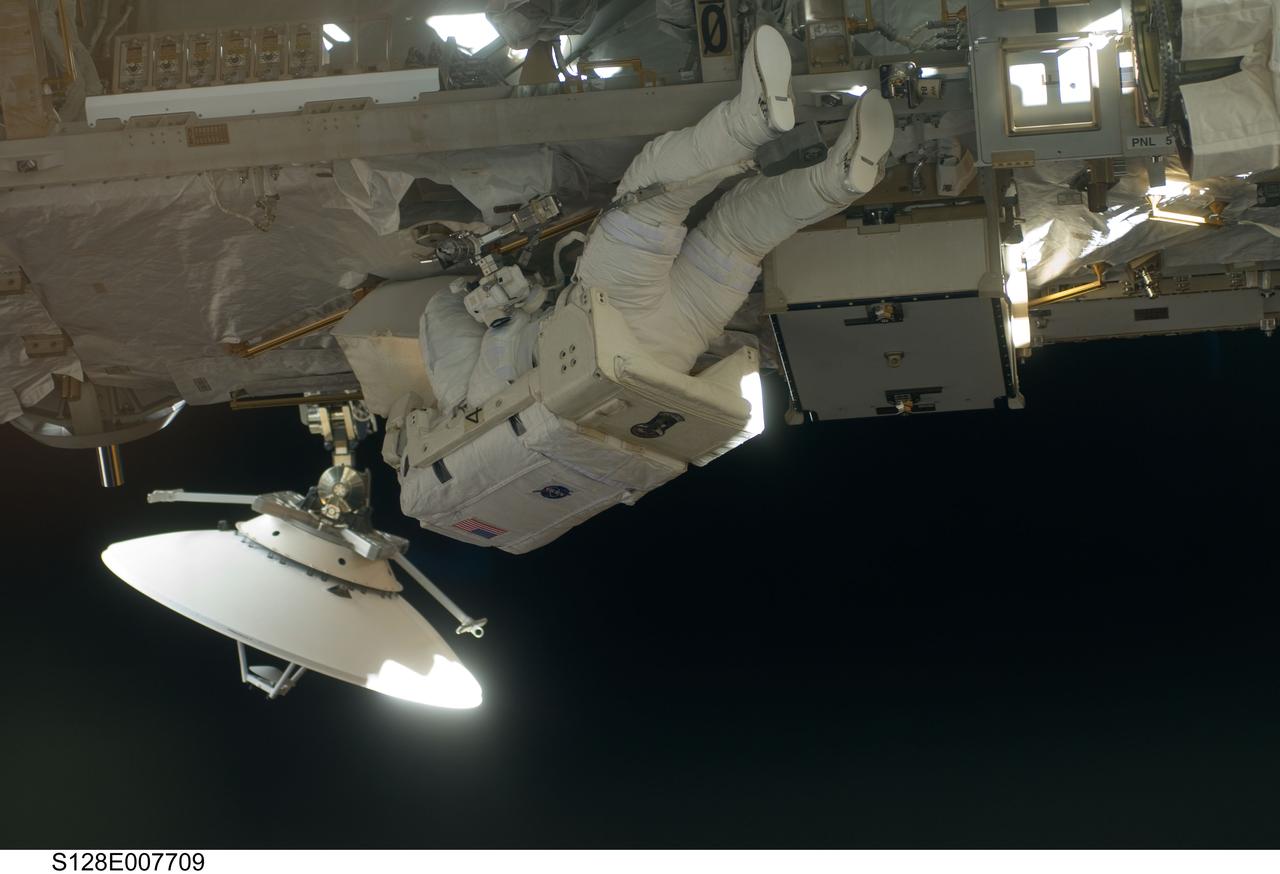
S128-E-007709 (5 Sept. 2009) --- European Space Agency astronaut Christer Fuglesang, STS-128 mission specialist, participates in the mission's third and final session of extravehicular activity (EVA) as construction and maintenance continue on the International Space Station. During the seven-hour, one-minute spacewalk, Fuglesang and NASA astronaut John “Danny” Olivas (out of frame), mission specialist, deployed the Payload Attachment System (PAS), replaced the Rate Gyro Assembly #2, installed two GPS antennae and did some work to prepare for the installation of Node 3 next year. During connection of one of two sets of avionics cables for Node 3, one of the connectors could not be mated. This cable and connector were wrapped in a protective sleeve and safed. All other cables were mated successfully.
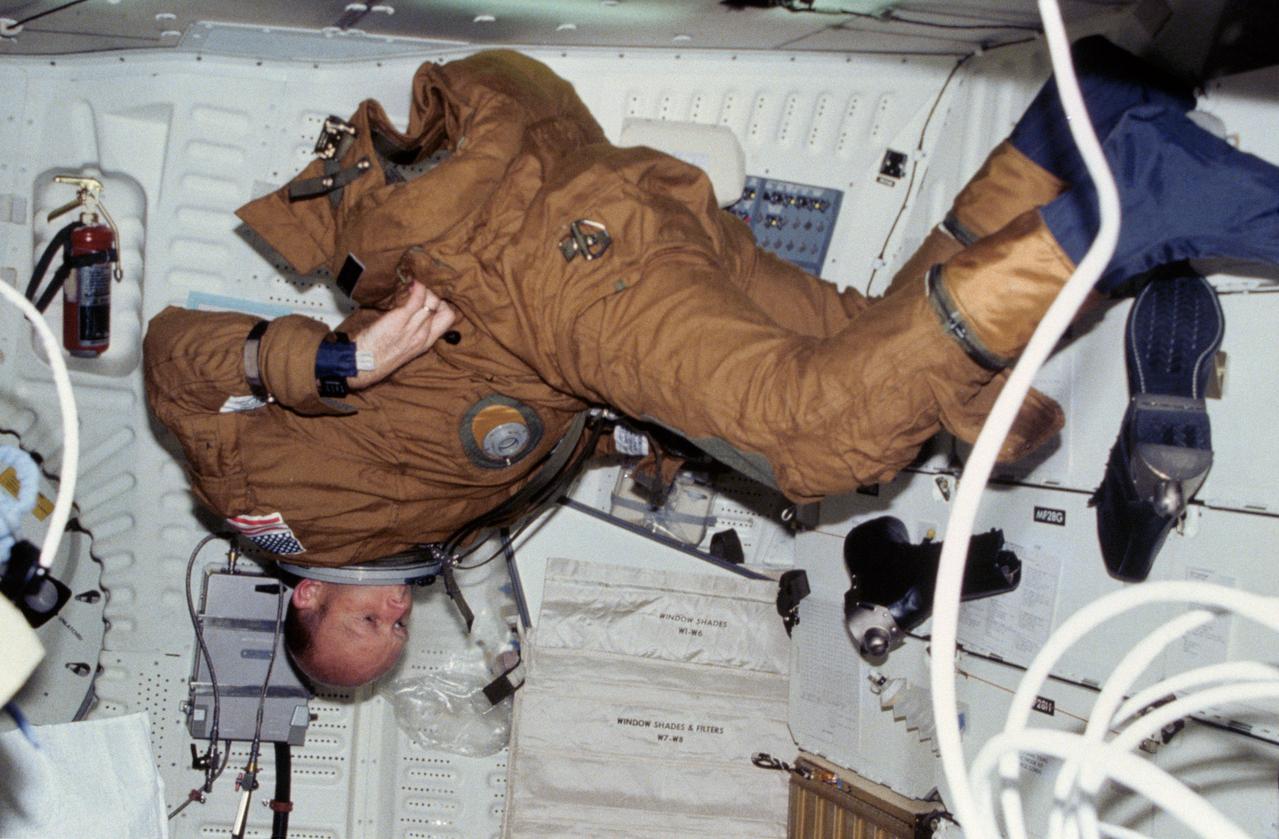
S82-28922 (30 March 1982) --- Astronaut C. Gordon Fullerton, STS-3 pilot, floats upside down in the zero-gravity environment of the middeck area of the Earth-orbiting space shuttle Columbia as he dons a modified USAF high altitude pressure garment. The brownish ejection/escape suit is used by the astronauts at launch and entry. Most of the remainder of their mission time, they are attired in a blue constant-wear garment. Astronaut Jack R. Lousma, crew commander, took this picture with a 35mm camera. The crew spent eight full days in the reusable spacecraft, a shuttle record. Photo credit: NASA