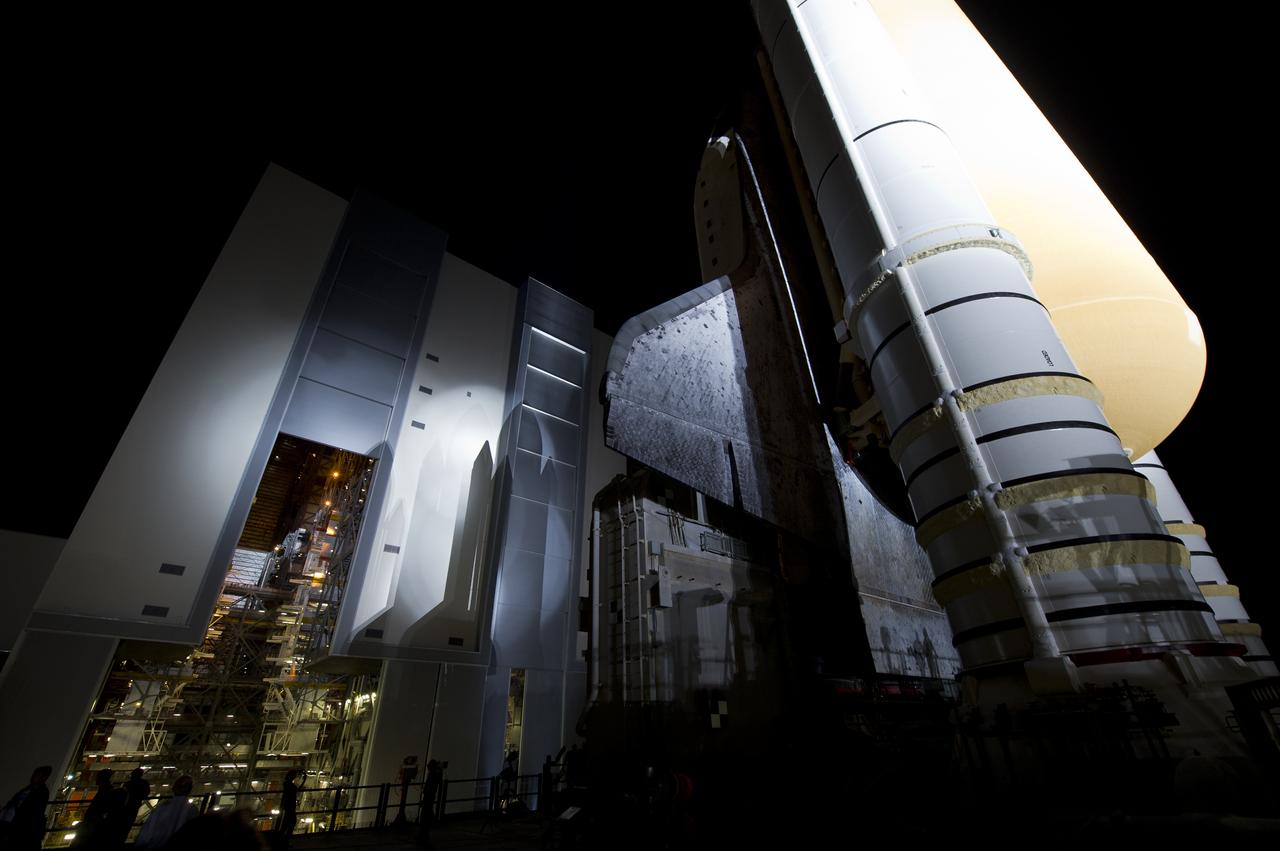
Space Shuttle Atlantis (STS-135) is seen atop the Mobile Launch Platform (MLP) as it begins its journey from High Bay 3 in the Vehicle Assembly Building to Launch Pad 39a for its final flight, Tuesday evening, May 31, 2011, at Kennedy Space Center in Cape Canaveral, Fla. The 3.4-mile trek, known as "rollout," will take about seven hours to complete. Atlantis will carry the Raffaello multipurpose logistics module to deliver supplies, logistics and spare parts to the International Space Station. The launch of STS-135 is targeted for July 8. Photo Credit: (NASA/Bill Ingalls)
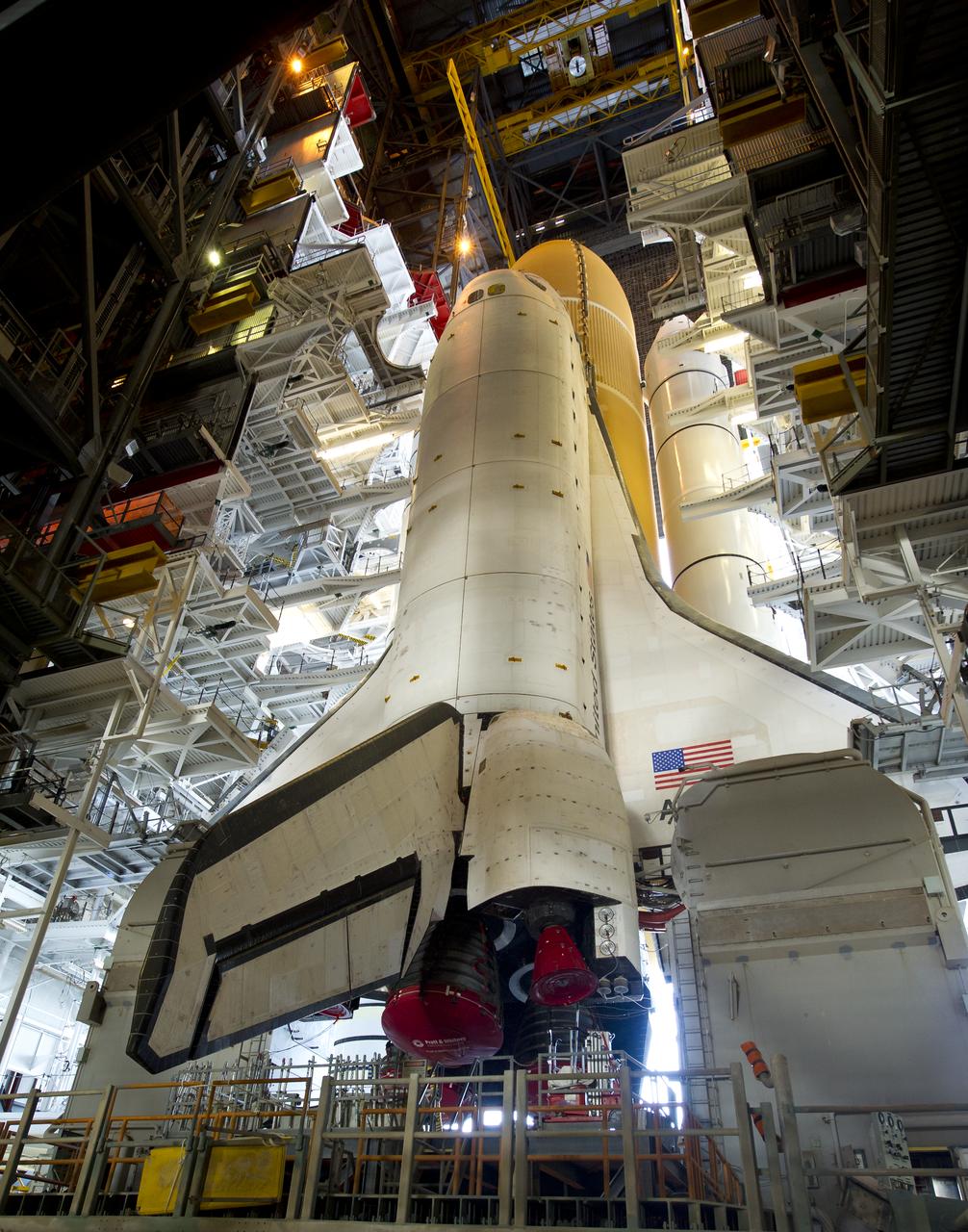
Space Shuttle Atlantis (STS-135) is seen atop a Mobile Launcher Platform (MLP) just prior to beginning its journey from High Bay 3 in the Vehicle Assembly Building to Launch Pad 39a for its final flight, Tuesday evening, May 31, 2011, at Kennedy Space Center in Cape Canaveral, Fla. The 3.4-mile trek, known as "rollout," will take about seven hours to complete. Atlantis will carry the Raffaello multipurpose logistics module to deliver supplies, logistics and spare parts to the International Space Station. The launch of STS-135 is targeted for July 8. Photo Credit: (NASA/Bill Ingalls)
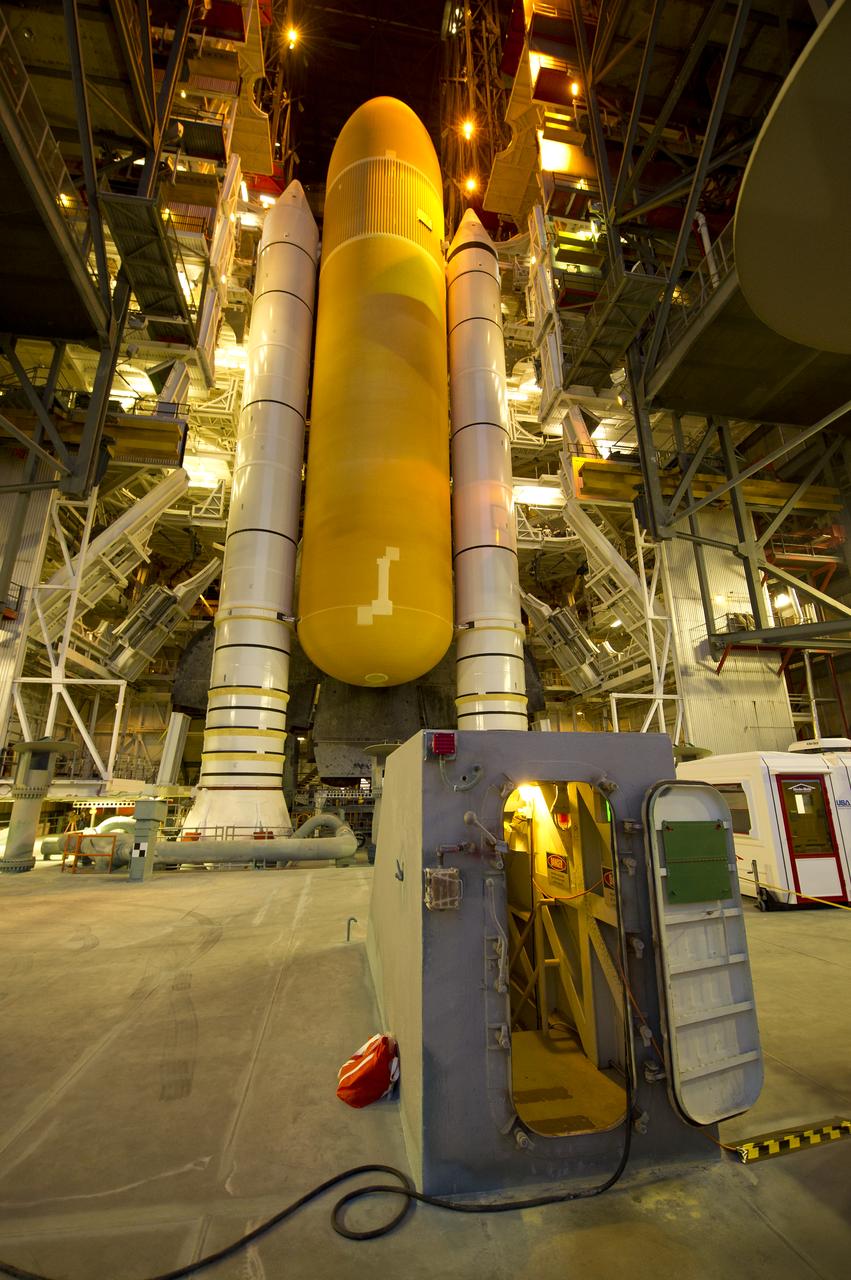
Space Shuttle Atlantis (STS-135) is seen atop a Mobile Launcher Platform (MLP) just prior to beginning its journey from High Bay 3 in the Vehicle Assembly Building to Launch Pad 39a for its final flight, Tuesday evening, May 31, 2011, at Kennedy Space Center in Cape Canaveral, Fla. The 3.4-mile trek, known as "rollout," will take about seven hours to complete. Atlantis will carry the Raffaello multipurpose logistics module to deliver supplies, logistics and spare parts to the International Space Station. The launch of STS-135 is targeted for July 8. Photo Credit: (NASA/Bill Ingalls)
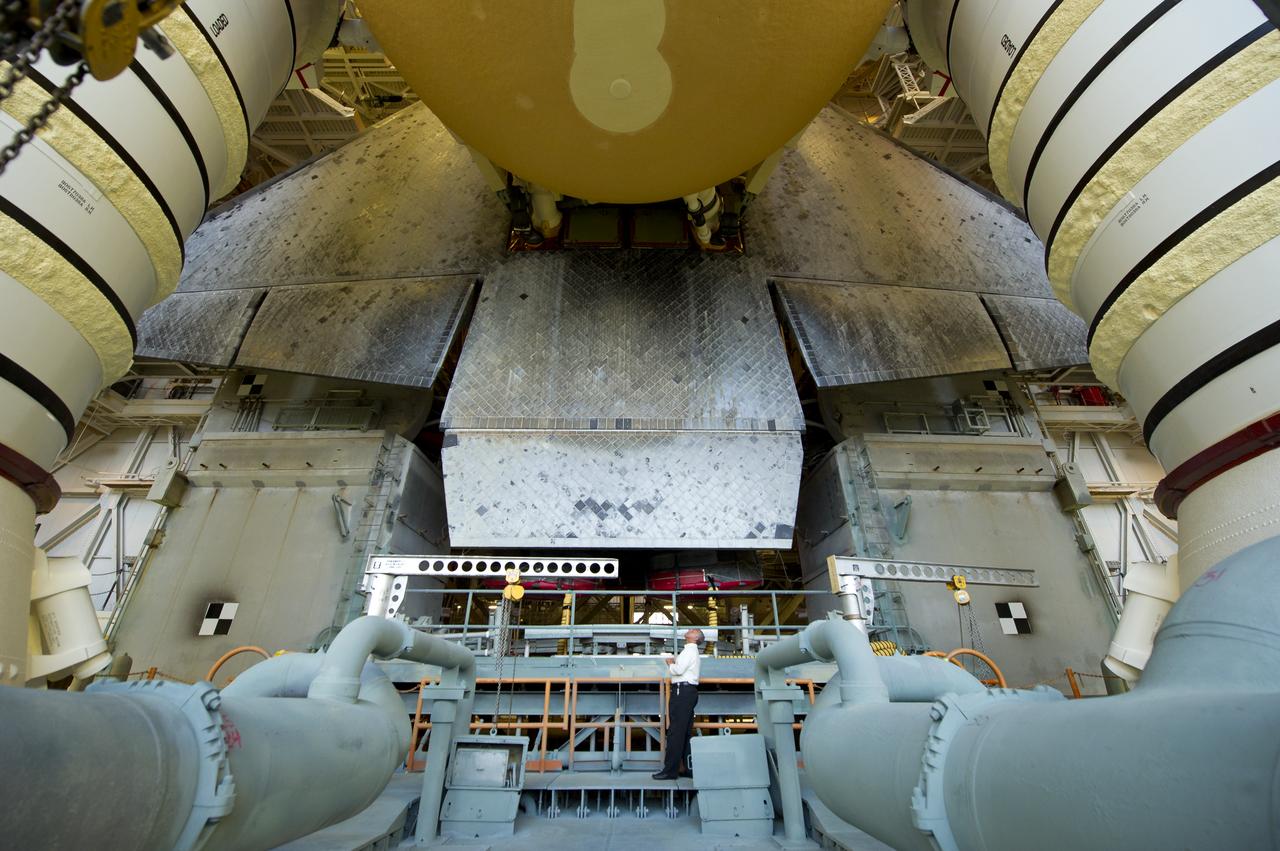
NASA Administrator Charles Bolden looks at the space shuttle Atlantis atop of the Mobile Launch Platform (MLP) just prior to rollout of Atlantis (STS-135) from High Bay 3 in the Vehicle Assembly Building to Launch Pad 39a for its final flight, Tuesday evening, May 31, 2011, at Kennedy Space Center in Cape Canaveral, Fla. The 3.4-mile trek, known as "rollout," will take about seven hours to complete. Atlantis will carry the Raffaello multipurpose logistics module to deliver supplies, logistics and spare parts to the International Space Station. The launch of STS-135 is targeted for July 8. Photo Credit: (NASA/Bill Ingalls)
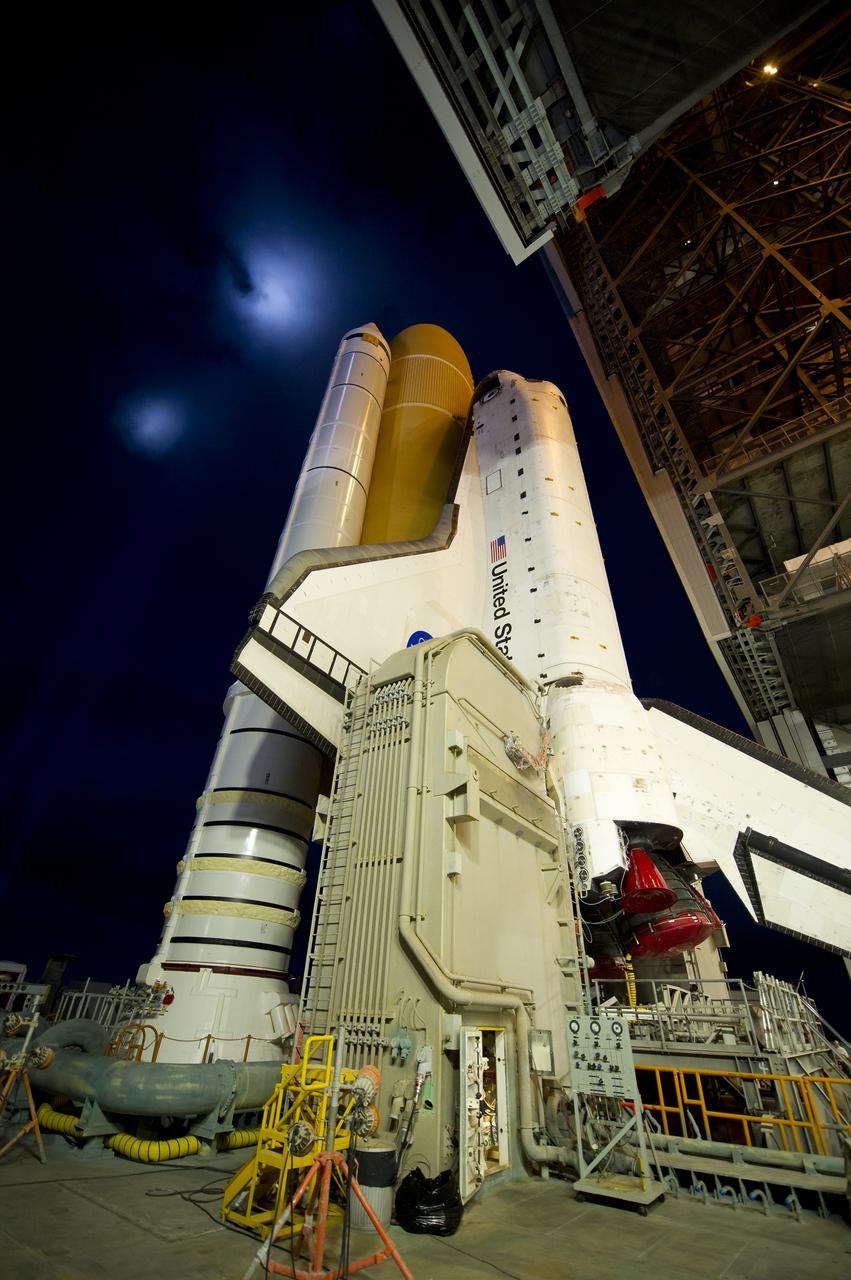
Space Shuttle Atlantis (STS-135) is seen atop the Mobile Launch Platform (MLP) as it begins its journey from High Bay 3 in the Vehicle Assembly Building to Launch Pad 39a for its final flight, Tuesday evening, May 31, 2011, at Kennedy Space Center in Cape Canaveral, Fla. The 3.4-mile trek, known as "rollout," will take about seven hours to complete. Atlantis will carry the Raffaello multipurpose logistics module to deliver supplies, logistics and spare parts to the International Space Station. The launch of STS-135 is targeted for July 8. Photo Credit: (NASA/Bill Ingalls)
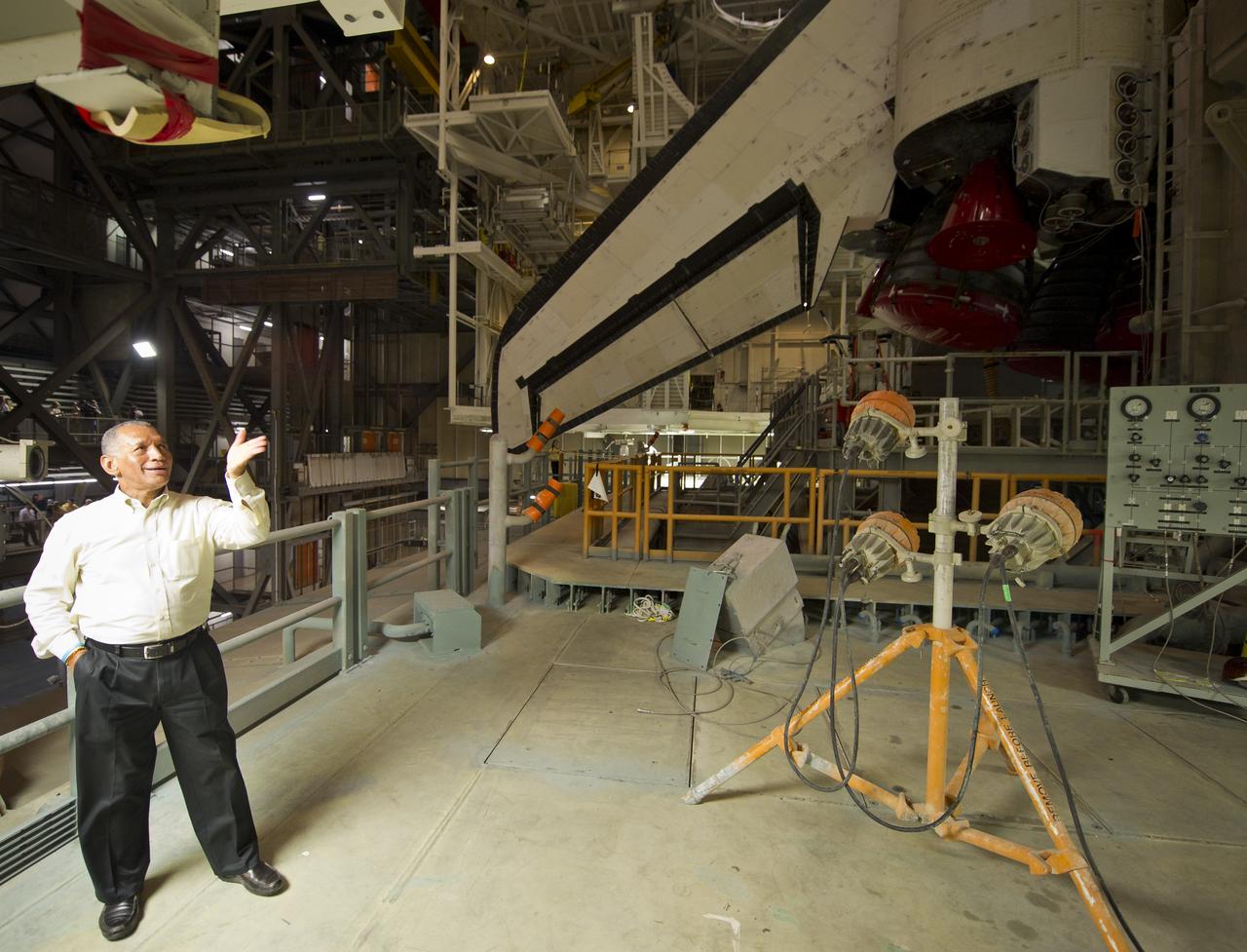
NASA Administrator Charles Bolden looks at the space shuttle Atlantis atop of the Mobile Launch Platform (MLP) just prior to rollout of Atlantis (STS-135) from High Bay 3 in the Vehicle Assembly Building to Launch Pad 39a for its final flight, Tuesday evening, May 31, 2011, at Kennedy Space Center in Cape Canaveral, Fla. The 3.4-mile trek, known as "rollout," will take about seven hours to complete. Atlantis will carry the Raffaello multipurpose logistics module to deliver supplies, logistics and spare parts to the International Space Station. The launch of STS-135 is targeted for July 8. Photo Credit: (NASA/Bill Ingalls)
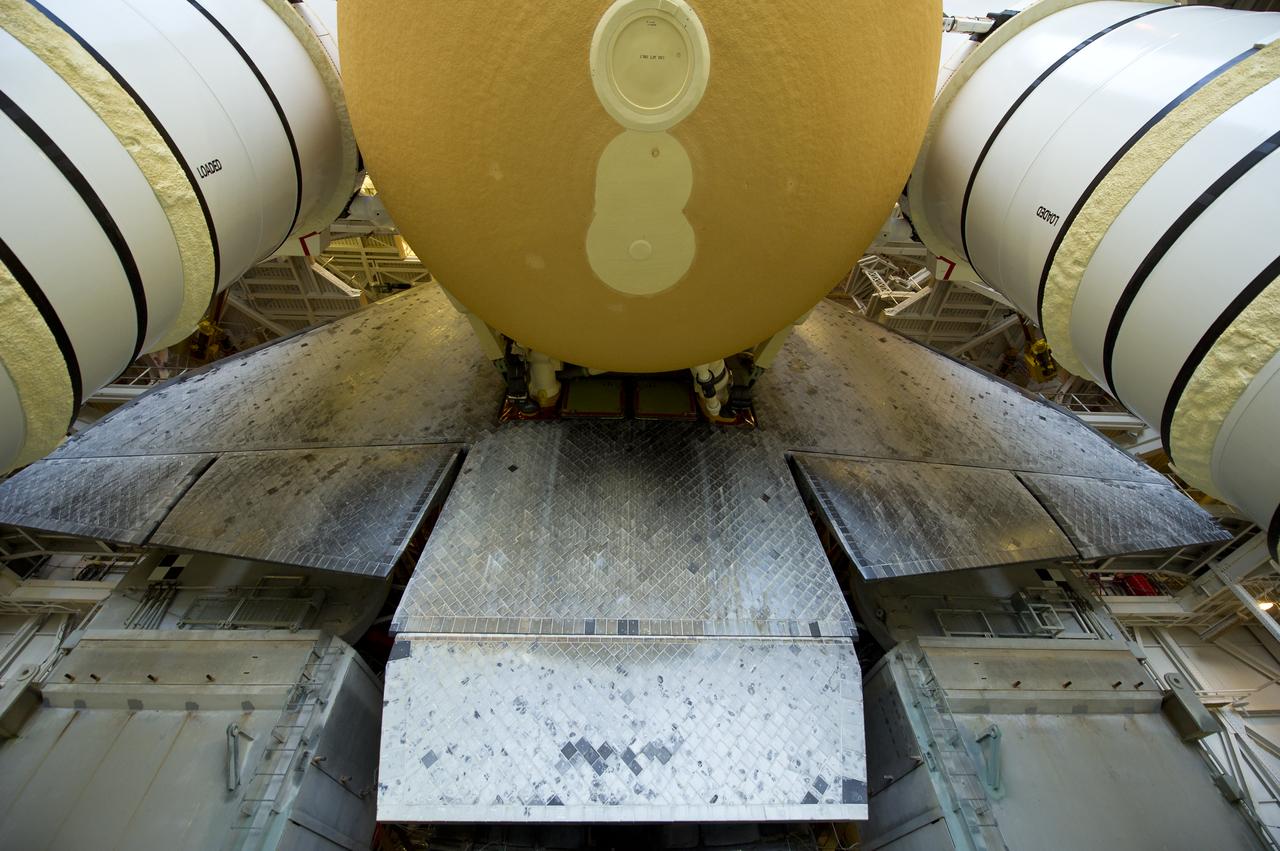
Space Shuttle Atlantis (STS-135) is seen atop a Mobile Launcher Platform (MLP) just prior to beginning its journey from High Bay 3 in the Vehicle Assembly Building to Launch Pad 39a for its final flight, Tuesday evening, May 31, 2011, at Kennedy Space Center in Cape Canaveral, Fla. The 3.4-mile trek, known as "rollout," will take about seven hours to complete. Atlantis will carry the Raffaello multipurpose logistics module to deliver supplies, logistics and spare parts to the International Space Station. The launch of STS-135 is targeted for July 8. Photo Credit: (NASA/Bill Ingalls)

Space Shuttle Atlantis (STS-135) is seen atop the Mobile Launch Platform (MLP) as it begins its journey from High Bay 3 in the Vehicle Assembly Building to Launch Pad 39a for its final flight, Tuesday evening, May 31, 2011, at Kennedy Space Center in Cape Canaveral, Fla. The 3.4-mile trek, known as "rollout," will take about seven hours to complete. Atlantis will carry the Raffaello multipurpose logistics module to deliver supplies, logistics and spare parts to the International Space Station. The launch of STS-135 is targeted for July 8. Photo Credit: (NASA/Bill Ingalls)

The space shuttle Atlantis atop NASA's 747 Shuttle Carrier Aircraft (SCA) during takeoff for a return ferry flight to the Kennedy Space Center from Edwards, California. The STS-66 mission was dedicated to the third flight of the Atmospheric Laboratory for Applications and Science-3 (ATLAS-3), part of NASA's Mission to Planet Earth program. The astronauts also deployed and retrieved a free-flying satellite designed to study the middle and lower thermospheres and perform a series of experiments covering life sciences research and microgravity processing. The landing was at 7:34 a.m. (PST) 14 November 1994, after being waved off from the Kennedy Space Center, Florida, due to adverse weather.
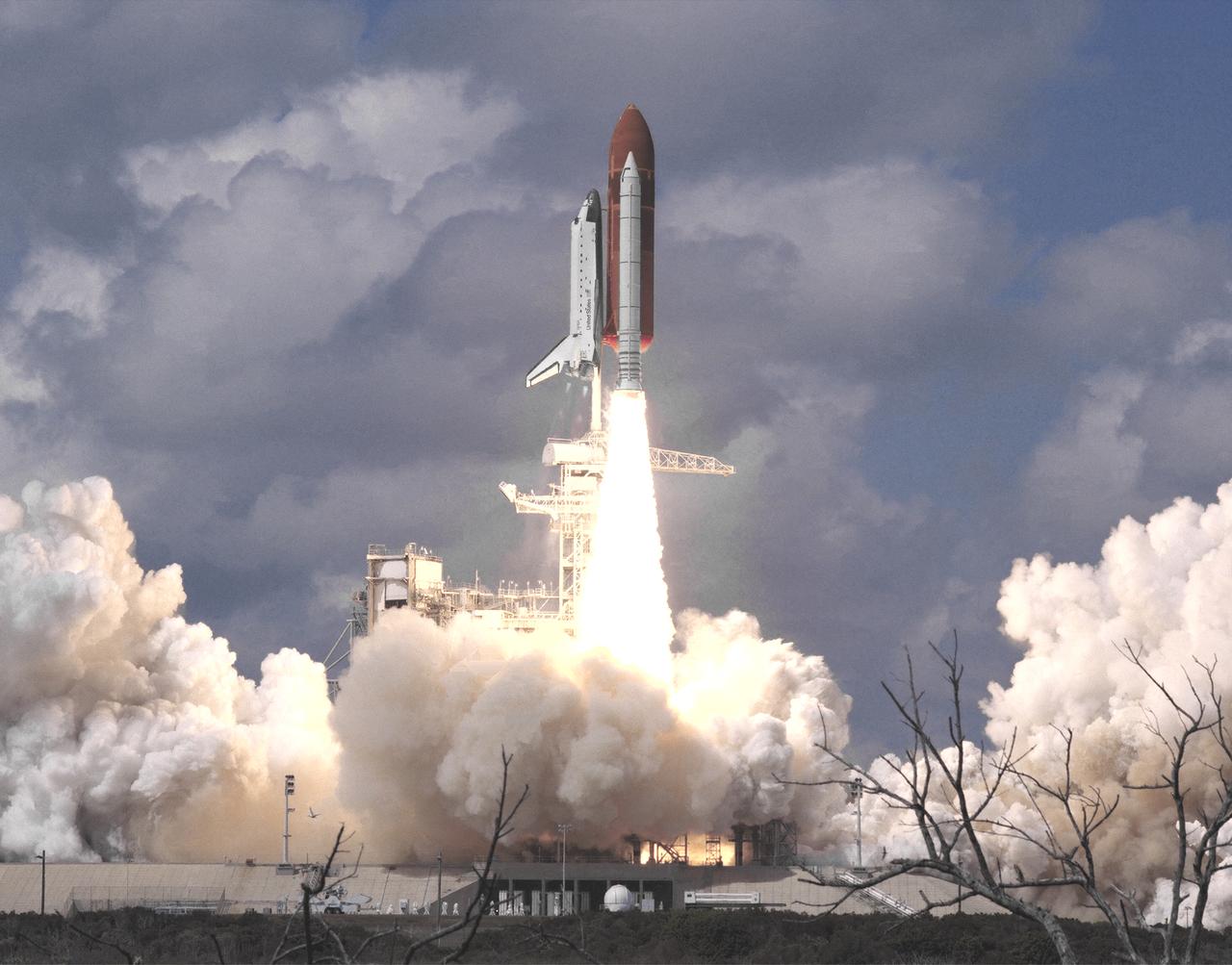
The Space Shuttle Discovery takes off from Launch Pad 39B at the Kennedy Space Center, Florida, to being Mission STS-26 on 29 September 1988,11:37:00 a.m. EDT. The 26th shuttle mission lasted four days, one hour, zero minutes, and 11 seconds. Discovery landed 3 October 1988, 9:37:11 a.m. PDT, on Runway 17 at Edwards Air Force Base, California. Its primary payload, NASA Tracking and Data Relay Satellite-3 (TDRS-3) attached to an Inertial Upper Stage (IUS), became the second TDRS deployed. After deployment, IUS propelled the satellite to a geosynchronous orbit. The crew consisted of Frederick H. Hauck, Commander; Richard O. Covey, Pilot; John M. Lounge, Mission Specialist 1; George D. Nelson, Mission Specialist 2; and David C. Hilmers, Mission Specialist 3.

The space shuttle Atlantis lands with its drag chute deployed on runway 22 at Edwards, California, to complete the STS-66 mission dedicated to the third flight of the Atmospheric Laboratory for Applications and Science-3 (ATLAS-3), part of NASA's Mission to Planet Earth program. The astronauts also deployed and retrieved a free-flying satellite designed to study the middle and lower thermospheres and perform a series of experiments covering life sciences research and microgravity processing. The landing was at 7:34 a.m. (PST) 14 November 1994, after being waved off from the Kennedy Space Center, Florida, due to adverse weather.
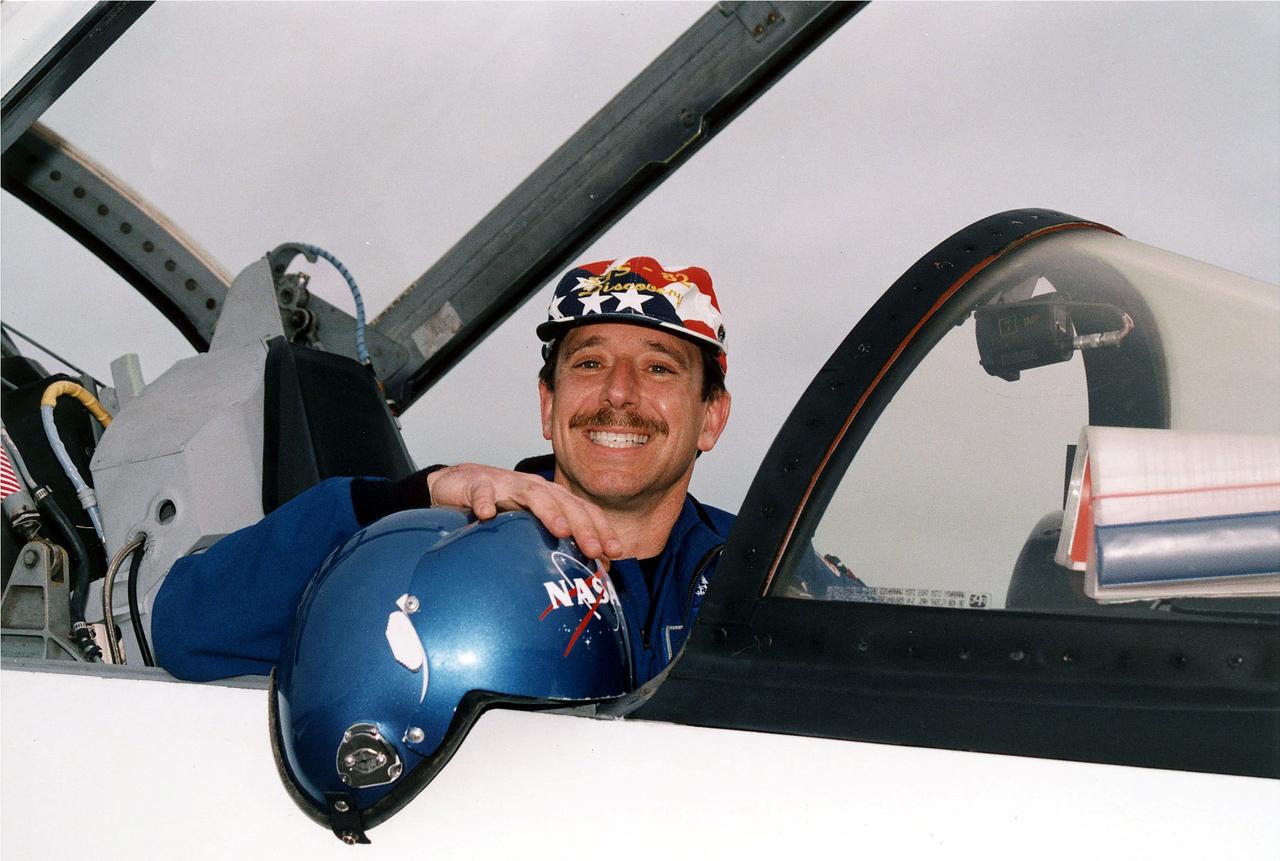
KENNEDY SPACE CENTER, FLA. - STS-82 Pilot Scott J. "Doc" Horowitz flashes a wide grin for photographers after landing his T-38 jet at KSC's Shuttle Landing Facility. Horowitz and the other six members of the STS-82 crew came from their home base at Johnson Space Center in Houston, Texas, to spend the last few days before launch at KSC. STS-82 is scheduled for liftoff on Feb. 11 during a 65-minute launch window that opens at 3:56 a.m. EST. The 10-day flight aboard the Space Shuttle Discovery will be the second Hubble Space Telescope (HST) servicing mission.
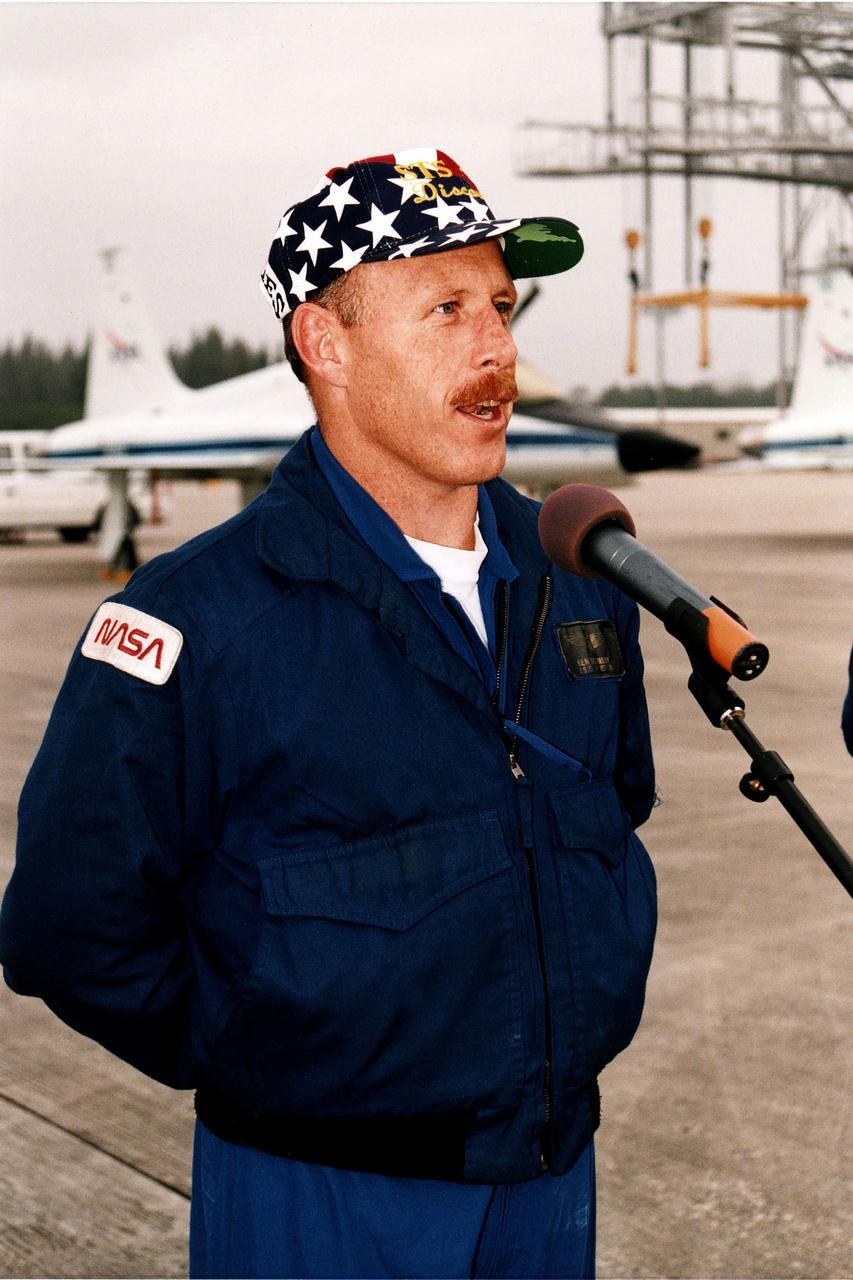
KENNEDY SPACE CENTER, FLA. - STS-82 Mission Commander Kenneth D. Bowersox greets media representatives after arrival at KSC's Shuttle Landing Facility. Bowersox and the other six members of the STS-82 crew came from their home base at Johnson Space Center in Houston, Texas, to spend the last few days before launch at KSC. STS-82 is scheduled for liftoff on Feb. 11 during a 65-minute launch window that opens at 3:56 a.m. EST. The 10-day flight aboard the Space Shuttle Discovery will be the second Hubble Space Telescope (HST) servicing mission.
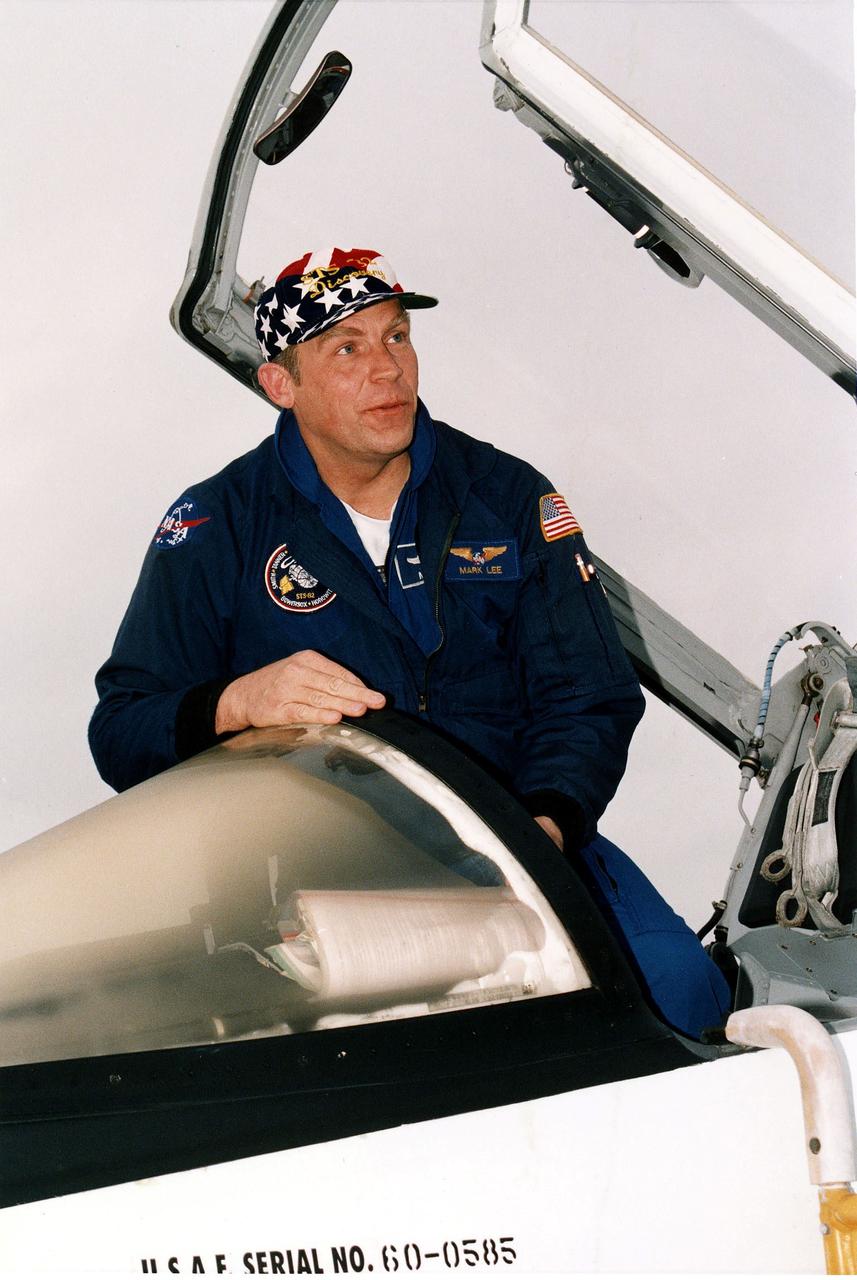
KENNEDY SPACE CENTER, FLA. - STS-82 Payload Commander Mark C. Lee prepares to step down from the T-38 jet he flew from an air field serving the astronauts' home base at Johnson Space Center, Houston, Texas, to KSC's Shuttle Landing Facility. Lee and the other six members of the STS-82 crew will spend the last few days before launch at KSC. STS-82 is scheduled for liftoff on Feb. 11 during a 65-minute launch window that opens at 3:56 a.m. EST. The 10-day flight aboard the Space Shuttle Discovery will be the second Hubble Space Telescope (HST) servicing mission.
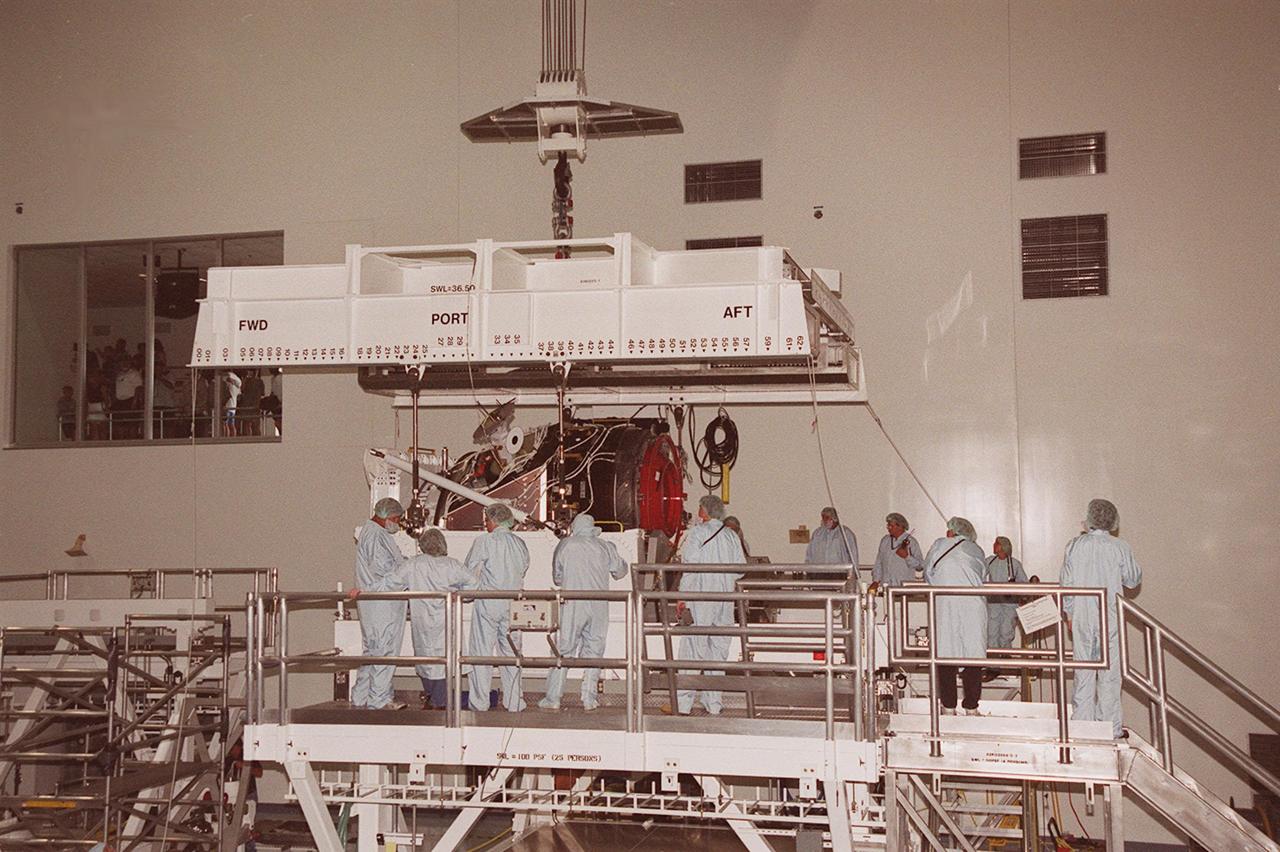
Workers in the Space Station Processing Facility gather around the Pressurized Mating Adapter -3 (PMA-3) as an overhead crane is set to lift and move it. The PMA-3, a component of the International Space Station, is being transported to the Orbiter Processing Facility. PMA-3 is part of the payload on Space Shuttle mission STS-92, scheduled to launch Oct. 5. The mission will be the fifth flight to the Space Station, and the 100th Shuttle flight overall. PMA-3 provides shuttle docking port for solar array installation on flight 4A (mission STS-97 scheduled for Nov. 30), and Lab installation on flight 5A (mission STS-98, scheduled for Jan. 18, 2001)
KENNEDY SPACE CENTER, FLA. -- In the Space Station Processing Facility, the Pressurized Mating Adapter -3 (PMA-3) sits in a payload canister for transport to the Orbiter Processing Facility. Workers at the sides and below watch the process. The PMA-3, a component of the International Space Station, is part of the payload on Space Shuttle mission STS-92, scheduled to launch Oct. 5. The mission will be the fifth flight to the Space Station, and the 100th Shuttle flight overall. PMA-3 provides shuttle docking port for solar array installation on flight 4A (mission STS-97 scheduled for Nov. 30), and Lab installation on flight 5A (mission STS-98, scheduled for Jan. 18, 2001)
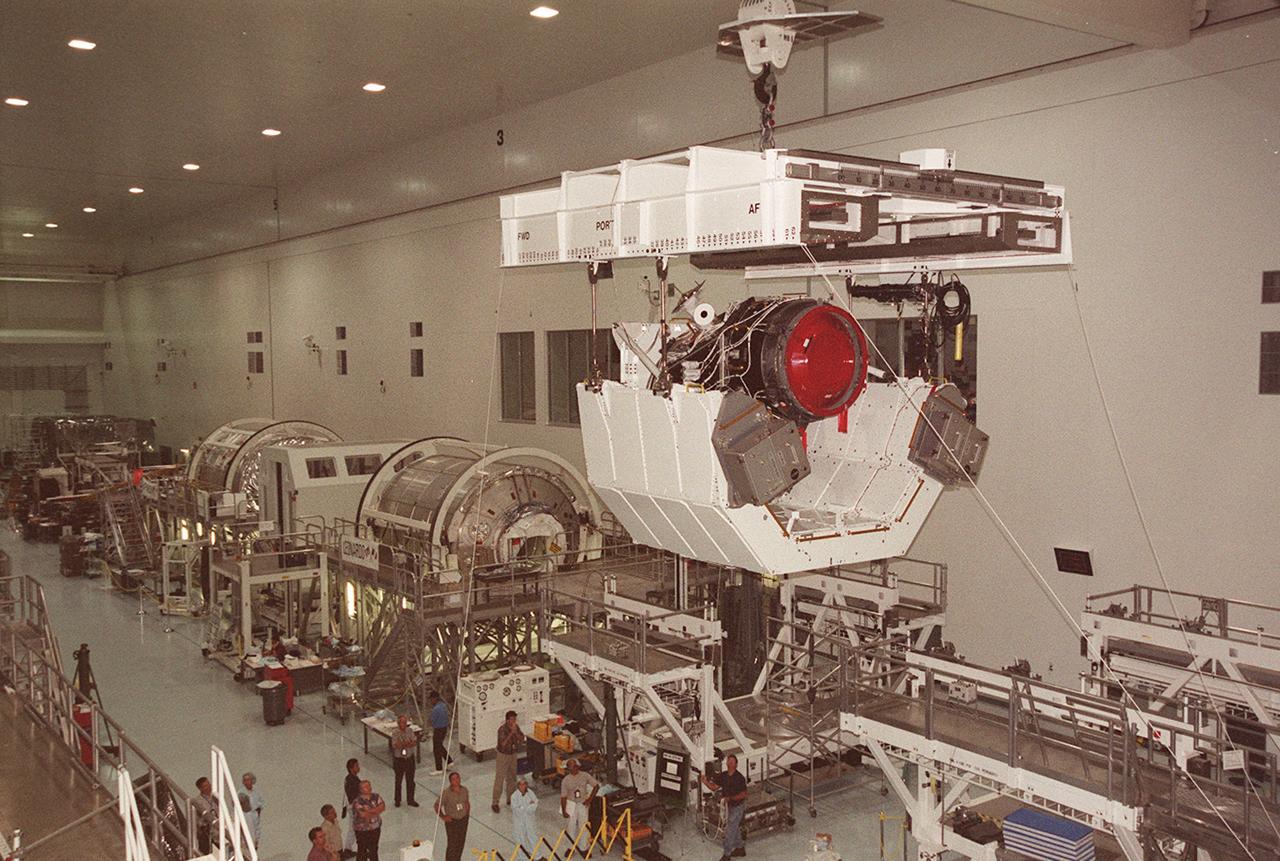
KENNEDY SPACE CENTER, FLA. -- In the Space Station Processing Facility, an overhead crane moves the Pressurized Mating Adapter-3 (PMA-3) to a payload canister for transport to the Orbiter Processing Facility. The PMA-3, a component of the International Space Station, is part of the payload on Space Shuttle mission STS-92, scheduled to launch Oct. 5. The mission will be the fifth flight to the Space Station, and the 100th Shuttle flight overall. PMA-3 provides the Shuttle docking port for solar array installation on flight 4A (mission STS-97, scheduled for Nov. 30) and Lab installation on flight 5A (mission STS-98), scheduled for Jan. 18, 2001.)
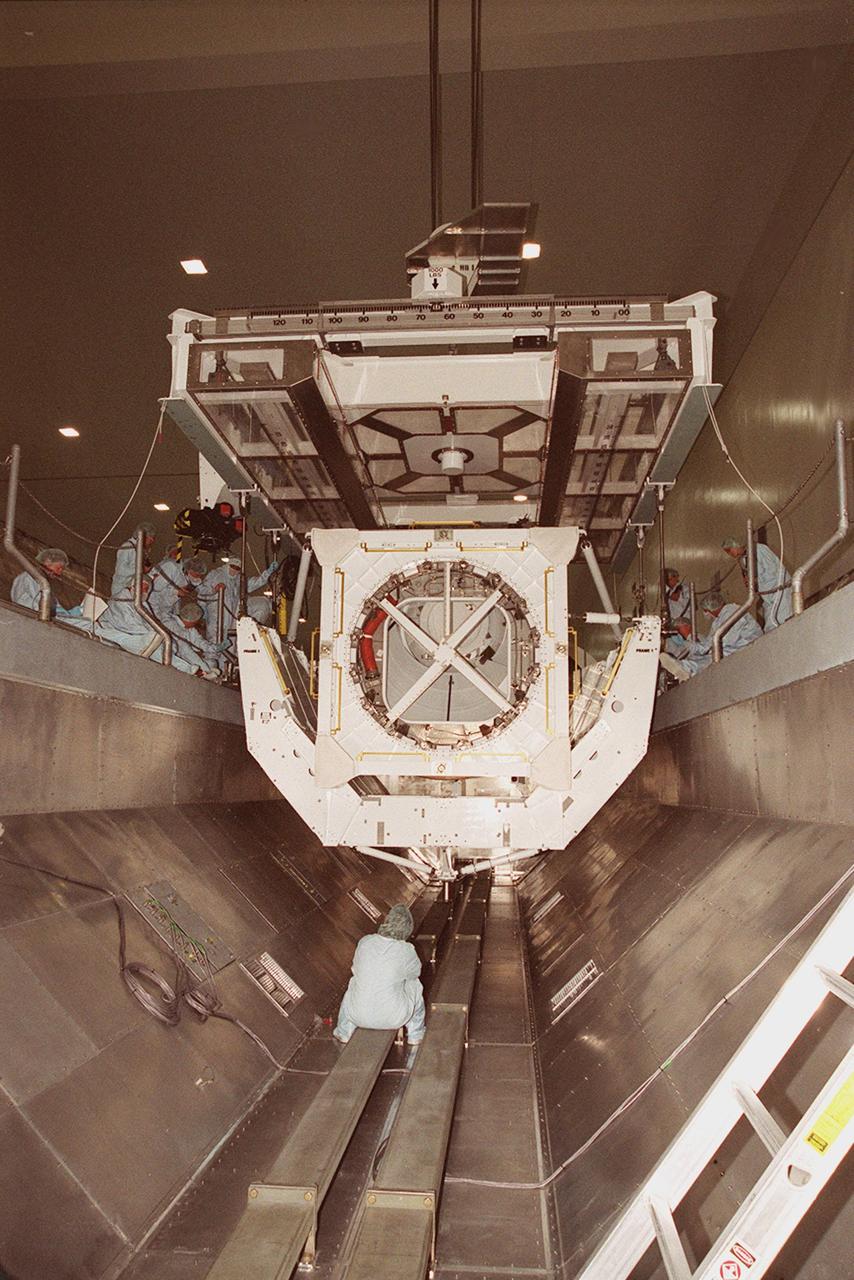
KENNEDY SPACE CENTER, FLA. -- In the Space Station Processing Facility, an overhead crane lowers the Pressurized Mating Adapter -3 (PMA-3) into a payload canister for transport to the Orbiter Processing Facility. Workers at the sides and below watch the process. The PMA-3, a component of the International Space Station, is part of the payload on Space Shuttle mission STS-92, scheduled to launch Oct. 5. The mission will be the fifth flight to the Space Station, and the 100th Shuttle flight overall. PMA-3 provides shuttle docking port for solar array installation on flight 4A (mission STS-97 scheduled for Nov. 30), and Lab installation on flight 5A (mission STS-98, scheduled for Jan. 18, 2001)

KENNEDY SPACE CENTER, FLA. -- In the Space Station Processing Facility, an overhead crane moves the Pressurized Mating Adapter-3 (PMA-3) to a payload canister for transport to the Orbiter Processing Facility. The PMA-3, a component of the International Space Station, is part of the payload on Space Shuttle mission STS-92, scheduled to launch Oct. 5. The mission will be the fifth flight to the Space Station, and the 100th Shuttle flight overall. PMA-3 provides the Shuttle docking port for solar array installation on flight 4A (mission STS-97, scheduled for Nov. 30) and Lab installation on flight 5A (mission STS-98), scheduled for Jan. 18, 2001.)

KENNEDY SPACE CENTER, FLA. -- In the Space Station Processing Facility, an overhead crane lowers the Pressurized Mating Adapter -3 (PMA-3) into a payload canister for transport to the Orbiter Processing Facility. Workers at the sides and below watch the process. The PMA-3, a component of the International Space Station, is part of the payload on Space Shuttle mission STS-92, scheduled to launch Oct. 5. The mission will be the fifth flight to the Space Station, and the 100th Shuttle flight overall. PMA-3 provides shuttle docking port for solar array installation on flight 4A (mission STS-97 scheduled for Nov. 30), and Lab installation on flight 5A (mission STS-98, scheduled for Jan. 18, 2001)

KENNEDY SPACE CENTER, FLA. -- In the Space Station Processing Facility, the Pressurized Mating Adapter -3 (PMA-3) sits in a payload canister for transport to the Orbiter Processing Facility. Workers at the sides and below watch the process. The PMA-3, a component of the International Space Station, is part of the payload on Space Shuttle mission STS-92, scheduled to launch Oct. 5. The mission will be the fifth flight to the Space Station, and the 100th Shuttle flight overall. PMA-3 provides shuttle docking port for solar array installation on flight 4A (mission STS-97 scheduled for Nov. 30), and Lab installation on flight 5A (mission STS-98, scheduled for Jan. 18, 2001)
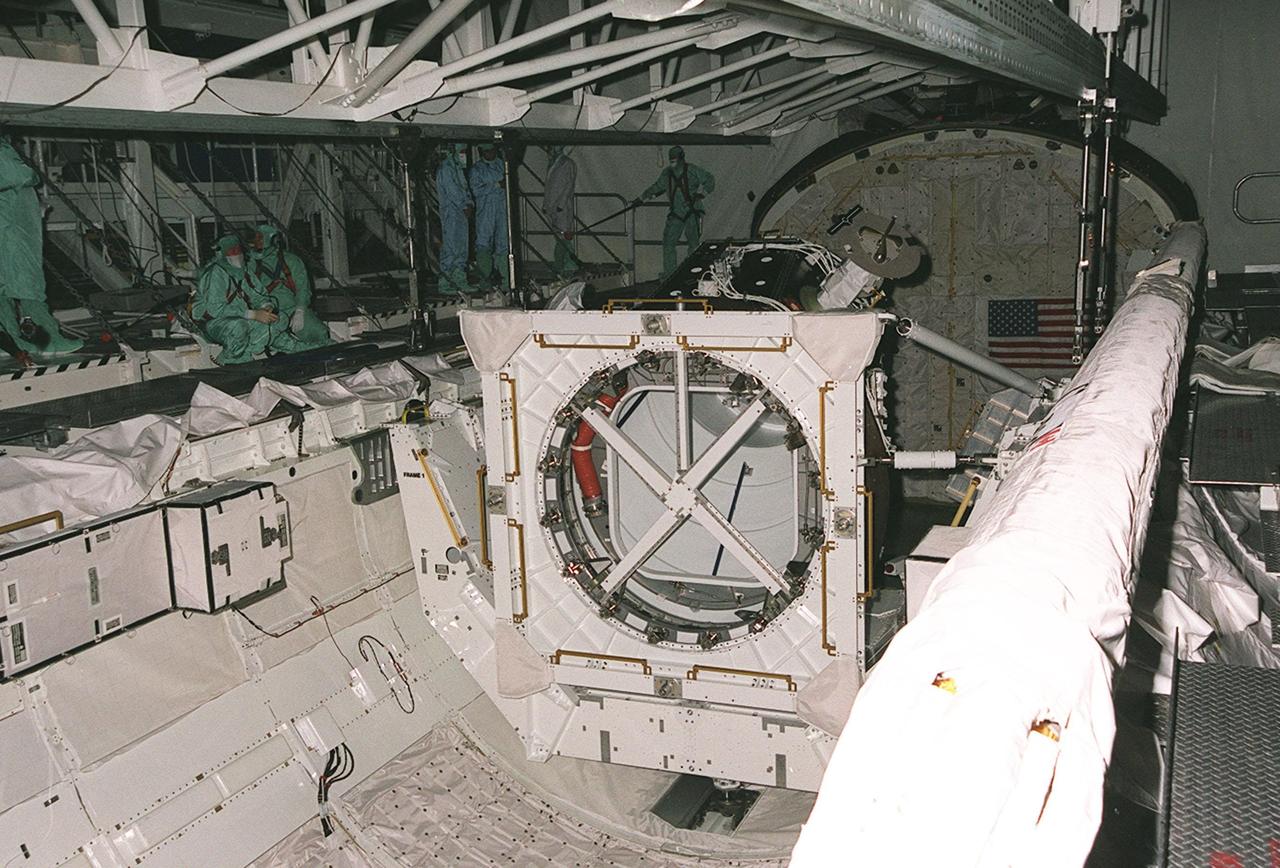
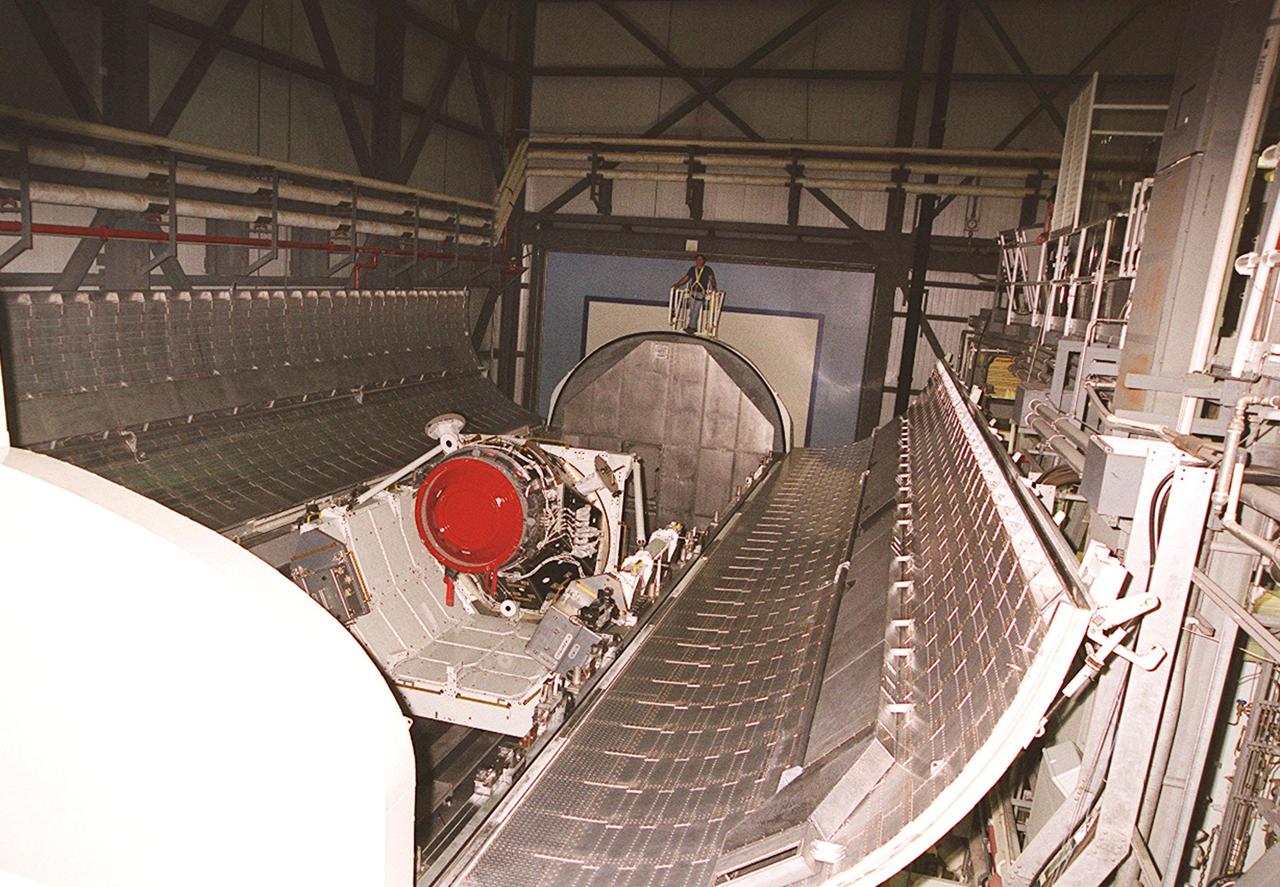
KENNEDY SPACE CENTER, FLA. -- The Pressurized Mating Adapter -3 (PMA-3) sits in the payload bay of the orbiter Discovery after being transported from the Space Station Processing Facility. A component of the International Space Station, the PMA-3 will fly on Shuttle mission STS-92, scheduled to launch Oct. 5. The mission will be the fifth flight to the Space Station, and the 100th Shuttle flight overall. PMA-3 provides shuttle docking port for solar array installation on flight 4A (mission STS-97 scheduled for Nov. 30), and Lab installation on flight 5A (mission STS-98, scheduled for Jan. 18, 2001)
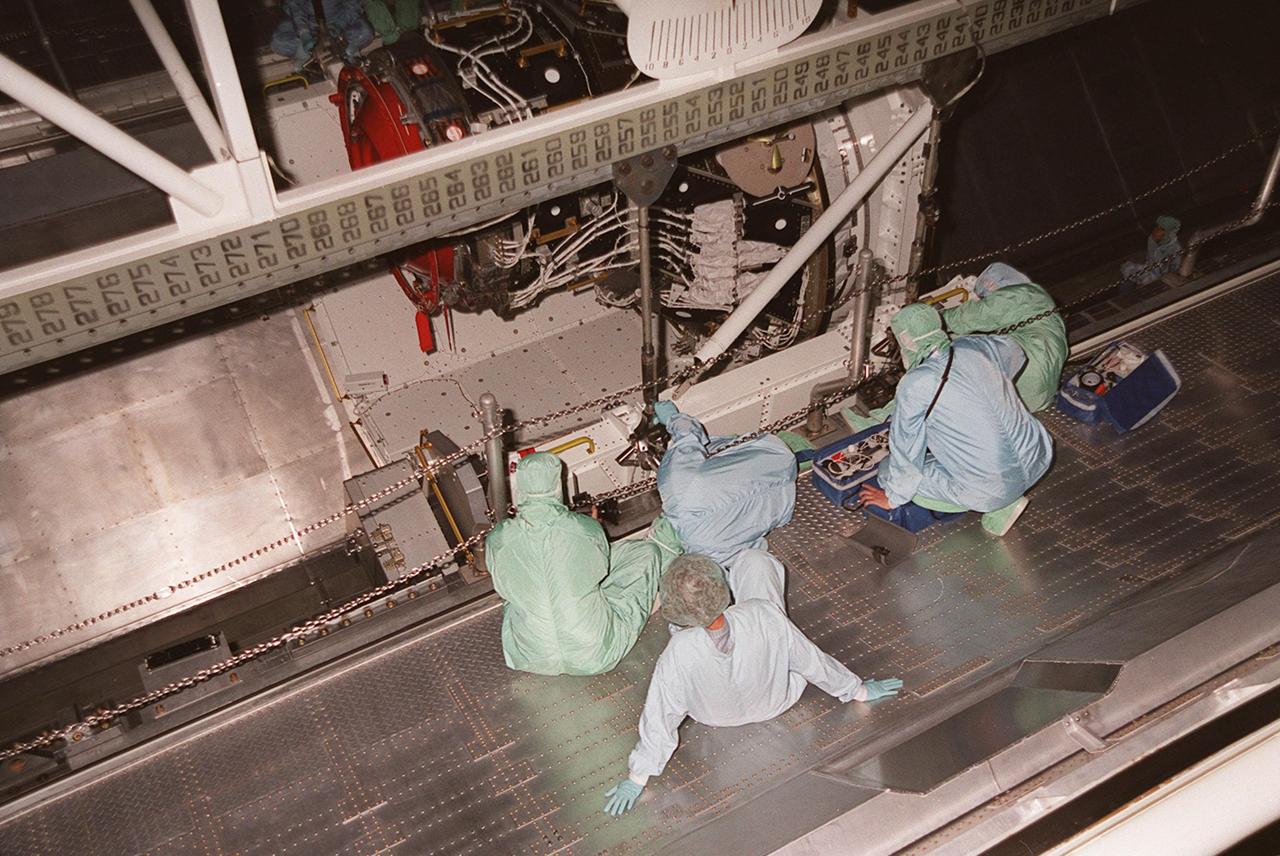
KENNEDY SPACE CENTER, FLA. -- Workers in the Orbiter Processing Facility check the placement of cables on the Pressurized Mating Adapter -3 (PMA-3) for its transfer to the orbiter Discovery. A component of the International Space Station, the PMA-3 is part of the payload on Space Shuttle mission STS-92, scheduled to launch Oct. 5. The mission will be the fifth flight to the Space Station, and the 100th Shuttle flight overall. PMA-3 provides shuttle docking port for solar array installation on flight 4A (mission STS-97 scheduled for Nov. 30), and Lab installation on flight 5A (mission STS-98, scheduled for Jan. 18, 2001)
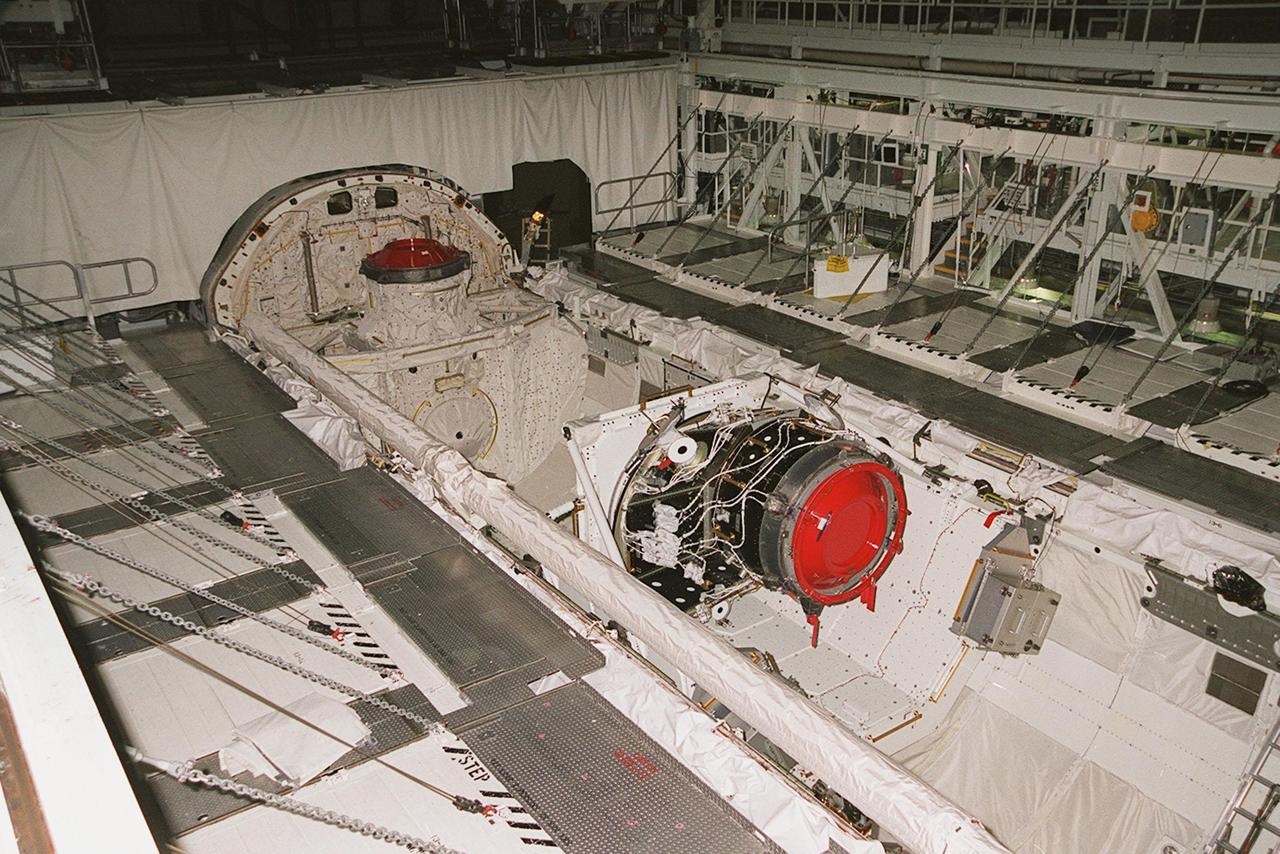
KENNEDY SPACE CENTER, FLA. -- The Pressurized Mating Adapter -3 (PMA-3) sits in the payload bay of the orbiter Discovery after being transported from the Space Station Processing Facility. A component of the International Space Station, the PMA-3 will fly on Shuttle mission STS-92, scheduled to launch Oct. 5. The mission will be the fifth flight to the Space Station, and the 100th Shuttle flight overall. PMA-3 provides shuttle docking port for solar array installation on flight 4A (mission STS-97 scheduled for Nov. 30), and Lab installation on flight 5A (mission STS-98, scheduled for Jan. 18, 2001)
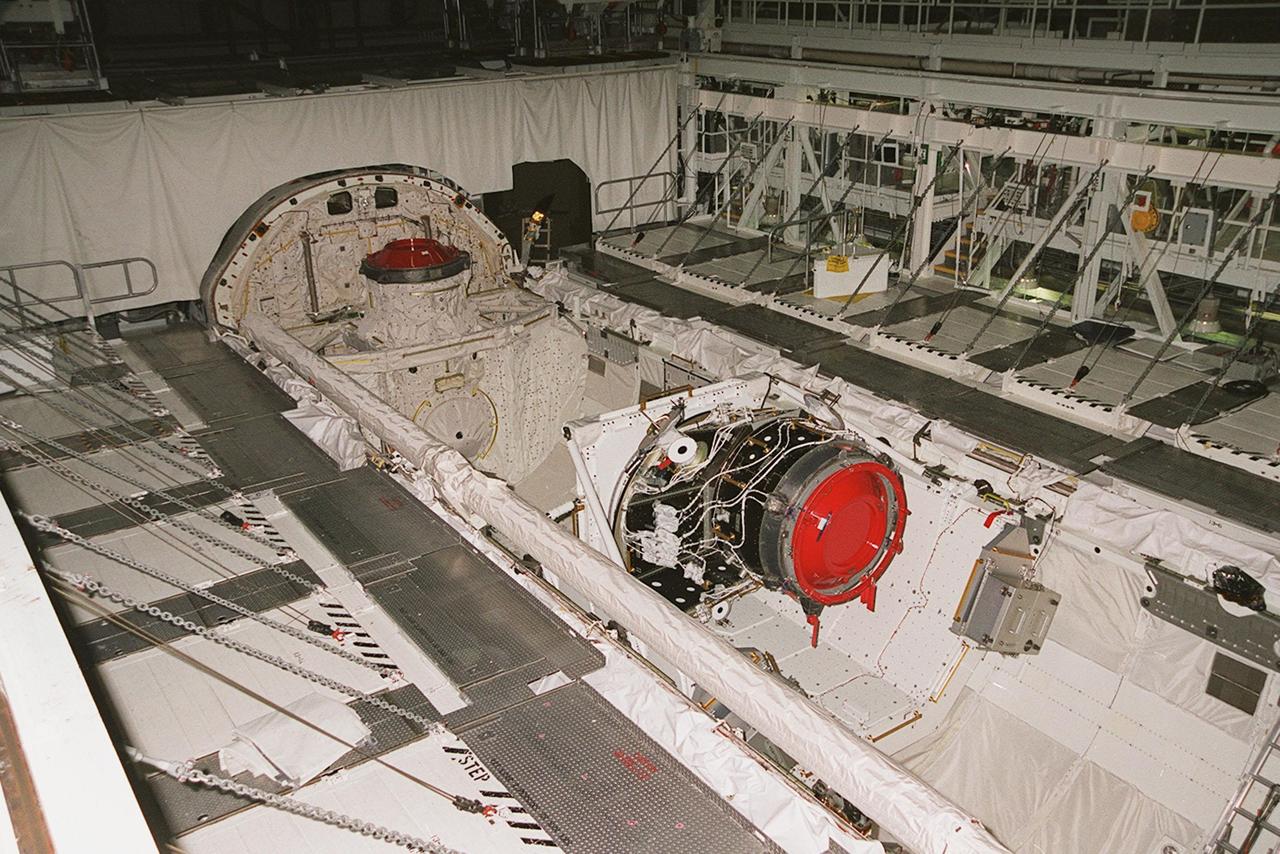
KENNEDY SPACE CENTER, FLA. -- The Pressurized Mating Adapter -3 (PMA-3) sits in the payload bay of the orbiter Discovery after being transported from the Space Station Processing Facility. A component of the International Space Station, the PMA-3 will fly on Shuttle mission STS-92, scheduled to launch Oct. 5. The mission will be the fifth flight to the Space Station, and the 100th Shuttle flight overall. PMA-3 provides shuttle docking port for solar array installation on flight 4A (mission STS-97 scheduled for Nov. 30), and Lab installation on flight 5A (mission STS-98, scheduled for Jan. 18, 2001)
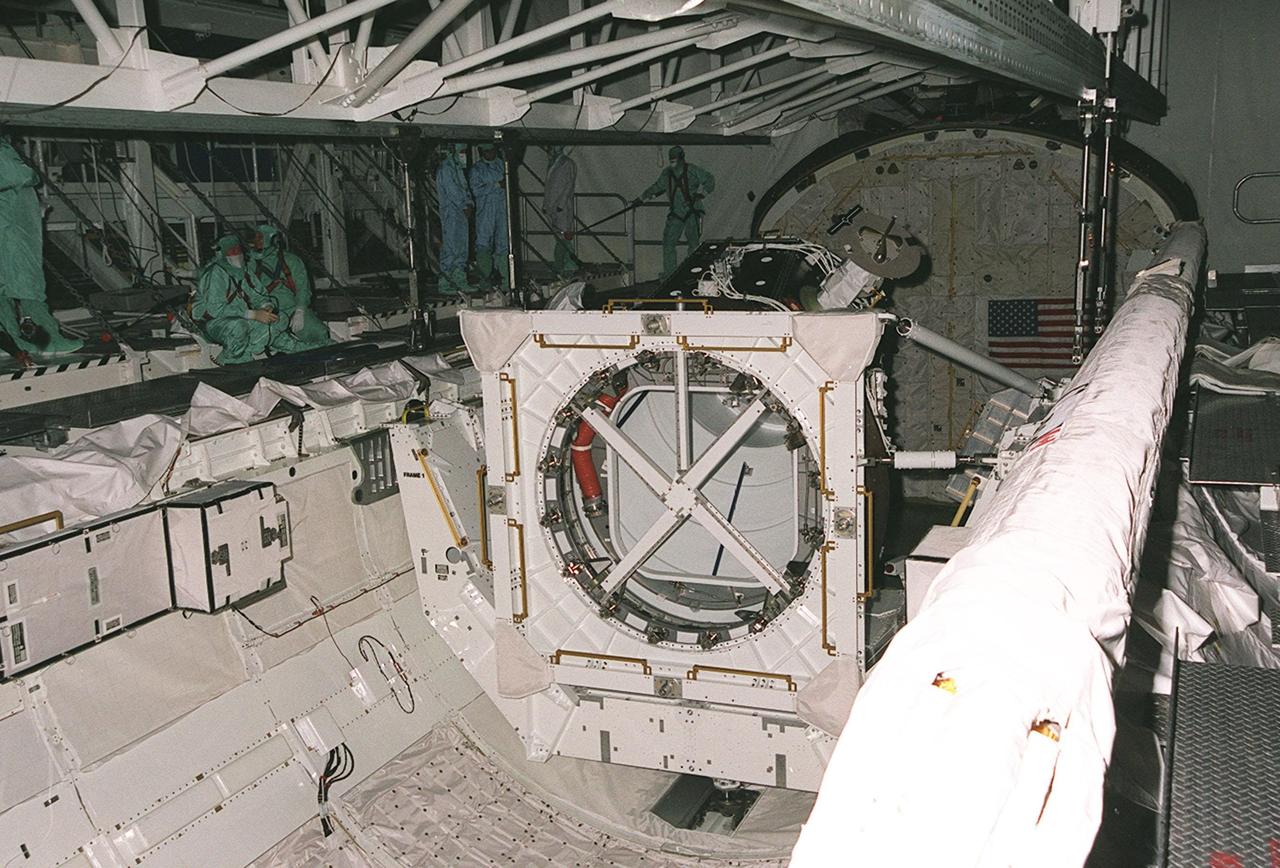
KENNEDY SPACE CENTER, FLA. -- The Pressurized Mating Adapter -3 (PMA-3) sits in the payload bay of the orbiter Discovery after being transported from the Space Station Processing Facility. A component of the International Space Station, the PMA-3 will fly on Shuttle mission STS-92, scheduled to launch Oct. 5. The mission will be the fifth flight to the Space Station, and the 100th Shuttle flight overall. PMA-3 provides shuttle docking port for solar array installation on flight 4A (mission STS-97 scheduled for Nov. 30), and Lab installation on flight 5A (mission STS-98, scheduled for Jan. 18, 2001)
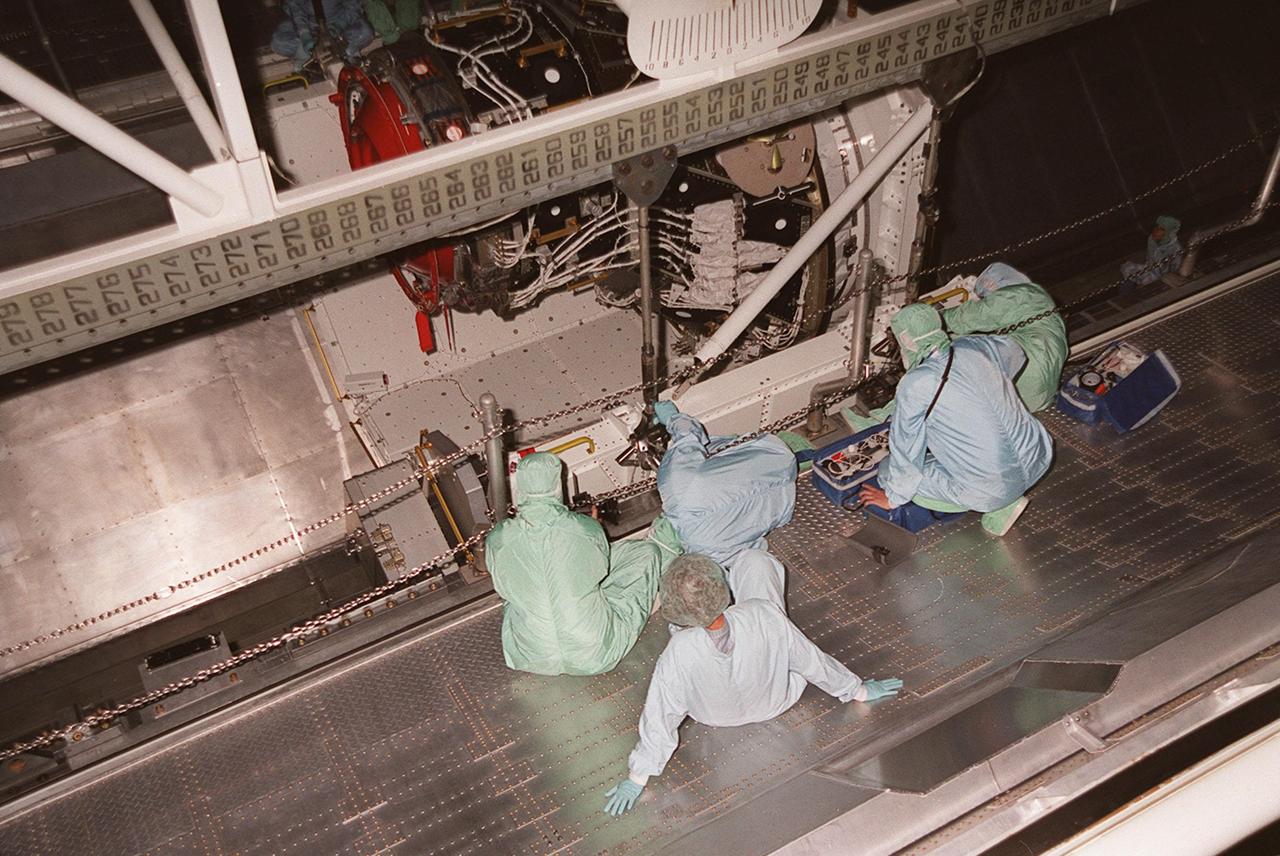
KENNEDY SPACE CENTER, FLA. -- Workers in the Orbiter Processing Facility check the placement of cables on the Pressurized Mating Adapter -3 (PMA-3) for its transfer to the orbiter Discovery. A component of the International Space Station, the PMA-3 is part of the payload on Space Shuttle mission STS-92, scheduled to launch Oct. 5. The mission will be the fifth flight to the Space Station, and the 100th Shuttle flight overall. PMA-3 provides shuttle docking port for solar array installation on flight 4A (mission STS-97 scheduled for Nov. 30), and Lab installation on flight 5A (mission STS-98, scheduled for Jan. 18, 2001)

KENNEDY SPACE CENTER, FLA. - Workers in the Orbiter Processing Facility bay 1 watch the progress of the Pressurized Mating Adapter-3 (PMA-3) as it is transferred to the payload bay of the orbiter Discovery. A component of the International Space Station, the PMA-3 will fly on Shuttle mission STS-92, scheduled to launch October 5. The mission will be the fifth flight to the Space Station, and the 100th Shuttle flight overall. PMA-3 provides shuttle docking port for solar array installation on flight 4A (mission STS-97 scheduled for November 30), and Lab installation on flight 5A (mission STS-98, scheduled for January 18, 2001).
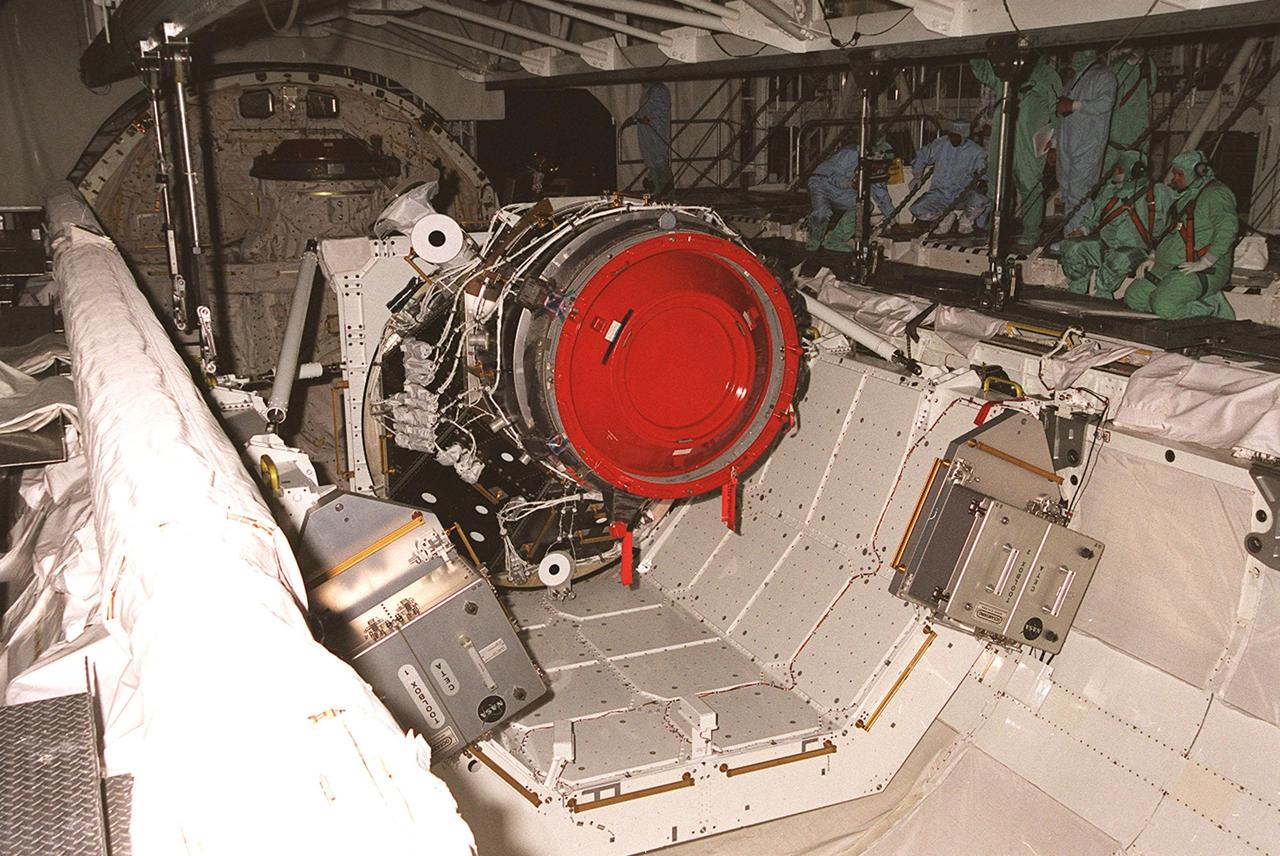
KENNEDY SPACE CENTER, FLA. -- In the Orbiter Processing Facility bay 1, workers detach the overhead crane from the Pressurized Mating Adapter -3 (PMA-3), which sits in the payload bay of the orbiter Discovery. A component of the International Space Station, the PMA-3 will fly on Shuttle mission STS-92, scheduled to launch Oct. 5. The mission will be the fifth flight to the Space Station, and the 100th Shuttle flight overall. PMA-3 provides shuttle docking port for solar array installation on flight 4A (mission STS-97 scheduled for Nov. 30), and Lab installation on flight 5A (mission STS-98, scheduled for Jan. 18, 2001)
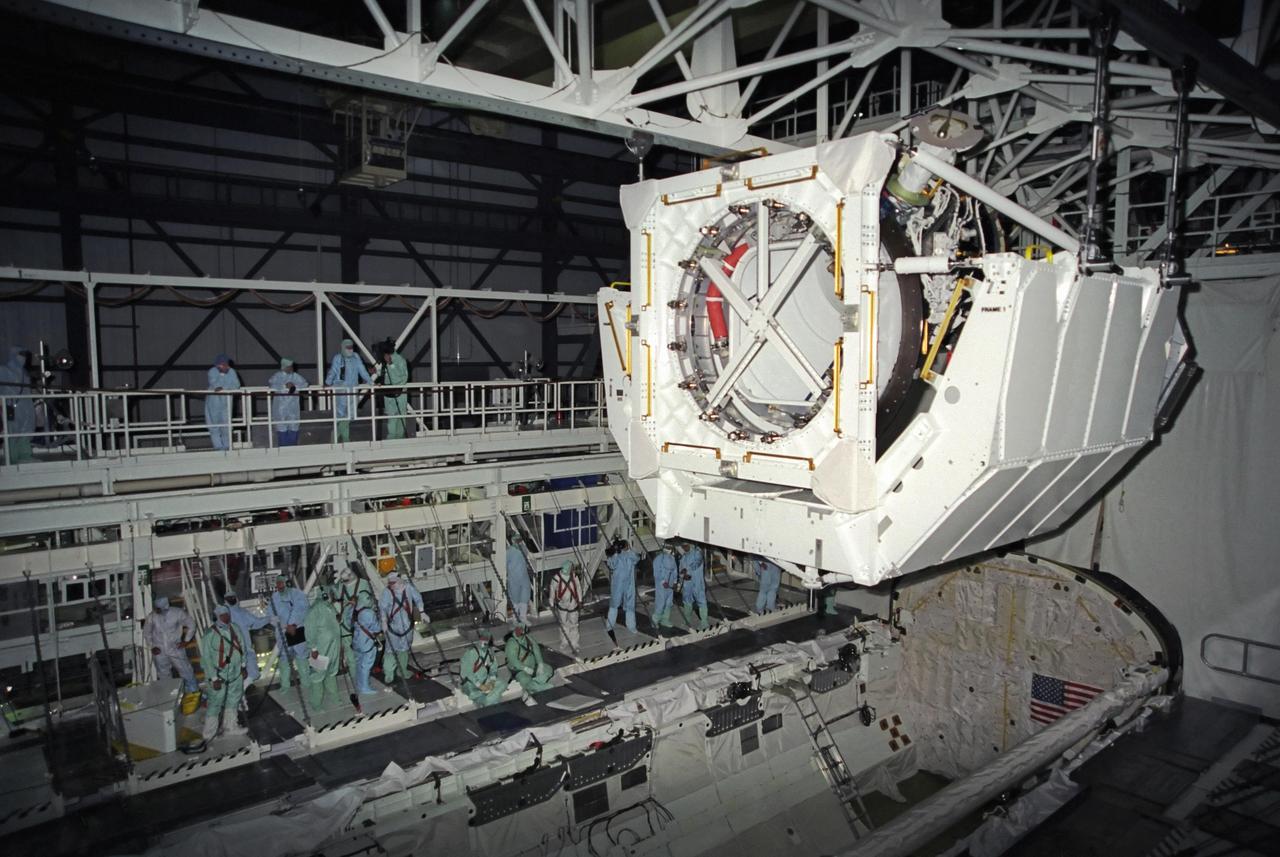
KENNEDY SPACE CENTER, FLA. - Workers in the Orbiter Processing Facility bay 1 watch the progress of the Pressurized Mating Adapter-3 (PMA-3) as it is transferred to the payload bay of the orbiter Discovery. A component of the International Space Station, the PMA-3 will fly on Shuttle mission STS-92, scheduled to launch October 5. The mission will be the fifth flight to the Space Station, and the 100th Shuttle flight overall. PMA-3 provides shuttle docking port for solar array installation on flight 4A (mission STS-97 scheduled for November 30), and Lab installation on flight 5A (mission STS-98, scheduled for January 18, 2001).
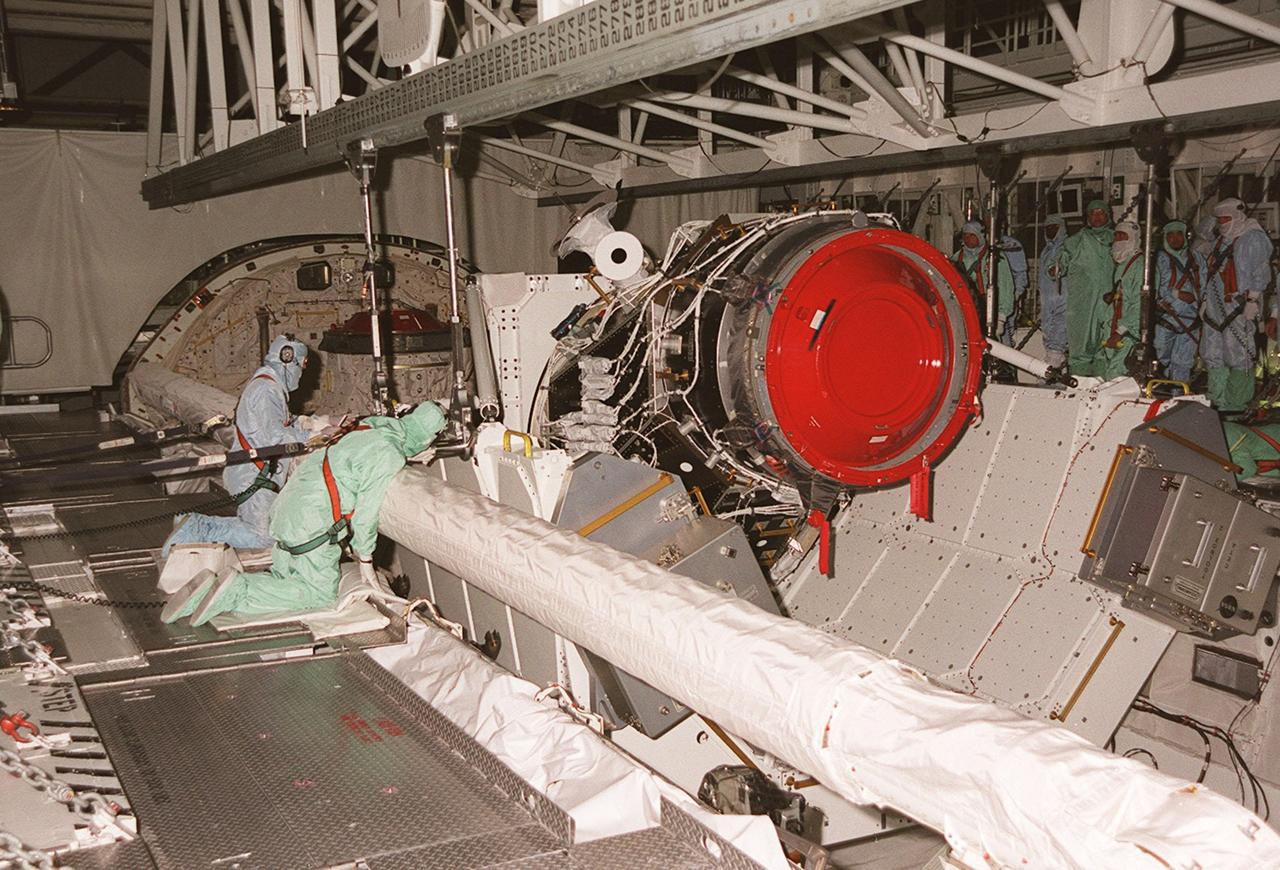
KENNEDY SPACE CENTER, FLA. -- In the Orbiter Processing Facility bay 1, workers check the placement of the Pressurized Mating Adapter -3 (PMA-3) as the overhead crane places it in the payload bay of the orbiter Discovery. A component of the International Space Station, the PMA-3 will fly on Shuttle mission STS-92, scheduled to launch Oct. 5. The mission will be the fifth flight to the Space Station, and the 100th Shuttle flight overall. PMA-3 provides shuttle docking port for solar array installation on flight 4A (mission STS-97 scheduled for Nov. 30), and Lab installation on flight 5A (mission STS-98, scheduled for Jan. 18, 2001)
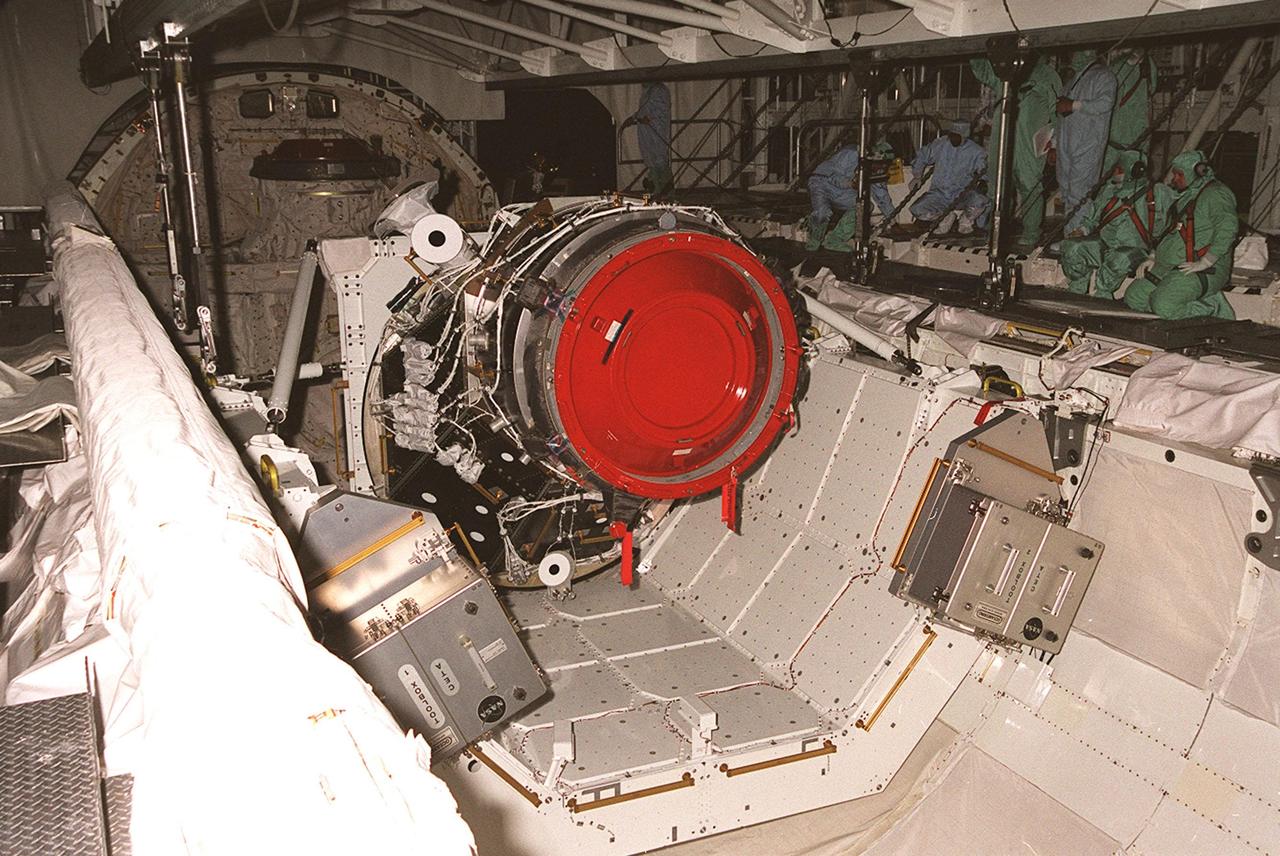
KENNEDY SPACE CENTER, FLA. -- In the Orbiter Processing Facility bay 1, workers detach the overhead crane from the Pressurized Mating Adapter -3 (PMA-3), which sits in the payload bay of the orbiter Discovery. A component of the International Space Station, the PMA-3 will fly on Shuttle mission STS-92, scheduled to launch Oct. 5. The mission will be the fifth flight to the Space Station, and the 100th Shuttle flight overall. PMA-3 provides shuttle docking port for solar array installation on flight 4A (mission STS-97 scheduled for Nov. 30), and Lab installation on flight 5A (mission STS-98, scheduled for Jan. 18, 2001)
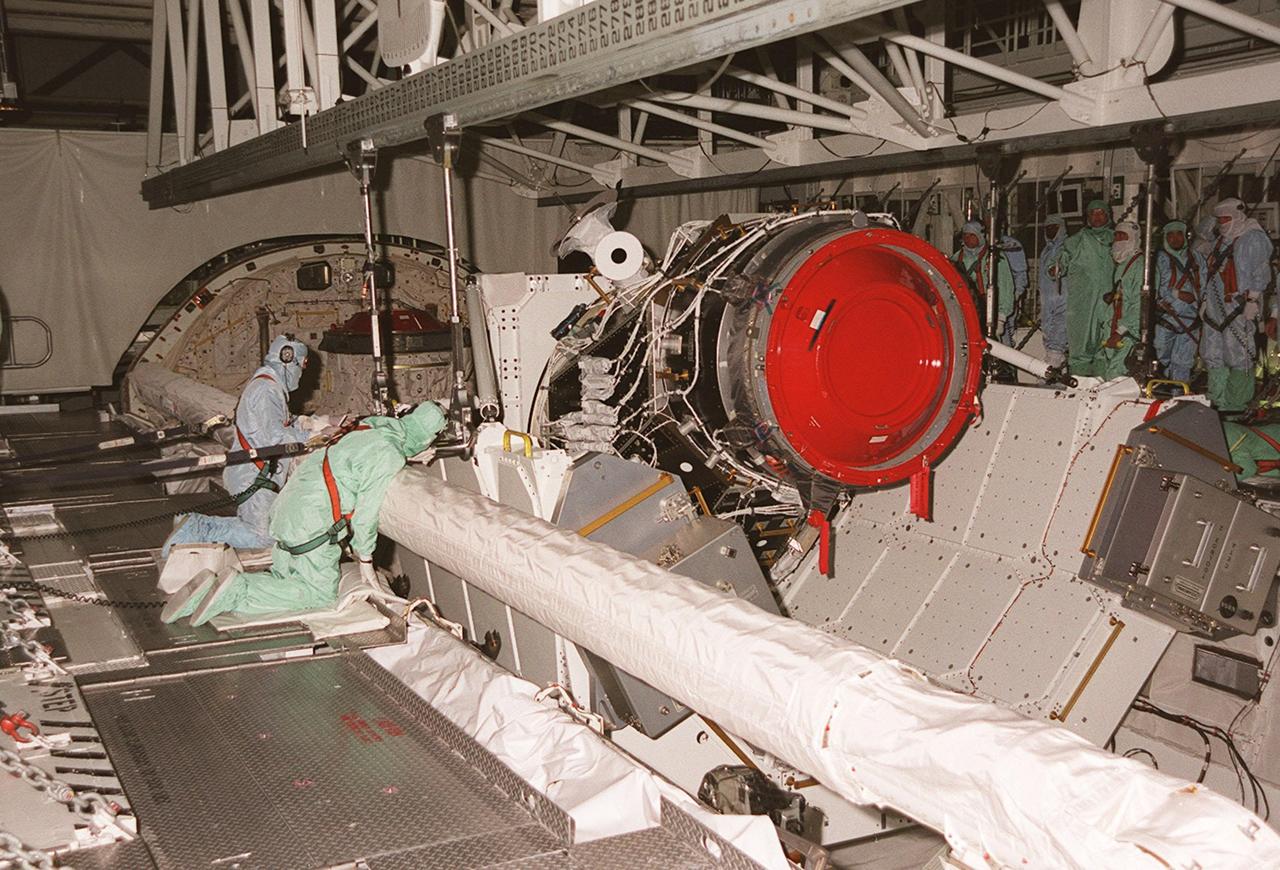
KENNEDY SPACE CENTER, FLA. -- In the Orbiter Processing Facility bay 1, workers check the placement of the Pressurized Mating Adapter -3 (PMA-3) as the overhead crane places it in the payload bay of the orbiter Discovery. A component of the International Space Station, the PMA-3 will fly on Shuttle mission STS-92, scheduled to launch Oct. 5. The mission will be the fifth flight to the Space Station, and the 100th Shuttle flight overall. PMA-3 provides shuttle docking port for solar array installation on flight 4A (mission STS-97 scheduled for Nov. 30), and Lab installation on flight 5A (mission STS-98, scheduled for Jan. 18, 2001)

In the Orbiter Processing Facility bay 1, the Pressurized Mating Adapter -3 (PMA-3) is lifted out of the payload canister for its transfer to the orbiter Discovery. A component of the International Space Station, the PMA-3 is part of the payload on Shuttle mission STS-92, scheduled to launch Oct. 5. The mission will be the fifth flight to the Space Station, and the 100th Shuttle flight overall. PMA-3 provides shuttle docking port for solar array installation on flight 4A (mission STS-97 scheduled for Nov. 30), and Lab installation on flight 5A (mission STS-98, scheduled for Jan. 18, 2001)
![View of the STS-41G OSTA-3 (Space Radiation Laboratory [SRL]) Payload in its workstand. 1. SHUTTLE - PAYLOADS (OSTA-3)](https://images-assets.nasa.gov/image/s84-36853/s84-36853~medium.jpg)
View of the STS-41G OSTA-3 (Space Radiation Laboratory [SRL]) Payload in its workstand. 1. SHUTTLE - PAYLOADS (OSTA-3)
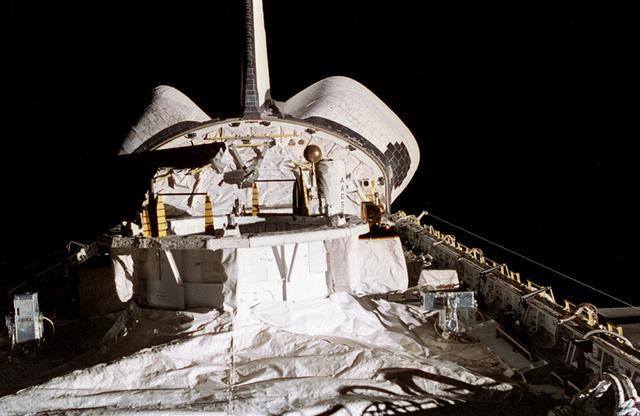
Onboard photo of space shuttle Columbia's (STS-75) open cargo bay carrying the United States Microgravity Payload-3 (USMP-3) at night.
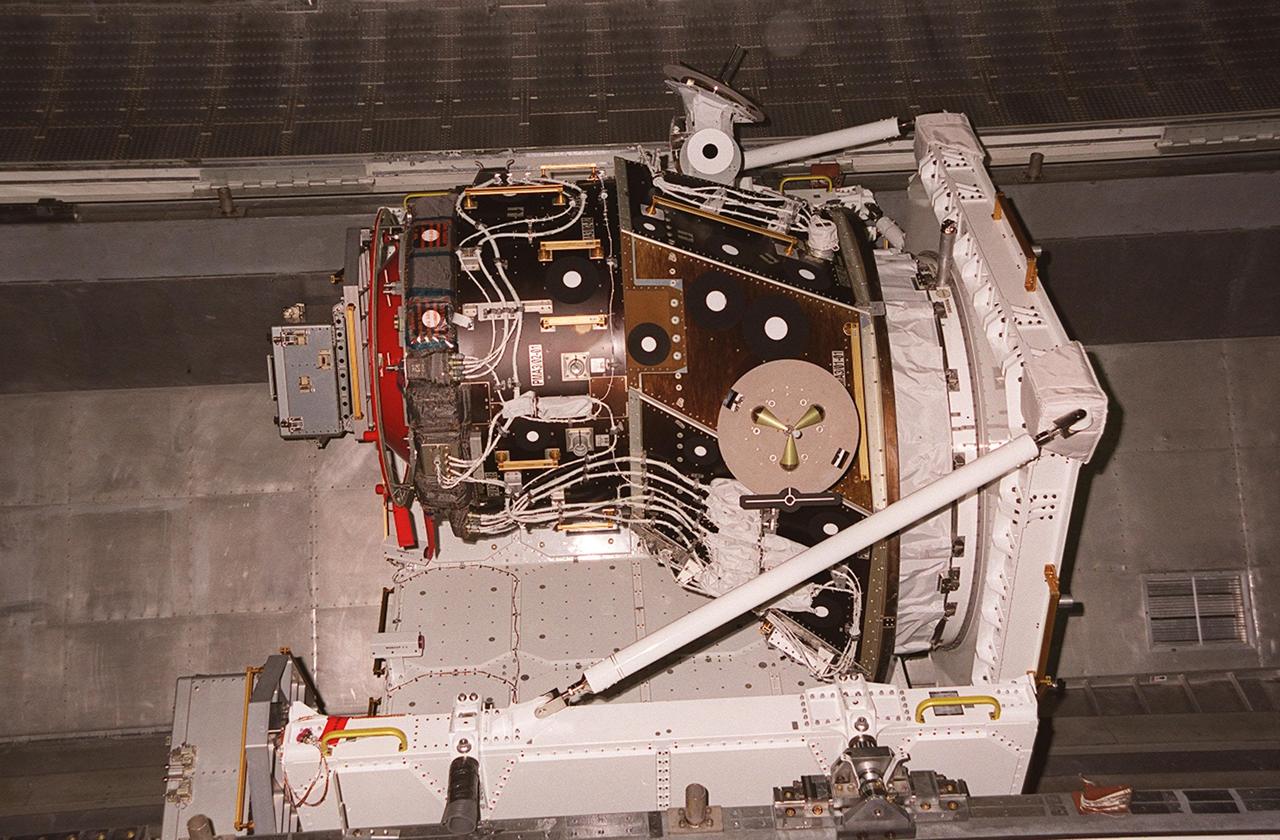
KENNEDY SPACE CENTER, FLA. -- This closeup shows the Pressurized Mating Adapter -3 (PMA-3) after transport to the Orbiter Processing Facility. A component of the International Space Station, the PMA-3 is being transferred to the payload bay of the orbiter Discovery, for mission STS-92, scheduled to launch Oct. 5. The mission will be the fifth flight to the Space Station, and the 100th Shuttle flight overall. PMA-3 provides shuttle docking port for solar array installation on flight 4A (mission STS-97 scheduled for Nov. 30), and Lab installation on flight 5A (mission STS-98, scheduled for Jan. 18, 2001)
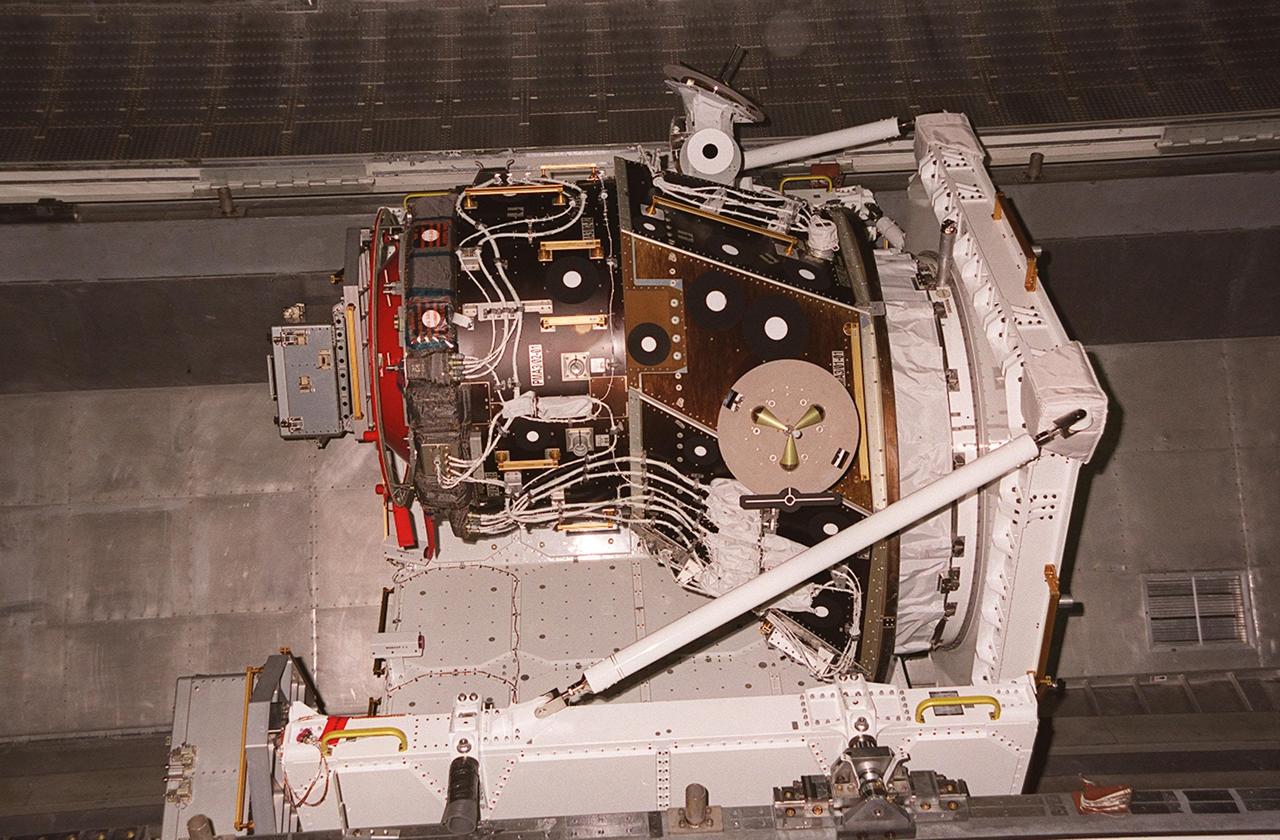
KENNEDY SPACE CENTER, FLA. -- This closeup shows the Pressurized Mating Adapter -3 (PMA-3) after transport to the Orbiter Processing Facility. A component of the International Space Station, the PMA-3 is being transferred to the payload bay of the orbiter Discovery, for mission STS-92, scheduled to launch Oct. 5. The mission will be the fifth flight to the Space Station, and the 100th Shuttle flight overall. PMA-3 provides shuttle docking port for solar array installation on flight 4A (mission STS-97 scheduled for Nov. 30), and Lab installation on flight 5A (mission STS-98, scheduled for Jan. 18, 2001)
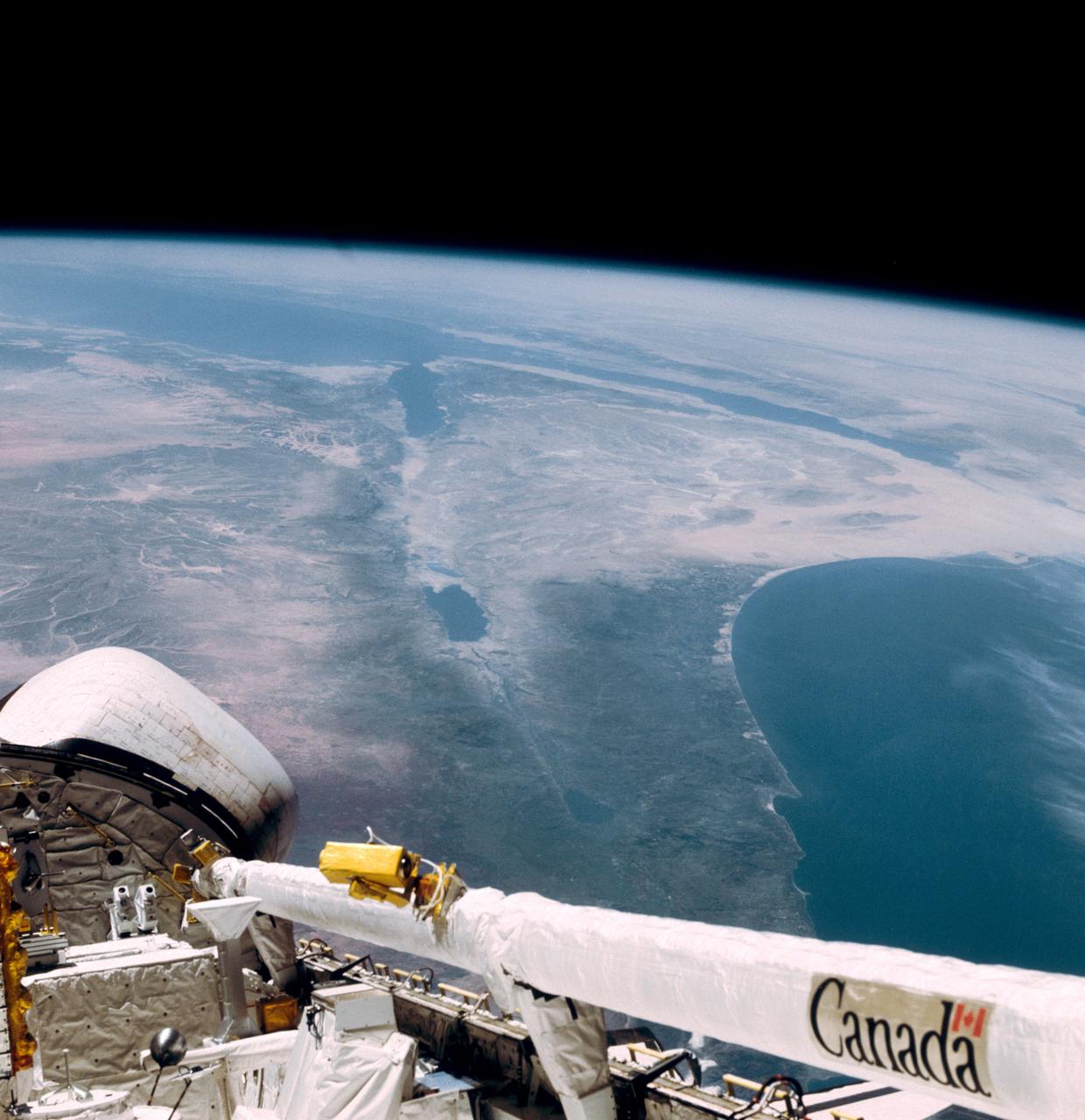
This southerly looking view photographed from the orbiting Space Shuttle Columbia shows a small portion of the vehichle's aft section. The 50-ft Canadian built remote manipulator system (RMS) is in a resting posture (lower right corner) stretched out along the 60-ft. long cargo bay. Many of the components of the OSS-1 payload package are in the bottom center. The Mediterranean Sea is at right foreground. Parts of the Sinai peninsula, Israel, Egypt, Saudi Arabia, Jordan, Palestine, Syria, and Lebanon can be located in the photo. The Red Sea, Gulf of Aqaba, Suez Canal are near the photo's horizon.
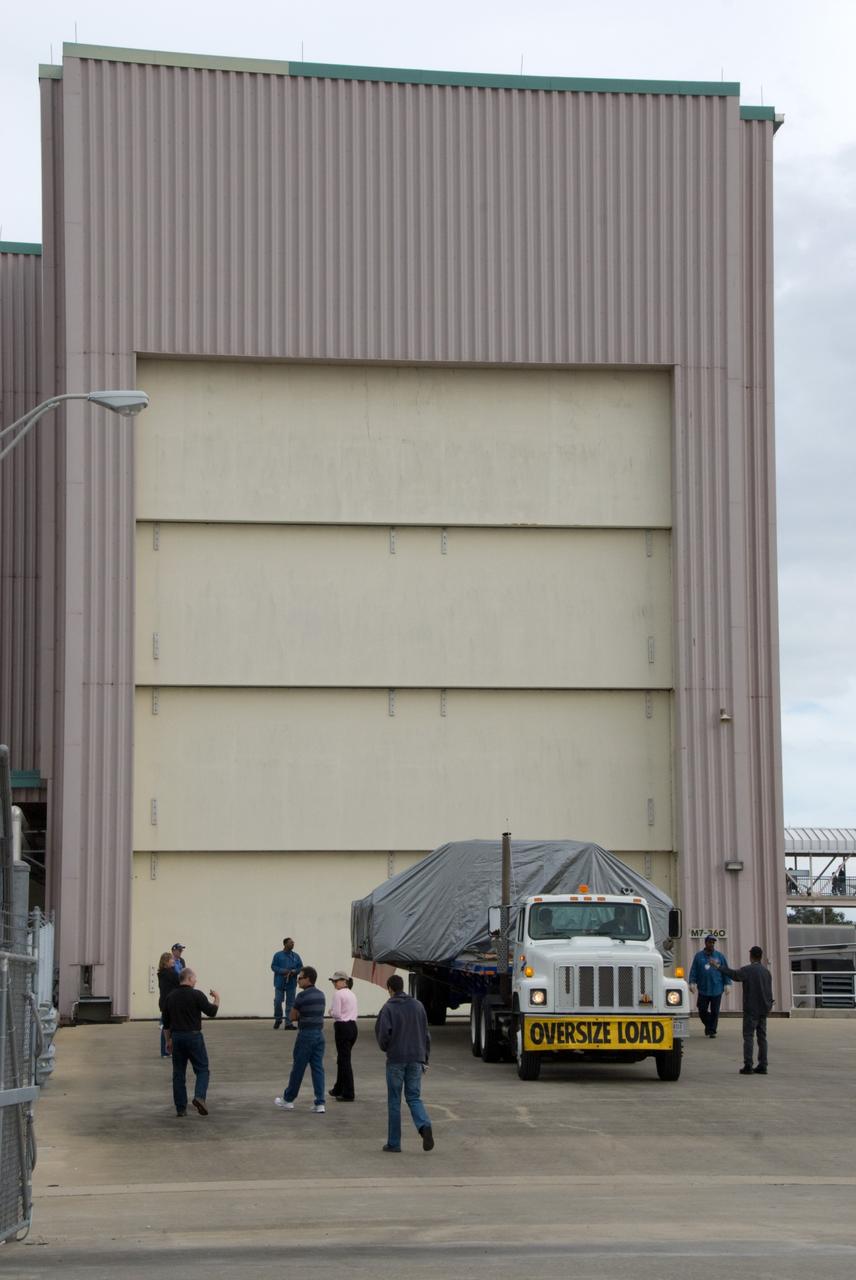
CAPE CANAVERAL, Fla. - At NASA's Kennedy Space Center in Florida, the ExPRESS Logistics Carrier 3, or ELC-3, arrives at the Space Station Processing Facility. ELC-3 and the Alpha Magnetic Spectrometer are the primary payloads for space shuttle Endeavour's STS-134 mission to the International Space Station. The STS-134 crew will also deliver spare parts including two S-band communications antennas, a high pressure gas tank, additional spare parts for Dextre and micrometeoroid debris shields. Endeavour's launch is targeted for July 29, 2010. For information on the STS-134 mission objectives and crew, visit http://www.nasa.gov/shuttle. Photo credit: NASA/Kim Shiflett
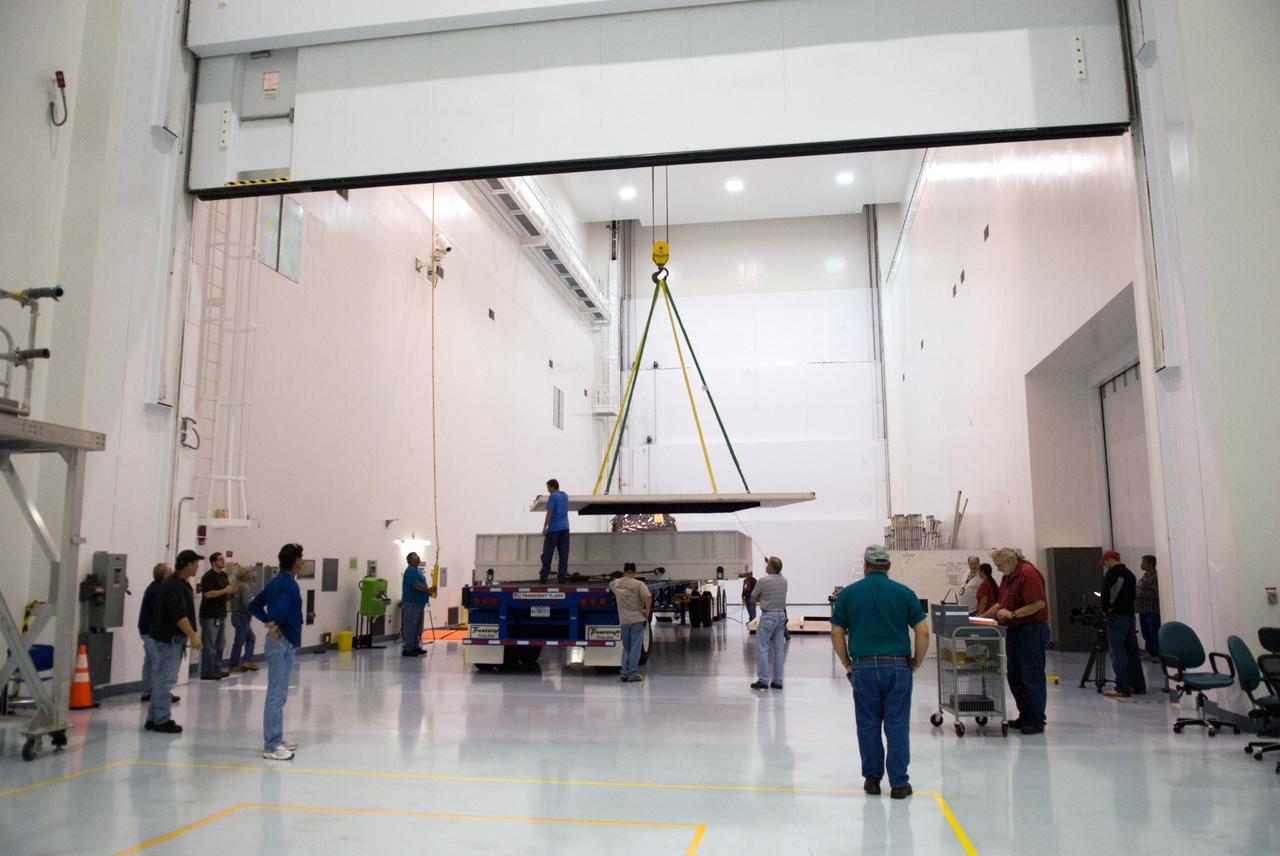
CAPE CANAVERAL, Fla. - In the Space Station Processing Facility at NASA's Kennedy Space Center in Florida, workers supervise the uncrating of the ExPRESS Logistics Carrier 3, or ELC-3. ELC-3 and the Alpha Magnetic Spectrometer are the primary payloads for space shuttle Endeavour's STS-134 mission to the International Space Station. The STS-134 crew will also deliver spare parts including two S-band communications antennas, a high pressure gas tank, additional spare parts for Dextre and micrometeoroid debris shields. Endeavour's launch is targeted for July 29, 2010. For information on the STS-134 mission objectives and crew, visit http://www.nasa.gov/shuttle. Photo credit: NASA/Kim Shiflett
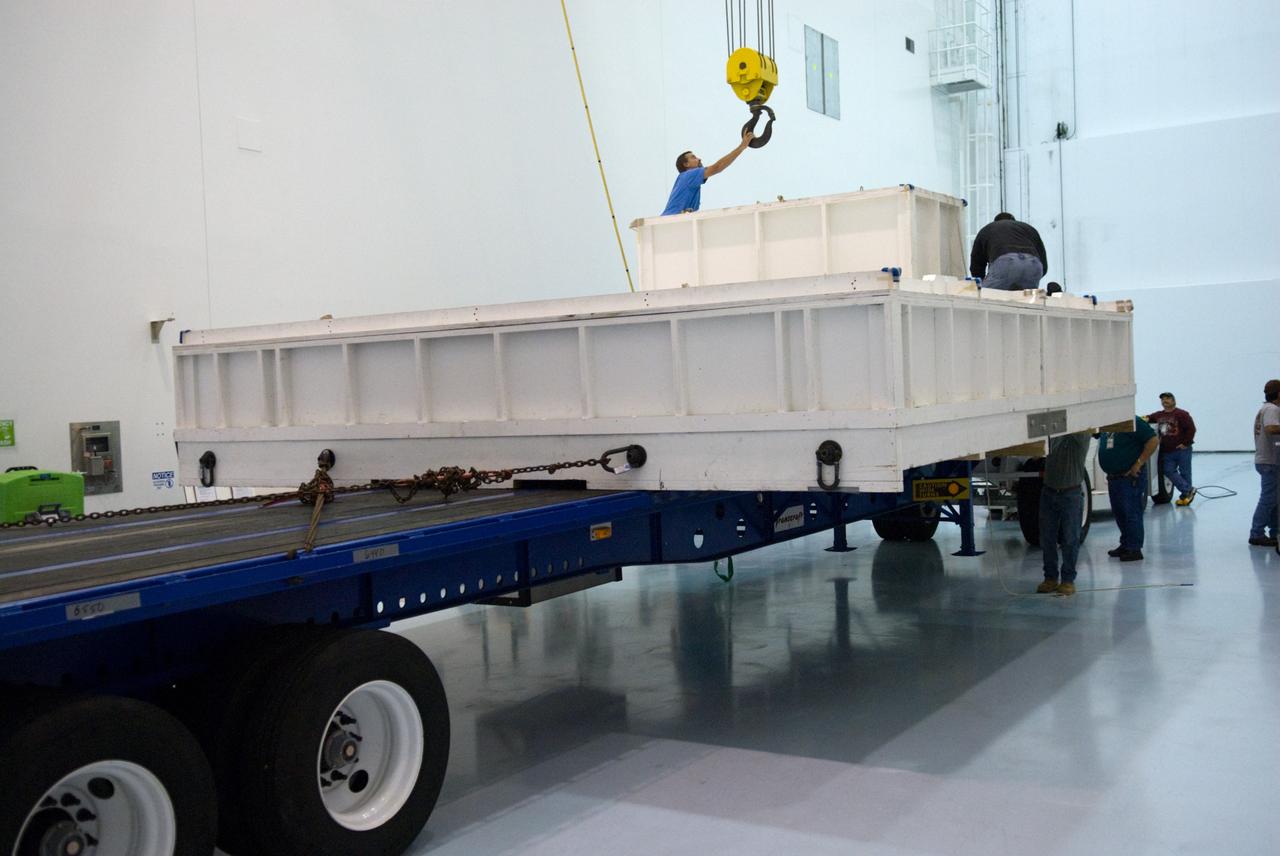
CAPE CANAVERAL, Fla. - In the Space Station Processing Facility at NASA's Kennedy Space Center in Florida, preparations are under way to uncrate the ExPRESS Logistics Carrier 3, or ELC-3. ELC-3 and the Alpha Magnetic Spectrometer are the primary payloads for space shuttle Endeavour's STS-134 mission to the International Space Station. The STS-134 crew will also deliver spare parts including two S-band communications antennas, a high pressure gas tank, additional spare parts for Dextre and micrometeoroid debris shields. Endeavour's launch is targeted for July 29, 2010. For information on the STS-134 mission objectives and crew, visit http://www.nasa.gov/shuttle. Photo credit: NASA/Kim Shiflett

KENNEDY SPACE CENTER, FLA. - The White Room is seen at the upper left where the astronauts enter the Space Shuttle for flight. The Rotating Service Structure has been retracted at KSC's Launch Pad 39A. Discovery, the orbiter for the STS-82 mission, is ready for the launch of the second Hubble Space Telescope service mission. The payload consists of the Near Infrared Camera and Multi-Object Spectrometer (NICMOS) that will be installed, Fine Guidance Sensor #1 (FGS-1), and the Space Telescope Imaging Spectrograph (STIS) to be installed. The STS-82 will launch with a crew of seven at 3:54 a.m. EST, Feb. 11, 1997. The launch window is 65 minutes in duration. The Mission Commander for STS-82 is Ken Bowersox. The purpose of the mission is to upgrade the scientific capabilities, service or replace aging components on the Telescope, and provide a reboost to the optimum altitude.
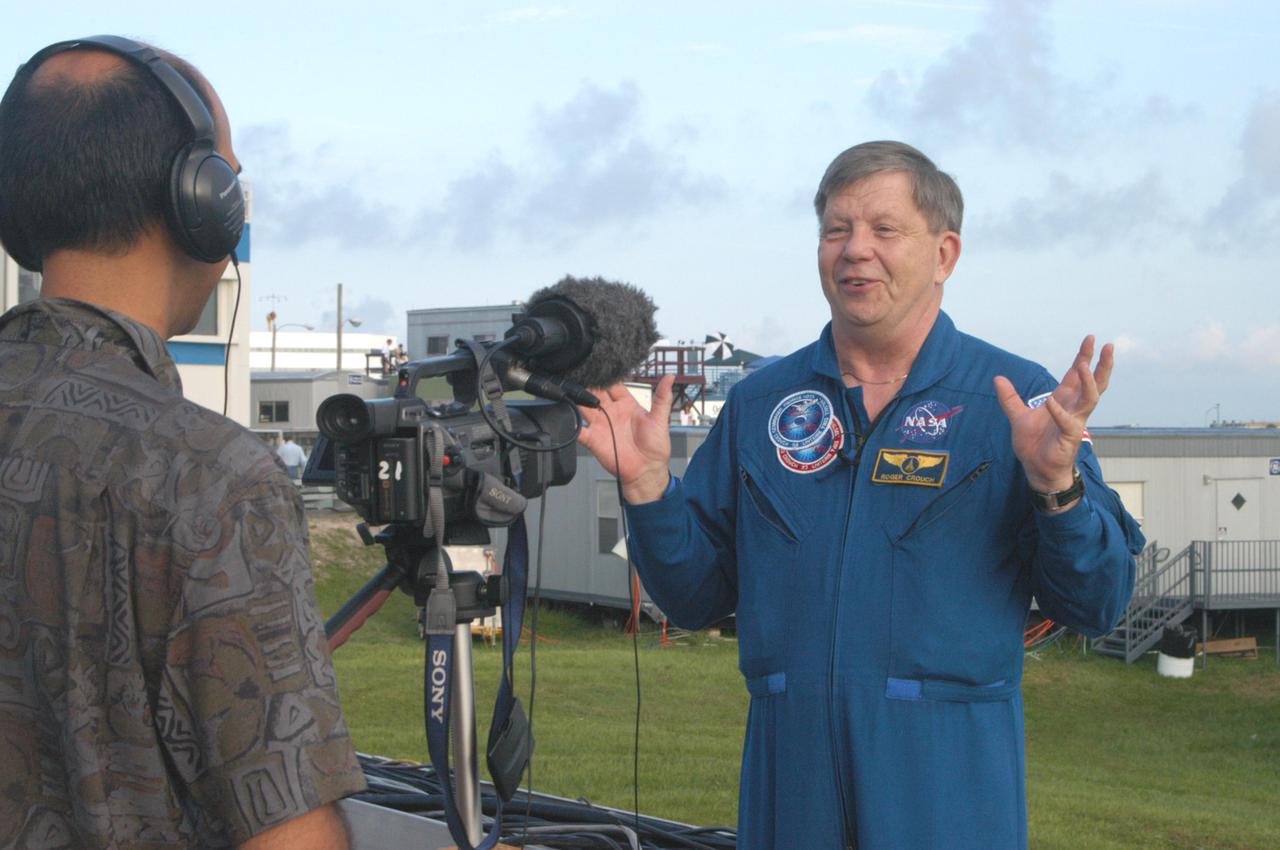
KENNEDY SPACE CENTER, FLA. - Roger Crouch, a payload specialist, talks to the media prior to the launch at 3:51 p.m. of Space Shuttle Discovery on the historic Return to Flight mission STS-114. He has flown on two Shuttle missions, STS-83 and STS-94. STS-114 is the 114th Space Shuttle flight and the 31st for Discovery. The 12-day mission is expected to end with touchdown at the Shuttle Landing Facility at 11:06 a.m. July 25.
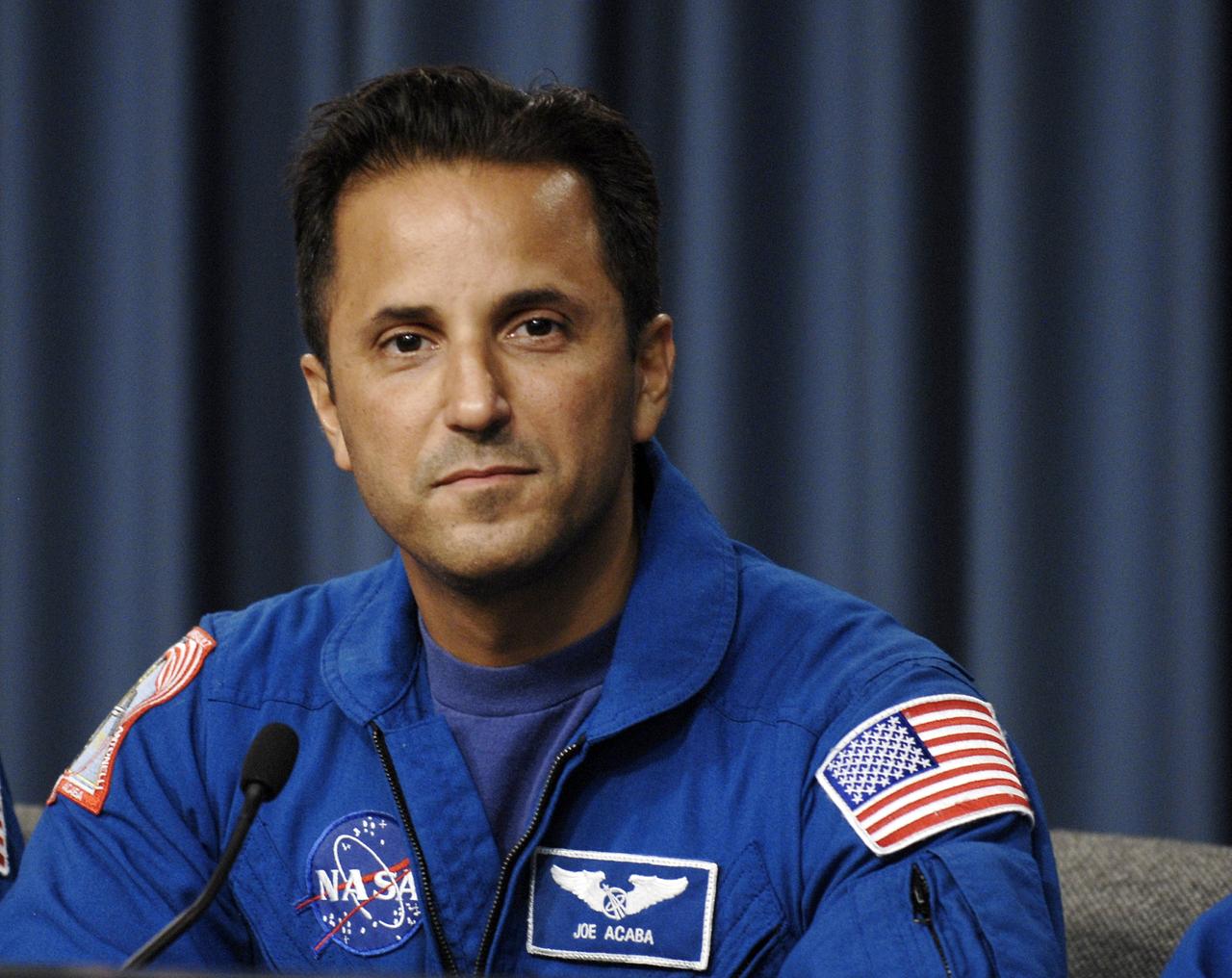
CAPE CANAVERAL, Fla. – At NASA's Kennedy Space Center in Florida, STS-119 Mission Specialist Joseph Acaba participates in a news conference following landing of the space shuttle Discovery STS-119 mission to the International Space Station. Main gear touchdown was at 3:13:17 p.m. EDT. Nose gear touchdown was at 3:13:40 p.m. and wheels stop was at 3:14:45 p.m. Discovery delivered the final pair of large power-generating solar array wings and the S6 truss segment. The mission was the 28th flight to the station, the 36th flight of Discovery and the 125th in the Space Shuttle Program, as well as the 70th landing at Kennedy. Photo credit: NASA/Kim Shiflett
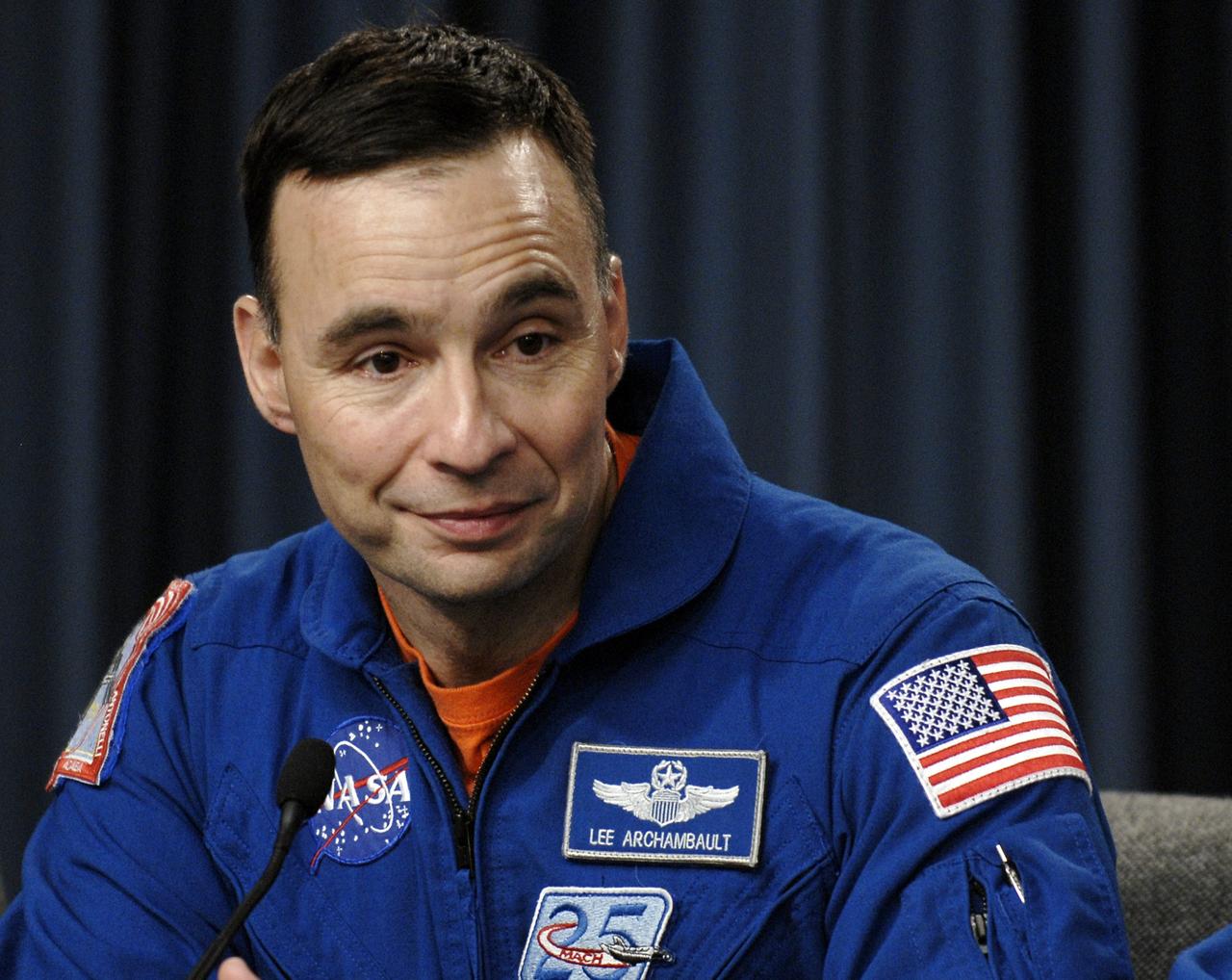
CAPE CANAVERAL, Fla. – At NASA's Kennedy Space Center in Florida, STS-119 Commander Lee Archambault participates in a news conference following landing of the space shuttle Discovery STS-119 mission to the International Space Station. Main gear touchdown was at 3:13:17 p.m. EDT. Nose gear touchdown was at 3:13:40 p.m. and wheels stop was at 3:14:45 p.m. Discovery delivered the final pair of large power-generating solar array wings and the S6 truss segment. The mission was the 28th flight to the station, the 36th flight of Discovery and the 125th in the Space Shuttle Program, as well as the 70th landing at Kennedy. Photo credit: NASA/Kim Shiflett
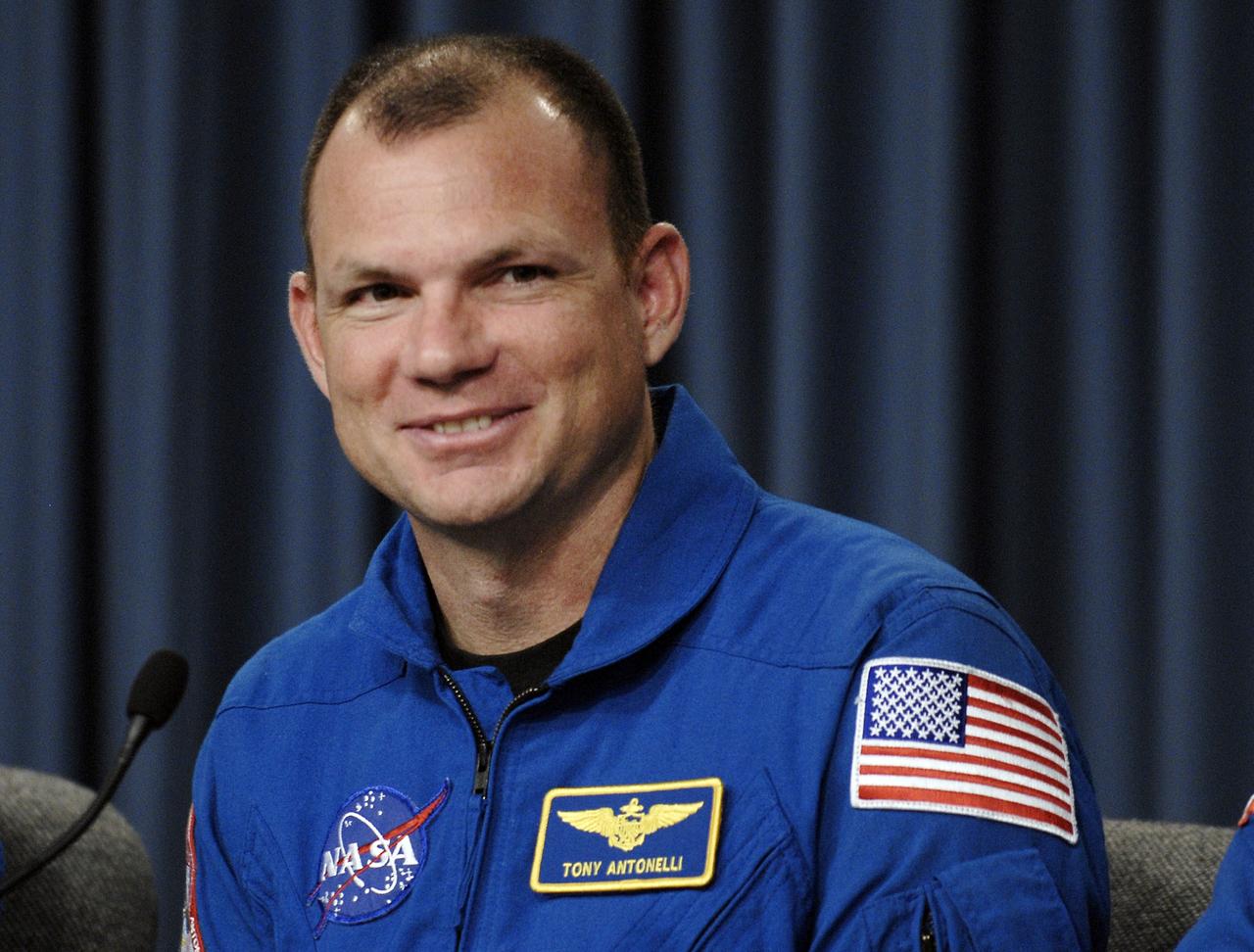
CAPE CANAVERAL, Fla. – At NASA's Kennedy Space Center in Florida, STS-119 Pilot Tony Antonelli participates in a news conference following landing of the space shuttle Discovery STS-119 mission to the International Space Station. Main gear touchdown was at 3:13:17 p.m. EDT. Nose gear touchdown was at 3:13:40 p.m. and wheels stop was at 3:14:45 p.m. Discovery delivered the final pair of large power-generating solar array wings and the S6 truss segment. The mission was the 28th flight to the station, the 36th flight of Discovery and the 125th in the Space Shuttle Program, as well as the 70th landing at Kennedy. Photo credit: NASA/Kim Shiflett
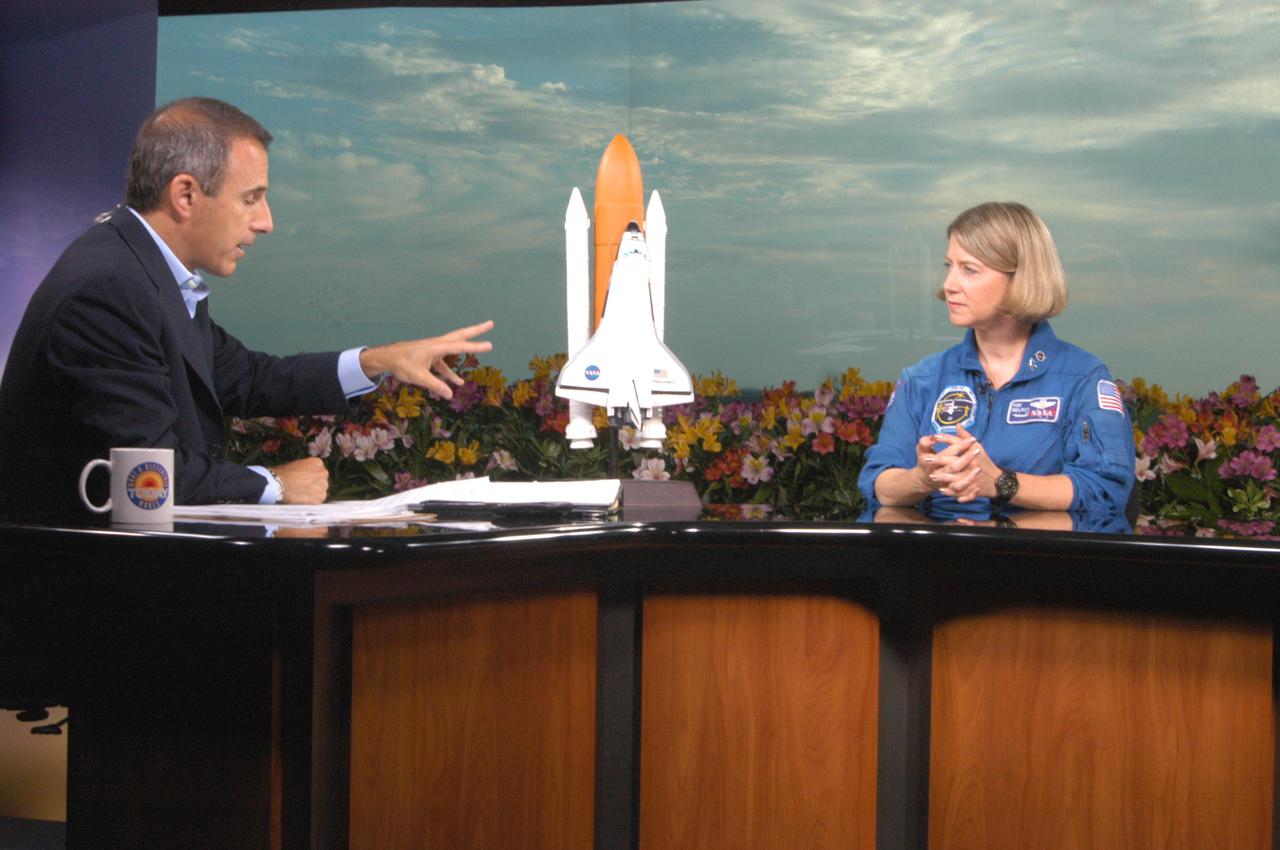
KENNEDY SPACE CENTER, FLA. - Matt Lauer, co-anchor of NBC News’ Today, talks with astronaut Pam Melroy about the pending launch at 3:51 p.m. of Space Shuttle Discovery on the historic Return to Flight mission STS-114. Melroy has flown on two missions, STS-92 and STS-112. STS-114 is the 114th Space Shuttle flight and the 31st for Discovery. The 12-day mission is expected to end with touchdown at the Shuttle Landing Facility at 11:06 a.m. July 25.
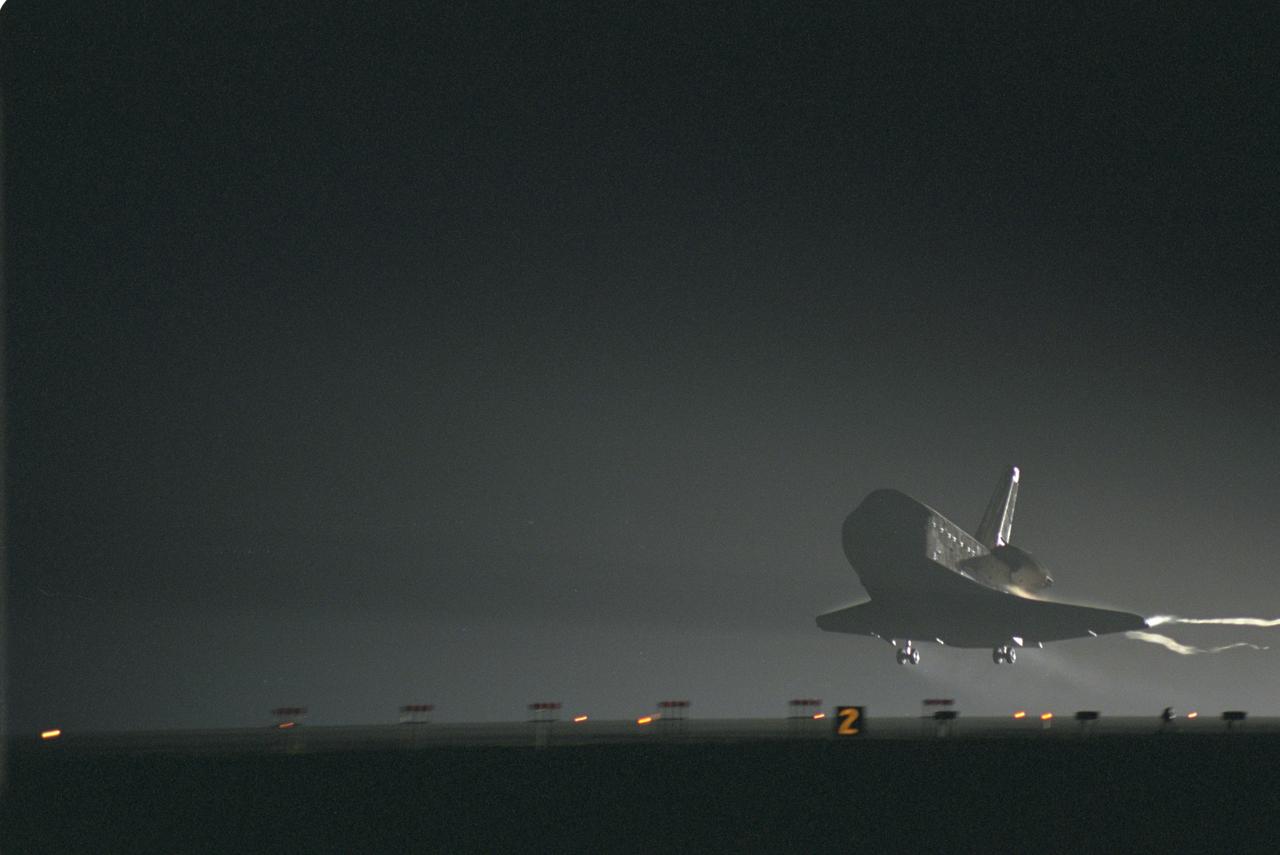
STS106-S-014 (20 September 2000) --- The Space Shuttle Atlantis nears its touchdown point on Runway 33 of the KSC Shuttle Landing Facility. Main gear touchdown was at 3:56:48 a.m. (EDT), September 20, 2000, landing on orbit 185 of the mission. Nose gear touchdown was at 3:56:57 a.m. EDT and wheel stop at 3:58:01 a.m. (EDT). Atlantis and crew traveled 4.9 million miles on the 11-day, 19-hour, 11-minute mission STS-106. During the mission to the International Space Station, the crew transferred nearly 5,000 pounds of equipment and supplies for use by the first resident crew expected to arrive in November. STS-106 was the 99th flight in the Shuttle program and the 22nd for Atlantis. STS-106 also marked the 15th nighttime landing in Shuttle history and the 23rd consecutive landing at KSC.
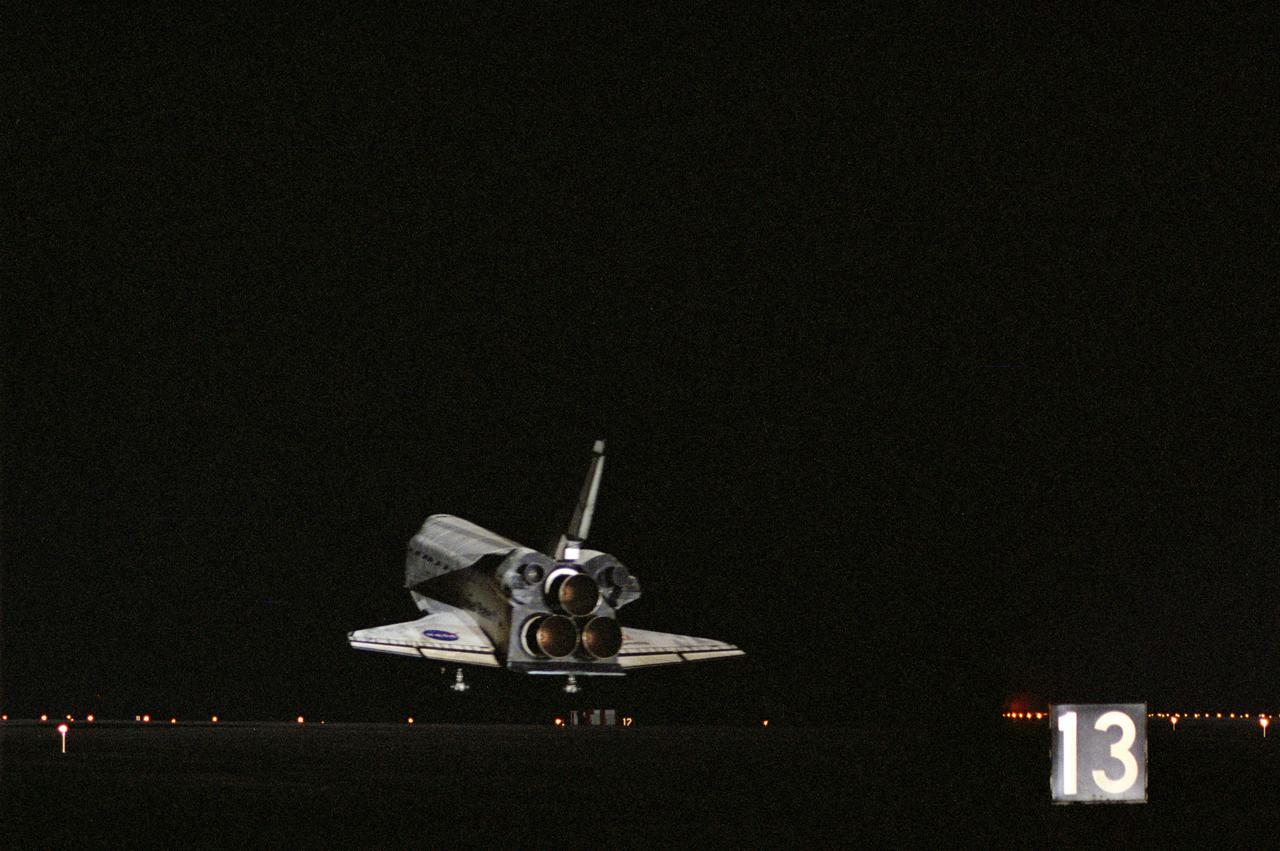
STS106-S-016 (20 September 2000) --- An aft view shows the Space Shuttle Atlantis nears its touchdown point on Runway 33 of the KSC Shuttle Landing Facility. Main gear touchdown was at 3:56:48 a.m. (EDT), September 20, 2000, landing on orbit 185 of the mission. Nose gear touchdown was at 3:56:57 a.m. EDT and wheel stop at 3:58:01 a.m. (EDT). Atlantis and crew traveled 4.9 million miles on the 11-day, 19-hour, 11-minute mission STS-106. During the mission to the International Space Station, the crew transferred nearly 5,000 pounds of equipment and supplies for use by the first resident crew expected to arrive in November. STS-106 was the 99th flight in the Shuttle program and the 22nd for Atlantis. STS-106 also marked the 15th nighttime landing in Shuttle history and the 23rd consecutive landing at KSC.
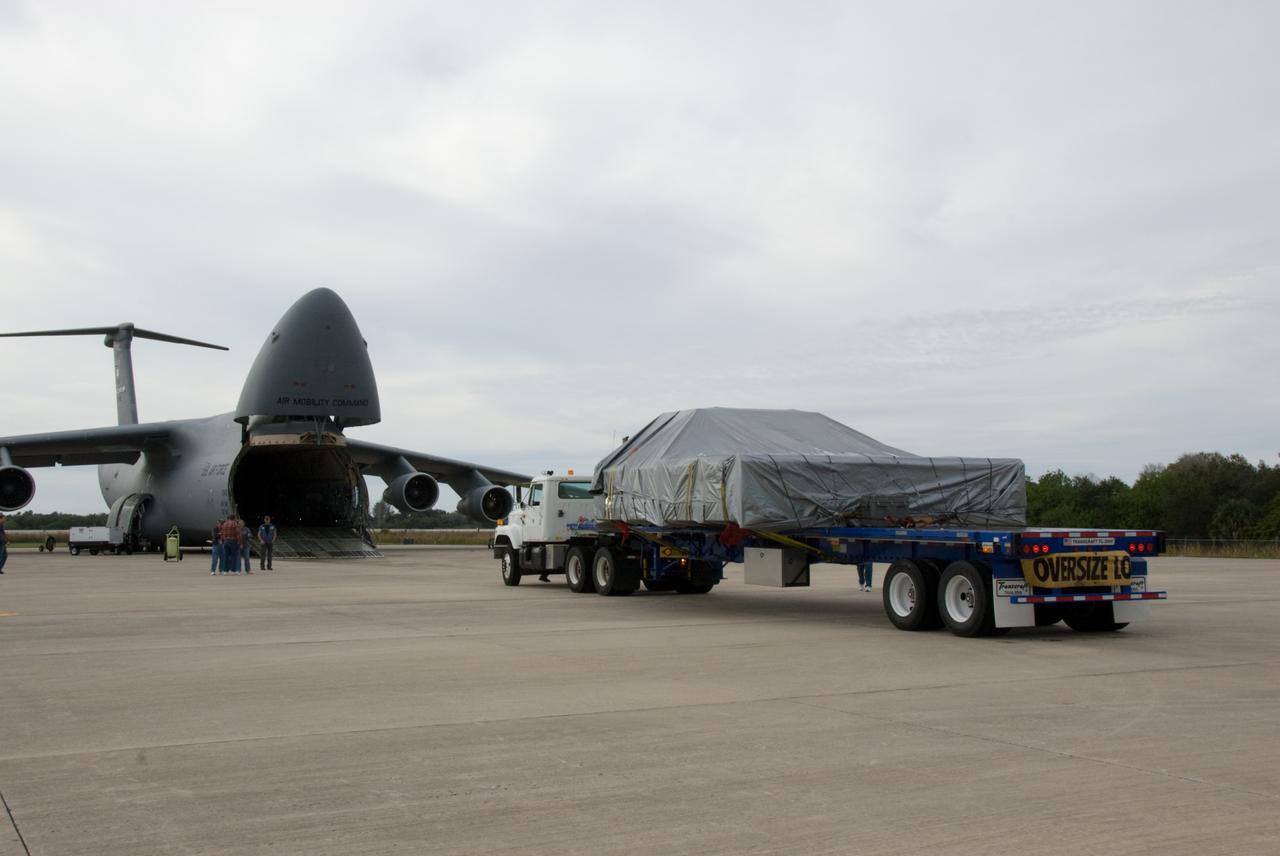
CAPE CANAVERAL, Fla. - At the Shuttle Landing Facility at NASA's Kennedy Space Center in Florida, the ExPRESS Logistics Carrier 3, or ELC-3, is secured on the bed of the truck which will transport it to the Space Station Processing Facility. At left is the U.S. Air Force C-5 aircraft on which it arrived. ELC-3 and the Alpha Magnetic Spectrometer are the primary payloads for space shuttle Endeavour's STS-134 mission to the International Space Station. The STS-134 crew will also deliver spare parts including two S-band communications antennas, a high pressure gas tank, additional spare parts for Dextre and micrometeoroid debris shields. Endeavour's launch is targeted for July 29, 2010. For information on the STS-134 mission objectives and crew, visit http://www.nasa.gov/shuttle. Photo credit: NASA/Kim Shiflett
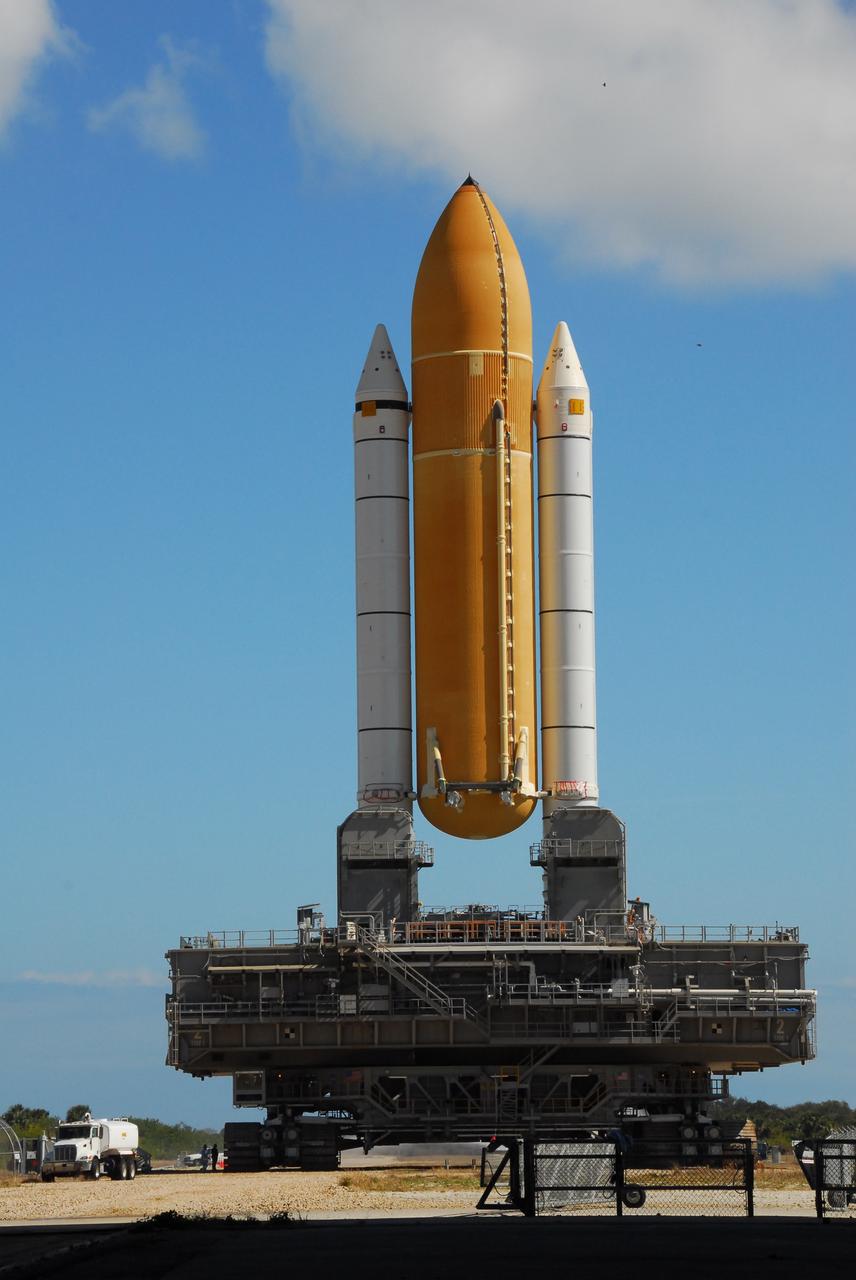
CAPE CANAVERAL, Fla. – Space shuttle Atlantis' external fuel tank-solid rocket booster stack, atop a mobile launcher platform, presents an unusual sight – without the shuttle – as it is transferred from high bay 1 to high bay 3 in the Vehicle Assembly Building at NASA's Kennedy Space Center. It is being moved to high bay 3 to make room for the ET-SRB stack for space shuttle Endeavour. Atlantis is targeted for launch on the STS-125 mission on May 12 to service NASA's Hubble Space Telescope. Endeavour will fly on the STS-127 mission to the International Space Station and bring the final segments for Japan's Kibo laboratory. Photo credit: NASA/Tim Jacobs
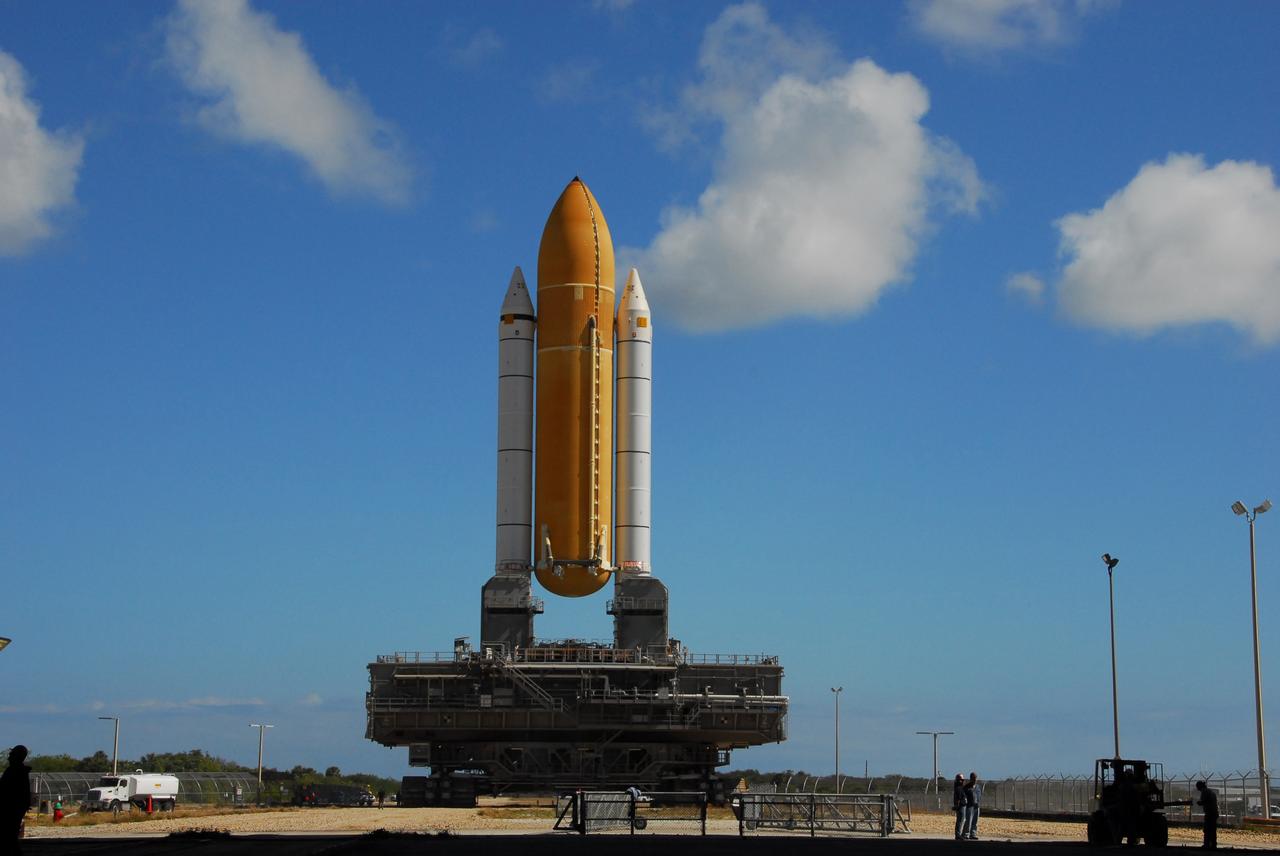
CAPE CANAVERAL, Fla. – Space shuttle Atlantis' external fuel tank-solid rocket booster stack, atop a mobile launcher platform, presents an unusual sight – without the shuttle – as it is transferred from high bay 1 to high bay 3 in the Vehicle Assembly Building at NASA's Kennedy Space Center. It is being moved to high bay 3 to make room for the ET-SRB stack for space shuttle Endeavour. Atlantis is targeted for launch on the STS-125 mission on May 12 to service NASA's Hubble Space Telescope. Endeavour will fly on the STS-127 mission to the International Space Station and bring the final segments for Japan's Kibo laboratory. Photo credit: NASA/Tim Jacobs
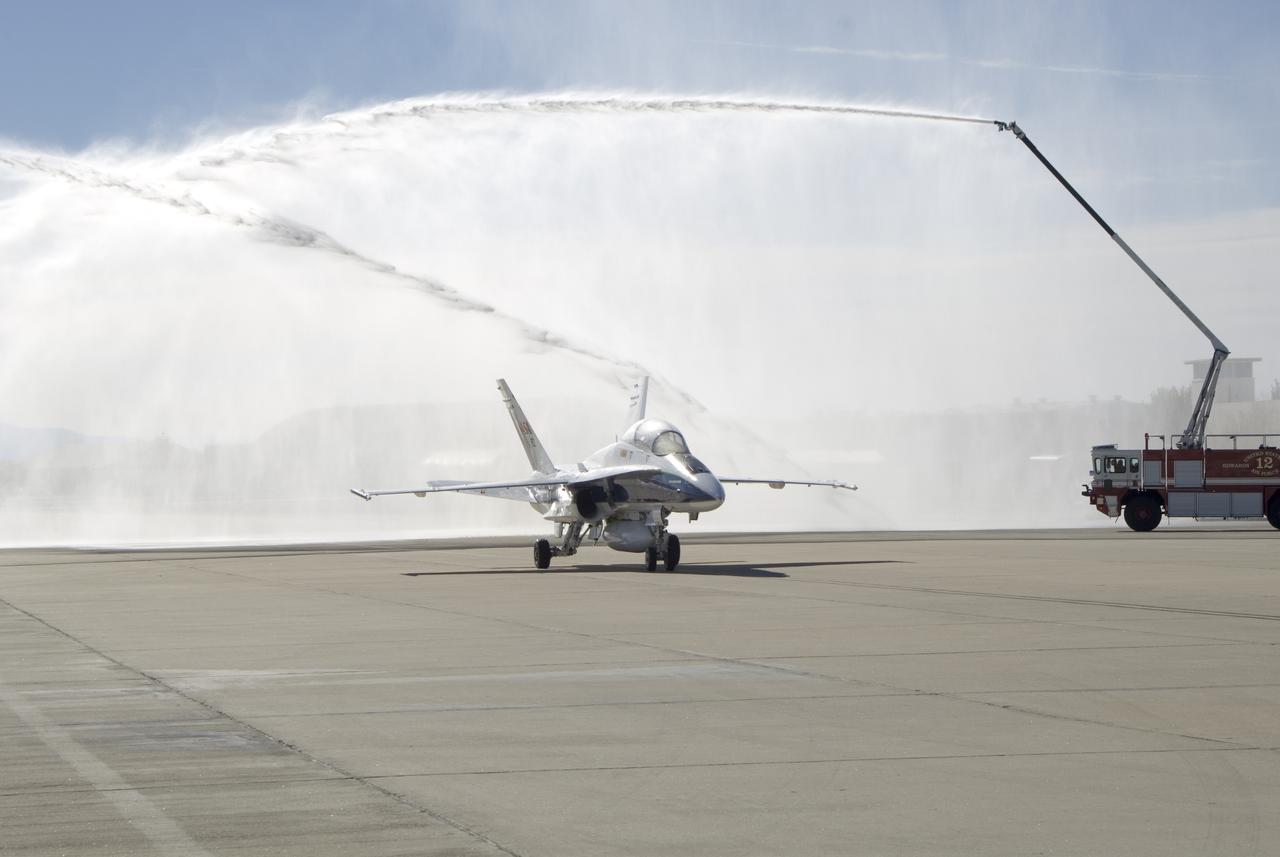
Long-time NASA Dryden research pilot and former astronaut C. Gordon Fullerton capped an almost 50-year flying career, including more than 38 years with NASA, with a final flight in a NASA F/A-18 on Dec. 21, 2007. Fullerton and Dryden research pilot Jim Smolka flew a 90-minute pilot proficiency formation aerobatics flight with another Dryden F/A-18 and a Dryden T-38 before concluding with two low-level formation flyovers of Dryden before landing. Fullerton was honored with a water-cannon spray arch provided by two fire trucks from the Edwards Air Force Base fire department as he taxied the F/A-18 up to the Dryden ramp, and was then greeted by his wife Marie and several hundred Dryden staff after his final flight. Fullerton began his flying career with the U.S. Air Force in 1958 after earning bachelor's and master's degrees in mechanical engineering from the California Institute of Technology. Initially trained as a fighter pilot, he later transitioned to multi-engine bombers and became a bomber operations test pilot after attending the Air Force Aerospace Research Pilot School at Edwards Air Force Base, Calif. He then was assigned to the flight crew for the planned Air Force Manned Orbital Laboratory in 1966. Upon cancellation of that program, the Air Force assigned Fullerton to NASA's astronaut corps in 1969. He served on the support crews for the Apollo 14, 15, 16 and 17 lunar missions, and was later assigned to one of the two flight crews that piloted the space shuttle prototype Enterprise during the Approach and Landing Test program at Dryden. He then logged some 382 hours in space when he flew on two early space shuttle missions, STS-3 on Columbia in 1982 and STS-51F on Challenger in 1985. He joined the flight crew branch at NASA Dryden after leaving the astronaut corps in 1986. During his 21 years at Dryden, Fullerton was project pilot on a number of high-profile research efforts, including the Propulsion Controlled Aircraft, the high-speed landing tests of
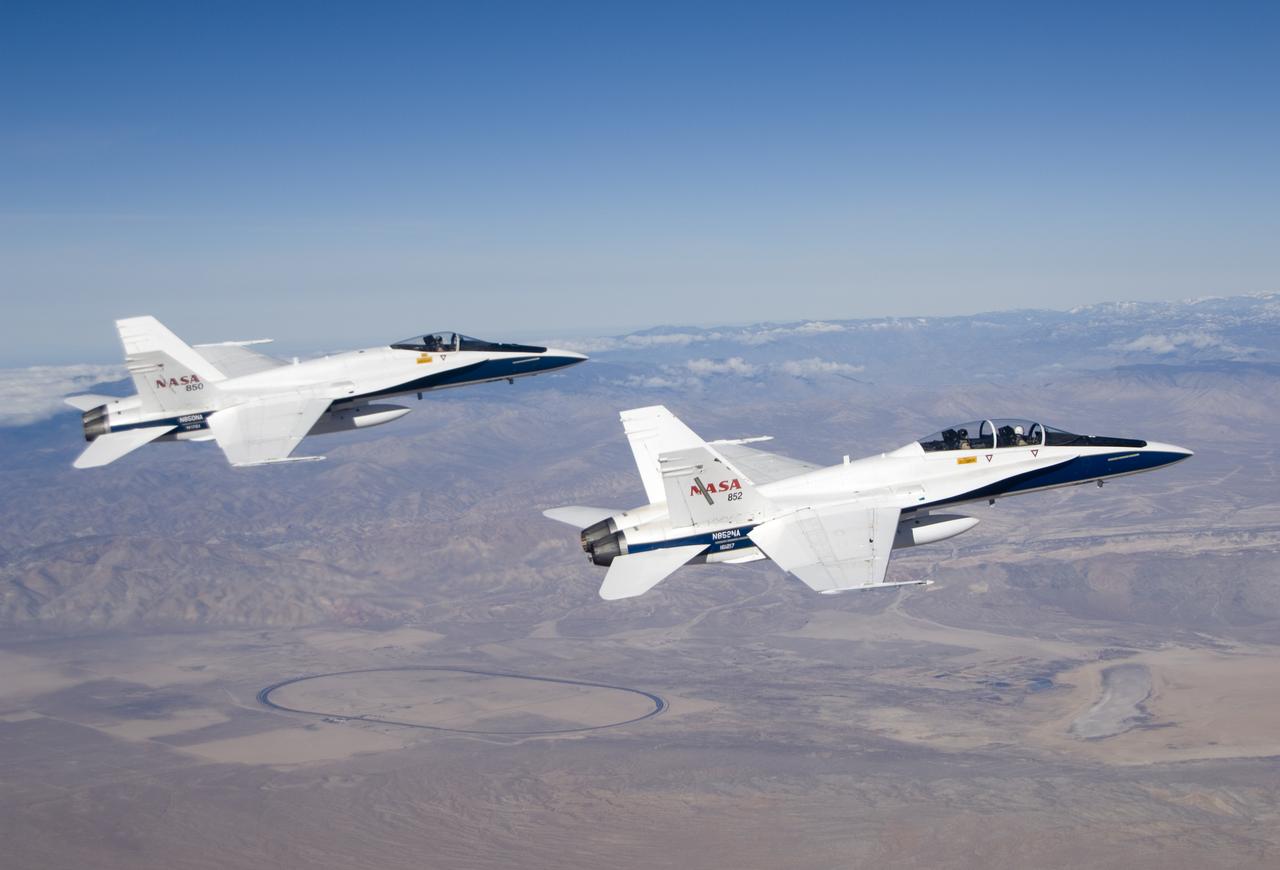
Long-time NASA Dryden research pilot and former astronaut C. Gordon Fullerton capped an almost 50-year flying career, including more than 38 years with NASA, with a final flight in a NASA F/A-18 on Dec. 21, 2007. Fullerton and Dryden research pilot Jim Smolka flew a 90-minute pilot proficiency formation aerobatics flight with another Dryden F/A-18 and a Dryden T-38 before concluding with two low-level formation flyovers of Dryden before landing. Fullerton was honored with a water-cannon spray arch provided by two fire trucks from the Edwards Air Force Base fire department as he taxied the F/A-18 up to the Dryden ramp, and was then greeted by his wife Marie and several hundred Dryden staff after his final flight. Fullerton began his flying career with the U.S. Air Force in 1958 after earning bachelor's and master's degrees in mechanical engineering from the California Institute of Technology. Initially trained as a fighter pilot, he later transitioned to multi-engine bombers and became a bomber operations test pilot after attending the Air Force Aerospace Research Pilot School at Edwards Air Force Base, Calif. He then was assigned to the flight crew for the planned Air Force Manned Orbital Laboratory in 1966. Upon cancellation of that program, the Air Force assigned Fullerton to NASA's astronaut corps in 1969. He served on the support crews for the Apollo 14, 15, 16 and 17 lunar missions, and was later assigned to one of the two flight crews that piloted the space shuttle prototype Enterprise during the Approach and Landing Test program at Dryden. He then logged some 382 hours in space when he flew on two early space shuttle missions, STS-3 on Columbia in 1982 and STS-51F on Challenger in 1985. He joined the flight crew branch at NASA Dryden after leaving the astronaut corps in 1986. During his 21 years at Dryden, Fullerton was project pilot on a number of high-profile research efforts, including the Propulsion Controlled Aircraft, the high-speed landing tests of sp
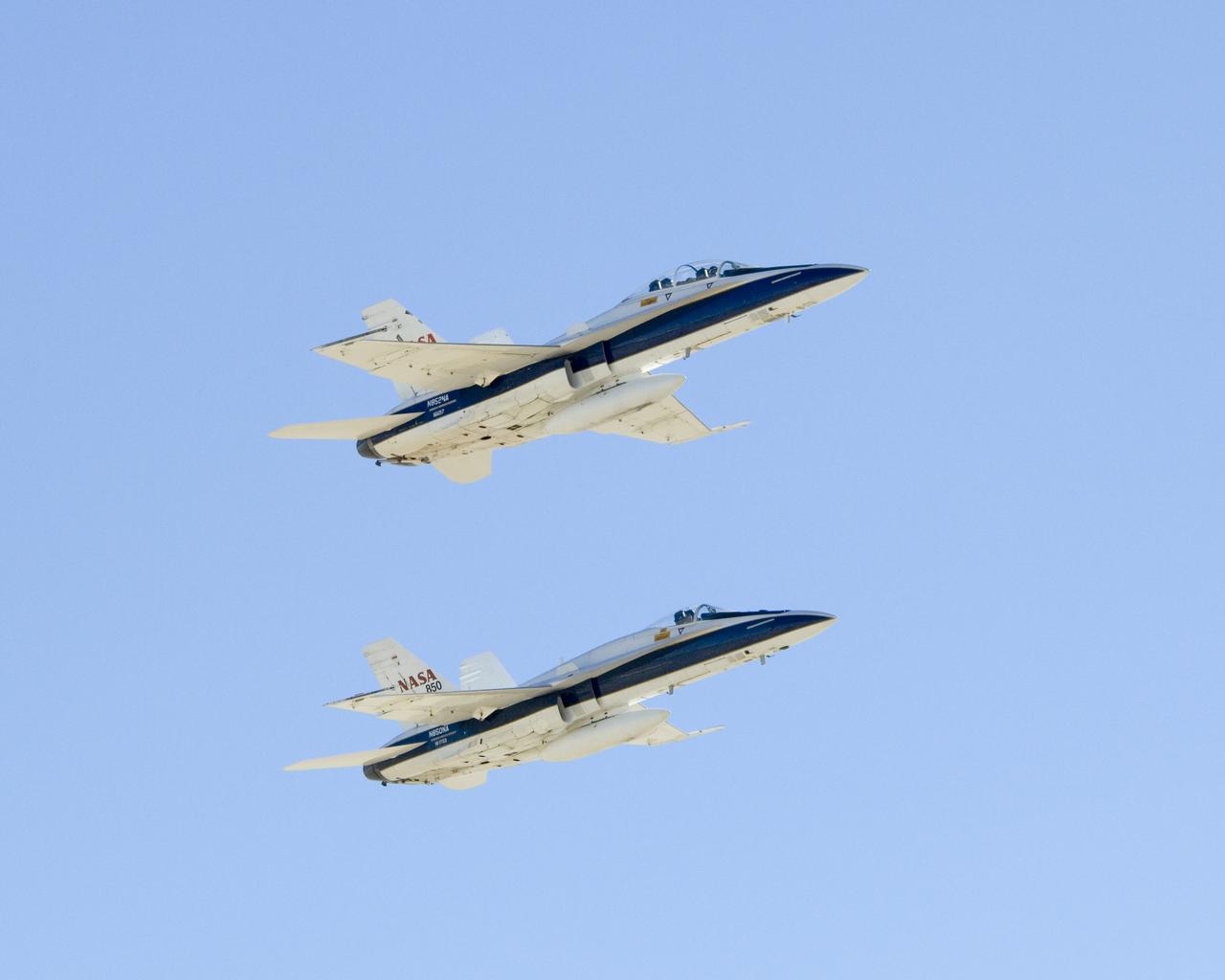
Long-time NASA Dryden research pilot and former astronaut C. Gordon Fullerton capped an almost 50-year flying career, including more than 38 years with NASA, with a final flight in a NASA F/A-18 on Dec. 21, 2007. Fullerton and Dryden research pilot Jim Smolka flew a 90-minute pilot proficiency formation aerobatics flight with another Dryden F/A-18 and a Dryden T-38 before concluding with two low-level formation flyovers of Dryden before landing. Fullerton was honored with a water-cannon spray arch provided by two fire trucks from the Edwards Air Force Base fire department as he taxied the F/A-18 up to the Dryden ramp, and was then greeted by his wife Marie and several hundred Dryden staff after his final flight. Fullerton began his flying career with the U.S. Air Force in 1958 after earning bachelor's and master's degrees in mechanical engineering from the California Institute of Technology. Initially trained as a fighter pilot, he later transitioned to multi-engine bombers and became a bomber operations test pilot after attending the Air Force Aerospace Research Pilot School at Edwards Air Force Base, Calif. He then was assigned to the flight crew for the planned Air Force Manned Orbital Laboratory in 1966. Upon cancellation of that program, the Air Force assigned Fullerton to NASA's astronaut corps in 1969. He served on the support crews for the Apollo 14, 15, 16 and 17 lunar missions, and was later assigned to one of the two flight crews that piloted the space shuttle prototype Enterprise during the Approach and Landing Test program at Dryden. He then logged some 382 hours in space when he flew on two early space shuttle missions, STS-3 on Columbia in 1982 and STS-51F on Challenger in 1985. He joined the flight crew branch at NASA Dryden after leaving the astronaut corps in 1986. During his 21 years at Dryden, Fullerton was project pilot on a number of high-profile research efforts, including the Propulsion Controlled Aircraft, the high-speed landing tests of
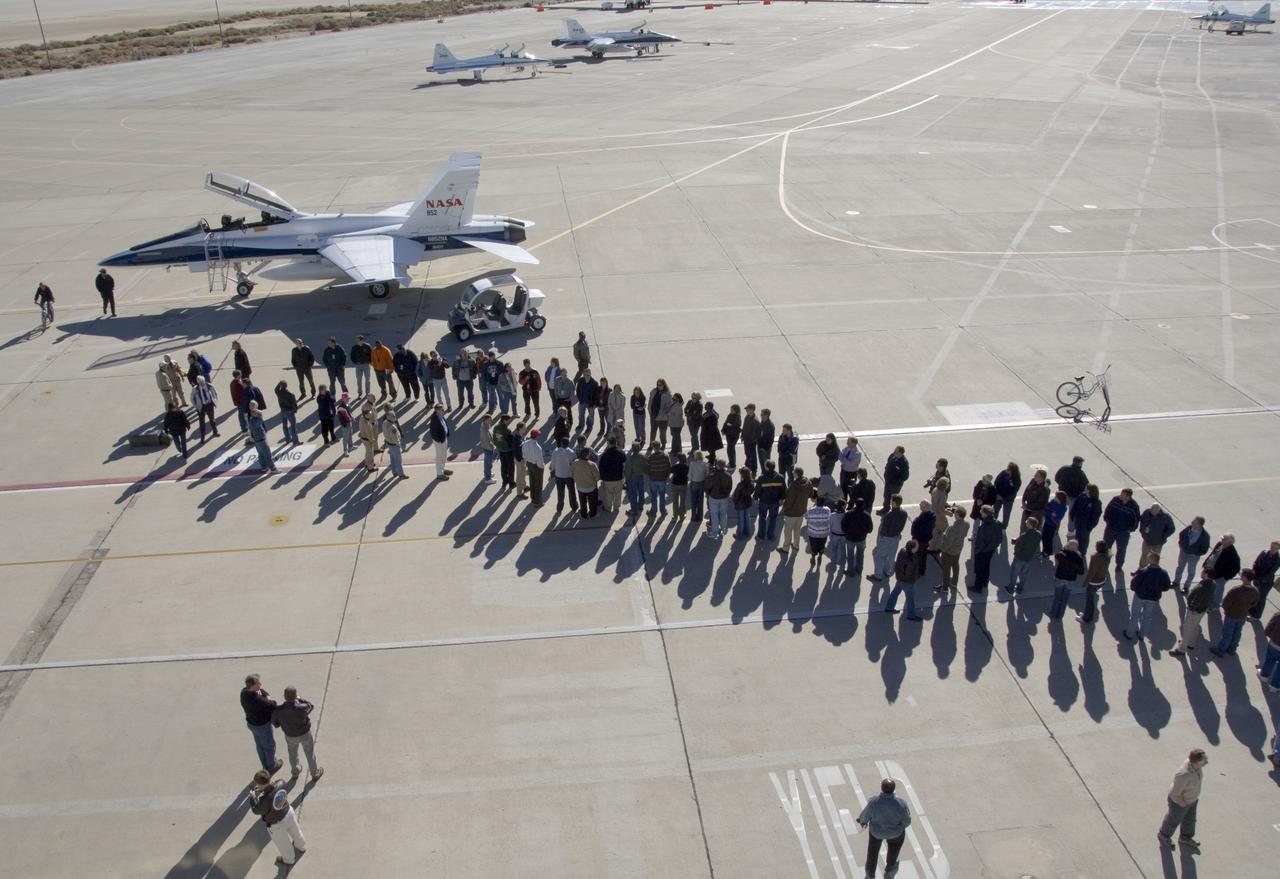
Long-time NASA Dryden research pilot and former astronaut C. Gordon Fullerton capped an almost 50-year flying career, including more than 38 years with NASA, with a final flight in a NASA F/A-18 on Dec. 21, 2007. Fullerton and Dryden research pilot Jim Smolka flew a 90-minute pilot proficiency formation aerobatics flight with another Dryden F/A-18 and a Dryden T-38 before concluding with two low-level formation flyovers of Dryden before landing. Fullerton was honored with a water-cannon spray arch provided by two fire trucks from the Edwards Air Force Base fire department as he taxied the F/A-18 up to the Dryden ramp, and was then greeted by his wife Marie and several hundred Dryden staff after his final flight. Fullerton began his flying career with the U.S. Air Force in 1958 after earning bachelor's and master's degrees in mechanical engineering from the California Institute of Technology. Initially trained as a fighter pilot, he later transitioned to multi-engine bombers and became a bomber operations test pilot after attending the Air Force Aerospace Research Pilot School at Edwards Air Force Base, Calif. He then was assigned to the flight crew for the planned Air Force Manned Orbital Laboratory in 1966. Upon cancellation of that program, the Air Force assigned Fullerton to NASA's astronaut corps in 1969. He served on the support crews for the Apollo 14, 15, 16 and 17 lunar missions, and was later assigned to one of the two flight crews that piloted the space shuttle prototype Enterprise during the Approach and Landing Test program at Dryden. He then logged some 382 hours in space when he flew on two early space shuttle missions, STS-3 on Columbia in 1982 and STS-51F on Challenger in 1985. He joined the flight crew branch at NASA Dryden after leaving the astronaut corps in 1986. During his 21 years at Dryden, Fullerton was project pilot on a number of high-profile research efforts, including the Propulsion Controlled Aircraft, the high-speed landing tests of
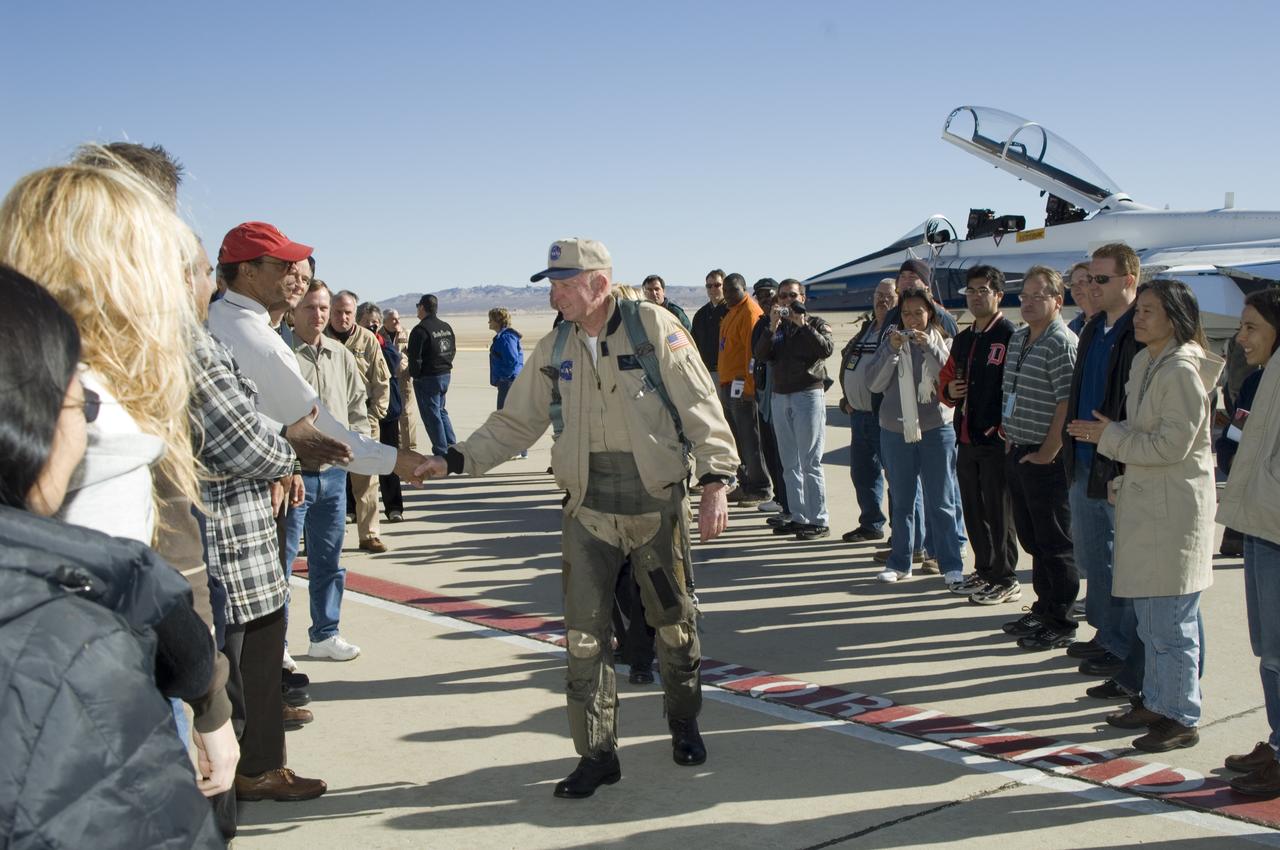
Long-time NASA Dryden research pilot and former astronaut C. Gordon Fullerton capped an almost 50-year flying career, including more than 38 years with NASA, with a final flight in a NASA F/A-18 on Dec. 21, 2007. Fullerton and Dryden research pilot Jim Smolka flew a 90-minute pilot proficiency formation aerobatics flight with another Dryden F/A-18 and a Dryden T-38 before concluding with two low-level formation flyovers of Dryden before landing. Fullerton was honored with a water-cannon spray arch provided by two fire trucks from the Edwards Air Force Base fire department as he taxied the F/A-18 up to the Dryden ramp, and was then greeted by his wife Marie and several hundred Dryden staff after his final flight. Fullerton began his flying career with the U.S. Air Force in 1958 after earning bachelor's and master's degrees in mechanical engineering from the California Institute of Technology. Initially trained as a fighter pilot, he later transitioned to multi-engine bombers and became a bomber operations test pilot after attending the Air Force Aerospace Research Pilot School at Edwards Air Force Base, Calif. He then was assigned to the flight crew for the planned Air Force Manned Orbital Laboratory in 1966. Upon cancellation of that program, the Air Force assigned Fullerton to NASA's astronaut corps in 1969. He served on the support crews for the Apollo 14, 15, 16 and 17 lunar missions, and was later assigned to one of the two flight crews that piloted the space shuttle prototype Enterprise during the Approach and Landing Test program at Dryden. He then logged some 382 hours in space when he flew on two early space shuttle missions, STS-3 on Columbia in 1982 and STS-51F on Challenger in 1985. He joined the flight crew branch at NASA Dryden after leaving the astronaut corps in 1986. During his 21 years at Dryden, Fullerton was project pilot on a number of high-profile research efforts, including the Propulsion Controlled Aircraft, the high-speed landing tests of
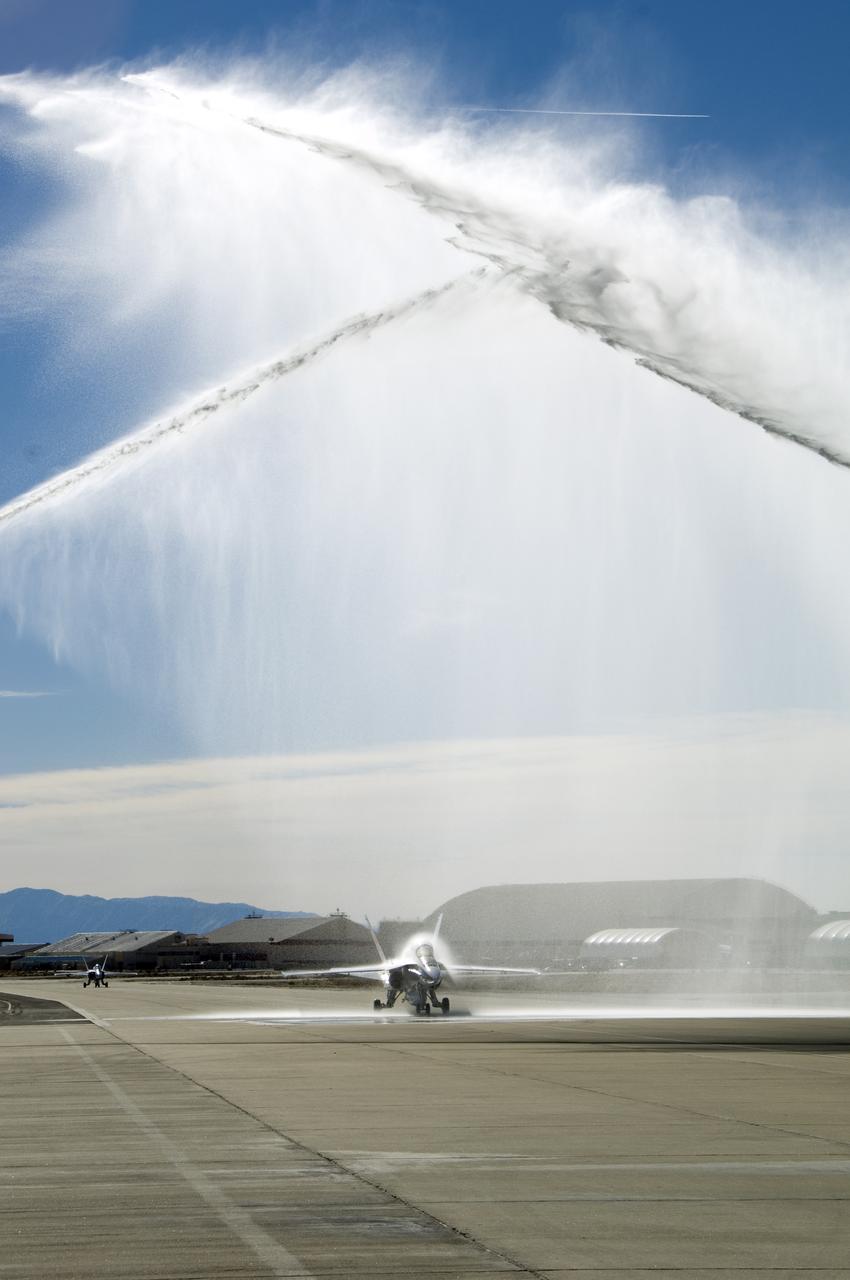
Long-time NASA Dryden research pilot and former astronaut C. Gordon Fullerton capped an almost 50-year flying career, including more than 38 years with NASA, with a final flight in a NASA F/A-18 on Dec. 21, 2007. Fullerton and Dryden research pilot Jim Smolka flew a 90-minute pilot proficiency formation aerobatics flight with another Dryden F/A-18 and a Dryden T-38 before concluding with two low-level formation flyovers of Dryden before landing. Fullerton was honored with a water-cannon spray arch provided by two fire trucks from the Edwards Air Force Base fire department as he taxied the F/A-18 up to the Dryden ramp, and was then greeted by his wife Marie and several hundred Dryden staff after his final flight. Fullerton began his flying career with the U.S. Air Force in 1958 after earning bachelor's and master's degrees in mechanical engineering from the California Institute of Technology. Initially trained as a fighter pilot, he later transitioned to multi-engine bombers and became a bomber operations test pilot after attending the Air Force Aerospace Research Pilot School at Edwards Air Force Base, Calif. He then was assigned to the flight crew for the planned Air Force Manned Orbital Laboratory in 1966. Upon cancellation of that program, the Air Force assigned Fullerton to NASA's astronaut corps in 1969. He served on the support crews for the Apollo 14, 15, 16 and 17 lunar missions, and was later assigned to one of the two flight crews that piloted the space shuttle prototype Enterprise during the Approach and Landing Test program at Dryden. He then logged some 382 hours in space when he flew on two early space shuttle missions, STS-3 on Columbia in 1982 and STS-51F on Challenger in 1985. He joined the flight crew branch at NASA Dryden after leaving the astronaut corps in 1986. During his 21 years at Dryden, Fullerton was project pilot on a number of high-profile research efforts, including the Propulsion Controlled Aircraft, the high-speed landing tests of
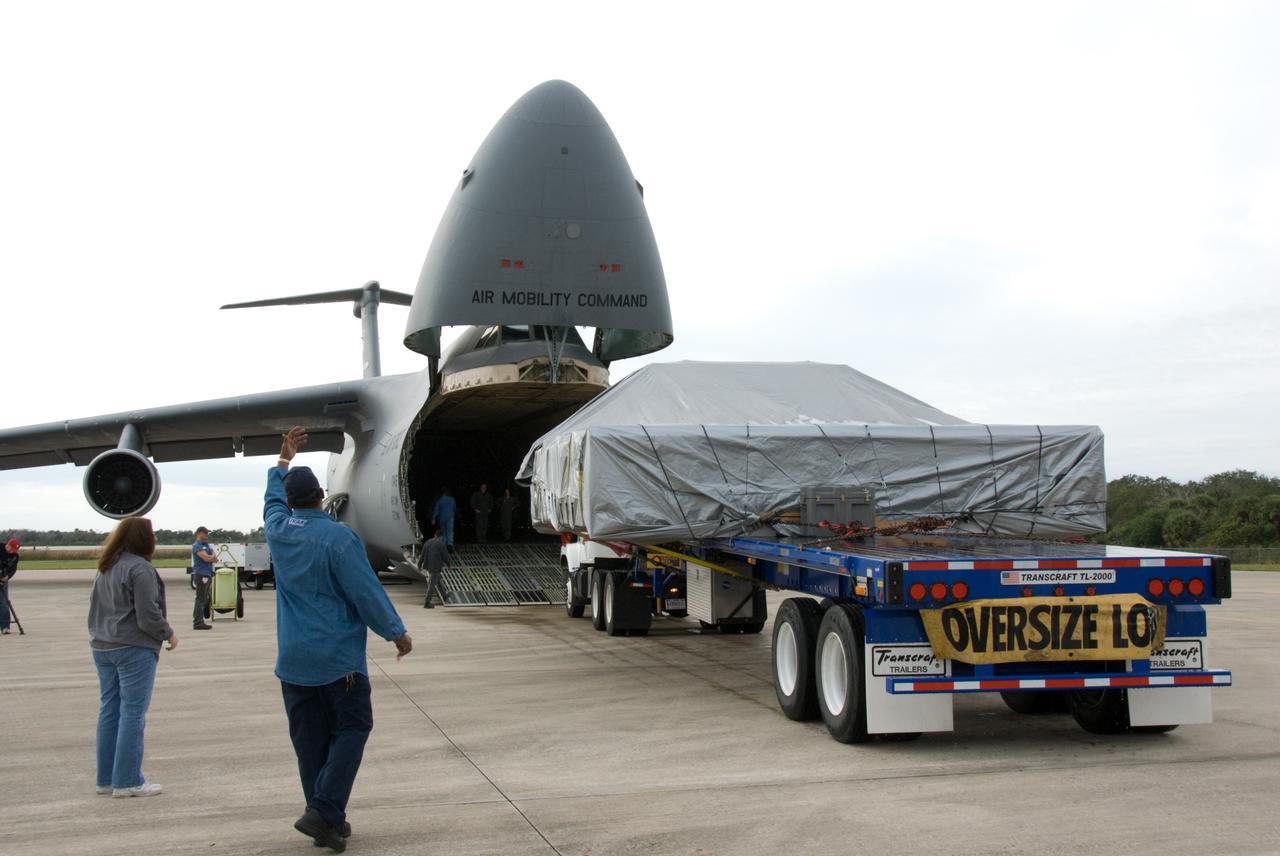
CAPE CANAVERAL, Fla. - At the Shuttle Landing Facility at NASA's Kennedy Space Center in Florida, the ExPRESS Logistics Carrier 3, or ELC-3, is removed from the cargo compartment of a U.S. Air Force C-5 aircraft. ELC-3 and the Alpha Magnetic Spectrometer are the primary payloads for space shuttle Endeavour's STS-134 mission to the International Space Station. The STS-134 crew will also deliver spare parts including two S-band communications antennas, a high pressure gas tank, additional spare parts for Dextre and micrometeoroid debris shields. Endeavour's launch is targeted for July 29, 2010. For information on the STS-134 mission objectives and crew, visit http://www.nasa.gov/shuttle. Photo credit: NASA/Kim Shiflett
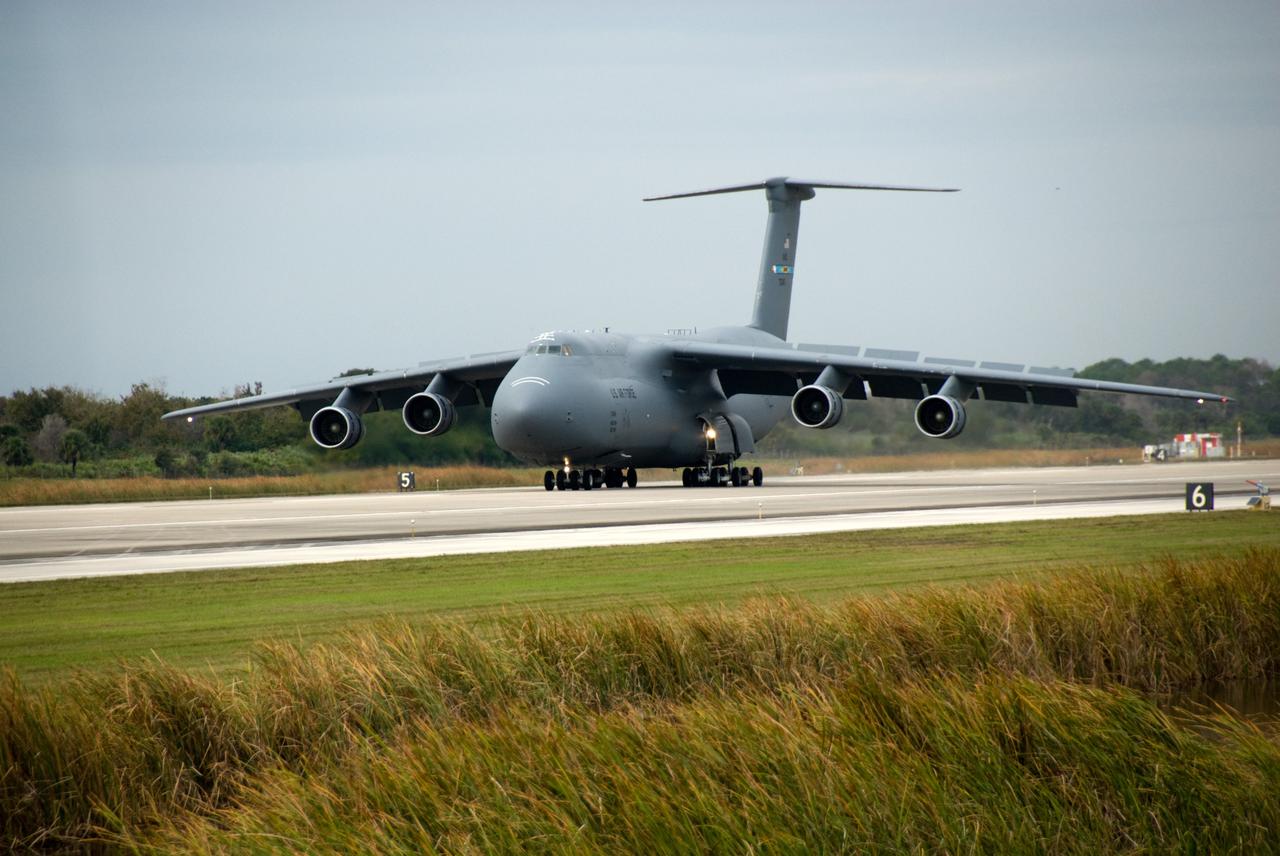
CAPE CANAVERAL, Fla. - At NASA's Kennedy Space Center in Florida, U.S. Air Force C-5 aircraft lands at the Shuttle Landing Facility, delivering the ExPRESS Logistics Carrier 3, or ELC-3. ELC-3 and the Alpha Magnetic Spectrometer are the primary payloads for space shuttle Endeavour's STS-134 mission to the International Space Station. The STS-134 crew will also deliver spare parts including two S-band communications antennas, a high pressure gas tank, additional spare parts for Dextre and micrometeoroid debris shields. Endeavour's launch is targeted for July 29, 2010. For information on the STS-134 mission objectives and crew, visit http://www.nasa.gov/shuttle. Photo credit: NASA/Kim Shiflett
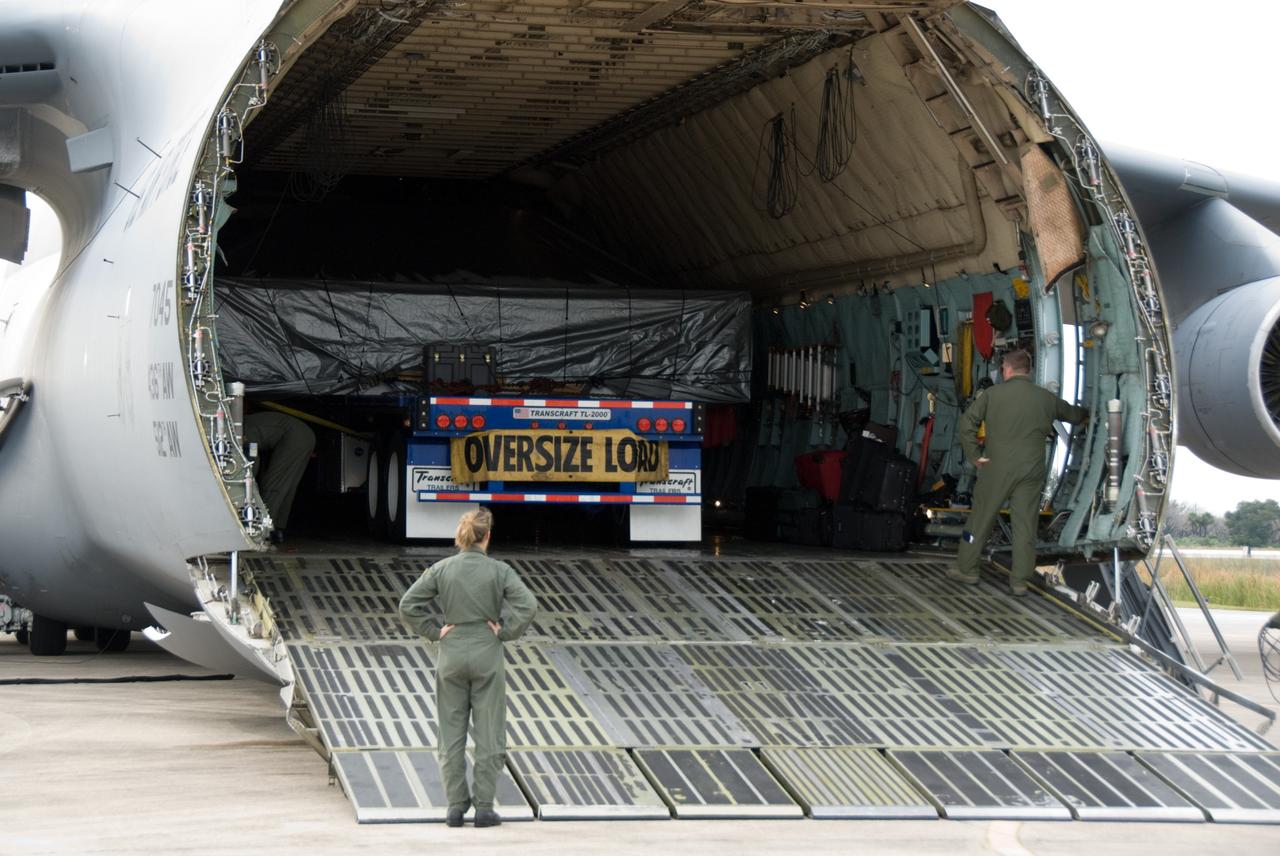
CAPE CANAVERAL, Fla. - At the Shuttle Landing Facility at NASA's Kennedy Space Center in Florida, preparations are under way to offload the ExPRESS Logistics Carrier 3, or ELC-3, from a U.S. Air Force C-5 aircraft. ELC-3 and the Alpha Magnetic Spectrometer are the primary payloads for space shuttle Endeavour's STS-134 mission to the International Space Station. The STS-134 crew will also deliver spare parts including two S-band communications antennas, a high pressure gas tank, additional spare parts for Dextre and micrometeoroid debris shields. Endeavour's launch is targeted for July 29, 2010. For information on the STS-134 mission objectives and crew, visit http://www.nasa.gov/shuttle. Photo credit: NASA/Kim Shiflett
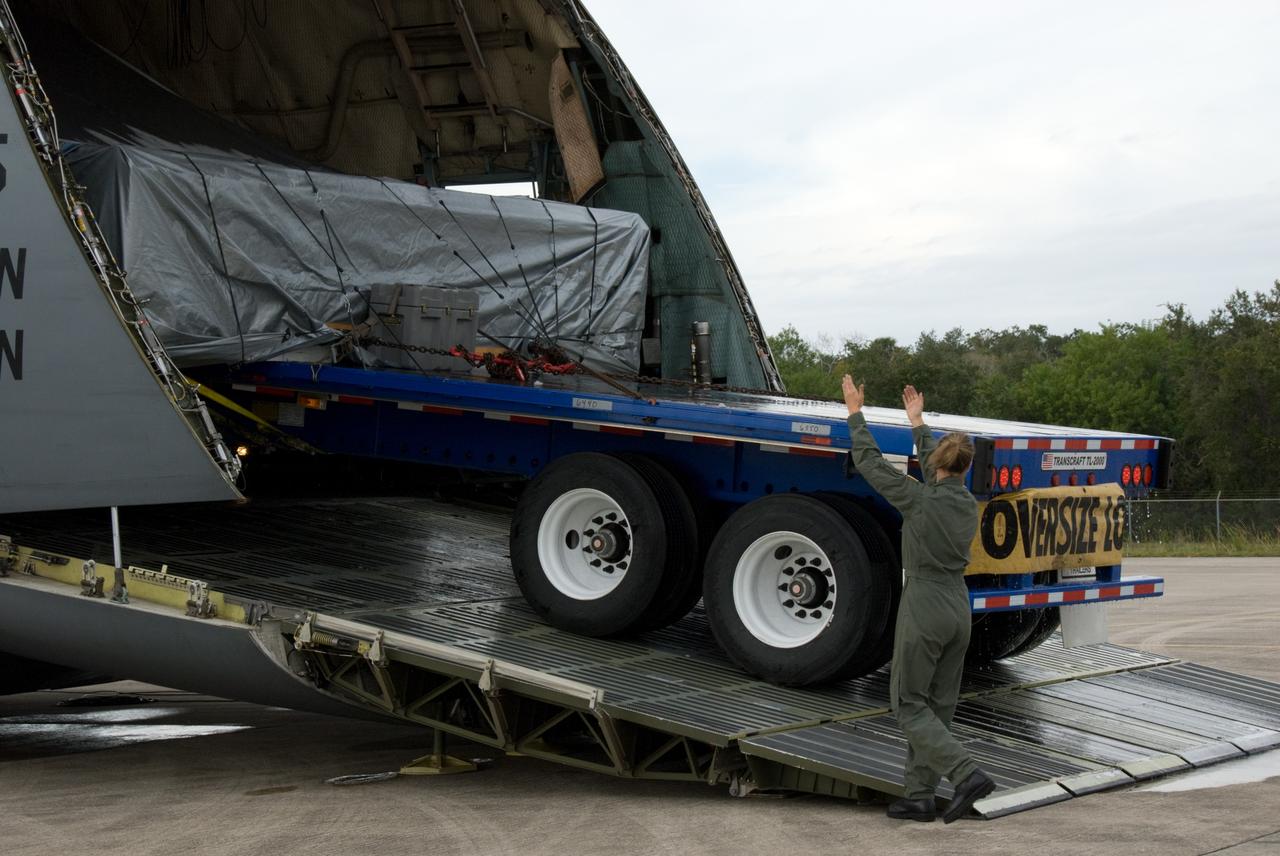
CAPE CANAVERAL, Fla. - At the Shuttle Landing Facility at NASA's Kennedy Space Center in Florida, the ExPRESS Logistics Carrier 3, or ELC-3, is offloaded from a U.S. Air Force C-5 aircraft. ELC-3 and the Alpha Magnetic Spectrometer are the primary payloads for space shuttle Endeavour's STS-134 mission to the International Space Station. The STS-134 crew will also deliver spare parts including two S-band communications antennas, a high pressure gas tank, additional spare parts for Dextre and micrometeoroid debris shields. Endeavour's launch is targeted for July 29, 2010. For information on the STS-134 mission objectives and crew, visit http://www.nasa.gov/shuttle. Photo credit: NASA/Kim Shiflett
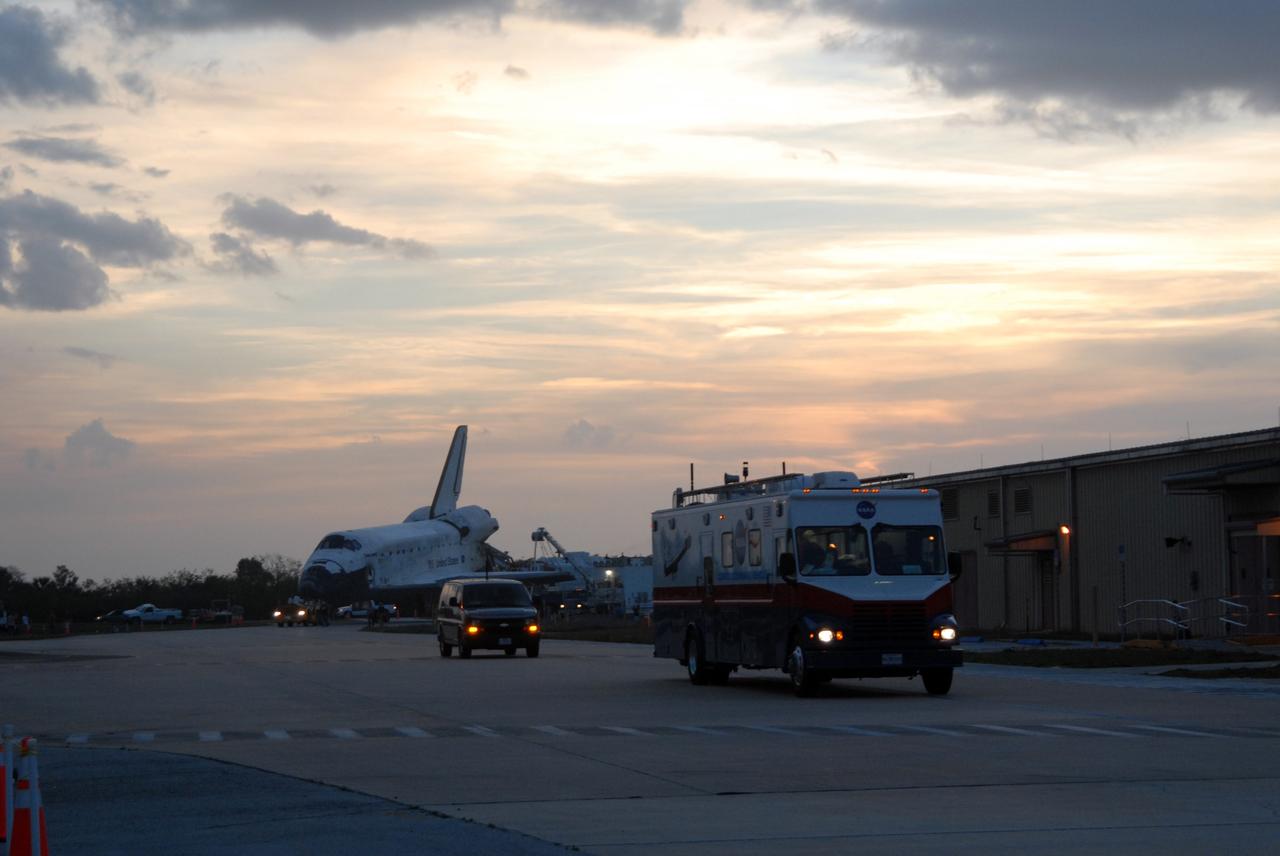
CAPE CANAVERAL, Fla. – After sunset, space shuttle Discovery is towed from the Shuttle Landing Facility at NASA's Kennedy Space Center in Florida to Orbiter Processing Facility 3. Discovery landed at 3:13:17 p.m. EDT after completing a 13-day journey of more than 5.3 million miles on the STS-119 mission. The mission was the 28th flight to the station, the 36th flight of Discovery and the 125th in the Space Shuttle Program, as well as the 70th landing at Kennedy. Photo credit: NASA/Jack Pfaller
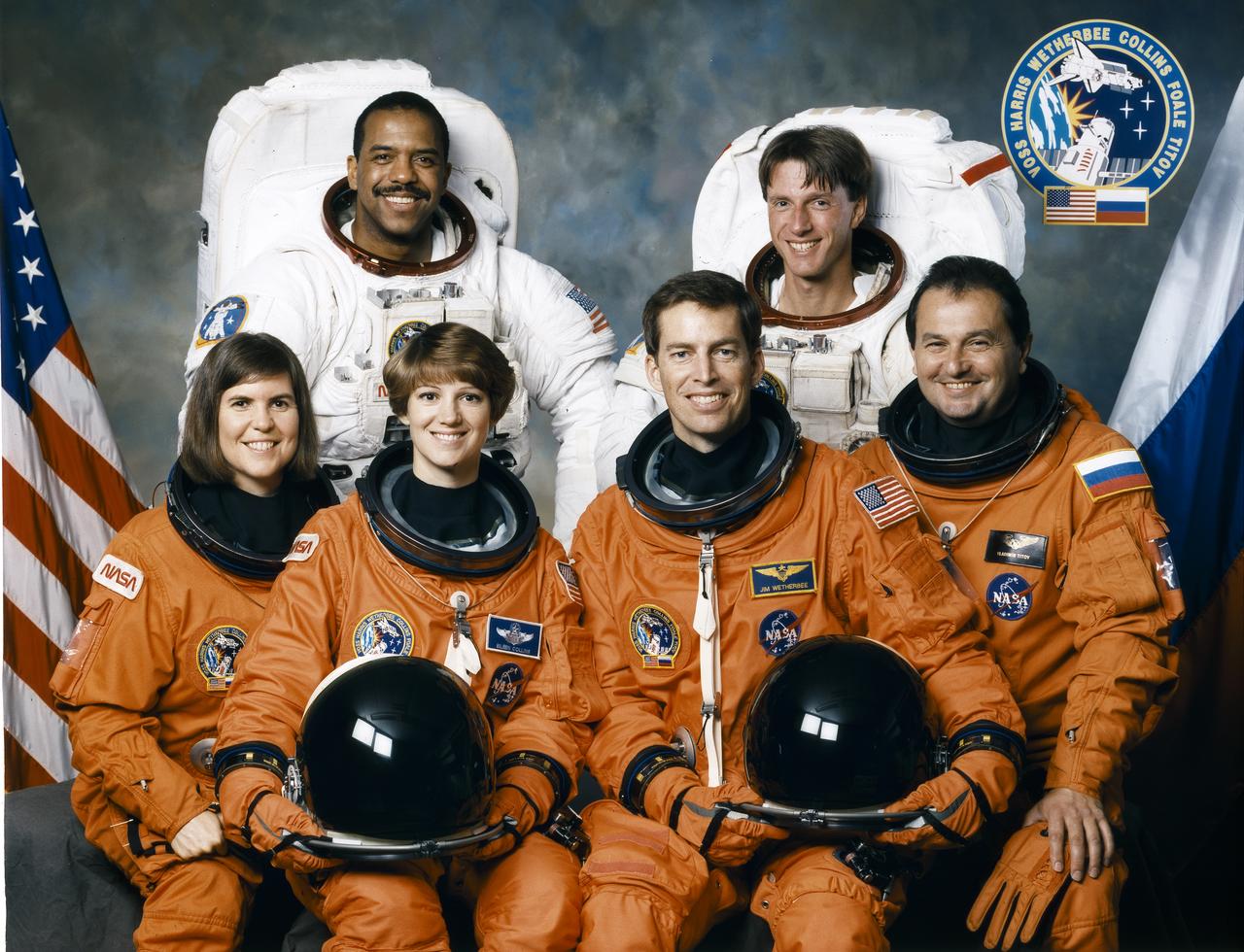
Crew members assigned to the STS-63 mission included (front left to right) Janice E. Voss, mission specialist; Eileen M. Collins, pilot; (the first woman to pilot a Space Shuttle), James D. Wetherbee, commander; and Vladmir G. Titov (Cosmonaut). Standing in the rear are mission specialists Bernard A. Harris, and C. Michael Foale. Launched aboard the Space Shuttle Discovery on February 3, 1995 at 12:22:04 am (EST), the primary payload for the mission was the SPACEHAB-3. STS-63 marked the first approach and fly around by the Shuttle with the Russian space station Mir.
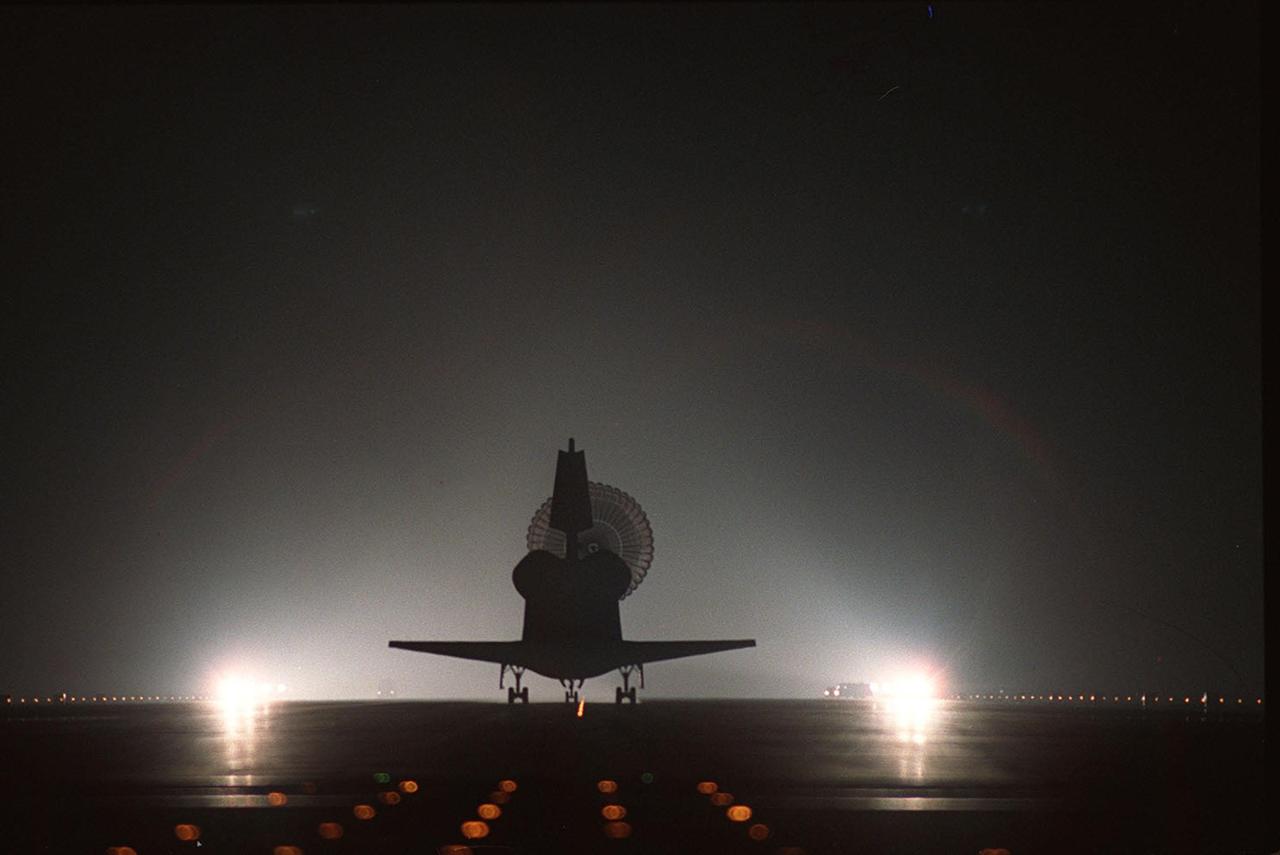
KENNEDY SPACE CENTER, FLA. -- Atlantis is silhouetted by the brilliant runway lights as it lands on Runway 15 of the KSC Shuttle Landing Facility. Main gear touchdown was at 3:56:48 a.m. EDT, landing on orbit 185 of the mission. Nose gear touchdown was at 3:56:57 a.m. EDT and wheel stop at 3:58:01 a.m. EDT.; Atlantis and crew traveled 4.9 million miles on the 11-day, 19-hour, 11-minute mission STS-106. During the mission to the International Space Station, the crew transferred nearly 5,000 pounds of equipment and supplies for use by the first resident crew expected to arrive in November. STS-106 was the 99th flight in the Shuttle program and the 22nd for Atlantis. STS-106 also marked the 15th nighttime landing in Shuttle history and the 23rd consecutive landing at KSC
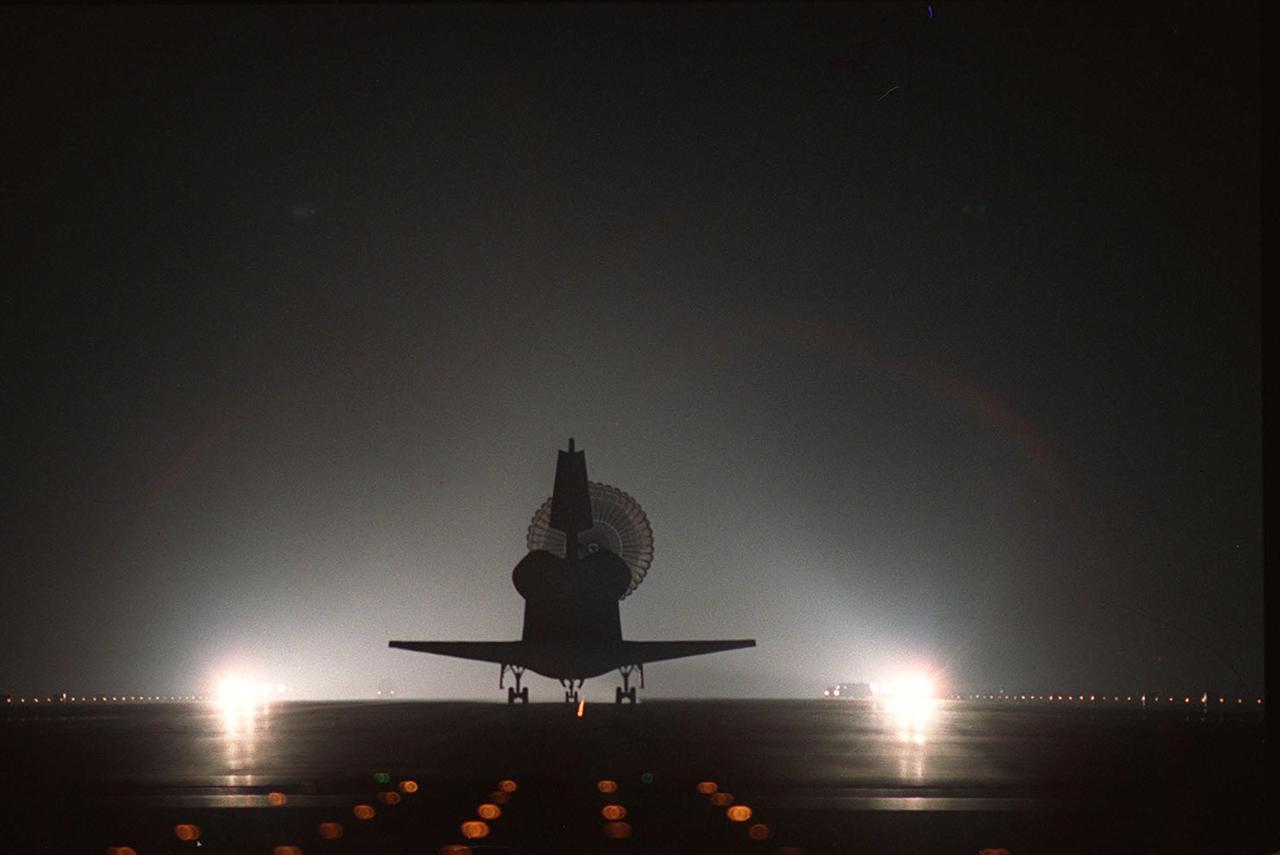
KENNEDY SPACE CENTER, FLA. -- Atlantis is silhouetted by the brilliant runway lights as it lands on Runway 15 of the KSC Shuttle Landing Facility. Main gear touchdown was at 3:56:48 a.m. EDT, landing on orbit 185 of the mission. Nose gear touchdown was at 3:56:57 a.m. EDT and wheel stop at 3:58:01 a.m. EDT.; Atlantis and crew traveled 4.9 million miles on the 11-day, 19-hour, 11-minute mission STS-106. During the mission to the International Space Station, the crew transferred nearly 5,000 pounds of equipment and supplies for use by the first resident crew expected to arrive in November. STS-106 was the 99th flight in the Shuttle program and the 22nd for Atlantis. STS-106 also marked the 15th nighttime landing in Shuttle history and the 23rd consecutive landing at KSC

KENNEDY SPACE CENTER, FLA. -- The Pressurized Mating Adapter-3 (PMA-3), an element of the STS-92 mission scheduled for launch aboard Space Shuttle Atlantis in January 1999, arrived from the Boeing Company in Huntington Beach, Calif., for processing in KSC's Space Station Processing Facility (SSPF). While in orbit, PMA-3 will be removed from the orbiter's payload bay by the astronauts using the remote manipulator arm and mated to Node 1, a connecting passageway to the living and working areas of the International Space Station. The primary purpose of PMA-3 is to serve as a Shuttle docking port through which crew members and equipment will transfer to the International Space Station during later assembly missions.
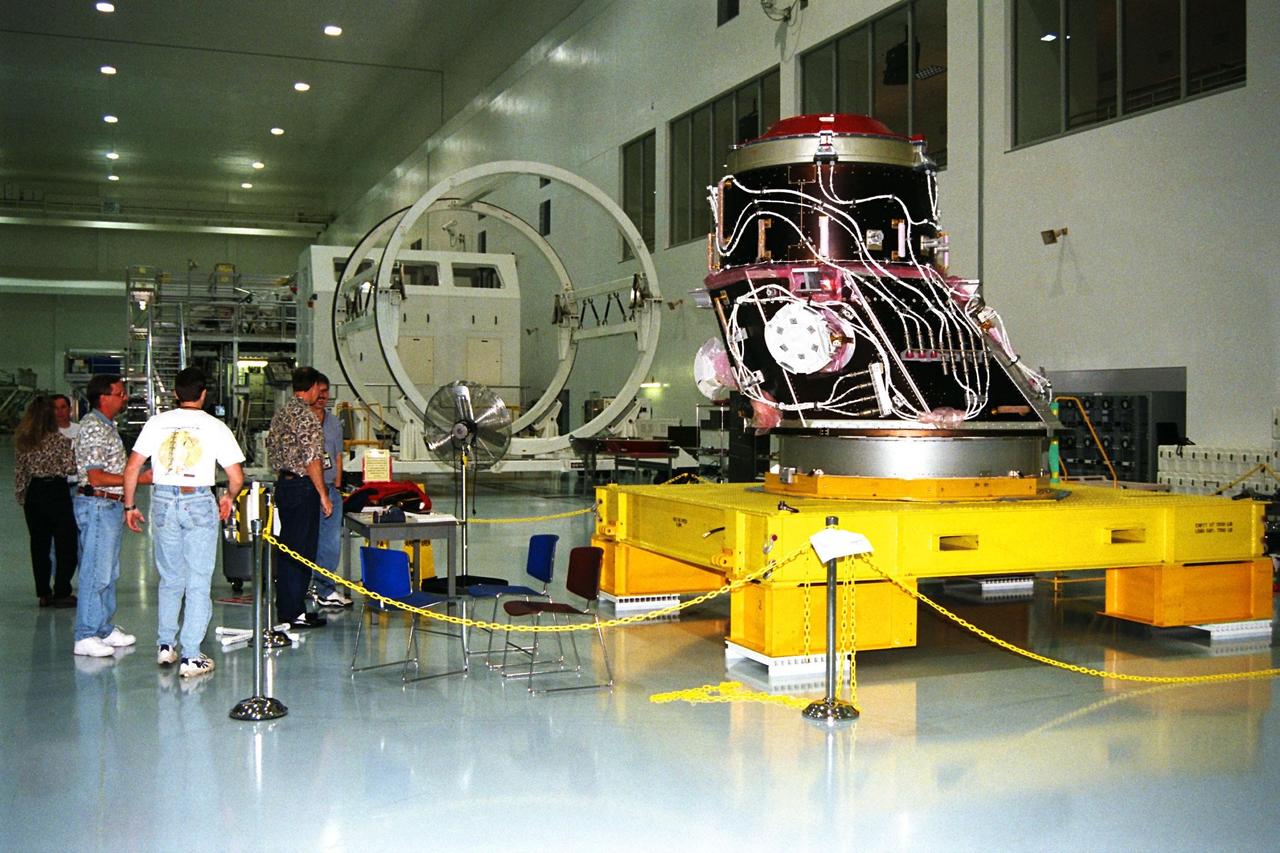
KENNEDY SPACE CENTER, FLA. -- Seen at the right of the photograph, the Pressurized Mating Adapter-3 (PMA-3), an element of the STS-92 mission scheduled for launch aboard Space Shuttle Atlantis in January 1999, awaits processing in KSC's Space Station Processing Facility (SSPF). While in orbit, PMA-3 will be removed from the orbiter's payload bay by the astronauts using the remote manipulator arm and mated to Node 1, a connecting passageway to the living and working areas of the International Space Station. The primary purpose of PMA-3 is to serve as a Shuttle docking port through which crew members and equipment will transfer to the International Space Station during later assembly missions
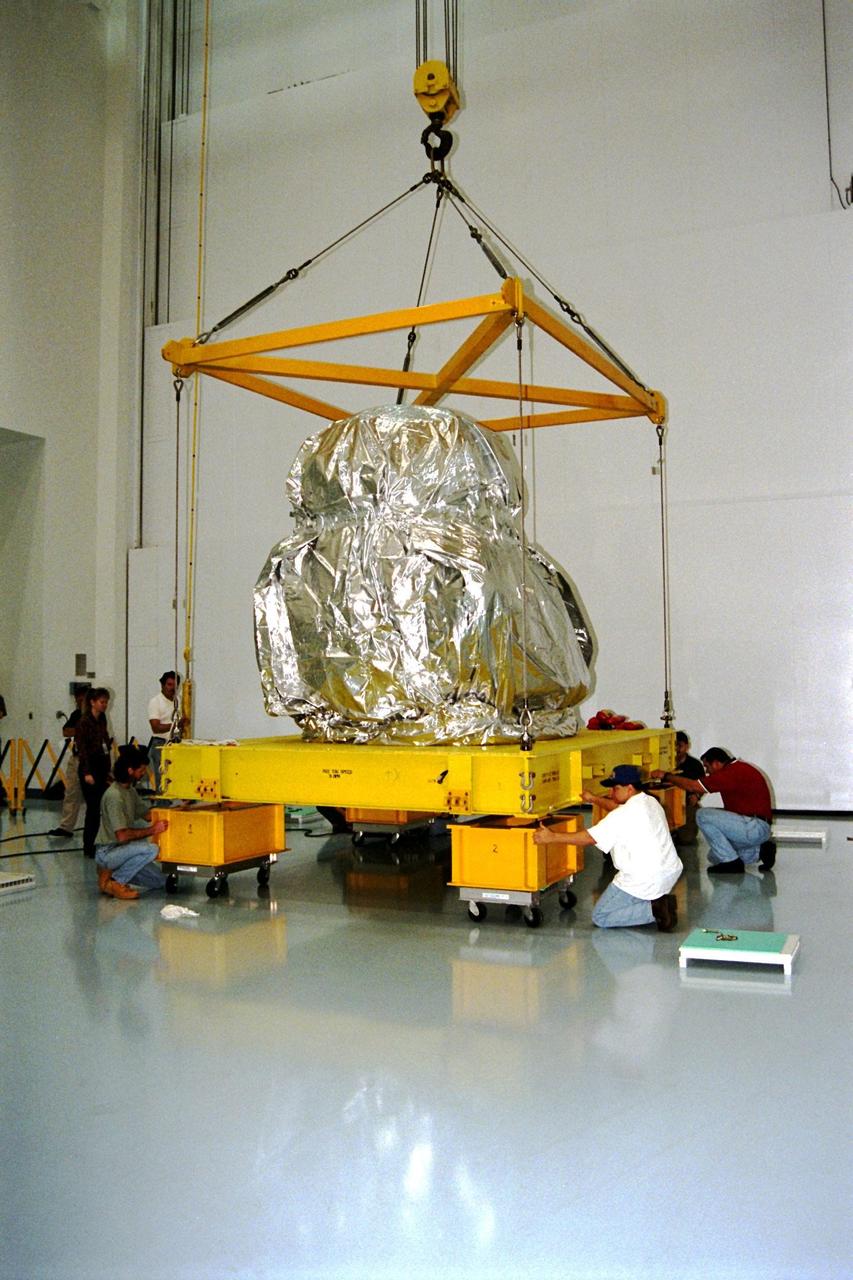
KENNEDY SPACE CENTER, FLA. -- The Pressurized Mating Adapter-3 (PMA-3), an element of the STS-92 mission scheduled for launch aboard Space Shuttle Atlantis in January 1999, arrived from the Boeing Company in Huntington Beach, Calif., for processing in KSC's Space Station Processing Facility (SSPF). While in orbit, PMA-3 will be removed from the orbiter's payload bay by the astronauts using the remote manipulator arm and mated to Node 1, a connecting passageway to the living and working areas of the International Space Station. The primary purpose of PMA-3 is to serve as a Shuttle docking port through which crew members and equipment will transfer to the International Space Station during later assembly missions
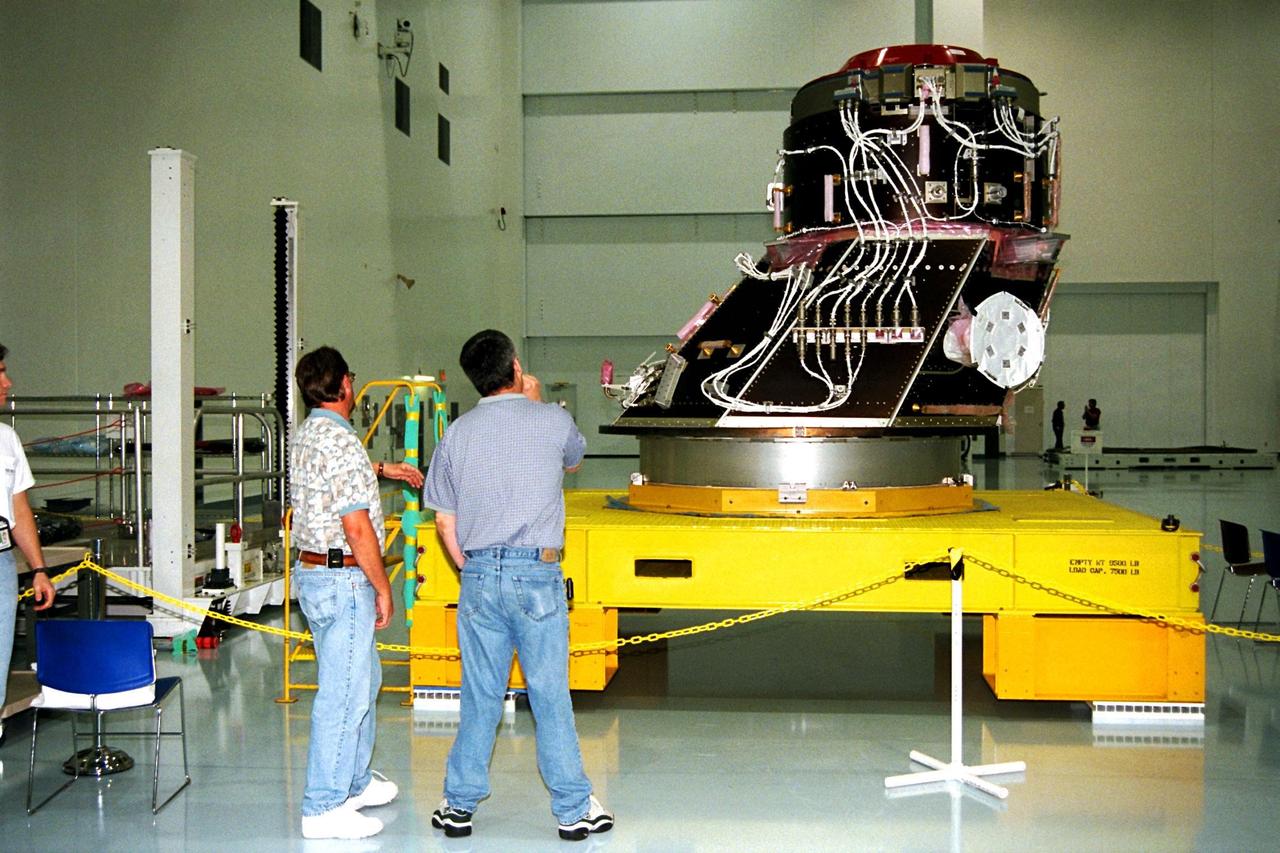
KENNEDY SPACE CENTER, FLA. -- The Pressurized Mating Adapter-3 (PMA-3), an element of the STS-92 mission scheduled for launch aboard Space Shuttle Atlantis in January 1999, awaits processing in KSC's Space Station Processing Facility (SSPF). While in orbit, PMA-3 will be removed from the orbiter's payload bay by the astronauts using the remote manipulator arm and mated to Node 1, a connecting passageway to the living and working areas of the International Space Station. The primary purpose of PMA-3 is to serve as a Shuttle docking port through which crew members and equipment will transfer to the International Space Station during later assembly missions
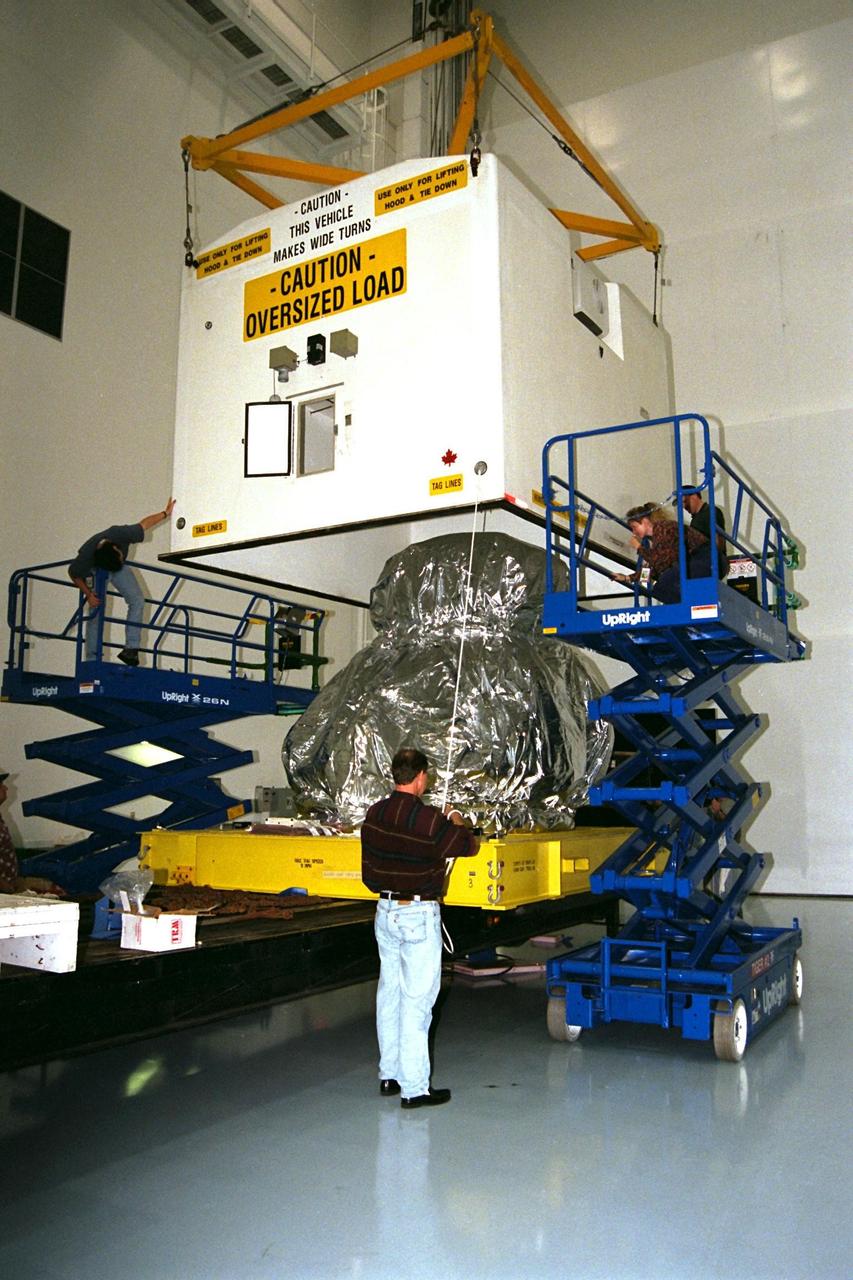
KENNEDY SPACE CENTER, FLA. -- The Pressurized Mating Adapter-3 (PMA-3), an element of the STS-92 mission scheduled for launch aboard Space Shuttle Atlantis in January 1999, arrived from the Boeing Company in Huntington Beach, Calif., for processing in KSC's Space Station Processing Facility (SSPF). While in orbit, PMA-3 will be removed from the orbiter's payload bay by the astronauts using the remote manipulator arm and mated to Node 1, a connecting passageway to the living and working areas of the International Space Station. The primary purpose of PMA-3 is to serve as a Shuttle docking port through which crew members and equipment will transfer to the International Space Station during later assembly missions
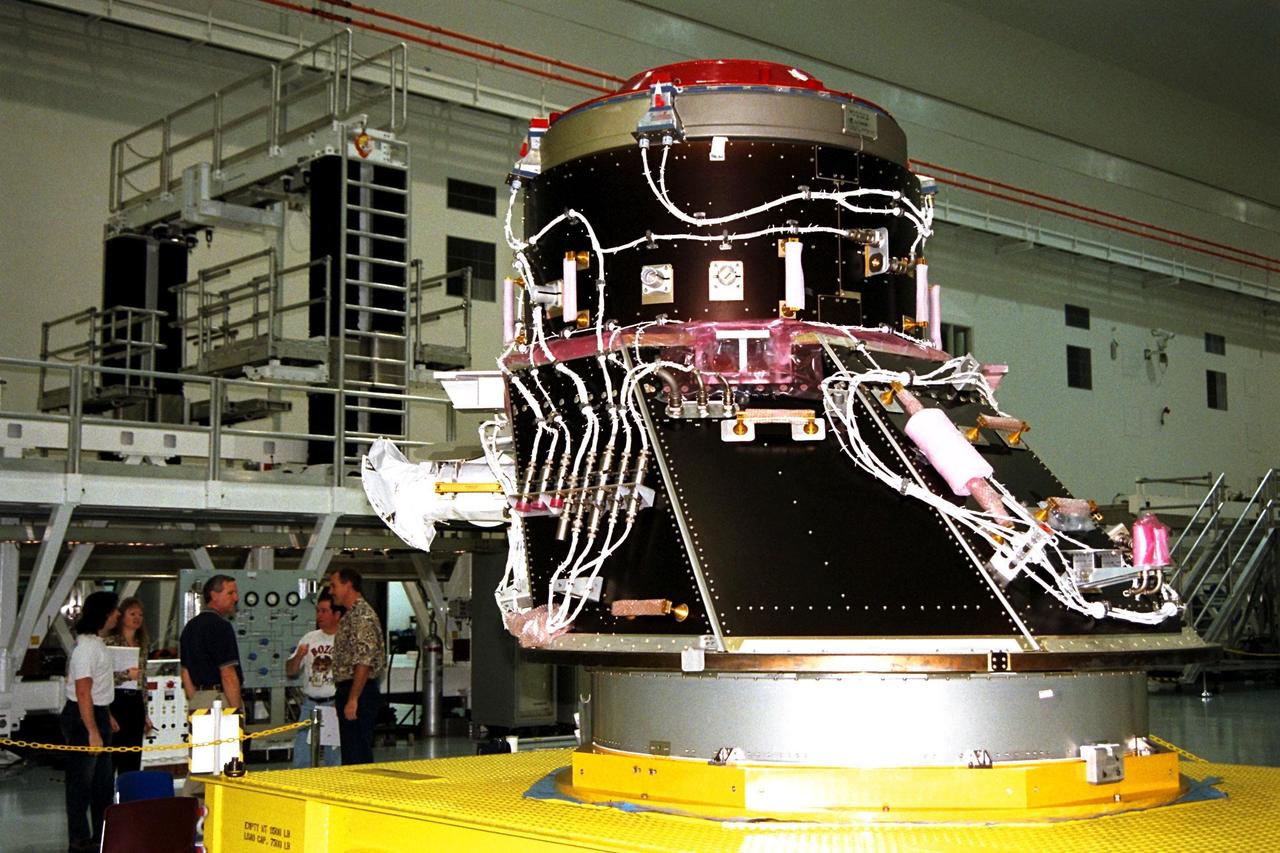
KENNEDY SPACE CENTER, FLA. -- The Pressurized Mating Adapter-3 (PMA-3), an element of the STS-92 mission scheduled for launch aboard Space Shuttle Atlantis in January 1999, awaits processing in KSC's Space Station Processing Facility (SSPF). While in orbit, PMA-3 will be removed from the orbiter's payload bay by the astronauts using the remote manipulator arm and mated to Node 1, a connecting passageway to the living and working areas of the International Space Station. The primary purpose of PMA-3 is to serve as a Shuttle docking port through which crew members and equipment will transfer to the International Space Station during later assembly missions
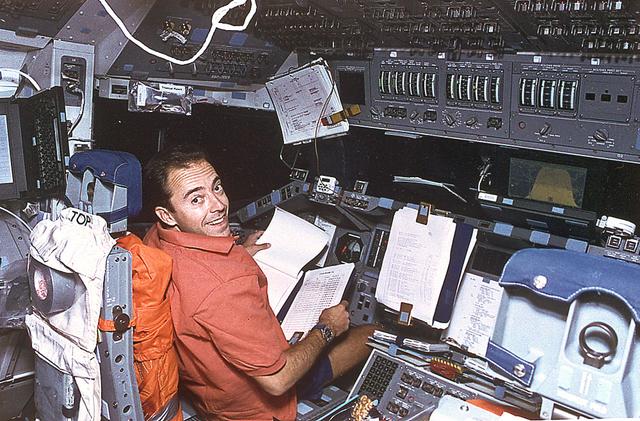
This is an onboard photo of space shuttle Atlantis (STS-66) crew member, French scientist Jean-Francois Clervoy working on the Atmospheric Laboratory for Applied Sciences (ATLAS-3) project. The ATLAS-3 measures the variances of the sun's solar radiation and the variability in the solar spectrum.
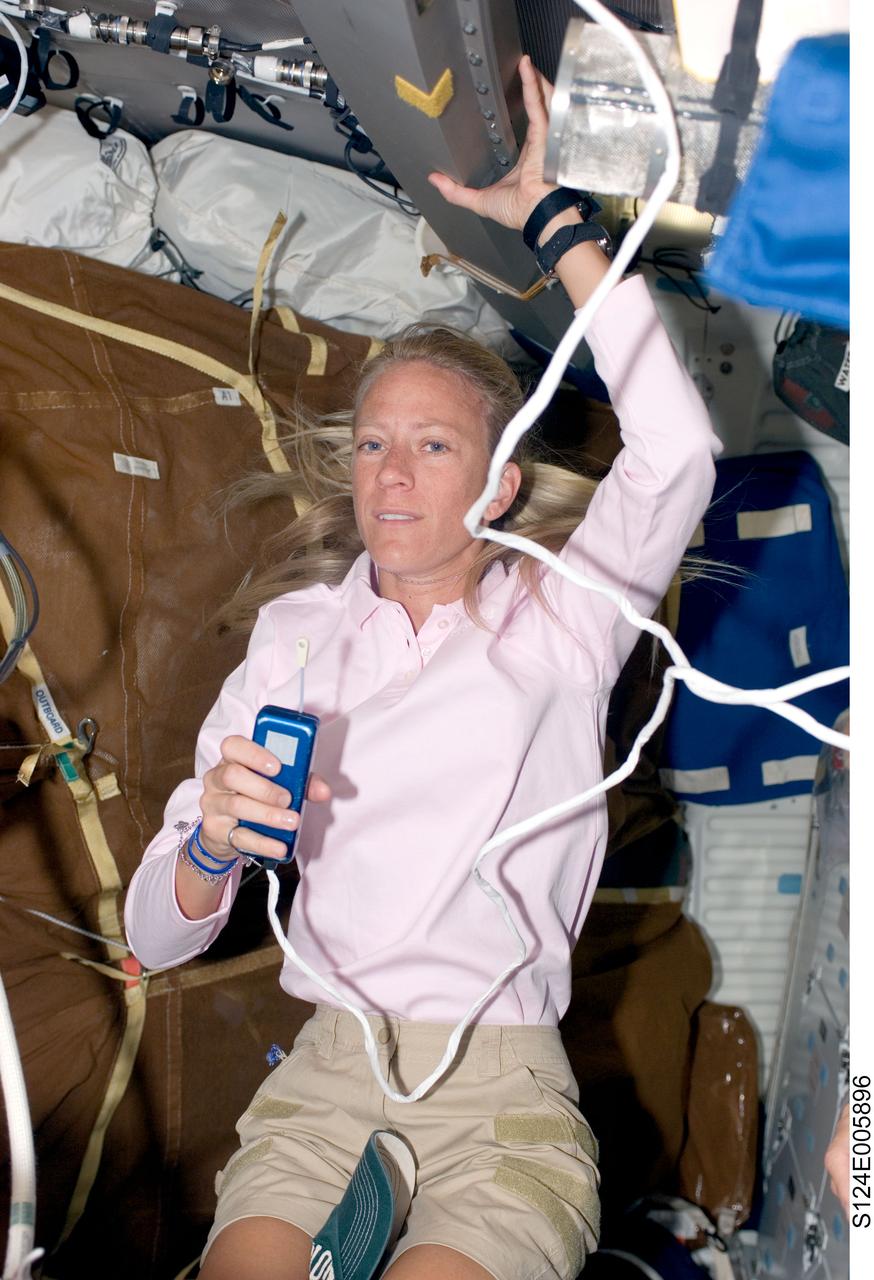
S124-E-005896 (3 June 2008) --- Astronaut Karen Nyberg, STS-124 mission specialist, uses a communication system on the middeck of Space Shuttle Discovery while docked with the International Space Station.
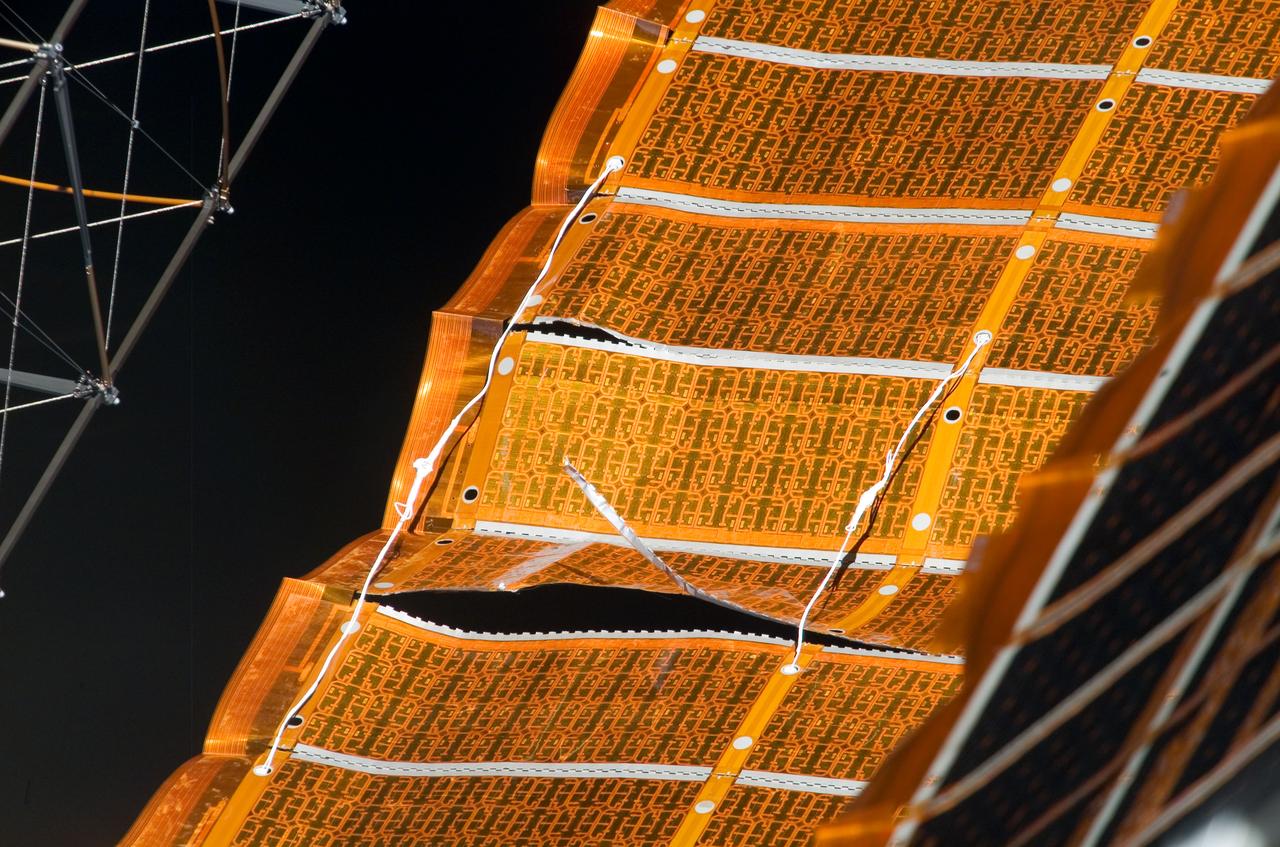
ISS016-E-008875 (3 Nov. 2007) --- View of the repaired solar array photographed during the STS-120 mission's fourth session of extravehicular activity (EVA) while Space Shuttle Discovery is docked with the International Space Station.
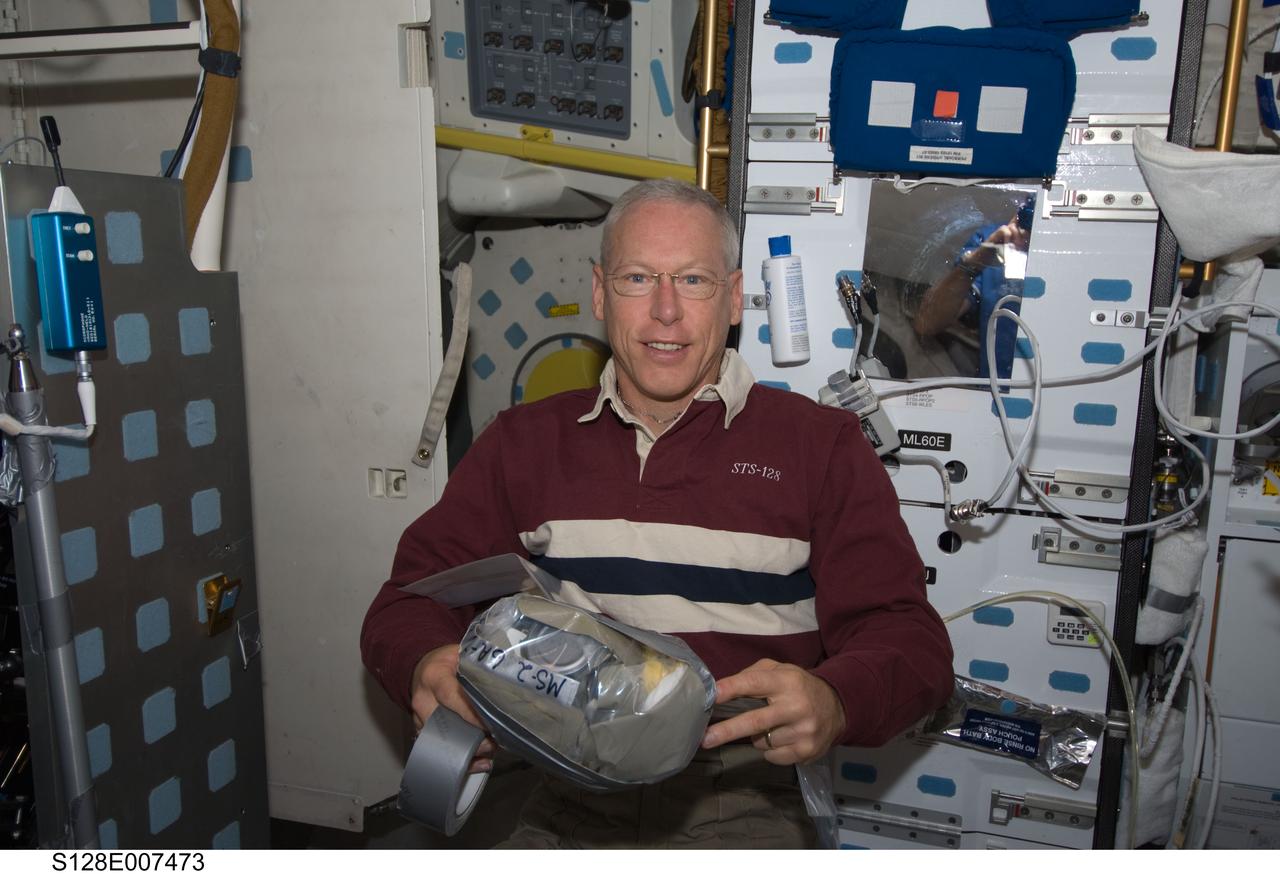
S128-E-007473 (3 Sept. 2009) --- NASA astronaut Patrick Forrester, STS-128 mission specialist, is pictured on the middeck of Space Shuttle Discovery while docked with the International Space Station.
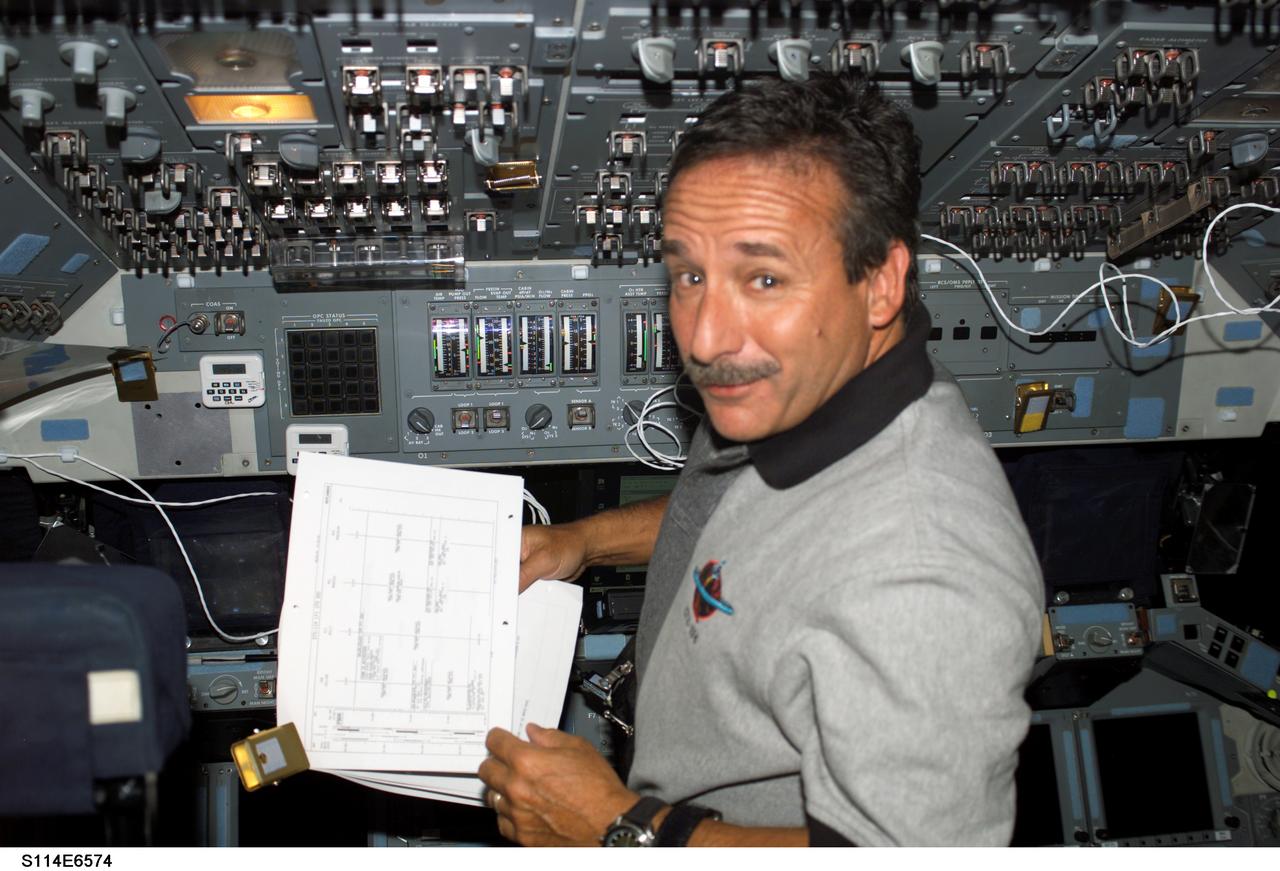
S114-E-6574 (3 August 2005) --- Astronaut Charles J. Camarda, STS-114 mission specialist, looks over a procedures checklist on the flight deck of the Space Shuttle Discovery while docked to the International Space Station.
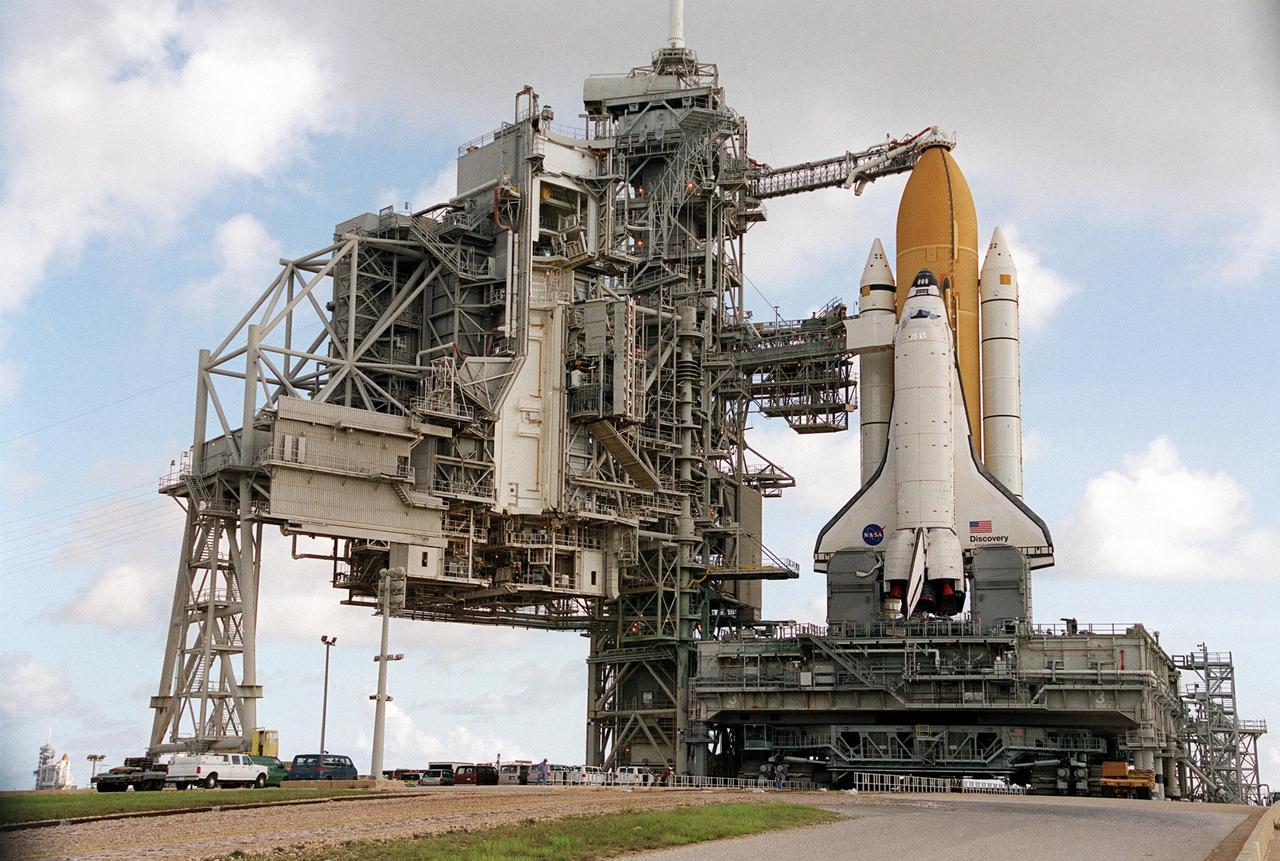
KENNEDY SPACE CENTER, Fla. -- Space Shuttle Discovery arrives at Launch Pad 39A after an early morning rollout from the Vehicle Assembly Building. Discovery is scheduled to launch Aug. 3 on mission STS-105
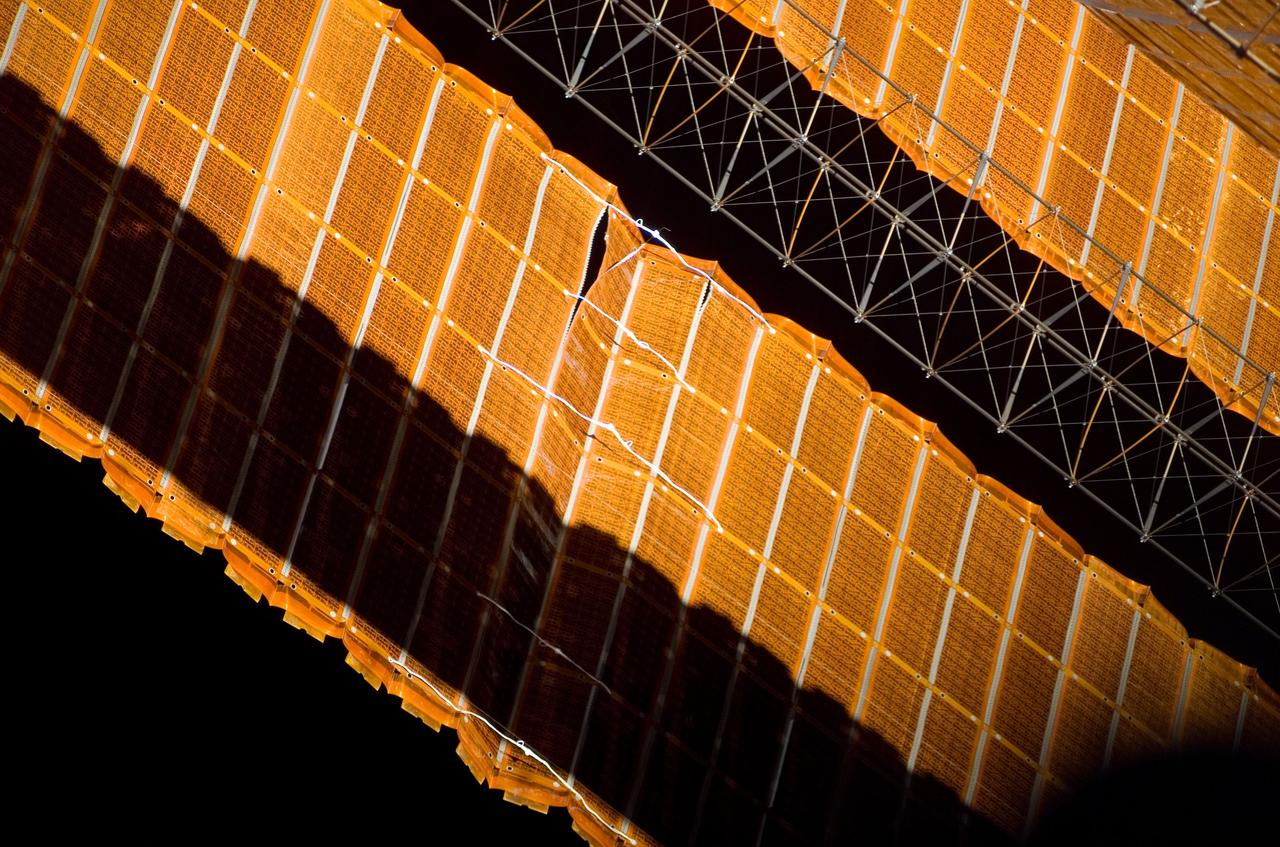
ISS016-E-009201 (3 Nov. 2007) --- View of the repaired solar array photographed during the STS-120 mission's fourth session of extravehicular activity (EVA) while Space Shuttle Discovery is docked with the International Space Station.
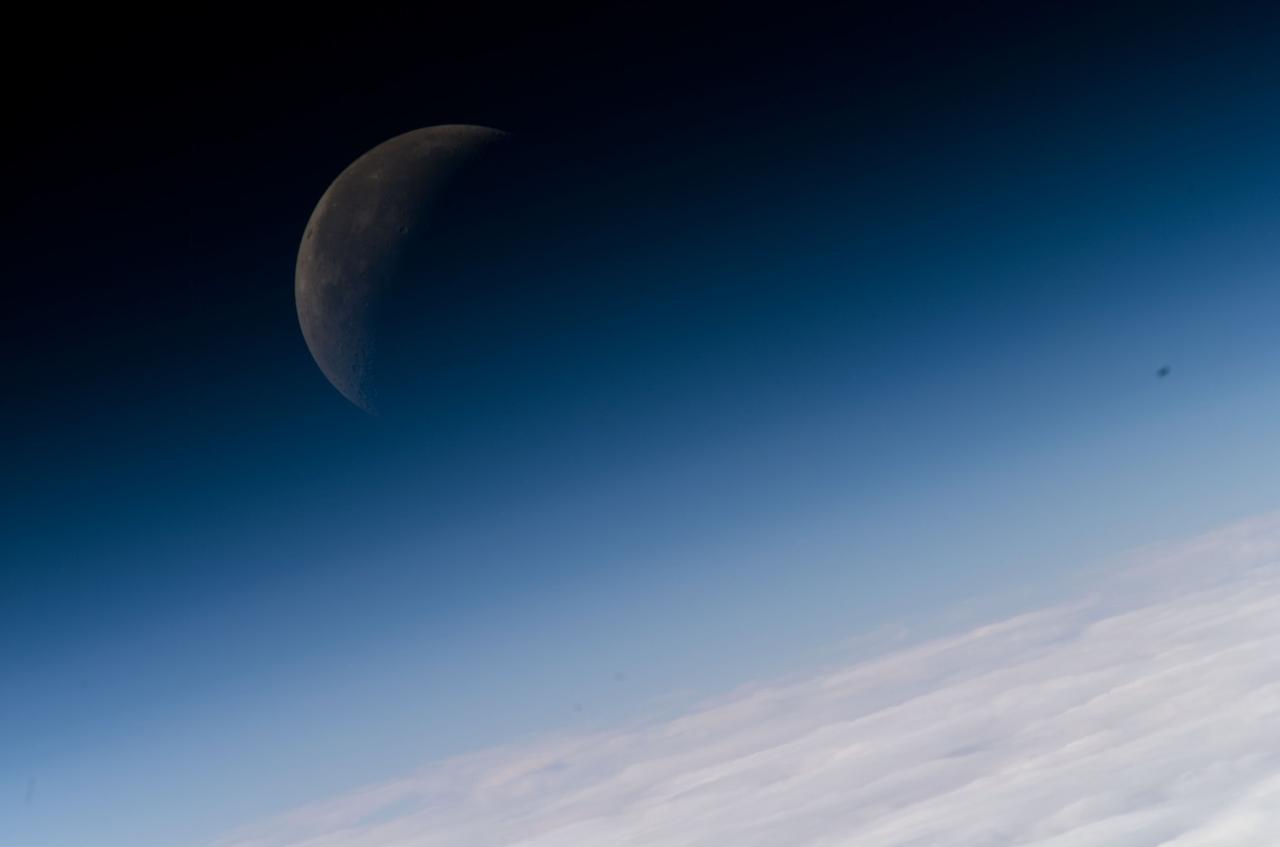
ISS016-E-008867 (3 Nov. 2007) --- A gibbous moon is visible in this view of Earth's horizon and atmosphere, photographed by an Expedition 16 crewmember on the International Space Station while Space Shuttle Discovery (STS-120) is docked with the station.
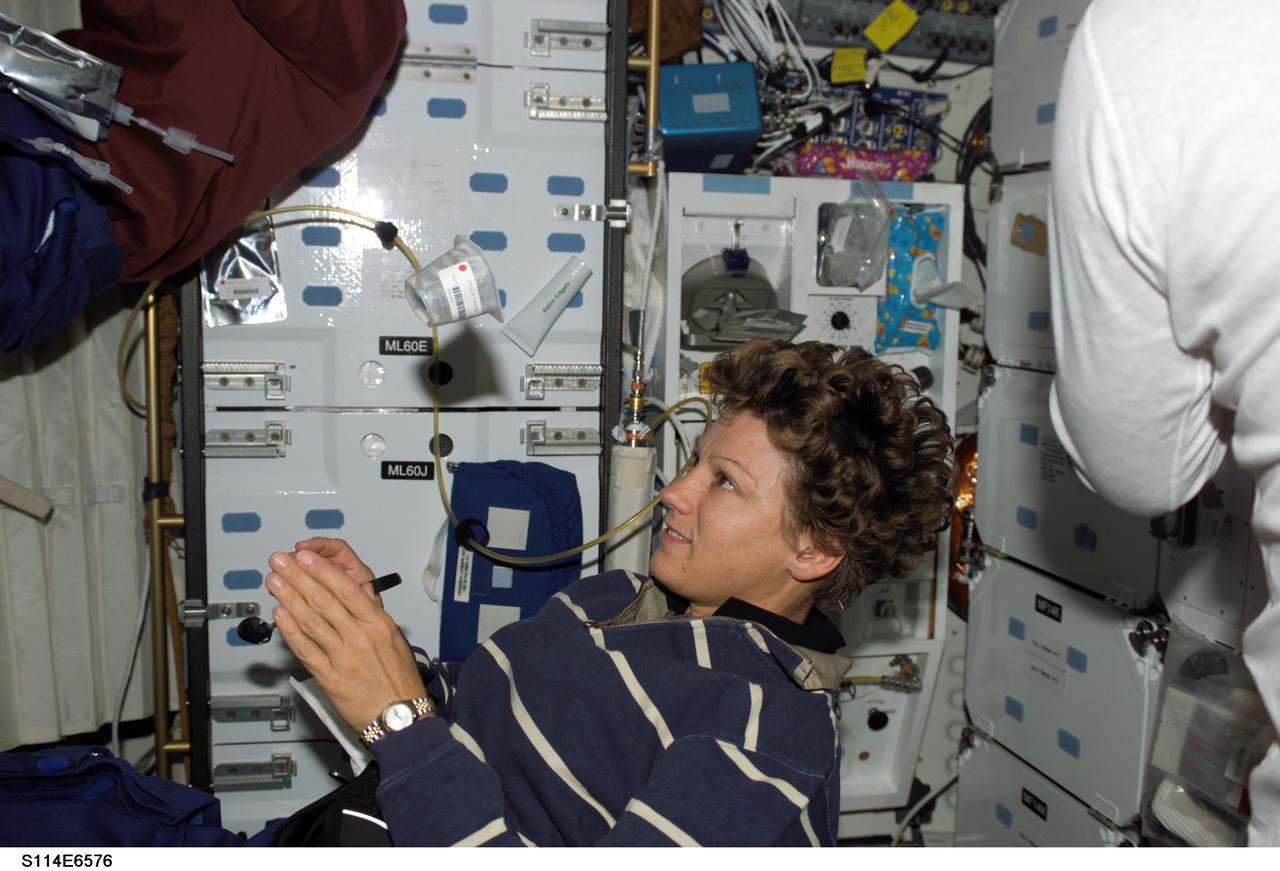
S114-E-6576 (3 August 2005) --- Astronaut Eileen M. Collins, STS-114 commander, watches a container of food floating freely on the middeck of the Space Shuttle Discovery while docked to the International Space Station.
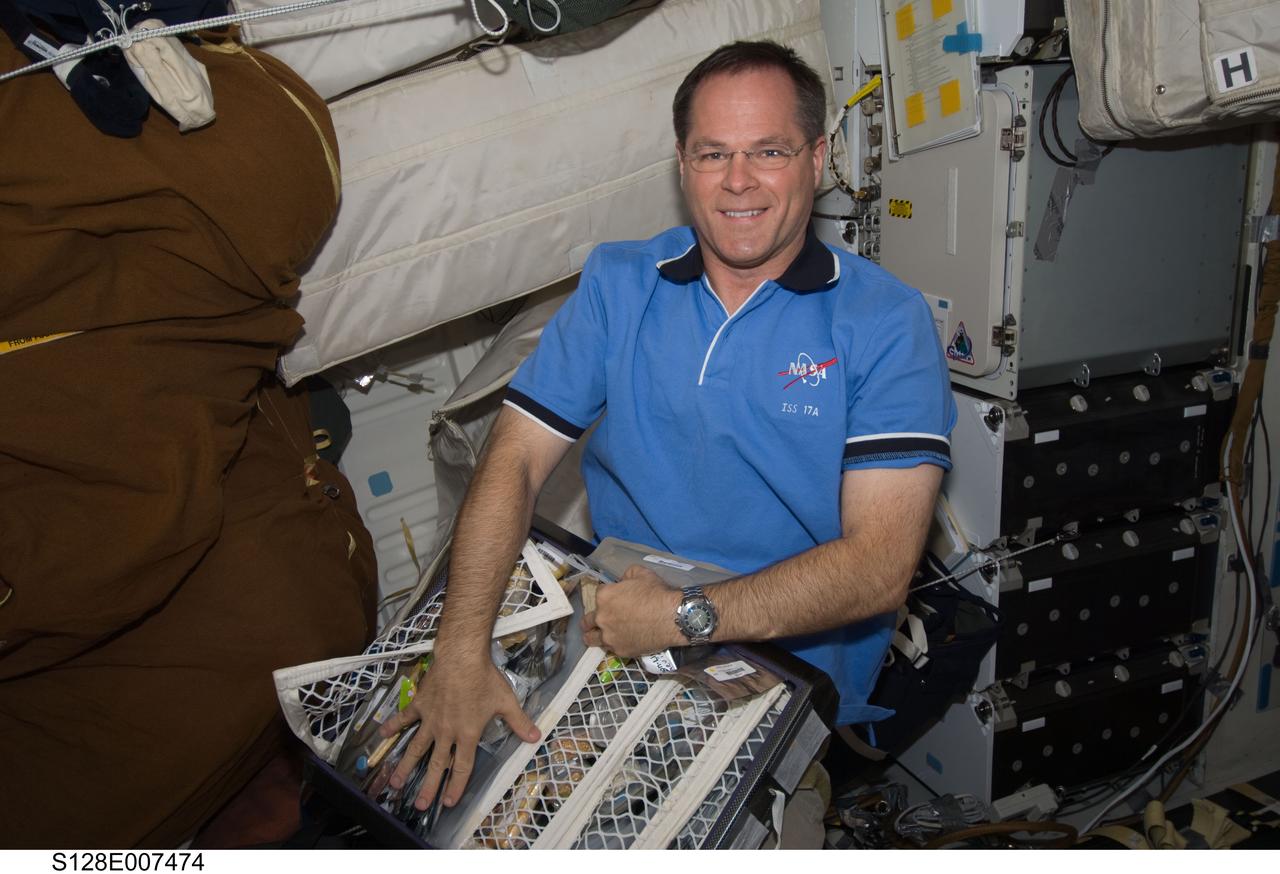
S128-E-007474 (3 Sept. 2009) --- NASA astronaut Kevin Ford, STS-128 pilot, holds a storage bag containing food items on the middeck of Space Shuttle Discovery while docked with the International Space Station.
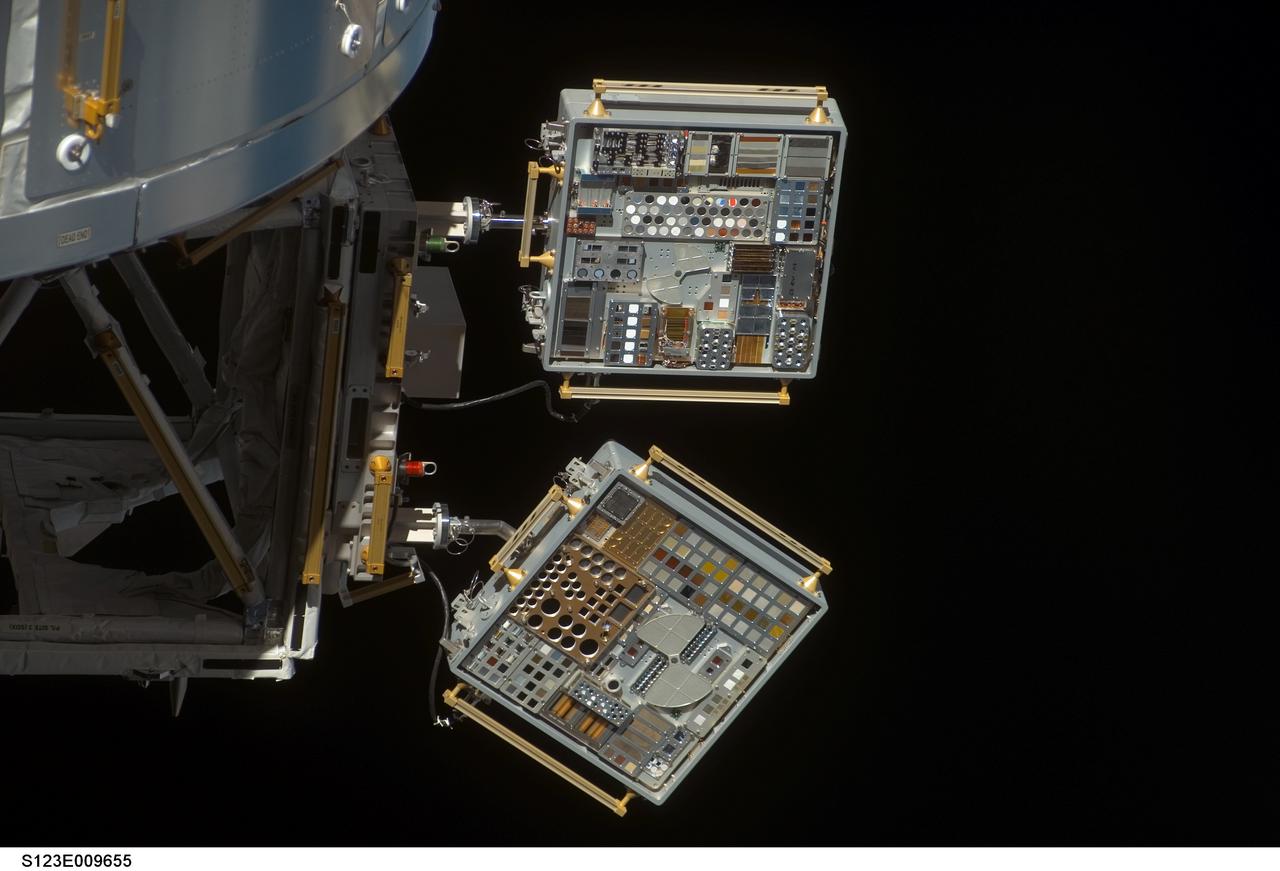
s123e009655 (3/25/2008) --- View of Materials International Space Station Experiment (MISSE) 6 Passive Experiment Container (PEC) on European Laboratory/Columbus. Photo was taken during flyaround of STS-123 Space Shuttle Endeavor.
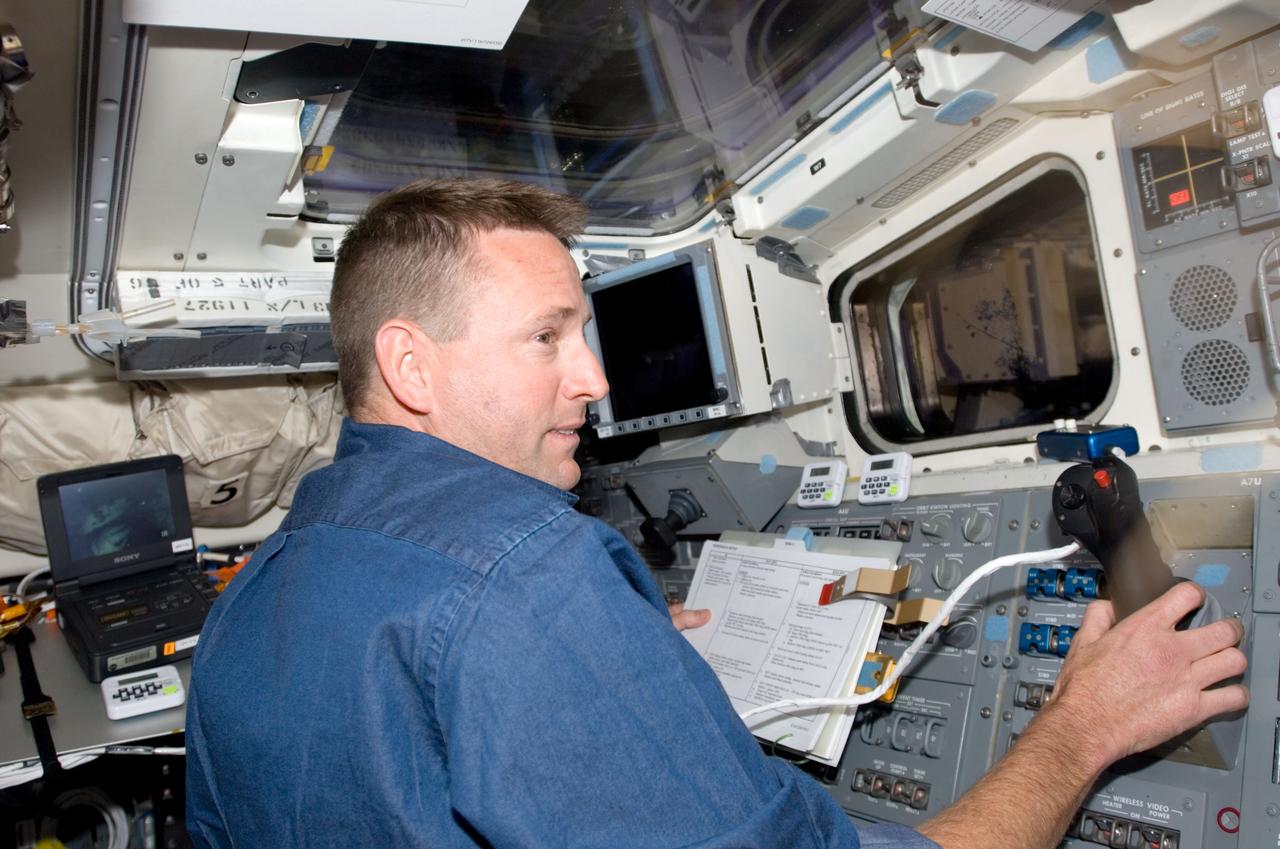
S124-E-006029 (3 June 2008) --- Astronaut Ken Ham, STS-124 pilot, works the controls on the aft flight deck of Space Shuttle Discovery while docked with the International Space Station.
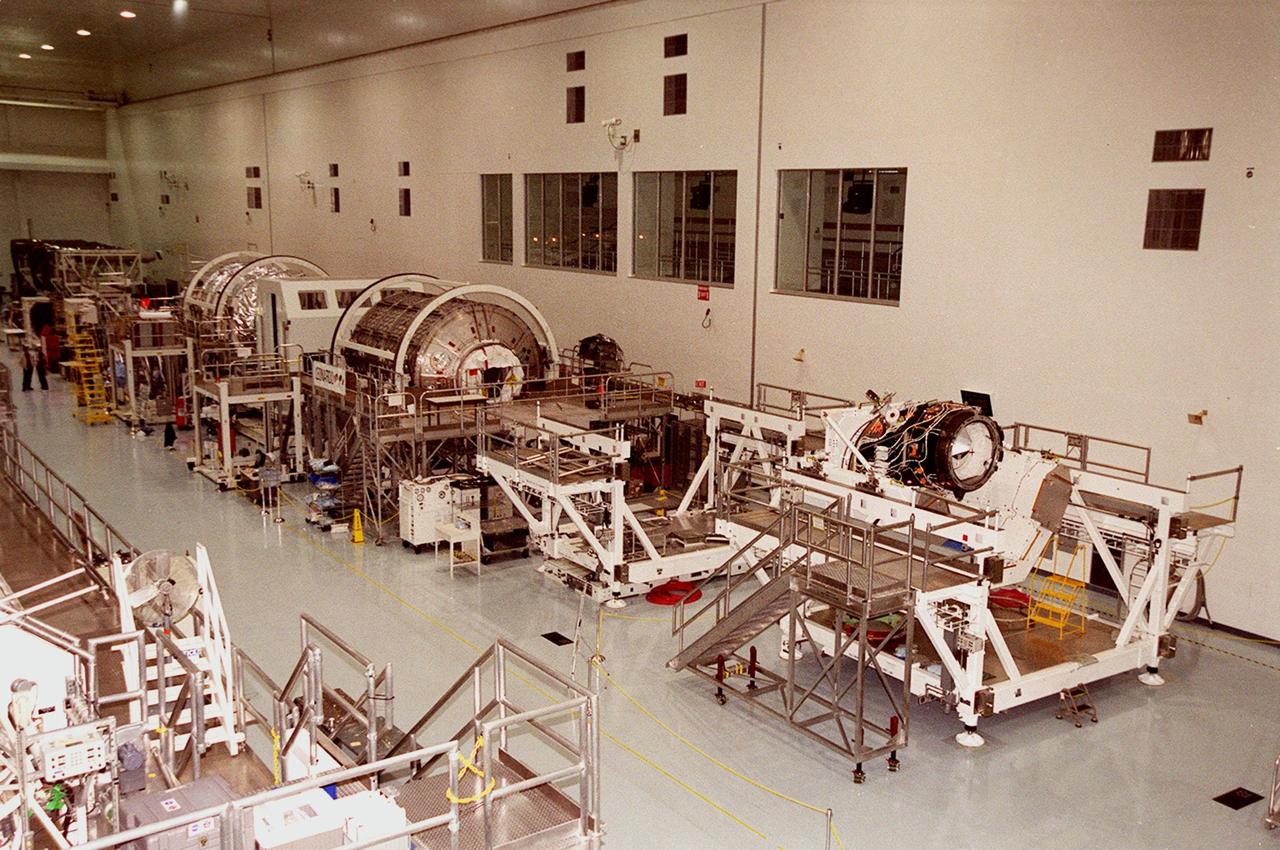
KENNEDY SPACE CENTER, FLA. -- The Space Station Processing Facility is filled with hardware, components for the International Space Station. Lined up (left to right) are the Multi-Purpose Logistics Modules Raffaello and Leonardo and the Pressurized Mating Adapter-3 (PMA-3). Italy's major contributions to the ISS program, Raffaello and Leonardo are reusable logistics carriers to resupply and return station cargo requiring a pressurized environment. They are slated as payloads on missions STS-102 and STS-100, respectively. Dates have not yet been determined for the two missions. The PMA-3, once launched, will be mated to Node 1, a connecting passageway to the living and working areas of the Space Station. The primary purpose of PMA-3 is to serve as a Shuttle docking port through which crew members and equipment will transfer to the Space Station during later assembly missions. PMA-3 is scheduled as payload on mission STS-92, whose date for launch is not yet determined.
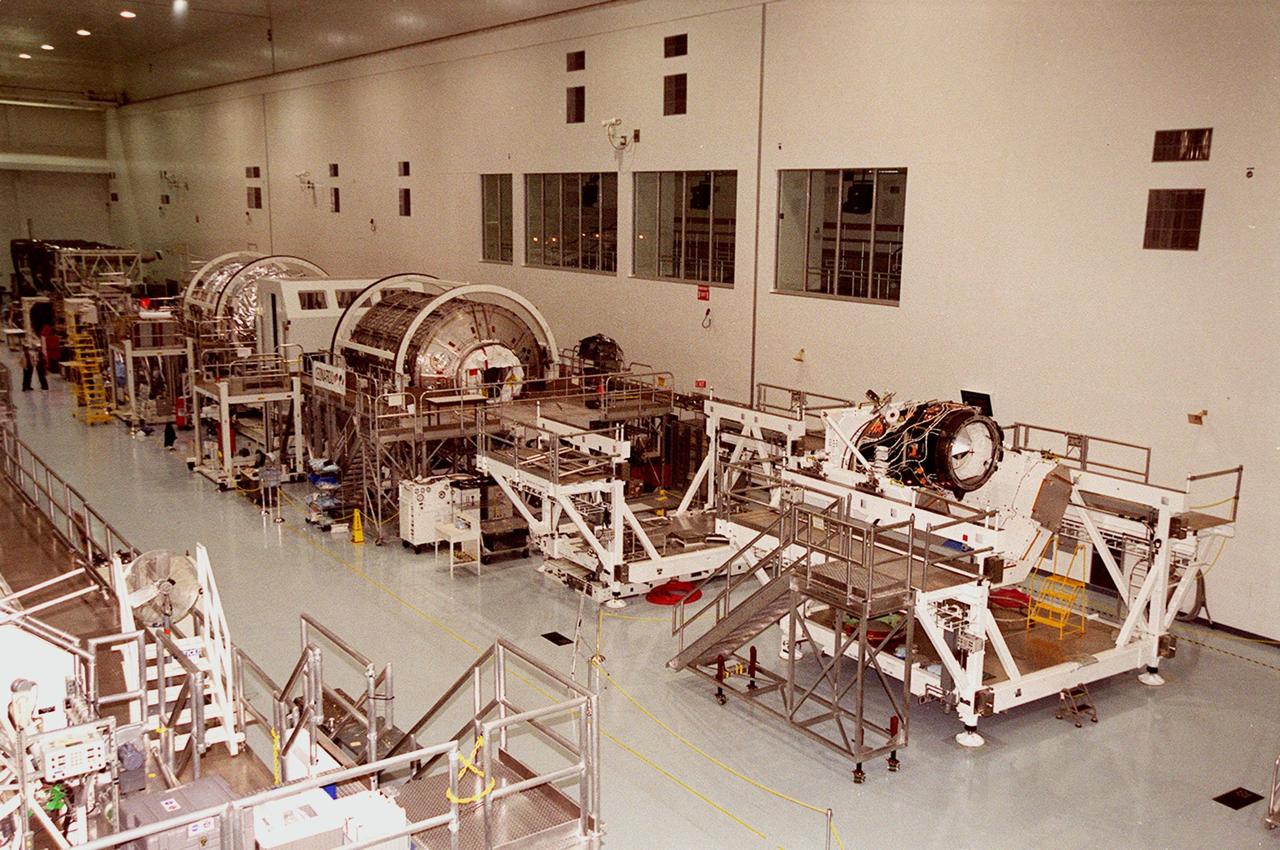
KENNEDY SPACE CENTER, FLA. -- The Space Station Processing Facility is filled with hardware, components for the International Space Station. Lined up (left to right) are the Multi-Purpose Logistics Modules Raffaello and Leonardo and the Pressurized Mating Adapter-3 (PMA-3). Italy's major contributions to the ISS program, Raffaello and Leonardo are reusable logistics carriers to resupply and return station cargo requiring a pressurized environment. They are slated as payloads on missions STS-102 and STS-100, respectively. Dates have not yet been determined for the two missions. The PMA-3, once launched, will be mated to Node 1, a connecting passageway to the living and working areas of the Space Station. The primary purpose of PMA-3 is to serve as a Shuttle docking port through which crew members and equipment will transfer to the Space Station during later assembly missions. PMA-3 is scheduled as payload on mission STS-92, whose date for launch is not yet determined.
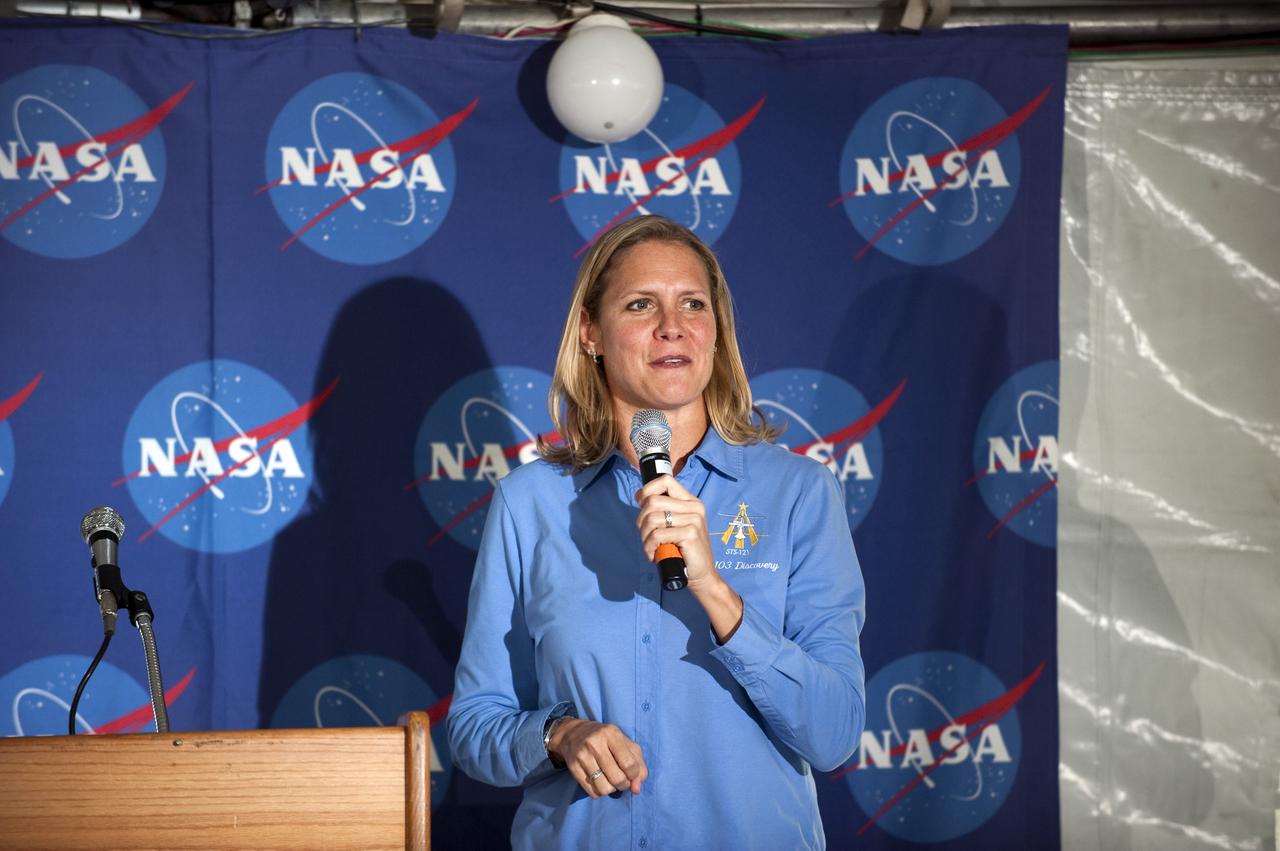
CAPE CANAVERAL, Fla. -- At NASA's Kennedy Space Center in Florida, space shuttle Discovery Flow Director Stephanie Stilson addresses participants of the STS-133 Tweetup. NASA is hosting about 150 of its Twitter followers from around the world and several dozen states and providing them with a behind-the-scenes perspective to share with their own followers on the social networking service. The "Tweeps," as NASA calls them, will have a chance to tour Kennedy and meet with shuttle technicians, managers, engineers and astronauts. They also will receive a demonstration of Robonaut, a human-like robot similar to the one that will be delivered to the International Space Station on the STS-133 mission. Space shuttle Discovery and its STS-133 crew are scheduled to launch Nov. 3 at 3:52 p.m. EDT. For more information on the upcoming mission, visit www.nasa.gov/mission_pages/shuttle/shuttlemissions/sts133/. Photo credit: NASA/Kim Shiflett
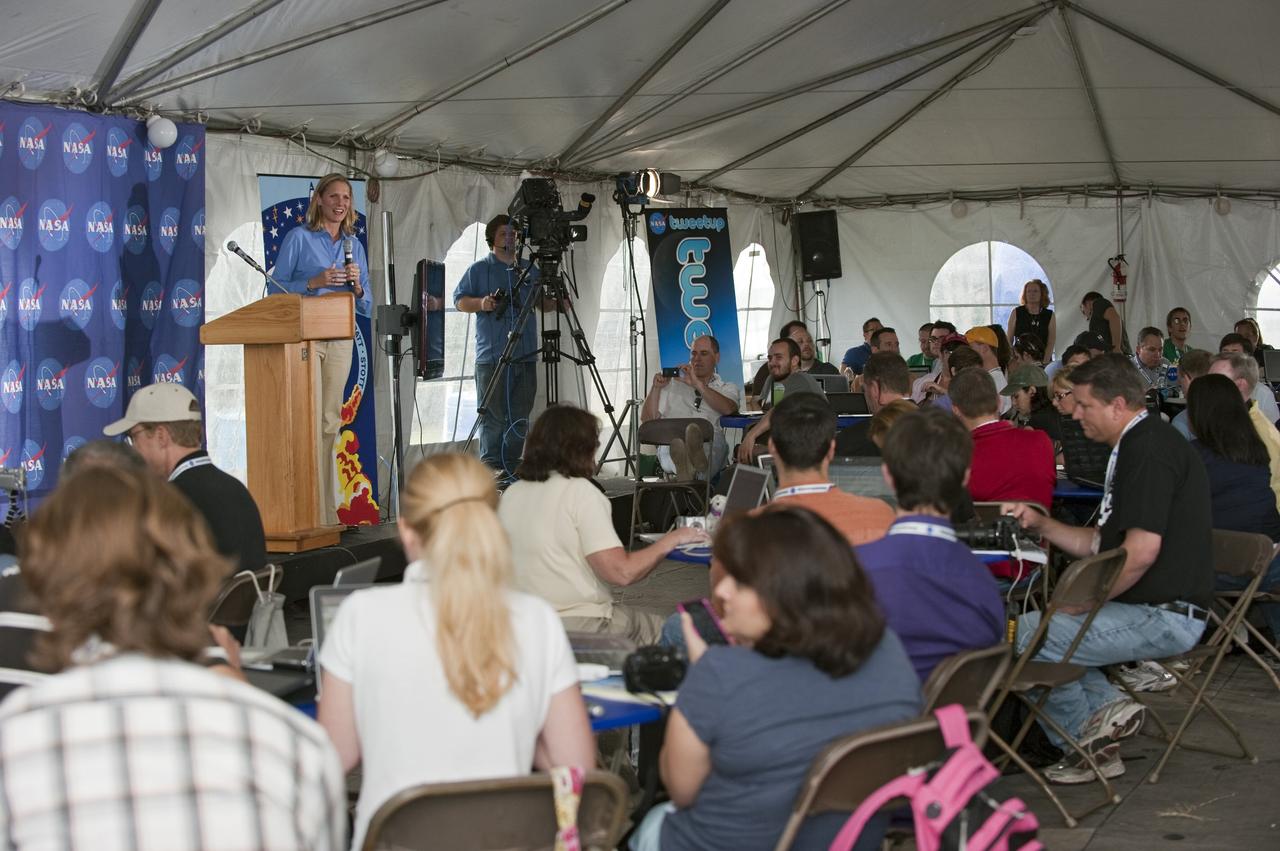
CAPE CANAVERAL, Fla. -- At NASA's Kennedy Space Center in Florida, space shuttle Discovery Flow Director Stephanie Stilson addresses participants of the STS-133 Tweetup. NASA is hosting about 150 of its Twitter followers from around the world and several dozen states and providing them with a behind-the-scenes perspective to share with their own followers on the social networking service. The "Tweeps," as NASA calls them, will have a chance to tour Kennedy and meet with shuttle technicians, managers, engineers and astronauts. They also will receive a demonstration of Robonaut, a human-like robot similar to the one that will be delivered to the International Space Station on the STS-133 mission. Space shuttle Discovery and its STS-133 crew are scheduled to launch Nov. 3 at 3:52 p.m. EDT. For more information on the upcoming mission, visit www.nasa.gov/mission_pages/shuttle/shuttlemissions/sts133/. Photo credit: NASA/Kim Shiflett
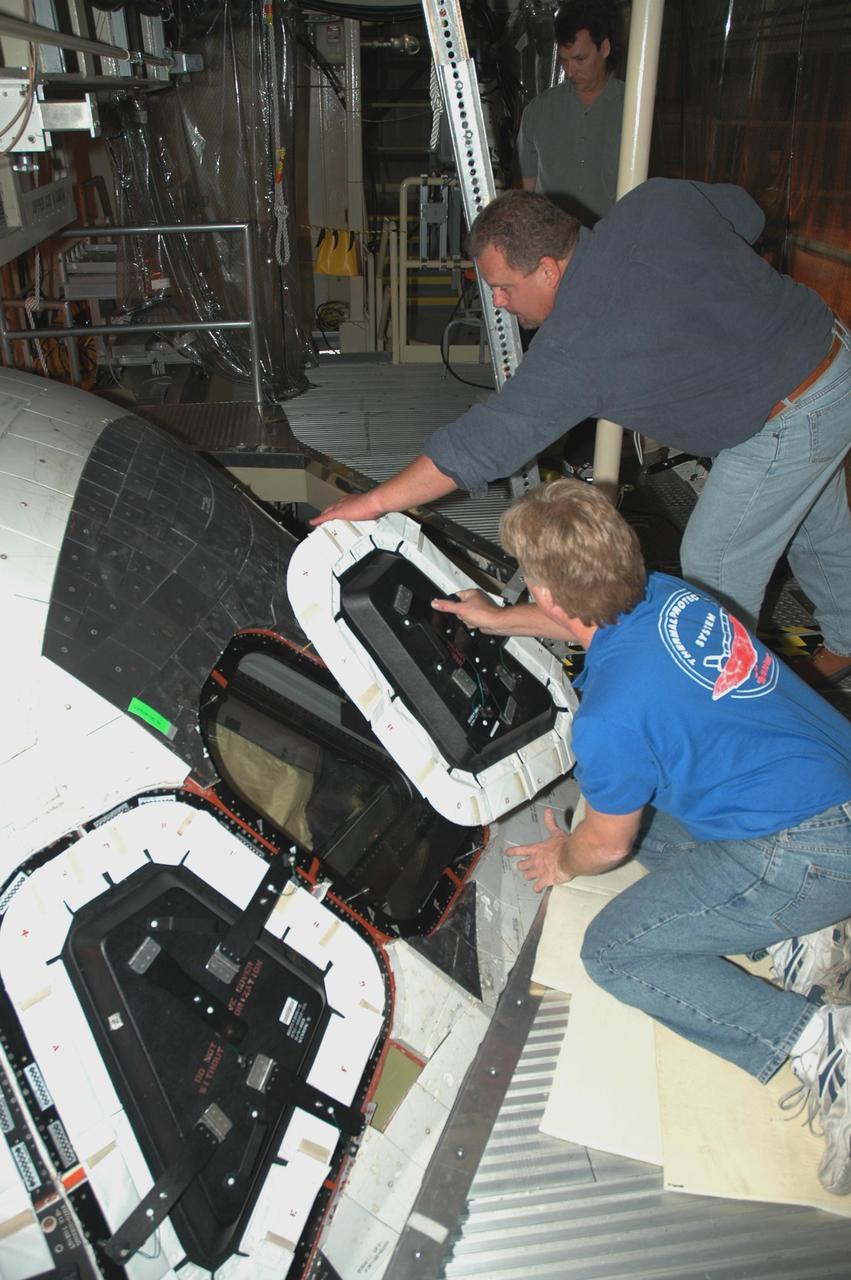
KENNEDY SPACE CENTER, FLA. - In NASA Kennedy Space Center's Orbiter Processing Facility bay 3, United Space Alliance shuttle technicians remove the hard cover from a window on Space Shuttle Discovery to enable STS-121 crew members to inspect the window from the cockpit. Launch of Space Shuttle Discovery on mission STS-121, the second return-to-flight mission, is scheduled no earlier than May.
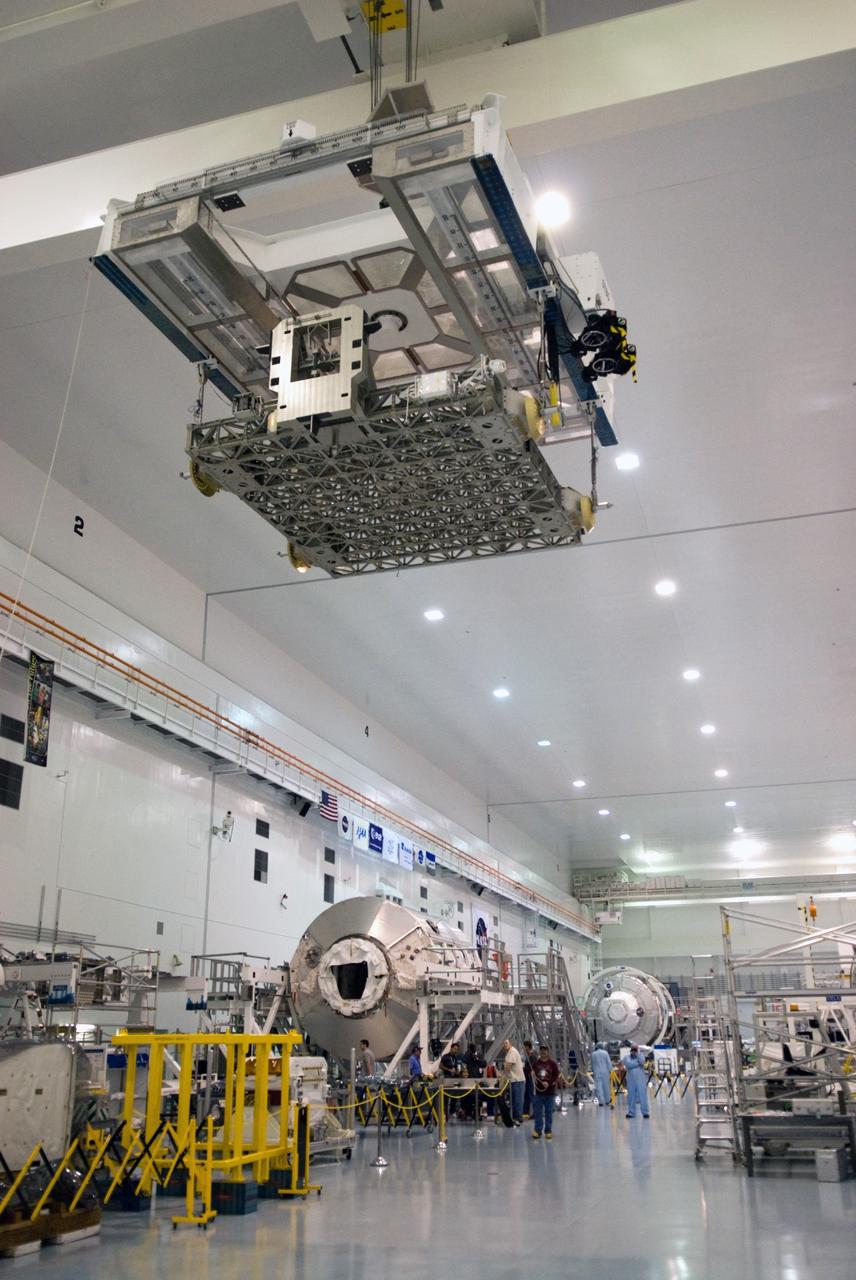
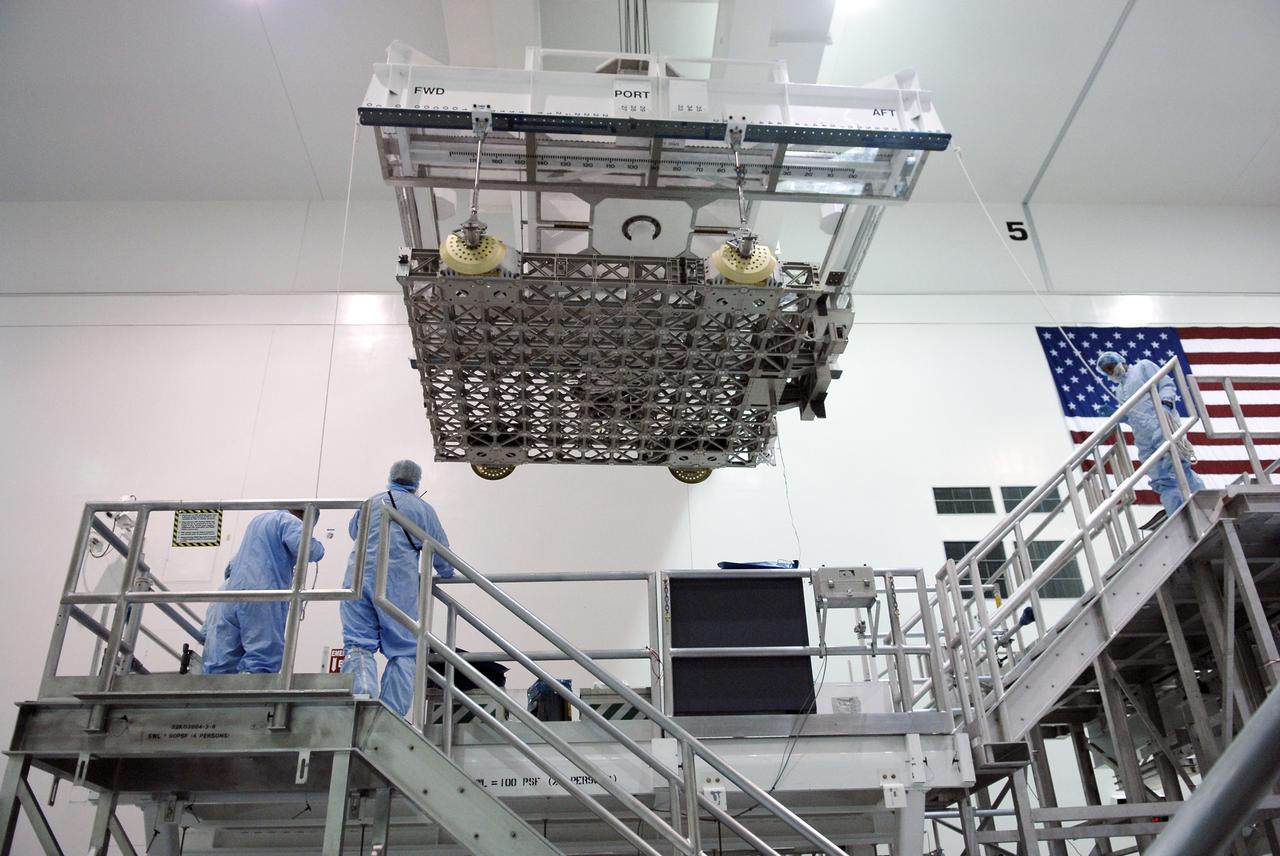
CAPE CANAVERAL, Fla. - In the Space Station Processing Facility at NASA's Kennedy Space Center in Florida, the newly arrived ExPRESS Logistics Carrier 3, or ELC-3, is lifted high above the clean room floor. ELC-3 and the Alpha Magnetic Spectrometer are the primary payloads for space shuttle Endeavour's STS-134 mission to the International Space Station. The STS-134 crew will also deliver spare parts including two S-band communications antennas, a high pressure gas tank, additional spare parts for Dextre and micrometeoroid debris shields. Endeavour's launch is targeted for July 29, 2010. For information on the STS-134 mission objectives and crew, visit http://www.nasa.gov/shuttle. Photo credit: NASA/Kim Shiflett
CAPE CANAVERAL, Fla. - In the Space Station Processing Facility at NASA's Kennedy Space Center in Florida, the newly arrived ExPRESS Logistics Carrier 3, or ELC-3, is lowered onto a work stand in the clean room. ELC-3 and the Alpha Magnetic Spectrometer are the primary payloads for space shuttle Endeavour's STS-134 mission to the International Space Station. The STS-134 crew will also deliver spare parts including two S-band communications antennas, a high pressure gas tank, additional spare parts for Dextre and micrometeoroid debris shields. Endeavour's launch is targeted for July 29, 2010. For information on the STS-134 mission objectives and crew, visit http://www.nasa.gov/shuttle. Photo credit: NASA/Kim Shiflett
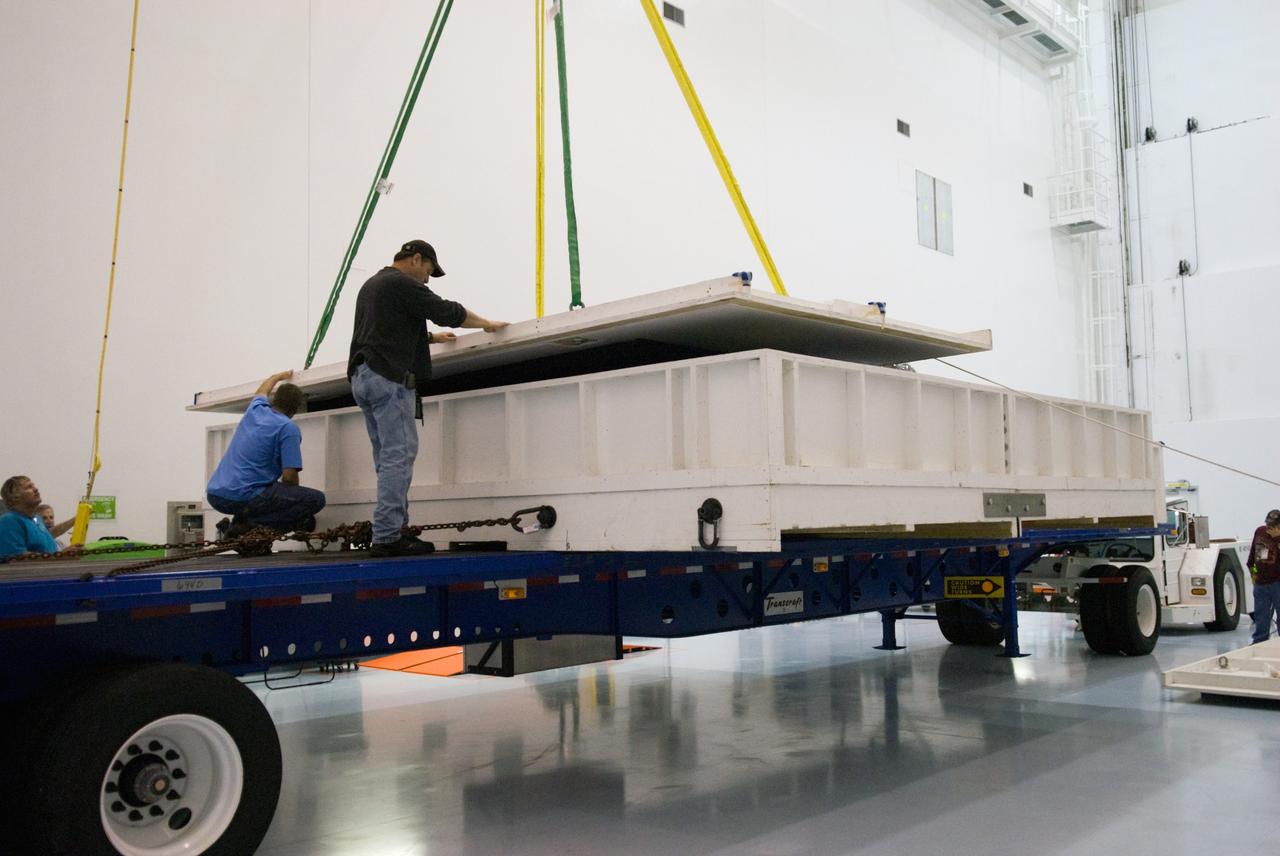
CAPE CANAVERAL, Fla. - In the Space Station Processing Facility at NASA's Kennedy Space Center in Florida, a crane lifts the cover from the transportation case protecting the ExPRESS Logistics Carrier 3, or ELC-3. ELC-3 and the Alpha Magnetic Spectrometer are the primary payloads for space shuttle Endeavour's STS-134 mission to the International Space Station. The STS-134 crew will also deliver spare parts including two S-band communications antennas, a high pressure gas tank, additional spare parts for Dextre and micrometeoroid debris shields. Endeavour's launch is targeted for July 29, 2010. For information on the STS-134 mission objectives and crew, visit http://www.nasa.gov/shuttle. Photo credit: NASA/Kim Shiflett
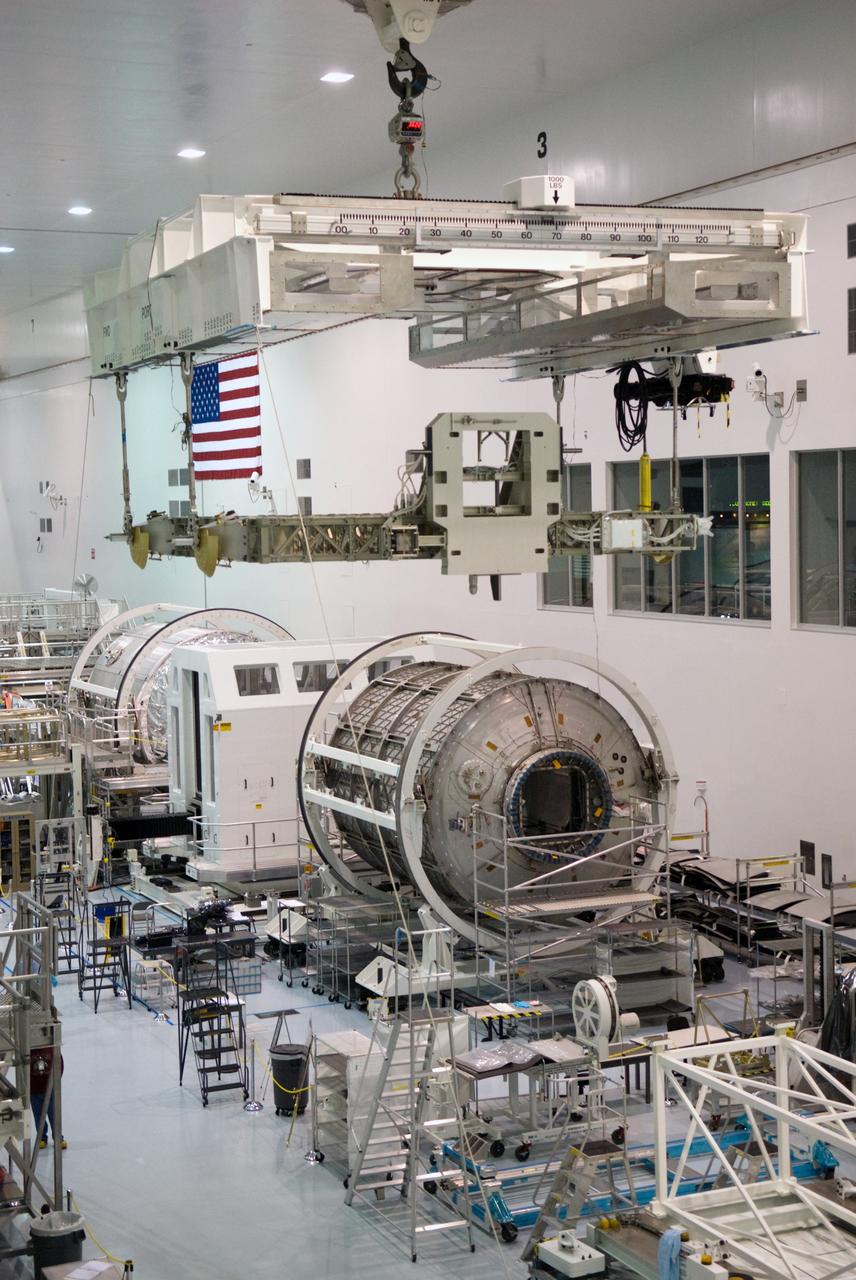
CAPE CANAVERAL, Fla. - In the Space Station Processing Facility at NASA's Kennedy Space Center in Florida, the newly arrived ExPRESS Logistics Carrier 3, or ELC-3, is lifted above two Multi-Purpose Logistics Modules positioned along the wall of the clean room. ELC-3 and the Alpha Magnetic Spectrometer are the primary payloads for space shuttle Endeavour's STS-134 mission to the International Space Station. The STS-134 crew will also deliver spare parts including two S-band communications antennas, a high pressure gas tank, additional spare parts for Dextre and micrometeoroid debris shields. Endeavour's launch is targeted for July 29, 2010. For information on the STS-134 mission objectives and crew, visit http://www.nasa.gov/shuttle. Photo credit: NASA/Kim Shiflett
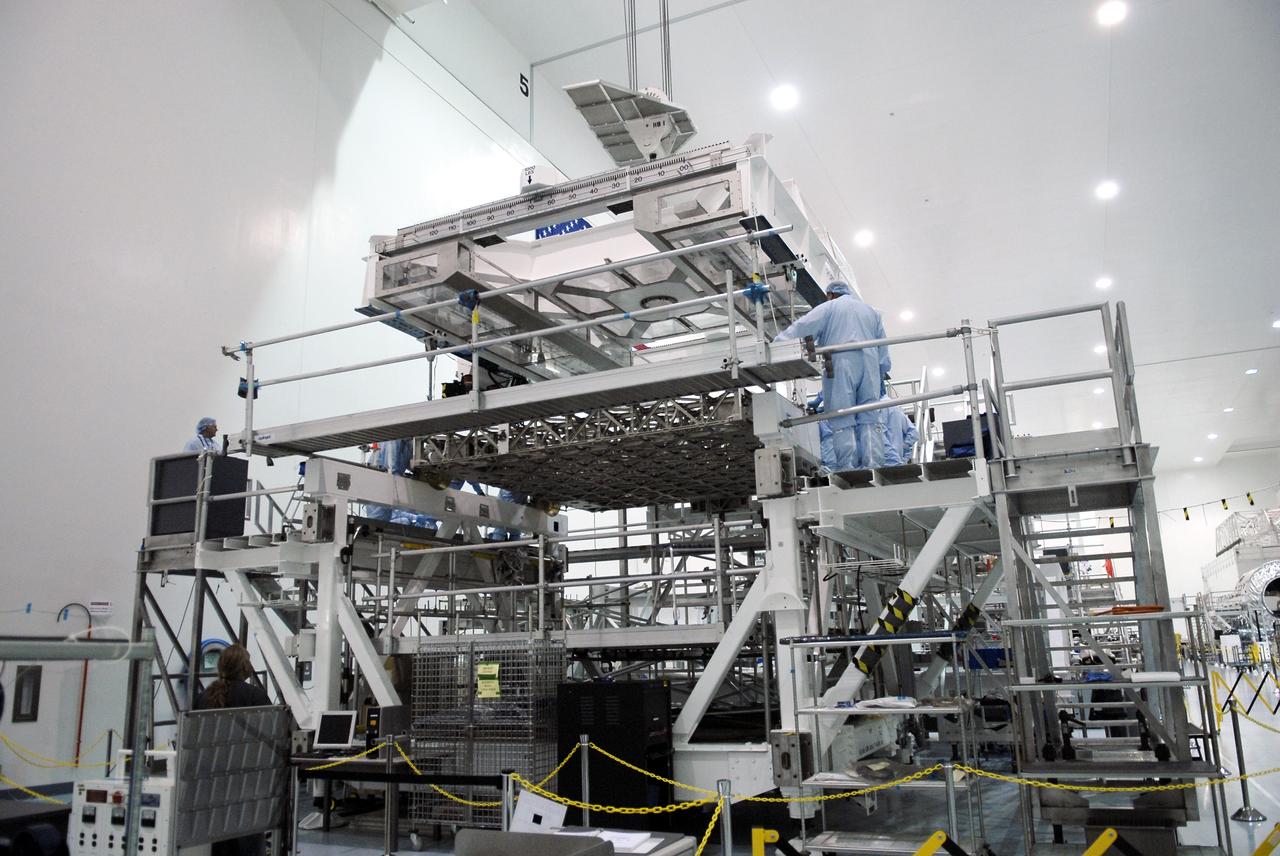
CAPE CANAVERAL, Fla. - In the Space Station Processing Facility at NASA's Kennedy Space Center in Florida, workers secure the newly arrived ExPRESS Logistics Carrier 3, or ELC-3, on its work stand in the clean room. ELC-3 and the Alpha Magnetic Spectrometer are the primary payloads for space shuttle Endeavour's STS-134 mission to the International Space Station. The STS-134 crew will also deliver spare parts including two S-band communications antennas, a high pressure gas tank, additional spare parts for Dextre and micrometeoroid debris shields. Endeavour's launch is targeted for July 29, 2010. For information on the STS-134 mission objectives and crew, visit http://www.nasa.gov/shuttle. Photo credit: NASA/Kim Shiflett
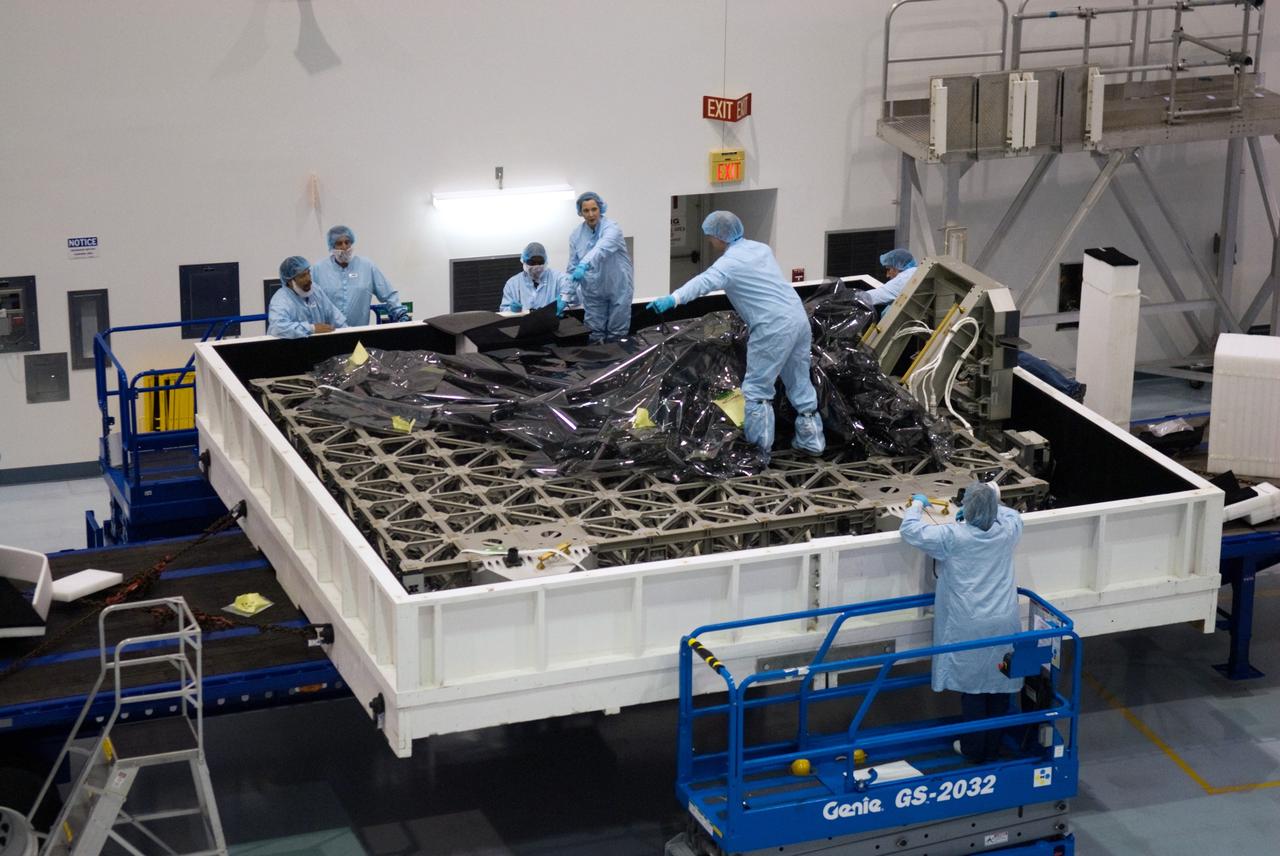
CAPE CANAVERAL, Fla. - In the Space Station Processing Facility at NASA's Kennedy Space Center in Florida, workers unwrap the ExPRESS Logistics Carrier 3, or ELC-3, still nestled in its transportation case. ELC-3 and the Alpha Magnetic Spectrometer are the primary payloads for space shuttle Endeavour's STS-134 mission to the International Space Station. The STS-134 crew will also deliver spare parts including two S-band communications antennas, a high pressure gas tank, additional spare parts for Dextre and micrometeoroid debris shields. Endeavour's launch is targeted for July 29, 2010. For information on the STS-134 mission objectives and crew, visit http://www.nasa.gov/shuttle. Photo credit: NASA/Kim Shiflett
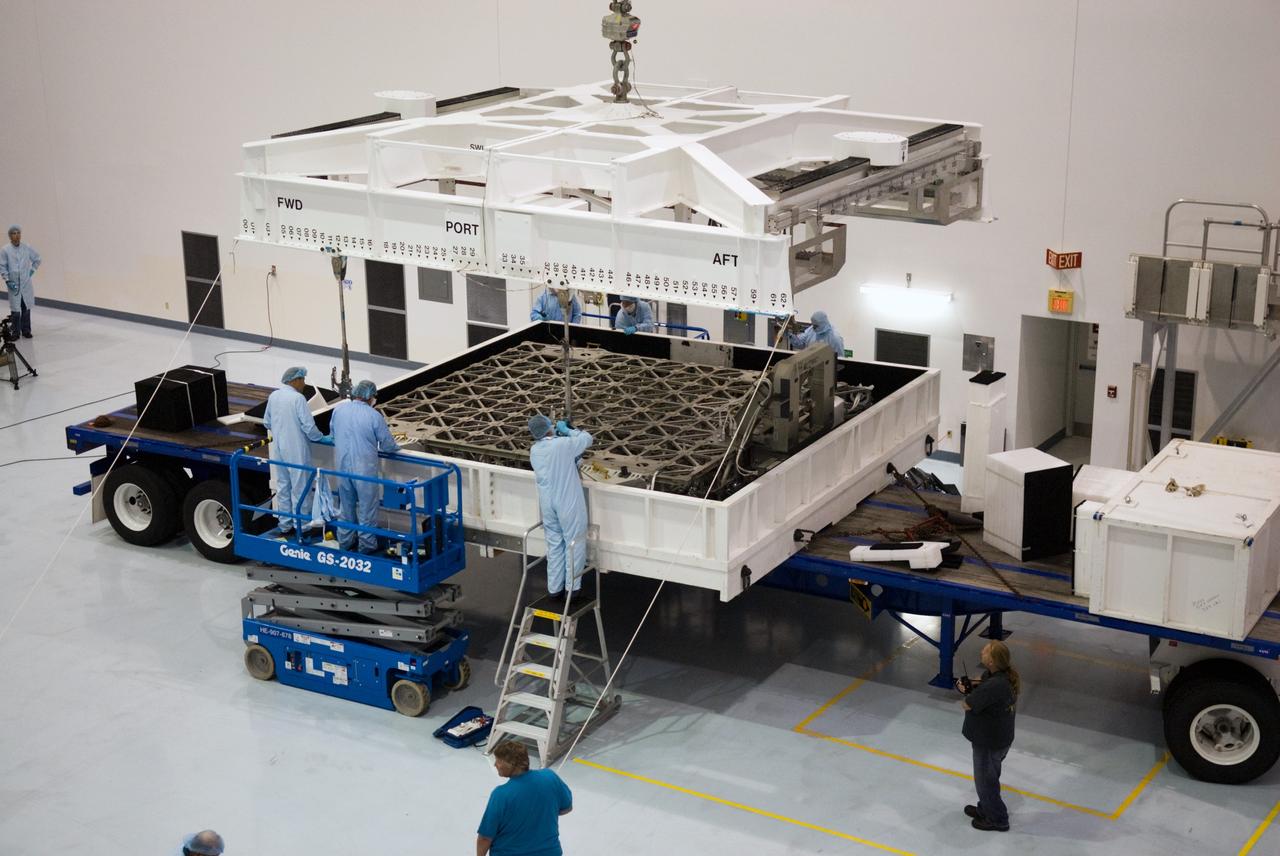
CAPE CANAVERAL, Fla. - In the Space Station Processing Facility at NASA's Kennedy Space Center in Florida, workers attach a crane to the ExPRESS Logistics Carrier 3, or ELC-3, in preparations to lift it from its transportation case. ELC-3 and the Alpha Magnetic Spectrometer are the primary payloads for space shuttle Endeavour's STS-134 mission to the International Space Station. The STS-134 crew will also deliver spare parts including two S-band communications antennas, a high pressure gas tank, additional spare parts for Dextre and micrometeoroid debris shields. Endeavour's launch is targeted for July 29, 2010. For information on the STS-134 mission objectives and crew, visit http://www.nasa.gov/shuttle. Photo credit: NASA/Kim Shiflett
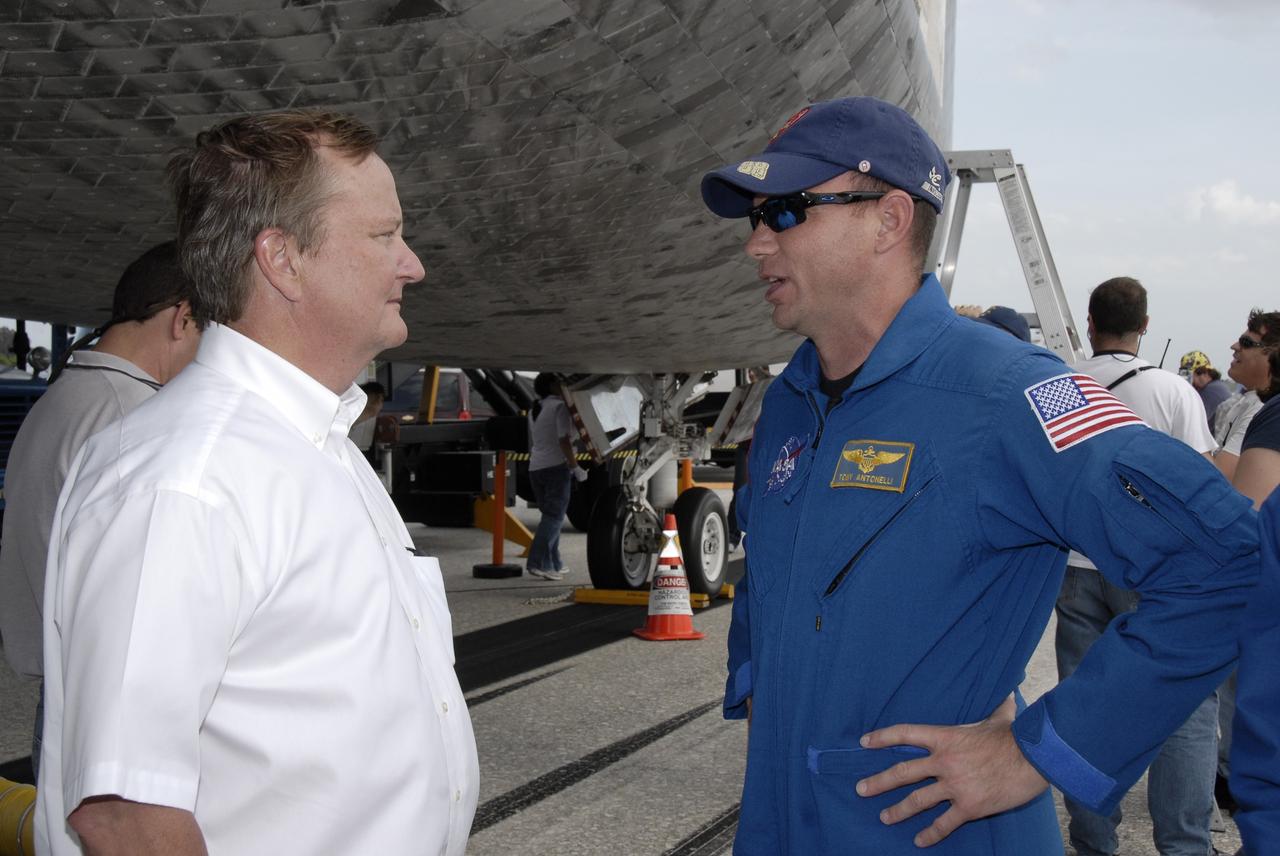
CAPE CANAVERAL, Fla. – Shuttle Launch Director Mike Leinbach, left, talks with STS-119 Pilot Tony Antonelli beneath space shuttle Discovery on Runway 15 at NASA's Kennedy Space Center in Florida. Discovery’s landing completed the 13-day, 5.3-million mile journey of the STS-119 mission to the International Space Station. Main gear touchdown was at 3:13:17 p.m. EDT. Nose gear touchdown was at 3:13:40 p.m. and wheels stop was at 3:14:45 p.m. Discovery delivered the final pair of large power-generating solar array wings and the S6 truss segment. The mission was the 28th flight to the station, the 36th flight of Discovery and the 125th in the Space Shuttle Program, as well as the 70th landing at Kennedy. Photo credit: NASA/Kim Shiflett
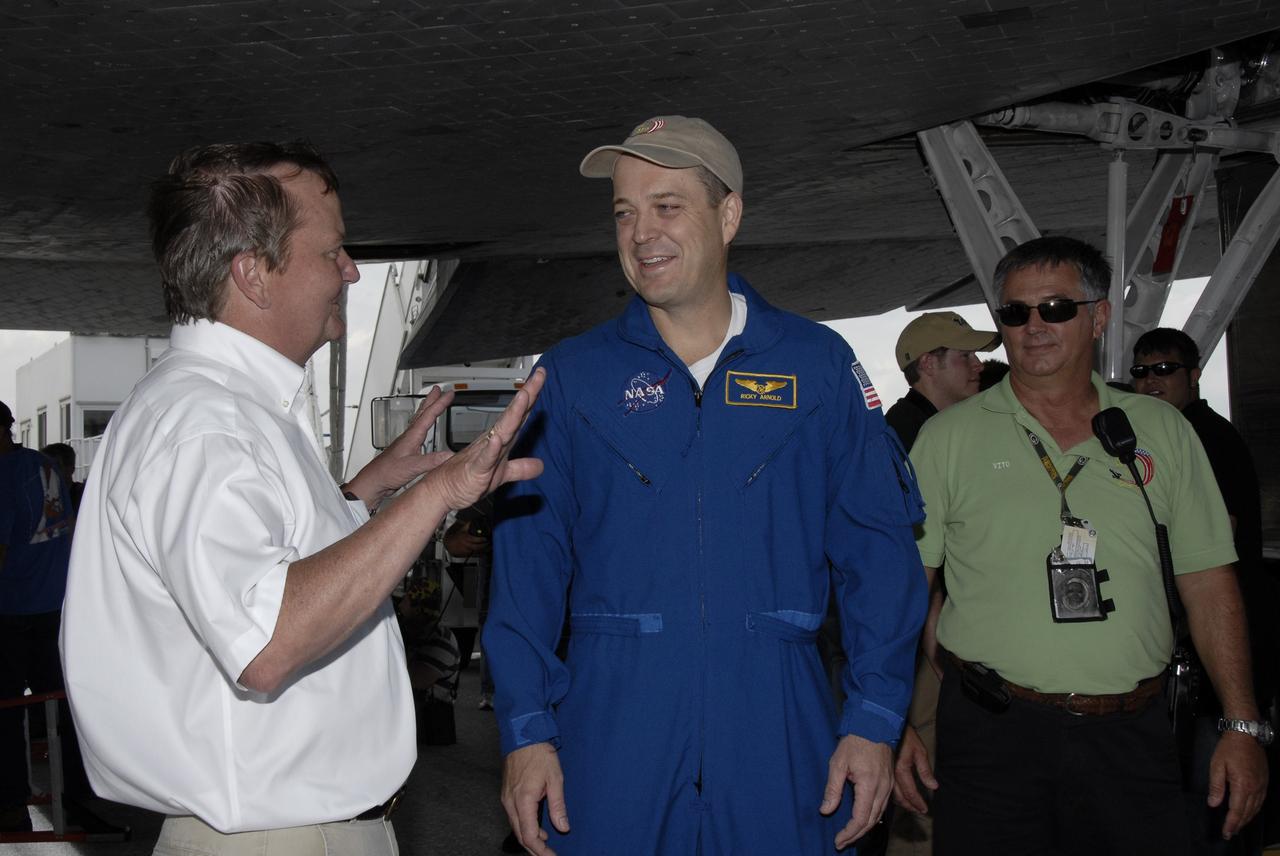
CAPE CANAVERAL, Fla. – Shuttle Launch Director Mike Leinbach, left, talks with STS-119 Mission Specialist Richard Arnold beneath space shuttle Discovery on Runway 15 at NASA's Kennedy Space Center in Florida. Discovery’s landing completed the 13-day, 5.3-million mile journey of the STS-119 mission to the International Space Station. Main gear touchdown was at 3:13:17 p.m. EDT. Nose gear touchdown was at 3:13:40 p.m. and wheels stop was at 3:14:45 p.m. Discovery delivered the final pair of large power-generating solar array wings and the S6 truss segment. The mission was the 28th flight to the station, the 36th flight of Discovery and the 125th in the Space Shuttle Program, as well as the 70th landing at Kennedy. Photo credit: NASA/Kim Shiflett
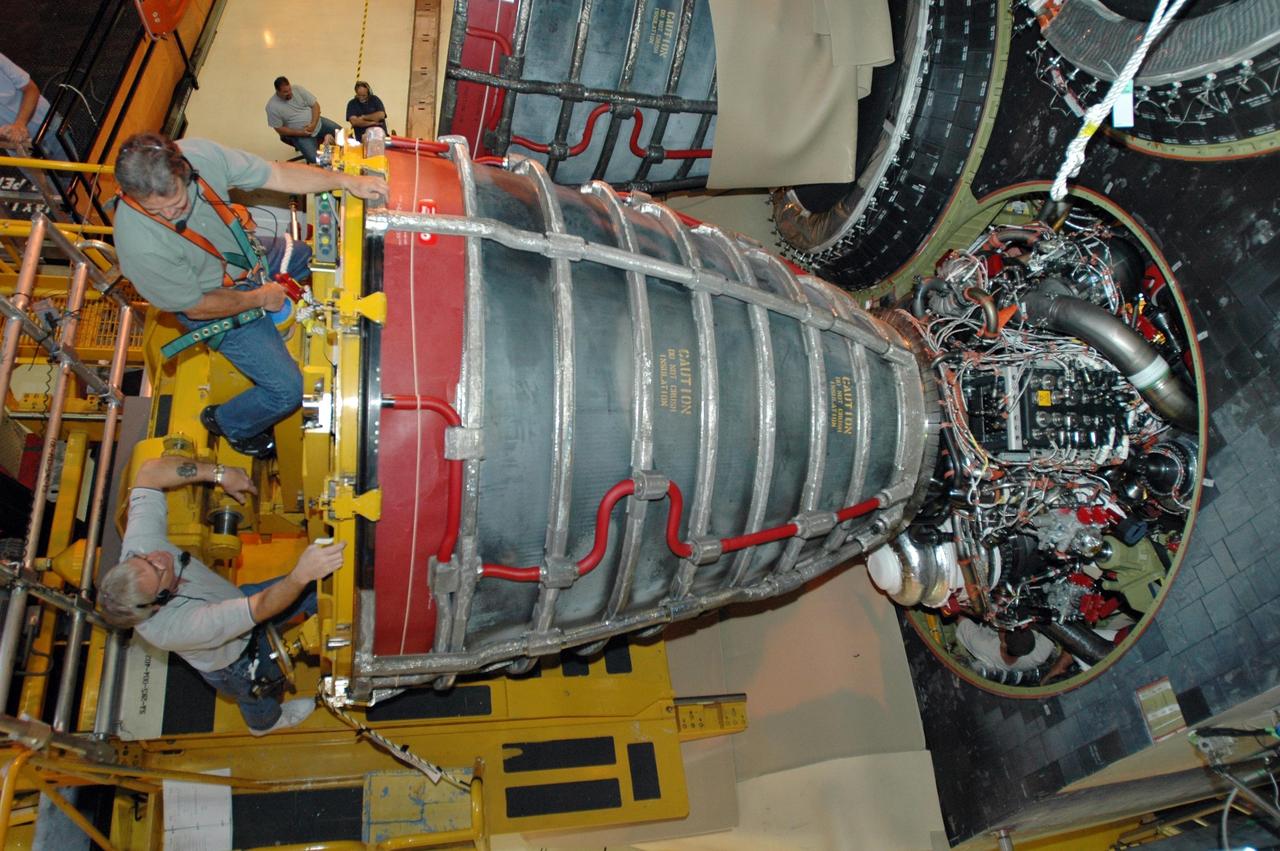
KENNEDY SPACE CENTER, FLA. -- In this overhead view inside Orbiter Processing Facility 3 at Kennedy Space Center, technicians guide engine No. 3 toward the aft fuselage of Discovery for installation during processing for mission STS-120. Mission STS-120 will be the 23rd flight to the International Space Station. Space Shuttle Discovery will carry the U.S. Node 2. Launch is targeted for Oct. 20. NASA/Dimitri Gerondidakis