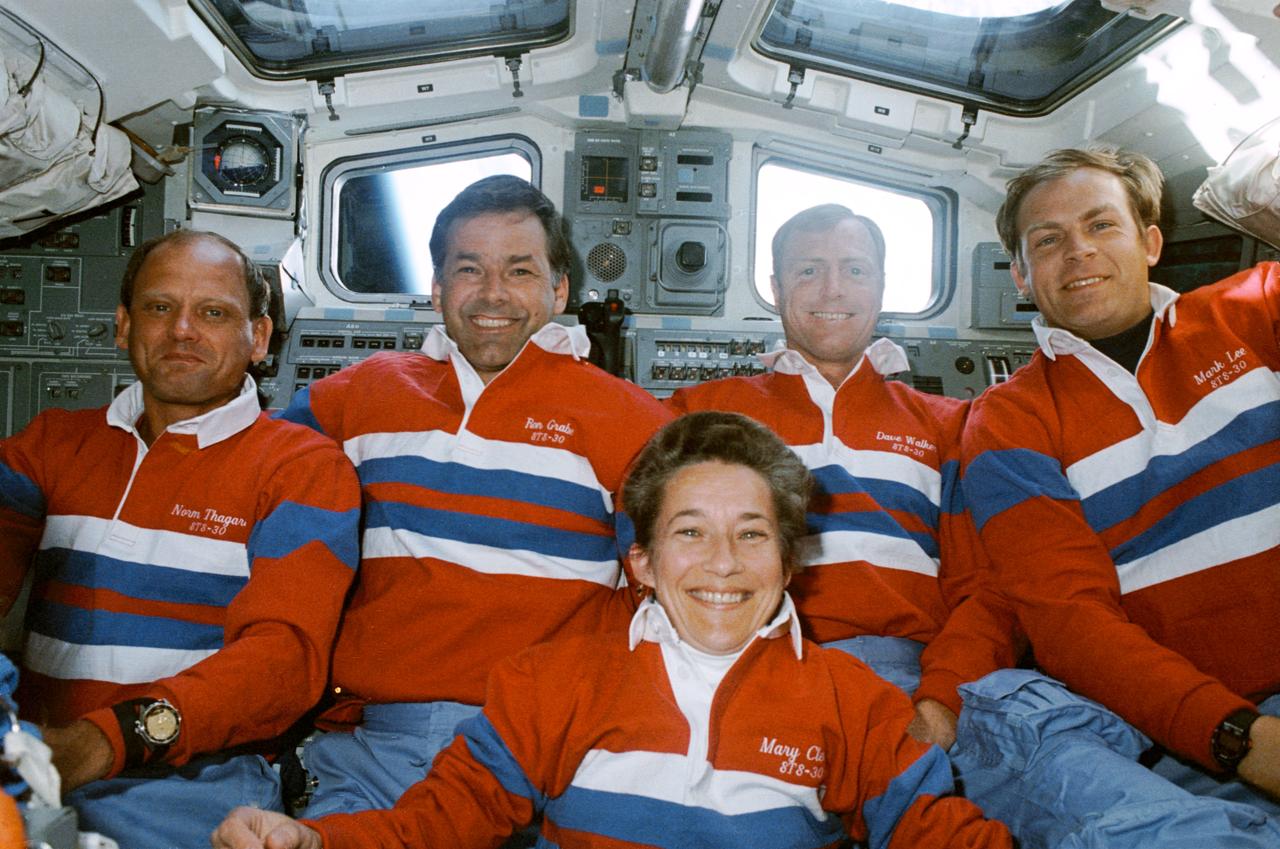
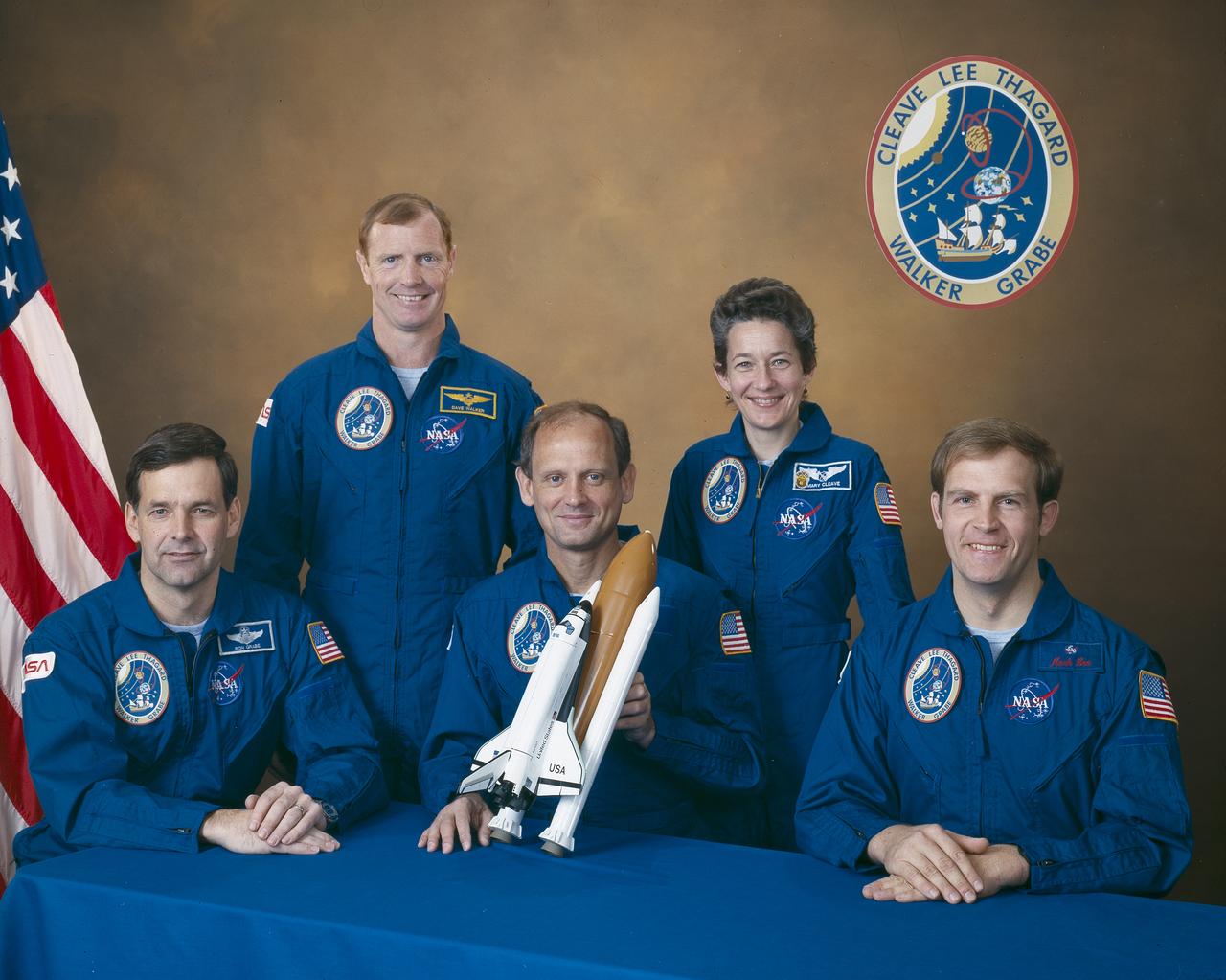
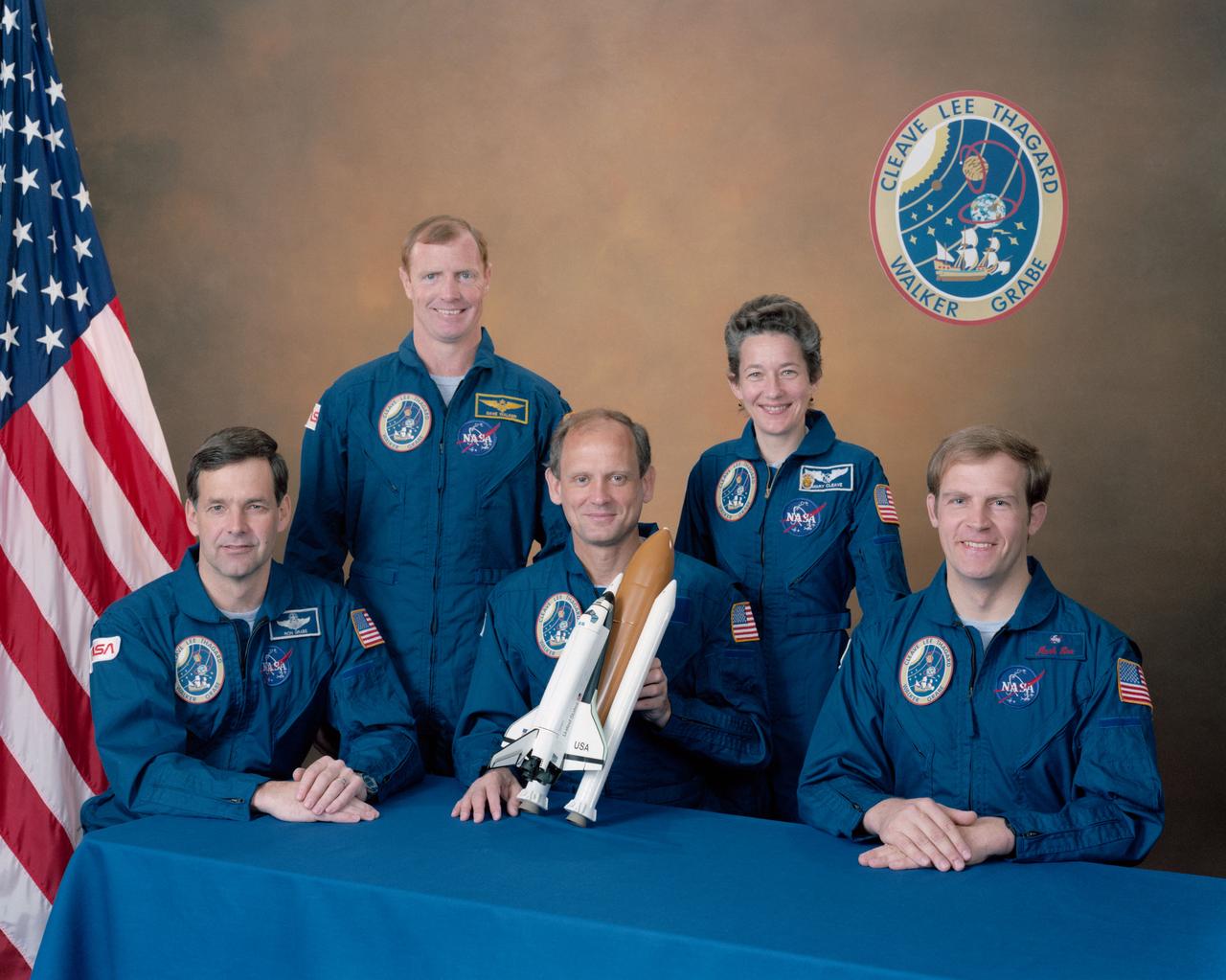
S89-28536 (March 1989) --- These five astronauts have been assigned to fly aboard Atlantis for the STS-30 mission.  Astronaut David M. Walker, standing at left, is mission commander. Others are, left to right, Astronauts Ronald J. Grabe, pilot; Norman E. Thagard, Mary L. Cleave and Mark C. Lee, all mission specialists.
STS-30 ATLANTIS, ORBITER VEHICLE (OV)-104 - OFFICIAL CREW PORTRAIT
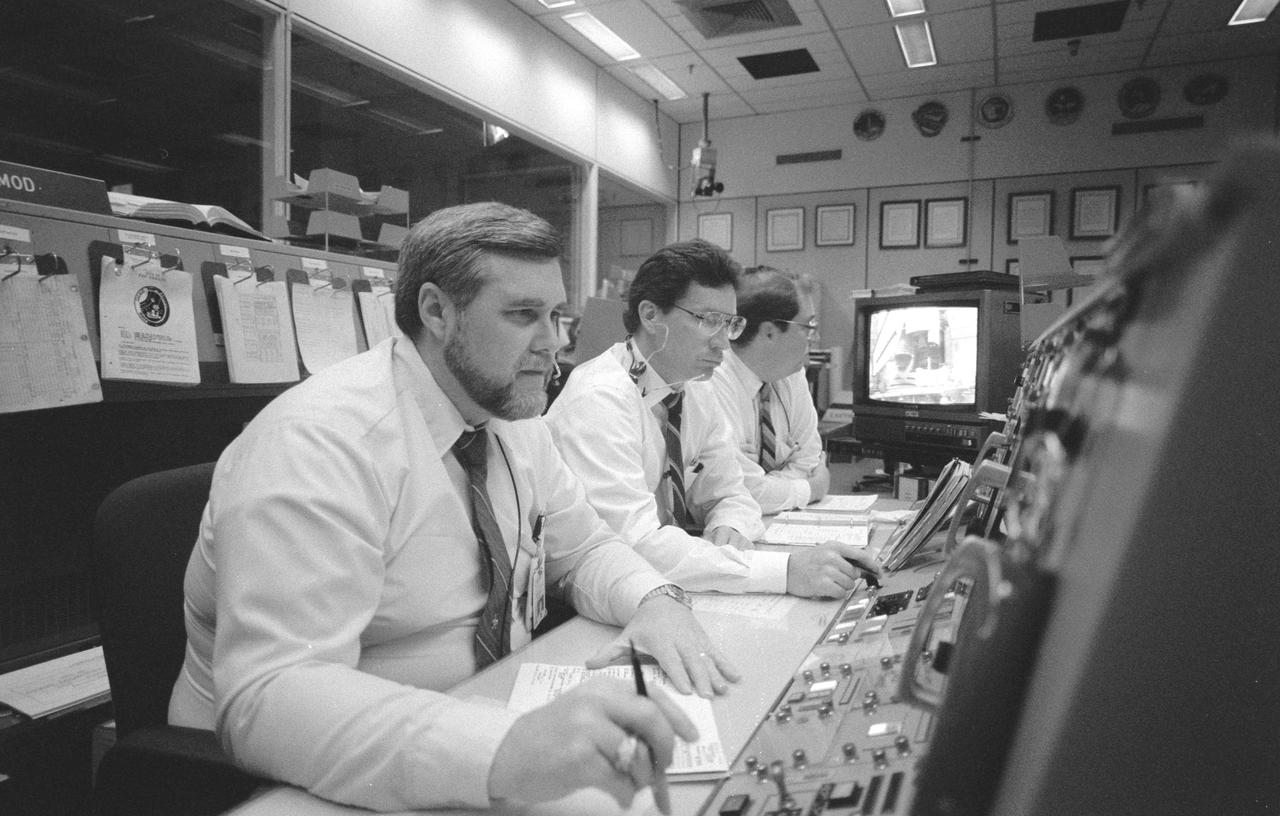
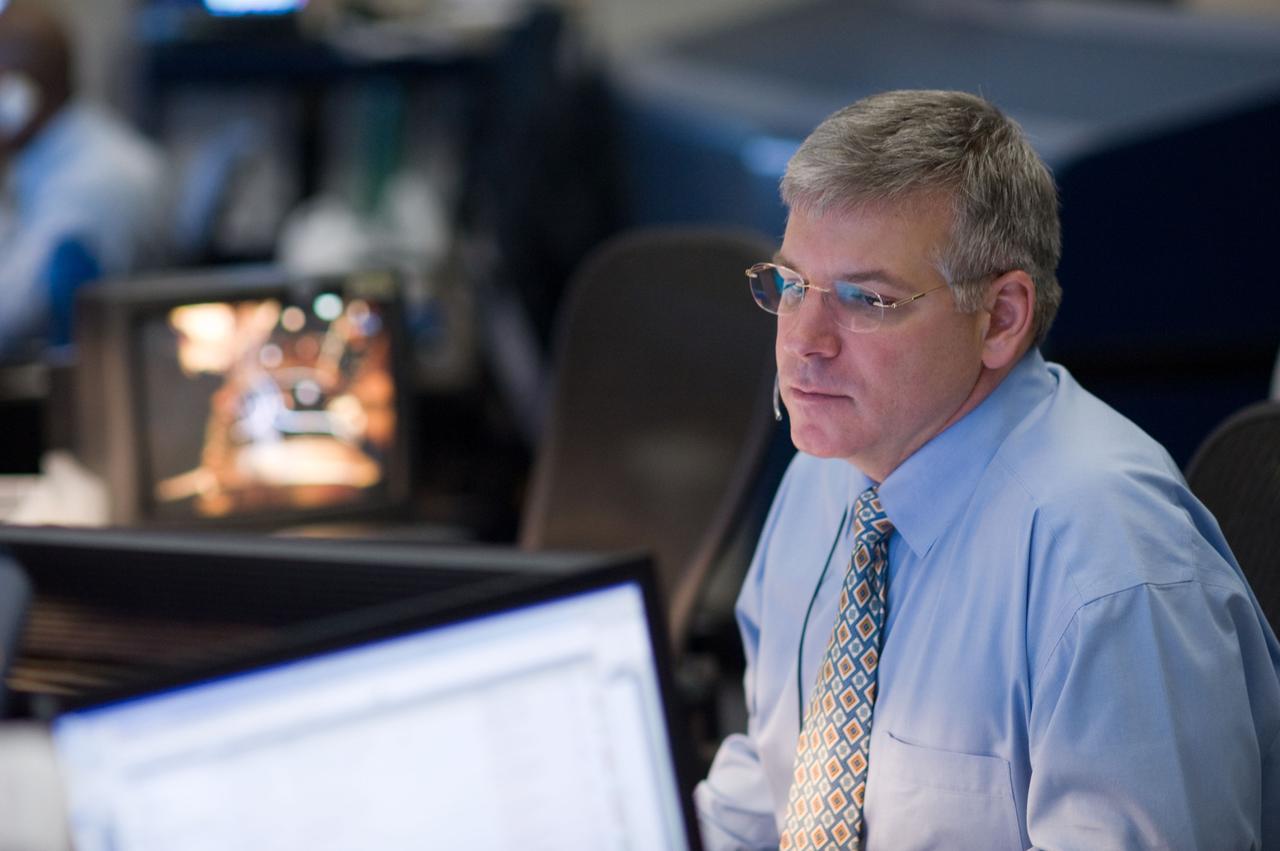
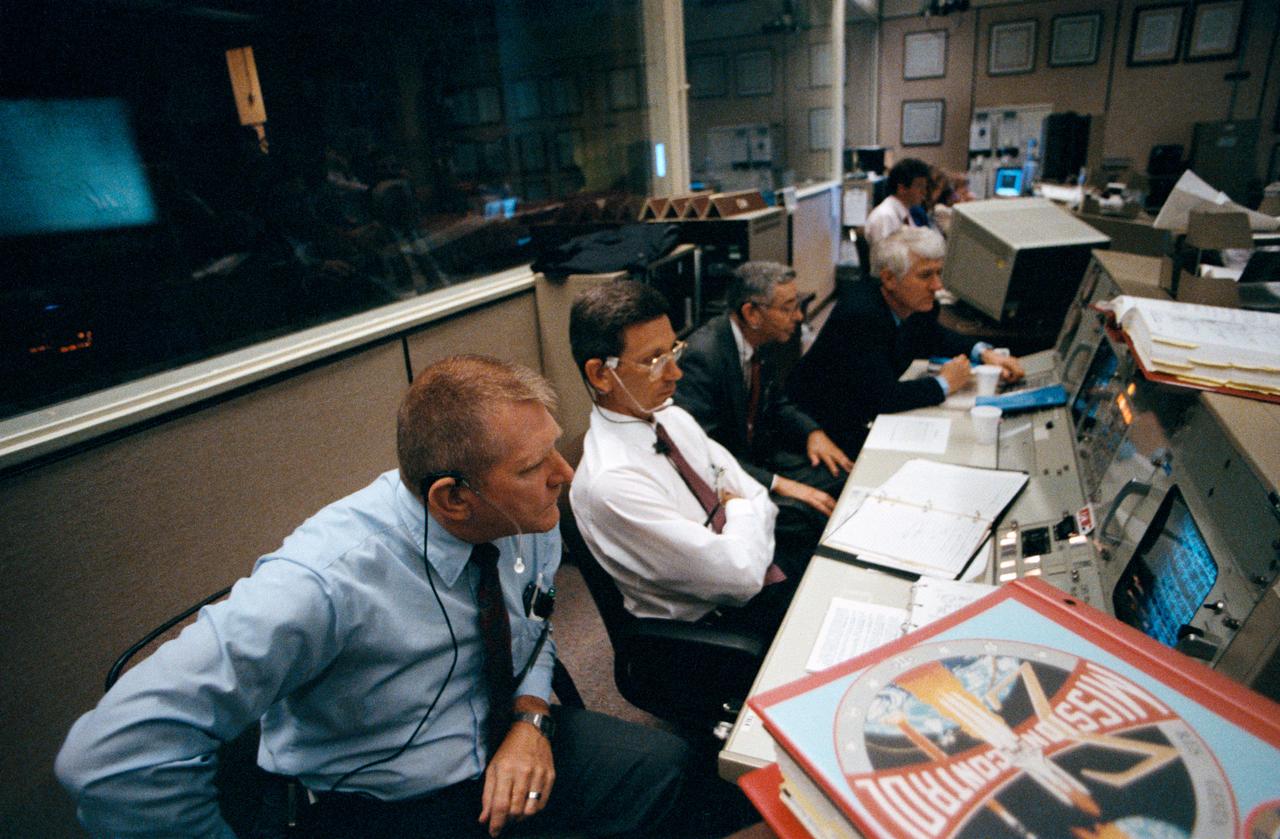
STS030-S-004 (8 May 1989) --- JSC Officials monitor early moments of NASA's STS-30 Atlantis, Orbiter Vehicle (OV) 104, flight in the Flight Control Room (FCR) of JSC's Mission Control Center (MCC) Bldg 30. At the Mission Operations Directorate (MOD) console, MOD Director Eugene F. Kranz (foreground), studiously reviews data on a nearby monitor. Others in the photo are (left to right) Flight Directors Office Deputy Chief Lawrence S. Bourgeois, JSC Director Aaron Cohen, and Flight Crew Operations Deputy Director Henry W. Hartsfield, Jr. Kranz'z replete loose-leaf notebook, bearing the insignia of the flight control team members (MOD insignia), is in the foreground.
JSC officials in MCC Bldg 30 monitor STS-30 Atlantis, OV-104, liftoff
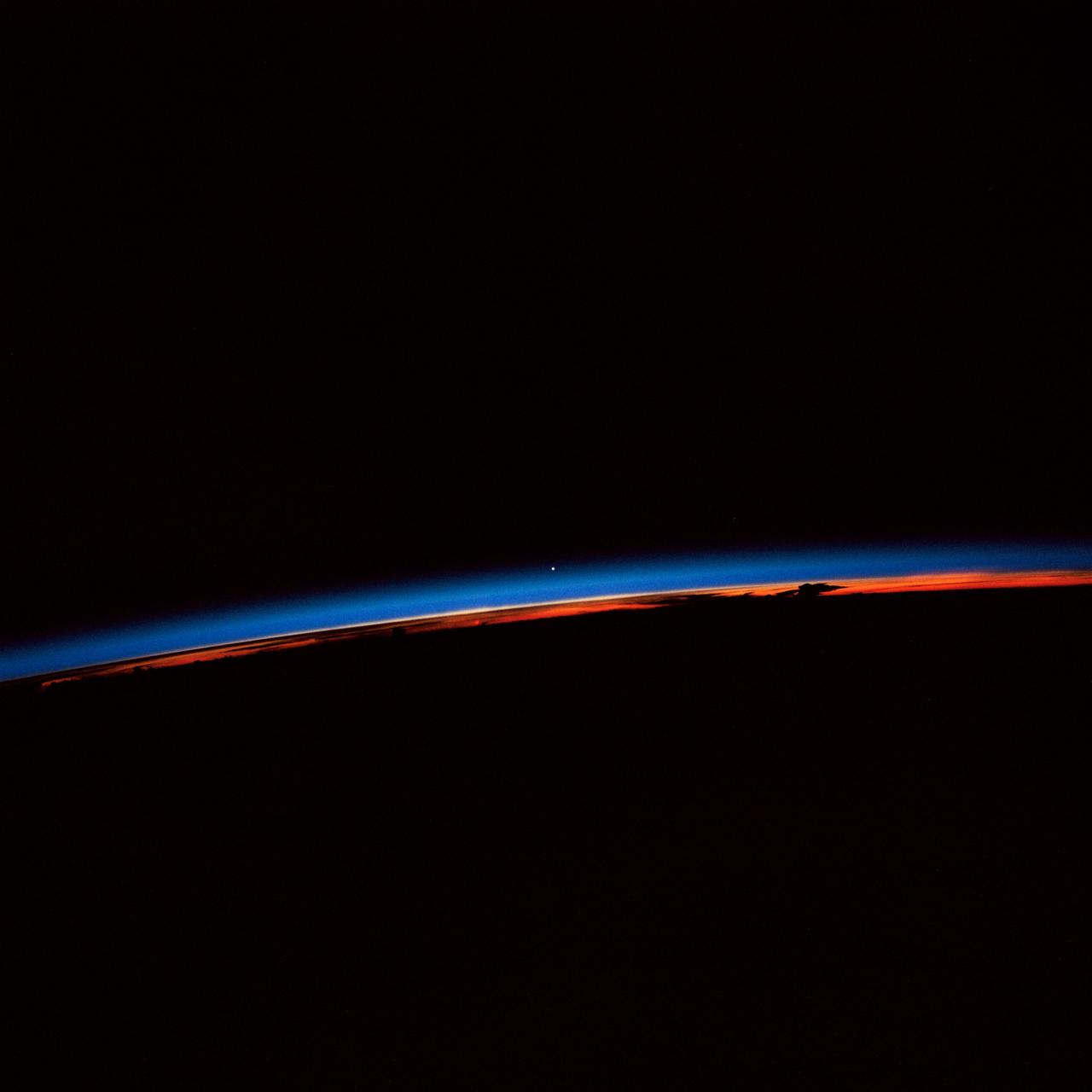
STS-30 Earth observation captured by crewmembers onboard Atlantis, Orbiter Vehicle (OV) 104, shows the sunset over the Earth as well as the planet Venus near the center of the frame. Jutting clouds are seen on the horizon, just beneath the blue strip of airglow.
STS-30 sunset with Venus near the center of the frame
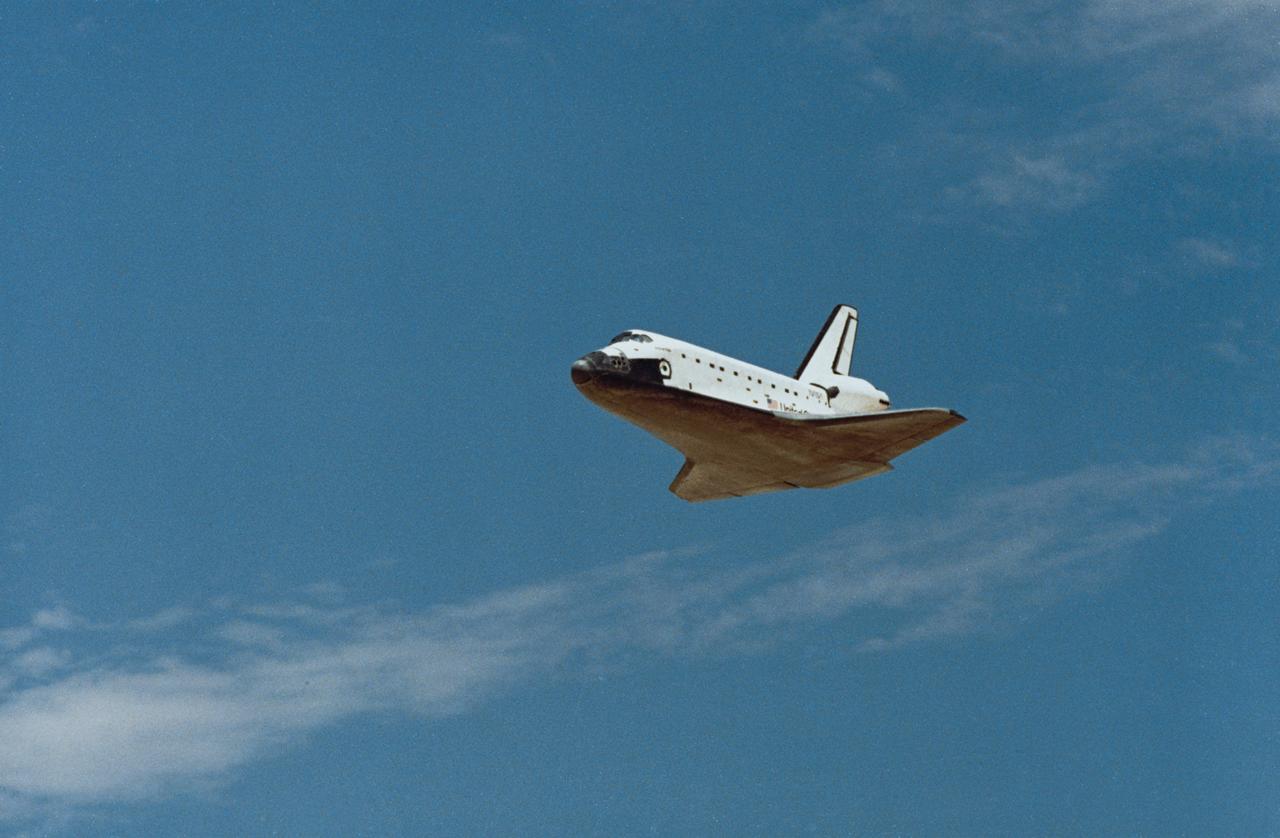
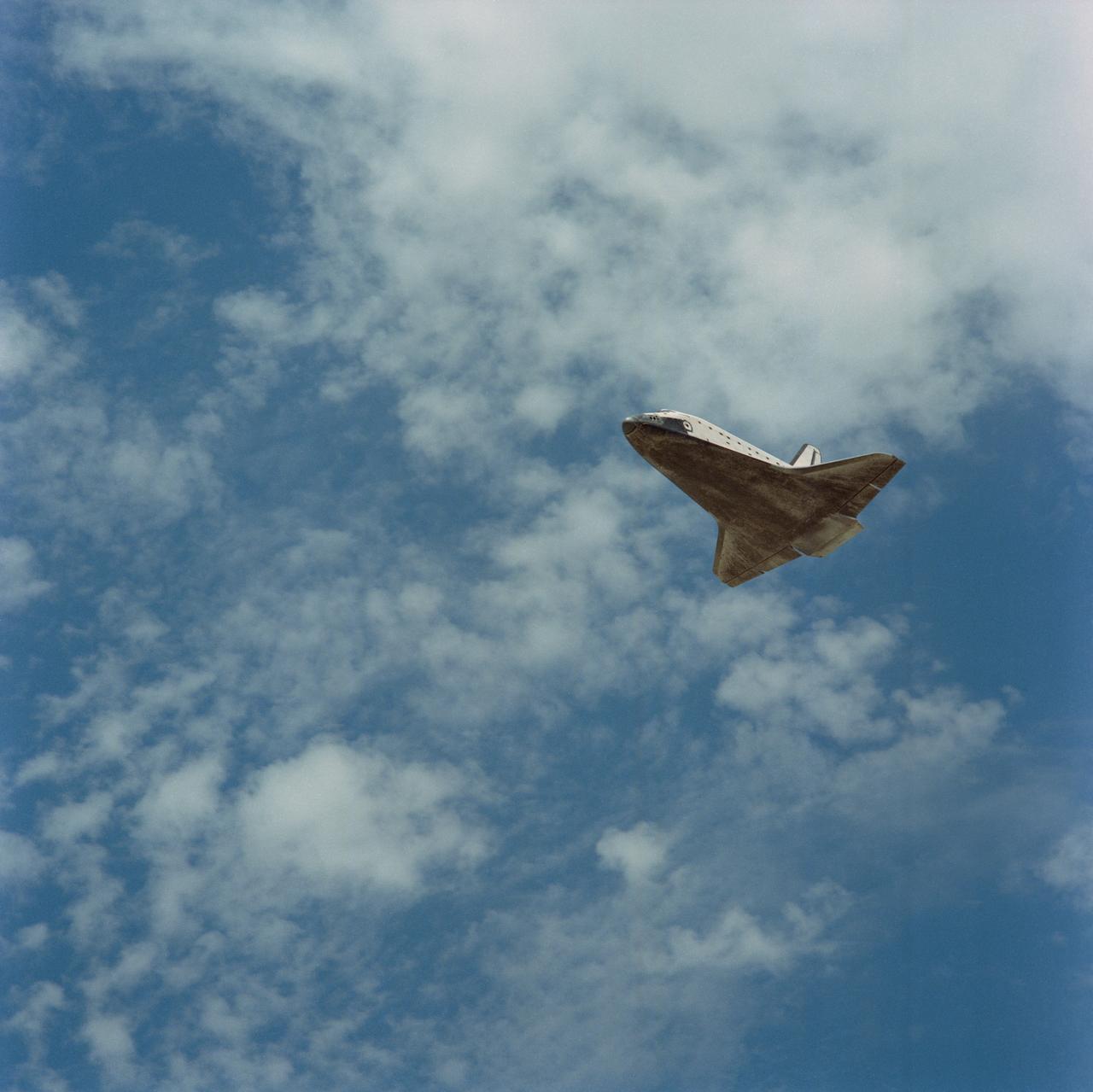
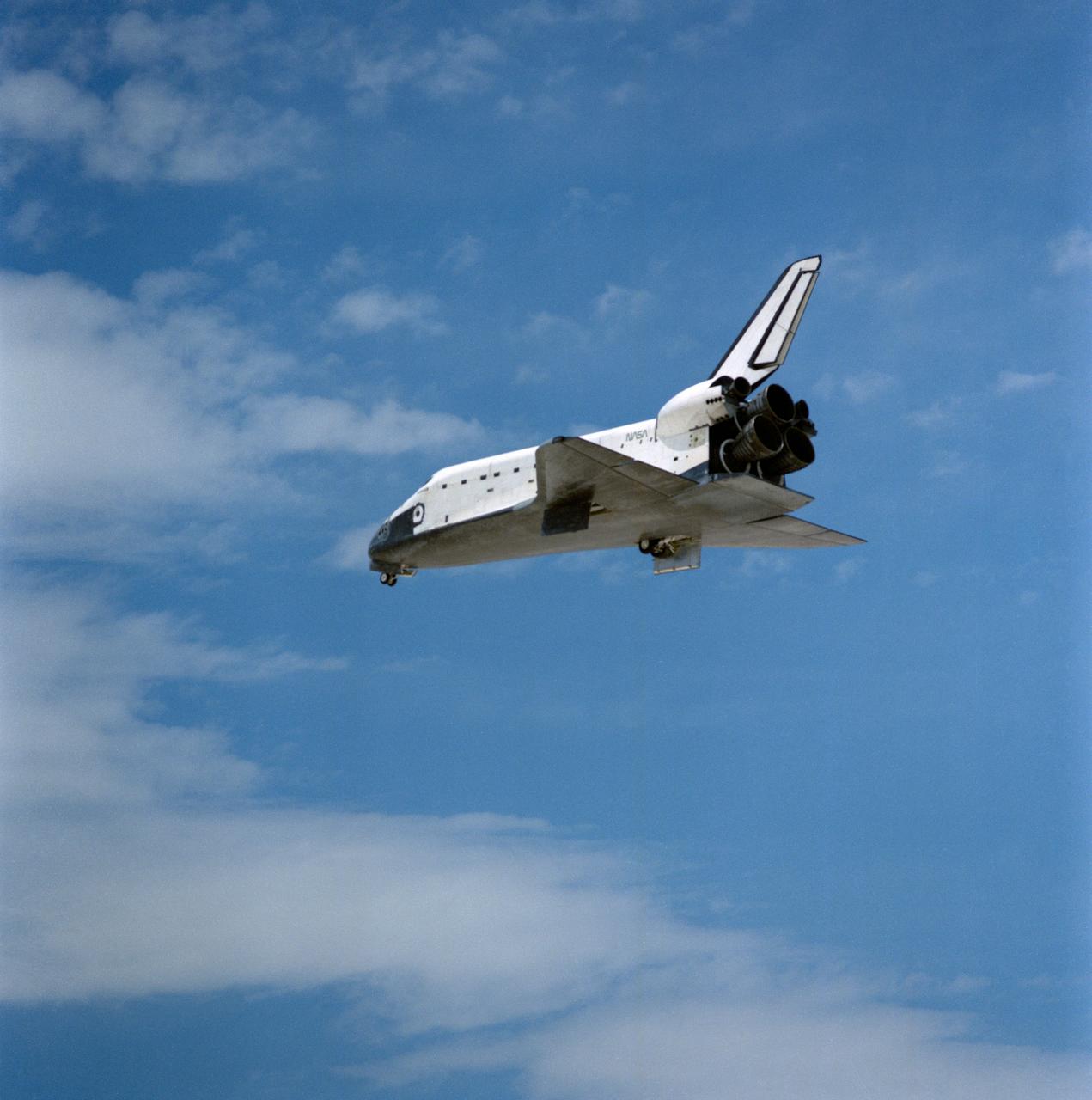
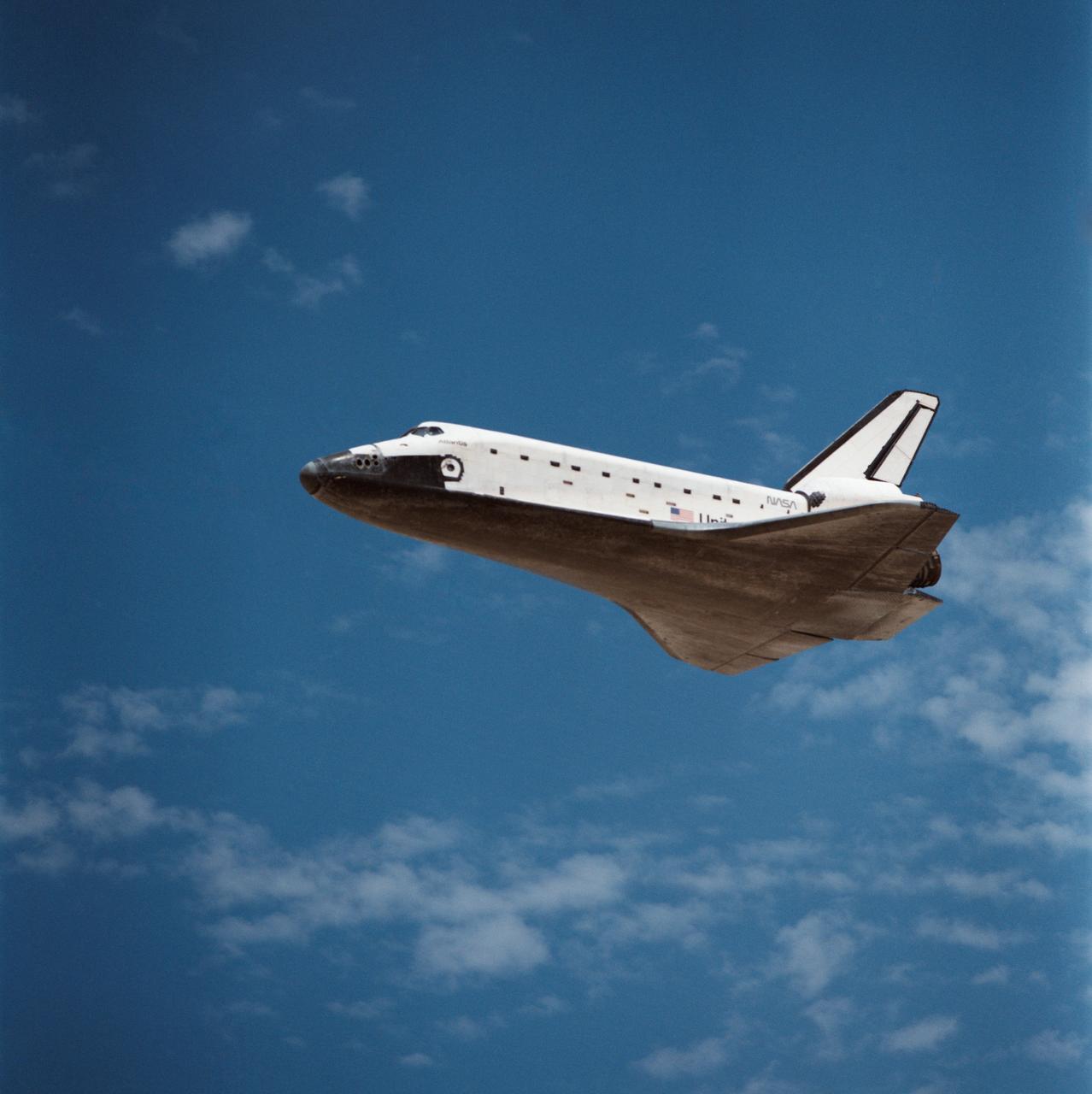
STS030-S-126 (8 May 1989) --- The space shuttle Atlantis, as seen in a low angle view on its glide in from Earth orbit, heads toward a concrete runway at Edwards Air Force Base in California. Onboard were astronauts David M. Walker, STS-30 commander; Ronald J. Grabe, pilot; and astronauts Norman E. Thagard, Mary L. Cleave and Mark C.  Lee ? all mission specialists.  Photo credit: NASA
STS-30 Atlantis, OV-104, glides toward a landing at EAFB, California
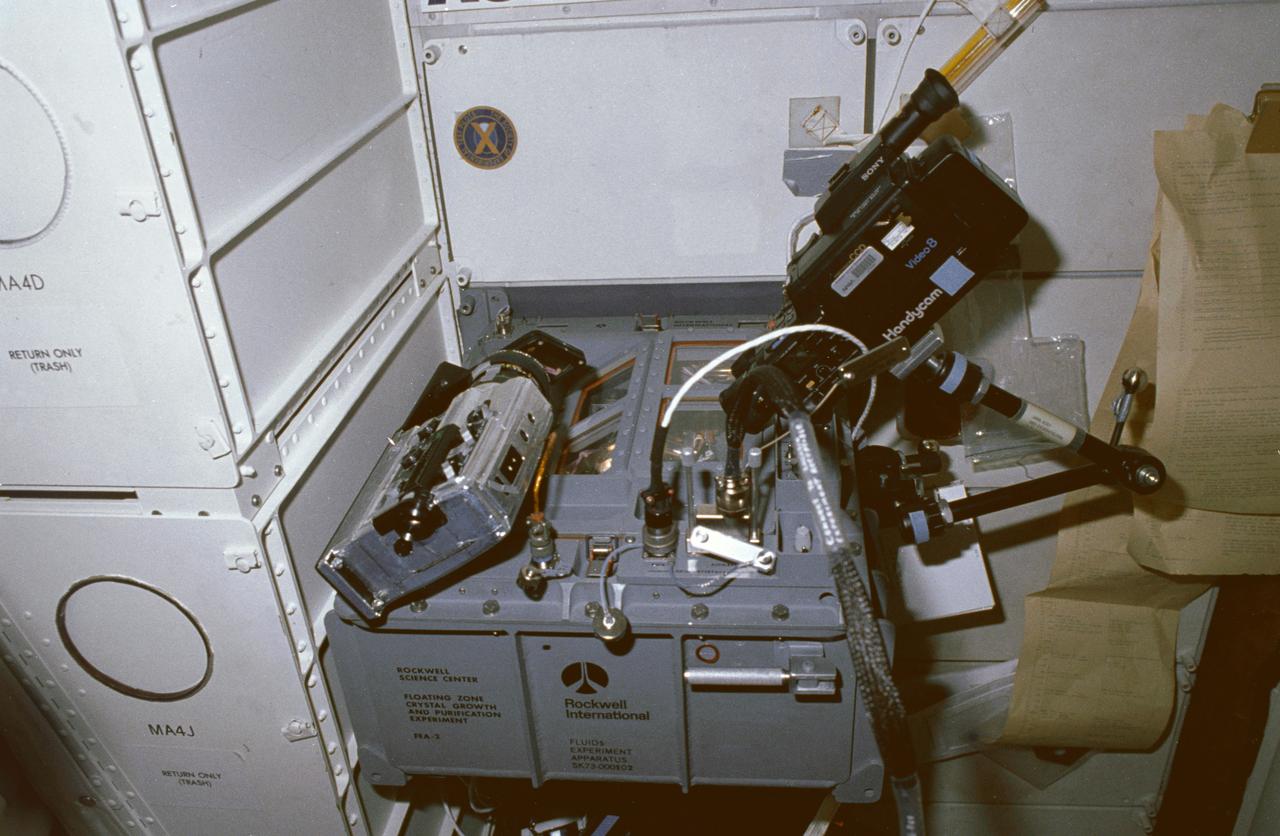
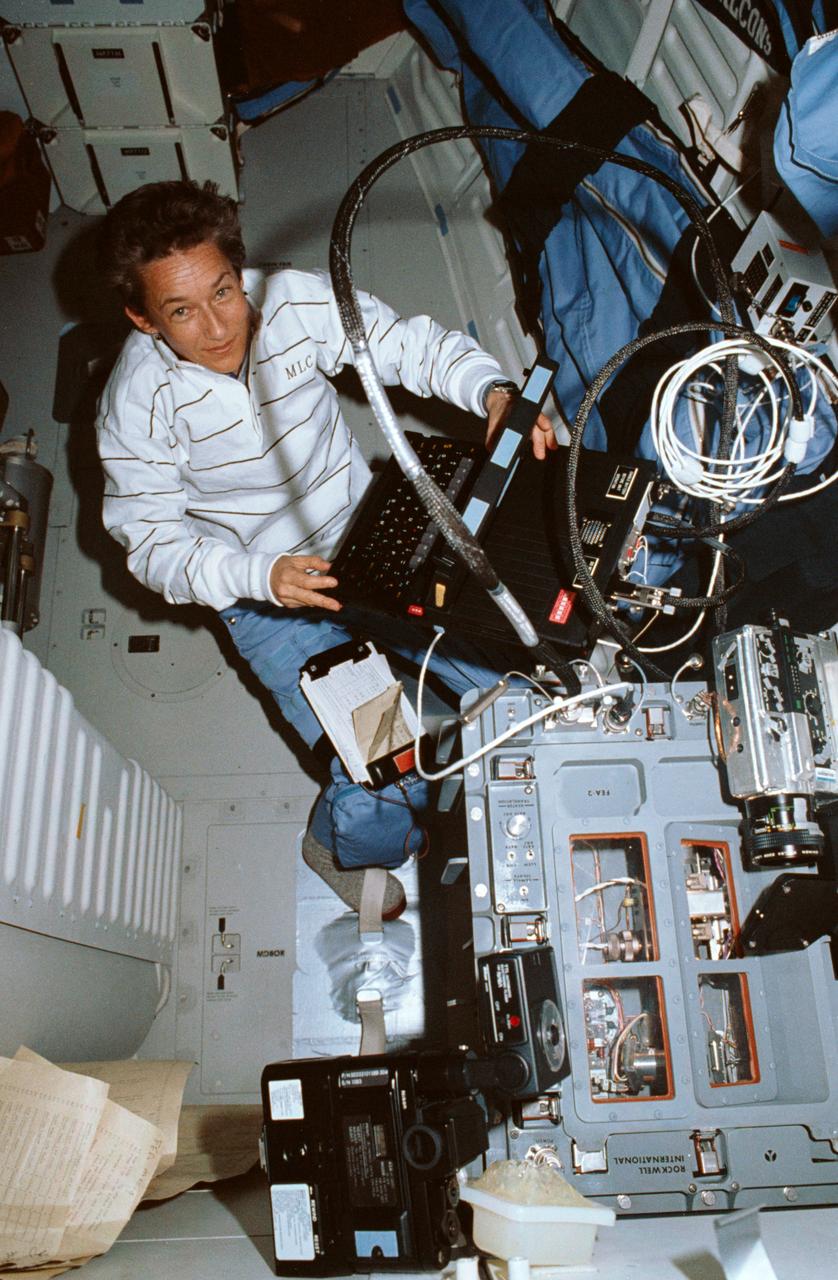
STS030-10-003 (4-8 May 1989) --- An overall scene of the onboard materials science project for STS-30.  Seen is the fluids experiment apparatus, supported by an accompanying computer and an 8mm camcorder for its operation.  Another major component of the project-- Astronaut Mary L. Cleave, who devoted a great deal of STS-30 monitoring various experiments--is out of frame.
STS-30 onboard view of fluids experiment apparatus (FEA) equipment
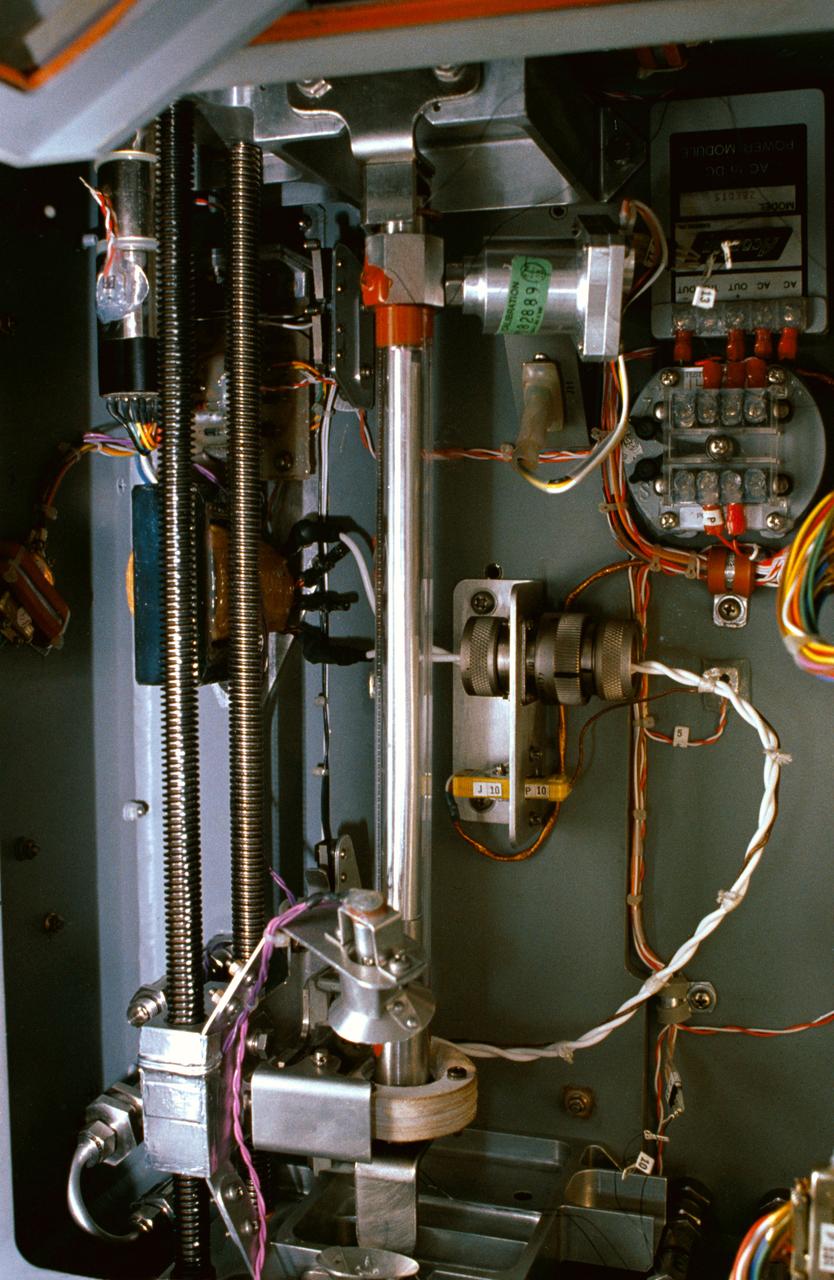
STS030-01-015 (4-8 May 1989) --- A 35mm close-up view of the Fluids Experiment Apparatus (FEA) aboard Atlantis for NASA’s STS-30 mission.  Rockwell International is engaged in a joint endeavor agreement with NASA’s Office of Commercial Programs in the field of floating zone crystal  growth and purification research.  The March 1987 agreement provides for microgravity experiments to be performed in the company’s Microgravity Laboratory, the FEA.  Crewmembers, especially Mary L. Cleave, devoted a great deal of onboard time to the monitoring of various materials science experiments using the apparatus.
STS-30 onboard closeup of the fluids experiment apparatus (FEA) equipment
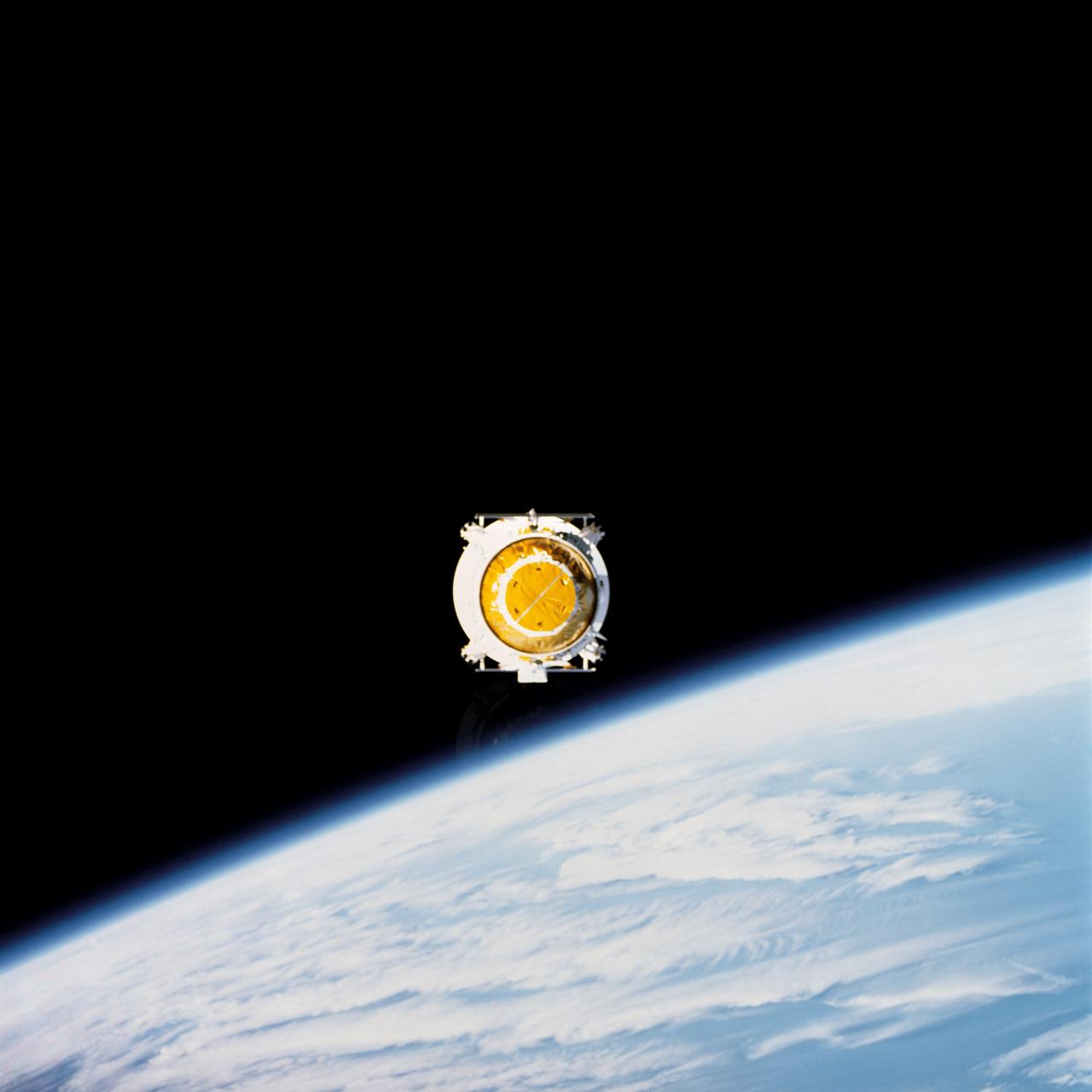
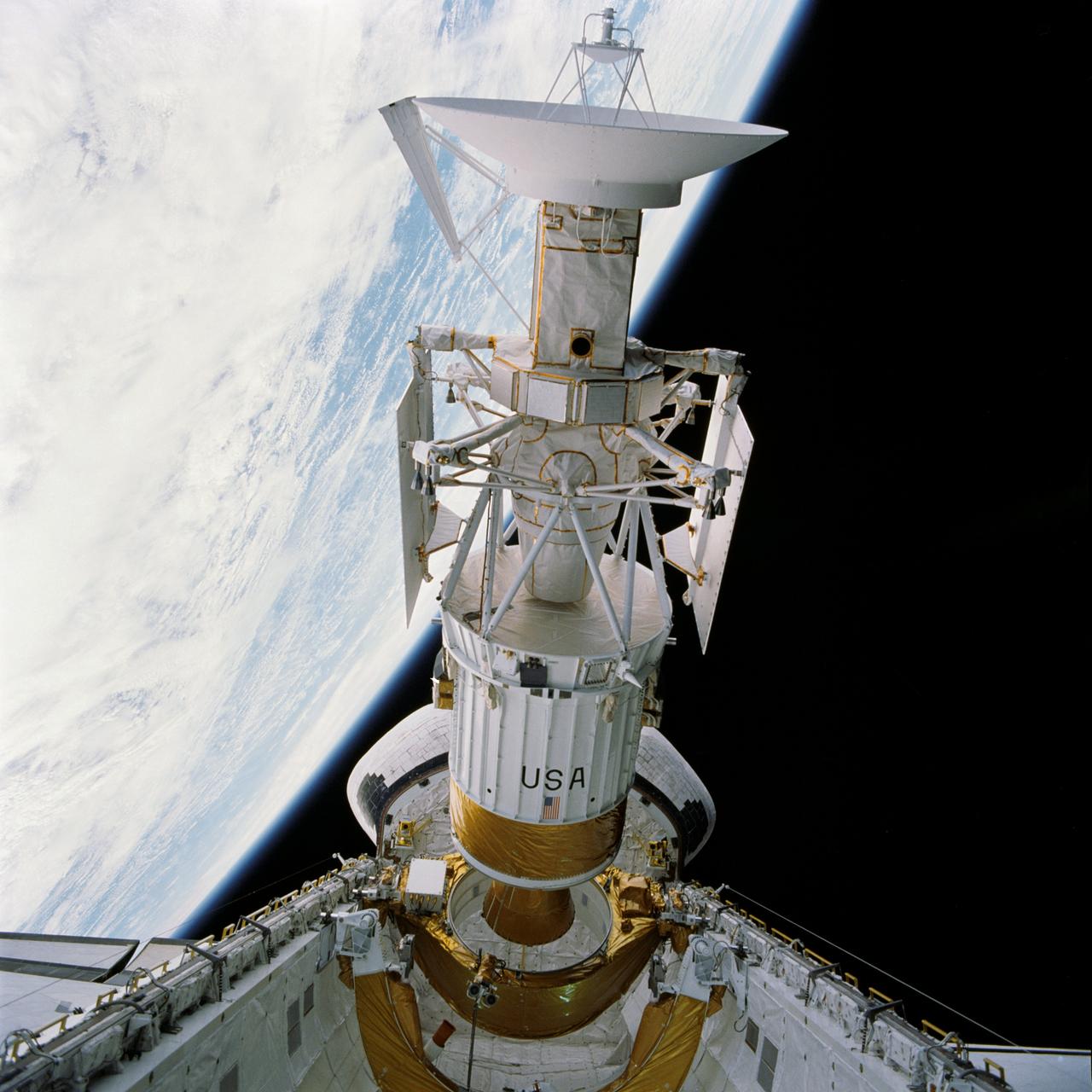
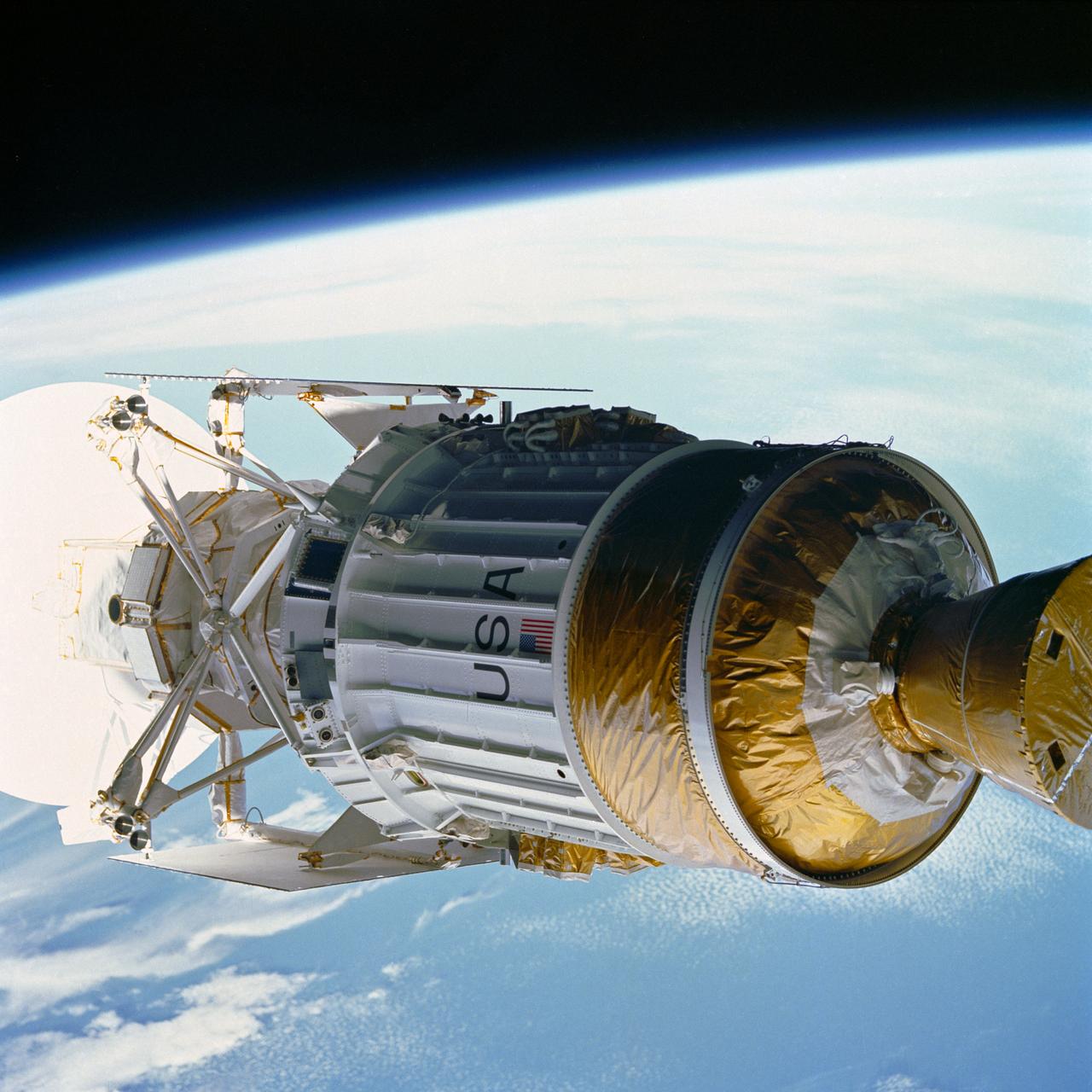
STS030-71-053 (4 May 1989) --- In the early evening hours of Space Shuttle Atlantis’ first day in space for the four-day STS-30 mission, the Magellan spacecraft is released into space to begin its long journey to the planet Venus for an extensive radar mapping mission. The scene was photographed through Atlantis’ aft flight deck windows with a handheld 70mm camera.
STS-30 inertial upper stage (IUS) with Magellan deployment
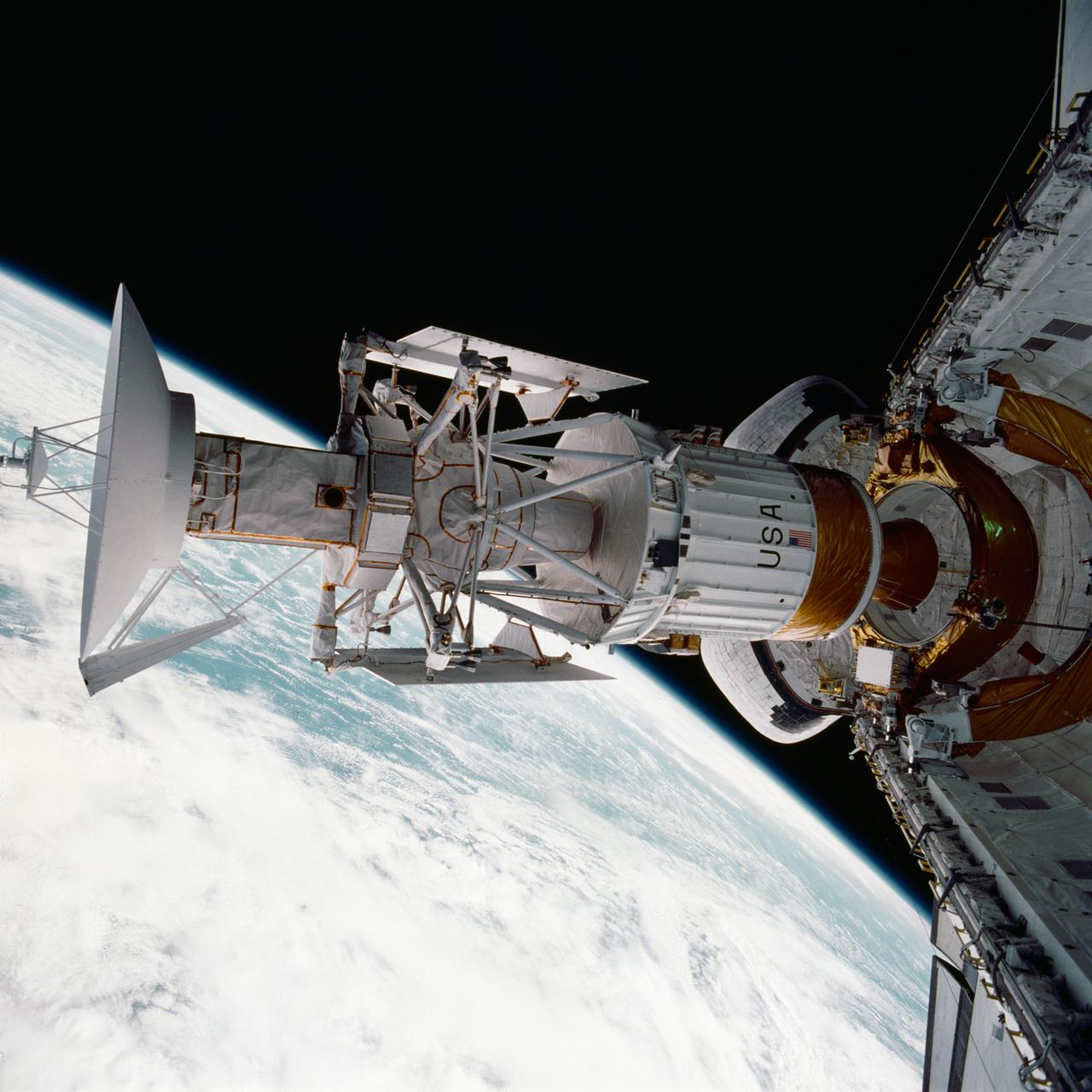
STS030-71-063 (4 May 1989) --- This scene is one of two released by NASA showing the process of solar array panel deployment on the Magellan spacecraft.  Panels are not fully extended in this frame.  The spacecraft had earlier been released by the STS-30 crewmembers to begin its long journey to the planet Venus for an extensive radar mapping mission. The frame was photographed through Atlantis? aft flight deck windows with a handheld 70mm camera.  The complementary photograph is STS030-71-070.
IUS with Magellan spacecraft drifts into space after STS-30 deployment
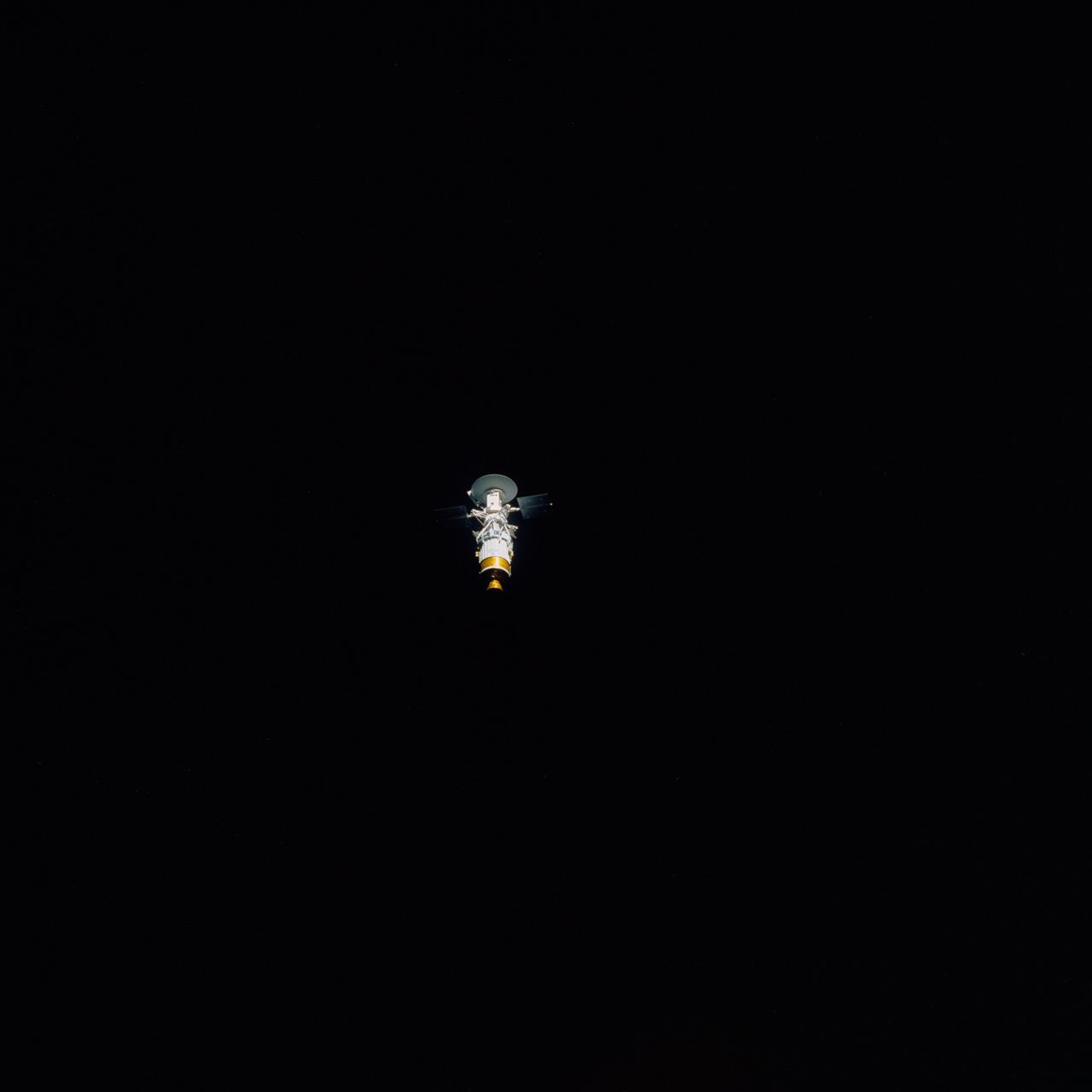
STS030-71-070 (4 May 1989) --- This scene is one of two released by NASA showing the process of solar array panel deployment on the Magellan spacecraft.  Though partially blended into the backdrop of the blackness of space, it appears the two panels are fully extended in this frame. The spacecraft had earlier been released by the STS-30 crewmembers to begin its long journey to the planet Venus for an extensive radar mapping mission. The frame was photographed through Atlantis' aft flight deck windows with a handheld 70mm camera. The complementary photograph is STS030-71-063.
IUS with Magellan spacecraft drifts into space after STS-30 deployment
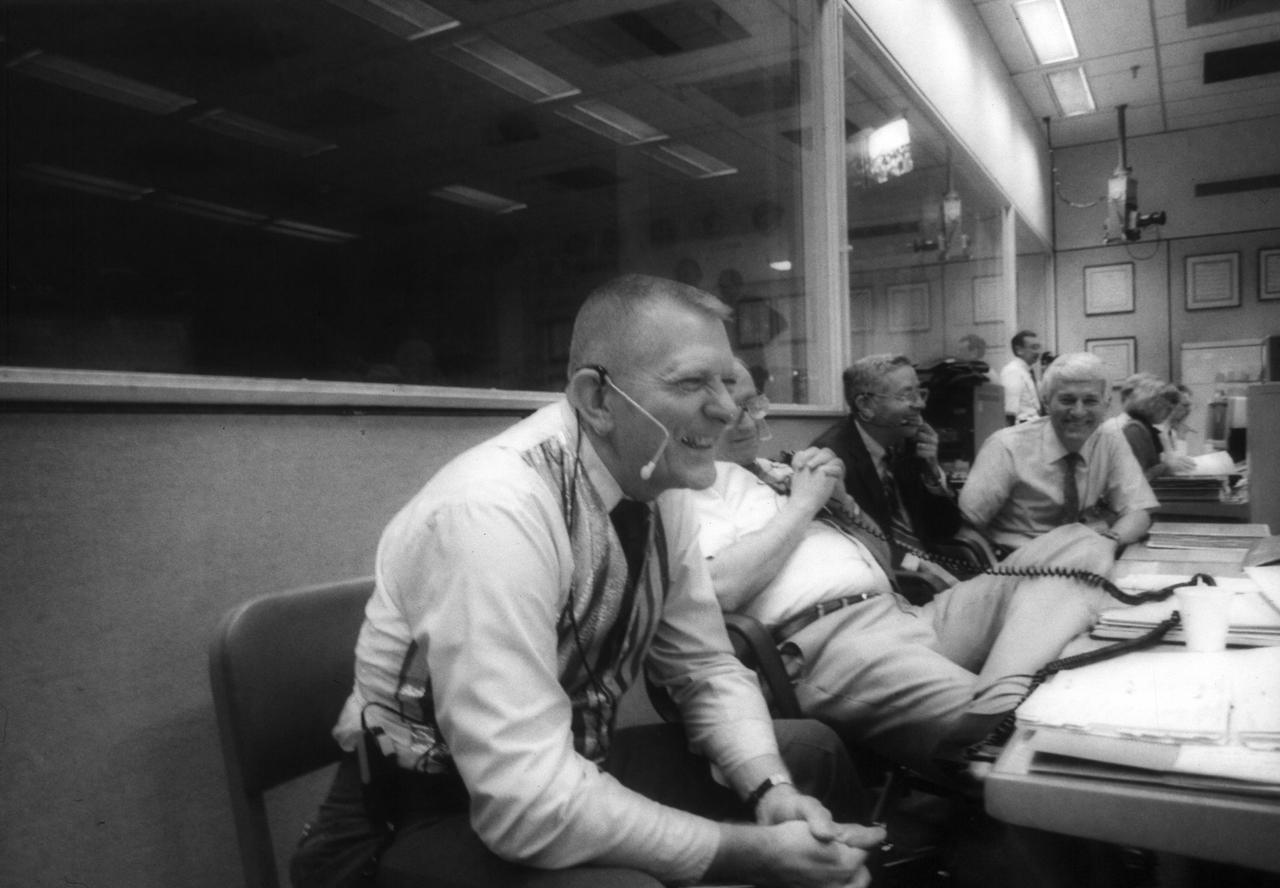
JSC officials, laughing, listen to crewmembers' commentary onboard Discovery, Orbiter Vehicle (OV) 103, during STS-26. In the Flight Control Room (FCR) of JSC's Mission Control Center (MCC) Bldg 30 and seated at the Mission Operations Directorate (MOD) console, MOD Director Eugene F. Kranz (foreground), wearing red, white and blue vest, smiles along with JSC Director Aaron Cohen and Flight Crew Operations Deputy Director Henry W. Hartsfield, Jr. (far right).
JSC officials in MCC Bldg 30 monitor STS-26 Discovery, OV-103, activity
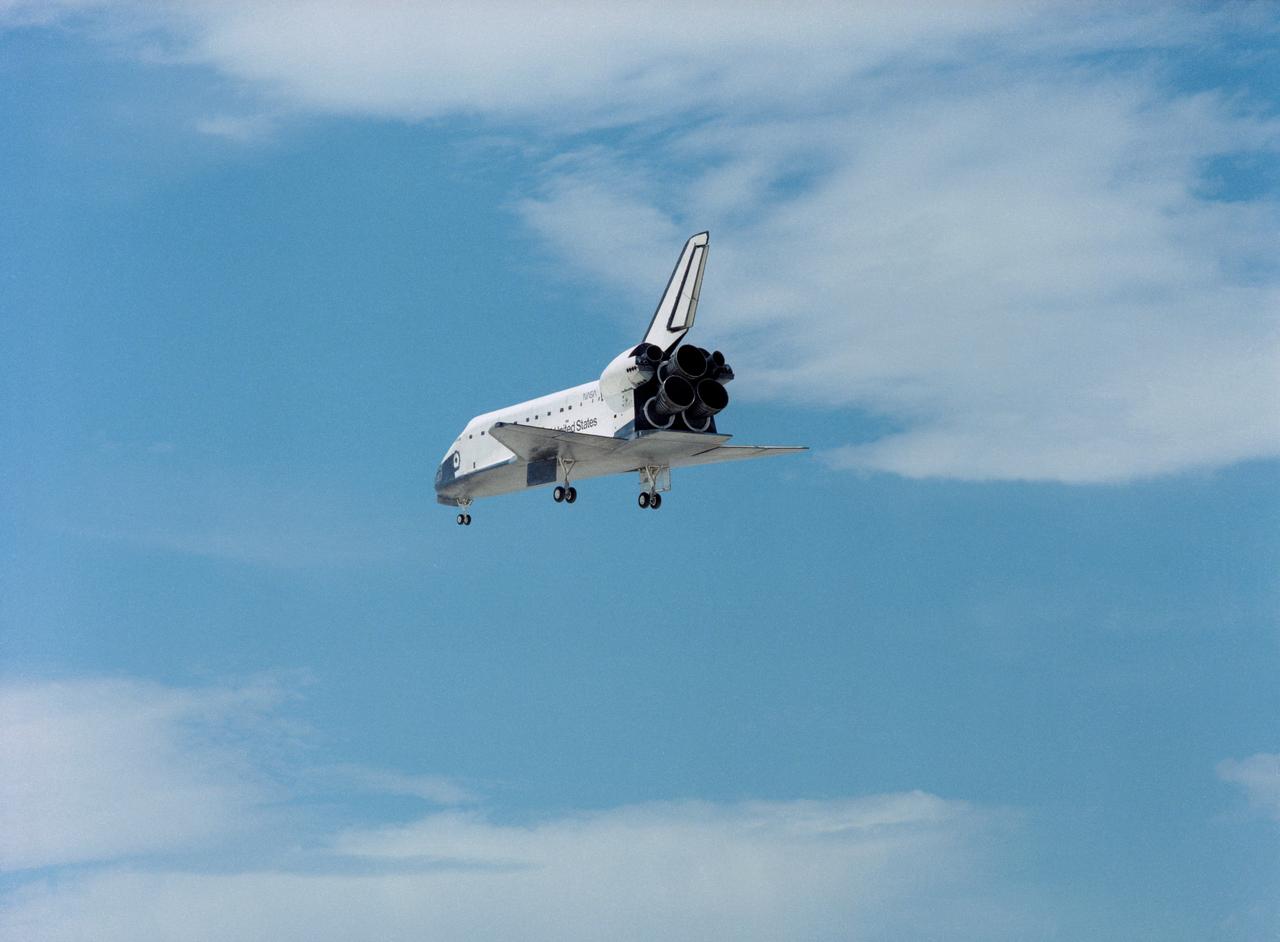
STS030-S-124 (8 May 1989) --- Its landing gear fully deployed, Space Shuttle Atlantis is lined up for its approach to Runway 22 at Edwards Air Force Base in southern California.  Minutes later, at 12:44:33 (PDT), the spacecraft's wheels had come to a complete stop, marking the successful conclusion for the four-day STS-30 mission. Onboard were astronauts David M. Walker, Ronald J. Grabe, Norman E. Thagard, Mary L. Cleave and Mark C. Lee.
STS-30 Atlantis, OV-104, landing approach to runway 22 at EAFB, California
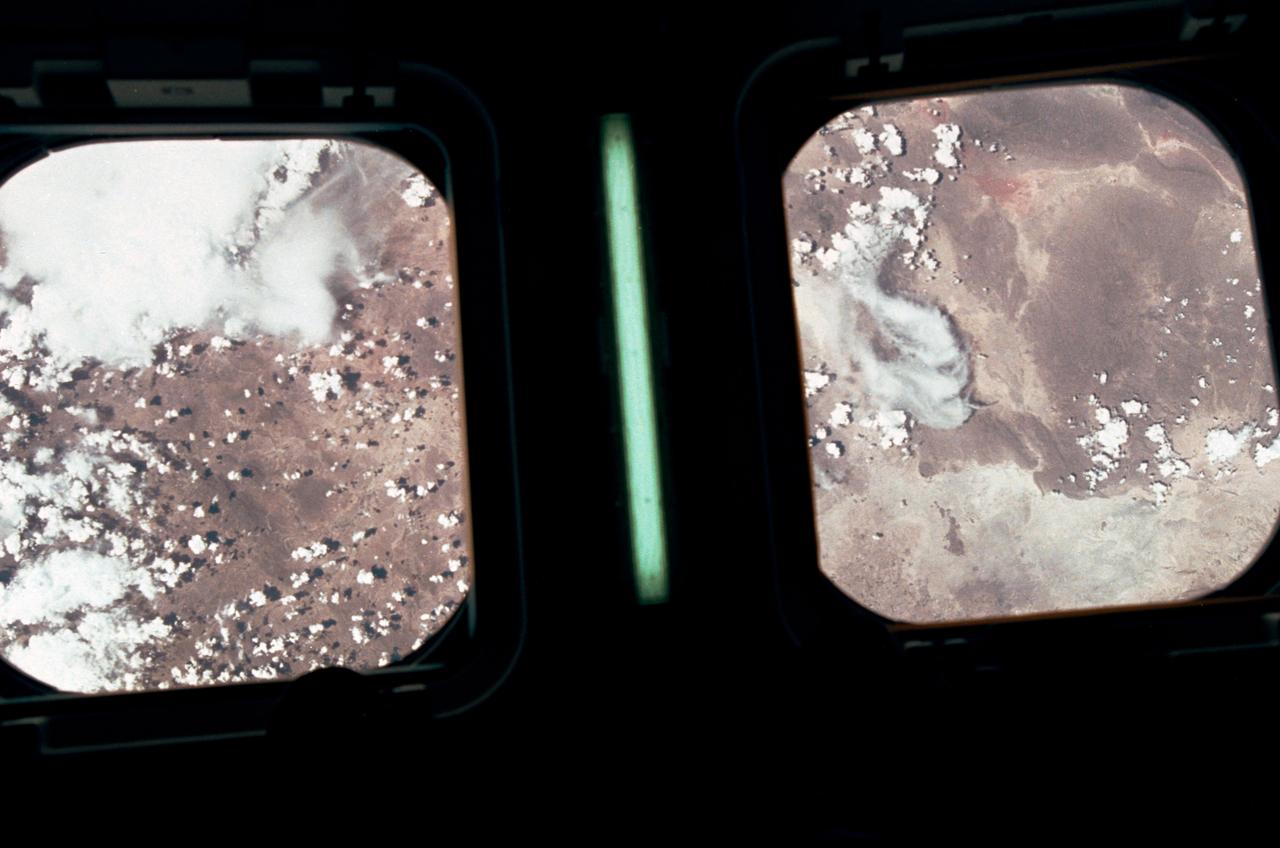
STS030-08-006 (4-8 May 1989) ---  Though this scene first appears to be a stereographic picture, it's twin-panel effect is actually due to the framing by Atlantis' overhead cabin windows.  The 35mm scene is over Africa and shows the border area of Zambia and Angola. The frame is one of twenty released by NASA following the successful four-day STS-30 mission.
STS-30 Earth observation is framed by aft flight deck overhead windows
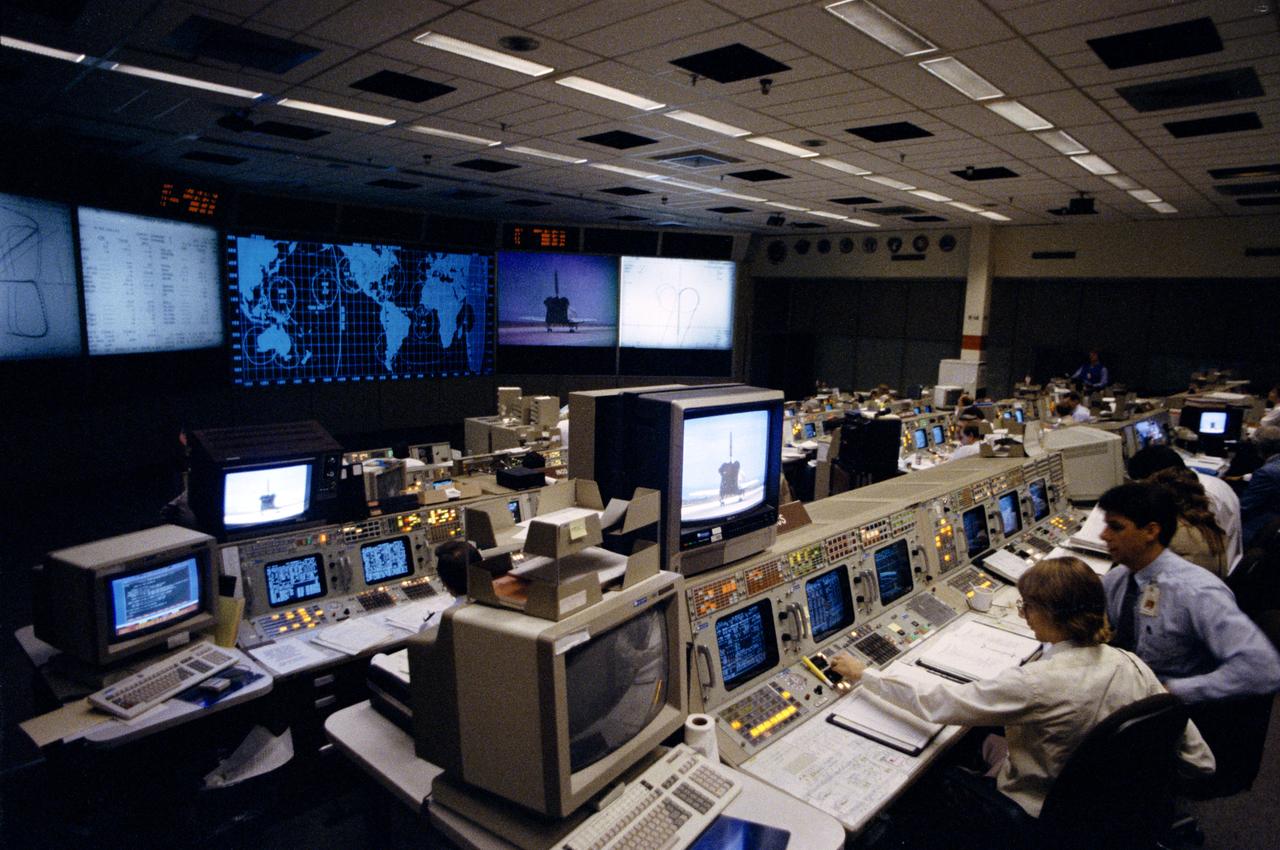
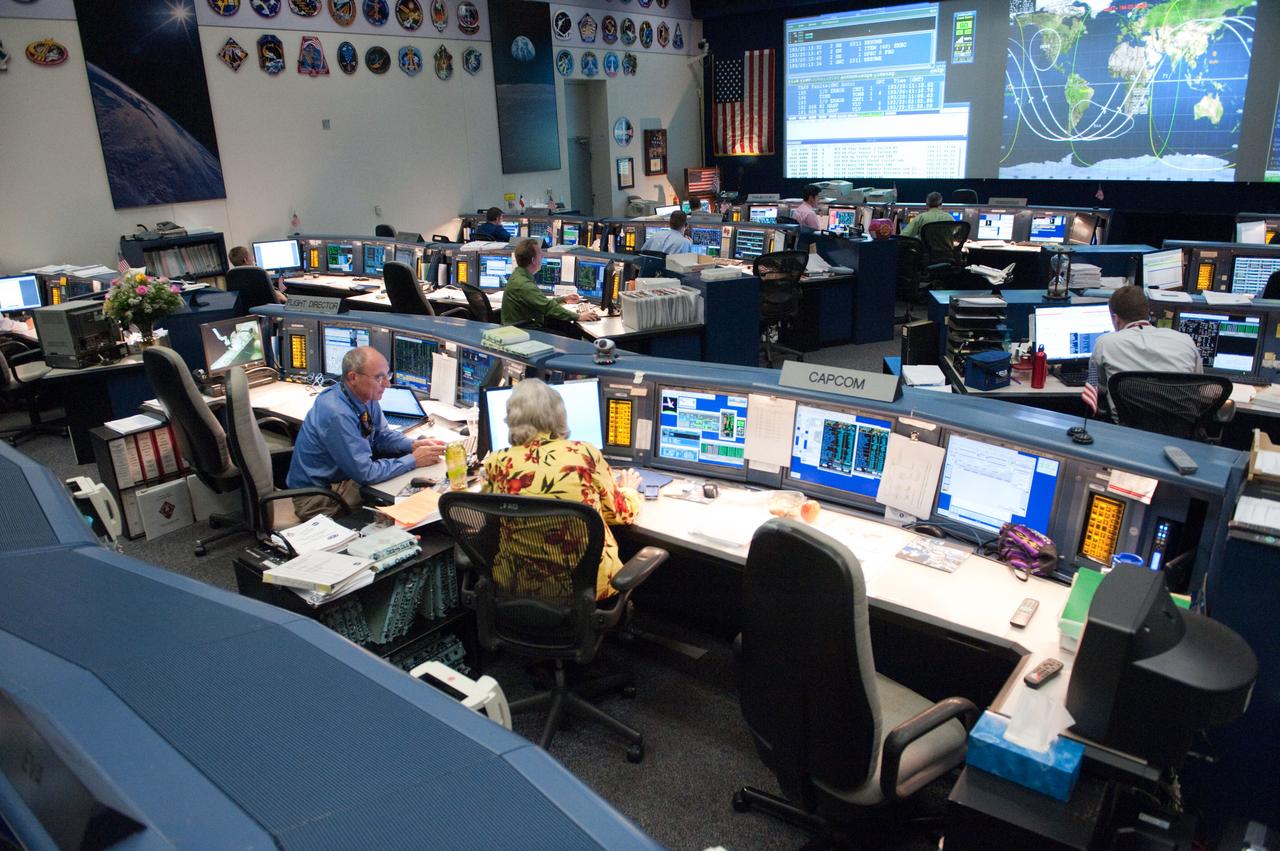
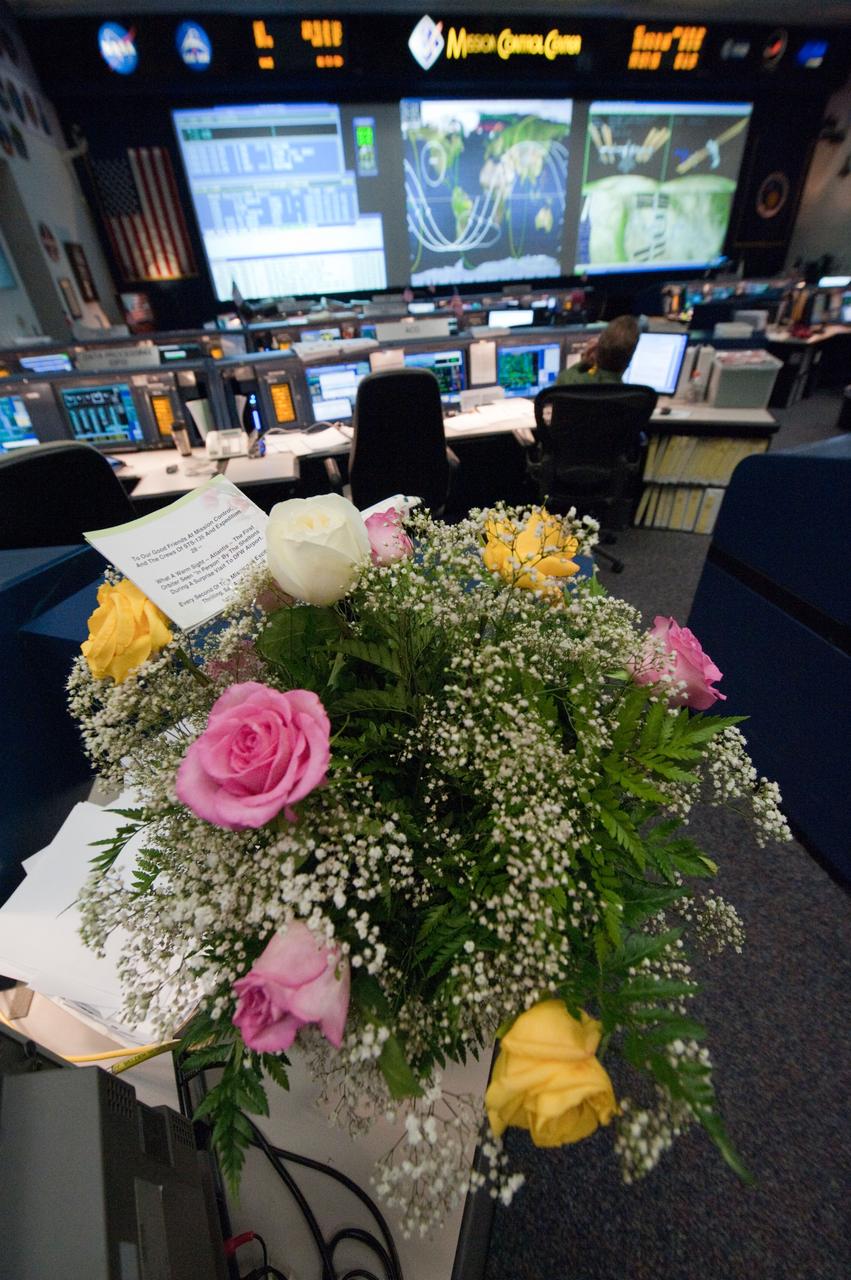
As STS-30 ends its mission with the landing of Atlantis, Orbiter Vehicle (OV) 104, at Edwards Air Force Base (EAFB), California, flight controllers monitor screens at their consoles in JSC Mission Control Center (MCC) Bldg 30. In the foreground is the Maintenance, Mechanical Arm, and Crew Systems Engineer (MMACS) console with R. Kevin McCluney studying data readouts. On the front visual displays are the tracking map and a tail view of OV-104 as it comes to a stop on EAFB concrete runway 22.
STS-30 JSC Mission Control Center (MCC) activity during OV-104 landing
The STS-30 mission launched aboard the Space Shuttle Atlantis on May 4, 1989 at 2:46:59pm (EDT) carrying a crew of five. Aboard were Ronald J. Grabe, pilot; David M. Walker, commander; and mission specialists Norman E. Thagard, Mary L. Cleave, and Mark C. Lee. The primary payload for the mission was the Magellan/Venus Radar mapper spacecraft and attached Inertial Upper Stage (IUS).
Space Shuttle Projects
The STS-30 mission launched aboard the Space Shuttle Atlantis on May 4, 1989 at 2:46:59pm (EDT) carrying a crew of five. Aboard were Ronald J. Grabe, pilot; David M. Walker, commander; and mission specialists Norman E. Thagard, Mary L. Cleave, and Mark C. Lee. The primary payload for the mission was the Magellan/Venus Radar mapper spacecraft and attached Inertial Upper Stage (IUS).
Space Shuttle Projects
The STS-30 mission launched aboard the Space Shuttle Atlantis on May 4, 1989 at 2:46:59pm (EDT) carrying a crew of five. Aboard were Ronald J. Grabe, pilot; David M. Walker, commander; and mission specialists Norman E. Thagard, Mary L. Cleave, and Mark C. Lee. The primary payload for the mission was the Magellan/Venus Radar mapper spacecraft and attached Inertial Upper Stage (IUS).
Space Shuttle Projects
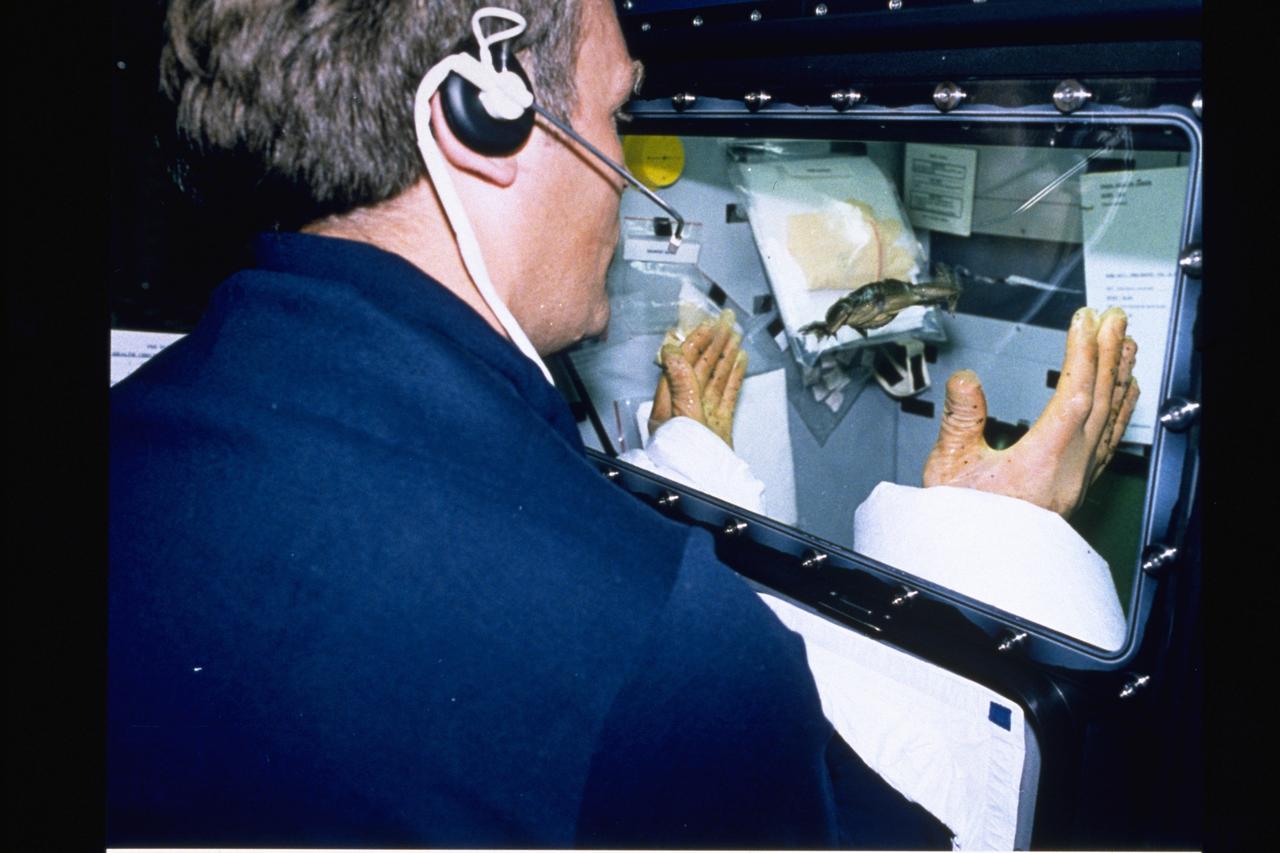
Space Shuttle Endeavour STS-47 Spacelab J mission: Frog Embryology Experiment, Astronaut works with adult frog in 0 gravity using the glovebox to contain and protect the frog during procedures
ARC-1992-STS-47-231-30
STS030-72-046 (4 May 1989) --- In the early evening hours of the Space Shuttle Atlantis' first day in space for the four-day STS-30 mission, the Magellan spacecraft is released into space to begin its long journey to the planet Venus for an extensive radar mapping mission.  The scene was photographed through Atlantis' aft flight deck windows with a handheld 70mm camera.
STS-30 Magellan spacecraft & IUS deployment from Atlantis' payload bay (PLB)
STS030-72-047 (4 May 1989) --- In the early evening hours of Atlantis?s first day in space for the four-day STS-30 mission, the Magellan spacecraft is released into space to begin its long journey to the planet Venus for an extensive radar mapping mission.  The scene was photographed through Atlantis?s aft flight deck windows with a handheld 70mm camera.
STS-30 Magellan spacecraft & IUS deployment from Atlantis' payload bay (PLB)
STS030-21-008 (4-8 May 1989) --- A traditional in-space crew portrait for STS-30 aboard the Atlantis.  Astronaut Mary L. Cleave is in front.  Others pictured, left to right, are astronauts Norman E. Thagard, Ronald J. Grabe, David M. Walker and Mark C. Lee.  An automatic, pre-set 35mm camera using color negative film recorded the scene.
STS-30 crewmembers pose for onboard portrait on OV-104's aft flight deck
STS030-10-008    (4-8 May 1989) --- Since the beginning manned space travel, astronauts have taken with them items of personal sentiment.  In case of Mark C. Lee, STS-30 mission specialist, a picture of a cow testifies to his background as one reared on a Wisconsin farm.  The scene, through a flight deck aft window,  also shows Earth some 160 nautical miles away.
STS-30 aft flight deck onboard view of overhead window, Earth limb, cow photo
STS030-02-018 (4-8 May 1989) --- A 35mm overall scene of the operations devoted to the fluids experiment apparatus (FEA) aboard Atlantis for NASA’s STS-30 mission.  Astronaut Mary L. Cleave, mission specialist, is seen with the computer which is instrumental in the carrying out of a variety of materials science experiments.  Rockwell International is engaged in a joint endeavor agreement with NASA’s Office of Commercial Programs in the field of floating zone crystal growth and purification research.  The March 1987 agreement provides for microgravity experiments to be performed in the company’s Microgravity Laboratory, the FEA.  An 8 mm camcorder which documented details inside the apparatus is visible at bottom of the frame.
STS-30 MS Cleave monitors fluids experiment apparatus (FEA) equipment
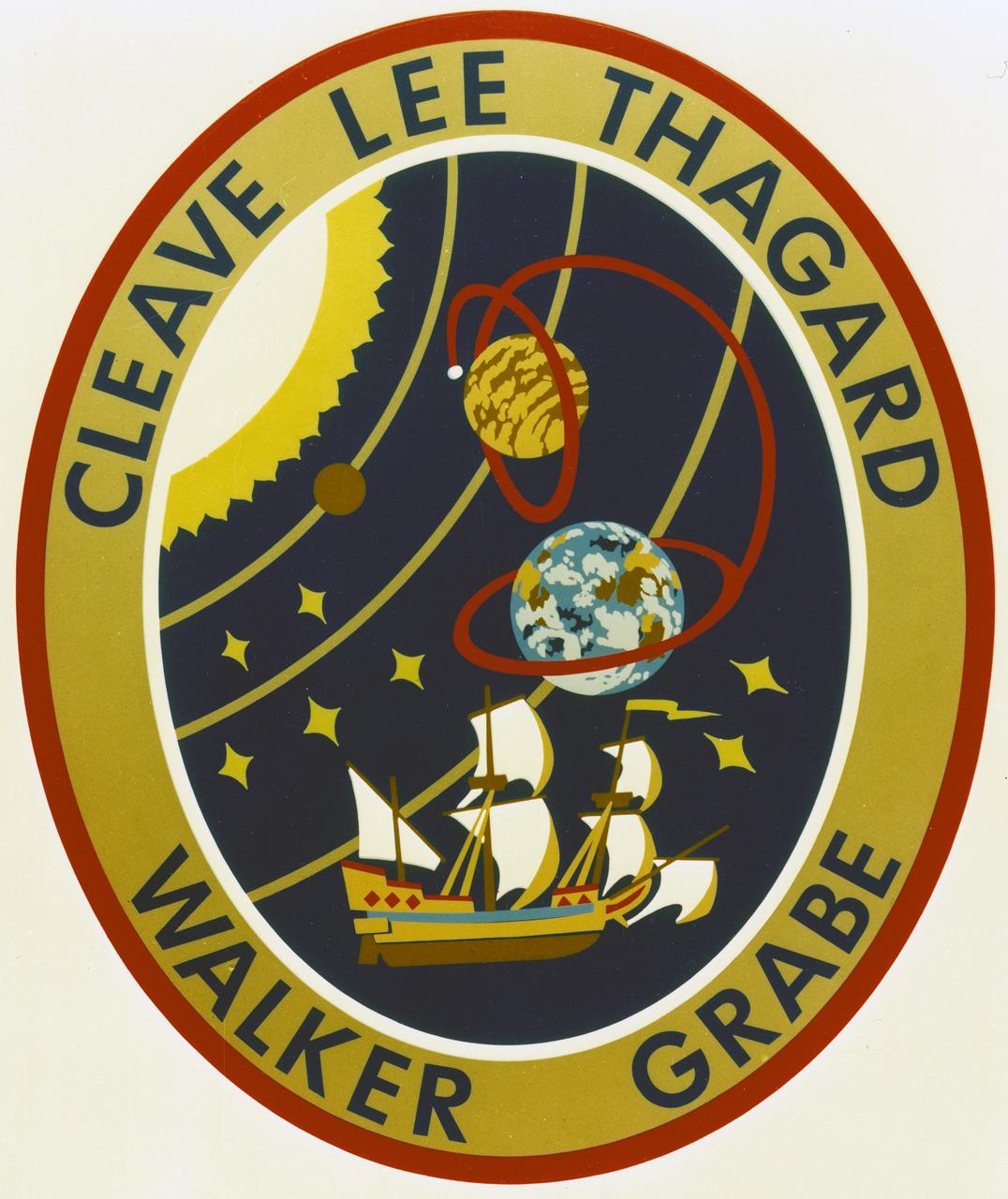
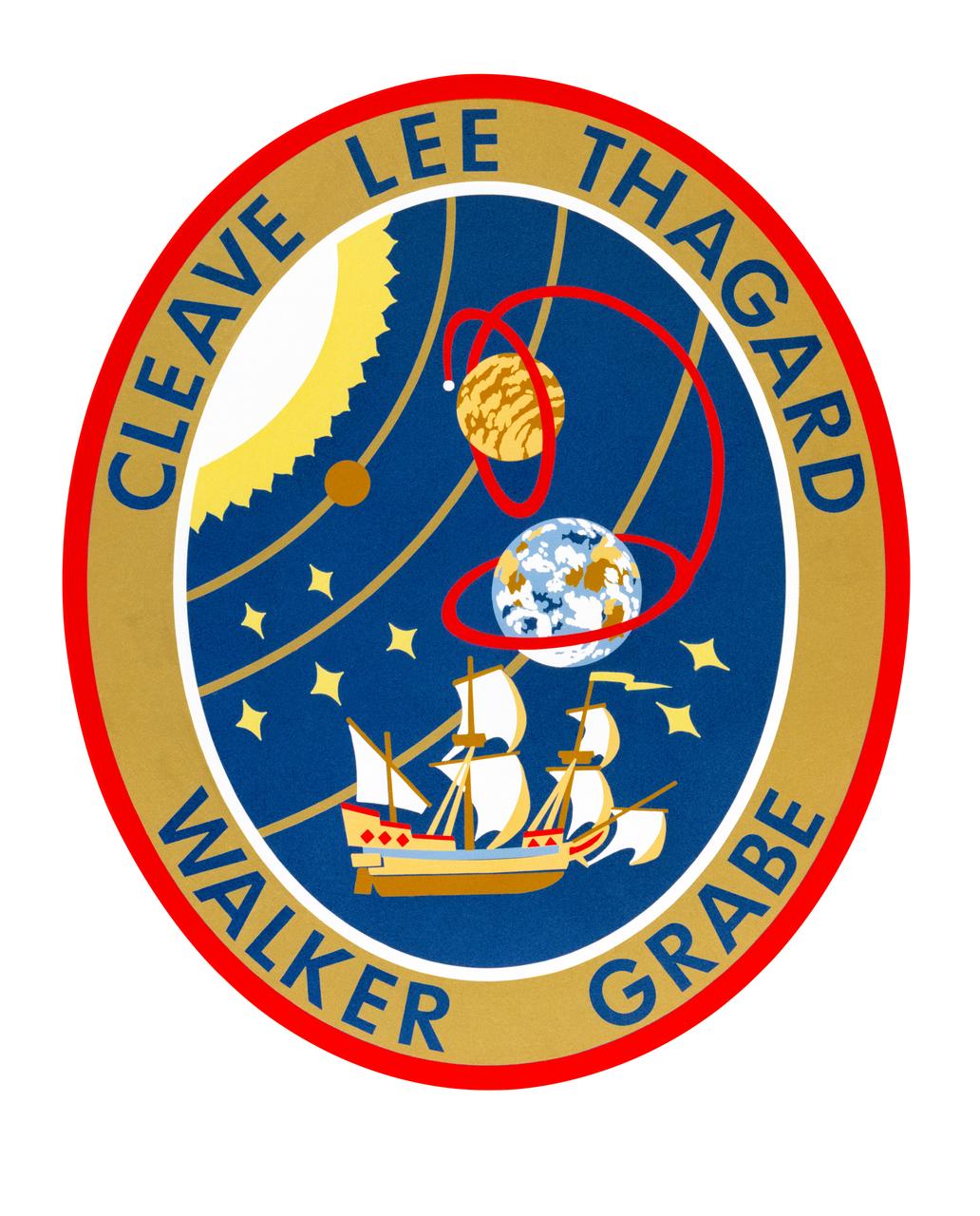
The STS-30 patch depicts the joining of NASA's manned and unmanned space programs. The sun and inner planets of our solar system are shown with the curve connecting Earth and Venus symbolizing the shuttle orbit, the spacecraft trajectory toward Venus, and its subsequent orbit around our sister planet. A Spanish caravel similar to the ship on the official Magellan program logo commemorates the 16th century explorer's journey and his legacy of adventure and discovery. Seven stars on the patch honor the crew of Challenger. The five-star cluster in the shape of the constellation Cassiopeia represent the five STS-30 crewmembers - Astronauts David Walker, Ronald Grabe, Norman Thagard, Mary Cleave and Mark Lee - who collectively designed the patch.
Space Shuttle Projects
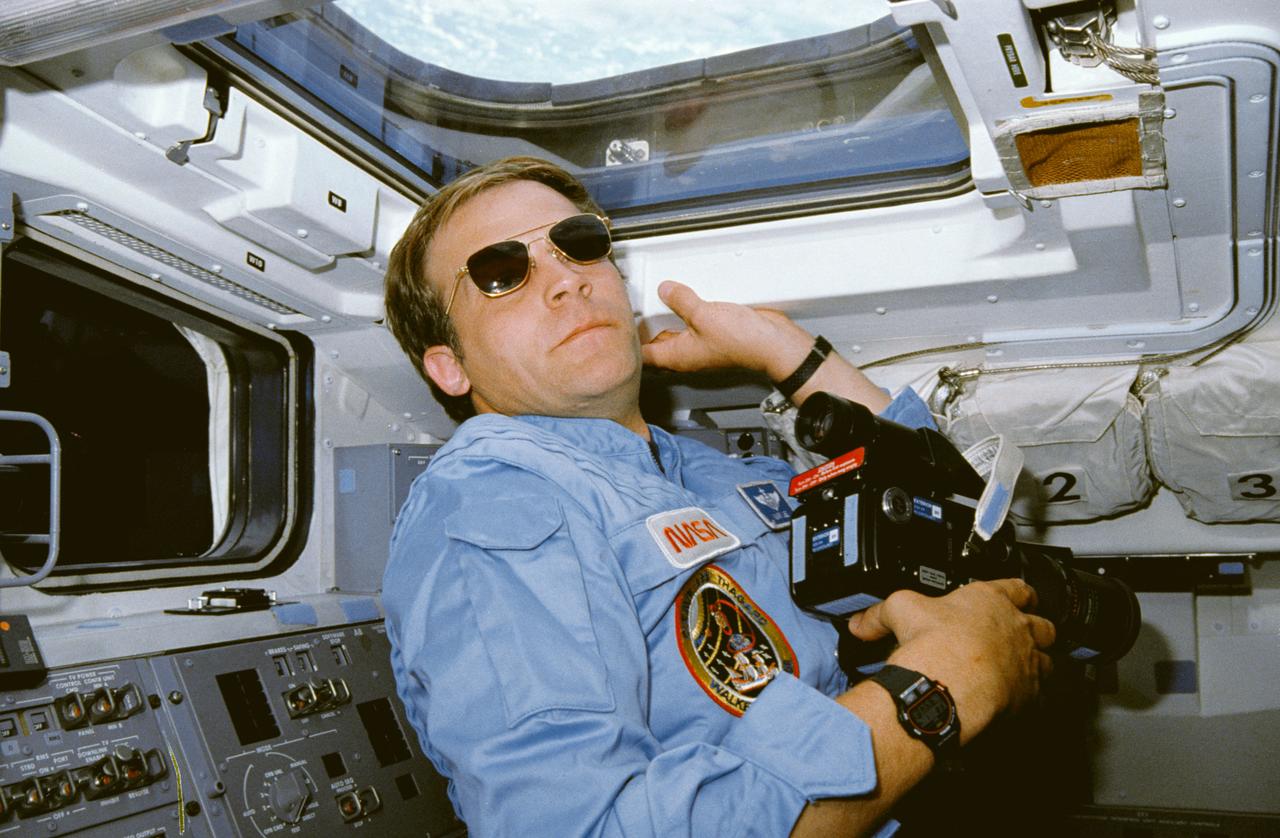
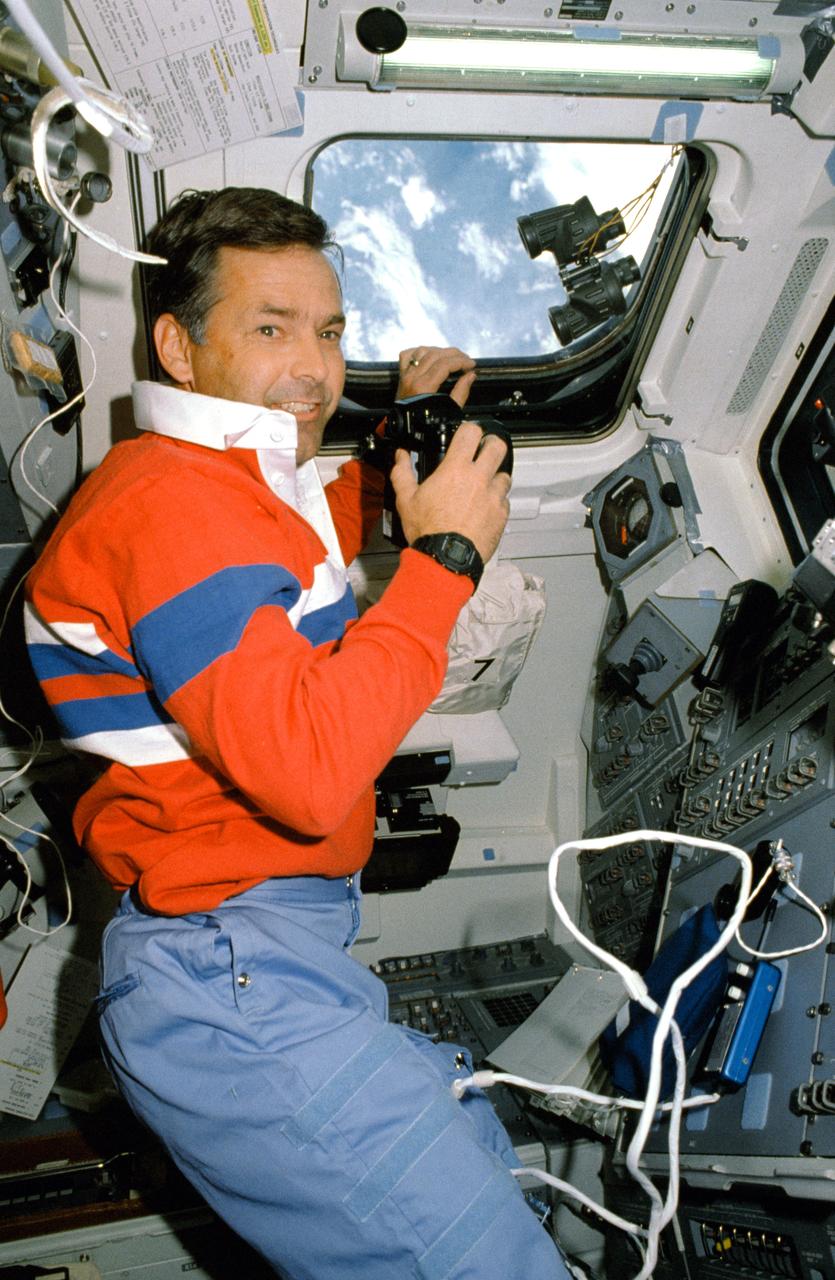
STS030-08-015 (4-8 May 1989) --- Astronaut Mark C. Lee, STS-30 mission specialist, pauses from a of Earth photography on Atlantis' aft flight deck.  He holds a 70mm camera. The scene was recorded with a 35mm camera.  The photo was in a group released by NASA following the completion of a four-day mission in space.
STS-30 MS Lee, wearing sunglasses, uses 70mm camera on aft flight deck
Five astronauts composed the STS-30 crew. Pictured (left to right) are Ronald J. Grabe, pilot; David M. Walker, commander; and mission specialists Norman E. Thagard, Mary L. Cleave, and Mark C. Lee. The STS-30 mission launched aboard the Space Shuttle Atlantis on May 4, 1989 at 2:46:59pm (EDT). The primary payload was the Magellan/Venus Radar mapper spacecraft and attached Inertial Upper Stage (IUS).
Space Shuttle Projects
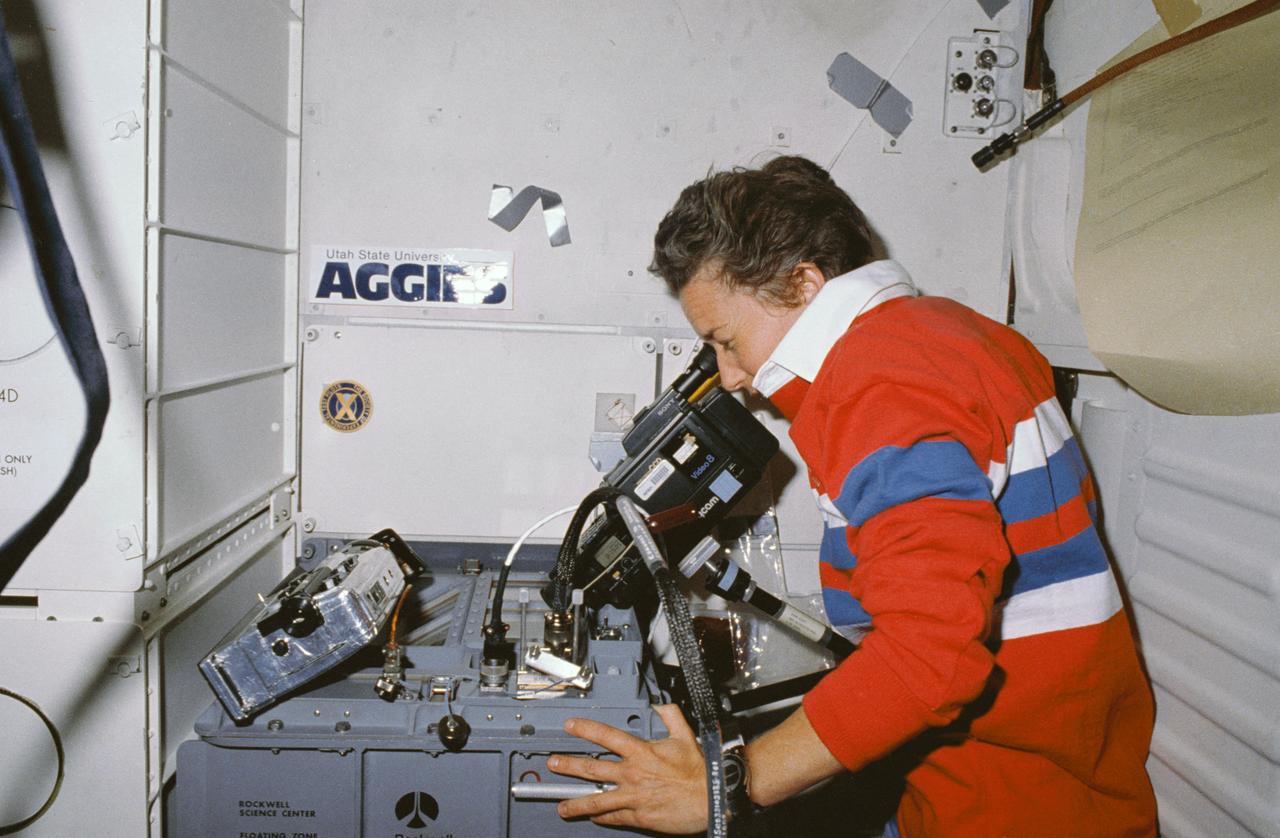
STS030-10-002 (8 May 1989) --- STS-30 Mission Specialist Mary L. Cleave operates 8mm video camcorder at Fluids Experiment Apparatus 2 (FEA-2) (SK73-000102) unit located in aft middeck locker onboard Atlantis, Orbiter Vehicle (OV) 103. Two 8mm video camcorders are positioned above FEA-2 unit to record experiment titled "Floating Zone Crystal Growth and Purification". Rockwell International (RI) through its Space Transportation Systems Division, Downey, California, is engaged in a joint endeavor agreement (JEA) with NASA's Office of Commercial Programs in the field for floating zone crystal growth research. Utah State University Aggies decal appears on aft bulkhead above FEA-2 unit.
STS-30 MS Cleave uses camcorder to record FEA-2 crystal growth
STS030-S-123 (8 May 1989) --- The Space Shuttle Atlantis glides toward a landing on the Mojave Desert after spending just over four full days in space.  Aboard were astronauts David. M. Walker, Ronald J. Grabe, Norman E. Thagard, Mary L. Cleave and Mark C. Lee.  Moments later, the spacecraft?s landing gear came to a stop at 12:44:33 P.M. (PDT), 8 May 1989.  It landed on runway 22, a concrete facility, like a number of other NASA flights.  Still others have landed on unpaved dry lakebed strips.
STS-30 Atlantis, OV-104, glides toward landing at EAFB, California
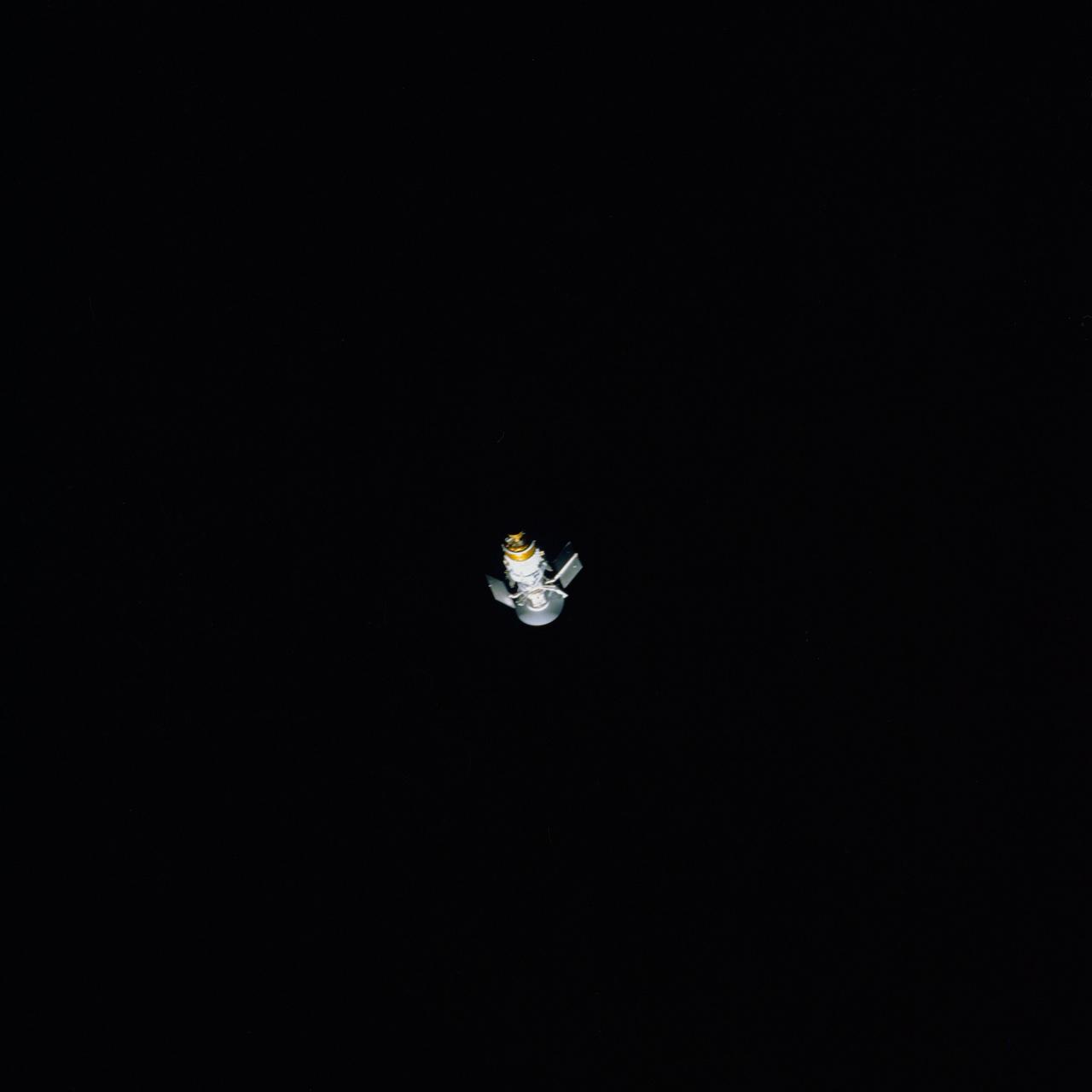
STS030-71-052 (4 May 1989) --- In the early evening hours of the Space Shuttle Atlantis' first day in space for the four-day mission, the Magellan spacecraft begins its long journey to the planet Venus for an extensive radar mapping mission.  The scene was photographed through Atlantis' aft flight deck windows with a handheld 70mm camera.
STS-30 deployment of inertial upper stage (IUS) with Magellan spacecraft
Only moments away from ignition, Atlantis, Orbiter Vehicle (OV) 104, and its five member crew are the subjects of concern drawing serious countenance in this scene in the Flight Control Room (FCR) of JSC's Mission Control Center (MCC) Bldg 30. Ascent Flight Director Alan L. Briscoe, monitors the Kennedy Space Center pre-launch activity from the flight director (FD) console, along with Ronald D. Dittemore (center) and N. Wayne Hale, Jr.
Flight directors at JSC MCC Bldg 30 monitor STS-30 prelaunch activities
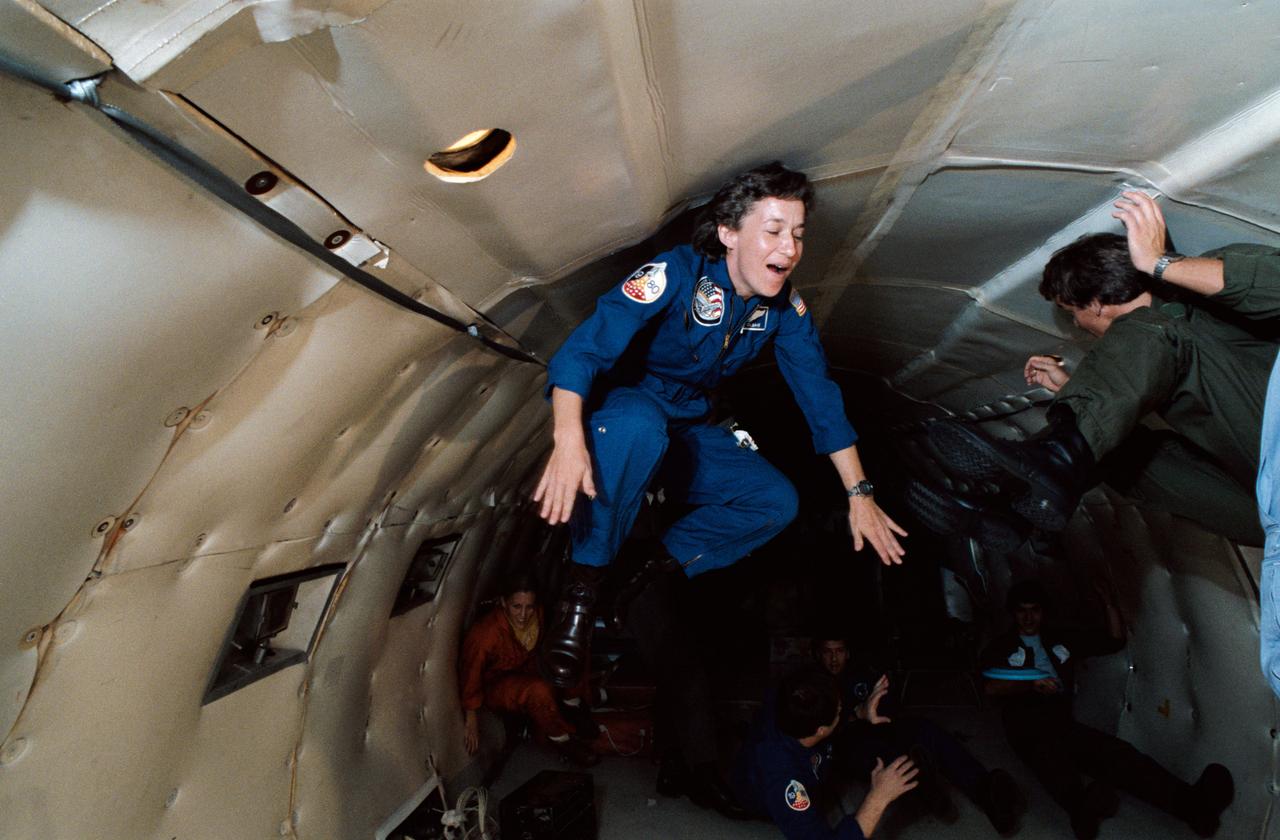
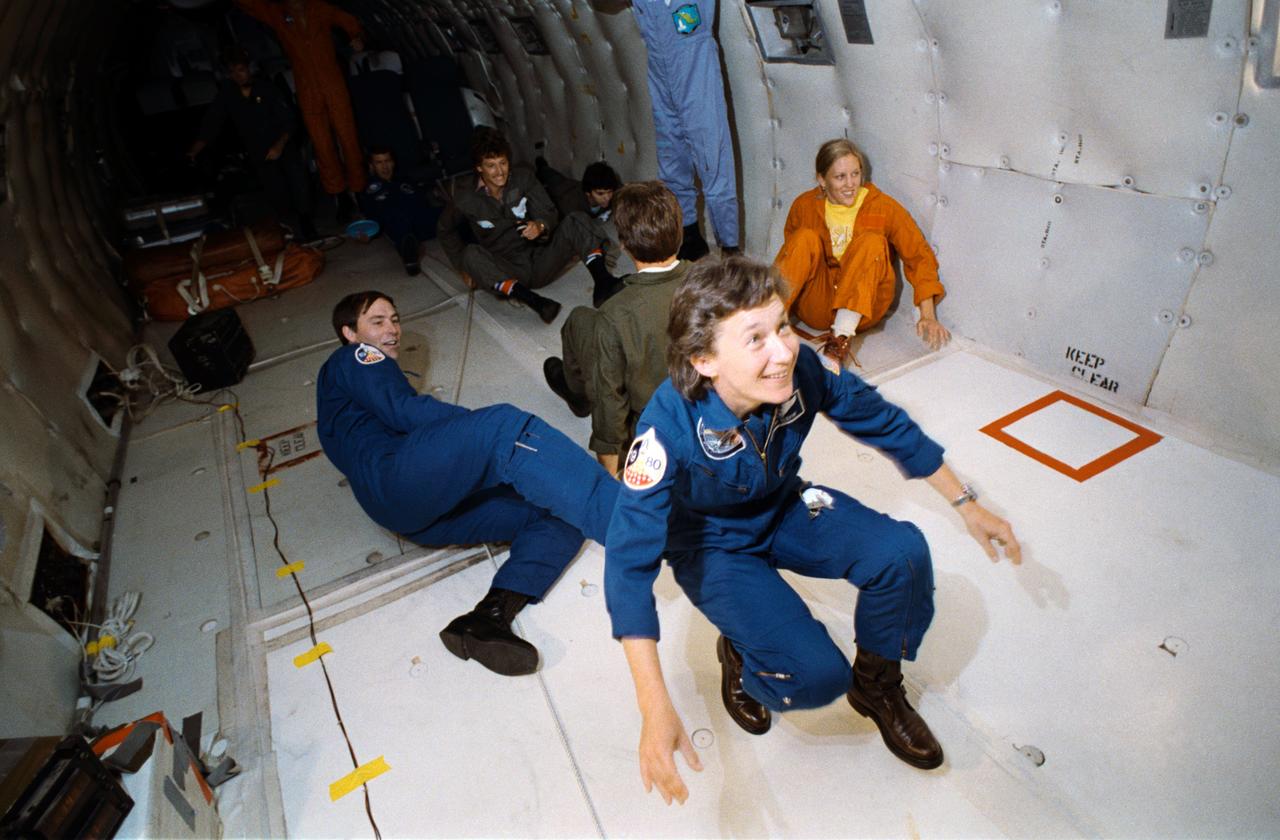
KC-135 inflight training of the STS-30/61B Crew for suit donning doffing and Zero-G orientation for Rudolfo Neri, Astronaut Mary Cleave, and Ricardo Peralta, Backup Neri.          1. Astronaut Cleave, Mary - Zero-G    2. Neri, Rodolfo - Zero-G    3. Peralta, Ricard - Zero-G
Crew Training - STS-30/61B (Zero-G)
KC-135 inflight training of the STS-30/61B Crew for suit donning doffing and Zero-G orientation for Rudolfo Neri, Astronaut Mary Cleave, and Ricardo Peralta, Backup Neri.          1. Astronaut Cleave, Mary - Zero-G    2. Neri, Rodolfo - Zero-G    3. Peralta, Ricard - Zero-G
Crew Training - STS-30/61B (Zero-G)
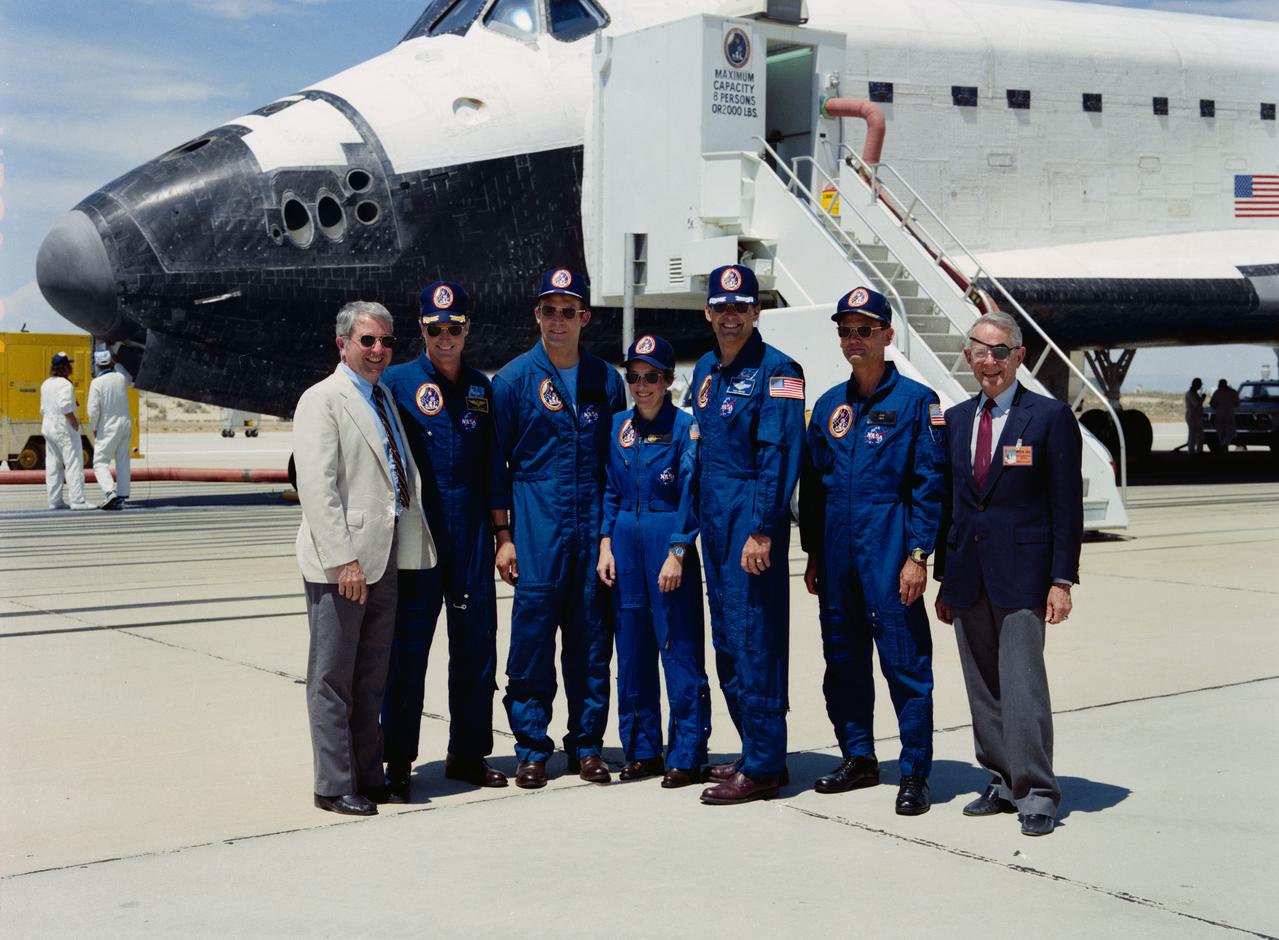
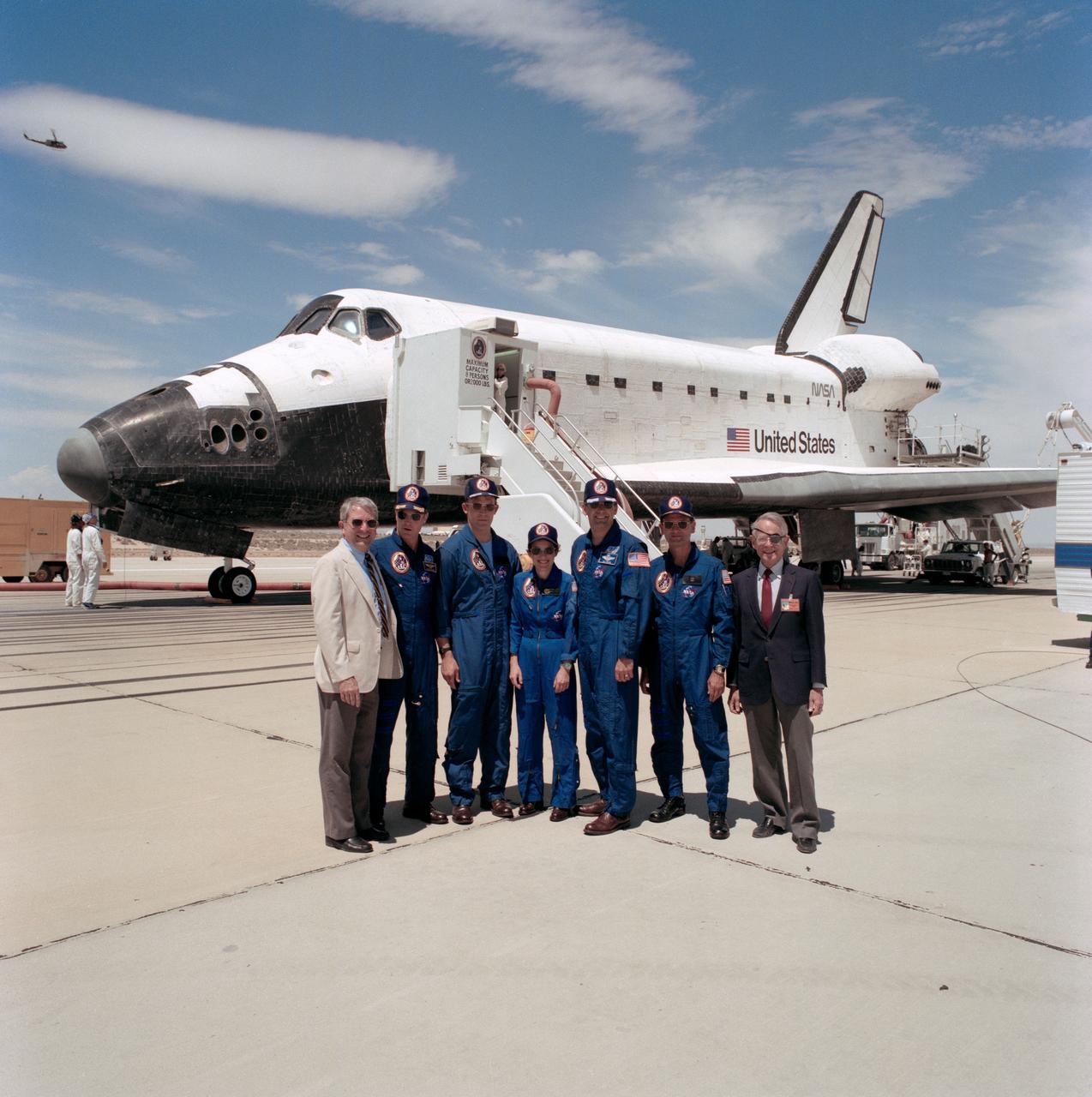
STS030-S-129 (8 May 1989) --- Astronaut crew members who manned the Space Shuttle Atlantis for just over four days pose with NASA officials following the safe landing of their spacecraft (which forms the backdrop for the picture).  Left to right are Rear Admiral Richard H. Truly, acting NASA Administrator; astronauts David M. Walker, Mark C. Lee, Mary L. Cleave, Ronald J. Grabe and Norman E. Thagard; and Dale D. Myers, NASA Deputy Administrator.
STS-30 crew poses with NASA administrators in front of OV-104 on EAFB runway
STS030-S-128 (8 May 1989) --- Space Shuttle Atlantis? landing gear has just appeared and the spacecraft, with five astronaut crewmembers aboard, heads for a smooth landing on runway 22 at Edwards Air Force Base in southern California.  Onboard the spacecraft were astronauts David M. Walker, Ronald J. Grabe, Norman E. Thagard, Mary L. Cleave and Mark C. Lee.  The crew spend just over four full days in space, having released the Magellan spacecraft toward Venus on the first day.
STS-30 Atlantis, OV-104, landing approach to runway 22 at EAFB, California
STS030-S-130 (8 May 1989) --- Astronaut crew members who manned the Space Shuttle Atlantis for just over four days pose with NASA officials following the safe landing of their spacecraft (which forms the backdrop for the picture). Left to right are Rear Admiral Richard H. Truly, acting NASA Administrator; astronauts David M. Walker, Mark C. Lee, Mary L. Cleave, Ronald J. Grabe and Norman E. Thagard; and Dale D. Myers, NASA Deputy Administrator.
STS-30 crew poses with NASA administrators in front of OV-104 on EAFB runway
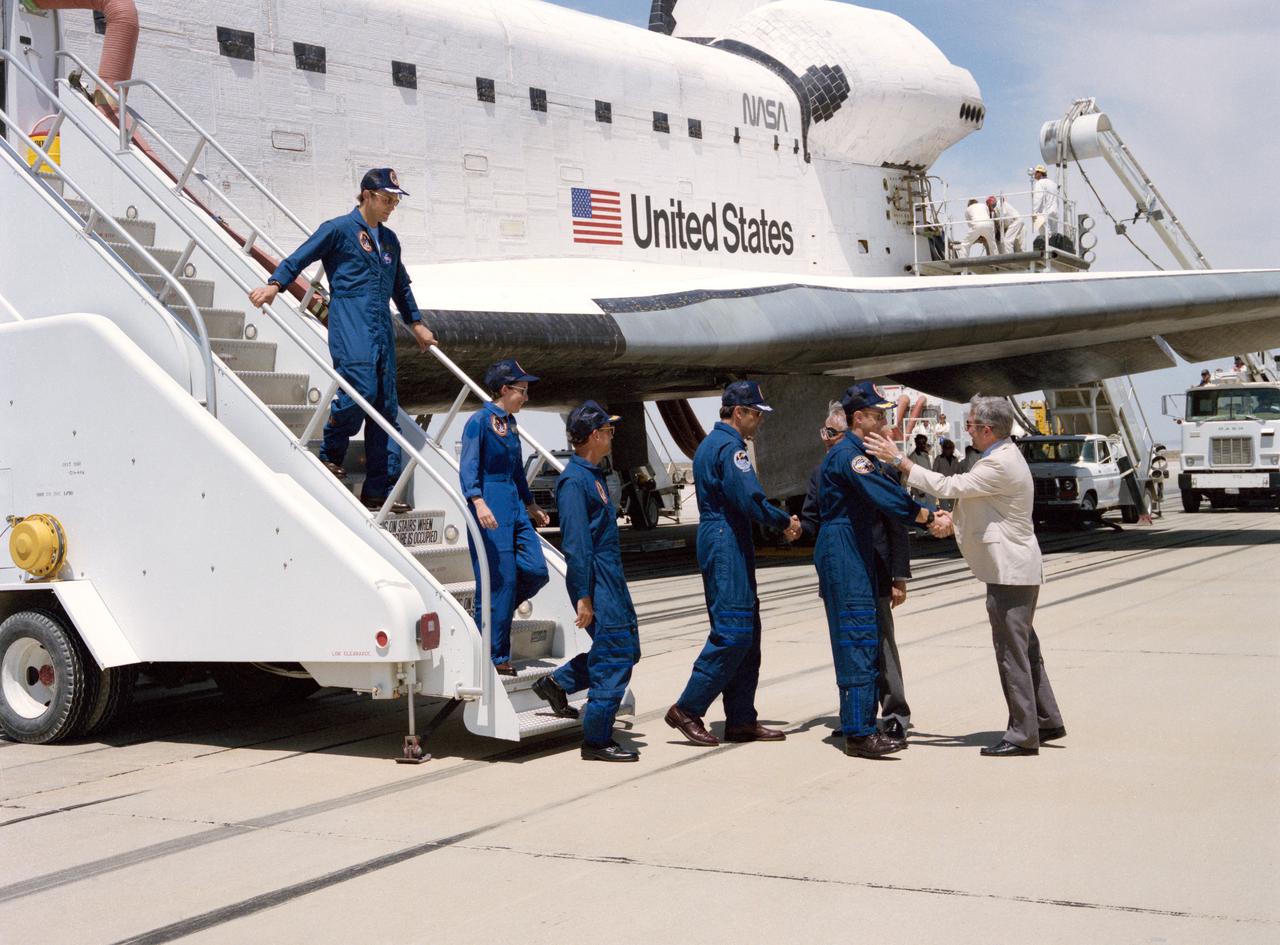
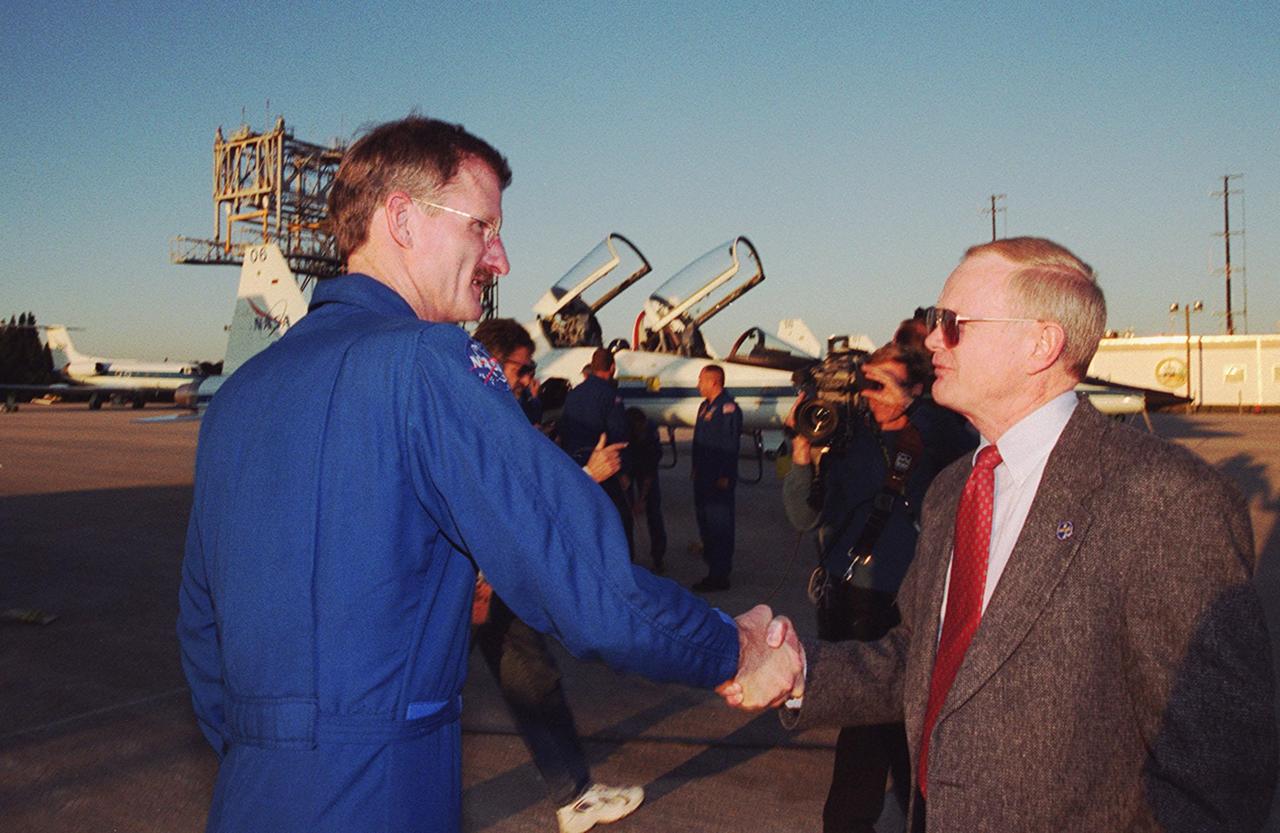
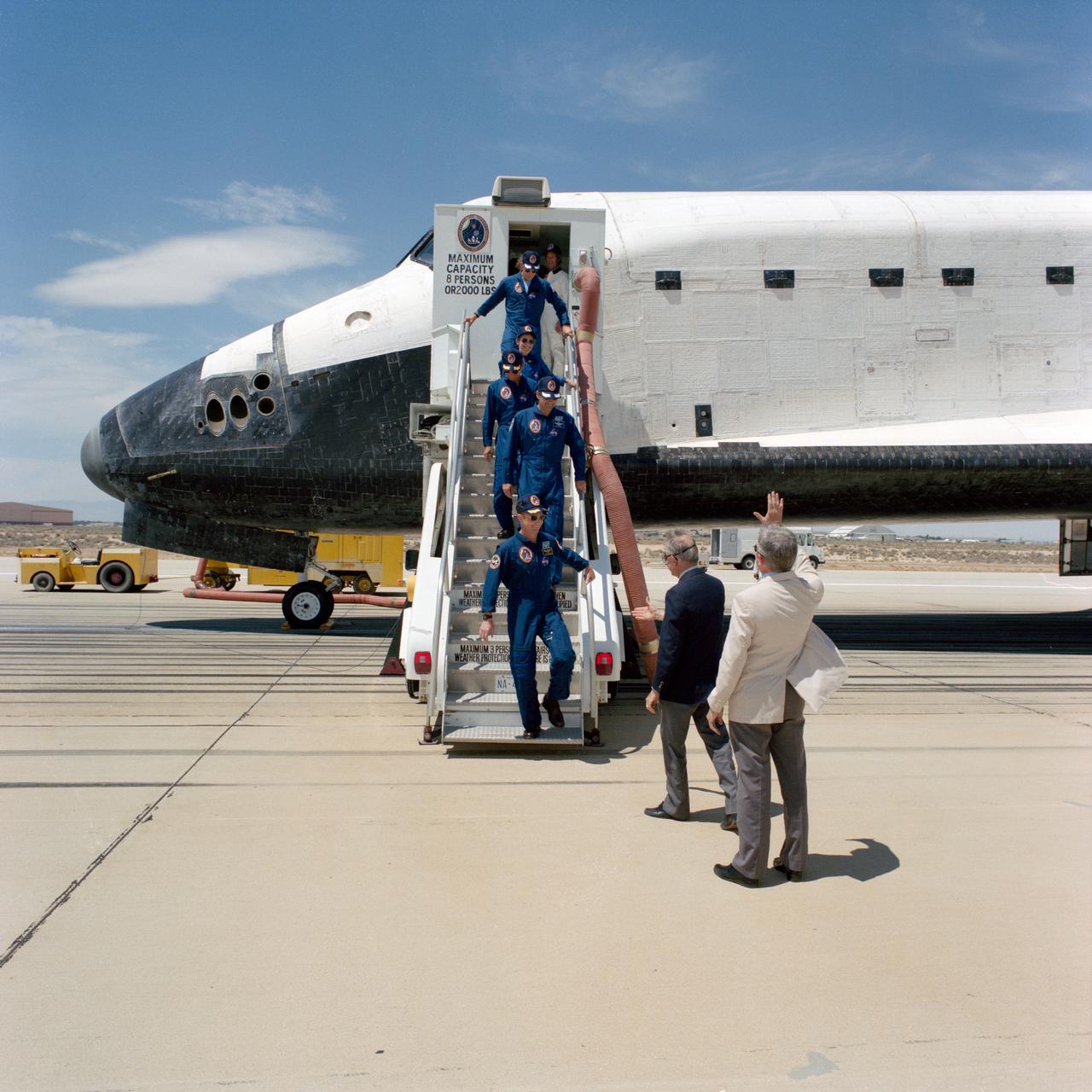
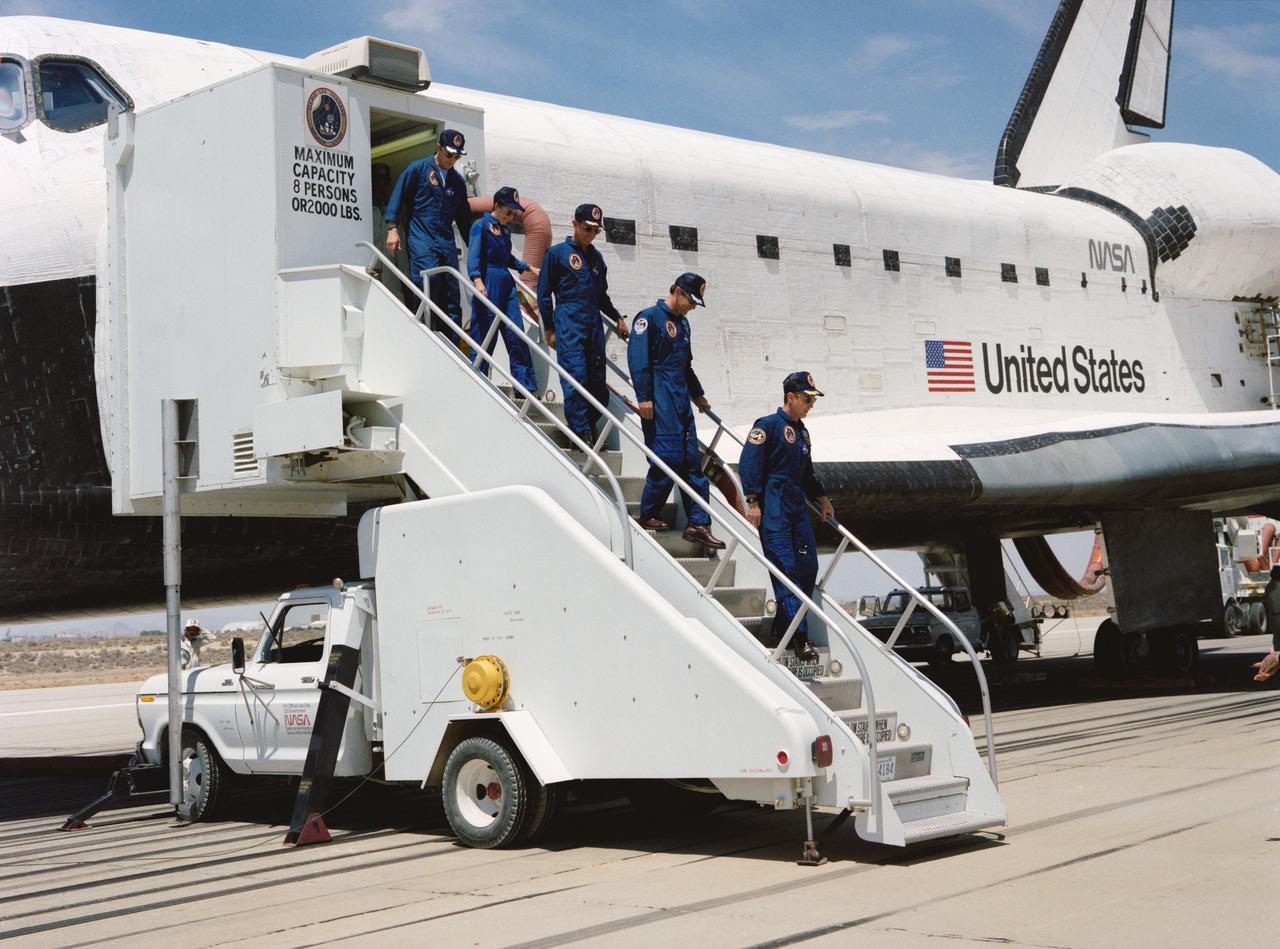
STS030-S-131 (8 May 1989) --- Crewmembers who spent just over four full days in space aboard Space Shuttle Atlantis egress their temporary home for a welcome meeting with terra firma. Astronaut David M. Walker, mission commander, shakes hands with Rear Admiral Richard H. Truly, acting NASA Administrator.  Astronaut Ronald J. Grabe (center frame), pilot, is greeted by Dale D. Myers, Deputy Administrator.  Pictured behind Grabe, from bottom of steps to top, are astronauts Norman E. Thagard, Mary L. Cleave and Mark C. Lee, all mission specialists.  Minutes earlier, the spacecraft?s landing gear came to a stop at 12:44:33 P.M. (PDT), 8 May 1989.  It landed on runway 22, a concrete facility, like a number of other NASA flights.  Still others have landed on unpaved dry lakebed stripes.
STS-30 crew egressing OV-104 is greeted by NASA administrators at EAFB
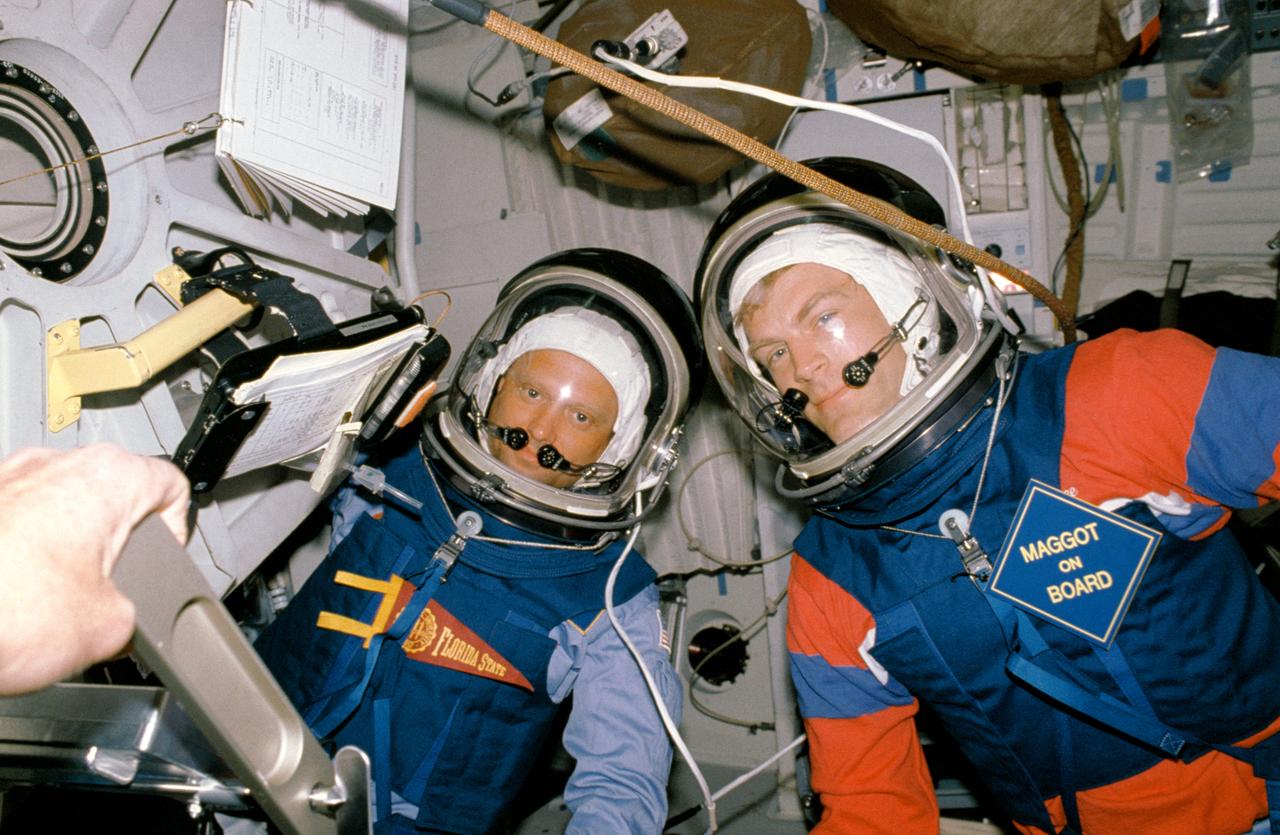
STS030-02-026 (6 May 1989) --- Two helmet-equipped STS-30 mission specialists participate in a 10.2 cabin depress test on mission day three aboard the earth-orbiting space shuttle Atlantis.  They are Norman E. Thagard, left, and Mark C. Lee.  The scene was made with a 35mm camera on Atlantis' middeck.
STS-30 crewmembers Thagard and Lee during onboard cabin depressurization test
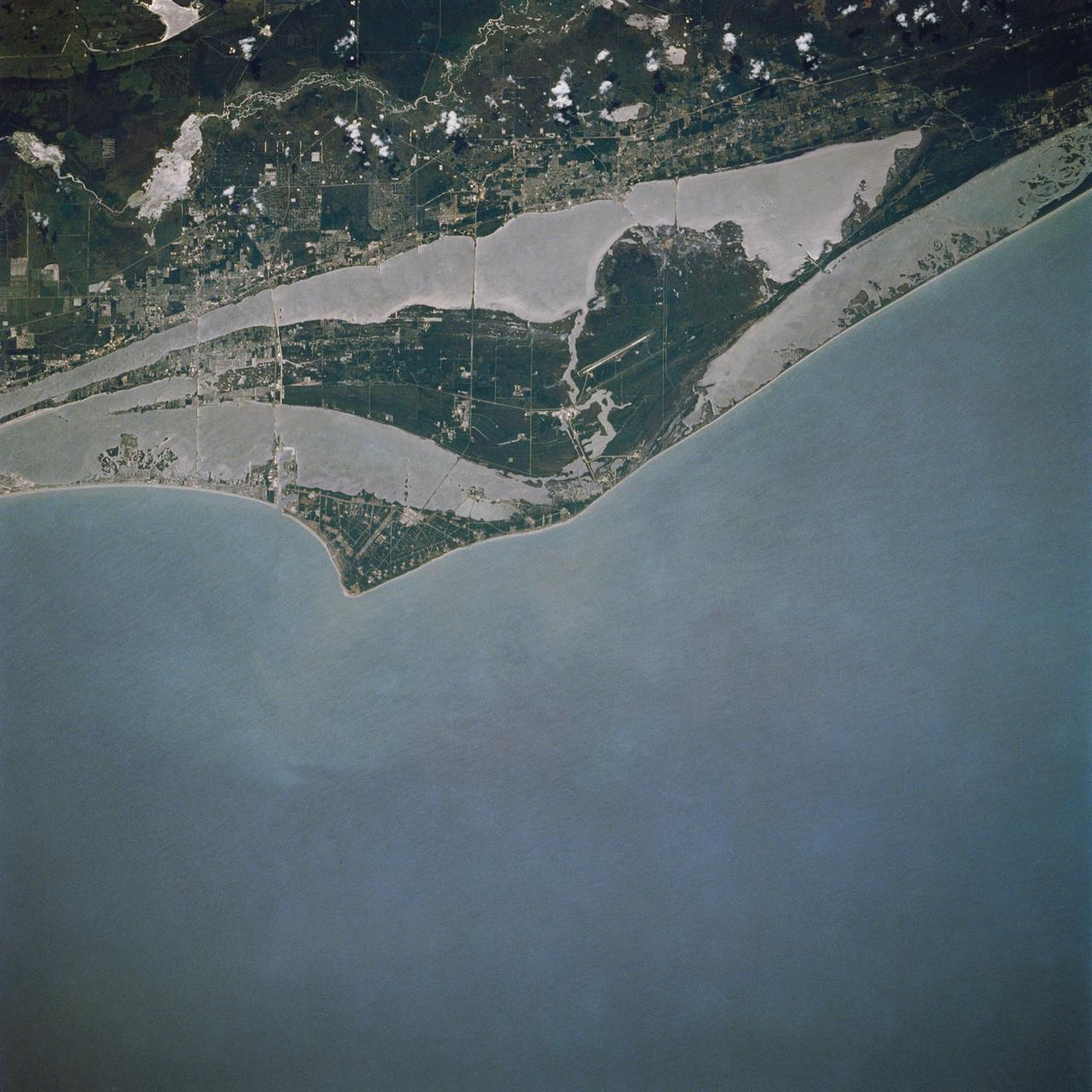
STS030-76-042 (4-8 May 1989) --- For two decades, astronauts have been photographing their launching area from space, but in terms of sharpness and clarity, NASA photo experts feel, few rival this  STS-30 vertical scene over the Cape Canaveral area. Sprinkled along the jutting cape feature are a number of launching pads of Kennedy Space Center, and nearby is seen the Shuttle landing facility. Titusville can be seen just above center on the north; Cocoa, Cocoa Beach and Merritt Island are south, near bottom of the frame.  St. Johns, Banana and Indian Rivers are easily traced as well.
Cape Canaveral and Kennedy Space Center, Florida
STS030-S-132 (8 May 1989) --- Crewmembers who spent just over four full days in space aboard Space Shuttle Atlantis egress their temporary home for a welcome meeting with terra firma. Pictured, from bottom of steps to top, are astronauts David M. Walker, Ronald J. Grabe, Norman E. Thagard, Mary L. Cleave and Mark C. Lee.  Minutes earlier, the spacecraft?s landing gear came to a stop at 12:44:33 P.M. (PDT), 8 May 1989.  It landed on runway 22, a concrete facility, like a number of other NASA flights.  Still others have landed on unpaved dry lakebed stripes.
STS-30 crew egresses OV-104 via stairway at Edwards Air Force Base (EAFB)
STS030-S-137 (8 May 1989) --- Crewmembers who spent four full days in space aboard Space Shuttle Atlantis egress their temporary home for a welcome meeting with terra firma. Pictured, from bottom of steps to top, are Astronauts David M.Walker, Ronald J. Grabe, Norman E. Thagard, Mary L. Cleave and Mark C. Lee. Rear Admiral Richard H. Truly (foreground), acting NASA Administrator, and Dale D. Myers, Deputy Administrator of NASA, await to greet the crewmembers.  Minutes earlier, the spacecraft's landing gear came to a stop at 12:44:33 p.m. (PDT), 8 May 1989.  It landed on Runway 22, a concrete facility, like a number of other NASA flights.  Still others have landed on unpaved dry lake bed strips.
STS-30 crew egresses OV-104 via stairway at Edwards Air Force Base (EAFB)
STS030-S-127 (8 May 1989) --- The space shuttle Atlantis, as seen in a low angle view on its glide in from Earth orbit, heads toward a concrete runway at Edwards Air Force Base in California. Onboard were astronauts David M. Walker, STS-30 commander; Ronald J. Grabe, pilot; and astronauts Norman E. Thagard, Mary L. Cleave and Mark C.  Lee ? all mission specialists.  Photo credit: NASA
STS-30 Atlantis, OV-104, glides toward a landing at EAFB, California
STS030-03-038   (4-8 May 1989) --- Astronaut Ronald J. Grabe, STS- 30 pilot, typifies the working mode of the entire five- member crew as he observes and photographs Earth from 160 nautical miles above. Grabe is on the aft flight deck, making use of two large overhead viewing windows. The scene was shown by the crew at its May 18, 1989 post-flight press conference.
STS-30 Pilot Grabe uses 35mm camera on aft flight deck
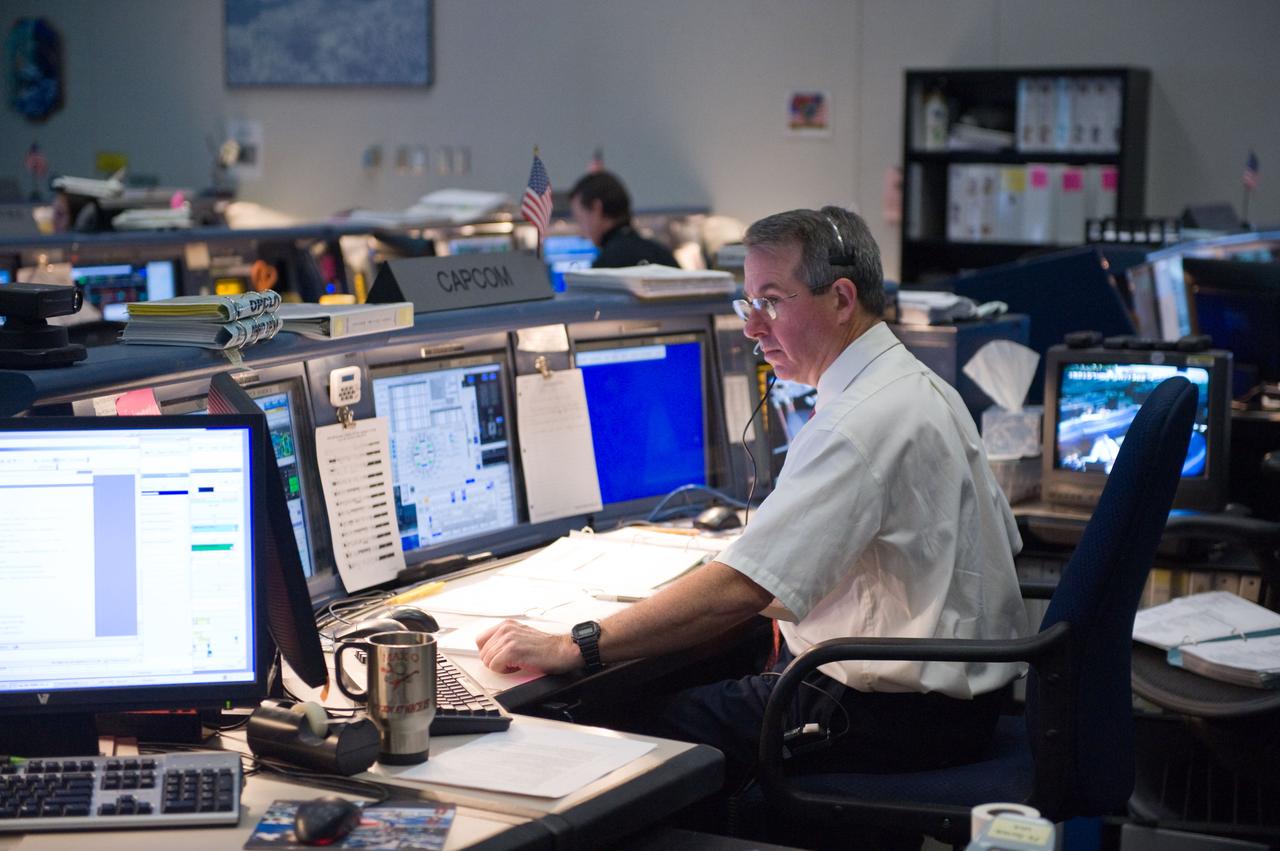
PHOTO DATE: 11-17-08 LOCATION: Bldg. 30 south - (Rooms) SUBJECT: STS-126 Flight Controllers on Console - (Orbit Shift1) - (Subject) PHOTOGRAPHER: BILL STAFFORD X34753
STS-126 Flight Controllers on Console - (Orbit Shift 1) - Bldg. 30 south.
S89-20025 (3 March 1989) --- The STS-30 patch depicts the joining of NASA's manned and unmanned space programs. The sun and inner planets of our solar system are shown with the curve connecting Earth and Venus symbolizing the shuttle orbit, the spacecraft trajectory toward Venus and its subsequent orbit around our sister planet. A Spanish caravel similar to the ship on the official Magellan program logo commemorates the 16th century explorer's journey and his legacy of adventure and discovery. Seven stars on the patch honor the crew of Challenger. The five-star cluster in the shape of the constellation Cassiopeia represent the five STS-30 crew members--astronauts David M. Walker, Ronald J. Grabe, Norman E. Thagard, Mary L. Cleave and Mark C. Lee-who collectively designed the patch.     The NASA insignia design for space shuttle flights is reserved for use by the astronauts and for other official use as the NASA Administrator may authorize. Public availability has been approved only in the forms of illustrations by the various news media. When and if there is any change in this policy, which is not anticipated, the change will be publicly announced. Photo credit: NASA
STS-30 ATLANTIS - ORBITER VEHICLE (OV)-104 - CREW INSIGNIA
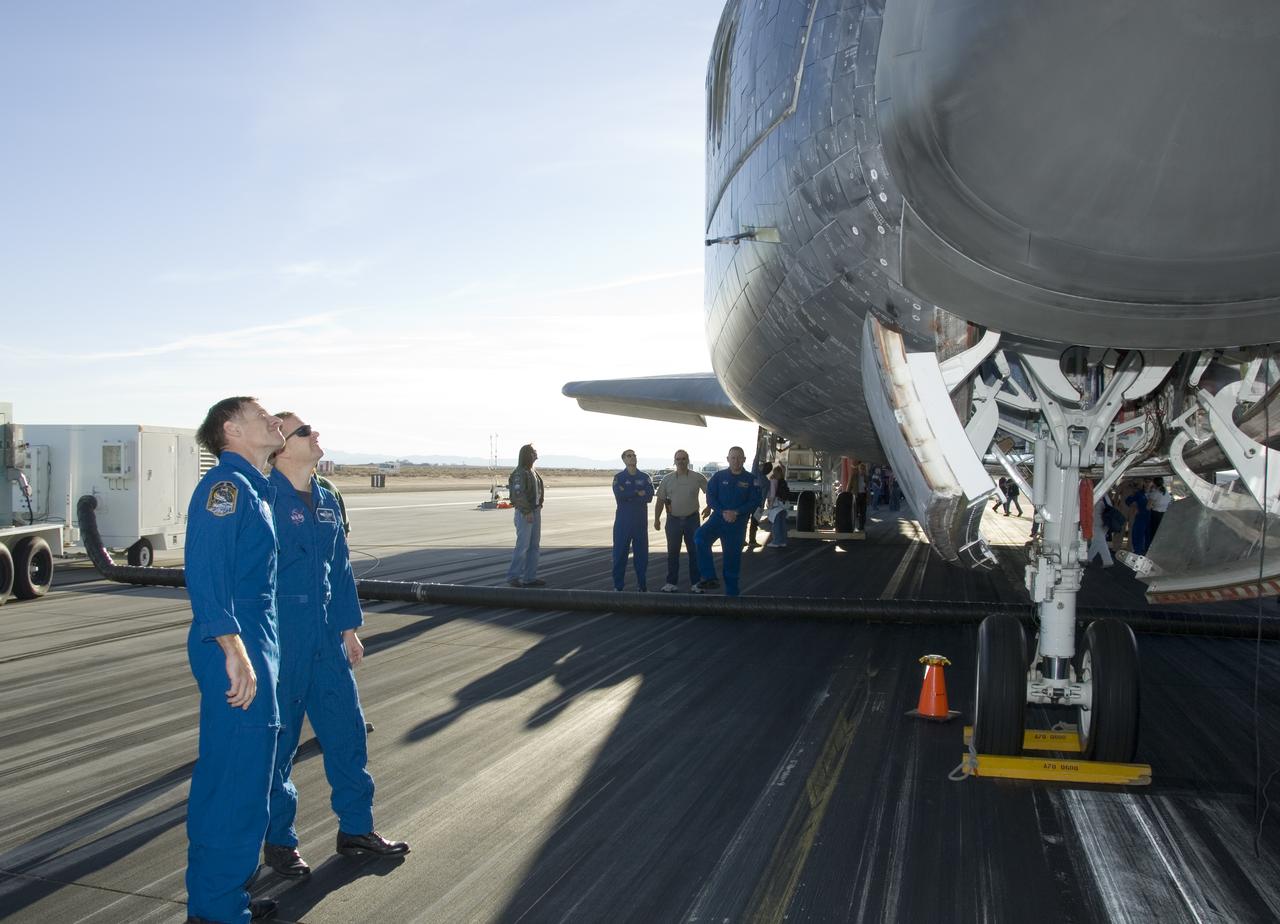
STS-126 commander Chris Ferguson and pilot Eric Boe examine shuttle Endeavour's thermal protection system following the STS-126 landing at Edwards AFB Nov. 30.
STS-126 commander Chris Ferguson and pilot Eric Boe examine shuttle Endeavour's thermal protection system following the STS-126 landing at Edwards AFB Nov. 30
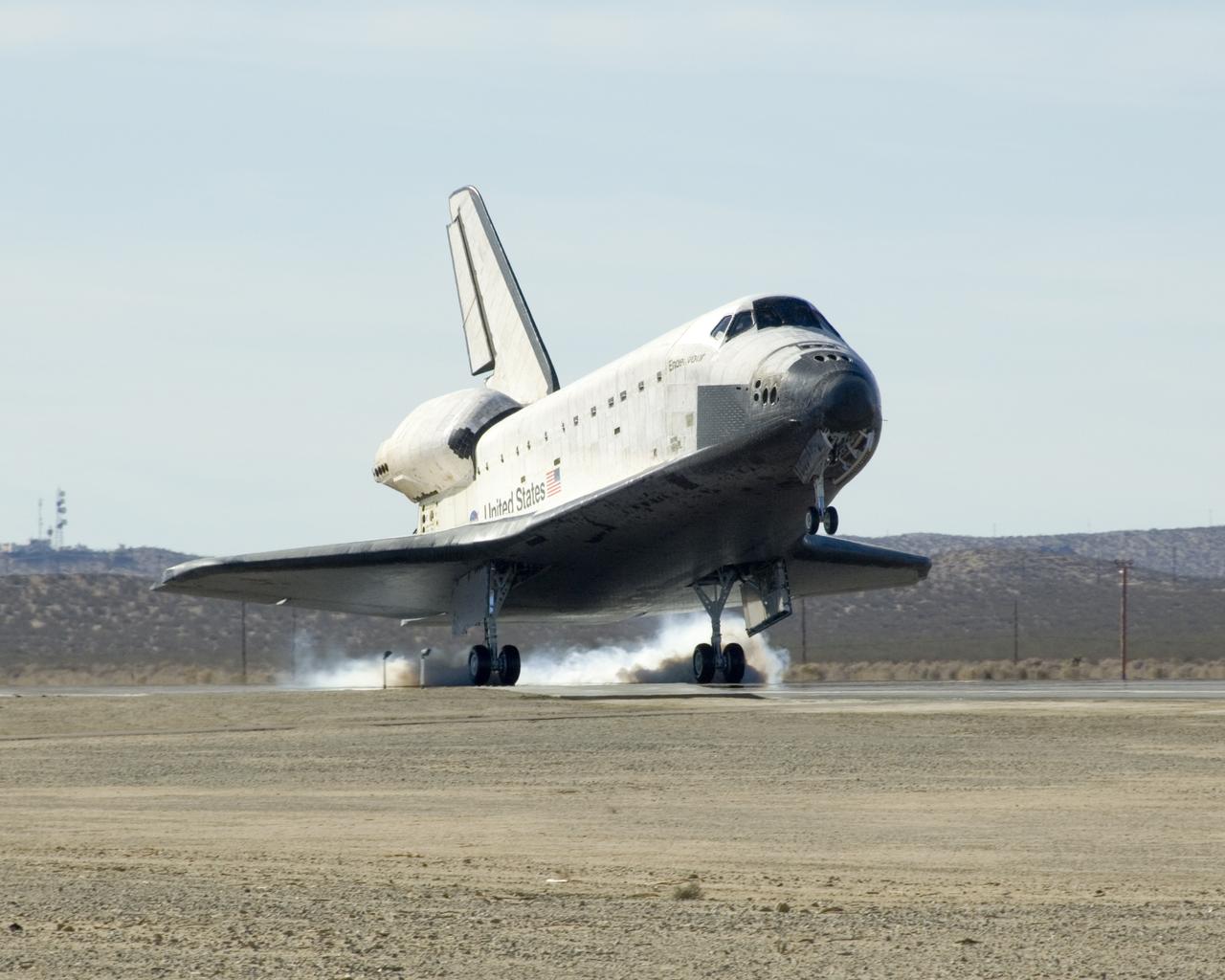
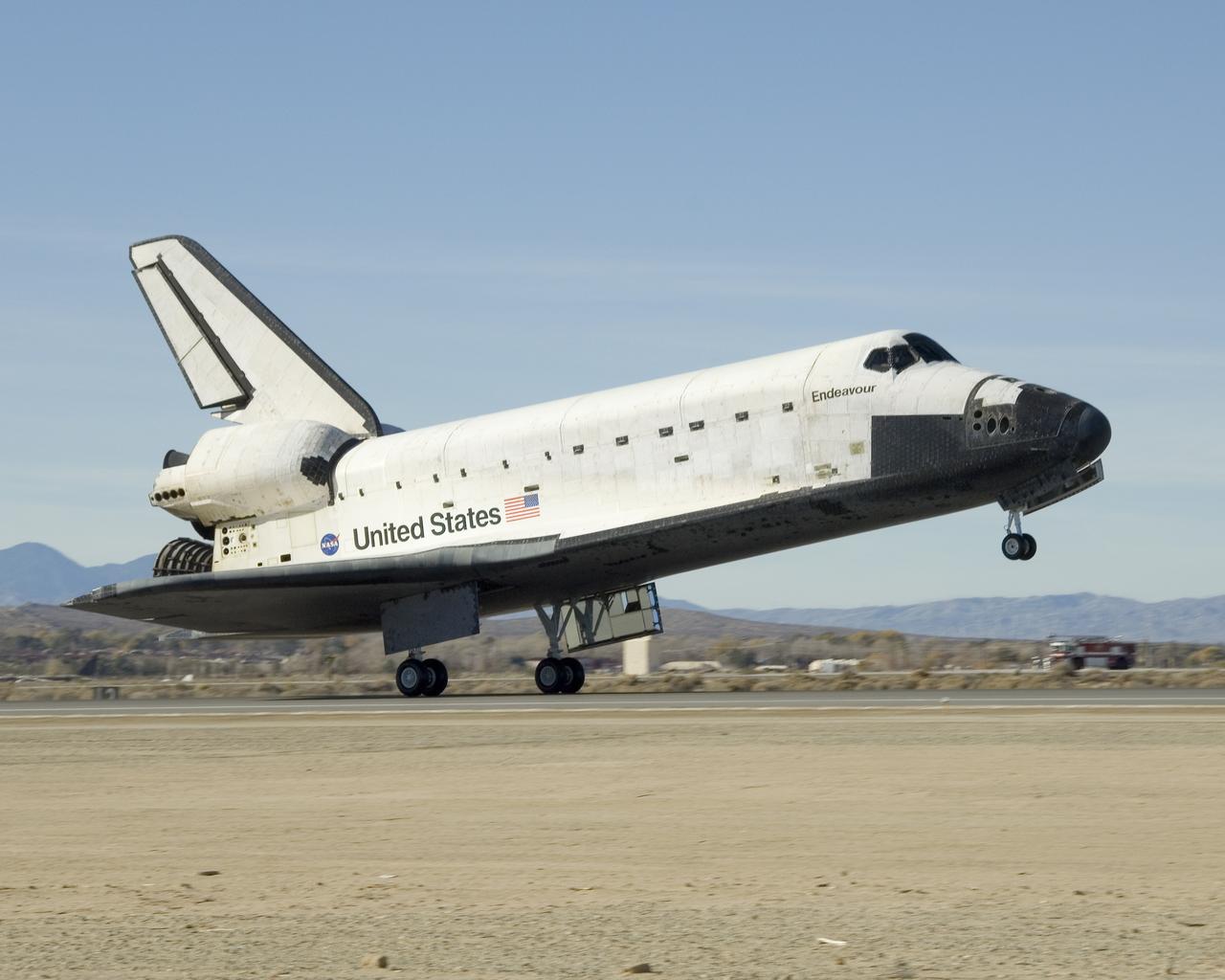
Space Shuttle Endeavour touches down at Edwards Air Force Base Nov. 30, 2008 to conclude mission STS-126 to the International Space Station.
Space Shuttle Endeavour touches down at Edwards Air Force Base Nov. 30, 2008 to conclude mission STS-126 to the International Space Station
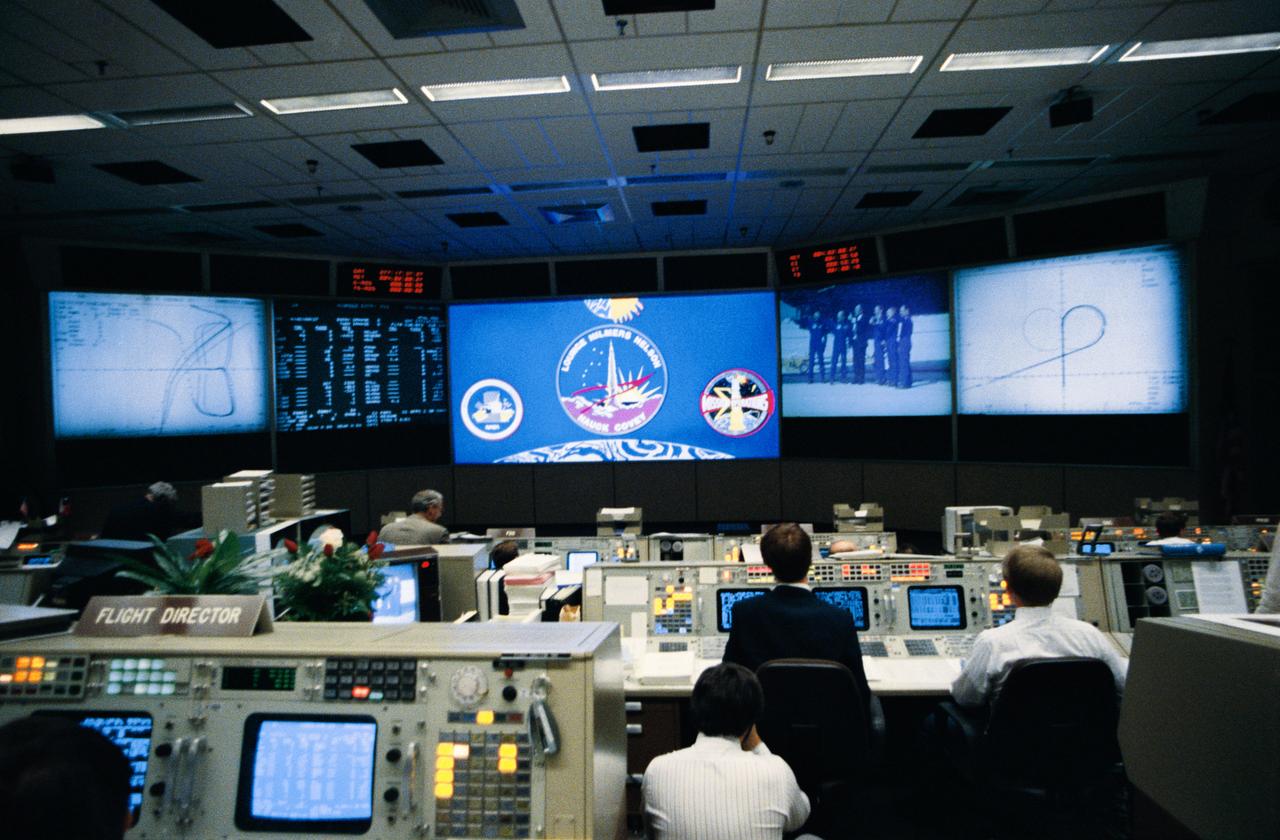
JSC Mission Control Center (MCC) Bldg 30 flight control room (FCR) personnel monitor STS-26 post landing activities and ceremonies at Edwards Air Force Base (EAFB) via their monitors. Displayed on front screens are approach and landing diagrams, data, the space shuttle program insignia, the STS-26 mission insignia, the Mission Operations Directorate insignia, and the STS-26 crew standing in front of Discovery, Orbiter Vehicle (OV) 103.
JSC MCC Bldg 30 personnel monitor STS-26 post landing activities
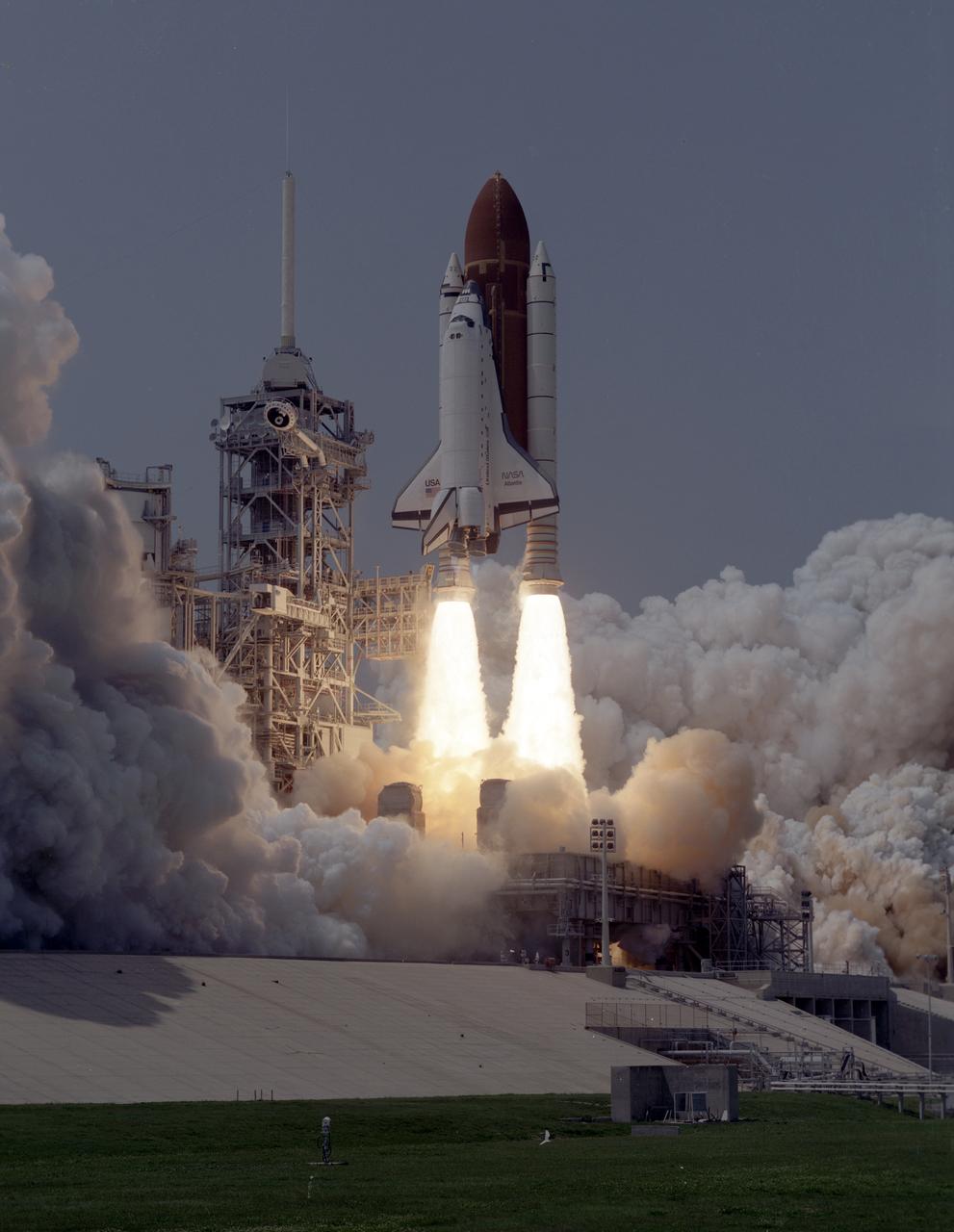
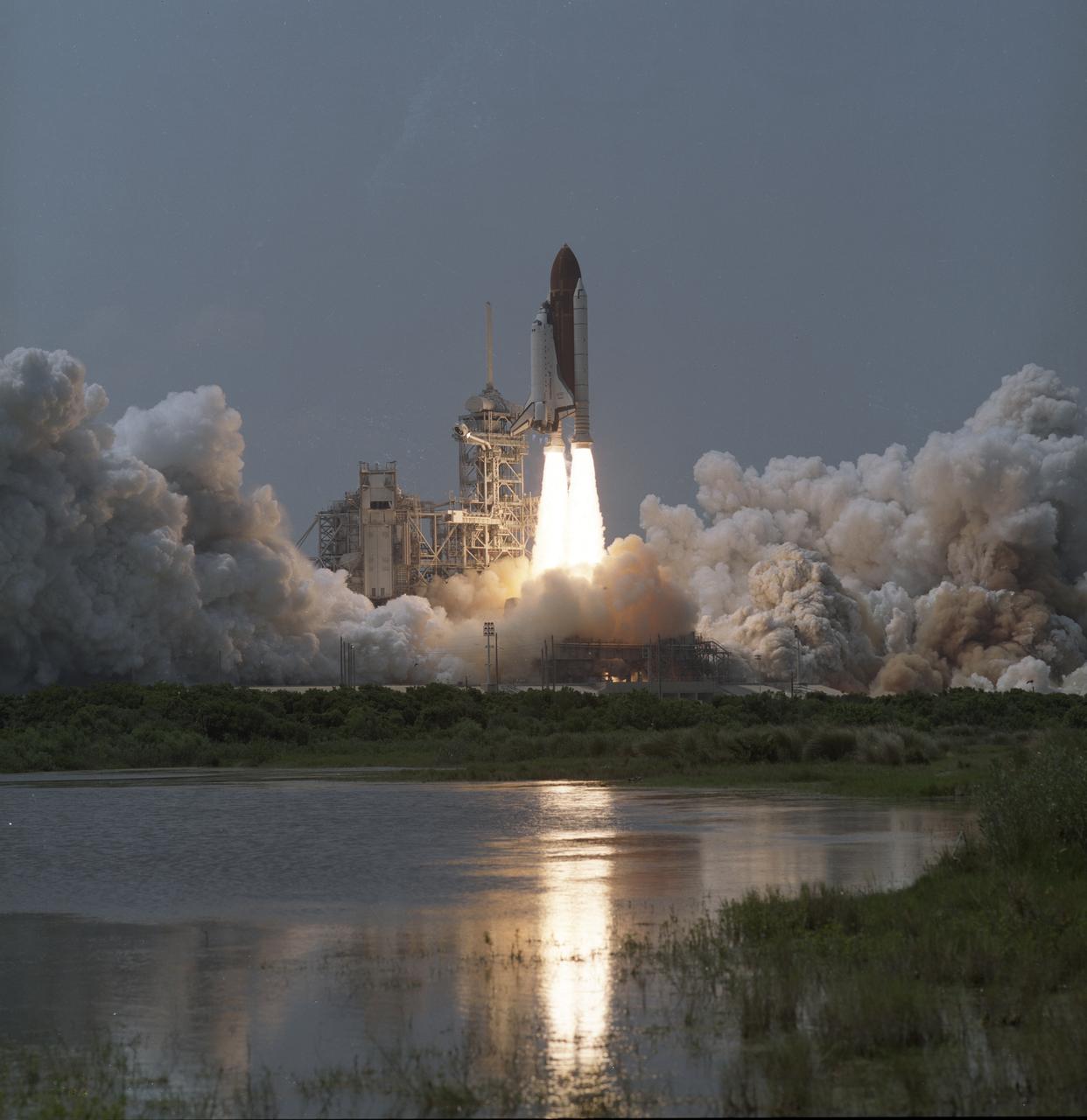
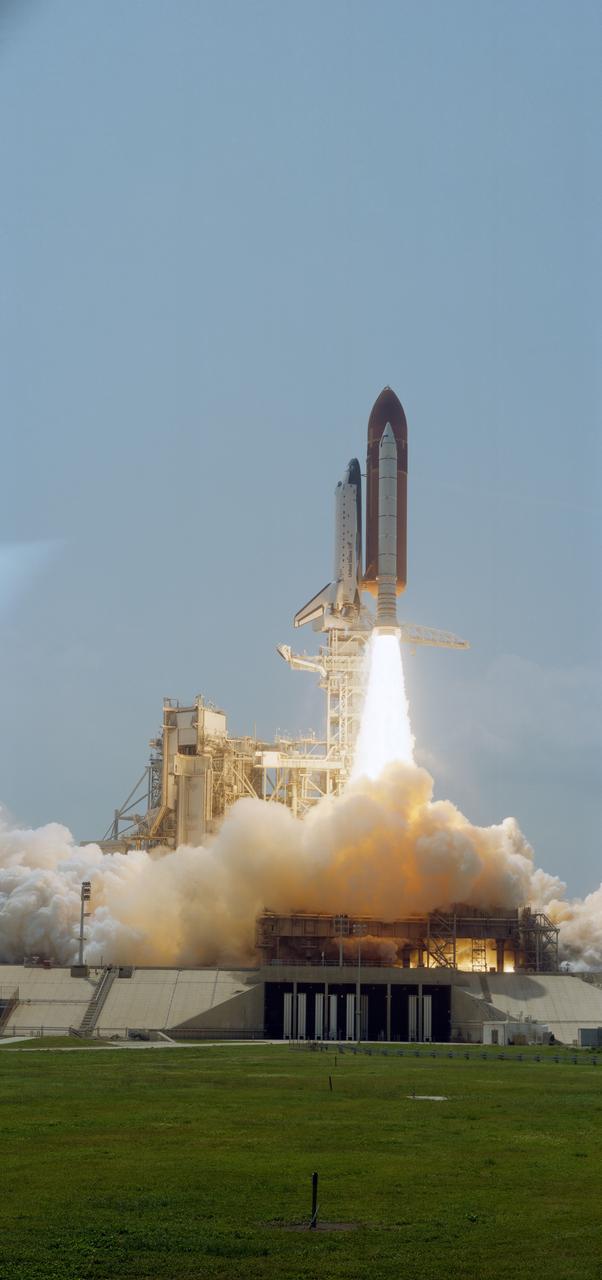
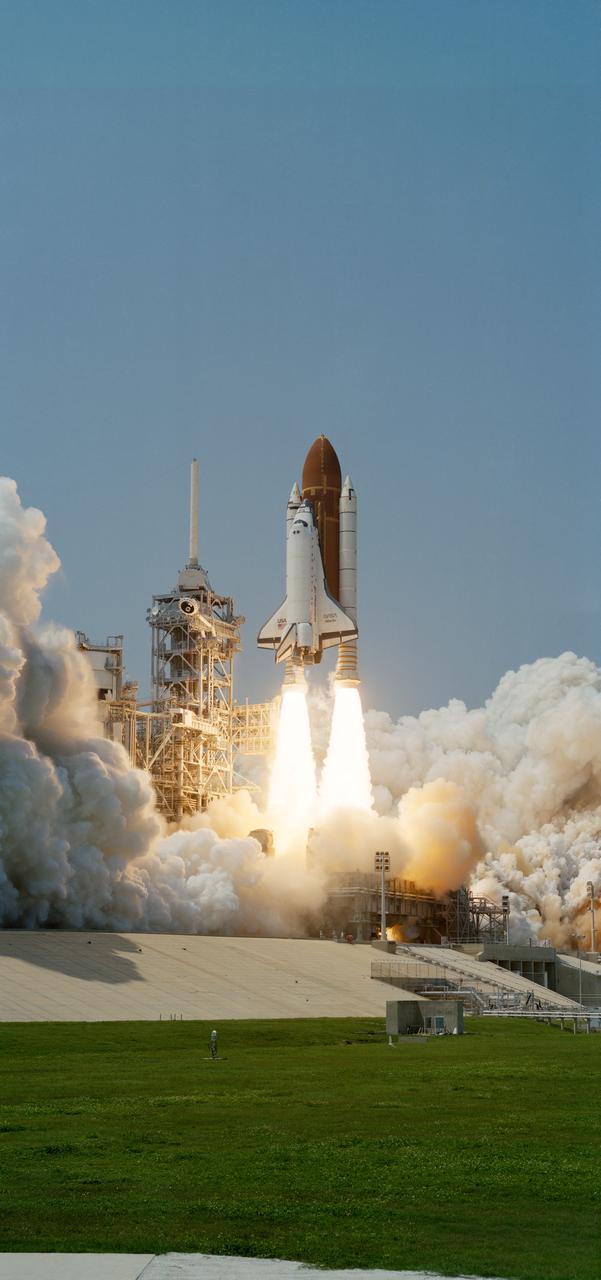
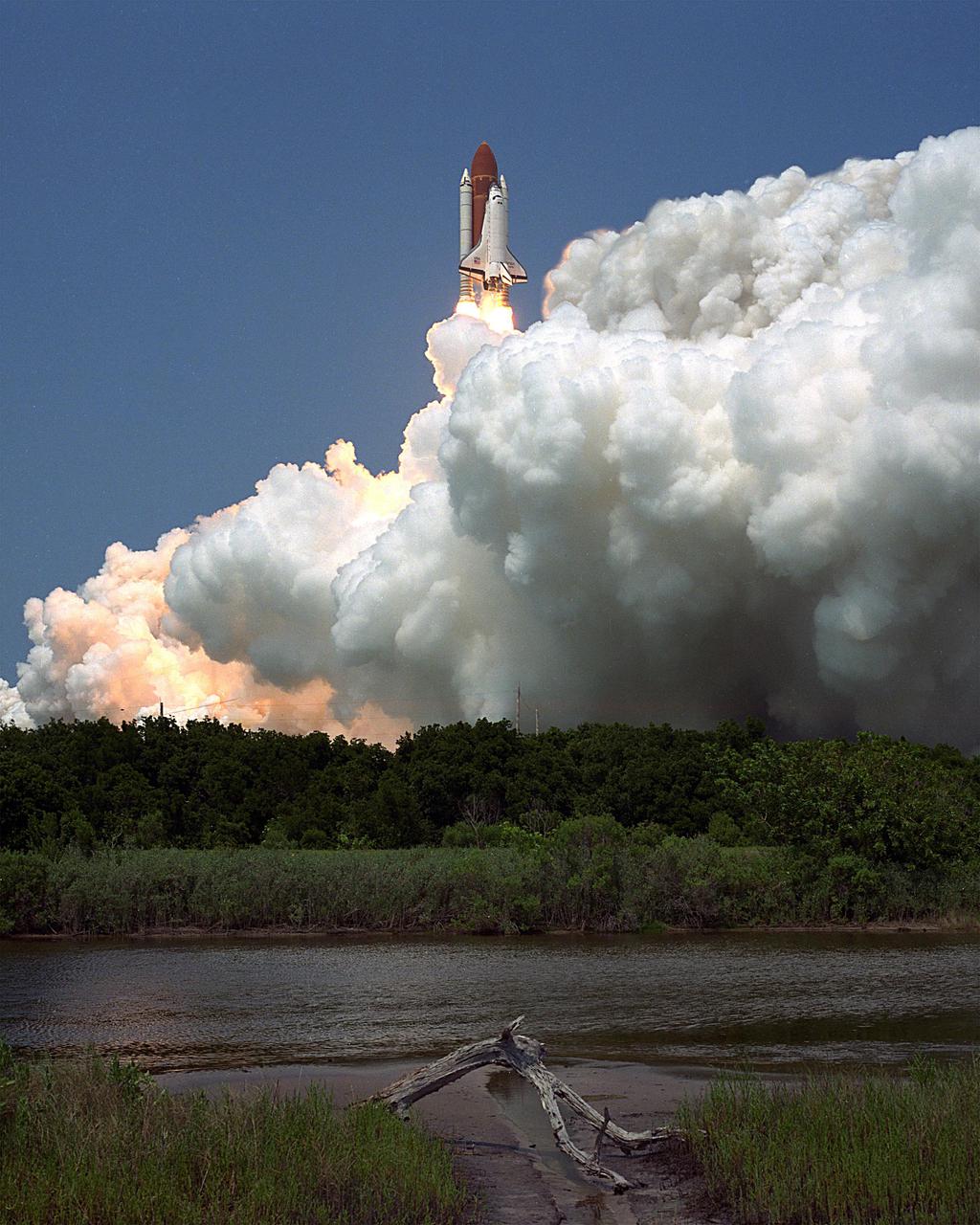
STS030-S-109 (4 May 1989) --- Moments after ignition, Space Shuttle Atlantis heads for a four-day mission in Earth-orbit with five astronaut crew members aboard.  Onboard were astronauts David M. Walker, Ronald. J. Grabe, Norman E. Thagard, Mary L. Cleave and Mark C. Lee.  Launch occurred at 2:46:58  p.m. (EDT), May 4, 1989.
STS-30 Atlantis, OV-104, lifts off from KSC LC Pad 39B
STS030-S-108 (4 May 1989) --- Backdropped against slight gray Florida skies, Space Shuttle Atlantis heads for a four-day mission in earth orbit with five astronaut crewmembers aboard.  Onboard were astronauts David. M. Walker, Ronald J. Grabe, Norman E. Thagard, Mary L. Cleave and Mark C. Lee.  Launch occurred at 2:46:58 P.M. (EDT), May 4, 1989.
STS-30 Atlantis, OV-104, lifts off from KSC LC Pad 39B
Lead flight director James M. Heflin, Jr answers question at STS-34's thirty days before launch (T-30) press briefing conducted in the JSC Auditorium and Public Affairs Facility Bldg 2 briefing room.
STS-34 MCC lead flight director James M. Heflin, Jr at T-30 press briefing
STS-34 Atlantis, Orbiter Vehicle (OV) 104, Pilot Michael J. McCulley reflects on a question during the thirty days before launch (T-30) press briefing in the JSC Auditorium and Public Affairs Facility Bldg 2 briefing room.
STS-34 Pilot Michael J. McCulley during T-30 press briefing at JSC
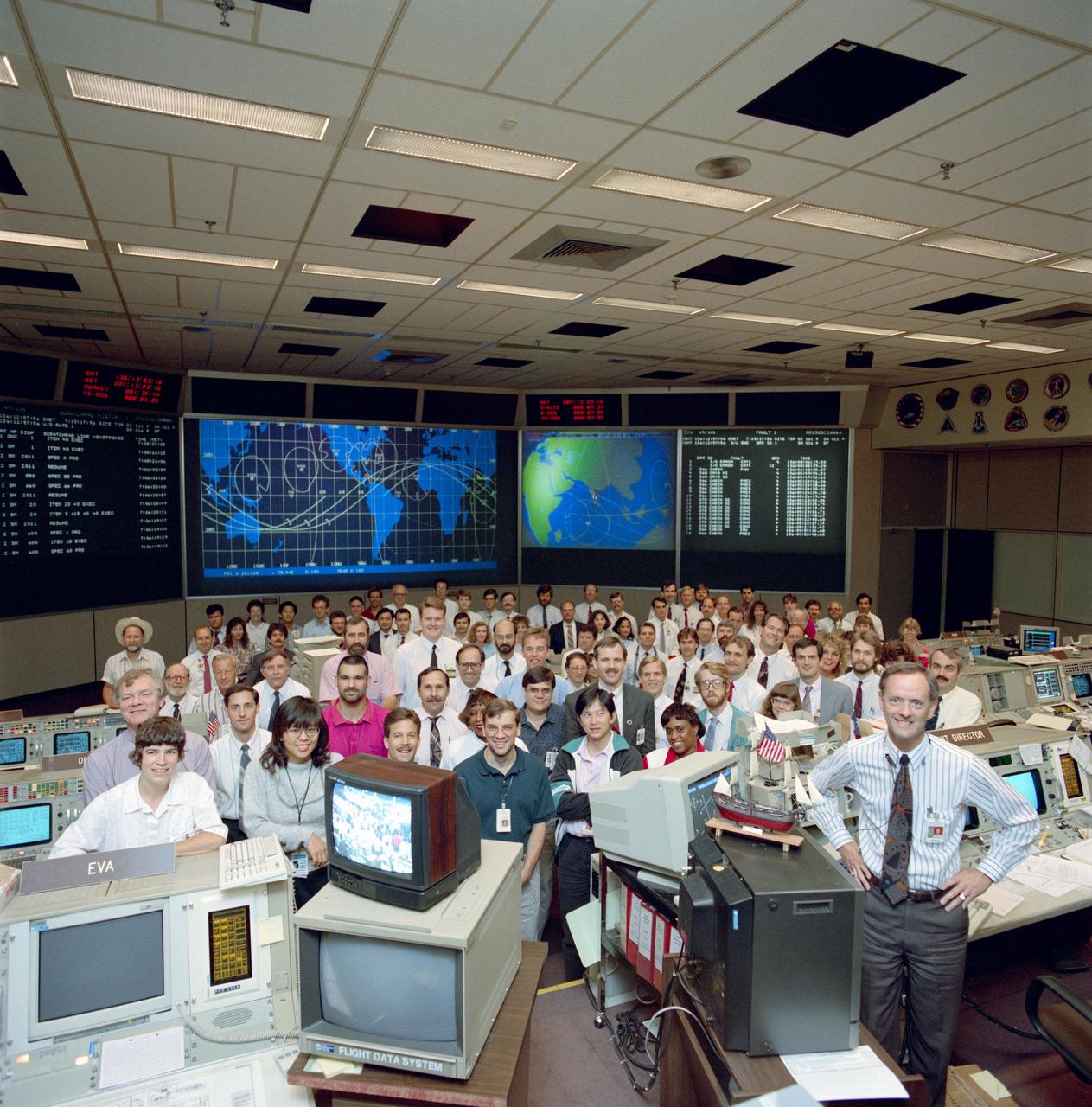
S92-36606 (20 May 1992) --- STS-49 Endeavour, Orbiter Vehicle (OV) 105, Planning Team with Flight Director (FD) James M. Heflin, Jr. (front right next to ship model) poses in Johnson Space Center?s (JSC) Mission Control Center (MCC) Bldg 30 Flight Control Room (FCR). The group stands in front of visual displays projecting STS-49 data and ground track map.
STS-49 Endeavour, Orbiter Vehicle (OV) 105, Planning Team in MCC Bldg 30 FCR
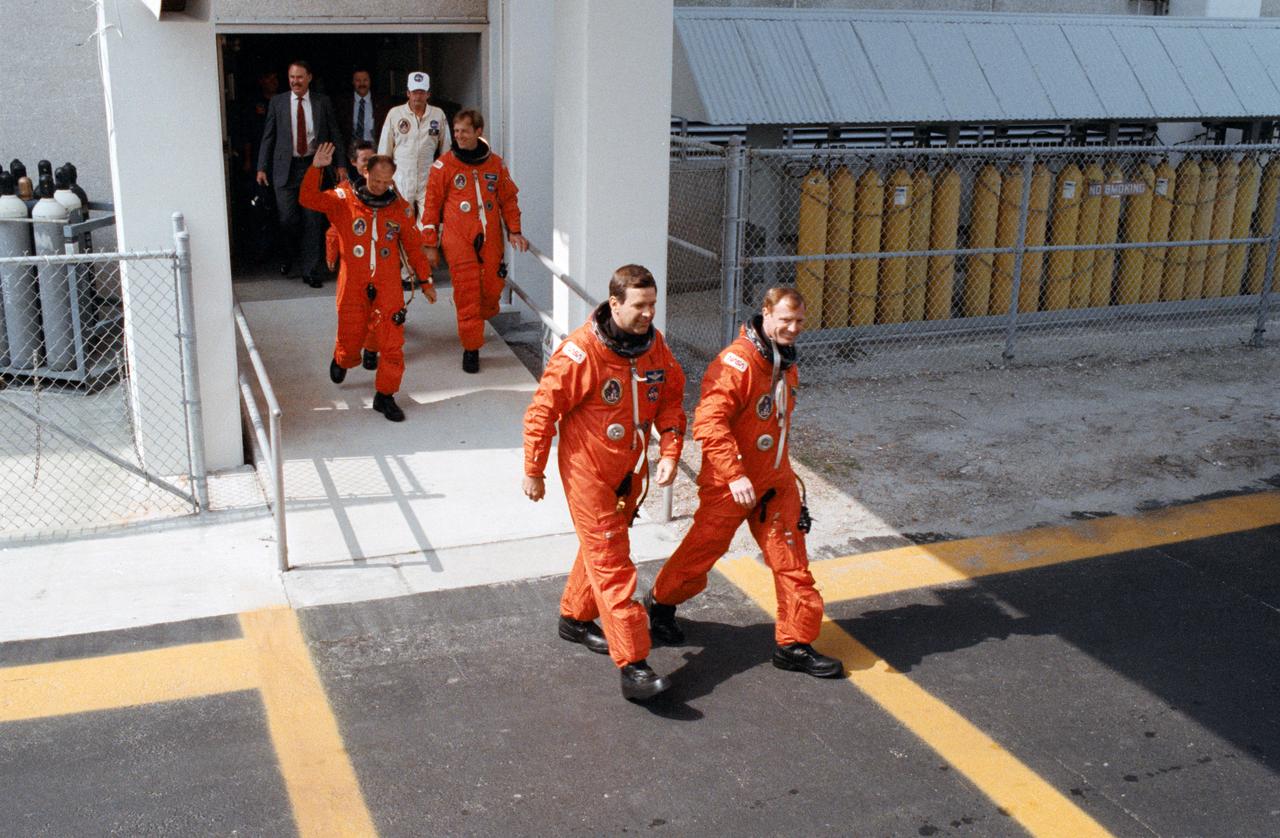
STS030-S-139 (4 May 1989) --- The five astronaut crewmembers of STS-30 leave the operations and checkout building en route to a transfer van that will take them to Pad 39B for a date with the Space Shuttle Atlantis. From front to back are Astronauts David M. Walker, Ronald J. Grabe, Norman E. Thagard, Mark C. Lee (aside) and Mary L.  Cleave.
STS-30 crewmembers leave KSC O&C Bldg during launch preparations
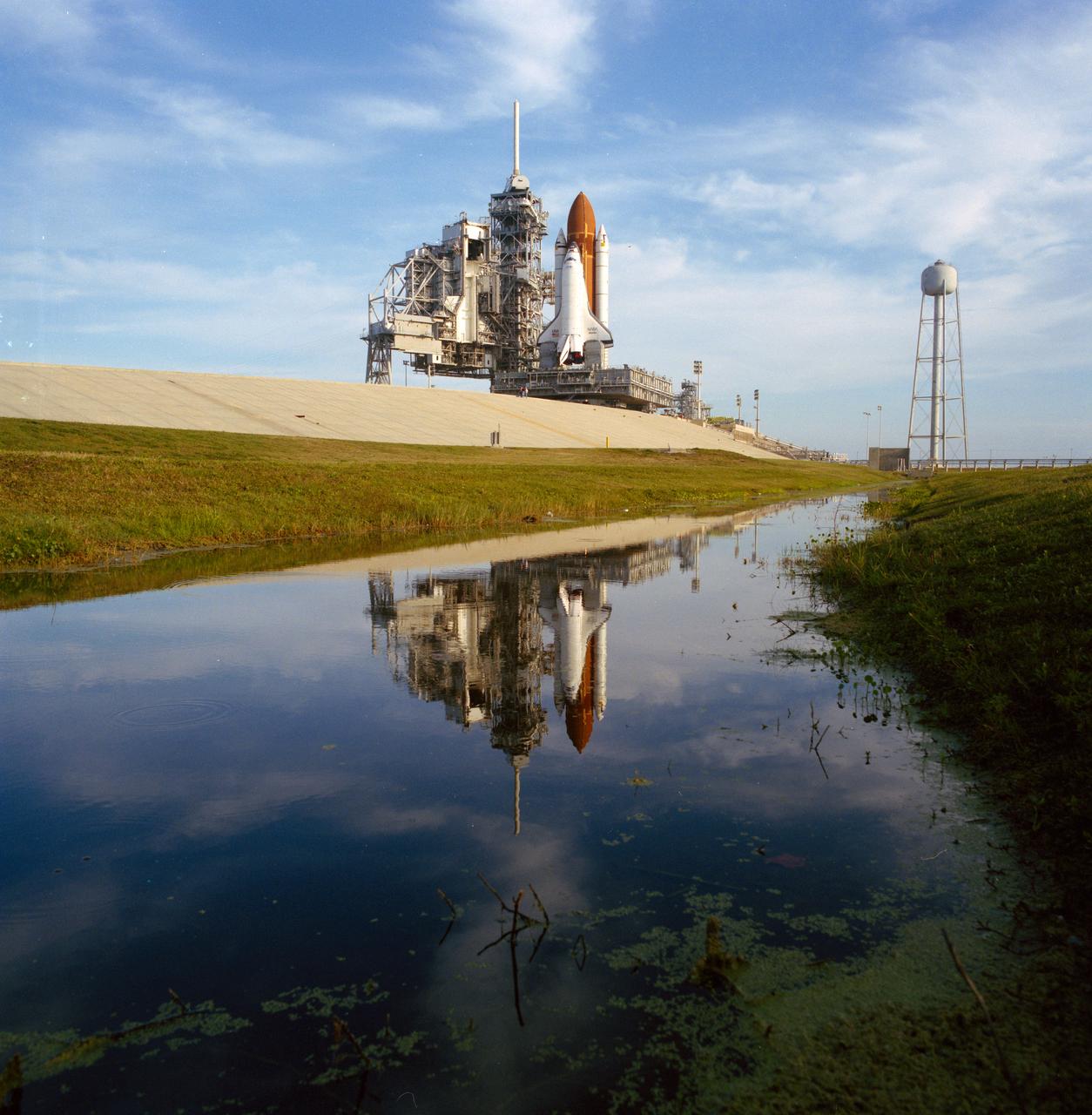
S89-30719 (22 March 1989) --- Space shuttle Atlantis is seen soon in duplicate, thanks to reflection in nearby water, after arriving at Pad 39-B.  The spacecraft left the vehicle assembly building (VAB) at 12:01A.M. and arrived to this point at 7 A.M.  Atlantis is scheduled for NASA STS-30 mission on which the Magellan will be deployed to orbit planet Venus and map its topographic features.  Launch is scheduled for April 28.
STS-30 Atlantis, OV-104, nears KSC LC Pad 39B atop the crawler transporter
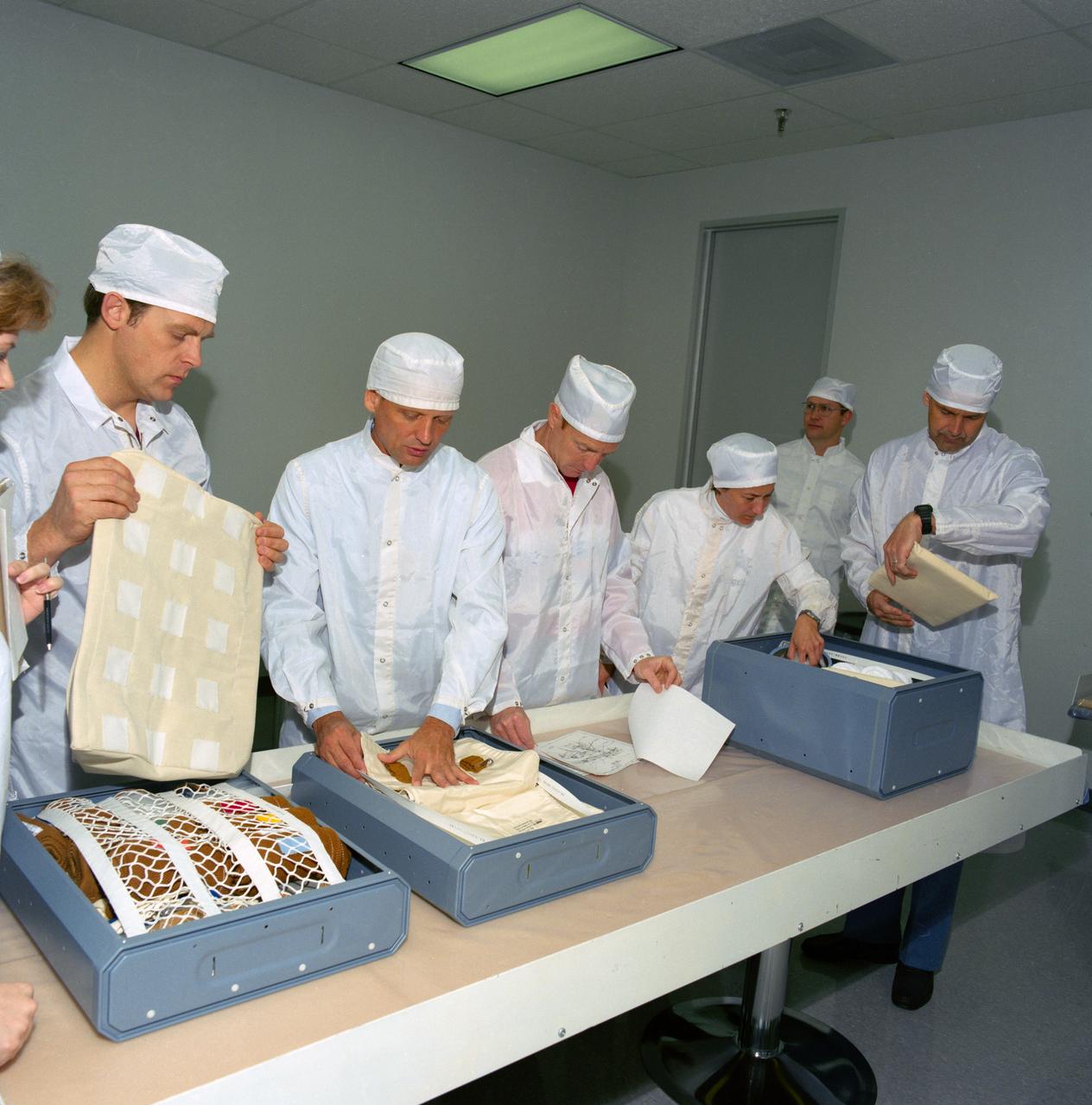
S89-30260 (31 March 1989) --- The five astronaut crewmembers for NASA's STS-30 mission conduct a bench review of the actual supplies they will be depending on for use aboard the Atlantis when they spend four days in space later in the spring.  Left to right are Astronauts Mark C. Lee, mission specialist; Norman E. Thagard, mission specialist; David M. Walker, mission commander;  and Mary L. Cleave, mission specialist. Ronald J. Grabe, pilot, is at far right.
STS-30 clean-suited crewmembers examine locker contents during bench review
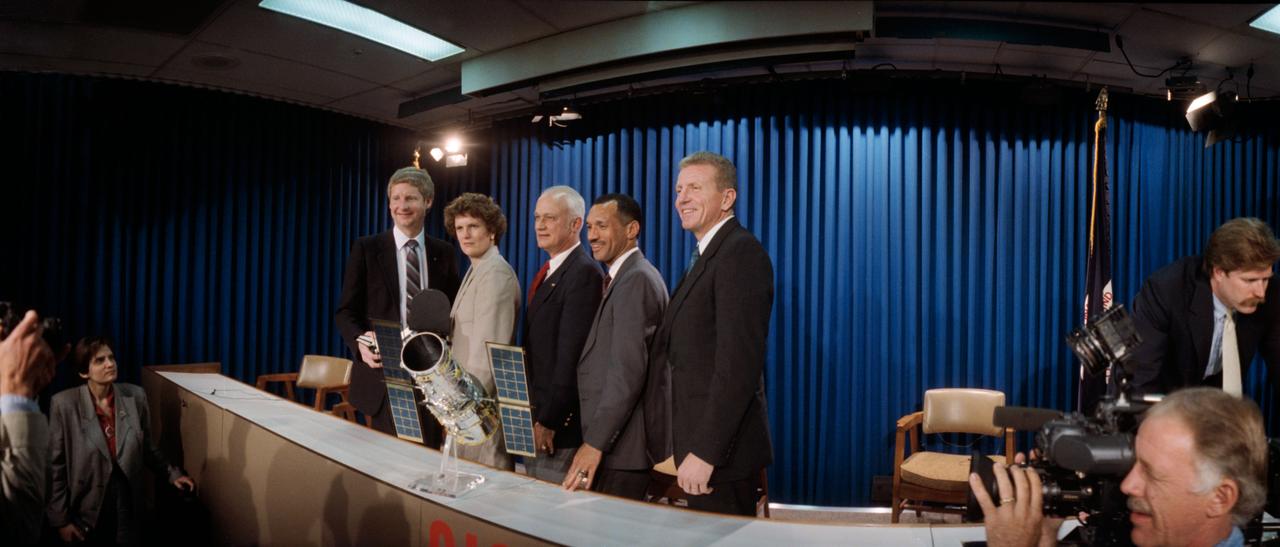
STS-31 Discovery, Orbiter Vehicle (OV) 103, crewmembers pose for an informal portrait after the T-30 (thirty days before launch) briefing at JSC's Auditorium and Public Affairs Facility Bldg 2. Standing behind the conference table are (left to right) Mission Specialist (MS) Steven A. Hawley, MS Kathryn D. Sullivan, MS Bruce McCandless II, Pilot Charles F. Bolden, and Commander Loren J. Shriver.
STS-31 crewmembers pose for informal portrait after T-30 briefing at JSC
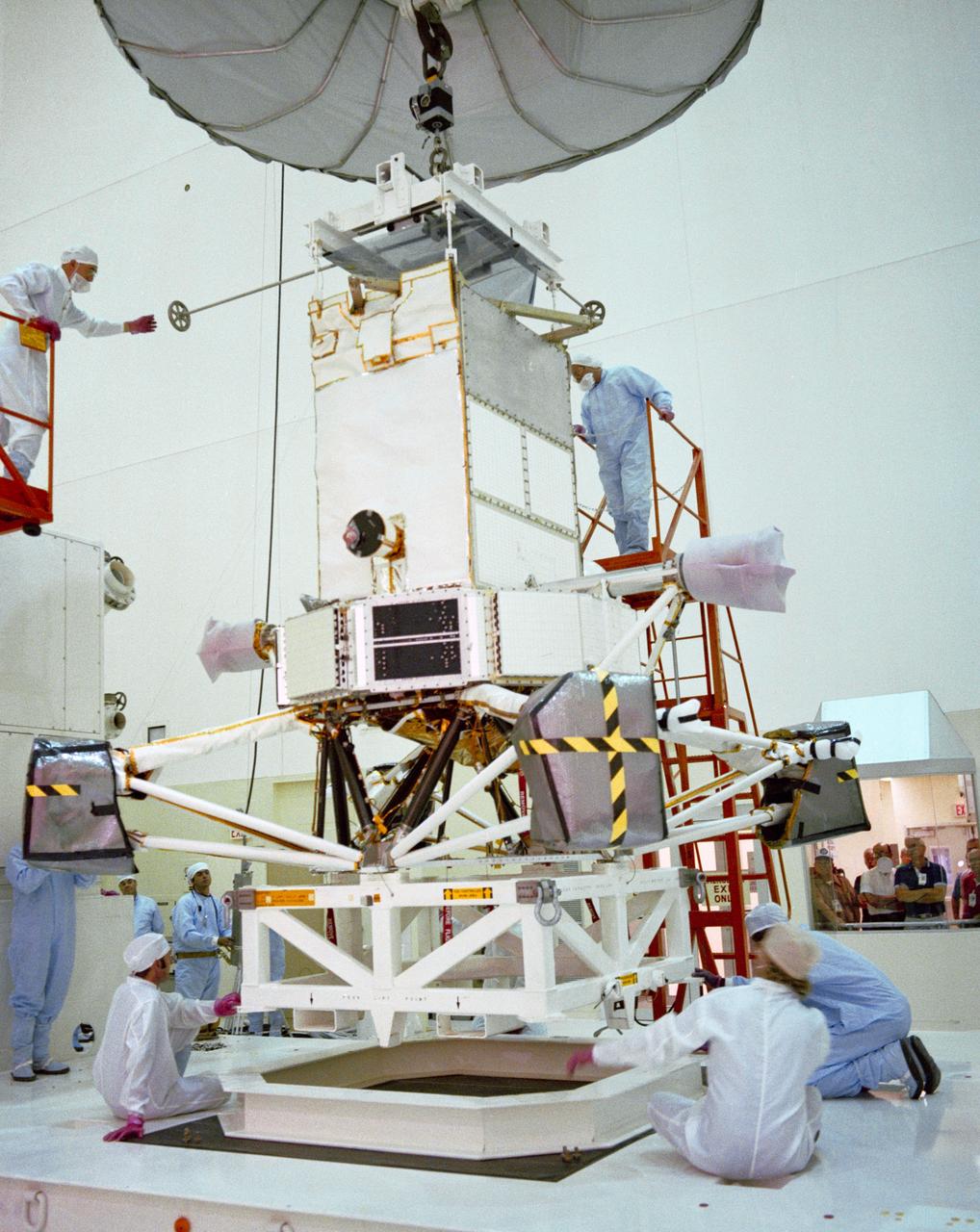
S89-25281 (8 Oct 1988) --- The Magellan spacecraft is hoisted from the transport trailer of the Payload Environmental Transportation System (PETS) to the floor of the cleanroom in the SAEF-2  planetary checkout facility at the Kennedy Space Center (KSC).  The spacecraft, destined for unprecedented studies of Venusian topographic features, is to be deployed by the crew of NASA's STS-30 mission in April 1989.
STS-30 Magellan spacecraft processing at Kennedy Space Center (KSC) SAEF-2
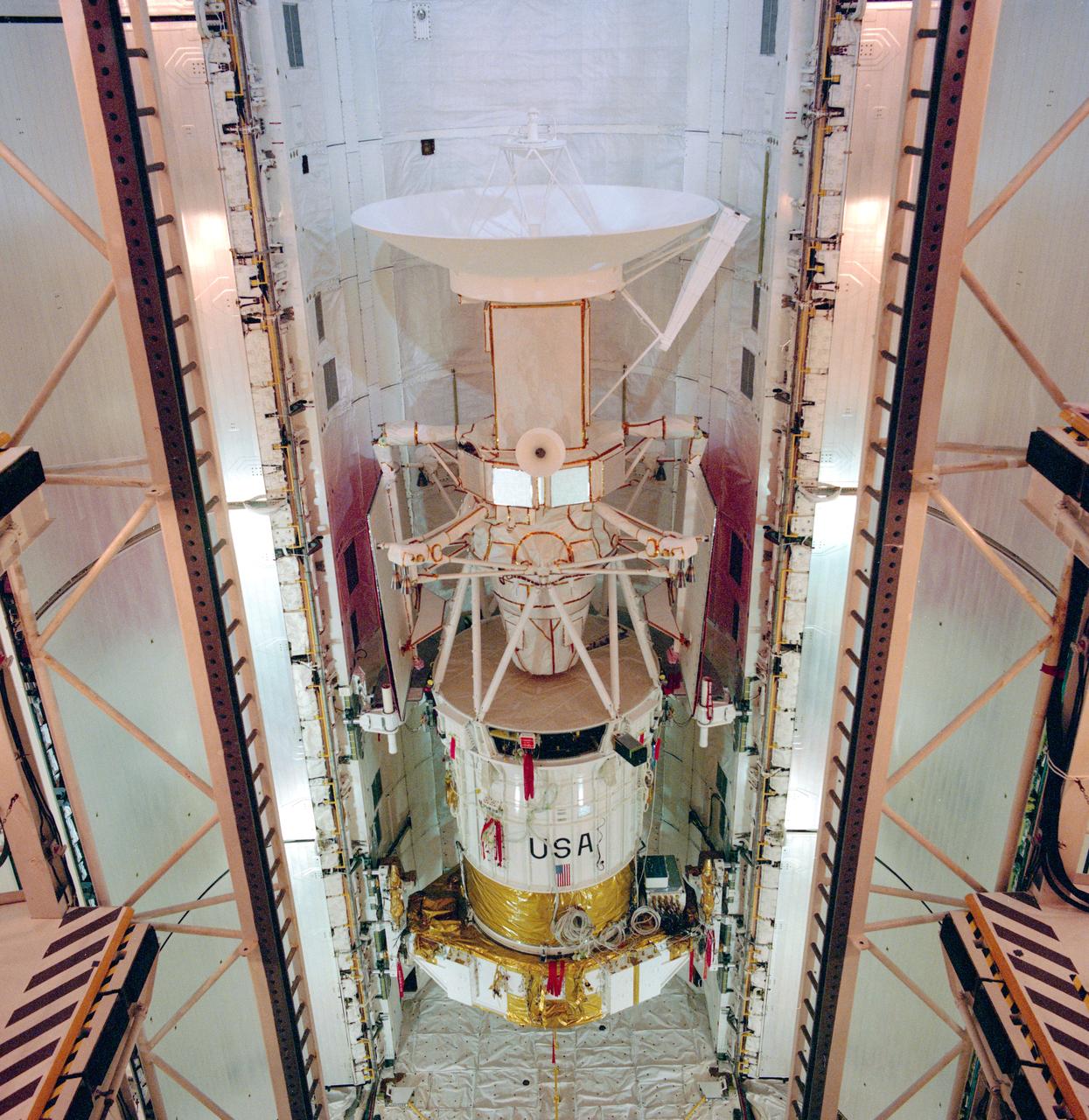
S89-30720 (29 March 1989) --- The spacecraft Magellan is in the payload bay of the orbiter Atlantis at launch pad 39-B.  Magellan is scheduled to be released from Atlantis April 28, 1989, on NASA's STS-30 mission.  Its mission will be the first U.S. planetary probe in over 10 years and it is the first deployed by the shuttle.  The mission calls for the spacecraft to make the approximately 15-month journey to the planet Venus and perform radar mapping operations, transmitting the information back to NASA's Jet Propulsion Laboratory (JPL) in California.
STS-30 Atlantis', OV-104's, payload bay (PLB) with Magellan spacecraft & IUS
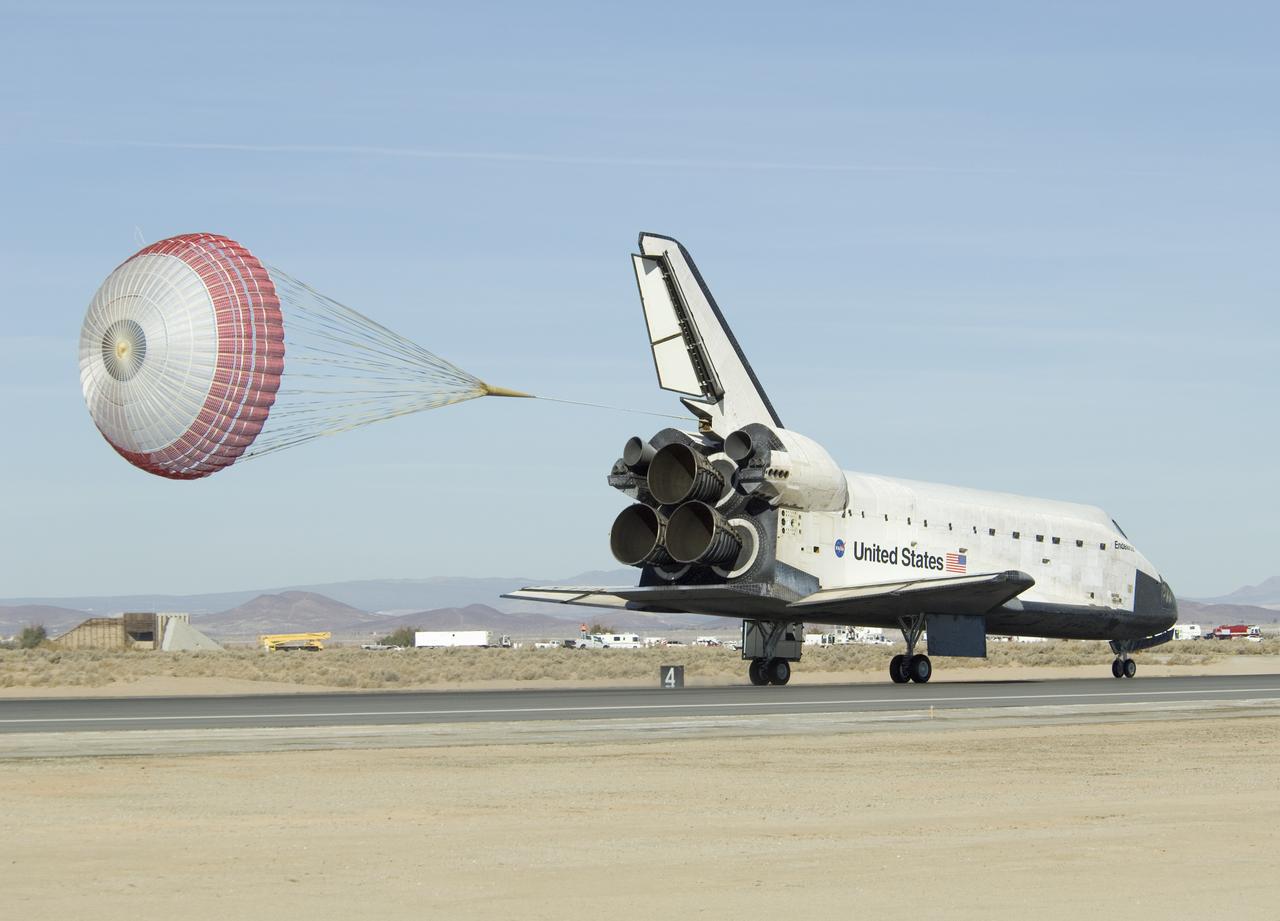
Space Shuttle Endeavour's drag chute streams behind as it rolls down on Runway 04-L at Edwards AFB to conclude mission STS-126 on Nov. 30, 2008.
Space Shuttle Endeavour's drag chute streams behind as it rolls down on Runway 04-L at Edwards AFB to conclude mission STS-126 on Nov. 30, 2008
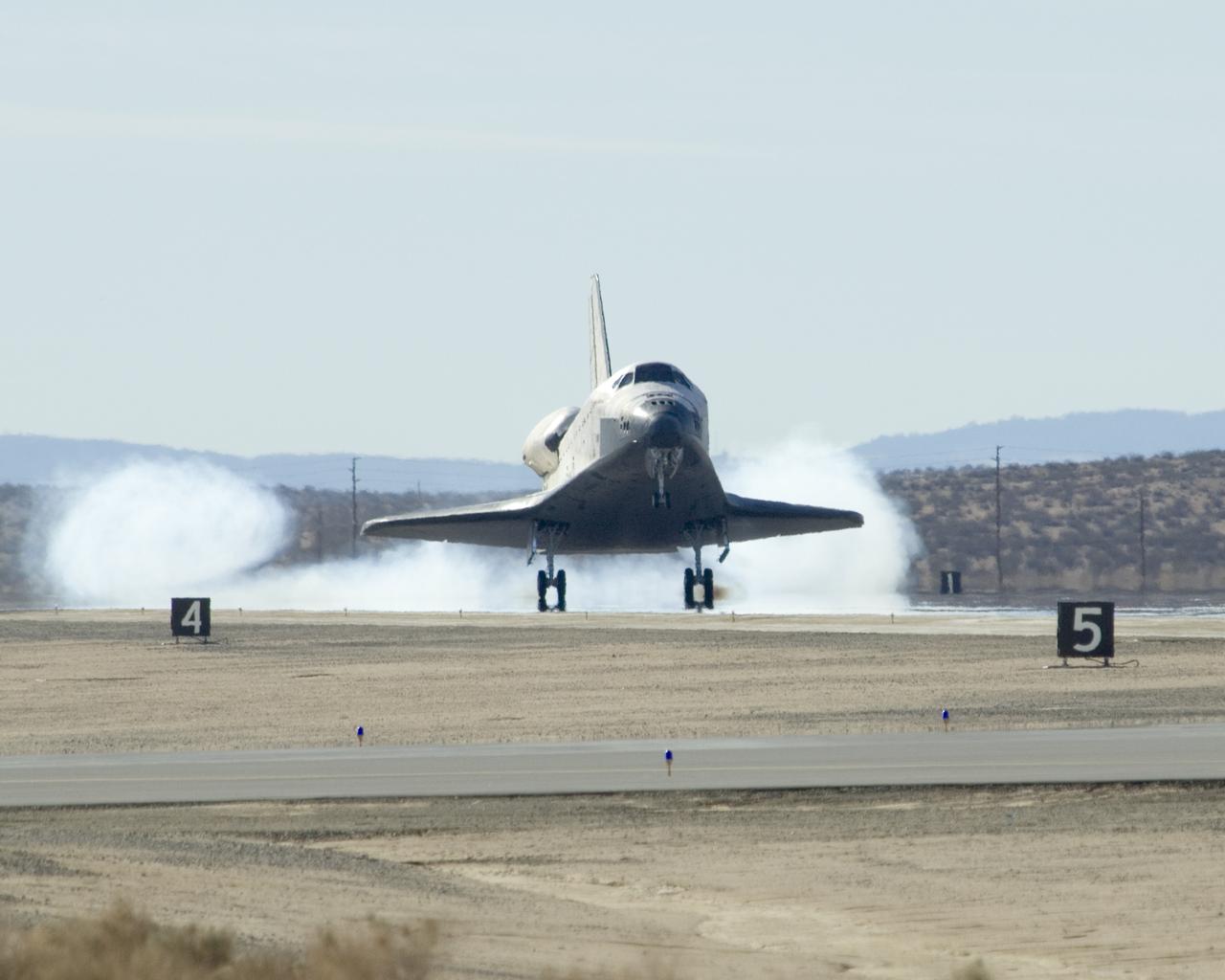
Smoke swirls as Space Shuttle Endeavour's tires strike the runway at Edwards Air Force Base Nov. 30 to conclude mission STS-126 to the International Space Station.
Space Shuttle Endeavour rolls out after landing on runway 04-L at Edwards AFB, ending mission STS-126 to the International Space Station Nov. 30, 2008
Space Shuttle Endeavour rolls out after landing on runway 04-L at Edwards Air Force Base, ending mission STS-126 to the International Space Station Nov. 30, 2008.
Space Shuttle Endeavour rolls out after landing on runway 04-L at Edwards AFB, ending mission STS-126 to the International Space Station Nov. 30, 2008
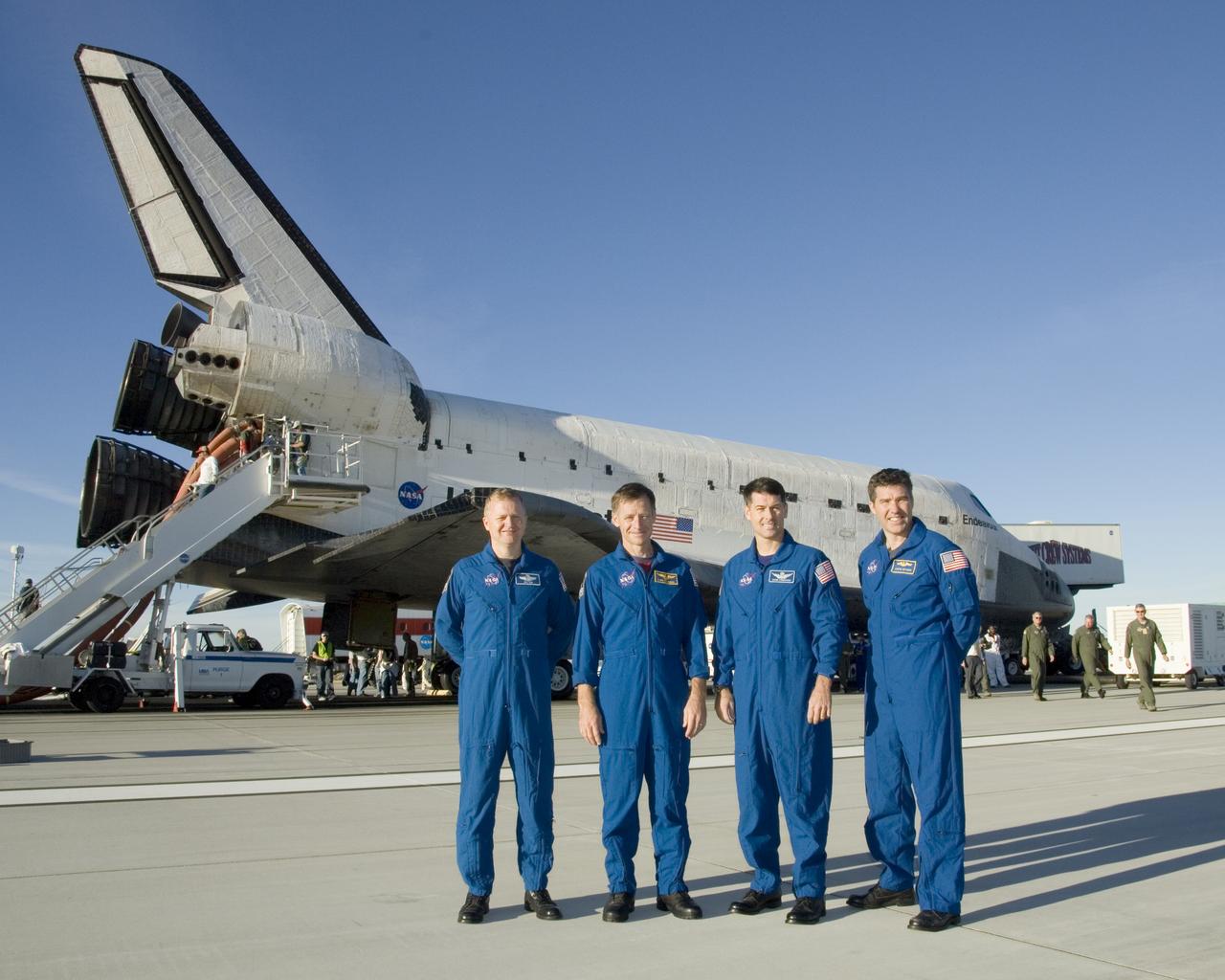
STS-126 crewmen Eric Boe, Chris Ferguson, Robert Kimbrough and Stephen Bowen pose in front of the Space Shuttle Endeavour following landing Nov. 30, 2008.
STS-126 crewmen Eric Boe, Chris Ferguson, Robert Kimbrough and Stephen Bowen pose in front of the Space Shuttle Endeavour following landing Nov. 30, 2008
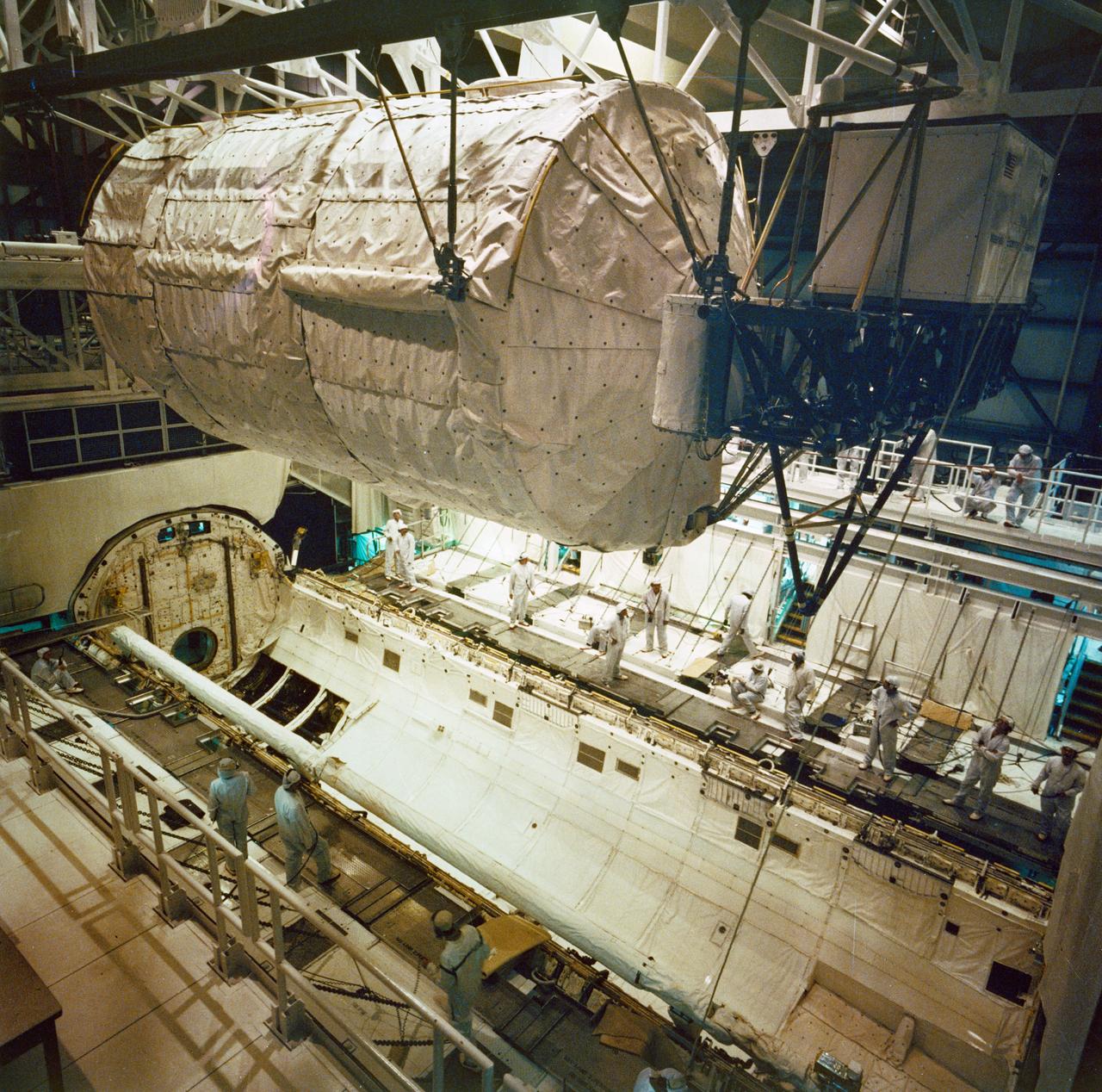
S85-43138 (20 Sept 1985) --- Spacelab D-1, the first payload dedicated to a German mission, is installed into the Space Shuttle Challenger in the orbiter processing facility (OPF) at the Kennedy Space Center.  Launch for the 61-A eight crewmembers and their extensive scientific experiments is scheduled for no earlier than Oct. 30.
CREW TRAINING (EXPERIMENTS) - STS-30/61A - KSC
KENNEDY SPACE CENTER, FLA. --  STS-30: Atlantis
KSC-89PC-0517
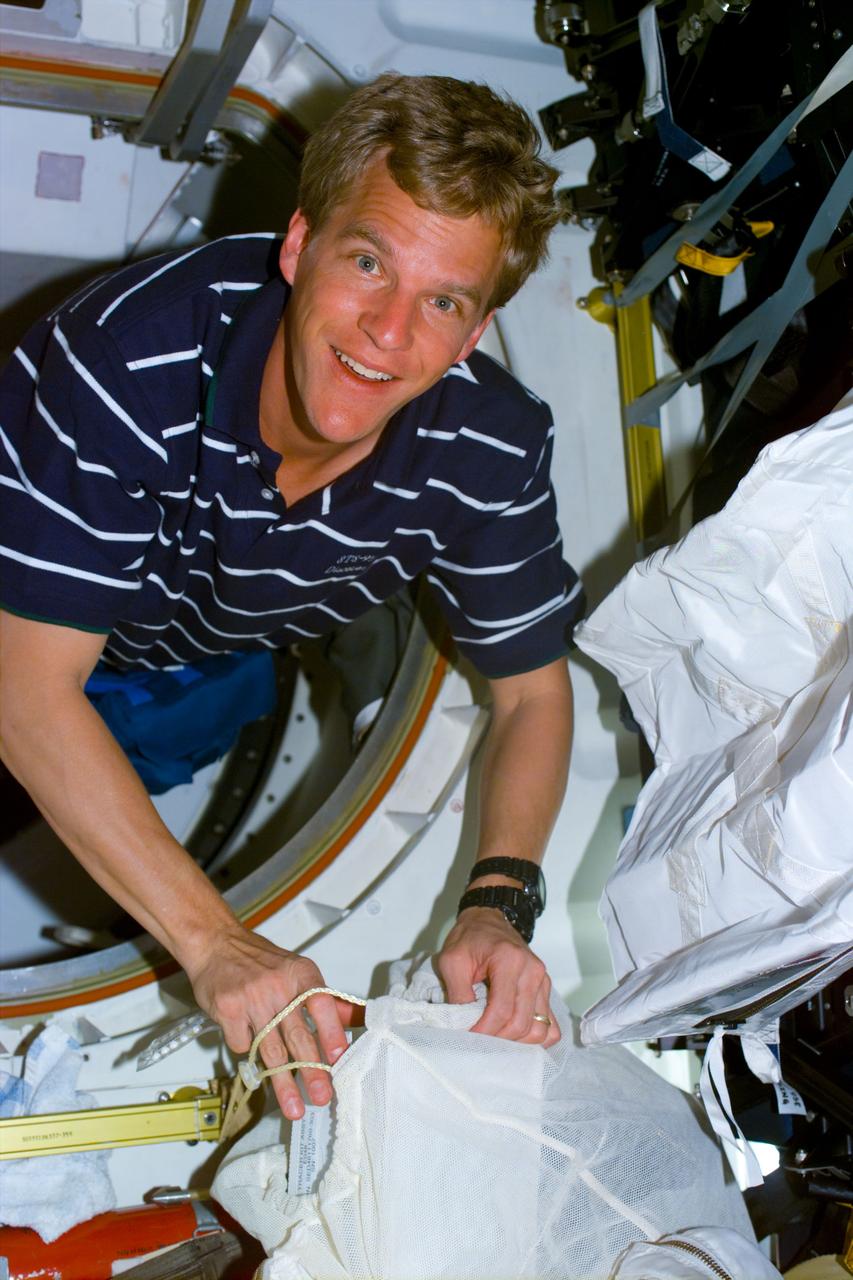
STS095-E-5052 (30 Oct. 1998) --- Astronaut Scott E. Parazynski, STS-95 mission specialist, emerges from the tunnel that connects SPACEHAB to Discovery's middeck during flight day two activity. The photo was taken with an electronic still camera (ESC) at 10:42:30, Oct. 30.
Parazynski in transfer tunnel
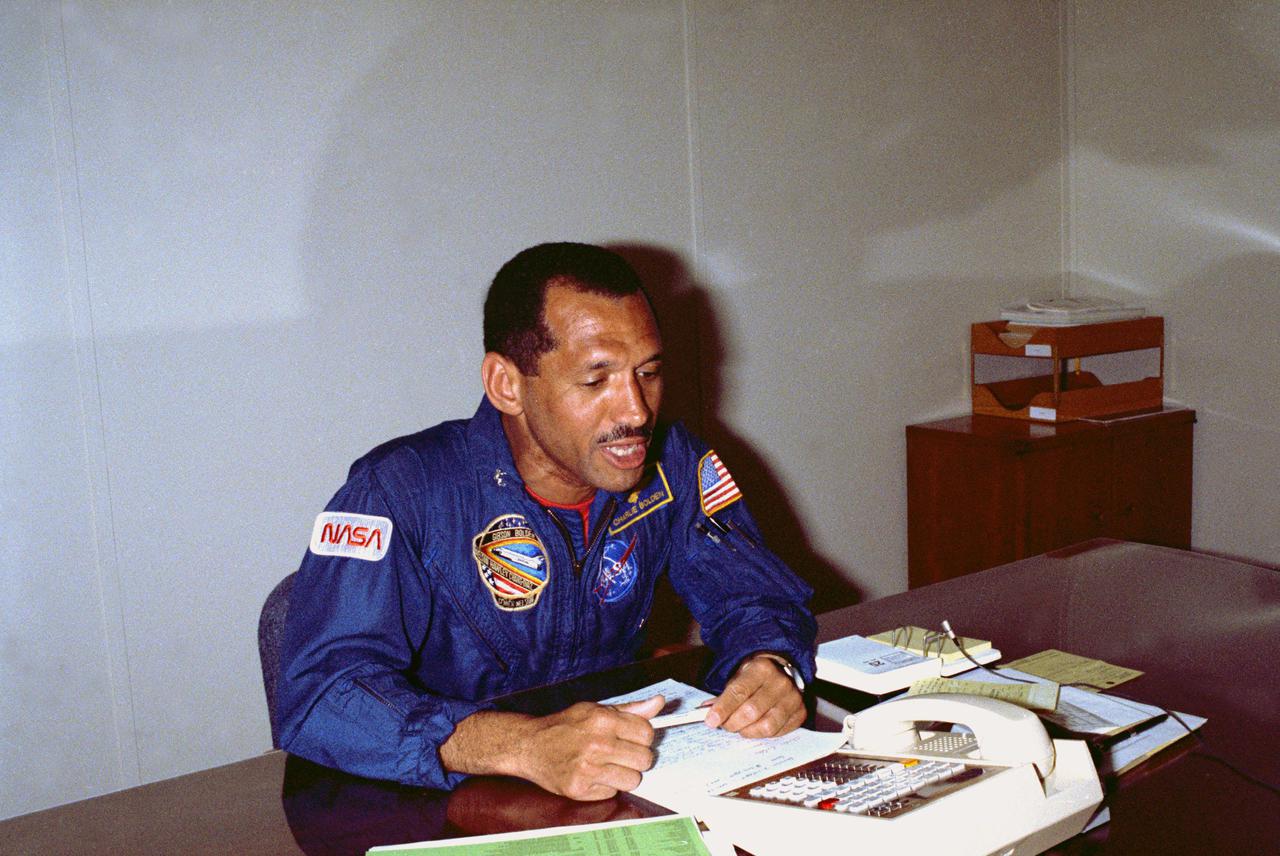
KENNEDY SPACE CENTER, FLA. -- At 1:30 a.m. EST the morning of the scheduled launch of Space Shuttle Mission STS-30 aboard Atlantis, astronaut Charles Bolden receives a call from the Vice President of the United States Dan Quayle.  The Vice President called from the NASA tracking station in Australia while visiting the facility.  STS-30 will launch the Magellan_Venus radar mapper spacecraft on a 15-month journey to Venus.  This is the first U.S. planetary mission in 11 years and the first on Shuttle.
KSC-89pc-0509
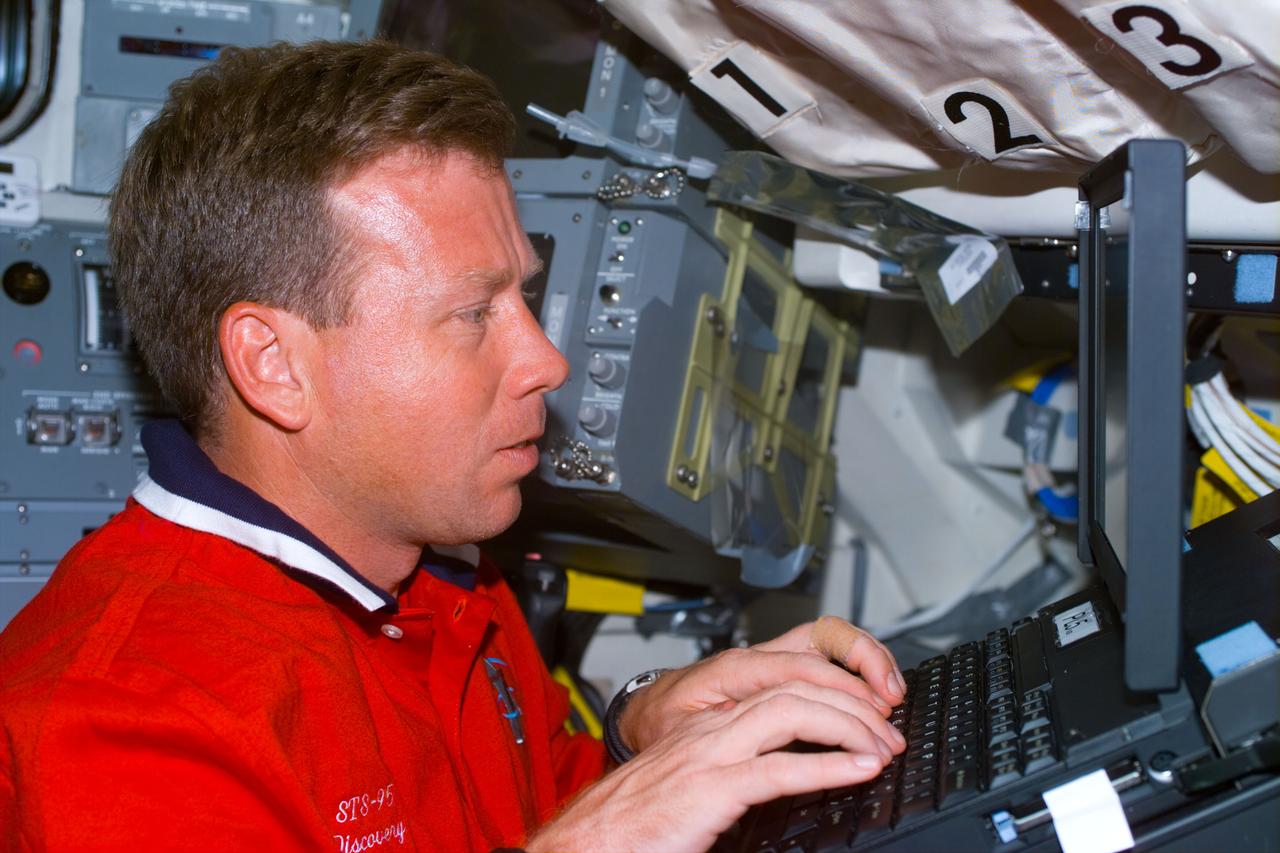
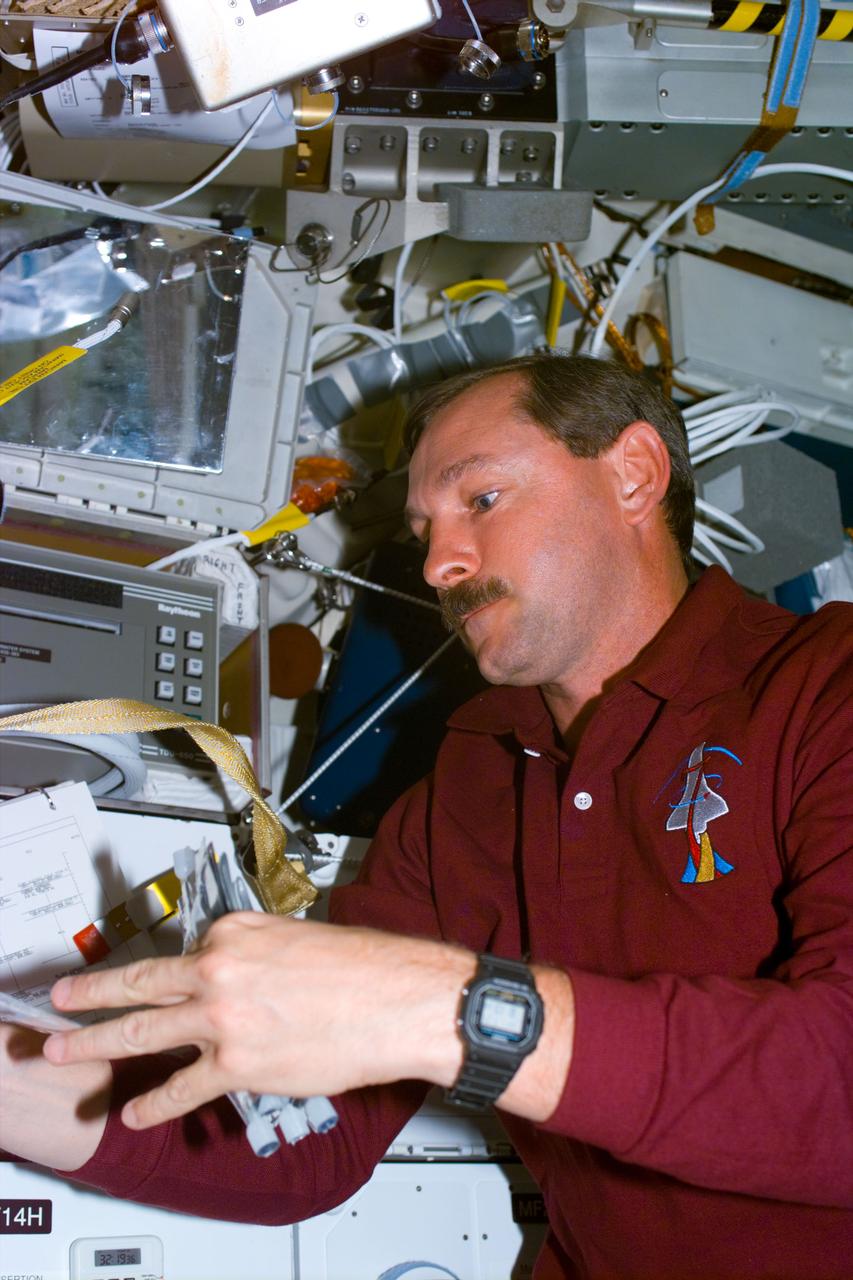
STS095-E-5056 (30 Oct. 1998) --- Astronaut Steven W. Lindsey, STS-95 pilot, works on a lap top computer during Flight Day 2 activity onboard the Space Shuttle Discovery. The photo was taken with an electronic still camera (ESC) at 10:43:43 GMT, Oct. 30.
Lindsey with laptop on flight deck
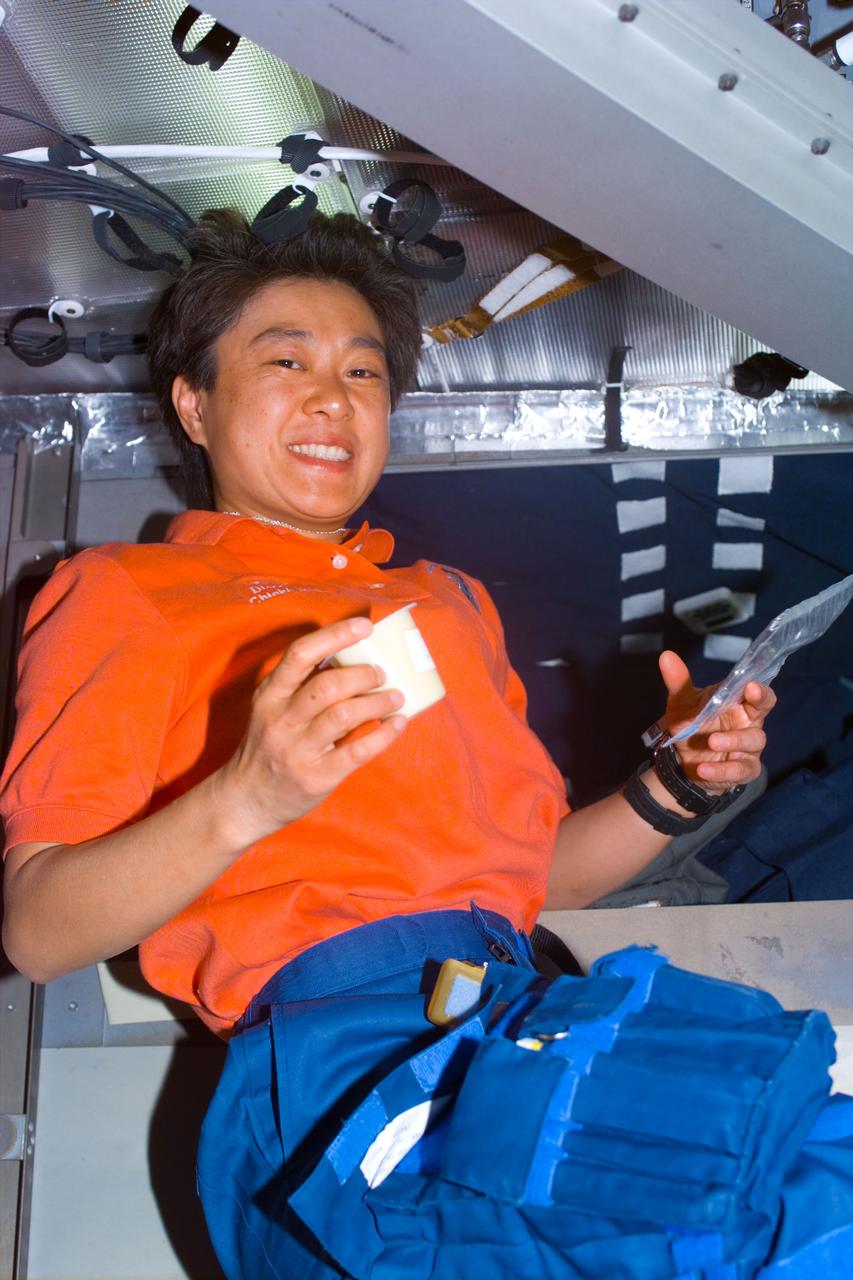
STS095-E-5053 (30 Oct. 1998) --- STS-95 payload specialist Chiaki Mukai continues her experimentation onboard the Space Shuttle Discovery during Flight Day 2 of a schedule nine-day mission. The photo was taken with an electronic still camera (ESC) at 10:42:38 GMT, Oct. 30.
Mukai on middeck
PHOTO DATE: 05-13-09 LOCATION: Bldg. 30 south , WFCR & Backrooms SUBJECT: STS-125 Flight Controllers on Console During HST Grapple - Orbit 1 - Bldg. 30 south.  Flight Director: Tony Ceccacci PHOTOGRAPHER:  JAMES BLAIR
STS-125 Flight Controllers on Console During HST Grapple - Orbit 1. Flight Director: Tony Ceccacci
STS095-E-5054 (30 Oct. 1998) --- Astronaut Curtis L. Brown, STS-95 commander, has a handful of vials as he checks a notebook during Flight Day two activity onboard the Space Shuttle Discovery. The photo was taken with an electronic still camera at 10:42:49 GMT, Oct. 30.
Brown on middeck
PHOTO DATE: 05-13-09 LOCATION: Bldg. 30 south , WFCR & Backrooms SUBJECT: STS-125 Flight Controllers on Console During HST Grapple - Orbit 1 - Bldg. 30 south.  Flight Director: Tony Ceccacci PHOTOGRAPHER:  JAMES BLAIR
STS-125 Flight Controllers on Console During HST Grapple - Orbit 1. Flight Director: Tony Ceccacci
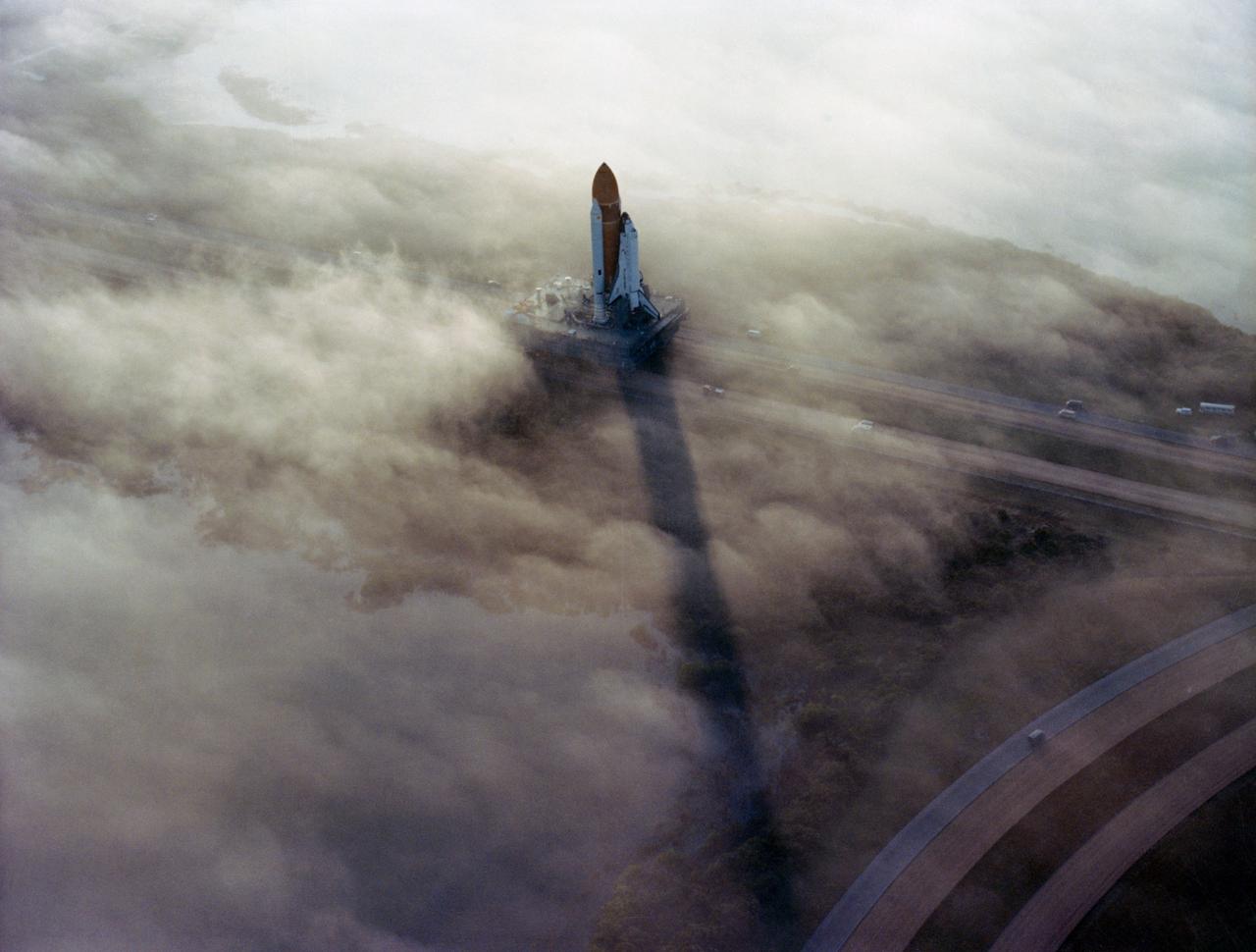
Two (2) views of the "Challenger" - STS-6 -  being    Rolled Out to Pad 39A in the morning fog, 11/30/1982.      1.  KSC - STS-6 PREFLIGHT      KSC, FL
PREFLIGHT (ROLLOUT) STS-6 - KSC
PHOTO DATE: 7-15-09 LOCATION: Bldg. 30 south - WFCR and Backroom SUBJECT: STS-127 Flight Controllers on Console - Acent - STS 127 Launch PHOTOGRAPHER: Lauren Harnett
STS-127 MER Flight Controllers on Console During Scrubbed Launch Attempt
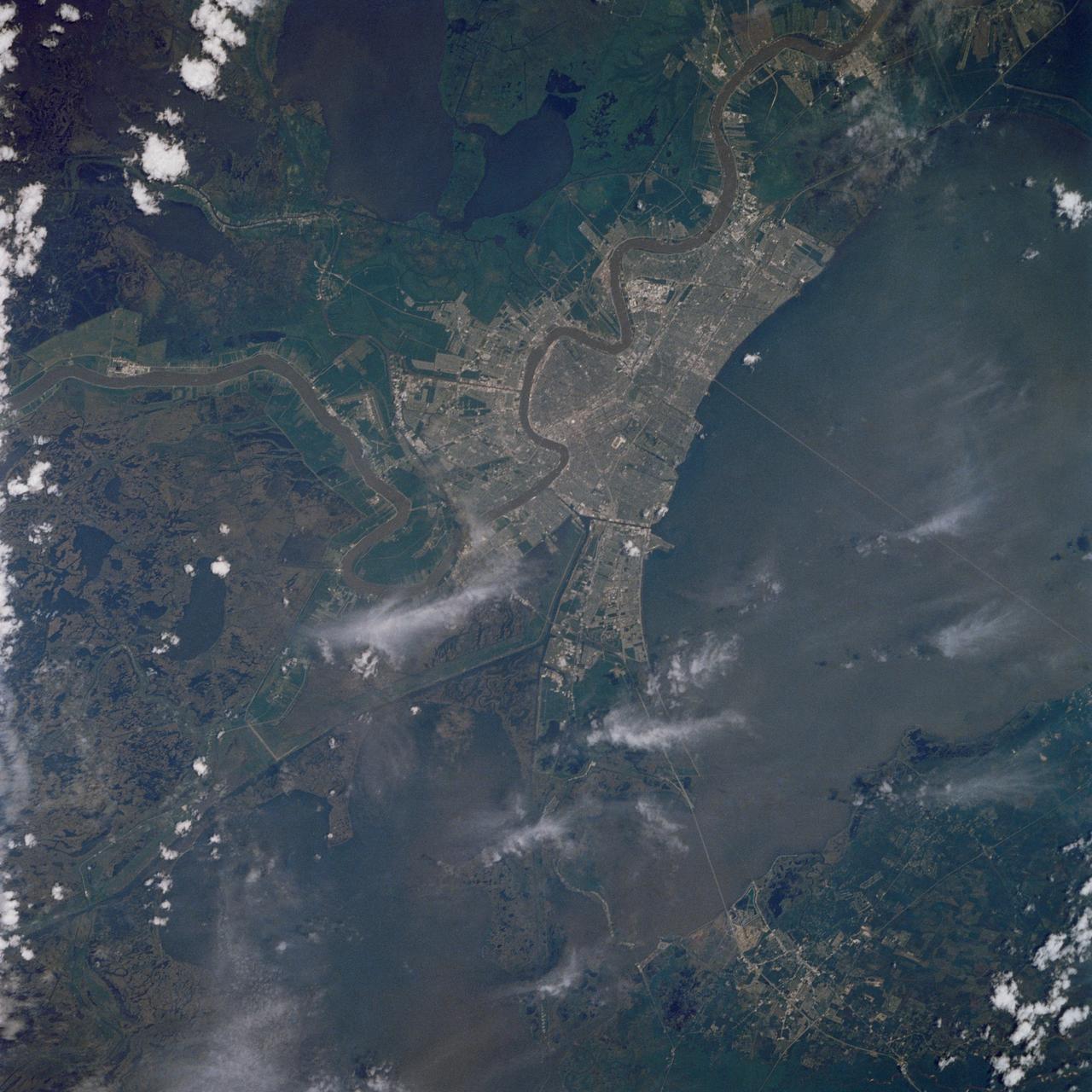
As one of the best ever views of the city of New Orleans, LA (30.0N, 90.0W) from space, this image allows the study of the city and the region in minute detail. Major city street and highway patterns can easily be traced. Even the Superdome near the old French Quarter can be seen as a large round white circle near the middle of the photo. The French Napoleonic Code land distribution system of long narrow fields fronting the river is also evident.
New Orleans, Louisiana
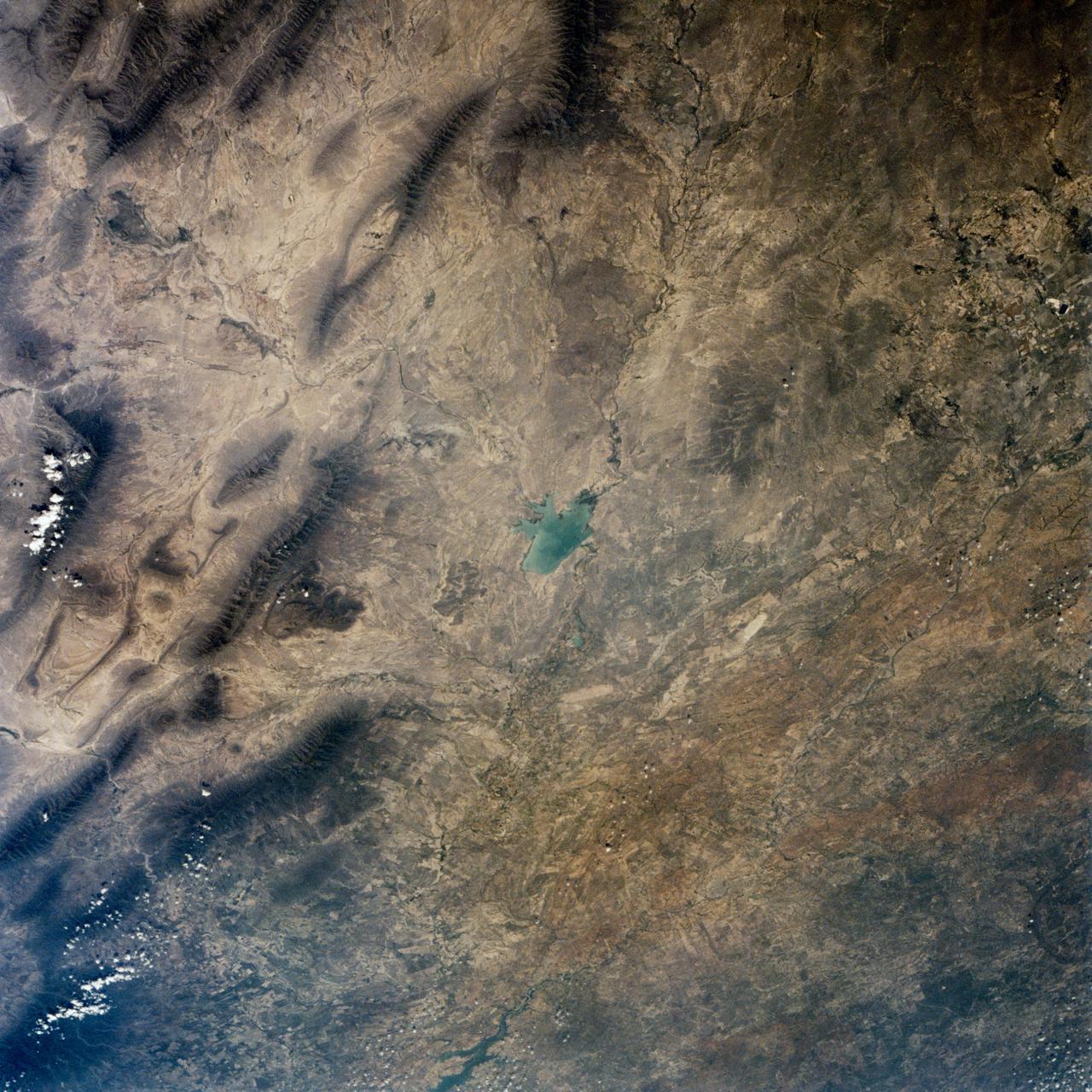
This is a single scene from a pair (frames 021 & 024) to study the effects of polarized light in Earth Observations. One scene was exposed with vertically polarized light, the other, horizontally. The subject in this study, is a lake behind Presa (dam) Don Martin (27.5N, 100.5W) on the edge of the Rio Grande Plain near it's boundry with the Sierra Madre Orientral in Coahuila, Mexico.
Polarized Light Experiment, Presa Don Martin, Coahuila, Mexico
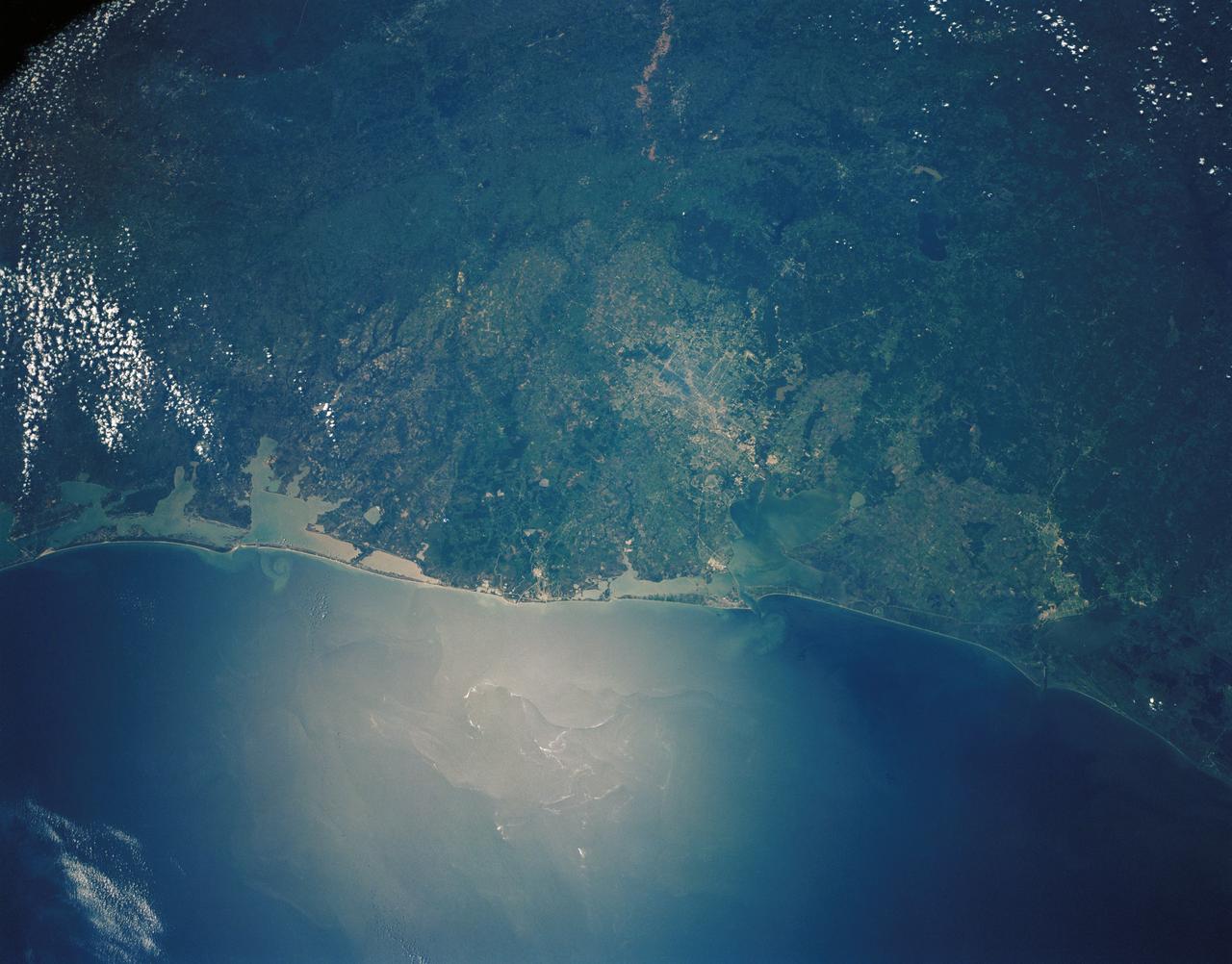
STS030-152-066 (4-8 May 1989) --- The upper Texas and Louisiana Gulf Coast area was clearly represented in this large format frame photographed by the astronaut crew of the Earth-orbiting Space Shuttle Atlantis. The area covered stretches almost 300 miles from Aransas Pass, Texas to Cameron, Louisiana. The sharp detail of both the natural and cultural features noted throughout the scene is especially evident in the Houston area, where highways, major streets, airport runways and even some neighborhood lanes are easily seen. Other major areas seen are Austin, San Antonio and the Golden Triangle. An Aero Linhof camera was used to expose the frame.
Upper Texas Gulf Coast, USA
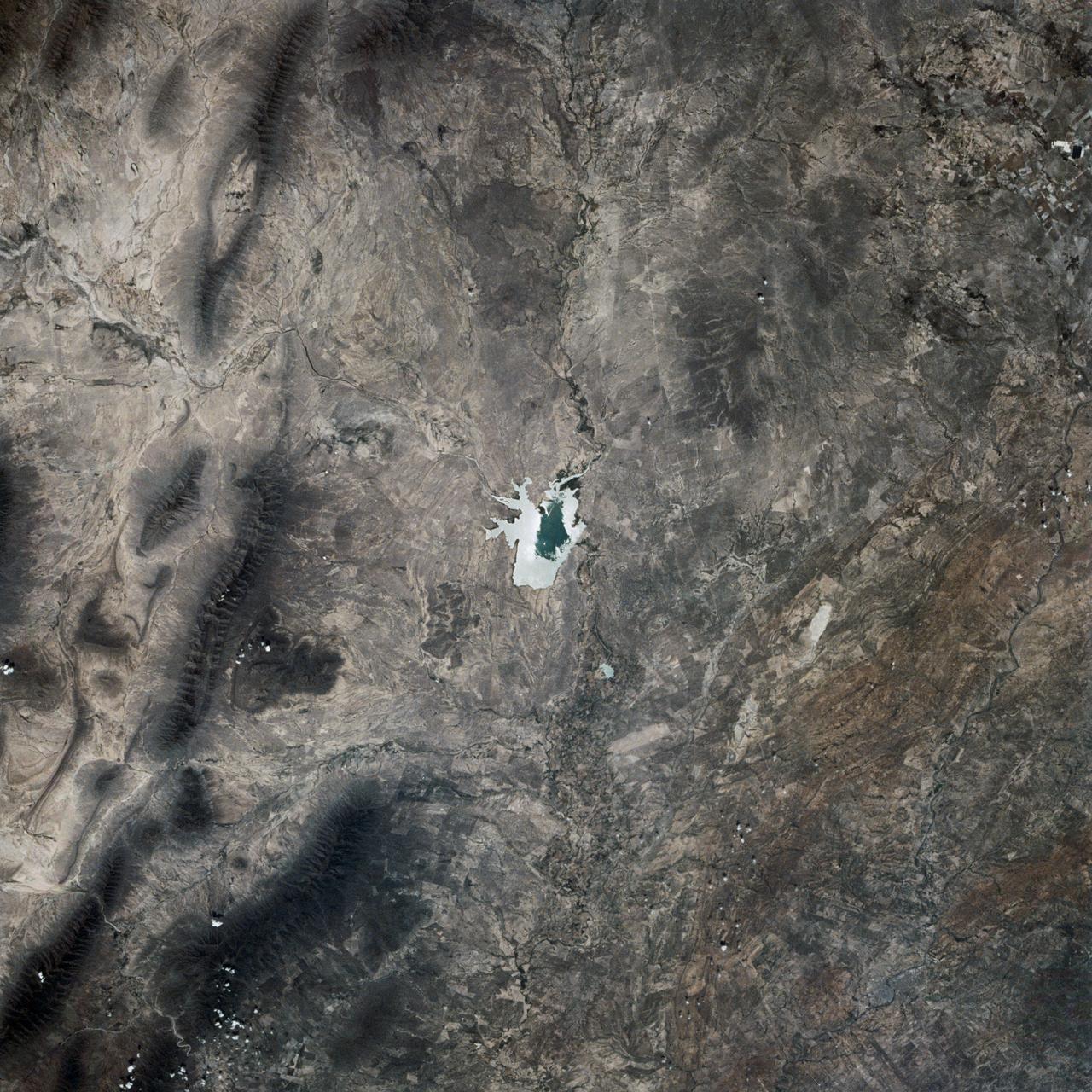
This is a single scene from a pair (frames 021 & 024) to study the effects of polarized light in Earth Observations. One scene was exposed with vertically polarized light, the other, horizontally. The subject in this study, is a lake behind Presa (dam) Don Martin (27.5N, 100.5W) on thge edge of the Rio Grande Plain near it's boundry with the Sierra Madre Oriental in Coahuila, Mexico.
Polarized Light Experiment, Presa Don Martin, Mexico
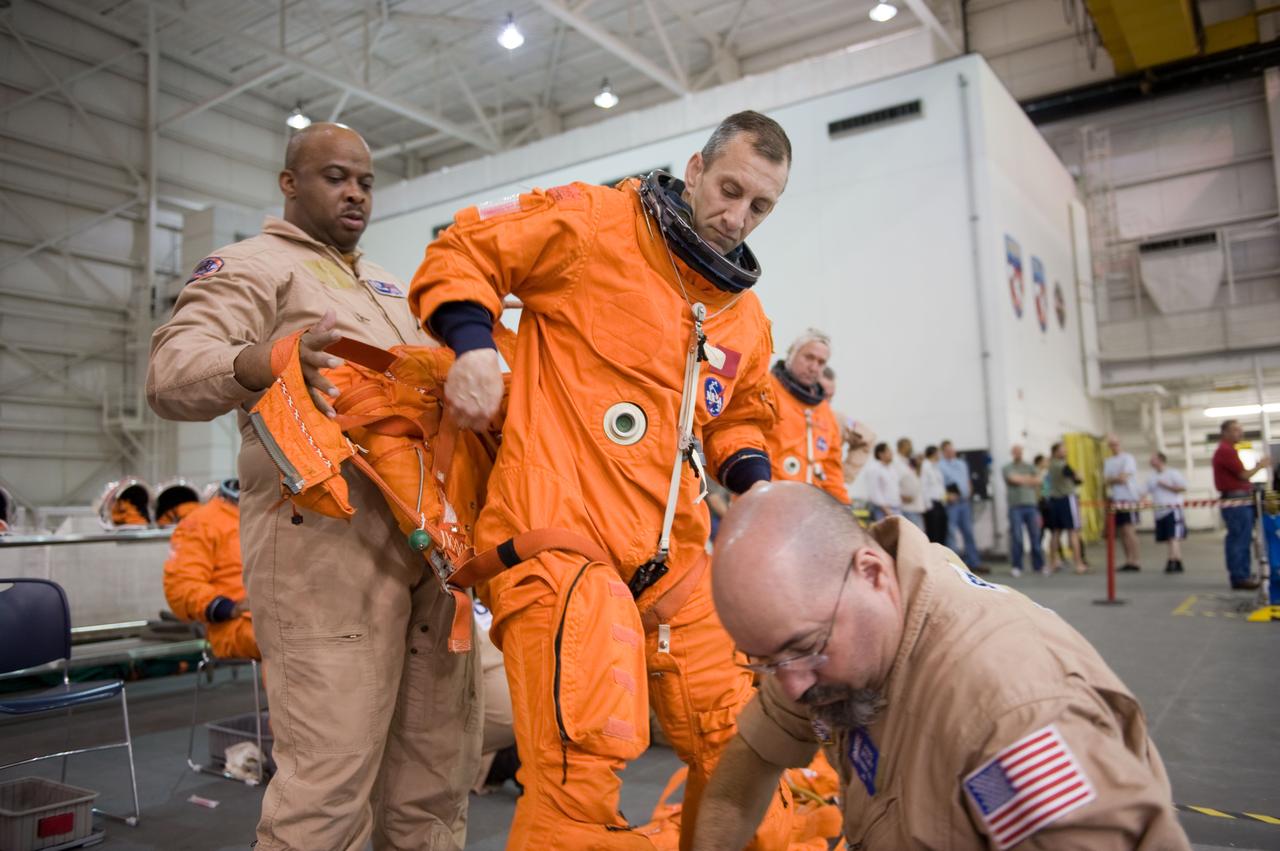
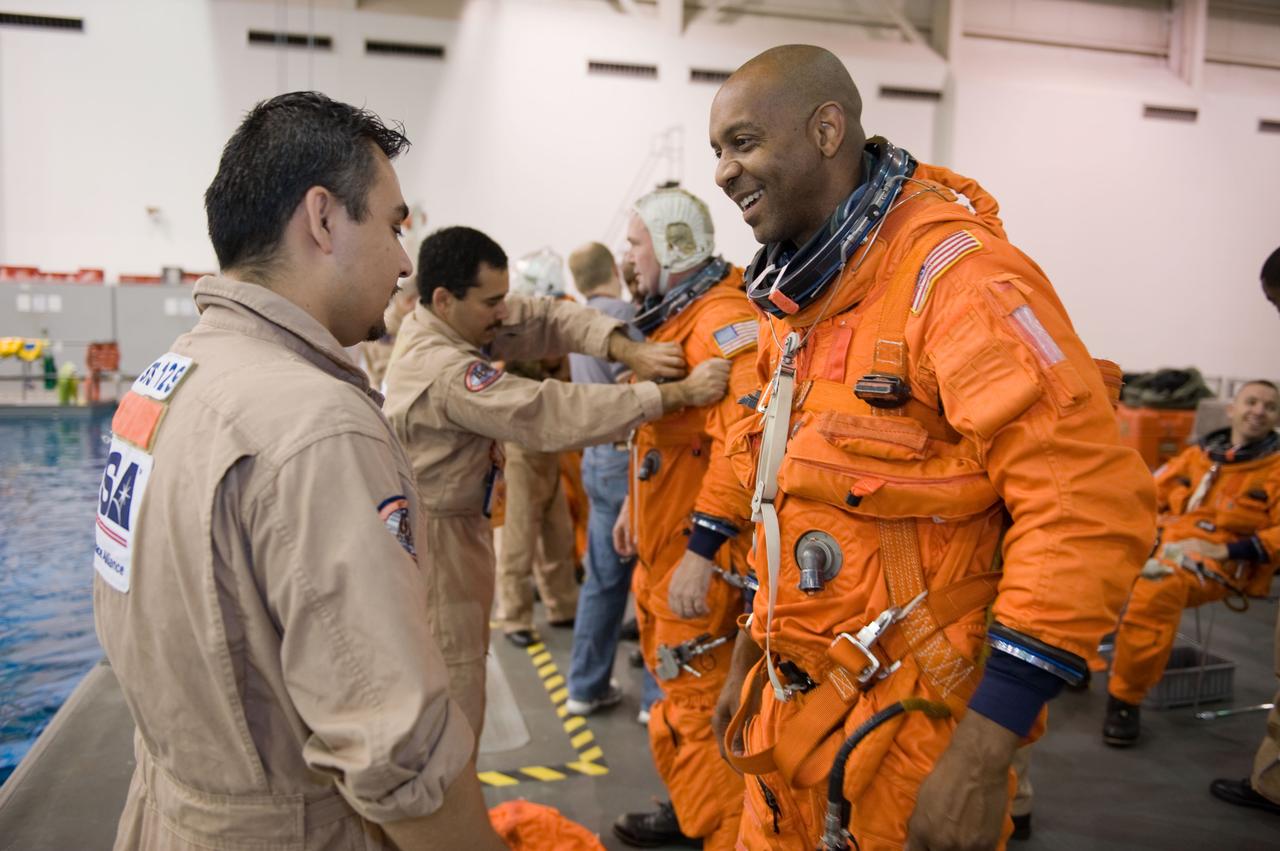
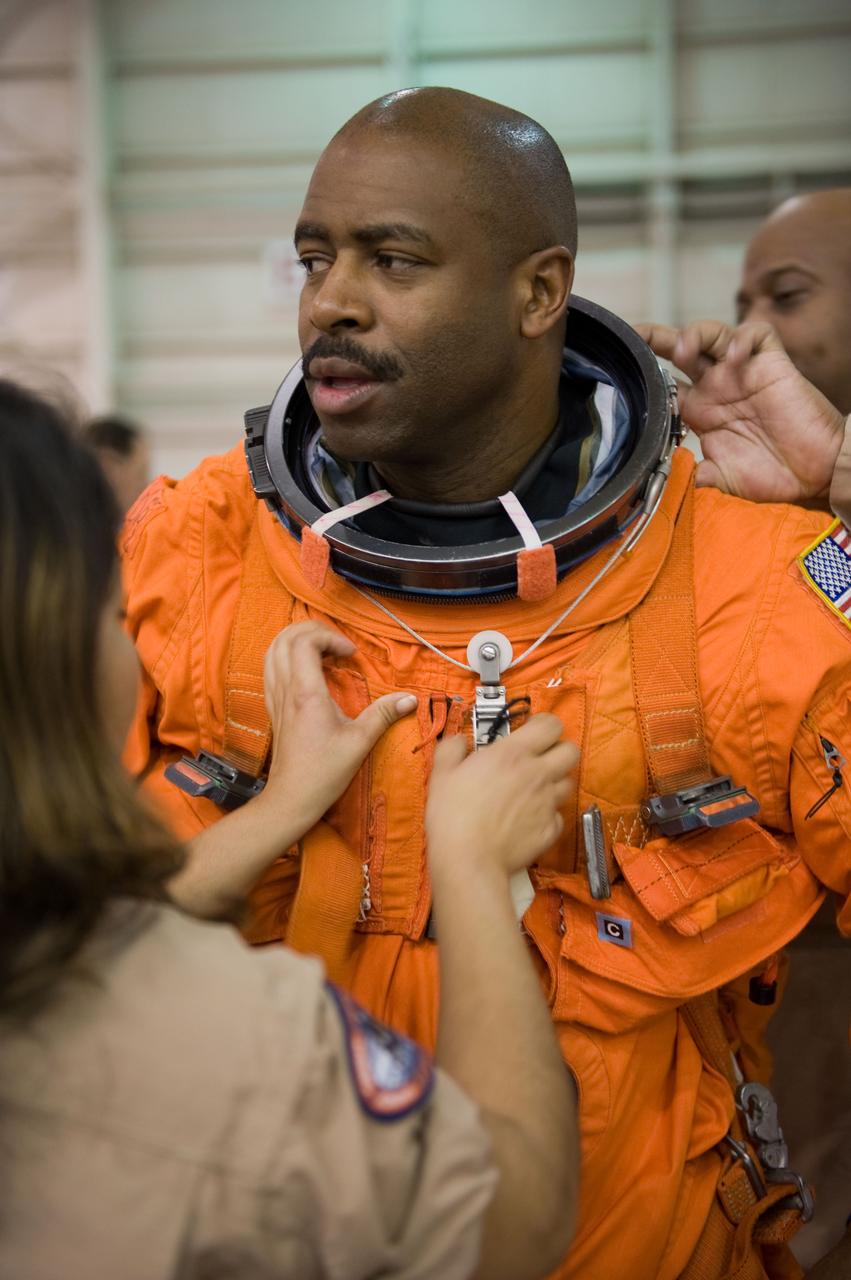
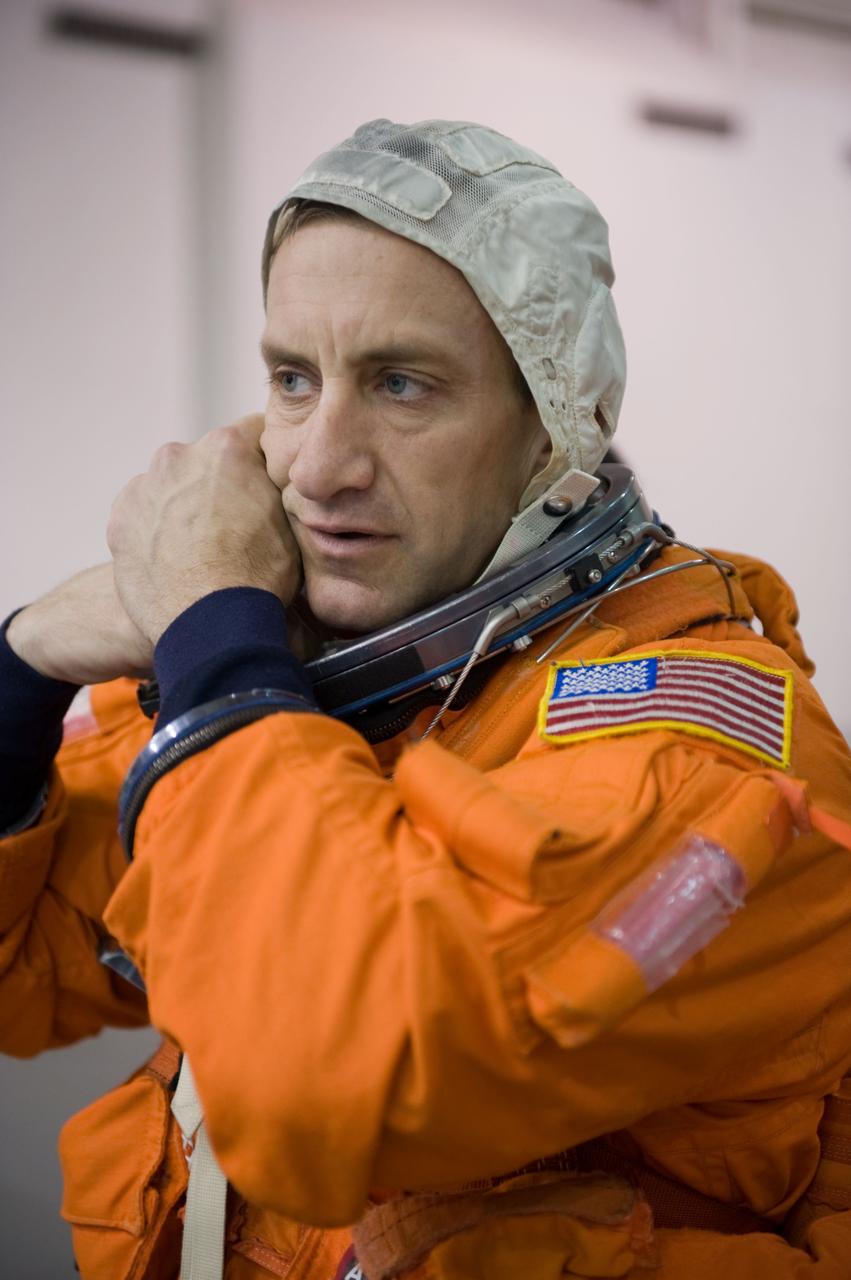
STS-129 Water Survival Training at the NBL.  Photo Date: March 30, 2009. Location: NBL - Pool Topside.  Photographer: Robert Markowitz
STS-129 Water Survival Training at the NBL
STS-129 Water Survival Training at the NBL.  Photo Date: March 30, 2009. Location: NBL - Pool Topside.  Photographer: Robert Markowitz
STS-129 Water Survival Training at the NBL
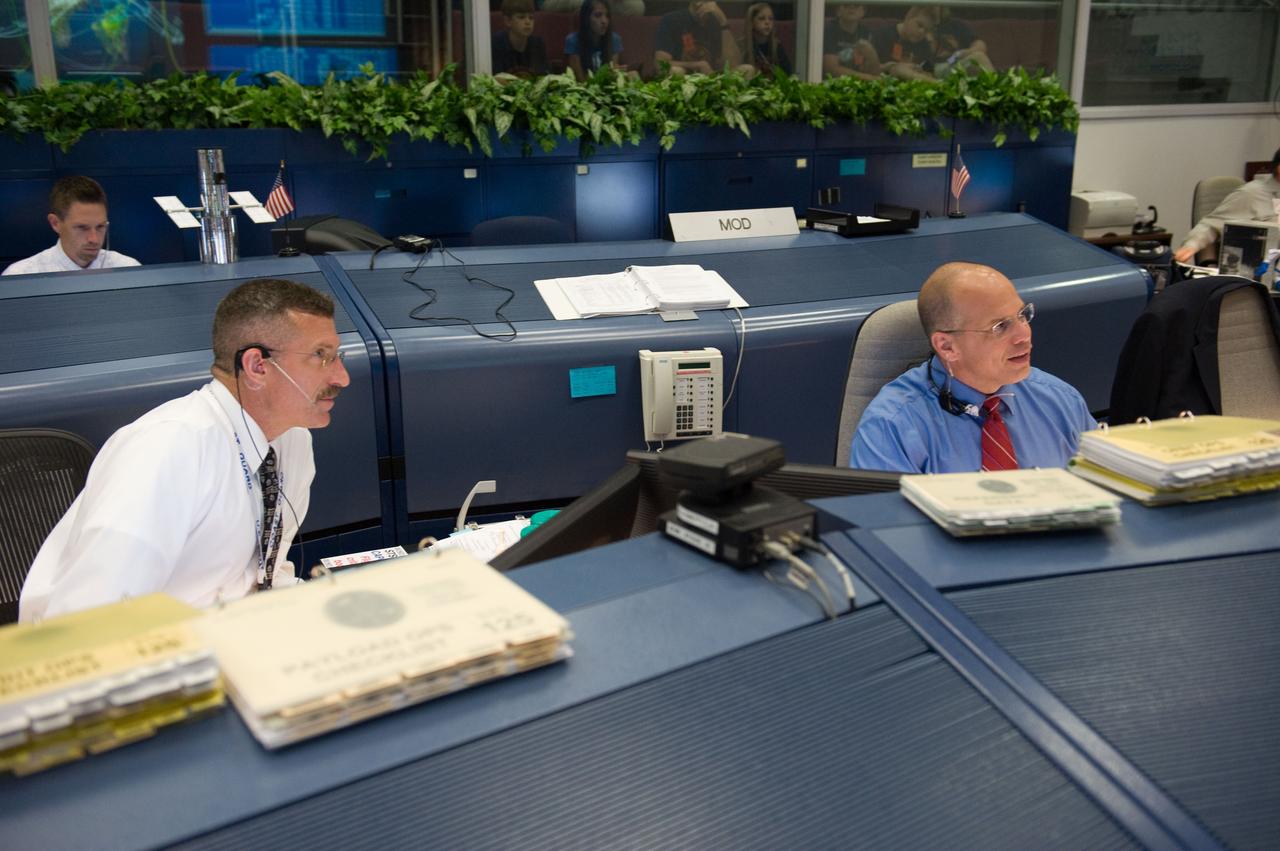
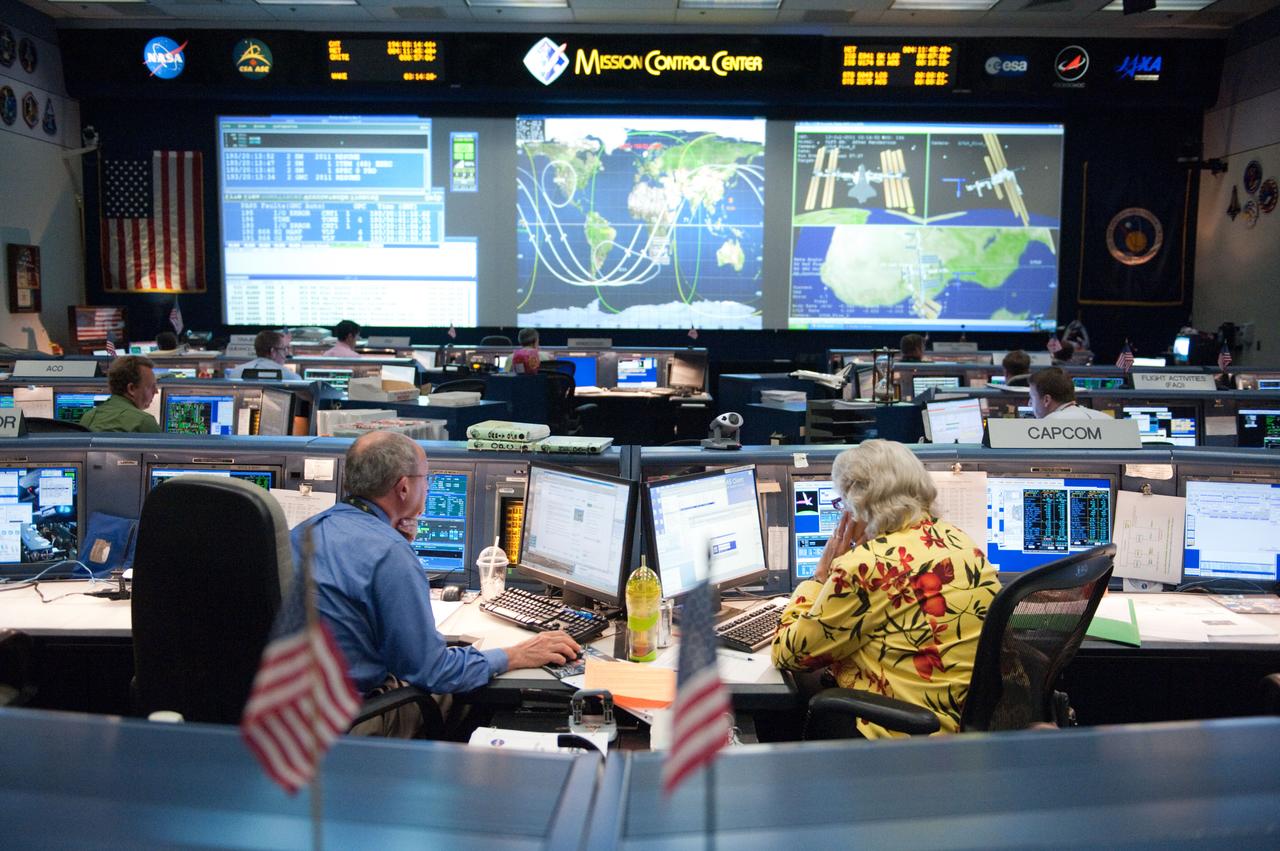
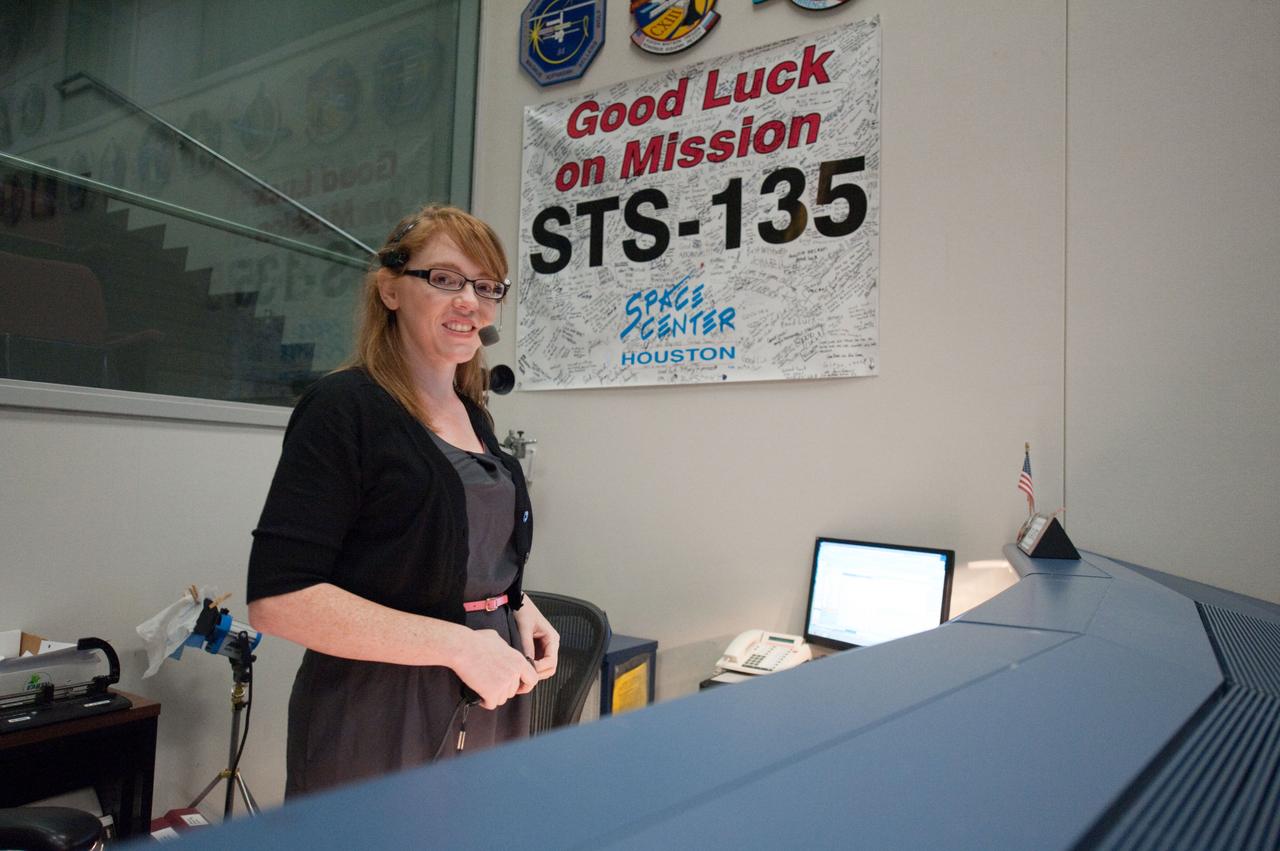
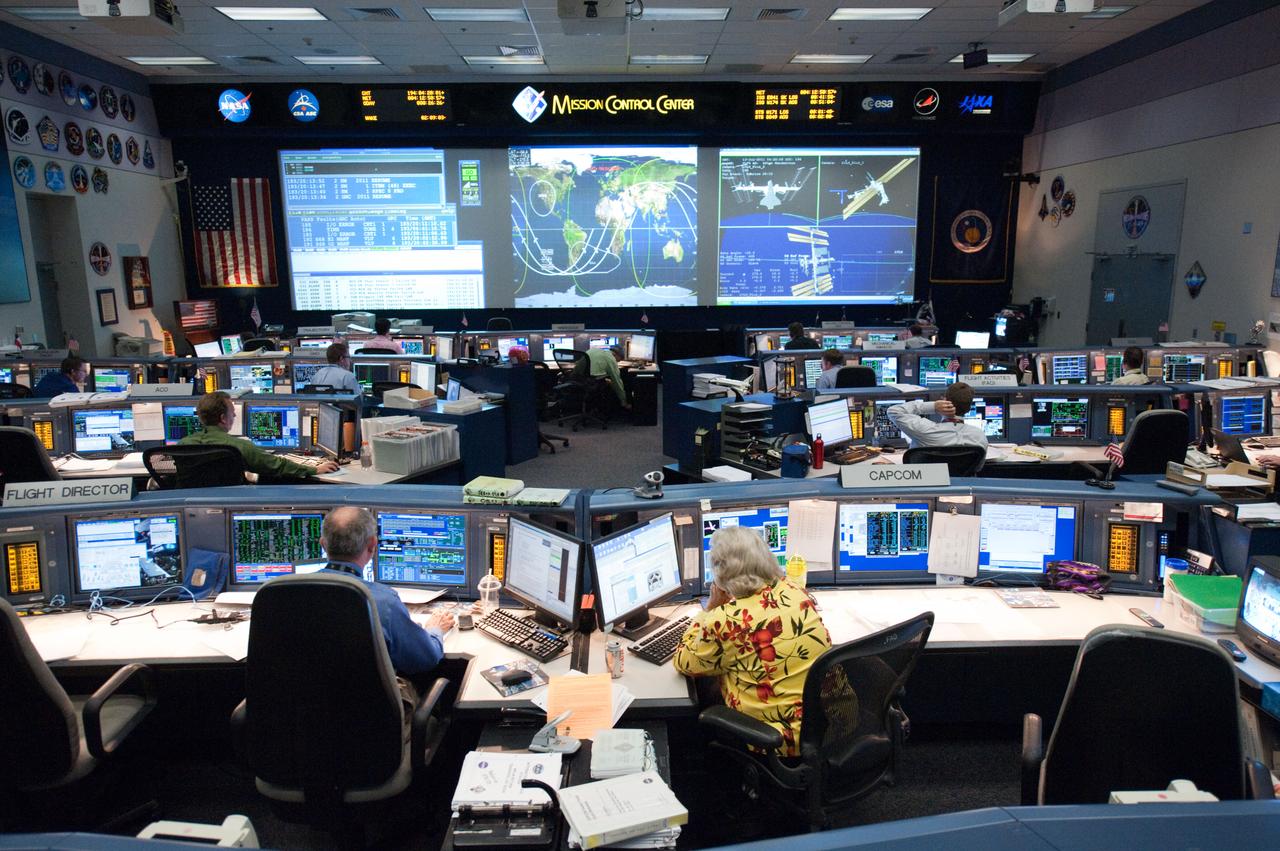
PHOTO DATE: 12 July 2011 LOCATION: Bldg. 30 - WFCR SUBJECT: STS-135 Orbit 3 Flight Controllers in WFCR. PHOTOGRAPHER: Mark Sowa
STS-135 Flight Controllers on Console. Orbit 3
STS-129 Water Survival Training at the NBL.  Photo Date: March 30, 2009. Location: NBL - Pool Topside.  Photographer: Robert Markowitz
STS-129 Water Survival Training at the NBL
PHOTO DATE: 12 July 2011 LOCATION: Bldg. 30 - WFCR SUBJECT: STS-135 Orbit 3 Flight Controllers in WFCR. PHOTOGRAPHER: Mark Sowa
STS-135 Flight Controllers on Console. Orbit 3
STS-129 Water Survival Training at the NBL.  Photo Date: March 30, 2009. Location: NBL - Pool Topside.  Photographer: Robert Markowitz
STS-129 Water Survival Training at the NBL
STS-129 Water Survival Training at the NBL.  Photo Date: March 30, 2009. Location: NBL - Pool Topside.  Photographer: Robert Markowitz
STS-129 Water Survival Training at the NBL
STS-129 Water Survival Training at the NBL.  Photo Date: March 30, 2009. Location: NBL - Pool Topside.  Photographer: Robert Markowitz
STS-129 Water Survival Training at the NBL
PHOTO DATE: 12 July 2011 LOCATION: Bldg. 30 - WFCR SUBJECT: STS-135 Orbit 3 Flight Controllers in WFCR. PHOTOGRAPHER: Mark Sowa
STS-135 Flight Controllers on Console. Orbit 3
STS-129 Water Survival Training at the NBL.  Photo Date: March 30, 2009. Location: NBL - Pool Topside.  Photographer: Robert Markowitz
STS-129 Water Survival Training at the NBL
STS-119 flight controllers during undocking.  Photo Date: 3/25/09. Bldg. 30s - WFCR.  Photographer: Robert Markowitz
STS-119 Flight Director Mike Sarafin and flight controllers on console during the undocking and fly around phase.
PHOTO DATE: 12 July 2011 LOCATION: Bldg. 30 - WFCR SUBJECT: STS-135 Orbit 3 Flight Controllers in WFCR. PHOTOGRAPHER: Mark Sowa
STS-135 Flight Controllers on Console. Orbit 3
PHOTO DATE: 12 July 2011 LOCATION: Bldg. 30 - WFCR SUBJECT: STS-135 Orbit 3 Flight Controllers in WFCR. PHOTOGRAPHER: Mark Sowa
STS-135 Flight Controllers on Console. Orbit 3
STS-129 Water Survival Training at the NBL.  Photo Date: March 30, 2009. Location: NBL - Pool Topside.  Photographer: Robert Markowitz
STS-129 Water Survival Training at the NBL
PHOTO DATE: 12 July 2011 LOCATION: Bldg. 30 - WFCR SUBJECT: STS-135 Orbit 3 Flight Controllers in WFCR. PHOTOGRAPHER: Mark Sowa
STS-135 Flight Controllers on Console. Orbit 3
STS-129 Water Survival Training at the NBL.  Photo Date: March 30, 2009. Location: NBL - Pool Topside.  Photographer: Robert Markowitz
STS-129 Water Survival Training at the NBL
STS-119 flight controllers during undocking.  Photo Date: 3/25/09. Bldg. 30s - WFCR.  Photographer: Robert Markowitz
STS-119 Flight Director Mike Sarafin and flight controllers on console during the undocking and fly around phase.
STS-129 Water Survival Training at the NBL.  Photo Date: March 30, 2009. Location: NBL - Pool Topside.  Photographer: Robert Markowitz
STS-129 Water Survival Training at the NBL
STS-129 Water Survival Training at the NBL.  Photo Date: March 30, 2009. Location: NBL - Pool Topside.  Photographer: Robert Markowitz
STS-129 Water Survival Training at the NBL
STS-129 Water Survival Training at the NBL.  Photo Date: March 30, 2009. Location: NBL - Pool Topside.  Photographer: Robert Markowitz
STS-129 Water Survival Training at the NBL
PHOTO DATE: 12 July 2011 LOCATION: Bldg. 30 - WFCR SUBJECT: STS-135 Orbit 3 Flight Controllers in WFCR. PHOTOGRAPHER: Mark Sowa
STS-135 Flight Controllers on Console. Orbit 3
PHOTO DATE: 12 July 2011 LOCATION: Bldg. 30 - WFCR SUBJECT: STS-135 Orbit 3 Flight Controllers in WFCR. PHOTOGRAPHER: Mark Sowa
STS-135 Flight Controllers on Console. Orbit 3
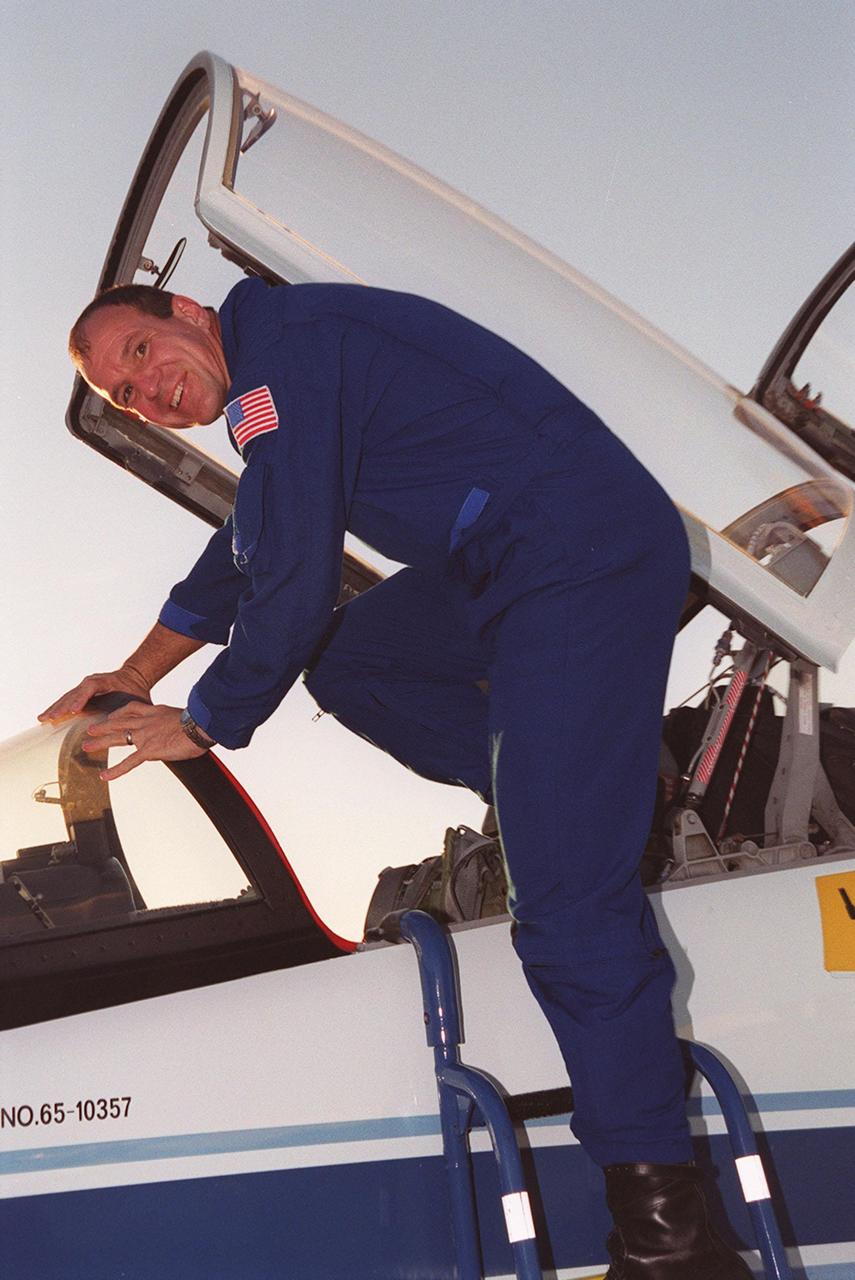
At the Shuttle Landing Facility, STS-97 Pilot Michael Bloomfield climbs out of the cockpit of a T-38 jet aircraft he flew from Johnson Space Center. He and the rest of the crew have returned to KSC for the launch, scheduled for Nov. 30 at about 10:06 p.m. EST. Mission STS-97is the sixth construction flight to the International Space Station. Its payload includes the P6 Integrated Truss Structure and a photovoltaic (PV) module, with giant solar arrays that will provide power to the Station. The mission includes two spacewalks to complete the solar array connections. STS-97 is scheduled to launch Nov. 30 at about 10:06 p.m. EST
KSC-00pp1754
At the Shuttle Landing Facility, STS-97 Mission Specialist Joseph Tanner (left) is greeted by Center Director Roy Bridges on his arrival at KSC from Johnson Space Center. Tanner and the rest of the crew have returned to KSC for the launch, scheduled for Nov. 30 at about 10:06 p.m. EST. Mission STS-97is the sixth construction flight to the International Space Station. Its payload includes the P6 Integrated Truss Structure and a photovoltaic (PV) module, with giant solar arrays that will provide power to the Station. The mission includes two spacewalks to complete the solar array connections. STS-97 is scheduled to launch Nov. 30 at about 10:06 p.m. EST
KSC00pp1756