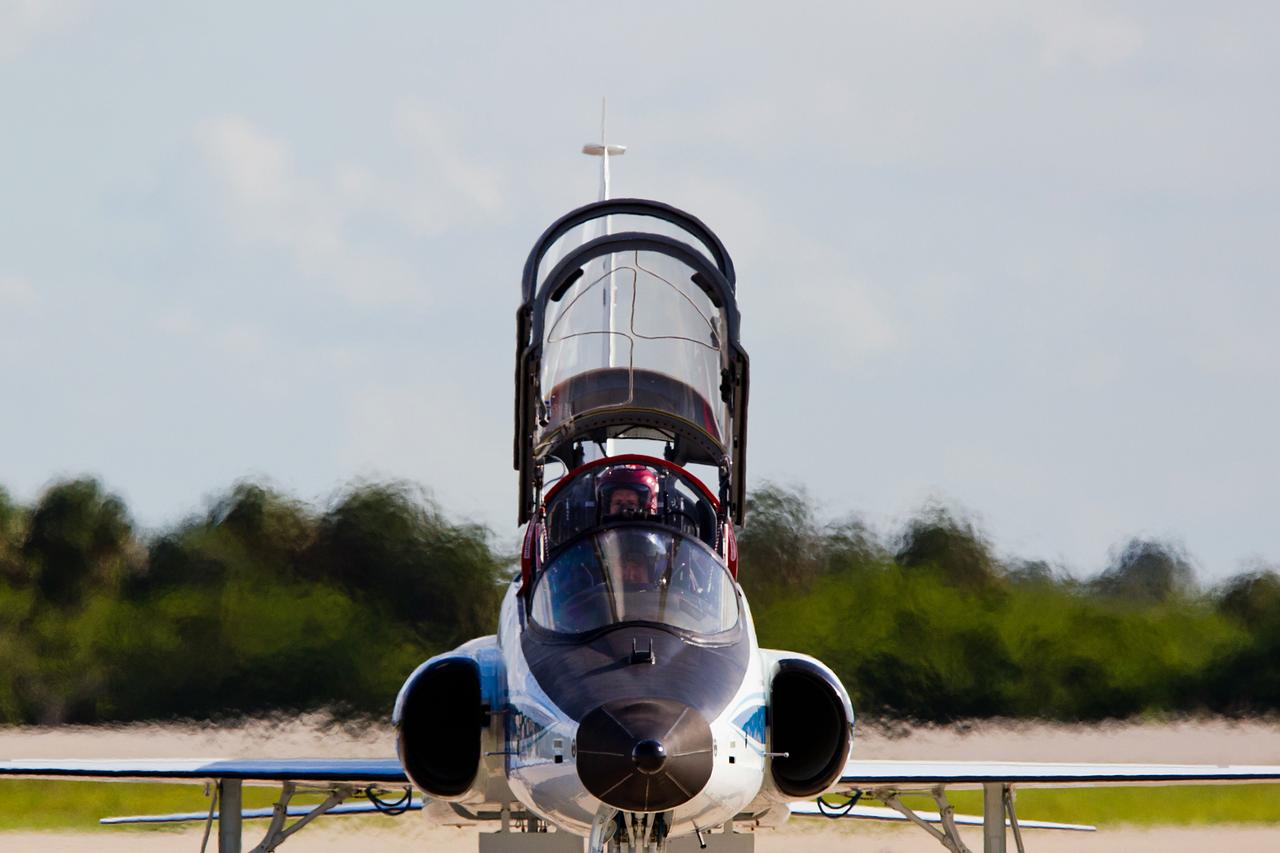
JSC2011-E-059480 (31 May 2011) --- NASA astronaut Sandy Magnus, STS-135 mission specialist, is seen on May 31 in the rear station of a T-38 which had been piloted by astronaut Doug Hurley, STS-135 pilot, and is now sitting just off the runway following arrival at NASA?s Kennedy Space Center in Florida. Photo credit: NASA Photo/Houston Chronicle, Smiley N. Pool

JSC2011-E-059470 (31 May 2011) --- NASA astronaut Doug Hurley, STS-135 pilot, is seen in a partial silhouette against the space shuttle Atlantis as the spacecraft for the program's final mission moves to Launch Pad 39A during rollout at NASA?s Kennedy Space Center in Florida May 31, 2011. Photo credit: NASA photo/Houston Chronicle, Smiley N. Pool
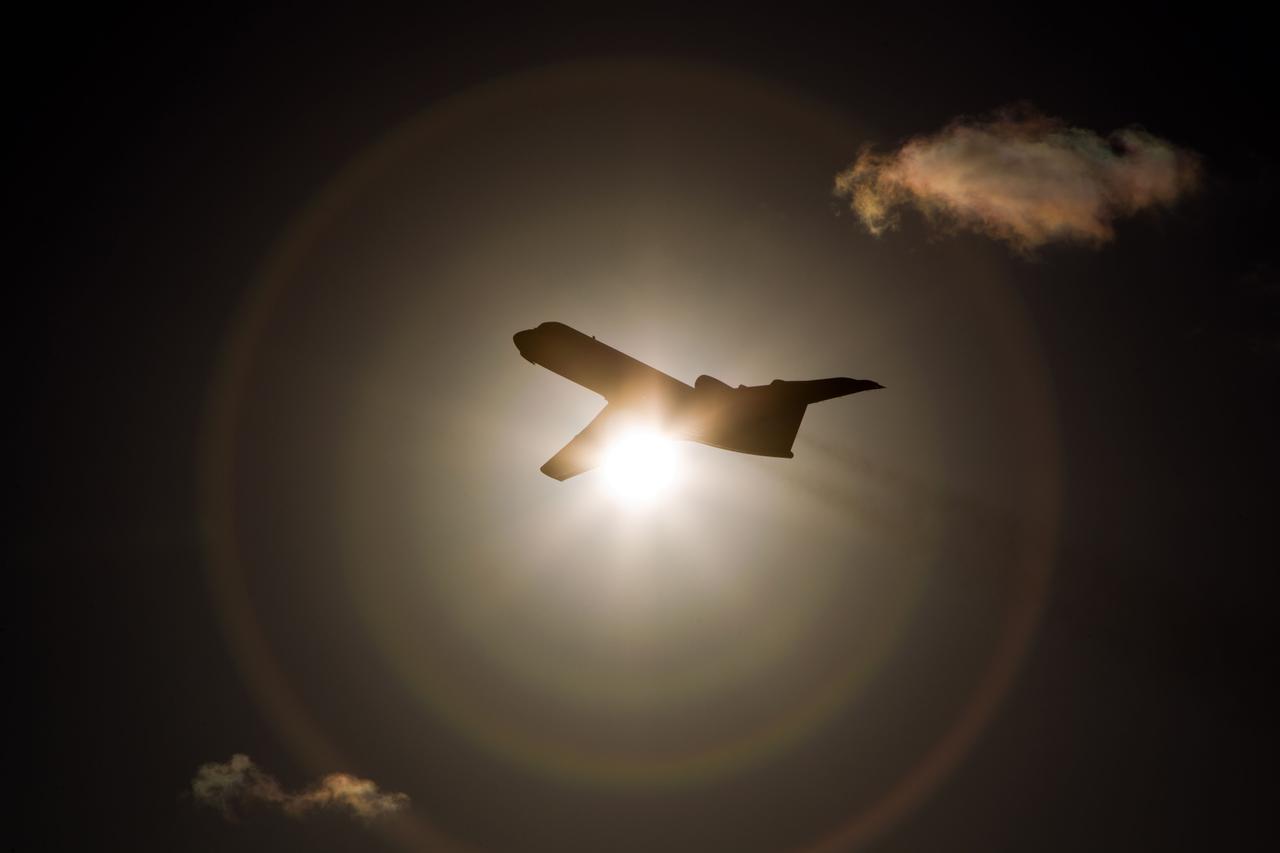
JSC2011-E-059482 (31 May 2011) --- A Shuttle Training Aircraft (STA) piloted by NASA astronaut Chris Ferguson, STS-135 commander, is seen against the late afternoon sun as the crew of the final space shuttle mission practices landings at NASA?s Kennedy Space Center in Florida May 31. Photo credit: NASA Photo/Houston Chronicle, Smiley N. Pool
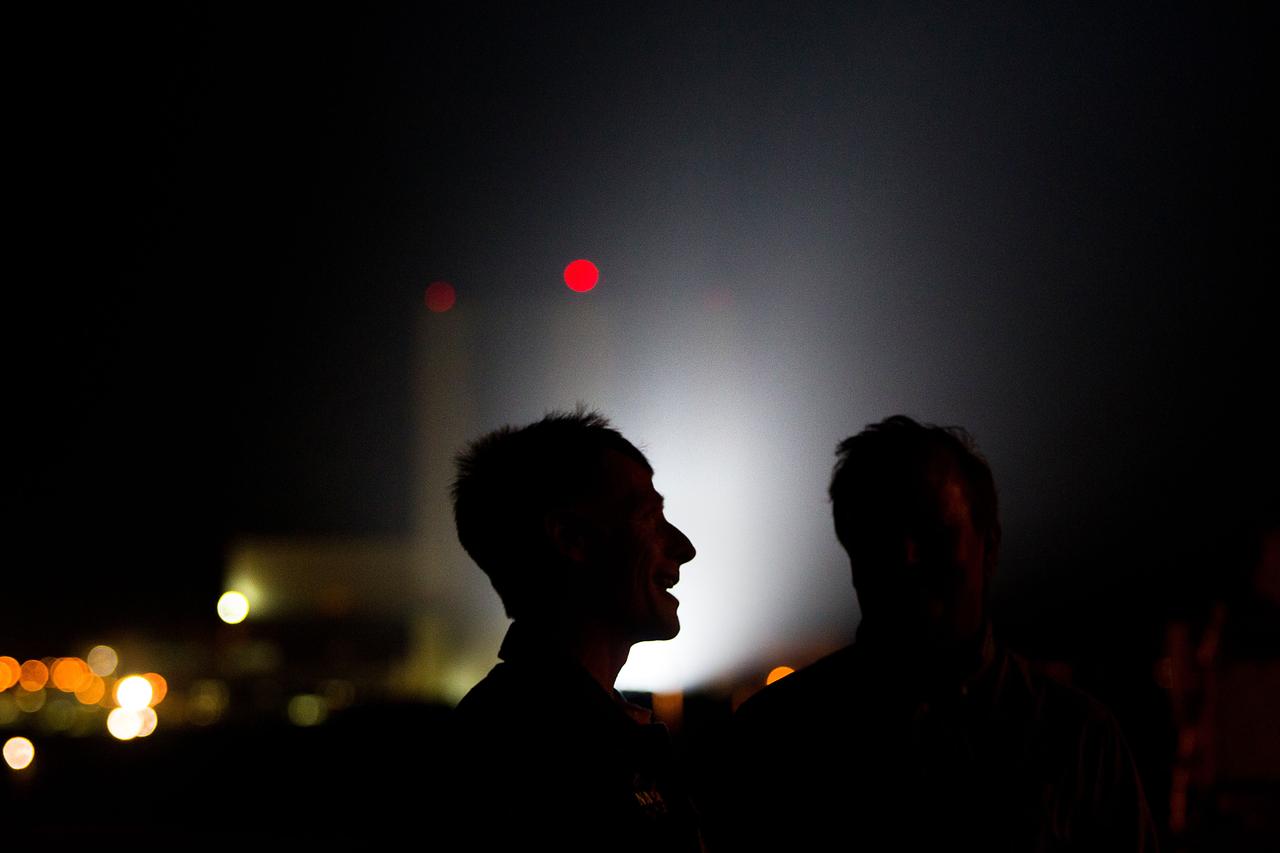
JSC2011-E-059478 (31 May 2011) --- NASA astronaut Chris Ferguson, STS-135 commander, is seen in silhouette against the Vehicle Assembly Building as the space shuttle Atlantis moves to Launch Pad 39A during rollout at NASA?s Kennedy Space Center in Florida May 31, 2011. Photo credit: NASA Photo/Houston Chronicle, Smiley N. Pool
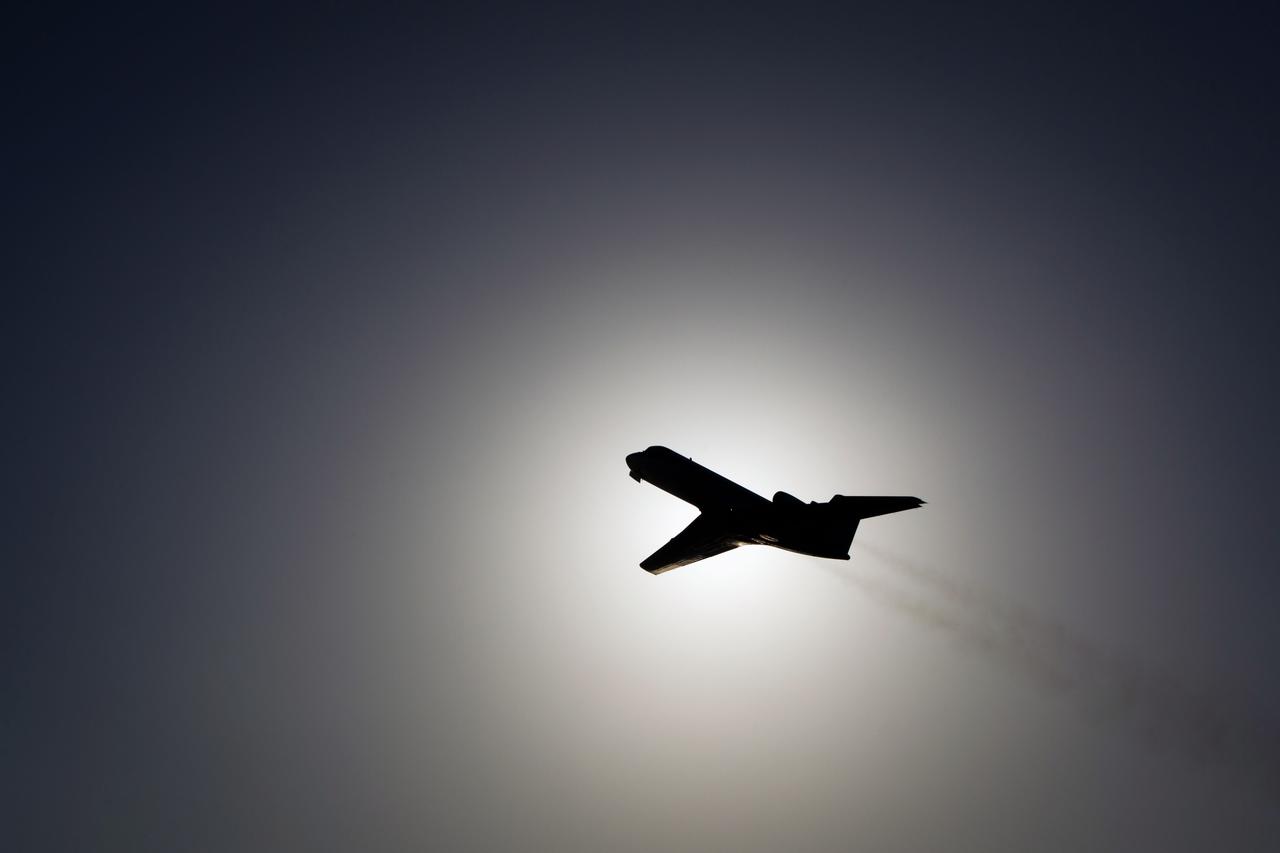
JSC2011-E-059484 (31 May 2011) --- A Shuttle Training Aircraft (STA) piloted by NASA astronaut Chris Ferguson, STS-135 commander, is seen against the late afternoon sun as the crew of the final space shuttle mission practices landings at NASA?s Kennedy Space Center in Florida May 31, 2011. Photo credit: NASA Photo/Houston Chronicle, Smiley N. Pool
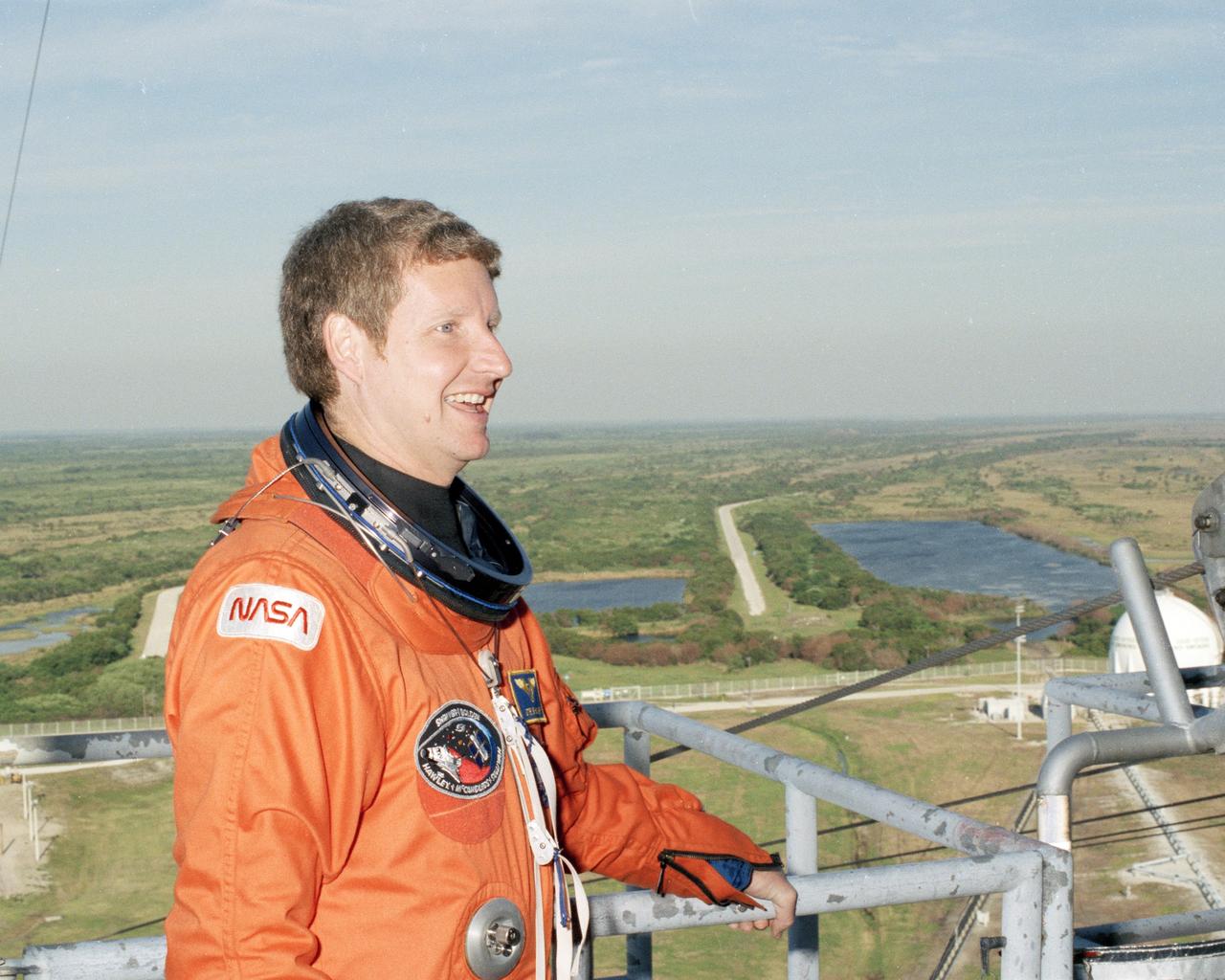
Wide-open Florida terrain creates a dramatic backas STS-31 Mission Specialist Steven A. Hawley stands near the emergency exit system at the 194-foot level of Launch Pad 39B during the Terminal Countdown Demonstration Test, or TCDT. Conducted March 19-20, the TCDT is a dress rehearsal for launch, simulating final countdown from the T-24 hour mark up to T-5 seconds. Space shuttle mission STS-31 is set to lift off on April 12, carrying a five-member crew and the Hubble Space Telescope. Photo credit: NASA
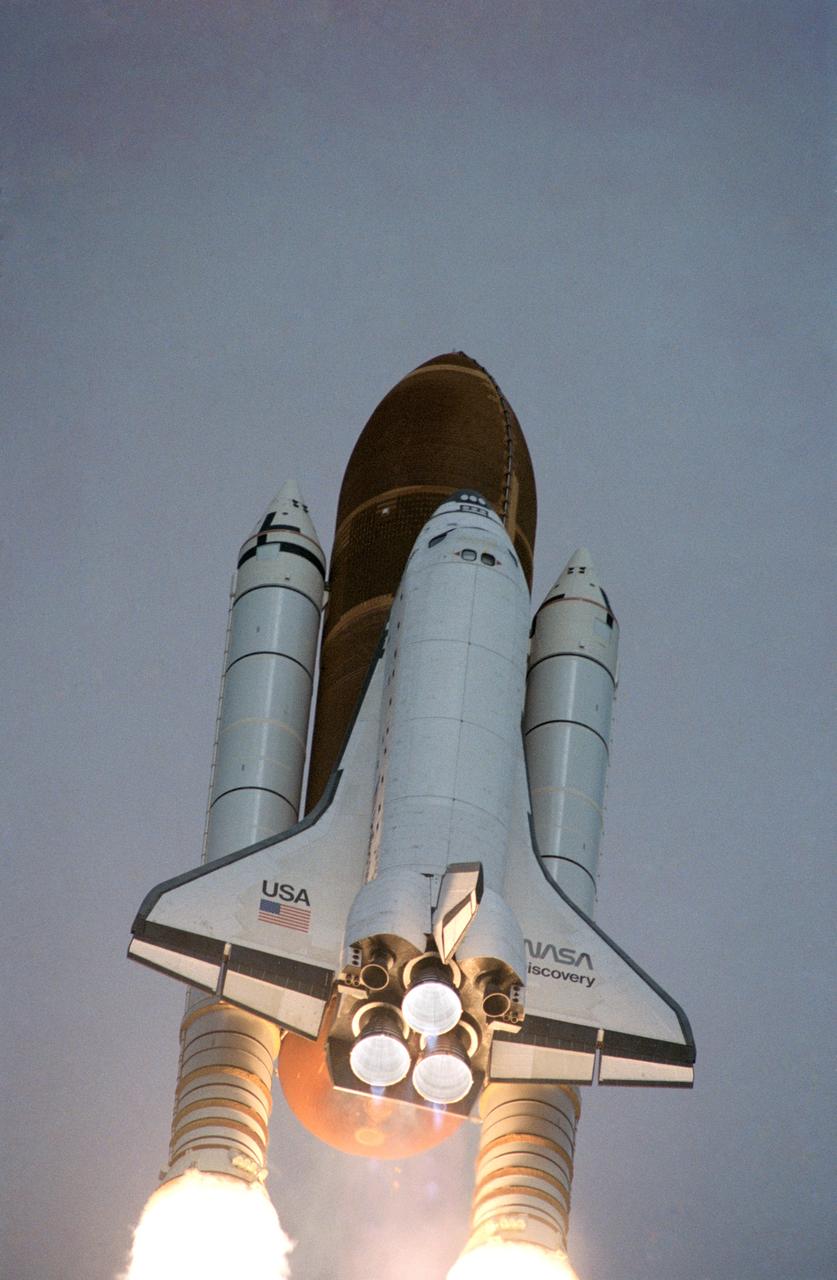
STS031-S-074 (24 April 1990) --- A low-angle view of the launch of the STS-31 mission. Onboard Discovery are a crew of five veteran astronauts and the Hubble Space Telescope (HST). Official launch time was 8:33:51.0492 a.m. (EDT). Headed for approximately five days in space are astronauts Loren J. Shriver, Charles F. Bolden Jr., Bruce McCandless II, Kathryn D. Sullivan and Steven S. Hawley.
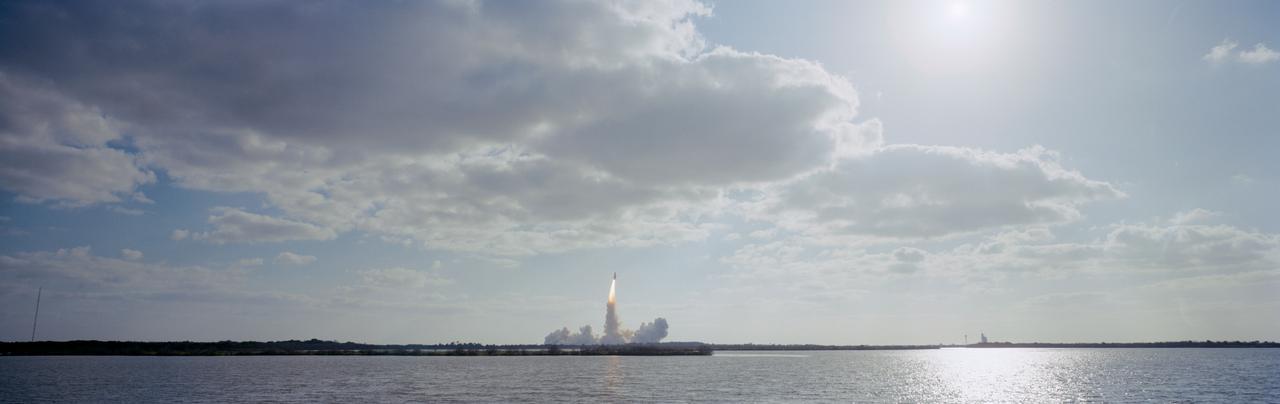
In this distant view, STS-31 Discovery, Orbiter Vehicle (OV) 103, is seen as it heads skyward after liftoff from Kennedy Space Center (KSC) Launch Complex (LC) Pad 39B at 8:33:51.0492 am (Eastern Daylight Time (EDT)). OV-103's silhouette atop the external tank (ET) appears above the glow of the solid rocket booster (SRB) and space shuttle main engine (SSME) firings. An exhaust plume trails behind and covers the launch pad area below the orbiter. A nearby waterway reflects the SRB/SSME glow in the foreground. At the far right and barely discernible is KSC LC Pad 39A and the Sound Supression Water System tower. Columbia, OV-102, is on LC Pad 39A which is separated by a distance of 1.6 miles. This was the first time since January 1986 that there was a shuttle on each pad.
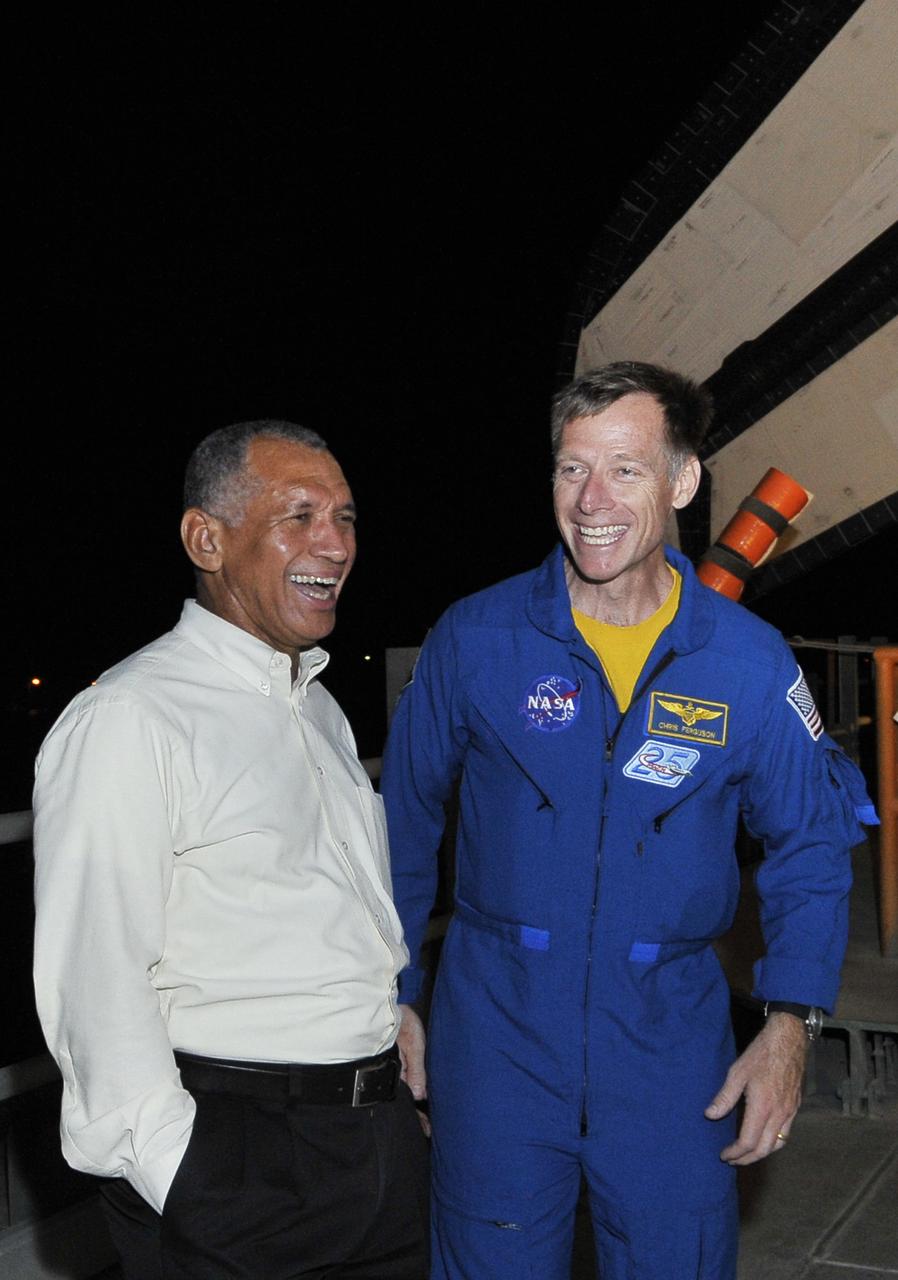
Kennedy Space Center Director Charley Bolden laughs at a story being told to him by STS-135 crew Commander Chris Ferguson during rollout of Shuttle Atlantis on the Mobil Launch Platform (MLP) at Kennedy Space Center, Cape Canaveral, Florida, USA 31 May 2011. Launch of Atlantis on the STS-135 mission to deliver supplies to the International Space Station is currently planned for no earlier than 08 July 2011. The STS-135 mission is planned to last eight days and will be the final flight of the Space Shuttle program.
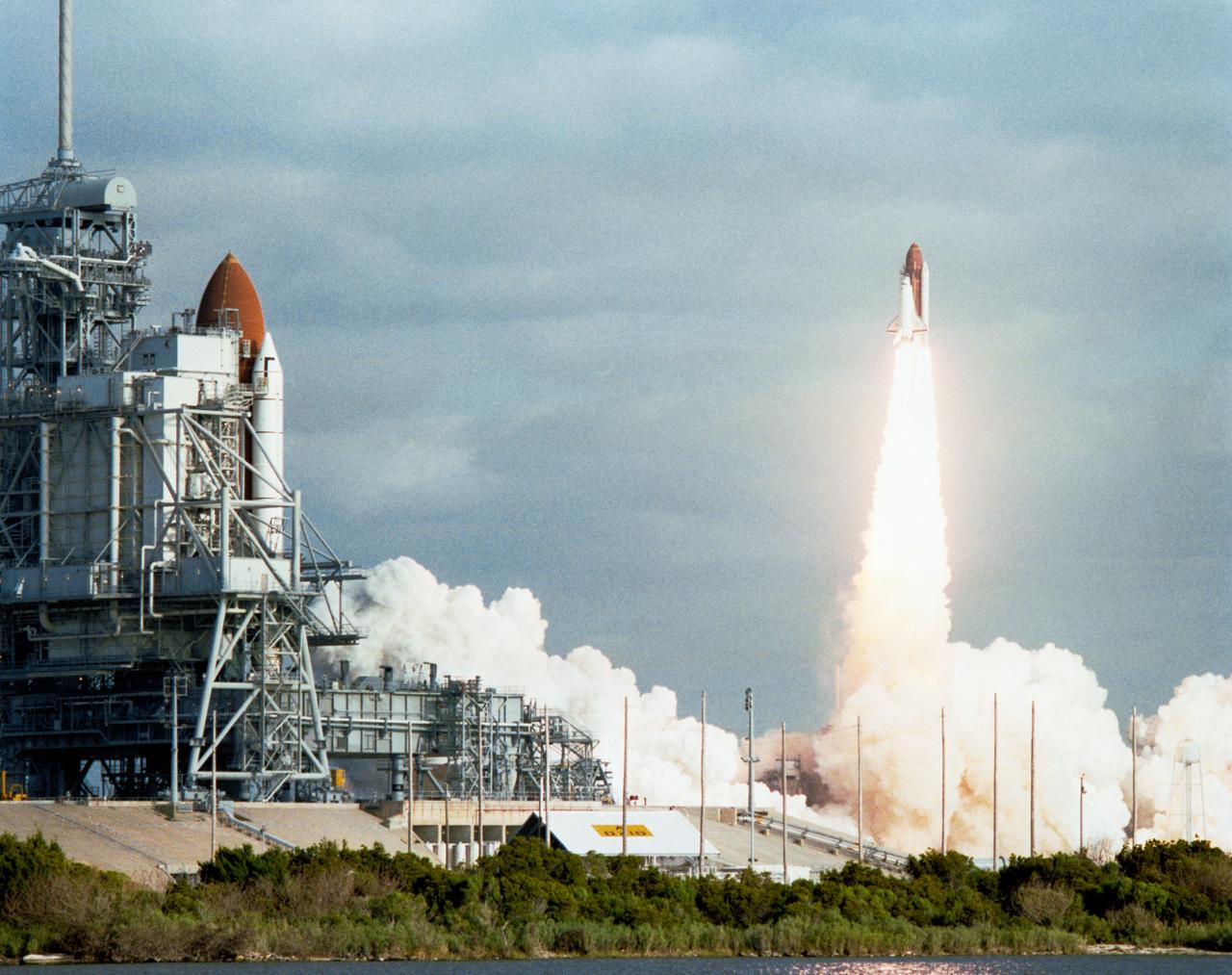
STS-31 Discovery, Orbiter Vehicle (OV) 103, lifts off from Kennedy Space Center (KSC) Launch Complex (LC) 39 Pad B. In the foreground STS-35 Columbia, OV-102, is visible on launch pad 39A. This event marked the first time since January 1986 that there was an orbiter on each pad. LC 39 pads are separated by 1.6 miles. View provided by KSC with alternate number KSC-90PC-610.
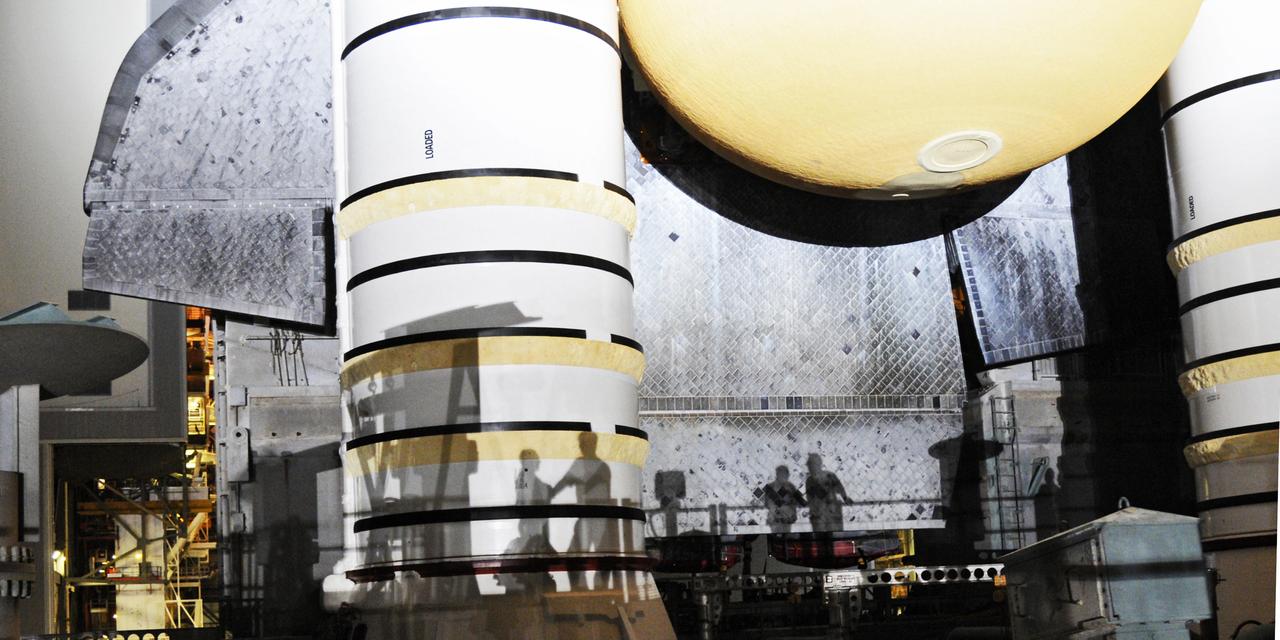
Space Shuttle Atlantis viewed from the Mobil Launch Platform (MLP) during it's final rollout to Launch Pad 39A at Kennedy Space Center, Cape Canaveral, Florida, USA 31 May 2011. Launch of Atlantis on the STS-135 mission to deliver supplies to the International Space Station is currently planned for no earlier than 08 July 2011. The STS-135 mission is planned to last eight days and will be the final flight of the Space Shuttle program.
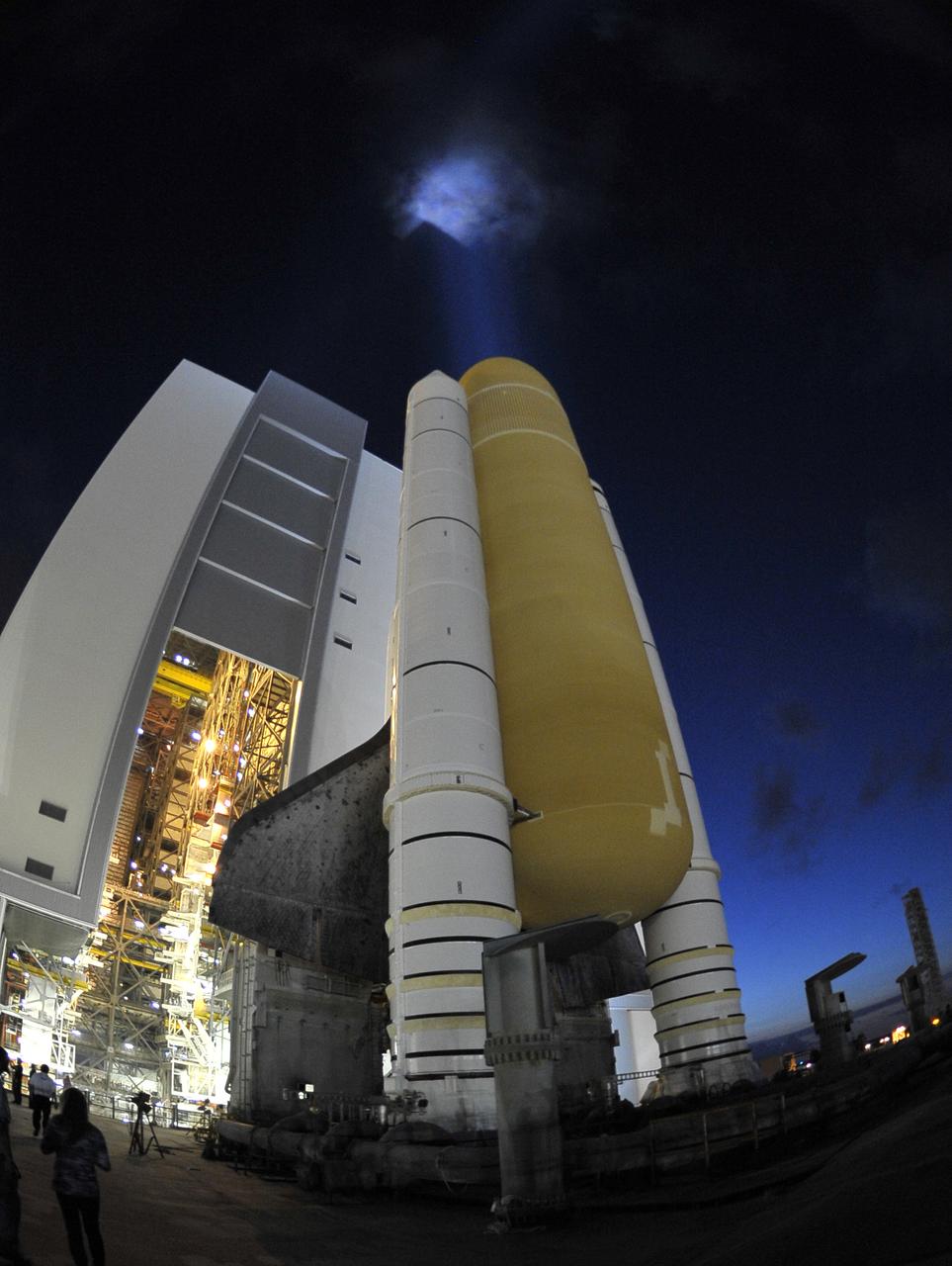
Shuttle Atlantis viewed from the Mobil Launch Platform (MLP) departs the Vehicle Assembly Building (VAB) during it's final rollout to Launch Pad 39A at Kennedy Space Center, Cape Canaveral, Florida, USA 31 May 2011. Launch of Atlantis on the STS-135 mission to deliver supplies to the International Space Station is planned for no earlier than 08 July 2011. The STS-135 mission is planned to last eight days and will be the final flight of the Space Shuttle program.
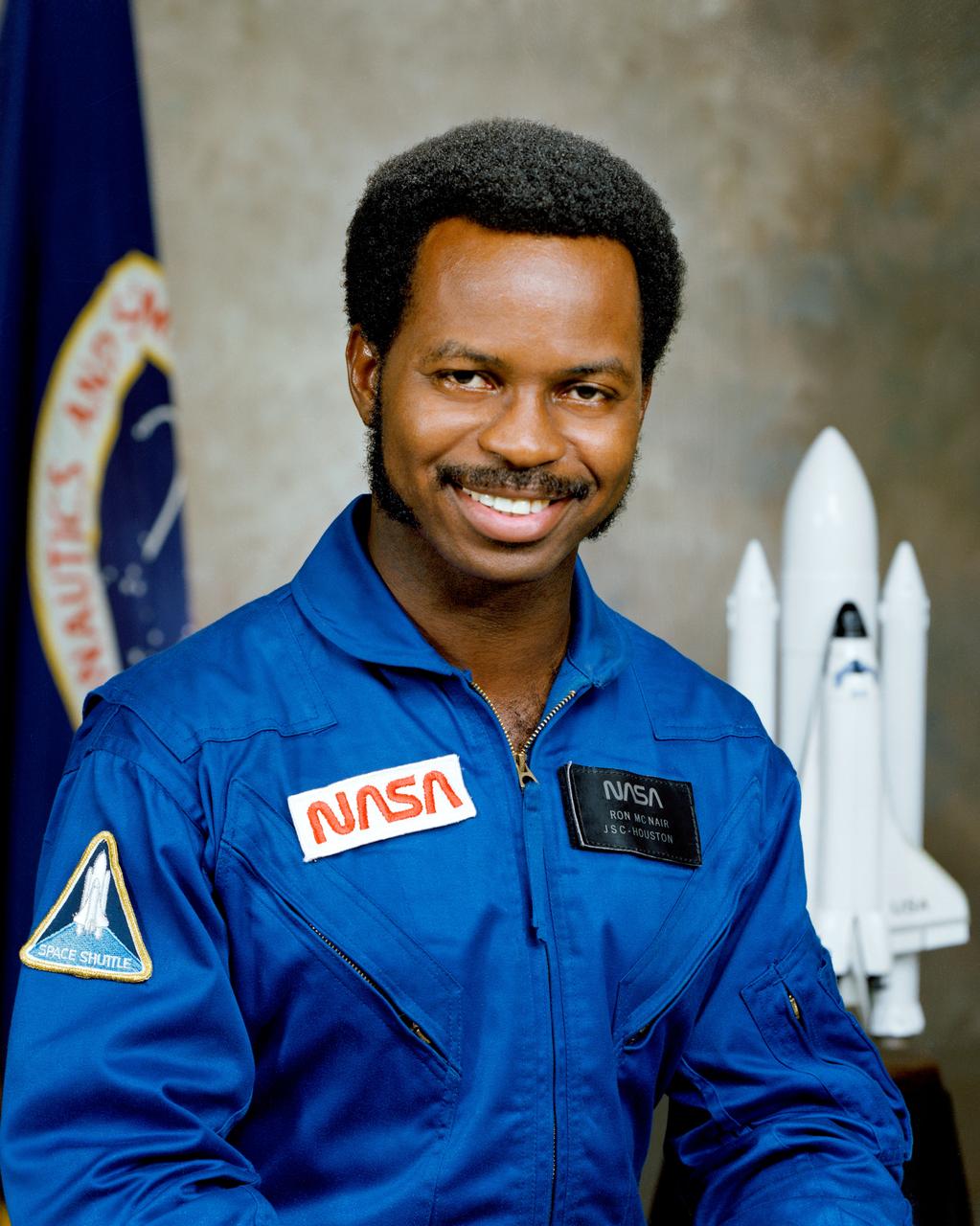
S78-35300 (31 Jan 1978) -- NASA Astronaut Dr. Ronald E. McNair (PH.D.) was assigned as a mission specialist and was a crewmember on two Space Shuttle Missions. He first flew on STS 41-B in 1984 where he performed numerous science experiments. On his second flight, STS 51-L, Dr. McNair died on January 28, 1986 when the Space Shuttle Challenger exploded after launch from the Kennedy Space Center, Florida. NASA Photograph
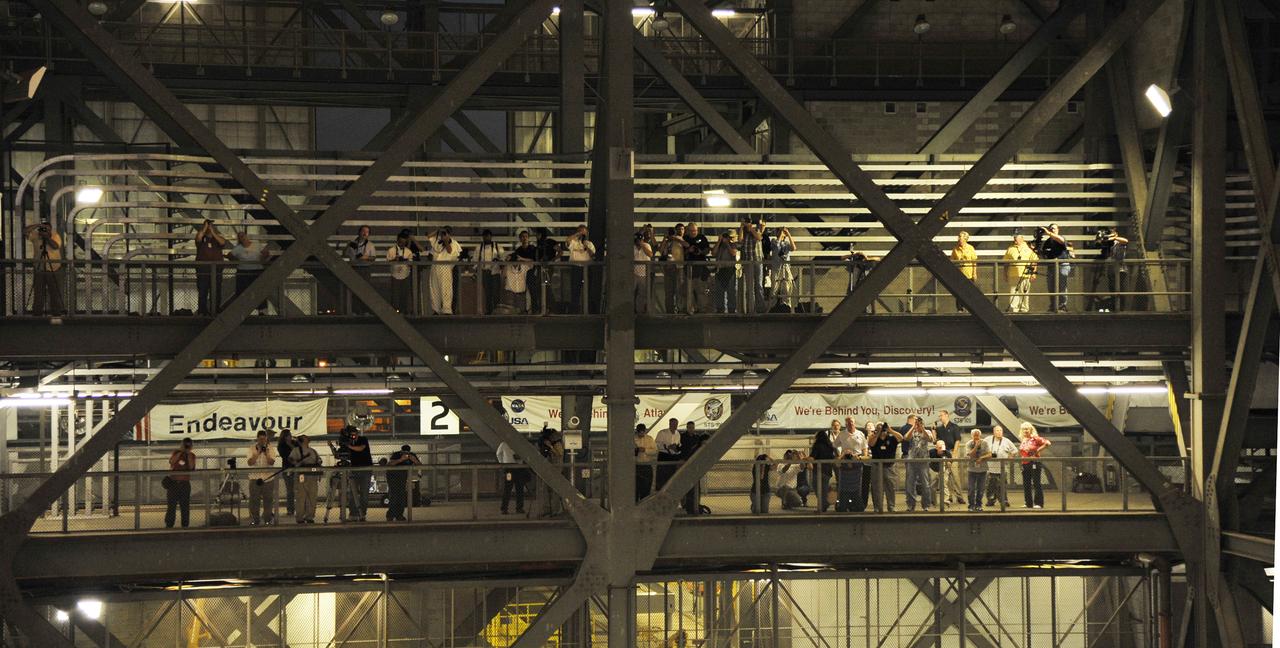
members of the media gather in the VAB to photograph the last rollout of Shuttle Atlantis on the Mobil Launch Platform (MLP) at Kennedy Space Center, Cape Canaveral, Florida, USA 31 May 2011. Launch of Atlantis on the STS-135 mission to deliver supplies to the International Space Station is currently planned for no earlier than 08 July 2011. The STS-135 mission is planned to last eight days and will be the final flight of the Space Shuttle program.

JSC2000-01071 (31 January 2000) --- Astronaut Joe F. Edwards, Jr., spacecraft communicator (CAPCOM), looks over notes at his console in Houston's Mission Control Center (MCC) while awaiting word regarding STS-99's launch status at Florida's Kennedy Space Center (KSC), several hundred miles away.
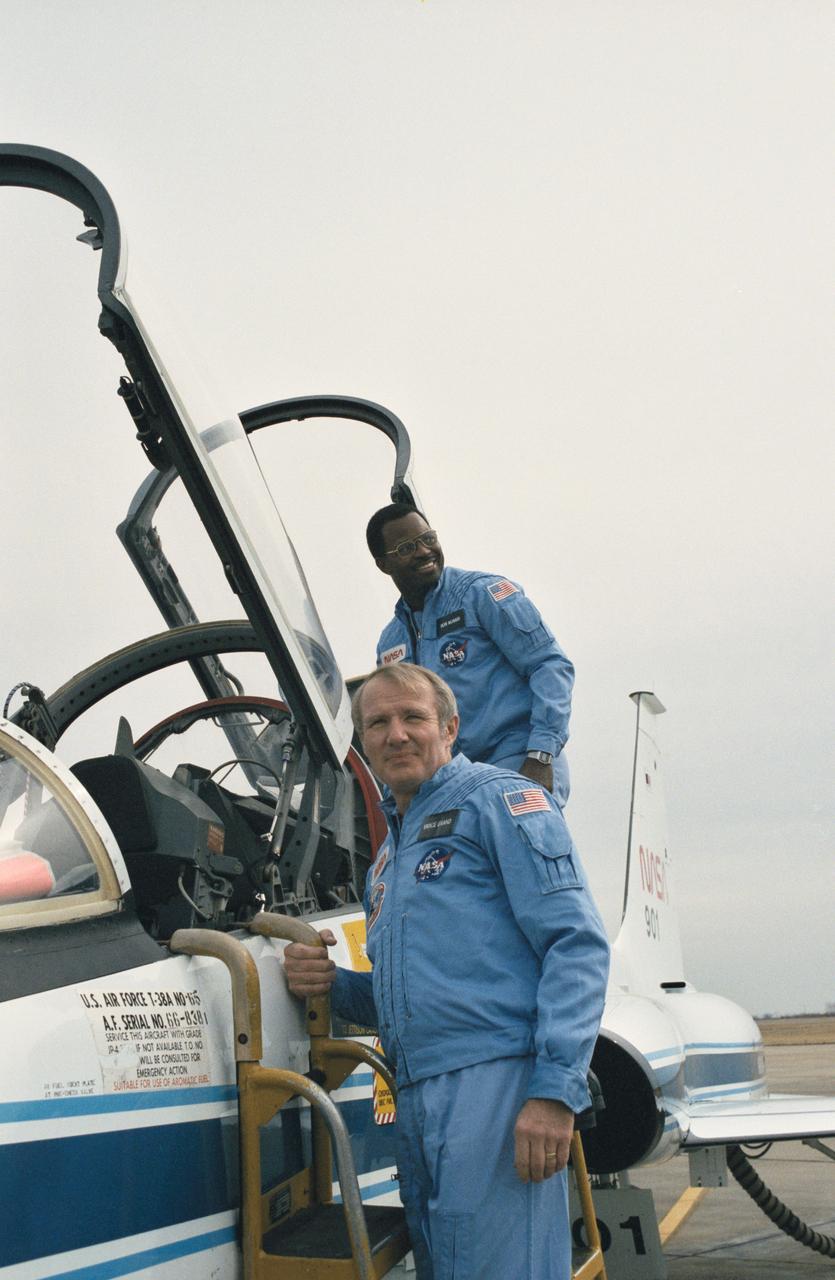
S84-26244 (31 Jan 1984) --- Astronauts Vance D. Brand, foreground, and Ronald E. McNair, of NASA's STS-41B Space Shuttle Challenger crew, prepare to climb into a T-38 jet aircraft readied for takeoff to Florida and the Kennedy Space Center (KSC). Brand is making his third Spaceflight, including his second as a Shuttle flight crew commander. McNair, mission specialist, will be making his first trip into space. Launch for STS-41B is scheduled for 8 a.m. (EST), February 3, 1984. This photo was taken by Otis Imboden.
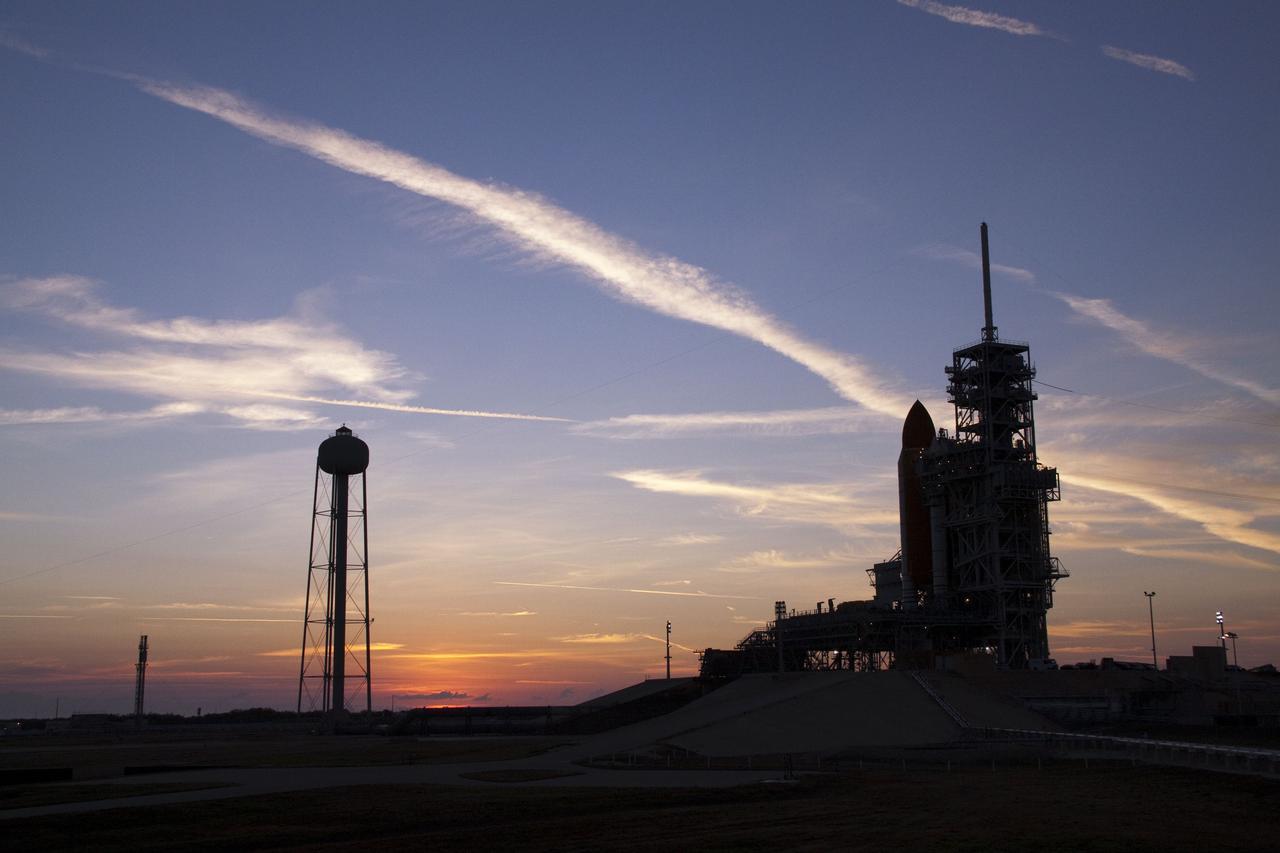
CAPE CANAVERAL, Fla. -- At NASA's Kennedy Space Center in Florida, the sun begins it rise in the East overlooking Launch Pad 39A and space shuttle Discovery, newly arrived for its upcoming launch. First motion on its 3.4-mile trip from the Vehicle Assembly Building was at 7:58 p.m. EST Jan. 31, and was secured or "hard down" on the pad a little before 3 a.m. Feb. 1. Discovery's next launch opportunity to the International Space Station on the STS-133 mission is targeted for Feb. 24. For more information on STS-133, visit www.nasa.gov/mission_pages/shuttle/shuttlemissions/sts133/. Photo credit: NASA/Jack Pfaller
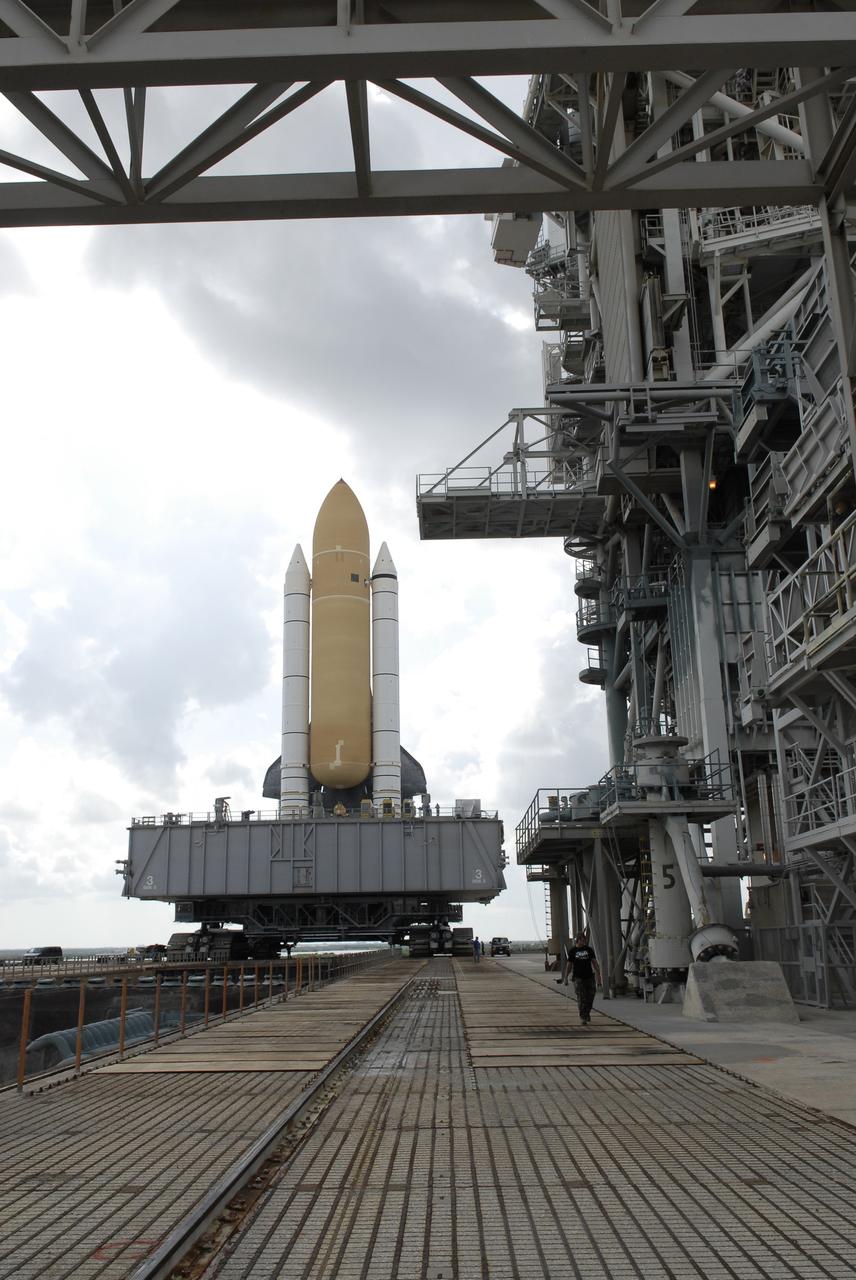
CAPE CANAVERAL, Fla. – At NASA's Kennedy Space Center in Florida, a crawler-transport safely delivers space shuttle Atlantis into position beside the fixed service structure on Launch Pad 39A. First motion on the 3.4-mile journey from the Vehicle Assembly Building, known as rollout, was at 6:38 a.m. EDT Oct. 14. The rollout took about six hours, and the shuttle was secure on the pad at 1:31 p.m. Liftoff of Atlantis on its STS-129 mission to the International Space Station is targeted for Nov. 12. For information on the STS-129 mission and crew, visit http://www.nasa.gov/mission_pages/shuttle/shuttlemissions/sts129/index.html. Photo credit: NASA/Kim Shiflett
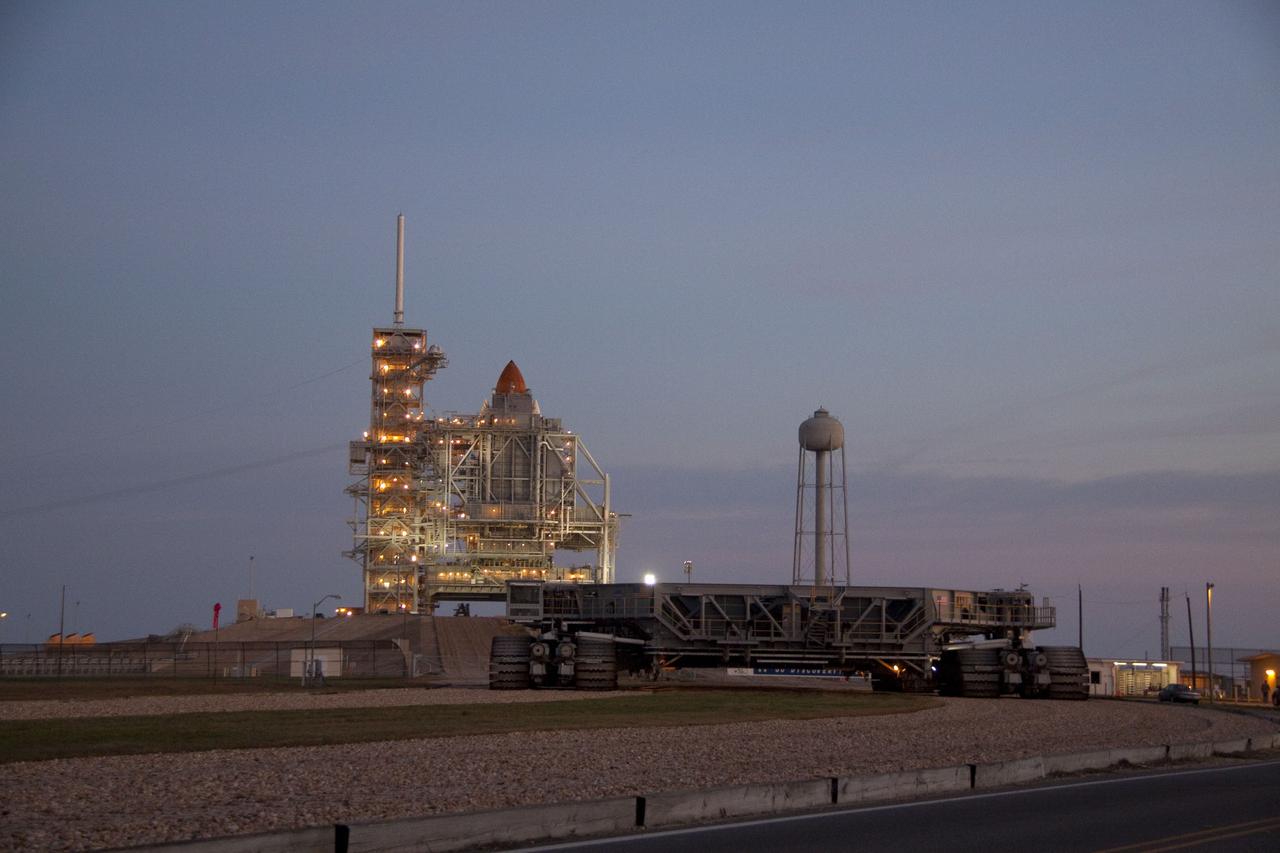
CAPE CANAVERAL, Fla. -- Dawn breaks over the Atlantic Ocean near Launch Pad 39A at NASA's Kennedy Space Center in Florida to reveal space shuttle Discovery newly arrived for its upcoming launch. First motion on its 3.4-mile trip from the Vehicle Assembly Building was at 7:58 p.m. EST Jan. 31, and was secured or "hard down" on the pad a little before 3 a.m. Feb. 1. Discovery's next launch opportunity to the International Space Station on the STS-133 mission is targeted for Feb. 24. For more information on STS-133, visit www.nasa.gov/mission_pages/shuttle/shuttlemissions/sts133/. Photo credit: NASA/Jack Pfaller
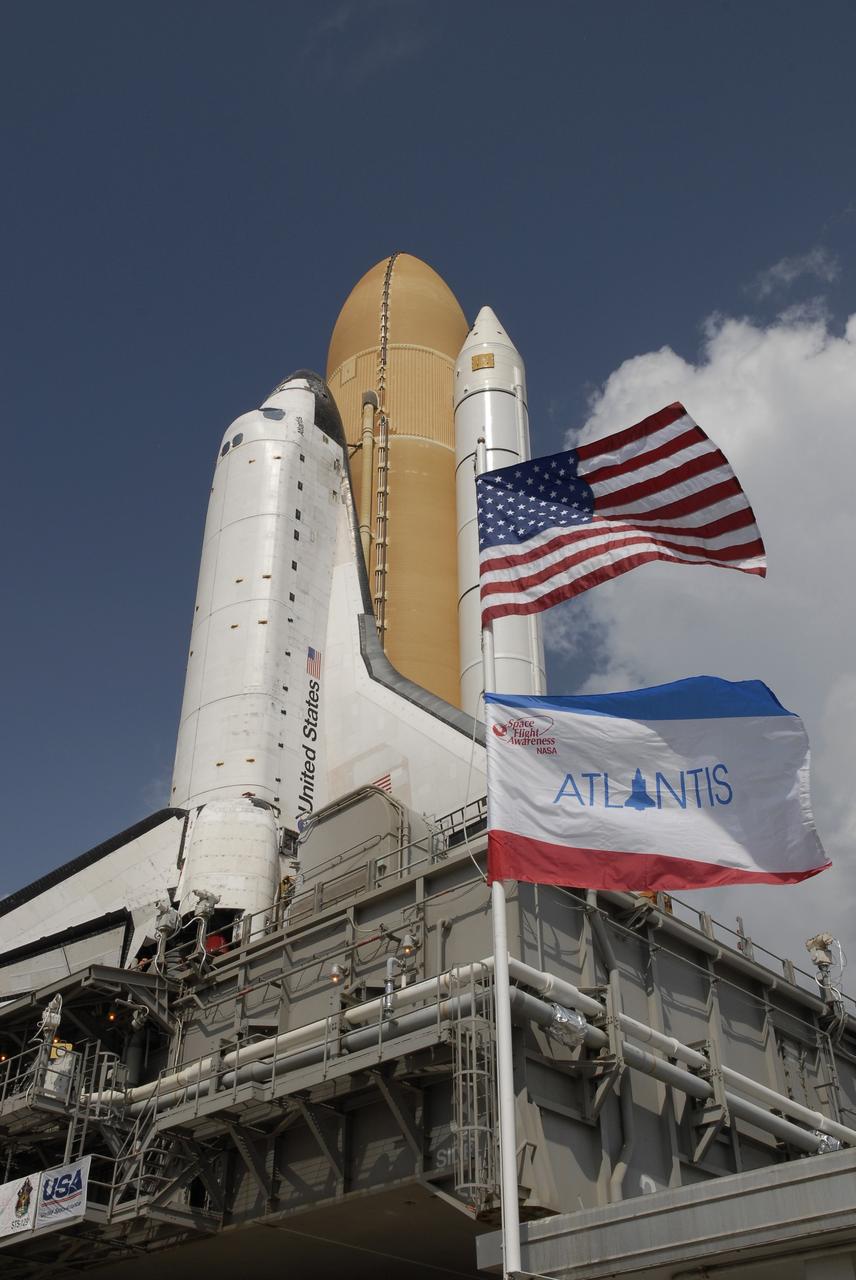
CAPE CANAVERAL, Fla. – At NASA's Kennedy Space Center in Florida, flags at Launch Pad 39A wave as if greeting space shuttle Atlantis upon its arrival. First motion on the 3.4-mile trip from the Vehicle Assembly Building, known as rollout, was at 6:38 a.m. EDT Oct. 14. The rollout took about six hours, and the shuttle was secure on the pad at 1:31 p.m. Liftoff of Atlantis on its STS-129 mission to the International Space Station is targeted for Nov. 12. For information on the STS-129 mission and crew, visit http://www.nasa.gov/mission_pages/shuttle/shuttlemissions/sts129/index.html. Photo credit: NASA/Kim Shiflett
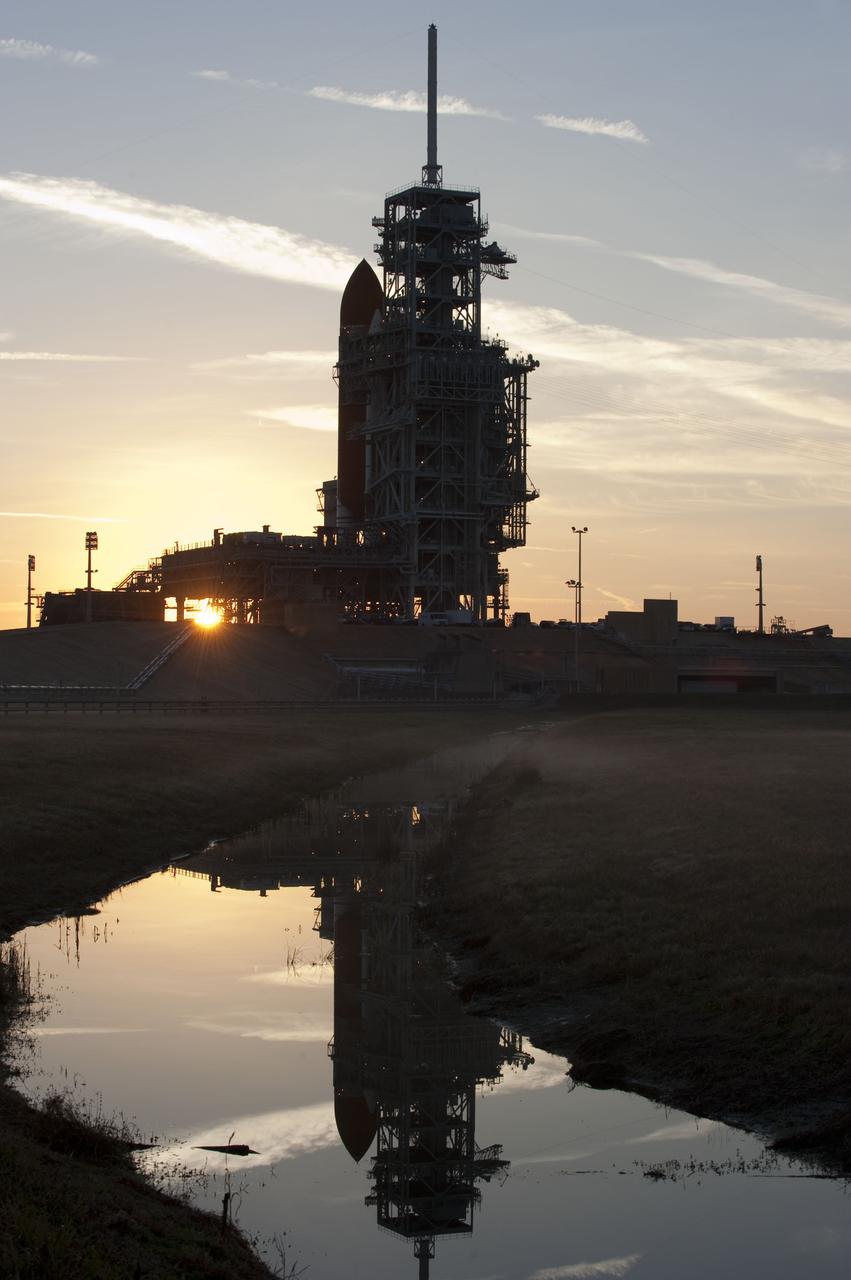
CAPE CANAVERAL, Fla. -- At NASA's Kennedy Space Center in Florida, the sun's early morning rays and space shuttle Discovery are reflected in a pond at Launch Pad 39A. Discovery was moved from the Vehicle Assembly Building with first motion at 7:58 p.m. EST Jan. 31, and was secured or "hard down" on the pad a little before 3 a.m. Feb. 1. Discovery's next launch opportunity to the International Space Station on the STS-133 mission is targeted for Feb. 24. For more information on STS-133, visit www.nasa.gov/mission_pages/shuttle/shuttlemissions/sts133/. Photo credit: NASA/Kim Shiflett
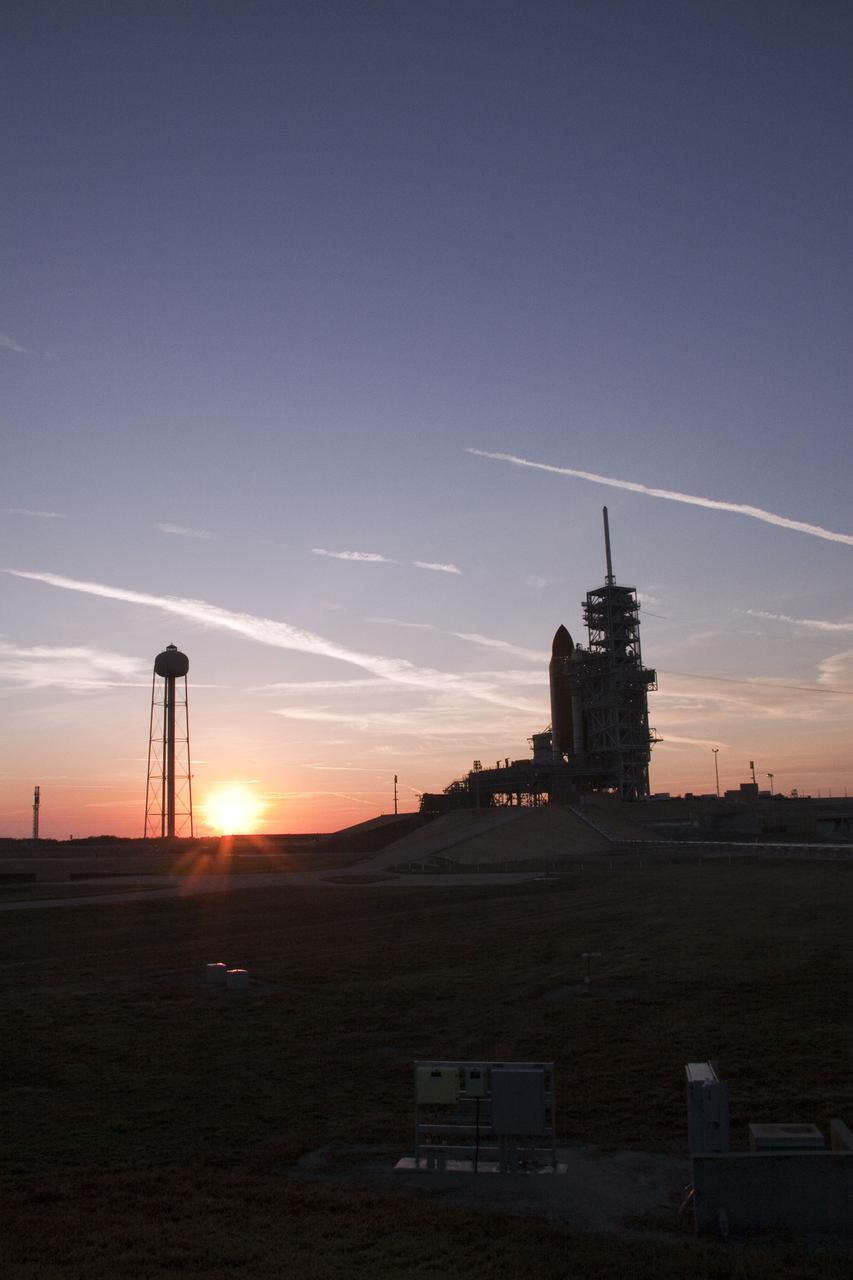
CAPE CANAVERAL, Fla. -- At NASA's Kennedy Space Center in Florida, the sun begins it rise in the East overlooking Launch Pad 39A and space shuttle Discovery, newly arrived for its upcoming launch. First motion on its 3.4-mile trip from the Vehicle Assembly Building was at 7:58 p.m. EST Jan. 31, and was secured or "hard down" on the pad a little before 3 a.m. Feb. 1. Discovery's next launch opportunity to the International Space Station on the STS-133 mission is targeted for Feb. 24. For more information on STS-133, visit www.nasa.gov/mission_pages/shuttle/shuttlemissions/sts133/. Photo credit: NASA/Jack Pfaller
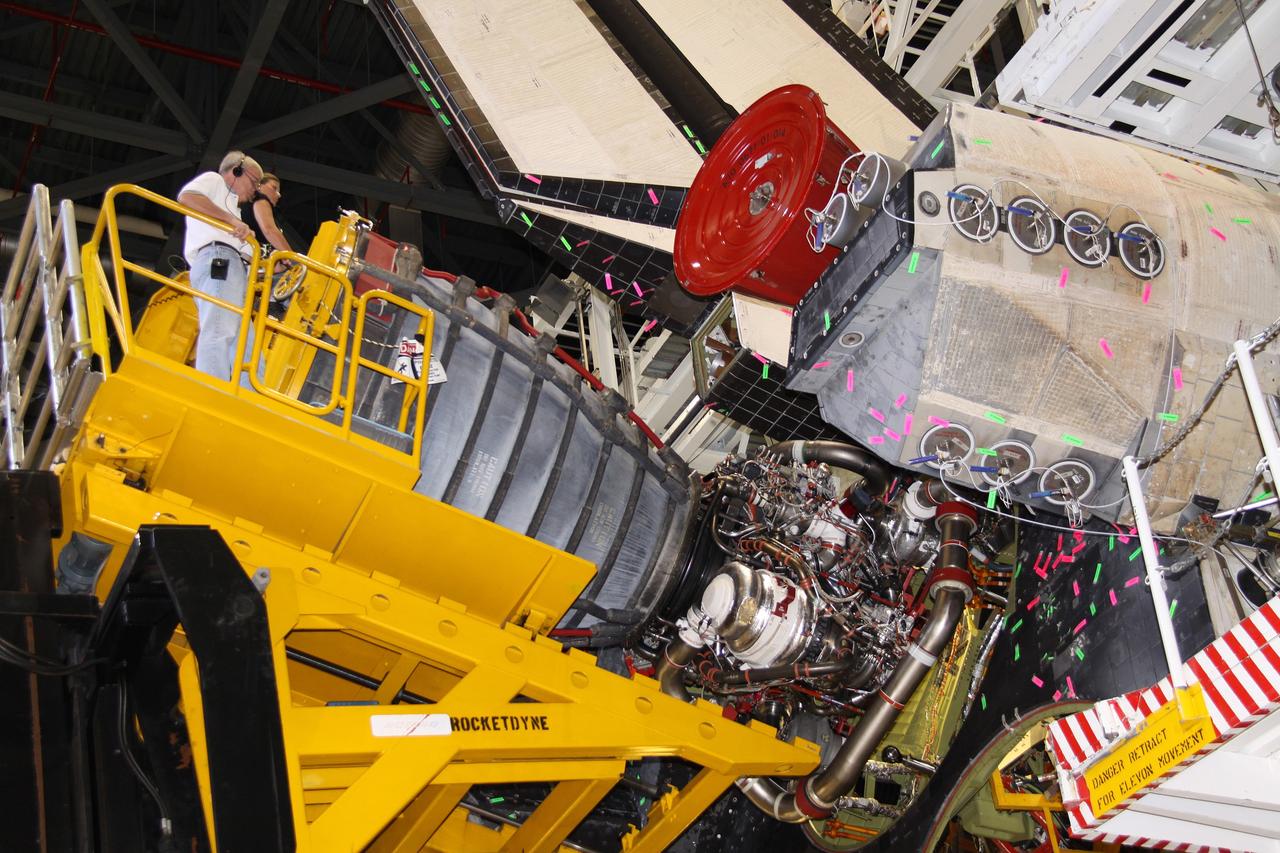
CAPE CANAVERAL, Fla. – In Orbiter Processing Bay 2 at NASA's Kennedy Space Center in Florida, technicians begin removing main engine no. 1 from space shuttle Endeavour with the Hyster forklift. Engine removal is part of the post-landing processing; engine no. 2 was removed Aug. 17. Endeavour returned from the STS-127 mission July 31. Endeavour's next mission is STS-130 targeted for February 2010. Endeavour will deliver to the International Space Station the Tranquility pressurized module that will provide room for many of the station's life support systems. Photo credit: NASA/Jack Pfaller
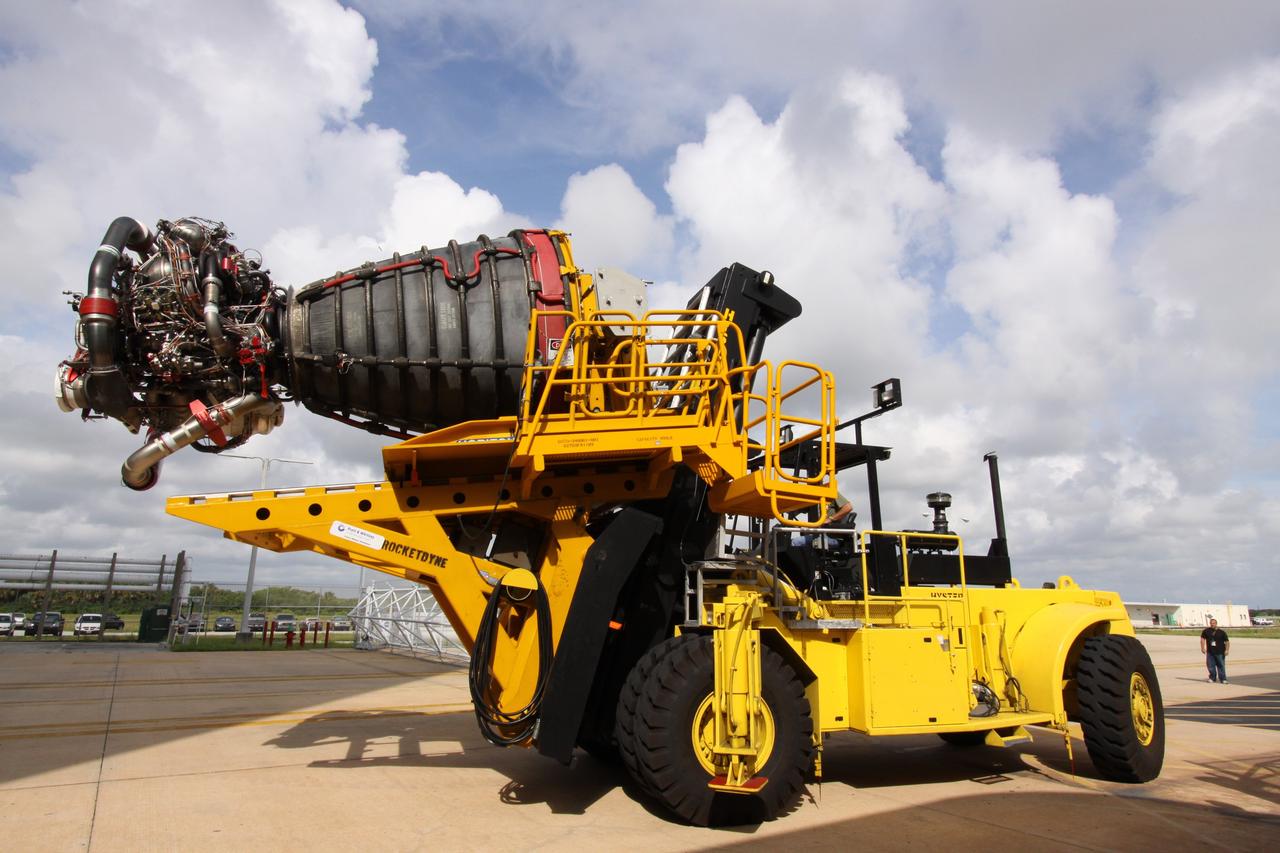
CAPE CANAVERAL, Fla. – At NASA's Kennedy Space Center in Florida, space shuttle Endeavour's main engine no. 1 is moved out of Orbiter Processing Bay 2 after removal from the shuttle. Engine removal is part of the post-landing processing; engine no. 2 was removed Aug. 17. Endeavour returned from the STS-127 mission July 31. Endeavour's next mission is STS-130 targeted for February 2010. Endeavour will deliver to the International Space Station the Tranquility pressurized module that will provide room for many of the station's life support systems. Photo credit: NASA/Jack Pfaller
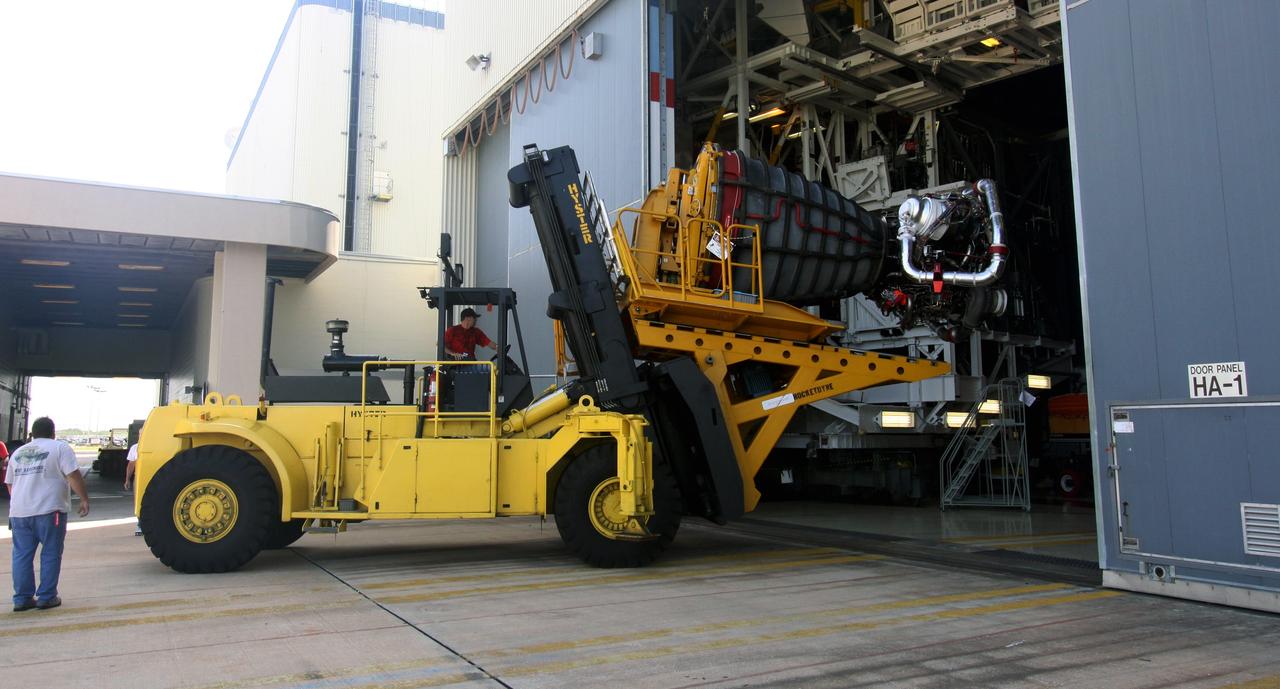
CAPE CANAVERAL, Fla. – At NASA's Kennedy Space Center in Florida, space shuttle Endeavour's main engine no. 2 is moved out of Orbiter Processing Bay 2 after removal from the shuttle. Engine removal is part of the post-landing processing. Endeavour returned from the STS-127 mission July 31. Endeavour's next mission is STS-130 targeted for February 2010. Endeavour will deliver to the International Space Station the Tranquility pressurized module that will provide room for many of the station's life support systems. Photo credit: NASA/Jack Pfaller
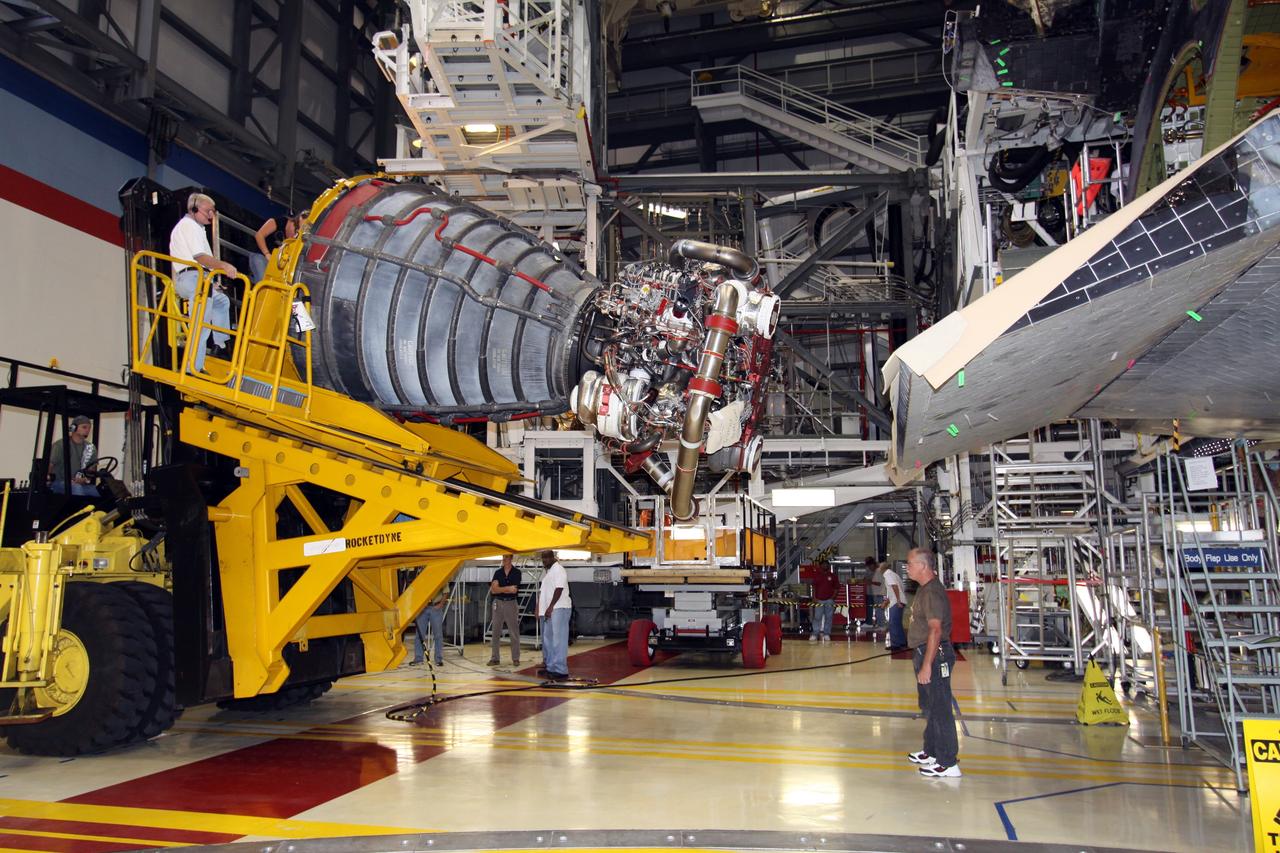
CAPE CANAVERAL, Fla. – In Orbiter Processing Bay 2 at NASA's Kennedy Space Center in Florida, the Hyster forklift holds main engine no. 1 removed from space shuttle Endeavour. Engine removal is part of the post-landing processing; engine no. 2 was removed Aug. 17. Endeavour returned from the STS-127 mission July 31. Endeavour's next mission is STS-130 targeted for February 2010. Endeavour will deliver to the International Space Station the Tranquility pressurized module that will provide room for many of the station's life support systems. Photo credit: NASA/Jack Pfaller
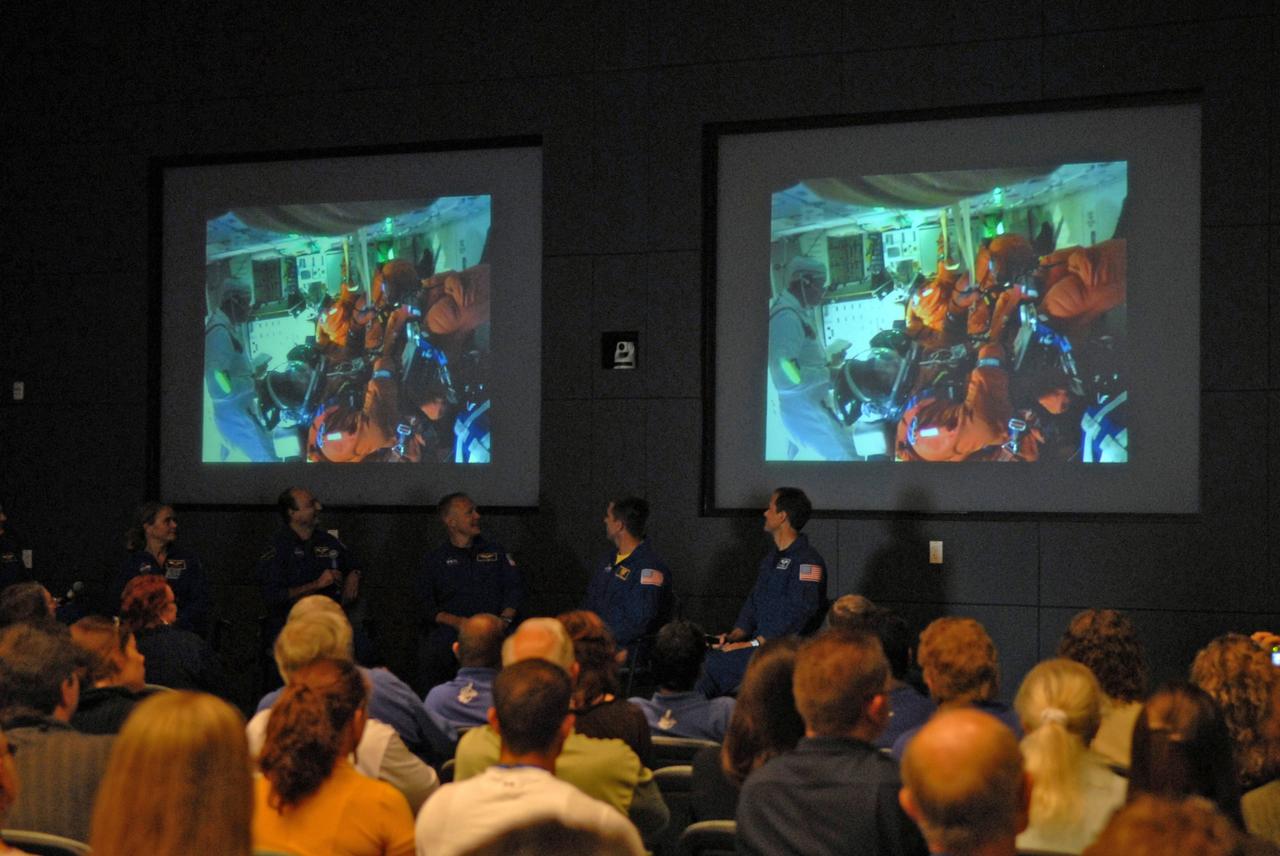
CAPE CANAVERAL, Fla. – Crew members of the STS-127 mission return to NASA's Kennedy Space Center in Florida to share stories, photos and videos of their experiences on the mission. Seen seated beneath the video screens are Mission Specialist Julie Payette, Commander Mark Polansky, Pilot Doug Hurley, and Mission Specialists Christopher Cassidy and Tom Marshburn. Not seen at far left is Mission Specialist Dave Wolf. The STS-127 mission was the final of three flights dedicated to the assembly of the Japanese Kibo laboratory complex on the International Space Station. The crew launched on space shuttle Endeavour on July 15 and returned July 31. Photo credit: NASA/Jim Grossmann
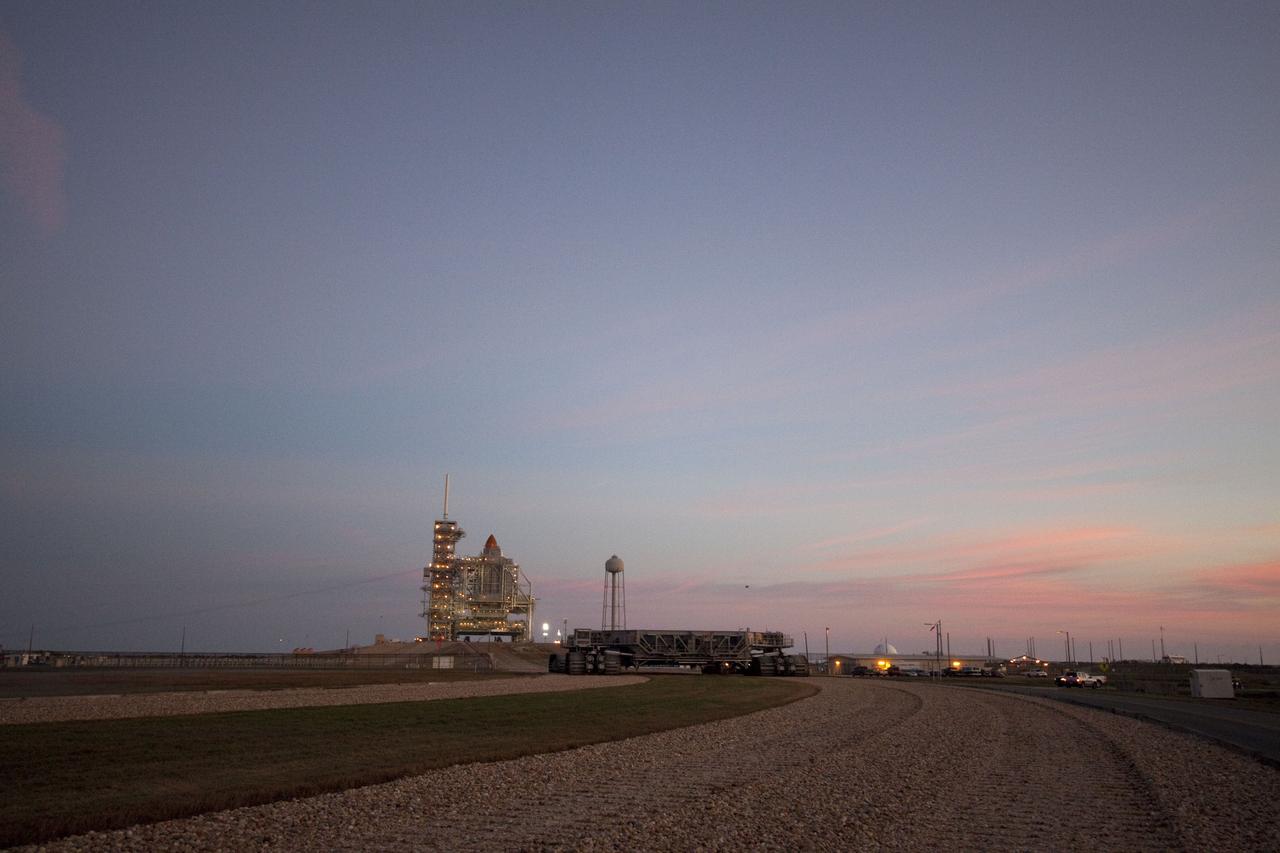
CAPE CANAVERAL, Fla. -- Dawn breaks over the Atlantic Ocean near Launch Pad 39A at NASA's Kennedy Space Center in Florida to reveal space shuttle Discovery newly arrived for its upcoming launch. First motion on its 3.4-mile trip from the Vehicle Assembly Building was at 7:58 p.m. EST Jan. 31, and was secured or "hard down" on the pad a little before 3 a.m. Feb. 1. Discovery's next launch opportunity to the International Space Station on the STS-133 mission is targeted for Feb. 24. For more information on STS-133, visit www.nasa.gov/mission_pages/shuttle/shuttlemissions/sts133/. Photo credit: NASA/Jack Pfaller

CAPE CANAVERAL, Fla. -- Dawn breaks over the Atlantic Ocean near Launch Pad 39A at NASA's Kennedy Space Center in Florida to reveal space shuttle Discovery newly arrived for its upcoming launch. First motion on its 3.4-mile trip from the Vehicle Assembly Building was at 7:58 p.m. EST Jan. 31, and was secured or "hard down" on the pad a little before 3 a.m. Feb. 1. Discovery's next launch opportunity to the International Space Station on the STS-133 mission is targeted for Feb. 24. For more information on STS-133, visit www.nasa.gov/mission_pages/shuttle/shuttlemissions/sts133/. Photo credit: NASA/Kim Shiflett
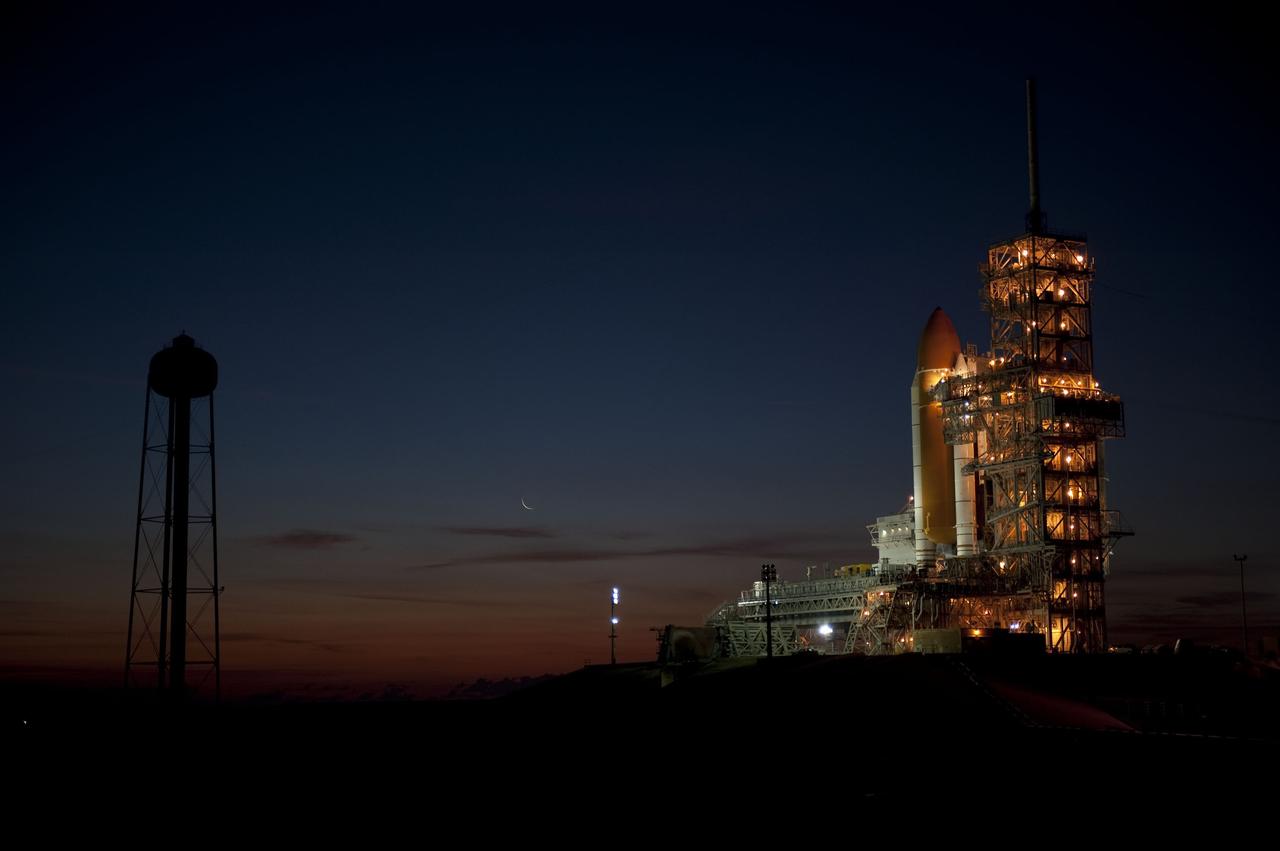
CAPE CANAVERAL, Fla. -- Dawn breaks over the Atlantic Ocean near Launch Pad 39A at NASA's Kennedy Space Center in Florida to reveal space shuttle Discovery newly arrived for its upcoming launch. First motion on its 3.4-mile trip from the Vehicle Assembly Building was at 7:58 p.m. EST Jan. 31, and was secured or "hard down" on the pad a little before 3 a.m. Feb. 1. Discovery's next launch opportunity to the International Space Station on the STS-133 mission is targeted for Feb. 24. For more information on STS-133, visit www.nasa.gov/mission_pages/shuttle/shuttlemissions/sts133/. Photo credit: NASA/Kim Shiflett
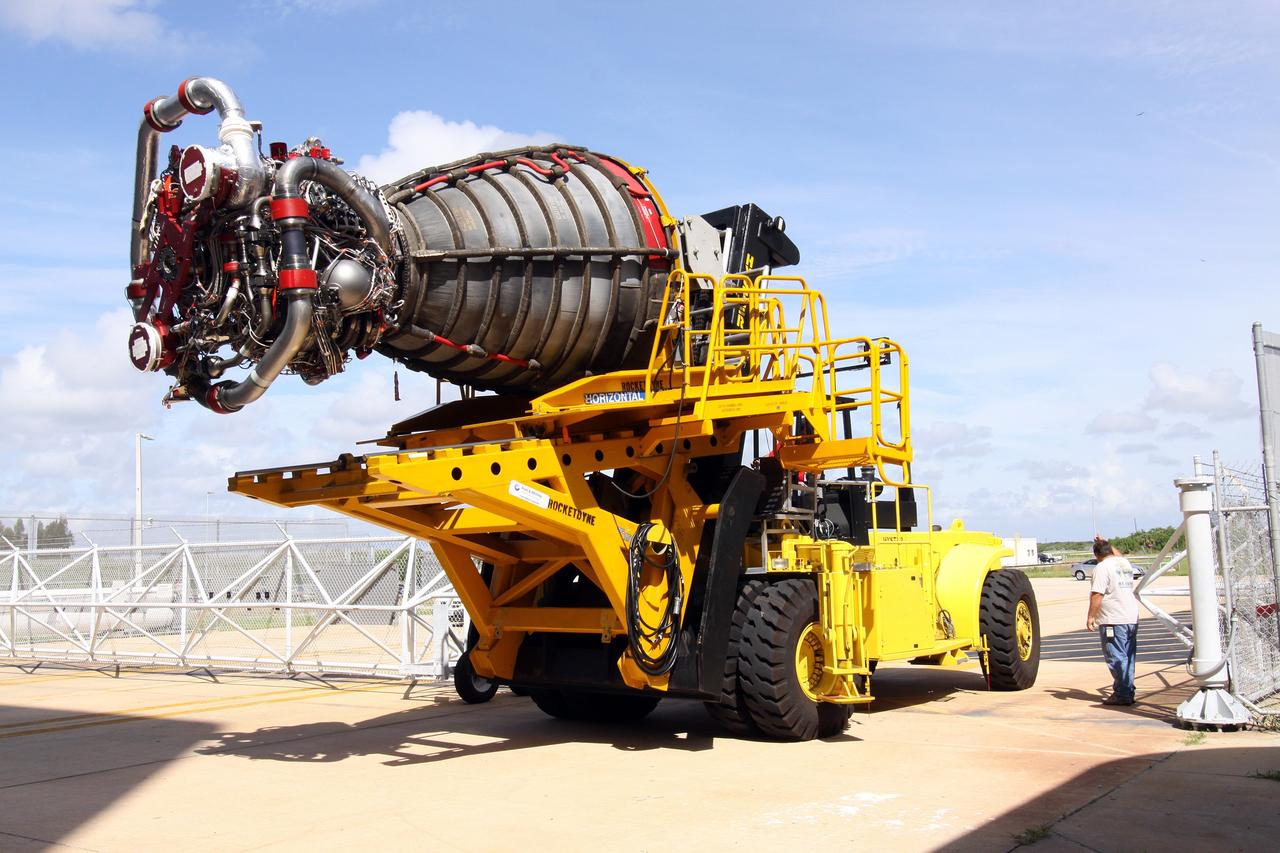
CAPE CANAVERAL, Fla. – At NASA's Kennedy Space Center in Florida, space shuttle Endeavour's main engine no. 2 is moved away from Orbiter Processing Bay 2 after removal from the shuttle. Engine removal is part of the post-landing processing. Endeavour returned from the STS-127 mission July 31. Endeavour's next mission is STS-130 targeted for February 2010. Endeavour will deliver to the International Space Station the Tranquility pressurized module that will provide room for many of the station's life support systems. Photo credit: NASA/Jack Pfaller
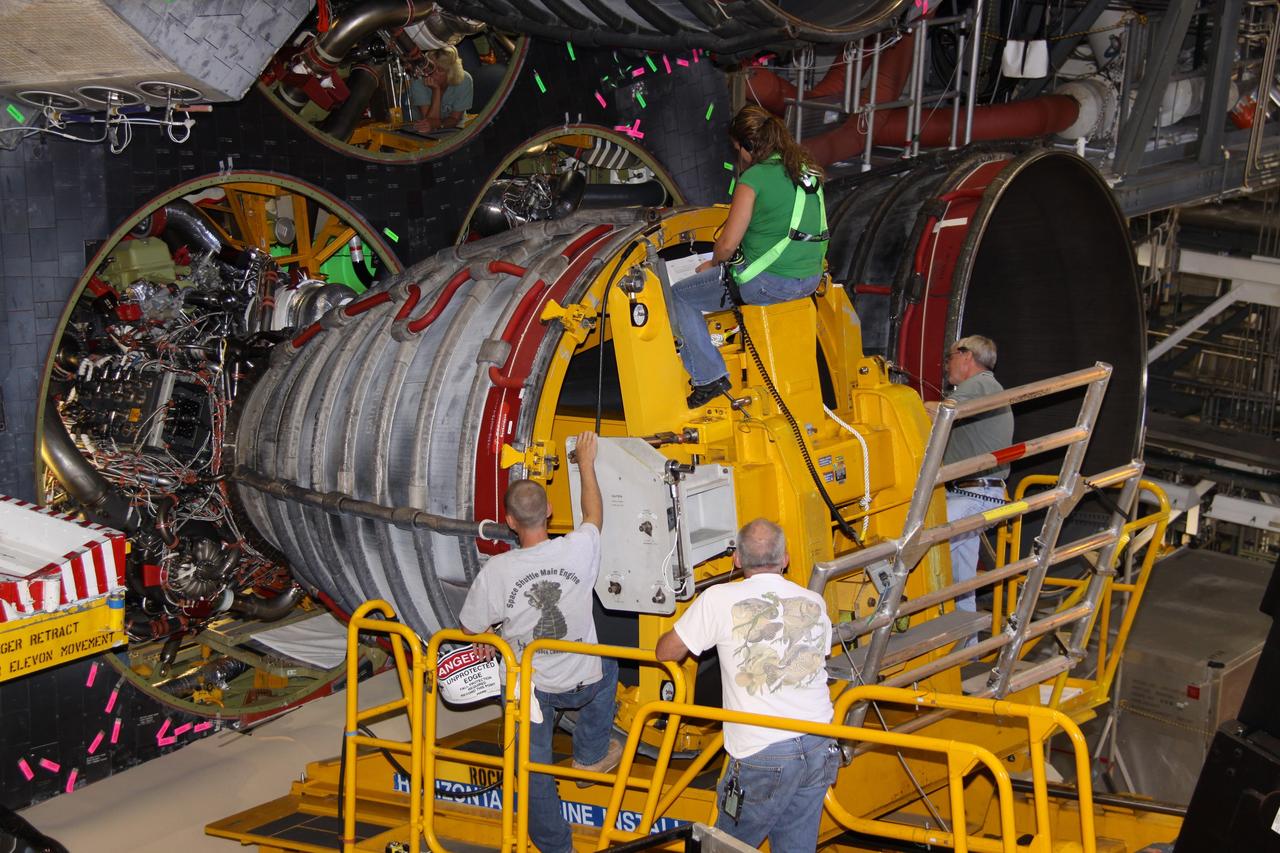
CAPE CANAVERAL, Fla. – In Orbiter Processing Bay 2 at NASA's Kennedy Space Center in Florida, technicians using a Hyster forklift remove main engine no. 2 from space shuttle Endeavour. Engine removal is part of the post-landing processing. Endeavour returned from the STS-127 mission July 31. Endeavour's next mission is STS-130 targeted for February 2010. Endeavour will deliver to the International Space Station the Tranquility pressurized module that will provide room for many of the station's life support systems. Photo credit: NASA/Jack Pfaller
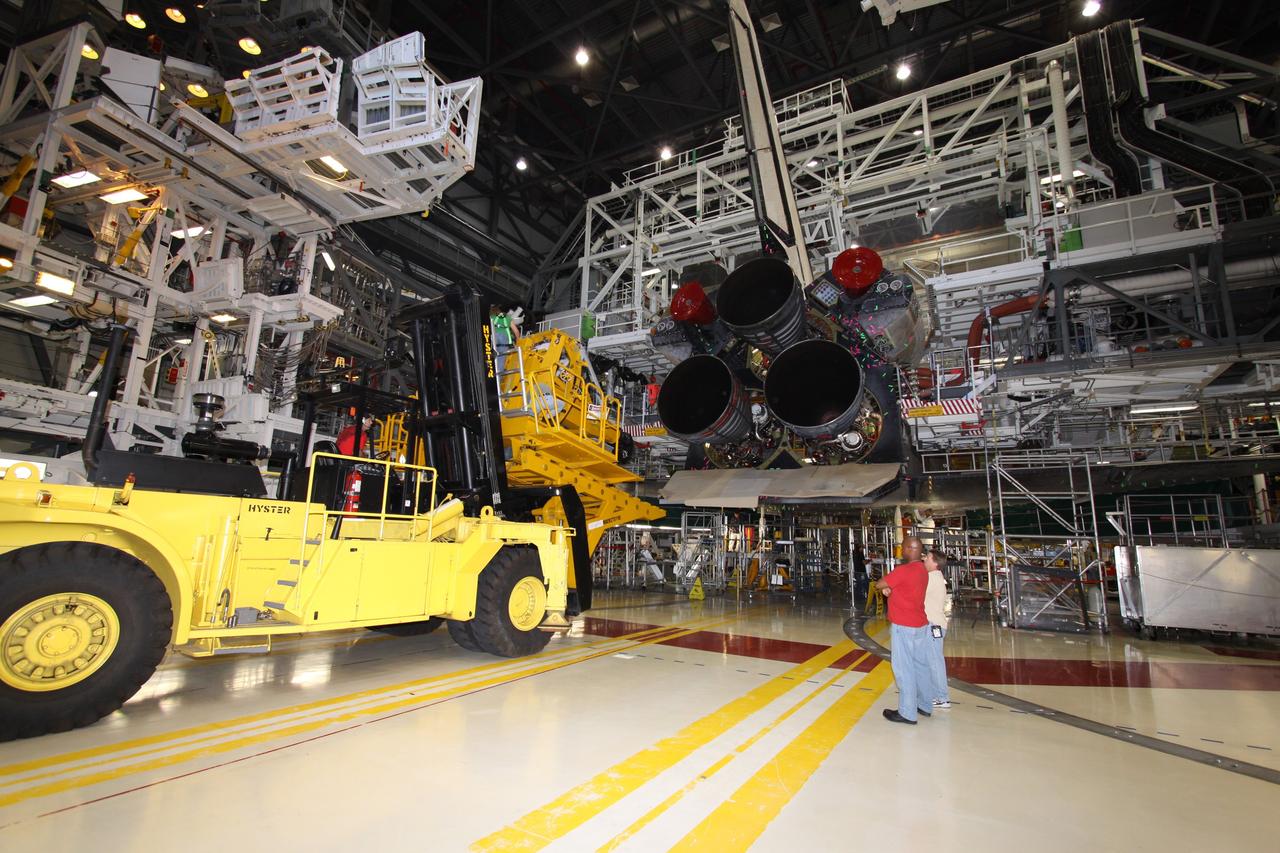
CAPE CANAVERAL, Fla. – In Orbiter Processing Bay 2 at NASA's Kennedy Space Center in Florida, a Hyster forklift is moved into position to remove engine no. 2 from space shuttle Endeavour. Engine removal is part of the post-landing processing. Endeavour returned from the STS-127 mission July 31. Endeavour's next mission is STS-130 targeted for February 2010. Endeavour will deliver to the International Space Station the Tranquility pressurized module that will provide room for many of the station's life support systems. Photo credit: NASA/Jack Pfaller
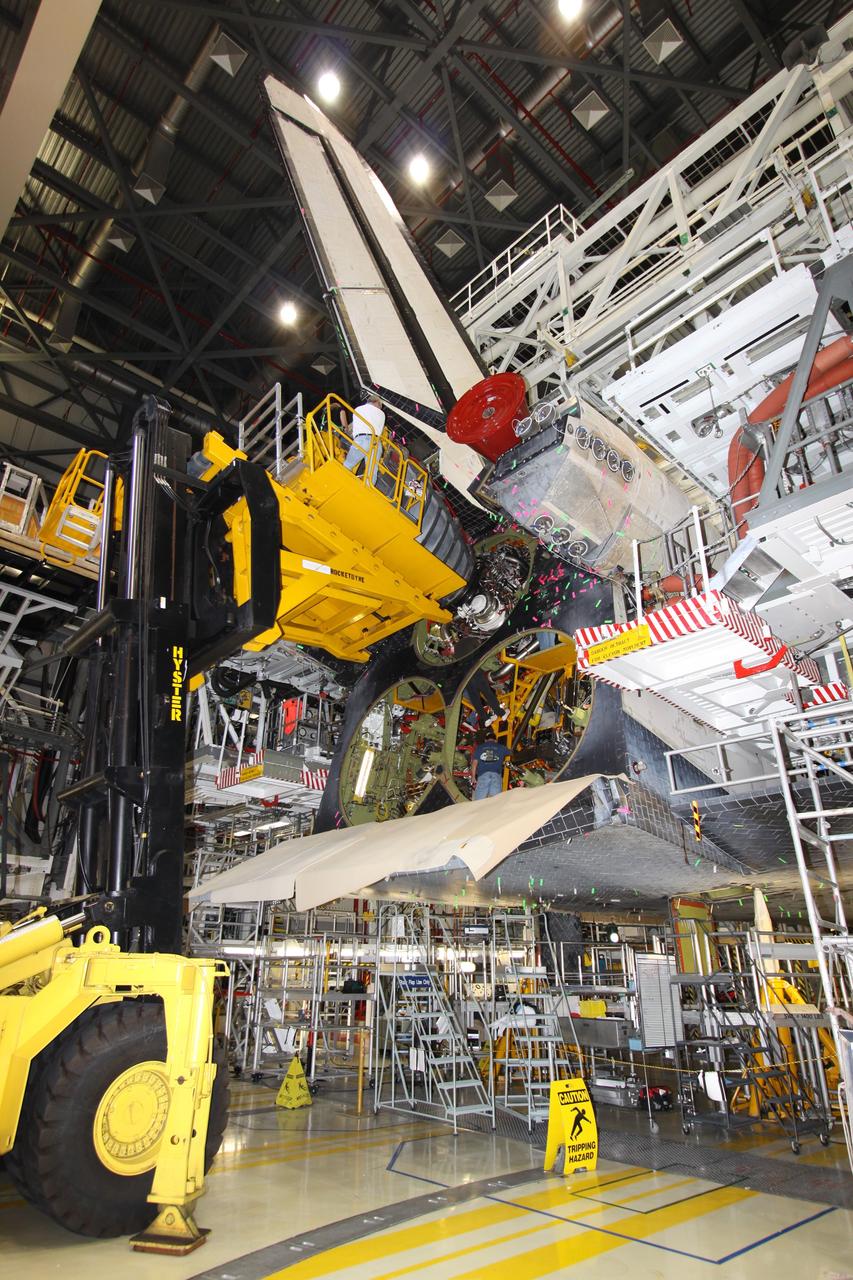
CAPE CANAVERAL, Fla. – In Orbiter Processing Bay 2 at NASA's Kennedy Space Center in Florida, a Hyster forklift is moved into position to remove main engine no. 1 from space shuttle Endeavour. Engine removal is part of the post-landing processing; engine no. 2 was removed Aug. 17. Endeavour returned from the STS-127 mission July 31. Endeavour's next mission is STS-130 targeted for February 2010. Endeavour will deliver to the International Space Station the Tranquility pressurized module that will provide room for many of the station's life support systems. Photo credit: NASA/Jack Pfaller
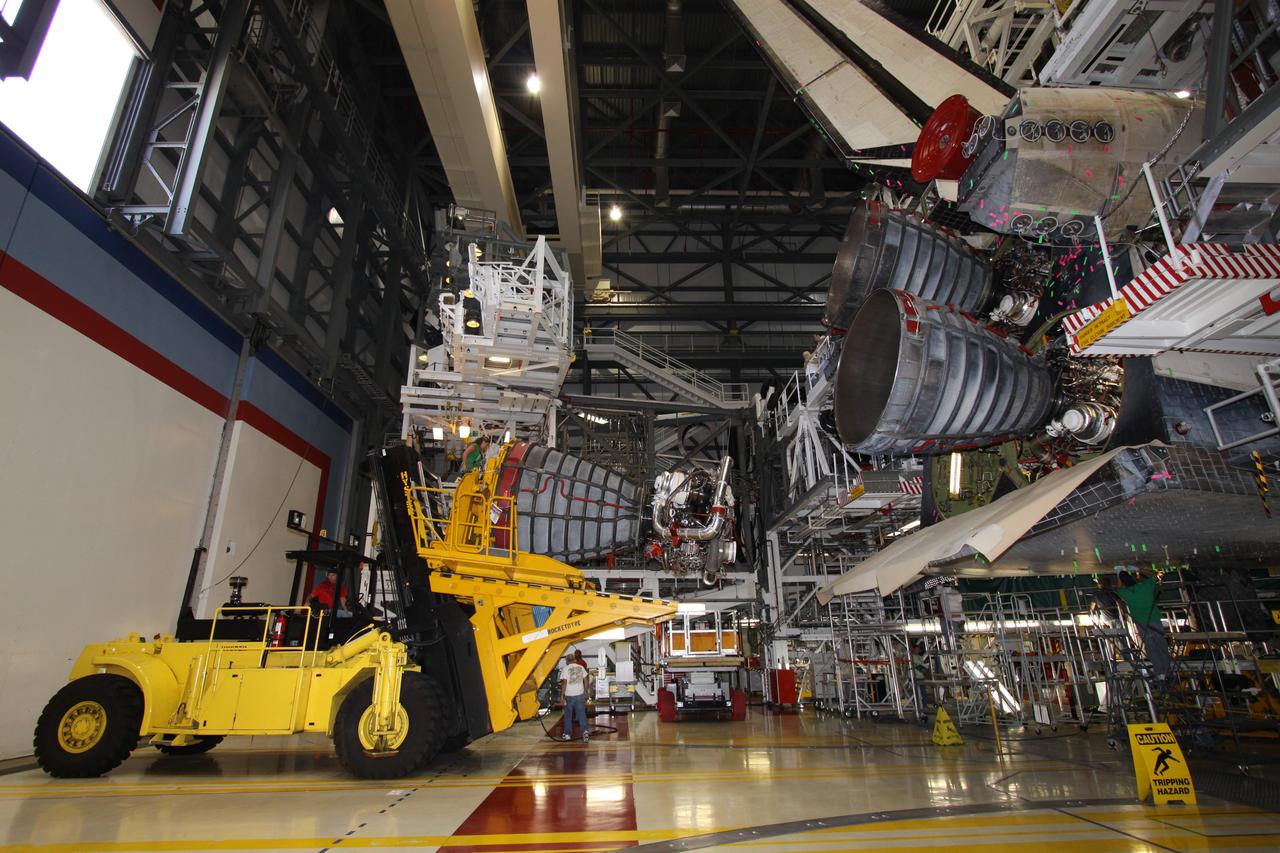
CAPE CANAVERAL, Fla. – In Orbiter Processing Bay 2 at NASA's Kennedy Space Center in Florida, technicians using a Hyster forklift have removed main engine no. 2 from space shuttle Endeavour. Engine removal is part of the post-landing processing. Endeavour returned from the STS-127 mission July 31. Endeavour's next mission is STS-130 targeted for February 2010. Endeavour will deliver to the International Space Station the Tranquility pressurized module that will provide room for many of the station's life support systems. Photo credit: NASA/Jack Pfaller
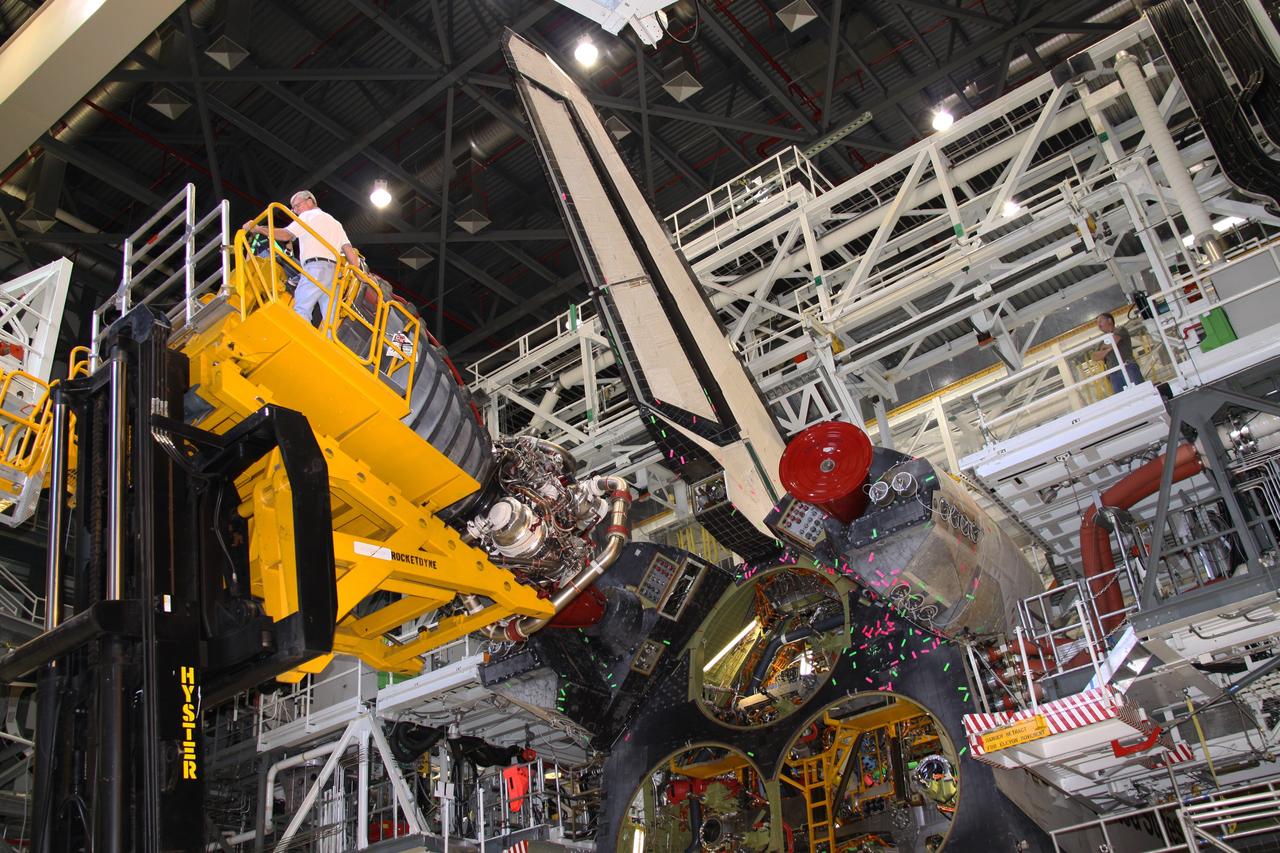
CAPE CANAVERAL, Fla. – In Orbiter Processing Bay 2 at NASA's Kennedy Space Center in Florida, technicians back away from space shuttle Endeavour after removing main engine no. 1 with the Hyster forklift. Engine removal is part of the post-landing processing; engine no. 2 was removed Aug. 17. Endeavour returned from the STS-127 mission July 31. Endeavour's next mission is STS-130 targeted for February 2010. Endeavour will deliver to the International Space Station the Tranquility pressurized module that will provide room for many of the station's life support systems. Photo credit: NASA/Jack Pfaller
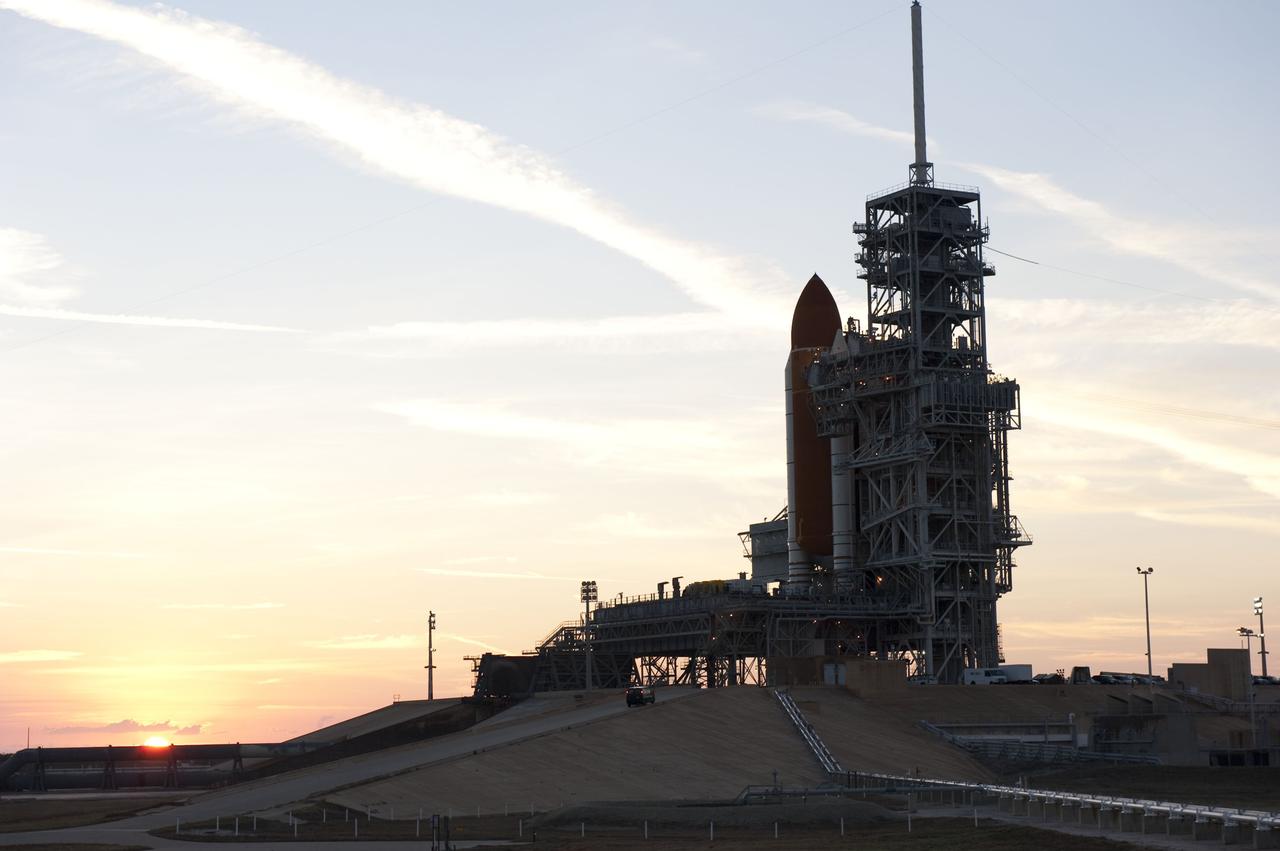
CAPE CANAVERAL, Fla. -- At NASA's Kennedy Space Center in Florida, the sun begins it rise in the East overlooking Launch Pad 39A and space shuttle Discovery, newly arrived for its upcoming launch. First motion on its 3.4-mile trip from the Vehicle Assembly Building was at 7:58 p.m. EST Jan. 31, and was secured or "hard down" on the pad a little before 3 a.m. Feb. 1. Discovery's next launch opportunity to the International Space Station on the STS-133 mission is targeted for Feb. 24. For more information on STS-133, visit www.nasa.gov/mission_pages/shuttle/shuttlemissions/sts133/. Photo credit: NASA/Kim Shiflett
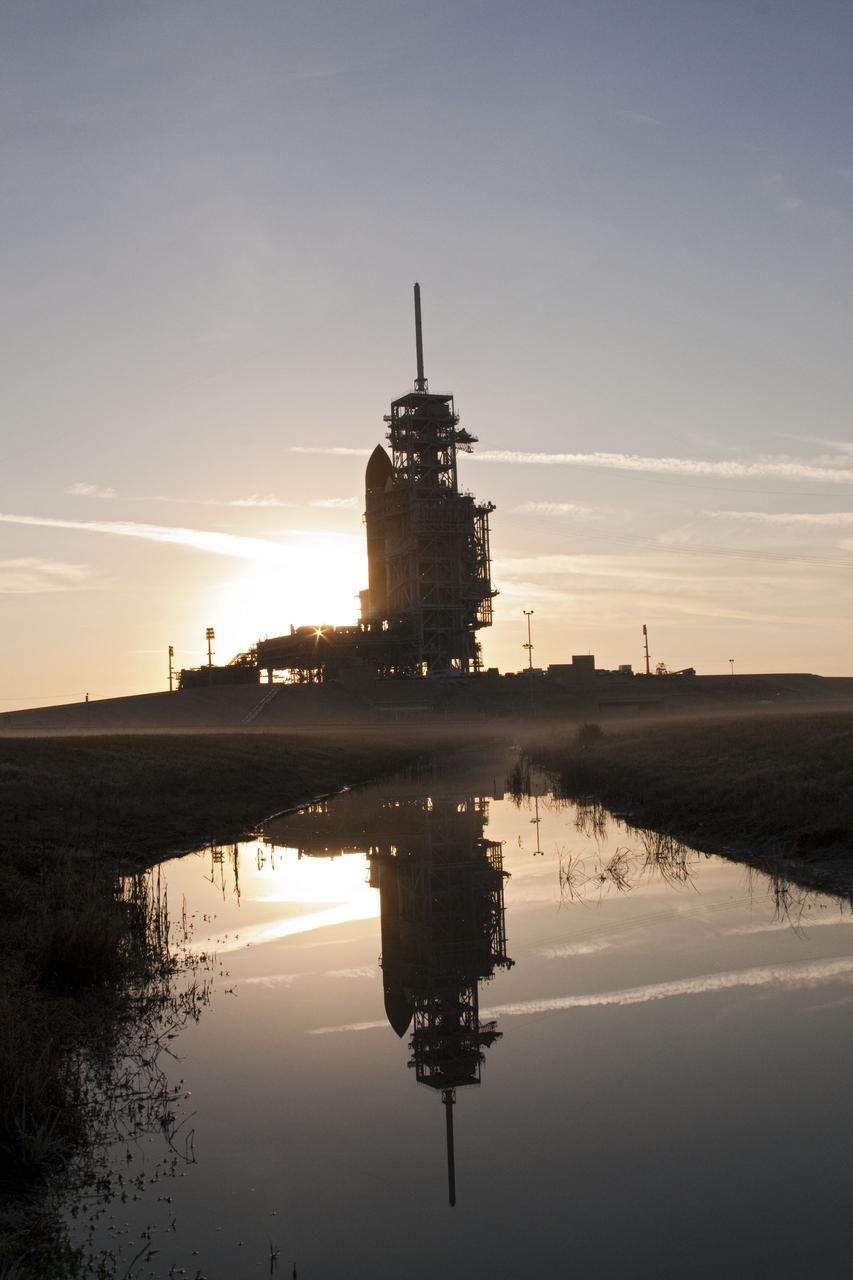
CAPE CANAVERAL, Fla. -- At NASA's Kennedy Space Center in Florida, the sun's early morning rays and space shuttle Discovery are reflected in a pond at Launch Pad 39A. Discovery was moved from the Vehicle Assembly Building with first motion at 7:58 p.m. EST Jan. 31, and was secured or "hard down" on the pad a little before 3 a.m. Feb. 1. Discovery's next launch opportunity to the International Space Station on the STS-133 mission is targeted for Feb. 24. For more information on STS-133, visit www.nasa.gov/mission_pages/shuttle/shuttlemissions/sts133/. Photo credit: NASA/Jack Pfaller
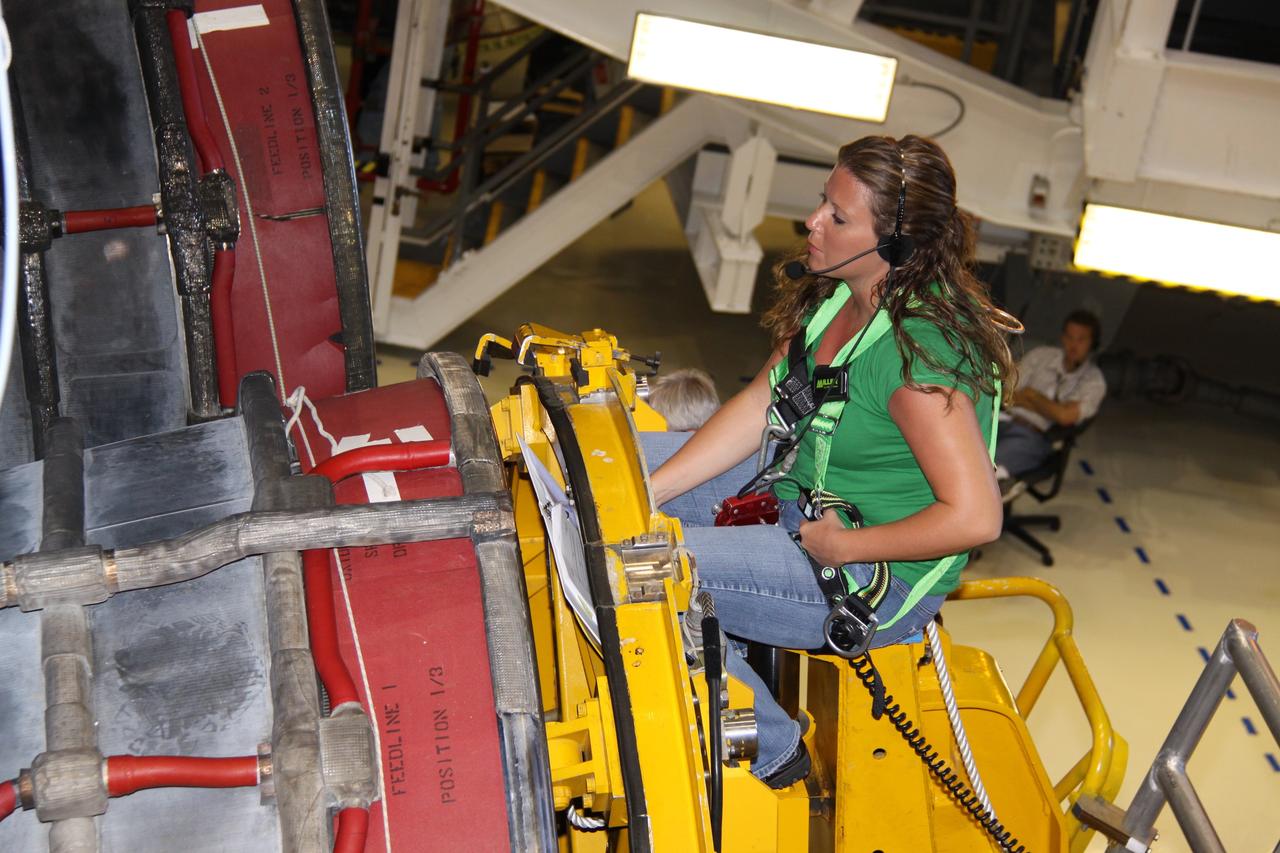
CAPE CANAVERAL, Fla. – In Orbiter Processing Bay 2 at NASA's Kennedy Space Center in Florida, a technician maneuvers a Hyster forklift into main engine no. 2 on space shuttle Endeavour to remove it. Engine removal is part of the post-landing processing. Endeavour returned from the STS-127 mission July 31. Endeavour's next mission is STS-130 targeted for February 2010. Endeavour will deliver to the International Space Station the Tranquility pressurized module that will provide room for many of the station's life support systems. Photo credit: NASA/Jack Pfaller
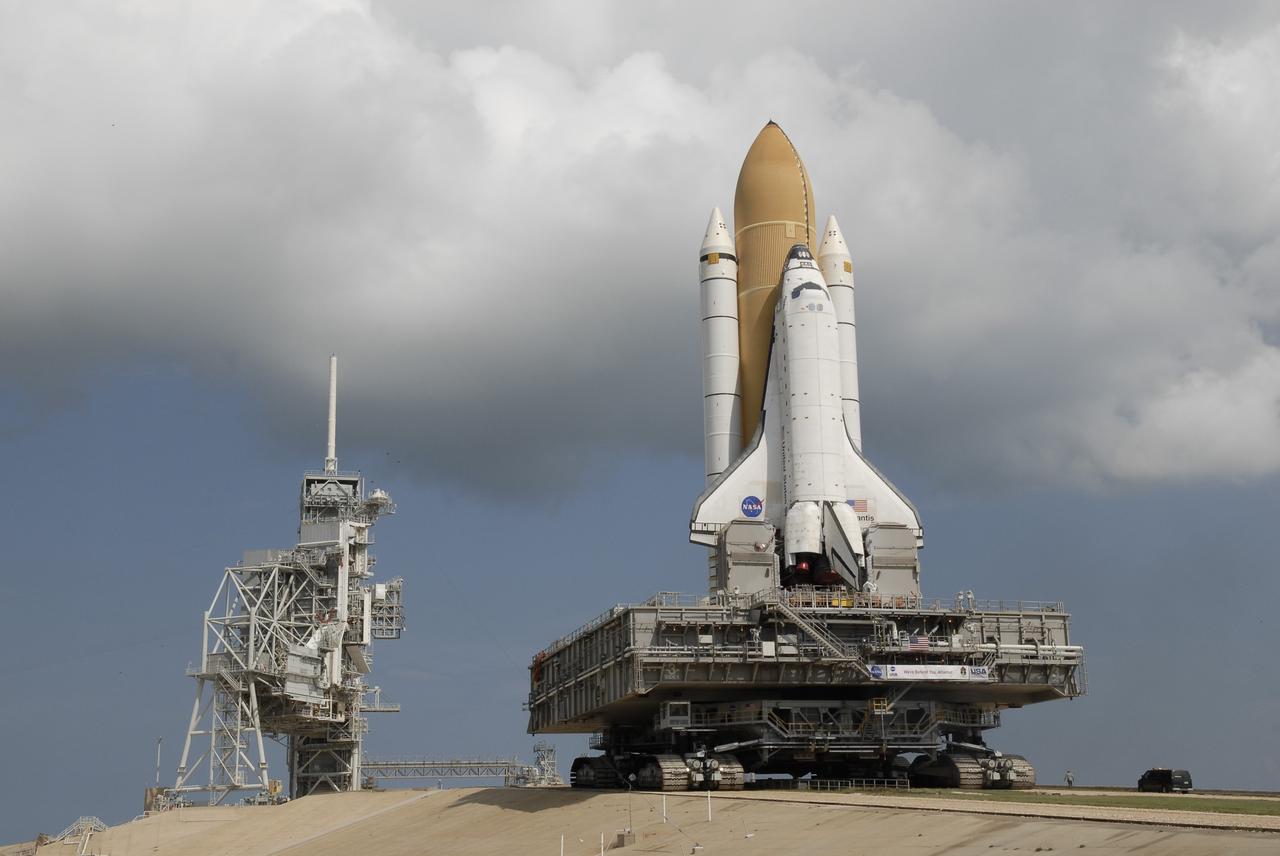
CAPE CANAVERAL, Fla. – At NASA's Kennedy Space Center in Florida, space shuttle Atlantis nears the end of its 3.4-mile journey, known as rollout, from the Vehicle Assembly Building to Launch Pad 39A. First motion was at 6:38 a.m. EDT Oct. 14. The rollout took about six hours, and the shuttle was secure on the pad at 1:31 p.m. Liftoff of Atlantis on its STS-129 mission to the International Space Station is targeted for Nov. 12. For information on the STS-129 mission and crew, visit http://www.nasa.gov/mission_pages/shuttle/shuttlemissions/sts129/index.html. Photo credit: NASA/Kim Shiflett
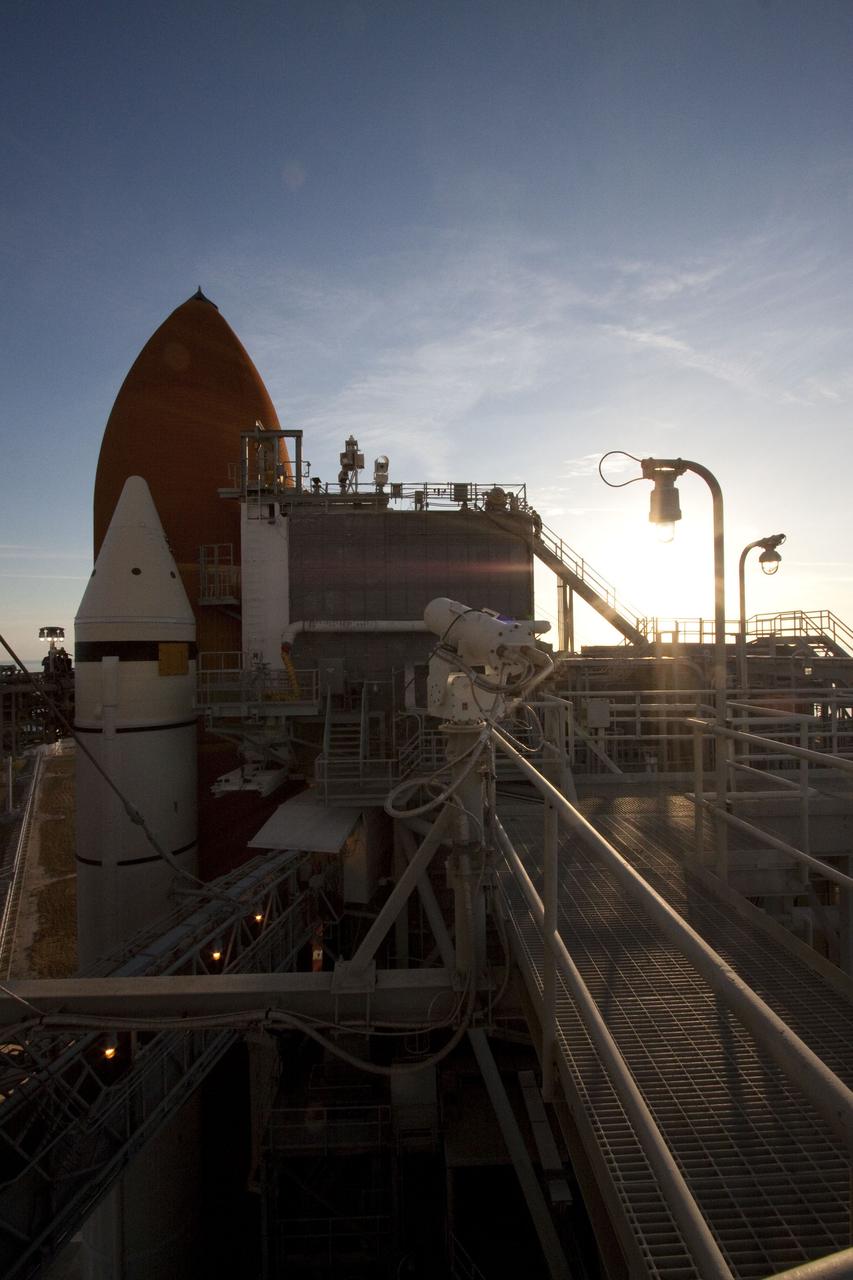
CAPE CANAVERAL, Fla. -- At NASA's Kennedy Space Center in Florida, this image of Launch Pad 39A from the 205-foot level reveals the rising sun over newly arrived space shuttle Discovery. The shuttle moved from the Vehicle Assembly Building with first motion at 7:58 p.m. EST Jan. 31, and was secured or "hard down" on the pad a little before 3 a.m. Feb. 1. Discovery's next launch opportunity to the International Space Station on the STS-133 mission is targeted for Feb. 24. For more information on STS-133, visit www.nasa.gov/mission_pages/shuttle/shuttlemissions/sts133/. Photo credit: NASA/Jack Pfaller
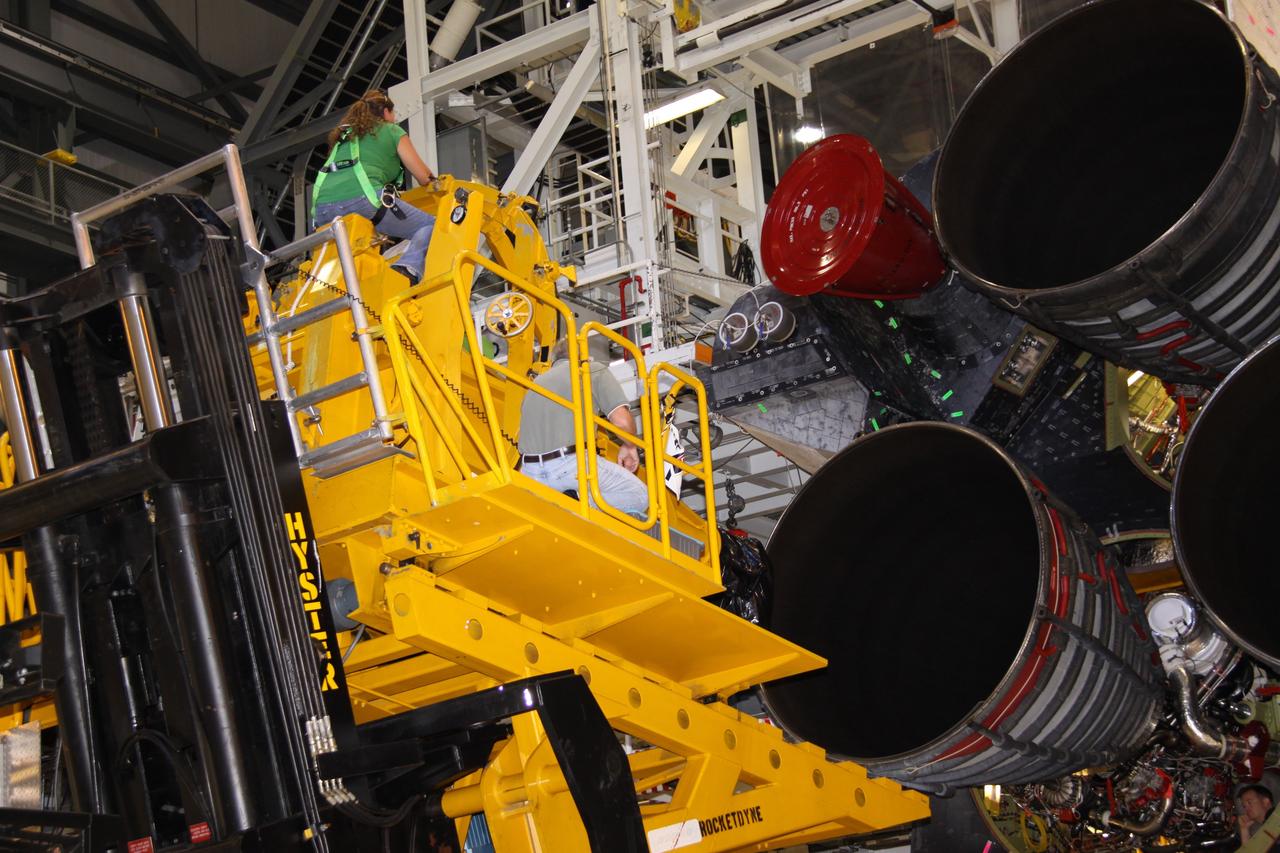
CAPE CANAVERAL, Fla. – In Orbiter Processing Bay 2 at NASA's Kennedy Space Center in Florida, technicians using a Hyster forklift prepare to remove main engine no. 2 on space shuttle Endeavour. Engine removal is part of the post-landing processing. Endeavour returned from the STS-127 mission July 31. Endeavour's next mission is STS-130 targeted for February 2010. Endeavour will deliver to the International Space Station the Tranquility pressurized module that will provide room for many of the station's life support systems. Photo credit: NASA/Jack Pfaller
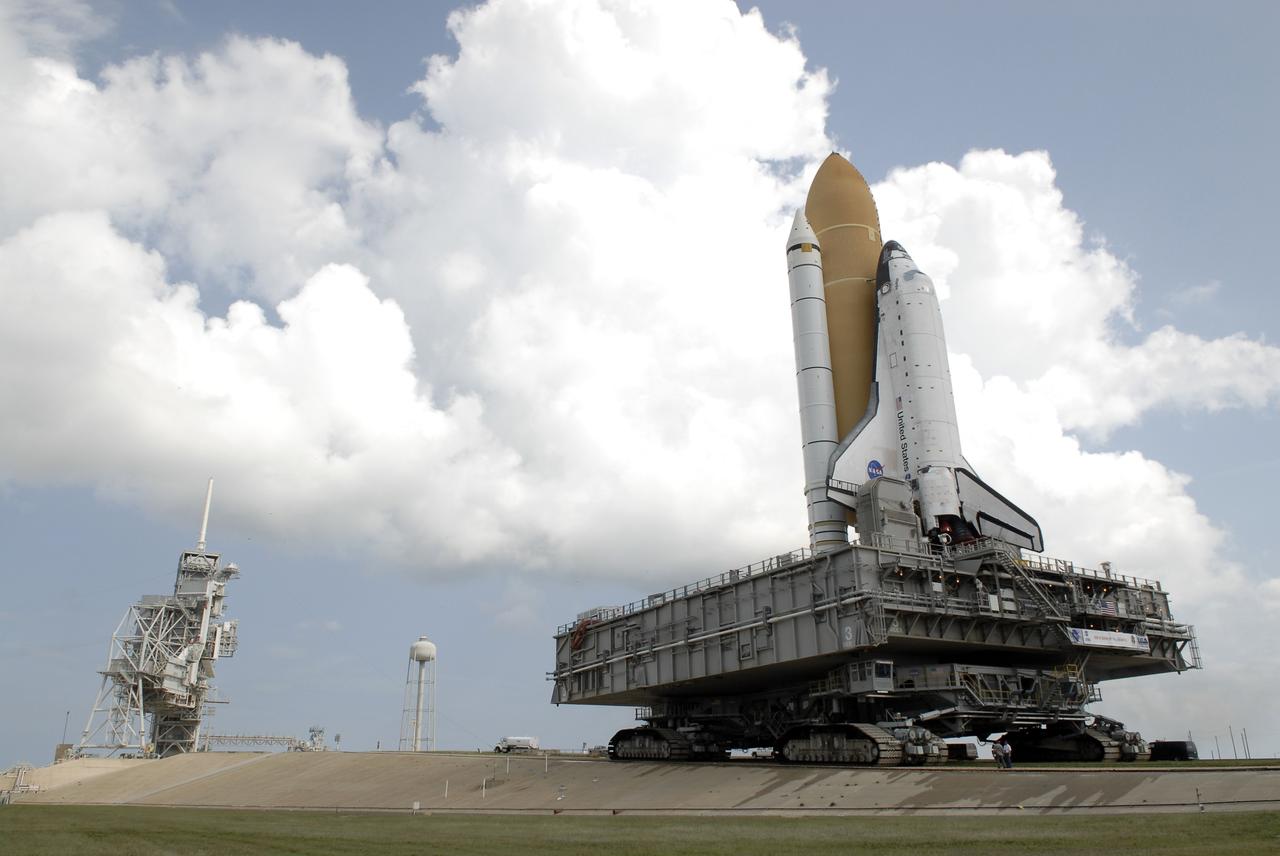
CAPE CANAVERAL, Fla. – At NASA's Kennedy Space Center in Florida, a crawler-transporter keeps space shuttle Atlantis level as it travels up the five percent grade to the top of the crawlerway at Launch Complex 39A. First motion on the 3.4-mile trip from the Vehicle Assembly Building, known as rollout, was at 6:38 a.m. EDT Oct. 14. The rollout took about six hours, and the shuttle was secure on the pad at 1:31 p.m. Liftoff of Atlantis on its STS-129 mission to the International Space Station is targeted for Nov. 12. For information on the STS-129 mission and crew, visit http://www.nasa.gov/mission_pages/shuttle/shuttlemissions/sts129/index.html. Photo credit: NASA/Kim Shiflett
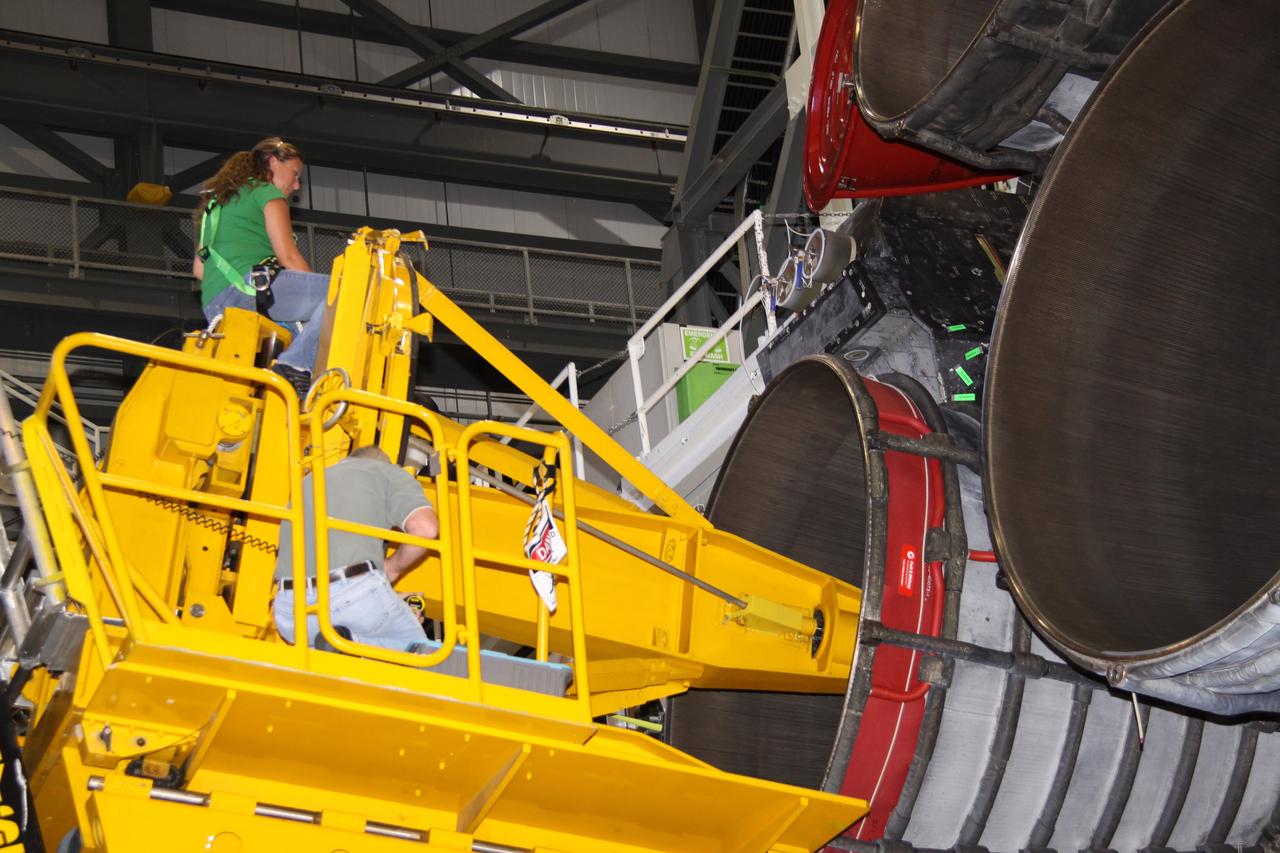
CAPE CANAVERAL, Fla. – In Orbiter Processing Bay 2 at NASA's Kennedy Space Center in Florida, technicians using a Hyster forklift prepare to remove main engine no. 2 on space shuttle Endeavour. Engine removal is part of the post-landing processing. Endeavour returned from the STS-127 mission July 31. Endeavour's next mission is STS-130 targeted for February 2010. Endeavour will deliver to the International Space Station the Tranquility pressurized module that will provide room for many of the station's life support systems. Photo credit: NASA/Jack Pfaller
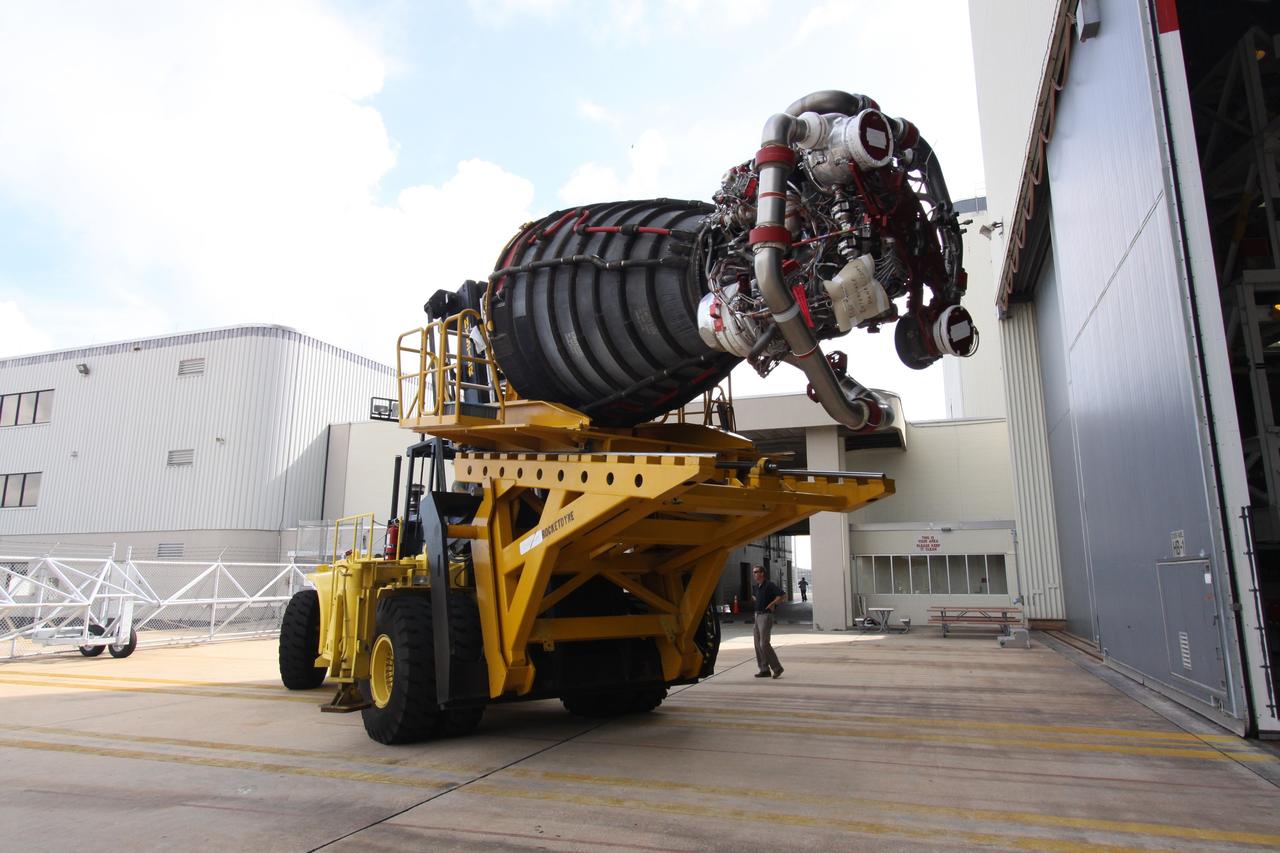
CAPE CANAVERAL, Fla. –At NASA's Kennedy Space Center in Florida, space shuttle Endeavour's main engine no. 1 is moved out of Orbiter Processing Bay 2 after removal from the shuttle. Engine removal is part of the post-landing processing; engine no. 2 was removed Aug. 17. Endeavour returned from the STS-127 mission July 31. Endeavour's next mission is STS-130 targeted for February 2010. Endeavour will deliver to the International Space Station the Tranquility pressurized module that will provide room for many of the station's life support systems. Photo credit: NASA/Jack Pfaller
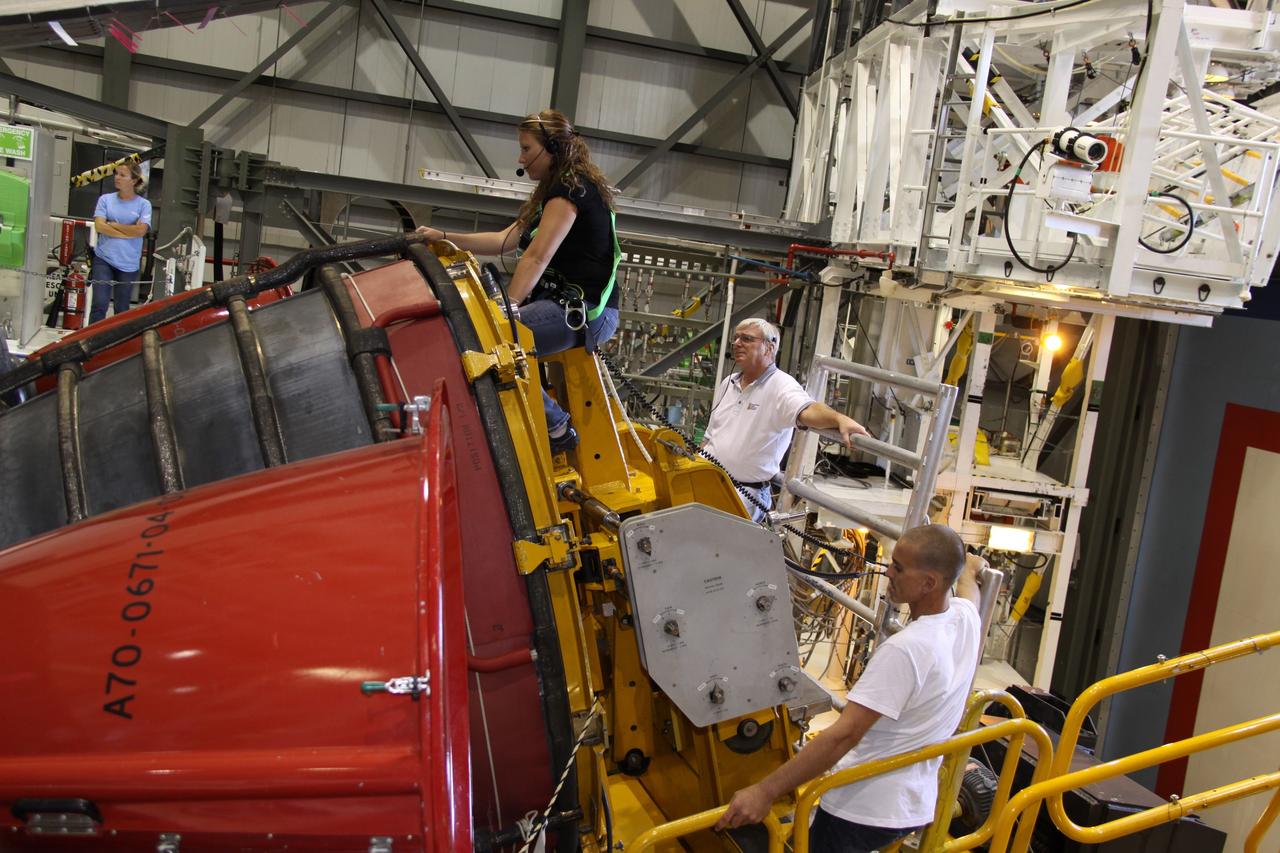
CAPE CANAVERAL, Fla. – In Orbiter Processing Bay 2 at NASA's Kennedy Space Center in Florida, technicians focus on moving the Hyster forklift into position to remove main engine no. 1 from space shuttle Endeavour. Engine removal is part of the post-landing processing; engine no. 2 was removed Aug. 17. Endeavour returned from the STS-127 mission July 31. Endeavour's next mission is STS-130 targeted for February 2010. Endeavour will deliver to the International Space Station the Tranquility pressurized module that will provide room for many of the station's life support systems. Photo credit: NASA/Jack Pfaller
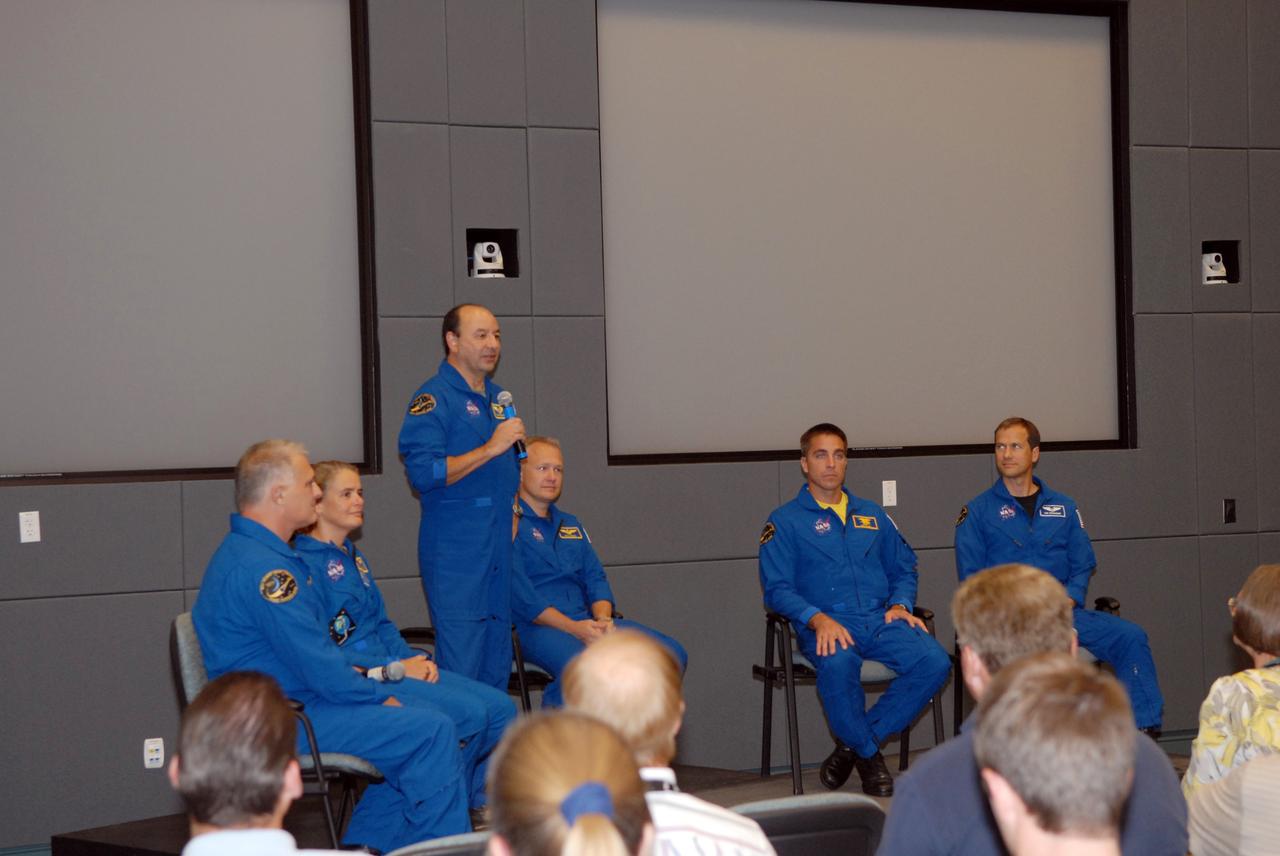
CAPE CANAVERAL, Fla. – Crew members of the STS-127 mission return to NASA's Kennedy Space Center in Florida to share stories, photos and videos of their experiences on the mission. From left are Mission Specialists Dave Wolf and Julie Payette, Commander Mark Polansky, Pilot Doug Hurley, and Mission Specialists Christopher Cassidy and Tom Marshburn. The STS-127 mission was the final of three flights dedicated to the assembly of the Japanese Kibo laboratory complex on the International Space Station. The crew launched on space shuttle Endeavour on July 15 and returned July 31. Photo credit: NASA/Jim Grossmann
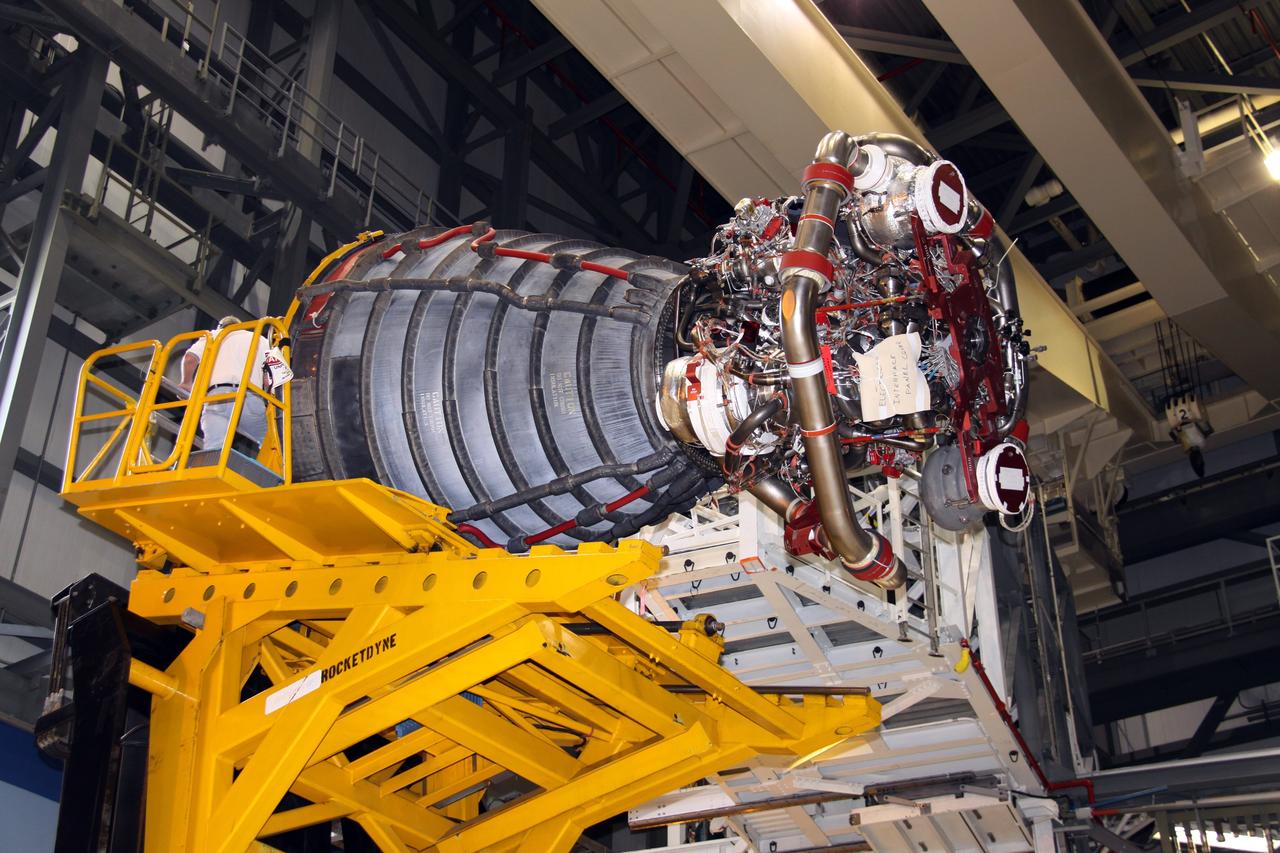
CAPE CANAVERAL, Fla. – In Orbiter Processing Bay 2 at NASA's Kennedy Space Center in Florida, main engine no. 1 is removed from space shuttle Endeavour. Engine removal is part of the post-landing processing; engine no. 2 was removed Aug. 17. Endeavour returned from the STS-127 mission July 31. Endeavour's next mission is STS-130 targeted for February 2010. Endeavour will deliver to the International Space Station the Tranquility pressurized module that will provide room for many of the station's life support systems. Photo credit: NASA/Jack Pfaller
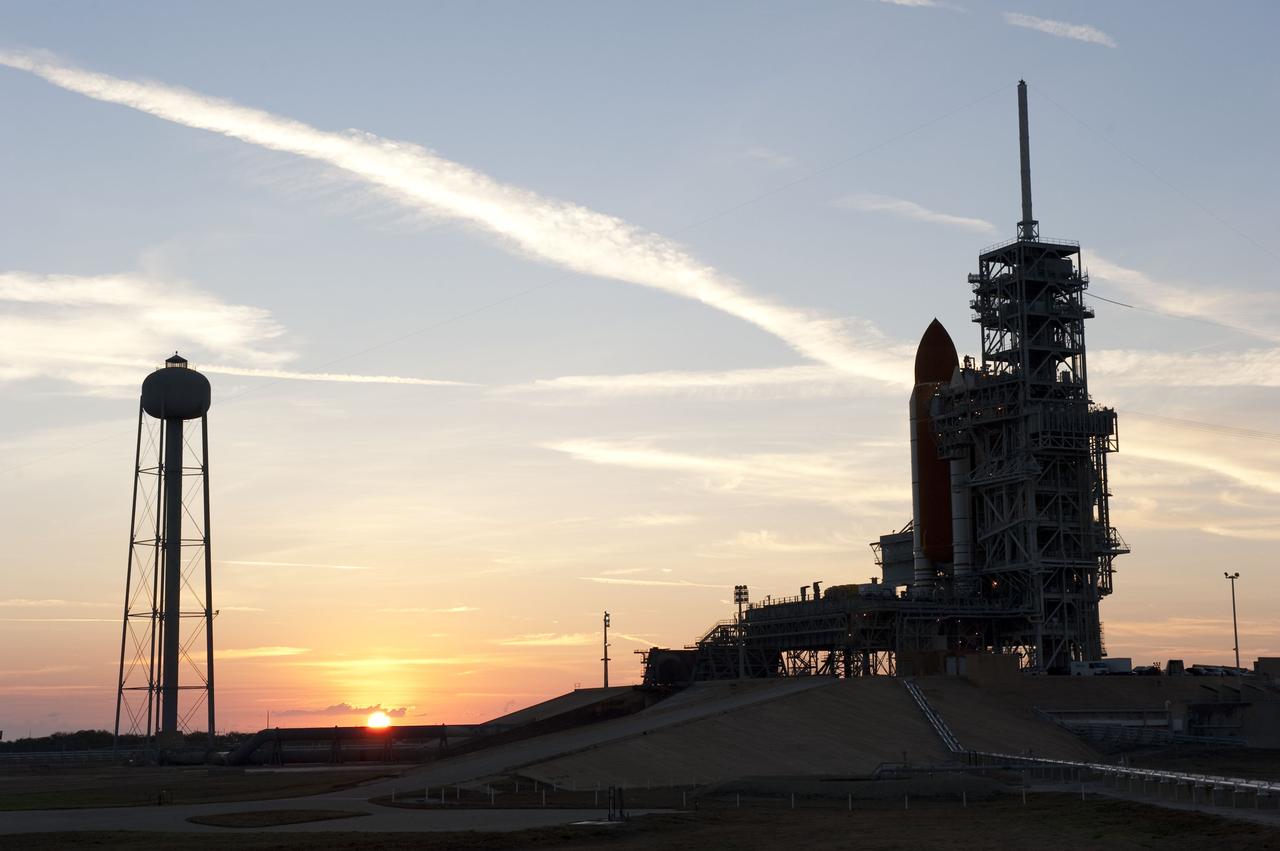
CAPE CANAVERAL, Fla. -- At NASA's Kennedy Space Center in Florida, the sun begins it rise in the East overlooking Launch Pad 39A and space shuttle Discovery, newly arrived for its upcoming launch. First motion on its 3.4-mile trip from the Vehicle Assembly Building was at 7:58 p.m. EST Jan. 31, and was secured or "hard down" on the pad a little before 3 a.m. Feb. 1. Discovery's next launch opportunity to the International Space Station on the STS-133 mission is targeted for Feb. 24. For more information on STS-133, visit www.nasa.gov/mission_pages/shuttle/shuttlemissions/sts133/. Photo credit: NASA/Kim Shiflett
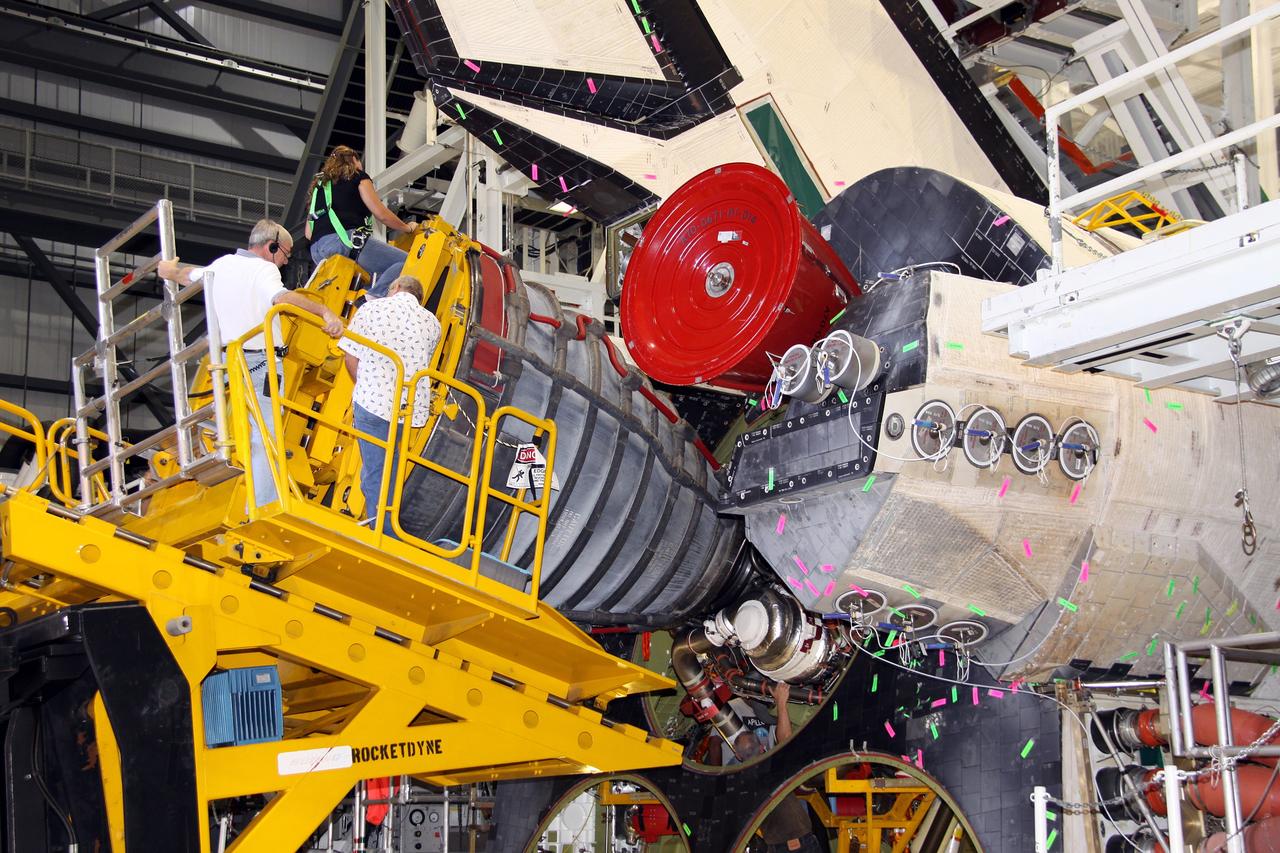
CAPE CANAVERAL, Fla. – In Orbiter Processing Bay 2 at NASA's Kennedy Space Center in Florida, technicians move the Hyster forklift into position to remove main engine no. 1 from space shuttle Endeavour. Engine removal is part of the post-landing processing; engine no. 2 was removed Aug. 17. Endeavour returned from the STS-127 mission July 31. Endeavour's next mission is STS-130 targeted for February 2010. Endeavour will deliver to the International Space Station the Tranquility pressurized module that will provide room for many of the station's life support systems. Photo credit: NASA/Jack Pfaller
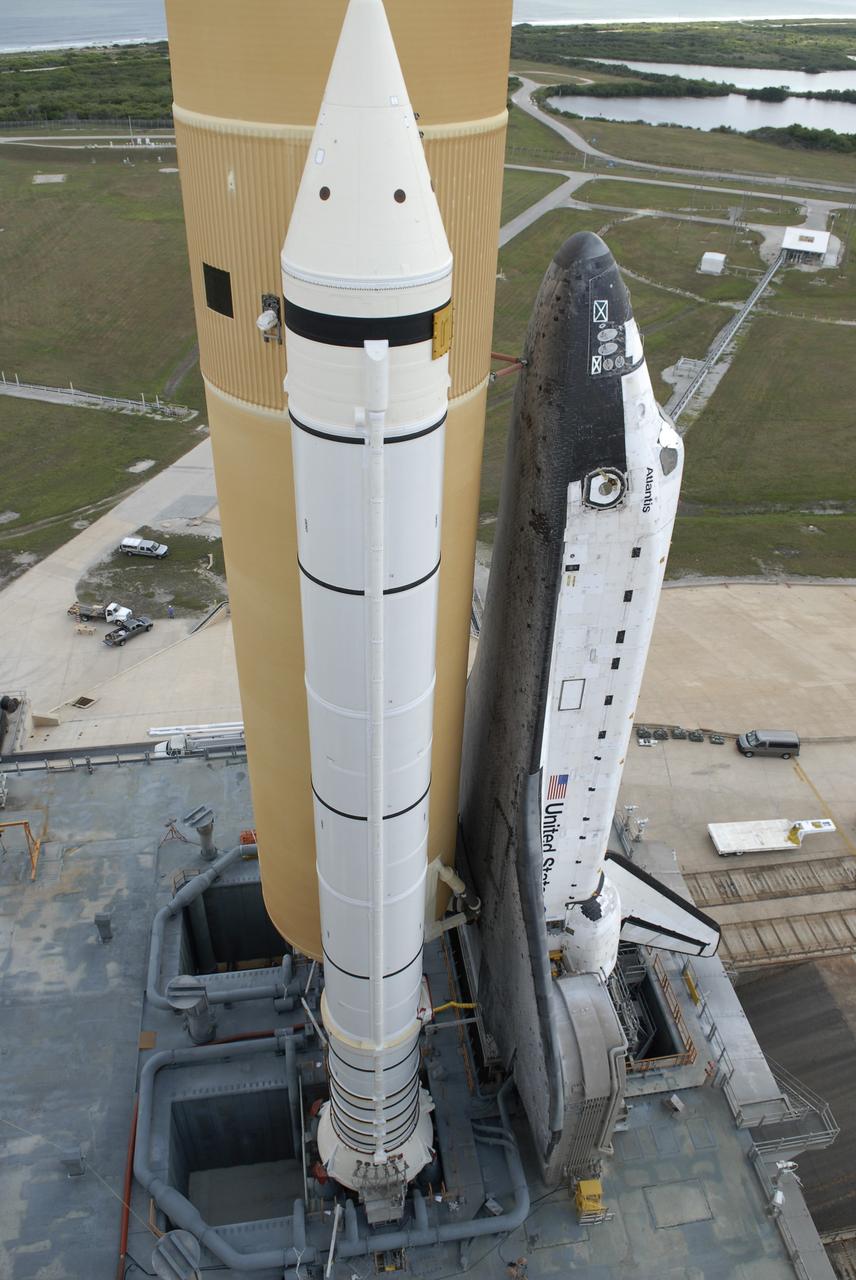
CAPE CANAVERAL, Fla. – At NASA's Kennedy Space Center in Florida, the mobile launcher platform, on which space shuttle Atlantis sits, straddles the flame trench on Launch Pad 39A. First motion on the 3.4-mile journey from the Vehicle Assembly Building, known as rollout, was at 6:38 a.m. EDT Oct. 14. The rollout took about six hours, and the shuttle was secure or "hard down" on the pad at 1:31 p.m. Liftoff of Atlantis on its STS-129 mission to the International Space Station is targeted for Nov. 12. For information on the STS-129 mission and crew, visit http://www.nasa.gov/mission_pages/shuttle/shuttlemissions/sts129/index.html. Photo credit: NASA/Kim Shiflett
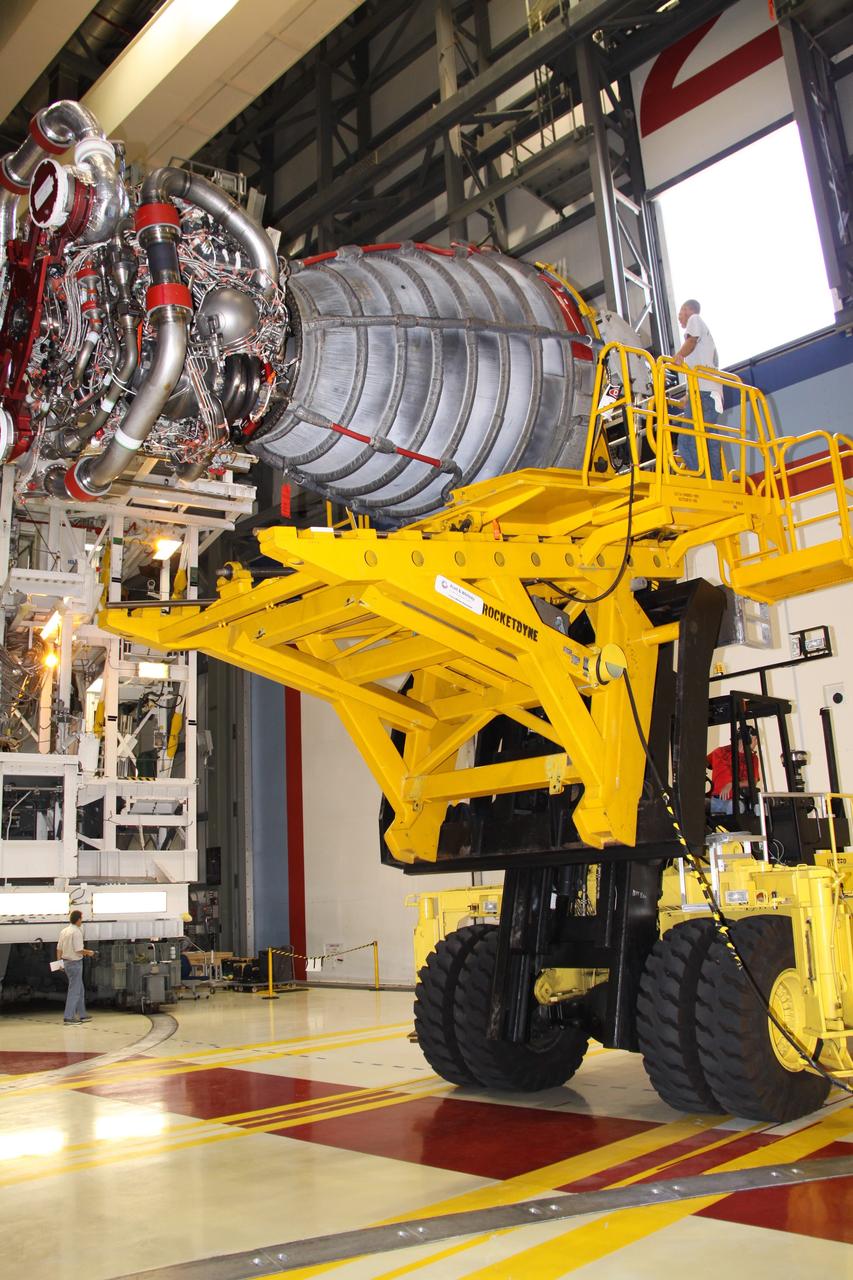
CAPE CANAVERAL, Fla. – In Orbiter Processing Bay 2 at NASA's Kennedy Space Center in Florida, technicians using a Hyster forklift have removed main engine no. 2 from space shuttle Endeavour. Engine removal is part of the post-landing processing. Endeavour returned from the STS-127 mission July 31. Endeavour's next mission is STS-130 targeted for February 2010. Endeavour will deliver to the International Space Station the Tranquility pressurized module that will provide room for many of the station's life support systems. Photo credit: NASA/Jack Pfaller
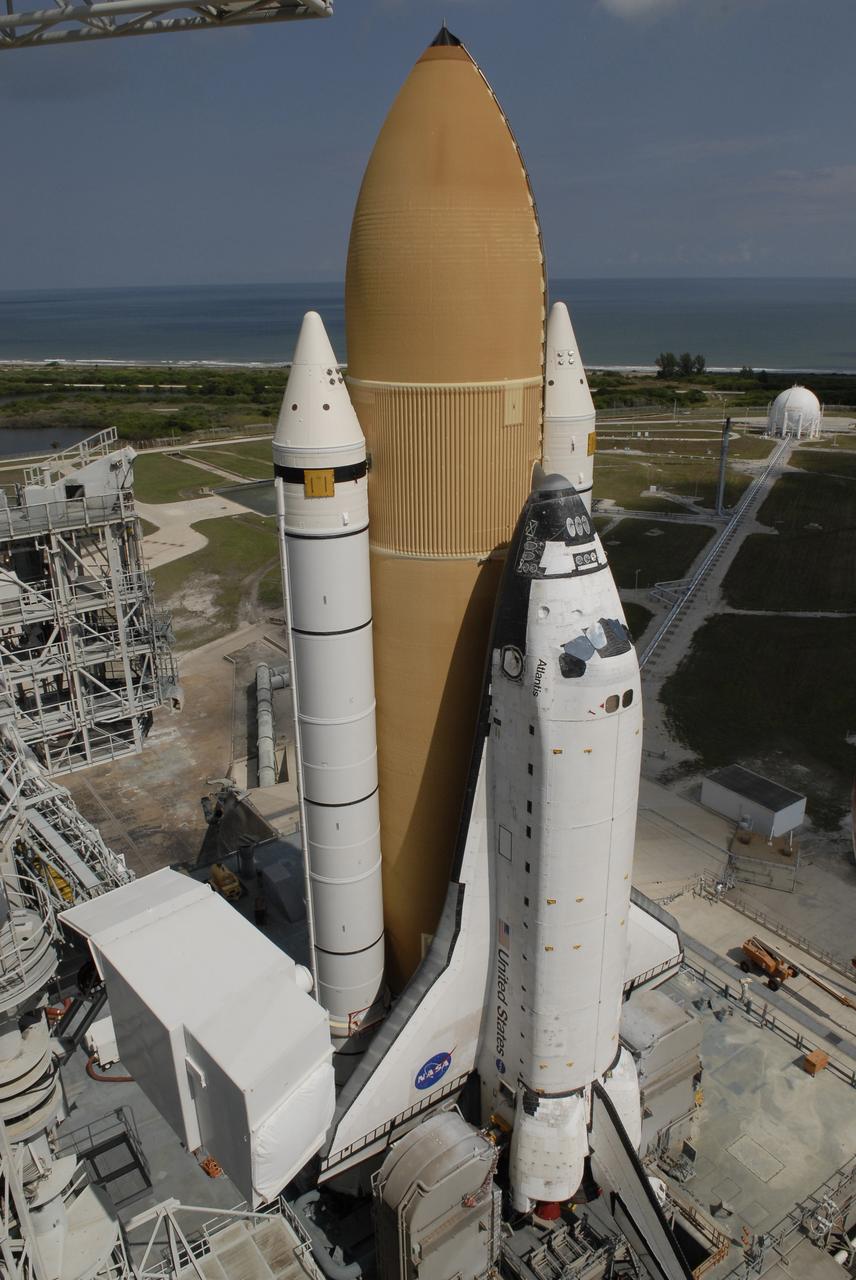
CAPE CANAVERAL, Fla. – At NASA's Kennedy Space Center in Florida, space shuttle Atlantis reaches the end of its 3.4-mile journey, known as rollout, from the Vehicle Assembly Building to Launch Pad 39A. The pad overlooks the Atlantic Ocean in the background. First motion was at 6:38 a.m. EDT Oct. 14. The rollout took about six hours, and the shuttle was secure or "hard down" on the pad at 1:31 p.m. Liftoff of Atlantis on its STS-129 mission to the International Space Station is targeted for Nov. 12. For information on the STS-129 mission and crew, visit http://www.nasa.gov/mission_pages/shuttle/shuttlemissions/sts129/index.html. Photo credit: NASA/Kim Shiflett
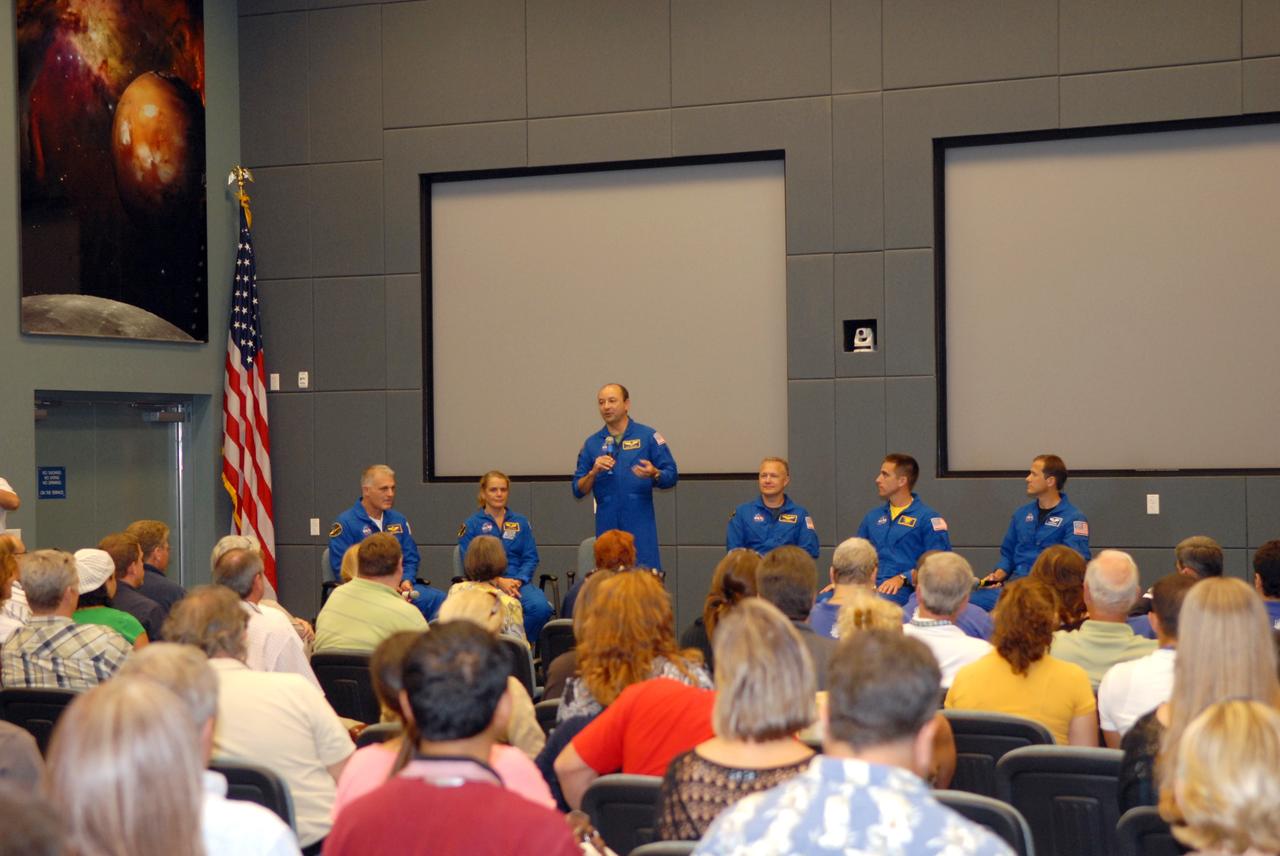
CAPE CANAVERAL, Fla. – Crew members of the STS-127 mission return to NASA's Kennedy Space Center in Florida to share stories, photos and videos of their experiences on the mission. Seated from left are Mission Specialists Dave Wolf and Julie Payette, Commander Mark Polansky (standing), Pilot Doug Hurley, and Mission Specialists Christopher Cassidy and Tom Marshburn. The STS-127 mission was the final of three flights dedicated to the assembly of the Japanese Kibo laboratory complex on the International Space Station. The crew launched on space shuttle Endeavour on July 15 and returned July 31. Photo credit: NASA/Jim Grossmann
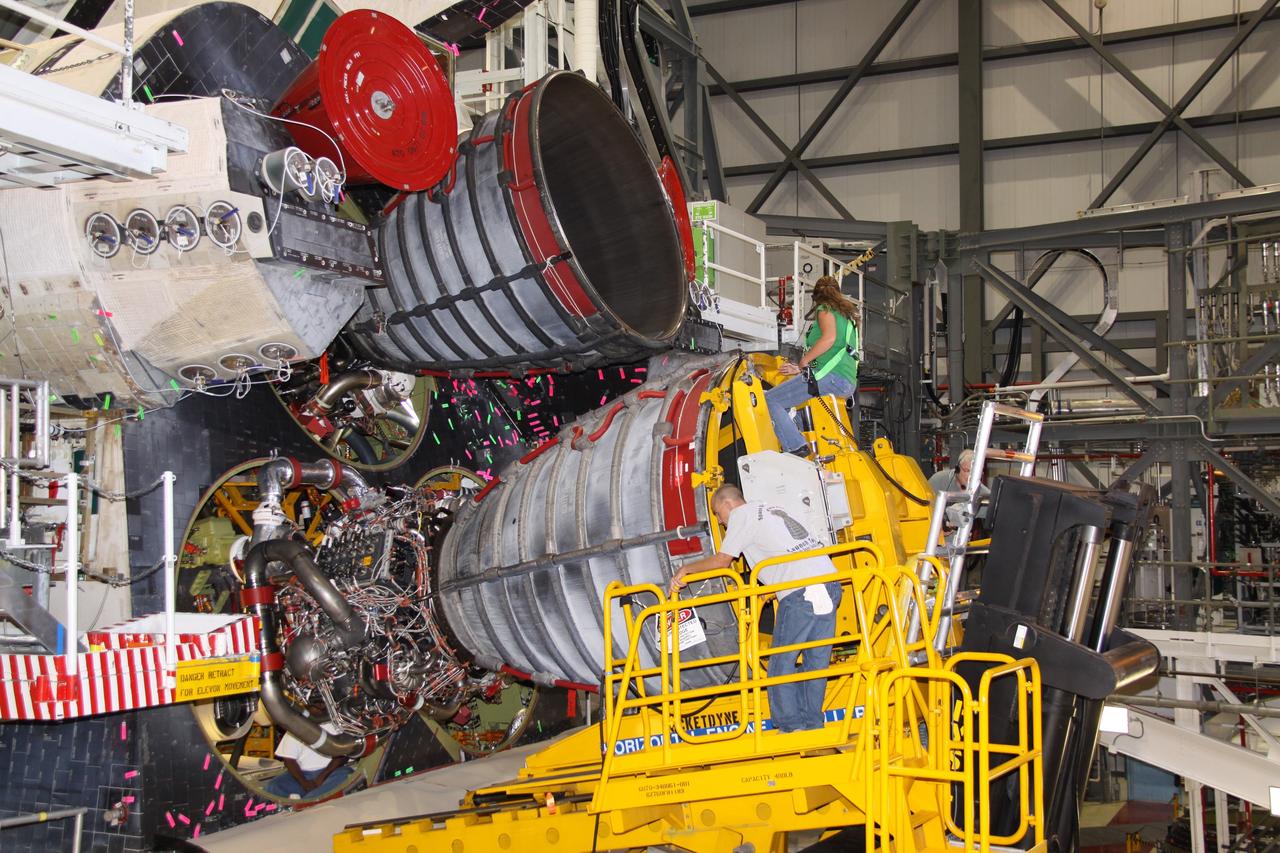
CAPE CANAVERAL, Fla. – In Orbiter Processing Bay 2 at NASA's Kennedy Space Center in Florida, technicians using a Hyster forklift remove main engine no. 2 from space shuttle Endeavour. Engine removal is part of the post-landing processing. Endeavour returned from the STS-127 mission July 31. Endeavour's next mission is STS-130 targeted for February 2010. Endeavour will deliver to the International Space Station the Tranquility pressurized module that will provide room for many of the station's life support systems. Photo credit: NASA/Jack Pfaller
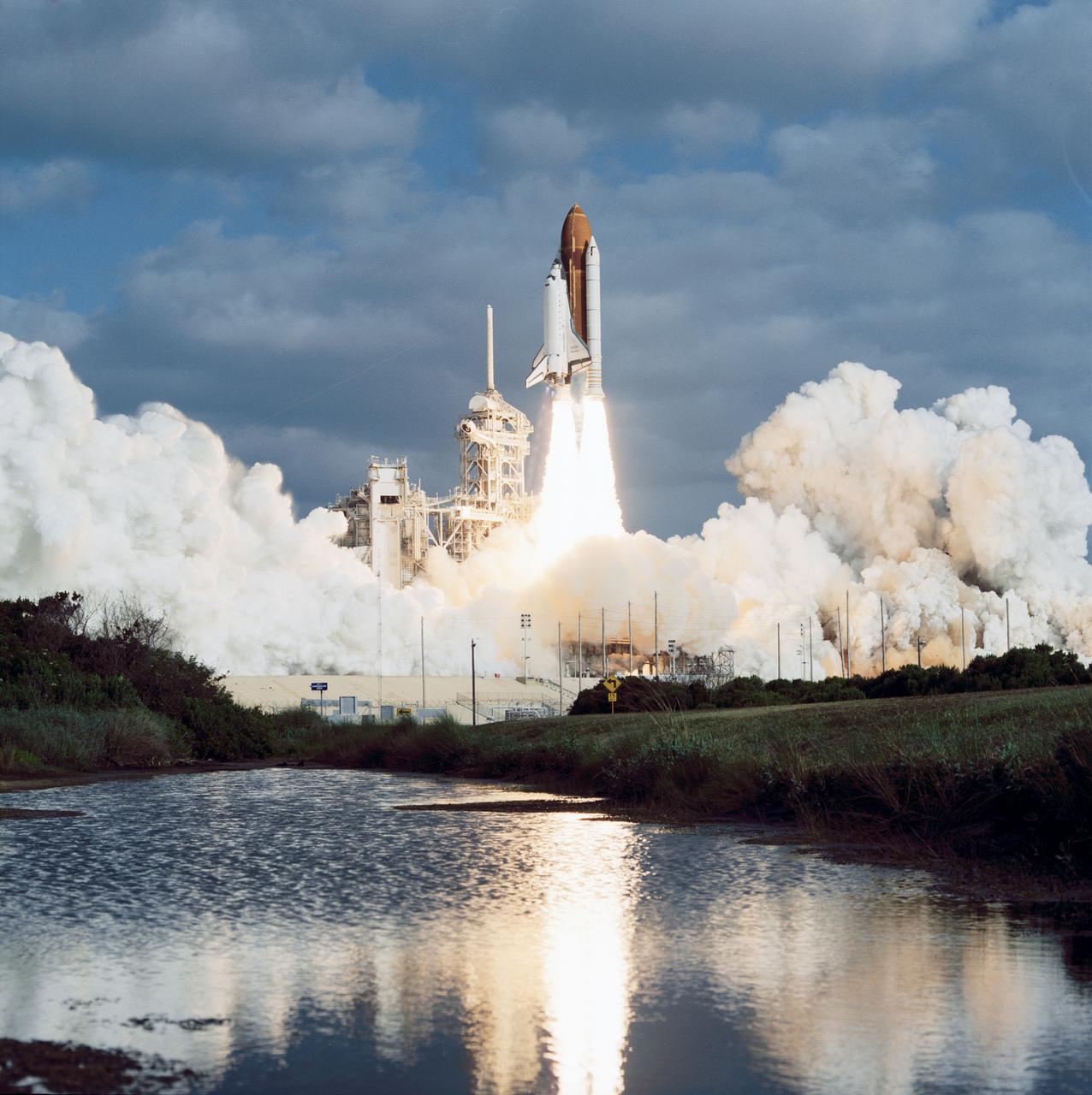
STS031-S-064 (24 April 1990) --- A horizontal view of the launch of the STS-31 mission. Onboard Space Shuttle Discovery are the crew of five veteran astronauts and the Hubble Space Telescope (HST). Official launch time was 8:33:51.0492 a.m. (EDT). Headed for approximately five days in space are astronauts Loren J. Shriver, Charles F. Bolden, Jr., Bruce McCandless, II, Kathryn D. Sullivan, and Steven A. Hawley.
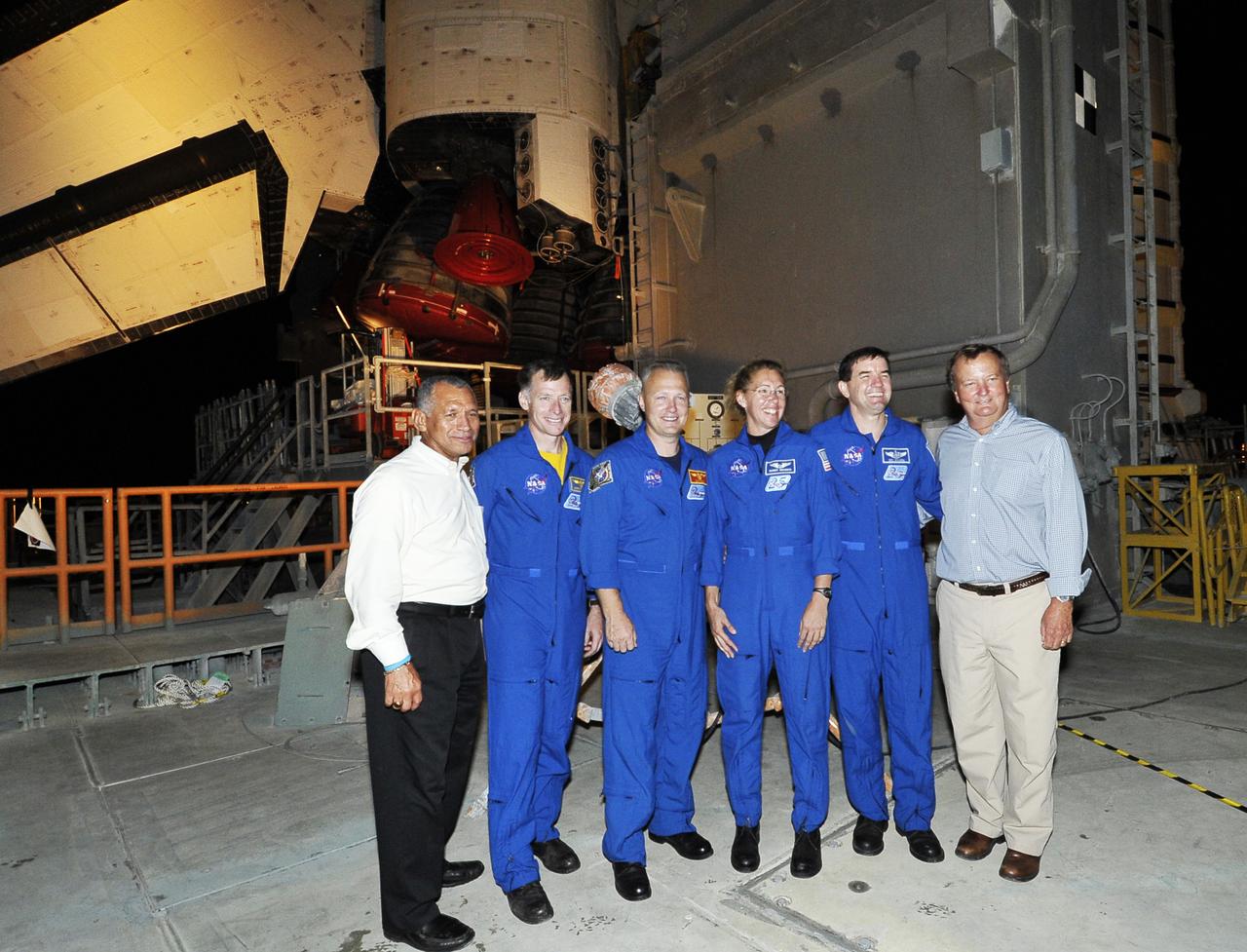
Kennedy Space Center Director Charley Bolden (L) The STS-135 crew (L-R) Commander Chris Ferguson, Pilot Doug Hurley and Mission Specialists Sandra Mangus, Rex Walheim and Shuttle Launch Director Mike Leinbach pose for a photo in front of Shuttle Atlantis on the Mobil Launch Platform (MLP) during it's final rollout to Launch Pad 39A at Kennedy Space Center, Cape Canaveral, Florida, USA 31 May 2011. Launch of Atlantis on the STS-135 mission to deliver supplies to the International Space Station is currently planned for no earlier than 08 July 2011. The STS-135 mission is planned to last eight days and will be the final flight of the Space Shuttle program.
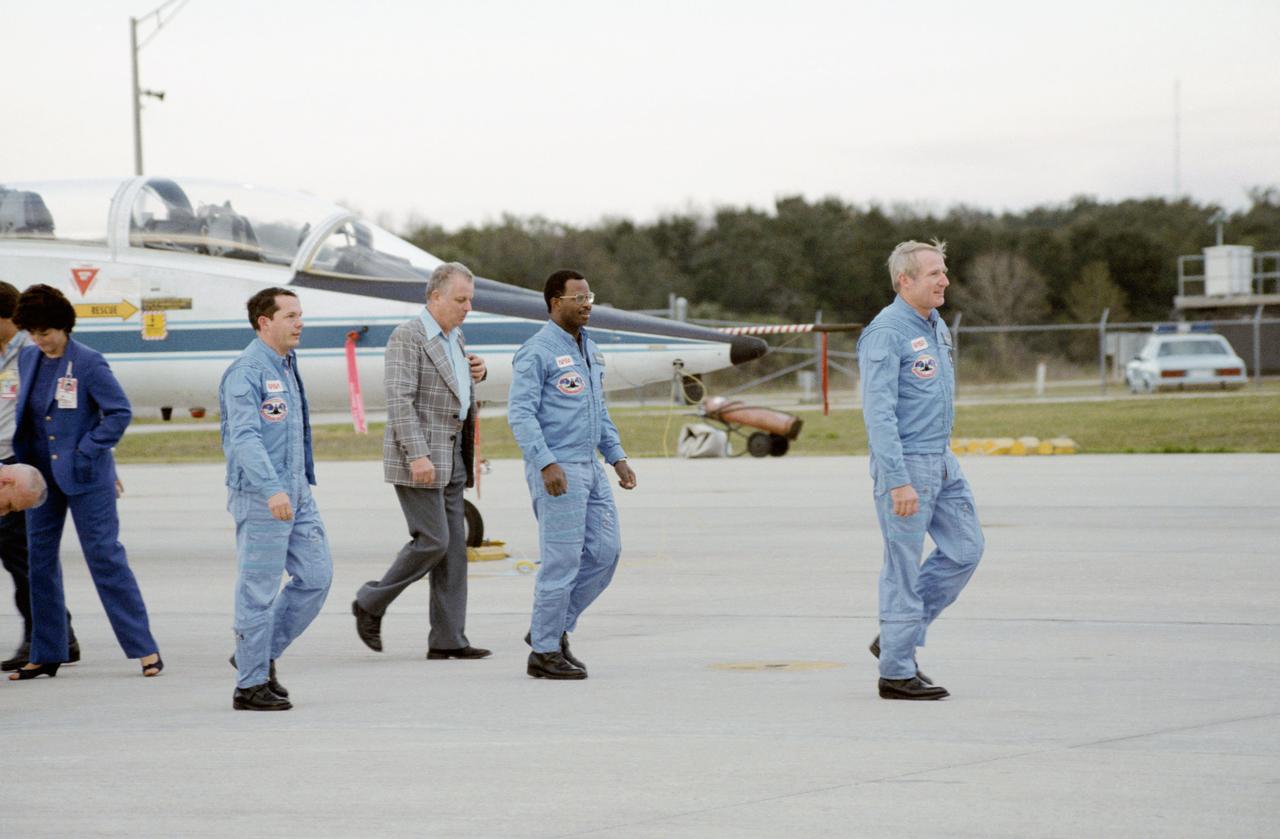
S84-26935 (31 Jan 1984) --- Three members of the STS 41-B astronaut crew arrive in Florida following a brief T-38 flight from Houston. Leading the crew from the flight line is Astronaut Vance D. Brand (right), crew commander. Following behind (in blue flight suits) are Astronauts Ronald E. McNair (center) and Robert L. Stewart (both mission specialists. They were met by Terry White (pictured), JSC public information industrial relations manager. Not pictured are Astronauts Robert L. Gibson, pilot; and Bruce McCandless II, mission specialist. Launch is scheduled for February 3, 1983.
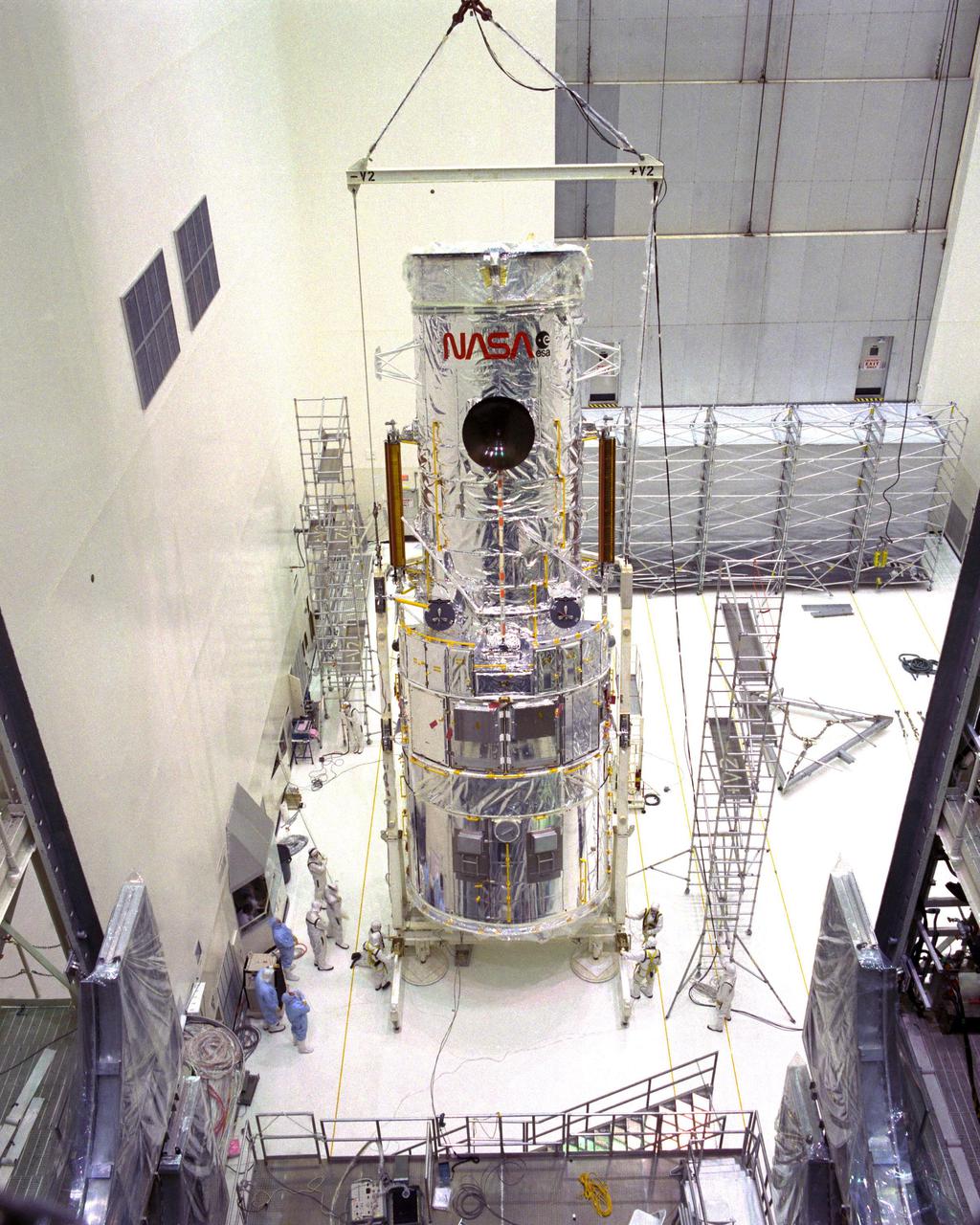
CAPE CANAVERAL, Fla. -- At the Kennedy Space Center in Florida, the Hubble Space Telescope is lifted into the vertical position in the Vertical Processing Facility as work begins to process the 94-inch primary mirror telescope for launch on the Discovery on STS-31 in March 1990. With Hubble, astronomers will be able to view 97 percent of the known universe, and will be able to get pictures unlimited and undistorted by the Earth’s atmosphere. Compared with Earth-based observatories, Hubble will be able to view celestial objects that are 50 times fainter, provide images that are 10 times sharper, and see objects that are seven times further away. Photo Credit: NASA

S78-34037 (31 July 1978) --- Astronaut Jack R. Lousma, geared with a parachute, is pulled along behind a boat in Gulf waters at Homestead Air Force Base in Florida during a water survival training course attended by several NASA astronauts. The overall course is designed to familiarize astronauts with proper procedures to take in the event of ejection from an aircraft over water. Photo credit: NASA (NOTE: Since this photograph was made, astronaut Jack R. Lousma was named commander of STS-3, scheduled for launch in early spring of 1982.)
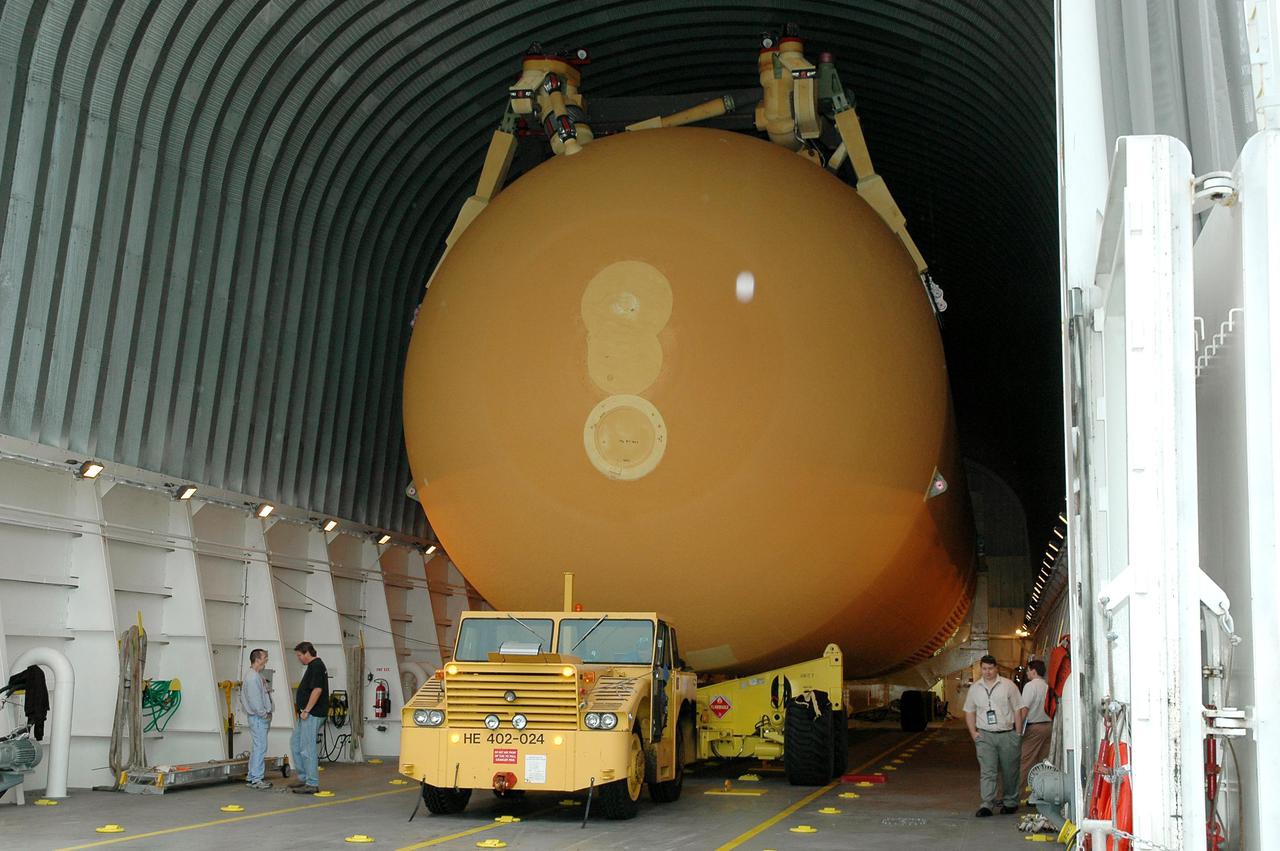
KENNEDY SPACE CENTER, FLA. - The second redesigned External Tank (ET-121) is ready to leave the barge at the Turn Basin near the Vehicle Assembly Building (VAB) after its 900-mile journey at sea from the Michoud Assembly Facility in New Orleans. It will then be offloaded and transported to the Vehicle Assembly Building at NASA’s Kennedy Space Center in Florida. In addition to the Return to Flight modifications, this tank has been outfitted with temperature sensors and accelerometers, used to measure vibration. These sensors will gather information about how the tank performs during flight. The tank is designated for use on Return to Flight mission STS-121, which has a launch window of July 12 to July 31, 2005.
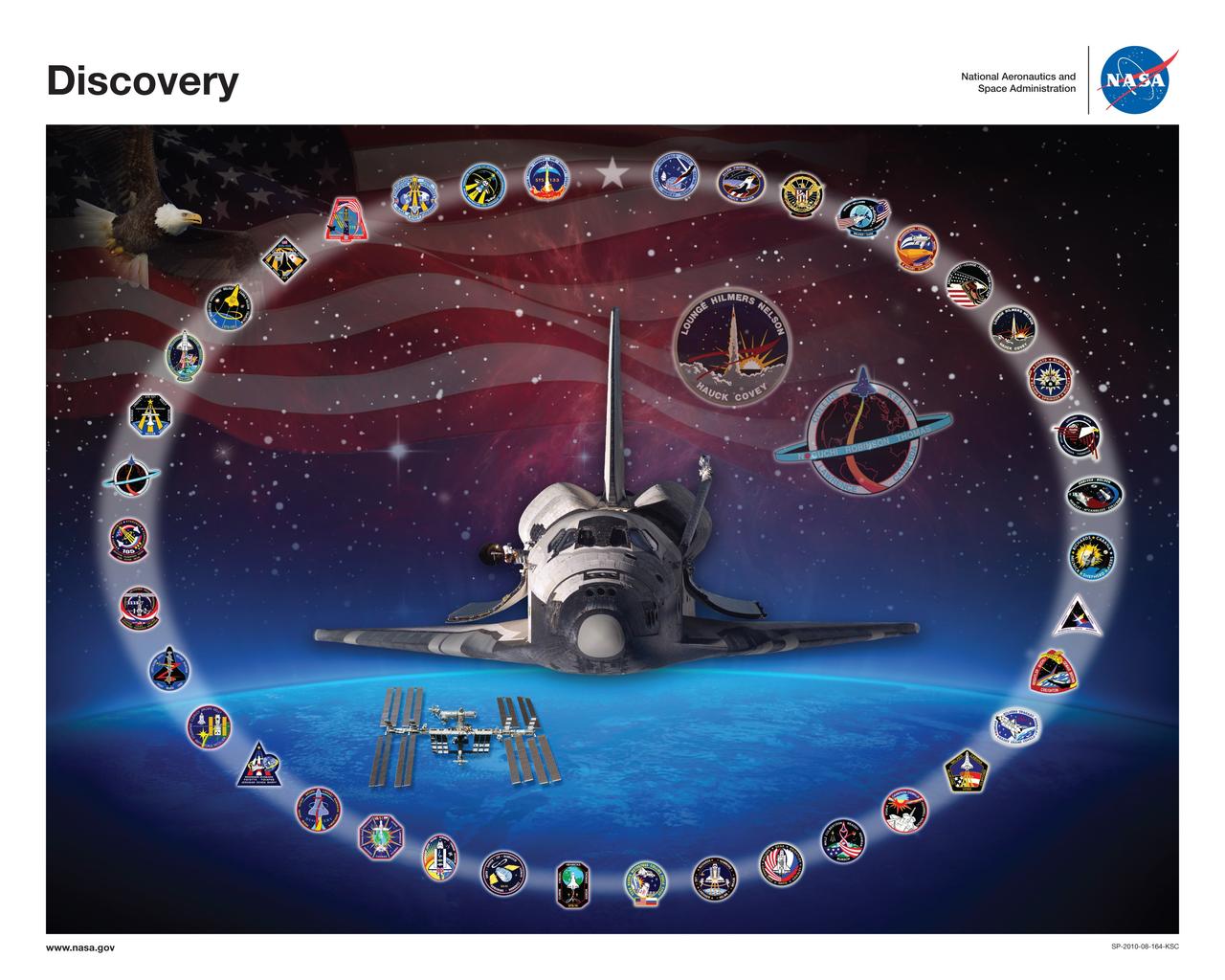
CAPE CANAVERAL, Fla. -- This is a version of space shuttle Discovery's orbiter tribute, or OV-103, which hangs in Firing Room 4 of the Launch Control Center at NASA's Kennedy Space Center in Florida. Discovery’s accomplishments include the first female shuttle pilot, Eileen Collins, on STS-63, John Glenn’s legendary return to space on STS-95, and the celebration of the 100th shuttle mission with STS-92. In addition, Discovery supported a number of Department of Defense programs, satellite deploy and repair missions and 13 International Space Station construction and operation flights. The tribute features Discovery demonstrating the rendezvous pitch maneuver on approach to the International Space Station during STS-114. Having accumulated the most space shuttle flights, Discovery’s 39 mission patches are shown circling the spacecraft. The background image was taken from the Hubble Space Telescope, which launched aboard Discovery on STS-31 and serviced by Discovery on STS-82 and STS-103. The American Flag and Bald Eagle represent Discovery’s two Return-to-Flight missions -- STS-26 and STS-114 -- and symbolize Discovery’s role in returning American astronauts to space. Five orbiter tributes are on display in the firing room, representing Atlantis, Challenger, Columbia, Endeavour and Discovery. Graphic design credit: NASA/Amy Lombardo. NASA publication number: SP-2010-08-164-KSC
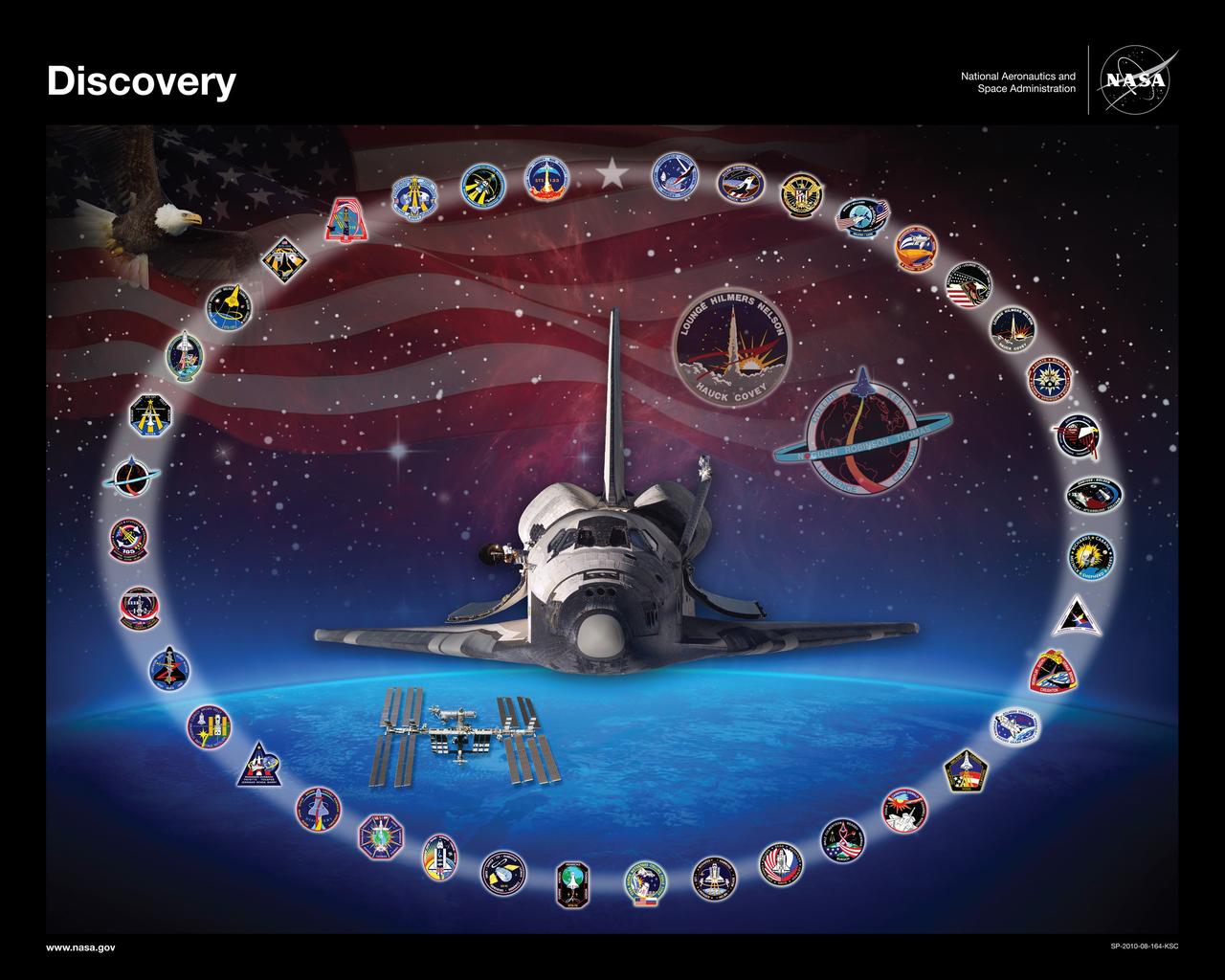
CAPE CANAVERAL, Fla. -- This is a printable version of space shuttle Discovery's orbiter tribute, or OV-103, which hangs in Firing Room 4 of the Launch Control Center at NASA's Kennedy Space Center in Florida. Discovery’s accomplishments include the first female shuttle pilot, Eileen Collins, on STS-63, John Glenn’s legendary return to space on STS-95, and the celebration of the 100th shuttle mission with STS-92. In addition, Discovery supported a number of Department of Defense programs, satellite deploy and repair missions and 13 International Space Station construction and operation flights. The tribute features Discovery demonstrating the rendezvous pitch maneuver on approach to the International Space Station during STS-114. Having accumulated the most space shuttle flights, Discovery’s 39 mission patches are shown circling the spacecraft. The background image was taken from the Hubble Space Telescope, which launched aboard Discovery on STS-31 and serviced by Discovery on STS-82 and STS-103. The American Flag and Bald Eagle represent Discovery’s two Return-to-Flight missions -- STS-26 and STS-114 -- and symbolize Discovery’s role in returning American astronauts to space. Five orbiter tributes are on display in the firing room, representing Atlantis, Challenger, Columbia, Endeavour and Discovery. Graphic design credit: NASA/Amy Lombardo. NASA publication number: SP-2010-08-164-KSC
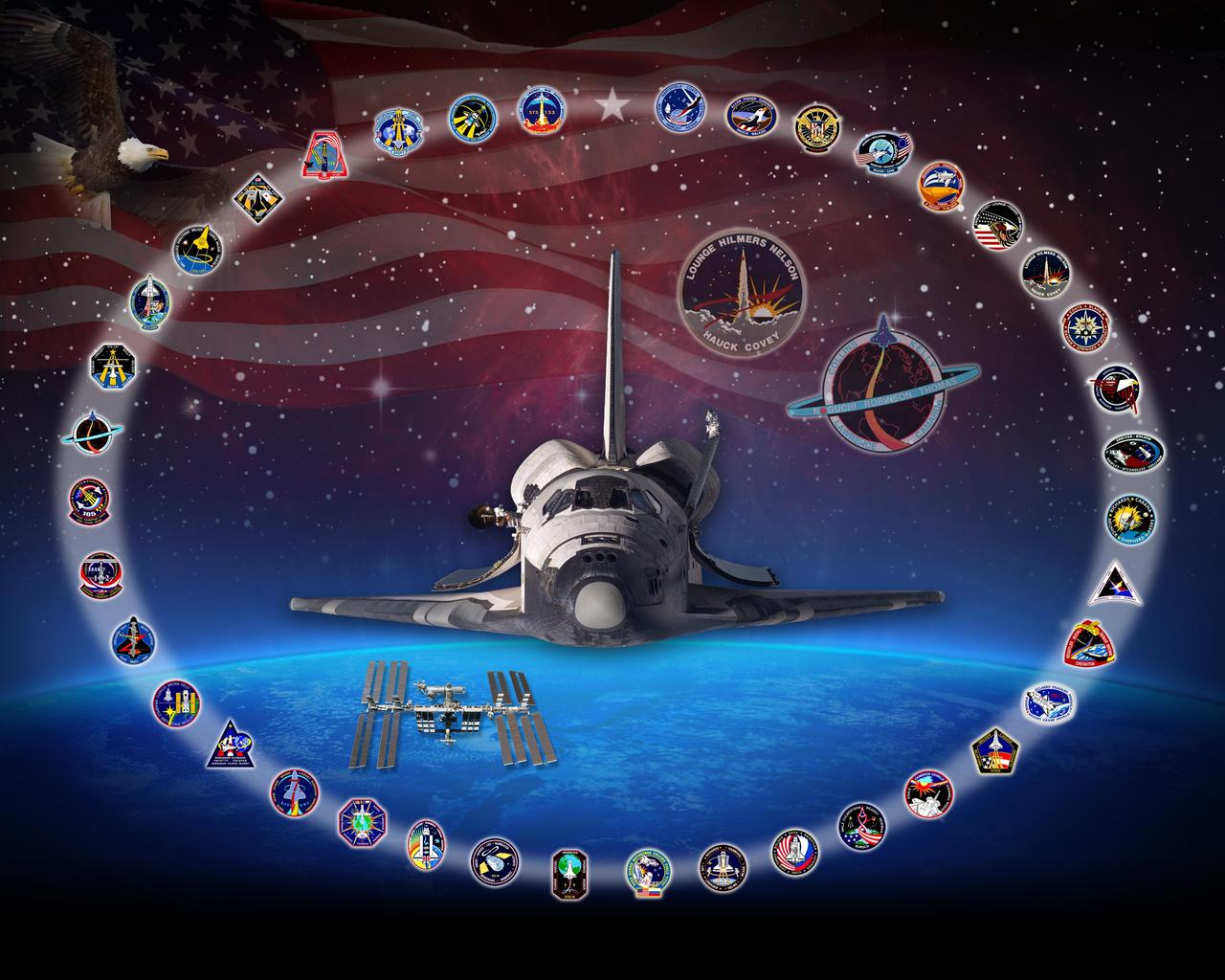
CAPE CANAVERAL, Fla. -- This orbiter tribute of space shuttle Discovery, or OV-103, hangs in Firing Room 4 of the Launch Control Center at NASA's Kennedy Space Center in Florida. Discovery’s accomplishments include the first female shuttle pilot, Eileen Collins, on STS-63, John Glenn’s legendary return to space on STS-95, and the celebration of the 100th shuttle mission with STS-92. In addition, Discovery supported a number of Department of Defense programs, satellite deploy and repair missions and 13 International Space Station construction and operation flights. The tribute features Discovery demonstrating the rendezvous pitch maneuver on approach to the International Space Station during STS-114. Having accumulated the most space shuttle flights, Discovery’s 39 mission patches are shown circling the spacecraft. The background image was taken from the Hubble Space Telescope, which launched aboard Discovery on STS-31 and serviced by Discovery on STS-82 and STS-103. The American Flag and Bald Eagle represent Discovery’s two Return-to-Flight missions -- STS-26 and STS-114 -- and symbolize Discovery’s role in returning American astronauts to space. Five orbiter tributes are on display in the firing room, representing Atlantis, Challenger, Columbia, Endeavour and Discovery. Graphic design credit: NASA/Amy Lombardo
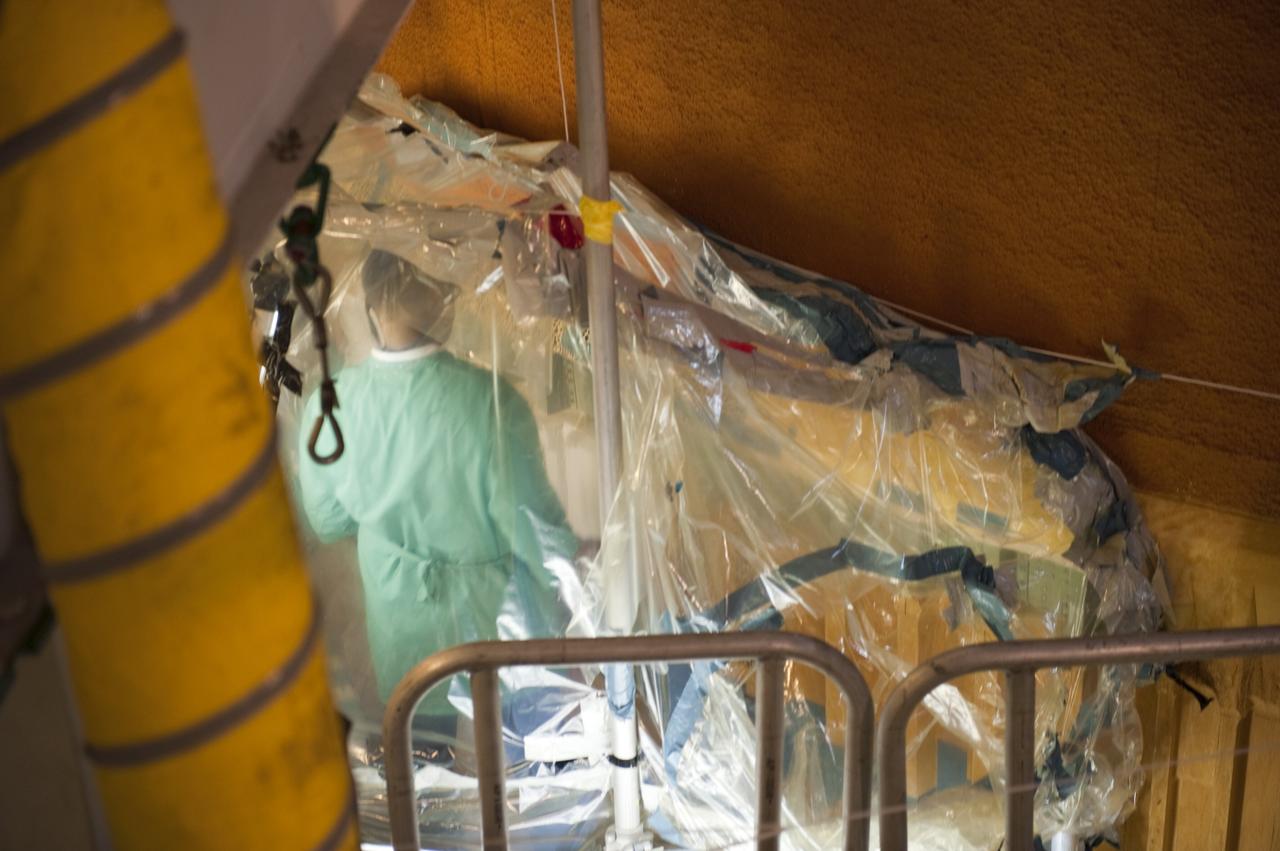
CAPE CANAVERAL, Fla. -- Repair work to space shuttle Discovery's external fuel tank begins to wrap up in the Vehicle Assembly Building at NASA's Kennedy Space Center in Florida. Technicians modified 94 support beams, called stringers, on the tank's intertank region by fitting pieces of metal, called radius blocks, over the stringers' edges. They also were re-applying foam to the modified areas of the tank. Attached to its fuel tank and two solid rocket boosters, Discovery is scheduled to roll out to Launch Pad 39A atop a giant crawler-transporter on Jan. 31. Discovery's next launch opportunity to the International Space Station on the STS-133 mission is targeted for Feb. 24. For more information on STS-133, visit www.nasa.gov/mission_pages/shuttle/shuttlemissions/sts133/. Photo credit: NASA/Kim Shiflett
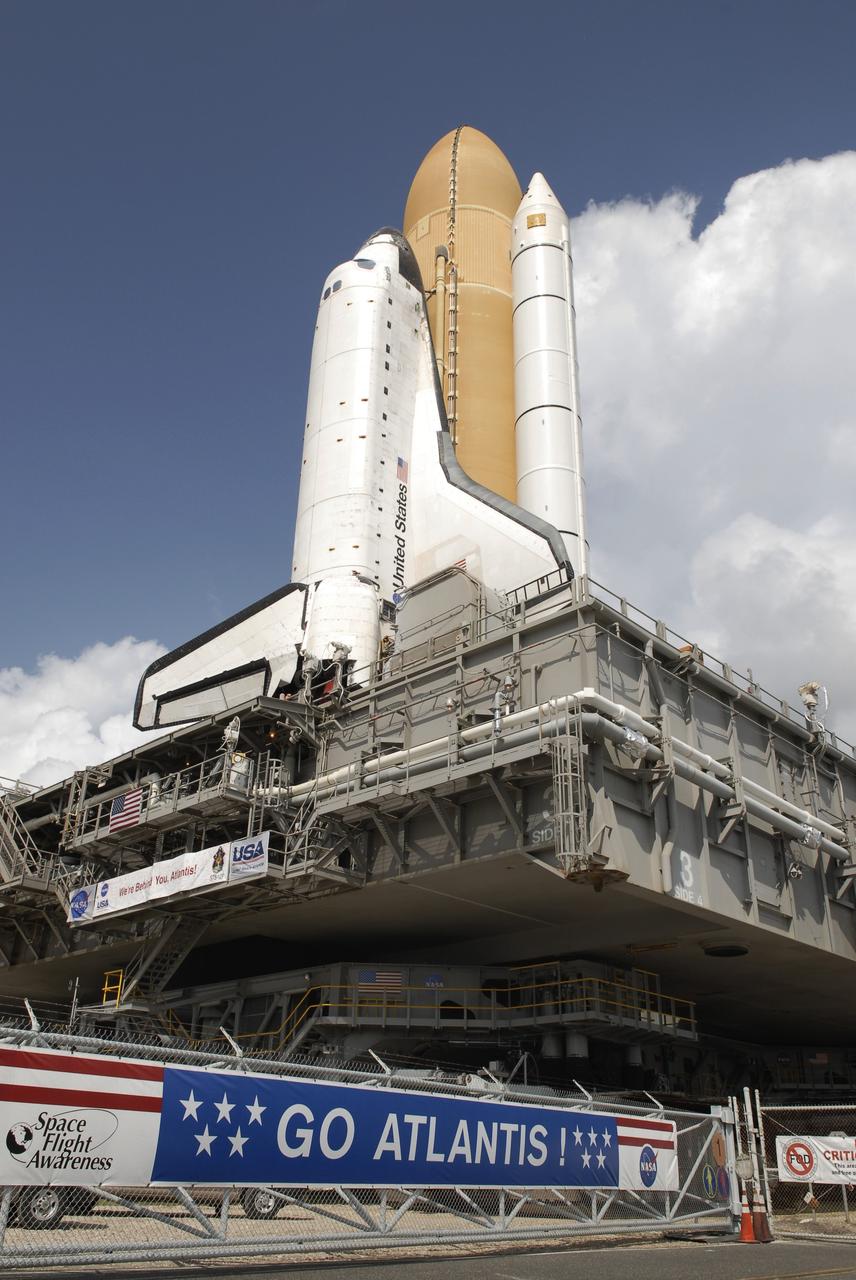
CAPE CANAVERAL, Fla. – At NASA's Kennedy Space Center in Florida, space shuttle Atlantis, attached to its external tank and solid rocket boosters atop a mobile launcher platform, arrives at Launch Complex 39A. First motion on the 3.4-mile trip from the Vehicle Assembly Building, known as rollout, was at 6:38 a.m. EDT Oct. 14. The rollout took about six hours, and the shuttle was secure on the pad at 1:31 p.m. Liftoff of Atlantis on its STS-129 mission to the International Space Station is targeted for Nov. 12. For information on the STS-129 mission and crew, visit http://www.nasa.gov/mission_pages/shuttle/shuttlemissions/sts129/index.html. Photo credit: NASA/Kim Shiflett
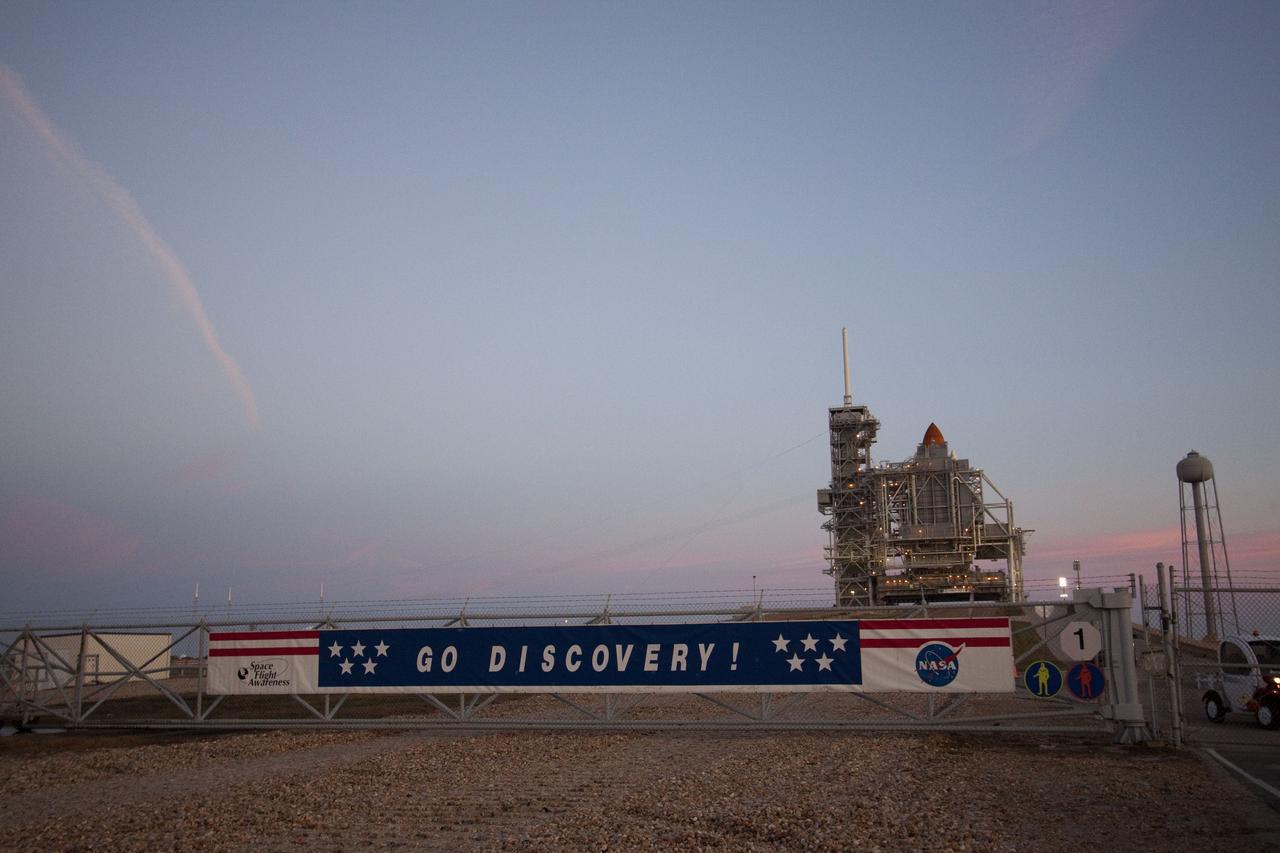
CAPE CANAVERAL, Fla. -- As dawn breaks over the Atlantic Ocean near Launch Pad 39A at NASA's Kennedy Space Center in Florida, a banner proclaims the sentiments of the work force at Kennedy Space Center following the rollout of space shuttle Discovery to the pad. First motion on its 3.4-mile trip from the Vehicle Assembly Building was at 7:58 p.m. EST Jan. 31, and was secured or "hard down" on the pad a little before 3 a.m. Feb. 1. Discovery's next launch opportunity to the International Space Station on the STS-133 mission is targeted for Feb. 24. For more information on STS-133, visit www.nasa.gov/mission_pages/shuttle/shuttlemissions/sts133/. Photo credit: NASA/Jack Pfaller
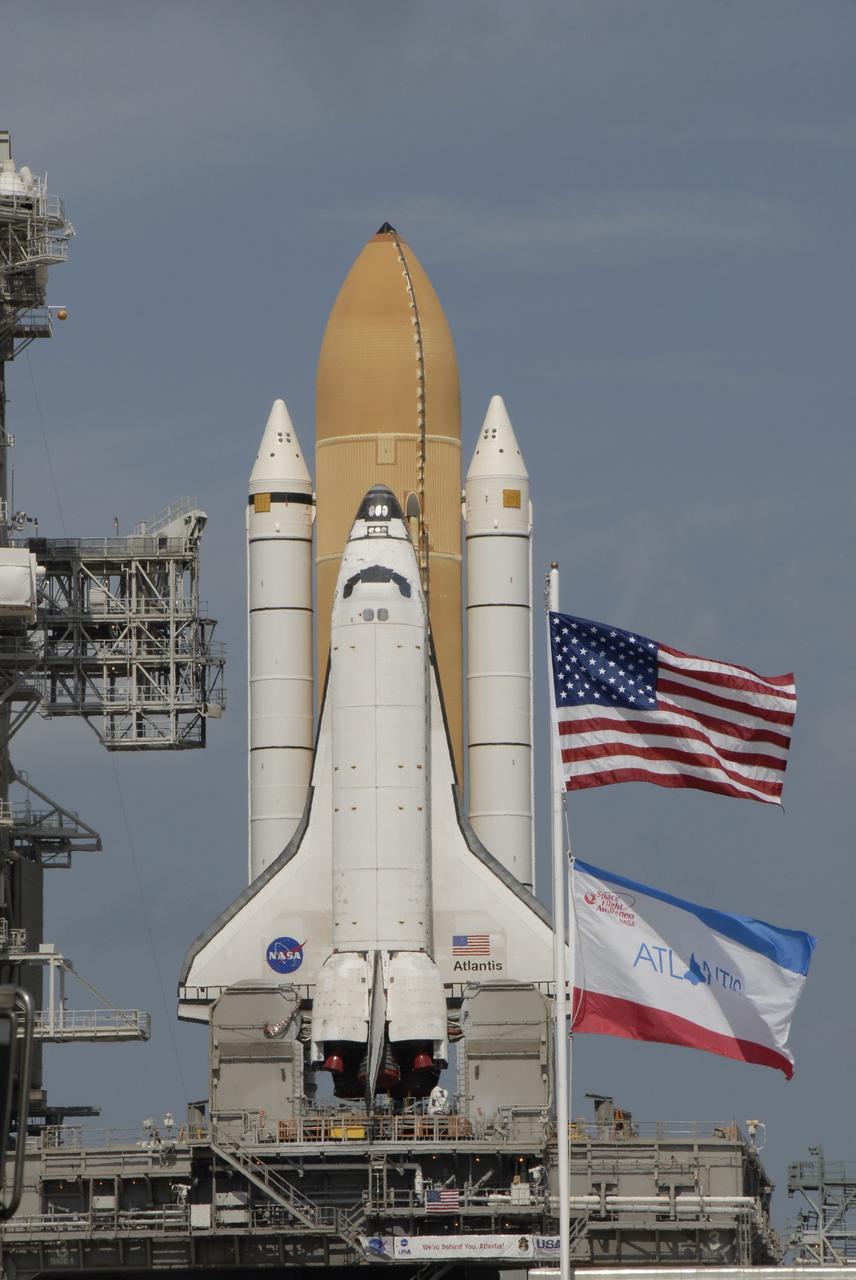
CAPE CANAVERAL, Fla. – At NASA's Kennedy Space Center in Florida, flags flap in the breeze off the Atlantic Ocean at Launch Pad 39A. Space shuttle Atlantis has reached the end of its 3.4-mile journey, known as rollout, from the Vehicle Assembly Building. First motion was at 6:38 a.m. EDT Oct. 14. The rollout took about six hours, and the shuttle was secure or "hard down" on the pad at 1:31 p.m. Liftoff of Atlantis on its STS-129 mission to the International Space Station is targeted for Nov. 12. For information on the STS-129 mission and crew, visit http://www.nasa.gov/mission_pages/shuttle/shuttlemissions/sts129/index.html. Photo credit: NASA/Kim Shiflett
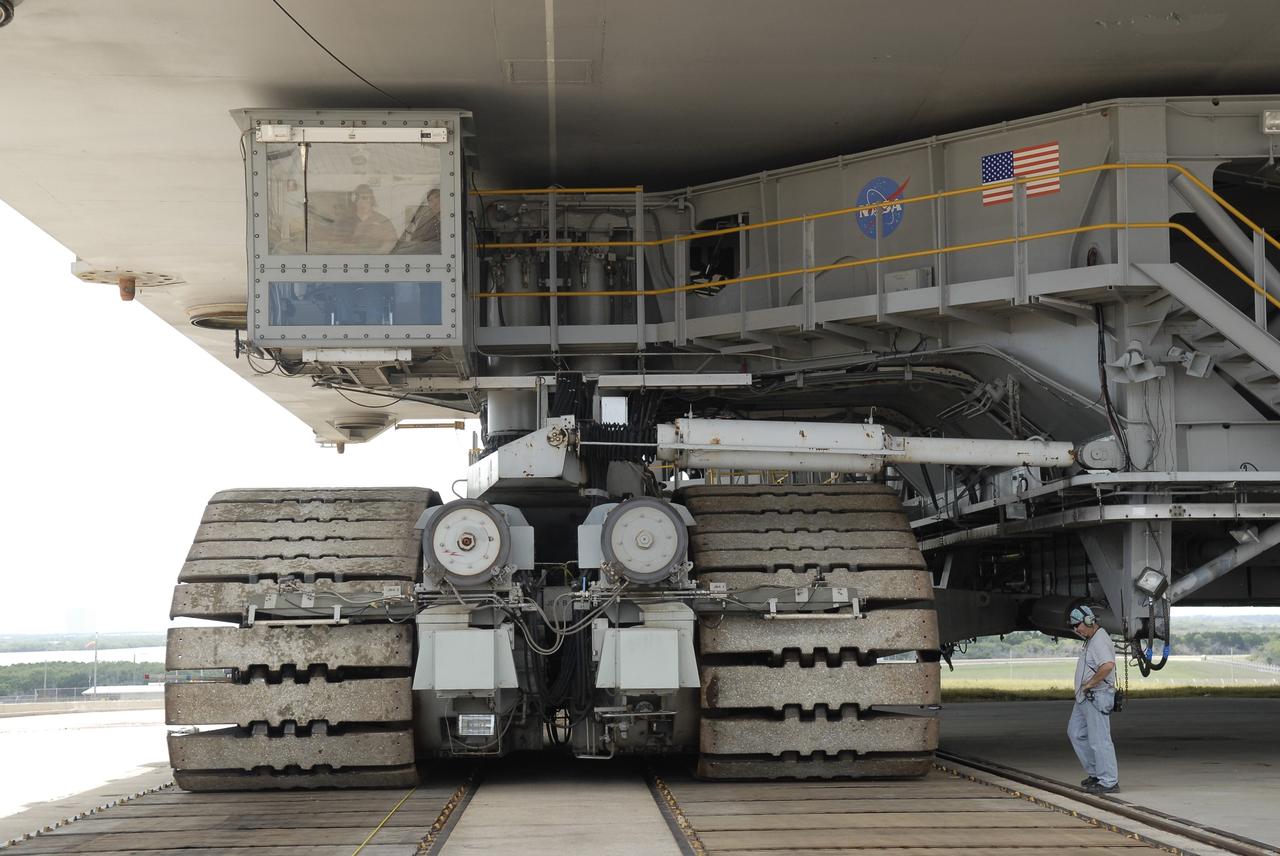
CAPE CANAVERAL, Fla. – At NASA's Kennedy Space Center in Florida, workers carefully guide the crawler-transporter into position on Launch Pad 39A. Space shuttle Atlantis, not in view, towers above them as it nears the end of its 3.4-mile journey from the Vehicle Assembly Building, known as rollout. First motion was at 6:38 a.m. EDT Oct. 14. The rollout took about six hours, and the shuttle was secure on the pad at 1:31 p.m. Liftoff of Atlantis on its STS-129 mission to the International Space Station is targeted for Nov. 12. For information on the STS-129 mission and crew, visit http://www.nasa.gov/mission_pages/shuttle/shuttlemissions/sts129/index.html. Photo credit: NASA/Kim Shiflett
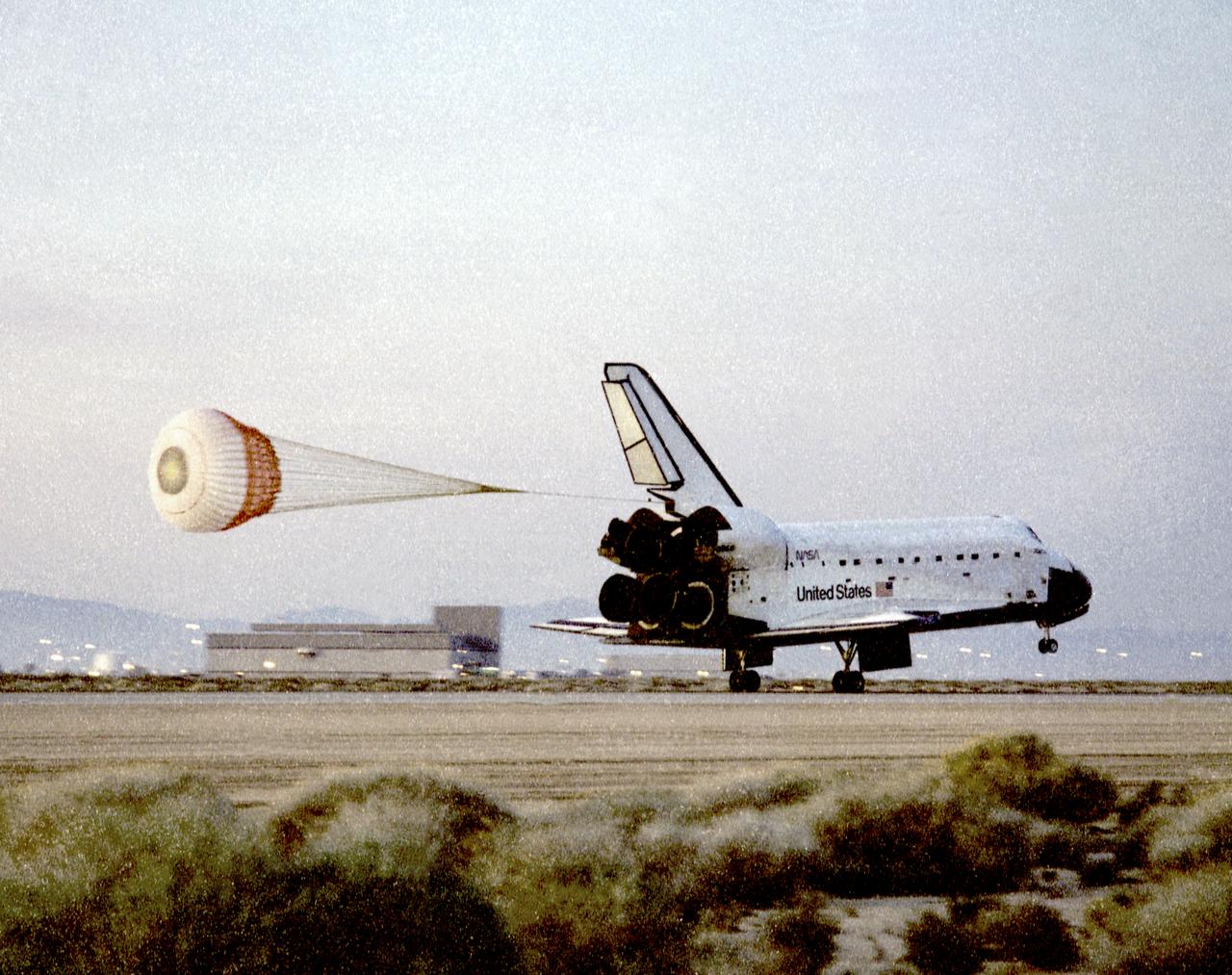
The space shuttle Atlantis touches down on the runway at Edwards, California, at approximately 5:29 a.m. Pacific Standard Time after completing the highly successful STS-76 mission to deliver Astronaut Shannon Lucid to the Russian Space Station Mir. She was the first American woman to serve as a Mir station researcher. Atlantis was originally scheduled to land at Kennedy Space Center, Florida, but bad weather there both 30 and 31 March necessitated a landing at the backup site at Edwards. This photo shows the drag chute deployed to help the shuttle roll to a stop. Mission commander for STS-76 was Kevin P. Chilton, and Richard A. Searfoss was the pilot. Ronald M. Sega was payload commander and mission specialist-1. Mission specialists were Richard Clifford, Linda Godwin and Shannon Lucid. The mission also featured a spacewalk while Atlantis was docked to Mir and experiments aboard the SPACEHAB module.
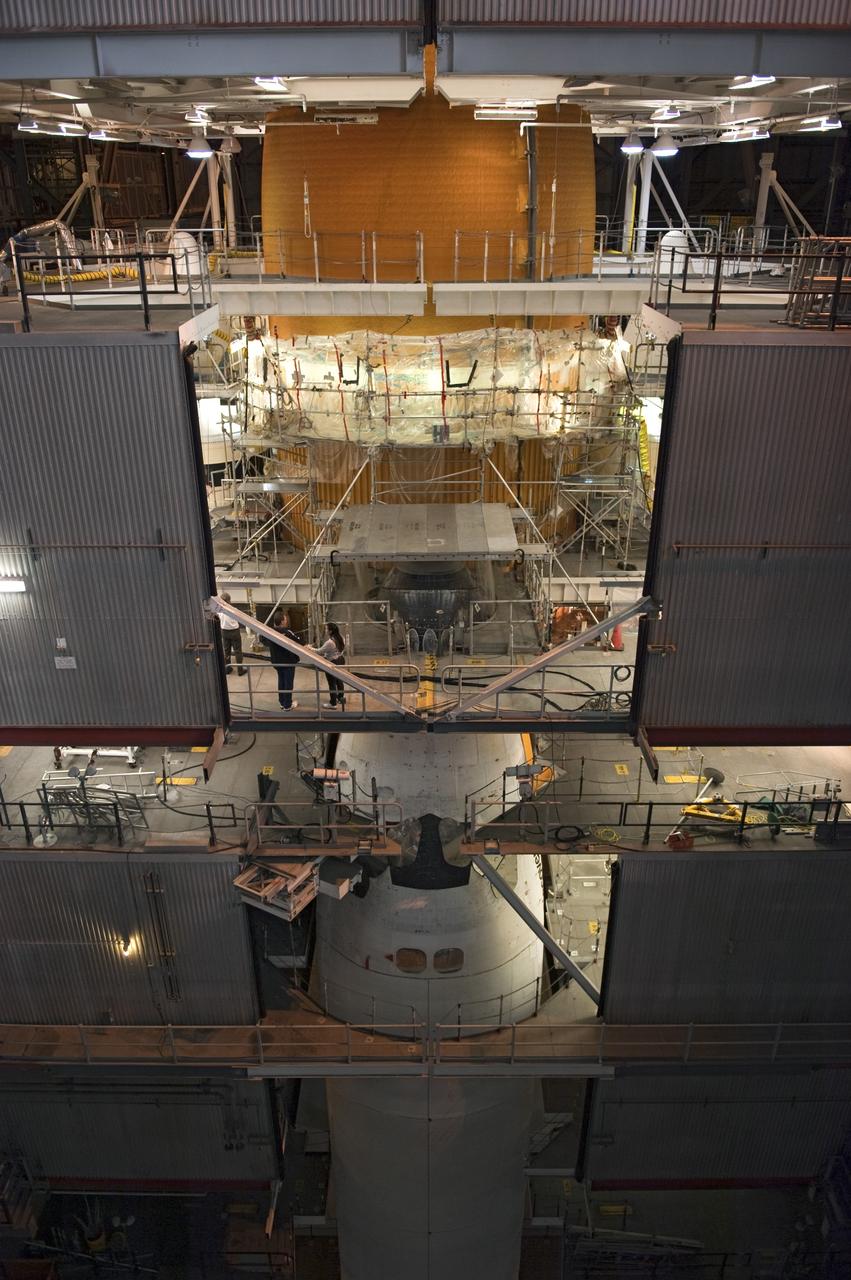
CAPE CANAVERAL, Fla. -- Repair work to space shuttle Discovery's external fuel tank begins to wrap up in the Vehicle Assembly Building at NASA's Kennedy Space Center in Florida. Technicians modified 94 support beams, called stringers, on the tank's intertank region by fitting pieces of metal, called radius blocks, over the stringers' edges. They also were re-applying foam to the modified areas of the tank. Attached to its fuel tank and two solid rocket boosters, Discovery is scheduled to roll out to Launch Pad 39A atop a giant crawler-transporter on Jan. 31. Discovery's next launch opportunity to the International Space Station on the STS-133 mission is targeted for Feb. 24. For more information on STS-133, visit www.nasa.gov/mission_pages/shuttle/shuttlemissions/sts133/. Photo credit: NASA/Kim Shiflett
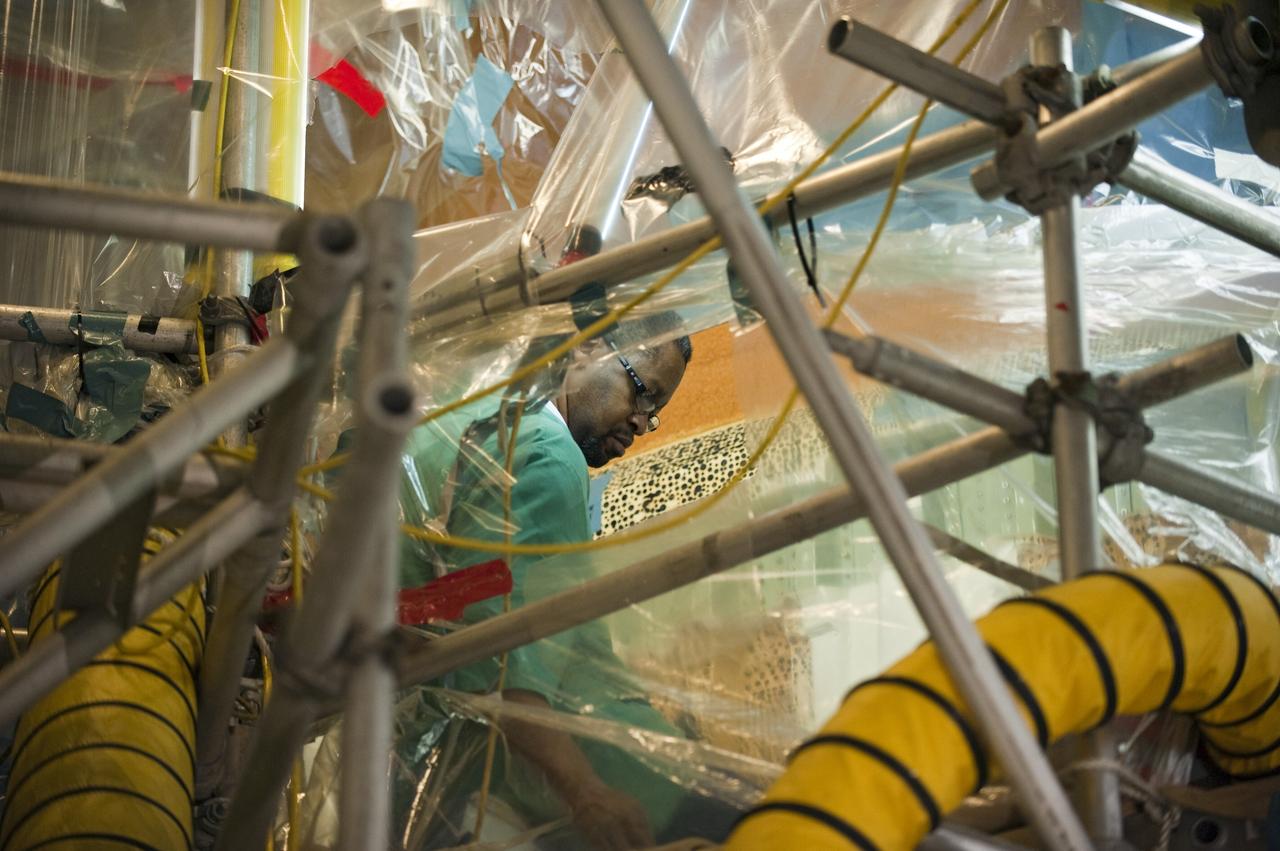
CAPE CANAVERAL, Fla. -- Repair work to space shuttle Discovery's external fuel tank begins to wrap up in the Vehicle Assembly Building at NASA's Kennedy Space Center in Florida. Technicians modified 94 support beams, called stringers, on the tank's intertank region by fitting pieces of metal, called radius blocks, over the stringers' edges. They also were re-applying foam to the modified areas of the tank. Attached to its fuel tank and two solid rocket boosters, Discovery is scheduled to roll out to Launch Pad 39A atop a giant crawler-transporter on Jan. 31. Discovery's next launch opportunity to the International Space Station on the STS-133 mission is targeted for Feb. 24. For more information on STS-133, visit www.nasa.gov/mission_pages/shuttle/shuttlemissions/sts133/. Photo credit: NASA/Kim Shiflett
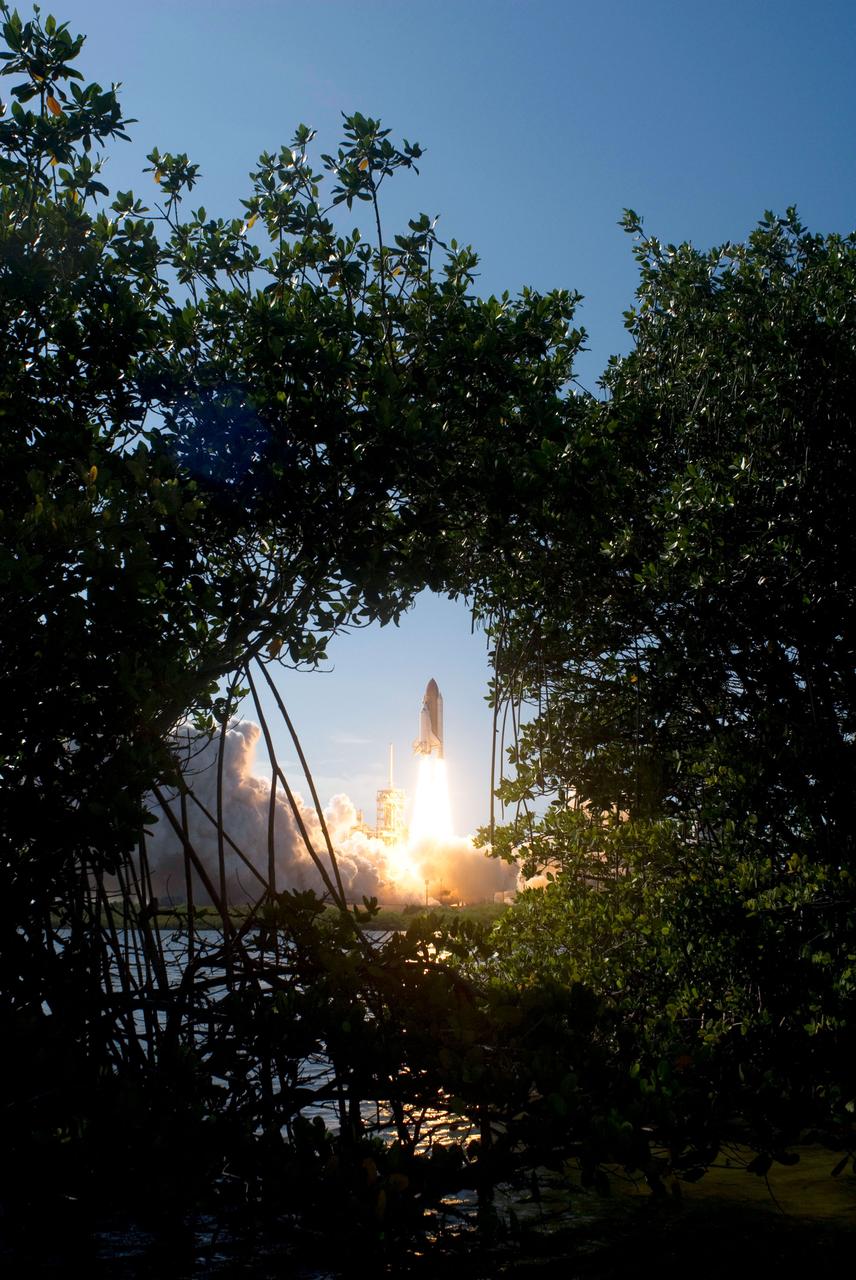
STS124-S-024 (31 May 2008) --- Framed here by Florida foliage, the Space Shuttle Discovery and its seven-member STS-124 crew head toward Earth-orbit and a scheduled link-up with the International Space Station (ISS). Liftoff from Kennedy Space Center's launch pad 39A occurred at 5:02 p.m. (EDT). The STS-124 mission is the 26th in the assembly of the International Space Station. It is the second of three flights launching components to complete JAXA's Kibo laboratory. During the mission, the shuttle crew will install Kibo's large Japanese Pressurized Module and its remote manipulator system. Onboard are astronauts Mark Kelly, commander; Ken Ham, pilot; Karen Nyberg, Mike Fossum, Ron Garan, Greg Chamitoff and Japan Aerospace Exploration Agency (JAXA) astronaut Akihiko Hoshide, all mission specialists. Chamitoff will join Expedition 17 in progress to serve as a flight engineer aboard the station.
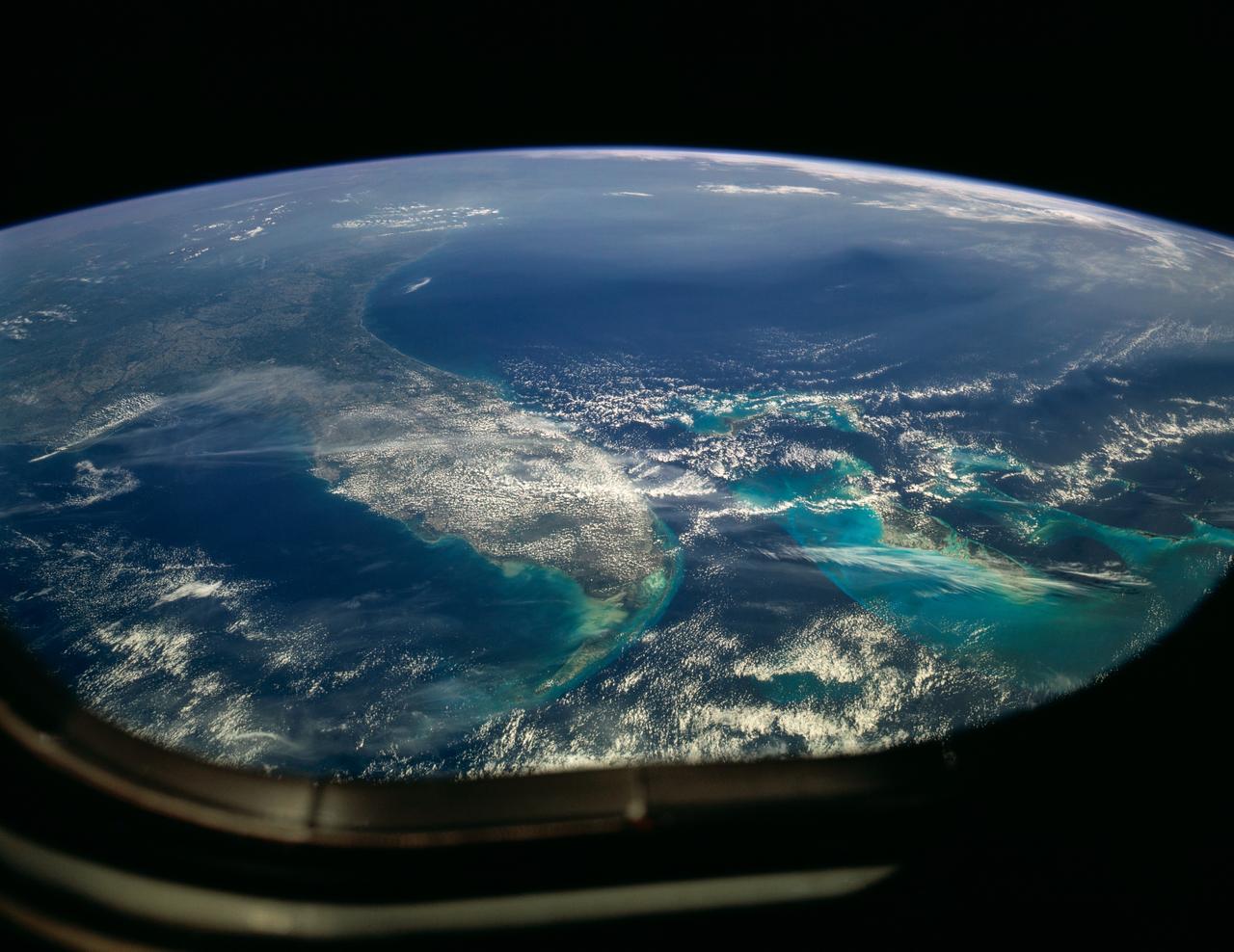
STS031-151-155 (26 April 1990) --- The Florida peninsula and smog over the northeastern U.S. coast are featured in this image photographed by a Space Shuttle Discovery crewmember during STS-31 mission. According to scientists, a mass of aerosol haze stretches across the top of the entire view. Meteorological, visibility and sulfate-content data showed that the haze was indeed industrial smog haze, rather than cloud. The air mass was transported west to east (left to right) around the north limb of a high pressure cell. It moved offshore for at least 1500 kilometers reaching the Atlantic islands of Bermuda. The leading edge of the haze mass can be detected far to the south, near the Bahamas--indicating that aerosols from the industrial Northeast were transported around the high, back directly toward the large population centers of Florida.
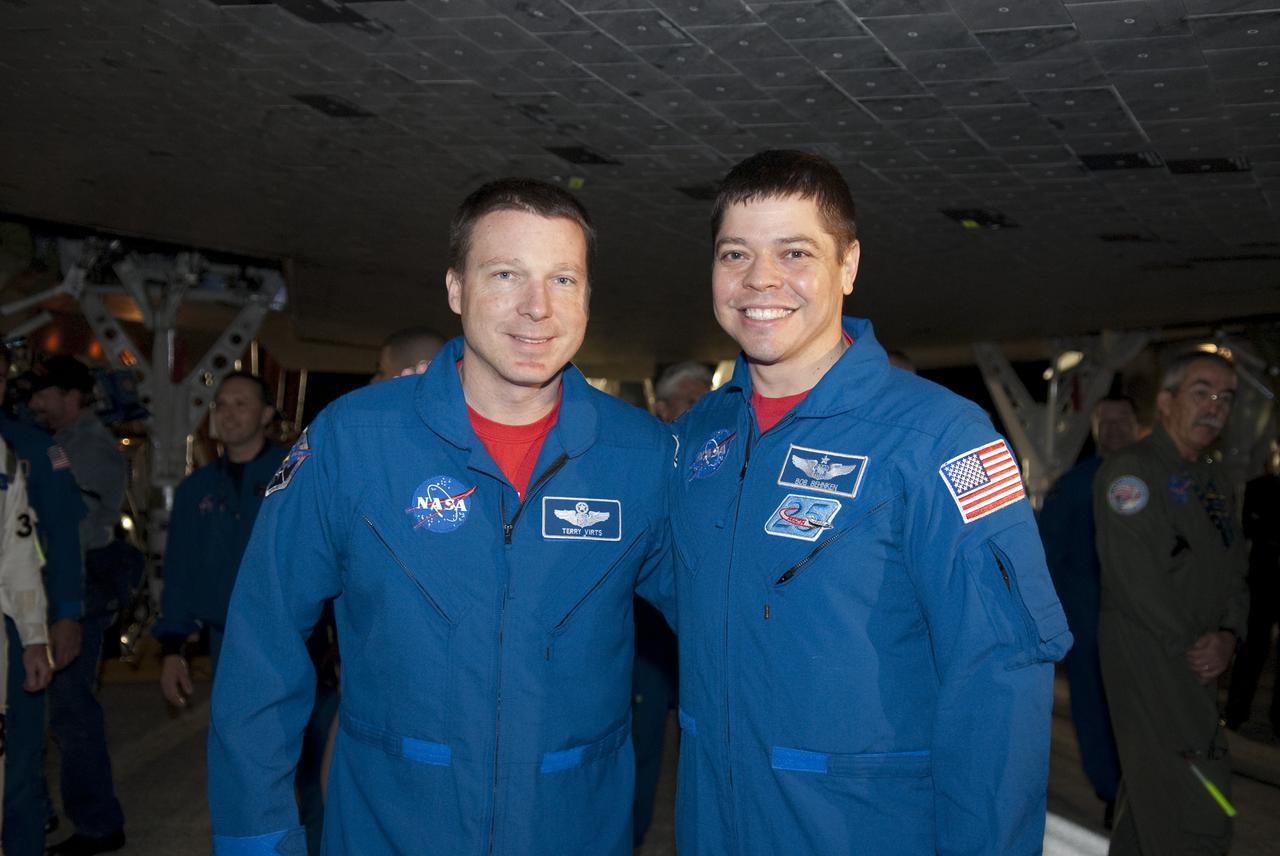
CAPE CANAVERAL, Fla. - STS-130 Pilot Terry Virts, left, and Mission Specialist Robert Behnken pause for a photograph under space shuttle Endeavour following its successful landing on Runway 15 at the Shuttle Landing Facility at NASA's Kennedy Space Center in Florida. After 14 days in space, Endeavour's 5.7-million-mile STS-130 mission was completed on orbit 217. Main gear touchdown was at 10:20:31 p.m. EST followed by nose gear touchdown at 10:20:39 p.m. and wheels stop at 10:22:10 p.m. It was the 23rd night landing in shuttle history and the 17th at Kennedy. During Endeavour's STS-130 mission, astronauts installed the Tranquility node, a module that provides additional room for crew members and many of the station's life support and environmental control systems. Attached to Tranquility is a cupola with seven windows that provide a panoramic view of Earth, celestial objects and visiting spacecraft. The module was built in Turin, Italy, by Thales Alenia Space for the European Space Agency. The orbiting laboratory is approximately 90 percent complete now in terms of mass. STS-130 was the 24th flight for Endeavour, the 32nd shuttle mission devoted to ISS assembly and maintenance, and the 130th shuttle mission to date. For information on the STS-130 mission and crew, visit http:__www.nasa.gov_mission_pages_shuttle_shuttlemissions_sts130_index.html. Photo credit: NASA_Kim Shiflett
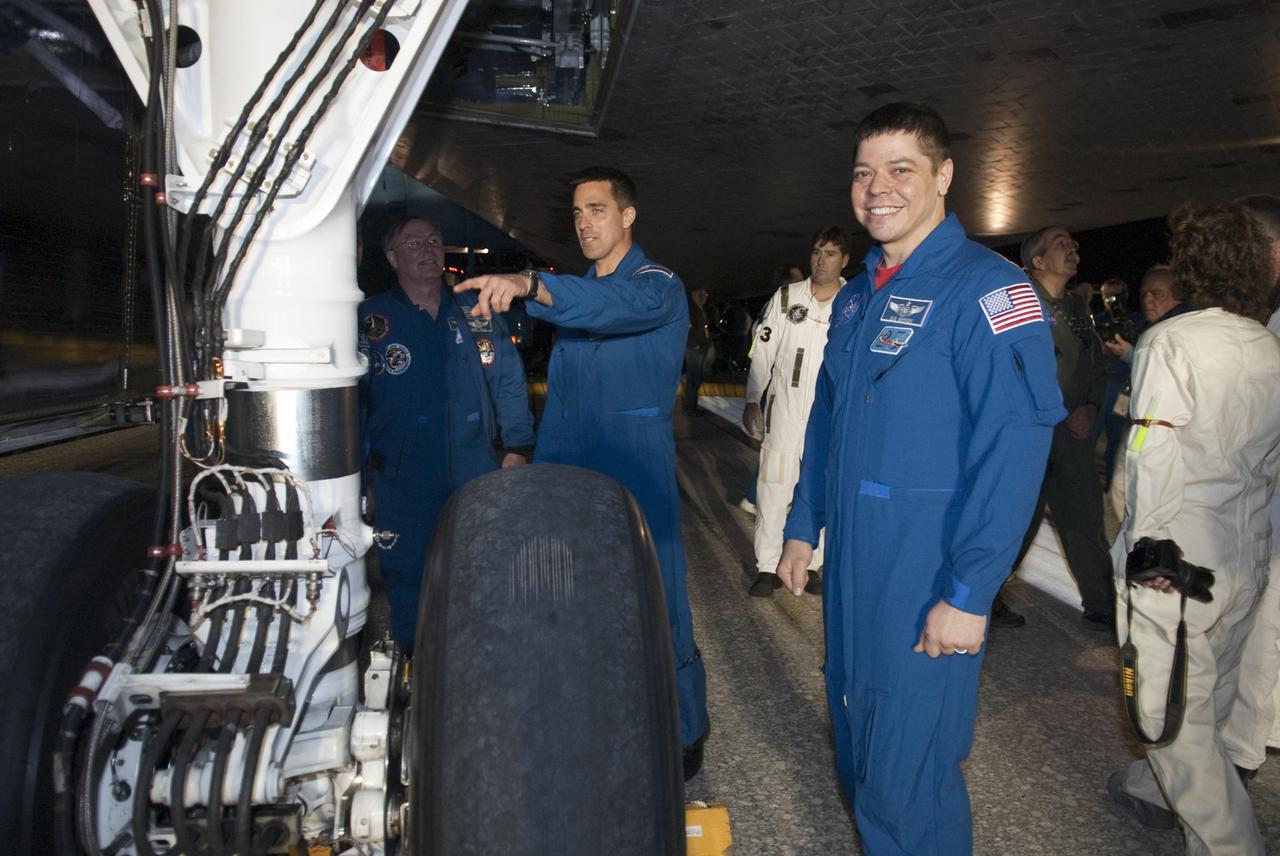
CAPE CANAVERAL, Fla. - STS-130 Mission Specialist Robert Behnken, right, inspects the landing gear on space shuttle Endeavour following its successful landing on Runway 15 at the Shuttle Landing Facility at NASA's Kennedy Space Center in Florida. After 14 days in space, Endeavour's 5.7-million-mile STS-130 mission was completed on orbit 217. Main gear touchdown was at 10:20:31 p.m. EST followed by nose gear touchdown at 10:20:39 p.m. and wheels stop at 10:22:10 p.m. It was the 23rd night landing in shuttle history and the 17th at Kennedy. During Endeavour's STS-130 mission, astronauts installed the Tranquility node, a module that provides additional room for crew members and many of the station's life support and environmental control systems. Attached to Tranquility is a cupola with seven windows that provide a panoramic view of Earth, celestial objects and visiting spacecraft. The module was built in Turin, Italy, by Thales Alenia Space for the European Space Agency. The orbiting laboratory is approximately 90 percent complete now in terms of mass. STS-130 was the 24th flight for Endeavour, the 32nd shuttle mission devoted to ISS assembly and maintenance, and the 130th shuttle mission to date. For information on the STS-130 mission and crew, visit http:__www.nasa.gov_mission_pages_shuttle_shuttlemissions_sts130_index.html. Photo credit: NASA_Kim Shiflett
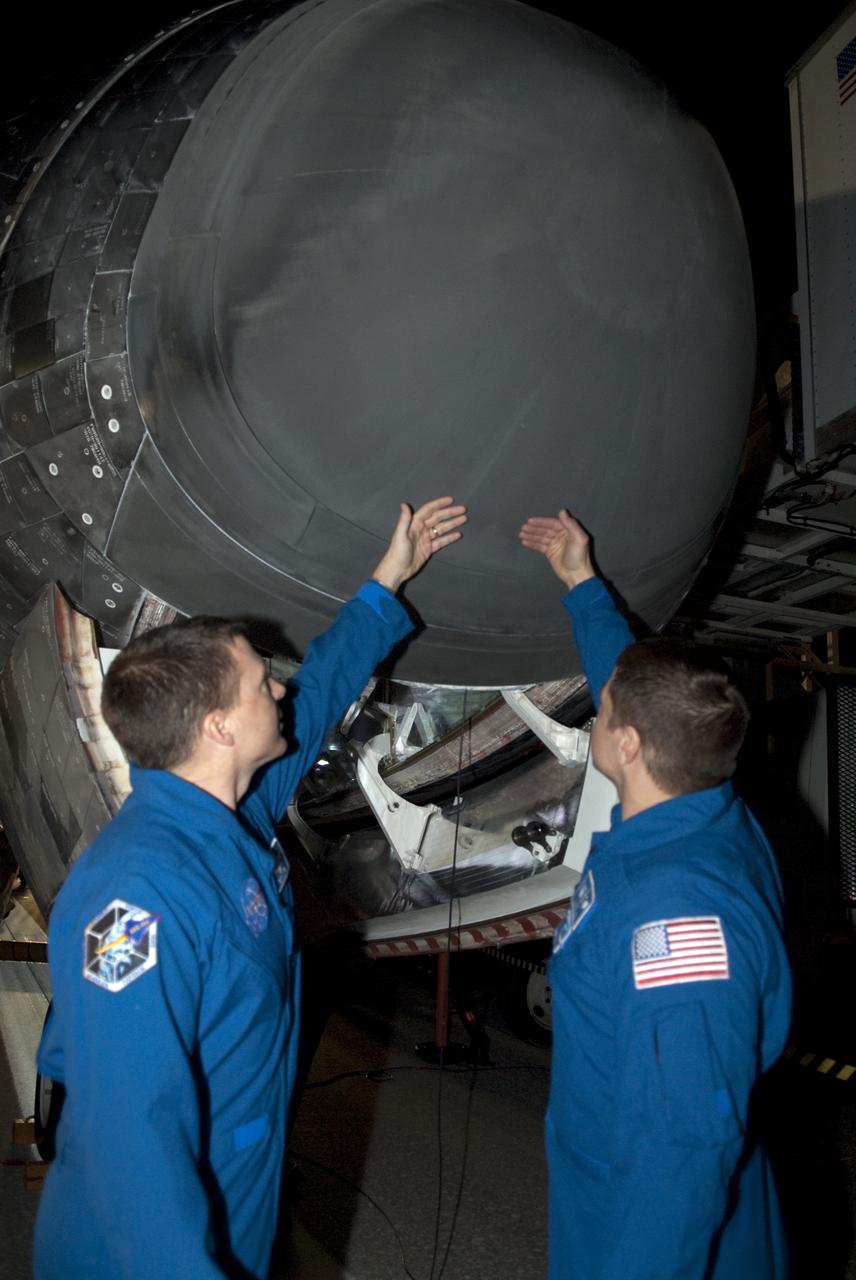
CAPE CANAVERAL, Fla. - STS-130 Mission Specialists Robert Behnken, left, and Nicholas Patrick check the temperature of space shuttle Endeavour's nosecone following its successful landing on Runway 15 at the Shuttle Landing Facility at NASA's Kennedy Space Center in Florida. After 14 days in space, Endeavour's 5.7-million-mile STS-130 mission was completed on orbit 217. Main gear touchdown was at 10:20:31 p.m. EST followed by nose gear touchdown at 10:20:39 p.m. and wheels stop at 10:22:10 p.m. It was the 23rd night landing in shuttle history and the 17th at Kennedy. During Endeavour's STS-130 mission, astronauts installed the Tranquility node, a module that provides additional room for crew members and many of the station's life support and environmental control systems. Attached to Tranquility is a cupola with seven windows that provide a panoramic view of Earth, celestial objects and visiting spacecraft. The module was built in Turin, Italy, by Thales Alenia Space for the European Space Agency. The orbiting laboratory is approximately 90 percent complete now in terms of mass. STS-130 was the 24th flight for Endeavour, the 32nd shuttle mission devoted to ISS assembly and maintenance, and the 130th shuttle mission to date. For information on the STS-130 mission and crew, visit http:__www.nasa.gov_mission_pages_shuttle_shuttlemissions_sts130_index.html. Photo credit: NASA_Kim Shiflett
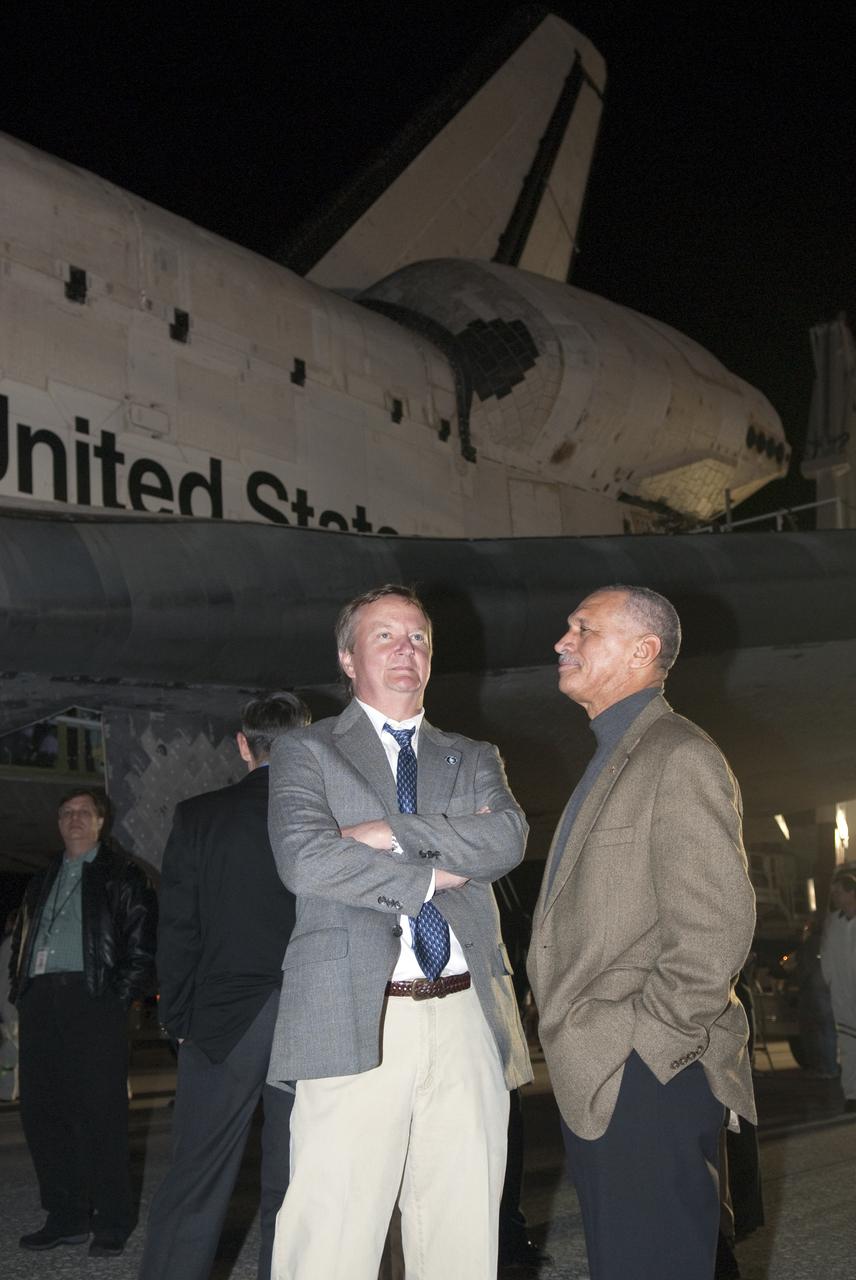
CAPE CANAVERAL, Fla. - NASA's Shuttle Launch Director Mike Leinbach, left, and NASA Administrator Charles Bolden wait to welcome the STS-130 crew back to Earth following space shuttle Endeavour's successful landing on Runway 15 at the Shuttle Landing Facility at NASA's Kennedy Space Center in Florida. After 14 days in space, Endeavour's 5.7-million-mile STS-130 mission was completed on orbit 217. Main gear touchdown was at 10:20:31 p.m. EST followed by nose gear touchdown at 10:20:39 p.m. and wheels stop at 10:22:10 p.m. It was the 23rd night landing in shuttle history and the 17th at Kennedy. During Endeavour's STS-130 mission, astronauts installed the Tranquility node, a module that provides additional room for crew members and many of the station's life support and environmental control systems. Attached to Tranquility is a cupola with seven windows that provide a panoramic view of Earth, celestial objects and visiting spacecraft. The module was built in Turin, Italy, by Thales Alenia Space for the European Space Agency. The orbiting laboratory is approximately 90 percent complete now in terms of mass. STS-130 was the 24th flight for Endeavour, the 32nd shuttle mission devoted to ISS assembly and maintenance, and the 130th shuttle mission to date. For information on the STS-130 mission and crew, visit http:__www.nasa.gov_mission_pages_shuttle_shuttlemissions_sts130_index.html. Photo credit: NASA_Kim Shiflett
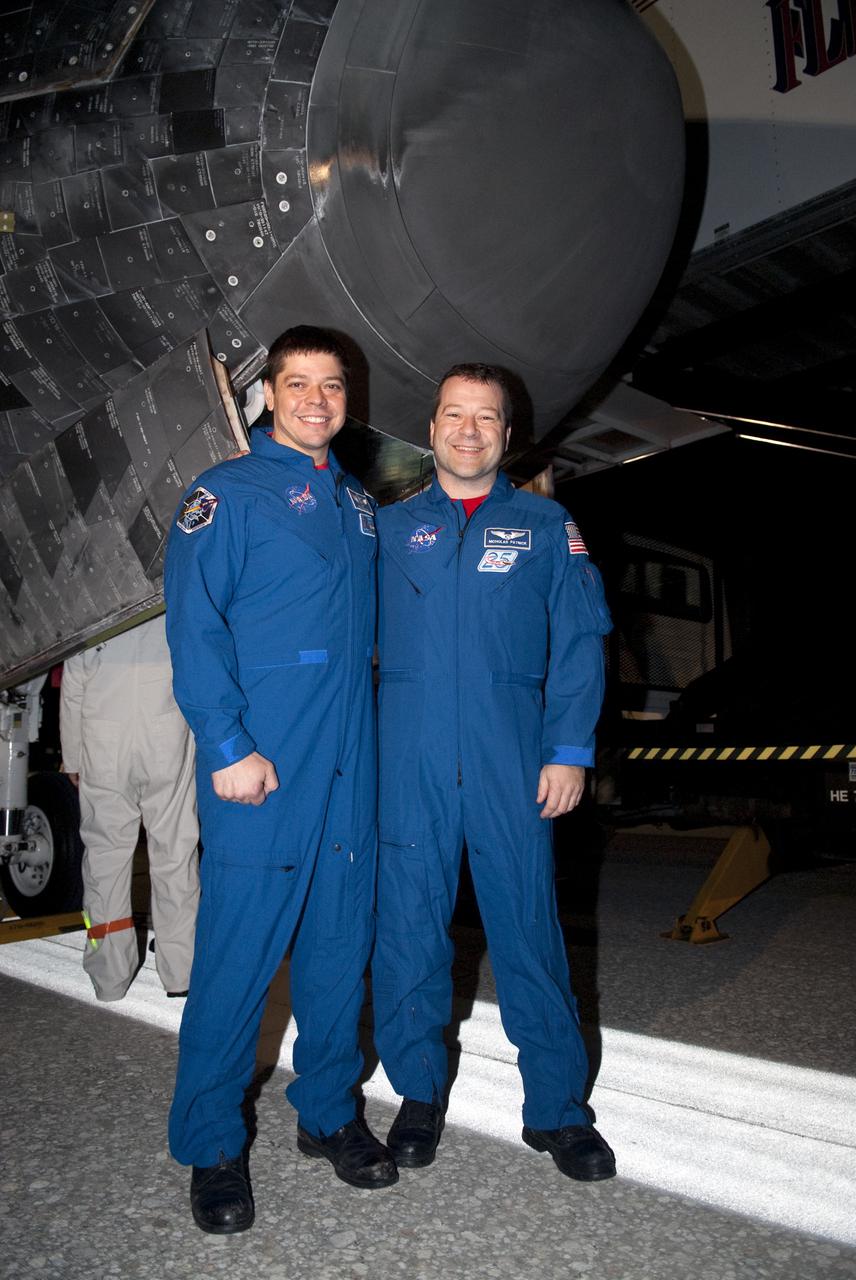
CAPE CANAVERAL, Fla. - STS-130 Mission Specialists Robert Behnken, left, and Nicholas Patrick pause for a photograph under space shuttle Endeavour's nosecone following its successful landing on Runway 15 at the Shuttle Landing Facility at NASA's Kennedy Space Center in Florida. After 14 days in space, Endeavour's 5.7-million-mile STS-130 mission was completed on orbit 217. Main gear touchdown was at 10:20:31 p.m. EST followed by nose gear touchdown at 10:20:39 p.m. and wheels stop at 10:22:10 p.m. It was the 23rd night landing in shuttle history and the 17th at Kennedy. During Endeavour's STS-130 mission, astronauts installed the Tranquility node, a module that provides additional room for crew members and many of the station's life support and environmental control systems. Attached to Tranquility is a cupola with seven windows that provide a panoramic view of Earth, celestial objects and visiting spacecraft. The module was built in Turin, Italy, by Thales Alenia Space for the European Space Agency. The orbiting laboratory is approximately 90 percent complete now in terms of mass. STS-130 was the 24th flight for Endeavour, the 32nd shuttle mission devoted to ISS assembly and maintenance, and the 130th shuttle mission to date. For information on the STS-130 mission and crew, visit http:__www.nasa.gov_mission_pages_shuttle_shuttlemissions_sts130_index.html. Photo credit: NASA_Kim Shiflett
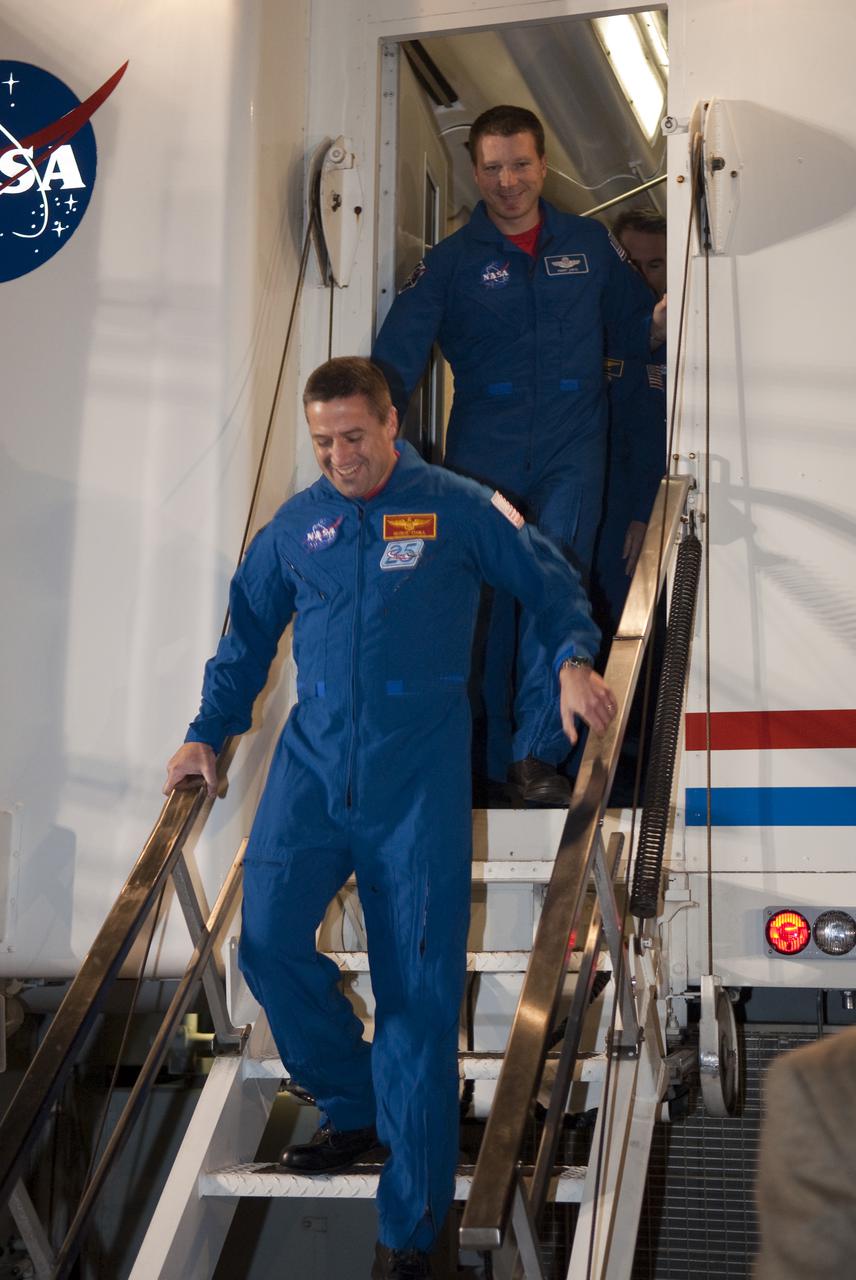
CAPE CANAVERAL, Fla. - STS-130 Commander George Zamka leaves the astronaut support vehicle, followed by Pilot Terry Virts, following space shuttle Endeavour's successful landing on Runway 15 at the Shuttle Landing Facility at NASA's Kennedy Space Center in Florida. After 14 days in space, Endeavour's 5.7-million-mile STS-130 mission was completed on orbit 217. Main gear touchdown was at 10:20:31 p.m. EST followed by nose gear touchdown at 10:20:39 p.m. and wheels stop at 10:22:10 p.m. It was the 23rd night landing in shuttle history and the 17th at Kennedy. During Endeavour's STS-130 mission, astronauts installed the Tranquility node, a module that provides additional room for crew members and many of the station's life support and environmental control systems. Attached to Tranquility is a cupola with seven windows that provide a panoramic view of Earth, celestial objects and visiting spacecraft. The module was built in Turin, Italy, by Thales Alenia Space for the European Space Agency. The orbiting laboratory is approximately 90 percent complete now in terms of mass. STS-130 was the 24th flight for Endeavour, the 32nd shuttle mission devoted to ISS assembly and maintenance, and the 130th shuttle mission to date. For information on the STS-130 mission and crew, visit http:__www.nasa.gov_mission_pages_shuttle_shuttlemissions_sts130_index.html. Photo credit: NASA_Kim Shiflett
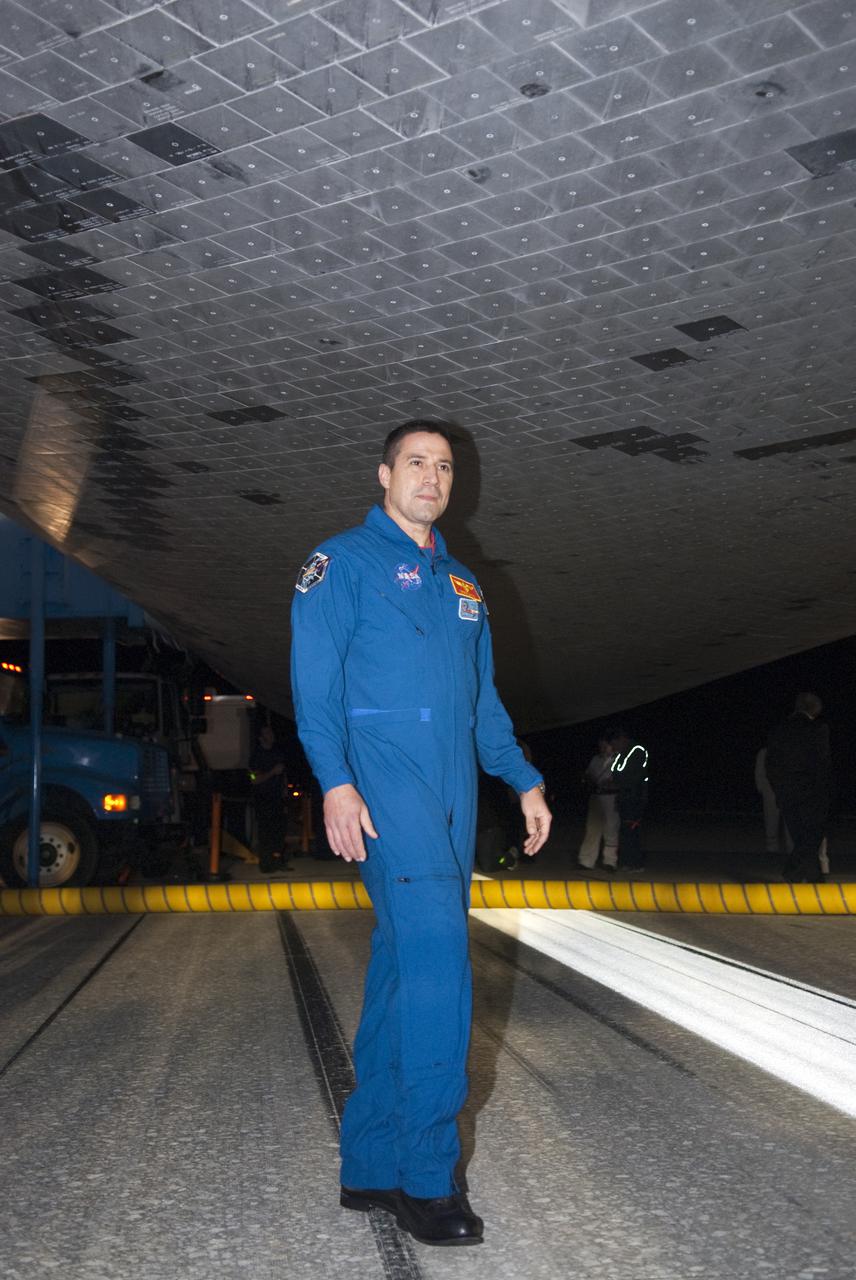
CAPE CANAVERAL, Fla. - STS-130 Commander George Zamka inspects the thermal protection system tiles under space shuttle Endeavour following its successful landing on Runway 15 at the Shuttle Landing Facility at NASA's Kennedy Space Center in Florida. After 14 days in space, Endeavour's 5.7-million-mile STS-130 mission was completed on orbit 217. Main gear touchdown was at 10:20:31 p.m. EST followed by nose gear touchdown at 10:20:39 p.m. and wheels stop at 10:22:10 p.m. It was the 23rd night landing in shuttle history and the 17th at Kennedy. During Endeavour's STS-130 mission, astronauts installed the Tranquility node, a module that provides additional room for crew members and many of the station's life support and environmental control systems. Attached to Tranquility is a cupola with seven windows that provide a panoramic view of Earth, celestial objects and visiting spacecraft. The module was built in Turin, Italy, by Thales Alenia Space for the European Space Agency. The orbiting laboratory is approximately 90 percent complete now in terms of mass. STS-130 was the 24th flight for Endeavour, the 32nd shuttle mission devoted to ISS assembly and maintenance, and the 130th shuttle mission to date. For information on the STS-130 mission and crew, visit http:__www.nasa.gov_mission_pages_shuttle_shuttlemissions_sts130_index.html. Photo credit: NASA_Kim Shiflett
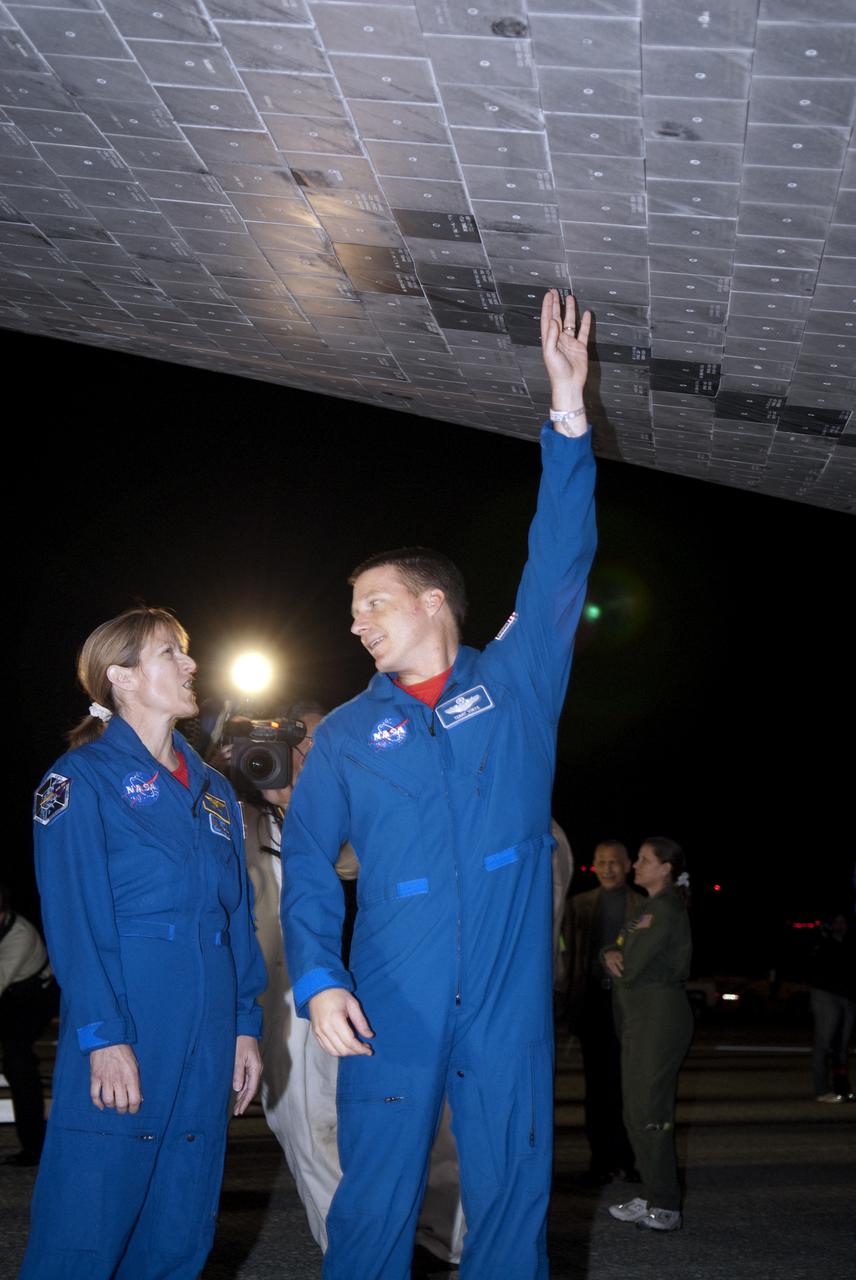
CAPE CANAVERAL, Fla. - STS-130 Mission Specialist Kathryn Hire, left, and Pilot Terry Virts inspect the thermal protection system tiles under space shuttle Endeavour following its successful landing on Runway 15 at the Shuttle Landing Facility at NASA's Kennedy Space Center in Florida. After 14 days in space, Endeavour's 5.7-million-mile STS-130 mission was completed on orbit 217. Main gear touchdown was at 10:20:31 p.m. EST followed by nose gear touchdown at 10:20:39 p.m. and wheels stop at 10:22:10 p.m. It was the 23rd night landing in shuttle history and the 17th at Kennedy. During Endeavour's STS-130 mission, astronauts installed the Tranquility node, a module that provides additional room for crew members and many of the station's life support and environmental control systems. Attached to Tranquility is a cupola with seven windows that provide a panoramic view of Earth, celestial objects and visiting spacecraft. The module was built in Turin, Italy, by Thales Alenia Space for the European Space Agency. The orbiting laboratory is approximately 90 percent complete now in terms of mass. STS-130 was the 24th flight for Endeavour, the 32nd shuttle mission devoted to ISS assembly and maintenance, and the 130th shuttle mission to date. For information on the STS-130 mission and crew, visit http:__www.nasa.gov_mission_pages_shuttle_shuttlemissions_sts130_index.html. Photo credit: NASA_Kim Shiflett
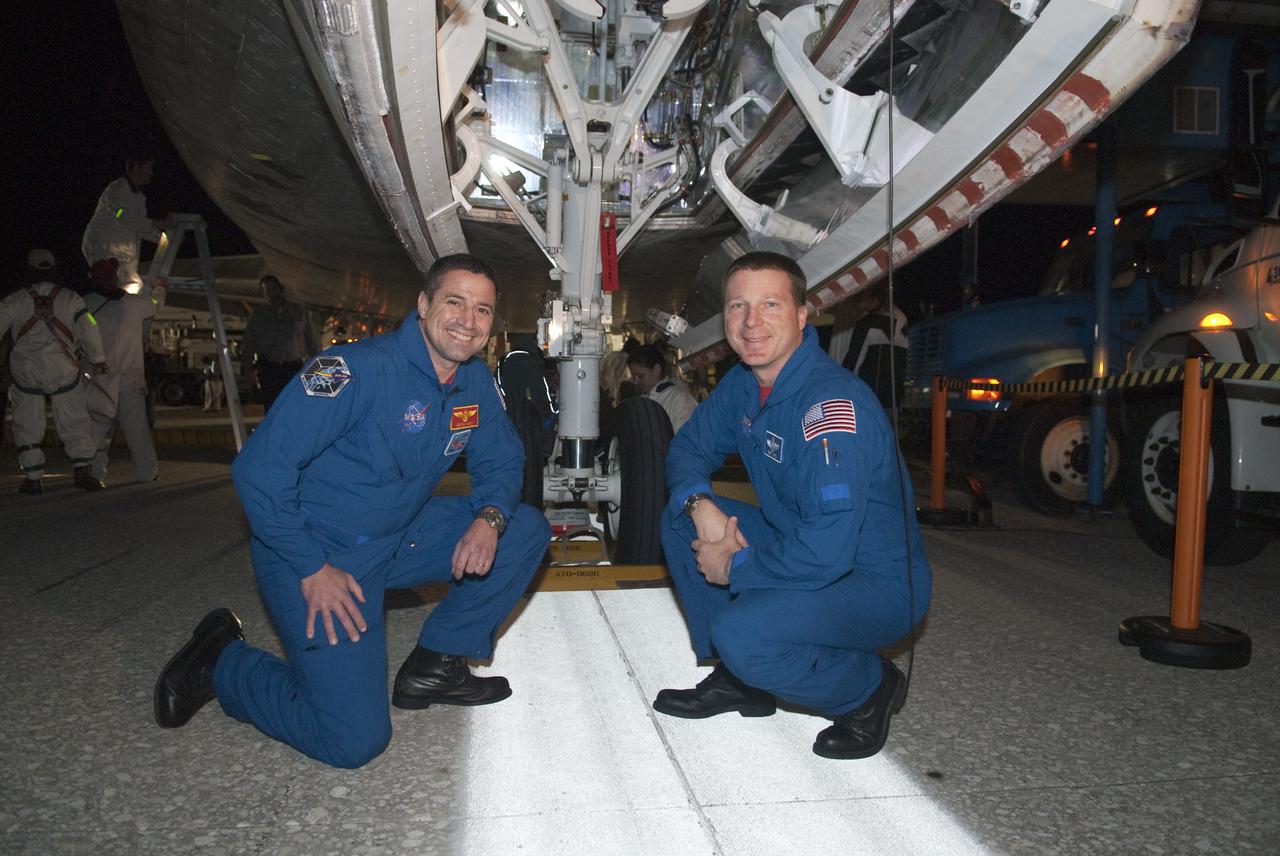
CAPE CANAVERAL, Fla. - STS-130 Commander George Zamka, left, and Pilot Terry Virts pause for a photograph in front of space shuttle Endeavour's nose gear following its successful landing on Runway 15 at the Shuttle Landing Facility at NASA's Kennedy Space Center in Florida. After 14 days in space, Endeavour's 5.7-million-mile STS-130 mission was completed on orbit 217. Main gear touchdown was at 10:20:31 p.m. EST followed by nose gear touchdown at 10:20:39 p.m. and wheels stop at 10:22:10 p.m. It was the 23rd night landing in shuttle history and the 17th at Kennedy. During Endeavour's STS-130 mission, astronauts installed the Tranquility node, a module that provides additional room for crew members and many of the station's life support and environmental control systems. Attached to Tranquility is a cupola with seven windows that provide a panoramic view of Earth, celestial objects and visiting spacecraft. The module was built in Turin, Italy, by Thales Alenia Space for the European Space Agency. The orbiting laboratory is approximately 90 percent complete now in terms of mass. STS-130 was the 24th flight for Endeavour, the 32nd shuttle mission devoted to ISS assembly and maintenance, and the 130th shuttle mission to date. For information on the STS-130 mission and crew, visit http:__www.nasa.gov_mission_pages_shuttle_shuttlemissions_sts130_index.html. Photo credit: NASA_Kim Shiflett
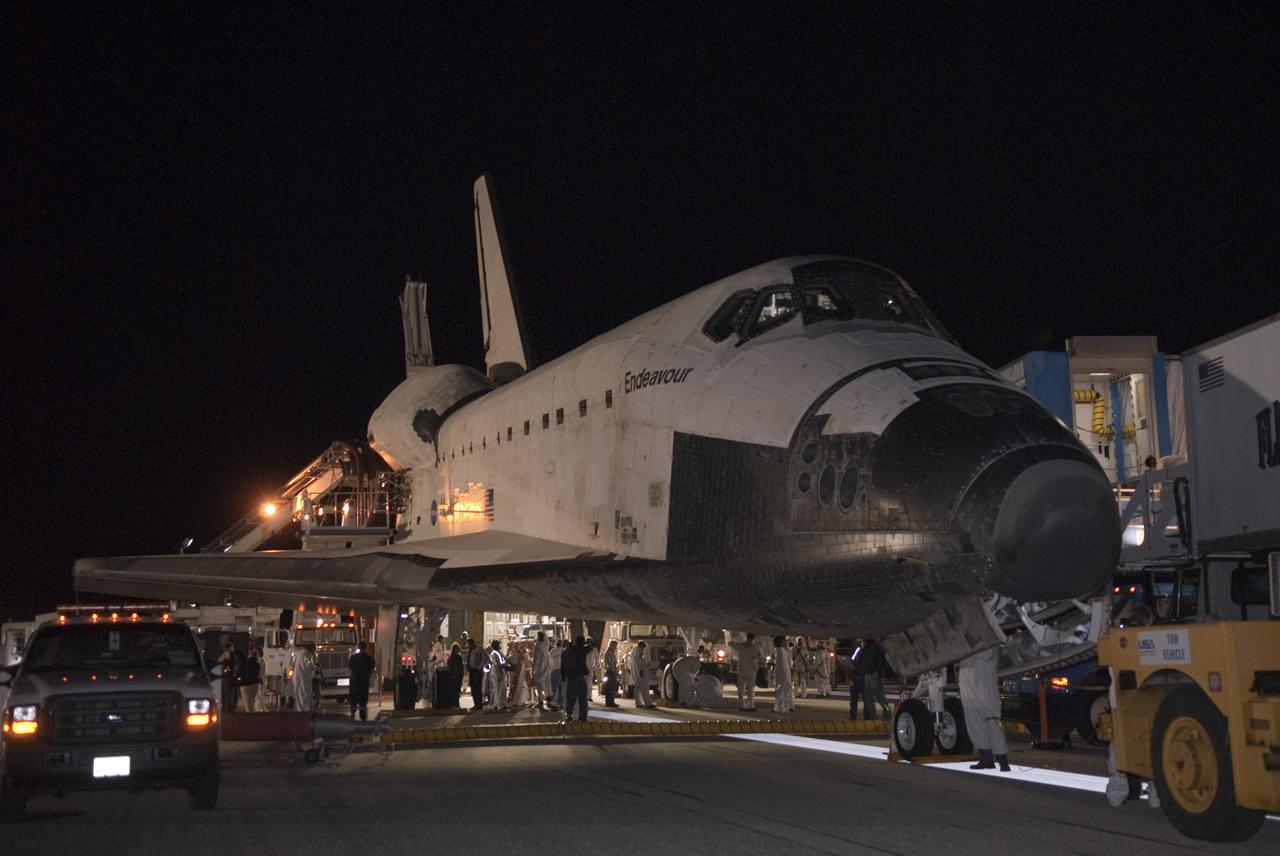
CAPE CANAVERAL, Fla. - Space shuttle Endeavour is prepared for transport to the Orbiter Processing Facility following its successful landing on Runway 15 at the Shuttle Landing Facility at NASA's Kennedy Space Center in Florida. After 14 days in space, Endeavour's 5.7-million-mile STS-130 mission was completed on orbit 217. Main gear touchdown was at 10:20:31 p.m. EST followed by nose gear touchdown at 10:20:39 p.m. and wheels stop at 10:22:10 p.m. It was the 23rd night landing in shuttle history and the 17th at Kennedy. During Endeavour's STS-130 mission, astronauts installed the Tranquility node, a module that provides additional room for crew members and many of the station's life support and environmental control systems. Attached to Tranquility is a cupola with seven windows that provide a panoramic view of Earth, celestial objects and visiting spacecraft. The module was built in Turin, Italy, by Thales Alenia Space for the European Space Agency. The orbiting laboratory is approximately 90 percent complete now in terms of mass. STS-130 was the 24th flight for Endeavour, the 32nd shuttle mission devoted to ISS assembly and maintenance, and the 130th shuttle mission to date. For information on the STS-130 mission and crew, visit http:__www.nasa.gov_mission_pages_shuttle_shuttlemissions_sts130_index.html. Photo credit: NASA_Kim Shiflett
CAPE CANAVERAL, Fla. - Darkness shrouds space shuttle Endeavour as it touches down on Runway 15 at the Shuttle Landing Facility at NASA's Kennedy Space Center in Florida. After 14 days in space, Endeavour's 5.7-million-mile STS-130 mission is completed on orbit 217. Main gear touchdown was at 10:20:31 p.m. EST followed by nose gear touchdown at 10:20:39 p.m. and wheels stop at 10:22:10 p.m. It was the 23rd night landing in shuttle history and the 17th at Kennedy. Aboard are Commander George Zamka; Pilot Terry Virts; and Mission Specialists Robert Behnken, Nicholas Patrick, Kathryn Hire and Stephen Robinson. During Endeavour's STS-130 mission, astronauts installed the Tranquility node, a module that provides additional room for crew members and many of the station's life support and environmental control systems. Attached to Tranquility is a cupola with seven windows that provide a panoramic view of Earth, celestial objects and visiting spacecraft. The module was built in Turin, Italy, by Thales Alenia Space for the European Space Agency. The orbiting laboratory is approximately 90 percent complete now in terms of mass. STS-130 was the 24th flight for Endeavour, the 32nd shuttle mission devoted to ISS assembly and maintenance, and the 130th shuttle mission to date. For information on the STS-130 mission and crew, visit http:__www.nasa.gov_mission_pages_shuttle_shuttlemissions_sts130_index.html. Photo credit: NASA_Tom Joseph
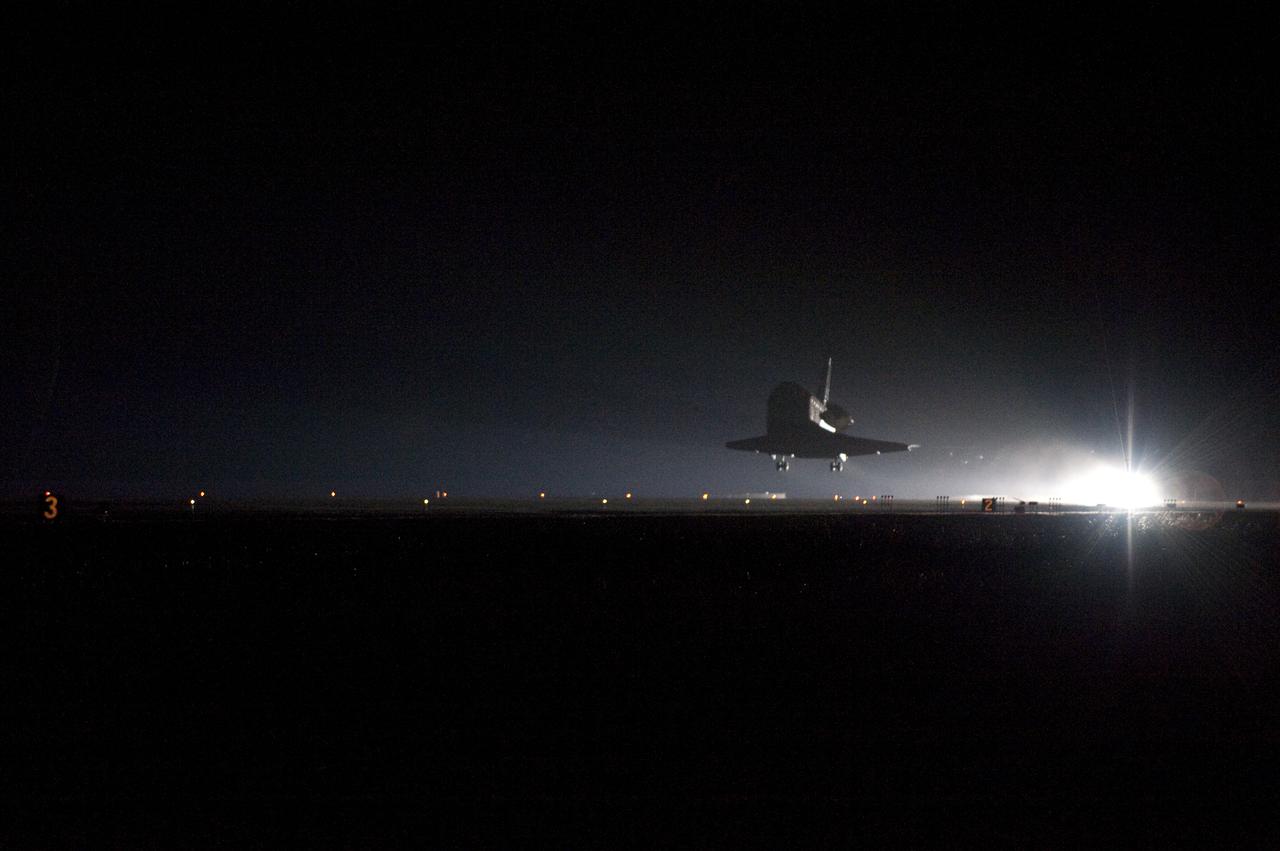
CAPE CANAVERAL, Fla. - With landing gear down, space shuttle Endeavour approaches Runway 15 at the Shuttle Landing Facility at NASA's Kennedy Space Center in Florida after 14 days in space, completing the 5.7-million-mile STS-130 mission on orbit 217. Main gear touchdown was at 10:20:31 p.m. EST followed by nose gear touchdown at 10:20:39 p.m. and wheels stop at 10:22:10 p.m. It was the 23rd night landing in shuttle history and the 17th at Kennedy. Aboard are Commander George Zamka; Pilot Terry Virts; and Mission Specialists Robert Behnken, Nicholas Patrick, Kathryn Hire and Stephen Robinson. During Endeavour's STS-130 mission, astronauts installed the Tranquility node, a module that provides additional room for crew members and many of the station's life support and environmental control systems. Attached to Tranquility is a cupola with seven windows that provide a panoramic view of Earth, celestial objects and visiting spacecraft. The module was built in Turin, Italy, by Thales Alenia Space for the European Space Agency. The orbiting laboratory is approximately 90 percent complete now in terms of mass. STS-130 was the 24th flight for Endeavour, the 32nd shuttle mission devoted to ISS assembly and maintenance, and the 130th shuttle mission to date. For information on the STS-130 mission and crew, visit http:__www.nasa.gov_mission_pages_shuttle_shuttlemissions_sts130_index.html. Photo credit: NASA_ Tom Farrar Jr.
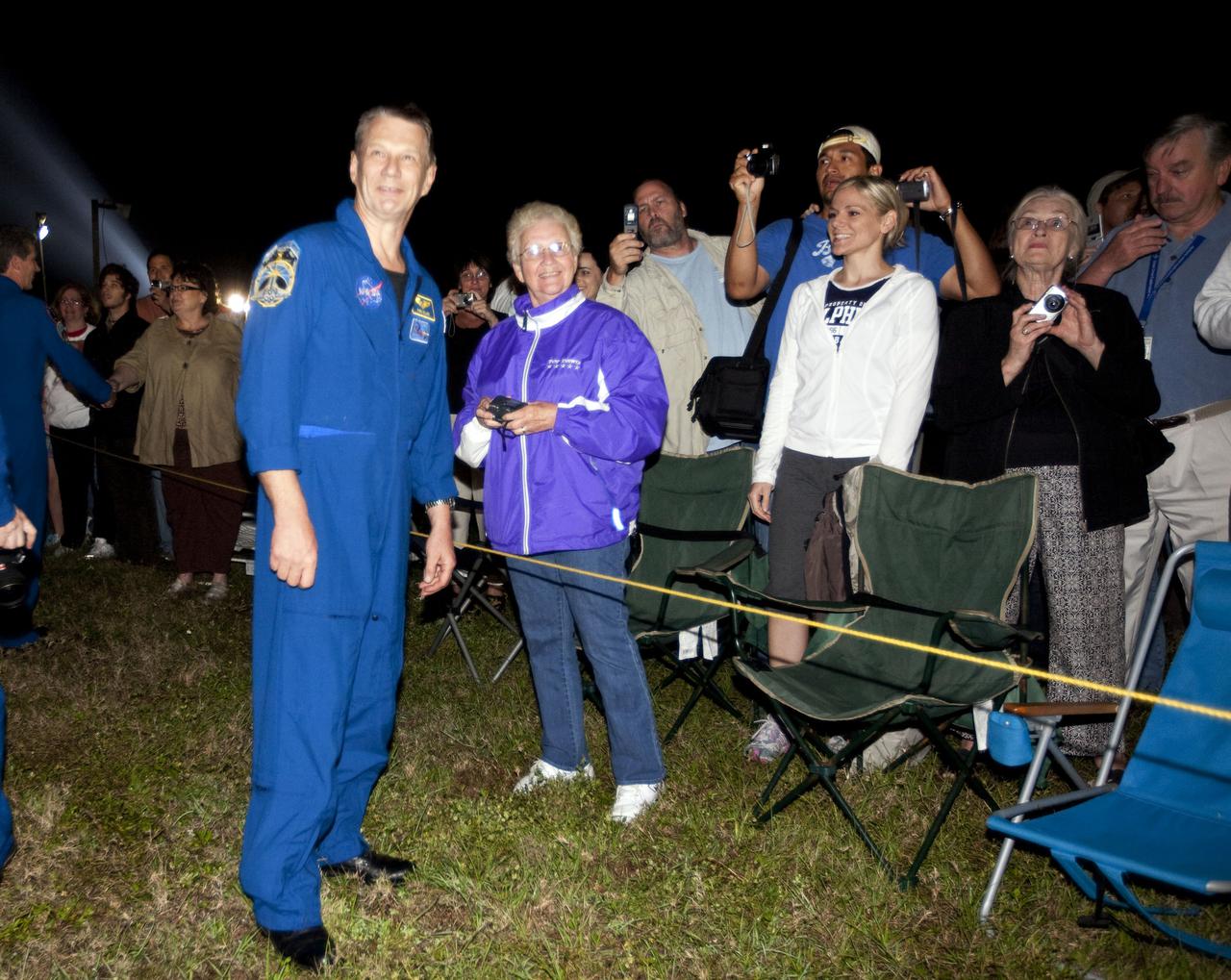
CAPE CANAVERAL, Fla. – Outside the Vehicle Assembly Building at NASA's Kennedy Space Center in Florida, STS-132 Mission Specialist Piers Sellers joins Kennedy employees and their families who turned out to watch space shuttle Atlantis begin its move to Launch Pad 39A. Atlantis' first motion on its 3.4-mile trip from the Vehicle Assembly Building was at 11:31 p.m. EDT April 21. The shuttle was secured on the pad at 6:03 a.m. April 22. Rollout is a significant milestone in launch processing activities. On the STS-132 mission, the six-member crew will deliver an Integrated Cargo Carrier, or ICC, and the Russian-built Mini-Research Module-1, or MRM-1, to the International Space Station. The ICC is an unpressurized flat bed pallet and keel yoke assembly used to support the transfer of exterior cargo from the shuttle to the space station. The MRM-1, known as Rassvet, is the second in a series of new pressurized components for Russia and will be permanently attached to the Earth-facing port of the Zarya control module. Rassvet, which translates to 'dawn,' will be used for cargo storage and will provide an additional docking port to the station. STS-132 is the 34th mission to the station and the 132nd shuttle mission overall. Atlantis is targeted to launch on May 14 at 2:19 p.m. For information on the STS-132 mission, visit http:__www.nasa.gov_mission_pages_shuttle_shuttlemissions_sts132_index.html. Photo credit: NASA_Amanda Diller

CAPE CANAVERAL, Fla. - NASA Administrator Charles Bolden, center, gets a close-up look at space shuttle Endeavour following its successful landing on Runway 15 at the Shuttle Landing Facility at NASA's Kennedy Space Center in Florida. After 14 days in space, Endeavour's 5.7-million-mile STS-130 mission was completed on orbit 217. Main gear touchdown was at 10:20:31 p.m. EST followed by nose gear touchdown at 10:20:39 p.m. and wheels stop at 10:22:10 p.m. It was the 23rd night landing in shuttle history and the 17th at Kennedy. During Endeavour's STS-130 mission, astronauts installed the Tranquility node, a module that provides additional room for crew members and many of the station's life support and environmental control systems. Attached to Tranquility is a cupola with seven windows that provide a panoramic view of Earth, celestial objects and visiting spacecraft. The module was built in Turin, Italy, by Thales Alenia Space for the European Space Agency. The orbiting laboratory is approximately 90 percent complete now in terms of mass. STS-130 was the 24th flight for Endeavour, the 32nd shuttle mission devoted to ISS assembly and maintenance, and the 130th shuttle mission to date. For information on the STS-130 mission and crew, visit http:__www.nasa.gov_mission_pages_shuttle_shuttlemissions_sts130_index.html. Photo credit: NASA_Kim Shiflett
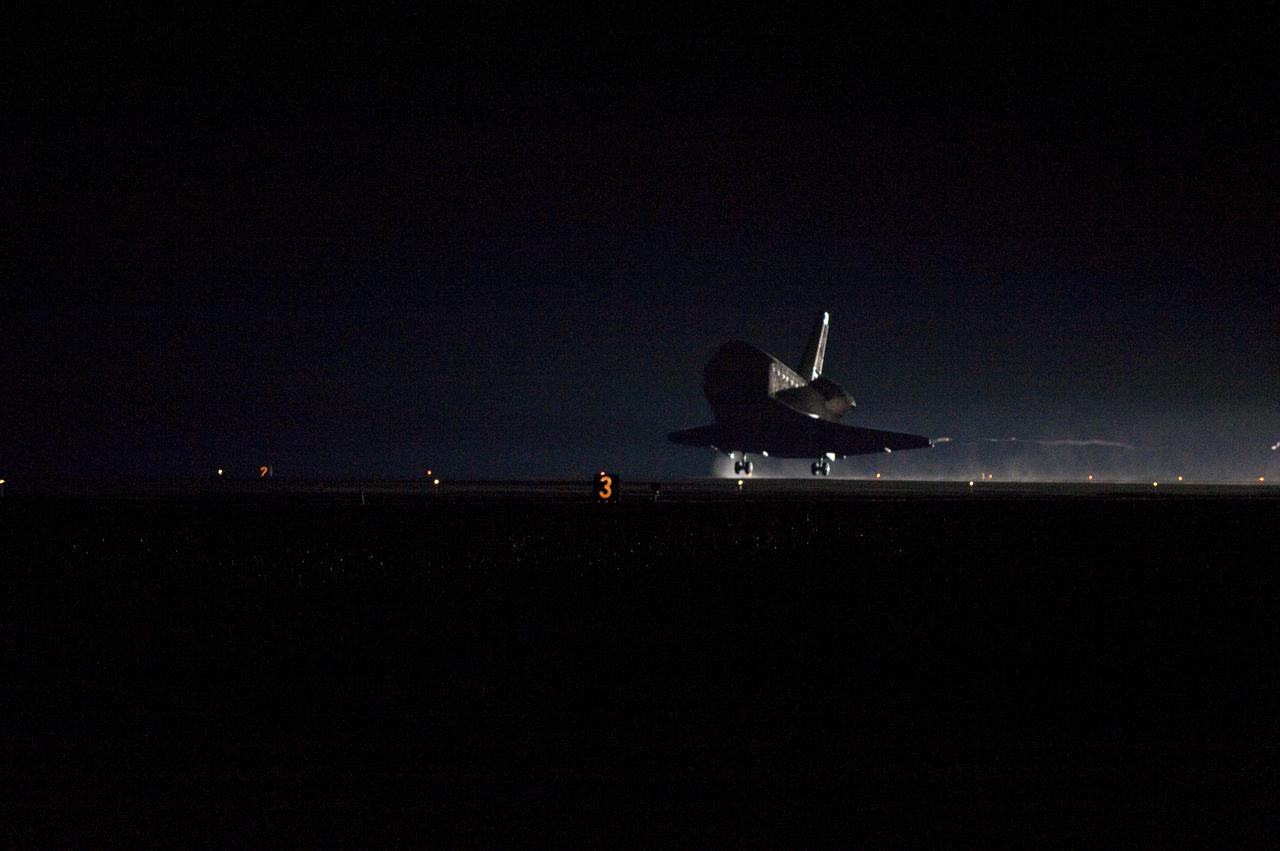
CAPE CANAVERAL, Fla. - Space shuttle Endeavour lands on Runway 15 at the Shuttle Landing Facility at NASA's Kennedy Space Center in Florida after 14 days in space, completing the 5.7-million-mile STS-130 mission to the International Space Station on orbit 217. Main gear touchdown was at 10:20:31 p.m. EST followed by nose gear touchdown at 10:20:39 p.m. and wheels stop at 10:22:10 p.m. It was the 23rd night landing in shuttle history and the 17th at Kennedy. Aboard are Commander George Zamka; Pilot Terry Virts; and Mission Specialists Robert Behnken, Nicholas Patrick, Kathryn Hire and Stephen Robinson. During Endeavour's STS-130 mission, astronauts installed the Tranquility node, a module that provides additional room for crew members and many of the station's life support and environmental control systems. Attached to Tranquility is a cupola with seven windows that provide a panoramic view of Earth, celestial objects and visiting spacecraft. The module was built in Turin, Italy, by Thales Alenia Space for the European Space Agency. The orbiting laboratory is approximately 90 percent complete now in terms of mass. STS-130 was the 24th flight for Endeavour, the 32nd shuttle mission devoted to ISS assembly and maintenance, and the 130th shuttle mission to date. For information on the STS-130 mission and crew, visit http:__www.nasa.gov_mission_pages_shuttle_shuttlemissions_sts130_index.html. Photo credit: NASA_ Tom Farrar Jr.

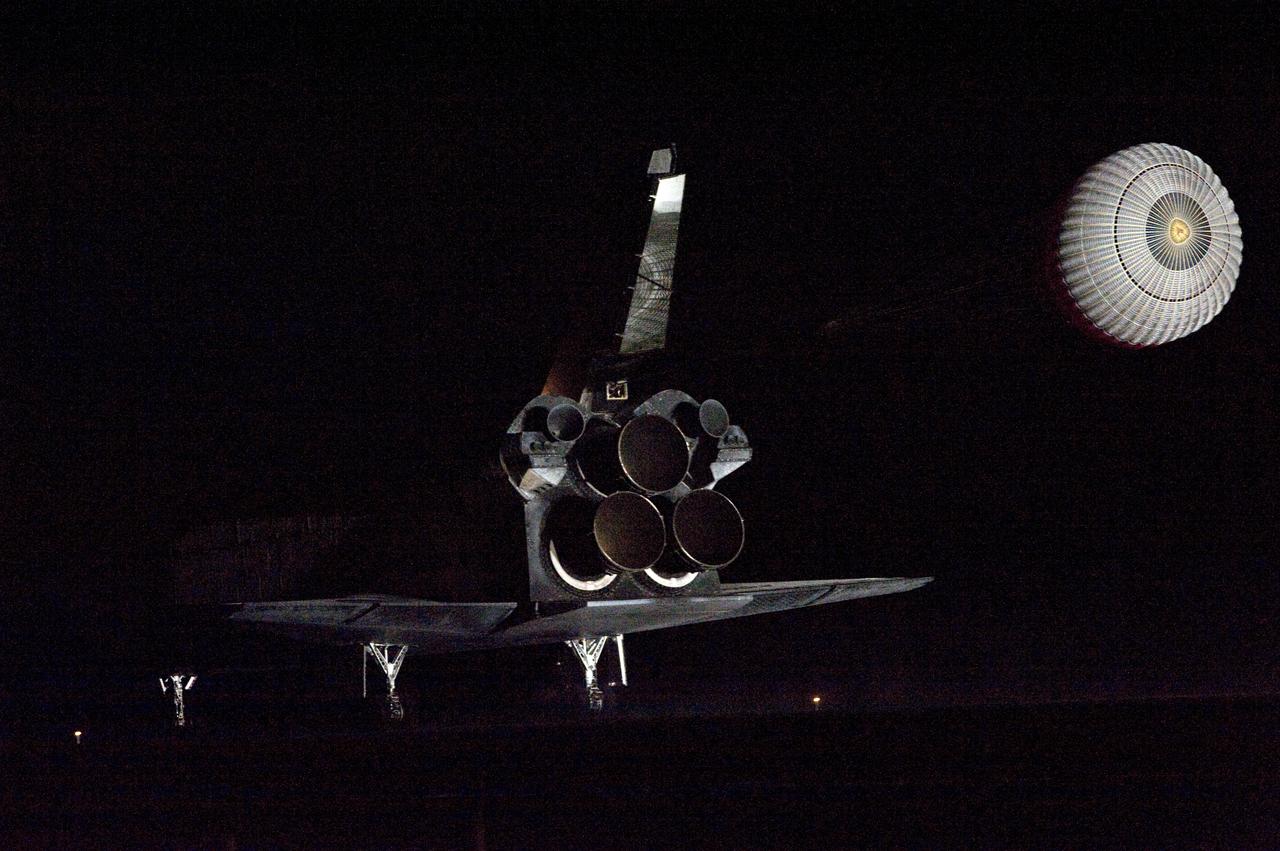
CAPE CANAVERAL, Fla. - With drag chute unfurled, space shuttle Endeavour lands on Runway 15 at the Shuttle Landing Facility at NASA's Kennedy Space Center in Florida after 14 days in space, completing the 5.7-million-mile STS-130 mission on orbit 217. Main gear touchdown was at 10:20:31 p.m. EST followed by nose gear touchdown at 10:20:39 p.m. and wheels stop at 10:22:10 p.m. It was the 23rd night landing in shuttle history and the 17th at Kennedy. Aboard are Commander George Zamka; Pilot Terry Virts; and Mission Specialists Robert Behnken, Nicholas Patrick, Kathryn Hire and Stephen Robinson. During Endeavour's STS-130 mission, astronauts installed the Tranquility node, a module that provides additional room for crew members and many of the station's life support and environmental control systems. Attached to Tranquility is a cupola with seven windows that provide a panoramic view of Earth, celestial objects and visiting spacecraft. The module was built in Turin, Italy, by Thales Alenia Space for the European Space Agency. The orbiting laboratory is approximately 90 percent complete now in terms of mass. STS-130 was the 24th flight for Endeavour, the 32nd shuttle mission devoted to ISS assembly and maintenance, and the 130th shuttle mission to date. For information on the STS-130 mission and crew, visit http:__www.nasa.gov_mission_pages_shuttle_shuttlemissions_sts130_index.html. Photo credit: NASA_Kim Shiflett
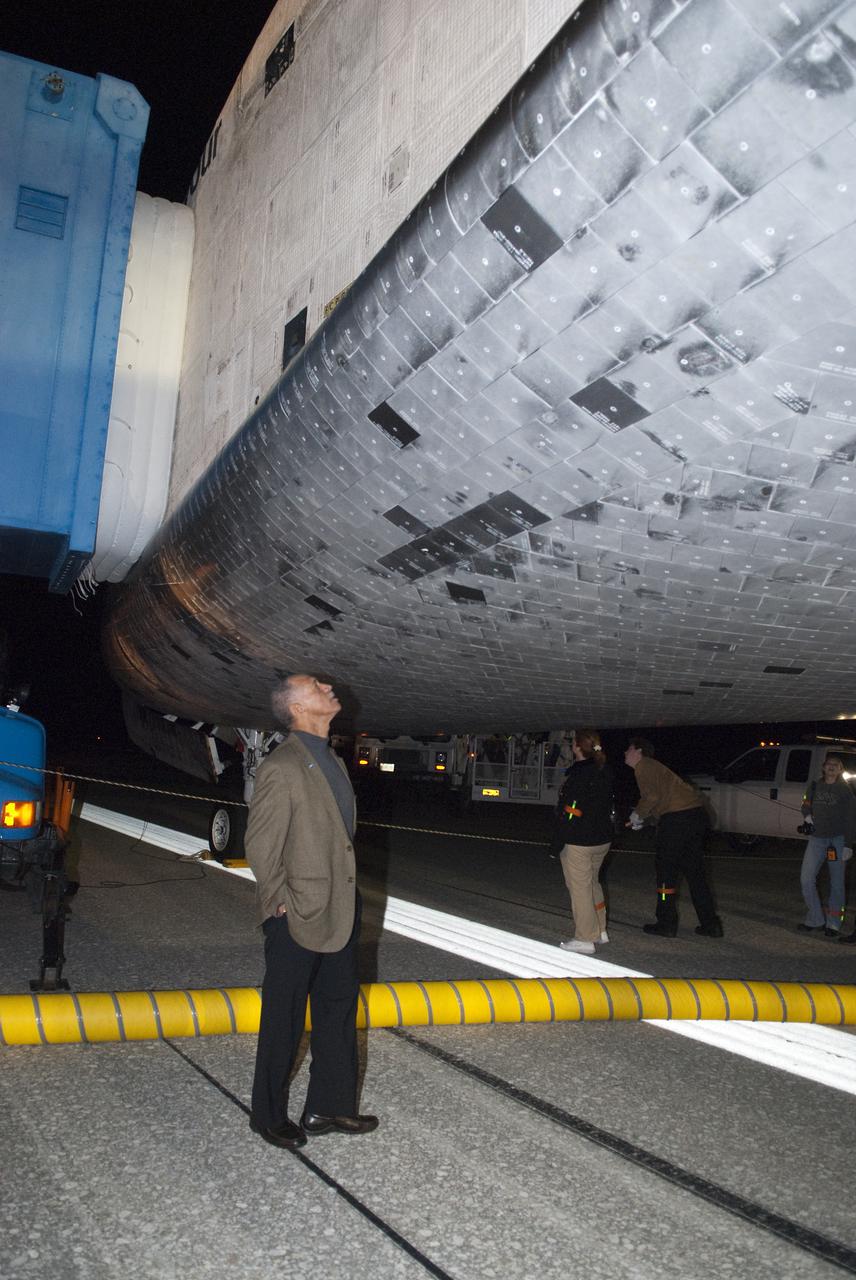
CAPE CANAVERAL, Fla. - NASA Administrator Charles Bolden examines the thermal protection system tiles under space shuttle Endeavour following its successful landing on Runway 15 at the Shuttle Landing Facility at NASA's Kennedy Space Center in Florida. After 14 days in space, Endeavour's 5.7-million-mile STS-130 mission was completed on orbit 217. Main gear touchdown was at 10:20:31 p.m. EST followed by nose gear touchdown at 10:20:39 p.m. and wheels stop at 10:22:10 p.m. It was the 23rd night landing in shuttle history and the 17th at Kennedy. During Endeavour's STS-130 mission, astronauts installed the Tranquility node, a module that provides additional room for crew members and many of the station's life support and environmental control systems. Attached to Tranquility is a cupola with seven windows that provide a panoramic view of Earth, celestial objects and visiting spacecraft. The module was built in Turin, Italy, by Thales Alenia Space for the European Space Agency. The orbiting laboratory is approximately 90 percent complete now in terms of mass. STS-130 was the 24th flight for Endeavour, the 32nd shuttle mission devoted to ISS assembly and maintenance, and the 130th shuttle mission to date. For information on the STS-130 mission and crew, visit http:__www.nasa.gov_mission_pages_shuttle_shuttlemissions_sts130_index.html. Photo credit: NASA_Kim Shiflett
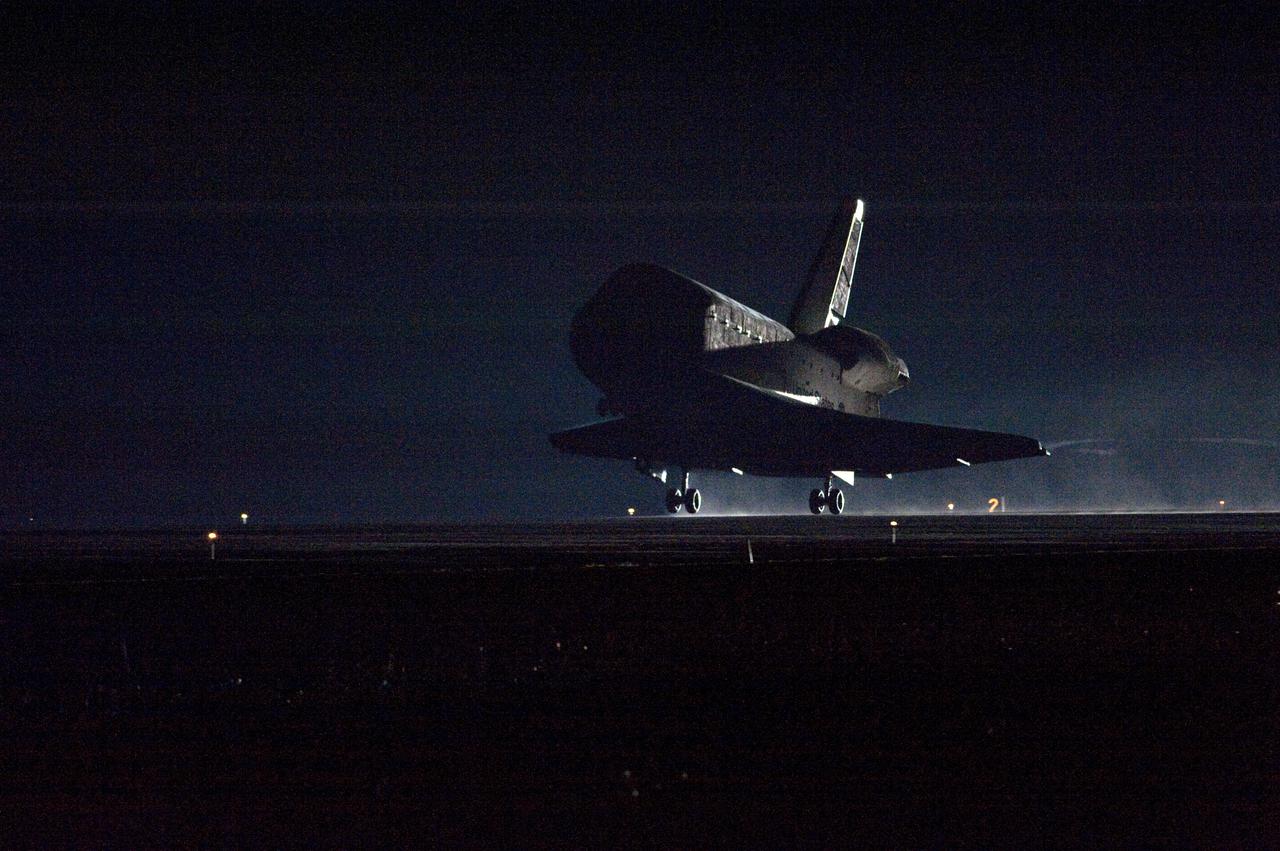
CAPE CANAVERAL, Fla. - Space shuttle Endeavour touches down on Runway 15 at the Shuttle Landing Facility at NASA's Kennedy Space Center in Florida after 14 days in space, completing the 5.7-million-mile STS-130 mission to the International Space Station on orbit 217. Main gear touchdown was at 10:20:31 p.m. EST followed by nose gear touchdown at 10:20:39 p.m. and wheels stop at 10:22:10 p.m. It was the 23rd night landing in shuttle history and the 17th at Kennedy. Aboard are Commander George Zamka; Pilot Terry Virts; and Mission Specialists Robert Behnken, Nicholas Patrick, Kathryn Hire and Stephen Robinson. During Endeavour's STS-130 mission, astronauts installed the Tranquility node, a module that provides additional room for crew members and many of the station's life support and environmental control systems. Attached to Tranquility is a cupola with seven windows that provide a panoramic view of Earth, celestial objects and visiting spacecraft. The module was built in Turin, Italy, by Thales Alenia Space for the European Space Agency. The orbiting laboratory is approximately 90 percent complete now in terms of mass. STS-130 was the 24th flight for Endeavour, the 32nd shuttle mission devoted to ISS assembly and maintenance, and the 130th shuttle mission to date. For information on the STS-130 mission and crew, visit http:__www.nasa.gov_mission_pages_shuttle_shuttlemissions_sts130_index.html. Photo credit: NASA_Tom Joseph
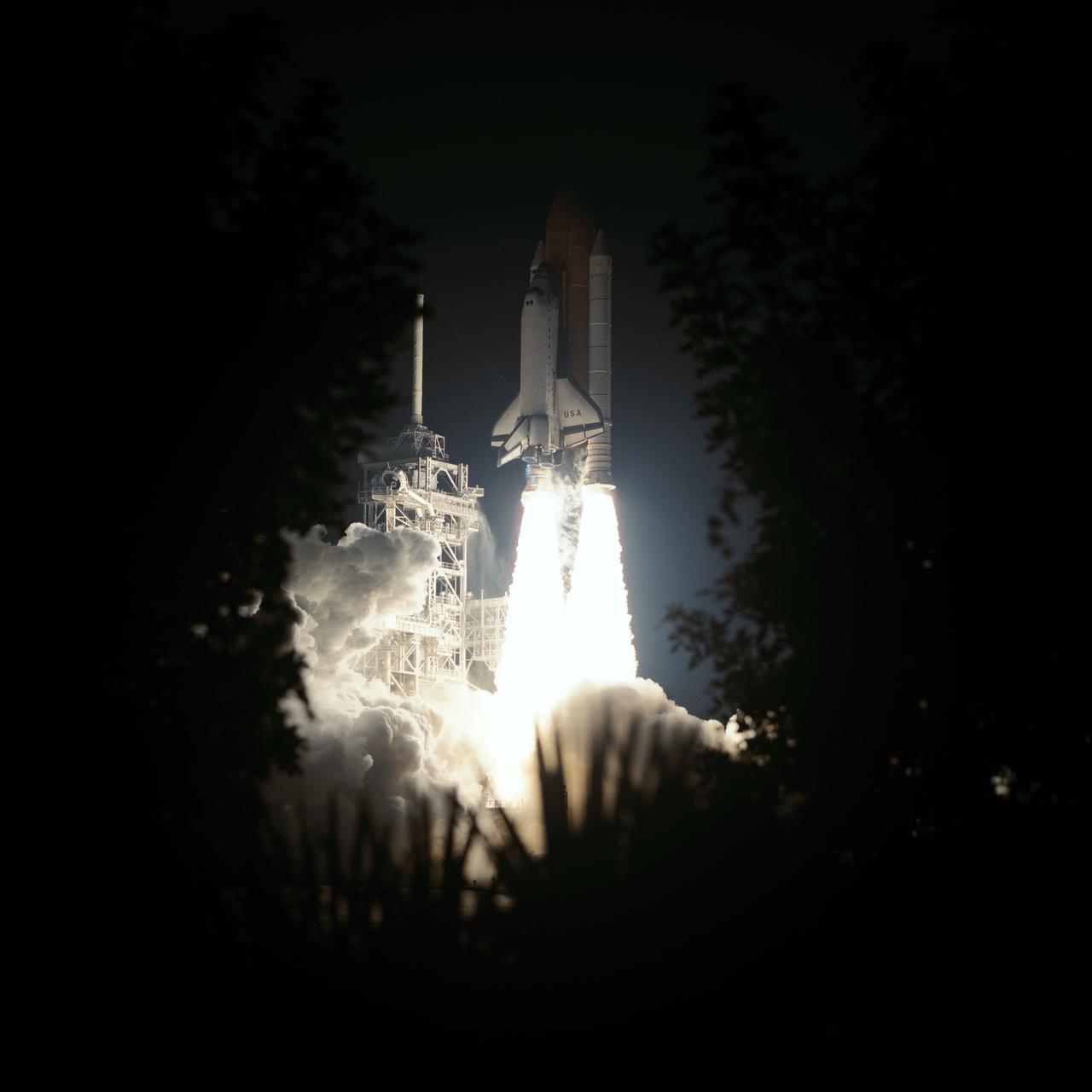
STS93-S-007 (23 July 1999) --- Framed by Florida foliage in this night time scene, the Space Shuttle Columbia lifts off from Launch Pad 39B to begin the five-day STS-93 mission. After two unsuccessful attempts earlier in the week, liftoff occurred at 12:31 a.m. (EDT), July 23, 1999. Only hours after this picture was taken, the five-member crew released the Chandra X-Ray Observatory into orbit. Onboard were astronauts Eileen M. Collins, first woman shuttle commander; Jeffrey S. Ashby, pilot; and Steven A. Hawley, Catherine G. Coleman and Michel Tognini, all mission specialists. Tognini represents the Centre National d'Etudes Spatiales (CNES) of France.
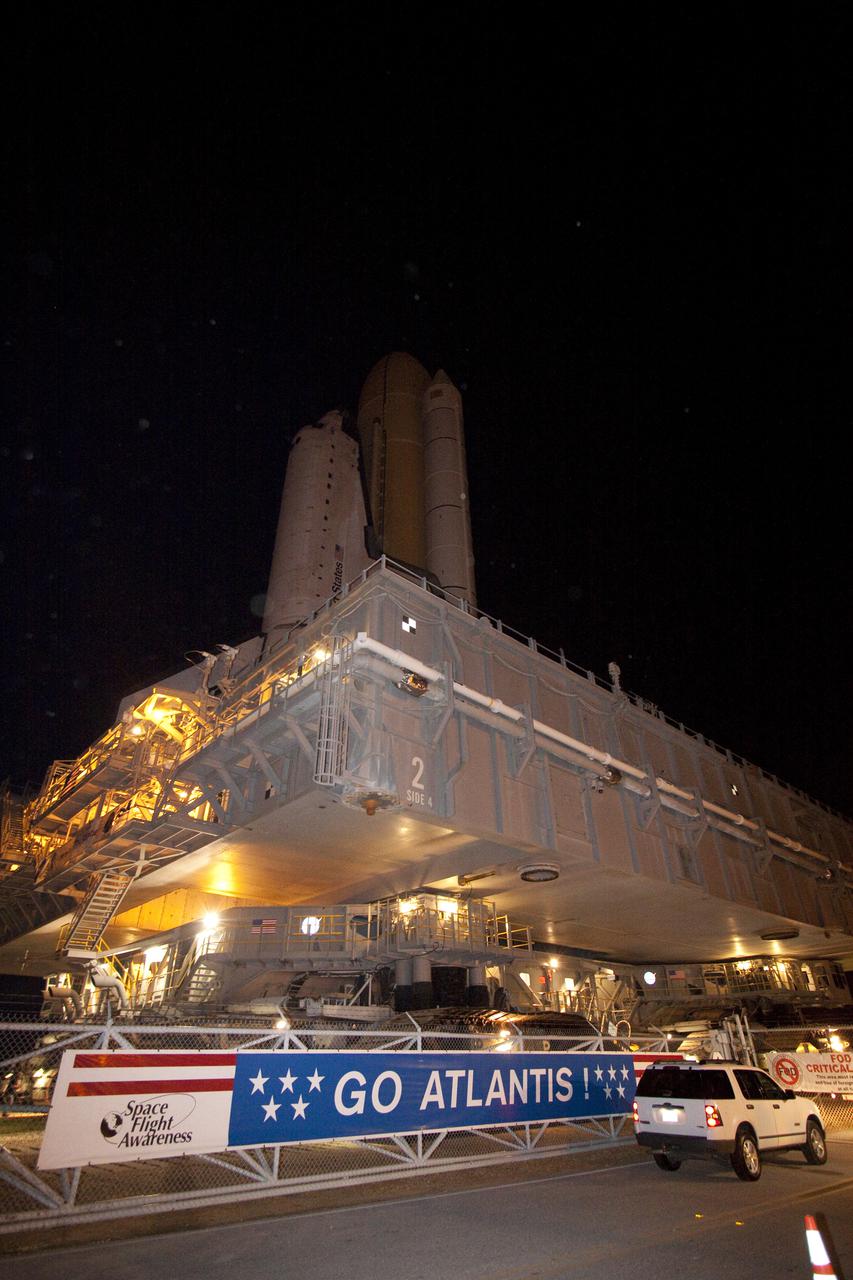
CAPE CANAVERAL, Fla. – At NASA's Kennedy Space Center in Florida, space shuttle Atlantis moves through the perimeter fence at Launch Pad 39A. Go Atlantis_ Atlantis' first motion on its 3.4-mile trip from the Vehicle Assembly Building was at 11:31 p.m. EDT April 21. The shuttle was secured on the pad at 6:03 a.m. April 22. Rollout is a significant milestone in launch processing activities. On the STS-132 mission, the six-member crew will deliver an Integrated Cargo Carrier, or ICC, and the Russian-built Mini-Research Module-1, or MRM-1, to the International Space Station. The ICC is an unpressurized flat bed pallet and keel yoke assembly used to support the transfer of exterior cargo from the shuttle to the space station. The MRM-1, known as Rassvet, is the second in a series of new pressurized components for Russia and will be permanently attached to the Earth-facing port of the Zarya control module. Rassvet, which translates to 'dawn,' will be used for cargo storage and will provide an additional docking port to the station. STS-132 is the 34th mission to the station and the 132nd shuttle mission overall. Atlantis is targeted to launch on May 14 at 2:19 p.m. For information on the STS-132 mission, visit http:__www.nasa.gov_mission_pages_shuttle_shuttlemissions_sts132_index.html. Photo credit: NASA_Jack Pfaller
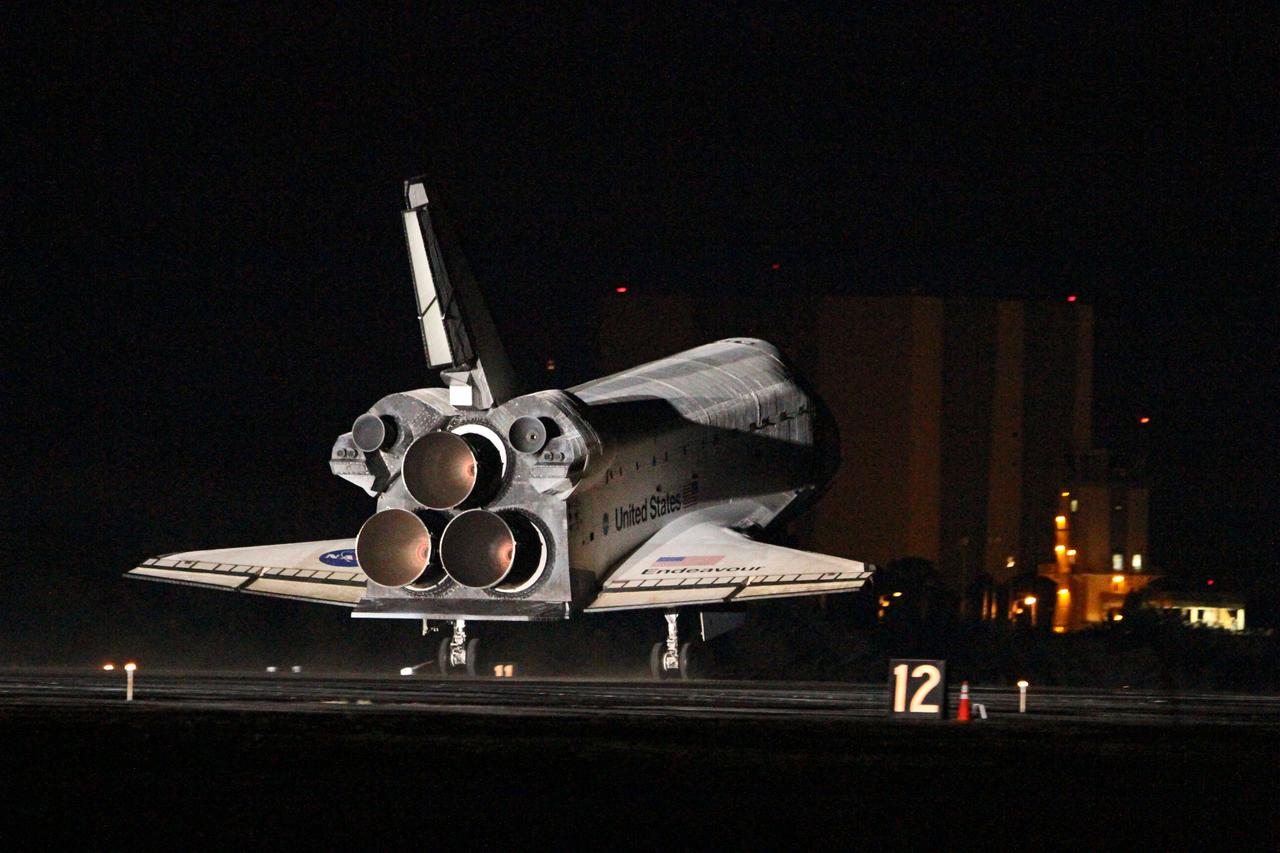
STS130-S-127 (21 Feb. 2010) --- Space shuttle Endeavour lands on Runway 15 at the Shuttle Landing Facility at NASA's Kennedy Space Center in Florida after 14 days in space, completing the 5.7-million-mile STS-130 mission to the International Space Station on orbit 217. Main gear touchdown was at 10:20:31 p.m. (EST) on Feb. 21, 2010; followed by nose gear touchdown at 10:20:39 p.m. and wheels stop at 10:22:10 p.m. It was the 23rd night landing in shuttle history and the 17th at Kennedy. Aboard are NASA astronauts George Zamka, commander; Terry Virts, pilot; Robert Behnken, Nicholas Patrick, Kathryn Hire and Stephen Robinson, all mission specialists. During Endeavour's STS-130 mission, astronauts installed the Tranquility node, a module that provides additional room for crew members and many of the station's life support and environmental control systems. Attached to Tranquility is a Cupola with seven windows that provide a panoramic view of Earth, celestial objects and visiting spacecraft. The module was built in Turin, Italy, by Thales Alenia Space for the European Space Agency. The orbiting laboratory is approximately 90 percent complete now in terms of mass. STS-130 was the 24th flight for Endeavour, the 32nd shuttle mission devoted to ISS assembly and maintenance, and the 130th shuttle mission to date.
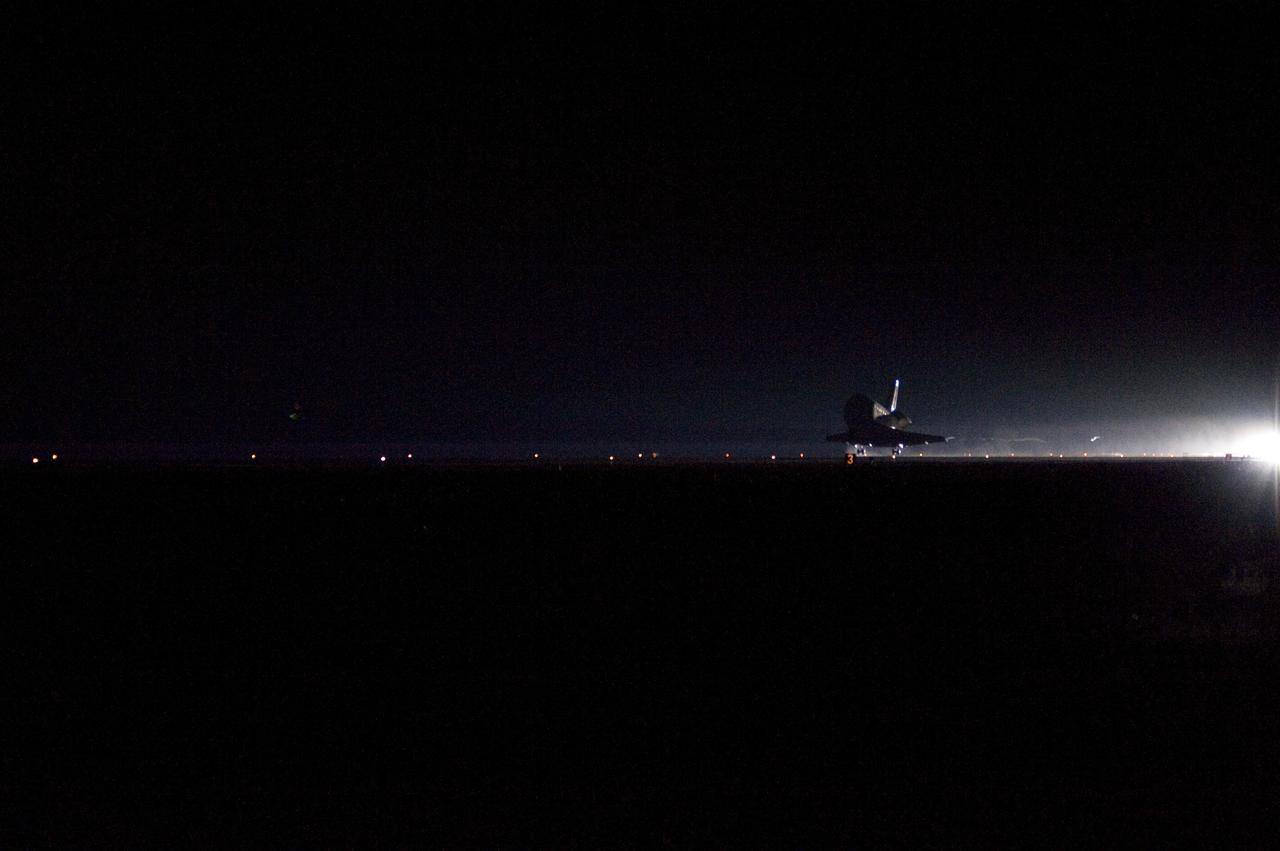
STS130-S-089 (21 Feb. 2010) --- Space shuttle Endeavour lands on Runway 15 at the Shuttle Landing Facility at NASA's Kennedy Space Center in Florida after 14 days in space, completing the 5.7-million-mile STS-130 mission to the International Space Station on orbit 217. Main gear touchdown was at 10:20:31 p.m. (EST) on Feb. 21, 2010; followed by nose gear touchdown at 10:20:39 p.m. and wheels stop at 10:22:10 p.m. It was the 23rd night landing in shuttle history and the 17th at Kennedy. Aboard are NASA astronauts George Zamka, commander; Terry Virts, pilot; Robert Behnken, Nicholas Patrick, Kathryn Hire and Stephen Robinson, all mission specialists. During Endeavour's STS-130 mission, astronauts installed the Tranquility node, a module that provides additional room for crew members and many of the station's life support and environmental control systems. Attached to Tranquility is a Cupola with seven windows that provide a panoramic view of Earth, celestial objects and visiting spacecraft. The module was built in Turin, Italy, by Thales Alenia Space for the European Space Agency. The orbiting laboratory is approximately 90 percent complete now in terms of mass. STS-130 was the 24th flight for Endeavour, the 32nd shuttle mission devoted to ISS assembly and maintenance, and the 130th shuttle mission to date.
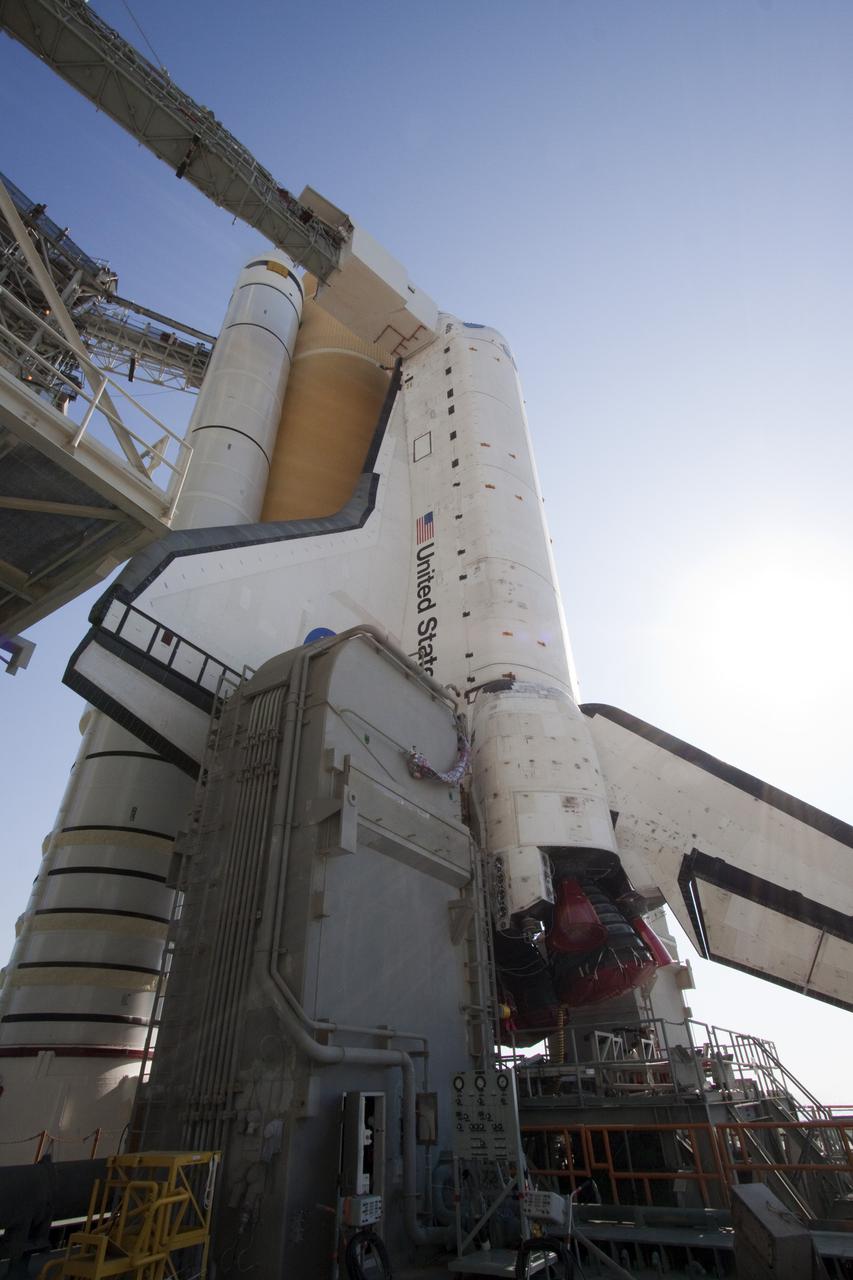
CAPE CANAVERAL, Fla. – On Launch Pad 39A at NASA's Kennedy Space Center in Florida, the access arm supporting the pad's White Room is moved into place against space shuttle Atlantis. The room provides workers and astronauts an entry point to the shuttle's crew compartment. Atlantis' first motion on its 3.4-mile trip from the Vehicle Assembly Building was at 11:31 p.m. EDT April 21. The shuttle was secured, or 'hard down,' on the pad at 6:03 a.m. April 22. Rollout is a significant milestone in launch processing activities. On the STS-132 mission, the six-member crew will deliver an Integrated Cargo Carrier, or ICC, and the Russian-built Mini-Research Module-1, or MRM-1, to the International Space Station. The ICC is an unpressurized flat bed pallet and keel yoke assembly used to support the transfer of exterior cargo from the shuttle to the space station. The MRM-1, known as Rassvet, is the second in a series of new pressurized components for Russia and will be permanently attached to the Earth-facing port of the Zarya control module. Rassvet, which translates to 'dawn,' will be used for cargo storage and will provide an additional docking port to the station. STS-132 is the 34th mission to the station and the 132nd shuttle mission overall. Atlantis is targeted to launch on May 14 at 2:19 p.m. For information on the STS-132 mission, visit http:__www.nasa.gov_mission_pages_shuttle_shuttlemissions_sts132_index.html. Photo credit: NASA_Jack Pfaller
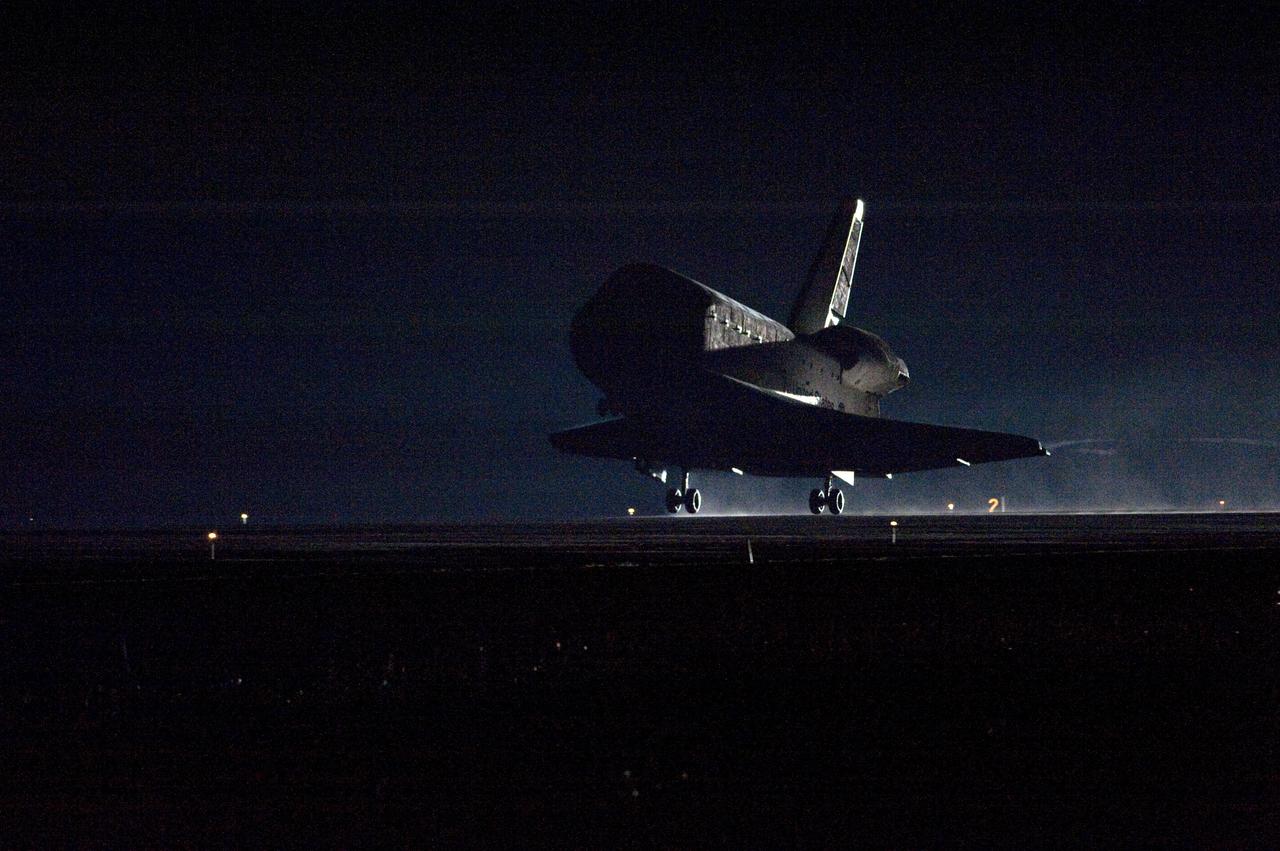
STS130-S-091 (21 Feb. 2010) --- Space shuttle Endeavour lands on Runway 15 at the Shuttle Landing Facility at NASA's Kennedy Space Center in Florida after 14 days in space, completing the 5.7-million-mile STS-130 mission to the International Space Station on orbit 217. Main gear touchdown was at 10:20:31 p.m. (EST) on Feb. 21, 2010; followed by nose gear touchdown at 10:20:39 p.m. and wheels stop at 10:22:10 p.m. It was the 23rd night landing in shuttle history and the 17th at Kennedy. Aboard are NASA astronauts George Zamka, commander; Terry Virts, pilot; Robert Behnken, Nicholas Patrick, Kathryn Hire and Stephen Robinson, all mission specialists. During Endeavour's STS-130 mission, astronauts installed the Tranquility node, a module that provides additional room for crew members and many of the station's life support and environmental control systems. Attached to Tranquility is a Cupola with seven windows that provide a panoramic view of Earth, celestial objects and visiting spacecraft. The module was built in Turin, Italy, by Thales Alenia Space for the European Space Agency. The orbiting laboratory is approximately 90 percent complete now in terms of mass. STS-130 was the 24th flight for Endeavour, the 32nd shuttle mission devoted to ISS assembly and maintenance, and the 130th shuttle mission to date.
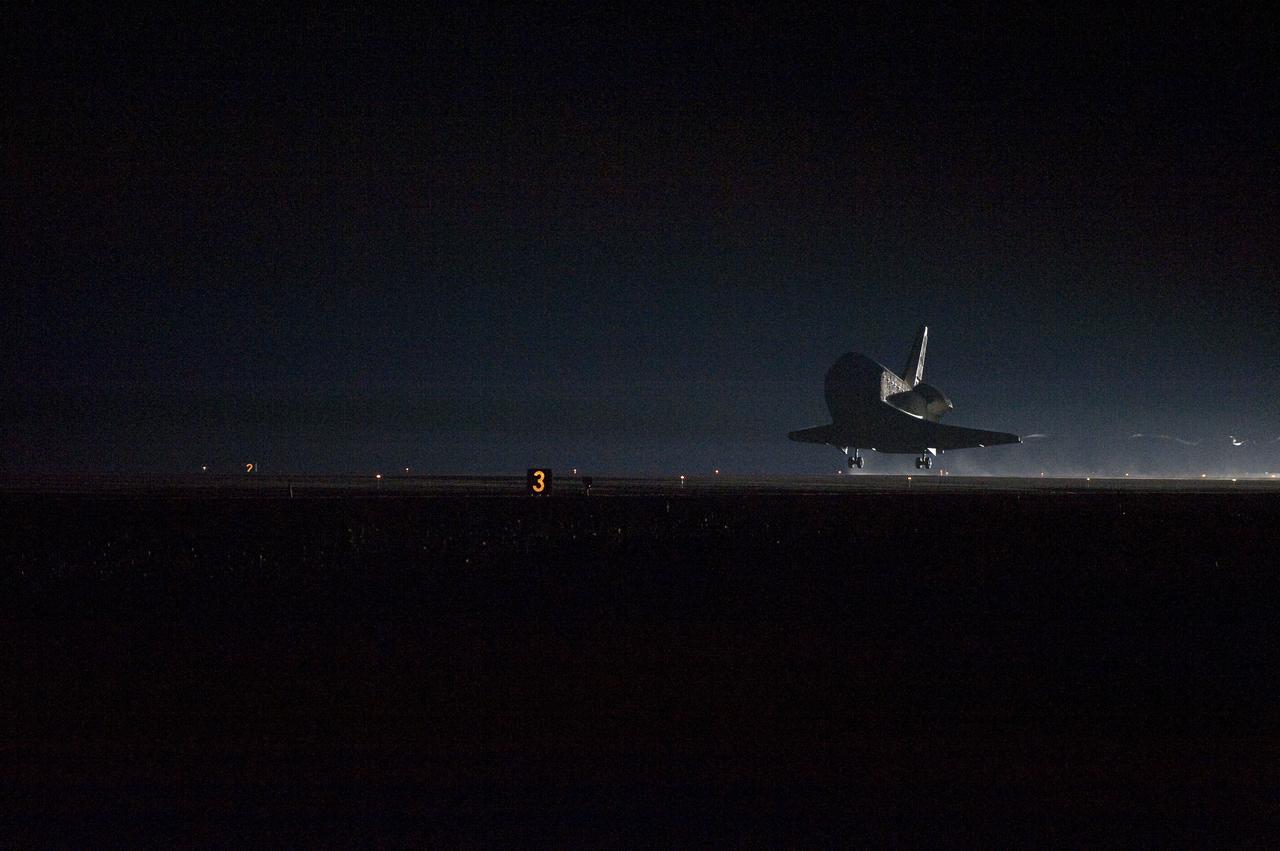
STS130-S-087 (21 Feb. 2010) --- Space shuttle Endeavour lands on Runway 15 at the Shuttle Landing Facility at NASA's Kennedy Space Center in Florida after 14 days in space, completing the 5.7-million-mile STS-130 mission to the International Space Station on orbit 217. Main gear touchdown was at 10:20:31 p.m. (EST) on Feb. 21, 2010; followed by nose gear touchdown at 10:20:39 p.m. and wheels stop at 10:22:10 p.m. It was the 23rd night landing in shuttle history and the 17th at Kennedy. Aboard are NASA astronauts George Zamka, commander; Terry Virts, pilot; Robert Behnken, Nicholas Patrick, Kathryn Hire and Stephen Robinson, all mission specialists. During Endeavour's STS-130 mission, astronauts installed the Tranquility node, a module that provides additional room for crew members and many of the station's life support and environmental control systems. Attached to Tranquility is a Cupola with seven windows that provide a panoramic view of Earth, celestial objects and visiting spacecraft. The module was built in Turin, Italy, by Thales Alenia Space for the European Space Agency. The orbiting laboratory is approximately 90 percent complete now in terms of mass. STS-130 was the 24th flight for Endeavour, the 32nd shuttle mission devoted to ISS assembly and maintenance, and the 130th shuttle mission to date.
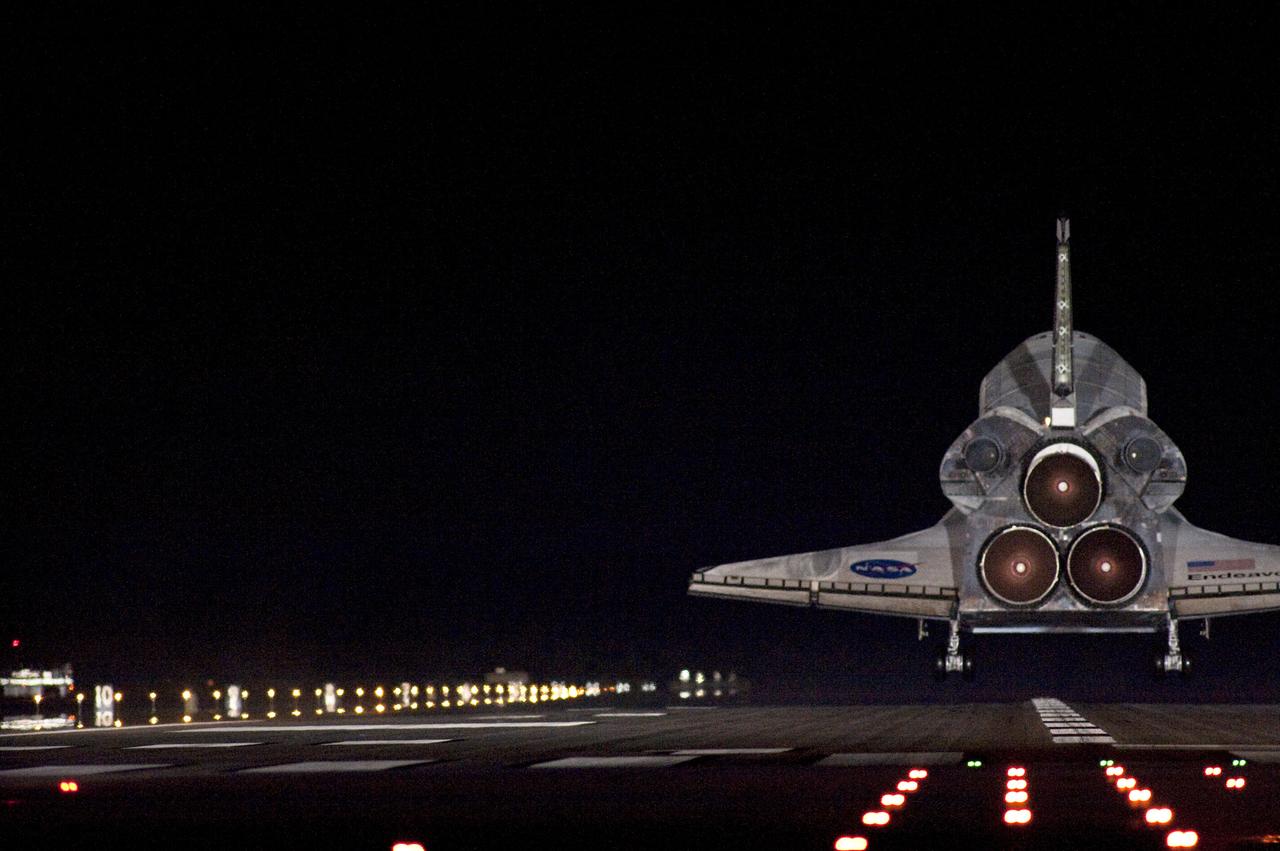
STS130-S-099 (21 Feb. 2010) --- With landing gear down, space shuttle Endeavour nears touchdown on Runway 15 at the Shuttle Landing Facility at NASA's Kennedy Space Center in Florida after 14 days in space, completing the 5.7-million-mile STS-130 mission on orbit 217. Main gear touchdown was at 10:20:31 p.m. (EST) on Feb. 21, 2010; followed by nose gear touchdown at 10:20:39 p.m. and wheels stop at 10:22:10 p.m. It was the 23rd night landing in shuttle history and the 17th at Kennedy. Aboard are NASA astronauts George Zamka, commander; Terry Virts, pilot; Robert Behnken, Nicholas Patrick, Kathryn Hire and Stephen Robinson, all mission specialists. During Endeavour's STS-130 mission, astronauts installed the Tranquility node, a module that provides additional room for crew members and many of the station's life support and environmental control systems. Attached to Tranquility is a Cupola with seven windows that provide a panoramic view of Earth, celestial objects and visiting spacecraft. The module was built in Turin, Italy, by Thales Alenia Space for the European Space Agency. The orbiting laboratory is approximately 90 percent complete now in terms of mass. STS-130 was the 24th flight for Endeavour, the 32nd shuttle mission devoted to ISS assembly and maintenance, and the 130th shuttle mission to date.