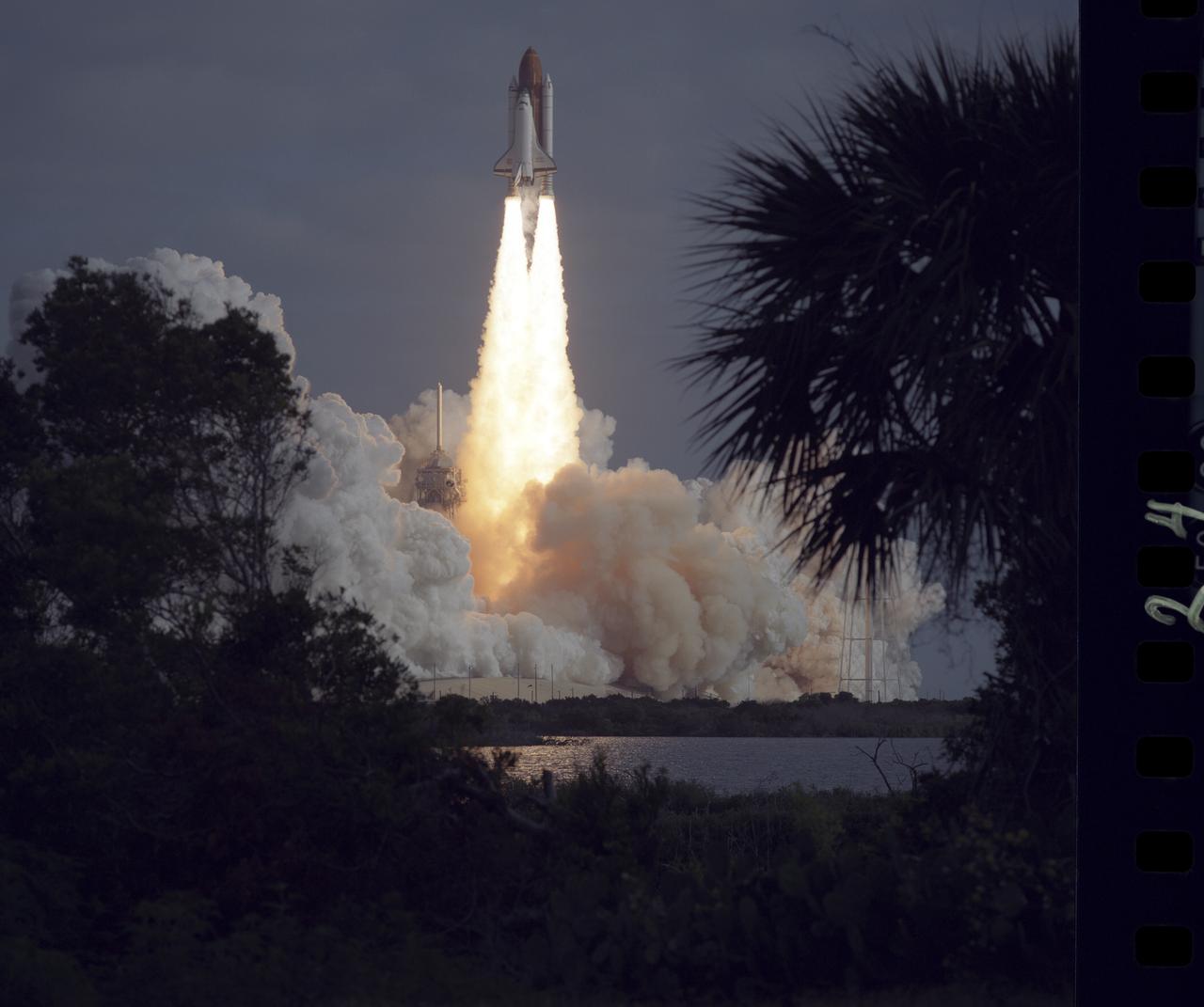
The STS-31 crew launched aboard the Space Shuttle Discovery on April 24, 1990 at 8:33:51am (EDT). Included in the crew of five were Loren J. Shriver, commander; Charles F. Bolden, pilot; and Steven A. Hawley, Bruce McCandless, and Kathryn D. Sullivan, all mission specialists. The primary goal of the mission was the deployment of the Hubble Space Telescope (HST) which was a Marshall Space Flight Center (MSFC) managed program.
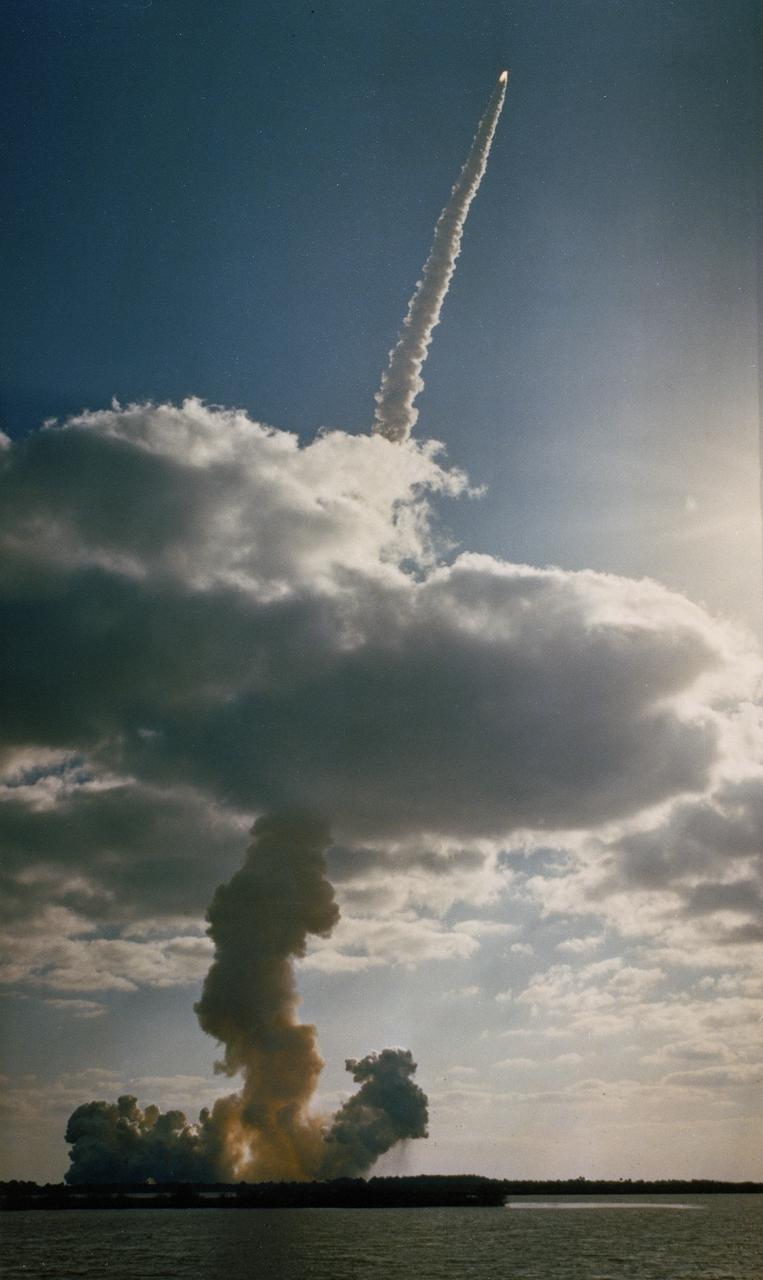
The STS-31 crew launched aboard the Space Shuttle Discovery on April 24, 1990 at 8:33:51am (EDT). Included in the crew of five were Loren J. Shriver, commander; Charles F. Bolden, pilot; and Steven A. Hawley, Bruce McCandless, and Kathryn D. Sullivan, all mission specialists. The primary goal of the mission was the deployment of the Hubble Space Telescope (HST) which was a Marshall Space Flight Center (MSFC) managed program.
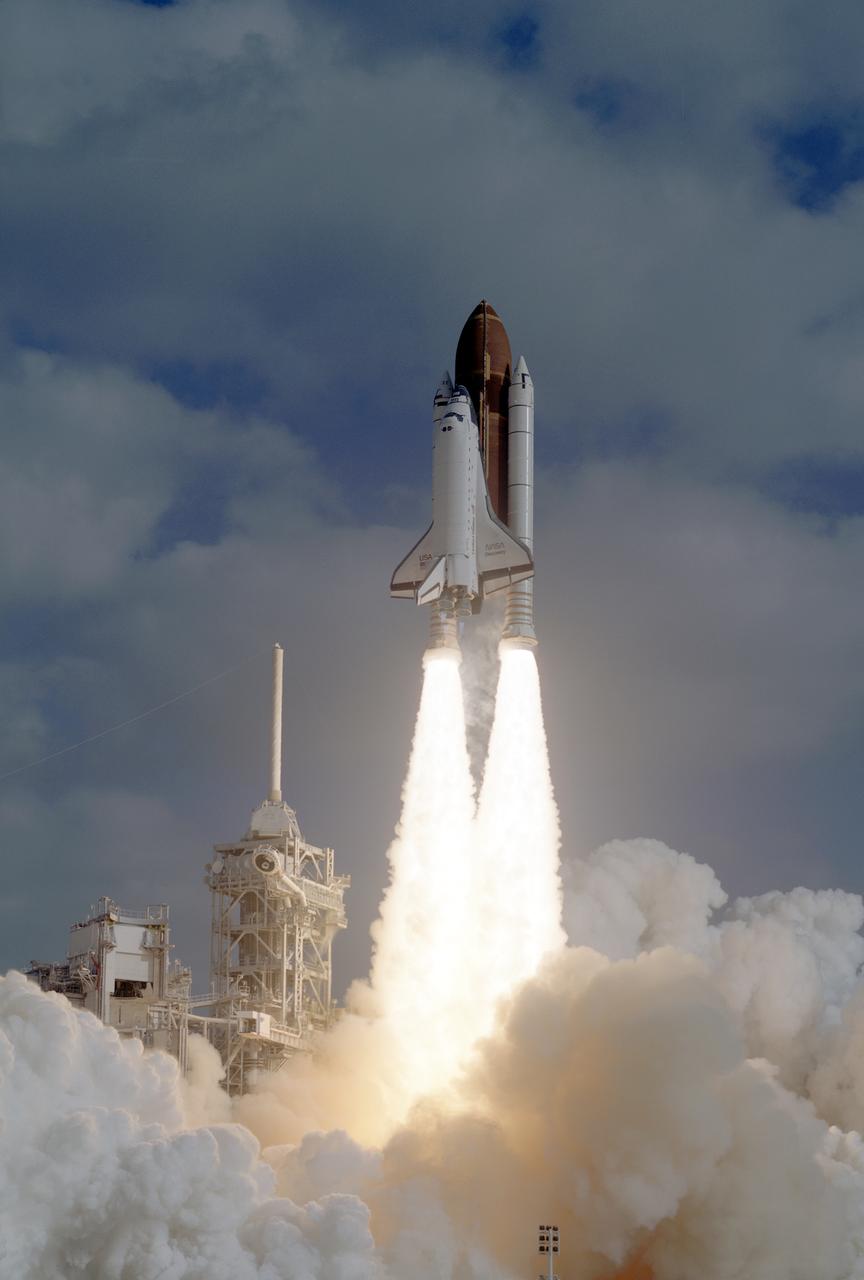
The STS-31 crew launched aboard the Space Shuttle Discovery on April 24, 1990 at 8:33:51am (EDT). Included in the crew of five were Loren J. Shriver, commander; Charles F. Bolden, pilot; and Steven A. Hawley, Bruce McCandless, and Kathryn D. Sullivan, all mission specialists. The primary goal of the mission was the deployment of the Hubble Space Telescope (HST) which was a Marshall Space Flight Center (MSFC) managed program.
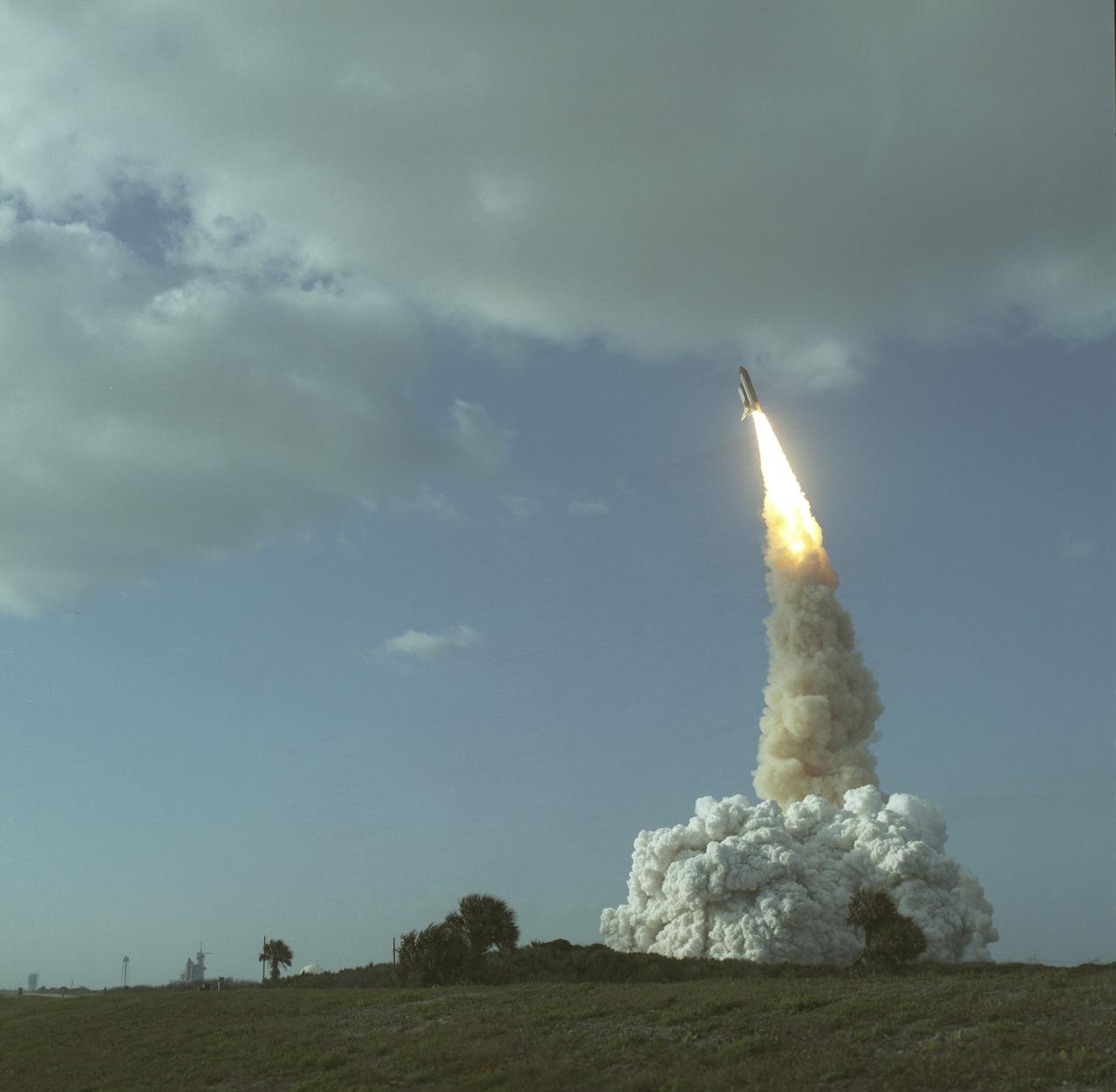
The STS-31 crew launched aboard the Space Shuttle Discovery on April 24, 1990 at 8:33:51am (EDT). Included in the crew of five were Loren J. Shriver, commander; Charles F. Bolden, pilot; and Steven A. Hawley, Bruce McCandless, and Kathryn D. Sullivan, all mission specialists. The primary goal of the mission was the deployment of the Hubble Space Telescope (HST) which was a Marshall Space Flight Center (MSFC) managed program.
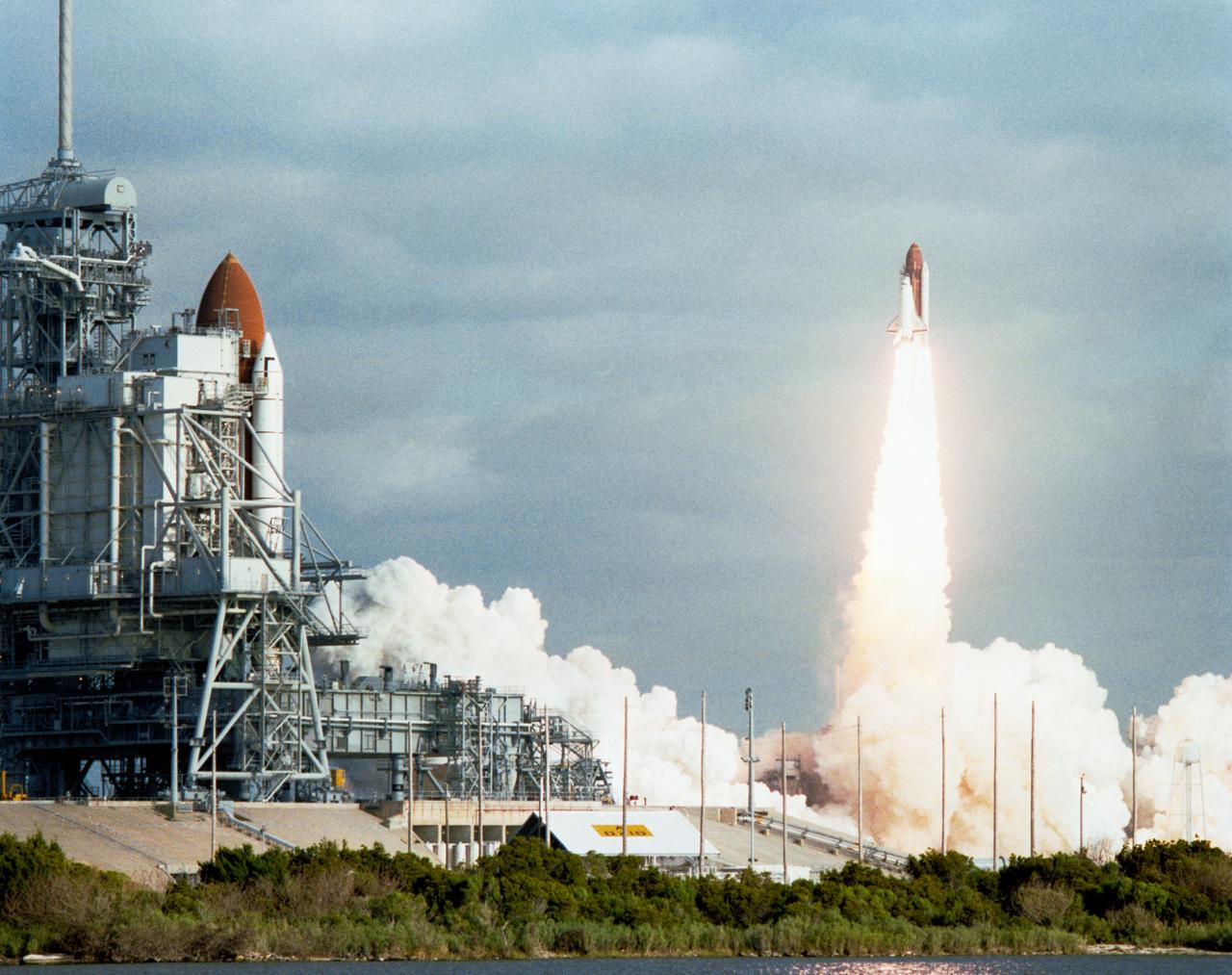
STS-31 Discovery, Orbiter Vehicle (OV) 103, lifts off from Kennedy Space Center (KSC) Launch Complex (LC) 39 Pad B. In the foreground STS-35 Columbia, OV-102, is visible on launch pad 39A. This event marked the first time since January 1986 that there was an orbiter on each pad. LC 39 pads are separated by 1.6 miles. View provided by KSC with alternate number KSC-90PC-610.

STS-31 Discovery, Orbiter Vehicle (OV) 103, is hidden in low-lying cloud cover as it rises above Kennedy Space Center (KSC) Launch Complex (LC) Pad 39B just after its liftoff at 8:33:51.0492 am (Eastern Daylight Time (EDT)). The glow of the solid rocket booster (SRB) and the space shuttle main engine (SSME) firings appears just below the cloud cover and is reflected in the nearby waterway (foreground). An exhaust plume trails from OV-103 and its SRBs and covers the launch pad area.
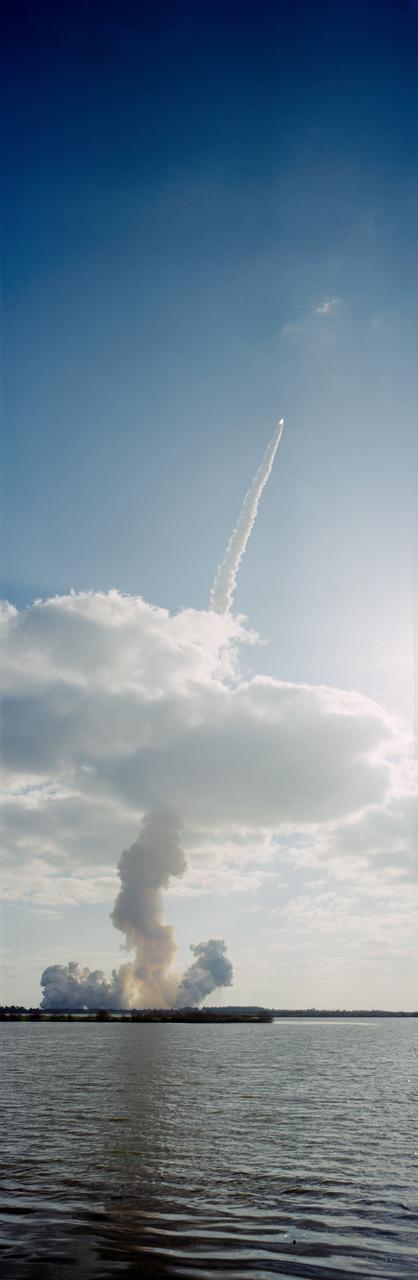
STS-31 Discovery, Orbiter Vehicle (OV) 103, rides above the firey glow of the solid rocket boosters (SRBs) and space shuttle main engines (SSMEs) and a long trail of exhaust as it heads toward Earth orbit. Kennedy Space Center (KSC) Launch Complex (LC) Pad 39B is covered in an exhaust cloud moments after the liftoff of OV-103 at 8:33:51.0492 am (Eastern Daylight Time (EDT)). The exhaust plume pierces the low-lying clouds as OV-103 soars into the clear skies above. A nearby waterway appears in the foreground.
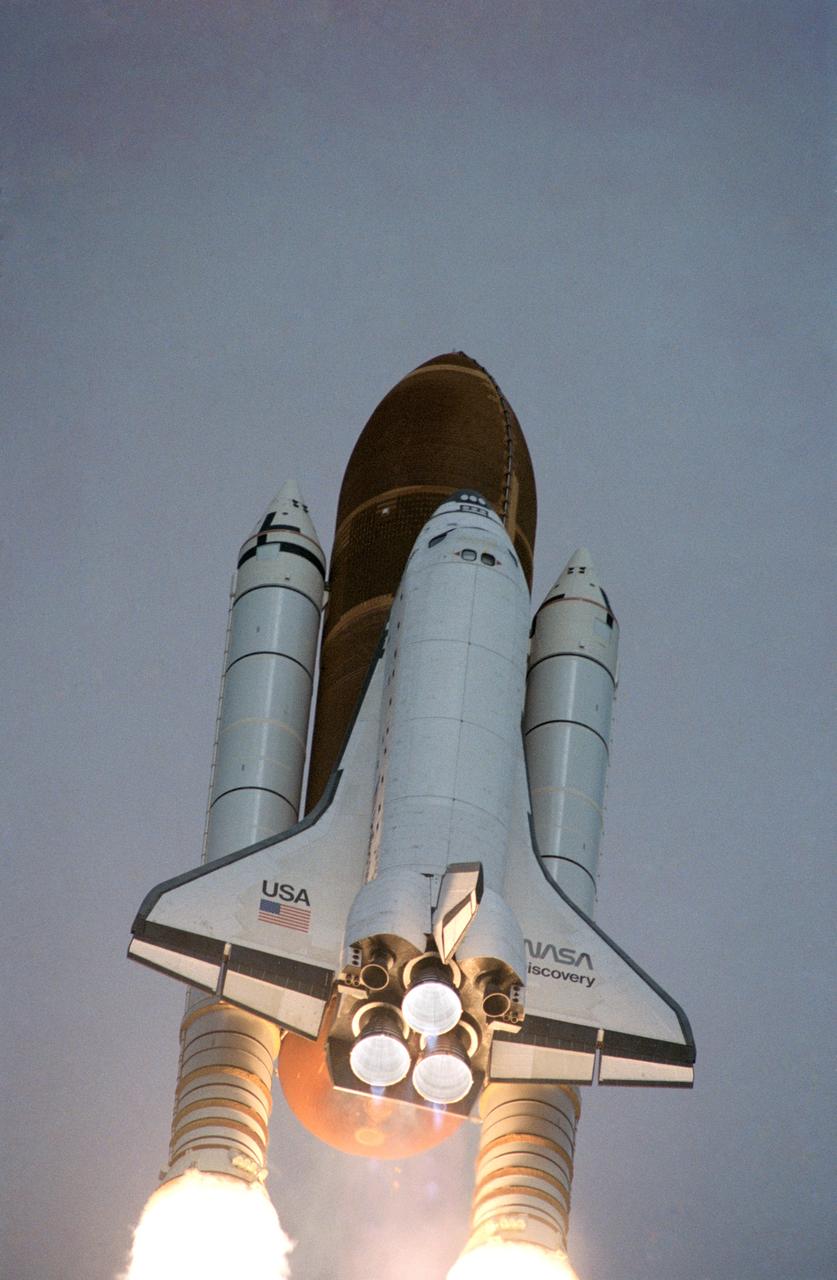
STS031-S-074 (24 April 1990) --- A low-angle view of the launch of the STS-31 mission. Onboard Discovery are a crew of five veteran astronauts and the Hubble Space Telescope (HST). Official launch time was 8:33:51.0492 a.m. (EDT). Headed for approximately five days in space are astronauts Loren J. Shriver, Charles F. Bolden Jr., Bruce McCandless II, Kathryn D. Sullivan and Steven S. Hawley.
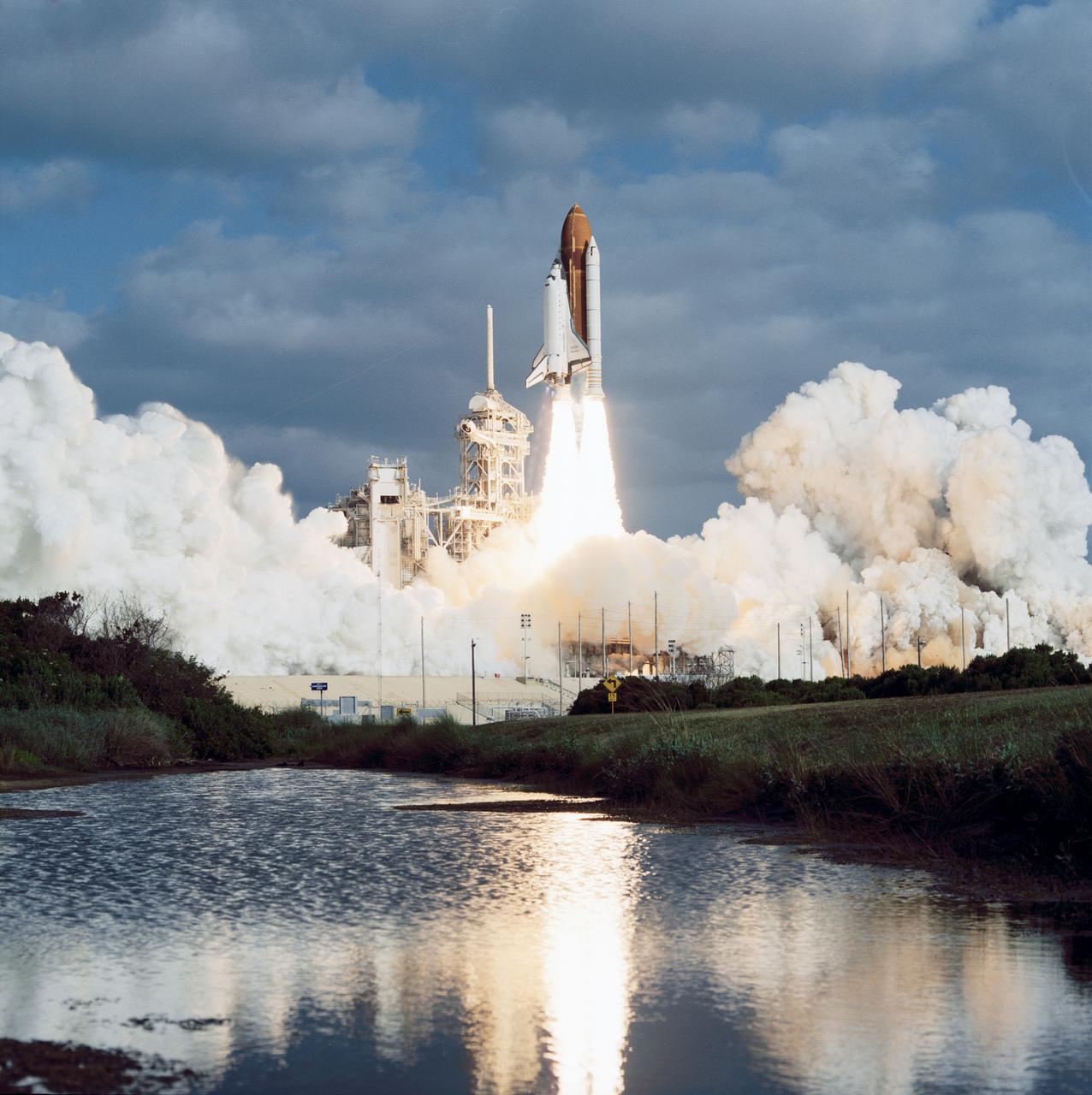
STS031-S-064 (24 April 1990) --- A horizontal view of the launch of the STS-31 mission. Onboard Space Shuttle Discovery are the crew of five veteran astronauts and the Hubble Space Telescope (HST). Official launch time was 8:33:51.0492 a.m. (EDT). Headed for approximately five days in space are astronauts Loren J. Shriver, Charles F. Bolden, Jr., Bruce McCandless, II, Kathryn D. Sullivan, and Steven A. Hawley.
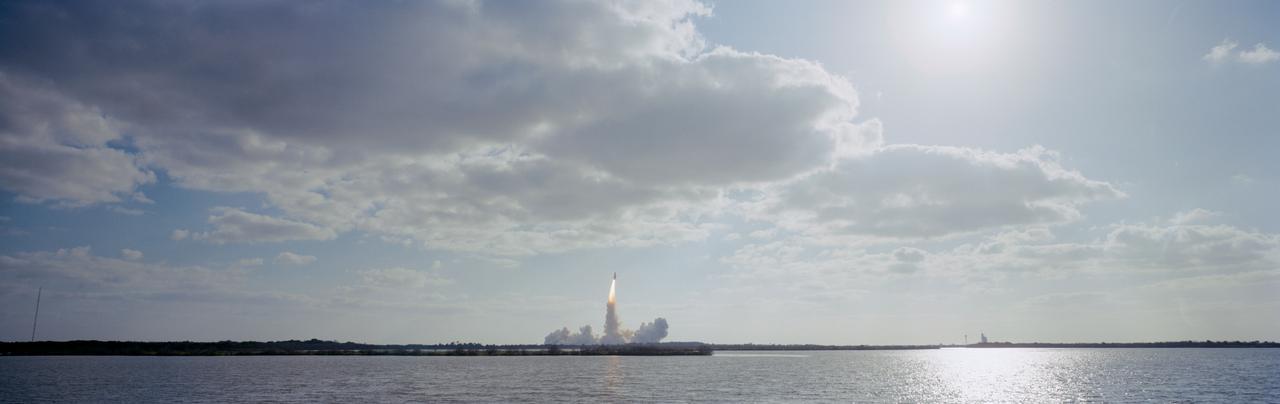
In this distant view, STS-31 Discovery, Orbiter Vehicle (OV) 103, is seen as it heads skyward after liftoff from Kennedy Space Center (KSC) Launch Complex (LC) Pad 39B at 8:33:51.0492 am (Eastern Daylight Time (EDT)). OV-103's silhouette atop the external tank (ET) appears above the glow of the solid rocket booster (SRB) and space shuttle main engine (SSME) firings. An exhaust plume trails behind and covers the launch pad area below the orbiter. A nearby waterway reflects the SRB/SSME glow in the foreground. At the far right and barely discernible is KSC LC Pad 39A and the Sound Supression Water System tower. Columbia, OV-102, is on LC Pad 39A which is separated by a distance of 1.6 miles. This was the first time since January 1986 that there was a shuttle on each pad.
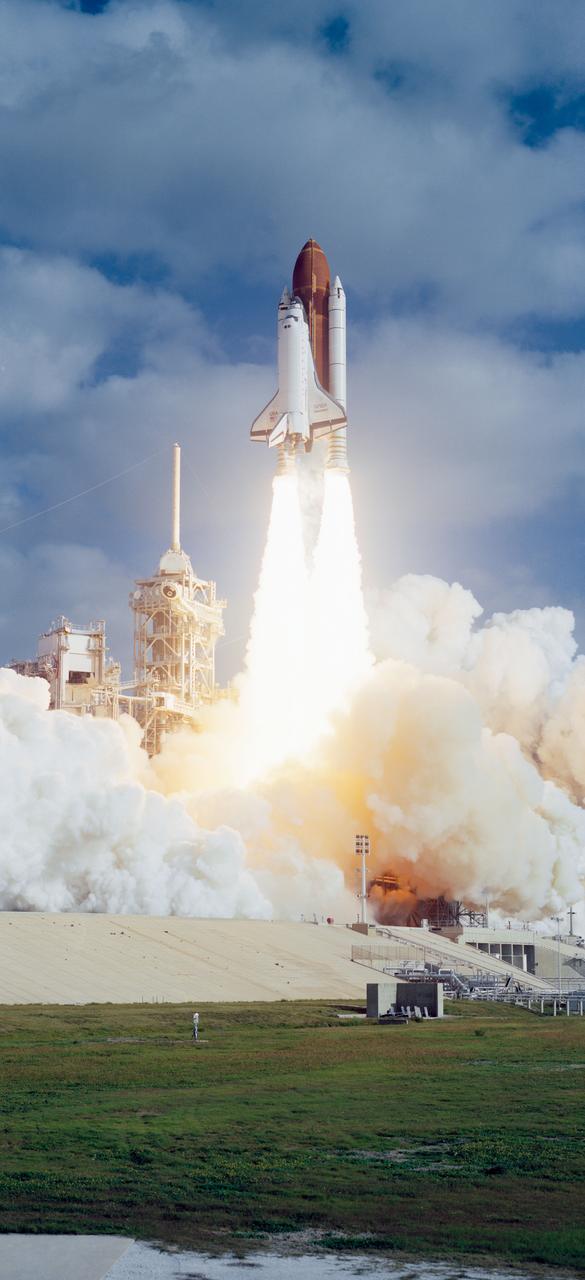
STS031-S-073 (24 April 1990) --? A vertical view of the launch of the STS-31 mission. Onboard Space Shuttle Discovery are the crew of five veteran astronauts and the Hubble Space Telescope (HST). Official launch time was 8:33:51.0492 a.m. (EDT). Headed for approximately five days in space are astronauts Loren J. Shriver, Charles F. Bolden, Jr., Bruce McCandless, II, Kathryn D. Sullivan, and Steven A. Hawley.
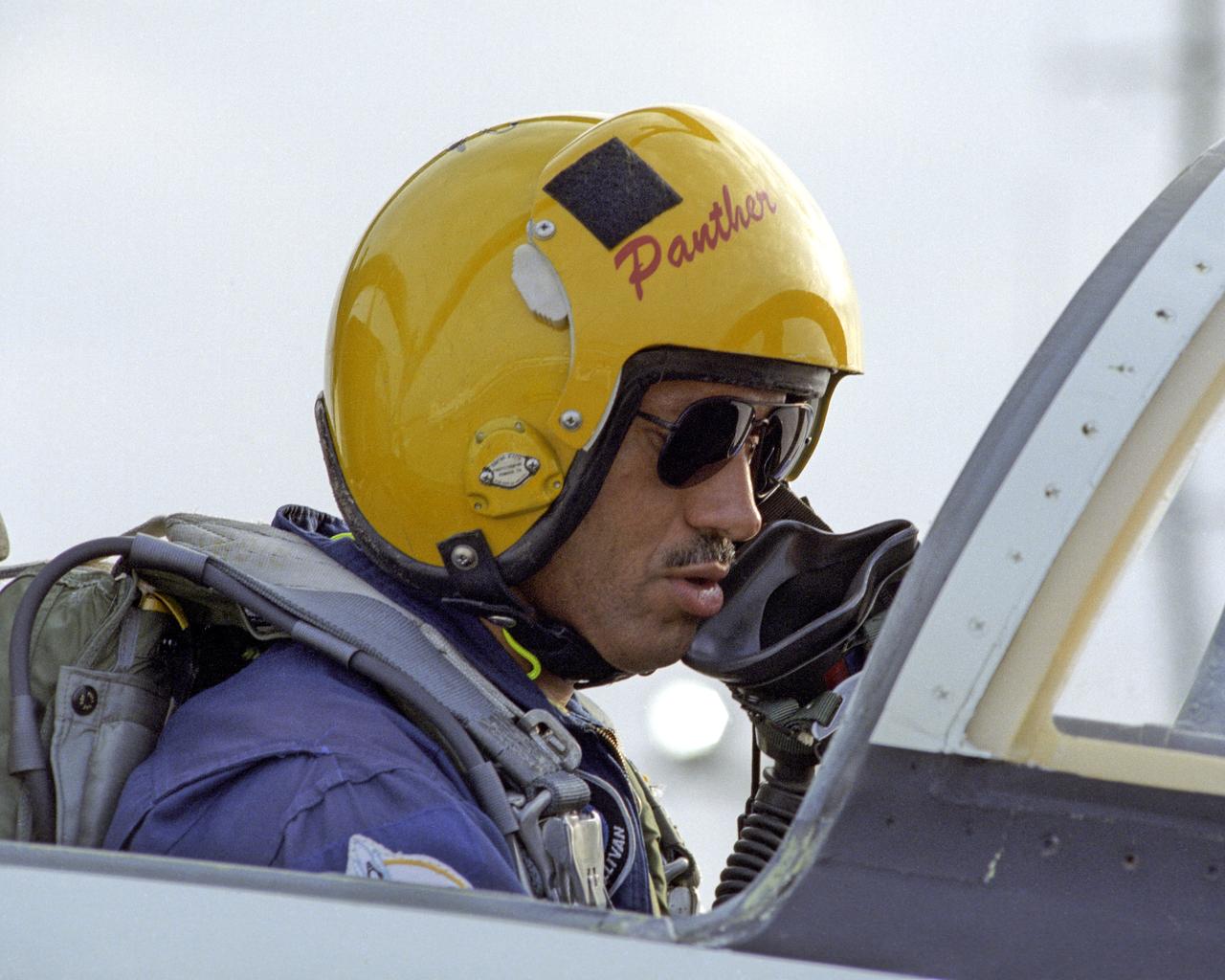
Charles F. Bolden, Jr., Pilot of Space Shuttle Mission STS-31, prepares for rehearsing shuttle contingency landings in the T-38S are among the final pre-launch activities. STS-31, carrying five crew members and the HST is set to liftoff at 8:47 a.m. April 10.
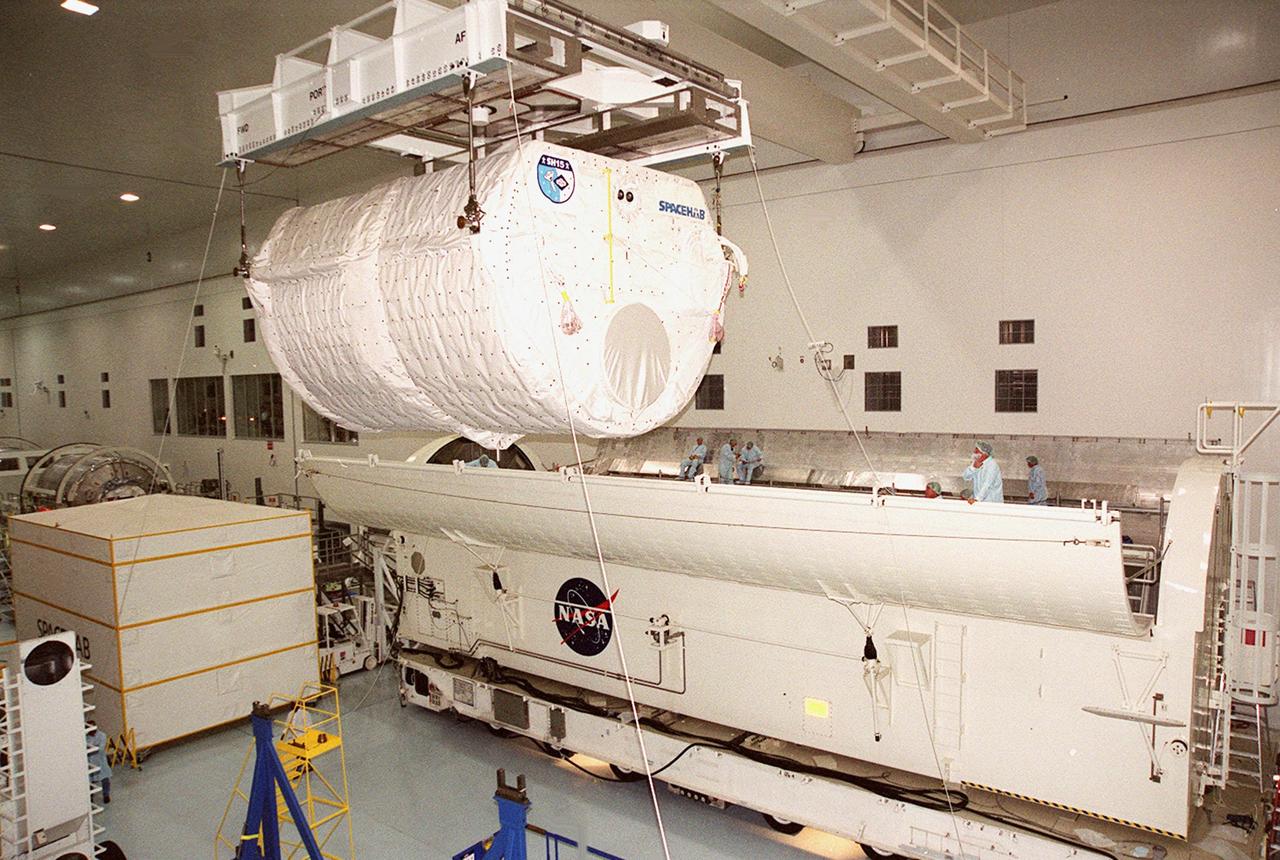
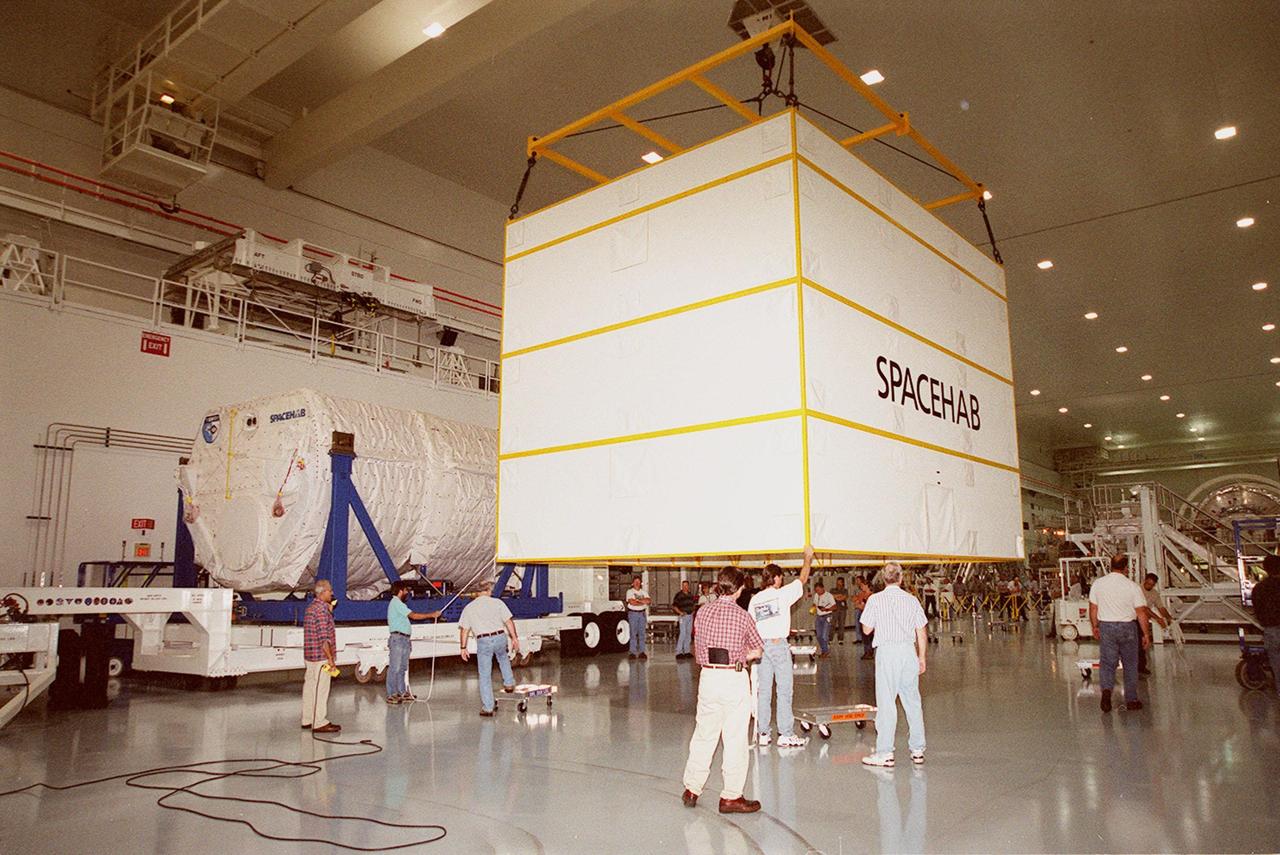
KENNEDY SPACE CENTER, FLA. -- The SPACEHAB module is moved toward the payload canister (right) that will transport it to the launch pad. STS-106 is scheduled to launch Sept. 8 at 8:31 a.m. EDT. During the mission, to the International Space Station, the crew will complete service module support tasks on orbit, transfer supplies and outfit the Space Station for the first long-duration crew. Workers attach an overhead crane to the SPACEHAB module to lift it off the transport vehicle beneath it. The module, part of the payload on mission STS-106, will be placed in the payload canister for transport to the launch pad. STS-106 is scheduled to launch Sept. 8 at 8:31 a.m. EDT
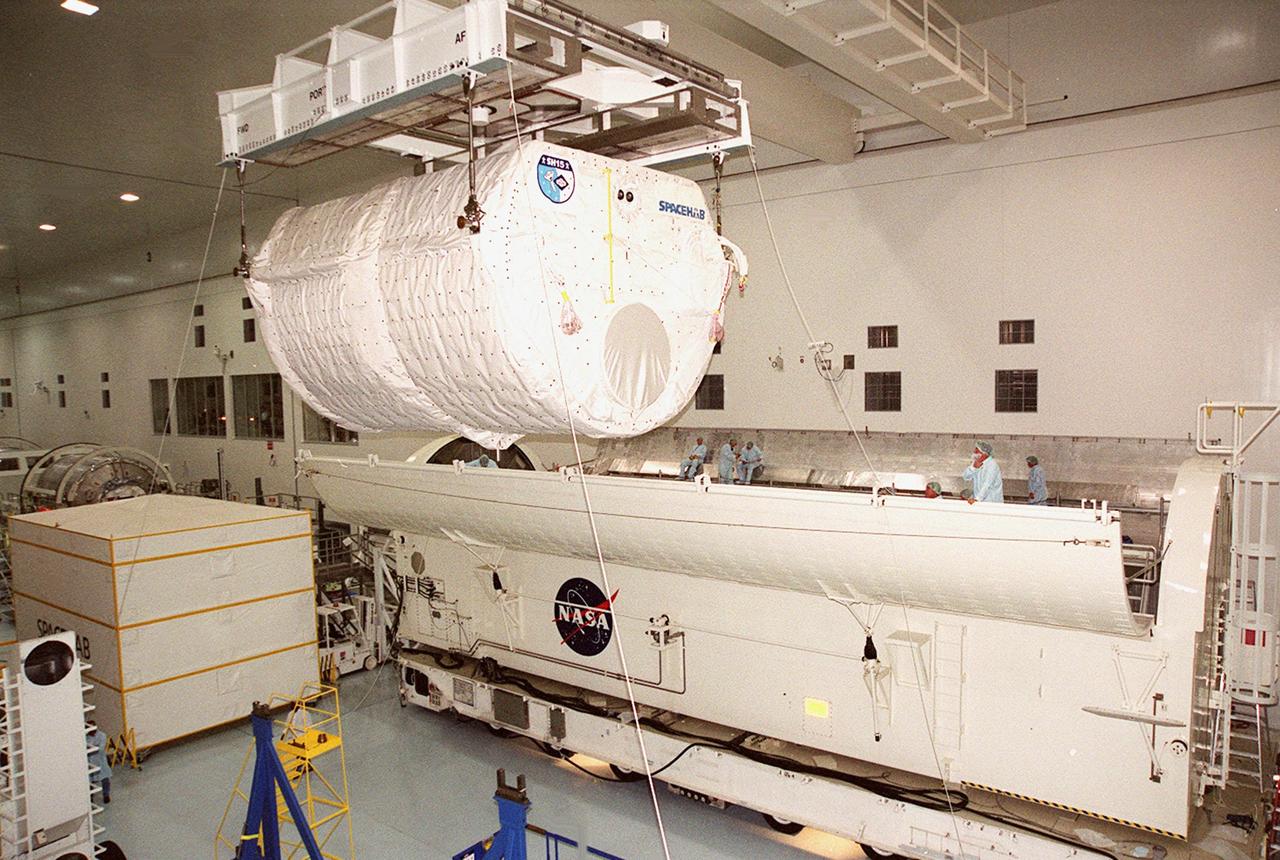
KENNEDY SPACE CENTER, FLA. -- The SPACEHAB module is moved toward the payload canister (right) that will transport it to the launch pad. STS-106 is scheduled to launch Sept. 8 at 8:31 a.m. EDT. During the mission, to the International Space Station, the crew will complete service module support tasks on orbit, transfer supplies and outfit the Space Station for the first long-duration crew. Workers attach an overhead crane to the SPACEHAB module to lift it off the transport vehicle beneath it. The module, part of the payload on mission STS-106, will be placed in the payload canister for transport to the launch pad. STS-106 is scheduled to launch Sept. 8 at 8:31 a.m. EDT
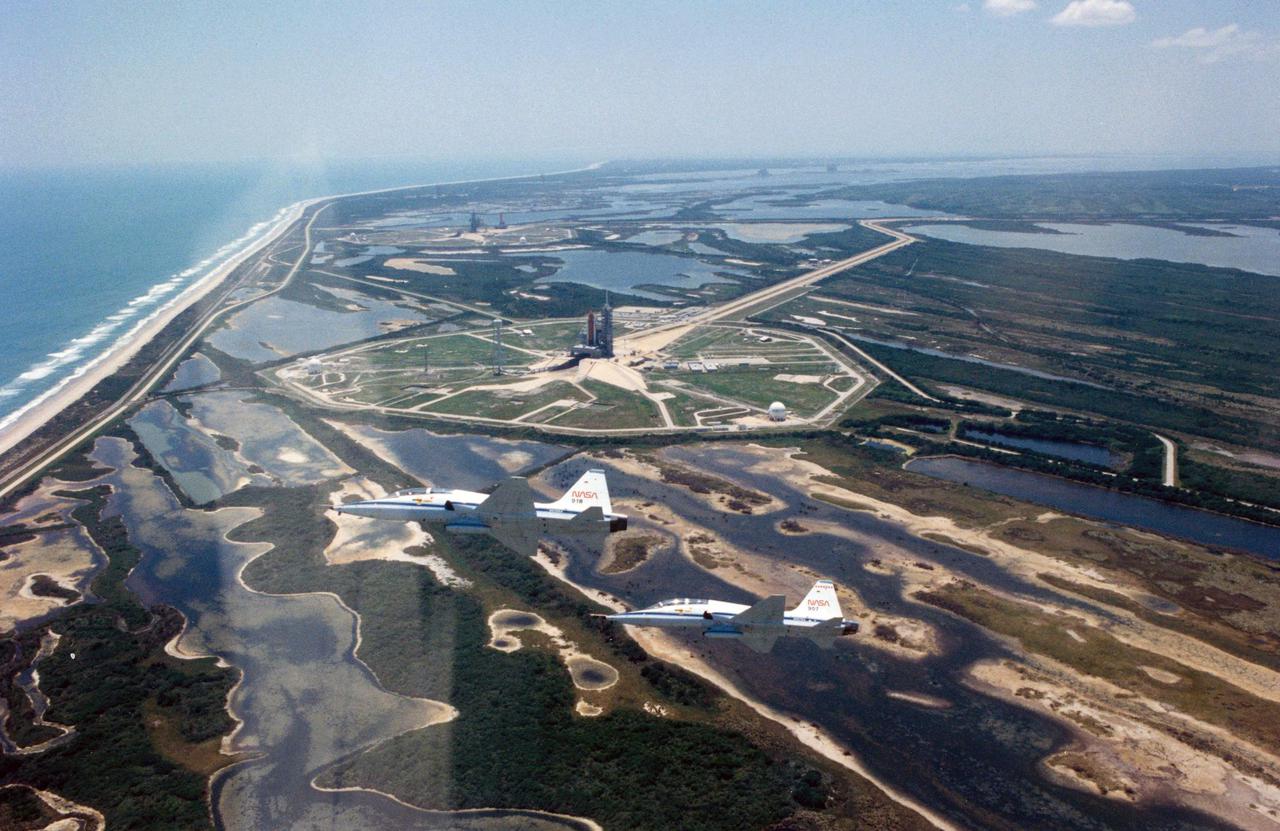
KENNEDY SPACE CENTER, FLA. -- Mission Specialist Kathryn D. Sullivan's camera skills show that the view of Launch Pads 39A and 39B from a T-30 trainer is unforgettable. Sullivan took the pictures as she and fellow Space Shuttle Mission STS-31 crew members flew into KSC on April 22. In the foreground, the Shuttle Discovery is poised on Pad B, and in the distance, Columbia rolls out to Pad A. While Sullivan flew with STS-31 Pilot Charles F. Bolden Jr., Mission Commander Loren J. Shriver and Mission Specialist Steven A. Hawley flew alongside in T-38 #918, and Mission Specialist Bruce McCandless II and NASA Pilot Mario Runco flew in T-38 #907. STS-31 is set to lift off from Pad B at 8:31 a.m. EDT, April 24.
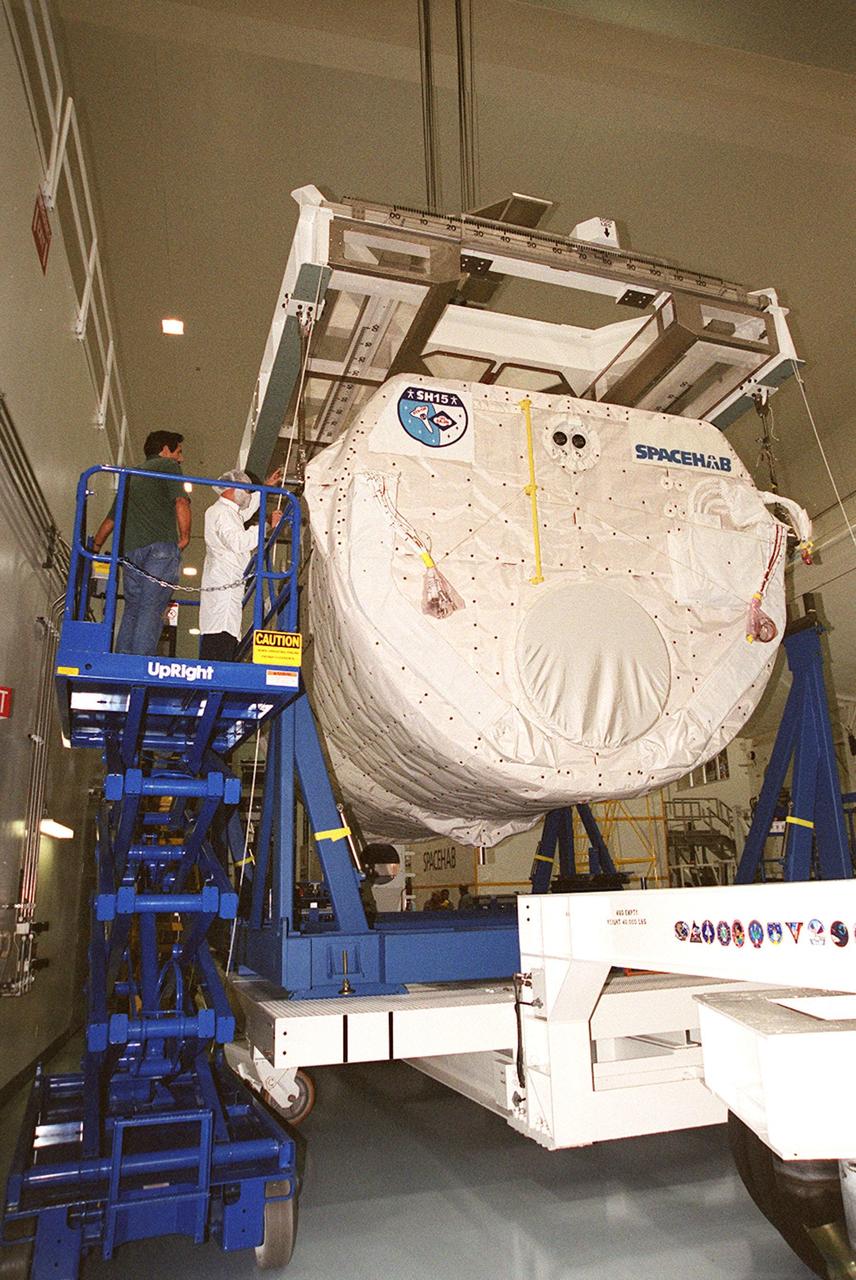
KENNEDY SPACE CENTER, FLA. -- Workers attach an overhead crane to the SPACEHAB module to lift it off the transport vehicle beneath it. The module, part of the payload on mission STS-106, will be placed in the payload canister for transport to the launch pad. STS-106 is scheduled to launch Sept. 8 at 8:31 a.m. EDT
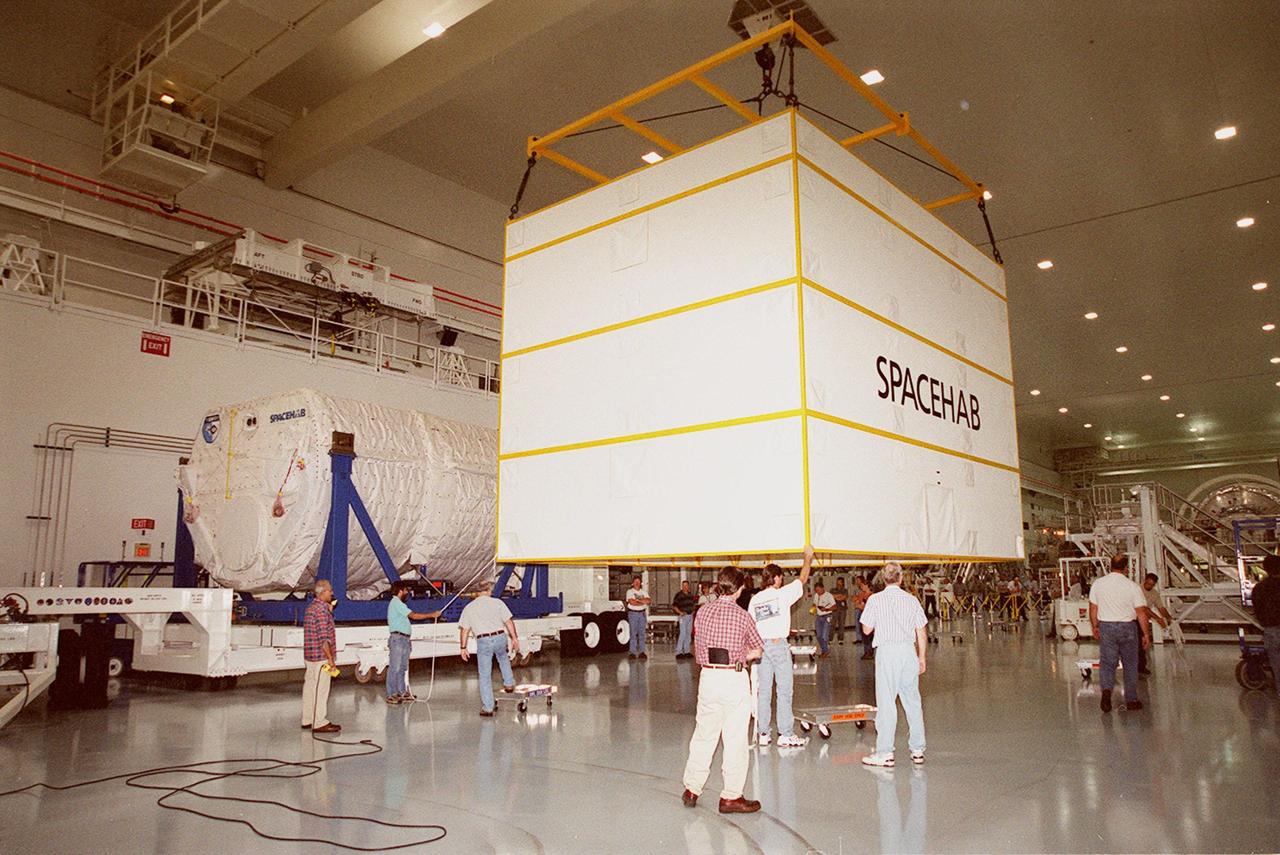
KENNEDY SPACE CENTER, FLA. -- In the Space Station Processing Facility, an overhead crane lowers the cover from the SPACEHAB module (at left) onto the floor. The module, part of the payload on mission STS-106, will be placed in the payload canister for transport to the launch pad. STS-106 is scheduled to launch Sept. 8 at 8:31 a.m. EDT
KENNEDY SPACE CENTER, FLA. -- In the Space Station Processing Facility, an overhead crane lowers the cover from the SPACEHAB module (at left) onto the floor. The module, part of the payload on mission STS-106, will be placed in the payload canister for transport to the launch pad. STS-106 is scheduled to launch Sept. 8 at 8:31 a.m. EDT
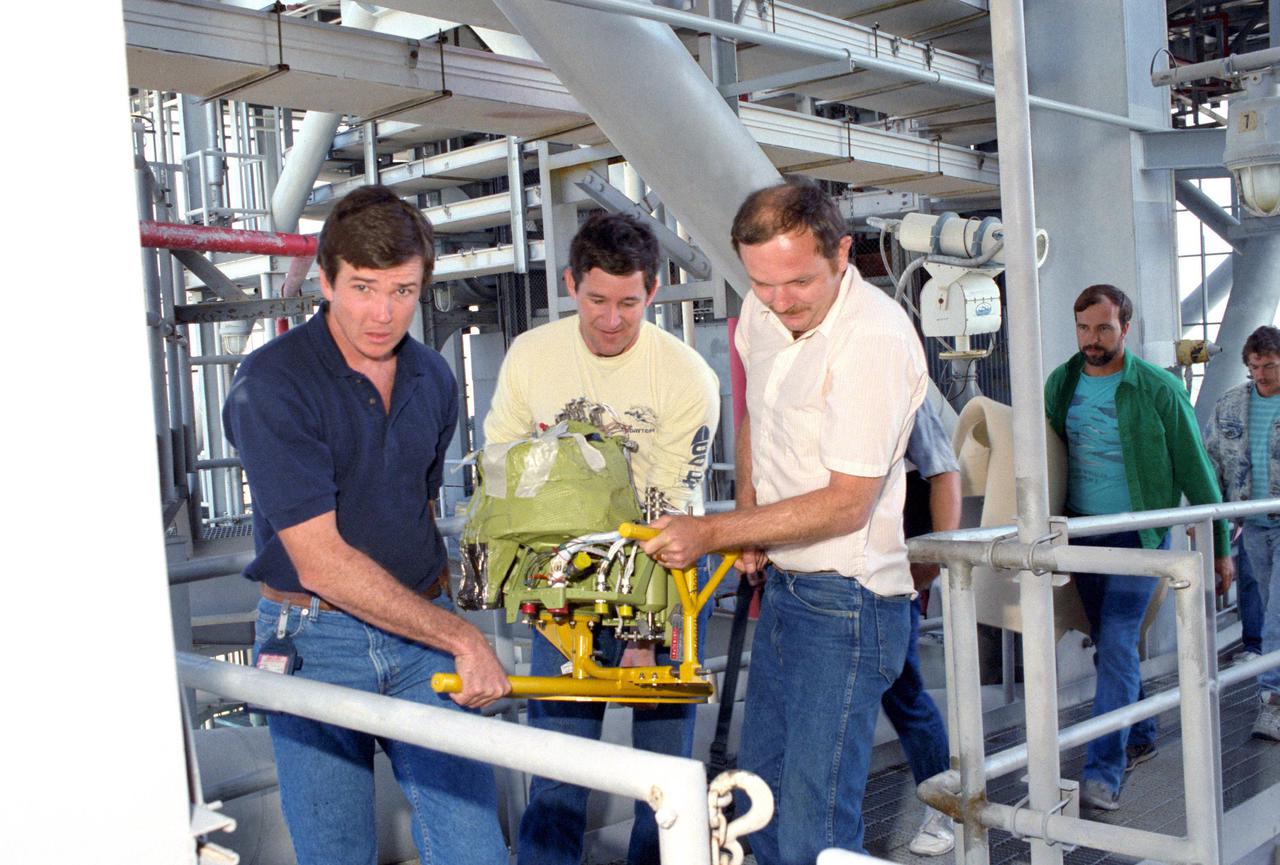
KENNEDY SPACE CENTER, FLA. -- Technicians at Pad 39-B carry a new Auxiliary Power Unit (APU) to be installed in the orbiter Discovery. It will replace APU #1 that failed during the STS-31 launch attempt on April 10.
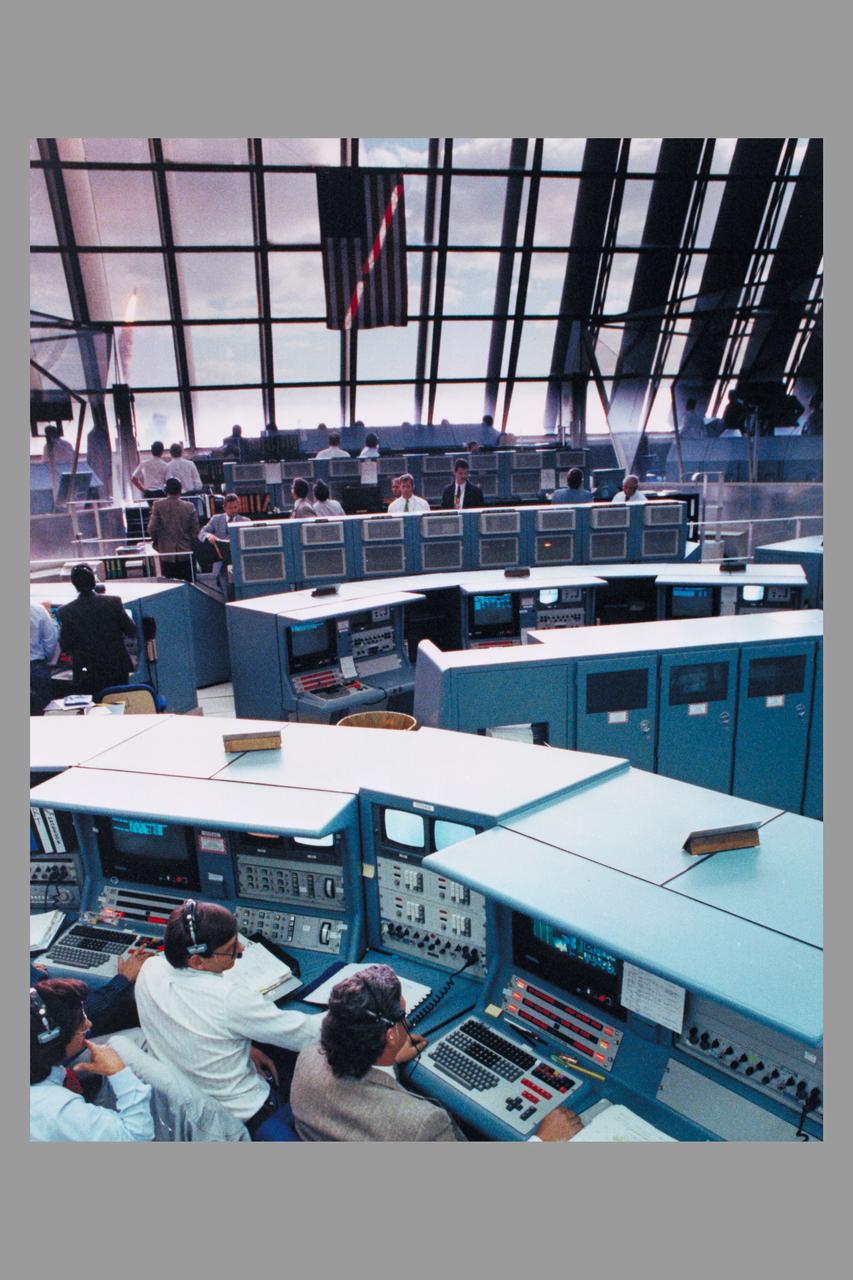
Kennedy Space Center Firing room during launch of Space Shuttle Discovery Hubble Space Telescope deployment Mission STS-31 (The Shuttle can be seen through window) (ref: KSC-90PC-626)
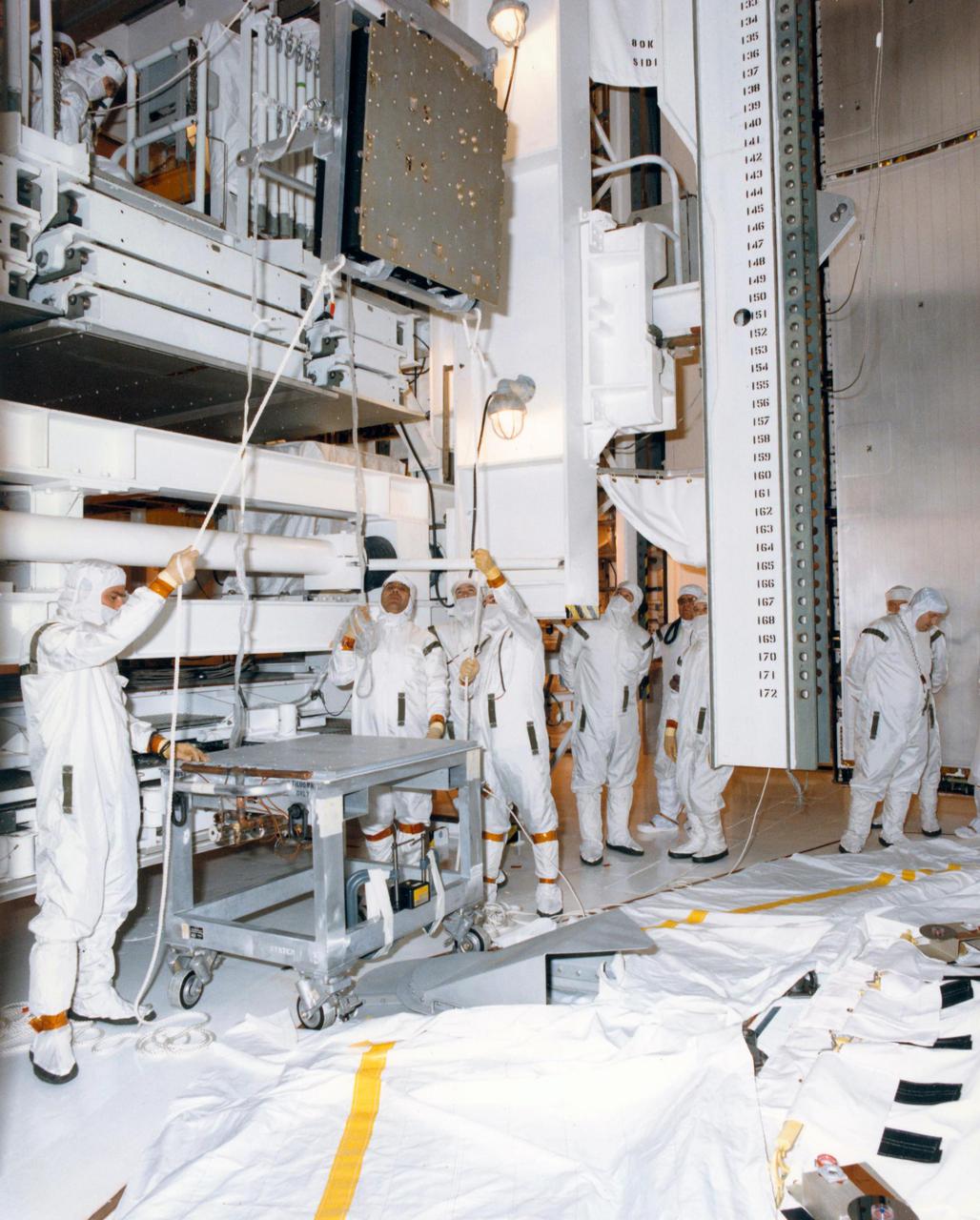
KENNEDY SPACE CENTER, FLA. -- Technicians in the Payload Changeout Room at Launch Pad 39B are removing the batteries from the Hubble Space Telescope for recharging. The two sets of six batteries apiece will be taken to the battery lab inside the Vehicle Assembly Building for 130 hours of recharging, and then reinstalled in the telescope. The recharging became necessary when the first launch attempt of Space Shuttle Mission STS-31 was scrubbed April 10. A second try is set for April 24 at 8:31 a.m. EDT.
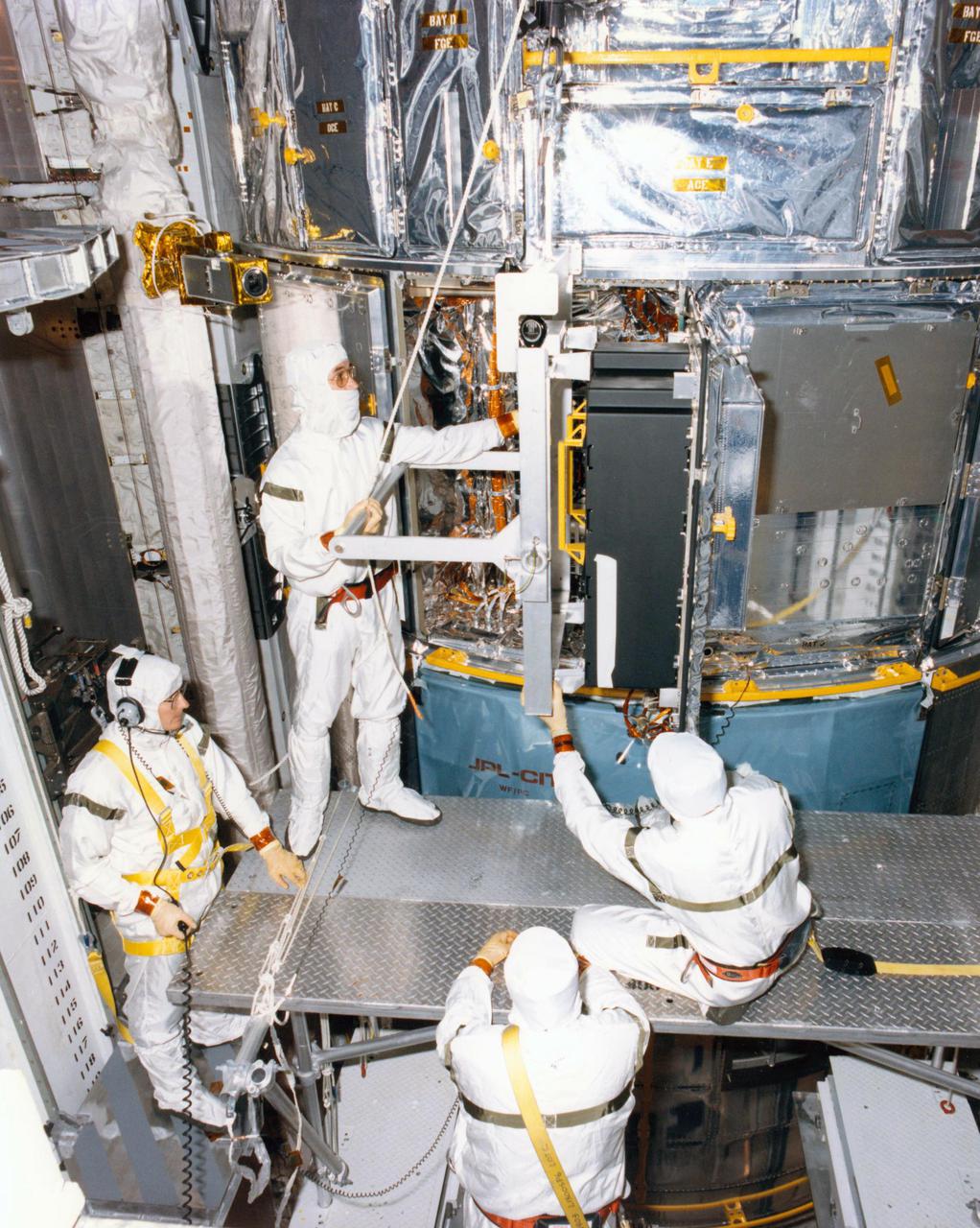
KENNEDY SPACE CENTER, FLA. -- Technicians in the Payload Changeout Room at Launch Pad 39B are removing the batteries from the Hubble Space Telescope for recharging. The two sets of six batteries apiece will be taken to the battery lab inside the Vehicle Assembly Building for 130 hours of recharging, and then reinstalled in the telescope. The recharging became necessary when the first launch attempt of Space Shuttle Mission STS-31 was scrubbed April 10. A second try is set for April 24 at 8:31 a.m. EDT.
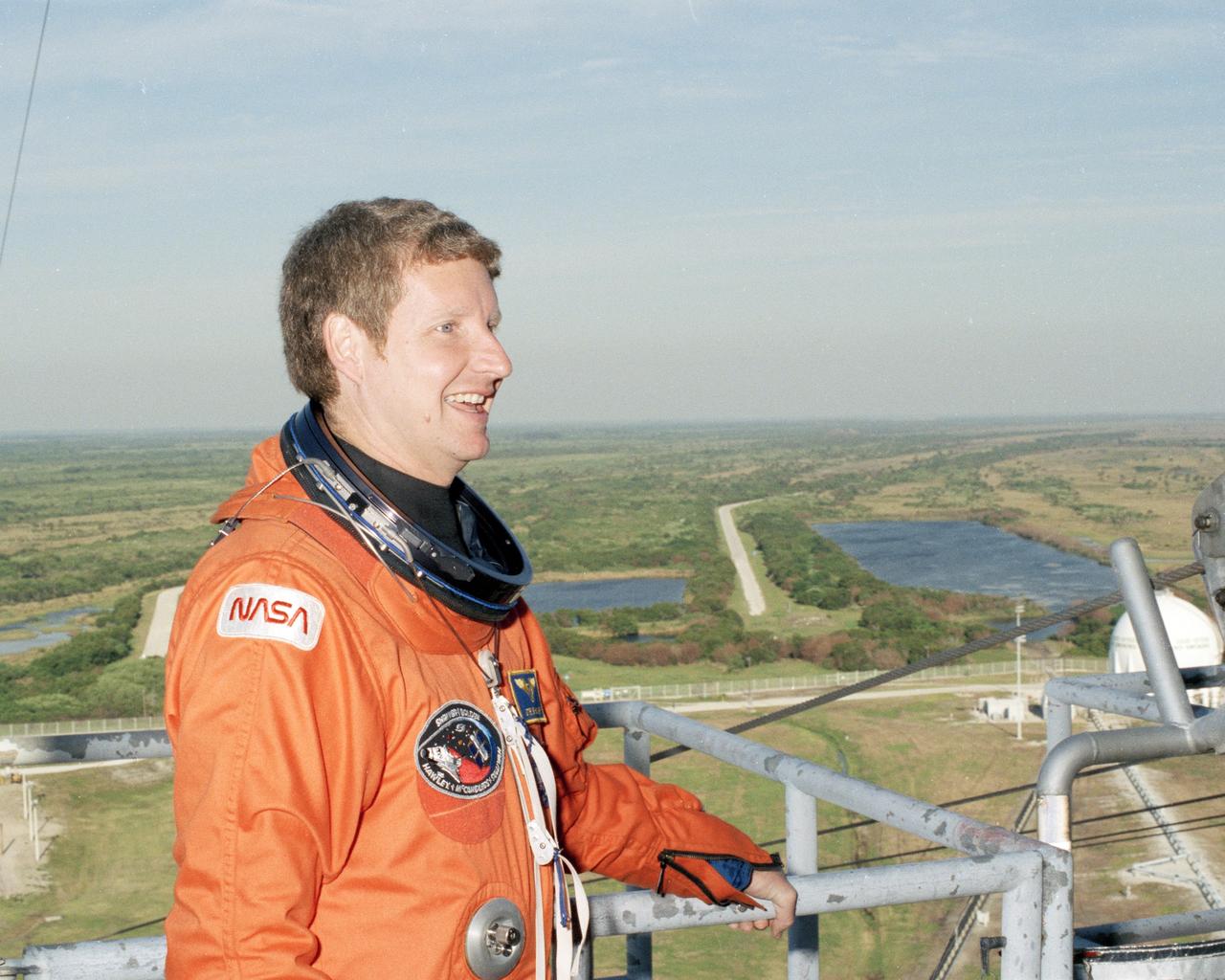
Wide-open Florida terrain creates a dramatic backas STS-31 Mission Specialist Steven A. Hawley stands near the emergency exit system at the 194-foot level of Launch Pad 39B during the Terminal Countdown Demonstration Test, or TCDT. Conducted March 19-20, the TCDT is a dress rehearsal for launch, simulating final countdown from the T-24 hour mark up to T-5 seconds. Space shuttle mission STS-31 is set to lift off on April 12, carrying a five-member crew and the Hubble Space Telescope. Photo credit: NASA
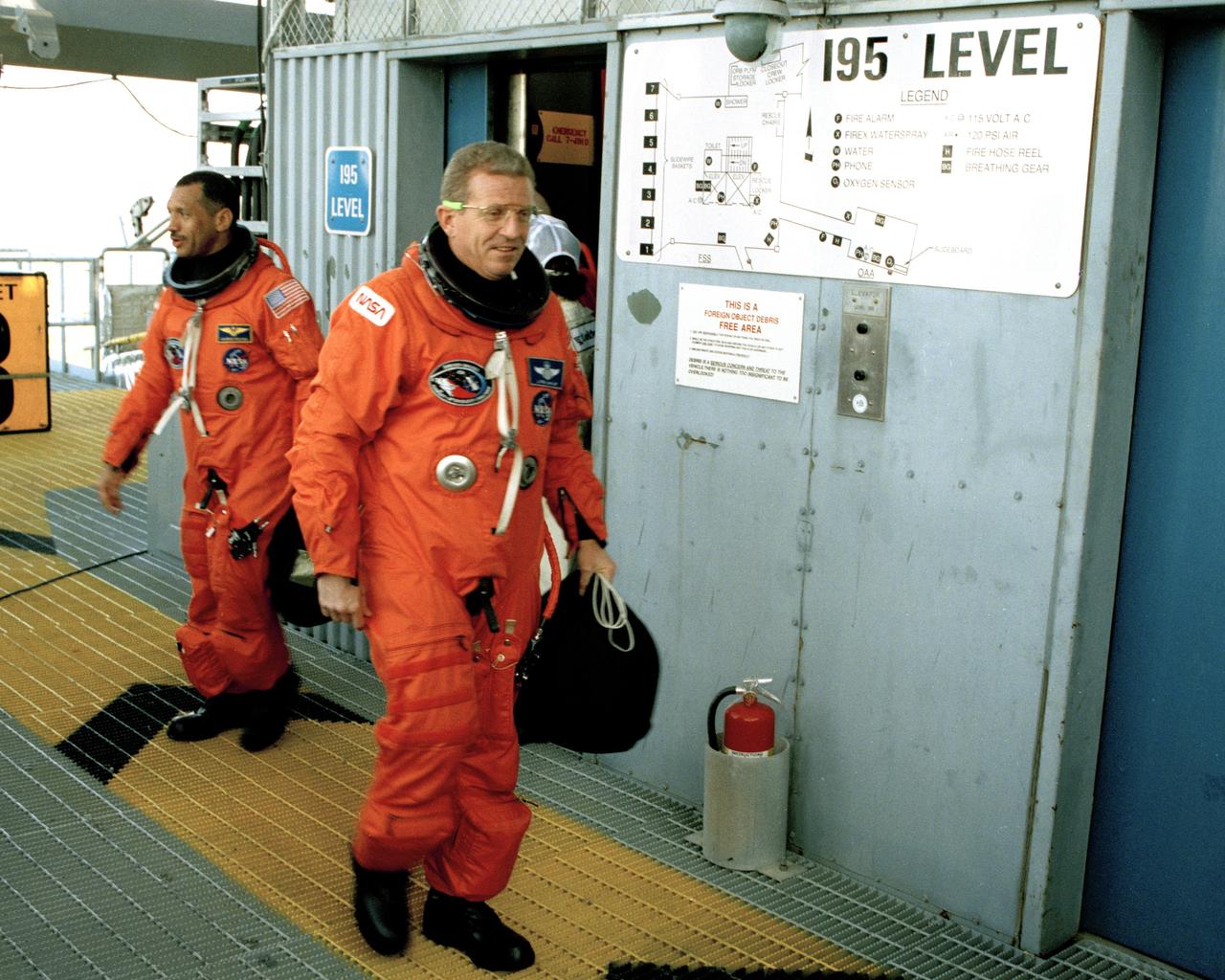
STS-31 Pilot Charles F. Bolden, left, and Commander Loren J. Shriver prepare to enter the orbiter Discovery from the 195-foot level at Launch Pad 39B during the culmination of the two-day Terminal Countdown Demonstration Test (TCDT). The TCDT, conducted March 19-20, is a dress rehearsal for launch, simulating final countdown from the T-24 hour mark up to T-5 seconds. Space shuttle mission STS-31 is set to lift off on April 12, carrying a five-member crew and the Hubble Space Telescope. Photo credit: NASA
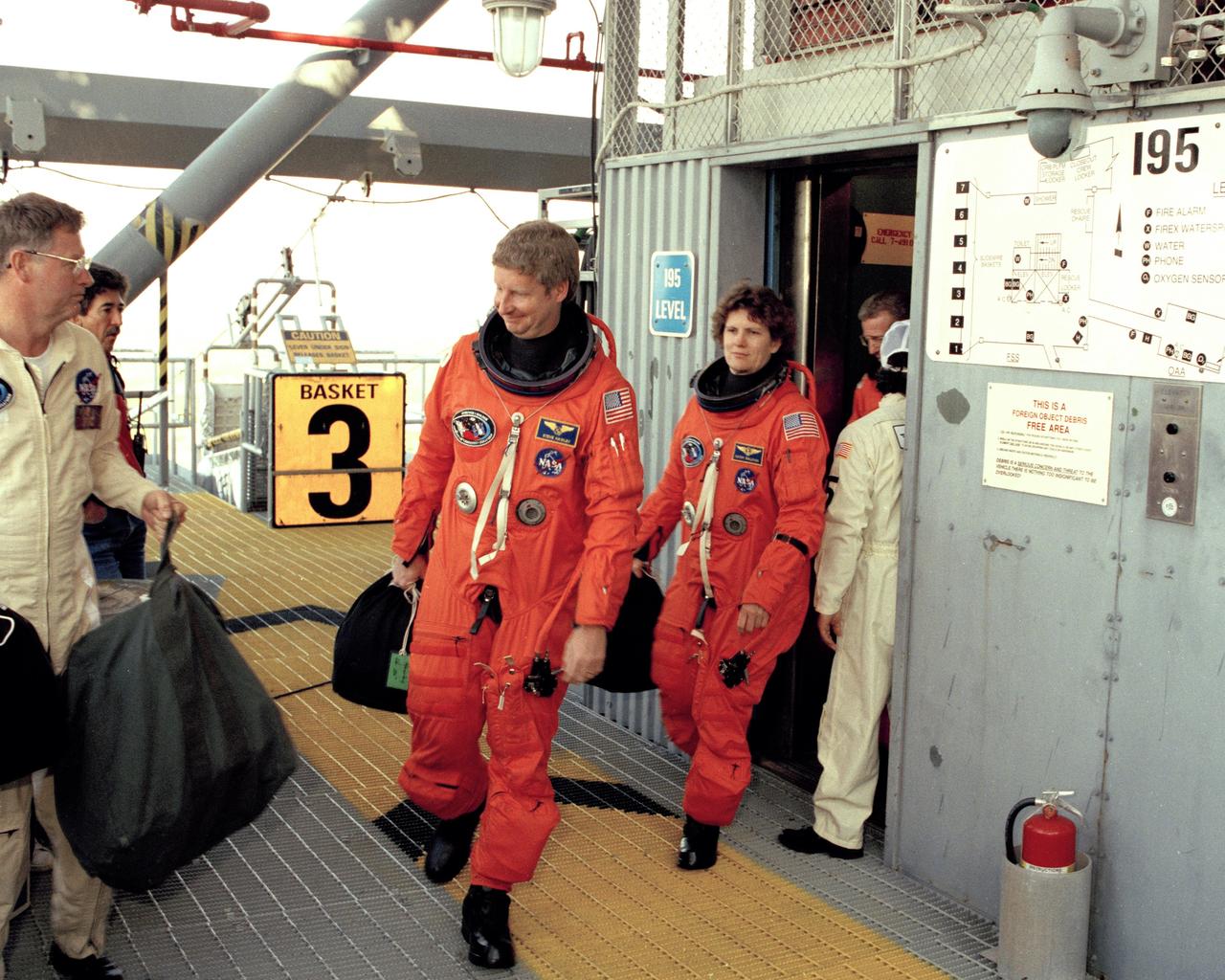
STS-31 Mission Specialists Steven A. Hawley (left) and Kathryn D. Sullivan, and Commander Loren J. Shriver prepare to enter the orbiter Discovery from the 195-foot level at Launch Pad 39B during the culmination of the two-day Terminal Countdown Demonstration Test (TCDT). The TCDT, conducted March 19-20, is a dress rehearsal for launch, simulating final countdown from the T-24 hour mark up to T-5 seconds. Space shuttle mission STS-31 is set to lift off on April 12, carrying a five-member crew and the Hubble Space Telescope. Photo credit: NASA

Discovery was rolled out to Launch Pad 39-B on March 15-16 for final launch preparations for its 10th mission into space. Launch of the Hubble Space Telescope on the five-day STS-31 mission is targeted for April 12. Photo credit: NASA

CAPE CANAVERAL, Fla. – A worker is ready to smooth the surface on the slope of Launch Pad 39A at NASA's Kennedy Space Center. The slope was damaged during the May 31 launch of Discovery on the STS-124 mission. Photo credit: NASA/Jim Grossmann
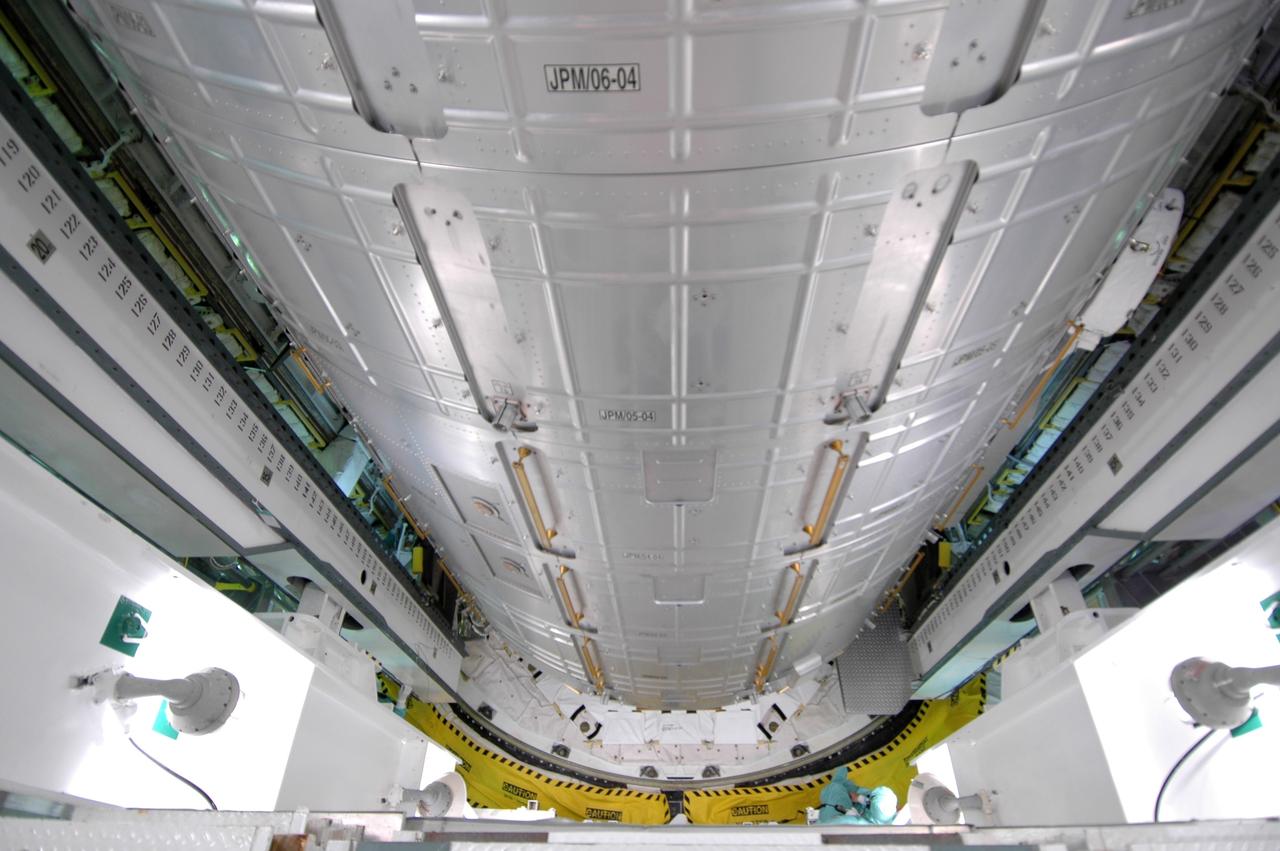
CAPE CANAVERAL, Fla. -- On Launch Pad 39A at NASA's Kennedy Space Center, the STS-124 mission payload, the Japanese Experiment Module - Pressurized Module, is being transferred from the Payload Changeout Room into space shuttle Discovery's payload bay. Launch of Discovery is targeted for May 31. Photo credit: NASA/Jim Grossmann

CAPE CANAVERAL, Fla. – A worker smoothes the surface on the slope of Launch Pad 39A at NASA's Kennedy Space Center. The slope was damaged during the May 31 launch of Discovery on the STS-124 mission. Photo credit: NASA/Jim Grossmann
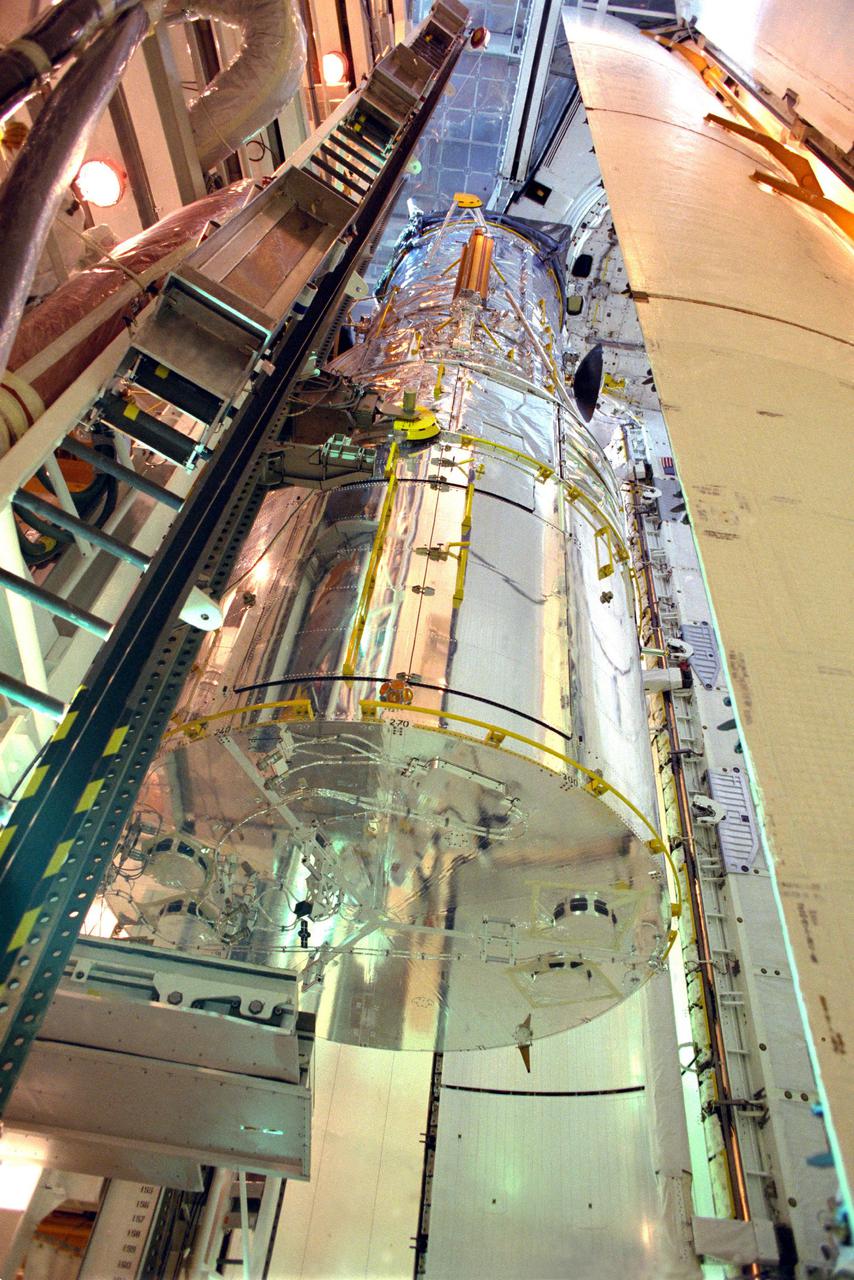
KENNEDY SPACE CENTER, FLA. -- The bus-size Hubble Space Telescope is carefully being transferred from the surgically clean Payload Changeout Room at Launch Pad 39-B into the cargo bay of the orbiter Discovery. The telescope is to be deployed during Space Shuttle Mission STS-31, currently scheduled for launch in April 1990.

JSC2011-E-059470 (31 May 2011) --- NASA astronaut Doug Hurley, STS-135 pilot, is seen in a partial silhouette against the space shuttle Atlantis as the spacecraft for the program's final mission moves to Launch Pad 39A during rollout at NASA?s Kennedy Space Center in Florida May 31, 2011. Photo credit: NASA photo/Houston Chronicle, Smiley N. Pool
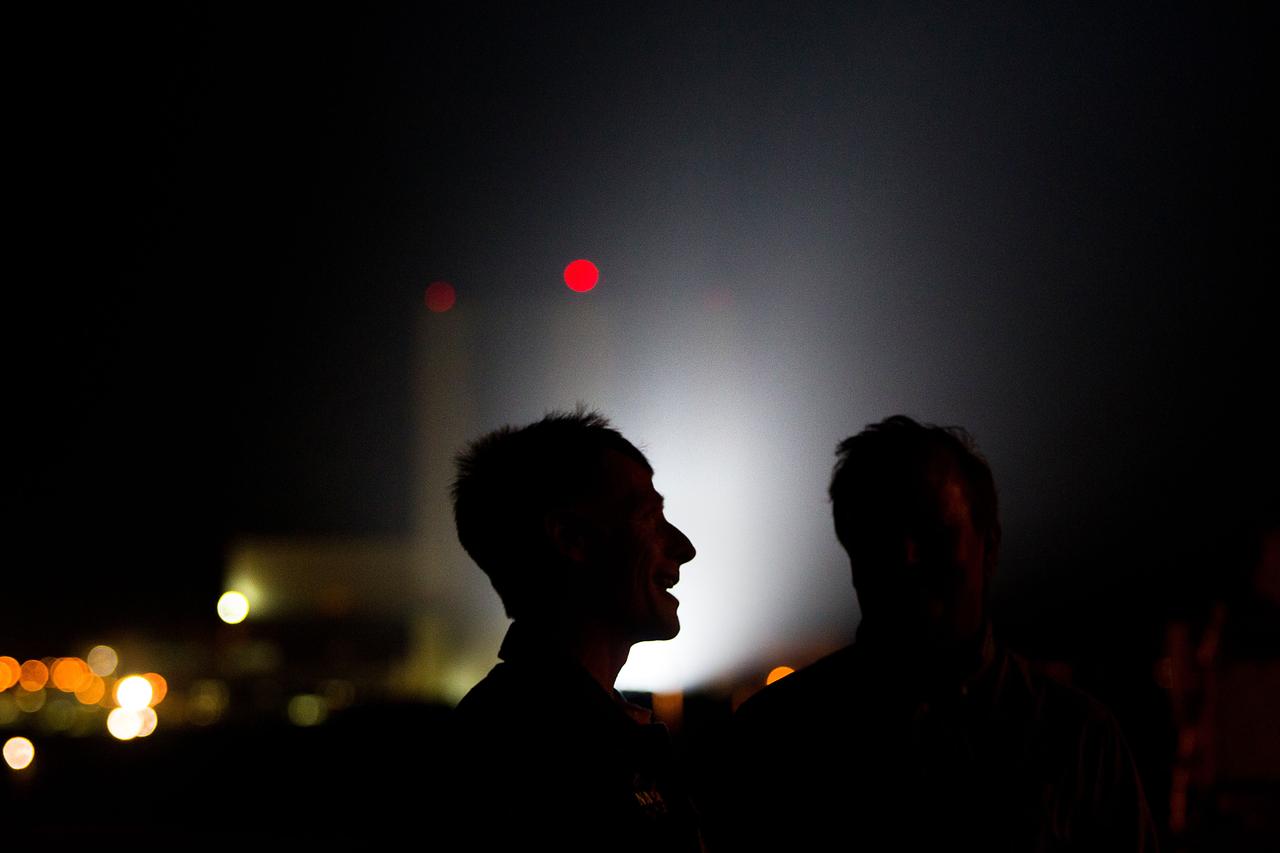
JSC2011-E-059478 (31 May 2011) --- NASA astronaut Chris Ferguson, STS-135 commander, is seen in silhouette against the Vehicle Assembly Building as the space shuttle Atlantis moves to Launch Pad 39A during rollout at NASA?s Kennedy Space Center in Florida May 31, 2011. Photo credit: NASA Photo/Houston Chronicle, Smiley N. Pool
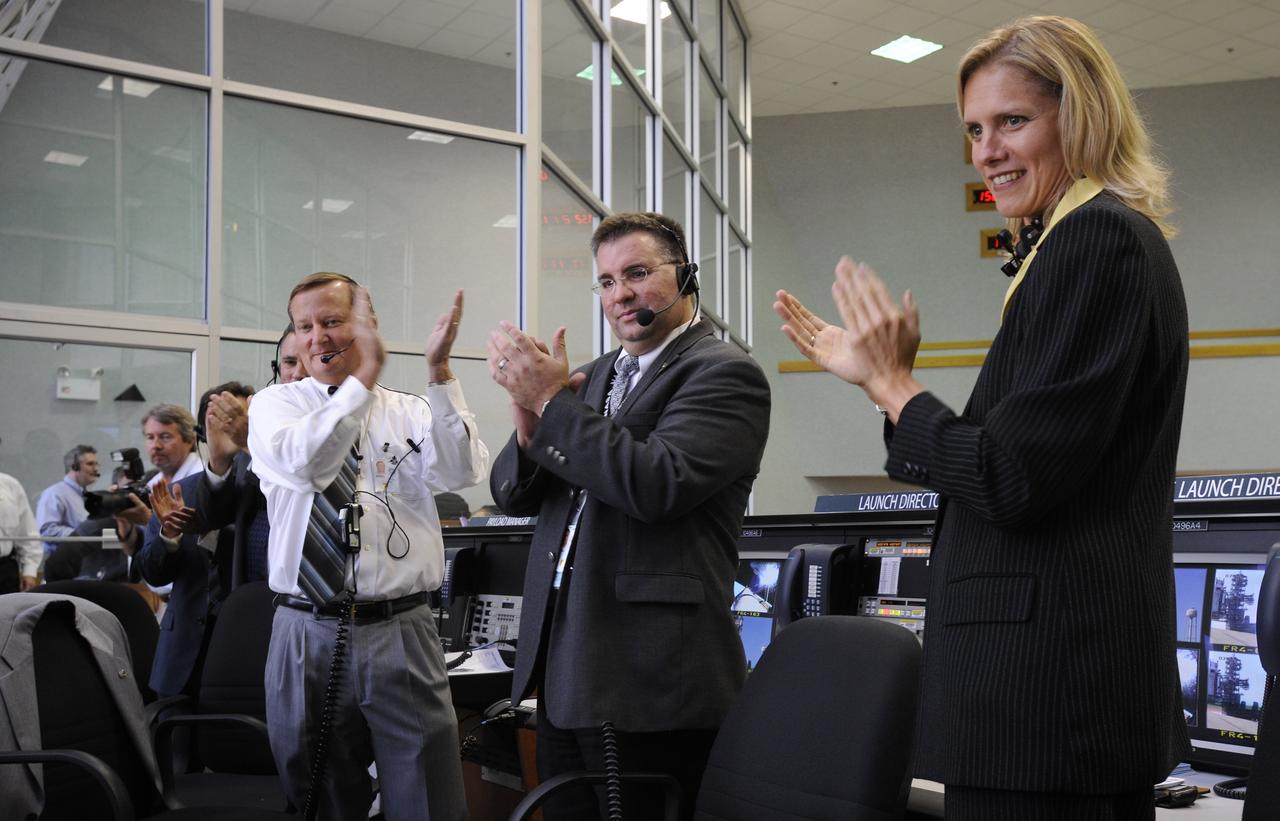
NASA Shuttle Launch Director Michael Leinbach, left, STS-124 Assistant Launch Director Ed Mango, center, and Flow Director for Space Shuttle Discovery Stephanie Stilson clap in the the Launch Control Center after the main engine cut off and successful launch of the Space Shuttle Discovery (STS-124) Saturday, May 31, 2008, at the Kennedy Space Center in Cape Canaveral, Fla. The Shuttle lifted off from launch pad 39A at 5:02 p.m. EDT. Photo Credit: (NASA/Bill Ingalls)
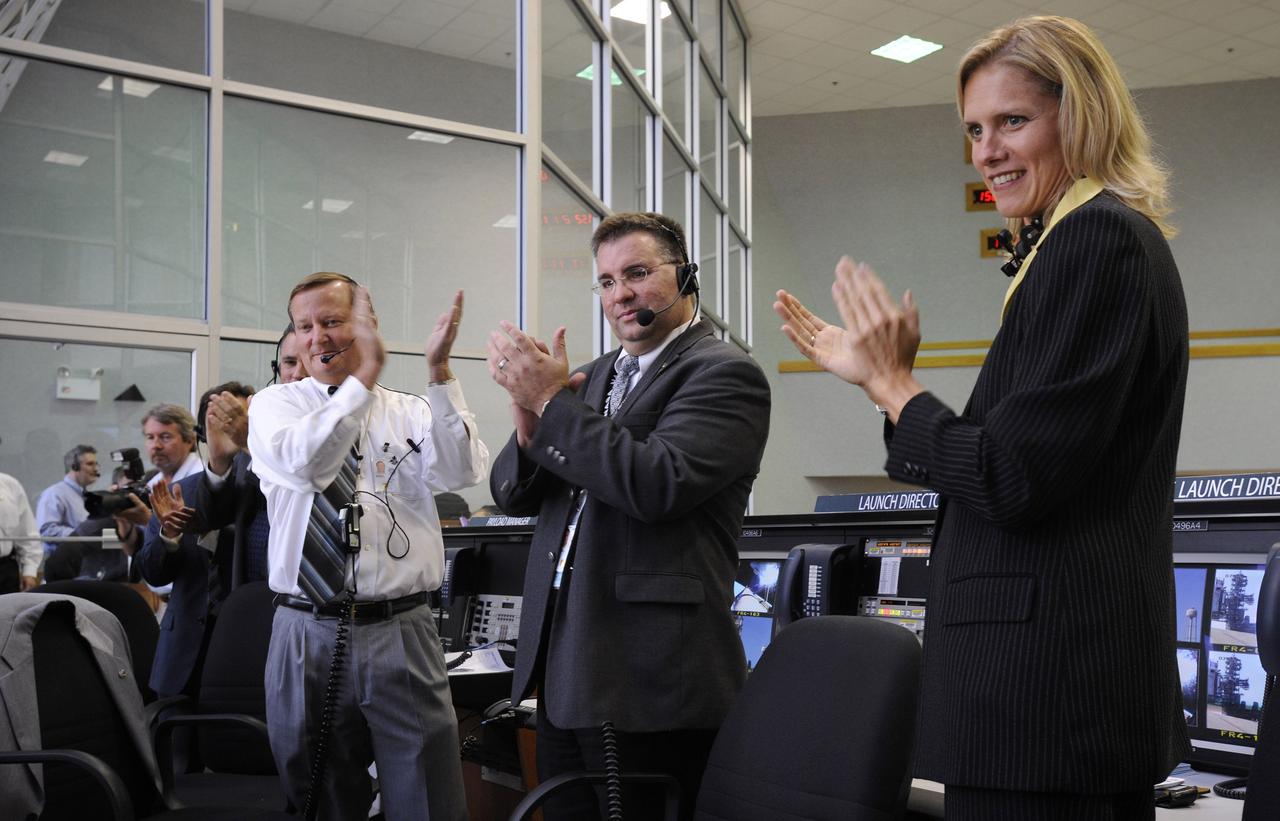
NASA Shuttle Launch Director Michael Leinbach, left, STS-124 Assistant Launch Director Ed Mango, center, and Flow Director for Space Shuttle Discovery Stephanie Stilson clap in the the Launch Control Center after the main engine cut off and successful launch of the Space Shuttle Discovery (STS-124) Saturday, May 31, 2008, at the Kennedy Space Center in Cape Canaveral, Fla. The Shuttle lifted off from launch pad 39A at 5:02 p.m. EDT. Photo Credit: (NASA/Bill Ingalls)
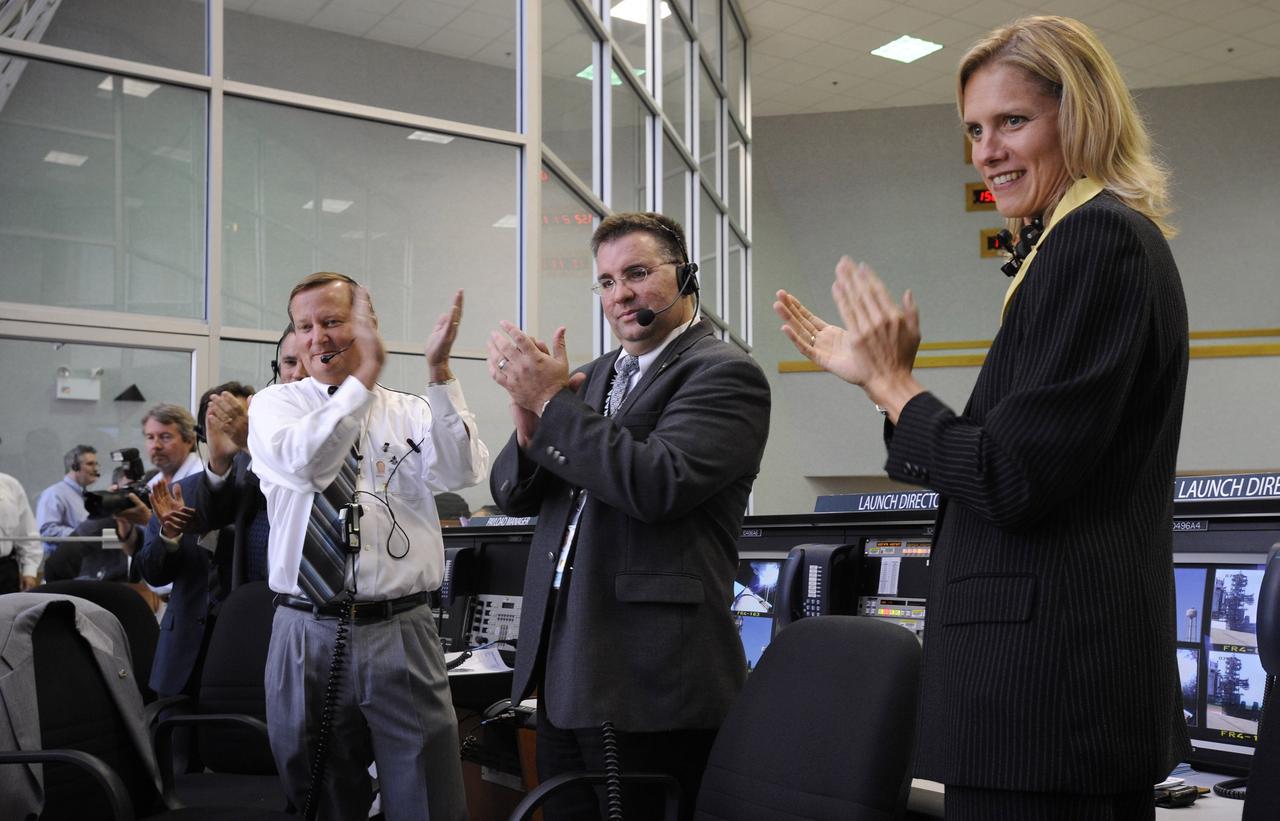
CAPE CANAVERAL, Fla. -- NASA Shuttle Launch Director Michael Leinbach, left, STS-124 Assistant Launch Director Ed Mango, center, and Flow Director for space shuttle Discovery Stephanie Stilson clap in the Launch Control Center after the main engine cut-off and successful launch of Discovery on the STS-124 mission Saturday, May 31, 2008, at NASA's Kennedy Space Center. The shuttle lifted off from Launch Pad 39A at 5:02 p.m. EDT. Photo credit: NASA/Bill Ingalls
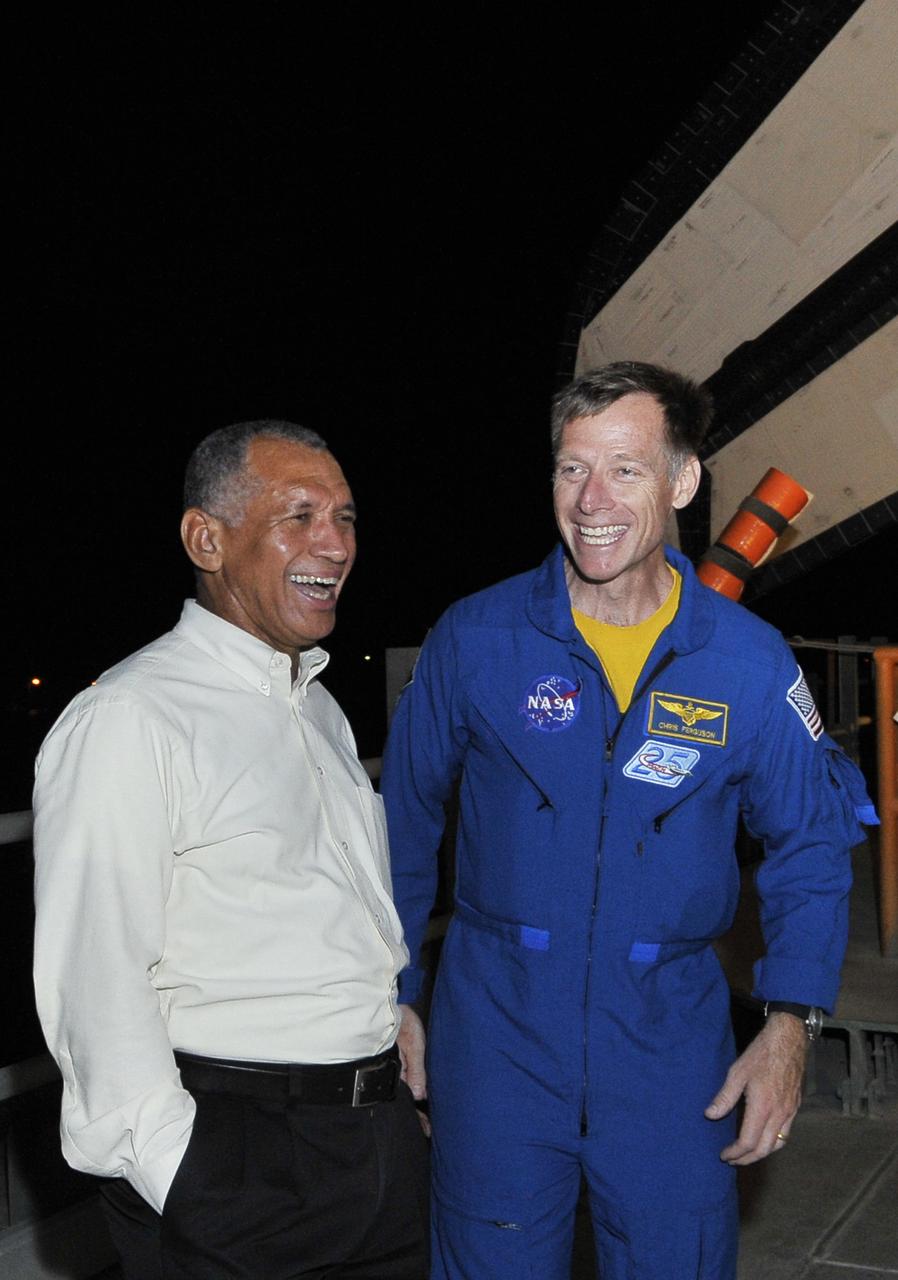
Kennedy Space Center Director Charley Bolden laughs at a story being told to him by STS-135 crew Commander Chris Ferguson during rollout of Shuttle Atlantis on the Mobil Launch Platform (MLP) at Kennedy Space Center, Cape Canaveral, Florida, USA 31 May 2011. Launch of Atlantis on the STS-135 mission to deliver supplies to the International Space Station is currently planned for no earlier than 08 July 2011. The STS-135 mission is planned to last eight days and will be the final flight of the Space Shuttle program.
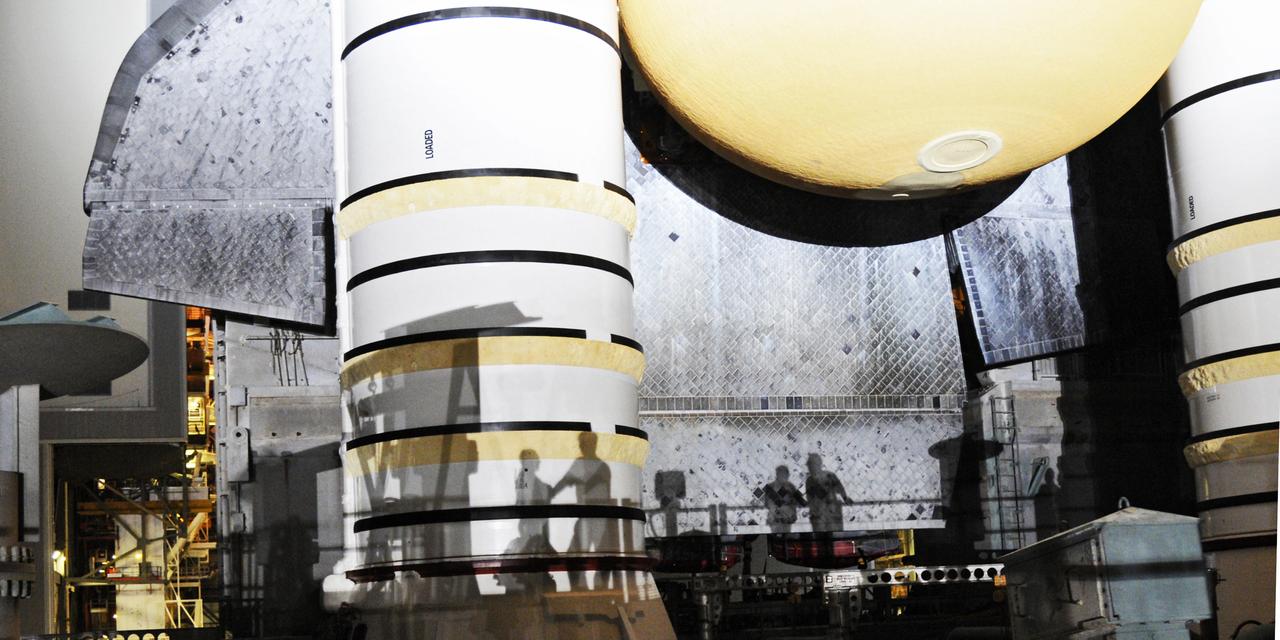
Space Shuttle Atlantis viewed from the Mobil Launch Platform (MLP) during it's final rollout to Launch Pad 39A at Kennedy Space Center, Cape Canaveral, Florida, USA 31 May 2011. Launch of Atlantis on the STS-135 mission to deliver supplies to the International Space Station is currently planned for no earlier than 08 July 2011. The STS-135 mission is planned to last eight days and will be the final flight of the Space Shuttle program.
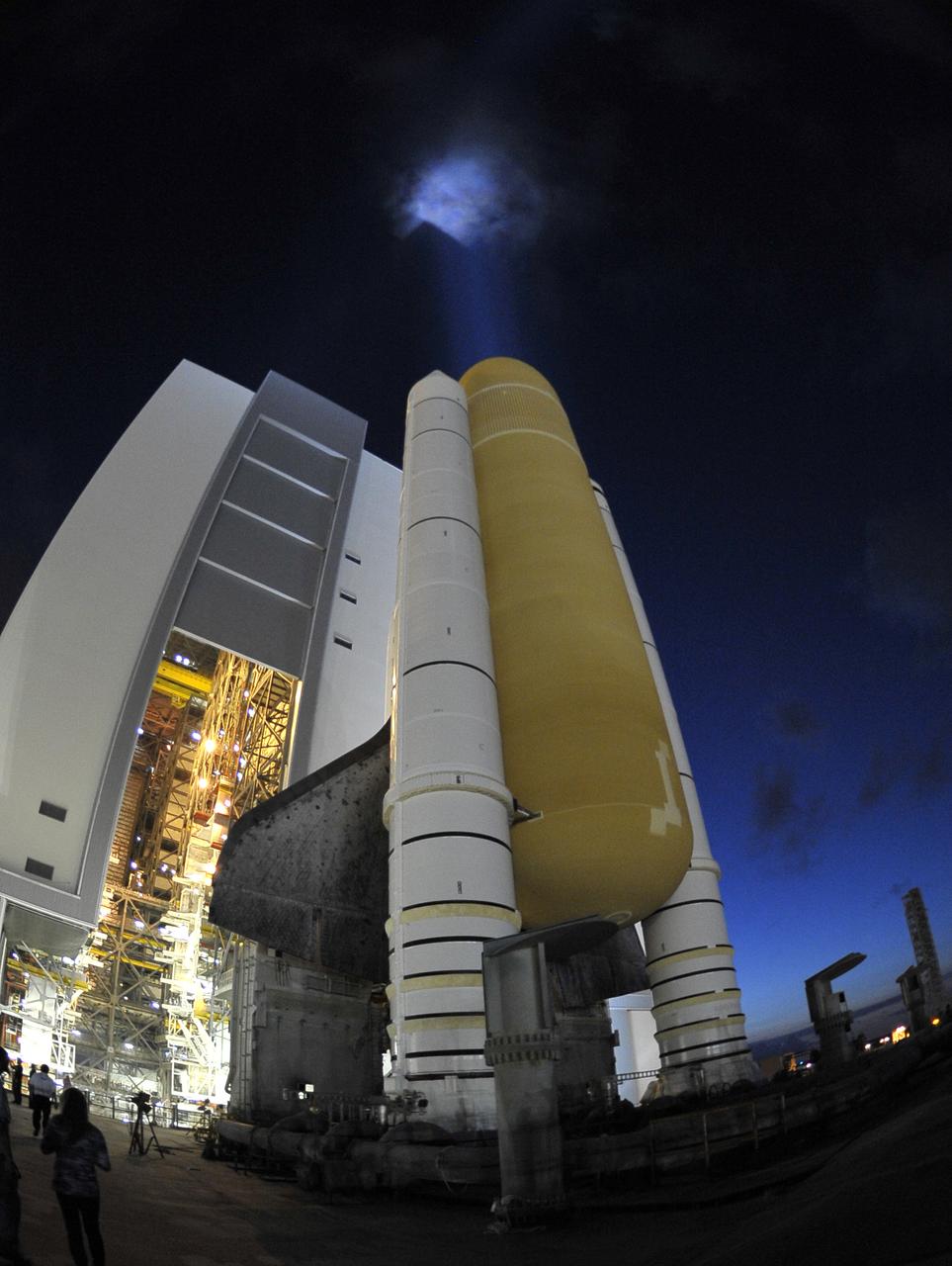
Shuttle Atlantis viewed from the Mobil Launch Platform (MLP) departs the Vehicle Assembly Building (VAB) during it's final rollout to Launch Pad 39A at Kennedy Space Center, Cape Canaveral, Florida, USA 31 May 2011. Launch of Atlantis on the STS-135 mission to deliver supplies to the International Space Station is planned for no earlier than 08 July 2011. The STS-135 mission is planned to last eight days and will be the final flight of the Space Shuttle program.
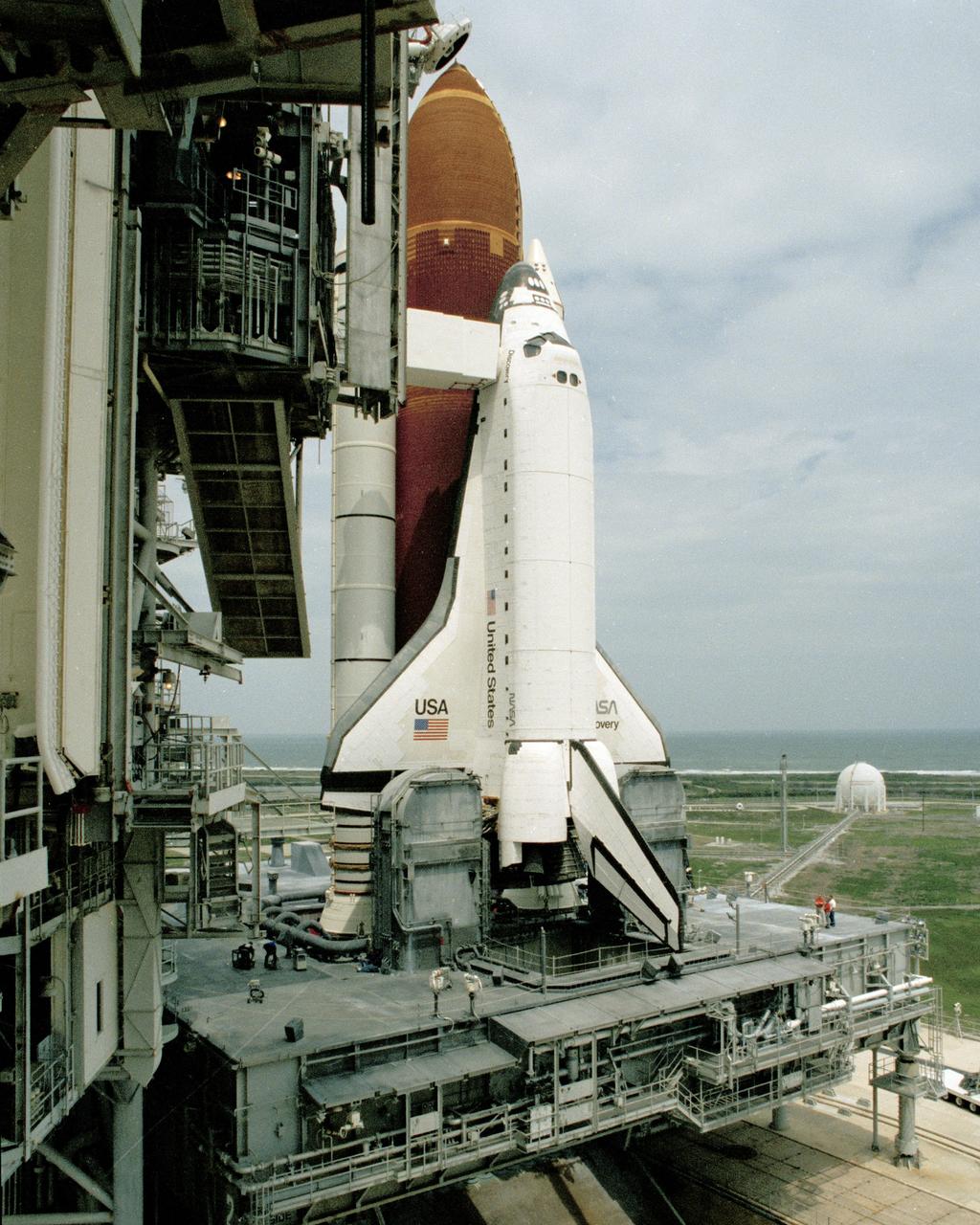
The orbiter Discovery is unveiled as rollback of the Rotating Service Structure begins during final prelaunch preparations at Launch Pad 39B on April 9. Space shuttle mission STS-31, carrying a crew of five and the Hubble Space Telescope, is set to lift off at 6:47 a.m. EDT, April 10. Photo credit: NASA
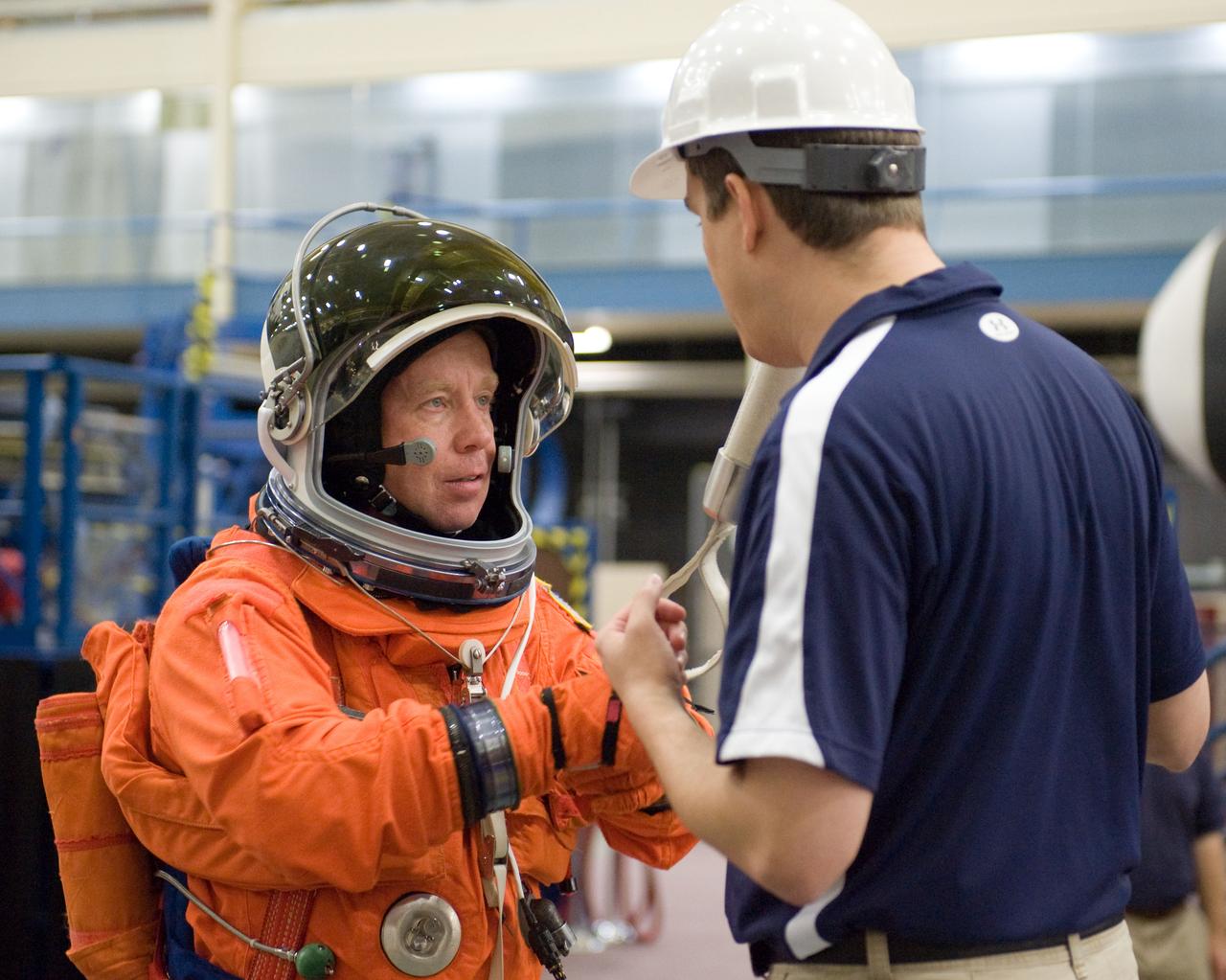
JSC2010-E-046409 (31 March 2010) --- Attired in a training version of his shuttle launch and entry suit, NASA astronaut Steve Lindsey, STS-133 commander, participates in a Full Fuselage Trainer (FFT) mock-up training session in the Space Vehicle Mockup Facility at NASA's Johnson Space Center.
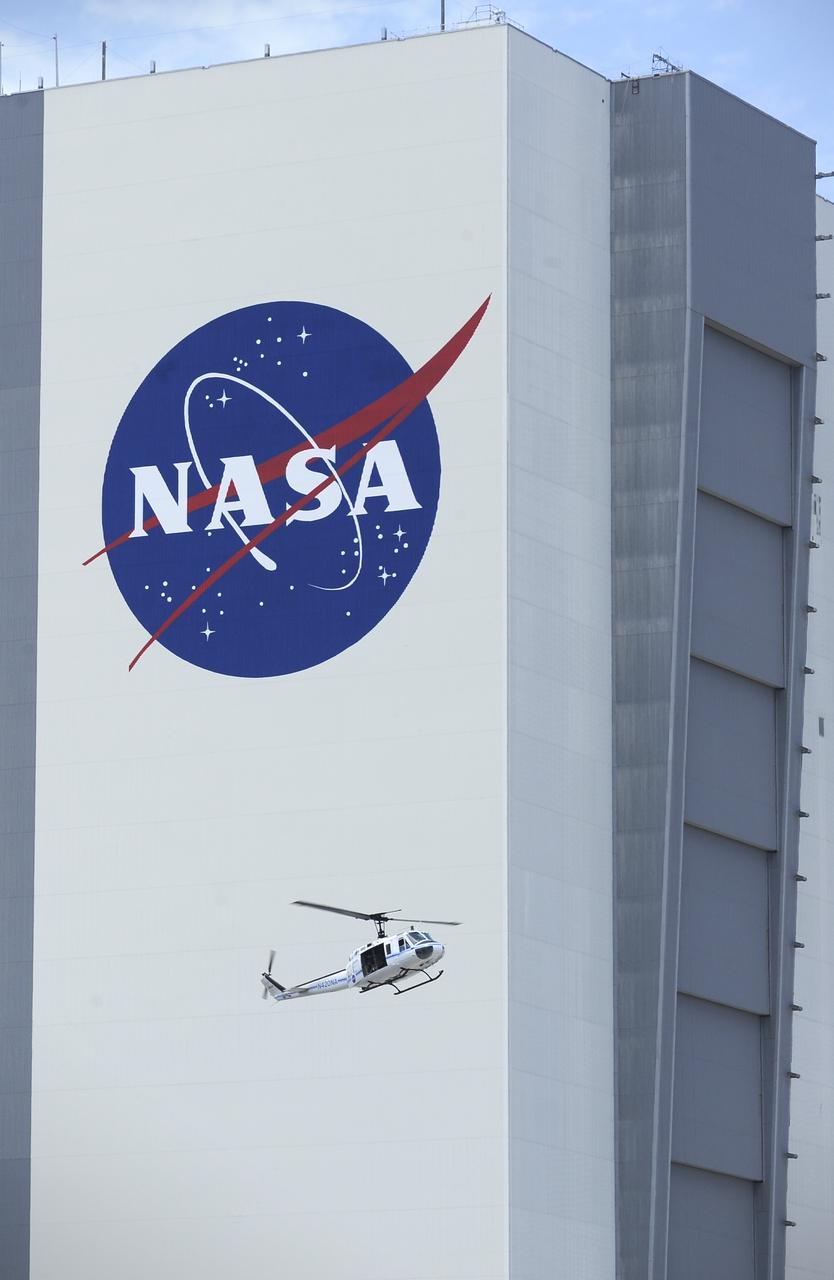
A NASA helicopter escorting the STS-124 crew in their Astronvan to launch pad 39A flies in front of the Vehicle Assembly Building Saturday, May 31, 2008, at the Kennedy Space Center in Cape Canaveral, Fla. Photo Credit: (NASA/Bill Ingalls)
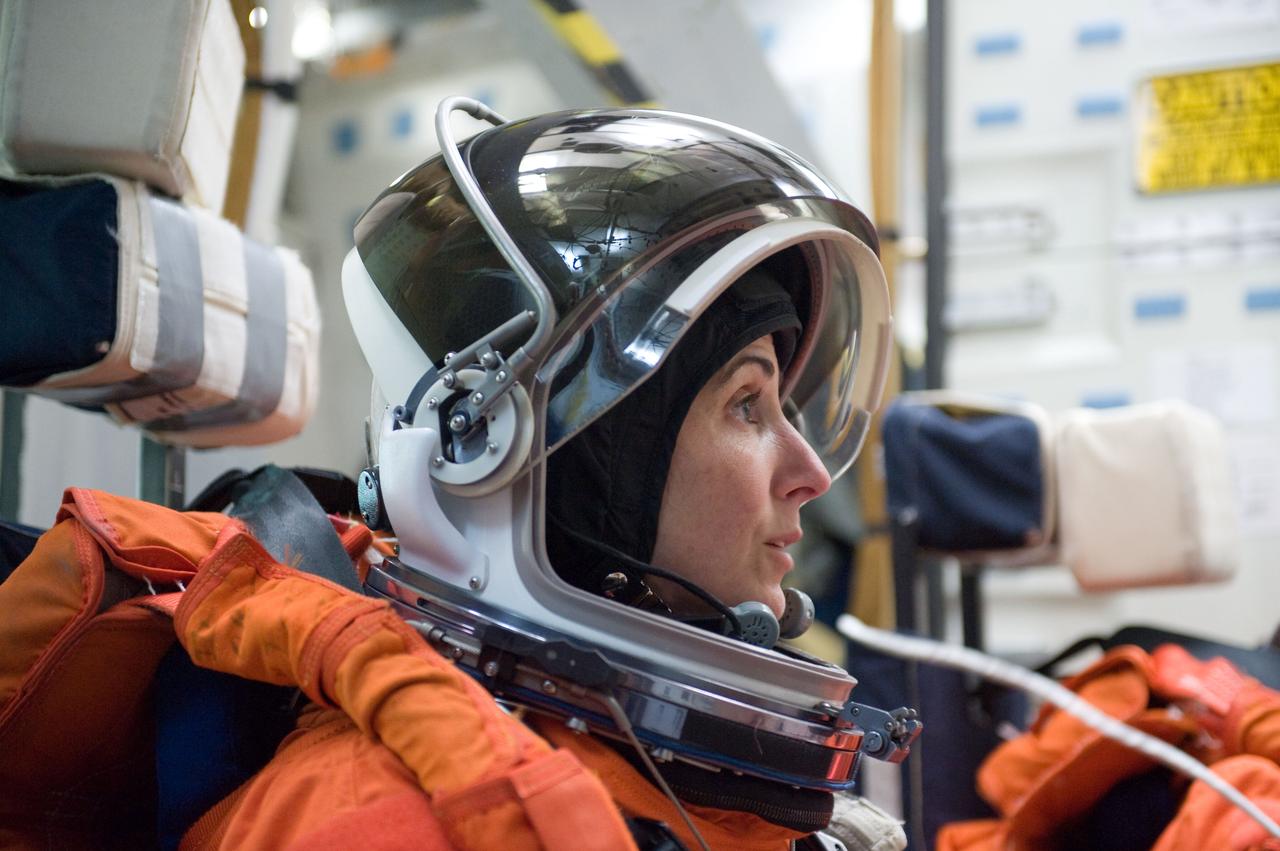
JSC2010-E-046401 (31 March 2010) --- Attired in a training version of her shuttle launch and entry suit, NASA astronaut Nicole Stott, STS-133 mission specialist, participates in a Full Fuselage Trainer (FFT) mock-up training session in the Space Vehicle Mockup Facility at NASA's Johnson Space Center.
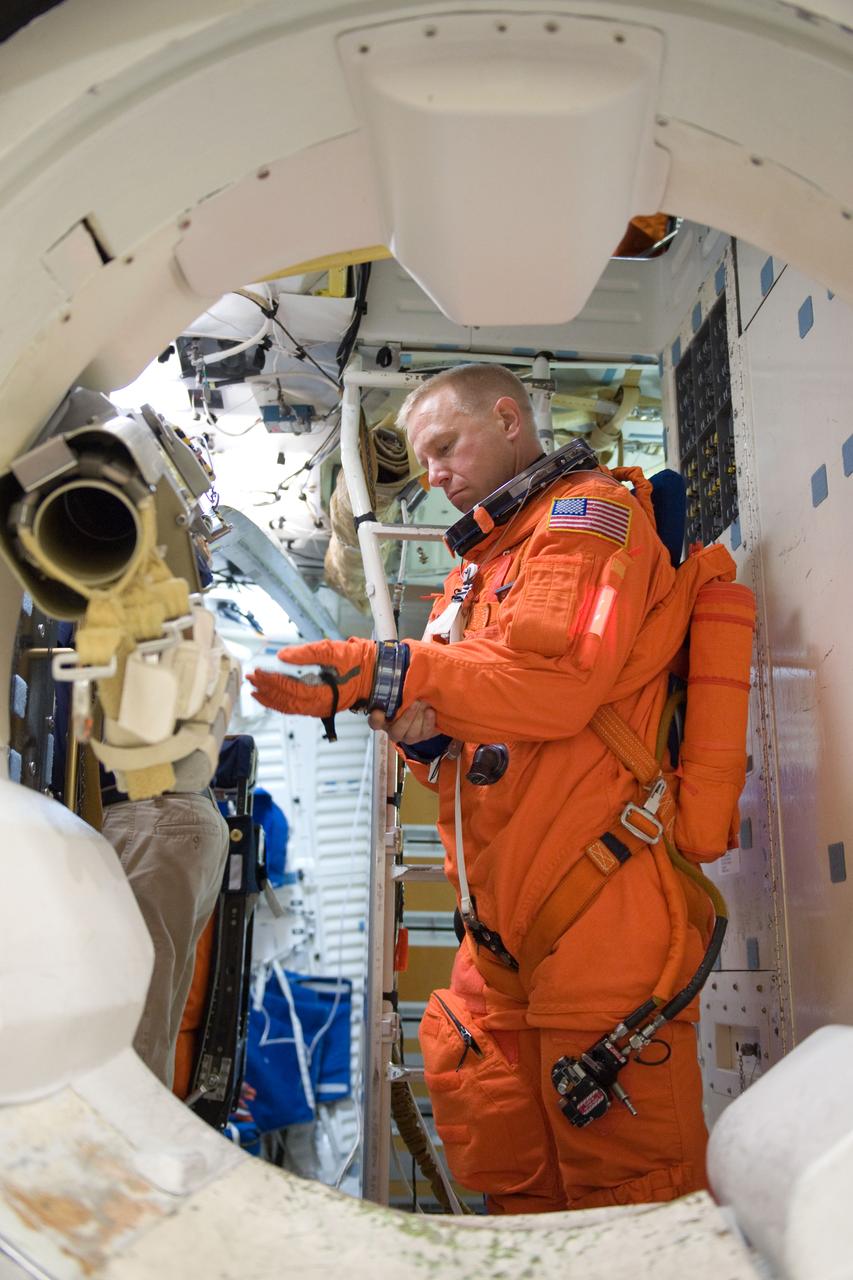
JSC2010-E-046399 (31 March 2010) --- Attired in a training version of his shuttle launch and entry suit, NASA astronaut Tim Kopra, STS-133 mission specialist, participates in a Full Fuselage Trainer (FFT) mock-up training session in the Space Vehicle Mock-up Facility at NASA's Johnson Space Center.
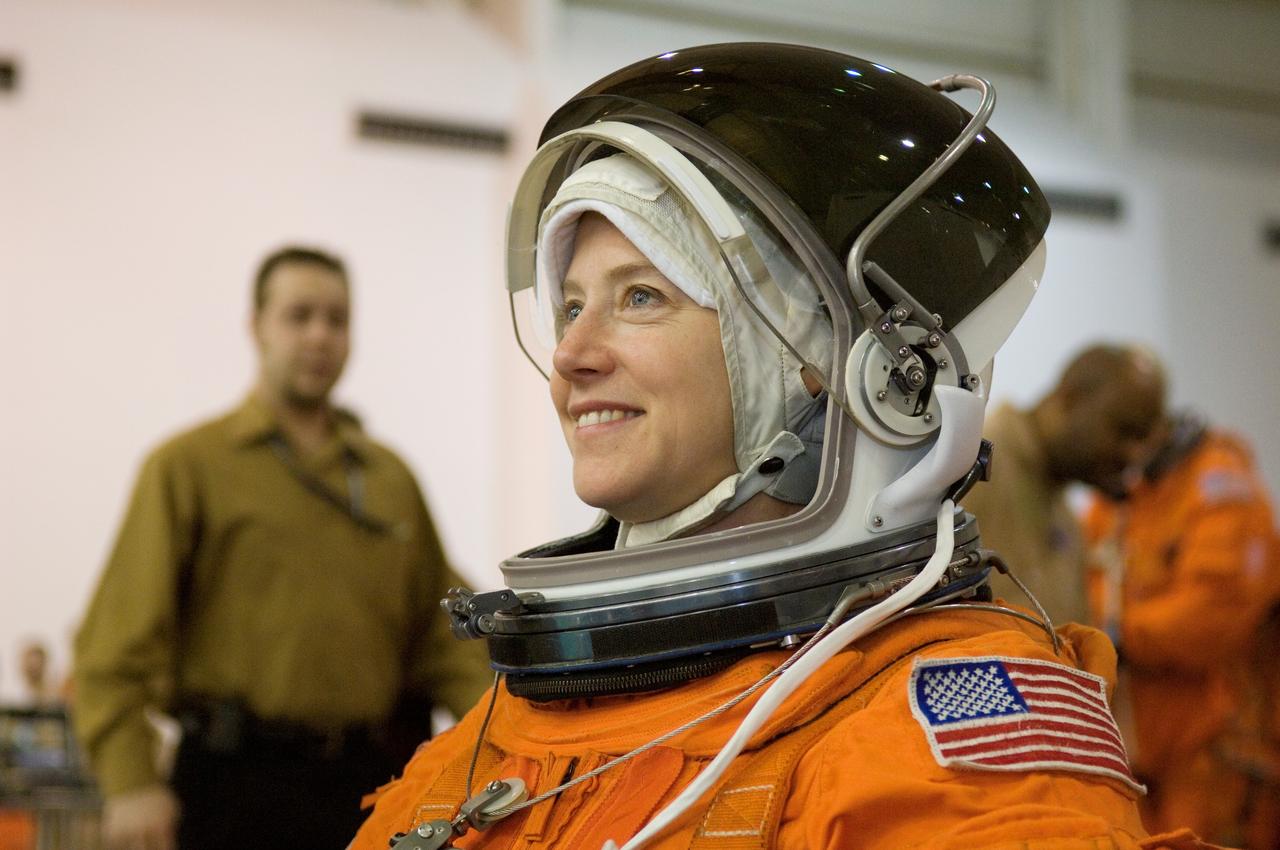
JSC2007-E-06440 (31 Jan. 2007) --- Astronaut Pamela A. Melroy, STS-120 commander, attired in a training version of her shuttle launch and entry suit, awaits the start of a water survival training session in the Neutral Buoyancy Laboratory (NBL) near Johnson Space Center.
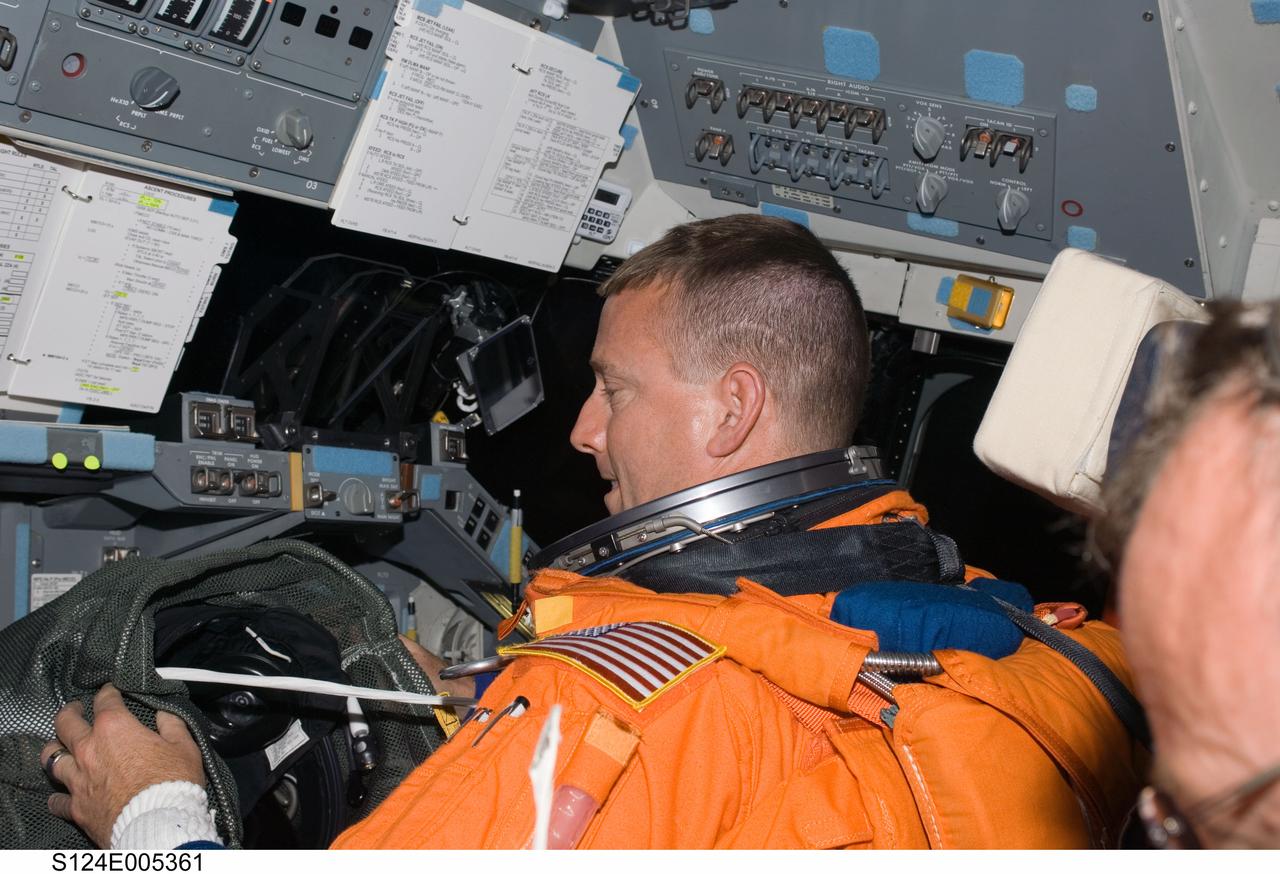
S124-E-005361 (31 May 2008) --- Attired in his shuttle launch and entry suit, astronaut Ken Ham, STS-124 pilot, works at the pilot's station on the forward flight deck of Space Shuttle Discovery during flight day one activities.
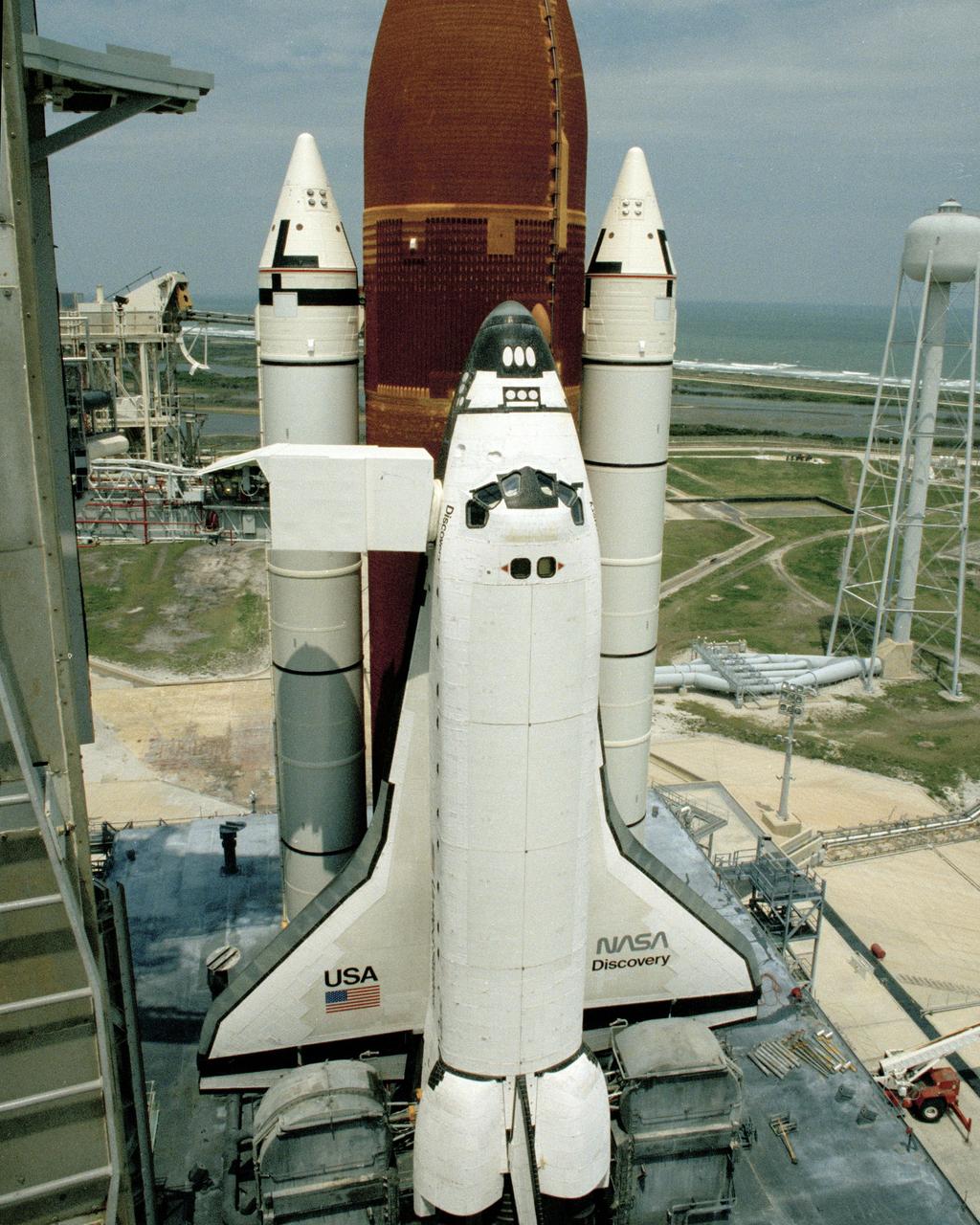
The orbiter Discovery is unveiled as rollback of the Rotating Service Structure begins during final prelaunch preparations at Launch Pad 39B on April 9. Space shuttle mission STS-31, carrying a crew of five and the Hubble Space Telescope, is set to lift off at 6:47 a.m. EDT, April 10. Photo credit: NASA
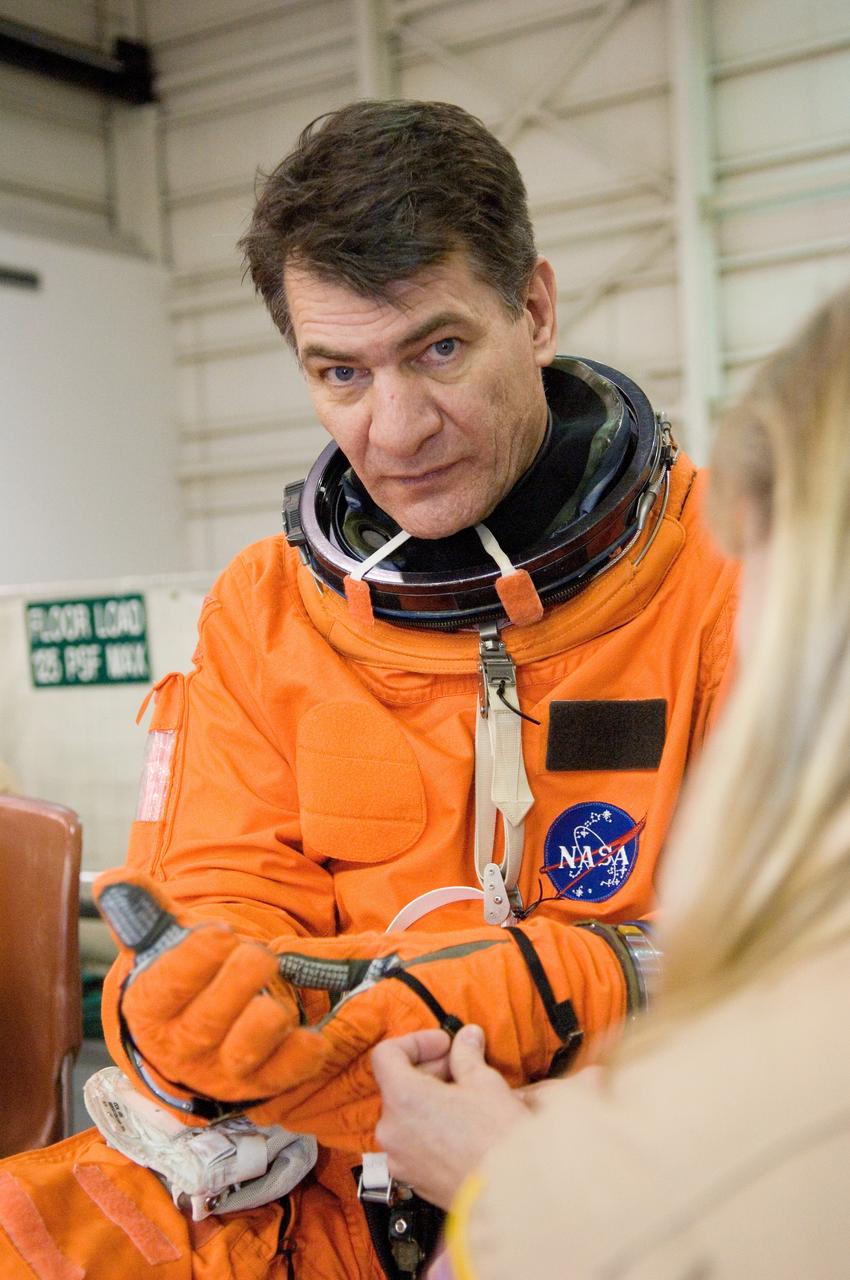
JSC2007-E-06442 (31 Jan. 2007) --- European Space Agency (ESA) astronaut Paolo Nespoli, STS-120 mission specialist, dons a training version of his shuttle launch and entry suit in preparation for a water survival training session in the Neutral Buoyancy Laboratory (NBL) near Johnson Space Center.
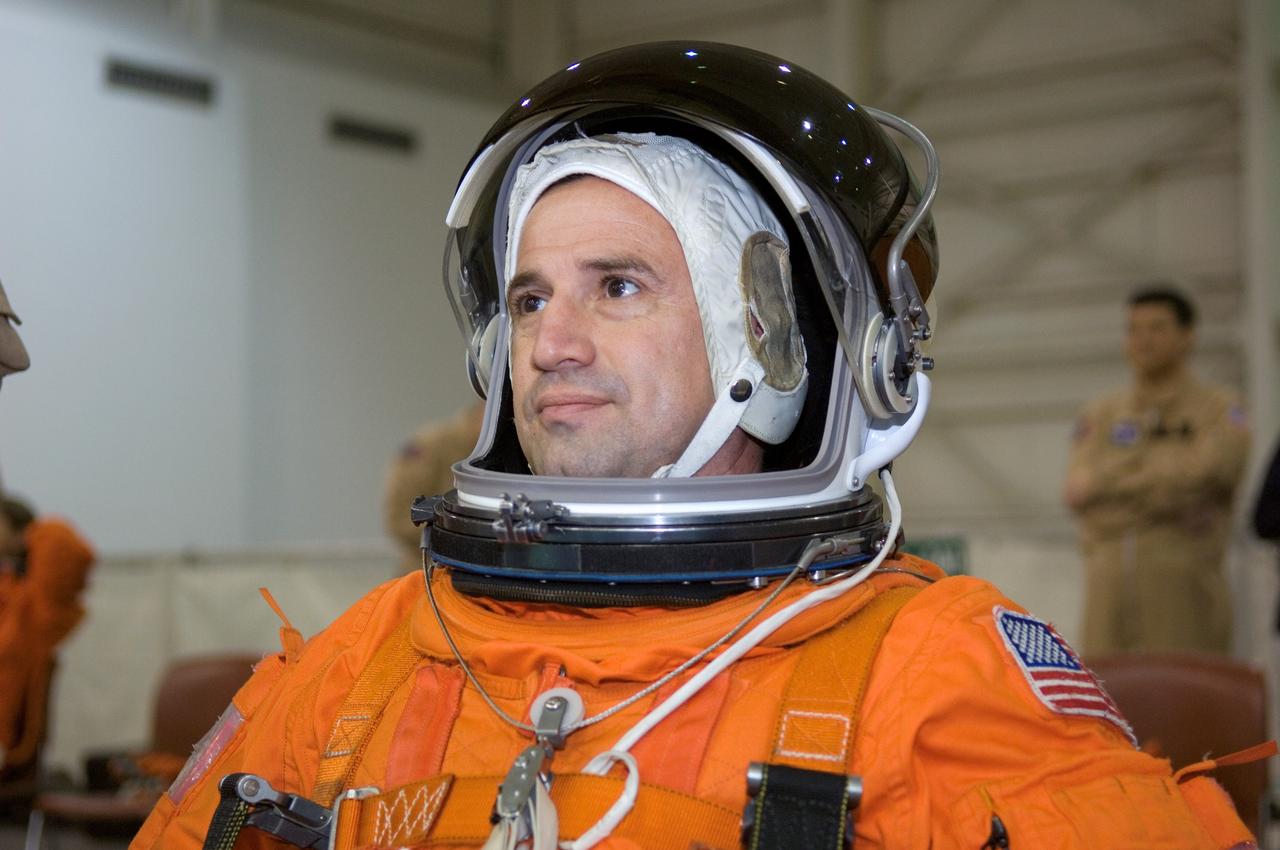
JSC2007-E-06419 (31 Jan. 2007) --- Astronaut George D. Zamka, STS-120 pilot, attired in a training version of his shuttle launch and entry suit, awaits the start of a water survival training session in the Neutral Buoyancy Laboratory (NBL) near Johnson Space Center.
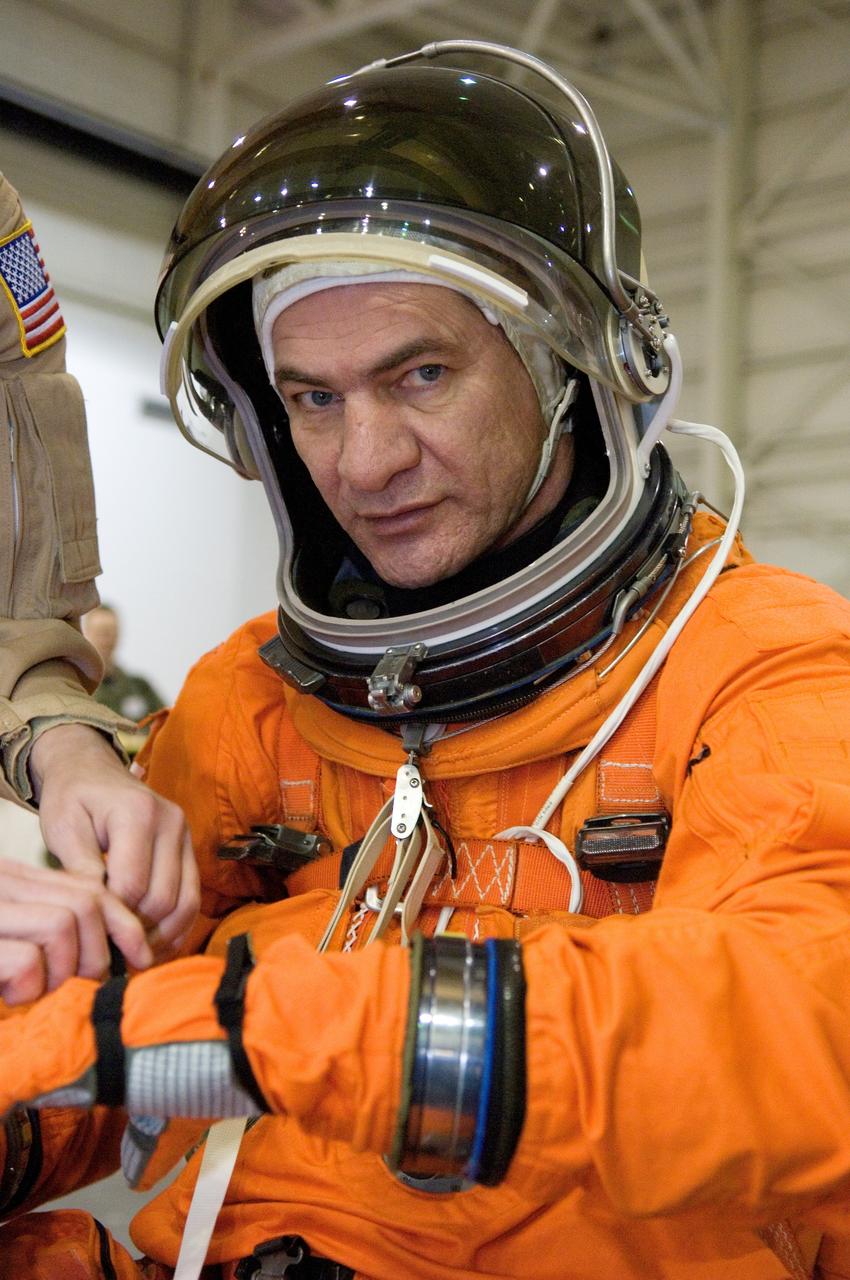
JSC2007-E-06455 (31 Jan. 2007) --- European Space Agency (ESA) astronaut Paolo Nespoli, STS-120 mission specialist, dons a training version of his shuttle launch and entry suit in preparation for a water survival training session in the Neutral Buoyancy Laboratory (NBL) near Johnson Space Center.
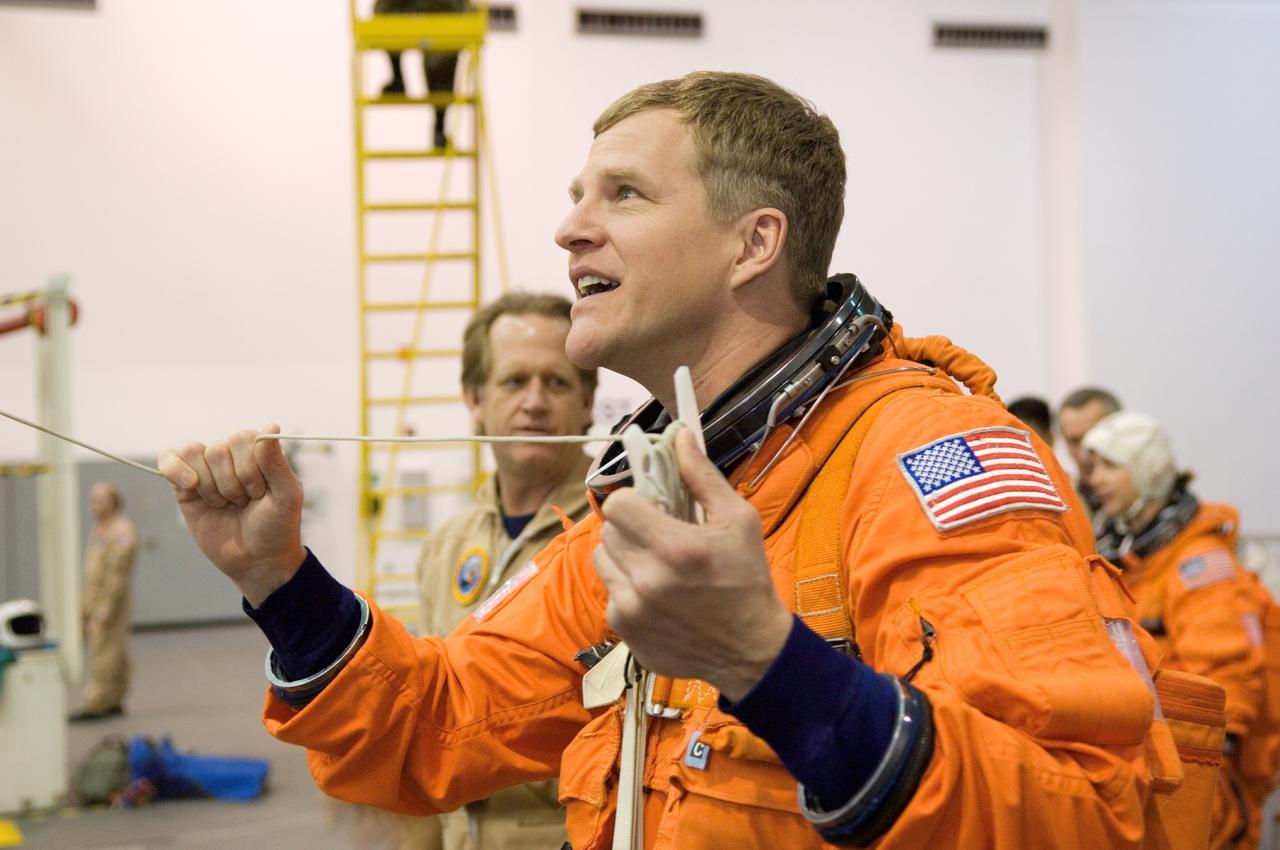
JSC2007-E-06436 (31 Jan. 2007) --- Astronaut Scott E. Parazynski, STS-120 mission specialist, attired in a training version of his shuttle launch and entry suit, works with a pulley during a water survival training session in the Neutral Buoyancy Laboratory (NBL) near Johnson Space Center.
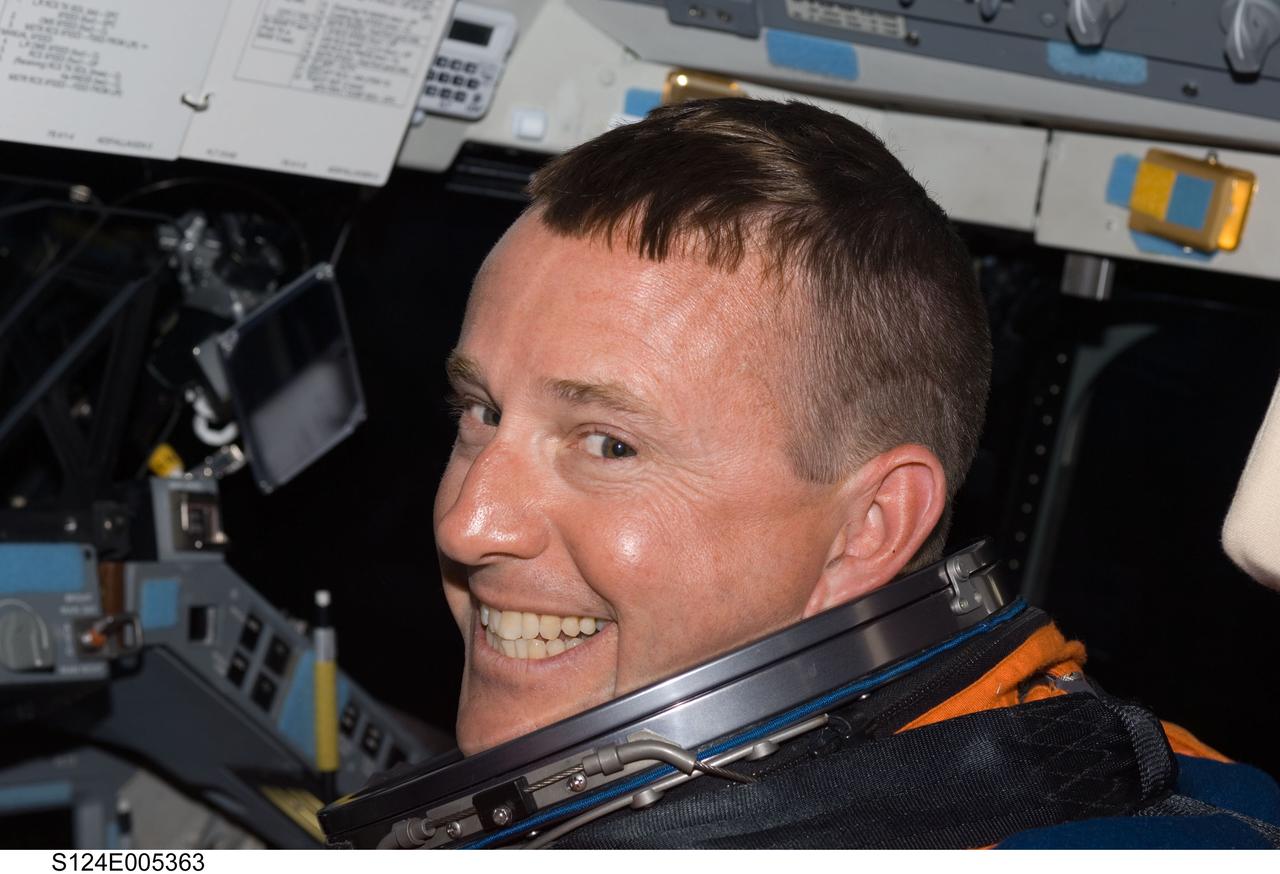
S124-E-005363 (31 May 2008) --- Attired in his shuttle launch and entry suit, astronaut Ken Ham, STS-124 pilot, takes a moment for a photo as he works at the pilot's station on the forward flight deck of Space Shuttle Discovery during flight day one activities.
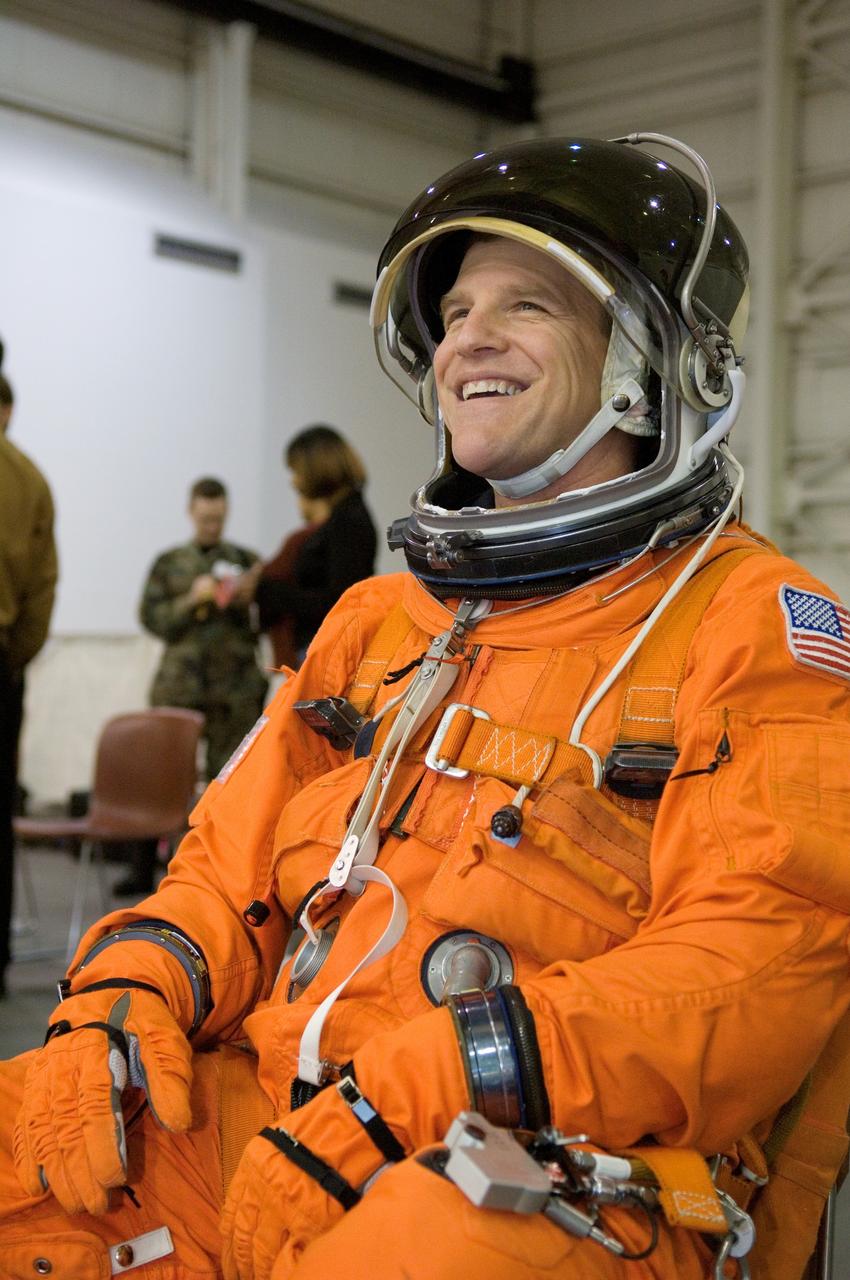
JSC2007-E-06449 (31 Jan. 2007) --- Astronaut Scott E. Parazynski, STS-120 mission specialist, attired in a training version of his shuttle launch and entry suit, awaits the start of a water survival training session in the Neutral Buoyancy Laboratory (NBL) near Johnson Space Center.
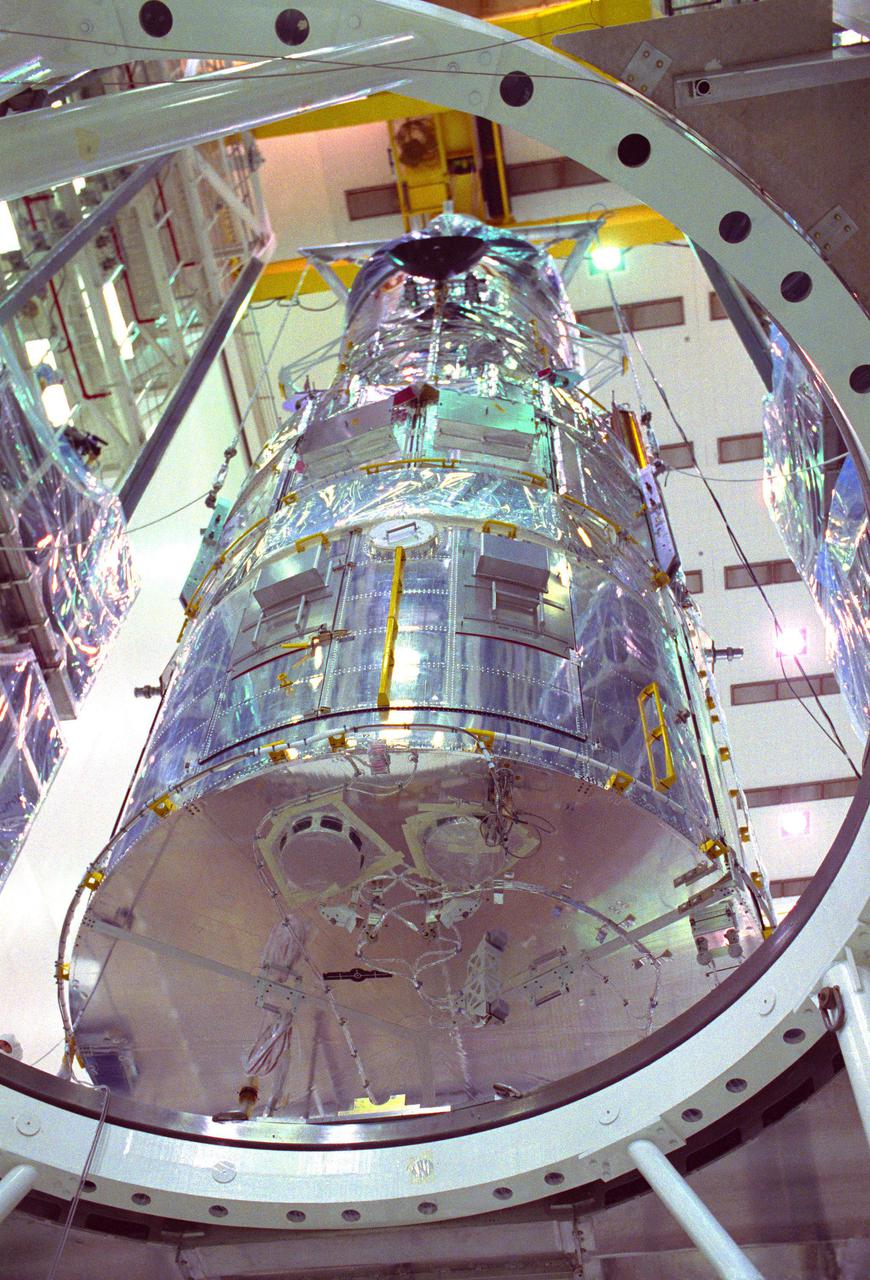
KENNEDY SPACE CENTER, FLA. -- The Hubble Space Telescope (HST) is lifted into the workstands in the Vertical Processing Facility as work begins at KSC to process the 94-inch primary mirror telescope for launch on Discovery on Space Shuttle Mission STS-31 in March 1990.
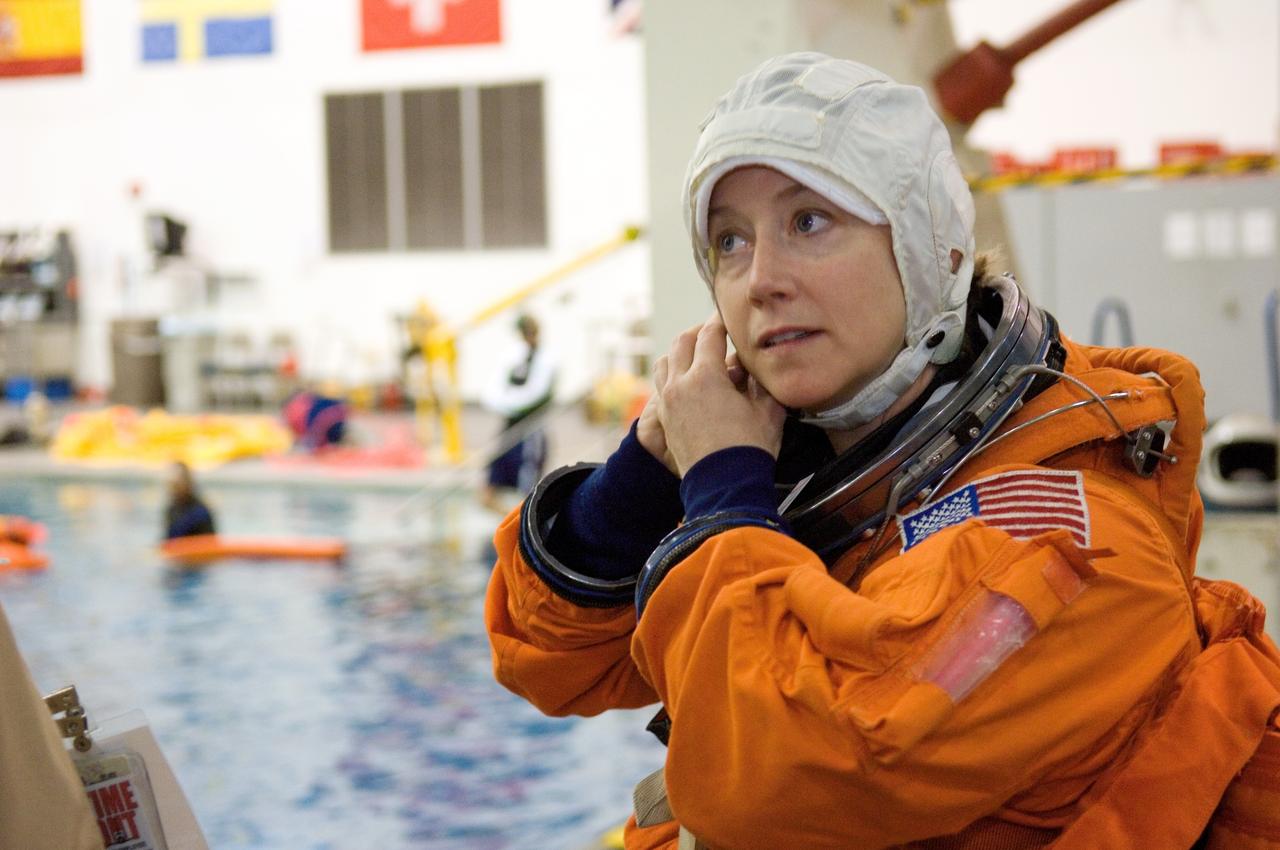
JSC2007-E-06431 (31 Jan. 2007) --- Astronaut Pamela A. Melroy, STS-120 commander, dons a training version of her shuttle launch and entry suit in preparation for a water survival training session in the Neutral Buoyancy Laboratory (NBL) near Johnson Space Center.
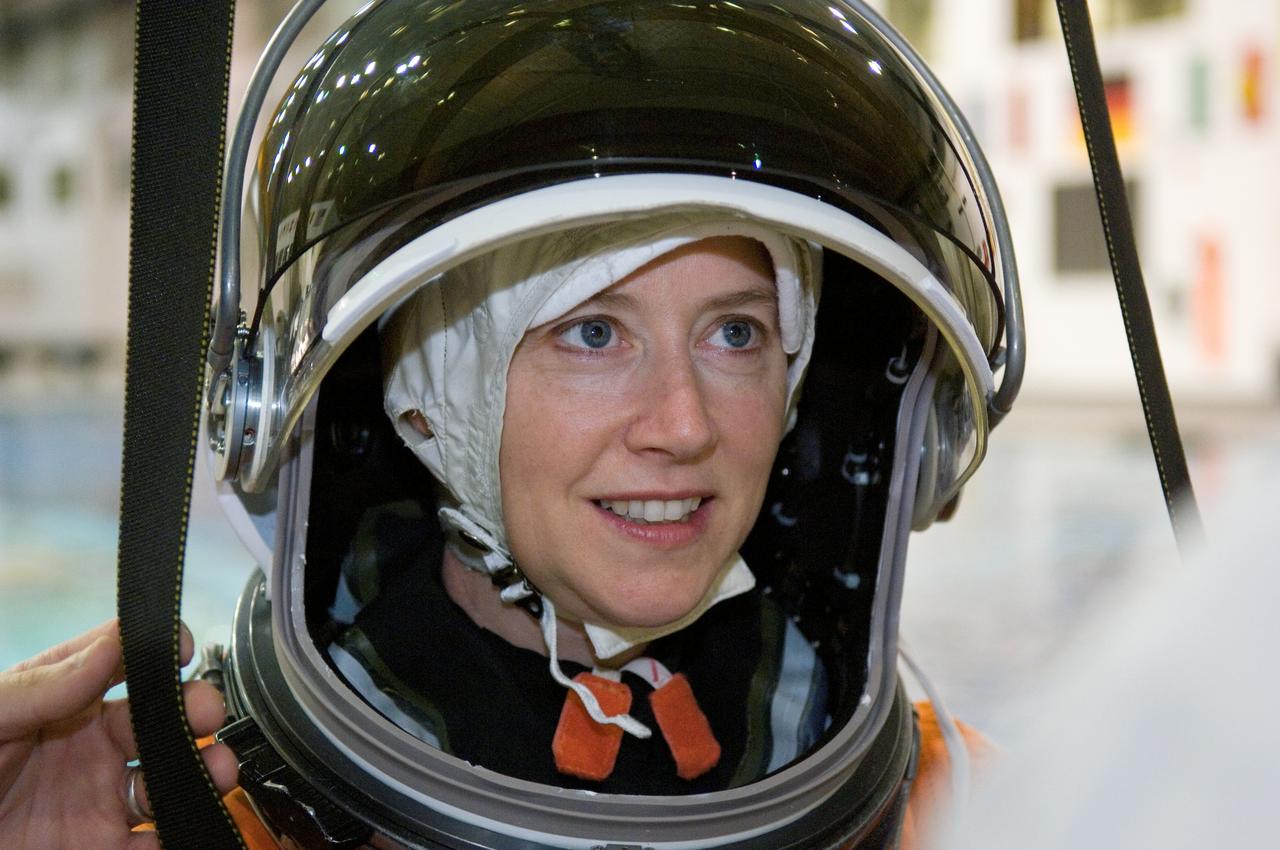
JSC2007-E-06445 (31 Jan. 2007) --- Astronaut Pamela A. Melroy, STS-120 commander, attired in a training version of her shuttle launch and entry suit, awaits the start of a water survival training session in the Neutral Buoyancy Laboratory (NBL) near Johnson Space Center.
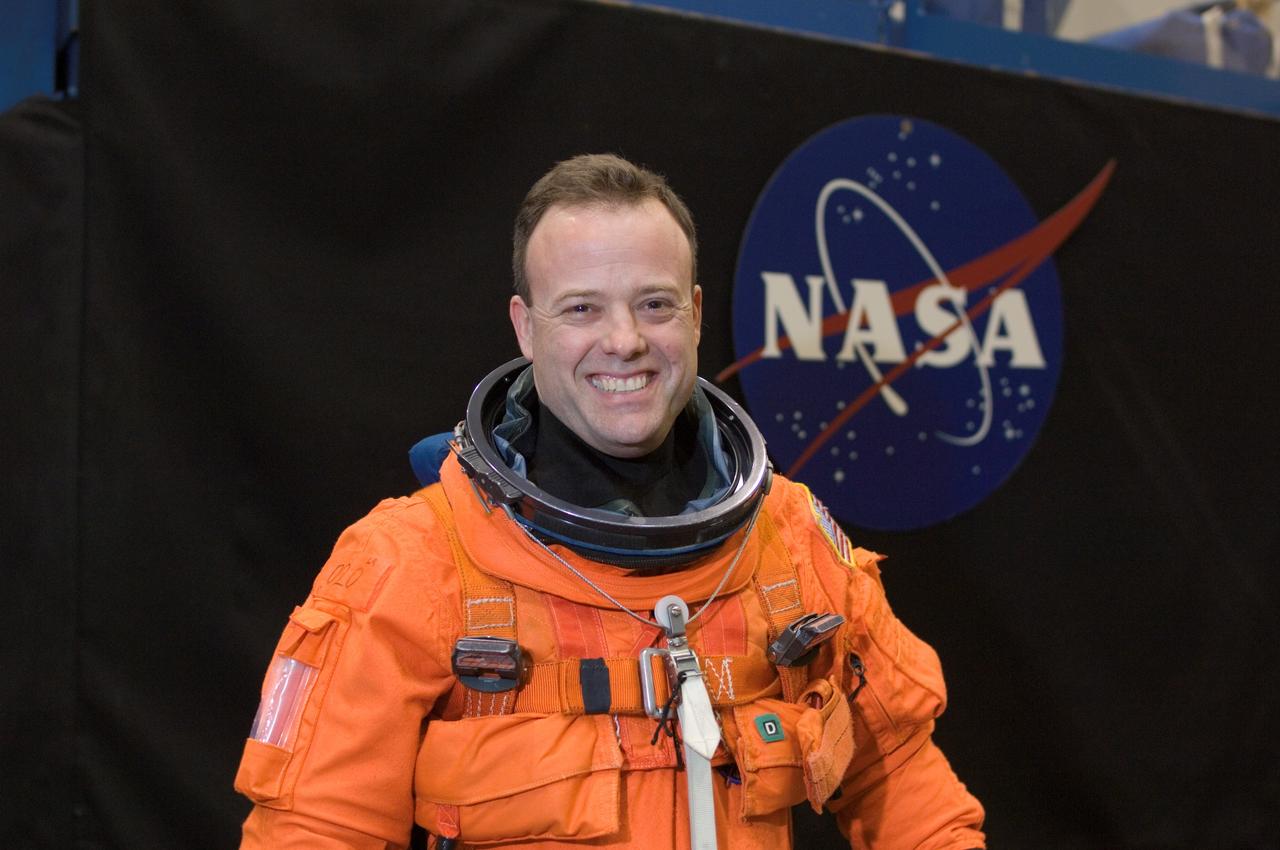
JSC2008-E-009434 (31 Jan. 2008) --- Attired in a training version of his shuttle launch and entry suit, astronaut Ronald J. Garan, STS-124 mission specialist, awaits the start of a training session in the Space Vehicle Mockup Facility at Johnson Space Center.
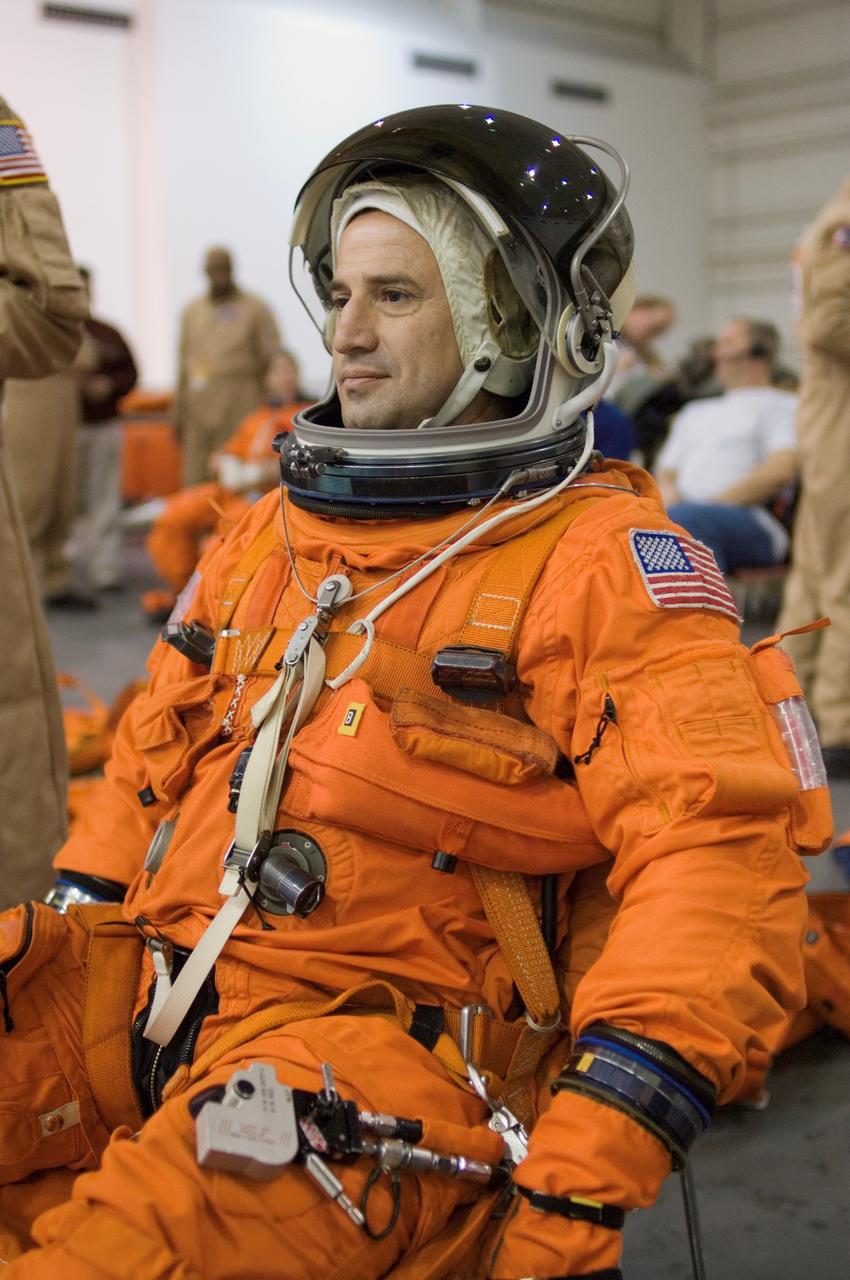
JSC2007-E-06475 (31 Jan. 2007) --- Astronaut George D. Zamka, STS-120 pilot, attired in a training version of his shuttle launch and entry suit, awaits the start of a water survival training session in the Neutral Buoyancy Laboratory (NBL) near Johnson Space Center.
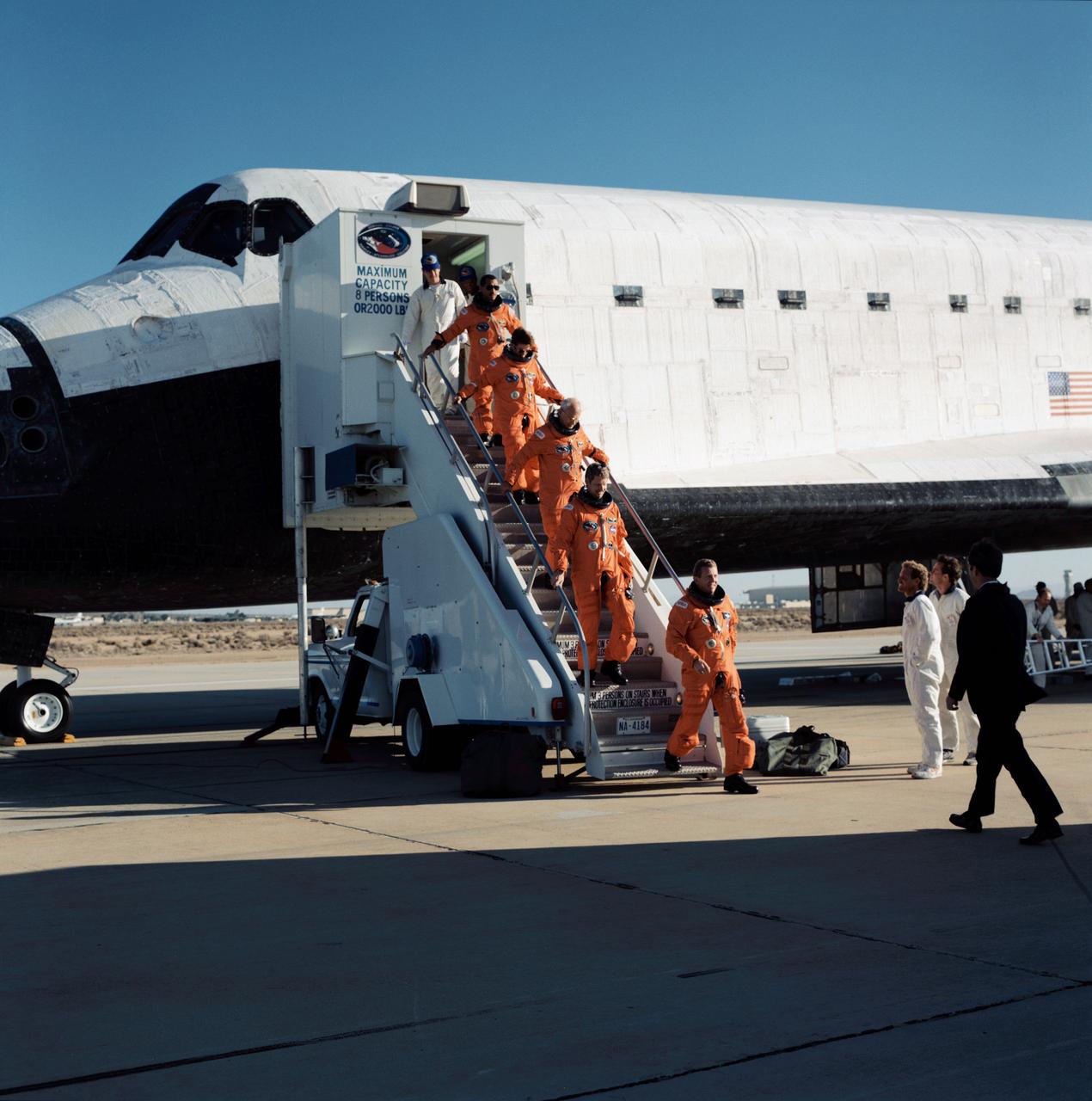
STS031-S-129 (29 April 1990) --- The astronauts of STS-31 egress the Space Shuttle Discovery following a smooth landing on the runway at Edwards Air Force Base to complete a highly successful five-day mission. Approaching from the far right to greet the crew is Dr. William B. Lenoir, NASA's Acting Associate Administrator for Space Flight. Leading the way down the steps is astronaut Loren J. Shriver, mission commander, followed by (in order from bottom of steps) astronauts Steven A. Hawley, Bruce McCandless II and Kathryn D. Sullivan, all mission specialists; and Charles F. Bolden Jr., pilot. Theirs was an Earth-orbital flight during which the Hubble Space Telescope (HST) was sent toward its 15-year mission.
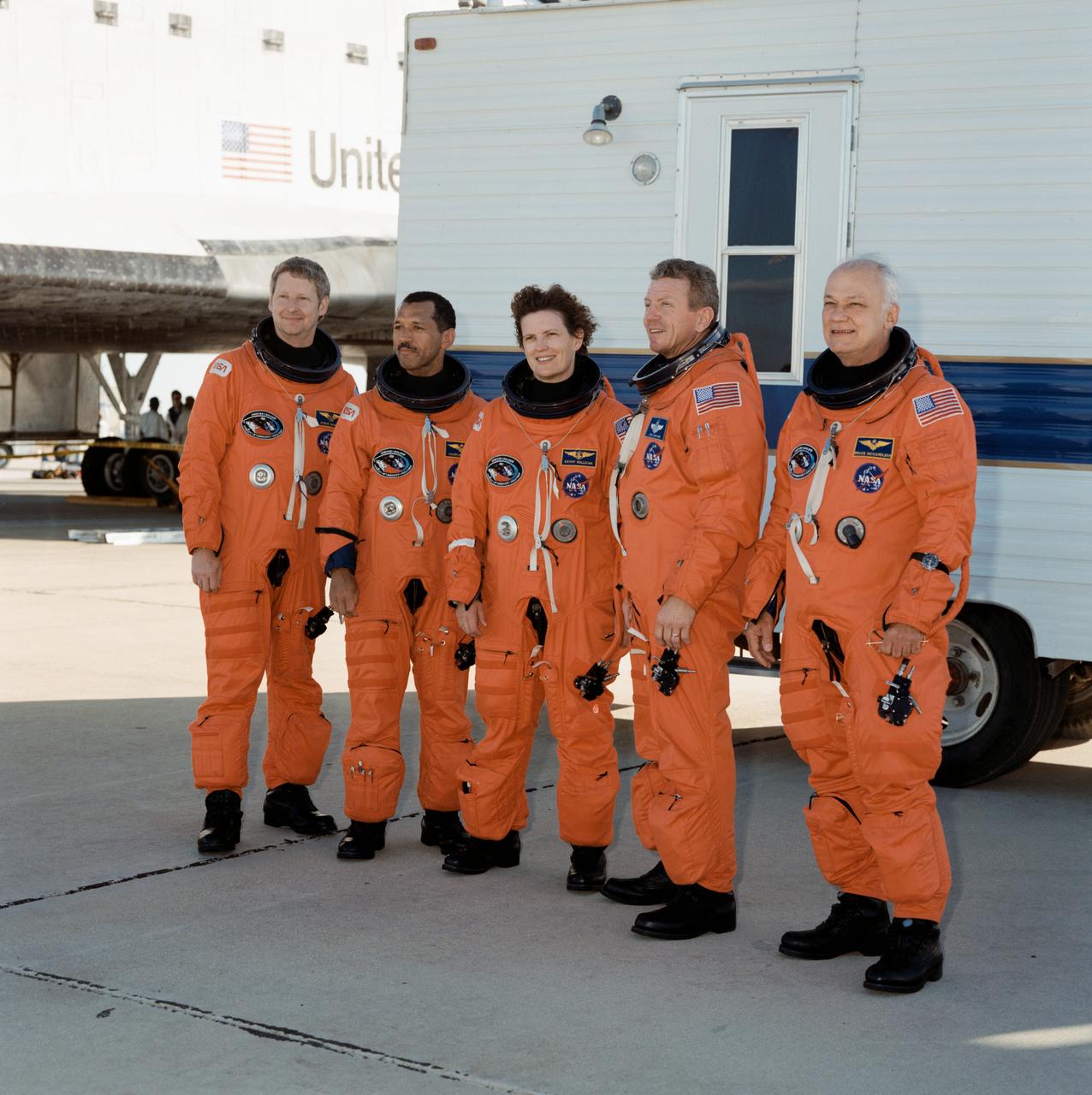
STS031-S-130 (29 April 1990) --- The astronauts of STS-31 pose for a quick photo near the Space Shuttle Discovery following a smooth landing on the runway at Edwards Air Force Base to complete a highly successful five-day mission. Pictured, left to right, are Astronauts Steven A. Hawley, Charles F. Bolden Jr., Kathryn D. Sullivan, Loren J. Shriver, and Bruce McCandless II. Theirs was an Earth orbital flight during which the Hubble Space Telescope (HST) was sent toward its 15-year mission.
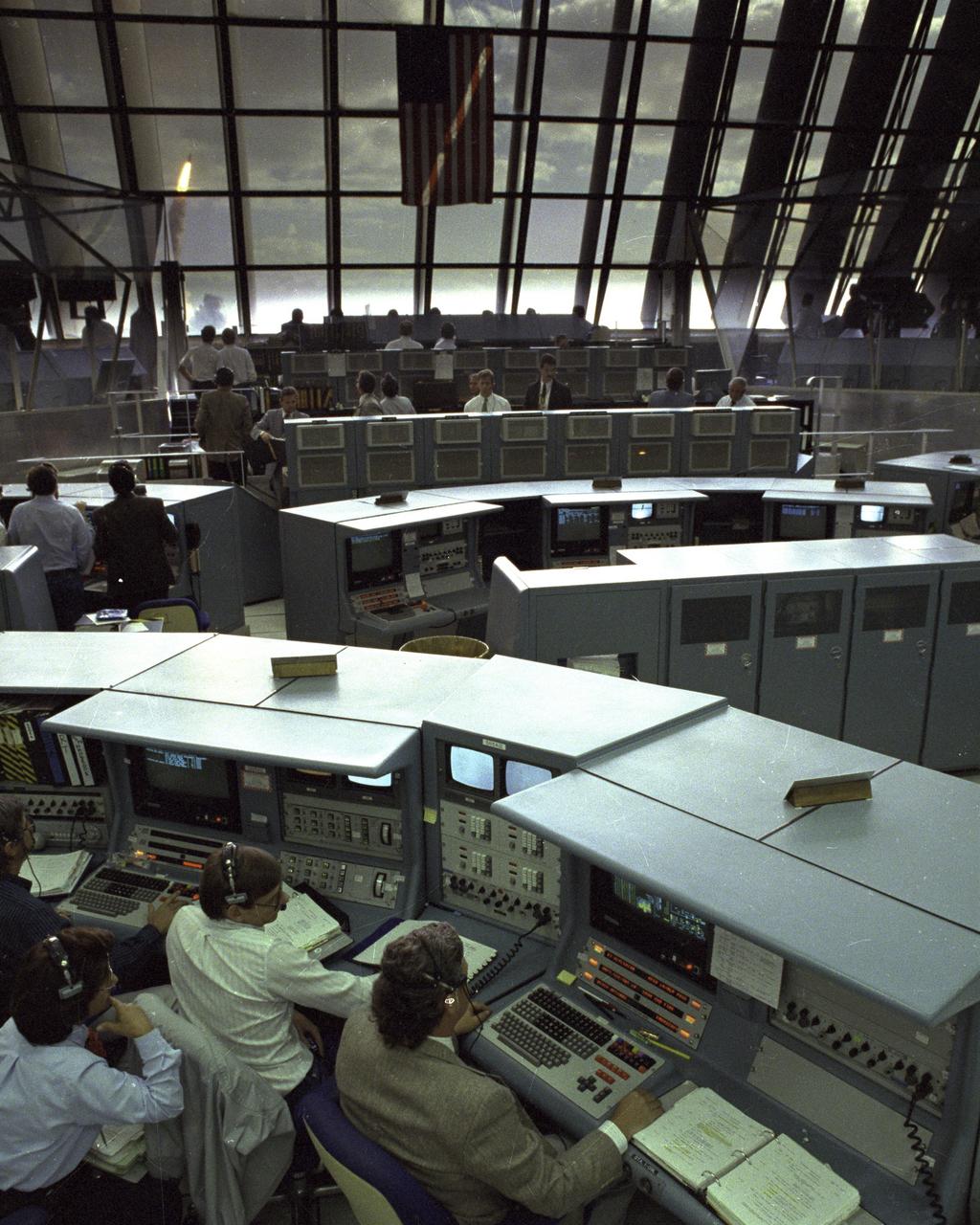
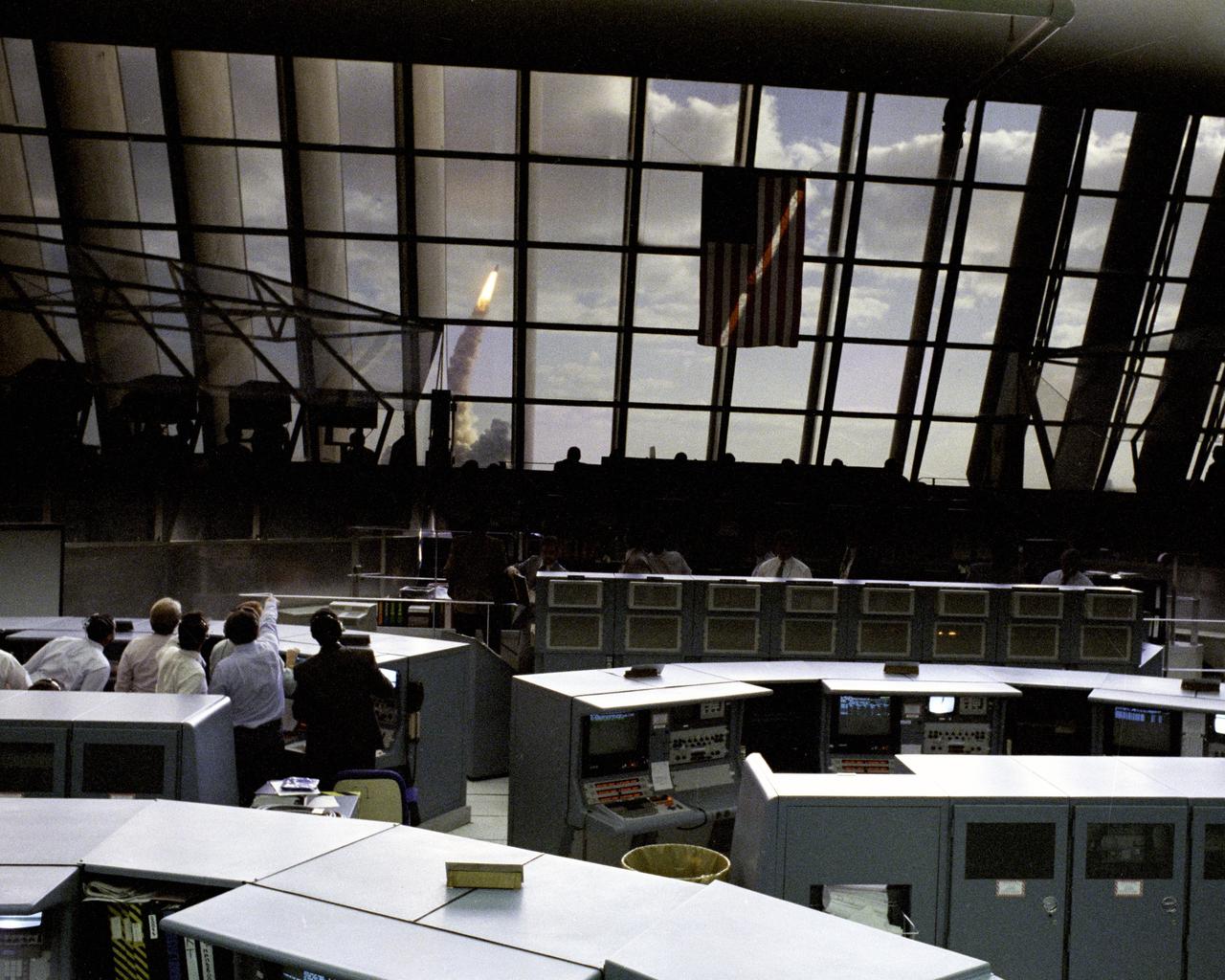
Through the large window panes of Firing Room 1, KSC launch team members reap the rewards of their work with a glimpse of the space shuttle Discovery soaring into the sky. Discovery was launched for the tenth time at 8:34 a.m. EDT on April 24 beginning the five-day STS-31 mission to deploy the Hubble Space Telescope. A ray of morning sunlight highlights the red and white stripes of Old Glory hanging high in the Firing Room. Launch team members overcame a last minute challenge in the STS-31 countdown when software detected a main propulsion system valve was out of position. The situation was quickly corrected and verified by the team from consoles in the Firing Room and the countdown was returned in a matter of minutes. Photo credit: NASA
Through the large window panes of Firing Room 1, KSC launch team members reap the rewards of their work with a glimpse of the space shuttle Discovery soaring into the sky. Discovery was launched for the tenth time at 8:34 a.m. EDT on April 24 beginning the five-day STS-31 mission to deploy the Hubble Space Telescope. A ray of morning sunlight highlights the red and white stripes of Old Glory hanging high in the Firing Room. Launch team members overcame a last minute challenge in the STS-31 countdown when software detected a main propulsion system valve was out of position. The situation was quickly corrected and verified by the team from consoles in the Firing Room and the countdown was returned in a matter of minutes. Photo credit: NASA
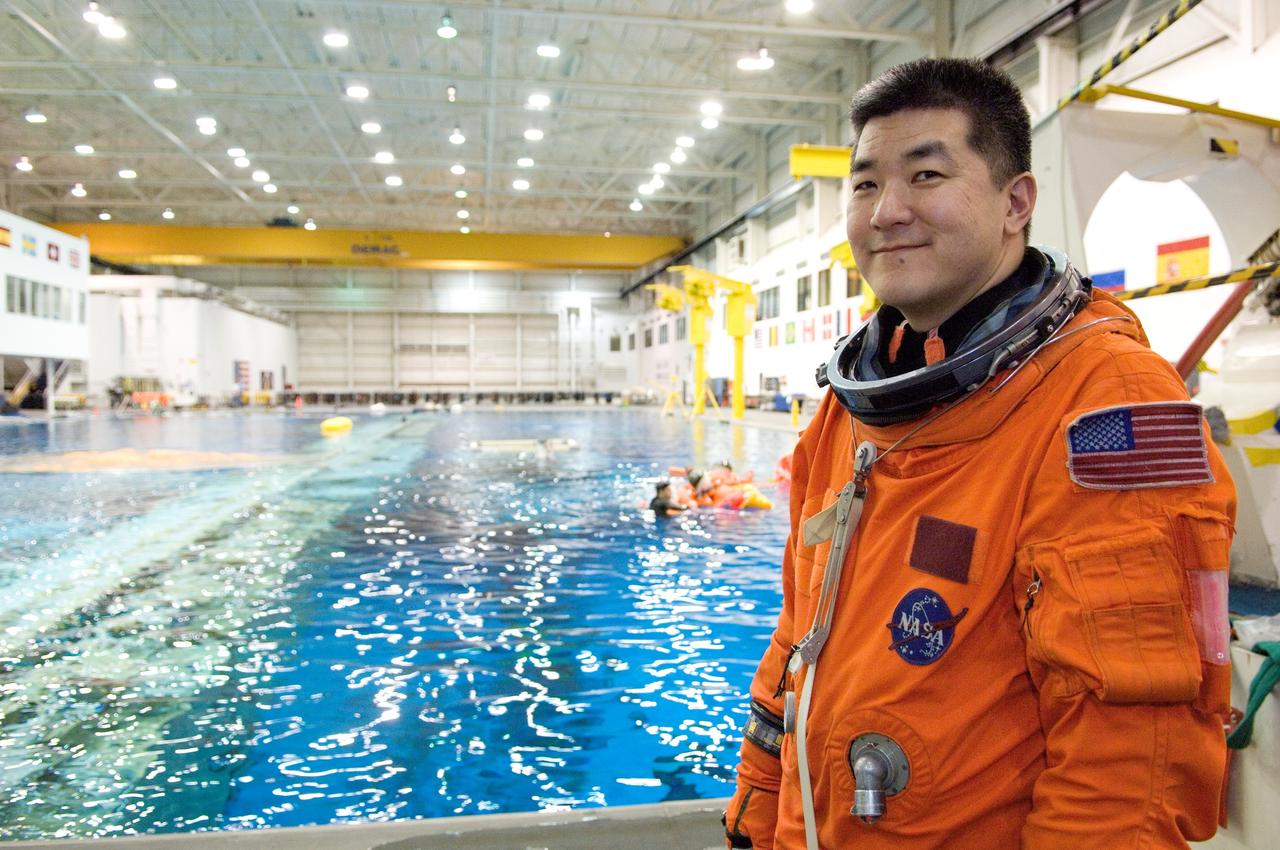
JSC2007-E-06461 (31 Jan. 2007) --- Attired in a training version of his shuttle launch and entry suit, astronaut Daniel M. Tani, Expedition 16 flight engineer, awaits the start of a water survival training session in the Neutral Buoyancy Laboratory (NBL) near Johnson Space Center. Tani will join Expedition 16 as flight engineer after launching to the International Space Station aboard Atlantis on mission STS-120 and will return home aboard Discovery on mission STS-122.

KENNEDY SPACE CENTER, FLA. -- In the Space Station Processing Facility, an overhead crane lifts the cover off of the SPACEHAB module, which rests on a transport vehicle. The module, part of the payload on mission STS-106, will be placed in the payload canister for transport to the launch pad. STS-106 is scheduled to launch Sept. 8 at 8:31 a.m. EDT

KENNEDY SPACE CENTER, FLA. -- A worker in the Space Station Processing Facility checks the position of the SPACEHAB module as it is lowered into the payload canister below. The module, part of the payload on mission STS-106, will be placed in the payload canister for transport to the launch pad. STS-106 is scheduled to launch Sept. 8 at 8:31 a.m. EDT. During the mission to the International Space Station, the crew will complete service module support tasks on orbit, transfer supplies and outfit the Space Station for the first long-duration crew
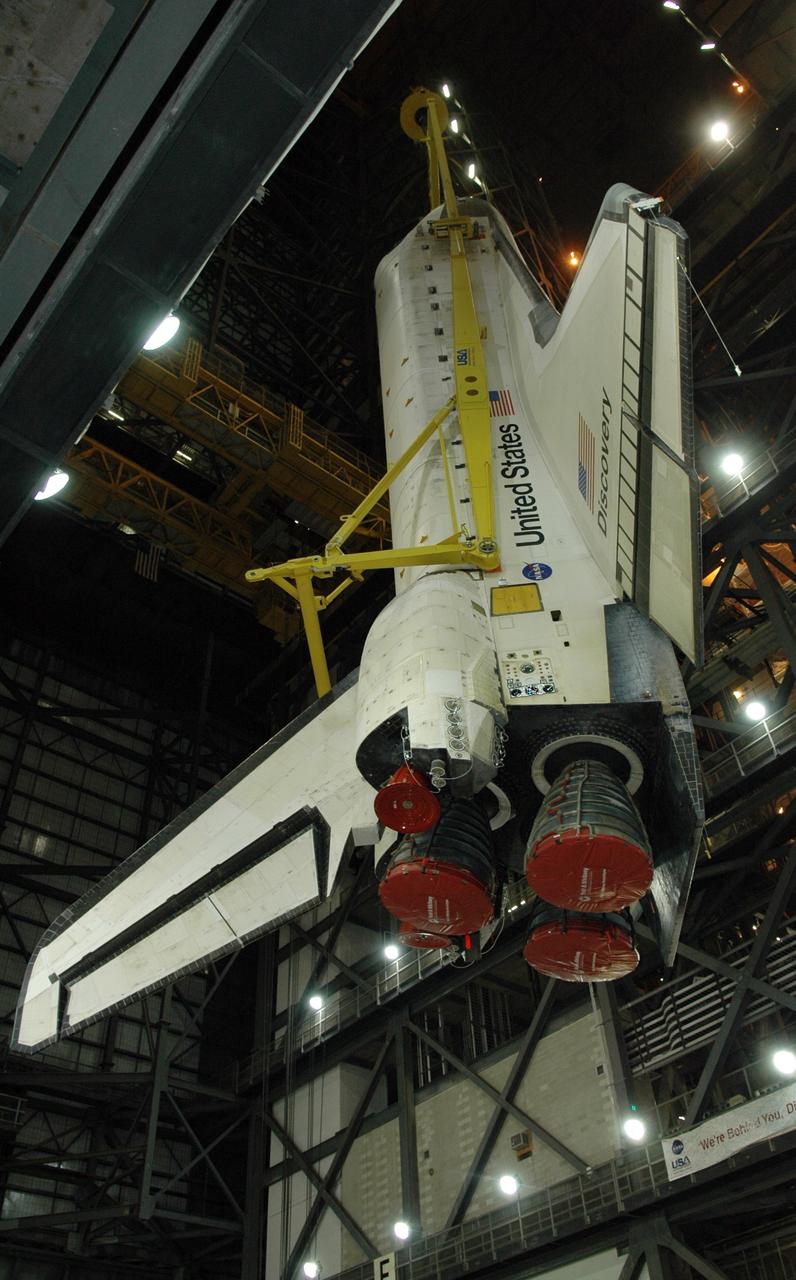
CAPE CANAVERAL, Fla. -- In the Vehicle Assembly Building at NASA's Kennedy Space Center, a crane lifts space shuttle Discovery into the upper levels. Discovery will be lowered into high bay 3 and mated to the external tank and solid rocket boosters waiting there in preparation for launch on the upcoming STS-124 mission to the International Space Station. On the mission, the STS-124 crew will transport the Japanese Experiment Module - Pressurized Module and the Japanese Remote Manipulator System to the space station. Launch of Discovery is targeted for May 31 Photo credit: NASA/Jim Grossmann
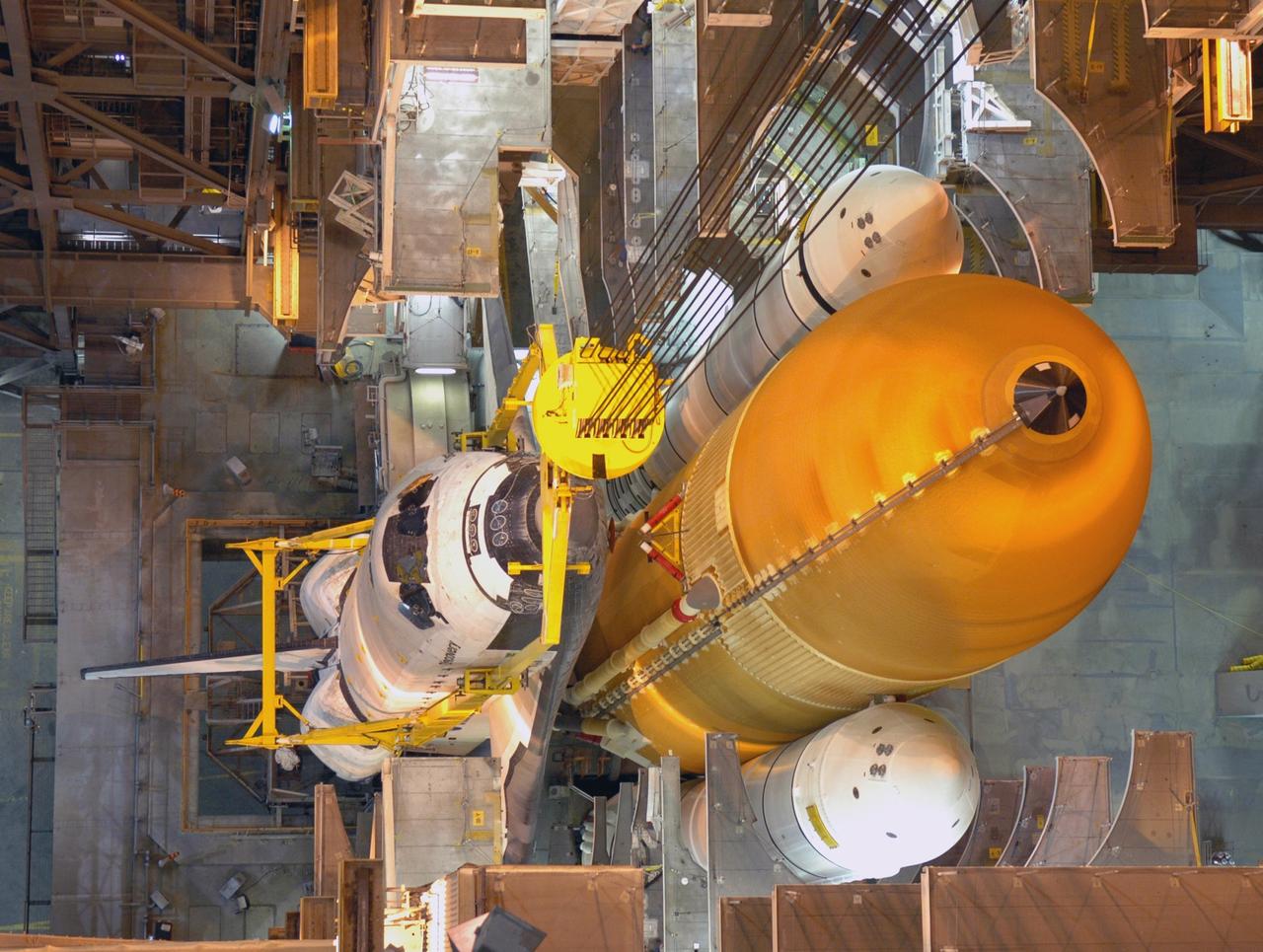
CAPE CANAVERAL, Fla. – In high bay 3 of the Vehicle Assembly Building at NASA's Kennedy Space Center, space shuttle Discovery comes to rest on the mobile launcher platform in front of the solid rocket boosters and external tank. The stacking is in preparation for the launch on the upcoming STS-124 mission to the International Space Station. On the mission, the STS-124 crew will transport the Japanese Experiment Module - Pressurized Module and the Japanese Remote Manipulator System to the space station. Launch of Discovery is targeted for May 31 Photo credit: NASA/Jim Grossmann
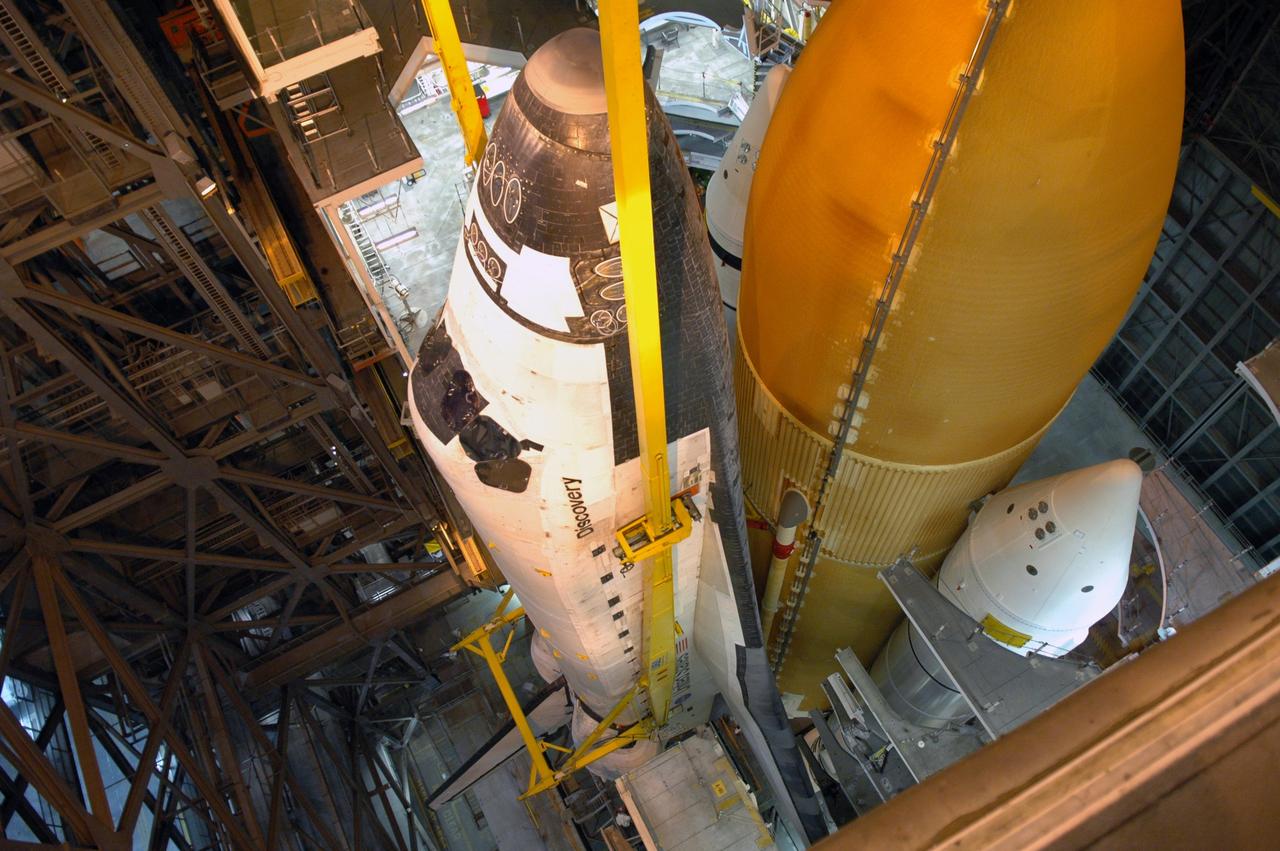
CAPE CANAVERAL, Fla. – In high bay 3 of the Vehicle Assembly Building at NASA's Kennedy Space Center, space shuttle Discovery continues to be lowered onto the mobile launcher platform in front of the solid rocket boosters and external tank. The stacking is in preparation for the launch on the upcoming STS-124 mission to the International Space Station. On the mission, the STS-124 crew will transport the Japanese Experiment Module - Pressurized Module and the Japanese Remote Manipulator System to the space station. Launch of Discovery is targeted for May 31 Photo credit: NASA/Jim Grossmann
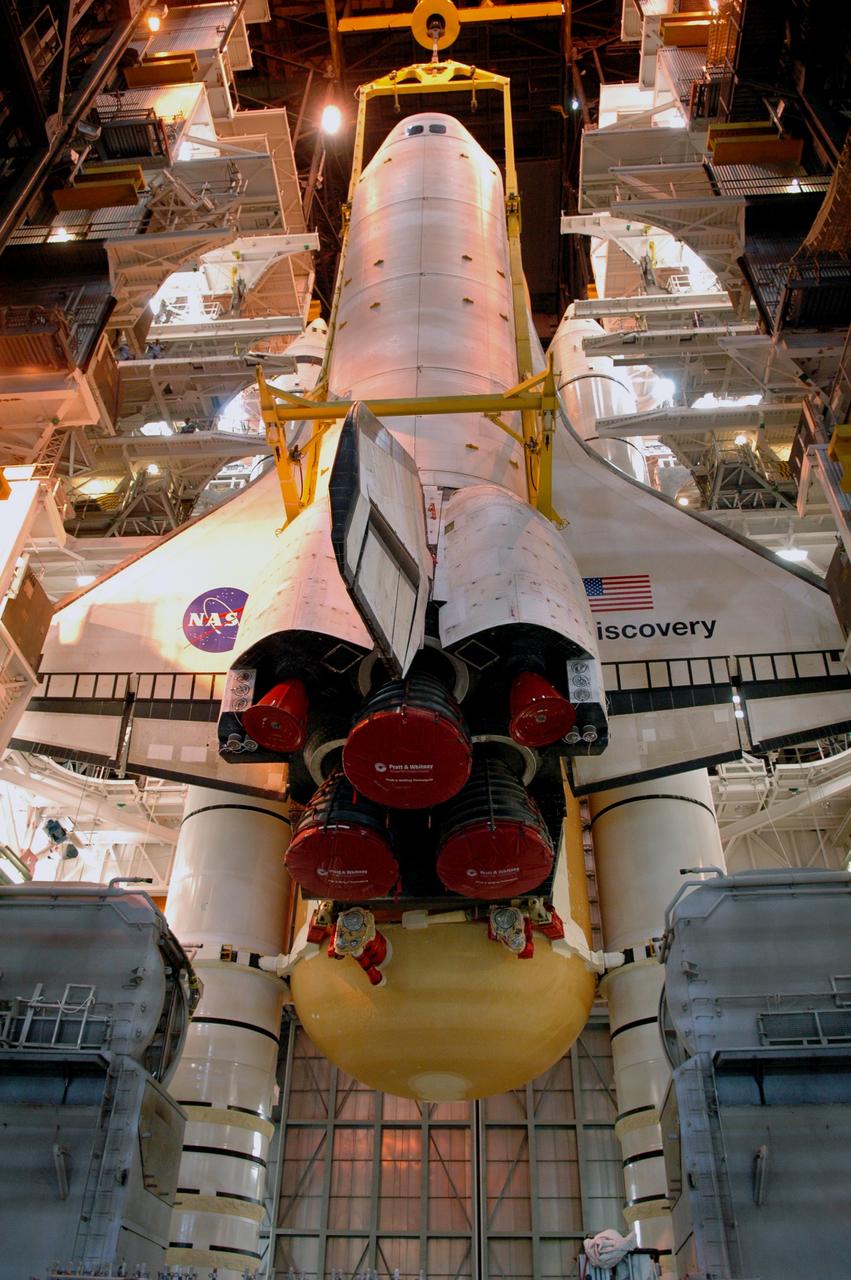
CAPE CANAVERAL, Fla. – In high bay 3 of the Vehicle Assembly Building at NASA's Kennedy Space Center, space shuttle Discovery continues to be lowered onto the mobile launcher platform in front of the solid rocket boosters and external tank. The stacking is in preparation for the launch on the upcoming STS-124 mission to the International Space Station. On the mission, the STS-124 crew will transport the Japanese Experiment Module - Pressurized Module and the Japanese Remote Manipulator System to the space station. Launch of Discovery is targeted for May 31 Photo credit: NASA/Jim Grossmann

KENNEDY SPACE CENTER, FLA. -- Workers in the Space Station Processing Facility check the progress of the SPACEHAB module as it is lowered toward the payload canister below. The module, part of the payload on mission STS-106, will be placed in the payload canister for transport to the launch pad. STS-106 is scheduled to launch Sept. 8 at 8:31 a.m. EDT. During the mission to the International Space Station, the crew will complete service module support tasks on orbit, transfer supplies and outfit the Space Station for the first long-duration crew
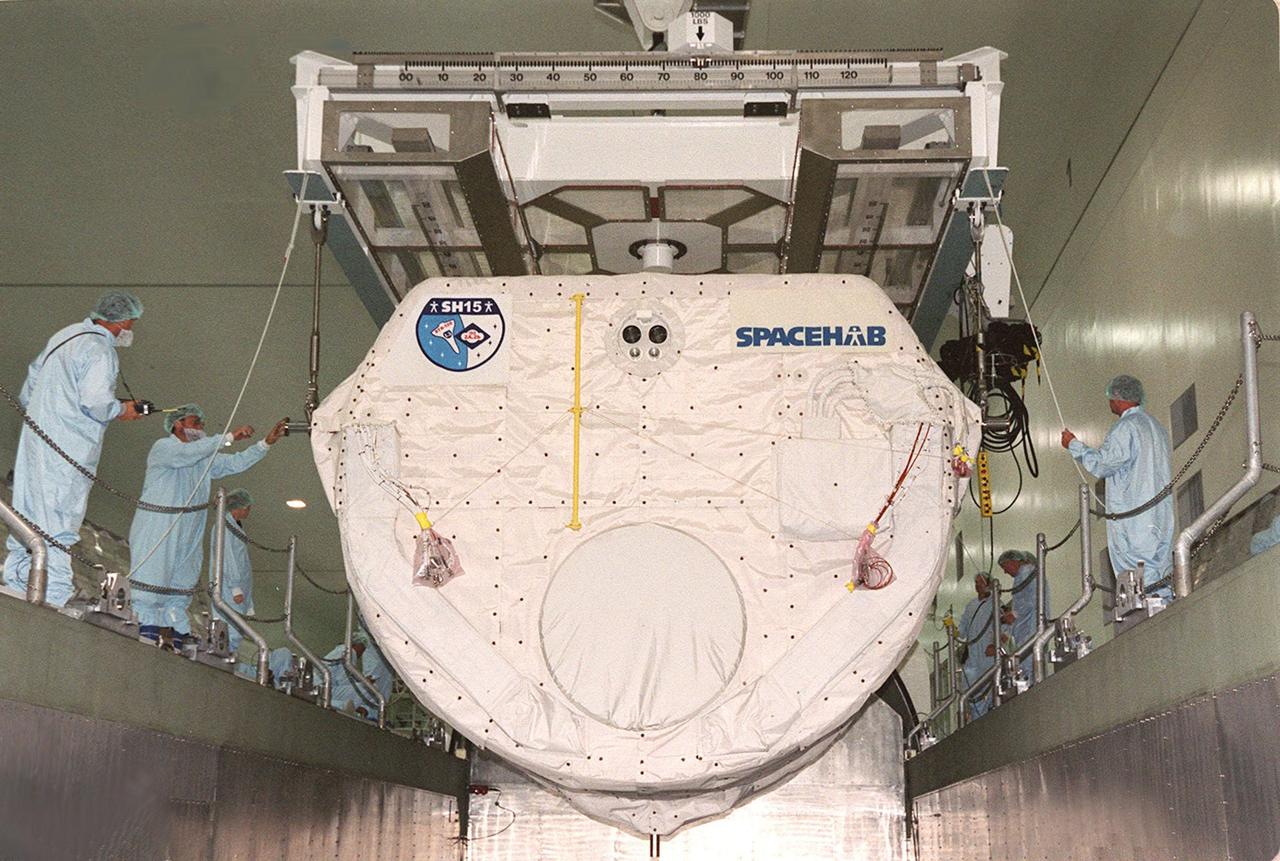
KENNEDY SPACE CENTER, FLA. -- Workers in the Space Station Processing Facility check the progress of the SPACEHAB module as it is lowered toward the payload canister below. The module, part of the payload on mission STS-106, will be placed in the payload canister for transport to the launch pad. STS-106 is scheduled to launch Sept. 8 at 8:31 a.m. EDT. During the mission to the International Space Station, the crew will complete service module support tasks on orbit, transfer supplies and outfit the Space Station for the first long-duration crew
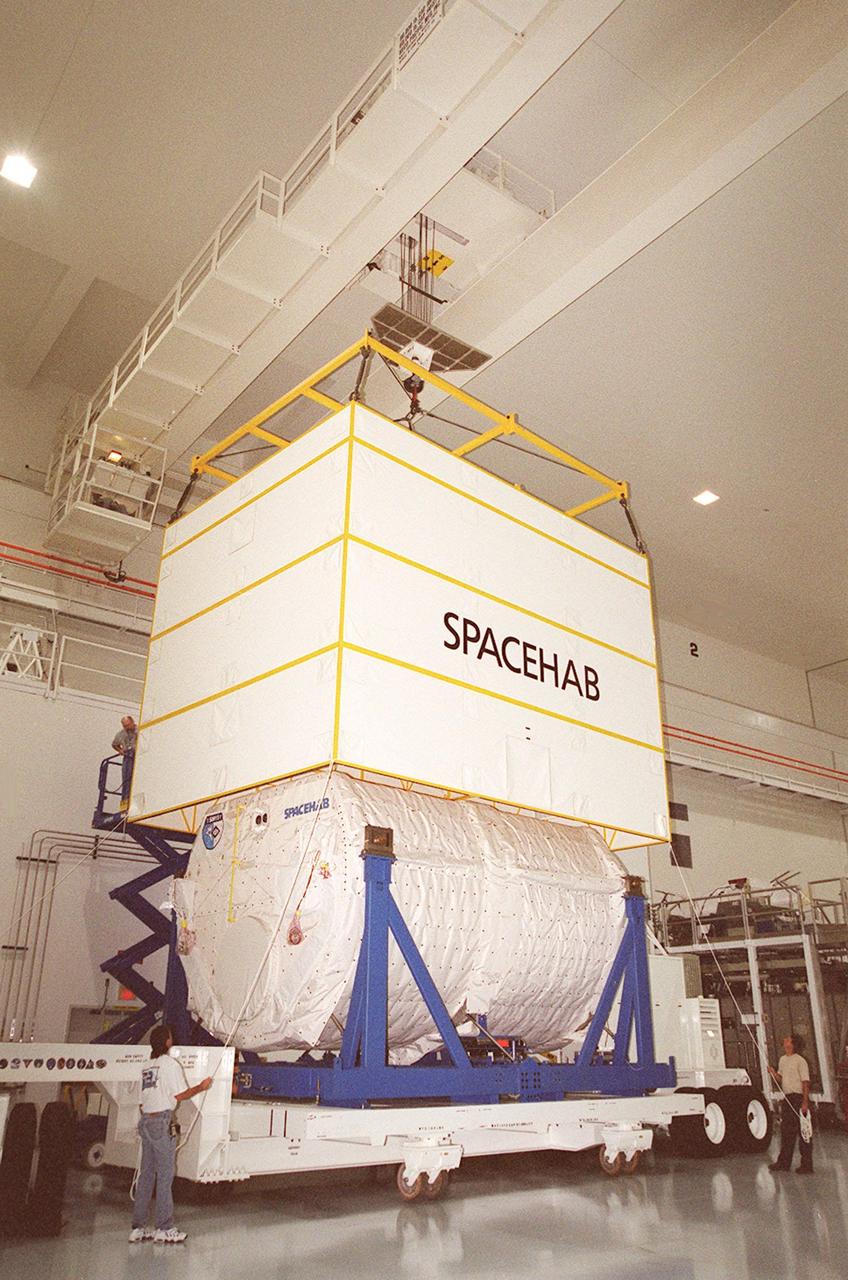
KENNEDY SPACE CENTER, FLA. -- In the Space Station Processing Facility, an overhead crane lifts the cover off of the SPACEHAB module, which rests on a transport vehicle. The module, part of the payload on mission STS-106, will be placed in the payload canister for transport to the launch pad. STS-106 is scheduled to launch Sept. 8 at 8:31 a.m. EDT
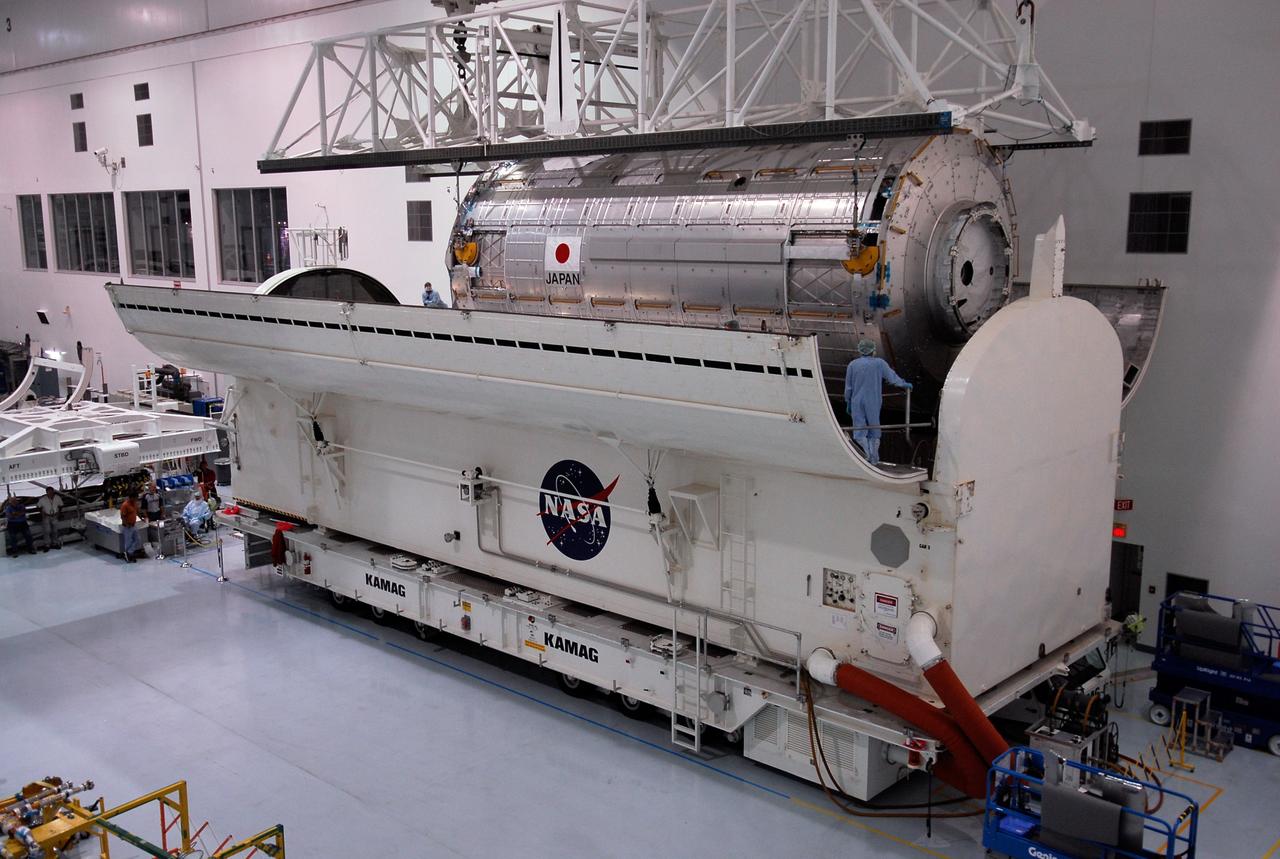
CAPE CANAVERAL, Fla. -- In the Space Station Processing Facility at NASA’s Kennedy Space Center, an overhead crane lowers the Kibo Japanese Experiment Module - Pressurized Module into the payload canister. The canister will deliver the module, part of the payload for space shuttle Discovery’s STS-124 mission, to Launch Pad 39A. On the mission, the STS-124 crew will transport the Kibo module as well as the Japanese Remote Manipulator System to the International Space Station to complete the Kibo laboratory. The launch of Discovery is targeted for May 31. Photo credit: NASA/Kim Shiflett
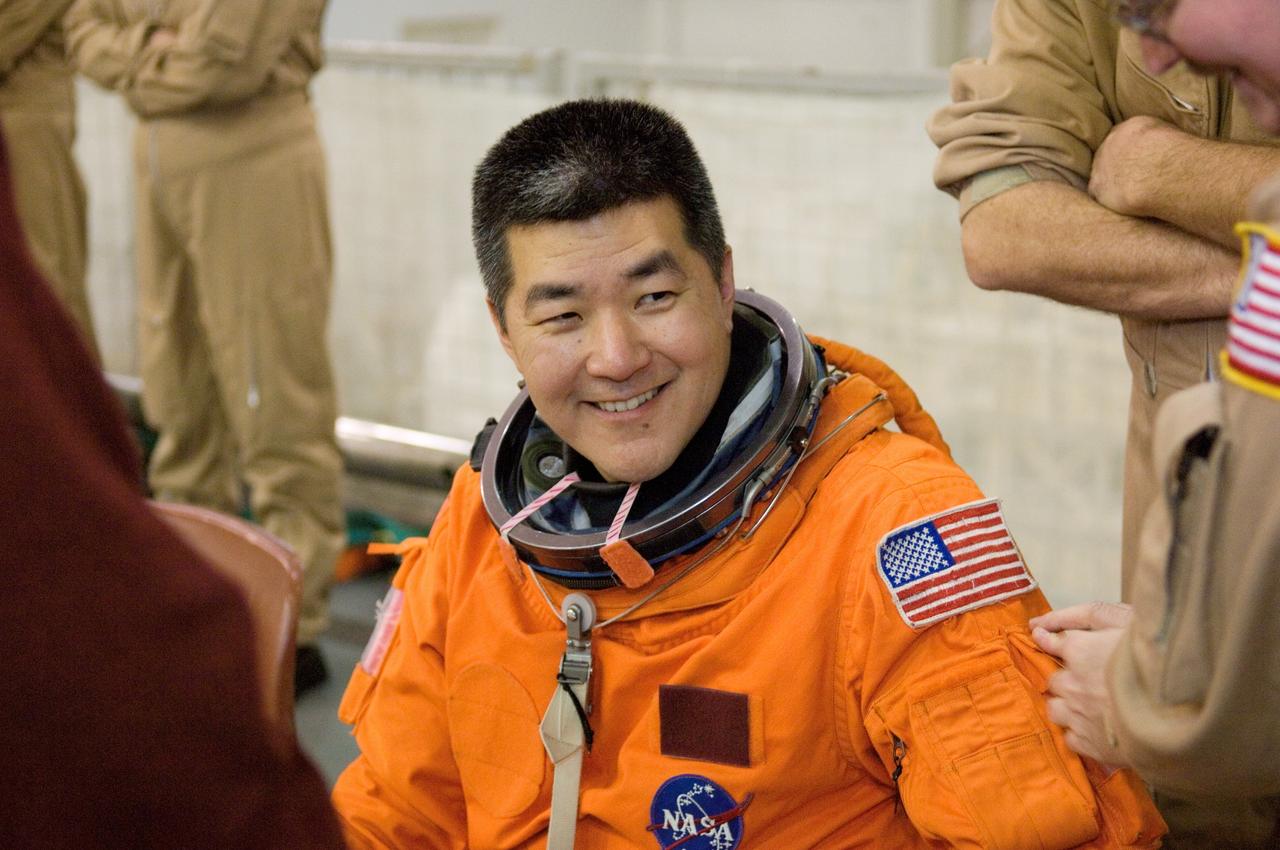
JSC2007-E-06401 (31 Jan. 2007) --- Attired in a training version of his shuttle launch and entry suit, astronaut Daniel M. Tani, Expedition 16 flight engineer, awaits the start of a water survival training session in the Neutral Buoyancy Laboratory (NBL) near Johnson Space Center. Tani will join Expedition 16 as flight engineer after launching to the International Space Station aboard Atlantis on mission STS-120 and will return home aboard Discovery on mission STS-122.
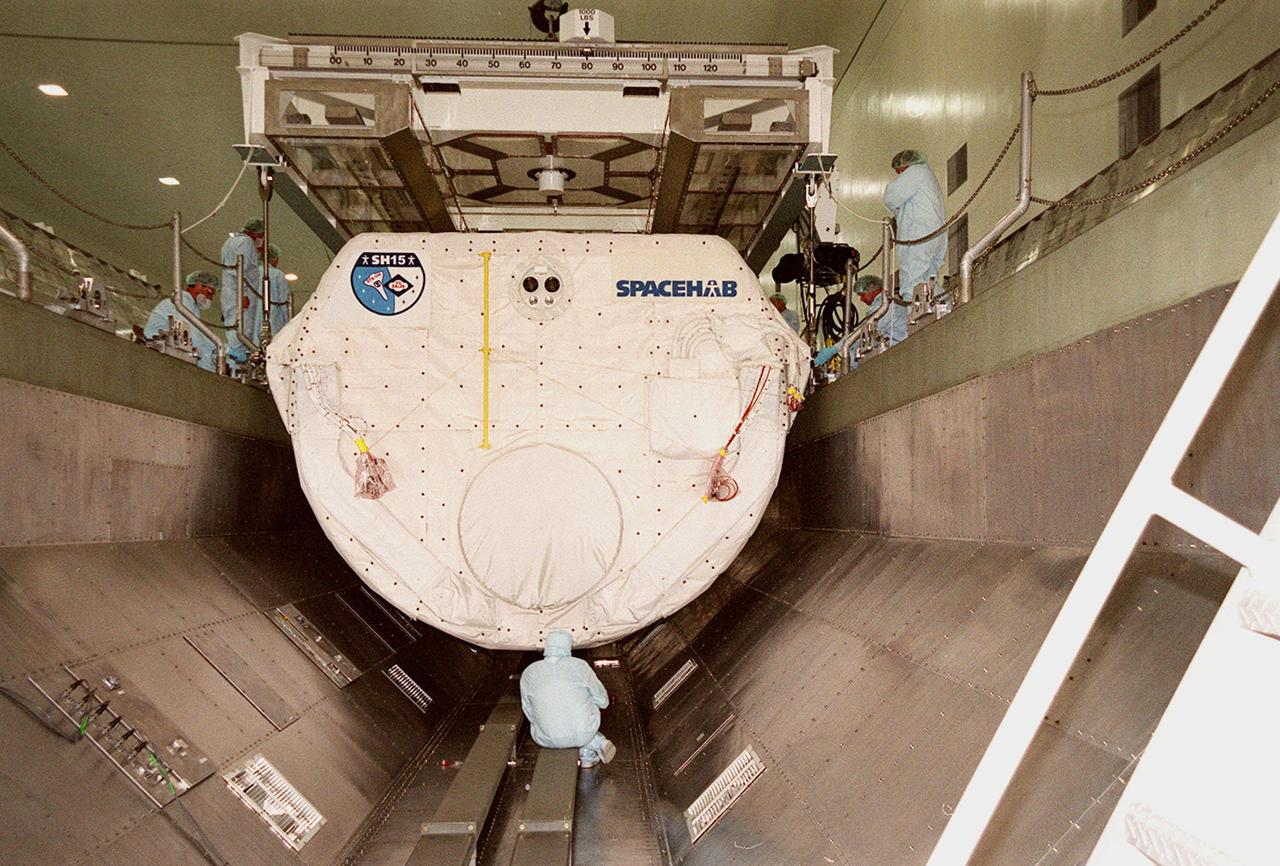
KENNEDY SPACE CENTER, FLA. -- A worker in the Space Station Processing Facility checks the position of the SPACEHAB module as it is lowered into the payload canister below. The module, part of the payload on mission STS-106, will be placed in the payload canister for transport to the launch pad. STS-106 is scheduled to launch Sept. 8 at 8:31 a.m. EDT. During the mission to the International Space Station, the crew will complete service module support tasks on orbit, transfer supplies and outfit the Space Station for the first long-duration crew
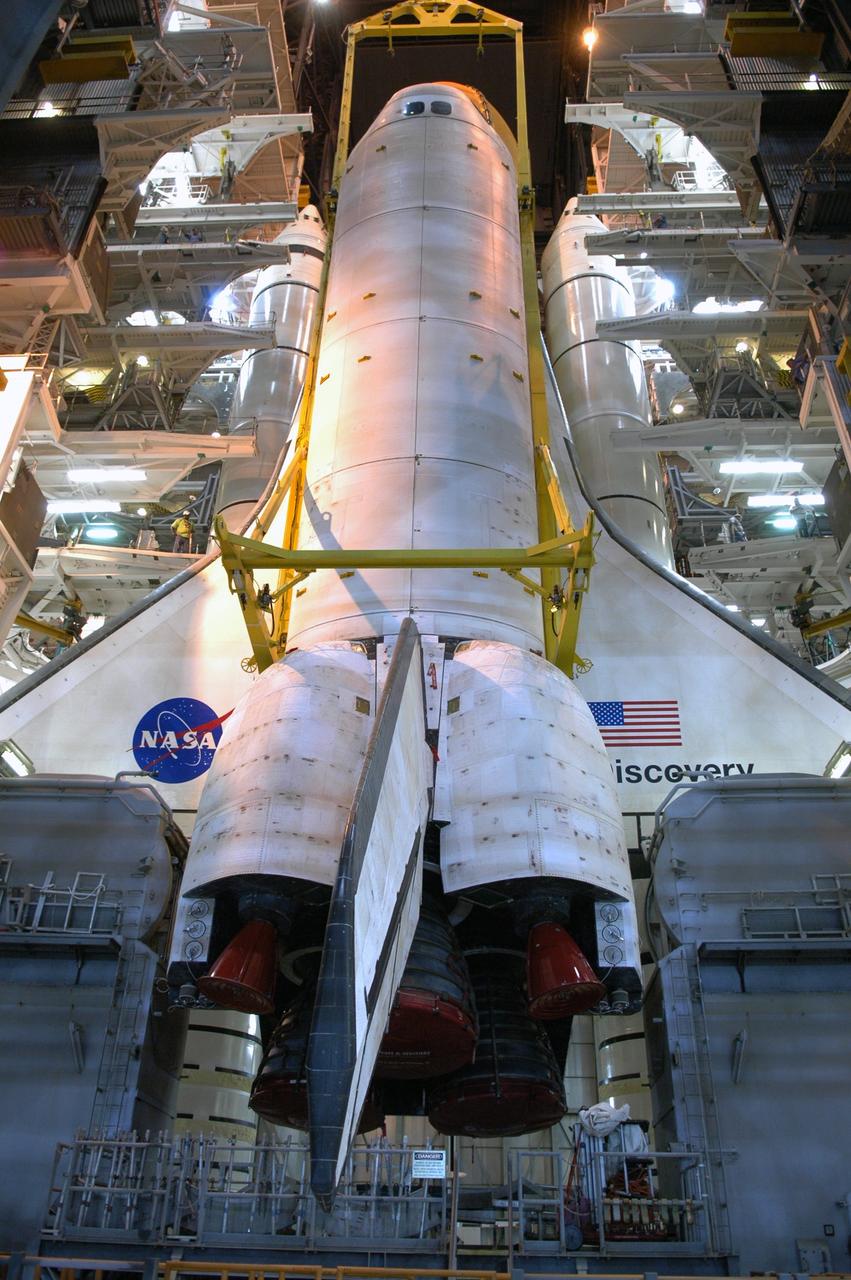
CAPE CANAVERAL, Fla. – In high bay 3 of the Vehicle Assembly Building at NASA's Kennedy Space Center, space shuttle Discovery continues to be lowered onto the mobile launcher platform in front of the solid rocket boosters and external tank. The stacking is in preparation for the launch on the upcoming STS-124 mission to the International Space Station. On the mission, the STS-124 crew will transport the Japanese Experiment Module - Pressurized Module and the Japanese Remote Manipulator System to the space station. Launch of Discovery is targeted for May 31 Photo credit: NASA/Jim Grossmann
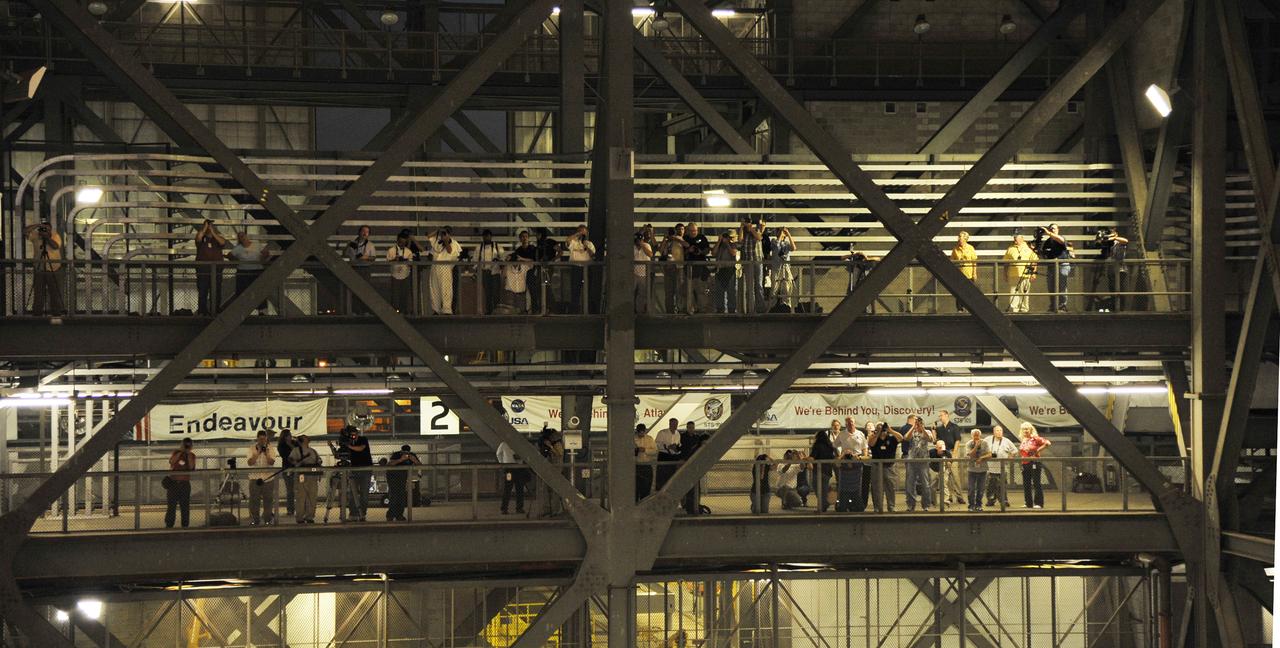
members of the media gather in the VAB to photograph the last rollout of Shuttle Atlantis on the Mobil Launch Platform (MLP) at Kennedy Space Center, Cape Canaveral, Florida, USA 31 May 2011. Launch of Atlantis on the STS-135 mission to deliver supplies to the International Space Station is currently planned for no earlier than 08 July 2011. The STS-135 mission is planned to last eight days and will be the final flight of the Space Shuttle program.
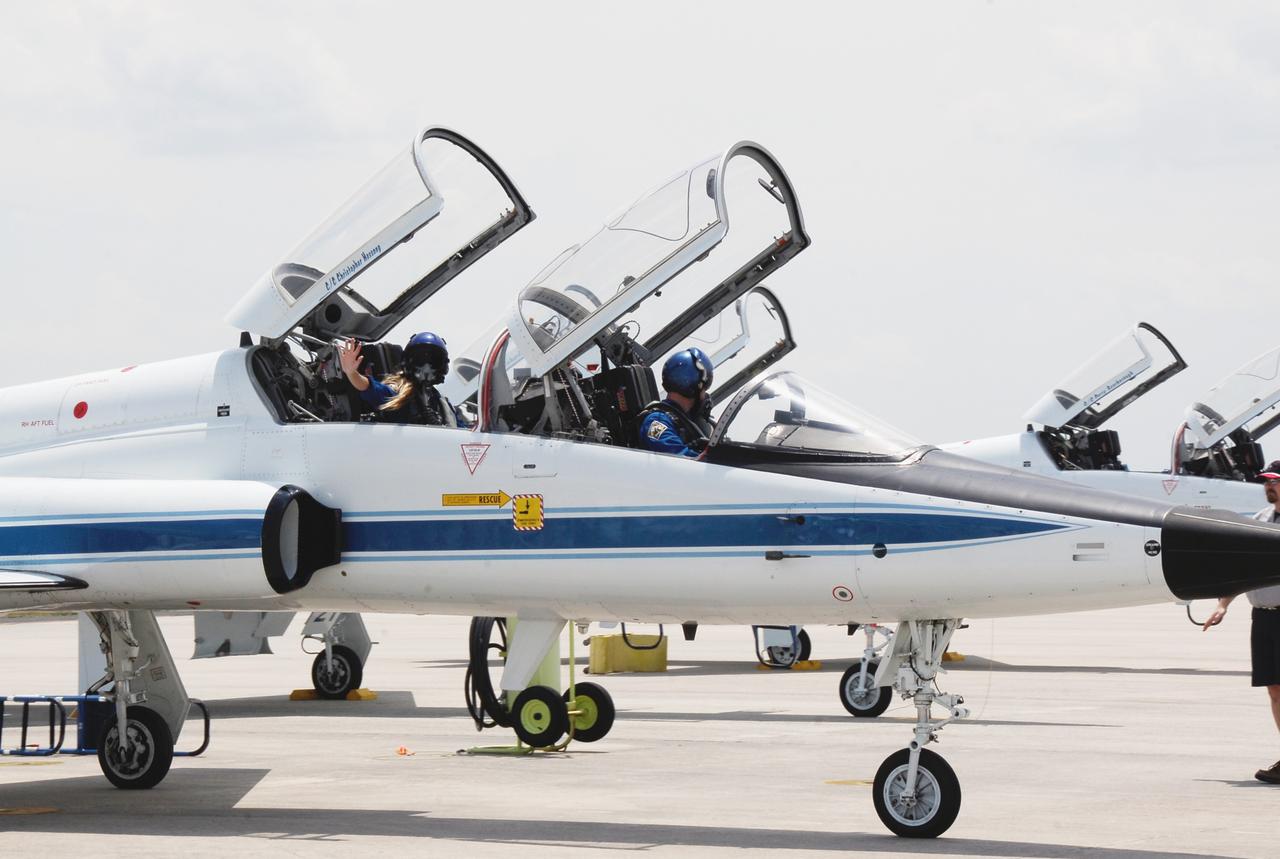
CAPE CANAVERAL, Fla. -- Two of the crewmembers for the STS-124 mission, Mission Specialists Ron Garan and Karen Nyberg, depart NASA's Kennedy Space Center in a T-38 training jet after a successful launch dress rehearsal called the terminal countdown demonstration test. The crew is expected to return in late May for the May 31 launch of space shuttle Discovery. On the STS-124 mission, the crew will deliver and install the Japanese Experiment Module – Pressurized Module and Japanese Remote Manipulator System. Photo credit: NASA/Kim Shiflett
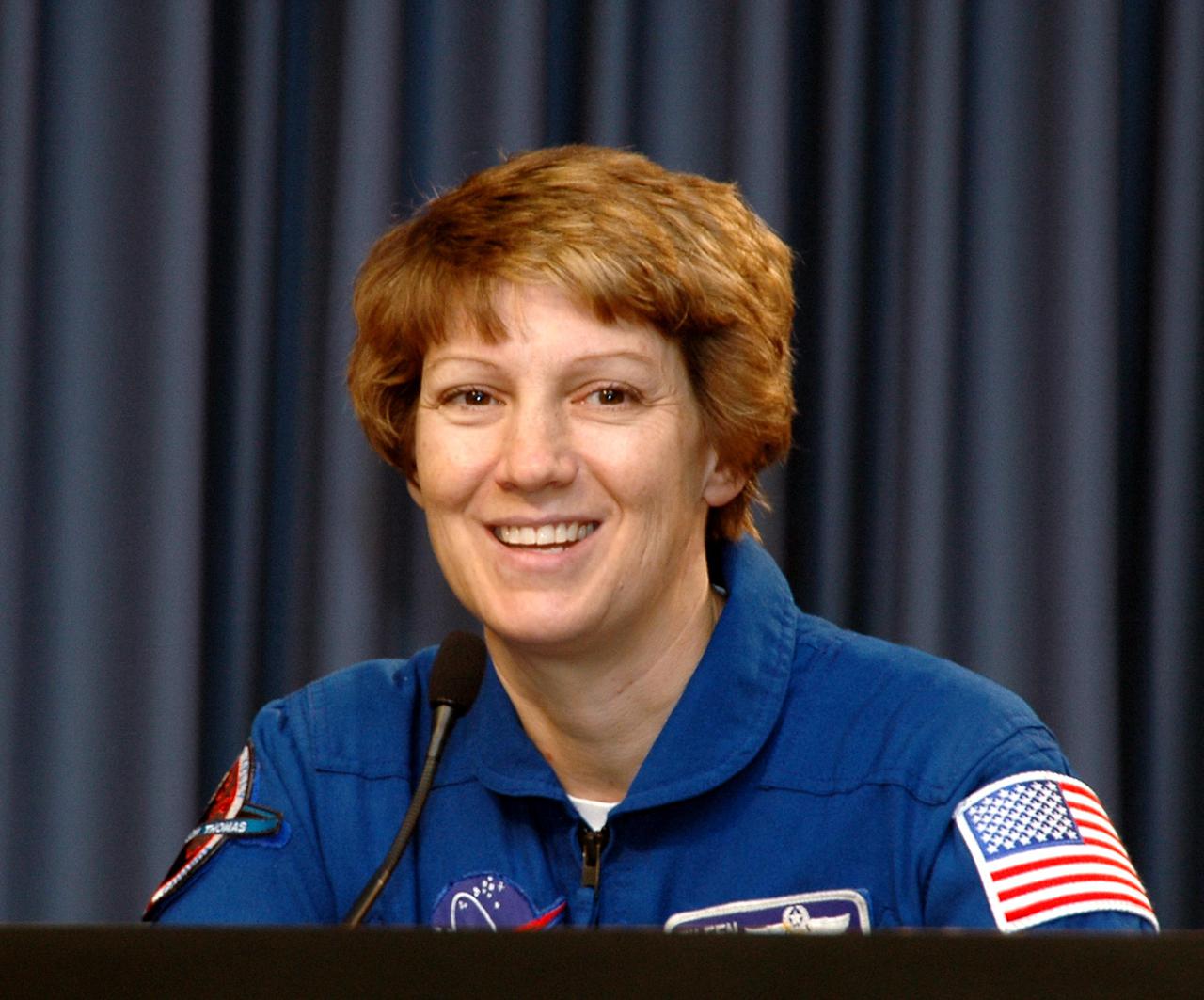
KENNEDY SPACE CENTER, FLA. - After the conclusion of Terminal Countdown Demonstration Test (TCDT) activities at NASA’s Kennedy Space Center, STS-114 Commander Eileen Collins briefly talks to media about the importance of the TCDT as pre-launch training. The TCDT provides the crew of each mission an opportunity to participate in various simulated countdown activities, including equipment familiarization and emergency egress training. STS-114 is the first Return to Flight mission to the International Space Station. The launch window extends July 13 through July 31.
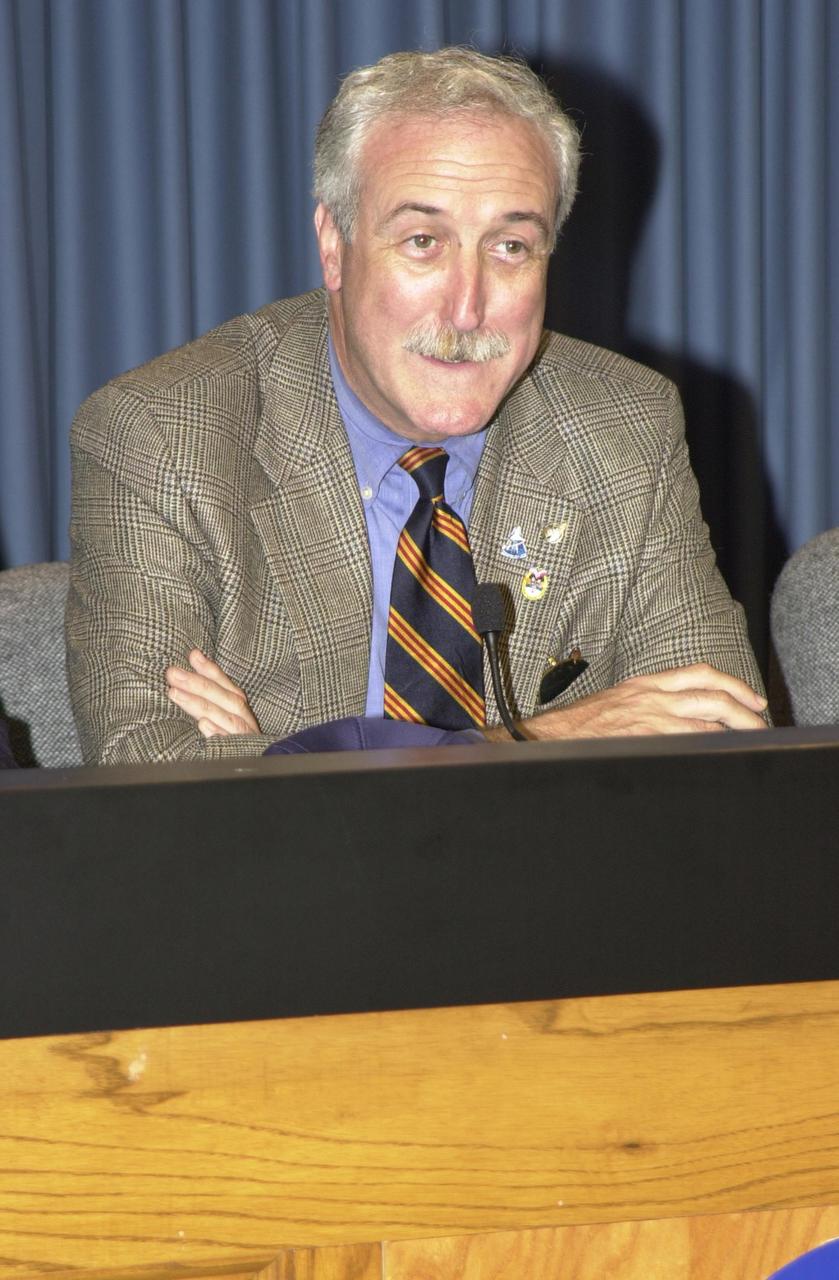
KENNEDY SPACE CENTER, FLA. -- In the Press Site auditorium, NASA Administrator Sean O'Keefe participates in a media briefing following the launch scrub of Space Shuttle mission STS-111. STS-111 is the second Utilization Flight to the International Space Station, carrying the Multi-Purpose Logistics Module Leonardo, the Mobile Base System (MBS), and a replacement wrist/roll joint for the Canadarm 2. Also on board will be the Expedition Five crew who will replace Expedition Four on the Station. Launch is rescheduled for May 31 at 7:22 p.m. EDT
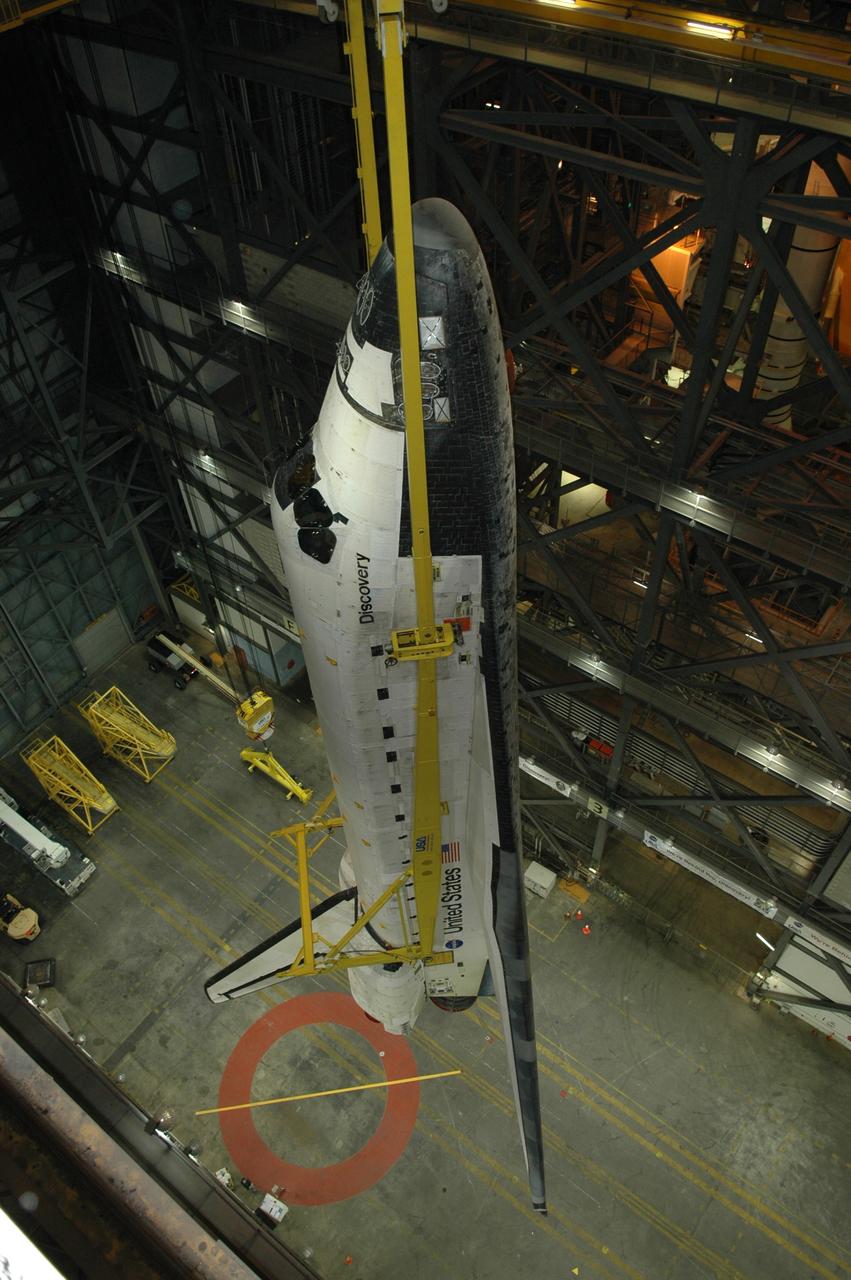
CAPE CANAVERAL, Fla. -- In the Vehicle Assembly Building at NASA's Kennedy Space Center, a crane lifts space shuttle Discovery into the upper levels. Discovery will be lowered into high bay 3 and mated to the external tank and solid rocket boosters waiting there in preparation for launch on the upcoming STS-124 mission to the International Space Station. On the mission, the STS-124 crew will transport the Japanese Experiment Module - Pressurized Module and the Japanese Remote Manipulator System to the space station. Launch of Discovery is targeted for May 31 Photo credit: NASA/Jim Grossmann
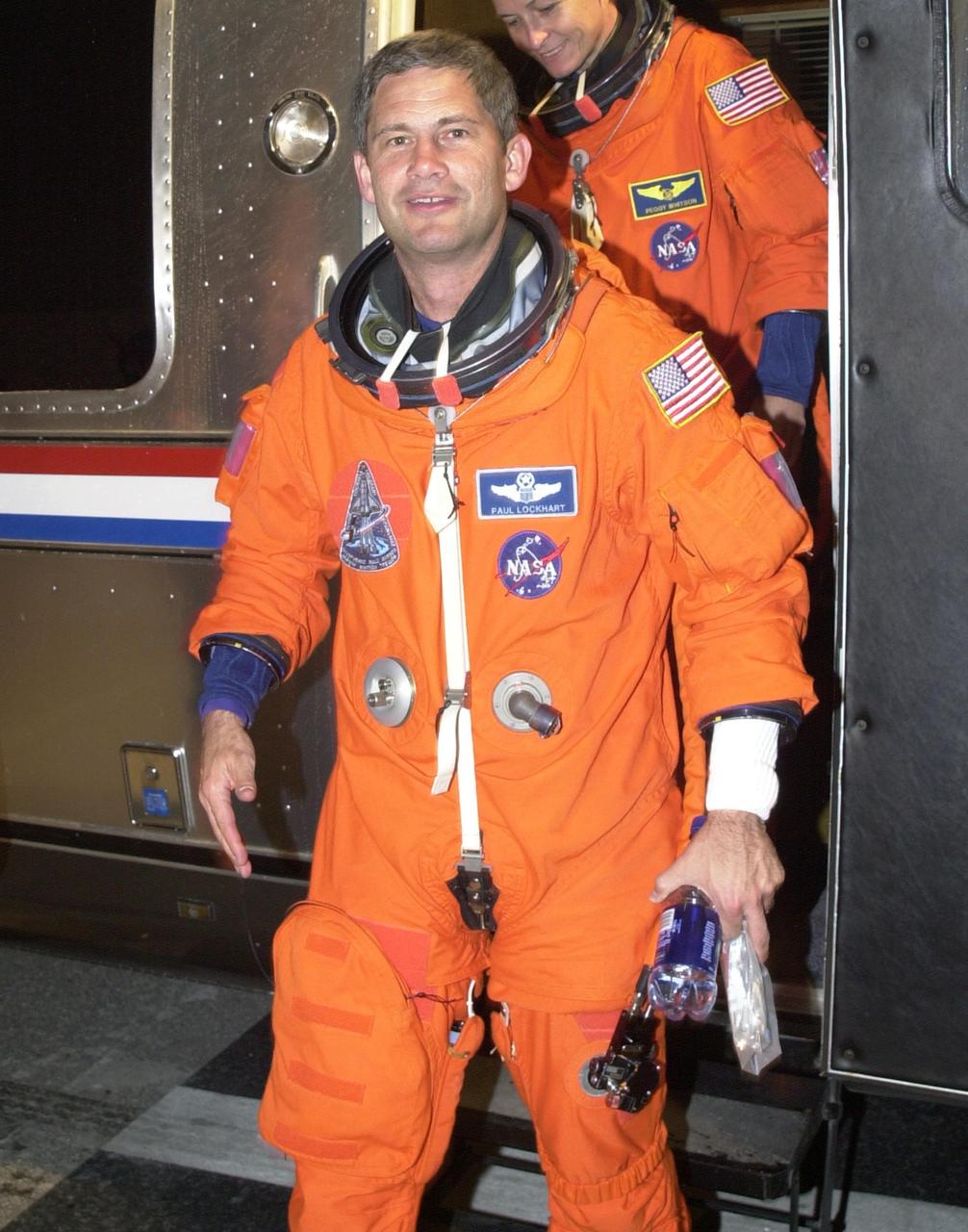
KENNEDY SPACE CENTER, FLA. - STS-111 Pilot Paul Lockhart steps down from the Astrovan outside the crew quarters at the Operations and Checkout Building after returning from Space Shuttle Endeavour at Launch Pad 39A. The launch of STS-111 was scrubbed due to poor weather at KSC. STS-111 is the second Utilization Flight to the International Space Station, carrying the Multi-Purpose Logistics Module Leonardo, the Mobile Base System (MBS), and a replacement wrist/roll joint for the Canadarm 2. Also on board will be the Expedition Five crew who will replace Expedition Four on the Station. Launch is rescheduled for May 31 at 7:22 p.m. EDT
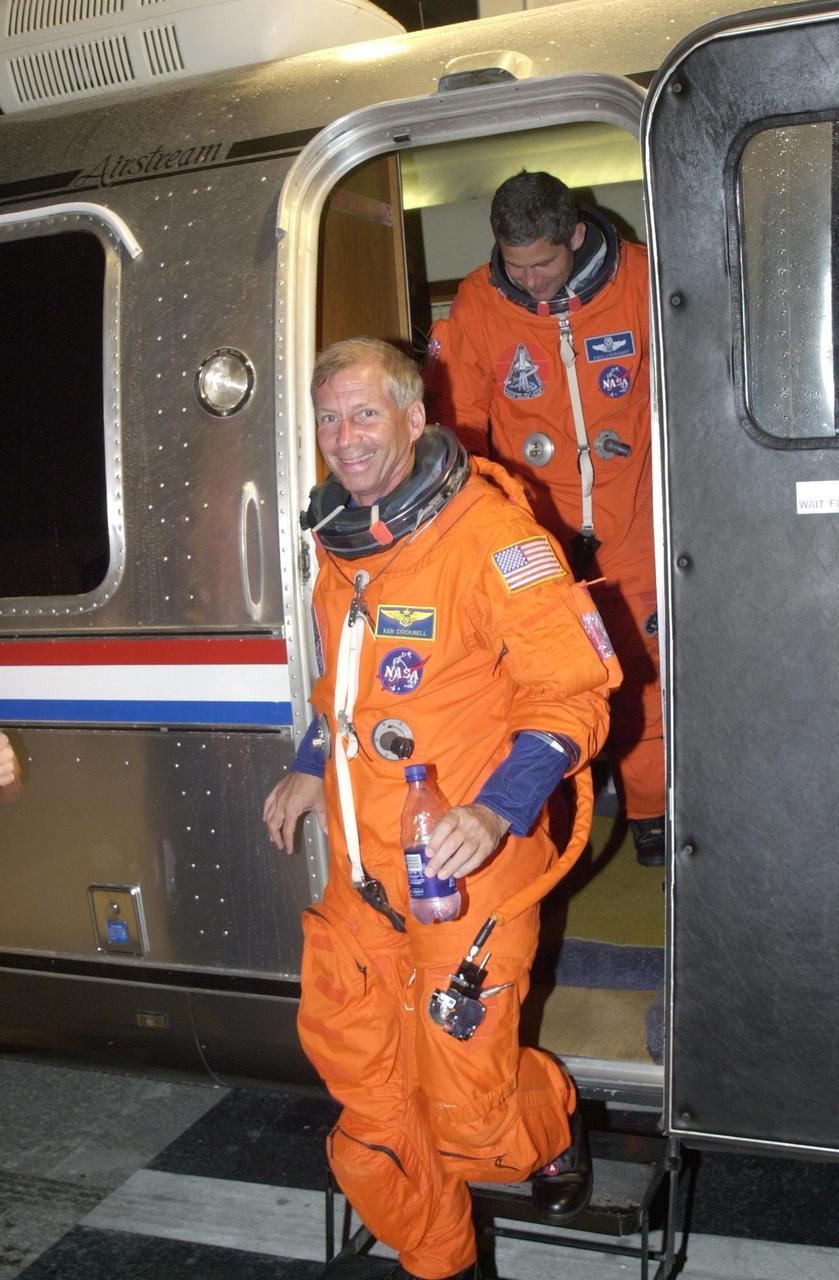
KENNEDY SPACE CENTER, FLA. - STS-111 Commander Kenneth Cockrell and Pilot Paul Lockhart step down from the Astrovan outside the crew quarters at the Operations and Checkout Building after returning from Space Shuttle Endeavour at Launch Pad 39A. The launch of STS-111 was scrubbed due to poor weather at KSC. STS-111 is the second Utilization Flight to the International Space Station, carrying the Multi-Purpose Logistics Module Leonardo, the Mobile Base System (MBS), and a replacement wrist/roll joint for the Canadarm 2. Also on board will be the Expedition Five crew who will replace Expedition Four on the Station. Launch is rescheduled for May 31 at 7:22 p.m. EDT
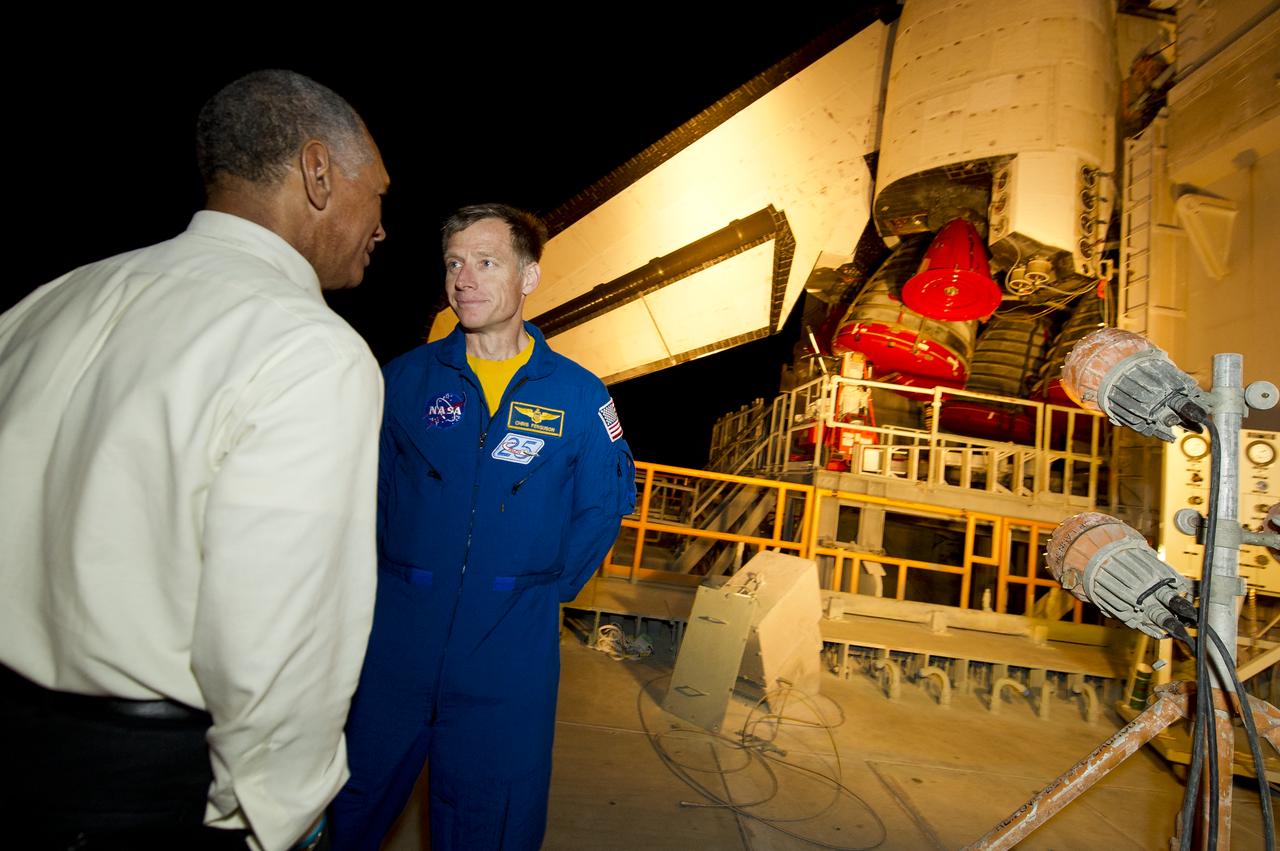
STS-135 Commander Chris Ferguson, right, talks with NASA Administrator Charles Bolden atop of the Mobile Launch Platform (MLP) as the space shuttle Atlantis (STS-135) rolls out of High Bay 3 in the Vehicle Assembly Building to Launch Pad 39a for its final flight, Tuesday evening, May 31, 2011, at Kennedy Space Center in Cape Canaveral, Fla. The 3.4-mile trek, known as "rollout," will take about seven hours to complete. Atlantis will carry the Raffaello multipurpose logistics module to deliver supplies, logistics and spare parts to the International Space Station. The launch of STS-135 is targeted for July 8. Photo Credit: (NASA/Bill Ingalls)

KENNEDY SPACE CENTER, FLA. -- STS-111 Mission Specialist Philippe Perrin (CNES) steps down from the Astrovan outside the crew quarters at the Operations and Checkout Building after returning from Space Shuttle Endeavour at Launch Pad 39A. The launch of STS-111 was scrubbed due to poor weather at KSC. STS-111 is the second Utilization Flight to the International Space Station, carrying the Multi-Purpose Logistics Module Leonardo, the Mobile Base System (MBS), and a replacement wrist/roll joint for the Canadarm 2. Also on board will be the Expedition Five crew who will replace Expedition Four on the Station. Launch is rescheduled for May 31 at 7:22 p.m. EDT
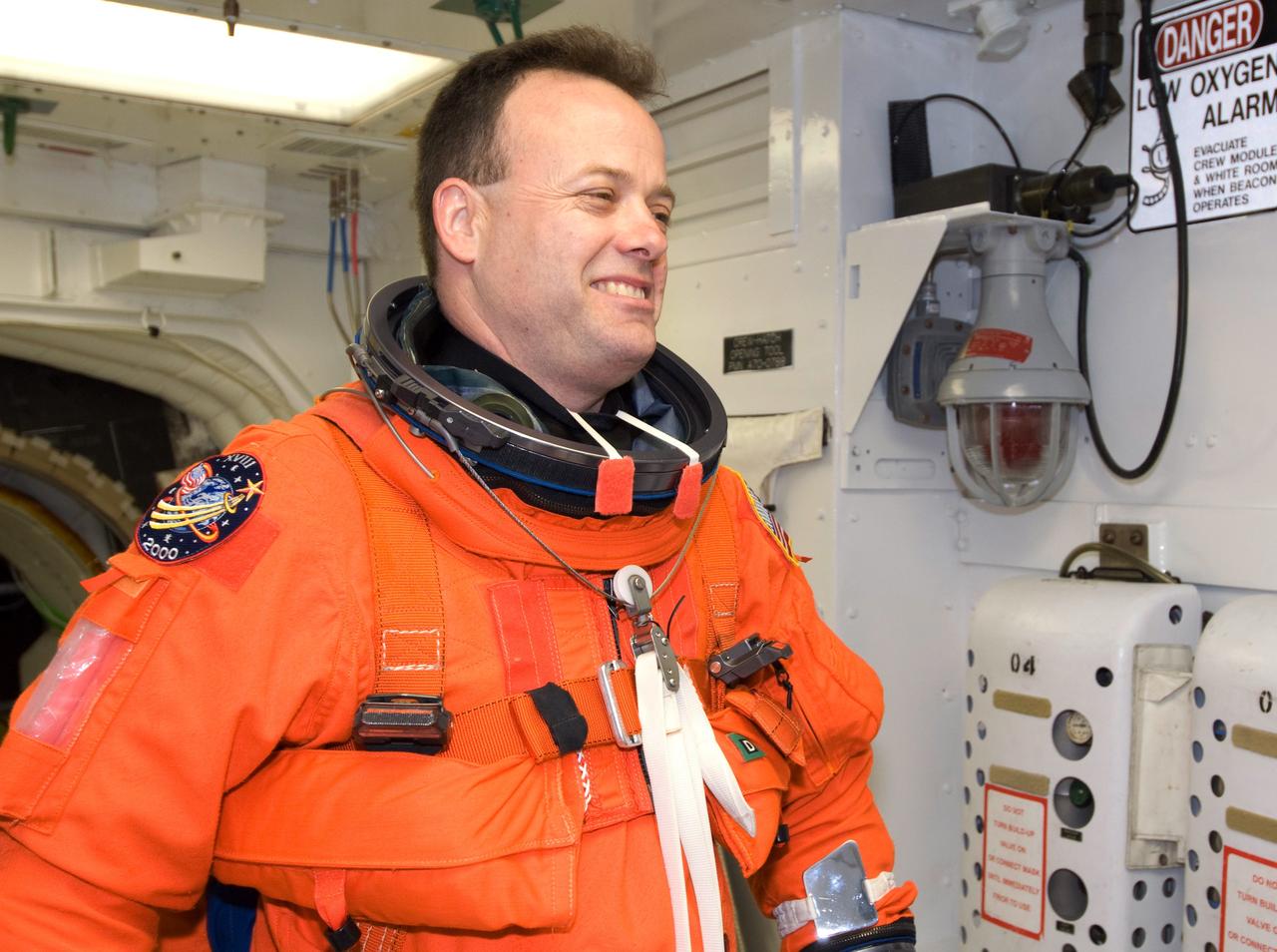
CAPE CANAVERAL, Fla. -- In the White Room on Launch Pad 39A at NASA's Kennedy Space Center, STS-124 Mission Specialist Ron Garan is ready for the simulated launch countdown, part of the launch dress rehearsal known as the terminal countdown demonstration test. The simulation serves as a practice exercise in which both the launch team and flight crew rehearse launch day time lines and procedures. The test culminates in a simulated ignition and automated shutdown of the orbiter's main engines. On the STS-124 mission, the crew will deliver and install the Japanese Experiment Module – Pressurized Module and Japanese Remote Manipulator System. Discovery's launch is targeted for May 31. Photo credit: NASA/Amanda Diller
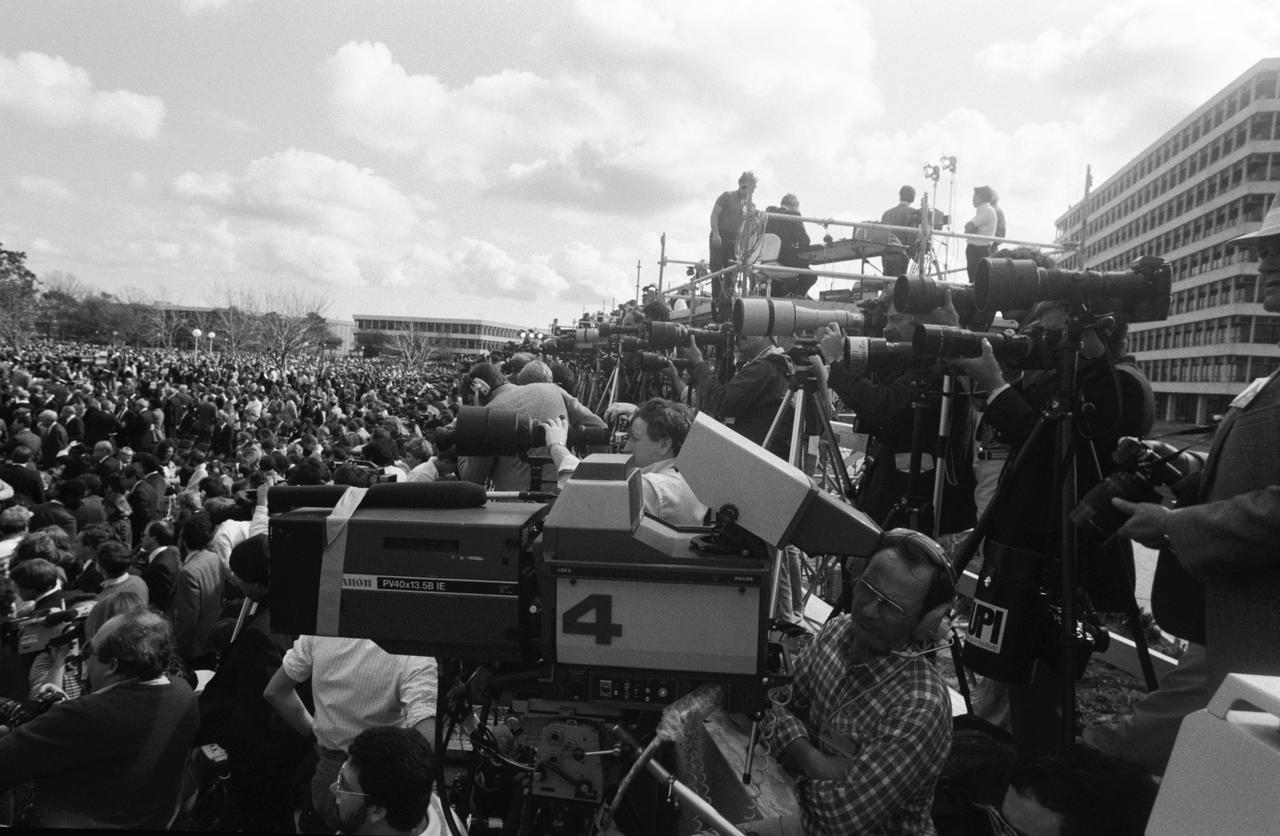
S86-26428 (31 Jan. 1986) --- Dozens of cameras and thousands of eyes focus on President Ronald Reagan (out of frame at left) during the 51-L memorial services Jan. 31 on the mall at the Johnson Space Center (JSC). The photograph was taken from special bleachers quickly erected to accommodate hundreds of members of the news media. The audience of thousands was largely made up of JSC employees and family and friends of the Challenger crew members who perished four days earlier in the attempted launch of NASA’s 25th STS mission. Photo credit: NASA
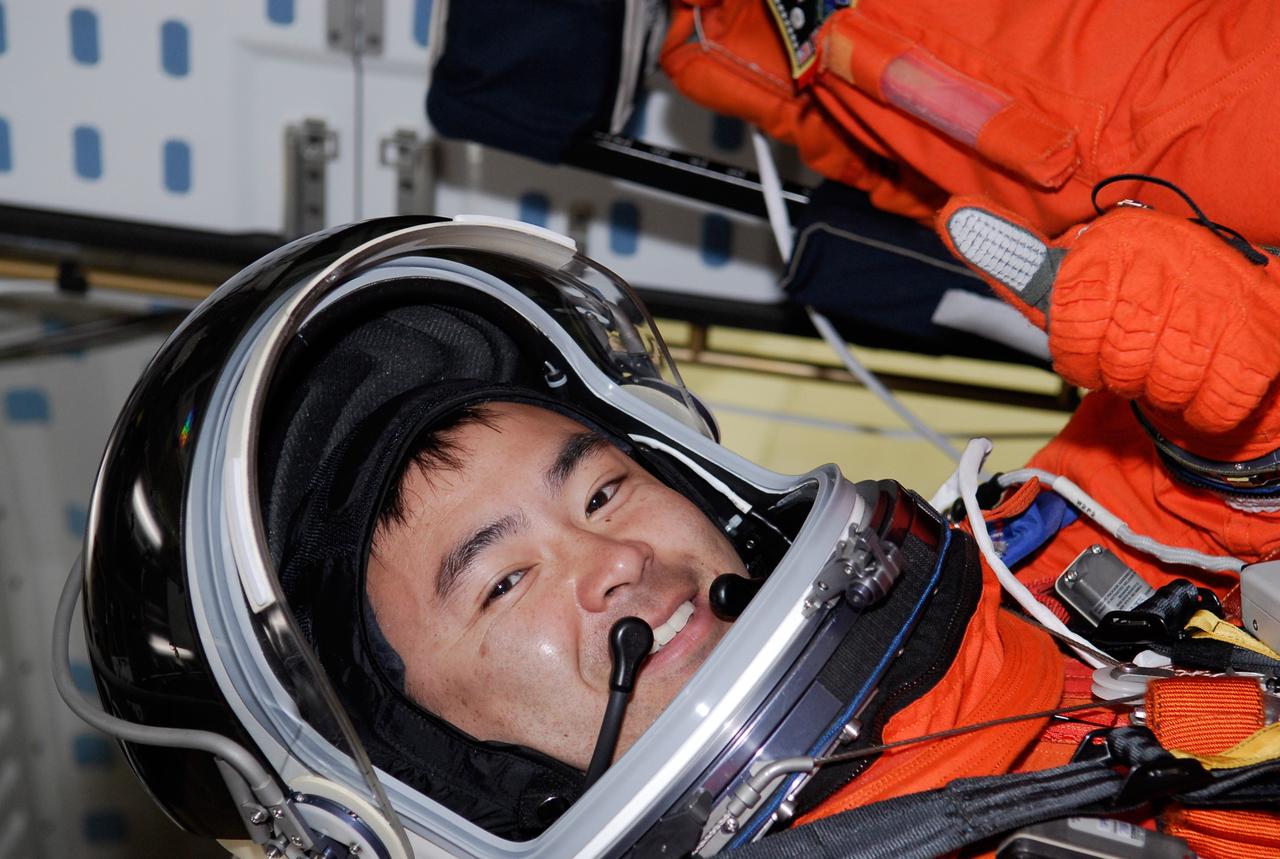
CAPE CANAVERAL, Fla. -- On Launch Pad 39A at NASA's Kennedy Space Center, STS-124 Mission Specialist Akihiko Hoshide sits in his seat aboard space shuttle Discovery following the simulated launch countdown, part of the launch dress rehearsal known as the terminal countdown demonstration test. TCDT provides astronauts and ground crews with an opportunity to participate in various simulated countdown activities, including a simulated launch countdown, equipment familiarization and emergency egress training. On the STS-124 mission, the crew will deliver and install the Japanese Experiment Module – Pressurized Module and Japanese Remote Manipulator System. Discovery's launch is targeted for May 31. Photo credit: NASA/Kim Shiflett
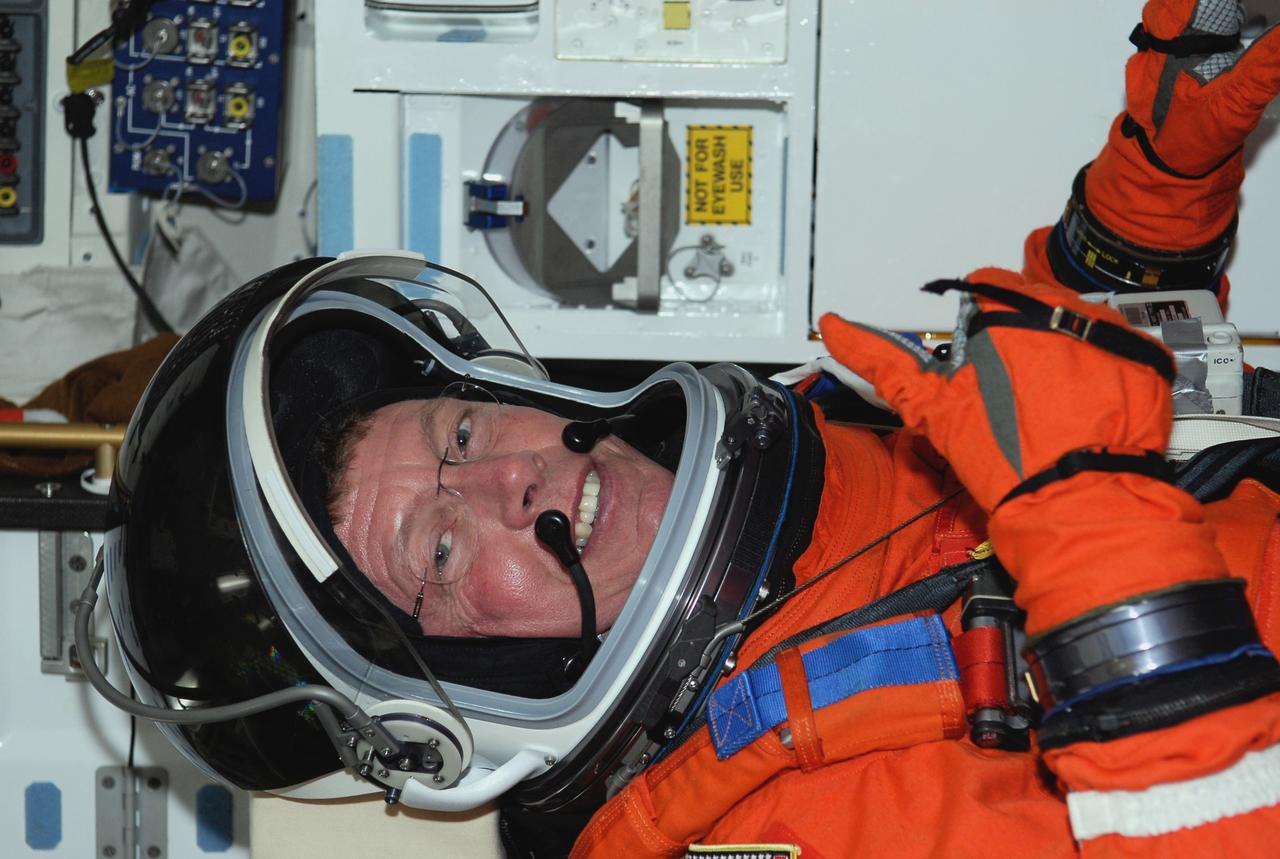
CAPE CANAVERAL, Fla. -- On Launch Pad 39A at NASA's Kennedy Space Center, STS-124 Mission Specialist Mike Fossum sits in his seat aboard space shuttle Discovery following the simulated launch countdown, part of the launch dress rehearsal known as the terminal countdown demonstration test. TCDT provides astronauts and ground crews with an opportunity to participate in various simulated countdown activities, including a simulated launch countdown, equipment familiarization and emergency egress training. On the STS-124 mission, the crew will deliver and install the Japanese Experiment Module – Pressurized Module and Japanese Remote Manipulator System. Discovery's launch is targeted for May 31. Photo credit: NASA/Kim Shiflett
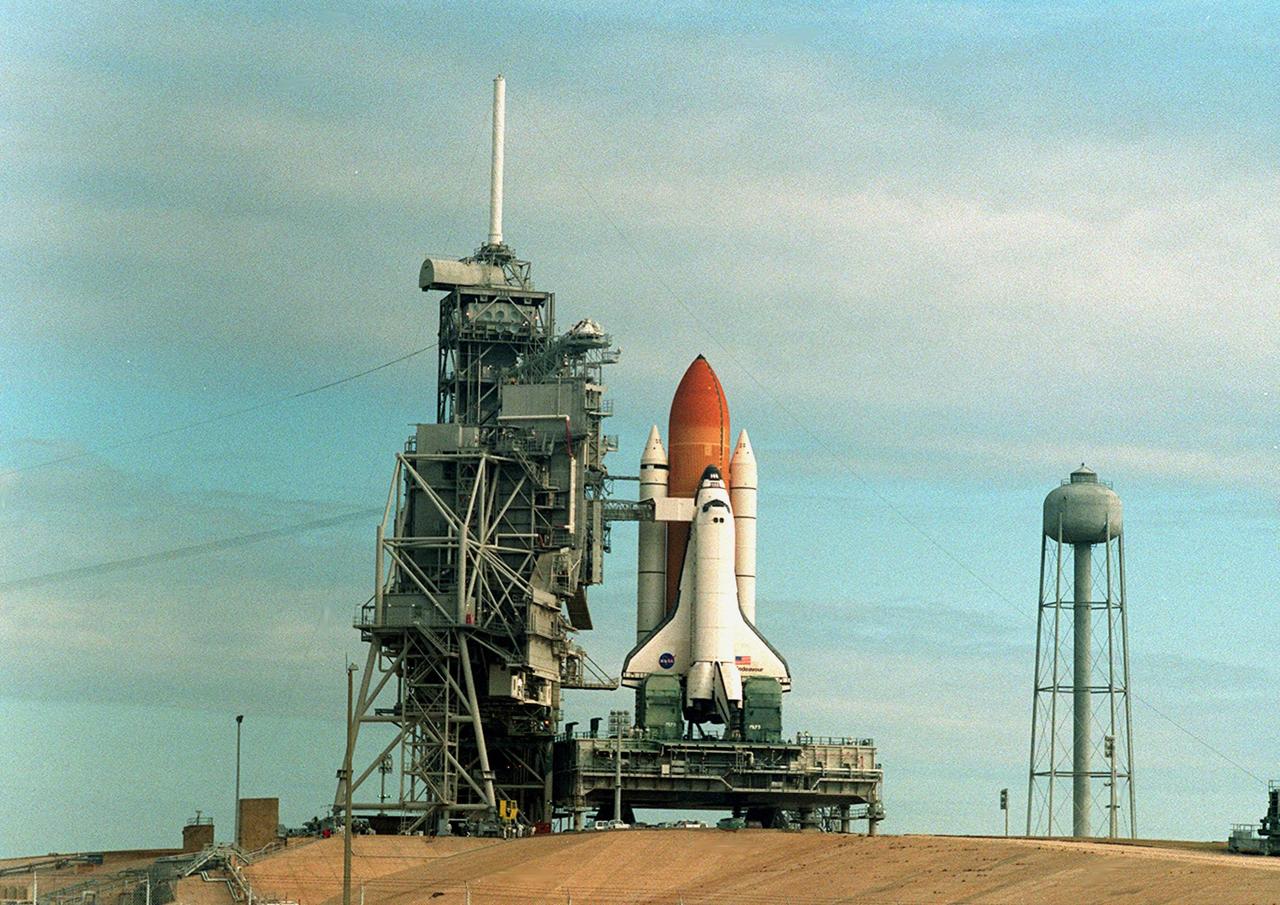
KENNEDY SPACE CENTER, Fla. -- Space Shuttle Endeavour sits on Launch Pad 39A waiting for the Rotating Service Structure to be rolled back into its protective position. The launch of Space Shuttle Endeavour on mission STS-99 was delayed when NASA managers decided to replace the Enhanced Master Events Controller that became suspect during the Jan. 31 launch countdown. The next scheduled launch is NET Feb. 9

KENNEDY SPACE CENTER, Fla. -- Cloud cover rolls in behind Space Shuttle Endeavour as the Rotating Service Structure begins rolling back into its protective position on Launch Pad 39A. The launch of Space Shuttle Endeavour on mission STS-99 was delayed when NASA managers decided to replace the Enhanced Master Events Controller that became suspect during the Jan. 31 launch countdown. The next scheduled launch is NET Feb. 9
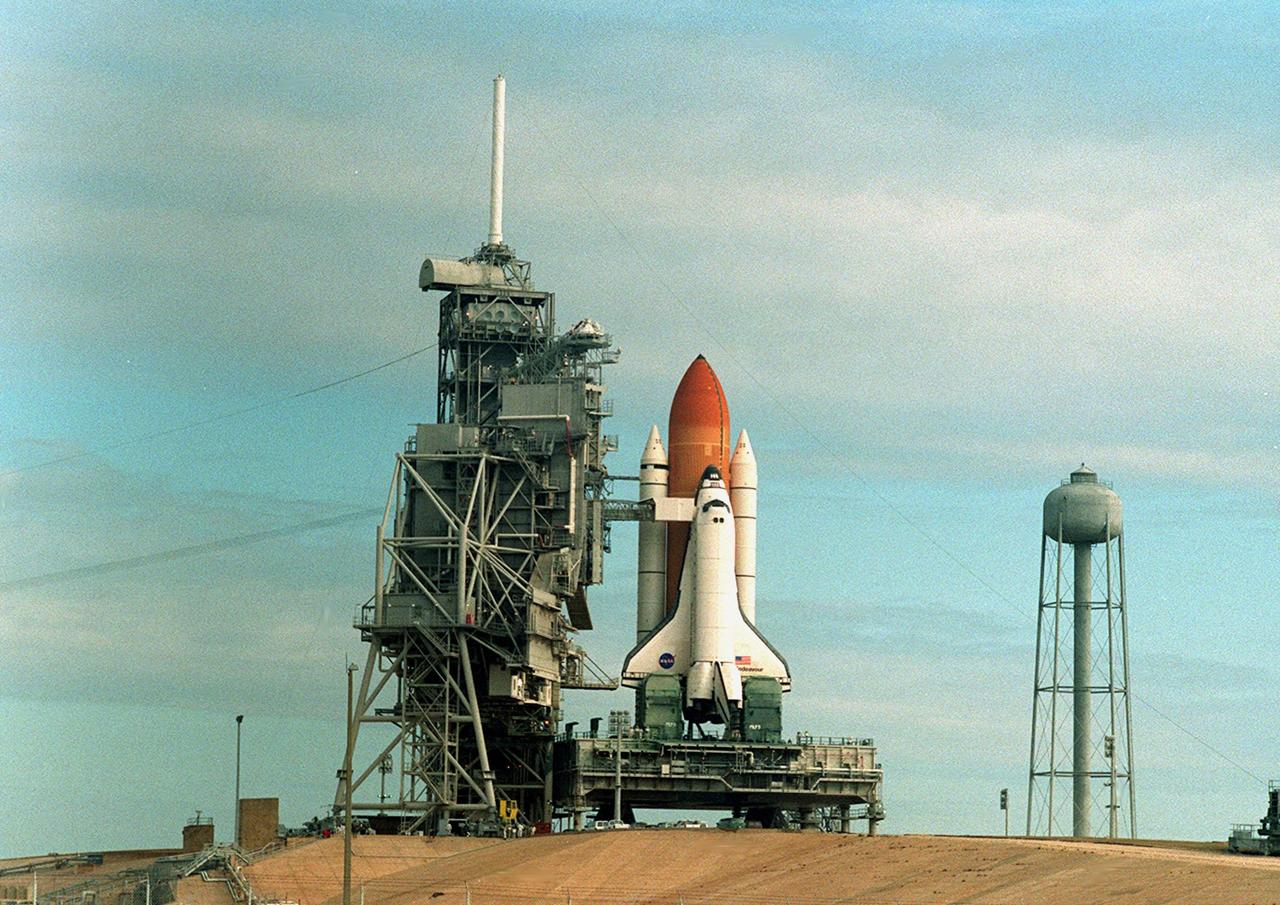
KENNEDY SPACE CENTER, Fla. -- Space Shuttle Endeavour sits on Launch Pad 39A waiting for the Rotating Service Structure to be rolled back into its protective position. The launch of Space Shuttle Endeavour on mission STS-99 was delayed when NASA managers decided to replace the Enhanced Master Events Controller that became suspect during the Jan. 31 launch countdown. The next scheduled launch is NET Feb. 9

KENNEDY SPACE CENTER, Fla. -- Under gray skies, the Rotating Service Structure rolls back into its protective position around Space Shuttle Endeavour on Launch Pad 39A. The launch of Endeavour on mission STS-99 was delayed when NASA managers decided to replace the Enhanced Master Events Controller that became suspect during the Jan. 31 launch countdown. The next scheduled launch is NET Feb. 9
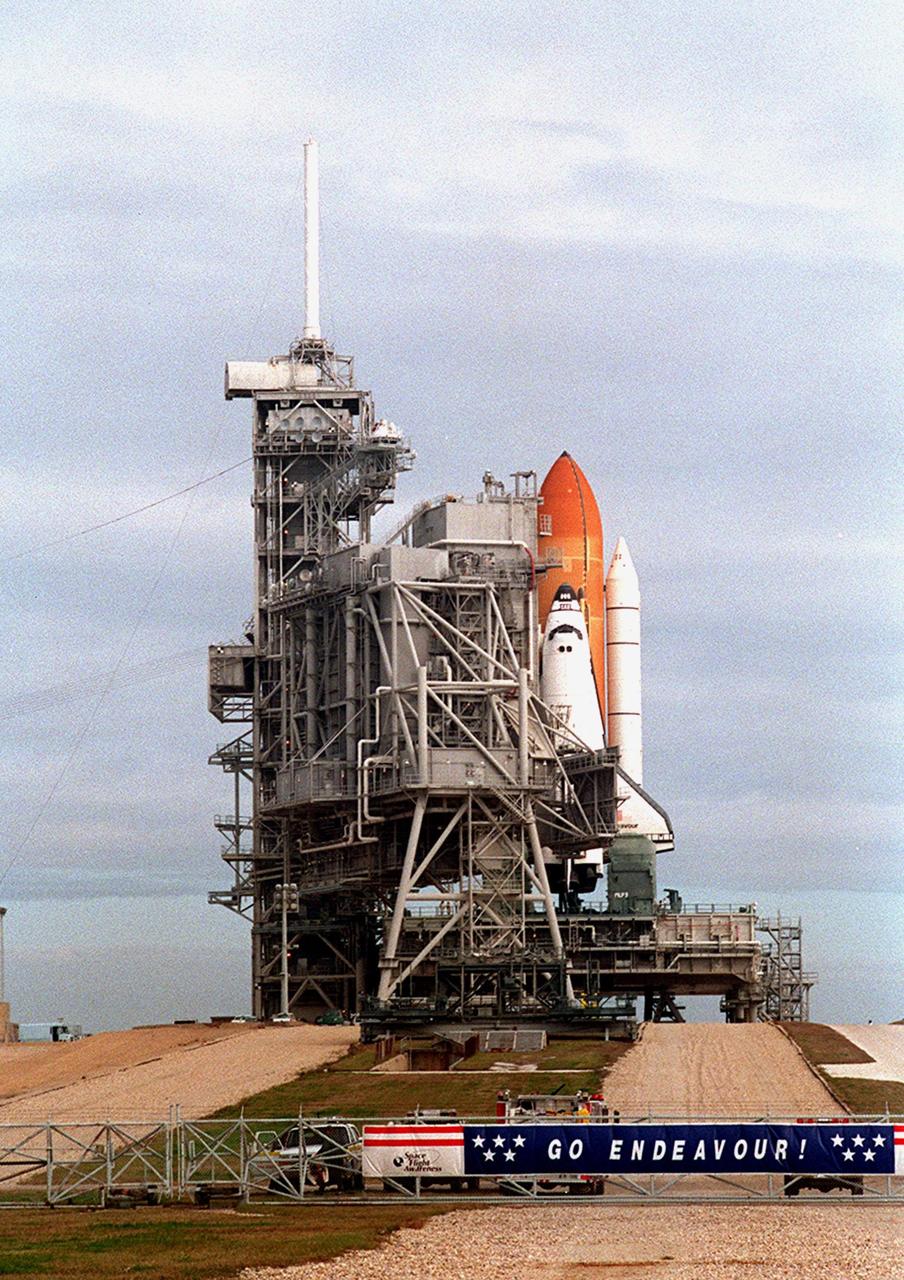
KENNEDY SPACE CENTER, Fla. -- Under gray skies, the Rotating Service Structure rolls back into its protective position around Space Shuttle Endeavour on Launch Pad 39A. The launch of Endeavour on mission STS-99 was delayed when NASA managers decided to replace the Enhanced Master Events Controller that became suspect during the Jan. 31 launch countdown. The next scheduled launch is NET Feb. 9
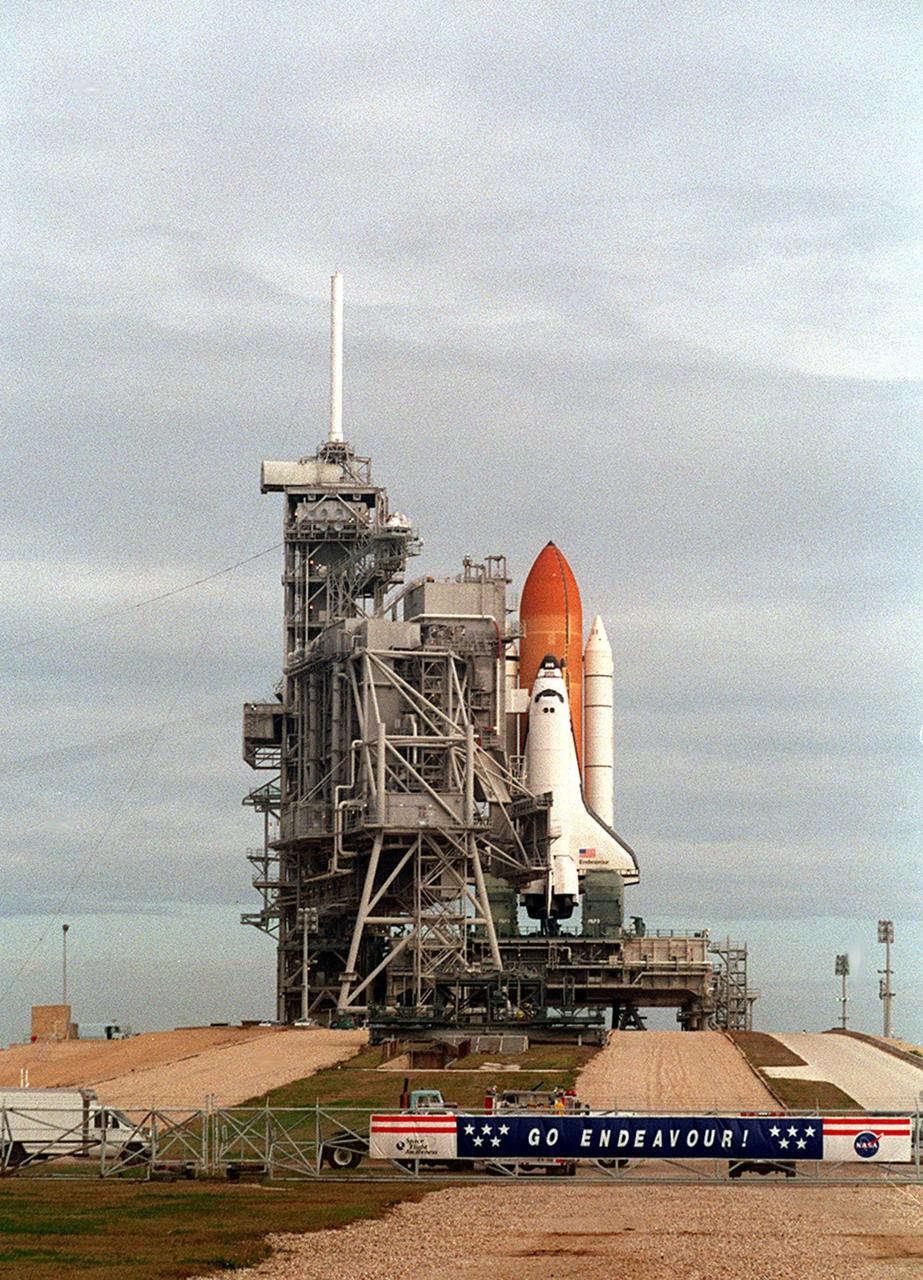
KENNEDY SPACE CENTER, Fla. -- Cloud cover rolls in behind Space Shuttle Endeavour as the Rotating Service Structure begins rolling back into its protective position on Launch Pad 39A. The launch of Space Shuttle Endeavour on mission STS-99 was delayed when NASA managers decided to replace the Enhanced Master Events Controller that became suspect during the Jan. 31 launch countdown. The next scheduled launch is NET Feb. 9
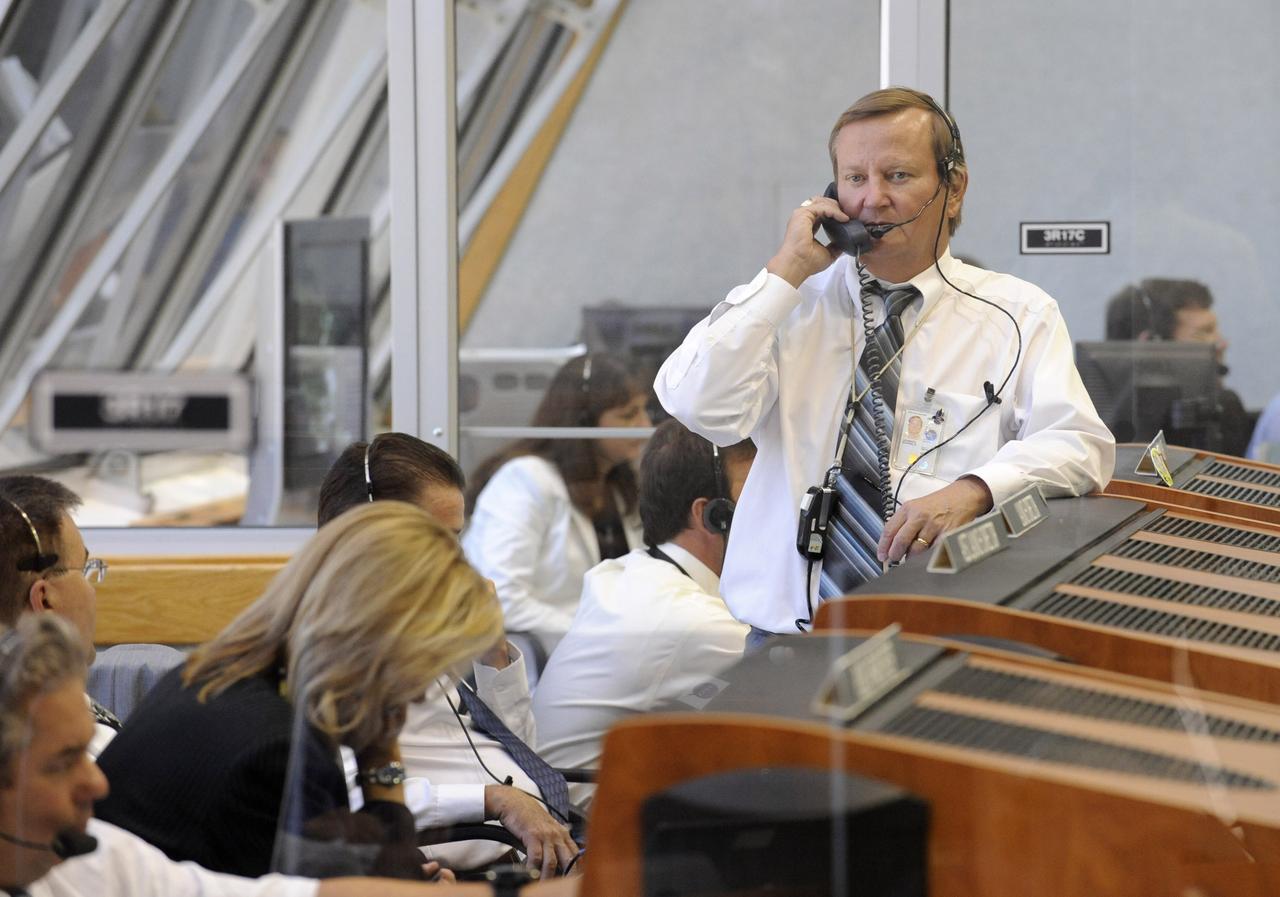
CAPE CANAVERAL, Fla. -- NASA Shuttle Launch Director Michael Leinbach talks on the phonein the Launch Control Center prior to the launch of space shuttle Discovery on the STS-124 mission on Saturday, May 31, 2008, at NASA's Kennedy Space Center. The shuttle lifted off from Launch Pad 39A at 5:02 p.m. EDT. Photo credit: NASA/Bill Ingalls
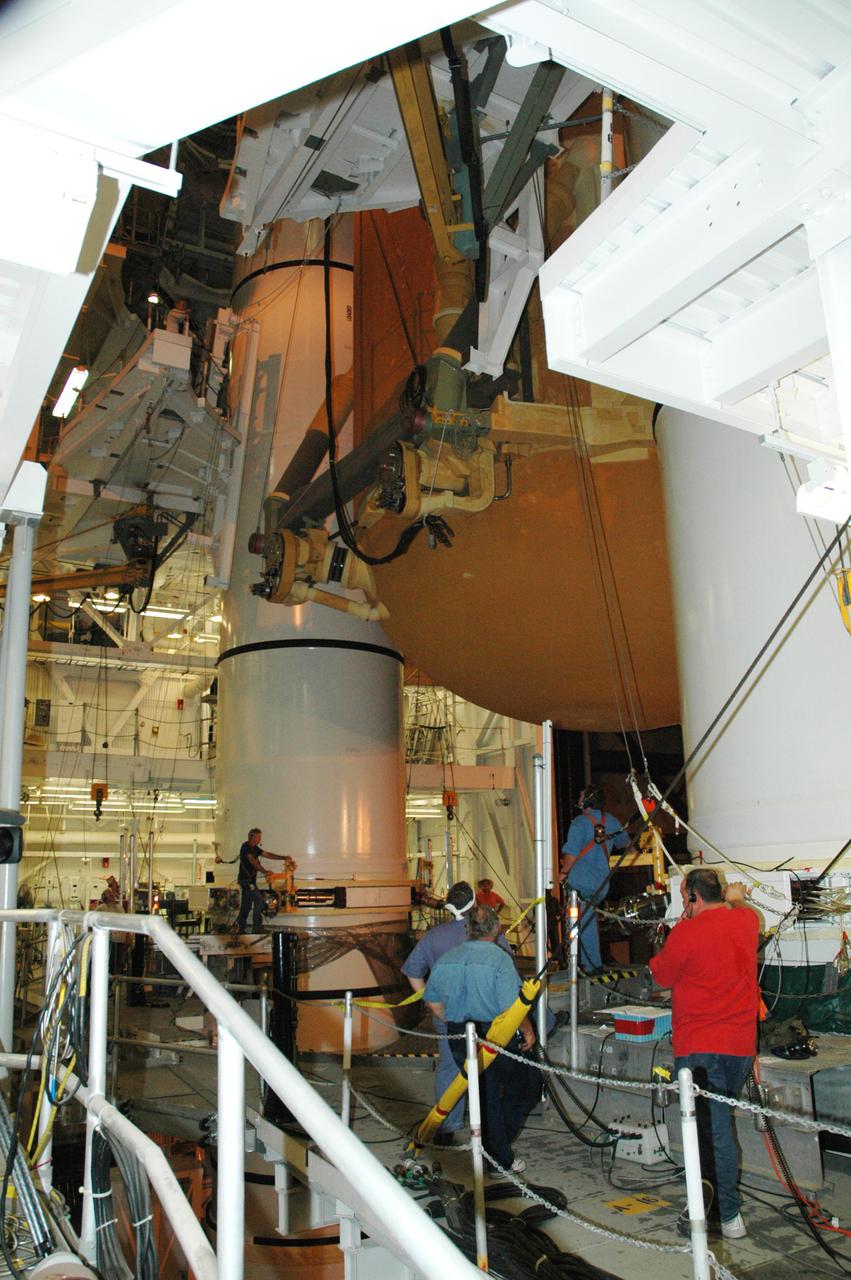
KENNEDY SPACE CENTER, FLA. - Technicians attach the External Tank that will be used to return the Space Shuttle program to flight to a pair of Solid Rocket Boosters in high bay 3 in the Vehicle Assembly Building. The tank, ET-121, and the Solid Rocket Boosters were originally scheduled to fly with orbiter Atlantis on mission STS-121 but will now be used to launch Discovery on mission STS-114. Once secure in the high bay, a new heater will be added to the feedline bellows to minimize the potential for ice and frost buildup. STS-114 is the first Return to Flight mission to the International Space Station. The launch window extends from July 13 through July 31.
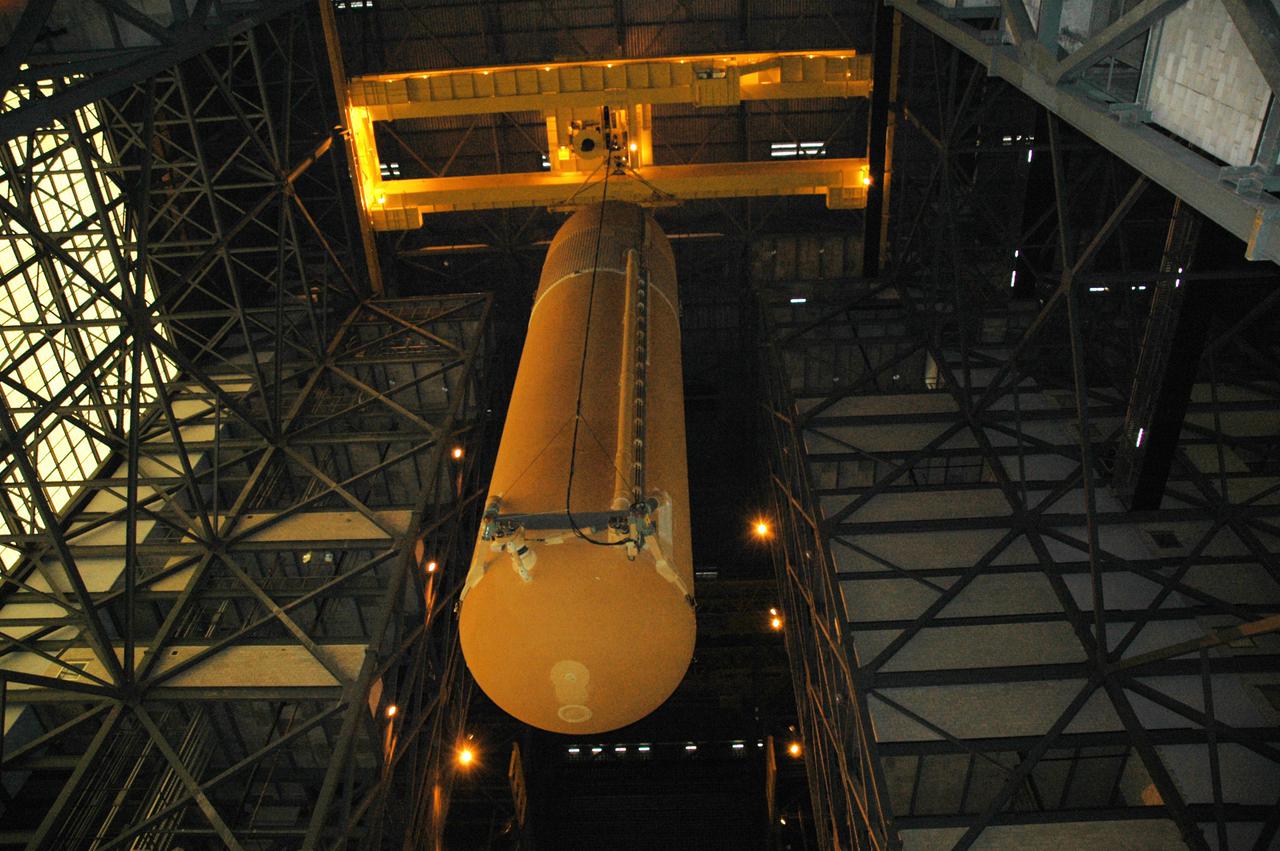
KENNEDY SPACE CENTER, FLA. - An overhead crane lowers the External Tank that will be used to return the Space Shuttle program to flight into high bay 3 in the Vehicle Assembly Building. The tank, ET-121, and the Solid Rocket Boosters were originally scheduled to fly with orbiter Atlantis on mission STS-121 but will now be used to launch Discovery on mission STS-114. Once secure in the high bay, a new heater will be added to the feedline bellows to minimize the potential for ice and frost buildup. STS-114 is the first Return to Flight mission to the International Space Station. The launch window extends from July 13 through July 31.
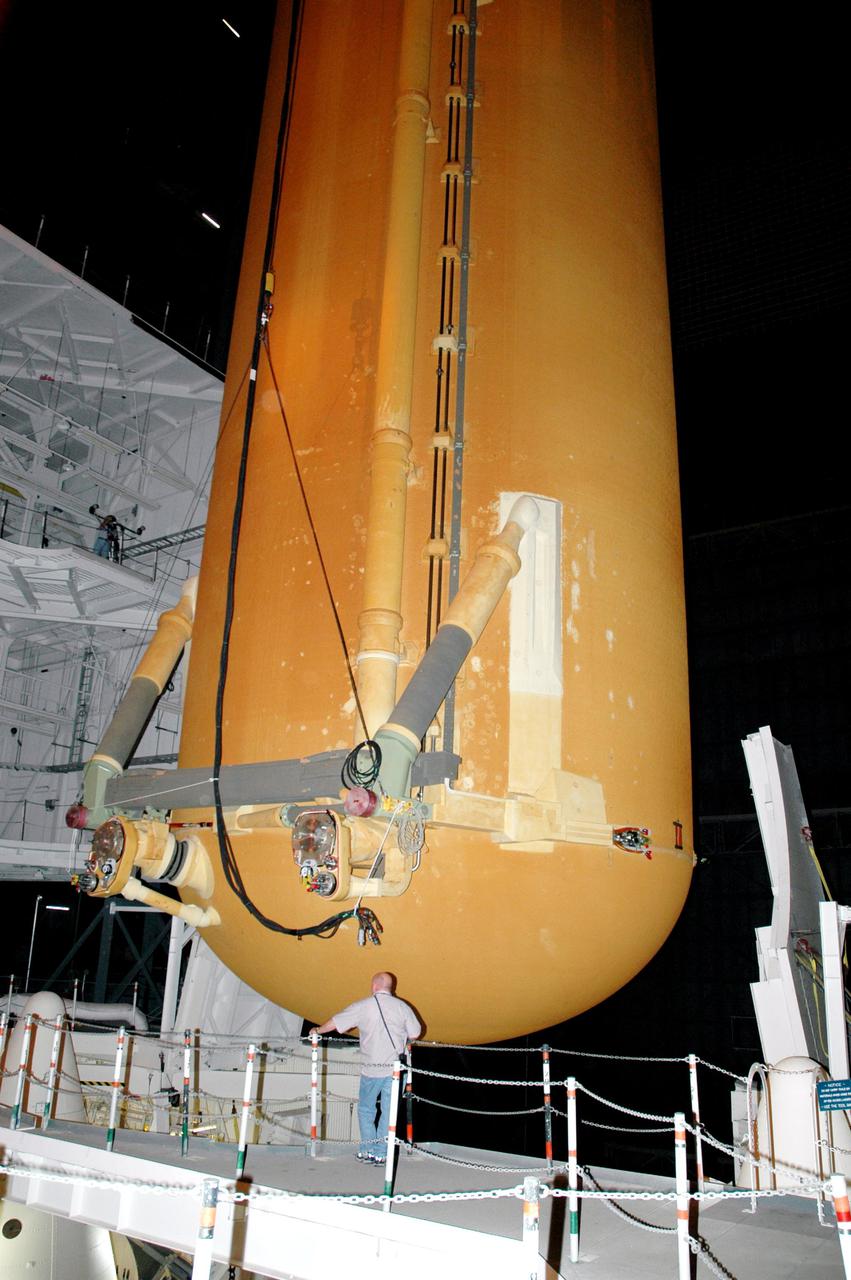
KENNEDY SPACE CENTER, FLA. - A technician monitors the External Tank that will be used to return the Space Shuttle program to flight as it is positioned into high bay 3 in the Vehicle Assembly Building. The tank, ET-121, and the Solid Rocket Boosters were originally scheduled to fly with orbiter Atlantis on mission STS-121 but will now be used to launch Discovery on mission STS-114. Once secure in the high bay, a new heater will be added to the feedline bellows to minimize the potential for ice and frost buildup. STS-114 is the first Return to Flight mission to the International Space Station. The launch window extends from July 13 through July 31.
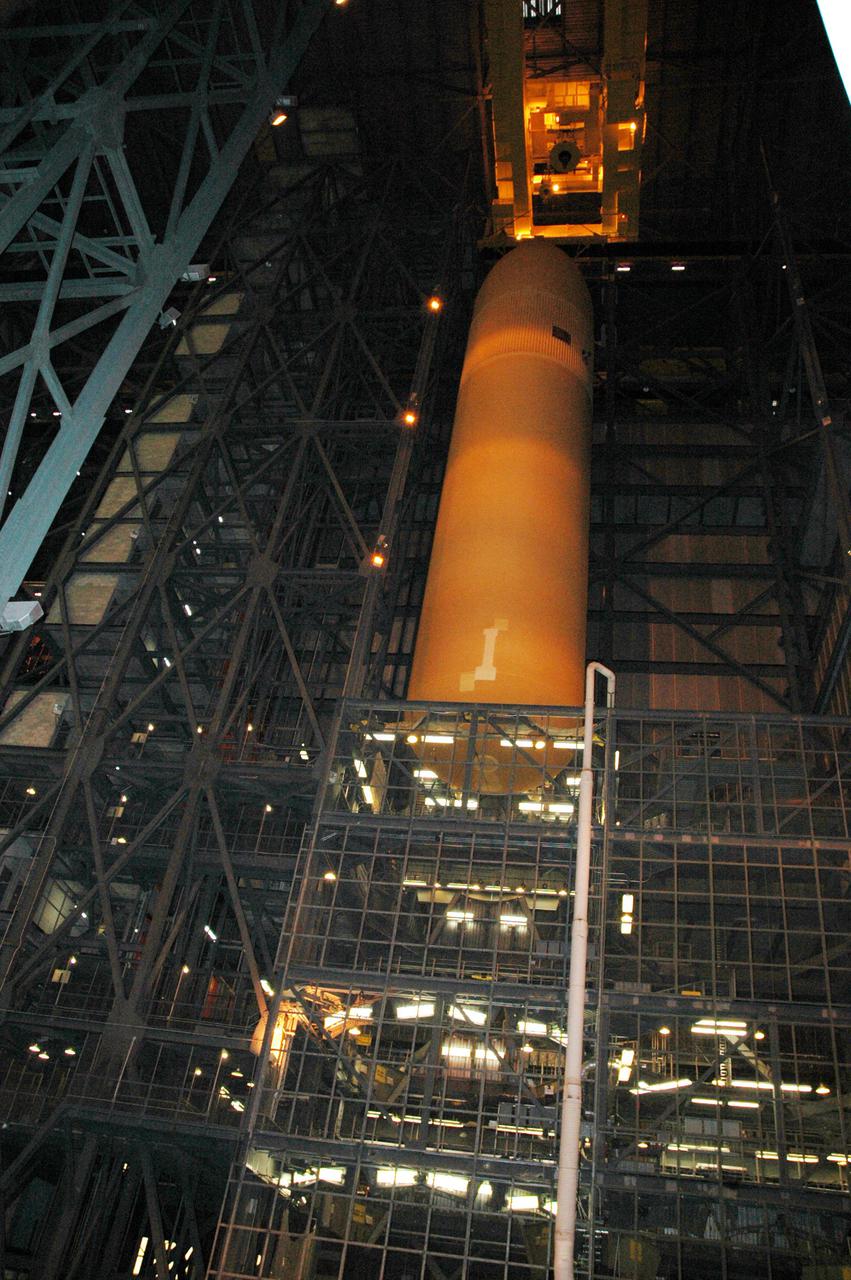
KENNEDY SPACE CENTER, FLA. - The External Tank that will be used to return the Space Shuttle program to flight is lifted into high bay 3 in the Vehicle Assembly Building. The tank, ET-121, and the Solid Rocket Boosters were originally scheduled to fly with orbiter Atlantis on mission STS-121 but will now be used to launch Discovery on mission STS-114. Once secure in the high bay, a new heater will be added to the feedline bellows to minimize the potential for ice and frost buildup. STS-114 is the first Return to Flight mission to the International Space Station. The launch window extends from July 13 through July 31.
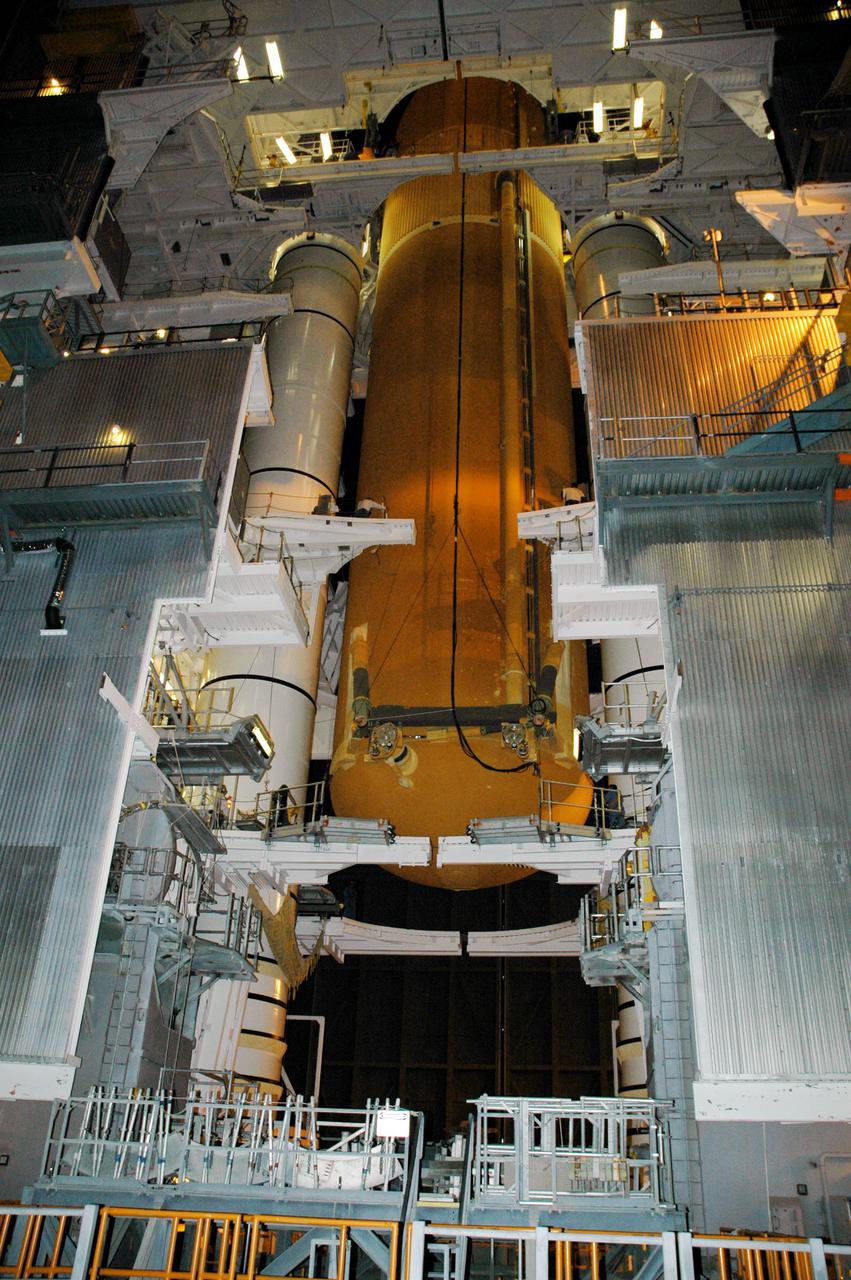
KENNEDY SPACE CENTER, FLA. - The External Tank that will be used to return the Space Shuttle program to flight is attached to a pair of Solid Rocket Boosters in high bay 3 in the Vehicle Assembly Building. The tank, ET-121, and the Solid Rocket Boosters were originally scheduled to fly with orbiter Atlantis on mission STS-121 but will now be used to launch Discovery on mission STS-114. Once secure in the high bay, a new heater will be added to the feedline bellows to minimize the potential for ice and frost buildup. STS-114 is the first Return to Flight mission to the International Space Station. The launch window extends from July 13 through July 31.