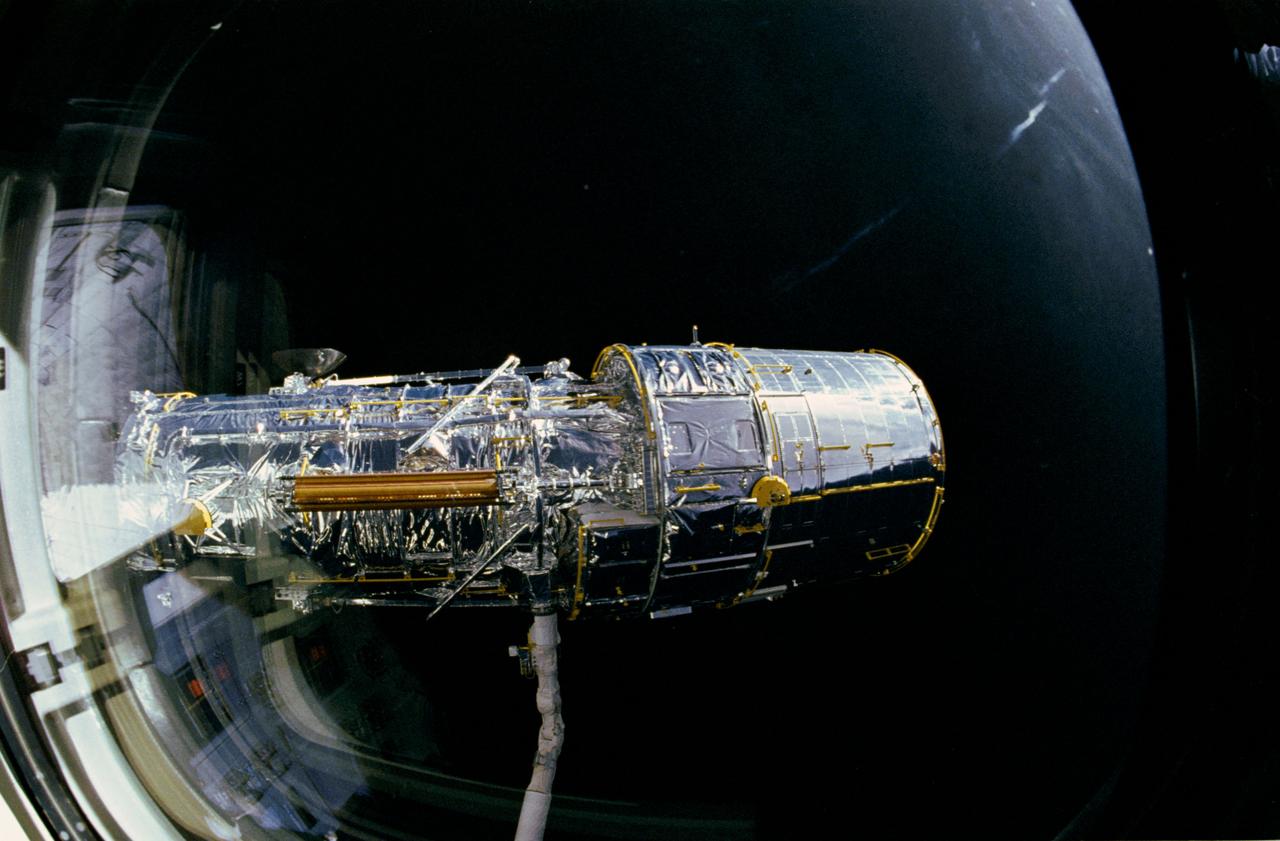
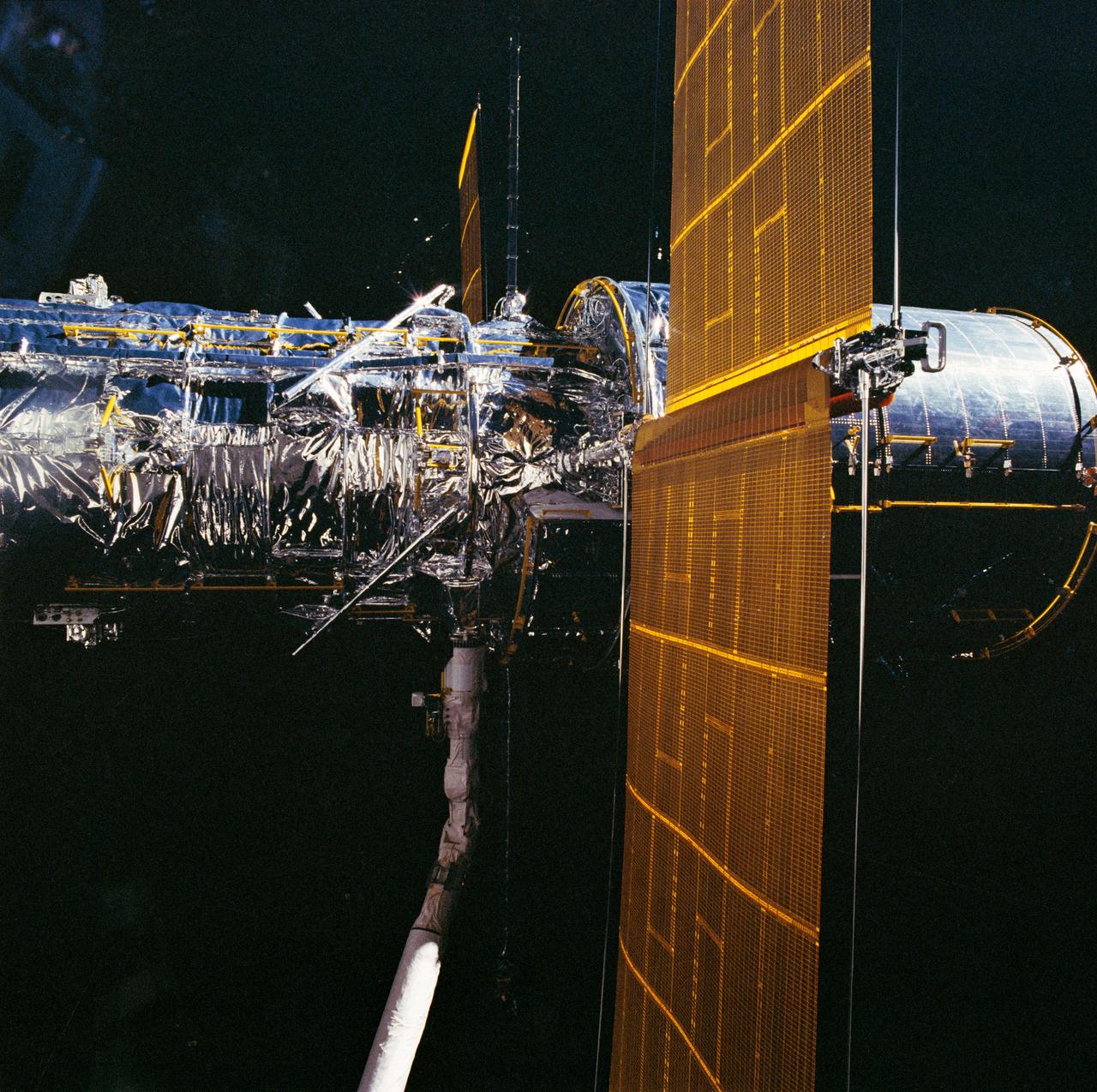
During STS-31 checkout, the Hubble Space Telescope (HST) is held in a pre-deployment position by Discovery's, Orbiter Vehicle (OV) 103's, remote manipulator system (RMS). The view, taken from the crew cabin overhead window W7, shows the starboard solar array (SA) panel (center) and two high gain antennae (HGA) (on either side) stowed along side the Support System Module (SSM) forward shell. The sun highlights HST against the blackness of space.
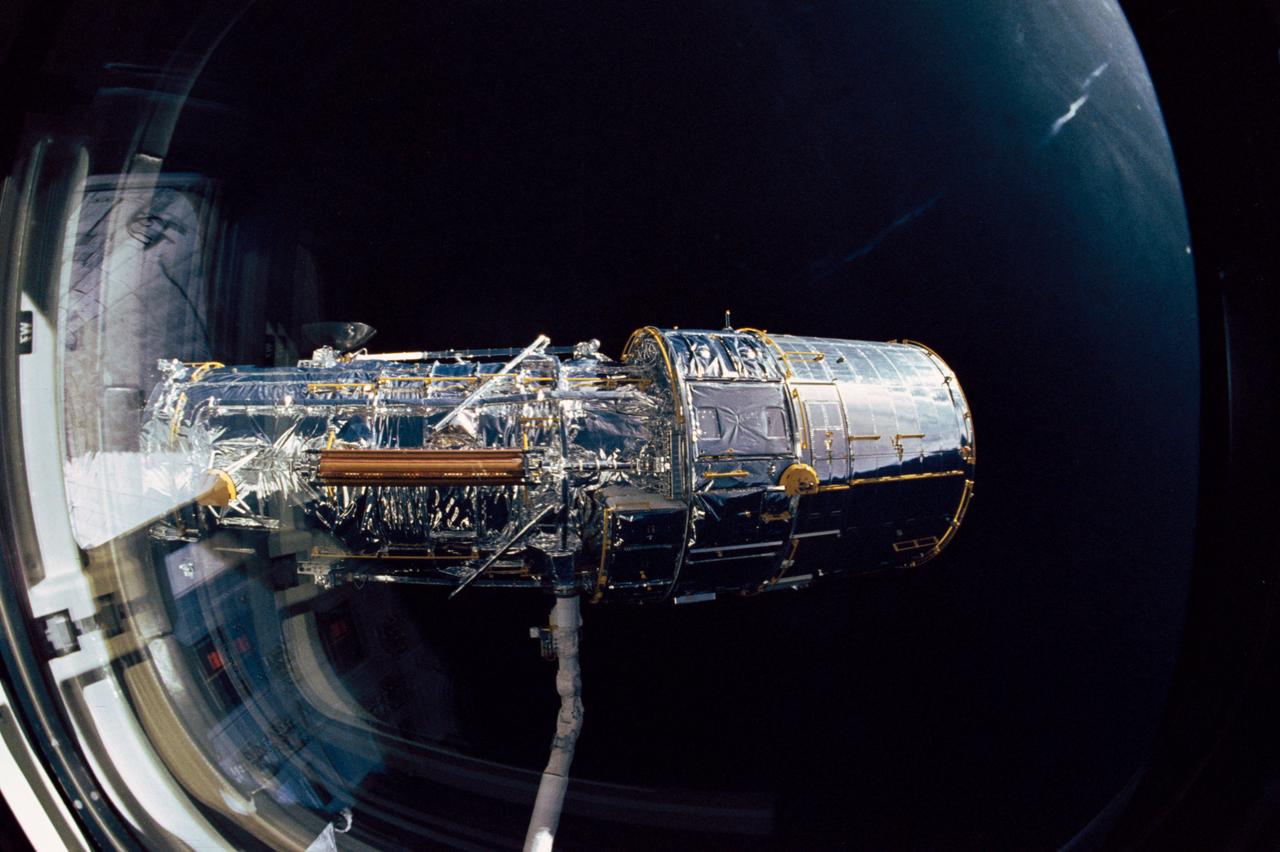
The Hubble Space Telescope (HST), grappled by Discovery's, Orbiter Vehicle (OV) 103's, remote manipulator system (RMS), is held in a pre-deployment position. During STS-31 checkout procedures, the solar array (SA) panels and the high gain antennae (HGA) will be deployed. The starboard SA (center) and the two HGA are stowed along side the Support System Module (SSM) forward shell. The sun highlights HST against the blackness of space.
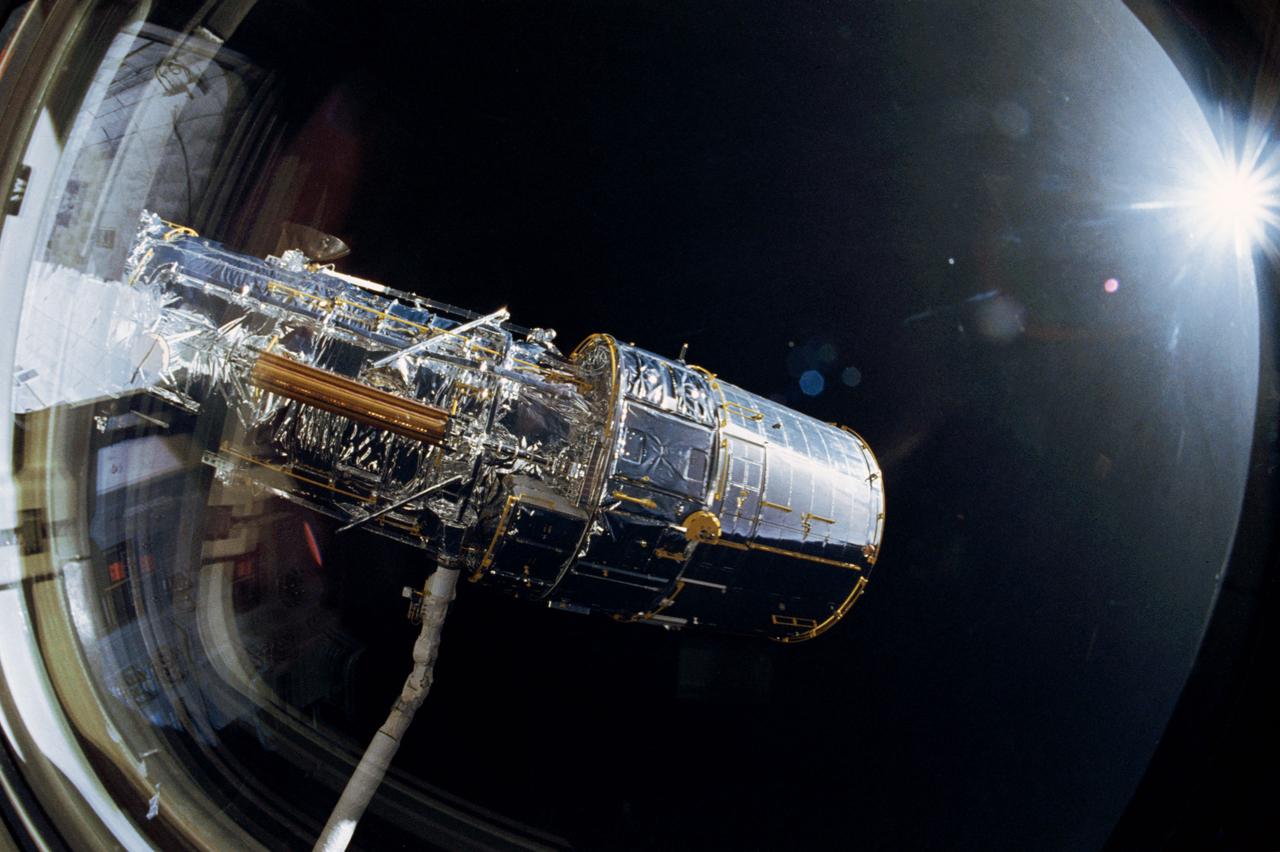
The Hubble Space Telescope (HST), grappled by Discovery's, Orbiter Vehicle (OV) 103's, remote manipulator system (RMS), is oriented in a 90 degree pitch position during STS-31 pre-deployment checkout procedures. The solar array (SA) panel (center) and high gain antennae (HGA) (on either side) are stowed along the Support System Module (SSM) forward shell prior to deployment. The sun highlights HST against the blackness of space.
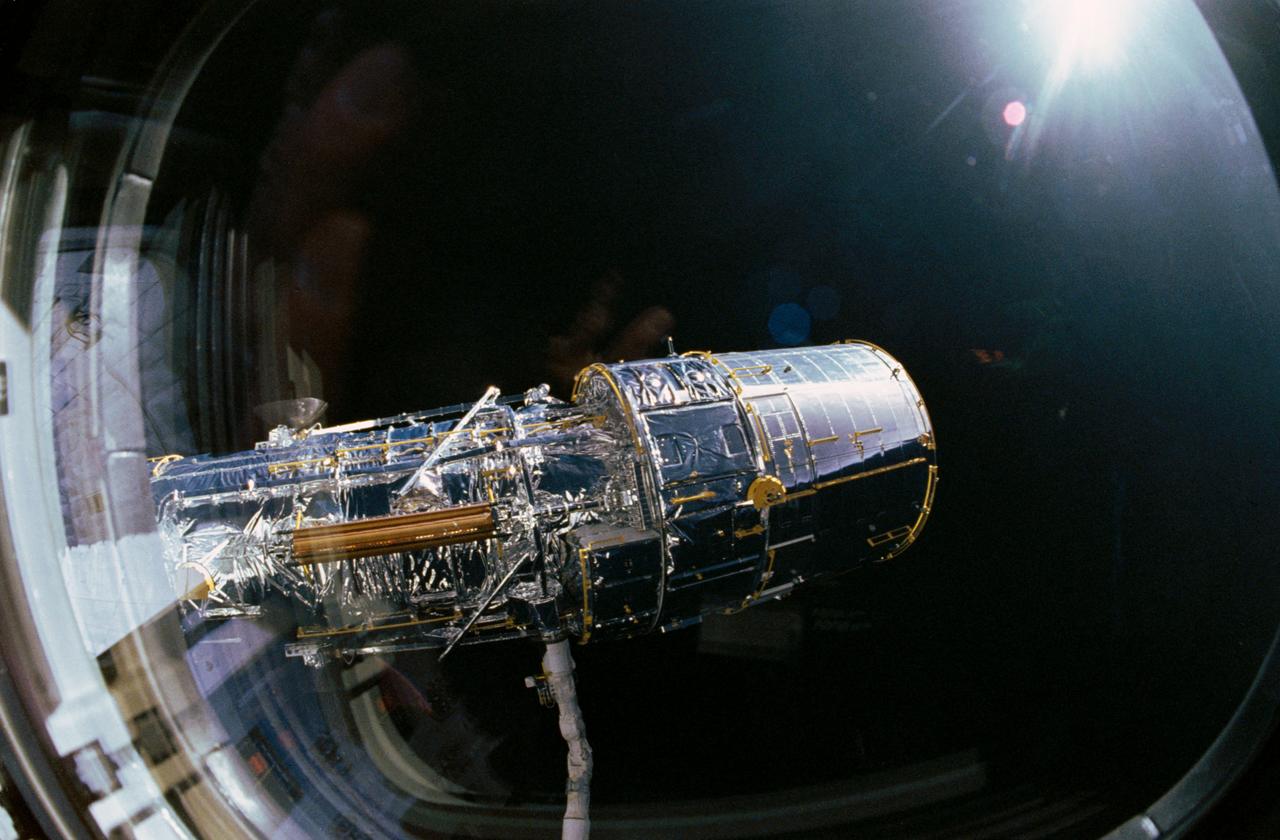
View taken through overhead window W7 aboard Discovery, Orbiter Vehicle (OV) 103, shows the Hubble Space Telescope (HST) grappled by the remote manipulator system (RMS) and held in a 90 degree pitch position against the blackness of space. The solar array (SA) panel (center) and the high gain antennae (HGA) (on either side) are visible along the Support System Module (SSM) forward shell prior to deployment during STS-31.
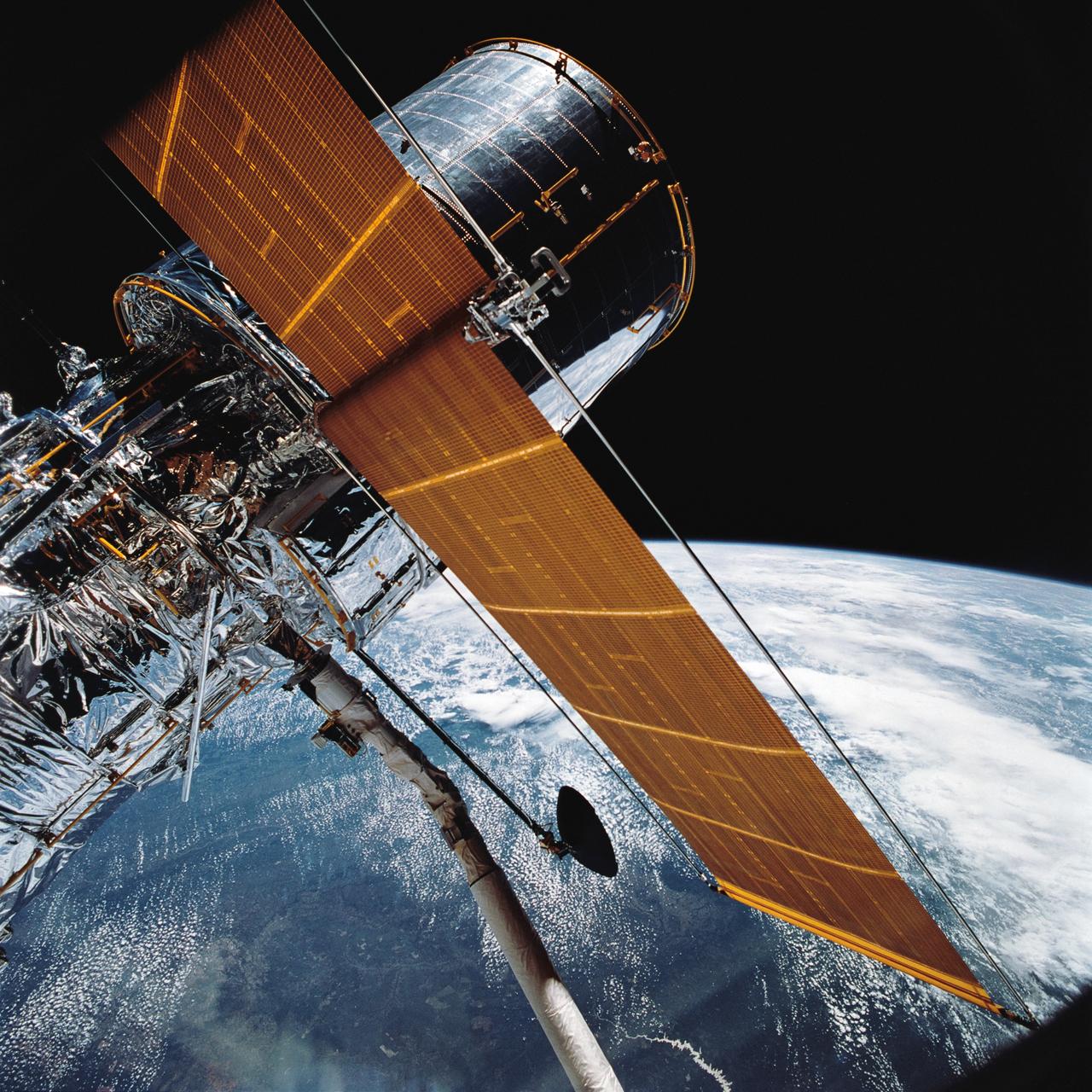
During STS-31, the Hubble Space Telescope (HST), grappled by the remote manipulator system (RMS) end effector, is held against the blackness of space. The two solar array (SA) wings (large gold panels) are fully extended with bistem cassette and secondary deployment mechanism (SDM) handle clearly visible. The two deployed high gain antennae (HGA) masts are parallel to the SA panels. RMS end effector is positioned on the starboard fixture during the predeployment checkout operations above Discovery's, Orbiter Vehicle (OV) 103's, payload bay (PLB).
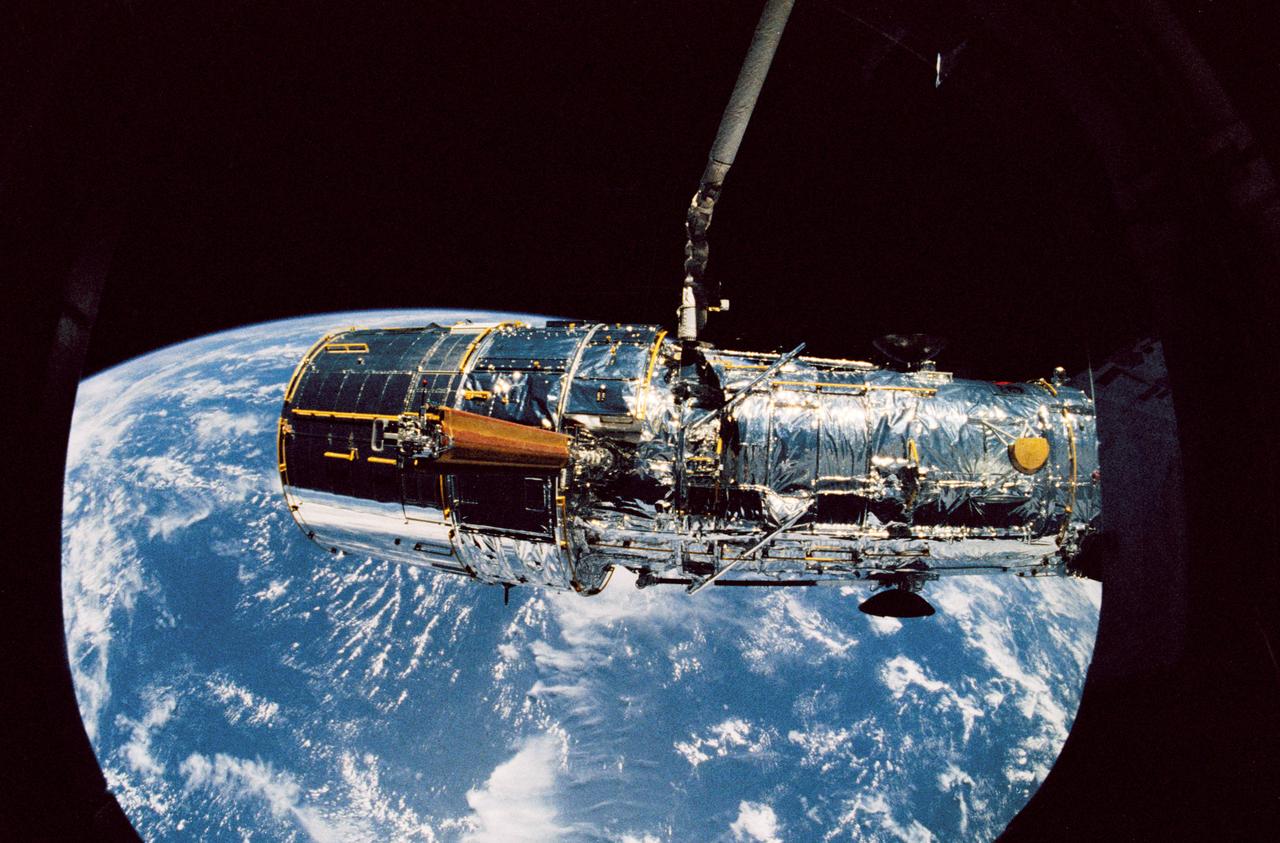
STS031-76-026 (25 April 1990) --- Most of the giant Hubble Space Telescope (HST) can be seen as it is suspended in space by Discovery's Remote Manipulator System (RMS) following the deployment of part of its solar panels and antennae. The photo was taken with a handheld Hasselblad camera. This was among the first photos NASA released on April 30, 1990, from the five-day STS 31 mission.
Held in appendage deploy position by Discovery's, Orbiter Vehicle (OV) 103's, remote manipulator system (RMS), the Hubble Space Telescope's (HST's) starboard solar array (SA) bistem cassette is released from its stowed position on the Support System Module (SSM) forward shell. The spreader bar & bistem begin to unfurl the SA wing. View was taken by an STS-31 crewmember through an overhead window & is backdropped against the surface of the Earth.
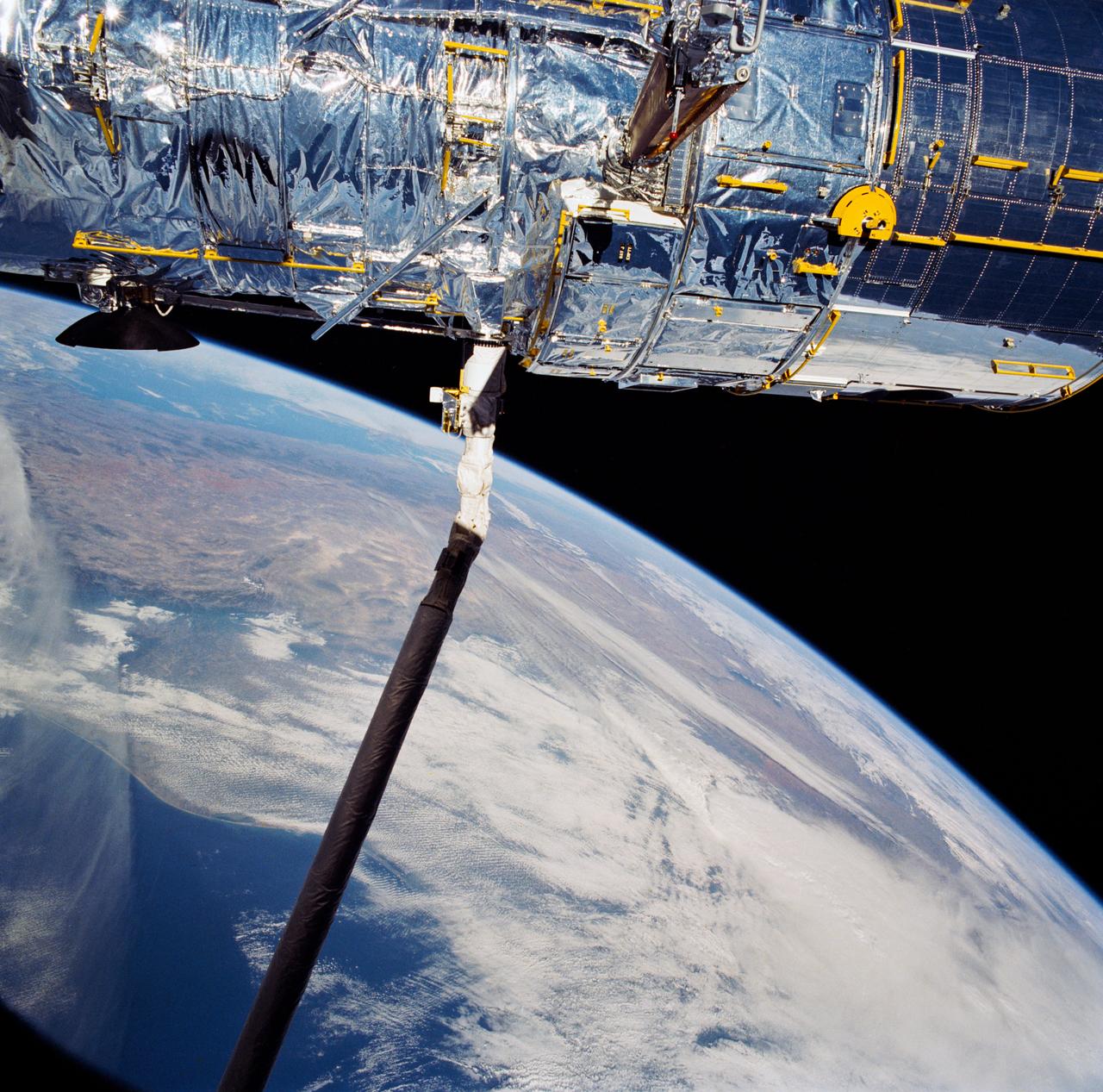
During STS-31, the Hubble Space Telescope (HST) is held in appendage deploy position by Discovery's, Orbiter Vehicle (OV) 103's, remote manipulator system (RMS) above the payload bay (PLB) and crew compartment cabin. While in this position the solar array (SA) wing bistem cassette (HST center) is deployed from its stowed location along side the Support System Module (SSM) forward shell. A high gain antenna (HGA) remains stowed along the SSM. The Earth's surface and the Earth limb creates a dramatic backdrop.
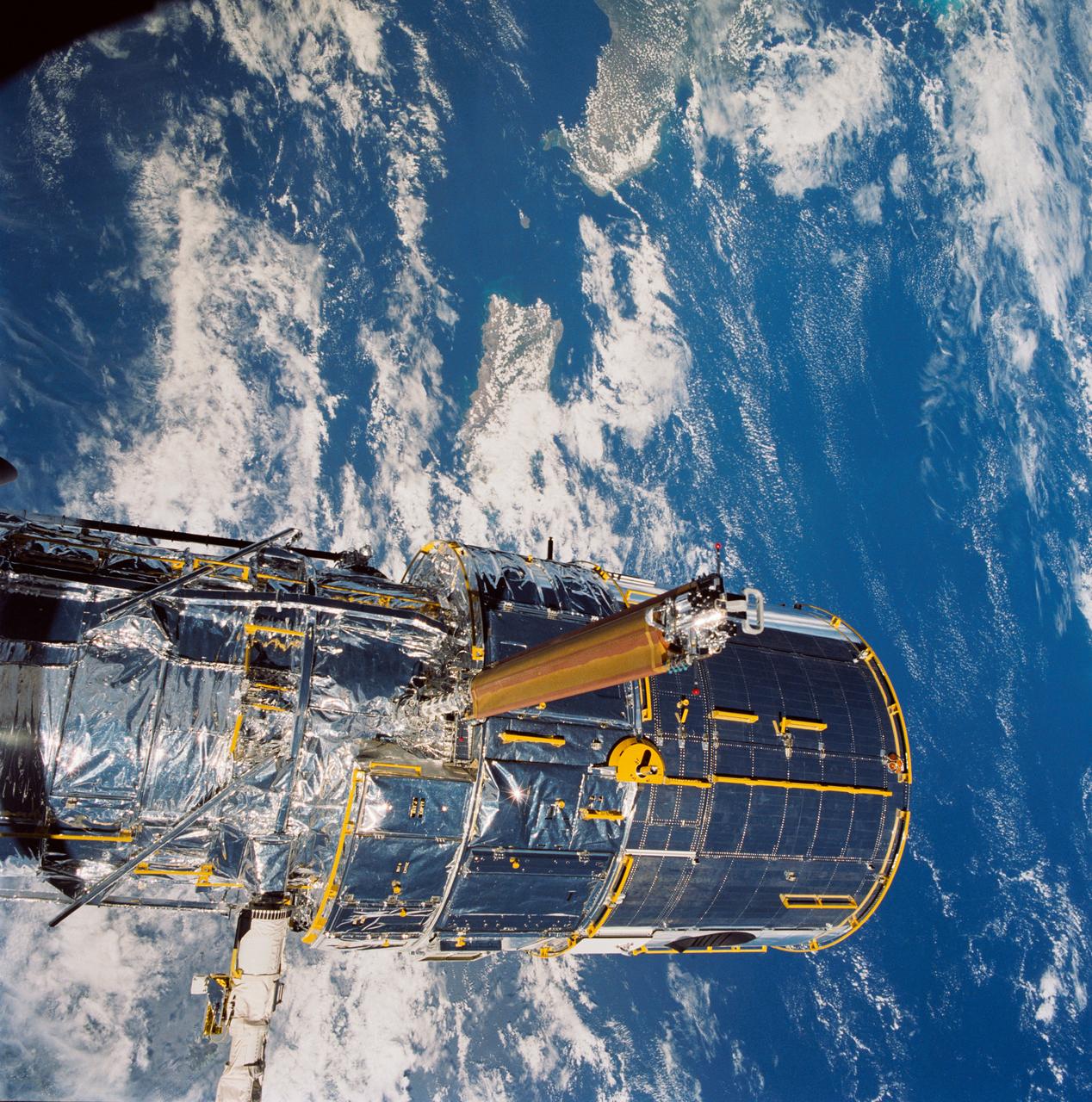
During STS-31, the Hubble Space Telescope (HST) grappled by the remote manipulator system (RMS) end effector is held in appendage deploy position above Discovery, Orbiter Vehicle (OV) 103. The solar array (SA) bistem cassette has been released from its latch fittings. The bistem spreader bars begin to unfurl the SA wing. The secondary deployment mechanism (SDM) handle is visible at the SA end. Stowed against either side of the HST System Support Module (SSM) forward shell are the high-gain antennae (HGA). Puerto Rico and the Dominican Republic are recognizable at the left of the frame.
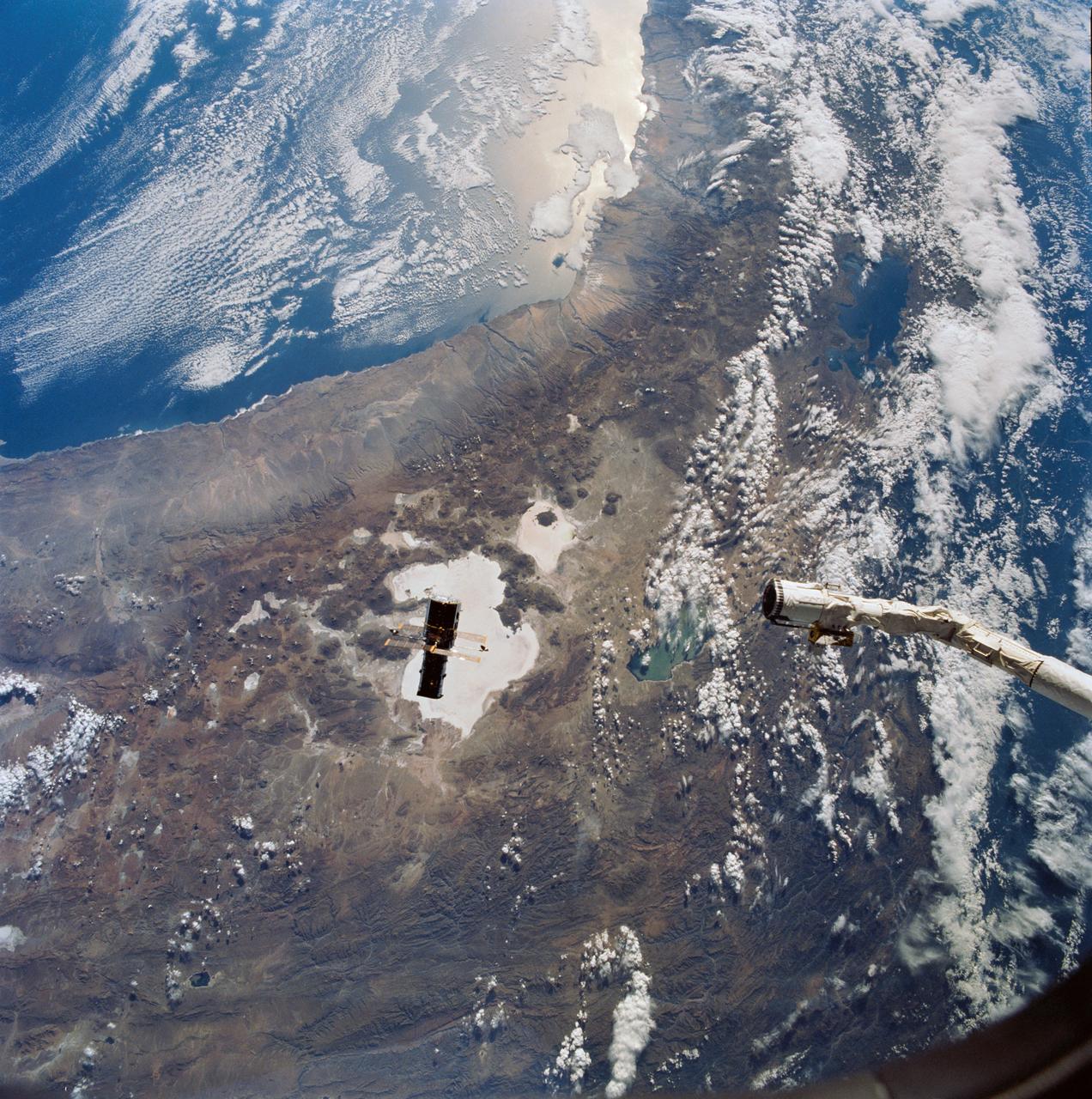
Hubble Space Telescope (HST), with its solar array (SA) wings and high gain antennae (HGA) fully extended,is released from Discovery's, Orbiter Vehicle (OV) 103's, remote manipulator system (RMS) end effector and is set free into Earth orbit by the STS-31 crew. HST drifts away from the end effector over the Andes Mountains.Parts of Bolivia, Peru, Chile, and Argentina are visible. The view covers a huge area of the western half of South America stretching from 14 degrees south latitude to 23 degrees, about 1,000 kilometers.
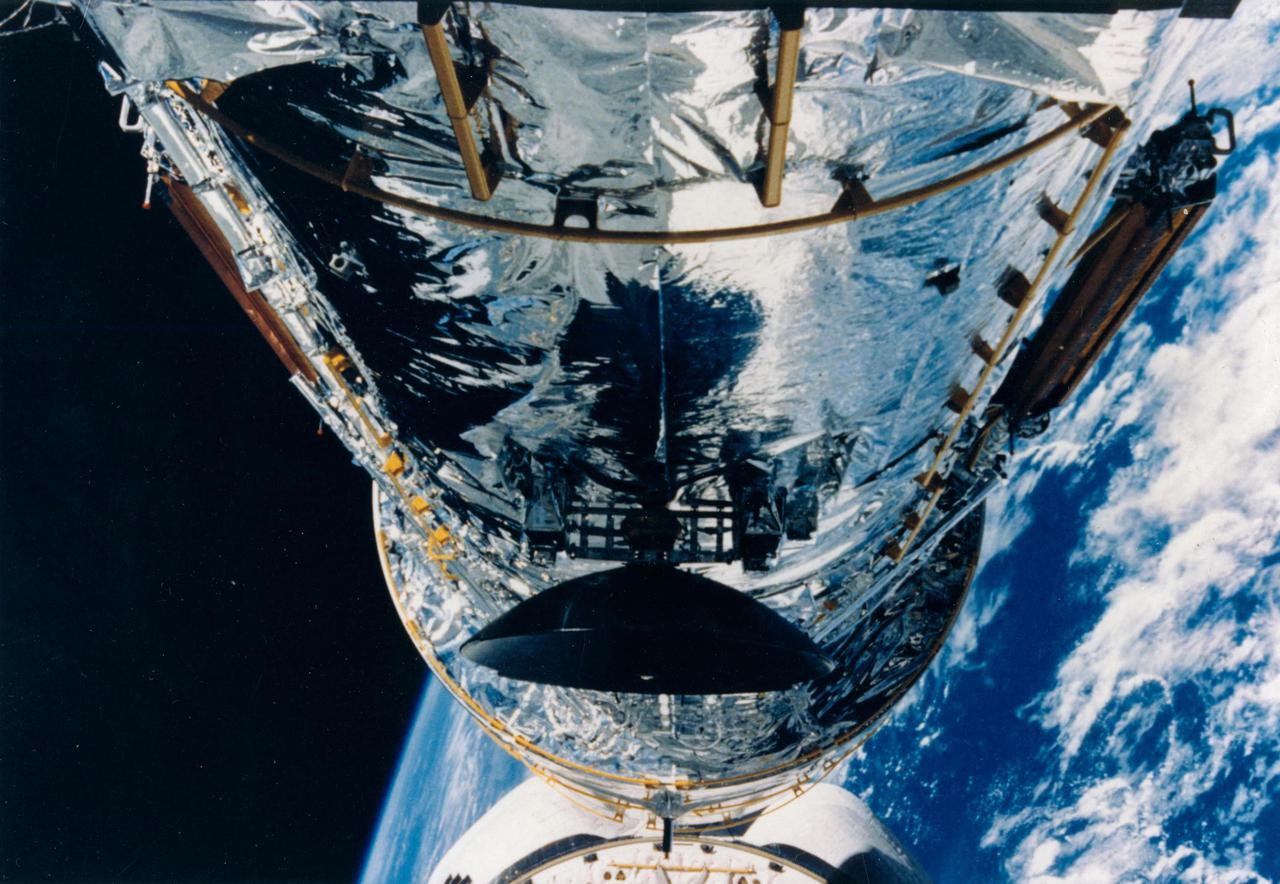
JOHNSON SPACE CENTER, HOUSTON, TEXAS-- STS-31 ONBOARD SCENE -- A medium closeup view photographed with fish-eye lens on a 35mm camera shooting the Hubble Space Telescope (HST) held above Discovery's cargo bay by the remote manipulator system prior to solar array and antennae deployment.
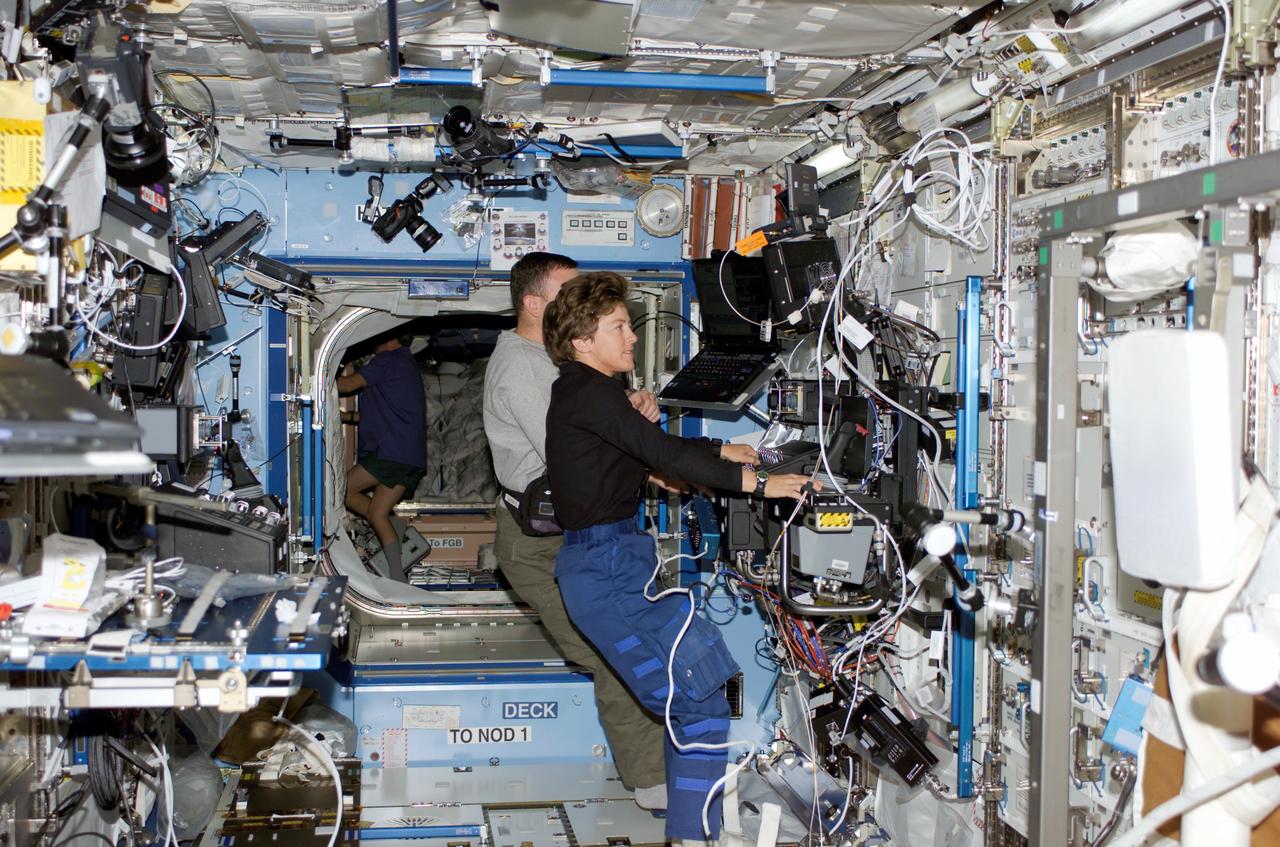
S114-E-6124 (31 July 2005) --- Astronauts Wendy B. Lawrence (foreground), STS-114 mission specialist, and James M. Kelly, pilot, work the controls of the Space Station Remote Manipulator System (SSRMS) or Canadarm2 in the Destiny laboratory of the international space station.
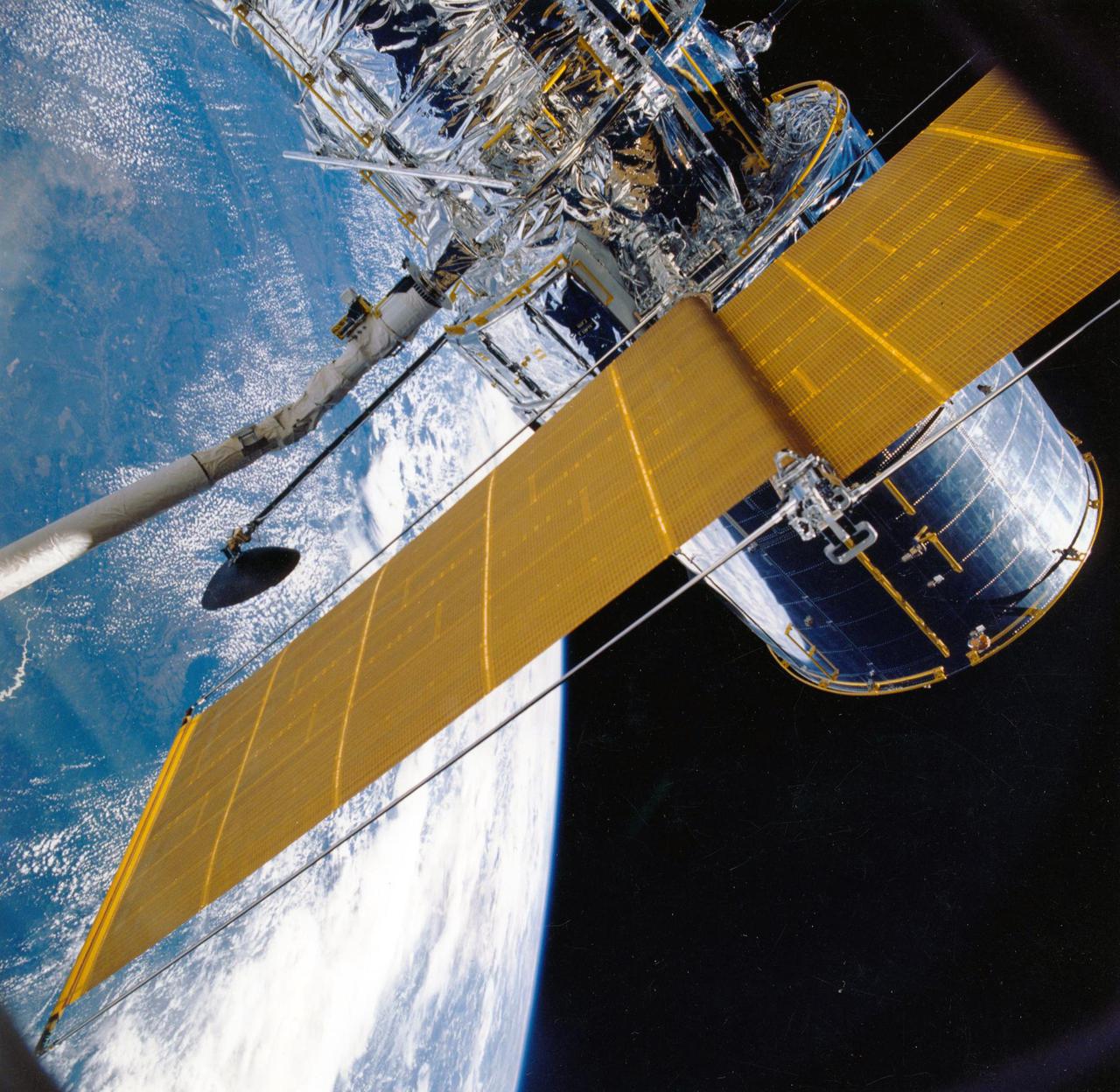
JOHNSON SPACE CENTER, HOUSTON, TEXAS -- STS-31 ONBOARD SCENE -- Most of the giant Hubble Space Telescope (HST) can be seen as it is suspended in space by Discovery's remote manipulator system (RMS), following the deployment of part of its solar panels and antennae. The photo was taken with a handheld Hasselblad camera. This was among the first photos NASA released on April 30 from the five-day STS-31 mission.
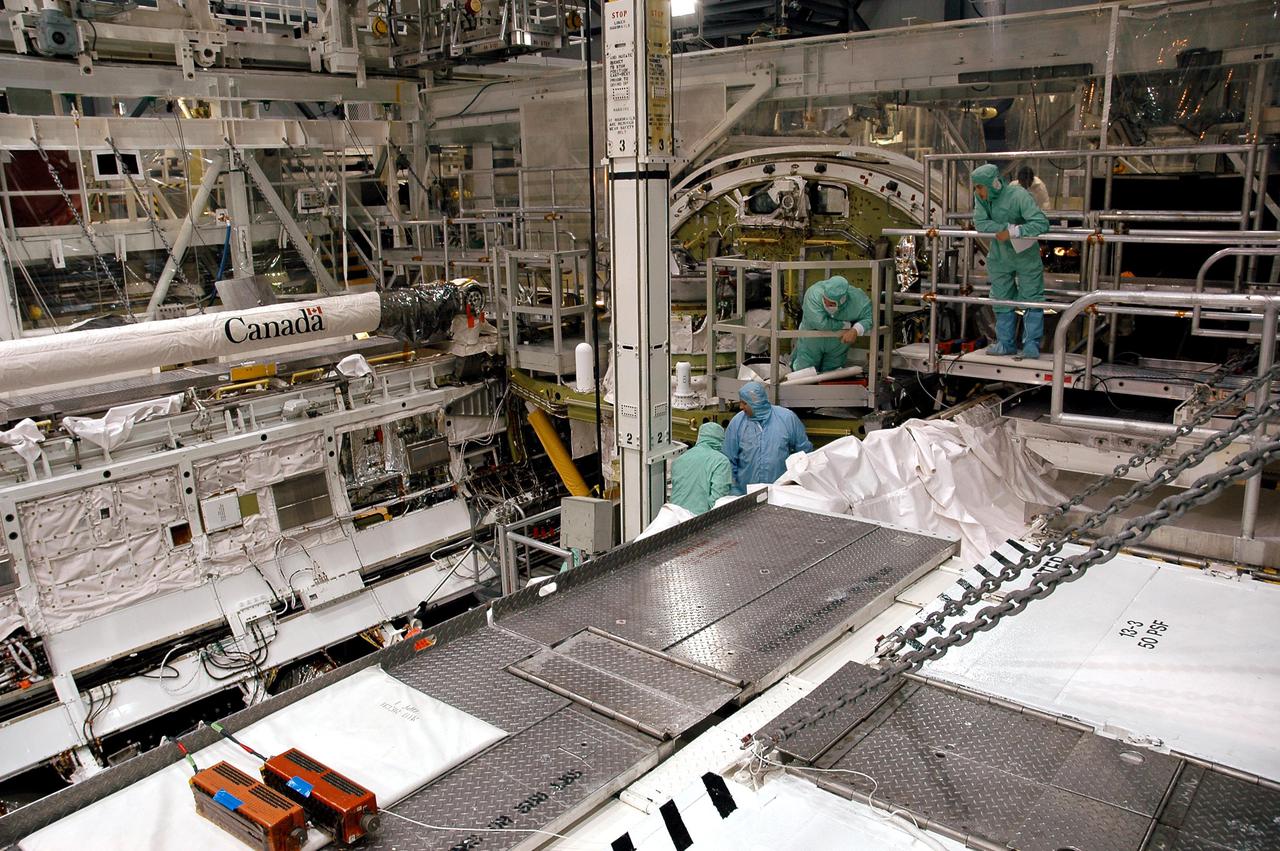
KENNEDY SPACE CENTER, FLA. - This overview shows Atlantis’ payload bay in the Orbiter Processing Facility at NASA’s Kennedy Space Center. At left is the Remote Manipulator System, or Shuttle robotic arm. Technicians have been installing and checking the base of the Manipulator Positioning Mechanism (MPM) on the starboard side. The MPM will hold the 50-foot-long Orbiter Boom Sensor System (OBSS) that will attach to the Remote Manipulator System. The OBSS is one of the new safety measures for Return to Flight, equipping the orbiter with cameras and laser systems to inspect the Shuttle's Thermal Protection System while in space. Atlantis is scheduled to fly on Return to Flight mission STS-121, which has a launch window of July 12 to July 31, 2005.
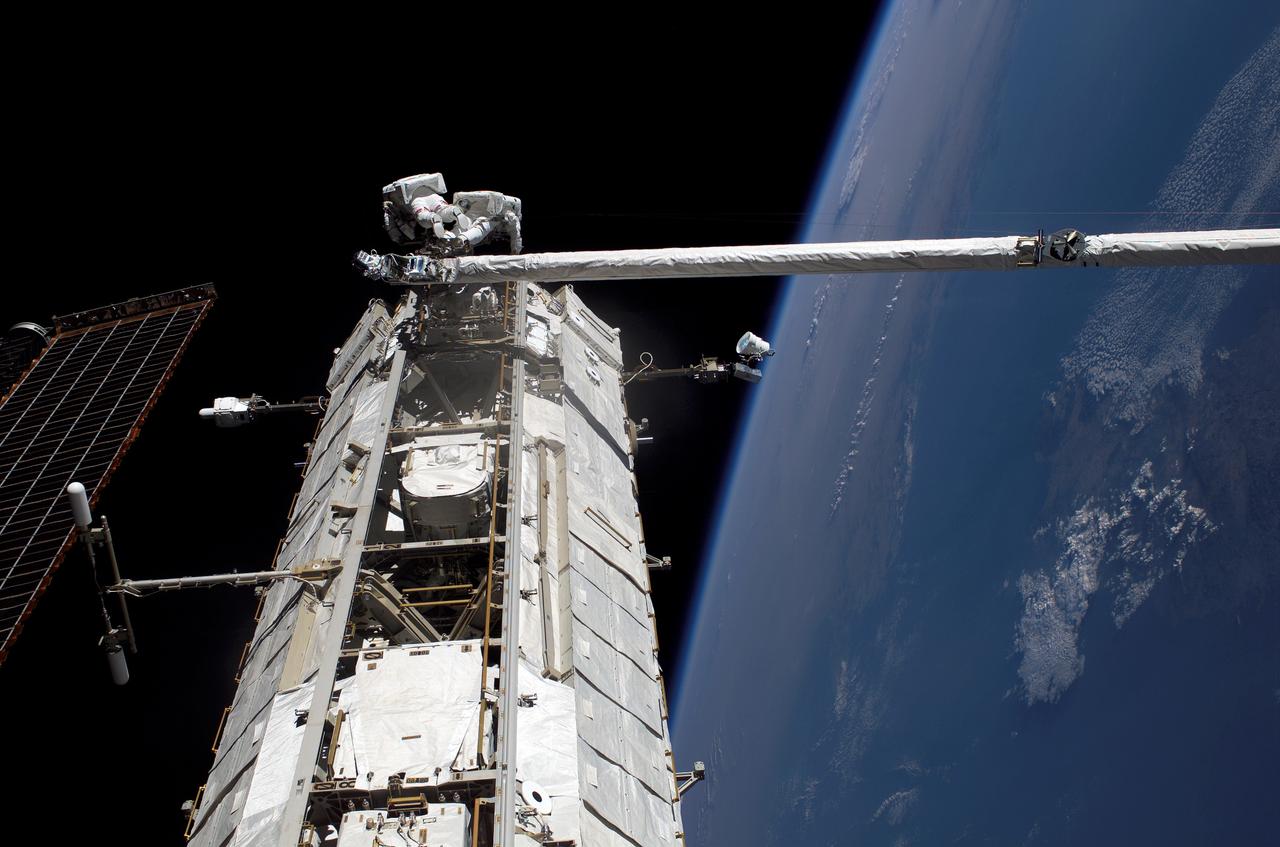
S121-E-06073 (8 July 2006) --- Using Space Shuttle Discovery's Remote Manipulator System/Orbiter Boom Sensor System (RMS/OBSS) for maneuvering, astronauts Piers J. Sellers (red stripes) and Michael E. Fossum, STS-121 mission specialists, work on the S0 Truss of the International Space Station. The 7 hour 31 minute spacewalk was the first of three scheduled EVA sessions for the STS-121 mission.
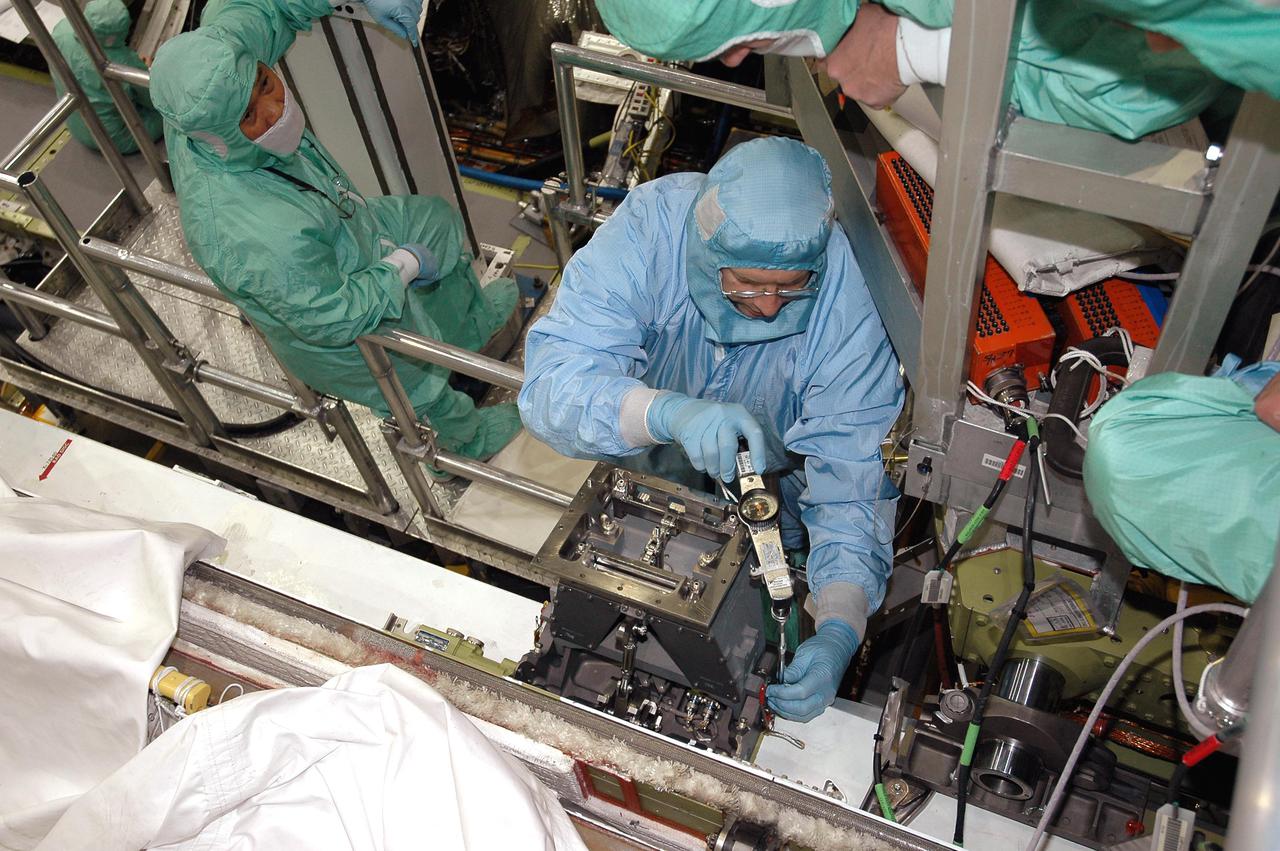
KENNEDY SPACE CENTER, FLA. - In the Orbiter Processing Facility at NASA’s Kennedy Space Center, technicians check out the base of the Manipulator Positioning Mechanism (MPM) installed on the starboard side of Atlantis’ payload bay. The MPM will hold the 50-foot-long Orbiter Boom Sensor System (OBSS) that will attach to the Remote Manipulator System, or Shuttle robotic arm. The OBSS is one of the new safety measures for Return to Flight, equipping the orbiter with cameras and laser systems to inspect the Shuttle's Thermal Protection System while in space. Atlantis is scheduled to fly on Return to Flight mission STS-121, which has a launch window of July 12 to July 31, 2005.
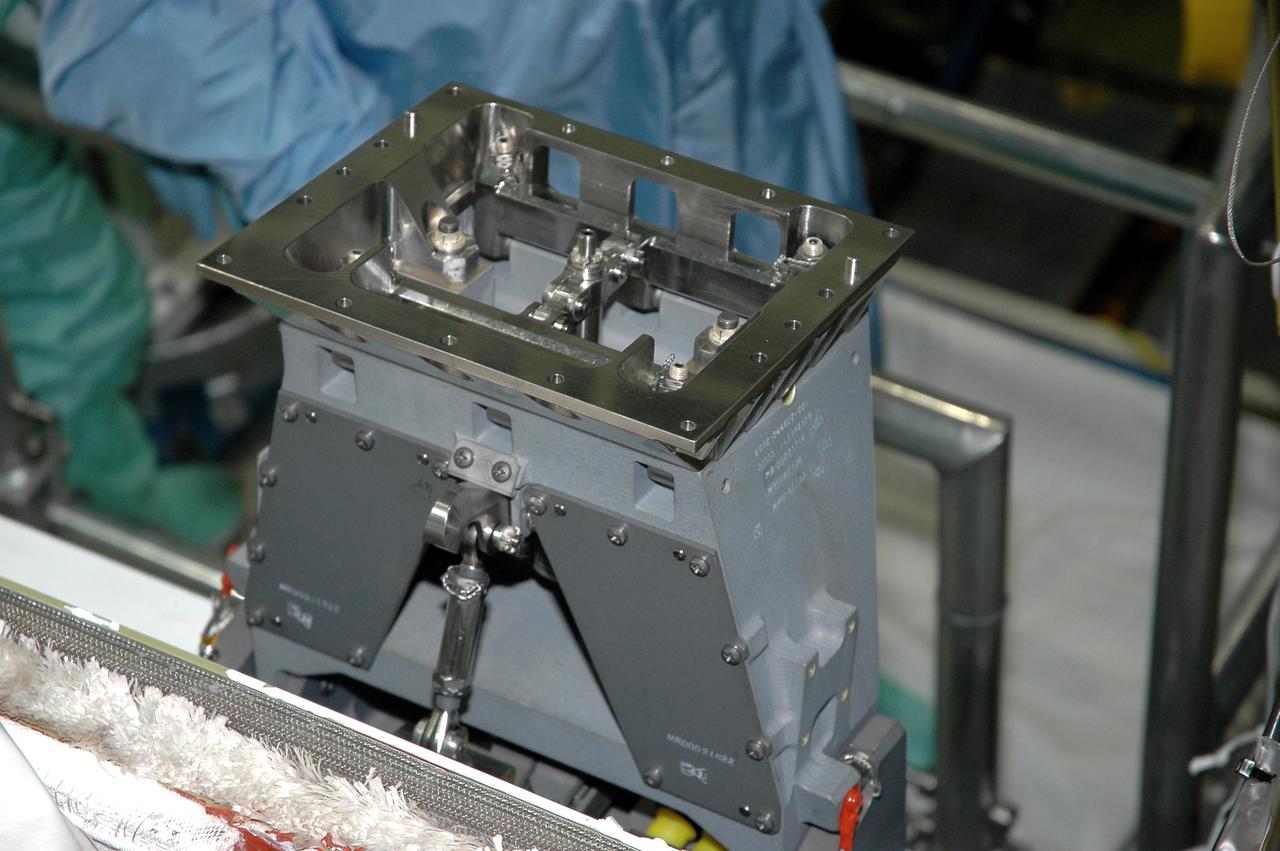
KENNEDY SPACE CENTER, FLA. - A close-up is shown of the base of the Manipulator Positioning Mechanism (MPM) installed on the starboard side of Atlantis’ payload bay in the Orbiter Processing Facility at NASA’s Kennedy Space Center. The MPM will hold the 50-foot-long Orbiter Boom Sensor System (OBSS) that will attach to the Remote Manipulator System, or Shuttle robotic arm. The OBSS is one of the new safety measures for Return to Flight, equipping the orbiter with cameras and laser systems to inspect the Shuttle's Thermal Protection System while in space. Atlantis is scheduled to fly on Return to Flight mission STS-121, which has a launch window of July 12 to July 31, 2005.
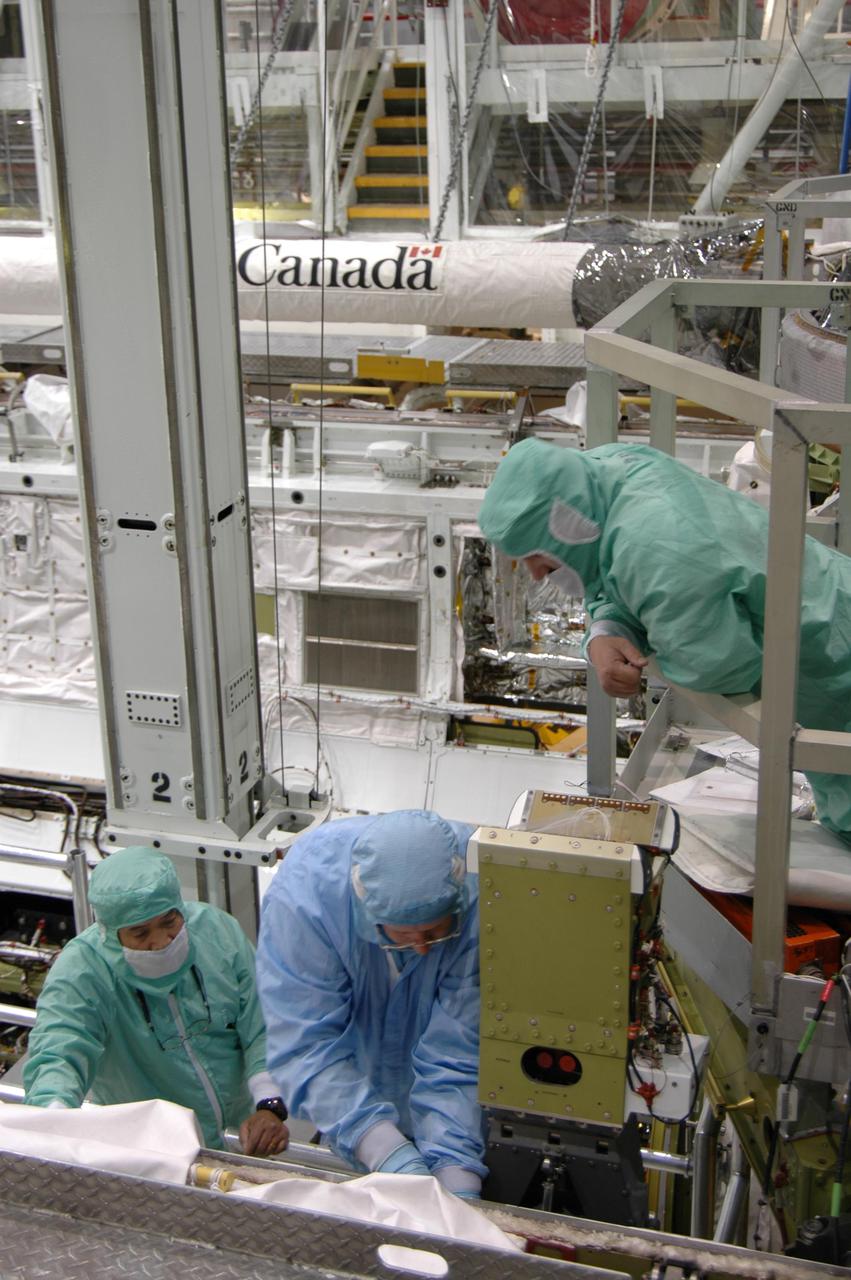
KENNEDY SPACE CENTER, FLA. - In the Orbiter Processing Facility at NASA’s Kennedy Space Center, technicians install the pedestal of the Manipulator Positioning Mechanism (MPM) on the starboard side of Atlantis’ payload bay. The MPM will hold the 50-foot-long Orbiter Boom Sensor System (OBSS) that will attach to the Remote Manipulator System, or Shuttle robotic arm. The OBSS is one of the new safety measures for Return to Flight, equipping the orbiter with cameras and laser systems to inspect the Shuttle's Thermal Protection System while in space. Atlantis is scheduled to fly on Return to Flight mission STS-121, which has a launch window of July 12 to July 31, 2005.
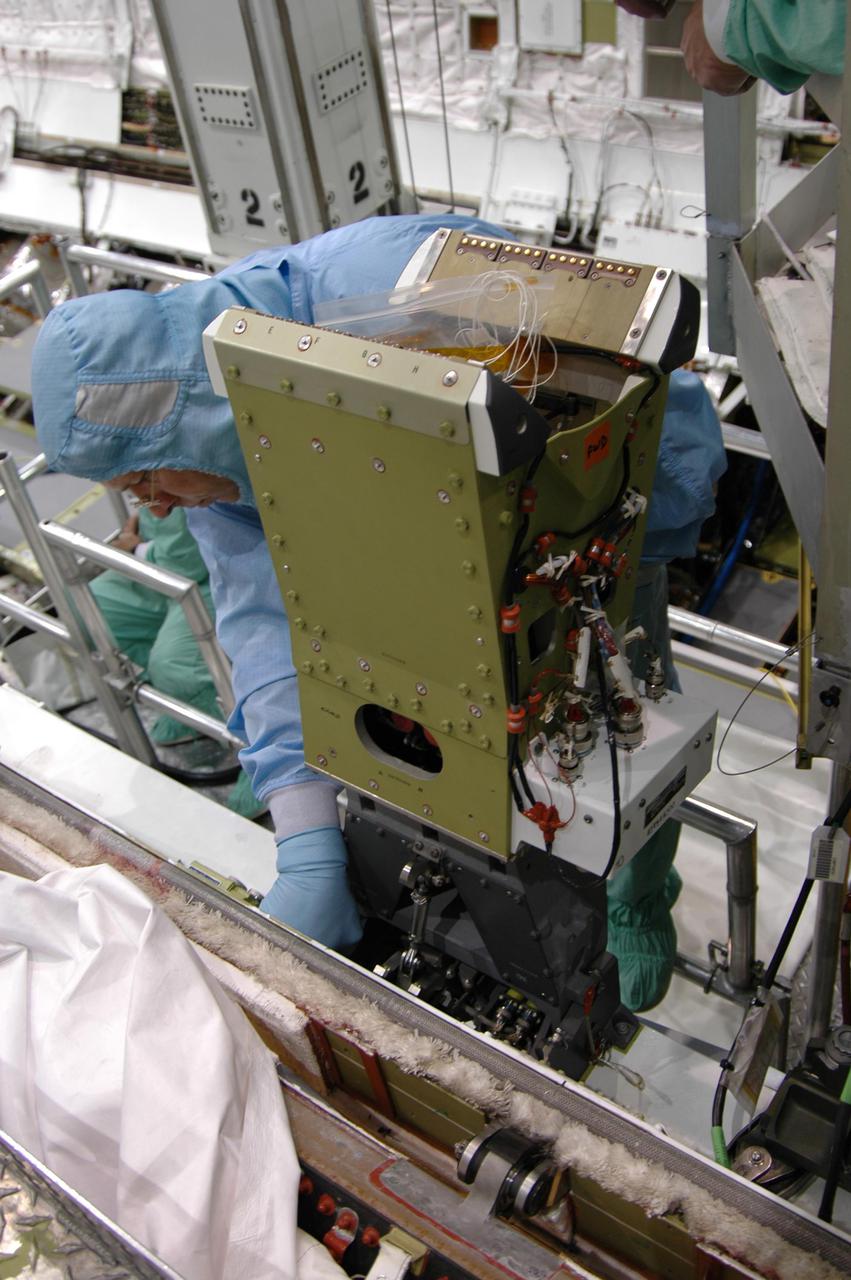
KENNEDY SPACE CENTER, FLA. - In the Orbiter Processing Facility at NASA’s Kennedy Space Center, technicians install the pedestal of the Manipulator Positioning Mechanism (MPM) on the starboard side of Atlantis’ payload bay. The MPM will hold the 50-foot-long Orbiter Boom Sensor System (OBSS) that will attach to the Remote Manipulator System, or Shuttle robotic arm. The OBSS is one of the new safety measures for Return to Flight, equipping the orbiter with cameras and laser systems to inspect the Shuttle's Thermal Protection System while in space. Atlantis is scheduled to fly on Return to Flight mission STS-121, which has a launch window of July 12 to July 31, 2005.
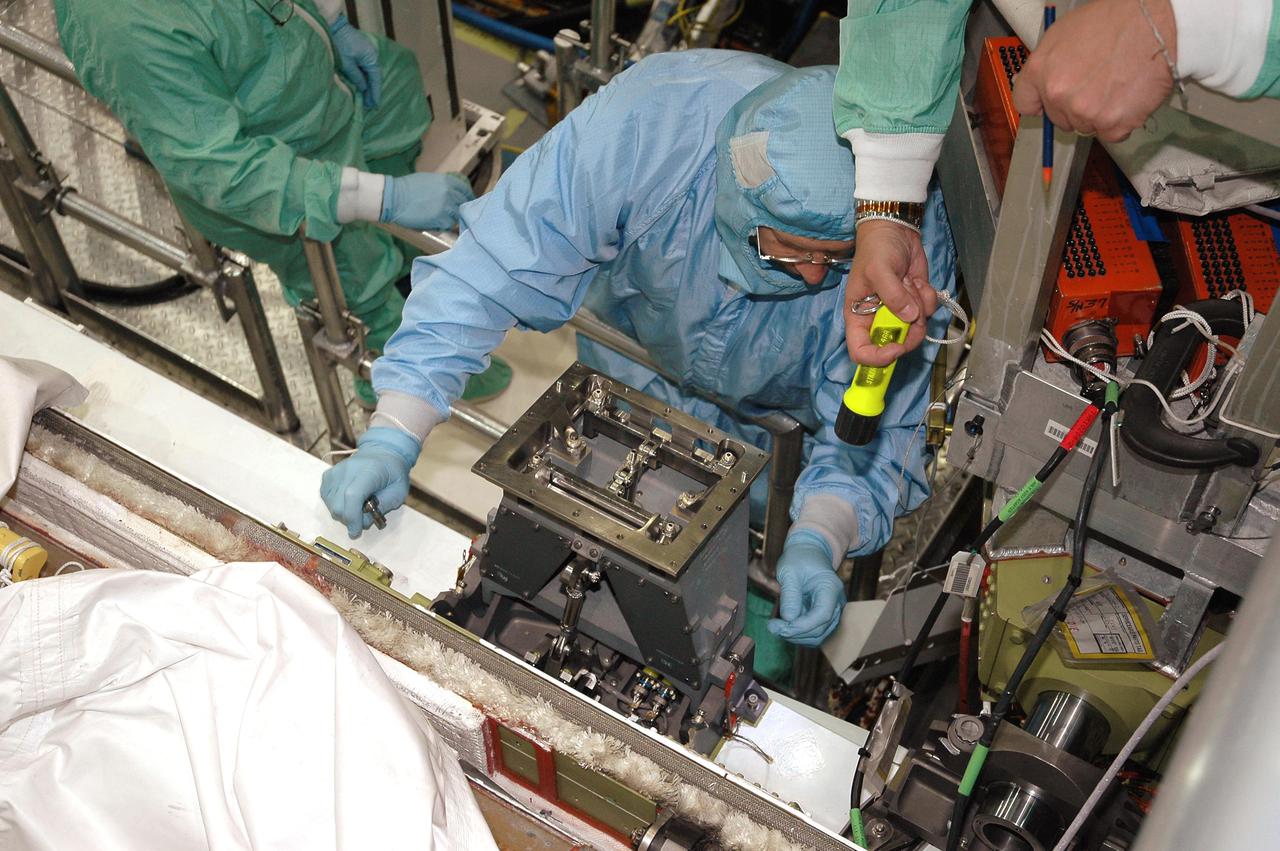
KENNEDY SPACE CENTER, FLA. - In the Orbiter Processing Facility at NASA’s Kennedy Space Center, technicians install the base of the Manipulator Positioning Mechanism (MPM) on the starboard side of Atlantis’ payload bay. The MPM will hold the 50-foot-long Orbiter Boom Sensor System (OBSS) that will attach to the Remote Manipulator System, or Shuttle robotic arm. The OBSS is one of the new safety measures for Return to Flight, equipping the orbiter with cameras and laser systems to inspect the Shuttle's Thermal Protection System while in space. Atlantis is scheduled to fly on Return to Flight mission STS-121, which has a launch window of July 12 to July 31, 2005.
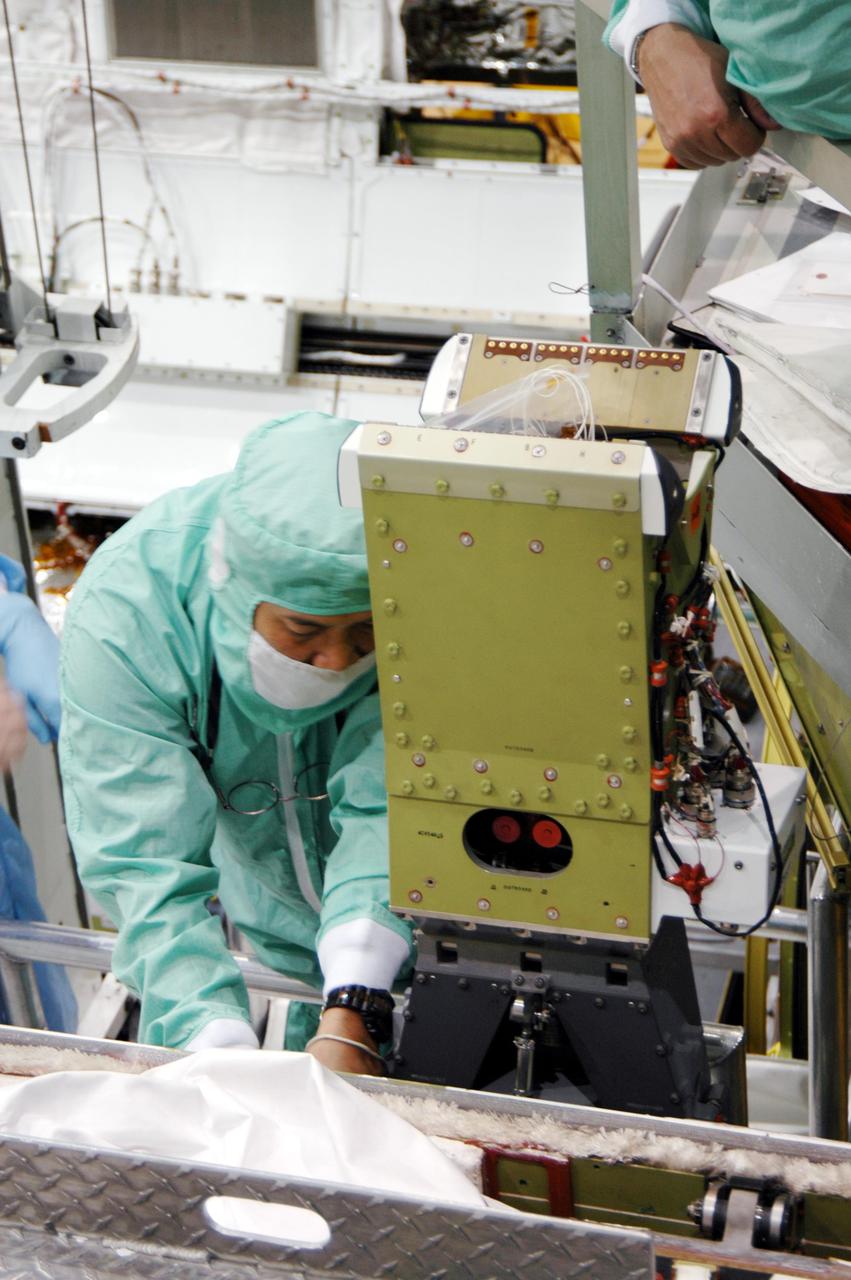
KENNEDY SPACE CENTER, FLA. - In the Orbiter Processing Facility at NASA’s Kennedy Space Center, technicians check the installation of the pedestal of the Manipulator Positioning Mechanism (MPM) on the starboard side of Atlantis’ payload bay. The MPM will hold the 50-foot-long Orbiter Boom Sensor System (OBSS) that will attach to the Remote Manipulator System, or Shuttle robotic arm. The OBSS is one of the new safety measures for Return to Flight, equipping the orbiter with cameras and laser systems to inspect the Shuttle's Thermal Protection System while in space. Atlantis is scheduled to fly on Return to Flight mission STS-121, which has a launch window of July 12 to July 31, 2005.

CAPE CANAVERAL, Fla. -- On Launch Pad 39A at NASA's Kennedy Space Center, STS-124 Mission Specialists Mike Fossum (left) and Ron Garan team up to look at the Japanese Remote Manipulator System in space shuttle Discovery's payload bay. The payload bay walkdown is part of the launch dress rehearsal called the terminal countdown demonstration test. TCDT provides astronauts and ground crews with an opportunity to participate in various simulated countdown activities, including equipment familiarization and emergency training. On the STS-124 mission, the crew will deliver and install the Japanese Experiment Module – Pressurized Module and Japanese Remote Manipulator System. Discovery's launch is targeted for May 31. Photo credit: NASA/Kim Shiflett
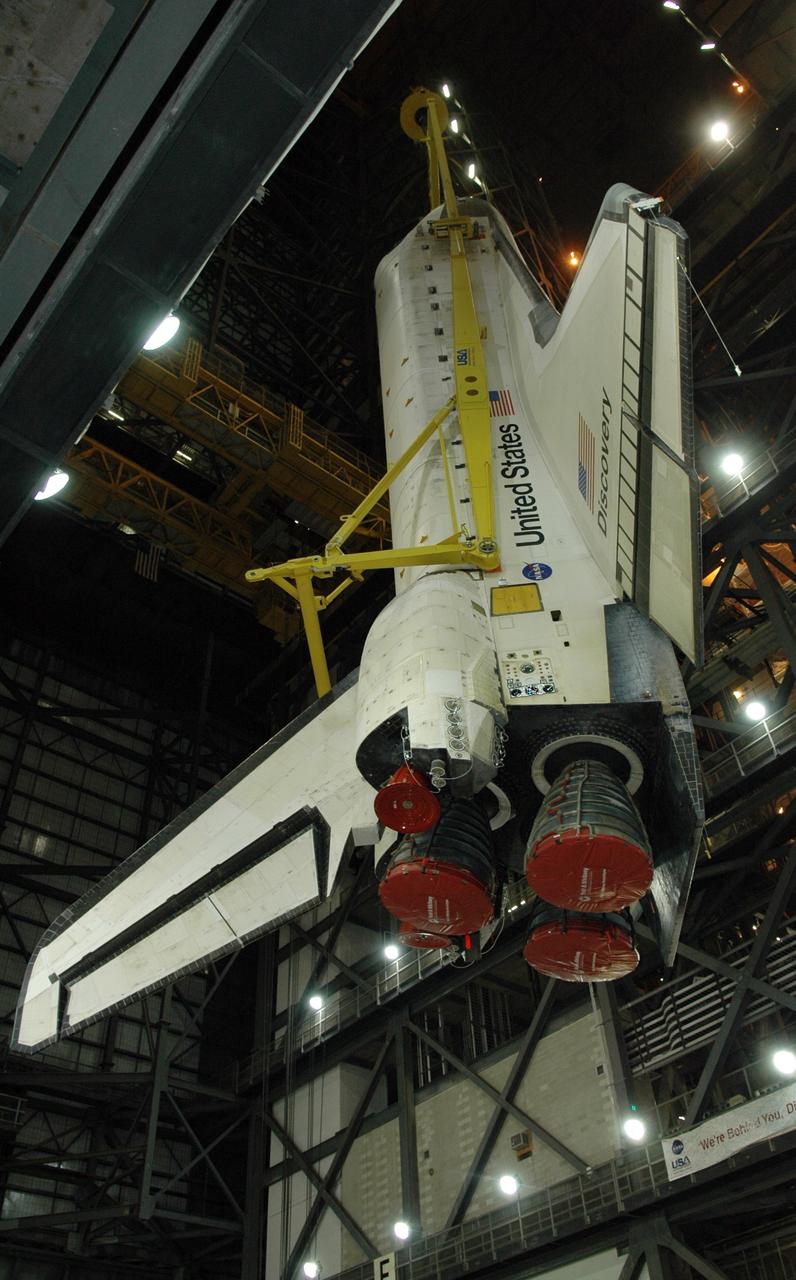
CAPE CANAVERAL, Fla. -- In the Vehicle Assembly Building at NASA's Kennedy Space Center, a crane lifts space shuttle Discovery into the upper levels. Discovery will be lowered into high bay 3 and mated to the external tank and solid rocket boosters waiting there in preparation for launch on the upcoming STS-124 mission to the International Space Station. On the mission, the STS-124 crew will transport the Japanese Experiment Module - Pressurized Module and the Japanese Remote Manipulator System to the space station. Launch of Discovery is targeted for May 31 Photo credit: NASA/Jim Grossmann
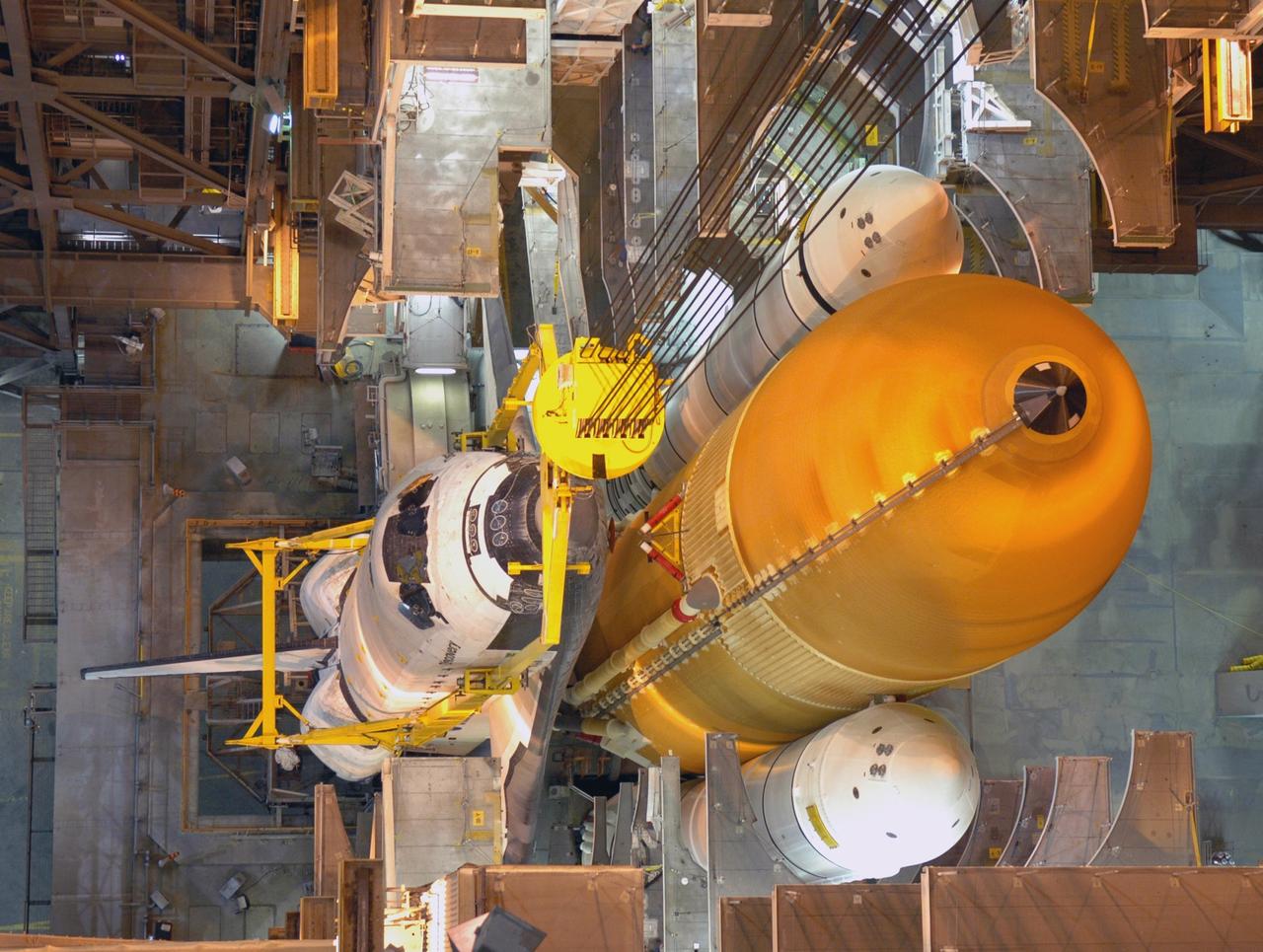
CAPE CANAVERAL, Fla. – In high bay 3 of the Vehicle Assembly Building at NASA's Kennedy Space Center, space shuttle Discovery comes to rest on the mobile launcher platform in front of the solid rocket boosters and external tank. The stacking is in preparation for the launch on the upcoming STS-124 mission to the International Space Station. On the mission, the STS-124 crew will transport the Japanese Experiment Module - Pressurized Module and the Japanese Remote Manipulator System to the space station. Launch of Discovery is targeted for May 31 Photo credit: NASA/Jim Grossmann
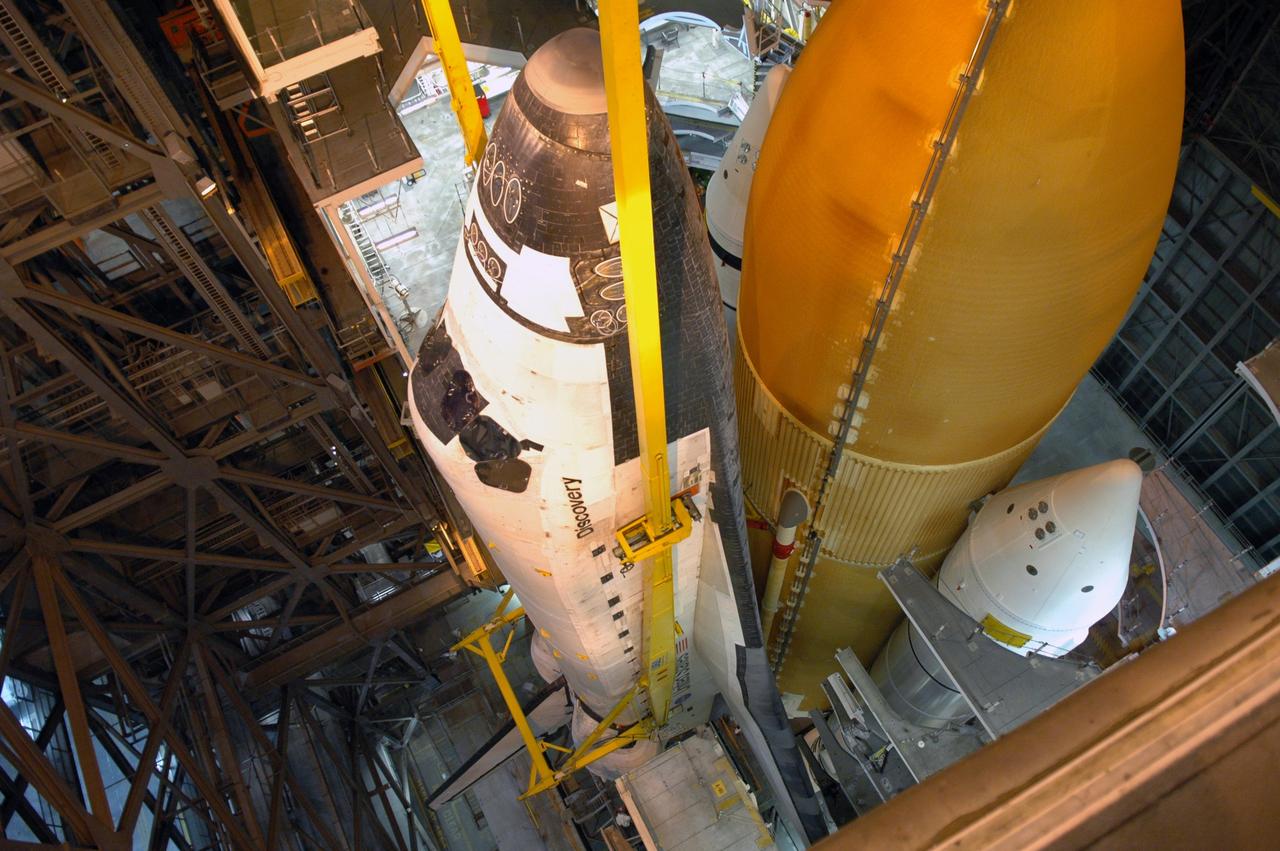
CAPE CANAVERAL, Fla. – In high bay 3 of the Vehicle Assembly Building at NASA's Kennedy Space Center, space shuttle Discovery continues to be lowered onto the mobile launcher platform in front of the solid rocket boosters and external tank. The stacking is in preparation for the launch on the upcoming STS-124 mission to the International Space Station. On the mission, the STS-124 crew will transport the Japanese Experiment Module - Pressurized Module and the Japanese Remote Manipulator System to the space station. Launch of Discovery is targeted for May 31 Photo credit: NASA/Jim Grossmann
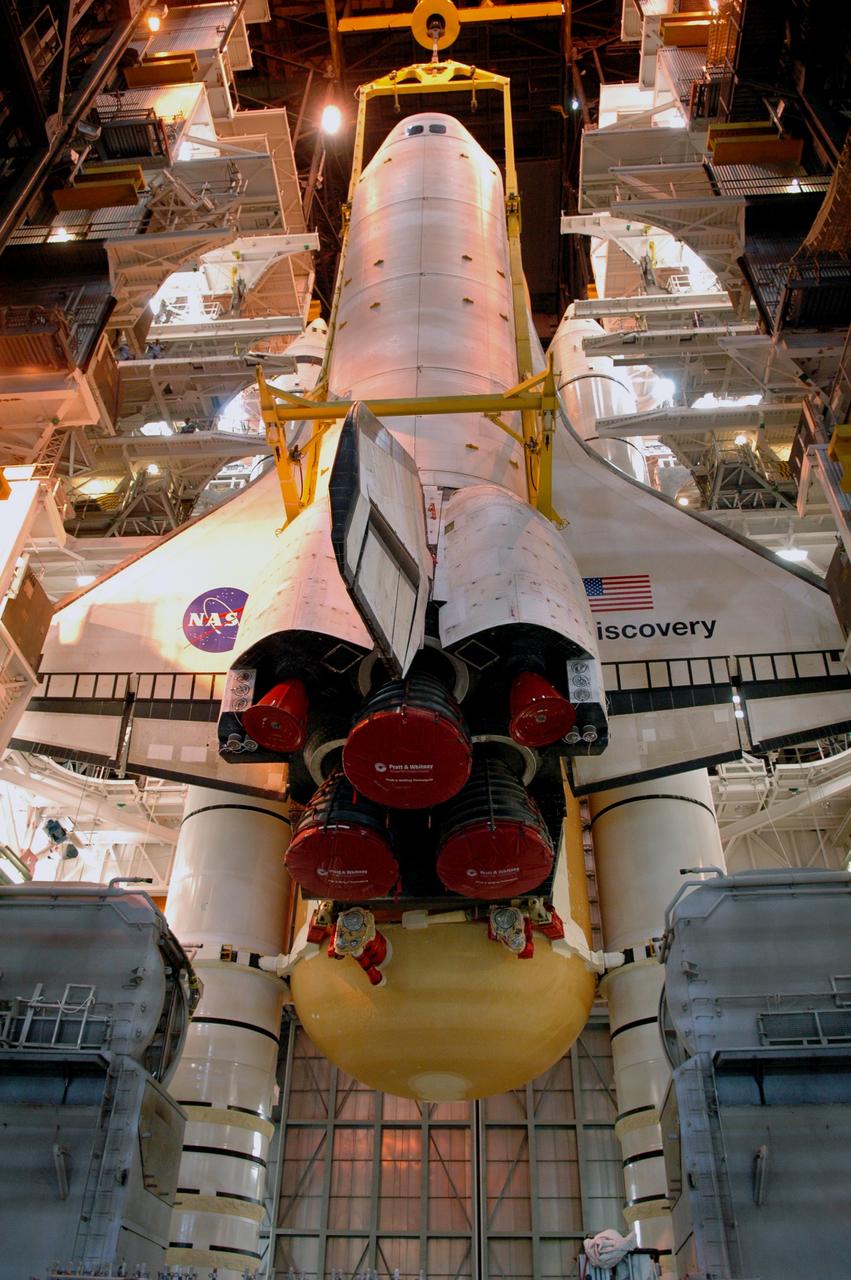
CAPE CANAVERAL, Fla. – In high bay 3 of the Vehicle Assembly Building at NASA's Kennedy Space Center, space shuttle Discovery continues to be lowered onto the mobile launcher platform in front of the solid rocket boosters and external tank. The stacking is in preparation for the launch on the upcoming STS-124 mission to the International Space Station. On the mission, the STS-124 crew will transport the Japanese Experiment Module - Pressurized Module and the Japanese Remote Manipulator System to the space station. Launch of Discovery is targeted for May 31 Photo credit: NASA/Jim Grossmann
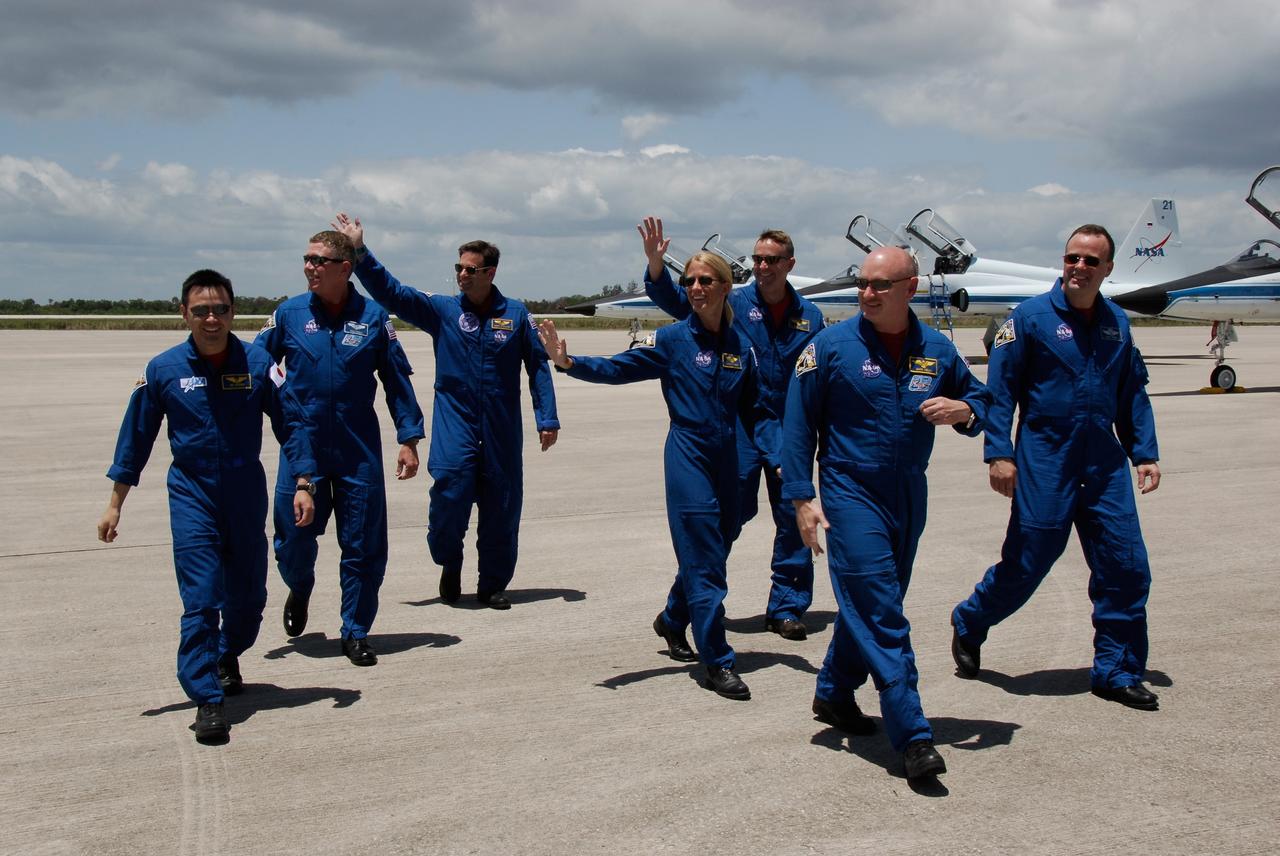
CAPE CANAVERAL, Fla. -- After greeting the media on their arrival on the Shuttle Landing Facility at NASA's Kennedy Space Center, the crew members of space shuttle Discovery's STS-124 mission wave and head for the van that will take them to crew quarters in the Operations and Checkout Building. They will be preparing for launch scheduled for 5:02 p.m. May 31. On the STS-124 mission, the crew of seven will deliver and install the Japanese Experiment Module – Pressurized Module and Japanese Remote Manipulator System. Photo credit: NASA/Kim Shiflett
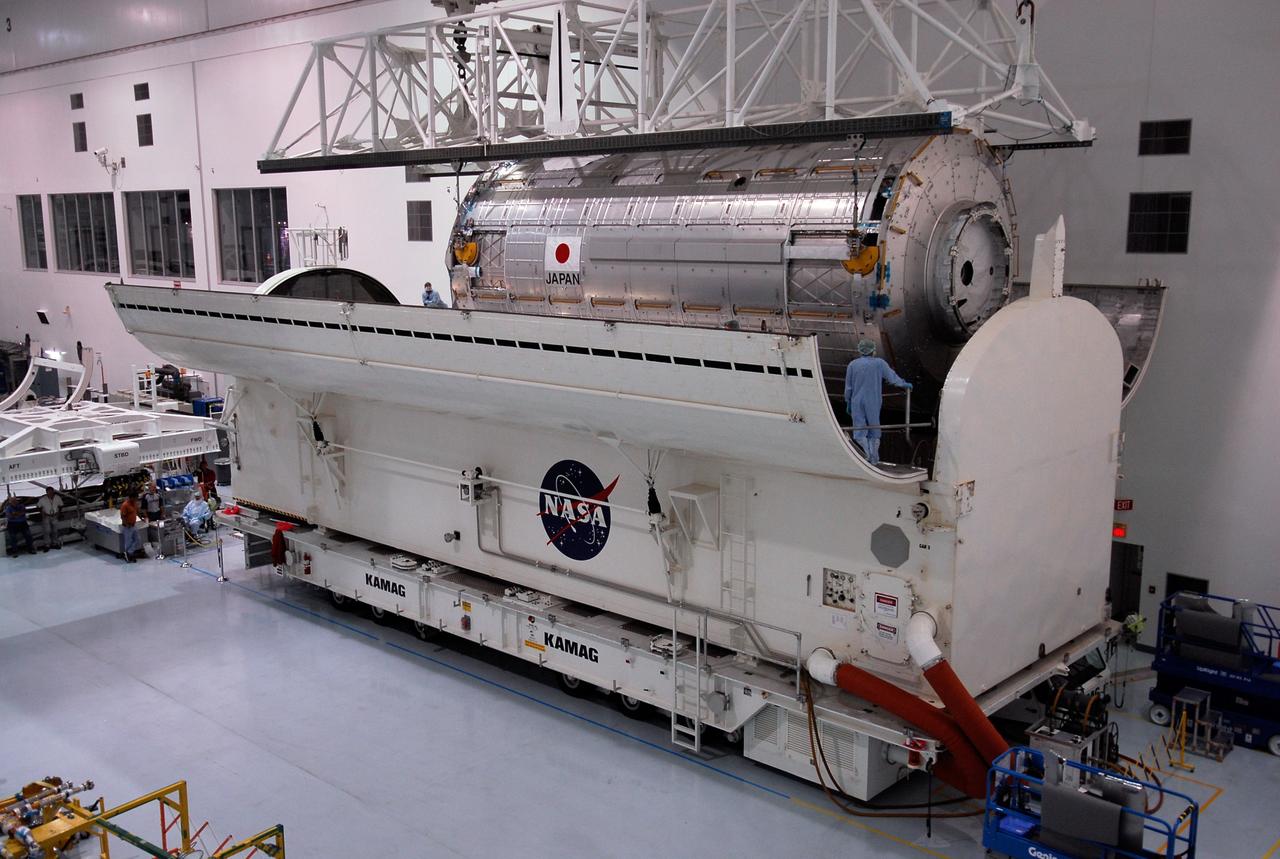
CAPE CANAVERAL, Fla. -- In the Space Station Processing Facility at NASA’s Kennedy Space Center, an overhead crane lowers the Kibo Japanese Experiment Module - Pressurized Module into the payload canister. The canister will deliver the module, part of the payload for space shuttle Discovery’s STS-124 mission, to Launch Pad 39A. On the mission, the STS-124 crew will transport the Kibo module as well as the Japanese Remote Manipulator System to the International Space Station to complete the Kibo laboratory. The launch of Discovery is targeted for May 31. Photo credit: NASA/Kim Shiflett
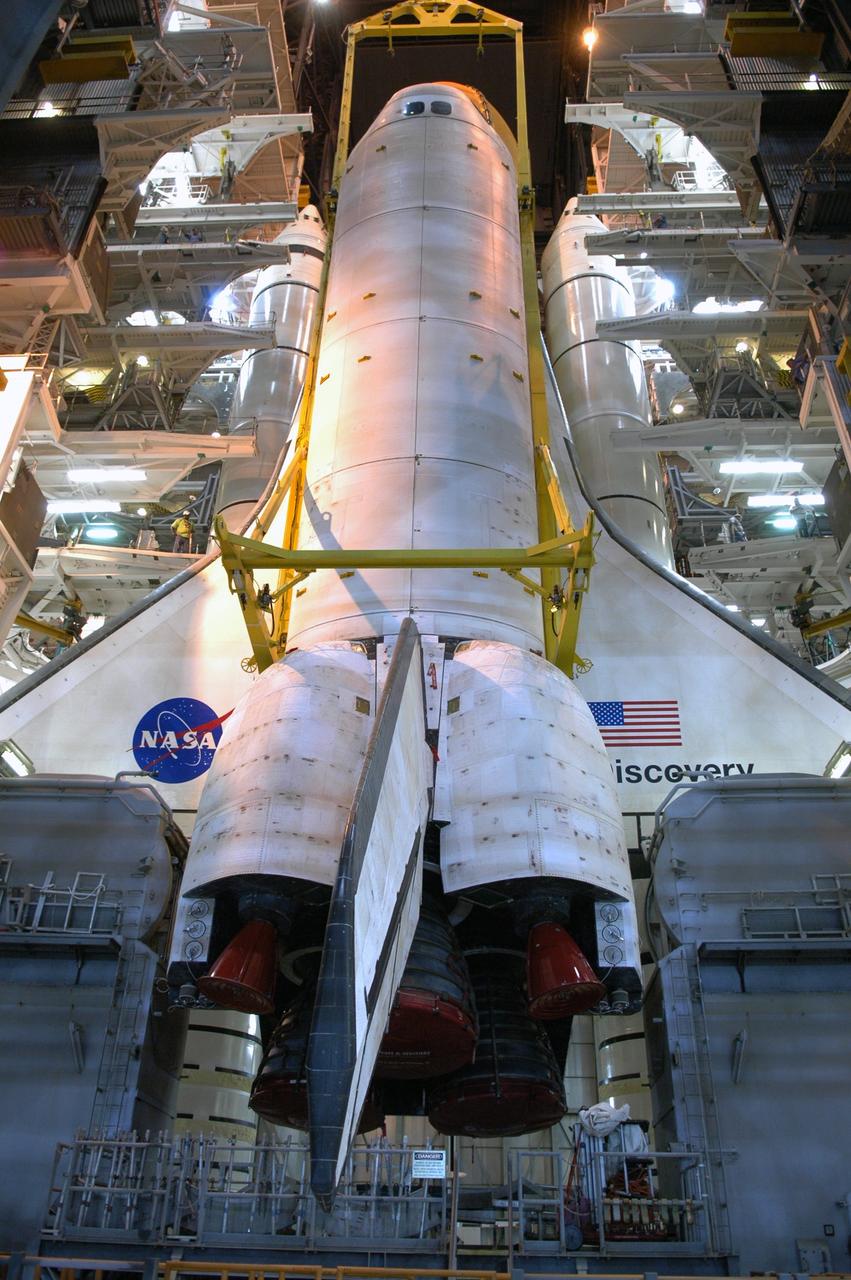
CAPE CANAVERAL, Fla. – In high bay 3 of the Vehicle Assembly Building at NASA's Kennedy Space Center, space shuttle Discovery continues to be lowered onto the mobile launcher platform in front of the solid rocket boosters and external tank. The stacking is in preparation for the launch on the upcoming STS-124 mission to the International Space Station. On the mission, the STS-124 crew will transport the Japanese Experiment Module - Pressurized Module and the Japanese Remote Manipulator System to the space station. Launch of Discovery is targeted for May 31 Photo credit: NASA/Jim Grossmann
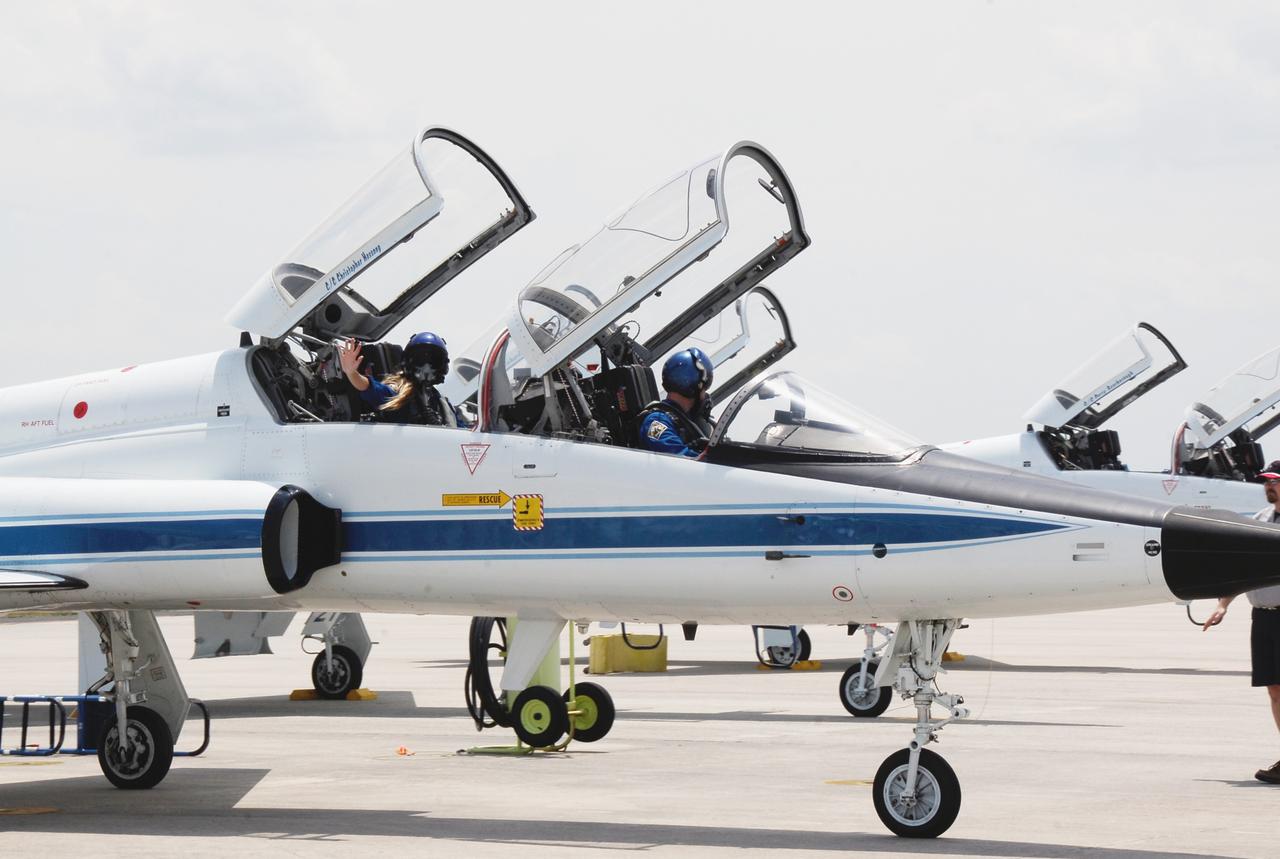
CAPE CANAVERAL, Fla. -- Two of the crewmembers for the STS-124 mission, Mission Specialists Ron Garan and Karen Nyberg, depart NASA's Kennedy Space Center in a T-38 training jet after a successful launch dress rehearsal called the terminal countdown demonstration test. The crew is expected to return in late May for the May 31 launch of space shuttle Discovery. On the STS-124 mission, the crew will deliver and install the Japanese Experiment Module – Pressurized Module and Japanese Remote Manipulator System. Photo credit: NASA/Kim Shiflett
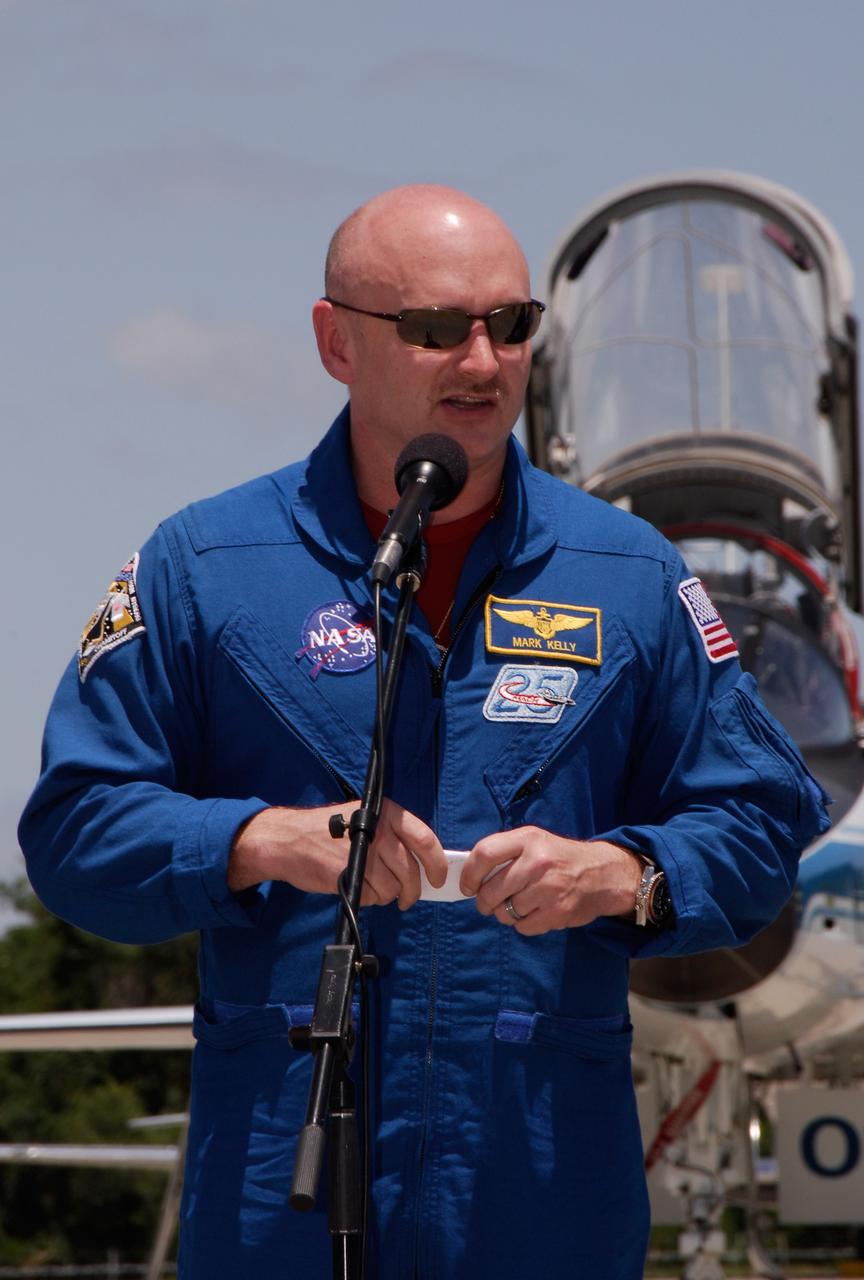
CAPE CANAVERAL, Fla. -- After their arrival on the Shuttle Landing Facility at NASA's Kennedy Space Center, the crew members of space shuttle Discovery's STS-124 mission gather to talk to the media. Seen here is Commander Mark Kelly. Hoshide represents the Japan Aerospace Exploration Agency. Launch of Discovery is scheduled for 5:02 p.m. May 31. On the STS-124 mission, the crew of seven will deliver and install the Japanese Experiment Module – Pressurized Module and Japanese Remote Manipulator System. Photo credit: NASA/Kim Shiflett
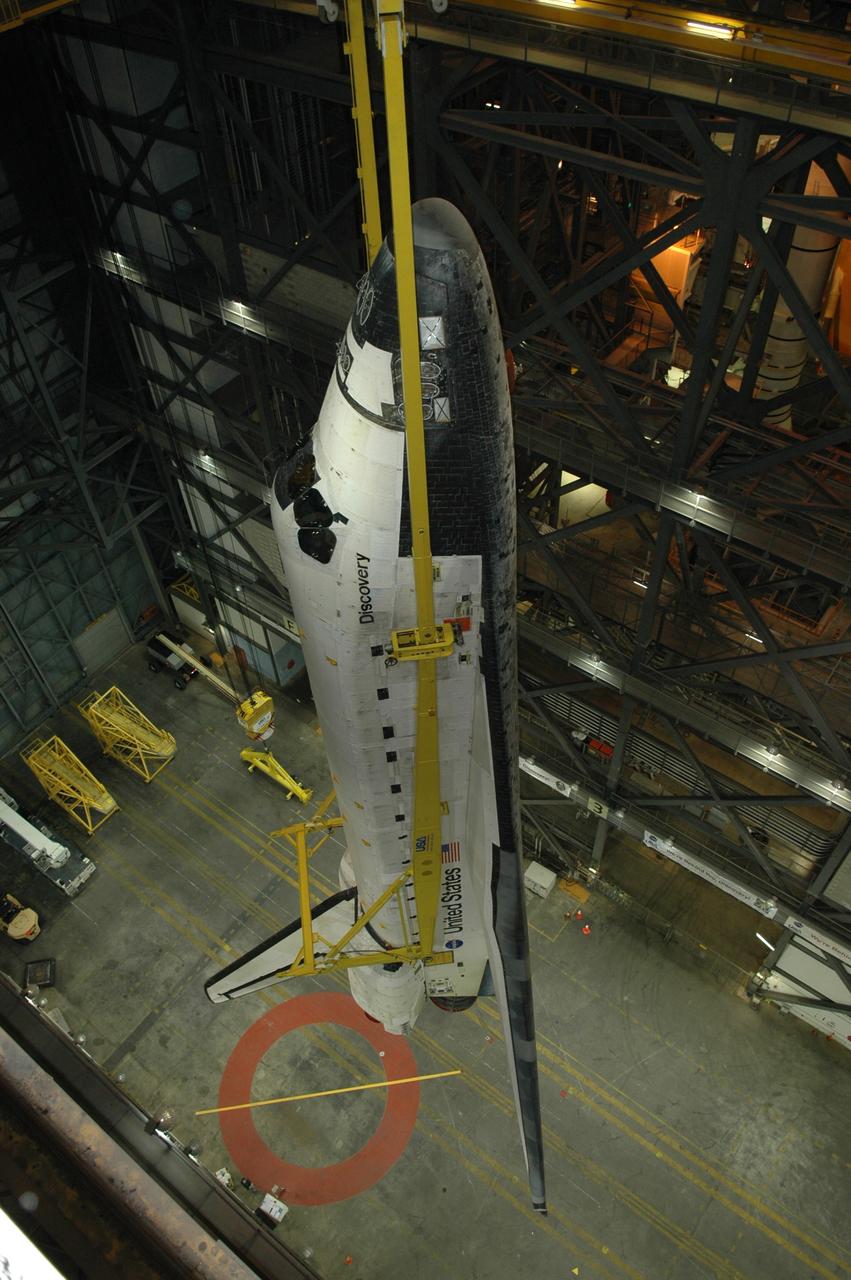
CAPE CANAVERAL, Fla. -- In the Vehicle Assembly Building at NASA's Kennedy Space Center, a crane lifts space shuttle Discovery into the upper levels. Discovery will be lowered into high bay 3 and mated to the external tank and solid rocket boosters waiting there in preparation for launch on the upcoming STS-124 mission to the International Space Station. On the mission, the STS-124 crew will transport the Japanese Experiment Module - Pressurized Module and the Japanese Remote Manipulator System to the space station. Launch of Discovery is targeted for May 31 Photo credit: NASA/Jim Grossmann
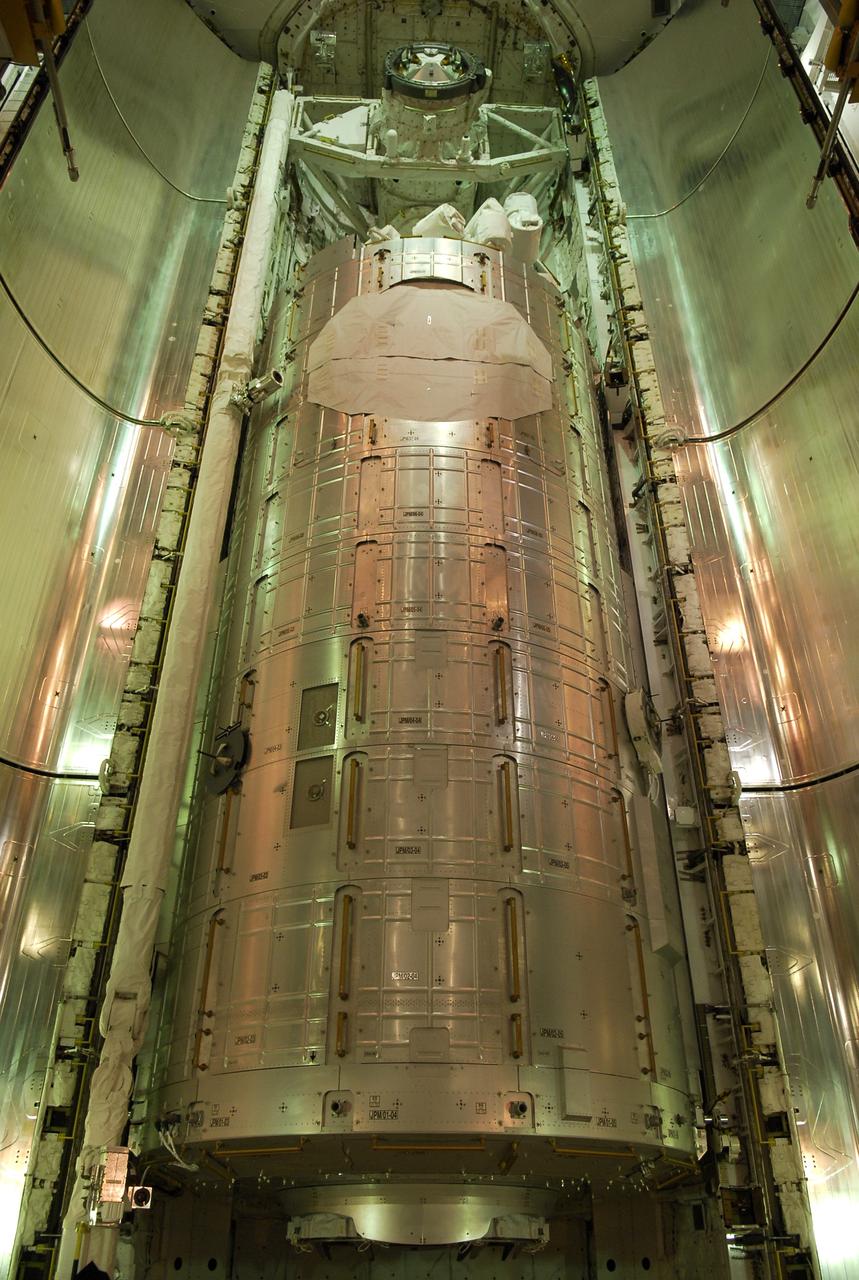
CAPE CANAVERAL, Fla. -- On Launch Pad 39A at NASA's Kennedy Space Center, the Japanese Experiment Module—Pressurized Module is seen in space shuttle Discovery's payload bay as the payload bay doors begin to close. Above the pressurized module is the orbital docking system. The launch of Discovery on its STS-124 mission is targeted for May 31. On the mission, Discovery will transport the pressurized module and the Japanese Remote Manipulator System to the International Space Station. Photo credit: NASA/Kim Shiflett
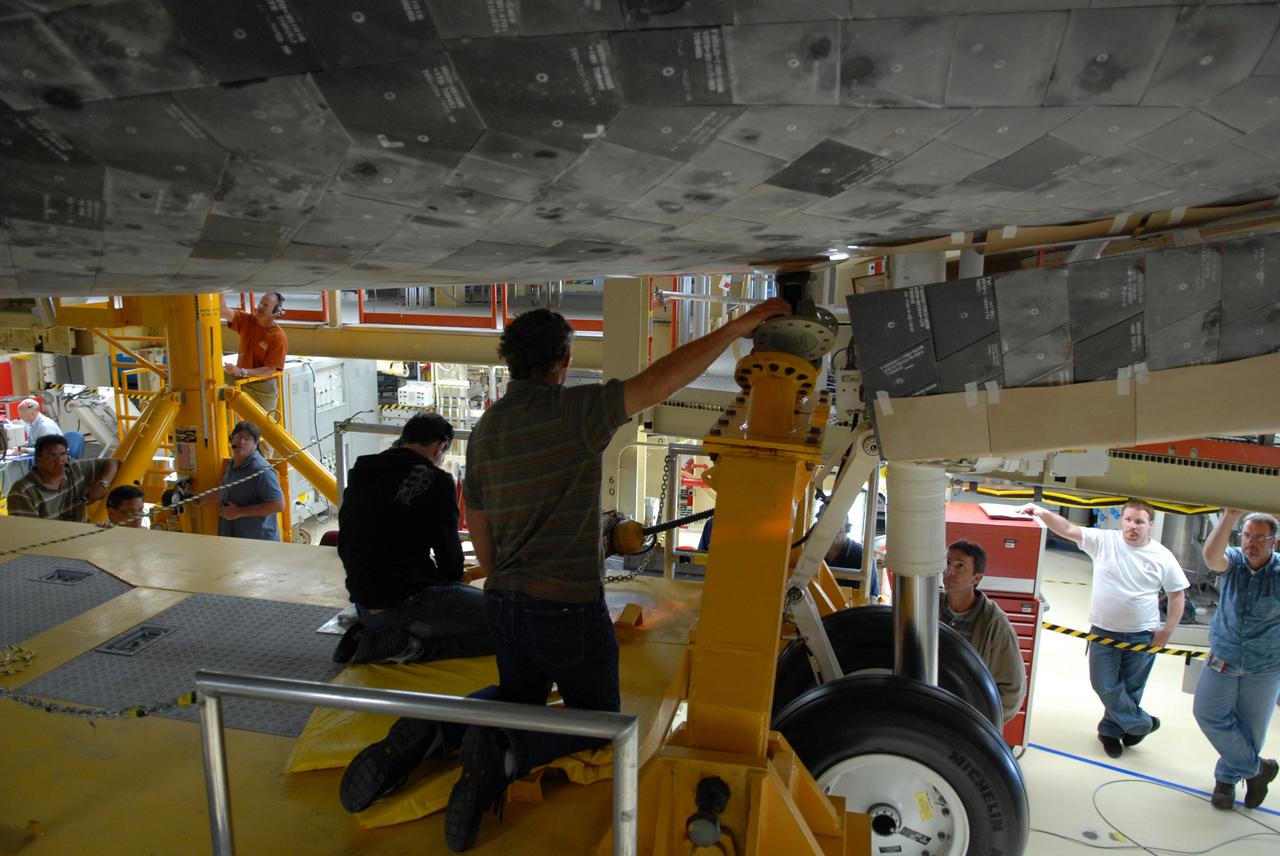
CAPE CANAVERAL, Fla. -- In Orbiter Processing Facility Bay 3 at NASA’s Kennedy Space Center, workers check the progress of the testing of the Orbiter Transport System on space shuttle Discovery. Discovery is targeted to launch May 31 on the STS-124 mission to the International Space Station. On the mission, Discovery will transport the Kibo Japanese Experiment Module - Pressurized Module (JEM-PM) and the Japanese Remote Manipulator System (JEM-RMS) to the space station to add to the Kibo laboratory. Photo credit: NASA/Troy Cryder
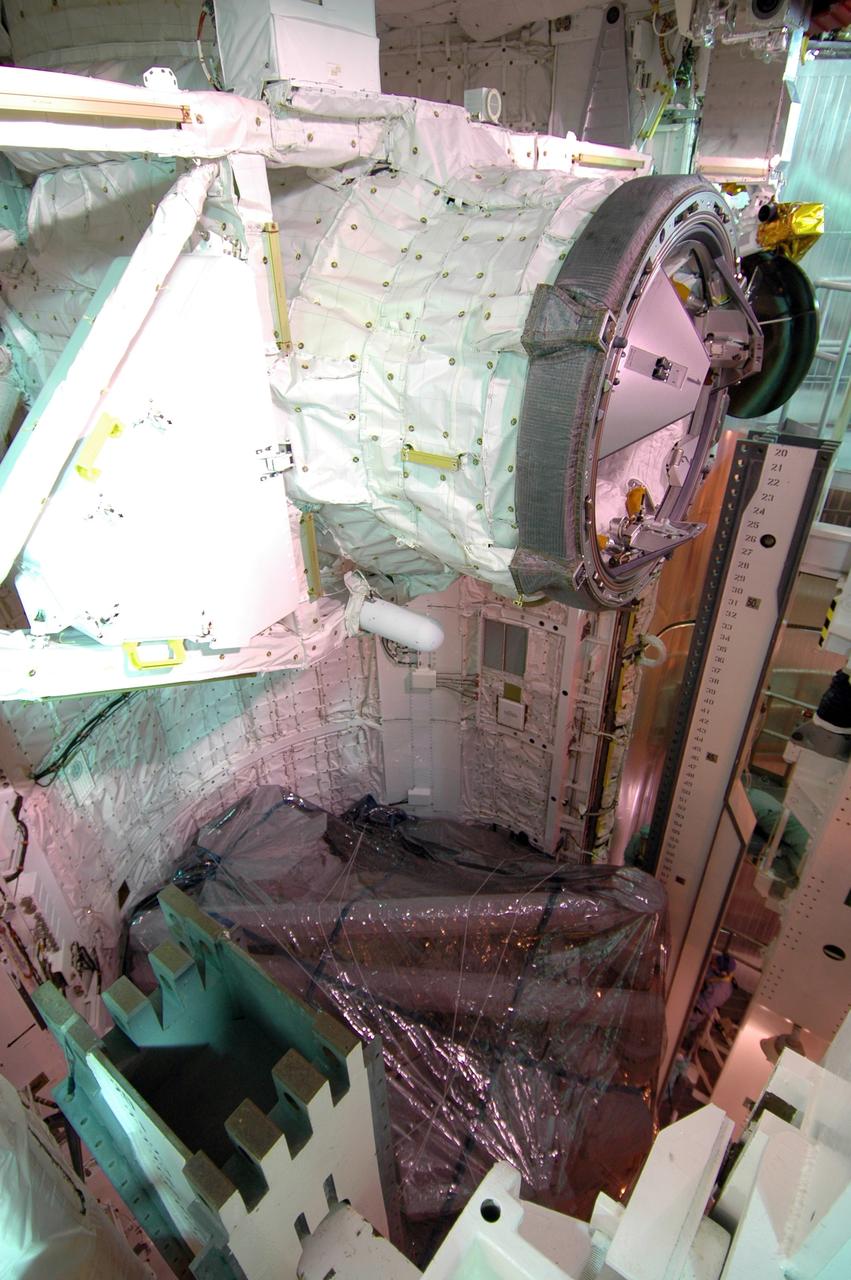
CAPE CANAVERAL, Fla. -- On Launch Pad 39A at NASA's Kennedy Space Center, the STS-124 mission payload, the Japanese Experiment Module - Pressurized Module, is being transferred from the Payload Changeout Room into space shuttle Discovery's payload bay. At top is the orbital docking system inside the payload bay. At the bottom is the Japanese Remote Manipulator System. Not visible is the pressurized module. Launch of Discovery is targeted for May 31. Photo credit: NASA/Jim Grossmann
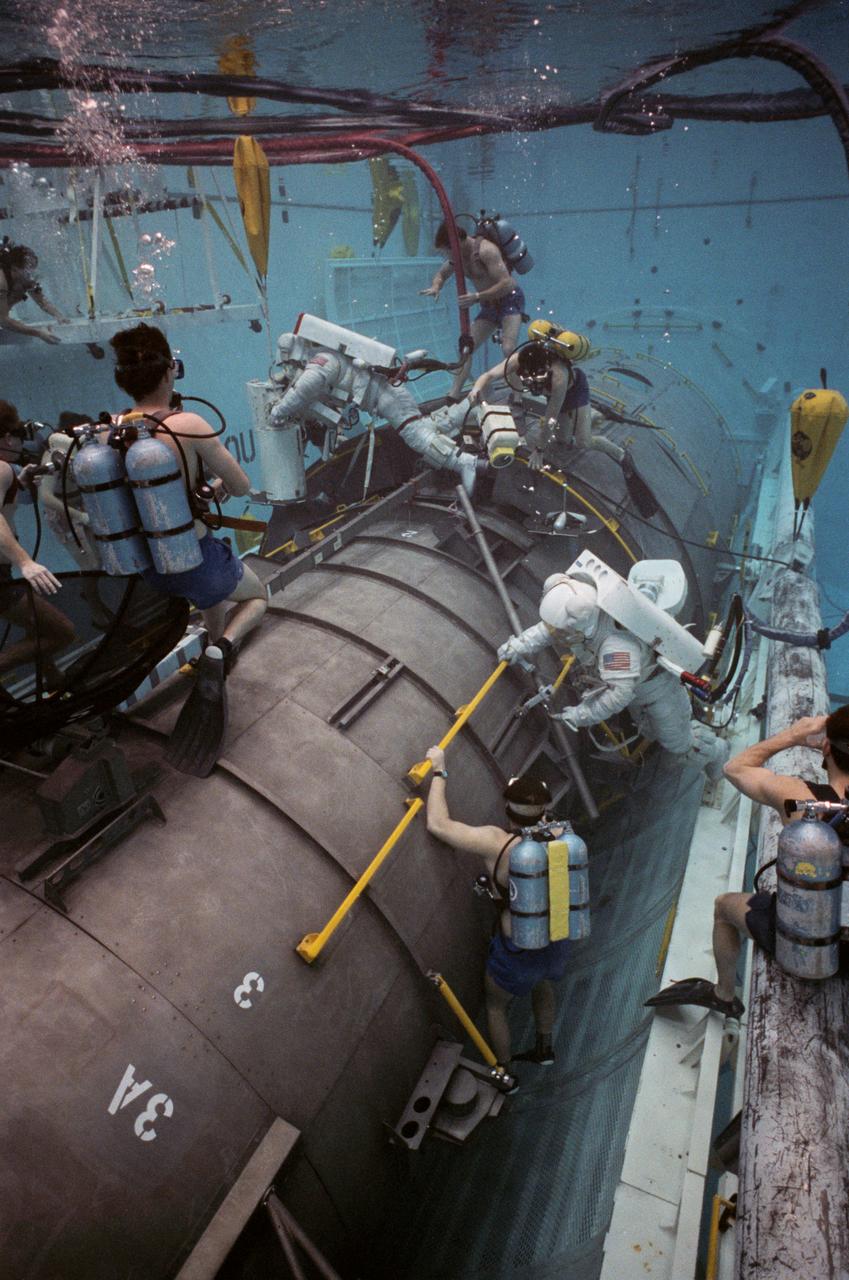
This overall view shows STS-31 Mission Specialist (MS) Bruce McCandless II (left) and MS Kathryn D. Sullivan making a practice space walk in JSC's Weightless Environment Training Facility (WETF) Bldg 29 pool. McCandless works with a mockup of the remote manipulator system (RMS) end effector which is attached to a grapple fixture on the Hubble Space Telescope (HST) mockup. Sullivan manipulates HST hardware on the Support System Module (SSM) forward shell. SCUBA-equipped divers monitor the extravehicular mobility unit (EMU) suited crewmembers during this simulated extravehicular activity (EVA). No EVA is planned for the Hubble Space Telescope (HST) deployment, but the duo has trained for contingencies which might arise during the STS-31 mission aboard Discovery, Orbiter Vehicle (OV) 103. Photo taken by NASA JSC photographer Sheri Dunnette.
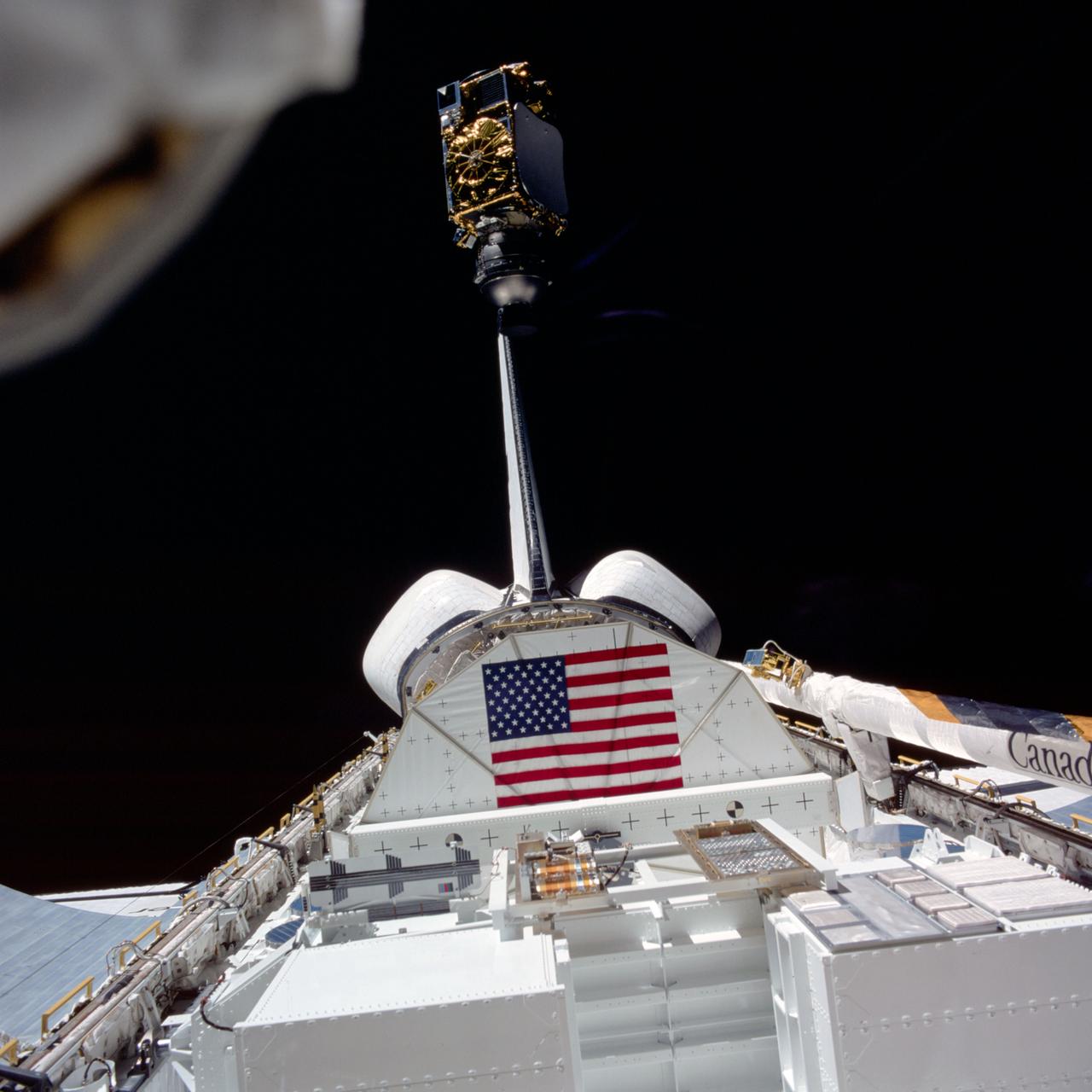
STS008-49-1724 (31 Aug 1983) --- The Indian National Satellite (INSAT) is about to clear the vertical stabilizer of the Earth-orbiting Space Shuttle Challenger and on its way to a higher orbit. The STS-8 mission's Payload Flight Test Article (PFTA) displays the U.S. flag in the middle of the cargo bay, as the Canadian built Remote Manipulator System (RMS) appears to be waiting for its busy agenda of activity with the barbell-shaped test device. This 70mm frame was exposed by a crewmember using a handheld Hasselblad inside Challenger's cabin.
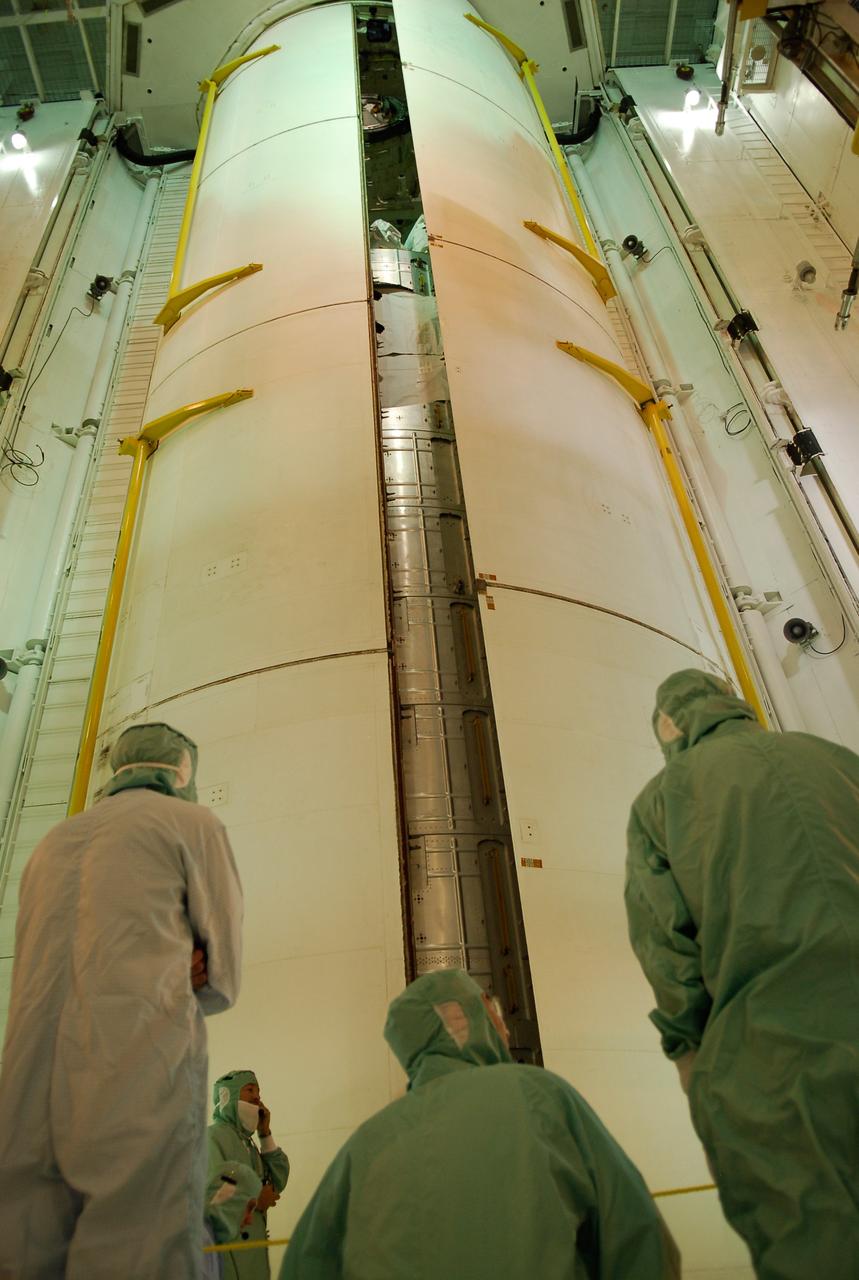
CAPE CANAVERAL, Fla. -- Workers in the payload changeout room on Launch Pad 39A at NASA's Kennedy Space Center watch closely as space shuttle Discovery's payload bay doors close around the Japanese Experiment Module—Pressurized Module. The launch of Discovery on its STS-124 mission is targeted for May 31. On the mission, Discovery will transport the pressurized module and the Japanese Remote Manipulator System to the International Space Station. Photo credit: NASA/Kim Shiflett

CAPE CANAVERAL, Fla. -- On Launch Pad 39A at NASA's Kennedy Space Center, a worker watches the progress of space shuttle Discovery's payload bay doors as they close around the Japanese Experiment Module—Pressurized Module. The launch of Discovery on its STS-124 mission is targeted for May 31. On the mission, Discovery will transport the pressurized module and the Japanese Remote Manipulator System to the International Space Station. Photo credit: NASA/Kim Shiflett
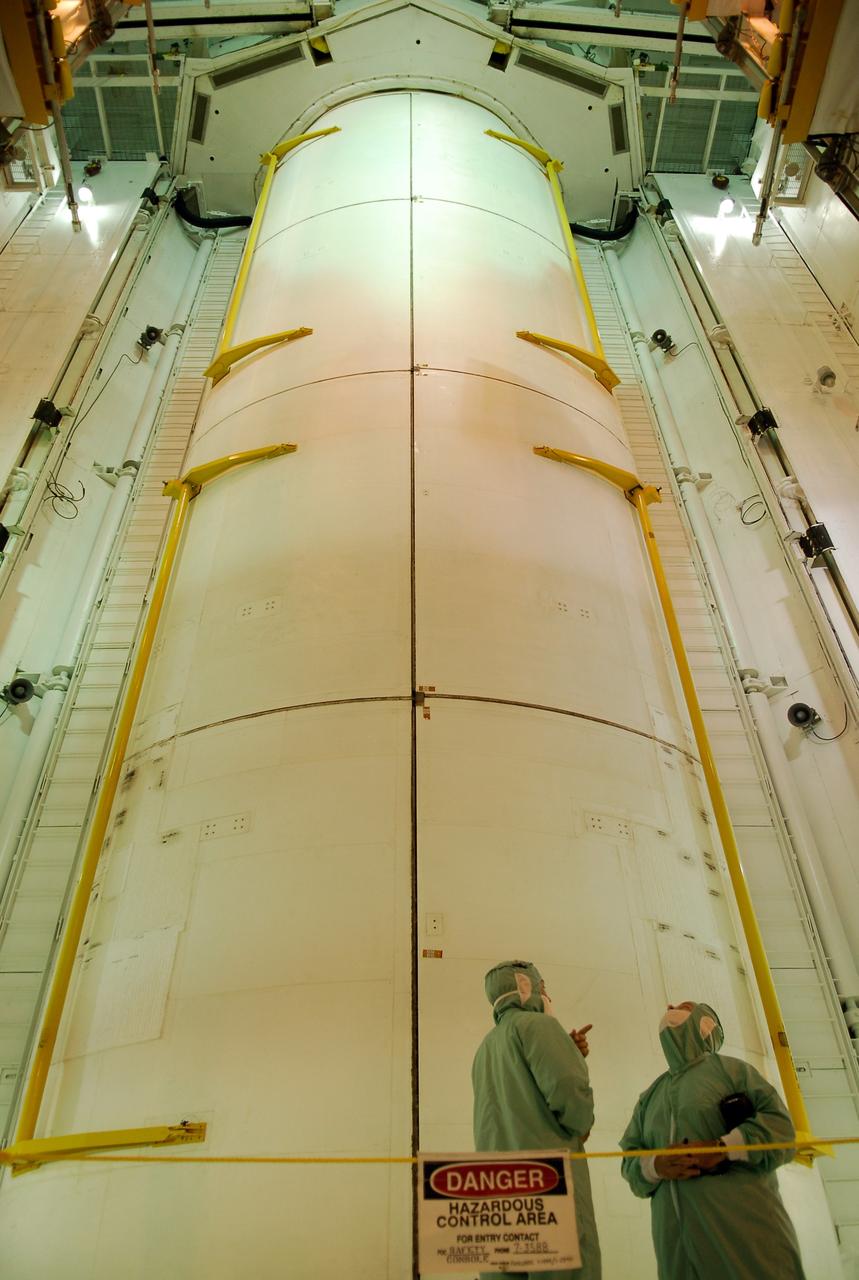
CAPE CANAVERAL, Fla. -- On Launch Pad 39A at NASA's Kennedy Space Center, space shuttle Discovery's payload bay doors have successfully closed around the Japanese Experiment Module—Pressurized Module. The launch of Discovery on its STS-124 mission is targeted for May 31. On the mission, Discovery will transport the pressurized module and the Japanese Remote Manipulator System to the International Space Station. Photo credit: NASA/Kim Shiflett
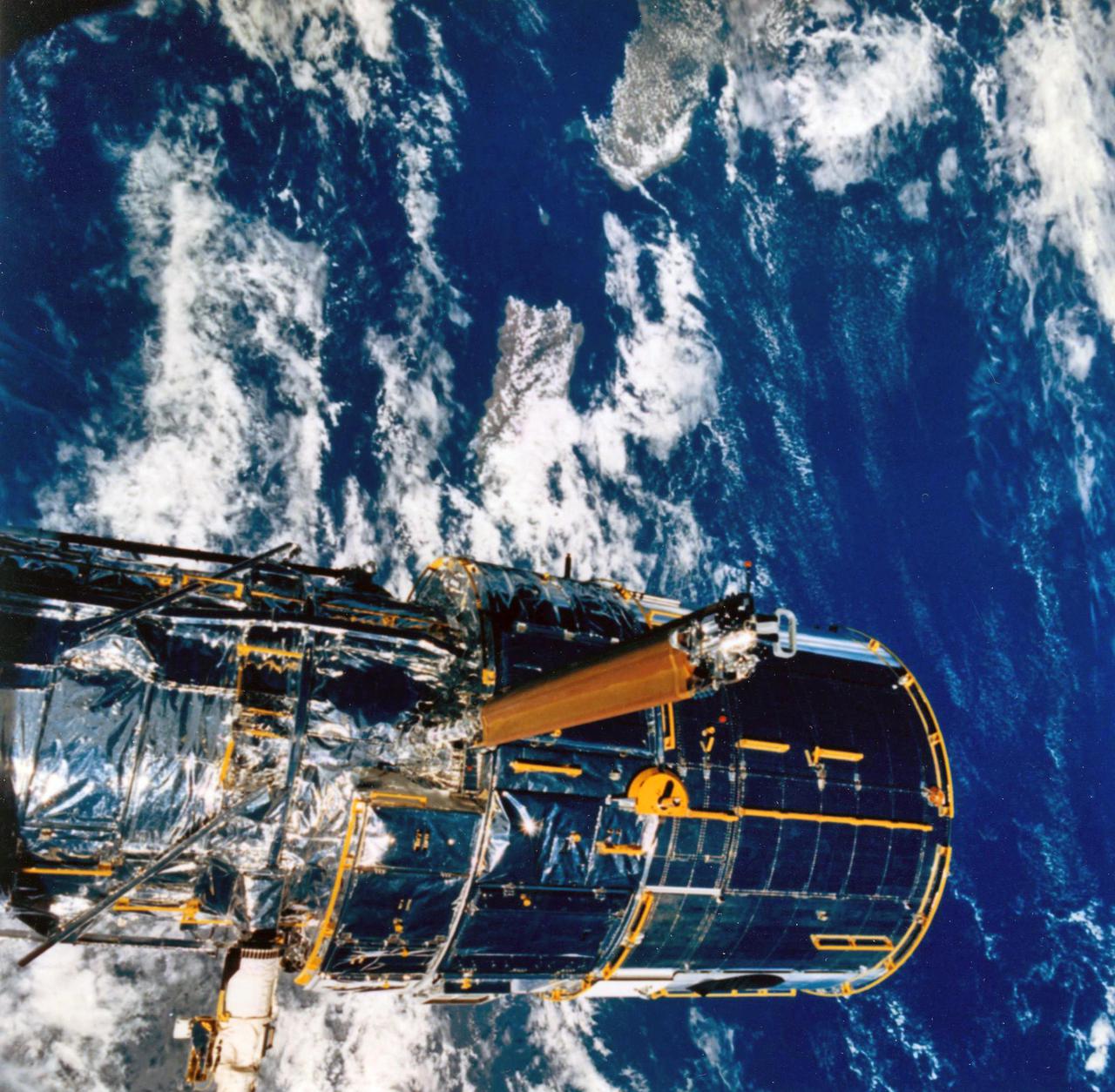
JOHNSON SPACE CENTER, HOUSTON, TEXAS-- STS-31 ONBOARD SCENE -- The Hubble Space Telescope (HST) is suspended in space by Discovery's remote manipulator system prior to deployment of its solar array panels and antennae and its ultimate release. Puerto Rico and the Dominican Republic are recognizable at left of the frame. The photo was taken with a handheld Hasselblad camera. This was among the first photos NASA released on April 30 from the five-day mission.
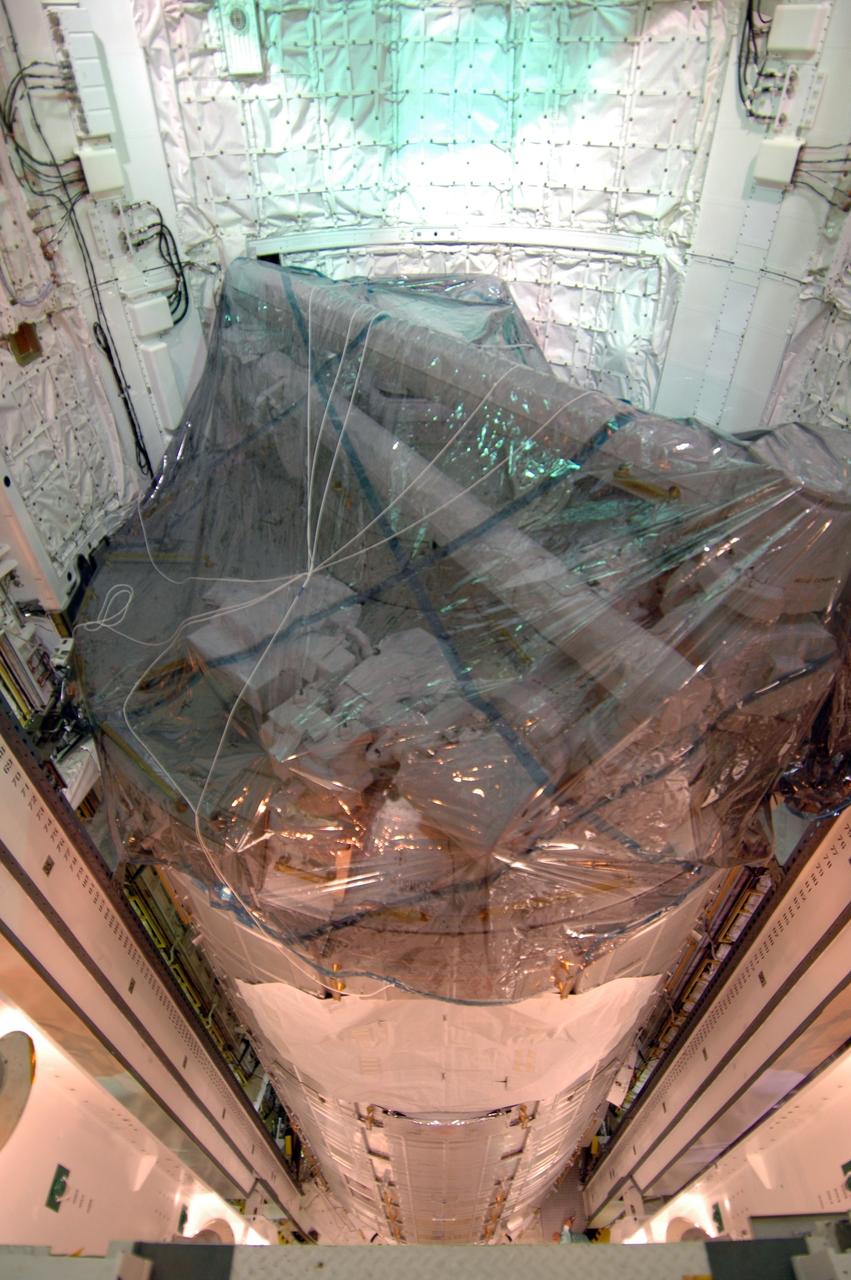
CAPE CANAVERAL, Fla. -- On Launch Pad 39A at NASA's Kennedy Space Center, the STS-124 mission payload, the Japanese Experiment Module - Pressurized Module and the Japanese Remote Manipulator System, are being transferred from the Payload Changeout Room into space shuttle Discovery's payload bay. Seen here on top is the RMS. Below is the pressurized module. Launch of Discovery is targeted for May 31. Photo credit: NASA/Jim Grossmann

CAPE CANAVERAL, Fla. -- Inside space shuttle Discovery's payload bay can be seen the red rain gutters, which prevent leaks into the bay from rain while the shuttle is on the pad. The STS-124 mission payload, the Japanese Experiment Module - Pressurized Module and the Japanese Remote Manipulator System (below the gutters), is being transferred from the Payload Changeout Room into the payload bay. Launch of Discovery is targeted for May 31. Photo credit: NASA/Jim Grossmann
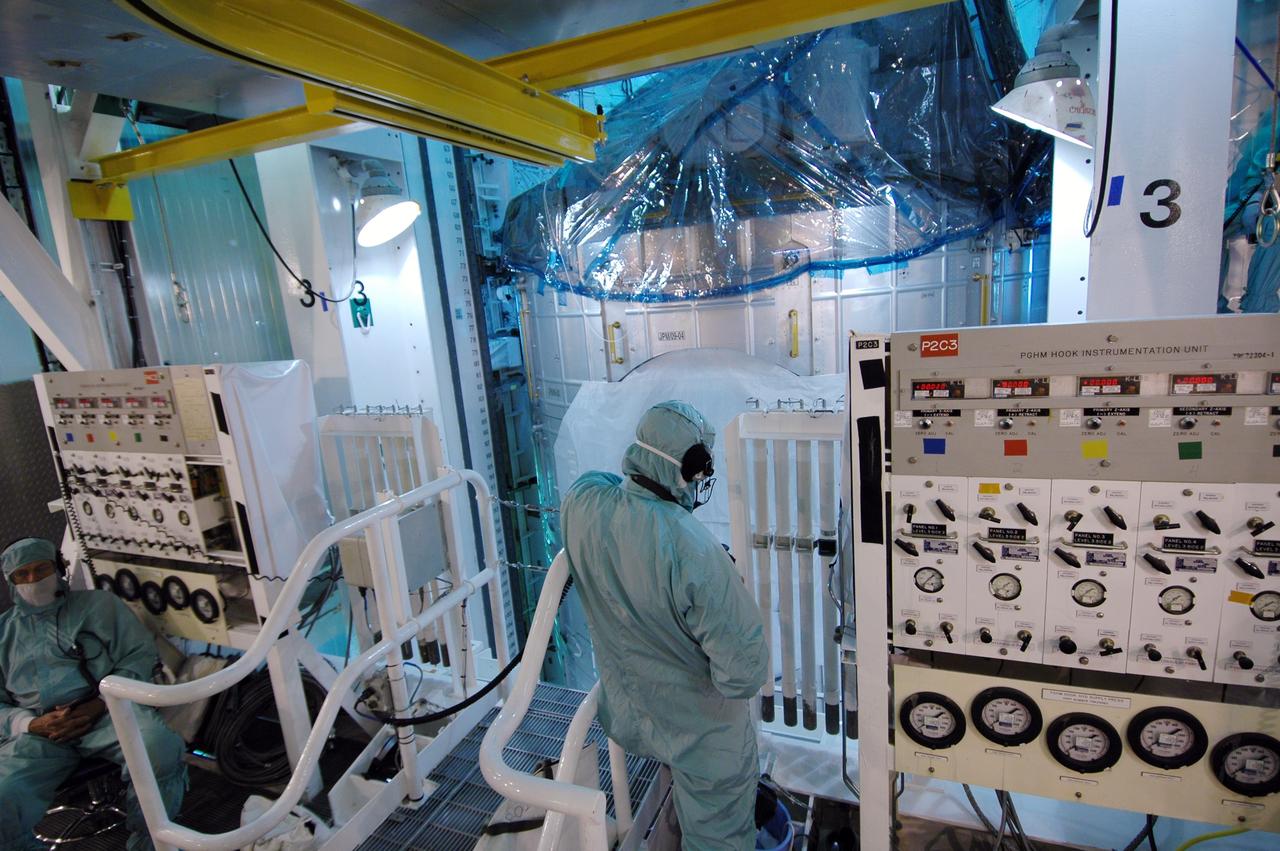
CAPE CANAVERAL, Fla. -- Technicians in the Payload Changeout Room on Launch Pad 39A at NASA's Kennedy Space Center monitor the transfer of the STS-124 mission payload, the Japanese Experiment Module - Pressurized Module and the Japanese Remote Manipulator System into space shuttle Discovery's payload bay. Launch of Discovery is targeted for May 31. Photo credit: NASA/Jim Grossmann

CAPE CANAVERAL, Fla. -- Workers in the payload changeout room on Launch Pad 39A at NASA's Kennedy Space Center check the placement of space shuttle Discovery's payload bay doors as they close around the Japanese Experiment Module—Pressurized Module. The launch of Discovery on its STS-124 mission is targeted for May 31. On the mission, Discovery will transport the pressurized module and the Japanese Remote Manipulator System to the International Space Station. Photo credit: NASA/Kim Shiflett
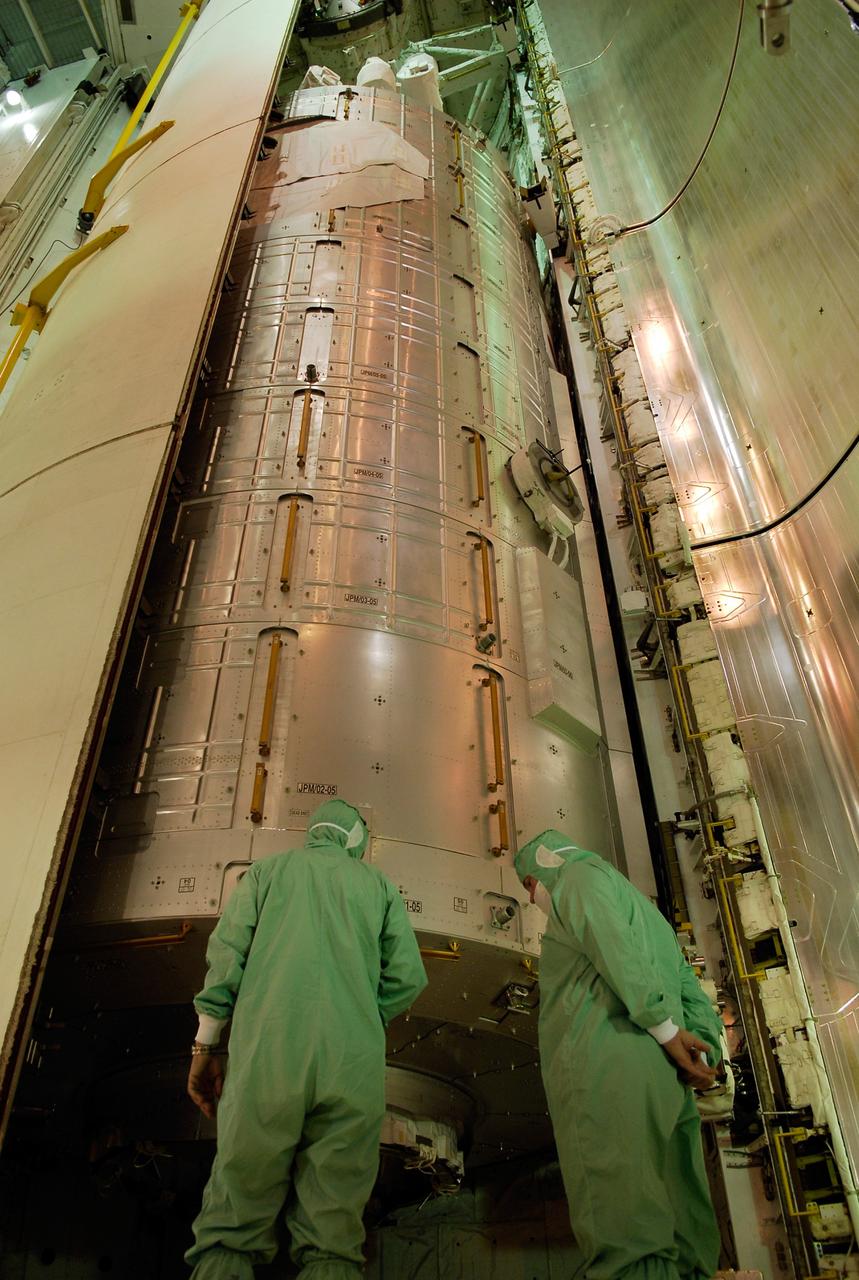
CAPE CANAVERAL, Fla. -- Workers in the payload changeout room on Launch Pad 39A at NASA's Kennedy Space Center check space shuttle Discovery's payload bay doors as they close around the Japanese Experiment Module—Pressurized Module. The launch of Discovery on its STS-124 mission is targeted for May 31. On the mission, Discovery will transport the pressurized module and the Japanese Remote Manipulator System to the International Space Station. Photo credit: NASA/Kim Shiflett
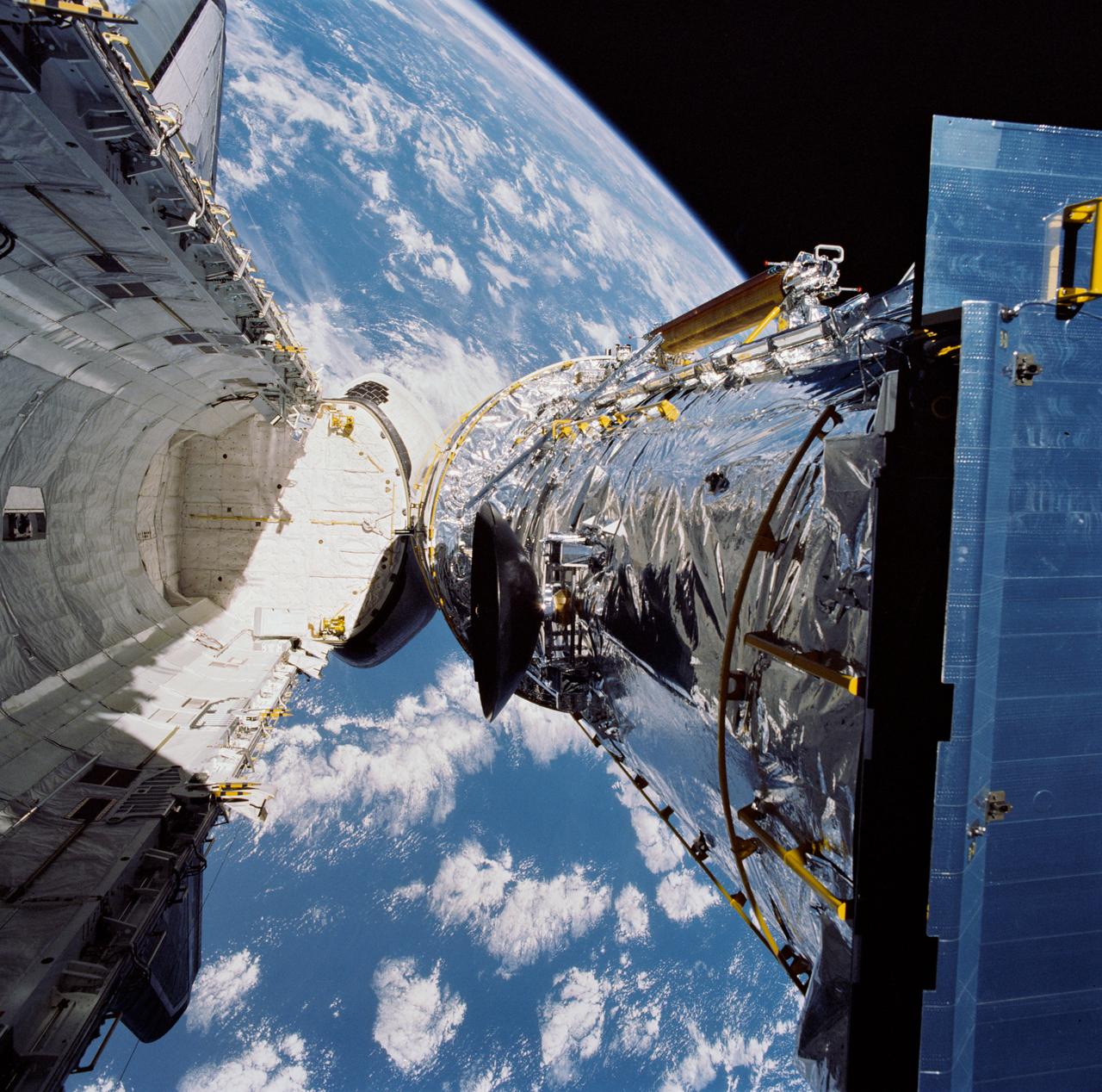
STS031-71-095 (25 April 1990) --- The Hubble Space Telescope (HST) is suspended above Discovery's cargo bay some 332 nautical miles above Earth. The Canadian-built Remote Manipulator System (RMS) arm, controlled from in-cabin by the astronaut crew members of STS-31, held the huge telescope in this position during pre-deployment procedures, which included extension of solar array panels and antennae. The photo was made with a 70mm handheld Hasselblad camera.
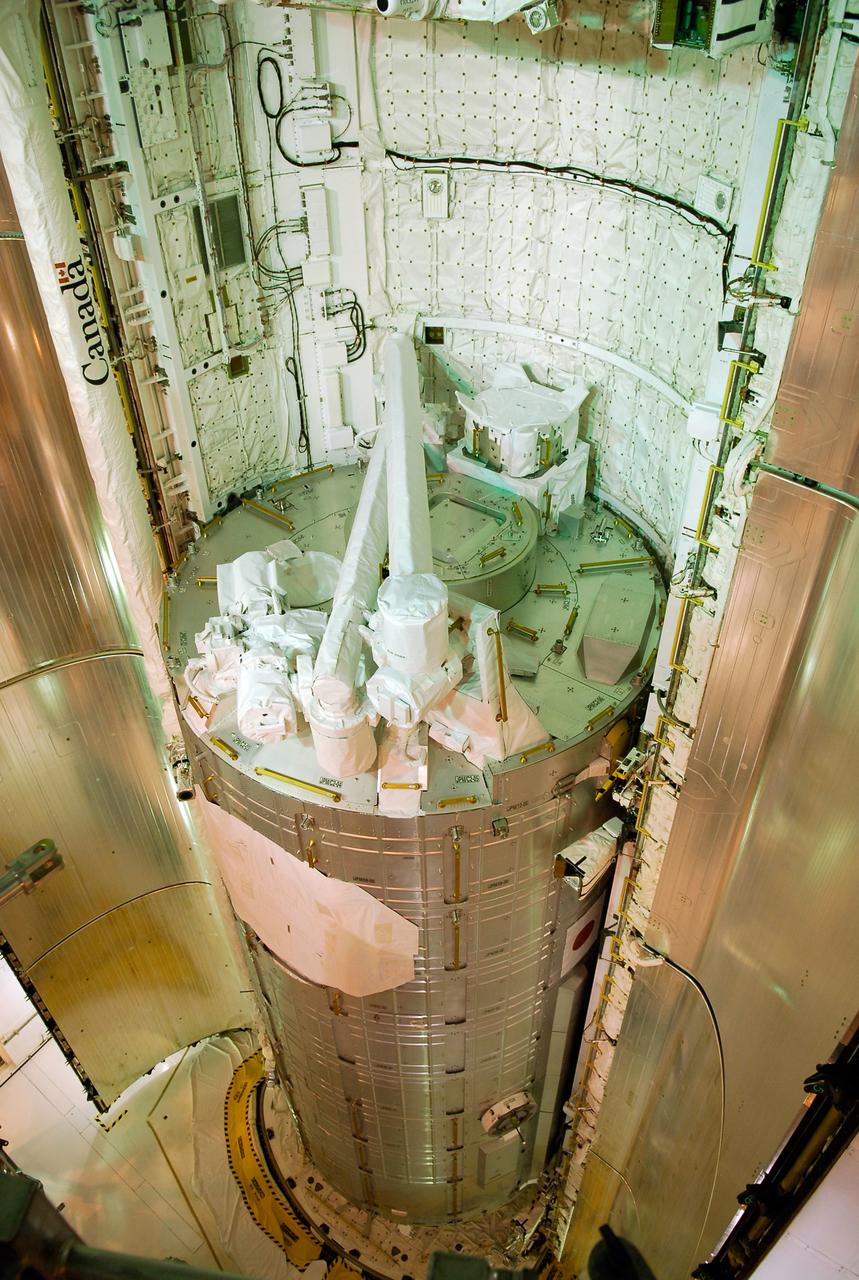
CAPE CANAVERAL, Fla. -- On Launch Pad 39A at NASA's Kennedy Space Center, the Japanese Experiment Module—Pressurized Module is in place in space shuttle Discovery's payload bay as the payload bay doors begin to close. The launch of Discovery on its STS-124 mission is targeted for May 31. On the mission, Discovery will transport the pressurized module and the Japanese Remote Manipulator System to the International Space Station. Photo credit: NASA/Kim Shiflett

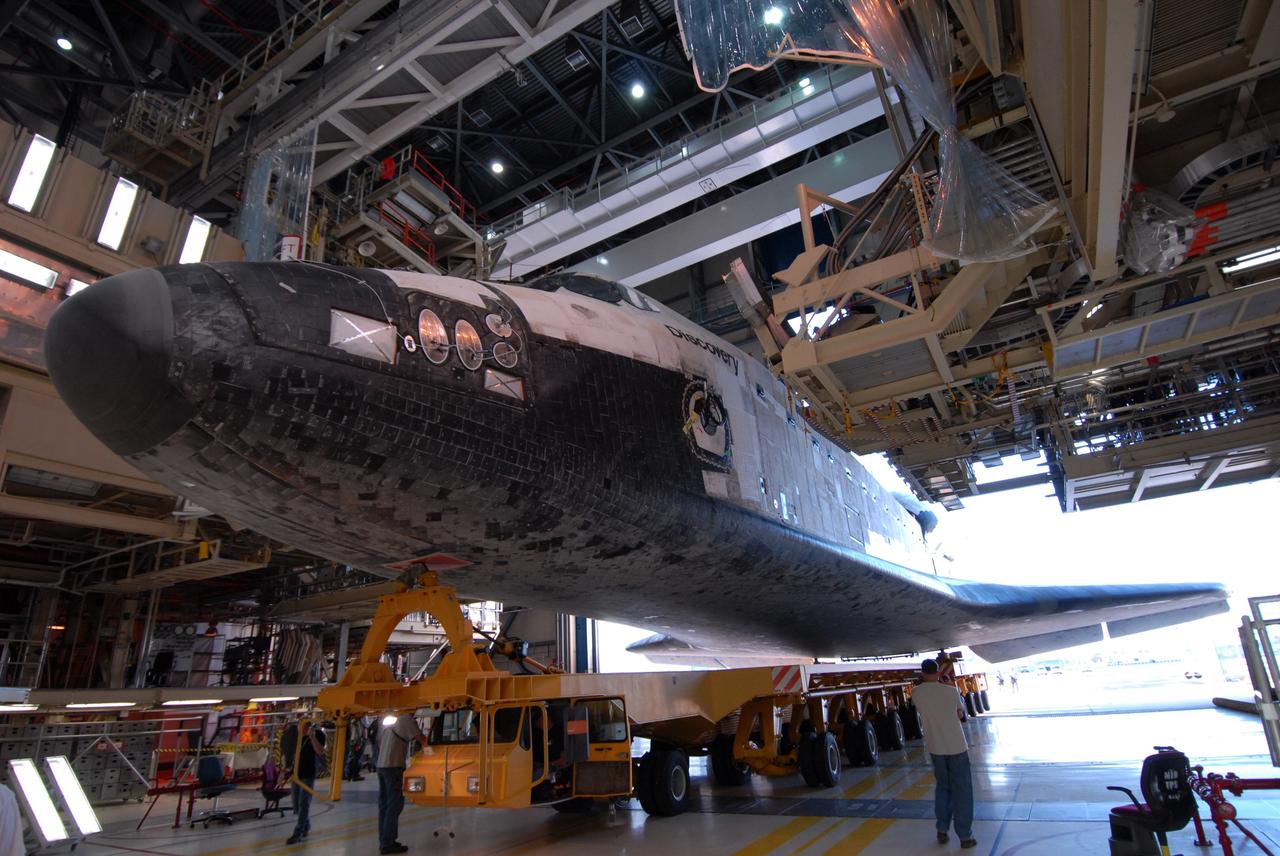
CAPE CANAVERAL, Fla. -- Inside the Orbiter Processing Facility, space shuttle Discovery is ready for the rollover to the Vehicle Assembly Building, or VAB, at NASA's Kennedy Space Center. It rests on the orbiter transporter system, which has 76 wheels and measures 106.5 feet long. In high bay 3 of the VAB, Discovery will be attached to its external fuel tank and solid rocket boosters in preparation for its upcoming STS-124 mission to the International Space Station. On the mission, the STS-124 crew will transport the Japanese Experiment Module - Pressurized Module and the Japanese Remote Manipulator System to the space station. Launch of Discovery is targeted for May 31. Photo credit: NASA/Troy Cryder
CAPE CANAVERAL, Fla. -- Space shuttle Discovery rolls out from the Orbiter Processing Facility for the short trip to the Vehicle Assembly Building, or VAB, at NASA's Kennedy Space Center. It rests on the orbiter transporter system, which has 76 wheels and measures 106.5 feet long. In high bay 3 of the VAB, Discovery will be attached to its external fuel tank and solid rocket boosters in preparation for its upcoming STS-124 mission to the International Space Station. On the mission, the STS-124 crew will transport the Japanese Experiment Module - Pressurized Module and the Japanese Remote Manipulator System to the space station. Launch of Discovery is targeted for May 31. Photo credit: NASA/Troy Cryder
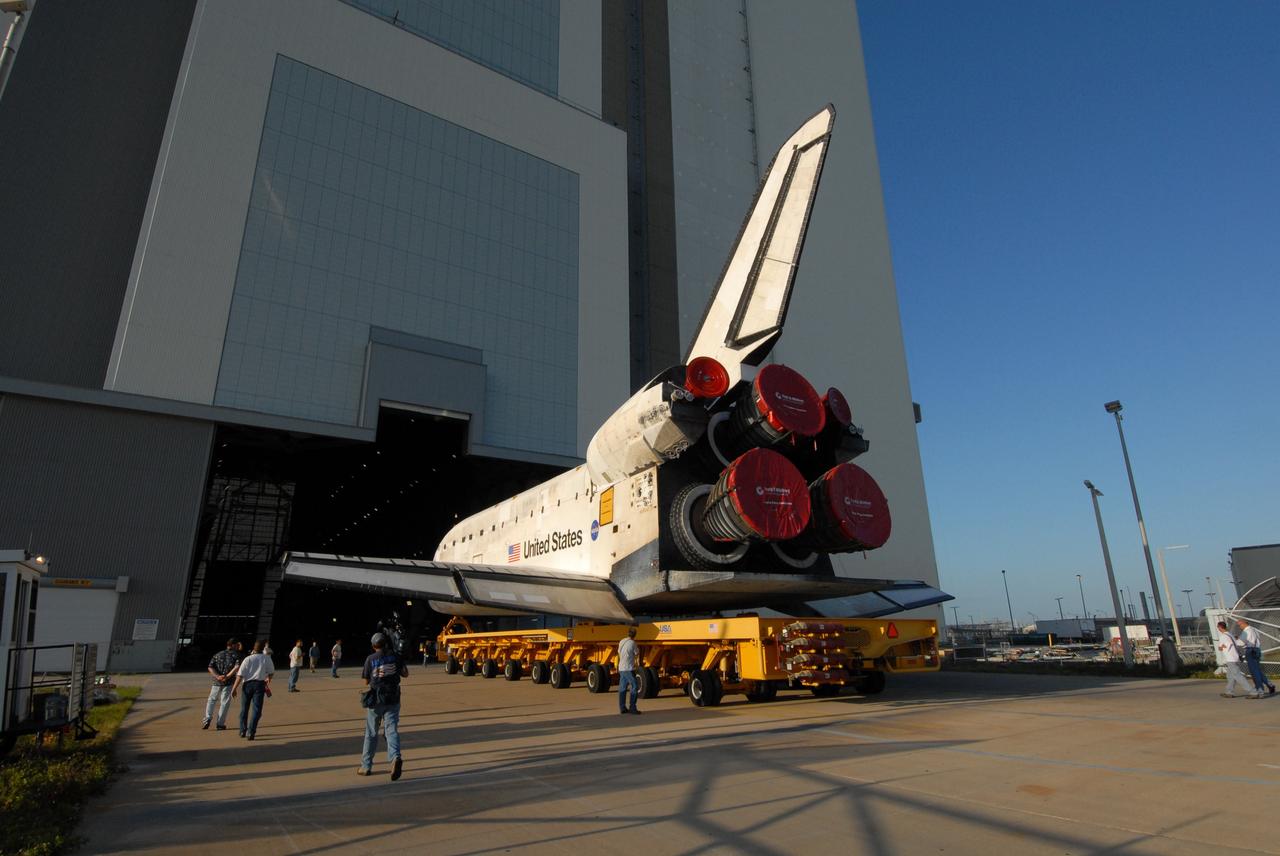
CAPE CANAVERAL, Fla. -- Space shuttle Discovery rolls toward the open doors of the Vehicle Assembly Building, or VAB, at NASA's Kennedy Space Center. It rests on the orbiter transporter system, which has 76 wheels and measures 106.5 feet long. Inside the VAB, Discovery will be attached to its external fuel tank and solid rocket boosters in high bay 3 in preparation for its upcoming STS-124 mission to the International Space Station. On the mission, the STS-124 crew will transport the Japanese Experiment Module - Pressurized Module and the Japanese Remote Manipulator System to the space station. Launch of Discovery is targeted for May 31. Photo credit: NASA/Troy Cryder
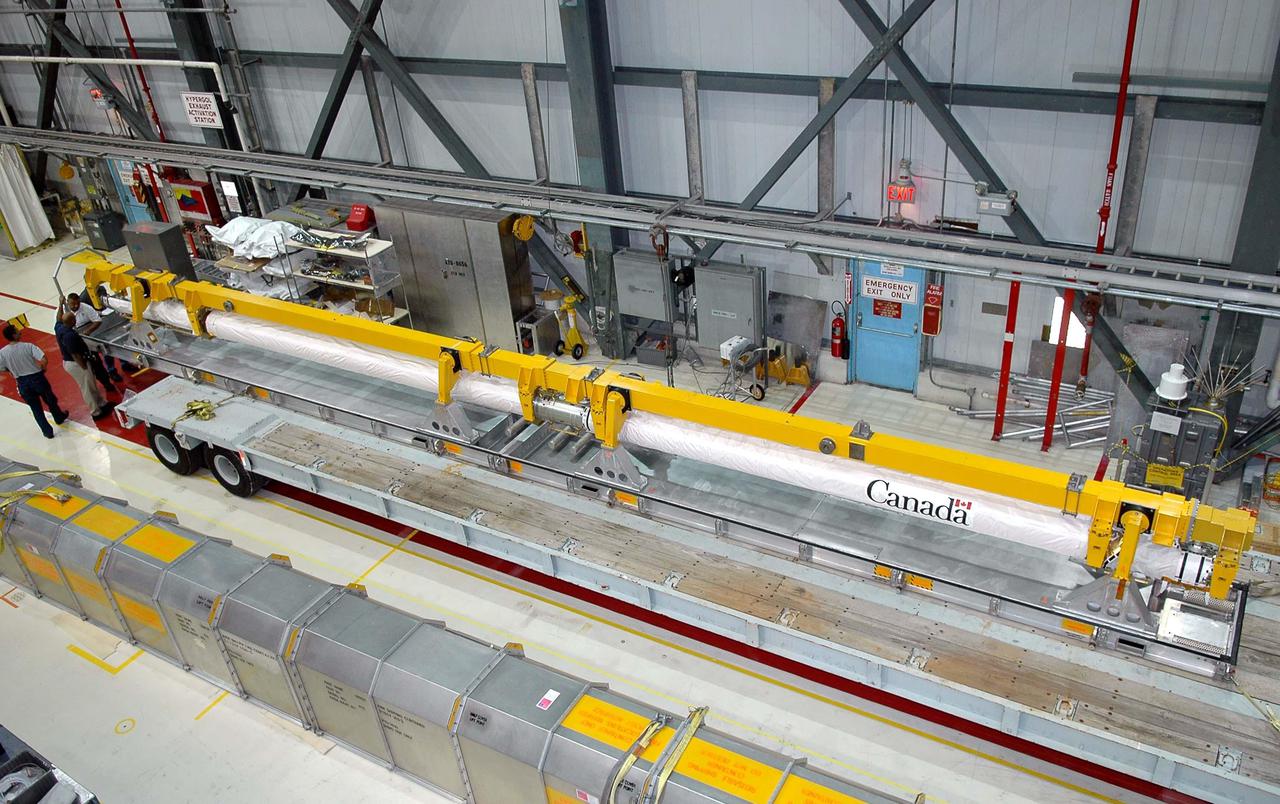
KENNEDY SPACE CENTER, FLA. - In the Orbiter Processing Facility bay 1 at NASA’s Kennedy Space Center, the Orbital Boom Sensor System (OBSS) is ready to be installed in the payload bay of Atlantis. The 50-foot-long OBSS attaches to the Remote Manipulator System, or Shuttle robotic arm, and is one of the new safety measures for Return to Flight, equipping the orbiter with cameras and laser systems to inspect the Shuttle’s Thermal Protection System while in space. The Return to Flight mission STS-121 has a launch window of July 12 - July 31, 2005.
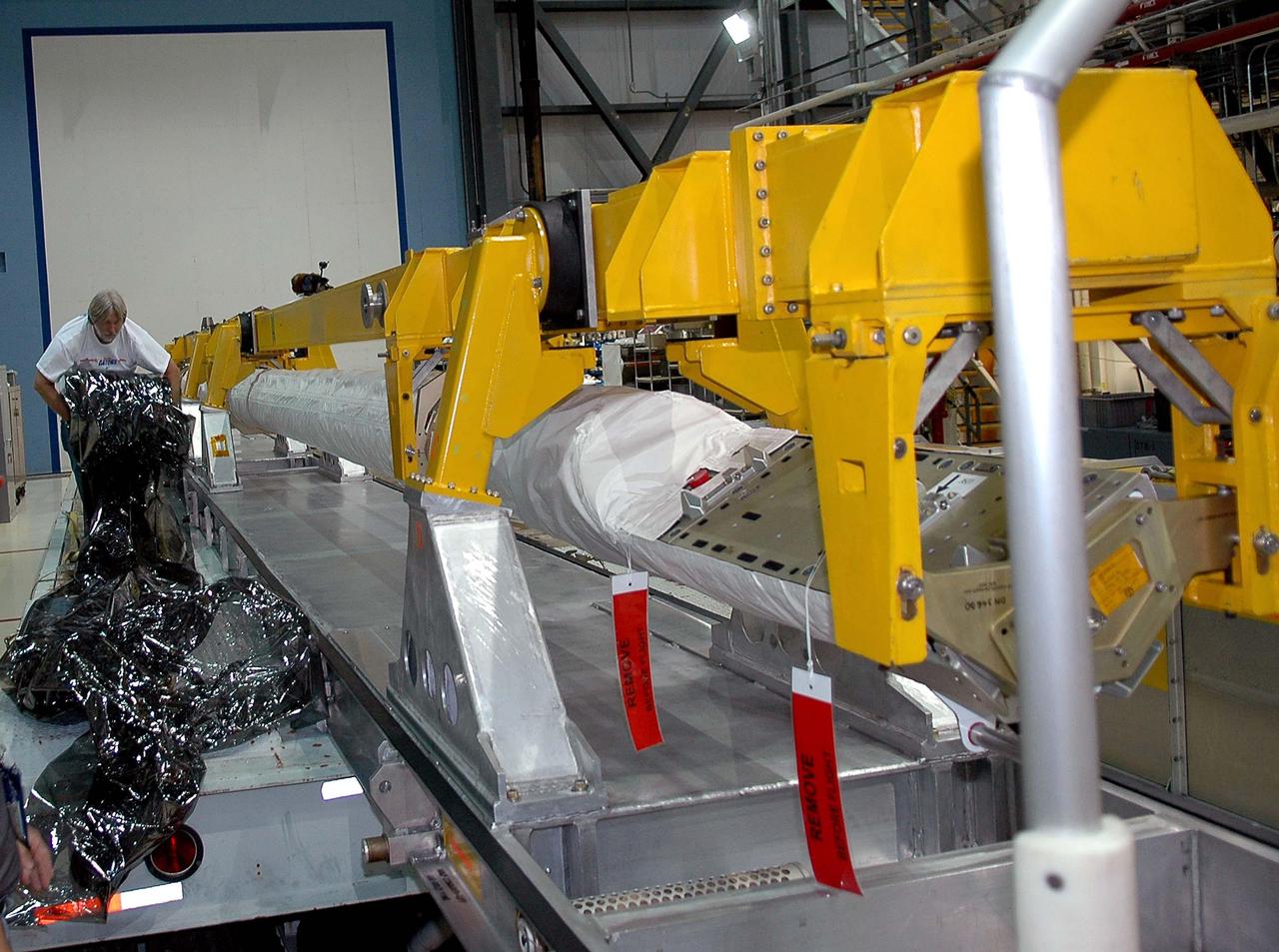
KENNEDY SPACE CENTER, FLA. - In the Orbiter Processing Facility bay 1 at NASA’s Kennedy Space Center, a worker rolls the plastic cover removed from the Orbital Boom Sensor System (OBSS), at right, which will be installed in the payload bay of Atlantis. The 50-foot-long OBSS attaches to the Remote Manipulator System, or Shuttle robotic arm, and is one of the new safety measures for Return to Flight, equipping the orbiter with cameras and laser systems to inspect the Shuttle’s Thermal Protection System while in space. The Return to Flight mission STS-121 has a launch window of July 12 - July 31, 2005.
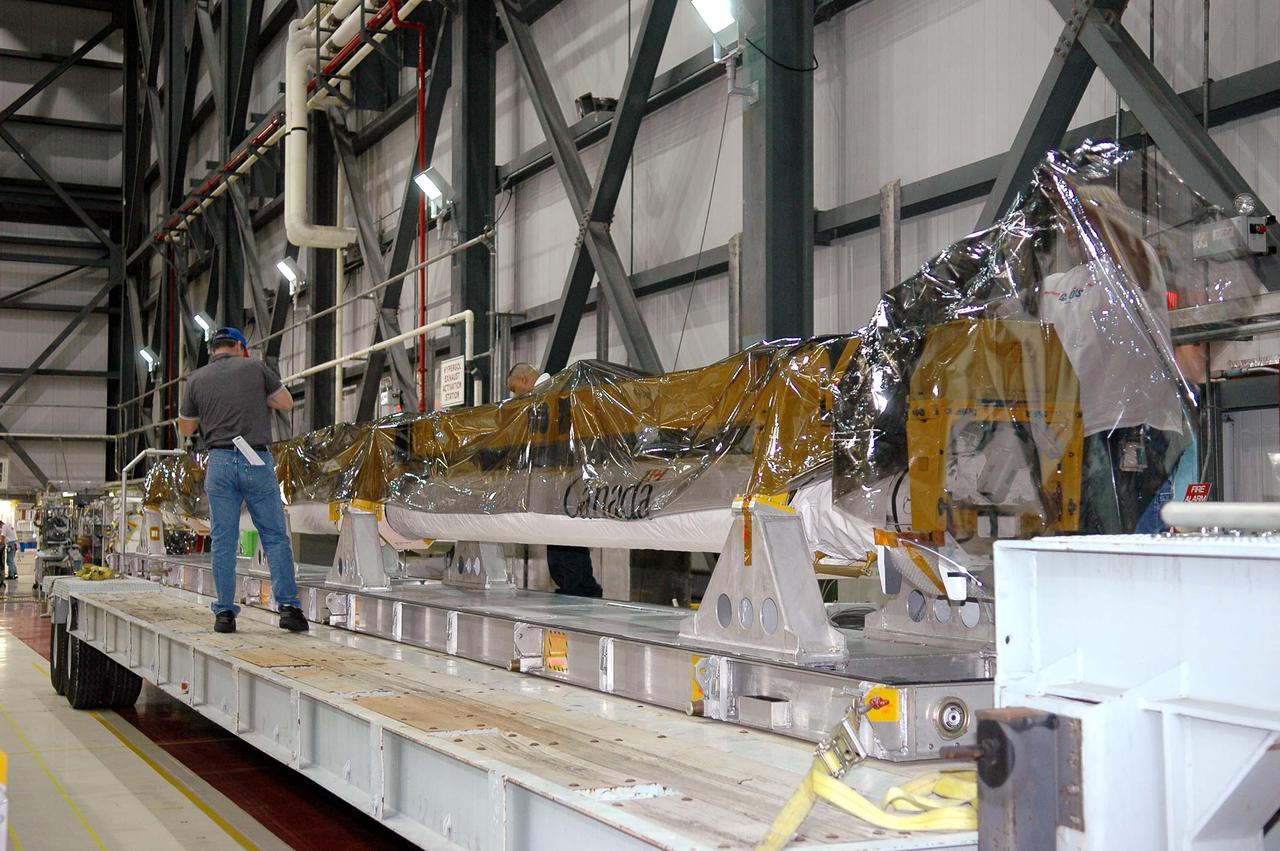
KENNEDY SPACE CENTER, FLA. - In the Orbiter Processing Facility bay 1 at NASA’s Kennedy Space Center, the Orbital Boom Sensor System (OBSS), waits to be installed in the payload bay of Atlantis. The 50-foot-long OBSS attaches to the Remote Manipulator System, or Shuttle robotic arm, and is one of the new safety measures for Return to Flight, equipping the orbiter with cameras and laser systems to inspect the Shuttle’s Thermal Protection System while in space. The Return to Flight mission STS-121 has a launch window of July 12 - July 31, 2005.
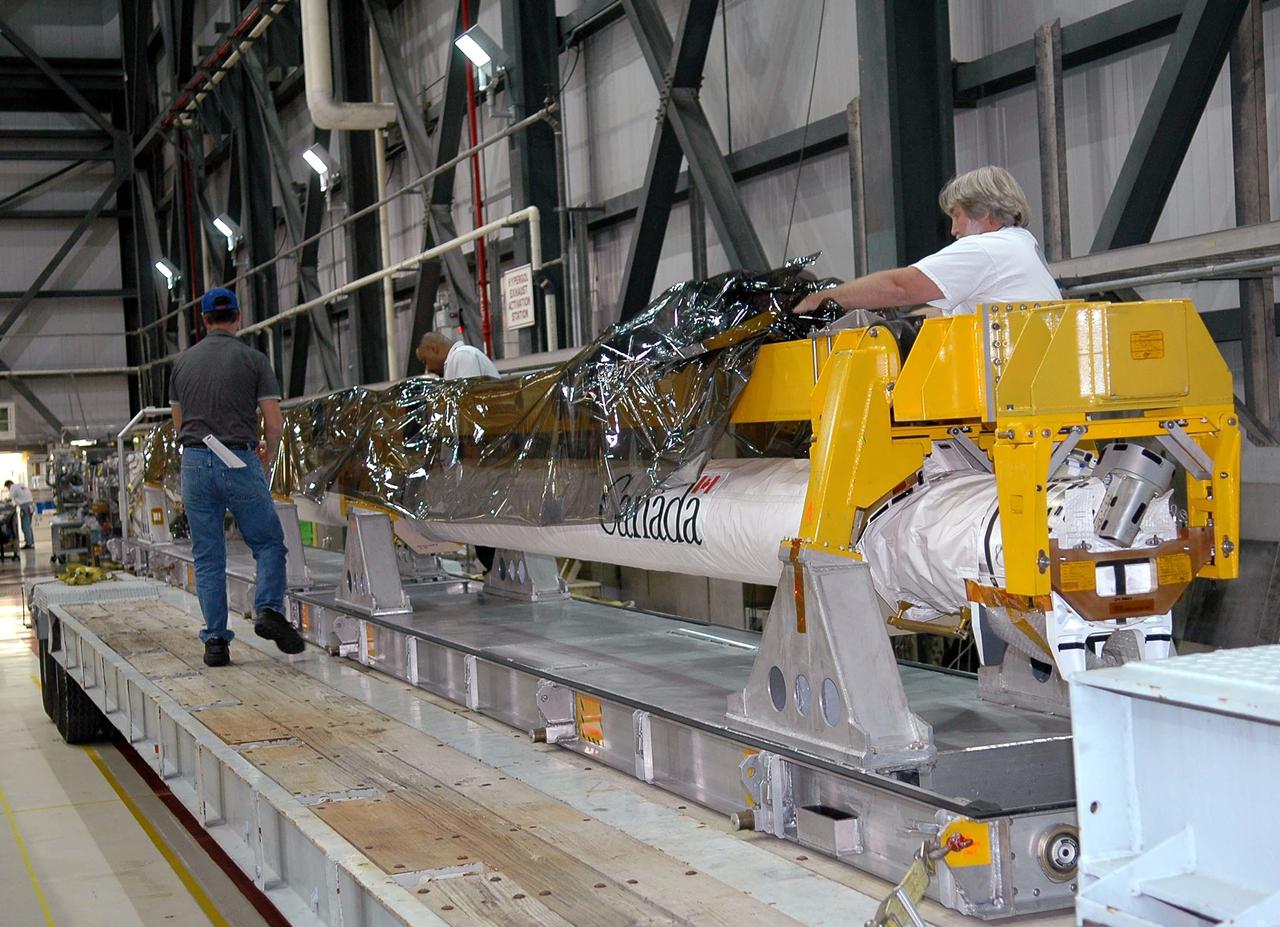
KENNEDY SPACE CENTER, FLA. - In the Orbiter Processing Facility bay 1 at NASA’s Kennedy Space Center, workers begin removing the protective cover from the Orbital Boom Sensor System (OBSS) to be installed in the payload bay of Atlantis. The 50-foot-long OBSS attaches to the Remote Manipulator System, or Shuttle robotic arm, and is one of the new safety measures for Return to Flight, equipping the orbiter with cameras and laser systems to inspect the Shuttle’s Thermal Protection System while in space. The Return to Flight mission STS-121 has a launch window of July 12 - July 31, 2005.
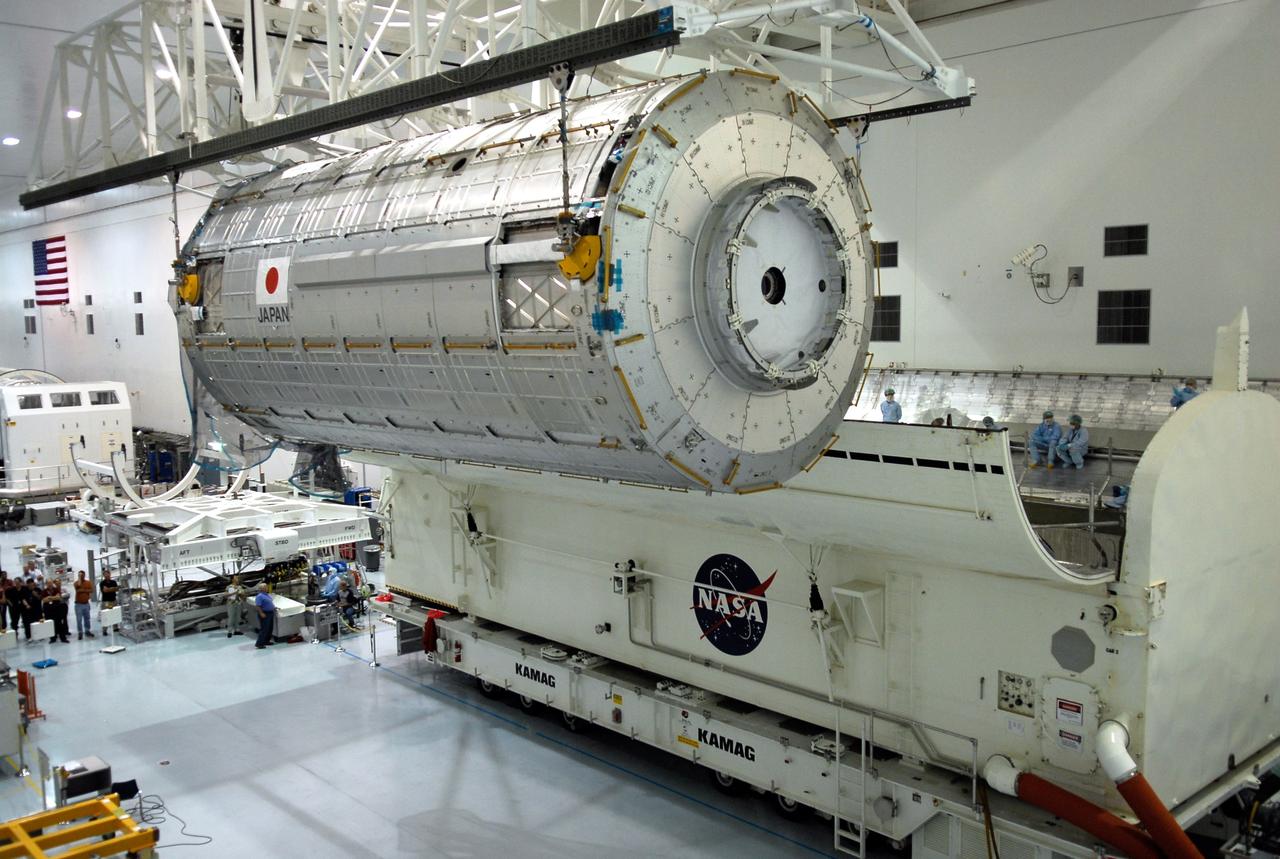
CAPE CANAVERAL, Fla. -- In the Space Station Processing Facility at NASA’s Kennedy Space Center, an overhead crane moves the Kibo Japanese Experiment Module - Pressurized Module toward the payload canister (lower right). The canister will deliver the module, part of the payload for space shuttle Discovery’s STS-124 mission, to Launch Pad 39A. On the mission, the STS-124 crew will transport the Kibo module as well as the Japanese Remote Manipulator System to the International Space Station to complete the Kibo laboratory. The launch of Discovery is targeted for May 31. Photo credit: NASA/Kim Shiflett
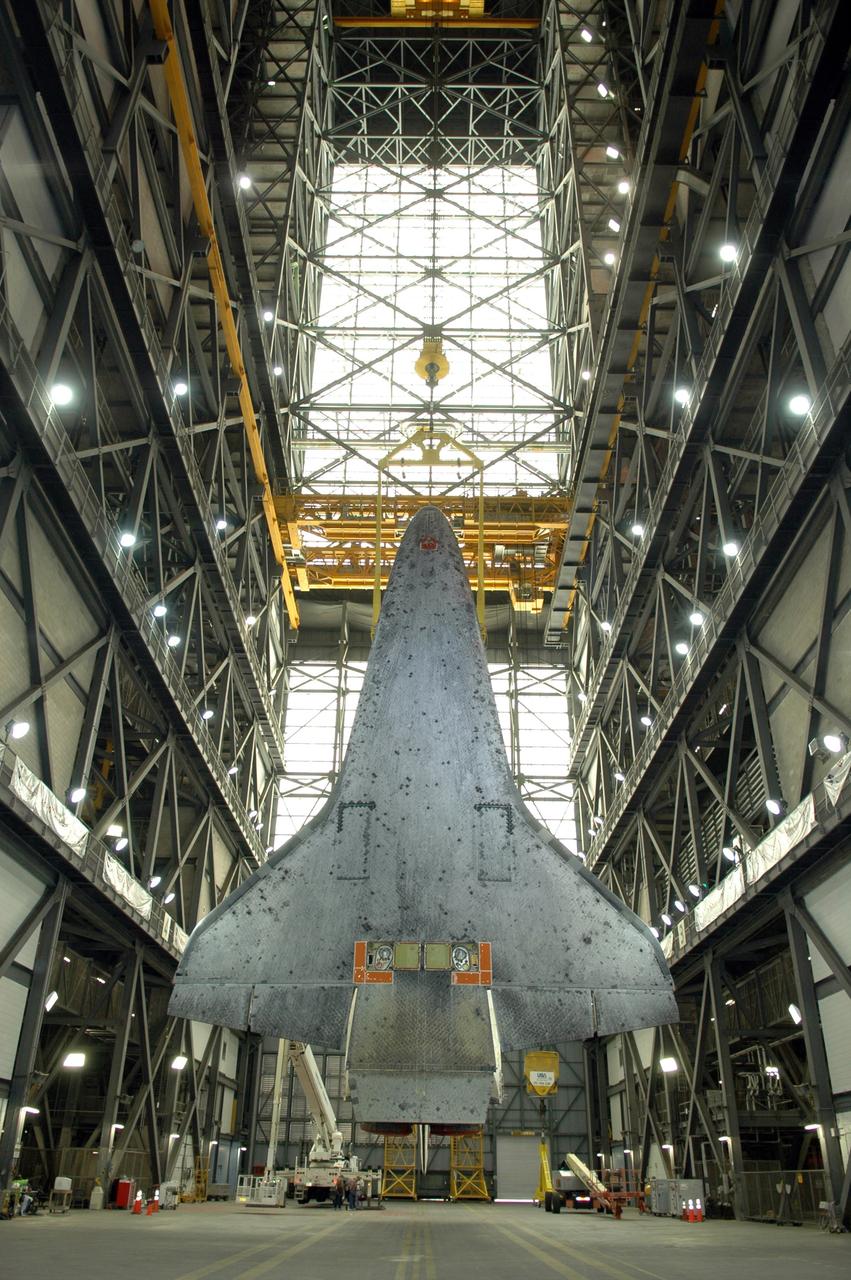
CAPE CANAVERAL, Fla. -- In the Vehicle Assembly Building at NASA's Kennedy Space Center, space shuttle Discovery, looking like a giant bat, hangs suspended above the transfer aisle. The crane holding it will lift Discovery to the upper levels and lower it into high bay 3. In the bay, Discovery will be mated to the external tank and solid rocket boosters for launch on the upcoming STS-124 mission to the International Space Station. On the mission, the STS-124 crew will transport the Japanese Experiment Module - Pressurized Module and the Japanese Remote Manipulator System to the space station. Launch of Discovery is targeted for May 31 Photo credit: NASA/Jim Grossmann
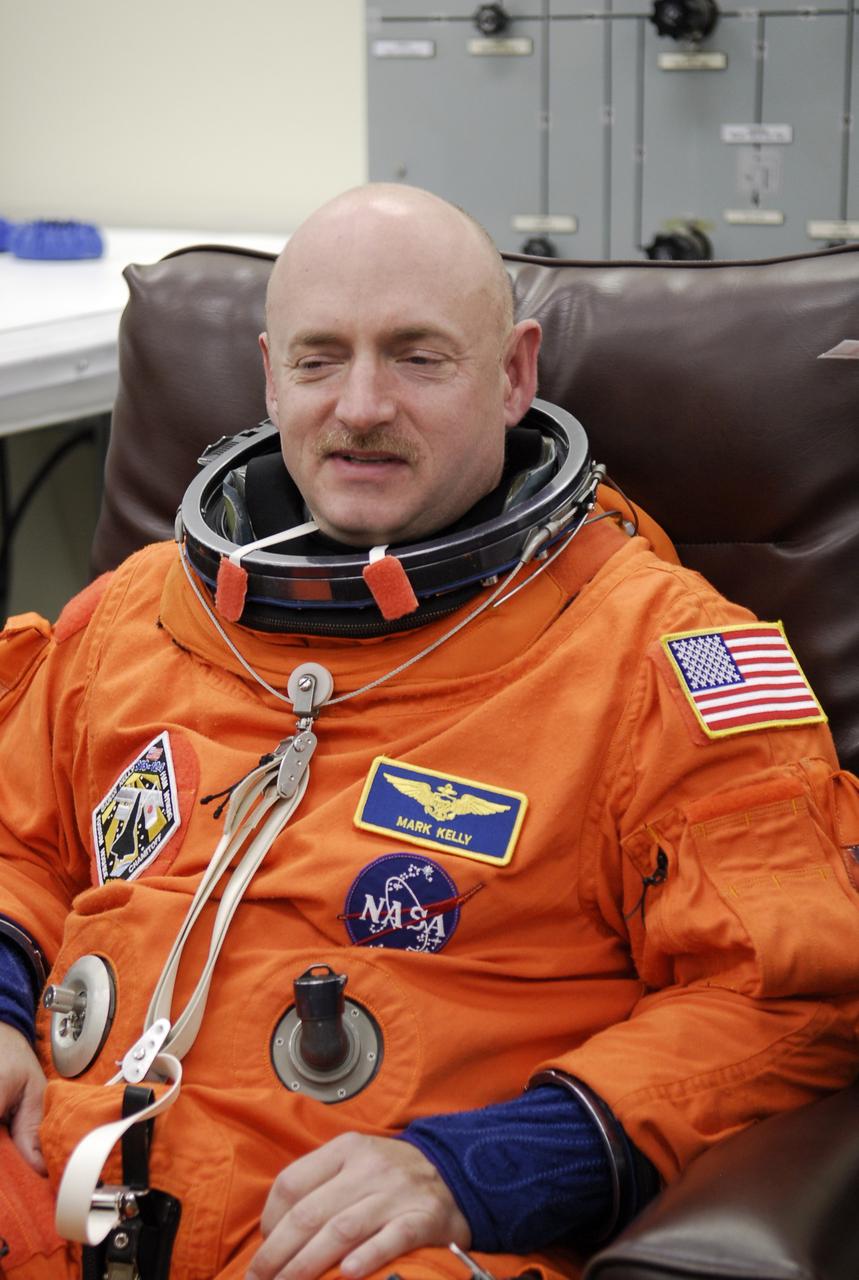
CAPE CANAVERAL, Fla. -- In the Operations and Checkout Building at NASA's Kennedy Space Center, STS-124 Commander Mark Kelly dons his launch-and-entry suit needed for the simulated launch countdown. The simulation is the culmination of the launch dress rehearsal called the terminal countdown demonstration test. TCDT provides astronauts and ground crews with an opportunity to participate in various simulated countdown activities, including equipment familiarization and emergency training. On the STS-124 mission, the crew will deliver and install the Japanese Experiment Module – Pressurized Module and Japanese Remote Manipulator System. Discovery's launch is targeted for May 31. Photo credit: NASA/Kim Shiflett
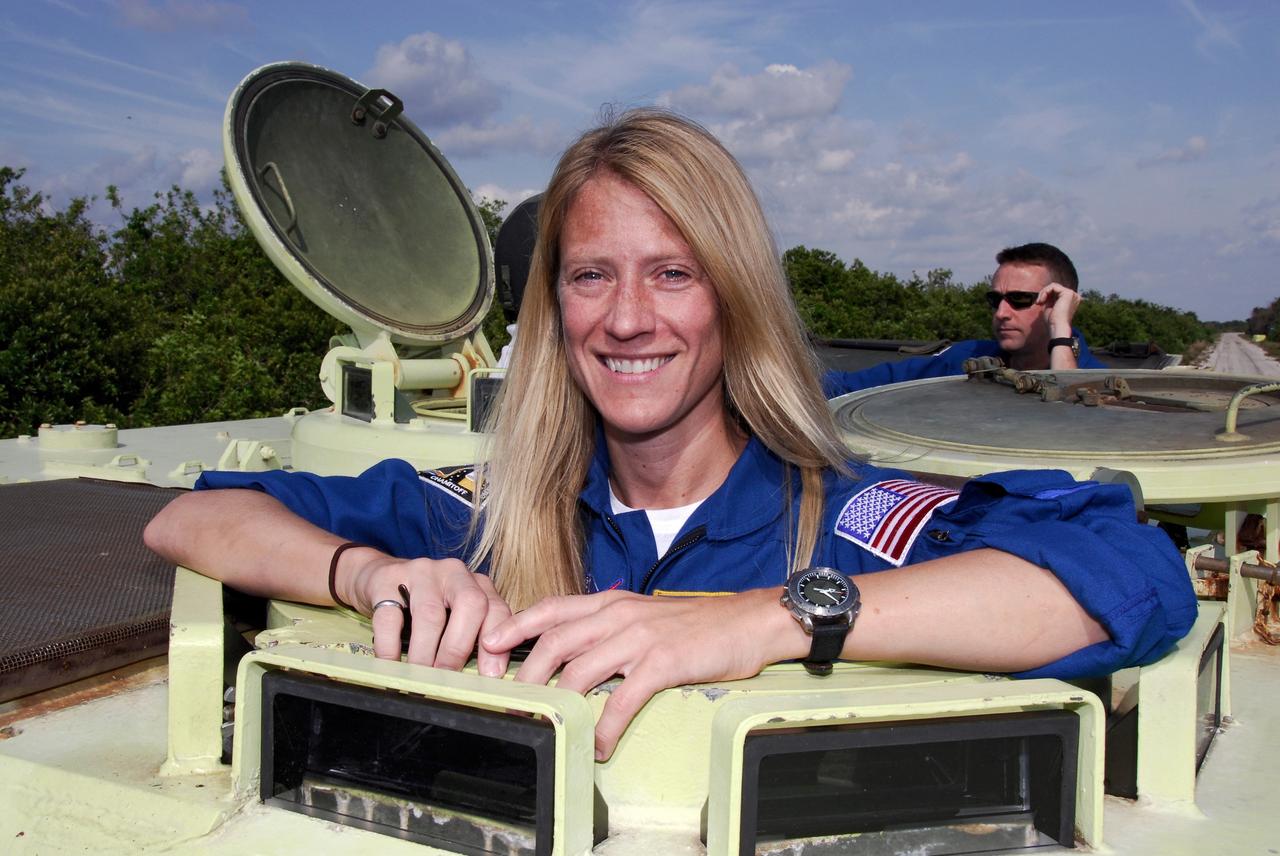
CAPE CANAVERAL, Fla. -- STS-124 Mission Specialist Karen Nyberg is ready to begin driving practice in the M113 armored personnel carrier, part of emergency training. Behind her is Pilot Ken Ham. She and other crew members are at NASA's Kennedy Space Center for a dress launch rehearsal called the terminal countdown demonstration test. TCDT provides astronauts and ground crews with an opportunity to participate in various simulated countdown activities, including equipment familiarization and emergency training. On the STS-124 mission, the crew will deliver and install the Japanese Experiment Module – Pressurized Module and Japanese Remote Manipulator System. Discovery's launch is targeted for May 31. Photo credit: NASA/Kim Shiflett
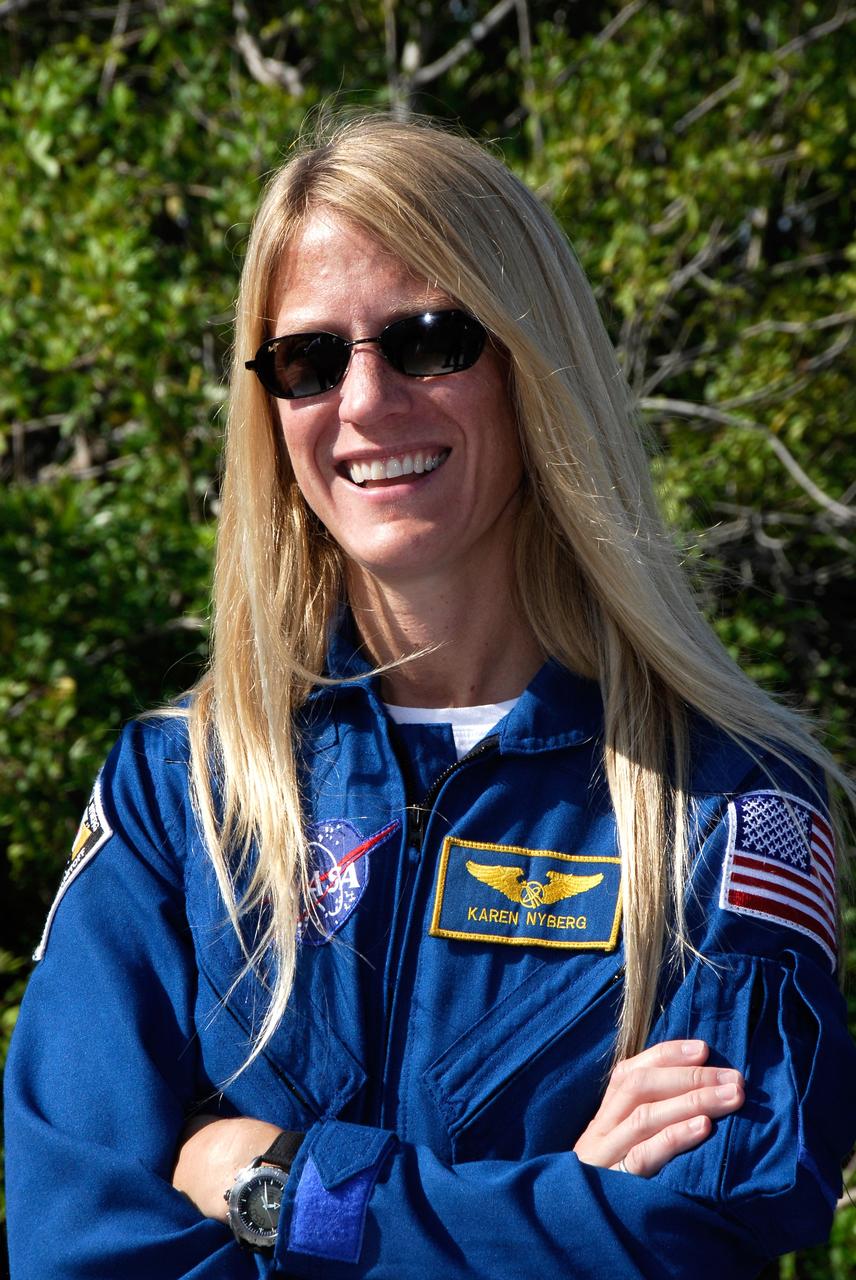
CAPE CANAVERAL, Fla. -- STS-124 Mission Specialist Karen Nyberg waits to begin training on the M113 armored personnel carrier on Launch Pad 39B. She and other crew members are at NASA's Kennedy Space Center for a dress launch rehearsal called the terminal countdown demonstration test. TCDT provides astronauts and ground crews with an opportunity to participate in various simulated countdown activities, including equipment familiarization and emergency training. On the STS-124 mission, the crew will deliver and install the Japanese Experiment Module – Pressurized Module and Japanese Remote Manipulator System. Discovery's launch is targeted for May 31. Photo credit: NASA/Kim Shiflett
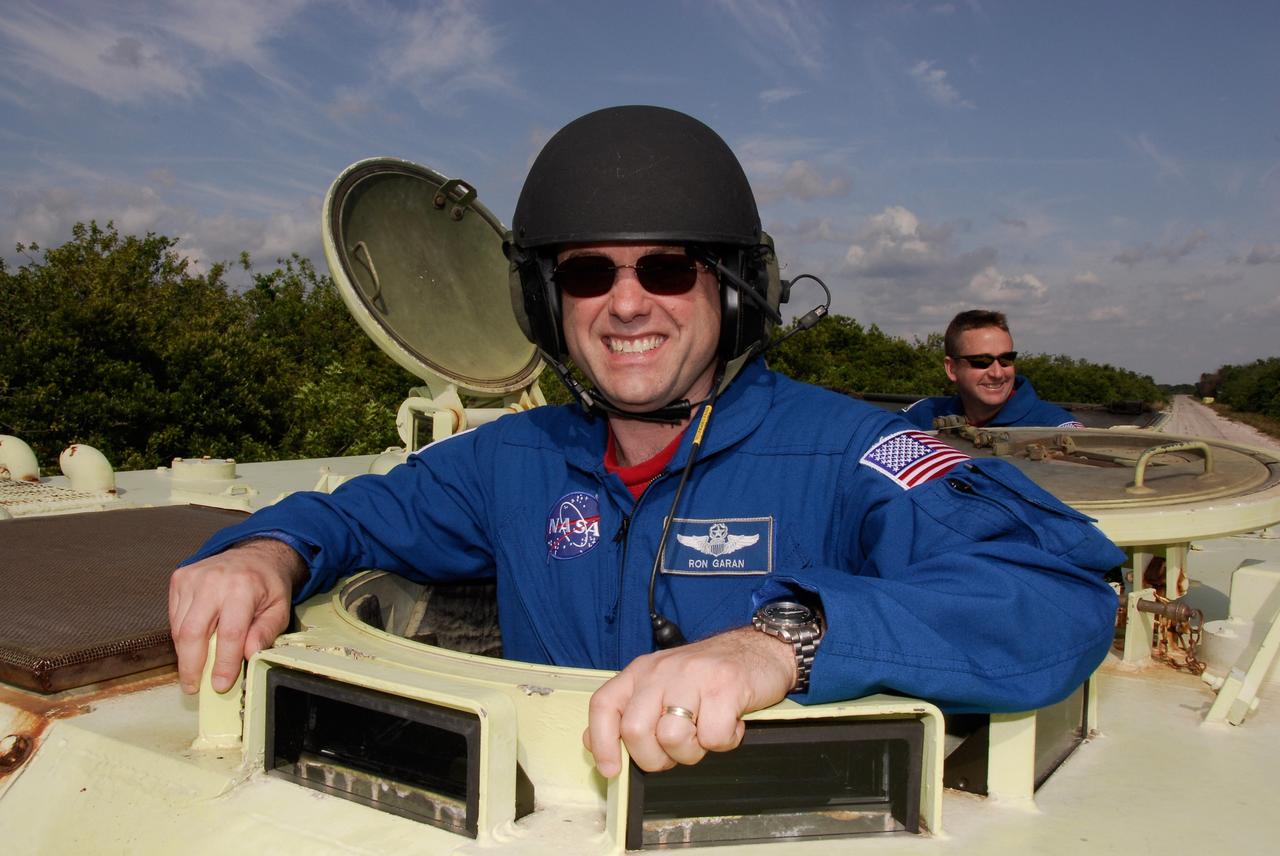
CAPE CANAVERAL, Fla. -- STS-124 Mission Specialist Ron Garan is ready to drive the M113 armored personnel carrier as part of emergency training. Behind him is Pilot Ken Ham. They and other crew members are at NASA's Kennedy Space Center for a dress launch rehearsal called the terminal countdown demonstration test. TCDT provides astronauts and ground crews with an opportunity to participate in various simulated countdown activities, including equipment familiarization and emergency training. On the STS-124 mission, the crew will deliver and install the Japanese Experiment Module – Pressurized Module and Japanese Remote Manipulator System. Discovery's launch is targeted for May 31. Photo credit: NASA/Kim Shiflett
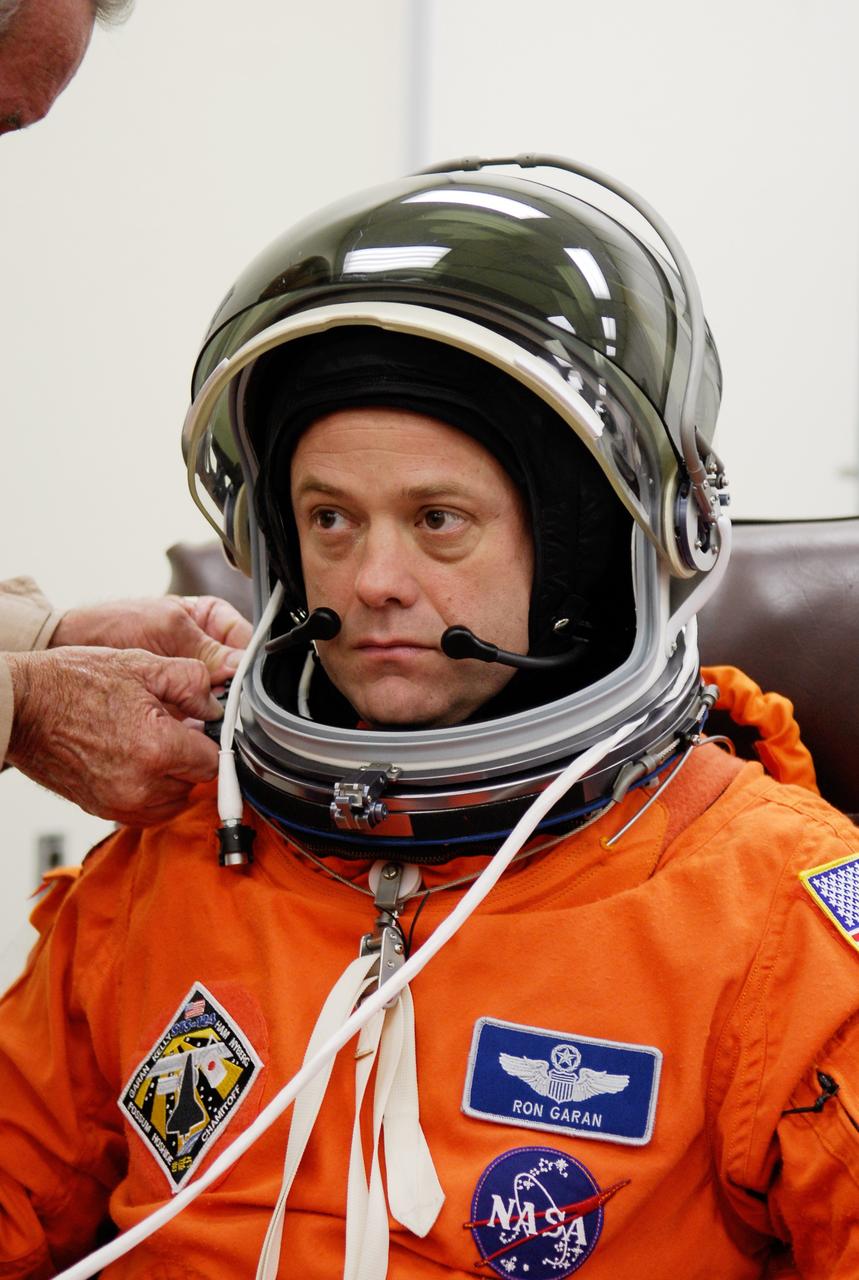
CAPE CANAVERAL, Fla. -- In the Operations and Checkout Building at NASA's Kennedy Space Center, a technician helps STS-124 Mission Specialist Ron Garan with the communication piece of his helmet. Garan has donned his launch-and-entry suit for the simulated launch countdown. The simulation is the culmination of the launch dress rehearsal called the terminal countdown demonstration test. TCDT provides astronauts and ground crews with an opportunity to participate in various simulated countdown activities, including equipment familiarization and emergency training. On the STS-124 mission, the crew will deliver and install the Japanese Experiment Module – Pressurized Module and Japanese Remote Manipulator System. Discovery's launch is targeted for May 31. Photo credit: NASA/Kim Shiflett
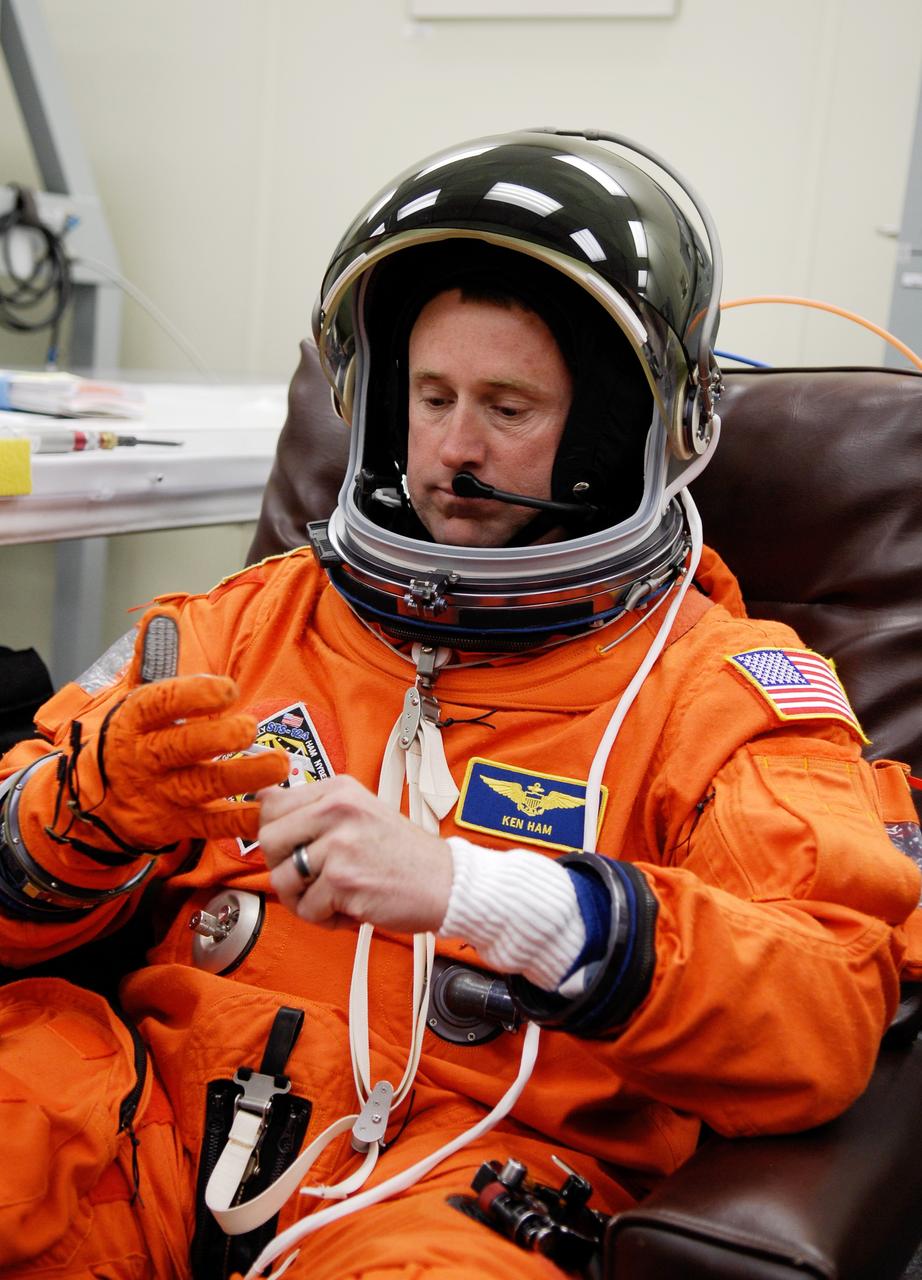
CAPE CANAVERAL, Fla. -- Crew members for space shuttle Discovery's STS-124 mission don their launch and entry suits before heading to Launch Pad 39A. Pilot Ken Ham adjusts his glove. The STS-124 mission is the second of three flights launching components to complete the Japan Aerospace Exploration Agency's Kibo laboratory. The shuttle crew will install Kibo's large Japanese Pressurized Module and its remote manipulator system, or RMS. The 14-day flight includes three spacewalks. Launch is scheduled for 5:02 p.m. May 31. Photo credit: NASA/Kim Shiflett
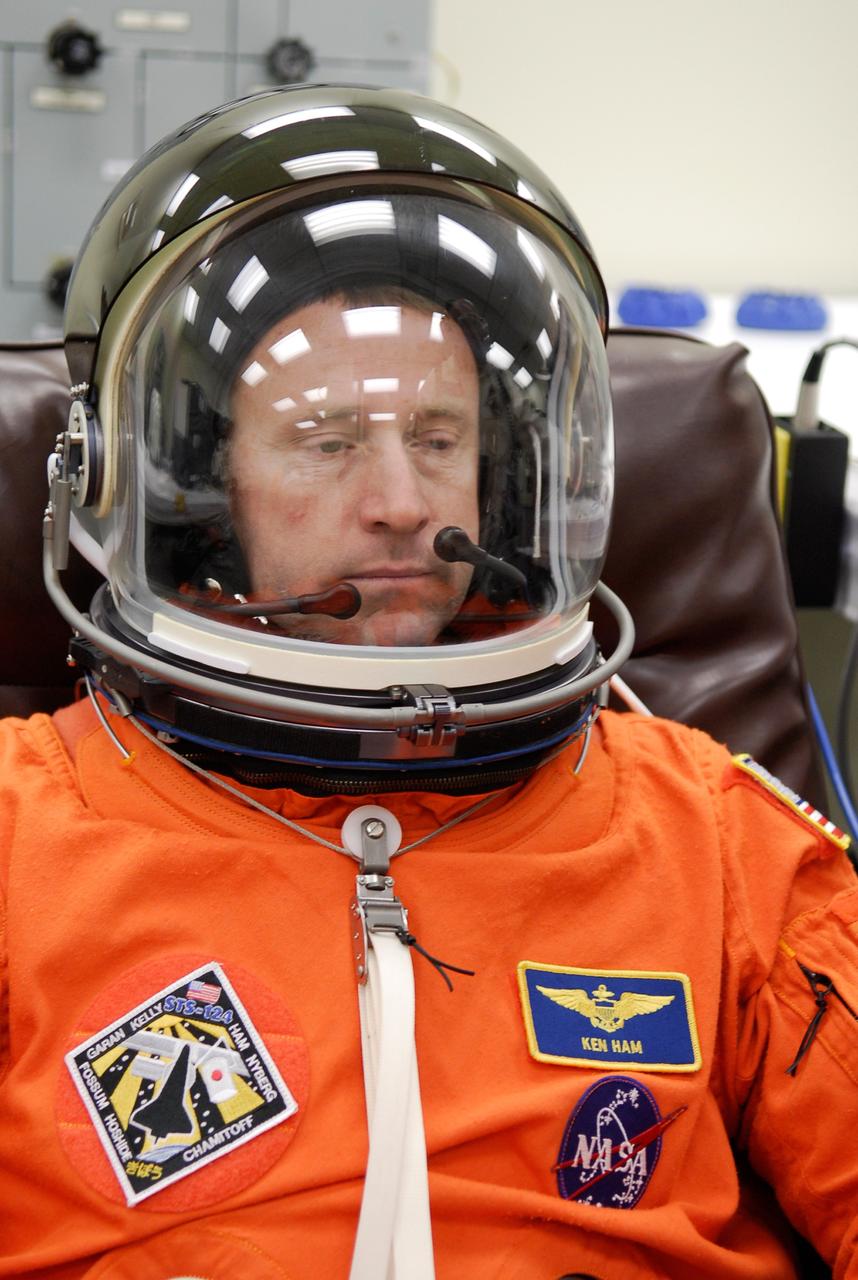
CAPE CANAVERAL, Fla. -- In the Operations and Checkout Building at NASA's Kennedy Space Center, STS-124 Pilot Ken Ham tries on his helmet. The suit fit is part of the simulated launch countdown. The simulation is the culmination of the launch dress rehearsal called the terminal countdown demonstration test. TCDT provides astronauts and ground crews with an opportunity to participate in various simulated countdown activities, including equipment familiarization and emergency training. On the STS-124 mission, the crew will deliver and install the Japanese Experiment Module – Pressurized Module and Japanese Remote Manipulator System. Discovery's launch is targeted for May 31. Photo credit: NASA/Kim Shiflett

CAPE CANAVERAL, Fla. -- The crew of space shuttle Discovery's STS-124 mission arrives at the Shuttle Landing Facility at NASA's Kennedy Space Center aboard T-38 jet trainers to get ready for launch. Seen here is Mission Specialist Karen Nyberg, making her first shuttle flight. Launch of Discovery is scheduled for 5:02 p.m. May 31. On the STS-124 mission, the crew of seven will deliver and install the Japanese Experiment Module – Pressurized Module and Japanese Remote Manipulator System. Photo credit: NASA/Kim Shiflett
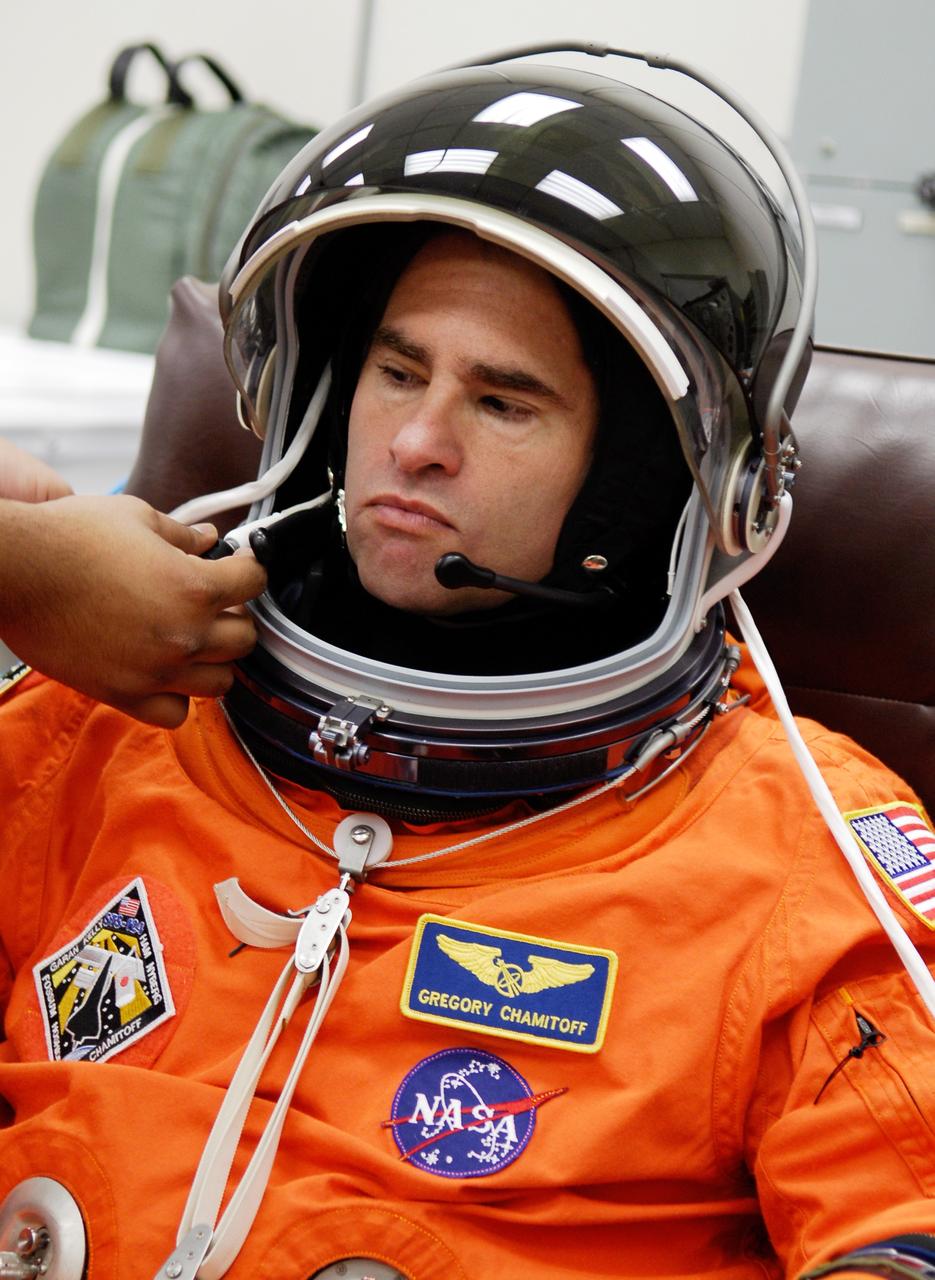
CAPE CANAVERAL, Fla. -- In the Operations and Checkout Building at NASA's Kennedy Space Center, a technician helps STS-124 Mission Specialist Greg Chamitoff with the communication piece of his helmet. Chamitoff has donned his launch-and-entry suit for the simulated launch countdown. The simulation is the culmination of the launch dress rehearsal called the terminal countdown demonstration test. TCDT provides astronauts and ground crews with an opportunity to participate in various simulated countdown activities, including equipment familiarization and emergency training. On the STS-124 mission, the crew will deliver and install the Japanese Experiment Module – Pressurized Module and Japanese Remote Manipulator System. Discovery's launch is targeted for May 31. Photo credit: NASA/Kim Shiflett
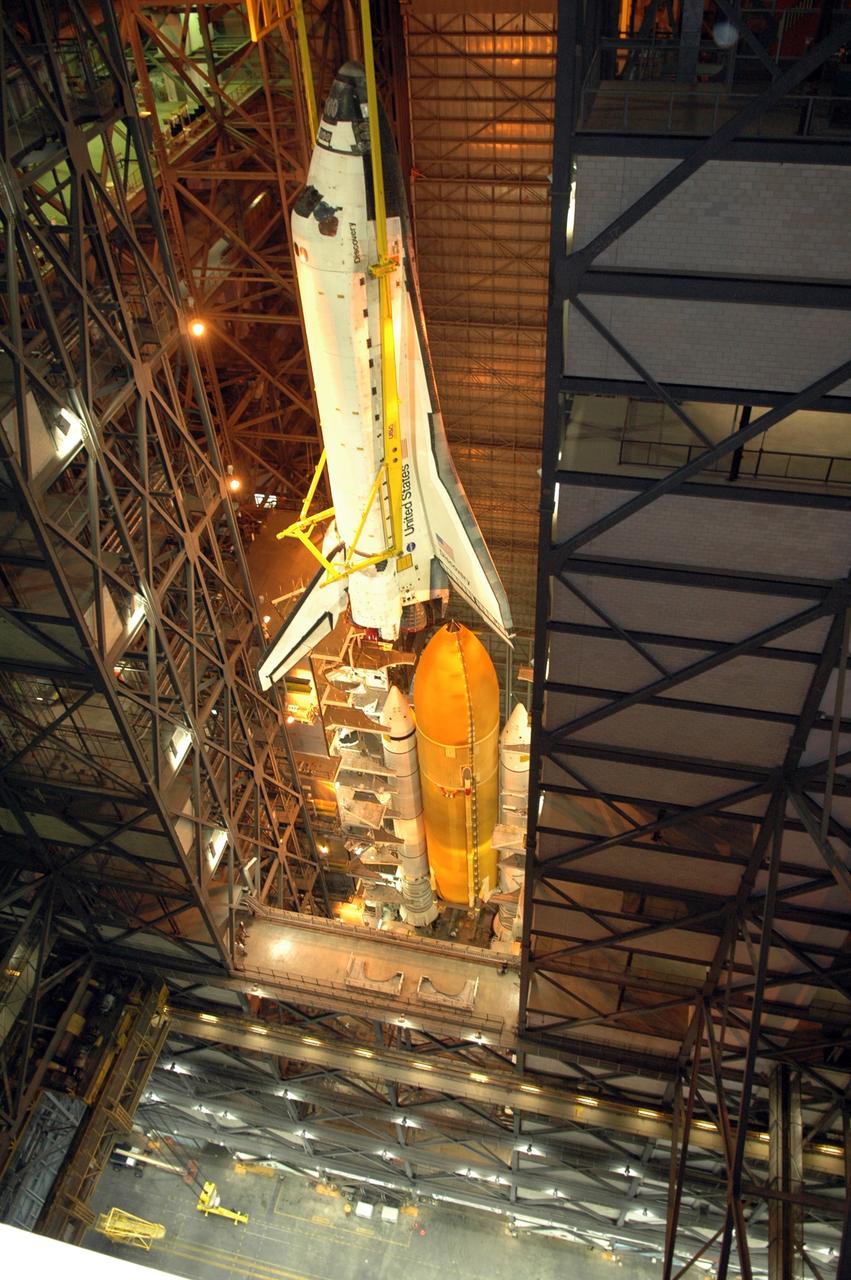
CAPE CANAVERAL, Fla. -- High above the transfer aisle of the Vehicle Assembly Building at NASA's Kennedy Space Center, space shuttle Discovery is moved into high bay 3. Below wait the solid rocket boosters and external tank for mating to the shuttle. The stacking of the four elements precedes their launch on the upcoming STS-124 mission to the International Space Station. On the mission, the STS-124 crew will transport the Japanese Experiment Module - Pressurized Module and the Japanese Remote Manipulator System to the space station. Launch of Discovery is targeted for May 31 Photo credit: NASA/Jim Grossmann
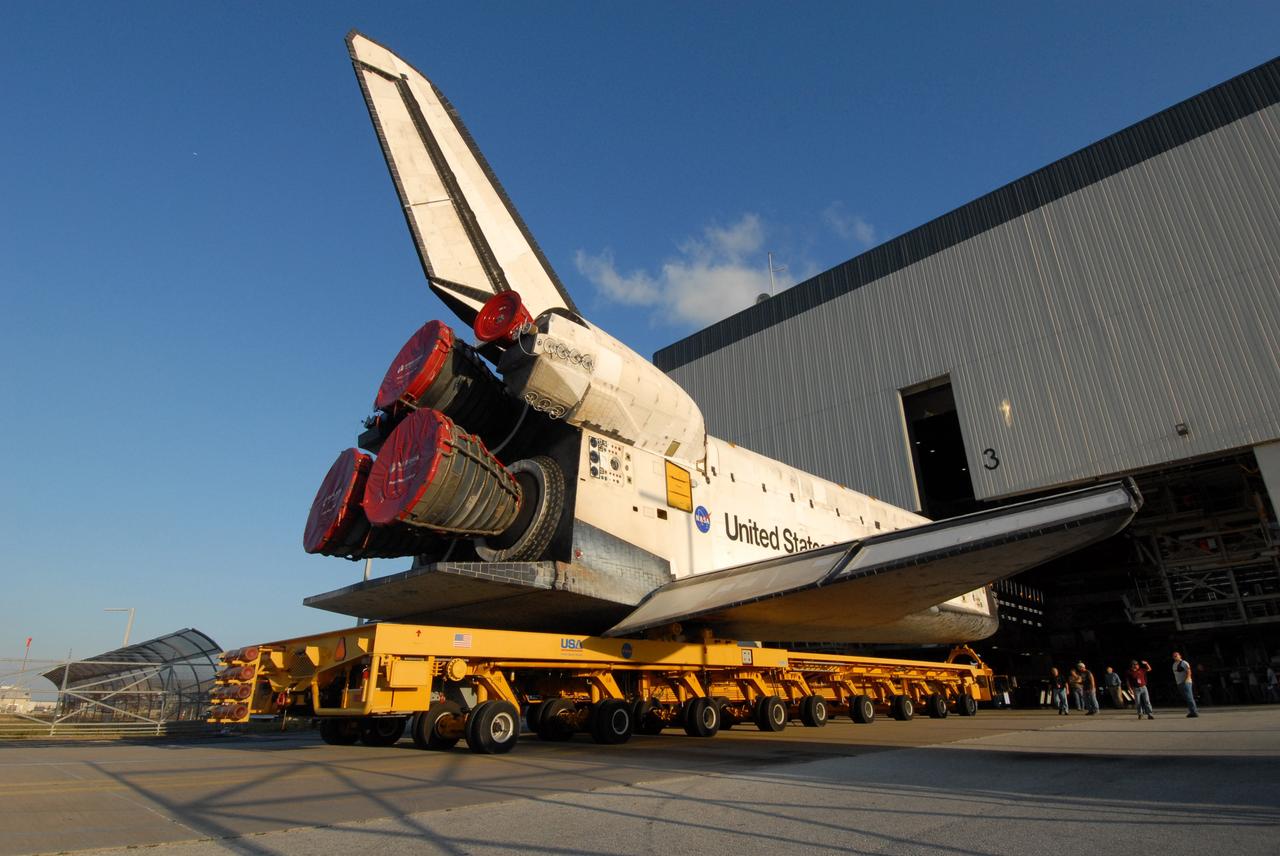
CAPE CANAVERAL, Fla. -- Space shuttle Discovery rolls away from the Orbiter Processing Facility on its 76-wheeled orbiter transporter to make the short trip to the Vehicle Assembly Building, or VAB, at NASA's Kennedy Space Center. The transporter is 106.5 feet long. In high bay 3 of the VAB, Discovery will be attached to its external fuel tank and solid rocket boosters in preparation for its upcoming STS-124 mission to the International Space Station. On the mission, the STS-124 crew will transport the Japanese Experiment Module - Pressurized Module and the Japanese Remote Manipulator System to the space station. Launch of Discovery is targeted for May 31. Photo credit: NASA/Troy Cryder
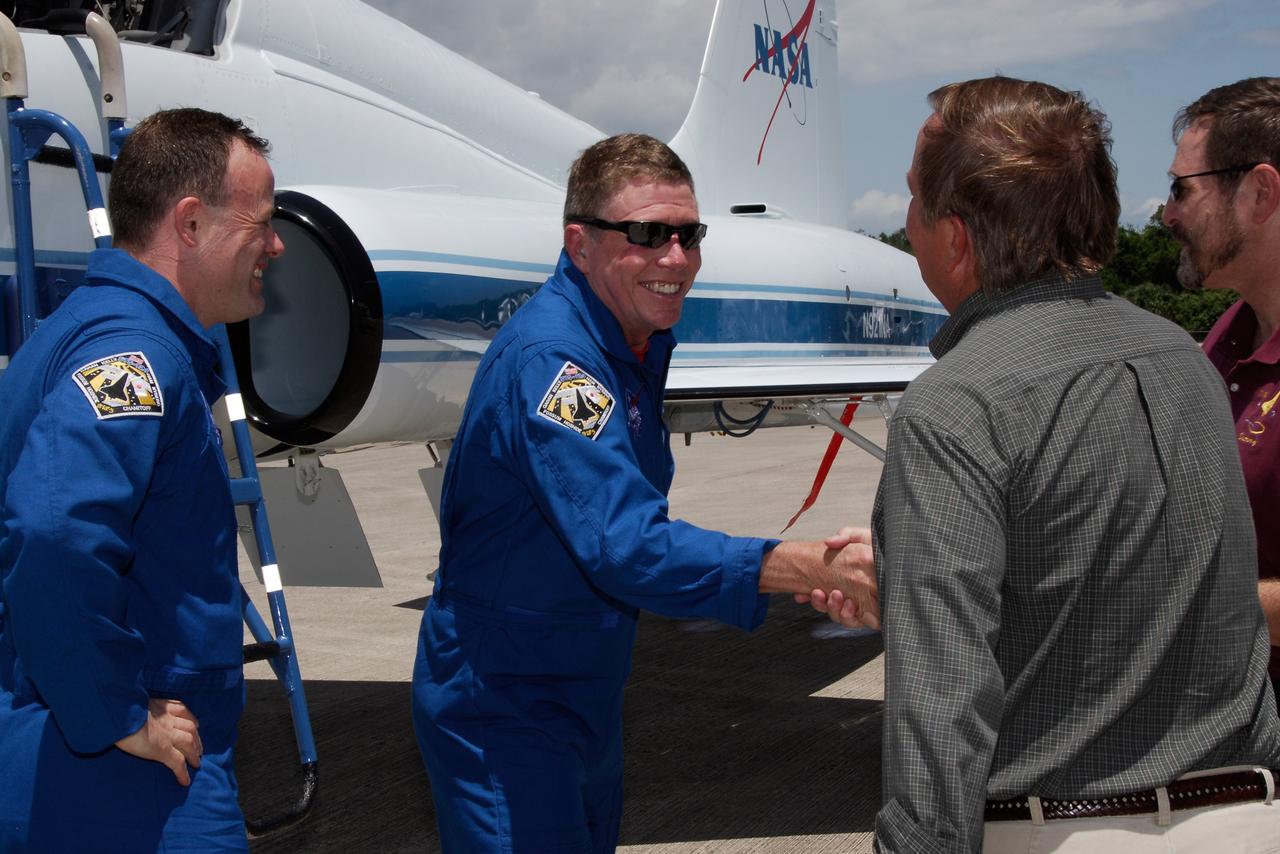
CAPE CANAVERAL, Fla. -- The crew of space shuttle Discovery's STS-124 mission arrives at the Shuttle Landing Facility at NASA's Kennedy Space Center aboard T-38 jet trainers to get ready for launch. From left, Mission Specialists Ron Garan and Mike Fossum are greeted by Shuttle Launch Director Mike Leinbach and the director of Launch Vehicle Processing, Mike Wetmore. Launch of Discovery is scheduled for 5:02 p.m. May 31. On the STS-124 mission, the crew of seven will deliver and install the Japanese Experiment Module – Pressurized Module and Japanese Remote Manipulator System. Photo credit: NASA/Kim Shiflett
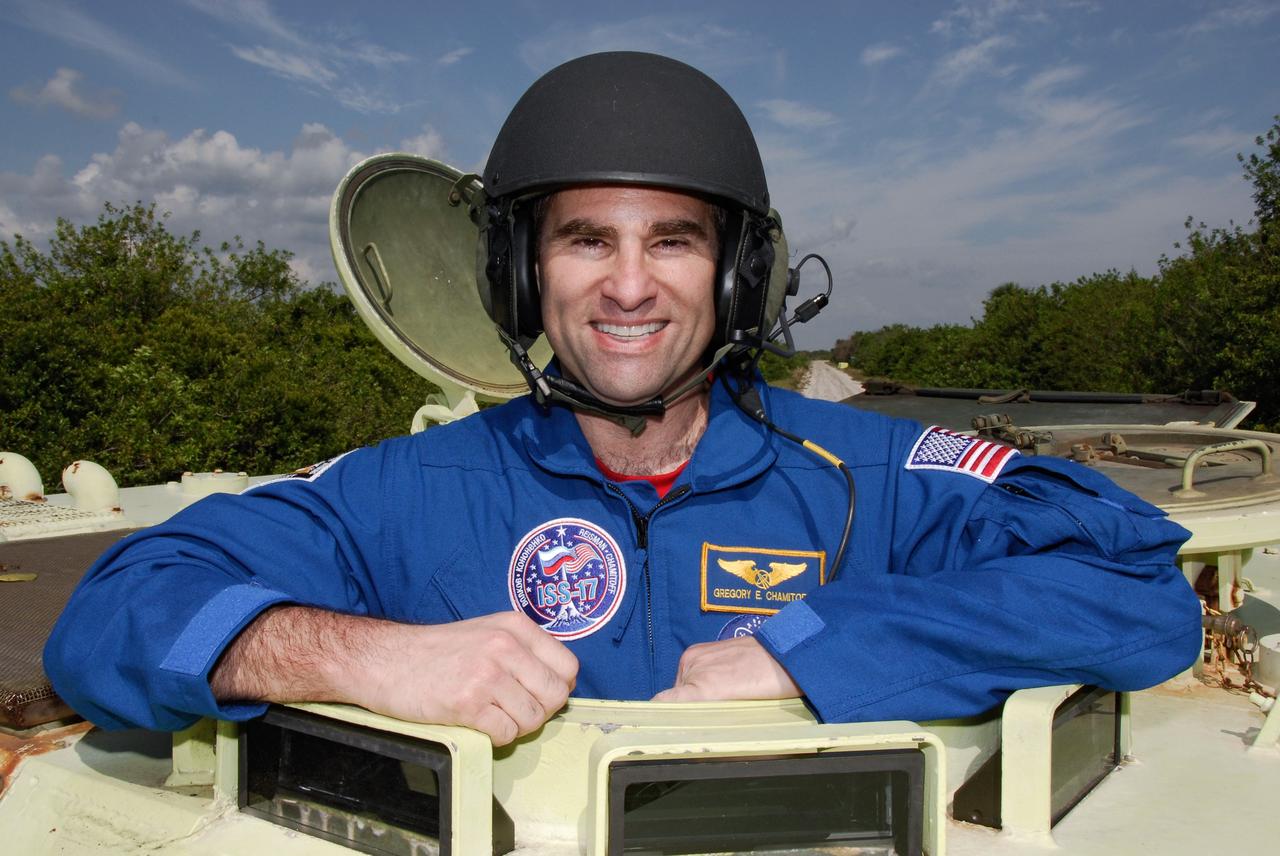
CAPE CANAVERAL, Fla. -- STS-124 Mission Specialist Greg Chamitoff stands ready to practice driving the M113 armored personnel carrier as part of emergency training. He and other crew members are at NASA's Kennedy Space Center for a dress launch rehearsal called the terminal countdown demonstration test. TCDT provides astronauts and ground crews with an opportunity to participate in various simulated countdown activities, including equipment familiarization and emergency training. On the STS-124 mission, the crew will deliver and install the Japanese Experiment Module – Pressurized Module and Japanese Remote Manipulator System. Discovery's launch is targeted for May 31. Photo credit: NASA/Kim Shiflett

CAPE CANAVERAL, Fla. -- Crew members for space shuttle Discovery's STS-124 mission don their launch and entry suits before heading to Launch Pad 39A. Mission Specialist Ron Garan signals he is ready for liftoff. The STS-124 mission is the second of three flights launching components to complete the Japan Aerospace Exploration Agency's Kibo laboratory. The shuttle crew will install Kibo's large Japanese Pressurized Module and its remote manipulator system, or RMS. The 14-day flight includes three spacewalks. Launch is scheduled for 5:02 p.m. May 31. Photo credit: NASA/Kim Shiflett
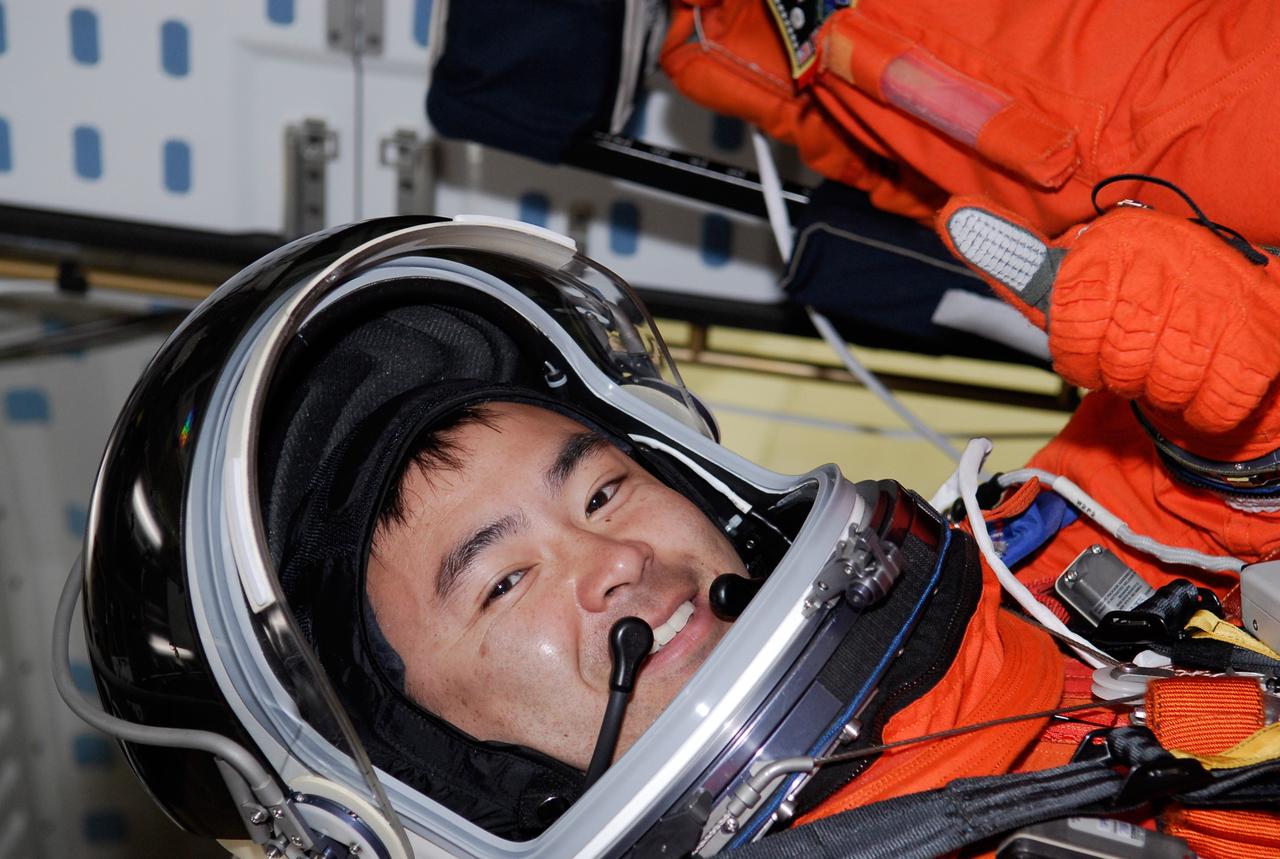
CAPE CANAVERAL, Fla. -- On Launch Pad 39A at NASA's Kennedy Space Center, STS-124 Mission Specialist Akihiko Hoshide sits in his seat aboard space shuttle Discovery following the simulated launch countdown, part of the launch dress rehearsal known as the terminal countdown demonstration test. TCDT provides astronauts and ground crews with an opportunity to participate in various simulated countdown activities, including a simulated launch countdown, equipment familiarization and emergency egress training. On the STS-124 mission, the crew will deliver and install the Japanese Experiment Module – Pressurized Module and Japanese Remote Manipulator System. Discovery's launch is targeted for May 31. Photo credit: NASA/Kim Shiflett

CAPE CANAVERAL, Fla. -- In the Operations and Checkout Building at NASA's Kennedy Space Center, STS-124 Mission Specialist Karen Nyberg has fitted her helmet and launch-and-entry suit for the simulated launch countdown. The simulation is the culmination of the launch dress rehearsal called the terminal countdown demonstration test. TCDT provides astronauts and ground crews with an opportunity to participate in various simulated countdown activities, including equipment familiarization and emergency training. On the STS-124 mission, the crew will deliver and install the Japanese Experiment Module – Pressurized Module and Japanese Remote Manipulator System. Discovery's launch is targeted for May 31. Photo credit: NASA/Kim Shiflett
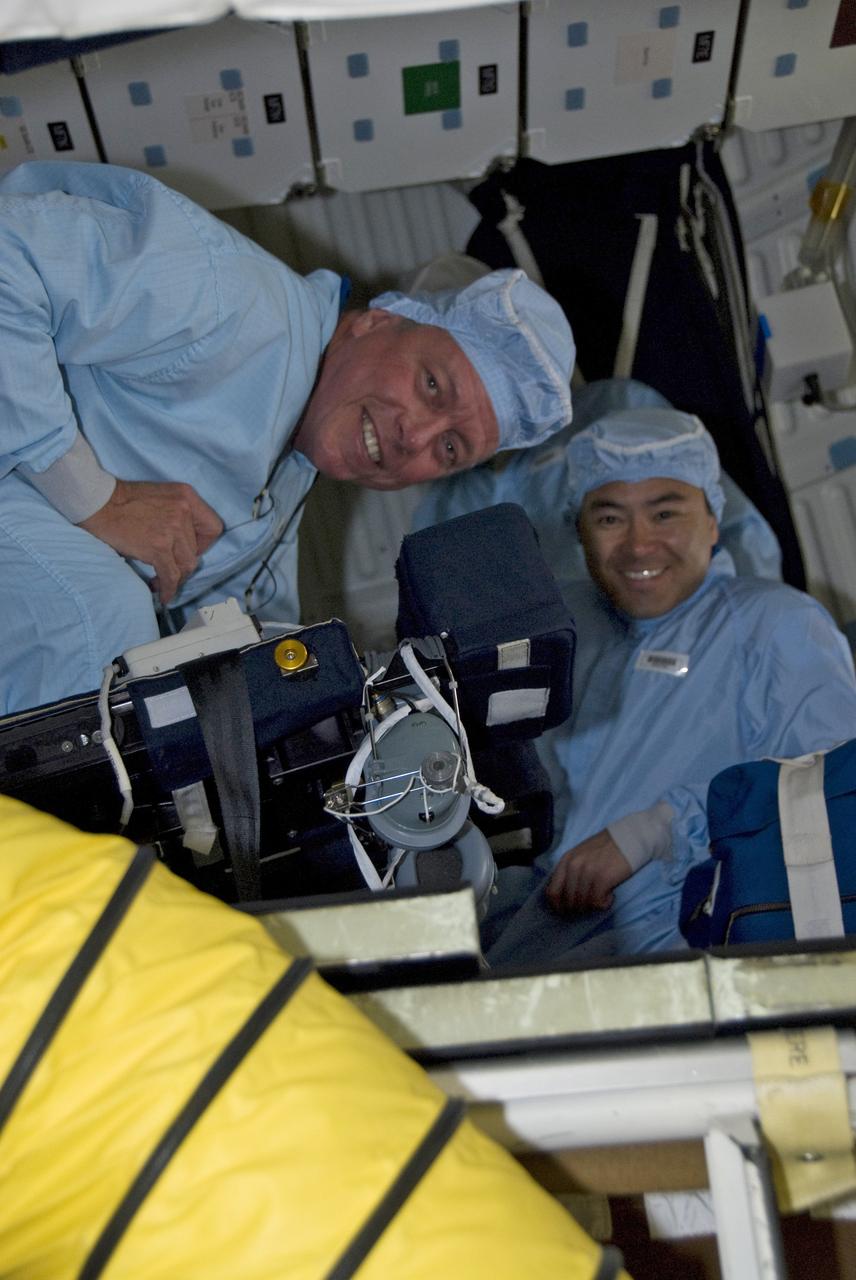
CAPE CANAVERAL, Fla. -- Members of the space shuttle Discovery's STS-124 crew inspect cables on Launch Pad 39A. From left are Mission Specialists Mike Fossum and Akihiko Hoshide, who represents the Japan Aerospace Exploration Agency. The crew is getting ready for launch at 5:02 p.m. on May 31. The STS-124 mission is the second of three flights launching components to complete the Japan Aerospace Exploration Agency's Kibo laboratory. The shuttle crew will install Kibo's large Japanese Pressurized Module and its remote manipulator system, or RMS. The 14-day flight includes three spacewalks. Photo credit: NASA/Kim Shiflett
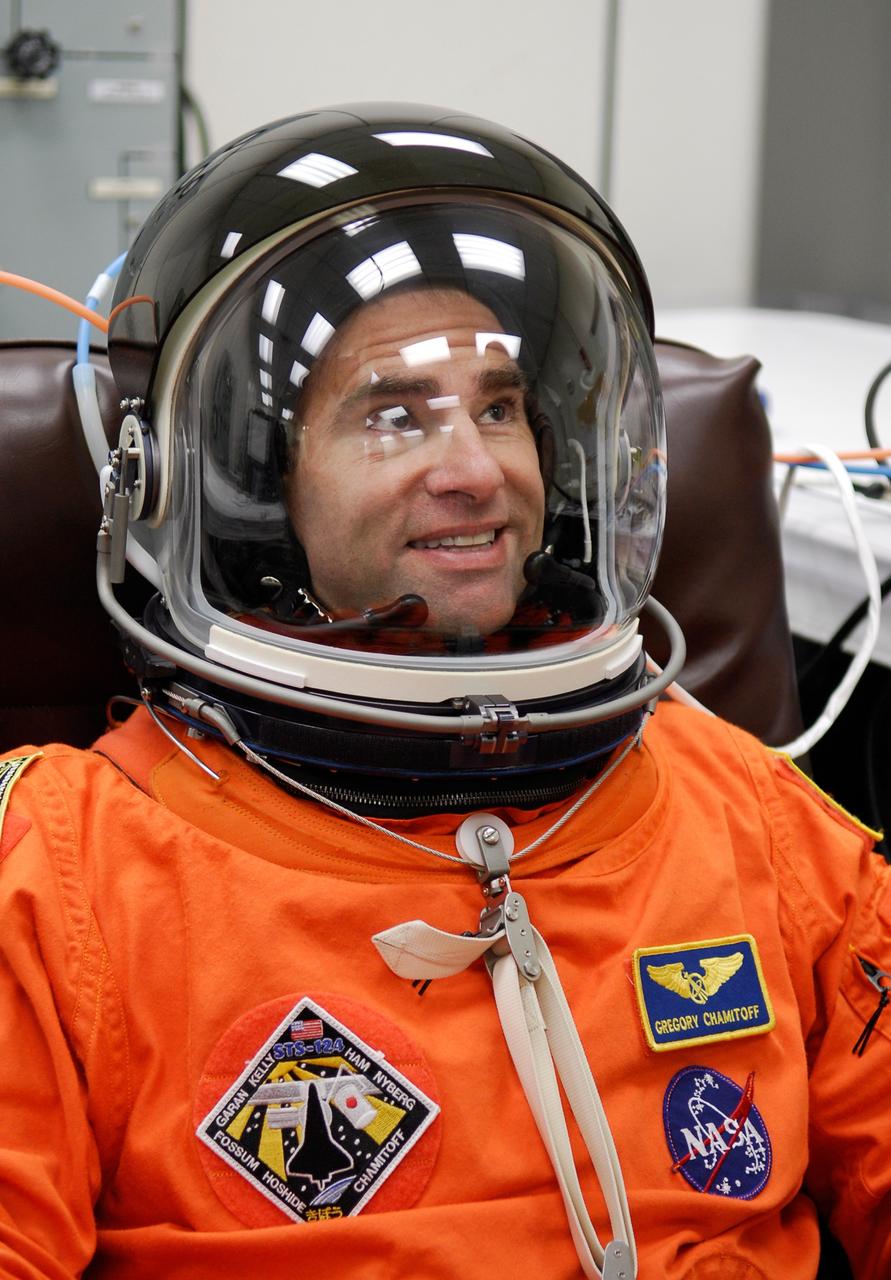
CAPE CANAVERAL, Fla. -- In the Operations and Checkout Building at NASA's Kennedy Space Center, STS-124 Mission Specialist Greg Chamitoff is dressed and ready for the simulated launch countdown. The simulation is the culmination of the launch dress rehearsal called the terminal countdown demonstration test. TCDT provides astronauts and ground crews with an opportunity to participate in various simulated countdown activities, including equipment familiarization and emergency training. On the STS-124 mission, the crew will deliver and install the Japanese Experiment Module – Pressurized Module and Japanese Remote Manipulator System. Discovery's launch is targeted for May 31. Photo credit: NASA/Kim Shiflett

CAPE CANAVERAL, Fla. -- Crew members for space shuttle Discovery's STS-124 mission don their launch and entry suits before heading to Launch Pad 39A. A suit technician checks the communications cap inside Mission Specialist Mike Fossum's helmet. Fossum is making his second shuttle flight. The STS-124 mission is the second of three flights launching components to complete the Japan Aerospace Exploration Agency's Kibo laboratory. The shuttle crew will install Kibo's large Japanese Pressurized Module and its remote manipulator system, or RMS. The 14-day flight includes three spacewalks. Launch is scheduled for 5:02 p.m. May 31. Photo credit: NASA/Kim Shiflett
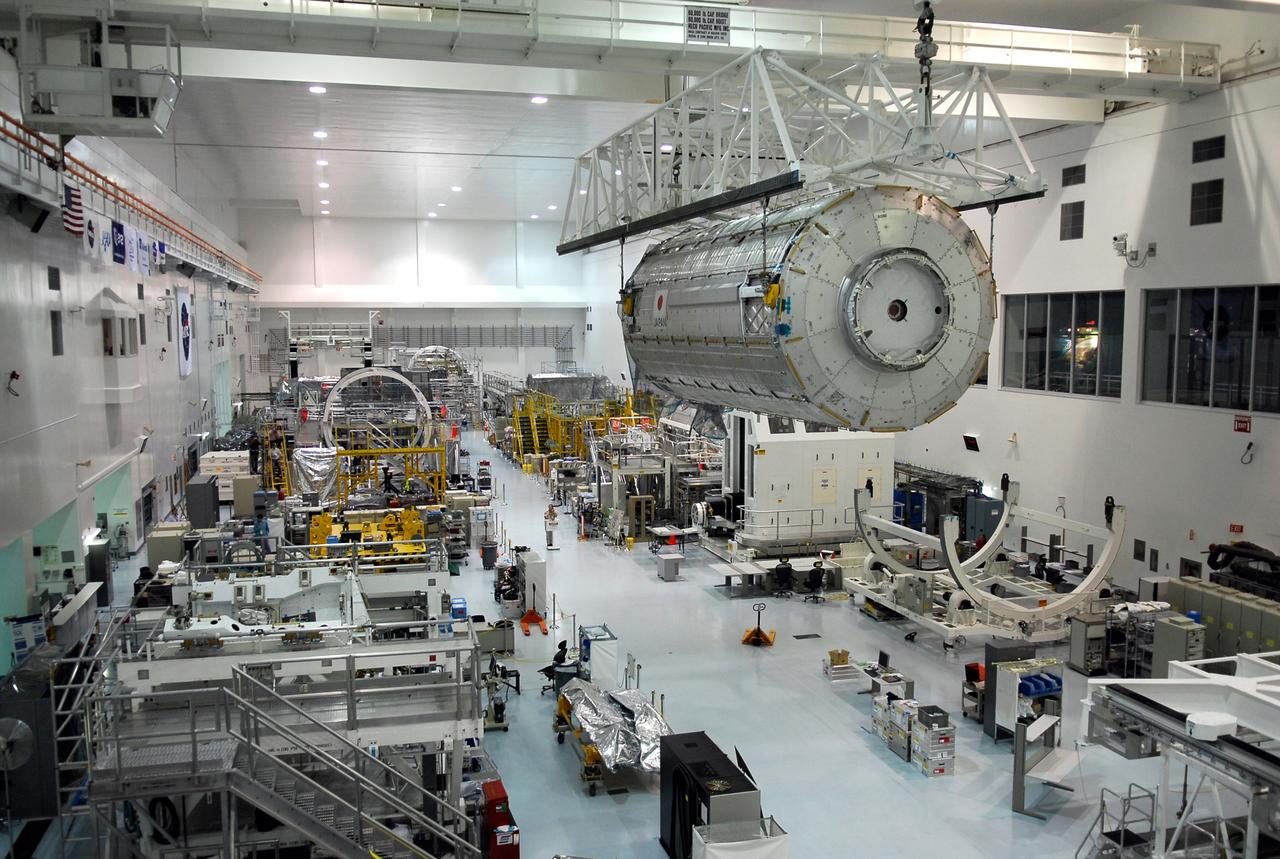
CAPE CANAVERAL, Fla. -- In the Space Station Processing Facility at NASA’s Kennedy Space Center, an overhead crane moves the Kibo Japanese Experiment Module - Pressurized Module across the floor toward a payload canister. The canister will deliver the module, part of the payload for space shuttle Discovery’s STS-124 mission, to Launch Pad 39A. On the mission, the STS-124 crew will transport the Kibo module as well as the Japanese Remote Manipulator System to the International Space Station to complete the Kibo laboratory. The launch of Discovery is targeted for May 31. Photo credit: NASA/Kim Shiflett
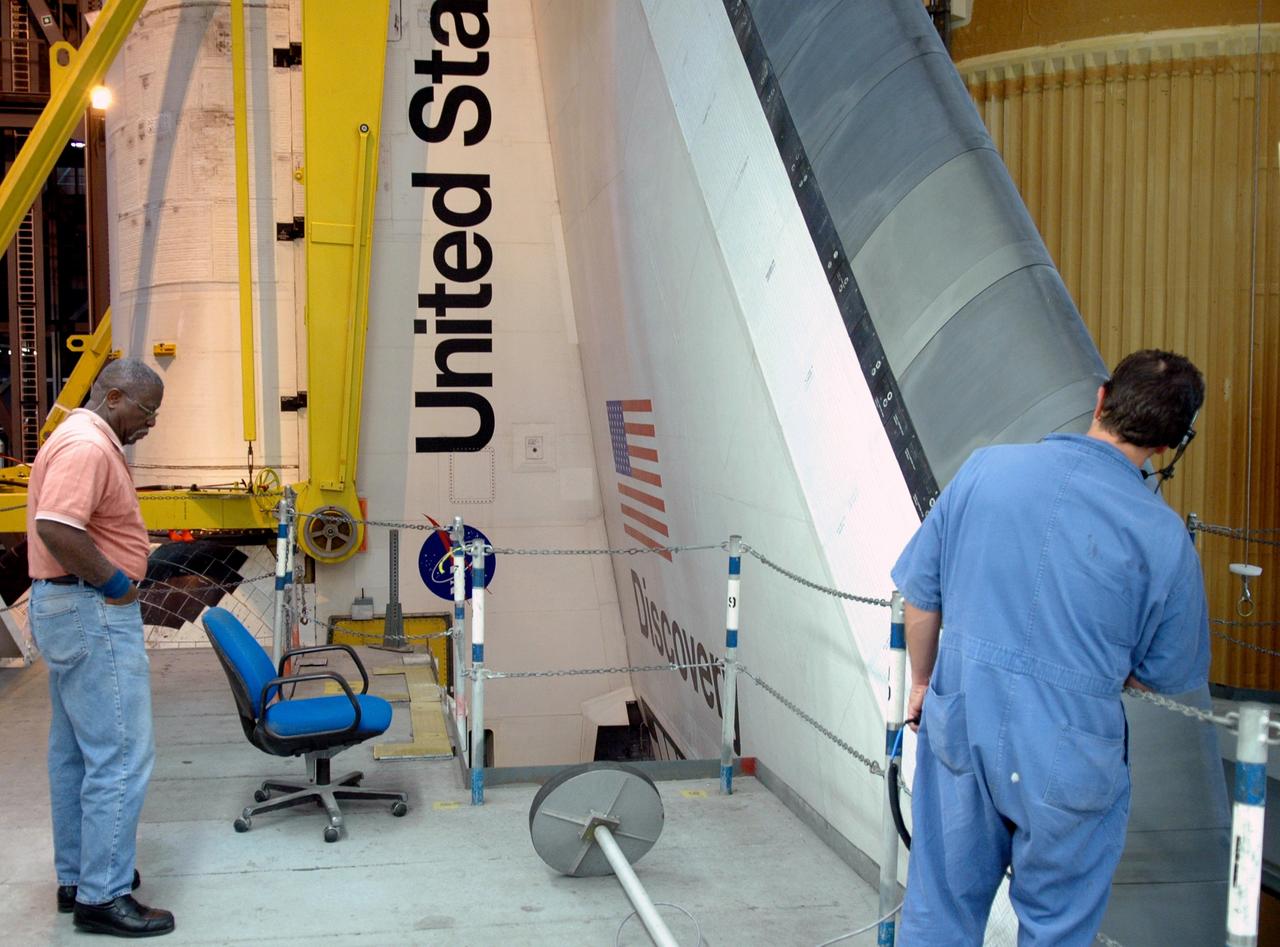
CAPE CANAVERAL, Fla. – In high bay 3 of the Vehicle Assembly Building at NASA's Kennedy Space Center, United Space Alliance technicians mark the progress of space shuttle Discovery as it is lowered onto the mobile launcher platform. Discovery will be mated with the solid rocket boosters and external tank already stacked there in preparation for the launch on the upcoming STS-124 mission to the International Space Station. On the mission, the STS-124 crew will transport the Japanese Experiment Module - Pressurized Module and the Japanese Remote Manipulator System to the space station. Launch of Discovery is targeted for May 31 Photo credit: NASA/Jim Grossmann
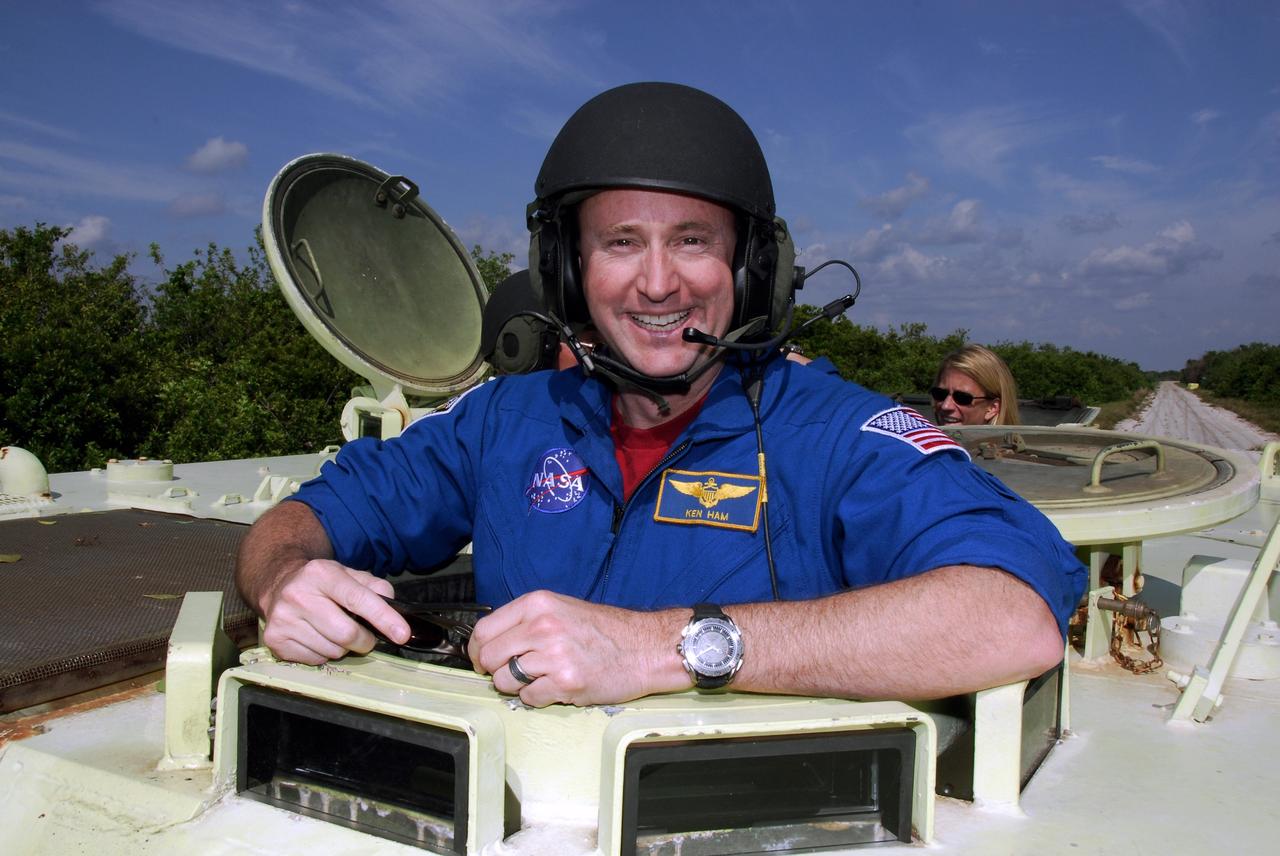
CAPE CANAVERAL, Fla. -- STS-124 Pilot Ken Ham stands ready to practice driving the M113 armored personnel carrier as part of emergency training. Behind him is Mission Specialist Karen Nyberg. Ham and other crew members are at NASA's Kennedy Space Center for a dress launch rehearsal called the terminal countdown demonstration test. TCDT provides astronauts and ground crews with an opportunity to participate in various simulated countdown activities, including equipment familiarization and emergency training. On the STS-124 mission, the crew will deliver and install the Japanese Experiment Module – Pressurized Module and Japanese Remote Manipulator System. Discovery's launch is targeted for May 31. Photo credit: NASA/Kim Shiflett
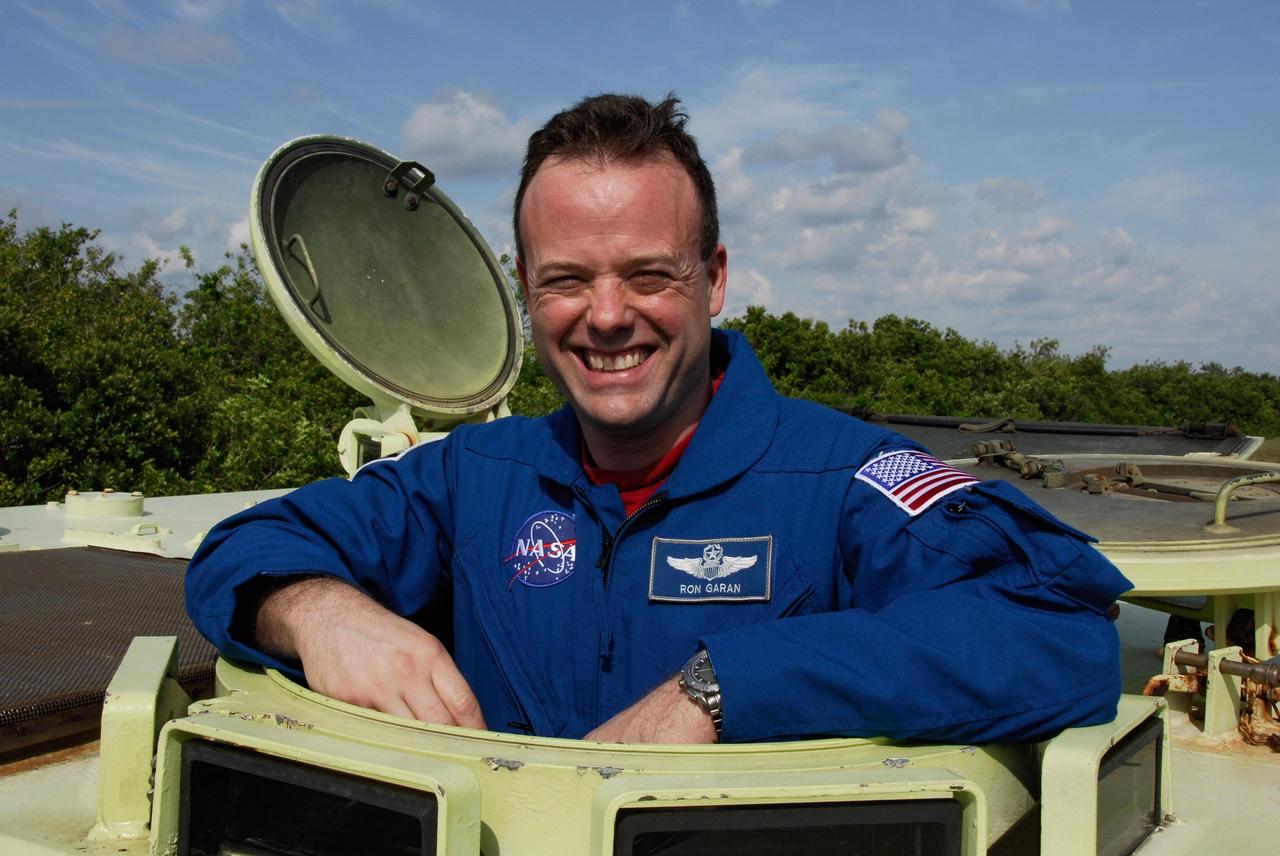
CAPE CANAVERAL, Fla. -- STS-124 Mission Specialist Ron Garan is pleased with his driving practice in the M113 armored personnel carrier, part of emergency training. He and other crew members are at NASA's Kennedy Space Center for a dress launch rehearsal called the terminal countdown demonstration test. TCDT provides astronauts and ground crews with an opportunity to participate in various simulated countdown activities, including equipment familiarization and emergency training. On the STS-124 mission, the crew will deliver and install the Japanese Experiment Module – Pressurized Module and Japanese Remote Manipulator System. Discovery's launch is targeted for May 31. Photo credit: NASA/Kim Shiflett
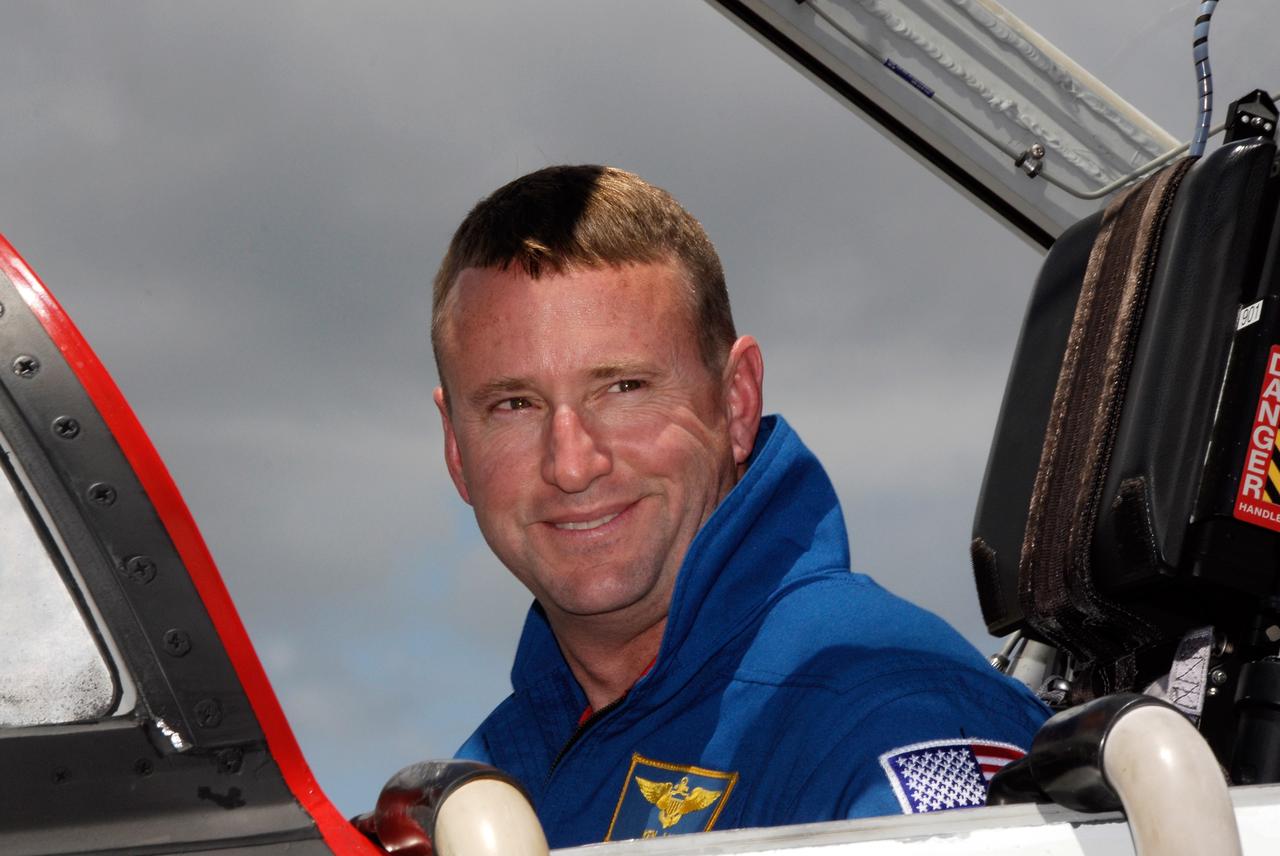
CAPE CANAVERAL, Fla. -- The crew of space shuttle Discovery's STS-124 mission arrives at the Shuttle Landing Facility at NASA's Kennedy Space Center aboard T-38 jet trainers to get ready for launch. Seen here is Pilot Ken Ham, who is making his first shuttle flight. Launch of Discovery is scheduled for 5:02 p.m. May 31. On the STS-124 mission, the crew of seven will deliver and install the Japanese Experiment Module – Pressurized Module and Japanese Remote Manipulator System. Photo credit: NASA/Kim Shiflett
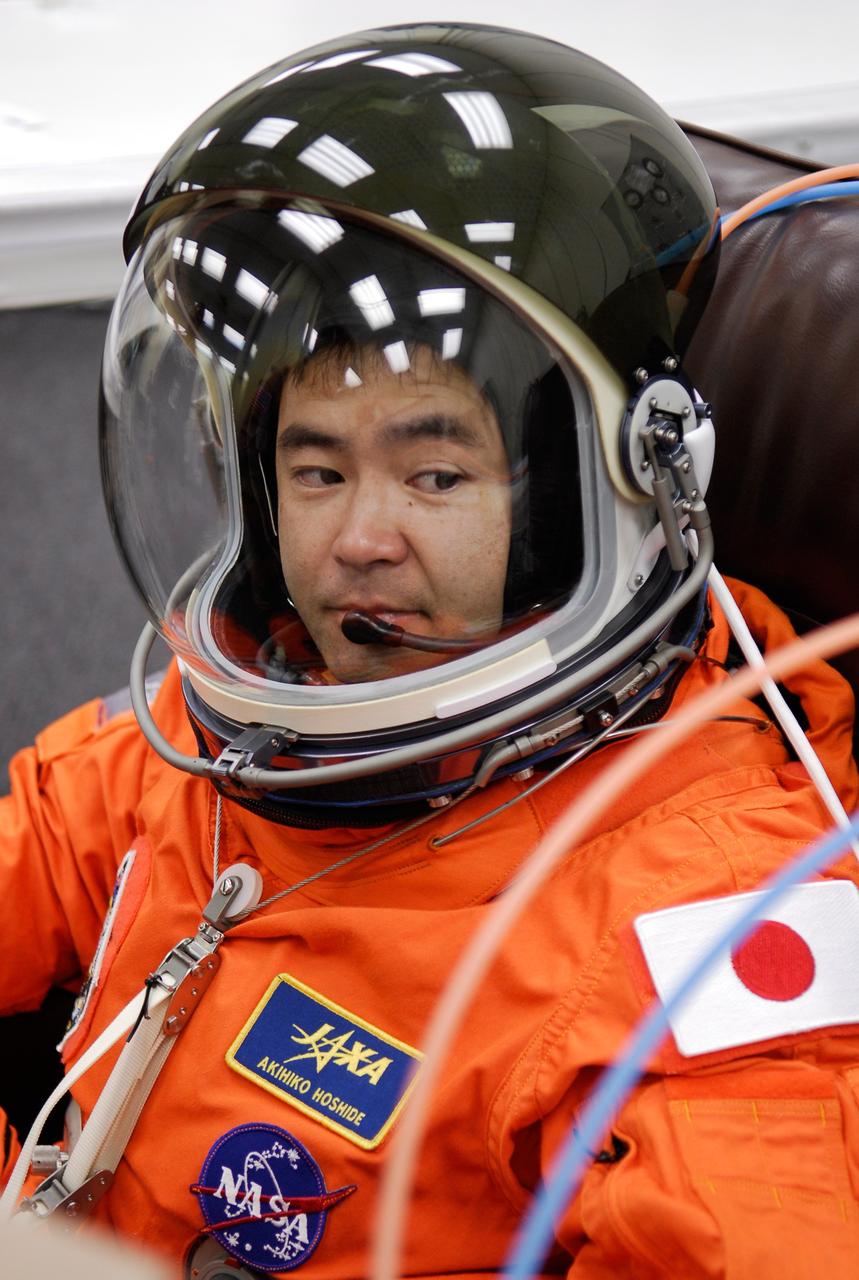
CAPE CANAVERAL, Fla. -- In the Operations and Checkout Building at NASA's Kennedy Space Center, STS-124 Mission Specialist Akihiko Hoshide is dressed and ready for the simulated launch countdown. Hoshide represents the Japan Aerospace Exploration Agency, or JAXA. The simulation is the culmination of the launch dress rehearsal called the terminal countdown demonstration test. TCDT provides astronauts and ground crews with an opportunity to participate in various simulated countdown activities, including equipment familiarization and emergency training. On the STS-124 mission, the crew will deliver and install the Japanese Experiment Module – Pressurized Module and Japanese Remote Manipulator System. Discovery's launch is targeted for May 31. Photo credit: NASA/Kim Shiflett
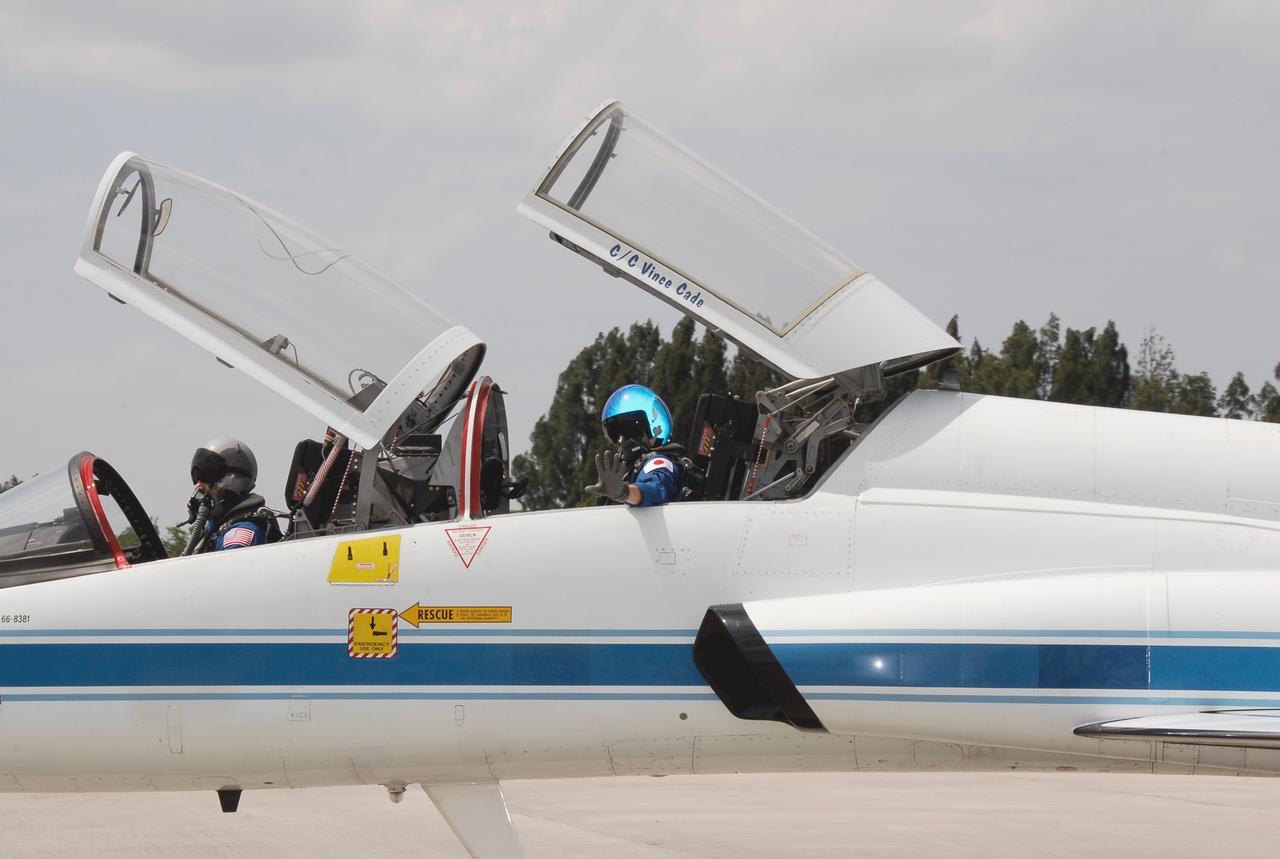
CAPE CANAVERAL, Fla. -- Two of the crewmembers for the STS-124 mission, Pilot Ken Ham and Mission Specialist Akihiko Hoshide, depart NASA's Kennedy Space Center in a T-38 training jet after a successful launch dress rehearsal called the terminal countdown demonstration test. The crew is expected to return in late May for the May 31 launch of space shuttle Discovery. On the STS-124 mission, the crew will deliver and install the Japanese Experiment Module – Pressurized Module and Japanese Remote Manipulator System. Photo credit: NASA/Kim Shiflett
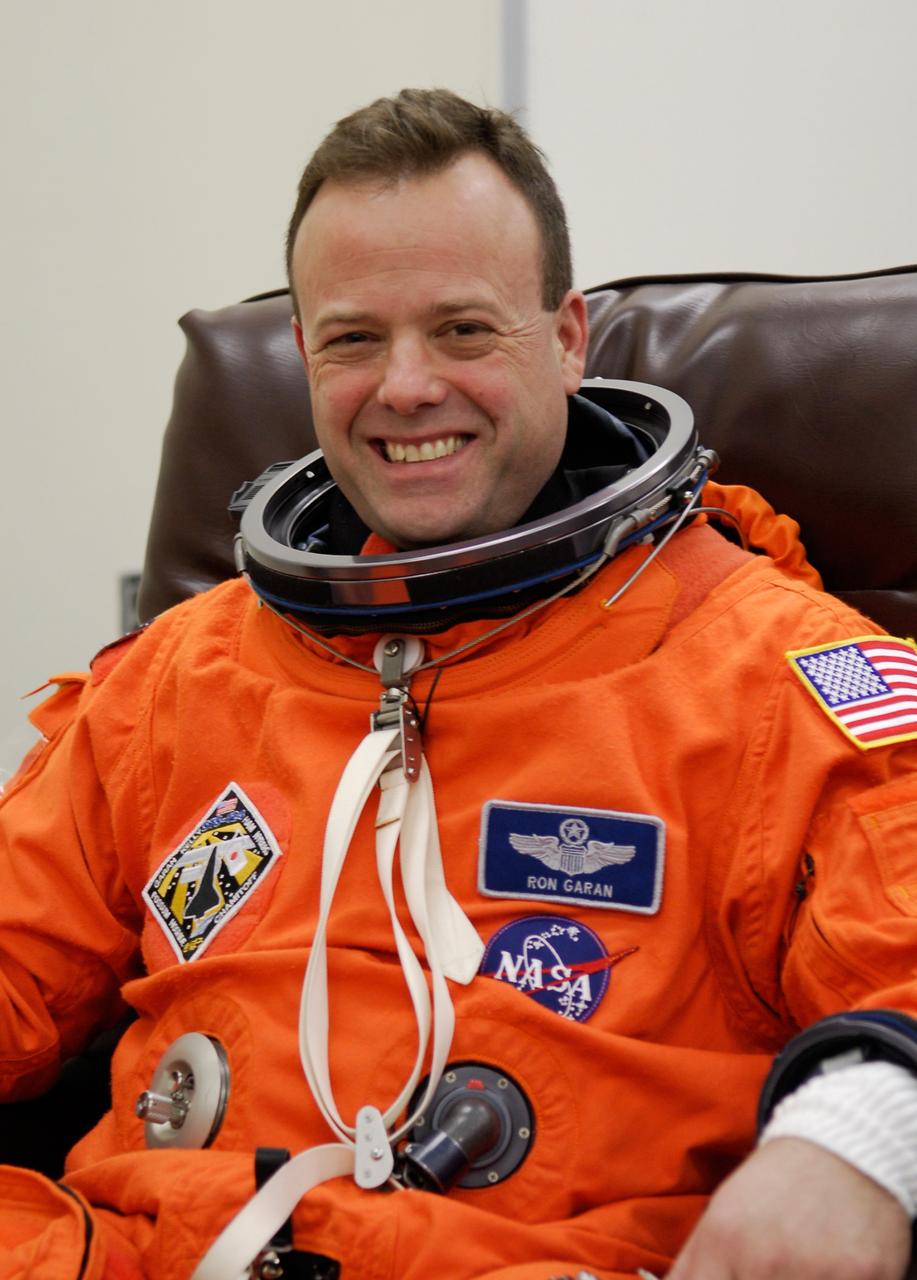
CAPE CANAVERAL, Fla. -- In the Operations and Checkout Building at NASA's Kennedy Space Center, STS-124 Mission Specialist Ron Garan dons his launch-and-entry suit needed for the simulated launch countdown. The simulation is the culmination of the launch dress rehearsal called the terminal countdown demonstration test. TCDT provides astronauts and ground crews with an opportunity to participate in various simulated countdown activities, including equipment familiarization and emergency training. On the STS-124 mission, the crew will deliver and install the Japanese Experiment Module – Pressurized Module and Japanese Remote Manipulator System. Discovery's launch is targeted for May 31. Photo credit: NASA/Kim Shiflett
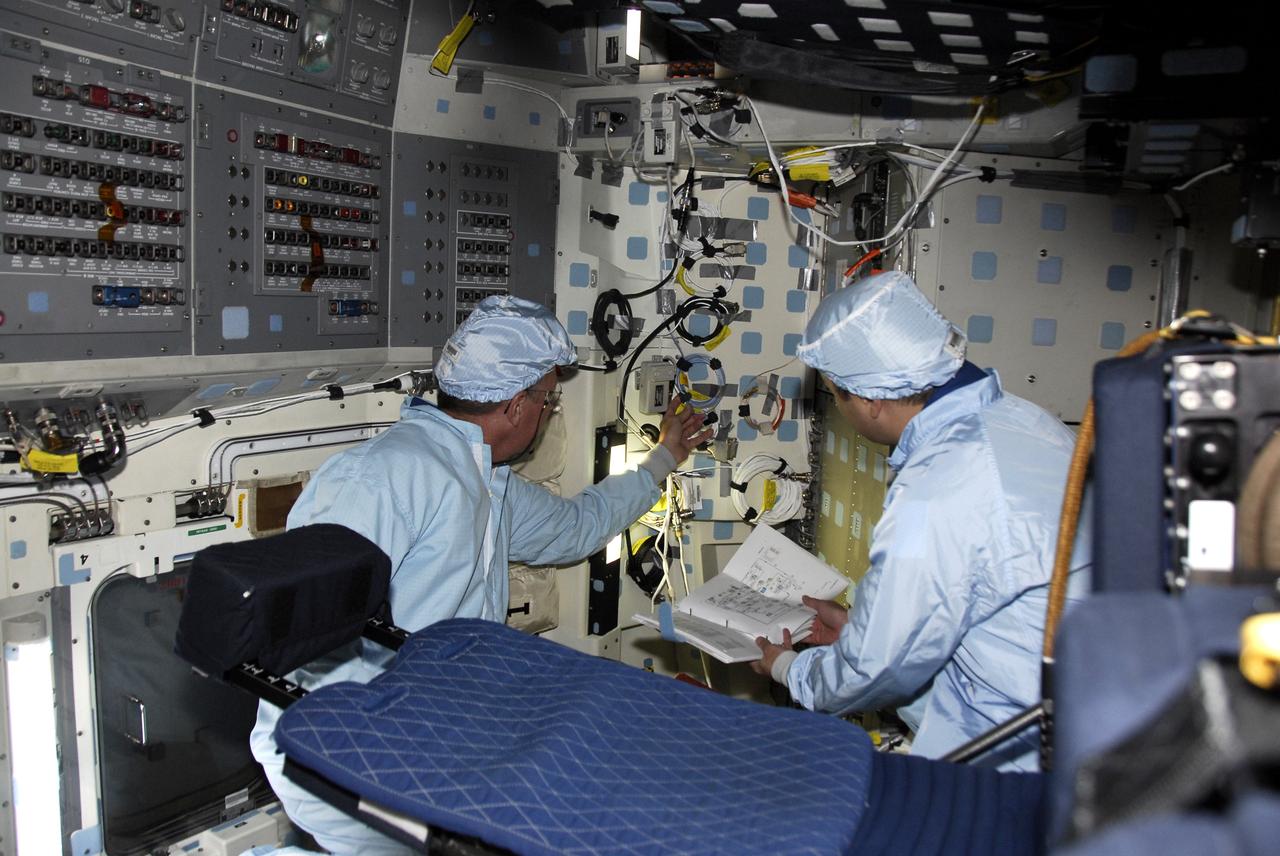
CAPE CANAVERAL, Fla. -- Members of the space shuttle Discovery's STS-124 crew inspect cables on Launch Pad 39A. From left are Mission Specialists Mike Fossum and Akihiko Hoshide, who represents the Japan Aerospace Exploration Agency. The crew is getting ready for launch at 5:02 p.m. on May 31. The STS-124 mission is the second of three flights launching components to complete the Japan Aerospace Exploration Agency's Kibo laboratory. The shuttle crew will install Kibo's large Japanese Pressurized Module and its remote manipulator system, or RMS. The 14-day flight includes three spacewalks. Photo credit: NASA/Kim Shiflett
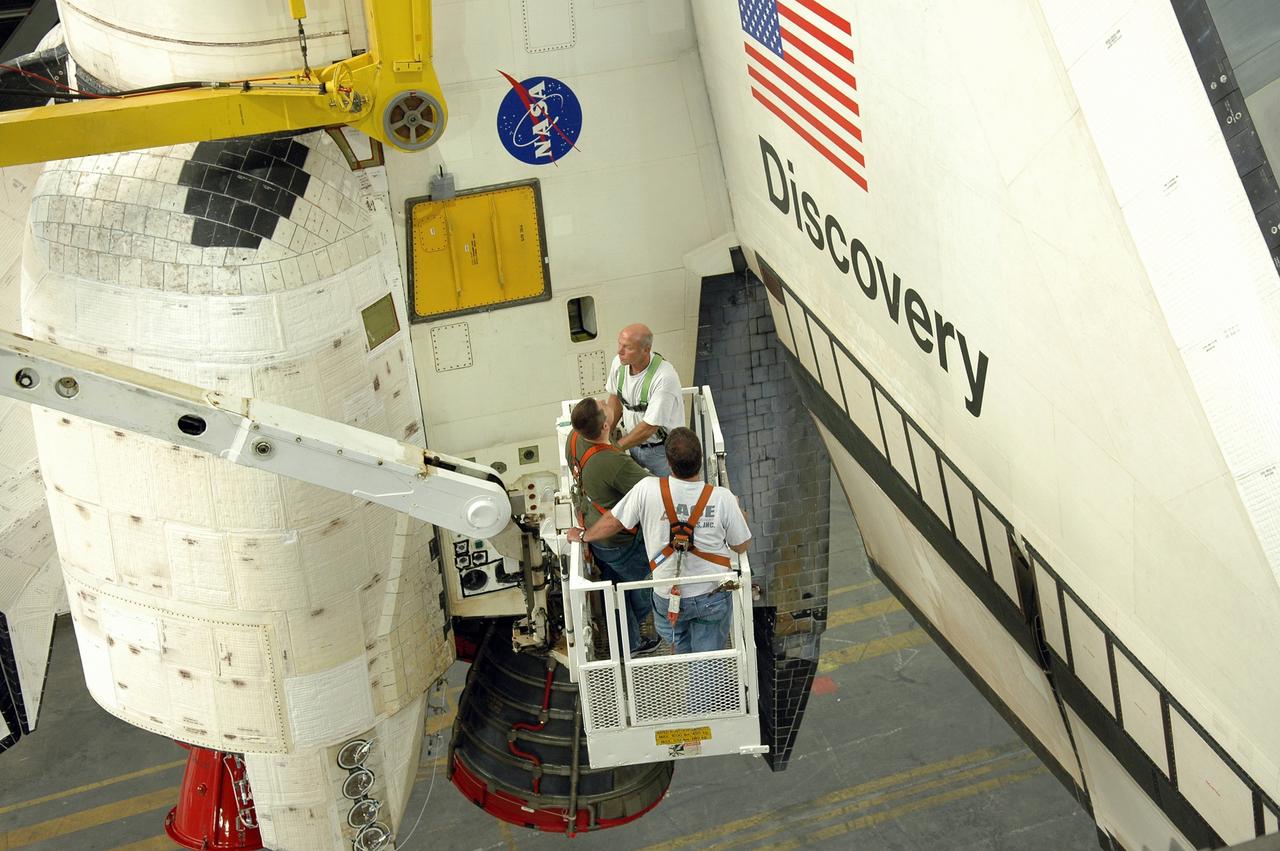
CAPE CANAVERAL, Fla. -- In the Vehicle Assembly Building at NASA's Kennedy Space Center, United Space Alliance technicians check the crane attached to space shuttle Discovery. The crane will lift Discovery to the upper levels and lower it into high bay 3. In the bay, Discovery will be mated to the external tank and solid rocket boosters for launch on the upcoming STS-124 mission to the International Space Station. On the mission, the STS-124 crew will transport the Japanese Experiment Module - Pressurized Module and the Japanese Remote Manipulator System to the space station. Launch of Discovery is targeted for May 31 Photo credit: NASA/Jim Grossmann
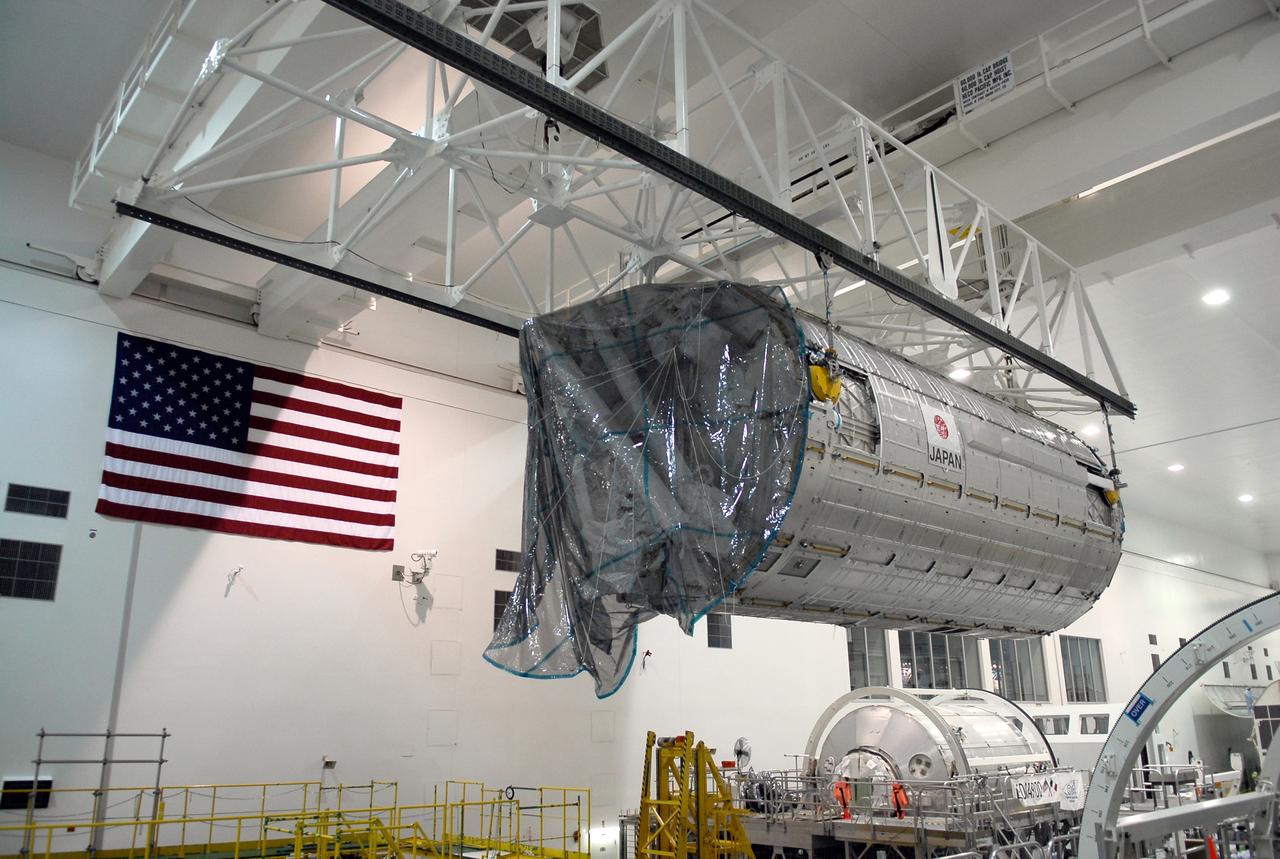
CAPE CANAVERAL, Fla. -- In the Space Station Processing Facility at NASA’s Kennedy Space Center, an overhead crane moves the Kibo Japanese Experiment Module - Pressurized Module across the floor toward a payload canister. The canister will deliver the module, part of the payload for space shuttle Discovery’s STS-124 mission, to Launch Pad 39A. On the mission, the STS-124 crew will transport the Kibo module as well as the Japanese Remote Manipulator System to the International Space Station to complete the Kibo laboratory. The launch of Discovery is targeted for May 31. Photo credit: NASA/Kim Shiflett
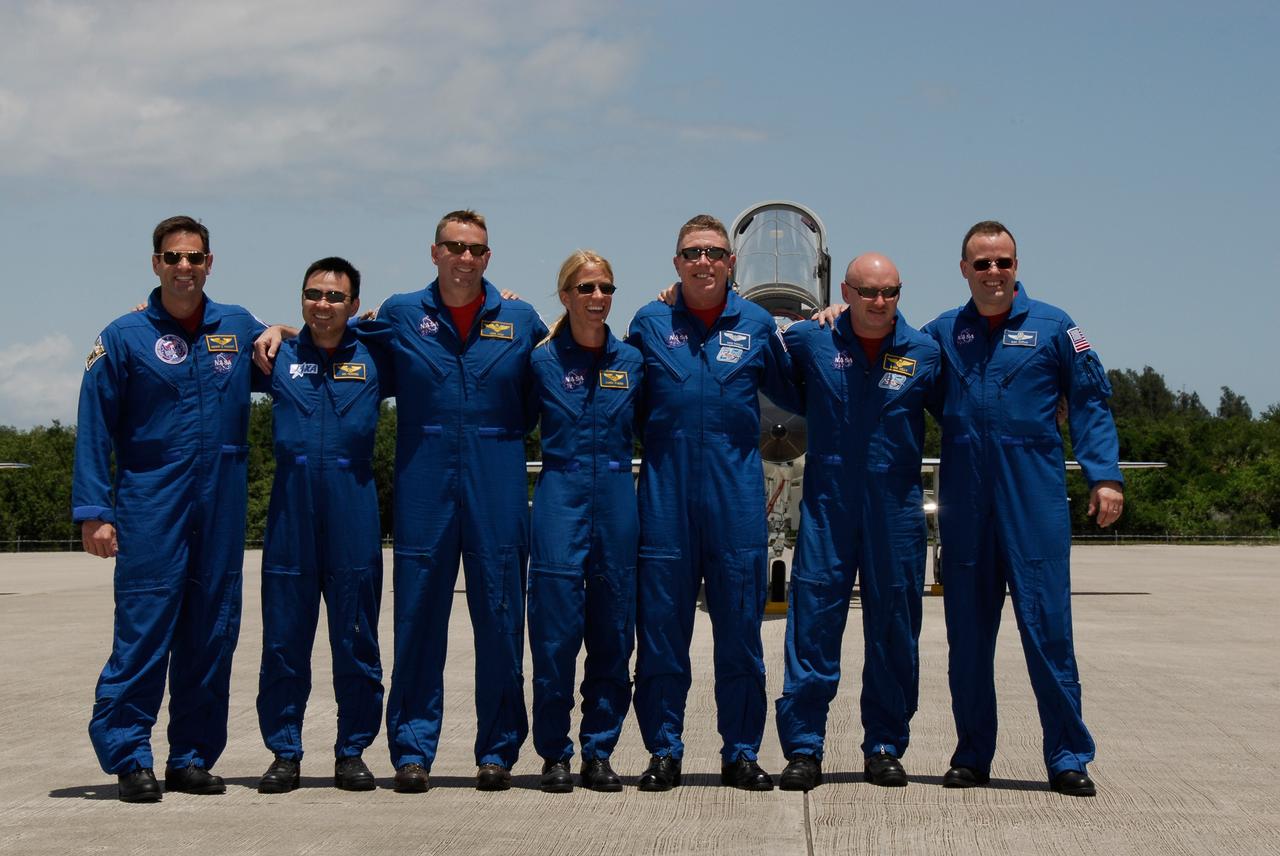
CAPE CANAVERAL, Fla. -- After their arrival on the Shuttle Landing Facility at NASA's Kennedy Space Center, the crew members of space shuttle Discovery's STS-124 mission pose for a group photo. From left are Mission Specialists Gregory Chamitoff and Akihiko Hoshide, Pilot Ken Ham, Mission Specialists Karen Nyberg and Mike Fossum, Commander Mark Kelly and Mission Specialist Ron Garan. Launch of Discovery is scheduled for 5:02 p.m. May 31. On the STS-124 mission, the crew of seven will deliver and install the Japanese Experiment Module – Pressurized Module and Japanese Remote Manipulator System. Photo credit: NASA/Kim Shiflett
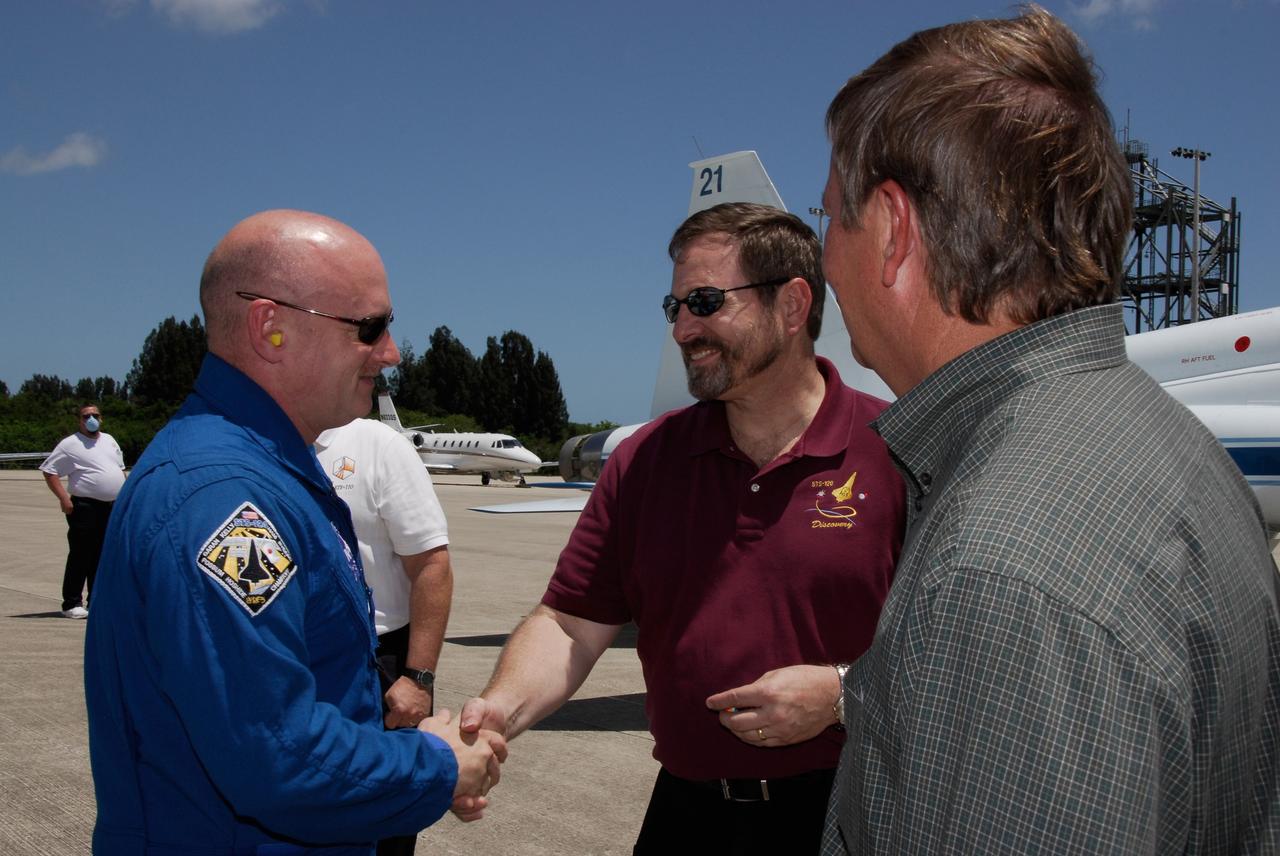
CAPE CANAVERAL, Fla. -- The crew of space shuttle Discovery's STS-124 mission arrives at the Shuttle Landing Facility at NASA's Kennedy Space Center aboard T-38 jet trainers to get ready for launch. From left, Commander Mark Kelly is greeted by the director of Launch Vehicle Processing, Mike Wetmore, and Shuttle Launch Director Mike Leinbach. Launch of Discovery is scheduled for 5:02 p.m. May 31. On the STS-124 mission, the crew of seven will deliver and install the Japanese Experiment Module – Pressurized Module and Japanese Remote Manipulator System. Photo credit: NASA/Kim Shiflett
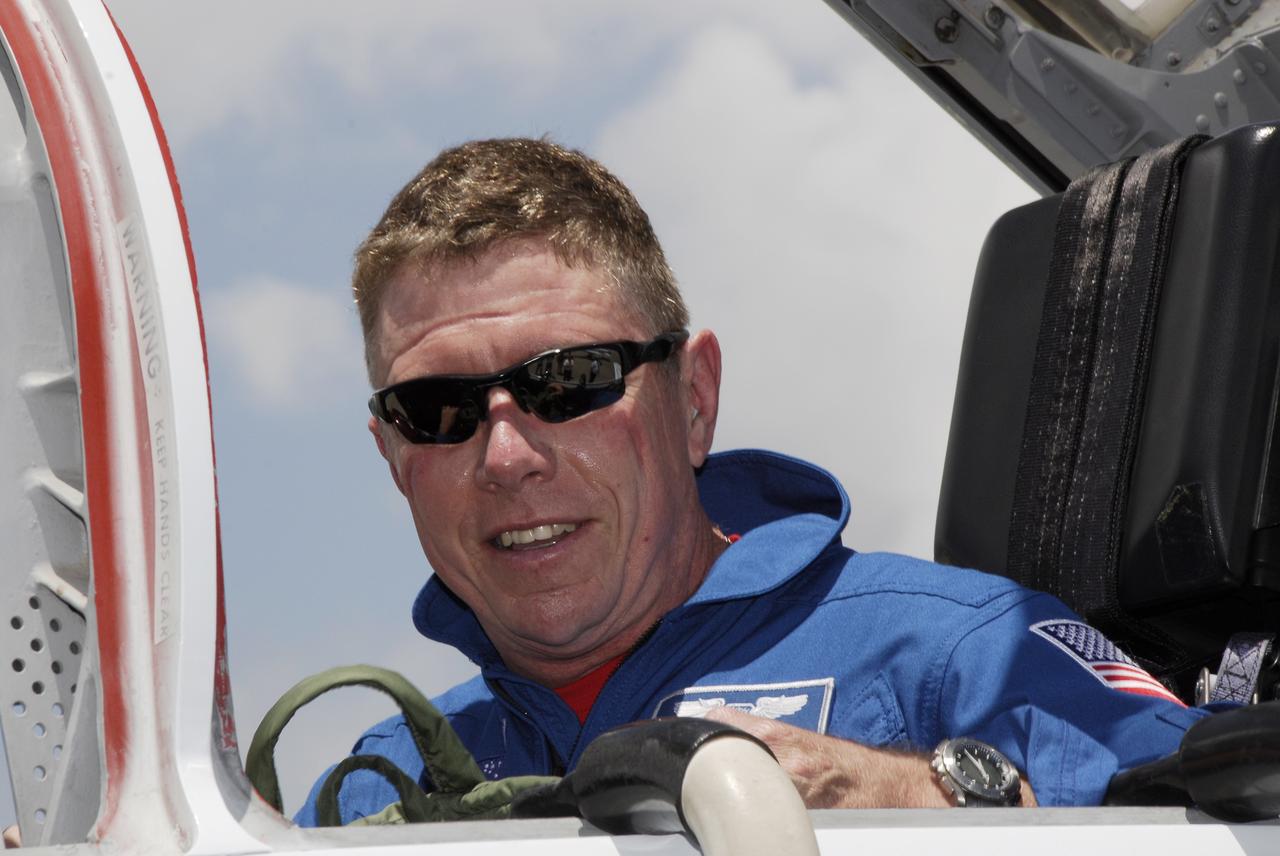
CAPE CANAVERAL, Fla. -- The crew of space shuttle Discovery's STS-124 mission arrives at the Shuttle Landing Facility at NASA's Kennedy Space Center aboard T-38 jet trainers to get ready for launch. Seen here is Mission Specialist Mike Fossum, who is making his second shuttle flight. Launch of Discovery is scheduled for 5:02 p.m. May 31. On the STS-124 mission, the crew of seven will deliver and install the Japanese Experiment Module – Pressurized Module and Japanese Remote Manipulator System. Photo credit: NASA/Kim Shiflett
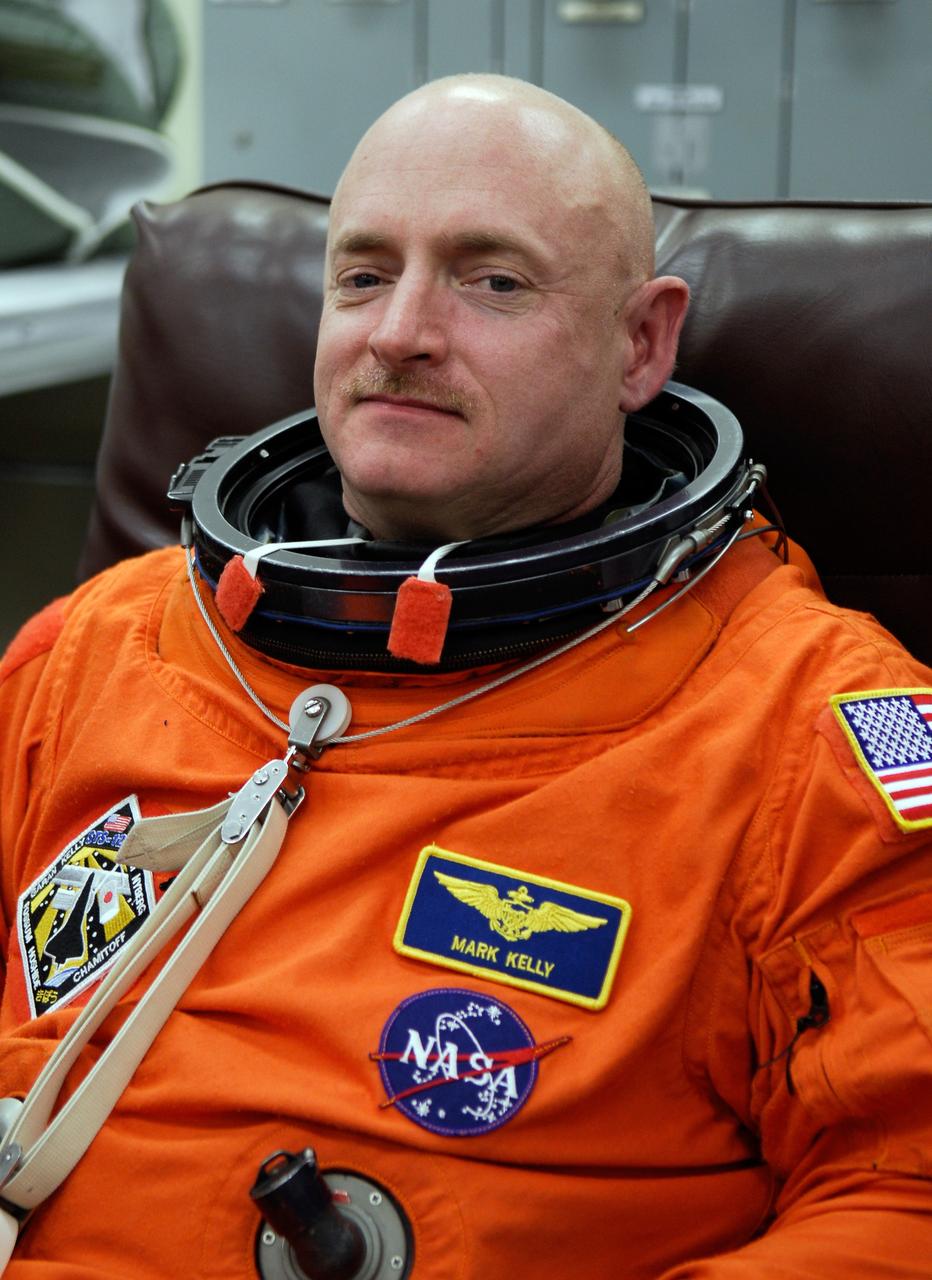
CAPE CANAVERAL, Fla. -- Crew members for space shuttle Discovery's STS-124 mission don their launch and entry suits before heading to Launch Pad 39A. Commander Mark Kelly is ready to add his helmet. The STS-124 mission is the second of three flights launching components to complete the Japan Aerospace Exploration Agency's Kibo laboratory. The shuttle crew will install Kibo's large Japanese Pressurized Module and its remote manipulator system, or RMS. The 14-day flight includes three spacewalks. Launch is scheduled for 5:02 p.m. May 31. Photo credit: NASA/Kim Shiflett
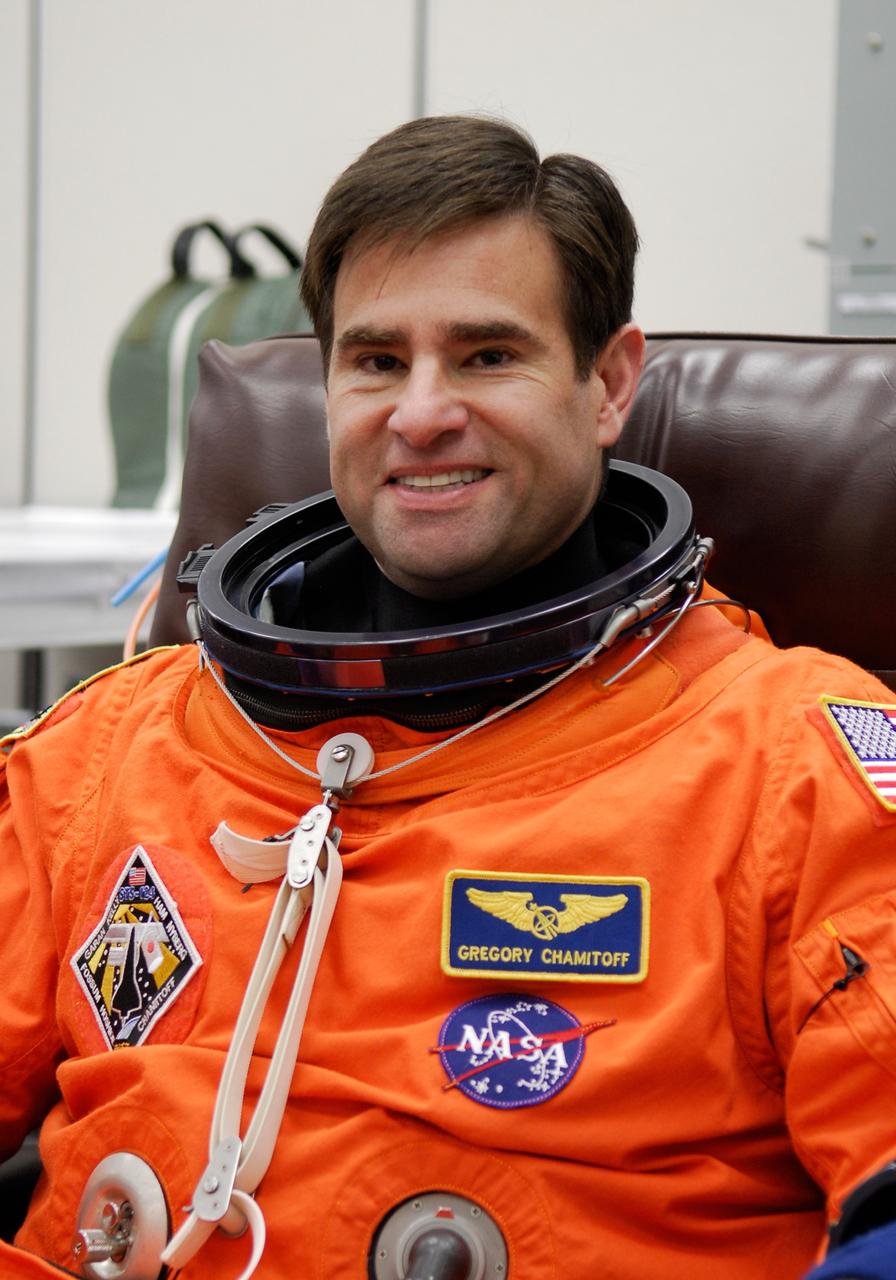
CAPE CANAVERAL, Fla. -- In the Operations and Checkout Building at NASA's Kennedy Space Center, STS-124 Mission Specialist Greg Chamitoff dons his launch-and-entry suit for the simulated launch countdown the crew is starting. The simulation is the culmination of the launch dress rehearsal called the terminal countdown demonstration test. TCDT provides astronauts and ground crews with an opportunity to participate in various simulated countdown activities, including equipment familiarization and emergency training. On the STS-124 mission, the crew will deliver and install the Japanese Experiment Module – Pressurized Module and Japanese Remote Manipulator System. Discovery's launch is targeted for May 31. Photo credit: NASA/Kim Shiflett
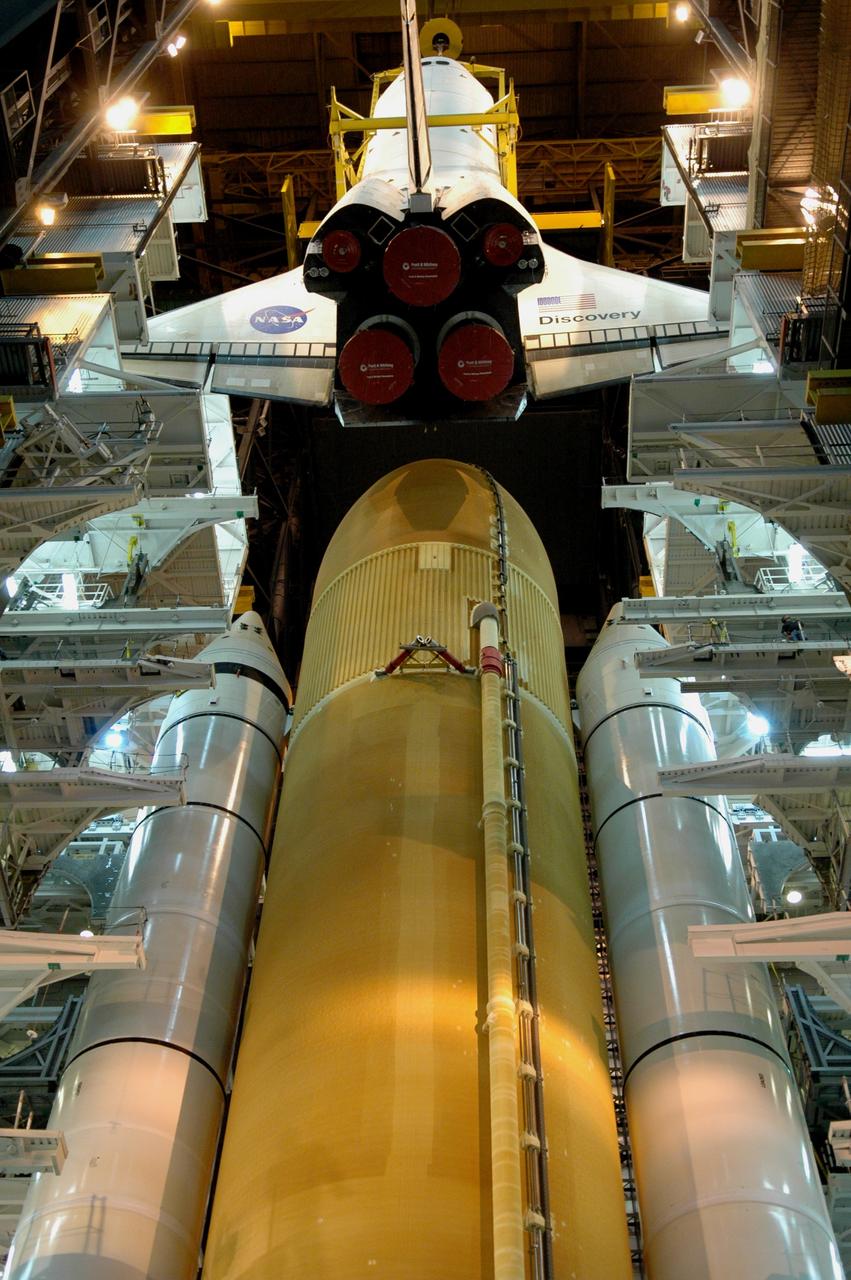
CAPE CANAVERAL, Fla. – In high bay 3 of the Vehicle Assembly Building at NASA's Kennedy Space Center, a crane lowers space shuttle Discovery toward the external tank and solid rocket boosters already stacked on the mobile launcher platform. The stacking and mating are in preparation for the launch on the upcoming STS-124 mission to the International Space Station. On the mission, the STS-124 crew will transport the Japanese Experiment Module - Pressurized Module and the Japanese Remote Manipulator System to the space station. Launch of Discovery is targeted for May 31 Photo credit: NASA/Jim Grossmann
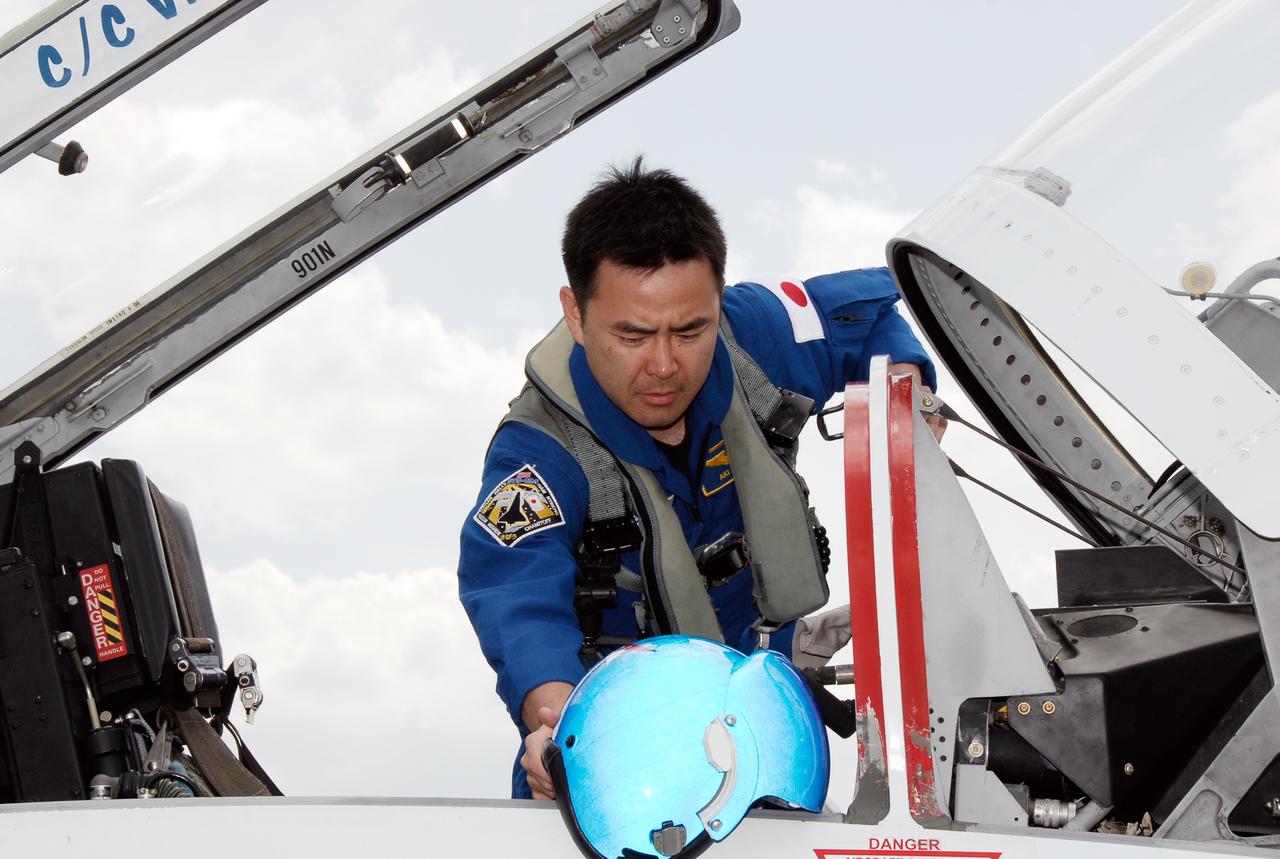
CAPE CANAVERAL, Fla. -- The crew for the STS-124 mission departs NASA's Kennedy Space Center after a successful launch dress rehearsal called the terminal countdown demonstration test. Mission Specialist Akihiko Hoshide climbs into the T-38 training jet for he flight back to Houston. The crew is expected to return in late May for the May 31 launch of space shuttle Discovery. On the STS-124 mission, the crew will deliver and install the Japanese Experiment Module – Pressurized Module and Japanese Remote Manipulator System. Photo credit: NASA/Kim Shiflett
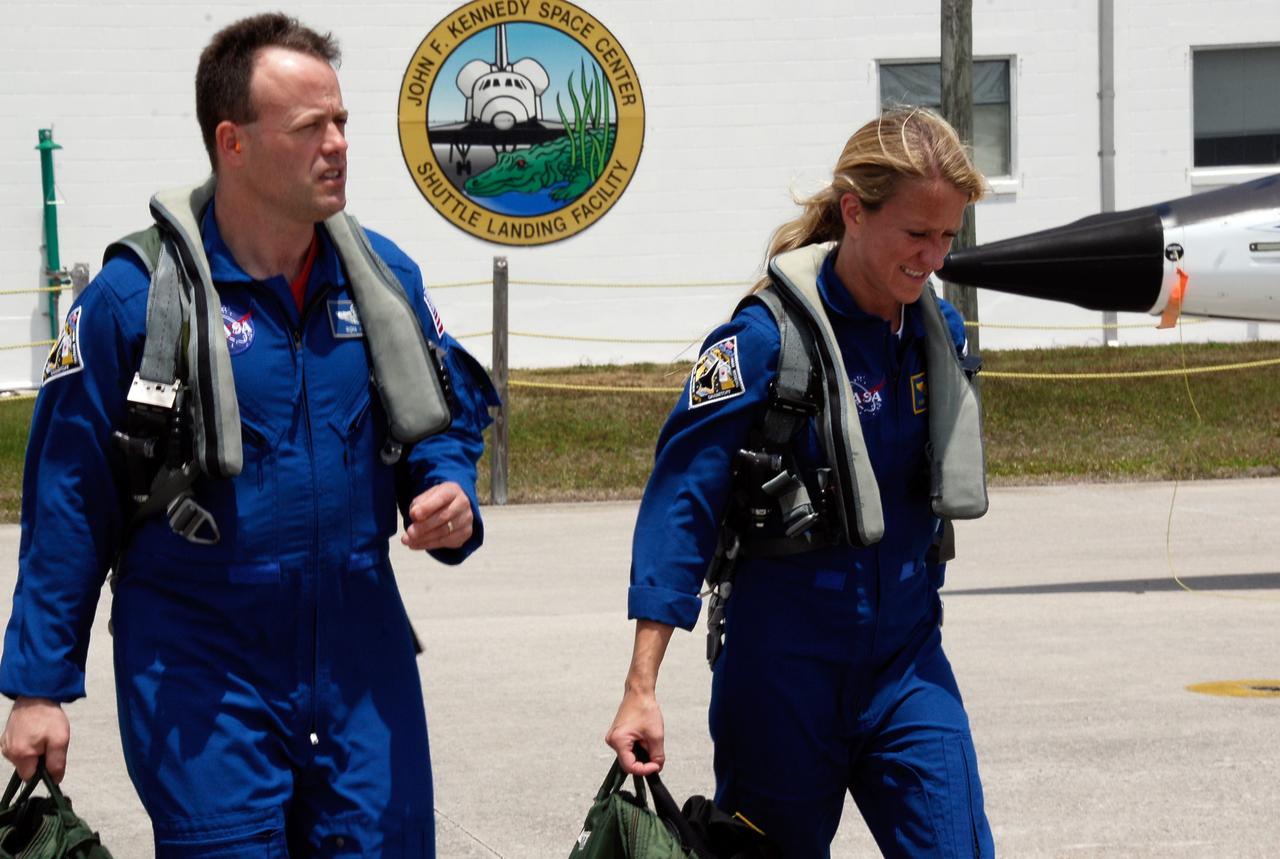
CAPE CANAVERAL, Fla. -- The crew for the STS-124 mission departs NASA's Kennedy Space Center after a successful launch dress rehearsal called the terminal countdown demonstration test. Seen here are Mission Specialists Ron Garan and Karen Nyberg heading for the T-38 training jets for their flight back to Houston. The crew is expected to return in late May for the May 31 launch of space shuttle Discovery. On the STS-124 mission, the crew will deliver and install the Japanese Experiment Module – Pressurized Module and Japanese Remote Manipulator System. Photo credit: NASA/Kim Shiflett
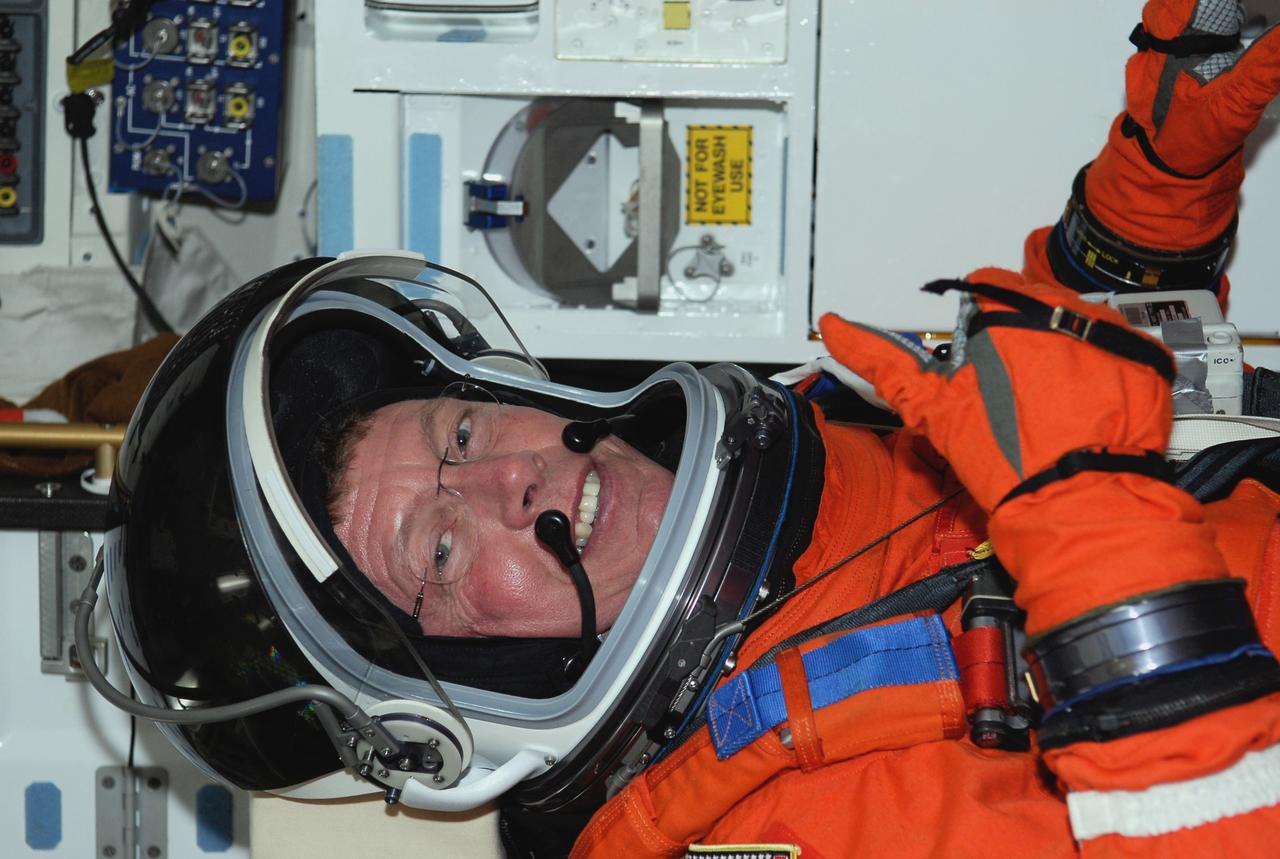
CAPE CANAVERAL, Fla. -- On Launch Pad 39A at NASA's Kennedy Space Center, STS-124 Mission Specialist Mike Fossum sits in his seat aboard space shuttle Discovery following the simulated launch countdown, part of the launch dress rehearsal known as the terminal countdown demonstration test. TCDT provides astronauts and ground crews with an opportunity to participate in various simulated countdown activities, including a simulated launch countdown, equipment familiarization and emergency egress training. On the STS-124 mission, the crew will deliver and install the Japanese Experiment Module – Pressurized Module and Japanese Remote Manipulator System. Discovery's launch is targeted for May 31. Photo credit: NASA/Kim Shiflett
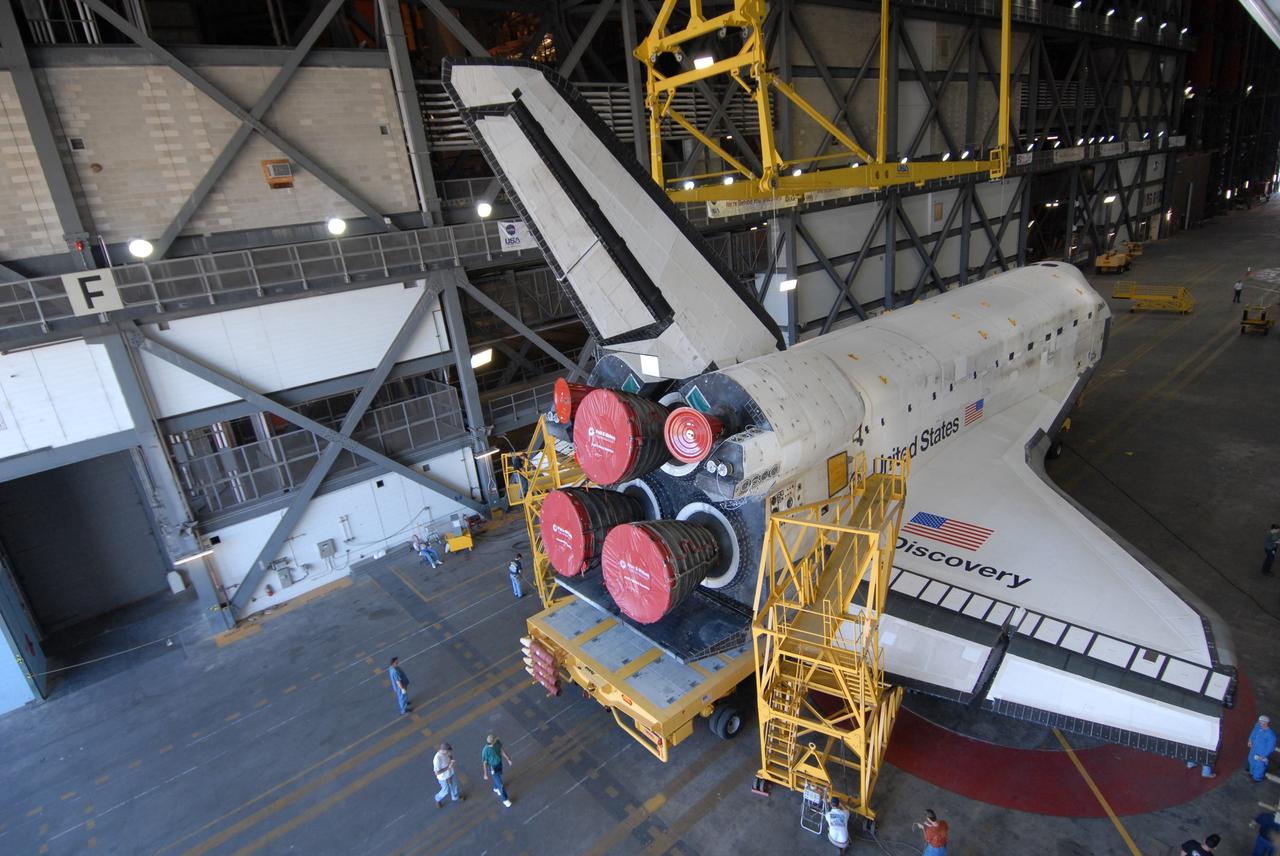
CAPE CANAVERAL, Fla. -- Still on its 76-wheeled orbiter transporter, space shuttle Discovery rests in the transfer aisle of the Vehicle Assembly Building at NASA's Kennedy Space Center. Discovery will be raised from the transporter to a vertical position and lifted into high bay 3. In the bay it will be attached to its external fuel tank and solid rocket boosters in preparation for its upcoming STS-124 mission to the International Space Station. On the mission, the STS-124 crew will transport the Japanese Experiment Module - Pressurized Module and the Japanese Remote Manipulator System to the space station. Launch of Discovery is targeted for May 31. Photo credit: NASA/Troy Cryder
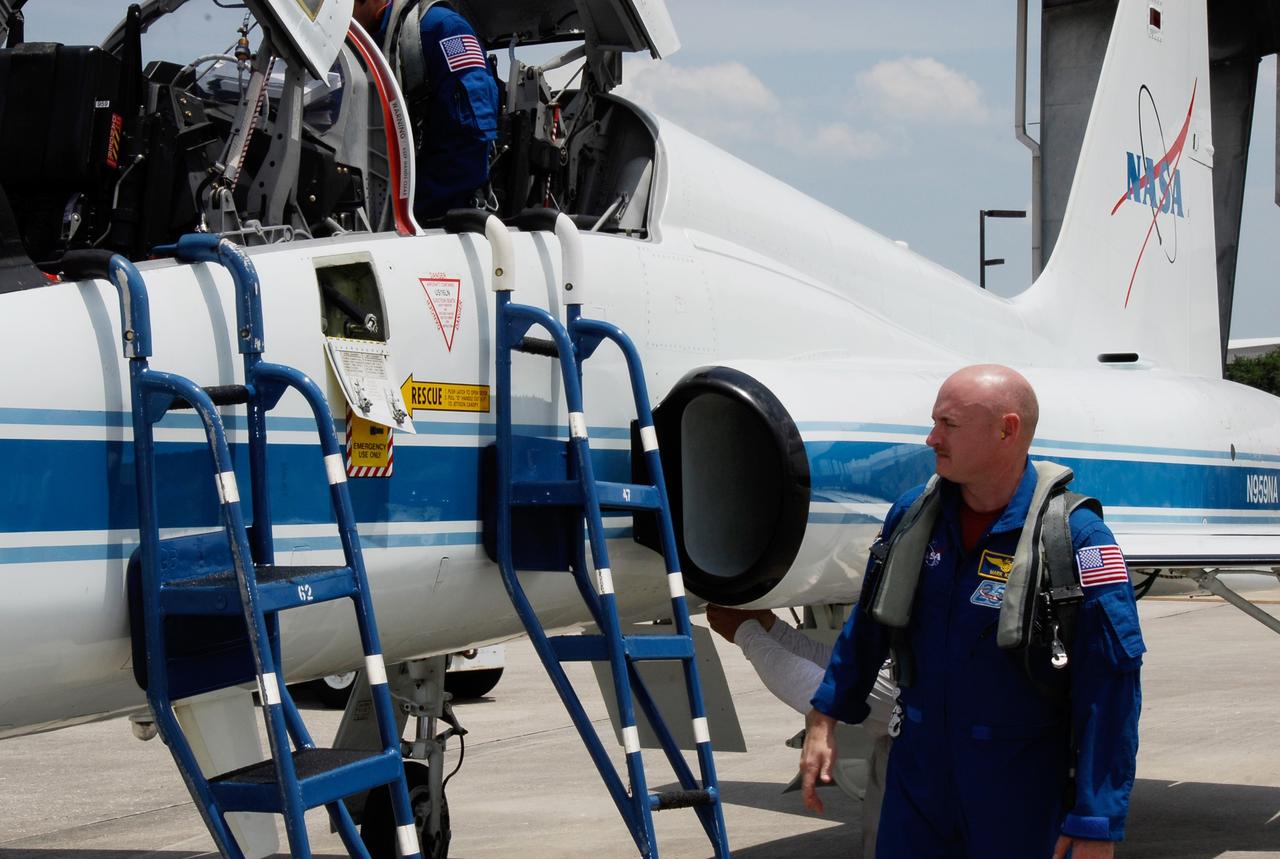
CAPE CANAVERAL, Fla. -- The crew for the STS-124 mission departs NASA's Kennedy Space Center after a successful launch dress rehearsal called the terminal countdown demonstration test. Commander Mark Kelly (right) waits his turn to climb into the cockpit of the T-38 training jet for the flight back to Houston. Mission Specialist Greg Chamitoff is already seated. The crew is expected to return in late May for the May 31 launch of space shuttle Discovery. On the STS-124 mission, the crew will deliver and install the Japanese Experiment Module – Pressurized Module and Japanese Remote Manipulator System. Photo credit: NASA/Kim Shiflett
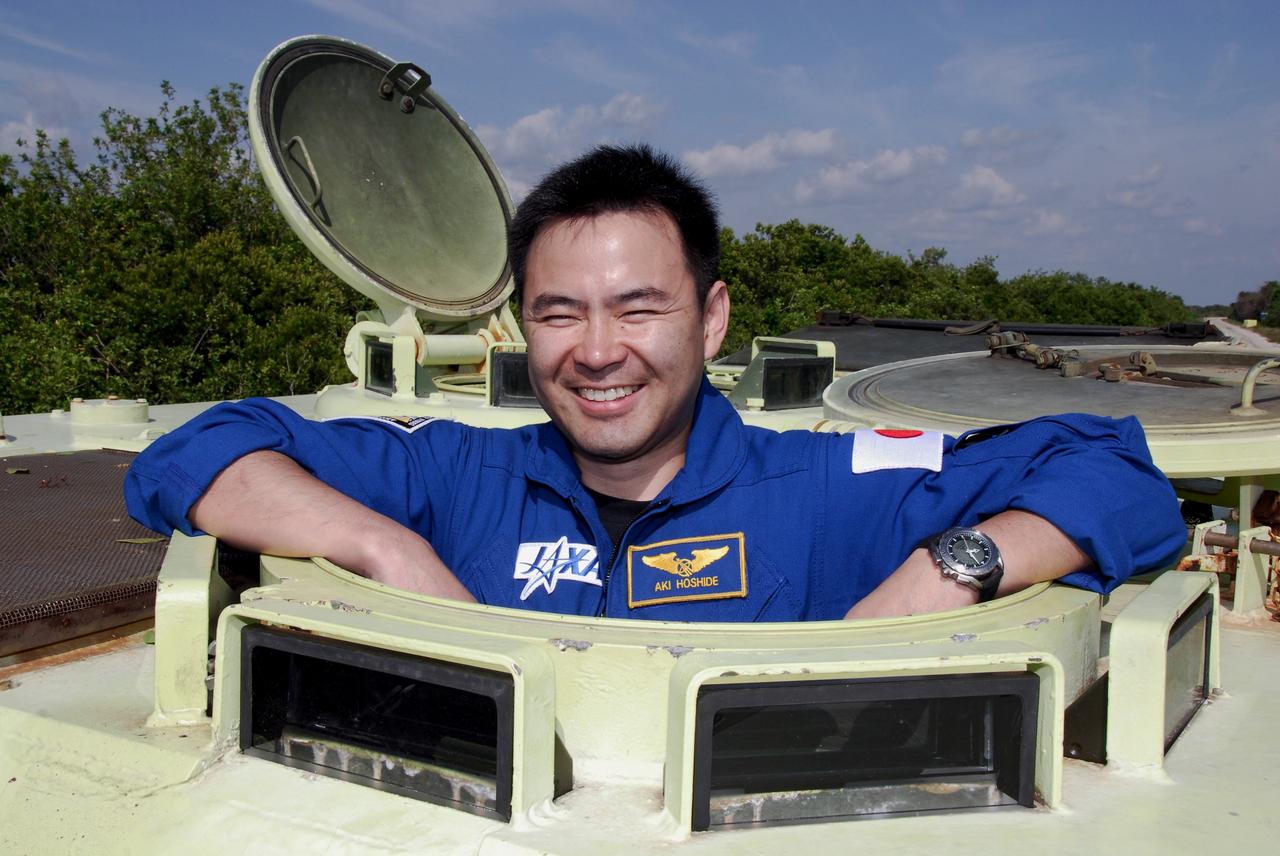
CAPE CANAVERAL, Fla. -- STS-124 Mission Specialist Akihiko Hoshide takes his place in the M113 armored personnel carrier, to practice driving as part of emergency training. He and other crew members are at NASA's Kennedy Space Center for a dress launch rehearsal called the terminal countdown demonstration test. TCDT provides astronauts and ground crews with an opportunity to participate in various simulated countdown activities, including equipment familiarization and emergency training. On the STS-124 mission, the crew will deliver and install the Japanese Experiment Module – Pressurized Module and Japanese Remote Manipulator System. Discovery's launch is targeted for May 31. Photo credit: NASA/Kim Shiflett
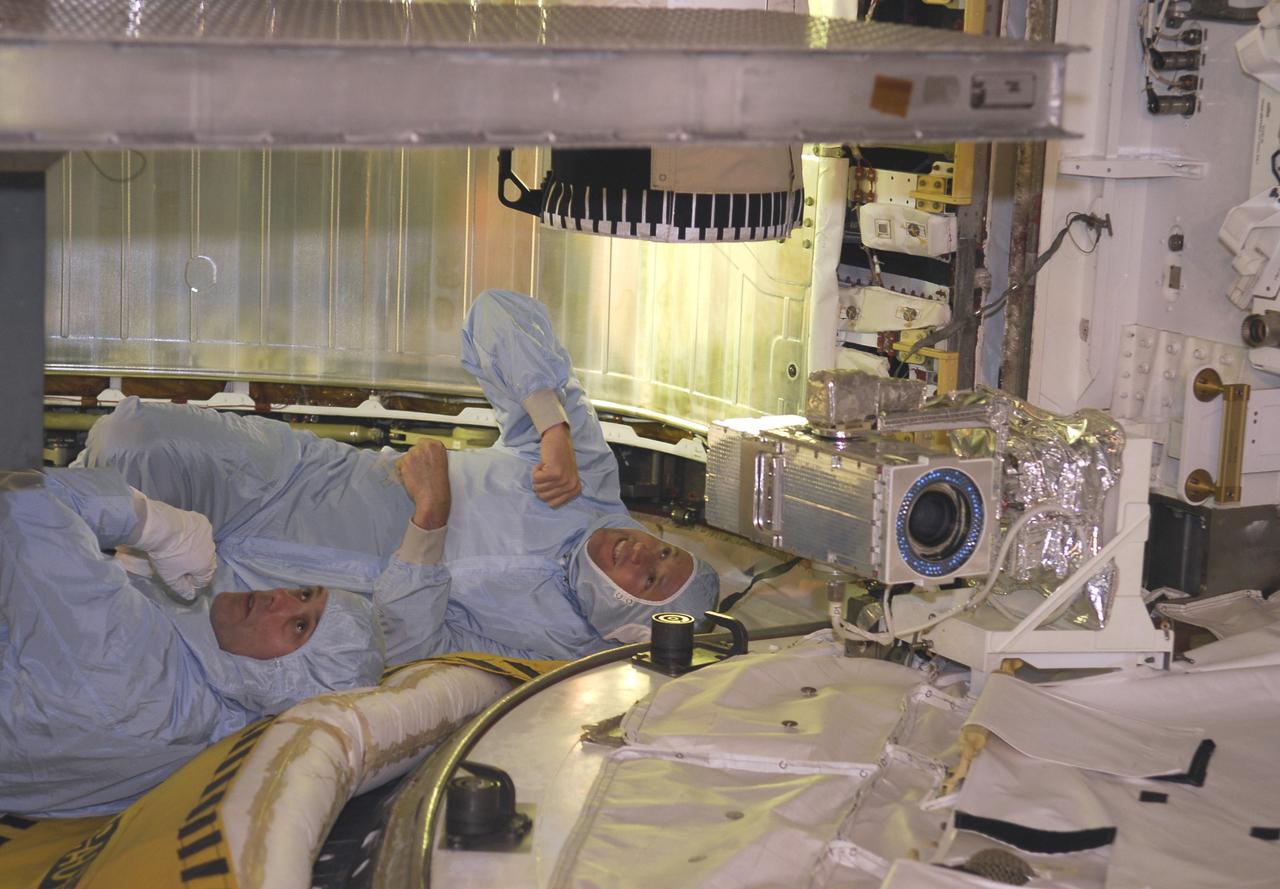
CAPE CANAVERAL, Fla. -- On Launch Pad 39A at NASA's Kennedy Space Center, STS-124 Pilot Ken Ham (right) and Mission Specialist Ron Garan get on their backs for a different view of the payload in space shuttle Discovery's payload bay. The payload bay walkdown is part of the launch dress rehearsal called the terminal countdown demonstration test. TCDT provides astronauts and ground crews with an opportunity to participate in various simulated countdown activities, including equipment familiarization and emergency training. On the STS-124 mission, the crew will deliver and install the Japanese Experiment Module – Pressurized Module and Japanese Remote Manipulator System. Discovery's launch is targeted for May 31. Photo credit: NASA/Kim Shiflett