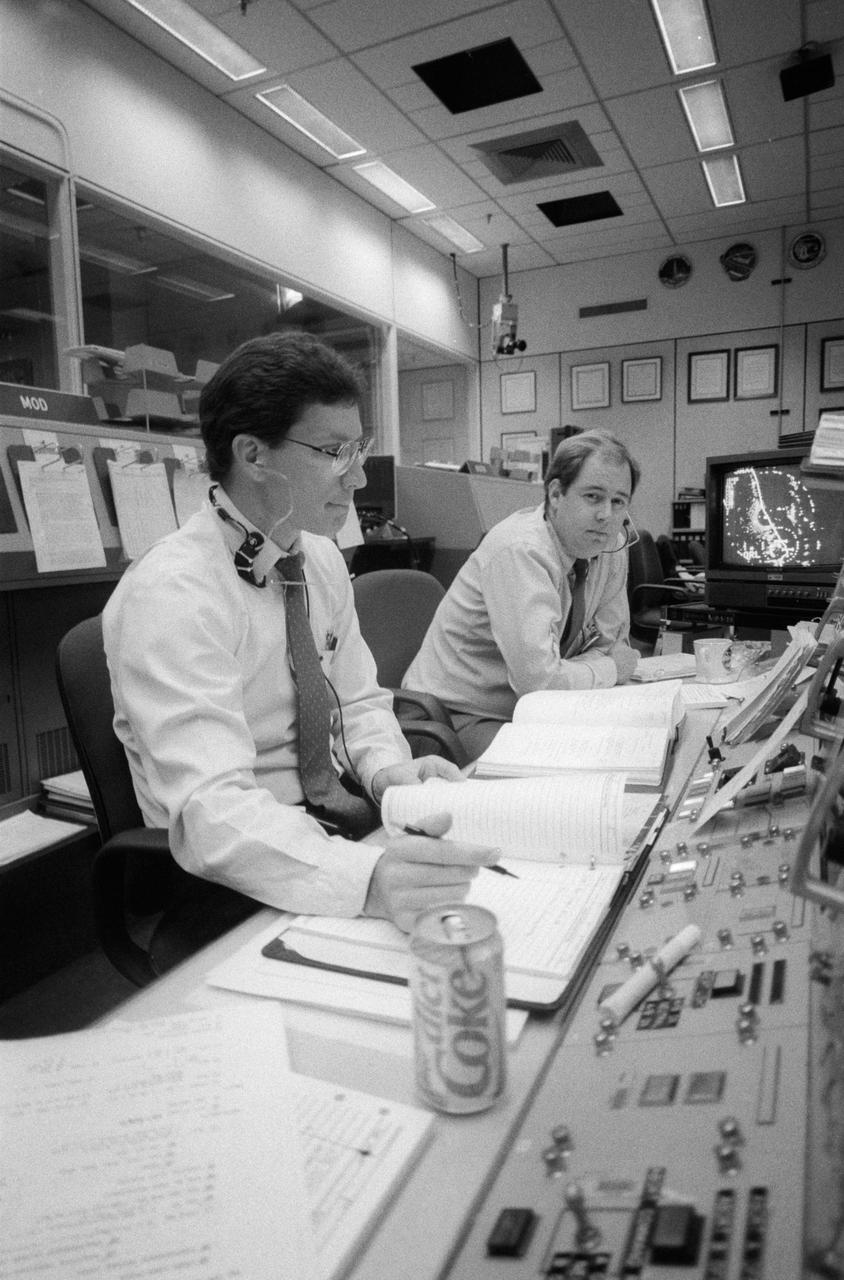
During STS-34, flight directors Robert E. Castle, Jr (left) and Ronald D. Dittemore review checklists and monitor displays at their console in JSC's Mission Control Center (MCC) Bldg 30 flight control room (FCR).

STS-34 Atlantis, Orbiter Vehicle (OV) 104, Pilot Michael J. McCulley squints while looking through ARRIFLEX camera eye piece during camera briefing at JSC. McCulley rests part of the camera on his shoulder as he operates it.
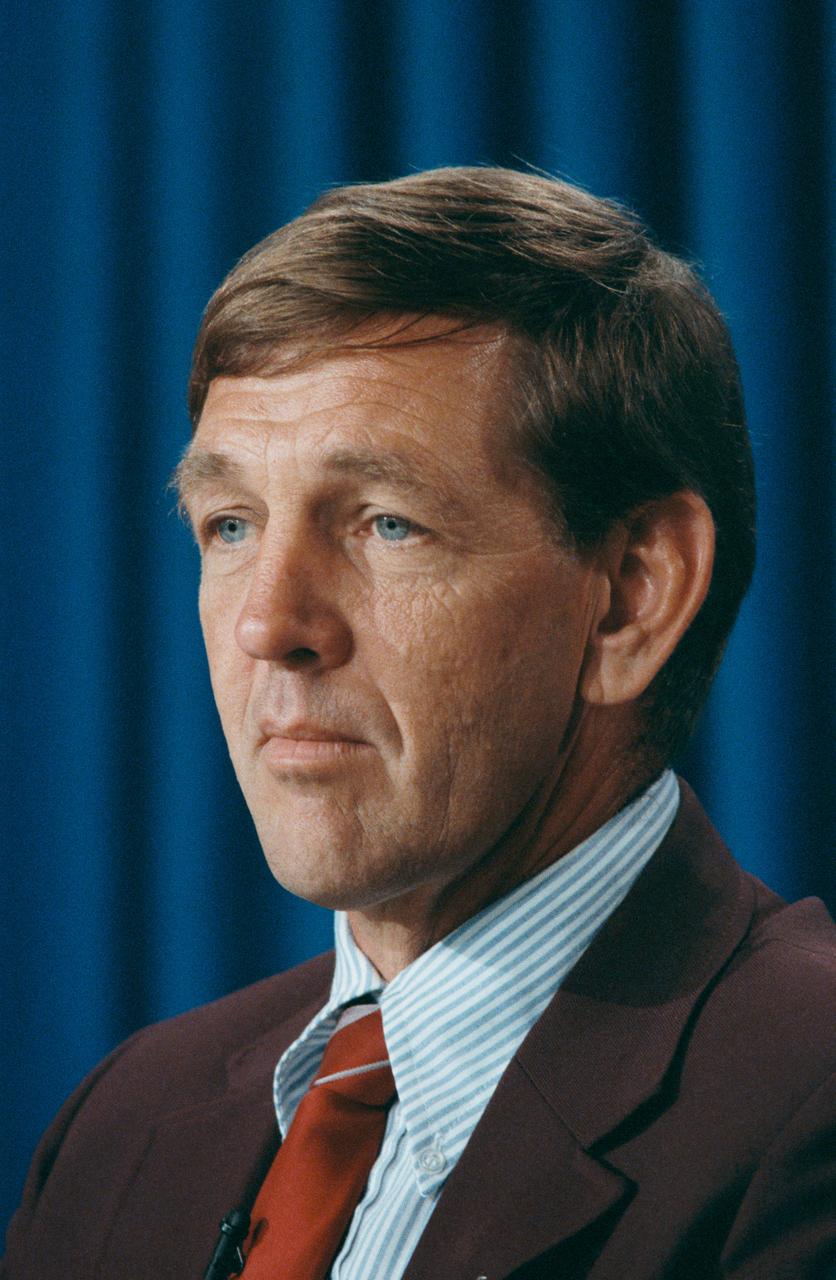
STS-34 Atlantis, Orbiter Vehicle (OV) 104, Pilot Michael J. McCulley reflects on a question during the thirty days before launch (T-30) press briefing in the JSC Auditorium and Public Affairs Facility Bldg 2 briefing room.
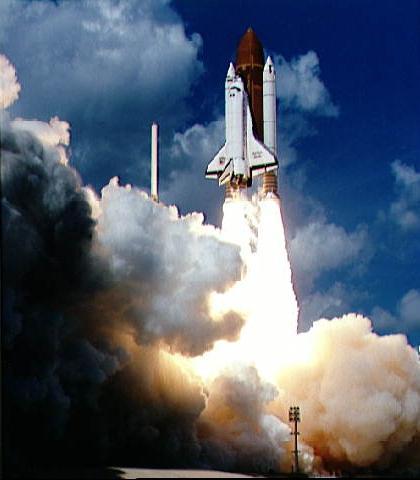
Liftoff of STS-34 Atlantis, carrying NASA Galileo spacecraft and its Inertial Upper Stage IUS booster on October 18, 1989 at 12:35 p.m. EDT. P-35036BC
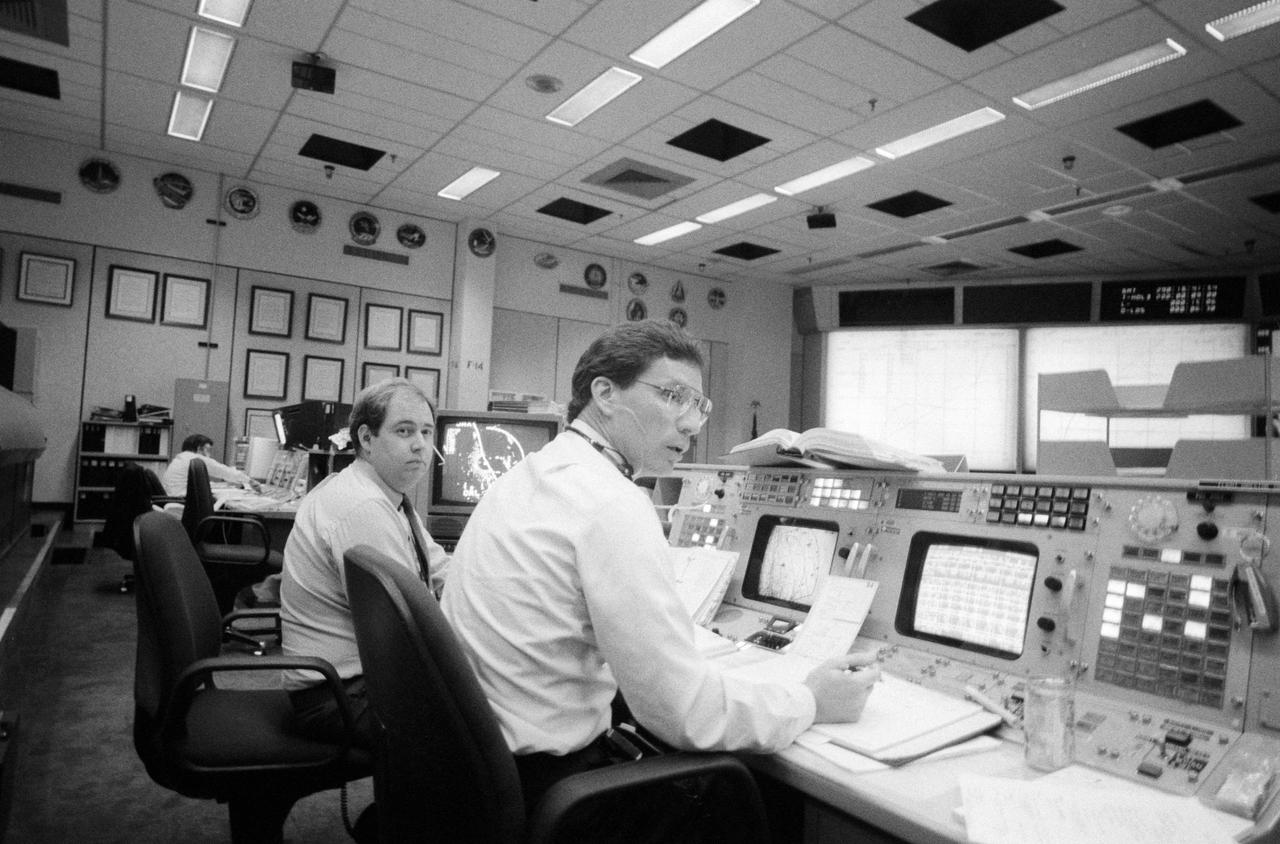
Flight directors Robert E. Castle, Jr (left) and Ronald D. Dittemore monitor console displays during STS-34 mission. Castle and Dittemore will oversee flight activities from their stations in JSC's Mission Control Center (MCC) Bldg 30 flight control room (FCR). In the background are the FCR large screens which display flight data.
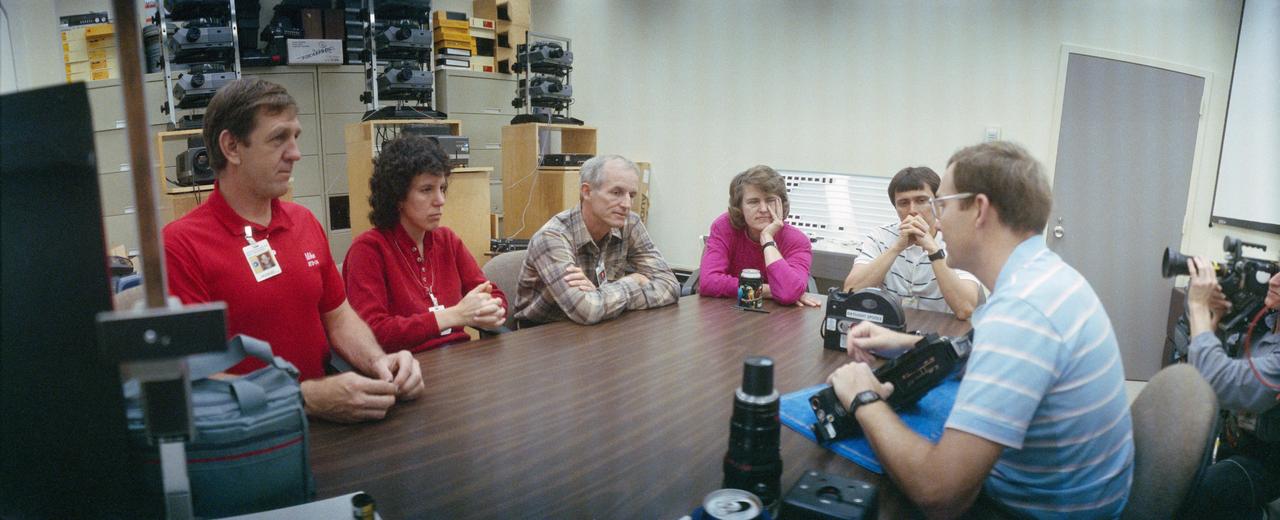
STS-34 Atlantis, Orbiter Vehicle (OV) 104, crewmembers listen to trainer Bill Bowers explain ARRIFLEX camera equipment during briefing at JSC. Across the table from Bowers are (left to right) Pilot Michael J. McCulley, Mission Specialist (MS) Ellen S. Baker, Commander Donald E. Williams, MS Shannon W. Lucid, and MS Franklin R. Chang-Diaz.
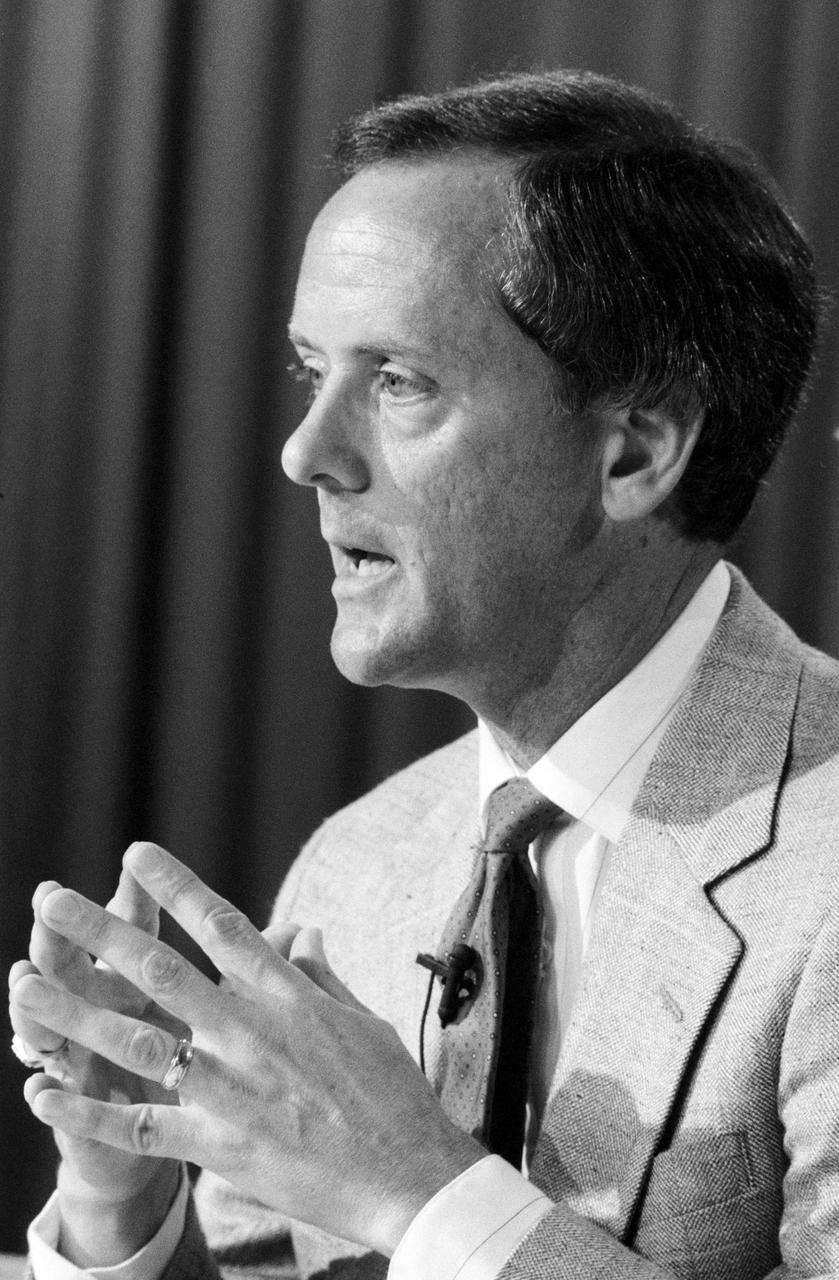
Lead flight director James M. Heflin, Jr answers question at STS-34's thirty days before launch (T-30) press briefing conducted in the JSC Auditorium and Public Affairs Facility Bldg 2 briefing room.

At the Kennedy Space Center's (KSC's) Spacecraft and Assembly Encapsulation Facility 2 (SAEF-2), the planetary spacecraft checkout facility, clean-suited technicians work on the Galileo spacecraft prior to moving it to the Vehicle Processing Facility (VPF) for mating with the inertial upper stage (IUS). Galileo is scheduled for launch aboard Atlantis, Orbiter Vehicle (OV) 104, on Space Shuttle Mission STS-34 in October 1989. It will be sent to the planet Jupiter, a journey which will taken more than six years to complete. In December 1995 as the two and one half ton spacecraft orbits Jupiter with its ten scientific instruments, a probe will be released to parachute into the Jovian atmosphere. NASA's Jet Propulsion Laboratory (JPL) manages the Galileo project. View provided by KSC.
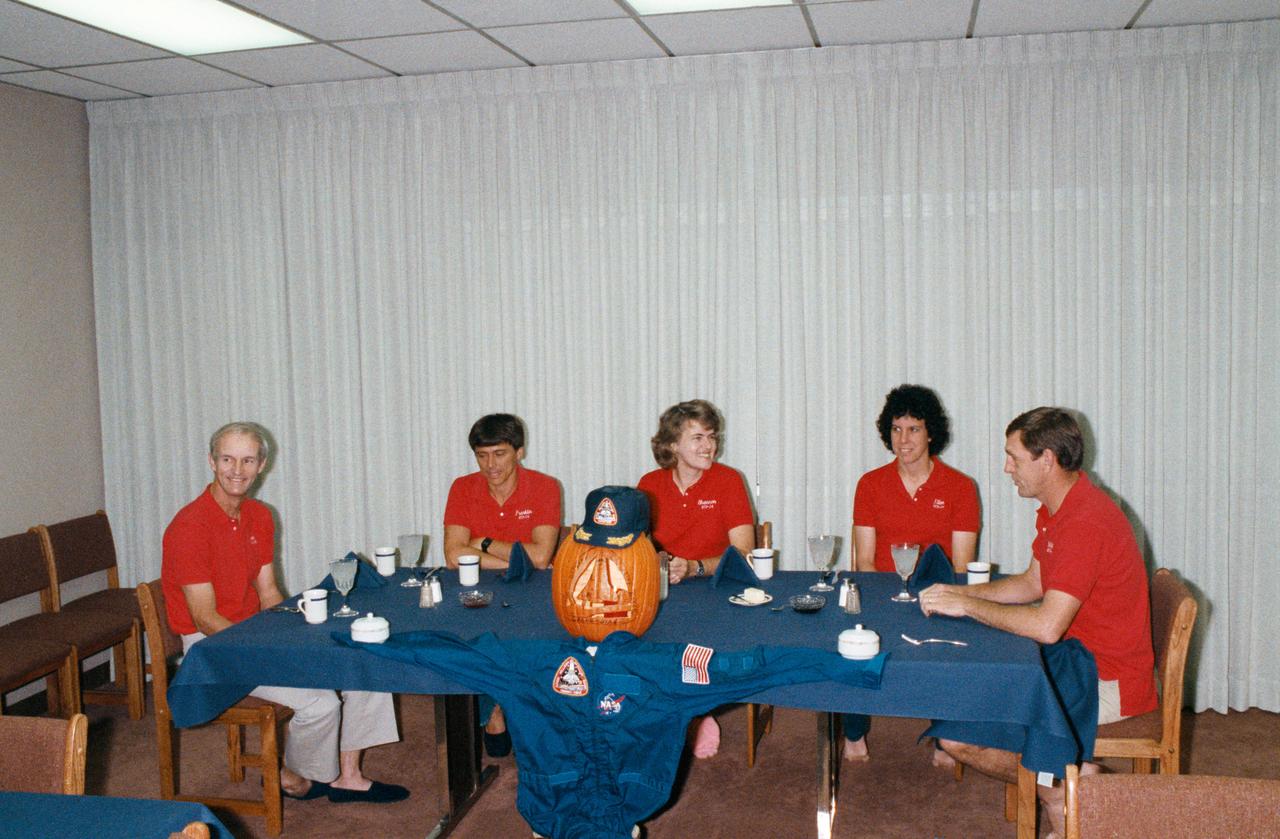
STS034-S-021 (18 Oct 1989) --- The traditional light pre-launch breakfast greets the five astronaut crew-members for NASA's STS-34 mission in the Operations and Checkout Facility at Kennedy Space Center (KSC). From the left are Astronauts Donald E. Williams, mission commander; Franklin R. Chang-Diaz, Shannon W. Lucid and Ellen S. Baker, all mission specialists; and Michael J. McCulley, pilot. A pumpkin converted into a Jack-o-lantern adds a seasonal touch to the table.
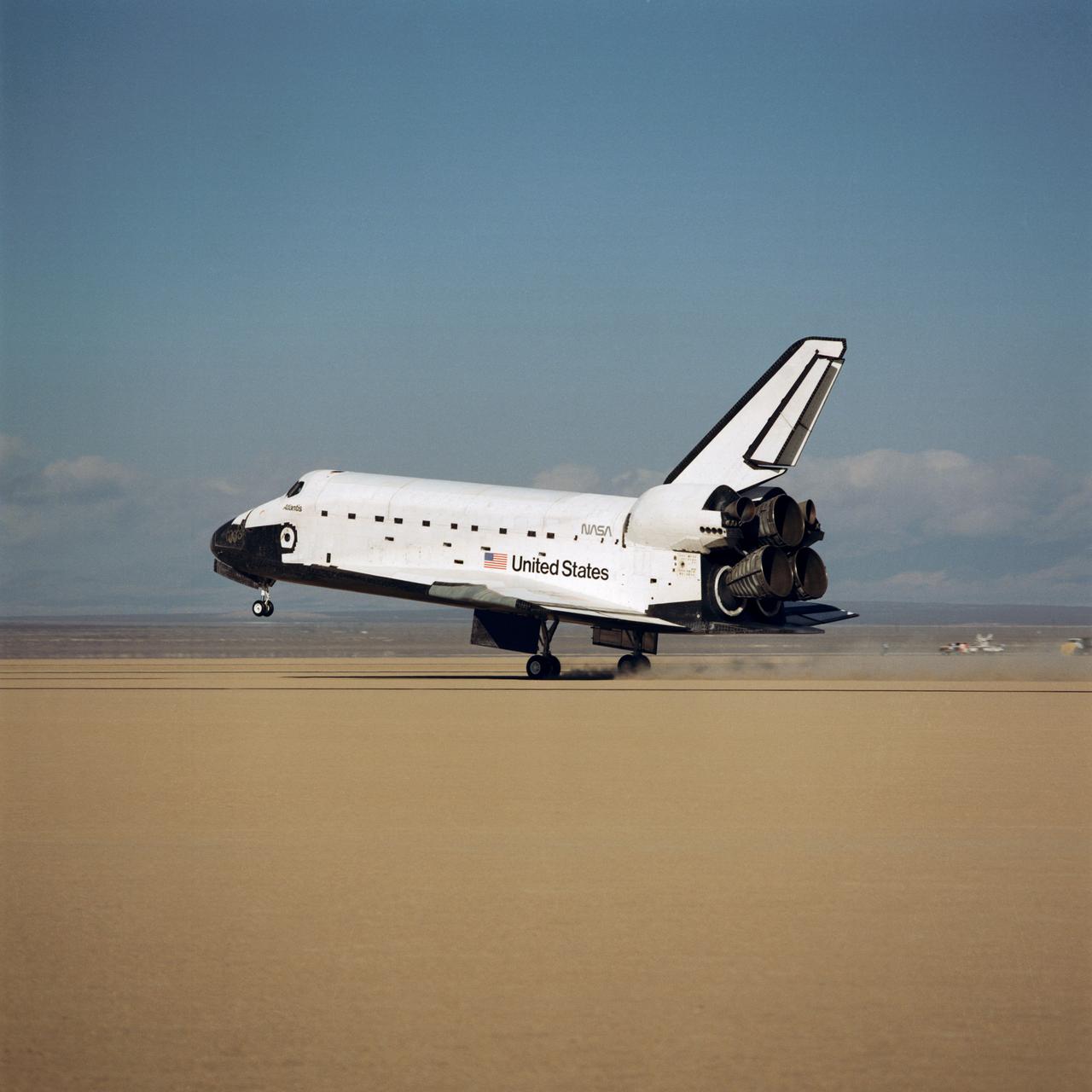
STS-34 Atlantis, Orbiter Vehicle (OV) 104, main landing gear (MLG) touches down on Runway 23 dry lake bed at Edwards Air Force Base (EAFB), California. The nose landing gear rides above runway before touchdown as the MLG wheels produce a cloud of dust. OV-104's port side profile is captured as it glides by at a speed of approximately 195 knots (224 miles per hour). The tail section with deployed speedbrake/rudder and space shuttle main engines (SSMEs) are visible.
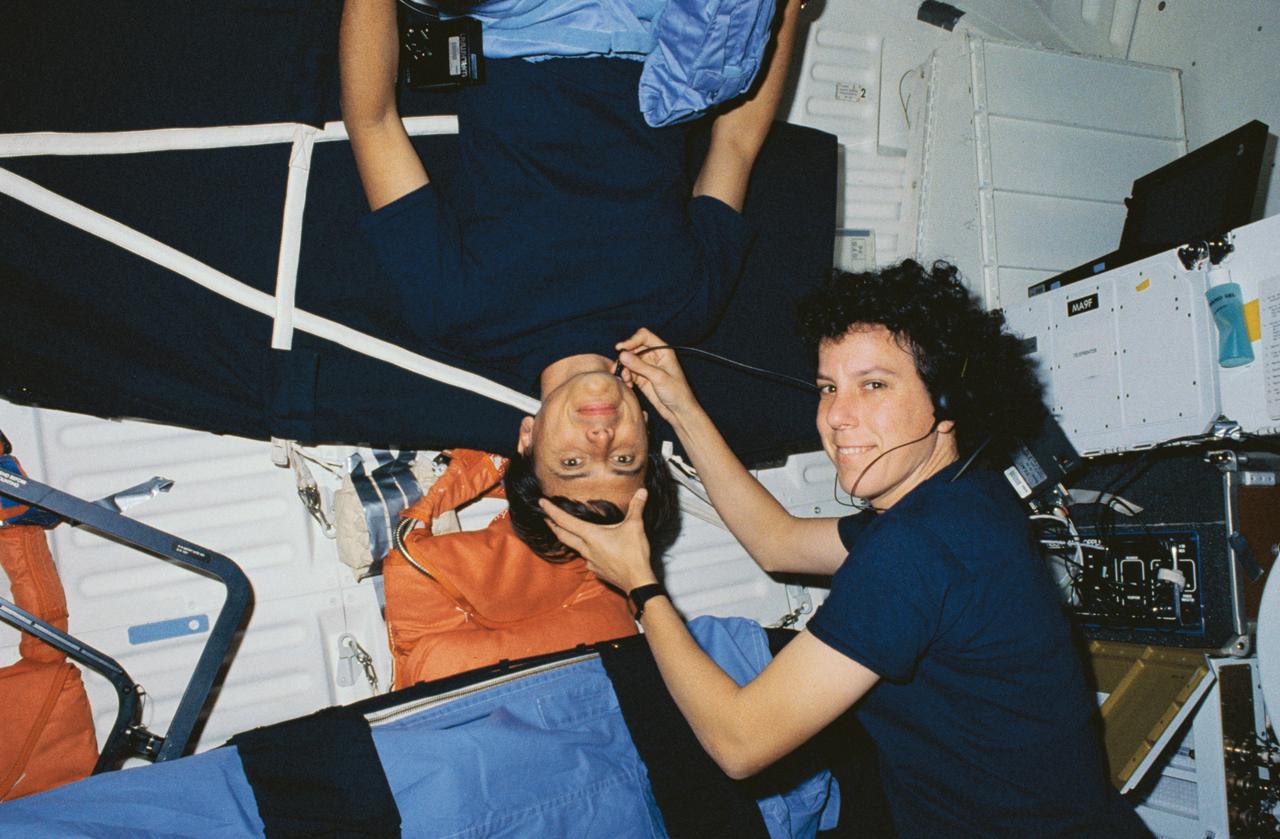
STS034-08-007 (18-23 Oct. 1989) --- Astronaut Ellen S. Baker, an STS-34 mission specialist and medical doctor, conducts a medical examination on astronaut Franklin R. Chang-Diaz, mission specialist, on the middeck of the Earth-orbiting space shuttle Atlantis. Dr. Baker was monitoring Chang-Diaz's blood flow. The scene was recorded on film with a 35mm camera.Photo credit: NASA or National Aeronautics and Space Administration
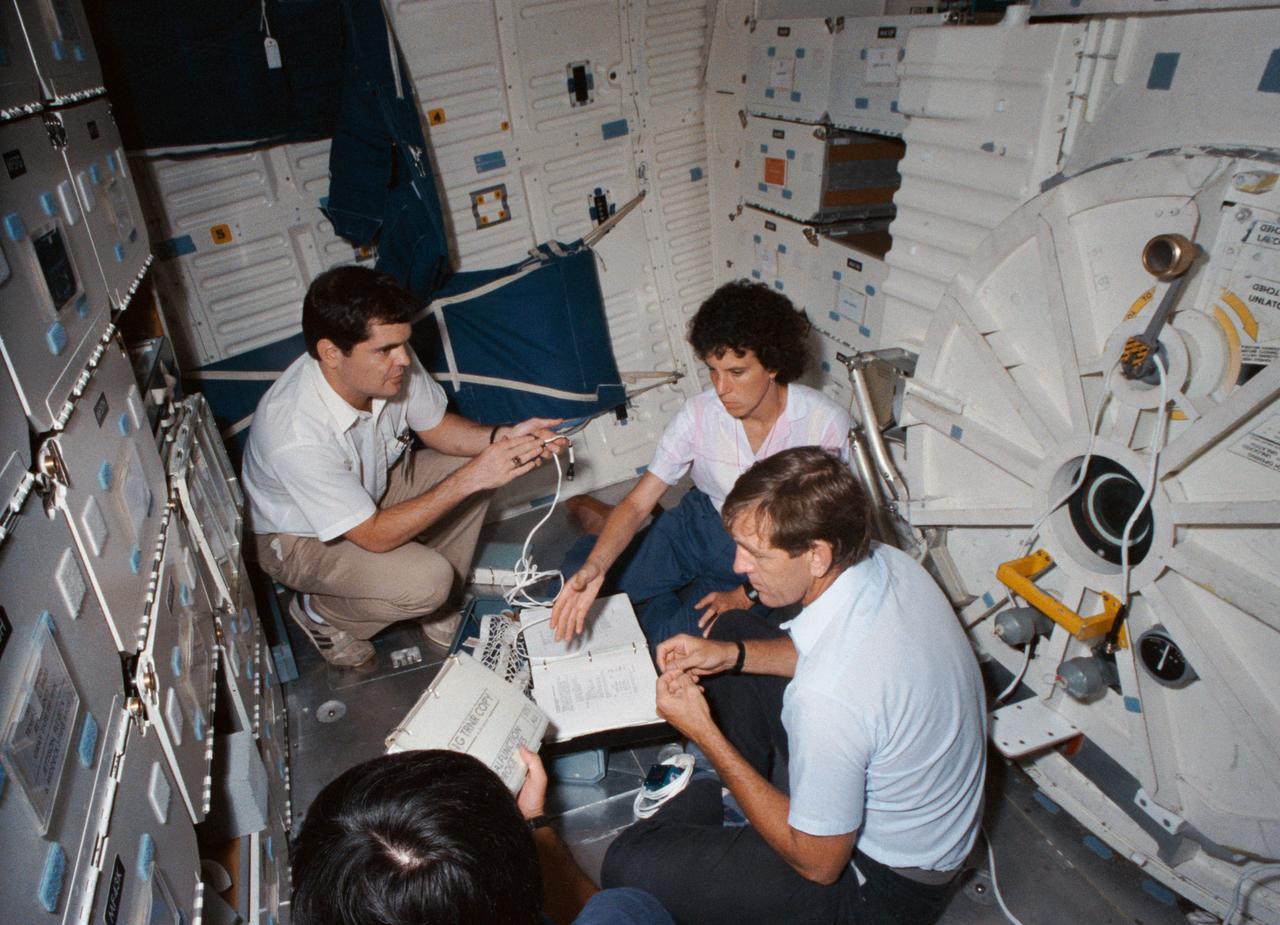
S89-39537 (July 1989) --- Two astronaut-crewmembers for NASA's STS-34 mission are briefed on inflight maintenance procedures on the mid-deck of the Space Shuttle crew compartment trainer in JSC's Shuttle mockup and integration laboratory. They are Ellen S. Baker and Michael J. McCulley, mission specialist and pilot, respectively for the scheduled Oct. 1989 mission aboard the Atlantis.
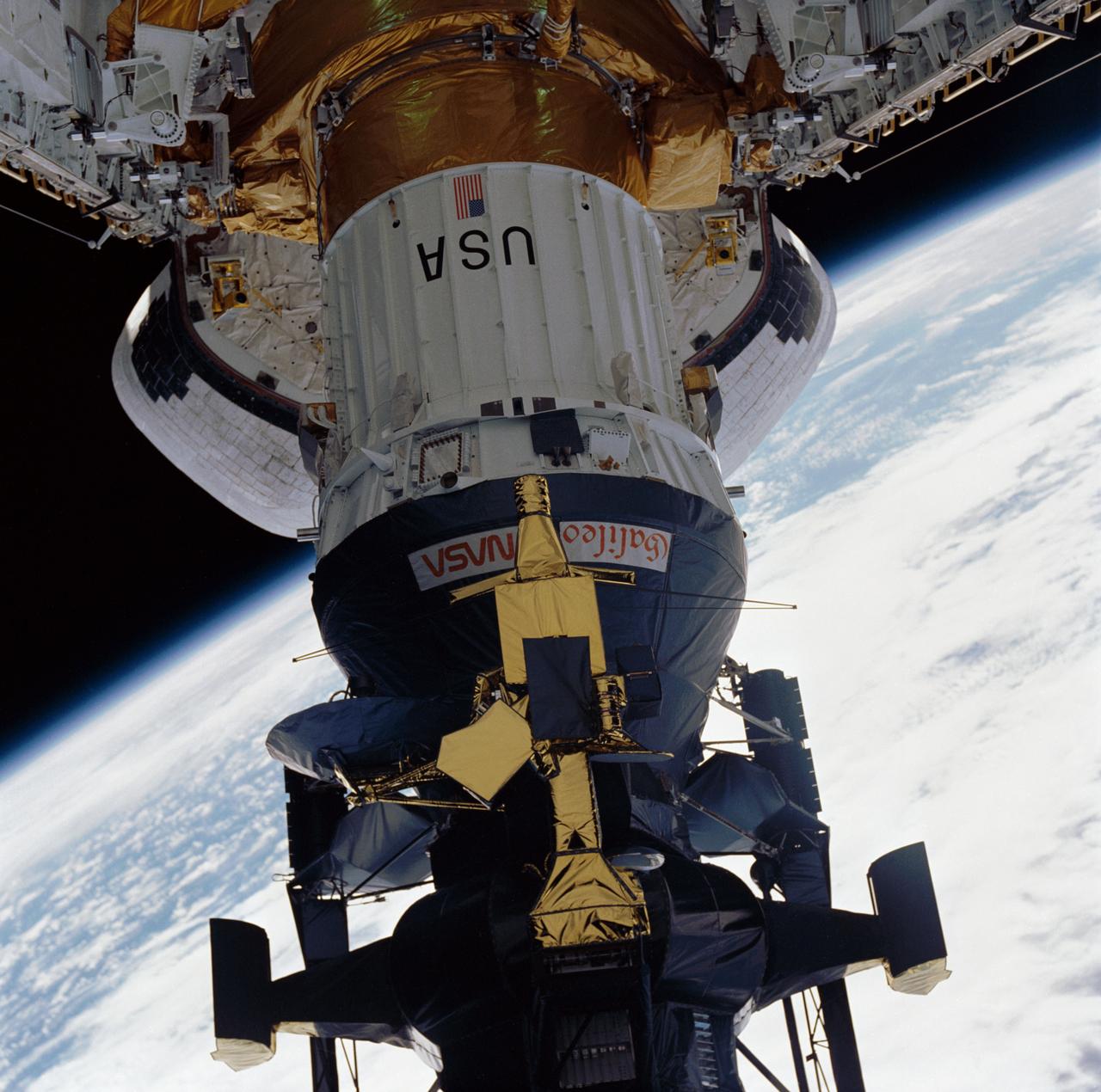
During STS-34 mission, the Galileo spacecraft mounted atop the inertial upper stage (IUS) is tilted to a 58-degree deployment position by the airborne support equipment (ASE) aft frame tilt actuator (AFTA) table in Atlantis', Orbiter Vehicle (OV) 104's, payload bay (PLB). Visible in the foreground is the ASE forward cradle and the umbilical boom which has fallen away from the IUS. OV-104's orbital maneuvering system (OMS) pods and the Earth's limb appear in the background.
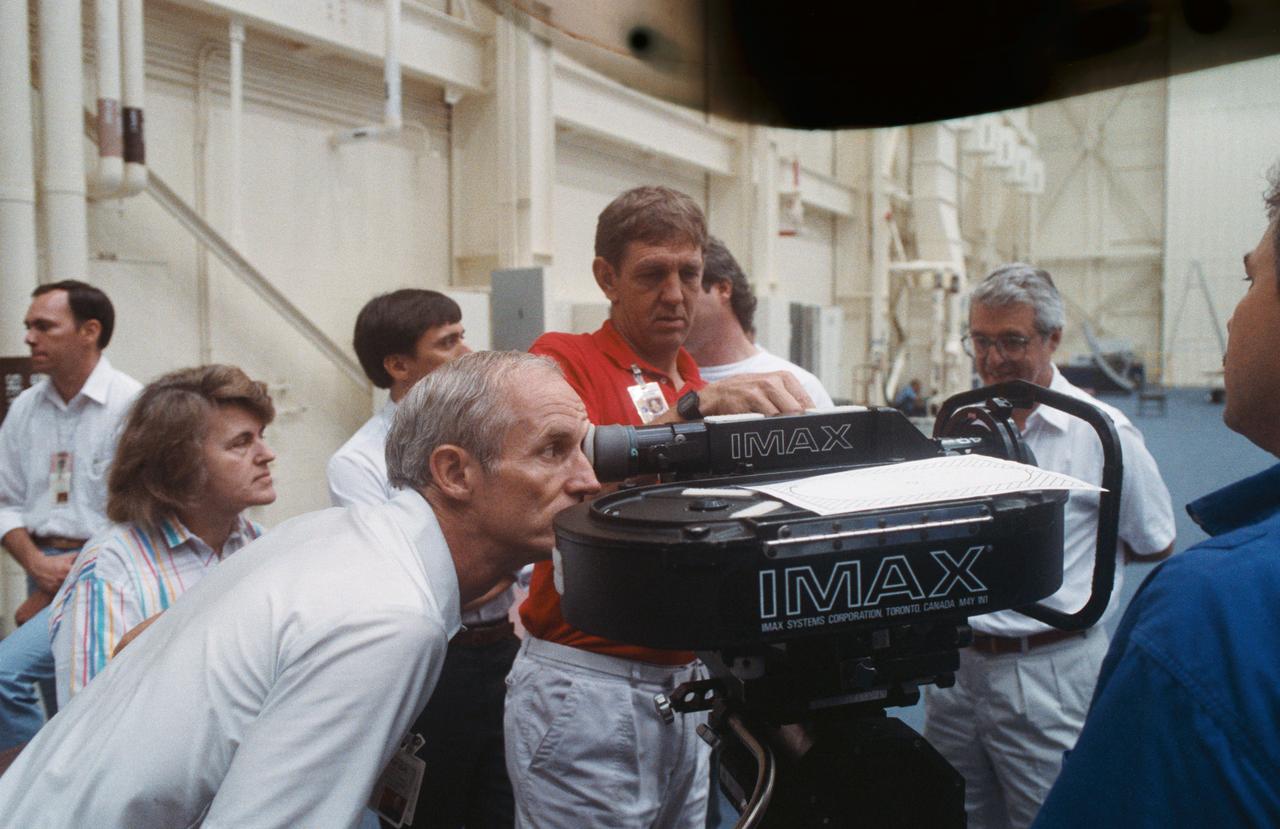
STS-34 crewmembers participate in IMAX camera training session held in JSC's Mockup and Integration Laboratory (MAIL) Bldg 9B. The crew is briefed on the operation and handling of the IMAX camera scheduled to fly aboard Atlantis, Orbiter Vehicle (OV) 104. Left to right in the foreground are Mission Specialist (MS) Shannon W. Lucid, MS Franklin R. Chang-Diaz, Commander Donald E. Williams (looking through IMAX eye piece), Pilot Michael J. McCulley, and IMAX instructor Grant Ferguson. David Douglas of IMAX is at right edge of photo.
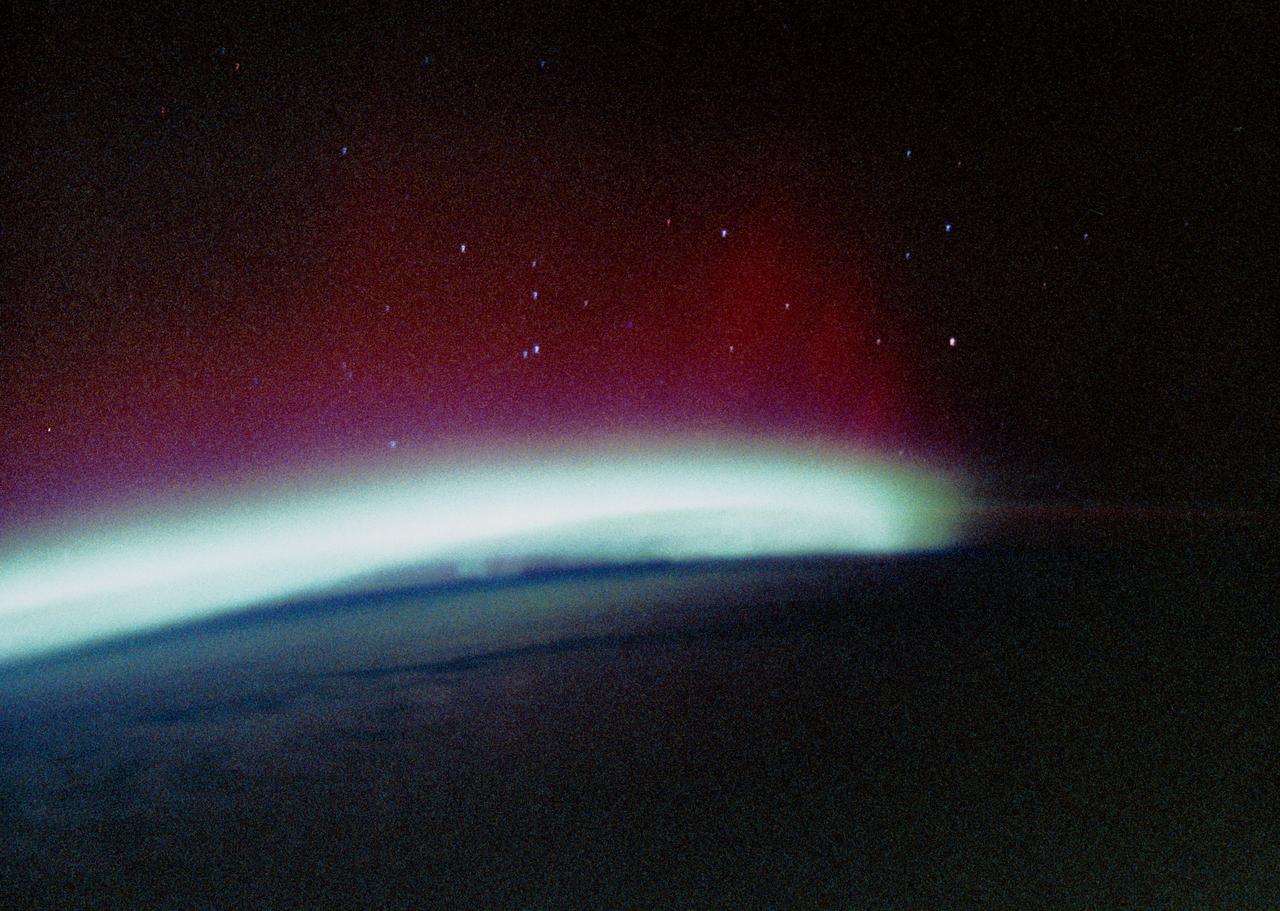
STS034-44-023 (20 Oct. 1989) --- The Southern Lights or Aurora Australis were photographed by the STS-34 crewmembers aboard the Earth-orbiting Space Shuttle Atlantis. From the Shuttle astronauts can photograph expanses of auroras, an advantage over scientists on Earth who can only get small sections at a time in a frame of photography. The space position allows for large-scale changes. This scene was one of 26 shown to the press by the five STS-34 crewmembers at their post-flight press conference.
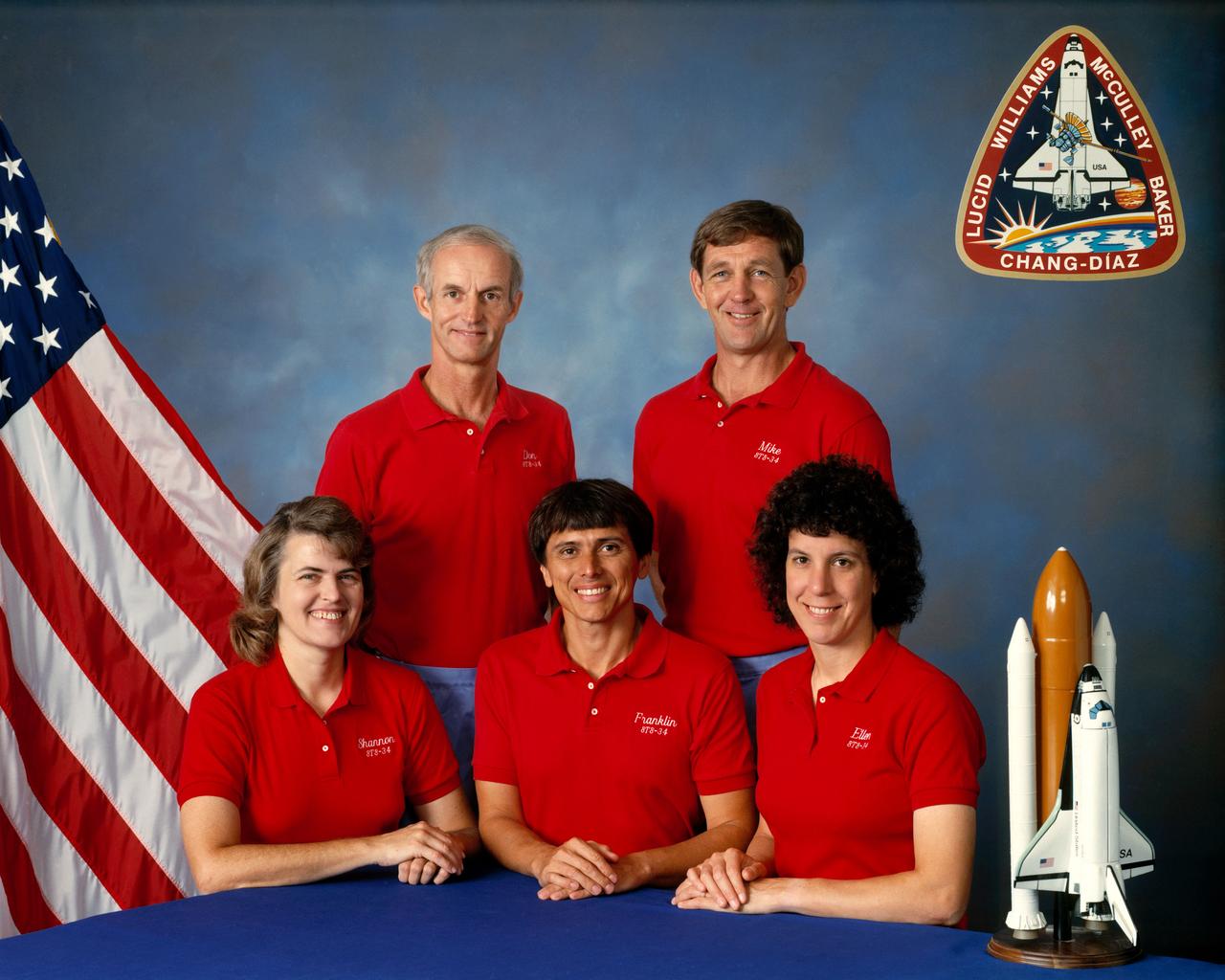
S89-39803 (July 1989) --- These five astronauts have been assigned to fly the Space Shuttle Atlantis for the mission on which the Jupiter probe, Galileo will be deployed. The mission is scheduled for October of this year. Seated, left to right, are mission specialists Shannon W. Lucid, Ph.D.; Franklin Chang-Diaz, Ph.D.; and Ellen S. Baker, M.D. Standing behind the mission specialists are left, Donald E. Williams, commander; and Michael J. McCulley, pilot.
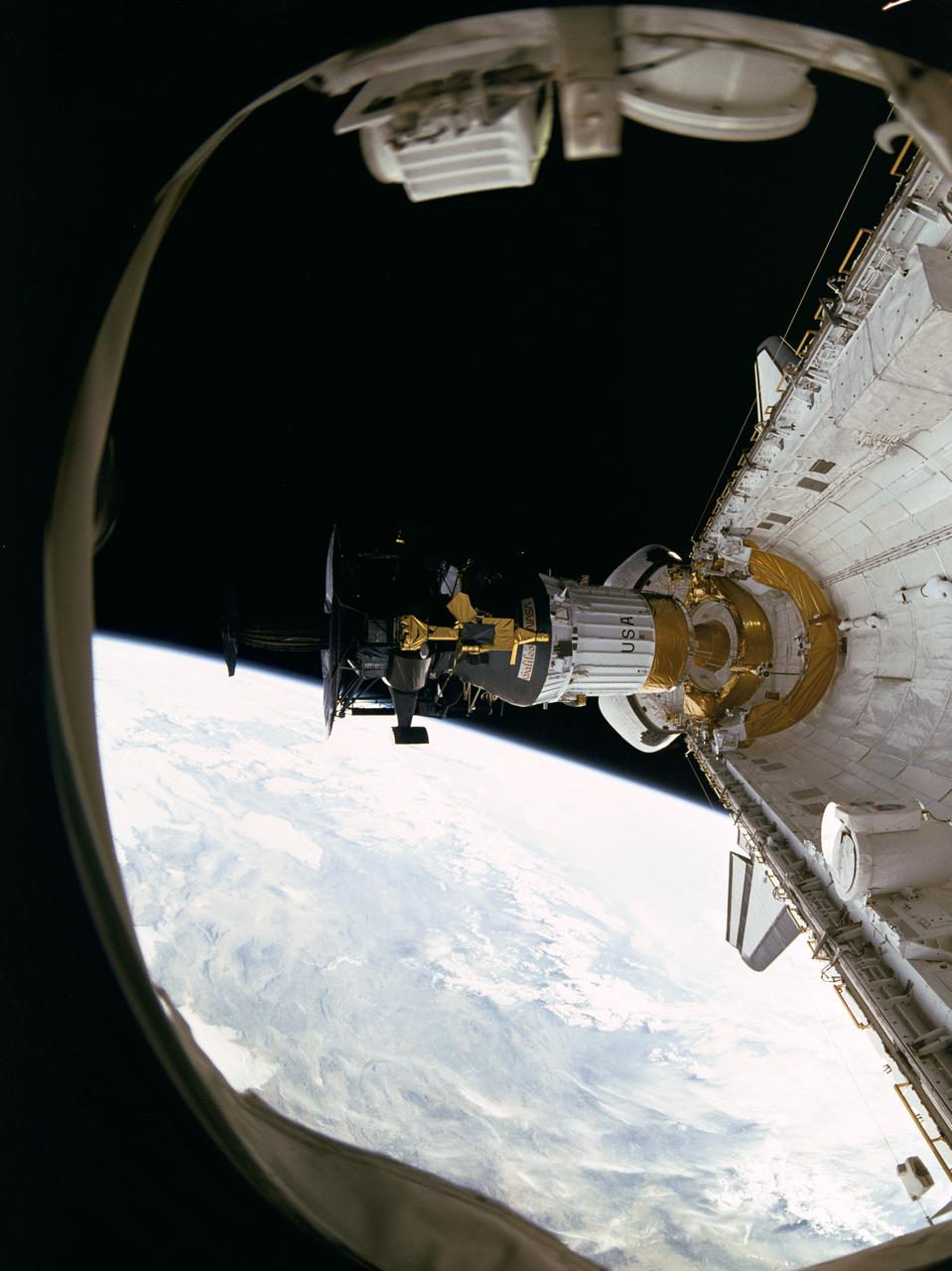
S89-48714 (18 Oct 1989) --- This photograph was taken by the STS-34 crew aboard the Space Shuttle Atlantis and shows the Galileo spacecraft being deployed on Oct. 18, 1989 from the payload bay. Galileo is a scientific craft that will go into orbit around the planet Jupiter and drop a probe into its atmosphere in search of primordial solar system material believed to be present there. The 70mm motion picture film will be used in the forthcoming "Blue Planet," which will address Earth's environmental problems from the perspective of space-based observation and solar system exploration. The film is being produced by IMAX Space Technology Inc. for the sponsor, the Smithsonian Institution, with funding provided by the Lockheed Corporation. PHOTO CREDIT: NASA/Smithsonian Institution
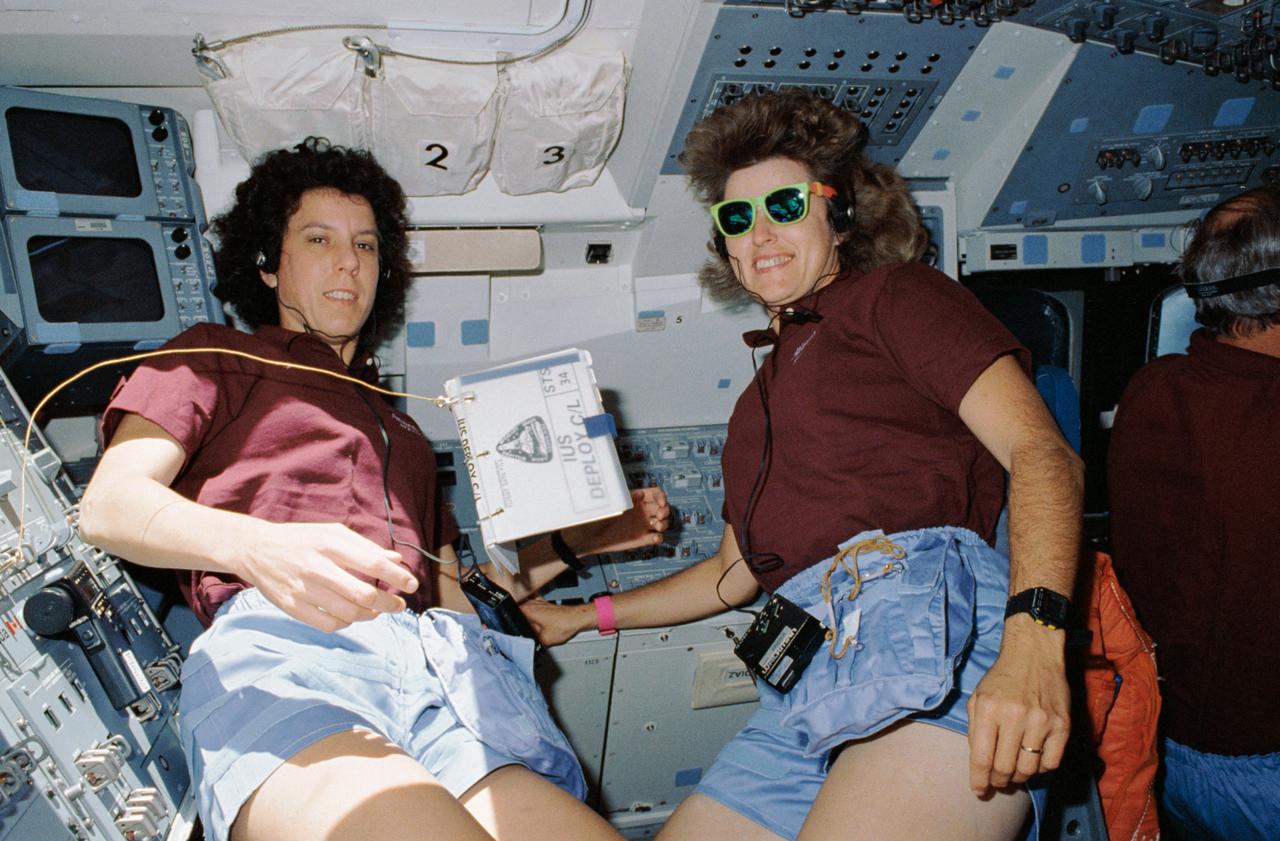
STS034-09-007 (23 Oct. 1989) --- Having been in space only a few hours, three of the STS-34 astronaut crew prepare for pre-deployment exercises involving one of the most prominent "passengers" of the flight -- the Galileo payload which was lying in Atlantis', Orbiter Vehicle (OV) 104's, payload bay (PLB). Pictured, left to right, are astronauts Ellen S. Baker and Shannon W. Lucid, both mission specialists; along with Donald E. Williams, commander, who guided OV-104's course during the exercise. Baker and Lucid communicated with ground controllers while juggling other Galileo-related chores. Both Baker and Lucid are equipped with SONY Walkmans and are wearing headsets. Lucid wears a pair of sunglasses with brightly colored frames. A tethered inertial upper stage (IUS) deploy checklist (C/L) floats between the two and a spotmeter is Velcroed to an on orbit station control panel.
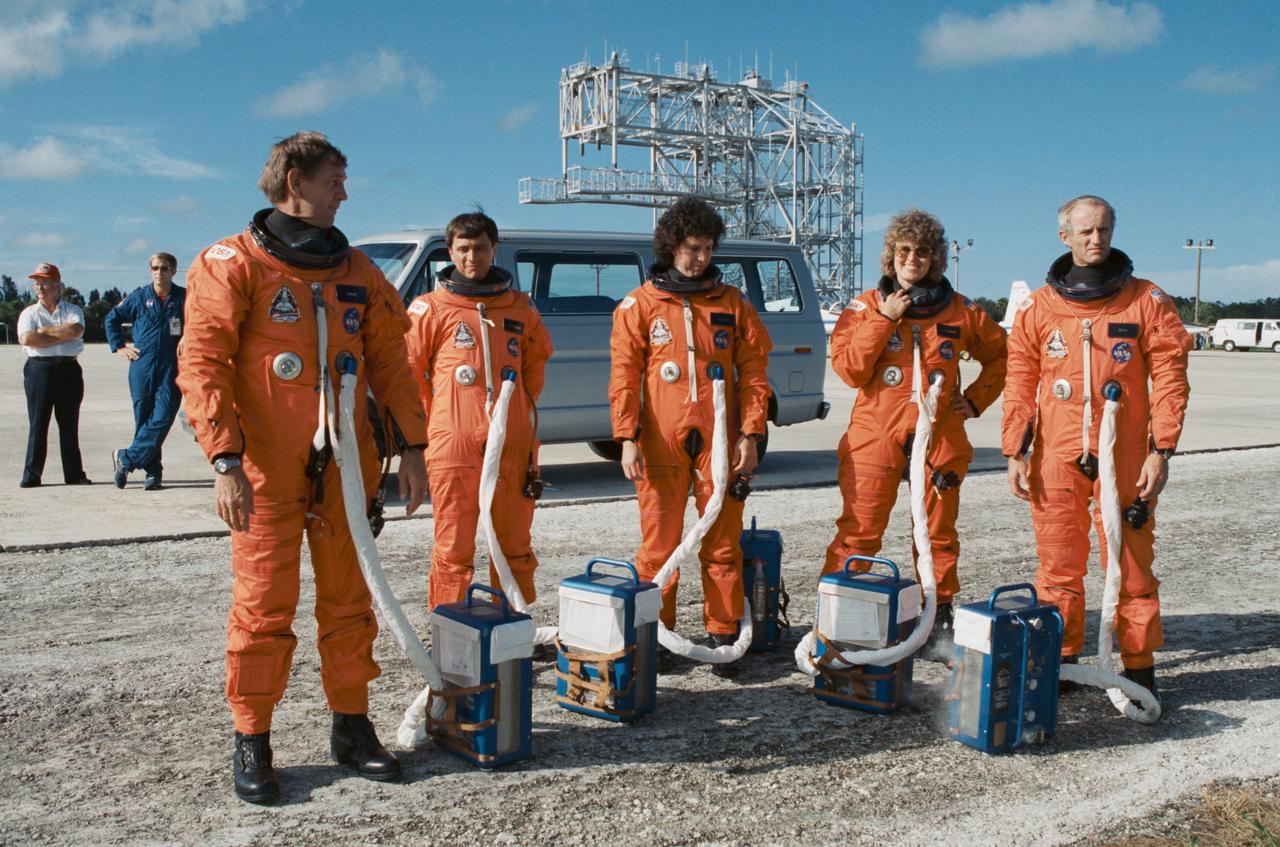
S89-45249 (13 Sept 1989) --- The astronaut crewmembers for NASA's STS-34 mission prepare to participate in emergency egress training in their partially pressurized flight suits with attached cooling packs at the Shuttle landing facility. Left to right are Astronauts Michael J. McCulley, pilot; Franklin R. Chang-Diaz, Ellen S. Baker and Shannon W. Lucid, all mission specialists; and Donald E. Williams, mission commander. The five were at the Kennedy Space Center (KSC) primarily to participate in the Terminal Countdown Demonstration Test (TCDT). The Space Shuttle Atlantis is scheduled to be launched October 12. Primary payload for the five-day mission is the spacecraft Galileo which will be deployed in space begin its journey to Jupiter.
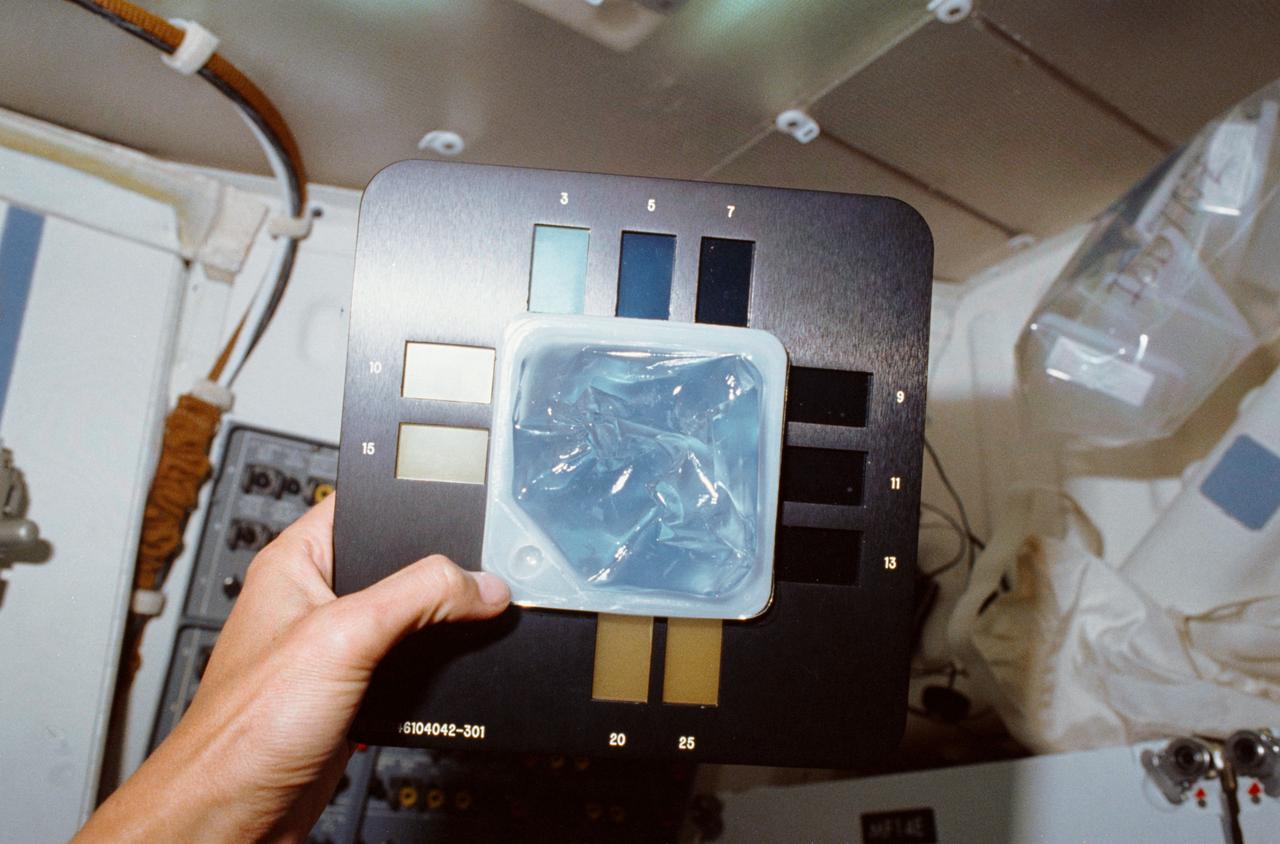
STS034-10-014 (18-23 Oct. 1989) --- An onboard 35mm camera provides a closeup view of an STS-34 beverage container doubling as an experiment module for a test involving iodine concentration in onboard water. The examination called for the adding of starch to a specimen of Atlantis' fuel-cell produced water. The liquid was then compared against the color chart for determining the degree of iodine content. The experiment was designed by Terry H. Slezak of JSC's Photographic Technology and Television Division.
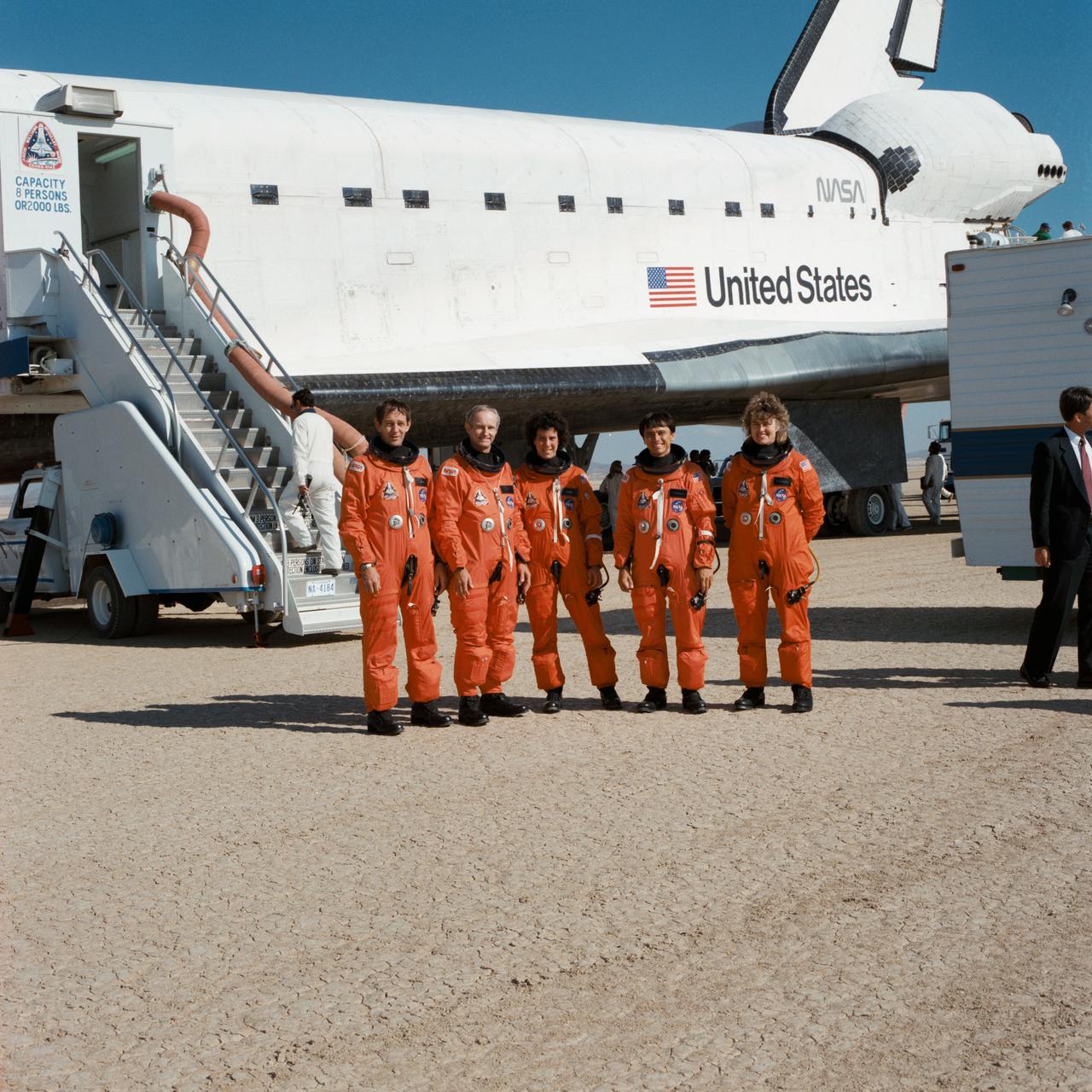
STS-34 crewmembers, wearing launch and entry suits (LESs), stand in front of Atlantis, Orbiter Vehicle (OV) 104, on Runway 23 dry lake bed at Edwards Air Force Base (EAFB), California. Left to right are Pilot Michael J. McCulley, Commander Donald E. Williams, Mission Specialist (MS) Ellen S. Baker, MS Franklin R. Chang-Diaz, and MS Shannon W. Lucid. Ground crews service OV-104 in the background.
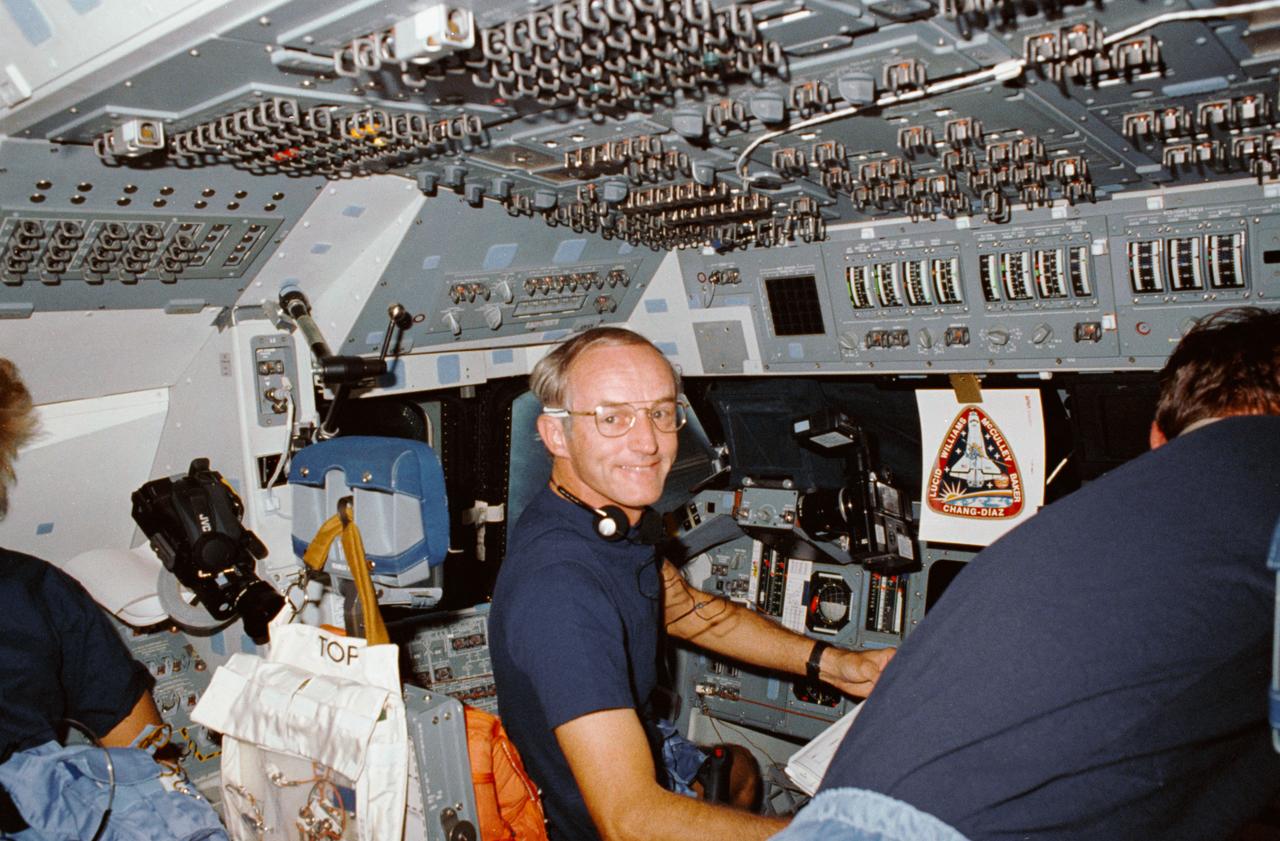
STS034-06-025 (18-23 Oct. 1989) --- Astronaut Donald E. Williams spent a portion of the five-day STS-34 flight at Atlantis' commander's station and, as evidenced by his countenance in this posed photo, appeared to enjoy his second spaceflight, his first as a mission commander. Astronaut Michael J. McCulley, pilot, leans over the pilot's station at right. This 35mm scene was in the first 12 photos released by NASA on Oct. 24, 1989.
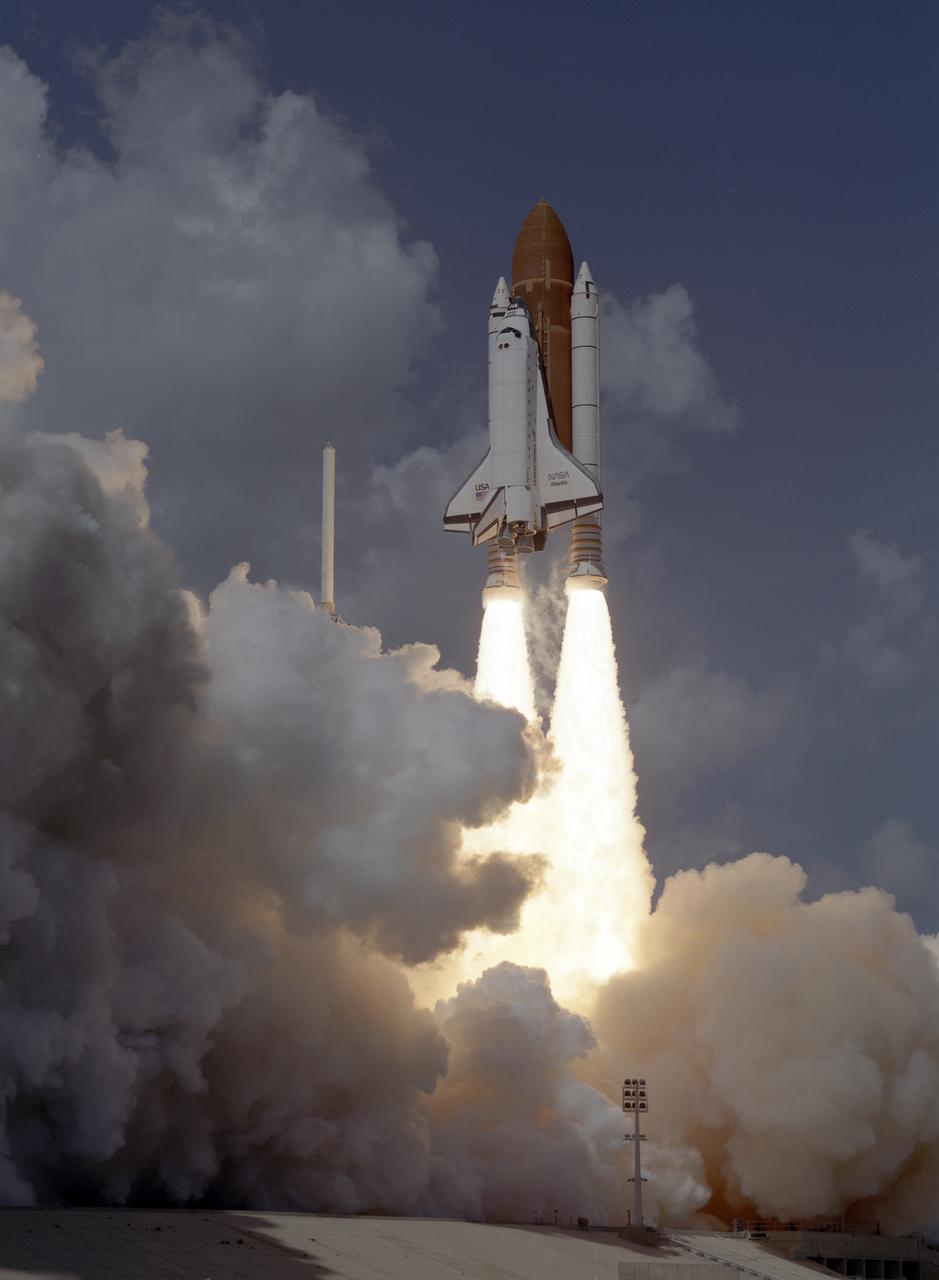
The STS-34 crew of five launched aboard the Space Shuttle Orbiter Atlantis on October 18, 1989 at 12:53:40pm (EDT). Crew members included commander Donald E. Williams, pilot Michael J. McCulley; and mission Specialists Shannon W. Lucid, Franklin R. Chang-Diaz, and Ellen S. Baker. The primary payload was the Galileo Jupiter Spacecraft and attached Inertial Upper Stage (IUS). Deployed 6 hours and 30 minutes into the flight, the IUS stages fired boosting Galileo on trajectory for a 6 year trip to Jupiter.
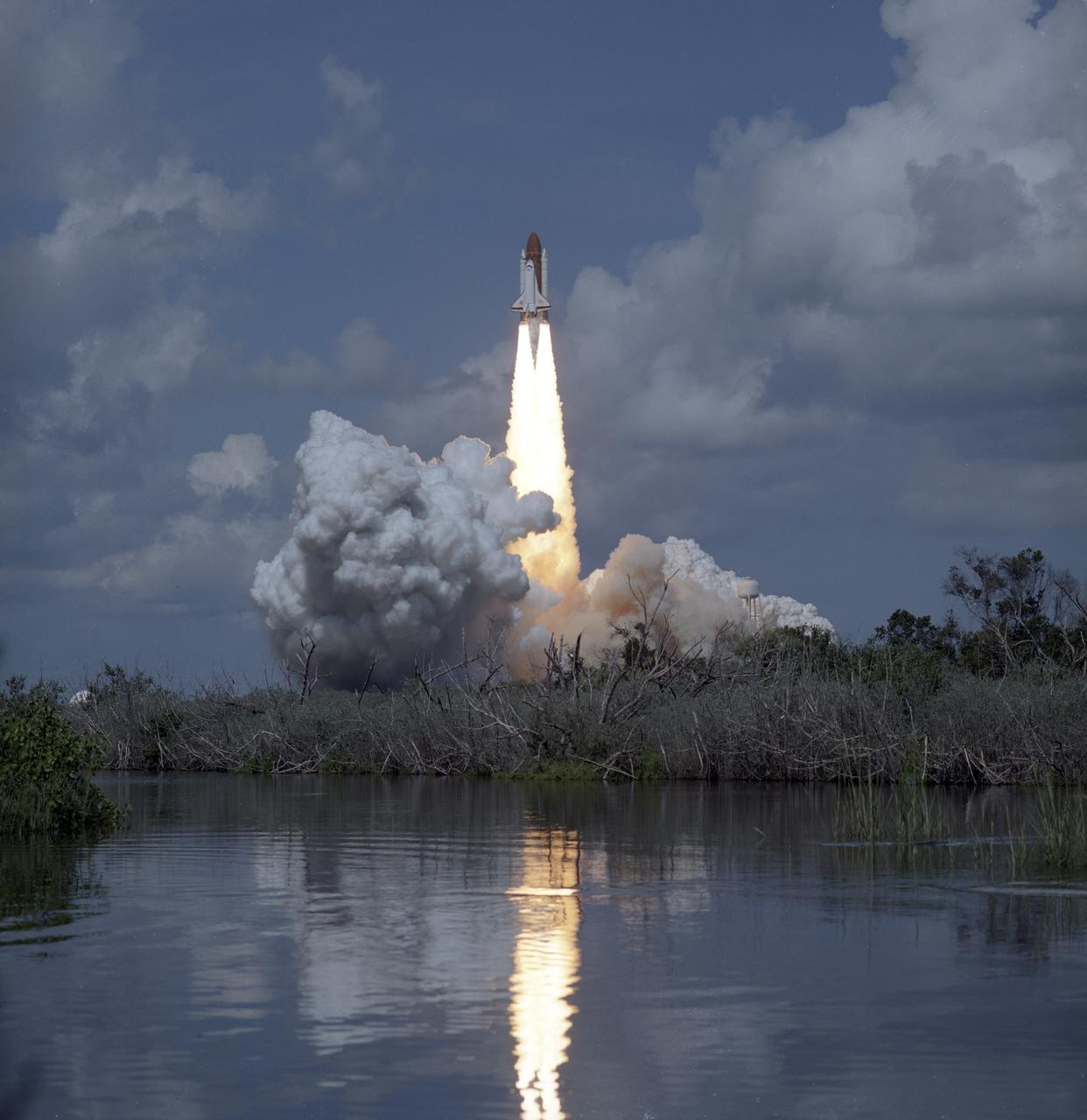
The STS-34 crew of five launched aboard the Space Shuttle Orbiter Atlantis on October 18, 1989 at 12:53:40pm (EDT). Crew members included commander Donald E. Williams, pilot Michael J. McCulley, and mission Specialists Shannon W. Lucid, Franklin R. Chang-Diaz, and Ellen S. Baker. The primary payload was the Galileo Jupiter Spacecraft and attached Inertial Upper Stage (IUS). Deployed 6 hours and 30 minutes into the flight, the IUS stages fired boosting Galileo on trajectory for a 6 year trip to Jupiter.
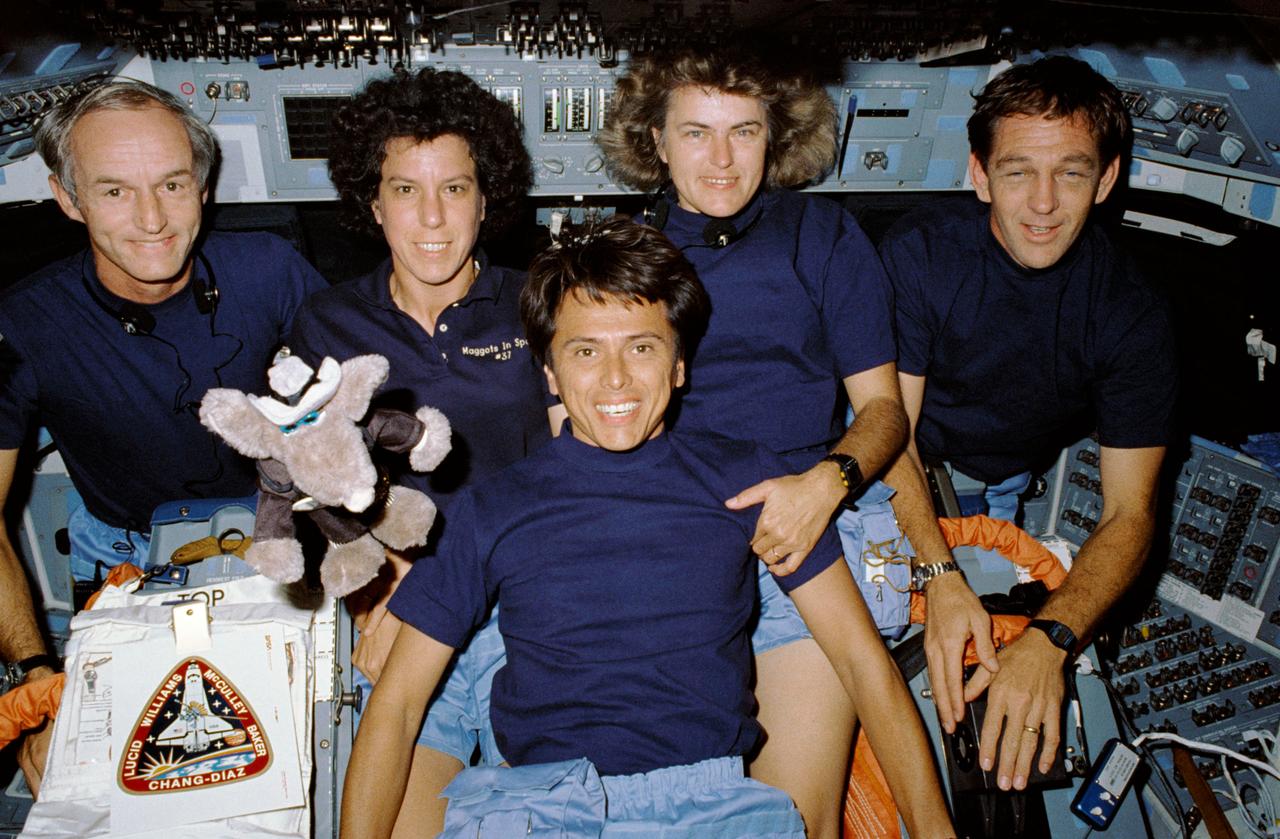
STS034-06-019 (18-23 Oct. 1989) --- The five astronaut crew members for NASA's STS-34 mission pose for an in-space crew "portrait," using a pre-set 35mm camera. Coincidentally, astronauts Donald E. Williams (left), commander, and Michael J. McCulley (right), pilot, are positioned at their respective stations of operation (except that they are turned 180 degrees) aboard the Earth-orbiting space shuttle Atlantis. They form "bookends" for the crew's three mission specialists -- Ellen S. Baker (second left), Shannon W. Lucid and Franklin R. Chang-Diaz.
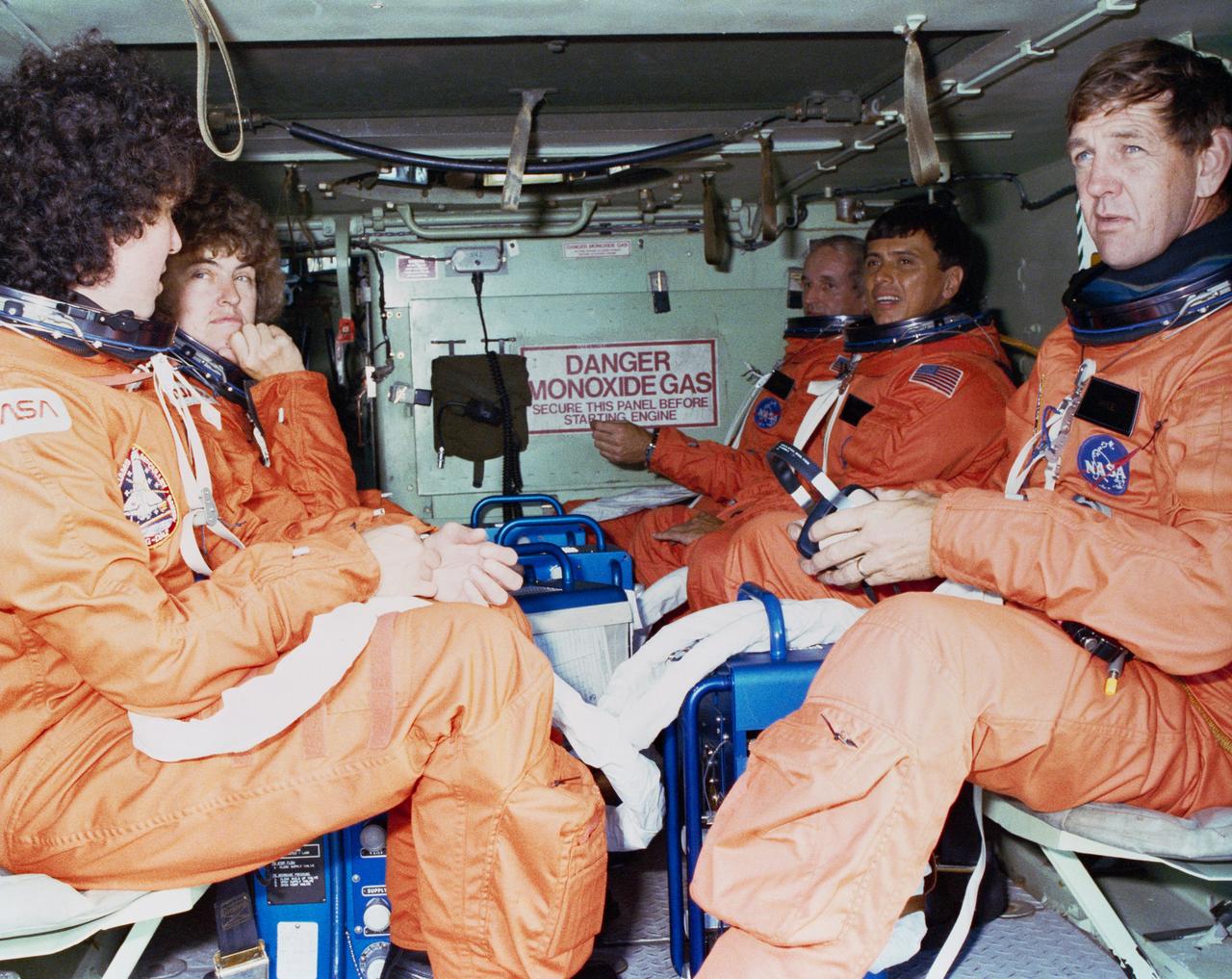
STS-34 crewmembers sit in M1-13 Armored Personnel Carrier (APC) during emergency egress training at KSC's shuttle landing facility (SLF) prior to terminal countdown demonstration test (TCDT) activities. Wearing launch and entry suits (LESs), are (from left) Mission Specialist (MS) Ellen S. Baker, MS Shannon W. Lucid, Commander Donald E. Williams (right side, in back), MS Franklin R. Chang-Diaz, and Pilot Michael J. McCulley (holding headset). View provided by KSC with alternate number KSC-89PC-871.
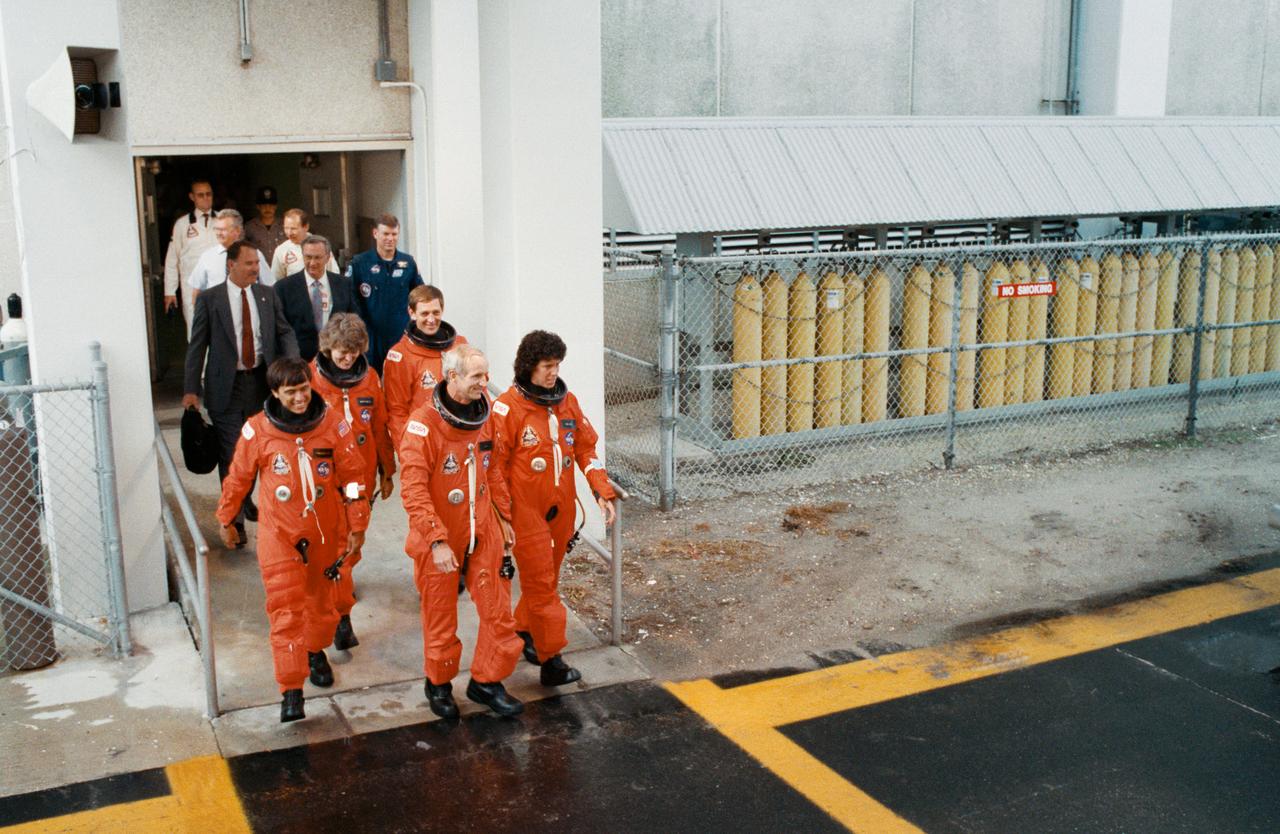
STS-34 crewmembers leave the Kennedy Space Center (KSC) Operations and Checkout (O&C) Building. Crewmembers will then board a vehicle which will carry them to Launch Complex (LC) Pad 39B. Crewmembers, wearing orange launch and entry suits (LESs), are (left to right) Mission Specialist (MS) Franklin R. Chang-Diaz, MS Shannon W. Lucid, Pilot Michael J. McCulley, Commander Donald E. Williams, and MS Ellen S. Baker. Following the crewmembers are (dark clothing, left to right) Donald R. Puddy, Olan J. Bertrand, and astronaut Michael L. Coats of JSC.
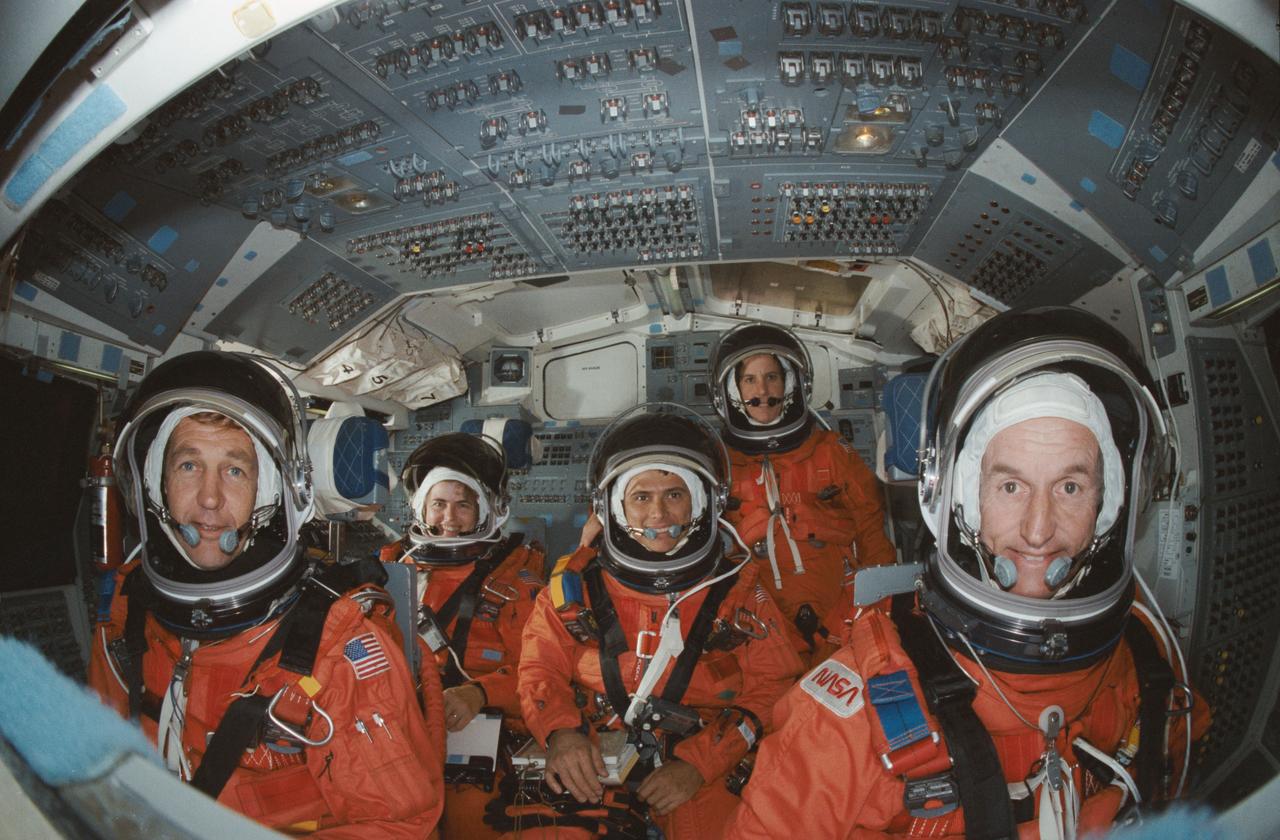
S89-45735 (Sept 1989) --- Five astronauts take a break from training for NASA's STS-34 mission to pose for a photo in the crew compartment trainer (CCT) in the Shuttle mockup and integration lab at JSC. Left to right are Astronauts Michael J. McCulley, pilot; Shannon W. Lucid, Franklin R. Chang-Diaz and Ellen S. Baker, all mission specialists; and Donald E. Williams, mission commander. They are wearing the orange partial pressure suits for the ascent and entry phase of flight. Their launch aboard the Atlantis is scheduled for Oct. 12. The photograph was made by Bill Bowers, a crew trainer at JSC.
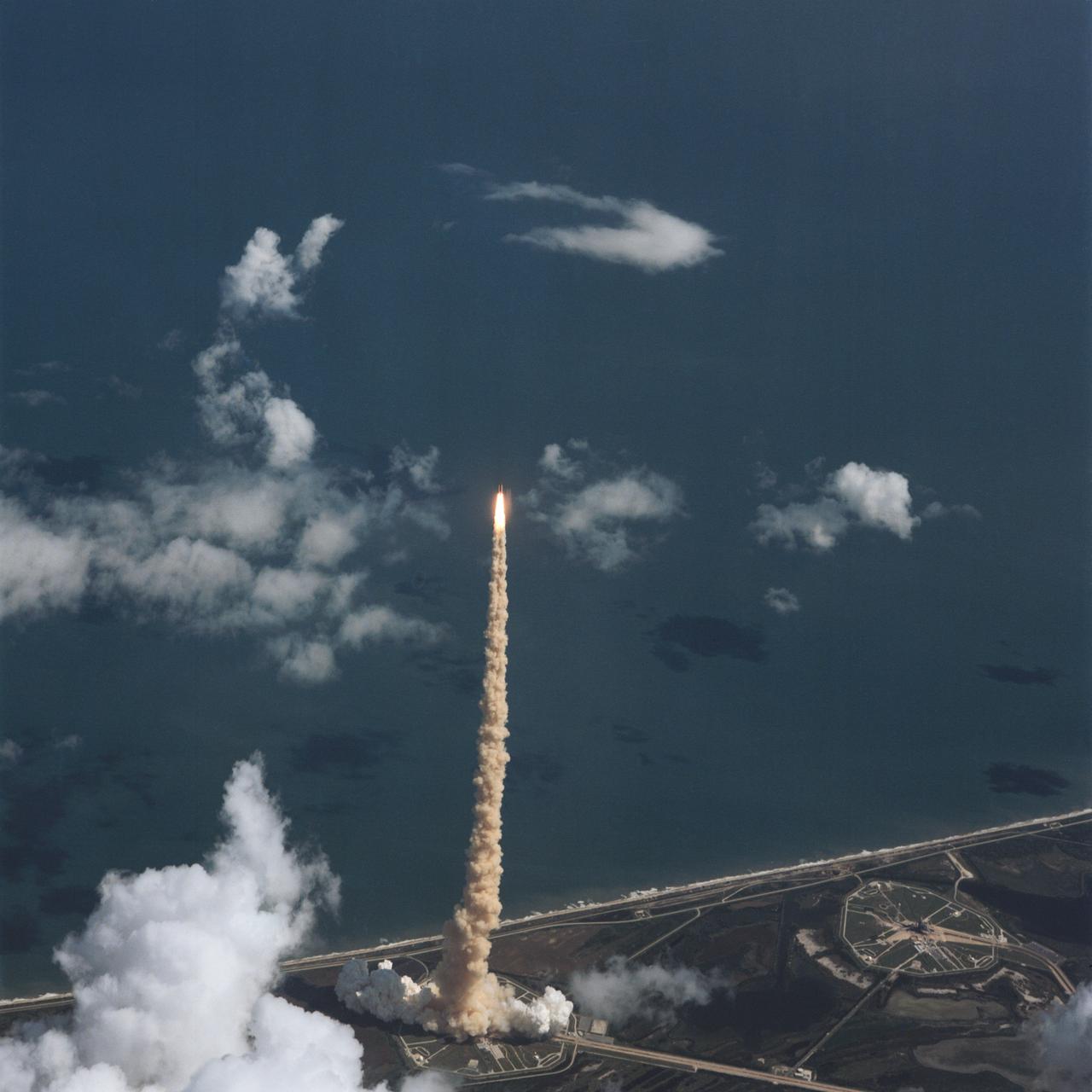
STS-34 Atlantis, Orbiter Vehicle (OV) 104, lifts off from Kennedy Space Center (KSC) Launch Complex (LC) Pad 39B at 12:53:39:983 pm Eastern Daylight Time (EDT). This aerial view shows OV-104, its external tank (ET), and two solid rocket boosters (SRBs) rising high above LC Pad 39B atop a plume of exhaust smoke. Atlantic Ocean is visible in the background. The liftoff marks the beginning of a five-day mission in space.
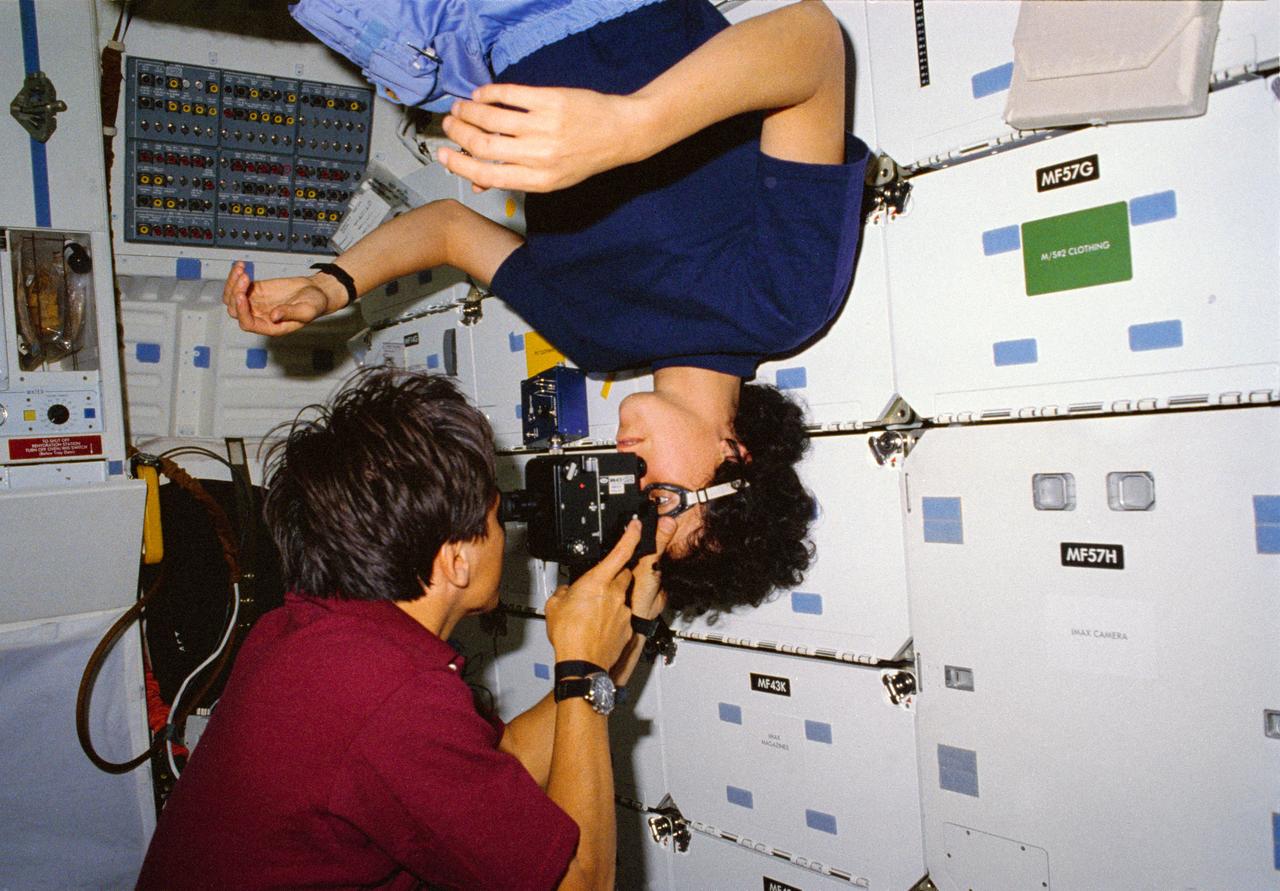
STS034-10-015 (18-23 Oct. 1989) --- Astronaut Franklin R. Chang-Diaz performs an eye examination on astronaut Ellen S. Baker, both STS-34 mission specialists, on the middeck of the Earth-orbiting space shuttle Atlantis.
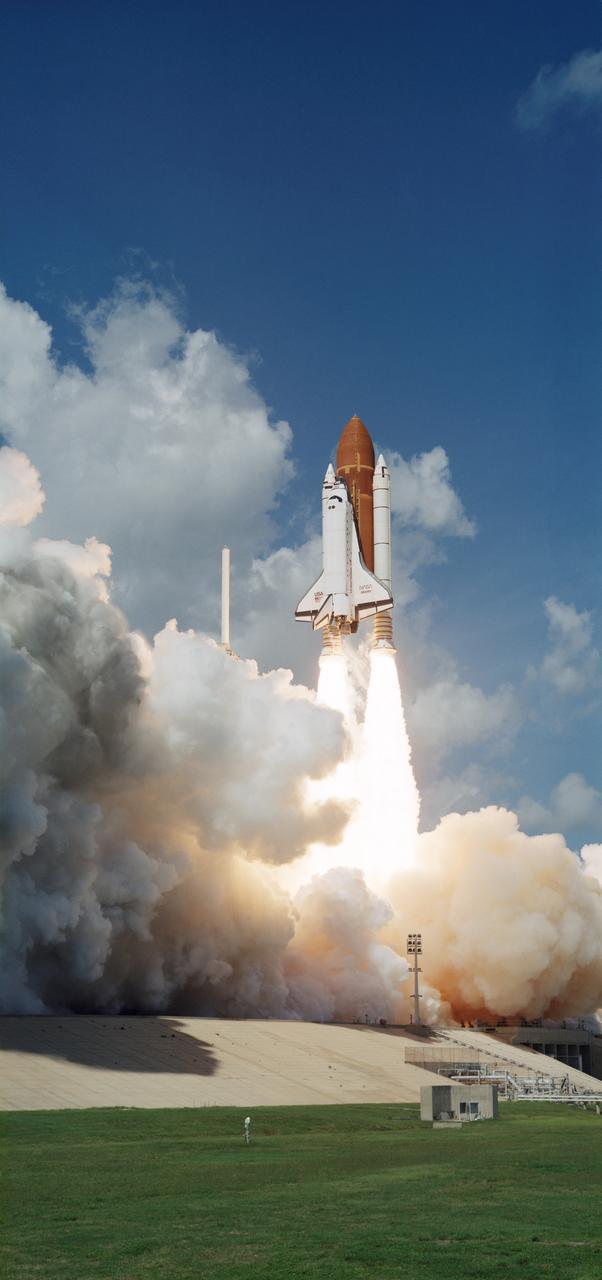
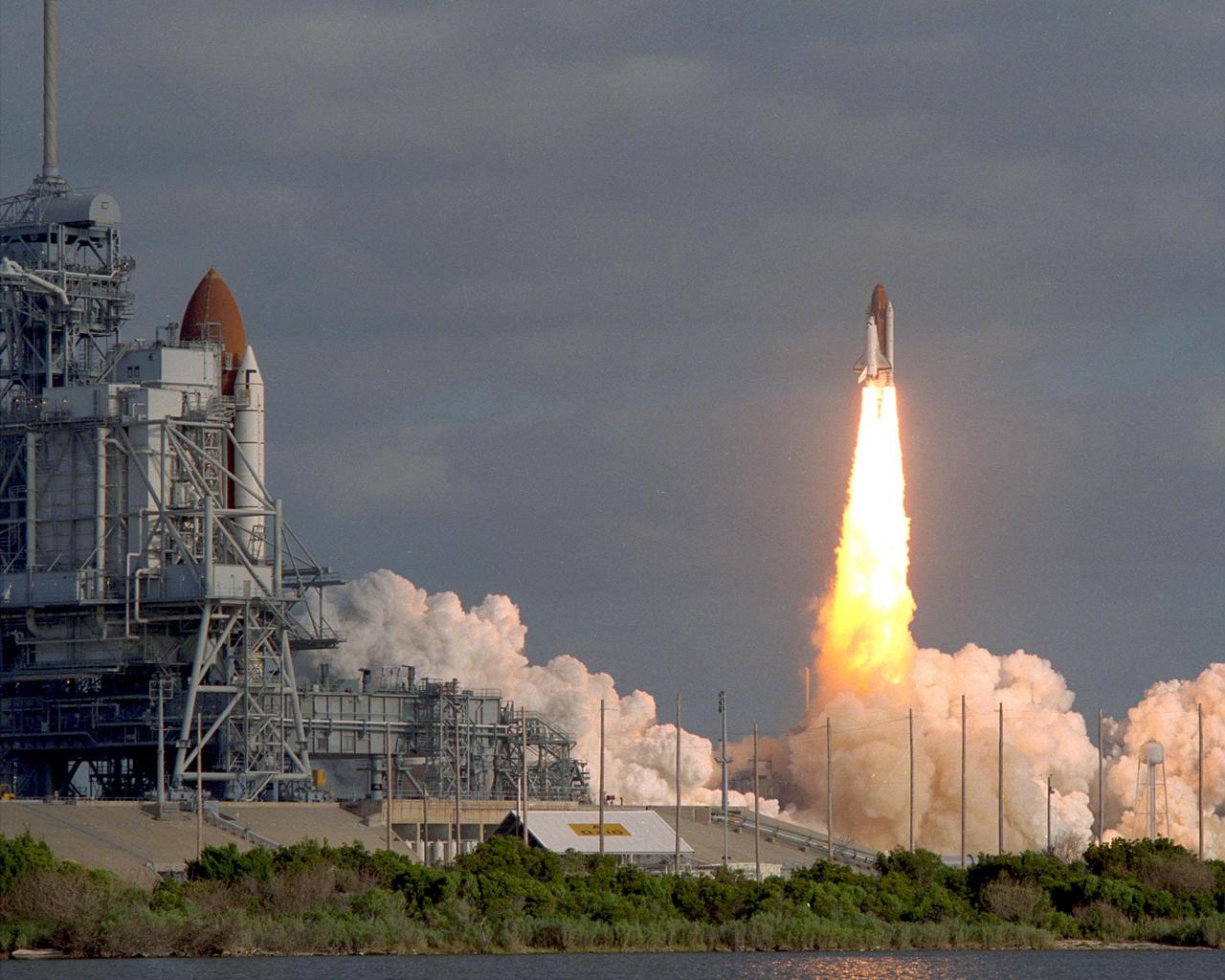
STS034-S-023 (18 Oct. 1989) --- The STS-34 Space Shuttle Atlantis lifts off from Kennedy Space Center’s launch pad 39-B at l2:53:39 p.m. (EDT) on Oct. 18, 1989, marking the beginning of a five-day mission in space. Atlantis carries a crew of five and the spacecraft Galileo. The Jupiter-bound probe will be deployed from Atlantis some six hours after launch. The journey to the giant planet is expected to take over six years. Crewmembers for the mission are astronauts Donald E. Williams, Michael J. McCulley, Shannon W. Lucid, Franklin R. Chang-Diaz and Ellen S. Baker. The scene was recorded with a 70mm camera.
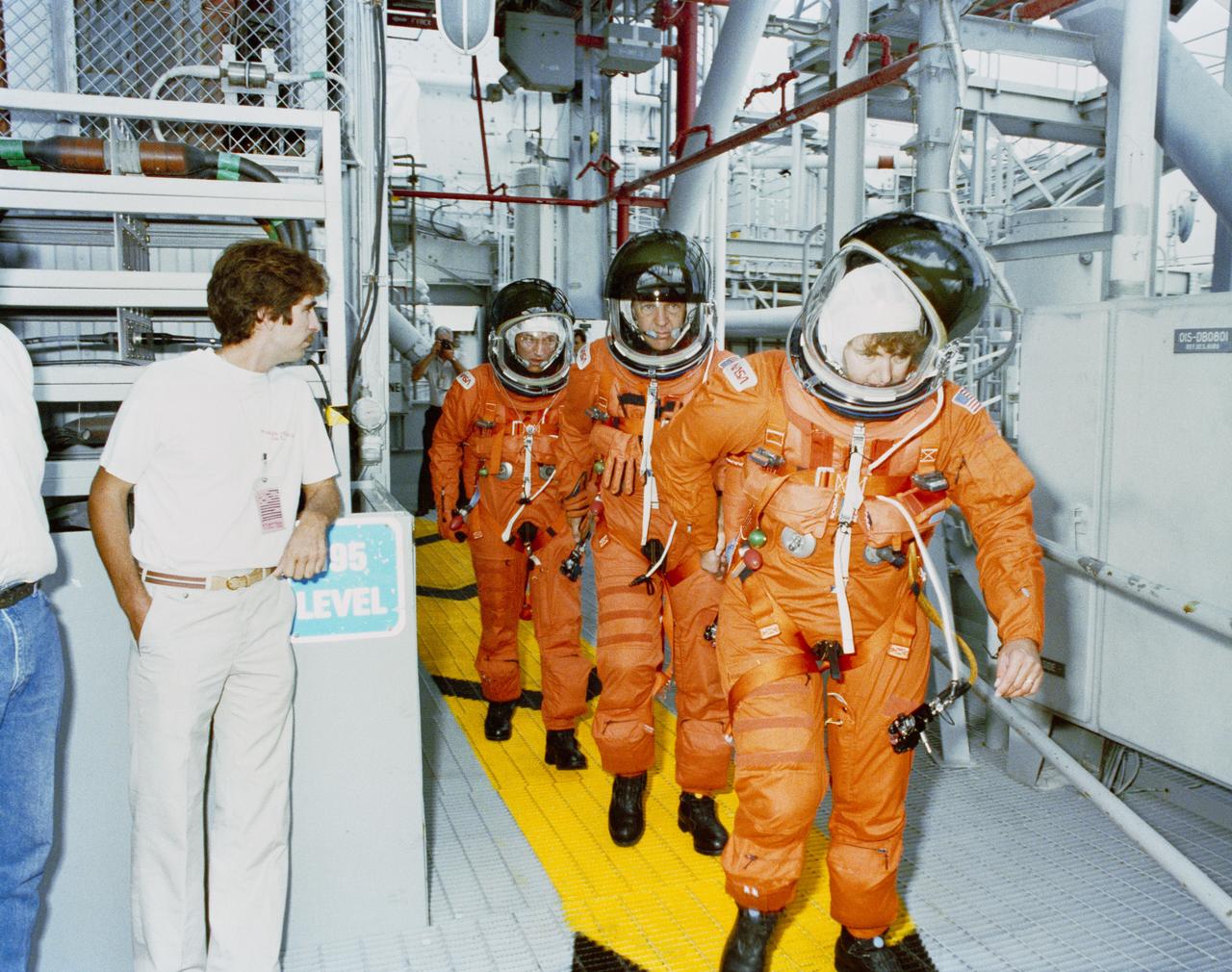
S89-46513 (15 Sept 1989) --- Three members of the STS-34 crew rehearse for their pre-launch procedures at Launch Pad 39B during Terminal Countdown Demonstration Test (TCDT) activities at Kennedy Space Center (KSC). From the foreground, Astronauts Shannon W. Lucid, Michael J. McCulley and Donald E. Williams are at the 195-ft. level of at Pad B. The crew entered Atlantis for the mock countdown. The five astronauts are expected to spend more than five days in Earth orbit next month, with their primary objective being to release the Galileo spacecraft and send it on its way to Jupiter. Not in the frame are Astronauts Franklin R. Chang-Diaz and Ellen S. Baker. (KSC-89PC-898)
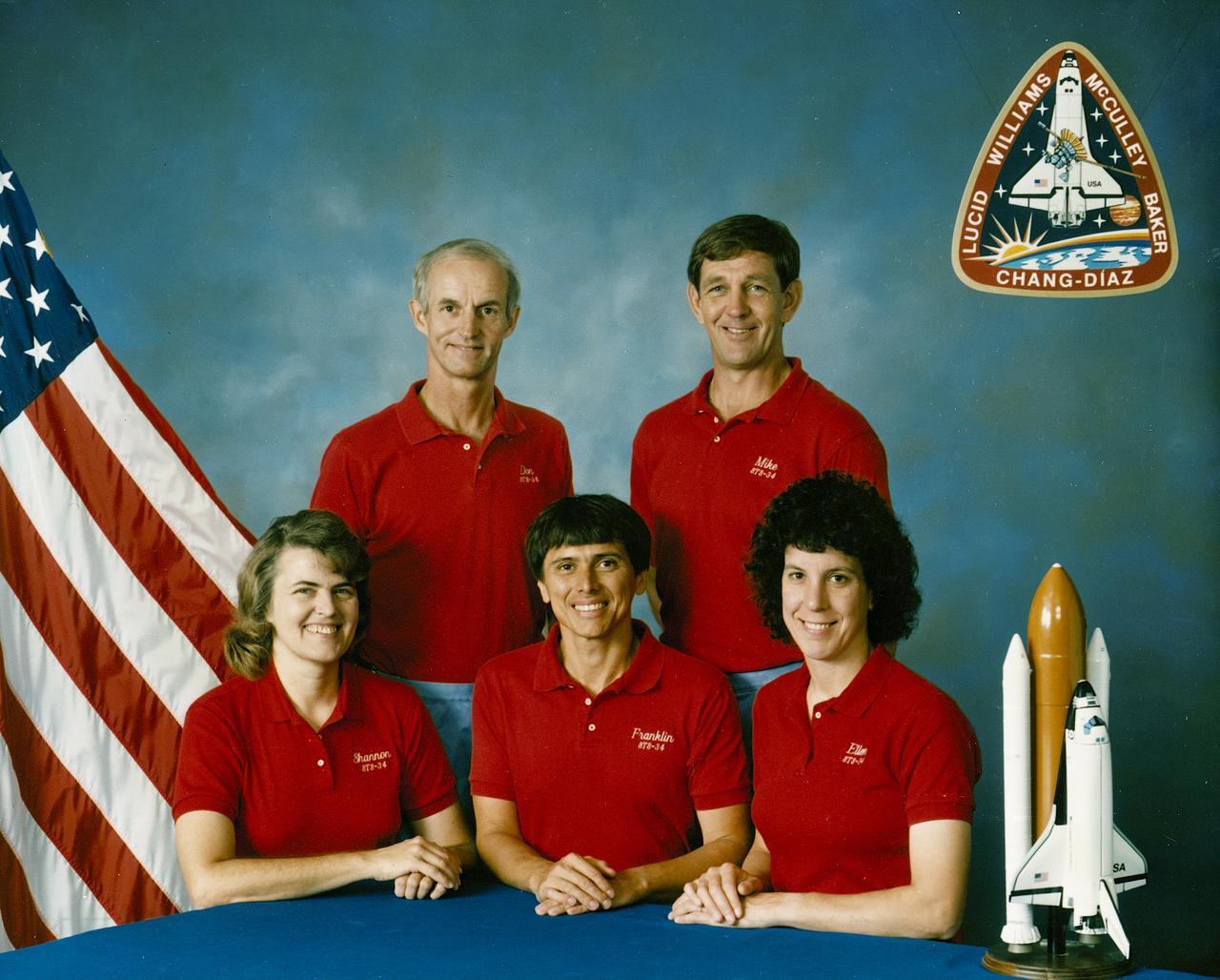
The STS-34 crew portrait includes 5 astronauts. Pictured left to right are Shannon W. Lucid, mission specialist; Donald E. Williams, commander; Franklin R. Chang-Diaz, mission specialist; Michael J. McCulley, pilot; and Ellen S. Baker, mission secialist. The crew of 5 launched aboard the Space Shuttle Orbiter Atlantis on October 18, 1989 at 12:53:40pm (EDT). The primary payload was the Galileo Jupiter Spacecraft and attached inertial upper stage (IUS). Deployed 6 hours and 30 minutes into the flight, the IUS stages fired, boosting Galileo on trajectory for a 6 year trip to Jupiter.
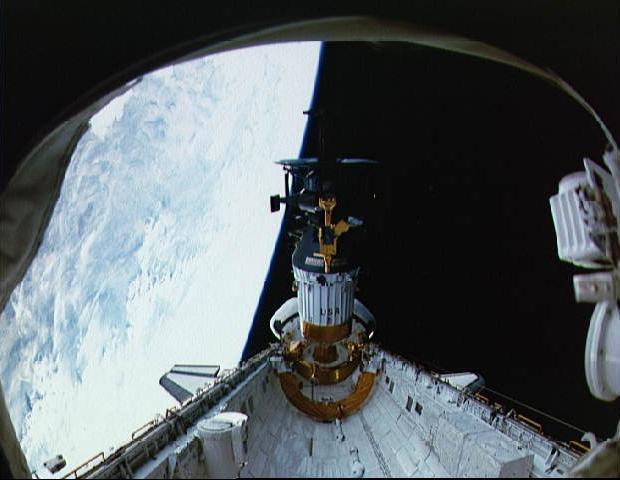
Deployment of NASA Galileo and the IUS from the cargo bay of STS-34 Atlantis at 7:15 p.m. EDT on October 18, 1989. P-35213
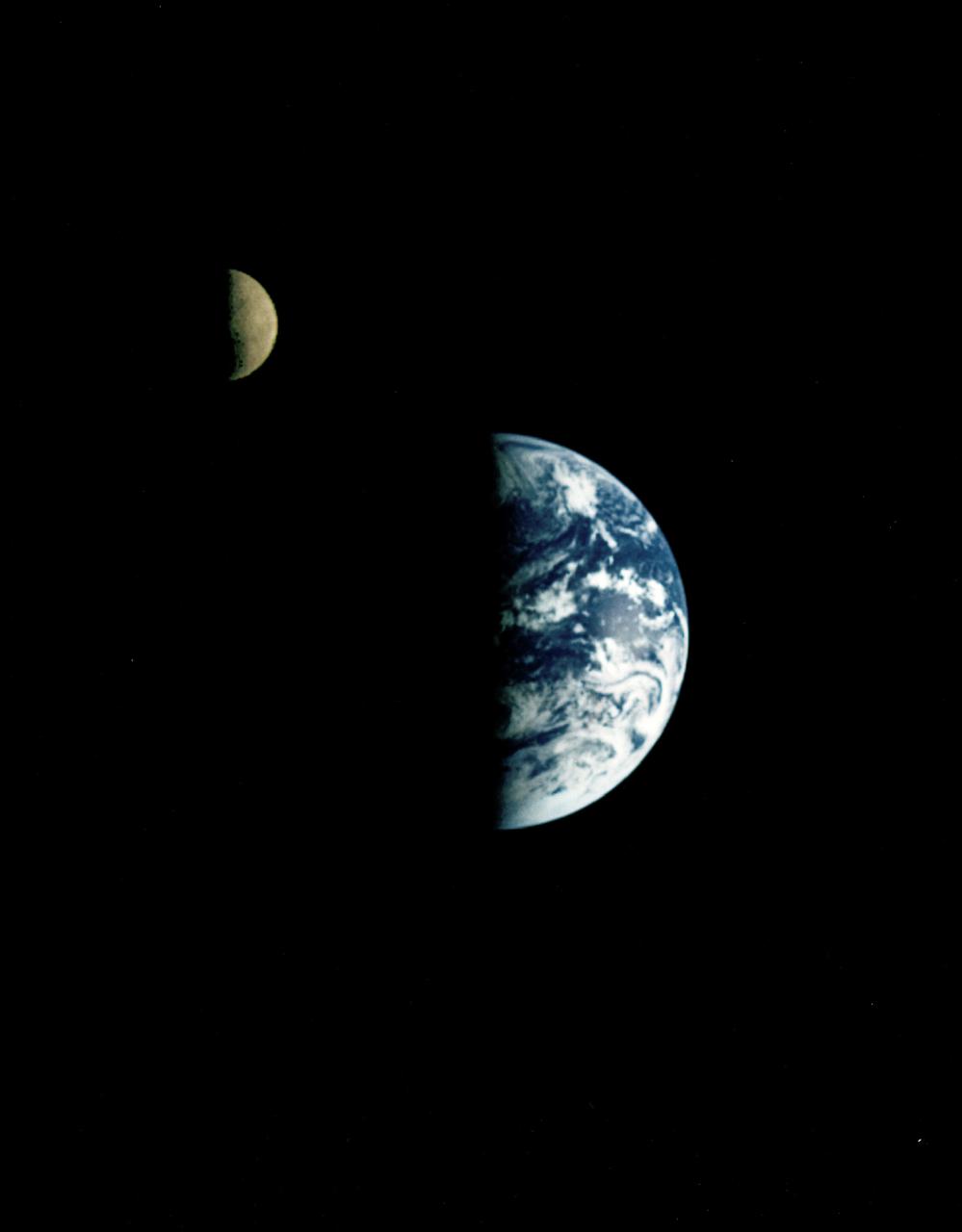
CAPE CANAVERAL, Fla. – Eight days after its encounter with the Earth, the Galileo spacecraft was able to look back and capture this remarkable view of the moon in orbit about the Earth, taken from a distance of about 6.2 million kilometers, or 3.9 million miles, on December 16. Photo credit: NASA
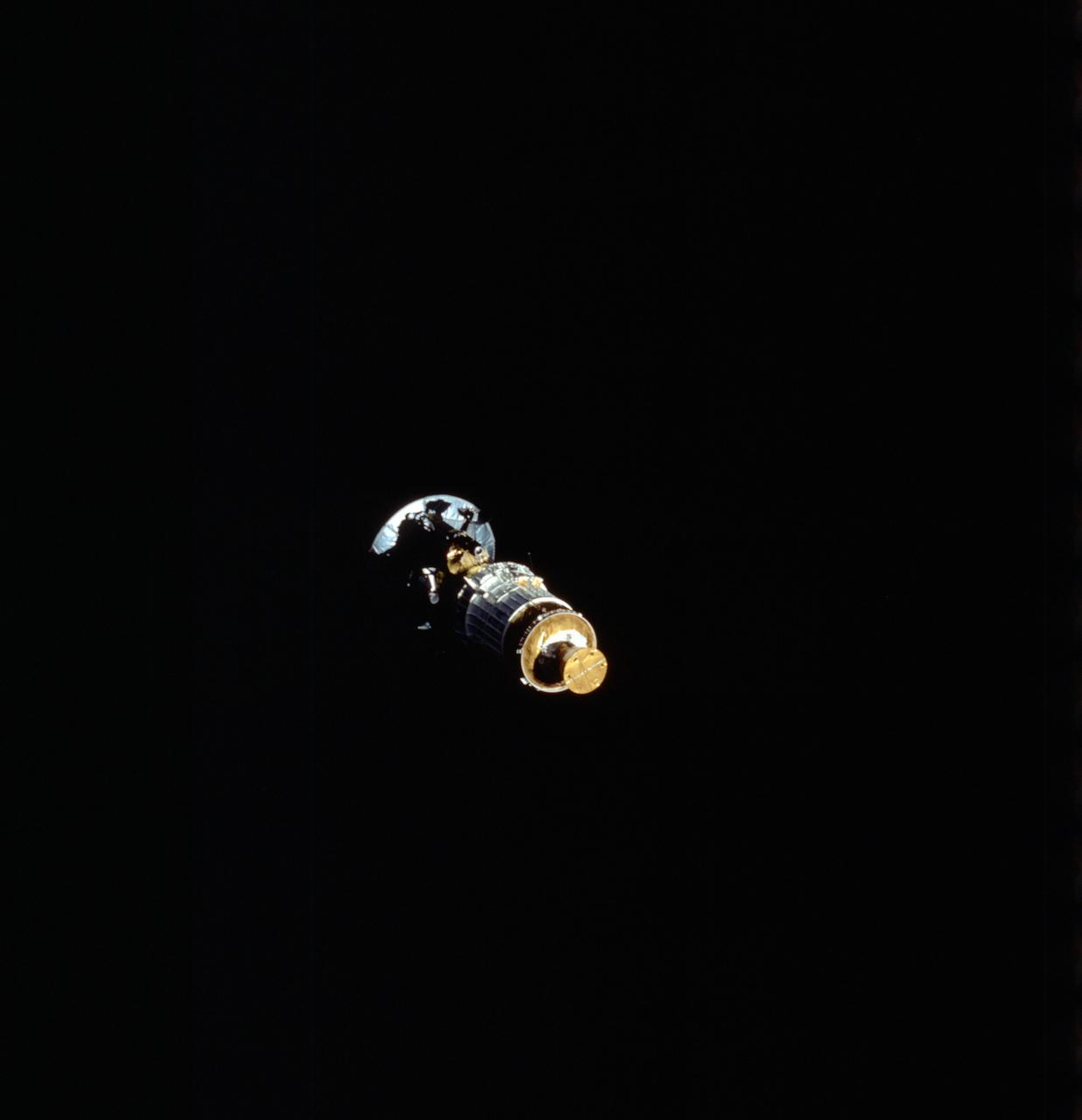
STS034-72-070 (18 Oct 1989) --- Backdropped against the blackness of space, the Galileo spacecraft and its inertial upper stage (IUS) begin relative separation from the Earth-orbiting Space Shuttle Atlantis. The five-member STS-34 crew deployed the Jupiter-bound satellite within six hours of achieving Earth orbit on Oct. 18, 1989. The scene was exposed with a 70mm handheld Hasselblad camera.
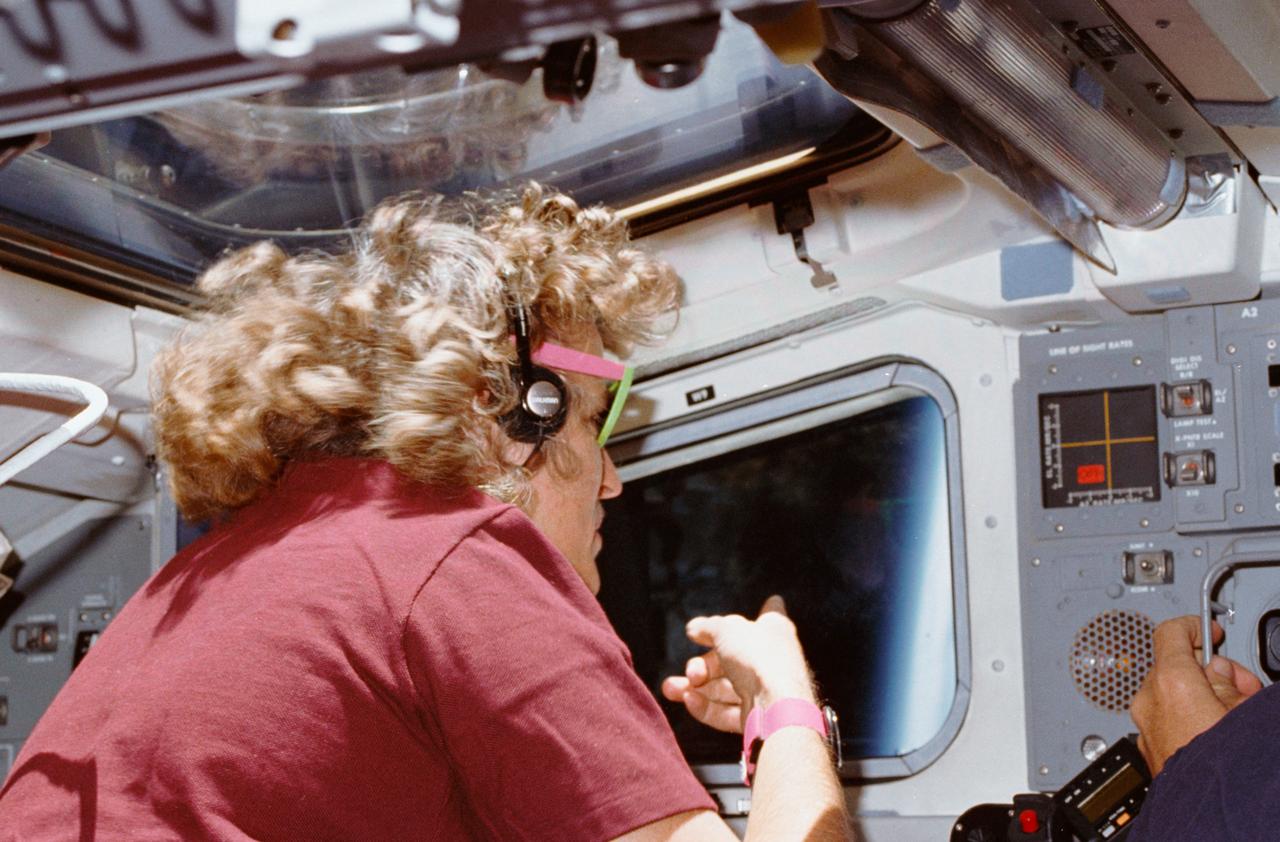
STS034-05-027 (18-23 Oct. 1989) --- Astronaut Shannon W. Lucid peers into Atlantis' cargo bay from the aft flight deck. The spacecraft was in the midst of one of its many "days", a 50-odd minutes session of exposure to the sun. The scene was recorded with a 35mm camera.
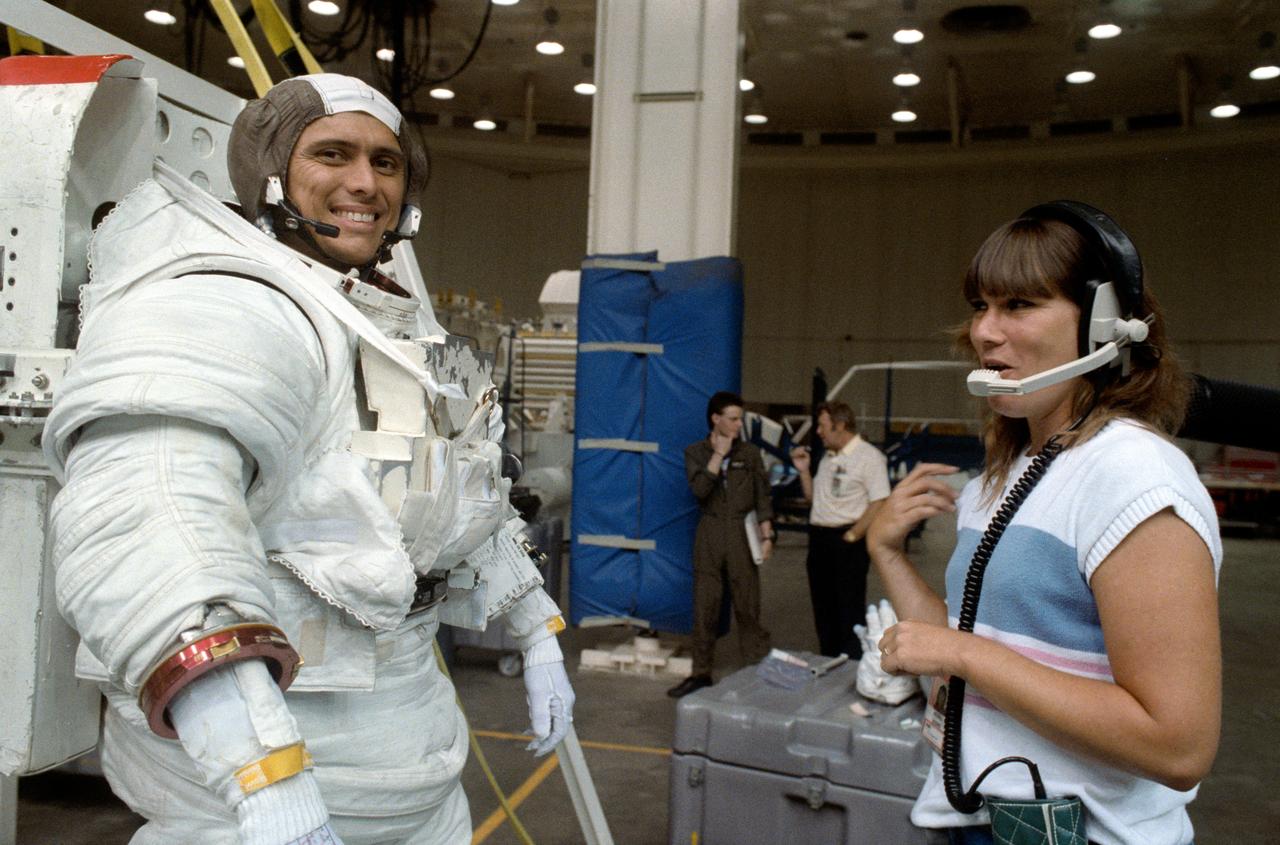
S89-42667 (24 Aug 1989) --- Astronaut Franklin R. Chang-Diaz tests his communications gear with Pam S. Peters of RSO, prior to participating in an underwater simulation of a contingency extravehicular activity (EVA) for his mission specialist assignment on NASA's STS-34 mission. He stands on a platform that will lower him into a 25-ft. deep pool, part of JSC's weightless environmental test facility (WET-F). Also participating in the contingency EVA rehearsal was astronaut Ellen S. Baker (out of frame).
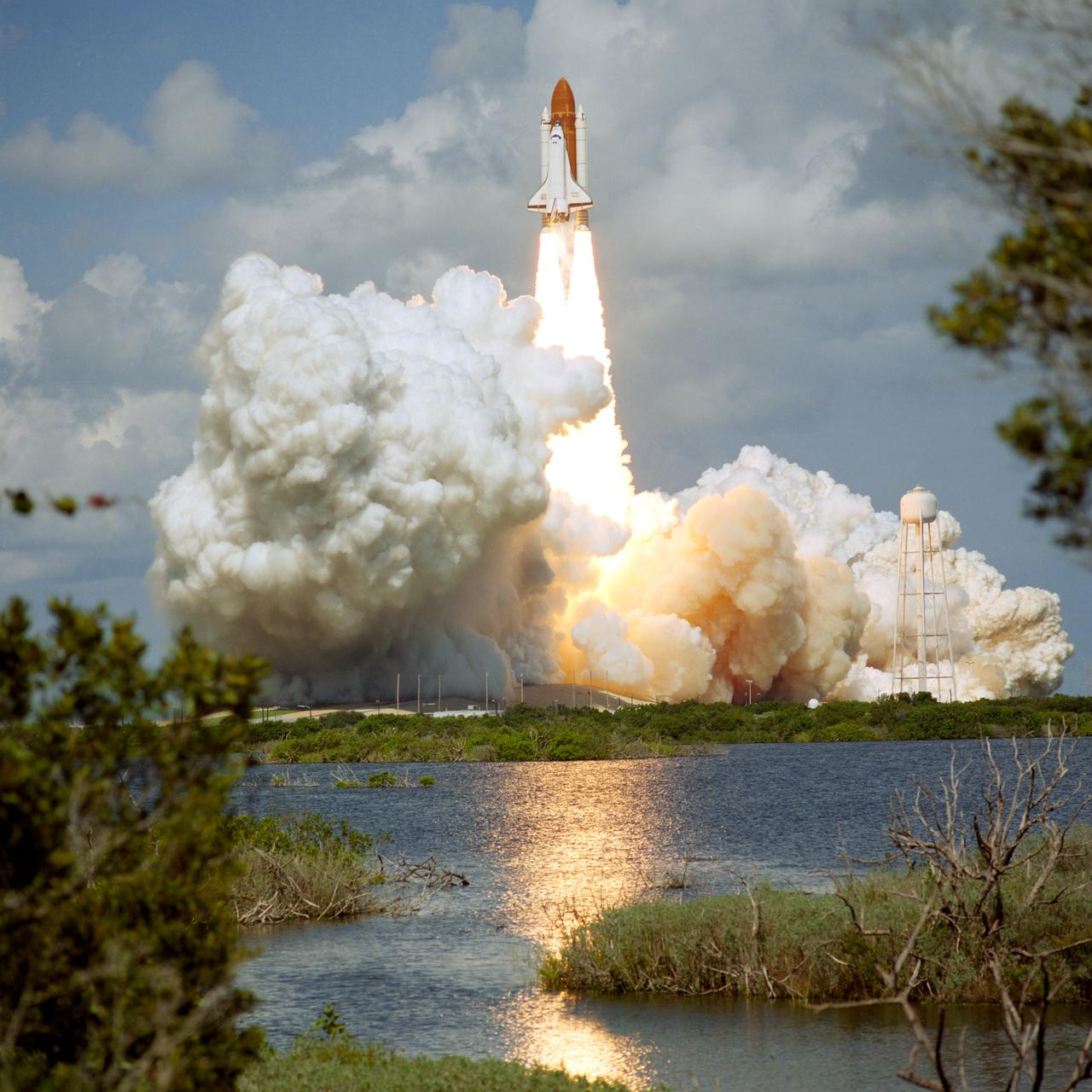
STS034-S-025 (18 Oct 1989) --- The STS-34 Space Shuttle Atlantis lifts off from Launch Pad 39-B at 2:53:39:983 p.m. (EDT), marking the beginning of a five-day mission in space. Atlantis carries a crew of five and the spacecraft Galileo, along with a number of other scientific experiments. The Jupiter-bound probe will be deployed from Atlantis some six hours after launch. The journey to the giant planet is expected to take over six years. Crewmembers for the mission are astronauts Donald E. Williams, Michael J. McCulley, Shannon W. Lucid, Franklin R. Chang-Diaz and Ellen S. Baker. The scene was recorded with a 70mm camera.
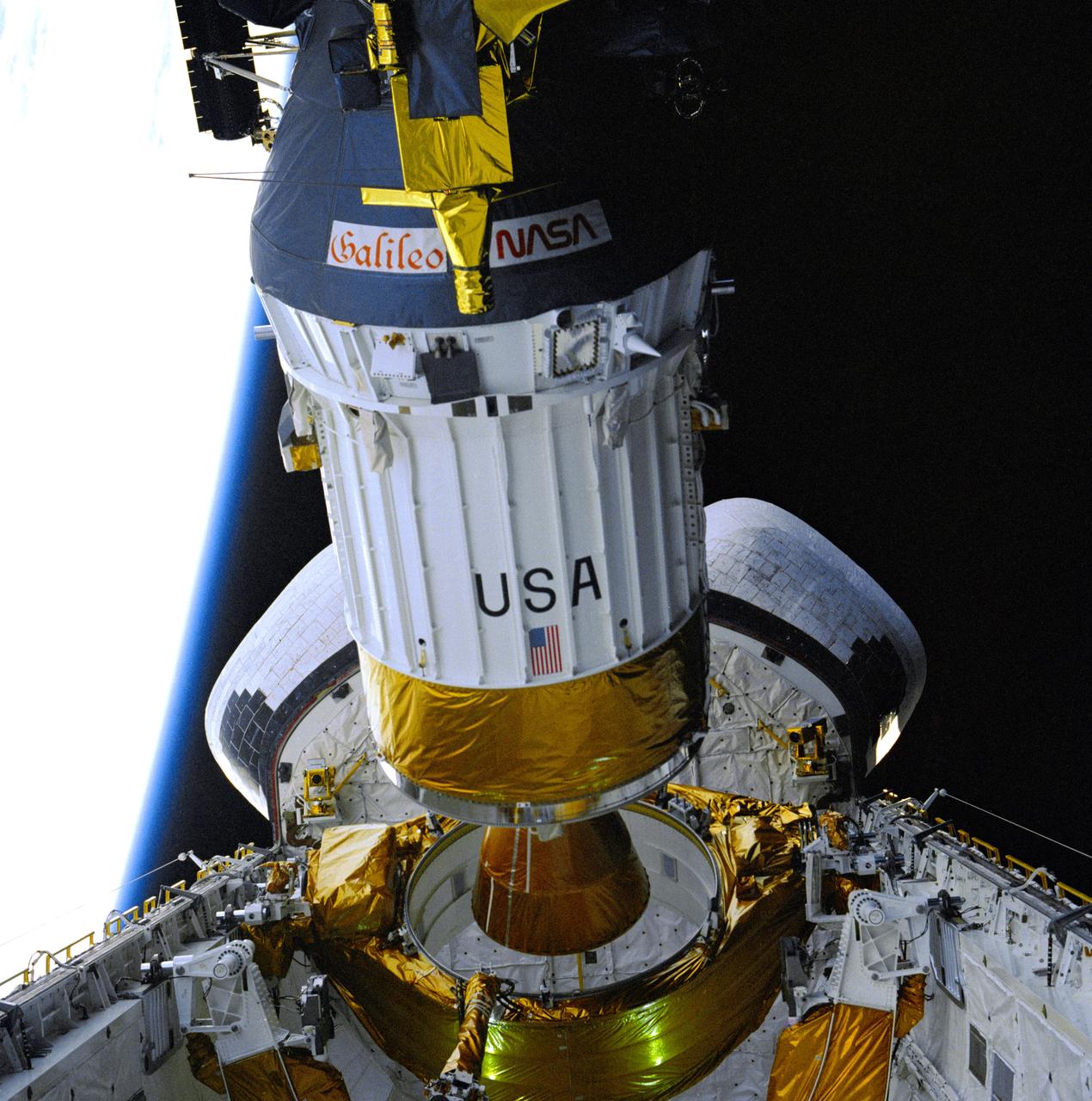
STS034-71-000AK (18 Oct 1989) --- Backdropped against the blackness of space, the Galileo spacecraft and its inertial upper stage (IUS) have just detached from a cradle-like device aboard the Earth-orbiting Space Shuttle Atlantis to begin a six-year journey to Jupiter. The five-member STS-34 crew deployed the satellite within six hours of achieving Earth orbit on Oct. 18, 1989. The scene was exposed with a 70mm handheld Hasselblad camera. Earth's horizon and a thin line representing its airglow and atmosphere are visible on the left side of the frame.
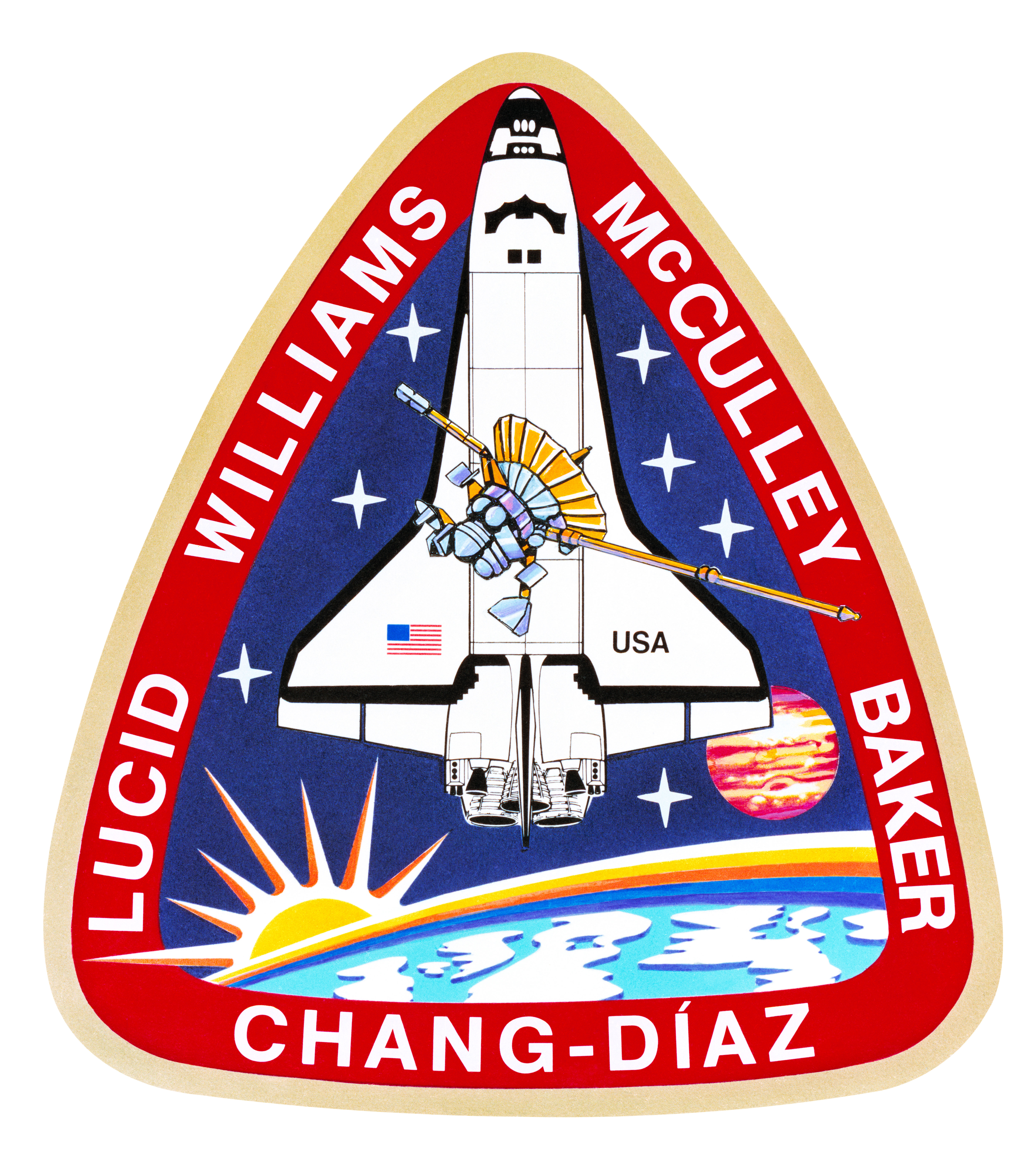
S89-20077 (17 July 1989) --- The triangular shape of the STS-34 crew patch represents forward motion and the entering into new frontiers of science, engineering and technology. The Galileo spacecraft overlaying the orbiter symbolizes the joining together of both manned and unmanned space programs in order to maximize the capabilities of each. The crew members, who designed the patch, use a sunrise stretching across Earth's horizon to depict expansion of our knowledge of the solar system and other worlds, leading to a better understanding of our own planet. In the distance, Jupiter, a unique world with many unknowns, awaits the arrival of Galileo to help unlock its secrets. Meanwhile, the space shuttle remains in Earth orbit, continuing to explore the near-Earth environment. The NASA insignia design for space shuttle flights is reserved for use by the astronauts and for other official use as the NASA Administrator may authorize. Public availability has been approved only in the forms of illustrations by the various news media. When and if there is any change in this policy, which is not anticipated, the change will be publicly announced. Photo credit: NASA
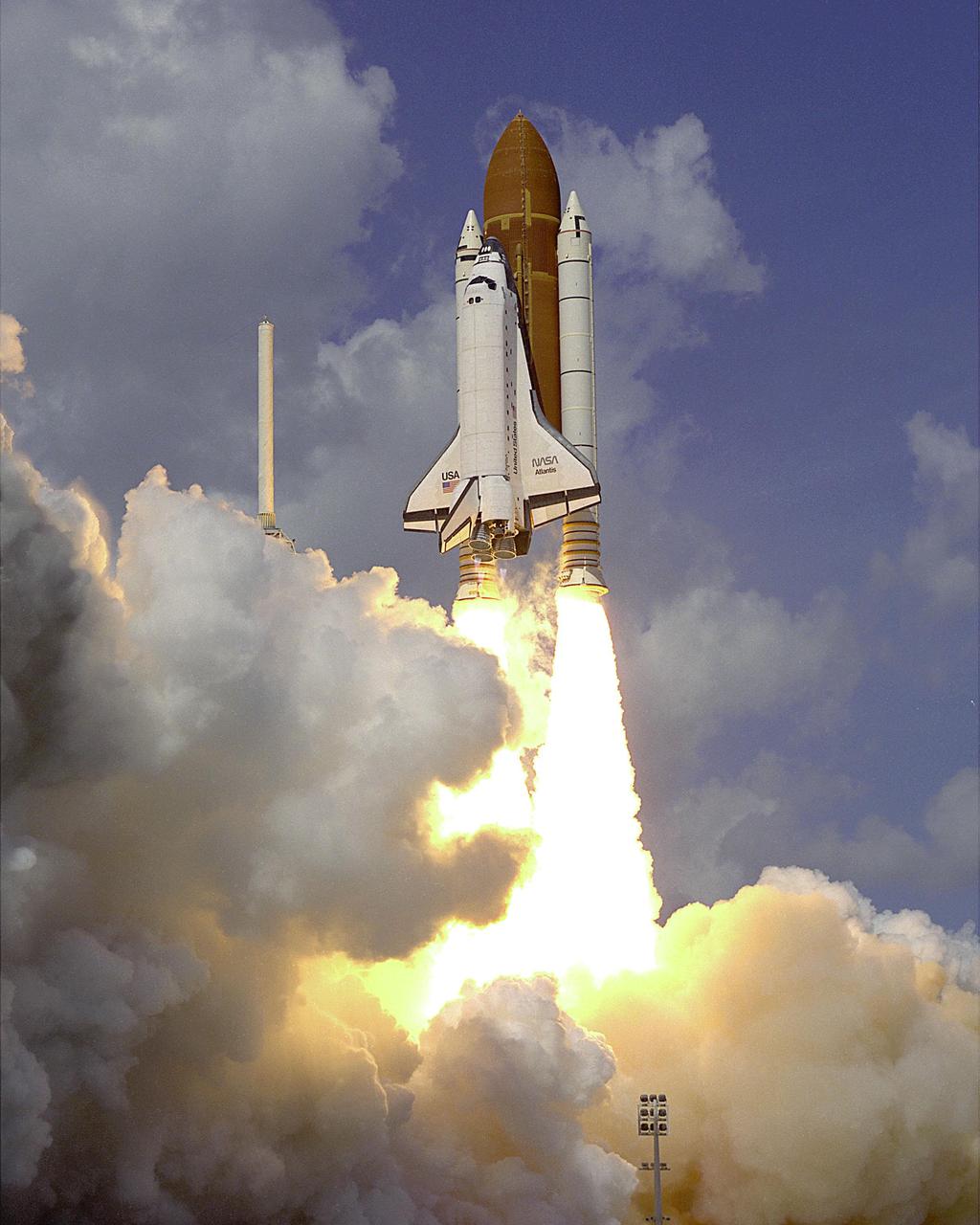
KENNEDY SPACE CENTER, FLA. -- STS-34: Atlantis
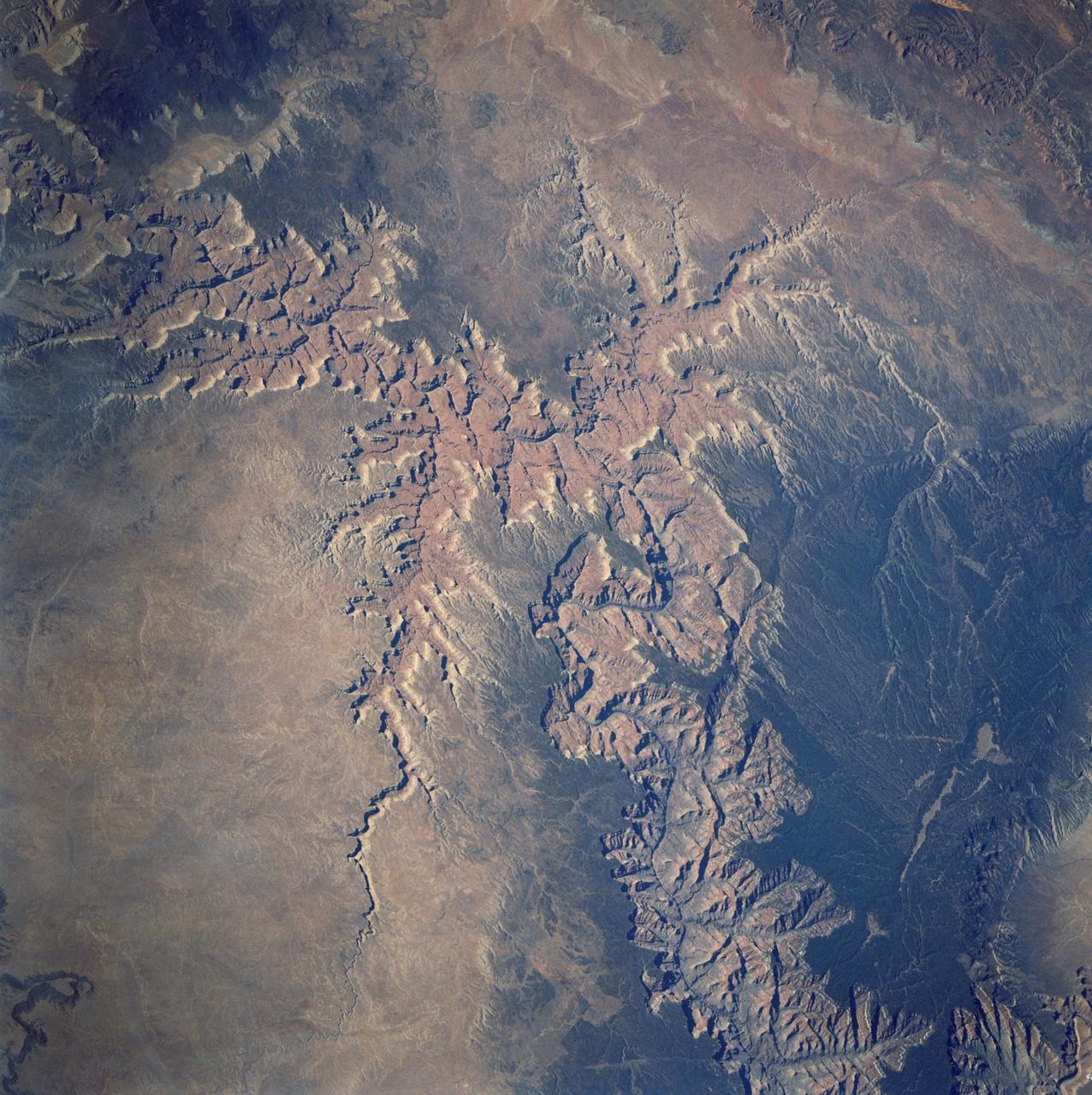
STS034-73-062 (18-23 October 1989) --- Grand Canyon, Arizona (36.5N, 112.5W), as photographed from the Space Shuttle Atlantis.
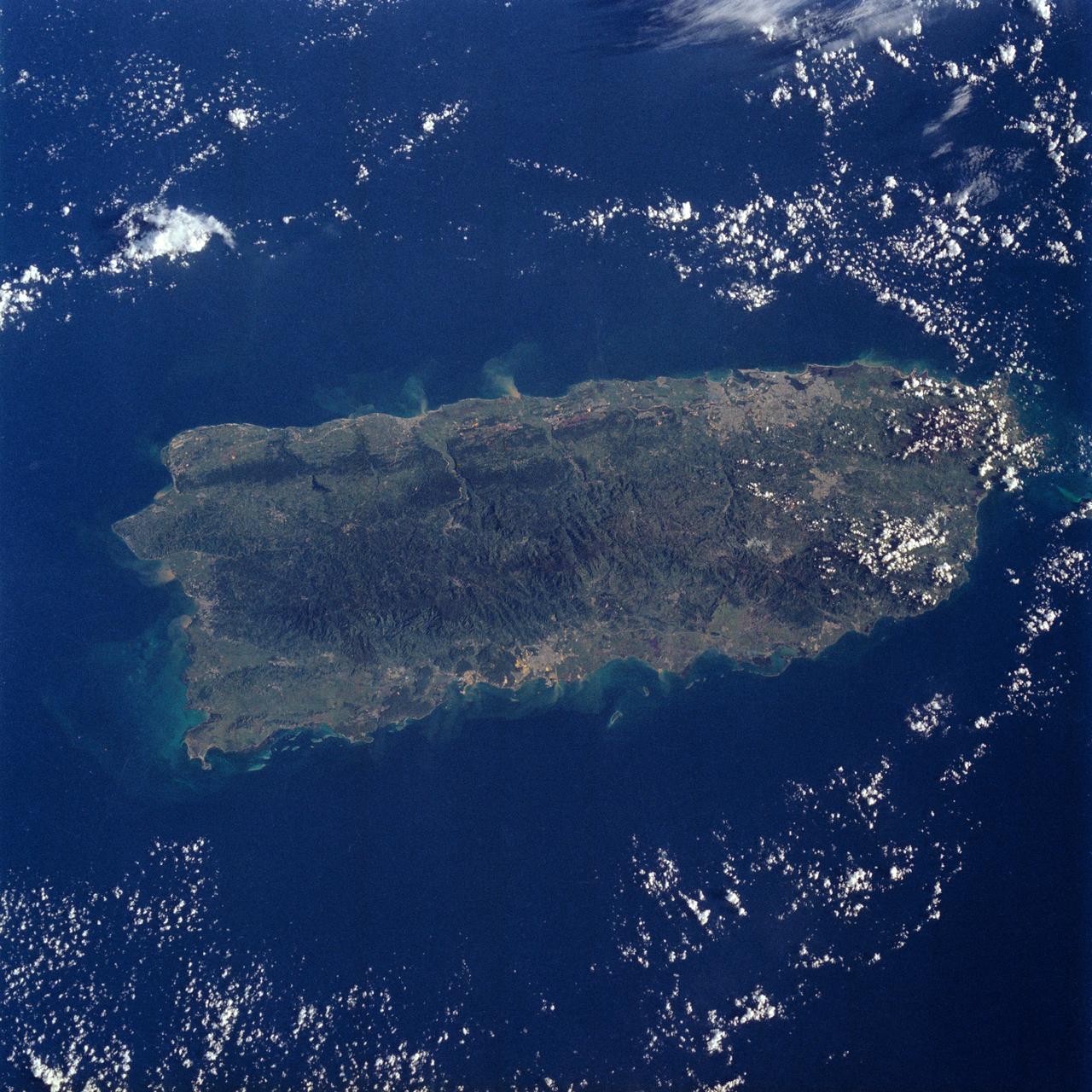
STS034-76-088 (18-23 Oct. 1989) --- A nearly vertical view over the island of Puerto Rico. NASA photo experts believe this to be an excellent view of Puerto Rico, because it has no cloud cover and the island is captured in its entirety. A 70mm handheld aimed through the space shuttle Atlantis' aft windows was used to expose the frame. Center point of the frame is 18.0 degrees north latitude and 66.5 degrees west longitude.
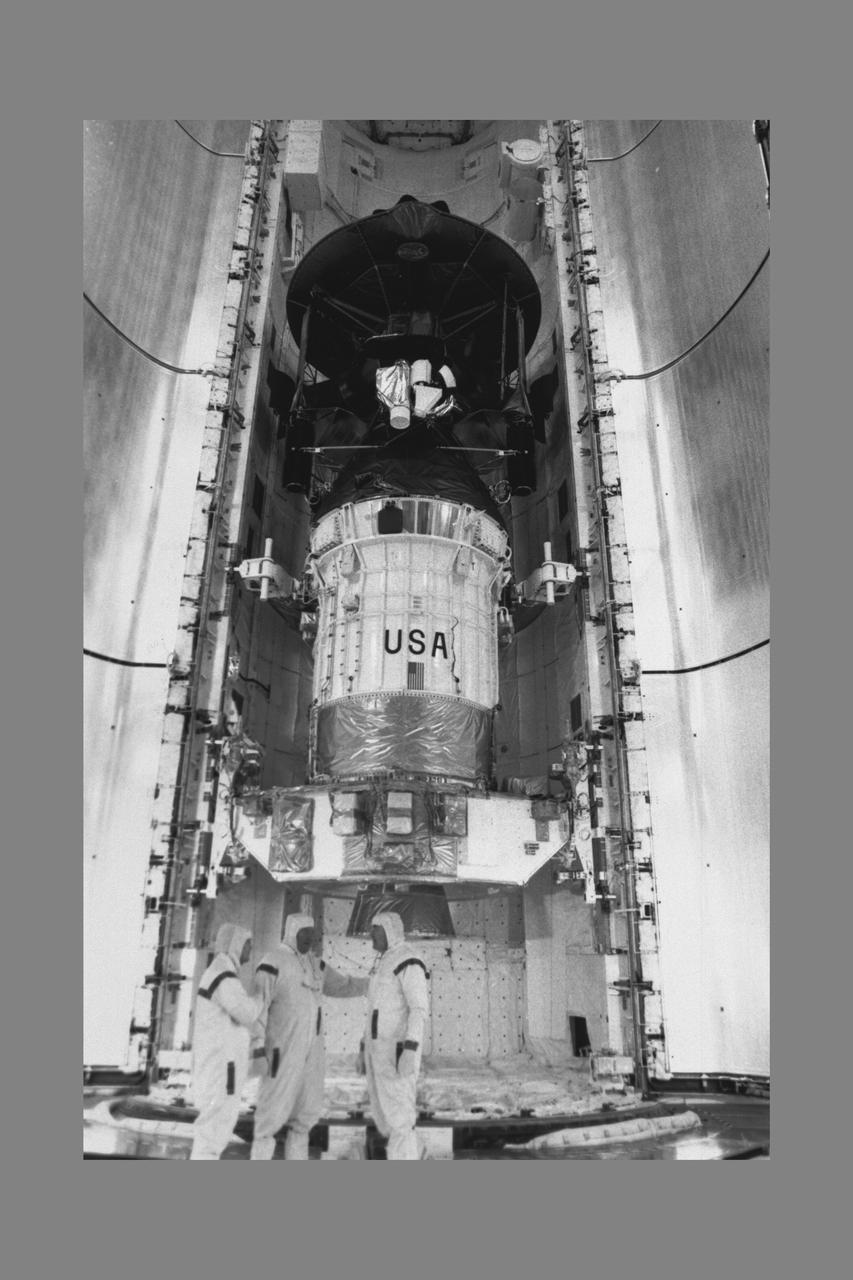
Space Shuttle Mission STS-34 Atlantis: Pioneer Galileo spacecraft in cargo bay

Artist concept shows Galileo spacecraft while still approaching Jupiter having a satellite encounter. Galileo is flying about 600 miles above Io's volcano-torn surface, twenty times closer than the closest flyby altitude of Voyager in 1979.
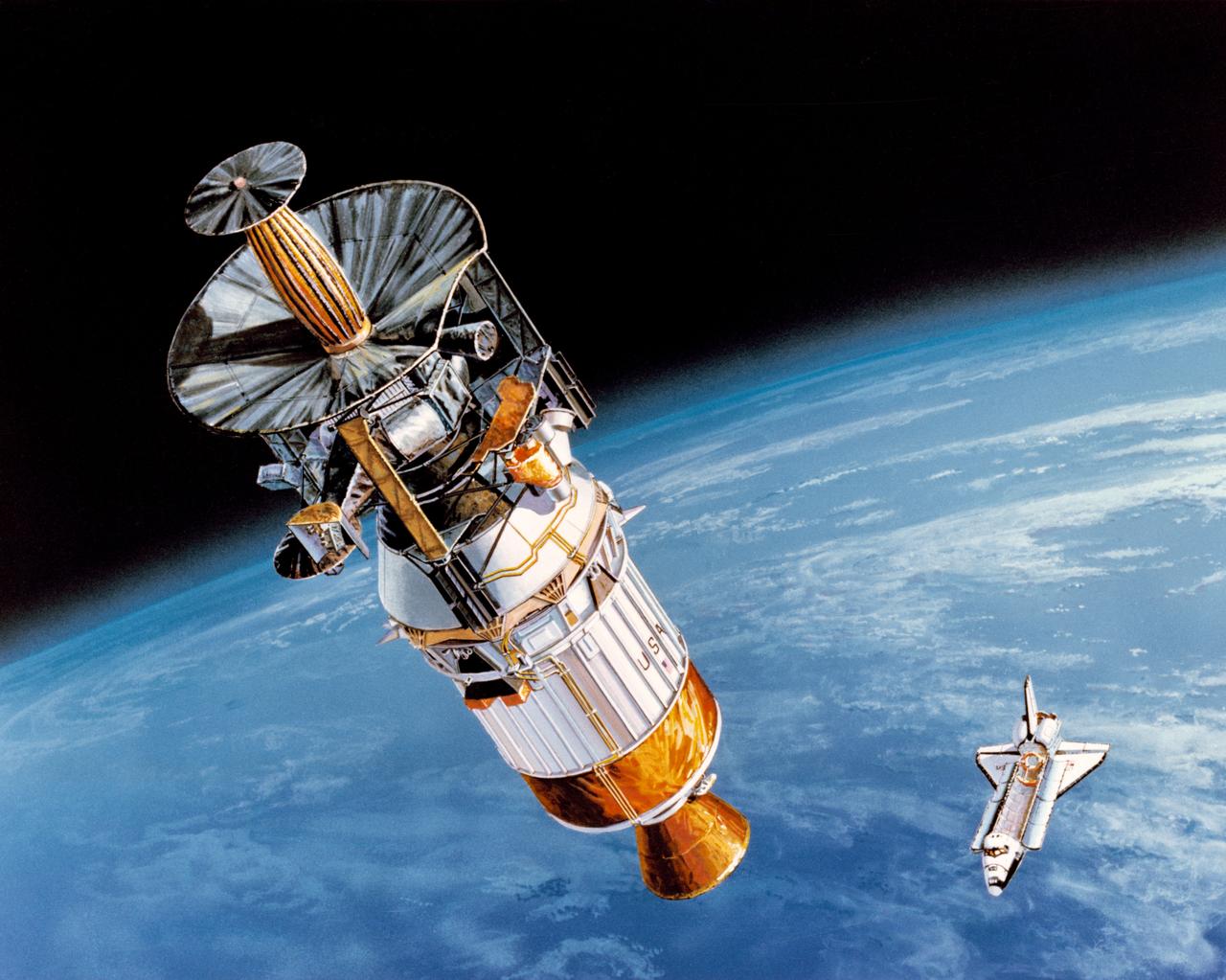
S89-42940 (April 1989) --- In this artist's rendition, the Galileo spacecraft is being boosted into its inter-planetary trajectory by the Inertial Upper Stage (IUS) rocket. The Space Shuttle Atlantis, which is scheduled to take Galileo and the IUS from Earth's surface into space, is depicted against the curve of Earth. Galileo will be placed on a trajectory to Venus, from which it will return to Earth at higher velocity and then gain still more energy in two gravity-assist passes, until it has enough velocity to reach Jupiter. Passing Venus, it will take scientific data using instruments designed for observing Jupiter; later, it will make measurements at Earth and the moon, crossing above the moon's north pole in the second pass. Between the two Earth passes, it will edge into the asteroid belt, beyond Mars' orbit; there, the first close-up observation of an asteroid is planned. Crossing the belt later, another asteroid flyby is possible.
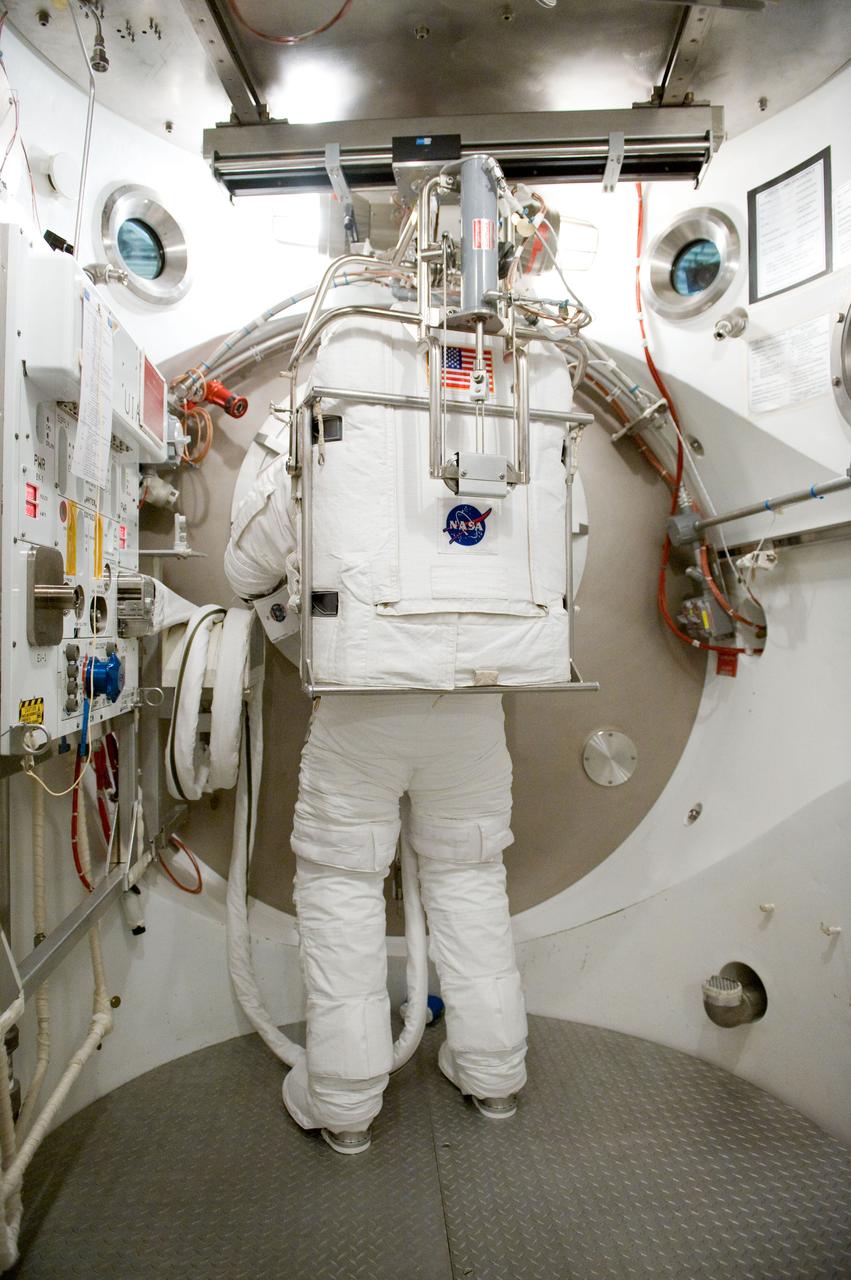
PHOTO DATE: 31 July 2012 LOCATION: Bldg. 7, SSATA Chamber SUBJECT: Expedition 33/34 Canadian astronaut and crew member Chris Hadfield during SSATA EMU training and certification - Dry Run. TD: Cristina Anchondo and Joel Maganza. STB-ST-963 PHOTOGRAPHER: Mark Sowa
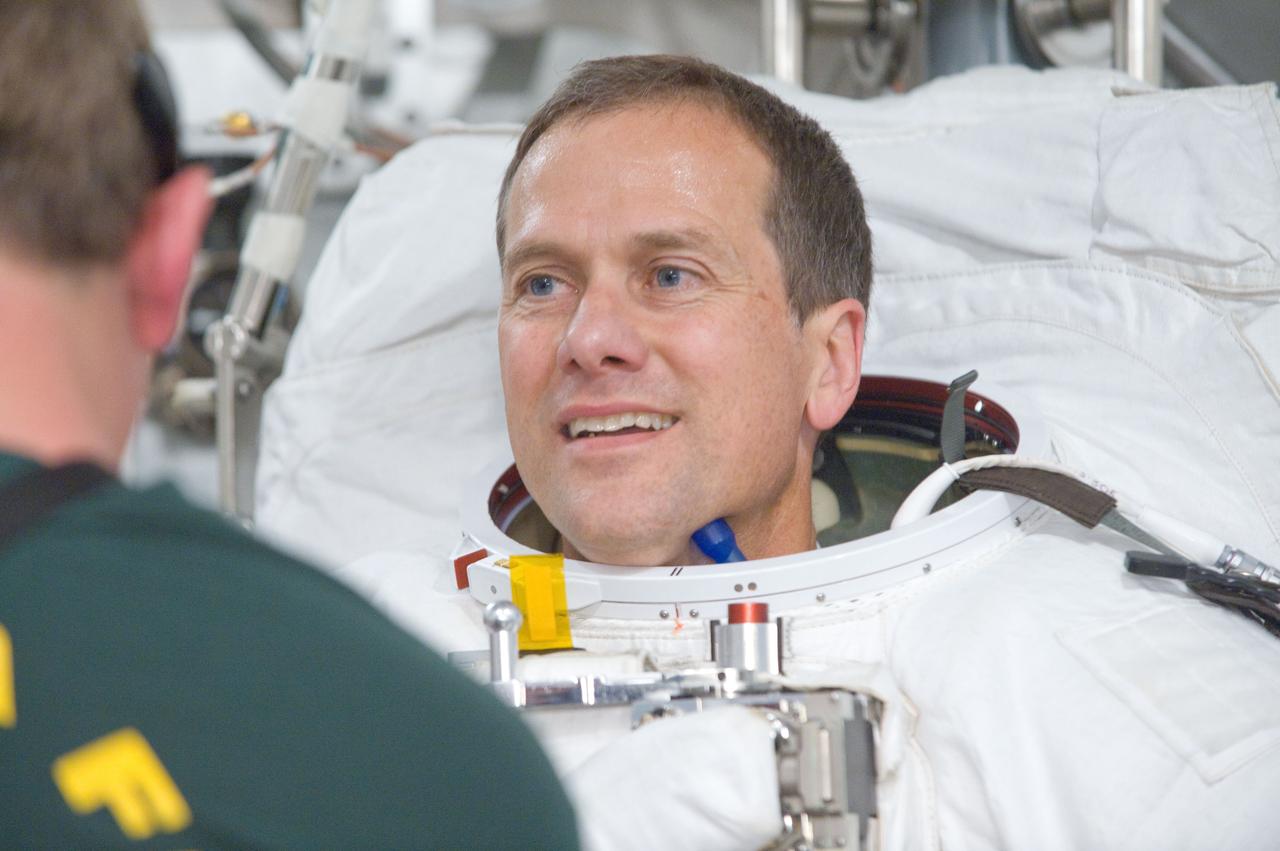
PHOTO DATE: 20 July 2012 LOCATION: Bldg. 7, SSATA Chamber SUBJECT: Expedition 34/35 astronaut Tom Marshburn during SSATA EMU training and certification - Dry Run. Test Directors Gretchen Thomas, Christina Anchondo and Joel Maganza. STB-ST-962 PHOTOGRAPHER: Mark Sowa
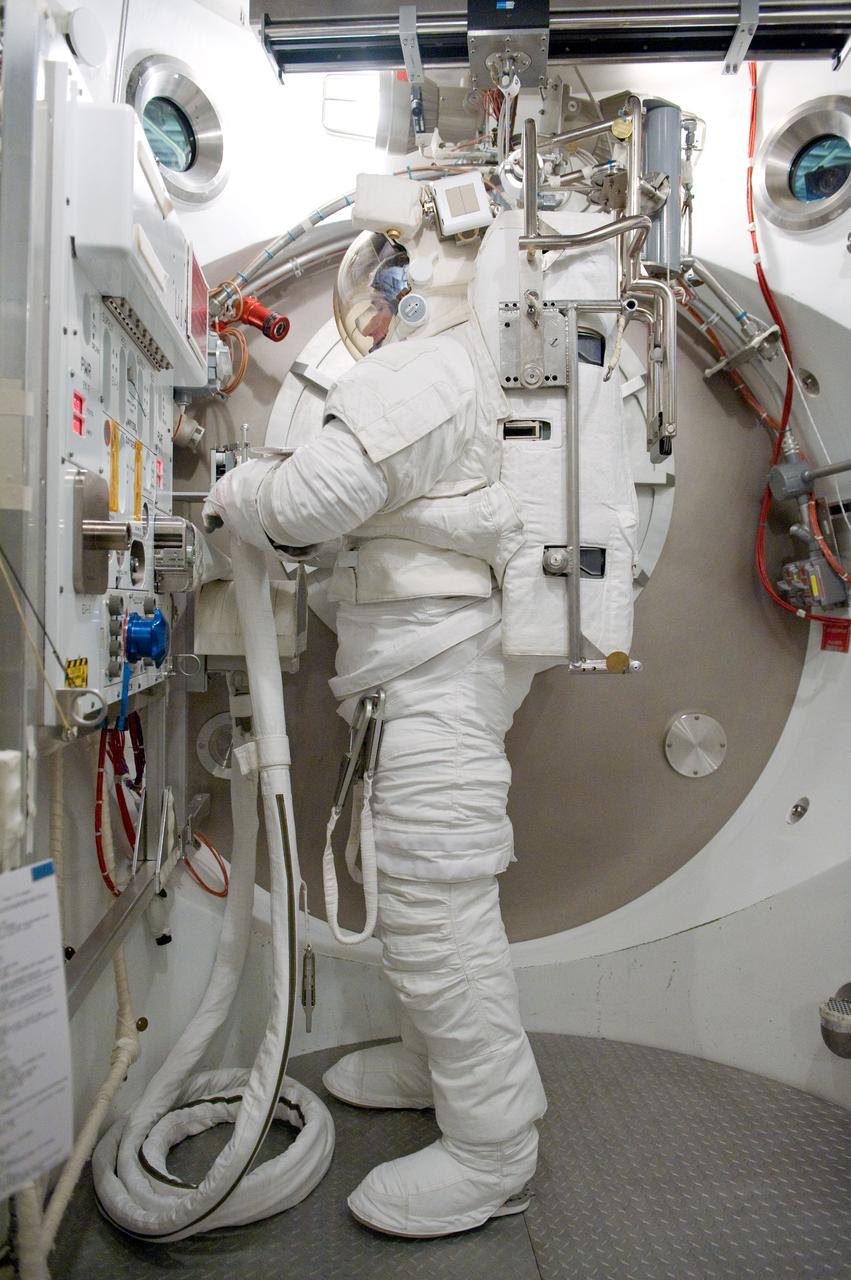
PHOTO DATE: 20 July 2012 LOCATION: Bldg. 7, SSATA Chamber SUBJECT: Expedition 34/35 astronaut Tom Marshburn during SSATA EMU training and certification - Dry Run. Test Directors Gretchen Thomas, Christina Anchondo and Joel Maganza. STB-ST-962 PHOTOGRAPHER: Mark Sowa
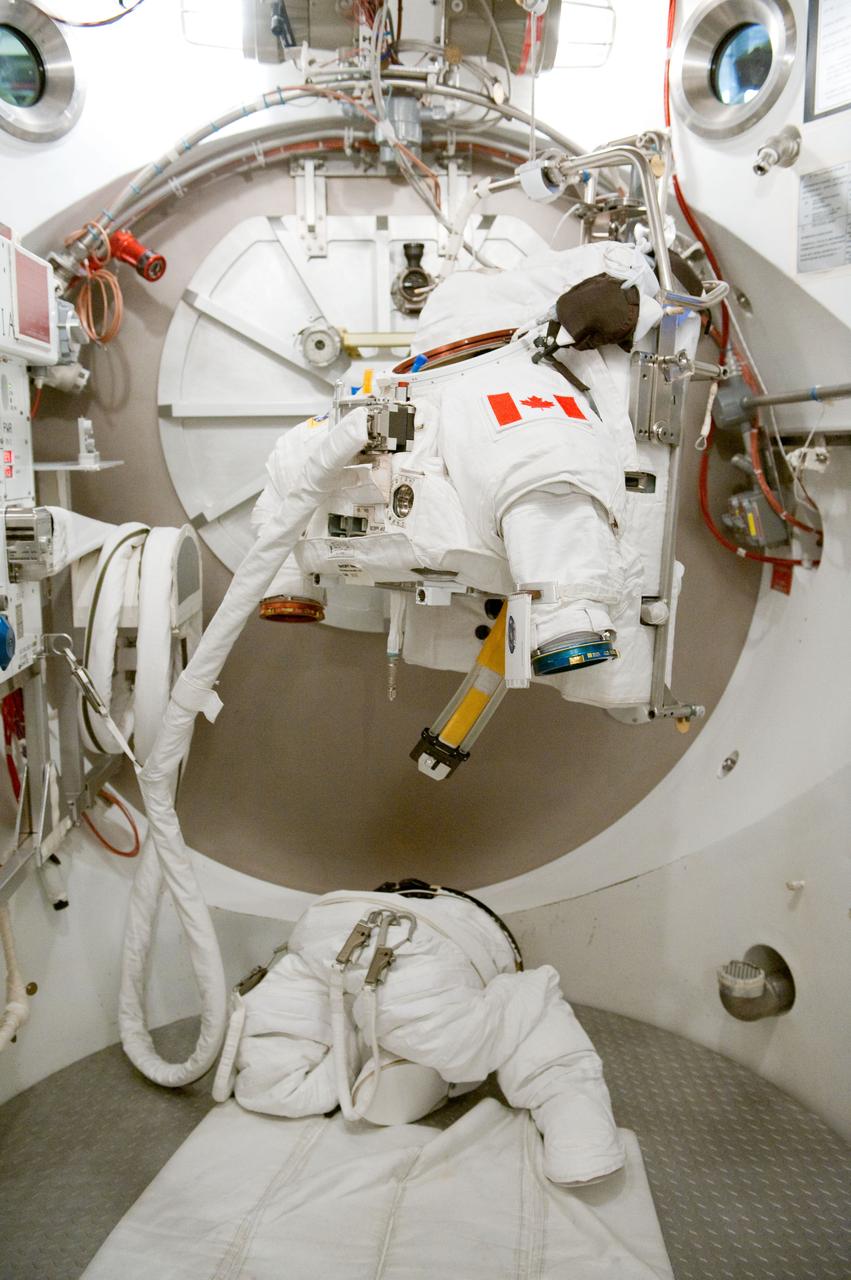
PHOTO DATE: 31 July 2012 LOCATION: Bldg. 7, SSATA Chamber SUBJECT: Expedition 33/34 Canadian astronaut and crew member Chris Hadfield during SSATA EMU training and certification - Dry Run. TD: Cristina Anchondo and Joel Maganza. STB-ST-963 PHOTOGRAPHER: Mark Sowa
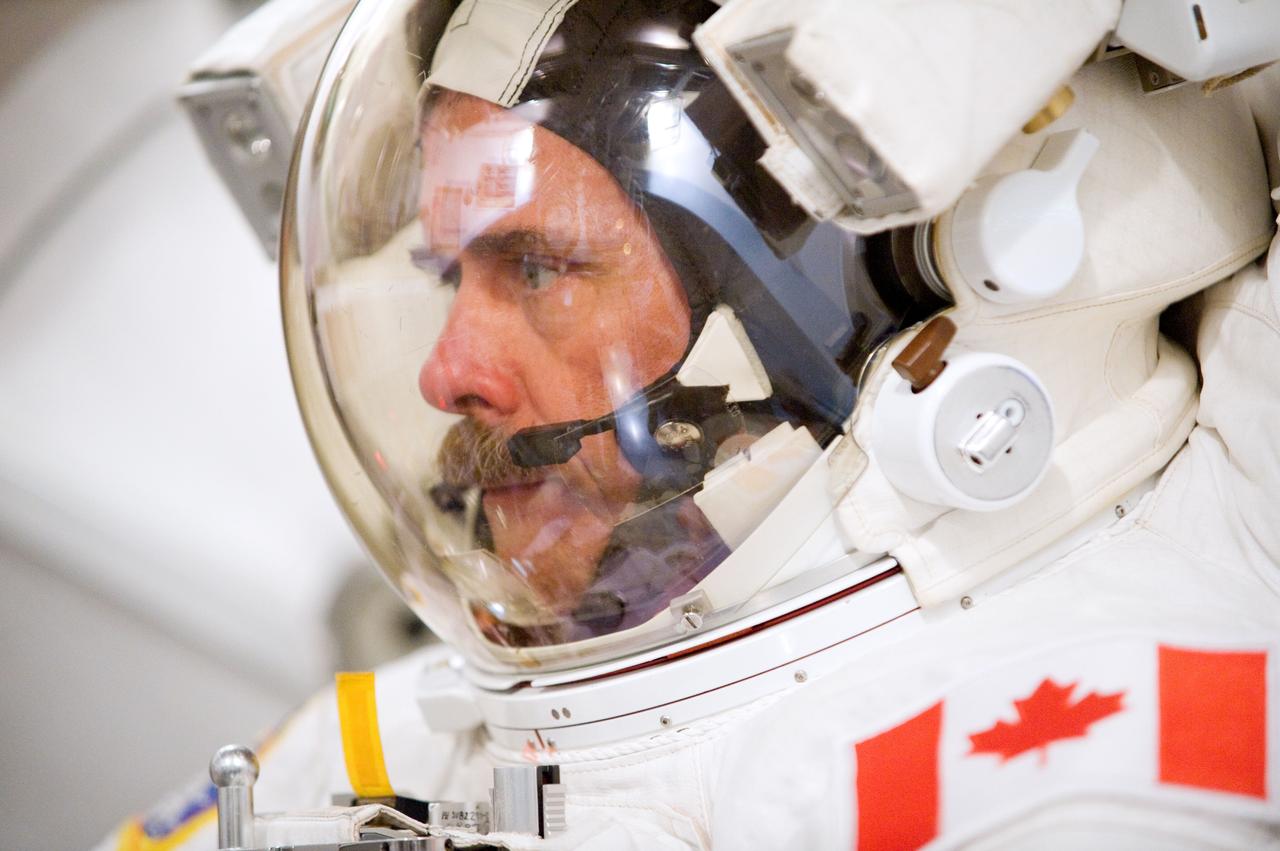
PHOTO DATE: 31 July 2012 LOCATION: Bldg. 7, SSATA Chamber SUBJECT: Expedition 33/34 Canadian astronaut and crew member Chris Hadfield during SSATA EMU training and certification - Dry Run. TD: Cristina Anchondo and Joel Maganza. STB-ST-963 PHOTOGRAPHER: Mark Sowa
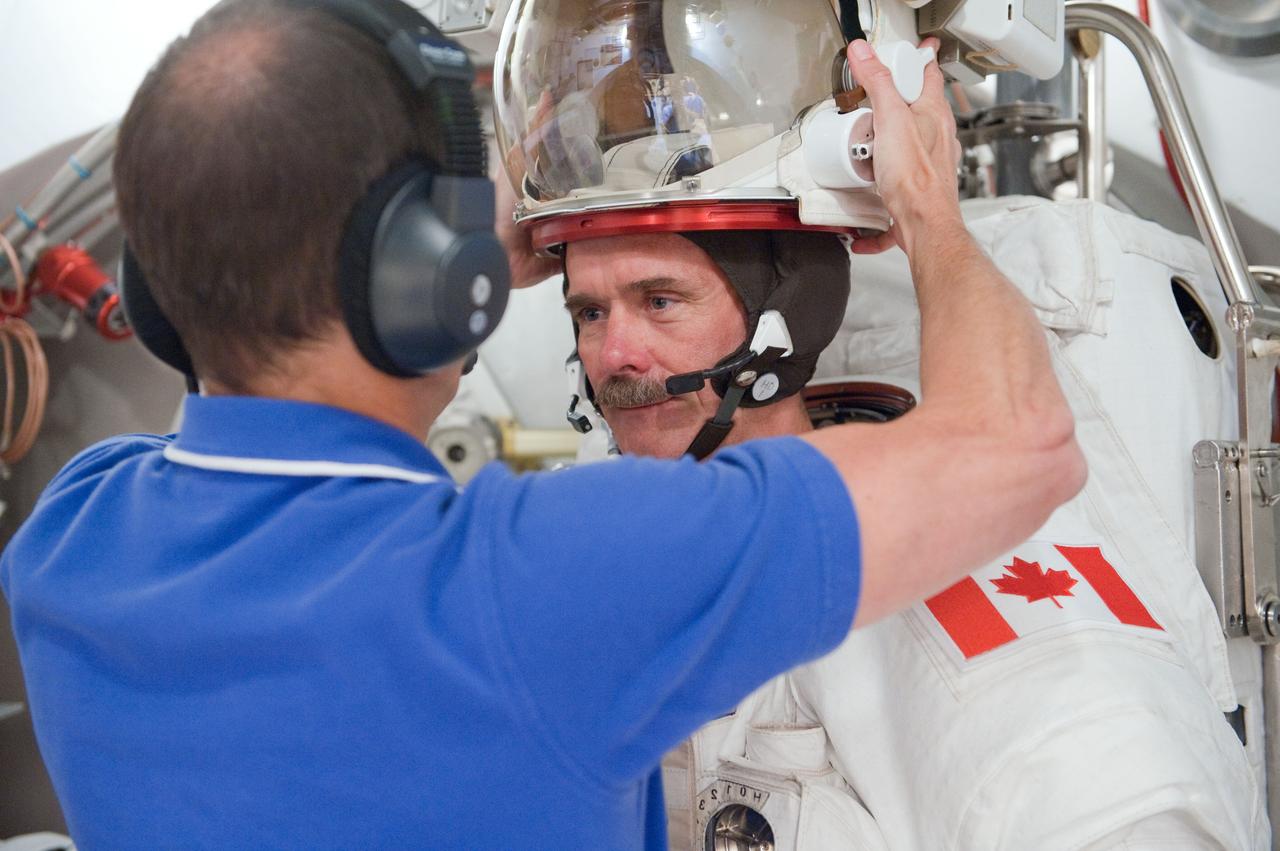
PHOTO DATE: 31 July 2012 LOCATION: Bldg. 7, SSATA Chamber SUBJECT: Expedition 33/34 Canadian astronaut and crew member Chris Hadfield during SSATA EMU training and certification - Dry Run. TD: Cristina Anchondo and Joel Maganza. STB-ST-963 PHOTOGRAPHER: Mark Sowa
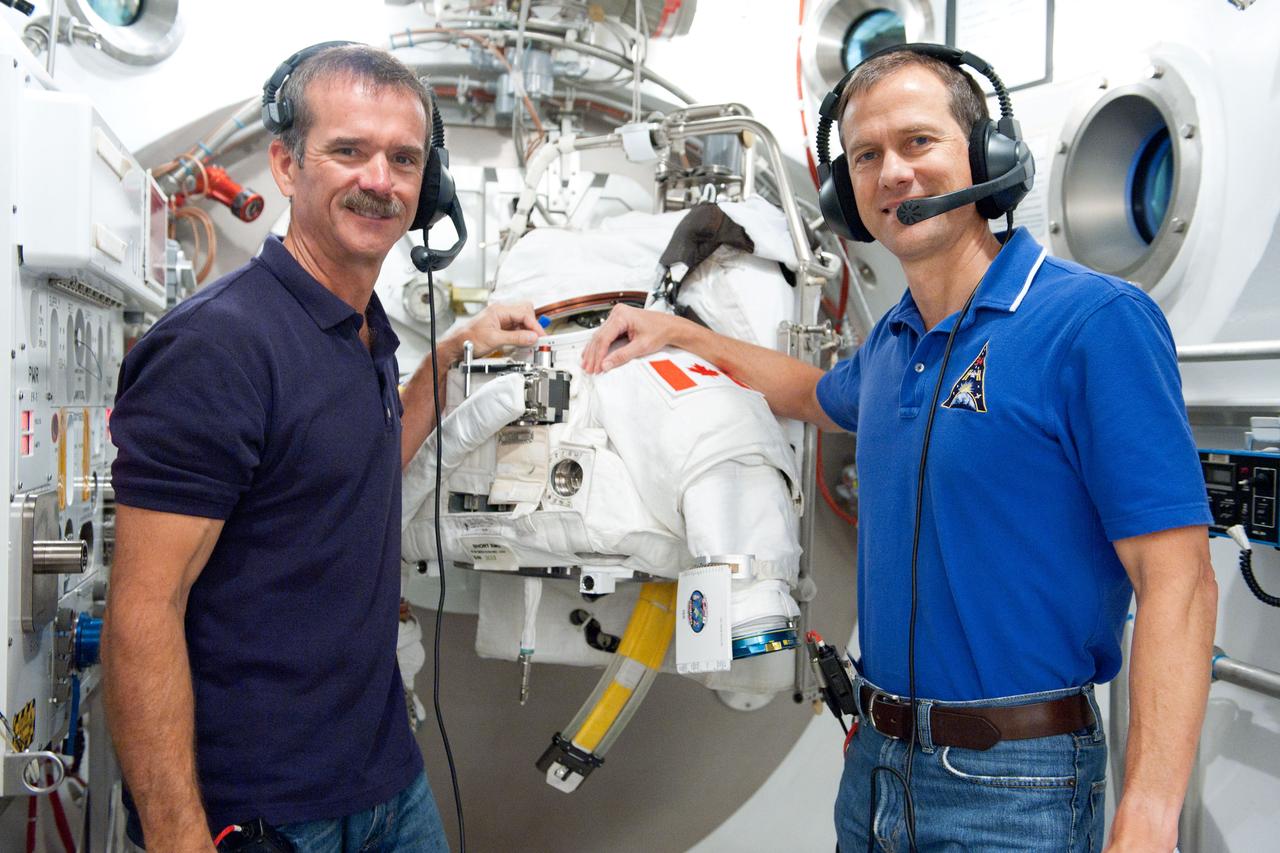
PHOTO DATE: 31 July 2012 LOCATION: Bldg. 7, SSATA Chamber SUBJECT: Expedition 33/34 Canadian astronaut and crew member Chris Hadfield during SSATA EMU training and certification - Dry Run. TD: Cristina Anchondo and Joel Maganza. STB-ST-963 PHOTOGRAPHER: Mark Sowa
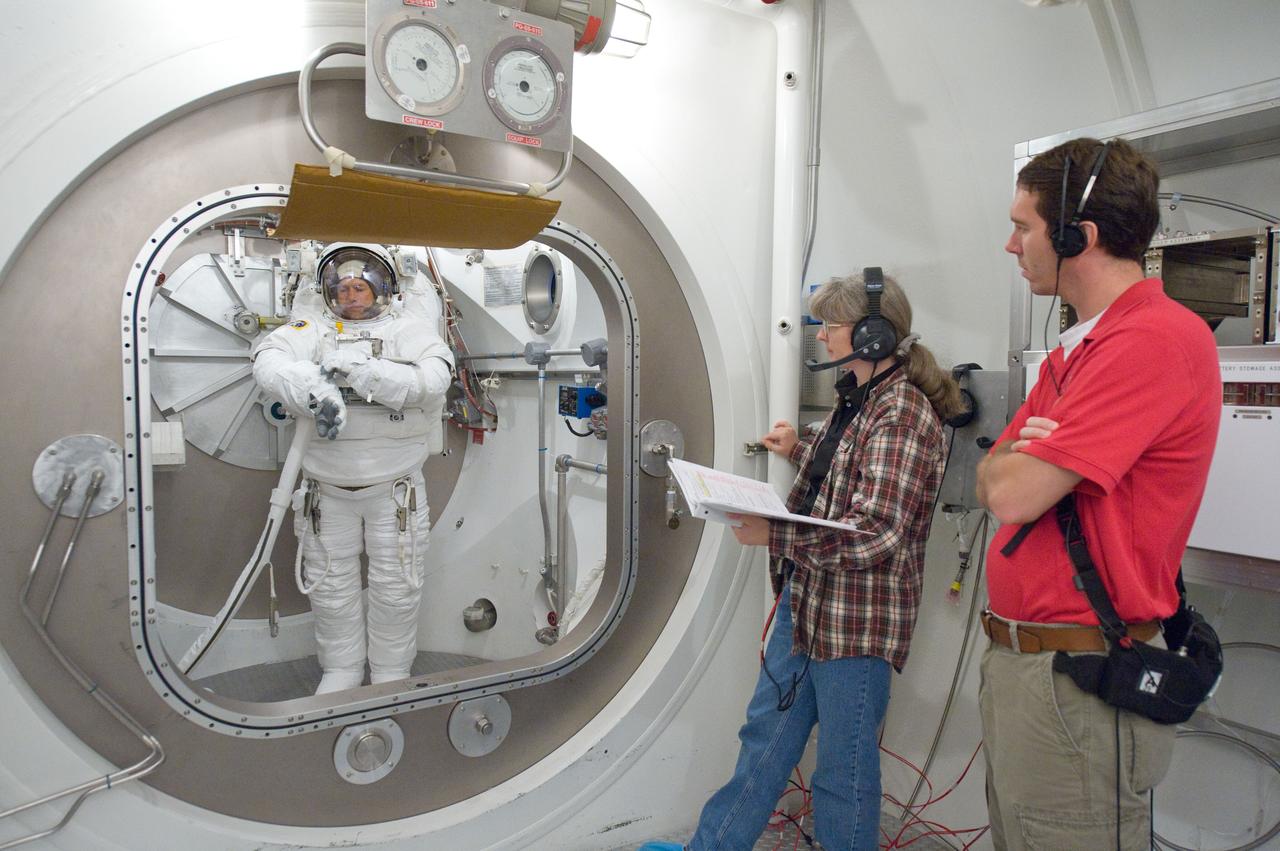
PHOTO DATE: 20 July 2012 LOCATION: Bldg. 7, SSATA Chamber SUBJECT: Expedition 34/35 astronaut Tom Marshburn during SSATA EMU training and certification - Dry Run. Test Directors Gretchen Thomas, Christina Anchondo and Joel Maganza. STB-ST-962 PHOTOGRAPHER: Mark Sowa
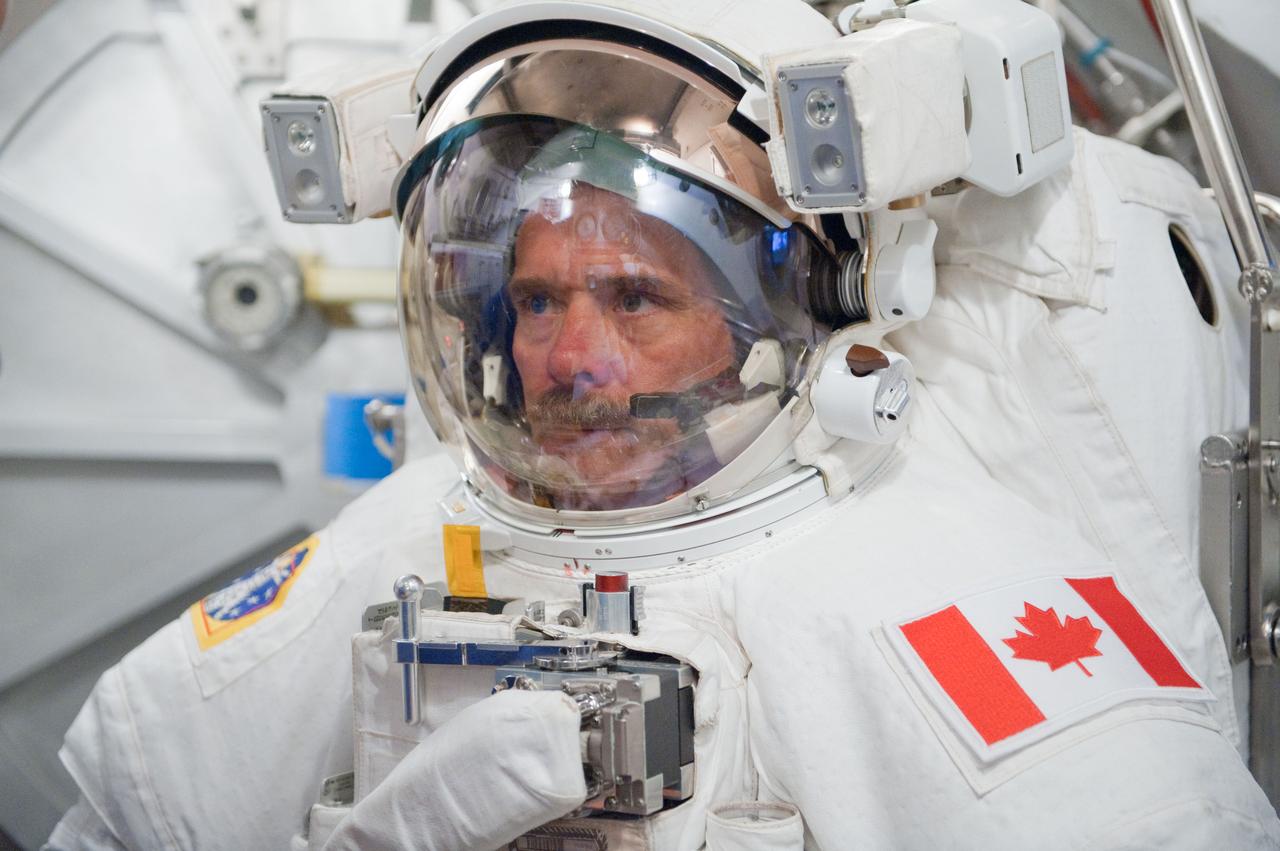
PHOTO DATE: 31 July 2012 LOCATION: Bldg. 7, SSATA Chamber SUBJECT: Expedition 33/34 Canadian astronaut and crew member Chris Hadfield during SSATA EMU training and certification - Dry Run. TD: Cristina Anchondo and Joel Maganza. STB-ST-963 PHOTOGRAPHER: Mark Sowa
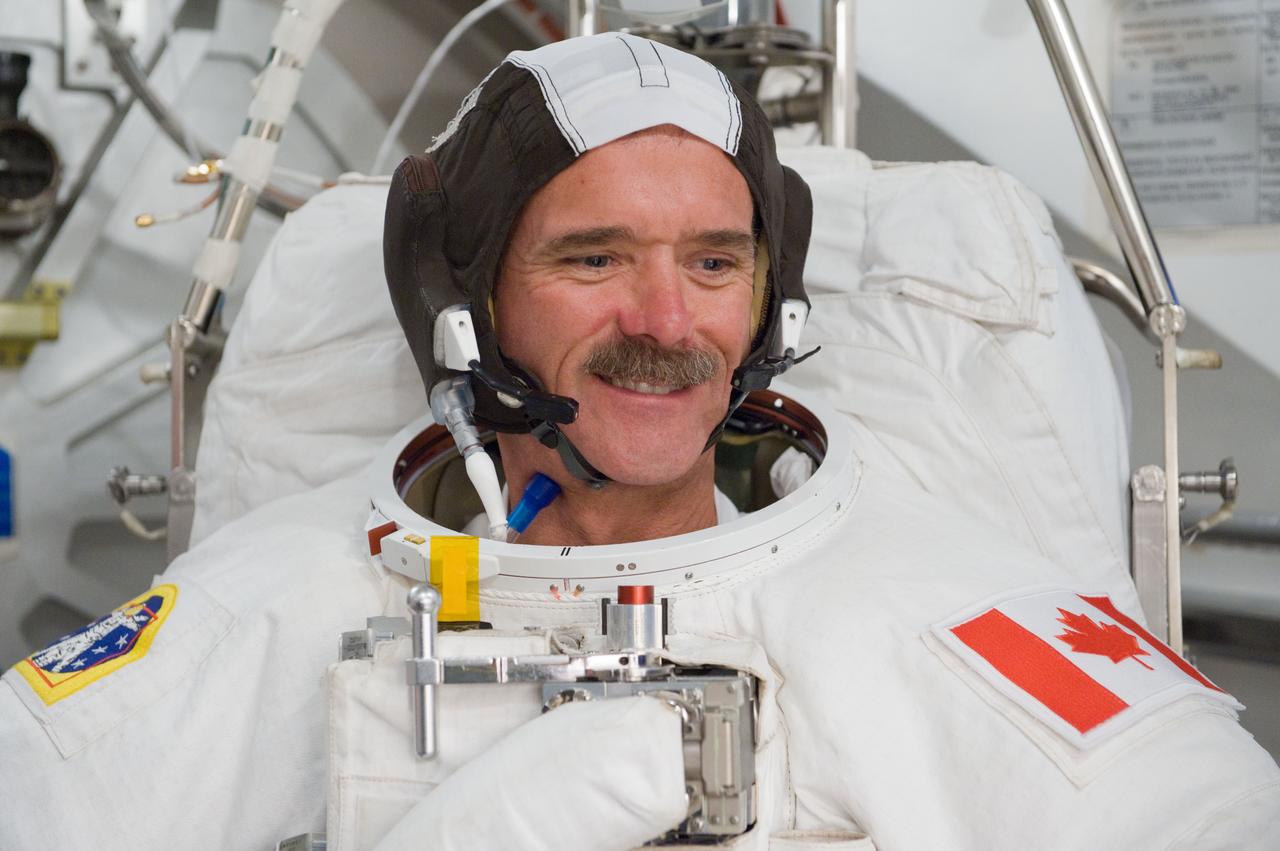
PHOTO DATE: 31 July 2012 LOCATION: Bldg. 7, SSATA Chamber SUBJECT: Expedition 33/34 Canadian astronaut and crew member Chris Hadfield during SSATA EMU training and certification - Dry Run. TD: Cristina Anchondo and Joel Maganza. STB-ST-963 PHOTOGRAPHER: Mark Sowa
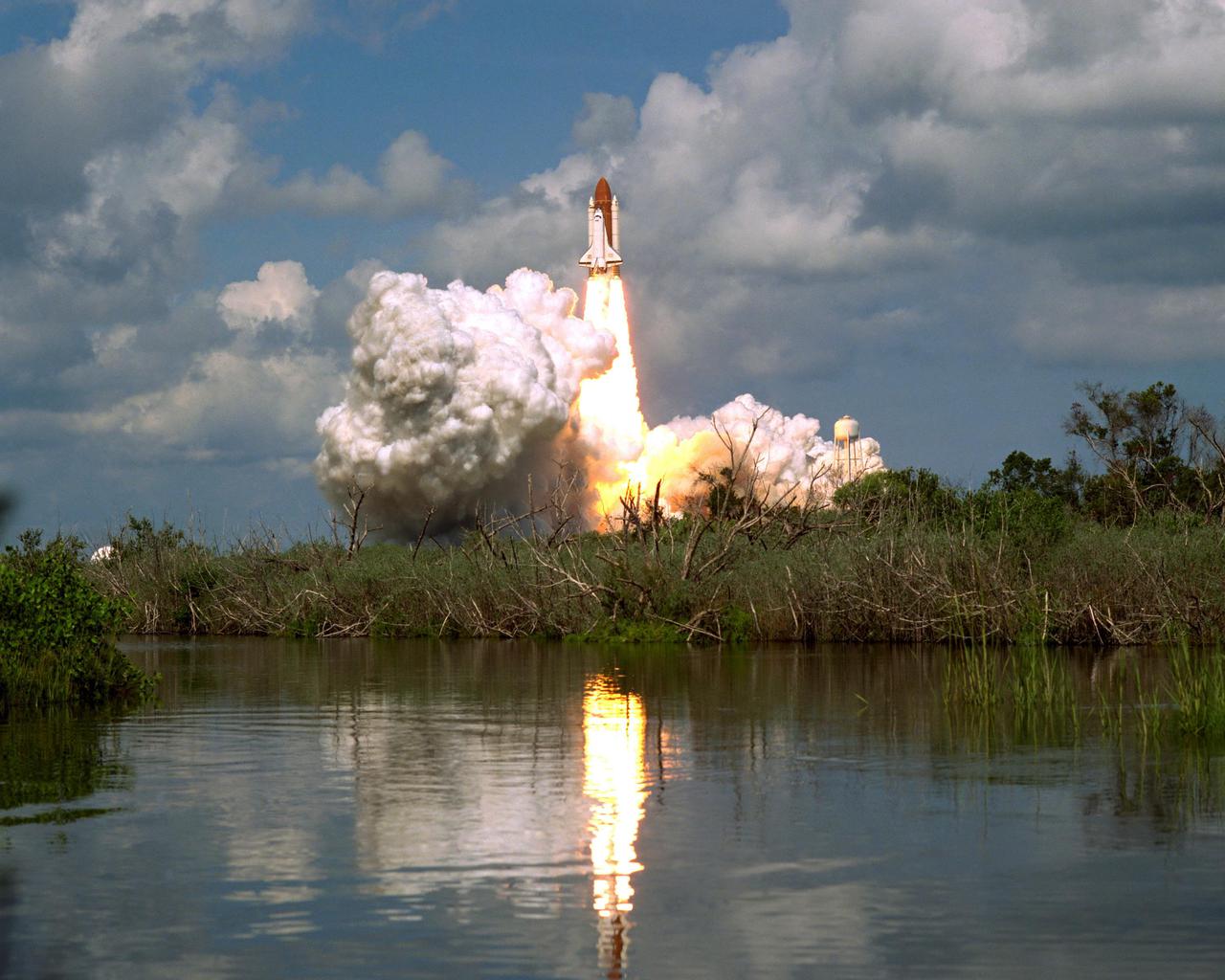
KENNEDY SPACE CENTER, FLA. -- The STS-34 Space Shuttle Atlantis lifts off from pad 39-B at 12:53 p.m. EDT, marking the beginning of a five-day mission in space. Atlantis is carrying a crew of five and the spacecraft Galileo, wich will be making a six-year trip to Jupiter..
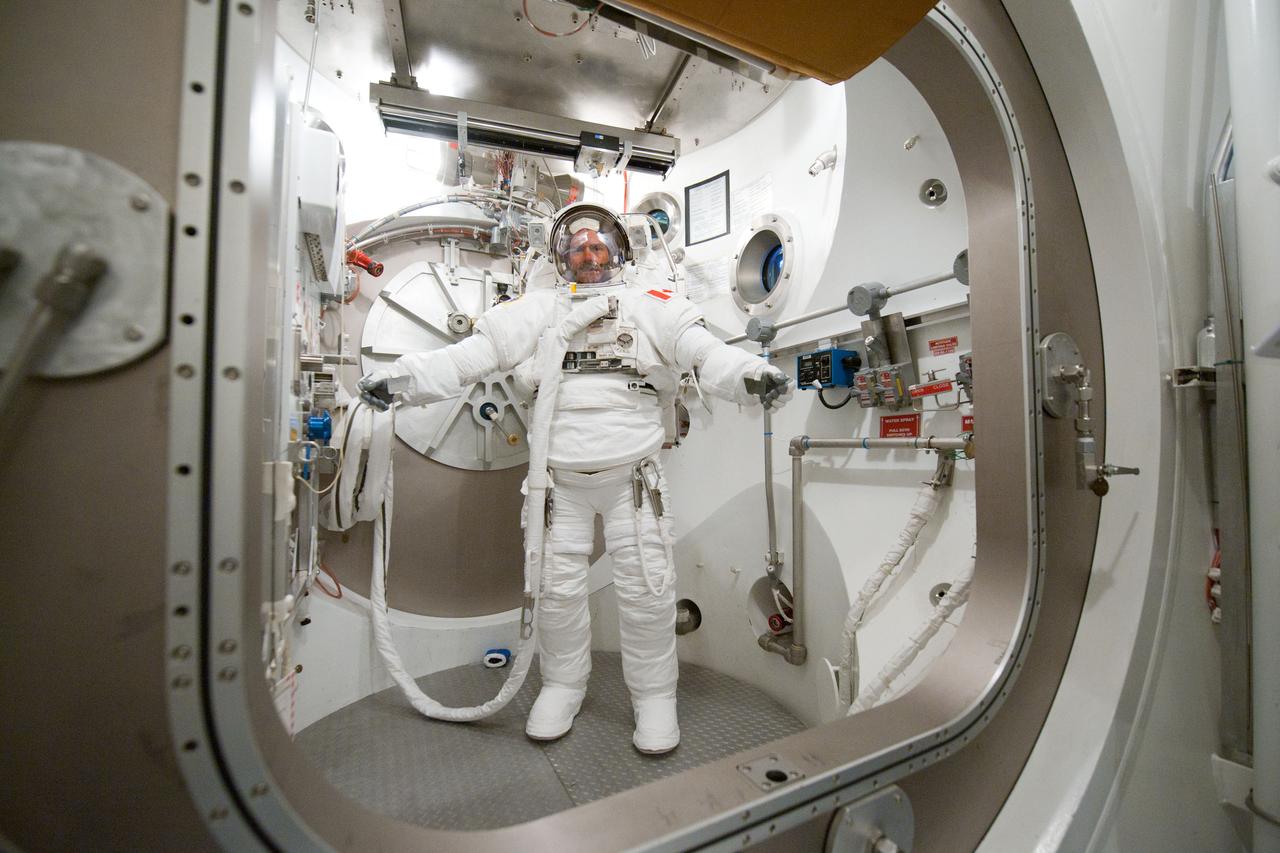
PHOTO DATE: 31 July 2012 LOCATION: Bldg. 7, SSATA Chamber SUBJECT: Expedition 33/34 Canadian astronaut and crew member Chris Hadfield during SSATA EMU training and certification - Dry Run. TD: Cristina Anchondo and Joel Maganza. STB-ST-963 PHOTOGRAPHER: Mark Sowa
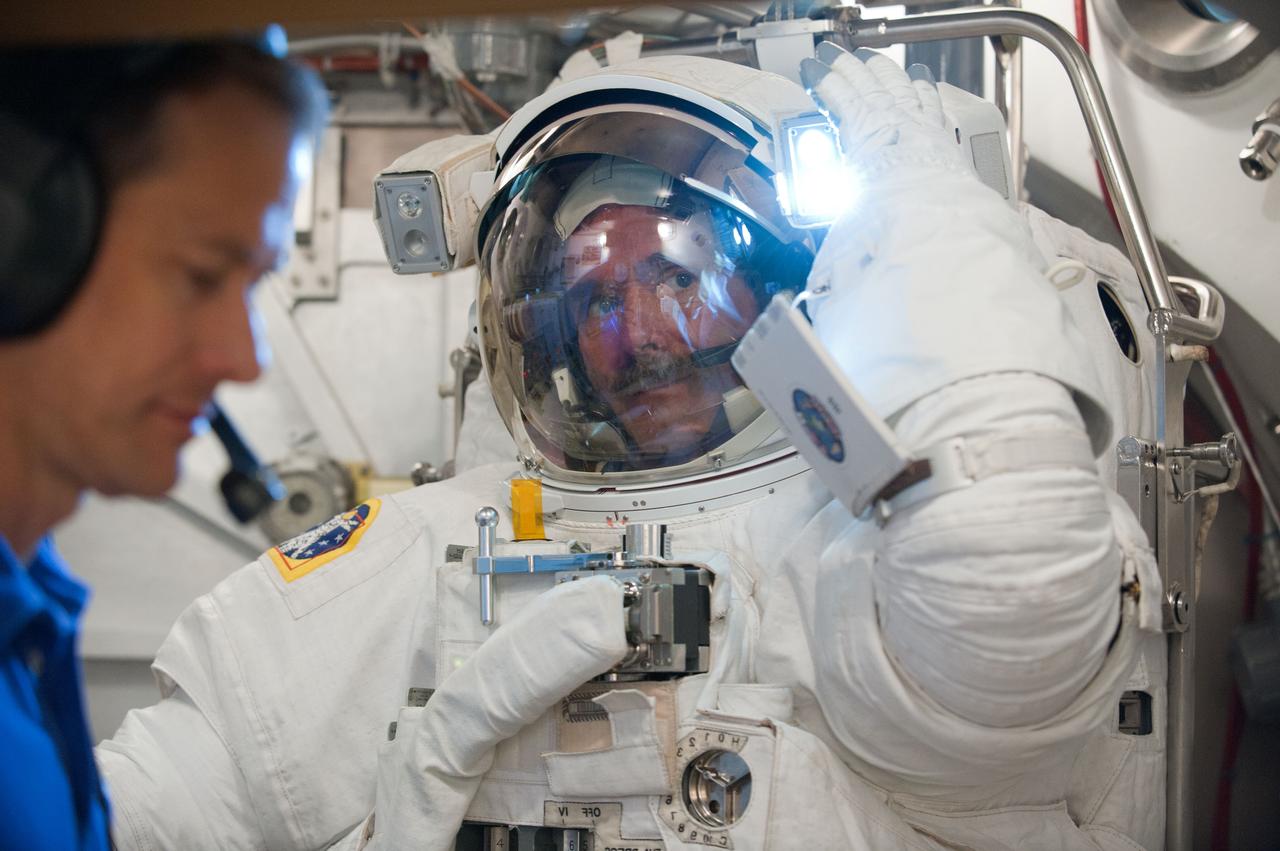
PHOTO DATE: 31 July 2012 LOCATION: Bldg. 7, SSATA Chamber SUBJECT: Expedition 33/34 Canadian astronaut and crew member Chris Hadfield during SSATA EMU training and certification - Dry Run. TD: Cristina Anchondo and Joel Maganza. STB-ST-963 PHOTOGRAPHER: Mark Sowa
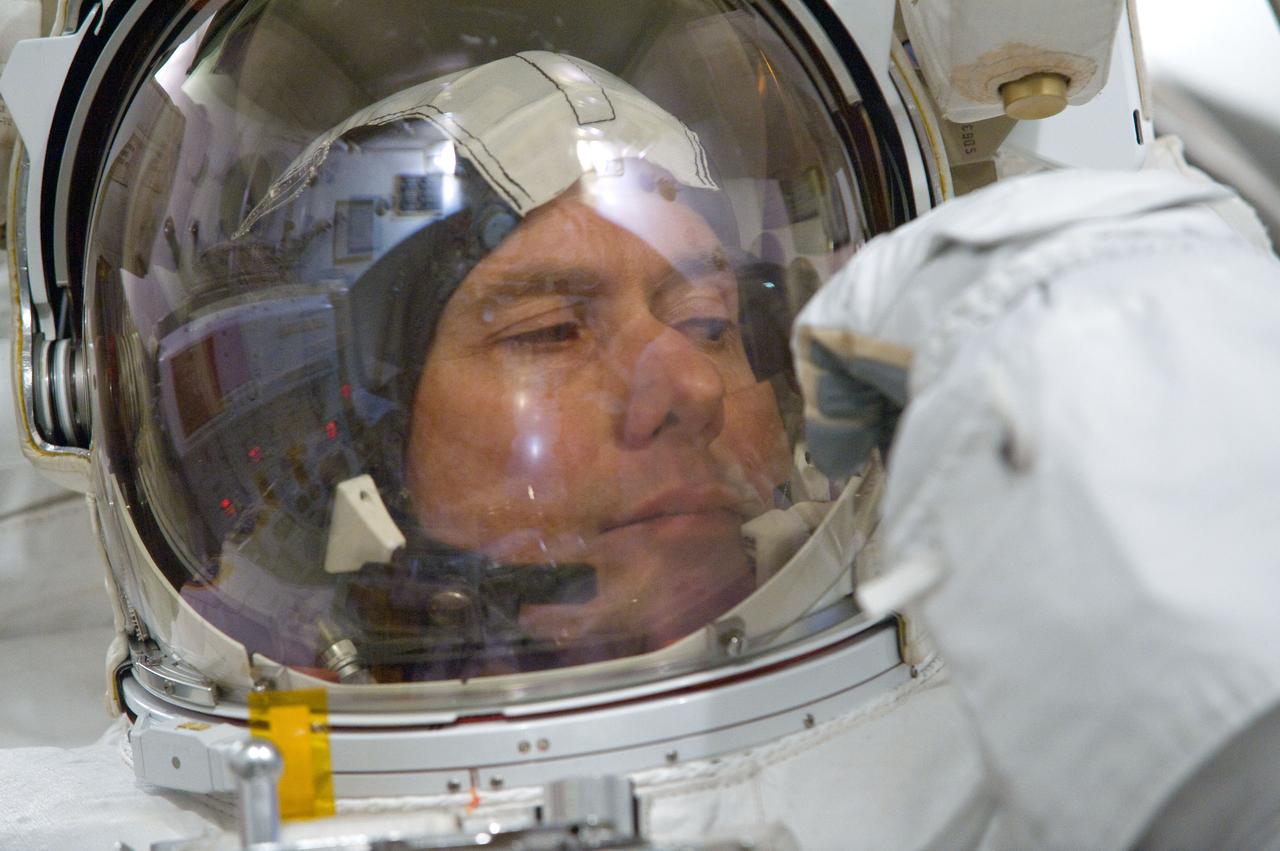
PHOTO DATE: 20 July 2012 LOCATION: Bldg. 7, SSATA Chamber SUBJECT: Expedition 34/35 astronaut Tom Marshburn during SSATA EMU training and certification - Dry Run. Test Directors Gretchen Thomas, Christina Anchondo and Joel Maganza. STB-ST-962 PHOTOGRAPHER: Mark Sowa
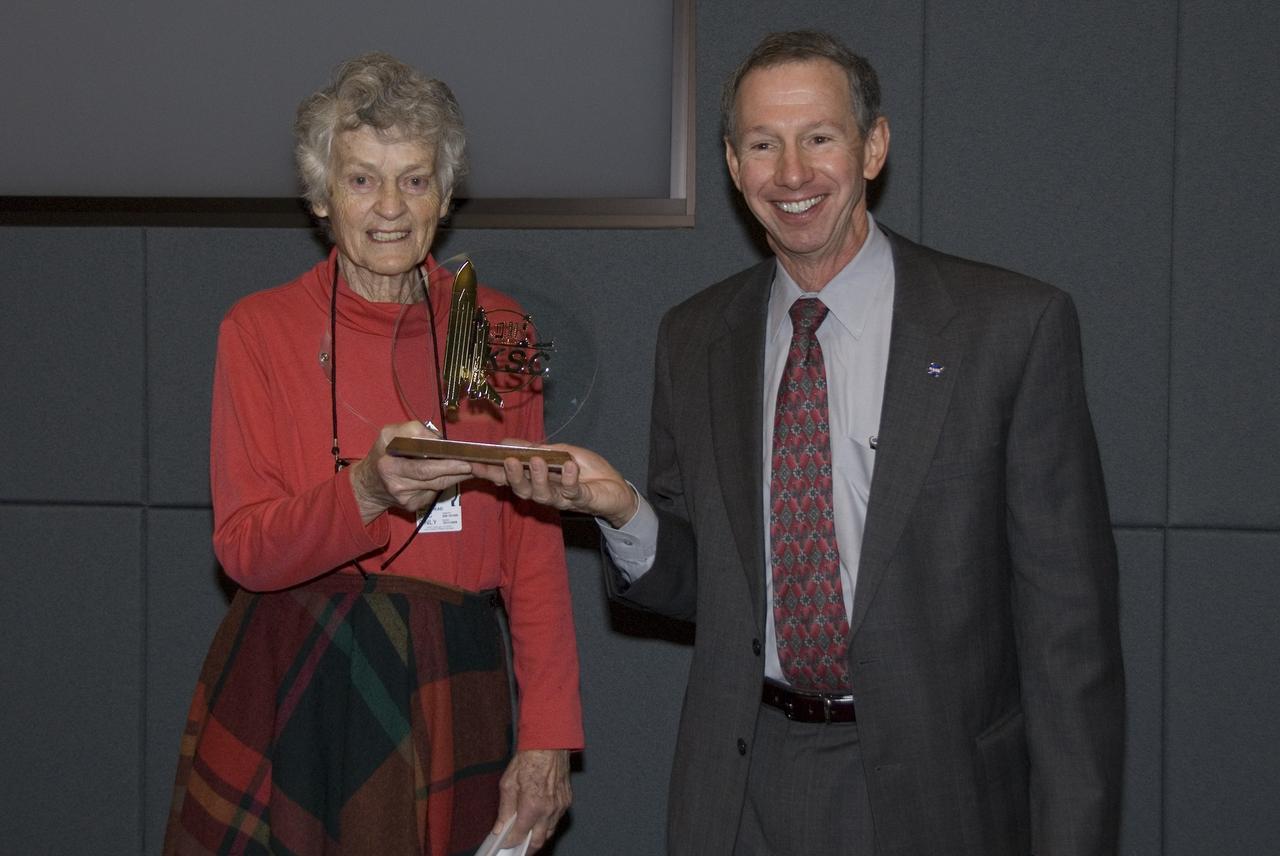
CAPE CANAVERAL, Fla. – Virginia Whitehead receives NASA’s Lifetime Achievement Award from Mike Griffin at a ceremony shortly before the STS-126 Flight Readiness Review at the OSB II on Oct. 30. Whitehead has worked at NASA's Kennedy Space Center for 34 years.
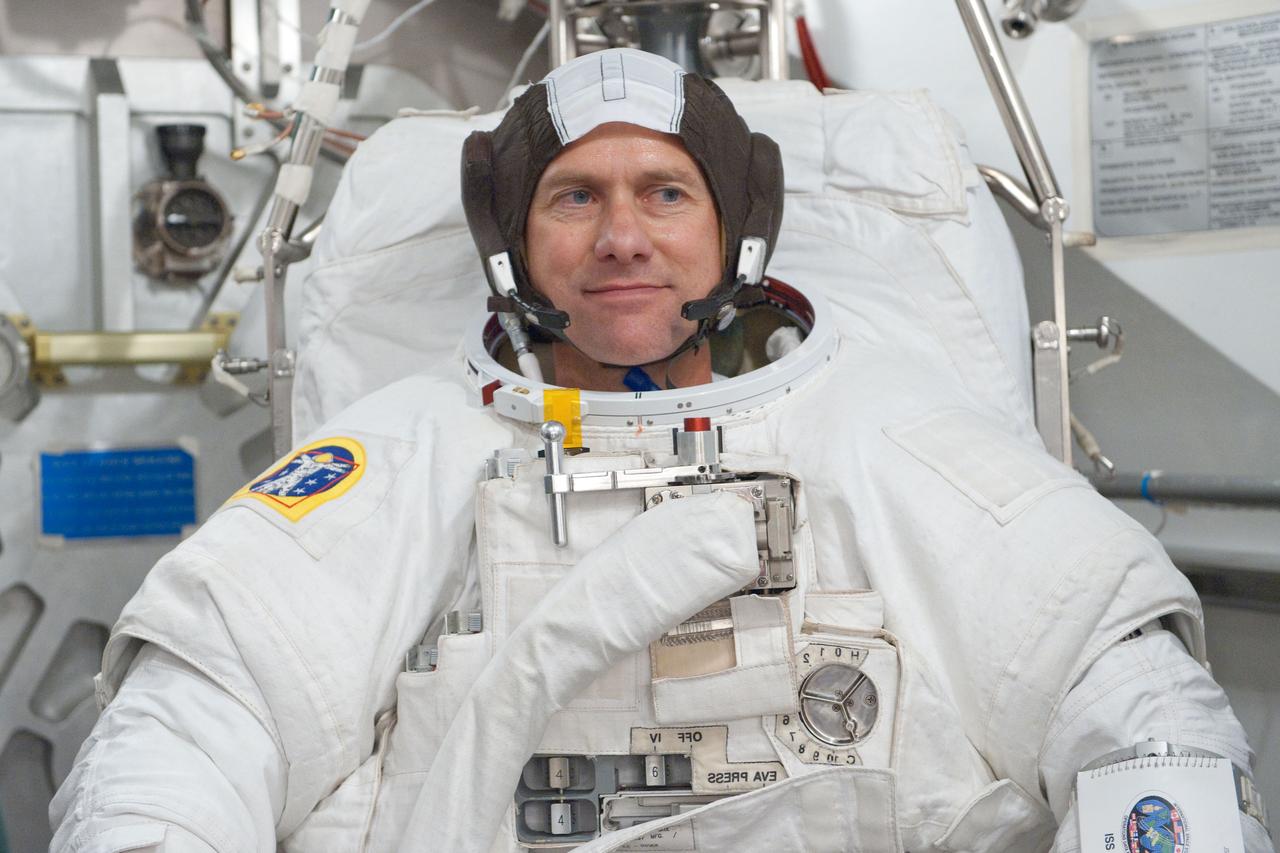
PHOTO DATE: 20 July 2012 LOCATION: Bldg. 7, SSATA Chamber SUBJECT: Expedition 34/35 astronaut Tom Marshburn during SSATA EMU training and certification - Dry Run. Test Directors Gretchen Thomas, Christina Anchondo and Joel Maganza. STB-ST-962 PHOTOGRAPHER: Mark Sowa

PHOTO DATE: 31 July 2012 LOCATION: Bldg. 7, SSATA Chamber SUBJECT: Expedition 33/34 Canadian astronaut and crew member Chris Hadfield during SSATA EMU training and certification - Dry Run. TD: Cristina Anchondo and Joel Maganza. STB-ST-963 PHOTOGRAPHER: Mark Sowa
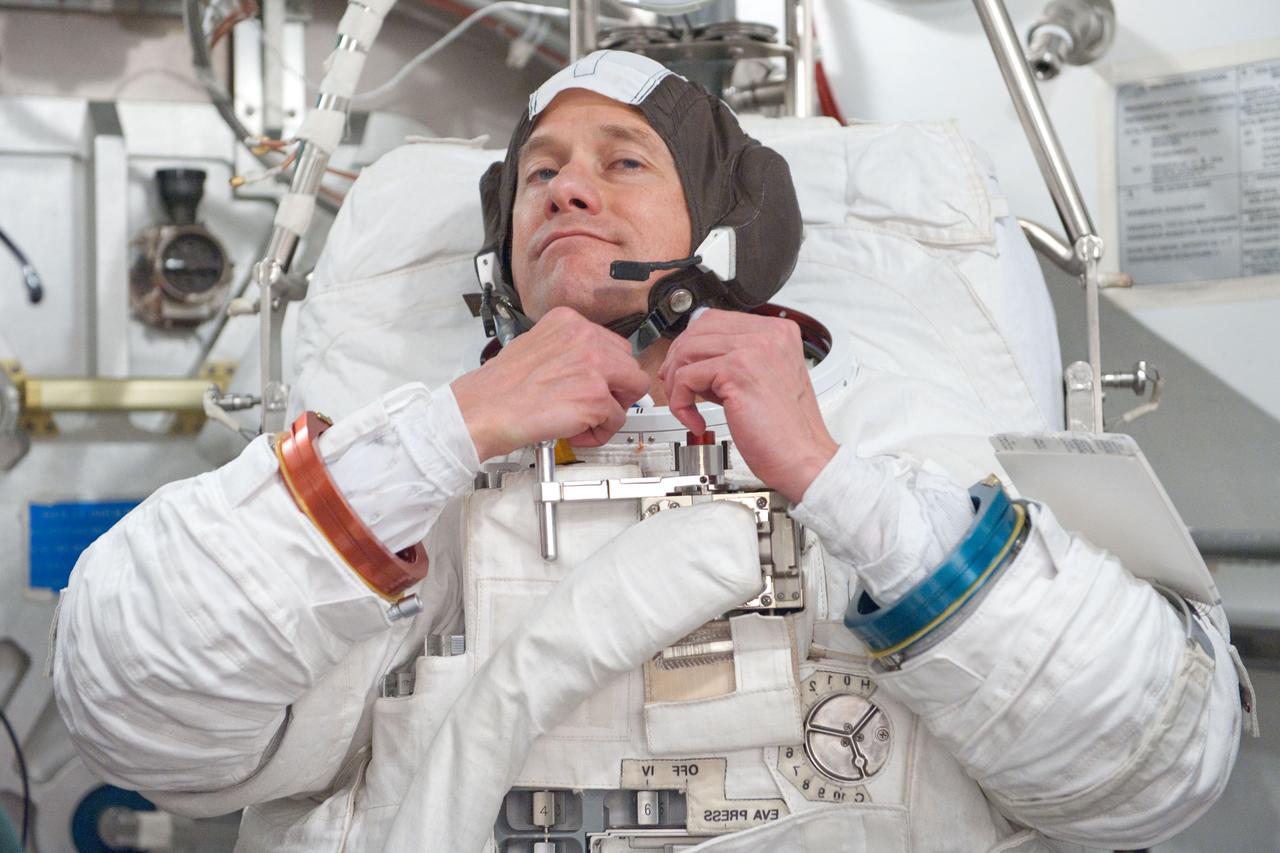
PHOTO DATE: 20 July 2012 LOCATION: Bldg. 7, SSATA Chamber SUBJECT: Expedition 34/35 astronaut Tom Marshburn during SSATA EMU training and certification - Dry Run. Test Directors Gretchen Thomas, Christina Anchondo and Joel Maganza. STB-ST-962 PHOTOGRAPHER: Mark Sowa
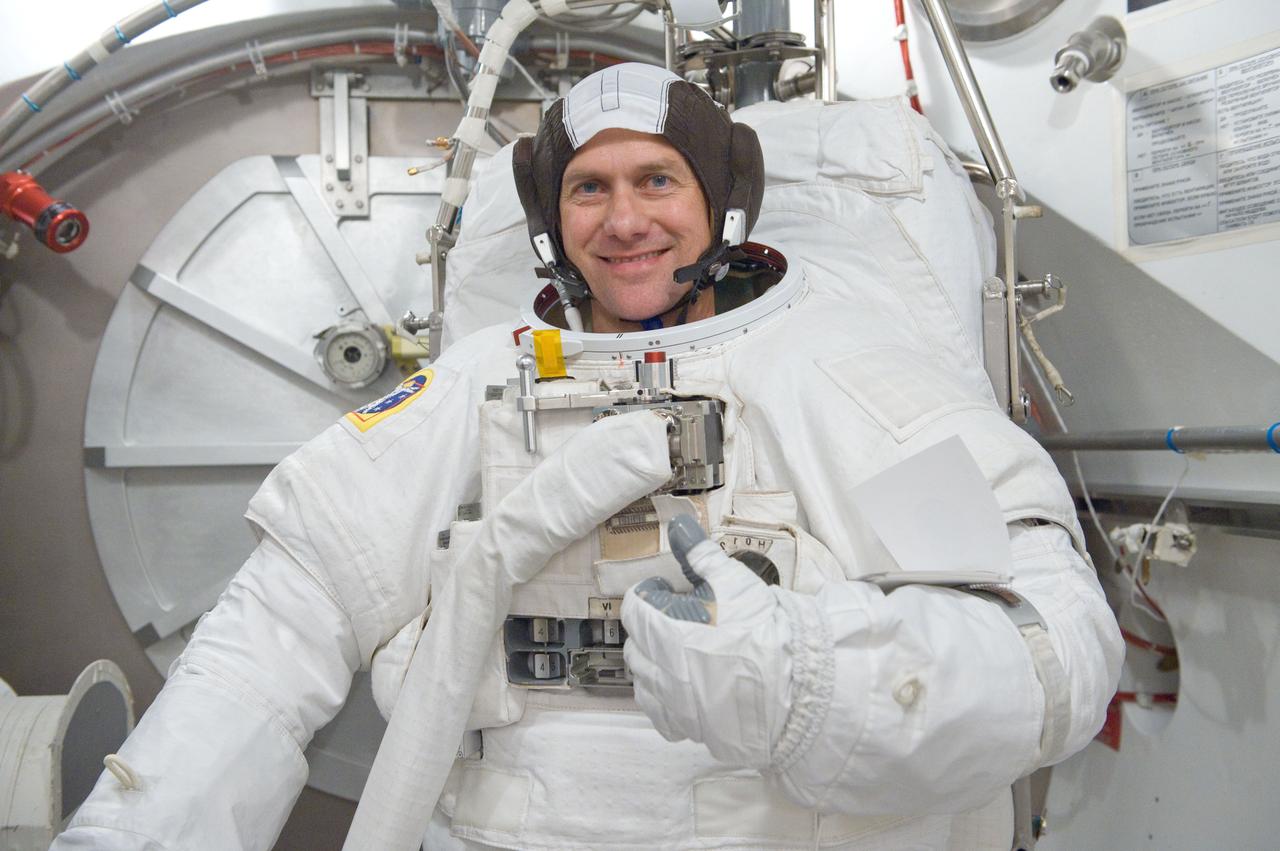
PHOTO DATE: 20 July 2012 LOCATION: Bldg. 7, SSATA Chamber SUBJECT: Expedition 34/35 astronaut Tom Marshburn during SSATA EMU training and certification - Dry Run. Test Directors Gretchen Thomas, Christina Anchondo and Joel Maganza. STB-ST-962 PHOTOGRAPHER: Mark Sowa
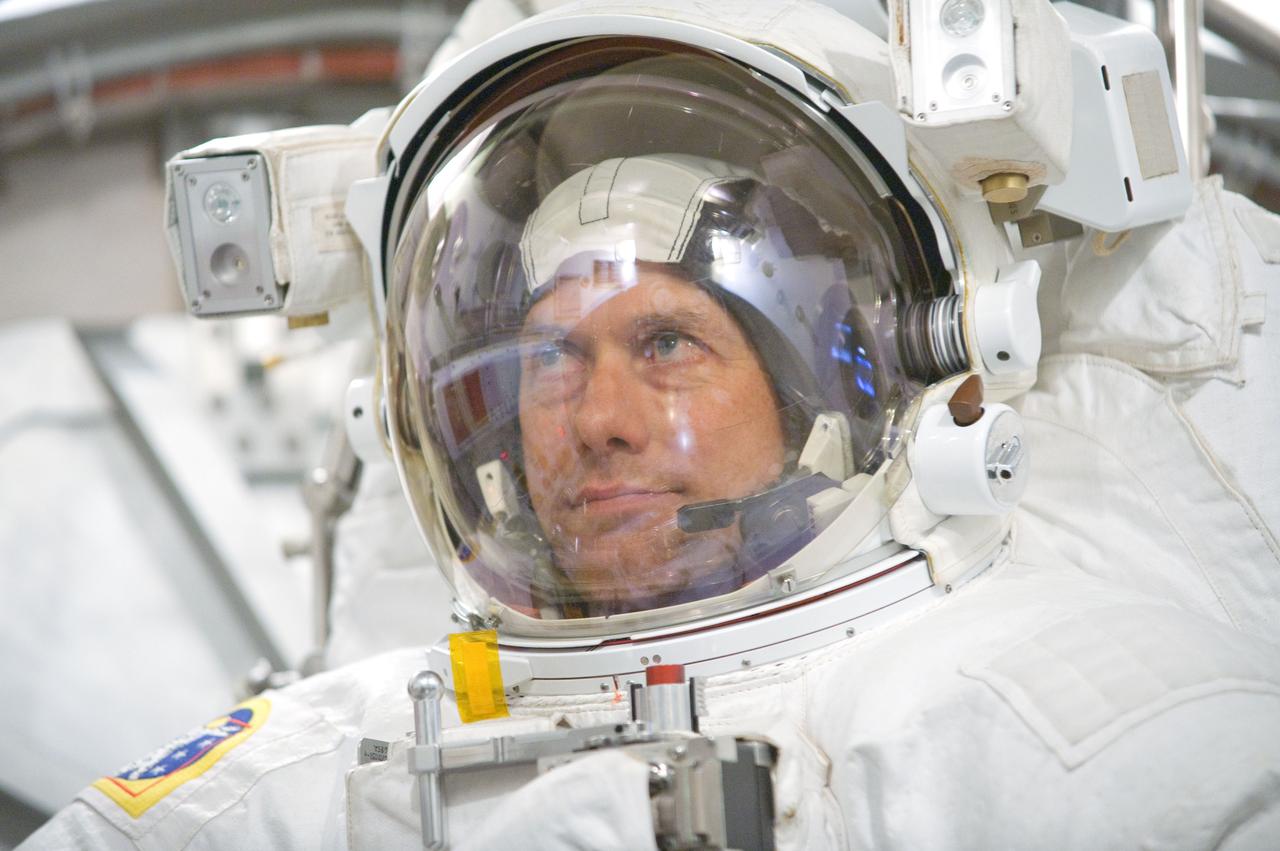
PHOTO DATE: 20 July 2012 LOCATION: Bldg. 7, SSATA Chamber SUBJECT: Expedition 34/35 astronaut Tom Marshburn during SSATA EMU training and certification - Dry Run. Test Directors Gretchen Thomas, Christina Anchondo and Joel Maganza. STB-ST-962 PHOTOGRAPHER: Mark Sowa
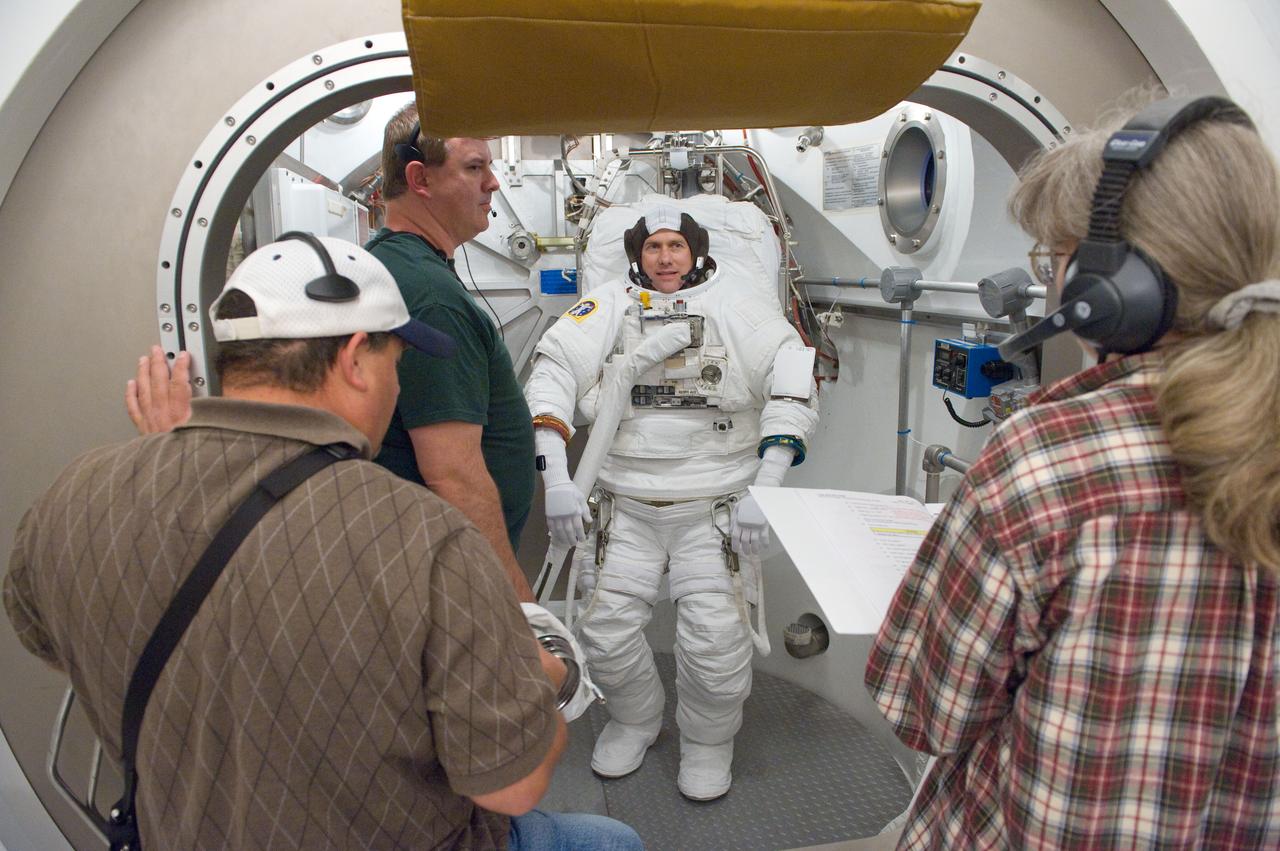
PHOTO DATE: 20 July 2012 LOCATION: Bldg. 7, SSATA Chamber SUBJECT: Expedition 34/35 astronaut Tom Marshburn during SSATA EMU training and certification - Dry Run. Test Directors Gretchen Thomas, Christina Anchondo and Joel Maganza. STB-ST-962 PHOTOGRAPHER: Mark Sowa
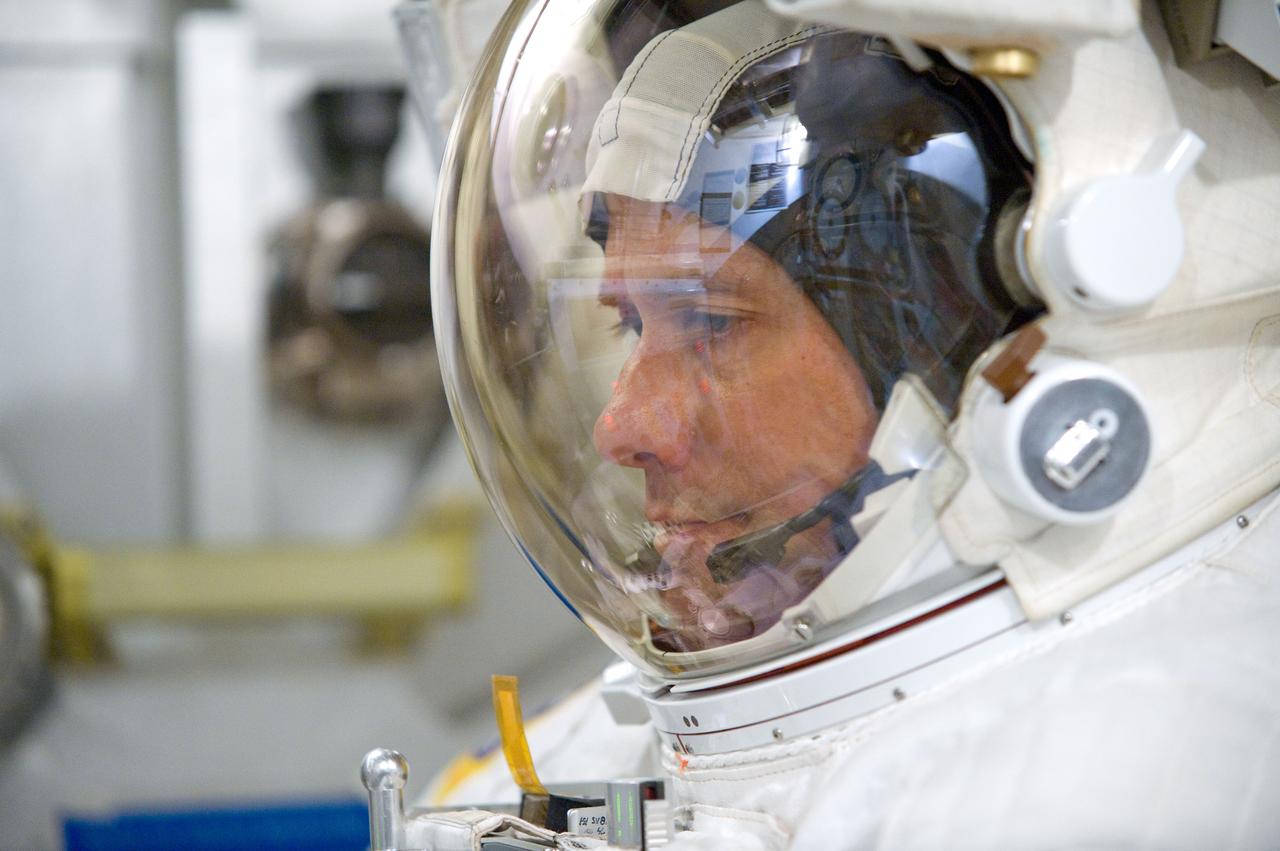
PHOTO DATE: 20 July 2012 LOCATION: Bldg. 7, SSATA Chamber SUBJECT: Expedition 34/35 astronaut Tom Marshburn during SSATA EMU training and certification - Dry Run. Test Directors Gretchen Thomas, Christina Anchondo and Joel Maganza. STB-ST-962 PHOTOGRAPHER: Mark Sowa
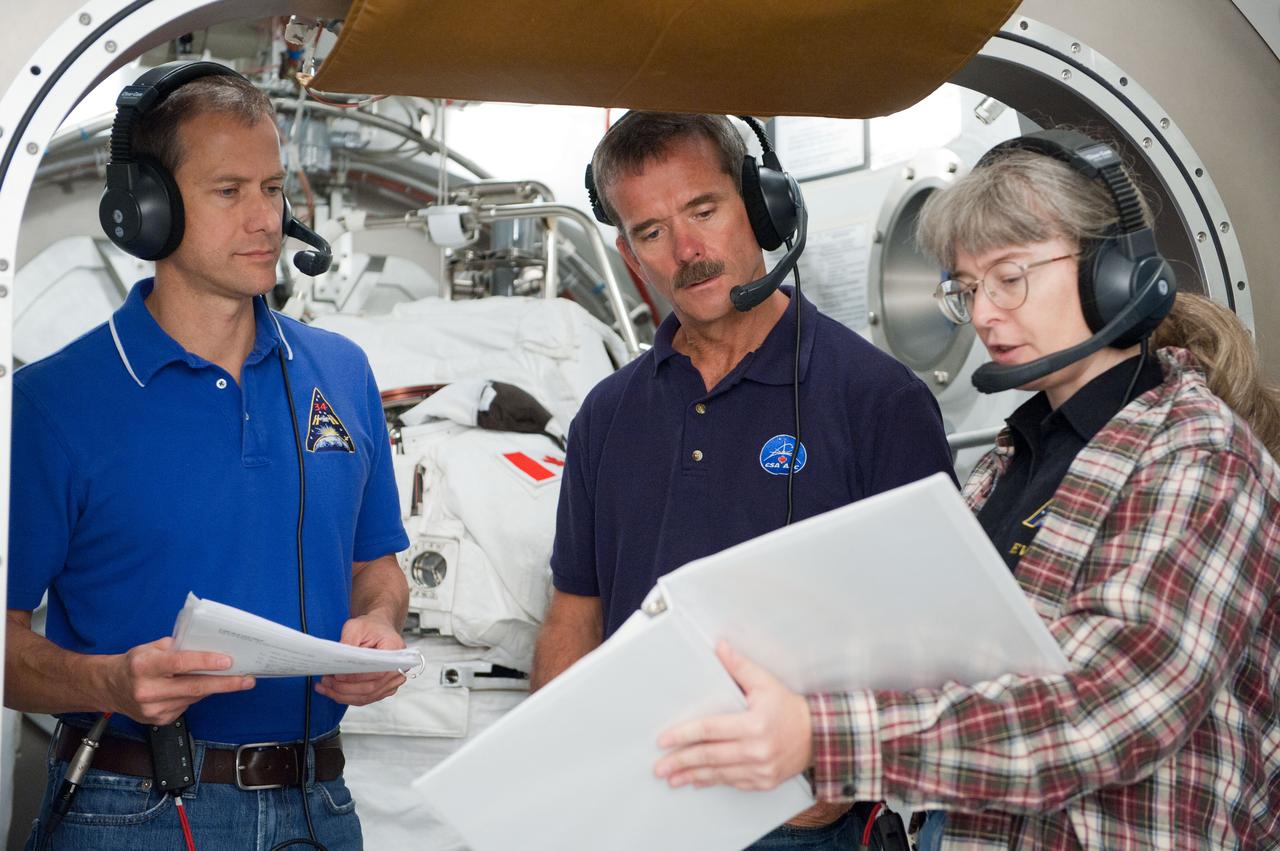
PHOTO DATE: 31 July 2012 LOCATION: Bldg. 7, SSATA Chamber SUBJECT: Expedition 33/34 Canadian astronaut and crew member Chris Hadfield during SSATA EMU training and certification - Dry Run. TD: Cristina Anchondo and Joel Maganza. STB-ST-963 PHOTOGRAPHER: Mark Sowa
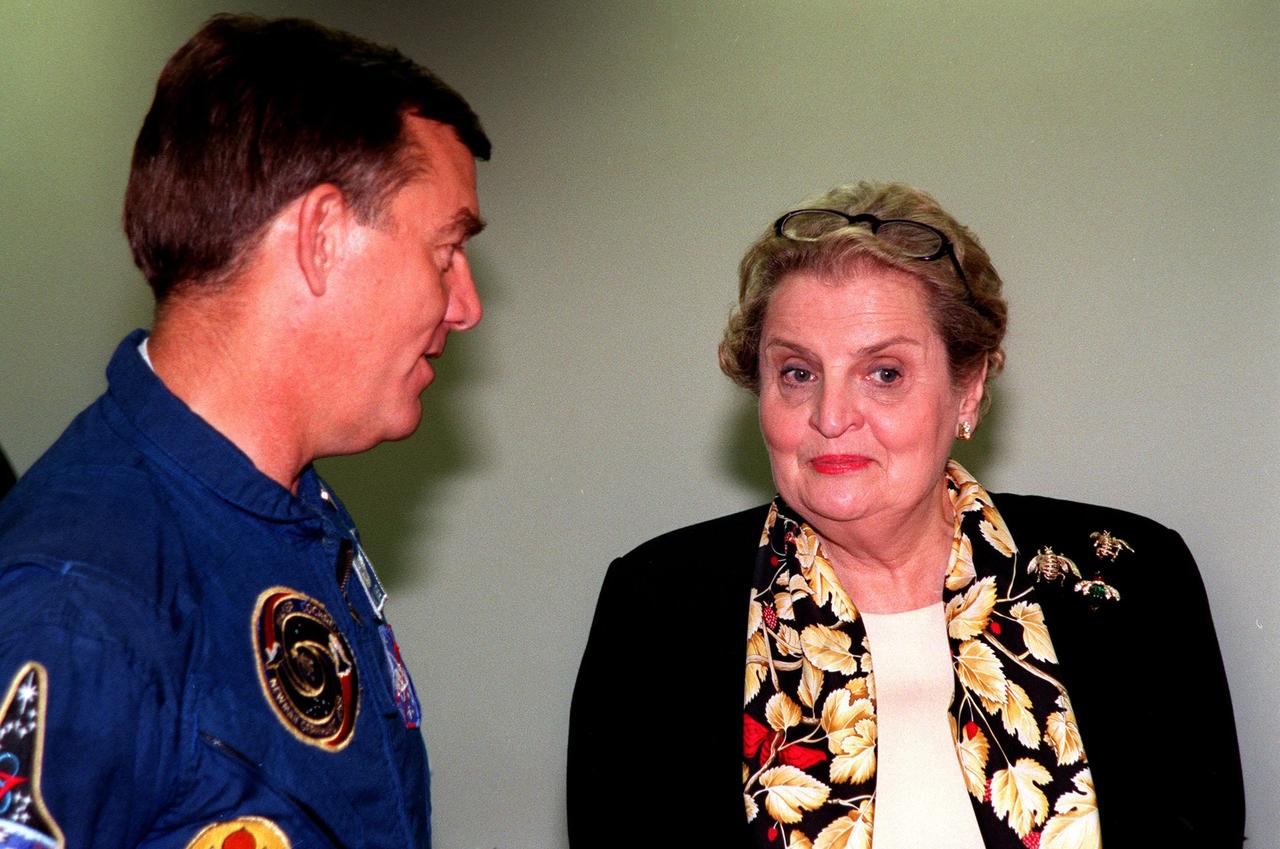
U.S. Secretary of State Madeleine Albright (right) talks with astronaut Jim Voss following the successful launch of Endeavour on Mission STS-88 from Launch Pad 39A at 3:35:34 a.m. EST. STS-88 is the first U.S. mission dedicated to the assembly of the International Space Station (ISS). Voss is a member of the STS-100 crew, the eighth ISS assembly team
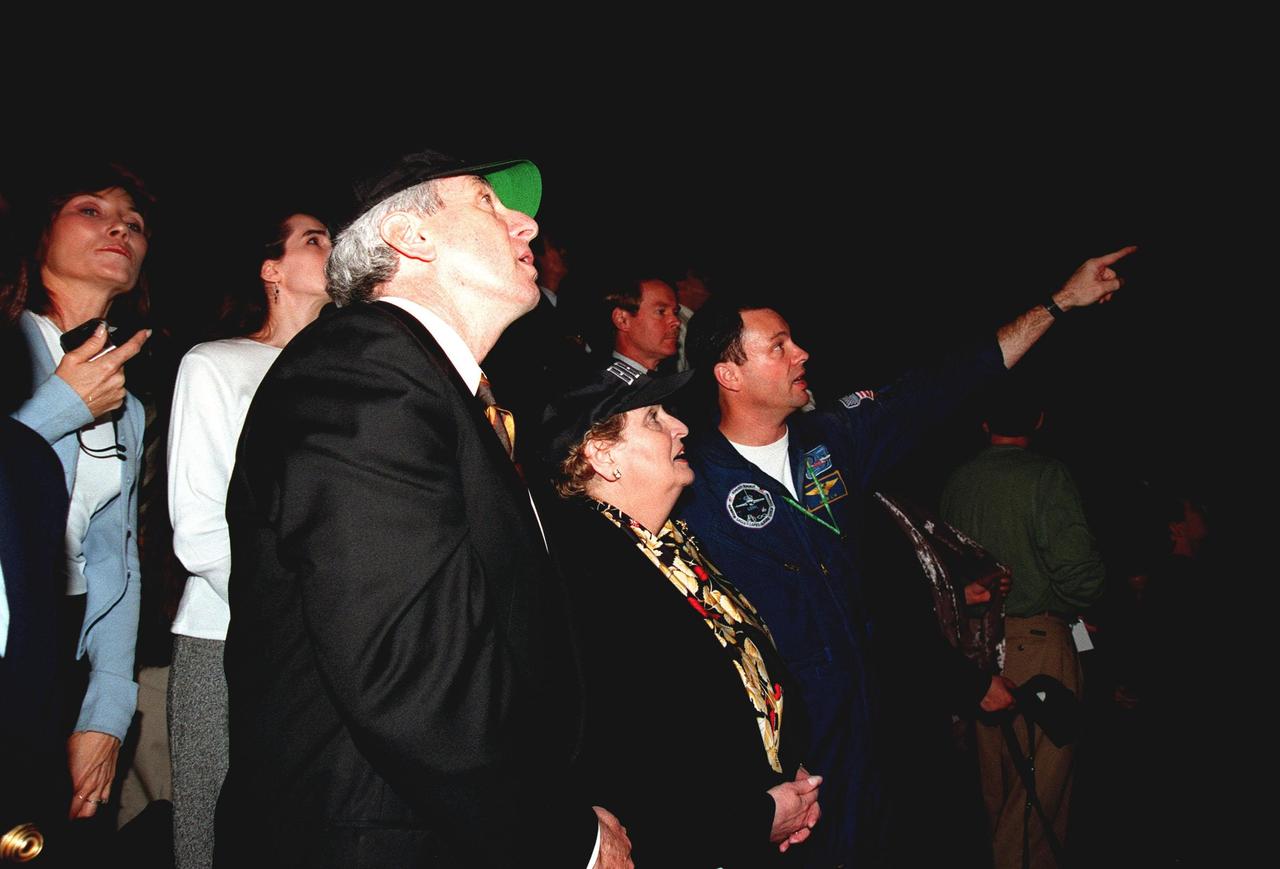
At the Banana Creek Viewing Site, NASA Administrator Daniel Goldin (left), U.S. Secretary of State Madeleine Albright (center) and astronaut Michael Lopez-Alegria watch the launch of STS-88 from Launch Pad 39A at 3:35:34 a.m. EST. STS-88 is the first U.S. mission dedicated to the assembly of the International Space Station (ISS). Lopez-Alegria is part of the STS-92 crew that is assigned to the fourth ISS assembly flight scheduled for launch on Oct. 28, 1999, aboard Discovery
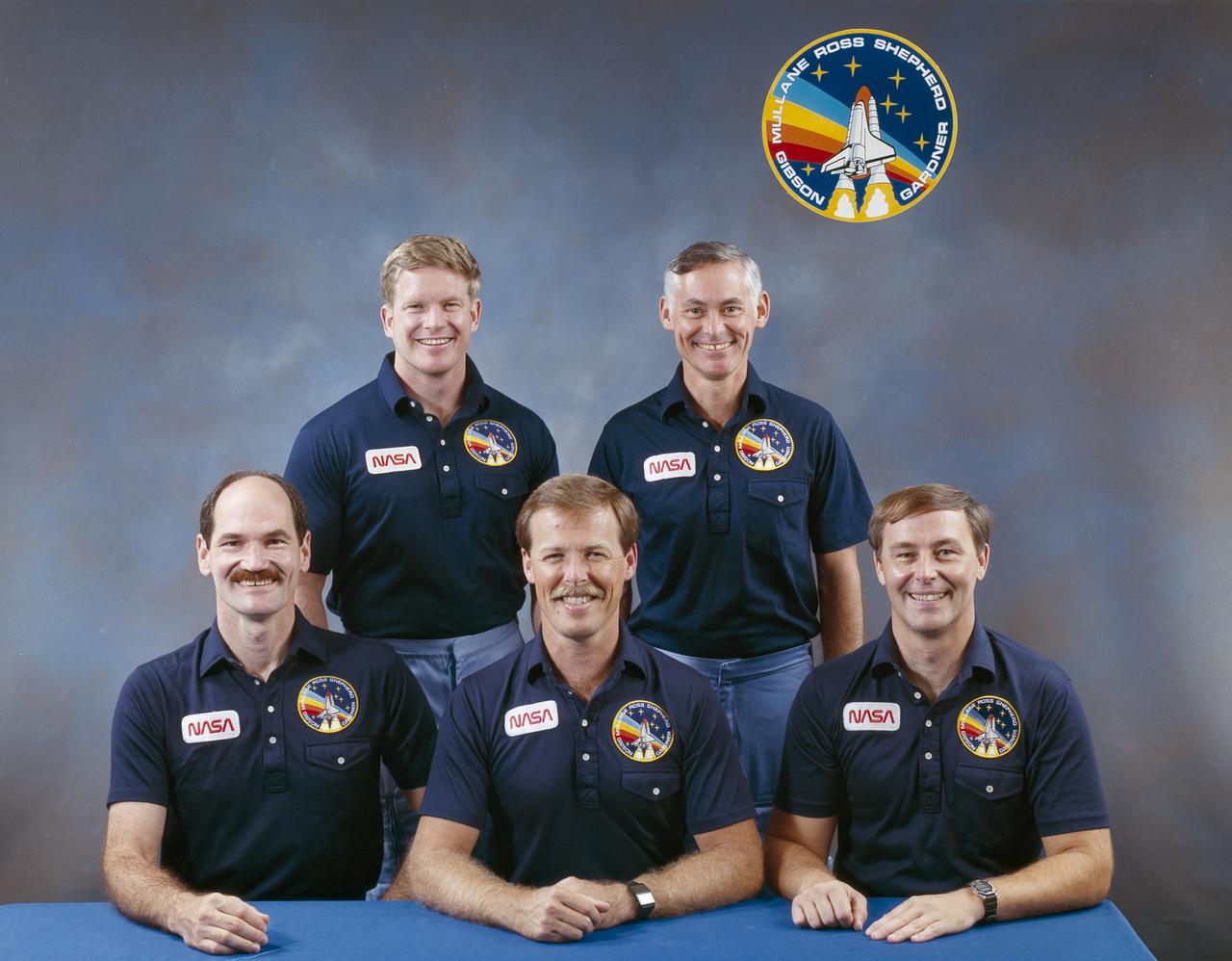
The STS-27 crew portrait features 5 astronauts. Seated, left to right, are Jerry L. Ross, mission specialist; Guy S. Gardner, pilot; and Robert L. Gibson, commander. On the back row, left to right, are mission specialists Richard M. Mullane, and William M. Shepherd. Launched aboard the Space Shuttle Atlantis on December 2, 1988 at 9:30:34 am (EST), the STS-27 mission was the third mission dedicated to the Department of Defense (DOD).
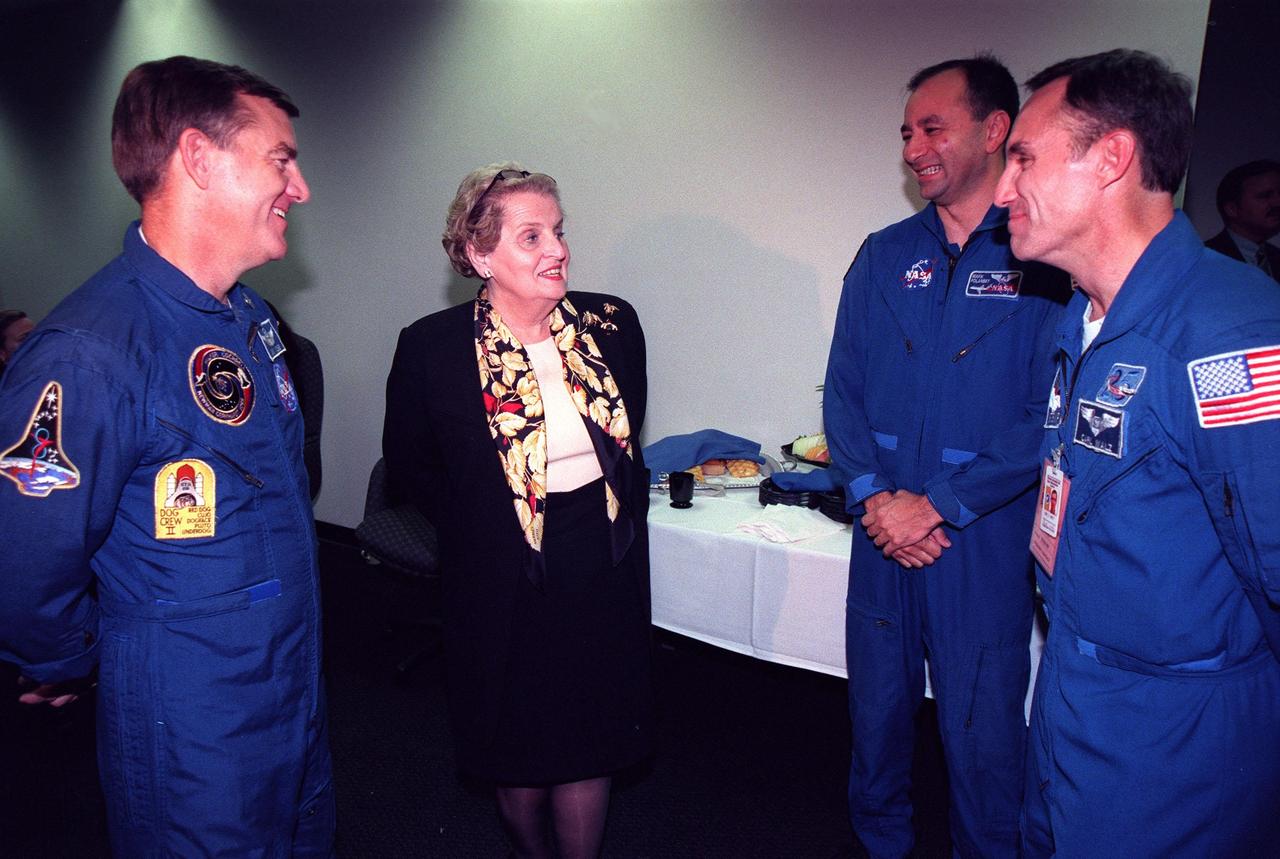
Following the successful launch of the STS-88 crew aboard Endeavour from Launch Pad 39A at 3:35:34 a.m. EST, U.S. Secretary of State Madeleine Albright (second from left) talks with astronauts (left to right) Jim Voss, Mark Polansky and Carl Walz. STS-88 is the first U.S. mission dedicated to the assembly of the International Space Station (ISS). Voss is a member of the STS-100 crew which will be the eighth ISS assembly mission. Polansky is slated to fly on STS-98 which will be the sixth ISS assembly mission. Walz is currently assigned to fly on the ISS on the fourth long duration crew

Labeled line drawing entitled GALILEO PROBE identifies the deceleration module aft cover, descent module, and deceleration module aeroshell configurations and dimensions prior to and during entry into Jupiter's atmosphere.
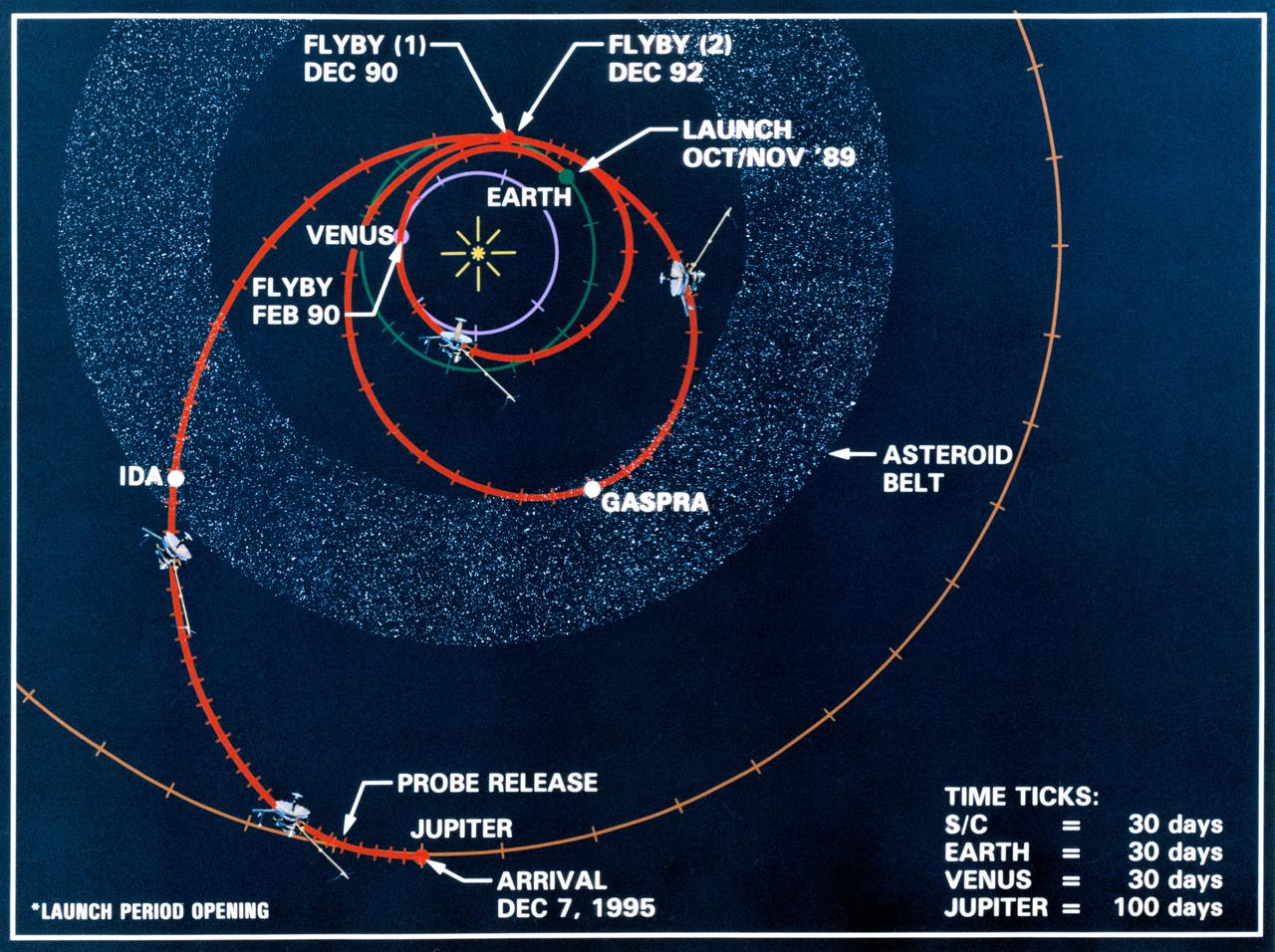
Line drawing charts the Galileo spacecraft's launch from low Earth orbit and its three planetary and two asteroid encounters in the course of its gravity-assisted flight to Jupiter. These encounters include Venus (February 1990), two Earth passes (December 1990 and December 1992), and the asteroids Gaspra and Ida in the asteroid belt. Galileo will release a probe and will arrive at Jupiter, 12-07-95.
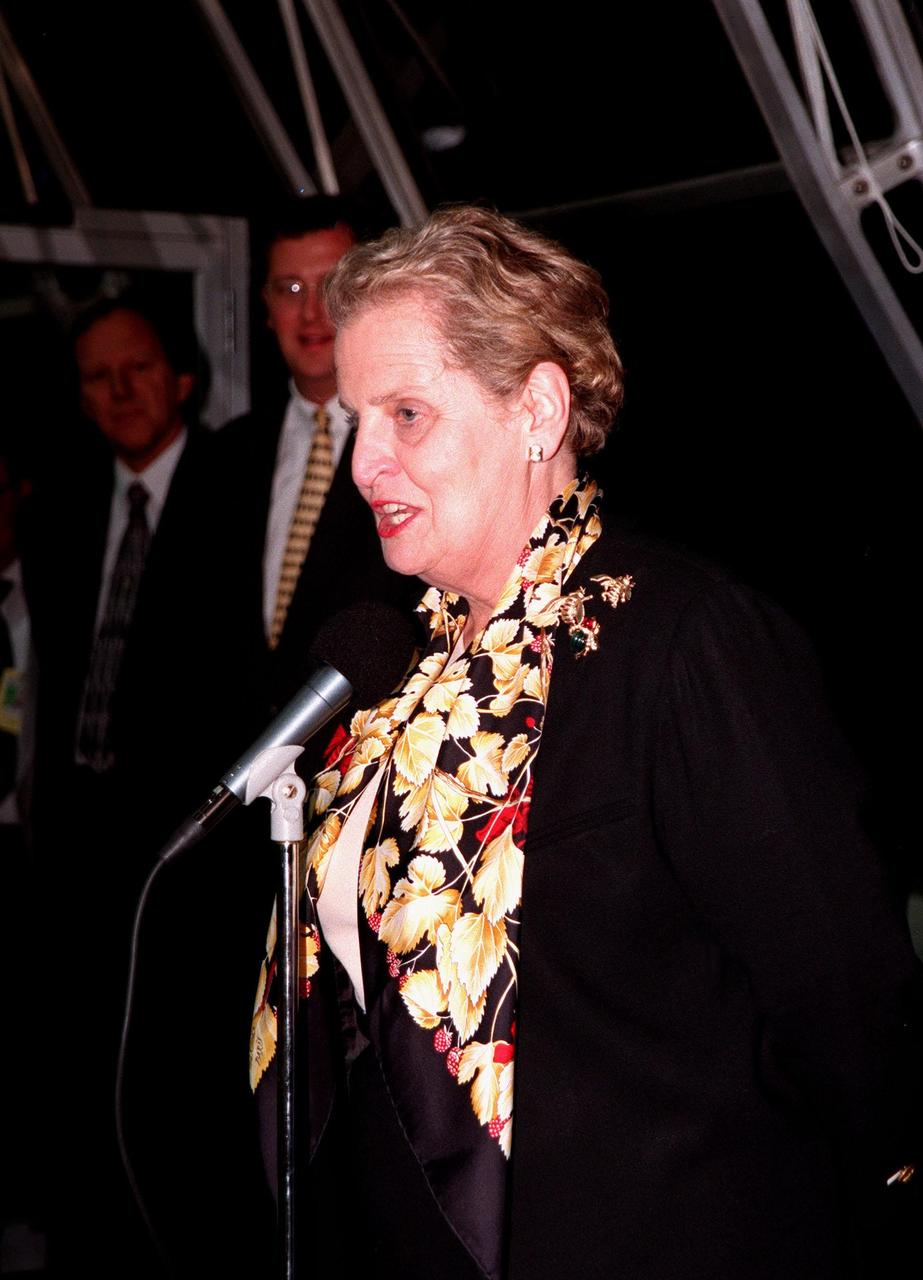
In a firing room of the Launch Control Center, U.S. Secretary of State Madeleine Albright speaks to the launch team after the successful launch of Space Shuttle Endeavour at 3:35:34 a.m. EST. During the nearly 12-day mission of STS-88, the six-member crew will mate in space the first two elements of the International Space Station the already-orbiting Zarya control module and the Unity connecting module carried by Endeavour
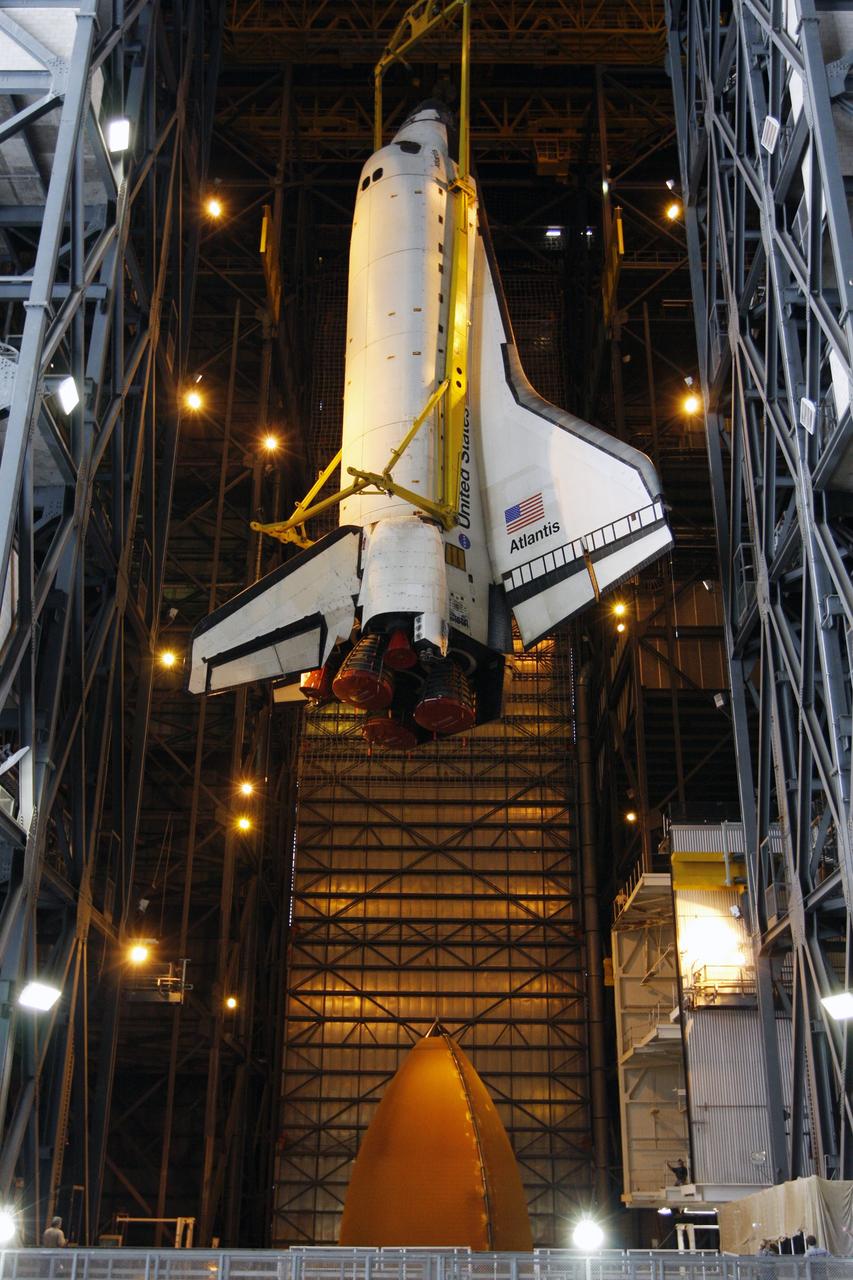
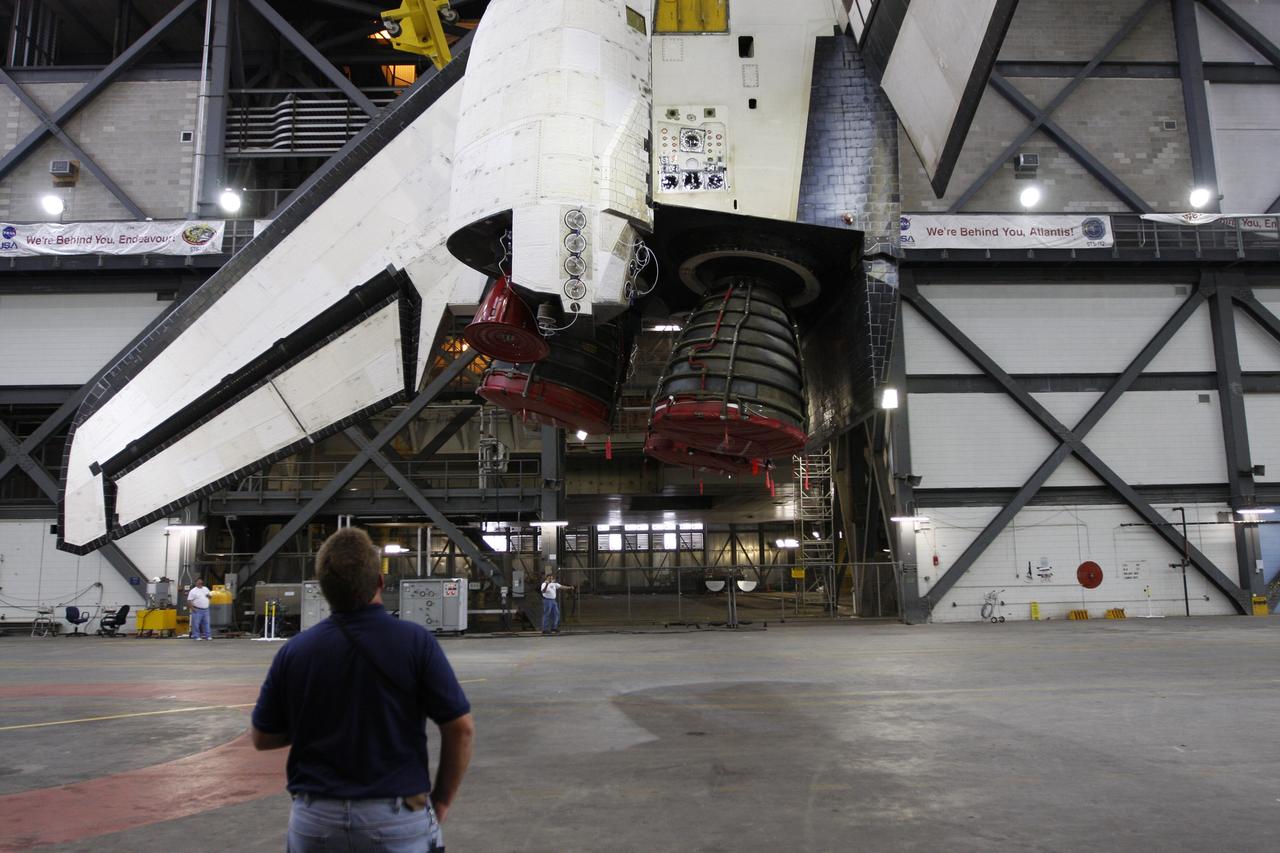
CAPE CANAVERAL, Fla. – In the Vehicle Assembly Building at NASA's Kennedy Space Center, space shuttle Atlantis is lowered toward the external fuel tank in high bay 3. Atlantis will be mated to the tank and twin solid rocket boosters stacked on the mobile launcher platform. After additional preparations are made, the shuttle will be rolled out to Launch Pad 39A to prepare for launch on the STS-125 mission targeted for 1:34 a.m. EDT Oct. 8. Photo credit: NASA/Dimitri Gerondidakis
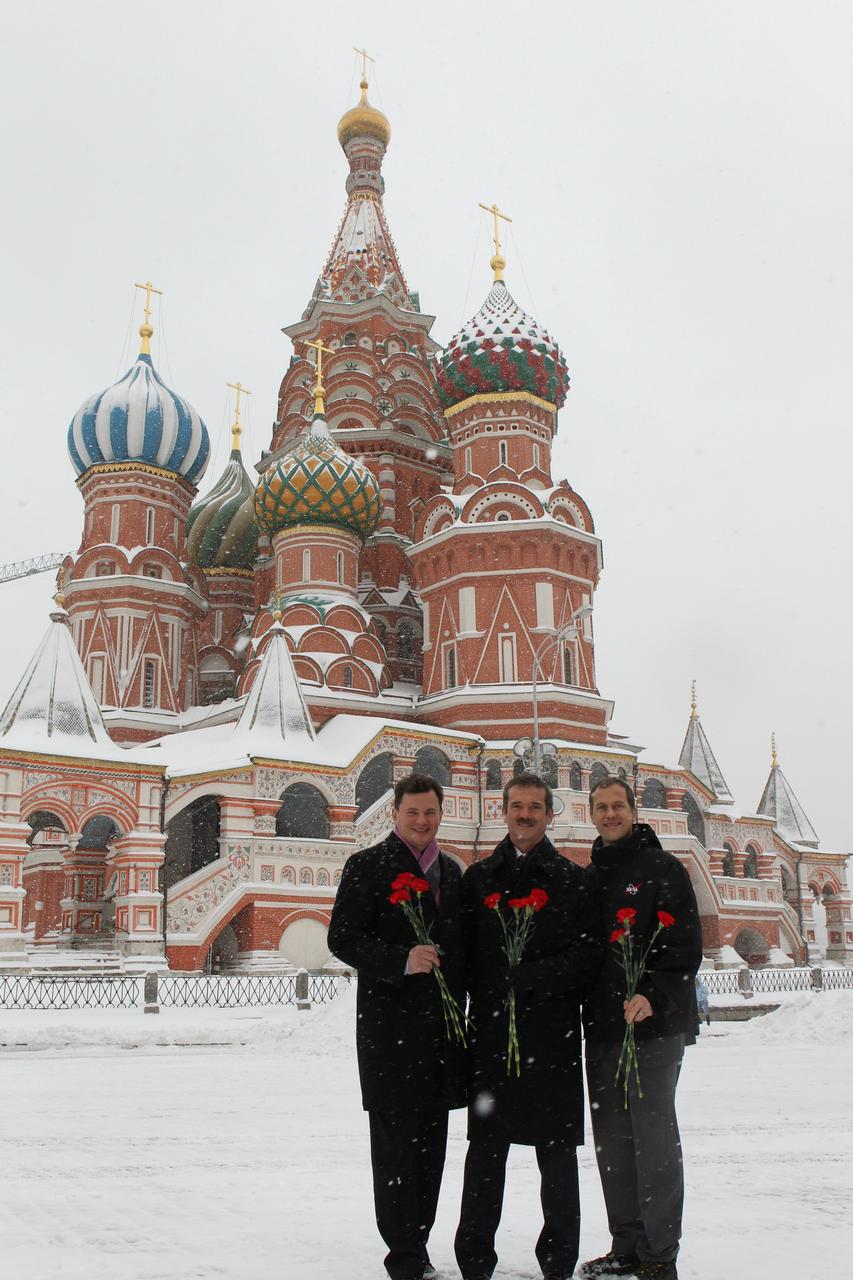
Expedition 34/35 Soyuz Commander Roman Romanenko (left), Flight Engineer Chris Hadfield of the Canadian Space Agency (center) and Flight Engineer Tom Marshburn of NASA pose for pictures in front of St. Basil’s Cathedral in Moscow Nov. 29, 2012 during a tour of Red Square during which they laid flowers at the Kremlin Wall where Russian space heroes are interred. The trio will launch to the International Space Station Dec. 19 from the Baikonur Cosmodrome in Kazakhstan in their Soyuz TMA-07M spacecraft. NASA/Stephanie Stoll
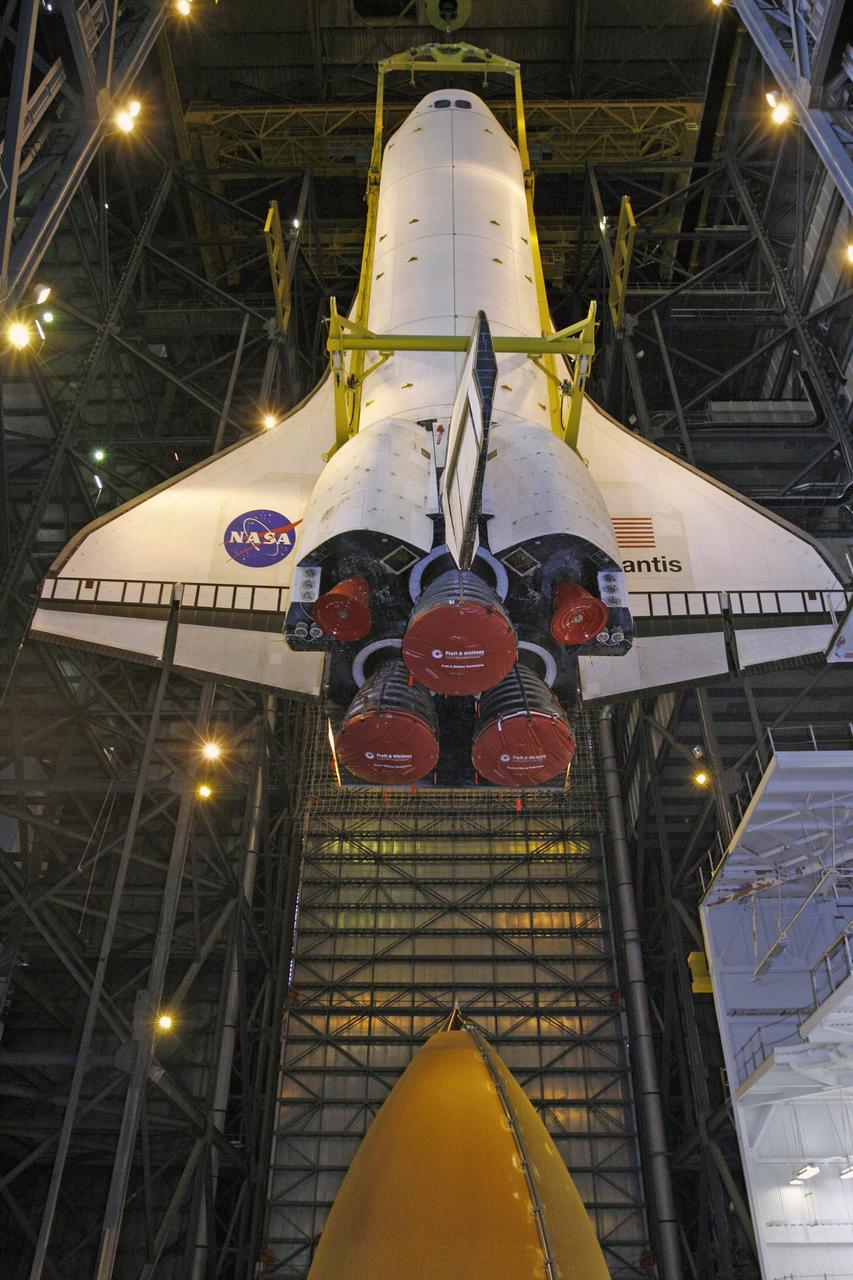
CAPE CANAVERAL, Fla. – In the Vehicle Assembly Building at NASA's Kennedy Space Center, space shuttle Atlantis is lowered toward the external fuel tank in high bay 3. Atlantis will be mated to the tank and twin solid rocket boosters stacked on the mobile launcher platform. After additional preparations are made, the shuttle will be rolled out to Launch Pad 39A to prepare for launch on the STS-125 mission targeted for 1:34 a.m. EDT Oct. 8. Photo credit: NASA/Dimitri Gerondidakis
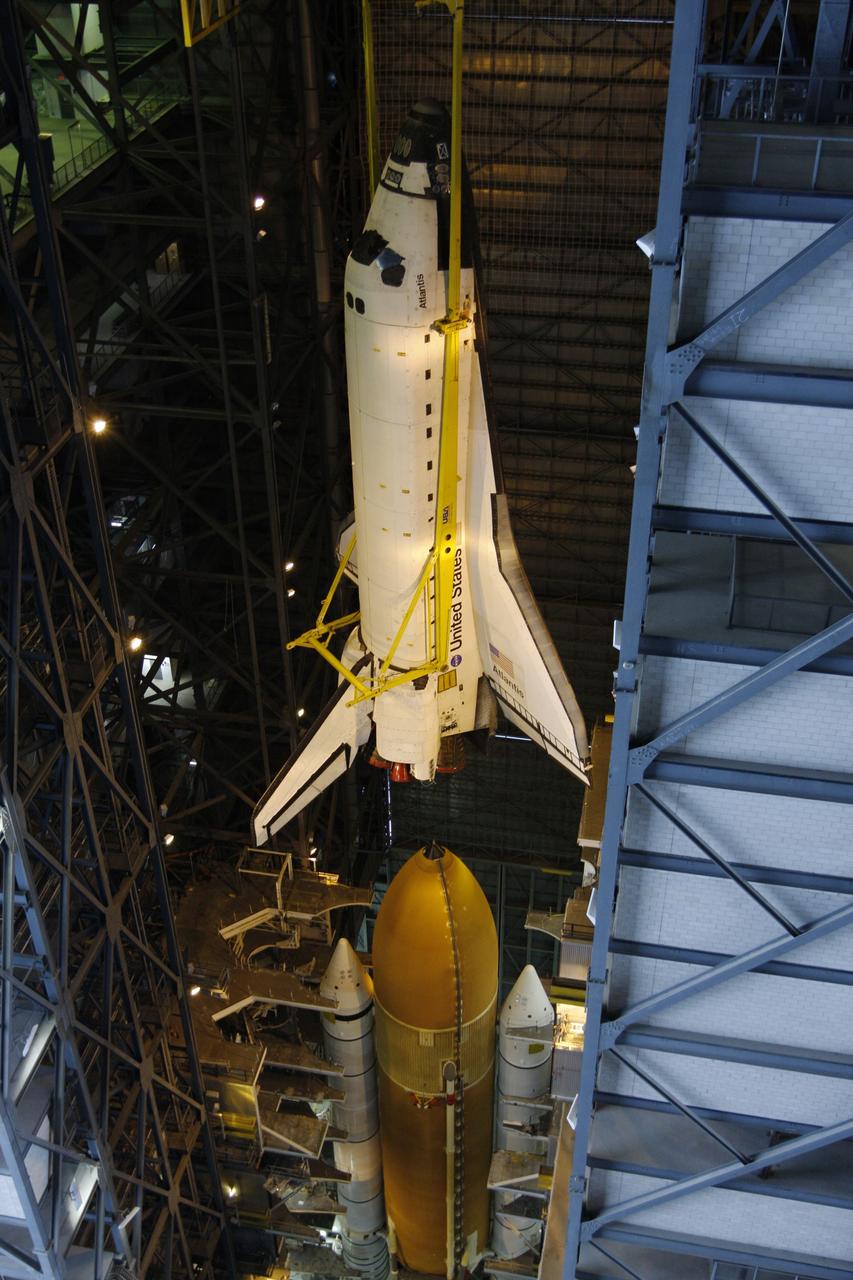
CAPE CANAVERAL, Fla. – A crane lifts space shuttle Atlantis higher into the upper levels of the Vehicle Assembly Building at NASA's Kennedy Space Center. The shuttle will be moved into high bay 3 and lowered for stacking with its external fuel tank and twin solid rocket boosters. After additional preparations are made, the shuttle will be rolled out to Launch Pad 39A to prepare for launch on the STS-125 mission targeted for 1:34 a.m. EDT Oct. 8. Photo credit: NASA/Dimitri Gerondidakis
CAPE CANAVERAL, Fla. – In the Vehicle Assembly Building at NASA's Kennedy Space Center, space shuttle Atlantis is lowered toward the external fuel tank and twin solid rocket boosters in high bay 3. Atlantis will be mated to the tank and boosters stacked on the mobile launcher platform. After additional preparations are made, the shuttle will be rolled out to Launch Pad 39A to prepare for launch on the STS-125 mission targeted for 1:34 a.m. EDT Oct. 8. Photo credit: NASA/Dimitri Gerondidakis
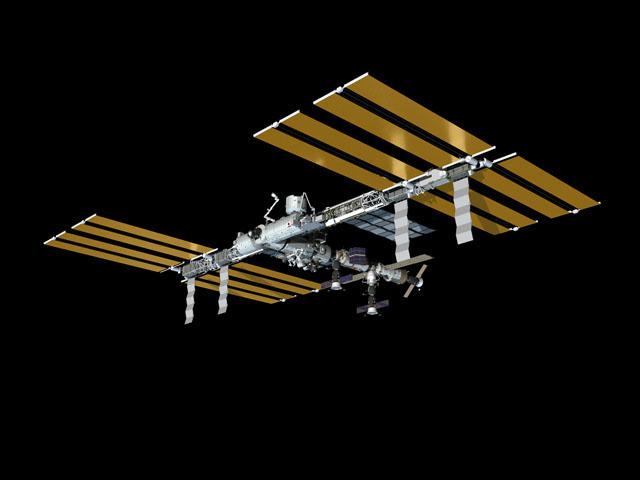
JSC2009-E-147799 (July 2009) --- Computer-generated artist?s rendering of the International Space Station as of July 29, 2009. Progress 34 supply vehicle docks to the Zvezda Service Module?s aft port. Soyuz 18 (TMA-14) remains docked to the Pirs Docking Compartment and Soyuz 19 (TMA-15) remains linked to the Zarya nadir port. During the STS-127 mission, the Japanese Exposed Facility was added to the Japanese Kibo complex.
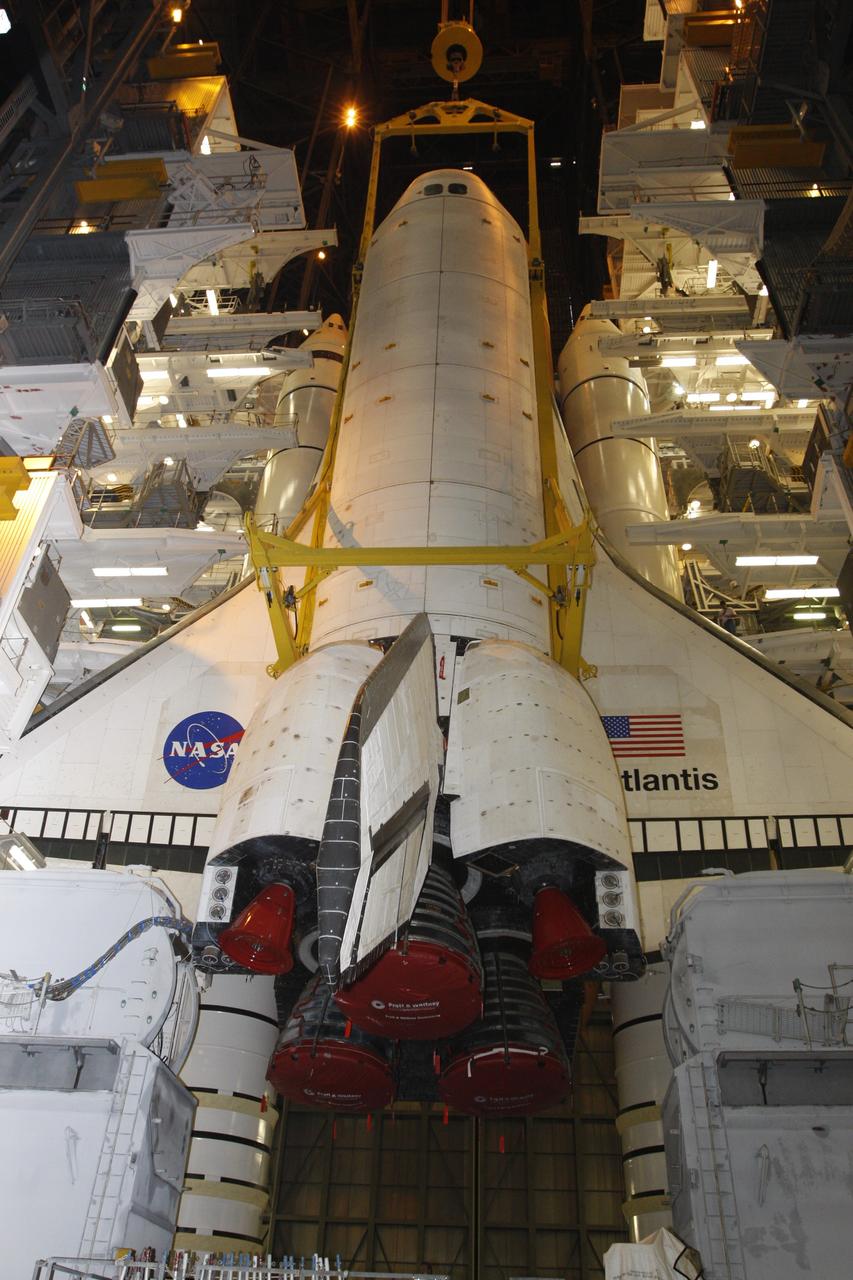
CAPE CANAVERAL, Fla. – In the Vehicle Assembly Building at NASA's Kennedy Space Center, space shuttle Atlantis approaches the floor of the mobile launcher platform in high bay 3. Behind the shuttle are the external fuel tank and twin solid rocket boosters already stacked there. Atlantis will be mated to the tank and boosters. After additional preparations are made, the shuttle will be rolled out to Launch Pad 39A to prepare for launch on the STS-125 mission targeted for 1:34 a.m. EDT Oct. 8. Photo credit: NASA/Dimitri Gerondidakis
CAPE CANAVERAL, Fla. – In the Vehicle Assembly Building transfer aisle at NASA's Kennedy Space Center, the overhead crane lifts space shuttle Atlantis from its transporter. Atlantis will be raised to vertical for transfer to high bay 3. There it will be stacked with its external fuel tank and twin solid rocket boosters. After additional preparations are made, the shuttle will be rolled out to Launch Pad 39A to prepare for launch on the STS-125 mission targeted for 1:34 a.m. EDT Oct. 8. Photo credit: NASA/Dimitri Gerondidakis
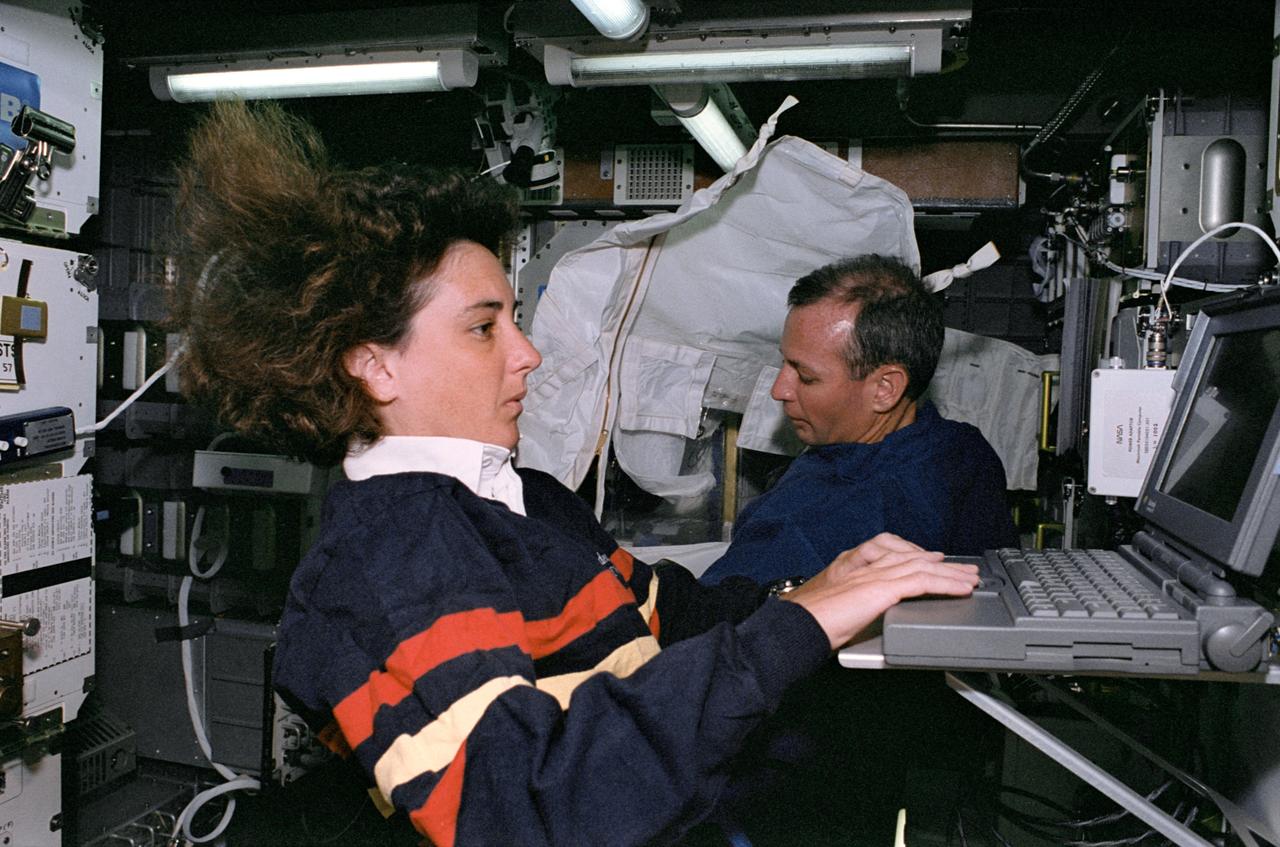
STS057-34-029 (21 June-1 July 1993) --- Astronaut Nancy J. Sherlock works on the Electronic Procedures Portion (EPROC) of the Human Factors Assessment (HFA) experiment. Astronaut Brian Duffy works nearby. The computer portion of HFA-EPROC simulated a space station propulsion system task. Sherlock, Duffy and four other astronauts spent almost ten days aboard the Space Shuttle Endeavour for the STS-57 mission.
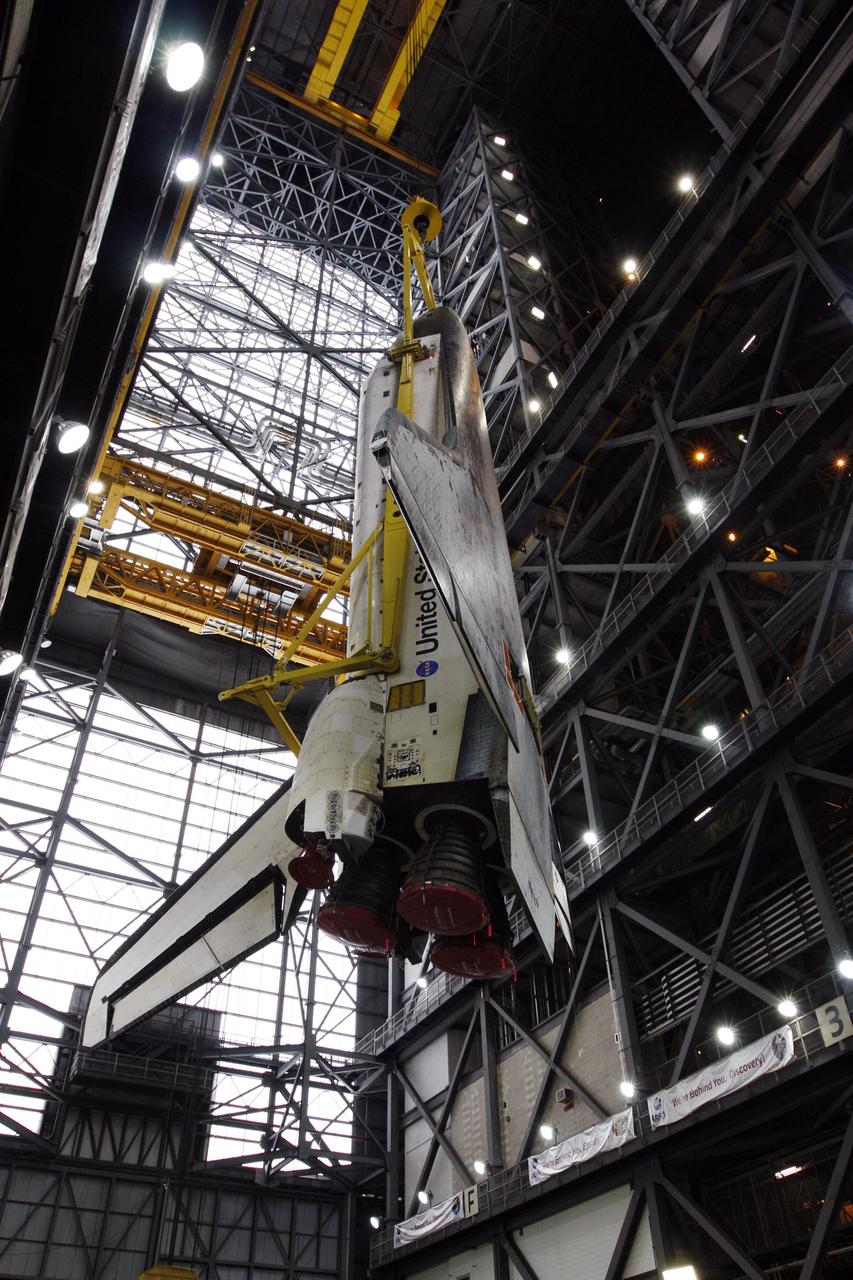
CAPE CANAVERAL, Fla. – A crane lifts space shuttle Atlantis into the upper levels of the Vehicle Assembly Building at NASA's Kennedy Space Center. The shuttle will be moved into high bay 3 and lowered for stacking with its external fuel tank and twin solid rocket boosters. After additional preparations are made, the shuttle will be rolled out to Launch Pad 39A to prepare for launch on the STS-125 mission targeted for 1:34 a.m. EDT Oct. 8. Photo credit: NASA/Dimitri Gerondidakis
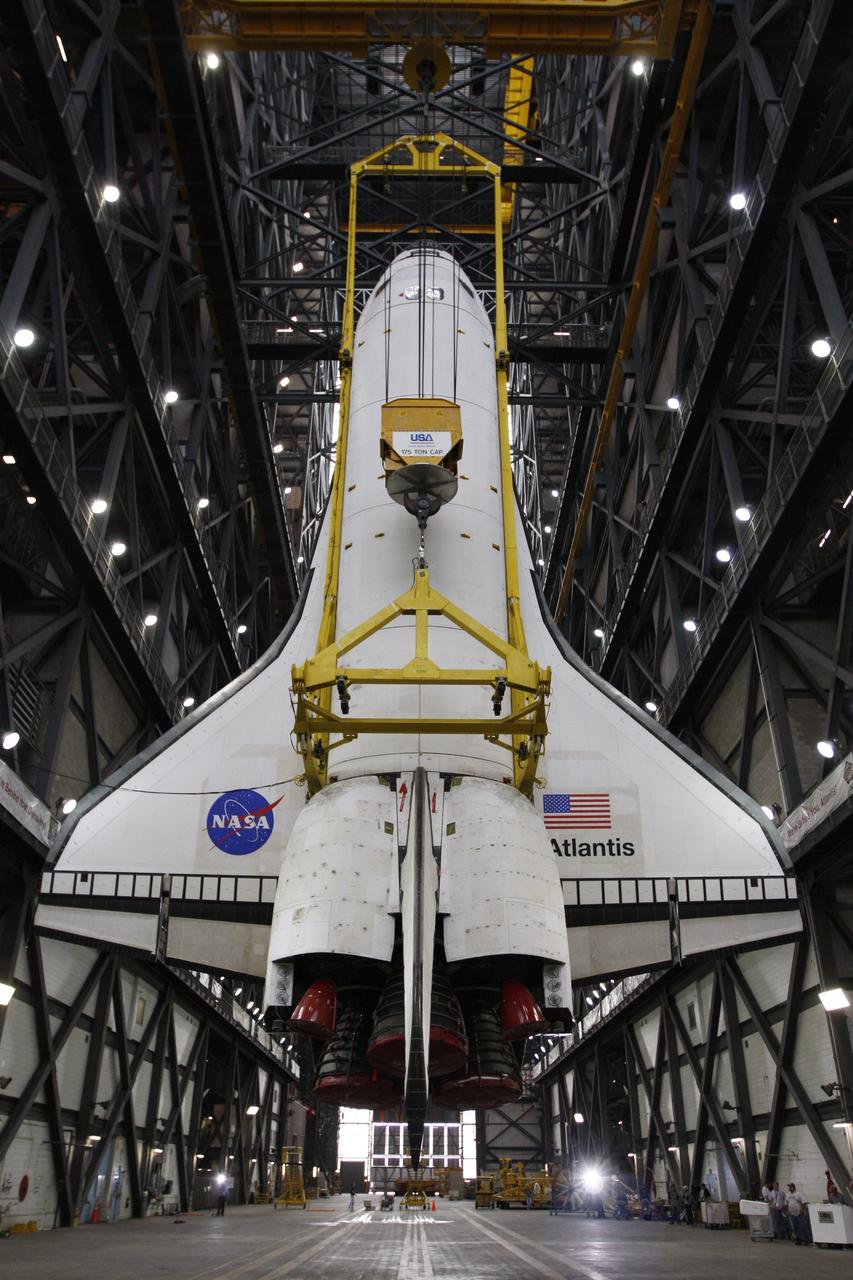
CAPE CANAVERAL, Fla. – Suspended above the transfer aisle in the Vehicle Assembly Building at NASA's Kennedy Space Center, space shuttle Atlantis is ready to be lifted into high bay 3 and stacked with its external fuel tank and twin solid rocket boosters. After additional preparations are made, the shuttle will be rolled out to Launch Pad 39A to prepare for launch on the STS-125 mission targeted for 1:34 a.m. EDT Oct. 8. Photo credit: NASA/Dimitri Gerondidakis

CAPE CANAVERAL, Fla. – In the Vehicle Assembly Building at NASA's Kennedy Space Center, a technician closely watches the progress of space shuttle Atlantis as it is lowered alongside the external fuel tank in high bay 3. Atlantis will be mated to the tank and twin solid rocket boosters stacked on the mobile launcher platform. After additional preparations are made, the shuttle will be rolled out to Launch Pad 39A to prepare for launch on the STS-125 mission targeted for 1:34 a.m. EDT Oct. 8. Photo credit: NASA/Dimitri Gerondidakis
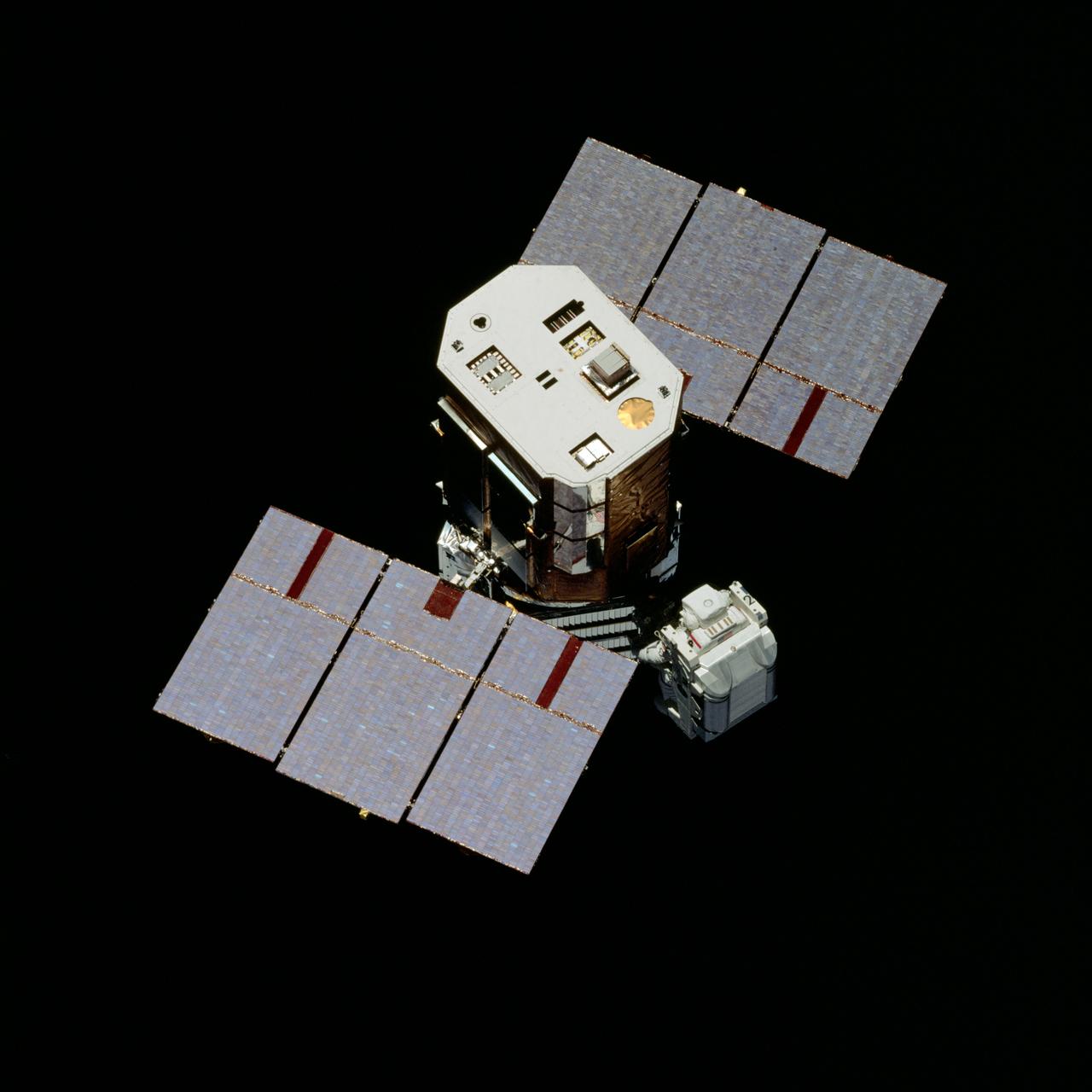
41C-34-1380 (10-11 April 1984) --- Astronaut George D. Nelson, using the manned maneuvering unit (MMU), arrives at the ailing Solar Maximum Mission Satellite (SMMS). After the STS-41C crewmembers captured the errant satellite and temporarily cradled it in Challenger?s payload bay, astronauts Nelson and James D. van Hoften repaired it and later re-released it.
KENNEDY SPACE CENTER, FLA. -- The Space Shuttle Columbia on Pad 39A 'watches' the picture-perfect ascent of sister ship Discovery after liftoff of STS-31. This was the first time since January 1986 that there was a Shuttle on each pad, which are separated by 1.6 miles. Discovery, carrying a five-member crew and the Hubble SpaceTelescope, lifted off at 8:34 EDT, April 24. Columbia, with its Astro-1 observatory, is scheduled for launch in May.
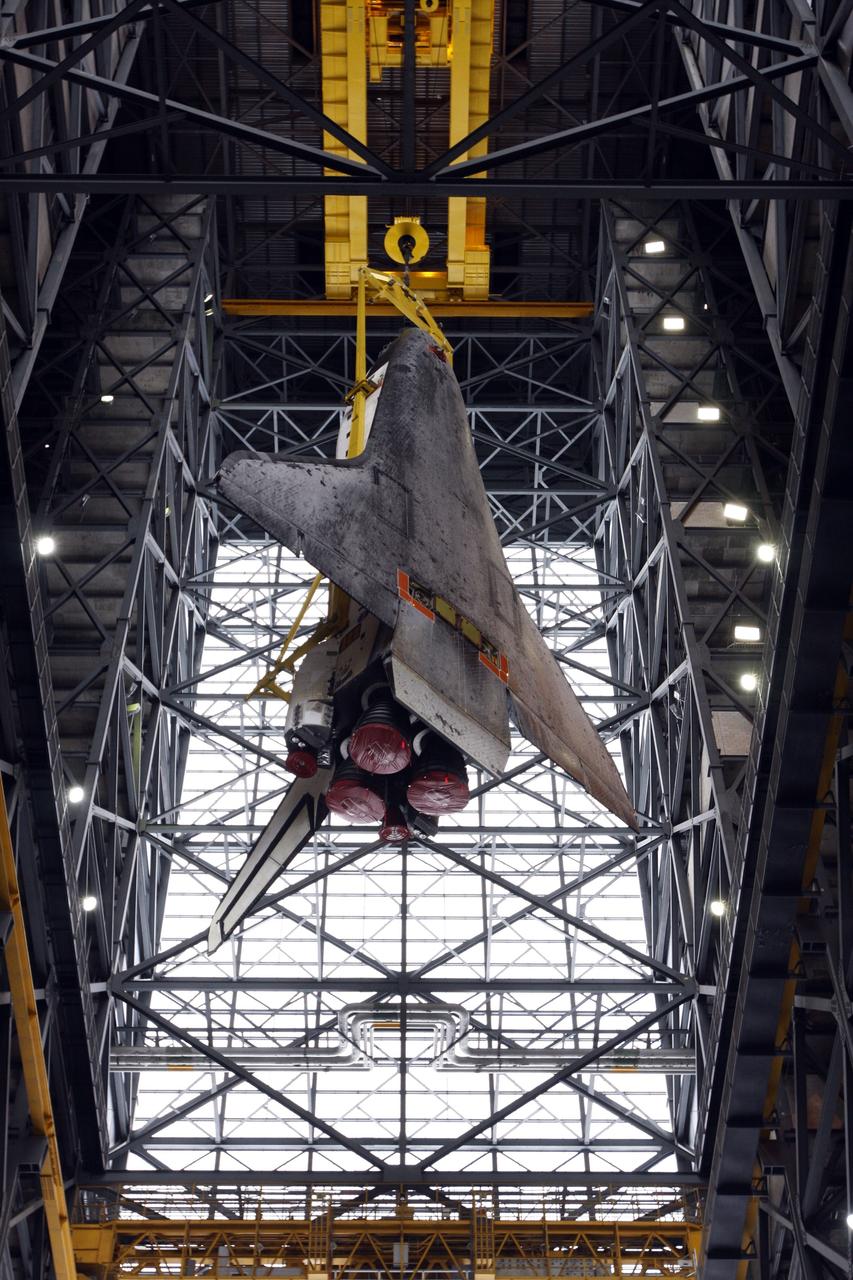
CAPE CANAVERAL, Fla. – In the Vehicle Assembly Building at NASA's Kennedy Space Center, space shuttle Atlantis is suspended vertically above the transfer aisle. Atlantis will be lifted into high bay 3 and stacked with its external fuel tank and twin solid rocket boosters. After additional preparations are made, the shuttle will be rolled out to Launch Pad 39A to prepare for launch on the STS-125 mission targeted for 1:34 a.m. EDT Oct. 8. Photo credit: NASA/Dimitri Gerondidakis
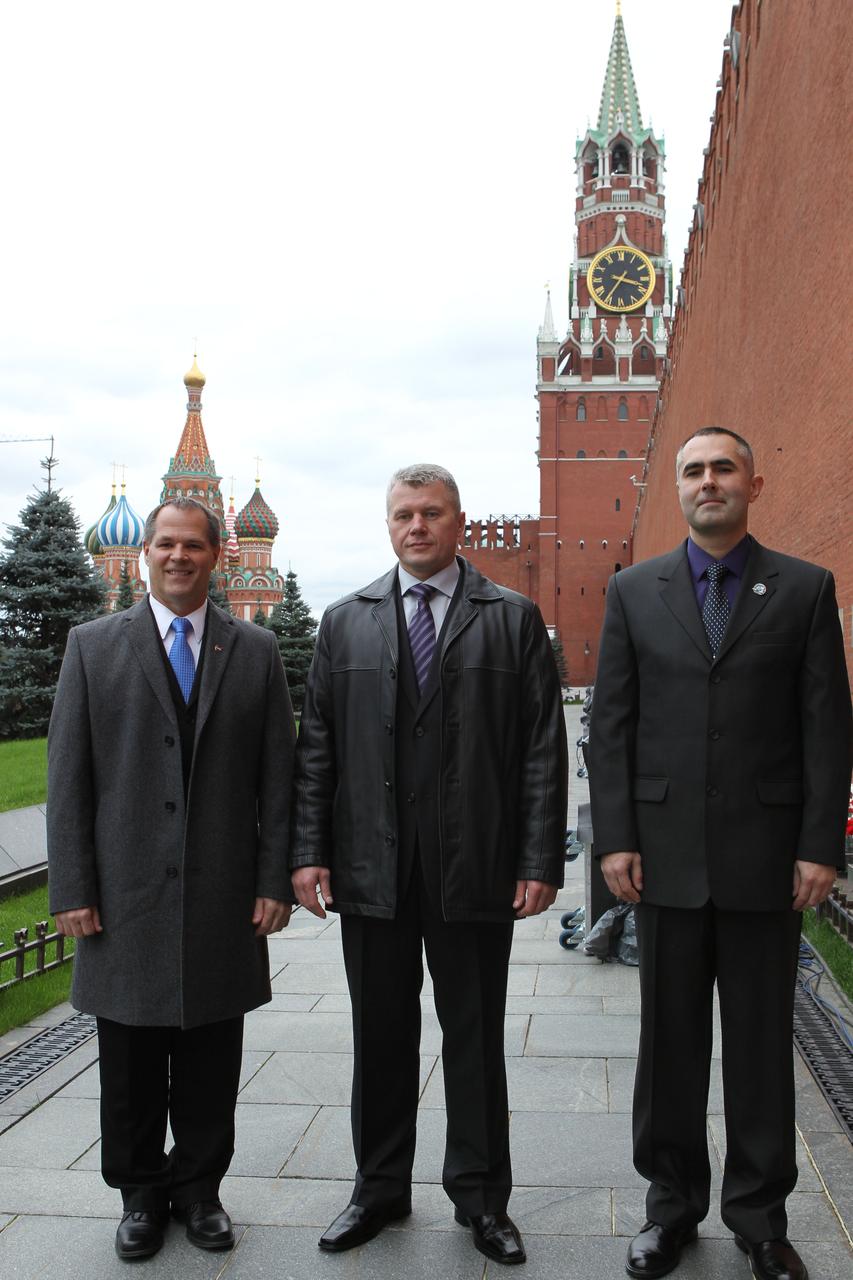
With St. Basil’s Cathedral providing a scenic backdrop, Expedition 33/34 Flight Engineer Kevin Ford of NASA (left), Soyuz Commander Oleg Novitskiy (center) and Flight Engineer Evgeny Tarelkin (right) pose for pictures September 25, 2012 at the Kremlin Wall in Moscow as they participated in traditional ceremonies leading to their launch to the International Space Station October 23 in the Soyuz TMA-06M spacecraft from the Baikonur Cosmodrome in Kazakhstan for a five-month mission. NASA/Stephanie Stoll
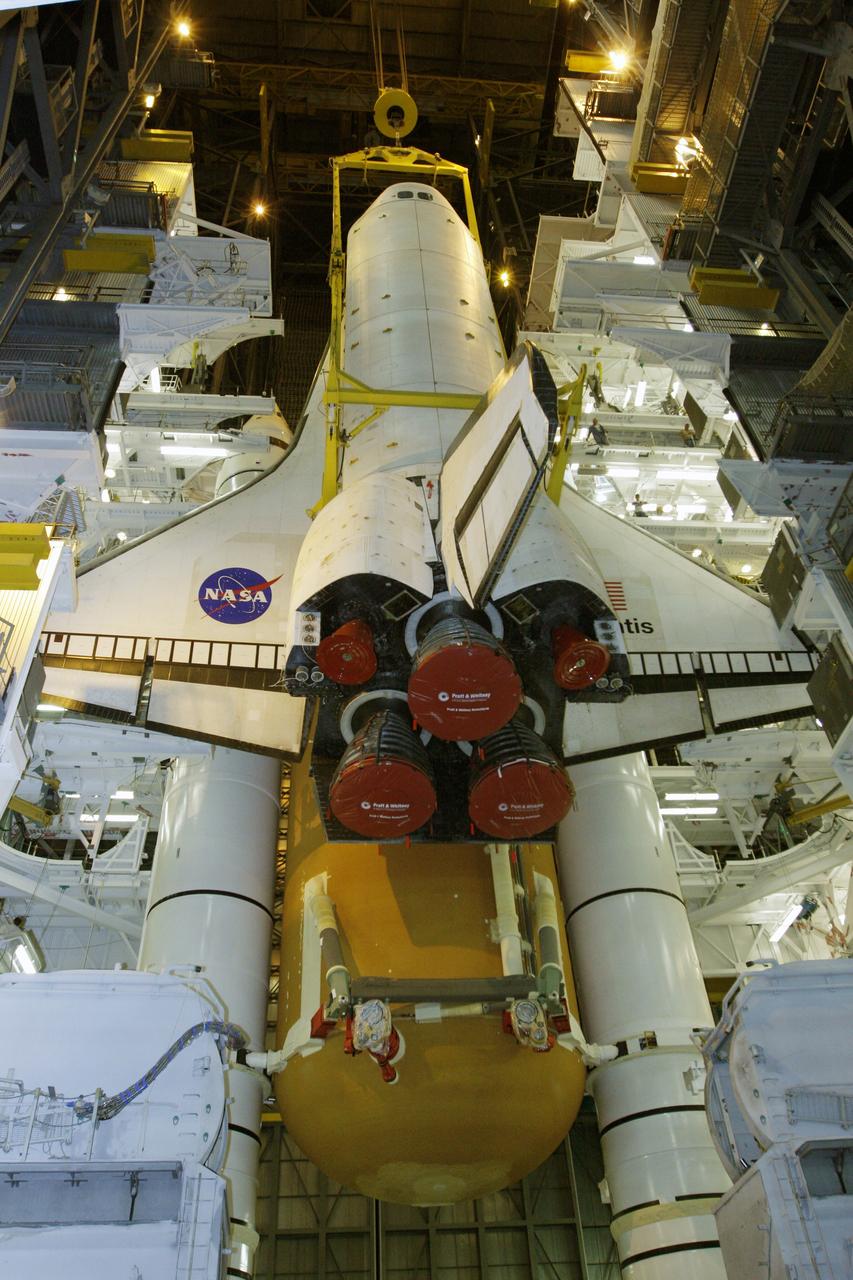
CAPE CANAVERAL, Fla. – In the Vehicle Assembly Building at NASA's Kennedy Space Center, space shuttle Atlantis is lowered alongside the external fuel tank and twin solid rocket boosters in high bay 3. Atlantis will be mated to the tank and boosters stacked on the mobile launcher platform. After additional preparations are made, the shuttle will be rolled out to Launch Pad 39A to prepare for launch on the STS-125 mission targeted for 1:34 a.m. EDT Oct. 8. Photo credit: NASA/Dimitri Gerondidakis
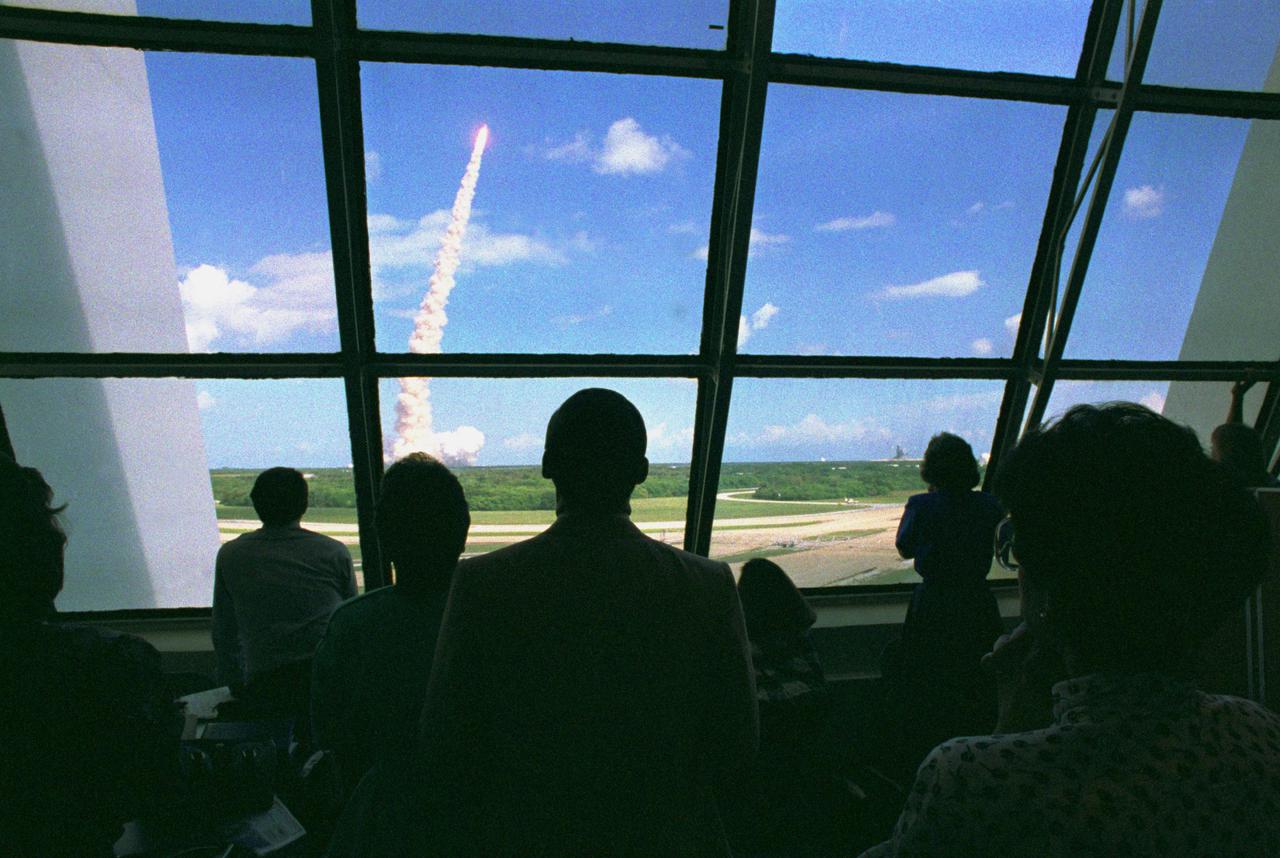
KENNEDY SPACE CENTER, Fla. -- As viewed from Firing Room One in the Launch Control Center, the STS-34 space shuttle Atlantis lifts off from Pad 39-B at 12:53 p.m. EDT, marking the beginning of a five-day mission in space. Atlantis is carrying a crew of five and the spacecraft Galileo, which will be deployed on a six-year trip to Jupiter.
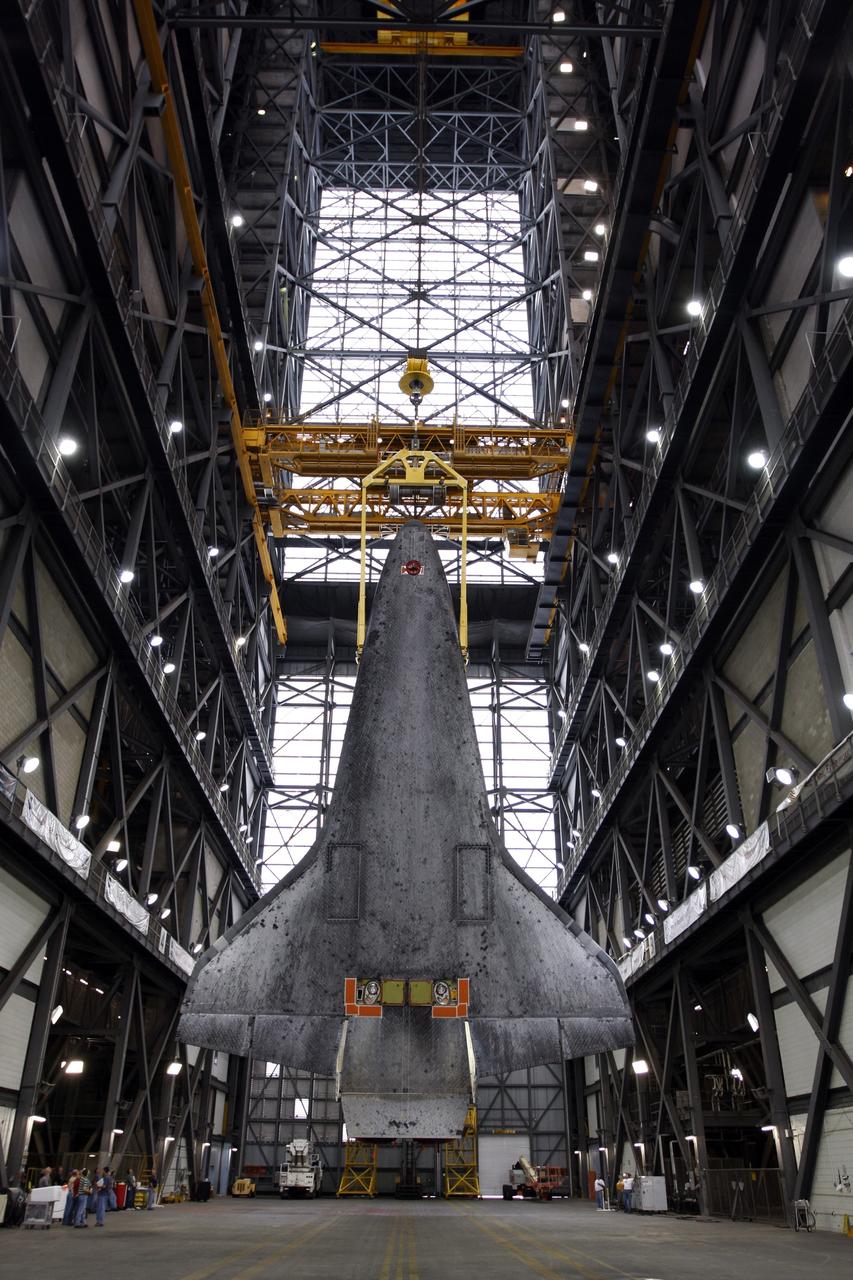
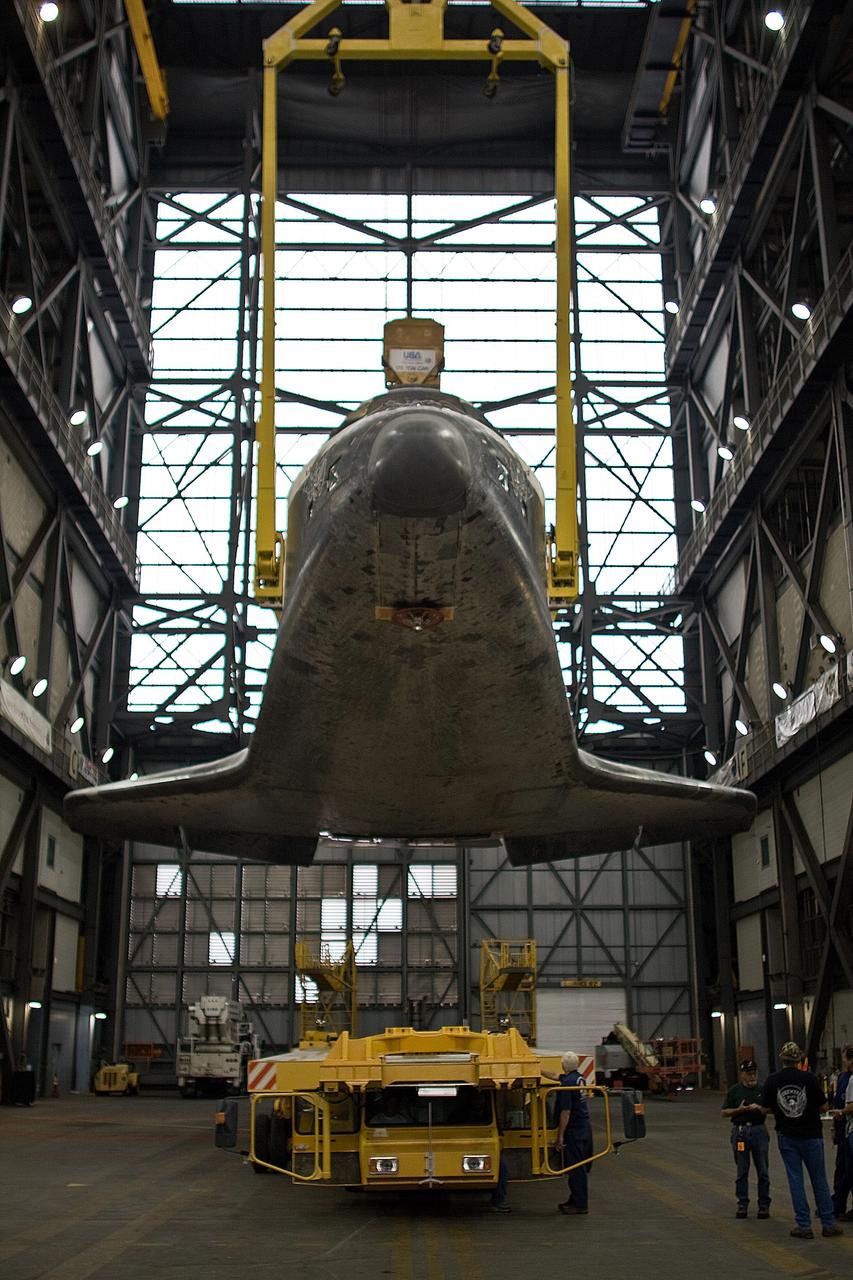
CAPE CANAVERAL, Fla. – In the Vehicle Assembly Building at NASA's Kennedy Space Center, space shuttle Atlantis is suspended vertically above the transfer aisle. The view shows the underbelly of the shuttle. Atlantis will be lifted into high bay 3 and stacked with its external fuel tank and twin solid rocket boosters. After additional preparations are made, the shuttle will be rolled out to Launch Pad 39A to prepare for launch on the STS-125 mission targeted for 1:34 a.m. EDT Oct. 8. Photo credit: NASA/Dimitri Gerondidakis
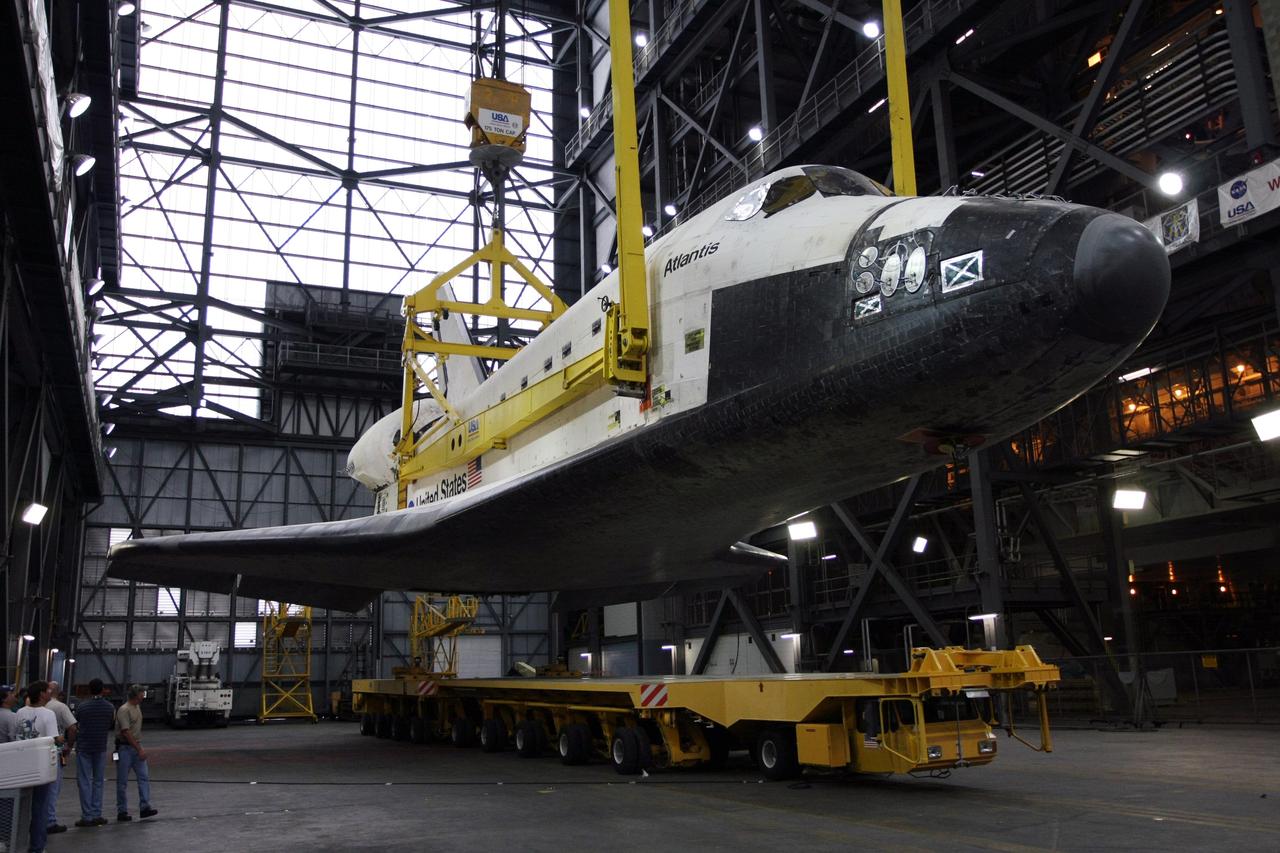
CAPE CANAVERAL, Fla. – In the Vehicle Assembly Building transfer aisle at NASA's Kennedy Space Center, the overhead crane lifts space shuttle Atlantis from its transporter. Atlantis will be raised to vertical for transfer to high bay 3. There it will be stacked with its external fuel tank and twin solid rocket boosters. After additional preparations are made, the shuttle will be rolled out to Launch Pad 39A to prepare for launch on the STS-125 mission targeted for 1:34 a.m. EDT Oct. 8. Photo credit: NASA/Dimitri Gerondidakis
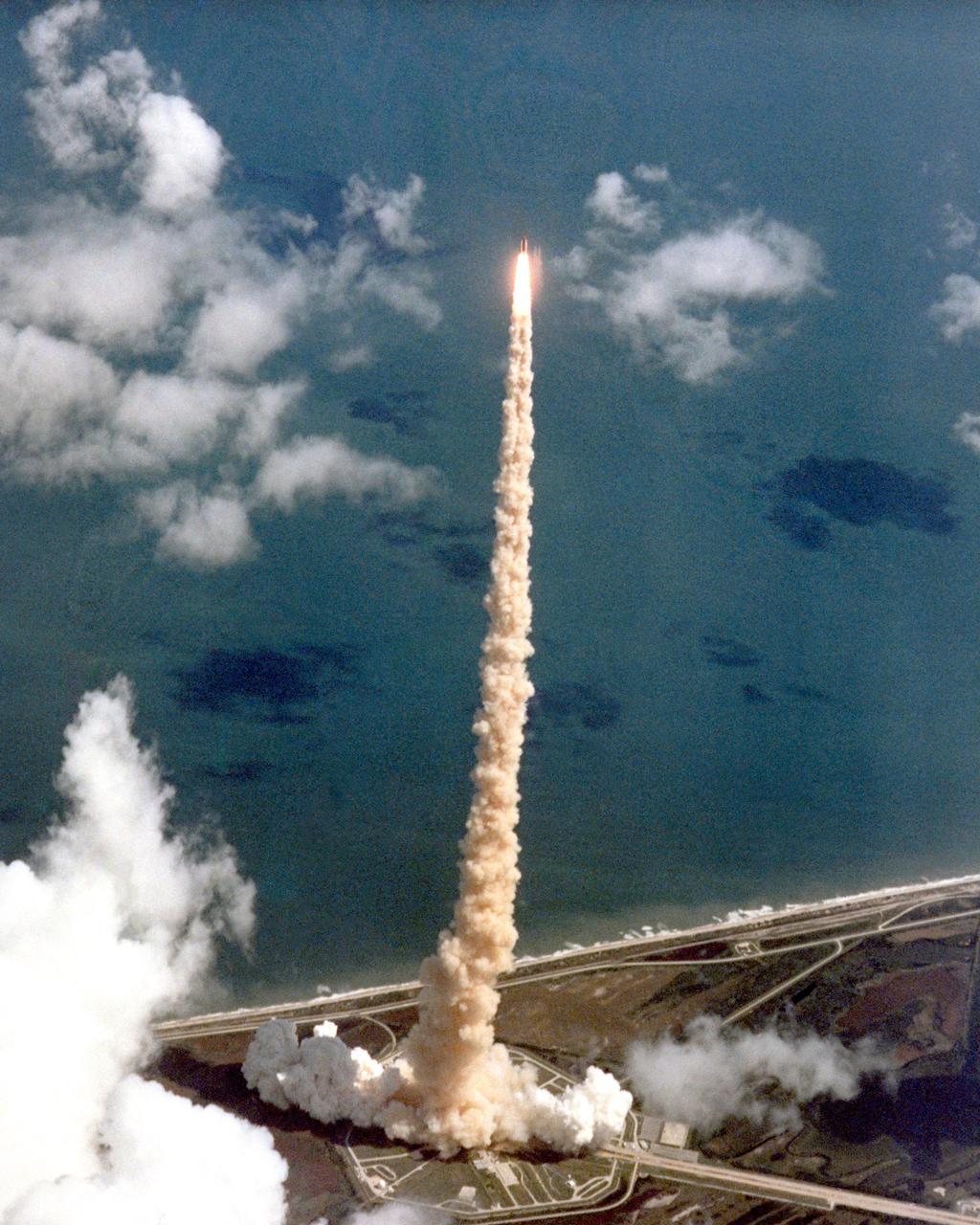
KENNEDY SPACE CENTER, FLA. -- The STS-34 Space Shuttle Atlantis lifts off from Launch Pad 39-B at 12:53 p.m. EDT, marking the beginning of a five-day mission in space. Atlantis carries a crew of five and the spacecraft Galileo, to be deployed on a six-year trip to Jupiter. The scene was recorded with a 70mm camera by astronaut Daniel Brandenstein.
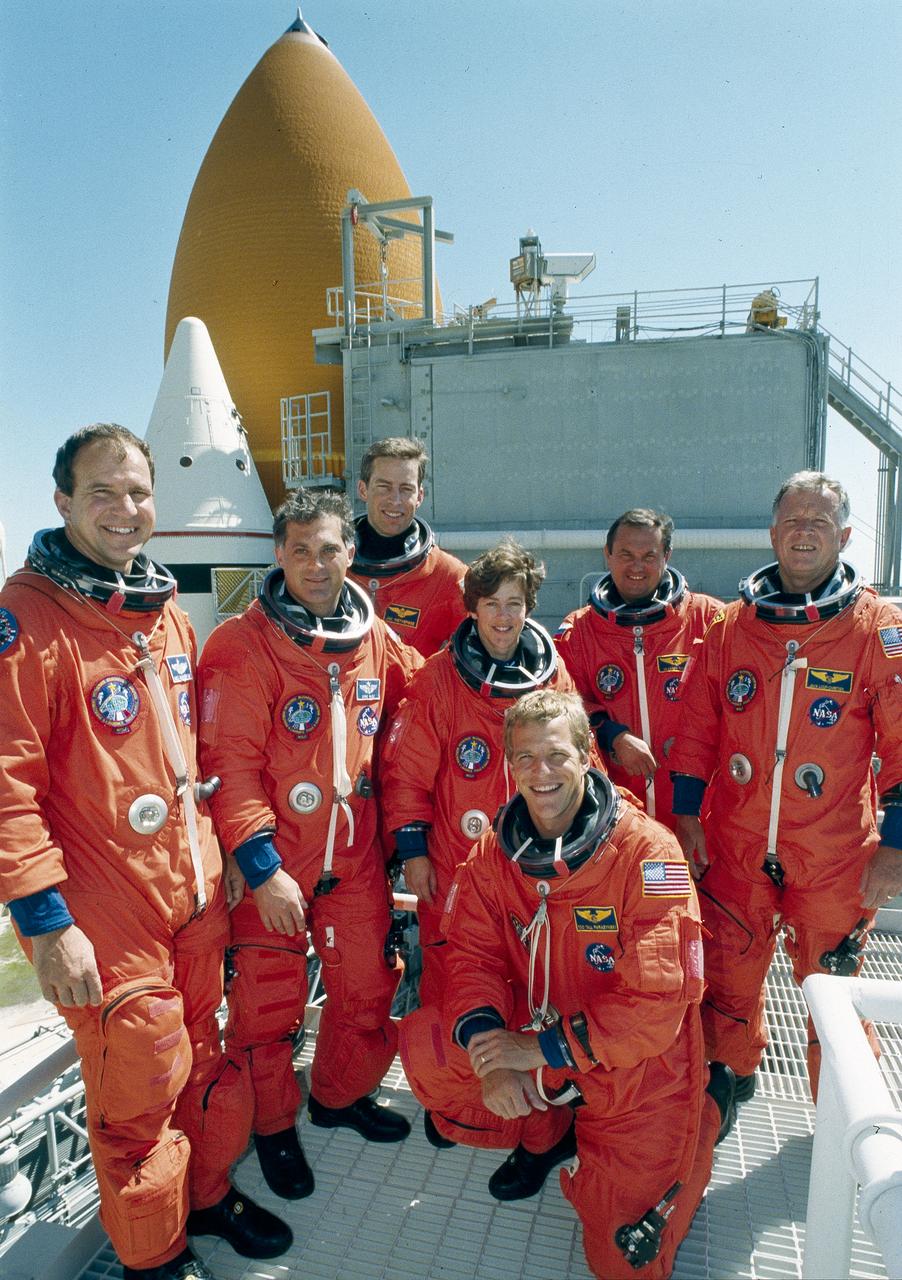
The crew assigned to the STS-86 mission included five U.S. astronauts, one Russian cosmonaut, and one Canadian astronaut. Kneeling is mission specialist Scott E. Parazynski. Others, pictured from left to right, are Michael J. Bloomfield, pilot; David A. Wolf, mission specialist; James D. Wetherbee, commander; and mission specialists Wendy B. Lawrence, Vlamimir G. Titov (RSA), and Jean-Loup J.M. Chretien (CNES). Launched aboard the Space Shuttle Atlantis on September 25, 1997 at 10:34:19 pm (EDT), the STS-86 mission served as the 7th U.S. Space Shuttle-Russian Space Station Mir docking.
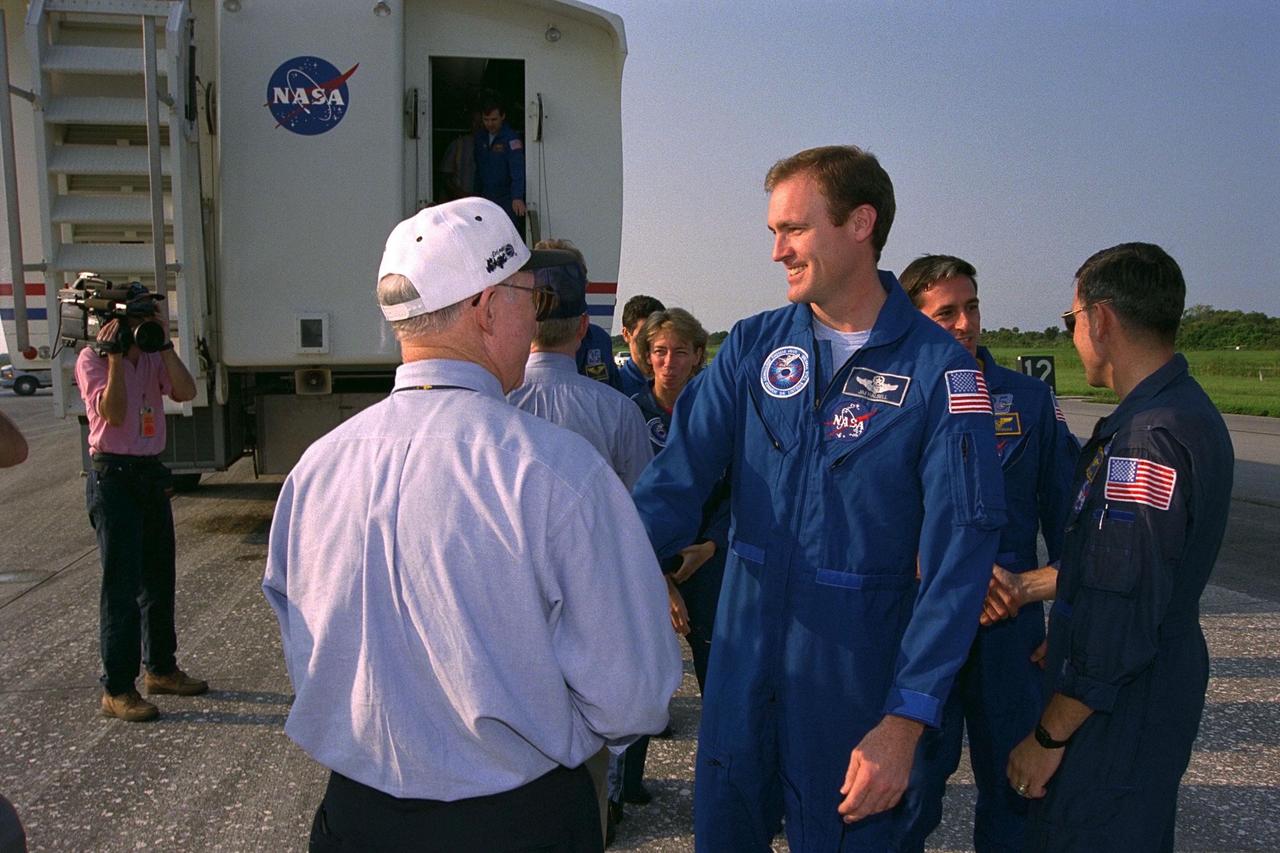
STS-94 Mission Commander James D. Halsell Jr. (center) shakes hands with KSC Shuttle Launch Director James F. Harrington (in white cap) after an end-of-mission landing on Runway 33 of KSC’s Shuttle Landing Facility July 17 to complete the Microgravity Science Laboratory-1 (MSL-1) mission. Main gear touchdown occurred at 6:46:34 a.m. EDT, July 17. At right, STS-88 Mission Commander and Shuttle Training Aircraft (STA) pilot Robert D. Cabana greets STS-94 Mission Specialist Donald A. Thomas. In the background, KSC Center Director Roy D. Bridges Jr. meets with other members of the STS-94 crew